Eduindex News

Eduindex News is an Educational News platform for sharing campus news and academic news.

Newspaper is almost the first thing that greets you in the morning.

Photo by cottonbro on Pexels.com

If one knows how to read and write, then one should definitely read at least one newspaper everyday.

Newspaper reading is a good habit. People who frequently read newspapers are more likely to be reading other things in their life than non readers. Reading is good for you, I bet!
It helps you move outside the narrow zone of your personal affairs. It helps you keep you adjust yourself according to the changing times and move with changing times easily.
It keeps you updated and can provide a great sense of educational value. Not only it gives you information about economy, polity, trade, business, world affairs, international issues, sports, entertainment, but it also enhances your vocabulary and English language skills. (Same applies for other language newspapers)
You are not only updated with current events of your own nation but also that of the world.
It widens the scope of your knowledge and thus widens your outlook.
It helps you become well informed. Thus, enabling you to take part in any sort of discussion and debates. Ultimately, helps in your personality development.
They help you become part of a well evolved society.
You can relate to other people’s views, understand their perspective.
Most importantly, in today’s world, where Democracy is considered to be the ideal form of government, it is in the interest of each and every individual of the nation and the world ( I say world, because world is becoming a global village in this 21st century) to be aware of their own governments’ plans, programs and policies. How will these plans, programs and policies affect them?( After all, democracy is rule by the people, of the people and for the people. ) It is for their own benefit.
People who read newspapers regularly are more likely to be active voters (good for democracy 🙂 )
Good for students. Students who use the newspaper in school read more sections of the newspaper and show significantly greater interest in local government, neighborhood events, current issues and foreign affairs.
I would like to quote a research.
Research by Dr. Dan Sullivan of the University of Minnesota examined programs in 22 cities across the country. The study compared test scores of students who had used the newspaper in class with those who had not. In all 22 cases, those student who used the newspaper scored better on standardized reading test than did those who did not. Minority students and those who were not native English speakers showed the greatest achievement. (2002, NAA Foundation.)

Newspapers help form you develop your opinion.
They sharpen thinking skills in you.
The Indian freedom struggle in itself is a great example how reading newspapers enlightened and educated the masses of their own civil, political and economic rights. These masses comprised mostly of people who weren’t able to read and write. So even if one person in the village or community knew how to read, people would encircle him to get their daily dose of the news. Thus, they got to know about the issues. Thus, the Indian freedom struggle became a mass struggle. Freedom of Press is a Fundamental Right in the Indian Constitution, thanks to the habit of newspaper reading (or hearing) by these masses.
I have seen many people who are stalwarts in their own respective fields suggesting that one should not read or listen to news. It is a waste of time. The reason being that they bring pessimism around you. The news of bombings, killings, rape, murder etc. don’t let you sleep well and suck the positive energy in your life. True. I too feel sad reading about these news items. But avoiding them is not the solution, neither for your problem nor for the problems of the world around you.

But according to me turning your head away from reality of the world is not a wise act. Though awareness can remove the darkness in the society.

You have to choose high standards of journalism to avoid becoming part ofsensational journalism. I vouch for critical and independent readership. Derive wisdom from newspapers without getting involved in the sensationalism which they try to sell to increase their readerships.

Happy reading!:)

Pradhan Mantri Jeevan Jyoti Bima Yojna (PMJJBY)

It was originally mentioned in the 2015 Budget speech by Finance Minister Arun Jaitley in February 2015. It was formally launched by Prime Minister Narendra Modi on 9 May in Kolkata. As of May 2015, only 20% of India’s population has any kind of insurance, this scheme aims to increase the number.

Enrolment period
The cover period is 1st June of each year to 31st May of subsequent year. For the cover period 1st June 2018 to 31st May 2019, subscribers are required to enrol and give their auto-debit consent by 31st May 2018. Those joining subsequently would be able to do so with payment of full annual premium for prospective cover. As on May 14, 2018, nearly 5.35 crore people had enrolled under PMJJBY, and the total number of claims received till date were nearly 1,02,849.

PMJJBY is available to people in the age group of 18 to 50 years ( life cover up to age 55) having a savings bank account who give their consent to join and enable auto-debit.

Under PMJJBY scheme, life cover of Rs. 2 lakhs is available at a premium of Rs.330 per annum per member and is renewable every year. In the case of a joint account, all holders of the said account can join the scheme provided they meet its eligibility criteria and pay the premium at the rate of Rs.330 per person per annum.

Enrolment
PMJJBY is administered through LIC and other Indian private life insurance companies. One may also approach their bankers as for the process of enrolment banks have tied up with insurance companies. In the case of multiple bank accounts held by an individual in one or different banks, the person would be eligible to join the scheme through one bank account only.

For those who wish to join the scheme now may still do so. On may join or renew the scheme anytime during the year by paying the full premium and not the proportionate amount. However, the renewal date will remain June 1 for all of the subscribers.

It’s better to join now and get the cover for the entire 12 months. If you had exited the scheme at any point, you may still re-join the scheme by paying the annual premium.

The enrolment process has been kept simple and easy. To enrol, you can download the form and submit it to your banker. Some banks have initiated an SMS-based enrolment process too. It can be done through net banking also. To join/pay by auto-debit from the designated individual bank account on the prescribed forms will be required to be given by 31st May of every year.

Eligibility

  • This policy is available for the people between the age of 18-50 years. The policy ceases at 55 years of age of the policy holder.
  • The assurance on the life of the member shall terminate on any of the following events and no benefit will become payable there under,
    • On attaining age 55 years (age near birthday) subject to annual renewal up to that date (entry, however, will not be possible beyond the age of 50 years).
    • Closure of account with the Bank or insufficiency of balance to keep the insurance in force.
    • A person can join PMJJBY with one Insurance company with one bank account only.
    • For subscribers enrolling for the first time on or after 1st June 2016, insurance cover shall not be available for death (other than due to accident) occurring during the first 45 days from the date of enrolment into the scheme (lien period) and in case of death (other than due to accident) during lien period, no claim would be admissible.

How to apply?

https://www.icicibank.com/Personal-Banking/insurance/pm-bima-yojana-apply.page

How to improve your writing skills ?

Communication skills are more important than ever, but what if your grammar doesn’t quite make the grade?

Fifty years ago, you would’ve walked over to your coworker’s desk or called up to the second floor to ask a question. Now, whether your coworkers are in the next cube or half a world away, it’s standard practice to email, instant message, or text them.

This shift in basic communication has made writing skills crucial to being listened to.
No matter what format your written communication takes, it needs to be clear and concise. Misunderstandings can lead to costly mistakes. Given that the average professional sends and receives more than100 emails a day, no one has time to read rambling messages that don’t get to the point quickly.

We could all use a little refresher on our business writing skills. And thanks to a wealth of free classes and resources online, we can improve our grammar and writing from the comfort of our own desk chairs — without spending a dime.

Tips to improve your writing

1. Develop a daily writing habit.

Practice makes perfect, so set aside just 10 or 15 minutes each day to free-write. Free writing is a healthy daily habit that allows you to get your thoughts down on paper (or computer) without worrying about outlining or proofreading your ideas. Think of it like a journal, but focus your daily entry on personal growth or a subject in which you want to become — or be seen as — an expert.

Once you’ve finished writing every day, you can then use a tool like Grammarly to help spot mistakes and remember them for the next day.

2. Try to read every day.

In addition to writing each day, a daily reading habit is also crucial to increasing your vocabulary and expanding your writing repertoire.

Be selective about your reading choices, though. While reading in general does help you take on new points of view, the content you’re reading can have the biggest impact on what you get out of it. Reading academic journals and literary fiction can actually make you capable of more complex writing projects than reading simple, curated, or pop-culture web content.


3. Capitalize when you’re supposed to.
It might seem pedantic to school you on basic rules of grammar, but it’s not always clear what deserves to be capitalized and what doesn’t. Here are two types of writing you should always examine closely when uppercasing your words:

Proper nouns. If it’s an official name of a person, city, company, product, book, publication, country, continent, government job title, or school (we’re likely missing some on this list), capitalize it. These words refer to specific people, places, or things, and should be capitalized to reflect it.

Title case. Whenever you’re titling a new story, book, article, or even a new section of an article, you’ll need capitalizations to distinguish it. This means email subject lines, blog post headlines, and even report titles should be capitalized. Check out the Associated Press Stylebook to learn a popular way of doing so.

4. Avoid using exclamation points.

Often, we rely on exclamation points too heavily as a crutch. It dilutes your message. Instead, she suggests working on making our words convey more precisely what you want to say. When in doubt about whether to use an exclamation point, consult this flowchart.

5. Always think about your audience.

You can be casual with your coworkers and peers, but when communicating with management or clients, it’s a good idea to write using more formal grammar.
It’s much harder to convey tone in the form of words than it is in person — the types of formality described above are how you can compensate for this and ensure your audience doesn’t feel disrespected.

The state of Assam

Assam is one of the state among the seven sisters. It belongs to the north-eastern part of India. The state is famous for its wildlife, archaeological site and tea plantation. Assam tea and Assam silk is very famous all around the globe. Assam was the first site for oil drilling in Asia. Assam is also the home of endangered one horned Indian Rhinoceros.
It you love traveling, then visiting Assam should be in the top of your bucket list. You will be mesmerized by its wildlife, the Brahmaputra and the Barak will leave their impression for long, the Assamese culture will astonish you and the hospitality of the people will touch your soul.

About the state?

The state of red rivers and blue hill, Assam, is the oldest state of the north-east region of India and comprises as the gateway to the Seven Sisters. The state comprises three main geographical areas. They are:
• The Brahmaputra valley
• The Barak valley
• Karbi plateau and North Cachar hills
Assam shares it borders with Arunachal Pradesh, Manipur, Meghalaya, Mizoram, Nagaland, Tripura and West Bengal. It shares it’s international borders with Bangladesh and Bhutan. It also is very close to Myanmar.

Must visit

If you are planning to or want to visit the state in near future, then here is a guide to the place you must visit.
• Kaziranga National Park : This protected area is a UNESCO World Heritage site and is the last remaining habitat of the Great Indian One horned Rhinoceros. It is spread in Golaghat, Karbi Anglong and Nagaon district of the state. Kaziranga is also the home of highest density of tigers among the protected areas of the world and is declared as a Tiger Reserve in the year 2006.
• Kamakhya Temple: It is an important pilgrimage destination for Hindus. The temple is dedicated to mother Goddess Kamakhya and is one of the oldest of the 51 Shakti Pithas. It is situated on Nilachal hills in the western part of Guwahati city of Assam.
• Umananda Temple: Umananda Devaloi is a Shiva temple located in the peacock island in the middle of Brahmaputra. Umananda is known to be the smallest inhabitant riverine island in the world.
• Manas Wildlife Sanctuary: It is a national park, UNESCO Natural World Heritage Site, a Project Tiger Reserve, elephant reserve and a biosphere reserve in India. The park is famous for its rare and endangered endemic wildlife, like, golden langur, pygmy hog, hispid hare. It is also known for its wild water buffalo.
• Majuli: Majuli is the largest freshwater island is Southeast Asia on the Brahmaputra river. It is famous for its Vaishnavite Satras.
• Ranghar: It is a two storeyed building, which once served a royal sports pavilion to the Ahom kings and nobles. It is located in Sivasagar.
• Kareng ghar: It is also known as The Garhgaon Palace and is located 15 kilometres from Sivasagar, Garhgaon. Of all the Ahom ruins, it is the grandest piece of Ahom architecture.
• Dehing Patkai Wildlife Sanctuary: It is also known as Jeypore Rainforest. It is the only sanctuary in India which is the home of 7 different species of wild cat. The rainforest stretches in the district Dibrugarh, Tinsukia and Charaideo. This rainforest is very important for elephant habitat and was declared Dehing Patkai elephant reserve under project elephant.

Assam as a state does offer more which includes ,
• Dibru Saikhowa National Park
• Digboi Oil Refinery
• Pobitora Wildlife Sanctuary
• Jatinga
• Gupta Khasi
• Tocklai Tea Research Institute
• Gibbon Wildlife Sanctuary
• Panidihing Bird Sanctuary

For all the travel geeks, a visit to Assam is a must.

CORROSIVE ASSAULT IN INDIA

Acid attack or corrosive assault isn’t something unfathomable in India. It has stunned the inner voice of our country over and over – with mangled appearances, unbeaten survivors going to the cutting edges to share their horrendous stories, and families headed to chapter 11 supporting recuperation costs. The Indian Penal Code was altered in 2013 just because to add guidelines custom fitted to corrosive assaults. In any case, have we done what’s needed? Do what’s needed of us give it a second thought? For what reason would it be a good idea for us to mind? For what reason would it be a good idea for us to mind any longer than we accomplish for general battle for ladies’ privileges and wellbeing in India about corrosive assaults?

Since corrosive assault is potentially the most noticeably terrible curse on another human – prompting total crippling, loss of pay and opportunity, and even social sequestration-and it can transpire, whenever. The way to this evil remain very available to most and the causes inciting such vindictiveness can be unbelievably insignificant.

Tolerating a beverage from a nearby retailer? Or then again censuring provocation in the city? Simply being in home sitting on a lounge chair? These are totally known reasons for assaults on corrosive assault survivors. The last story – is that of Piyali Dutta – who got trapped in a crossfire and now is a corrosive survivor forever. Sonali Mukherjee’s story – assaulted while dozing in her own home for confronting provocation – is one that should keep we all wakeful as it could have been, or still can be, anybody. 85% of casualties are ladies, so corrosive assault can overwhelmingly be delegated sexual orientation viciousness. For the 15% male casualties, the essential driver of assault is property question.

What components permit such assaults? Un-advised indignation and disappointment is behind the violations as much as pre-mien to sociopathic qualities, and savagery and cultural closed-mindedness assumes a noteworthy job (85% of the casualties are ladies). Be that as it may, the genuine offender to fault is the simplicity to pull off it. Outrage regarding dismissal (41% of assaults in India from 2010 – 2013 was from scorned darlings) makes the longing lash out and natural negligence for ladies in explicit and human enduring as a rule seeds the idea, however the remiss laws – both to restrict accessibility and to counter the wrongdoing – is the thing that lets the culprits (who happen to list from clerical authorities to vagrant specialists) convert their considerations in to activity.

Before inclusion of Sections 326A-326B of Indian Penal Code (as later as 2013), corrosive assault must be arraigned as viciousness against ladies. This massively ruined information accessibility and made capture and discipline abstract and indulgent. The Indian Penal Code revision on the second of April 2013 included arrangements for arraignment of culprits, treatment and recovery of the people in question, right to self-preservation against corrosive assault and control of corrosive deals. The laws notwithstanding, without a doubt ‘past the point of no return’, may likewise be ‘excessively little’ in their present status.

How about we investigate the corrosive deals limitations, arraignment and recovery real factors present 2013 on get why.

When counseled, Acid Survivors Foundation India (ASFI; accomplice of Acid Survivors Trust International (ASTI)), separated the acids taking essentially West Bengal, India and Bangladesh as models. Accessibility of acids (12% or higher focus, or in structures which can be concentrated to higher quality) relies upon use. The composed area – compost and other overwhelming businesses – are generally under controlled control framework, so spillage or misappropriation, albeit plausible, are not very normal.

The chaotic part then again, in lieu of the huge vagrant and rustic populace in these areas, have a horde of acids bountiful relying upon the business. Pearl and adornments business – a prime buyer of water regia – flourishes with for the most part transient specialists who thusly approach. Difficult to track and blue pencil, they accordingly should be focused through mindfulness crusades (one of the best approaches to check assaults – as showed in Bangladesh – has been by restricting accessibility through monstrous battles). Attackers can likewise think lower quality acids still accessible unhindered.

Dowry system

Any young man, who makes dowry a condition to marriage, discredits his education and his country and dishonours womanhood” – Mahatma Gandhi.

In India, there is a practice to give presents to the girl at the time of her marriage. Their marriage gifts are known as dowry. The parents of the girl velds her materially at the time of going to her bridegroom’s house.

In the present time dowry has become a curse sometimes it becomes difficult to quench the thirst of girl’s father-in-law. He forces more and more the girl’s parents to give something or the other. If his greed is not satisfied, the girl is tortured. In such a condition often a newly married girl of a poor family commits suicide. Parents give dowry to help their daughter for starting a new life and as a token of love.

Married women suffer much. Sometimes a young bride dies in a store explosion and sometimes found hanging from a ceiling fan. This happens when a lady does not bring enough money from her parents. “The need of a person can be satisfied but not the greed”.

The government has also passed a law making dowry a punishable offence however it is still being practised in most parts of the country causing agony for the girls and their families. Demanding checked if public opinion is formed against it. This can not be checked without the support of the public.

The abolition of dowry is the need of today. Young boys should realise that they are not commodities to be sold. Young girls should refuse to marry young boys whose parents are greedy. Without determination, the evil can not disappear.

‘Money is not the source of happiness but it is the source of pain. When we earn it, it gives pain, when we guard it, it gives pain and it gives pain when it is lost.’

Dowry System Essay
The existence of systems is probably only since human civilization has evolved, there are many types of systems prevailing in the whole world. Systems or Practices, which were made for human society. But sometimes these systems subdue humans, The perception of the tradition falls on their thinking and understanding, and if somebody removes the curtain and conveyed the truth to the people, then some people suppress that “transformative thinking”.

One such system the “dowry system”. After the marriage, the gifts, household items, rupees and ornaments, and any kind of movable and immovable property brought with her by the daughter-in-law are called dowry.
Dowry-system was started as blessings to give a start to a new home of daughter after marriage. But due to the time, some greedy tendencies people have changed the real meaning of this system. Now “dowry system” has become a very important part of marriage. Dowry system is not only prevail in India but also in Europe, Africa, China, Greece, Japan and more other countries. In different countries, the type and purpose of dowry have remained very different, but now many countries have stopped the circulation of this practice, but this practice in India has still been formidable form.

Many people pretend not to take dowry, At first the groom-side people say that “we only need your daughter” And then there are later dialogues “There should be at least one gold chain, ring and 51 thousand cash in the “Teeka” (a kind of ritual before marriage), otherwise what will be our respect in the relatives?” After that, before marriage “daughter should have her ornaments in full with her, and then whatever you wish, give her, taking care of caste and society.” The Excuse is to keep honour in the caste and society and means the solution is itself. If the boy is a doctor or engineer then the demand for dowry increases even more because the boy is very educated.

Many laws have been made to eradicate the dowry system and over time the law has been made more rigid. But still, daughters could not escape. Many dowry grievances cannot reach the law and daughters commit sins like suicide. Laws related to Dowry system are following -
• According to the Dowry Prohibition Act, 1961, there is a provision for the imprisonment of 5 years and fine of 15,000 rupees for taking dowry, giving or cooperating in its transactions. For harassment of dowry, under section 498-A of the Indian Penal Code which is related to the case of illegal demand for property or valuables by husbands and their relatives, there can be 3 years of imprisonment and fine.

Whether it is a parent or a sibling, everyone thinks that their sister-daughter is always happy and safe, but does not anyone else’s daughter or sister should possess this pleasure and security? Giving away the daughter to such dowry-greedy people by ourselves is like we pushed our daughters in the wells of plight and sorrow. We all have to oppose this system together. Dowry will neither give nor take.

Women empowerment

The term “Women Empowerment” broaches to empowering women with surpassing education, better employment, decision making , and superior health in view of an indistinguishable and so just society. Women empowerment is an undertaking to forge the women financially liberate, educative and more progressive, savoring a superior social status. Women since ages have been wrestling to be socially and professionally recognized as correspondent to all men. There are myriad of incidents in a woman’s personal and professional life, where her own abilities are enfeeble against that of a man’s having an untoward impact on her over all personality and hampering her over growth.

So basically real women empowerment is making society serve every women as a counterpart just exactly like other men in this colossal cosmos. It is proffering women all her true consents and all the opportunities to gambol purposeful part in the society and letting her excel in all the different fields where only men are prevailing. It actually means to empower her human first then empower her social, political and economical liberties and forge her stand in this colossal society on the exact tribune as male counterparts. However, when it approaches to giving them correspondent rights and independence the same people abandon its major importance and that’s all because we reside in a patriarchal union where people swallow that the main purpose of women is to take care of her family and kids firstly.

The actual require for women empowerment commenced all because of the gender inequity and male supremacy in our colossal Indian society since the prior ancient time. Nowadays women are being repressed by their own family natives or members and the society for many reasons. They have been preyed for myriad types of brutality and prejudicial practices by all the male adherents of our own native family and society from the past ancient times have taken the form of highly developed customs and traditional virtues. There are myriad of incidents in a woman’s personal and professional life, where her own abilities are enfeeble against that of a man’s having an untoward impact on her over all personality and hampering her over growth. Now, empowering girls and women is quite lusty and more powerful. Today, we know it is the minute key to economic growth, political firmness, and to the social transformation. World leaders, experts or scholars alike are proffering their tender voice to this scathing endeavour.

We have a true faith over a locution that India is a country where all women have been honoured as goddesses since old times. However, when it approaches to giving them correspondent rights and independence the same people abandon its major importance and that’s all because we reside in a patriarchal union where people swallow that the main purpose of women is to take care of her family and kids firstly.

In today’s colossal world women’s empowerment basically refers to the faculty for women to savour their legality to control and welfare from other resources, assets, their own income and own momentous time, as well as the true capability to supervise risk and making better their economic status and their well being. While frequently interchangeably plied, the more cross-disciplinary concept of gender empowerment refers to every individual of any gender, trensity the major chasm between biological sex, and between the gender as a role. This thereby also introduces to other marginalised genders in a precise political or social context.

Now, empowering girls and women is quite lusty and more powerful. Today, we know it is the minute key to economic growth, political firmness, and to the social transformation. World leaders, experts or scholars alike are proffering their tender voice to this scathing endeavour.

Here with economic and occupational empowerment implies over a superior quality of material life all through sustainable bread and butter owned and completely managed by all women. It means minimizing their major financial reliance on their male counterparts all by forging them with a most significant part of a human resource. If we consider over De jure women empowerment, it advocates the provision of an efficacious de jure structure which is quite sympathetic of women empowerment. It means addressing the interstices between what the law prescribes and what actually occurs. There is not a radical but a little bit of change in the mindset of people that are allowing women to walk on the pathway of development. Women are leaving no stones unturned to prove themselves to the world and despite many hurdles, they turn out to achieve respectable and notable positions.

So now, we have to consider over each and every concept on women empowerment first. And apart from everything else, empowering women has an affirmative impact on a country’s genuine economy. Those colossal countries that swallow, as some of the testimonies here actually indicate no matter what the resolutions of the question, that women should be unearthed within the traditional positions in our society’s wives and mothers, but shown more esteem are and will be remain economically backward. Emancipating up women’s participation in society will free up and rampant minds and economies.

Now, to eradicate all these wickedness from our society and to construct our society a superior place to reside for both men and women, women empowerment is quite vital because unless and until a place is not safe for all the natives of our society it can’t be a superior place. Women empowerment supports women to perceive upon their lives as a confident being. It truly incites women to stand and fight by their own for their own rights and live a well-worthy life. There is no bolshevik but a little bit of difference in the mindset of that are actually allowing women to wander on the simple pathway of development. As, women are evacuating no stones untwirled to prove themselves to the world and despite many hurdles, they twirl out to attain reputable and notable positions. Women since ages have been wrestling to be socially and professionally recognized as correspondent to all men. Because, women are evacuating no stones untwirled to prove themselves to the world and despite many hurdles, they twirl out to attain reputable and notable positions.

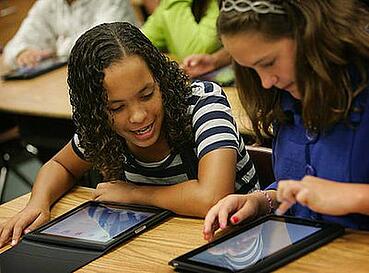
Should schools switch to eBooks?

Having brought modern technologies to classrooms has had a positive impact on the quality of the delivered education. Universally the students and teachers agree on the benefits of using eBooks in education.

The aim of eBooks is to simplify and improve the overall learning experience. Digital Books make the learning process more interesting and engaging. Students can now regularly participate in the learning process rather than listening to one person talking constantly. The integration of eBooks into teaching in classrooms makes learning a fun and engaging experience. Gone are the days when students were expected to carry a bag full of books to classrooms and back home every day. With eBooks joining the educational domain one machine is sufficient to include the syllabus of the whole year. Students at a very early age will be exposed to these electronic books, right from kindergarten to university level, ensuring that learning never becomes routine.

80% of US schools use e-books or digital textbooks

A successful learning program must ensure that the learning process includes the students actively. The eBooks also launched an educational innovation that lets students learn better and faster. Some of the benefits of introducing eBooks into education are listed below:

1. Study anyplace anytime:

Simple to bring an eBook around. It’s easier to move a mobile device that supports eBooks, instead of carrying a bag full of books. Most of the students already carry a mobile device these days. It might be a smartphone, a tablet, a laptop.  An eBook’s portability allows students to refer whenever they want to their notes and course materials. The students will now have everything within one location instead of bringing several books.

2. Offline eBook Access:

More than 50 per cent of the world’s population has Internet connectivity. Yet we all have networking and network problems often in trouble. To ensure that the internet connection doesn’t hamper the mobile devices learning cycle, provides offline services these days. Students can now install and save any content they want on their device, and then go through it at their comfort later.

3. Interactive Multiple Functions:

Not only are eBooks basic reading materials, they also have all the required resources to help students make notes and illustrate content. EBook readers have many interactive features, such as annotations, pen tools, page zoom, and much more. Due to the ability to find words and topics in an instant, the search tool is the most favoured instrument.

The search tool tries to avoid the time-consuming process of turning pages after pages in order to find a specific topic or sentence. They can also bookmark chapters and pages. The Online Dictionary helps them find word definitions easily. Additionally, the user can also change the font size and style, and adjust the device’s brightness to suit their eyes. An eBook is an all-in-one device that gives students a wholesome learning experience.

They need to just point the image or object to their AR-enabled device, and a computer-generated visual will pop up on their screen. This 3D image helps provide a convincing and immersive learning experience for the students. Those improved visuals would be more interesting for students over flat diagrams. It may also have links to relevant external sites, where more information about the projected image can be found.

Why Students Struggle with Math

Many children have mathematical problems but some students find it much harder than others. These may otherwise be bright children who have a great understanding of logic and reasoning but still fail spectacularly on homework, tests, and quizzes. Over time, repeated mathematical poor performance can cause a student to become disheartened and believe that he or she is “dumb” or not good at the specific topic. Furthermore, as math is cumulative, falling back might mean that a learner forgets much of what is taught. It’s important to have basic math skills, no matter what profession an person chooses to pursue. This is why recognizing problems early on is important. With the right balance of classroom accommodation and learning strategies, each student will reach their full potential in mathematics.

Reason Your Student Struggles with Math | Miami Beach Math Tutor

There are several reasons why a child may have math difficulties at home, ranging from low motivation due to academic stress to a shallow grasp of how to apply and perform numerical computations. But sometimes the root cause of poor performance is something else, like a disparity in learning or a difficulty in motor skills.

Dyscalculia is the most frequently detected condition in which individuals struggle to perform simple arithmetic and have trouble attempting to manipulate numbers in the same way as their peers. Nonetheless, students with dyslexia may also have trouble with reading numbers and having to follow word problems with math at school. When doing paper work, they may rearrange digits, or correctly solve problems, but record their responses in the wrong way.

Children with ADD / ADHD have the capability to rush ahead and skip a step or struggle to focus and be unable to check their work once a problem is over. Students with dysgraphia and dyspraxia, who are having difficult time trying to write by hand, may become so overwhelmed by number formation that they make silly mistakes or get the steps in the wrong order in an equation. Finally, children with visual processing disorders may lack the visual-spatial learning ability necessary to align numbers, read graphs and perform basic geometric operations.

Math is one of the topics that both children and adults have little understanding of. This is because while pre-school maths are about realistic problem solving, patterns being observed, shapes being recognized in your environment and learning to count, secondary and high school math teaching is more abstracted. It often concentrates on rotary learning and solving equations in books – think arithmetic and time tables – that can turn off students and make them believe that math skills are not relevant to their daily lives.

Indeed, many students lament that math is boring. At school, they might not see the point of learning algebra, geometry or calculus. Or they may question why they need to be able to do basic arithmetic’s such as adding, subtracting, multiplying and dividing by hand when they can easily find answers using a calculator or a computer.

The answer to this last point is multi-fold. One, you might not always have a calculator at your disposal; two, even if you do, trying to understand how and why to do it for yourself provides a stronger basis for future learning, and three, doing arithmetic is a mental form of exercise that strengthens your working memory.

Math is much more than arithmetical, though. Much of what goes into solving multi-step word problems is identifying the problem, choosing a suitable approach to solving it (there may be more than one), and following the correct operation order.

Some Valuable Suggestions:

Motivating and inspiring learners by demonstrating them real-world situations involving the use of math outside classrooms. Explain how math works, try and convince learners that it’s not all about arithmetic, and get them excited to give it a go and feel comfortable trying out different methodologies to problem-solving, even if that means they don’t always get the right answer.

The teacher gives visual explanations, demonstrates research on the wall, and uses physical objects that students can reach and push around, where possible. Multi-sensory feedback can improve learning by making it easier for students to interact with a lesson, and can also enhance memory content. It is extremely important to promote understanding of a subject that can be very abstract.

It can be daunting for the students to write down information and process it at the same time. It may also be that copying from the board can cause numbers to be transposed or recorded in a manner that makes no sense for the work any longer. It can help encourage a child to use a computer to take notes, or to pair them with a note-taking buddy.

13 THINGS I WISH I’D KNOWN AT THE AGE OF 13

  1. You don’t need to be peer pressured to do anything you aren’t comfortable with.
  2. Being trendy doesn’t count for much and instead, it is  feeling confident in whatever you wore that mattered.
  3. How important it is to stand up for people you love.
  4. To do what scares you. If you think you wrote a great story, stand up and read it in class! You’ll never know unless you try it.
  5. Don’t ghost. Remember that friend you’ve drifted apart from? Don’t blow her off, instead ask her what’s going on with you two from her perspective. Confrontation is what will get you through Senior School.
  6. Saving Journals. Just look back on how you saw the world at 12, and I bet you’ll have a day full of laughter.
  7. Significant others will always come in time. Right now it might seem like everyone you know is having the time of their lives with their best friend and that your life would improve if a best friend was by your side. But take it from me- Concentrate on good friendships first, if a closer relationship comes out of it, great and even if it doesn’t, then connections that will last won’t make you regret anything.
  8. You’re going to change so much, you might as well accept it now. You might be thinking that who you are now is who you will always be. But the world is ever changing and you’re going to grow for better. So, go with it!
  9. You don’t have to always fit in. Let individuality take the wheel.
  10. Don’t tolerate white lies and don’t tell white lies. The more you get caught up in lies and made-up stories, the more difficult it will be to survive in school. 
  11. Go (slightly) nuts! This is your opportunity in life to be slightly stupid, to be the life of the party. Because it turns out being slightly nuts in board classes isn’t as socially acceptable.
  12. For the love of everything, please stop making a puff. You’ll realise this when you look back at your pictures and cry for 5 days straight. Also hair straight down or pulled back is a hundred times better.
  13. You create the definition of happiness. Not your fake friends. Not your classmates and not even the society.

3 Ways for Students to Make Money Online Without Getting a Job

USE Depop

Similar to eBay, Depop is a platform for those who want to sell their clothing, jewelry, artwork, and anything else under the sun. The app is well known for being populated by vintage lovers and those who want to reduce their carbon footprint by practicing sustainability. The app also includes item recommendations based on your taste, top sellers based on style, and world favourites. Users can decide to follow shops and sellers in order to keep track of the items they are selling.

Starting up on this app is very elementary. The user only needs to connect their Paypal account for transactions and other payments. In addition to payments, many sellers and users on the app also participate in trades where they trade items from either store of similar value. After this step, the only thing left is setting up an account with a profile photo, a biography, and social media links, if that’s what your heart desires. From here, you can post photos of whatever you want to sell and choose the price.

If your item is a clothing item, a jewellery piece, or an accessory of any sort, wearing it in a photo for reference is normally preferred by buyers so they can see how it may fit another individual. Always take as many photos of your product as possible. This usually increases the likelihood that someone will buy it because you show all the angles of the product as well as the flaws it may have. Include a bunch of tags related to your item under the post. These tags are used for when other users search an item through keywords.

Youtube

For creators from all walks of life, Youtube is one of Gen Z’s golden media platforms. From compilations to make up tutorials to daily vlogs to art tutorials to photography tips, the platform is extremely versatile. And this is where you come in. Like the previous idea, take something you like and start a channel on it. If you’re really religious, start a channel on things you have learned or practice. If you love makeup, become a practicing beauty guru. Or maybe even just do daily vlogs and stream your routine in quarantine. The possibilities of Youtube are endless, but that doesn’t always promise you money. Many Youtubers correlate their large incomes from Youtube to brand deals, views and hard work But the message on success in the Youtube space is clear: you need to be patient. Success on Youtube doesn’t just come with the click of the upload button, you need to work for it or do something that is worth remembering. 

SELL YOUR ART

This option is much more universal than you think. Whether you are a skilled artist or not, selling paintings or art on eBay is much more simple than one would expect. If you’re an amateur then start by making a small abstract piece. If you’ve mastered an art form then you have an upper hand, show your art skills, create more art pieces since you have more time on your hand.

An insight into VEDIC Mathematics


Vedic Mathematics is the name given to an ancient system of calculation that was “rediscovered” from the Vedas between 1911 and 1918 by Indian mathematician Jagadguru Sri Bharati Krishna Tirthaji Maharaj (1884-1960) and published his findings in “Vedic Mathematics Book by Tirthaji Maharaj”. Veda is a Sanskrit word which means ‘Knowledge’.
Much of the mathematics contained within the Vedas is found in works called Vedangas of which there are six. Of the six Vedangas, those of particular significance are the Vedangas Jyotis and Kalpa (the fifth and sixth Vedangas).


Vedic Mathematics ….?
Vedic Mathematics is a collection of Techniques to solve mathematical arithmetics in an easy and faster way. Techniques are also called as Formulas or Sutras. It consists of 16 Sutras (Formulae) and 13 sub-sutras (Sub Formulae) which can be used for problems involved in arithmetic, algebra, geometry, calculus, conics. Perhaps the most striking feature of the Tirthaji system is its coherence.

Vedic maths is a calculation improvement program. Vedic Maths consists of higher arithmetics.
Perhaps the most striking feature of the Vedic system is its coherence. The whole system is beautifully interrelated and unified: the general multiplication method, for example, is easily reversed to allow one-line divisions, etc .And these are all easily understood. This unifying quality is very satisfying, it makes mathematics easy and enjoyable and encourages innovation. Vedic Mathematics manifests the coherent and unified structure of mathematics and the methods are complementary, direct, and easy.
The complement of a number, Vinculum Process, or Vinculum Numbers are the very basics of Vedic Mathematics. Vinculum Numbers is a concept used in Vedic Mathematics and are those numbers which have at least 1 digit which is negative (having bar over them). Also called as Bar Numbers.


What parents can do to help children with Vedic Maths?
Vedic Math is really a great section that is to be explored and taught to children. It enhances their calculation speed which improves their brain. If schools do not teach it, parents can do so. They can help their children in learning from websites, youtube videos in their free time.
It can start from age 4 onward and Vedic maths has got nothing to do with brain development. Vedic Mathematics is a compilation of tricks that help in solving mathematical calculations quite easily. From Class 6th onwards, one can start learning Vedic maths.


Benefits of VEDIC Mathematics
 Using regular mathematical steps, solving problems sometimes are complex and time-consuming. But using Vedic Mathematic’s General and Specific Techniques (applicable to all or specific sets of given data), numerical calculations can be done very fast.
 Eradicates fear of Math completely. So If your child is fully scared and worried about Maths, High-Speed Vedic Maths is a Fun-Filled way to do Math and arises interest in your child.
 Much Improved Academic Performance in School and Instant Results.
 Sharpens your mind, increases mental agility and intelligence.
 Increases your speed and accuracy. Become a Mental Calculator yourself.
 It improves memory and boosts self-confidence.
 Cultivates an Interest in you for numbers.
 Develops your left and right sides of your brain hence using intuition and innovation. It has been noted that Geniuses have been using the right side of the brain to achieve exceptional results.
 Easy to master and apply. It lessens the load of remembering a large amount of information because it requires you to learn tables up to 9 only. When compared to the conventional methods, it enables faster calculations.


VEDIC mathematics versus ABACUS
Apart from mental maths, abacus improves all the subjects.
Abacus is a brain development program and is based on a concept called visualization. Whereas, Vedic maths is a calculation improvement program.
Abacus covers 4 basic operators such as addition, subtraction, multiplication, and division. While Vedic Maths consists of higher arithmetics.

Summing up :
Once the mind of the student develops an understanding of the system of mental mathematics it begins to work more closely with the numbers and becomes more creative. The students understand the numbers better. Vedic Mathematics is very flexible and creative and appeals to all groups of people. It is very easy to understand and practice.

Job is lost, not the mastership!

Get the ‘tasks’ of your own!

You’ve lost your job but you are still in the possession of your skills.

“Unemployed, what to do now?”
“From where to start?”
“I can’t find anything else to do!”
It’s better to ponder over the strategies to get a job instead of spoiling the mood following such qualms.
Stop worrying, start learning something new. Because it’s just the scepticisms talking!

Many fundamental tasks at home must have been hung back, caused by unemployment. But it does not mean that all the portals are closed.
You have got time to think something raw, something fresh and to do something new as well. Then why not to do the enhancement of your skills?
First and foremost, start making a plan to control the expenditures and start executing it at your earliest convenience.
You can do anything you want to do. Just think ahead about what to do.

Think of ahead, what do you want to do


It happens many times that we stay in a job despite the fact that it is bearing no interest. Or say that we never really wanted to do.

Co-founder of a career assessment – ‘Map My Talent’, Rohit Sehgal says, “About 80% of employees believe that they are stuck in their jobs which actually is not for them.”


So you seek such a job that interests you.
For that, if you need to do any course or get enrolled in any program of two or three months, just go for it.
Can do work from home or would like to start something of your own, considering all these aspects, search for a new job.

“Don’t Worry About Job Burn-Out. Worry About Job Boredom.” -Darius Foroux

Learn something new

HR consultant, Nirmala Menon says, “You’ve to remember one thing that whether the company has fired you or you’ve left the job, no matter what’s the case with you, your skills are still lodging in there!”
Instead of being disappointed, think about the ways in which you can reinforce your skills.
Due to lockdown, you’ve got enough time to train yourself to be a multitasker. If you want to learn something new, then choose the hi-tech way! Choose your desired online course from a list of choices and join online programs. (‘Modern problems require modern solutions!’)

Don’t flatten the graph of evolution

Networking is constructive


A survey of Yale University claims that 70% of jobs are available through the networks only.
So you need to find a new networking strategy.
You need to be active on social media platforms. Keep your revamped profile on job providers or search engines, particularly for jobs like LinkedIn and other job sites.
If you are looking for a job in marketing, then you can join the space of global marketing and communication professionals on LinkedIn.
Stay connected to your seniors and ex-colleagues. Discuss and swap viewpoints, seek pieces of advice.
Thrive the flexibility of decision-making as per the requirement of time.
Don’t think twice about challenging yourself otherwise you’d stop evolving.

Indian Women Rising

Ever since, India got her Independence, the social status of women has changed tremendously. Women have managed to reach newer heights and excel in various fields. In spite of many worth-praising breakthroughs, there are still major areas where women are to see a drastic change taking place. In this scenario how well are India’s daughters progressing? Do they have much to relish? Are they appreciated for every ounce of blood and sweat they put in standing a chance in the society? The truth is, it has been a roller coaster ride. Women have always been victims of torture, violence and exploitation. Although the scenario has changed and in today’s time women are seen breaking the glass ceiling in various fields, making it possible for other women to excel.
Indian women have always been successful in accomplishing their dreams like Nirmala Sitaraman who made us proud becoming India’s first full time woman Finance Minister. And also the women team who headed the “Chandrayan – 2” Mission and propelled India into the global elite space club are worth praising.


WOMENN AND GENERAL ELECTIONS 2019
Women’s rising turnout in elections and their growing political involvement has been recorded as a major breakthrough in the history of Indian Politics.
In the 2019 general elections, 724 women candidates contested elections, of these 222 women contested independently. The 17th Lok Sabha has 78 women MPs, the highest number of women MPs to be elected till date.

GROWTH – SLOW OR HIGH?


• According to the Census, India’s population stands at 1.38 billion (Jan 1, 2020) , 48% of the population comprises of women. When we look at the state of the women who still have no access to education, the reports are not encouraging. The rural women tend to engage themselves more in household chores rather than in attending school. One reason possibly could be – lack of resources. Children (girls specifically) in the rural areas either have to cycle or walk bare foot to reach school. They have no access to public transport. And once, the girl child hits puberty, parents force her to get married and have children. These issues need to be addressed at the earliest.

• An area that requires attention is that of unpaid work done by women such as the household chores including cooking, cleaning and child care. Indian women spend half of their lives catering to the needs and desires of her family. It is important and essential that the invaluable unpaid work done by women should be given equal credit nationally. This will not only boost their self-esteem but help them get greater support at home from their spouses and family.

SAFETY FOR WOMEN


In India, where women are believed to be worshipped as goddesses, ironically are not safe. They are victimized, exploited and abused. In order to improve women safety in India the first task is to improve the number of women in every sphere of society. Along with that the change in mind set of people is very essential for the safety of women. There should be fast-track courts to hear the cases and the cases should be investigated in a time bound manner. Only strict laws can not solve the problem of women safety in India rather the implementation of these laws in a time bound manner can solve the issue to a large extent. Women safety is the key to women empowerment.

Body shaming

We all at some point of our lives have been subjected to or have been a part of body shaming. We are constantly told thinness is desirable, but being skinny is unacceptable. Magazine constantly give us tips on how to lose weight instantly, without even knowing our medical condition, this is a clear cut example of body shaming , fat shaming to be precise.

Body shaming is present everywhere. Body shaming means criticising yourself or other people around you based on certain aspects of their physical appearance. It usually leads to a vicious cycle of judgement and criticism. It is a serious form of bullying, harassment and humiliation. Women are more subject to body shaming in comparison to men.

Words like “you are too fat”, “try losing weight”, “try gaining weight”, “use some fairness cream” and so much more are all instances of body shaming we face on a daily basis. These statements can come from absolute stranger to close relatives, and can make anyone keep self conscious and humiliated.

We all have been subjected to body shaming at some point. No matter how seemingly “perfect” you look, but everyone of us will be able to recall that one incident when we were made to feel gross about the way we look. We all have incidents when people told us how inappropriate we look in a certain dress because of how stick thin or too fat we are.

How does body shaming feels?

A person experiencing body shaming usually goes through a feeling of unacceptance. It can be both external as well as internet. Researchers also show that a large section of women also restore to self shame, because they do not look like the women in magazines.

Being subjective to body shaming can also make an individual more vulnerable to mental disorders. Individuals may start vigorous exercising or extreme diets in order to gain or lose weight. Many individuals also develop eating disorder as a consequence.

Is the perfect figure practical?

People usually woman has a presumed image of an ideal figure. At 7 they play with Barbie dolls and by 17 they are expected to be just like one. Women are usually expected to have skinny thighs and waist, but fuller bust and hips, however it is most of the time unattainable.

Even the women in the magazines aren’t as perfect as they seem. There are a lot of allegation against these magazines to blatantly photo shop the images. It is important for us to realise that the Instagram pictures of the influences and models also include good amount of editing and filters.

What should one do?

People now are being more vocal about their struggles, their stories, and it is making us realize how important it is to let out. Speaking out about your struggles give others the courage too. It is important for us to realise that though we all are in different boats, but we all are in the same sea, we all are struggling.
Having an accepting position attitude to your body is important.

Self love is the key. Having confidence on yourself and your appearance never goes out of style. If you feel this body shaming has taken a toll on your mental health, asking for help is always an option.

Lastly it is important to accept yourself, keeping aside the judgements of this superficial world. Work on yourself, your knowledge, your skill, your esteem, grow and become a confident individual.

1st Rank Cannot Claim Right to Post, Appointment of 2nd Ranker by State

It is most heartening to note that the Uttarakhand High Court has just recently on June 23, 2020 in a latest, landmark and extremely laudable judgment titled Professor GS Tomar Vs State of Uttarakhand and others in Writ Petition (S/B) No. 423 of 2019 most remarkably and most rightly held that while the holder of first rank in a selection process cannot claim the right to be appointed, the appointment of the second-ranker is arbitrary and violative of Article 14 of the Constitution. The Chief Justice-led Bench held that the failure of the respondent-state authorities to intimate the petitioner that he had stood first in the merit-list of selected candidates, pursuant to the selection process undertaken in terms of the advertisement issued in March 2015 and in offering appointment to the second candidate in the merit list is ex-facie arbitrary and illegal. Very rightly so!

                                                  To start with, this latest, landmark and extremely laudable judgment authored by Chief Justice Ramesh Ranganathan for himself and Justice Ramesh Chandra Khulbe sets the ball rolling by first and foremost pointing in para 1 that, “The jurisdiction of this Court has been invoked by the petitioner herein seeking a writ of mandamus directing respondent no. 1 – Additional Chief Secretary, Technical Education, Government of Uttarakhand to issue an order appointing the petitioner as the Director of the Govind Ballabh Pant Institute of Engineering and Technology, Pauri Garhwal (for short the “GBPIET”) since he had secured the highest marks based on the recruitment process that was completed by the Government of Uttarakhand; in the alternative, for a writ of mandamus directing the State Government to conduct interviews for the recruitment process initiated earlier, for which screening of applications had been completed and the selection process is underway, within a specified time frame under the supervision of the Court; for a writ of mandamus directing the State Government to initiate appropriate inquiry and consequent disciplinary proceedings against errant officials/individuals, who were responsible for having denied the petitioner his rightful due of being appointed as the Director way-back in the year 2016, and yet again in the year 2019, under the supervision of this Court; and for a writ of certiorari to quash the government decision to invite more applications for the post of Director, Pauri Engineering College as the same is patently in violation of the law.”  

                                              While dwelling on the facts of the case, it is then stated in para 2 that, “Facts to the limited extent necessary, are that an advertisement was issued in March, 2015, inviting applications from eligible candidates for appointment to the post of the regular Director of the GBPIET, Pauri Garhwal. The petitioner and others submitted their applications pursuant thereto. The petitioner had also applied for the post of Director, Tehri Hydro Development Corporation Institute and was selected and appointed to the said post in February 2016. The tenure of Office of the Director, THDC Institute was also for a period of three years. On conclusion of the selection process, for appointment to the post of Director, GBPIET, Professor SP Pandey was appointed as its Director for a period of three years from August, 2016 till August, 2019.”

                                                  Truth be told, it is then brought out in para 3 that, “In his affidavit dated 04.09.2019, filed in support of this Writ Petition, the petitioner alleges that, though he stood first in the merit list of candidates selected for the post of Director, GBPIET, he was neither intimated of his result nor was he offered appointment to the post of Director, GBPIET and, instead, Professor S.P. Pandey who stood second in the merit list, was appointed as its Director in August, 2016.”

                                              While continuing in the same vein, it is then stated in para 4 that, “To continue the narration further, even before completion of his three year tenure as Director, GBPIET, Professor SP Pandey resigned from the said office and left on 03.02.2018. The second respondent-Institute was then placed under the control of an In-charge Director and a fresh advertisement was issued (hereinafter referred as the ‘second advertisement’) on 02.06.2018 inviting applications afresh for the post of Director, GBPIET. The petitioner again applied and participated in the selection process held in terms of the second advertisement. While 80 marks were allotted for several other criteria, 20 marks were allotted for interview. The petitioner was awarded more than 64 marks from out of 80, and the next most meritorious candidate, i.e. Prof RB Patel, was awarded only 31.42 marks.”

                                          To be sure, it is then pointed out in para 5 that, “Mr Abhijay Negi, learned counsel for the petitioner, would contend that, if interviews had been held and the petitioner had been awarded zero marks out of 20, and Prof RB Patel had been awarded 20 marks out of 20, even then it is the petitioner who would have stood first in merit, and ought to have been appointed as the Director, GBPIET. The fact, however, remains that the selection process, pursuant to the second advertisement dated 02.06.2018, was discontinued, and a third advertisement was issued on 23.01.2019.”

                                                As it turned out, after hearing both the parties, the Bench most importantly then minced no words in para 14 to clearly convey that, “Failure of the respondents to intimate the petitioner that he stood first in the merit-list of selected candidates, pursuant to the selection process undertaken in terms of the advertisement issued in March, 2015, and in offering appointment to the second candidate in the merit list, is ex-facie arbitrary and illegal. The respondents’ contention that the petitioner had already been appointed as the Director of the THDC Institute (another State Government Institution) by then, did not absolve them of their obligation to inform the petitioner that he was entitled to be appointed as the Director, GBPIET for the choice, whether to continue as the Director, THDC Institute or to join the office of Director, GBPIET, was for the petitioner to make, and not for the respondents to impose. If the petitioner had been intimated of his selection, it was then open to him to exercise his option to either resign as the Director, THDC Institute and join the office of Director, GBPIET, or to continue as the Director of the THDC Institute. By their failure to so intimate the petitioner, the respondents have acted in violation of Article 14, as the petitioner has been arbitrarily and illegally deprived of his right to be appointed as the Director, GBPIET though he stood first in the order of merit.”   

                                        Needless to say, the Bench then also makes it clear in para 20 that, “It is true that no candidate, by mere selection, has a legal right to be appointed. In terms of Article 16 of the Constitution of India, he has only a right to be considered for selection and appointment. (Pitta Naveen Kumar and Ors. v. Raja Narasaiah Zangiti and Ors. (2006) 10 SCC 261). Ordinarily, notification of posts is merely an invitation to the qualified candidates to apply for recruitment and, on their selection, they do not acquire any right to the post. Unless the relevant recruitment rules so provide, the State is under no legal duty to fill up all or any of the vacancies. Notification of vacancies for appointment, and a candidate being found fit for selection, does not mean that the successful candidate can claim to be appointed as of right. (Laxmibai Kshetriya v. Chand Behari Kapoor and Ors. (1998) 7 SCC 469; Shankarsan Dash (1991) 3 SCC 47; State of Bihar and Ors. v. Md. Kalimuddin and Ors. (1996) 2 SCC 7; Mahadev Appa Rao (2010) 7 SCC 678; and Punjab State Electricity Board and Ors. v. Malkiat Singh (2005) 9 SCC 22). By his mere selection, the candidate acquires no indefeasible right for appointment even against existing vacancies. (All India SC & ST Employees’ Association and Anr. v. A. Arthur Jeen and Ors. (2001) 2 SCR 1183; Aryavrat Gramin Bank v. Vijay Shankar Shukla (2007) 12 SCC 413; State of Rajasthan and Ors. v. Jagdish Chopra (2007) 8 SCC 161; State of M.P. and Ors. v. Sanjay Kumar Pathak and Ors. (2008) 1 SCC 456 and Asha Kaul (Mrs.) and Anr. v. State of Jammu and Kashmir and Ors. (1993) 2 SCC 573).”     

                                               To put things in perspective, it is then made absolutely clear in para 22 that, “Ordinarily a Superior Court, in the exercise of its powers of judicial review, would not interfere with the decision of the employer in making appointment, unless its action or inaction is found to be so arbitrary as to offend Article 14 of the Constitution of India. (Aryavrat Gramin Bank v. Vijay Shankar Shukla (2007) 12 SCC 413). While a candidate, who finds a place in the select list, may have no vested right to be appointed to any post, in the absence of any specific rules entitling him thereto, he may still be aggrieved by his non-appointment if the authority concerned acts arbitrarily or in a mala fide manner (UT of Chandigarh v. Dilbagh Singh AIR 1993 SC 16 and Mahadev Appa Rao (2010) 7 SCC 678).”

                                             To sum up, this well balanced, well reasoned and well analyzed judgment leaves no room for doubt that while 1st rank cannot claim right to post, appointment of 2nd ranker by State also illegal, arbitrary and violative of Article 14 of the Constitution! All courts must follow this! There can be no denying or disputing it!

Sanjeev Sirohi, Advocate,

s/o Col BPS Sirohi,

A 82, Defence Enclave,

Sardhana Road, Kankerkhera,

Meerut – 250001, Uttar Pradesh.

India: A country of a billion dreams and flaws.

India a country representing diversity in it’s name and everything for which it stands for. The world’s biggest democracy, seventh largest country in terms of area and one of the biggest military power in the whole world with Indian nationals and persons of Indian origin excelling in each and every field around the world. But what about it’s status as economy and a country with some stance around the world. Well as we know there will always be two sides to the same coin so we can definitely say this that in this era the golden peacock named India is somehow chained with a leash due to which it is unable to reach it’s horizons and limits which it once touched as that epitome of a success and prosperity in the history of mankind. So let’s talk about those leashes first as such to be honest there are many and we all know about them but we still ignore them as ranging from brain drain to corruption to heavy imports to reservation and lack of so called attachment to ones mother land. Let’s start with brain drain and the education system of India well as the whole world knows that India is the biggest producer of a lot of brilliant minds who are present in these centuries for example Sundar Pichai, Satya Nadella, Dhivya Suryadevara, Indra Nooyi to vikram Seth and and many more if you are all wondering why are these people are here that’s because these people are all the result of brain drain caused by India’s callousness for it’s ginormous talent which is getting neglected or supplied to other countries. So if you are wondering what leads to this brain drain there are a lot of things which leads to brain drain starting from reservations to lack of diversity in the employment sector and the massive lacking of celebration of real talent in academics or other category ranging from sports to artistry to what not, as Indian Education only cares about the so called science student or in a better manner a student who is good in mathematics as in here we never get a choice to choose of which line we wanna pursue as students or aspirants but generally chosen by our teachers, relatives or in worst case by our neighbors or the so called ,”mohale wale aunty”. Secondly is the lack of creativity and the admiration of differences at the school level too which creates a lot of dilemma in a students mind and added to that the discrimination on the basis of gender doesn’t help at all. After this comes the fleeting issues of corruption and lack of dedication towards the country as citizen or not, still living here or not living here it doesn’t matter this soil is responsible for granting us the soul with which we stand up and go to live our life everyday so we should always dedicate some parts of us towards the betterment of this country at all times. Next comes the biggest issue of economy . India is such a massive country with such a massive population that every country’s main goal is to export to India as we all know it’s the biggest open market and as we all know we love buying things non Indian don’t we, as nobody likes to support a local deep fried business but everybody supports KFC then again after all the things China has done to us there are around crores and crores of people who still use tik tok in India and also brag about there Xiaomi or Realme smart phones that also the youth mass that’s something which we should change because it’s not only a streak of shame on us but on our whole subcontinent. Then the massive presence of militant patriarchy and lack of understanding of what westernisation actually means as we to be developed right now we need to get rid of everything we once thought is right for me or you and start thinking about whats right for us. So as we being sons and daughter of that mother India living here or not it doesn’t matter but we should try making this small changes because a bigger change comes with a beginning of an act which defines our motive and aim. So as that being said, “change starts with you” so let’s do it not for us but for anybody in this world who was proud or who is proud or a least can be proud to say that he is of Indian origin. Jai hind.

Route To A Healthy Skin

Skin is the body’s largest organ. When healthy, its layers work diligently to protect us. However, when it’s compromised, the skin’s ability to work as an effective barrier is weakened. Hence, here are few ways to keep it healthy and support it in it’s protective role.

Your skin is the aperture to your body that reveals the stories of your life. From  breakouts during your teen years to the radiant glow of pregnancy and the sunspots of aging, both your age and your health are evinced in your skin. Skin has various functions, making it the ideal multitasker of the human body. It’s most salient role is being the first line of defense between our bodies and the outside world, protecting us from numerous bacteria, viruses, and chemical substances that we encounter in the workplace and at home.

Many elements impact your skin. Genetics, aging, hormones, and conditions such as diabetes are internal factors that have an affect on the skin. Few of these you cannot control, but there are numerous external factors that you can. External influencers like unprotected sun exposure and washing too frequently or with water that is too hot can damage skin. An unhealthy diet, stress, a lack of sleep, not enough exercise, dehydration, smoking, and particular medications can be a hindrance to the skin’s ability to operate as an effective protective barrier.

EAT A HEALTHFUL DIET

There is a multibillion-dollar industry devoted to products that keep your skin in it’s best condition, and which avouch to fight signs of aging. However emollients only go skin deep, and aging develops at a deeper, cellular level. What you eat is as essential as the products that you put on your skin. Your diet could ameliorate your skin health from the inside out, so a clear complexion begins with eating a healthy diet.

KEEP STRESS IN CHECK

Have you ever observed that right before an important event, an unsightly zit appears on your face? Well, scientists have established some links between stress levels and skin problems.

In a study of college students, those who experienced high levels of stress were more likely to experience skin problems such as:

  • itchy skin
  • hair fall
  • scabrous, oily, or waxy patches on the scalp
  • troublesome sweating
  • scaly skin
  • hand rashes

Other researches showed that teenagers who reported high stress levels were 23 percent more likely to have severe acne. The researchers reckon that stress increases the amount of sebum, which is the oily substance that blocks pores. This leads to greater acne problems. Lowering your stress levels may lead to clearer skin. If you think that stress is having an affect on your skin, try stress reduction techniques such as tai chi, yoga, or meditation.

keep your skin hydrated

Skin emollients keep the top layer of skin cells hydrated and seal in moisture. Emollients often contain humectants to attract moisture, occlusive agents to retain moisture in the skin.

The American Academy of Dermatology suggests the following ways to keep moisture in and prevent dry, red, and itchy skin:

  • Take a 5- to 10-minute shower or bath everyday. Excessive washing can strip away the oily layer of the skin and make it dry.
  • Use lukewarm water instead of hot water.
  • Minimize the use of harsh soaps. Use a gentle and fragrance-free organic soap.
  • Stay away from abrasive scrub brushes, bath sponges, and washcloths that can damage the skin’s uppermost layer.
  • Pat skin gently dry with a soft towel.
  • Moisturize immediately after washing. To trap in moisture, emollients, lotions, and creams need to be applied within minutes of drying off.

get your beauty sleep

Getting your beauty sleep will help you get rid of those dark circles around your eyes and improve your skin tone, and, best of all, it is free. Sleeping for under that amount of time could be harmful to your health — and your skin, in particular.

People classified as poor sleepers had increased signs of premature skin aging and reduced ability for their skin to repair itself at night from environmental stressors such as sun exposure. During deep sleep, your body enters repair mode and regenerates skin, muscles, and blood and brain cells. Without adequate sleep, your body is incapable to produce new collagen. Collagen prevents your skin from sagging. Keeping your skin healthy and young does not automatically mean purchasing expensive creams and lotions; by following these simple steps, you can make dull and lifeless skin glow.

Impacts of Water on our Body

Keeping hydrated is essential for health and well-being, but many people do not consume enough fluids each day.

Normally 60 percent of our body is full of water, and around 71 percent of the planet’s surface is covered by water.

Perhaps it is the nature of water that means drinking enough each day is not at the top of many people’s lists of priorities.

Fast facts on drinking water

  • Adult humans are 60 percent water, and our blood is 90 percent of water.
  • There is no universal agreed quantity of water that must be consumed daily.
  • Water is essential for the kidneys and other body functions.
  • When dehydrated, the skin can become more vulnerable to the skin disorders and wrinkling.
  • Drinking water instead of soda can help with losing weight.

Fifteen benefits of drinking water

Benefits of drinking water range from keeping the kidneys healthy to weight loss.

To function regularly, all the body cells and organs of the body need water.

Here are some reasons our body needs water:

1. It lubricates the joints in our body

Cartilage, found in the joints and the disks of the spine, contains around 80 percent water. Long-term dehydration can reduce the joints’ shock-absorbing ability, leading to the joint pain.

2. It forms saliva and mucus

Saliva helps us to digest the food. It keeps our mouth, nose, and eyes moist. This prevents us from friction and damage. Drinking water also keeps our mouth clean.

3. It delivers oxygen throughout the body

Blood is more than 90 percent of water, and blood carries oxygen to different parts of the body.

4. It boosts skin health and beauty

With dehydration, the skin will become more vulnerable to skin disorders and premature wrinkling.

5. It cushions our brain, spinal cord, and some sensitive tissues

Dehydration can affects the brain structure and function. It is also involved in the production of several hormones and neurotransmitters. Prolonged dehydration leads to problems with thinking and reasoning.

6. It regulates body temperature

Water is stored in the middle layers of the skin. It will comes to the skin’s surface as sweat when the body heats up. As it evaporates, it cools the body.

Scientists have suggested that when there is too little water in the body, heat storage increases in our body and the individual is less able to tolerate heat strain.

Having a lot of water in the body may reduce physical strain in the body if heat stress occurs during exercise.

7, The digestive system depends on it

The bowel needs some water to work properly. Dehydration can lead to digestive problems, constipation, and overly acidic stomach. This increases the risk of heart burn and stomach ulcers in our body.

8. It flushes body waste

Water is needed in the process of sweating and removal of urine and feces.

9. It helps maintain blood pressure

A lack of water will cause blood to become thicker, increasing blood pressure.

10. The airways need it

When dehydrated, airways are restricted by the body in effort to minimize the amount of water loss. This can make diseases like asthma and allergies worse.

11. It makes minerals and nutrients accessible

These dissolve in water, which makes to reach different parts of the body.

12. It prevents kidney damage

The kidney regulates fluid in our body. Insufficient water can lead to kidney stones problems.

13. It boosts performance during exercise

Dehydration during exercise Share on Pinter

Scientists have proposed that consuming more water might enhance performance during some strenuous activity.

More research is needed to confirm this, but a review found that dehydration reduces performance in activities lasting longer than 30 minutes.

14. Weight loss

Water may also help with losing weight, if it is consumed instead of sweetened juices and sodas. Preloading with water before eating meals can helps to prevent our stomach from overeating.

15. It reduces the chance of a hangover

When partying, unsweetened soda water with ice and lemon alternated with alcoholic drinks can helps to prevent over consumption of alcohol.

Facts

Here are some facts about water:

  • Babies and children have a higher percentage of water compared to adults. When babies are new born, they are about 78 percent water, but this falls to 65 percent by the age of 1 year.
  • Fatty tissue has less water than some lean tissue.
  • Men have more water when compared to women, as a percentage.

Do we drink enough water?

A research carried out by the Centers for Disease Control and Prevention (CDC) in 2013 analyzed data from the National Cancer Institute’s 2007 Food Attitudes and Behaviors Survey.

Out of a sample of 3,398 adults, the researchers found:

  • 7 percent of adults reported no consumption of daily drinking water
  • 36 percent of adults reported drinking 1-3 cups of daily drinking water
  • 35 percent of adults reported drinking 4-7 cups of daily drinking water
  • 22 percent of adults reported drinking 8 cups of water or more in a day

People were more likely to drink less than 4 cups of drinking water everyday if they consumed 1 cup or less of fruits or vegetables a day.

The research only measured the intake of drinking water. Fluid can be gained from some other beverages, but water is best because it is calorie-free, caffeine-free, and alcohol-free.

Seven percent of respondents reported drinking no water daily at all, and those who drank a very low volume of water also consumed less fruit and vegetables. This suggests that a some number of people are risking their health by not getting enough fluid properly.

Even if the respondents reporting a very low levels of water intake were obtaining enough fluid, it is likely that they would be obtaining it from other sources that could potentially compromise their health in other ways.

Social media marketing

Social media marketing is the action of creating content to promote your business and products on various social media platforms such as Facebook, Instagram, and Twitter. Your unique content should be tailored to the specific platform it’s being shared on to help you boost conversions and increase brand awareness.

Social media marketing is all about meeting your target audience and customers where they are and as they socially interact with each other and your brand.

While social media marketing as a whole is incredibly valuable and beneficial to your business growth and your strategy will differ based on which social networks your audience spends their time.

Benefits of Social Media Marketing

There are a variety of reasons why your company should use social media marketing. We’ve created a list of the four most beneficial reasons to consider.

Let’s dive in.

1. Increase Brand Awareness

Due to the sheer amount of people on social media, you can see why ensuring your business is sharing content related to your products as well as details about your company via a platform or two has the potential to help you improve brand awareness.

In fact, social media has been proven to boost brand awareness by driving up engagement. Social engagement includes things like comments, likes, shares, and re-posts. Social media also helps you increase brand awareness by directing traffic straight to your site. You can do this by including direct links to your website in your profile, bio, and posts.


2. Generate Leads and Boost Conversions

Promoting and sharing your products on social media is a simple way to improve lead generation, boost conversions, and increase sales because you’re advertising to people who have opted to engage with you by following your account.

Here are some examples of ways you can use social media to generate more leads.

Create contests for your visitors and followers to participate in on your social media profiles.

Include links to your website and offers in the bio sections of your profiles.

Host live videos to make announcements about products and provide updates or details about exciting news at your company.

Implement a social media marketing campaign on one of your channels.

Sell your products through your social profiles. For example, you can enable Facebook’s Shop Section or Instagram’s Shopping feature on your profiles. These features allow your visitors and followers to click on products you’ve shared in posts to view information such as price, material, and size. Then, visitors can easily proceed to checkout through the platform and buy the product directly from you.

3. Foster Relationships With Customers

By connecting and engaging with your social media followers, you’ll be able to build lasting relationships between them and your business. You can do this by interacting with them on your posts, responding to their questions and comments, and providing them with any help they may need.

You can also ask your followers questions about your products, their pain points, or create giveaways to help you build trust and show them how much you value their input and support.

4. Learn From Competitors

Social media is a great way to keep tabs on your competitors — whether that’s in reference to their social media tactics, the products they’re promoting, the campaigns they’re implementing, or their level of interaction with followers.

Social media allows you to get a look at what is and isn’t working for your competition, and therefore helps you decide what should or shouldn’t change in terms of your company’s approach. Lastly, reviewing the social accounts of your competitors can help you make sure your marketing stands out and is unique to your brand.

4 Ways to Maximize Your Transfer Credit

You can save time and money when you apply what you already know to your college education. Makes sense, right? The truth is that many students underestimate the value of their own life experience and prior knowledge as they consider their degree program.
More students are entering college with a wealth of relevant skills already at their fingertips. Wondering if that’s you? Take a second to answer these simple questions:
  • Have you taken a class at an accredited post-secondary institution?
  • Have you taken advanced placement testing?
  • Have you completed formal on-the-job training?
  • Have you served in the military?
If you answered yes to one or more of these questions, you might be eligible for transfer credit. Here are four tips to maximize the number of credits you transfer into Herzing University.
1) Submit all of your transcripts.
Send in all of your transcripts from previous coursework at any accredited post-secondary institution, no matter your cumulative GPA. You never know what will be accepted! In fact, Herzing University accepts transfer credits into any degree or diploma program. Check out Herzing’s complete credit transfer checklist to learn more.
2) Submit your advanced placement testing results.
Advanced placement testing is a great way to earn credit for what you already know. Herzing accepts credit for nationally recognized tests including:
  • Advanced Placement (AP) from the College Board
  • DANTES Subject Standardized Test (DSST) from Defense Activity for Non-traditional Education Support (DANTES)
  • College Level Examination Program (CLEP) from the College Board
3) Don’t forget about military courses or on-the-job training.
Many military courses in the Army, Navy, and Marine Corps have been evaluated for college credit by ACE, as documented on a Joint Service Transcript (JST). For more information on credit recommendations for military courses, see the ACE Military Guide. Also, Herzing University is one of two institutions in the U.S. to offer military medics credit toward becoming a licensed practical nurse or registered nurse.
Some private companies have also had their training courses or certification tests evaluated for award of college credit by ACE. For more information on credit recommendations for industry courses and tests, see the ACE National Guide to College Credit for Workforce Training.
4) Think outside of the box.
Not all college-level learning takes place in the classroom. Herzing University works with organizations like Learning Counts and the National College Credit Recommendation Service to recognize expertise gained from career, military, or volunteer service.
To discuss how your own life experience could maximize your transfer credit, talk to an admissions advisor today. Good luck!
Christy Juul Nyemeck is the Associate Director of Admissions at Herzing University’s Brookfield Campus. She has a BA in Communication with an emphasis in Peace Studies from UW-Milwaukee and an MBA from Herzing University. Favorite part about what she does? Seeing graduates update their LinkedIn Profile with a shiny new job that they got as a result of their education. When she’s not busy being a “closet nerd,” you can find Christy cheering on her favorite NBA team: OKC.

Beauty standards

A straightforward and a simple title, but a very difficult and a dynamic topic. Since ages, the beauty ideals across the world have been very different. From wanting a tall and slim wife in Europe to a robust woman in some parts of Africa- the beauty ideals for women have been even more different. I can speak for India. In India, a common ideal is ofcourse the much overrated and controversial- fair skin. Everybody in India wants to get fairer. We have traditional face packs to our grandmother’s remedies for getting a whiter skin. I don’t know if it’s a trailing effect of the colonial days or has the society always been like that but one thing is for sure, had not most Indians been brown, I think we would have been the most brutal racists on the planet.

The obsession which Indians have with white skin is crazy. Recently, a very famous company in India which sold a fairness cream called ‘fair and lovely’, dropped the initial word and is now called the ‘lovely cream’. I don’t know if changing names of products is really going to make a difference in the social mindset but it is a great leap forward. The fact that companies are willing to admit and accept that they do in fact have very racist ideals is a big change, a change for the better.

Growing up I was always loved by my teachers and relatives since I have a fairer skin than the average Indian. There was a time in my life where I felt that people who are dark have committed some crime that God made them like that. I didn’t like darker people as a child because it was fed into my mind by the society and my family that being fair is something great and is a privilege. It was only later when I got older and realised that skin is just- skin. It comes in various colours, shades, types but none is superior to some other. I feel that children these days are growing up in a much more acceptable environment. George Flyod’s death sparked off millions of protests across the world because people realised that racism is unacceptable. Imagine him being killed say even 20 years back. Do you really think people would have spoken up? I don’t think so.

I understand that the world still isn’t perfect nor is it ever going to be but from my life’s lense, I feel that the world is changing and it is changing for the better.

THE IMPACT OF SOCIAL MEDIA ON BUSINESS

Here are six reasons why investing in social media is a wise business move.

1. Build Awareness

If people don’t know about your business, they can’t become your customers. Social media boosts your visibility among potential customers, letting you reach a wide audience by using a large amount of time and effort. And it’s free to create a business profile on all the major social networks, so you have nothing to lose.

Define what you want to get out of social media to develop a social media strategy. Do you want new customers to discover your services? Do you hope to bring more local shoppers into your stores? By keeping your strategy specific, you can determine which social media channels are the best fit for your business.

2. Communicate Authority

Customers are increasingly savvier and more discerning about which businesses they support. Before making a decision, they’ll do a quick search to browse your website and social media.

Will they find an empty storefront or a rich source of information? Setting up robust profiles that you update frequently with relevant content will build your brand’s authority and make sure you make a positive first impression through social media, showing that your business is trustworthy, knowledgeable, and approachable.

Look for ways to demonstrate your expertise as a thought leader in your industry—like writing pieces related to your expertise or expanding on your company’s mission. By showing what your business offers and values, you will establish confidence in potential customers.

3. Show Authenticity

Customers aren’t interested in businesses that publish dry, corporate-style social media posts.

Instead, let your brand’s personality shine through in everything you share on social media. What does your brand voice sound like? How does it represent who you are?

Practice getting your tone just right, whether it’s casual and funny or formal and friendly. Be true to who you are, not who you think you should be. Followers want to see real people behind your social profiles. Show them.

4. Encourage Engagement

Social channels evolve, constantly releasing new features, and this rapidly changing environment can be intimidating for some business owners.

But remember: you don’t have to do everything. Play with new ways to connect with your audience, and give yourself permission to learn as you go. One day, you could post a series of Instagram Stories to give customers a behind-the-scenes tour of your office. The next, you could host a quick Q&A session via Facebook Live video streaming. Over time, you’ll get a better idea of your followers’ preferences.

You can create engaging video content for social media with a simple setup—good lighting, a smartphone, and a tripod. Also, do a test run before you go live to make sure your internet connection or hotspot has enough speed to avoid delays and interruptions.

5. Provide Support

Social platforms have successfully broken down barriers between companies and their customers. Now, instead of calling a customer service line, many people turn to Facebook or Twitter to solve problems or find information.

Develop your reputation as a responsive, caring brand by offering support through social channels:

  • Create a system for tracking customer comments, questions, and complaints on social media.
  • Respond as quickly as possible to questions and concerns.
  • Go out of your way to be positive and helpful.
  • Listen to criticism and make customers feel heard.
  • Know when to resolve public conversations in private messages.

6. Grow Affordably

Marketing costs add up, and not every business can afford huge campaigns. But you can get a lot of value for your dollar with social media advertising. Your business, regardless of size or budget, has an opportunity to grow your audience and reach your objectives through ads on social platforms like Facebook and Instagram.

When building an ad campaign, know who you’re trying to reach and what goal you want to achieve so you don’t waste any of your budget on unhelpful advertising. Avoid overly salesy ads, and opt for content that educates or entertains (or does both at the same time).

Blessings that will melt your heart❤️

We are living in this world full of blessings. Yes, we love when someone bless us but what if someone special gives you a blessing….. That will obviously melt your heart and definitely you’ll get happiness. We always listen up that never hurt anyone that will converted into a curse. Yaa it doesn’t sound good but never deceive someone you’ll be cursed by god. And that sometimes occurs naturally and that too break your heart.

“Blessed are they who see beautiful things in humble places where other people see nothing.” – Camille Pissarro

The above quote is absolutely correct and I totally agree. These people see the world with a beautiful nature and never wondered that I wish I could have this. On the other hand there are some people who are selfish, greedy and yes nothing to shame we all are best suited in these words.

Today my topic is of blessings that’ll melt your heart. And this is based on my real situation. We see that poor people who are always looking up for money for food for shelter for clothes but how do we help them by giving some money or some people just drag them out. But they are also a human being they also have a right to live happy and they also need a respect.

Source: internet

Today, morning when I woke up. I saw an old man begging for food. He was moving from one house to another house but no one try to help him also there was a heavy rainfall no one try to gave him a shelter. Then he came to my door he asked for some food and water soo I gave him one bottle full of water and some food. He sat down under mu house shed and started eating. This literally maked me happy and then he started giving me blessings and a smile on his face has given me a strength for life. Believe me helping these poor people will definitely give you a happiness and that too you’ll fell happy. Seeing these smiles on their face will melt your heart.

Another incident is that helping those transgender. Yes, they are also a human being they too need a respect. People start making faces when they see them or they don’t sit beside them. Why? This should be stopped. They are transgender and there is nothing to shame about or making faces and it’s not written anywhere that they are bad omen for anyone. This is a god gifted. Helping these people will give happiness to your life.

Source: Internet

They are too having all the rights that a normal people have. Government gave them every beneficial and every right to live. So try to help others god will definitely help you and believe me their blessings are full of love and it’ll definitely bring a happiness to your own world.

Generation gap between parents and children

: In contemporary world, the widening gap between the age of parents and their offspring has become a common feature. While I accept that this phenomenon can bring certain disadvantages, I believe that they are definitely outweighed by advantages.

The main drawback of the increasing distinction in age is the generation gap which will absolutely result in several serious consequences. Due to diffreneces in lifestyle caused by age, parents may find it difficult to penetrate into their children’s lives and offer them with emotional supports which are fundamental for their cognitive and mental development. For example, if children can sense a devoid of sympathy and encouragement from parents because of age difference, they will show a propensity for disintegrating themselves from their parents. Therefore, undeniably, age can extend the existing gap between parents and children, hindering their efforts to gain a mutual understanding. In addition, the difference in age can potentially pose threats to the balance of population. As adults have a tendency to start a family later in their life, this issue can lead to a reduction in birth rate while the number of senior citizens continue to increase. For example, in Japan, that couples show less interest in giving birth has not only resulted in age gap but increasingly aging population as well, putting more pressure on labour market.

Despite some shortcomings mentioned above, I believe that there are far more benefits. Firstly, embarking on parenthood later means that parents have spent more time focusing on their careers, making better financial preparations for their offspring. For instance, if young people devote more time to moving up career ladder, they will find it easier to lead a stable life and have the means to cater for their children’s demands with the highest quality. Secondly, parents at higher age are bound to have distilled myriad experiences from reality, resulting in their giving more thorough and mature advice for their children. This will definitely make children feel more prepared to enter adult life and avoid from turning to crime.

Generation gap is the major reason today why parents and children are moving away from each other. As we all know, the environment has changed, so has the life style and with that changes the mind of children. Today’s generation doesn’t like others interfering in any of their personal matters, they don’t like parents ordering them, and if they try and tell them what’s wrong for them, they misbehave with their parents. The question arises that, what is the reason behind all this. It is the parents’ mistake or is it cause of the generation gap. Generation gap is basically created by the people themselves. They don’t talk to their children and share their own points of views with the children. The point is that the parents are just so busy with their work and jobs that they don’t have time for their family and their children. And they realize it when there has a huge distance between the kids and the parents. The point is if parents give their children some time from their busy schedule then there would be no such problem. At times you need to act as a friend to your children in order understands them more nicely.

Generation Gap is nothing but certain psychological and emotional gap between parents or elder people and younger ones. Creates misunderstanding and lack of attachment between parents and children. The success of parenting lies in how effectively they avoid the generation gap r ignore the differences with kids.

In my opinion generation gap is the result of the fast paced development of the society. In earlier times two or three generations liven in the same lifestyle and environments as the development was so slow. But, today nearest past is very much outdated and the world is more advanced each day. Parents do not even know many of the modern technologies and equipments children use. Basically the recent developments in technology has accelerated overall development in every field and with very short time things which seemed to be considered impossible are now the usual things. Our parents lived in a bit slower society and they adjusted to that as well but now the pace has inceased considerably but they have same patterns what they used to have. The things which were considered luxuries at some time are now needs of today. People who are already adjusted to a particular lifestyle find it very difficult to adjust to new trends and requirements. The new generation is learning and adopting fast to the needs of the fast growing society which is sometimes a concern for elders. heir work patterns, jobs enjoyment and every other living pattern is very different. I believe the new trends are hard for them to adjust and we the present generation find it hard to make them understand. People have less time now are no time to relax upon things and work patterns are very quick. On the other side our elders are more of slow decision takers. I would suggest parents are more in commanding position and they should try to get acquainted to new trends if not then at least try to understand their children needs and remove age or parent children relation ship and give space without getting out the respect factor.

Understanding parents can always help a lot and its very easy for an elder to initiate than a younger one. Things change by the passage of time and in the same way requirements of life also change during that duration. It is not necessary that people like those things, which their parents used to like 20 or 30 years back. In the same way trends, behaviours, fashions, attitudes, liking and disliking also change by the passage of time. So far your question that why is there a generation gap between parents and children can be narrated in the following terms. As I told you above that things change by the passage of time and in the same way demand and requirements of life also change. People have to adopt those things, which are currently required by the people and they are bound to adopt those requirements. Sometimes parents feel ill on the habits, attitudes and behaviours of their children but they don’t realize the current requirements of their children. They go on giving examples of the past and irritate their children for nothing. I think parents should only guide children properly and let them enjoy their present. By these conflicts, which take place between parents and children, it is said there is a generation gap. Dissimilarity stuck between the opinions and views of young people and their parents can be termed as a generation gap. The reason of generation gap is the dissimilar scale of priorities of both these generations. Parents talk on the basis of all those experiences that are results of the events and dealings they had faced in their lives while kids argue according to their surroundings and fantasies. When kids and parents are unable to make them agree with each other then this situation leads them to the state of disappointment. As a result of this situation kids avoid to talk to their parents and parents quench that their kids do not listen to them. Kids do not consider their parents in any matter and parents in certain situations leave their kids with their own good and bad while some situations lead both the parents and kids to the states of frustration and aggravation. The problem of generation gap is getting a value as a very serious issue for both the children and parents. This situation does not only make suffer these two parties but it affects the surroundings as well. In order to cope with this problem parents must think in a sharp and tactful manner because the kids are blameless and they do not adopt the things forcefully in a happy and satisfied manner.

These differences are so common in the tastes too. My generation has overly embraced the western influence in all forms of art to which there is a strong opposition from the earlier generation. My parents are admires of local traditional art forms and fear about the future of their existence. These traditional art forms are no doubt are very rich in their value and are essential features in our culture.
The ages between parents and their children are often large enough that they experienced their most impressionable years during a different culture than each other. Adolescence is often the time when people are most influenced by society around them and as our world keeps developing and changing, things rarely stay the same, causing generation gaps between parents and their children


What Is A Generation Gap?
Since time is ever moving forward and change is inevitable, the values, tastes and outlook on life are different with each generation. It is this difference that is called a generation gap. This often causes a lack of communication and understanding between the two generations since their view of the world was coloured by how society functioned during their adolescence.

Why do Generation Gap Exists Between Parents And Children?


Here are a few causes of generation gap between parents and child:

: 1. Lack Of Understanding
Different generations sometimes seem to speak a different language. Due to the changes in society from when parents were growing up, to how it is in the time of their children, even their way of thinking and what they deem to be normal tends to be different
2. Mistakes Are Rarely Tolerated
Parents often do not tolerate mistakes and tend to tell their children off. Children need to make mistakes to learn and grow in life, but if they only get punished for it, it widens the gap and creates a lack of proper communication.
3. Children Are Expected To Be Replicas
Parents often have dreams for their kids, and a lot of the time tends to force them in that direction without taking into consideration what their child wants.
: 4. Too Many Comparisons
Comparing children to each other or even to how you were as a child is another reason the gap becomes wide. This often causes them to lose confidence in themselves and can destroy any enthusiasm they may have previously had.


5. Not Enough Interaction
Due to the responsibilities of being an adult and the stress that comes from work life, parents often find themselves too tired to spend enough time with their kids every day. This causes a lack of communication and interaction that widens the generation gap.

How to Bridge The Generation Gap Between Parents And Their Children
Here are a few tips to help bridge the generation gap between parents and their children:

1. Keep An Open Mind
The way that kids think is different from how parents do. Parents often feel like because they have already been the age their child is currently, that they understand how their child thinks. The truth is, the world and way of life was different then than it is now and their mind-set will be very different and can also be shocking for some parents. This is why keeping an open mind and not assuming that they must be just like you were at their age is very important. You must also understand that there are some things that are acceptable in society and therefore acceptable to your child that may not have been acceptable when you were the same age. It is especially in those areas where parents need to try and keep an open mind so they can better understand their children.

  1. Communicate
    Making the time to communicate with your kids every day is very important. The simple act of talking about each other’s day at the end of the day can help you get to know each other and make it easier to speak freely around the other. Children need to know they can approach their parents with anything, something that can ultimately give parents peace of mind since they do not need to worry about their children hiding things that are important.


3. Listen
Parents need to allow their kids time to talk without interruption and listen to what they have to say. Learning your child’s thoughts and opinions makes them feel like what they want or feel matters to you, which in turn makes them feel much closer to you than before. Having a parent who listens as well instead of only talks and lectures will give your child more encouragement to listen to you in return.

  1. Understand
    With listening comes understanding and this means that you have to learn to put yourself in your child’s shoes and trying to understand how they feel and what they want from what they tell you. If you are able to understand where your child is coming from, you will be able to close that generation gap to some extent.


5. Unconditional Love
Love has a way of crossing boundaries and bringing people together if acted upon. So show your children how much you love them. This unconditional love and support that they get from you is very encouraging and makes children more inclined to show that same love and understanding back.

  1. Compromise
    People can disagree on things, no matter how close to each other they are. Parents and children are no different; however, rather than forcing them into your way of thinking or forcing them to do what you want them to do when they don’t want to, learn to compromise when possible. There are times when you need to put your foot down with your children, but coming to a compromise instead of dictating their every move will make them closer to you and make that generation gap a little smaller.

CHILD LABOUR SHOULD BE STOP!

Child labour is a term you may have found out about in news or motion pictures. It alludes to a wrongdoing where kids are compelled to work from an early age. It resembles anticipating that children should perform duties like working and battling for themselves. There are sure approaches which have put limitations and impediments on kids working.

The normal age for a child to be fitting to work is viewed as fifteen years and that’s just the beginning. Youngsters falling beneath this age limit won’t be permitted to enjoy any sort of work mightily. For what reason is that so? Since kid work accepts away the children open door of having a typical adolescence, appropriate instruction, and physical and mental prosperity. In certain nations, it is unlawful yet at the same time, it’s a far route from being totally destroyed.

Reasons for Child Labour

Child labour occurs because of various reasons. While a portion of the reasons might be regular in certain nations, there are a few reasons which are explicit specifically regions and areas. At the point when we see what is causing youngster work, we will have the option to battle it better.

Right off the bat, it occurs in nations that have a ton of destitution and joblessness. At the point when the families won’t have enough winning, they put the offspring of the family to work so they can have enough cash to endure. So also, if the grown-ups of the family are jobless, the more youthful ones need to work in their place.

Also, when individuals don’t approach the instruction they will eventually give their youngsters something to do. The uneducated just consideration about a transient outcome which is the reason they set kids to work so they can endure their present.

Besides, the cash sparing demeanor of different businesses is a significant reason for kid work. They recruit youngsters since they pay them lesser for a similar work as a grown-up. As kids work more than grown-ups and furthermore at less wages, they incline toward kids. They can without much of a stretch impact and control them. They just observe their benefit and this is the reason they connect with kids in production lines.

Destruction of Child Labor

In the event that we wish to kill kid work, we have to figure some powerful arrangements which will spare our youngsters. It will likewise upgrade the eventual fate of any nation managing these social issues. Regardless, one can make various associations that exclusively work to forestall kid work. It should help the youngsters enjoying this work and rebuffing the individuals who cause them to do it.

Besides, we have to keep the guardians tuned in order to show them the significance of training. In the event that we make training free and the individuals mindful, we will have the option to teach an ever increasing number of youngsters who won’t need to do kid work. Also, making individuals mindful of the destructive outcomes of youngster work is an absolute necessity.

Furthermore, family control estimates should likewise be taken. This will lessen the family’s weight so when you have lesser mouths to take care of, the guardians will be sufficient to work for them, rather than the kids. Indeed, every family should be guaranteed a base salary by the administration to endure.

To put it plainly, the legislature and individuals must meet up. Business openings must be given to individuals in wealth so they can procure their job as opposed to giving their children something to do. The youngsters are the eventual fate of our nation; we can’t anticipate that them should keep up the monetary states of their families as opposed to having an ordinary youth.

Climate change:A serious concern

Global warming and climate change are two terms that have been used interchangeably in recent times. While they are related, two concepts are not exactly the same thing. Global warming can be seen as a subset of climate change.

Global warming is the general increase in the temperature of the world. Climate change, on the other hand, includes variation in world temperature. However, it goes beyond just that. It is the general change in the climatic conditions of the world which includes wind patterns and precipitation.Climate change in the world can be caused by various activities. When climate change occurs; temperatures can increase a dramatically. When temperature rises, many different changes can occur on Earth. For example, it can result in more floods, droughts, or intense rain, as well as more frequent and severe heat waves. Oceans and glaciers have also experienced some changes: oceans are warming and becoming more acidic, glaciers are melting, and sea levels are rising. As these changes frequently occur in future decades, they will likely present challenges to our society and environment.

During the past century, human activities have released large amounts of carbon dioxide and other greenhouse gases into the atmosphere. Most of the gases come from burning fossil fuels to produce energy. Greenhouse gases are like a blanket around the Earth, trapping energy in the atmosphere and causing it to warm. This is called the greenhouse effect and it is natural and necessary to support life on earth. However, while greenhouse gases buildup, the climate changes and result in dangerous effects to human health and ecosystems. People have adapted to the stable climate we have enjoyed since the last ice age which ended several thousand years ago. A warmer climate can bring changes that can affect our water supplies, agriculture, power and transportation systems, the natural environment, and even our own health and safety. There are some climate changes that are unavoidable and nothing can be done about it. For example, carbon dioxide can stay in the atmosphere for nearly a century, so Earth will continue to warm in the future.

Global warming has really taken effect in the world over the last century. It is the unusually rapid increase in the Earth’s average surface temperature over the past century primarily due to the greenhouse gases released as people burn fossil fuels. Global warming is due to the enhancing greenhouse gases emission and build-up in the Earth’s environment. The gases that have an influence on the atmosphere are water vapor, carbon dioxide, dinitrogen-oxide, and methane. Almost 30 percent of incoming sunlight is reflected back into space by bright surfaces like clouds and ice. In the other 70 percent, most is absorbed by the land and ocean, and the rest is absorbed by the atmosphere. The absorbed solar energy heats our planet. This absorption and radiation of heat by the atmosphere is beneficial for life on Earth. Today, the atmosphere contains more greenhouse gas molecules, so more of the infrared energy emitted by the surface ends up being absorbed by the atmosphere. By increasing the concentration of greenhouse gases, we are making Earth’s atmosphere a more efficient greenhouse. Climate has cooled and warmed throughout the Earth history for various reasons. Rapid warming like we see today is unusual in the history of our planet. Some of the factors that have an effect on climate, like volcanic eruptions and changes in the amount of solar energy, are natural. Climate can change if there is a change in the amount of solar energy that gets to the Earth. Volcano eruptions can really affect climate, because when it erupts it spews out more than just lava and ash. Volcanoes release tiny particles made of sulfur dioxide into the atmosphere. These particles get into the stratosphere and reflect solar radiation back out to space. Snow and ice also have a great effect on climate. When snow and ice melts Earth’s climate warms, less energy is reflected and this causes even more warming. There are many different ways that plants, animals, and other life on our planet can affect climate. Some can produce greenhouse gases that trap heat and aid global warming through the greenhouse effect. Carbon dioxide is taken out of the atmosphere by plants as they make their food by photosynthesis. During the night, plants release some carbon dioxide back into the atmosphere. Methane is made while farm animals, such as cattle and sheep digest their food. Cars and trucks can effect climate by releasing carbon dioxide when fossil fuels are burned to power them. When wildfires occur, carbon dioxide is released into the atmosphere. However, if a forest of similar size grows again, about the same amount of carbon that was added to the atmosphere during the fire will be removed. Some effects that scientists have predicted in the past would result when global change was occurring: loss of sea ice, accelerated sea level rise, and more intense heat waves. Scientists have confidence that global temperatures will continue to rise for decades to come, largely due to greenhouse gases produced by human activities. The Intergovernmental Panel on Climate Change (IPCC) stated that the extent climate change effects on individual regions will vary over time and with ability of different societal and environmental systems mitigate or adapt to change (The Intergovernmental Panel on Climate Change). This has been the warmest decade since 1880. According to the National Oceanic and Atmospheric Administration, 2010 and 2005 has been the warmest years on record. The earth could warm by an additional 7.2 degrees Fahrenheit during the 21st century if we fail to reduce emissions from burning fossil fuels (The National Oceanic and Atmospheric Administration). The rising of temperature will have great effects on the earth’s climate patterns and on all living things. Industrial activities that our modern civilization depends upon have raised atmospheric carbon dioxide from 280 parts per million to 379 parts per million in the last 150 years (The Intergovernmental Panel on Climate Change).

Global Warming – Main Factor for Climate Change:

The climate of Earth has become warmer over the last two million years and the most important reason for it is identified to be Global Warming. The unusual increase in the atmospheric temperature leads to various repercussions which even causes a shift in seasons.

Causes of Global Warming and Climate Change:

Burning of fossil fuels, deforestation and other human activities are cited to be the most important reasons for global warming which causes a variation in Climate.

Impact of Global Warming and Climate Change:

Melting of ice, floods, forest fire, intense rain are all impacts of global warming and all these causes change in weather conditions. Unusual Climate changes brings several health-related problems and unavailability of natural resources.

How Can We Stop Global Warming?

Global Warming can be prevented if we lead a simple and environment friendly life. Planting of trees and avoiding excess use of fossil fuels are better solutions.

Conclusion

In conclusion, we need to take part and try to stop global warming and other effects on climate change. If the earth’s temperatures continue to rise in the future, living things on earth would become extinct due to the high temperatures. If humans contribute to control global warming, this world would be cooler and the high temperatures we currently have would decrease. If everybody as one take stand and try to end most of the climate changes that are occurring, this world would be a safer place to live on.

Will Newspapers Disappear in the Future?

It has roughly been two decades now since Newspapers began their descent. This talk has pervaded the hypothetical in Canada; the government has published a report that speculates on what the democracy in Canada might look like in a post-newspaper world. Britain now has approximately 200 fewer regional and local newspapers than it had in 2005. In the United States the picture is analogous. Lately a scenario once inconceivable has become grimly probable.

Print Is Not Dead - Insights

Throughout the United States, the weekly print circulation has fallen from almost 60 million throughout 1994 to 35 million for combined print and internet circulation. Horrible as it had been, things deteriorated a lot lately. While new digital subscriptions at The Washington Post and The New York Times have surged since the 2016 election, digital subscriptions and advertisement sales have not compensated for the industry-wide deterioration of print ads. And on the digital subscription model, local newspapers across the country have not been nearly as successful as the Post and Times. Once-promising digital-first news sites like BuzzFeed and Vice have lately missed financial objectives and Mashable, valued at around $250 million in March 2016, ended up selling for under $50 million.

And what, then? Social media platforms make information sharing omnipresent and non-stop, but where will that information come from in the first place when all the reporters are let go? What happens when the newspaper model—what the government commissioned report published by the Public Policy Forum called “the model of journalistic ‘boots on the ground’ backed up by a second peloton in the office that upholds such holy standards as verification and balance”—is no longer generating that content at all?

According to a report, Canadian newspapers lost three-quarters of a billion dollars annually of reliable classified advertising revenue to eBay and Craigslist. And from there, slice by slice, the list of promotional losses goes on: “Why would the car enthusiast turn to the automotive section of the newspaper when there are innumerable specialty websites with a richer content? What’s the allure of an entertainment section of a paper in a world of Rotten Tomatoes, Flixster and IMDb and a celebrity gossip sites online industry? How well will the food segment compete with other digital culinary resources like Epicurious, Yummly etc.?

The role of the news media as the last defensive system of democracy was brought to light by the many snarling attempts by President Donald Trump to disparage newspapers in both Canada and the U.S., such as labelling the “failing” Times and the Post as “fake news.” Combine this common American antagonism to newspapers with the prediction of fatal haemorrhage in ads and you are potentially having a forecast of imminent death.

Conclusion:

Perhaps we need a paradigm shift for newspapers in the face of considerably reduced resources; maybe we cannot cover every meeting and try to cover every bit of news. Perhaps we need to aim higher and generate more original and exclusive investigative reporting — which may take longer but will have more lasting effect. Reader polls indicate that people trust the investigative reporting more than anything else, and it makes little sense to cut back on these main research. The best stories aren’t coming to you after all: you have to go and find them.

How to Spot Real and Fake News

What is Fake News?

  • News articles that aren’t true. These are entirely concocted stories designed to get people believe something wrong, buy some product or visit some website.
  • Stories that still have some truth, but are not reliable. A journalist, for instance –, quotes only a part of what a politician says, giving a false perception of its meaning. Again, this may be clearly intentional, to convince readers of a certain point of view, or it may be the result of an innocent error. It attracts an audience quickly and can become entrenched as an “urban myth” anyway.

Where does Fake News originate:

Fake news is generally nothing new. But, what’s new is how easy it is to tremendously share the information – true as well as false. Social media platforms allow nearly anyone to publish their opinions to the world or share stories. The trouble is that most people don’t confirm the source of the material they view online before sharing it, which can lead to faster disinformation, or even “going viral.” At the same time, the original source of newspaper articles is becoming more difficult to identify, which can make it difficult to analyse their correctness.

FAKE NEWS: Spain's government warns against deluge of online ...

That has given rise to a tsunami of fake news. In fact, one study revealed that during the 2016 U.S. presidential election, more than 25 per cent of American citizens visited a fake news website in a six-week period. Yet, there aren’t just fake news reports online. Co-workers who chatter through the cubicle or while browsing print publications, for example, failing to check their facts, are also guilty of spreading misinformation, even if accidentally.

The Impact of Fake News at Work:

Studies suggest that 59 per cent of people are worried about, and for good reason, the impact fake news has on the workplace! Some people would start thinking, for example, that they no longer need evidence to back up their contentions. Some are all starting to distrust the facts. They stop paying attention to industry reports, and withdraw from official communication in the workplace, slowing their professional development and growth. Ultimately, that can destroy the learning culture of an organization.

Fake news also can influence behaviour. It allows people to concoct excuses, reject suggestions of others, exaggerate the facts and spread rumours This can create partitioned, anxious places of work where individuals are cynical and undecided who to trust.

They may even begin to resent you if they believe that people in authority have lied to them, or that they suspect the information they are working with. It can drain the excitement, passion and ambition people need to work and succeed. Likewise misinformation and fake news can harm your business. For example, fabricated reviews of your goods or inaccurate financial reports can cause serious damage to your reputations.

Ways to Detect Fake News:

  1. Developing an Analytical Mind-set:

Which means keeping your emotional reaction to these stories in check is important. Instead, approach logically and critically what you are seeing and hearing.

Ask yourself, “Why was this story written? Is it to persuade me of a certain view point? Is it selling me a specific product? Or is it trying to get me to go to a certain website? Am I being triggered?”

  • Check Who Reports the Story:

Has anybody else caught up on the story? What other sources are saying of this?

Avoid hopping to the conclusion that all output from main stream media (MSM) is fake. This may be as imprudent as following any rumour or conspiracy theory. Professional global news agencies like Reuters, CNN and the BBC have rigorous editorial guidelines and extensive networks of highly trained reporters, so they’re a good starting point. But nobody is impartial and anybody can make a mistake, so keep on looking.

  • Examine the truth :

A reliable news report should contain plenty of facts – such as expert interviews, survey results and official statistics. Or thorough, coherent and substantiated eye-witness accounts of on-scene people. If these are missing, then ask!

Does the facts show certainly something happened? Or, were the facts chosen or “distorted” to back up a particular perspective?

Effect of COVID-19 Pandemic on Indian Economy

To an economy which is already going through high unemployment, the lockdown will add more supply stress, accelerating the slowdown further and jeopardizing the economic well being of millions of people. A complete social and economic lockdown of India for 21 days has severely impacted the supply side of the economy, that is, production and distribution of goods and services, except for the essential items that are allowed. An economy that is already going through rising unemployment, demand depression and lowering of industrial output and profits, all of which is happening together for several quarters now, a supply-side constraint would deliver a big blow, affecting growth prospects and social and economic well being of a large number of people.

While it is not easy to estimate the magnitude of the impact of a complete social and economic shutdown, but it is likely to be far more severe than either the 2016 demonetization or the 2017 GST rollout. Nobody now disputes that those two events gave economic shocks from which the economy had not yet recovered when the coronavirus pandemic struck.

At current, it is a supply-side problem. Both production and distribution of non-essentials have come to a big time halt. This affects at least 55% of the economy. It can even be larger because of previous partial lockdowns by various state governments. It may take a some more months for the final production and the sales to resume.

The impact of lockdown will be felt through several channels, weakening domestic demand, disruption in the financial market, and disruption in the supply chain. All of this would result in declining production and reduction of employees.

Even though the country may not slip into a recession, unlike Europe, the US, or Asia-Pacific that have stronger trade ties to China, analysts believe the impact on India’s GDP growth will be significant. GDP growth in India, is already at a speedy low and any further dent in economy output will bring more pain to workers who have seen unemployment and their wages erode in recent times.

Moody’s Investors Service, sharply slashed its projection for India’s GDP growth in the for year 2020 from 5.3% to 2.5%. Whereas, Crisil warned that there are further risks if the pandemic is not contained by April-June 2020, or if it spreads rapidly in India, affecting domestic consumption, and investment.

Still in denials!

Art of discovering!

On Tuesday, within one day, the highest number of new cases of coronavirus was recorded in the U.S. The stretch of this pandemic has marked off over 100 days and during this period, 23 million people in America have got the infection, out of which about one lakh twenty thousand people have lost their lives. More than any other country in the world. The situation of the primary centres like New York and New Jersey is now under control. But in the meantime, multiple new hotspots have emerged such as Florida, Texas, and Arizona.

Here, the number of daily cases is increasing and the whole world is also taking cognizance of this. European Union is deeming such restrictions on travelling, which will obstruct the access of Americans in any country of the European Union because America has proven to be a failure to deal with the pandemic. But any of this chain of events, could not stop the denial of the White House.
White House is in this state from the very beginning.

Last week, in an article, written for the Wall Street Journal, vice president Mike Pence termed the second wave of the infection as ‘exaggerated’.
On Tuesday, Dr Anthony Fauci, a leading specialist in the contagious disorders told a House panel that America is yet to overcome its first wave and second is coming anytime sooner. It’s possible that we may not be able to deal with it.
We are still in the midst of the transition-explosion.

President Trump’s statements are no longer shocking. They spent weeks in underestimation and risked the virus, and said that it will fade away with the arrival of Spring!
But the facts and figures are in front of everyone now. Some companions of the President are also acknowledging reality. But Trump still appears to be in the mood for gags and jeering at the note to cut down on the testing of cases.
If the number of tests is lessened, the number of cases may be recorded less but the number of demises will undoubtedly increase.

FEMINISM: need to understand the meaning

Women everywhere throughout the world are still in obscurity about reality of woman’s rights: while naming an individual, do we ever consider their meaning of woman’s rights or our very own, misshaped feeling of it? Rather than accepting that women’s activists are largely ladies who hold feelings of spite against all men, we ought to expect that any individual who marks themselves as a women’s activist are tired of the excessively visit sexual orientation pay hole, irregularity in regard and unadulterated segregation as a result of their sex. In spite of the fact that as a country we are extremely mindful of woman’s rights, there still isn’t sufficient being done to help the individuals who battle for equivalent rights and afterward are continually scorned for it.

In June 2018, a worldwide Thomas Reuters study proclaimed India as the most hazardous nation for ladies. While this may have been brand new information to the remainder of the world, on the off chance that you happen to be a lady living in India, it shocked no one, did it? This review was rarely really required, for where it counts, this was something we definitely knew. All things considered, we know about, witness, or are exposed to profound established sexual orientation imbalance and viciousness almost each day of our lives. What’s more, the occurrences are just increasing after some time.

Numerous individuals imagine that Indian ladies got this thought of strengthening and balance in their minds in light of western culture. This is an unjustifiable claim since woman’s rights has been around years before Westerners attacked the place that is known for the brilliant sparrow. Individuals just love to censure the West for this “issue” and afterward they dismiss it with the notorious xenophobic stock expression “this is against our way of life.”

Wake up and smell the espresso, women. From Savitribai Phule to Ishmat Chugtai, frank women’s activists have been living in India for a very long time. Also, for men who are against equivalent rights, here’s a little piece of information for you: the women’s activist development in India was first enlivened by men. So in addition to the fact that feminism is a characteristic piece of Indian culture, it is the motivation behind why social wrongs like Sati were canceled, and why we would now be able to concentrate on worldwide issues like the sexual orientation pay hole. While woman’s rights in India was and is unquestionably affected by the West, it certainly didn’t start in the West.

Secularism And Us

Our Constitution doesn’t acquire its secular character merely from the words in the Preamble, but from a collective reading of many of its provisions, particularly the various fundamental rights that it guarantees.

There was a point of time, perhaps, when we might have taken the idea of a secular, pluralistic India, tolerant of all sects and religions, as a position set in stone. But, incidents, especially since the early 1990s, have radically altered both reality and our imagination. That certain groups, including many within the political party presently in power at the Centre and in many States, actively believe in a different kind of India is today intensely palpable.
Secularism and us
“Secular people,” he declared, “do not have an identity of their parental blood.” “We (the BJP),” he added, “are here to change the Constitution,” making it quite clear that in his, and his party’s, belief secularism was a model unworthy of constitutional status. Since then, the ruling government has sought to distance itself from these comments, and Mr. Hegde himself has, without explicitly retracting his statements, pledged his allegiance to the Constitution and its superiority. But the message, as it were, is already out, and its discourse is anything but opposed to the present regime’s larger ideology. Indeed, Mr. Hegde’s comments even mirror those made on several occasions by people belonging to the top brass of the Rashtriya Swayamsevak Sangh, who have repeatedly stressed on what they view as their ultimate aim: the recognition of India as a Hindu state, in which secularism lies not at the Constitution’s bedrock, but entirely outside the document’s aims and purposes.
Inbuilt freedoms
Now, it is certainly true that the Constituent Assembly explicitly rejected a motion moved by Brajeshwar Prasad from Bihar to have the words “secular” and “socialist” included in the Preamble. But this was not on account of any scepticism that the drafters might have had on the values of secularism. Quite to the contrary, despite what some might want us to believe today, the assembly virtually took for granted India’s secular status. To them, any republic that purports to grant equality before the law to all its citizens, that purports to recognise people’s rights to free speech, to a freedom of religion and conscience simply cannot be un-secular. To be so would be an incongruity. Secularism, as would be clear on any morally reasonable analysis, is inbuilt in the foundations of constitutionalism, in the idea of a democracy properly understood. In the case of our Constitution, it flows from the series of fundamental rights guaranteed in Part III.Our Constitution doesn’t acquire its secular character merely from the words in the Preamble, but from a collective reading of many of its provisions, particularly the various fundamental rights that it guarantees. There was a point of time, perhaps, when we might have taken the idea of a secular, pluralistic India, tolerant of all sects and religions, as a position set in stone. But, incidents, especially since the early 1990s, have radically altered both reality and our imagination. That certain groups, including many within the political party presently in power at the Centre and in many States, actively believe in a different kind of India is today intensely palpable. Secularism and us “Secular people,” he declared, “do not have an identity of their parental blood.” “We (the BJP),” he added, “are here to change the Constitution,” making it quite clear that in his, and his party’s, belief secularism was a model unworthy of constitutional status. Since then, the ruling government has sought to distance itself from these comments, and Mr. Hegde himself has, without explicitly retracting his statements, pledged his allegiance to the Constitution and its superiority. But the message, as it were, is already out, and its discourse is anything but opposed to the present regime’s larger ideology. Indeed, Mr. Hegde’s comments even mirror those made on several occasions by people belonging to the top brass of the Rashtriya Swayamsevak Sangh, who have repeatedly stressed on what they view as their ultimate aim: the recognition of India as a Hindu state, in which secularism lies not at the Constitution’s bedrock, but entirely outside the document’s aims and purposes. Inbuilt freedoms Now, it is certainly true that the Constituent Assembly explicitly rejected a motion moved by Brajeshwar Prasad from Bihar to have the words “secular” and “socialist” included in the Preamble. But this was not on account of any scepticism that the drafters might have had on the values of secularism. Quite to the contrary, despite what some might want us to believe today, the assembly virtually took for granted India’s secular status. To them, any republic that purports to grant equality before the law to all its citizens, that purports to recognise people’s rights to free speech, to a freedom of religion and conscience simply cannot be un-secular. To be so would be an incongruity. Secularism, as would be clear on any morally reasonable analysis, is inbuilt in the foundations of constitutionalism, in the idea of a democracy properly understood. In the case of our Constitution, it flows from the series of fundamental rights guaranteed in Part III.

Source – The Hindu

MP HC Impose Planting Of Saplings As A Bail Condition

In an interesting, refreshing and fresh development, the Madhya Pradesh High Court Bench at Gwalior in a notable judgment titled Tilakraj Rajoriya Vs State of M.P. in M.Cr.C. No. 11643/2020 that was delivered on June 24, 2020 has in its recent order while granting bail to a person accused of assaulting a minor girl with intent to outrage her modesty has directed him to plant saplings along with tree guard, as one of the conditions for bail. The accused had been booked under Sections 354 of the IPC and 7/8 of POSCO Act. The court allowed his bail application in view of the Covid-19 situation, on his furnishing a personal bond of Rs 50,000/- in addition to the condition to plant saplings.   

                                   To start with, this latest, landmark and extremely laudable judgment authored by Justice Anand Pathak of Gwalior Bench of Madhya Pradesh High Court sets the ball rolling after noting that the matter is heard through video conferencing that, “The applicant has filed this second bail application u/S. 439 Cr.P.C for grant of bail. Applicant has been arrested on 22.01.2020 by Police Station Dehat, District Ashoknagar in connection with Crime No. 27/2020 registered for offence under Sections 354 of IPC and 7/8 of POSCO Act. His earlier bail application was dismissed as withdrawn vide order dated 12.02.2020 passed in MCRC.No.6214/2020.”

                                           To put things in perspective, it is then brought out that, “It is the submission of learned counsel for the applicant that false case has been registered against him and he is suffering confinement since 22.01.2020 whereas charge-sheet has already been filed. Now, applicant learnt the lesson hard way and would not commit the same nature of offence in future and would not involve in any criminal activity and become a better citizen. He undertakes to cooperate in trial and would not be a source of embarrassment or harassment to her and her family in any manner and would not move in the vicinity of prosecutrix. Applicant who is young/middle aged/able bodied responsible citizen undertakes to become corona warrior for social cause looking to the Covid-19 Pandemic situation. He further undertakes to perform community service and serve the national cause by making contribution in PM Care Fund and install Arogya Setu App. On these grounds, prayer for bail has been made.”

                                          As anticipated, the counsel for the State opposed the prayer and prayed for dismissal of bail application as pointed out also in this judgment. After hearing the learned counsel for the parties at length through video conferencing and considering the arguments advanced by them, it is then pointed out that, “Considering the facts of the case in detail, however, considering the fact that in view of Covid-19 pandemic, without commenting on the merits of the case, it is hereby directed that the applicant shall be released on bail on his furnishing personal bond of Rs. 50,000/- (Rupees Fifty Thousand only) with one solvent surety of the like amount to the satisfaction of trial Court and that he will have to install Arogya Setu App, if not already installed. He will not move in the vicinity of prosecutrix and would not extend any threat, intimidation or allurement to the victim or her family. He will not involve in any criminal activity otherwise benefit of this bail application shall be immediately withdrawn.”

                                        As it turned out, it is then envisaged that, “In view of COVID-19 pandemic, the jail authorities are directed that before releasing the applicant, his preliminary Corona Virus test shall be conducted and if he is found negative, then the concerned local administration shall make necessary arrangements for sending the applicant to his house, and if he is found positive then the applicant shall be immediately sent to concerned hospital for his treatment as per medical norms. If the applicant is fit for release and if he is in a position to make his personal arrangements, then he shall be released only after taking due travel permission from local administration. After release, the applicant is further directed to strictly follow all the instructions which may be issued by the Central Govt./State Govt. or Local Administration for combating the Covid-19. If it is found that the applicant has violated any of the instructions (whether general or specific) issued by the Central Govt./State Govt. or Local Administration, then this order shall automatically lose its effect, and the Local Administration/Police Authorities shall immediately take him in custody and would send him to the same jail from where he was released.”    

                                           Be it noted, it is then laid down explicitly and elegantly that, “This order will remain operative subject to compliance of the following conditions by the applicant:-

1.  The applicant will comply with all the terms and conditions of the bond executed by him;

2.  The applicant will cooperate in the investigation/trial, as the case may be;

3.  The applicant will not indulge himself in extending inducement, threat or promise to any person acquainted with the facts of the case so as to dissuade him/her from disclosing such facts to the Court or to the Police Officer, as the case may be;

4.  The applicant shall not commit an offence similar to the offence of which he is accused;

5.  The applicant will not seek unnecessary adjournments during the trial; and

6.  The applicant will not leave India without previous permission of the trial Court/Investigating Officer, as the case may be.

7.  The applicant will inform the SHO of concerned police station about his residential address in the said area and it would be the duty of the Public Prosecutor to send E-copy of this order to SHO of concerned police station for information.

8.  Applicant shall deposit Rs. 2500/- within a month in PM CARES Fund having Account Number : 2121PM20202, IFSC Code: SBIN0000691, SWIFT Code : SBININBB104, Name of Bank & Branch : State Bank of India, New Delhi Main Branch from the date of release of applicant.  

9.  The applicant through his counsel undertakes that applicant shall register himself with the District Magistrate concerned [Ashoknagar] as “Covid-19 Warriors” by entering his name in a Register named as COVID-19 WARRIOR REGISTER to be maintained in the o/o the concerned DM who in turn shall assign work to applicant of Covid-19 disaster management at the discretion of District Magistrate, by taking all prescribed precautions. The nature, quantum and duration of the work assigned is left to the wisdom of District Magistrate, concerned. This Court expects that the applicant shall rise to the occasion to serve the society in this time of crises to discharge his fundamental duty of rendering national service when called upon to do so, as per Article 51-A(d) of the Constitution.

10.                   As per the undertaking given by learned counsel on behalf of the applicant, it is hereby directed that appellant shall plant 1 sapling (either fruit bearing trees or Neem and Peepal) alongwith tree guards or has to make arrangement for fencing for protection of the trees because it is the duty of the appellant not only to plant the saplings but also to nurture them. He shall plant saplings/trees preferably of 6-8 ft., so that they would grow into full fledged trees at an early time. For ensuring the compliance, he shall have to submit all the photographs of plantation of trees/saplings before the concerned trial Court alongwith a report within 30 days from the date of release of the applicant. The report shall be submitted by the appellant before the trial Court concerned on 1st of every month.”

                                     Importantly, it is then directed by the Court that, “It is the duty of the trial Court to monitor the progress of the trees because human existence is at stake because of the environmental degradation and Court cannot put a blind fold over any casualness shown by the appellant regarding progress of the trees and the compliance made by the appellant by placing a short report before this Court every quarterly (every three months), which shall be placed under the caption “Direction” before this Court. Any default shall disentitle the appellant from benefit of bail.”

                                            More importantly, it is then further directed that, “The appellant is directed to plant these saplings/trees at the place of his choice, if he intends to protect the trees on his own cost by providing tree guards or fencing, for which appellant shall have to bear necessary expenses for plantation of the trees and their measures for safeguard.”

                                 Most importantly, it is then also made clear that, “This direction is made by this Court as a test case to address the Anatomy of Violence and Evil by process of Creation and a step towards Alignment with Nature. The natural instinct of compassion, service, love and mercy needs to be rekindled for human existence as they are innately engrained attributes of human existence. It is not the question of Plantation of a Tree but the Germination of a Thought.”

                                        Furthermore, it is then held that, “The District Magistrate concerned is directed to intimate this Court in case condition No. 9 is not complied with and on receipt of any such intimation, Registry is directed to list the matter before appropriate bench as PUD.”

                                  Finally, it is then held that, “E-copy of this order be sent to the trial Court concerned for compliance, if possible, for the office of this Court. Certified copy/e-copy as per rules/directions.”

                                               In conclusion, it may well be said that the exemplary condition imposed for bail of planting saplings along with tree guard is quite laudable and must be applauded in no uncertain terms. Just recently, we also saw the Orissa High Court imposing similar condition of planting hundred saplings as a condition of bail. This itself proves that it is a good, bold and innovative way of imposing conditions for bail by which our environment also will gain immeasurably! No denying it!      

Sanjeev Sirohi, Advocate,

s/o Col BPS Sirohi,

A 82, Defence Enclave,

Sardhana Road, Kankerkhera,

Meerut – 250001, Uttar Pradesh.

Living Root Bridges

Once upon a time there lived a magical bridge.  The bridge was alive and breathing just like you and me. Oh wait! It’s not a mere figment of my imagination or a story I cooked (though I’m pretty good at that).The living roots bridges do exist in reality.  Thriving in the north eastern state of Meghalaya, these century old bridges have grown from tangled roots.  The Ficus elasticia plant produces roots which can grow high from the trunk of this tree and penetrate through rocks and boulders.

Now how did these roots turned into bridges?

The credit for these bridges goes to the war sub tribe of the “Khasis “in Meghalaya. The khasis observed these roots and channeled them through hollow trunks of trees in the direction of the riverside. When these roots reached the other side of the river, they were covered by soil allowing them to penetrate deeper into the ground. Then these roots were engraved with stones and side railings were attached to them. Voila! That’s how these mesmerizing structures came into existence. Would you believe if I told you that these bridges grow stronger as the time passes by?

Here are some interesting facts about these marvelous natural structures:

  • Living Root Bridges in Meghalaya are recognized by UNESCO as a World Heritage Sites.
  • There is a double -decker living Root Bridge in Cherrapunji and a single decker bridge in Shillong which are prime tourist destination of Meghalaya.
  • Some of these roots last up to 500 years while others may decay gradually.
  • These bridges are quite sturdy and have the capacity to hold more than 50 people.
  • These living root bridges take more than 10-15 years to grow. How intriguing, isn’t it?
  • Out of many living root bridges found in Meghalaya only 11 are functional.
  • These bridges are a legacy passed on from one generation to the other in Meghalaya.

Double Decker living root bridges

This picturesque double decker bridge is located in the Nongirat village. You have to undertake a steep trek in order to witness this surreal view. Yes, this trek isn’t an easy one but definitely worth the effort.  The trek is amidst lush forest and rains accompany you wherever you go. That’s because Cherrapunji once held the record of receiving highest rainfall in the world.

Umshiang, the double decker living Root Bridge, is quite close from the village of Nongriat.

Tips for travelling:

  • Make sure to carry an umbrella/raincoat with you.
  • Plastic bags would come in handy. But ensure not to litter around

And after a strenuous trek, you will experience a landscape like never before. Nature; at its ever best.  This view will make sure your tiredness fades way into nothingness.

Restoring Living root Bridges

Villagers in Meghalaya came together to restore these 200 year old living root bridges which faced a threat from tourists. These root bridges were getting damaged as people lined them up with heavy stones to make it easier from them in crossing the bridges. Consequently, it weakened the roots making the bridge fragile.

Villagers used dead wood from jackfruit trees mixed with a light layer of soil serving as a great source of nutrients for the roots. The Khasi tribes also planted Areca nut trees on top of this layer so that people could walk on the bridge without stepping directly on the roots to prevent damage.

Lessons from the Khasi Tribe

While the world is facing ecological crisis, griped by issues such as mass extinction, environmental threats and global warming. The Khasi Tribe presents an excellent lesson in environmental conservation. We don’t Environmental summits or protocol if we realise our responsibility towards nature. Villagers of Meghalaya treat these bridges as a part of their heritage and take good care of them that too without any external pressure.

“Charity begins at home”. We can’t just wait for the governments to come with protocols. For the nature is not a place to visit, it is our home.

P.S. Make sure the Living root bridges do find a spot in your travel Bucket list .

How technology can help in solving challenges faced by schools during this pandemic…

The COVID-19 pandemic is prompting many colleges and universities to abruptly and comprehensively adopt online learning, remote work, and other activities to help contain the spread of the virus. In the past decade, institutions have recognized the importance of advising, early alerts, degree planning, and other services to help students attain their academic goals affordably and efficiently. A wide range of applications and new technologies to support student success are now available. It may prove invaluable to help students adapt to fully remote learning. EDUCAUSE data reveal that all institutions, students, faculty, and staff are ready and able to use these technologies during the pandemic.1

This research summary is one of a series of reports outlining higher education’s readiness to adapt in response to the COVID-19 pandemic.

How Many Institutions Are Using Technology to Support Student Success?

Core technologies that support student success include advising center management and an advising case management system that tracks student interactions (70% partial or institution-wide deployment).

Other data and analytics technologies and practices support managing, sharing, and decision-making related to student success.

Some types of institutions are more prepared—or less prepared—than others to use technology to support student success.  Bachelor’s institutions, which typically place the strongest emphasis on campus-based learning, are least ready to use data and technology to support student success, while associate’s institutions, which generally adopt learning and instructional technologies more rapidly, are the most prepared.

Are Faculty, Staff, and Students Able to Use Technology to Support Student Success?

Having technologies and analytics is one step. Providing students, faculty, and staff with the access and training to use these systems is a critical additional step. More than half of institutions take steps to facilitate the adoption and use of student success technologies by faculty, advisors, and other staff. Six in ten institutions provide applications that enable students to access data such as current academic standing and resources including tips for improvement. Students at institutions that don’t provide such access might struggle to track their progress during times when it’s difficult to get such feedback, and faculty, advisors, and other staff may lack sufficient training or even access to use tools to help students.

Do Institutions Have Technology to Help Students with Credential Planning?

Students need to develop, monitor, and adjust their academic plans to ensure they are on track to attain the credentials they seek as expeditiously as possible; sometimes that entails managing academic credits across multiple institutions. This need may be even more pressing given the current disruption and uncertainty brought on by the pandemic. Fortunately, most institutions have a core set of applications to help students plan their educational programs and manage credits, even across institutions. However, fewer than half of institutions have technologies that can recommend courses or degree programs for students based on their academic record or other factors. Most students who have used these technologies find them very or extremely useful

The COVID-19 Corona virus global pandemic is creating a global learning crisis in addition to a global health crisis. 82% of the world’s learners are no longer in traditional schooling or education programs and UNESCO is recommending online learning and education technology to to reach learners remotely.

All Children Reading: A Grand Challenge for Development developed a list of nine ACR GCD-funded solutions to respond to educational needs during the global COVID-19 Digital Response. I’ve added a 10th edutech solution. I invite you to add more in the comments.

Each solution is available for free in multiple languages and, once downloaded, does not require a continuous Internet connection. Ministries of Education, educational development organizations and parents can leverage these tools to support children’s educational needs during school closures.

Edutech Solutions for COVID-19 Response

1. Global Digital Library

This open source digital library offers free accessible eBooks in more than 40 languages readable on the web, mobile, or for downloading and printing. The books can also be translated or localized directly on the platform.

2. Feed the Monster

A winner of ACR GCD and Norad’s EduApp4Syria prize to support the education needs of out-of-school Syrian refugee children, Feed the Monster is an early literacy digital gaming app that teaches children reading and writing fundamentals while collecting and growing their pet monsters. Available in more than 50 languages on Google Play, and in Arabic on the App Store, research shows the app improves children’s early literacy skills and psychosocial wellbeing.

3. Antura and the Letters

Also a winner of an EduApp4Syria prize, Antura and the Letters is available in English and Arabic on Google Play, the App Store and Windows download. Designed for children age 4 and older, the app enables children to catch letters hidden around the world, solve puzzles and earn gifts, alongside Antura the dog. Like Feed the Monster, the research conducted on use of Antura and the Letters shows improvement in children’s early literacy skills and psychosocial wellbeing.

4. Bloom

The winner of ACR GCD’s Enabling Writers prize, Bloom enables teachers, parents and children to easily create leveled and decodable children’s books in any language. Books can be adapted from shell books, or new resources created using Bloom software’s templates for basic books, picture dictionaries and wall calendars, with images available from its free illustration library. Don’t want to create the books yourself? Access the Bloom Library, with basic leveled and decodable books available in more than 220 languages.

5. eKitabu

Winner of multiple ACR GCD prizes, eKitabu offers dozens of books for free download and readable via free e-reader software. eKitabu’s Studio KSL (Kenyan Sign Language) and Studio RSL (Rwandan Sign Language) also offer several sign language videos and sign language storybooks to support accessible, early grade reading.

6. World Around You

Funded through ACR GCD’s Sign On For Literacy prize, WAY enables communities to create content in local and national sign languages and share it in WAY’s open content digital library of folktales. The digital libraries are viewable from any web browser and can be remixed by anyone, including children, with simple text and video editing tools.

7. Bookshare

Children and adults with disabilities such as blindness, low vision, dyslexia and cerebral palsy can access thousands of accessible books on Benetech’s Bookshare platform. Benetech was a winner of ACR GCD’s 2014 grant competition, using the Bookshare platform to provide students who are blind in India access to accessible reading materials. The library is provided to individuals with disabilities for free or low cost, depending on the support of local partners in your region.

8. Kit Kit School

A finalist of ACR GCD’s Sign On For Literacy prize, Kit Kit School is a tablet-based early learning program that includes a suite of games, books, videos, and art and music tools in Swahili and English to support children in learning literacy and math skills independently.

9. Sema

A finalist of ACR GCD’s EduApp4Syria prize, the Sema package of apps enable children to teach themselves how to read, write and do basic numeracy. The curriculum was designed in collaboration with pedagogy experts and teachers in Africa.

10. Worldreader

I don’t know if Worldreader received ACR-GCD, yet Worldreader is a standout educational resource and needs inclusion on a list like this. Worldreader provides people in the developing world with free access to a library of digital books via e-readers and mobile phones. Since 2010, over 13 million people across 47 countries have read from Worldreader’s digital library of thousands of e-books and they have a special COVID-19 effort. Main image is copyright Worldreader.

Sleeping Beauty…..

So you must be wondering why does this guy wrote about beauty are we gonna know about the effects of sleep on someones looks yeah if you are thinking that you are right and also we are gong to learn something about the most peaceful time we experience in a twenty four hour we spent in a day in these recess of immortal time and battles. Well to be blunt honest I think the capability to sleep is the best thing we can experience by having this human form and some other pleasures added I admit which we are not going to discuss in this article about tranquility of sleep and about not excitement XD. But whatever we are doing in a day the best days are experienced only if one had his fill of a good night sleep. On an average we all know let’s hope we do that a human needs to have six to eight hours of sleep on an average in any given day not more than that and definitely not less than that as such with a sound eight hours of sleep anybody will feel good both mentally and physically as proven by personal experience and definitely by science through sleep specialists and psychologists and many more medical practitioner who are specialists in many fields of human physiology and anatomy. Our body takes a massive toll without a good nights sleep as you will feel restless and dull as by having a zeal less day and you will have some traces of nausea, migraines and in worst cases this process of hostility in your body may lead insomnia and other endocrine and digestive disorders which definitely are something which everyone would be happy to avoid so yes sleep has ample amount of importance on our health well beind and as we know “health is wealth” so we better keep ourselves wealthy at all times. So now lets talk about the beauty part as in a manner your body boosts blood flow to the skin while you snooze, which means you wake to a healthy glow. Skimp on sleep and your complexion can look drab, ashen, or lifeless. Sleep deprivation causes a decrease in blood flow to the skin surrounding your face due to which you start having dark circles below you eyes, a visible increase in acne, darkening of skin areas and hair fall as well.

Now let’s talk about how can we sleep better as such the main reasons of sleep deprivation are depression, workload, obesity, excessive drinking of alcohol(especially hard ones like beer, scotch,tequila, vodka), smoking, excessive exposure to blue lights on your different electronic appliances and irregular eating habits and lack of hygiene these are the factors responsible for causing sleep deprivation which leads of acute insomnia. Therefore to live a better life we should get rid of these habits as such reduce the usage of alcohol, totally avoid smoking as it is fatal, maintain good body hygiene as such bathe at least twice a day if you wanna do more it’s better, definitely have at least an hour of workout in your whole day let it be gymming or any kind of sports activities, yoga or even a plane jogging will do, then avoid using cell phones laptops and use them for a maximum of two to three hours a day and if your work is related to these exposures then make sure you buy special protective glasses available in the market or nowadays there are special blue light filters in smart phones which also you can use, a healthy diet and try making yourself stress free by keeping yourself busy in your day to day works and with that avoid eating anything a bit over oily or spicy or meat in general should be eaten only at lunch and if you are eating it at night make sure you have some starch with it as potatoes or rice will do the best in a manner prefer eating vegetables which are good for your bowels and a bowl of rice with some bread and some sauce or curry or liquid is also good with that always remember to eat at least one hour prior to your sleep or if it is quick then make sure you have sufficient amount of water close to you. Then finally try making a favorable condition for sleeping as a human body sleeps like a baby as in reference in the most comfortable manner at a temp of around twenty degree Celsius to eighteen degrees or twenty one will also be perfect, next thing is the amount of lighting it should be low to nothing also is an option and if that’s a problem try using an eye mask whenever you sleep, try avoiding any bright or dark colors in your bedroom both in the walls or in the bed sheets or in any kind of object as represented in your bedroom as studied by researchers colors like light blue, yellow, pink, teal, lilac, light green, white are the best colors to have in your bedrooms, then the outfit which you are having while sleeping should be breathable and made up of comfortable materials like cotton or better sleep naked or with as less clothes as possible if you have that much amount of privacy, and again if you have troubles sleeping try listening to different kind of soothing piano tunes or even sound of nature as such rainfall, waterfall and sea or even the sound of rain forests before or during your sleep with a certain timer on it which should end after an hour or so as you will fall asleep by the help of that but your ears will have a bit of rest they deserve and it really does helps in sleeping and lastly try sleeping with another person near you as a presence of another person gives us a sense of security and especially the presence of someone we love makes a sense of tranquility even when we are sleeping. If you can’t do all of it as I know that not everyday is a perfect day so at least try doing some of it and trust me there no such thing in this world in comparison to a good sleep sleep and there is no better wealth than health which can only be maintained by you and only you not by any doctor and nobody. So finally Good Night And Sweet dreams……….Zzzzzzzzzzzzzzzzz

Climate change

Climate Change is the defining issue of our time and we are at a defining moment. From shifting weather patterns that threaten food production, to rising sea levels that increase the risk of catastrophic flooding, the impacts of climate change are global in scope and unprecedented in scale. Without drastic action today, adapting to these impacts in the future will be more difficult and costly.

Climate variability includes all the variations in the climate that last longer than individual weather events, whereas the term climate change only refers to those variations that persist for a longer period of time, typically decades or more. In the time since the industrial revolution the climate has increasingly been affected by human activities that are causing global warming and climate change.

The climate system receives nearly all of its energy from the sun. The climate system also radiates energy to outer space. The balance of incoming and outgoing energy, and the passage of the energy through the climate system, determines Earth’s energy budget. When the incoming energy is greater than the outgoing energy, earth’s energy budget is positive and the climate system is warming. If more energy goes out, the energy budget is negative and earth experiences cooling.

What is carbon emission?
There are both natural and human sources of carbon dioxide emissions. Natural sources include decomposition, ocean release and respiration. Human sources come from activities like cement production, deforestation as well as the burning of fossil fuels like coal, oil and natural gas.

Due to human activities, the atmospheric concentration of carbon dioxide has been rising extensively since the Industrial Revolution and has now reached dangerous levels not seen in the last 3 million years. Human sources of carbon dioxide emissions are much smaller than natural emissions but they have upset the natural balance that existed for many thousands of years before the influence of humans.

Global warming refers to the long-term rise in the average temperature of the Earth’s climate system. It is a major aspect of climate change, and has been demonstrated by the instrumental temperature record which shows global warming of around 1 °C since the pre-industrial period, although the bulk of this (0.9°C) has occurred since 1970.A wide variety of temperature proxies together prove that the 20th century was the hottest recorded in the last 2,000 years. Compared to climate variability in the past, current warming is also more globally coherent, affecting 98% of the planet. The impact on the environment, ecosystems, the animal kingdom, society and humanity depends on how much more the Earth warms.

The Intergovernmental Panel on Climate Change (IPCC) Fifth Assessment Report concluded, “It is extremely likely that human influence has been the dominant cause of the observed warming since the mid-20th century.”

Measures to reduce climate change
Fortunately, there are always things that we can do to fight against climate change. Saving the environment starts with us and it is our responsibility to act against these terrible changes to preserve the planet for future generations.

1. Make Your Commute Green

Millions of people drive to work every day. It is simply unavoidable in our modern-day society. However, the downside to this is that millions of cars emit greenhouse gases that destroy our atmosphere. Vehicle emissions are a close second when it comes to the top causes of climate change. There are always other options that you can utilize to make your commute to work eco-friendly. For starters, taking public transportation to work is a great way to cut out emissions. Riding your bike to work is also incredibly helpful to the environment and is a great method to get exercise.


2. Be More Conservative with Energy Usage

Becoming more energy efficient is a great way to prevent pollution. It causes the power plants to expend less energy that can lead to the production of greenhouse gasses. This means that you should do what you can to cut down on energy usage in your household. Make sure to turn off lights and unplug devices that you are not using anymore when you are done with them. Replace your light bulbs with energy-efficient light bulbs to help you save electricity too.


3. Get Active and Vote

One of the best ways to improve climate change to is to help those who will fight against it get into office. This means voting for legislation and politicians that aid against the detrimental effects of climate change. Many corporations have politicians on their payroll and use them to lobby against legislation that would require more regulations against them. Voting the right people into office will help pass legislation that allows us to fight against these corporations that are mainly to blame for climate change.


4. Recycle

Manufacturing plants emit a large number of greenhouse gasses per year. It is unavoidable in the production of goods that we use on a regular basis. However, a cleaner alternative would be to invest in recycling. Recycling is a cost-effective and eco-friendly process that eliminates waste and doesn’t emit greenhouse gasses into the environment. Be sure to collect your discarded paper, glass, plastic, and electronics to your local recycling center. The professionals will take these items to a processing plant where they will be remade into other recyclable materials again.


5. Educate Yourself and Others

The importance of educating others about climate change cannot be overstated in our modern society. There are many platforms for us to utilize that can allow us to spread our message easily. Whether you use word of mouth or social media, there are always ways to educate others on what climate change is doing to our planet. You can help protect the planet by educating others about the dangers of climate change and how to act against it.


6. Encourage the use of renewable energies

Focusing your efforts to spread awareness about renewable energy is the best way to create a positive impact in your community. By informing others about how renewable energy is better than utilizing fossil fuels, you will sway others into investing in the idea.

Finding my pace

Have you ever looked around yourself and wondered how everyone seems to be way ahead of you? You all have been trying to reach the same goal but you seem to be lagging behind or everyone has picked up speed whereas you seemed to have slowed down. I used to feel the same and still experience the same when I see others.

I have always felt as if there was a rush to accomplish something. I understand that you can’t always wait around for good things to happen to you and you need to be quick enough to achieve your goals, but sometimes this notion feels so foreign to me. This maybe because I was the one who always felt left behind.

In this highly competitive world, everything has become a race and not being able to keep up with your peers can be a huge disadvantage. I used to view it in a negative light as well and blamed myself for being incompetent. It used to lower my self-esteem and filled me with self-doubt. I often felt as if I wasn’t trying hard enough even though I was doing the best I could at the moment. But I have grown to realize that it is alright for me to take my own time to achieve my goals. Everything isn’t for everyone. I don’t need to indulge myself in activities just because everyone else is doing it. Getting out of my comfort zone is important but I don’t have to force myself to be a part of something that I may not be ready to do as of now. Again, it doesn’t mean pushing my fears and never dealing with them, rather promising myself to deal with them at my own pace than to meet someone else’s demands. If I won’t be doing it to better myself and only to fulfill someone’s expectations, then I won’t be able to learn anything at all. I will constantly remain paranoid about not being good enough.

There was a haste to be productive all the time that I couldn’t even enjoy my free time without feeling guilt of not doing enough. Now, learning at your own pace shouldn’t mean that you miss the deadlines given to you by your company or that you aimlessly end up procrastinating but the deadline that you set for your personal targets should not be so rigid that you find it unable to breathe. This can be very suffocating and you my even end up losing interest in your work. Afterall, it will be just another task to do. Moreover, it feels very sad to feel worn out of something that you used to love so much.

You need to recognize your individual pace of doing things. You should motivate yourself to be better but the pressure to be better faster is quite unnecessary. Every individual holds himself to the highest standards but these standards may seem unreasonable at times. Don’t be so hard on yourself. Continuously taunting yourself or criticizing won’t take you anywhere. I know feeling left behind is the worst but the realization that you are not behind anyone is must.

Look at the colossal heap of things that you want to learn or achieve and try to take them one at a time. Even I made an attempt to juggle many things at a time but ended up learning nothing. Some people are good at picking up multiple things at the same time and some may even master it but for others, why not take up things one by one so you learn better.

This has been deeply engraved in our minds that the faster we may achieve something, the more successful we are. This abstract clock needs to stop ticking because in the real world, you still have time. Learn at your own pace, follow your interest and grow better. Enjoy your journey.

Student Wins Big at National Leadership Conference

Students from the state of Wisconsin made quite a showing at this year’s Phi Beta Lambda National Leadership Conference in Chicago, but none more so than Herzing’s own Daniel Pulliam, who won first place in the category of project management.
Out of the 18 Wisconsin students who attended, representing schools such as University of Wisconsin-Oshkosh and Milwaukee School of Engineering, Pulliam was the only one to take home the top prize in his category.
To top it off, Diane Sigler, academic advisor in charge of Herzing Kenosha’s Phi Beta Lambda chapter, won the 2015 Wisconsin Outstanding Chapter Adviser award as well.

Pulliam’s road to victory

Winning the national competition was no easy feat. Pulliam first had to qualify by beating out Wisconsin students from several other universities. When he traveled to Chicago, he and academic advisor Diane Sigler were introduced as the “Who’s Who” from the Badger State.
Pulliam took on students from across the country representing schools such as University of Pittsburgh, UCLA, University of Alabama, Rutgers, Penn State, Oklahoma State and the University of Nebraska.
The project management category challenged competitors to answer 100 questions in under one hour, with the student answering the most correctly walking home with the grand prize. Pulliam not only got to hoist the first-place trophy but also won a $700 cash prize.
Besides pursuing his Bachelor of Science in Business Management at Herzing, Pulliam also serves as an admissions advisor and president of the Phi Beta Lambda Herzing Kenosha chapter.
Four other students from Herzing’s Kenosha campus – Jessica Olle, Nicole Braun, Stephanie Dillon and Ben Sauceda – also competed in the event.
Jennifer Paugh is the Campus President of Herzing University’s Kenosha and Brookfield Campuses. She brings 17 years of experience in higher education to her role, including experience in teaching, admissions and student services. In her free time, Jennifer and her partner, Rob, enjoy traveling and hiking with their three pups, Porter, Hudson and Etta.

TERRORISM: stop this!

Terrorism is a demonstration, which intends to make dread among normal individuals by illicit methods. It is a danger to humankind. It incorporates individual or gathering spreading viciousness, riots, robberies, assaults, kidnappings, battling, bombings, and so on. Terrorism is a demonstration of weakness. Likewise, fear based oppression has nothing to do with religion. A fear monger is just a psychological oppressor, not a Hindu or a Muslim.

Sorts of Terrorism

Terrorism is of two sorts, one is political terrorism which makes alarm for an enormous scope and another is criminal terrorism which deals in kidnapping to take ransom money. Political fear based oppression is significantly more urgent than criminal terrorism since it is finished by all around prepared people. It therefore gets hard for law authorizing offices to capture them in time.

Fear based oppression spread at the national level just as at worldwide level. Provincial psychological warfare is the most rough among all. Since the psychological oppressors imagine that withering as a fear based oppressor is holy and sacred, and in this manner they are eager to do anything. All these fear monger bunches are made with various purposes.

Reasons for Terrorism

There are some primary driver of fear based oppression advancement or creation of enormous amounts of assault rifles, nuclear bombs, nuclear bombs, atomic weapons, rockets, and so on fast populace development, Politics, Social, Economic issues, disappointment of individuals with the nation’s framework, absence of training, debasement, bigotry, financial imbalance, etymological contrasts, all these are the significant components of psychological oppression, and psychological warfare thrives after them. Individuals use fear based oppression as a weapon to demonstrate and legitimize their perspective. The uproars among Hindus and Muslims are the most well known yet there is a contrast among position and fear mongering.

The Effects Of Terrorism

Psychological warfare spreads dread in individuals, individuals living in the nation feel uncertain as a result of fear mongering. Because of psychological militant assaults, a great many merchandise are demolished, the lives of thousands of honest individuals are lost, creatures are additionally executed. Mistrust in mankind raises subsequent to seeing a fear monger movement, this brings forth another psychological militant. There exist various sorts of psychological warfare in various pieces of the nation and abroad.

Today, psychological oppression isn’t just the issue of India, however in our neighboring nation additionally, and governments over the world are putting forth a great deal of attempt to manage it. Assault on world exchange place on September 11, 2001, is viewed as the biggest fear monger assault on the planet. Osama canister Laden assaulted the tallest structure on the planet’s most remarkable nation, causing a large number of losses and passing of thousands of individuals.

Psychological militant Attacks in India

India has endured a few psychological militant assaults which made dread among general society and caused enormous pulverization. Here are a portion of the significant psychological militant assaults that hit India over the most recent couple of years: 1991 – Punjab Killings, 1993 – Bombay Bomb Blasts, RSS Bombing in Chennai, 2000 – Church Bombing, Red Fort Terrorist Attack,2001-Indian Parliament Attack, 2002 – Mumbai Bus Bombing, Attack on Akshardham Temple, 2003 – Mumbai Bombing, 2004 – Dhemaji School Bombing in Assam,2005 – Delhi Bombings, Indian Institute of Science Shooting, 2006 – Varanasi Bombings, Mumbai Train Bombings, Malegaon Bombings, 2007 – Samjhauta Express Bombings, Mecca Masjid Bombing, Hyderabad Bombing, Ajmer Dargah Bombing, 2008 – Jaipur Bombings, Bangalore Serial Blasts, Ahmedabad Bombings, Delhi Bombings, Mumbai Attacks, 2010 – Pune Bombing, Varanasi Bombing.

The ongoing ones incorporate 2011 – Mumbai Bombing, Delhi Bombing, 2012 – Pune Bombing, 2013 – Hyderabad Blasts, Srinagar Attack, Bodh Gaya Bombings, Patna Bombings, 2014 – Chhattisgarh Attack, Jharkhand Blast, Chennai Train Bombing, Assam Violence, Church Street Bomb Blast, Bangalore, 2015 – Jammu Attack, Gurdaspur Attack, Pathankot Attack, 2016 – Uri Attack, Baramulla Attack, 2017 – Bhopal Ujjain Passenger Train Bombing, Amarnath Yatra Attack, 2018 Sukma Attack, 2019-Pulwama assault.

Deen Dayal Antyodaya Yojana (DAY)- A Government Scheme

Deen Dayal Antyodaya Yojana – National Livelihoods Mission (NRLM) was launched by the Ministry of Rural Development (MoRD), Government of India in June 2011 as a restructured version of Swarna Jayanti Gram Swarozgar Yojna (SGSY). The Mission aims at creating efficient and effective institutional platforms of the rural poor enabling them to increase household income through sustainable livelihood enhancements and improved access to financial services. In November 2015, the program was renamed Deendayal Antayodaya Yojana (DAY-NRLM).

Deen Dayal Antyodaya Yojana (DAY) with an aim to uplift the urban poor folks by enhancing sustainable livelihood opportunities through skill development. Keeping in view the objective of Make in India, Skill Development is essential for socio economic betterment. The scheme is integration of the National Urban Livelihoods Mission (NULM) and National Rural Livelihoods Mission (NRLM).

National Urban Livelihoods Mission (NULM) is renamed as Deen Dayal Antyodaya Yojana-(DAY-NULM) and in Hindi as – Rashtriya Shahri Aajeevika Mission. Under the scheme urban areas extends the coverage to all the 4041 statutory cities and towns, there by covering almost the entire urban population. Currently, all the urban poverty alleviating programmes covered only 790 towns and cities.

Eligibility

The scheme is targeted at both urban and rural poor and includes those beneficiaries above the age of 18 years who were part of the earlier *Aajeevika program.

* The Aajeevika – National Rural Livelihoods Mission (NRLM) seeks to provide effective and efficient institutional platforms to enable the rural poor to increase their household income by means of sustainable livelihood enhancements and better access to financial services. The scheme is now renamed the Deen Dayal Antyodaya – National Rural Livelihoods Mission scheme.

http://nulm.gov.in/ESTP/ESTP_Application_AddNew.aspx

The above link will provide the application form fill up all the details to proceed further with the next step.

Arctic Circle and Climate Change

Remember the times when we used to get ” Global Warming” as a topic for writing an essay or in multiple debates? Well, seems like climate change was always real and is now becoming more visible. With the smartphone users rising exponentially due to advancement of Technology, issues like climate change have become the topic of discussion and people are now talking about it openly and become more conscious towards such sensitive issues.

Though some of the prominent world leaders have said that climate change is not an issue to be discussed but news about Arctic Ocean to be warming twice as fast as the global average is something that cannot be neglected. Yesterday, it was observed that the temperatures in the Arctic Circle are likely to have hit an all-time record on Saturday, reaching a scorching 38C (100F) in Verkhoyansk, a Siberian town. The rising and Hot summer weather is not uncommon in the Arctic Circle, but recent months have seen abnormally high temperatures.

arctic

Every year, Earth is experiencing change in weather and rise in temperature but the intensity is quite more when it comes to Arctic Circle. It is an alarming situation as Arctic is warming faster than anywhere on this Earth. In fact, most scientists agree on the fact  that over the past 30 years, the Arctic has warmed at a rate of twice the global average.

Changes observed in Earth’s climate since the early 20th century are primarily driven by human activities, particularly fossil fuel burning, which increases heat-trapping greenhouse gas levels in Earth’s atmosphere, raising Earth’s average surface temperature. These human-produced temperature increases are commonly referred to as global warming. Natural processes can also contribute to climate change, including internal variability (e.g., cyclical ocean patterns like El Niño, La Niña and the Pacific Decadal Oscillation) and external forcings (e.g., volcanic activity, changes in the Sun’s energy output, variations in Earth’s orbit). (NASA Article)

Global warming is a part of climate change. According to a report by BBC, warming in the Arctic is leading to the thawing of once permanently frozen permafrost below ground. This is alarming scientists because as permafrost thaws, carbon dioxide and methane previously locked up below ground is released. These greenhouse gases can cause further warming, and further thawing of the permafrost, in a vicious cycle known as positive feedback. The higher temperatures also cause land ice in the Arctic to melt at a faster rate, leading to greater run-off into the ocean where it contributes to sea-level rise.

Though climate change deniers have argued that there has been a “pause” or a “slowdown” in rising global temperatures, but several recent studies shows that is the not the case. The situation in Arctic clearly indicates that the steps have to be taken on a global stage with strict actions. Countries have come together and have discussed about the same in G-20 and other summits but there is still a long way to go. Measures must be defined and followed by the masses to change some aspects of climate change.


Extrovert or introvert?

We often have heard people being categorised as extroverts or introverts. A friendly and open person is the one we label as extroverts, and the shy and reserved individuals are often labelled as introverts. Recent times have also witnessed the emergence of another group labelled as ambivert, who form the middle ground between these two extremes.

This is not a recent topic. Theories of extroversion and introversion have been a part of psychological literature for over a century now. According to many theories, an individuals level of extroversion and introversion form a major characteristic of personality.
Extroversion and introversion has a wide range of spectrum. Both has their fair share of pros and cons. It is important for us to understand where do we fall in the spectrum, so that we can address the areas where we are lacking.

What is an introvert, extrovert or ambivert?

Carl Jung was the one who proposed the idea of exploration of personalities, including the construction of extroversion and introversion. He described extroverts as “outward turning of libido” and introverts as “inward turning of libido”.

Introverts think, feel and act in a way that the subject is the prime motivating factor. On the other hand, extroverts think, feel and act in relation to external environment rather than subjectively. Jung also agreed that there is a third category which lies in the middle of the spectrum. The individuals in this category are known as ambiverts, and draws its energy from both the two extremes at varying degrees.

What is extrovert introvert spectrum?

People usually do not exhibit extreme traits and rather show qualities of both and fall somewhere between the two. The extrovert introvert spectrum is a continuous dimension within psychology where we can classify personalities based on their position between the two extremes.

The extrovert introvert spectrum is a bell shaped curve, just like the normal distribution curve. With absolute extroversion at one end of the scale, while absolute introversion at the other end. Individual exhibiting ambivert trait will be at the middle.

The difference between personalities

Introverts are usually perceived as reflective, private and thoughtful individuals whereas extroverts are perceived as happy, assertive, adoptive individuals. Extroverts are usually associated with risk lovers whereas introverts with risk averse.
Being more of an introverted person means you strive to spend more time with your thoughts and ideas. Whereas being more of an extroverted person means you thrive on the energy of the people and thing around you.

Common introversion traits include:
• Enjoy solitude time
• Not wanting to be the centre of attention
• Not usually talkative
• Values close relationships
• Seemingly reserved
• Enjoys quiet and independent working environment
• Deeply focused and thinks about specific interest
• Need alone time to recharge and reflect themselves

Common extroversion traits include:
• Has a large social network
• Enjoy being the centre of attention
• Usually impulsive
• Enjoys being around other people
• Outgoing and free spirited
• Thrive for team oriented and open work settings
• Tends to be loud about opinions and interest
• Enthusiastic individuals

An individual usually does not have traits of a total introvert or total extrovert, rather have traits of both. Individuals usually possesses trait of both the ends in varying degrees. Some may have more of extroversion traits and less of introversion one, while others may have just the opposite. Both the ends have their equal share of advantages and disadvantages. It is important to know our personalities to fix the traits where we are lacking and be a better version of ourselves.

Brand Awareness

Can you recognize the brand from the following pictures? Can you identify the food product in one go? I am quite sure most of you know these pictures and the brand I am talking about.

Well, that is the impact of the name that they have created in the industry. McDonald’s blurry billboards demonstrate just how instantly recognizable the fast food chain’s offerings are, as this innovative campaign has taken a global approach. The campaign that was titled as ‘Say No More’ featured multiple print and billboard images, all of which feature a blurred image of a popular McDonald’s menu item. “Brand awareness” is a challenge for every company, specially for a new company and marketers look for innovative and out-of-the box strategies to create visibility and awareness.

What exactly is Brand Awareness?

Brand awareness is a marketing term that describes the degree of consumer recognition of a product by its name. Creating brand awareness is a key step in promoting a new product or reviving an older brand. Ideally, awareness of the brand may include the qualities that distinguish the product from its competition. (Investopedia)

The products and services that are popular among the masses are mostly the ones due to brand recognition. For instance, if one remove the labels and packaging of soft drinks bottles, many of them will become indistinguishable. To reach out to the masses, the giants in the industry such as Coca-Cola and Pepsi rely on brand awareness to make their brands famous. Over the years, these companies have employed advertising and marketing strategies that have increased brand awareness among consumers, and that has directly translated into higher sales.

The term and the concept is extensively used by Facebook for its Brand Awareness Advertisement. Though it is a challenging task to predict how many people remember the ad, there are few algorithms for the same.

If we talk about the advertisement field, traditionally, it has been using various “ad recall surveys” to measure whether people remember their ads. Now with big data, machine learning is used for the same. For example: Facebook choose target audience on the basis of:

  • Behaviour: measure more than a thousand signals including the existing relationship that someone has with your Page, their likelihood of interacting with the ad and demographic characteristics.
  • Polling:  constantly calibrating our predictions by running thousands of polls on a random sample of campaigns each day that ask people if they recall an ad.

Now, with the advent of technology and rise in the smartphone users, social media has become a relevant platform for companies to create brand awareness. As social media allows one to share experiences, opinions and views, brands are anticipating the attitude of online users and creating strategies to reach out to the masses.


Benefits of gross motor skills and physical activity

Even acute bouts of physical activity have been shown to improve cognition. One study revealed that preadolescent children who completed 20 minutes of treadmill training at a moderate pace responded to test questions on reading, spelling, and arithmetic with greater accuracy and had improved reading comprehension compared to children who had been sitting. In addition, the children completed learning tasks faster and more accurately were more likely to read above their grade level following the physical activity

How do gross motor skills/physical activity affect concentration?
Teachers know all too well how much effort is spent on trying to get and maintain students’ attention. Teachers try frequent questioning, moving about the room, changing tone of voice and many more techniques. An alternative method for teachers to increase attention, concentration and on-task behavior may be to incorporate bouts of physical activity throughout the school day. Research has shown that some children who participated in an in-class physical activity program improved their on-task behaviors by 20 percent. Additional research regarding physical activity and school performance revealed that physical activity may improve concentration (Taras, 2005). Active lessons that require more coordinated gross motor skills such as balancing, reaction time, etc. were associated with better concentration on academic tasks (Budde, 2008).

Suggestions to increase gross motor skills/physical activity during the school day
There are many ways to incorporate more physical activity and movement breaks into a school day. One of the easiest ways to increase physical activity time is to add physical education classes and recess. However, this can be the most difficult to accomplish within a school day since so much time is already devoted to structured learning. If additional physical education and recess time is not available, work on incorporating physical movement throughout the school day with brain breaks. During transitions from one subject matter to another, perform short bouts of exercises such as jumping in place, dancing to music or jumping jacks. Help teachers develop multisensory lessons that incorporate movement with academics. Not only will the multisensory activities increase movement time, but they may also assist kinesthetic learners to improve academically. By teaming up with members of the school and community, physical and occupational therapists can help make active changes to children’s patterns of physical fitness, health and cognitive function!

They help us move and do everything from lifting heavy items to typing on a keyboard. Motor skills and motor control begin developing after birth, and will progress as children grow. Having good motor control also helps children explore the world around them, which can help with many other areas of development.

Benefits of gross motor skills and physical activity

Recent research indicates that regular participation in physical activity may improve academic performance. Schools that have added physical activity into their curriculum showed a 6% increase in student’s standardized test scores when compared to peers who had inactive lessons . One comprehensive research review included 59 studies, indicated a significant and positive effect of physical activity on children’s achievement and cognitive outcomes, with aerobic exercise having the greatest effect . Ninety minutes per week of cardiorespiratory fitness has been associated with improvements in the cognitive control of working memory in preadolescent children. Children who participated in 90 minutes/week of moderate to vigorous physical activity during an after school program displayed improvements in working memory . Physically active lessons including physical activity breaks have been shown to reduce time-off-task (20.5%) and improve reading, math, spelling and composite scores . In another study, children who participated in physically active lessons had significantly greater gains in mathematics speed test, general mathematics, and spelling scores although no changes were seen in reading scores .

Physical education classes and recess offer opportunities for students to increase physical activity throughout the school day. Although, at times children are sedentary even during these periods. Research indicated that children who participate in physical activity during physical education lessons may facilitate immediate and delayed memory . Many studies show that the more vigorous the physical activity is the larger the effects on academic performance.

Role of school in child’s life

Role of School in a Child’s Life. … Schools provide growth and development conducive environment for children. They not only learn academic skills, but also learn many other life-skills. Sitting in the classroom in the company of peers they learn faster.

School is an integral part of child’s life
School can be an integral part of a child’s life. A child goes to school not just to gain knowledge or information but to learn the essential threads of group dynamics, adjustment, developing interpersonal skills to live in a connected world.

In the words of Aristotle, “man is by nature a social animal”. Since birth, he is in constant need of human interaction. The first human contact in a child’s life is his mother. But as the child grows and develops, his needs and requirements evolve.The home cannot provide all these requirements. Thus comes the role of school. It equips a child to face all experiences necessary for his growth and development till he reaches level of maturity to face the world.

School can be an integral part of a child’s life. A child goes to school not just to gain knowledge or information but to learn the essential threads of group dynamics, adjustment, developing interpersonal skills to live in a connected world.

Schools provide a plethora of platforms through scholastics, co- scholastic activities, values through life skill education, personality development, sportsmanship spirit and team abilities, which help any child to evolve as a responsible individual.

Our school life is always the best time of our lives. Furthermore, it is the only time where we can meet our friends. Our School time is the only time which we all enjoy a lot. We get to play many games. Also, we get to study my favorite subject. Above all, we get to play with my group of friends and spend a good time with them.

Schools are the second home for children. The way in which their personalities mould depends not only on the parental upbringing but also on the way they are evolved in their school lives. Imparting just the bookish knowledge makes the student dumb and insecure when it comes to challenging the competitive world. Steps are being taken in some private and missionary schools, but reaching out to every corner of the country is a matter of concern. Now the question arises that what reforms can be brought about to inculcate the triggering of child personality development at school.
Firstly, one needs to realise the apparent meaning of child personality development. Personality means the set of qualities which makes a person distinct from the other. When such qualities emerge in the growing age of children, it is known as child personality development. Now when the pace of the world is advancing, it has become very crucial to make your child stand out from the rest and be unique. So how can this be achieved? The answer is simple. It has got to be worked out at the root level to bring the best out of them. Therefore, the development of a child in a way he/she becomes socially, morally, and ethically progressive is the need of the hour. The way in which schools respond to this context matters a lot. If the focus is just on grades and marks, there is a possibility that the quality of students would be limited. An ideal school is the one which focuses on both the studies as well as co-curricular activities to enhance their thinking ability. It’s not important to tell them the answers to the problems; rather it’s important to teach them how to hunt for the answers. Incorporating the logics in the mind of children would make them smart and productive.
Some of the strategies that can be undertaken by the schools to help achieve overall development of children are as follows:

The pre and primary school role:
The roles played by the preschools and primary schools have great significance over a child’s personality development. It is therefore required to improvise the method of imparting knowledge in them. Apart from games, organising cultural programs, learning disciplinary tasks, clay modelling, celebrating national and international festivals at school and upholding various competitions, there are points which often go neglected. These include the assessment of children based on how they are able to interact with their teacher and also among themselves and helping them understand the perks of learning things so that they become active participants. Sports activities which build up their presence of mind must be part of their regular activities. Children must be taught to get rid of their stage-phobia from the very childhood.


The Secondary education role :
After a child finishes the primary education, most of the developments will have already taken place. But there are certain things which can only be taken care of during this phase. Here, it the role of the schools to make the children self-confident and motivated towards their prime goals. Regular workshops and seminars can be used as a platform to gain and share information. The ethics taught in school remains lifelong. So things like valuing life, caring for animals, respecting cultural diversity and religions should be positively fed into their hearts and minds.

Some basic qualities like being humble, polite, non-gullible and generous should be taught in special classes of value-education. A period should be separately allocated for group discussions on various topics which can improve their intellectual skills and groupism. Lessons on music, art, craft, yoga and physical education should be given to one and all, right from the kindergartens. Proper nurturing by the school faculty can do wonders to the child development from a very appropriate age. It’s high time that the school administrations adopt the effective learning to ensure the quality development of its students and hence the future of our country.
Most school staff are already aware of the physical benefits of exercise, such as strengthening of the heart and lungs, preventing weight gain, healthy bones, good posture and more. However, many are not aware of the potential brain-boosting benefits of physical activity with regard to school performance. How does physical development affect learning? What does the research say?

Many students are missing out on opportunities to accomplish this important physical activity. For example, years ago kindergarten was meant to teach children how to play, listen, follow rules and interact with peers. Now kindergarten teachers, and even preschools teachers, are forced to spend more time on structured, academic instruction. This frequently translates into more seatwork time and less movement and active free play time.

Physical education class and recess are usually the first things cut when more academic time is required for remediation in reading and math skills. At the end of the day, the children are spending too much time in a sedentary mode. Research indicates that this sedentary lifestyle has a negative effect on cognitive development.

How does physical development affect learning?
What is the importance of gross motor skills? Gross motor skills are completed by using the larger muscles in the body to roll, sit up, crawl, walk, run, jump, leap, hop, skip and more. Regular participation in these types of physical activities has been associated with improved academic performance and important school day functions, such as attention and memory. Even a baby’s ability to sit up unsupported has a profound effect on their ability to learn about object.

One of the greatest brain gains of exercise is the ability for physical activity to improve actual brain function by helping nerve cells to multiply, creating more connections for learning .Research has shown that an increase in physical activity has a significant positive effect on cognition, especially for early elementary and middle school students .As an added bonus, being physically fit as a child may make you smarter for longer as you grow old.

LEADERSHIP STYLES

1. Coach

A coaching leader is someone who can quickly recognise their team members’ strengths, weaknesses and motivations to help each individual improve. This type of leader often assists team members in setting smart goals and then provides regular feedback with challenging projects to promote growth. They’re skilled in setting clear expectations and creating a positive, motivating environment.

The coach leadership style is one of the most advantageous for employers as well as for the employees they manage. Unfortunately, it’s often also one of the most underutilised styles—largely because it can be more time-intensive than other types of leadership.

Example: A sales manager gathers his team of account executives for a meeting to discuss learnings from the previous quarter. They start the meeting by completing an assessment together of strengths, weaknesses, opportunities and threats regarding the team’s performance. The manager then recognises specific team members for exceptional performance and goes over the goals achieved by the team. Finally, the manager closes the meeting by announcing a contest to start the next quarter in order to motivate the sales people to reach their goals.

2. Visionary

Visionary leaders have a powerful ability to drive progress and usher in periods of change by inspiring employees and earning trust for new ideas. A visionary leader is also able to establish a strong organisational bond. They strive to foster confidence among direct reports and colleagues alike.

This type of leadership is especially helpful for small, fast-growing organisations or larger organisations experiencing transformations or corporate restructuring.

Example: A teacher starts a group at work for colleagues who want to help resolve anxieties and issues students have outside of school. The goal is to help students better focus on and succeed at school. He has developed testing methods so they can find meaningful ways to help students in a quick and efficient way.

3. Servant

Servant leaders live by a people-first mindset and believe that when team members feel personally and professionally fulfilled, they’re more effective and more likely to produce great work regularly. Because of their emphasis on employee satisfaction and collaboration, they tend to achieve higher levels of respect.

A servant leader is an excellent leadership style for organisations of any industry and size but is especially prevalent within nonprofits. These types of leaders are exceptionally skilled in building employee morale and helping people re-engage with their work.

Example: A product manager hosts monthly one-on-one coffee meetings with everyone who has concerns, questions or thoughts about improving or using the product. This time is meant for her to address the needs of and help those who are using the product in any capacity.

4. Autocratic

Also called the authoritarian style of leadership, this type of leader is focused almost entirely on results and efficiency. They often make decisions alone or with a small, trusted group and expect employees to do exactly what they’re asked. It can be helpful to think of these types of leaders as military commanders.

This leadership style can be useful in organisations with strict guidelines or compliance-heavy industries. It can also be beneficial when used with employees who need a great deal of supervision such as those with little to no experience. However, this leadership style can stifle creativity and make employees feel confined.

Example: Before an operation, the surgeon carefully recounts the rules and processes of the operation room with every team member who will be helping during the surgery. She wants to ensure everyone is clear on the expectations and follows each procedure carefully and exactly so the surgery goes as smoothly as possible.

5. Laissez-faire or hands-off

This leadership style is the opposite of the autocratic leadership type focusing mostly on delegating many tasks to team members and providing little to no supervision. Because laissez-faire leaders do not spend their time intensely managing employees, they often have more time to dedicate to other projects.

Managers may adopt this leadership style when all team members are highly experienced, well trained and require little oversight. However, it can also cause a dip in productivity if employees are confused about their leader’s expectations or if some team members need consistent motivation and boundaries to work well.

Example: When welcoming new employees, Keisha explains that her engineers can set and maintain their own work schedules as long as they are tracking towards and hitting goals that they set together as a team. They are also free to learn about and participate in projects that they might be interested in outside their team.

6. Democratic

The democratic leadership style (also called the participative style) is a combination of the autocratic and laissez-faire types of leadership. Democratic leaders ask for input and consider feedback from their team before making a decision. Because team members feel that their voice is heard and their contributions matter, a democratic leadership style is often credited with fostering higher levels of employee engagement and workplace satisfaction.

Because this type of leadership drives discussion and participation, it’s an excellent style for organisations focused on creativity and innovation such as those in the technology industry.

Example: As a store manager, Jack has hired many brilliant and focused team members who he trusts. When deciding on storefronts and floor design, Jack acts only as the final moderator for his team to move forward with their ideas. He is there to answer questions and present possible improvements for his team to consider.

7. Pacesetter

The pacesetting leadership style is one of the most effective for driving fast results. These leaders are primarily focused on performance. They often set high standards and hold their team members accountable for hitting their goals.

While the pacesetting leadership style is motivational and helpful in fast-paced environments where team members need to be energised, it’s not always the best option for team members who need mentorship and feedback.

Example: The leader of a weekly meeting recognised that an hour out of everyone’s schedule, once a week, did not justify the purpose of the meeting. To increase efficiency, she changed the meeting to a 15-minute stand-up with only those she had updates for.

8. Transformational

The transformational leadership style is similar to the coach style in that it focuses on clear communication, goal setting and employee motivation. However, instead of placing majority of the energy into each employee’s individual goals, the transformational leader is driven by a commitment to the organisation’s objectives.

Because these types of leaders spend much of their time on the big picture, this style of leading is best for teams that can handle many delegated tasks without constant supervision.

Example: Reyna is hired to lead a marketing department. The CEO asks her to set new goals and organise teams to reach those objectives. She spends the first months in her new role getting to know the company and the marketing employees. She gains a strong understanding of current trends and organisational strengths. After three months, she has set clear targets for each of the teams that report to her and asked individuals to set goals for themselves that align with those.

9. Transactional

A transactional leader is someone who is laser-focused on performance similar to a pacesetter. Under this leadership style, the manager establishes predetermined incentives usually in the form of monetary reward for success and disciplinary action for failure. Unlike the pacesetter leadership style, transactional leaders are also focused on mentorship, instruction and training to achieve goals and enjoy the rewards.

While this type of leader is great for organisations or teams tasked with hitting specific goals such as sales and revenue, it’s not the best leadership style for driving creativity.

Example: A bank branch manager meets with each member of the team bi-weekly to discuss ways the team can meet and exceed monthly company goals to get their bonus. Each of the top 10 performers in the district receives a monetary reward.

10. Bureaucratic

Bureaucratic leaders are similar to autocratic leaders in that they expect their team members to follow the rules and procedures precisely as written.

The bureaucratic leadership style focuses on fixed duties within a hierarchy where each employee has a set list of responsibilities and there is little need for collaboration and creativity. This leadership style is most effective in highly regulated industries or departments such as finance, healthcare or government.

Example: Managers at the office of the department of motor vehicles instruct their employees to work within a specific, defined framework. They must take many steps to complete a task with strict order and rules.

Remember, most leaders borrow from a variety of styles to achieve various goals at different times in their career. While you may have excelled in a role using one type of leadership, another position may require a different set of habits to ensure your team is operating most effectively.

By understanding each of these leadership types, and the outcomes they’re designed to achieve, you can select the right leadership style for your current situation.


Social media and its impact in relationship

Modern world is revolving. And each and every individual is having modern gadgets and are using them all day. And they are getting drowned in the flavored items in the mobile. Each and everyday, the amount gets increasing. And it is not going to end until everybody changes. It causes a major impact in the relationship in the family and many are broken due to this impact of the media.

Reduction of connectivity with people

Since everybody is using their own gadgets, there is no one to connect with others in the family. And it causes gap in the family and it also causes the break in the relationship. Every time the person involves in the social media thinking that they are going to be united, but in reality the person is going far from that person. And that’s the truth.

Anger when one cannot use

When the person is unable to use the gadget, the anger and the tension of that person is unpredictable and when one oppposes at that place, then there will surely be a break in relationship. Since the teens love the gadget and media more than their own family. So try to make the teens to control their own gadgets and emotions for the everyone’s well being.

Conclusion

“BE HAPPY WITH YOUR FAMILY, AT ONCE THEY ARE GONE, YOU WILL BE SUFFERING A LOT IN THIS LIFE!!!”

The 8 Types of Intelligence

What is artificial general intelligence (general AI/AGI)? – TechTalks

There is a boy who is good at math and science. He can play with numbers and understand  technical concepts with ease so he scores well and is the topper of the class. He is not good at sports whatsoever and spends most of his time studying. There is another boy who is the sports captain and he plays a variety of sports. He takes pride in the trophies and medals that he has won in several sports fests. Now there is a third boy who plays piano so well his concerts are attended by famous people. Out of all three boys, you might say that the first boy is the intelligent one but Mr. Gardner will disagree with you.

Howard Gardner authored a book called ‘Frames of the Mind: The Theory of Multiple Intelligences’ in 1983 in which he has pointed out that the intellect and cognitive abilities are not the only qualities that should make a person get called intelligent and that there are 8 different types of smarts a person can exhibit. This theory is useful as people can now work on their intelligences and understand their capabilities better now. Educators can segregate children according to their smarts and direct them towards complementary careers.

Following are the eight types of intelligences defined by Howard Gardner are explained briefly-

  1. Visual-Spatial Intelligence “Picture Smart”

The individuals that have an exceptional vision and their capabilities include memorising what they have seen and making a visual in their head when something is described to them. This type of intelligence can be seen in graphic designers, architects, artists and map readers.

  1. Musical Intelligence “Music Smart”

Like the name, the music smart are sensitive to tunes and rhythm in nature and oftentimes these people learn how to play an instrument with ease. Music attracts them and they learn it by heart just from hearing it once. People who play an instrument or make music show this type of intelligence.

  1. Bodily-Kinesthetic Intelligence “Body Smart”

These people have a very strong control on the movements of their body and they can easily use their body to communicate like when a dancer’s moves express the message that he tries to convey or simply the gestures that serve as non verbal cues. Dancers, athletes, mimicry artists and doctors are body smart.

  1. Interpersonal Intelligence “People Smart”

The individuals that are people smart always have their way around with people and this intelligence is also called social intelligence. They are efficient in conveying their message and understanding the other person and their message so they are excellent communicators with empathising capabilities. People like politicians, managers and psychologists have this intelligence.

Read about Emotional Intelligence here.

  1. Verbal-Linguistic Intelligence “Word Smart”

The word smarts are good at playing with words and they have a deep understanding of whatever is read by them. The can even read between the lines. They make a great use of words to convey their thoughts and are good at writing composition and oral communication. Writers, poets and anyone who is good with words have good verbal intelligence.

  1. Logical-Mathematical Intelligence “Number Smart”

Finally, the people who are good at math and logical reasoning are number smart. These people also exhibit analytical thinking, deduction skills, making strategies and reasoning capability. This intelligence can be seen in anyone who effectively deals with numbers on a regular basis.

  1. Naturalistic Intelligence “Nature Smart”

Nature attracts the people who are eager to understand all the living organisms present in their environment, be it a plant or an animal, and their interpretation is accurate. Being out there, in the greens, energises them and they enjoy learning the workings of mother nature. Botanists and people who are passionate about gardening show this intelligence.

  1. Intrapersonal Intelligence “Self Smart”

The individuals that know their own self inside out exhibit intrapersonal intelligence. They know their strengths and weaknesses and can predict the results of whatever happens to them. Whatever they want to do, they know if they can do it or not deep inside so they take calculated steps and achieve success.

Ways to improve Your Personal Development Skills

Personal development can contribute to your maturity, success and satisfaction. Many people build personal development skills throughout their lives to better themselves and reach their goals. They can do this through education, advice from a mentor, self-help and more. In this article, we will describe some of the most important personal development skills.

What are personal development skills?
Personal development skills are qualities and abilities that help you grow both personally and professionally. Understanding and improving these skills can help you maximize your potential. This process is also known as self-development or personal growth.

You can use personal development skills to:

Reach goals
Advance in your career
Improve your strengths and talents
Better yourself
Find fulfillment

Examples of personal development skills: Examples of personal development skills
Personal development skills can be traits or qualities you already have or ones you can gain through education and training. People will value different personal development skills depending on their goals, but here are some examples of skills people commonly aim to develop: Interpersonal
Organization
Problem-solving
Self-confidence
Adaptability
Integrity
Work ethic
Leadership
Communication
Communication includes your ability to speak, write and listen. With these skills, you can understand what others are saying and feeling and also convey your own ideas and feelings. Good communicators can speak clearly and confidently, using a tone that is positive and appropriate for the situation.

Interpersonal
Also called people skills or social skills, interpersonal skills are the verbal and nonverbal behaviors and reactions to interactions with other people. They affect your ability to build relationships and make impressions on others in social situations.

Organization
Organization skills include the tidiness of your physical and digital spaces as well as your ability to plan, schedule and prioritize. Good organization can help save time, prevent miscommunications and improve efficiency.

Problem-solving
Problem-solving is your ability to handle challenging or surprising situations. Good problem-solvers can stay calm when they encounter obstacles and assess all their options to find the best solution.

Self-confidence
Self-confidence is the belief in your abilities, actions and decisions. If you have confidence in yourself, you might be more likely to pursue ambitious goals, try new things and believe you can succeed.

Adaptability
Adaptability is your ability to adjust quickly and easily to new things. People who handle change well often get along with a variety of personalities and thrive in any environment. They can remain calm in surprising situations.

Integrity
People tend to trust those who are honest and stand by their values. Integrity means doing what is right and telling the truth, even if it is not what they want to hear. Having integrity can lead to a good reputation and opportunities for advancement : Work ethic
Work ethic includes not only hard work but also reliability, responsibility, quality, determination and discipline. People with good work ethic tend to be productive and have a positive attitude.

Leadership
Leadership is the ability to guide people. Good leaders can motivate others and help them reach a shared goal. They build confidence and improve morale.

How to improve your personal development skills
You can enhance your personal development skills by taking classes, learning from the people around you, gaining new talents and improving upon existing ones. Follow these guidelines to develop yourself personally:

Overcome your fears. Fear can prevent you from growing and progressing. If you are afraid of public speaking, for instance, take a class or join a group that helps people become better public speakers. If you are afraid of taking risks, find a mentor who can help you make good decisions and build your confidence. Grow and learn by trying things you might not be comfortable doing. If you are shy, try starting a conversation or introducing yourself to new people at a reception or workshop.
Read. Reading expands our knowledge and vocabulary and keeps us informed. It stimulates our minds and can improve our critical thinking skills. Try setting a goal to read at least one educational or motivational article a day, or one book a month.
Learn something new. Learn a new skill or topic, whether you do it yourself or sign up for a class. You might, for instance, take courses to learn another language, a new software program or how to write creatively. Consider watching a webinar on professional development topics such as entrepreneurship or social media marketing.
Ask for feedback. Approach a family member, friend, colleague or manager, and ask them to give you feedback on a recent project or accomplishment. Use their positive comments as well as their constructive criticism to find ways to improve. Sometimes you need an outside, unbiased opinion to get a different perspective.
Observe others. Watch and learn from the people who inspire you. This could be someone you know, such as a supervisor, family member or public figure. Identify the qualities you admire in them, and try to replicate those in yourself.
Network. By interacting with many types of people, you can learn new ideas and understand how to communicate and work with different personality types. You can also meet people and develop relationships that might help you in the future. Network through industry organizations and shared interest groups, or attend conferences and events on topics that interest you.
Keep a journal. Writing in a journal every day or week can help you gain self-awareness and reflect on recent events, decisions and conversations. You might keep a hand-written, private journal, or you might choose to share your thoughts and experiences by blogging. Use it to set and assess goals and progress.
Meditate. Many people meditate to gain clarity and awareness and to reduce stress and anxiety. Meditation can help you focus on your self-development and goals in a healthy, positive and calm way. Even scheduling a break from work or quiet time to yourself can help you relax and focus.
Get a mentor. If you need help identifying ways to build your self-development skills, talk to a mentor. This individual could be a manager, professor, someone you admire or a professional personal growth mentor.

Personal development skills at work place
While personal development skills can benefit all parts of your life, these may be useful in the workplace and help you advance your career:

Be an active listener. Be an active listener. Part of being a good communicator is paying attention to what other people say. Concentrate on understanding what your coworkers and clients are saying so you can remember that information and respond well. Use effective and professional listening and communication skills in everything from phone conversations to job interviews.
Work well with others. Good people skills make you a valued team member. You should be able to collaborate with and motivate others. Have the social skills to build relationships with colleagues, clients, customers and acquaintances of all types and backgrounds.
Organize your time, work and
: Organize your time, work and materials. Plan out tasks so you can complete them quickly and easily. Know what projects to prioritize if you are handling more than one. If you are well-organized, you may be better able to meet your deadlines.
Work through challenging situations. When dealing with a problem, assess your options and determine the best solution. Know when to ask for advice or research different scenarios. People who can think critically and work through complex problems are more likely to make good decisions both in life and work.
Believe in yourself. If you have confidence in your decisions, others may be more likely to believe in you as well. This positive energy can help motivate and instill confidence in those around you. You are better able to handle challenges and reach goals if you approach them with confidence rather than doubt.
Adapt to change. Be flexible so you can deal with changes in work and life easily. Adaptable people can work well both alone and on a team, manage multiple projects, work under a variety of conditions, accept new ideas and more. Being able to respond well to change can also make these situations less stressful for everyone involved.
Be truthful. Honesty is the foundation of a positive relationship with colleagues and supervisors. Practice good ethics and stand by your values. Integrity can bring you respect, satisfaction and a good reputation at work.
Be committed to and passionate about your job. People with good work ethic tend to be productive, reliable and determined to do quality work. This dedication can help you complete tasks on time and motivate your peers.
Guide those around you. Being a good leader requires confidence, vision and communication. People with these natural leadership skills can help their team progress and be productive without being controlling.

Impact of social media in teens

There are over millions of teens across the globe. Mostly everyone will be having mobiles for sure. And minimum of 3 hours everyone will use the mobile for nothing. For various gaming apps and social medias, the children are getting more addicted and are using it continuously. Every usage of these things have a huge side effects and impacts on students.

Wastage of time

The main thing that every teen has to concentrate is time. And here due to the over usage of the gadgets, the children have no time to study. And more over, the teens are already drowned in medias and hence the productive time of these children and the future minds of the world are getting distracted. The utmost goal of most of the teens are not achieved due to this wastage of time.

Finger and Eye pain

Prolonged usage of gadgets leads to the irritation in the eye and continuously touching the screen causes the pain in both the thumbs. Eye is a pure gift given to see the wonders and adventures of life. If it gets wasted in such small age, consider the life of those young ones. And regarding fingers, the important ones to achieve greater heights. If that is spoiled, the life of the teens are horrible and tough.

Conclusion

There are various other side effects of the usage of these things. But these are the main ones. Please don’t efficiently use this. Try to control.

“BE YOU, THE MEDIA IS NOT GONNA CHANGE YOU, BE YOURSELF AND ENJOY THIS LIFE!!!”

How Social Media Usage is affecting Teenagers

Many parents are concerned about how developmental cultural background could affect infants. We know that our elementary school students are gathering new social and cognitive skills at a stunning pace, and we don’t want hours spent glued to an iPad to hamper that. But puberty is an equally critical time of rapid growth, and very few of us are paying attention to how our teenagers’ use of technology—much more concentrated and intimate than a 3-year-old playing with dad’s iPhone—is influencing them. In reality, experts worry that the social media and text messages that have become so central to teenage life are fostering anxiety and reducing self-esteem.

The Negative Effects of Social Media on Teenagers, Youth or ...

Young people say there might be fair grounds to concern. A report commissioned by the Royal Public Health Society asked UK ages 14-24 whether social media sites have an impact on people’s health and well-being. Results of the study showed that Snapchat, Facebook, Twitter and Instagram all resulted in heightened feelings of depression, anxiety, negative picture of the body and isolation.

Indirect Communication:

Teens are specialists of staying engaged in the hours after school until long past bedtime. When they’re not doing their homework and when they are, they’re either online and on their mobile, messaging, tweeting, trolling, browsing, you name it.

Of course, before everybody had an Instagram account teens still kept busy, but they’re more likely to do their talking on the phone or in person while they were chilling out at the supermarket. It may have sounds like lots of aimless hanging around, but what they were doing was interacting, engaging with talents, and thriving and failing in lots of tiny real-time experiences that children are missing out on today. For one thing, while looking at a screen, modern teens learn to do the majority of their communication, not another person.

Reducing the Risks:

Talking implicitly, it definitely poses a barrier to effective contact but that’s not all. Understanding how to make friends is a significant part of growing up, as well as a certain amount of risk-taking is needed for friendship. That’s true in making a new friend, but it’s also true in keeping friends. If there are things that need to be answered — big or small — it takes the confidence to be truthful about your thoughts, and then hear what the other person has to say. Trying to learn to traverse these bridges efficiently is part of what makes friendship fun and exciting, and also scary.

But when friendship is done online and through text, children do so in a context that is robbed of many of the most personal – and sometimes terrifying aspects of communication. It’s extremely easy when you’re texting to keep your guard up, so there’s less at stake. You don’t hear or see the effect your words have on someone else. Because the conversation doesn’t take place in real time, each party can take more time to consider an answer. No wonder kids say it’s “too intense” to call someone on the phone — it requires more direct communication, and if you’re not used to it, it may be scary.

Conclusion:

The first thing parents can do to reduce the dangers of technology is first to limit their own use. It is up to the parents to set a clear example of what appears to be safe computer use. Some of us check our phones or emails too often, either out of genuine curiosity or out of a nervous habit. Kids would be able to see our faces, not to see our heads bent over a phone. Establish technology-free zones in the house and technology-free hours when nobody, including mom and dad, is using the devices. Get up a half hour earlier in the morning than your parents, and then check your messages. Pay them full attention before they are out of the house.

Is Social Media Changing the Parent and Child Relationships?

Social media is increasingly changing in front of our eyes and this modern medium of communication is almost difficult to ignore and shield from. Not only is it an integral part of social circle socialization but it is now used to advertise and inspire people in becoming part of a larger society. Many websites that provide communication through their website or apps such as Whatsapp, Hike, Snap Chat, Instagram, Facebook Messenger etc.

Social media behaviour of parents affects relationship with child

Relationships in so many families have changed today in the era of social media, as social media affects those connections in a number of unanticipated and sometimes negative ways.

With the latest mobile application such as dating apps or online matching apps, our relationship with family seems to be more affected. Whether social media is a blessing or a curse, it is one of the most contentious issues in today’s world for sure.

A finding from the research team at Kaspersky Lab says social media is affecting the relationship between parents and children significantly. It has been found that approximately twenty-one per cent of parents admit that relations with their children were damaged as a result of their being seen in a compromising social media circumstance.

With people preferring to post photos of themselves or others under the influence of alcohol, wearing something provocative or even nude to get more ‘likes,’ it’s clear that social media will harm offline relationships. But while we’d expect parents to disapprove of the online behaviour of their children, it seems to be the other way around.

More than a fifth of parents admit their connection with their children worsened after seeing their family members in compromising social media conditions. Just 14 per cent of parents, on the other hand, said they were irritated by online actions of their children. Additionally, about one in five (16 per cent) people have said their relationship with their spouse or partner was harmed as a result of being seen in a compromising social media situation.

Thanks to social media, interactions with families, acquaintances and employers are shifting as people connect less face-to – face. A substantial third of people agreed that they now interact less with their parents (31%), children (33%), spouses (23%), and friends (35%), because they can see and engage with them through social media.

Although people communicate less face-to – face, roughly half of respondents believe their relationship quality does not suffer at all and is even better as a result of being attached online with their loved ones.

Conclusion:

The quest for “likes” and social recognition causes people to post growing quantities of private information on social media sites, placing their peers, families and employers at risk as well as themselves. The irony of missing a lifetime of digital memories like images and conversations will make it difficult for those who want to cut themselves off from social media. Humans need to be more careful and cyber-savvy about the information they share on social media to protect themselves and their relationships.

Heads- I Stay, Tails- I go

Advice for making taxing decisions about friendships, and not by tossing a coin on google.

Most of us, at some point in our lives, have been in friendship limbo- a weird patch of uncertainty where we don’t know whether to stay in or leave a friendship. There are several catalysts that can lead us to limbo land, and the tricky part is that the only way to get out of it is to make an ultimate decision. Like Marilla Cuthbert choosing whether to keep Anne or not, you may feel torn about the outcomes of two completely contrasting options. Unlike Marilla’s initial quick judgement, I definitely recommend taking just enough time decide what you want to do. 

If you’re unsure about your text move, don’t stress about it. Take the time you need. Are friendship breakups terrible? yes, but so are unhealthy and toxic friendships. Whether your friendship limbo is a result of the ever changing dynamics, circumstances or conflicts, it is worth gaining some perspective on the friendship and checking in with yourself by asking questions like these: 

  1. Does this friendship bring joy to me? 
  2. Does this person make my life better by being in it? 
  3. Is this person treating me with love and respect?

For now, with these three questions in mind, let’s get going.

Should I stay if the circumstances are bad?

Sometimes, the choice to end or continue a friendship only comes down to the current circumstances. Maybe your friend is moving to a different city. Maybe you’re both in the same city but are attending different schools or colleges. Either way, most friendships begin only because the circumstances were favourable. You were both in the same class, shared the same interests, watched the same movie & shows or maybe you were neighbours since childhood. But, circumstances change, it’s life as we know it.

To help you bring clarity to the situation, you can start by referring to the questions above. If this is friendship makes you feel valued and loved, you have your answer. However, there are more things to think about as well, like how much energy and time you’re willing to spend on maintaining a long-distance friendship. Long-distance friendships are no doubt tough, but can also be insanely rewarding. 

Make an effort to call and text them at least once a week. Be understanding during the weeks where you don’t talk to each other. From time zone differences to hectic schedules, remind yourself that you won’t be able to be in contact with each other every day. This can at times seem like a lot, if you’re not cool with putting this much effort into maintaining your friendship, then that is completely alright. Similarly, if the friend hasn’t been particularly a positive person in your life, think about the new circumstances as a sign to let go of the friendship. 

We’re growing apart, but should I stay?

When you realize that things just aren’t the same. There, again, can be several catalysts behind this realization: the negative comments that they passed and later laughed them off but you can’t stop thinking about, an unsatisfying meetup or stumbling upon something they said before that now deeply hurts you. The important part here is that you can’t get this new information out of your head, you can’t undercut the blatant incompatibility and are now left to decide which move to make next. Do you give the friendship a shot and try to save it, or do you let it slip away? How do you know that this isn’t just a phase? 

Growing apart is distressing, perplexing and often destabilizing, which can often cause resentment and anger. However, feelings like these are negative, we want to avoid holding onto them and instead, advocate open and honest conversations with the friend. If, after referring to the above questions, you conclude that your friendship with your friend is worth recovering and working upon, here are some things to keep in mind:

  • Growth is usually a good thing, people changing usually means they’re growing into the person they want, like or are supposed to be.
  • This could just be a phase. Often in long friendships, there are periods you don’t talk for days and days, even weeks, because your personalities were, point-blank, totally incompatible and contrasting. But only temporarily. 
  • Before you make the decision to cut off a close friend, consider openly communicating with them. Call them and say, “Hey, I feel like we’re not on the same page right now. This friendship matters a lot to me and I want to maintain it, even if that means it’s going to be different.”

When I think about changing relationships, I think about this quote that I found on tumblr- “People change and forget to tell each other.” Just like you’re not trying to hurt anyone when you change, no one else is intentionally trying to hurt you when they change. We have to let the people we love and care about do what’s best for them, and sometimes, that means letting them do their own thing while we do ours!

Living through a pandemic during the social media age

Wuhan Novel coronavirus (2019-nCoV), woman and man in suit with blue medical face mask. Concept of coronavirus quarantine

In the face of the coronavirus, social media is a great way for individuals and communities to stay connected even while physically separated. With the advent of social media in the 21st century, not only are we learning the latest news updates, but we’re also using platforms like Facebook and Twitter to provide personal and business updates. For businesses, this means leveraging social media to support employees and customers like never before. For the government, it means doing its best to efficiently share factual and up-to-date information.

Taking a look at how individuals, businesses, and government agencies have been sharing information and interacting with others on social media in the past few weeks, here are two important roles that social platforms are playing during the COVID-19 outbreak:

An influence on public response to the outbreak

Billions of people are free to publicly share their opinions on COVID-19 across various social platforms. In the past few weeks, we’ve seen individuals, organizations, and businesses use social media to spread awareness of COVID-19, as well as the public actions that can be taken. 

Here are a few of the most distinct ways social media has influenced the public since the virus reached epidemic and pandemic levels:

Social distancing and home quarantine are trending

Until a few weeks ago, many of us hadn’t even heard of “social distancing,” which refers to staying at least 6 feet away from others to help prevent the spread of infection. Now, social media users, from friends and family to celebrities and governments, are regularly calling for social distancing.

Boasting and shaming panic buying 

Many people have been excessively purchasing household goods, sanitization products, and food in fear that necessities will no longer be accessible — just like they do when there is a hurricane or some other natural disaster. This over-purchasing has become so commonplace that social media users have coined a phrase to describe it: panic buying. 

On social, panic buying is being discussed in two distinct ways: 1) people are posting about their own panic buying, showing images of carts filled with toilet paper, water bottles, and frozen meals; and 2) people are posting pictures of empty shelves or other people’s carts as a way to shame supposed panic buyers.

A source of information as well as misinformation

Never have we had more realtime information available at our fingertips in the face of a worldwide event. Such information can help keep us safe, providing us with a better understanding of what is occurring and how it might impact us and those we love. Yet, social media can also spread falsehoods, including miracle preventative measures, false claims about the implementation of martial law, conspiracy theories, and more. 

Finding trusted sources of information regarding COVID-19 is extremely important.

Social media companies are working to combat misinformation on coronavirus

At a time where many of us are grappling for as much information as we can get our hands on, the public is especially susceptible to false and sometimes hazardous claims, which are then passed on to others.

untrustworthy sources on social media

The best rule of thumb for making sure information is accurate is to check original sources and make sure that (a) those sources are indeed trustworthy, and (b) the information was relayed accurately. Just because someone claims to have learned something from a reliable source doesn’t mean they’re relaying that information accurately. 

If you’re the one presenting information, whether on behalf of a business or your personal account, it’s your responsibility to cite and fact-check your own sources. Be wary of using verbiage that is alarmist or absolute. There are still so many unknowns about the virus, and nobody is sure what the coming weeks and months hold. It’s always best to be cognisant of this and avoid unnecessary bold statements.

SEM Strategy in Digital Marketing


SEO ( Search Engine optimization) displays the search results in such a way that websites with rich content and has relevant keywords that match the user’s search query. The websites get a ranking based on the above factors( top search results). The most important factor to remember about SEO is that it is “organic” or “free”. The businesses need not pay any money when the website is listed in the search results in SEO. Those websites occupy the central part of the search page.
SEM

The websites displayed at the top of the page and the rightmost end are paid ones (marked as Ad – advertisement). This is called Pay per click advertising or marketing ( PPC). The combination of SEO and paid services together is called SEM ( Search Engine Marketing). Nowadays, it solely refers to the paid search. When the user takes any action, either make a call or click on the link, then the businesses have to pay for it.
Steps in SEM

The keyword research is conducted and the most relevant keywords related to their product or service are chosen ( keyword planner tools can be used too). The particular geographic location to display the ad is finalized (especially, the special discounts for locals). A text-based ad to display in the search results is created. The brand or businesses bid on a price they are willing to pay for each click on their ad.
The ABCs of SEM

To drive more traffic to the website, the businesses take part in AUCTIONS (to position their website) and bid for their keywords. They purchase ads on search engines ( Yahoo !, Bing ) using keywords that are relevant to their website visitors. When their website ranking is high, it appears in the top search results ( above the organic or free search results). The active buyers will immediately click on the link and reach the landing page of the website or make an instant call. They can browse the products in different categories, add it to their shopping cart and purchase it online using the web-based payment software. During peak time, the companies have to bid for a higher price. They have to see that it is within their affordable limit – BUDGET. Therefore, SEM gives immediate results whereas SEO gives long-lasting results. SEM offers commerciality.
Paid Ads: These advertisements must be clear and concise, to the point. They can consider several factors – depending on the location, specific time duration, etc. They enter a topic or main headline, text for the body of the advertisement, a call-to-action, and a URL for the hyperlink.
A click-through event happens whenever a visitor in a search engine clicks on a displayed ad from the search result.CTR or Click-Through-Rate is calculated based on the clicks and converting it as a percentage. The PPC network fixes the minimum CPC that the businesses need to bid before the ads can run or show up on the publisher site as paid search results.CTR and CPC are the important performance indicators that a brand or advertiser uses for deciding future marketing investment.
PPC Networks: Google Adwords, Bing Ads, Yahoo! Search Marketing are the top three PPC networks in use.
The big companies afford to advertise in large Ad networks and startups stick to small Ad networks. The conversion rate is expected to be higher in SEM compared to SEO. The success or failure of a search engine marketing campaign depends on how products or service companies create and classify keywords. They attract targeted traffic and are more likely to convert them into potential customers or clients.
We shall discuss social media marketing and content marketing later.

Diesel being costlier

Crack in the limping bone!

Prices of petrol and diesel have been increasing continuously for 18 days and it was drawing attention but what alarmed more was diesel’s price.

In Delhi and its nearby areas, diesel is now about 12 paise costlier than petrol. Why did this happen?

The biggest reason for this is the unevenness of the tax. Petrol is still expensive than diesel in the country but due to a higher toll on diesel in Delhi, the price has outpaced petrol. For now, we should endeavour so that the difference between petrol and diesel remains unchanged. We need to think back to the time when the price between diesel and petrol used to have a marginal gap between 20 to 30 rupees. The difference was because the use of diesel usually occurs in heavy vehicles for irrigation, riding or freight. The prices of diesel were handled by the governments because the price of diesel and the upshot of its hike was on the farmers and inflation. It is favourable for the economy to keep the gap between these two fuels.

It should be noted that private passenger vehicles that run on diesel also cost more than petrol vehicles, owing to the same reason the similarity between petrol and diesel’s price is even against our own vehicle policy.
By keeping the prices high in Delhi, customers can turn to states like Uttar Pradesh. In that case, Delhi itself will have to uplift the loss of revenue. Delhi and it’s neighbouring U.P has the difference by rupees 8.

So the effort should be to create a logical difference between the prices of petrol and diesel. It is also to be seen that there should not be much difference in the state-wise prices.
Seeing India as a whole economic unit is needed. In industrial sectors, even the difference between 10 and 20 paise counts. So the difference in state-wise prices should not exceed 50p or 1 rupee.

People do not understand the tax planning of governments but they definitely get upset to see that in Delhi if it is 79.76 rupees, so how is it for rupees 86.54 per litre in Mumbai?

The government should also notice oil companies. After keeping the prices stable for up to 82 days these companies are increasing the prices continuously from June 7, and there is a possibility of a hike in the coming days as well. International oil prices have already begun to rise.

It should be taken into consideration that in just 18 days, increment in the price which is approx rupees 10 is not good for the economy, hoping for improvement. The subsidy which is being given to the industrial world in this crucial time, it may so not happen that a large amount of economic support through petrol and diesel, gets snatched away from people.

At this time revenue is necessary for the government but that should be logical. Oil companies have been given the power to decide the price according to the cost but the increment should not happen in such a manner that everyday budget starts deteriorating.
It is important to take care of that selling oil for profit is not their only job, they will also have to think about the stability and strength of the economy of our country.

PETS.

Almost all pet owners are clear about the immediate happiness that comes with sharing their lives with companion animals. Nevertheless, many of us remain unaware of the physical and mental health benefits that can also accompany the pleasure of snuggling up to a furry friend. It’s only recently that studies have begun to scientifically explore the perks of the human-animal bond.

Pets have evolved to become acutely accustomed to humans and our behavior and emotions. Dogs, for instance, are able to understand many of the words we use, but they’re even better at interpreting our tone of voice, body language, and gestures. And like any good human friend, a loyal dog will look into your eyes to measure your emotional state and try to understand what you’re thinking and feeling (and to figure out when the next walk or treat might be coming, of course).

Pets, specifically dogs and cats, can reduce stress, anxiety, and depression, ease loneliness, encourage exercise and playfulness, and even improve your cardiovascular health. Looking after an animal can help children grow up more secure and active. Pets also offer valuable companionship for older adults.

STudies have found that:

  • Pet owners are less likely to go through depression than those without pets.
  • Pet-parents have lower blood pressure in stressful situations than those without pets. One study even found that when people with borderline hypertension adopted dogs from a shelter, their blood pressure declined remarkably within five months.
  • Spending time with a dog or cat can elevate levels of serotonin and dopamine, which calm and relax.
  • Pet owners have lower amount of triglyceride and cholesterol levels (indicators of heart disease) than those without pets.
  • Heart attack patients with pets tend to survive longer than those without.
  • Pet parents over age 65 make hardly any visits to their doctors than those without pets.
  • While people with pets often experience the greatest health benefits, a pet doesn’t have to be a dog or a cat.

One of the causes for these therapeutic effects is that pets fulfill the basic human want for touch. Even hardened criminals in prison show long-term changes in their behavior after interacting with pets, many of them experiencing mutual affection for the very first time. Stroking, hugging, or otherwise touching a loving animal can swiftly calm and soothe you when you’re stressed or anxious. The companionship of a pet can also ease loneliness, and most dogs are a great stimulus for healthy exercise, which can considerably boost your mood and ease depression.

How pets can help you make healthy lifestyle choices

Opting for a healthy lifestyle plays an important role in easing symptoms of depression, anxiety, stress,  and PTSD. Taking care of a pet can help you make healthy lifestyle changes by:

Increasing exercise. Taking a your dog for a walk, hike or run are fun are rewarding ways to stay fit. Studies have shown that dog parents are far more likely to meet their daily exercise requirements—and exercising every day is healthy for the animal as well. It will deepen the connection between you, get rid of most behavior problems in dogs, and keep your pet fit and healthy.

Providing companionship. Companionship can help prevent diseases and even add years to your life, while isolation and loneliness can trigger symptoms of depression. Caring for a living being can help make you feel needed and wanted, and take the focus away from your problems, especially if you live alone. Most dog and cat parents talk to their pets, some even use them to work through their troubles.

Helping you meet new people. Pets can be a great social lubricant for their owners, helping you start and make new relations. Dog parents frequently stop and talk to each other on walks, hikes, or in a dog park.

Reducing anxiety. The companionship of an animal can offer comfort, help in curing anxiety, and build self-confidence for people anxious about going out into the world. Because pets believe in ‘carpe diem’—they don’t worry about what happened yesterday or what might happen tomorrow—they can help you become more mindful and help you live in the moment.

Adding structure and routine to your day. Many pets, especially dogs, require a fixed feeding and exercise schedule. Having a consistent schedule keeps an animal balanced and calm—and it can work for you, too.

Providing sensory stress relief. Touch and movement are two healthy ways to handle stress. Stroking a dog, cat, or other animal can lower blood pressure and help you quickly feel calmer and less stressed.

Unlocking India

The pandemic got us all by its horror. While the Indian government continues to miserably fail at actually governing the nation with its highly communal and primitive ideas, unlocking India has gotten worse than the lockdown itself.

The Jagannath Puri Yatra has commenced and a person whopwho was of the yatra has already tested positive for the deadly virus. I remember when we were locking down the country here, the government continuosly blamed the Tablighi Jamaat for having worsened the country’s situation. Our Islamophobic government continued to attack the muslims for having deliberately planned this entire thing to attack Indians. They were kept all sorts of names by the media especially the channels supporting the right wing. Now what? Isn’t the Puri yath ratra also going to lead to the spread of the virus? Isn’t this fatal? Just because the yatra us being lead by the majority religion of this so called secular nation, shouldn’t the government be questioning this too? Who is going bro be responsible if the whole of India gets the virus due to this yatra. I do not mean to disrespect Lord Jagannath but isn’t it common sense to not allow a thousand people to roam around with no physical distancing whatsoever? Trust me, I’m waiting for the government to put the blame of this foolishnes on the Gandhis. In the last 6 years of their highly inefficient and ineffective regime, all I’ve understood is that if their is a problem, the opposition is responsible and if there is something passingly going fine in the country we must hail Modi.

The leading party is poisoning the body politic of India. The unlocking isn’t going fine. The Economy is dying, there are as always issues related to electricity and water, people don’t have food to eat, the diesal prices are going over the roof, people are dying, hospitals are ineffective, employees are losing their income. In such a situation how can the home minister even dare to say that things are going fine? The only thing the government knows is how to attack students who are trying to raise their voice. It only knows how to attack and suppress people. It only knows oppression. This country is no more a democracy and it will be too late before people realise this. Sad, we are in a sad state.