obesity disorder

what is obesity??

obesity starting of stress and depression

Obesity is a complex disease involving an excessive amount of body fat. Obesity isn’t just a cosmetic concern. It is a medical problem that increases your risk of other diseases and health problems, such as heart disease, diabetes, high blood pressure and certain cancers.

There are many reasons why some people have difficulty avoiding obesity. Usually, obesity results from a combination of inherited factors, combined with the environment and personal diet and exercise choices.

The good news is that even modest weight loss can improve or prevent the health problems associated with obesity. Dietary changes, increased physical activity and behavior changes can help you lose weight.

Causes

Although there are genetic, behavioral, metabolic and hormonal influences on body weight, obesity occurs when you take in more calories than you burn through exercise and normal daily activities. Your body stores these excess calories as fat.

Most Americans’ diets are too high in calories — often from fast food and high-calorie beverages. People with obesity might eat more calories before feeling full, feel hungry sooner, or eat more due to stress or anxiety.

Risk factors

Obesity usually results from a combination of causes and contributing factors:

Family inheritance and influences

The genes you inherit from your parents may affect the amount of body fat you store, and where that fat is distributed. Genetics may also play a role in how efficiently your body converts food into energy, how your body regulates your appetite and how your body burns calories during exercise.

Obesity tends to run in families. That’s not just because of the genes they share. Family members also tend to share similar eating and activity habits.

Lifestyle choices

  • Unhealthy diet. A diet that’s high in calories, lacking in fruits and vegetables, full of fast food, and laden with high-calorie beverages and oversized portions contributes to weight gain.
  • Liquid calories. People can drink many calories without feeling full, especially calories from alcohol. Other high-calorie beverages, such as sugared soft drinks, can contribute to significant weight gain.
  • Inactivity. If you have a sedentary lifestyle, you can easily take in more calories every day than you burn through exercise and routine daily activities. Looking at computer, tablet and phone screens is a sedentary activity. The number of hours you spend in front of a screen is highly associated with weight gain.
  • stress.In most of the cases ,shows that when you starting to take lots of stress you might become feel heavy not only on your mind nut your body become heavier day by day.

Other factors

  • Pregnancy. Weight gain is common during pregnancy. Some women find this weight difficult to lose after the baby is born. This weight gain may contribute to the development of obesity in women. Breast-feeding may be the best option to lose the weight gained during pregnancy.
  • Quitting smoking. Quitting smoking is often associated with weight gain. And for some, it can lead to enough weight gain to qualify as obesity. Often, this happens as people use food to cope with smoking withdrawal. In the long run, however, quitting smoking is still a greater benefit to your health than is continuing to smoke. Your doctor can help you prevent weight gain after quitting smoking.
  • Lack of sleep. Not getting enough sleep or getting too much sleep can cause changes in hormones that increase your appetite. You may also crave foods high in calories and carbohydrates, which can contribute to weight gain.
  • Previous attempts to lose weight. Previous attempts of weight loss followed by rapid weight regain may contribute to further weight gain. This phenomenon, sometimes called yo-yo dieting, can slow your metabolism.

Even if you have one or more of these risk factors, it doesn’t mean that you’re destined to develop obesity. You can counteract most risk factors through diet, physical activity and exercise, and behavior changes.

Complications

People with obesity are more likely to develop a number of potentially serious health problems, including:

  • Heart disease and strokes. Obesity makes you more likely to have high blood pressure and abnormal cholesterol levels, which are risk factors for heart disease and strokes.
  • Type 2 diabetes. Obesity can affect the way your body uses insulin to control blood sugar levels. This raises your risk of insulin resistance and diabetes.
  • Certain cancers. Obesity may increase your risk of cancer of the uterus, cervix, endometrium, ovary, breast, colon, rectum, esophagus, liver, gallbladder, pancreas, kidney and prostate.
  • Digestive problems. Obesity increases the likelihood that you’ll develop heartburn, gallbladder disease and liver problems.

Prevention:

  • Exercise regularly. You need to get 150 to 300 minutes of moderate-intensity activity a week to prevent weight gain. Moderately intense physical activities include fast walking and swimming.
  • Follow a healthy-eating plan. Focus on low-calorie, nutrient-dense foods, such as fruits, vegetables and whole grains. Avoid saturated fat and limit sweets and alcohol. Eat three regular meals a day with limited snacking. You can still enjoy small amounts of high-fat, high-calorie foods as an infrequent treat. Just be sure to choose foods that promote a healthy weight and good health most of the time.
  • Know and avoid the food traps that cause you to eat. Identify situations that trigger out-of-control eating. Try keeping a journal and write down what you eat, how much you eat, when you eat, how you’re feeling and how hungry you are. After a while, you should see patterns emerge. You can plan ahead and develop strategies for handling these types of situations and stay in control of your eating behaviors.
  • Monitor your weight regularly. People who weigh themselves at least once a week are more successful in keeping off excess pounds. Monitoring your weight can tell you whether your efforts are working and can help you detect small weight gains before they become big problems.
  • Be consistent. Sticking to your healthy-weight plan during the week, on the weekends, and amidst vacation and holidays as much as possible increases your chances of long-term success.

RECENT GUIDELINES HAVE REVEALED THAT 10-15% OF INDIAN POPULATION WOULD FALL UNDER THE OBESE CATEGORY AND WOULD NEED APPROPRIATE MANAGEMENT .


SPORTS

Sport or sports is all forms of usually competitive physical. Activity which,through casual or organised participation,aim to use maintain or improve physical abilities and skills while providing entertainment to participants, and in some causes, spectators. The history of sports extends back to the ancient world.the physical activity that developed into sports had early links with ritual,warfare and entertainment.

The history of sports can teach lessons about social changes and about the nature of sport itself, as sports seems involved in the development of basic human skills

As far back as the beginnings of sports, it was related to military training for example,competitive was used as a mean to determine whether individuals were fit and useful for service.

the documented history of sports goes back at least 3000 years. In the beginning sports often involved the preparation for war or training as a hunter .

the first Olympic games in 776BC which included events such as foot and chariot races,wrestling, jumping, and discus and javelin throwing -the ancient Greek introduced formal sports to the world.

And the benefit of sports are being active and exercising regularly is a secret to good health.

While there are many ways to keep one active,it would be good if you understand the benefits associated with sports

It has been proven by research and science that engaging in some sporting activity could help a lot in improving your over all physical and mental fitness.

And these are the some important benefits of sports are.

It improves mood ,improves concentrations ,helps reduce tension and stress quality of sleep improves. It helps in maintaining optimal health, improve self confidence levels. , and it helps children’s a lot.

Mental health benefits reduced anxiety and depression stress reliever,makes you happy, promotes positive mood.

Physical benefits increase strength and stamina ,better body shape ,improves your personality, reduces several health risks.

Emotional benefits positive body image, self-esteem, relieves stress,reduces depression.

Educational benefits develop discipline to set goals and work to achieve those goals strategic thinking,math skills,communication

EFFECTS OF MAN MADE TECHNOLOGY

We live in the age of technology. We commute by automobiles and airplanes and communicate by emails and mobiles. The media and the Internet provide us the latest information from all over the world. Movies filled with hi-tech special effects entertain us. Air conditioners and room heaters keep our life comfortable despite climatic inconveniences. The list goes on. Technology has transformed almost every aspect of our lives. Of course, a few of us may have concerns about the pollution and environmental problems that technology has led to. But overall most people feel that technology has benefited us immensely.

In the mid-20th century, people have gained control technology sufficient to leave the Earth’s atmosphere and space for the first time. The technology used to know the techniques or methods of organization to solve the problem by the method of right and serve the purpose. Technology affects the person and the possibility of other kinds of animals to adapt to the natural environment. Human species has begun using the technology that makes it simple natural tools. Discovery of prehistory, the ability to control fire increased food sources and the invention of the wheel helped humans to travel and explore your surroundings. However, not all technology has been used for peaceful purposes to develop weapons and destructive power has evolved over the centuries, from clubs to nuclear weapons. Technology also has an impact on society and the environment in many ways. In many societies, technology has helped bring a more developed economy and allow the entertainment show class. Many technological processes produce unwanted by-products, known as pollution, and deplete natural resources, harm the earth and its surroundings. Different use of technology influences the values of society and new technology often increases the new ethical questions.

The aim of the technology when it began is good. A lot of things we use it and can’t imagine our life without it. So, the technology helps us in our life to be more easily. When a technology has been used by communities to compete to develop themselves. Therefore, the technology has two faces are the face of good and the other face is evil. And with that despite the good start that was designed to facilitate people’s lives. For example, when he invented dynamite was to open the mines know, and iron and other minerals, but after then used in World War this is how the beginning but the end is bad. So he makes Nobel PRIZE to encourage people to make a good invite which help the world and people.

Technology improves our goodness of life. By use the technology we have important discoveries. In our life we depend in technology in everything in our life. When you think about the technology you found yourself use it every minute. So, it is important in our life and the life will be different without it. The technology enters in all fields like pharmacy, medicine and engineering. It’s difficult to see field without technology.

Technology is a measure of human development. Technology is part of the life of every human- We can live without a technology and technology can’t exist without us.

So, of course- technology is blessing for us. Technology is a necessary to live and to prove conditions of our live. New technologies help in every field of our life. It is possible to invent a new medicines against dangerous diseases. It is possible travel by car of talking by phone. We can multiply a positive examples in different field of our life. Of course, technology has also a second, worst side. It can be used against people, for instance in act of terrorism. However, we shouldn’t scare about it.

We see it everywhere, in cars, trucks, airplanes, ships, car interiors, toys and more. Life will never be the same without wheels. They range from wooden carts and carriages, a simple device, but it provides over time developed.

 If there is no technology, why don’t we just imagine our lives without?

Technology. Waking up by the rays of sunlight, getting water to use from wells,

Going to so -called schools/colleges /universities or other institutions by walking

God know how long, no cure of diseases, no entertainment, and no nothing.

Technology easier work of human beings. It can be both blessing and a curse, because our whole world now -a-days revolves around technology i.e.; How we communicate with each other? How we see the world? And How everything else etc.

Basically, technology is a mean of communication between the individual s and the way by which information can be exchanged between them. It serves us as a source to share our ideas or thoughts with other people.

Now the question is… When technology began? In 500 B.C; the Abacus, which is also called a counting -frame, was the first 1927, first Television was introduced and so on.

In the past, people had limited resources for communication like they had to travel miles to give a simple message or convey information from one person to another. There was a decade when messages were in the form of pictures; than in the form of different fonts or alphabets. Messages were conveyed by birds like pigeons. Now -a-days, information technology has made this so easier to communicate, send or receive messages throughout the world.

Technology is everywhere in today’s society, progressing faster and faster every day, but sometimes technology can be used irresponsibly, which could endanger others e.g.; Computer where knowledge is handy. On the other side, a study has found those who work for more than a decade at a computer terminal are twice as likely to develop Bowel Cancer. Another well –known technology Cell phones; the absolute means of communication. A research says that 78% of teens now have a cellphones. Everyone knows cellphones are one of the surprising gift of the technology that are able to perform a lot of works at once. Now -a-days, cellphone is not just a phone, but it is like our private secretary that keeps track of everything and provides us necessary information. A research shows that after ten years, ipsilateral tumors e.g.; the tumors in brain, eye, ear etc. will be started in human beings. Another well -known technology now -a-days are the Televisions. No doubt they are in everyone’s house, bonds the families.

As all know technology helps in many way s but these are some key points which shows how technology helping us are:-

• It saves time.

• It improves efficiency.

• It allows us to do more with less.

• It gives us every -type of information.

• It can be a mean of entertainment.

• It allows us to experience new cultures.

• It can be beneficial in online learning.

• It makes easy to communicate with the people around the world.

Now we can say this technology is a part of life even we can’t think about to live without it. Technology is the oxygen of twenty -first century, many people rely on the

Technology too much.so, the conclusion is a blessing, and   everything is better as the technology used to create everything for everyone. 

It’s Okay To Be Sad

This one is for all the people out there who are energetic and quirky all the time. Who brightens up every room the moment they walk in. The ‘life of the party’ people!

Such kinds of people are generally thought of as happy-go-lucky. They make everyone laugh and keep them entertained. Now mind you, I am not saying that all of these people are sad and feel like they are responsible for entertaining the rest of us. But there are a bunch of people who feel like they have to make everyone laugh. Not all of them, but yes, there is definitely a section of homo-sapiens who think like that.

As a result, whenever anything sad and unfortunate happens to them, they suppress their emotions. They don’t give themselves a chance to process their lives’ events. They are with the thought process that if they become all sad, who is going to keep their friends and family entertained?

This one is also for those who think that they have to be strong for everyone else’s sake. Maybe the 18-year-old someone who has to work nonstop to feed the family. Someone who thinks that if they won’t take care of others, no one will. Someone who constantly feel the need to be happy. And there are many more. This one is for all of them.

It is extremely important for them to process emotions like everyone else. What I am trying to say is, it’s okay to be sad. It’s okay to cry, yell, and scream when you are feeling sad or betrayed. Basically expressing negative emotions (to some extent) is equally important for these people.


boss-fight-free-high-quality-stock-images-photos-photography-sad-man-1200x800


Now, we all have our ways of letting out this negative energy. Some of us, talk to their parents. Some of us call up a friend. Some of us listen to music. Some of us meditate. And some of us go in our shell to regain our energy. It is just as important how we express emotions as it is to deal with them. Because if we let it all inside of us, never giving these emotions a chance to let themselves out, then we are just burdening our minds with it. By showing emotions, we don’t become weak. By crying (it’s proven scientifically) we actually become a bit more emotionally strong.

Now, what I must stress on is that expressing your feelings and dealing with them are two separate things. Although they both are a part of the same process. Without expressing your emotions you can’t deal with them. If you can’t deal with them and still keep pretending that everything in your life is perfect, it will ultimately take a bad toll on your entire mental health. Suppressing is one of the defense mechanisms. Suppressing negative memories or emotions to pretend like everything is fine, is a way to defend your psyche from these same things you are suppressing. This defense mechanism is a very sketchy one. We should know when to let our emotions out and when to get them in control.

This process is difficult. Very difficult. It takes a lot of time, practice, and dedication to master this process. What aids us while we are working through the process is usually talking to someone you trust about your feelings and emotions. Talking about it is probably the most recommended way to deal with it. We have to learn how to talk. Even if you are the most introverted person in the world. Maybe start by writing your thoughts somewhere and then progress slowly towards talking to someone. It can be literally anyone. A friend, a parent, a sibling, or even an acquaintance. And if you still are unable to succeed at finding any of them trustworthy, talk to an expert. A psychologist. They are trained and put in all their life’s time into studying humans and their behavior. Plus they are bound to keep your story to themselves. So they can be your safe haven.

Someone wisely said, “Working through your problem is the only way to completely get rid of it.”

Factors Affecting Employee Retention

“Train people well enough so they can leave, Treat them well enough so they don’t want to.”

By Richard Branson

The above quote by Sir Richard Branson provide us so deep inspiration and knowledge that we generally don’t think. Earlier employees were regarded as machines or tools but now they are considered as an asset to the organisation. Really these employees are an asset to the organisation as employees are the major contributors to profit and worth of the organisation. The greatest investment we can make is in people. They are considered as the backbone of any organisation. Without employees no organisation can think of its success and even it’s not possible too. As said by Peter Drucker in 1999 – ” The most valuable assets of a 20th century company were its production equipment, The most valuable assets of a 21st century institution, whether business or non – business, will be its knowledge workers and their productivity.” These words by Peter Drucker can be clearly seen in the present scenario. But retaining these potential employees is also a big problem. So first we should know what is employee retention. In layman’s term employee retention means the ability of an organisation to retain its employees so that they don’t quit their jobs. It is very important for an organisation to retain its employees as an organisation has invested a lot of time, money and effort on these employees. And if they leave the organisation the company has to bear the losses and also has to recruit new employees and again they have to invest time, money and effort on these new employees to make them fit for the new job. So retaining the employee is a tough task for HR. There are many factors affecting employee retention they are –

  • Training- Employee Retention starts from day one itself. As from the starting day itself employees think whether he or she want to stay or leave. So training plays an important role in retention of employees. As training is a very essential part in any organisation as training is a learning process in which an employee get an opportunity to develop skills, knowledge and competency as per the job requirements. Through training an organisation invest in its employees in order to make them competent enough and help its employees to sustain in this dynamic environment. In the same way, through this training employees develop a greater sense of self – worth as now they became more valuable to the organisation and hence employees develop a sense of belongingness.
  • Compensation- Compensation is the most important factor. As this can only determine whether the employee will stay or leave. After we hire an employee, compensation and benefits is the only part which can help in retention and motivation. As, if the employee feels that he or she is receiving a good package from your organisation he or she will work hard or otherwise they will leave. So compensation and benefits have direct impact on retention.
  • Relationship between Manager and Employee- Employee- manager relationship is very crucial and important. As a poor relation between the two can lead to employee attrition. There are some employees for whom relations matter a lot than any other things like compensation and benefits, rewards and recognition. So, the relationship between the two should be nice.
  • Recognition and Rewards- Everybody in this world like to get rewards and recognised by someone. By employee recognition we mean highlighting the positive efforts and achievements in the workplace. This may include both personal traits and professional achievements. As through rewarding and recognising our employee we can foster a sense of engagement with the work. This will motivate them to work hard and stay in the organisation.
  • Work-life Balance- It is very important for an organisation to retain its top – performing employees. Not only salary, but work environment is also a factor which may distract your employees that whether they want to stay or leave. There are many types of work – life balance arrangements like Flextime, Job-sharing and Part-time work. An organisation should provide these facilities to retain them.

Last But not the Least

Retention and Turnover affects everyone in the organisation. It is not always possible that you can retain each and everyone. One or other will leave the organisation sooner or later. Handling employee retention is not an easy task. The only thing you can do is try to improvise your employee retention strategies from time to time according to your requirement and need. On this note, keep your team happy, healthy and safe.

Life doesn’t come with a set of rules!

Life is a race just like Virus used to say. Wait . Hold on a second. Which Virus am I talking about? Well, its the Virus from the movie ‘3 IDIOTS’. I am sure everyone remembers that ‘Virus’ and yes ofcourse the another virus we all are dealing with today.

Well, life is not a race. We live in such a system where we have to follow certain patterns of life that we forget what actually living life is like.

Right from the beginning, we have been told what has to be done. Attend school, college, get graduated, get a job, get settled, get married, have kids, get them settled following the same pattern, then get old and then you just have to wait for the day of your death.

So all these things we do in our life just to die one day. The question here arises is ‘What is the point?’ In all these patterns or set of rules that every people has to follow, when was the time we actually lived and created memories? When was the time we did all the things we wanted to do to make ourselves happy? Did we completed all the bucket list of our lives? Can we die peacefully with no regrets in our lives?

Well, the answer is ‘No’. We can’t change these patterns but yes we can change our lives by the way we think about it. Life doesn’t come with a set of rules.

I don’t say its incorrect. But yes who made these rules? These patterns? That we have to abide by them.

There are people who don’t want to study but want to do something different which is okay. There are people who don’t want to get married and that is okay too. There are people who want to live a life where they can be happy. Everyone has their own idea of living which is completely okay.

It is okay to not doing things that everyone is doing. It is okay to have a completely different life goals. It is okay to not have a job right after graduating. It is okay to not get married right away after getting settled. It is okay to not have kids after getting married. It is okay, my friend!

You live your life once. You should always do what your heart says and there is no necessity of doing things in order to follow certain patterns.

Its your life. Live the way you want to live and nobody should tell you what you should be doing. You have the right to do it your way and create the life you want for yourself.

Remember- You are answerable to no one. As far it makes you happy, the things you are doing or the things you want to do.

Do it for yourself.

Lastly, Let’s not judge people. Let’s not laugh at others and motivate them to just not live their life but to live happily.

Indian pharma sector gets affected by China factor:Heparin becomes dearer

Background

The NPPA( National Pharmaceutical Pricing authority) in 2018 had capped the price for Heparin. But in this pandemic period, NPPA has allowed the hike in prices of Heparin by 50 percent till December 31. This was done to mitigate the shortage of the drug in the Indian market. The shortage of the heparin drug in the market is a result of the problems faced by the drug manufacturers who are unable to cope up with the drastic hike in prices of the the APIs( Active pharmaceutical ingredients) which is majorly imported.

What is Heparin and why is it important at present?

Heparin is a blood thinner used as an anticoagulant. It is used to prevent blood clots after surgery, during dialysis, during blood transfusions, when collecting blood samples, or when a person is unable to move for a long time.

In the current pandemic situation too, heparin has an important role to play.The Ministry of Health and Family Welfare included the drug in its clinical management guidelines for the treatment of Covid-19 patients in the ICU.

Why NPPA has allowed the manufacturers to hike up the prices of heparin?

This step was taken to mitigate the shortage of the drug in the indian market.The Indian manufacturers were unwilling to continue the production of the drug simply because they could not cope up with the rising prices of the most important raw material to manufacture the drug i.e. API( Active pharmaceutical ingredients. APIs are the active ingredients contained in a drug which gives the drug it’s theraptic use.

The Sodium API of heparin is mostly imported from China. But due to the global outbreak of Corona virus China has also not able to manufacture enough APIs( because the country was under lockdown) the prices of these APIs has increased manifold. And so has the cost of manufacturing the drug in India is increased. That’s why some of the drug manufacturing companies were demanding hike in the prices of the drug. Some of the Indian companies marketing heparin products in India are Gland Pharma, Biological E, Samarth Lifesciences, Abbott Healthcare, Troikaa Pharmaceuticals and Celon Labs .

What role does China play here?

Chinese pharma companies were under lockdown restrictions for about 2 months which has led to the shortage of APIs in the global market

India heavily relies on China for various APIs used to manufacture drugs in India especially antibiotics and vitamins. But since the past three months most of the world countries including China have suffered a huge setback when it comes to their economy.

China was under lockdown for about 2 months in which all the industries were shut down. During this period China had not been producing anything in their factories. Though after the lockdown was lifted, China has taken up the momentum. But it will take time to get things back to normal.

Since Chinese drug manufacturers were not producing the APIs in the lockdown period there has been a shortage of APIs in the global market. But the demand of APIs is ever- increasing. The reducing supply and increasing demand has led to hike in the price of the Chinese APIs which is the distress of indian drug manufacturers. But the recent permit by the NPA to hike up the prices of heparin gave them a sigh of relief.

Some people might think that the hike in prices of Chinese APIs is due to the indo- China tensions along the LAC. But this is not true indeed. Industry associations have said that this has nothing to with indo- China tenisons along the border. The lockdown in China leading to the shut down of Chinese industries is the prime cause behind the hike of prices.

Will prices of other drugs also hike in future?

Yes, it is possible. If the demand is growing and if the supply is not met, oher drugs also may get expensive. And consequently the cost of treatment of Covid-19 patients. But it is too soon to say which drugs’s prices will hike and how much.

Theory of Mind

The basic principles involved in mind theory are beliefs, desires, and intentions that are used to comprehend why somebody is acting in some way or to predict how somebody is acting. In general, Mind Theory requires identifying the knowledge, beliefs, emotions and intentions of another person and using that understanding to navigate social situations. A commonly used task of measuring theory of mind is a task of false-belief, like this:

10 Picture Books for Practicing Theory of Mind Skills

Demonstrate the child a Band-Aid box and ask the child what’s inside the box he / she thinks. He or she will probably answer, “Band-Aids.” Open the box and display him / her that within is a toy pig, while saying that there’s really a pig inside and close the box after this.

Now, as you’re bringing into view a toy figurine boy who’s been hidden up to now, the adults say “Scott’s never seen anything inside this Band-Aid box. Now Scott comes here. So, what does Scott think the box contains? Band-Aids or a pig? Children who have established Mind Theory will understand that because he did not see in the box, Scott holds a different understanding than they.

Children who have formed Mind Theory will understand that because he did not see in the box, Scott continues to hold a different understanding than them.

They’ll respond that Scott thinks Band-Aids is in the box. Those who have yet to develop Mind Theory may respond that Scott thinks pigs are in the box, mistakenly thinking that Scott holds the same belief as they do.

Kids are improving on Mind Theory tasks around the age of 4 and are able to fully understand that somebody can act on the basis of a false belief about an object or event. In my own work with pre-schoolers, anecdotally, 3-year-olds tend to understand that Scott didn’t see inside the box, but still react that Scott thinks a pig is in the box.

For children with developmental disabilities, such as those with autism spectrum disorders (ASD), it may take cognitive ability a little longer to develop, and some higher skills may not be attained at all. Youth (ages 5 to 13) with autism received lower scores on measures to understand the beliefs and emotions of others than those typically developed by young people, but there were no differences in understanding others’ intentions possibly since knowing intentions is a less nuanced ability that evolves faster than knowing feelings and beliefs. Mind Theory also predicted ASD diagnosis, so that those with the lowest level of these abilities had more serious diagnoses (i.e. autism with intellectual disability) than those with more advanced Mind Theory (Asperger’s syndrome) diagnoses. Mind theory evidently plays a role in the emergence of delays in development, with discrepancies between those with delays and normally developing adolescents persisting in middle and even adolescence.

By comprehending Mind Theory, we may not only be able to better diagnose those with complications, but also create more effective interventions to encourage and support cognitive development. It is believed that executive function is related to social social skills, so that those with higher levels of cognitive abilities also have greater social skills, with that relationship being partly related. The connection between perceived competence and executive function may be more nuanced and bidrectional, as indicated in some of the literature, but I think it is most important to establish how EF skills contribute to mental theory and social competence in this way. Understanding how the underlying EF(Executive Functioning) process affects one’s social development will help us build new approaches for children. These initiatives could focus on cognitive and EF components which could help develop social skills, making the intervention less anxious and more accessible.

Multicultural Education

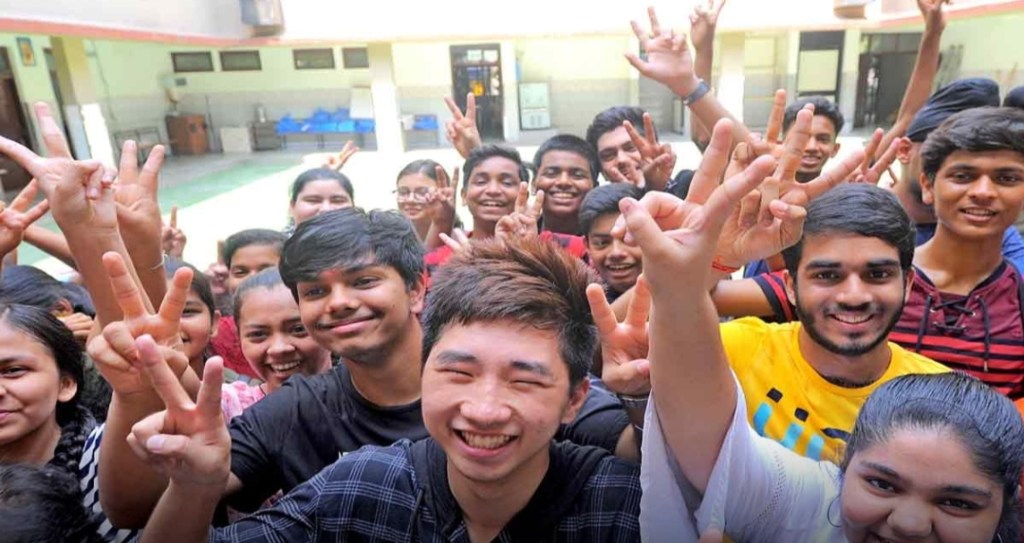
Multicultural Education is known as an educational procedure / strategy which fuses the perspectives, writings, values, convictions, and viewpoints of people from distinct social foundations. The primary function of putting it into practice in classrooms is to allow educators to adjust or join exercises to highlight diversity and social pluralism. We will discuss various disadvantages and advantages of educational method. Multicultural education came into the limelight in the early 1970s, following the action plan for change in the education system by the civil rights struggle. The goal was and continues to be to assist, appreciate cultural diversity amongst teachers and students. Multicultural educated students are often best prepared to work in a variety of classroom or commercial establishments and have a strong social intelligence.   

How multiculturalism helps school education | Op-eds – Gulf News

Race, ethnic background, nationality, language, religion, class, sexual orientation, etc. are the critical elements involved in multicultural education. Students can be constantly reminded of history, cultures, and the importance of various groups by adapting it in schools and colleges. It also promotes the ideals of inclusion, democracy, diversity, critical thinking, and sense of unity, inquiry, outlook values and many more positive traits. This teaching strategy is seen as profitable in advancing educational achievements among students of foreigners (immigrants), and it is along these lines that it is given credit to be a contributor to the school reform movement.

Many genuinely think that Multigrade or cross-cultural education’s goals and objectives are to safeguard the culture of minority groups by encouraging young people to think broadly and get to know new thoughts and critical thinking. All this quite fundamentally helps students deduct, just as it urges them to have an increasingly open worldview. As a result, students are provided with the knowledge, beliefs, and skills required to engage in social improvements, resulting in equity for ethnic groups previously marginalized and excluded.

Just like every other Multicultural Education system, there are a few benefits and drawbacks to it. The pros and cons are as follows:

Disadvantages of Multicultural Education:

Since children from diverse ethnic, linguistic and social backgrounds study together from the same education system in a multicultural classroom, making it difficult for everyone to understand the subject. There’s a possibility teachers may be struggling to find out how well the students understand the content. As not all students come from the same backgrounds this causes a language barrier. People may be non-confrontational, submissive or otherwise indirect from other cultures.

Teachers in inclusive education must be equipped to manage conflicts and misunderstandings with different values , beliefs, cultures, assertions, patterns of behaviour, etc. that tend to arise among students from different cultures.

Advantages of Multicultural Education:

Multicultural Education exemplifies students to different culture and values, and creates good understanding and acceptance of people’s differences. It instils tolerance and personal acceptance. Since it encourages cultural relevance, anti-bias classroom, challenging students to reflect without jumping to stereotypes, shaping social skills and social action resulting in people engaged in civic engagement. The method encourages students to assimilate while maintaining intact their culture and values, making them feel inclusive. It can help children assimilate without compromising their cultural identity by being culturally conscious teachers, without biasing. It facilitates promoting a community of learning, which helps to preserve a sense of pride which trust in the learning.

Starting a small business

Starting a small business is the best way to gain freedom. Although this statement is disputable, it has sense.

Why do people decide to become entrepreneurs? They are longing for independence. Small business helps one manage his time in the way he wants. He can produce the goods and services he likes. Finally, he is able to try to be responsible and creative.

Small business is very important for the economy of every state. Small entrepreneurs contribute into the state budget a lot. It is possible to say that the complex of small and middle firms provides the country with the same profit as big business does. In simple words, a prosperous state cannot survive without small business. It is impossible to defeat poverty without small business. Thus, if you have any genuine and uncommon ideas concerning the production of useful goods and services, establish your own small firm.

Starting up is not easy

Starting a small business is not an easy thing. Whether you’re doing something as simple as business paper writing as a business or as grand as running a construction company building skyscrapers, you should be psychologically and financially prepared to numerous challenges. Moreover, it is vital to know something about business, management and marketing.

To begin with, you should study the market in order to learn about the goods and services that are required by consumers. This factor is the crucial one. When you discover that people demand an item but no one has produced it yet, you have the best chances to conquer the chosen sector of the market. Secondly, you ought to think about the price and quality of your product.

There are two options. The foremost one is the production of high-quality and expensive goods that will serve long. The second option is related to consumerism. You produce poor-quality cheap goods and attract clients with the help of the lowest prices.

Sad to say but it is difficult to choose the best option. Many people are ready to pay a lot to possess a quality item. Others avoid paying a lot and prefer cheap products.

Create a business plan

Then, you should create your own business plan that will contain the entire information about the functioning of your firm. Think about the target groups of customers, production, logistics, storage and retail.

Apparently, you should produce and store your goods somewhere. Then, you will meet with such issues as revenue and expense. You will need to hire a few employees to run your business rewardingly. Without doubt, you will have to be selective, demanding and attentive in order to recruit the right people into your firm. Finally, you will meet the problem of rent, taxation, etc. A firm resembles a household. You should pay attention to the slightest problem, question and misunderstanding if you want to increase your income and develop your small firm into something bigger.

The ups and downs

As might be expected, starting a small business has many advantages and disadvantages. The most solid strong side is independence. You do not have to work for someone else. You work for your own profit. You possess the freedom of choice and actions. If you are not respected and appreciated at work, you can embody your original and amusing ideas in your own business.

Ambitious people always try to start a small business if they receive such an opportunity. You do not need to listen to the instructions and threats of your boss when you are late. At long last, you will earn more money. You are the boss and the entire profit is yours.

Nevertheless, there are many factors that cause problems to a novice entrepreneur. You should remember that independence is also responsibility. You are responsible for your firm, its prosperity and the wellbeing of your employees. Furthermore, you are responsible for the health and life of your customers who consume your products.

You are expected to know how to develop and improve your small company beneficially. You should know how to behave in case of crisis and unpredictable situations. You should be ready to wake up at night and spend the whole day at your firm in order to settle down all urgent problems and conflicts between employees. You should be a teacher, psychologist and negotiator who is able to resolve conflicts and motivate his staff practically.

Takeaway

Starting a small business is a challenging but beneficial idea. You are able to establish you own store, café, restaurant or bakery and embody your offbeat and splendid ideas there. On the other hand, you should be ready to resist numerous challenges and work hard for the protection and development of your business.

HOW DOES TRAVELLING AFFECT ONES PERSONALITY AND LIFE?

Mark Manson said:

“Travel is a fantastic self-development tool, because it extricates you from the values of your culture and shows you that another society can live with entirely different values and still function and not hate themselves. This exposure to different cultural values and metrics then forces you to reexamine what seems obvious in your own life and to consider that perhaps it is not necessarily the best way to live.”

Different people travel for different reasons. A Saleman travels round the world for his professional necessity: to meet different dealers, distributors, individual to secure orders. A professional photographer travels to capture the nature in raw form clicking the nature’s beauty, the rural emotions of simple life leading people or shooting the modern urban lifestyle. The   travel addicts travel as tourist to view the different places and people created minutely by the greatest creative artist of this Universe: The Almighty!
Often a person who frequently travels realize themselves in unfamiliar positions and dilemmas which creates their own problem appears like nothing. 
Learning is a continuous process. We learn from books, internet, school, but can also learn from experience. For a Balance Education, Travel is a vital part. Moreover, Adventure is acquired from Travel.

Culture is another aspect of life that has been affected by travelling. Today, different languages are taught in colleges and universities. Students who enroll to study these languages have the desire to travel to those countries which are dominated by the respective languages. As suggested by Andrews (2013), it’s more interesting if you are able to communicate in their language when you are a visitor. Another cultural practice that has been affected with travelling is food and mode of dressing (Bremer Mathew, 2018). Moreover, when you travel to a certain country for reasons such as studying, you will definitely get used to the food of that country. For example, some foods are used due to certain environmental condition. It’s ironical to wear heavy clothes in Saharan desert. Similarly it’s difficult to put on light clothes in some regions of the Northern Hemisphere during winter.

In conclusion, travelling can make those who xenophobic towards some people to change their perspective. As viewed by different psychologists, many people who have travelled the world tend to behave differently compared to their prior behavior. According to research, some characteristics can be acquired through environmental factors.

How to make a better morning?

A lovely good afternoon to everyone soo, here i am a first user and this is my first post that would be my first choice as a topic to start a day. As i was looking after these quarantine days people are getting lethargic and working online these days. So here some points that you should kept in your mind:

While getting up have some stretching. Also most important is be happy.

Get a warm class of water with honey so that it will give a cure to your stomach and you’ll feel fresh.

While you sitting and taking an online classes so just rotate your legs so that no fat is stored in your thighs. Also rotate your wrist by this you’ll be fit and also your work been done.

Silent Pandemonium!

No more silence about violence

Just a slap, but he can’t hit me” -This sentence not only reveals a dialogue of a film but also exposes the stark reality of different societies. Domestic violence is existing in almost every community in the world. The term can be classified on various grounds including some instances of violence against spouses, children or elders and transgenders. The various types of activities adopted by the attacker against the victim include physical abuse, emotional abuse, psychological abuse or deprivation, economic exploitation, abusive, taunting, etc. Domestic violence is not only a problem in developing or less developed countries, but it is also very prevalent in developed countries. Domestic violence is a reflection of our pseudo-civilized society.

Violence has no place in a civilized society. But the number of domestic violence cases reported each year underlines a worrying situation. In our country, people are being tortured behind closed doors. This shameful act of violence is also being done in rural areas, towns, cities and metros. Domestic violence across all social classes, gender, race and age groups is becoming a legacy from generation to generation. In this article, efforts will be made to find the causes of domestic violence, the impact on the society and children, and solutions to the problem.

What is domestic violence?

Domestic violence means any act that causes health, safety, life-threatening, economic loss and damage to a woman and child (child and girl under 18 years of age) and such damage that is unbearable and which causes grief and humiliation to the woman and child. All these are included in the scope of domestic violence.

Under the Domestic Violence Act, an aggrieved woman can prosecute any adult male, i.e can file a case against him.

Various forms of domestic violence in India

According to the Domestic Violence Act, 2005 in India, any women as a victim of domestic violence and children and girls below 18 years of age are protected. The various forms of domestic violence in India are as follows:

Domestic violence against women – giving physical pain to a woman – such as assault, pushing, stumbling, hitting something or physically hurting the woman in any other way, forcing the woman to look at pornography or pornographic images, Raping, abusing, humiliating, hurting a woman’s family and social reputation, humiliating a woman or girl, blaming her character, against her marriage will, threatening suicide, verbal abuse, etc. According to the United Nations Population Fund report, nearly two-thirds of married Indian women are victims of domestic violence and 70% of married women aged 15–49 in India are beaten, raped, or forcibly sexually abused.

Domestic Violence Against Men – There is no question on the fact that domestic violence against women is a serious and major problem, but domestic violence against men is also increasing gradually in India. The supremacy of men in society gives confidence that they are not vulnerable to domestic violence. Recently hundreds of men gathered in Chandigarh and Shimla, who sought protection and safety from domestic violence against their wives and other family members.

Domestic Violence Against Children – In our society, children and adolescents also face domestic violence. In fact, this form of violence is the second in the number of reported cases after violence against women. There is a lot of variation in the case of urban and rural areas and in the upper class and lower class families in India. It is treated as more personal in urban areas and is hidden within the fences.

Domestic Violence Against Elderly – This form of domestic violence refers to the violence against the elderly in the house committed by their children with other family members. This category of domestic violence is becoming highly sensitive in India. This includes beating up elders, asking them to do excessive household chores, not giving food etc. and keeping them separate from the rest of the family members.

Reasons for domestic violence

The main reason for domestic violence towards women is the senseless mindset that women are physically and emotionally weaker than men.

Including dissatisfaction with the received dowry, arguing with partner, refusing to make an intimate relationship, neglecting children, going out of the house at odd times without telling partner resulting in the barrage, oddities in the regular behaviour.

Indulging in extramarital affairs, not caring for in-laws, in some cases, sterility in women also lead to attacks on them by family members.

Reasons for domestic violence towards men include not following wives’ instructions, ‘insufficient men’s earnings, extramarital affairs, not helping in domestic activities’, not taking proper care of children, abusing husband and family, Sterility etc. of men.

Reasons for domestic violence with children may include disregarding parental advice and orders, poor performance in education or not being on par with other neighbourhood children, arguing with parents and other family members, etc.

The reasons for domestic violence with children in rural areas can include child labour, physical abuse or harassment for not following family traditions, forcing them to stay at home and not allowing them to go to school, etc.

In order to get money in poor families, there have been reports of parents selling body parts of retarded children. This incident shows the high level of cruelty and violence against children.

The main reasons for domestic violence against older people are the children hesitating to bear the expenses of the old parents. They torment their parents emotionally and beat them to get rid of them.

On various occasions, they are beaten up for acting against the wishes of family members. One of the most common reasons is the torture given to grab property.

Effects of domestic violence

If a person has faced domestic violence in his life, it is very difficult for him to come out of this fear. Negativity, gloom and apathy dominate the intuition of a person after he is perpetually a victim of domestic violence. It takes years for that person to return to the mainstream of a stable lifestyle.

The worst aspect of domestic violence is that the person suffering from it does not come back from the trauma. It is often seen in such cases that people either lose their mental balance or fall prey to depression.

This is the most dangerous and tragic situation of domestic violence that when the people whom we trust so much and live with -when they give us this kind of grief, the person loses faith in relationships and starts living solitarily. Many times people even commit suicide in this condition.

The most widespread effect of domestic violence is on children. CT scans show that children who have spent their lives in domestic violence shrink the corpus callosum and hippocampus part of their brain, affecting their learning, cognitive ability, and power of emotional regulation.

Children learn vicious and aggressive behaviour from their father. The effect of this can be seen in the violent acts of children towards other unstable and weak children and animals at times.

Girls learn cynical behaviour and often become submissive, silent or tend to run away from situations.

The quality of life of each person is adversely affected because the women who have been victims of violence take less part in various activities of social life.

Solution measures

According to the researchers, it is important to note that not all victims of domestic violence are aggressive. We can help them to get out of the mental turmoil of domestic violence by providing them with a better atmosphere.

India is still lagging behind in surveying, peering, understanding and trying to change the mindset of assailants. We are still largely ignoring the view propagated by experts that- “in order to end violence and discrimination against women and children in the true sense, we need to consider men not only as a reason for the problem but they’re also to be seen as an integral part of the solution to this.”

As a first step towards reform, it will be fundamental that men should be put in as a part of the scenario instead of putting it like “men against women”. It will be mandatory to promote the spirit of masculinity in a healthy way and get rid of old worn-out mould.

The Government has passed the Domestic Violence Act, 2005 from Parliament to protect women and children from domestic violence. To get the full benefit of all the provisions comprised in this law, it is important to understand who is the victim. If you are a woman and someone among relatives misbehaves with you, then you are suffering under this act.

India has become serious towards mental health by the Mental Health Act, 2017, but it needs to be made more effective. Policymakers need to develop mechanisms to provide benefits of professional mental health services to families recovering from domestic violence.

The government has launched schemes such as ‘One-Stop Centers’, which aim to facilitate and ensure their access to an integrated range of medical, legal and psychological services to help women who are victims of violence.

Vogue India launched a ‘Boys Don’t Cry’ campaign to spread awareness about violence against women, while the global human rights organization ‘Breakthrough’ launched a campaign against domestic violence. Both these campaigns were spectacular efforts made at the private level to deal with domestic violence against women.

The conclusion

If we really want to create an “India free from violence against women”, then the time has come that we, as a nation, should discuss this subject collectively. A good way could be to start a nationwide, sustained and prosperous social campaign.

Corona Virus

Coronavirus is a group of viruses that is zoonotic in

Nature, coronaviruses are transmitted between animals and peoples.In humans, the virus is known to cause respiratory infections that are typically mind. But

May become lethal as is happening in Wuhan.

Coronavirus disease (COVID19) is an infectious disease caused by a newly discovered coronavirus.

In December 2019,a novel coronavirus called SARS-COV-2 has resulted in the outbreak of a respiratory illness known as Covid 19

Coronaviruses (COV) are a large family of viruses that

Cause illness ranging from the common cold to more severe disease such.as middle eat Respiratory  Syndrome (MERS-COV) and severe acute respiratory syndrome.(SARS-COV)a novel corona virus (Ncov) is a new strain that has not been previously identified in humans.

The new corona virus is part of a family of viruses that affect the respiratory system

It is common in animals , but a few affect humans.

The current virus originated from WUHAN PROVINCE in CHINA

COVID-19 SYMPTOMS

  • FEVER
  • COUGH
  • SHORTNESS OF BREATH
  • PERSISTENT PAIN OR CHEST PRESSURE
  • BLUISH LIPS OR FACE

PRECAUTIONS TO PREVENT nCOV

  • Avoid touching your eyes ,nose ,and mouth with unwashed hands.
  • Avoid close contact with people who have possible symptoms
  • Cover your cough or sneeze with a tissue,then throw the tissue in the trash.
  • Clean and disinfect frequently touched objects and surfaces.
  • Avoid animals (alive or dead) animal markets,and products that come from animals (such as uncooked meet)

             TREATMENT

There is no specific antiviral treatment recommended for 2019-COV infection. People infected with 2019-COV

Should receive supportive care to help relieve symptoms.

People who think they may have been exposed to 2019-cov should contact your healthcare provider immediately.

Coronavirus as a group of viruses that is zoonotic in

Nature, coronaviruses are transmitted between animals and peoples.In humans, the virus is known to cause respiratory infections that are typically mind. But

May become lethal as is happening in wuhan.

Coronavirus disease (COVID19) is an infectious disease caused by a newly discovered coronavirus.

In December 2019,a novel coronavirus called SARS-COV-2 has resulted in the outbreak of a respiratory illness known as Covid 19

Coronaviruses (COV) are a large family of viruses that

Cause illness ranging from the common cold to more severe disease such.as middle eat Respiratory  Syndrome (MERS-COV) and severe acute respiratory syndrome.(SARS-COV)a novel corona virus (Ncov) is a new strain that has not been previously identified in humans.

The new corona virus is part of a family of viruses that affect the respiratory system

It is common in animals , but a few affect humans.

The current virus originated from WUHAN PROVINCE in CHINA

COVID-19 SYMPTOMS

  • FEVER
  • COUGH
  • SHORTNESS OF BREATH
  • PERSISTENT PAIN OR CHEST PRESSURE
  • BLUISH LIPS OR FACE

PRECAUTIONS TO PREVENT nCOV

  • Avoid touching your eyes ,nose ,and mouth with unwashed hands.
  • Avoid close contact with people who have possible symptoms
  • Cover your cough or sneeze with a tissue,then throw the tissue in the trash.
  • Clean and disinfect frequently touched objects and surfaces.
  • Avoid animals (alive or dead) animal markets,and products that come from animals (such as uncooked meet)

             TREATMENT

There is no specific antiviral treatment recommended for 2019-COV infection. People infected with 2019-COV

Should receive supportive care to help relieve symptoms.

People who think they may have been exposed to 2019-cov should contact your healthcare provider immediately.

The Constant Need Of Becoming Perfect

We all have our version of what a perfect person is. Psychologists often call it the ‘Ideal Self’. Sometimes this ideal self is someone who is the best at math. Sometimes it is someone who is their parents’ favorite child. Sometimes it is someone who knows everything about everything.

lonely-man-in-hat-admiring-picturesque-view-4555669

The point is that we all have a ‘perfect’ someone in our mind and we spend most of our life trying to stand up to those standards. Unfortunately, the most of us don’t succeed.

The thing is that from the very beginning of our life, we are influenced by our surroundings. Our family teaches us basic activities like walking, running and talking. As we grow, they teach us manners and social norms one must follow for the society to us as a part of it. Our school imparts basic education by teaching us how to read and write. Apart from that, educational institutes teach us how to form opinions and ideas about anything and everything. Even our peers and friends influence our lives in several ways. As a result, we continuously form ideas in our minds. We constantly contribute to the level of standards we ‘must’ follow. Even after doing a crazy amount of hard work we are unable to become that person. It is because we set unrealistic goals for ourselves and focus on all those things that we aren’t. We want to become someone else. Someone who is ‘perfect’ according to our ideals. So, where are we going wrong?

Why is it that the percentage of successful people is less? It is because they embrace their uniqueness. They accept themselves as they are. They know their strong points and put the same level of hard work into that and become successful in that area. They improve themselves not because the society expects them to. But because they want to. They don’t want to become perfect! They just want to become the best version of themselves. Wouldn’t it be wonderful if we all do the same thing? Yes, we won’t become perfect. But we will be happy and contempt with ourselves. It can take, weeks, months, even years! But when we do get there, it will be a thousand times better than that ‘perfect’!

Wanting to be someone else is a waste of the person you are.”

– Marilyn Monroe

Deteorating Mental Health due to the pandemic-induced lockdown

The outbreak of Covid-19 pandemic worldwide has affected every aspect of people’s life be it health(for those who are infected by the Corona virus) and employment and education for those who are under the lockdown restrictions. But apart from these, one that is least talked about is the detereoration of mental health of some people.

With social distancing being the new norm governing the people, those who are extrovert and loved to socialise with the people are forced to live in their houses away from their freinds and family members. When these people find no one to talk they are driven under depression and anxiety.

The prime reason as of why people are facing depression and anxiety in the pandemic outbreak is due to the financial crisis they are going through. For the elites, lockdown has provided them with leisure time to pursue a new hobby , spend time with family, cooking delicacies .But on the contrary, for the poor and middle class which contributes more than 50 percent of the Indian population, the pandemic led lockdown is a period of distress and hopelessness. These people face lack of resources to survive in this period which has rendered them unemployed.

The lockdown has excerbated the mental state of people who were already in depression in the pre- Corona time.Lockdown has provided them enough time at their disposal to think more and worry more .It is probable that these people see their future bleak in the post Covid world maybe because they are not able to perform well in their career. This is predominantly the problem of students and youth.

HOW TO TACKLE DEPRESSION AND ANXIETY IN THIS PERIOD?

Minimise time spent online if you are suffering from depression. Everyday updates about the rising number of corona cases and the distress of red zones will make you hopeless thinking the condition will never improve. If you are away from your family and loved ones, do not use social media very frequently. This too has a reason. The posts by your friends and family members enjoying the lockdown period will aggravate your anxiety and you will feel as if left out. Instead, it is advisable to pursue your hobby, take up an online course which interests you, talk to your family and friends over phone or video calls etc. Do anything which makes you feel happy. This will surely help.

Students on the other hand should not see a bleak future for themselves rather they should hone their skills which will ultimately help them in their career. They should talk to their parents. Noone can understand a child better than his parents.

One of the most effective ways to tackle this is to call a therapist and ask for help. There is nothing wrong in that. Everyone has to go through ups and downs and the person you are talking to is trained to provide help in these circumstances. Talking to a therapist can be of great help if you are suffering from depression, anxiety or in the worst case having suicidal thoughts too.

Final word

Anxiety and depression are seen as a taboo in Indian society. Noone likes to talk about it. But everyone has gone through this in some or other time in their life. We need to understand that depression is just an illness- a mental illness! People do get ill and they get well too. There are tonnes of examples of people who were in depression at some stage of their life and came out of it and have done wonders. That is possible provided that the person gets utmost care and support. In certain cases, of course medical help is needed.

Lockdown Is Disrupting a Generation’s Education. What Can Be Done?

An interesting idea has been in the works in Uttar Pradesh which is planning to use Doordarshan, All India Radio and community radio to promote audio-based learning among students.

Lockdown Is Disrupting a Generation's Education. What Can Be Done?

The last few days have finally seen a flurry of activities by the Ministry of Human Resource Development (HRD) and various regulators including CBSE, NCERT etc. to find alternatives to ensure the continuation of education. While this may not be a good time to address the seriously low expenditure on education in India, the lack of seriousness towards the sector can be gauged from the fact that HRD was kept in Category C (the lowest category) for expenditure – i.e. the said department will have to restrict expenditure to within 15% of that budgeted for Q1, 2020-21.

Amidst this background, the department and regulators have started moving towards developing an online mode of education – as, hopefully, a stop-gap arrangement. NCERT has released an Alternative Academic Calendar for four weeks of home-based activities for different subjects. For example, activities like categorising objects including eraser, pencils, cloth, pulses etc. to teach the concepts of colours, shapes and sizes have been suggested for the students of Class I-IV.

For Class V students, teachers will be conducting classes through internet-based platforms, in the absence of which SMS and voice recordings can be sent. However, it has not been explained how voice recordings can be sent without the internet. Certain states including Uttar Pradesh are planning to launch high-quality ed-tech applications along with using e-resources suggested by the MHRD including e-pathshala etc.

However, amongst this whole discourse of moving education online, there has hardly been any discussion surrounding the practical issues of implementation, as well as various socio-economic factors which define the Indian education ecosystem.

Limited internet availability

The 75th report of the National Sample Survey Office (NSSO) for 2017-18 highlights some of the major issues that this new model would have to address. All India percentage of households having internet facilities stands at 23.8% with rural availability at 14.9% and urban at 42%.

The problem does not end there, as having a facility does not mean it would be used. The percentage of people who were able to use the internet (all-India) stood at 20.1% with rural at 13% and urban at 37.1%. Additionally, only 10.8% of people in India had used the internet in the last 30 days. It is important to note that these statistics vary vastly among different states across the country. For instance, Bihar stands at the lowest (9.1%) for individuals who have used the internet in 30 days, while Delhi has the highest number (49.1%) of such individuals with bigger states like Maharashtra (26%), Rajasthan (15.3%), Andhra Pradesh (14.8%) etc. being in the middle.

These statistics strike at the core rationale of using the internet as a mode to impart education, and highlight how a majority of the country would be left out of the quest to achieve basic education in the months to come.

Increased responsibility of parents to educate their wards

Another important pillar of the new model is the increased role that parents play in educating their wards. Take, for example, the NCERT guidelines which – surprisingly has progressive methods of teaching to improve the analytical, quantitative, and logical reasoning abilities of the students – all key factors which our regular model of teaching and learning does not have. However, the guidelines presume that the parents will have the academic intellect to impart education to their students. But statistics highlight otherwise.

The same NSSO survey, quoted above, highlights that 26.1% of the population above 15 years of age is ‘not literate’, while a further 18.9% have attended formal education up till primary school, 16.2% each have attended middle (Class V) and secondary (until Class VIII). This constitutes a whopping 77.4% of total India’s population – who may not have the adequate level of education needed to teach children in the house. The situation at the rural level is even more dire, with 69.6 % of the population being in the spectrum of ‘not-literate’ to ‘middle school’.

Loss of nutrition due to school closure 

While the above factors touched upon the modality of the education, there is an even more basic issue at stake. The closure of schools has serious implications on the daily nutrition of students as the mid-day meal schemes have temporarily been shut. As of March 31, 2019, close to 12 crore students across the country were provided with food under with mid-day meal schemes.

This is close to 60% of the total students enrolled throughout K-12 education (the actual percentage is likely to be more, as mid-day meal only caters to students till Class VIII). Various studies have pointed out that mid-day meals are an important contributing factor for increased enrolment (~30%) in the schools.

These factors highlight a very dangerous scenario for the K-12 education sector in our country. Our learning outcomes in K-12 education do not inspire much confidence, in the first place, as has been pointed out repeatedly in various ASER reports by Pratham.

The loss of possibly half a year – if not the full academic year of 2020-21 – is going to further deteriorate the situation, as students would have difficulty in resuming schooling again after a huge gap. Additionally, the loss of income for a considerable population in India is going to further exacerbate the situation – CMIE’s data suggests that 11.9 crore people have lost employment in the two weeks of the COVID-19 lockdown. Investment in education is not going to be a priority, amongst disadvantaged households, and we might see a dip in enrolment, when and if, schools are opened.

Possible solutions

While the damage to the sector is similar to the damage every sector across the world is facing, it is possible that with some careful planning, we might be able to limit the long-term consequences of this prolonged shutdown.

To begin with, the districts in the green zone should be allowed to open schools – after analysing them further over the next few days. So far, there are 318 districts such in the country – which will likely cover a majority of the school children. Eventually, 292 yellow zone districts – which may turn to the green zone in the next few days or weeks – should also allow schools to open.

Strict social distancing measures should be implemented, and to limit the number of students, classes may run in two four-hour shifts. While this strategy would not result in finishing the quarterly curriculum, this will at least reduce the gap in learning that students are likely to experience if schools continue to remain shut for long. This may also help in addressing the possible increase in drop-outs due to the long shutdown.

This leaves the government with 107 districts which are in red and orange zones. It might not be possible to open schools in these areas any time soon, thus, there is a need to deploy public funds to fix the internet gap and ensure that students continue to learn. Some state government have come up with ideas to address this concern.

The Delhi government had mooted an interesting idea to provide data packages to the students of Class X and XII. While this is likely to have certain implementation challenges – particularly the misuse of data for objectives other than learning – smart technology solutions can be found. Use of the internet can be restricted to specific applications prepared by the government. Similarly, another interesting idea has been in works in the state of Uttar Pradesh which is planning to use Doordarshan, All India Radio and community radio to promote audio-based learning among students who do not have access to the internet.

Additionally, there is a need to develop a financial stimulus for the education sector primarily targeting low cost private aided and unaided schools – which are likely to witness a reduction in fee collections, due to income losses. Various states, including Rajasthan, Punjab, Haryana, and Uttar Pradesh have already announced that schools should not pressurise parents to pay fees.

However, a move like this is going to have a spillover impact on the incomes of teachers at such low-cost private schools. As of 2016-17, close to 28 lakh teachers were employed in private unaided schools, and further 8.3 lakh in government-aided schools. A more rational system could be to allow a reduced percentage of the fee in schools which are partially working (red and orange zone), with full fees for schools which would be fully functional (green and yellow).

Wherever relevant, a grant-in-aid could be issued for specific schools on a case-to-case basis to bridge income and expenditure. The powers for the same can be devolved to the district authorities to ensure a more localised approach.

While understandably, India as a developing country does not have unlimited resources, certain core sectors including education cannot simply be left as the last priority. Similar to other sectors, which are witnessing a staggered opening, the education sector – particularly the K-12 education system – needs to be opened in a staggered way.

These 12 years of education are crucial for every student and are the base years that will support the upward social and economic mobility of disadvantaged classes. A long and unplanned hiatus is likely to shatter the dreams of many and further harm the country in the long-term with a less-educated workforce. We need more talented and skilled individuals to get us out of the possible recession that the world is going to face and dropping the ball on education, is not going to help the cause.

Future of Home-schooling

Although many people see education system as the best way to socialize and instruct young children, each year there are growing numbers of parents talking about putting their children in home-school.

Assuredly you will recognize a variety of benefits of doing this, but the fact still remains that something is “lost in translation” between possibilities available to the public and at home. Fortunately, it seems as though robots are picking up the slack in home-schooling ecosystems.

What Is the Future of Homeschooling?

Home Schooling Problem:

To understand how robots change education in home-school settings, you first need to learn the issues surrounding at-home educations. Though supporters of the public school often argue that home-schooled children are left at a loss, the statistics suggest otherwise. Children that are taught in this atmosphere actually attend university at rates equal to or higher than their counterparts.

It is also worth noting that researches have shown behaviour problems for home-schooled children. Yet there are some considerable differences when it comes to their teachers. For example, in many states no accreditation or training is required to teach your kids. In fact, there are even states that do not predict teaching at home about holding a high school diploma. None of this is to suggest that home-schooling parents can’t have a decent education. However, there have been some subjects where all may benefit from artificial intelligence (AI).

The benefits of robots

If you have kids and want to home-school them, you should rest assured that, practically speaking, they’ll be all right. Actually you’re going to be in fine company. The number of home-schooled children is increasing significantly of 2-8 per cent per year. However, when doing this it is necessary for all of us to consider our limitations. Luckily, robots have evolved enough to help conquer those limits. One only has to consider different languages to realize how important home schooling robots can be. Only one in five Americans can speak a foreign language, but in their curriculum, many jurisdictions do have a requirement for foreign languages. Fortunately, artificial intelligence is used by the ROYBI robotic system to educate kids a variety of languages in which parents may not have experience.

It’s also worth noting that the system is constantly evolving to teach other subjects — as AI certainly should. The new educational emphasis is on STEAM (science, technology, engineering, humanities, and math), and in these subject areas, ROYBI is continually introducing new content.

Where are we going from here?

As robotic world continues to develop, many are now questioning whether artificial intelligence will completely replace classroom teachers. Home-school family would also have the option of using robots to fully teach their own children if this were to happen. While the cost may seem prohibitive, consumer robots like ROYBI have enabled AI to be brought into the home.

Luckily, it seems as if AI is moving to a point where it can deal with children on an emotional level. For example, ROYBI can recognize facial expressions and respond to apparent emotions in an acceptable manner. Obviously this is no substitution for actual human interaction, which can never be excluded from public or home-school settings, but because machine learning increasingly encourages robots to behave more objectively, these artificial interactions can become essential aspects of the learning process.

Home-schooling is growing in popularity every single day, and while success rates are impressive, it is important to remember that several teachers’ parents cannot do the job. However, with the improvement of artificial intelligence and robotic technology, there is little wonder that one day everything taught in public schools can be learnt at home. While there is disagreement about whether in-home learning can provide equivalent or higher education, home-schooling robots may one day make that fact unquestionable.

Importance of Learning to Code early in life

The World Economic Forum ‘s Future of Jobs Report has forecasted that 65 per cent of children entering primary school today will eventually wind up working in entirely new types of jobs that do not yet occur. The world is changing at such a rapid pace that today’s high-paid jobs didn’t even exist five years ago-and it’s hard to predict what kind of jobs we ‘re going to do in another five years. The reason for that big shift? It is rise of Software industry.

8 reasons why every child should learn to code - Teach Your Kids Code

The question here is how we prepare our children for the future, there’s only one solution to this situation: Learning to code. Both parents and teachers believe that programming is a well-structured way of introducing children to logical thinking and problem-solving in a country like India, where the education system struggles with a lack of vision, facilities and outdated curriculum. This also trains them for a data-science and computer science driven job market.

Fewer than 10 percent of schools taught mathematics before the Industrial Revolution, each school introduced mathematics after the turning point, because that was the centre of the revolution. For us now, coding skills are what mathematics was to the Industrial Revolution: underestimated at the time, but extremely valuable generations later.

Now we’re in the middle of the computer revolution, and it’s the same concept: schools need to recognize the benefits of coding as a skill. For Chinese parents, teaching children code is just as important as teaching them math and Chinese. Indeed, even before they enter pre-school many Chinese kids are vulnerable to coding. A lot of Indian parents now also teach pre-school coding to children. A huge number of coding and programming centres in New Delhi, Mumbai, Gurgaon, and Chandigarh serve these needs in India.

Almost all of these places use a shared pool of tools and technologies — such as Code Studio, LightBot, Botley, or MIT’s Scratch — created for a foreign market where coding teaching is already a flourishing industry for children. The aim is to cultivate the ability in a child to develop a meticulous sequence of commands in a language which the computer understands.

In the next 5-10 years, it would not matter what school kids are attending school, but how digitally savvy these kids are, especially with the introduction of 5 G technology that would be paradigm shifting and upend conventional teaching methods. Economists estimated the total economic impact of 5 G on new products and services to reach $12 trillion by 2035 as 5G tries to move mobile technology from connecting with people to people and information, to connecting people to everyone. Hi-tech kids today are learning from the same books I used 10 years ago during my school time. Our school system promotes rote learning, and that promotes conformism in children rather than curiosity. There is a repetitious raj of learning which governs our schools.

If we don’t implement coding in schools then our kids will be in a massive disadvantage and the future will be shaky. In 2017, Delhi-based ed-tech start up Eupheus Learning launched Cubetto which was introduced at about 300 primary schools across India. Cubetto’s innovation is the block-based coding language intended for pre-literate-year children. It is a screen-less coding solution that teaches infants the basics of programming.

Most kids learn to tap and press and hold in the digital age of today before they can speak cohesively or walk. Its wireless pacifiers, friends and entertainers are smartphones and tablets. To do so, children do not need to be qualified in reading or writing because stories and pictures are used to illustrate the concepts.

We can’t rely on the government to formulate policy, top-down approaches are lethargic and bureaucratic that takes a lot of time to implement which our kids don’t have. In the 4th Industrial Revolution, parents and educators would have to take a proactive approach or our children will be left behind.

Break the Limitations of Your Mind

Limitation is the word which can be good if want to be average.Limitation is the word which put barrier in front of our imagination be it any kind of limitation,but do u want to be average? of course Not,right?

Those who dare to imagine the impossible,are the one’s who break all the human Limitations!!

Dr.Avul Pakir Jainulabdeen Abdul Kalam

We need to expand the horizon of imagination.Never think that something will newer work ,just try go forward with it .It will definitely not as easy as it said but there is always barriers along the way there will be always the people who doubt you ,but this doesn’t matter if u believe in Ur ability to achieve something u dream of.Always remember No energy conversion from one form to another take place until there is some one to oppose the conversion.Let’s understand it by example when us stops its space shuttle program US was sending it’s astronauts to space station through Russian space shuttle .Once one Russian minister trolls America by saying that “If we do not help US to send astronauts to space they only has Trampoline do it “in short us cannot do it then their astronauts can left only jump on bubbles on earth.This triggered US people who can imagine impossible i am talking about ELION MUSK (space X) .He imagined impossible, someone doubting his country gives him motivation and now space X has sended two astronauts to space with total US made space ship.Isn’t it fascinating!

Every one who say’s u can’t is giving u motivation and fire needed to achieve great.Every hurdle or failure is opportunity to grow and improve.So Go ahead Imagine impossible and make it possible because U CAN!!

Role of Technology in Education


“Technology will not replace great teacher’s but technology in the hands of great teacher’s can be transformed”

Education is a form of learning where we can see the transmission of knowledge, skills from generation to generation. 21st century is also regarded as century of technology. Technology brings education to student’s doorstep.

Technology in education can be classified as:

  1. Technology as learning tool.
  2. Technology as teaching tool.

History:

It goes back to many years to know about technology in education. At the end of world war-II US started using projectors.Digitalized communications and networks in education started in mid 1980’s. In fall of 2015, more than 6 million students enrolled in atleast one online course and still the count is growing rapidly.

Role of ICT in Education:

Information and communication technology (ICT) plays a major key role for students today as it has a significant and good effect on student success and learning. ICT includes television, computers, internet etc. when used appropriately and in a good way it can strengthen and raise quality of education. This ICT includes databases, spreadsheets, statistical, and graphical programs, etc. It is also likely that science and technology teachers are better trained and equipped.

Advantages of technology in education:

  • Technology helps students in preparing in their future career either in academics and non academics.( online books, exams, course, etc.)
  • It helps students to learn there own interests which helps in developing their individuals.
  • Easily accessible to learning materials.

(As present world is running around internet it is very easy to a student to access materials)

  • Proper understanding of a subject by using record keeping.
  • Using audio and visual materials helps students to learn things interesting.
  • Accurate exam conducting and grade awarding.

Limitations of technology in education:

  • Distraction to some students.

(Inappropriate websites which distracts student from there respective work) 

  • Students (programmer’s) involving in cyber crime.
  • Can be expensive to keep updated.
  • There are some health issues too when used over limit.

Some Ways to use technology in education:

  • Creating webpage includes writings, arts, quizes.

(Creating webpage helps students to learn things in creative way as it includes some writings, discussions, etc)

  • Video conferencing
  • Spread sheets
  • Creating class newspaper

(Newspaper gives us lot of information today if it’s a classroom newspaper it is really interesting to know things around a student in class)

  • Creative powerpoint presentation including picture, audio, videos.

(videos, pictures helps students to think in practical way, and it may some time leads to innovation).

Conclusion:

Technology has a very positive impact on education and should eliminate the drawbacks which are pulling back many students learning.And it’s time for every country to include more technologically equipped education for student’s future.

#Technology #Education


With economic measures, India turns the tables on China

China’s economy is dealing with many challenges, including from the China-U.S. trade war.

However, options are tilted in China’s favour because the country is far less dependent on India’s market than India is on Chinese imports

India is considering a range of economic measures aimed at Chinese firms amid the border tensions. The move to ban 59 Chinese apps may be just the start, with other measures likely to follow if tensions along the Line of Actual Control (LAC) continue without disengagement.

Following the June 29 ban, Union Minister for Road Transport and Highways Nitin Gadkari announced on July 1 that Chinese companies would not be allowed to take part in road projects.

Reports have said the government is considering trade and procurement curbs targeting China. The government is also increasing scrutiny of Chinese investments in many sectors, and weighing a decision to keep out Chinese companies from 5G trials, in which they are now involved.

The moves could potentially cost Chinese companies billions of dollars in contracts and future earnings. The message from Delhi is it cannot continue trade and investment relations as normal if China does not agree to return to the status quo of April before its incursions along the LAC began.

The Chinese government and State media have hit out at the measures. In separate statements, China’s Foreign Ministry in Beijing and the Chinese Embassy in New Delhi called on India to review the moves. The embassy said the measures “selectively and discriminatorily aims at certain Chinese apps on ambiguous and far-fetched grounds” and “goes against the general trend of international trade and E-commerce, and is not conducive to consumer interests and the market competition in India.”

State media have also widely criticised calls in India to boycott Chinese goods. The Global Times quoted one expert as saying “the sheer irrationality” of the campaign “would only end up dealing a blow to the local people in India”.

China is itself no stranger to such moves, having frequently deployed economic countermeasures, from restricting market access to boycotting goods in the midst of its own disputes with countries ranging from South Korea and Japan to the Philippines and Mongolia.

China’s State media spearheaded a boycott of South Korean goods in 2016 and 2017, when Seoul deployed the U.S. Terminal High-Altitude Area Defense (THAAD) missile system. China then placed curbs on outbound tourism to South Korea, costing the country millions of dollars in tourism revenue. China also used regulatory measures to close almost 90 Korean-owned Lotte Mart stores in the mainland.

In 2010, China began restricting exports of rare earth elements to Japan – a key ingredient for many electronics industries – following a collision near disputed East China Sea islands. Two years later, mass protests were organised by China over the islands issue, which led to boycotts of Japanese brands and, in some instances, violence targeting Japanese branded-cars and stores. With the Philippines, a dispute over the Scarborough Shoal in the South China Sea in 2012 led to China curbing imports on bananas and restricting tourism, costing the country millions of dollars in revenue.

Coercive actions

Economic sanctions have been one of the key tools of Chinese coercion, according to Zhang Ketian, who is writing a book on Chinese coercion and is assistant professor of international security at George Mason University. Based on interviews with Chinese experts and policy documents, Ms. Zhang noted that coercive actions were selective and focused on “targets when economic cost of coercing is low” but the impact is high.

With South Korea, for example, China did not target all sectors. “It left exports of Korean semiconductors, key intermediate goods for Chinese companies, untouched. Seoul relented in October 2017 by issuing a list of assurances meant to clarify to China that Seoul would not expand the scope of THAAD,” said a 2018 report on “China’s use of coercive measures” from the Centre for a New American Security.

The report said China “has punished countries that undermine its territorial claims and foreign policy goals with measures such as restricting trade, encouraging popular boycotts, and cutting off tourism.”

In all those relationships, China had particular leverage that it used to inflict immediate economic pain.

In the India-China economic relationship, where trade is lopsided in China’s favour, both sides have different levers that they could turn to, but the options are tilted in China’s favour because China is far less dependent on India’s market than India is on Chinese imports.

India’s biggest lever is its market, which has emerged as one of the important overseas markets for Chinese companies in the technology space and in telecom. For TikTok, one of the 59 apps banned, India is the biggest overseas market with more than 100 million users according to estimates. While the parent company ByteDance reported modest earnings of $5.8 million in 2018-2019, its first full year in India, company officials said the move could cost billions of dollars in future revenue. A source close to the company told the Chinese finance magazine Caixin that ByteDance “is anticipating a loss of more than $6 billion, most likely more than the combined losses for all the other Chinese companies behind the other 58 apps banned in India.”

A move to restrict Chinese companies from India’s 5G rollout would also have the similar effect of costing hundreds of millions of dollars in potential revenue.

If India does have considerable leverage that could hurt potential revenues of Chinese companies, the problem for Delhi is China could inflict immediate economic pain should it choose to. In 2019-20, India’s imports from China accounted for $65 billion out of two-way trade of $82 billion, and the country relies on China for crucial imports for many of its industries, from auto components to active pharmaceutical ingredients (APIs). Between 70 and 90% of APIs, needed for the pharma industry, come from China.

Industry representatives have in recent days already expressed concern over delays in customs clearances. If China curtailed imports as it did with Japan, even if doing so incurred its companies limited costs, the consequences would be far more serious.

Difficult choices

India faces difficult choices and needs to be selective in its measures, said former Foreign Secretary Shyam Saran. “You have to choose areas where you don’t get hurt more than they do,” he said. “TikTok is a good candidate as India is their largest market. Telecom is another. This is a huge market for Huawei. You may stop them for 5G, but at the same time a large part of the infrastructure you already have in place in the 4G network is all Chinese, so we will still need Chinese maintenance and servicing.”

The problem for India is its overall leverage with China is such that it cannot inflict serious pain on the five-times-larger Chinese economy as a whole, even if it could hurt individual companies. This, while India remains deeply dependent on Chinese goods, whether they are procured from China or elsewhere, although China’s exports to India account for less than 3% of its overall exports. On the investment front, Chinese investment in Indian tech start-ups has crossed $4 billion, according to estimates, spanning major investments in companies including Paytm, Swiggy, Ola and Flipkart.

“What do we do, for example, with Paytm?” asked Mr. Saran. “If we stop these investments, we will pull the rug out of the entire ecosystem. The problem is we are far more dependent on Chinese imports than China is dependent on us as a market. Losing a contract to India may cause some pain to companies, but will have a minimal impact on the scale they are operating. If China stops exporting APIs, there will be major disruptions in our pharma industry since producing APIs locally will take time.”

Whether the targeted economic measures will influence Beijing’s behaviour on the border will ultimately depend on China’s calculus and whether Beijing views any perceived gains from the current border stand-offs as outweighing the not insignificant economic costs of losing a key potential market. Moreover, losing this market would come at a time when the Chinese economy is facing its own challenges in the wake of the pandemic and facing increasing barriers in many Western countries.

PM Modi wraps up Ladakh visit with a swipe at China, says times have changed

On a quiet visit to Ladakh designed to deliver a loud message to China, Prime Minister Narendra Modi told soldiers posted along the Line of Actual Control that the courage they had demonstrated had sent a message to the entire world. Addressing soldiers deployed in Ladakh, PM Modi said tales about their valour were being spoken in every house across the country.

‘The enemy has seen your fire and fury as well,’ PM Modi told the soldiers in an address telecast live from Ladakh to the country. PM Modi also referred to the violent clash between soldiers of India and China at Galwan on 15 June and paid his tributes to soldiers who laid down their lives.

“From Leh, Ladakh to Siachen and Kargil…and Galwan’s icy waters…every mountain, every peak is witness to the valour of Indian soldiers,” PM Modi said. “You have given a befitting reply to people who attempted to conquer,” he told them before going on to deliver his direct message to China.

PM Modi underscored that India had always pursued the path of peace in the world but at the same time, those who are weak can never initiate steps for peace. “Bravery and courage is a prerequisite for peace,” he said.

“We are the same people who pray to the flute playing Lord Krishna but we are also the same people who idolise and follow the same Lord Krishna who carries the ‘Sudarshana Chakra,” the Prime Minister said.

Without naming Beijing that has been trying to encroach into Indian territory in Galwan valley and Pangong Tso and create new boundary disputes, PM Modi said times had changed and the era of expansionism was over. This is the time for development, not expansion, he said.

PM Modi stayed on target and continued hurling darts at China. The expansionist policies of some countries had affected world peace, he said, a clear reference to China that has disputes with 21 of its neighbours.

But history records that expansionist forces have either lost or were forced to turn back, PM Modi said, delivering his final shot before wrapping up his surprise visit. PM Modi’s office had finalised the day-trip to Ladakh late last evening but kept it a closely-guarded secret till the last moment.

News of the visit got out sometime after he landed at Leh’s airport, a height of over 11,000 feet with rarefied atmosphere, dry air and ultra-violet rays from the sun in the cold desert.

PM Modi, 69, headed straight for his briefing by top military commanders at the XIV Corps headquarters at Nimu outside Leh. He had had similar briefings back in Delhi also. This time, PM Modi could see the Zanskar and the mighty Karakorams that he had been spotting on the maps during the briefings. He also interacted with the soldiers to give them pep talks and hear their perspectives before he came around to delivering his speech.

His arrival in Leh had already delivered the first set of messages to Beijing. It also contrasts India’s approach to the standoffs along the Line of Actual Control to Chinese leadership’s efforts to signal a hands-off approach.

The PM’s visit is also a very strong message to President Xi Jinping that either he gets his aggressive Western Theatre Commander Zhao Zongqi to restore status quo ante or accept the inevitable consequences of PLA escalation. The Indian Army and Chinese PLA are locked up at four points on the LAC in East Ladakh with the latter consolidating on ground while mouthing peace overtures.

The location at Nimu where PM Modi addressed soldiers from the army, air force, ITBP and border road organisation resembled an active forward base. “There were artillery guns and other heavy equipment all under camouflage with soldiers wearing helmets and sitting in trenches and other kinds of dug out positions with a rare glint of courage on their faces,” a top military commander said.

Referring to some veterans who taunted that Nimu is a picnic spot, the commander said it was “a picnic spot for those who have treated their tenures as picnics instead of doing serious soldiering. For them even Kargil and Pangong Tso are picnic spots. If only they had treated these locations as future combat zones they would dare to comment,” he said.

Should Physical Education be made compulsory in Schools?

Physical education (PE) is often seen within the education system as a marginal subject. And many high schools are actively reducing PE time to make path for more “serious” or “important” topics.

Youth Sport Trust studies suggest that for 14- to 16-year-olds, 38 per cent of English secondary schools have cut scheduled PE. One of the main reasons for that is the enhanced pressure to produce results of the examination. Nevertheless, amid these changes, PE remains celebrated for its ability to improve wellness and encourage lifelong physical activity. This is an important issue provided that according to the latest government estimates, over 30 per cent of the year six pupils are listed as “overweight” or “obese.”

Sport should be compulsory in schools, writes Kylie Lang | Daily ...

PE is also celebrated for its commitment to improving psychological wellbeing, helping to foster social and moral growth, and promoting academic and cognitive success. The Physical Education Association emphasizes that high-quality PE fosters pupils’ physical, spiritual, financial, mental, economic, and intellectual development. But the many goals for PE – such as health education, developing skills, as well as focusing on moral and social issues – have created confusion about the topic and have done little in practice to further the educational opportunities. In fact, it was argued that PE offers more entertainment than education. A waste of time and some entertainment, or vital to a child’s education and development – what is it?

Part of the problem appears to be that PE is often seen as a possibility for pupils to be active and have fun. Or in some cases, as a way of relieving stress and serving as a break from traditional learning. These locations are clearly valuable for the overall well-being of pupils and there is a growing basis of evidence to suggest that physical activity has the potential to support learning more broadly. But PE’s role is not solely to support and promote the knowledge of pupils in other subject areas. It should instead be providing meaningful learning experiences within the subject itself.

Each offers a unique system for PE, sport and physical culture to explore a multitude of holistic learning opportunities. The moral or ethical controversies in sport, for example, can provide teachers with a range of educational stimuli for debate, rationale and critical reasoning. The Sports Monograph is a recent project that we have been working on, inviting learners to collaborate and share their views and experiences on sport, and what it means to them. The project included pupils from primary and secondary schools, as well as students from undergraduates and postgraduates who were all supported by their teachers and lecturers.

As part of the initiative, not only were the pupils acknowledged for their written achievements at school award evenings but, unlike in conventional PE, their work left a trail of proof of learning and academic involvement – appreciated and supported by the schools. As a valuable educational endeavour, PE successfully stood shoulder to shoulder with other subjects in the curriculum, with written evidence to support the claim. These pupils now have publications which are used at the University of Central Lancashire to teach undergraduates.

The role that PE can play as part of the broader academic curriculum appears to be completely forgotten, at best understated and, at worst. Activities such as those raised here could help to broaden PE’s educational potential, encourage more pupils to engage with the subject matter and reinforce PE’s place as a unique and valuable pursuit of knowledge. There are possibilities, but PE needs to be ready to grasp them and let the pupils write about their sporting enthusiasms to reflect what they’re being told to learn.

Should Students Study a Foreign Language at School?

The benefits of learning foreign languages are springing up as the world is becoming increasingly international and multilingualism is now perhaps the most valuable real-world ability ever to have emerged, rather than only being a cool parlour trick. If you are thinking about attempting to learn a foreign language instead of wanting the world to tolerate your monolingualism, you are indeed a special breed. Burgeoning into the impressive polyglot that you strive to achieve to be with the right approach and mind-set is 100 per cent feasible.

Reasons to Learn a Foreign Language

Studying foreign language is all about knowing how to interact and really connect with others an incredibly important life lesson that can only be cultivated through interacting with people. When you’re learning a foreign language, you can demonstrate your new supernatural power to understand what someone is saying, remember the right vocabulary and grammar, bring the vocabulary and grammar into the right sense, and respond back — all on the spot and in a reasonable time. You’ve signed in. And that’s what it’s all about. Learning a foreign language is compulsory in many other countries until the final year of schooling. In contrast, Australian students in primary or secondary school may study a language other than English but very few actually continue to study the language once they are able to customize their subject choices in their senior years.

Recently, the central government allocating $11.6 million in Australia to language training in primary years and working to improve the use of Asian languages.

Studying language will not only give your kids the ability to speak, write and read a different language, but will also typically give information about the history and culture of societies where the language is used. This will expand your child’s view of the world and open their eyes to other Australian cultures and communities.

It can provide worldwide travel opportunities: learning a second language can offer a number of opportunities for international study to students. This may imply embarking on a secondary school exchange programme (for example, taking the opportunity to study at a sister school) or completing a semester abroad or a tertiary-year student exchange programme. These programs can be intensely competitive, so speaking another language will not only increase the chances of your child being selected but also means that they are not limited to an English-speaking country or English-speaking courses.

It can boost their chances of tertiary admission: many universities recognize the benefits of language study and are willing to offer ‘bonus points’ to students during school to study a language. This can see your child put in a better position when applying for a tertiary course, especially in disciplines like humanities, communications and business. The Group of Eight (the prestigious research-intensive universities in Australia) also possesses its own language bonus point’s scheme.

It can boost work chances down the track: It is no secret that when it comes time to find a work, learning a foreign language can be advantageous. Employers in service industries such as tourism and hospitality will favorably use a second language extremely on those who understand it. The same can be said for business owners dealing regularly with overseas customers and partners, as well as job roles requiring travel to other countries. Having the capacity to interact in another language will place your child in the job market in demand — especially if they have chosen to study an Asian language like Mandarin.

Many research have been carried on the benefits of learning a second language, with research that links bilingualism to the development of literacy and improved cognitive skills such as memory, perception and multi-task capability. It has also been found that learning a foreign language can help to improve skills development in the first language of an individual  

Oldest libraries across the globe

In today’s fast paced world everything is being replaced by technology.  The libraries once occupied with people are losing their charm in this world of eBooks and kindles. People often choose to go for movies over a quiet reading session in the library. But libraries have been in existence since ages. The earliest libraries  emerged not long after the first civilizations started keeping written records.  

Here’s a list of world’s oldest surviving libraries:

St. Catherine’s, Egypt

The ancient library that holds thousands of centuries-old religious and historical manuscripts at the famed St. Catherine Monastery, a UNESCO World Heritage site, in South Sinai. Built between 548 and 565, the monastery is one of the oldest working Christian monasteries in the world. The monastery library preserves the second largest collection of early codices and manuscripts in the world.

The ancient library holds around 3,300 manuscripts of mainly Christian texts in Greek, Arabic, Syriac, Georgian and Slavonic, among other languages. It also contains thousands of books and scrolls dating to the 4th century.

Al-Qarawiyyin Library ( Morocco)

Founded in 860, Qarawiyyin is believed to be the oldest working library in the world. It is part of Qarawiyyin University which, according to the UN, is the oldest operating educational institute in the world. The library was established by Fatima al-Fihri, the daughter of a prosperous merchant from Tunisia. The library holds over 4,000 manuscripts by some of Islam’s greatest thinkers. Library’s most precious manuscript is a 9th century copy of the Qur’an.

Sorbonne Inter university Library , France (1289)

The ‘Bibliothèque interuniversitaire de la Sorbonne’ is one of the most famous and oldest libraries in the world. Containing more than two million documents in its collection, this library became a part of the University of Paris and is now operated and used by five universities.

 Wells Cathedral’s Library, England (1430)

It was the first Gothic style library to come up in England. This library is known for its unique architecture. This Library has a collection of three rooms namely Muniment Room (for early documents), the “Chained Library” (before 1800s), and the “Reading Room” (after 1800s).

Malatestiana Library , Italy (1452)

The library was built during  Renaissance period in Cesena, Italy. One of the most precious manuscripts  in this library is a 13th century illuminated Bible. The library is home to 400,000 books and is often cited as Europe’s first Civic library.

Sarasvathi Mahal Library (India’s oldest Library ,1535 AD)

This beautiful library situated in Tanjore , Tamil Nadu is known as one of the oldest libraries in Asia. The library was used as a Royal Library by the Nayak Kings of Thanjavur for their private use during their rule between 1535 and 1675 AD.

Should Gadgets be allowed in School?

When the world is changing for better, in which people wake up to the call of technology (alarms), it can be taken as a given that certainly technology has affected everyone. It’s obvious, therefore, that the youngsters would get involved in modern technologies. After all, the curious lot forms the youth of today, desiring to get their hands on the newest available gizmos on the market. If statistics are perceived, it can be clearly noted that most of the apps that come out onto the tech market are all created to capture the attention of the younger generation. It can also be found that the primary focus of the tech-market is on children and young adults.

Debate Topic: Cell phones be allowed in schools

Now comes a section where you have to decide whether or not to encourage the students to use the digital devices that are home to modern technology. Here are reasons why we should encourage the students in school to use digital gadgets:

One may argue that for students to learn information, digital gadgets are not really required. But one has to realize that technology is the future of this planet. Anticipating things, one will agree that the today’s children need the knowledge to use digital devices to help them learn, to survive in the demanding environment, which the future has for them.

New teaching methods were always looked into. The better the methods of teaching are becoming, the better the learners will learn. The inclusion of digital gadgets will make the learning process smoother. The basic point, after all, about why technology was incorporated to the world was to make life easy. In classrooms, teachers can incorporate technology like those mentioned in “How to integrate technology into education?”

* Dependable: When the children use digital devices, there is more than one way to learn things that cannot be comprehended. Students are able to become self-dependent, finding solutions to their problems. This would involve only careful tracking, whereby the use of illegal sites by the students would be kept on a list. If this is accomplished, students are free to learn not only the topics they need to learn for examinations, but with connectivity to the technology at their fingertips, they can gain knowledge on other topics and topics that interest them.

* Effective: there’s really no easier way to make kids learn something when they’re interested in learning. Digital gadgets are something each child wishes to own and use. When this interest is channelled into driving expertise, learning becomes enjoyable, simple, and most importantly successful.

These are just a few reasons why children need to be allowed to use digital gadgets in their schools. In the world everything comes with pros and cons. It’s the favourable path that will help us to get to the right target. Similarly, digital gadgets can be a problem in young people’s hands, but that is only when there is no proper monitoring. When the right aspects are to be done, we can see that if the interactive devices are used for positive forms of learning, children will learn quicker, faster and more efficiently.

Are Smaller Class Sizes Better

When class sizes are increased, everybody learns of the outrage in an attempt to prevent having to raise the budget substantially to bring a new teacher to a public school system. You’re probably aware that schools with smaller classes are more attractive than schools with big ones; but what exactly is so impressive about small classes? How do you want your child to get this? Smaller classes have several advantages you should consider carefully.

Do smaller class sizes really improve student outcomes? - EdBlogs ...

Small class sizes cause the teacher to pay more one-on-one attention. Let’s face it: teachers are overburdened. We are not paid approximately enough for the uncertainty we contend with on a regular basis, so they sometimes end up taking home jobs with them during the form of marking papers or preparing lessons. Instructors have the opportunity to know about each student as an individual thanks to lesser class sizes, continue to work with them to build their strengths and eliminate their weaknesses.

Instead of your student being just another face in a huge crowd, they will have a greater chance of developing deep and lasting interactions with the other students around them. That also has educational benefit: if your student has a schoolwork question, he will have a greater chance of knowing who to call for a quick chat.

Teachers are often said to be teaching to the lower middle of the class. Someone below that point will have to battle for themselves, sometimes left behind in the crowd, and everyone above that spends most of the class time day-dreaming while waiting for everyone else to finish studying a concept that they figured out ten minutes into the lesson. No matter which end of the spectrum your student falls on, the instructor is more likely to be able to customize the lesson so that it remains at their level in a small class.

When there are thirty-five students in the classroom, it does not matter how skilled the teacher is. There will be disruptions. Even the small task of encouraging students to work together on an assignment can lead to confusion as thirty-five voices fill the air and that’s assuming the classroom doesn’t come complete with one or two trouble-shooters. Worse, major, personality differences are more likely to occur in a classroom, and to occur in extremes. Discipline is starting to take up more of the time of class than real teaching. Discipline is expected much less frequently in a lesser student classroom.

The more the number of students in a classroom grows, the more time admin duties need to be used up each day. It becomes a massive undertaking to hand out papers. That’s all apart from the process of assessment, when teachers are less likely to provide individual feedback in a rush to get through a big stack of papers and more likely to give just that grade and a quick statement or two. They are still fairly quiet. Even when all are extremely excellently-behaved in the classroom, thirty-plus bodies in a classroom are noisy. There’s a constant clatter of papers in their seats, sniffing noses, students shifting. For a student with problems of attention, those small disruptions can be the difference between a lesson that is fully understood and one that they do not understand at all.

Reverse Comparative Advertisements

Pandemic has led to “CHANGE”. Change in how people used to live their normal lives, communicate, attend function, travel places, meet people as well as their behaviour towards anything significant. Considering the business perspective, it has changed the way brands used to advertise and strategize. It has somewhere led to an inclusive environment where brands are not focussing on “them” or “us” but are going with the specific keyword “we”. They want to depict the fact that we are in this together and the sense of accomplishment can also be done without being competitive, at least from outside.

Laws Governing Comparative Advertisements in India - iPleaders

Top 5 Brand Wars | Ardea Concepts

The coronavirus has reached India some time back and the cases are increasing at a much higher rate. The novel coronavirus has inadvertently lent a premise to various brands to advertise their goods and services. Many brands are using this as an opportunity to establish their effectiveness and value over their counterparts with respect to the outbreak. Initially, when the virus was on the rise, Indians started looking for health care measures for preventing themselves from the virus and there was a surge in the sales of hand wash, face masks and sanitizers.

The best example for this is the “Lifebuoy Ad” where they didn’t use the concept of comparative advertisement where one brand is shown inferior to others. Instead, they chose the other strategy of inclusiveness to create awareness among the masses. In the advertisement, they asked people to use any liquid or any soap that they fight convenient and hence gained popularity by not attacking any rival brand.


In India, people are going for year-old traditional food, dishes and drinks to boost their immune systems. The use of “kaada”, a warm drink made up of various healthy ingredients to cure cold and cough has become a household entity and people are using it on a daily basis.

Businesses have to keep a level of competitiveness to increase their presence but sometimes it is also possible to keep aside the differences and come out together to fight a battle. Coronavirus has changed and is still changing the way we as a human think, believe, expect and follow up. Reimagining the core benefits and core values to the customers that combines usefulness and interactivity is needed. This can help in strengthening of a brand’s innate immunity through this crisis.

Brands need to change their focus that was traditionally aimed at increasing their ‘Share of Voice’ to increase ‘Share of Empathy.’ They will need to create few micro experiential campaigns on social media and other platforms where people will feel more inclusive towards the brands as well as human race as a whole. With social solidarity and a sense of community growing, consumers will naturally look to brands that embrace such values and stand for a higher purpose. Together, everyone is fighting their own battles and it is not the right time to focus on profit, though that will always be the first priority for any businesses but it is time to couple it with empathy and strategize accordingly.

Every brand should keep in mind that: “We are in this together”

download (3)


Can Video Games be beneficial for Education?

In parallel to their entertainment factor, video games have tremendous promising aspects and there has been significant progress when games are

Designed to tackle a particular problem or teach some skill. Video games have grown and developed, and so has our society. Graphics got prettier, stories got richer and more involved. We have slowly got to recognize the true potential for learning and enriching ourselves in virtual worlds. We have also seen the appearance of “Gamification” in many industry sectors with the growth of the video game market; education is at the forefront of this.

9 Benefits of Video Games for Your Child | Parents

Why it is that such a massive industry cannot be used to make the world better? Video games are the bread and butter of recreation for kids. It’s a pastime that incentivizes teamwork, communication skills and also a depth of information depending on the content. We’ve begun to realize that just as people enjoy books and movies and physical media, people also enjoy gambling. And they can use it for more than just discovering fantasy worlds and destroying castles. The core Language skills are a typical example of the educational value video games provide.

This research project of the ESL classroom by the Kanda University of International Studies produced by Jared R. Baierschmidt has a wealth of knowledge on the topic of gaming-learning. Baierschmidt generated and implemented a unique English as a Second Language course with a focus on gaming. He writes that In terms of the activities themselves, approximately 39 percent of respondents found the multiplayer cooperative activity to be most useful for their studies. The stated reasons included the fact that during the activity, the educators were able to use a variety of language skills and the activity encouraged them to actively communicate with their partner.

This means that collaborative, competitive games through meaning, play, and human relationships can help students learn English as a second language. Baierschmidt also writes that according to polls, around 90 % of respondents plan to continue using digital games for language learning even after the [ESL] course has been completed. While researching how gaming helps people learn a second language is still so fresh, this work is a big step in the right direction when it comes to understanding the effect and intersection between playing. It turns out that breaking down activities into challenges and awarding accomplishments (just as video games do) is a smart idea.

Cosmetics, tools to create their own games, and a lot of competition and motivation from the staff and facility all act as opportunities for successful work. By motivating students to see failure as an opportunity to improve, they excel rather than as a sign of something lacking in the student. It’s this idea of failure is just a loss, not a catastrophe, which helps children to succeed and really enjoy learning and developing, just as a character in a video game is progressing on their path. There seems to be a dominant view that education isn’t congruent with fun, and when placed in the same realm as learning, happiness should take a back seat. But why?

Education should be able to educate, direct and nurture young people as effectively as possible, even if it means changing the system. Even on the side-lines, video games can still provide excellent educational opportunities. We need to teach kids how to learn in order to drive education forward. And learning by play is a great way to get children interested in awareness, their future, and scholastic subjects.

Herzing Helps Turn Impossible into “I’m Possible”

For over fifty years, Herzing University has committed to helping people overcome challenges in their pursuit of a better life. Founded by my parents Henry and Suzanne Herzing in 1965 as a family-held institution, Herzing has always been dedicated to providing a supportive educational environment that enables students to reach their personal and professional potential.
Today, as the president of Herzing University, now a nonprofit private institution, I strive to continue that legacy.
So many of our students come to us believing that earning a degree is impossible. At the same time, they know that it’s a necessity. Either they need to reenter the workforce, move beyond their hourly job, or advance in their current field. Career-focused education can make that possible, and we at Herzing have over 50 years of experience in helping people achieve their goals. It’s a commitment that goes beyond the classroom to support individual students’ needs, styles and passions.
I am writing this message today as my commitment to you that Herzing University will help you discover that there are ways to pursue your college education, seek financial assistance and graduate with a degree. You can see what our students say about us, which is often, “Herzing feels like family.”
Please continue to follow our blog, engage through social media, and most importantly, take the next step and reach out to us. I am confident that we can help you turn what might have seemed impossible into new possibilities.
Renée Herzing has been President of Herzing University since March 1, 2009. After attaining a bachelor’s degree from Brown University, she taught abroad in Scotland and Germany for nine years before completing her M.B.A. online. She has worked in various positions at Herzing at the campus level, including Registrar, Director of Admissions, and President of the Online Campus. Outside of work, she enjoys travel, music, and most of all, spending time with her husband and two children.

How Is Covid-19 Changing Prospective Students’ Plans?

Everyone considers Covid-19 to derail the plans of possible future college students in this spring of jaw-clenching uncertainty. However, one major question is: How many people will be affected?

Multitudes of them, suggests the results of a new survey. One in six senior citizens in high school who anticipated full time attendance at a four-year college before the novel coronavirus outbreak now believe they will choose a different path this fall. Three out of five students are interested in the ability to attend their first-choice college although they still intend to enrol in a bachelor’s degree programme. These revelations come from a survey conducted by the Art & Science Group, a higher-education consulting company, of 487 prospective college students. The outcomes provide an early look at how the epidemic affects college expectations for teenagers and how their plans for the near future could change.

Universities Changing Tuition Fees in Response to Coronavirus ...

These results are very solid, said the Art & Science Group’s principal. And they might inadequately-represent the future impact of what Covid-19 would once and for all be said and done this fall. Sure, you have seen the recent footage of college students setting out on spring-break beaches, ignoring recommendations for social distance practice. You’ve heard the argument that adolescents and 20-somethings aren’t worried enough about the global pandemic.

But aspiring undergraduate students worry a lot about how their college options could be influenced by coronavirus, the survey indicates. Almost all respondents (90 percent) said they consume information about the ongoing pandemic at least once a day, with 10 percent of the survey takers doing so hourly. Most high school seniors are radically changing their immediate plans despite school delays and lockdowns, the survey showed. Of the 17% of participants who did not think they would end up enrolling full time at a four-year college, a majority expected either to take a gap year (35%) or to participate part time in a bachelor’s program (35%). Seven percent said they would attend a college in the city and 6 percent said they would work a full time job.

Only 20 per cent of students were convinced they would attend their college of first choice. Survey participants who said they weren’t optimistic of choosing the college at the top of their list (63 per cent) identified different concerns. The most prevalent was cost: Twenty-one percent of those students said that because of the coronavirus their first-choice school may no longer be cost effective to my family. And 12 percent said either they or a member of their family had health concerns which required them to change their plan.

The Art & Science Group found that many other coronavirus-related fluctuations had prompted students to reassess their college choices: “I was unable to stay overnight at my first-choice school” (15 percent).Visits to the campus play an important role in the college choices of many students. Those meetings are an important measurement for enrolment managers of who is likely to enrol. Yet the spread of coronavirus forced schools everywhere to cancel innumerable on-campus programs scheduled for March and April (58 percent of students surveyed said they had encountered these cancellations, or expected them to experience them). That means that a lot of players must do without valuable information in the process.

The Art & Science Group also asked students how Covid-19 could have affected their thinking on the qualities that they pursue in a college. Thirty-five per cent of students said that “closer to home” colleges are now a more practical alternative than their college of first choice. Some said they were contemplating a less costly organization (32%), with a more familiar social network (22%), more rural (12%), smaller (15%), or “localized in a safer region” (10%).

Transitioning Military Medics to Rewarding Careers in Nursing

Most people would assume that veterans who have served our country would get credit – by employers and by educational institutions – for the remarkable training they’ve received in the military.
However, most educational institutions don’t take into account military medics’ credentials when they try to continue their education after serving our country. Few programs in the country honor military medics experience when they pursue a nursing degree. With the Vet2RN initiative at our Madison, WI, campus, I am proud to say Herzing University is one of those institutions.
Hands-on experience puts veterans in a unique position to make good use of their medical knowledge. In the healthcare field, more than half-a-million nursing jobs are expected to open up between 2012 and 2022, according to the Bureau of Labor Statistics (BLS). What’s more, the American Association of Colleges of Nursing (AACN) predicts that the national nursing shortage will only intensify as the “Baby Boomer” generation ages. This has created a nationwide demand for RN’s and healthcare professionals with related degrees.
Civilian life should not slow down the men and women who have served. Instead, by transferring military experience toward education, Herzing empowers veterans to use their medical background to build a rewarding career and continue helping the U.S. by fulfilling a nationwide demand for skilled healthcare workers. In fact, Herzing’s Madison campus has worked with the Department of Veteran Affairs and the National Governor’s Association and the to identify pathways for veterans to earn their nursing degrees and has received fantastic reviews for helping our country’s service members.

How does the Vet2RN initiative work?

Veterans military training and experience are evaluated through a review process through which credits may be applied toward becoming a licensed practical nurse (LPN). Simply stated, Herzing applies military healthcare training into nursing credits. By translating military experience into college credit, veterans can earn an Associate Degree in Nursing (ADN) at an accelerated pace.
Most veterans in the are eligible to take the National Council Licensing Examination for registered nurses (NCLEX – RN) in one-year or less and become eligible from the NCLEX – PN in one to four months.
Veterans qualify for the Vet2RN initiative if they’ve received any of the following healthcare training: 
  •  Army 68W, Healthcare Specialist
  • Navy HM, Hospital Corpsman
  • Air Force 4N0X1, Aerospace Medical Service
Military medics can bring their experience to the nursing workforce. By making the process of getting a degree more efficient, Herzing proudly helps veterans complete their nursing school education and become part of the growing healthcare system in this country.
Bill Vinson is the Campus President at Herzing University in Madison, WI. Bill has been in higher education for almost 15 years and is passionate about giving back and helping others. He believes by taking this passion and combining it with the competitive spirit we can change our communities for the better.

Track2Training for Internship

Training and Internships are really important because trainings and internships helps one individual make him career more successful also makes the individual more relevant skilled and also better than the individuals who did not do an internship or had a training.
Training presents a prime opportunity to expand the knowledge base of all employees, but many employers in the current climate find development opportunities expensive. Employees attending training sessions also miss out on work time which may delay the completion of projects. However, despite these potential drawbacks, training and development provides both the individual and organisations as a whole with benefits that make the cost and time a worthwhile investment. The return on investment from training and development of employees is really a no brainer.
Internships are known for giving students the opportunity to apply their knowledge in real world environments. At the same time, they will also develop skills which will help them perform better at their jobs. Internships greatly increase the chances that a student will gain full time after graduation. In this article, we will look at internships, and how they can assist students in performing well at their jobs. One problem commonly cited by employers is that many graduates do not have the practical skills necessary to excel in the jobs. They also feel that the professionalism of students is less than it should be. Even though there are a large number of theories on how to encourage employees and increase profits, it is apparent that enhanced levels of education are not enough to prepare students for a real-world environment. Being able to improve these weaknesses will make graduates much more effective in their careers. We at Track2Training will help you in getting right training and internship.

Track2Training NGO

Track2Training is a Non-Governmental Organisations (NGOs) that play a significant role in today’s society. Non-governmental organisations (NGOs) play a significant role in today’s society, typically picking up the government’s deficits in services and social protection for citizens via the philanthropy of donors and the socially awareNGOs general aim is to alleviate poverty through activities that promote capacity building and self-reliance.

One of the roles was that Track2Training NGO is to balance the social, economic and environmental factors in promoting sustainable development.

Don’t Flop on These 4 Easy Interview Questions

Your answers to four basic interview questions could make or break your chances of landing your dream job. Read on and learn how to flip your next interview from “flop” to “nailed it.”
1) Can you tell me a little about yourself?
Flop: “Well, I grew up in this city and have lived here my whole life. My house is on Cherry Street, and I live with my spouse, two kids and our pet cat. I love country music, bowling and hanging out with my friends.”
Nailed it: “I have a bachelor’s degree in marketing from Herzing University. To gain experience and develop professionally, I completed an internship in the marketing department at XYZ Company and currently volunteer for XYZ Organization managing their social media accounts. I’ve learned that my strengths are communication, creative thinking and multi-tasking.”
The trap many job seekers fall into is not considering this a “real” interview question. Remember that from the second you walk in the door, you are being interviewed. Set the tone for the rest of the interview by grasping this opportunity to highlight your qualifications. Impressing the hiring manager from the start is crucial. After all, first impressions are priceless.
2) Why are you looking for another job?
Flop: “I struggle to see eye-to-eye with my boss/coworkers, so I’m looking for a change.”
Nailed it: “My current job has been an excellent learning experience. Now I’m looking forward to further developing my career. I’m seeking new challenges and an opportunity to take on more responsibility.”
Speaking ill of your current boss, colleagues and company will never work in your favor. Remember that even tough employment situations help you develop and learn new skills. Dwell on the positive rather than the negative, and try to keep your response brief. This can help you move on from the topic quickly and get onto questions that let you highlight why you’re the best fit for the job.
3) What are your weaknesses?
Flop: “I don’t have any.”
Nailed it: “I tend to take on too much and – at times – can create extra stress, but it has also taught me to be an excellent multitasker. I’ve developed project management skills that have contributed to my team and our collective success.”
This question is a litmus test of how you react to a tough situation. The interviewer wants to see if you throw in the flag or rise up to the challenge. None of us perfect, right? But our mindset and work ethic can make all the difference in the world. Focus on that, and you’ll show the interviewer that you’re prepared to overcome any challenge.
4) Do you have any questions for me?
Flop: “No, I don’t have any questions right now. Thanks for your time!”
Nailed It: “Yes, I do have a few questions for you…”
It’s important that you ask at least three questions to show your genuine interest in the position and the company. Ask your interviewer to describe their favorite aspect of working for the company. Show that you’ve done your research about the company values. Did you see that they actively support a community service organization? If volunteering is important to you, ask how you could get involved.
The next time you interview, don’t let these fundamental questions be your stumbling blocks. Being prepared with focused and strong answers will help you walk out of an interview with confidence and hopefully, that new job.
Herzing University’s Career Development Team is your resource for all things career. We’re here to help you develop attention-grabbing resumes and cover letters, hone your networking and interviewing skills, and discover internship and job opportunities. If you’re a current student or alumni, we’re at your service. Let us help you land the career of your dreams! Contact us at careerdevelopment@herzing.edu.

Eduperk

After 9 great years of teaching science, Eduperk get to work with amazing educators in the world as we explore ways to increase the engagement, relationships and relevance of the learning throughout our district using the proper tool, only after we consider what is the goal of the event.
Learn or Teach your favorite Courses by easy and fun way!
Earn Money by sharing your notes!
Simply find any notes with Hashtags!
Make new friends with people studying similar courses nearby!

EDUPERK is an online higher education platform providing rigorous industry-relevant programs designed and delivered in collaboration with world-class faculty and industry. Merging the latest technology, pedagogy, and services, upGrad is creating an immersive learning experience – anytime and anywhere.

Mission of Eduperk

To provide opportunities to advance your professional journey through rigorous online programs that offer personalised support, developed in collaboration with best in class faculty and industry professionals.

With the conviction that in an ever-changing industry, professionals need to continuously upskill themselves in order to stay relevant. Since then EDUPERK have always focused on building a great online learning experience by collaborating with the right universities and industry partners. We then steadily built a strong support system around our learners. Starting with our first program in Entrepreneurship, upGrad has created some of India’s largest online programs to help thousands of professionals achieve their career goals in the areas of data technology, and management.

Should schools switch to eBooks?

Having brought modern technologies to classrooms has had a positive impact on the quality of the delivered education. Universally the students and teachers agree on the benefits of using eBooks in education.

The aim of eBooks is to simplify and improve the overall learning experience. Digital Books make the learning process more interesting and engaging. Students can now regularly participate in the learning process rather than listening to one person talking constantly. The integration of eBooks into teaching in classrooms makes learning a fun and engaging experience. Gone are the days when students were expected to carry a bag full of books to classrooms and back home every day. With eBooks joining the educational domain one machine is sufficient to include the syllabus of the whole year. Students at a very early age will be exposed to these electronic books, right from kindergarten to university level, ensuring that learning never becomes routine.

80% of US schools use e-books or digital textbooks

A successful learning program must ensure that the learning process includes the students actively. The eBooks also launched an educational innovation that lets students learn better and faster. Some of the benefits of introducing eBooks into education are listed below:

1. Study anyplace anytime:

Simple to bring an eBook around. It’s easier to move a mobile device that supports eBooks, instead of carrying a bag full of books. Most of the students already carry a mobile device these days. It might be a smartphone, a tablet, a laptop.  An eBook’s portability allows students to refer whenever they want to their notes and course materials. The students will now have everything within one location instead of bringing several books.

2. Offline eBook Access:

More than 50 per cent of the world’s population has Internet connectivity. Yet we all have networking and network problems often in trouble. To ensure that the internet connection doesn’t hamper the mobile devices learning cycle, provides offline services these days. Students can now install and save any content they want on their device, and then go through it at their comfort later.

3. Interactive Multiple Functions:

Not only are eBooks basic reading materials, they also have all the required resources to help students make notes and illustrate content. EBook readers have many interactive features, such as annotations, pen tools, page zoom, and much more. Due to the ability to find words and topics in an instant, the search tool is the most favoured instrument.

The search tool tries to avoid the time-consuming process of turning pages after pages in order to find a specific topic or sentence. They can also bookmark chapters and pages. The Online Dictionary helps them find word definitions easily. Additionally, the user can also change the font size and style, and adjust the device’s brightness to suit their eyes. An eBook is an all-in-one device that gives students a wholesome learning experience.

They need to just point the image or object to their AR-enabled device, and a computer-generated visual will pop up on their screen. This 3D image helps provide a convincing and immersive learning experience for the students. Those improved visuals would be more interesting for students over flat diagrams. It may also have links to relevant external sites, where more information about the projected image can be found.

Why Students Struggle with Math

Many children have mathematical problems but some students find it much harder than others. These may otherwise be bright children who have a great understanding of logic and reasoning but still fail spectacularly on homework, tests, and quizzes. Over time, repeated mathematical poor performance can cause a student to become disheartened and believe that he or she is “dumb” or not good at the specific topic. Furthermore, as math is cumulative, falling back might mean that a learner forgets much of what is taught. It’s important to have basic math skills, no matter what profession an person chooses to pursue. This is why recognizing problems early on is important. With the right balance of classroom accommodation and learning strategies, each student will reach their full potential in mathematics.

Reason Your Student Struggles with Math | Miami Beach Math Tutor

There are several reasons why a child may have math difficulties at home, ranging from low motivation due to academic stress to a shallow grasp of how to apply and perform numerical computations. But sometimes the root cause of poor performance is something else, like a disparity in learning or a difficulty in motor skills.

Dyscalculia is the most frequently detected condition in which individuals struggle to perform simple arithmetic and have trouble attempting to manipulate numbers in the same way as their peers. Nonetheless, students with dyslexia may also have trouble with reading numbers and having to follow word problems with math at school. When doing paper work, they may rearrange digits, or correctly solve problems, but record their responses in the wrong way.

Children with ADD / ADHD have the capability to rush ahead and skip a step or struggle to focus and be unable to check their work once a problem is over. Students with dysgraphia and dyspraxia, who are having difficult time trying to write by hand, may become so overwhelmed by number formation that they make silly mistakes or get the steps in the wrong order in an equation. Finally, children with visual processing disorders may lack the visual-spatial learning ability necessary to align numbers, read graphs and perform basic geometric operations.

Math is one of the topics that both children and adults have little understanding of. This is because while pre-school maths are about realistic problem solving, patterns being observed, shapes being recognized in your environment and learning to count, secondary and high school math teaching is more abstracted. It often concentrates on rotary learning and solving equations in books – think arithmetic and time tables – that can turn off students and make them believe that math skills are not relevant to their daily lives.

Indeed, many students lament that math is boring. At school, they might not see the point of learning algebra, geometry or calculus. Or they may question why they need to be able to do basic arithmetic’s such as adding, subtracting, multiplying and dividing by hand when they can easily find answers using a calculator or a computer.

The answer to this last point is multi-fold. One, you might not always have a calculator at your disposal; two, even if you do, trying to understand how and why to do it for yourself provides a stronger basis for future learning, and three, doing arithmetic is a mental form of exercise that strengthens your working memory.

Math is much more than arithmetical, though. Much of what goes into solving multi-step word problems is identifying the problem, choosing a suitable approach to solving it (there may be more than one), and following the correct operation order.

Some Valuable Suggestions:

Motivating and inspiring learners by demonstrating them real-world situations involving the use of math outside classrooms. Explain how math works, try and convince learners that it’s not all about arithmetic, and get them excited to give it a go and feel comfortable trying out different methodologies to problem-solving, even if that means they don’t always get the right answer.

The teacher gives visual explanations, demonstrates research on the wall, and uses physical objects that students can reach and push around, where possible. Multi-sensory feedback can improve learning by making it easier for students to interact with a lesson, and can also enhance memory content. It is extremely important to promote understanding of a subject that can be very abstract.

It can be daunting for the students to write down information and process it at the same time. It may also be that copying from the board can cause numbers to be transposed or recorded in a manner that makes no sense for the work any longer. It can help encourage a child to use a computer to take notes, or to pair them with a note-taking buddy.

Job is lost, not the mastership!

Get the ‘tasks’ of your own!

You’ve lost your job but you are still in the possession of your skills.

“Unemployed, what to do now?”
“From where to start?”
“I can’t find anything else to do!”
It’s better to ponder over the strategies to get a job instead of spoiling the mood following such qualms.
Stop worrying, start learning something new. Because it’s just the scepticisms talking!

Many fundamental tasks at home must have been hung back, caused by unemployment. But it does not mean that all the portals are closed.
You have got time to think something raw, something fresh and to do something new as well. Then why not to do the enhancement of your skills?
First and foremost, start making a plan to control the expenditures and start executing it at your earliest convenience.
You can do anything you want to do. Just think ahead about what to do.

Think of ahead, what do you want to do


It happens many times that we stay in a job despite the fact that it is bearing no interest. Or say that we never really wanted to do.

Co-founder of a career assessment – ‘Map My Talent’, Rohit Sehgal says, “About 80% of employees believe that they are stuck in their jobs which actually is not for them.”


So you seek such a job that interests you.
For that, if you need to do any course or get enrolled in any program of two or three months, just go for it.
Can do work from home or would like to start something of your own, considering all these aspects, search for a new job.

“Don’t Worry About Job Burn-Out. Worry About Job Boredom.” -Darius Foroux

Learn something new

HR consultant, Nirmala Menon says, “You’ve to remember one thing that whether the company has fired you or you’ve left the job, no matter what’s the case with you, your skills are still lodging in there!”
Instead of being disappointed, think about the ways in which you can reinforce your skills.
Due to lockdown, you’ve got enough time to train yourself to be a multitasker. If you want to learn something new, then choose the hi-tech way! Choose your desired online course from a list of choices and join online programs. (‘Modern problems require modern solutions!’)

Don’t flatten the graph of evolution

Networking is constructive


A survey of Yale University claims that 70% of jobs are available through the networks only.
So you need to find a new networking strategy.
You need to be active on social media platforms. Keep your revamped profile on job providers or search engines, particularly for jobs like LinkedIn and other job sites.
If you are looking for a job in marketing, then you can join the space of global marketing and communication professionals on LinkedIn.
Stay connected to your seniors and ex-colleagues. Discuss and swap viewpoints, seek pieces of advice.
Thrive the flexibility of decision-making as per the requirement of time.
Don’t think twice about challenging yourself otherwise you’d stop evolving.

4 Ways to Maximize Your Transfer Credit

You can save time and money when you apply what you already know to your college education. Makes sense, right? The truth is that many students underestimate the value of their own life experience and prior knowledge as they consider their degree program.
More students are entering college with a wealth of relevant skills already at their fingertips. Wondering if that’s you? Take a second to answer these simple questions:
  • Have you taken a class at an accredited post-secondary institution?
  • Have you taken advanced placement testing?
  • Have you completed formal on-the-job training?
  • Have you served in the military?
If you answered yes to one or more of these questions, you might be eligible for transfer credit. Here are four tips to maximize the number of credits you transfer into Herzing University.
1) Submit all of your transcripts.
Send in all of your transcripts from previous coursework at any accredited post-secondary institution, no matter your cumulative GPA. You never know what will be accepted! In fact, Herzing University accepts transfer credits into any degree or diploma program. Check out Herzing’s complete credit transfer checklist to learn more.
2) Submit your advanced placement testing results.
Advanced placement testing is a great way to earn credit for what you already know. Herzing accepts credit for nationally recognized tests including:
  • Advanced Placement (AP) from the College Board
  • DANTES Subject Standardized Test (DSST) from Defense Activity for Non-traditional Education Support (DANTES)
  • College Level Examination Program (CLEP) from the College Board
3) Don’t forget about military courses or on-the-job training.
Many military courses in the Army, Navy, and Marine Corps have been evaluated for college credit by ACE, as documented on a Joint Service Transcript (JST). For more information on credit recommendations for military courses, see the ACE Military Guide. Also, Herzing University is one of two institutions in the U.S. to offer military medics credit toward becoming a licensed practical nurse or registered nurse.
Some private companies have also had their training courses or certification tests evaluated for award of college credit by ACE. For more information on credit recommendations for industry courses and tests, see the ACE National Guide to College Credit for Workforce Training.
4) Think outside of the box.
Not all college-level learning takes place in the classroom. Herzing University works with organizations like Learning Counts and the National College Credit Recommendation Service to recognize expertise gained from career, military, or volunteer service.
To discuss how your own life experience could maximize your transfer credit, talk to an admissions advisor today. Good luck!
Christy Juul Nyemeck is the Associate Director of Admissions at Herzing University’s Brookfield Campus. She has a BA in Communication with an emphasis in Peace Studies from UW-Milwaukee and an MBA from Herzing University. Favorite part about what she does? Seeing graduates update their LinkedIn Profile with a shiny new job that they got as a result of their education. When she’s not busy being a “closet nerd,” you can find Christy cheering on her favorite NBA team: OKC.

How technology can help in solving challenges faced by schools during this pandemic…

The COVID-19 pandemic is prompting many colleges and universities to abruptly and comprehensively adopt online learning, remote work, and other activities to help contain the spread of the virus. In the past decade, institutions have recognized the importance of advising, early alerts, degree planning, and other services to help students attain their academic goals affordably and efficiently. A wide range of applications and new technologies to support student success are now available. It may prove invaluable to help students adapt to fully remote learning. EDUCAUSE data reveal that all institutions, students, faculty, and staff are ready and able to use these technologies during the pandemic.1

This research summary is one of a series of reports outlining higher education’s readiness to adapt in response to the COVID-19 pandemic.

How Many Institutions Are Using Technology to Support Student Success?

Core technologies that support student success include advising center management and an advising case management system that tracks student interactions (70% partial or institution-wide deployment).

Other data and analytics technologies and practices support managing, sharing, and decision-making related to student success.

Some types of institutions are more prepared—or less prepared—than others to use technology to support student success.  Bachelor’s institutions, which typically place the strongest emphasis on campus-based learning, are least ready to use data and technology to support student success, while associate’s institutions, which generally adopt learning and instructional technologies more rapidly, are the most prepared.

Are Faculty, Staff, and Students Able to Use Technology to Support Student Success?

Having technologies and analytics is one step. Providing students, faculty, and staff with the access and training to use these systems is a critical additional step. More than half of institutions take steps to facilitate the adoption and use of student success technologies by faculty, advisors, and other staff. Six in ten institutions provide applications that enable students to access data such as current academic standing and resources including tips for improvement. Students at institutions that don’t provide such access might struggle to track their progress during times when it’s difficult to get such feedback, and faculty, advisors, and other staff may lack sufficient training or even access to use tools to help students.

Do Institutions Have Technology to Help Students with Credential Planning?

Students need to develop, monitor, and adjust their academic plans to ensure they are on track to attain the credentials they seek as expeditiously as possible; sometimes that entails managing academic credits across multiple institutions. This need may be even more pressing given the current disruption and uncertainty brought on by the pandemic. Fortunately, most institutions have a core set of applications to help students plan their educational programs and manage credits, even across institutions. However, fewer than half of institutions have technologies that can recommend courses or degree programs for students based on their academic record or other factors. Most students who have used these technologies find them very or extremely useful

The COVID-19 Corona virus global pandemic is creating a global learning crisis in addition to a global health crisis. 82% of the world’s learners are no longer in traditional schooling or education programs and UNESCO is recommending online learning and education technology to to reach learners remotely.

All Children Reading: A Grand Challenge for Development developed a list of nine ACR GCD-funded solutions to respond to educational needs during the global COVID-19 Digital Response. I’ve added a 10th edutech solution. I invite you to add more in the comments.

Each solution is available for free in multiple languages and, once downloaded, does not require a continuous Internet connection. Ministries of Education, educational development organizations and parents can leverage these tools to support children’s educational needs during school closures.

Edutech Solutions for COVID-19 Response

1. Global Digital Library

This open source digital library offers free accessible eBooks in more than 40 languages readable on the web, mobile, or for downloading and printing. The books can also be translated or localized directly on the platform.

2. Feed the Monster

A winner of ACR GCD and Norad’s EduApp4Syria prize to support the education needs of out-of-school Syrian refugee children, Feed the Monster is an early literacy digital gaming app that teaches children reading and writing fundamentals while collecting and growing their pet monsters. Available in more than 50 languages on Google Play, and in Arabic on the App Store, research shows the app improves children’s early literacy skills and psychosocial wellbeing.

3. Antura and the Letters

Also a winner of an EduApp4Syria prize, Antura and the Letters is available in English and Arabic on Google Play, the App Store and Windows download. Designed for children age 4 and older, the app enables children to catch letters hidden around the world, solve puzzles and earn gifts, alongside Antura the dog. Like Feed the Monster, the research conducted on use of Antura and the Letters shows improvement in children’s early literacy skills and psychosocial wellbeing.

4. Bloom

The winner of ACR GCD’s Enabling Writers prize, Bloom enables teachers, parents and children to easily create leveled and decodable children’s books in any language. Books can be adapted from shell books, or new resources created using Bloom software’s templates for basic books, picture dictionaries and wall calendars, with images available from its free illustration library. Don’t want to create the books yourself? Access the Bloom Library, with basic leveled and decodable books available in more than 220 languages.

5. eKitabu

Winner of multiple ACR GCD prizes, eKitabu offers dozens of books for free download and readable via free e-reader software. eKitabu’s Studio KSL (Kenyan Sign Language) and Studio RSL (Rwandan Sign Language) also offer several sign language videos and sign language storybooks to support accessible, early grade reading.

6. World Around You

Funded through ACR GCD’s Sign On For Literacy prize, WAY enables communities to create content in local and national sign languages and share it in WAY’s open content digital library of folktales. The digital libraries are viewable from any web browser and can be remixed by anyone, including children, with simple text and video editing tools.

7. Bookshare

Children and adults with disabilities such as blindness, low vision, dyslexia and cerebral palsy can access thousands of accessible books on Benetech’s Bookshare platform. Benetech was a winner of ACR GCD’s 2014 grant competition, using the Bookshare platform to provide students who are blind in India access to accessible reading materials. The library is provided to individuals with disabilities for free or low cost, depending on the support of local partners in your region.

8. Kit Kit School

A finalist of ACR GCD’s Sign On For Literacy prize, Kit Kit School is a tablet-based early learning program that includes a suite of games, books, videos, and art and music tools in Swahili and English to support children in learning literacy and math skills independently.

9. Sema

A finalist of ACR GCD’s EduApp4Syria prize, the Sema package of apps enable children to teach themselves how to read, write and do basic numeracy. The curriculum was designed in collaboration with pedagogy experts and teachers in Africa.

10. Worldreader

I don’t know if Worldreader received ACR-GCD, yet Worldreader is a standout educational resource and needs inclusion on a list like this. Worldreader provides people in the developing world with free access to a library of digital books via e-readers and mobile phones. Since 2010, over 13 million people across 47 countries have read from Worldreader’s digital library of thousands of e-books and they have a special COVID-19 effort. Main image is copyright Worldreader.

Student Wins Big at National Leadership Conference

Students from the state of Wisconsin made quite a showing at this year’s Phi Beta Lambda National Leadership Conference in Chicago, but none more so than Herzing’s own Daniel Pulliam, who won first place in the category of project management.
Out of the 18 Wisconsin students who attended, representing schools such as University of Wisconsin-Oshkosh and Milwaukee School of Engineering, Pulliam was the only one to take home the top prize in his category.
To top it off, Diane Sigler, academic advisor in charge of Herzing Kenosha’s Phi Beta Lambda chapter, won the 2015 Wisconsin Outstanding Chapter Adviser award as well.

Pulliam’s road to victory

Winning the national competition was no easy feat. Pulliam first had to qualify by beating out Wisconsin students from several other universities. When he traveled to Chicago, he and academic advisor Diane Sigler were introduced as the “Who’s Who” from the Badger State.
Pulliam took on students from across the country representing schools such as University of Pittsburgh, UCLA, University of Alabama, Rutgers, Penn State, Oklahoma State and the University of Nebraska.
The project management category challenged competitors to answer 100 questions in under one hour, with the student answering the most correctly walking home with the grand prize. Pulliam not only got to hoist the first-place trophy but also won a $700 cash prize.
Besides pursuing his Bachelor of Science in Business Management at Herzing, Pulliam also serves as an admissions advisor and president of the Phi Beta Lambda Herzing Kenosha chapter.
Four other students from Herzing’s Kenosha campus – Jessica Olle, Nicole Braun, Stephanie Dillon and Ben Sauceda – also competed in the event.
Jennifer Paugh is the Campus President of Herzing University’s Kenosha and Brookfield Campuses. She brings 17 years of experience in higher education to her role, including experience in teaching, admissions and student services. In her free time, Jennifer and her partner, Rob, enjoy traveling and hiking with their three pups, Porter, Hudson and Etta.

The 8 Types of Intelligence

What is artificial general intelligence (general AI/AGI)? – TechTalks

There is a boy who is good at math and science. He can play with numbers and understand  technical concepts with ease so he scores well and is the topper of the class. He is not good at sports whatsoever and spends most of his time studying. There is another boy who is the sports captain and he plays a variety of sports. He takes pride in the trophies and medals that he has won in several sports fests. Now there is a third boy who plays piano so well his concerts are attended by famous people. Out of all three boys, you might say that the first boy is the intelligent one but Mr. Gardner will disagree with you.

Howard Gardner authored a book called ‘Frames of the Mind: The Theory of Multiple Intelligences’ in 1983 in which he has pointed out that the intellect and cognitive abilities are not the only qualities that should make a person get called intelligent and that there are 8 different types of smarts a person can exhibit. This theory is useful as people can now work on their intelligences and understand their capabilities better now. Educators can segregate children according to their smarts and direct them towards complementary careers.

Following are the eight types of intelligences defined by Howard Gardner are explained briefly-

  1. Visual-Spatial Intelligence “Picture Smart”

The individuals that have an exceptional vision and their capabilities include memorising what they have seen and making a visual in their head when something is described to them. This type of intelligence can be seen in graphic designers, architects, artists and map readers.

  1. Musical Intelligence “Music Smart”

Like the name, the music smart are sensitive to tunes and rhythm in nature and oftentimes these people learn how to play an instrument with ease. Music attracts them and they learn it by heart just from hearing it once. People who play an instrument or make music show this type of intelligence.

  1. Bodily-Kinesthetic Intelligence “Body Smart”

These people have a very strong control on the movements of their body and they can easily use their body to communicate like when a dancer’s moves express the message that he tries to convey or simply the gestures that serve as non verbal cues. Dancers, athletes, mimicry artists and doctors are body smart.

  1. Interpersonal Intelligence “People Smart”

The individuals that are people smart always have their way around with people and this intelligence is also called social intelligence. They are efficient in conveying their message and understanding the other person and their message so they are excellent communicators with empathising capabilities. People like politicians, managers and psychologists have this intelligence.

Read about Emotional Intelligence here.

  1. Verbal-Linguistic Intelligence “Word Smart”

The word smarts are good at playing with words and they have a deep understanding of whatever is read by them. The can even read between the lines. They make a great use of words to convey their thoughts and are good at writing composition and oral communication. Writers, poets and anyone who is good with words have good verbal intelligence.

  1. Logical-Mathematical Intelligence “Number Smart”

Finally, the people who are good at math and logical reasoning are number smart. These people also exhibit analytical thinking, deduction skills, making strategies and reasoning capability. This intelligence can be seen in anyone who effectively deals with numbers on a regular basis.

  1. Naturalistic Intelligence “Nature Smart”

Nature attracts the people who are eager to understand all the living organisms present in their environment, be it a plant or an animal, and their interpretation is accurate. Being out there, in the greens, energises them and they enjoy learning the workings of mother nature. Botanists and people who are passionate about gardening show this intelligence.

  1. Intrapersonal Intelligence “Self Smart”

The individuals that know their own self inside out exhibit intrapersonal intelligence. They know their strengths and weaknesses and can predict the results of whatever happens to them. Whatever they want to do, they know if they can do it or not deep inside so they take calculated steps and achieve success.

7 Must-Read Tips for New Grads

In celebration of Herzing University’s 50 year anniversary, we asked 50 graduates to share their story. Some made us laugh, and some made us cry. But they all had a couple of things in common: resilience against the odds and an unwavering faith in the power of a college education.
One of our favorite questions to ask our alumni is, “What’s your advice to new graduates?” We loved the responses we received. Read on and be inspired!

1) Follow your passion

“If your career fills you to the brim and over with compassion, passion, a desire to help someone else, a sense of fulfillment, happiness and gratitude, then you’re in the right place…keep following your dream,” says Carla Harrison, Therapeutic Massage graduate and owner of The Massage Center in Omaha, Nebraska. 

2) Don’t be afraid to start at the bottom

Amber Hill Reese, Legal Assisting graduate and Paralegal at Stewart, Seay & Felton Trial Attorneys, gives this raw (and real) advice: “Intern as much as possible and be willing to start at the bottom and work your way up!”

3) Find a company that aligns with your career goals

“Never stop looking for new opportunities,” says Dan Scrivner, Healthcare Management graduate and Inventory Specialist at Fairview Health Services. “Getting a degree is hard work, but executives and people successful in their chosen careers don’t achieve anything by being stagnant.” And, like the cherry on top of the ice cream: “Look for companies that will allow for healthy career advancement and won’t put a limit on your dreams.”

4) Have a winning mindset every day

Julie Glassmoyer, Surgical Technology graduate and Certified Surgical Technologist at the Toledo Hospital, says, “Treat each day as an interview. You never know who is around!”

5) Take advantage of university resources

Here’s a piece of advice that we like LOVE from Craig Harmel, Electronic & Computer Technology graduate and a Sr. Open Systems Analyst at WPS Health Insurance: “Take advantage of Herzing’s Career Development Department.”

6) Be proud of how far you’ve come

Natascha Long, Business Administration graduate and Service Delivery Analyst at Covance, inspires us with: “Be proud of your accomplishments, you’ve worked hard to get where you are today. Now empower yourself to get where you aspire to be. Don’t be afraid to embrace new challenges and change.”

7) Make finding your dream job a full-time job

“Be relentless with applications, follow-up letters, etc.,” says James Flagerdebenavente, Medical Assisting graduate and Certified Medical Assistant at the University of Toledo Medical Center. “Never forget that everyone you meet may one day become part of your professional circle and write a glowing letter of recommendation. Always wear your game face!”
To learn more from our amazing graduates, check out our 50 Years 50 Grads Project. If you’re a grad with a story to share, fill out our survey here
Amy Chastek is the former Director of Graduate and Community Relations at Herzing University. You can reach the Career Development Team at careerdevelopment@herzing.edu   

What is your USP?

Sameness or Uniqueness? Designing effective brand experiences ...

The competition is getting fiercer with every passing day as new things are introduced and the world population is on a rise. Living a good life isn’t as easy as it used to be years ago when unemployment wasn’t as high as it is now. Every man fights several men everyday to make his place in this highly competitive world and fights even more to safeguard his place from the new entrants and improved competitors. There’s no end to this struggle. 

Unique Selling Proposition or USP in short, is a business term for a quality that sets your business apart in a market full of competitors that are more or less similar to you but they too cannot copy that quality of yours. It is what differentiates your business and makes the consumers want to try and buy what you are selling and choose your brand over competitor brands. 

Tata Group is one of top Indian Companies and the USP of Tata Motors is that they are fuel efficient and easy to drive. An environmentally conscious customer might buy a Tata vehicle because oil is a nonrenewable resource and an economical person might buy it because of fluctuating prices of oil. Ease of driving will please any and everyone. This is what sets Tata motors apart from the other automobile companies of the country.

The business term ‘USP’ is not specific to just businesses anymore because every single person is competing against the world full of people for a seat, a job, a promotion, for power and a variety of other things. The fact is that there will never come a time when the competition will lower or become steady and ‘survival of the fittest’ is actually ‘survival of the best’ now. Every person who is fighting out there needs to have an eccentric weapon of some sort – a quality that is impossible or extremely difficult for other fighters to imitate – to have any chance at winning the everyday battle that the world is. 

Read: Most Sought-after Skills at this very second

When you are trying to get into anything, be it an interview for a job or starting a new venture, ask yourself what sets you apart? It is possible to not find a unique skill or quality in yourself when you start looking but it is also not impossible to develop a few. Hard work can do wonders. Start with making a list of all the skills and qualities that you have and be honest to yourself. You can’t just say that something like overcoming challenges is one of your qualities without actually embodying that passion and zeal. There could be some skills in that list that you could work on further and master to make them your USP. You can also pick a skill randomly that you think you can master and others cannot but it should be consistent with the place you want to enter for it to differentiate you from other entrants. 

I think it is possible for ordinary people to choose to be extraordinary.

Elon Musk

Is Technology Limiting Creativity

The term imagination is a hard word to describe. It can have a range of meanings, but creativity refers in its sense to the act of creating something original, creative or special through the use of thought. Creative thinking is often seen as the opposite of functions or disciplines requiring logic or being constrained by facts. Of course this is not necessarily true. But creative fields are widely believed to require creativity, while scientific fields do not. People often think that creativity is a chaotic, unforeseen, man-made phenomenon, while scientific research, math and machinery are bound by a set of substantive rules.

This has led to people sharing the paranoia that increasing society’s reliance on technology will limit creative thinking. When the question is presented, ‘Technology is limiting creativity,’ many people agree – yes, it is. In a recent report, Is Technology Killing Creativity, the author asserts that the point of the argument is often that we sacrifice original thinking to keep oneself constantly captivated.  Then the writer goes on to say, if we can find anything online anywhere, we don’t give ourselves opportunity to solve problems and invent on our own.

Technology Enhances Creativity - Lauren Cho - Medium

Although it’s undeniably true that most people use smartphones and the Internet to flood their lives with idle time, the other side of an argument, though, is that technology actually redefines innovation. Of course, the concern is that adolescents have replaced conventionally imaginative hobbies such as painting, creating, and playing with passive computer behaviours such as gaming. Yet, given the fact that contemporary children do have higher media consumption levels than any previous generation, it is not necessarily true that imagination is lacking in their computer activities. Many kids use the internet to write blogs, create websites or dabbling in coding.

The emergence of technology and smartphones in particular has led to many specific recommendations that our dependency on these tools is killing creativity. This is not a new thought-people suggested that technology had long ago extinguished creative impulses. This was television and video games when I was a kid that were to bring down imaginations everywhere.

What’s the deal, then? Back in 1932, Aldous Huxley wrote Brave New World, where he proposed a future in which living beings sat a constant desire for technological distraction. Thought could be kept at bay, because by trying to distract ourselves with our electronic gadgets we would simply zap any boredom. Often this is the crux of the argument – that we’re sacrificing original thinking to keep ourselves constantly captivated. It’s also argued that if we can find everything online somewhere, then we don’t give ourselves room to solve the problems and foster an innovative solution on our own.

Scientific research tells us that daydreaming requires time, as daydreaming enhances our imagination. When we fill some downtime with scrolling through screens, is the daydream time being inhibited? Creativity is often called a discipline of “use it or lose it.” You may be employed in a creative job position, but you can also strangle your creativity by being constantly fastened to a computer.

Technology has broadened the limits of what is possible with artistic practices like animation, music and graphic design. This has given creativity more definition, possibly even enabling more participants to join in. Taking a look at YouTube videos or even content present on Instagram-these are open platforms that allow everyone to participate and develop content.

Take the example like CGI in movies or platforms created to make graphic design more available for practitioners, the online outlets to promote the content. The openness extends the spectrum of artistic activities. On the Internet, only those considered by “experts” to possess artistic talent would have been revealed to the public. The curtain is lifted with the internet, and more people are noticed online every day. Artists like Bach and Van Gogh were not known in their own lives, though they would be well known if they were alive today.

Conclusion:

You can have a fair discussion free for both sides to disagree, but where does that leave us? Technology is here to stay and just continues to advance, and maybe one of the more rational reasons is for a healthy use of technology and knowledge, just like how we interpret our diets. There is the idea that our ancient ancestors benefitted from having as much information as possible – it would have been important for survival to know anything about their environment. The challenge now is that our brains need to be conditioned in an age of information overload to minimize the excess and just filter what is needed. It ties in with what we think the right climate requires to be nurtured

Coming together in COVID-19

Since the dawn of civilisation, epidemics and pandemics have continued to haunt mankind. From the outbreak of Spanish Flu to Yellow fever, history of these pandemics dates back to the time of plague in Athens (430 B.C).But perhaps; COVID-19 (spread by SARS-COV-2 virus) is greatest in the history of mankind. This particular virus has brought entire world to a halt, something that the modern world history hasn’t witnessed before.

The virus, whose roots can be traced back to Hubei Province in China, has spread globally causing the infected number of cases rising over 92 lakh. From the Superpowers to third world countries, this virus has brought down healthcare sector, economies and the entire human race on its knees; India being no exception. Yes, various sectors such as healthcare, education, energy, and logistics have faced a serious crunch amidst lockdown. With the global economy shrinking to an all time low, economists predict a depression like situation in the near future. One might question whether we are heading towards an inevitable crisis? Or is the humanity doomed? Such negative thoughts do more harm to us than the virus itself.

Just like all other major turmoil and struggles, COVID-19 too comes with its own share of lessons and learning for the mankind. Lessons in humility, humanity and gratitude. These simple lessons which we had long forgotten in the rat race for materialistic pleasures.  While some countries initially played the “blame game” but very soon they realized that the mightiest weapon in combating the virus lies in unity and mutual co-operation. Shunning the geo-political differences, the SAARC countries came together and contributed to the COVID-19 relief fund. Other stories include those of Hindu-Muslim harmony in Telangana where a group of Muslim men performed the last rituals of a Hindu woman in the middle of lockdown restrictions. This virus has brought out heart warming stories of real heroes to the forefront. From the generous acts of donating her education savings by 13 yr old Nethra of Madurai, few Jamatis voluntarily coming forward to donate plasma serve as a ray of hope in these turbulent times.

Despite the social distancing, humanity is coming closer than ever before with a mutual sense of compassion, empathy and concern towards fellow human beings.  While we stay hidden indoors amidst fear, the mother earth is breathing back to life. Those little sparrows playing in my balcony, which I hadn’t seen in a long while, are a living testimony to that. The medical staff, sanitation workers and the COVID warriors whom we once took for granted are risking their lives to save ours. What else could be a nobler act than this!

The corona virus has indeed enabled us to look beyond economic differences. Becoming more sensitive and considerate towards our domestic helps. We’ve begun appreciating simple acts of kindness, engaging in deep conversations with our loved ones and clapping to say “thank you”. Our generation is more enlightened than ever before with the realisation however evolved the human race might become but in the end we’ll only remain a tiny speck in the universe. The forces of natural world are far mightier than we could possibly become. Humans may change the course of nature but can’t defy it.

The Chinese symbol “Yin and Yang” illustrates the philosophy of life beautifully. Life flows when energies complement rather than contradict each other. The mankind and nature must maintain balance for life to exist .The day we try to overpower the forces of natural world; it will only take a single microcosmic organism to perish the entire human race.

Yin and yang: business and IT | CIO

No, I’m not implying living in a utopian world and becoming ignorant of this deadly virus .True that our healthcare and education systems have failed required to meet necessary standards. But if it wasn’t for COVID-19, these loopholes might have gone neglected. There is no better time to reshape the economy, healthcare, politics and culture than now for the dawn of new world post COVID-19.

But why did it take a virus for this realisation?

Because sometimes we need to get sick in order to get better”.

Let’s change our outlook towards this pandemic. Instead of perceiving it as a threat we need to see it as opportunity and emerge stronger than ever before. We are a fortunate generation having the privilege to shape a better world than the one we left behind. All we need is to shed stigmas and embrace this change.

Concluding in the words of Yuval Noah Harrai (bestselling author of Sapiens)

“The storm will pass, humankind will survive, most of us will still be alive –but we will inhabit a different world.”

Beware of Student Loan Debt Forgiveness Offers

You may have seen ads for companies that promise student loan forgiveness or drastically lowered payments.
Do your homework before you click or call to learn more. Many third-party companies require a fee for their “services.” Know that paying a fee will not help you qualify for any of the Federal programs or speed up the process. Avoid scams and identity theft.
You may be eligible for FREE student loan assistance services through the Federal Student Loan Program, including loan consolidation, lower student loan payments, deferment or even loan forgiveness. You can also contact Herzing University’s Alumni Support center at alumnisupport@herzing.edu or by calling 1 (866) 508-0748 ext. 01353.
Read the full article, “Beware of Student Loan Debt Relief Offers and Credit Repair ‘Deals’,” from the U.S. Department of Education to learn more.

Does Education ever stop?

There is no doubt that education is among the most significant factors that have rocketed mankind to where it is now. Today, detestable things such as slavery, honour killings, and many others have been eliminated and replaced with right to free speech, gender equality, and education for women, infrastructural development, technological breakthroughs, and many more. Looking back at how rituals were performed by our predecessors and many other controversial acts, we realize that we have admittedly come a long way from where we started.

Never, Ever Stop Learning — Wilson Growth Partners

You immediately picture a conventional classroom, a stack of textbooks, and a strict teacher when you hear the word ‘education’. Yet is our education confined to a school’s threshold, or do we take it much further? Education can be understood as the practice that allows us to acquire knowledge, values, and competences. There’s no timeline or age limit for that cycle. There are two fronts where we can continue our education. It is to educate ourselves to improve professionally, and the other is to continue the education to ensure that we are individually continuously evolving.

Education is an endless continual journey. Education doesn’t just take place in the classroom. We must continue trying to educate professional practitioners and the general public. Educational opportunities have a long conventional tune in sociological research on inequalities and many sociologists have concluded that education is a central variable in today’s society when it comes to studying stratification. Over the last generations, modern societies have continued to evolve into knowledge-based economies where the role of education and the organization of academic institutions in all phases of the course has become significant. More than in the past, education today is a lifelong process where individuals acquire informal and non-formal learning skills and competencies throughout life. Most empirical education research is still based on observational studies, and does not analyse education as a process that is highly time-dependent, incremental, and quantifiable.

Education helps in Professional Development:

We’re engrossed in a mad rat race where there’s soaring competition and the only way to stay ahead is to learn and grow continually. Organizations and businesses today understand that employees need to procure knowledge and new skills. A survey showed that over 70 percent of adults believe they are lifelong learners, while almost 90 percent of millennials are open to the possibility of spending money in future training. There are several ways you can educate yourself and have a professional development.

Using Learning Applications:

The app world is starting to open up a whole new way to educate yourself. There’s plenty to discover, from simple language learning apps to apps specifically designed for a specific field.

Educational YouTube Channels:

YouTube is a terrific educational source. You will find channels dedicated to the knowledge-driven content production. You can find content according to your profession. It could be business or finance associated, or even something imaginative like graphic design.

Conclusion:

Does education ever stop or it continues throughout one’s entire life, to point out the obvious, education is a continuum thing, it basically has no end. Education needs to be something that will help you develop, whether professional or personal. In fact, the process shouldn’t be punishing but just the opposite. Learn things you think are interesting, everything you learn will prove beneficial for you. So keep learning, and continue to rise!

Studying Abroad

Usually, the term “studying abroad” refers to a program operated by an academic institution, such as a university, that allows a student to live in a foreign country while studying at a foreign place of learning. The periods of study may be as brief as a single semester, or as large as one year or more. As well as learning from their curriculum, the student often learns by soaking themselves in the local culture and environment which were initially foreign.

Study abroad overseas in Europe or Asia and save money on tuition ...

Education is an essential thing in everybody’s life. Hundreds and thousands of young adults leave their families every year to study in a foreign country like the United States, Canada, United Kingdom and Australia. Lots of folks today are worried about going overseas to study. However, there appears to be a glamour element involved. Studying abroad has the main benefits of using advanced learning methods. The idea of studying abroad may seem like a magnificent opportunity, but there are also many potential downsides: practical, psychological, and financial. On the contrary, there are more advantages of studying abroad than just that.

Let’s look at the pros, first. Living in some other country means choosing to leave all the comforts of home behind, and having to do all by yourself. You could have better opportunities for learning abroad than you do at home. You will be doing activities you’ve probably never done in your home country. These include cooking, cleaning, shopping for food, washing clothes, figuring out transport services and exploring options for living. A lot of students go home proud of having become much more independent individuals. Another benefit of studying abroad is when traveling, you move to new places. Attaining all of this also increases self-esteem and develops character strength. You’ll grow more confident than ever before.

Studying abroad also means having to speak foreign languages even more than you are used to doing. If you are going to study at a place where they speak different languages to your native one, you may experience language problems. You’ll be subjected to the language everywhere you turn – on the sidewalks, in the retail outlets, on campus – you can’t get away from it. Besides writing and reading the language on campus, you will be required to interact with the local people there in English. The big positive here is that you’ll develop your English language skills by leaps and bounds. The best way to learn or improve upon a language is to use it daily.

Studying abroad has its inconveniences too. Don’t take steps toward foreign studies if you don’t have enough economic means. There’s a certain homesickness experienced by almost everyone. You’re probably going to miss your family, friends, food and all the familiar stuff. Besides that, there is a culture shock experienced by students going abroad for the first time. You’ll need to get used to change in attitudes and new ways of living.

The major drawback of studying abroad is the altering culture. By comparison, living in a different community makes you understand that there are different ways to do things. Which is also a contribution to improving cultural awareness for students. You’ll also discover we’re all human with the same emotional reactions at the end of the day.

Conclusion:

To sum up, it all comes with pros and cons. Despite the inconvenience of going overseas to study, the overall result is positive. When studying abroad not many people can survive because of the disadvantages they may experience throughout their stay. However, what one can gain from this experience far outweighs the negative as there is no price for personal growth and fulfilment.

The Expanding Role of the Advanced Practice Registered Nurse

Nurse practitioners and physician assistants are increasingly becoming the front line for patient care by tackling many procedures formerly associated with physicians, according to recent research from USA Today.
The publication found that there was an increase in nurse practitioners providing psychotherapy, pelvic exams and other procedures. Advanced Practice Registered Nurse (APRN) also received a 16 percent increase in Medicare payments in 2013, while general practice physician payments dropped 7.6 percent.
These findings exemplify a larger trend in the health care industry – the growing need for nurses who have numerous specialties and excel at providing patient care.

The growing need for Advanced Practice Registered Nurse

Two forces are driving the healthcare industry’s growing need for specialized non-physicians:
  •  An aging population requires and increasing level of primary and acute care.
  •  With a shortage of physicians also expected in the coming years, APRNs will increasingly become the provider of first choice.
As primary and acute care providers, APRNs have more opportunities than ever before to provide patients with comfortable and positive health care experiences.

Herzing’s Advanced Practice Registered Nurse program

Herzing University offers two nursing masters programs online. The first is an APRN program: MSN – Family Nurse Practitioner program as well as a second non-APRN program: MSN – Nurse Educator. These programs are designed so that nurses can engage in coursework on a flexible schedule.
We relish the opportunity to help lead the next generation of nurse educators and nurse practitioners into the workforce. All while continuing to address the demand for nurses in the healthcare industry.
Catherine Kotecki, RN, PhD, APN, is a practicing advanced practice nurse with a specialty as a clinical nurse specialist in adult health. She serves as the Department Chair of Online Nursing at Herzing University. With over 30 years of experience in higher education, Dr. Kotecki’s driving passion is helping people get the education they need to advance their careers. She is married and has two grown sons. ________________________________________

Role of Higher Education in Society

Higher education could offer numerous advantages, including job stability and economic freedom. Education plays an even bigger role in many facets of your life throughout the 21st century. Achieving a higher education will improve your chances and boost overall standard of living.

Higher education - Eduvoice | The Voice of Education Industry

Today, more Americans see a college education’s relevance and role in providing better employment opportunities and a luxurious retirement. Yes, about 84 percent of Americans say a higher education is very important (47 percent) or highly necessary (37 percent) to get ahead in the world. Among those American citizens, 66 percent of those who have not graduated from college say they wish they had, and 62 percent make it sound that going to college would have significantly improved their current standard of living.

Higher Education provides more opportunities:

Being a graduate of high school does not open new gates to many successful careers, as it has done in past centuries. Today, the U.S. has turned from a manufacturing-based economy to a knowledge-based economy, and today’s impact of higher education can be compared to what it provided 40 years ago with a high school education: more opportunities and better professional opportunities.

For many, if not for all, people the surest way to a successful life is to go to college and get an university education. After graduating from college, you may not know exactly what you want to do, but at least you know that you want a professional life that is more satisfying, pays well, and is something you feel safe and secure and contented with. These considerations are why a lot of people participate both with their money and time in college. You are trained in your chosen field by a higher education, but it also teaches you to comprehend complex subjects, think critically and express your ideas appropriately. You also learn many skills like organizational, self-discipline, and how to see a task from beginning to end. A higher education makes you become more qualified and provides you with other skills relevant to the job.

Because you are studying a wide variety of skills, you might end up in an area for which you didn’t originally prepare. It will open up fresh and exciting possibilities that you would not have had you not received a higher education. Today, career options in our economy are dwindling for those who have not continued their after high school education. Many high school grads who don’t go on to university end up working in the service field with low paying jobs offering hardly any opportunities for advancement. Naturally that’s not always the case. There are a lot of high school graduates who have become very successful.

Staying Competitive:

Higher education represents a strategic edge in the job market, also. We all know that finding employment isn’t certain in the difficult times we live in today. The number of unemployed persons is still fairly high, and the amount of new employment openings is not nearly enough to bring the people they are looking for into work. As a job seeker, you compete with a large number of experienced workers who have been out of the workforce for some time and who are also looking for work.

If you do have a higher education, however, it usually equips you for better job security. Generally speaking, employers tend to appreciate those who have finished university relative to those who have just completed high school and are more likely to replace those who have not attained higher education. In addition, some companies even go so far as to pay for your tuition because they consider a trained employee to be of value to their organization. A college degree is an opportunity that doesn’t only give you tremendous rewards. It benefits the hiring company too.

Conclusion:

Remember, higher education doesn’t necessarily imply you a great life and financial stability. But, there are substantial facts and figures, some of which we’ve discussed above, which suggest that when people go beyond high school, they continue to dramatically boost their work likelihood, increase their income potential and protect their lifestyle. It may also create opportunities for your kids too.

Risk of Student Loans

Student loans have an overwhelming advantage: if money is limited, student loans enable you to go to school and get the diploma you need to make your career progress. But risks also arise when a student loan is taken, some apparent, some less apparent. The most real threat is that you won’t finish the degree program you ‘re taking the credit line for, and then you decide to leave school without showing anything except some disconcertingly large debts. An even worse risk, entirely understandable, is that you take the loan, complete the degree program, but then have a degree that is not commercially successful, that doesn’t get you the type of work you want, and that doesn’t increase your remuneration enough to compensate the debt you now have to pay off.

The way of reducing both of these risks is to do your homework before participating in a degree program, ensuring that students attending the program have a good success rate in actually completing it, and also ensuring that students who complete it have better job prospects at the end. According to a recent study the tuition fees in certain universities can alone cost  anywhere around $51,000.Remember that lodging, food , transportation and other housing expenses are not included in those numbers. So your college loans might also have to cover living expenses if being a full-time student prevents you from grabbing the kind of job that would normally allow you to cover them.

Not Paying Your Student Loans? Consider The Risks - Self.

Consequently, if student loan debt may be an issue for you, choosing a school with low tuition costs is best and helps you to live in a neighbourhood where the cost of living is low. Even with taking a student loan comes less apparent risks. There’s an old proverb that says “the debtor is the lender’s slave.” Debt will transform you into a banks slave that loans your student loan. Many students taking out loans for education are inexperienced and have never had any major debts. Taking a student loan changes all that every month, removing a sizeable chunk from your pay check once you have to start paying off the loan.

The average student loan in the United States, across all age groups, is now (in 2014) around $25,000 and that number is increasing. The average student loan for the 2013 graduating American students is over $35,000 (ref). That’s not really a home mortgage, but it’s nevertheless a sizeable debt. The impressive sounding word “non-dischargeable” is another less obvious risk you face in taking out a college loan. Let’s say you’re overwhelmed by debt. One way out of this is to claim personal insolvency, which nullifies the debts. But a non-dischargeable debt is one you will never ever get rid of, not by filing bankruptcy, not by doing anything but to pay it off or to drop dead (literally).

The fine print on student loans commits you to pay back the debts irrespective of the hardships that you face in life. Student loans are financially unsustainable. Users can’t rid themselves of those debts. They’ll follow you all the way through your life till the time you pay them off.

It is worth stepping back and asking why student loans have become such a major issue for students and a concern. Believe it or not, back in the 1960s, students were not unusual to work during the summer and earn enough to cover a large proportion of their school expenses during the year. Much of this shifted with the 1965 Higher Education Act (re-authorized many times since). By permitting students to take out massive loans, they encouraged schools to raise their tuition rates (after all, students could now pay for the increase). This led to a negative spiral in which schools continued to raise their prices and the government continued to raise the amount of money it would lend to the students.

Conclusion:

You want to consider taking out a student loan very meticulously. Please ensure the expected return on schooling, and the degree the loan is supposed to secure is large enough. Not only does it need to cover the debt but it also needs to improve your career and life considerably. You buy an education by taking out a student loan. Make sure that you do get a good deal.

Balancing Academics and Extra Curricular Activities

What does “research” mean about the implications of extracurricular activities on the academic performance of students? The U.S. Department of Education study says students who pursue extra-curricular activities get better grades than students who are not interested in extra-curricular activities. The same research also indicates that any individual could achieve better grades in his studies when he takes place in numerous co-curricular activities, independent of the backgrounds from which they come. Extra-curricular activities come in different forms, such as participation in athletics, music, painting, drama, and other school and college social events.

Importance of balancing sports and academics: Difficult but doable ...

In addition to better exam grades, the activities also have a good impact on the students’ personalities, shaping their behaviour and attitudes towards life. Extra-curricular activities normally take place in groups that allow the students to develop their competitive nature, encouraging them to conduct themselves better in a community. Extra-curricular activities are the only activities that improve the learner’s leadership skills. When he participates in such activities, the student would shine in a career, while retaining his usual interest in his study.

A student seeks a balance between extra-curricular activities and his academic interests, which will positively contribute to his learning development and future plans. Let’s know some of the ways that will help to build a better balance between academics and extra-curricular activities.

Choosing Specific Extra Curricular Activities:

Can a student get better at any type of extracurricular activity? Surely in such activities he or she should develop participatory spirit. But allocating significant amount of time to the activities is important and choosing the best specific activities for participation. When the stress to bring better grades in the studies for various subjects continues to grow, it would not be possible to take up every available activity in the colleges and schools in extra-curricular programmes.

With this, it is crucial that the student chooses one or two activities, and he needs to have a fundamental interest in that specific activity. If the student is interested in engaging in debates and writing essays, choosing each of these interests and creating a plan to enhance these activities would become suitable for him. The student must devote a set time during a specific day to the practice of writing debates and essays at home or in the hostel.

Creating a Time Table to strike a balance:

Some students build their time-table to learn subjects such as physics, chemistry, mathematics, etc. But they neglect that maintaining a regular schedule for the practice of extracurricular activities in both things could create balance. As with regular reading of books for various topics, extracurricular activities require daily practice.

It keeps interest alive in activities such as devoting time to the students and finding ways to excel in these activities. For example, if a student is interested in playing Cricket, daily practice of the sport gives him the opportunity to play better and free from mental stress. The student could set a certain amount of time per day for daily practice and during this, he could refine his bowling, batting, or fielding skills, which are important parts of the game.

Leadership is Key:

Leadership is the first mandatory requirement in every sort of extracurricular activity. If the student displays leadership in these events, it demonstrates that his or her acts in academics and extracurricular stuff have been well balanced. Once again it shows that the student has the right level of investment in both the valuable aspects of his personality and career development overall. Extra-curricular activities give the opportunities to grow skills and the student could meet the desired goal for his career with leadership initiatives.

Research has shown us that extra-curricular activities build interest in the students and motivate them to engage more in academic research. Such exercises are only instrumental in keeping everything integrated for better accomplishment. An asset to the community is a well-balanced student between academics and extra-curricular activities.

Importance of Critical Thinking

Education had for some decades been more focused on pointless mechanical learning and only the ability to repeat and remember knowledge provided in the books. Problem-solving abilities were limited to mathematics and only a few experiments were carried out in the science labs. Today, however, as time is changing learning, more emphasis is given to improving essential skills and thinking that will prepare students for real-world navigation after school.

In past several years, rote memorization and the helps to sustain and repeat information have been the aim of education. Problem-solving was constrained to mathematics, and experimental research occurred in the scientific laboratory. Today, learning is progressing towards building skills that will prepare young people to experience in and beyond the real world.

Critical Thinking in ELT | ETp

Expert in critical thinking: G. Randy Kasten claims that lifelong learners can benefit from the opportunity to think critically. It is one skill that separates innovators and followers. The interpretation of critical thinking is not unanimously understood, but Kasten says It’s just the capacity to recognize why things are the way they are, and the possible repercussions of actions. Today’s students have been under a consistent onslaught of information , especially from sources on the internet, friends, parents, and mainstream press, and it quickly becomes clear that they need to learn how to analyse what they see and hear every day, so that they can recognise false ideas and look further than superficial appearances.

According to Lee Watanabe-Crockett on the Global Digital Citizen Foundation blog, critical thinking isn’t always about thinking clearly or coherently — it’s about thinking independently. He says Critical thinking about something implies trying to formulate your own viewpoints and sketching your own inferences, irrespective of outside influence. It’s about analytical discipline, and seeing the links between concepts. For teachers a methodology recommended by Watanabe-Crockett is plainly to start with a question. The problem has to be one that promotes brainstorming and discussion. The solution would include analysis and problem-solving, all of which are closely related to critical thinking.

Knowing what additional data to discard and what to pursue involves mastering the correct use of information, or fluency in information. That is not enough to acquire knowledge. Students must evaluate it to help decide whether or not it is valid, and then apply the data to the question or issue. Another approach Watanabe-Crockett advocates is the use of peer groups. Colleagues can be a great source of knowledge and students can learn problem-solving strategies while working in conjunction. Role play is a technique that can be used by students to practice analytical thinking. Watanabe-Crockett says, Pair students and make them investigate a historical controversy. Ideally, it will include an encounter between two prominent historical figures, and then direct them to determine which character they will want to play. In this dispute, they should each have opposing viewpoints. Their hardest task will be to each propose a solution. Having to study carefully to consider the point of view of both their adversary and their own helps them understand and justify their decisions.

Getting students to think critically particularly considering them set goals. Dividing the process into three parts can be helpful: planning a task, monitoring and reviewing the task, and doing a post-task assessment and reflection.

Remedies for Emotional Exhaustion

▷ Emotional health and wellbeing - Everything you need to know | Adia

Detection is important and once you know what is wrong with you, you can seek ways to treat and help yourself. First and foremost, it is important to accept that you are not in your best condition to work and go on with your life. Physical ailments are easier to detect but that’s not the case with mental ailments like emotional exhaustion. Emotional exhaustion is the state of complete hopelessness and emotional detachment. It is not something that can be overlooked and needs to be treated for an individual to continue to be efficient in whatever he does. 

Read: 9 Signs of Emotional Exhaustion

A person can get emotionally exhausted due to an array of reasons, some of which are relationship troubles, demise of a loved one, job related and financial problems. In the current pandemic situation, everyone – from front-line healthcare workers to people who are working from home – must have felt a wave of exhaustion due to the uncertainty and new working conditions at some point. Some people must have rebounded without any efforts and the good news for those who didn’t is, the condition can be reversed with some efforts.

Here is a list of things that you can do for mental and emotional replenishment

  1. Exercise and eat healthy

A healthy being can overcome anything. Exercising not only distracts you but the physical stress leads to release of happy hormones that elevate your mood. The pandemic might not allow you to hit the gym but you can still workout at home.

Read: 5 Ways to Stay Fit During Quarantine

Indigestion is a sign of emotional exhaustion and even if you feel like eating a lot or eating nothing at all, try and stick to a healthy, nutritious diet as it will not only energise you and make your gut happy but also help with your sleeping schedule and workout routine. Staying hydrated is also a must for a healthy body.

  1. Indulge in calming activities

Meditation and Yoga are a few activities that lead to peace of mind. They are also effective in helping with the blood pressure and heart rate which are associated with stress. There are a lot of breathing exercises in Yoga Asanas that can help the erratic breathing associated with panic attacks and just hyperventilation, 

A diary can become an outlet for everything that you are feeling and going through and you won’t have to worry about what it would think about you. 

  1. Distract yourself

Everything and everyone comes after your own well being. Take a break and do what makes you happy. If you think, nothing makes you happy, think again! Do something different, learn something new. Hang out with your friends and talk to them about their life. Knowing that other people have it rough too and what they do to fix their situation can not only make you feel that you are not the only one but also give you ideas. Maybe, what you need is a solo trip. Try out everything that can help openly.

  1. Actively seek help

Talk to someone – be it a therapist or a close friend. Sometimes you just want to feel validated and empathised with. The person may not advise you anything but having someone to talk to about and someone who would listen to your pain and agony will definitely help you feel better.

10 Ways to Prep for a Great New Semester

You might be thinking about the start of the new semester and asking yourself, “Wait. Didn’t the last semester just end?”
Let’s face it; school isn’t easy. It takes time, dedication and grit. And you might be finding yourself running short on all three.
Don’t let new semester dread tangle you in its web. With a little reflection and organization, you’ll find yourself prepped for the new challenges ahead and one (big) step closer to graduation day.
1. Hit “refresh” on your focus
Remind yourself of why came here in the first place. Maybe you were you looking for a better career or a better life for your family. Chances are those reasons still as important as they were the day you decided to enroll. 
2. Lean on your friends
You shouldn’t keep any worries about a new semester to yourself. Talk to your support circle. Sometimes all we need is to hear ourselves talk about our fears out loud and realize that they weren’t that scary after all.
3. Beat the clock
Don’t give into procrastination. Set your alarm to get to campus or log into class 15 minutes earlier than you normally would. You’ll leave yourself some buffer time in case you run into any minor setbacks. If you have extra time on your hands, great! Introduce yourself to new classmates or brush up on the syllabus.
4. Clear the clutter
Take some time to clean up. Delete old files, recycle old notebooks and let go of that giant 5-ring binder that you might use one of these semesters. Click here for more tips on cleaning up your study space.
5. Set SMART goals
Have you heard of the  S.M.A.R.T method? It’s one of the most practical tools for creating realistic and achievable goals. The idea is only to set goals that are smart, measurable, attainable, realistic, and timely. Avoid vague goals like, “I’m going to get better grades this semester.” Instead, try something along the lines of, “I’m going to finish the outline for my final paper by the Monday before midterms.”   
6. Review your best work
It’s easy to hang onto failures and even easier to forget about the great work we’ve already accomplished. Pull out that awesome paper you wrote last semester and remind yourself that YOU ROCK.
7. Read success stories
You might still be looking for that extra boost of motivation. Check out success stories of graduates who already did what you’re doing today. Check out some of our graduate stories.
8. Log In
 Take some time to catch up on your emails, reread your syllabus, make sure you submitted any pre-course assignments, and even get a head start on readings for week one. You’ll thank yourself later!
9. Stock your shelves
Take a trip to the grocery store and stock up on healthy snacks like fruits, veggies, nuts and even dark chocolate. Pack a snack in advance for that long class or study session. You’ll feel nourished and better able to concentrate.  
10. Set a schedule
Is your old planner battered and bruised? Maybe it’s time to buy a new one. Or you can check out free online tools like Todoist or Google Calendar. Whichever tool you choose, be sure to set aside some time each day for studying and participating in class.
We hope these tips will help you kick-start the semester with a renewed sense of focus and ambition. If you’re still feeling that new semester dread, reach out to your student services advisor. We’re here to help. Always remember that each new challenge brings you one step closer to the end goal – walking across that stage!
Kristen Brady, M.S. Guidance and Counseling, is the Associate Director of Student Services for Herzing University – Online. Her favorite part of her job is helping students build a better life for themselves and their families. Other than helping students achieve their own, Kristen’s goals include visiting each national park throughout her lifetime. 

Child Labour in India

Child labour has become a major problem in the world as it affects the children both emotionally and physically and it also threatens the children’s future. Child labour, not only in India, but also in other developing countries, is a huge issue. Because of poverty, it is widely common in many developing countries. It is a major social problem because children are a nation’s promise and future. There have been plenty of legislation introduced to prohibit child labour but they are unsuccessful. According to 2017 statics India has a whopping 33 million children working in different forms of child labour, becoming one of the leading countries in Asia.

Strength of Child Labourers in India:

According to the ILO, some 12.9 million Indian children are engaged in work in between ages of 7-17. They are much less likely to go to school or attend only intermittently when children are appointed or doing unpaid work, trapping them in the cycle of poverty. Hundreds of thousands of Indian girls and boys go to work in quarries and warehouses every day, or to sell cigarettes on the highway. Most of these children are between the ages of 12 and 17, who work up to 16 hours a day to help their families accomplish their ends. But child labour in India can begin even earlier with an estimated 10.1 million children aged 5 to 14 involved in work.

India can wipe out child labour with proper laws | Deccan Herald

As children get older, they also become more involved in employment. In India 20 per cent of all children between the ages of 15 and 17 are active in unsafe industry sectors. It is difficult to calculate the exact extent of child labor in India, since it is still concealed and underreported. In India, there are nearly 18 million children between the ages of 7 and 17 who are considered “unavailable,” neither in employment nor in school. Such missing girls and boys in India may undergo some of the worst forms of child labour.

Forms of Child Labour:

According to an ILO study, the majority of child labor in the world (around 71 per cent) is done in agricultural sector, including cotton fields and paddy fields. Approximately 17 percent are hired as service staff, mainly as farm servants or in restaurants, and another 12 percent of child labour, is spread across jobs in the industry sector including hazardous mining activities.

Many child labourers in India are employed in textile factories for starvation wages, helping with carpet manufacturing, or doing back-breaking work in factories and quarries for brick making. Other child labourers compete for the tobacco industry on the street selling cigarettes, called “Bidis.” Throughout industries such as steel mining, gem polishing, and carpet making, children are also used for cheap labour. A shocking number of girls are victims of Indian sex trafficking, be it by conventional slavery or criminal enterprises. Children’s commercial sexual abuse is one of the worst forms of child labour, and trafficking includes around 1.2 million children in India.

Causes of Child Labour:

Notwithstanding India’s recent economic growth, over one third of all Indians tend to live below the poverty line. The IT sector’s technological advances and improvements have not produced jobs in poverty-stricken regions. People from rural areas with little schooling frequently see little choice but to take their kids off school and put them to work to help feed their families. Because of the dire situation of many families, children are being sold to child traffickers by their fathers and mothers or parents abandoning their children in the countryside while they are looking for work in a big city. These children are most vulnerable and are often abused by traffickers who force the boys and girls to work for very low salaries or absolutely nothing.

Laws present to fight Child Labour:

In 1993, the Indian Government passed a new law against child labour banning hazardous work or practices that could impact girls and boys under the age of 18 to the psychological, spiritual, moral or cultural wellbeing. Child labour, however, persists for a variety of reasons, for example people manipulate loopholes in legislation that allow children to be hired if the job is part of a family business. So having kids selling cigarettes on the street might be considered legal if it’s part of a family business. Additionally, many business leaders, such as mine owners, hold political office and have significant influence. Industries might not want to bar cheap labour from their business operations.

The laws against child labour were reinforced in 2006 and again in 2016 to guarantee that children under the age of 14 were forbidden to work in restaurants and hotels as domestic aid or service staff. Nevertheless, child labour remains permissible in family businesses. Furthermore, the rule does not extend to 15 to 17 year-olds who are only restricted to do “dangerous” work.

Steps to resolve the problem of Child Labour:

In the political system much more needs to be done to prevent exploitative child labour in India: the laws against child labour must be further stiffened and implemented more strictly. Furthermore, fighting poverty and hunger, a root cause of child labour, is important. Acknowledging poverty and inequality is crucial for putting an end to child labour.

It is also vital that access to education breaks the intergenerational cycle of poverty and child labour. Once children achieve higher educational rates, they are more likely to find decent paying jobs at adulthood and can use their income to provide for themselves and their families without depending on child labour.