Favouritism in Schools

The children consider their schools their second home and teachers to be regarded to be part of the next parenting phase. We eloquently believe the phase of schooling tries to teach us many essential things. We come across various subjects and information, fitness, grooming, contact, principles and other characteristics important to live a productive life. In essence, teachers encourage students to face hurdles and tackle any situation in life. Although they teach us all of these values, there is one aspect unknowingly practiced by some schools — prejudice and preferential treatment to some students as teachers have their favourites.

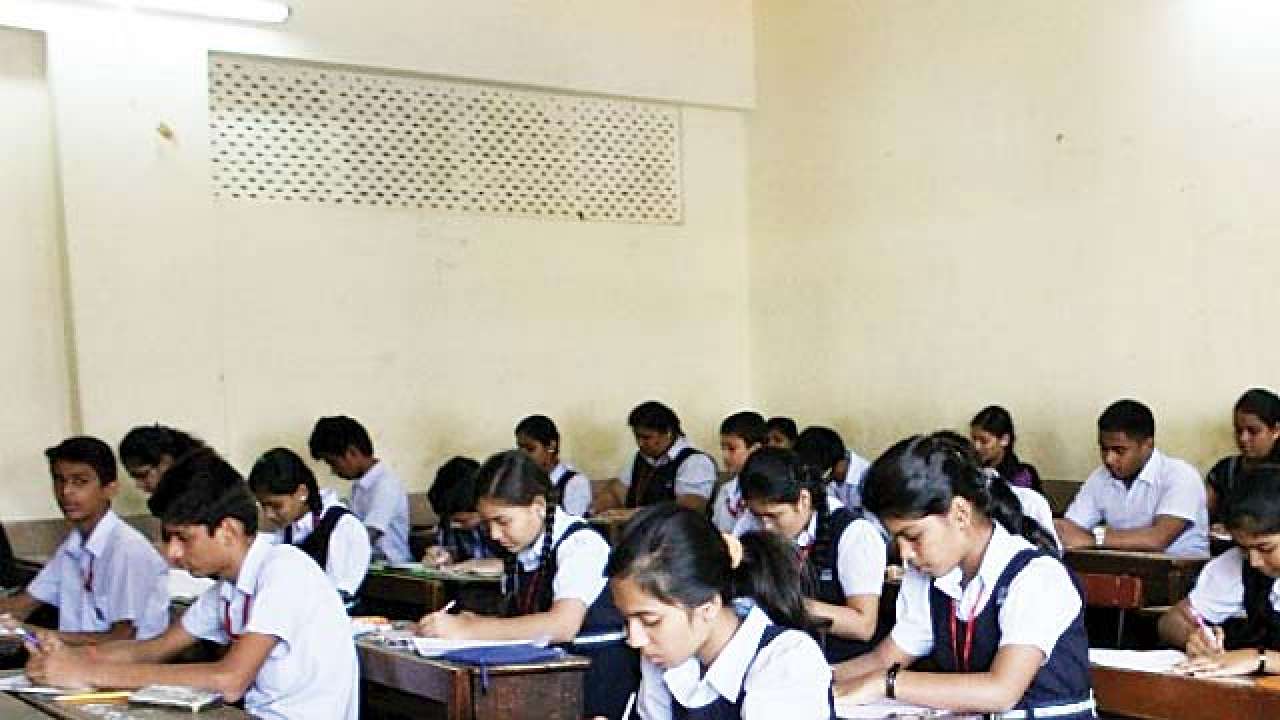
A fortunate few students—those sweet, intelligent, smart, and well-behaved ones—are accustomed to their teachers’ wide smiles and open praises. Yet it’s a half-hearted greeting for some, just barely a glimpse. When asked, teachers will never confess to playing games except to themselves. While plainly obvious to students to see, teachers still conceal favouritism beneath a cloak of justifications such as “I don’t play favourites,” and “I just admire those of positive behaviour, so that others can imitate.”

5 Reasons Why Teachers Shouldn't Play Favourites | The Teachers Digest

Have we not learnt in educational institutions that everyone is equivalent and that everyone should be treated the same way? But the worldview is not sometimes taken up in the classroom. Some teachers pay extra attention and consideration to those students they admire, so they don’t want to acknowledge certain students or cultivate their natural abilities. Most students love to take part in contests, shows, etc., but teachers repetitively select students who are excellent and confident to win, after all, winning is a prestige issue. They fail to provide other so-called ‘ordinary’ students an opportunity to interact, communicate or highlight their secret talents. Every teachers must be aware that each and every student deserves a chance and should be assessed without any favouritism. Students may not win and may fail but they should be motivated by a teacher to try and help them try again until they excel.

You can train and mentor the not-so-brilliant students to take their performance results to the next level. It will take persistence and time but a satisfying path to see a student succeed would be the speed of progress. While passively passing comments and elevating smart students will demoralize other students, which will lower their self-esteem and denying them the incentive to do better.

Favouritism can lead somebody to question their capabilities and relevance. If somebody starts feeling inferior, he or she might begin to doubt his or her self-worth. Often picking the clever ones is never a positive deed and if they just put their sights on the fast learners, then can a instructor pull out the best from other pupils. Teachers should seek to comprehend each student, rather than just favour a few, and help them further. The extreme bias of teachers is one of the main reason why some students cook up some excuse not to go to school or to leave the school.

If teachers are open-minded, acknowledge and respect the views of their students, the students would be better off. It is natural that teachers should be attracted towards certain pupils, but a teacher must be smart enough to understand those feelings and be clever and patient enough not to reveal their interests to any student in some particular way. As long as a teacher has strong communication skills in the classroom giving priority to each student, no harm is done. The educational objective is to bring out the best in each student. Although it is not as straightforward as it appears at first, teachers must listen to the needs of all their students. After all, instructors are seen as the second parent; affection and attention of parents must be equally distributed among their children — regardless of the child’s characteristics.

Teachers are the truly revolutionary catalyst. It will help to mold a productive, effective and efficient person by treating students fairly and constantly to boost their confidence. Educating children is a teacher’s role: make sure you do it right.

5 Tips to Succeed as an Online Student

At the beginning of your online course it’s easy to feel like you’re ready to take on the world. You read the syllabus. You watched the first video lecture all the way through without checking Facebook once.
But then, out of the blue, you hit a slump.
Suddenly, all the coursework seems overwhelming and you begin to worry that you won’t keep up.
It’s true that succeeding in an online learning environment takes a little more self-discipline than going to traditional classes, but practice makes perfect. Try out these five tips to help you succeed as an online learner:
1. Pretend that you have a normal class schedule
One of the perks of online courses is flexibility, but don’t let the loose scheduling prevent you from dedicating as much time to studying as you should.
Make sure to schedule regular blocks of time throughout the week to contribute to discussions and study new materials. The less you have to frantically cram before a big test or pull an all-nighter to finish a paper, the better.
2. Write out important due dates
Online courses are often frontloaded with lots of information and materials to help provide more structure. Due dates are usually listed on the syllabus from the get-go, but can quickly be forgotten if you’re not paying attention. Using a planner and calendar to map out these important dates in advance will help you stay on top of your game.
3. Get involved
Sometimes it’s hard to remember you’re not the only one in the class when you’re sitting alone in front of a computer. Make a point of getting involved in discussions with your colleagues and form study groups to keep each other motivated. Ask your family and friends to check in and keep you accountable, too!
4. Ask for help
It can be intimidating to admit that you’re struggling with course material, but don’t be afraid to ask for help when you need it. Your professor or student services advisor can help get you connected with the resources you need, like our free academic coaching services .
5. Give yourself the tools to succeed
Working in front of the television with a spotty Internet connection probably isn’t the best way to focus on your studies. Find a setting where you can remain comfortable and focused, whether it’s a coffeehouse with reliable Wi-Fi or a home office. The right setting and technological materials will make it easy to do your work as efficiently as possible.

EFFECTIVE COMMUNICATION – A Key to success

The word communication alone decides the state and level of the individual. It is because the person who has nothing but a good communication skills, wins everyone in the room whereas the person with everything but no communication skills will be losing in that situation. I am not saying that, only communication matters, but it gives an added advantage and that is Confidence in the work and it makes the job more easier. Let us see how it works…

MAKES YOU UNIQUE

There will be one person in the class whose name will be always be in the mind of the every person because he/she will be definitely a amazing communicator and a fabulous speaker in the class. When there is any function in the college or workplace, the one with a creative speaking ability will be given a chance and that person will always speak. It becomes an easy way to be known by everyone and it will give a big friend circle. And that circle will be your stepping stone to your career.

GIVES CONFIDENCE

The main reason that everyone insists the young one to speak is mainly because the communication skill improves only by speaking and by speaking, slowly the confidence level of the person increases steadily. And the benefits of the communication is very huge . It is because the person with that skill will be able to tackle plenty of people in a situation. And it also helps that individual to believe that he is capable of the job and he will always have that ability to tackle any situation.

HELPS TO MANAGE THE SITUATION

In a company or at work place there will always be a situation for you . And if that situation cannot be handled, you will definitely lose that position. And in order to tackle that situation you need to have a better communication skill. So always be a person with a good communication skill. Only if you develop your communication skill, you will be able to develop your skill and you will improve your level in your field.

CONCLUSION

“Speak it whether its right or wrong, and always engage yourself in speaking!!!!”

Backpack Donations Send Students Back to Class in Style

Herzing University celebrated the beginning of the new school year by teaming up with organizations near some of our campus locations across the country to ensure young students have the materials they need to succeed. Multiple campuses conducted events during which they gave backpacks full of school supplies to students. For example:
Orlando Back to School Bash
At our Orlando campus, students and faculty partnered with Hope Now International to get back in the spirit of the school year at an event in Citrus Bowl Stadium. Nursing students led workshops about the importance of nutrition and exercise, as well as handwashing, to help ensure students stay healthy throughout the semester. Herzing nursing representatives also worked with Orange County Public Schools to provide more than 320 vision screenings. 
Despite the heat, more than 24,000 people attended the eighth annual Back to School Bash and more than 10,000 backpacks were distributed to students in need. Check out the event photos here
[]
Toledo and Akron Back to School Bonanzas
Students and faculty and Herzing’s Toledo campus passed out 500 backpacks loaded full with school supplies to students in the community. Free haircuts were also available at the event so students could begin the year looking sharp.
Not to be outdone, Herzing’s Akron campus put on a similar event, matching the 500 backpack donation. These events allowed Herzing to help students of all ages, including adult learners pursuing GEDs, start the school year off right.
Here’s to another successful school year!

9 Signs of Emotional Exhaustion

Emotional Exhaustion: Symptoms, Causes, Treatments, and More

Have you ever felt like nothing is ever going to get better? Emotional and mental exhaustion happens when the stressors from professional life or personal life or both manage to wear you out and drain you until nothing feels right. 

We are all familiar with the state of physical exhaustion, when our body gets so tired that it cannot bear any more physical activity unless it gets re-energised. Physical exhaustion can be easily recognized and reversed by resting and eating energising food. The same is not the case with mental exhaustion as most people don’t realise it is happening and continue with their lives without doing anything about it. Their efficiency reduces gradually until they can’t keep going on anymore.

Here 9 warning signs to check if you are mentally and emotionally exhausted:

  1. Irritability

You get worked up from really small things like spilled coffee or a person’s comment even if it doesn’t pertain to you. Frustration can be accompanied by sweating, hyperventilating, racing heart, anger and confusion.

  1. Lack of motivation

You don’t feel like doing anything. Even when you do something like studying or just doing the work that is assigned to you, you are forcing yourself to do it and you would not do it if you could help it. You are not even motivated to do things that used to make you happy.

  1. Anxiety

Everything, be it leaving your house or asking for help, makes you fearful and nervous. In severe cases, one might even experience panic attacks in seemingly harmless situations in which the fear takes over completely and you feel like you are having a heart attack.

  1. Sleeping troubles

Your sleeping schedule is utterly ruined. Every night, it is difficult for you to fall asleep and when you do, it is so light that you wake up from even slight disturbance. You become sleep deprived eventually and physical exhaustion follows.

  1. Impatience

When you are impatient, you are unable to wait for something or someone and you openly show your discomfort caused by a delay. Depending on the temper, you can either get angry or simply upset. Impatience can make you take impulsive and irrational decisions that can hurt your well being.

  1. Indigestion

Mental discomfort can also lead to tummy troubles. Loss of appetite is very commonly associated with stress. You are never hungry and you don’t even feel like eating your favorite foods. Brain controls all the bodily functions and so mental exhaustion can lead to digestion system dysfunction, the symptoms of the same are bloating, inflammation and cramps.

  1. Sudden breakdowns

You unexpectedly burst into tears for no apparent reason. Crying is just an outlet of the emotions that have built up inside you and you haven’t paid any attention to them or you didn’t realise they were there in the first place. These emotions can be of loneliness, insecurity, dejection and what-not, depending on the person.

  1. Disconnection from reality

You start doubting everything and everyone because it all seems fake to you. It’s like you are not even connected to your own body and you are a complete outsider. Nothing makes you emotionally connect with your surroundings and you keep going on with your days without any feeling of connection.

  1. Emptiness

The feeling of having no purpose in life and it makes you want to give up everything. You are void of emotions and nothing seems to affect you, be it success or failure. You feel bored and you feel like you are all alone. Life seems meaningless.

Future of Education System in India

The country’s educational System has undergone numerous improvements since independence, and started to advance. The Government is putting in place new policies and rules to enhance the quality of education. A comprehensive education forms the future of the infant, which helps create a healthier quality of life. Although there has been a great deal of positive change in the system, taking into consideration the number of children trying to move abroad to study it still needs to go a long way. According to the 2016 Open Door statistics, the percentage of Indian students moving to higher studies abroad has increased by 25%.

Online education in India | Future of e-Learning in India

Indian students who look up to study at leading universities abroad work tirelessly to seek admittance to their dream universities despite the immigration laws. The transition that needs to take place in order to create a holistic education system in the country is to dwell not only on the academic growth but also on the children’s all-round development. The core system of teaching is about ‘what to learn’ rather than ‘how to learn.’ This is important to experiment with the teaching process, and to integrate more engaging methods into the present program. A few institutional improvements will also be made to strengthen the education system:

The first move is to adopt an educational model based primarily on the learners. A holistic approach that aims at learning by engaging, skill-based approaches will prove to be helpful. The educational system can also include experiential learning activities and methods such as blended learning to provide a better learning experience for the children. Another very important view that needs to change among Indians is that no topic is an alternative topic. Every subject, which include sports and arts, is a mainstream career opportunity and parents should encourage their children to choose a non-conventional career if they decide to.

The teachers being recruited must be able to sign up; they would have passed certain assessments and have to go through proper training sessions. A trained staff and an untrained instructor will often make a clear difference in the process. It is critical that teachers held accountable for shaping the future of the child have to be competent and well prepared. Expanding the infrastructure is another important area for the Indian Education Sector to develop. A school’s infrastructure should be student friendly and accommodating. The classrooms have to be configured with interactive boards, and they should be easily customizable.

The testing regime should be well-founded in order to provide practical world training for the children and not just deliver theoretical knowledge. Children must be conscious of the pragmatism of life in today’s day and age; this is something that no book can convey. The training program must therefore be designed to prepare them for the outside world. Management plays a key role in all sectors including the education sector. For smooth running any educational institution must be well structured and well handled. If the Department of Management and Administration operates without any hurdles, the Institute can function effectively. India’s educational institutes need to expand the curriculum, as career opportunities are literally boundless. Extra-curricular activities should be included in the course, and students should be encouraged to participate in many of these. The students’ possibilities of growth and overall progress should not be limited; they should be inspired to try new material. Such activities will develop the child’s self-confidence, and a positive mind-set towards the future. We must also introduce the psychometric analysis in order to find the premature trend of potential successful careers for children in the future. Ideally, that test should be included from standard eight onwards. This will give the children, teachers, and parents a clear path for the future and serve the country in accordance with their competence & design and not by default.

One thing about the established education system that is praiseworthy though is building a strong foundation for the children. If this is interlinked with the necessary changes, in the coming years India’s Education System can become one of the best systems globally.

Flaws in the Indian Education System

The Indian schooling system includes many noticeable deficiencies and shortcomings. Ratcheting up into this rabbit hole only accentuates and exemplifies the more sophisticated nooks and crannies in this sector. The most crucial component of the Indian education system is its teachers, who have the power to make or break, including the future of a student and his or her outlook on other subjects. The dilemma here is how often the teachers are to be blamed for the many shortcomings in the country’s educational scenario. As such an indispensable part of the system the teachers have little to do with the system’s weaknesses. They are obligated, after all, by a set of syllabus guidelines and rules, and by the ministry of education. They just can do very little about it. Nevertheless, they are completely open to the way they teach a subject and involve the pupils.

Petition · Smirti Irani: Flaws in 'The Indian Education System ...

If the teaching methodology and pedagogy is inefficient and uninteresting, the students lose interest in a subject. So, the instructors have a big part to play in that regard. In several cases educators are not educated enough to be able to teach at a school or college, especially in rural India. Also, most teachers use the chalk and talk, or traditional teaching methods. One of the biggest challenges facing India’s education sector is the lack of use and application of technology in classrooms. Some would contend that computers and other technical advancements in schools and educational institutions might prove to be a huge distraction; on the contrary, if used with proper rules and regulations, technology will create a whole new environment for Indian students. Not only will they be able to actually apply information but they will also be able to navigate a physically inaccessible universe.

It is absolutely essential to have practical skills and to apply what they learn within the strictures of a classroom, it’s yet another factor that is overlooked in the education system. For assessments, most students are still unable to process and understand the concept of what is being taught in class and resort to rote memorization. They cannot retain what they’re learning and apply it to everyday life. They lack the ability to critically analyse a situation or issue, and often find it hard to form their own opinions. We are not encouraged to challenge anything, and are pushed into a static structure to conform.

For comparison, there is also a serious dearth in courses such as essential life skills, behavioural health, financial awareness, and sexual education. It is absolutely essential to discuss these topics even at the most basic levels, especially in countries like India where there are so many norms, stigmas and stereotypes connected to these topics. Such problems are swept under the carpet and then as they get older students are unable to comprehend these concepts. In classrooms, even subjects such as gender sensitisation were not addressed, making the children extremely ignorant. This normalizes problems in their daily lives such as misogyny, bigotry, hate speech and even racism.

Another big deficit in the Indian education system is how it puts unhealthy emphasis on marks and grades. Both schools and administrators believe the students are flourishing under pressure. They crack under pressure in most cases however. The burden of having to live up to unnecessarily high expectations is having a toll on the students ‘ mental health. Even as their mental health deteriorates, their parents refuse to recognize it and brush it away as an anxiety for adolescents. This has in many cases contributed to increasingly dramatic actions being taken by students, especially adolescents. The rapidly increasing number of suicides among the students is a result of high school pressure. Even in schools, counselling is only presented as a formality and when it comes to school counsellors there is also a severe lack of transparency and secrecy. When parents see a drop in the grades of their child, they are quick to place them in private tuitions and institutes of mentoring rather than getting to the root of the problem. The truth, however, is that unhealthy competition is seriously damaging to the mind of the child, because there is simply no growth or advancement. This crushes whatever ambitions they may have, dreams or aspirations. These problems are particularly valid and relevant in rural areas where resources are seriously lacking.

Stuff like encouraging unfair rivalry among students, placing undue pressure on them and completely ignoring their mental wellbeing fully demonstrate that the Indian education system has a long way to go in terms of reaching students. Furthermore, the funds dedicated to the education sector must be raised, and the RTE must be enforced gradually.

For the Love Of Lingo !


Haruki Murakami, the renowned Japanese author quoted “Learning another language is like becoming another person”. The journey of learning a second language is indeed a beautiful one. For a language carries within itself the ethos of an age old civilization, its traditions and the glorious tales of its evolution. It is rightly said, ‘To learn a new language is to posses a second soul ’.
Sounds fascinating right? From the groovy Spanish number “Despacito” to watching Korean TV series or going gaga over the K-pop band BTS , we’re are all in awe of these rich languages. Sometimes that fascination of ours leads to learning. Yes, you guessed it right; we embark on the journey to learn that language. And if you haven’t considered learning a new language until now ,then let me introduce you to the benefits learning the lingo!!
· Travel: Are you a wander who loves to explore new places and cultures? Travelling across lands is one to the most enriching experience if done right. By right I mean immersing oneself into the local culture of the place, far away from the luxury hotels. Interacting heart to heart with the locals. That’s where knowing the language comes into play. Who knows what hidden gems, tales you might discover besides making memories of a lifetime. Hey you!! Do add a language holiday to your bucket list for a cherishing experience.
· Friends, Family and Culture : With new language comes new friends and the world feels like a family. Exchange of ideas, coming together of speakers of different languages inculcates a sense of mutual respect, empathy and admiration towards other traditions. Imagine going to Brazil and cheering your favorite football team or appreciating the all time classic French movies in their original form. From deciphering the Arabic scripts on the Islamic tombs or the new found confidence within you on being able to read those complicated street signs in Chinese script. It’s no less of euphoria than the “Eureka moment “, right?
· Food for the Brain: Here comes the good news! Did you know learning a new language not only boosts your brain power but also enhances your memory? Studies prove that multilingual people have an edge at multitasking and decision-making skills compared to their monolingual counterparts. Also, learning the lingo keeps Alzheimer’s at bay.
· Career Boost and CV skills: Having a second language on your CV is like cherry on the cake. It gives you an upper hand over others, opening new career avenues. As a student, it increases your chances of selection for Student exchange Programs and being a part of global immersion. On the professional front, one can apply to Embassies, language translator and various other promising profiles.
· Diving into the world of literature : Learning a new language helps one discover the real gems of literature whose essence is lost in translation. Be it the original works of Persian poet Rumi, Les Misérables by Victor Hugo, the heart wrenching tales of Nazi Germany expressed originally in Dutch by Anne Frank in her Diary. They all offer insights into the realities of world ,broaden our perspectives and help us embrace the world with kindness. Romance languages (French, Spanish, Portuguese, Italian and Romanian) have similar roots and knowing either of one makes it quite easy to learn another. Having prior knowledge of Portuguese myself, I found Spanish quite easy to comprehend.
Still wondering when, how and where to start from?
Let me help you with this. The answer is pretty simple.
· When: If not now then when? There’s no better time to learn a language than now. It all starts with a simple step.
Just set aside an hour from your busy schedule everyday and start learning the language you’ve always dreamt of being fluent in.
· How: Here’s an interesting answer. Pick that one language you are passionate about. It could be as simple as impressing your love with French ( most romantic language in the world ) or maybe German cause you want to move there for higher studies . I’m sure you have plenty of reasons to pick your Lingo! ( For me , It was reading the Alchemist by Paulo Coelho in Portuguese )
· Where: Start from the basics, build a strong foundation. There are plenty of online resources available such as Coursera , Duolingo , Memrise along with various podcasts and resources available on the internet . There’s an entire ocean to choose from, you just have to pick your pearls.
Remember, Change is hard at first, Messy in the middle and gorgeous at the end.” This journey of learning the lingo might be frustrating. There are gonna be times you’d feel frustrated and wanting to giving up. Be consistent because Rome wasn’t built in a day. Eventually, you’ll fall in love with the journey and the language itself.
P.S. Carpe Diem Folks!! (Live the moment, Live the lingo)
Happy learning !

Orlando Nursing Students Provide Health Care for Homeless

I believe that it’s so important to give back to the community and gain real-world clinical experience during your time in nursing school. That’s why I’m so excited about our recent partnership with the Coalition for the Homeless of Central Florida to provide a free health clinic available to more than 500 residents across the Coalition’s facilities.
This is a win-win for residents and our students.
This commitment assures Coalition residents can get the care they need without having to worry about the cost. It’s also a fantastic way for students to practice their assessment skills and improve their therapeutic communication. Our services include pediatric care, basic first aid, health education, consultation and if needed, referrals to emergency care services.
Our students and faculty will serve two days per week at the Men’s Service Center and an additional day per week at The Center for Women and Families (CWF). I’m excited to say we will be doubling our time at the CWF at the beginning of the New Year, and we’ll even have a dedicated RN that will begin working at the Coalition full time.
The best part of all is knowing that we’re helping people in our community get through tough times.
Two of our students told me that they enjoyed when people come in just to talk. They want to share what is going well for them – if they’re making progress in school or toward securing a job or a home. “It’s so nice to be able to make a difference,” they said. 
Pat Edwards, MN, EdD, RN, has served as the Dean of Nursing at Herzing University’s Orlando Campus for almost a decade. Her area of clinical specialty is in obstetrics and newborn care. Her favorite hobbies include seeing her students succeed and spending time with her 4.5 pound Yorkie, Miss Savannah.

Government Schools and Private Schools: Which is better

The biggest distinction between Government School and Private School stems from their financing and management. Government schools are managed and sponsored by local, state or national government, as the names indicate, whereas private schools are supported wholly or partially by student tuition and operated by a private organization. Private Schools are largely independent from state intervention. Other significant differences between government schools and private schools can be observed, based on these two key differences.

Govt opens study centres for dropouts

Government Schools:

Government schools are primary or secondary schools that are required or offered at no charge to all children, financed and monitored by local , state or national government. Since they are funded by the government, they are financed in full or in part by taxes. Since the government controls government schools, the syllabus is decided at either state or national level; all government schools follow the same lesson plan. The Government also controls recruitment and research. Admission to state school is determined by the student’s address. The schools are required to include the students belonging to their respective geographical area.

Although the equipment and other facilities differ by school, government schools typically have less amenities than private schools. Government schools have much more students than private students; due to lack of facilities the number of students in a class can also be significantly high. However, it is important to note that extremely competent teachers are always hired by government schools; teachers must fulfil all state-mandated requirements and be skilled at their subject to work in a government school.

Private Schools:

The Government does not finance or operate a private school. They are regulated by a private body and sponsored in part or in full by the school fees of the student. In private schools the fees are generally much higher. Around the same time, as compared with government colleges, private schools typically have better infrastructure resources and the latest technology.

Private schools are following the same curriculum as the Government has decided. The delivery method is decided by the school board though. The school officials also decide on fees and entrance fees. The school has the authority to decide whether or not a student meets the admission standards. The school also decides on staff selection criteria. In this scenario, a private school teacher will not be eligible as a state school teacher. A classroom’s class size is smaller than a government school’s. That is primarily because infrastructure and services are available.

Conclusion:

Better schools are important for a country’s brighter future as they cultivate next-generation torch bearers. A country’s future lies in the schools and universities. In India we have schools owned by both private and government. Private schools are best prepared in terms of security, technology, and infrastructure. They are expensive but also offer quality. To get more admissions, they maintain the quality and good teaching staff. Government schools are run for those unable to pay grandiose fees. There, teachers are of high quality but they are unable to impart knowledge in the best possible way. These schools are not facing any competition from their peers so they don’t care about quality issues. And while many cannot go to private institutes, these educational institutions are very important, learning something is better than doing nothing else. Governments require purpose and commitment to enhance the environment of their schools. That will ensure benefits in the long term.

Private schools are undoubtedly better than government schools as they would provide decent infrastructure, better teacher-to – student ratio, have a tidy & hygienic facility, better ecosystem for students with personality development options and extracurricular. Government schools may not be able to offer all of these features but for those who are unable to afford private schools, getting their children to government schools is better than not having any education.

Women Empowerment in Today’s Age

Education is important to empowering women. Through it, women have better direct exposure and employment opportunities, leading to higher income levels and less isolation at household or exclusion from economic matters. Women can live their aspirations with an education, by continuing to pursue their own goals and values.

Mindset needs to change for women's empowerment - The Sunday ...

Studies have found that if each girl completed 12 years of schooling, child marriage would drop by 64 percent and health risks from early pregnancy would drop by 59 percent and 49 percent respectively, such as early births and infant deaths.

Economic Growth by Empowering Women:

Helping to educate women and girls also boosts the economic growth of countries, decreases the possibility of violence and extremism, and has been called the Brookings Institution’s Best Investment against Climate Change. According to the Malala Fund, there are more than 130 million girls outside of school worldwide. These girls will often marry and have kids at a young age without an education, work in unregulated or minimal paying positions and rely on their spouses or family members for economic support. Without an education, there are limited futures for their futures and for their families. Encouraging women to engage fully in economic life in all sectors is vital to building stronger economies, achieving globally recognized growth and sustainability targets and improving the quality of life for women, men, families and communities. The private sector is a key partner in pushing for gender equality and empowering women.

Any prosperous country will consider crucial concerns for sustainable growth, such as gender equality and women’s economic empowerment. Higher female earnings, as evidenced by surveys, significantly contribute to children’s education and family health, impacting a nation’s productivity growth. Statistically speaking, the contribution of women to wage work jumped from 42 per cent to 46 per cent from 1997 to 2007. Obviously, achieving economic empowerment for women is the key to solving issues such as gender inequality and poverty, and also to foster inclusive economic growth. Women are considered to make a major contribution to economics in the form of industry, entrepreneurial work or (sadly!) unpaid labour.

While women living in some parts of the developed world have the function of decision-makers and influencers, gender inequality in other parts of the world persists a crippling social problem, and these subordinate women are also alarmingly impacted by poverty, sexism and other types of vulnerable oppression. As every developing country will agree, sustainable economic development is impossible without empowerment of women and gender equality initiatives are the driving force of social change and economic growth. Working women make a huge contribution to education, health and well-being, and hence achieving gender equality is essential for holistic developments.

Women Empowerment’s role in Sustainable Development:

As issues of women’s economic empowerment and gender equality are gathering traction on the global scene, nations around the globe are taking unbelievable steps to reduce gender gap and encourage economic equality. Some of the ways we can follow to achieve women’s economic empowerment for sustainable development are discussed below in order to play your part in the movement.

Women as Decision Makers:

While many women are now important contributors to some states’ economies, gender equality continues to be a myth in much of the world. Women have been actively engaged in the technology sector, food processing, and sustainable use of natural resources, domestic health, entrepreneurial work, and energy and climate change. But, to get a better-paid career, most women still lack access to good work prospects and money. As the attention turns to inclusive economic structures, it can go a long way in achieving women’s empowerment to provide women with leadership opportunities and make them a part of decision making.

Job Opportunities:

Despite becoming significant contributors to social and financial development, women lack equal opportunities for employment. Equal rights programs can make significant investments in promoting decent jobs and public policies, and in promoting growth and development.

Conclusion:

Women empowerment programs invest extensively in women’s health and empowerment, empowering women to break free from their conventional positions and remove perceptions of gender. There are many ways to achieve financial equality for women and the above guidelines are only to name a few. It is time to break down barriers and considering possible programs to advocate for equal opportunities for women and promote financial inclusiveness in order to keep up with the changing economic trends and meet sustainable development goals.

EDUCATION: NOT A MEANS TO AN END

by: Abhishikta Sengupta

In the words of the pioneering cultural anthropologist Margaret Mead, “Children must be taught how to think, not what to think.” The distorted notion of education existing simply as a means to meet each succeeding requirement for the attainment of an ultimate goal, for instance a grade or an occupation, is one that needs to be dispelled. This motivation by way of external regulation cripples any scope for the development of indispensable practical tools, such as that of decision making and critical reasoning.

We have largely been conditioned to associate a certain rigid form of education as a recipe for success, which goes on to perpetuate damaging beliefs, such as the culture of rote learning. It is imperative to recognise that such philosophies were formulated during a time when the world had not evolved sufficiently to value unique abilities and require differential skill sets to be present amongst its students, and thus its working age population, in order to reach its full potential. The stimulus that evoked the conditioned response of failing to challenge the ideologies presented to us is no longer a factor, thus provoking the necessity of shattering them and developing meaningful passions of our own, rather than those that were conventionally acceptable.

There exists no distinction between a human student and an artificial intelligence system if the prevailing educational structure seeks only to feed and program its learners with incomplete, censored and even irrelevant information or data that is mandated by age-old tradition, and requires them to absorb it and then consequently act on it. Rather, it should be aiming at cultivating personal and genuine interests and individually suited approaches as opposed to encouraging only standardly “rewarding” or résumé building activities.

It is of vital importance to ensure a comprehensive overview of subjects such as history and politics so as to prevent the formulation of baseless and ignorant stances as a result of exposure to a biased or one-dimensional outlook. This in turn inspires the emergence of well-informed opinions, values and morals in students that define their future actions. This along with effective teaching of fundamentals, open-ended questioning, idea exploration, allowing of diverse perspectives and opportunities for creative expression and practical experience makes for the creation of emotionally intelligent, innovative and competent students with superior logical and analytical skills, adept at displaying empathy and tact as well as approaching and assessing a situation in a multitude of ways, and discovering constructive solutions for the same.

An education system that focuses on teaching its students what to think in a bid to produce compliant and deferential citizens sacrifices on the potential of originality, diversity and natural instinct. The career landscape has reached a juncture wherein the customarily acceptable professions are no longer the only ones considered worthwhile, and it is crucial that students are made aware of that, so as to ensure that they work to hone, develop and enhance their other skills. There is no greater tragedy than indoctrinating students into a system that it hardwired to fit them into boxes by teaching all of them to think just the same.

Helping Community and Technical College Students DEGREE UP

October 22, 2015 by Dr. Michael Bankey Time and distance limitations shouldn’t prevent students with an associate degree from continuing their education. Working toward a bachelor’s degree should be a simple, straightforward process, but sometimes difficulties with transferring credits and commuting to a new school get in the way.
That’s why we started DEGREE UP. We’re working with community colleges, starting in Wisconsin and Ohio, to provide thousands of students a flexible path to achieve a bachelor’s degree from Herzing University. DEGREE UP allows students to maximize transfer credits from a partnering community college, and they can even remain on the campus where they earn their associate degree.
We have started partnerships with Mid-State Technical College, Gateway Technical College and Madison College in Wisconsin and Terra State College and Northwestern State College in northwestern Ohio. This is only the beginning. Herzing wants to bring accessible, student-centered education to as many students as possible.

Why DEGREE UP?

After applying for DEGREE UP, students can earn a bachelor’s degree from Herzing University using a blend of on-campus and online credits. Students may even earn credit toward a master’s degree. What’s more, students taking Herzing classes on a community college campus remain at that tuition rate.
In other words, graduates with an associate degree can continue their education while still enjoying small class sizes, a local campus and an environment in which they’re comfortable. The result is a bachelor’s degree in as little as four years.
DEGREE UP is designed to provide as much flexibility as possible for students, allowing them to succeed without uprooting their lives. DEGREE UP is a natural part of the evolution of higher education, giving students more efficient and accessible ways to get the education they deserve

Math & Music…..

So people we all know what kind of goon mathematics was for us in our high school or was it just me who was not so vivid admirer of mathematics well I don’t know but mathematics as a subject has always been that boogey man under the beds who is always ready to haunt us for the rest of the twenty four hours in a day. So in a manner I always had a huge respect for mathematicians as I was somehow angry upon that subject so whenever I used to see a person being good at that subject I used to have knack to ask them how can they like a subject so salty and mean. So one fine day I asked one of my cousins from Harvard mathematics (sounds like serious affair right? well it was) that how do you do that and in a manner and you should know this that I’m doing my university degree with a major in physics without mathematics so there is no shame in that. So I asked her about that so she in her really deep and serious voice told me to find a rhythm and I asked,”what kind” she said, “music dumbo”. Well then I realized that it actually helps maybe not for all people but in most cases it does as such if you are an admirer of reggae or pop or acoustics it will help to catch a rhythm while you are solving a problem .

It helps because as our brain functions for solving a problem it’s always ready to acquire the probable solutions which are or can be the answer to the problem. Music as an entity has life in the melody which reverberates and flows through the lyrics of the songs so in a manner a mathematical comes to us as a puzzle with a guide that guide being the formulae and the puzzle being the problem whose solving is the calculation part which is in turn dependent on our practice and sometimes the gifts we have. So now the question is what problems and what music so it’s all from my experience which I’m gonna share with you so don’t apply it if you think it may not be so applicable for you but what’s the harm done in trying right? Now let’s start as such if there are problems of calculus,logic, accounting like compound interests, matrix and determinants it will not be so wise to use musics as that puzzle comes with a very rudimentary guide which is generally to start and then you are on your own focus and concentration but if it’s arithmetic, mensuration,trigonometry and algebra the songs and the music is quite helpful as in these cases a predefined formulae will help you get to the solution of a problem. Now let’s talk about musics I guess it’s best to avoid pop or reggae and even your favorite music or your jam because generally when that plays we are focused upon music more than we are to the problems so best choice will be acoustics and piano covers maybe any maintained electronic DJ music also helps but if pop is your thing then go ahead. If you are still wondering why music helps it’s because of the singular most important reason that our brain should always think that we can do it and it’s easy so when you are solving a problem and it’s not happening and you are sweating your eyes out getting irritated about it’s possible solution the music helps to give a sense of calmness and peace so that you can give your brain a casual hint to focus upon problems and to get through it with patience and peace of mind. So yes nobody said math is difficult it definitely isn’t but it sure is damn is tricky so the trick to trick a trickster is to try giving it the impression that you have no worries to handle it, that it being the mathematical problems(trickster) and that key of no worries is music…….hakuna matata folks…..

IMPORTANCE OF EDUCATION

Getting educated is imperative in today’s society, world economies, commerce, and business are excelling at rapid paces with new emerging technologies. The pace that information is shared is astounding and those who cannot adapt will be left behind. The centerpiece to staying relevant in this fast-paced environment is educating yourself on current trends and advances.

Many think that a formal education from an institution that leaves you with a degree is the key, but to the contrary, it isn’t. Having a degree is essential to being marketable but that is the tip of the iceberg.

Many millennials with multiple degrees are having difficult times acquiring jobs thinking that a degree or in some cases an advanced degree will secure their future. You have to continue to add tools to your toolbelt to keep yourself in the game. Skills such as knowledge in technology, online marketing, networking, finance, and social media are a ground base of skills that you need to be adept in.

You can no longer be a one-trick pony in this world, the landscape is too competitive. The sharing of information is at an all-time high and through technology, you can gain these skills from places like Youtube, weekend or week-long Bootcamps, and Meetup groups.

A breakdown of the bare minimum things that everyone should know in today’s culture.

  • Technology. Having a general understanding of coding goes a long way, learn HTML, CSS, and Javascript. These are the foundational elements that make the web work in today’s Internet Age.
  • Online Marketing. Learn about SEO, SEM, and Online Advertising. Having an understanding of these areas will greatly enhance what you bring to the table when it comes to knowing how to drive traffic in the online world.
  • Networking. With the advances that came along with technology also brought along the unwillingness of people wanting to rub elbows. You need to know how to interact with others in social atmospheres.
  • Finance. Knowing the driving factors of commerce is huge and finance is the cornerstone of it. Learn about Global Markets, different types of investing, Mutual Funds, ETF’s, Active vs Passive investing.
  • Social Media. Social Media isn’t all about seeing the current status of your friend’s lives, there is an explosion in the online influencer world, learning how to tap into this market is vital.

In the broadest sense, education is what gives people access to learning and when one learns something, they have the opportunity to acquire knowledge that can be processed, reflected upon, and recalled in a variety of circumstances and interpersonal relationships both personally and professionally.

In terms of scholastic education, when young children have a solid and positive foundation that instills the joy of learning through exploration and discovery, they start to form positive habits of becoming lifelong learners. By the time they approach middle school, they are prepared to take on more sophisticated challenges when approaching a range of subject matter that can help them define their path of study along with rediscovering themselves within the world as they go through physical, emotional, and mental changes.

Without having primary, secondary, and at the very least, undergraduate level education or vocational training, individuals will find themselves virtually “iced-out” of true possibility of financial stability as they enter into adulthood.

What the global community needs to understand is that education has to be at the forefront of our minds—starting within our homes, within school districts, society, and reaching up to the governing level. The day that we stop learning is the day that we stop living.

Importance of Technology in Education

Technology has become an essential aspect in today’s age we live in. Every day there is some new device or applications which makes life easier and improves on the already existing technologies and processes. However, making life easier isn’t the only part that technology plays in our lives. In education technology plays a significant role. As technology advances, it is employed in the learning process to support students of all ages.

In-class teachers can help students adsorb the material. For example, since some people are visual learners, computer-linked visualization screens may allow students to see their notes rather than just having to listen to a lecturer. People can use software to augment your class curriculum. The programs provide study questions, tasks, and even practice tests for a class which can help students to continue learning process. Technology is also becoming part of many teaching methods, beyond computer and technology classes as well. Students use technology to solve presentations and use the internet to study paper and essay subjects. In computer and tech classes, students also learn to use the technologies available to them.

Importance of Technology in Education | onlinebusinessschool.com

This guarantees that they will be able to use this information in a workplace environment after graduation, which can give them an advantage of someone in their own school setting who has not had access to a particular technology or software. Students should have more access to educational opportunities like these as technology progresses. Whenever anything new and “better” is revealed, the “older” technology becomes much more affordable, even when schools are on a tight budget, allowing it to be used in educational settings. Technology has already been progressing to support kids before they have begun school.

Educational video games and programs for young children help them train for the school and get a massive advantage on their education in some situations. There are critics who might argue that technology “spoils” youngsters. Rather than, for example, being able to put a long list of numbers in their minds, they switch to a calculator. No matter what such points might be, technology is an integral aspect of the culture today. Students will be better equipped to transition from classroom to workplace by incorporating it into the classroom.

Technology is making the students much more efficient than they had been. As has already been said, technology education is no longer constrained by regional borders or any given time as a result of using it. Due to the introduction of technology, the students now have the means to keep studying independently. This is how the teachers had made the teachers even more successful.

Technologies has helped students to get hold of and watch videos and films about topics they may be going to study about right now. Indeed, a number of schools and colleges are also known to show their students motivational videos on a routine basis. This helps them to be positive in any and every work they do. This will support them both in their academic careers and in their professional careers.

Conclusion:

Much like a coin having two sides, Technology always comes with its adverse effects. Even as technology does have certain benefits, there too are certain disadvantages. Ultimately however, it all depends on the users, or rather how they use the technology. However, there is nothing to deny that there are plenty of benefits to be gained from using technology when used in a positive way. It will may be an absolute blessing for them.

Importance of Practical Knowledge in Today’s World

Knowledge is defined as familiarity with anything that may include certain facts, information about a specific subject area, definitions of the experiment or study, or skills acquired through training or experience. Knowledge can be of two different types:

Theoretical knowledge can be attributed to the theoretical clarification of a specific subject or area in which a person has a clear understanding of the things going around and the theory of their work, but cannot manage things.

Benefits of Science Education in School – Connections Publishing

For example, if a person examines a car and its engine parts from manuals and presentation slides in a classroom, he will, of course, have knowledge of what the components of the car are, and what the underlying theory is, but one would lack practical information about it. The utility of the car for him is zero in the absence of this realistic knowledge. Without proper practical knowledge, he cannot drive the vehicle, he cannot repair it in the circumstance of any accident, and he knows nothing about its mechanisms. Theoretical knowledge could be something that can help a person gain a strong grip on practical knowledge. Knowledge is incredibly important to any genetic career and life.

The world is changing day by day, and every day we are becoming more and more advanced which needs a lot of changes from some of the previous traditional techniques that have been adopted. Rapid changes in working life, society and IT have increased the demands of expertise in every field. Today there is a need for qualified experts who are expected to have detailed understanding, excellent social and communication skills and who can use their skills in a constructive way in life.

Importance of Practical Learning:

Can you envision someone teaching you to scuba dive or drive a vehicle, inside four classroom walls? Can’t do it!! You have to get into the water to learn how to swim, and to learn how to drive, you have to be out on the road. Some topics are competency-based and directed to practice. Training will back up abstract experience of skill-based topics. Subjects such as teaching and engineering are based on skills. Practical knowledge is therefore more important in these topics than abstract knowledge. Practical research involves laboratory studies, study trips, tasks, assignments etc. The rewards of practical work are unprecedented. Having abstract knowledge has little meaning unless it is applied to practical purposes by the students.

Practical or informal knowledge is manifested as abilities or “know-how.” Practical knowledge is crucial to understanding how things actually work. It becomes relational and social in nature as it happens and evolves in certain particular contexts where it is practiced, and lets you obtain the basic skills that are the tools of your trade.

Practical understanding by the process of doing and personal experience leads to a much deeper comprehension of a concept. In our real day-to-day job realistic experience is considered to be of considerable value. There are also things that you can only know by seeing and witnessing; no matter how hard you try to understand this by abstract means. For example, if you’re trying to learn how to drive a bicycle for the first time in your life  by theoretical means, you ‘re likely to spend your whole life learning, and still can’t ride without proper practical training. Where theoretical knowledge is often learned through the notion of a vacuum, practical knowledge on the other hand is understood by real life experiences. The basic distinction between theoretical understanding and realistic understanding is that theory guides you through the experience of others, whilst you prefer to learn from your own experience of the actual task in reality. 

Conclusion:

It’s very important that each individual has enough knowledge to lead his life smartly and successfully. It doesn’t matter if you’re a student, a professional or an entrepreneur. Knowledge in an individual’s life really is something significant. It is important to acquire theoretical knowledge, but it is of no use without practical experience. Practical knowledge encourages an individual to accomplish something he studied about. Not only in professional life, it’s worth noting; you need to have a good, realistic approach for your life in general. Therefore, for growth development and use of your knowledge, it becomes really important that you also have a practical edge, otherwise there is no point in having theoretical knowledge when you cannot apply it in reality as well.

The New Watchdog

Mainstream media to new media- how has the shift affected political reporting

Politics is undoubtedly a game for supremacy solely played in the name of the people for evoking national interest. Fred Fedler was right then he said “journalism is built on reporting government”. The idea of ‘the watchdog’ means that the journalist, as an independent observer without any vested interest in any side of the controversy, can inform the public about what is going on, particularly if the government is corrupt or even incompetent. However, the political journalists do not play this role flawlessly. 

There is a paucity of good political reporting in India- reporting with an insight, reporting that captures in action the trouper of the political field, reporting that exposes the petty politics and the never ending hypocrisies of political parties and the conspiracies of those in power.

The grave situation that the Indian democracy is in, is that it is they who guide and shape the destiny of some 135 crore people. Lacking ideas, bereft of intelligence and character, they exploit religion and caste to stay in power. 

Most political commentators and reporters on traditional medias like mainstream news channels and newspapers have glorified politicians and never truthfully presented their failures as much as their achievements. Programmes of political parties are rarely critically evaluated by reporters of most traditional media and their flaws are never commented upon so that the people are carried away by their rhetoric or patriotic postures. The Inadequate political coverage, not judged by the quantity of the news brought in or reported but by the quality of it, brings down the credibility of the traditional media. 

The mediatization of the political news necessitates that media content is governed by media logic rather than political logic, and can be indicated by media interventionism where the journalists are in control of news making. (Esser, 2008, Strömbäck and Dimitrova, 2011, Zeh and Hopmann, 2013). 

The way we use social media today impacts what we read and how we read or listen to news. Consider politics for that matter- Political parties bank on news channels, such as ZEE News or NDTV to get their updates on how the election campaign is going. Unbeknownst to many, both of these news outlets are on opposite sides of the political spectrum. If you tune into Zee News, you will get a completely different view of any candidate than you would on NDTV and viseversa. This type of controlling what people read and hear causes a lot of misinterpretation. This is where political reporting in new media comes into, where you not just read what the journalist has to say but also what others think about it and more importantly why they think the way they do. Unlike the traditional media, you don’t hear one side of the story, on new media platforms you can view multitude versions of the same story. With the advent of political reporting via social media and news portals, journalists who act like the watchdogs are now backed up, not only by their organisation, but also by their viewers, readers and followers who make an informed choice. 

At the same time, the new media has initiated trends time and again. exposed how the traditional political reporters undercut the ideal aims of a free democratic press. The watchdog role is now played by the new media which had previously only been performed by trained political journalists who even under the worst of circumstances focused on uncovering the facts surrounding serious political wrongdoings.

4 Strategies for Balancing Work and School

With online courses, university collaborations and more flexibility than ever before, there’s no better time to go back to school. But for many adult learners, returning to the books means balancing academics on top of a full-time job and personal life.
With a full schedule of work and school, time management is essential. After all, there are only so many hours in the day.
Maintaining a work-school balance requires some serious self-discipline, and can be mastered with planning and the right mindset.
Check out these tips for balancing work and school.
  1. Keep your employer, professors and family well informed. It may seem impossible to keep everyone happy, but communicating the rigors of your schedule can make a big difference. For example, many employers offer flex time or work-from-home policies that make it easier to keep a work-school-life balance. Likewise, you may be able to work out a hybrid class option or online solution with your professor if your work schedule doesn’t accommodate regular class hours.
  2. Know your limitations. Don’t sell yourself short, but recognize that as a worker and student you’ll have to learn how many obligations you can handle at once. There’s simply not enough time to do everything, and you’re bound to make mistakes if you stretch yourself too thin. Learn your capabilities, prioritize what’s important and then optimize your time so that you can give your all to both work and school.
  3. Give yourself a break. It’s natural to have lots of energy on the first day of class, but be careful not to sprint every day until you run out of gas. Throughout the semester, regularly schedule some time to relax and refuel. Over time, fatigue can negatively affect your job and academic performance. Make sure to schedule and stick to your break time the same as you would with any other obligation.
  4. Plan far ahead. When it comes to your education, you’re in the driver seat. If you know you’re going to be swamped with big projects at work over the coming months, schedule a lighter academic load accordingly. The further out you can plan, the easier it will be to create a suitable schedule.
Kristen Brady, M.S. Guidance and Counseling, is the Associate Director of Student Services for Herzing University – Online. Her favorite part of her job is helping students build a better life for themselves and their families. Other than helping students achieve their own, Kristen’s goals include visiting each national park throughout her lifetime. You can contact Kristen at kbrady@herzing.edu or by calling (866) 508-0748 ext. 66326.

Is social media same as digital marketing?

Hello Readers! When it comes to marketing, there are few terminologies that are used interchangeably, and one of them is the new buzz words “digital marketing and social media marketing”. Let’s try to decipher the thin line between these terminologies.


What is Digital Marketing?

Digital Marketing in simple words can be defined as the process of making a brand visible and create brand awareness with the formulation of marketing strategies. It includes both online as well as offline means of reaching customer base.

  • The online means include web, email marketing, use of SEOs, backlinks, video, audio, social media marketing etc.
  • The offline means include print media, television ads, radio advertisements, newsletter and posters, billboards etc.

digital-marketing-components

What is Social Media Marketing?

Social media marketing is making an online presence of the organization using various social media platforms such as Facebook, Instagram, Twitter, Quora etc. These platforms have changed the way human used to interact with each other. They have given a platform where one can share their views, comment about the same, share the content and has helped businesses to come a bit closer to knowing the attitude of people.

Social media marketing helps businesses to cater the demands of customers by exploring their interest online. The real time nature of social media allows businesses to know the current trends based on which diverse marketing strategies are designed. For instance, real-time marketing is now-a-days used a lot where the existing situation and occasion is considered and the Advertisement is created. This is an interesting concept and is now used by various brands across the globe. Amul, one of the amazing brand when it comes to marketing, has been creating such ads from a long time and its little girl is portrayed playing various characters.

What is the major difference between the two terms?

Social media marketing is a part of digital marketing online channel of transferring information and messages across the globe. It mainly includes the platform that the masses use to communicate, share and acknowledge about concepts, events, products and services. With smartphone users increasingly at an exponential rate, social media is becoming more popular and hence it has become extremely important to strategize marketing process considering social media platforms.

                                social media mar

The world is coming closer and coupled with one another as technology is rising. Millions of users have the habit of checking their phone after they get up and before going to sleep. Marketing is itself a challenge as every other business wants to stand out from the crowd and make a differential impact on human mind for a longer duration. Catchy slogans, captions, doodles, pictures, gifs and videos are used to attract customer attention. The quality of service and product is still of utmost importance but to increase their reach, even traditional companies that had no social presence are now stepping up and creating their online presence by designing innovative campaigns. Such is the reach and power of digital marketing.

“Minimum Support Price”

Minimum Support Price (MSP) is a kind of guarantee of a minimum price for the agricultural produce in India to purchase directly from the farmer. The price of msp is set and announced by Government of India at the beginning of the sowing season for certain in the basis of the recommendations of the Commission for Agricultural Costs and Prices (CACP) crops to protect the producers i.e. farmers.

Reason behind the idea of MSP is to counter price volatility of agricultural commodities due to the factors like variation in their supply, lack of market integration.

The CACP is an attached office of the Ministry of Agriculture and Farmers Welfare, formed in 1965. It is a statutory body that submits separate reports recommending prices for Kharif and Rabi seasons.

The Commission for Agricultural Costs and Prices (CACP) takes into account several factors while deciding the MSPs of Rabi and Kharif crops. These factors are;

1. A minimum of 50% as the margin over the cost of production.

2. Demand and supply.

3. Changes in input prices.

4. Input-output price parity.

5. Effect on the cost of living.

6. Effect on the general price level.

7. Trends in market prices.

8. Parity between prices paid and prices received by the farmers.

9. International price situation.

The minimum support price of 22 crops is declared by the the ‘Department of Agriculture and Co-operation, Government of India on the recommendations of CACP’.

The list of crops are as follows-

  • Cereals (7) – paddy, wheat, barley, jowar, bajra, maize and ragi
  • Pulses (5) – gram, arhar/tur, moong, urad and lentil
  • Oilseeds (8) – groundnut, rapeseed/mustard, toria, soyabean, sunflower seed, sesamum, safflower seed and nigerseed
  • Raw cotton
  • Raw jute
  • Copra
  • De-husked coconut
  • Sugarcane (Fair and remunerative price)
  • Virginia flu cured (VFC) tobacco

The Minimum Support Prices for all mandated crops is increased by the Cabinet Committee on Economic Affairs (CCEA) chaired by Prime Minister Shri Narendra Modi on June 1, 2020.

MSP comes out to be major relief for farmers in case of distress sale and procure food grains for public distribution.

ROLE OF SPORTS IN SCHOOL

Importance of sPORTS in lIFE

Sports should be given importance at school level because it gives the base of in cultivating sports activities at school level. Sports activities at school level works towards the child’s overall benefit. If there is some sports activity in students daily activities then it would contribute toward his overall brain development and physical development. Earlier more importance was given to grades rather than any extra curricular activities. But since then education system has been changed and no more focus is given on holistic development of students. To make students all rounders , schools are giving equal importance on sports and academics. Students need to keep a balance between sports and education to excel in both the fields. 

Advantages of sports 

Social interaction – Playing sports in school and participating in school sport team helps children to socialize and bond with each other. Physical health – playing sports daily will make a student healthy and stress free which in turn will boost his performance in school. Boost confidence- Sports helps students to gain confidence by playing with their classmates and engaging in friendly competition. Leadership skill- Playing in groups require a student to lead his/her team, which not only boosts his confidence but is also a great practice for future. Sports in education helps to develop mental growth and increases the power of reasoning of students. Being actively involved in sports can help students relax from their daily routine of learning syllabus and reduces exam stress. One needs to keep a balance between work and play to keep the body and soul inn sync. Sports not only makes a person strong from outside but also develops a fit and sound body. Qualities which sports can teach us are : Tolerance Patience Handling pressure Team spirit Proficiency to share victory and defeat Obedience Will power Self- confidence The curriculum should include sports for an all round development of a child. A good academic background is important towards pursuing a career in sports as education qualification is necessary in the long run. Sufficient amount of school time should be allotted towards sports and physical training. A good educational backup will help to maintain a good lifestyle beside continuing sports. click here for more courses on sports. Sports are a crucial part of a student’s growth and development. They help in the development of mental health and physical fitness of the body. The school not only aims to improve a student’s physical abilities but also instill a sense of good sportsmanship in them 

NEED of sports for children 

Taking part in sports is important for children as it reduces stress and enhances their mood. Sports builds healthy bones and muscles, increases fitness, improves sleep, helps them socialize, improves their cooperation skills, boosts self-confidence and lowers the risk of getting obese. 

Sports education in school education 

*) Can stay healthy: Regular physical activity in the form of sports can help students to stay healthy and avoid unwanted illness. One of the most important benefits is reduced risk of obesity which is otherwise a common problem among today’s kids. 

*) Maintain good fitness level: Being involved in sports activities help students to avoid formation of excess fat deposits and thus stay fit and slim. The training activities for the sports help them to develop a good posture which is an important factor of staying fit.

*) Boost in self esteem: Several research studies have noted that playing sports can enhance a child’s self-esteem and self-confidence. Even small gestures such as a handshake from the coach, a pat on the back from their team mate, a high-five from an opponent or praise of words from parents and friends can boost their self esteem as a student.

*) Be more social: Being a part of sports team helps them to interact well with people of all ages. Making friends and respecting diversities with a more open mindset becomes easier.

*) Improved teamwork and cooperation: Sports competitions and matches needs a very good coordination, teamwork and cooperation. These skills will help students when they grow up as tomorrow’s individuals. In addition to participating in individuals sports, team sports improves their role as a team player which helps them a lot when it comes to group projects both in academics and future career. 

IMPROVES SOCIAL INTERACTION

Playing in a team helps children to develop many of the social skills they will need for life. Sports teaches them to cooperate, to be less selfish, and to listen to other children. Sports also gives children a sense of belonging. It helps them make new friends and builds their social circle outside school. 

SPORT – A TEACHER OF QUALITIES

Discipline. One of the most important things in life is to learn how to train yourself to know your own limits and goals.Respect. Having respect for your coaches in sports helps kids later on in life when dealing with adults or authoritative figures.Friendship. Overcoming AdversityLeadershipResilienceTeamwork. 

Sports Education IMPROVES confidence 

As your strength, skills, and stamina increase through playing sports, your self-image will improve as well. With the renewed vigor and energy that comes from physical activity, you may be more likely to succeed in tasks off the playing field as well arson it. 

HEALTH AND FITNESS

For most people, taking part in sport will improve your general health and well being. Playing sports helps reduce body fat or controls your body weight. Sports allow you will gain the satisfaction of developing your fitness and skills. Sports can help you fight depression and anxiety. 

Leadership skills

*) As a leader and authority figure, your fellow team members are likely to follow you down any behavioral path you choose.

*) As a leader and authority figure, your fellow team members are likely to follow you down any behavioral path you choose.

*) As the leader of a team, awareness is key. There’s no absolute method to leadership, and your approach to certain scenarios should be heavily influenced by external factors.

*) Sport is intrinsically passionate. You feel the same set of emotions out on the pitch every weekend: euphoria from victory and disappointment in defeat.

*) Leaders, and in this case particularly coaches, live and die by their decision making. As the creator and implementer of a strategy off the field, or key figure in decision making on it, you need to have the knowledge and ability to stand by the strength of your convictions.

CONCLUSION

Engage yourself in at least one sport because it drives your mind off from everything in the world and makes you more optimistic.

Role of Sports in Schools

In Indian schools, sports and games are given less importance since it is considered merely a physical activity. But sports and games include more than just the advantages of physical activities, it enhances confidence, self-esteem, and increased focus, making them an essential part of the classroom. Games and sports should be an integral part of the life of a student. A student should study hard to be successful in different tests and exams. But he/she should also play sports for the overall development of a student.

Need of Sports in Schools:

It does provide a sense of togetherness when children participate in school sports, and being part of a group, supporting them to work in a team environment. Additionally, it lets students communicate professionally and amicably with classmates. It also helps to understand to consider teammates’ interests, and to exercise mutual understanding and gain cooperation. Working together, sharing time, mental space and other tools lead to knowing one another. It also helps take turns to play and learn how to deal with success and failure as a group and as a squad. These interactions can make companionship and lasting friendships with schoolmates much easier, which can help make kids more sociable in the future career.

In defence of school sports day: 'It's not just about winning – it ...

Several studies have shown that children who participate in sports and recreational activities are less eager to transition into criminals. How does it work? Committing to sports lowers the amount of unmonitored free time on their hands and prevents monotony. This makes for less attractive options such as smoking, drugs and booze. It has been discovered that girls who play sports do better at school and learn the importance of setting goals, planning, making decisions all of which can be important sections of workplace success, and provide a holistic development to their overall personality.

There are several benefits to playing sports, and that tends to lead to balanced intellectual development. It teaches life skills to the children, such as interpersonal skills, team effort, management, endurance. It inculcates trust, discipline and play without transgressing the rules. It builds gamesmanship, above all, which is very important where it helps to handle both winning and losing with grace. All of these experiences and behaviours, like job, are also useful in their future lives.

Role of Schools in Sports:

Schools should provide time table and setting for both supervised and unsupervised sports. Because with the guidance of coaches in various sports, supervised session can be task related. This will help kids pick which games they want. But monitored sports could cause children of younger ages too much inconvenience. Several research teams in the western countries have ascertained the negative effects of the inflexible sporting framework in the schools. Unmonitored sports environment gives children a choice of sport and let them loose without restrictions or laws on the fields. But to guarantee the children are safe, one has to allow basic supervision. In addition, one of the main advantages of unsupervised sporting is that it allows children to construct their own teams, guidelines and so on, thus allowing fun and creative thinking to flow without adult supervision.

Conclusion:

Little by little, educationalists and government authorities have acknowledged the importance of ‘games and athletics’ and have undertaken steps to making them an important part of the school curriculum today. And times are changing and games and sports that have only been viewed as a ‘break period.’ Now games and sports have become a modern tool that helps to grow the students’ latent sporting talents. If the government and educationalist initiatives are applied consistently, in the future one can see a different face of the students.

Education as a Human Right

Education has for the past seven decades been a globally acknowledged fundamental human right, thanks to the Universal Declaration of Human Rights asserted by the General Assembly of the United Nations on 10 December 1948.

While this resolution does not mean that every citizen in the world was immediately granted overnight access to a quality education, it has profoundly changed our society for the better. The right to education has since been enshrined in numerous international treaties, national constitutions, development plans and others.

An Introduction to Human Rights | Australian Human Rights Commission

It has become increasingly evident that education is the most effective tool to foster prosperity and equality. Education offers considerable advantages not only to the individuals that receive it — these educated and empowered individuals continue to create ripples of constructive change in their communities, societies, and ultimately the entire world.

Helps in coming out of Poverty:

Quality education is the prime element that inspires people to rise out of poverty as they are empowered with essential skills that are required to find employment. According to the UNESCO Global Education Monitoring Report, every additional school year increases the taxable income of a person by about 10%. In addition, it has been shown that median wage increase by $5 in low-income countries and $2.50 in low-middle – income countries for each $1 invested in additional education. This shows that the most successful way for someone to increase their income and rise above deprivation is to get an education.

As more citizens become educated, national and global economic development is also undergoing a sharp increase. Education increases the labour force’s intellectual resources which allows for increased productivity of labour. The end result is a national economy more comprehensive and prosperous. Quality education has also allowed the exponential rise of new innovations in technology, products and processes. It is no accident that the planet is more educated than ever before, and it also happens that we are progressing exponentially in research and technology in unparalleled ways, which also helps move forward the world economy.

Makes the World a safer place:

Without proper education, many people wind up turning to crime just for getting by. Another research conducted by the Economic Opportunity Institute revealed that missing just one extra year of early childhood education made children 70 per cent more likely to be prosecuted for a crime when they were 18 years old.

Education teaches people right from wrong and helps them to find out how to become a contributing member of society. Therefore, education aims to minimise crime levels in places which focus on providing quality education to the children of their country.

Helps in bringing gender equality:

There is still a long way to go until women in every nation on earth experience equal rights but education is the most sure path to achieve this goal. Education was gradually but steadily narrowing the gap in gender inequality worldwide. Getting more girls to school and having equal access to education leads to countless benefits for the girls as well as their family members, community and nations as a whole.

The beneficial effects catalysed by just educating girls are truly profound. According to statistics collected by Global Partnership for Education (GPE), educating girls ended up avoiding more than 30 million infant deaths under the age of five, and 100 million deaths of adults aged 15 to 60. Providing universal higher schooling could virtually end child marriage practices. If a standard 12-year education was given to every female worldwide, the global lifetime earnings for women will rise by a whopping $15 trillion to $30 trillion USD.

It is plainly obvious that trying to educate girls saves lives, provides economic development, reduces instances of forced marriage, plus countless other great social benefits. At the moment our planet is undergoing a huge challenge with global growth. The number of people has risen sharply and substantially and is causing excessive pressure on the planet

Education is a powerful instrument for moderating the growth of the population. For women, an additional school year reduces the likelihood of motherhood by 7.3 percent. A perfect example can be seen in Bangladesh that demonstrates the impact of schooling in raising the population. Through increasing awareness and support among married women on contraception, fertility declined from an average of 6 children per woman in 1975 to about 3 children today.

Conclusion:

Training is a vital part of the puzzle from empowering women to minimizing violence, to fighting climate change, ensuring our environment continues to grow better and better every day. The beneficial effects of educating the community end up cascading in countless ways across the entire earth.

TIPS AND TRICKS TO CRACK THE COMPETITIVE EXAMS

The season of competitive exams is around the corner and we know you are doing all you can to crack these exams. These exams are designed to check your knowledge in particular sections. In this post we have tried to give you some important tips to crack any competitive exam, be it SSC, IBPS, Insurance, NDA, etc.

SMARTLY PLAN YOUR WORK

Once you have made up your mind to prepare for a competitive exam or to enter a particular sector, the most important thing is to plan your way. Get a rough idea when these exams are conducted in a given year and calculate how much time is with you for your preparation.

In all the competitive exam what is required essentially is your presence of mind. Studying till the last moment will only lead to stress and exhaustion. Before formulating your preparation strategy, chalk out the syllabus and measure your comfort level in individual section. Suppose you feel you are not good in reasoning or essay writing, divide your time table according to it and give extra time to these.

LIST PREPARATION

Once you have a sense of the syllabus, make a list of the books or study material you would be requiring for the exam. Study material for the areas like Verbal Abilities, Math and English should be collected.

BALANCE YOUR TIME

Make a daily time table and do not forget to include your recreational activities in it. Also try to shuffle the subjects so that you do not get bored. You should try studying for at least 4 hours a day. Take time out for reading newspaper daily. 30 minutes for this would be sufficient, this will certainly help you prepare for your general awareness section.

PREPARE YOUR OWN NOTES

Whatever you study, try maintaining a notebook for it. Go through this notebook at the time of revision.

PLAN YOUR DESTINY 

Set a finish date on your mobile, calendar or put it on your table. By this date you should finish learning new concepts. It is important that you stick to this date. After this you can start applying what you have learnt and see your performance by giving mock tests, practice previous year papers etc.

PREPARE FOR QUANTITATIVE APTITUDE

Quantitative Aptitude should be given utmost importance at the time of preparation. Try practicing questions daily. Go through the concepts first and then solve problems. Make a note of important formulas, theories and corollaries. You should be thorough with tables, square roots and cube roots to do calculations quickly. Quantitative questions are not difficult to solve, all you need is practice and speed to excel in this section.

DEVELOPING VOCABULARY 

Improving your vocabulary will help you a great deal in your English section. Questions on Synonyms, Antonyms and One word substitution will become an easy nut to crack. This is the part which is not given due importance by students. Having a good vocabulary will do you no harm instead it will also help you in your Group Discussion and Interview round ( only if you wish to sweep others by your command on language and some flowery words

REASONING

Practice questions on age, direction and distance, seating arrangement and Venn diagram. They are almost asked in every competitive exam. You should also work on your speed. Try learning or making your own short cuts to solved a particular set of question. This is the part where you cannot cram anything. All you need to do is to apply your brain and get done with the question and that isn’t a difficult task.

5 Awesome Perks of Earning an Information Technology Degree

Information technology is a vital part of all kinds of companies, from innovative start-ups to long established corporations. Every organization needs assurance that it can efficiently communicate and connect with others, and those with information technology degrees are integral to keeping the world moving.
As technology continues to become more integrated into the workplace, defining the parameters of IT becomes more complex. One thing is for sure — the demand for tech-savvy workers is continuing to grow, and an information technology degree opens up a wide range of professional opportunities including becoming a software developer.
Check out five of the top perks you can expect when you enter the workforce with a degree in this field.
  1. IT is a growing field: The IT job market as a whole is expected to continue growing in the coming years, with computer system designs and related services predicted to see annual growth of 3.2 percent until at least 2022, according to U.S. News & World Report. Since IT is necessary to so many industries, IT grads will likely continue to see a demand for their professional skills.
  2. You can work in numerous industries: Whether you’re interested in research or retail, tech support or development, an IT degree allows you to enter the job market and specialize your skillset. For example, if you’re passionate about cyber security, you can set your sights on a career as an information security analyst.
  3. Flexibility: If the workplace isn’t your thing, many IT jobs also come with the ability to work from home. For those who like the idea of working from the comfort of their living room, IT could be the perfect career choice.
  4. Problem-solving: If you have the knowledge and skills to tackle computer problems, you can apply those skills to solve other day-to-day problems as well. Learning the ins and outs of IT will help you look at problems differently and apply those skills accordingly.
  5. There’s always room to grow: Once you’ve entered the workforce with bachelor’s degree, there’s always the opportunity to go back to school and earn a graduate degree. Graduate degrees, such as an online MBA, can provide an even greater variety of employment options.
Chris LaBounty is an academic and technologist with more than 20 years of experience in higher education and technology. He has developed and managed programs in information technology, mobile applications, networking and software engineering. In addition to teaching and leading academic programs, Chris has worked as a certified field engineer and Java Enterprise developer. He lives in Minnesota with his family and enjoys the outdoors.

Tips and tricks to crack the competitive exams

India has an extremely competitive environment when it comes to cracking the toughest of examinations, especially at the undergraduate level. The step for your preparation should be to understand the pre-requisites for it. Besides that, one must always have access to the previous years’ question papers. It will give a fair idea about the exam pattern and how to plan the study.

With such a competition, students do need some direction. Here, are some tips on how to prepare for it:

Plan and Strategize – First and foremost, before you start to study, plan everything. Get yourself familiar with the difficulty level of the test. Evaluate where you stand and what needs to be done more. Try to collect all the study material and sample question papers. Ensure that the plan is not aggressive and you don’t overburden yourself.

Set a schedule – Now that you have strategized everything and got all the resources, the second step is to set a timetable. Divide your study hours according to the subjects. Try to make sure that you give enough time for the difficult subject. Also, have short breaks in between, this will relax the mind and help in better concentration.

Minimize the distractions – Get rid of anything and everything that can distract you from studying. Avoid watching shows on Netflix during this time. Not completely, but try to reduce the hours of being on social media or using the phone. All of them can waste your time and stop you from studying.

Focus on understanding concepts – To have a better hold on concepts, don’t mug up as you may forget it soon. Instead try to understand them, analyze, and how they are interlinked. You need to be thorough with the basics as well. Revise it, before you move on to the core syllabus.

Practice! Practice! Practice! – The best way to practice is by writing. The more you write, the more you’re able to grasp the information easily. Revise what all you learned,daily, before sleeping at night. Read it four times!

Test yourself – Now that you have memorized and practiced everything. Examine how prepared you are. Once you are done with the entire syllabus, take your mock tests. Solve all the question papers. This way you’ll know all your mistakes, what is needed to be done, and what to be avoided. It will help you in planning your overall exam strategy.

Be Positive – After all, this is done, stay positive. Believe in yourself and your efforts. Don’t be in any last-minute rush and stress. Avoid studying a night before the exam, just revise your notes. Sleep on time, so that you wake up fresh the next morning. Keep yourself healthy and fit by eating the right food.

All to say, competitive exams are a hard nut to crack but with the right mindset, anybody can excel. And remember, if you don’t, that’s best for you. Something amazing is waiting for you. Don’t kill the spirit. On that note, All the best!

3 Tips for Honing Your Scholarship Search

Thanks to the Internet, you’re one Google search away from feeling overwhelmed in your hunt for scholarships and grants. While it’s easy to type in “nursing scholarships” and hope for the best, a more strategic approach will help you find opportunities tailored to your academic and career goals.
That’s not to say you shouldn’t look for every opportunity, simply that you’ll want to spend your time and energy wisely. Finding the right scholarship opportunities is in many ways as important as putting together a stellar application.
As you begin to consider your academic financial aid options for 2016, consider these three tips for adding some precision to your search.

Start with opportunities at your school

Your college or university likely offers more scholarship options than you may be aware of, especially as new opportunities become available. Sitting down with an adviser is the best way to learn about your options, some of which will be specific to your school and thereby right in your wheelhouse.

At Herzing, we have national scholarships available to students on all of our 11 campuses, but also are constantly working with local organizations to benefit students in our different communities. For example, in Kenosha, we recently partnered with the Mary Lou & Arthur F. Mahone Fund to bring 16 scholarships to local students and are continuing to work with the organization to host educational events in the area. These scholarships are only available to students around Kenosha and based on the goals of the Mahone Fund and our local campus.

Search locally

Local nonprofits, businesses, churches and clubs are great places to look for scholarship opportunities. Don’t be afraid to tap your network and also make sure to scan through local newspapers and other regional publications.

Get granular

When you do broaden your search, especially if you use a scholarship database, include as many details as possible to refine your results. Otherwise, you may end up scrolling through dozens of scholarships and grants for which you’re not qualified or that have expired. It’s good to widen your net, just make sure not to wear yourself out on opportunities that may not be a good fit.  
Jennifer Paugh is the Campus President of Herzing University’s Kenosha and Brookfield Campuses. She brings 17 years of experience in higher education to her role, including experience in teaching, admissions and student services. In her free time, Jennifer and her partner, Rob, enjoy traveling and hiking with their three pups, Porter, Hudson and Etta.

7 STRATEGIES TO BUILD A SUCCESSFUL CAREER

In order to build a successful career, you have to plan first. It’s not a one time thing that you do in your school and college and then leave it, and move onward towards your job and career. In fact, Planning must be done on a daily basis, no matter “What platform you are at”; and at “What position”.

Before structuring a successful career for yourself, the utmost thing is to evaluate yourself and have a clear focused mind; stating “What’s your Goal in life?” ‘Or’ “Which career path do you want to choose?” A positive methodology towards your goal will make your life better in all phases, as it offers you a feeling of sanctuary and triumph.

The following SEVEN Approaches will give you enough boosts to improve your career and be successful:-

*) Know your Goal – “What’s your Ultimate Goal?” This is an imperative question to ask yourself before you start your journey. You must know your goal in life. Many people today, are just drifting with the trend. They do not follow their dreams; even if they don’t like what they are doing. Hence, it is imperative that you set your priorities and act accordingly.

*) Update your resume – Your resume speaks for you. It tells who you are, what have you done, and how useful can you be for the company. That’s why you should create a professional and neat resume, and be ready when the next opportunity knocks at your door.

*) Develop your skills – There is no doubt that skilled candidates are being searched, and hired by all organizations. Hence it is important to give equal importance to both Soft and Technical skills. Its best to keep updating your knowledge, attend seminars, conferences and read books.

*) Increase your Network – Networking is all about making connections. When you meet new people, you fundamentally get a chance to learn, interact and enhance your skills. Successful people always make networks and create long lasting relationships.

*) Be Socially Active – Create your social media profiles on LinkedIn, Twitter, and Facebook. These three networks will be your best bet; and you will get lots of opportunities and career choices along the way. Be sure to be updated on them.

*) Believe in Yourself – Your objective in an interview is to go in there, and convince the assessors that you’re more than capable of doing the job, and that you’re the top candidate for the position. Be Confident!

*) Stay positive always – Whatever may be the situation , always stay positive and wait for your time to come and when it comes you’ll succeed.

CONCLUSION:

Take your time and decide your career because it will not only gives you money but also job satisfaction also. So decide well.

Brain Drain

Together under traditional human capital paradigm, the movement of highly trained or highly skilled professionals is considered a zero-sum game as host countries attract an inflow of human capital from home countries , increasing the competitiveness of developed countries generally referred to as “brain gain” at the cost of home countries called brain drain. Brain drain affects the regions concerned socioeconomically. Flight of human capital, more widely known as brain drain, is a challenge that many parts of Europe face. It is characterized by the emigration to other countries of highly skilled factory workers

Brain Drain -- Reasons and Repercussions

The phenomenon of brain drain is particularly noticed in EU countries such as Romania, Poland, Italy and Portugal, while other countries such as Sweden, Ireland, Estonia and Denmark notice the opposite effect, namely brain gain. The principal effect is brain waste. This happens when highly skilled workers migrate to a region with insufficient or one-sided labour / skill demand information and end up unemployed or working in a job that does not need their high skills. However, a burgeoning approach claims that brain drain is actually creating an opportunity for brain circulation and brain linkage in a global market economy.

First, the movement of highly skilled professionals from developing countries promotes opportunities to build transnational social capital that links members from various countries and leads to the transfer of expertise from developed countries (“expertise remittances”). Furthermore, it helps create ties with the development centre and facilitates convergence with benefits such as increased exports, capital flows, and transfer of technology into the global value chains. With these kind of benefits, economic and social ties can create a win-win, positive-sum situation for both home and host countries among trained professionals.

Fears associated with Brain Drain:

The development community has stepped up its emphasis on higher education over the last two decades, realizing that it can improve a country’s capacity to compete in an increasingly knowledge-based global economy and stimulate economic growth. Organization for Economic Co-operation and Development (OECD) countries’ official development assistance towards higher education has more than doubled, from $1.7 billion in 2002 to $3.9 billion in 2016.The added value to economies expected from higher education includes advances in technology, innovation research and innovation, enhanced entrepreneurial spirit, job growth, and greater productivity among others. However, specialists and decision makers are concerned that investing in higher education in less developed countries may lead to a “brain drain” where highly educated students and professionals leave their homelands and never return home.

Kauffman’s 2016 report on international science, technology, engineering, and math students in the US showed that 48 percent of a representative sample of 2,322 foreign doctoral students surveyed preferred to stay in the US after graduating from college while only 12 percent intended to leave and 40 percent were indecisive. Because students usually move to study from developing countries to developed ones, brain drain is more troublesome for developing countries. The negative effect of brain drain could be further exacerbated given the increased flows of talent across the world and the growing incorporation of less developed countries into global value chains.

Brain Drain Scenario in India:

India has witnessed a brain drain over the past several decades, as there has been a substantial growth in the number of students studying internationally, particularly in the USA. In 2015–2016, after the People’s Republic of China, India was the second-largest provider of overseas students to the US. More than one million professionals born in India started working in the US, mostly in information technology, management, business and finance. By the late 1990s, Indians made up 28 percent of the software and engineering talent of Silicon Valley and were originators of iconic firms such as Sun Microsystems, Cirrus Logic, and Hotmail.

As the Indian economy began to expand, policy initiatives such as the development of India’s Software and Technology Parks (e.g., in Bangalore) and waves of economic liberalization helped foster brain migration. Many studies have documented Indian returnees’ significant role in building the IT industry that has started since the 1990s. Many from the US have returned to India to start IT research and innovation laboratories, oversee U.S. investment and outsourcing contracts, and recruit and monitor Indian professionals to U.S. efficiency and standards. Many American-educated Indian engineers with Silicon Valley companies even moved part of their operations to Bangalore or started software services businesses in Bangalore.

Conclusion:

Certainly developed nations are at risk of brain loss as their skills go abroad. Yet developing countries have been found not to be afraid to lose their talent. Keeping talent back from studying or working abroad may lead to developing nations isolating themselves from the international economy. More developed countries frequently lack not only human resources but links to the centre of global economic activity as well. The crucial question for developing countries is how to translate a potential brain drain into brain circulation and brain connection.

It can be achieved by developing programs of temporarily or permanently return, along with financial and other opportunities, to make the journey home enticing and worthwhile. Another choice is through diaspora engagement policies, particularly in a global context where skills mobility is growing.

Decoding the Indian Programmer

In India, the new millennium began to fundamentally change every aspect of the country with much media frenzy around the prospect of information technology. As a result, most college-going student’s ‘well-meaning’ parents compelled their children to undertake computer science and related study fields, independent of their interest.

 With technological advancement foraying into our economic, political and social lives, demand for such graduates is substantial around the world. An estimated half a million jobs will be developed in this field over the coming decade, and by 2024, nearly three-quarters of the science, technology, engineering and math (STEM) positions will be over computer-related occupations, predict reports. More than half of the world’s STEM graduates are produced by China, India, the United States and Russia and so most computer science students are coming from those countries.

Portrait Of Confident Indian Programmer At His Workplace Stock Photo,  Picture And Royalty Free Image. Image 74810023.

There has also been a significant rise in student enrolment in computer science graduate programs in recent years, tripling in some of these countries. Do these growing numbers, however, also turn at the end of the program into quality graduates?

Talent shortages are extreme in India’s IT and data science environment with a survey reporting that 95 per cent of the country’s engineers are not qualified to take on software development jobs. According to a report by Aspiring Minds employability Survey Company, only 4.77 percent of applicants can write the required logic for a program — a minimum criteria for any programming work.

Indian IT companies need to fire incompetent programmers

More than 36,000 engineering students from IT-related divisions of over 500 colleges took Automata — a software development skills examination focused on Machine Learning — as well as more than two-thirds could not even write a piece of code that compiles. The study further noted that while more than 60% of candidates can’t even write compiling code, only 1.4% can write technically correct and usable code.

The disparity in employability can be due to alternating learning-based methods rather than designing programs for different problems on a computer. There is also a shortage of good programming teachers, as most good programmers are getting jobs at good salaries in industry, the study reported.

Furthermore, programming skills for Tier III colleges are five times lower than those of Tier 1 colleges. According to a report, Sixty-nine per cent of the top 100 university candidates are able to write a compilable code versus the rest of the colleges where only 31 per cent can write a compilable code, the report said.

Debate about the standard of Indian student programmers is a never-ending one. Most developers worldwide are said to start coding at a shockingly young age. However, many will be surprised to know that in India only one in ten begins coding before age 15. Elsewhere the number is three out of ten.

When too many books are offered to a student to read but not enough time to engage in practical practice, then what will he learn?

In addition, students are often required to take assessments demonstrating only their memory skills and not their real skill or information. The amount of new technical data is said to be doubling every 2 years. But most educational institutions are still teaching Java, Turbo C++, and C++ pre-standardized. So, for students starting a 4-year engineering degree, their third year of college outdates half of what they learn in their first year.

What can be done to resolve the problem?

Social networking site LinkedIn recently said that in the coming years, skills such as web creation and user experience design will be highly in demand. It is therefore necessary to design an academic curriculum tailored to meet the needs of the generation to come and to make them IT fluent.

To this end, educators use different techniques to combine education with technology, and programming can be considered as one of the finest ways of doing this.

Early technology exposure has reshaped how children interact, socialize, develop, and know. Such digital natives think and process knowledge differently, due to increased engagement with technology. Today it is extremely important that every child transitions from engaging with technology to being an active co-creator.   

Computational learning incorporates mathematics, logic, and algorithms, and introduces innovative solutions to problems for youngsters. Computational reasoning shows us how to deal with big problems by splitting us into a series of smaller, more manageable issues. This approach’s applications go beyond composing code and structured programming. The analytical method is used in areas as diverse as biology, archaeology and music.

Hence, it has become extremely crucial to instill knowledge about Computer Programming from a very young age in the children of our country. Because, only then we can dream of leaving the mark of our nation in renowned global competitions like The ACM-ICPC (International Collegiate Programming Contest).

Importance of Education in Society

Education plays a massive role in current societal growth and progress. It has been one of the key elements which can significantly impact the development of a society. If people of a society are educated, they can contribute greatly in the fields of arts, literature, science, technology, and others, and ultimately develop a well-rounded and stimulating culture.

Education & Society - The Editors' Desk

It helps to earn money and meet life’s basic needs. Education plays an essential role as it helps an individual in their overall development and help them sit in a pretty good position in a society. It might help you grow in a profession and make your dreams come true. It also helps one set their personal and career goals.

The ways in which Education plays a significant role in the betterment of society are as follows:

Improved Communication:

A quality education helps us to interact with others more easily and more effectively. Keeping in mind that communication is not just about talking to one another and exchanging information. There is a way lot more to it than that. It’s about knowing when and how to listen to one in need, how to use and read someone’s body language.

If one has been deprived of decent level of education, communicating with others via email , letter, fax or even smartphone would be difficult. You may need to know whether to add to anyone in a formal or informal manner, or not. Why is education important within society? The very first reason points out to meaningful interaction amongst one another.

Ability to express views and Opinions:

Many people face problems when they have to express their opinions and personal views. Having a tough time expressing yourself may also be the product of inadequate education and a lack of experience in life.

Education is the source of your work and social progress, as it helps you in better communication and everyone wants to know what you’ve got to say. Just imagine how all those authors and poets became worldwide popular for their ability to influence individuals, if not because of their education. For what cause is education essential to society? Reason 2-People more open-minded.

Social Cohesion:

Education is a wonderful thing but social cohesion is the most beautiful and essential thing that has been associated with it in recent years. Despite our differences, education has made us coexist in consonance with one another.

When you enter every university’s doors you can see people from distinct religions, cultures and races. You’ll be surprised to see that they realized, given all the appearances, that after all, they are not that different

Raising the Standard of Living:

Many people think that education can lead a person to a place where he / she can fulfil all their ambitions and aspirations. But most do not believe in such thinking that education in one’s life tends to create such a difference.

Training alone, too, cannot make you productive unless one really works hard to get to that point. When a person commits himself/herself to quality education, only then the outcome of such commitment can be fruitful.

Conclusion:

With that said, education is mankind’s greatest gift and it is only through information that we will ever be able to coexist peacefully on this beautiful planet. Once we understand this, it is our responsibility to help the younger generations understand how powerful and important education can be. One should have rights and freedoms, rules and regulations living in a society. This knowledge will help to build boundaries around us so that we can follow the rules to have a peaceful life. Education will help to communicate and exchange information and insight with people from different cultures and live in harmony. To be an active participant in society and gain respect from the community, one should learn new things at all times.

Ohio Responding to National Nursing Shortage

Ohio is one of three states – including California and Texas – with the largest gap and need for nurses and nursing students, according to the Health Workforce Information Center. Beyond the demand for more nurses, several research studies and the Institute of Medicine (IOM) advocate for better-educated nurses.
The IOM’s (2011) recommendations included, “Nurses should achieve higher levels of education and training through an improved education system that promotes seamless academic progression.”
In an attempt to assist with supplying well-educated Registered Nurses (RNs) to the American workforce, Herzing University-Akron has added a Bachelor’s of Science in Nursing (BSN) program and will soon follow with a RN to BSN program. The first BSN class will be admitted in January 2016. The plan for the RN to BSN is for the first class to be admitted in January 2017. The addition of these in-demand programs will assist with meeting the need for more nurses who have the necessary education to deliver high quality patient care.
But, what is a nurse? Do nurses really matter?
As a child, I remember going to the doctor’s office and the nurse saying, “The doctor will be right in.” I thought that was what a nurse did – she went to get the doctor. As I grew up and started a family, I found out what nurses really did through various personal experiences. Nurses stayed with me when I was in labor with my first baby. In fact, I still remember my nurse’s name, Bonnie. She was with me the entire day. She assisted me in pushing and calmed me when I became frantic. She was the one health care professional that stayed in my room for hours helping me.
Move forward a few years and some great pediatric nurses taught me how to care for my child with a chronic illness. They taught me how to monitor her and how to give her nebulized medication. They taught me exactly how smart a nurse must be. They taught me how foolish I was when I believed all a nurse did was send in the doctor.
Nurses are a doctor’s eyes and ears. Nurses are the professionals who spends 24 hours a day, 7 days a week at a patient’s bedside. Nurses are the ones to see a change in a patient or a lab result that is concerning and notify the doctor. Nurses must be educated to the point of knowing what to expect from the doctor or what to ask the doctor for. Our health care system today could not function without well-educated nurses.
As our nation and the state of Ohio experience a nursing shortage that will continue to grow, Herzing University wants to assist by providing programs to educate the next generation of nursing professionals. We offer no wait list for both the Associate of Applied Science in Nursing and the BSN programs. If you are in the Akron area and are considering this remarkable profession, stop by and see us. We are happy to help you earn your nursing degree.
Dr. Christina Silva is nurse and nurse educator who is passionate about preparing the next generation of nurses. She is currently working as a perinatal staff nurse at Uniontown Hospital, Uniontown, PA 15401, and a nurse administrator at Herzing University’s Akron campus

Future of Electric Vehicles in India and Effect of Covid-19 on EV Industry

Introduction:

India’s emphasis on next-gen transportation has undoubtedly taken on legs under the incumbent administration, but the ‘Global Electric Mobility Project Plan (NEMMP) 2020’ was launched in 2013 in reality under the previous Congress-led administration. That further puts the concerted efforts for green mobility and electric cars across the aisle in perspective. The country has since been willing to embrace a 360-degree approach to transform into an EV nation.

Electric vehicles are changing the future of auto maintenance ...

In December 2019, India’s rank deteriorated from 14th position in 2017 to 5th in 2018 in the global vulnerability ladder in the Climate Risk Index 2020 published by the environmental think tank, Germanwatch. This provides it all the more rationale for India to make electric cars and buses a mission in countering fossil fuel dependence.

Although the initial movement was seen towards electrification of two-wheelers and three-wheelers, the greater need is for public electric transport and vehicles. Given the current difficulties and uncertainty inherent in the market, this largely untapped market is now being looked with hope by major automakers.

Will Electric Vehicles gain traction?

For many rationales, industry leaders view electric cars as a feasible strategy for Indian audience. According to Akhil Aryan, CEO and co-founder of ION Energy, quick and efficient adoption especially combined with the electrification of existing vehicles and the growth of charging infrastructure will lead to a shift whose significance will be felt in metropolitan cities, particularly since pollution has reached disastrous levels.

Moreover, Zoomcar founder Greg Moran added that the younger generation is motivated by creativity, sustainability and environmental protection with the median age of the Indians being 27 years. Around the same time, numerous existing conglomerates and start-ups ensure home-grown product availability by manufacturing cars, parts, and batteries together.

Challenges faced by Indian Auto industry in adopting Electric Cars:

Having broken away the old expectations and building up a modern customer culture is indeed a struggle. It is common to find users worried about velocity and range of EVs. In order to smash many myths and encourage EVs on the Indian market, a lot of sensitization and education is required. Aside from this, the introduction of electric vehicle vehicles in India in the immediate future poses a range of obstacles. Including:

  1. Lack of Charging Stations
  2. Battery performance
  3. Delivery-demand difference
  • Absence of battery cell development:

There is a complete lack of principal manufacturing of battery cells in India which postures the risk of our trade deficit increasing. Currently most manufacturers rely on imported batteries from Japan, China, Korea, and Europe. The Indian market therefore needs a push for indigenous technologies that are strategically and economically suitable for India, such as aluminium fuel cells.

  • Establishment of charging stations:

Of course, the big challenge is to set up a charging infrastructure that needs to be integrated with existing refuelling stations and at alternative locations closer to homes. According to Akhil Aryan, the installation of battery swapping stations would reduce waiting time for charging, allow better use of property, reduce the size of batteries in vehicles and offer an increased range available.

In addition, it will need to streamline the country’s charging system. Vendors of EV charging stations are currently perplexed on the standard to be followed for fast charging. While the existing standards require charging stations to install European CCS and Japanese CHAdeMO charging platforms, constructing both will increase the operating cost substantially.

ION’s Akhil Aryan figured out that if the generation is from thermal power plants functioning on coal, home charging could also be a concern, given the current electricity prices. A change in the entire electricity generation environment is what’s needed to encourage electric car production.According to Akshay Singhal, founder of Log 9 Materials, the service and maintenance options are also currently restricted given that Indian consumers prefer widespread brands with a countrywide service network.

  • Improving battery performance:

Given that it would take great deal of time to duplicate the electric charging system and the ubiquity of India’s fuelling network, it is important that batteries are much more efficient in order to compete better with the internal combustion engine automobiles. The Hyundai Kona electric currently has the highest range of 452 km available on a single charge among electric cars in India, which could shift in near future.

  • Bridging the divide in supply-demand:

Another great hurdle trying to prevent today’s wider adoption of EVs is the fact that the range is quite limited, thus limiting the use-cases for electric vehicles.

Effect of Covid-19 on EV Industry:

Despite the uncertainty arising from the coronavirus pandemic, electric car makers also have a flicker of hope in driving the development of the electric vehicle industry. But from a manufacturing point of view, this would entail a major change in the environment.

Currently, for certain parts, such as drivetrains and batteries, most businesses that manufacture electric vehicles on a global scale rely on imports from other countries (China, South Korea and Japan). Ironically, if one looks at the automakers producing internal combustion engine (ICE) cars, the industry’s major boost came from domestic manufacturing.

Sean Mitchell at All Things EV said electric auto makers need to decentralize their supply chain, particularly the raw materials that they can supply closer to the manufacturing sites or else it will significantly hinder the growth of electric vehicle manufacturers.

In other words, businesses need to concentrate on continuously acquiring raw materials and manufacturing battery cells locally. Similar to Tesla’s Gigafactories, “The domestic production protects them as a manufacturer of electric vehicles just a little more if they can supply their raw materials from the same continent where the vehicles are manufactured,” Mitchell said

Conclusion:

The Covid-19 lockdowns have also delayed the Indian electric vehicle movement and restrictions on imports. The mobility market, which is a large client base for EV manufacturers, is heavily impacted. However, once the lockdown is over, many experts believe that players involved in electric vehicles need to speed up their business plans.

Audi India head Balbir Singh Dhillon also said the EVs are the way forward but the market will not grow overnight. He has said that the architecture has an important role to play, and tangible government policies towards e-mobility infrastructure and adequate support for electric vehicle imports would be a positive indicator.

Ketsu Zhang, BYD India’s executive director told that the company sees tremendous potential for the electric vehicle industry in India and as one of the biggest markets in the future. BYD, with its alliance with Olectra, has arisen as a pioneer in the electric bus market. The pair had a strong role in India, where it obtained 52 per cent market share of commercially operated electric buses in India. The first to launch pure electric buses in India were BYD and Olectra succeeded by Tata Motors, Ashok Leyland and JBM Group.

IMPACT OF COVID-19 ON STUDENTS

The global impact of Corona virus is immense as educational institutes all over the world – from Harvard to the IITs – are closed. Covid-19 has thrown education all over the world in a loop. Here are the major problems.Schools are shut, and students are stranded at home, with extremely limited contact with friends and virtually no physical activity, thanks to the Covid-19 pandemic raging across the world. IB, A Levels, ICSE, CBSE all known and recognized boards have postponed or cancelled examinations. Likewise, top colleges like MIT, Harvard, Princeton have closed.

Closer home, institutions like IITs and IIMs have all closed their campuses and moved classes online. Even standardized tests like GMAT, GRE, SATs, ACT remain suspended and the future of many students hangs in balance!

Clearly, there is panic all around and educators and students alike are confused as to next steps and continuity with respect to educational objectives.

STUDENTS CAUGHT IN MIDDLE OF THE PANDEMIC

These are those students who are caught in the limbo on account of education outcomes being withheld due to the Covid-19 pandemic. Some of them do not have a result because exams either did not happen or were left in the middle.

Many of them face uncertainty as to their future because their next steps further education or careers are dependent upon them clearing their school or college leaving exams.

We believe that these students, while may face a degree of uncertainty with respect to future, are not facing a very difficult problem.

The only challenge is when they would start their next innings?

Hence, they should patiently wait while staying in touch with their prospective universities.

Any clarity as to the decision-making process and entry factors would come as soon as the Covid-19 pandemic impact recedes and life returns to normalcy.

Be on the lookout for new information and make sure that you are able to position yourself very quickly in line with that so that you don’t lose out when things start to move.

STUDENTS ONE YEAR AWAY FROM INSTUTION LEAVING EXAMS

These students are in a bigger quandary because of the Covid-19 pandemic because not only their education process is disrupted, but they also face a big challenge of proving themselves for their next journey.

In the absence of hard academic indicators such as grades and marks, many of these students find themselves in a situation where they are unable to differentiate themselves and lack a cohesive framework to get themselves ready for the jobs and education tasks they face next.

DISRUPTION OF THE EDUCATION

All other students who are away from such outcome-dependent situations such as above also face severe education disruption.

In response to the Covid-19 scare, many schools have moved online and parents seem to have assumed the role of teachers and are fast becoming savvy with resources created for home-schoolers to cause minimal disruption to their children’s education.

Again, while there are a ton of fantastic resources which are available, there are not too many resources which mimic the school that is, provide for multidisciplinary learning, encourage connections across different domains and inspire ideas which help a child develop 21st century skills and prepare themselves for the jobs of the future.

MEASURES TAKEN BY EDUCATIONAL INSTITUTES

*)Closed schools

*)Postponed or rescheduled the examinations

*)Cleaning and sanitisation of premises.

*) Consideration of long term uncertainty etc.

Affect of Modern Technology on Education

NEED OF MODERN TECHNOLOGY

There are plenty of mobile applications that initiate students with special needs into the learning environment through enabling and facilitating them with digital education aids. Online learning and computer technology activities hugely help to bridge the gap between regular and disabled students through making knowledge easily accessible. With technology, it is also possible for special needs students to enjoy other fun activities like playing.

GLOBAL PLATFORM

Education that is run by technology has widened. Many learning institutions currently offer online courses which students can access from anywhere they may be. Video conferencing and applications such as Skype are a platform for students and teachers share knowledge conveniently.

ASSESSMENT

The assessment process in most learning institutions is now digitalized. Learners can do tests online and they can instantly assess their knowledge base. Online assessments are impartial and flexible. Students have the freedom to do the tests when they are ready and this is very useful to those that are pursuing correspondence or distance courses.

INTERACTIVE TOOLS

Most teachers are now utilizing technical aids to remain in touch with the learners. They can use services such as dropbox which allows uploading and sharing content with a huge number of people. They can also use emails.

GAMES

Video games that simulate real life problems can lead to change of behaviour in students. The games offer a huge range of information and they make students become good problem solvers. The games can be addictive but when played under good guidance they are a good source of edutainment.

ONLINE MATERIALS

E-books and online libraries are useful to learners. Google for instance has partnered with libraries and publishers to come up with an extraordinary library that is extensive, flexible and virtual. Google books offer snippets of many books and this bring together new publishers and new books to learners. With internet, readers and publishers are able to discover each other.

ADDRESSING LEARNERS DIVERSITY

Some learning tools such as visual or audio stimulus, online learning modules and animations appeal to learners with dissimilar learning styles. There are those who find classroom learning to be boring and uncreative. Such learners are effectively persuaded to study through the digital aids that offer an excellent blend of learning and fun.

MALPRACTICES

This is the main negative impact of modern technology in learning. With technology, it is very simple to cheat in exams. Students are allowed to use calculators during exams and these calculators have all formulas needed to pass exams and it is not easy to get caught.

CONCLUSION

Modern technology can be a powerful tool for cheating and it can open doors that are better left closed but all in all, it plays an important role in education.

Impact of Covid-19 Lockdown on Students

Covid- 19 pandemic sparked widespread realization that our way of thinking is not working. It has shattered our understanding of what culture as we know it is natural and deconstructed. Education is one of those crucial fields, where the need for improvement has become apparent. The coronavirus’ consequences, and thus its preventive interventions, have turned the lives of students, parents, and teachers upside down. The clear imbalance in the ‘normal’ workings of education has put emphasis on many questions that were previously asked and left unanswered afterwards. So, what might the actual effects of this global pandemic mean for the education future?

While coronavirus keeps spreading throughout the entire planet, many countries have decided to close educational institutions as part of a policy of social distancing to slow transmission of the virus. However, this closure of schools, due to the coronavirus (COVID-19) pandemic, has affected the learning of more than 1.5 billion children and youth globally. It should be acknowledged that school closures are likely to widen the learning gap between the lower-income and higher-income families among children. Although many parents who have access to technology and the internet are gradually turning to online education technologies to keep their children studying at home while others may not be able to. In a survey conducted by India Welfare Trust, it has shed some light on how children endure the disproportionate burden of the astonishing outbreak According to the survey, 89 per cent of respondents believe that the delay in lifting the coronavirus lockdown will affect their children’s learning.

Coronavirus Will Change the World Permanently. Here's How. - POLITICO

Rapid Online Perception study investigates the impact of Covid-19 on Children. During the survey, 1,102 respondents from 23 states and territories of the Union were interviewed. “While children have not been in the face of this pandemic as they have been mostly shielded from Covid-19’s direct health effects so far, results from the study suggest that they have been among its biggest casualties with numerous side effects on their physical and psycho-social well-being,” said CRY chief executive Puja Marwaha.

“More than half of the parents reported their child became more flustered and apprehensive during the lockdown,” the report said, adding, and “37 percent of respondents confirmed that the child’s mental well-being and happiness had been affected by the lockdown. In addition, 88 percent of respondents said that their children’s exposure to screens increased during the lockdown, with 45 percent reporting the increase “to a large extent” and only 43 percent of parents/primary caregivers said they were always supervising the child when it was online.

The things we can keep in mind while opening educational institutions post lockdown are:

Changing the way of Learning:

The teaching method and the way syllabuses are taught can change. Aspects once deemed fundamental to education can be revised to cater the life skills of the future in large measure. Not only careers but also future residents will need skills such as resilience, versatility, collaboration, communication, compassion and understanding, originality and emotional maturity. School learning will have a new purpose, and that will be a major departure from today’s details-focused education.

Implementing innovative methods in education system:

Aside from the upheaval faced by the novel coronavirus, there have been some major changes in schooling in our developing nations. Yet, even in the face of rapid innovation, the way we deliver education still needs to be shifted. Learning is knowledge acquisition, but it doesn’t have to occur primarily through age-old methods that don’t leverage the highest brain potential. Can students get an experience that shapes their learning, rather than being taught? Approaches such as integrated learning and experiential learning, with greater digital transformation, will fuel the future of school education.

Strengthening the bond with technology:

New technologies such as Zoom and Google Meet have been identified as a prominent life-saver in the face of a crippling pandemic. Communication is crucial to our interconnected existence, and the driving force that maintains our connections is technology. For education, that means creating content and delivery systems that make full use of and harness technology. Maybe education can become more flexible and accessible, giving up on its excessive-reliance on rigid structures that we consider necessary at the moment. They are generations identified by their use of technology; it has become an extension of their consciousness and without it, they don’t know a planet.

The future of education should find no room to ignore the use of technology as it can very well be the best platform for empowering learning in an age which integrates technology as a way of life. Such generations will have an effect on the evolution of education because they are the ones most impacted by the pandemic and are in the best place to learn from it and evolve from it.

Career Counselling in Today’s World and its progress in India

Counselling is a term which is expansive. In general, counselling relates to the procedure of helping a person by making recommendations, support and encouragement, and exploring solutions to the problems that are facing them. “Counselling” is generally associated with a professional who helps out a needy person. This specialist is someone who acknowledges human behavior, their personalities and knows how to deliver their thoughts the right path. This professional is a person to whom you can turn in times of confusion, and who maintains confidentiality of your identity and concerns.

What Is The Need And Importance Of Career Counselling For Students ...

A counsellor’s association with a counsellor is based on a good mutual relationship. This is crucial in therapy because it helps to accomplish the ultimate goal, i.e. helping the client find the answers to his issues. Career counselling is a method that specializes in helping one to understand one’s own self as well as job patterns so that one can make informed career and education decisions. Profession therapy helps address a number of problems such as low attention rates to poor time management, trusting family issues and conflict between parents and children over which profession to choose from.

The benefits of Career Counselling are as follows:

  1. Helps to choose the right career:

Career counsellors are experts in evaluating your ability, personality, interests and other aspects of yourself. Using this evaluation, they recommend the best career choices from all available and appropriate alternatives.

  • Assists the providing of expert resources:

Counselling provides access to the information and knowledge available to a career expert. From the perspective of a parent and child, this knowledge of careers, their applicability and the pathways to pursue them is most important since most of the time parents or guardians do not have this kind of knowledge.

  • Helps to build confidence and insight:

Career counselling helps a counsellor understand his / her career path of hurdles. This awareness helps create confidence in overcoming those hurdles. It is a good counsellor’s duty to provide the counsellor with such insight and confidence.

  • Helps change patterns of undesirable behaviour:

Students and instructors have hard-to-break habits, such as procrastinating, not keeping up to date with latest developments in their lives and careers, neglecting emotional and mental health, not trying to motivate themselves, etc. A Career Counsellor helps break down such behavioural patterns that lead to unproductive activities at home as well as in school / college / work.

  • Helps to reduce job pressure:

Choosing a career can be an arduous task for parents and children alike. A lack of any source of defusing out emotions and thoughts can add to the frustration there. Career counselling provides the opportunity for reducing such frustrations, and focus is redirected to selecting the best career opportunities.

  • Offers a role model:

Career counselling helps students connect with experts who share sufficient life experiences. They are role models who have accomplished a great deal, and have supported others throughout their lives. That’s why career counselling can be an inspiration to those who need it.

  • Helps to bring in peace of mind:

Career counsellors can help you stay calm when making a career decision. Counselling helps bring focus to our activities, and keeps that focus throughout. They try to make your life more efficient by proper scheduling and preparation

  • Scenario of Career Counselling in India:

India has a counselling deficit when talking about the educational system that presents a crucial challenge. We have an approximately 1 lakh professional career coach particularly in comparison with the need for 15 lakh career coaches to cater for a strong student market of 315 million people. In comparison, for 56 million students the U.S. has about 2.6 million student career advisors.

Only now is professional development and mentoring beginning to acquire the recognition it deserves and is witnessing exponential growth as a profession. Although the developed nations have recognized the criticality of career counselling, and a large number of advanced schools in India are also waking up to the truth, in reality the scenario is soberer. More than 90 per cent of Indian schools do not have career counsellors and the nation today has a massive shortage of qualified career counsellors.

Career counselling in India before pursuing a career has yet to become the most important discipline. But the awareness regarding career counselling has certainly increased due to technology and the internet. Online job therapy is certainly a convenient way to get your home easy therapy done.

EDUCATION SYSTEM IN INDIA

India , the word describes heritage where in here from ancient days it has started its own education system. Various temples and religions spread the education very well.
It had its 1st University Nalanda till 13th century. Not only Indians it had also attracted students from other countries also.


PRESENT SYSTEM
It comprises of primary, secondary, senior secondary and higher education. Here there are also world class educational institutions like IIT , IIM and IISN for higher education.
Here the seats are allocated according to the caste system.
According to the 2001 census total literacy rate is 65.38%. But the female literacy rate is only 54.16% . This gap is very significant and this also forms a evidence that only 59.4% of the total population are only literates.


PRIMARY EDUCATION IN INDIA
Here early childhood education is very difficult because most of us are in low income groups. And even 40% do not qualify primary schooling. But whereas in private sectors the people in middle and upper community pays and makes their children learn. Moreover here along with studies playfulness curiosity and eagerness also gets increased to the students. In order to balance this government has taken various steps.


GOVERNANCE OF PRIMARY EDUCATION
Those various schemes are
STATE WISE ALLOCATION OF CENTRAL GOVERNMENT SHARE MADE and
UNDER SARVA SHIKSHA ABHIYAN IN INDIA(2007-2007).
State wise amount spent on elementary education from compartment of prambik shiksha kosh in India and similarly state wise targets are achieved.
Similarly various funds are also allocated to the eastern states as well for the operation blackboard and non formal education (1997-2001). Efforts are also taken severely in order to improve the women education and seeing up various ecational institutes exclusively for them.


DEVELOPMENT SO FAR UNDER SSA
1.47 lakh primary schools have been opened
Large numbers of teachers have been employed.
Free text books were provided to the school children.
Mid dat meal for school children.
Government and government aided schools.


GOVERNANCE OF SCHOOL EDUCATION
The national council of educational research and training (NCERT) provides support and technical assistance to various schools in India. Some of them are
The state government board
CBSE(CENTRAL BOARD OF SECONDARY EDUCATION)
ICSE(INDIAN CERTIFICATE FOR SECONDARY EDUCATION )
CISCE(THE COUNCIL FOR THE INDIAN SCHOOL CERTIFICATE EXAMINATIONS)
NIOS(THE NATIONAL INSTITUTE OF OPEN SCHOOLING)

GOVERNANCE OF HIGHER EDUCATION
Like primary schools government also planned for this too.
Over 17000 Colleges 20 Central universities 217 State Universities 106 Deemed to be universities were formed .
And 8 new IITs 7IIMs and 5 new IISs are now proposed.

The Advantages of Earning Your MBA

Are you thinking about going back to school for your MBA degree? These degrees have been subject to a lot of chatter in recent years. Herzing University’s dean of graduate programs, Ron Kern, already explained on our blog why the MBA market is not flooded, despite some critics saying otherwise.
Online MBA programs are seeing especially good results with a quick return on investment for graduates. As Ron points out, more than 95 percent of Herzing’s 2014 MBA graduates found employment in their field of study within six months of graduating.
So what are the real advantages of an MBA? We’ve compiled a few of the top benefits.
Network with other motivated people
Meeting the right people can make all the difference in your career. One of the most valuable parts of an MBA program, whether online or on campus, is having the opportunity to talk with others advancing their careers. You’ll connect and learn from leaders in business and practice the skill of making meaningful connections. It’s not just that you’ll learn how to network more strategically, but also that you’re doing so with other ambitious people.
Increase your salary
Individuals who own master’s degrees yield an average of $400,000 more over a career span, according to the Bureau of Labor Statistics. What’s more, many graduates see a return on tuition in as little as three to five years.
Learn the intangibles
It’s not easy to be a successful business leader. Learning how to manage teams, spur innovation, contribute to an organization’s culture and motivate colleagues requires both practical knowledge and critical thinking skills that are fostered in MBA programs. Mastering these skills will build your ability to lead.
Broaden your business knowledge
While it’s easy to see all the career advantages of an MBA, don’t forget the most important part. You’re there to learn. MBAs provide insights that are challenging to pull out of your day-to-day work, especially if you’ve been stuck in the nine-to-five routine for a while. You’ll gain knowledge of business operations across departments, which is invaluable to succeeding in leadership roles.
Dr. Jon Outland is the System Division Chair of Business and has over 20 years of experience helping businesses meet their strategic goals. He has been teaching online and on-campus classes for 18 years in the areas of management, e-commerce, project management and information systems.

Affect of Modern Technology on Education

The whole world, in unison, is swarming through the most profound revolution in human history. The affect of which can be distinctive, national, international and in several ways illimitable. That revolution is none other than technology itself, not only has it affected education but also various other aspects of our life. It has a significant impact on our lives, as a matter of fact it has restructured the way we live. Be it favorable or unfavorable. This contemporary nexus era, urges us to think again what we mean by education. Even though it has not made that big a difference to the education system, it has affected the education system in some ways. For instance, students have access to almost everything that they require. Back in the medieval era books were a rare possession and only a few fortunate ones could receive education. They had to read a lot of books in order to gain information on particular matter, whereas today everything is available at one’s fingertip via internet. Many online platforms like Khan academy, MOOCS, podcasts, traditional online degree programs and many more, offer formal learning opportunities worldwide. Access to learning opportunities today is unmatched in scope hat trip to technology.

Conventionally, classrooms have been comparatively isolated, but today technology has given students the means to communicate and collaborate, which was just a vision in former times. Students can share what they have learnt with each other and collaborate on group assignments and projects using technology based tools. The walls of the classroom are not any more an impediment in view of the fact that technology has enabled means of acquiring knowledge, communicating and working collaboratively.

Technology has also brought significant changes in the roles of gurus and their pupils. In conventional classrooms, a teacher was the principal source of enlightenment and students were the passive learners. This representation of teachers as “the sage on the stage’ has been in the field of education for a long time now, and it still remains pretty much the same. Notwithstanding that, technology has facilitated access to information and many educational opportunities due to which the teacher’s role has been repositioned to ” the guide on the side” as students are taking charge of their own learning. Schools and universities all around the world are starting to restructure learning spaces to facilitate this new style of education.

Technology is a very powerful equipment that can support and metamorphose the education system in various ways, from making it a piece of cake for teachers to create instructional materials, to enabling new methods for people to learn and work in unison. Accompanied by the global reach of the internet and pervasiveness of smart devices that can connect to it, the genesis of a new era of education anytime and anywhere has started.

Technology is an integral part of the 21st-century, now it is up to the educationalists to wallow in a pool of opportunities dispensed by technology, in order to make a constructive difference in the world of education.

Education system in INDIA

By Droupadi Murmu

I take this opportunity to present my votes of thanks to all those guidepost who really acted as lightening pillars to enlighten our way throughout this project that has led to successful and satisfactory completion of this study. I am highly thankful to Mr. Pankaj Jain for her active support, valuable time and advice, whole-hearted guidance, sincere cooperation and pains-taking involvement during the study and in completing the assignment of preparing the said paper within the time stipulated. Without the active participation of our teachers it would have been extremely difficult for me to prepare the project in a time bound framework.

HISTORY OF EDUCATION IN INDIA

Indian education history is very rich and motivating. In the ancient days, gurus and scholars impart education orally, but after the development of letters, it took the form of writing. Palm leaves and barks of trees were used for teaching, and this in turn helped in spreading of the written literature. Temples and community centres often took the role of school. When Buddhism spread in India, education become available to everyone and this was the time when some world famous educational institutions were established like Nalanda, Vikramshila and Takshashila. History has taken particular care to give Nalanda University, which flourished from the fifth to 13th century AD, full credit for its brilliance. This university had around 10,000 resident students and teachers on its roll at one time. These students included Chinese, Sri Lankan, Korean and other international scholars. It was in the 11th century that the Muslims recognized elementary and secondary schools. This led to the forming of few universities too at cities like Delhi, Lucknow and Allahabad. Medieval period saw excellent interaction between Indian and Islamic customs in all fields of knowledge like theology, religion, philosophy, fine arts, painting, architecture, arithmetic, medicine and astronomy. Later, when British arrived in India, English education came into being with the help of the European missionaries. Since then, Western education gained advances in the country. With hundreds of universities and thousands of colleges affiliated to them, India has positioned itself happily as a country that provides superiority higher education to its people in specific and to the world in general.

PRESENT EDUCATION SYSTEM IN INDIA

The present education system in India mainly comprises of-

  1. primary education,
  2. secondary education,
  3. senior secondary education and
  4. higher education

Elementary education consists of eight years of education. Each of secondary and senior secondary education consists of two years of education. Higher education in India starts after passing the higher secondary education or the 12th standard. Depending on the stream(Arts,Commerce or Science). Doing graduation in India can take three to five years. Post graduate courses are generally of two to three years of duration. After completing post graduation, scope for doing research in various educational institutes also remains open. The growing receiving of distance learning courses and growth of the open university system is also causative a lot in the democratization of higher education in india.

WORLD CLASS HIGHER EDUCATION INSTITUTES IN INDIA:

There are quite a good number of educational institutes in India that can compete with the best educational institutes of the world and made India recognizable in the International Education. Some of them are as follows-

Ø The Indian Institutes of Technology (IITs),

Ø Indian Institutes of Management (IIMs),

Ø Indian Institutes of Science, National Law Schools,

Ø Jawaharlal Nehru University are some such institutes.

FACILITIES OF EDUCATION TO MARGINALIZED IN INDIA:

As education is the means for bringing socio- economic transformation in a society, various measures are being taken to enhance the access of teaching to the marginalized sections of the society. One such measure is the introduction of the reservation system in the institutes of higher education. Under the present law:-

(1) 7.5% seats in the higher educational institutes are reserved for the

scheduled tribes,

(2) 15% for scheduled castes and 27% for the non creamy layers of the

Other Backward Classes (OBCs).

PRESENT SCENARIO OF INDIAN EDUCATION :

Soon after independence in 1947, making education available to all had become a priority for the government. As discrimination on the basis of caste and gender has been a major hurdle in the healthy development of the Indian society, it also restricted the educational development of the nation as a whole. The 86th constitutional amendment has also made elementary

education a fundamental right for the children between the age group- 6 to 14. According to the 2001 census:-

Ø The total literacy rate in India is 65.38% .

Ø The female literacy rate is only 54.16%

The gap between rural and urban literacy rate is also very significant in India. This is evident from the fact that only 59.4% of rural population are literate as against 80. 3% urban

population according to the 2001 census

PUBLIC PRIMARY EDUCATION IN INDIA- AN

OVERVIEW:

Early childhood education in India is subject to two extreme but contrary deficiencies. On the one hand, millions of young children in lower income groups, especially rural and girl children, comprising nearly 40% of first grade entrants never complete primary school. Even among those who do, poorly qualified teachers, very high student-teacher ratios, inadequate teaching materials and out- moded teaching methods result in a low quality of education that often imparts little or no real learning. It is not uncommon for students completing six years of primary schooling in village public schools to lack even rudimentary reading and writing skills.

PRIVATE PRIMARY EDUCATION IN INDIA- AN OVERVIEW:

Cildren attending urban schools, especially middle and upper class children in private schools, are subjected to extreme competitive pressures from a very early age to acquire basic language skills and memorize vast amounts of information in order to qualify for admission into the best schools. Parents and teachers exert intense pressure on young children to acquire academic skills at an age when children should be given freedom and encouraged to learn as a natural outcome of their curiosity, playfulness and eagerness to experiment. Necessary steps should be taken to avoid unnecessary pressure for childrens.

GOVERNANCE OF PRIMARY EDUCATION:

Schemes undertaken by the government:

Ø State-wise Allocation of Central Government’s Share Made

Ø Under Sarva Shiksha Abhiyan in India (2006-2007)

State-wise Amount Spent on Elementary Education from Component of Prambhik Shiksha Kosh in India (2006-2007 and 31.10.2007) State-wise Targets and Achievements under Sarva Shiksha Abhiayan (SSA) in India (2002-2007) Selected State-wise Number of Additional Kasturba Gandhi Balika Vidyalayas (KGBVs) Sanctioned in India (As on 01.02.2006)

Funds Released to North Eastern States under CentrallySponsored Schemes for Operation Blackboard and Non Formal Education in India (1997-1998 to 2000-2001) Non Lapsable Central Pool of Resources under Centrally Sponsored Schemes for Elementary Education for North Eastern States in India (1999-2000 and 2000-2001 Progress Recorded under Shiksha Karmi Project in India (upto september2001)

Efforts are also being taken to improve the access to higher education among the women of India by setting up various ecational institutes exclusively for them or eserving seats in the already existing institutes.

Development so far:-

Under SSA,

Ø 1.47 lakh primary schools have been opened across the country,

Ø 1.23 lakh primary schools have been upgraded to have upper primary classes.

Ø 9.86 lakh teachers have been recruited,

Ø children are provided free textbooks,

Ø teachers are provided periodic in-service training,

Ø Mid-day meal is provided to all children in classes 1-8 in

Ø Government and Government aided schools.

GOVERNANCE OF SCHOOL EDUCATION

The National Council Of Educational Research and Training (NCERT) is the legal body for governing the curriculam matters for school education in India. The NCERT provides support and technical assistance to a number of schools in India and give guidance to many educational policies in India. Different Indian curriculam bodies governing school Education in India are as follows:-

  1. The State Government Board
  2. The Central Board Of Secondary Education ( CBSE ) Board
  3. The Council For The Indian School Certificate Examinations ( CISCE) Board
  4. The Indian Certificate Of Secondary Education ( ICSE ) Board
  5. The National Institute Of Open Schooling ( NIOS ) Board

GOVERNANCE OF HIGHER EDUCATION

In order to develop the higher education system, the government had established the

University Grants Commission in 1953(UGC) . The primary role of UGC has been to regulate the standard and spread of higher education in India. There has been a marked progress in the expansion of higher education if we look at the increase of higher educational institutes in India. The higher education system in India comprise of more than 17000 colleges, 20 central universities, 217 State Universities, 106 Deemed to Universities and 13 institutes of National importance. Under the Indian constitution, various minority groups can also set up their own educational institutes. This number will soon inflate as the setting up of 30 more central universities, 8 new IITs, 7 IIMs and 5 new Indian Institutes of science are now proposed.

References

Dehalwar, K., & Sharma, S. N. (2024). Politics in the Name of Women’s Reservation. Contemporary Voice of Dalit, 0(0). https://doi.org/10.1177/2455328X241262562

“Playfulness, creativity and many other aspects can never be transferred through online learning”, says the former ISRO Chief

Implementation of the techniques to teach is lacking important facets.

The theory of procuring online education for school children does not seem favourable to the eminent scientist K Kasturirangan, who says that candid physical and cognitive association is essential to bring out the meaningful characteristics such as playfulness and ideation.

The National Education Policy, 2019, draft committee chairperson intensified the necessity for face-to-face communications, interactions, exchange of ideas and beliefs as he braced the traditional mode, amid a debate on online classes for children due to COVID-19 resulted in the closure of schools.

“Fundamentally, the physical and mental connection with children directly is extremely important. Playfulness, creativity and many other aspects can never be transferred through online learning”, Kasturirangan, who was Chairman of Indian Space Research Organisation between 1994 and 2003, told news agency PTI.

He stated 86 percent of the brain develops by the age of eight, expanding that issues associated with the initial stage of children need to be scrutinized and evaluated carefully and any sort of new strategy prefers a scientific footing.

Development of a brain is a continuous process within these eight years, and if you don’t stimulate the brain properly by continuous interactions, then obviously you are missing a chance of really getting the best out of youngsters in terms of brain boat and performance, the recipient of Padma Shri, Padma Bhushan and Padma Vibhushan said.

There are issues of these which need to be analysed very carefully. Just the kind of solutions that we talk of for higher education like online and so on may not be the way to deal when it comes to dealing with the early phase of children, the former Rajya Sabha member said.

The issue of online education for school children needs to be looked into very carefully and one should not jump into any kind of approach without any scientific basis.


“There is much to be evaluated, and it has to be assessed”, underlined Kasturirangan, who had also served as a Member of the now-defunct Planning Commission of India.

Another renowned scientist, Prof. C N R Rao, who was awarded ‘Bharat Ratna’ in 2014, also spoke out lately against inducting online classes for children, giving prominence to the importance of human interface for useful communication and motivating young minds.

The Honorary President of the Jawaharlal Nehru Centre for Advanced Scientific Research and the Linus Pauling Research Professor said online classes for young children such as KG, first and second grade should be terminated.

I am not an enthusiast about online teaching. We need a human interface with students for good communication. That is how young minds can be inspired, Prof. Rao, who was Chairman of the Science Advisory Council to the Prime Minister from 1985-1989, and from 2004-2014, told PTI.

5 Tips for Crafting Your First Nursing Resume

CareerBuilder recently announced that registered nurse is the hottest job of 2016. The rankings were based on the difference between jobs posted each month and new hires. For nurses, the popular job-hunting site found that there are nearly 200,000 more postings per month than nurses hired.
That’s a very promising number for nursing students entering the workforce. But when graduation is looming and the NCLEX is just around the corner, it’s easy to understand why some nursing students might feel anxious about putting together their first resume. No matter how hard you’ve hit the books, deftly relaying your skills on paper can be a monumental task.
It’s important to keep in mind that resumes aren’t a one-size-fits-all undertaking. Your resume should be much more than a filled-in template. However, following best practices and knowing what hiring managers want to see can go a long way.
Here are 5 tips for crafting your first nursing resume:
1) Be specific
Nurses entering the workforce may have a limited amount of professional experience, but detailing your clinical hours and simulation experience will show hiring managers the areas in which you’ve already had some hands-on training. For clinical rotations, Nursetogether.com recommends including unit, organization and dates. Also include the details of relevant volunteer experiences and internships.
2) Show off your computer knowledge
With the standardization of EHRs, comprehensive computer skills can make a big difference when you’re job hunting. List any medical software that you are familiar with, along with any other programs that will help you stand out among the competition.
3) Clean and update your social media and email address
When submitting online applications, there’s often an option to connect your app to LinkedIn and other social media profiles. Make sure your LinkedIn is up-to-date and is consistent with the information on your resume. When your profiles are tidy and professional, they can serve as a great supplementary resource to your resume and cover letter, especially if you’re active in groups and organizations connected to your field. Remember your email address should also reflect professionalism. There is a very different perception between bjames23@gmail.com and hotmomma@gmail.com.
4) Highlight all relevant licenses, certifications, awards, or special skills
When hiring managers are scanning your resume they need to get information as efficiently as possible. A certification or being bilingual may immediately differentiate you from the crowd and land you that desired job. Make sure the most important information is easy to locate on the page and that everything is up to date.
5) Showcase accomplishments rather than duties
While new grads will likely have limited field-relevant accomplishments in the working world, make sure the ones you do have stand out. Young professionals tend to list duties or job expectations, because they’re often easier to quantify. Use any academic, volunteer or professional duties as a starting point, and then expand those ideas to encapsulate larger successes.
Dr. Markham joined the Herzing University team in December 2011 after serving as nursing program director at Bryant & Stratton College, Milwaukee market and interim nursing program director at Fayetteville State University in Fayetteville, NC. Her previous experiences includes faculty positions at Milwaukee School of Engineering (MSOE); Fayetteville State University and North Carolina Central University, as well as Duke University Medical Center. She has a background in nursing program planning and curriculum and program accreditation. She is active in the Wisconsin Nurses Association, Wisconsin Center for Nursing Board (WCN), and the Racine-Kenosha Chapter of the National Black Nurses Association. As a nurse-educator she believes that learning is the act of gaining knowledge and skills that allow the person to effect social change and understand the impact of the actions of societal members on culture as a whole. Her role as a teacher is to facilitate and serve as a resource to promote the intrinsic search for knowledge inherent in all persons. She finds immense joy in seeing the accomplishments of her students and seeing the many “lumps of coal’ transformed into valuable “diamonds” who will contribute to the improvement of global healthcare and the enhancement of self and society.

Creative People: Is that job right for you?

Before you accept the offer, make sure that the company culture is a good fit.
So, you’re a creative person, you’ve assembled a great design portfolio, and you’re ready to hit the job-hunting trail. Want to know how to find a great job that matches your values?
This article is about you and your specific needs as an artist, and your role in an organization.
Start by examining the big picture:
1. Do the company’s values align with yours? Would you feel proud to work there? Imagine yourself six months from now. You’re telling a friend about your job, and how it doesn’t even feel like work. You enjoy your job that much. Your friend asks about openings, and you tell her how to apply. 
Tip: According to Richard Nelson Bolles, author of the best-selling book, What Color Is Your Parachute? asking friends is one of the best ways to find a job. Which technique ranks first? Doing homework on yourself, with emphasis on defining your values. Bolles’ 40-plus years of research shows an 86 percent success rate among job hunters who use this technique.
2. Is the company offering products or services that you believe in? For example, if you are against smoking and forbid it in your home, would you want to work at Philip Morris?
3. How big is the company? Do you want to work for a large corporation, an agency, or a boutique? What are the benefits of each? While a global company may offer the opportunity to work on a three-month project in the Shanghai office, you might be more comfortable in a locally-based boutique.
4. Corporations have very different political structures than agencies or boutiques. The work is very different as well. For example, will you be doing B2B work or do you want to be engaged in retail design? Or are you a more experienced designer who wants a seat at the CEO’s table? If you do, I recommend that you become familiar with Allen Samuels’ Design Thinking approach to problem solving.
5. Next, let’s consider the organizational culture. Is the company creative? Innovative? Team oriented? People oriented? Outcome oriented? What methods are used to produce new products and services? How does the business treat its employees? How does the culture align with your values?
After you’ve considered the big picture, think about your day-to-day life on the job. Here are six important questions:
1. How does the job align with your life? Do you need flexible hours? Can you work from home? If you’re responsible for the care of others – whether children, a spouse, or elders – these issues matter. What about travel? Some people like to hit the road. Others prefer to remain at home. And take a close look at the benefits package – the insurance, retirement plan, and time off for vacations, illness, and family leave. Would it work for you and your family?
2. Is there a career path? What is your starting role and where should you aspire to be in the company in five to 10 years?
3. What kind of inspiration and training will you be getting? Is the job in a large city or is it in the country? While some people feel inspired by the hustle and bustle of the city, others want to be surrounded by nature. And does the job have training or other opportunities to be inspired, such as lectures, workshops, mentorships, or group outings?
4. Who are your direct reports and what is the interaction like on a daily basis? What types of projects will you be working on, and with whom? Make sure that you understand the hierarchical structure of the organization.
5. Who has the final sign-off on assignments? Does each assignment come with an extensive list of people who must approve it? Or is one person in charge of approvals? One scenario isn’t better than the other. You need input from the right people to get your job done. This includes the person who makes the assignment – and knows what the client wants – and someone who okay’s the finished product.
6. What is the social environment like? Are there activities before, after, and during work? Would you want to be involved?
If you’re a creative person, company culture is of particular importance. We need a culture that inspires us to do our best work and align it to who we are as people. We want to know that we have improved other peoples’ lives with our work.
We also want to keep learning new things – and growing. So, make sure that you aren’t in a dead-end job. I see too many young people jumping ship for two reasons:
1. Their value system doesn’t align with their employer’s.
2. They’re bored at work and they’re stagnating.
Work can be so much more than just making a living. That’s why organizational behavior and company culture matters.
Christine Milot is an Adjunct Professor in the online Graphic Design Program at Herzing University. She has been a professional Graphic Designer for over 20 years and completed projects for clients such as Disney, Visa, Bankers Trust, Deloitte and Pepsi.

How Business Leaders can Improve Work Performance

Most organizations are powered by a diverse – and sometimes volatile – mix of personalities that don’t always mesh on a day-to-day basis. When you add in the reality of constant organizational change it’s no wonder some of us are frequently stressed out.
However, smart organizations find a way to preserve a strong corporate culture even in difficult times.
It is important that work expectations are aligned with the organization’s overall strategic plan. If that is done effectively, work performance will improve.
Some tips on how leaders can manage change during challenging times:
1) Have an open dialogue with staff to reconnect. This promotes a positive work environment among all staff members.
2) Remind people who are data-driven that they need to prioritize work synergy among all staff members. That might require them to take a more personal approach.
3) Promote a high sense of energy but don’t act anxious or angry. Be calm during difficult times.
4) Embrace organizational threats as an opportunity to improve work processes.
5) Neutralize all relentless people who promote a negative work environment.
Explain to them they are part of the organization and their cooperation is needed, especially during transitional phases.
By eliminating convoluted processes and focusing on a positive and straightforward company culture, organizations can better develop realistic goals and functional pathways to improvement.
Dr. Orlando Rivero is a proven academic leader with strengths in developing students, faculty and community support. He serves as the Graduate Program Chair of Herzing University Online. During his tenure, additionally, Dr. Rivero is the Vice-President, JDT Management Consultants Inc. He serves as a Consultant for various enterprises in the U.S. and abroad, specializing in Human Resources Management, Strategic Management, Governmental Organization Administration, Latin American Industrial and Educational Management.
Dr. Rivero is a graduate of Argosy University where he completed his Doctoral degree in Business and completed his Master of Public Administration degree at Nova Southeastern University.

Why do I need this class? I’m never going to need math!

When these courses appear on a student’s schedule, he or she may think, “Why do I need this class? This isn’t something I’ll use every day.”
Regardless of a student’s major, general education (Gen Ed) classes are beneficial for three key reasons:
#1 – Academic preparation
General education courses cover basic academic skills such as communication, abstract problem solving, and analysis. These skills are necessary to complete their major’s courses. At first one might think that a career in IT doesn’t require extensive writing (which we can debate in a future blog) but for school, an instructor might ask IT students to demonstrate their knowledge of current issues in network security by writing an essay. Another example, perhaps a career in criminal justice won’t require solving algebraic equations, but the quantitiative reasoning skills gained from an introductory algebra course will be necessary when reading and discussing the results of research studies about the impact of community policing. Learning these skills in Gen Ed classes prepares students for the coursework ahead.
#2 – Career preparation

Potential employees set themselves apart from other applicants by demonstrating their “soft skills.” In Gen Ed classes, students learn to write well, think critically and thrive in a diverse community, which are soft skills necessary for success in any profession. A report from business research consultant Hay Group reveals a disconnect between what recent graduates and employers value most. Researchers found that 70 percent of recent graduates believe technical skills are more important than people skills, but 90 percent of HR directors and business leaders believe employees with excellent soft skills have a stronger impact on the organization. Classes that address communication, critical thinking and diversity will set up students for success when they look for an internship and job.
#3 – Community participation and leadership
The impact of Herzing University graduates extend far beyond the workplace and into the community. In Gen Ed courses, students are empowered to make a difference. In social science courses, students see how they both shape and are shaped by the world we live in. In English classes, students practice leadership skills by using their voices effectively to advocate for important issues. Being engaged in Gen Ed courses helps students see how they can become leaders in their communities.
The good news is that Herzing University prepares students to excel in their careers after graduation by providing job-related knowledge. The great news is that’s not all. The reason Herzing University graduates are so successful is that they are well-prepared for anything they encounter in their academic, professional and civic lives. And it all starts with general education.
Tina Shanahan is Associate Professor of English at Herzing University and a doctoral student in the Language and Literacy program at Cardinal Stritch University. She feels grateful every day for the opportunity to work hard at a job she loves, fuel her passion for literacy through her doctoral studies, and raise two young boys.

Breaking Bad Habits

By the time we’re more than a month into the New Year, many of us have forgotten – or just don’t want to follow through on our resolutions. In order to stay assertive with your goals for the year, I challenge you to break bad habits and minimize procrastination.  
Breaking bad habits will provide you with more time to be productive. Sanyin Siang recently posted on LinkedIn that Mark Zuckerberg wears the same thing every day to minimize unnecessary decision-making, known as “decision fatigue,” in an effort to channel his effectiveness to key decision-making.  For some, taking hours to decide on what to wear may be considered a bad habit, especially if it takes too much time.
Most of what we do throughout our lives is habitual.  Habits, both good and bad, define who we are. I challenge you to drop one bad habit this year and replace it with a new, efficient habit to achieve the goals you set out to make throughout 2016.  
Success does not always come overnight, therefore, try taking steps to improve your bad habits each week. Set measurable and attainable goals so that you can keep track of your progress. When you figure out how to change your habits, small efforts can create significant changes!
In closing, always remember that education is the K.E.Y. to success, so Keep Educating Yourself!
Theatis (Theo) Anderson, Jr is President of Herzing University – Atlanta Campus. Theo is a talented leader possessing 15 years of proven core strengths in the areas of operations and post-secondary education management coupled with expertise in strategic planning, leadership, and enhancing profitability. Since his transition into education, he has received various leadership awards and participated in various leadership academies. Most recent is Theo’s participation in Leadership DeKalb, a highly respected leadership development organization in DeKalb County, Georgia.  He is a proud 2013 graduate of Leadership DeKalb. Theo was inducted into the 100 Black Men of America – DeKalb County chapter which will allow him to showcase his passion for helping youth achieve their educational and career goals throughout Metro Atlanta. 

7 Signs that You Could be a Great Physical Therapist Assistant

A physical therapist assistant (PTA) works under the direction and supervision of a physical therapist. Together they work toward each patient’s goals using interventions such as therapeutic exercise, functional training, soft tissue massage, and various physical modalities. The PTA is an integral part of the team and communicates vital information to other team members, directly contributing to overall patient success.  Due to the aging population, the demand for PTAs is expected to continue to grow.  Is this career right for you?
Here are seven reasons you might make the perfect PTA:
  1. You are a great communicator. PTAs work with patients and clients on a regular basis and often spend more time with them than many other providers. An important aspect of physical therapy is being able to effectively teach each patient, client, or family member how they can help care for themselves or their loved one.
  2. You do not like sitting behind a desk. Physical therapists and PTAs work in fast-paced environments that keep both the mind and body active.  As a profession that promotes mobility, function, and quality of life, PTAs live out these principles through their own work.
  3. You love to inspire and motivate others. In the rehabilitation profession, the ultimate objective is to help people realize their goals.  PTAs have the awesome responsibility of supporting people on their journey to reaching their potential, and that is the most rewarding component of physical therapy practice.  
  4. You want a flexible work schedule. Physical therapy can offer both part- or full-time schedules in a variety of settings. PTAs can work in hospitals, school systems, outpatient clinics, and skilled nursing facilities to name a few.  
  5. The human body fascinates you. PTAs need to be well-versed in how the human body works in order to effectively provide safe treatment.  If your interest is piqued when flipping through the Discovery Channel or in a biology class, PTA might be a great step for you professionally.
  6. You want to belong to a socially active profession. The APTA has a strong presence both nationally and in each state to help support PTs and PTAs. There are national and state conferences to connect with other professionals and to engage in continuing education both as a student and a licensed PTA. 
  7. You never want to stop learningThe world of medicine is ever-changing. It is an exciting field but also demands that those within it keep up with current research. At Herzing University, a student can earn their associate degree as a physical therapist assistant in 20 months, but the learning goes far beyond.
OTA vs. PTA? There are a few factors to consider. Discover the main difference between a physical therapist assistant and occupational therapy assistant.

Considering a career as a PTA?

If you have a thirst for knowledge and a desire to use that learning to help others succeed, PTA may be the career path for you. Learn more about how to become a physical therapist assistant, including the education you need, information about certifications, and how much you can make as a PTA by state.
Kim DeChant is a physical therapist. She graduated from Marquette University with her doctorate in physical therapy in 2007 and earned her Neurologist Clinical Specialist Certification in 2010. Prior to working for Herzing University, she worked at the VA and is passionate about giving back to veterans. Her favorite part about her profession is having the opportunity to help both students and patients maximize their potential.  She enjoys spending time with her family, which includes her three young children. When time allows, she experiments with new recipes.

Study Better with a Little Focus and Planning

When you sit down to study, are you the type of person who opens a book, then checks your phone, gets a snack, checks your phone again, talks with a study buddy and then finally starts reading just to repeat the entire process 10 minutes later?
Hitting the books or e-books can be tough, especially when your mind is racing in a dozen different directions. But the more you can concentrate on your work, the more time you’ll have to address all of your other obligations. For busy students, time management is key, and concentration is an integral component.
So, to help you make the most out of your study time, here are six tips to improve concentration:
1. Identify the best environment to help you concentrate
Knowing where you are best able to concentrate is imperative to making the most of your time. If you need to be holed up at a desk in a quiet room, then make sure you have a dedicated study space and let your family or roommates know that you’re not to be disturbed. For others, a coffeehouse might be preferable, but keep in mind that public areas can quickly get crowded and noisy.
2. Minimize distractions 
Trying to study with the television and a dozen tabs open on your web browser is going to make it difficult to focus on your studies. Remove distractions, including your phone, from your workspace.
3. Write a to-do list 
It’s common to look at everything you need to get done and get overwhelmed. Breaking up your studying into smaller tasks will make easier to manage your time and provide a sense of accomplishment. This process also makes your goals more straightforward, so it’ll be harder to get lost in your workload.
4. Schedule study time
Rather than scramble to meet deadlines, set aside time in your weekly schedule to study. In the long run, you’ll get used to studying at a certain time each day, and avoid the unnecessary stress caused by cramming sessions or all-nighters.
5. Make healthy snack choices 
Don’t let food drag you down. Choose snacks that will give you energy rather than ones that will make you lethargic. Again, this is where planning your study time can make a big difference. For example, if you’re going straight to class or the library from work, pack a healthy snack to help you push through rather than rely on the vending machine or fast food.
6. Take breaks
Our brains aren’t meant to study for hours on end without any type of break. Instead, focus on a project for a 30- to 45-minute sprint, then break for a few minutes before moving to the next item on your list.

How to Prepare for your First Phone Interview

Phone interviews are a common way for companies to screen applicants, so make sure you leave a good impression or else you might not get in for a face-to-face meeting. Even though your interviewer can’t see you, he or she can learn pretty quickly whether you’re prepared or not. Here are some recommendations to help you ace this first step:
Prepare for the phone call like you would for a face-to-face interview
Get up, get moving, shower, dress well and warm up your voice before the phone call the same way you would for a physical meeting. Your appearance will give you an extra boost of confidence. This can even improve how your voice sounds over the phone and will ensure that you don’t sound like you just got out of bed.
It can help to sit in front of a mirror. You’ll notice your facial queues, which translate over the phone via your voice. You will also have someone to interact with visually during the phone interview. It might seem awkward but you will want to let your personality show through the phone.
Answer the phone sitting up straight or standing. Laying down or getting to comfortable will constrict your air flow and change the tone of your voice. It can also lead you to be less professional in your conversation.
Be sure to find a quiet area (no pets) where you can have your materials laid out in front of you. While the latest smart phones and earpieces can block out a lot of background noises, barking dogs and kids can distract you from the task at-hand. It is also difficult to layout your resume, portfolio and laptop without worrying about someone spilling their coffee on you, a gust of wind blowing your papers around or running out of battery power.
Have a copy of your resume (make sure that it is the one you submitted for the job), a copy of the job posting and the job description printed; with your notes – highlight the points in the job description that align to your resume and the ones that you want to address. You can even have resources such as the company’s website up and notes for anticipated questions in front of you, since the other person won’t be able to see. Remember that hiring managers and recruiters expect you to be prepared for a phone interview, so make sure to do thorough research beforehand.
Minimize disruptions
Don’t assume your interviewer only wants a few minutes of your time. Make sure you have set aside ample time before and after the set interview. Inform those that communicate with you often (significant others, family, friends) of your interview schedule so they don’t disrupt the call. To be safe, U.S. News & World Report recommends disabling distracting phone alerts and using a landline whenever possible to minimize the chance of losing the signal.
If you live with others, make sure they are aware of when you are interviewing over the phone so that they won’t be disruptive. If you have to get out of the house to do your interview, sit in your car or see if your local library or college has private study rooms that you can borrow.
Follow up!
No matter how many times you’ve heard it, remember it’s always best practice to send a thank-you note. After a phone interview, emailing a quick thank you and summary of the conversation to the person or people to which you were talking makes a big impact. Follow up as soon as possible. Send an email within an hour or two, and if you’re sending a handwritten note, make sure it gets in the mail by the end of the day.

Appreciating Nurses During National Nurses Week

While on the road recently, I sat next to a fellow traveler. Once we got to talking, we realized our shared profession: nursing. I am a relatively new nurse of 14 years and she was a veteran with far more than 13 years of experience.
Though we’re in the same profession our career paths are very different. I work in perinatal nursing, where life begins, and she works as a hospice nurse, where life ends. Regardless of our different specialties, we share a common bond and thought process: once a nurse, always a nurse. We assess, diagnose, plan, implement and evaluate everything. On our shared trip, we laughed about the things we had in common while we swapped stories.
As we approach National Nurses Week, it’s a good time to look at what nursing was, what nursing is, and what nursing will be. According to the American Association of Colleges of Nursing (2016), there are expected to be 1.5 million job openings for nurses in 2025. A contributing factor is the percentage of nurses who are likely to retire.
A recent survey shows that 55 percent of the current nursing workforce is 50 years of age or older (AACN, 2016). This means that many of these nurses will retire in the next 10 to 15 years. For National Nurses Week, let’s take the time to remember this segment of the nursing workforce that will soon retire and say “thank you.” 

How nursing has changed

Many nurses approaching retirement started as “diploma nurses.” The diploma schools were tough. Students lived in school-provided housing and had a strict curfew. Clinical hours took place around the clock and could range from 7 a.m. to 3 p.m., 3 to 11 p.m. or 11 p.m. to 7 a.m.  Students were not granted the privilege of selecting their hours, and many were used to help staff hospital wards. They could be expected to work anytime.
These diploma nurses also received very little orientation after graduating. A new nurse on a perinatal unit would get three days of orientation. After the orientation period, the nurse was put in the labor room by his or herself and expected to take care of everything. This meant multiple deliveries, outpatients, and anything else that happened to come through the doors.
Today, new staff nurses receive at least eight weeks of orientation, if not more. After this orientation, the new nurse will be paired with a more seasoned nurse.
Another difference between then and now is charting. Back then, all charting was done on paper. A nurse did an assessment or implemented an intervention, or performed an evaluation of an intervention and wrote a progress or nurse’s note. Today, the majority of charting is done via computer. The chart, and even the medication record, is on the computer.
For those that started with only paper, changing to this new way of charting was disconcerting. For some, it was not worth the effort and they retired. For others, they figured it out with the younger staff and remained working.
On the flip side, the younger staff have a hard time completing a nurse’s note that is not computerized. The handwritten nurse’s note is a lost art! Yet computerized charting is here to stay, and the handwritten nurse’s note is slowly being retired.
These changes, big and small, help make nursing an exciting field to train for and be in. Who knows what challenges nurses will face in the future? Yet given the passion I see in both new nurses and nursing students, I have no doubt they will rise to the occasion and be very successful.

Thank you, nurses!

During this Nurses’ Week, we say “thank you” to all nurses, whether you have only days of experience or many years. Thank you to those who are ready to retire after a long career of service. Thank you to those who continue to care for your patients, regardless of specialty. Thank you to those who are newly licensed or training to become nurses.
To all nurses, we appreciate your service.
Interested in learning more about Herzing’s nursing programs? Learn more here.
Dr. Christina Silva is nurse and nurse educator who is passionate about preparing the next generation of nurses. She worked as a perinatal staff nurse at Uniontown Hospital, Uniontown, PA 15401, and is a nurse administrator at Herzing University’s Akron campus.

The Evolution of the Police Officer’s Uniform and Why It Matters

Police officers’ uniforms have come a long way. In Milwaukee, our law enforcement officers are dressed and equipped based on what we have learned from our involvement in previous events and incidents. We base our uniform on police culture from our past to present day. You could even say our police vehicles (squad cars) have evolved to meet new expectations both from law enforcement and the citizens we serve.  
The way we dress is important because it must convey a message of teamwork, unity, organization and power. The police officer’s uniform is a form of non-verbal communication. When an officer arrives on scene, his or her uniform is meant to grab your attention, command respect and demonstrate consistency, strength and competence. 
So let’s examine how police officers can dress in a way that is functional and effective. Over the last few years, our basic uniform material has changed from fabrics that were not comfortable or conducive to harsh weather and scene conditions to lightweight, safer materials that provide better protection and more ease of movement. Older uniforms were too hot and heavy in summer months and unsafe at fire scenes, because the fabric could melt and cause additional burns to your body. In addition, there have been several recent studies conducted regarding uniform color and the individual message each color conveys.
The equipment that we currently carry has also changed over the years based on societal needs, lessons learned and advancements in technology. When I first walked the street more than 16 years ago, the equipment issued was a semi-automatic handgun, pepper spray, a metal whistle, a call box key (which was slowly becoming obsolete), an expandable baton, a wooden baton, one set of handcuffs and a Sam Browne belt containing storage pouches and a gun holster.
To meet the ever-changing demands of our fast-paced world and to provide safety for our law enforcement and the public it protects, our equipment has evolved to add the following: tasers, body cameras and multiple sets of handcuffs. Even our flashlights have become more effective by being streamlined, smaller in size and more light weight with extremely powerful luminosity. Patches that have long been sewed into uniforms in some law enforcement agencies and divisions have also been updated due to negative connotations represented in some of the insignias. They have now been altered to send out a more positive reflection of the communities and towns they represent and serve.
“When an officer arrives on scene, his or her uniform is meant to grab your attention, command respect and demonstrate consistency, strength and competence.” 
Our police vehicles (squads) have gone through a similar evolution for many of the same reasons. Some examples would be from blue and white squads to all black or black and white squads, depending on the jurisdiction. The equipment housed inside and outside of our vehicles has also changed from a very basic emergency lighting, the traditional “gumball” on the roof, to high tech LED lights that are more visible for longer distances. The radio communication system has advanced from an analog system to a digital system so that it is more secure, private and identifiable. It also allows for multi-jurisdictional and multi-agency forces to work together, providing Emergency Management, Police, Fire, and EMS full communication with one another.
These constant updates in equipment, as well as in the rules and expectations to use new equipment, are one of the reasons criminal justice education is so important. We need police officers that have strong knowledge of every piece of gear they are issued. Police officers must not only understand how to use these tools, but also the appropriate protocols for complex situations. A police officer’s uniform must be used to help create safe environments for the people he or she serves.
A police officer’s look is dictated by the history in which policing has evolved and the needs and wants of the society and community in which he or she serves.  Crime is like electronics. It’s always changing and advancing. In order to keep up, police officers must adapt.
Mitch Ross started with the Milwaukee Police Department in 2000. He has been assigned to Milwaukee Police Districts #3 and #6 as a Patrol Officer and Field Training Officer, as well as assigned to the Anti-Gang Unit Squads at both districts. He has also worked in the Department’s Sensitive Crimes Division, which handles crimes against children and elderly. He is a member of the Milwaukee Police Major Incident Response Team. Mitch is an adjunct instructor at the Milwaukee Police Training Academy in the following unified tactics: CPR, DAAT, Firearms, Vehicle Contacts, Professional Communications /Tactical Communications, and Leadership in Police Organization. He is currently assigned to the Milwaukee Police Department’s lntelligence Fusion Center, Southeastern Threat Analysis Center Division.

A mis niños y niñas especiales: To my special students

This is a love letter to you, my special, smart, and beautiful students. You have touched my heart so deeply and profoundly that words cannot adequately convey how much you mean to me. I write this note, so you know the hopes and dreams I have for you.

You come to a school that is known as a Title 1 school meaning that a lot of students at our school come from economically disadvantaged families. You may not know this as the teachers and staff at our school demand that you receive educational resources and a quality education; the same kind of education that students receive at schools in the wealthier parts of our school district. My hope for you is that you always realize that true wealth is not measured by how much money one has but in how much one stays open to learning and gives of oneself to make the world a better place.

You come to a school that, before the state stopped rating schools, had C and D ratings (due to standardized test scores). You did not know that because when you or anyone else walks into our school, you are greeted with smiles and kindness. The walls throughout the school walls are filled with the wonderful academic work from our K-6 students.

During our gifted classes, as you know, respect for each other takes precedence over everything else. You are different ages, different genders, and different ethnicities. Conflicts happen as they do in life. You handled them with great sophistication, never calling one another names, talking about how the conflict made you feel, and discussing actions to avoid similar conflicts in the future. My hope is that you take this respect and ability to discuss your thoughts and feelings in other parts of your life now and in the future.

We live in a state that is 55% Hispanic and a school that is 85% Hispanic. Your Mexican customs and culture are so very beautiful. It has been a privilege to learn about the Mexican food, music, dance, art, and holidays. I hope you will always be proud of your culture and will freely share it with others who are unfamiliar with it. I owe you an apology in that I didn’t use curriculum materials and resources that featured the Mexican culture. You should have learned more about Mexican writers, artists, scientists, mathematicians, culinary artists, and athletes. I am making a commitment to use such materials during our next school year. To the few of you who are moving onto middle school and won’t be in my gifted classes any longer, I am deeply sorry. I can only wish that your future teachers will use and create such materials. My hope for all of you is that you will educate your children, relatives, friends, and others about your beautiful Mexican culture.

You come from a state that is 55% Hispanic and a school that is 85% Hispanic. Your background and culture are accepted here in New Mexico. You may not be accepted if you end up going to school or living in a state without a majority of a Hispanic population. I’ve had students in the past who told me stories of being shocked when living in another state where there were prejudicial acts against them such as being followed throughout a store; just because of the color of their skin. I hope, as MLK stated, that you will live in a world that you will not be judged by the color of your skin, but by the content of your character. My hope for you, in any case, is that you have developed the resilience that comes with loving and being proud of who you are regardless of what others may think. Black and Brown lives really do matter.

You come from families with parents who do not have college degrees. My hope for you is that, if you choose to, you will go to college. In my discussions with your parents, that is their hope for you, too. Even though you haven’t had some of the same advantages as wealthier students, you are smart enough, creative enough, and motivated enough to be successful in any college you choose; that you can keep up and even surpass other students at that college.

I write this note to you in times of unrest in the United States due to the murders of Black men and women by the police. I write this note in hopes that you will become an adult who works for justice for all. I know this is a lot of pressure, but my hope and faith come from knowing you will be our future leaders.

I leave you with this Mexican Dichos (Proverb):

You can’t succeed if you don’t try.

How to Publish Paper

  • Authors submit their profile Manuscript
  • Manuscript checking by Reviewer committee and Give Reply Accept or Reject via mail.
  • Accept your Manuscript after Author submits their payment and copyrights form at same time .
  • Verify your payment and copyrights form.
  • Your paper has been published online
  • Send paper to editor@aabru.org

Eduindex News

Eduindex News is a next-generation global news publishing company that helps scholars get the free access to educational contents and news at one place. Our digital products, services, and engineering are built on years of innovation, with a world-renowned management philosophy, a strong culture of invention and risk-taking, and a relentless focus on customer relationships. 

EDUindex News is a division subsidiary company of Edupedia Publications Pvt Ltd created with a vision to provide educational contents & educational news at one place. With our brands like IJREduPubPen2Print and Eduindex, we are serving the humanity and helping scholars around the world. 

Joining the Eduindex News team give you an opportunity to work on different fields of content writing, editorial works, digital marketing, publishing, audio visual communication and public relation building aspects of the media publication work.

सानिया मिर्जा

   उम्र के लिहाज से ज्यादा प्रतिभावान, दोनों हाथों से रैकेट पकड़कर बैक हैंड शाॅट लगाने वाली, विश्व टेनिस में सबसे तेजी से रैकिंग सुधारने वाली 18 वर्षीय यह बाला भारत में हैदराबाद शहर में जन्मी और बढ़ी। मात्र 18 वर्ष की इस बाला ने अपने खेल से विश्व टेनिस में सनसनी फैला दी है। इस बाला के पास जज्बा है, महत्वकांक्षा है और ऐसी दमखम वाली कलाई है जिसने विशेषज्ञों को भी हैरत में डाल दिया है। उसका जोश टेनिस कोर्ट पर बिजली की चमक पैदा कर देता है। वह रमेश कृष्णन के बाद दुनिया के चोटी के 50 टेनिस खिलाड़ियों में पहुंचने वाली पहली भारतीय है। वह टेनिस की ऐसी उभरती खिलाड़ी है। जो डब्ल्यू. टी. ए. रैकिंग सूची में तेजी से ऊपर चढ़ रही है। पिछले 18 माह में ही वह आश्चर्यजनक ढंग से 264 अंक ऊपर आ गई है।

                बेहद कम उ्र्रम और कम समय में एक के बाद एक कामयाबी, कोर्ट में उतरने के समय हर बार दर्शकों के बीच भारी हलचल, दुनिया भर के स्टेडियमों में उनकी हौसला अफजाई के लिए मौजूद उनके ऐसे प्रशंसकों की बढ़ती फौैज, डब्ल्यू. टी. ए. की वेबसाइट के मुताबिक यह तथ्य कि वे यू.एस. ओपन में तीसरी ऐसी महिला खिलाड़ी थीं, जिनकी सबसे ज्यादा तस्वीरें खींची गईं। जिन्दगी तथा टेनिस के प्रति एकदम नया नजरिया, नाक तथा कान की बालियों का शौक और जोरदार संदेश वाली टी-शर्ट सानिया मिर्जा की खास पहचान है। उनके प्रदर्शन से ज्यादा महत्त्वपूर्ण उनका रवैया है, ंजैसा कि टेनिस स्टार लिएंडर पेस कहते हैं- ’’उनके खेल का एक दिलचस्प पहलू उनकी यह सोच है कि किसी भी खिलाड़ी को हराया जा सकता है।’’

सानिया के चमत्कारिक उत्थान की एक वजह यह है कि उनके पास हमेशा साथ सफर करने वाले कोच जाॅन फैरिंगटन हैं, जो टेनिस के दिग्गज हैं और पिछले दो दशक से कोच हैं, वे अपने शार्गिद को चोटी की 10 खिलाड़ियों में लाने के लिए जद्दोजहद कर रहे हैं।

                सानिया मिर्जा ने फरवरी 2004 में अपने गृह नगर हैदराबाद के दर्शकों के सामने अपना पहला डब्ल्यू. टी. ए. खिताब जीता – युगल का ताज। फ्रेंच ओपन में उन्होंने सीधे ग्रैण्ड स्लैम में प्रवैश लेने वाली पहली भारतीय महिला बनकर इतिहास रच दिया। सानिया ने अपना पहला टूर्नामेेंट भारत में 2002 में आइ. टी. एफ. वुमन सर्किट में खेला- वे तब मात्र 14 साल की थीं। उन्होंने नौ मैचों में उस समय 6 में जीत दर्ज की।

                सानिया ने छः साल की उम्र में तब टेनिस खेलना शुरू किया था जब उनके माता-पिता प्रिंटिग प्रेस चलाते थे। वे गर्मी की छुट्टियों के दौरान उन्हें टेनिस सिखाने ले जाते थे। सानिया ने एक साल से भी कम समय में अपने कौशल को निखार लिया। जब वे 12 साल की थीं तो उन्होंने अंडर-14 और अंडर-16 की राष्ट्रीय चैम्पियनशिप जीतीं। तभी उन्होंने टेनिस को अपना करिअर बनाने का फैसला कर लिया। जब वे मात्र 11 साल की जूनियर खिलाड़ी थीं तभी जी. वी. के. गु्रप ने उनकी प्रतिभा को पहचान लिया और वह उनका पहला प्रायोजक बन गया। प्रोमोटर जी. वी. कृष्ण रेड्डी, जो खुद टेनिस खिलाड़ी हैं, कहते हैं – ’’हममें से कुछ लोगों ने उनका खेल देखा और उन्हें समर्थन देने का फैसला कर लिया।’’

                सानिया ने उम्र के लिहाज से कहीं ऊंची प्रतिभा का परिचय दिया है लेकिन अंततः उनके भविष्य का फैसला इस आधार पर होगा कि अपनी शोहरत, दबाव, खामियों और वरीयता क्रम में अपने से ऊपर के खिलाड़ियों से मैदान में कैसे निपटती हैं। फिलहाल, दुनिया भारतीय खेल जगत की इस सनसनी का दिल खोलकर स्वागत कर रही है।

जातिवाद की समस्या

गाीता में भगवान श्रीकृष्ण कहते हैं- ’चातुर्वण्यं मया सृष्टं गुणकर्म विभागशः।’ अर्थात चार वर्ण-बा्रहाण, क्षत्रिय, वैश्य, शूद्र-गुण एवं कर्म के आधार पर मेरे द्वारा रचित हैं। भगवान बुद्ध और महावीर ने भी कहा है- ’मनुष्य जन्म से नहीें, वरन कर्म से बा्रहाण या शुद्र होता है।’ पहले बा्रहाण का पुत्र व्यवसाय करता था, तो वह वैश्य हो जाता था। सभी आपस में मिलजुल रहते थे। पर, कुछ कट्टर जातिवादियों ने इसके मूल स्वरूप में परिवर्तन ला दिया। धीरे-धीरे यह विभाजन कर्म के अनुसार न होकर जन्म के आधार पर होने लगा। शूद्र पुत्र को क्षत्रिय का कार्य करने की प्रवृत्ति रखने पर भी शूद्र का ही कार्य करना पड़ता था। जाति के बाहर विवाह करना या अन्य जाति वालो के साथ रहन-सहन करना धर्म-विरूद्ध घोषित कर दिया गया, जिससे समाज में भाईचारे का सम्बन्ध खत्म हो गया और जातिवादी झगड़े होने लगे। यहीं से जातिवाद की गलत परम्परा चह पड़ी। मध्यकालीन भारत में यह जातिवाद सुरसा की तरह मुंह फैलाए हुए था।

जातिवाद देश के विकास में सबसे बड़ा बाधक है। इसके सहारे जहां एक ओर प्रतिभाहीन व्यक्ति ऊंचे-ऊंचे पदों को सुशोभित कर रहे हैं, वहीं दूसरी ओर प्रतिभावान दर-दर की ठोकरें खाते-फिरते हैं। इससे राष्ट्रीय क्षमता का हृास होता है। देश अन्तर्राष्ट्रीय स्पद्धाओं में पिछड़ जाता है। सामाजिक एकता के स्थान पर समाज खण्ड-खण्ड हो जाता है। देश की आजादी खतरे में पड़ जाती है। राष्ट्र कवि दिनकर ने जाति व्यवस्था पर कटाक्ष करते हुए लिखा है-  भारत को सुखी और शक्तिशाली राष्ट्र बनाने के लिए जातिवाद का समूल विनाश आवश्यक है। इसके लिए चलचित्र, साहित्य, प्रेस, अखबार, टेलिविजन आदि प्रचार-साधनों के द्वारा जाति विरोधी प्रचार करना आवश्यक है। अन्तर्जातीय विवाहों को प्रोत्साहित किया जाना चाहिए। सरकार द्वारा अस्पृश्यता एवं छूआछूत को राष्ट्रीय अपराध घोषित किया जाना चाहिए। अगर सरकारी नीति ऐसी है भी तो व्यवहार में यह कहीे दिखता नहीं है, बल्कि सरकार में शामिल नेता जातिवाद को और प्रश्रय देते हैं। वे जातिवाद को अपनी राजनीतिक सफलता के लिए हथकण्डा बनाते हैं। अभी वर्तमान में जो स्थिति है उससे तो यही मालूम पड़ता है कि भारत से जातिवाद कभी विदा नहीे हो सकता । अब भी बहुत से ऐसे मंदिर हैं, जहां हरिजनों का प्रवेश वर्जित है। बहुत-सी ऐसी जातियां हैं जिसकी छाया से भी उच्च वर्ग के लोग परहेज करते हैं। आज के परिवेश में वे नेता कितने निर्लज्ज हैं जो जातीय सम्मेलन आयोजित करते हैं। इसके समापन के लिए सभी राजनीतिक दलों, समाज-सुधारकों, धार्मिक संस्थाओं एवं स्वयंसेवी एवं सामाजिक संस्थाओं को कारगर प्रयास करना चाहिए। राजा राममोहन राय, स्वामी दयानन्द, महात्मा गांधी, विनोबा भावे के बताए मार्ग पर चलकर ही इस लक्ष्य को प्राप्त किया जा सकता है। आम चुनावों में नेताओं द्वारा जात-पात का नारा दिया जाता है। सरकार को इसे कानूनी रूप से रोकना चाहिए। पंÛ जवाहर लाल नेहरू के शब्दों में-’’भारत में जाति-पाति प्राचीन काल में चाहे कितनी भी उपयोगी क्यों न रही हो, परन्तु इस समय सब प्रकार की उन्नति के मार्ग में भारी बाधा और रूकावट बन रही है। हमें इसे जड़ से उखाड़कर अपनी सामाजिक रचना दूसरे ही ढंग से करनी चाहिए।’’

                सारांशतः जातिवाद भारत के माथे पर कलंक है। इसे मिटाकर ही इस अखण्ड एवं शक्तिशाली भारत की कल्पना कर सकते हैं। सुमित्रानंदन पंत की इन पंक्तियों से भी यही भाव उजागर होता है-

सेतुसमुद्रम परियोजना

सेतुसमुद्रम नौवहन परियोजना ;ैमजनेंउनकतंउ ैीपच ब्ंदंस च्तवरमबज.ैैब्च्) भारत और श्रीलंका के बीच एक परियोजना है। भारत और श्रीलंका के बीच समुद्र की गहराई बढ़ाकर इस मार्ग को नौवहन योग्य बनाने की परियोजना के तहत तमिलनाडु में कोडैकनाल के तट से 45 कि.मी. दूर खाड़ी में खुदाई का काम प्रारम्भ हो चुका है।

लगभग 100 साल पुरानी सेतुसमुद्रम परियोजना को केन्द्र सरकार की मंजूरी मिलने के बाद ही यह काम शुरू हो सका। इस पर 2427.40 करोड़ रुपये खर्च होने का अनुमान है। इस परियोजना के तहत भारत और श्रीलंका के बीच स्थित पाक-जलडमरूमध्य से होकर चैनल की खुदाई की योजना है जिससे भारत के पूर्वी एवं पश्चिमी तटों में आने-जाने वाले जलपोतों को श्रीलंका का चक्कर लगाकर नहीं जाना पडे़गा बल्कि वे सीधे जा सकेंगे। इससे जलपोतों को 424 नाॅटिकल मील (780 कि.मी.) दूरी की बचत के साथ-साथ यात्रा के दरम्यान लगभग 30 घंटे समय की बचत भी होगी। सुरक्षा के दृष्टिकोण से भी यह परियोजना काफी लाभदायक सिद्ध होगी। नौ सैनिक तथा सीमा सुरक्षा गार्ड अब श्रीलंका का चक्कर लगाकर जाने की बजाय सीधे गश्त लगा सकेंगे।

इस परियोजना के तहत बंगाल की खाडी़ (ठंल व िठमदहंस) और मन्नार की खाड़ी (ळनस िव िडंददंत) के मध्य भारत के विशिष्ट आर्थिक क्षेत्र में समुद्र के भीतर चट्टानों को काटकर जल की गहराई बढ़ाकर नौवहन योग्य चैनल का निर्माण किया जाना है। स्वेज नहर और पनामा नहर की तर्ज पर बनाए जाने वाले इस नौवहलनीय जलमार्ग का निर्माण पूर्ण होने पर भारत के पूर्वी व पश्चिमी तटों के बीच नौवहन के लिए पोतों को श्रीलंका का चक्कर नहीं लगाना पडे़गा।

वास्तविकता यह है कि इस परियोजना की परिकल्पना सौ साल से अधिक पहले इंडियन मैरींस के कमाण्डर ए.डी. टेलर ने सन् 1860 में की थी। अनुमान है कि इस परियोजना को पूरा होने में तीन साल का समय लगेगा। यों तो यह आर्थिक रूप से फायदे वाली परियोजना का चैतरफा विरोध हो रहा है। विरोध में जो मुद्दे सामने आए हैं, वे इस प्रकार हैं-

–            क्या परियोजना में मन्नार की खाड़ी के नाजुक जैव क्षेत्र के बारे में दी गई पर्यावरणविदों की चेतावनी पर ध्यान दिया जा रहा है?

–             क्या केन्द्र सरकार ने समुद्री जीवन पर परियोजना के पड़ने वाले प्रभाव का अध्ययन किया है जिससे यह हमेशा के लिए बर्बाद हो सकता है?

–             क्या परियोजना में जीवित मूंगे की खूबसूरत चादर और मैन्ग्रोव ईकोसिस्टम पर ध्यान दिया गया है?

–             क्या मछुआरों के विस्थापित होने की स्थिति पर विचार किया गया है ?

इस  परियोजना का विरोध कर रहे संगठनों का कहना है कि इस परियोजना से मन्नार की खाडी़ का समुद्री पारिस्थितिकी तंत्र बिगड़ जाएगा। जैव विविधता भी स्थायी रूप से प्रभावित होगी और परंपरागत मछुआरों के लिए रोजी-रोटी के लाले पड़ जाएंगे। वास्तव में मन्नार की खाडी़ जीवित वैज्ञानिक प्रयोगशाला का काम करती है, जिसका राष्ट्रीय और अन्तर्राष्ट्रीय महत्व है। सागर विज्ञानियों के मुताबिक अगर यह मान भी लिया जाए कि परियोजना मेंक सभी बातों का ध्यान रखा जाएगा और खुदाई की गतिविधियों से पर्यावरण को नुकसार नहीं पहुंचेगा तो भी जहाजों की आवाजाही में वृद्धि होने से नाजुक पारिस्थितिकी तंत्र नष्ट हो जाएगा। समुद्री अध्ययन विज्ञानी डाॅ. अरण्यचलम कहते हैं-’’सबसे अधिक चिंता की बात यह है कि जहाज बंदरगाह में प्रवेश करने से पहले गंदा पानी छोड़ता है जिसमें विदेशी प्रजाति के जीव और अंडे होते हैं। ये जीव मन्नार की खाडी़ में भी आ सकते हैं और यहां के पौधे, प्राणियों और दूसरी चीजों को नुकसान पहुंचा सकते हैं।’’

इन विरोधों के मद्देनजर केन्द्र सरकार ने हाल में परियोजना के पर्यावरणीय प्रभावों के अध्ययन के लिए आठ सदस्यीय समिमि का गठन किया है। यह समिति समय-समय पर संबंधित संस्थाओं को परियोजना के प्रतिकूल प्रभावों के बारे में जानकारी देगी।

पर्यावरणवादियों की आपŸिायां दर्ज कराई हैं। उनका विरोध इन बातों पर है-

–             सुखा सहित जलवायु में बदलाव की आशंका

–            पŸानों में बाढ़ की संभावना

–             समुद्र के अपरदन की आशंका

चूंकि मन्नार की खाड़ी एवं बंगाल की खाडी़ में जलस्तर भिन्न है और परियोजना के पूरा होने के बाद धारा प्रवाह में बदलाव आएगा, इसी से श्रीलंकाई तटीय भूमि पर बाढ़ की संभावना बनी रहेगी। पारिस्थितिकी तंत्र प्रभावित होने के कारण जलवायु भी परिवर्तित होगी और परियोजना से कोलंबो पŸान के अन्तर्राष्ट्रीय परिवहन पर प्रतिकूल प्रभाव पडे़गा।