Indian Education Future

India is known for a quiet a few things through out the world. For example indiaโ€™s information technology one of the leading factor in shaping the future of the world.
Similarly India has also emerged as an important player in the field of outsourcing . Indiaโ€™s economy is the 5th largest in the world with a GDP of $2.94 trillion, overtaking the UK and France in 2019 to take the fifth spot.There are a number of reasons for such dramatic success of India but the most important one is the education system of india as two third of Indiaโ€™s GDP is due to the skilled jobs created in tertiary sector. And in order to predict the future of india it is necessary to determine the future of the education system of India. Therefore this article will be discussing the promising future offered in education as well as the dark abyss that the country must overcome to walk on the boulevard of development.

As Robert Kiyosaki once said โ€œThe best way to predict the future is to study the past, or prognosticate.โ€ it is essential to learn about the past of education in India and how it has changed up till now. Since independence providing education to all has been the major goal of the government. During 1952-2014 the percentage of total government expenditure increased from 7.92 to 16 %
But the increase in education exoentiure has not been uniform and there has been irregular rise and fall. However the total educational expenditure including the private expenditure by individuals and charitable institutions has been quite much.

Indian government is trying there best to make the promising dream offered by the education system come true and due to this there are a number of positive changes that are expected to take place in the near future. Firstly education for all ,that is, 100 per cent literacy might just not be a distant dream and can become a realty as free and compulsory education is already a fundamental right and in addition to this government sanctioned a large outlay for the promotion of higher education and new loan schemes for students. Secondly, education might change into e-education, that is, technology will innovate the present education system. For example-Examination patterns will change completely with increased use of online quizzes and group discussions, classes would be more computer based and become more paperless. Thirdly there would be more subjects to chose from and education system would be more flexible as with more subjects to chose from students can actually study subjects according to there interest.

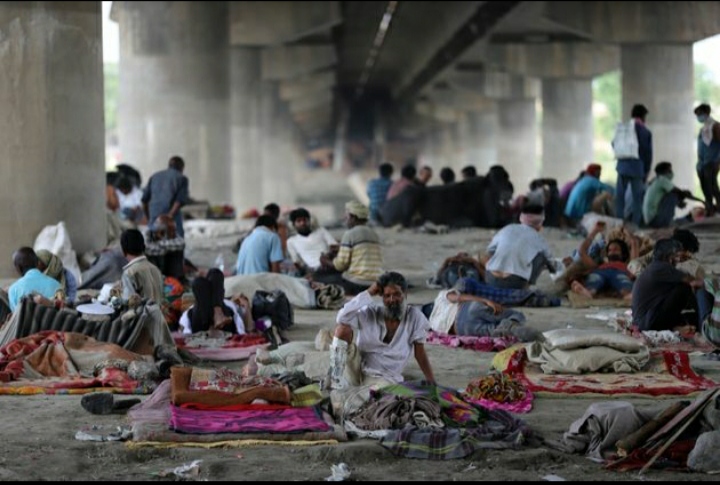
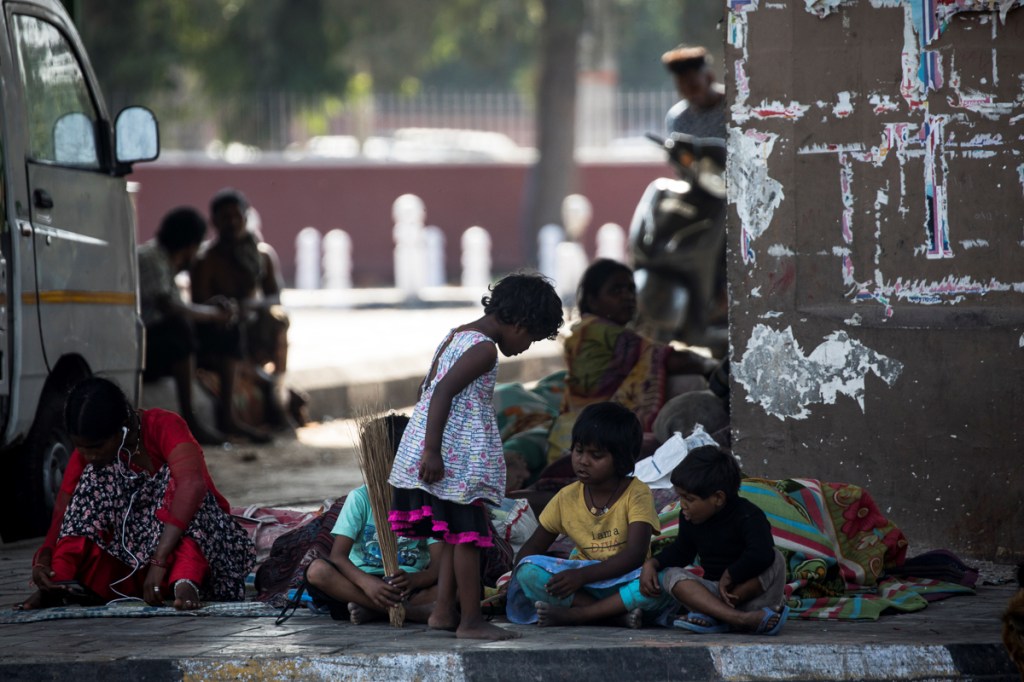
However for these to positive changes to take place the government needs to overcome a lot of challenges. Like the Indian education system is like a pyramid indicating lesser and lesser number of people for higher level of education. Therefore the government needs to increase allocation for higher education and also improve the standard of higher education institutions, so that students are imparted employable skills in such institutions. Similarly there is huge difference in educational opportunities across states. The per capita educational expenditure differs considerably across states from as high as โ‚น34651 in Himachal Pradesh to as low as โ‚น4088 in Bihar. This leads to differences in educational opportunities and attainments across states.

How the Insolvency and Bankruptcy Code Changed the Default Policies

Introduction to the Code

India had the highest economic growth rates after the internet boom in the year 2000. A huge amount of investments were pouring inside the country as big companies saw it as a vast market and wanted to put solid footing in India. Companies had over-leveraged themselves in fear of losing lucrative opportunities. During the financial year of 2007-08, the Global Financial Crisis hit, and the high growth levels stopped. It led to low revenues, and subsequently, the high inflation levels caused RBI to increase the interest rates. This all led to the creation of an enormous number of NPAs in the financial sector. 

The government introduced the 12 Debt resolution mechanisms, but it was a failure in the end as all the laws failed to curb NPA’s. The borrowers used the loose provisions of law and created ambiguity in the judicial proceedings. They kept delaying it, and even when the cases were resolved, the creditors ended up taking massive cuts in debt recovery. 

The Ministry of Finance, in the year 2015, estimated that it would take 326 years to complete the backlogs. The Insolvency and Bankruptcy Code (IBC) was enacted in the year 2016 to tackle problems relating to insolvent companies and their closure. Many public sector banks, operational creditors, and financial institutions were facing challenges. The Code aimed to tackle the bad loans which were affecting the banks due to these insolvent companies. The Code has introduced a time-bound process under which insolvency will take place. Enactment of the Code has helped many employees working in these companies in India. They are now able to claim their dues quickly with the help of the National Company Tribunal (NCLT) established under this Code. IBC, after its enactment has successfully stopped many companies from defaulting their loans. The Code improved India’s ranking in “Ease of Doing Business” drastically. Currently, India stands at the 66th position. Before this Code was enacted, India’s ranking was 133. 

Objective and Purpose of the Code

  • Resolve Conflicts between the creditors and the debtor โ€“ The Code defines procedural certainty and the process of negotiation. The Code works in a way that reduces the problems of common property. This Code reduces the information asymmetry for all the economic participants.
  • The Code provides flexibility to the parties to reach the most efficient solution to achieve the maximum value during negotiation.
  • A platform for negotiation between the creditors and the external financers are created through this Code to create the possibility of rearrangements.
  • To amend the laws relating to the reorganization and insolvency resolution of the partnership firms, individuals, and corporate firms. 
  • A time limit is to be set in which the insolvency proceedings will be completed i.e., 180 days.
  • To raise the value of the assets of the interested parties.
  • This Code works in increasing the global ranking of the world in doing ease of business. 
  • The Code will help in promoting entrepreneurship. 
  • The Code establishes an Insolvency and Bankruptcy Board of India to act as a regulatory body. 
  • The Code proposes to regulate the insolvency professionals and professional insolvency agencies. The role of these agencies would be to develop professional standards and work as a disciplinary committee. 
  • Three types of resolution professionals are set up under the Code i.e., the Interim Resolution Professional, Final Resolution Professional, and the Liquidator.
  • Information Utilities has been set up under the Code. The work of these information utilities is to various types of data from the listed companies and also the data of the creditor’s companies. 
  • Individual Insolvency database is to be set up to provide information about the insolvency status of individuals.
  • An Adjudicating authority is set up to exercise the cases over a debtor. 

Relevant Social & Political Scenario at the time of enactment

At the time when the Code was passed in the parliament, big defaulters like Vijay Mallya and Nirav Modi’s defaults were putting pressure upon the public sector banks of India. There was no unified law against these defaulters. The rules which dealt with defaulters came under the likes of the Indian Contract Act, the Sick Industrial Companies (Special Provisions) Act, 1985, (SICA), the Securitizations, and Reconstruction of Financial Assets and Enforcement of Security Interest Act, 2002. The Code aims to bring all the laws under one roof to provide ease to the primary creditors. The then Finance Minister Mr. Arun Jaitley said that “A systemic vacuum exists with regard to bankruptcy situations in financial firms. This Code will provide a specialized resolution mechanism to deal with bankruptcy situations in banks, insurance firms and financial sector entities. This Code, together with the Insolvency and Bankruptcy Code 2015, when enacted, will provide a comprehensive resolution mechanism for our economy”. However, at the time of enforcement of the Code, there were no special provisions for cross-border insolvency. 

Amendments

1. The Code went under a lot of changes since its inception; the first change came with the Insolvency and Bankruptcy Code (Amendment Act), 2017. Partnership firms, a proprietorship firm, individuals, and personal guarantors will be included under the heads “applicability” With this amendment, frivolous applications made by the personal guarantor will be avoided after the moratorium period is declared. Section 29A is inserted in the Code which lists the persons who cannot submit a resolution plan. It includes the undischarged insolvent, person convicted of an offence, disqualified from the post of director, account is NPA, a willful defaulter etc. If a person is NPA, if he pays his/her dues within 30 days, then they can submit the resolution plan. 

2. The Insolvency and Bankruptcy Code (Amendment) Ordinance Bill was introduced in the year 2018. The objective of the Ordinance Bill was to strengthen the Corporate Insolvency Resolution Process (CIPR). The Ordinance states that “to balance the interests of various stakeholders in the Code, especially the interests of home buyers and micro, small and medium enterprises, promoting resolution over the liquidation of corporate debtor by lowering the voting threshold of the committee of creditors and streamlining provisions relating to the eligibility of resolution applicants.” 

 One significant change brought with this Ordinance was the inclusion of “Home Buyers” under the definition clause of Financial Creditors. The home buyers will be able to recover the amount paid as advanced through this addition. Another significant addition to this Act was that CIPR can now be initiated by the guardian, administrator, and the executor of the financial creditor. 

 A “Committee of Creditors” will be formed that will consist of all the “financial Creditors.” They will majorly work as a body to make routine decisions regarding the CIPR. 

3. Insolvency and Bankruptcy (Second Amendment) Bill, 2018 โ€“ The approval of the Competition Commission of India is required to finalize the resolution plan set by the financial creditors. This will reduce the chances of extending the time of the CIPR, i.e., 90 days of extension. 

4. Insolvency and Bankruptcy Code (Amendment Bill), 2019 โ€“ The amendment proposes to strengthen the time-limit provisions in the Act. Secondly, a specific minimum payout is defined for the operational creditors for any resolution plan. Thirdly, it provides the manner in which the group of financial creditors should vote. 

JOBS

The work that you do regularly to earn money.

A job ,employment ,work or occupation is a person role of society .morespecifically .A job is an activity. Often regular and often performed in exchange for payment .many people have multiple jobs.A person can being a job by becoming an employee, volunteering,starting a business ,or becoming a parent.

A job is homogeneous tasks related by similarity of functions. When performed by an employee in an exchange for pay, A job consists of duties, responsibilities and task

BENEFITS OF JOB you have an identity ,not just a name ,image credit. The paycheck. The joy of being independent. Adding the new one to your slam book polishes to your skills. Have happy retirement let your personal life breathe let you enjoy some extra perks . It gives you money and purpose.

The job is just not about working for few hours. It’s more than that,working ,improving you as the person ,learning the skills will make certainly help u in full filling your purpose.no matter how small your work is ,remember that u are adding value to the organization and ultimately to the world. Having the job will give you the satisfaction. Happiness of maximization of wealth.

DISADVANTAGES OF JOB

wastage of time and effort . Employees take time . Leads to a whole lots of stress . It doesn’t check the time wasted. Zero results.

can be costly and time consuming. Could end up with dusgruntied employees.

Some jobs name are.

teacher. Doctor. Lawyer. Artist. Scientists. Etc.

Print vs Digital: Reading in the Modern Era

Much has changed with the advent of technology and globalization in our societies. This change comes in all kinds of forms, from how we dress and eat to how we study and engage. Reading is an arena where this is very evident. Our reading habits have changed drastically with the inflow of gadgets and technologies that transform the reading experience. It has also affected how we engage with what we are reading, our attention span, and the ability to grasp and recollect the things we read. While many prefer older ways of reading like directly from a book or newspaper, more people are turning to the digitalized spaces to read what they are interested in.

The print versus the digital media has always been an ongoing tug of war. Both have their advantages and disadvantages but as time moves on, one is bound to see a shift in reading habits, when a generation that grew up with technology starts becoming the main consumers of the market. Reading printed copies of books and newspapers are many a time described as a wholesome activity with no โ€˜modernโ€™ interruptions. It allows the individual to engage with something tactile, a book with pages they can feel, touch, and turn. It also allows one to mark passages with pencil and scribble down notes on the sides. And how can one let go of the sensory experience, the smell of old books, and the satisfaction of putting it down after finishing it or running your hands through the worn pages? Researches also opine that one is prone to remember better when one reads something in print rather than from a screen.

person reading on book
Photo by Oladimeji Ajegbile on Pexels.com

However, with the evolving ways of being and living in a technological era, change is inevitable. Today it is not uncommon to read entire books online or as a pdf on a computer. Books are available in these formats for sale as well as for free on some sites. Gadgets like the Amazon Kindle have furthered this field by offering a digital device that can store a large amount of information and books which you can access at all times. It is like carrying around thousands of books in your pocket and very efficient in that sense. It is also a very convenient and cost-effective investment. Books online tend to be much cheaper than paperbacks or hard copies. So, investing in a kindle and buying and reading books online turn out to be much more economical than spending on printed material. As a betterment from the app, kindle as a device also does not have any screen glare which makes the experience of sight exactly how it is as that of a book. ย It also allows you to highlight, bookmark, and add notes. However, the aesthetic experience that paperbacks afford is almost non-existent here.

In the end, it comes down to what you and your preferences are. Older generations tend to prefer reading print, but also a huge part of the current generations lean towards print as well when given a choice between the two because of the experience of holding a book in your hand and reading. However, we should never discount the conveniences that digital reading affords, especially in such a fast-paced world. Understanding the limitations of both while embracing what is best suited to your situation in life, without discounting either completely, is the only way to go about it. Mixing both as and when required in order to gain the most out of it and learn better should be our goal. And one can keep wondering if reading as a phenomenon refers to only the act of reading or if it denotes the entire sensory experience.

Types of Education

What is education?

In general terms, it is the act or process of imparting or acquiring general knowledge, developing the powers of reasoning and judgment, and generally of preparing oneself or others intellectually for mature life.

Four types of Education:

Indigenous education

1. Indigenous Education- It focuses on spreading knowledge of cultural beliefs, rules and customs and its oral transmission from one generation to another. Indigenous education can be seen as a response to a strong wave of globalization. This type of education is more accepted and valued in some systems than in others, but in African context it is seen as a vital part of protecting and maintaining a nationโ€™s cultural spirit.

Formal education

2. Formal Education- As a prototype of the picture we have of education, is set in a formal, school environment with professional teachers, who follow a specific and planned teaching program. This program concentrates on specific skills, knowledge and education goals. Formal education is in most countries fully-funded by the state and in Nigeria there are different levels of formal education system: kindergarten, primary, secondary (divided in junior and senior secondary school) and tertiary education. Children would spend 6 years in a primary school, 3 in a junior secondary and 3 in senior secondary school, and at the end 4 years in a tertiary institution i.e. institution of the third level education such as university.

Informal education

3. Informal Education- As the name says, takes place in an informal setting and is a lifelong process. People learn from each other in everyday situations about various topic. This can be illustrated as a parent teaching his/her child how to determinate sides of the world or how to cook a family meal. There are no specific teaching/learning methods when it comes to informal education and a person can gain informal knowledge by visiting museums, reading books in library or being a part of a local community.

Non- formal education

4.Non-formal Education- This form mostly focuses on specific needs and goals of a group. Students of the non-formal education can be from different age and this system and its program, although pre-planned, takes place outside the institutional system. Non-formal education aims often adult literacy problems and other continuing education and skill programs such as, for example, swimming lessons for children. Methods used in non-formal education are very flexible and can last for different period of times, depending on the goals and the student group.

Through different types and methods it is easy to use childrenโ€™s natural curiosity. And although different, every type of education is a part of a puzzle, which leads to youth having good career opportunities and living conditions in the future.

Free Spine for those who don’t have one!

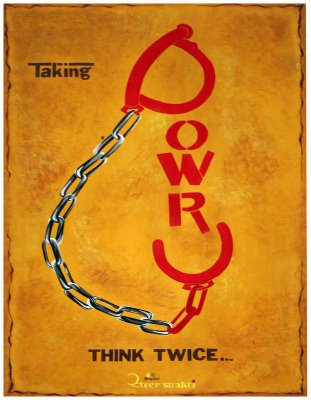
DOWRY: A CURSE FOR SOCIETY

CHRISTIAN 26/175, Born again, Fair, Good looking, Software, Tamil, Chennai. Now in the USA. Seeking fair, good looking, working girl, Contact 98XXXXXXXX.

On Prima facie, this matrimonial advertisement published in a daily national newspaper bears testimony to the fact that marriage in Indian society has undergone a transformation. But while going deep into the root of the matter, we find out that no matter how marriage proposals have undergone a transformation, from arranged one to advertisement to the online matrimonial application, dowry system which is not seen in any of the forms but is still under the practice of ‘give and take.’ In many societies, the union of souls is not the sole criterion for marriage, rather dowry plays the role of ‘requisite criteria.’

So what is dowry? Dowry is the money, goods or estate that a woman brings to a marriage. In a court judgement โ€œThe Dowry Prohibition Act 1961โ€™โ€™ legal definition of dowry is defined as:-
“Dowry” in the sense of the expression contemplated by Dowry Prohibition Act is a demand for property or valuable security having an inextricable nexus with the marriage, i.e., it is a consideration from the side of the bride’s parents or relatives to the groom or his parents and/or guardian for the agreement to wed the bride-to-be.

Although Dowry is illegal in India by the Dowry Prevention Act 1961, it is still prevalent and widely practised in many societies.
Pertaining to the history of the dowry system in India different scholars claim different things based on interpretation of ancient Sanskrit fiction and inconsistent smritis from India. The Shastras, the reservoirs of Indian culture and heritage is replete with references to the practices of dowry. The marriage hymns of Rigveda and Atharveda are its instances. The Smritis have recognized the right forms of marriage. It was only in Brahmin marriage and the gifts to be given in dowry were left entirely at the discretion by the brideโ€™s father.
Al-Biruni further claims that a daughter, in 11th century India had legal right to inherit from her father, but only a fourth part of her brother. The daughter took this inheritance amount with her when she is married, claimed Al-Biruni, and she had no rights to take income from her parents after her marriage or to any additional inheritance after her father’s death. If her father died before her marriage, her guardian would first pay off her father’s debt, then allocate a fourth of the remaining wealth to her upkeep till she is ready to wed, and then give the rest to her to take along with herself after her marriage. (source: Wikipedia)

The idea behind the dowry system was very clear. Bridesโ€™ parents used to give money, land, assets, to the bride as a gift or blessing. But when British Rule came into the picture, they restricted women to own any property. Women were not allowed to buy any property, land, or assets. This leaves women dependent upon their husbands and in-laws, who keep the dowry when she marries. In 1956, India gave equal legal status to daughters and sons among Hindu, Sikh and Jain families, under the Hindu Succession Act (India grants its Muslim population the Sharia derived personal status laws). Despite the new inheritance law, dowry has continued as a process whereby parental property is distributed to a daughter at her marriage.

CURRENT SCENARIO
The magnitude of the problem of dowry today is to be assessed not only on the basis of money/goods, land etc given by brides family but also on grounds of reported cases of different forms of violence on a bride. These outbreaks of violence vary from burning of brides, cruelty, domestic violence against women, abetment to suicide, dowry murder, female infanticide and many more.
Although there are laws and acts which makes practising dowry illegal.


THE DOWRY PROTECTION ACT 1961
This legislation came into force from 1 July 1961. This act prohibits the practice, request, payment or acceptance of a dowry by either party to a marriage. This law also punishes demanding and advertising dowry. Any violation of the act leads to imprisonment up to 5 years plus fine of up to Rs 15000 or the value of the dowry given, whichever is true.

There are also sections in IPC that deal with dowry like:-
Section 304B
It is related to dowry deaths
Stipulates that death of a woman within 7 years of her marriage by burns or bodily injury with evidence of cruelty or harassment by her husband or his relatives in connection with dowry demand is โ€˜dowry deathโ€™ and punishable with imprisonment for not less than 7 years.

Section 406
Related to the recovery of streedhan (It is what a woman claim as her own property within a marital household. It may include jewellery, gifts, and dowry articles.)
It is Non-bailable and cognizable offence.

Section 498A
For any act of cruelty, imprisonment of husband or his relative for up to 3 years plus fine.
It is also Non-bailable and Non-compoundable(once a case is lodged there canโ€™t be a compromise)

Protection of Women from Domestic Violence Act,2005
It was passed in order to provide a civil law remedy for the protection of women from domestic violence in India.
It encompasses all forms of physical, verbal, emotional, economic and sexual abuse and forms a subset of the anti-dowry laws to the extent it is one of the reasons for domestic violence.

Despite such stringent laws and acts which are in force, Dowry practice is prevailing. In 2019, 913 cases pertaining to dowry deaths have been reported. And this is the number of reported cases. In Bengaluru, only the number of cases filed under the Dowry Prohibition Act witnessed a rise from 690 in 2018 to 739 in 2019.

Consequences of the dowry system
This system of dowry has solidified its root in our society that it is seen as a form of prestige in Indian marriages. The more dowry means more respect to the grooms family. Dowry or the amount of money given as dowry is proportional to the groomโ€™s income. It is very clear that dowry is creating violence. Apart from this, sometimes bridesโ€™ parents have to lend money to give a huge amount of money demanded as dowry by the groom’s side. There are other ill consequences also like:-
Low Women Literacy:- In many cases girls are not allowed to pursue higher education after 12th or graduation because of the ill mentality that they have to take care of the family after marriage and from where the capital is going to be arranged for her marriage if all savings will be invested in her education.
Female Foeticide:- In the avarice of dowry, and because our society gives more preference to the boys, female foeticide takes place. Although Pre-Conception and Pre-Natal gender screening or testing are illegal in India by Pre-Conception and Pre-Natal Diagnostic Techniques Act, 1994.
Gender Discrimination:- Dowry coupled with female foeticide is the leading reason to gender discrimination and low sex ratio in India.
Violence against women:- Domestic violence, marital rape, physical and verbal abuse, torturing of women etc. There are many forms of violence which took place and still unreported either due to lack of knowledge or suppressed voices because few women try to save the sanctity of marriage which never really existed.

It should also be noted here that there are also false cases of harassments reported and these laws and acts are being misused as it happened in case of Nisha Sharma Dowry case in which IPC 498A was misused. But this does not show that every case or violence pertaining to dowry is false or fabricated.

So, Dowry is the tool of harassment and inhuman expression out of the coalescence of processes and relationship which are degrading women turning them into commodities. The central message of the Universal Declaration of Human Rights which states that โ€œall human beings are born free and equal in dignity and honourโ€ only echoes a hollow concern. Be it in democracy or dictatorship, war or peace, womenโ€™s rights have been violated daily, systematically. Their freedom, dignity and parity are persistently compromised by law and customs.

WAY FORWARD
The dowry system developed from Indiaโ€™s inheritance laws in which it is the mentality of people that Dowry is a form of inheritance which the bride brings along with her to the groom family. Law and acts should be made enforceable on the ground, not on paper only.
All groom need to take a step up and say โ€œNOโ€ to dowry as they can be a milestone in abolishing this dowry system. Boys need to convince their parents that they will not take dowry. They should have the confidence to earn for their living.
Parents must educate their daughters so that they can have dignity and become self-dependent or start earning which will make them financially stable and courageous. A well-educated girl will also be able to compete against any turmoil or raise her voice against the mishaps.
All the expenses of marriage must be shared by both families according to their own capability.
People must give encouragement to simple marriages without taking/giving dowry.
Dowry is a social stigma that can be removed with all our contributions and awareness. It will take time to abolish but it can happen if preferred.

There is a very well known quote- โ€œThere is no chance for the welfare of the world unless the condition of a woman is improved. It is not possible for a bird to fly on only one wing.
There is no hope for that family or country where there is no estimation of women, where they live in sadness. For this reason, they have to be raised first.โ€
โ€“ Swami Vivekanand.

Vitriolage

Kitna achha hota agar acid bikta hi nai, bikta hi nai to phir fikta bhi nai!!” – Chhapak


This famous dialogue from a Bollywood movie clearly depicts the pain and hopelessness of a victim when she was being attacked for nothing but denial. It clearly shows how insensitive and callous we have become as a society.

Acid attack is one of the most gruesome and brutal crime. Most of the acid attack victims are women. Men have also been the preys, but they’re minimal in numbers compared to the women. Section 326A & 326B in the Indian Penal Code (IPC) lays down the punishment for acid attacks. The minimum punishment is 10 years’ imprisonment which can be extended up to life imprisonment along with a penalty. But this punishment is not enough for such criminal minds who think it is okay to distribute, torture or kill an innocent person if she is refusing his so-called lusty love, or they can’t digest a marriage refusal. Conflicts regarding property or land disputes have also been reported as reasons for acid attacks. Attacks against individuals are also based on their religion and religious beliefs or socio-political activities.

The crime data for 2018 from the National Crime Bureau (NCRB) exhibits, the cases of acid attacks are constantly being transferred and delayed even though there are fast-track courts to handle these cases but unfortunately they do not seem fast enough!

Why do they take months and years to pronounce a decision?
Why can’t they declare the verdict in such cases as soon as possible? So that the attackers at least fear the law before committing such heinous crime.

If nearly 90% of cases in a year are being transferred for trial to the following year, how can a survivor get justice or can even hope for it?
This is shown by the data; in Indian courts, 523 cases were slated for trial in 2018 which are adding to the 407 cases in 2016 and 442 in 2017. Many such cases of acid attacks occur but never get filed because in multiple cases, settlements are done outside the courts or several other factors come into play like class, caste, power, religion, etc.

The percentage of cases that the courts cleared out of the cases that went for the trial, was 6.6% (27 cases out of 407) in 2016; 9.9% (44 cases out of 442) in 2017 and 6.11% (32 cases out of 523) in 2018 respectively.
The total number of cases of acid attacks that police investigated dropped consistently- 196 cases in 2016, 182 in 2017 and 150 in 2018.
While the attempt to commit such sin has increased in the last three years. The growth of the conviction rate is almost negligible. 2.45 per cent cases in 2016, 3.39 per cent in 2017 and 3.36 per cent in 2018 respectively.
Uttar Pradesh and West Bengal have been reporting the most number of acid attack cases in between 2016 and 2018 as per the NCRB data.

India, the country with the most number of acid attacks has the least number of convictions, even less than 5%. At least one case of acid attack takes place daily in India.
Supreme Court has ordered all the state governments to regulate the sale of acid in an attempt to stop or at least reduce these crimes. The court said that acid should not be sold to anyone below the age of 18, and that too only to the person who shows a valid identity card. And if anyone doesn’t follow the rules it will be a non-bailable offence. But all these rules and regulations are found to be just in paper. Anyone can still walk into a store and purchases a bottle of acid. The non-bailable charges also have loopholes through which the attackers get through easily and roam around freely while the victims undergo reconstructive surgeries and are bound to visit hospitals after hospitals.
The pathetic thing is that with a bottle of liquid that would cost a demon just Rs.10, he can degrade anyone’s life within seconds.

Anorexia Nervosa

‘Hey, you have lost a lot of weight suddenly. Are you alright?’ You might have seen someone saying this to a girl/boy who really did lose a lot of weight suddenly. They look weak and skinny and often come across as short tempered. This is a common symptom of a disorder named anorexia nervosa.

It is an eating disorder causing people to obsess about weight and what they eat. Anorexia is characterised by a distorted body image, with an unwarranted fear of being overweight. Basically such people constantly obsess over their weight. This usually happens during adolescence. This is because during this time period, teenagers go through puberty. This means they feel the need of constantly looking pretty. This also usually happens to girls as the social norm is set as such that the skinnier you are, the prettier you look. No doubt this social norm is now dramatically rejected as people are more accepting of all kinds of body types.

Anorexia nervosa is a dangerous disorder. It’s like having a voice in your head constantly telling you that you look fat and should lose more weight. This is dangerous because people suffering from anorexia nervous are repulsed by the idea of eating. They literally don’t like eating. To the point they isolate themselves from their friends and family so that they don’t have to eat.

They not only despise eating, they exercise aggressively and push their limits to the store extent that they endanger their own lives. They constantly work out and drink water when they feel hungry. Whenever they do eat, they feel guilty and put off all the calories by working out more than ever.

Other symptoms of this disorder includes dizziness, dehydration and feeling cold all the time. Girls often miss their menstrual cycle. People often become short tempered or moody. They also become more anxious and apprehensive about basically everything.

They are often constipated and force themselves to vomit from time to time. Their nails become brittle and hair become dry, thin and fall out occasionally. Most dangerous of all is that they become malnourished and their heart beats slower than usual. They refuse getting treated because they constantly feel that they will become ‘fat’ or overweight. They might also suffer from depression.

Now that we know about this disorder, one must look out for all of these symptoms as we might just be able to help them. People suffering from anorexia nervosa need their family and friends even though they might avoid them. It is important for their family and friends to make them realize that life is more than just body types and weight. If they are not happy even after losing all that weight, losing weight is not the true path of becoming happy. They need to realize that their family and friends love them for who they are. Yes, it will be very hard for everyone around them. Especially the parents. But this is the time we must remember that we are the only ones who can bring their child back. Proper professional help should be taken and apart from that through therapy and proper healthy diet, they can always come back to their real home.

The only way to gain true happiness is through self care and self love. They need to realize no matter how skinny they become, if they don’t love themselves for who they are, all this trouble can never be worth it! Loving yourself is more important than anything. Accepting your body type is one step of becoming happy.

Training

“Training helps teach the vision and mission, but employees must put the training into action for it to have meaning.” – Shep Hyken

The above quote really has a deep meaning as it is an important element for an employee and his organisation. It constitutes a basic concept in human resource development. Before starting further first we should know what is training? According to Edwin Filippo- ” Training is the act of increasing the skills of an employee for doing a particular job.” In layman terms training is a learning process which gives an opportunity to the employees to develop their skills, knowledge and competency as per their job requirements. It is a very useful tool as it brings an employee into a position where they can perform their jobs correctly, efficiently and confidently.

Generally training is not a continuous process, it is periodical and given in specified time. Training is given by an expert or professional in related field or job. Training helps an employee to keep themselves updated in this dynamic environment. Training programs is generally provided to the employees so that they can improve their quality of work. Training bridges the gap between job need and employees skills. Training is a task oriented activity as it helps in improving the performance of an employee. Training is about acquiring competencies to cope with the variety of complex and difficult situation. It is a journey of self-awareness and self-discovery as it leads to growth and development. It helps your employees to explore and realise their potential and talent. Through this training program one is able to identify his strength and weaknesses and it also helps in clearing there doubts and misconception which will help them to know their hidden abilities. It helps in establishing relationship between theory and practice as it develops the ability to translate acquired concepts, principles, knowledge and skills into action and through this way we can build a relationship between the two. Training is very important in an employee’s life as through training he or she will be able to know and learn so many new things like it will develop new skills in an employee, it helps in improving employee’s performance, it increases engagement as we know that an engaged employee has an increased level of productivity, it improves employee retention and growth as the process of training involves cost and thus it motivates the employee who undergoes training, consistency in training- as creating consistency within an organisation is difficult but training helps reduce a disparity between your teams, it helps in tracking employee skills, training is necessary when the existing employee is promoted to the higher level in the organisation as it requires some new skills and knowledge according to job requirements and so on the list of importance of training is never ending. As good things has never ending positive results. Training also helps in motivating the employee and helps in gaining organisational excellence. It also helps in preventing employee attrition as training program provides them a sense of satisfaction as they think that there organisation invest in them by this training session.

Last But Not the Least

“Our strength comes from our people.” Training is a very important HR function as it helps in the growth of an employee as well as the organisation.

ENVIRONMENT

Environment is the surrounding in which an organization operates ,including air,water,land,natural resources flaura ,fauna,human beings and there interrelation .

the natural environment encompasses all living and non-living things occurring naturally ,meaning in this case not artificial .the term is not often applied to the earth or some parts of earth.

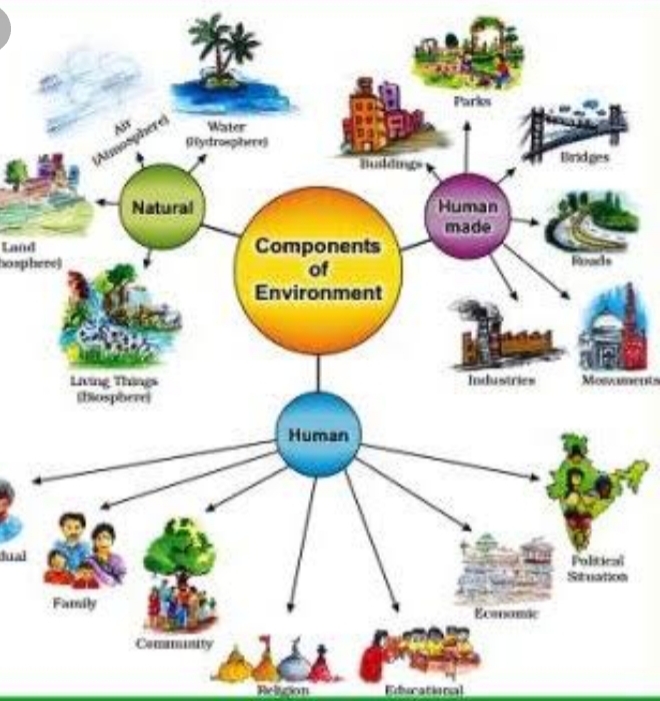
Components of environment. Environment mainly consists of atmosphere ,hydrosphere ,lithosphere and biosphere .but it can be roughly divided into 2 parts such as micro environments and macro environments. It can be divided into two types such as physical and biotic environments.

Some important components of environment. Atmosphere. The atmosphere is the protective blanket of gases which is surrounded the earth .it protect the earth from the hostile environment of outer space .

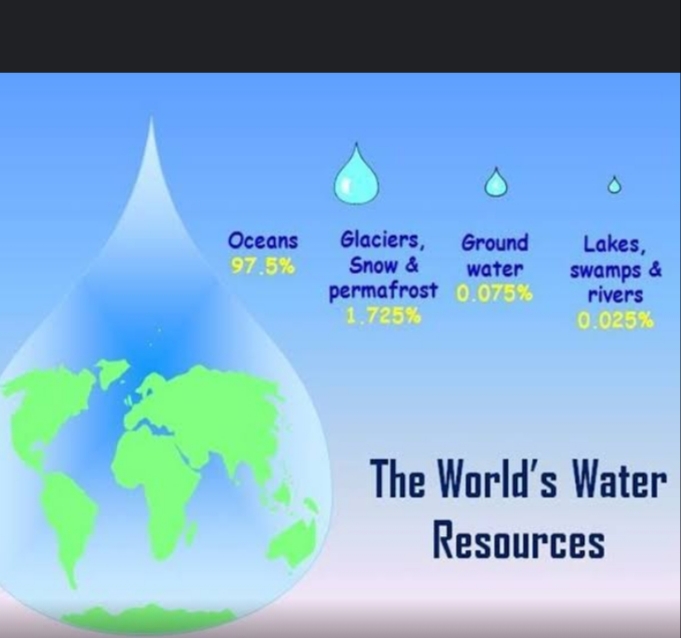
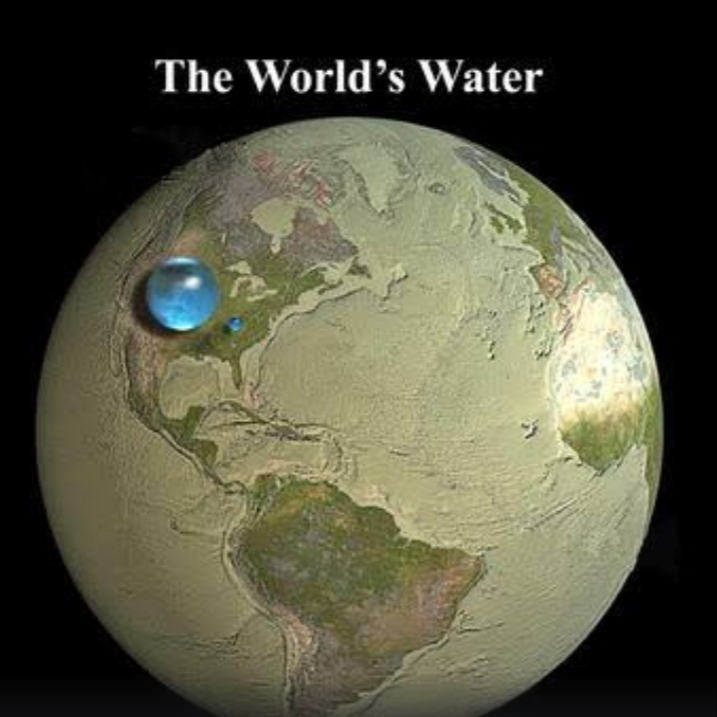
Hydrosphere the hydrosphere is a collective term given to all different forms of water.it includes all type of water resources such as oceans ,sea ,river,lakes ,streams,and groundwater .

Biosphere the biosphere refers to the realms of living organisms and there interactions with the environment .the biosphere is very large and complex and is divided into smaller units is called ecosystems.

Environment is a place where different things are such a swampy or hot environment it can be living or non living things. It includes physical, chemical and other natural forces ………..since everything is a part of of environment of something else .the word environment is used to talk about many things.

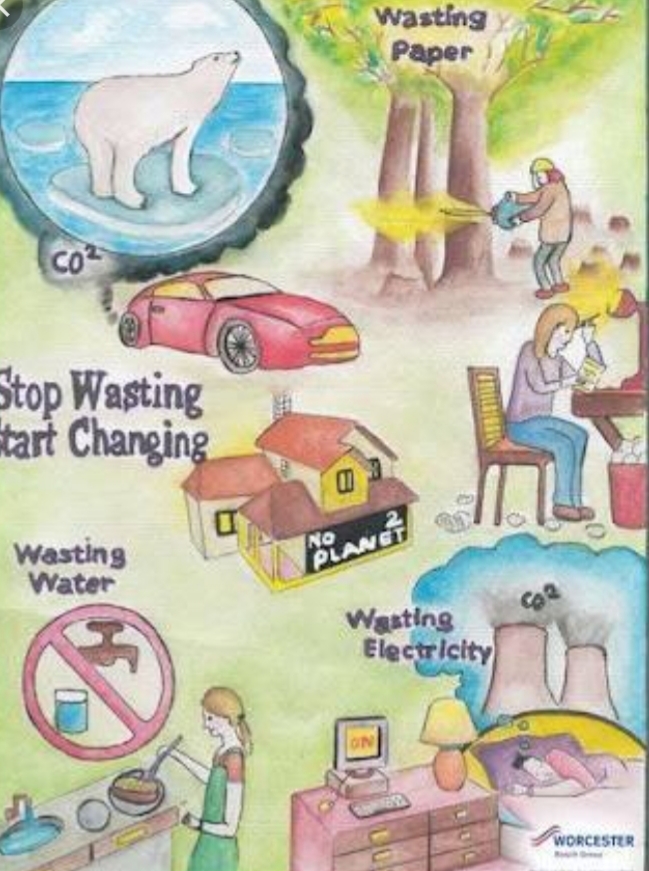
human impact on the environment .human impacts of physical environment in many way .overpollution,pollution, burning fossil fuels ,and deforestation .changes like these have triggered climate change,soil erosion, poor air quality, and undrinkable water.

How do our activities affect the environment human activities contribute to climate change by causing changes in earth’s atmosphere in the amount of greenhouse gases aerosols and cloudiness .the largest known contribution comes from the burning fossil fuels ,which realised carbon dioxide gas at the atmosphere.

the simple things you can do to help protect the earth . Reduce,reuse,and recycle volunteer conserve water plant a tree use long lasting lights bulbs etc.

The Problem with Online Education in India

With Covid-19 disrupting all the hitherto establish modes of living, studying, and working in our society, more activities are being moved online. This is aimed at continuing our stream of activities but in a different mode so as to ensure that no business or endeavour is fatally suffering from this pandemic. While this might not be fully possible for every aspect of existence, it is a method to try and maintain a semblance of normalcy in our everyday activities. Most IT companies have moved completely online and allow all their workers to work from home. Restaurants and hotels rely highly on apps that deliver food to continue their business, and even education is now gearing to completely move online. This seems well and good at first glance but the question of whether this can ever be successful in a country like India is a serious one.

woman working at home using her laptop
Photo by Vlada Karpovich on Pexels.com

Our country is a developing one, where the majority of the population still lives in rural areas and the internet is not a luxury that everyone can afford nor have access to. While the need to continue education is important, one might ask at what cost this is being done. Even when we talk about work from home, we are all aware that a very narrow part of the population has this privilege. Daily wage workers do not get to work from home and they have no option but to risk their lives in the midst of the pandemic if the government itself fails to take care of them. Small scale industries and shops all close down. We have a massive economic crisis on our hands but alongside this, we need to understand that there will be a widening of the educational gap, a crisis whose effects we will start to fully comprehend in a couple of months.

Most middle-class and upper-class households are able to comply with the needs of online learning since they own laptops and smartphones. They also have enough money for data and internet connections. However, it is still a stark reality that education in rural India and amongst lower-class households is extremely limited owing to factors of economy and access, as well as gender and caste. India supposedly houses 430 million persons below the age of 18 many of whom come from rural settings. Only 47% of households in India have electricity for more than 12 hours a day according to a survey that the Ministry of Rural Development conducted in 2017-18. It is an eye-opener to the urban citizen that only 24% of Indians own a smartphone. And one must remember that in a household with more than one child, there has to be multiple gadgets for all of them to receive their education.

66% of Indiaโ€™s population lives in villages and an extremely minuscule portion of them will even be able to attend classes of any sort. The development of our country and much of its economy is reliant on these villages but if we forget them in this hour of need, the consequences will be hazardous for the whole country. If we do not take aggressive measures to tackle these problems and provide materials resources to those in need so that their children can access classes, the current online education system will create a massive digital divide that will cause a majority of the Indian population to suffer. It will impair their access to a better life and opportunity, any attempt to get on par with their privileged peers would largely result in failure and this will drive many to lives of low economic value, toil, suffering, and access. This will be carried forward into their coming generations. Unless addressed, it will lead to a systemic denial of the fundamental right to education and opportunity, and hence, while attending our own online lectures, we should take this very seriously and implement measures to better this situation in every possible way. This is not the only problem that online education creates but it is by far the most important.

Self-love Culture: Is it Healthy?

Importance to the individual and the self is a phenomenon that came by as a product of modernity. With more emphasis on self-accomplishment and success becoming often defined as what you are able to make of yourself, talks about what is important to the self and how to understand our own personalities have increased. Nowadays we see a large number of people who propagate what is known as the โ€˜self-loveโ€™ culture. The self-love essentially prioritizes the well-being of the self and calls for the acceptance by each person of their own individuality.

woman in black shirt holding white flowers
Photo by Masha Raymers on Pexels.com

This movement which is increasingly seen in online spaces and urban settings have its benefits as well as adverse effects. We can say that it is extremely necessary, especially when we have a society that is constantly finding fault with us and setting standards that very few are able to stick to. Everyone who does not meet those standards, whether it be about success or beauty or relationships, are considered as failures. Many companies are designed in such a way that they prey on insecure individuals and make a profit by offering them products that supposedly will make them โ€˜enoughโ€™. However, this is a false hope. in this situation, it is absolutely crucial that we have counter-narratives that dispel these myths of success and encourage people to understand their own uniqueness. We should not buy into the ideas that are marketed for the sake of money nor give into traditions that place unwarranted emphasis on appearances and performances. This idea can even cause serious mental health issues when one is constantly seeking the approval of others to be worthy of love.

The problem with this self-love culture, however, is when it goes out of hand and becomes almost narcissistic. People tend to get obsessed with their own selves and will do anything they have to in order to secure what they think will bring them fulfillment. This is dangerous because such an individualistic outlook might lead them to take advantage of others and even cause them harm. It also makes them egoistical and unwilling to accept any criticism. They forget that loving oneself does not mean loving everything about oneโ€™s own self and being against all kinds of change or betterment. In fact, if one is loving, one should be willing to change or work towards bettering aspects of their personality which might be potentially hurting themselves or others. Anger issues is an example of an aspect like this.

Self-love is healthy as long as it doesnโ€™t lapse into the other extreme of being obsessed and infatuated with everything about ourselves. Man being a social animal has to live in relationship with others and anything that hinders that will potentially hurt him as well. It is a tightrope walk of loving oneself and accepting our personalities, flaws and all, and being cocksure of our supremacy and infallibility as an individual. We should love ourselves enough to identify things that could potentially be hindering our growth as a person while also keeping in mind that it is not our performance in the world out there that defines our worth. If we are able to be secure in our identity thus, evolving and changing, and embracing it, then we will also be willing to take constructive criticism as well as discern between what should be taken seriously and what should not be.

Effects Of Bullying On Self-Esteem

Remember the days when you’d go to school, make memories with your friends and enjoy your lunch with everyone? Those days are golden. Eating from each other’s lunch boxes was personally my favourite thing about school. These memories from school stay with us for about a lifetime. People say that school days were the best of their lives. But remember that shy and introverted kid who you made fun of for bringing the same food everyday? Or the kid who you passive aggressively forced to do your homework? What about them? What are their happy memories?

Self esteem is an individual’s subjective evaluation of their own worth. In order to have a truly healthy mental health, it’s important that your self esteem levels are high. This means that you are overall confident about yourself and feel good about being you. We all have our moments of embarrassment in our lives. Most of us get over it. But when we already have a low self esteem and something embarrassing happens to us, we forever build walls around ourselves and fail at developing healthy bonds with a lot of people.

These problems generally develop when we are in schools because our bodies have still not completely developed. Some girl who alfeady feels self conscious about her body will further get scarred if we are not welcoming and accepting her for who she is.

This brings me to the topic of effects of bullying on self esteem. Now, we know that bullying is not a good trait for a person. But why exactly?

It is because it’s effects on the child’s last for a long time. It not only makes the child feel less confident about themselves but they also start believing the things they are told. For example, if someone constantly makes fun of a girl’s weight in a passive aggressive manner, after sometime she will start believing these things. She will believe that she is fat.

She might start exercising and dieting tithe point she loses her consciousness and becomes anorexic. Or she might binge eat so much that she will jeopardize her health. And it will ultimately affect her mental health. We may not even realise it, but our small actions have a lasting effect on someone else.

Not just schools, bullying is a common occurrence not only in colleges but also in work places. In a research it was seen that people who were bullied at their work place had a lower self esteem than those who were not bullied. This was also noticed that people who were bullied quit their jobs at a higher rate than those who were not bullied.

In schools even the teachers are harsh on kids who are not doing well academically. Why do we not think that they might just be suffering at home because of a family dispute? Or maybe they have an intellectual disability? Instead of helping these kids, why does EVERYONE push them to the edge by calling out their weakness in a way that would make them lose their will to live!?! Why is it that their are so many kids who commit suicides so early in their lives!

We.. We are responsible for that. We are the ones who do this to them. We may not be ‘the bullies’ but even our snide remarks about their looks, or their grades or their work, make them feel like dying is better than going through all this. This says a lot about as a society. Is there no way we can change this disturbing tradition ?

Yes, there is a way. The change will come only if we are willing to change. The next time you see your fellow peer not doing well academically, ask them if they are going through something. Offer them your help. Talk to them. The next time you see your subordinate or a coworker making a mistake, teach them the right way of doing things instead of calling their mistakes out in a disrespectful way. They are humans too. And impart the same morals in your at an early age. Acceptance is the only way we can correct this situation. Accepting the people around you as they are. Accepting that you can be wrong too. And mainly, don’t let some bully bring your self esteem down. Even if they are your best friends. You deserve respect too. Wouldn’t the world be beautiful if everyone was looking out for everyone?

Blogging for Beginners

What is a blog?

A is a type of website that focuses mainly on written content, also known as blog posts. In popular culture we most often hear about news blogs or celebrity blog sites, but as youโ€™ll see in this guide, you can start a successful blog on just about any topic imaginable.

Bloggers often write from a personal perspective that allows them to connect directly with their readers. In addition, most blogs also have a โ€œcommentsโ€ section where readers can correspond with the blogger. Interacting with your readers in the comments section helps to further the connection between the blogger and the reader.

This direct connection to the reader is one of the main benefits of starting a blog. This connection allows you to interact and share ideas with other like-minded people. It also allows you to build trust with your readers. Having the trust and loyalty of your readers also opens up the door to making money from your blog, which is something I discuss later in this guide.

To be successful as a blogger there is really just one requirement: a passion for your topic.

At its heart, blogging is about sharing your knowledge with the world. Choosing a topic that you are passionate about makes the process of starting a successful blog so much easier. Writing about more than one topic is totally fine too. As long as you are writing about things that you are genuinely interested in, your passion will shine through and keep your readers interested.

So why would you go to the trouble of blogging? There are a few reasons:

  • Make money from home. Blogging can be quite lucrative if done correctly. The top bloggers in the world obviously earn quite a bit, but even a part-time blogger can expect to make a nice profit if things are done correctly. The best part about it is that blogging is a form of passive income, since you can spend just a few hours a week writing a blog post and then continue to make money from it long after the blog post is written. I go into much more detail on how to blog for money later in this guide.
  • Share your story. A blog allows you to have a voice and be heard. You can share your story with the entire world if you so choose. One of the most common ways blogs are used are as a diary where the blogger writes about their daily experiences so that friends, family, and others can all be a part of their lives.
  • Recognition for yourself or your business. No, you probably wonโ€™t have paparazzi following you around because of your latest blog post. But a successful blog makes your idea into a reality, and can gain you a ton of recognition in your respective field. Many bloggers are known as experts just because of their blogs, and some have even gotten book and movie deals based on their blogs.
  • Find a community. Blogging at its heart is interactive. You write a blog post and people comment on it. This is a great way to connect with people who are interested in the same things as you are. Blogging allows you to teach these people based on your experience, and it gives you the opportunity to learn from your readers as well.

How to start a blog?

The good news is that the internet is exploding with growth right now. More people than ever are online. This explosion in growth means more potential readers for your blog. In short, if you are thinking about starting a blog then there is no better time than right now.

How to Start a Blog in 6 Steps

Learn how to create a blog in about 20 minutes following these steps:

  1. Pick a blog name. Choose something descriptive.
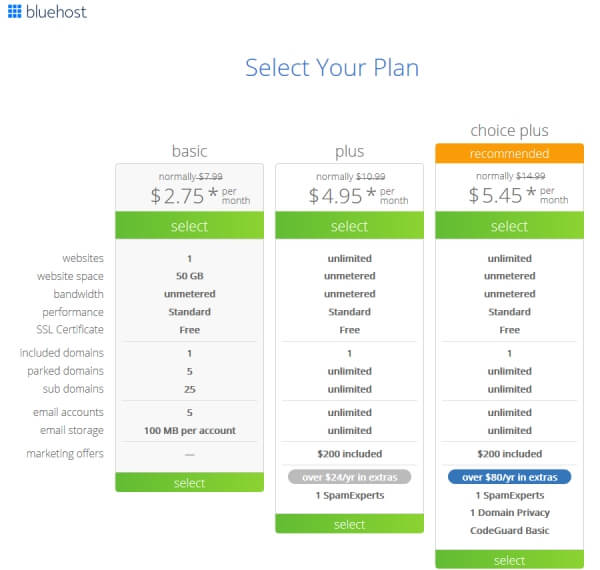
  2. Get your blog online. Register your blog and get hosting.
  3. Customize your blog. Choose a free template and tweak it.
  4. Write & publish your first post. The fun part!
  5. Promote your blog. Get more people to read your blog.
  6. Make money blogging. Choose from several options to monetize your blog.

Letโ€™s start your blog!

Step 1: Pick a blog name

The first step to finding a good blog name is choosing your topic.

If youโ€™re not sure what to blog about, there are a few ways to find a good blog topic:

  • Hobbies & passions. Hobbies or other interests you are passionate about are a great place to start. Cooking, travel, fashion, sports, and cars are all classic examples. But even blogs about more obscure hobbies can be successful, since the your audience is literally anyone in the world with the internet.
  • Life experiences. Everyone has lessons they have learned through life experience. Sharing this knowledge can be incredibly helpful to others in similar situations. For example, I recently helped a woman start her blog about being a firemanโ€™s wife. She has a lot of experience and knowledge to share with others about this topic, and it has helped her connect with others in similar situations.Think about the things you have experienced in life. This could be related to your family (example: a blog about being a stay at home mom), work (a blog about experiences dealing with clients), or other life experiences (a blog about dealing with a troubling time such as a disease or divorce, or about a happy time such as preparing for a wedding or a birth of a child).
  • A personal blog. A personal blog is a blog all about you. This will include a variety of topics, from things you do on a daily basis, to random thoughts and musings. This is a great way to share you thoughts with the world without having to stick to just one topic.

How To Start A Blog In 2020An Easy Free Step-By-Step Beginnerโ€™s
Guide To Create A Blog In 20 Minutes

Updated July 5, 2020

Are you looking for a free, easy, step-by-step guide on how to start a blog?

My free guide on this page will show you how to create a blog that is beautiful and functional, all in an easy step-by-step tutorial (with pictures).

The Blog Starter's tutorial on how to start a blog for beginners

Ready to start the simple step-by-step tutorial? Click here to go to Step #1

My name is Scott Chow, and I am going to show you how to start blogging. I have been building blogs and websites since 2002. In that time I have launched several of my own blogs, and helped hundreds of others do the same.

I know that starting a blog can seem overwhelming and intimidating. This free guide is all about blogging for beginners, and will teach you how to be a blogger with just the most basic computer skills. So whether youโ€™re 8 or 88, you can create your own blog in less than 20 minutes.

I am not ashamed to admit that when I was first learning how to build a blog I made a ton of mistakes. You can benefit from more than a decade of my experience so that you donโ€™t repeat these same mistakes when you make your own blog. I created this free guide so that anyone can learn how to blog quickly and easily. And if you get stuck at any point, please send me a message and I will do my best to help you!

Skip the rest of this introduction and start building your blog!

What is a blog anyway?

In short, a blog is a type of website that focuses mainly on written content, also known as blog posts. In popular culture we most often hear about news blogs or celebrity blog sites, but as youโ€™ll see in this guide, you can start a successful blog on just about any topic imaginable.

Bloggers often write from a personal perspective that allows them to connect directly with their readers. In addition, most blogs also have a โ€œcommentsโ€ section where readers can correspond with the blogger. Interacting with your readers in the comments section helps to further the connection between the blogger and the reader.

This direct connection to the reader is one of the main benefits of starting a blog. This connection allows you to interact and share ideas with other like-minded people. It also allows you to build trust with your readers. Having the trust and loyalty of your readers also opens up the door to making money from your blog, which is something I discuss later in this guide.

Should you start a blog?

Simple steps to help you create a blog easily


One of the misconceptions about starting a blog is that you need to be a great writer to be successful. Nothing could be further from the truth. People read blog sites to get a personal perspective on things, so most bloggers write in a very informal and conversational style.

In addition, you donโ€™t need to be an expert on your topic in order to have a successful blog. For example, readers of a cooking blog donโ€™t want to read a textbook from a food scientist, they want to hear the experiences of someone who has actually cooked some real meals, mistakes and all.

To be successful as a blogger there is really just one requirement: a passion for your topic.

At its heart, blogging is about sharing your knowledge with the world. Choosing a topic that you are passionate about makes the process of starting a successful blog so much easier. Writing about more than one topic is totally fine too. As long as you are writing about things that you are genuinely interested in, your passion will shine through and keep your readers interested.

So why would you go to the trouble of blogging? There are a few reasons:

  • Make money from home. Blogging can be quite lucrative if done correctly. The top bloggers in the world obviously earn quite a bit, but even a part-time blogger can expect to make a nice profit if things are done correctly. The best part about it is that blogging is a form of passive income, since you can spend just a few hours a week writing a blog post and then continue to make money from it long after the blog post is written. I go into much more detail on how to blog for money later in this guide.
  • Share your story. A blog allows you to have a voice and be heard. You can share your story with the entire world if you so choose. One of the most common ways blogs are used are as a diary where the blogger writes about their daily experiences so that friends, family, and others can all be a part of their lives.
  • Recognition for yourself or your business. No, you probably wonโ€™t have paparazzi following you around because of your latest blog post. But a successful blog makes your idea into a reality, and can gain you a ton of recognition in your respective field. Many bloggers are known as experts just because of their blogs, and some have even gotten book and movie deals based on their blogs.
  • Find a community. Blogging at its heart is interactive. You write a blog post and people comment on it. This is a great way to connect with people who are interested in the same things as you are. Blogging allows you to teach these people based on your experience, and it gives you the opportunity to learn from your readers as well.

The good news is that the internet is exploding with growth right now. More people than ever are online. This explosion in growth means more potential readers for your blog. In short, if you are thinking about starting a blog then there is no better time than right now.

So, just how do you start a blog?

How to Start a Blog in 6 Steps

Learn how to create a blog in about 20 minutes following these steps:

  1. Pick a blog name. Choose something descriptive.
  2. Get your blog online. Register your blog and get hosting.
  3. Customize your blog. Choose a free template and tweak it.
  4. Write & publish your first post. The fun part!
  5. Promote your blog. Get more people to read your blog.
  6. Make money blogging. Choose from several options to monetize your blog.

Letโ€™s start your blog!

Step 1: Pick a blog name

The first step to finding a good blog name is choosing your topic.

If youโ€™re not sure what to blog about, there are a few ways to find a good blog topic:

  • Hobbies & passions. Hobbies or other interests you are passionate about are a great place to start. Cooking, travel, fashion, sports, and cars are all classic examples. But even blogs about more obscure hobbies can be successful, since the your audience is literally anyone in the world with the internet.
  • Life experiences. Everyone has lessons they have learned through life experience. Sharing this knowledge can be incredibly helpful to others in similar situations. For example, I recently helped a woman start her blog about being a firemanโ€™s wife. She has a lot of experience and knowledge to share with others about this topic, and it has helped her connect with others in similar situations.Think about the things you have experienced in life. This could be related to your family (example: a blog about being a stay at home mom), work (a blog about experiences dealing with clients), or other life experiences (a blog about dealing with a troubling time such as a disease or divorce, or about a happy time such as preparing for a wedding or a birth of a child).
  • A personal blog. A personal blog is a blog all about you. This will include a variety of topics, from things you do on a daily basis, to random thoughts and musings. This is a great way to share you thoughts with the world without having to stick to just one topic.

Once you have a topic itโ€™s time to choose your blog name.

A good blog name should be descriptive so that potential readers can instantly tell what your blog is about just from the name.

If you are blogging about one specific topic then you will definitely want to include that in some way in your blog name. Try not to get hung-up on just one word though. For example, a cooking blog doesnโ€™t necessarily have to have the word โ€œcookingโ€ in it. The words โ€œfoodโ€, โ€œrecipesโ€, and โ€œmealsโ€ would also let people know that your blog is about cooking.

If you are planning to create a personal blog where you discuss a variety of topics then I recommend using your name, or some variation of it, since your blog is all about you. For example, I own the blog scottchow.com. You can also add your middle name or middle initial if you find your name is already taken. Or you could use a variation like โ€œScott Chow Blogโ€ or โ€œBlogging with Scottโ€.

Canโ€™t decide on a good name for your blog? Contact me and I will help you personally (for free)!

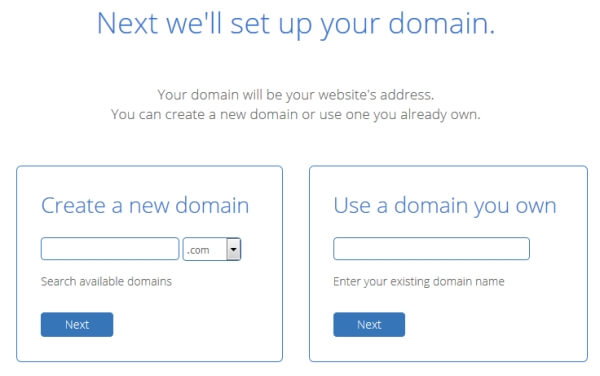
Once you have some blog name ideas you will need to choose a domain extension.
A .com domain extension is the most preferred, but .net or .org work as well. It is also important to note that for the purposes of a blog domain you cannot have any spaces between words. So โ€œBlogging with Scottโ€ becomes bloggingwithscott.com

Now that youโ€™ve got your name and have picked an extension itโ€™s time to make sure that no one else has already registered the same name:

                      See if your blog name is available

Note: You cannot use any spaces or punctuation other than dashes in a domain name.

If you find that the name you wanted is already taken there are a few things you can do:

  • Try a different domain extension. If the .com version is already registered you may still be able to get the .net or .org version of your blog name.
  • Add small words. Words like โ€œaโ€, โ€œmyโ€, or โ€œtheโ€. For example, this site is called TheBlogStarter.com instead of BlogStarter.com.
  • Add dashes between words. For example, scott-chow.com

Step 2: Get your blog online

Now that youโ€™ve got a name picked out itโ€™s time to get your blog online. This might sound hard or technical, but the steps below will walk you right through and make the process easy.

To get your blog up and running you need two things: blog hosting and blogging software. The good news is that these typically come packaged together.

A blog host is a company that stores all of the files for your blog and delivers them to the user when they type in your blog name. You must have a blog host in order to have a blog.

Step 3: Customize your blog

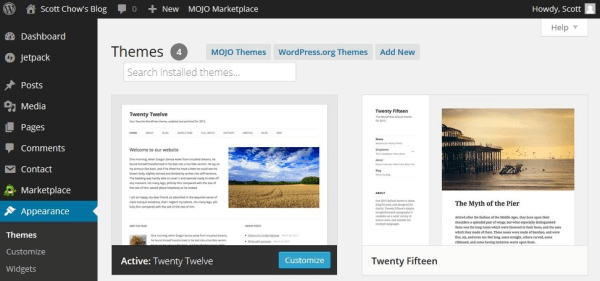
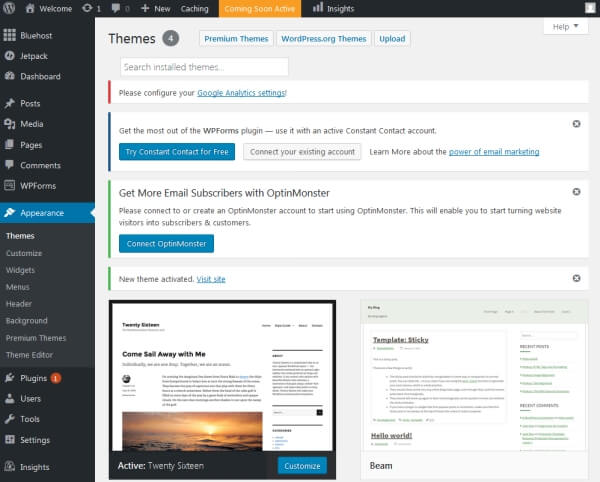
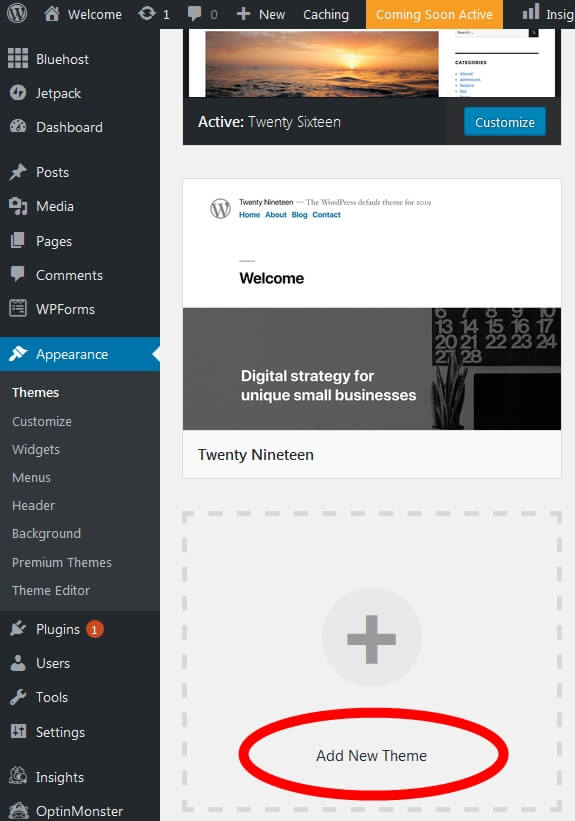
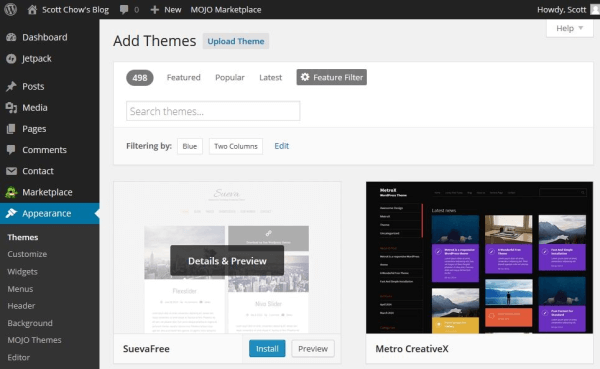
In WordPress, blog layouts are known as โ€œThemesโ€. What is a blog theme? Themes control the entire design of your blog. To change your theme you are going to click on the โ€œAppearanceโ€ tab on the left menu.

You will see several themes are already installed on your blog: Twenty Seventeen, Twenty Sixteen, etc. These are well-designed, clean-looking themes that can work for just about any type of blog. In fact, many of the worldโ€™s top bloggers use one of these themes.

Unless you have a very specific design in mind for your blog, I suggest you use one of these themes to start with. For our example, letโ€™s use the โ€œTwenty Sixteenโ€ theme. In order to activate the theme on your blog, hover over the theme and click the โ€œActivateโ€ button. Thatโ€™s it! You have changed the entire design of your blog with just one click!

How To Start A Blog In 2020An Easy Free Step-By-Step Beginnerโ€™s
Guide To Create A Blog In 20 Minutes

Updated July 5, 2020

Are you looking for a free, easy, step-by-step guide on how to start a blog?

My free guide on this page will show you how to create a blog that is beautiful and functional, all in an easy step-by-step tutorial (with pictures).

The Blog Starter's tutorial on how to start a blog for beginners

Ready to start the simple step-by-step tutorial? Click here to go to Step #1

My name is Scott Chow, and I am going to show you how to start blogging. I have been building blogs and websites since 2002. In that time I have launched several of my own blogs, and helped hundreds of others do the same.

I know that starting a blog can seem overwhelming and intimidating. This free guide is all about blogging for beginners, and will teach you how to be a blogger with just the most basic computer skills. So whether youโ€™re 8 or 88, you can create your own blog in less than 20 minutes.

I am not ashamed to admit that when I was first learning how to build a blog I made a ton of mistakes. You can benefit from more than a decade of my experience so that you donโ€™t repeat these same mistakes when you make your own blog. I created this free guide so that anyone can learn how to blog quickly and easily. And if you get stuck at any point, please send me a message and I will do my best to help you!

Skip the rest of this introduction and start building your blog!

What is a blog anyway?

In short, a blog is a type of website that focuses mainly on written content, also known as blog posts. In popular culture we most often hear about news blogs or celebrity blog sites, but as youโ€™ll see in this guide, you can start a successful blog on just about any topic imaginable.

Bloggers often write from a personal perspective that allows them to connect directly with their readers. In addition, most blogs also have a โ€œcommentsโ€ section where readers can correspond with the blogger. Interacting with your readers in the comments section helps to further the connection between the blogger and the reader.

This direct connection to the reader is one of the main benefits of starting a blog. This connection allows you to interact and share ideas with other like-minded people. It also allows you to build trust with your readers. Having the trust and loyalty of your readers also opens up the door to making money from your blog, which is something I discuss later in this guide.

Should you start a blog?

Simple steps to help you create a blog easily


One of the misconceptions about starting a blog is that you need to be a great writer to be successful. Nothing could be further from the truth. People read blog sites to get a personal perspective on things, so most bloggers write in a very informal and conversational style.

In addition, you donโ€™t need to be an expert on your topic in order to have a successful blog. For example, readers of a cooking blog donโ€™t want to read a textbook from a food scientist, they want to hear the experiences of someone who has actually cooked some real meals, mistakes and all.

To be successful as a blogger there is really just one requirement: a passion for your topic.

At its heart, blogging is about sharing your knowledge with the world. Choosing a topic that you are passionate about makes the process of starting a successful blog so much easier. Writing about more than one topic is totally fine too. As long as you are writing about things that you are genuinely interested in, your passion will shine through and keep your readers interested.

So why would you go to the trouble of blogging? There are a few reasons:

  • Make money from home. Blogging can be quite lucrative if done correctly. The top bloggers in the world obviously earn quite a bit, but even a part-time blogger can expect to make a nice profit if things are done correctly. The best part about it is that blogging is a form of passive income, since you can spend just a few hours a week writing a blog post and then continue to make money from it long after the blog post is written. I go into much more detail on how to blog for money later in this guide.
  • Share your story. A blog allows you to have a voice and be heard. You can share your story with the entire world if you so choose. One of the most common ways blogs are used are as a diary where the blogger writes about their daily experiences so that friends, family, and others can all be a part of their lives.
  • Recognition for yourself or your business. No, you probably wonโ€™t have paparazzi following you around because of your latest blog post. But a successful blog makes your idea into a reality, and can gain you a ton of recognition in your respective field. Many bloggers are known as experts just because of their blogs, and some have even gotten book and movie deals based on their blogs.
  • Find a community. Blogging at its heart is interactive. You write a blog post and people comment on it. This is a great way to connect with people who are interested in the same things as you are. Blogging allows you to teach these people based on your experience, and it gives you the opportunity to learn from your readers as well.

The good news is that the internet is exploding with growth right now. More people than ever are online. This explosion in growth means more potential readers for your blog. In short, if you are thinking about starting a blog then there is no better time than right now.

So, just how do you start a blog?

How to Start a Blog in 6 Steps

Learn how to create a blog in about 20 minutes following these steps:

  1. Pick a blog name. Choose something descriptive.
  2. Get your blog online. Register your blog and get hosting.
  3. Customize your blog. Choose a free template and tweak it.
  4. Write & publish your first post. The fun part!
  5. Promote your blog. Get more people to read your blog.
  6. Make money blogging. Choose from several options to monetize your blog.

Letโ€™s start your blog!

Step 1: Pick a blog name

The first step to finding a good blog name is choosing your topic.

If youโ€™re not sure what to blog about, there are a few ways to find a good blog topic:

  • Hobbies & passions. Hobbies or other interests you are passionate about are a great place to start. Cooking, travel, fashion, sports, and cars are all classic examples. But even blogs about more obscure hobbies can be successful, since the your audience is literally anyone in the world with the internet.
  • Life experiences. Everyone has lessons they have learned through life experience. Sharing this knowledge can be incredibly helpful to others in similar situations. For example, I recently helped a woman start her blog about being a firemanโ€™s wife. She has a lot of experience and knowledge to share with others about this topic, and it has helped her connect with others in similar situations.Think about the things you have experienced in life. This could be related to your family (example: a blog about being a stay at home mom), work (a blog about experiences dealing with clients), or other life experiences (a blog about dealing with a troubling time such as a disease or divorce, or about a happy time such as preparing for a wedding or a birth of a child).
  • A personal blog. A personal blog is a blog all about you. This will include a variety of topics, from things you do on a daily basis, to random thoughts and musings. This is a great way to share you thoughts with the world without having to stick to just one topic.

Once you have a topic itโ€™s time to choose your blog name.

A good blog name should be descriptive so that potential readers can instantly tell what your blog is about just from the name.

If you are blogging about one specific topic then you will definitely want to include that in some way in your blog name. Try not to get hung-up on just one word though. For example, a cooking blog doesnโ€™t necessarily have to have the word โ€œcookingโ€ in it. The words โ€œfoodโ€, โ€œrecipesโ€, and โ€œmealsโ€ would also let people know that your blog is about cooking.

If you are planning to create a personal blog where you discuss a variety of topics then I recommend using your name, or some variation of it, since your blog is all about you. For example, I own the blog scottchow.com. You can also add your middle name or middle initial if you find your name is already taken. Or you could use a variation like โ€œScott Chow Blogโ€ or โ€œBlogging with Scottโ€.

Canโ€™t decide on a good name for your blog? Contact me and I will help you personally (for free)!

Once you have some blog name ideas you will need to choose a domain extension.
A .com domain extension is the most preferred, but .net or .org work as well. It is also important to note that for the purposes of a blog domain you cannot have any spaces between words. So โ€œBlogging with Scottโ€ becomes bloggingwithscott.com

Now that youโ€™ve got your name and have picked an extension itโ€™s time to make sure that no one else has already registered the same name:

                      See if your blog name is available

Note: You cannot use any spaces or punctuation other than dashes in a domain name.

If you find that the name you wanted is already taken there are a few things you can do:

  • Try a different domain extension. If the .com version is already registered you may still be able to get the .net or .org version of your blog name.
  • Add small words. Words like โ€œaโ€, โ€œmyโ€, or โ€œtheโ€. For example, this site is called TheBlogStarter.com instead of BlogStarter.com.
  • Add dashes between words. For example, scott-chow.com

Step 2: Get your blog online

Now that youโ€™ve got a name picked out itโ€™s time to get your blog online. This might sound hard or technical, but the steps below will walk you right through and make the process easy.

To get your blog up and running you need two things: blog hosting and blogging software. The good news is that these typically come packaged together.

A blog host is a company that stores all of the files for your blog and delivers them to the user when they type in your blog name. You must have a blog host in order to have a blog.

Step 3: Customize your blog

Logging in

If you are not already logged-in from the previous step, go to Bluehost.com and click โ€œLoginโ€ on the top right to bring up the login screen.  You can then login using your domain name and the password you set in the previous step.  If you have misplaced your password you can reset it by clicking the โ€œForgot Passwordโ€ link.

Once you log-in you will be taken to your BlueHost Portal.  From the portal you can click the blue โ€œWordPressโ€ button to be logged-in automatically to your blog.

Changing your blog design

Once you login you will be in the WordPress administrator area. This is where you can make any changes you want to your blog.

Everyone has a different idea of how they want their blog to look. One of the great things about a WordPress blog is that you can change your entire layout and design with just a few clicks.

In WordPress, blog layouts are known as โ€œThemesโ€. What is a blog theme? Themes control the entire design of your blog. To change your theme you are going to click on the โ€œAppearanceโ€ tab on the left menu.

You will see several themes are already installed on your blog: Twenty Seventeen, Twenty Sixteen, etc. These are well-designed, clean-looking themes that can work for just about any type of blog. In fact, many of the worldโ€™s top bloggers use one of these themes.

Unless you have a very specific design in mind for your blog, I suggest you use one of these themes to start with. For our example, letโ€™s use the โ€œTwenty Sixteenโ€ theme. In order to activate the theme on your blog, hover over the theme and click the โ€œActivateโ€ button. Thatโ€™s it! You have changed the entire design of your blog with just one click!

If you donโ€™t like any of the themes that are already installed you can easily choose from thousands of other free themes. To install a new theme, click on the โ€œAppearanceโ€ tab on the left menu and then click โ€œAdd New Themeโ€.

This is the theme search screen.  There are thousands of themes to choose from.  You can change your entire design at anytime simply by activating a new theme.  To find a theme you like, I suggest you click on the โ€œPopularโ€ tab and start browsing. When you find one that you like click the blue โ€œInstallโ€ button.

Once the theme is installed click โ€œActivateโ€ to activate the theme on your blog. To see your new theme in action, go to your blog and take a look!

Changing your theme is the simplest way to customize your blog, but there are lots of other customizations you can do. Check out my full post on customizing your blog for an in-depth step-by-step guide. You can also watch the video at the end of this guide to see me completely customize a blog from scratch.

Step 4: How to write a blog post & publish it

Now that your blog is up and running itโ€™s time to actually do some blogging!

Go to the left menu and click on โ€œPostsโ€.

You will see there is already a post there. This is a default post on every new WordPress blog, and we donโ€™t need it. To delete it click โ€œTrashโ€ just under the post.

Step 5: Promote your blog

Creating a well-designed blog and writing great content is just the start. In order to get readers for your blog you will need spend some time promoting it, especially when you first start. Click on the strategies below for more info. 

How To Start A Blog In 2020An Easy Free Step-By-Step Beginnerโ€™s
Guide To Create A Blog In 20 Minutes

Updated July 5, 2020

Are you looking for a free, easy, step-by-step guide on how to start a blog?

My free guide on this page will show you how to create a blog that is beautiful and functional, all in an easy step-by-step tutorial (with pictures).

The Blog Starter's tutorial on how to start a blog for beginners

Ready to start the simple step-by-step tutorial? Click here to go to Step #1

My name is Scott Chow, and I am going to show you how to start blogging. I have been building blogs and websites since 2002. In that time I have launched several of my own blogs, and helped hundreds of others do the same.

I know that starting a blog can seem overwhelming and intimidating. This free guide is all about blogging for beginners, and will teach you how to be a blogger with just the most basic computer skills. So whether youโ€™re 8 or 88, you can create your own blog in less than 20 minutes.

I am not ashamed to admit that when I was first learning how to build a blog I made a ton of mistakes. You can benefit from more than a decade of my experience so that you donโ€™t repeat these same mistakes when you make your own blog. I created this free guide so that anyone can learn how to blog quickly and easily. And if you get stuck at any point, please send me a message and I will do my best to help you!

Skip the rest of this introduction and start building your blog!

What is a blog anyway?

In short, a blog is a type of website that focuses mainly on written content, also known as blog posts. In popular culture we most often hear about news blogs or celebrity blog sites, but as youโ€™ll see in this guide, you can start a successful blog on just about any topic imaginable.

Bloggers often write from a personal perspective that allows them to connect directly with their readers. In addition, most blogs also have a โ€œcommentsโ€ section where readers can correspond with the blogger. Interacting with your readers in the comments section helps to further the connection between the blogger and the reader.

This direct connection to the reader is one of the main benefits of starting a blog. This connection allows you to interact and share ideas with other like-minded people. It also allows you to build trust with your readers. Having the trust and loyalty of your readers also opens up the door to making money from your blog, which is something I discuss later in this guide.

Should you start a blog?

Simple steps to help you create a blog easily


One of the misconceptions about starting a blog is that you need to be a great writer to be successful. Nothing could be further from the truth. People read blog sites to get a personal perspective on things, so most bloggers write in a very informal and conversational style.

In addition, you donโ€™t need to be an expert on your topic in order to have a successful blog. For example, readers of a cooking blog donโ€™t want to read a textbook from a food scientist, they want to hear the experiences of someone who has actually cooked some real meals, mistakes and all.

To be successful as a blogger there is really just one requirement: a passion for your topic.

At its heart, blogging is about sharing your knowledge with the world. Choosing a topic that you are passionate about makes the process of starting a successful blog so much easier. Writing about more than one topic is totally fine too. As long as you are writing about things that you are genuinely interested in, your passion will shine through and keep your readers interested.

So why would you go to the trouble of blogging? There are a few reasons:

  • Make money from home. Blogging can be quite lucrative if done correctly. The top bloggers in the world obviously earn quite a bit, but even a part-time blogger can expect to make a nice profit if things are done correctly. The best part about it is that blogging is a form of passive income, since you can spend just a few hours a week writing a blog post and then continue to make money from it long after the blog post is written. I go into much more detail on how to blog for money later in this guide.
  • Share your story. A blog allows you to have a voice and be heard. You can share your story with the entire world if you so choose. One of the most common ways blogs are used are as a diary where the blogger writes about their daily experiences so that friends, family, and others can all be a part of their lives.
  • Recognition for yourself or your business. No, you probably wonโ€™t have paparazzi following you around because of your latest blog post. But a successful blog makes your idea into a reality, and can gain you a ton of recognition in your respective field. Many bloggers are known as experts just because of their blogs, and some have even gotten book and movie deals based on their blogs.
  • Find a community. Blogging at its heart is interactive. You write a blog post and people comment on it. This is a great way to connect with people who are interested in the same things as you are. Blogging allows you to teach these people based on your experience, and it gives you the opportunity to learn from your readers as well.

The good news is that the internet is exploding with growth right now. More people than ever are online. This explosion in growth means more potential readers for your blog. In short, if you are thinking about starting a blog then there is no better time than right now.

So, just how do you start a blog?

How to Start a Blog in 6 Steps

Learn how to create a blog in about 20 minutes following these steps:

  1. Pick a blog name. Choose something descriptive.
  2. Get your blog online. Register your blog and get hosting.
  3. Customize your blog. Choose a free template and tweak it.
  4. Write & publish your first post. The fun part!
  5. Promote your blog. Get more people to read your blog.
  6. Make money blogging. Choose from several options to monetize your blog.

Letโ€™s start your blog!

Step 1: Pick a blog name

The first step to finding a good blog name is choosing your topic.

If youโ€™re not sure what to blog about, there are a few ways to find a good blog topic:

  • Hobbies & passions. Hobbies or other interests you are passionate about are a great place to start. Cooking, travel, fashion, sports, and cars are all classic examples. But even blogs about more obscure hobbies can be successful, since the your audience is literally anyone in the world with the internet.
  • Life experiences. Everyone has lessons they have learned through life experience. Sharing this knowledge can be incredibly helpful to others in similar situations. For example, I recently helped a woman start her blog about being a firemanโ€™s wife. She has a lot of experience and knowledge to share with others about this topic, and it has helped her connect with others in similar situations.Think about the things you have experienced in life. This could be related to your family (example: a blog about being a stay at home mom), work (a blog about experiences dealing with clients), or other life experiences (a blog about dealing with a troubling time such as a disease or divorce, or about a happy time such as preparing for a wedding or a birth of a child).
  • A personal blog. A personal blog is a blog all about you. This will include a variety of topics, from things you do on a daily basis, to random thoughts and musings. This is a great way to share you thoughts with the world without having to stick to just one topic.

Once you have a topic itโ€™s time to choose your blog name.

A good blog name should be descriptive so that potential readers can instantly tell what your blog is about just from the name.

If you are blogging about one specific topic then you will definitely want to include that in some way in your blog name. Try not to get hung-up on just one word though. For example, a cooking blog doesnโ€™t necessarily have to have the word โ€œcookingโ€ in it. The words โ€œfoodโ€, โ€œrecipesโ€, and โ€œmealsโ€ would also let people know that your blog is about cooking.

If you are planning to create a personal blog where you discuss a variety of topics then I recommend using your name, or some variation of it, since your blog is all about you. For example, I own the blog scottchow.com. You can also add your middle name or middle initial if you find your name is already taken. Or you could use a variation like โ€œScott Chow Blogโ€ or โ€œBlogging with Scottโ€.

Canโ€™t decide on a good name for your blog? Contact me and I will help you personally (for free)!

Once you have some blog name ideas you will need to choose a domain extension.
A .com domain extension is the most preferred, but .net or .org work as well. It is also important to note that for the purposes of a blog domain you cannot have any spaces between words. So โ€œBlogging with Scottโ€ becomes bloggingwithscott.com

Now that youโ€™ve got your name and have picked an extension itโ€™s time to make sure that no one else has already registered the same name:

                      See if your blog name is available

Note: You cannot use any spaces or punctuation other than dashes in a domain name.

If you find that the name you wanted is already taken there are a few things you can do:

  • Try a different domain extension. If the .com version is already registered you may still be able to get the .net or .org version of your blog name.
  • Add small words. Words like โ€œaโ€, โ€œmyโ€, or โ€œtheโ€. For example, this site is called TheBlogStarter.com instead of BlogStarter.com.
  • Add dashes between words. For example, scott-chow.com

Step 2: Get your blog online

Now that youโ€™ve got a name picked out itโ€™s time to get your blog online. This might sound hard or technical, but the steps below will walk you right through and make the process easy.

To get your blog up and running you need two things: blog hosting and blogging software. The good news is that these typically come packaged together.

A blog host is a company that stores all of the files for your blog and delivers them to the user when they type in your blog name. You must have a blog host in order to have a blog.

You also need to have the software to build your blog. In this guide I will be showing you how to build a blog using the WordPress blogging software, because it is the most popular, customizable, and easiest to use.

post-it

The blog host I recommend, and the one I show you how to use in this guide, is BlueHost. I personally use BlueHost and I recommend them for all new bloggers because:

  • They will register your blog name for you for free, making sure no one else can take it.
  • They offer a free, simple installation of the WordPress blogging software (which I show you how to use in this guide).
  • They have been recommended by WordPress since 2005 and currently host over 2 million blogs and websites.
  • They have helpful 24/7 customer service via phone or web chat.
  • They have a 30 day money-back guarantee if you are unsatisfied for any reason.

Use any BlueHost link on this site to make sure you get the special discount price of $2.75 per month.

Disclosure: BlueHost compensates The Blog Starter when you purchase through this link, so my services are free of charge to you! In fact, if you have any trouble at all setting up a blog with this tutorial, just contact me and I will do it for you (free!).

1. Click here for the special $2.75 per month rate on BlueHost and then click โ€œget started nowโ€.

2. Select your plan. I recommend that new bloggers get the basic plan. Click โ€œSelectโ€ to choose your plan.

3. Type in your domain name in the left box and then click โ€œnextโ€ to start the registration process.

  • If you already own a domain name and want to use it for your blog, type your existing domain in the right box and then click โ€œnextโ€. Only use the right box if you have previously paid to register a domain!

4. Fill out your billing details on the registration page.

5. You will also need to choose your hosting package and options.

  • All packages have everything you need to get your blog up and running, including a free domain name, easy WordPress blog installation, web hosting, and branded email accounts (e.g. yourname@yourdomain.com).
  • The 36 month package gets you the lowest monthly rate, while the 12 month package has a lower up-front cost.
  • uncheck the boxes next to the other products when I sign-up. You can always get these products later if you decide you need them.

6. You will then need to create your account and password.

Once you do that you will be taken to an installation helper.  Since you are following this tutorial you can just click โ€œSkip this stepโ€ on the next few pages to be taken directly to the dashboard.

Now your blog software (WordPress) will be installed. Once the install is complete click the blue โ€œWordPressโ€ button to be logged-in to the administrator area of your blog.

Having trouble installing your blog? Get help here.

Step 3: Customize your blog

Logging in

If you are not already logged-in from the previous step, go to Bluehost.com and click โ€œLoginโ€ on the top right to bring up the login screen.  You can then login using your domain name and the password you set in the previous step.  If you have misplaced your password you can reset it by clicking the โ€œForgot Passwordโ€ link.

Once you log-in you will be taken to your BlueHost Portal.  From the portal you can click the blue โ€œWordPressโ€ button to be logged-in automatically to your blog.

Changing your blog design

Once you login you will be in the WordPress administrator area. This is where you can make any changes you want to your blog.

Everyone has a different idea of how they want their blog to look. One of the great things about a WordPress blog is that you can change your entire layout and design with just a few clicks.

In WordPress, blog layouts are known as โ€œThemesโ€. What is a blog theme? Themes control the entire design of your blog. To change your theme you are going to click on the โ€œAppearanceโ€ tab on the left menu.

You will see several themes are already installed on your blog: Twenty Seventeen, Twenty Sixteen, etc. These are well-designed, clean-looking themes that can work for just about any type of blog. In fact, many of the worldโ€™s top bloggers use one of these themes.

Unless you have a very specific design in mind for your blog, I suggest you use one of these themes to start with. For our example, letโ€™s use the โ€œTwenty Sixteenโ€ theme. In order to activate the theme on your blog, hover over the theme and click the โ€œActivateโ€ button. Thatโ€™s it! You have changed the entire design of your blog with just one click!

If you donโ€™t like any of the themes that are already installed you can easily choose from thousands of other free themes. To install a new theme, click on the โ€œAppearanceโ€ tab on the left menu and then click โ€œAdd New Themeโ€.

This is the theme search screen.  There are thousands of themes to choose from.  You can change your entire design at anytime simply by activating a new theme.  To find a theme you like, I suggest you click on the โ€œPopularโ€ tab and start browsing. When you find one that you like click the blue โ€œInstallโ€ button.

Once the theme is installed click โ€œActivateโ€ to activate the theme on your blog. To see your new theme in action, go to your blog and take a look!

Changing your theme is the simplest way to customize your blog, but there are lots of other customizations you can do. Check out my full post on customizing your blog for an in-depth step-by-step guide. You can also watch the video at the end of this guide to see me completely customize a blog from scratch.

Step 4: How to write a blog post & publish it

Now that your blog is up and running itโ€™s time to actually do some blogging!

Go to the left menu and click on โ€œPostsโ€.

You will see there is already a post there. This is a default post on every new WordPress blog, and we donโ€™t need it. To delete it click โ€œTrashโ€ just under the post.

To begin writing a new post, click the โ€œAdd Newโ€ link.

You are now on the post editor screen. Enter the title of your post in the top box and then begin writing your post in the lower box.

If you would like to add a picture to your post, click on the โ€œAdd Imageโ€ icon and click โ€œUploadโ€ to upload a picture from your computer. You can make adjustments to the picture size on the next screen. When you are ready click โ€œInsert into postโ€ to add the picture.

Once you have finished your post just click the โ€œPublishโ€ button on the top right side of the screen to publish it.

Publishing Your Blog

Even after you have written a post your blog may still be showing a โ€œComing Soonโ€ page.

When you are ready to make your blog public just click the โ€œBlueHostโ€ menu at the top left of the menu in your administrator area then click the blue โ€œLaunchโ€ button to remove the โ€œComing Soonโ€ page.

Congratulations! You now know how to start your own blog and publish content!

For more info on blog content guidelines, click the tabs below:

Content That Should be on Your Blog

How to write a great blog post

Step 5: Promote your blog

Creating a well-designed blog and writing great content is just the start. In order to get readers for your blog you will need spend some time promoting it, especially when you first start. Click on the strategies below for more info. For more tips on promoting your blog make sure to check out my in-depth guide to blog promotion.

Alert Your Inner Circle

Use Social Media

Comment on Other Blogs

Engage with Your Readers

Collaborate

Create an Email List

Submit to Search Engines

SEO

Step 6: Make money blogging

Once you have put in the effort of creating great blog content and promoting your blog, making money from your blog is actually the easy part.

Blogs have the potential to be extremely lucrative, but donโ€™t assume that youโ€™re going to start making money in the first week, or even in the first month. It could take six months to a year to start seeing a steady stream of income. Blogging takes work and dedication, but once you develop a large enough audience, there are several methods you can employ to monetize your blog. 

Improving your Communication Skills

how-to-improve-english-speaking-skills

English is the worldโ€™s lingua franca, a common language that people with different native languages can use to communicate.

Thanks to English, people with completely different native languagesโ€”maybe Hindi, French and Japaneseโ€”can sit down and have a conversation together.

English now spans across countries and cultures, and the ability to speak it well will open many doors for your career and social life.

The more fluent you are in English, the more interesting, exciting and insightful conversations you can have.

It enables life-enriching experiences like traveling, studying and working abroad, not only in the US but also many other countries where English is widely spoken.

The world is your oyster (the world is yours).

The other good news is that you can improve English speaking skills without a classroom partner or stressful lessons. Itโ€™s totally possible to have fun and master speaking a language at the same time.

Pronouncing the words correctlyย is the key to eloquence, but it is not everything. This article will take you beyond the foundational aspects toย reach communicative competence.
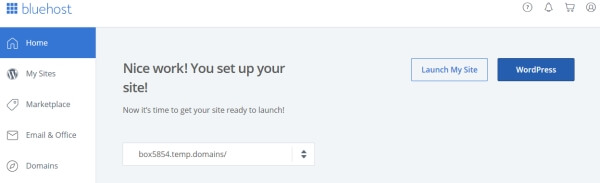
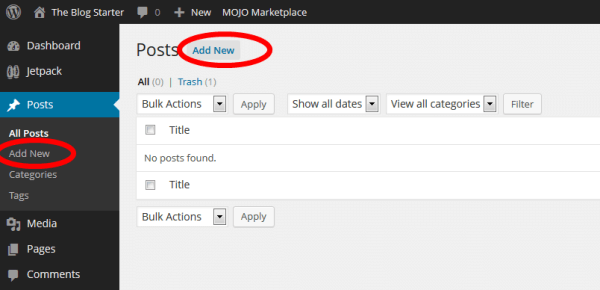
Build a Strong Foundation

In order to express yourself eloquently in English, you need a wide variety of vocabulary and the correct pronunciation.

1. Expand your vocabulary

Learn New Words Every Day

Gleaning new words day in, day out is a good way to widen your vocabulary. Commit to a suitable target: it can be three daily words or it can be ten daily words.

Even if you only have time to learn one new word per day, it is still worth trying. By learning one word every day, after one year you will have learned 365 new English words.

Write the number down to remind yourself frequently. If you have a learning partner, share it with her so that she can check on your progress.

Some good resources for words are the news, songs and TV shows, depending on your daily habits. If you love listening to music, pay attention to the lyrics and take note of the words you do not know. Songs often contain a lot of useful vocabulary, phrases and expressions, therefore, they are great for learning English. You can do the same thing with FluentU videos.

Learn Words in Phrases and Chunks

It is important that you learn words in groups. For example, you refer to beverages as a glass of wine, a pint of beer, a cup of tea, a pot of coffee, etc. It is better to learn those phrases than merely winebeertea and so on.

You can also benefit from learning words that are related. The moon has four phases during a lunar month: crescent, gibbon, waxing and waning. It is more efficient to learn all four words at the same time.

2. Improve your pronunciation

You might know a lot of words, but if you fail to say them correctly, you will not be understood. That seems like a waste of the time spent on remembering words, right?

When using online dictionaries such as Macmillan and Merriam-Webster, make use of the little speaker symbol to check the pronunciation of any word that you are not sure about. There are English pronunciation tutorials on YouTube or podcasts like English Pronunciation Pod or American English Pronunciation to teach you the many aspects of American English pronunciation.

When you are ready for something more challenging, try out tongue twisters. Some examples are available here. Personally, I love the Fork handles sketch from the show โ€œThe Two Ronnies.โ€ It might not be a typical example of everyday conversation, but it shows you the richness of spoken English. Besides, you will have a good laugh.

3. Learn the natural flow of English

Being able to say individual words correctly is great, but the secret of speaking fluently lies in the flow of sentences. Whenever you read a piece of poetry, listen to a melodic song or watch a hilarious sitcom, pay attention to the following:

  • Linking. Notice how native speakers link words together: joining two sounds, making a sound to disappear or changing a sound for a better flow.
  • Contractions. Contractions are shortened forms of two words. For example:
    • I + am = Iโ€™m
    • he + will = heโ€™ll
    • they + have = theyโ€™ve
    • do + not = donโ€™t
  • Stress. There are stressed syllables in a word and stressed words in a sentence.
  • Rhythm. The rhythm is the overall result of stress, contractions and linking. It is the ups and downs, the musical feature of English.

Techniques to Improve English Speaking Skills

Now that you have a strong foundation, you can apply some techniques to hone (improve) your English speaking skills.

4. Speech shadowing

In a nutshell, this technique is about imitation. You listen to how a native speaker says something and try to copy it.

  • Pick your favorite video with subtitles. Make sure that it is something you enjoy watching because you willโ€ฆ
  • Listen to it many times. Listen to the video once and read the subtitles to get a good grasp of the general content and flow. While you are playing it again, complete the next step.
  • Imitate the narrator sentence by sentence. Play. Listen. Pause. Speak. Record (optional). Copy the speech pattern as best as you can. If you choose to record your practice, you can compare yours and the original. Or else, just listen to your own sound and be critical of the difference or similarity. Repeat this step until the end of the video.

5. Self-talk

Talk to yourself in English loudly. It can be anything from a suggestion like, โ€œShall we go get a glass of water?โ€ or a reminder, โ€œI need to do a load of laundry today.โ€

Alternatively, pick up a book and read a couple of pages out loud. This exercise might slow down your reading, but it will speed up your speaking skills.

You can also record yourself, listen to the recording and watch out for any wrong pronunciations. If it is possible, ask for feedback from a native speaker.

6. Think in English

If you already think in English, it takes less time to produce or respond in everyday conversations. No translation needed!

A good way to start rethinking is to keep a diary where you express your daily thoughts in English. It does not have to be perfect, it is more about getting out thoughts in English with less and less effort.

7. Retell a story in English

Take the challenge a step further by retelling a story. You retrace other peopleโ€™s line of thoughts in your own words.

I would start with a familiar story from your culture. Your translation needs to convey not only the meaning of words but all rhetorical and cultural nuances.

Alternatively, you can choose different words to retell a simple story in English. Start from the basics, reading something like a fairy tale or a fable. Either way will be beneficial to your English communication skills.

Frequently Practice to Improve Your English Speaking Skills

Practice makes perfect, so do speak English in plenty. Some people think that they do not have the opportunity to practice speaking because they do not live in the US or another English-speaking country. They might also be discouraged because English is not used at their workplace, or they do not know any native speakers.

There is some validity in those excuses, but do not let them hinder your learning. Thanks to the growth of globalization and technology, you have more chances than ever to practice speaking English. Youโ€™ll find many ideas below.

8. Participate in public speaking events

Big universities, theaters and culture societies organize events like open debates, spoken word readings and improvised storytelling gatherings. These are places where you can come and mingle with like-minded people and practice speaking English.

Many cities are now hosting TED or TEDx talks where you can register to participate and share your innovative ideas. Check the events page of your local university to see if there are any available. It might be a nerve-racking experience, but it would be great for your English!

9. Go to language cafes

If public speaking terrifies you (and I know it does for many), you can opt for language cafes. Those cafes create a friendly and relaxing atmosphere for people who want to practice and exchange languages.

You can find language cafes through local universities or the Meetup groups available in your cities.

10. Using apps

Another option is to use an app to talk to native speakers online, in the comfort of your own home. Some popular apps are HelloTalk and Tandem. Basically, you register for an account, introduce yourself, your native language and your hobbies. The app will find you some matchesโ€”the people who speak English and want to practice the language you know well. All you need to do is to press a few buttons and start talking.

11. Chat with Siri

I find chatting with Siri is a great way to force myself to speak more clearly. As Siri is a machine, you cannot rely on environmental clues and facial gestures to get your ideas across. Your words are the only tool you have to make yourself understood. Thus, you need to speak as clearly and precisely as you could.

Another plus point of using Siri is that she is always available (as long as your phone is charged and connected to a WiFi network). Just press the home button and start asking questions.

If you own an Android smartphone, you can practice speaking with Google Now.

So, off you go! Choose your preferred method to expand your vocabulary, correct your pronunciation, and boost your English speaking with the methods that are right for you. Do not forget to practice as much as possible.

HOW TO IMPROVE ENGLISH SPEAKING SKILLS

Image for post

Many students master the fine points of English grammar but find themselves at a loss when it comes to actually having a conversation with native speakers. In reality, the only way to develop fluency in speaking is by huge amounts of listening, and then practicing. The following are a few tips for improving English speaking skills. Donโ€™t forget that listening is the foundation for speaking! When you also want to practice speaking, here are some suggestions for how to improve English speaking skills. 

Find An English-Speaking Conversation Partner

First of all, itโ€™s important to find native speakers to practice with. Students who are living around many English speakers may be able to find informal opportunities to chat with neighbors and local business people. Joining a club or a volunteer organization can be a great way to get to know people informally. If that isnโ€™t an option, consider hiring a private tutor. A lot of students find and meet with tutors online via tools like Skype or Google Hangouts.

Make Sure To Listen As Well As Speak

When practicing with a native speaker, try to balance your listening and speaking. Itโ€™s a good idea to prepare questions in advance so that the conversation will flow back and forth. If your conversation partner asks you a question and you answer at length, you can always turn the question back to your partner by asking, โ€œWhat do  you think?โ€ or โ€œWhat about you?โ€

Record Your Conversation Practice

Recording is a great way to get the maximum benefit from a conversation with a native speaker. When you listen again, you can evaluate your own pronunciation and notice areas where you need to improve. You can also review the content of the conversation, take notes on new vocabulary or misunderstandings, and prepare questions for the next meeting.

Surround Yourself With The English Language

Another way to improve your English speaking skills is to immerse yourself in English as much as possible. Watch movies or TV in English, with subtitles if you need them, and watch the same programs over and over. Most people find that they understand more each time. Listening helps you become familiar with the rhythms and intonations of English. Once the sounds are familiar, try imitating them.

Practice With Music and Movies

Listen to music in English and sing along. Music is one of the best tools for learning intonation pronunciation. Listening to and singing songs might also help you remember vocabulary and phrases (if the song is easy to understand), and it will help you learn to pronounce English rhythm in a more natural way. By unconsciously imitating the singer, youโ€™ll learn to pronounce phrases the way native speakers do. One good song for ESL or EFL students is โ€œTomโ€™s Dinerโ€ by Suzanne Vega because it uses simple language to describe everyday scenes and actions.  Movies are a much better choice for learning English.  Youโ€™ll learn vocabulary, idioms, slang, pronunciation, and listening by watching movies.  Be sure to use my movie technique when you do this!

Read Aloud

Reading out loud is a great way to practice speaking when there are no conversation partners available. Reading aloud gives you a chance to focus on pronunciation and pacing without worrying about coming up with words. Make sure to practice with material that you can understand. Some students find videos online that have transcripts. Many TED talks, for example, include word-for word transcripts of the talk. By reading aloud from a transcript, you can check your pronunciation by listening to how the speaker says something.

Talk To Yourself

Saying your thoughts out loud or narrating your actions (โ€œI am drinking coffee, and now Iโ€™m going to open my bookโ€) can be a very effective way to practice spoken English. By talking to yourself, you can become more fluent in translating your thoughts into spoken words. Practicing alone is also a low-pressure way to practice, since no one will hear your mistakes.

Many students master the finer points of English grammar, but find themselves at a loss when it comes to actually having a conversation with native speakers. In reality, the only way to develop fluency in another language is through huge amounts of listening and speaking. The following are a few tips for improving your English speaking skills.

HOW TO IMPROVE ENGLISH SPEAKING SKILLS

1. Speak, speak, speak!

Be confident and speak as often as possible, to as many people as you possibly can! Donโ€™t be shy to make mistakes! The more you practice, the better and more confident you will become in your pronunciation and vocabulary. Remember, speaking is a skill, like learning a musical instrument or new sport โ€” the only way you can get good is to actually do it!

2. Read Aloud

Read the newspaper or a magazine out loud to yourself. You can even find a script from your favorite TV show and act it out! This is a great way to practice pronunciation, as you can concentrate on how your English sounds without worrying about sentence structure or grammar.

3. Record your practice conversations

After a conversation is over, take a moment to reflect: How did it go? How much do you think you understood? How comfortable did you feel with the subject matter? Did you encounter any unknown words? The mere act of thinking about it in this way will increase your confidence the next time you speak (and give you targeted things to work on, such as, vocabulary you didnโ€™t understand).

4. Find an English-speaking conversation partner

Itโ€™s important to find a partner to practice with, ideally a native English speaker. If you live around English speakers try incorporating informal conversations into your daily life. If that isnโ€™t an option, consider hiring a private tutor you can meet online via tools like Skype or Google Hangouts.

5. Donโ€™t forget to use technology

A smartphone can be a powerful tool for learning languages. It can help you find reading material, converse with tutors, or even record yourself speaking!

There are some apps that can even help you to find a partner online:
We suggest you try the App โ€œLingo Blabla.โ€ You can easily find a conversation partner with just one click. Call and start talking in English anytime, anywhere. And, itโ€™s totally free!

How NGO can help in improving the lives of poor

“You will discover that you have two hands. One is for helping yourself and the other is for helping others.”

By Audrey Hepburn

This quote is only for NGOs and their volunteers who work selflessly and priceless for others. They are next to God for the one who get benefited from there services. Actually NGO’s help people for doing some worthy or deserving things in there life. These NGO’s are working so nicely because of the people who are associated with them and give their heart and soul for betterment of people, culture and environment.

NGO’s plays a significant role in providing services, relief and other amenities to individuals or community who are suffering from various problems like poverty, certain type of disease, child labour, etc. The main problem in our country is poverty as our country’s population is second largest in the world but these NGO’s are really doing great work by providing various opportunities to the people like employment opportunity, providing them training on various courses like plumbing, tailoring and beautician course and by forming self-help groups. These NGO’s are providing consistent benefits to many families both in rural and urban areas. NGO’s contribute in several ways to ensure that India sees poverty eradication, sustainable growth and empowerment of underprivileged section of our society. And these all can be achieved through following these points:

  • Sustainable Development- This idea is to help the present day community to grow and advance without affecting the resources of future generation as we have to pass these valuable resources to our coming generations. And this can be done with the help of our NGOs.
  • Poverty Alleviation- As our country has shifted towards developing nation and is showing tremendous economic advancement and is now access to clean water, sanitation, housing, quality education, healthcare and nutrition. But then also some sections of our country are deprived of these valuable resources and that’s why NGOs provide these information by spreading awareness, sensitisation and development programmes.
  • Children Empowerment- As they are considered as the future of our country and a well educated, happy and prosperous child will turn to be a responsible adult in future so providing them the essential services they deserve should be our priority and support is given by our NGOs. Some examples of well known NGOs are Goonj, Child in Need Institute, Katha, Help India, CRY, Lepra Society, Smile Foundation, Rural Health Care Foundation, etc.

But these NGOs face some challenges too they are lack of credibility, getting the right people on board, getting people to support an NGO, lack of funds and resources, absence of strategic planning, poor governance and networking, limited capacity, etc. So as these challenges are coming as a hurdle in front of the NGOs which we have to erradicate by taking some steps like spreading awareness, tracing the one who can donate, establishing network, etc.

Finally, with every passing day new NGOs are coming into existence but only a few of them are able to survive and are becoming successful as they are seriously doing their work as it is ultimately reflected from there work. Everybody should actively participate in these NGOs as they are also one of the part of our society. NGOs have bought a holistic change in socio-economic landscape of India. So lastly,

” No one has ever becoming poor by giving.”- By Anne Frank

Continue reading “How NGO can help in improving the lives of poor”

WATER

Water is a colorless and odorless substance found all over the earth.water is made up of billions of molecules……..water on our planet flows as liquid in river,steams and oceans ,.is solid as ice at the north and south poles .and is gas (vapor )in the atmosphere .water is also underground and inside plants and animals. Water is very very important for every .Because without water we cannot survive. Everyone wants water.

Importance of water.,water carries nutrients to all cellS in our body and oxygen to our brain .water allows the body to absorb and assimilate minerals, vitamins, amino acid .glucose and other substances .water flushes out toxins and waste.water helps to regulate body temperature.

Water,a substance composed of the chemical elements hydrogen and oxygen and existing in gaseous ,liquid, and solid states .it is one of the most plentiful and essential compounds .A testless and odourless liquid at room temperature. It has the important ability to dissolve many other substances .

68.7% of the fresh water on earth is trapped in glaciers .30% of fresh water is in the ground.1.7% of the world’s water is frozen and there fore unusable .approximately 400 billion gallons of water are used in the United state per day ……….nearly one-half of the water used by Americans is used for thermoelectric power generation.

The world water resources

Water resources are natural resources of water.that are potentially useful. Uses of water include agriculture, industrial, household, recreational and environmental activities .all living things require water to grow and reproduce .

97%of water on the earth is salt water and only 3% is fresh water. Slightly over two third of this is frozen in glicers and polar ice caps .this remaining unfrozen fresh water is found mainly as ground water ,with only a small fraction percent above ground or in the air

The world water

there’s a whole lot of water on Earth!something like (326 million trillion gallons )found in our earth

water is one of the most important substances on earth.All plant and animals must have water to survive. If there was no water .there would be no life on earth.

Why should we care about light pollution?

Among the various kinds of pollutions that we discuss about and find measures to deal with in the contemporary world , light pollution is probably the one least known and consequently least discussed. This is particularly a problem in developed countries and the metropolitan cities of the world owing to the increased commercial activity. Lights are always on and roads are always illuminated. People work longer into the night and many go to sleep late as a routine. This phenomenon is increasingly seen in different parts of the world as we move towards greater urbanization and longer days of work.

aerial photo of cityscape at night

Light pollution is also known as luminous pollution. It refers to the excessive use of artificial light to such an extent that it is obtrusive and starts harming the environment. This is a direct result of our modern and industrial lifestyle. Light pollution is important because it is also a way through which humans leave their carbon imprint on the planet. It is seen that increased light pollution can create health issues as well as be harmful to wildlife and the natural environment. It affects nocturnal animals more and can even have an effect on the physiology of plants. It can disrupt normal migration patterns and the biochemical rhythmic cycles of nature which rely on the variations of light and dark during the day. In humans, it can cause stress, headaches, fatigue, sleeplessness, and many lifestyle disorders. It can even cause depression or cardiovascular diseases. Light pollution makes it extremely difficult to see the night sky as it is without the extraneous lights that tend to get in our eyes thereby dimming our view of the sky. The peace of the night sky and the view it offers has become difficult to find. Increased light pollution also interferes with research related to astronomy and can lead to calculation errors as well. This interference is the reason even astro-photographers search for places where there are no extra lights to click pictures of the night sky. These dark spaces where only natural illumination is present are decreasing at a rapid rate. Many researchers opine that the darkness of the night is essential for us and have to be reclaimed. The excessive light used causes a massive waste of energy also which directly increased the carbon footprint that humans leave on the planet.

We can do much to reduce light pollution if we are thoughtful and take some simple measures. Making sure that we do not use an unnecessary amount of illumination in our homes and streets is an effective method that can help. Turn off lights that are unnecessary. Wastage of light energy has to be reduced as well. So, we can use light bulbs that are energy efficient and use light shields to reduce glares. LED lights if used well can be an answer here. We can also work towards policies that seek better strategies of utilizing light energy and is eco-friendly. Spread awareness about this issue and help others to use their lights efficiently. All these will aid us in protecting our planet better and being responsible guardians of it.

Work Smarter, Not Harder: 7 Tips for Smart Work

Working Smart' โ€” Defined by a Study of Over 5,000 Managers and ...

Just what is the difference between smart work and hard work and which one of the two is better? To explain with an example, when the stone-age man picked up a boulder and carried it all the way to the place where it is supposed to be used, say building shelter, thatโ€™s hard work. Now after some time, when the man had invented the wheel and started using a bullock cart to carry several pieces of boulders in a single go, that is smart work.

It can be noted, from the example of the stone-age man, that hard work leads to the in-depth understanding which makes the brain look for more efficient and effective alternatives Both the smart work and hard work equally important but the understanding of smart work is essential for making the hard work more fruitful. The efforts you might put into something cannot make a difference unless you know whether that thing even requires the efforts or not.

While you are putting your blood and sweat into a task, the following suggestions will help you work smart:

  1. Avoid all possible distractions

When you have a task in hand, you must concentrate on it and avoid thinking about any other things like work or personal issues. You should turn your phone off because it can easily distract you even with promotion mail. Letting your friends, coworkers and family know that you are going to be busy for some time is a good way to avoid disruptions. 

  1. Automate any work that can be automated

With new technology, computers can do almost all tasks that were previously done manually and one must know how to exploit such a useful resource. It is possible to not have the knowledge of the function that is required but everything can be learned. Try not to think about the time that you spend on learning skills like Excel and Photoshop because they will help you in the long run.

  1. Learn to prioritize and donโ€™t multitask

Sometimes we have multiple things to do at a time but we must be mindful and pick the things that are more urgent or important. Choosing from a list of options can be difficult for most people but at times when it seems impossible, just follow your heart. Donโ€™t try to do two or more things at a time because then you might end up not doing well in any of them. Multitasking will also lead to undue stress.

  1. Have a routine and stick to it at all costs

Make weekly plans and set a routine so you donโ€™t waste time in thinking about what you need to do and when. Every day you can save so much time if you know what you are supposed to do beforehand. Being organised will reduce uncertainty and it will also give you a sense of control. Knowing what needs to be done can also be a source of motivation.

  1. Take regular breaks

When you do make a daily and weekly routine and plan, ensure that you give yourself an ample amount of breaks to avoid physical and emotional burnout. It is important to rejuvenate because when you give yourself time to relax before you start to work again, you can be more creative and much more productive with the regained energy. 

Read about Emotional Exhaustion here.

  1. Focus on results, not the time

Sometimes we spend a lot of days on a task and we start getting demotivated. We might reassure ourself by thinking that we have been working for so many days so we can stop working now and just take a long break, even when we arenโ€™t halfway through the task. It is important to keep track of the milestones than the time that we take to reach them. After all, results matter more and only the results will make people appreciate your time and dedication.

  1. Finish what you start

If you have started something, donโ€™t stop until you have finished it. Donโ€™t give up and donโ€™t procrastinate. It is not unusual for people to drop out of the project just because they lost interest. You need to make finishing what you start a habit. Whether it is a book or challenging research, reaching the end of everything keeps us going without having any bothersome thoughts in the back of our head.

Help!!

Is the central government again going to demand funds from RBI?
Corona crisis has a profound impact on revenue collection.


Amidst the ongoing Corona crisis in the country, the news is coming that the Central Government can once again demand funds (money) from the Reserve Bank of India (RBI) for its urgent expenses. In fact, the government can also do so because the Corona epidemic has had a profound impact on revenue collection and is facing difficulties in meeting its regular expenses. In such a situation, it can ask the RBI directly to buy government bonds or ask for financial help in the form of a dividend.

According to the news published in the Economic Times, the coronavirus epidemic has had a major impact on the revenue of the government. The government’s budget has increased to 7 per cent of GDP. According to one estimate, this is the highest in two decades. Quoting Sabyasachi Kar, a New Delhi-based professor of public finance and policy (RBI chair), the newspaper has written that taking measures to reduce losses would be the right step. If the government spends, only then demand will arise in the economy.
Sabyasachi Kar said that central banks from America to Japan are helping their governments in combating the corona epidemic. This is also seen in emerging markets. This week, the central bank in Indonesia has agreed to buy billions of dollars of bonds directly from the government. However, countries with emerging economies have their own risks. This can affect inflation, currency and central bank autonomy.

In India, RBI cannot buy bonds directly from the government in primary markets. There is a provision in the Fiscal Responsibility and Budget Management Act, but this law is allowed to do so under special conditions. This can be done in an atmosphere of national emergency or too much economic lethargy. Although the RBI has made some purchases of bonds in the secondary market so far, it has not said yet how it will implement the plan to raise Rs 12 lakh crore of borrowings for the government in this financial year.

RBI works for the central government to raise debt from the market. Right now banks are investing in government bonds with the hope that the central bank will buy these bonds later. Right now, banks have a lot of cash and on the other hand, loan demand is limited. Because of this situation, they have invested their money in government bonds.  Investors of banks in government bonds reached Rs 41.4 lakh crore on June 19. This is 13 per cent additional, compared to the end of March.

It is worth noting that due to the autonomy of the Reserve Bank and the demand of Rs 3.6 lakh crore from RBI’s Reserve Fund by the Government, there was a fierce battle in the month of October-November of 2018. As a result, on 10 December 2018, the then RBI Governor Urjit Patel had to resign his post. After his resignation, the government appointed Shaktikanta Das as the Governor of the Reserve Bank.

Actually, the pull of 2018 was not just between the government and the RBI. It was the same at the level of fiscal policy and monetary policy in the economy. Fiscal policy and monetary policy have different effects on the economy. The Reserve Bank was established under the Reserve Bank of India Act. The central bank runs its monetary system through this act. Under Section 7 of the same Act, the government issues an order to the RBI if it considers it necessary to discuss any important issue.

How to be positive?

Positive thinking can lead to a lot of positive change in your life. Developing an optimistic outlook can be good for both your physical and mental health.

But sometimes, certain situations arise in life that makes it hard to keep a positive outlook. Take steps to make positive thinking become more like your second nature and youโ€™ll reap the biggest benefits.

1.ย Start the day with a positive affirmation.

How you start the morning sets the tone for the rest of the day. Have you ever woken up late, panicked, and then felt like nothing good happened the rest of the day? This is likely because you started out the day with a negative emotion and a pessimistic view that carried into every other event you experienced. Instead of letting this dominate you, start your day with positive affirmations. Talk to yourself in the mirror, even if you feel silly, with statements like, โ€œToday will be a good dayโ€ or โ€œIโ€™m going to be awesome today.โ€ Youโ€™ll be amazed how much your day improves.

2.ย Focus on the good things, however small

Almost invariably, youโ€™re going to encounter obstacles throughout the dayโ€”thereโ€™s no such thing as a perfect day. When you encounter such a challenge, focus on the benefits, no matter how slight or unimportant they seem. For example, if you get stuck in traffic, think about how you now have time to listen to the rest of your favorite podcast. If the store is out of the food you want to prepare, think about the thrill of trying something new.

3.ย Find humor in bad situations

Allow yourself to experience humor in even the darkest or most trying situations. Remind yourself that this situation will probably make for a good story later and try to crack a joke about it. Say youโ€™re laid off; imagine the most absurd way you could spend your last day, or the most ridiculous job you could pursue nextโ€”like kangaroo handler or bubblegum sculptor.

6.Turn failures into lessons.

You arenโ€™t perfect. Youโ€™re going to make mistakes and experience failure in multiple contexts, at multiple jobs and with multiple people. Instead of focusing on how you failed, think about what youโ€™re going to do next timeโ€”turn your failure into a lesson. Conceptualize this in concrete rules. For example, you could come up with three new rules for managing projects as a result.

5.ย Transform negative self-talk into positive self-talk.

Negative self-talk can creep up easily and is often hard to notice. You might thinkย Iโ€™m so bad at thisย orย I shouldnโ€™t have tried that. But these thoughts turn into internalized feelings and might cement your conceptions of yourself. When you catch yourself doing this, stop and replace those negative messages with positive ones. For example,ย Iโ€™m so bad at thisย becomesย Once I get more practice, Iโ€™ll be way better at this.ย I shouldnโ€™t have triedย becomesย That didnโ€™t work out as plannedโ€”maybe next time.

6.ย Focus on the present.

Iโ€™m talking about the presentโ€”not today, not this hour, only this exact moment. You might be getting chewed out by your boss, but what in this exact moment is happening thatโ€™s so bad? Forget the comment he made five minutes ago. Forget what he might say five minutes from now. Focus on this one, individual moment. In most situations, youโ€™ll find itโ€™s not as bad as you imagine it to be. Most sources of negativity stem from a memory of a recent event or the exaggerated imagination of a potential future event. Stay in the present moment

Pressure On Students To Do Well

Our extended families probably don’t wish us on our birthdays, don’t talk to us to ask about our general health from time to time. But they always call us the moment our results are declared. They pry on our very move after our results are out. And they always look out to see if their child is better than everyone else. Heck even our neighbors ring our doorbells to ask our parents about our result.

If you are a high achiever they would expect nothing less than admissions in the top universities. But if you are of any ‘other‘ category, you have to go through a kind of pressure that is worse than that of anything else. Your parents keep hovering over you to get good grades. Mostly because they want a bright future for you. Partly because they want to look proud infront of others. They want to boast about their child’s achievements. Sometimes, they worry a hundred times more than their child because they know what the society expects from them.

And because of all these multiple kinds of stress, the worst affected are the students. They study day and night, all year long. They study so much that sometimes they literally faint walking down their school halls. Because they too don’t want to disappoint their parents. They too, want their parents to boast about them in family and social gatherings. Why do we forget that ultimately they are just kids right now?!

Now with the current situation of Covid 19, I can’t imagine what these kids must be going through. Exams were cancelled. Students who were not very good at one subject were hoping that they would cover up in the upcoming exams. Now that the result is going to be declared soon, they are continuously on the edge. Some of them are sleeping too less or too much. Some of them are binge eating or not eating much. Their mental health is at stake and in grave danger.

So, to all those students who are going through a tough time, I would like to say that all this stress and anxiety is not worth it. Even if you don’t score as well as you expected, always remember that no matter what, your parents will never stop loving you. It all works out for the best in the end. If you score well, COODOES to you because you have made your life just a bit easier. Yes, just a little bit. Because this is just the beginning. Once you enter college it’s a whole different ball game. And once you get a job, forget about a comfortable social life.

Friends, it’s an endless cycle of struggle no matter how well you do. So take a break. Relax a little. Try to calm yourself down. Because that’s all you can do right now. What’s done is done. Start planning your timetable. For example, wake up, exercise a little, eat, spend a healthy time with your parents, call up your friends, play video games, watch movies and eat lots of food.

Because no matter what, at the end of the day you are going to make your parents proud. It’s a long way ahead. Don’t think too much about those prying relatives and neighbors. You are different. You are unique and you are special in your own way. Don’t forget that no one can steal this time from you. It’s yours. Develop a hobby and find out your zing. Live your life. Because if not now, then never!

Employee Empowerment

“Empower your employees to make decision on their own, even if it means making a mistake.”

By Shep Hyken

Empowerment is the process of giving power, authority of decision making, responsibility and resources to an employee in the organisation. It is the process of empowering the employees so that they take the initiative and utilise their skills, knowledge, abilities and creativity by accepting accountability for their work. In order to take such initiatives and decision the employee needs adequate training, relevant information, tools and resources. Empowerment focuses on employees so that they can use their full potential towards taking decision, setting goals, accomplishing the goals and receiving rewards. Empowerment takes place when higher level transfers the power, authority and responsibility to lower level employees. Employee Empowerment is a continuous or ongoing process as it helps in achieving the predetermined goals of the organisation. Through empowering the employee becomes “self directed” and “self controlled”, they feel motivated and develops a sense of commitment. It helps in increasing the confidence of the employees. It generally occurs in human beings as we desire for recognition and rewards, power, status and responsibility. The process of empowerment also helps in increasing the productivity which can further reduce the cost. As we know that individual and organisational goals are not different from each other rather they are interdependent on eachother and if we empower an employee his morale will increase and this will help in achieving our organisational goals.

Pros of Employee Empowerment

  • Helps in saving cost – Empowering those employees who have years of experience and allowing these employees to suggest and make changes that can make their jobs more efficient, companies benefit by saving money.
  • Boost Morale – Employees who are empowered in their jobs experience a sense of responsibility. They know that there ideas matter a lot to the success of the organisation. This can even reduce employee turnover rate as they experience satisfaction from the organisation.
  • Less stress on Managers and Supervisors – As in employee empowerment, higher level transfers the power, authority, responsibility and accountability to lower level employees so now they don’t have to take day-to-day decisions and can focus on key areas like making strategies, network building, etc which reduces the stress on managers and supervisors.

Cons of Employee Empowerment

  • Demoralisation – Although empowerment seems attractive to many people but not every employee wants authority and responsibility that comes to them. So, if we force those employees for taking the additional responsibilities they may become seriously demoralised.
  • Security – Empowerment may lead to leakage of critical data as information comes and is shared by all.
  • Delay in taking important decision – When employees get authority and responsibility to make their own decisions, it can slow down the process of decision making as quick decisions can’t generally be made.
  • Increase in Risk – Empowering an employee who has lack of experience can increase the number of mistakes made and can put reputation at risk. So in order to minimise this situation proper training should be provided to the employee.

So, the key practices that will help you to empower your employees are delegate responsibility, share your vision and recognise good performance.

Last But Not the Least

We know that employee empowerment is a positive element in an organisation as it develops self confidence, commitment and loyalty among employees.

WHAT IS BUSINESS

A business is an organization where people work together. In a business, people work to make and sell the product or services…….A business can earn a profit for the products and services it offers. The word business comes from the word busy,and means doing things.it works on regular basis this is called business.

What is a purpose of business. Business purpose is the reason you have formed your company boiled down to a single sentence.it can be industry specific or general enough to include ancillary and future business activities. To understand business purpose .

Understanding a business generally,A business begins with a business concept .depending on the nature of the business. Extensive market research may be neccessary to determine whether turning the idea into a business is feasible and if the business can deliver value to the consumers .

Business types

Sole proprietorship owned by one person No legal and financial distinction between business and business owners.

Partnership Business financial and legal responsibility equally divided. Must be registered for IRS purpose.

Limited partnership ideal for those interested in raising capital from investors who are not achieve in day to day duties .

Corporation independent, multiple shareholders appropriate for established businesses with employees .

LLC blend of partnership and corporation . No personal property at risk. Less regulation.

Non profit earning pay expenses of company . Can applyFor tax exempt status .

Co-OP members use it services.

Business is the activity of making one’s living or making money by producing .such as goods and services .simply put , it is “any activity or enterprise entered into for profit.it does not mean it is a company,a corporation, partnership, or have any such formal organization ,but it can range for a street peddler to general motors .

Having a business name does not separate the business entity from the owner, which means that the owner of the business is responsible and liable for debts incurred by the business. If the business acquires debts,the creditors can go after the owner’s personal possessions. A business structure does not allow for corporate tax rates. The proprietor is personally taxed on all income from the business.

The term is often used colloquially to refer to a company. A company ,on the other hand,is a separate legal entity and provides for liability, as well as corporate tax rates. A company structure is more complicated and expensive to set up,but offers more protection and benefits to the owner.

Re-imagine, Re-invent, Re-boot โ€“ B-Schools in the post Corona world

Management education is one of the most sought after disciplines and the students making the cut are exposed to a range of diverse opportunities within and outside the country across sectors. However, in the post-corona era, we will all need to reinvent ourselves and the way we work. 

The B-Schools are no exception. Even they would need to re-align themselves to the โ€˜New Normalโ€ since they cannot be teaching old rules of the old game. The game has changed and so have the rules. 

I keep telling trainees who we hired in the last couple of years from various B-Schools that now is the golden era to experience the unprecedented in their professional lives. Those who will weather this will have mastered skills that no book could ever teach, and such an experience would definitely enrich oneโ€™s CV.  Having said that, students who are currently undergoing their Bachelors or Masters in Management will need to be equipped with skills to deal with the โ€˜new normal โ€™to be successful.  

Here are some aspects that can further boost both confidence and performance of every B-School grad. This is not to say that B-Schools arenโ€™t already doing all of this and more. However, these are skills that most companies would look for in graduates from B-Schools, to face the new future.

Study the Case Study

Ensuring that students get exposure to relevant real life case studies so that they can understand the real life challenges and issues that could crop up on projects and watch out for potential pitfalls. Take for example the impact of the current pandemic. Scoping out the right case studies is literally learning from othersโ€™ mistakes. Practical learning like this where industry leaders engage with students and walk them through their own professional journey and their learnings from each crisis/challenge they faced is invaluable. Applied research, classroom discussions, case studies, role-plays, special sessions, management games, trainings, industrial visits, etc. all contribute immensely to the learning and development of a student. With the blend of technology, real time data and complex problems solving can become part of course design.

It is also suggested that B-Schools create a programme that enables their faculty members to shadow practitioners in their field of research and teaching. This will increase collaborations and enable faculty members to curate unique experiences and applied learning. Having industry leaders frequently participate and augment classroom learning is something that cannot be ever found in books.

Development of soft skills

Often times B-schools students are great at their jobs, they are sharp and smart, but their EQ, or Emotional Quotient, is not honed. EQ can be that differentiator between a good leader and a brilliant leader, and B-Schools would be adding a huge skill by building the emotional quotient of students, teaching them resilience, and inculcating in them the challenger mindset that gives them the confidence to move beyond their comfort zone and think out of the box to tackle real business challenges. There is also an increasing demand for young leaders to be involved in sustainability, environmental, CSR, and ethical initiatives in an organization as they are expected to walk the talk and do their bit to change the world for the better. Therefore, business programs must take part onus of creating leaders who are ethical along with being environment and community conscious.  Todayโ€™s new normal requires leaders to keep teams motivated even while working remotely and being forced to stay within the confines of their homes.  

Incorporate blended learning 

Today is the day of the digital natives, and the students of today have grown up with technology that is readily available and affordable. All management programs need to offer a well curated mix of in-class and virtual classroom education that aids optimum learning as well as convenience and flexibility. This not only enables students to learn better, it also empowers them with the savviness needed to use innovative technology to their advantage in the real world.  Therefore B-Schools must adopt a new approach towards design of their classroom, teaching materials, technology platforms, and of course the course itself! 

Connecting the Dots

Fresh recruits at any organization, especially from B-Schools, are expected to have the ability to get the big picture vision and ensure that all they do dovetails into driving results therein. Practical project work, inter disciplinary exposure and design thinking in B-Schools enable students to find solutions that work, if the regular is not working, they need to be able to think from a different perspective to arrive at the results desired. They need to relate and connect the external with the internal, the industry and competition vis-ร -vis their own organization and make their plans while keeping each aspect in mind for the best results. The need to be able to think lateral, circular, external, and internal to really keep focused on the bigger vision.

To put it succinctly the idea is to develop the ability of โ€œConceptualization to Executionโ€ โ€“ or the capability to think end-to-end.ย 

Project Management Skills

In their hurry to impress and off-load all they have learnt, at times freshers forget that if they want to be true leaders, project management is the first test they need to clear. To be a great project manager skills that play a critical role include time and team management, attention to detail, creation and adherence to timelines, the ability to stay calm and implement strategic change, and cost management, among others, and these are skills that can make or break B-Schoolsโ€™ reputations as each of their students is an ambassador for them.  

Increased emphasis on Experiential Learning

The experiential learnings inside the classroom will become more of threshold requirement going forward. The differential learning will come through a faculty guided projects with organizations for students to learn in the real time environment. This will provide then with the foundation of new skills required for a successful leader of future.

Looking Ahead

Whoever said that you canโ€™t really move forward if you are always looking in the rear view mirror was absolutely right. One hears about really bright students suddenly falling prey to low esteem and losing confidence. Most times it is because they are wallowing in past failures and not been able to bounce back. Itโ€™s critical that students learn the art and science of letting go of what has not worked and focus on what has worked and embrace failures as stepping stones to learning and moving forward. This will help them embrace ambiguity, build agility, resilience and a willingness to make change as the situation demands.

B-Schools today need to realize the responsibility they shoulder โ€“ that of shaping future leaders. It is imperative that these leaders are equipped with global technical, digital, and emotional skills for them to lead and grow the economy. Ethics play a huge role in how businesses are done today and I canโ€™t emphasize enough when I say that ethical behavior needs to be a huge focus of education.  The sooner all of this gets implemented the sooner we will have new batches of Leaders who can walk the talk.

Inaccessible or Untouchables?

There is more to this existence than meets the eye!

Our economy is being ruined between inefficient government and sluggish opposition, if the situation does not improve then we will become the new ‘Untouchables.’


Untouchability has been a stigma for our country for centuries. Ambedkar, who fought for his whole life, claimed that there is enough evidence to suggest that it has been going on since 400 BC and it has always been the way of Indians to live.
This is the reason why devout Hindus on one hand and committed inclusionist Gandhi, on the other hand, believed that it is good for us to end this deadly practice. And Nehru, who relied on social justice, had said that India will never reach its true height until we end the caste system and ensure equality for all Indians.

This is the motive that our constitution made untouchability illicit and considered it a punishable offence.
But is it over? No.
Untouchability is deeply ingrained in our thinking and is seen openly. Its ugliness has recently increased, which has been promoted by some political parties, who want to keep it alive to achieve ruthless majoritarianism.

Now only the lower castes, Dalits, are not suffering. In some parts of India, indigent people belonging to a particular community have become new untouchables. So in some parts, some tribes are the new untouchables, who have been left marginalized by governments to grab their land, forest and mineral wealth.

And now, after this pandemic in the country, we see a new class of untouchables is emerging. These are sick, migrant labourers, unemployed and extremely impoverished people. Their connection with the cities is broken and their villages do not want to take them back because they are unemployed and miserable and additionally there is a risk of health issues.

Today the suffering/affected people are being boycotted openly. Their wives and children are not allowed to be home quarantined as per the regulations. People are getting them out of the village, throwing them along with their family members from trains, refusing to burn in the crematorium when one dies. Dead bodies are being collected in hospital corridors. Nobody wants to accept them, not even own family. The corpses are placed next to the patients being treated. It is like a return to the fierce plague.

But, today who is the frustrated-indigent?
No, not the farmers who commit suicide every year due to poverty. Now, these dispirited poor are those who were working in our factories, offices and our homes till back in the days. It also includes small traders, food carts, autorickshaw drivers, small restaurant workers, multiplexes and security guards standing outside malls.

Viruses and lockdowns left them unemployed, homeless and nearly devastated. And now about 14 crores middle-class families have also been associated with them. According to research, their savings will end by the end of July. That is, they will be poverty-stricken.

A recent survey shows that 84 per cent of the households have suffered severe loss of income after lockdown. They are living on their savings right now. By the end of this month, with the increase in rains, many middle-class families will fall into the category of destitute.

They will also be unable to spend on treatment or meet basic family needs. They will have to leave the rented house, sell their goods and borrow money at such a rate, which will become impossible for them to repay later. They are also worried pensioners who relied on interest from the bank, as banks have reduced interest rates.

Those who counted on their children working abroad are also trapped because their children have lost their jobs or lost wages. Meanwhile, the prices of petrol and diesel are continuously increasing, while the prices should have been reduced based on the global trend. This is going to make everything expensive.

Overall, the pace of the wave is not stopping and more and more people will continue to drown.  The government is refusing to provide cash in their hands, as some other countries are doing. These are the new untouchables. Nobody has time for these and the government has the least interest in their future or prospect. Instead, govt is making hefty policies of millions for billions, which will never reach out to these people.

An economy that was ready for a better future, is being wrecked.

Depression?

The term ‘depression’ is not just extreme sadness due to a situation. Its more than that. Depression is just like a cancer it kills you every day from inside till it takes your life completely.

People still do not get what is actual depression. They often misuse the depression word and relate it with some kind of temporary sadness or pain.

A lot of people need to understand the sensitivity of the situation that depression is much more than sadness. It is not a temporary pain that will go away instantly but also not a lifetime pain. Depression is different to each and every people dealing with it.

Depression is real. It cannot be compared with the sadness you feel for some time. I have seen many people who don’t understand the real meaning of depression and any small pain or small thing that hurts them they give it a name called ‘depression.’ If anything happens its depression. No, its not.

So what is Depression?

Depression is a mood disorder that causes a persistent feeling of sadness and loss of interest. It affects your mental health, your daily activities, your relations with others, your work, and most important yourself. Depression makes you lose interest in everything and sometimes you may even feel as if life isn’t worth living.

Everyone talks about the symptoms, causes, treatments, for the depression but no one talks about the pain that depressed person actually feel or go through.

Its true that there is help and we can get help from our friends, our parents, psychiatrists, doing yoga,etc.

Depression makes you feel lost in the world where you just exist but start losing hopes and a way to live your life to the full extent. It lives inside you. You take your depression for several years with you. Its like we never heal from the depression and as soon as you receive a new pain , it adds to your lists of pains which you were trying to heal from.

The sadness, the pain, the void, its just there. The pain is real. It makes you feeling unwanted, unworthy all the time. Sometimes you can’t even explain to anyone or yourself about the pain you actually feel inside you. The day you let go of all the pain that day you will be a free soul.

But, honestly its very easy to say that or to make someone explain but the person going through with the depression only knows his or her pain. No one can understand their pain what they go through.

All I want to say is some people choose to get out of depression, they try but still maybe they are more comfortable now in that pain. They love that pain and no matter what it remains with them for a very long time. I do not say that its okay to be depressed. No, not at all. But, healing takes time.

We can’t heal in a one day. Talking to our loved ones will help us but some people choose to not let their hearts out.They feel that no one can understand what they feel. And yes, it is the truth. People really do not try to understand the feeling that the other person is going through. Some show them concern, some joke about it.

Depression is not a joke. It can happen to anyone at any time for any reason.

What should we do?

– Just try to understand the people who are depressed, support them as much as you can and sooner or later they would start living their life once again.

-Depression is real and it can be healed. Give some time.

-If you want to help depressed persons, first help your close ones who are actually dealing with it.

– Be there for them when they really need it.

– Listen more. Sometimes, they just need a shoulder to cry.

– Encourage them.

Some choose to seek help from psychiatrists. Some ain’t that comfortable to seek help from them. They find it more easier to share their pain with their closed ones. Some prefer to deal with it all alone.

Still depression or mental health for that matter is known as a taboo in our country. People do hesitate to talk about it openly. It is not a disorder or disease.

We can’t change everyone’s mindset but yes we can create a change for someone close to us who is depressed by offering help to them. Start by helping your near and dear ones or any person where you feel you can really help them.

“I alone cannot change the world, but I can cast a stone across the waters to create many ripples.” – Mother Teresa

Charter Schools

Typically called a “School of Choice,” such schools can be set up by anyone; a neighbourhood group, a parents’ association, or a teachers’ group. They must however pursue the terms of a charter constrained by local, regional, national or oversight groups.

Charter Schools - Still Controversial (and Misunderstood) After ...

Since charter schools continue operating outside of the regulations that must be followed by in-district schools, they have the capability to customize classrooms that meet the needs of their students. Each of the dozens and dozens of charter schools has infinite possibilities and is unique in its design and operation. Some have longer school days, some teach the entire curriculum in various languages and some allow students to wear a uniform. Many people think that charter schools offer opportunities for improving our educational system. Others disagree strongly. For a better picture, let’s take a quick peek at the benefits and disadvantages of Public schools.

Charter Schooling Pros:

Supporters think that charter schools expand learning opportunities and have better access to higher education. Letโ€™s take a look at why.

1. Unique Educational approach:

Charter schools allow diverse educational approaches and styles. Most traditional public schools follow approximately the same teaching methods for the students. On the other hand, charter schools focus more on certain topics such as maths and science. They can use Montessori techniques or other forms of learning alternatives.

2. More Excitement:

Charter schools can help kids learn without harsh discipline. In Charter Schools, experience – based and imaginative learning is often seen because there is a sort of independence.

3. Competitive Environment:

Failure to perform could build laziness in the teaching and other policies.Even if they score badly, because they know they will still be operating, they don’t pay much attention to it. But public schools promote competitions creating accountability.

4. Private school atmosphere:

Though charter schools are funded by the public, they are more independent than public schools in the neighbourhood. This makes it more like private schools, with fees reduced. They will recruit qualified teachers and conduct state-commanded training. For under-performance they can be closed even.

5. Closely tied Communities

Most public schools prefer to be private campuses with lower class sizes, and have families similar to one another. Smaller group sizes have other benefits. They facilitate teachers to know the students at an interpersonal basis and have a greater understanding of their intellectual achievements and challenges which enables them to personalize their education more closely to what the student needs.

Disadvantages of Charter Schools:

Although going to study in a charter school has numerous benefits, there are also some negative aspects to it.

  1. Less outdoor activities:  Smaller charter schools often have fewer sporting and other co – curricular activities options. Extracurricular activities and sports are a tremendous part of the educational experience of children, and the comparatively limited possibilities that a charter school provides can be a major drawback.
  • More Secure: Charter schools aren’t as stable as traditional schools. They continue operating on contract and they can shut down at any time of the year even in the middle of the school year. That can have severe consequences.
  • Bribery: Up to $ 1 billion has been wasted on charter schools that never managed to open or managed to open and then closed because of corruption and incompetence and other reasons.

Conclusion:

Ultimately, how good or poor charter schools are, depends significantly on the school in question. The idea that charter schools are tax funded but administered independently has led to a degree of public debate. As the number of charter schools continues to climb, the debate surrounding these schools is likewise an alternative choice to public education.

Importance of Soft Skills

Unlike practical skills such as maths, reading, science and social studies, soft skills take priority around communication, relationships with others, and self-discipline. These essential skills are generally learned from their families and peers outside the school environment. Often these skill sets are not taught at all. Ever ask a teenager a question, shooting their hands in their pockets, averting their eyes and mumbling some incoherent answer. It makes you irritated, perhaps even sceptical, but that teen may not have learned the soft skills necessary for child development before you rush to judgement.

Typically these collections of behavioural skills are not learned in classrooms, but studying them in childhood will avoid potential problems.

Soft skills: The importance of and the existing situation in VET ...

Have you ever noticed the self-confident class president learnt from his history teacher how to smooth out his path to victory? He learned more than likely from imitating a member of the family or through a mentor. Yet just what exactly are these soft skills?

Inter-Personal Skills

Interpersonal skills may include greeting older people and colleagues and interacting with individuals outside their immediate family, peers and adults.

Good Manners:

Okay, thank you, youโ€™re welcome, yes ma’am, no sir. All interpersonal skills which are usually not addressed in the school curriculum are polite manners. Ever hold someone’s door open? Who showed you how to do it?

Communication:

How to hold a conversation with someone. Clear and precise, with no stammering, no hands over the mouth, or averted eyes and reclined posture to get your point across.

Listening:

Listening is just as critical as talking and for many this soft ability has fallen behind because of our dependence on electronics.

Rapport Building:

Producing mates and mergers. Also, due to our technologies, we rely more on messaging than face to face contact, which is important to establish good relations with others.

Being Empathetic:

To look at things from the shoes of another person. If you are facing a question from another person’s perspective, you are less likely to saunter over this situation without worrying about how the outcome might affect others.

How you can teach soft skills to your children

You showed your kids their ABC’s, how to recognize their address and telephone number, and how to ride a bike and now you have to show them social skills?! Kids learn a lot of interpersonal skills by example before you tear their hair out. Incorporating them into your daily life is easy โ€“ in fact you might already do most of them.

Learning Fine Manners:

You don’t need to send your children to the school to learn good manners. Inculcate the learning of fine manners in your kidโ€™s life through the way you go about your life. Always say thank you and please. Hold the door open to people, and use phrases such as ‘excuse me’ and ‘welcome.’ And expect your kids to follow suit.

Communication and building good relations:

Have your children look directly at the person theyโ€™re communicating with. Ear buds coming out of ears. Cell phone was tucked away in the pocket. They should concentrate on the individual and listen properly and react properly.

This will help them build good relationships also with people. If they sit in sufficient conversations with adults โ€“ with their electronics confiscated โ€“ they become aware of the gift and engage in good conversations.

A lesson in the shoes of somebody Else:

Both children will be experiencing a touch of empathy. All too often teens scream ‘get a job’ at a homeless person on the street corner and request other children’s names, without really thinking that there might be a story behind their situation. The girl at the school who stinks can be homeless and without running water. The beggar may be a proud veteran on his luck at the door.

The Perusal of Animus!

Racism is the belief that a specific race is superior or inferior to another, that an individual’s social and moral traits are predetermined by his or her inborn biological characteristics. It means prejudice and discrimination directed against other people because they are of a different race or ethnicity.

The idea of race was invented to magnify the differences between people of European origin and those of African descent whose ancestors had been involuntarily enslaved and transported to the Americans. By characterising Africans and their African American descendants as lesser human beings, the proponents of slavery tried to justify the system of exploitation while portraying the United States as the flag- of human freedom, with human rights, democratic institutions, unlimited opportunities and equality. Along with all these, they seemed to demand the dehumanisation of those enslaved. Source:(Britannica)

According to a “United Nation convention on racial discrimination” superiority based on racial differentiation is scientifically false, morally condemnable and socially unjust. The Convention also declared that there’s no justification for racialism, anywhere, in theory, or in practice.
Yet racism has existed throughout human history. It is defined as the hatred of one person by another- or the belief that another person is less than human because of his/her skin colour, language, customs, place of birth or any factor that supposedly reveals the fundamental nature of that person. It has influenced wars and slavery, the formation of nations and legal codes. **Racism has long existed in the society, but the current sociopolitical scenario demands an analysis of one’s own position in being an apologist of this utterly discriminatory system. Examining the complexities of White racial belief proves essential in understanding how race is framed and disseminated within the dominant culture. Racism is so ingrained in the system and people’s lives that the subtle indicators of racist behavioural patterns are often ignored as humorous remarks.

Studies applying the colourblind racism approach examine the ways in which Whites use rhetoric to deny the impact of race on the everyday lives of individuals (Bonilla-Silva, 2006; Bonilla-Silva et al., 2004). This denial of privilege is one of the most problematic aspects because of which racism exists, even in the 21st century.
For dismantling this system white folks first need to acknowledge it’s existence. They need to understand that black people have their own culture, their own faith and their own being. Giving space to black people’s voices through literature, popular culture and various other platforms are the requirements. It’s been so long that white folks have been speculating about the lives of the black people, now is the time to listen and understand their experiences from their perspective.

Africa is not the dark continent which would quench the imperialist thirst of the Europeans. Its indigenous culture, customs, literature, language etc. is of as much importance as that of any other European country. Its homogenization needs to be stopped and it’s history to be recognized which was never taught and talked about in the larger social setup. The white folks need to educate themselves about the existence of Africa and it’s people in their totality and not in their distorted representation which has been there for centuries.

Nyctophile

What do you call a person who loves darkness? The answer is ‘Nyctophile.’ Nyctophile refers to a person who loves darkness and nights.

Nyctophile word is derived from the Ancient Greek word (nukt) which is a variation of ‘nรบx,’ meaning ‘night,’ plus (phile) meaning โ€œloving.โ€

Nyctophiles find relaxation and comfort in the darkness. It feels like a peace in the darkness. A sense of warmth in the nights where they are just with themselves and nobody else.

Nyctophiles are mesmerized by the darkness full of silence with no one in between where they don’t feel like talking to anybody. Where they feel safe and can enjoy the dark peacefully with no chaos and no people surrounded near them.

Nyctophile people feel they own this darkness. They wait for the whole day to end just to enjoy the night. Mornings are good but the peace that the darkness gives them it’s a completely different feeling which only nyctophile people experience.

Nyctophile is not kind of a disorder or a disease. It is really not. Some people love mornings, some love evenings, and some love the dark i.e the nights.

They can be their own self without having any fear of being judged. They don’t sleep at nights even if they feel drowsy, they just do not want to miss the darkness. How can they miss it? They would have to wait for an another day to end to just enjoy the darkness again.

Nyctophile doesn’t mean you have to go out to enjoy the darkness or your nights. You can enjoy it at the comfort of your home as well. Some poeple discover themselves in the dark. Everyone has a different idea of experiencing their love for the darkness.

Nyctophiles prefer to work more and dilligently in the dark instead of working in the day. They feel a comfort in the nights and tend to work woth full dedication and enjoy it. They feel that their minds are more powerful in the dark compared to the day light.

Would like to add some few words in hindi. “Raat me jo sukoon hain vo sukoon or kahan.”

Well, once you find your peace in the dark then there is no way of going back. You would love to spend more n more time every single night. You would stay up late nights just to feel that peace. After all peace is the most important thing that we all need in our life.

When lights leave, darkness gives them shelter. The person who walked so much through the dark eventually ends up loving the darkness and that is really not a problem. They just start loving the darkness so much that it makes them happy and alive. They start to feel free in the nights more than in the days.

So, being a nyctophile is an amazing feeling and you would always love it without any regrets.

Nyctophiles believe that they belong in the darkness. They accept that they love this darkness or nights more than anything. Once a nyctophile, always an nyctophile.

How to Sleep Better

Tired of tossing and turning at night? These simple tips will help you sleep better and be more energetic and productive during the day.

Basset hound asleep on masters' bed, its head supported by a billowy comforter, an ear flopped outward in each direction

How can I get a better nightโ€™s sleep?

Sleeping well directly affects your mental and physical health. Fall short and it can take a serious toll on your daytime energy, productivity, emotional balance, and even your weight. Yet many of us regularly toss and turn at night, struggling to get the sleep we need. Getting a good nightโ€™s sleep may seem like an impossible goal when youโ€™re wide awake at 3 a.m., but you have much more control over the quality of your sleep than you probably realize. Just as the way you feel during your waking hours often hinges on how well you sleep at night, so the cure for sleep difficulties can often be found in your daily routine.

Unhealthy daytime habits and lifestyle choices can leave you tossing and turning at night and adversely affect your mood, brain and heart health, immune system, creativity, vitality, and weight. But by experimenting with the following tips, you can enjoy better sleep at night, boost your health, and improve how you think and feel during the day.

Tip 1: Keep in sync with your bodyโ€™s natural sleep-wake cycle

Getting in sync with your bodyโ€™s natural sleep-wake cycle, or circadian rhythm, is one of the most important strategies for sleeping better. If you keep a regular sleep-wake schedule, youโ€™ll feel much more refreshed and energized than if you sleep the same number of hours at different times, even if you only alter your sleep schedule by an hour or two.

Try to go to sleep and get up at the same time every day. This helps set your bodyโ€™s internal clock and optimize the quality of your sleep. Choose a bed time when you normally feel tired, so that you donโ€™t toss and turn. If youโ€™re getting enough sleep, you should wake up naturally without an alarm. If you need an alarm clock, you may need an earlier bedtime.

Avoid sleeping inโ€”even on weekends. The more your weekend/weekday sleep schedules differ, the worse the jetlag-like symptoms youโ€™ll experience. If you need to make up for a late night, opt for a daytime nap rather than sleeping in. This allows you to pay off your sleep debt without disturbing your natural sleep-wake rhythm.

Be smart about napping. While napping is a good way to make up for lost sleep, if you have trouble falling asleep or staying asleep at night, napping can make things worse. Limit naps to 15 to 20 minutes in the early afternoon.

Fight after-dinner drowsiness. If you get sleepy way before your bedtime, get off the couch and do something mildly stimulating, such as washing the dishes, calling a friend, or getting clothes ready for the next day. If you give in to the drowsiness, you may wake up later in the night and have trouble getting back to sleep.

Tip 2: Control your exposure to light

Melatonin is a naturally occurring hormone controlled by light exposure that helps regulate your sleep-wake cycle. Your brain secretes more melatonin when itโ€™s darkโ€”making you sleepyโ€”and less when itโ€™s lightโ€”making you more alert. However, many aspects of modern life can alter your bodyโ€™s production of melatonin and shift your circadian rhythm.

How to influence your exposure to light

During the day:

Expose yourself to bright sunlight in the morning. The closer to the time you get up, the better. Have your coffee outside, for example, or eat breakfast by a sunny window. The light on your face will help you wake up

Spend more time outside during daylight. Take your work breaks outside in sunlight, exercise outside, or walk your dog during the day instead of at night.

Let as much natural light into your home or workspace as possible. Keep curtains and blinds open during the day, and try to move your desk closer to the window.

If necessary, use a light therapy box. This simulates sunshine and can be especially useful during short winter days.

At night:

Avoid bright screens within 1-2 hours of your bedtime. The blue light emitted by your phone, tablet, computer, or TV is especially disruptive. You can minimize the impact by using devices with smaller screens, turning the brightness down, or using light-altering software such as f.lux.

Say no to late-night television. Not only does the light from a TV suppress melatonin, but many programs are stimulating rather than relaxing. Try listening to music or audio books instead.

Donโ€™t read with backlit devices. Tablets that are backlit are more disruptive than e-readers that donโ€™t have their own light source.

When itโ€™s time to sleep, make sure the room is dark. Use heavy curtains or shades to block light from windows, or try a sleep mask. Also consider covering up electronics that emit light.

Keep the lights down if you get up during the night. If you need some light to move around safely, try installing a dim nightlight in the hall or bathroom or using a small flashlight. This will make it easier for you to fall back to sleep.

Tip 3: Exercise during the day

People who exercise regularly sleep better at night and feel less sleepy during the day. Regular exercise also improves the symptoms of insomnia and sleep apnea and increases the amount of time you spend in the deep, restorative stages of sleep.

  • The more vigorously you exercise, the more powerful the sleep benefits. But even light exerciseโ€”such as walking for just 10 minutes a dayโ€”improves sleep quality.
  • It can take several months of regular activity before you experience the full sleep-promoting effects. So be patient and focus on building an exercise habit that sticks.

For better sleep, time your exercise right

Exercise speeds up your metabolism, elevates body temperature, and stimulates hormones such as cortisol. This isnโ€™t a problem if youโ€™re exercising in the morning or afternoon, but too close to bed and it can interfere with sleep.

Try to finish moderate to vigorous workouts at least three hours before bedtime. If youโ€™re still experiencing sleep difficulties, move your workouts even earlier. Relaxing, low-impact exercises such as yoga or gentle stretching in the evening can help promote sleep.

Tip 4: Be smart about what you eat and drink

Your daytime eating habits play a role in how well you sleep, especially in the hours before bedtime.

Limit caffeine and nicotine. You might be surprised to know that caffeine can cause sleep problems up to ten to twelve hours after drinking it! Similarly, smoking is another stimulant that can disrupt your sleep, especially if you smoke close to bedtime.

Avoid big meals at night. Try to make dinnertime earlier in the evening, and avoid heavy, rich foods within two hours of bed. Spicy or acidic foods can cause stomach trouble and heartburn.

Avoid alcohol before bed. While a nightcap may help you relax, it interferes with your sleep cycle once youโ€™re out.

Avoid drinking too many liquids in the evening. Drinking lots of fluids may result in frequent bathroom trips throughout the night.

Cut back on sugary foods and refined carbs.ย Eating lots ofย sugar and refined carbsย such as white bread, white rice, and pasta during the day can trigger wakefulness at night and pull you out of the deep, restorative stages of sleep.

Tip 5: Wind down and clear your head

Do you often find yourself unable to get to sleep or regularly waking up night after night? Residual stress, worry, and anger from your day can make it very difficult to sleep well. Taking steps to manage your overall stress levels and learning how to curb the worry habit can make it easier to unwind at night. You can also try developing a relaxing bedtime ritual to help you prepare your mind for sleep, such as practicing a relaxation technique, taking a warm bath, or dimming the lights and listening to soft music or an audiobook.

Problems clearing you head at night can also stem from your daytime habits. The more overstimulated your brain becomes during the day, the harder it can be slow down and unwind at night. Maybe, like many of us, youโ€™re constantly interrupting tasks during the day to check your phone, email, or social media. Then when it comes to getting to sleep at night, your brain is so accustomed to seeking fresh stimulation, it becomes difficult to unwind. Help yourself by setting aside specific times during the day for checking your phone and social media and, as much as possible, try to focus on one task at a time. Youโ€™ll be better able to calm your mind at bedtime.Closeup of young bearded man lying on sheets of bed, hands folded behind bed, looking relaxed

A deep breathing exercise to help you sleep

Breathing from your belly rather than your chest can activate the relaxation response and lower your heart rate, blood pressure, and stress levels to help you drift off to sleep.

  • Lay down in bed and close your eyes.
  • Put one hand on your chest and the other on your stomach.
  • Breathe in through your nose. The hand on your stomach should rise. The hand on your chest should move very little.
  • Exhale through your mouth, pushing out as much air as you can while contracting your abdominal muscles. The hand on your stomach should move in as you exhale, but your other hand should move very little.
  • Continue to breathe in through your nose and out through your mouth. Try to inhale enough so that your lower abdomen rises and falls. Count slowly as you exhale.

To follow along with a guided deep breathing exercise, click here.

A body scan exercise to help you sleep

By focusing your attention on different parts of your body, you can identify where youโ€™re holding any stress or tension, and release it.

  • Lie on your back, legs uncrossed, arms relaxed at your sides, eyes closed. Focus on your breathing for about two minutes until you start to feel relaxed.
  • Turn your focus to the toes of your right foot. Notice any tension while continuing to also focus on your breathing. Imagine each deep breath flowing to your toes. Remain focused on this area for at least three to five seconds.
  • Move your focus to the sole of your right foot. Tune in to any sensations you feel in that part of your body and imagine each breath flowing from the sole of your foot. Then move your focus to your right ankle and repeat. Move to your calf, knee, thigh, hip, and then repeat the sequence for your left leg. From there, move up your torso, through your lower back and abdomen, your upper back and chest, and your shoulders. Pay close attention to any area of the body that feels tense.
  • After completing the body scan, relax, noting how your body feels. You should feel so relaxed you can easily fall asleep.

For a guided body scan meditation to help you wind down and clear your head at bedtime, click here.

Tip 6: Improve your sleep environment

A peaceful bedtime routine sends a powerful signal to your brain that itโ€™s time to wind down and let go of the dayโ€™s stresses. Sometimes even small changes to your environment can make a big difference to your quality of sleep.

Keep your room dark, cool, and quiet

Keep noise down. If you canโ€™t avoid or eliminate noise from neighbors, traffic, or other people in your household, try masking it with a fan or sound machine. Earplugs may also help.

Keep your room cool. Most people sleep best in a slightly cool room (around 65ยฐ F or 18ยฐ C) with adequate ventilation. A bedroom that is too hot or too cold can interfere with quality sleep.

Make sure your bed is comfortable. Your bed covers should leave you enough room to stretch and turn comfortably without becoming tangled. If you often wake up with a sore back or an aching neck, you may need to experiment with different levels of mattress firmness, foam toppers, and pillows that provide more or less support.

Reserve your bed for sleeping and sex. By not working, watching TV, or using your phone, tablet, or computer in bed, your brain will associate the bedroom with just sleep and sex, which makes it easier to wind down at night.

Tip 7: Learn ways to get back to sleep

Itโ€™s normal to wake briefly during the night but if youโ€™re having trouble falling back asleep, these tips may help:

Stay out of your head. Hard as it may be, try not to stress over your inability to fall asleep again, because that stress only encourages your body to stay awake. To stay out of your head, focus on the feelings in your body or practice breathing exercises. Take a breath in, then breathe out slowly while saying or thinking the word, โ€œAhhh.โ€ Take another breath and repeat.

Make relaxation your goal, not sleep. If you find it hard to fall back asleep, try a relaxation technique such as visualization, progressive muscle relaxation, or meditation, which can be done without even getting out of bed. Even though itโ€™s not a replacement for sleep, relaxation can still help rejuvenate your body.

Do a quiet, non-stimulating activity. If youโ€™ve been awake for more than 15 minutes, get out of bed and do a quiet, non-stimulating activity, such as reading a book. Keep the lights dim and avoid screens so as not to cue your body that itโ€™s time to wake up.

Postpone worrying and brainstorming. If you wake during the night feeling anxious about something, make a brief note of it on paper and postpone worrying about it until the next day when it will be easier to resolve. Similarly, if a great idea is keeping you awake, make a note of it on paper and fall back to sleep knowing youโ€™ll be much more productive after a good nightโ€™s rest.

YOGA

Yoga is a group of physical, mental, emotional and spiritual practices or disciplines which was originated in ancient time in India. Yoga is one of the six Astika schools of hindu philosophical traditions. There is a broad variety of yoga schools,practices and goals in Hinduism, Buddhism and Jainism.

Yoga is a mind and body practice with a 5,000 year history in ancient indian philosophy. Various styles of yoga combine physical postures ,breathing techniques, and meditation or relaxation. In more recent years , it has become popular as a form of physical exercise based upon poses that promote improved control of the mind . And body and enhance well-being .

there are several different types of yoga and many disciplines within the practice. This article explores the history,philosophy , and various branch of yoga.

there is no written record of the inventor of yoga.

Male yoga practitioners are known as yogis.and female yoga practitioners are called yoginis.both practiced both taught yoga long before any written account of yoga come into existence.

Yoga is well known for its postures and poses ,but they were not a key part of original yoga traditions in india . Fitness was not a primary goal .practitioners and followers of yogic traditions focused instead on other practices , such as expending spritual energy using breathing method and focus method .the traditional began to gain popularity in the west at the end of the 19th century.an explosion of interest in yoga postural occured in the 1920’s and 1930s.first in the india and later in the west .

Benefits of yoga

increase flexibility increased muscle strength and tone. Improved energy. Maintaining a balanced metabolism . Weight reduction. Cardio and circulatory health. Improved athletic performance protection from injury.

Disadvantages of yoga

injury risks osteoporosis hot yoga disadvantages overdoing yoga poses untrained instructors

However, as a general rule of thumb, a healthy practice for vinyasa yoga is usually around 3to 5times a week. This gives you adequate time for rest. Rest is crucial to recover, get stronger and maintain your health.

the negatives of yoga are.the most common yoga injury included ;neck ,back,knee,and and shoulder injuries. This includes torm injuries muscles .herniate disks and carpal tunnel. Poses like chaturanga ,an upward push up with bent elbows, can cause extensive damage to wrists , elbow and shoulders.

regularly yoga practice creates mental clarity and calmness ,increasing body awareness,relieves the mind.

Yoga poses streach your muscles and increases your range of motion……..and even through yoga is not aerobic , some research find it can be just as good as aerobic exercise for improving health.

Does EIA need revaluation?

This year, in March, a new draft of the EIA has been proposed by the Union Government. It constitutes some complicated and argumentative changes in the rules.


What was the need to bring out this notification in the midst of the pandemic?
How are people going to take part in public consultation during this lockdown?
How will they protest if they want changes in it?
Is the government trying to lay the blame on this pandemic for their decisions?


What is EIA?
On 27th January 1994, the Union Ministry of Environment and Forests (MEF), Government of India, under the Environmental Protection Act 1986, proclaimed an EIA notification making Environmental Clearance (EC) mandatory for expansion or modernization of any activity or for setting up new projects listed in Schedule 1 of the notification.
The Ministry of Environment, Forest and Climate Change (MoEFCC) has proposed a draft Environmental Impact Assessment (EIA) notification to replace the current one, which dates back to 2006. The EIA process is extremely important because it is the only process which is supposed to prioritize Environment safety over Economic benefits. A prior, free and informed consent of people is welcomed in it; people can ask questions about the need of the process. In this process, the project can be rejected on precautionary grounds. The values that are fundamental to the EIA process are sustainability, equity, environmental justice, accountability, transparency; it is these values that make the EIA meaningful.

But the new draft of 2020 is considered to change some of these basic values of EIA and some of the provisions are:
๏‚ง Projects can receive clearance post-facto; a project operating in violation of the EPA can now apply for clearance.
๏‚ง The draft says that no information on such projects shall be placed in the public domain. This list also includes all inland waterways projects.
๏‚ง Violations on any project can only be reported by any government representative or the project proponent, not citizens.
Now, the EIC members typically are bureaucrats, project proponents from previous projects who do not have any environmental credential.
๏‚ง Priorly the EIA report does not go directly to the decision-maker, that report is to be shared with the public. A person who may be directly affected by the report or anyone interested in knowing about its impact can participate in the public hearing. But now the Public Consultation may be cancelled owing to the local situation, i.e; if the people are protesting against a project that itself can be used to cancel Public hearing. Isnโ€™t it a violation of our rights?
๏‚ง Once the EC is granted it will be included for the lifetime in the project without any review. EC cannot be revoked even in case it violates EIA.
๏‚ง The time allotted for public hearings has been reduced to speed up clearance process, this makes it difficult for people living in rural and tribal areas who are most often directly influenced by these projects. Today we have 30days notice period which is itself insufficient, now itโ€™s been said to be reduced to 20days. The only motive behind this is that people will not be able to participate.
๏‚ง Earlier buildings of 20,000sq.m or above required an environment clearance after detailed scrutiny by the state-level expert committee. Now, in this draft, it has been proposed to make it 150,000 sq.m, more than 7times if you count.

The 2020 EIA draft seems to be leaning in favour of the industries and does not take care of the environment. This is important amidst the climate crisis and the pandemic. In the last 6 years, MoEFCC has given environment clearance to 2,256 of the 2,592 received proposals. At least 49 industrial projects have been approved since the lockdown began. Some of the projects which are in question are:
โ€ข Dibang Valley Hydropower Project, Arunachal Pradesh
A 3,097 MW project is being developed by Etalin Hydro Electric Power Company Limited which comprehends the felling of 2.7 lakhs trees in the subtropical rain forests.
โ€ข Coal Mining Project in Dehing Patkai Elephant Reserve, Assam
The government is discussing a proposal to divert 98.59 hectares of the reserve forest in Assam for a coal-mining project. This Reserve is home to a vibrant habitat including Asian elephants, Royal Bengal tigers, Leopard, and crab-eating mongoose.
โ€ข Oil Drilling in Baghjan, Assam
In 2016, Oil India Limited decided to extend its drilling and bypassed the public hearings clause. On May 27, 2020, an oil well in eastern Assamโ€™s Tinsukia district experienced a blowout which led to a fire.
โ€ข Talabira coal mines, Odisha
The forest area has been cleared in Odisha for an opencast coal mining project. Parts of the forest have been protected over decades by the local community are now gone forever.
โ€ข Gas leakage in LG Polymers, Vishakhapatnam
In May, there was a gas leak in this company and this project didnโ€™t have all the clearances as the company admitted this subsequently.
โ€ข A dyke at a Reliance power plant in Madhya Pradesh broke, spilling ashes over hundreds of acres of cropland, polluting the river and killing many people.

Recently the state government of Goa was caught for being engaged in fraudulence. It submitted a false report to obtain clearance for an airport near the ecologically sensitive Mopa plateau which will not only affect the vegetations or animals but also plunder the livelihood of hundreds of farmers. Even after this, no one was blamed for it. On the other hand, the EAC of MoEFCC revisited the project and issued a clearance.

Importance of Festivals

It is hard to imagine a world where society doesn’t celebrate any festivals. Just try to imagine a world without Christmas, Hanukkah, Diwali, Id, Holi. Their are so many festivals that are celebrated that it would be practically impossible to recall all of them.

Celebrating these festivals is not just important in order to remember our culture but also to gather around the entire community and talk, and eat, and laugh. In order for the Society to properly exist in the world, festivals act like those pillars that balance our it. Kids get an opportunity to experience their culture and history. Our grandparents and other older citizens get to remind the next generation about the significance of celebrating these festivals. The entire family gathers around and catches up on their lost time. They share all the successes, all the stories and reconnect with their family. Apart from that, other people, people who are not related to us by blood, become our friends and we end up forming our own little traditions.

For example, a young girl and her grandma may form a tradition of making sweets together. Or a parent taking help from their children to decorate the house. Yes, they become busier during festivals because of all the preparation. But the process of preparation of these festivals is in itself another festival. This way, people make memories that they become fond of.

I for one cannot imagine a world without festivals. They are an expressive way to celebrate our glorious heritage, culture and traditions. They bring joy to children. The thing is that we are dependent on social heritage, which is a mixture of customs, traditions, moral values, beliefs and ideals. It not only 8makes us who we are but binds us to pass it on from one generation to another.

Festivals promote diversity, they bring neighbors into dialogue, they increase creativity, and they offer opportunities for civic pride.

The world is chaotic. Everyone is rushing to get to places. Everyone is pushing their own limits in order to feed their family. Children are stressed out because of pressure from school and the fear of disappointing their well wishers. Employees over work themselves into a cardiac arrest and other health hazards and overall, we don’t get time to enjoy the natural beauty and small things that actually matter in our lives.

By celebrating festivals, we not only get to catch up with everything other than work and studies, but we also get to enjoy the company of our loved ones. In my opinion, each day SHOULD BE celebrated as a festival. It will not only make our live non-monotonous but it will also bring the people around us a little bit closer.

Tech Mahindra campus sealed after 7 COVID-19 cases in a week as Odisha tally crosses 10,000

The Bhubaneswar Municipal Corporation (BMC) on Tuesday sealed the Tech Mahindra campus in the city after the detection of multiple COVID-19 cases. The campus has been sealed for 72 hours till Thursday for sanitisation.
BMC North zonal deputy commissioner Pramod Kumar Prusty said the campus was sealed after seven cases were detected in the last one week.
“The first case from the campus was reported on June 29 and the individual had a travel history outside Odisha,” he said.
The ZDC said that 65 employees of the IT firm have been home quarantined and will undergo COVID-19 tests if they develop any symptoms.He said contact tracing is also in progress to isolate others who have come in contact with these seven persons.
Of the 37 cases reported in Khurda in the last 24 hours, around 26 are from Bhubaneswar, sources said.
Meanwhile, the COVID-19 tally in Odisha crossed the 10,000 mark on Tuesday after the state reported its biggest single day spike of 572 cases along with six deaths.
The cases were reported from 21 districts with Ganjam remaining at the top with 273 cases. Gajapati and Sundargarh districts also reported 56 and 51 cases respectively.
Health and Family Welfare department officials said three men in the age group of 48 to 70 years from Ganjam and a 48-year-old man from Cuttack, infected with the virus, died while undergoing treatment at different hospitals.
They, however, said that the other two persons, an 80-year-old man from Cuttack and 45-year-old man from Mayurbhanj, who were infected with virus, died due to cancer.
The state so far has reported 10,097 COVID-19 cases and 42 deaths. Health officials, however, claim that at least 12 COVID-19 patients have died due to other diseases.

Trade Union

Trade Union is an organisation that employees, workers and labour can join in order to protect and promote their interest. Trade Union is an organisation which helps the workers and employees to achieve their goals in areas such as pay, benefits, working condition, hours of work, etc. Trade Union acts as a link or bridge between management and workers. As all the communication that takes place between employer or management and workers is generally through union. Trade Union acts as a medium between workers and management as they help in settlement of grievances and raising the voice of workers in front of management on behalf of workers. The key function of trade unions are regulation of relations, settlement of grievances, collective bargaining and negotiation and raising new demand on behalf of workers. Trade Union is basically a voluntary association of employees and therefore individuals agree on their own to join and act together. Since we know that it is a voluntary association, so the leaders are elected by the members. Trade Union acts as an intermediary between employer and employee. It eliminates the employers’ need to consult each and every employee before taking decision affecting him. Instead the employer talk directly to trade union who represent the employees. The Trade Union, in turn, pass on the information to the employee and the decision is taken at last. It is the most important question that, Why trade union looks so attractive to employees? So for this we should know the factors that makes it so attractive to employees and they are –

  • Minimise Discrimination- As there are chances that a personal relationship may exist between the supervisor and his subordinate and due to this there are chances of favouritism and discrimination. So, in order to minimise favouritism and discrimination trade union compels management to frame policies that press for equality of treatment to workers.
  • Sense of Security- After joining a union the employee experiences a sense of security as he believes that it is an effective way to secure adequate protection from various hazards and income insecurity.
  • Sense of Participation- Employee experiences sense of participation only if they join trade union. After joining the Trade Union employees can participate in matters of management which affects their interest.
  • Sense of Belongingness- It is always seen that people follow eachother. Same goes here, many employees join a union because there co-workers are the members of the union. The members of a union feel that they are gaining respect and can also discuss their problems with the Trade Union.
  • Platform for Self Expression- Everybody loves expressing themselves. They want to share their feelings, ideas and opinions with others and this platform is provided by trade union to its members. Trade Union helps in providing a support to collective voice of the workers so that the management can hear this and can give due consideration while making policy decision by the management. Trade Union also helps in betterment of employee relations among management and workers by solving the problem peacefully.

Last But Not the Least

Trade Union plays an important role in workers, employees and labour’s life as it provides a sense of security, participation and belongingness which motivates them to work hard.

Boycott of Chinese products in india

The call to boycott ‘Made in China’ products comes at a time when the government is promoting a campaign to make the country self-reliant under the Aatmanirbhar Bharat mission.
The survey, conducted by Local Circles, received 32,000 responses from citizens spread across 235 districts.
More than 8,000 responses were received for the question โ€œWould you boycott buying Chinese products for next year?โ€ and an overwhelming majority of them were ready to stop buying Chinese products.
87% of the 8,000 respondents said they were ready to boycott all Chinese made goods for the next one year.

When asked if they are willing to boycott buying/using products & services of Chinese companies like Xiao, Oppo, Vivo, One Plus, Club Factory, Aliexpress, Shein, Tik Tok, WeChat etc. effective immediately, 58% of those surveyed said โ€˜yes, wonโ€™t buy from nowโ€™, while 39% said โ€˜yes, wonโ€™t buy from now but have to use what I have already purchasedโ€™.
In other words, a massive 97% (39+58) said that they will boycott buying major Chinese brands and instead focus on Indian brands.

But  India is angry after bloody clash on June 15 between Indian and Chinese troops at Galwan. Across the country, there are calls to boycott Chinese products and halt bilateral trade, with people burning Chinese appliances and goods and a Union minister even wanting a ban on restaurants selling Chinese food.

Now

There is a very big question here โ€“ will boycotting of Chinese products really helps India imports items like transmission apparatus for radars, TV and cameras. Electrical transformers, microphones, headphones and loudspeakers also feature heavily on this list.2019 (34%) import

India imported nuclear reactors, boilers worth $13.87 billion during 2019, according to the United Nations COMTRADE database on international trade.

India imports diammonium phosphate, a crucial element in fertilizers to boost crop yield, from its neighbor. Another type of plant nutrient, urea, favored by Indian farmers, is also supplied by China. 2019(import 2%)

India depends on China for items like personal protective equipment, ventilators, N95 masks and other medical kits. With the current pandemic, these items have become even more crucial. India, however, has begun mass producing its own PPE kits and N95 masks to meet the ever growing demand of these items during the health crisis. (2019-2%) import

A lot of the components for cars being manufactured within the country also comes from China. Items like drive transmission, steering, electrical, interiors, brake systems and engine components are supplied by Chinese companies, to Indian carmakers. (2019-2%) import

Now, we can see that China’s exports to India account for only 2% of its total exports, so even if Indians boycott all the goods imported from China… 

But if really India want to be aatmnirbhar: so we have to take some measures

  • The government must lower the rates at which loans are issued to Indian companies, just like China. Recently, finance minister Nirmala Sitharaman announced a stimulus package to address the needs of various sectors battling for survival. Now, steps should be taken to ensure these announcements are actually implemented on the ground and arenโ€™t reduced to hollow jumlas. In addition to this, the government must provide infrastructure, services, etc. to prepare Indian companies to compete with China.
  • The foreign direct investment (FDI) regime also needs to be further liberalised. India receives only 25% of the FDI that China gets and only 10% of what the US receives. Increase in the levels of FDI may provide the necessary nudge to our industrial sector to surge towards better productivity and efficiency.
  • It would be extremely beneficial if we diversify our import basket, by importing our necessities from a host of other countries and lessening our dependence on China. All these steps, collectively, could take us closer to self-reliance.
  • Increasing mutual investment and encouraging Indian companies to participate in the China International Import Expo will strengthen bonds between these two economic giants. We must acknowledge that China has a strategic role to play in Indiaโ€™s growth.

After taking all these measures: may India can achieve the mission which has been started by our prime minister of India .87%of Indian ready to boycott Chinese products and itโ€™s a good sign to generate employment, and development of technology in India.

In the first four decades of Indiaโ€™s existence, it has tried โ€” and miserably failed โ€” making mantras like โ€œself-relianceโ€, โ€œimport-substitutionโ€ and โ€œprotecting infant domestic industriesโ€ work. But now India can achieve all its self-reliance in all over the world.

Online Education Vs Traditional Education: Which is Better?

The convenience factor is one of the main attractions of online vs. on-campus education. Simply put, online learning can be done at anytime from anywhere, and is an incredibly efficient option that can easily fit into the busy schedules of the students. Students may “go to class” during their commute, during their break at work, during the weekend, or after their kids go to bed-it is up to them to monitor their class time in a manner that makes sense for them.

Is Online Education Better than Traditional Education? - Kitaboo

In contrast, on-campus education is a less sustainable choice. While many programs, particularly those aimed at adult learners and working professionals, will have class times during the night to facilitate other obligations of the students, students will still have to take the class at designated times, which may interfere with business hours, parenting commitments, and other routines. Additionally, students should take into account in travel time to and from campus-this may present a severe barrier to those who lack reliable transportation, or to those who lives in rural areas without a college campus near the area.

Another advantage of choosing an online college is that when it comes to degree programs, you can have almost infinite choices. When you participate online classes, you can enrol in any school that offers the program you are interested in, regardless of whether that institution is headquartered across the country in a neighbouring state or in any part of the world. That means you can choose an university course that really fits your objectives, preferences and career trajectory. While migrating is an option, for adult learners, who have developed lives, careers, and relationships, this is often not realistic. For older students who wish to attend on-campus classes, because of geography they only have the choice of a few educational institutions and those schools may or may not offer the program they are interested in.

On-campus education is generally structured in a manner that is very recognizable to the students: classes take place in physical classrooms, teachers give lectures and lead discussions, and students have in-person conversations about course material. This is very analogous to the classroom experiences students could have had in high school, so it’s something that unconsciously attracts adult learners to. On-campus class experiences are built around face-to-face interaction and this is something that many learners thrive on – being in a classroom surrounded by your peers, being able to start conversations, form friendships, asking questions, and set up meetings in person with the teaching staff and support staff as required.

For certain students the perception of online learning may at first feel very unfamiliar and even a little awkward, especially if they are not used to conversing through written work. However, by the end of their first term, most students have absolutely adjusted to this new way of learning, and find that their conversations with professors and classmates come to feel entirely natural, and the same conversations, friendships, questions, and meetings still occur. In addition, some students find the online discussion format more stringent than a conventional teaching experience; Since they need to think more carefully about what they’re saying, and they can’t just put their hands up to answer a question.

To determine the feasibility of their various choices, students can contact the school financial assistance offices they are considering to learn more about the average help packages, their eligibility for student loans and tuition rates, and evaluate the final dollar amounts they will owe each term. They should also carry out a complete analysis of the overall attendance costs for the institutions that they consider. It is necessary to decide whether participants are likely to be paid extra, undisclosed fees for items such as access to distance learning, equipment, online libraries or resources (for an online program) or fees for student participation (for on-campus programmes). They all have to be factored into when measuring the tuition expenses, which can easily add up.

Ultimately, although both in-person and online degrees have their positive and negative aspects, both are decent alternatives, and it is up to each individual student to determine which suits their lifestyle, habits and schedule best.

Helping Dyslexic Students to Read

Dyslexia is a variation in the manner in which the brain processes language, from moderate to severe. With the right balance of school and home support, most children with dyslexia can learn how to read fluently.

Objective and systematic instruction that progresses sound-letter knowledge and understanding of how written language works is a very important way to improve children with dyslexia learn to read. At home, parents can use simple techniques to give dyslexic children the greatest available start in reading.

How to Teach a Dyslexic Child to Read

Individuals with dyslexia lose phonemic comprehension โ€“ the ability to understand the words that make up the individual sounds. In their learning environment, structured and clear training tends to resolve the issue for most children with dyslexia. Once a child has learned the idea of phonemic awareness, they start focusing on phonics skills โ€“ connecting sounds to letters to learn to read words. This is when the students start to develop a working vernacular. Eminent reader Linnea Ehri has found that the alphabetic system provides a mnemonic that helps students secure new memory vocabulary and grammar, both pronunciations and interpretations. Parents can help this development at home through a variety of activities using phonics to sound words out and develop the vocabulary for their child.

It is important to limit sessions to ensure the attention of your child is not worn out, and just focus on a couple of new words per session. Studies have shown that teaching too many words to children during a lesson reduces engagement.

Constructing CVC (Consonant-Vowel-Consonant) Words:

Lay out in two rows a set of alphabet cards-one for consonants and one for vowels. The six letters start with: s, t, p, n, a, i. Also have set of pictures using the specified letters, which are CVC words (consonantโ€vowelโ€consonant). Some explanations of these are pan, tin, or tap. Tell the kid to pick an picture, and name the object. They could also identify the initial sound, and choose the corresponding letter. Then do the same with the finishing sound.

Lay the two consonant cards with a gap between them, and request kids to identify the missing middle vowel. Then question them if they should use the remaining vowel to make a word with certain consonants. If they make ‘pan,’ for example, they can also make ‘pin.’ To help cement them in memory write down their CVC words. For each discussion add another letter building their CVC word bank.

Adjective Alliteration:

Teach your child to select an entity, a location or a person. Reflect on, and recognize the first sound in the word. Now simply come up with an adjective that has the same beginning sound (describing the word). Put them together and have the boy, for example, draw a picture of a blue balloon or a muddy mountain.

Afterwards those who try to sound out the two words and write down the letters for the sounds they hear. Laud all the right letters, point out the significance of a letter that may be incorrect but that denotes the right sound, and help them to work out what letters or sounds they overlooked.

Locating Mistakes:

Select a book that you’ve read with your child. Reinterpret the text but fill in some errors. Using the wrong vowel, such as ‘cer’ rather than car. Forget to double a letter (‘cal’) or add an extra letter (‘bookk’).

Asking your child to read this text which seems familiar. Tell them that there are some spelling errors and that they should circle every word they can seek that doesn’t look right. Admire all the issues they experience, and ask if they understand what went wrong and how to fix it. If not, then jointly explore the problem.

Sushant Singh Rajput’s relatives launch Nepometer app,say it’s a tribute to SSR

After Sushant Singh Rajput’s tragic demise on 14th June 2020,the debate on nepotism in Bollywood has gained momentum. People started reiterating that Bollywood does not give chance to struggling actors who are outsiders. Whereas, the star kids get all the stardom even though they may not have talent. Kangana Ranaut was bold enough to describe how nepotism was the cause of the Star’s death. This may be true indeed, because SSR himself in an interview on the ‘Raabta’ movie release event said that nepotism is everywhere. And he was so humble to say that nepotism is fine if they also give chance and recognise the outside talents. This gives us a hint of how much he had struggled to reach where he was.

In a recent development, Sushant’s brother in-law, Vishal Kirti posted on his Twitter profile about the launch of Nepometer app. The app will measure how much nepotistic a movie is. Vishal Kirti wrote that it is a ‘not for profit voluntary effort’ and they wanted people to make ‘informed choices’. “The app is a tribute to SSR”Vishal Kirti wrote in his another post. The app has been developed by Vishal kirti’s brother Mayuresh Krishna.

“We’re still grieving. Our focus now is to take care of each other. I shared my brother’s idea of Nepometer because it enables people to make informed choices. It’s a small tribute to Sushant. It’s a not for profit voluntary effort. Please stay patient since it isn’t our 1st priority,” he wrote on Twitter.

The news was announced on Twitter with the caption, “Fight Bollywood Nepotism with Information. We will provide ratings for movies based on how nepotistic or independent movie crew is. If the #nepometer is high, then it’s time to #boycottbollywoodnepotism #fightnepotism.”

Nepometer gives Alia Bhatt starrer ‘Sadak 2 ‘ movie 98% rating

Nepometer gives rating to a movie based on the fact whether it’s actor and actress and supporting crew members Viz director,producer,writer, supporting actor are star kids or anyway related to Bollywood celebrities. The greater the number of insiders or star kids in a movie,the higher rating it will get on Nepometer app. Higher rating on Nepometer dneotes that the movie is highly nepotistic.

For eg, the movie ‘Kalank’ starring Varun Dhawan and Alia Bhatt is likely to get a high score on Nepometer while ‘Thappad’ featuring Tapsee Pannu is likely to get a lower score.

The first movie to be rated by Nepometer on Thursday is ‘Sadak 2’ which is a sequel of ‘Sadak’. Sadak 2 is starring Alia Bhatt in the lead role. The app gave the movie a 98% rating which means it is highly nepotistic.

A tweet on the Nepometer Twitter page read, โ€œ#Sadak2 is 98% Nepotistic. We rated it based on 5 categories, Producer, Lead Artists, Supporting Artists, Director & Writer. 4 out of 5 categories have Bollywood Family members. When #nepometer is high itโ€™s time to #boycottbollywood. Will you watch this movie? Tell us in comments.โ€

The idea behind developing the app is that people should avoid watching movies which are featuring star kids and go for movies featuring outsiders to encourage new talents.

Meanwhile,police is investigating on Sushant Singh Rajput’s case and so far, the police have questioned at least 28 people, including his domestic staff, family, friends and co-stars.

Home Business Ideas

small-business-ideas

These home business ideas give you a few more business options that are either based at home or online.

1. Freelancer

In the world of freelance, you can work from home and be your own boss. Use your skills to earn business in your desired field:

  • Writing
  • SEO
  • Transcription
  • Design
  • Illustration
  • Coding
  • Consulting

2. Social media manager

Do you have a knack for social media? As a social media manager, you can use your skills to manage the social media accounts for companies and even individual people. Influencer marketing has become more common and many influencersrely onย marketing agenciesย or employees to help them run their social channels.

3. Data entry clerk

Many businesses seek data entry clerks to help them enter information into their computer systems and spreadsheets. If you have fantastic computer and typing skills, this might be the business for you.

4. Pet sitter

Do you have a passion for pets? Consider becoming a pet sitter. While the pet’s owners are away on vacation, either host their pet at your home or make visits to their home. Join a pet sitting service likeย Roverย orย Care.comย to get started.

5. Vacation host

Have you ever used a home sharing service instead of a hotel? You could make a living by hosting visitors in your own home or renting out a room. Consider becoming a host with companies likeย Airbnb,ย Vrbo, orย Homestay.

How to Start a Small Business at Home

  1. Identify your small business idea.
  2. Start as a side business or hobby.
  3. Create a business plan.
  4. Decide whether you’ll be an LLC or sole proprietorship.
  5. Create a business bank account.
  6. Decide on your software.
  7. Determine if your business idea works well from home.
  8. Set up an office.
  9. Get to work!

1. Identify your small business idea.

Whether you choose an option from the list above or have another idea up your sleeve, itโ€™s important to have the experience, training, or skills necessary to be successful. Want to run a daycare but have never even visited a successful daycare center? Spend time conducting research to learn whether this is really the right fit for your experience and interests.

2. Start as a side business or hobby.

Can you get your business off the ground as an evenings or weekends side job? This allows you to make some mistakes, test the market, and understand whether your idea has legs before you quit your nine-to-five job and lose your primary income.

3. Create a business plan.

Once you know your idea has the potential to succeed, itโ€™s time to build aย business plan. Not sure where to start? Try thisย business plan template.

Your business plan should include the following elements:

  • Executive summary โ€” A high-level overview of your company and market placement.
  • Business model โ€” Outline what your business does, who your business serves, and how your business is structured. You should include a description of what products and services you offer, and how they meet the needs of your customers.
  • Market condition โ€” A summary of pertinent competitor information. Determine the strengths and weaknesses of your closest competitors.
  • Products and services โ€” Use this section to describe your products and services in detail, and outline what differentiates your product from others in the market.
  • Operations and management โ€” Outline your businessโ€™ organization structure, key roles, and responsibilities.
  • Marketing and sales strategy โ€” This section should describe how you will market and sell your product. Include information on your ideal customer, how you plan to position your offering, and your sales strategy.
  • Financial plan โ€” Create a detailed outline of your business financials. Include your start-up costs, your initial financial productions, and how you anticipate generating funding.
  • Appendix โ€” Once the above pieces are complete, end the document with an appendix summarizing your business plan.

Business plans should identify what makes your offering different from competitors. They should also be short and actionable. And your business plan should evolve with your business.

4. Decide whether youโ€™ll be an LLC or sole proprietorship.

Two common legal structures for small businesses are limited liability corporations (LLCs) and sole proprietorships.

An LLC is a more complex business structure than a sole proprietorship, and can include individuals, corporations, and other LLCs as members. Additionally, LLCs are not subject to a separate level of tax and offer the business owner liability protection and tax advantages. LLCs are formed on a state-by-state basis.

Sole proprietorships are businesses owned and operated by one person, and are not identified as a separate entity from the owner by the government. While a sole proprietorship is the simplest business structure, sole proprietors are personally liable for their business.

Learn more aboutย choosing the right structure for your businessย from the Small Business Administration.

5. Create a business bank account.

Once you have a legally formed business and have been issued an Employer Identification Number (EIN), open a bank account specifically for your business. Having a business bank account is essential for keeping your personal and business finances separate which can help you gain an accurate picture of your businessโ€™ cash flow and financial health. Additionally, keeping your personal and business finances separate makes bookkeeping and tax preparation easier.

Many banks offer business checking and savings accounts. Business checking accounts typically do not have a limit on the number of transactions that can take place, and issue a debit card that can be used for making business purchases. However, these checking accounts do not accrue interests.

Business savings accounts typically earn interest over time, but have a limited number of transactions that can occur each month. When youโ€™re just starting out, look for a business bank account that does not have a minimum balance requirement so you are not penalized for having low funds as you work to build your business.

6. Decide on your software.

Youโ€™ve got a lot of things on your plate when first starting up. But one step thatโ€™s critical (and often forgotten by first-time entrepreneurs) is deciding on the software that can help you be more efficient as your business grows.

Every business is different โ€” but almost all companies can use software to help with analytics, project management, accounting, bookkeeping,ย email marketing, and other basic day-to-day tasks.

One of the most important software tools every business should utilize isย a free CRMย to keep track of important customer information in one central database. It will help align your team and make sure you stay organized as your business grows.

7. Determine if your business idea works well from home.

Ask yourself whether your business idea will work well from home. Some businesses simply arenโ€™t suited to being based from home. If you want to run a dog boarding center but live in an apartment without a backyard, you might want to consider a dog walking business instead.

8. Set up an office.

If your business idea is well-suited for being run from home, itโ€™s still important you have a designated work space. While a home office might not be possible, consider setting aside a corner in your living room or putting a desk in your bedroom for a space that inspires you and creates the conditions for success.

Need a more professional space? If you conduct client-facing work requiring you to be on video calls, no one wants to see your rumpled sheets in the background. Check out local coworking spaces for memberships that earn you access to conference rooms, desk space, and more.

9. Get to work!

Youโ€™ve put in the hard work and Iโ€™ve got good news โ€ฆ itโ€™s only going to get harder. But most entrepreneurs will agree the payoff of being your own boss, making your own hours, and working on projects youโ€™re passionate about will pay dividends for the rest of your life.

Selecting a small business idea is a personal decision. But it can be helpful to bounce ideas off your friends and family. Donโ€™t be afraid to ask for help throughout this process โ€” and remember to have a little fun while youโ€™re putting in the work.

Ready to begin building your small business today? Check out ourย complete guide for how to start a business. Or brush up on your reading with this high-impact list ofย books about starting a businessย you canโ€™t afford not to read.

Marketing Keywords

Hey Readers! Hope you are doing well. Here are some terms related to the field of โ€œMarketingโ€ that are not much popular but everyone should be aware of them. Letโ€™s try to know about them in a simplified manner.

3510fde9ffb75ed4c651ee5e26988614

  • Bottom of the funnel

The funnel approach determines the customer journey with the company. It begins from awareness when customers start knowing about the product or service and then move to other stages and finally making a purchase. At the bottom stage, the leads are finally ready to try the product/service.

How the Marketing Funnel Works From Top to Bottom

  • Business-to-Business (B2B)

B2B is a transaction between businesses where both parties are involved in some agreement for benefiting each other and fuel the business growth of their company with the deal.

  • Business-to-Customer (B2C)

B2C, as the name suggest, involves transaction and communications that take place between a company and an individual (customer).

  • Churn Rate

Sometimes, individuals leave the usage of product or service in the middle and churn rate measures the number of such individuals who stop subscribing to a service or a product in a specific time duration.

  • Cold Calling

This term is quite common and used a lot when it comes to sales department. The main objective if any business is that their product or service should reach out to the masses and for that the concept of cold calling comes into picture. It means reaching out to potential customers who have never been contacted before and telling them about the product or service.

Cold Calling Techniques: Are you doing these 10 things to improve ...

  • Comparative Advertising

Some days before, I wrote a blog on โ€œreverse comparative marketingโ€. Comparative Advertising is one of the advertising method where companies make direct comparison with their competitors.

  • Corporate Identity

Just like your identity is defined by various parameters, a company has its own logo, vision, mission, symbols etc. that form the โ€œcorporate identityโ€.

  • Dark

Well, now that โ€œDarkโ€ has taken the internet by storm and people are loving the series, โ€œdarkโ€ in case of marketing refers to the person who is not more responding to notifications and has left probably due to his/her own reasons.

  • Demographics

This term is also used in various circumstances to get the basic information about the person such as their age, gender, occupation, income, family class etc. In the field of marketing, demographics help in segmenting people into various groups that can be used for strategizing and implementing innovative campaigns.

  • Discovery Call

This refers to the first call that the person makes to any prospect in order to get information about the person, โ€œto discover about themโ€.

  • Engagement

After people have joined the service, it is very important to design campaigns to maintain their interest and keep them โ€œengagedโ€. Social media is a boon and helps in customer engagement with various activities such as comments, asking questions, creating a poll, live streaming about something, resharing the content, viral marketing and real time advertisements etc.

What is digital engagement? | The Digital Engagement Guide

  • Forecasting

It refers to the process of predicting the future with past data and other analyses and help in getting more insights of marketing and sales trends.


I am now making a prediction that you will have gone through these keywords and must have learnt something new. Donโ€™t go in the โ€œdarkโ€ as there will be more articles coming with more such interesting keywords.


Till then, keep reading, liking and sharing.


Indian spices have amazing healing powers

The spices we use everyday in our kitchen while cooking are the same spices which had impressed the Britishers with their flavour and unique aroma they gave to the food as well as the amazing healing properties they had. It is not an exaggeration to say that spices were one of the reasons that Britishers started to colonize parts of India.

Even today, spices contribute a very essential part of a healthy Indian meal. But spices do not just add flavour to your food. They have health benefits too capable of healing the body in and out. Sometimes it’s better to turn to natural remedies to cure minor ailments. Ayurveda has solely been using plants and herbs since ages to cure all kinds of ailments. But our generation isn’t as patient as our ancestors were and we prefer pills that give instant relief over natural remedies. It’s time to go back to our roots and make use of some magical spices that have amazing healing properties and that provide relief in a healthier way. 

Here, some of the spices that have amazing health benefits:

1. Cloves

Cloves are one of the most widely used whole spices in our day to day cooking. But we tend to underestimate them in terms of their medicinal properties.  Apart from adding a distinct aroma and flavor to our food, cloves are a rich source of manganese and also have strong anti-inflammatory and anti-bacterial properties. Clove oil is rich in Eugenol, a component that fights infections and also helps in suppressing pain. Simply dab some clove oil over an infected tooth and gums to help ease the pain and also cure infection. Including cloves in our daily diet can also boost immunity, improve digestion and help fight cold and cough.

2. Turmeric

The spice that is used in every Indian household- turmeric is not only renowned for its pungent flavor but also for its extremely useful medicinal properties. It has been used in Indian and Chinese medicine for many years. Turmeric is rich in curcumin – a compound that is a powerful anti-inflammatory and a very strong antioxidant. Turmeric may help relieve arthritis-related symptoms as curcumin present in turmeric blocks all the enzymes causing pain and inflammation in the body. Curcumin also plays a vital role in fighting against auto-immune induced diseases and helps delay the ageing of cells. 

3. Black Pepper

Black pepper or kali mirch is also known as the “king of spices”.  But little do we know that our favorite seasoning black pepper also performs many other beneficial tasks in our body than just pleasing our taste buds. Black pepper is rich in micro-nutrients such as magnesium, vitamin K, iron and vitamin C. Due to its high vitamin C content, black pepper is a very effective antibiotic. Its antibiotic properties work wonders against tonsillitis.  Mix some lemon juice, salt and black pepper powder in a glass of warm water and drink it to get instant relief from throat pain. Black pepper is also high in piperine. Piperine helps in better bowel movements and also helps prevent digestive and excretory system infections.


5. Cinnamon

The distinct sweetness and warm taste aren’t the only things that cinnamon offers. The true magic lies in bark of the cinnamon tree which provides innumerable health benefits. According to various scientific studies, cinnamon has the highest antioxidant content amongst all other spices. Antioxidants help protect body against radical damage and prevents ageing. Cinnamon also helps lower blood sugar levels and bad cholesterol levels in the body. Cinnamaldehyde – the main ingredient in cinnamon has strong anti-bacterial and anti-fungal properties. Cinnamon oil has anti microbial properties also helps prevent tooth decay and reduces bad breath.

6. Ajwain
The bitter and pungent ajwain seeds used in every Indian household are a miraculous remedy for several common ailments. Ajwain seeds are an excellent source of vitamins, minerals and antioxidants Take a little ajwain mixed with some salt and swallow it with some warm water to get instant relief from a stomach ache. Ajwain is very effective in treating gas, flatulence and acidity when taken after meals with warm water and salt. One of the other amazing health benefits that this spice offers is treating common cold. Thymol, an ingredient present in Ajwain, gives it antimicrobial properties hence, making it effective against cold and congestion. To reap maximum benefits, inhale the steam of ajwain infused in hot water, it will ease congestion and provide relief.

7. Asafoetida

The pungent spice asafoetida, also known as hing in India, is actually native to Afghanistan. Hing is one of the chief ingredients used in tadka or tempering to flavor the Indian dishes, especially like dal. 
This strong spice provides numerous health benefits from improving digestion to preventing and treating acne and making your skin glow. Not only this, asafoetida has also proven to restrict the growth of harmful viruses in the body. Hing is also a very effective remedy for dry or whooping cough or even for bronchitis. Prepare a paste by grinding asafoetida in water. Apply this on your chest to get relief from any kind of cough.

SAY ‘NO’ TO PUBG ADDICTION

We all are aware about the incident where an Indian teenager spents his father’s 16 lakhs of money on the PUBG online game. This was not the first time something like this happened.

The PUBG online game which is very popular among the youths has been trending since two to three years. Player Unknown’s Battle Grounds (PUBG) is an online multiplayer battle royale game which is designed in such a way that it can be played as a lone wolf or with your teammates.

PUBG mobile game was released in the year 2017. Since then, more than 100 million users have downloaded it. Currenty, Its the 2nd top grossing royale mobile game.

Well, every thing has two sides of the story. Yes, PUBG is the leading game right now and due to the pandemic lockdown it also has increased more users and people now are spending more time than they usually used to do earlier as they have no work right now. They are completely free. Its an amazing game which has amazing features and also you can pass your time. So when someone gets bored, they do think of playing PUBG either with their friends or solo.

Online gaming has been a part of our lives right now since we all are addicted to our smartphones. So, we can’t deny the fact that we haven’t installed and played any online games on our smartphone.

But like I said above, everything around us has two sides of the story . The same way the online ‘PUBG’ game has its own cons and discons. Althought, its a good game for relaxing people making them stress free for a while, some play just to pass the time, some play everyday as a routine. Everyone has different reasons to play.

But, here I am talking about the ones who just not take this game as a game or as a way to pass the time. These people get so addicted towards this game that they forget that there is a life beyond this game. They take this game as a serious matter and take drastic steps which leads to mishappenings thus causing pain to them and their close ones.

Every now and then we hear cases related to PUBG. Be it suicide cases or stealing money and using them just to buy Royale Passes. We need to make understand these youths that the online game is just a part of your life and it cannot be your whole life.

The youth needs to understand that there is a life beyond PUBG. I am not saying that such people shouldn’t play online games but we have to stop them by getting obsessed over these game apps.

What we can do to stop this:

  • If you see your child or your friend is getting addicted towards this game, make him or her understand at the initial stage itself.
  • Parents should try to talk with their children in a way that they understand that what is correct and what is not. They should be spending more time with their child so that they feel loved and be responsible and not take any drastic steps.
  • If not parents, then someone elder or someone close to that person should talk to the child.
  • Make them understand that its just a game and don’t try spending your money on the game. Instead spend it for something worth.

Online games can be addictive but we need to stop our children before anything bad happens. Addiction is harmful. No addiction can give you happiness.

I know it can be difficult to make them understand but atleast people close to such addicts can try talking to them so that they do not get involved in such happenings.

Youth needs to understand this playing is different and getting addicted is different.

Nothing is impossible if we try. The word ‘Impossible’ itself says ‘ I AM POSSIBLE.’

Secularism Vs Religion in politics

Secularism implies equal respect for all religions in the same measure as we have our own. In our country,the liberty of ” belief,faith and worship”, as enshrined in the Constitution, has been implemented by incorporating the fundamental Rights of all citizens to ” Freedom of Religion” in Articles 25-29.

India is a land of multi- religious,multi ethnic and multi lingual people with a plethora of castes and subcastes. All the major religions in the country, viz, Hinduism, Islam, Christianity, Sikhism, Buddhism and Jainism tech their followers to imbibe faith in God an dlove for human beings.Yet our people have developed peculiar attitude to their own religion. Today, religion,the opiate of the masses,disintegrates people through communal violence the behest of political parties and their unscrupulous leadersเฅคReligion is an ally of politics is fraught with danger.

The constitutuon of India uphold the unity of all religions ,based on their moral precepts of building unity in diversity. This shows that India as a secular state is neither religious nor anti religious ; it is completely detached from all religious dogmas.

The british created a rift between Hindus and Muslims that led to the partition of the sub- continent in 1947. The rift has widened since then.Today, Ram Jamnabhoomi- Babri Kashif issue,1993 Mumbai riots, recent riots in UP are there to spark off communal violence.Such tendnecies are drifting away people from the idea of secularism.

There is growing feeling in the country that the functioning of secularism has suffered some setbacks. Recently,this has led many individuals from the film fraternity, literary field and other arts to return their Government awards, this show their dissent at the growing intolerance in thecountry.The unchecked growth of fundamentalism is posing a serious threat to the secular character of our polity. Our political parties aid and abet communalism.They do not allow secularism to take precedence over their political interests. There are several ways through which secularism is being diluted. Performance of religious rites and rituals at official functions ,misuse of media including official media for propagation of anti secular material are undermining the foundation of a secular polity.

Secularism is the need of the hour for uplifting the nation from the abyss of religious myths and beliefs , and waging a united war of all the people against the cancer of communalism and other social evils hindering our country’s progress. Even though the task appears daunting,the present generation must strive for moulding the mass opinion and evolving a truly secular and democratic India.

What Makes A Great Leader

When we read the term, โ€˜great leaderโ€™, we immediately picture leaders like Nelson Mandela, Bill Clinton, and many more. We always get inspired by their life journeys and often follow their virtues of life. But very few of us wonder, what made them a ‘great leader’? We may find it a mystery. However, there are a few things which are common among them.

They are aware. They are aware of their capabilities. They are aware of their flaws and they are always willing to work on them. They do not blame their flaws for their failure. Instead, they work harder to convert these

Powerful leaders listen. When working in a team, they keep their ears and eyes open for novel ideas. For them, no idea is silly. They give importance to every ones’ opinion. They are always the last one to speak. By doing this, they make sure that every person gets the opportunity to speak.

Another identical feature is that they radiate positive energy. This means, their aura is so powerful that once they start speaking, no one ignores them.

They seem approachable. Even when Sam Walton, founder of Wal-Mart, opened its dozens of stores, he was so approachable that he used to talk to almost every employee in his office. Maybe, because of this quality, he became even more successful!

One more similarity is that a great leader can convert a hundred negatives, into one positive. One of the best examples is Adolf Hitler. He was, at one point covered by his enemies from all four sides. When his subordinate informed him about this ‘problem’, he said, “Excellent! Now we can attack in any direction.” This is the difference between a follower and a leader. Leaders, convert the ‘problems’ into ‘opportunities’.

They have the ability to take responsibility. Leaders not only have good decision-making skills, but they also take responsibility for these decisions’ consequences. They have the courage to accept their mistakes.

They don’t dwell in the past or daydream about their future. They work in the present. Their focal point is on problem-solving instead of worrying about not being efficient enough. The term โ€˜What ifโ€™ does not even surface their mind.

They may not wear branded clothes or accessories, but they are so self-confident that they naturally attract everyone.

When we mention a powerful leader’s name it is taken for granted that they are also an effective communicator. They have the expertise to communicate on all levels; starting from a one on one interview to mass public speaking.

They encourage originality and are fearless enough to take the risks. The excitement of learning something new conquers the fictional fear of failure.

Dwight Eisenhower truly said, “The supreme quality for leadership is unquestionably integrity. Without it, no real success is possible, no matter whether it is on a football field, in an army, or in an office.”

Quality of being honest, upright, and having strong moral principles is not something that is common these days. But people who did attain this quality, we, today, refer to them as great leaders.

ย Our history remembers such powerful leaders not because of who they were or where they came from, but because of what they did for the common good of people.

Career Planning and Its Importance in HR

” A career is a job you love, right? That’s what a career should be. If you’re in a job that you hate, you should quit. That’s the way I look at it. I’m in a job that I love, so I’m going to make it my career.”

By Cameron Sinclair

A career can be described as a sequence of jobs that a person experiences overtime. A career is basically composed of the jobs held, work done and titled earned over a period of time. It comprises of a series of work related activities, that provides continuity, order and meaning to a person’s life. Career is something which don’t make you feel that life has become monotonous but it is something which gives you self satisfaction and it is the work which you really enjoy and while doing that you don’t feel burdensome. As it is rightly said by Confucius – “Choose a job you love and you will never have to work a day in your life.”

Career Planning may be defined as a process by which career goals and individual capabilities can be matched with the opportunities. It is a planning done by a person in order to have a strong career path. It is a continuous, lifelong and a systematic process by which one selects career goals and path to these goals. It is not an event but a process of developing human resource so that they can achieve desired goals. In simple terms, it is an individual’s choice of career and occupation which he or she loves to do. It is very important to know that individual and organisational goals are not different from each other rather they are interdependent on eachother. This we can understand from the following lines that when a person is not able to convert his career plan into action while staying in the particular organisation he or she may probably think of quitting the job and joining the other organisation if he has a choice. So, for avoiding this type of situation, organisation should help their employees in career planning so that they both can satisfy each other’s goals and by this way the organisation can retain its employees, the employee will become more loyal to the organisation, the organisation will able to reduce labour turnover. Apart from these, Career Planning also has many importance too and they are –

  • Career Planning helps an employee to know the career opportunities available in the organisation.
  • Once an individual is clear about his career path, he can be more focused and can make efforts for self development.
  • It helps in increasing productivity.
  • It provides needed direction which will help you further to achieve your goals.
  • Career Planning helps in assured availability of talent and it also helps in attracting and retaining talent.
  • Career Planning helps in promoting organisational image as employees are one of the best media to project the image.
  • Career Planning helps in development and growth in employees and it also helps in reducing labour turnover.
  • Through this the employee become more loyal to the organisation and it further increases their morale and motivates them to work hard.
  • Career Planning helps in satisfying employees needs and it shows employee’s potential.

Last But Not the Least

Even though career planning takes a lot of time, effort and work but there is nothing more rewarding than this as it is something which you enjoy.

EDUCATION

Education is the most important for everyone . I think now a days without education people are nothing

Education is the process of facilitating learning, or the acquisition of knowledge, skills, value, beliefs and habits.

Education frequently takes place under the guidance of educators ,however learners can also educate themselves.

Education is a natural process carried out by the child and is not acquired by listening to word but by experience in environments.

We discovered that education is not something which the teacher does, but that it is a natural process which develops spontaneously in the human being.

I believe that education is all about being excited about something .

Seeing passion and enthusiasm help push an educational message.

Education is the most powerful weapon we can use to change the world .

Education gives us knowledge of the world around us and changes in into something better.it develops in us a perspective of looking at life.it helps us build opinions and have points of view on things in life .people debate over the subject matter of whether education is the only thing that gives knowledge.

Education is about learning skills and knowledge . It also means helping people to learn how to do things and support them to think about what they learn……through education, the knowledge of society, country ,and of the world is passed on from generation to generation.

Main purpose of education is to educate individuals within society, to prepare and quantify them for work in economy as well as to integrate people into society and teach them value and morals of society.

Role of education us means of socializing individuals and to keep society smoothing and remain stable.

True education is simply the process of developing the ability to learn ,apply,unlearn,relearn,learning.

Training and practice are major components of developing expertise in whatever human beings do.

In early age people thought education only for boys not for girls .they send school only their Male child .

Because they thought girls do only home work education is not neccessary for girls .

but now time has changed now people give education their both child .they don’t do difference their child .no matter that’s a girl or that’s a boy.

Types of education. Education goes beyond what takes places within four walls of the classroom. A child get the education from his experiences outside the school as well as from those within on the basis of these factors.

There are 3 main types of education, namely,formal ,informal ,and non formal.

Education is a gradual process which brings positive changes in human life and behavior. We can also say education as “a process of acquiring knowledge through study or impating the knowledge by way of instructions or some other practical procedure”.

education is the main thing that encourages us to distinguish between right and wrong because in the absence of education, we can’t do what we need or can’t achieve our goal.

What does empowerment/bravery have to do with gender?

Not making women Commandant Officers in the army is simply prejudice and fear of the fraternity of male officers.

The argument made by the Solicitor General in the Supreme Court that women officers of the Indian Army cannot be made as Commandants because male soldiers will not obey their orders is in fact irrational. In 1992, women were first included in the Armed Forces through the Short Service Commission. This service is of 10 years which can be extended up to 14 years.

They train in OTA Chennai and work shoulder to shoulder with their male counterparts. Their posting takes place at risky, rough and tough areas, whether it borders Kashmir or as a UN Peacekeeper, Libya and Congo. In areas bordering Pakistan and in the North East, there are hardly 4-5 officers and even sometimes just a sole woman officer with her male soldiers.

The question is when the head of NCC battalion of over 800 girls can be a male commandant, then why can’t a woman be the commandant of that battalion? The argument that the physical difference in women makes them less capable of the military is ridiculous. Whether the fighter is at the junior level or senior position.

There is no need for more or less muscle power anywhere. At the senior level, job profile supervision, strategy making and decision making have to be done. An order issued by the Ministry of Defense on 25 February 2019 calls for giving a permanent commission to women in the army from the date of the order. But this leaves off the demand of women who have served the country for 24-25 years and most of them have crossed 40 years of their age.

It is necessary that the policies of the government should be proposed considering those who are currently the officers in the army and should not be made considering the future. Now that the time has come for these high-ranking women officers to be given their right to serve in high positions, the appellant suspects that selective 332 women officers, who are just 4% of their entire capacity, will purloin the vacant positions at a higher level in the military. This is nothing but prejudice and fear of the fraternity of male officers.

The Army considers women officers as an effective workforce for lower-level positions which extends up to 14 years of service and considers them incompetent and unfit for the Commandant level, which is a culmination of hypocrisy. People argue that this battle is parallel to fighting against the government. But they have to understand that Prime Minister Narendra Modi has made it clear that women should be taken for bureaucracy and all senior positions of government. The Prime Minister’s words are political volition.

It should be believed that a person’s rank or role in life should be according to integrity and merits. On the one hand, we send Captain Tanya Shergill in the Republic Day Parade to lead the contingent and on the other hand, we argue in the Supreme Court that she is not entitled to be a commandant in the army. This reflects the military’s dual policy towards its people. The fight is not against the government but against the misconception and mindset of bureaucracy.

Our women officers have suffered sentimental throbs during their 25-year job. To be sidelined despite having the ability, the lack of job security due to the ambiguous cadre status and working below the 6 batch Junior Officer affects the morale of giving 100 per cent for the service. The argument that can be made in favour of these women officers is that the mode of war in the world is changing. The world is evolving in a cyber age and even wars are not left rearwardly. Signal communication has to govern in ever-increasing adverse surroundings.

New technologies and methods of demolition are being prepared every day. And analytical skills are more than the physical ability to deal with them. Women are making missiles in DRDO and Chandrayaan in ISRO, then why can’t they command a battalion? We all know the answers to these questions. This idea needs to attain policies.

Men and women live in the same bunker in the army. Once a woman or a man joins the army, he/she is just a fighter, apart from gender. It is only the qualification that should decide their position in the service. Are women kept in the army only as fancy chunks? So that the army is not labelled as ‘men zone.’

And they only maintain a women-men ratio so that the data can be shown internationally.
How is heroism related to gender? When a woman can handle the election campaign of Srinagar, which is currently the most unstable area in the world, without being in the army, then why can’t women handle the commandant’s charge?

A woman can be second in command but not a commandant because women can perform in the army only as long as they do not hurt the ego and arrogance of men. However, when we look at the other side of the coin, there are some false feminists who have used the card of family and child care responsibility to deny the call of duty. There was a case when a female officer refused to go to Nagpur to court-martial because she had to take care of her newborn. Such excuses should be condemned.

If the Supreme Court and the government feel that women are not competent for combat or defence service because they are women, then their entry into the service should be stopped altogether. But Punita Arora, Padmavati Bandopadhyay, Mitali Madhumita, Priya Jhingan and Tanya Shergill prove all those arguments wrong. High positions are being demanded as rights, not in charity.

Importance of Freedom of Speech in a Democracy

Democracy is a word we hear so frequently that often its meanings and contents are assumed and taken for granted. If we look at the etymology of the word, โ€œdemocracyโ€ is a combination of the Greek words โ€˜demos and โ€˜kratosโ€™ meaning โ€œthe peopleโ€ and โ€œpowerโ€ respectively. Together they mean โ€œpower of the peopleโ€ or โ€œpower to the peopleโ€. It is from this that the idea of democracy as “for the people, by the people and of the people” emerges. Democracy is generally considered as the most efficient and viable form of governance in the modern world. The Greeks practiced a form of direct democracy which is the precursor to our current systems of governance. Representative democracy is the norm in most nations practicing democracy now as opposed to direct democracy. This involves the will of the people on the decision of who is most suited to represent them in the parliament. In the direct form of democracy, individuals participate directly in the process but many such as slaves and women were not considered as participants. Citizens in a democracy are guaranteed rights as well as duties. India is a parliamentary republic with the president as head of state and the prime minister as head of government. In the Indian Constitution, the fundamental rights of the citizen are listed in Articles 12-35, and they are the right to equality, right to freedom, right against exploitation, right to freedom of religion, cultural and educational rights, and right to constitutional remedies. Subsumed under right to freedom is the right to freedom of speech and expression in Article 19. The citizen who is to โ€œabide by the Constitution and respect its ideals and institutionsโ€ must ensure that those she has elected into power are executing their duties accordingly.

The term โ€œfreedom of speechโ€ refers to the articulation of ideas by sound while the term โ€œfreedom of expressionโ€ also encapsulates expressions through art that might be non-verbal, freedom of the press and acts of communicating informal, regardless of the medium that is employed. Both of these terms are currently used interchangeably. Freedom of expression is recognized as a human right in the Universal Declaration of Human Rights. It promotes creativity, individuality, autonomy, self-realization of the individual, gives him an active role in deciding matters of policy and provides space for criticism of the government. Curbing of free speech and expression is one of the first signs of the disintegration of democracy. One of the reasons there has to be freedom of speech is that of engaging in the governing process. To participate in the way that their nation, their society and themselves are defined, a citizen should be able to articulate their ideas and opinions.

Freedom of speech thus functions as a way of keeping all selfish and tyrannical ambitions of the ruler which is not for the benefit or desire of the public in check. It is called into question when it infringes on other rights such as democratic equality, privacy, or anotherโ€™s right to expression. It is the inherent ambiguity of free speech boundaries that is exploited and manipulated in many situations by those wielding power and bent on a certain agenda. The privileging of voices, and who gets to decide who speaks and who is heard as well as who is to be silenced are questions that need to be asked.

There has to be constant and critical conversations among the public that are maintained at all costs lest a state of affairs where democracy becomes meaningless as a system comes by. One should be able to speak fearlessly. It is essential that prejudices and opinions not remain unchallenged and unquestioned, and there is an active promotion of a spirit of critical thinking and enquiry thereby reforming the mind as well. The absence of such evaluation can easily lead to a deterioration of the ideals of democracy. It is more important than ever now to ensure that the citizens are aware of their duty beyond voting and that their voices are heard. There is a need to ask the right questions and be aware of the complications that are part of the discussions on free speech. It is not so much about the revolution that speech can make as it is about the very act of speaking fearlessly, exercising our right as well as our discernment, and holding those in power accountable.

Drop Shipping

Dropshipping is a retail fulfillment method where a store doesnโ€™t keep the products it sells in stock. Instead, when a store sells a product using the dropshipping model, it purchases the item from a third party and has it shipped directly to the customer. As a result, the seller doesnโ€™t have to handle the product directly.

The biggest difference between dropshipping and the standard retail model is that the selling merchant doesnโ€™t stock or own inventory. Instead, the seller purchases inventory as needed from a third partyโ€”usually a wholesaler or manufacturerโ€”to fulfill orders.

Benefits of dropshipping

Dropshipping is a great business model for aspiring entrepreneurs to start with because itโ€™s accessible. With dropshipping, you can quickly test differentย business ideasย with limited downside, which lets you learn a lot about how to choose and market in-demand products. Here are a few other reasons why dropshipping is such a popular model.

1. Less capital is required

Probably the biggest advantage to dropshipping is that itโ€™s possible to launch an ecommerce store without having to invest thousands of dollars in inventory up front. Traditionally, retailers have had to tie up huge amounts of capital purchasing inventory.

With the dropshipping model, you donโ€™t have to purchase a product unless youโ€™ve already made the sale and have been paid by the customer. Without significant up-front inventory investments, itโ€™s possible to start sourcing products and launch aย successful dropshippingย business with very little money. And because youโ€™re not committed to selling-through any inventory purchased up front, like in a traditional retail business, thereโ€™s less risk involved in starting a dropshipping store.

2. Easy to get started

Running an ecommerce business is much easier when you donโ€™t have to deal with physical products. With dropshipping, you donโ€™t have to worry about:

  • Managing or paying for a warehouse
  • Packing and shipping your orders
  • Tracking inventory for accounting reasons
  • Handling returns and inbound shipments
  • Continually ordering products and managing stock level

3. Low overhead

Because you donโ€™t have to deal with purchasing inventory or managing a warehouse, your overhead expenses are quite low. In fact, many successful dropshipping stores are run asย home-based businesses, requiring little more than a laptop and a few recurring expenses to operate. As you grow, these costs will likely increase but will still be low compared to those of traditional brick-and-mortar businesses.

4. Flexible location

A dropshipping business can be run from just about anywhere with an internet connection. As long as you can communicate with suppliers and customers easily, you can run and manage your business.

How does dropshipping work?

The working process of drop shipping is quite simple. It includes 3 simple steps as follows:

  1. The store owner publishes products he wishes to sell on his online store. The customer sees the product and places an order on the website.
  2. The retailer receives details about the order and forwards the details of the customer and order manually or automatically to the dropship supplier.
  3. The supplier then packages and ships the required products directly to the customer with the store ownerโ€™s branding.

This is an attractive business model as it eliminates the warehousing cost of the store owner. Also, he need not have a physical business location.

Importance of Induction

Induction means introduction of a new employee to the job and the organisation. It is the process of welcoming an employee when he or she first joins the organisation and giving him or her the basic information that he or she should know. Induction process is important for employees as he holds an important and the most eminent role in building the image of the organisation. It is not only receiving and welcoming an employee in an organisation but also it is the process of making him or her familiar with its culture. Induction is a type of training given to new employees. As new employees need to understand the organisation’s mission, goals, values and philosophy, health and safety rules and the job they are required to do. The main aim of an induction session is to familiarise the employee to the organisation and its culture and to guarantee a successful integration of the employees and the management. If an organisation provides a well – planned induction program to its employees this will help in employee retention. Induction program is needed as it clearly indicates that what is expected from an employee in terms of standard and style of the work they are to perform, it also helps the employee to develop their aptitude and talents. The importance of Induction are –

  • Job Satisfaction and Positive Attitude – The Induction program can contribute towards the development of a positive attitude towards the employer and the organisation and job satisfaction on the part of new employee. Induction program ensures that the new employee knows all the policies of the organisation and other employment practices.
  • Contribute to Organisational Success more quickly – Induction program helps in assisting new employee to contribute to organisational success more quickly. At the induction program, an employee get to know about various important things which is essential for them to know. This will help the employee to fulfill both personal and organisational goals.
  • Reduces Employee Turnover – It is seen that employee turnover is particularly high during the employee’s initial period of service. So, this induction program helps in boosting the morale of new employee as through this program the employee feels motivated and also get a feeling that everyone is there to support him or her. And if the same session does not take place in any organisation the employee build up negative feelings towards the task during this time and then the employee leave the organisation. An effective induction session can make a positive contribution towards limiting employee turnover.
  • Sense of Belongingness – An induction program helps in bringing a sense of belongingness in the mind of a new employee as a day is spent on them for introduction with their new colleagues, superiors, etc. On this particular day itself new employees foster better social bonds with their fellow mates.
  • Saves a lot of Time and Money – As this is the first training program in which the employee participate after he joins the organisation. If an employee is trained nicely in the induction session, he or she can easily adapt the environment and the new role and can give his or her best. And in this way the organisation can save a lot of time and money.

Last But Not the Least

Recruitment process and induction programs work together during the hiring process of an employee into an organisation. Induction session is a great way to train your new employees on their new roles in the organisation and give them a great start at your organisation.

Performance Marketing

Hello Readers! Let’s understand the concept of “Performance Marketing” in this article in a simplified manner.

Think about how you used to get marks in your school time. The better you write in your exam sheets, the better you scored. The grades are based on your “performance”. From junior school to college to the corporate, people have been judged and have reaped the benefit according to their efforts. In the era of digitization, the concept ofย  “performance based marketing” follows the same pattern.

pm

The world is interconnected and though red market exist for most of the businesses as well as industries, it has become crucial to keep aside the competitiveness and mutually benefit each other. For instance, a website is no more about just themselves but contains various videos, links, advertisements and images for other businesses as well. One way to increase the traffic is about creating back-links and posting the content of another page/site to own page.

What Is Performance Marketing and How Does It Work?

Now, here comes the concept of “Performance Marketing” which can be defined as the comprehensive term that refers to online marketing and advertising programs in which advertisers (a.k.a., โ€œretailersโ€ or โ€œmerchantsโ€) pay marketing companies (a.k.a, โ€œaffiliatesโ€ or โ€œpublishersโ€) when a specific action is completed; such as a sale, lead or click. (https://thepma.org/)

The business environment is a very dynamic one and to keep up with the pace, performance marketing helps retailers and affiliates to sustain and grow. It creates a win-win situation for both parties involved: retailers as well as affiliates. You might have come across a page with too many advertisements running along the page. And I am sure you know why it is important for websites to do so.

The performance in this case can be an array of executed desired results, such a completed lead, sale, booking or download. Some believe in “clicks” as the more number of prospects click on the advertisement, the more the affiliate are benefited. There are multiple strategies one follows while designing the affiliate program according to theย  business.ย  In this data driven marketing world, performance marketing campaigns give one the ability to measure everything from brand reach to conversion rate down to a single ad.

Benefits of running this campaign:

  • Easy to track performance
  • ROI
  • Innovative
  • Increase brand visibility
  • Networking
  • Low Risk
  • Scalability

Limitation:

  • Some marketing tools need investments to run and analyse about any campaign
  • Goals setting must be very specific from the beginning
  • Catering to the masses

Performance marketing has evolved over time thanks to new technology and changing consumer behaviors. In todayโ€™s performance-driven world, digital marketing is all about โ€œhitting the right people on the right device at the right time.โ€ (utbrain) With performance marketing, only the successful transactions are considered and paid accordingly which reduces the chances of investing and paying for useless campaigns that have no or minimum ROI.

What Is Performance Marketing In The Singapore Context?

With a great vision, good team and marketing tools, a company can go ahead with launching various performance marketing campaigns and increase their web presence by collaborating with others in the market.


Importance of Agricultural Education

In many schools around the world, STEM (Science, Technology, Engineering and Mathematics) and entrepreneurship teaching methods have seen a nudge but should agricultural education be given more significance? There is no disputing the importance of basic education as it lays the model for the development of a child, but the agricultural education system can also provide real life skills for students that can help them both in their future professional and personal life.

Impacts of climate change and its negative effects on food health and deterioration of the atmosphere are growing. Extreme changes in weather, such as droughts and water scarcity, affect crop production negatively. The United Nations (UN) has advised global hunger is propelled by climate change. The cases of extreme climatic disasters, including extreme heatwaves, droughts, floods, and storms, have more than doubled since the beginning of the 1990s, with a mean of 213 of these happening in a year during the 1990โ€“2016 period. Such disasters are destroying the agricultural output of major crops including wheat , rice and maize, causing increases in food prices and losses in income that reduce people’s access to food, “the UN says.

Reports indicate that increased numbers of firms and investors are buying farmland worldwide as they become progressively valuable resources. Over time, continuing to grow raising livestock animals and aquaculture can become more challenging as drastic weather changes increase the susceptibility of animals to diseases, the UN Food and Agriculture Organization (FAO) notes in a 2016 report among other things. At the same time, the World watch Institute has quoted FAO as saying that climate change will affect the availability and quality of the land, soil, and water resources. These are later reflected in crop output, which is leading to rising prices.

Although agricultural programs are commonly available at tertiary level, they are, depending on your country of residence, much less popular at elementary and secondary education level. Agricultural colleges are available in different countries like the United States, Australia, South Korea and the United Kingdom. They not only prepare students for agricultural careers, in spite of exposing students to field-related topics. Agricultural or farm schools have so much to teach out-of-class children, such as the importance of being responsible and persevering when caring for crops and animals. It can also help them build an affinity for nature and animals, exposing them to potential careers that they might never have considered otherwise.

It is remarkable that even the International Labour Organization (ILO) notes that the agriculture industry offers untapped employment opportunities; although the World Bank points out that farming is key to economic development. These hands-on teaching methods teach students where their food comes from and how it gets to the table. Children that grow up some of their own develop a greater connection to food, according to research; this can prompt them to lead healthier lives, as such children tend to stick to better diets.

The capability and knowledge to grow our own food (i.e. producing plant and caring for livestock) is essential for survival and yet, is an area of study that gains little significance in schools. Paired by the need to meet the growing population of the planet’s future food requirements, agriculture will play an ever more hugely important role in society. Logically, while not all students will harbour ambitions to undertake agricultural careers, foundation experience in the field can still prove to be a pragmatic area of study for their future.

Magnet Schools

A magnet school is a part of the local public education system, unlike charter schools or private schools. Students are usually camped into their schools at regular public schools based on their home location. Students go to the school nearest to where they live. It may not always be true nevertheless, as borders may seem vague and schools are not zoned at all in some smaller towns. Nonetheless, there are magnet schools outside zoned school boundaries. Whereas private schools are entirely independent from the boundaries of local public schools and charter schools are public schools with parental oversight, Magnetic schools remain a part of the public educational system and continue operating under the same board and management.

What are Magnet Schools โ€“ Magnet Schools of America

The special characteristic of a magnet school is that they usually have a particular curricular focus, according to the Magnet Schools of America. Popular subjects include STEM (Science, Technology, Engineering, and Math), the arts, and career pathways. Nonetheless, there are many, lots of potential themes. The crucial fact is that magnet schools are choosing schools-children are enrolled on the basis of their interest in the theme of the school, not based on where they live. Although schools may have a general theme, the students are still studying a full range of subjects. Each subject content is correlated with local, state, or national learning standards (i.e., common core), but each topic is taught within the framework of the school. Magnet schools more often than not necessitate hands-on learning, which is based on independent investigation and performance.

An added distinctive feature of magnet schools is that they usually have an alternative, compelling, instructional modes. There’s a lot of Montessori magnet schools around the country, for example. A Montessori school is based on an educational model which considers children to be incredibly inquisitive and eager to learn.

Montessori schools are planning to build on that process to improve learning environments where children are active members of the process of education. It’s unique learning approaches, like those found at Montessori schools, often found in magnet schools. There are also many magnet schools that aim to improve representation within the public school system. But some magnet schools have taken on a more competitive role in education over the past 20 years, in that they can only admit 10-20 percent of the students applying to their school. Therefore, the initial request of magnet schools is to encourage academic opportunities and achievement beyond what is provided at their normal counterparts in public schools.

Magnet schools often entice gifted students who get good scores on tests and good grades. Almost one-third of all magnet schools use school achievement as selection criteria to determine who is invited to enrol for that year. Whilst magnet schools are more culturally balanced than their traditional counterparts, there may be other imbalances. Magnet schools are less likely to have the same combination of socioeconomic class (SES) as the standard public schools. For example, fewer students from the magnet school are eligible for free or whittled down lunch programs.

The magnet schools have both pros and cons. Some of these pros and cons deal with relevant magnet school experiences and others focus on magnet school conceptual or philosophical concepts. Trying to decide whether a magnet school is right for you dependent on a variety of factors for your child’s education, and on your own goals. The first step in deciding whether they make sense for your family is to comprehend what magnet schools are.

Want to be a entrepreneur? Business skills that you should master

Are you aspiring to be the next Steve Jobs of Mark Zuckerberg? That’s great. These are some of the greatest entrepreneurs known today. An entrepreneur is one who sets up a business or businesses, taking on financial risks in the hope of profit. Being an entrepreneur can be rest when it comes to a fixed schedule and the most important thing is that you enjoy what you work.

But in order to be a successful entrepreneur you need to have the right skillset which suits your business. Acquiring these skills can be very effective when it comes to success of your entrenpeurship!

Here are the essential soft skills that you will need to learn or import to help you to succeed in your business:

Delegate your work

Delegation involves assigning responsibility to other people for the completion of work. The ideal position that you want to obtain is one where your staff carries out all the routine activities of your business. Effective delegation involves achieving the correct balance between effective controls and allowing people to complete their job effectively.

Be a good communicator

Communication is an important part of a business but the sad part is that it is the taken for granted. Good communication skills can enable you to convey your idea effectively to your colleagues and employees. Communication does not include only verbal part, it also includes the non verbal part such as body posture, level of eye contact, your dressing sense, your gestures and actions. This things together present a picture of yours Infront of your colleagues.

Be a leader!!

Strong leaders can help an organisation to maximize productivity and achieve business goals, whereas weak leadership can hurt productivity and put the health of the business in jeopardy. Leadership is not one blanket characteristic that cures all ills, however, there are many different elements that must be present for an organizationโ€™s leadership to be considered adequate.

Learn to negotiate!!

Negotiation skills are qualities that allow two or more parties to reach a compromise. These are often soft skills and include abilities such as communication, persuasion, planning, strategizing and cooperating. Understanding these skills is the first step to becoming a stronger negotiator.

Develop a strategic plan…

A business plan is about setting short- or mid-term goals and defining the steps necessary to achieve them. A strategic plan is typically focused on a business’ mid- to long-term goals and explains the basic strategies for achieving them.

Analyse…

Analytical skills refer to the ability to collect and analyze information, problem-solve, and make decisions. Employees who possess these strengths can help solve a company’s problems and improve its overall productivity and success.

Learn to sell!!

Sales techniques are the methods that sales professionals use to create revenue.The techniques are refined through trial and error based on the sales associate’s experiences. Developing effective sales techniques is an ongoing process for an individual and his entire organisation.

Manage your finances

This skill comprises of analysing the companies balance sheet and identifying which of your products are profitable for your business. These are important to uphold the financial stability of the business ensuring that the cost is not exceeding the revenue generated.

Learn the Art of Time management

Time Management is a set of related common-sense skills that help you use your time in the most effective and productive way. Time Management is a very important skill to master. Learning this skill will empower you to achieve more and to use your time wisely. The key is to know how to manage your time efficiently and to focus on the activities most likely to deliver value to your business.

How can you learn these skills and succeed in your business?

With developing technology, everything is available in the comfort of your home. Here, are some of the amazing ways that will definitely help you to enhance your skills…

  • Do a online course. Yes, you heard it right. Do a course in anything you love and wish to be a entrepreneur in it. It can be finance, marketing or anything. Sky is the limit!!
  • Do internships. There are some well known platforms like Internshala and let’s intern which provide the platform to connect the employers with interns like us. Doing a internship have countless benefits it gives you exposure into the corporate world even before you enter in it. Your overall personality gets developed eventually.
  • Next one and the perhaps the easiest one you can do is engage with as many people as you can. Learn the skill to express your ideas, work on your expression, gestures.

Acquiring these skills will take time definitely but once you have done achieved perfection in this , noone will be able to stop you from achieving your goals.

All the best!!!

COVID-19 and its effects on the environment

Coronavirus and climate change-related conservation

COVID-19 has heightened wildlife conservation awareness. As Scientific American has cited, wildlife trade secured additional notoriety when the CDC broke the news of a zoonotic pathogen jumping from animals to humans, causing the current pandemic. Secondly, when the American Veterinary Medical Association announced the positive presence of COVID-19 in domestic animals, zoos and BioTechniques Journal likewise saw captive animals test positive with the new coronavirus. This elevated concerns for sources such as UNESCOTimeNature and Smithsonian Magazine about the future safety of already threatened species, like the great apes who are similar to humans. Additionally, National Geographic raised alarms on poaching proliferation in conservation reserves as rangers and keepers self-isolated.

Related:ย  Discarded face masks now threatening wildlife habitats

a power plant emitting fumes into the air

Should climate change run unabated, future zoonotic disease outbreaks may become the norm, assertsย Conservation Internationalย andย Harvard Universityโ€™s School of Public Health. Given that healthy animals living in healthy ecosystems are robust enough to resist diseases, by minimizing climate change and protecting habitats, we may be able to avoid future pandemics.ย ย 

Social distancing has improved air quality

The COVID-19 crisis has forced activity freezes. Lockdowns and calls to shelter-in-place have closed schools and non-essential businesses. Minimal activity from industrial sites, factories and construction sectors has minimized the risks for toxins to escape, in turn improving air quality.

Travel bans have similarly restricted international flights. Canceled conferences, festivals, concerts and other public events have diminished interest in tourism, reports the US Travel Association. Airline ridership has slumped, and airports are as near-empty as they were in the 2001 aftermath of the 9/11 attacks. As such, aviation emissions โ€” which accounted for 2.4% of global CO2 emissions in 2018, according to the Environmental and Energy Study Institute (EESI) โ€” have dropped significantly.

Still, the EPA says vehicular activity contributes more to greenhouse gas emissions than airlines do. Presently, fewer people are commuting, not just in major cities, but all over the world. Traffic nowadays centers mainly around immediate household supply runs to nearby stores, trucking supply transports to retailers or wholesalers, plus commutes by those in essential industries.

Both Traffic Technology Today and The Guardian have spotlighted the United Kingdomโ€™s reduced traffic, which has plunged by 73% โ€œto levels not seen since 1955.โ€ And across the Atlantic Ocean, Canadian traffic has also declined, GEOTAB disclosed. As for the U.S., not only has road travel decreased, but congestion has all but disappeared, says VentureBeatNext City and USA Today. The decrease in congestion is critical, as idling vehicles emit more pollution

With substantially less vehicular movement, air quality has improved by leaps and bounds. Numerous sources have covered how air quality indices of the globeโ€™s largest metropolitan areas have improved extensively since strict coronavirus lockdowns were issued. Even NASA satellites from outer-space show the significant reductions in air pollutants, which supports EcoWatchโ€˜s observation that the novel coronavirus pandemic has delivered the silver lining of decreased air pollution

The Guardian added, โ€œIn China, the worldโ€™s biggest source of carbon, emissions were down about 18% between early February and mid-March โ€“ a cut of 250m tonnes, equivalent to more than half the UKโ€™s annual output. Europe is forecast to see a reduction of around 390m tonnes. Significant falls can also be expected in the US, where passenger vehicle traffic โ€“ its major source of CO2 โ€“ has fallen by nearly 40%. Even assuming a bounceback once the lockdown is lifted, the planet is expected to see its first fall in global emissions since the 2008-9 financial crisis.โ€

Reduced carbon emissions and global warming

Just last week,ย Carbon Brief (CB)ย published that the COVID-19 pandemic has disruptedย energy useย worldwide, which could cut carbon emissions by an estimated 5% of 2019โ€™s global total. That means the coronavirus crisis is so far โ€œtrigger[ing] the largest ever annual fall in CO2 emissions in 2020, more than during any previous economic crisis or period of war.โ€ While this is encouraging news, experts say it still may not be adequate for meetingย Paris Agreementย goals to keep global warming from rising above 1.5 degrees Celsius.

an oil field

Whatโ€™s happening with fossil fuels during the pandemic?

When the pandemic called for lockdowns, paralyzing both air and ground travel, the demand for fuel was likewise decimated. An oil price war ensued with drastic shifts in global oil politics, thus destabilizing the fossil fuel sector, reported Business Insider. Even Fortune magazine highlighted the worry about where to store the surplus oil. According to Forbes, this pushed President Trump to broker a historic deal, whereby the planetโ€™s top oil producers โ€” namely Saudi Arabia and Russia โ€” agreed to cut oil production.

As Sandy Fielden, director of oil research firm Morningstar, said to the BBC, โ€œThis is an unprecedented agreement because itโ€™s not just between Opec and Opec+โ€ฆbut also the largest supplier in the world which is the US as well as other G-20 countries which have agreed to support the agreement both in reducing production and also in using up some of the surface supply by putting it into storage.โ€

Effects on the renewable energy sector

CNBCย showed theย renewablesย industry suffering supply chain cuts and employee layoffs during the deepening COVID-19 recession. There are worries that clean energy investments appear less desirable. Construction and development projects have been delayed as lockdown periods extend. Renewables, therefore, seek slices of the stimulus package to waylay progress derailments, which even theย International Energy Agency (IEA)ย has cautioned about.

a protest sign with an earth painting and words saying "One World"

Whatโ€™s happening to climate change policy during the coronavirus pandemic?

COVID-19 could portend future pandemics, particularly if global warming unleashes unknown diseases trapped in ice. Ensuring that global warming and climate change do not disrupt our planetโ€™s health is still of paramount importance. Green Tech Media emphasized this, saying, โ€œClimate change didnโ€™t stop as the world turned its attention to combating the coronavirus.โ€ Climate activism continues, despite cancellations to large climate change-related summits, negotiations and conference meetings.

Not all climate advocacy during this time is lost. Optimism reframes these economic stimulus measures as helpful nudges for climate policy and the renewables sector to evolve for the better. Indeed, Clean Energy Wire upholds that these federally-backed stimulus packages can be leveraged to provide investment opportunities in both the infrastructure that can reduce emissions as well as in clean technologies. Science Alert, moreover, contends, โ€œthe coronavirus has forced new working-from-home habits that limit commuting, and a broader adoption of online meetings to reduce the need for long-haul business flights. This raises the prospect of long-term emissions reductions should these new work behaviours persist beyond the current global emergency.โ€