At some point in our life, we all have wondered what exactly is wrong with societal upbringing. How can innocent children turns to drug using teenagers who are always on the edge and how can someone who was so pure hearted once is now getting involved in fights and possess egoistic anger? Well, there are many factors for this but do know the important one? Around in 70% families in our country, our parents don’t show love, respect and affection towards each other openly. Even their parents didn’t and this goes long back. This is evolutionary psychology. According to evolutionary psychology, our ancestors who had psychological advantages passed down these behavioral traits to future generations, resulting in a population of offspring that then had these adaptive behaviors. If you observe, our families find affectionate display as unethical. As the social norm goes – It affects young mind and doing so means crossing our cultural barriers. NO. Our culture is something we should be proud of. India in known for it’s rich cultural diversity. We are the ones to set the cultural barriers or societal norms. How can showing love ,affection and respect towards each other have a bad effect on our children? It’s the literal opposite if you think. Parents fights and scream at each other in front of their children and in some cases, there is even violence. How is that right? How is that okay? No one questions how will that affect their children. Here’s an example:
Scene 1– You are walking in a park with your 10-15 years old kid. You see a couple hugging on a bench near by. What will be your first reaction? What will you do? Will you act normal and pass by or will you quick turn in a different directions so your kid won’t see them? In most cases, people walk the other way to avoid.
Scene 2– You are going somewhere with your kid. You hear some violent screams and you move towards it. When you are getting close, you see there are few people gathered and two men are fighting and screaming at each other. What will you do? Because in most cases, people just go and watch them fighting out of curiosity about why are they fighting. They stand there with their kids and watch.
I personally think that we should be more cautious about the second scene. We should save our kids from violent nature which causes real and actual damage on the young minds. Not about affectionate nature in our house or in surroundings. You are responsible for your ward’s future and nature. Ask the right questions. This is not about bad-parenting, this is just a factor which could affect the future of your child as well as our country’s future. Small changes in your perspective will help your child be a better person and a responsible adult. After all, our Nature is our Future.
Why career mentorship is very important for students to start at the age of 13?
Do you have a mentor, a career mentor in your life? If not, don’t you think it’s late. Well not really nothing is too late when you are alive. When I passed 12th was fully confused regarding my career and future, I was thinking about what should I do next for building my career. At that time, I didn’t have any mentor but now have found my mentor. What’s the role of a mentor and the importance of mentorship at the age of 13?
A mentor is a person who identifies your strength, weakness, talents recognize your ability. A good mentor inspires you to learn, to work towards your goals, and make sure you achieve success. A good mentor teaches you the art of thinking, enhances your thought process like the Chanakya did, and makes Chandragupta Maurya ” Great Samraat ” and helps in making Mauryan Empire. Chanakya was the best mentor of all time. And mentorship is a relationship between a mentor and his mentee. It’s a process in which the mentor first identifies the strength, ability of his mentee finds out in which he is good, and at what he is lacking, and then gives advice and suggestions and reflects the mentee’s strength and capacity. Most of the students face difficulty and problems in choosing a career, they don’t know what would be the best career options amongst all and in what subject they can do well. Students don’t have self-knowledge that students need to explore themselves and a mentor could help him/them in that. Career mentorship should start at the age of 13 because the study shows Children aged from 12 to 18 (adolescence) start thinking. They can do abstract and complex thinking they start raising questions on important issues. And they can think about the consequences of their action. So we can start mentoring them about their career and help them to explore their strength and weakness. Career, not a particular job or work we do, it’s a long-term process and journey, where you work, learn, improve your skills and get experience. There is a beautiful quote about a career. ” it’s a beautiful thing when a career and passion come together.” So, to find out your passion for choosing the best career options and achieve success in life career mentorship is required at a very young age.
Who doesn’t like to play games? Nowadays, everybody plays online video games and If you play, you must have heard about twitch, or maybe you are a streamer or gamer on Twitch. It’s a free online gaming platform for all. It provides live streaming services, eSports broadcast, music broadcast, and much other entertainment-related stuff. Twitch is an American company founded by Justin Kin in 2011 and later in 2014 acquired by Amazon for $970 million. After that acquisition, it became famous amongst teenagers to aged people. On average, 15 million views come on Twitch daily and there are approx 8.5k channels. And you know the “Just chatting” category is dominating over Twitch where, users stream anything related to music, dancing, cooking anything that that hat means anything so it’s a little bit dangerous for children because people can do anything for popularity and a lot of trolls, irrelevant comments, etc. Like YouTube, Facebook, and several other apps it’s also earning money only by advertising, subscriptions, and bits, it’s a currency by Twitch. Buyers buy bits to support and to cheer up their favorite streamer, games, and eSports player. Views and followers play a very crucial role in the growth of any channel not only over Twitch but also every social media platform whether it’s YouTube, Facebook, Instagram, or Twitter. Most of the gamers, streamers, YouTubers buy views, and followers. So, what’s the need to buy views and followers? Buying views and followers it’s not a new concept it’s quite old and common it’s called botting. Research propound that million of users buying views and followers regularly. More the views more the followers and businesses and companies choose you to promote their products and you get paid. More advertisements more popularity, more money. More views and followers create your brand image. It will enlarge your profit through subscription and advertisement. Get you up in the search results in all the Categorises. You will have a large fan base. The popularity of Twitch increasing day by day therefore, competition is high. But there are lots of other ways to increase views and followers on Twitch buying is not the only option other too. For instance, using social media, streaming a lot, watching other popular streamers networking, connecting with others. Most of the well-known and famous streamers suggest earning views by effort instead add of buying. And still, you are buying views and followers it should be real, not fake.
Now the most important question is that, Does buying views and followers violate the terms and conditions of Twitch? While buying views and followers make sure you buy real views and followers, each follower’s account should be authentic and active. This type of engagement doesn’t violate the terms and conditions of Twitch. But if your views and followers are artificially created or duplicated it called views botting and follower botting and it does violate the terms and conditions of Twitch and for this high chance of getting banned. So for the growth of your channels, you can buy views and followers but make sure it should be real.
Group Discussion comprises of group of individuals who discuss a topic of similar interest, either formally or informally. Group Discussion tests the individual’s leadership skills, general awareness, communication skills, social skills and behavior, listening skills, confidence and problem solving skills. Formal Group Discussion normally comprises 10-15 members and lasts for 15-20 minutes. The seating arrangement for a group discussion is circular, semi- circular, horseshoe or rectangular. Usually 3-5 minutes are given for preparation after the topic is given by the moderator. After the start of the discussion, the moderator(s) silently observes the speakers and judges them on various parameters. Anyone can start or end the discussion and moderator doesn’t help anyone with the topic.
How to prepare for a Group Discussion?
Reading: Reading is a never ending process. The more you read the better. Reading helps you in gaining knowledge on various topics. Its important to be in touch with current affairs, debate topics, etc. It is also important to read different articles on same topic to know various perspectives about the topic.
Mocks: We all are aware of the fact that practice makes a man perfect. Forming a group discussion group and practicing helps to overcome shyness and confident. Also, it improves the communication skills.
Initiating a Group Discussion
Initiating a Group Discussion is the best way to grab moderator’s attention. It is a high profit- high loss strategy. Initiating a group discussion grabs the attention of moderator and fellow candidates however stuttering or stammering while initiating causes irreparable damage, that is why it is important to initiate only when there is in-depth knowledge about the topic. However, make sure to participate later also even if you initiate.
Techniques to initiate a Group Discussion:
1. Quotes: Starting with a quote is an effective way to start the group discussion. Quoting something catchy which is relevant to the topic grabs the attention of fellow candidates and moderator. For example, Customer is King- There is one boss: the customer.
2. Definition: Defining the topic is also an effective way. Any discussion should always start with definition of the topic. You can always start a group discussion by giving introduction or by defining the topic. For example, Advertising is a diplomatic way of telling a lie- define advertising.
3. Question: Asking a question related to the topic and then answering it yourself is also an effective way to start a group discussion. Also, it promotes a flow of ideas. For example, “What does war bring to the people of the nation”?
4. Shock Statement: Starting a group discussion about the topic with a shock statement immediately grabs the attention. For example, Impact of population on Indian Economy- “At the center of the Indian capital stands a population clock that ticks away relentlessly, It tracks 33 births a minute.”
5. Facts, figures and statistics: Telling a facts, figures and statistics about a topic shows your knowledge about the topic and can give you an advantage if you start with it. However, make sure you quote only correct facts because wrong facts adds to disadvantage.
6. Short story: Initiating with a short story is also an effective way to start a group discussion.
7. General Statement: You can also start group discussion with a general statement to put it in the right perspective. For example, Should Sonia Gandhi be the Prime Minister of India? – Before jumping into conclusions like, “Yes Sonia Gandhi should be…”
How to interrupt someone in Group Discussion?
“Excuse me, but I feel that what you are saying isn’t universally true..“
“Yes, I agree with your idea, and I would like to further add to it..”
“Yes, I think you are right when you say that, but could you clarify what if…”
How to ward off stubbornness and aggressiveness in Group Discussion?
Ignore the person and address the others.
Be assertive and inform the person that he is wrong.
Point out to him that his point is well taken and the group must progress and discuss other views.
How to conclude in a Group Discussion?
Most group discussions do not have any conclusions but it is important to summarize a group discussion. A group discussion can be summarized if the time is available on hand otherwise no summary is needed.
How to summarize a group discussion:- – Avoiding raising new points – Avoid stating only your views – Avoid concentrating on only one aspect of group discussion – Keep it brief and concise – Include/Incorporate all important points – Summarization includes end of Group Discussion – Do not add anything after Summarization.
The practice of attracting new clients or consumers to your products and services is known as marketing. “Process” is the important word in this definition. Marketing entails conducting market research, advertising, selling, and disseminating your goods or services.
This field examines the commercial management of firms in order to attract, gain, and keep consumers by meeting their desires and requirements and creating brand loyalty.
Do you want to know what the most important digital marketing trends will be in 2022? Discover our top 222 trends and forecasts in our free booklet! Click to view the video player – what-is-mkt
Marketing Definition Index
The Marketing 4 Ps
What Does Marketing Mean to Your Company?
Various Marketing Techniques
The Evolution of Marketing
The action or business of promoting and selling items or services, including market research and advertising, is defined as marketing. Today, marketing is an important part of every company’s or organization’s growth plan. As they attempt to advertise themselves and improve sales of their product or service, many businesses adopt marketing strategies without even recognising it. Marketing is one of the most important components of company nowadays.
When questioned, most people have no idea what marketing is and interpret it as selling or promoting. While these responses are not incorrect, they are merely a component of the marketing process.
The greatest thing to do is build your product or service on the requirements and motivations of customers, as well as how the product will benefit them, rather than the object’s physical traits or attributes.
Place. Strategic merchandising sites might range from an internet store to a network of physical outlets spread over several cities or nations. The purpose of the distribution strategy is to give potential customers easy access to your products/services while also providing a pleasant shopping experience.
What type of customer do you want to appeal to, and how much money do they have? Do you want to go for the high-end or the mainstream market?
The financial objectives of the firm.
What is the pricing of the competition’s items, and are there any suitable product substitutes?
Fashions and fads.
Increasing your pricing to offer the impression of higher quality.
What Does Marketing Mean to Your Company?
Marketing may benefit your company in a variety of ways, but let’s look at a few of the most important.
Raising Brand Awareness
This is important because it gets people acquainted with your brand and the products or services you provide. It also makes you memorable to customers who can begin to trust your brand, become loyal clients, and tell their network about you.
Generating Traffic
Growing the number of visitors to your site means getting more qualified leads (lead scoring can help determine this) and ultimately increasing your sales. An effective marketing strategy will help you through this process.
Increasing Revenue
Every business want to increase their sales and marketing can help achieve this goal through a variety of strategies like optimizing your website and SEO, creating email campaigns, performing A/B tests to pinpoint the best strategy for you, and much more.
Building Trust in Your Brand
Creating a high level of trust in your brand leads to customer loyalty and repeat purchases. This not only increases revenue but also leads to great reviews both online and by word of mouth, which is still one of the most effective types of promotion.
Tracking Your Metrics
Metric are incredibly helpful when it comes to creating your marketing strategy. They not only drive the strategy and help track its progress, but also inform what can be adapted or adjusted to continually optimize your campaigns.
Different Marketing Strategies
Marketing is not just one single strategy, but rather a combination of many different techniques and tactics. Below we’ve listed some essential marketing strategies that you should know about. Click on the red links to learn more about each of these strategies.
Marketing Plan: Discover what a marketing plan is, why you need to design one, and the keys to creating a strong plan. Without a marketing plan, a company or brand can’t reach its goals.
Digital Marketing: Digital marketing is the discipline of marketing which focuses on developing a strategy solely within the digital environment.
Direct Marketing: Direct marketing is a type of campaign based on direct, two-way communication that seeks to trigger a result from a specific audience.
Email Marketing: Email Marketing is one of the most profitable and effective techniques in terms of return. Naturally, it consists of sending emails to your audience, but make sure to define your segments well in order to be effective.
Mobile Marketing: Mobile Marketing is a broad concept which brings together all marketing campaigns and actions focused exclusively on mobile platforms and applications (i.e. smartphones and tablets).
Viral Marketing: Having something go viral is every company’s dream. Viral Marketing spreads from one person to the next and is capable of going incredibly far incredibly fast.
Performance Marketing: Performance Marketing is a methodology which applies various marketing methods and techniques and guarantees advertisers that they only have to pay for achieved results.
Inbound Marketing: This methodology focuses on creating valuable content to attract qualified web traffic and work towards the final sale.
Don’t forget that the most important step which is starting your own marketing strategy! If you’re looking to launch (or relaunch) a product or service, we would be happy to offer our expertise. We would be thrilled to be your partner and help you attract visits, fully optimize your campaigns, and get the best ROI!
The History of Marketing
Do you know how marketing has evolved over time?
Not too long ago, marketing mostly consisted of outbound marketing, which meant chasing potential customers with promotions without really knowing if that person was interested in purchasing. Thanks to the digital transformation and the rise of new communication channels, marketing has drastically changed over the years.
To understand how marketing has changed, let’s take a look at this timeline HubSpot has assembled showcasing the innovations of this industry.
1450-1900: Printed Advertising
1450, Gutenberg invents the printing press. The world of books and mass copies is revolutionized.
1730, the magazine emerges as a means of communication.
1741, the first American magazine is published in Philadelphia.
1839, posters become so popular that it becomes prohibited to put them in London properties.
1920-1949: New Media
1922, radio advertising begins.
1933, more than half of the population in the United States (55.2%) has a radio in their home.
1941, television advertising begins. The first advertisement was for Bulova watches and reached 4,000 homes that had television.
1946, more than 50% of the homes in the United States already had a telephone.
1950-1972: Marketing is Born and Grows
1954, for the first time revenue from television advertising surpasses revenue from radio and magazine ads.
Telemarketing grows as a means of contacting buyers directly.
1972, print media suffers an exhaustion of the outbound marketing formula.
1973-1994: The Digital Era Flourishes
1973, Martin Cooper, a Motorola researcher, makes the first call through a cell phone.
1981, IBM launches its first personal computer.
1984, Apple introduces the new Macintosh.
1990-1994, major advances in 2G technology, which would lay the foundation for the future explosion of mobile TV.
1994, the first case of commercial spam through e-commerce is produced.
1995-2020: The Era of Search Engines and Social Media
1995, the Yahoo! and Altavista search engines are born.
1995-1997, the concept of SEO is born.
1998, Google and MSN launch new search engines.
1998, the concept of blogging arises. By mid-2006, there are already 50 million blogs worldwide.
2003-2012, the era of inbound marketing begins.
2003-2004, three social networks are launched: LinkedIn, MySpace and Facebook.
2005, the first video is posted on YouTube
2006, Twitter is born.
2009, Google launches real time searches.
2010, 90% of all American households have a cell phone. Instagram is created in October 10.
Young people between the ages of 13 and 24 spend 13.7 hours on the Internet, compared to 13.6 hours watching television.
2011, Snapchat is created, driving even more young users to their phones and fueling the social media app craze.
2012, there are already 54.8 million tablet users.
2014, the rise of influencer marketing begins. Users and brands alike begin to realize the power of social media users with large followings. Marketing tools for Instagram and other platforms abound
2014, for the first time ever mobile usage outweighs desktop usage. More users are checking social media, reading emails, and making purchases on their phones.
2015-2016, big data and marketing automation are explored and used more robustly to advertise to users.
2018, video marketing continues to grow, especially with Instagram’s launch of IGTV. Video content is no longer just limited to YouTube and Facebook.
2019-2020, Move over millennials! Gen Z is the new focus and they have a hot new app: TikTok.
It will be interesting to see where marketing continues to grow. With new world events, like the COVID-19 crisis of 2020 causing millions of people to stay in doors, social media and marketing trends are sure to change, and we’ll be right here to track them.
Cyberclick’s View on Marketing
Marketing is any strategy or action which can help a company achieve their goals, increase their sales and profits, and/or have improved brand perception.
Here at Cyberclick, we live and breathe marketing and advertising; it’s in our DNA!
We are experts in attracting users to our clients’ websites or landing pages through marketing acquisition.
Cyberclick is a performance marketing agency. We analyze each new project we get and, if we see it as viable, we can ensure certain results according to a client’s goals. You might be thinking, “what’s so special about performance marketing?” The special thing is that a client only pays when results are achieved!
How Can We Help You?
We will assess how to best optimize your digital marketing strategy and how to best distribute your budget across all channels.
We keep track of everything and exceed expectations.
We have an analytic vision and react in the shortest possible time.
We are always testing. We guarantee the best impact by thoroughly studying each campaign and/or ad, carrying out multiple tests in order to find which factors work best, and continually optimizing your digital marketing plan.
We will increase the number of users who are happy with both your company and the experience they have had with you.
Thanks to technology and artificial intelligence, we continually analyze results in real time.
Communication is defined as the interchange of information or the transfer of information, ideas, or thinking from one person to another or from one end to the other. Communication, according to McFarland, is “a process of meaningful contact among human beings.” It is, more particularly, the process through which human beings sense meanings and come to understandings.” “An interchange of information, ideas, views, or emotions by two or more individuals,” Newman and Summer defined communication.
The process of conveying information from one person to another is known as communication. The goal of communication is to convey information. Whatever one wishes to communicate with another person must be properly understood by him, otherwise the communication’s objective will be thwarted.
Communication in an organisation enables the flow of information and understanding across various individuals and departments by utilising a variety of mediums and networks. This flow of information is critical for management effectiveness and decision-making in general, and for the human resource manager in particular, since he must communicate with department managers, employees and workers, and trade union leaders.
As a result, communication aids in better understanding others, reducing misunderstandings and promoting clarity in thinking and speech. People are also educated as a result of it. Interpersonal, intrapersonal, interdepartmental, and intra-organizational communication can be written or spoken, formal or informal, upward, downward, horizontal, diagonal, interpersonal, intrapersonal, interdepartmental, and intra-organizational.
People become more connected as a result of communication. Communication is a crucial management function that is intertwined with all other management responsibilities. It closes the gap between people and groups by facilitating the exchange of information and understanding. The most important part of communication is information. It is the data that is sent, received, investigated, analysed, interpreted, and saved. As a result, the manager must set out time to gather, evaluate, and retain data for decision-making and day-to-day operations.
The goal of communication is for management to get things done via others. People in the organisation should be educated on how to complete the tasks entrusted to them in the most efficient manner feasible. In any organisation, communication is critical.
1. Information Flow: Important data must flow continually from top to bottom and vice versa. Employees at all levels must be kept informed on the organization’s goals and other happenings. It is important to ensure that no one gets mislead. The information should be delivered to the employee in a language that he or she can comprehend. It is best to avoid using complex terms. Through the appropriate person, the correct information should reach the right person at the right time.
2. Collaboration: The actions of all employees in the organisation may be coordinated through communication in order to achieve the organization’s objectives. The core of teamwork is the synchronisation of all personnel’s activities.
3. Learning Management Skills: Communication promotes the flow of information, ideas, beliefs, perceptions, advice, opinion, commands, and instructions, among other things, in both directions, allowing managers and other supervisory employees to acquire managing skills from others’ experience. The sender’s experience is represented in the communication, and the person on the receiving end can learn from it by studying and interpreting it.
4. Preparing People to Accept Change: Proper and effective communication is a vital instrument in the hands of any organization’s management to bring about general change in the policies, methods, and work culture of the organisation, as well as to get employees to accept and respond favourably.
5. Fostering Positive Human Relations: Managers, workers, and other employees communicate with one another to share their ideas, opinions, and impressions. This allows them to better comprehend one other. They are aware of the hardships that their coworkers experience at work. As a result, the organization’s human interactions are improved.
6. Encouragement of subordinates’ ideas: On particular moments on any work, communication allows inviting and encouraging suggestions from subordinates. This will help you think more creatively. Honoring subordinates’ ideas will drive them to work harder and establish a sense of belonging to the organisation. It will give them the confidence to share information with their bosses without reluctance. It will give them the confidence to share information with their bosses without reluctance. Managers must be aware of their subordinates’ ideas, thoughts, remarks, responses, and attitudes, and subordinates should be aware of the same from their departments’ lowest level workers. Communication is Crucial: Effective communication is essential for effective management and improved labour relations. In today’s world, the rise of telecommunications and information technology, as well as increased competitiveness and complexity in production, have raised the importance of communication in large and small businesses of all sizes and types. A business CEO must be able to successfully interact with his superiors, departmental colleagues, and subordinates.
Principles of Communication:
Lack of effective communication renders an organisation handicapped. So to have effective communication certain principles are to be followed.
They are as follows:
1. Clarity: The principle of clarity means the communicator should use such a language which is easy to understand. The message must be understood by the receiver. The words used should be simple and unambiguous. The language should not create any confusion or misunderstanding. Language is the medium of communication; hence it should be clear and understandable.
2. Adequacy and Consistency: The communicator must carefully take into account that the information to be communicated should be complete and adequate in all respect. Inadequate and incomplete message creates confusion and delays the action to be taken The appropriate data must be in line with the organization’s goals, strategies, rules, and processes. The inconsistency of the message may cause mayhem and distort business objectives.
3. Integration: The concept of integration states that the efforts of the organization’s human resources should be merged toward the attainment of corporate objectives through communication. The goal of communication is to achieve a certain goal. The purpose of communication should be to coordinate the activities of employees at work in order to achieve corporate objectives.
4. Cost: Unnecessary communication system utilisation will increase costs. The communication system must be used effectively and in a timely manner, that is, when it is required. It is possible to achieve economy in the usage of communication systems in this way.
5. Feedback: If the recipient does not provide feedback, the objective of communication is destroyed. The purpose of communication is fulfilled when the receiver confirms receipt of the message in its proper perspective. Only in the event of written correspondence and communications sent over messengers is feedback required. In the event of spoken communication, the feedback is available right away.
6. Communication Network: A communication network is the path via which information travels from a sender or communicative to a receiver or communicate. This network is necessary for effective communication. The availability of a suitable network will also affect management performance.
7. Attention: The message conveyed must capture the receiver’s attention and motivate him to take appropriate action. The effective, truthful, and timely manager is successful in bringing his employees’ attention to what he is saying
Pricing strategies are used to determine the cost of goods and services. The factors that are used to determine the price of a product or a service are demand for the product, cost of goods sold, consumer behavior and market conditions. Business owners can determine the right pricing strategy based on goals of the business, for example whether their goal is to maximize profits, gain market share or reduce the inventory.
Types of Pricing Strategies
Penetration Pricing Penetration Pricing is a pricing strategy to gain market share. In this strategy, a business tries to gain market share by entering the market by keeping the prices for their products or services lower than that of competitors. This helps the business to build customer base. In this pricing strategy, a business will incur losses initially but if they are able to build a loyal customer base, they can rise their prices to cover up the costs.
Skimming Pricing Skimming Pricing is a pricing strategy in which a business keeps highest price for their products or services and reduces the prices overtime. When the demand for first customers are satisfied and competition enters the market, the business lowers it price to attract new segment of customers. Businesses that sell high-tech or novelty products typically use price skimming.
High-low Pricing High-low Pricing is a common retail pricing strategy where a product or sometimes a service is introduced at higher prices in the market when the demand is high and when the product becomes less desirable, it is sold at discount or through clearance sales. Retail businesses that sell seasonal products use a high-low strategy.
Premium Pricing Premium Pricing Strategy is used by businesses when prices are set higher than the competitors because of the perceived value, quality or luxury of the product. Usually, premium prices are set by businesses who have a positive brand perception in the market, because of this customers are willing to pay high prices for their product. For example- Rolex watches
Psychological Pricing Psychological Pricing is a pricing strategy in which businesses keep prices slightly lower than the whole number. For example, keeping price of a product 499 rupees instead of 500. This pricing is done on the belief that customers don’t round up these prices, so they treat them as lower prices than they really are. Mostly, retail and restaurant businesses employ this method.
Bundle Pricing Bundle Pricing is a pricing strategy in which companies package separate products together and offer them at reduced price. Competitive bundling is an excellent way for you to push more product, stand out from the crowd, and connect with your audience in an intriguing way. With the help of Bundle Pricing, customers are able to discover more products which they didn’t plan to initially.
Competitive Pricing Competitive Pricing is a pricing strategy in which prices are set based on the market rate. The price for a product or service is determined based on the prevailing prices in the industry which helps the business stay competitive. A business can price the product up or below the market rate as long as it is still in the range of competitors in the industry.
Cost- Plus Pricing Cost- Plus Pricing is a pricing strategy in which a business charges a fixed percentage above the cost to determine the final price. A business can decide on the markup percentage by determining how much profit a business wants from each product sold. A pizza shop adds up the cost of its ingredients and labor, then sets the pizza price to receive a 20% profit margin.
Dynamic Pricing Dynamic pricing, often known as real-time pricing, is a method of determining a product’s or service’s cost that is highly adaptable. Dynamic pricing enables a corporation selling goods or services via the Internet to alter prices on the fly in response to market needs.
Archeological findings suggest that glass was first created during the Bronze Age in the Middle East. To the southeast, in Egypt, glass beads have seen found dating back to about 2500 B.C.E. Glass is made from a mixture of silica sand, calcium oxide, soda, and magnesium, which is melted in a furnace at 2,730°F (1,500°C). Most early furnaces produced insufficient heat to melt the glass properly, so glass was a luxury item that few people could afford. This situation changed in the first century B.C.E. when the blowpipe was discovered. Glass manufacturing spread throughout the Roman Empire in such quantities that glass was no longer a luxury. It flourished in Venice in the fifteenth century, where soda lime glass, known as ‘cristallo’, was developed. Venetian glass objects were said to be the most delicate and graceful in the world.
How glass was made?
It all begins in the earth’s crust, where the two most common elements are silicon and oxygen. These react together to form silicon dioxide, whose molecules arrange themselves into a regular crystalline form known as quartz. Quartz is commonly found in sand, where it often makes up most of the grains and is the main ingredient in most types of glass. You probably noticed that glass isn’t made of multiple tiny bits of quartz and for good reason. The edges of the rigidly formed grains and smaller defects within the crystal structure reflect and disperse light that hits them. But when the quartz is heated high enough, the extra energy makes the molecules vibrate until they break the bonds holding them together and become a flowing liquid, the same way that ice melts into water. Unlike water, though, liquid silicon dioxide does not reform into a crystal solid when it cools. Instead, as the molecules lose energy, they are less and less able to move into an ordered position, and the result is what is called an amorphous solid. A solid material with the chaotic structure of a liquid, which allows the molecules to freely fill in any gaps, this makes the surface of lass uniform on a microscopic level, allowing light to strike it without being scattered in different directions.
How glass is transparent?
Why light is able to pass through glass rather than being absorbed as with most solids? You may know that an atom consists of a nucleus with electrons orbiting around it, but you may not know that an atom has a lot of empty space. So, light passes through these atoms easily without hitting any of these particles. Then why aren’t all materials transparent? This is because, the different energy levels those electrons in an atom can have. Consider an atom of an iron, an electron in it initially assigned to move in a certain orbit. But if it had the enough energy; it could reach the exited state and jump to a closer orbit. So, one of the light photons passing through can provide the needed energy. But there is one thing; the energy from the photon has to be the right amount to get an electron to the next orbit. Otherwise, it will just let the photon pass by, and it just so happens that in glass, the electrons are placed so far from each other, that the photons of visible light can’t provide enough energy for an electron. Photons from ultra violet light give just the right amount of energy, and are absorbed. That’s why you can’t get a suntan through glass. This amazing property of being both solid and transparent has given glass many uses throughout the centuries.
In the 1950s Sir Alastair Pilkington introduced ‘float glass production”, a revolutionary method still used to make glass. Other developments have included safety glass, heat resistant glass, and fiber optics, where light pulses are sent along thin fibers of glass. Fiber optic devices are used in telecommunications and in medicine for viewing inaccessible parts of the human body.
The HR department of a company ensures that everything runs smoothly and properly. This department is in charge of recruiting appropriate job candidates, retaining employees, and resolving a variety of workplace difficulties. Successful human resource managers guarantee that the HR department serves the demands of the firm in cost-effective and creative ways. In this essay, we will define an HR manager and analyze the characteristics of an effective HR manager.
What Is Human Resource Management?
A human resource (HR) manager is a human resources (HR) professional who oversees the day-to-day activities of a human resources department. They are in charge of topics such as talent acquisition, payroll, benefits, employee happiness, and compliance. HR managers are normally in charge of the following responsibilities: • Creating and supervising the recruitment of new employees • Interviewing job seekers and distributing their evaluations to other managers • Orientation of new workers • Managing any staff training that may be required • Assisting stakeholders and workers by acting as a liaison • Employee benefit packages are researched, compiled, implemented, and maintained. • Organizing unique occasions and outings • Creating and implementing company policies and procedures • On human resource challenges, I consult with other leaders. • Organizing and organizing vendors, specialists, and support personnel • Conflict Resolution in the Workplace • Employee hiring and dismissal • ensuring an organization’s compliance • Payroll process management • Making suggestions on how to properly use team members • Creating measures to boost employee job satisfaction
knowledgeable
Effective human resource managers should be well-versed in human resource terminology, methodologies, and best practises. Consider pursuing a human resource management associate, bachelor’s, or master’s degree. There are many firms that provide HR credentials via online courses. Look for programmes that have been accredited by the Society for Human Resource Management.
Ethical
HR departments are frequently in charge of implementing business policies. This means that human resource managers must be trustworthy and honest in all situations. HR managers are also in charge of handling personal and sensitive employee information, which must be kept discreet and safe. An business must rely on the HR personnel to be truthful and discrete.
Approachable
Employees frequently share sensitive issues with HR supervisors. Successful human resource managers are personable, enabling workers to discuss any professional or personal issues that may be affecting their employment. Consider implementing an open door policy in your organisation to encourage open channels of communication. Being accessible entails the following characteristics: • Empathetic • Understanding • Receptive • Organized HR managers are in charge of a wide range of tasks, from payroll and benefits to community service programmes. The most effective human resource managers are organised, capable of tracking deadlines, managing several tasks, and swiftly locating critical information.
Capable of communicating effectively
An HR manager must have excellent communication abilities. They collaborate with people at various levels of a company to exchange information, make suggestions, and clarify policies, as well as communicate with vendors and other third parties. Human resource managers are frequently the first person’s job seekers meet, forming their initial impression of the organisation. HR managers must be able to listen well, express ideas properly, and determine the culture of the firm. HR managers should be able to communicate effectively in the following ways: • Direct • Excellent writer • Presentations to big groups should be given with ease. • Capable of explaining technical or difficult things in layman’s terms • Composed HR managers may be confronted with emotionally sensitive circumstances at work. They may be required to give unfavourable news, impose disciplinary action, terminate employees, or arbitrate employee disputes. It is critical for HR professionals to remain cool in heated circumstances and to employ tactics for promptly resolving issues. Willing to take the lead HR managers must be capable, self-assured leaders. They oversee and supervise the HR department and are frequently in charge of special initiatives, such as service projects and team-building activities, which need them to lead other workers and function as the expert on a variety of issues. HR managers should be at ease in assuming leadership roles and acting as the primary point of contact for workers, stakeholders, and vendors.
Creative
HR managers must think of fresh methods to lead their teams, engage employees, and maintain the business desirable to job prospects. They must be willing to try new ideas and activities to determine what works best for their firm. Among the innovative HR efforts are: • Allowing employees to use paid service days to volunteer at a place of their choice. • Once a week, we host trivia during lunch. • Making changes to a company’s physical environment • Allowing pets on the job
Progressive
Effective human resource managers are forward-thinking and receptive to new ideas. They are curious in HR trends and where the industry is headed. Being progressive entails being adaptable, able to modify policies and tactics as the industry or firm develops. You are eager to learn about HR practises and initiate discussions regarding workplace reforms. Making arrangements for the unexpected is another aspect of planning for the future.
capable of problem solving
Many workplace concerns may be traced back to HR management. They must be able to think rapidly, troubleshoot problems, and propose efficient solutions while adhering to the organization’s schedule and financial policies.
technologically savvy
HR managers can be more effective when they use cutting-edge technologies. Implementing programmes and systems may aid in the streamlining of operations, increasing efficiency, and improving the security of HR data. Follow HR accounts on social media, subscribe to industry magazines, and stay up with announcements from big IT businesses to learn about available programmers.
capable of project management
Project management is an important aspect of an HR manager’s job from start to finish. You should be able to do the following: • Communicate project concepts • Delegate responsibilities. • Create schedules. • Keep track of progress. • Updates to the report • Respond to problems • Meet all deadlines • Keep a budget. • Financially capable HR managers should have a basic understanding of corporate finances in order to assist their firm in meeting its financial objectives. They should be familiar with budgeting, cost analysis, calculating returns on investments, and doing risk assessments.
Collaborative
Management positions are frequently the most effective when they are open to new ideas and input from a wide range of people. HR managers must be able to collaborate effectively with the HR staff, department directors, executives, and other workers, as well as be receptive to recommendations and inquiries. HR managers may design policies and activities that are fair, inclusive, and helpful by embracing several views.
conclusion
Find the vision, which includes not just individual growth as an HR manager, but also the growth of the business as a whole as a consequence of all the efforts. Continue to propose new ideas, learn new skills, and experiment with new techniques. It is not simple to become an exceptional human resources manager. It requires a great deal of effort, experience, and continual experimentation with new ways.
Domestic violence is a long-standing issue in India, and it has only become worse in recent years. Domestic abuse affects over 70% of women in India, according to the National Crime Records Bureau’s (NCRB) ‘Crime in India’ 2019 report. Marital rape is one symptom of domestic abuse. Marital rape, or forcing your spouse to have sex without their consent, is an unethical but widespread technique to demean and disempower women. Marital rape has already been condemned in over 100 nations, but India remains one of just 36 countries where it is still not criminalized. Despite the fact that numerous legislative changes have been made in criminal law to safeguard women, the non-criminalization of marital rape in India damages women’s dignity and human rights.
In India, what is the legal status of marital rape?
Rape is defined in Section 375 of the Indian Penal Code (IPC) as any type of sexual assault that involves non-consensual contact with a woman. Exception 2 to Section 375 is responsible for the non-criminalization of marital rape in India. Exception 2 to Section 375, on the other hand, exempts unwilling sexual intercourse between a husband and a wife above the age of fifteen from Section 375’s definition of “rape,” and so protects such actions from prosecution. After entering into marital intercourse, a woman is believed to give her husband eternal agreement to have sex with her. In India, the notion of marital rape is the pinnacle of what we term “implied consent.” Marriage between a man and a woman in this context indicates that both parties have consented to sexual intercourse, and it cannot be otherwise. Marital rape is a violation of both legal and constitutional rights. The doctrine of coverture: the non-criminalization of marital rape dates back to the British era. The ideology of blending the woman’s identity with that of her husband greatly impacted and stemmed from marital rape. A married woman was not regarded a separate legal person when the IPC was created in the 1860s. The marital exemption to the IPC’s definition of rape was designed on the basis of Victorian patriarchal traditions that did not acknowledge men and women as equals, did not allow married women to hold property, and blended husband and wife identities under the “Doctrine of Coverture. “Article 14 violation: Marital rape breaches the right to equality guaranteed by Article 14 of the Indian constitution. The Exception divides women into two classes based on their marital status and protects males from offences committed against their spouses. As a result, the Exception allows married women to be victimised for no reason other than their marital status while shielding unmarried women from the same offences. efeats the Spirit of IPC Section 375: The goal of IPC Section 375 is to protect women and punish those who indulge in the horrible act of rape.Exempting spouses from punishment, on the other hand, is diametrically opposed to that goal, because the penalties of rape are the same whether a woman is married or single. Furthermore, because they are legally and financially bound to their spouses, married women may find it more difficult to flee violent situations at home. Violation of Article 21: According to the Supreme Court’s imaginative interpretation, the rights inherent in Article 21 include, among other things, the rights to health, privacy, dignity, safe living circumstances, and a safe environment. The Supreme Court ruled in State of Karnataka v. Krishnappa that Sexual assault, in addition to being a demeaning act, is an illegal invasion of a female’s right to privacy and sanctity. In the same decision, it was determined that non-consensual sexual intercourse constitutes bodily and sexual violence. The Supreme Court associated the freedom to make sexual activity choices with the rights to personal liberty, privacy, dignity, and physical integrity under Article 21 of the Constitution in the case of Suchita Srivastava v. Chandigarh Administration. The Supreme Court acknowledged the right to privacy as a basic right of all people in Justice K.S. Puttuswamy (Retd.) v. Union of India. The right to privacy includes “decisional privacy indicated by the freedom to make personal decisions principally involving one’s sexual or procreative nature and decisions about intimate interactions.” In all of these decisions, the Supreme Court has recognised the right of all women, regardless of marital status, to refrain from sexual activity as a fundamental right guaranteed by Article 21 of the Constitution. As a result, forced sexual cohabitation is a breach of article 21’s basic right.
The Way Forward
Violence against women is defined as “any act of gender-based violence that results in, or is likely to result in, bodily, sexual, or mental injury or suffering to women, including threats of such acts, coercion, or arbitrary loss of liberty, whether happening in public or private life.”
The UN Committee on the Elimination of Discrimination Against Women (CEDAW) recommended to the Indian government in 2013 that marital rape be criminalised. The same was proposed by the JS Verma committee, which was formed in the aftermath of widespread demonstrations over the December 16, 2012 gang rape case. Women will be protected from violent spouses if this legislation is repealed, and they will be able to receive the support they need to recover from marital rape. Violence against women is defined as “any act of gender-based violence that results in, or is likely to result in, bodily, sexual, or mental injury or suffering to women, including threats of such acts, coercion, or arbitrary loss of liberty, whether happening in public or private life.”
Conclusion
Indian law now affords husbands and wives separate and independent legal identities, and much jurisprudence in the modern era is explicitly concerned with the protection of women.Therefore, it is high time that the legislature should take cognisance of this legal infirmity and bring marital rape within the purview of rape laws by eliminating Section 375 (Exception 2) of IPC..
Don’t portray each and every man in the category of a culprit as they all the not same. I have seen many man who help and care the woman who do not distinguish between the man and woman motivate them. And also stood by their side. And understand their discomfort and gave them the way. I have seen many men’s who don’t attach by physical appearance but they see the beauty of the person. The inner nature of the person cannot fade and people love them even you think they preferred outer. Because it all in our mind if you feel they think like that they automatically think that but if you see others way you realise that you were wrong.
Two sides and two preference is normal but what we want to see is all in our hands. So try to focus on you rather than other. Because you cannot change people around you. But you can change yourself. Not in a bad way but in a good way. Improving yourself is not wrong even it helps you to grow up and higher than you becoming something which you don’t want. your mistakes make you stronger and gave strength to build a great future. Similarly relationship are also same they are also depends on your level of understanding only that how you see everything around you and learn from your previous all mistakes which you have done. By blaming people rather than changing yourself a bit to see the brighter side of the person.
What you see and feel you will get the same.It is true to be confident and see beauty around you be it nature or people you will definitely find the positive side. And than everyone will look very natural and pure soul. But it doesn’t mean that you blindly trust everyone. Just don’t stick to only negative. Analyse both the way and than see the situation. You will get to know that man are more understanding and trust worthy person you can ever get be it your brother, friends or partner even a stranger. They all will care for you and love the way you are and help you out with the things. Where you are facing any trouble. So everything around you is all depends on you.
Food habits refers to eating habits of people like why do people eat? what type of food they eat? and how often they eat? First of all why do we eat food? we eat food in order to gain energy and carry on with our everyday work. It is important to know what type of food is good for our heath, the amount of food we intake. Nowadays the life is so hectic that people need everything so fast which leads to relying on fast food, packed food which contains too much of additives and preservatives. These kind of food when taken for a long time period leads to a lethal effect on our body. At the same time it is really necessary to take vitamins and other needed stuff regularly, taking vitamins less than that needed by your body could lead to vitamin deficiency, at the same time taking vitamins more than that required by your body could lead to vitamin toxicity or hypervitaminosis.
Over eating
Over eating is a term used when some person eats more than required by his/her body. What happens when a person over eats? His body slows down the process of digestion of the food he consumed, which obviously leads to fat accumulation which leads to obesity, again obesity leads to various other health complications. over eating causes nausea, bloating, sleepiness and also leads to complications like diabetes, high blood pressure and also it runs the risk of causing heart diseases. All we need to do is, eat healthy food in moderation and exercise regularly and stay fit . It is not possible to eat healthy all the time, of course we all have cravings when we see junk food, even though we know its unhealthy, but still we can eat healthy most of the time and have some cheat days to eat those junks. Always remember that a healthy person is a happy person.
I believe in equality and I know womans can do anything own their own without any help and support and woman has proved us in Today time that they are not less than any man. But still this male dominated society has always made woman weak and helpless because of their soft Nature and crying often. Which they usually does but that doesn’t mean that woman are weak. They are much stronger than a man. And this has scientifically proven by scientists. And woman lives more than a man. And only the woman has the ability to gave birth to the young ones.
We always have to proof us even we have done lot of things. Still we get few benifits like seprate woman couch, reservation, less money in bus etc. There are lot many other things which a woman got so easily. Just they think they are weak so they are not in the competition world. But they are completely wrong.In history woman are the symbol of Durga and Lakshmi as they depict both very efficiently that is why they were superior and they are ruling the empire. But today woman are treated as a useless piece. Which they only want to uplift. But we don’t know we already have that power to achieve anything own our own. The problem is male want the woman to be in his feet that is why they portrayed the woman in the similar ways.
But I don’t think there is any need of such things. Because if woman get to know her powers than all the male have to suffer for their deeds. But as the society always make them quite. That is why woman never ever faught against their right to equality act. Where it is specified that all of them are same than why they don’t treated similar to the law. Why they got so liberty and this make male to say things. Which are not atall true about us. We have only gave them the chance to speak. If we don’t gave them chance to say it than they could not able to put a finger on us.
We have seen many picture which depict so much from a single frame. We can analyse so much from a single picture can you image. It is just because of the moment which is captured in a single frame is not fake it’s real and showing the emotions of that thing in that situation and activities they are performing at that time. Every picture has a different story and in every story their is different elements but one thing is same. Which is the beauty and craft. And also the variation is very much similar in some cases. But one thing which differ the story that is the concept of the picture. For you the story could be sad but for other it can be source of regaining their old memories.
Similarly the story can be portrayed in the manner we want not actually happened in reality. Reality is far beyond than we see,so always vary both the side and than only come to any conclusion. We always pictured everything from one side but the problem is we do not picture the other. Firstly we always see the negative side because it impacts us more than positive. In negative there can be something positive but we forget that and continue to believe in the negative one only. Because our eyes are seeing something and our heart is completely opposite to the negative. It can be true but it cannot be. But if you want to be sure about it you have to find the other part as well.
In a jiksaw puzzle we see that the picture is not complete without a single piece. Similarly our life is also incomplete without every element which we miss in the span of life make our pictures incomplete in that phase. You have seen the two sides. It can be positive and negative as well. But if we see both the side than we can make out a good solution from that and it will be the best decision for you. If you really want to make your life less complicated than you should follow the middle part where you can play safe and secure and you will never regret your decision.
NGOs are the helping hand they are actually helping out those who need them. And this process is not a give and take but they really want to do something for them. And I am also the part of it. And I feel blessed and happy when I work for them. The Basic life process is helping others and also becoming a personality we want to be in life. Your satisfaction are not in big gifts or expensive things all you need is love and satisfaction and that you will get when you do something for others more than for yourself.
As your happiness is all around you and in other people than you yourself . Because all you need to do something for others either you get or not get anything out of it. But you will still do it as it gave you happiness which you will find no where and for that you can do anything. This is the reason why people want to be around people irrespective of their choices are very much different expectations are not same. Their still a bound which we cannot find out after so much haterate and ignorance. Our moral is down everyday with the fact that we are useless and never can achieve our goals.
But one thing always in our minds that we can do it because we believe in us. And that believe only comes from people who demotivate us to do better in our life. We are here just because of them. As your failures are the reason of your success and those who criticised you for your failures will make you more strong and Independent and make you realise the importance of your love ones and your own people. You will understand who is your own or who are just fake. So helping make you connect to them as you know you were also there at one time and there was noone except your family. That the motivation and dedication that encourage you do something for others.
Education is the process of learning, gaining knowledge, skills, morals, values, habits and helps us with our personality development. Education is a powerful tool for the development of a nation. It has the power to drive away poverty, when it is provided to each and every individual of the society.
Education Then and Now
What was education back then? place where education was taught back those days were called as gurukul, students used to stay there and learn and they had strict rules to follow , one more thing about gurukul is that, only a specific set of students were allowed to learn in gurukul. After some years education was developed a lot more and students who were denied to get education were also allowed to learn. Students used to sit on ground and used slate and chalk to write and learn. Now education has reached another level of growth, students use e-books, that is all their learning stuffs are available in mobiles, pcs, laptops or tablets. Even during COVID we managed to learn through online, but the question is, was it as effective as offline schooling? Majority of us felt that offline classes were lively and more interactive, rather than watching those screens sitting, surrounded by walls.
Education being a burden
Education was fine until it was limited, when we learnt things in moderation, when competition was less. The population plays an important role in education. Since the population increased a lot the competition for getting into a school, college and job has increased a lot. In order to cope up with the competition students learn a lot of stuff than needed, push themselves so hard to prove themselves in this society. There is this trend where all of us either want to be a doctor, engineer or collector, we just forget that there are thousands of fields to learn. If each one of us find what we really need and work on it, definitely there won’t be these many competitive exams to be either a doctor or a engineer. Once our population becomes steady and these toxic stereotypes comes to an end, the education won’t be a burden to students and all of us would get a quality education.
Several investigations have revealed a deterioration of mental health concerns among people of all ages since the commencement of the Covid-19 epidemic. Michele Mary Bernadine investigates the situation of mental health in India, the economic burden of the mental health problem, and the extent to which legislation and current State capability are ready to manage this issue in this post. In 2017, India’s President, Ram Nath Kovind, declared that the country was “on the verge of a mental health crisis.” According to one research, 14 percent of India’s population suffered from mental health problems in the same year, with 45.7 million suffering from depressive disorders and 49 million suffering from anxiety disorders. The Covid-19 epidemic has exacerbated this mental health catastrophe, with reports from throughout the world indicating that the Virus and accompanying lockdowns were having a severe impact on the populace — particularly on young people.
LEGISLATION AND CONSTRUCTION CAPABILITY OF THE STATE
The Mental Healthcare Act of 2017 has numerous clauses aimed at improving India’s mental health. The Mental Healthcare Act of 1987 is repealed by this Act, which was criticised for failing to recognise the rights and agency of persons suffering from mental illness (Mishra and Galhotra 2018). This involves establishing Central and State Mental Health Authorities (SMHA), which would focus on constructing solid infrastructure, including the registration of mental health practitioners and the implementation of service-delivery guidelines. Although the Act requires states to establish an SMHA within nine months of the Act’s passage, only 19 of the 28 states had done so as of 2019. In accordance with WHO recommendations, the National Mental Health Programme (NMHP)2 was established in 1982 to provide mental health treatments as part of the general healthcare system. Although the initiative has been effective in increasing community access to mental health treatment, resource restrictions and a lack of infrastructure have restricted its impact (Gupta and Sagar 2018). Only a few states had a specific line item in their budgets for mental health infrastructure as of 2021. 3 Budget projections for the NMHP increased from Rs. 3.5 million in 2017-18 to Rs. 5 million in 2018-19 after the Act was passed in 2017. This number, however, was cut to Rs. 4 million in 2019-20 and has stayed at the same level in succeeding years – even in 2021-22, when various studies have suggested a worsening of mental health difficulties amid the Covid-19 epidemic. Emerging evidence suggests that during the Covid-19 pandemic, women have higher levels of psychological stress than the urban poor (Afridi et al. 2020), and households with migrant workers in rural areas – who were particularly hard hit by the lockdown restrictions – have a higher incidence of mental health issues than those without migrants (Sarin et al. 2021). The lockdowns also had a significant impact on students, who had to adjust to a new learning medium and setting, as well as raised fears about their future prospects. During the epidemic, the government launched ‘Manodarpan,’ an online portal featuring an interactive online chat option, a list of mental health practitioners, and a hotline number to give psychological assistance to students. Developed nations spend 5-18% of their yearly healthcare expenditure on mental health, while India spends just 0.05%. (Organization for Economic Co-operation and Development, 2014). The yearly budget for 2018 and 2019 included funding for the National Institute of Mental Health Rehabilitation. The institution was established in 2018 with the goal of increasing human resource capacity and doing research in the field of mental health. Furthermore, the government yearly sponsors the Lokopriya Gopinath Borolo Regional Institute of Mental Health and NIMHANS, all of which are under the Ministry of Health and Family Welfare. Although NIMHANS claims to offer inexpensive and accessible mental healthcare to all individuals in need, these efforts remain regionally isolated because the organisation is based in a single city (Bengaluru). Initiatives like the NIMHANS Centre for Well Being, which offers low-cost therapy sessions from experienced experts, would be a big help if they were spread to additional regions around the country, but their influence is now restricted to an urban metropolis.
CLOSING REMARKS
After the implementation of the Act, the Economic Survey of India has yet to address mental health in a substantive manner, with the only mention of mental health in this period being a cursory reference in the context of information asymmetry in healthcare and changes in the approach to medicine during the Covid-19 pandemic (Economic Survey 2020-21). In contrast to the President’s remark in 2017, the administration has recently refused to accept the severity of mental health illnesses in India as approaching a “pandemic.” Questions in parliament about efforts to improve mental health for specific demographic groups (for example, the elderly) elicit a standard response – referring to NIMHANS initiatives to improve general mental health and the NMHP/DMHP – with no mention of any targeted interventions or plans to do so. Recognizing the scope of the problem would be the first step in addressing the country’s mental health crisis. According to an Indian Psychiatry Society poll, 20 percent more individuals have suffered from poor mental health since the start of the Covid-19 epidemic.
Cancer is a collection of diseases that may never be totally cured, but scientists are confident that vaccinations, personalized treatment, and wise lifestyle choices can help prevent and treat a considerably larger proportion of instances than is presently the case. We questioned three cancer experts for their ideas on treating cancer: Nobel winner Professor Harald Zur Hausen, Professor Walter Ricciardi, and Dr Elisabete Weiderpass. They are all members of the EU’s Horizon Europe cancer mission board, where they will assist create a clear aim for Europe in this field over the next decade. ‘Evidence of infections linked to cancer provides promise for avoiding up to half of all malignancies,’ says one researcher. If we will ever be able to cure cancer entirely, that is a question I cannot answer. We have a strong probability of dramatically lowering cancer incidence. However, the incidence, or occurrence, of cancer is now growing internationally. Cancer patients’ mortality is marginally reducing; however the increase in incidence is not compensating for the death drop. There are still many instances reported each year, and if we truly want to do something about cancer in the future, we must halt the trend. We know that several cancer risk factors are avoidable. At the time, we also know that infections have a role in around 20% of malignancies. We can effectively immunise patients against these types of cancer and virtually eradicate it, particularly in cases where vaccines are currently available, such as Hepatitis B (a cause of liver cancer) and Human Papillomavirus (which Prof. zur Hausen discovered is linked to cervical cancer).
We think we have evidence that infectious episodes cause at least 30% of all human malignancies. This at least gives optimism that new approaches will be discovered in the near future that will lead to long-term protection from those illnesses – notably colon cancer, breast cancer, and prostate cancer, where evidence is emerging that specific viral episodes have a role. We just found a whole new class of infectious pathogens produced from plasmids. Plasmids are bacterial mini-chromosomes that are found in a substantial majority of colon cancer patients. These are infections that can last for decades, generating chronic inflammations, and these inflammations are the source of oxygen radicals and mutation events in cells that can lead to cancer formation. We have sequenced all of the (plasmid) genomes that we have uncovered so far, and what we discovered surprised us since it did not reflect viral or bacterial sequences. They are slightly altered bacterial plasmids that originated in certain bacteria but have learned to reproduce independently in bovine and human cells. So, in my perspective, this will hopefully allow for new methods to prevent and, in the long run, therapy of these extremely frequent malignancies. The most challenging issue is to do more fundamental research and emphasize preventative efforts to reduce the frequency of cancer occurrence by preventing cancer precursor lesions with surgical procedures. To cure cancer, we need to enhance the therapy regimen. And we need to develop some mechanism to provide long-term, lifelong patient protection. Because cancer is a broad term for various diseases, we cannot take a comprehensive approach – a cure for every form of cancer – but we may devise a broad strategy. It requires collaboration among several stakeholders, not just in the health sector, but also in the social sector, because many of the behaviours that contribute to the start of cancer are changeable via lifestyle and preventive. We must also take advantage of technological advancements. I’m optimistic we’ll find a better way to combat this sickness. We now have the ability to collect a large amount of data that, in theory, maybe tied to genome sequencing, because, as far as we know, some malignancies are genetically determined. We know that the majority are caused by five variables, four of which are behaviors – alcohol and cigarette use, eating too much and not getting enough physical activity, and pollution. Digital technology may include a large amount of data, ranging from the most general to the most detailed features of a single person.
Understanding a person’s unique traits allows us to create a more personalized and precision-targeted strategy, avoiding what happens presently, when we supply a single medicine, for example, for every type of breast cancer. We know that causes adverse effects in some women who do not benefit from the medicine. So, taking a look at a subset of women with breast cancer is the route we need to take.
Immunotherapy (in which the patient’s immune system is stimulated to target the cancer) has also shown astounding outcomes. Some malignancies, such as lung cancer and metastatic melanoma, were formerly untreatable; however, we now have the ability to treat them and, in some circumstances, provide a major cure for the disease. I believe we may be positive on this front as well. Cancer is a disease family. There are over a hundred distinct forms of cancer. Some varieties are treatable and cured, particularly when diagnosed early and in wealthier nations, while others do not know how to cure.
We already know how to identify and treat certain cancers, such as early-stage breast cancer, testicular cancer, and some forms of leukemia, and we also know how to treat them exceedingly well. There are numerous cancer forms where significant progress has been achieved, yet there are several cancer types where we don’t know what to do. . Prostate cancer is a reasonably prevalent cancer type for which we still don’t know the best approaches to identify it early or whether it’s even helpful to detect it early. We don’t have effective screening methods, and we don’t know how to tell the difference between slow-growing varieties that don’t require much intervention and fast-growing ones that do. So prostate cancer is undoubtedly one cancer that poses a significant public health problem since it affects a huge number of men. With a large rise in the number of cancer patients projected over the coming decades owing to increased life expectancy, governments are being urged to establish cancer prevention and control programmers more swiftly and rigorously, as 30-40% of malignancies are avoidable (in European countries; for other countries, the proportion of preventable cancers is even higher). What regular Europeans can do is learn the European Cancer Code. These are 12 evidence-based methods for lowering your cancer risk and detecting certain tumours early. Smoking, for example, is still responsible for half of all avoidable cancers in Europe. Other examples include an unsuitable diet that lacks fruits and vegetables and a diet that leads to obesity.
recent breakthroughs in cancer research
CAR-T TREATMENT FOR LEAUKIMIA
CAR-T treatment uses gene therapy techniques not to fix disease-causing genes but to turbocharge T cells, immune system soldiers that cancer too often can evade. Researchers filter those cells from a patient’s blood, reprogram them to harbor a “chimeric antigen receptor” or CAR that zeroes in on cancer, and grow hundreds of millions of copies. Returned to the patient, the revved-up cells can continue multiplying to fight disease for months or years.
It’s a completely different way to harness the immune system than popular immunotherapy drugs called “checkpoint inhibitors” that treat a variety of cancers by helping the body’s natural T cells better spot tumors. CAR-T cell therapy gives patients stronger T cells to do that job.
Love can be expressed in different forms and our love for each and every person is different. As we our different personalities and our bond with others do not depends on the physical attraction or physical relationship. It’s all depends on happiness and joy we get from the person. This is not just about only being with them but lot more than that we just need them around. Give us their time and support which we need. The love they feel for us. Giving them that space and trusting each other.
Our family and friends are very much important for us. And without them we cannot imagined our life. So making them realise the importance of them in your life. You should know that how they are special for you. Than only you can make them realise what you feel for them. I know this is tough task to express feeling and making people realise how they are important for you. If you cannot express in words than try to express through the heart and you will connect with that person more easily and quickly than you take time and try to express in words. There are no boundaries we have to be open and gave chance to your heart to think for sometimes. Always being practical will not make you happy for long periods of time. You have to feel cared and protected in the arms of your love one. Who deserves your time and space.
Love cannot be divided into two people they can be different but the quality and the uniqueness of it is all upon the person you are inside out. Because at last people will love you as a person not for the game, name or Money these things are needed for few days but at last they do not want these things. Everyone wants to be happy and relaxed because they don’t need only fun and excitement. But also need the person in their bad times who will more with you when you are in trouble. Good morning will always there and people will be around. But who will there for you in bad times at last they are the real ones.who will stay with us forever even we are in any situation.
As Benjamin Franklin accurately stated, “If you fail to plan, you are planning to fail.” You may have numerous distinct financial objectives that you want to achieve, but in order to achieve them at the ideal time in life, you must have a financial plan in place at the earliest.
Let’s face it: not everybody has the time or inclination to master finance. Nonetheless, being able to handle one’s personal and household money is becoming increasingly crucial in today’s world.
Nonetheless, don’t be alarmed! Hire finance advisors Richmond for peace of mind without constantly worrying about the ever-changing laws, economic conditions, or available financial goods.
Regardless of whether you plan to use the home as a primary residence or if you are only interested in the return on your investment, we always suggest that you engage with Melbourne finance advisors throughout your financial journey.
The Benefits Of Working With A Financial Advisor When Buying Your Next Investment Property
An investment advisor can help you make better financial decisions. A financial advisor may help you by educating and encouraging you as you strive toward your property investment objectives. Consider them your own coach and cheerleading team.
A skilled financial planner serves as a guide as you travel through life. Finance advisors Richmond essentially assist you in gaining control of your revenue, spending, and assets, making it easier to manage your funds and fulfil your dreams.
Here are six key reasons for working with a financial advisor when buying your next investment property.
Knowledge and Experience
For those who have never invested in real estate before, the process can be daunting and time-consuming. To find the property that meets your needs and provides the promised returns on your investment, you will need the expertise of an investment property mortgage broker.
Making an informed financial decision doesn’t have to break the bank, which is what investment property brokers can help you avoid doing. They assist you in avoiding the kind of decision-related mistakes that often result in disappointment. The selection of property is, in reality, the deciding factor between a successful investment and a bad one when it comes to property investments.
Market Analysis
It doesn’t matter how many years of investment experience someone has if they don’t have correct facts to back it up. Melbourne finance advisors can estimate whether or not your home will be profitable year after year by evaluating the purchase price, including yearly appreciation considerations.
Rents that are either too high, too low, or exactly in line with your financial strategy goals may be discovered with a fast look at national, state, and local statistics. When you have the guidance of a professional who can provide you with reliable and economical advice, getting the most profit out of your home is made a bit simpler.
Voice Of Reason
A skilled financial advisor will assist you to start investing if you have been putting it off, or help you do it with more clarity if you have been doing it by yourself. They may propose an appropriate portfolio to help you achieve your objectives and explain how it suits you into the long-term strategy they have developed for you. They may also assist you with managing your finances so that you do not make judgments based on your emotions.
Many investors sell their failing investments rashly when their properties face major losses. However, as a result, you are converting paper losses into permanent damage. The competent finance advisors Richmond will help you stay focused, diligent, and steady with the measures you need to implement to increase your fortune. They can be a voice of reason that encourages you to look at your assets with a long lens since they can stay psychologically impartial.
Investment Strategy
A normal call or appointment with a financial planner should begin with a discussion of your financial goals, problems, and patterns. Investment property brokers recognise your long-term goals and can help you manage your finances to achieve them, whether you want to buy as many properties as possible, decide which to settle off first, or what to do with the profits.
Your financial advisor will use the data obtained and analyse the state of your assets and assist you in gaining a better knowledge of where your wealth is and how to manage it. Your advisor will be able to determine the return on the equity you will need to accumulate to achieve your goals within the timeframe you have set. Finance advisors Richmond, such as an investment consultant, can assist you in not just accumulating money, but also in protecting it over time.
Accounting Guidance
Accountants are a great resource for helping you understand how to take advantage of tax reductions on your earnings. These specialists, however, are unable to provide you with guidance on “how” to boost the revenue that you already make. You may be paying more in taxes because your assets are dispersed throughout numerous jurisdictions rather than concentrated in a single place.
If you want to build your net worth, you have to consider the potential tax consequences of every investment you make. Regularly reviewing your tax returns with Melbourne finance advisors might help you identify patterns of increased taxes that could save you money in the long run.
Portfolio Management
If you are an experienced investor with a growing portfolio, you’ll benefit most from working with a financial advisor to look after your investments. Your property investment portfolio can be evaluated by a financial planner who has specialised in property investing in the same manner that they evaluate your stock or retirement accounts.
You and the rest of your team will know when it is time to expand your property portfolio and ensure that it is performing as you had hoped. Some assurance may be gained by working with an expert investment adviser, who can advise you on the best time to acquire new properties, list an asset for sale, balance your property investment holdings, and so on.
Conclusion
Finance advisors Richmond will arm you with the knowledge and opportunities you need to create, expand, and maintain a successful real estate portfolio. Hire the most skilled Melbourne finance advisors now and ensure a seamless investment experience!
Great leaders also make great leadership speakers. After all, leaders are made now and then, but only a great leadership speaker manages to charm, motivate and enthral a large group of people into a new path. If you delve into this theory a few times, it may start to make some sense. But let us give you a clear idea.
What Makes A Great Leader?
You are a good speaker when you teach your students or give good advice to your friends, but does that make you a leader or a leadership speaker? What you have to understand is that great leaders, as we know, are made, through mistakes, experiences and knowledge.
When we think about great leaders, what traits do we associate first? Charisma, charm, confidence, leadership quality and hope for a better future. All of this pertains to what makes a leader so popular.
Yet, how can we know these traits of the great leaders who have gone before us and those who are rising today? We recognise their personalities through their demeanour, appearance, and most importantly, their speech.
Power of speech is the strongest quality a great leader has. Not everyone is born with it but they can learn the art of public speaking or get inspired by it. What is more important is listening, not speaking.
If you do not have anything good to input or share with your audience as a leader, then do not speak. Rather listen to their thoughts, opinions and feedback and form answers to the same. This is an important attribute in a great leader that most of us forget. Great leaders listen and are inspired by those around them.
Not Just Leadership Speakers
Leadership speakers are not people who speak about how they would lead their people and country ahead towards peace, success and a brighter future. They are also motivational speakers as well as inspirational speakers.
Great leaders fuel the fire inside you to be a better person, guide you towards public service and motivate you to do your part for the sake of the people around you. A great example of this comes from President John F. Kennedy’s oath-taking speech, where he said:
“Ask not what your country can do for you – ask what you can do for your country”
The line motivates and inspires you to be patriotic towards your land and perform your civic duty towards people’s welfare.
Winston Churchill delivered a speech in the House of Commons, in 1940 where he reiterated how under the most terrible of circumstances in the brutal war that was raging, the goal of victory is near.
Churchill himself was a famed orator and this was his famous “We shall fight on the beaches” speech. He was the Prime Minister of the United Kingdom at that time and led Britain into victory in World War II.
“We shall fight on the beaches, we shall fight on the landing grounds, we shall fight in the fields and the streets, we shall fight in the hills; we shall never surrender,…”
What makes the speech special is the underlying message given by the great leader to his country’s citizens to have faith and show bravery in the face of the enemy.
Great Leaders Are Made, Not Born
So, you get the gist that great leaders are not only great leadership speakers who only talk about winning and goals. The ability to motivate people around you and inspire them to do better for their and everyone’s sake is a special quality.
But you must understand that great leaders are made, not born. They are inspired and motivated by other people who seek to turn the world into a better place by improving the lives of everyone around them.
And more often than not, great leaders of today attest to the fact that their first step towards leadership came after hearing a keynote address or conference address at their school, workplace or public events.
Great leadership speakers develop their skills over time by hearing others such as motivational speakers, inspirational speakers, athlete speakers and more.
What Can Leadership Speakers Do Youth & Adults?
Emma Stone delivered a moving and inspiring speech on gender equality at the UN. Along with Angelina Jolie and Priyanka Chopra, she is one of the many celebrity speakers who have become UN representatives for causes such as gender equality and women’s rights.
Together, through their motivational speeches and actions, they have inspired millions globally to make the world a better place for all, irrespective of gender.
A keynote address at a school assembly and conference speech at an office event may turn a life around for some people. People feel more positive, motivated and inspired to make big changes in life, step out of their comfort zone and learn new things. Some even grow up to be great leaders themselves.
Therefore, it’s always a good idea to invite an addressee or keynote speaker to your event. Embrace the opportunity to book a speaker and inspire people to achieve their goals.
I thought we celebrate Holi day before or on l the day it celebrated usually but it is celebrated many days before the date. And kids enjoyed it. As they gets the pleasure in throwing balloons this make others irritating and the kids feel joy. I have gone through this many a times. When I was going out. I have seen that’s kids take a balloon and target the person crossing by them. At if insist that please don’t throw they firstly convince but when they a chance they do the same. So it is very much dangerous to cross your path in Holi times
This not only ended here. There are kids who actually good at throwing balloons that they put a great shot on others. Even in the moving vehicle and this gave us water effect without rain. I like Holi but with my family and friends. Because celebration the festival with our Love ones make the occasion more happy and joyful. Rikshawalas are not spared on the occasion of Holi. I remember one incident when I was traveling through E- Rikshaw than someone throw a balloon on us and we were all splash with water. And all our clothes and face got wet due to water. Even dikhwa was also pouring droplets with the rest of the water left. That moments I realise I am not safe in two wheelers also.
Happy holi in advance I hope you enjoyed your day with water and colour but do not harm animal or people who are not liking it. Understand their feelings. And you have to spread happiness with other not spoil mood of yours as well as others. So be safe be happy and enjoy every bit as this type of chances comes after a year of time of make Holi memorable and joyful.
We all come across the word healing as we scroll down through social media or while reading a newspaper. We know the meaning of healing as in healing a wound, that is to recover or the process of recovering. But have you heard about healing your mind, it is nothing but emotional healing, the ability to take proper control of your mental health in a way they do not interfere your present moments. Nowadays, be it young children, teenagers or adults, we use the word stress in our everyday life. Stress is something that is unavoidable nowadays, loads of books to study, loads of activities to be done, relationship issues, health issues and lots of other stuff. Once your body reacts to stress, that makes you feel frustrated, so it is really important to heal your mind and body.
Steps to heal yourself
Once we get a wound, immediately we all treat the wound with some kind of antibiotics after cleaning the wound, same way when your body reacts to stress it creates some wound to your mind, so it must be treated immediately by healing. Here are some ways to heal yourself:
Take a deep breath whenever you feel stressed and think calmly to overcome the issue whatever it might be.
Indulge yourself with your favorite hobbies and keep going with it until you forget all your worries
Do some exercise, this might help your body and mind to relax
Have a nice talk with your closed once, share your thoughts with them, this surely reduces your burden.
Spend some time with nature, the pure air, birds chirping, cool breeze, really heals you better than anything else
Cook your favorite dish or go to your favorite restaurant, have something that makes you forgot all your worries
Have some ice cream, its the best comfort food, it seems to combat anxiety, stress and sadness away.
Take everything slowly, face your problems with a smile, Don’t push yourself too hard
What is UNESCO? UNESCO is the United Nations Educational, Scientific and Cultural Organization. It seeks to build peace through international cooperation in education, sciences and culture. UNESCO’s programmes contribute to the achievement of the Sustainable Development Goals defined in the 2030 Agenda, adopted by the UN General Assembly in 2015. UNESCO’s Headquarters are located in Paris and the Organization has more than 50 field offices around the world. It has 193 Members and 11 Associate Members (As of April 2020) and is governed by the General Conference and the Executive Board. Three UNESCO member states are not UN members: Cook Islands, Niue, and Palestine. While three UN member states (Israel, Liechtenstein, United States) are not UNESCO members.
UNESCO’s History
As early as 1942, in wartime, the governments of the European countries, which were confronting Nazi Germany and its allies, met in the United Kingdom for the Conference of Allied Ministers of Education (CAME). World War II was far from over, yet those countries were looking for ways and means to rebuild their education systems once peace was restored. The project quickly gained momentum and soon acquired a universal character. New governments, including that of the United States, decided to join in. Upon the proposal of CAME, a United Nations Conference for the establishment of an educational and cultural organization (ECO/CONF) was convened in London from 1 to 16 November 1945. Scarcely had the war ended when the conference opened. It gathered together representatives of forty-four countries who decided to create an organization that would embody a genuine culture of peace. In their eyes, the new organization was to establish the “intellectual and moral solidarity of mankind” and thereby prevent the outbreak of another world war.
Objectives
UNESCO focuses on a number of goals, including:
• Providing a high-quality education to all students and promoting lifelong learning • Mobilizing scientific knowledge and policy for long-term development • Taking up new social and ethical concerns • Promoting cultural variety, intercultural communication, and a peace culture • Through information and communication, we can create inclusive knowledge societies. • The emphasis is on global priority topics such as “Africa” and “Gender Equality.” UNESCO’s Areas of Specialization Education Transforms Lives Education transforms lives and is important to UNESCO’s objective of promoting peace, eradicating poverty, and promoting sustainable development. The Organization is the only United Nations institution tasked with overseeing all sectors of education. It has been entrusted with the leadership of the Global Education 2030 Agenda via Sustainable Development Goal – 4. The ‘Education 2030 Framework for Action’ (Incheon Declaration) serves as a road map for achieving the global education 2030 objective. Its work ranges from early childhood education to university education and beyond Global citizenship and sustainable development, human rights and gender equality, health and HIV/AIDS, and technical and vocational skill development are among the topics covered. It is becoming increasingly clear that no progress can be long-term without a substantial cultural component. UNESCO has taken a three-pronged strategy to ensure that culture is given its proper position in development policies and processes: Leads global advocacy for culture and development. Engages the international community in order to establish clear policy and legal frameworks. On the ground, works with governments and local partners to protect heritage, boost creative enterprises, and promote cultural pluralism. Some of UNESCO’s most important agreements and international treaties for protecting and safeguarding the world’s cultural and natural heritage: • The Convention on the Protection and Promotion of the Diversity of Cultural Expressions is a treaty that aims to protect and promote the diversity of cultural expressions (2005) • The Convention for the Protection of Intangible Cultural Heritage (2003) • The Universal Declaration of Cultural Diversity is an international treaty that aims to promote cultural diversity (2001) • The Convention for the Protection of the Cultural Heritage of the Sea (2001) • The Convention for the Protection of the World’s Cultural and Natural Heritage (the Convention) (1972) • The Convention on the Means of Prohibiting and Preventing the Illicit Traffic in Cultural Property (Convention on the Means of Prohibiting and Preventing the Illicit Traffic in Cultural Property) (1970) Science for a Better Future Science empowers us to solve today’s urgent economic, social, and environmental concerns, as well as to achieve sustainable development and greener society.UNESCO aims to support nations in investing in Scientific, Technology, and Innovation (STI), developing national science policies, reforming science institutions, and developing ability to monitor and assess performance using STI indicators. UNESCO also collaborates with its member countries to promote informed judgments on the use of science and technology, particularly in the subject of bioethics.Humanities and Social Sciences UNESCO assists individuals in creating and using knowledge for just and inclusive communities, as well as in understanding one another and working together to establish enduring peace. It promotes mutual understanding among member states through intergovernmental programmes such as the Management of Social Transformations (MOST), the Youth Programme, and the Culture of Peace and Nonviolence Program, which include initiatives for democracy and global citizenship, intercultural dialogue, and peace-building.
Information and communication UNESCO promotes freedom of expression and journalist safety, combats online hate speech, and disinformation and misinformation through public awareness campaigns. It also promotes open solutions, such as open educational resources, access for disadvantaged people, and multilingualism in cyberspace, to facilitate universal access to information and knowledge. UNESCO’s Global Priorities – ‘Africa’ and ‘Gender Equality’ With a bolder and more targeted strategy, UNESCO is paying attention to 54 African nations.Adoption of the African Union Agenda 2063 and the 2030 Agenda for Sustainable Development, which pave the way for the African Economic Community and the African Renaissance. Equality of Gender As equal citizens, women and men, according to UNESCO, must have equal chances, choices, capacities, power, and knowledge. Equipping girls and boys, as well as women and men, with the information, beliefs, attitudes, and skills needed to address gender inequities is a prerequisite for creating a sustainable future for all. The 2019 report is the first version of the annual report released in India by UNESCO. It emphasized the triumphs and issues related to children with disabilities’ right to an education (CWDs). The 2019 State of School Report from UNESCO is designed to assist the education system in better responding to the learning requirements of CWDs. This will allow us to make considerable progress toward our united goal of leaving no one behind and providing fair opportunities for excellent learning to all children and youth.
The United Nations Framework Convention on Climate Change (UNFCCC) created an international environmental convention to address “dangerous human interference with the climate system,” which includes reducing greenhouse gas concentrations in the atmosphere. [1] It was signed by 154 governments during the United Nations Conference on Environment and Development (UNCED), sometimes known colloquially as the Earth Summit, which took place in Rio de Janeiro from June 3 to 14, 1992. It created a Secretariat in Bonn and went into effect on March 21, 1994. [2] The pact called for continuous scientific study as well as frequent meetings, talks, and future policy agreements to allow ecosystems to naturally adapt to climate change, guarantee food supply is not jeopardised, and allow economic development to occur in a sustainable way.
THE COP 26
There was a huge ambition gap heading into the United Nations Framework Convention on Climate Change’s (UNFCCC) 26th Conference of the Parties (COP26). According to the Climate Action Tracker, pre-COP26 commitments and objectives were insufficient to avoid global average temperatures from increasing by more than 1.5 degrees Celsius.
The annual Conference of the Parties is a technical procedure that cannot reduce emissions on its own; only national governments and corporations can do so.
Countries have been working for many years under the UNFCCC process to develop an international rule-based framework for regulating climate change. Now that we have it in the Paris Agreement, the character of the COP is shifting from one of rulemaking to one of implementation.
1. Green financing for a net-zero economy
$130 trillion towards net zero A noteworthy milestone at COP26 was the announcement of $130 trillion in private funding from the newly founded Glasgow Financial Alliance for Net Zero to expedite the transition to a net-zero economy. Green financing supplied by banks, markets, insurers, and active climate-aware institutional investors will continue to play an increasingly important role in pushing climate action. It strengthens the emphasis on climate change for both public and private enterprises.
2. Private-sector disclosure and transparency
Greater transparency about climate change in the corporate sector Not only are governments’ climate promises being questioned for their veracity. The private sector is now being scrutinised by both clients and institutional investors to ensure that its net-zero pledges are similarly strong and credible. As a result, the new criteria proposed at COP26 for all listed firms in the UK to develop net-zero transition plans by 2023 are very welcome. The new regulations will improve openness and scrutiny of corporations’ net-zero initiatives. It’s also possible that this will be the start of a global movement toward net-zero target transparency. Clearer rules for assessing private-sector net-zero pledges António Guterres, the UN Secretary-General, has announced the formation of a “group of specialists” to develop clear rules for monitoring and analysing net-zero pledges by non-state entities. This will result in: set worldwide net zero criteria for all firms (which do not presently exist under the United Nations Framework Convention on Climate Change (UNFCCC)) identify greenwashing and praise those who have implemented solid and legal net-zero plans.
3. Accelerating the implementation of the Paris Agreement
One of the major achievements of COP26 was the agreement “to revisit and strengthen the 2030 targets in their nationally determined contributions…by the end of 2022,” as well as the establishment of a new annual high-level ministerial meeting beginning in 2022 and a leader’s summit beginning in 2023. This will put pressure on nations to maintain their desire to meet the Paris Agreement’s temperature target at a quicker rate than specified in the Paris Agreement. The ‘rulebook’ of the Paris Agreement Furthermore, significant work was made on the Paris Agreement’s ‘rulebook’ for Article 6 of the Paris Agreement, which deals with carbon markets and accounting. . The now-approved rules will open the door to market and non-market methods to climate change mitigation and adaptation by ensuring operational transparency and certainty.
COP26’s Shortcomings
Failure to reach the 1.5°C goal
Perhaps most importantly, the UK COP26 leadership failed to reach its stated objective of “consigning coal to history” by obtaining an agreement in the closing Glasgow Climate Pact that phases coal “down” rather than “out.” Furthermore, the phrase “phasing out fossil fuel subsidies” was changed to “inefficient fossil fuel subsidies.” This puts the Paris Agreement’s temperature objective of much below 2°C in jeopardy. However, we are on course for a 2.4°C rise. According to the International Energy Agency, new national commitments to zero net emissions might be sufficient to keep global warming to 1.8°C. However, Climate Action Tracker discovered that we are still on course for 2.4°C warming due to a “huge credibility, action, and commitment gap,” since many of the promises have minimal specifics on near-term issues. Despite being exceedingly concerning, this represents improvement in comparison to COP21 (2015) in Paris, when the world was on course for 3–4°C warming. Although the revised objectives fall short of earlier forecasts, they show that states can reduce global warming through aggressive collective action supported by the COPs.
Not securing $100 billion climate finance
Further, COP26 did not manage to secure the $100 billion per year in climate finance by 2020 as promised at COP15 (2009) in Copenhagen, instead delaying the finance to 2023.
This not only fails to urgently provide resources to countries most vulnerable to climate change, but also logically raises the question as to whether similar long-term commitments made at COP26 will be delivered on time
Important goals from cop26
According to the Glasgow Financial Alliance for Net Zero (GFANZ), more than $130 trillion (£95 trillion) in private money has already been “committed to reforming the economy” toward the Paris climate goal of 1.5°C by using a science-based strategy with near-term and long-term ambitions. However, there are still concerns about how this enormous sum will be used in actuality.
The First Movers group brings together multinational firms with supply networks in carbon-intensive industries. They would pool their purchasing power to create market conditions for new solutions in the heavy carbon industry.
Major international banks have pledged to halt all international public financing of new unabated coal power plants by the end of 2021.
multilateral development banks: Nature, People, Planet formed a commitment to connect their portfolios with the Paris Agreement aims as well as nature.
Nearly 100 nations have agreed to reduce methane emissions by 30% by 2030, compared to 2020 levels. Methane is responsible for around 0.5°C of the world’s current warming of 1.1°C–1.2°C.
Six world leaders from 110 countries have signed a statement pledging to cease and reverse deforestation and land degradation by 2030.
There is a new need for listed firms in the UK to have net zero transition strategies in place by 2023.
A new International Sustainability Standards Board (ISSB) has been established which will increase the global focus on climate risk disclosure and reporting.
The Glasgow Breakthroughs are The Breakthrough Agenda’s first set of global leader-led objectives. By 2030, the Breakthrough Agenda promises to reduce the cost of sustainable solutions such as clean energy, electric cars, green steel, sustainable agriculture, and hydrogen manufacturing.
At least 23 countries have pledged to phase out coal power in the 2030s for leading nations and the 2040s for the rest of the globe, including five of the world’s top 20 coal-using countries.
Prime Minister Narendra Modi particularly thanked Romania for permitting Indians to enter its territory without visas.
Prime Minister Narendra Modi thanked Romania PM Nicolae-Ionel Ciucă, and Slovak PM Eduard Heger for permitting evacuation flights to land in their countries to bring back stranded Indians from war-hit Ukraine. (PTI)
Prime Minister Narendra Modi on Monday spoke to his Romanian and Slovak counterparts Nicolae-Ionel Ciucă and Eduard Heger, respectively, as India continued to use the two nations as land routes to bring back its stranded nationals from war-hit Ukraine.null
Modi thanked both Ciuca and Heger for their assistance in the repatriation process since Russia’s invasion of the east European country. According to a statement, he particularly thanked the Romanian PM for allowing Indians to enter the country’s territory without visas.
He thanked them for allowing special evacuation flights in their countries, which are being used to bring home stranded Indian citizens from Ukraine.
Further, Modi apprised Ciuca and Heger of the deployment of aviation minister Jyotiraditya Scindia and Union law minister Kiren Rijiju in Romania and Slovakia, respectively, as special envoys to oversee the evacuation process over the next few days.
During his calls with the two leaders, Modi also expressed his anguish at the ongoing violence and humanitarian crisis in Ukraine, and reiterated the need for a return to dialogue. “He also stressed upon the importance of respecting sovereignty and territorial integrity of nations,” a PMO statement said.
Written by Sharangee Dutta | Edited by Sohini Goswami, New Delhi
There are two kinds of students attending school or a college, they are either hostellers or day scholars. Day scholar students would have been wondering what would hostel life be like? There are a few things we all would have heard from hostellers. Nowadays both of the parents are working, so they prefer to join their children in a hostel rather than picking them up or arranging them a transport and worrying whether the child has reached safely or not, Also students from long distance obviously need hostel for them to stay.
Hostel life
There are certain things we are curious about hostellers. We often ask hostellers whether they miss their family and their previous environment. Of course hostellers miss their family and their home when they are new to hostel life. It’s very natural for a person to feel uncomfortable in a new place with new people surrounded by them. We often come across the word home sick, which is nothing but a distress caused by being away from home. Students miss their home, their family, they want to go back but all these sickness is temporary, once they find new friends and start feeling easy about hostel, it would be the best period of their lives. Hostel life is real fun, imagine staying with your friends all day long, chatting, watching shows and having your own little snacks party and saying creepy stories and enjoying the frightened face of your friends, isn’t it funny? Hostel is not only meant for enjoying but also it’s a great advantage to discuss and learn new things among friends. Each one of the students must be good at something, so it will be easier to learn a lot of new things within themselves.
Leaving Hostel
Staying all those years in hostel, it becomes like another home for them, leaving all those crazy memories and friends hurts them a lot, it’s the same feeling when they left their home for the first time or we can even relate it with our graduation day ,the farewell day , the day after which we won’t be able to experience what we experienced till now. But at last everyone came to the hostel with a purpose, once the purpose is filled we are supposed to leave the zone.
We can see as our society is becoming nuclear more old age homes are increasing you parents and family members are very much important you are also their life. And if you do such things like leaving them alone. And gaving them a life they do not accepted. I feel very sorry for those parents. We as a child is very brutal if we think so. Even you are busy that doesn’t gave you right to leave them your other family is also living than why not them. And from a childhood we have seen everyone around than why are children do not have right to live with their grandparents. And why they do not have right to live with their grandchildren.
I always wanted to do something for my family only. Because they are giving me immense love and making me strong and independent. So that I can fight for myself and achieve something which is more important and valuable in my life. All you need is love and support and encouragement. And these all are not given by anyone expect parents. When they are with you when you needed them most than why they you can’t be there part when they needed you the most. It is not give and take process but it is the love for each other which make your bond and build a connection between you both. When you realise each other pain and also be part of it. Than you definitely got to know what you are doing to them. Time can heal everything this quote is true’ but you will definitely suffer alot when you realise the importance of family and when you needed them the most they will be gone very far.
Do not make such mistakes as you are the future and we know the life is tough but we can solve it together than leaving each other in the middle and continue. In that case if we win also than also you will be not happy and complete because you other members are not there with you to celebrate the joy and happiness with you. Unity has always been a drawback in our country but why we all are same but still we do not trust each other but we can trust those whom we don’t know and believe what they said but it is actually right that we loose someone special just because of a misunderstanding. And who are not important giving them more importance.
This is true you cannot forgive someone so easily it’s difficult for anyone to forget things and move on. Your relation with that person is not same as we have earlier. Because cheating is very painful and forgiving them is not that easy. We think we can do it but we can’t is just that time heals that part and your heart take times to forgive someone. But the special word of this is that when we forgive someone with our heart our all anger and grunge or haterate come to end. Because know you genuinely forgive them.
I know it took time to forgive someone but if you have that patience and time than you will definitely get that person back. They will understand you and try to make out what was wrong. And they will try to solve and forgive you for your deeds. Misunderstanding can be their so don’t have to clear them all the time. When their is a right time you will get the chance to speak. If you are true than other person will value you. Be it today or tomorrow that’s the case your patience only decides how you will shine as a worrier in front of people. Who always have problems. But one thing they also know they could not able to down you if you have that power to shut others mouth up.
Your heart can be big enough but if you don’t clear ,confused or in a doubt don’t forget untill you get sure about it. Because you will not get peace and never justify your actions towards the forgiveness you want to gave them. It will give you peace for few time but you will never get over by this because you still have something inside you which is eating you daily. This is because you don’t take time to solve and think about it and than take a decision. So your heart should be clear with the fact than only you can give peace to others as well as yourself.
I have seen that people are talking about mental health but not following the same. We have to take steps as it is high time to Stop people. From the things which are making them disturb or depressed. I don’t know why people don’t talk about all these things. If they try to talk. why others do not want to understand them. Your small efforts can make their life better. Things could be solved but we don’t want to do it. We just want to focus on society and how they are approaching us. But in that case. We forget what a child wants. We cannot ignore such things. Understand and try to talk about all the things which you feel that they are comfortable to share and make them come out of all this before it is too late.
I have seen a news were a 16 year old boy has suicide. Just because of the mental stress caused by people as their thinking is so backward that the child has to take a major step like this. Please be mature and sensible know the LGBTQ is legal know also you are not accepting them. How can you be so harsh on people just because their preferences don’t match. Why can’t you motivate them and be the reason of their smile. And you can also make them strong and independent. so that they can easily fight for themselves. Everyone has the right to live their life as they want to live. Other do not have right to interfere even though you like or don’t like the same.
But I feel we have that quality that we can accept others as they are. We have also gone through much similar things previously. Your small efforts really matters if you really do something for others. If they don’t know your value still you will be happy because your soul will definitely be happy. I think we should gave chance to our goodness and always appreciated others talent as they are equally same as you are. Who has some different qualities in them. I have seen many people who always gave me motivation and there are people who demotivated and said very bad about me. But today the fact is that I have come a long way and accept the things around me. And gave myself time to live as I want to live. Because all we need is we as worriers. Who can fight from any situation.
We are always curious about time travel which is hard to believe but some people say it is possible to time travel with advanced technology while others say it’s a myth. First of all what is time travel? It is a concept of movement between certain points in time. We always come across cartoons or movies where people go back and forth in time using a hypothetical device known as time machine.
When it all started ?
You may be wondering when did all these talks started. The first time this concept was mentioned was in a novel named “The Time Machine”, written by H.G Wells and published by Heinemann in 1895. We would have also come across ancient myths where some characters had the power to skip forward in time. There is also a Hindu mythology where the king “Raivata Kakudmi”, travels to heaven in order to meet the creator Brahma. There are a lot of cartoons which uses the concept of time travel to entertain the kids.
Science and time travel
What does science mention about time travel? In our physics book we all would have learnt about special and general relativity and also types of motion in space. Theoretically speaking, time travel is possible. According to general relativity, time travel is possible by moving faster than the speed of light , which includes cosmic strings, warm holes and Alcubierre drives. Some of us would have seen the movie interstellar in which the main character travels to the future using black hole concept and meets his daughter who had become way too older than him. Stephen Hawking suggests that the fundamental laws of nature prevent time travel. Still physicist cannot come to a conclusion on time travel but we all find it as an interesting topic to talk about.
Time Machine
Most of us are curious on how does a time machine would look like if it really existed. No one knows How a time machine looks, because real time machine doesn’t exist till date, but from seeing in science fictions and cartoons, we can say that it looks like vintage cars without a roof with some clocks installed in it. whatever maybe a time machine, if it existed won’t we all be standing in line to travel in it?
The real problem is I can never break out of this paradigm and choose subjects that are a combination of different streams. The reason streams are a challenge for us is that they directly affect our career. I cannot pursue economics in a good Delhi University college if I don’t have math as one of my subjects in Class XII. Even if I excel in Economics, the math criteria will simply pull me out of the running and I won’t be able to pursue a career as an economist.
This paradigm and choose subjects that are a combination of different streams. The reason streams are a challenge for us is that they directly affect our career. I cannot pursue economics in a good Delhi University college if I don’t have math as one of my subjects in Class XII. Even if I excel in Economics, the math criteria will simply pull me out of the running and I won’t be able to pursue a career as an economist.
“You have to take care of your family one day” are the words of every parent if their child wants to pursue a career that has, in their opinion, no viability or popularity in society. Boys, in particular, are supposed to choose a career that can support their families one day. My passion and my happiness do not matter more than what society thinks about my career. For society, boys should not try for teaching, fashion designing and cooking because they are ‘feminine jobs’ and not meant for boys. Ever heard of male nurses? I am sure ‘No’.
t of this paradigm and choose subjects that are a combination of different streams. The reason streams are a challenge for us is that they directly affect our career. I cannot pursue economics in a good Delhi University college if I don’t have math as one of my subjects in Class XII. Even if I excel in Economics, the math criteria will simply pull me out of the running and I won’t be able to pursue a career as an economist.
“You have to take care of your family one day” are the words of every parent if their child wants to pursue a career that has, in their opinion, no viability or popularity in society. Boys, in particular, are supposed to choose a career that can support their families one day. My passion and my happiness do not matter more than what society thinks about my career. For society, boys should not try for teaching, fashion designing and cooking because they are ‘feminine jobs’ and not meant for boys. Ever heard of male nurses? I am sure ‘No’.
Studying science means you are stuck in the engineering line, while studying commerce means I am stuck in the box of chartered accountancy,
As a school student, I am afraid to choose such professions because of the stereotypes and repercussions I’d have to face. Even though we are heading towards an egalitarian society, such discriminations prevail in our society. The colour of ‘pay scale’ affects the choice of career. Women are still paid less and the gender pay gap continues to widen. The career-palette is filled only with the most basic of colours, even though millions of colours exist.
Studying science means you are stuck in the engineering line, while studying commerce means I am stuck in the box of chartered accountancy,
As a school student, I am afraid to choose such professions because of the stereotypes and repercussions I’d have to face. Even though we are heading towards an egalitarian society, such discriminations prevail in our society. The colour of ‘pay scale’ affects the choice of career. Women are still paid less and the gender pay gap continues to widen. The career-palette is filled only with the most basic of colours, even though millions of colours exist.
“You have to take care of your family one day” are the words of every parent if their child wants to pursue a career that has, in their opinion, no viability or popularity in society. Boys, in particular, are supposed to choose a career that can support their families one day. My passion and my happiness do not matter more than what society thinks about my career. For society, boys should not try for teaching, fashion designing and cooking because they are ‘feminine jobs’ and not meant for boys. Ever heard of male nurses? I am sure ‘No’.
t of this paradigm and choose subjects that are a combination of different streams. The reason streams are a challenge for us is that they directly affect our career. I cannot pursue economics in a good Delhi University college if I don’t have math as one of my subjects in Class XII. Even if I excel in Economics, the math criteria will simply pull me out of the running and I won’t be able to pursue a career as an economist.
“You have to take care of your family one day” are the words of every parent if their child wants to pursue a career that has, in their opinion, no viability or popularity in society. Boys, in particular, are supposed to choose a career that can support their families one day. My passion and my happiness do not matter more than what society thinks about my career. For society, boys should not try for teaching, fashion designing and cooking because they are ‘feminine jobs’ and not meant for boys. Ever heard of male nurses? I am sure ‘No’.
Studying science means you are stuck in the engineering line, while studying commerce means I am stuck in the box of chartered accountancy,
As a school student, I am afraid to choose such professions because of the stereotypes and repercussions I’d have to face. Even though we are heading towards an egalitarian society, such discriminations prevail in our society. The colour of ‘pay scale’ affects the choice of career. Women are still paid less and the gender pay gap continues to widen. The career-palette is filled only with the most basic of colours, even though millions of colours exist.
Studying science means you are stuck in the engineering line, while studying commerce means I am stuck in the box of chartered accountancy,
As a school student, I am afraid to choose such professions because of the stereotypes and repercussions I’d have to face. Even though we are heading towards an egalitarian society, such discriminations prevail in our society. The colour of ‘pay scale’ affects the choice of career. Women are still paid less and the gender pay gap continues to widen. The career-palette is filled only with the most basic of colours, even though millions of colours exist.
We all require hard work at some point in our lives. It is difficult to reach greatness without putting in the necessary effort. In other words, if an idle individual wishes to sit and wait for something else, they will get nothing. About the other side, someone who works hard all the time will undoubtedly succeed in life, and this is precisely what the essay on hard effort will discuss.
Hard labour pays off, as history has often demonstrated. Edison used to work for many hours each day and would fall asleep on his laboratory table with only his books as a pillow.
Similarly, India’s late Prime Minister Pt. Nehru used to labour 17 hours a day, seven days a week. He didn’t take any vacations. Mahatma Gandhi, our great leader, laboured tirelessly to bring our country freedom.
As a result, we can see that all of these people’s hard work paid off. It is necessary to maintain a constant vigilance to work hard in order to achieve one’s goals. Man was created to work, as the saying goes. He sparkles in use and rusts in storage, much like steel.
We can achieve anything and overcome any difficulty in life if we work hard enough. Furthermore, knowing that we have given our all and given our best to whatever work we are doing might help us live a happier life.
Hard work is unquestionably the most important factor in achieving success. What we gain by sweating our brow brings us more enjoyment than what we obtain by chance. As humans, we aspire to accomplish a variety of goals.
To become a reality, these things require a lot of effort. Poverty isn’t the problem; ideality is. When we squander our time, time squanders us as well. Anyone can attain success with hard work. Great people were born in little houses and died in palaces.
As a result, it demonstrates how outstanding labour may lead to success. You will notice improvements in your life once you begin working hard. You’ll become more focused and disciplined in your task.
Furthermore, you will witness benefits in a short period of time. It’s proof that when you work hard, qualities like drive, focus, and concentration come naturally. As a result, nothing will be able to stop you from succeeding.
Success is more than just being well-known and wealthy. It is also a success if you work hard and live a nice life filled with love. Hard work should not be limited to the workplace, but should also be applied to your personal life. Life will prosper if you work hard at your job and in your relationships.
A blockchain is a distributed database that is shared across computer network nodes. A blockchain, like a database, saves information electronically in digital format. Blockchains are well recognised for their critical function in cryptocurrency systems such as Bitcoin in keeping a secure and decentralised record of transactions. The blockchain’s novelty is that it ensures the accuracy and security of a data record and produces trust without the requirement for a trusted third party.
The way data is organised differs significantly between a traditional database and a blockchain. A blockchain accumulates information in groupings known as blocks, which store sets of data.
Blocks have specific storage capabilities and, when full, are closed and connected to the previously filled block, producing the blockchain, a data chain. All new information that follows that newly added block is assembled into a newly formed block, which is then added to the chain once it is complete. A database typically organises its data into tables, but a blockchain, as the name suggests, organises its data into pieces (blocks) that are connected together. When implemented decentralizedly, this data structure creates an irreversible temporal line of data. When a block is completed, it is set in stone and becomes a part of this timeline. When a block is added to the chain, it is given a specific time stamp.
IMPORTANT TAKEAWAYS
Blockchain is a sort of shared database that differs from traditional databases in the way data is stored; blockchains store data in blocks that are then connected together using encryption. As new data arrives, it is added to a new block. Once the block has been filled with data, it is chained onto the preceding block, resulting in the data being chained together in chronological sequence. A blockchain may hold several sorts of data, but its most popular application to date has been as a transaction ledger. In the case of Bitcoin, blockchain is employed in a decentralised manner, such that no single person or organisation has power—rather, all users keep control collectively. Because decentralised blockchains are unchangeable, the data entered is irreversible. In the case of Bitcoin, this implies that all transactions are permanently recorded and accessible to anybody.
How Does a Blockchain Function?
Blockchain’s purpose is to enable digital information to be recorded and disseminated, but not modified. A blockchain, in this sense, serves as the foundation for immutable ledgers, or records of transactions that cannot be changed, erased, or destroyed. As a result, blockchains are often referred to as distributed ledger technology (DLT). The blockchain idea, initially suggested as a research project in 1991, before its first broad use in use: Bitcoin
Since then, the usage of blockchains has grown exponentially, thanks to the development of multiple cryptocurrencies, decentralized finance (DeFi) apps, non-fungible tokens (NFTs), and smart contracts.
Assume a corporation runs a server farm with 10,000 machines that are utilized to manage a database that contains all of its clients’ account information. This corporation owns a warehouse facility that houses all of these computers under one roof and has complete control over each of these systems and all of the information they hold. However, this creates a single point of failure. What happens if the power goes out at that location? What happens if its Internet connection is lost? What if it catches fire and burns to the ground? What if a malicious actor deletes everything with a single keystroke? The data is either lost or damaged in either situation.
A blockchain allows the data in that database to be distributed across several network nodes in different places. This not only adds redundancy but also ensures the integrity of the data contained in the database—if someone tries to change a record in one instance of the database, the other nodes are not affected, preventing a bad actor from doing so. If a single user tampers with Bitcoin’s transaction record, the other nodes will cross-reference each other and readily identify the node with inaccurate information. This approach aids in the establishment of a precise and visible order of occurrences. As a result, no one node in the network may modify the information contained inside it. As a result, information and history (such as cryptocurrency transactions) are irreversible. Such a record might be a list of transactions (like with cryptocurrencies), but it is also feasible for a blockchain to store additional information such as legal contracts, state identifications, or a company’s goods inventory. To validate new entries or records to a block, a majority of the processing power in the decentralised network must agree. Blockchains are protected by a consensus method such as proof of work (PoW) or proof of stake to prevent bad actors from confirming bogus transactions or duplicate spending (PoS). These techniques allow for consensus even when there is no one node in command.
Transparency
Because of the decentralised structure of Bitcoin’s blockchain, all transactions can be transparently watched by owning a personal node or utilising blockchain explorers, which allow anybody to witness transactions taking place in real time. Every node maintains its own copy of the chain, which is updated as new blocks are confirmed and added. This means that you could follow Bitcoin wherever it went if you wanted to. Exchanges, for example, have been hacked in the past, and customers who stored Bitcoin on the exchange lost everything. While the hacker may be completely anonymous, the Bitcoins they obtained are easily traceable. It would be known if the Bitcoins stolen in some of these attacks were relocated or spent someplace.
Of course, the Bitcoin blockchain (as well as the majority of others) stores records that are encrypted. This implies that only the record’s owner may decode it and disclose their identity (using a public-private key pair). As a consequence, blockchain users may stay anonymous while maintaining transparency.
Is Blockchain Trustworthy?
In numerous ways, blockchain technology delivers decentralised security and trust. To begin, new blocks are always kept in a linear and chronological order. That is, they are always added to the blockchain’s “end.” It is exceedingly difficult to go back and change the contents of a block once it has been added to the end of the blockchain unless a majority of the network has achieved a consensus to do so. This is due to the fact that each block has its own hash, as well as the hash of the block before it and the previously mentioned time stamp. A mathematical function converts digital information into a string of numbers and letters to generate hash codes. If that information is changed in any manner, the hash code will change as well. Assume a hacker, who also operates a node on a blockchain network, wishes to change a blockchain and steal bitcoin from everyone else. If they changed their single copy, it would no longer be in sync with everyone else’s copy. When everyone else compares their copies to each other, this one copy will stand out, and the hacker’s version of the chain will be discarded as invalid.
To be successful in such a hack, the hacker must simultaneously possess and change 51 percent or more of the copies of the blockchain, so that their new copy becomes the majority copy and, thus, the agreed-upon chain. . Such an assault would also need a massive amount of money and resources, since they would have to repeat all of the blocks due to the varied time stamps and hash codes. Because of the scale of many cryptocurrency networks and how quickly they are developing, the expense of accomplishing such a feat would very certainly be unattainable. This would be not only exceedingly costly, but also likely futile. Such an action would not go unnoticed by network members, who would detect such substantial changes to the blockchain. Members of the network would then hard fork off to a new version of the chain that was not impacted. This would lead the value of the attacked version of the token to collapse, rendering the attack ultimately futile because the bad actor now controls a worthless asset. The same thing would happen if a bad actor attacked the next Bitcoin fork. It is designed in this manner so that participating in the network is significantly more economically encouraged than attacking it.
Blockchain vs. Bitcoin
Stuart Haber and W. Scott Stornetta, two researchers who aimed to develop a system where document time stamps could not be manipulated with, proposed blockchain technology in 1991. But it wasn’t until nearly two decades later, with the introduction of Bitcoin in January 2009, that blockchain saw its first real-world implementation. A blockchain serves as the foundation for the Bitcoin protocol. Bitcoin’s pseudonymous developer, Satoshi Nakamoto, described the digital currency in a research paper as “a new electronic cash system that’s totally peer-to-peer, with no trusted third party.” 2
The crucial point to remember here is that while Bitcoin utilises blockchain to transparently record a ledger of payments, blockchain may theoretically be used to immutably store any amount of data items. As previously said, this might take the shape of transactions, election votes, goods inventories, state identifications, deeds to residences, and much more. Currently, tens of thousands of initiatives are attempting to use blockchains in ways other than transaction recording to benefit society—for example, as a secure means of voting in democratic elections. Because of the immutability of blockchain, fraudulent voting would become much more difficult. A voting system, for example, may be designed such that each citizen of a country receives a separate coin or token. Each candidate would then be assigned a unique wallet address, and voters would transmit their token or cryptocurrency to the address of the candidate for whom they wanted to vote.
NFTs are tokens that may be used to indicate ownership of one-of-a-kind goods. They allowed us to tokenize items such as art, valuables, and even real estate. They can only have one official owner at a time and are protected by the Ethereum blockchain — no one can change the record of ownership or create a new NFT.
NFT is an abbreviation for non-fungible token. Non-fungible is an economical word that can be used to items such as your furniture, a song file, or your computer. Because of their distinct features, some goods cannot be substituted with others.
On the other hand, Fungible goods may be swapped since their worth, rather than their unique features, identifies them. NFTs and Ethereum address some of the issues that plague the internet today. As everything becomes increasingly digital, there is a greater need to imitate physical attributes such as scarcity, uniqueness, and evidence of ownership. Not to add that digital objects frequently only function inside the context of their offering.
Characteristics of NFTs
NFTs are digitally unique; no two NFTs are the same.
Every NFT must have an owner and this is of public record and easy for anyone to verify.
NFTs are compatible with anything built using Ethereum. An NFT ticket for an event can be traded on every Ethereum marketplace, for an entirely different NFT. You could trade a piece of art for a ticket!
Content creators can sell their work anywhere and can access a global market.
Creators can retain ownership rights over their own work and directly claim resale royalties.
Examples of NFT
The realm of NFT is still in its infancy. In principle, NFTs can cover everything that is unique and requires verifiable ownership. Here are some current examples of NFTs to help you grasp the idea:
An original piece of digital art
A one-of-a-kind shoe from a limited-edition fashion brand
An item in the game
A paper
How do NFTs function?
NFTs vary from ERC-20 tokens such as DAI or LINK in that each token is totally unique and cannot be divided. NFTs enable the assignment or claim of ownership of any unique piece of digital data, which may be tracked using Ethereum’s blockchain as a public ledger. An NFT is a digital item that is minted as a representation of digital or non-digital assets. An NFT might, for example, represent:
GIFs and Collectibles: Digital Art
Music \videos
Items from the Real World:
Tickets to a real-world event Deeds to an automobile
Invoices with tokens
Documents of legal significance
Signatures
At any one moment, an NFT can only have one owner. They are not convertible with other tokens on a 1:1 basis. For example, one ETH is the same as another ETH. This is not true of NFTs. Each token has a unique owner, which is easily verified. They are Ethereum-based and may be purchased and traded on any Ethereum-based NFT exchange.
To put it another way, if you own an NFT:
You can simply demonstrate that you own it. Establishing ownership of an NFT is quite similar to proving ownership of ETH in your account. Assume you buy an NFT, and ownership of the one-of-a-kind token is transferred to your wallet through your public address. The token verifies that your digital file copy is the original. Your private key is proof that you possess the original.
The public key of the content producer serves as a certificate of authenticity for that specific digital artefact.
The public key of the originator is basically a permanent part of the token’s history. The creator’s public key can prove that the token you own was generated by a certain person, adding to its market value (vs a counterfeit).
Another technique to demonstrate ownership of the NFT is to sign messages to demonstrate ownership of the private key underlying the address.
As previously stated, your private key serves as proof of ownership of the original. A signed message may be used to prove that you control your private keys without disclosing them to anyone, as well as that you own the NFT! It cannot be manipulated in any manner. You can sell it, and in some situations, the original inventor will get resale royalties. Alternatively, you can keep it indefinitely, confident in the knowledge that your asset is protected by your Ethereum wallet. In addition, if you build an NFT:
You may simply demonstrate that you are the creator.
Scarcity is determined by you.
You can earn royalties on each sale.
You may sell it on any NFT or peer-to-peer market. You’re not tied to any platform, and you don’t require someone to act as an intermediary.
Scarcity
The creator of an NFT has the authority to determine the scarcity of their asset.
Consider purchasing a ticket to a sporting event. The author of an NFT can pick how many replicas exist, much as an event producer can choose how many tickets to sell. These are sometimes exact copies, such as 5000 General Admission tickets. Occasionally, numerous tickets that are extremely similar but somewhat different are minted, such as a ticket with an allocated seat. In another example, the designer may choose to make an NFT of which only one is minted as a very rare collectable. In these instances, each NFT would still have a unique identity (similar to a bar code on a typical “ticket”) and would be owned by a single person. The desired scarcity of the NFT is important and is entirely up to the designer. A developer may seek to make each NFT fully unique in order to promote scarcity, or he or she may have motives to build thousands of clones. Keep in mind that all of this information is available to the public.
Royalties
When some NFTs are sold, they will automatically pay royalties to their inventors. This is a new notion, yet it is one of the most powerful. Every time an Euler Beats Original is sold, the original owner earns an 8% royalty. Furthermore, certain sites, such as Foundation and Zora, provide royalties for its artists. This is entirely automated, allowing authors to just sit back and receive royalties as their work is sold from person to person. Currently, calculating royalties is difficult. At the moment, calculating royalties is highly laborious and inaccurate — many creators are not paid what they deserve. You’ll never miss out if your NFT has a royalty built in. At the moment, calculating royalties is highly laborious and inaccurate — many creators are not paid what they deserve. You’ll never miss out if your NFT has a royalty built in. What is the purpose of NFTs?
Here’s additional information on some of the more established use-cases and ideas for Ethereum-based NFTs.
Items of digital gaming content
Names of domains
Items of physical nature
Capital and collateral
Earnings maximisation for creators
The most common use of NFTs nowadays is in the world of digital material. This is because the industry is now broken. Platforms are consuming content providers’ income and earning potential. An artist who publishes work on a social network generates revenue for the podium, which sells advertisements to the artist’s fans. They receive exposure in exchange, but exposure does not pay the bills. NFTs enable a new creative economy in which producers do not give up control of their material to the platforms that publicise it. Ownership is embedded in the material. Ethereum’s carbon footprint will be 99.95% lower once enhanced, making it more energy-efficient than many existing businesses.
To clarify further, we’ll have to get a bit more technical, so please bear with us…
Don’t blame the NFTs.
Because Ethereum is decentralised and safe, the whole NFT ecosystem functions. Decentralized means that you and everyone else can both confirm that you own anything. All without relying on or providing custody to a third party who may impose their own regulations whenever they choose. It also means that your NFT is adaptable to a wide range of products and markets. Secure means that no one can copy/paste or steal your NFT. Because of Ethereum’s characteristics, it is feasible to digitally own unique goods and receive a fair price for your content. When they sell their stuff, the money goes straight to them. If the new owner then sells the NFT, the original developer may be entitled to royalties. Because the creator’s address is part of the token’s information — metadata that cannot be changed – this is ensured every time it is sold.
NFTs’ environmental effect
NFTs are becoming more popular, which means they are being scrutinized more closely, particularly in terms of their carbon footprint.
To be clear on a couple of points:
NFTs have no direct impact on Ethereum’s carbon footprint. Ethereum’s present method of securing your cash and assets is energy-intensive, but it is going to change. But it comes at a price. Blockchains like Bitcoin and Ethereum are energy heavy since it requires a lot of energy to maintain these properties. If it were simple to modify Ethereum’s past in order to steal NFTs or money, the system would collapse.
The labour involved in minting your NFT
A couple things must happen when you mint an NFT:
It must be verified as an asset on the blockchain.
The owner’s account balance must be adjusted to reflect the addition of that asset. This enables it to be exchanged or verifiably “owned” in the future.
The above-mentioned transactions must be added to a block and “immortalized” on the chain.
As a result, the block must be verified by everyone in the network.
We all know that being healthy is real happiness, but most of us live a hectic lifestyle, rushing everything, pushing ourselves to earn money, studying hard and we forget about our health. Sometimes people forgot to eat or had forgotten they’ve eaten already. Some of us really do care about our diet, but we don’t know what is appropriate in order to stay fit . Speaking of food, it’s not only important to eat but also to eat a nutritious meal.
Weight loss and weight gain
Many of us are fascinated on seeing celebrities, how do they have such a fit body? how do they look young even at this age? We even try lot of diet and workout to look fit without knowing the basics of dieting and end up gaining all the weight we lost. People skip breakfast, thinking that might help them loose weight but it’s the other way round, skipping breakfast leads to a drop of blood sugar level, reduces your body metabolism which means your body doesn’t breakdown the food you intake, which obviously leads to weight gain. Some people try hard to gain weight, most of the time people gorge themselves leading to eating syndromes and other health issues.
Diet and Exercise
What can we eat to stay healthy? what kind of exercise makes me fit?, These kind of doubts would be arising in our minds while reading this article. There’s a simple way to understand this, our human body needs vitamins, minerals, protein, carbohydrate, fat, dietary fiber and water. It’s very important to note that all these nutrition should be taken in moderation to avoid disorders caused due to malnourishment or over nutrition. Exercise plays an important role in health, at least half an hour of exercise everyday is necessary to keep us fit. Remember to eat healthy and be active to lead a healthy and happy life , another interesting and effective way to stay healthy is facing all our problems with a smile and laugh out your stress, because laughing stimulates your heart which improves your cardiovascular health. Remember to begin your day with a smile.
(From left) Rahul Dhankar, Naveen Shukla and Muskan Dabas in their flat in Ukraine
Shreya Singh, a medical student at Bogomolets National Medical University in Kyiv, woke up Thursday to the sound of explosions. “An orange haze hung over the city. We later heard the news Russia had destroyed Ukraine
‘s airbases. We are panicking as I had booked a flight to India for March 2, but I think it will be cancelled. We are waiting for updates on evacuation from the Indian embassy,” Singh, who is from Lucknow, told Priyangi Agarwal over phone.
Another medical student, Gargi Gupta, said, “We can hear the sound of military aircraft. We have been advised if an 11-minute-long siren is sounded, we should run for the bunkers (bomb shelters)”.
Most of the buildings, including student hostels, the subway and underground metro stations, in Ukraine have bunkers. “We are packing necessary items and documents so that we can leave immediately when the evacuation process begins,” said Gargi, a third-year medical student from Kanpur.
Her friend, Mohammand Shafiuddin, said he had never imagined that such a situation could arise. A third-year student of Bogomolets National Medical University, Shafiuddin, who is from Hyderabad, stays with 11 friends at a rented house. “As most of my housemates are already in India, I had asked some other friends to stay with me as we are in a state of panic. Our landlord has provided basic facilities like water at the bunkers below our house,” he said. Most of the supermarkets in the city have run out of stocks, said Shafiuddin, and he, along with his friends, is planning to go to the outskirts to purchase groceries. Though he had booked a flight to India for March 12, his flight has been cancelled.
For the Indian medical students stuck in Ukraine, it’s a double whammy. Their studies have been disrupted and now they are worried about their exit route. Arvind Gehlawat of Rohtak, a second-year student at Kharkiv National Medical University, said, “From Thursday morning to noon, we have heard the sound of five explosions and we feel we are at risk. Our classes have been cancelled till Monday and we are confined to our hostel as we have been asked to go out of hostel only if it is necessary.”
Requesting the Indian government to ensure their safe evacuation soon, Sukas Pahal, who is from Panipat and studies in the same university, said, “The situation is tense and our scared parents are calling us repeatedly. I tried to convert Indian rupees to the Ukrainian currency, hryvnia, but it seems that the facility has been stopped.”
A third-year student at Bogomolets National Medical University, Rahul Dhankhar, who lives in a flat with his friends at Kyiv, is regretting his decision of not returning to India earlier. The student from Rohtak says he that thought the situation will get normalised. “We have now been told to make arrangements for ready-to-eat food for a week. There is a long queue outside ATMs and the supermarkets are flooded with people,” he said.
Some students who reached the Boryspil International Airport on Thursday were evacuated after Ukrainian authorities closed the airspace. A student from Gujarat, Vishwa Mehta, a first-year MBBS student at Bukovinian State Medical University, said, “A group of eight students reached the airport around midnight as we had a flight for India around 9.15 am Ukrainian time. However, at 4.30-5 am, we heard an explosion and the airport authorities vacated the entire airport. We were taken out to a safe place in a bus in Kyiv. Our university is around 580 kms from there, and hence, we are now going to the Indian Embassy on the advice of our seniors,” she told TOI on Thursday morning.
The uncertainty is unnerving for Gorakhpur’s Naveen Shukla. “We had no idea that bombing would happen so soon. We don’t know what will happen in the next few hours,” he said
On April 26, 1986, the Chernobyl Nuclear Power Plant in Ukraine (then part of the Soviet Union) erupted, resulting in what many believe to be the world’s greatest nuclear accident.
Even after many years of scientific inquiry and government investigation, many issues surrounding the Chernobyl disaster remain unresolved, particularly about the long-term health effects of the large radioactive release on people who were exposed.
WHERE IS CHERNOBYL?
According to the World Nuclear Association, the Chernobyl Nuclear Power Plant is located about 81 miles (130 kilometres) north of the Ukrainian capital, Kyiv, and about 12 miles (20 kilometres) south of the border with Belarus.
It is composed of four reactors that were planned and constructed in the 1970s and 1980s. To provide cooling water for the reactor, a man-made reservoir around 8.5 square miles (22 square kilometres) in size and supplied by the Pripyat River was built.
Pripyat, created in 1970, was the closest town to the power plant, located little under 2 miles (3 kilometres) distant, and contained about 50,000 people in 1986. Chernobyl, a smaller and older town with a population of roughly 12,000 people, located about 9 miles (15 km) distant. The rest of the area was mostly farmland and forest.
Chernobyl vs. Fukushima Nuclear Disaster
The Chernobyl facility employed four Soviet-designed RBMK-1000 nuclear reactors, a design that is now widely acknowledged to be fundamentally defective. According to the World Nuclear Association, RBMK reactors were pressure tube designs that used enriched U-235 uranium dioxide fuel to heat water, generating steam that powers the reactors’ turbines and generates electricity.
According to the World Nuclear Association, water is also utilised in most nuclear reactors as a coolant and to regulate the reactivity of the nuclear core by eliminating excess heat and steam. The RBMK-1000, on the other hand, employed graphite to regulate the core’s reactivity and maintain a continuous nuclear reaction in the core.
As the nuclear core heated and created more steam bubbles, the core grew more reactive, not less, resulting in a positive-feedback loop known as a “positive-void coefficient” by engineers.
WHAT TOOK PLACE DURING THE NUCLEAR EXPLOSION?
According to the United Nations Scientific Committee on the Effects of Atomic Radiation, the explosion happened on April 26, 1986, during a regular maintenance inspection (UNSCEAR). Operators intended to test the electrical systems when they shut off critical control systems, violating safety requirements. As a result, the reactor’s power and stability became dangerously unstable.
According to the Nuclear Energy Agency, Reactor 4 was shut down the day before to complete maintenance checks on safety systems during anticipated power shortages (NEA). While the exact origin of the explosions is still debated, it is widely assumed that the first was caused by an excess of steam and the second was impacted by hydrogen. The excess steam was produced by a drop in cooling water, which allowed steam to build up in the cooling pipes — the positive-void coefficient — resulting in an immense power surge that the operators were unable to shut down.
According to the NEA, the explosions happened at 1:23 a.m. on April 26, demolishing reactor 4 and igniting a raging fire. Radioactive fuel and nuclear components rained down on the region, and a fire spread from the building holding reactor 4 to surrounding structures. The blowing wind transported toxic fumes and dust, as well as fission products and the noble gas inventory of naturally occurring odourless and colourless gases.
FALLOUT FROM RADIOACTIVES
The blasts killed two workers at the company, the first of numerous who died within hours of the catastrophe. As rescue crews worked furiously to put out the fires and radiation leaks, the death toll increased as plant workers succumbed to severe radiation illness over the next few days.
The original fire was put out by 5 a.m., but the subsequent graphite-fueled fire took 10 days and 250 firemen to put out, according to the NEA. Toxic pollutants, however, continued to be blasted into the atmosphere for an extra ten days. The majority of the radiation emitted by the failed nuclear reactor came from fission products such as iodine-131, cesium-134, and cesium-137. According to UNSCEAR, iodine-131 has a relatively short half-life of eight days, but it is rapidly inhaled through the air and tends to localise in the thyroid gland. Cesium isotopes have longer half-lives (cesium-137 has a half-life of 30 years) and pose a risk to the environment for many years after they are released into the environment.
Evacuations in Pripyat began on April 27, around 36 hours after the tragedy. Many residents were already complaining of vomiting, headaches, and other symptoms of radiation illness at the time. By May 14, officials had blocked off an 18-mile (30-kilometer) radius surrounding the facility, evacuating a further 116,000 people. . According to the World Nuclear Association, 220,000 more households will be urged to relocate to less hazardous places during the following few years.
EFFECTS ON HEALTH
According to the US Nuclear Regulatory Commission (NRC), 28 Chernobyl employees perished in the first four months after the catastrophe, including several courageous workers who knew they were exposing themselves to lethal amounts of radiation in order to protect the site against additional radioactive breaches. Because the predominant winds were from the south and east at the time of the disaster, much of the radioactive plume drifted northwest toward Belarus. Nonetheless, Soviet officials were sluggish to communicate information to the outside world about the magnitude of the calamity. However, when radiation levels raised concerns in Sweden three days later, experts were able to determine the approximate site of the nuclear accident based on radiation levels and wind directions, prompting Soviet officials to expose the entire nature of the situation, according to the UN.
According to the NRC, 31 persons died as a result of radiation exposure or other direct repercussions of the Chernobyl catastrophe within three months of the event. According to a 2018 UNSCEAR study, as many as 20,000 instances of thyroid cancer were discovered in individuals under the age of 18 in 1986 between 1991 and 2015. While there may be additional cancer cases among emergency responders, evacuees, and residents over the course of their lives, the known total incidence of cancer deaths and other health problems directly connected to Chernobyl’s radioactive release is lower than was previously predicted. According to an NRC report, “the bulk of the five million individuals residing in polluted regions… got relatively tiny radiation doses equivalent to natural background levels (0.1 rem per year).” “As of now, the data does not firmly link the event to radiation-induced increases in leukaemia or solid cancers other than thyroid cancer.”
According to some analysts, the unfounded fear of radiation exposure caused more pain than the real calamity. According to the World Nuclear Association, many doctors throughout Eastern Europe and the Soviet Union advised pregnant women to have abortions in order to avoid having children with birth defects or other disorders, even though the actual level of radiation exposure these women experienced was likely too low to cause any problems. According to the head of UNSCEAR, the United Nations produced a study on the impacts of the Chernobyl disaster in 2000 that was “full of baseless allegations that have no validity in scientific evaluations,” and was subsequently ignored by most authorities.
IMPACTS ON THE ENVIRONMENT
The trees in the adjacent forests were destroyed by significant amounts of radioactivity shortly after the Chernobyl radiation releases occurred. Because the dead trees developed a vivid ginger hue, this area became known as the “Red Forest.” According to the National Science Research Laboratory at Texas Tech University, the trees were finally destroyed and buried in ditches. According to the NRC, the damaged reactor was quickly enclosed in a concrete sarcophagus meant to confine the leftover radiation. However, there is ongoing scientific dispute over how effective this sarcophagus has been and will be in the future. After stabilising the old sarcophagus, development on the New Safe Confinement structure began in late 2006. According to World Nuclear News, the new building is 843 feet (257 metres) broad, 531 feet (162 metres) long, and 356 feet (108 metres) tall, and is planned to totally contain reactor 4 and its surrounding sarcophagus for at least the next 100 years.
According to World Nuclear News, despite the pollution of the site and the inherent hazards of running a reactor with significant design defects, the Chernobyl nuclear facility continued to operate to supply Ukraine’s electricity demands until its final reactor, reactor 3, was shut down in December 2000. Reactors 1 and 2 were decommissioned in 1991 and 1996, respectively. The site’s deactivation is planned to be finished by 2028.
The plant, the abandoned towns of Pripyat and Chernobyl, and the surrounding countryside form a 1,000-square-mile (2600-square-kilometer) “exclusion zone” that is off-limits to almost everyone save scientists and government officials. Despite the hazards, numerous residents returned to their houses soon after the accident, with some sharing their experiences with news organisations such as the BBC, CNN, and The Guardian. In 2011, Ukraine opened the region to tourists who wanted to view the disaster’s aftermath firsthand.
Imagine that one day our Ozone layer was disappeared. What will happen? How long can we survive without it? The Ozone layer is a region of Earth’s atmosphere that contains a high concentration of Ozone (O3). Ozone is a highly reactive gas composed of three oxygen atoms. It is found in the lower portion of Earth’s atmosphere. It absorbs 97 to 99 percent of the Sun’s ultraviolet rays. Direct exposure to UV rays can cause serious skin problems including sun burn, skin cancer, premature ageing of the skin, solar elastosis. It can also cause eye problems and can ruin our immune system.
The depletion of ozone layer was first observed by a Dutch chemist Paul crutzen. He described the Ozone depletion by demonstrating the reaction of nitrogen oxide with oxygen atoms which slowing the creation of Ozone (O3). Later in 1974, American chemists Mario Molina and F. Sherwood Rowland observed that chlorofluorocarbon (CFC) molecules emitted by man-made machines like refrigerators, air conditioners and airplanes could be the major source of chlorine in the atmosphere. One chorine atom can destroy 100,000 ozone molecules. Not all chlorine molecules contribute to ozone layer depletion; chlorine from swimming pool, sea salt, industrial plants, and volcanoes does not reach the stratosphere. The ozone hole in Antarctica is one of the largest and deepest depletion which was discovered by the British scientists. This became worldwide headlines after that. According to NASA scientist Paul Newman, if this depletion continues in this rate our ozone layer can be likely disappeared in 2065. If that happens UV rays from sun directly reach earth and cause severe health issues, Humans can last 3 months and plants may die in 2 weeks because of heavy UV radiation. Thus Earth will become inhabitable.
Fortunately in 1987, Montreal protocol was made that bans chlorofluorocarbon and other chemicals that cause ozone depletion. Surprisingly it works, researches made in 2018tells that the ozone layer is repairing itself at a rate of 1% to 3% per decade since 2000. Still it will take at least 50 years for complete recovery. The greenhouse effect allows the short wave radiation of sunlight to pass through the atmosphere to earth’s surface but makes it difficult for heat in the form of long wave radiation to escape. This effect blankets the earth and keeps our planet at a reasonable temperature to support life. Earth radiated energy, of which about 90 percent is absorbed by atmospheric gases like water vapor, carbon dioxide, ozone, methane, nitrous oxide, and others. Absorbed energy is radiated back to the surface and warms earth’s lower atmosphere.
The gases have come to be called greenhouse gases because they hold in light and heat, just as a greenhouse does for the sake of the plants inside. Greenhouse gases are essential to life, not only at an appropriate balance point. These gases increased during the 20t century due to industrial activity and fossil fuel emissions. For example, the concentration of carbon dioxide I the atmosphere have recently been growing by about 1.4 percent annually. This increase in greenhouse gases is one of the contributors to be observed patterns of global warming. On September 16thworld ozone day, we can celebrate our success. But we must all push to keep hold of these gains, in particular by remaining vigilant and tackling any illegal sources of ozone depleting substances as they arise, says UN ozonesecretariat. So without the Montreal protocol, life on earth could be a question mark, so keep working hard. “OZONE FOR LIFE”.
In 1834, Robert Anderson of Scotland created the first electric car carriage. The following year, a small electric car was built by the team of professor Stratingh of Groningen, Holland and his assistant, Christopher Becker. More practical electric vehicles were brought onto the road by both American Thomas davenport and Scotsman Robert Davidson in 1842. Both of these inventors introduced non rechargeable electric cells in the electric car. The Parisian engineer Charles Jentaud fitted a carriage with an electric motor in 1881. William Edward Ayrton and John Perry, professors at the London’s city and guilds institute, began road trails with an electrical tricycle in 1882; Three years later a battery-driven electric cab serviced Brighton.
Around 1900, internal combustion engines were only one of three competing technologies for propelling cars. Steam engines were used, while electric vehicles were clean, quiet, and did not smell. In the United States, electric cabs dominated in major cities for several years. The electric vehicle did not fail because of the limited range of batteries or their weight. Historian Michel Schiffer and others maintain, rather, that failed business strategies were more important. Thus, most moor cars in the twentieth century relied on internal combustion, except for niche applications such as urban deliveries. At the end of the century, after several efforts from small manufactures, general motors’ made available on all electric vehicle called EV1 from 1996 to 2003. In the late 1990s, Toyota and Honda introduced hybrid vehicles combining internal combustion engines and batteries.
Entrepreneur Elon Musk is the man behind many modern innovations. It includes the digital payment service PayPal, the independent space travel company SpaceX, and the electric car company tesla motors. Tesla moors is named after Nikola Tesla, a Serbian American inventor who contributed to the development f alternating current electricity. In 2003 two Silicon Valley engineers, Martin Eberhard and Marc Tarpenning sold their eBook business for 187 million dollars and started Tesla to build a greener car. Elon musk joined as an early investor leading the series finance and taking on several other roles as well. Tesla’s plan was simple but potentially genius. They focused on lithium-ion batteries which they expected to get cheaper and more powerful for many years. They planned to start their journey with a high margin, high performance sports car. Tesla also planned to integrate energy generation and storage in the home and develop other emerging technologies like autonomous vehicles.
With this plan set, the company was ready to build a high performance low volume sports car, the roadster. Finally in 2008 Tesla motors released its first car, the completely electric roadster. In 2008, martin and marc left the company, and eventually Elon Musk took over as CEO. He made drastic changes, raising 40 million of debt financing and borrowed 465 million from the US government. In 2012 tesla started focusing on two new cars, model S and model X. beginning in 2012, tesla built stations called supercharges in the United States and Europe, designed for charging batteries quickly and at no extra cost to tesla owners. These two models were poised for success but the high cost of lithium ion batteries made it a luxury item. To compensate this, in 2013, tesla began building large factories called Gigafactories to produce lithium ion batteries and cars n large scale. It made tesla cars ultimately cheaper than gas powered vehicles. Then tesla gave autopilot system for its model S which gives semi autonomous capacities. By the end of 2017 tesla passed ford in market value. Tesla released another crossover he model Y, in 2020. The model Y was smaller and less expensive than the model X and shared many parts with the model 3. Tesla announced several models to be released in the future, including a second version of the Roadster, a Semi trailer truck, a Pick-up truck and the Cybertruck.
At 8:15 on the morning of the 6th august 1945, all people saw was a blinding light followed by complete darkness and destruction. It was the most powerful weapon ever created by mankind. It unleashed energy and radiation that killed a hundred and forty thousand people in the industrial city of Hiroshima, Japan. Today we have thermonuclear weapons, also called as the hydrogen bomb. Edward Teller, a Hungarian physicist, worked on the Manhattan project to produce the first atomic bomb based uranium fission, teller had long been interested in a hydrogen fusion bomb, but secrecy and the lack of access to computers contributed to slow progress. Stanislaw Ulam, a polish mathematician realized that a fission bomb could be used as a trigger for a fusion reaction. It is believed that teller seized on this for what became, in 1951, the “Teller-Ulam” design. Most sources agree that the H-bomb works in a series of stages, occurring in microseconds, one after the other. A narrow metal case houses two nuclear devices separated by polystyrene foam. One is ball shaped, the other is cylindrical. The ball is essentially a standard atomic fission bomb. When this is detonated, high energy radiation rushes out ahead of the blast.
How a hydrogen bomb works?
The first hydrogen bomb released the energy equivalent of 10 million tons of TNT. While the atomic bomb works on the principle of releasing energy through splitting of atoms called fission, a hydrogen bomb works by fusion of atoms together and it produce more energy than the atom bomb. Fusion is more powerful than fission. It is the same process that powers our sun. And when fission is combined with fusion in hydrogen, it creates energy orders of magnitude higher than fission alone which makes the hydrogen bomb hundreds to thousands of times more powerful than atomic bombs. The fusion portion of the bomb creates energy by combining two isotopes of hydrogen called deuterium and tritium to create helium. Unlike a natural hydrogen atom that is made of one electron orbiting around one proton, these isotopes have extra neutrons in the nuclei. A large amount of energy is released when these two isotopes fuse together to form helium, because a helium atom has much than these two isotopes combined. This excess energy is released. One of the main problems with creating the hydrogen bomb was obtaining the tritium. Scientists found that they can generate this inside the hydrogen bomb with a compound combining lithium and deuterium.
Scientist chose hydrogen for fusion, because it has only one proton and thus would have less electrical charge than atoms with multiple protons in their nuclei. It is possible to combine nuclei when the temperature is increased. Temperatures needed are astronomically higher than ever that at the center of our sun – 100 million degree Celsius. The center of the sun is 15 million degrees. At this temperature the isotopes become a form of matter called plasma. Now the electrons orbiting are stripped away from the nucleus. At this temperature the nuclei combined with each other and form a helium nucleus and a free neutron. But how is a temperature of 100 million degrees achieved? This is where the fission or atomic bomb is inside the hydrogen bomb enclosures comes into play. This fission provides the energy needed to heat up the fusion reaction. A hydrogen bomb is actually three bombs in one. It contains an ordinary chemical bomb, a fission bomb and the fusion bomb. The chemical bomb initiates the fission bomb, which initiates the fusion bomb. All these events happens in only about 600 billionths of a second, 550 billionths of a second for the fission bomb implosion, and 50 billionths of a second for the fusion bomb. The result is an immense explosion with a 10 million ton yield, 700 times more powerful than an atom bomb. Only six countries have such bombs, china, France, India, Russia, the United Kingdom, and the United States. The world now has over 10,000 such bombs capable of easily destroying every single person on earth many times over.
“I don’t know what weapons countries might use to fight world war III, but wars after that will be fought with sticks and stones”. – Albert Einstein
Amid threats of the Russian invasion, netizens took to Twitter to share their fears that the Russia-Ukraine crisis might trigger a World War 3 like situation.
Russia’s declaration of war on Ukraine has prompted outrage from across the world with nations and people alike condemning President Vladimir Putin’s act.
While he has claimed that it’s a military action in Ukraine, explosions could be heard soon after in the capital Kyiv and other parts of the country. Putin also called on Ukrainian service members to “lay down their arms and go home”, adding that the special military action was meant for “demilitarisation and denazification” of Ukraine.
As his statement comes amid Ukraine facing threats of the Russian invasion, netizens also took to Twitter to share their fears that the Russia-Ukraine crisis might trigger a World War 3 like situation. While several shared a serious concern of Russia’s attack on Ukraine, others posted funny memes, trying to make light of the ensuing situation. null
The Russia-Ukraine crisis
Russia declared war on Ukraine on Thursday, February 24 with Russian President Vladimir Putin calling it a military operation.
Putin has also warned other nations not to interfere with the Russian action as it would result in “consequences they have never seen”. Soon after his announcement, big explosions were witnessed in Ukraine’s Kyiv, Kharkiv and other regions.
Later, air sirens also went off in Kyiv, indicating that the capital is under attack. Meanwhile, Ukraine has closed its air space for civilian flights due to a “high risk” to safety amid Russia’s declaration of war on the country. Besides, The United Nations Security Council held an emergency meeting at the request of Ukraine on Wednesday night.
On February 21, Russia recognised the independence of two separatist regions in eastern Ukraine after President Vladimir Putin signed decrees to recognise Ukraine’s regions of “Luhansk and Donetsk People’s Republics” as “independent”.
The move escalated tensions in the region, heightening fears of Russia’s invasion of Ukraine. Putin also ordered Russian soldiers into eastern Ukraine in what the Kremlin termed a “peacekeeping” mission in the Moscow-backed regions.
Our country’s space research operations began in the early 1960s, when satellite applications were still in the experimental phases even in the United States. With the live broadcast of the Tokyo Olympic Games across the Pacific by the American satellite ‘Syncom-3,’ Dr. Vikram Sarabhai, the founding father of India’s space programme, instantly saw the possibilities of space technology for India.
The Genesis – St. Mary Magdelene Church in Thiruvanathapuram’s fishing town of Thumba
Dr. Sarabhai was convinced and envisioned that the resources in space had the capacity to answer man’s and society’s actual issues. As Director of the Physical Research Laboratory (PRL) in Ahmedabad, Dr. Sarabhai assembled an army of capable and talented scientists, anthropologists, communicators, and engineers.. The Indian National Committee for Space Research (INCOSPAR) was established in 1962 under the Department of Atomic Energy to drive space research operations. In August 1969, the Indian Space Research Organisation (ISRO) was founded in place of INCOSPAR. In June 1972, the Government of India formed the Space Commission and the Department of Space (DOS), and in September 1972, ISRO was transferred to DOS.
Since its start, India’s space programme has been well-coordinated, with three different elements: communication and remote sensing satellites, a space transportation system, and application programmes. The first ‘Experimental Satellite Communication Earth Station (ESCES)’ was operationalized in Ahmedabad in 1967, and it also served as a teaching facility for Indian and international scientists and engineers. ISRO was clear that it did not need to wait for its own satellites to begin application development, and that foreign satellites may be utilised in the early phases to demonstrate that a satellite system can contribute to national development. However, before embarking on a full-fledged satellite system, it was determined that certain controlled experiments to demonstrate the usefulness of television as a medium for national development were required. As a result, the TV show ‘Krishi Darshan’ on agricultural information for farmers was launched, and it had a positive reaction.
The Satellite Instructional Television Experiment (SITE), dubbed “the greatest social experiment in the world” during 1975-76, was the next logical step. This initiative benefitted over 200,000 people by covering 2400 communities across six states and transmitting development-oriented programmes via the American Technology Satellite (ATS-6). SITE is credited with teaching 50,000 primary school science teachers in a single year.
The Satellite Telecommunication Experiments Effort (STEP), a cooperative project of ISRO and the Post and Telegraphs Department (P&T) in 1977-79, used the Franco-German Symphonie satellite. STEP was conceived as a follow-up to SITE, which concentrated on television experimentation. STEP’s goal was to provide a system test of using geosynchronous satellites for domestic communications, to improve capabilities and experience in the design, manufacture, installation, operation, and maintenance of various ground segment facilities, and to build the necessary indigenous competence for the country’s proposed operational domestic satellite system, INSAT. SITE was followed by the ‘Kheda Communications Project (KCP),’ which served as a field laboratory for need-based and location-specific programme transmission in Gujarat State’s Kheda area. In 1984, the KCP received the UNESCO-IPDC (International Programme for the Development of Communication) award for rural communication efficiency.
During this time, the first Indian spacecraft, ‘Aryabhata,’ was built and launched with the help of a Soviet launcher. Another significant milestone was the creation of the first launch vehicle, the SLV-3, which could place 40 kg in Low Earth Orbit (LEO) and made its first successful flight in 1980. Competence was developed for overall vehicle design, mission design, material, hardware manufacturing, solid propulsion technologies, control power plants, avionics, vehicle integration checkout, and launch operations during the SLV-3 programme. The development of multistage rocket vehicles with sufficient control and guidance systems to orbit a satellite was a significant milestone in our space programme.
During the experimental phase in the 1980s, end-to-end capability demonstration in the design, development, and in-orbit management of space systems, as well as the accompanying ground systems for users, was performed. The Bhaskara-I and II missions were pioneering advances in remote sensing, whilst the ‘Ariane Passenger Payload Experiment (APPLE)’ served as a predecessor for future communication satellite systems. The sophisticated Augmented Satellite Launch Vehicle (ASLV) development also exhibited innovative technology such as the utilisation of strap-on, bulbous heat shield, closed loop guidance, and digital autopilot. This paved the door for understanding numerous aspects of launch vehicle design for complicated missions, eventually leading to the realisation of operational launch vehicles like the PSLV and GSLV.
During the operational period in the 1990s, important space infrastructure was built in two categories: one for communication, broadcasting, and meteorology via a multi-purpose Indian National Satellite system (INSAT), and the other for Indian Remote Sensing Satellite (IRS). During this period, important milestones were the development and operationalization of the Polar Satellite Launch Vehicle (PSLV) and the development of the Geo-synchronous Satellite Launch Vehicle (GSLV).
It wasn’t until 1992 that the ASLV was successfully launched for the first time. At this point, the launch vehicle, which could only transport extremely modest payloads into orbit, had completed its mission. By 1993, the PSLV’s maiden flight had arrived. The initial launch was a failure. The first operational launch occurred in 1994, and since then, the PSLV has been a workhorse launch vehicle, putting in orbit both remote sensing and communications satellites, building the world’s biggest cluster, and providing unique data to Indian industry and agriculture. Since then, continuous performance enhancements have significantly increased the rocket’s payload power. Glavkosmos, under duress, prohibited the relocation of associated manufacturing and design technology to India. Until then, ISRO has been free of technology transfer restraints thanks to Sarabhai’s strategic acumen in indigenizing technology. However, in preparation for the Russian contract, ISRO management abandoned domestic cryogenic programmes. Instead of terminating the deal, Russia chose to send fully completed engines, and India began constructing an indigenous cryogenic engine to replace them in the GSLV-II.
There is also substantial controversy concerning the acquisition of cryogenic engines, with many citing the choice to abandon indigenous initiatives as a major blunder: if indigenous manufacture had commenced from the start, India would almost certainly have had a truly indigenous engine functioning. Despite this one unusual hiccup in an otherwise extremely successful programme, and the decade-long absence of future payload capabilities that followed as a result, ISRO persisted.
The most powerful Indian launch vehicle currently in use; the maiden GSLV production flight took place in 2001. The program’s gains were evaluated as a result of recurrent payload reductions and delays. The indigenous cryogenic engine was tested for the GSLV’s upper stage in 2007. ISRO reassessed the GSLV’s usefulness for the 2000-2010 decade and began work on an indigenous and new GSLV III heavy launch vehicle. The latter is unrelated to the GSLV-I/II and will use the tried-and-true configuration of two solid strap-on boosters and liquid main stages. It will be similar to the Ariane 5 and other contemporary launchers, with plenty of manned spaceflight payload capacity. The maiden flight is scheduled for 2008.
Chandrayaan 2008: ISRO intends to launch a tiny robotic spacecraft into lunar orbit atop a modified PSLV. It will examine the moon’s surface in more detail than ever before in order to discover tools. Countries including as the United States have indicated an interest in attaching the mission to their payloads. ISRO and NASA have agreed to send two NASA probes as payload.
AVATAR Scramjet: This is a long-term project aiming at developing a reusable launch vehicle (RLV) for satellite launches. In theory, AVATAR will be a low-cost small-satellite launch vehicle and, as a result, an economically feasible launch system. A scaled-down demonstration of the technology is scheduled for around 2008. ISRO recently successfully tested a scramjet air-breathing engine capable of reaching Mach 6 for seven seconds. ISRO will commence research on the usage of scramjets in RLVs after 2010.
ISRO has joined the competitive market for launching payloads with other nations. The Israel Space Agency, the TecSAR espionage satellite, and the Israeli Tauvex-II satellite module were all launched. CARTOSAT-2, which launched in July 2006, carried a 56 kilogramme Indonesian payload.
ISRO cooperated with Tata engines to produce a prototype hydrogen passenger vehicle for the Indian market, which is slated to hit the road by the end of 2008. ISRO used its cryogenic technology expertise to design hydrogen fuel cells for hydrogen storage and management.
On November 15, 2007, ISRO scored a significant milestone with the successful test of the indigenously constructed Cryogenic Stage, which would serve as the top stage of India’s Geosynchronous Satellite Launch Vehicle (GSLV). The test was conducted on November 15, 2007, at the Liquid Propulsion test site in Mahendragiri, Tamil Nadu, for a total flight time of 720 seconds. This test has completely trained the indigenous Cryogenic Upper Stage on the ground. The flying stage is being prepared for the next GSLV (GSLV-D3) launch in 2008.
On April 28, 2008, ISRO successfully launched ten satellites in a single mission, enhancing its space capacity. This includes the 690 kg CARTOSTAT-2 and another 83 kg Indian mini satellite, IMS-1, as well as eight other university-based nanosatellites and research and development institutions in Canada and Germany that were provided at a reduced cost as part of the Indian Department of Space’s goodwill gesture
Anna University Satellite (ANUSAT) (20th April 2009) (Death Date: April 18, 2012): It was conceived, manufactured, and integrated by Aerospace Engineering at Madras Institute of Technology (MIT), Chromepet, Anna University. Performs amateur radio and electronics demonstration testing
GSAT-8 / INSAT-4G (May 21st, 2011): An Indian communication satellite. GAGAN’s first payload carrier satellite. Satellite for Indian communication.
RISAT-1 (Radar Imaging Satellite) (April 26, 2012): An Indian remote sensing satellite. It is India’s heaviest earth observation satellite to date.
SARAL (ARGOS and ALTIKA satellite) (February 25th, 2013): The Satellite of ARGOS and ALTIKA is a joint Indo-French satellite programme (SARAL). It takes altimetric readings to analyse ocean circulation and the level of the water’s surface.
IRNSS-1B (Indian Regional Navigation Satellite System) was launched on April 4, 2014, to offer routing, monitoring, and mapping services. The satellite is powered by two solar panels that have a ten-year lifetime and can provide up to 1,660 watts of power. Astrosat (September 28, 2015): India’s first multi-wavelength space observatory spacecraft. It uses a single satellite to take multi-wavelength measurements of several celestial objects at the same time.
SathyabamaSat (June 22nd, 2016): The Indian micro experimental satellite was constructed by students and staff at Sathyabama University in Chennai. Launched in order to collect statistics on greenhouse gas emissions.
ISRO Nano Satellite 1A (INS-1A) (15th February 2017): PSLV-launched satellites that will be followed by bigger satellites. The Surface BRDF Radiometer (SBR) and the Distressed Control Single Case were both carried as payloads (SEUM). An Indian nanosatellite produced by ISRO.
HySIS (November 29th, 2018): HysIS is an earth observation spacecraft built on ISRO’s Mini Satellite-2 (IMS-2) bus. It was launched to study the earth’s surface in the visible, near-infrared, and shortwave infrared areas of the electromagnetic spectrum This information will also be available to India’s military forces.
RISAT-2BR1 (11th December 2019): Earth Observation Radar Imaging Satellite. It offers a 0.35-meter resolution improvement.
You all have seen that we almost waste full day doing nothing just scrolling and waste entire day. Just sitting and grabbing the same information or story which we find daily. Our medium of news is also social networking sites. Which give us information which are surrounded us. We don’t watch television, hear radio or read newspaper and it is fine because all the medium is not really a good source of information. Because every information is manipulated and than reach to us. But still we have many other medium except social media who can gave us a good source of information.
I have seen many who just enjoy reals whole day. And see story of other and enjoy. But they don’t know what they are actually doing. And really don’t know what they want in their life. For a time being it’s fine but you can not make your bad habits continue and play with your career. Because when you look down you will see that your whole time which is gone. Which you could have spend it in a better manner. And once the time is gone you could not able to come back and reschedule it. So take your step wisely so that you can manage both the things and do not waste time on the things which doesn’t matter to you. Our goal should not be surfer just because of our laziness and demotivation. We should follow our passion and dreams for which we are actually living for and our life is only on us. The decision maker are only we not others. And even someone interface please listen to your words.
I really think that we are very mature and sensible person who know what is good and bad for them. Our life is lot more than what we think just we need time to explore them. Entertainment is required but making it your life is not the ultimate goal of your life. You have to make yourself capable of Living in the world. Family is not for life. And after them you all be alone. And suffering alone is more difficult than having a support. So today you have time and support. So use it properly and make yourself stand somewhere so that later you do not feel helpless. Rest is your life and your wish what you want to do in life and how your step will take you to the betterment. As i have already discuss in my previous post that every step of your is counted.
Have you ever experienced the same. If yes than you will surely realise that on a first we love the pleasure of metro train but slowly and gradually the craze decrease. Because now you know the fact that how the metro work. And if you are daily passenger than to you don’t feel anything new because it is your daily routine to travel. And when you see others who experience it for the first time. You realise few time back you also feel the same but now nothing excites you. And they will also realise after few time that it is nothing but a normal experience one can ever thought about and only enjoying it for a few span will give a pleasure of metro train. But when you get use too this journey will become so big wide.
Firstly we enjoyed the station we enter with excelator or lift. Than checking happens and we have to take tocken or card to take the train where we want to go. Than the journey begins and we get excited and wanted the journey to don’t end. Too soon because know we actually enjoying every bit of it. This is because all the movement is new for us and we want to enjoy every bit of it. But when the journey become daily than the excitement decrease and we feel bore and want the journey to end as know we are bore with our daily routine nothing excites know which earlier give us a pleasure. As our excitement last for sometime because we as a person want to explore more we cannot stick to one for a longer period of time. It just lasted few times. Than all the craziness go away because than we realise that there is nothing new in this journey it’s normal.
You can socialize and see people around you who are least important to see around. They are more interested in their phones and looking around that they do not give any notice to the person around them. As they are least interested in them. Because everyone enjoys their company or they already have someone with them who is giving them the pleasure to stick to the journey and enjoying their company and they don’t give a dam to others. Some are staring as they get the chance to awkward the girl sitting in front of them. Some are reading. And the journey is different for different person. Because their time pass should be there it can be anything as the metro journey is much longer when we think.
Poverty still rising all over the world, COVID-19 pandemic made it even worse. About 1.89 billion people, or nearly 36% of the world’s population, lived in extreme poverty. Nearly half the population in developing countries lived on less than $1.25 a day. Why should we spend money on space exploration when we already have so many problems here on Earth? Is it really that important? It’s like What if our ancestors thought that it would be a waste of time to figure out agriculture while we can do hunting? Or why should we spend so much time on exploring new lands while we have so many problems in our land? Each year, space exploration contributes to a lot of innovations on earth. It gave answers to many fundamental questions about our existence, and a lot of questions there to be answered if only we could increase our investment on space exploration.
Benefits of space exploration
Improves our day to day life
Since 1969, Neil Armstrong became the first human to ever set foot on moon, our interest in science and technology has improved a lot. In 22nd February 1978, US space agency launched the first satellite for its program of global positioning system (GPS). Currently there are 31 global positioning system (GPS) satellites orbiting the earth.Space exploration helped us to create many inventions like television, camera phones, internet, laptops, LED’s, wireless gadgets, purifying system of water and many more that we are using in our day to day life. There are nearly 3,372 active satellites providing information on navigation, business & finance, weather, climate and environmental monitoring, communication and safety.
Improving health care
The international space station plays a vital role in health and medical advancements. The Astronauts who works on the ISS able to do experiments that aren’t possible on earth due to the difference in the gravity. The project of Exomedicine – the study of medicine and microgravity, gravity has an effect on a molecular level so working in an environment where it can be eliminated from the equation allows discoveries that would otherwise be impossible. Medical advancements due to space exploration include,
Diagnosis, treatment, and prevention of cardiovascular diseases
Treatment of chronic metabolic disorders
Better understanding of osteoporosis
Improvements in Breast cancer detection
Programmable pacemakers
Laser angioplasty
NASA’s device with Space technology for Asthma
ISS plays vital role in vaccine development
Early detection of immune changes prevents shingles
Development of MRIs and CT or CAT Scans
And invention of ear thermometers.
Need for space colonization
Overpopulation is one of the major crises in our planet. Currently we have 7.8 billion people alive on earth. Experts predict that there will be 9.7 billion people by 2050 and 11 billion by 2100, our earth can carry only 9 billion to 12 billion people with the limited food and freshwater resources. That means we have to find an exoplanet with suitable conditions soon. We already went to moon 6 times, we already sent a rover to Mars. Robotic missions are cost efficient, but if one is considering the future of human race we have to go there ourselves. Elon Musk announced that SpaceX is going to send people to Mars I 2022. NASA planned to make a colony on Mars by 2030. These missions are not something we need at this moment. But it may play an important role on our future. Proxima Centauri b is an exoplanet which is 4.24 light years away from us. With our current technology, it is impossible to reach it in our lifetime. But we should make it as an aim for interstellar travel over the next 200 to 500 years. Stephen hawking said that the human race has existed as a separate species for about 2 million years. Civilization began about 10,000 years ago, and the rate of development has been steadily increasing. If the human race is to continue for another million years, we will have to boldly go where no one has gone before.
The day we stop exploring is the day we commit ourselves to live in a stagnant world, devoid of curiosity, empty of dreams. –Neil deGrasse Tyson
I feel, we have to give importance to this section too. Our life is just surrounded by our work and family. But we forget that there is lot more than that.And that is our friends, happiness and enjoyment. You have to gave time to that also. You cannot miss that fun. Because we gets very less time to spend our day like this. These morning comes after a long time. When we actually need our Buddies who will take us far from the things which are making us bounded with. We go to lounge, club, terece and resorts for fun .
But the important thing is that we need our friends who make the party more interesting and fun for us. The craze of party is only come from the friend. We are the one when we are with friends. The journey started with the calls and meeting each other where we decided to meet. Passing comments and teasing each other on the dress or coming late after all the chit chat we decided to go inside . The fun part here is we all have given the responsibility of the entry to only one person who is most responsible one. When the tables are book. Than the menu is decided. But before that hukka and daru is must with a pack of cigarettes. After all this dance to banta hai. Than everyone knows how to dance even a non dancer. With all the drama we need to go back. But our faces are not that cool that we can able to make a eye contact with our parents. This is true and than what we need is the help of someone.
And this situation we think we have to do a night stay. And all we are staying together and helping each other and sleeping wherever we find space. And next morning we realise what actually happened last night. And trying to remember what we were doing and laughing out loud. This is true we got good and sober friends who actually help us save us and make our life easy and experience there part of party. And the non sober one is experiencing another level of joy in the party . But we all our enjoying. We just need to enjoy it doesn’t matter we are sober or non sobber if you happy than its cool. we can enjoy anywhere. Party is for you to relax and enjoy the moment which are giving you joy and happiness. So life should be interesting too. where you can get a experience of lovely people who matters alot in your life. And creating some memorable moments with them make you feel overwhelming and nice. You should love every bit of life as this is mixer of both sweet and sour. And every element plays an important role. So love your life as it is very precious.
I totally agree with the statement that media act as a objective information provider as in the age of technology it’s very easy to have a connection with the world and that is possible only with the help of media that in the busy life of people media act as a informer it’s very easy to read news articles or any sensation going on with the help of our phones laptops newspaper etc The concept of media has reached to its new sensation there are different forms of media available now a days which is very easy access for example. 1.Facebook- Facebook is world’s largest social media network more than 1.55 billion people are monthly active users of Facebook. It helps you to exchange messages as well as update your photos and profile including updates of latest news and information and different advertisement of the brand pages are also included in this tool. 2.Blogging- These platforms help you how to make your writing a voice for the nation where you can discuss your ideas or show your opinion in favor or against of any specific topics for discussion. 3.Twitter- It is a platform which allows blogging and to stay connected with different updates of the world 4.Instagram- One of the famous app of this generation has to be Instagram which allows you to update your pictures with filters and frames as well as share your ideas for different social networking sites and issues in the world. 5.YouTube- It allows you to put creative content on the media platforms with a significant message which device helps people to understand things more clearly with the help of visual aids, characters and more added to it. Media acts as a catalyst for our democratic society and helps in development as it is said to be the “FOURTH PILLAR OF COUNTRY”, helping to make public participation meaningful. If media is honest and committed in its job, democracy is bound to function more efficiently. On the topic if media is biased, corrupt and favours only a particular party or few individuals, it can prove to be very dangerous for the smooth functioning of democracy. Media is one of the part and parcels of everyone’s life it helps people to get updated with the things going around the world. There are a lot of examples where media act as an information provider Media’s role during election:- Media access and covers elections for judging whether elections are fair. During election period media increasingly Practises a combination of statistical analysis and the techniques of media studies to measure media’s roles in an election. Media ensures democratic electoral processes like: 1. Media as transparency. 2. Media as public educator. 3. Media as open firm for debate and discussion/ public voice. It acts an intermediate between government and people which makes them aware about each other. It is one of the best ways to spread awareness on any political views ,issues and problems and helps the public in exercising their rights. It helps in exercising the freedom of speech. It covers the protest for different movements to answer the right and wrong like “BETI BACHAO BETI PADHAO” , `AATMNIRBHAR BHART’ ‘ Let’s talk about the second example India act as a information provider media’s role during covid-19:- When lockdown was imposed suddenly in the country , it created a havoc among the wage workers who were living far away from their home as they had to travel long miles walking as no transportation Facilities were available because of the lockdown. Here, media played a crucial role in covering the painful scenario of these wage workers as a result of which many people came forward to help these needy people reach their homes safely. But it is not true that always media acts as an information provider sometime media goes bias with their opinion which is the problem we were facing during the hathras case which I have mentioned below:- Recently, there was a case from Hathras, Uttar Pradesh where a teenager girl was raped there was no such high coverage for this news . Here, media acted ignorant and they were more distracted Towards the SSR case i.e. ”news for sale or news for TRP rather than news for awareness or news for justice”. But living in the age of internet media’s toil was taken by social media where people By their posts and tweets raised their voices for justice. The disadvantages of the media include a risk of inaccurate reporting and a loss of privacy. Sometime, in a rush to be the first to break a story, the media puts out incorrect or inaccurate information. Media is acting biased and ignorant whenever there is a coverage against the government. Nowadays, truth is overshadowed by the TRP of the news channels. Media are now more focused towards the news for sale than news for awareness. There are various positive feature of media we develop lots of ideas and knowledge it benefits us in a lot of waves with the magnification source of education in just seconds. It made communication easier distance are not a limitation now with the help of this it makes interaction very ease compared to other platforms. Another in advantage that it provides a platform for young aspiring artists to showcase their skills and talents. It provides possibilities of employment Serves Company who want to promote their trademarks. It is known as the hub of information; you can get all information throughout the world with just a snap. Having such a huge advantage social media has also lead to one of the most dangerous element of the society the use of social media control the whole aspect of your life it makes you isolated drives children as a victim of social anxiety the addiction of social media is very common in youth they cross any extremities to be recognized in these digital platforms they follow all the hypes and trends just to make them self-fit in the media world. Fake news disturbs the mind of the civilians people get obsessed with the media tools and become the victim of this hy The sensation of latest new trend of mass communication has both loss and gain it helps to create good knowledge skills but at the same time are dangerous for the youth to follow any hype to be fit it is easiest way of communication but one of the largest platforms to spread rumors and fake news. Things come down to, it is your choice to make it work as the benefited form of hub of knowledge or to get wrapped in the dark side of this world. As an informer it should supply information in true and unbiased form and let the public choose, what may be right in their interest. Media makes us aware of various social, political and economical activity happening around the world. It plays a crucial role in shaping a healthy democracy. It is like a mirror which shows us or strive to show us the bare truth and harsh realities. It is the backbone of democracy. No one can become perfect but the media can rise upon the aspirations of the people for which it is primarily meant.
Self motivation is the ability to drive oneself to take initiative and action to pursue goals and complete tasks. It’s an inner drive to take action — to create and to achieve. It’s what pushes a person to keep going on and pursue tasks, especially those you’re pursuing because you want to, not because someone told you to.
When reaching for a big goal, self-motivation plays a key role. But making a change in your life requires persistence, and many of us find it difficult to stay motivated over time.When we talk about self-motivation, we are going beyond basic motives. What we really mean is the ability to follow through ,on making a positive change in life — without giving up. Self-motivation requires that you believe in yourself, stay inspired, and keep going despite setbacks. In other words, we are talking about grit.
With the onstart of covid, also emerged lack of motivation. My quarantined self can rightly describe the experience of quarantine being like ” a monotonous vacation”and the whole self-isolation process comes with a lot of the same risks and challenges. It is easy to let go of usual routines of self-care, such as having a schedule, showering, dressing well and eating structured meals at regular times. While not all these patterns are risk factors for depression, they may affect your motivation and energy levels. After wiling away a considerable amount of precious time that most of us were always falling short of once can also become a factor in reducing one’s motivation in life in general.
Similarly, sleep patterns can become dysregulated, with either excess sleep or sleeping out of sync with the usual daily routine – going to sleep early morning and waking around lunch or later
National Stock Exchange of India Limited (NSE) is the leading stock exchange of India, located in Mumbai, Maharashtra. It is under the ownership of Some leading financial institutions, Banks, and Insurance companies. NSE was established in 1992 as the first dematerialized electronic exchange in the country. NSE was the first exchange in the country to provide a modern, fully automated screen-based electronic trading system that offered easy trading facilities to investors spread across the length and breadth of the country. Vikram Limaye is Managing Director & Chief Executive Officer of NSE.National Stock ExchangeNational Stock Exchange of India (NSE).
National Stock Exchange has a total market capitalization of more than US$3 trillion, making it the world’s 9th-largest stock exchange as of May 2021. NSE’s flagship index, the NIFTY 50, a 50 stock index is used extensively by investors in India and around the world as a barometer of the Indian capital market. The NIFTY 50 index was launched in 1996 by NSE.However, Vaidyanathan (2016) estimates that only about 4% of the Indian economy / GDP is actually derived from the stock exchanges in India.
history of NSE.
National Stock Exchange was incorporated in the year 1992 to bring about transparency in the Indian equity markets. Instead of trading memberships being confined to a group of brokers, NSE ensured that anyone who was qualified, experienced, and met the minimum financial requirements was allowed to trade. In this context, NSE was ahead of its time when it separated ownership and management of the exchange under SEBI’s supervision.
NSE was set up by a group of leading Indian financial institutions at the behest of the Government of India to bring transparency to the Indian capital market. Based on the recommendations laid out by the Pherwani committee, NSE was established with a diversified shareholding comprising domestic and global investors. The key domestic investors include Life Insurance Corporation, State Bank of India, IFCI Limited, IDFC Limited and Stock Holding Corporation of India Limited. Key global investors include Gagil FDI Limited, GS Strategic Investments Limited, SAIF II SE Investments Mauritius Limited, Aranda Investments (Mauritius) Pte Limited, and PI Opportunities Fund I.
The exchange was incorporated in 1992 as a tax-paying company and was recognized as a stock exchange in 1993 under the Securities Contracts (Regulation) Act, 1956, when P. V. Narasimha Rao was the Prime Minister of India and Manmohan Singh was the Finance Minister. NSE commenced operations in the Wholesale Debt Market (WDM) segment in June 1994. The capital market (equities) segment of the NSE commenced operations in November 1994, while operations in the derivatives segment commenced in June 2000. NSE offers trading, clearing and settlement services in equity, equity derivative, debt, commodity derivatives, and currency derivatives segments. It was the first exchange in India to introduce an electronic trading facility thus connecting the investor base of the entire country. NSE has 2500 VSATs and 3000 leased lines spread over more than 2000 cities across India.
Markets of NSE.
Equity Derivatives EditThe National Stock Exchange of India Limited (NSE) commenced trading in derivatives with the launch of index futures on 12 June 2000. The futures and options segment of NSE has made a global mark. In the Futures and Options segment, trading in the NIFTY 50 Index, NIFTY IT index, NIFTY Bank Index, NIFTY Next 50 index, and single stock futures are available. Trading in Mini Nifty Futures & Options and Long term Options on NIFTY 50 are also available.[14] The average daily turnover in the F&O Segment of the Exchange during the financial year April 2013 to March 2014 stood at ₹1.52236 trillion (US$21 billion).
Equity Derivatives.
The National Stock Exchange of India Limited (NSE) commenced trading in derivatives with the launch of index futures on 12 June 2000. The futures and options segment of NSE has made a global mark. In the Futures and Options segment, trading in the NIFTY 50 Index, NIFTY IT index, NIFTY Bank Index, NIFTY Next 50 index, and single stock futures are available. Trading in Mini Nifty Futures & Options and Long term Options on NIFTY 50 are also available.[14] The average daily turnover in the F&O Segment of the Exchange during the financial year April 2013 to March 2014 stood at ₹1.52236 trillion (US$21 billion).
On 29 August 2011, National Stock Exchange launched derivative contracts on the world’s most-followed equity indices, the S&P 500 and the Dow Jones Industrial Average. NSE is the first Indian exchange to launch global indices. This is also the first time in the world that futures contracts on the S&P 500 index were introduced and listed on an exchange outside of their home country, the USA. The new contracts include futures on both the DJIA and the S&P 500 and options on the S&P 50
Interest Rate Futures.
In December 2013, exchanges in India received approval from market regulator SEBI for launching interest rate futures (IRFs) on a single GOI bond or a basket of bonds that will be cash-settled. Market participants have been in favor of the product being cash-settled and being available on a single bond. NSE will launch the NSE Bond Futures on 21 January on highly liquid 7.16 percent and 8.83 percent 10-year GOI bonds. Interest Rate Futures were introduced in India by NSE on 31 August 2009, exactly one year after the launch of Currency Futures. NSE became the first stock exchange to get approval for interest-rate futures, as recommended by the SEBI-RBI committee.
Debt Market.
On 13 May 2013, NSE launched India’s first dedicated debt platform to provide a liquid and transparent trading platform for debt-related products
The Debt segment provides an opportunity for retail investors to invest in corporate bonds on a liquid and transparent exchange platform. It also helps institutions that are holders of corporate bonds. It is an ideal platform to buy and sell at optimum prices and help Corporates to get adequate demand when issue bonds.
Financial literacy of NSE.
NSE has collaborated with several universities like Gokhale Institute of Politics & Economics (GIPE), Pune, Bharati Vidyapeeth Deemed University (BVDU), Pune, Guru Gobind Singh Indraprastha University, Delhi, the Ravenshaw University of Cuttack and Punjabi University, Patiala, among others to offer MBA and BBA courses. NSE has also provided mock market simulation software called NSE Learn to Trade (NLT) to develop investment, trading, and portfolio management skills among the students.[20] The simulation software is very similar to the software currently being used by the market professionals and helps students to learn how to trade in the markets.
NSE also conducts online examinations and awards certification, under its Certification in Financial Markets (NCFM) programs.[21] At present, certifications are available in 46 modules, covering different sectors of financial and capital markets, both at the beginner and advanced levels. The list of various modules can be found at the official site of NSE India. In addition, since August 2009, it has offered a short-term course called NSE Certified Capital Market Professional (NCCMP).[22] The NCCMP or NSE Certified Capital Market Professional is a 100-hour program for over 3–4 months, conducted at the colleges, and covers theoretical and practical training in subjects related to the capital markets. NCCMP covers subjects like equity markets, debt markets, derivatives, macroeconomics, technical analysis, and fundamental analysis. Successful candidates are awarded joint certification from NSE and the concerned.
Due to covid-19 period there has been a lot of differences in real work as well as virtual work. As we know that due to pandemic the style of doing work in industries affected a lot and also changed the lifestyle of the people. But pandemic is just a one part which affect the style of work if we think of the other side that is developing technologies is the other concern for the future of work. Consider Artificial Intelligence which is automating several jobs in all the sectors, especially for the low skilled labors. So due this low-wage workers will become jobless. There is a need to reskill them to keep them employed. New technologies such as blockchain, Internet of things have so much of potential to create plenty of employment opportunities. The jobs which will be there in the future are present today but the main concern is that they are not accessible for all. There is need to bridge the skills gap. Otherwise ,rich-poor inequalities will increased at a rapid rate. Future jobs will demand more skills as compared to present jobs. Future jobs will be more of technology based and it will create new job opportunities for new recruitment. Example – Cybersecurity jobs, Food deliveries etc. At present many workers are fighting towards exploitation of workers and human work culture, it is expected that the future of work will be more humane. Most of the companies will follow ethical practices such as minimum wage rule, ethical work hours etc. The future companies will be more customer-centric. Customer Happiness will be the integral to the success of the company.
The Future of work demand upskilling and reskilling of many workers .It is important to train low-skilled and unskilled people to prevent them from becoming jobless. It is expected that the future of work is going to be more humane and ethical.
You all know that right.. Friends are inseparable part of human life! We all need friends to share our happiness and dark times. A friend around us motivates to be cheerful and easy going.
I have a bunch of friends. But very few among them I rely on. There are people that come into your life and slowly they become the part of your family. Often, when I’m not able to share anything with my family, I go to my best friend🙂 She makes everything easy with her I find the answer to my every problem.
I remember the first time I met her at a park near my home. Her eyes were sunken and gobbled with heavy drops of tears. I never thought my first meeting with her whom I admire will be like this. I saw her sobbing, sobbing and she just went on sobbing! I sat next to her, patted her & consoled her. But she was not ready to stop. Her hands and fingers were shivering. When I actually wonder the Ouch experience, the first meet with her, I am always taken aback! From that point, I understood the only thing in life all she needed from a friend was companionship and support.
I have met a lot of temporary people in life. Some friendships are short-lived and some last forever. I believe for a friendship to last there must be a mutual understanding, trust, loyalty and 0 jealousy.
The most crazy thing about my best friend is that she never fails to abuse me. Honestly, now I am afraid to let her down in any circumstance! Now I know that whatever happens I have to pick her call and listen to her rants and everything. There is no option to skip her call! Not that she is insane but I do stuffs which makes her abuse so badly that no other option stays my side rather than surrendering myself to her. I am the person in our friendship that often takes mini breaks from everything. This shooks her head & resulting the release of unparliamentary languange. HAHAAAA! We are best friends because we know where exactly our mind goes. The best thing about her is that she catches me up when I fall down.
Ship picks, she pats, she abuses, she hugs, she holds and we walk. What more do you need in life? When your friend refuses to leave you anyday! I feel blessed that I have her back with God’s grace. From her, I believed families are not only blood relations but my best friend is no less than my family
A magazine for children that tells stories through pictures which is often combined with text or other visual information.
History of fun
India’s comic industry began in the mid-1960s when the leading newspaper The Times of India launched Indrajal Comics. Mid 1960s saw syndicated strips like The Phantom, Mandrake being translated to Indian languages.
In the late 1960s, evolution of Indian comics came in the form of Amar Chitra Katha which contained 100% Indian content. In
1970, Indians most popular comic character Chacha Chaudhary was brought to life through Hindi magazine Lot pot. The popularity of Chacha Chaudhary, Pran Kumar Sharma’s stories went on to be translated in over 10 different languages.
1980s saw the entrance of several unforgettable and original characters, magazines and publishing houses like Tinkle magazine was founded.
Chacha Chaudhary’s entry into the world of Diamond comics. The arrival of Raj comics.
Around 1992, A Raj Comics issue titled Nagaraj aur Bughaku and super commando Dhruva and sold more than 9 lakh copies within 3 months of its launch, becoming the bestselling Indian Comic ever.
Manoj Comics, another one of India’s leading comic book houses, also published more than 365 comics within a year in the ‘90s, thereby implying that there was a time in the era readers actually had one new comic book to read every single day.
There was a major decline in the sales of comic books by the late ‘90s and most Indian comic book companies were forced out of the game. The reason was rise in technology. After 2000, only Amar chitra Katha, diamond comics and raj comics were left.
After few years of struggling to revive Indian comic culture, comic companies were able to revive the culture through the birth of virgin comics, bullseye press, graphic India. Also in 2004, Web toons (a publishing portal) was launched which is a home to thousands of digital comics of different genre.
Famous Indian Comic Characters
Chacha Chaudhary is one of most favorite comic character that was created by pran Kumar Sharma. Chacha Chaudhary is a middle class Indian, frail but an extremely intelligent elder. The usual villains of Chacha Chaudhary are corrupt government officials, thieves, roadside goons & bullies, tricksters, cons and local thugs. He not only fights them and helps the common man but also teaches them moral lessons and good behavior.
Shakti is Goddess Kali’s transcending incarnation. Kali is the destroyer of demons and the last word in woman-power. She has a raging desire to get justice for women in this man’s world. The distress cries from any woman, anywhere in the world, turn her ordinary self of Chanda into a ferocious killer known as Shakti. Shakti is Maha Kali – Great Kali.
The Bahadur series focused a lot on dacoits. Bahadur himself was the son of a dacoit Bhairav Singh, who died in combat with Police. Bahadur, then a teenager, was adopted by Vishal, the police officer. Upon growing up, Bahadur set up the Citizen’s Security Force. Though Bahadur dealt with many kinds of villains, he displayed a much softer corner towards dacoits trying to rehabilitate them.
Shambu is a cowardly and lazy shikari (hunter) whom the rest of the world perceives as courageous. He always tries to run away from dangerous animals, but due to some stroke of luck always ends up as a hero. He lives with his wife Shanti. In The Legend of Shikari Shambu (Tinkle Magazine No.573), it was revealed that Shambu, before being called “Shikari” Shambu, fell on a tiger and knocked him out. It was after this incident that he got the name “Shikari” Shambu.
Reasons Behind Failure Of Indian Comics
The publishers don’t know the difference between inspiration and copy.
Indians prefer watching over reading. (mostly free)
No resource for new creator.
Pressure of family and society.
Conclusion
For every 90’s kid, comic books were like a family member but today’s generation prefers online platforms for reading rather than seating and reading books. Many of them do not understand the thrill one feels while reading books.
But now, many Indian comic books have digitalized themselves and also have websites or apps for their fan so that They can access to the content. Now it’s our job to let get them past us devices and introduce it to young generation.
Yes, job helps you to grow as an individual you learn many things in a single medium. You cannot imagined that every field has so many things to experience. You can choose any field as your career. And can experience the depth and use of that thing. Basic are just to clear you with elements but when you perform you realise that there is lot more than we thought in this career. Jobs are not at all bad or making you control by others. You are a decission maker and you are the commander. But we don’t know how to use ourselves as a individual that the reason we could not able to sell ourselves in front of our buyers. Here you are a person who are giving your skills and your boss is taking your skill for his work.
You should know the give and take policy. How your skills are very much powerful and expensive. You do not need to bargain or make yourself down with the small offer. Where your skill just used by others. You have to make yourself that much confident and impactful that everyone will take you on the level you want. Because they know that they need you more than you need them. When you will understand this than you easily get the chance to showcase yourself in a better way. It’s not about money but you should know your value at what stage you are. For a beginner who is not skilled or not have any experience than you might get less money or even you are unpaid. But one thing you will definitely get that is experience and learning. Even you are doing for free but you gain alot as a person.
So value yourself. When you will value your abilities other will definitely impressed with you and will gave a require amount for your skills. You should not see jobs as a burden or you are not getting any output from it. If you think so than use yourself there where you can showcase yourself in a better way. Business is not everyone Cup of tea. But job are also not everyone Cup of tea. So your confidence, skills and experience. Gave you that Chance to grow and learn from each and every step you take. And people around you who can actually gave you a great knowledgeable experience in your field and also a lifetime lesson.
Which you grab from the opportunity you get from your work. And even business will not gave you that variation than in job you will become a personality. Where you know how can you showcase. And become a star. It doesn’t matter if you are worker or boss. Your way of talking will easily make others impressed if you have that quality you easily get name fame and success too. Because all we need is recognition. And it doesn’t matter you are small or big all the things are in your hand how to take it too that level. You will get everything if you know how to use it.
What is a contract? According to section 2(h) of the Indian contract, the definition of a contract is as follows- “An agreement enforceable by law is a contract” Now as students of law, we have all heard this statement several times, but what does it imply? We can break it down into two things: first, there should be an agreement in the first place, and second, it should be enforceable by law. Another assertion that can be made from this definition of a contract is the result of an agreement. Since an agreement has to be enforceable by law to be a contract, all agreements are not contracts as they are not enforceable by law. Still, all contracts are agreements as contracts have come into existence as they are enforceable by law, or we could say that the word “contract” itself means that it has been a result of an agreement that was enforceable by law. For example, an agreement to sell a car may be a contract, but an agreement to go out for dinner is just an agreement and not enforceable by law. So we have a simple equation or a formula for a contract – contract = agreement + enforceability at law.
Agreement and enforceability by law
But what is an agreement in the first place? The answer to that is found In section 2(e) of the Act, which defines an agreement as ‘every promise and every set of promises forming the consideration for each other is an agreement’[1] In an agreement there is a consideration from both sides for example A promises to sell his bike to B and B promises to pay a certain sum in return. The promise is the result of offer or proposal by one party to its acceptance by the other. so having discussed what an agreement means Here both are promised something is return, a contract is essentially like a symbiotic or interdependent relation where one cannot exist without the other and they are mutually benefitted by each other[2]. consideration is an essential element of a contract, it is defined in section 2(d); “when at the desire of the promisor, the promise or any other person has done something or abstained from doing, or does or abstains from doing or promises to do or to abstain from doing something, such act or abstinence or promise is called consideration for the promise.”[3] Thus we can say that agreement = offer + consideration + acceptance. Now let us look at enforceability by law. It implies that the consenting parties must be entitled to uphold their contractual rights or seek remedy in case of breach of contract; if the agreement wasn’t necessitated to be enforceable by law, it could have been enforced by illegal means like coercion, extortion, or battery, Now for an agreement to be enforceable it has to meet certain essential conditions which have been defined in section 10 of the Indian contract act in the following words, “All agreements are contracts, which are made by the free consent of the parties, competent to contract, for a lawful consideration and with a lawful object and not expressly declared to be void”,
The conditions are
The agreement, i.e., offer and acceptance
Capacity or competent to contract
Free consent
Lawful object and consideration
Not expressly declared to be void
Offerandacceptance
Offer or proposal and its acceptance is the preliminary and most fundamental step to forming a contract; An offerer has to make an offer to the concerned party where he talks about his willingness to perform something or abstain from doing something to obtain the offeree’s consent. The exact definition of the term offer is given in section 2(a) of the Act- “when a person signifies to another his willingness to do or to abstain from doing something, with a view to obtaining the assent of that other person to such act or abstinence, he is said to propose.” [4]The offer must be communicated in a clear and specific manner, i.e., there shouldn’t be any ambiguity or vagueness in the offer. It may for example, be done by words or by mouth, writing or conduct. This covers not only their acts but also their omissions[5]. It is also essential to distinguish between a offer and an invitation to make an offer, invitation to offer is a step before the actual offer itself, like advertisements in the newspapers; here, it is not an offer yet; it is up to the seller to accept or not to accept, it can also be drawn from this that offers are of two types, specific and general as the name suggests a particular offer is one which is made to a particular person or party, whereas an available offer is something which is made to the public at large.
Contractual intention
Another critical factor that exists while making an offer is an intention to contract; this means that the two parties entering into a contract must have the legal choice to do so. The intent of the parties is to be naturally ascertained from the terms of the agreement and the surrounding circumstances. To test contractual intention, the courts use an objective method in which they judge the situation based on reasonable prudence or, to put it simply, what a person with good judgment and common sense would have done. Generally, in the case of social agreements, it is understood that the two parties have no intention of entering into a contract, and it is merely s social obligation. On the other hand, the parties almost always have a legal intention to contract in business matters[6].
Acceptance
Acceptance is the step following a proposal; acceptance has been defined in section 2(b) in the following words “when the person to whom the proposal is made signifies his assent thereto, the proposal is said to be accepted”[7]. An accepted proposal becomes a contract. For an acceptance to be valid, it must fulfill certain conditions.
It must be absolute and unqualified, meaning the offeree has to accept the terms as they are and not change them or come up with a counteroffer, as a counteroffer doesn’t give rise to the contractual binding.
The offeree should make communication of acceptance to the offeror. The offeror has to know whether his offer has been accepted or rejected. However, this is not necessary every time as in certain cases merely acting on the terms of the offer acts as an acceptance to the same. For examples an announcement to pay a reward for finding a dog is an example of this, here the person who decided to act on the offer and find the dog doesn’t have to communicate to the offeror his acceptance explicitly. Acceptance should be made in the manner the offeror prescribes, and if it remains unspecified, it must be made reasonably. Approval must also be made within the stipulated time frame or in reasonable time, it also draws from common sense that acceptance of the offer should be communicated before the bid is revoked, as once the offer is withdrawn, the approval becomes nullified.
Consideration
We have looked at how consideration is defined in section 2(d) of the Indian contract act earlier but let us dissect it further. The first sentence of this definition gives rise to a key element of consideration: it is done at the desire of the promisor. As established earlier, consideration is like an interdependent relationship, where there is something in return for both parties, so here it moves at the desire of the promisor. For example, if A says to B; I will pay you ₹500 for this t-shirt, so in this case, the consideration for A was the shirt. Since the promisor is making the offer, he will decide what he wants in return; if B had given him a pair of socks in this scenario, the proposal wouldn’t stand since that is not what A or the promisor wanted.
The second element is that consideration can come from the promise or any other person. An excellent example of this is when we shop online from sites like Amazon and Flipkart. A buys a Samsung phone from Amazon, but the phone delivered to him is not by Amazon itself but through the third party seller here, Samsung. This element was laid down in the landmark judgment of Chinnaya vs. Ramaya.[8] It was held that although the plaintiff was a stranger to the consideration since he was a party to the contract, he could enforce the promise to the promisor.
Consideration must be real
Some other essential elements are that consideration must be real and not illusionary; for example, a promise to make the sunrise from the west for ₹ one crore is illusionary and not feasible. It need not be adequate; for example, A contracts to sell his car to B for just ₹ 10,000, and B accepts it now. This price is grossly low and disproportionate for a car, but this is a valid consideration as long as the consent of the promisor is freely given.
Consideration can be past, present, or future
Another key aspect is that consideration includes both Act and omission, and it involves past, present and future, making it very vast and all-encompassing.
When the promisor has done or abstained from doing something, this is past consideration. For example, A finds B’s purse and returns it to him. B later promises to give A ₹ 50, here the promisor has done something in the past and later is rewarded for it.
Does or abstain from doing something, the consideration is in the present, and consideration can also be for the future. Consideration must be of some value: it should be quantifiable and actionable. Something which has value in the eyes of the law shouldn’t be immoral or opposed to public policy.
CAPACITY TO CONTRACT
The next element is free consent. The definition of “capacity to contract” is given in section 11and interpreting it can be concluded that there are three categories of people who are not competent to contract.
A person who has not attained the age of majority.
A person of unsound mind.
A person who has been prohibited or disqualified from contracting by some law.[9]
FREE CONSENT
Consent is a crucial element in forming a contract. The parties must freely consent to the agreement, i.e., it must be devoid of coercion, fraud, undue influence, misrepresentation, and mistake.
Lawful object and consideration
The consideration in an agreement is lawful unless
It is forbidden by law
It is of such nature that, if permitted, would defeat the provisions of law
Is fraudulent
Involves or implies injury to the person or property
The court regards it as immoral or opposed to public policy
For example, if A promises to drop a prosecution, he has instituted against B for robber, and B promises to restore the value of the things taken. The agreement is void as the object here is unlawful.
Section 2(h) of the Act make an excellent attempt to define the word contract, to when we go on to fully understand it we see that each word has been comprehensively covered in the other sections of the Act. From agreement to enforceability by law to what constitutes an agreement, Offer and acceptance, free consent, competency to contract, and lawful consideration, all of which is clearly laid out, here every possible scenario is considered for example, what if acceptance is communicated in a manner not specified by the offeror; the solution to that can also be found in the Act itself which says that when an acceptance is communicated to the offeror in the manner not prescribed by them, then the duty is cast on the offeror to reject such acceptance in a reasonable time. And if he fails to do so, the contract becomes binding. This is an example of how holistic and well-drafted the Act is as it considers and provides a solution for every possibility. Another example of this is how silence doesn’t amount to fraud. A sells, by auction, to B, a horse that A knows to be unsound. A says nothing to B about the horses’ unsoundness. This is not fraud; but it does give room to certain circumstances where silence does amount to fraud cases where the promisor must speak, say in the above example, if the promisor and promise had been related B is A’s daughter and has just come of age. Here, the relation between the parties would make it A’s duty to tell B if the horse is unsound. this proves that the various sections of the act are in perfect harmony and cater to everything
[1] Avtar Singh. Law of Contract (a Study of the Contract Act, 1872) and Specific Relief. 12th ed. Lucknow: Eastern Book Co., 2008
[2] Fazaladdin Mandal vs. Panchanan Das, AIR 1957 Cal 92
[3] Avtar Singh. Law of Contract (a Study of the Contract Act, 1872) and Specific Relief. 12th ed. Lucknow: Eastern Book Co., 2008.
[4] Avtar Singh. Law of Contract (a Study of the Contract Act, 1872) and Specific Relief. 12th ed. Lucknow: Eastern Book Co., 2008
[5] Coffee Board v. Commr. of Commercial Taxes, (1988) 3 SCC 263
[6] Rose and Frank Co v JR Crompton & Bros Ltd, [1925] AC 445, [1924] All ER Rep 245, 132 LT 641
[7] Avtar Singh. Law of Contract (a Study of the Contract Act, 1872) and Specific Relief. 12th ed. Lucknow: Eastern Book Co., 2008
[8] L. Chinnayya vs K. Ramanna on 10 March, (1915) ILR 38 Mad 203
[9] Avtar Singh. Law of Contract (a Study of the Contract Act, 1872) and Specific Relief. 12th ed. Lucknow: Eastern Book Co., 2008
Yes know you can watch you favourite movie on theatre with your family and friends. But Still we have to follow some norms like Mask and sanitizer are to be there for your safety. You have maintain a distance between each other. And enjoy the day. We see movie in theaters so that we get a chance to eat popcorn and drink cold drink. Because movie is incomplete without all these things. We get a amazing experience to watch movies on a big screen. As television and phone could not provide that experience even we switch off lights and try to make our home as a theatre. But we fail because we could not able to match the screen which a theatre gave us. With all the effects which we cannot see in our home. The quality is more amazing than any other medium.
Not only this we get a outdoor experience and socialize with people and get a chance to see movie with so many people around us. We get a airconditioner or heaters. Which make us more comfortable to watch the movie. The service boy who bring the things to us. We do not have to left our place and can easily watch our movie and order anything we like. We got a interval between the movie so that we can fresh ourselves. That gap help us to do what we want to do before our movie start because when we watch movie we want to see every element of it. We really experience a happy and joy experience. More than movie we discuss movie. What we will happen next and if we know than we want to reveal the suspense.
I personally enjoy movie on theatre because all our expression can be noted when we watching the movie. And others can enjoyed it and make fun. Some are feeling bored so they disturb other. Or they move their chair or move their body and see others and enjoy. Few just chat on mobile with others. Some are recording the movie. And putting story is must and make other jealous or make others excited to watch the movie in theaters. Some can feel sad also because they don’t get a chance to watch on theatre. But they must have seen on their phones or television. The craze of movie has been less because of webseries. But still we miss the big screen which actually stick us till the end of the movie. We have made us edict to phones but few things we only love to watch on theatres. So book your tickets know and enjoy your movie. At first day first show. The craze of seeing movie on same day is more fun and exciting.
Financial markets is a marketplace where buying and selling of securities like stocks, bonds, derivatives, commodities, currencies, etc. occur. These markets may include securities which are listed on an regulated exchanges or are traded Over-The-Counter(OTC). Financial markets basically provide a way for those who have excess money to invest and those who are in need to money to borrow.
Financial markets play an important role in creating liquidity for capitalist economies. Financial markets are transparent as they ensure that the prices set are efficient and appropriate.
Types of Financial Markets
Images created and referenced from Trade Nation – What time does the forex market open. All distribution rights belong to the publisher and cannot be used without written permission.
Stock Markets
Stock markets are a place where trading of equities occur. Equity is the value of shares issued by the company. In a stock market, securities are traded via Primary Market and Secondary Market. In Primary Market, securities are issued to investors directly by the issuer. Companies raise capital by an Initial Public Offering(IPO). Primary markets are also known as New Issue Markets.
Secondary markets are where investors buy and sell securities they already own. The secondary market, also called the aftermarket and follow on public offering, is the financial market in which previously issued financial instruments are traded.
The most popular stock exchanges in India are National Stock Exchange(NSE) and Bombay Stock Exchange(BSE).
Bond Markets
The Bond Market is a marketplace where participants can issue new debt, known as primary market and buy and sell debt securities, known as secondary market. A bond is an financial instrument in which an investor loans money for a specific period of time at a pre-determined interest rate. Bonds are issues by municipalities, states, and sovereign governments to finance projects and operations. Debt securities usually include bonds, but it may include notes, bills, and so for public and private expenditures.
Money Markets
Money Markets involves trading of securities that are highly liquid and are issued for short time period with low interest rates. Money market consists of various financial institutions and dealers, who seek to borrow or loan securities. Examples of securities traded in money markets are treasury bills, commercial papers and certificate of deposits. Money markets are considered a safe place to invest as they have high liquidity.
Money markets are Over-The-Counter(OTC) markets which means that they are not regulated and not structured. Money markets give lesser returns however they offer a variety of products.
Derivatives Market
Derivatives markets are financial markets for derivatives like futures, options, forwards, etc. Derivatives are financial instruments whose value is determined by the value of the financial instruments like bonds, commodities, currencies, interest rates, market indexes, and stocks. The four major types of derivative contracts are options, forwards, futures and swaps. Futures and Options are listed and traded on stock exchanges while forwards and swaps are not.
Forex Market
The forex (foreign exchange) market is a market where people can buy, trade, hedge, and speculate on currency pairs’ exchange rates. Because cash is the most liquid of assets, the Forex market is the most liquid in the world. The currency market conducts more than $5 trillion in daily transactions, which is higher than the combined volume of the futures and stock markets. The forex market, like the OTC markets, is decentralized and is made up of a global network of computers and brokers from all over the world. Banks, commercial companies, central banks, investment management firms, hedge funds, and retail forex brokers and investors make up the forex market.
Commodities Market
Commodities markets are gathering places for producers and consumers to trade physical commodities like maize, livestock, and soybeans, as well as energy goods (oil, gas, and carbon credits), precious metals (gold, silver, and platinum), and “soft” commodities (such as cotton, coffee, and sugar). Spot commodities markets are those where tangible things are exchanged for money.
Cryptocurrency Markets
Cryptocurrencies like Bitcoin and Ethereum, which are decentralised digital assets based on blockchain technology, have been introduced and have grown in popularity over the last few years. Hundreds of cryptocurrency tokens are now accessible and traded on a patchwork of independent online crypto exchanges throughout the world. These exchanges provide traders with digital wallets via which they can exchange one cryptocurrency for another or fiat currencies like dollars or euros.
Cartilage, found in joints and the disks of the spine, contains around 80 percent water. Long-term dehydration can reduce the joints’ shock-absorbing ability, leading to joint pain.
2. It forms saliva and mucus
Saliva helps us digest our food and keeps the mouth, nose, and eyes moist. This prevents friction and damage. Drinking water also keeps the mouth clean. Consumed instead of sweetened beverages, it can also reduce tooth decay.
3. It delivers oxygen throughout the body
Blood is more than 90 percent water, and blood carries oxygen to different parts of the body.
4. It boosts skin health and beauty
With dehydration, the skin can become more vulnerable to skin disorders and premature wrinkling.
5. It cushions the brain, spinal cord, and other sensitive tissues
Dehydration can affect brain structure and function. It is also involved in the production of hormones and neurotransmitters. Prolonged dehydration can lead to problems with thinking and reasoning.
6. It regulates body temperature
Water that is stored in the middle layers of the skin comes to the skin’s surface as sweat when the body heats up. As it evaporates, it cools the body. In sport.
Some scientists have suggested thatTrusted Source when there is too little water in the body, heat storage increases and the individual is less able to tolerate heat strain.
Having a lot of water in the body may reduce physical strain if heat stress occurs during exercise. However, more research is needed into these effects.
7, The digestive system depends on it
The bowel needs water to work properly. Dehydration can lead to digestive problems, constipation, and an overly acidic stomach. This increases the risk of heartburn and stomach ulcers.
8. It flushes body waste
Water is needed in the processes of sweating and removal of urine and feces.
9. It helps maintain blood pressure
A lack of water can cause blood to become thicker, increasing blood pressure.
10. The airways need it
When dehydrated, airways are restricted by the body in an effort to minimize water loss. This can make asthma and allergies worse.
11. It makes minerals and nutrients accessible
These dissolve in water, which makes it possible for them to reach different parts of the body.
12. It prevents kidney damage
The kidneys regulate fluid in the body. Insufficient water can lead to kidney stonesand other problems.
13. It boosts performance during exercise
Dehydration during exercise may hinder performance.
Some scientists have proposed that consuming more water might enhance performance during strenuous activity.
More research is needed to confirm this, but one review found that dehydration reduces performance in activities lasting longer than 30 minutes.
14. Weight loss
Water may also help with weight loss, if it is consumed instead of sweetened juices and sodas. “Preloading” with water before meals can help prevent overeating by creating a sense of fullness.
15. It reduces the chance of a hangover
When partying, unsweetened soda water with ice and lemon alternated with alcoholic drinks can help prevent overconsumption of alcohol.
Water helps dissolve minerals and nutrients, making them more accessible to the body. It also helps remove waste products.
The kidneys play a key role in balancing fluid levels.
These two functions make water vital to the kidneys.
Every day, the kidneys filter around 120-150 quarts of fluid.
Of these, approximately 1-2 quarts are removed from the body in the form of urine, and the rest is recovered by the bloodstream.
Water is essential for the kidneys to function.
If the kidneys do not function properly, waste products and excess fluid can build up inside the body.
Untreated, chronic kidney disease can lead to kidney failure. The organs stop working, and either dialysis or kidney transplantation is required.
Urinary tract infections (UTIs) are the second most common type of infection in the body. They account for around 8.1 million visits to health care providers in the U.S. every year.
If infections spread to the upper urinary tract, including the kidneys, permanent damage can result. Sudden, or acute, kidney infections can be life-threatening, particularly if septicemia occurs.
Drinking plenty of water is a simple way to reduce the risk of developing a UTI and to help treat an existing UTI.
Kidney stones interfere with how the kidneys work. When present, can complicate UTIs. These complicated UTIs tend to require longer periods of antibiotics to treat them, typically lasting 7 to 14 days.
The leading cause of kidney stones is a lack of water. People who report them often do not drink the recommended daily amount of water. Kidney stones may also increase the risk of chronic kidney disease.
.
Fast facts on drinking water
Adult humans are 60 percent water, and our blood is 90 percent water.
There is no universally agreed quantity of water that must be consumed daily.
Water is essential for the kidneys and other bodily functions.
When dehydrated, the skin can become more vulnerable to skin disorders and wrinkling.
Drinking water instead of soda can help with weight loss.
Possible benefits of drinking water range from keeping the kidneys healthy to losing weight.
To function properly, all the cells and organs of the body need water.
Cartilage, found in joints and the disks of the spine, contains around 80 percent water. Long-term dehydration can reduce the joints’ shock-absorbing ability, leading to joint pain.
2. It forms saliva and mucus
Saliva helps us digest our food and keeps the mouth, nose, and eyes moist. This prevents friction and damage. Drinking water also keeps the mouth clean. Consumed instead of sweetened beverages, it can also reduce tooth decay.
3. It delivers oxygen throughout the body
Blood is more than 90 percent water, and blood carries oxygen to different parts of the body.
4. It boosts skin health and beauty
With dehydration, the skin can become more vulnerable to skin disorders and premature wrinkling.
5. It cushions the brain, spinal cord, and other sensitive tissues
Dehydration can affect brain structure and function. It is also involved in the production of hormones and neurotransmitters. Prolonged dehydration can lead to problems with thinking and reasoning.
6. It regulates body temperature
Water that is stored in the middle layers of the skin comes to the skin’s surface as sweat when the body heats up. As it evaporates, it cools the body. In sport.
Some scientists have suggested thatTrusted Source when there is too little water in the body, heat storage increases and the individual is less able to tolerate heat strain.
Having a lot of water in the body may reduce physical strain if heat stress occurs during exercise. However, more research is needed into these effects.
7, The digestive system depends on it
The bowel needs water to work properly. Dehydration can lead to digestive problems, constipation, and an overly acidic stomach. This increases the risk of heartburn and stomach ulcers.
8. It flushes body waste
Water is needed in the processes of sweating and removal of urine and feces.
9. It helps maintain blood pressure
A lack of water can cause blood to become thicker, increasing blood pressure.
10. The airways need it
When dehydrated, airways are restricted by the body in an effort to minimize water loss. This can make asthma and allergies worse.
11. It makes minerals and nutrients accessible
These dissolve in water, which makes it possible for them to reach different parts of the body.
12. It prevents kidney damage
The kidneys regulate fluid in the body. Insufficient water can lead to kidney stonesand other problems.
13. It boosts performance during exercise
Dehydration during exercise may hinder performance.
Some scientists have proposed that consuming more water might enhance performance during strenuous activity.
More research is needed to confirm this, but one review found that dehydration reduces performance in activities lasting longer than 30 minutes.
14. Weight loss
Water may also help with weight loss, if it is consumed instead of sweetened juices and sodas. “Preloading” with water before meals can help prevent overeating by creating a sense of fullness.
15. It reduces the chance of a hangover
When partying, unsweetened soda water with ice and lemon alternated with alcoholic drinks can help prevent overconsumption of alcohol.
Water helps dissolve minerals and nutrients, making them more accessible to the body. It also helps remove waste products.
The kidneys play a key role in balancing fluid levels.
These two functions make water vital to the kidneys.
Every day, the kidneys filter around 120-150 quarts of fluid.
Of these, approximately 1-2 quarts are removed from the body in the form of urine, and the rest is recovered by the bloodstream.
Water is essential for the kidneys to function.
If the kidneys do not function properly, waste products and excess fluid can build up inside the body.
Untreated, chronic kidney disease can lead to kidney failure. The organs stop working, and either dialysis or kidney transplantation is required.
Urinary tract infections (UTIs) are the second most common type of infection in the body. They account for around 8.1 million visits to health care providers in the U.S. every year.
If infections spread to the upper urinary tract, including the kidneys, permanent damage can result. Sudden, or acute, kidney infections can be life-threatening, particularly if septicemia occurs.
Drinking plenty of water is a simple way to reduce the risk of developing a UTI and to help treat an existing UTI.
Kidney stones interfere with how the kidneys work. When present, can complicate UTIs. These complicated UTIs tend to require longer periods of antibiotics to treat them, typically lasting 7 to 14 days.
The leading cause of kidney stones is a lack of water. People who report them often do not drink the recommended daily amount of water. Kidney stones may also increase the risk of chronic kidney disease.
In November 2014, the American College of Physicians issued new guidelinesTrusted Source for people who have previously developed kidney stones. The guidelines state that increasing fluid intake to enable 2 liters of urination a day could decrease the risk of stone recurrence by at least half with no side effects.
Dehydration happens if we use and lose more water than the body takes in. It can lead to an imbalance in the body’s electrolytes. Electrolytes, such as potassium, phosphate, and sodium, help carry electrical signals between cells. The kidneys keep the levels of electrolytes in the body stable when they function properly.
When the kidneys are unable to maintain a balance in the levels of electrolytes, these electrical signals become mixed up. This can lead to seizures, involving involuntary muscle movements and loss of consciousness.
Some of the water required by the body is obtained through foods with a high water content, such as soups, tomatoes, oranges, but most come through drinking water and other beverages.
During everyday functioning, water is lost by the body, and this needs to be replaced. We notice that we lose water through activities such as sweating and urination, but water is lost even when breathing.
Drinking water, whether from the tap or a bottle, is the best source of fluid for the body.
Milk and juices are also good sources of fluid, but beverages containing alcohol and caffeine, such as soft drinks, coffee, and beer, are not ideal because they often contain empty calories. Drinking water instead of sodaTrusted Source can help with weight loss.
It was previously thought that caffeinated beverages had diuretic properties, meaning that they cause the body to release water. However, studies showTrusted Source that fluid loss because of caffeinated drinks is minimal.
How much water we need to consume is influenced by the climate.
The amount of water needed each day varies from person to person, depending on how active they are, how much they sweat, and so on.
There is no fixed amount of water that must be consumed daily, but there is general agreement on what a healthy fluid intake is.
According to the U.S. National Academies of Sciences, Engineering, and Medicine, the average recommended daily intake of water from both food and drink is:
This would be around 15.5 cups for men and just over 11 cups for women. However, around 80 percent of this should come from drinks, including water, and the rest will be from food.
This means that:
Men should drink around 100 ounces, or 12.5 cups of fluid
Women should drink around 73 ounces, or just over 9 cups
Fresh fruits and vegetables and all non-alcoholic fluids count towards this recommendation.
Times when it is most important to drink plenty of water include:
Babies and children have a higher percentage of water than adults. When babies are born, they are about 71 percent water, but this falls to 65 percent by the age of 1 yea.
Out of a sample of 3,397 adults, the researchers found:
1.7 percent of adults reported no daily consumption of drinking water
2.36 percent of adults reported drinking 1-3 cups of drinking water a day
3.35 percent of adults reported drinking 4-7 cups of drinking water a day
4.22 percent of adults reported drinking 8 cups or more a day
People were more likely to drink less than 4 cups of drinking water daily if they consumed 1 cup or less of fruits or vegetables a day.
The study only measured the intake of drinking water. Fluid can be gained from other beverages, but water is best because it is calorie-free, caffeine-free, and alcohol-free.
Seven percent of respondents reported drinking no water at all daily, and those who drank a low volume of water also consumed less fruit and vegetables. This suggests that a certain number of people are risking their health by not getting enough fluid.
Even if the respondents reporting low levels of water intake were obtaining enough fluid, it is likely that they would be obtaining it from sources that could potentially compromise their health in other ways.
“The biologic requirement for water may be met with plain water or via foods and other beverages,” write the study authors. “Results from previous epidemiologic studies indicate that water intake may be inversely related to volume of calorically sweetened beverages and other fluid intake.”
Engineers don’t sit back and watch – they make things happen. Using innovation, creativity and a wealth of knowledge, engineering graduates are impacting the world unlike any other.
The world is changing, and engineers are the ones behind so much of this development. The majority of today’s services and products had some element of engineering involved in their conception at least, paving the way to long, fulfilling and healthy lives for the people influenced by them.
Engineers must be critical yet creative; curious yet capable; as well as ready to handle the constantly changing world.
Have you ever wondered what’s going on in your four-legged friend’s head while they are sleeping? Dogs are similar to humans from multiple points of view. They need exercise, like to cuddle up on the couch and furthermore gets stunned when a new person comes to their home. But when it comes to the sleep, do dog’s brain process in the similar way human do? Basically its might be difficult for us to tell what they are dreaming about but everything we do know about animal’s dream’s, comes from what we know about our own dreams.
Can dogs actually dream? According to the studies, yes they do. One study at MIT trained rats to frolic a circular track for a food reward. Researchers monitored their brain during the task and again when they were sleeping. When the rats entered REM sleep, the phase where most dreaming occurs, researchers observed that half of their REM episode showed the same unique brain activity as when they were running on the track, awake. Their memories were even replayed at about an equivalent speed. In fact, their brain activity, asleep or awake was so similar that the researchers said they could reconstruct where the rat was on the track and whether it was running or walking. It’s generally thought that sleep allows us to consolidate and encode memories to find out things. So the rats were learning about that circular track, and a later study also in MIT found that the visual areas of rat’s brains are active in dreaming as well as their memory areas, suggesting that animals dreams in pictures. It also showed that most land mammals experience REM sleep. In dogs REM sleep is like rapid everything movement. They twitch their little noises, they move their mouths, and they often look like they’re running or digging. What’s more, since a canine’s mind is more unpredictable and shows an identical electrical succession, it’s sensible to accept that canines do dream.
What do dogs dream about?
Anything your canine does during the day is being prepared while they rest and remembered in dreamtime. Accordingly, the jerking bristles, the crying and consequently the running paws that we regularly notice. Dreaming is your canine’s effort to comprehend the information being prepared inside the cerebrum. Chances are that your dog is additionally dreaming about you. While we can’t know definitely, in case canines’ fantasy is packed with people, probability is that that on the off chance that you invest quality energy collaborating along with your canine, they will long for your play meeting, strolls and snuggle time together. Even though dog’s can’t tell us about their dream as they can’t speak, scientists are able to gather information about dog’s dream and sleep pattern through their various observations.
• As a canine starts dreaming, his breathing becomes further and more ordinary. • While dreaming, the dog’s breathing may become shallow and unpredictable, and muscles may jerk. A few group may portray this as “pursuing bunnies in their rest.”
Thus, both the humans and dogs experience the two phases of the sleep cycle. Scientific researchers exhibits practically identical brain wave pattern in people and dogs which approves this supposition. The conclusion is that dream are essential for the ordinary sleep cycle, and dogs do undoubtedly have them.






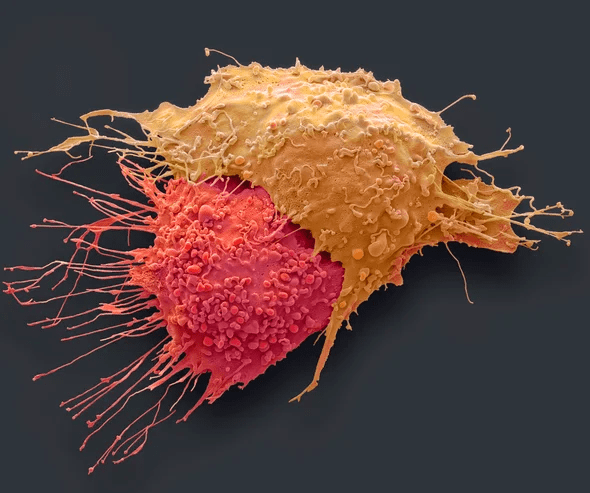


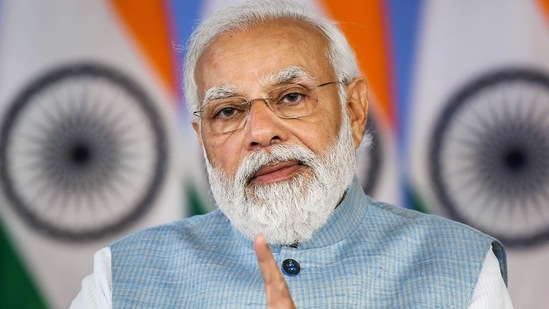


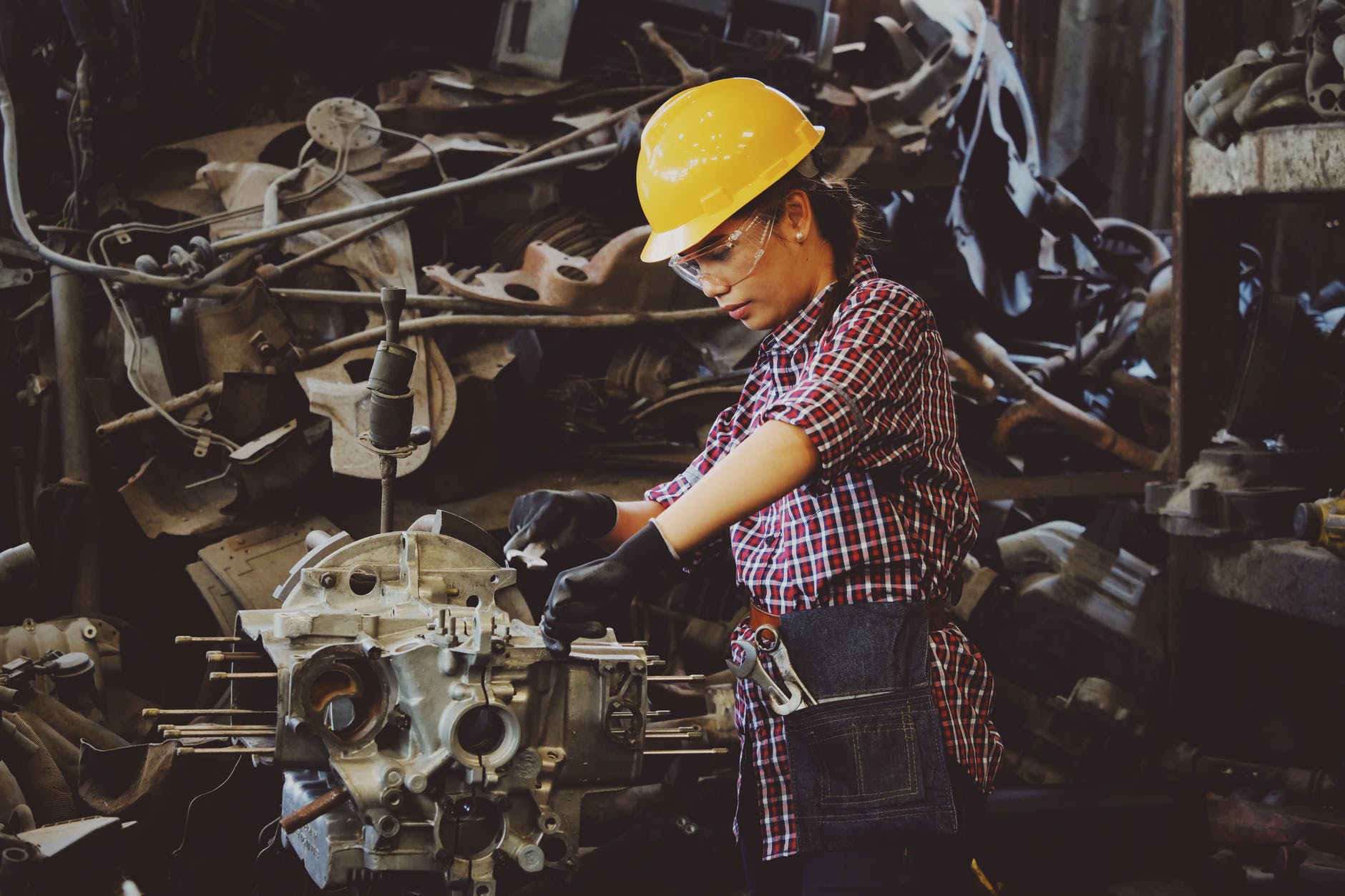










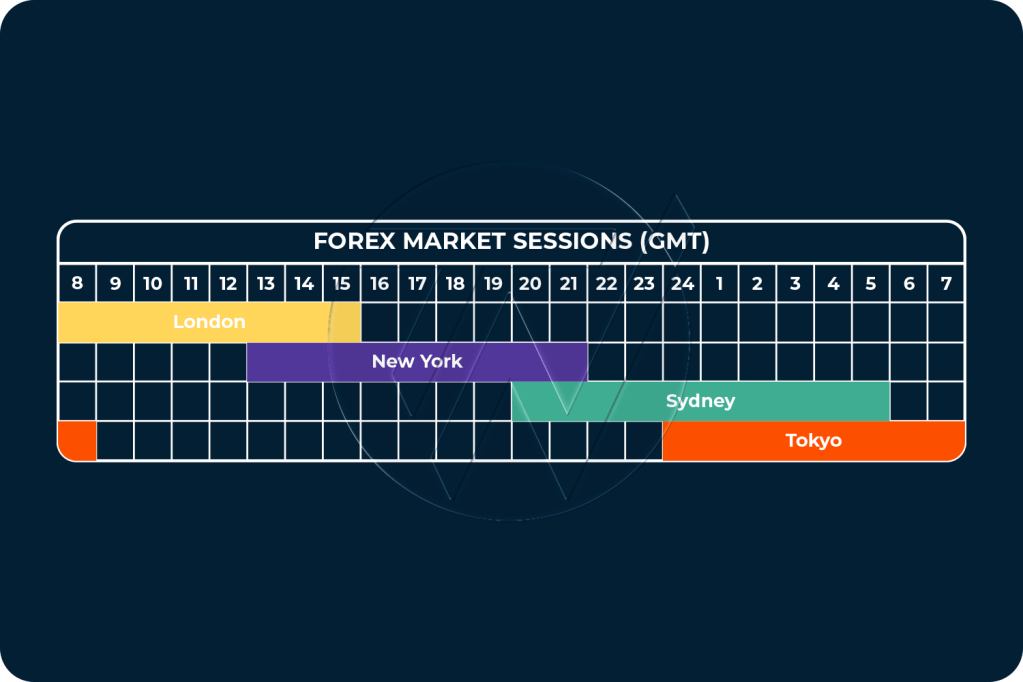



 Track2Training
You must be logged in to post a comment.