ANXIETY

N kavya

Anxiety is your body’s natural response to stress. It is a feeling of fear or apprehension about what is to come. It is normal to feel anxious about moving to a new place, starting a new job, or taking a test. This type of anxiety is unpleasant, but it may motivate you to work harder and do a better job. Ordinary anxiety is a feeling that comes and goes but does not interfere with your everyday life. In the case of an anxiety disorder, the feeling of fear may be with you all the time. It is intense and sometimes debilitating. This type of anxiety may cause you to stop doing things you enjoy. For example, it may prevent you from entering an elevator, crossing the street, or even leaving your home in extreme cases. If left untreated, the anxiety will keep getting worse.

Symptoms of anxiety :
1. anxious thoughts or beliefs that are difficult to control
2. restlessness
3. trouble concentrating
4. difficulty falling asleep
5. fatigue
6. irritability
7. unexplained aches and pains.

What causes anxiety?


Medical experts are not sure of the actual cause. But a combination of factors likely plays a role.
The causes of anxiety may include:
1. stress
2. other medical issues such as depression or diabetes
3. first-degree relatives with generalized anxiety disorder
4. environmental concerns, such as child abuse
5. substance use
6. situations such as surgery or occupational hazard. 7. In addition, researchers believe that it stems from the areas of the brain responsible for controlling fear and the storing and retrieval of emotional and fear-related memories.

Physical symptoms of anxiety :


When you experience symptoms of anxiety, they can manifest as physical symptoms such as:


1. dizziness
2. tiredness
3. heart palpitations
4. muscle aches and tensions
5. shaking
6. dry mouth
7. excessive sweating
8. stomach-ache
9. headache
10. insomnia

Who is at risk of anxiety?


Medical researchers say with each type of anxiety, there are different risk factors. But there are some general influences, including:


1. Personality traits. This includes shyness and nervousness in childhood.
2. Life history. This includes being exposed to negative or stressful life events.
3. Genetics. Of those who have a diagnosis of anxiety, percent trusted to have a first-degree relative who also has a diagnosis of anxiety.
4. Other health conditions. Thyroid problems and other health conditions can make you prone to anxiety.
5. Stimulants. Consuming sources, specific substances, and medications can worsen your symptoms.

Are there treatments for anxiety :


Once you’ve received a diagnosis of anxiety, treatment can help you overcome the symptoms and lead a more manageable day-to-day life.


The treatment is categorized into three types :


• Psychotherapy. Therapy can include cognitive behavioral therapy and exposure response prevention.
• Complemental health techniques. Mindfulness, yoga, and self-management strategies such as stress management are ways to treat your anxiety using alternative methods.
• Medication. Doctors prescribe antianxiety and antidepressant drugs.
• Session, with a therapist or psychologist, can help you learn tools to use and strategies to cope with stress when it occurs.

Some other commonly used medications include:

• Selective serotonin uptake inhibitors (SSRIs). Escitalopram, fluoxetine, and paroxetine are common SSRIs.
• Selective norepinephrine reuptake inhibitors (SNRIs). Duloxetine and venlafaxine are common SNRIs.
• Antipsychotics. Quetiapine and aripiprazole are common antipsychotics.
• Benzodiazepines. Diazepam and clonazepam are common benzodiazepines.
• Anxiolytics. Buspirone is a common anxiolytic.

Natural remedies for anxiety are :

1. getting enough sleep
2. meditating
3. staying active and exercising
4. eating a healthy diet
5. avoiding alcohol
6. avoiding caffeine
7. quitting smoking cigarettes if you smoke.

Foods that can help you with anxiety :

• flax and chia seeds
• fatty fish such as mackerel and salmon
• turmeric
• vitamin D
• magnesium
• tryptophan

It’s important to understand that anxiety disorders can be treated, even in severe cases. Although anxiety usually doesn’t go away, you can learn to manage it and live a happy, healthy life.

“Extra fly”

Ye belongs from Chicago. He was born in 1977, on 8th June. He used to produce beats for other artists before he transformed into a rapper himself. People around him who gave him work thought more of him as a producer rather than a rapper. He used to cook beats for ROCK-A-FELLA RECORDS. People from the Record label accept it today that they did not see Kanye west becoming the rapper he became today. One of the Artists from the record label said “ I knew he was a rapper but I was like stick to the beats kid”. Nobody saw YE coming. When he rapped one of his verses to Pharell Williams, He was quite shocked. Kanye had been trying to get in touch with Pharell for a while but he couldn’t. Pharell was touched by the piece that Kanye did for him. Birth of a jeen-yuhs was taking place.

Kanye has been involved in some questionable moments all his life. But the life he breathes to his music is above all the white noise that he surrounds himself with. Some people can call Kanye’s energy narcissistic and maybe rightly so. But, I believe this is the energy that makes his music alive. His songs are so Kanye that when you listen to them you know it’s Kanye. This energy has given him a different identity that is unique to him and makes him arguably the biggest rapper of his time. His mother’s presence in his life is a big reason for what kanye has achieved today. Donda West died in 2007. He released an album dedicated to his mother in 2021. This shows you how much his mother meant to him. There’s a clip in his documentary where his mother is trying to tell him by how he can come off as rude to people sometimes. I expected Kanye to burst out and say something stupid at that moment but he didn’t. He actually accepted it in a way and you could see in his eyes that there was an actual realisation of his action. Donda had her way with Kanye.

Kanye and Donda.

Ye’s biggest downfall in his career was when he started having problems with his mental health in 2016. He was diagnosed with bipolar disorder. In his documentary, he said to one of his team members “ man I took pill yesterday just so I can talk to you normally right now”. This can give you some insight into his state. His decision about running for president didn’t help his public image either. People took it as a big joke and questioned his sanity. You could see by the public appearances he made post-2016 that he was indeed troubled. Nobody exactly knows the reason behind it. But there were a lot of things that happened to him in the last 5 years. Fallout with kid Cudi, divorce, the album pushed back and his mental misery. Ye’s life is so layered and grey. No one can deny that he’s a musical genius but at the same time, some of his acts in the public make him look like a foolish man who is still not over his teenage. There are so many tags you can associate him with. That’s what makes him so interesting.

Ye has done a lot of things which he won’t be proud off but one thing that he did absolutely right was his music. He is such a inspirational artist to so many aspiring rappers. He gave Hip-Hop a much needed new life by his presence.

“’Cause now I see women as somethin’ to nurture, Not somethin’ to conquer”

⁃ Violent crimes by kanye west.

Looking for a Way to Boost your Confidence Before a Big Presentation? Check out these tips

Photo by Oladimeji Ajegbile on Pexels.com

Have you ever been through the phase before a big presentation, seminar or a panel review when your heart is racing, your palms are damp and you’re starting to panic?

Everyone does. If they have not experienced it then they will or they’ve just living under a rock.

During that panic-phase you would be thinking about how to beat the stress so bad and would end up distracting yourself from the presentation which would stress you even more.

So, in this article we would like you to look into 5 tips which will help you to convert this adversity into opportunity!

  1. Acknowledge the Panic.

The first and foremost way to reduce your anxiety before an event is to acknowledge it. Labeling it or acknowledging the stress will allow you to be more realistic and find a logical solution that works for you. It is like being more transparent to you about yourself which would make you a better judge and a critic and lets to tap into your true self.

2. Talk positively to yourself.

After acknowledging your fear, it is necessary to be positive towards yourself. Positive self-talk lightens your mood, creates effective mindspace which encourages productive thinking which will eventually generate an active mindset for the upcoming performance. In the minutes leading up to your presentation, say over and over within yourself, “You are a dynamic speaker!” “You are enthusiastic and engaging!” “You are prepared and confident!”

3.Take several deep belly breaths.

Since anxiety tightens the muscles in the chest and throat, it’s important to diminish that restricting effect with deep inhalations. It maximizes the amount of oxygen that flows to the lungs and brain; interrupts the adrenalin-pumping ‘fight or flight’ response; and triggers the body’s normal relaxation response.

4. Don’t pretend you’re not nervous.

It is a natural tendency to create an image of yourself to your peers a fear-less body-language. Doesn’t matter how bad you want to put that on it comes off as very superficial and makes you more tense as there is now something more on the list that you have to care about. In fact, your peers, to whom you are creating that image can easily find out that you are faking it. What a waste! Ain’t it.

5. Practice the first minute in your mind.

Whatever you’re planning to say as the captivating opener-a witty quotation, personal story, or startling statistic-rehearse the first few sentences several times. This makes your presentation more natural, less over-structured. This also gives a good headstart to all those who have the common ‘starting-problem’. This also gives you a good kick of confidence that compells you into giving more natural presentation.

SOCIAL ANXIETY DISORDER

Social Anxiety Disorder (S.A.D.) is also known as Social Phobia. It is one of the major psychological disorders listed in the DSM-5. It leads to a fear of social situations that involve direct or indirect interactionS with other people. It is a permeating disorder that can have a negative impact on an individual’s life. According to the latest data of 2020, 15 Million adults spread across the globe were diagnosed with social anxiety.

Reasons that lead to Social Anxiety

  • Genetic risk factors such as, a family history of anxiety related issues
  • Domestic atmosphere of anxious behavioral traits
  • Having an overly reactive Amygdala in the brain
  • Having to adjust in a new atmosphere during adolescence
  • Early childhood experience of bullying, rejection, avoidance, domestic conflicts, sexual abuse, death of a loved one, etc

Symptoms of Social Anxiety

PHYSICAL SYMPTOMS

  • Blank or a racing mind
  • Excessive sweating
  • Stomach upset or nauseating sensation
  • Rapid heart rate
  • Dizziness or lightheadedness
  • Cold tremors or shivering
  • Respiratory illness
  • Palpitations
  • Avoiding eye contact with people

BEHAVIOURAL AND PSYCHOLOGICAL SYMPTOMS

  • Intense worry about social situations (attending a party, going for a social gathering, hanging out with with peer, presenting a business presentation, etc)
  • Use of intoxicants (alchohol, drugs, smoking) to face a social situation
  • Experiencing anxiety several day before the social event
  • Thoughts of embarrassing oneself before a group of people or a person
  • Mind racing over thoughts of being judged negatively by people
  • Trying to spot flaws in one’s own actions or social performances
  • Intense fear of meeting new people and interacting with them
  • Fear of making mistakes, having a shaky voice during public interactions

Diagnosis of Social Anxiety

A mental health practitioner (Psychiatrist, Psychologist, Counseller) can diagnose a patient with social anxiety though a variety of methods.

Social anxiety can be determined through the following methods :

  • Listing out the situations that make the person anxious
  • Usage of techniques such as Questionnaires, Check lists, Survey to understand the symptoms experienced by the person
  • Applying the DSM-5 and ICD criterions to diagnose social anxiety

Treatment of Social Anxiety

  • Use of psychotherapy methods like personally interacting with the therapist about the problems faced by oneself and employing ways to generate happiness and overcoming the issue
  • Engaging in activities organized by support groups such as ADAA, Seven Cups of Tea, Daily Strength, etc
  • Pursuing hobbies that makes oneself elated (singing, dancing, sports, artwork,etc) and using one’s time constructively
  • Trained mental health practitioners may also suggest medications such as Antidepressents to regulate the levels of chemical messengers such as dopamine, norepinephrine, serotonin in the body

Every year approximately 5 Million deaths occur due to anxiety and mood related disorders. Social Anxiety is not taken into possession by choice but varied circumstances leads to it. One must express concern and empathy towards any person known to face mental health related issues. Providing support and reassurance is much needed in such circumstances. Advancements in the diagnosis and treatment of Social Anxiety Disorder proves that the future is still optimistic for those who suffer from it.

ANXIETY A GROWING PROBLEM

Anxiety a problem faced by millions in the world. Some know about it; others are not even aware of it. They are suffering it all alone. Some suffer with minor, others with major anxiety to the extent that they even try to take away their own life.

What is anxiety ?

So, let’s first know what anxiety is? This is really important to know what anxiety actually means, because there are many who are suffering from it, but are not even aware of it.

Anxiety in simple sense means having worry, fear in some stressful or tensed situation, which is normal. But when somebody experiences it on a daily basis in an intense and excessive manner on small-small things, is actually suffering from anxiety disorder. And this is a very severe disorder to the extent that people are not able to overcome it and end up taking their lives.

Cause

The main causes of anxiety disorder are:

  • Not Living in Present : the first and in most of the cases it is caused to youngsters because of the uncertainty and worry about their future. Their worry rises day by day, and it grows to become a disorder.
  • Expectations: the other cause is worry of not being up to the mark of their expectations or having over-expectations.
  • Results : worry about result is another cause.
  • Thinking negative : what ever they think they are always seeing it negatively.
  • Overthinking : another main cause is overthinking. They keep on thinking about one thing and their mind goes on to think of other related things with it. And ultimately they go into so much deep thinking that they themselves don’t realize.
  • Hopelessness : they become hopeless and think they are of no worth to the world.
  • Being altruistic : it simply means always thinking what others or the world would think about them, which makes them more nervous.

These we some of the causes their might be other reasons too. But now we should look at the solution, because for every problem their is a solutions as every night has a day.

Solutions

  • Start to Live in Present : the first and foremost thing is to start living in the present. Don’t worry about the future as that is not in your hand; what you have is the present just live in the present.
  • Stop Expecting: the other thing is that do not expect anything from time(future) or anyone, because you are disheartened only when you have expection. When you do not expect anything, then whatever you get you are satisfied with it.
  • Don’t worry about results : Stop worring about results as it is not in your hand, just leave it ot God, everything will be fine. You just do your work and don’t worry about the result (hindi saying : karm Kar phal ki chinta mat kar).
  • Think positively : try to be positive as being negative never helps. And just think it yourself as even if you are negative what ever the destiny has decided it will happen. Just keep one thing in your mind whatever happens happens for good (joh hota hai achhe ke liye hota hai).
  • Do Yoga : the one of the most effective way to calm your mind is doing Yoga. By doing yoga you to try to make balance between your mind and body. Try to meditate. Whenever any negative thoughts comes to your mind just stop, what ever you are doing and do simple yoga. Watch videos on internet. Try to divert your mind.
  • Don’t worry about what people think : just keep in mind that, whatever you do, you do it for yourself and not to get somebody’s remark or happiness, it’s for you. Just do whatever you like, don’t let them affect you as it’s not worth it because they have no importance in your life.
  • Stop overthinking : when every you realize that you are getting trapped in your endless thinking, just keep everything aside and immediately stop thinking, just take two deep breath and try to relax yourself. And try to remember all the above points, you will feel relaxed.
  • Take a nap : just take a nap if you are feeling stressed.

Just try it once. If then too you are not feeling well, then please do contact a psychiatrist or any friend or your parents or anyone close to you to share your feelings with them. And be positive.

5 Easy Yoga Exercises To Beat Stress

Meditation, good sleeping routine and stretching  helps one to focus and relax but when anxiety starts to creep in or during times of stress, many people turn to Yoga . It might seem contradictory but by exercising and putting physical stress on one’s body, mental tensions can be relieved.

                    Yoga is a form of exercise that combines stretching, breathing, relaxation and meditation and has various asana or body postures that include sitting meditation pose, reclining, standing, inverted, twisting and balancing poses to overcome all kinds of sufferings and lead to ‘the state of liberation’ (Moksha) or ‘freedom’ (Kaivalya) and self-realisation. Studies have often suggested that Yoga can enhance mood and according to some researches, it may even be as effective as antidepressant drugs at treating depression and anxiety.

                  Yoga practice helps lower stress and anxiety by releasing endorphins, improving sleep pattern and self-image. Hence, people who do Yoga regularly are less likely to experience anxiety as compared to those who don’t since benefits of the asana are strongest when one performs them regularly.

Looking for some calming poses to deal with anxiety or stress disorder, check below for the steps and benefits of 5 easy-to-do Yoga asana at home to get promising results.

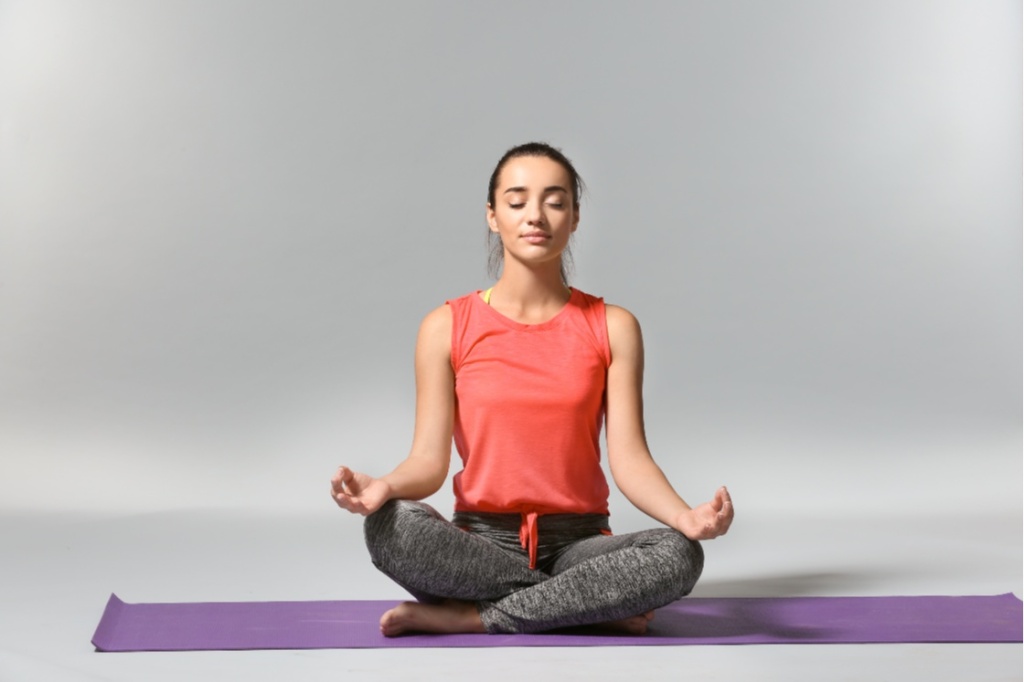
1.Sukhasana or easy pose:

Method: Sit on a Yoga mat or on the floor with your legs stretched out. Bend one of your legs and place it under the opposite thigh and repeat the same with the other leg.

Sit erect, keep your head, neck and trunk aligned in a straight line, put your hands on your knees or thighs in Chin Mudra or Jnana Mudra. Turn your palms up to be receptive or down to feel grounded and inhaling slowly, feel your spine grow long while on exhaling, root down through your seat.

Benefits: Apart from finding stillness and tranquility, this asana relieves muscle and joint pains as it helps the practitioner in maintaining a good posture, gives flexibility, keeps the back straight and provides strength to the legs. This in turn lengthens the back muscles and spine, broadens the collarbones and chest, stretches the external aspect of the knees and unlocks the hips.

2. Balasana or Child’s Pose or Child’s Resting Pose:

Method: Sit on your heels on the floor or a yoga mat and keep your knees either together or wide apart. Slowly, exhale and bend forward to touch the floor with your forehead or rest it on a block or two stacked fists while keeping your arms alongside your body and palms facing up. Alternatively, you can keep your palms facing down on the mat by reaching out your arms towards the front of the yoga mat. Now, if your knees are together, gently press your chest on the thighs or press your chest between the thighs if the knees are apart.

  Relax the shoulders, jaw and eyes and find a comfortable place for the forehead as there is an energy point at its center, in between the eyebrows, that supports a “rest and digest” response by stimulating the vagus nerve. Hold onto the pose for as long as you like and pull your navel towards your spine while inhaling and softening your body and the arms while exhaling. Return to the sitting position on the heels slowly while inhaling and as if uncurling the spine.

Benefits: This beginner’s Yoga pose not only helps to reduce stress and anxiety by helps releasing the tension in the chest, back and shoulders but also helps if you have a bout of dizziness or fatigue during the day or during your workout. It can help relieve back pain as it is a gentle stretch for the back, hips, thighs and ankles.

Precautions: This exercise is not recommended for pregnant women or those suffering from diarrhea or knee injury.

3.  Savasana/Shavasana or corpse pose:

Method: Lie on your back with your legs straight and arms relaxed at your sides. Gently close your eyes while keeping your feet a comfortable distance apart in a natural position and keep your arms straight along the body but away from the torso while resting your palms facing up.

Breathe naturally, allow your body to feel heavy on the ground and focus all your attention on your toes. Then shift your attention and begin to release each part of your body, organ and cell, consciously working from the toes up to the top of your head. Bring your mind gently back to your body if it wanders.

Be sure that you do not fall asleep and relax your face, feeling your eyes drop into your sockets and the softening of your jaw. Draw your attention to the sounds around you and try to find the most distant one until you find the sound closest to you.

When you feel relaxed, exit the pose by gently bringing your awareness back to your body and wriggle your fingers and toes while still keeping your eyes closed. Draw your knees in and slowly roll over to one side in sukhasana pose. Rest there for a moment in a comfortable seated position and open your eyes gently while slowly turning your attention outwards.

Benefits: Shavasana along with deep breathing relaxes the nervous system more than any other Yoga asana and this instantly brings down the body temperature. It relieves stress, repairs cells, relaxes the body and helps self-healing without pills for pregnant women.

4. Matsyasana or the Fish Pose:

Method: Lie down on your back with legs straight on the floor and hands beside the thighs. Keep your palms near the shoulders and your fingers pointing towards them. Inhale, press your palms on the floor, lift your shoulders and head up and drop the top of the head on the floor.

Arch your back while keeping your hands up in namaskar mudra. Lift both of your legs at 45 degrees’ angle. Hold the posture for 10 seconds and release.

Benefits: This exercise has multiple benefits. From stretching the chest, abs, hip flexors and neck to stimulating two important areas of the body. First is the throat chakra which relates to communication and self-expression and second is the crown chakra, on the top of your head, which is tied to wisdom and knowledge.

Precautions: Avoid this pose if you have a neck or back injury or even if you have a headache.

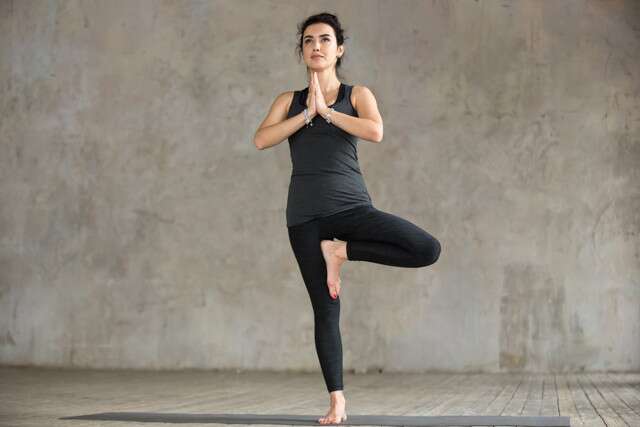
5. Vrikshasana or tree pose:

Method: Balance yourself on one leg, with the other one folded and supported on your inner thigh. Stretch out your hands above your head and point them directly upwards.

Clasp them together in anjali mudra. Gaze in the distance, shift the weight to your left leg while keeping the right knee bent in half lotus position and hold onto this posture for a few seconds before releasing and repeating the same with the alternate leg.

Benefits: This asana helps to bring balance to your mind and body. It makes your legs stronger and is a great hip opener as assists it the body in establishing pelvic stability and strengthens the bones of the hips and legs.

The shift of the entire body’s weight to each leg strengthens the ligaments and tendon of the feet. It also helps strengthen the thighs, calves and ankles and and helps improve focus.

Precautions: This asana should be avoided by those who suffer from vertigo or migraine or insomnia issues.

STRESS- CAUSES, EFFECTS,SYMPTOMS AND TREATMENT

BY DAKSHITA NAITHANI

INTRODUCTION

Stress is a human emotion that is natural and affects everyone at some point in their lives. The human body is built to recognise and respond to stress. An individual’s body creates physical and mental reactions in response to changes or difficulties (stressors). It is any sort of change that produces physical, emotional, or psychological pressure. It may be caused by a variety of conditions or life events. When we encounter anything new, unanticipated which challenges our sense of self, or when we believe we have little control over a situation, it is frequently activated.

Your body’s stress reactions assist it in adapting to new conditions. A stress reaction, for example, may help your body work harder and remain awake longer if you have an important test coming up. When stresses persist without release or times of relaxation, it becomes a problem.

To some extent, everyone is stressed. We all handle stress in various ways which also has a significant impact on your wellbeing .Genetics, early life events, personality, and social and economic conditions can all influence our capacity to cope.

TYPES OF STRESS

Not all types of stress are harmful or even negative. Some of the different types of stress that you might experience include:

Acute stress:  We face this type of stress in daily life it is short term and can be either positive or distressing.

 Chronic stress: Chronic stress is a type of stress that appears to be never-ending and unavoidable, such as the stress of a physically demanding profession; chronic stress can also result from catastrophic events and psychological trauma.

Episodic acute stress: Acute stress that appears to be rampant and becomes a way of life, resulting in a life of constant distress, is known as episodic acute stress.

Eustress: Eustress is a thrilling and enjoyable experience. It’s a type of positive stress that can help you stay energised. It’s linked to adrenaline rushes, as when you’re skiing or rushing to reach a target.

CAUSES OF STRESS

There are numerous factors that might generate stress in one’s life. Work, economics, partnerships, parenthood, and day-to-day hassles are all common causes of stress. Workplace stress may also be detrimental to your psychological health. Workplace stress causes people to miss an average of 24 days of work each year due to illness.

Even life changes that are positive in nature such as moving to a larger house, getting a work promotion, or going on vacation can lead to stress. If you’re anxious in certain situations, you could have a hard time understanding why, or you might be hesitant to express your thoughts with others.

The fight-or-flight response, which is usually triggered by stress, is the body’s reaction to a perceived threat or danger. The fight-or-flight response, which was called for its capacity to enable us to physically fight or flee when faced with danger when is triggered in situations where both the responses are not appropriate, such as in traffic or during a stressful day at work. The relaxation reaction does not occur frequently enough in instances of chronic stress, and being in a near-constant state of fight-or-flight might harm the body.

HOW CHRONIC STRESS AFFECTS YOUR HEALTH

When you consider the influence stress has on your life, you can see the link between your mind and body. Physical health problems might arise when you are worried out about a relationship, money, or your living circumstances. It’s also true in reverse. Wellness issues, whether you have high blood pressure or diabetes, will have an impact on your stress level and mental health.

Heart attacks, arrhythmias, and even sudden death can be triggered by severe acute stress, such as being involved in a natural disaster or getting into a verbal altercation. Stress has an emotional impact as well. While mild anxiety or frustration may result from some stress, prolonged stress can lead to burnout, anxiety disorders, and depression. When under a lot of stress, your autonomic nervous system becomes overactive, which can harm your body.

SIGNS AND SYMPTOMS

Continuous activation of the stress response creates wear and tear on the body. When a person is under stress for a long term symptoms manifest themselves in the form of physical, emotional, and behavioural manifestations.

Physical symptoms of stress include:

  • Aches and pains such as chest pain or a feeling like your heart is racing.
  • Feeling exhausted all the time or having trouble while sleeping.
  • Having Headaches, High blood pressure, dizziness or shaking.
  • Muscle tension or jaw clenching (Grinding teeth)
  • Having various digestive problems.
  • It also results in a weak immune system.
  • Clammy or sweaty palms

Stress can lead to emotional and mental symptoms such as:

  • Anxiety or irritability.
  • Depression.
  • Panic attacks.
  • Sadness.
  • Changes in mood

Identifying Stress

Having stress for long-terms has also been related to various gastrointestinal diseases including Irritable Bowel Syndrome (IBS) or stomach ulcers, as well as cardiovascular illness, according to certain studies.

Stress may originate from a variety of places, but even little everyday pressures from job, school, family, and friends can have a negative impact on your mind and body.

If you think it might be bothering you, there are a few things you can look for:

  • Difficulty concentrating, worrying, anxiety, and difficulties remembering are all psychological symptoms.
  • Anger, irritability, moodiness, and frustration are examples of emotional indicators.
  • High blood pressure, weight fluctuations, frequent colds or infections, and changes in the menstrual cycle and libido are among physical symptoms.
  • Poor self-care, not having time for the activities you like, or depending on drugs and alcohol to cope are all behavioural markers to look out for.

TREATMENT

There is no one particular therapy for stress because it is not a separate medical diagnosis. Change the environment, improve stress coping abilities, apply various relaxation techniques and treating conditions that may have been created by chronic stress are all part of stress treatment.

Psychotherapy, medication, and complementary and alternative medicine are some of the therapies that may be beneficial.

HOW TO COPE WITH STRESS

Stress is unavoidable, but can be managed. One can take control of their health and decrease the influence stress has on life once they understand the toll it takes and how to battle it. You can’t escape stress, but you can keep it from becoming overwhelming by using the following methods on a regular basis:

  1. Exercise

Regular exercise is one of the most effective methods to calm your body and mind. Plus it will also lift your spirits. Work up to 2 hours and 30 minutes of moderately intensive activity, such as brisk walks, or 75 minutes of rigorous exercise, such as swimming laps, running, or participating in other sports. Focus on creating realistic fitness goals so you don’t give up.

  • Relax Your Muscles

Your muscles stiffen up when you’re anxious. Stretching, getting a massage and other self-care activities can help loosen them up and rejuvenate your body. Taking a hot bath or shower is a great way to relax. Having a restful night’s sleep is also very important.

  • Deep Breathing

Stopping and taking a few deep breaths can immediately relieve stress. Once you get the hang of it, you’ll be amazed at how much better you feel. Simply take these five steps:

  • Sit with your hands in your lap and your feet on the floor in a comfortable posture.
  • Close your eyes for a moment.
  • Consider yourself in a soothing environment. It may be on the beach, in a lovely field of grass, anyplace else that helps you feel calm.
  • Slowly inhale and exhale deeply.
  • At a moment, do it for 5 to 10 minutes.
  • Eat Well

Eating a good well-balanced, regular diet will make you feel better overall. It may also aid with mood regulation. For energy, your meals should include plenty of vegetables, fruit, healthy grains, and lean protein and make sure you don’t forget any. 

  • Slow Down
  • 5 to 10 minutes ahead of time, set your watch. You’ll be able to arrive a bit earlier and avoid the worry of being late.
  • Switch to the slow lane if you’re travelling on the highway to prevent road rage.
  • Break down projects into manageable chunks. If you don’t have to, don’t try to respond to all 100 emails; instead, respond to a handful of them.
  • Take a Break

 To give your mind a break from stress, schedule some genuine leisure. It may be difficult for you at first if you are someone who enjoys setting objectives for the day. But if you stay with it, you’ll come to like these times. Meditation, Yoga, Tai chi, Prayer, Listening to music, and spending time in nature are all relaxing activities.

  • Make Time for Hobbies

You must schedule time for activities that you like. Every day, try to do something that makes you happy, it helps you to relax. It doesn’t have to take a long time; 15 to 20 minutes would suffice. Reading, knitting, doing an art project, playing golf, watching a movie, doing puzzles, and playing cards and board games are all relaxing activities.

  • Talk About Your Problems

If anything is troubling you, talking about it might help you relax. Family members, friends, a trustworthy priest, a doctor, or a therapist are all good places to start.

So, when you’re worried, pay attention to what you’re thinking or saying. Change the negative message you’re sending yourself to a positive one. Don’t tell yourself, “I can’t do this,” for example. Instead, tell yourself, “I can do this,” or “I’m doing the best I can.”

  • Go Easy On Yourself

Accept that no matter how hard you strive, you will never be able to achieve everything with perfection. So, do yourself a favour and quit being hard over yourself and stop overestimating your abilities. Also, remember to retain your sense of humour. Laughter is one of the most effective ways to relax.

  1. Eliminate Your Triggers

Determine the main sources of stress in your life. Is it your job, your commute, or your schooling that’s the problem? If you can figure out what they are you may get rid of them or at least decrease them in your life.

Teenagers & Anxiety

All teens experience some amount of anxiety at times. Anxiety is actually a normal reaction to stress, and sometimes it helps teens deal with tense or overwhelming situations. For many teens, things like public speaking, final exams, important athletic competitions, or even going out on a date can cause feelings of apprehension and uneasiness. They may also experience an increase in heartbeat or excessive sweating. That’s how the brain responds to anxious feelings.

For some teens, however, anxiety can go beyond these typical symptoms to negatively affect friendships and family relationships, participation in extracurricular activities, and even their schoolwork. When feelings of anxiety interfere with normal daily living, the presence of an anxiety disorder should be considered. According to the National Institute of Mental Health, approximately 25% of 13 to 18-year-olds have an anxiety disorder, and just under 6% have a severe anxiety disorder.

Given that teens experience a wide variety of physical and emotional changes as they grow, an anxiety disorder can be difficult to spot. Many red flags may seem like usual teens struggles or be chalked up to hormones. Watch for these hidden signs of anxiety in your teens :

1. Emotional Changes to Watch Out For in Teens

While some anxious teens express feelings of pervasive worry, others experience subtle emotional changes such as :

  • Feeling “keyed up”
  • Feeling on edge
  • Irritability
  • Difficulty concentrating
  • Restlessness
  • Unexplained outbursts

2. Social Changes

Anxiety can negatively affect friendships. If your once social teen suddenly avoids his favourite activities or stops making plans with friends, think twice. You might notice that he/she is :

  • Avoiding social interactions with usual friends
  • Avoiding extracurricular activities
  • Isolating from peer group
  • Spending increased time alone

3. Physical Changes

Many of the physical complaints that can occur with an anxiety disorder mimic average teen complaint, which tend to increase as they get older. Pay attention to patterns. A couple of headaches here and there shouldn’t be a cause for concern, for example, but frequent headaches are a red flag. Watch for these common psychosomatic complaints :

  • Frequent headaches, including migraines
  • Gastrointestinal problems
  • Unexplained aches and pains
  • Excessive fatigue
  • Complaints of not feeling well with no obvious medical cause
  • Changes in eating habits

4. Sleep Disturbances

Teens aged 13 to 18 get 8 to 10 hours of sleep on a regular basis to promote optimal health. It is also recommend shutting down screens 30 minutes prior to bedtime, and removing all electronics from the bedroom.

It’s no big secret that homework demands, changing brain structure, extracurricular activities, and screen time can all cut into the sleep habits of teens. Therefore, it can be difficult to know whether fatigue is a product of anxiety or of a busy schedule. Watch for these red flags :

  • Difficulty falling asleep
  • Difficulty staying asleep
  • Frequent nightmares
  • Not feeling refreshed after sleep

5. Poor School Performance

Given that anxiety can affect everything from sleep habits to eating habits to missing school due to physical issues, it should come as no surprise that poor academic performance can also result from untreated anxiety. School avoidance, missed days due to anxiety-related illness, and persistent worry can make it difficult for anxious teens to keep up with their workload. Watch for these changes in your teen :

  • Significant jump in grades (usually downward)
  • Frequently missed assignments
  • Describes feeling overwhelmed by workload
  • Procrastinates on, or has difficulty concentrating on, homework assignments more than usual

6. Panic Attacks : Know the Symptoms

Not all anxious teens experience panic attacks, and some experience mild symptoms of panic without enduring a full panic attack. The following symptoms are common among people with anxiety disorders :

  • Rapid heartbeat
  • Sweating and trembling
  • Dizziness
  • Upset stomach
  • Difficulty breathing
  • Chest pain
  • Feeling like they’re dying
  • Feeling like they’re “going crazy”
  • Numbness or tingling in arms and legs
  • Derealization.

Defeat Anxiety – Simple but Powerful Tips!

What is anxiety

It’s normal to feel anxious about moving to a new place, starting a new job, or taking a test. This type of anxiety is unpleasant, but it may motivate you to work harder and to do a better job. Ordinary anxiety is a feeling that comes and goes, but does not interfere with your everyday life.

Anxiety is a feeling of nervousness, unease, or worry that typically occurs in the absence of an imminent threat. It differs from fear, which is the body’s natural response to immediate danger.

Anxiety is part of the body’s natural reaction to stress, so it can be helpful at times, making you more alert and ready for action.

Anxiety disorders and normal feelings of anxiousness are two different things. Many of us get anxious when faced with particular situations we find stressful, but if those feelings don’t subside, the anxiety could be more chronic. When feelings of fear or nervousness become excessive, difficult to control, or interfere with daily life, an anxiety disorder may be present. Anxiety disorders are among the most common mental disorders.

Why Is Anxiety So Common Today? - Banyan Mental Health

Signs and Symptoms

Your heart beats fast, and your breathing speeds up. Your chest may feel tight, and you might start to sweat. If you’ve ever felt it, you know that anxiety is just as much a physical state as a mental state. That’s because there’s a very strong biological chain reaction that occurs when we encounter a stressful event or begin to worry about potential stressors or dangers in the future. Other physical symptoms include headaches and insomnia. Psychological symptoms may include feeling restless or tense, having a feeling of dread, or experiencing ruminative or obsessive thoughts. 

Some of the most common symptoms of anxiety disorders include:

  • Feelings of apprehension
  • Anticipating the worst
  • Irritability
  • Tremors or twitches
  • Frequent urination or diarrhea
  • Nausea or upset stomach

Duration of Anxiety

It is possible to get rid of anxiety with therapy or medication, or through a combination of therapy and medication. It may also take changing your mind a bit about the power your mind has over you.

According to Health Care Experts, “You might start to consider your emotions as changing experiences that are always fluctuating. When we feel distressed, it can seem like the distress is going to go on and on forever until we emotionally combust. But instead, emotions act more like a wave, at times increasing and becoming more intense. But inevitably they’ll reach a plateau, subsiding and finally passing.”

5 Ways to Ease Anxiety and Feel Calmer

Take some deep breaths

When anxious, our breath becomes rapid and shallow. Deep belly breathing helps decrease anxiety by stimulating the body’s relaxation response, lowering our heart rate and blood pressure. It’s a powerful technique that works because you can’t breathe deeply and be anxious at the same time. There are many variations to try, including this simple exercise: Inhale deeply for a count of 4, hold your breath for a count of 4, exhale for a count of 4. Repeat several times.

Go for a walk

Exercise is one of the best anxiety remedies, immediately and long term. Going for a walk creates a diversion from your worries and releases muscle tension. Grab your headphones or earbuds on your way out; studies show that listening to music brings its own calming effects.

Long term, regular exercise triggers the release of feel-good neurochemicals in the brain, building up resilience against stormy emotions. It boosts your confidence and your mood, and you don’t need to run a marathon to feel the benefits. Washing your car, hiking, gardening, a pick-up game — anything that gets you moving counts. Thirty minutes, 3 to 5 days a week can help to significantly improve anxiety symptoms, but even 10 minutes can make a difference.

Try a mini-meditation from Headspace

No matter what’s causing your anxiety, take a pause and try this 3-minute meditation to anchor your mind and body in the present.

Sitting down, take a few deep breaths, in through the nose, and out through the mouth, feeling the breath move through the body, the rising sensation as you breathe in, the falling sensation as you breathe out. Do this a few times, then allow the breath to return to its natural rhythm.

Begin to focus your attention on the physical sensations, either of the weight of the body on the seat beneath you, or the feet on the floor. That’s your anchor, something that doesn’t change, no matter how many thoughts come and go. The moment you realize you’re caught up in thought, come back to that sensation, that feeling of being grounded. It’s as though you’re stepping out of all the business of the mind, and just being present in the body.

Sip some herbal, chamomile, or green tea

If you’re feeling jittery, pour a cup of chamomile or green tea. Known as a sleep aid, chamomile contains a compound called Matricaria recutita, which binds to the same brain receptors as drugs like Valium. Chamomile’s sedative effects may also come from the flavonoid apigenin. In one study at the University of Pennsylvania Medical Center in Philadelphia, patients with generalized anxiety disorder (GAD) who took chamomile supplements (1.2 % apigenin) for 8 weeks showed a significant decrease in anxiety symptoms compared with patients taking placebo. (Despite improved quality control, herbal supplements aren’t regulated by the FDA the way medications are, so before taking any supplement, check with your doctor.)

Green tea, long used in Chinese medicine to treat depression, contains the amino acid L-theanine, which relieves stress, and reduces blood pressure and muscle tension. Nuts, whole grains, and broccoli are also rich in L-theanine.

Distract yourself

If you’re feeling anxious, try a distraction technique — anything that redirects your attention away from distressing thoughts or emotions. Run your fingers around the edge of your phone, put your hands under running cold water, color, or draw on a piece of paper. Distractions work because your brain can’t be in two places at once, and shifting your attention to any activity will interrupt a string of racing thoughts.

Social Anxiety Disorder

SAD (Social Anxiety Disorder)

What is SAD?

Social anxiety disorder (SAD) more commonly referred to as social anxiety or social phobia is an inherent mental health issue characterized by senseless anxiety due to social interactions.

According to a research paper drafted by Phillip Jefferies and Michael Ungar, Social anxiety occurs when individuals fear social situations in which they anticipate negative evaluations by others or perceive that their presence will make others feel uncomfortable. (cited:

.https://journals.plos.org/plosone/article?id=10.1371/journal.pone.0239133

It is an intense persistent fear of being watched and judged by others. This fear can affect work, school and other day-to-day activities. It can even make it hard to keep friends. (cited:

https://www.nimh.nih.gov/health/publications/social-anxiety-disorder-more-than-just-shyness

According to some rough SAD statistics, this disorder affects about 7.1 percent of the population, 8 percent of women and 6.1 percent of men.

Though SAD can affect people regardless of age or gender, research points towards a general early (teenage) onset of social anxiety due to reasons unknown or some underlying trauma.

Causes of SAD

Social anxiety may have a plethora of underlying causes yet in some cases the disorder might be sudden and unexplained.

Ever since it was officially recognized as a disorder in 1980 by the American Psychiatric Association, scientists all over the world have been trying to identify and understand the causes of social anxiety disorder (SAD).

Like for most psychological conditions, the majority of contemporary professionals agree upon the idea that SAD is caused by a combination of genetics as well as environmental and socioeconomic factors.

What this means is that there is hardly one specific root cause of social anxiety, but rather a variety of factors that can lead to a certain vulnerability that favours its development. (Cited:

https://www.conquersocialanxiety.com/causes/

Social anxiety may also be directly linked to low confidence and constant self blame.

Visual search query image

social anxiety disorder likely arises from a complex interaction of biological and environmental factors. Possible causes include:

  • Inherited traits. Anxiety disorders tend to run in families. However, it isn’t entirely clear how much of this may be due to genetics and how much is due to learned behaviour.
  • Brain structure. A structure in the brain called the amygdala (uh-MIG-duh-luh) may play a role in controlling the fear response. People who have an overactive amygdala may have a heightened fear response, causing increased anxiety in social situations.
  • Environment. Social anxiety disorder may be a learned behaviour — some people may develop significant anxiety after an unpleasant or embarrassing social situation. Also, there may be an association between social anxiety disorder and parents who either model anxious behaviour in social situations or are more controlling or overprotective of their children. (cited:

https://www.mayoclinic.org/diseases-conditions/social-anxiety-disorder/symptoms-causes/syc-20353561

SYMPTOMS

Image
Getselfhelp.co.uk

Symptoms of SAD include physical, behavioural or cognitive changes that are often dead giveaways of some underlying issue.

Emotional and Behavioural Signs:

The following emotional and behavioural symptoms may show up in people with social anxiety:

  • Fearing situations where you might be judged
  • Fear of showing physical symptoms such as blushing, trembling, sweating, or an unsteady voice
  • Worrying you will embarrass or humiliate yourself
  • Intense fear of interacting with strangers
  • Avoiding any situation in which you will being the centre of attention
  • Getting anxiety in anticipation of an activity or event
  • Avoiding going places or speaking to people out of fear of embarrassment
  • Fearing people will notice your anxiety
  • Spending significant time analysing and critiquing the way you acted in a social situation
  • Expecting the worst outcomes from a negative social experience

For children, emotional and behavioural signs may include: 

  • Crying
  • Throwing temper tantrums (outbursts of crying and anger)
  • Clinging to parents or guardians
  • Refusing to speak to people 

Physical Signs:

Some of the external signs of social anxiety disorder include:

  • Blushing
  • Rapid heartbeat
  • Sweating
  • Difficulty catching your breath
  • Shaking
  • Nausea or upset stomach 
  • Light-headedness or dizziness
  • Tight muscles 

Social Signs:

One of the main signs of social anxiety is avoiding social situations. Someone with this disorder may avoid or find difficulty being in the following situations: 

Treatment and Self help

As established SAD is a disorder that requires thorough medical attention, which may include therapy, meditation, courses for instilling confidence etc.

  • Psychotherapy. Psychotherapy improves symptoms in most people with social anxiety disorder.
  • First choices in medications. Though several types of medications are available, selective serotonin reuptake inhibitors (SSRIs) are often the first type of drug tried for persistent symptoms of social anxiety.
  • Other medications. Other antidepressants. You may have to try several different antidepressants to find one that’s the most effective for you with the fewest side effects.
  • Stick with it. Don’t give up if treatment doesn’t work quickly. You can continue to make strides in psychotherapy over several weeks or months.
  • Alternative medicine. Several herbal remedies have been studied as treatments for anxiety. Results tend to be mixed, and in several studies people report no benefits from their use. (Reference: www.mayoclinic.org/diseases-conditions/social-anxiety-disorder/diagnosis-treatment/drc-20353567

Thinking Differently


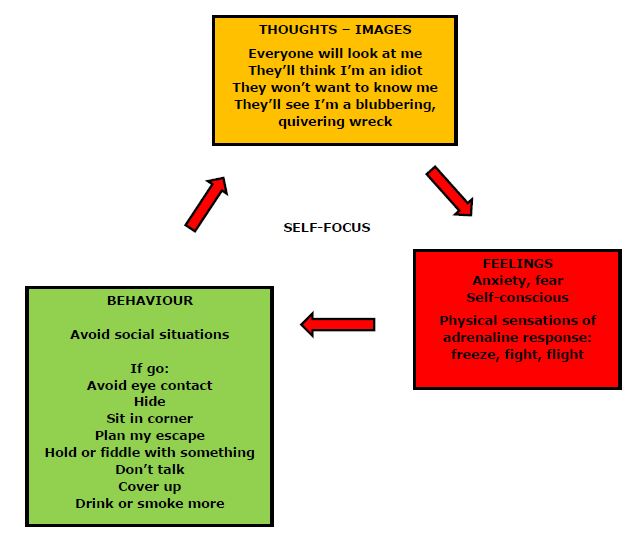
When we’re in a social situation with a group of people, our focus of attention becomes totally caught up in our own thoughts and feelings.  We see everyone around us, but all we can think about is how they might be thinking critically about us!  The adrenaline response of anxiety makes us feel terrible too, so we’re thinking about how horrible that is, and how we just want to escape the situation. 

It is very helpful to learn how to change our focus of attention and take more control over how we react to thoughts.  We can learn to just notice the thoughts, acknowledge them, then let them pass.  Notice the Mind Bully and let it go – turn your focus of attention to something else.  First of all, you might learn to focus on your breathing.

Practise Mindful Breathing

(cited: https://www.getselfhelp.co.uk/socialanxiety.htm

Conclusion

In conclusion, social anxiety is the third most common disorder worldwide that affects millions of unsuspecting individuals every year throughout the world. It is high time that we treat social anxiety patients with respect and consideration and give this disorder its due attention without tiptoeing around it.

It is also absolutely essential for people suffering with SAD to seek medical help(easier said than done) but one has to start somewhere.

Lastly, there should be no embarrassment in seeking professional help and it should be absolutely normalised.

A strong will to overcome anxiety, is the guaranteed first step in the long overdue chain of recovery.

See the source image

STUDENT LIFE ,ANXIETY AND HOW TO DEAL WITH IT.

Being a student is not a cake walk. There is immense pressure that we students are under 24X7. Amidst getting a good cgpa , maintaining a social life ,participating in college fests , exams,building a resume and planning our future we are consumed with anxiety. But here are a few tips to keep the anxiety level under control and in check.

Photo by Andrea Piacquadio on Pexels.com
  • MAKE A TO DO LIST – Its easy to be overwhelmed when things are not organised and planned which can be the root cause of anxiety. So make a to do list of the things you want to accomplish on a particular day the night before , and watch your anxiety mitigate.
  • STAY HEALTHY AND HYDRATED – Our physical health can have an impact on our mental health as well . Going out to get some fresh air everyday , or engaging in any physical activity like swimming , cycling etc and drinking tons of water can boost the levels of serotonin in your body an help you stay fit and relaxed .
  • GET ENOUGH SLEEP – Not getting enough sleep has negative health benefits and can aggravate anxiety . So make sure to get a minimum of 7-8 hours of sleep .
  • STUDY REGULARLY – Studying the night before the exam can cause a lot of stress and anxiety . So it’s best to go through your study notes regularly and not leave it for the end moment.
  • JUST BREATHE – College can be difficult at times , but remember you are not alone , this too shall pass. Don’t forget to enjoy your college life .

Hope this helps .

Dealing with anxiety while working from home!

Telecommuting accompanies a ton of interruptions. There may even be a distinction from work since you don’t see your group consistently and surprisingly working in segregation. This may hamper your emotional well-being just as your general efficiency.

Right now, it is somewhat hard to decide when will the circumstance be typical once more, when will all the hustle-clamor start. Till all is good and well, we as a whole need to take a gander at the more brilliant side of life of working inside the got dividers of our home and with our families’ sponsorship and supporting us.

Making a daily practice and adhering to it can assist with diminishing some pressure that accompanies telecommuting. Work from home should not be tied in with escaping the bed, going directly to the PC to begin the workday, yet rather keeping a design and putting together those work hours to have the effect.

Make an assigned workspace for your office work to genuinely and intellectually separate work from home life. It very well may be any space, appropriate room, a corner in the overhang, or perhaps a region in your lounge; it simply must be away from interruptions, with satisfactory lighting and whatever other assets that you may have to work easily.

Telecommuting can to be sure be somewhat repetitive with no adjustment of working space or individuals around, which can now and then negatively affect your balance between serious and fun activities and every day efficiency. It is in every case great to take a little break from work and spoil yourself. Be that as it may, recollect, self-care isn’t something you do when you are anxious; all things considered, it is choosing to deal with yourself as a customary practice. So be inventive and track down a ‘glad’ spot to invest some energy reviving.

Ensure in these difficult occasions you stay associated with individuals around you. There might be chances that the telecommuting arrangement can cause you to feel restless and disengaged, yet opening up with individuals around you can help you feel somewhat better.

ANXIETY

Tension is an inclination of anxiety, disquiet, or stress that commonly happens without an up and coming danger. It varies from dread, which is the body’s regular reaction to impending peril. Anxiety is a piece of the body’s characteristic response to push, so it tends to be useful now and again, making you more ready and good to go. Uneasiness issues and ordinary sentiments of nervousness are two unique things. A considerable lot of us get restless when confronted with specific circumstances we find upsetting, yet in the event that those emotions don’t die down, the tension could be more interminable. At the point when sentiments of dread or apprehension become over the top, hard to control, or meddle with every day life, a tension issue might be available. Tension issues are among the most widely recognized mental issues in the United States. It’s not unexpected to consider tension in a manner that may obstruct our capacity to conquer it. “The greatest confusion about tension is that it’s to be dreaded and maintained a strategic distance from no matter what,” says Noah Clyman, an authorized clinical social specialist and the overseer of NYC Cognitive Therapy, a private psychotherapy practice in New York City.

Your heart thumps quick, and your breathing rates up. Your chest may feel tight, and you may begin to perspire. In the event that you’ve at any point felt it, you realize that uneasiness is the same amount of a physical state as a psychological state. That is on the grounds that there’s a solid organic chain response that happens when we experience an upsetting occasion or start to stress over likely stressors or threats later on. Other physical side effects incorporate cerebral pains and sleep deprivation. Mental side effects may incorporate inclination fretful or tense, having a sentiment of fear, or encountering ruminative or fanatical contemplations. Probably the most widely recognized indications of tension issues include: Sentiments of anxiety Envisioning the most noticeably terrible Crabbiness Quakes or jerks Visit pee or the runs Queasiness or steamed stomach.

At the point when the side effects of uneasiness and the related practices are detrimentally affecting your life and everyday working, it’s critical to find support. Suma Chand, PhD, the overseer of the psychological conduct treatment program in the branch of psychiatry and social neuroscience at St. Louis University School of Medicine in Missouri, says an individual who has alarm issue is “very avoidant of numerous circumstances that could trigger [their] alarm indications” and the frenzy issue is affecting their capacity to go to work routinely, go out to shop, go to chapel, and so forth. The capacity to work while in these circumstances is adversely affected also. In case you’re keeping away from circumstances that trigger your uneasiness or you experience huge distress and can’t work viably when you’re in those circumstances, it’s important to look for treatment.

Toxic Relationships

Human beings like to be emotionally and physically close to each other. As said, “Sharing is caring” life seems better shared. Relationships like most of the things require continuous efforts, even the best of them. After all, nobody is perfect, not your close friends, not your significant other and not even your parents and they also do not see you as perfect. We have to learn to accommodate to the circumstances and adapt to their faults, moods as they do for us. Since we aren’t clones rather individuals, therefore, difficulties are faced in maintaining relationships due to disagreements. Some individuals have to face more difficulties while others do not. But since we value relationships we are determined to uphold it whatever it takes. But some relationships turn toxic, which is characterized by toxic partners who emotionally and not infrequently physically be damaging to their partner. A toxic relationship has the potential, if not corrected to be extremely harmful to the well-being of the individuals. As a healthy relationship contributes to self-esteem and emotional energy a toxic one damages self-esteem and drains the energy. But this doesn’t mean that every toxic relationship is hopeless, they just require substantial and convoluted work in order to be converted into something healthy. A healthy relationship involves mutual caring, respect, compassion, a shared desire for each other’s happiness. In a healthy relationship, one doesn’t fear to be who he/she is, a place to be comfortable and secure, a sanctity. On the other hand, a toxic relationship is demanding, craves insecurity, dominance. One risks losing the very essence of oneself by being in such a relationship. It takes two people for a relationship, so both of them should be examined. Initially, the behavior of toxic one is being noticed but the recipient of the behavior should also be studied. It should be questioned why an adult needs to stay in a relationship that could potentially harm them physically and emotionally? Even a good relationship could have times that could be marked as toxic after all no one is perfect. The toxic partner engages in inappropriate controlling and manipulation on an almost daily basis but paradoxically for the world, they would be exemplar. This behavior is observed in the toxic individual because they want supremacy, crave control, power in his/her relationship. Some types of toxic relationships are-

  • The belitter- Such type of toxic partner would always belittle you, even in front of your friends, family, and even after you confronting him/her that such behavior induces pain in you. They would mock all of your decisions, undermining your self-esteem making you weak emotionally. They would also tell you that you’re lucky to have them in your life, you are unworthy of anything good and should adore whatever you’ve got.
  • The splenetic- Such partners are eager to lose temper in order to feel the power. The recipient ultimately gives up arguing and bowing down to the needs of the partner. You would feel like walking on an eggshell if you have one of such partners. Your partner would blame such behavior on you. The constant vigilance and inability to find out the trigger drains the energy in you, wearing you mentally and emotionally.
  • The degrader- Such partners would induce guilt in you. They can make you feel guilty whenever they feel like or whenever you don’t live up to their expectations. But whenever you do something they like they temporarily remove the guilt which is addictive as a guilt-ridden person only wants the guilt to be removed. Unfortunately, such behavior is used by grownups to control their adult children.
  • The overreactor- It is said that pain reduces when shared but it is not so in case of having a partner who is overreactor. Whenever you try to reach your partner to tell them about your insecurities, problems, they would bring their own problem, and you end up consoling them instead of being consoled. Such behavior adversely impacts your mental well-being because you never get consoled.
  • The maverick- “Noone’s gonna control me” is their sole moto. They are spontaneous and never keep their promise. You can’t even be sure whether they are evasive or committed. This makes the recipient anxious which deteriorates their mental and emotional health.

Since no one is perfect therefore now could see such behavior at some point in the relationship, but this doesn’t mean that the toxicity has crept in. Some things need to work put to keep such behaviors at bay.

ANXIETY

Anxiety is a concoction of feelings of worry, tension and fear. In India, alone 44.9 million people are dealing with anxiety disorders. Anxiety is a necessary survival instinct that had helped humanity survives. It produces adrenaline a hormone responsible for flight or fight response, it helps us fight dangers or to run away from them. Now the feelings or fear and worry revolve around our jobs, family and money. The nervous feeling before an important event is now a prolonged feeling of worry and stress. When anxiety is left untreated for a long time it can develop into anger. The socio-cultural aspects of our Indian society make it difficult for individuals with mental illness to come forward and get help. The stigma is still rooted that anyone who goes to a mental health facility is seen as crazy or disturbed.
Anxiety during lockdown can be tough. Anxiety can be divided into different disorders based on their severity or triggers. They are general anxiety disorder, agoraphobia which is anxiety which is triggered when they are forced to be in public situations, social anxiety, phobias, obsessive-compulsive disorder (OCD), post-traumatic stress disorder (PTSD), panic attacks and separation anxiety. A constant state of worry or fear might lead to panic attacks or bottled up stress turns into frustration which in turn becomes anger. During times of uncertainty where students worry about their academics, grad students who worry about future prospectus, a worker who are losing their jobs, anxiety are on the rise. Unprocessed anxiety can lead to anger issues as these feelings of fear or worry are left unacknowledged. The anger that is sourced from anxiety is not intentional but it is a natural reaction to anxiety. When these feelings are left untreated it’s normal for people to lash out because they do not know how to cope with it. But there are 5 things you can do to or tips that might help with anxiety.


1.People with anxiety usually tend to follow a routine they are comfortable with. In a lockdown, folks with anxiety should not lose track of their routine as it keeps them comfortable.
2.People how to suffer from panic attacks have many techniques that calm them down. One of my favourite techniques is sucking on an ice cube. Sucking on the ice cube distracts your mind from whatever is troubling you.
3.Staying connected with friends and family is important as social connectedness is important.
4.Minimizing the time spent on social media is a good option as social media is littered with constant news on coronavirus which might trigger anxiety in lockdown.
5.Talking to supportive friends or a mental health professional is always a good option.


Anxiety is treatable and there are many different ways it can be helped. The pandemic will pass and the thing will return to normal but something will remain different. The key to lessening the anxiety is to be kind to others and ourselves. We are going to some difficult times but life will always go on.

Anxiety-Mind’s own prison

Nowadays people associate the word anxiety only with mental illness but anxiety is just an emotion like happiness, sadness, etc.  It is quite a familiar emotion which we come across seldom in our day to day life like, before taking a test, pressure at work. Occasional anxiety is “OK”. But anxiety disorders are different with constant fear and overwhelming.

Causes

  • Stress at workplace
  • Emotional trauma such as the death of a beloved one
  • Use of prohibited drugs like cocaine
  • Maybe a symptom of heart related problems
  • Emphysema or Pulmonary embolism,etc.

Symptoms

  • Feeling nervous, restless or tense
  • Having a sense of impending danger, panic or doom
  • Having an increased heart rate
  • Breathing rapidly (hyperventilation)
  • Sweating
  • Trembling
  • Feeling weak or tired
  • Experiencing gastrointestinal (GI) problems

During this lockdown, the levels of depression and anxiety are much higher than usual in the society. Surprisingly, exposure to the coronavirus itself has had minimal impact on people’s mental health rather,  the social disruption had a much more effect. People confined in their houses has both negative and positive impacts; positive because people can spend more time with their families than before and negative as humans are social animals and disconnecting from the outside world, friends, relatives is the cause of a frustrating environment in the house. This change in scenario might fuel anxiety and depression.

GAD-Generalized Anxiety Disorder

Generalized anxiety disorder(GAD) is the most common anxiety disorder. It is characterized by persistent, excessive worrying about everyday events and activities which the person finds difficult to control. People with GAD find that their worry is excessive (blowing things out of proportion), difficult to control and pervasive. People are often tempted to avoid threatening situations, but if you do, the anxiety will be worse the next time you are in that situation. The best strategy is to confront the feared situation. Usually, it is better than you thought, and if not, you will have learned valuable coping skills by confronting your fears.

People with GAD should work toward challenging their beliefs and assumptions about themselves. For example, your worry might be “I’ll never be prepared in time,” which may be accompanied by the assumption that “if anything goes wrong, it’s my fault” and the underlying belief that “I am a failure.” Cognitive therapy strategies can help you identify and challenge these assumptions and develop alternative and more realistic beliefs.

The Six Structured Problem Solving Technique-

This technique is a simple yet as effective as medication for people dealing with GAD or any type of anxiety.

  • Write down exactly what you believe the main problem to be.
  • Write down all possible solutions, even bad ones. *
  • Think about each solution in practical terms.
  • Choose the most practical solution.
  • Plan how you will carry that solution out.
  • Do it.

image courtesy-TOI

3 Things To Do When A Friend Opens Up About Their Mental Health Struggles

All of us want to be there for our friends when they need us. We want to help them and provide the support in the best way we know. Nonetheless, when a friend tells us about their current struggle with their mental health, it can be challenging to decide what to do or what to say. It is valid to be worried about not making the situation worse or upsetting them by saying the wrong thing at the wrong time. Here are 3 things that will help you support your friend in a way that’s healthy for the both of you.

Seamless pattern of a crowd of many different people profile heads. Vector background.

1. Listen to them

We are constantly hearing people talk which may lead us to think that listening is easy. However, the goal is to listen and not just hear, to be a good listener, you must be able to put all your thoughts and judgements to one side. Try not to interrupt them while they are taking or rush them into talking. It’s most ideal to have the conversation with them when you do not have something to do soon since this can add to the pressure which could make you want to rush the conversation and make them feel unheard or worse, abandoned. You should also try to stay calm, process the information as and when you receive it.

2. Ask them what they would like from you

Sometimes people just want to be seen, be heard, or just want to get something off their chest. Other times they simply want advice or maybe reassurance. Asking them what they would like from you will help you to support them in the better way and it will ensure they do not leave feeling unsatisfied or unheard. Try to be as honest, patient and kind as possible when responding to your them. In dealing with such situations, you can be most helpful by asking yourself these three questions: ‘What’s best for my friend?’. ‘What would I want the most from my friend if I was in this situation?’ and ‘How would I want to be treated had I been in the same situation?’

3. Check up on them

If you feel mentally stable enough and are able to, keep asking your friend how they are and how they feel, take the time out to candidly listen to what they have to say, keep repeating this cycle. Mental health problems don’t vanish after one conversation. These problems can also be incredibly isolating. Regualrly checking up on your friend is one step closer to making them feel a little less alone, visible and will also serve as a reminder that you care about them.

It is okay if you can’t always be there for the people you love and care about. We all have our own challenges and struggles. If you do not feel up to it, you should signpost them to others who they can talk to like some other close friend, a trusted family member or a mental health organisation that can professionally help.

What should you do if you’re struggling to sleep in quarantine?

For many of us, quarantine has disrupted our daily routines which have in turn affected our sleep patterns. Sleep is essential for the well being of our mental health, so if like me, you’re too struggling to sleep during this challenging time, I’ve picked out three things that have personally helped me to relax and fall asleep.

Avoid checking the news before sleeping

I’ve noticed that if I watch or read the news before I go to sleep, it leaves me with anxiety, feelings of uncertainty, and even stress which then keeps me awake thinking about what’s to come next. Getting your news updates in the morning is so much easier for me as it gives me the whole day to process what’s happening in the world around me instead of trying to process all the heavy information at night.

Create a routine for yourself

For a person who has not believed in maintaining strict routines, I discovered that creating a routine for yourself can help you by providing a structure and offer feelings of normality, which for me now has taken away a lot of the stress. In the time that is so uncertain and unstable, having a routine can make you feel in control and calm about your surroundings. Try and stick to the same sleep schedule at night so that you can follow your daily routine without any trouble.

have a relaxing bath before sleeping

Taking time out of your schedule to have a relaxing bath or shower can help you fall asleep faster and also improves the overall quality of sleep. The cooling down of your body helps build a strong urge to sleep which can send you into a deeper sleep. This is something that has undoubtedly helped with my sleep struggles over the past month.

acknowledge and accept the change

At this time it is very difficult to not feel anxious about what the future holds and what’s to come. It’s human to feel worried about yourself and the ones you love and care about and it is also normal for there to be a change in the sleeping and eating patterns to feel more comfortable. But if you feel like you’re losing control of things around you, take a deep breath in and remember that this will not last forever.

Lets Defeat Insta-Anxiety

The new common question that pops up in everyone’s mind is- How do we move past our anxieties and insecurities so we can grow our personally on social media?

1. Unfollow your celebrities

This can be hard, and it can even take a long time, especially if, like me, you follow hundreds of celebrities alone. It can be hard to break from the habit of constantly checking what your favourite celeb is doing or wearing but for the sake of your mental health you need to make this move.

You can easily find any ground breaking news of your favourite in the on sites like BuzzFeed or Cosmopolitan. 

2. Follow real and actual people

Instead of page 3 celebrities, follow more people who are like you, real people. If you are a writer, follow more writers. If you are a local blogger owner, follow other local bloggers. If you are an illustrator, follow more illustrators. If you just appreciate any form of art, be it singing, dancing, spoken poetry, follow more such artists. You’ll come to realise that everyone has flaws, no one is really perfect. On the upside, you’ll be lifting other talented people up, and they will be lifting you up. All will grow together. 

3. Do your own photoshoot

Take your phone and a tripod if you have one, and just walk around your house. Wander around and see what catches your eye, maybe it’s a well-lit corner in your house that you never noticed before or a tiny window with a sky view. Snap a picture or ten, then move onto the next thing. 

Look for the beauty in yourself and the world around you. Be raw, you don’t always have to filter your photos, you are beautiful as you are. Be as much or as less artistic you want to be while taking pictures. The more photos you take, the better you’ll get at it, don’t give up.

4. Try scheduling your posts

For me, scheduling Instagram posts saves me from a lot of fear. It’s less scary when you aren’t actively thinking about posting something. 

With Facebook’s Creator Studio, you can easily schedule your Instagram posts. For this all you need is a Facebook page and an Instagram page that are connected to each other, that’s it, it is that easy!

No more third-party scheduling apps that don’t even automatically post the images. Now, you can plan everything out in advance, schedule it for whenever you want, sit back and (try to) relax.

Heads- I Stay, Tails- I go

Advice for making taxing decisions about friendships, and not by tossing a coin on google.

Most of us, at some point in our lives, have been in friendship limbo- a weird patch of uncertainty where we don’t know whether to stay in or leave a friendship. There are several catalysts that can lead us to limbo land, and the tricky part is that the only way to get out of it is to make an ultimate decision. Like Marilla Cuthbert choosing whether to keep Anne or not, you may feel torn about the outcomes of two completely contrasting options. Unlike Marilla’s initial quick judgement, I definitely recommend taking just enough time decide what you want to do. 

If you’re unsure about your text move, don’t stress about it. Take the time you need. Are friendship breakups terrible? yes, but so are unhealthy and toxic friendships. Whether your friendship limbo is a result of the ever changing dynamics, circumstances or conflicts, it is worth gaining some perspective on the friendship and checking in with yourself by asking questions like these: 

  1. Does this friendship bring joy to me? 
  2. Does this person make my life better by being in it? 
  3. Is this person treating me with love and respect?

For now, with these three questions in mind, let’s get going.

Should I stay if the circumstances are bad?

Sometimes, the choice to end or continue a friendship only comes down to the current circumstances. Maybe your friend is moving to a different city. Maybe you’re both in the same city but are attending different schools or colleges. Either way, most friendships begin only because the circumstances were favourable. You were both in the same class, shared the same interests, watched the same movie & shows or maybe you were neighbours since childhood. But, circumstances change, it’s life as we know it.

To help you bring clarity to the situation, you can start by referring to the questions above. If this is friendship makes you feel valued and loved, you have your answer. However, there are more things to think about as well, like how much energy and time you’re willing to spend on maintaining a long-distance friendship. Long-distance friendships are no doubt tough, but can also be insanely rewarding. 

Make an effort to call and text them at least once a week. Be understanding during the weeks where you don’t talk to each other. From time zone differences to hectic schedules, remind yourself that you won’t be able to be in contact with each other every day. This can at times seem like a lot, if you’re not cool with putting this much effort into maintaining your friendship, then that is completely alright. Similarly, if the friend hasn’t been particularly a positive person in your life, think about the new circumstances as a sign to let go of the friendship. 

We’re growing apart, but should I stay?

When you realize that things just aren’t the same. There, again, can be several catalysts behind this realization: the negative comments that they passed and later laughed them off but you can’t stop thinking about, an unsatisfying meetup or stumbling upon something they said before that now deeply hurts you. The important part here is that you can’t get this new information out of your head, you can’t undercut the blatant incompatibility and are now left to decide which move to make next. Do you give the friendship a shot and try to save it, or do you let it slip away? How do you know that this isn’t just a phase? 

Growing apart is distressing, perplexing and often destabilizing, which can often cause resentment and anger. However, feelings like these are negative, we want to avoid holding onto them and instead, advocate open and honest conversations with the friend. If, after referring to the above questions, you conclude that your friendship with your friend is worth recovering and working upon, here are some things to keep in mind:

  • Growth is usually a good thing, people changing usually means they’re growing into the person they want, like or are supposed to be.
  • This could just be a phase. Often in long friendships, there are periods you don’t talk for days and days, even weeks, because your personalities were, point-blank, totally incompatible and contrasting. But only temporarily. 
  • Before you make the decision to cut off a close friend, consider openly communicating with them. Call them and say, “Hey, I feel like we’re not on the same page right now. This friendship matters a lot to me and I want to maintain it, even if that means it’s going to be different.”

When I think about changing relationships, I think about this quote that I found on tumblr- “People change and forget to tell each other.” Just like you’re not trying to hurt anyone when you change, no one else is intentionally trying to hurt you when they change. We have to let the people we love and care about do what’s best for them, and sometimes, that means letting them do their own thing while we do ours!