DEEP LEARNING- PART 2

This image has an empty alt attribute; its file name is deep-learning-logo-picture-id871793108

The previous article gave a brief introduction to deep learning. This article deals with the networks used in deep learning. This network is known as a neural network. As the name suggests the network is made up of neurons

The networks used in artificial intelligence are a combination of blocks arranged in layers. These blocks are called an artificial neurons. They mimic the properties of a natural neuron. One of the neurons is the sigmoid neuron.

This is in general the formula for the sigmoid function. Every neural network consists of weights and biases.

Weights- The scalar quantities which get multiplied to the input

Biases- the threshold quantity above which a neuron fires

NotationMeaning
XInput
YOutput
WWeight
BBias

Working of a neuron

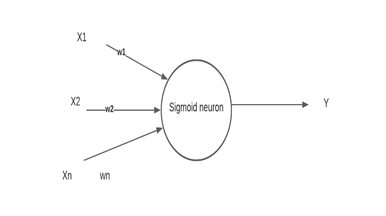
This is the simple representation of a neuron. This is similar to the biological neuron. In this neuron, the inputs are given along with some priority known as weights. The higher the value of the weights, the more prioritized is that input. This is the reason for our brain to choose one activity over the other. Activity is done only if the neuron fires. A similar situation is seen here. The particular activity is forwarded to the next layer only if this particular neuron fires. That is the output must be produced from the neuron.

Condition for the neuron to fire

The neuron will produce an output only if the inputs follow the condition.

As mentioned before, the bias is the threshold value and the neuron will fire only when the value crosses this bias. Thus the weighted sum for all the inputs must be greater than the bias in order to produce an output.

Classification of networks

Every neural network consists of three layers majorly: –

  1. Input layer
    1. Hidden layer
    1. Output layer

Input layer

The input layer consists of inputs in the form of vectors. Images are converted into 1-D vectors. Input can be of any form like audio, text, video, image, etc. which get converted into vectors.

Hidden layer

This is the layer in which all the computations occur. This is generally not visible to the user hence termed as a hidden layer. This layer may be single or multiple based on the complexity of the task to be performed. Each layer processes a part of the task and it is sent to the next layer. Vectors get multiplied with the weight matrix of correct dimensions and this vector gets passed onto the next layer.

Output layer

The output layer gets information from the last layer of the hidden layer. This is the last stage in the network. This stage depends upon the task given by the user. The output will be a 1-D vector. In the case of classification, the vector will have a value high for a particular class. In the case of regression, the output vector will have numbers representing the answer to those questions posed by the user.

The next article is about the feed-forward neural network.

HAPPY LEARNING!!

DEEP LEARNING- PART 2

This image has an empty alt attribute; its file name is deep-learning-logo-picture-id871793108

The previous article gave a brief introduction to deep learning. This article deals with the networks used in deep learning. This network is known as a neural network. As the name suggests the network is made up of neurons

The networks used in artificial intelligence are a combination of blocks arranged in layers. These blocks are called an artificial neurons. They mimic the properties of a natural neuron. One of the neurons is the sigmoid neuron.

This is in general the formula for the sigmoid function. Every neural network consists of weights and biases.

Weights- The scalar quantities which get multiplied to the input

Biases- the threshold quantity above which a neuron fires

NotationMeaning
XInput
YOutput
WWeight
BBias

Working of a neuron

This is the simple representation of a neuron. This is similar to the biological neuron. In this neuron, the inputs are given along with some priority known as weights. The higher the value of the weights, the more prioritized is that input. This is the reason for our brain to choose one activity over the other. Activity is done only if the neuron fires. A similar situation is seen here. The particular activity is forwarded to the next layer only if this particular neuron fires. That is the output must be produced from the neuron.

Condition for the neuron to fire

The neuron will produce an output only if the inputs follow the condition.

As mentioned before, the bias is the threshold value and the neuron will fire only when the value crosses this bias. Thus the weighted sum for all the inputs must be greater than the bias in order to produce an output.

Classification of networks

Every neural network consists of three layers majorly: –

  1. Input layer
    1. Hidden layer
    1. Output layer

Input layer

The input layer consists of inputs in the form of vectors. Images are converted into 1-D vectors. Input can be of any form like audio, text, video, image, etc. which get converted into vectors.

Hidden layer

This is the layer in which all the computations occur. This is generally not visible to the user hence termed as a hidden layer. This layer may be single or multiple based on the complexity of the task to be performed. Each layer processes a part of the task and it is sent to the next layer. Vectors get multiplied with the weight matrix of correct dimensions and this vector gets passed onto the next layer.

Output layer

The output layer gets information from the last layer of the hidden layer. This is the last stage in the network. This stage depends upon the task given by the user. The output will be a 1-D vector. In the case of classification, the vector will have a value high for a particular class. In the case of regression, the output vector will have numbers representing the answer to those questions posed by the user.

The next article is about the feed-forward neural network.

HAPPY LEARNING!!

DEEP LEARNING SERIES- PART 1

Have you ever wondered how the brain works? One way of understanding it is by cutting open the brain and analyzing the structures present inside it. This however can be done by researchers and doctors. Another method is by using electricity to stimulate several regions of the brain. But what if I say that it is possible to analyze and mimic the brain in our computers? Sounds quite interesting right! This particular technology is known as deep learning.

Deep learning is the technique of producing networks that process unstructured data and gives output. With the help of deep learning, it is possible to produce and use brain-like networks for various tasks in our systems. It is like using the brain without taking it out.  Deep learning is advanced than machine learning and imitates the brain better than machine learning and also the networks built using deep learning consists of parts known as neurons which is similar to biological neurons. Artificial intelligence has attracted researchers in every domain for the past two decades especially in the medical field; AI is used to detect several diseases in healthcare.

Sl.noNameDescriptionExamples
1DataType of data provided to inputBinary(0,1) Real
2TaskThe operation required to do on the inputClassification(binary or multi) Regression(prediction)
3ModelThe mathematical relation between input and output. This varies based on the task and complexityMP neuron(Y=x+b) Perceptron(Y=wx+b) Sigmoid or logistic(Y=1/1+exp(wx+b)) *w and b are parameters corresponding to the model
4Loss functionKind of a compiler that finds errors between the output and input (how much the o/p leads or lags the i/p).Square error= square of the difference between the predicted and actual output.  
5AlgorithmA kind of learning procedure that tries to reduce the error computed beforeGradient descent
NAG
AdaGrad
Adam
RMSProp
6EvaluationFinding how good the model has performedAccuracy
Mean accuracy

Every model in this deep learning can be easily understood through these six domains. Or in other words, these six domains play an important role in the construction of any model. As we require cement, sand, pebbles, and bricks to construct a house we require these six domains to construct a network.

 Now it will be more understandable to tell about the general procedure for networks.

  1. Take in the data (inputs and their corresponding outputs) from the user.
  2. Perform the task as mentioned by the user.
  3. Apply the specific relation to the input to compute the predicted output as declared by the user in the form of model by assigning values to parameters in the model.
  4.  Find the loss the model has made through computing the difference between the predicted and actual output.
  5. Use a suitable learning algorithm so as to minimize the loss by finding the optimum value for parameters in the network
  6. Run the model and evaluate its performance in order to find its efficiency and enhance it if found less.

By following these steps correctly, one can develop their own machine. In order to learn better on this, pursuing AI either through courses or opting as a major is highly recommended. The reason is that understanding those concepts requires various divisions in mathematics like statistics, probability, calculus, vectors, and matrices apart from programming. 


HAPPY READING!!

DEEP LEARNING SERIES- PART 1

Have you ever wondered how the brain works? One way of understanding it is by cutting open the brain and analyzing the structures present inside it. This however can be done by researchers and doctors. Another method is by using electricity to stimulate several regions of the brain. But what if I say that it is possible to analyze and mimic the brain in our computers? Sounds quite interesting right! This particular technology is known as deep learning.

Deep learning is the technique of producing networks that process unstructured data and gives output. With the help of deep learning, it is possible to produce and use brain-like networks for various tasks in our systems. It is like using the brain without taking it out.  Deep learning is advanced than machine learning and imitates the brain better than machine learning and also the networks built using deep learning consists of parts known as neurons which is similar to biological neurons. Artificial intelligence has attracted researchers in every domain for the past two decades especially in the medical field; AI is used to detect several diseases in healthcare.

Sl.noNameDescriptionExamples
1DataType of data provided to inputBinary(0,1) Real
2TaskThe operation required to do on the inputClassification(binary or multi) Regression(prediction)
3ModelThe mathematical relation between input and output. This varies based on the task and complexityMP neuron(Y=x+b) Perceptron(Y=wx+b) Sigmoid or logistic(Y=1/1+exp(wx+b)) *w and b are parameters corresponding to the model
4Loss functionKind of a compiler that finds errors between the output and input (how much the o/p leads or lags the i/p).Square error= square of the difference between the predicted and actual output.  
5AlgorithmA kind of learning procedure that tries to reduce the error computed beforeGradient descent
NAG
AdaGrad
Adam
RMSProp
6EvaluationFinding how good the model has performedAccuracy
Mean accuracy

Every model in this deep learning can be easily understood through these six domains. Or in other words, these six domains play an important role in the construction of any model. As we require cement, sand, pebbles, and bricks to construct a house we require these six domains to construct a network.

 Now it will be more understandable to tell about the general procedure for networks.

  1. Take in the data (inputs and their corresponding outputs) from the user.
  2. Perform the task as mentioned by the user.
  3. Apply the specific relation to the input to compute the predicted output as declared by the user in the form of model by assigning values to parameters in the model.
  4.  Find the loss the model has made through computing the difference between the predicted and actual output.
  5. Use a suitable learning algorithm so as to minimize the loss by finding the optimum value for parameters in the network
  6. Run the model and evaluate its performance in order to find its efficiency and enhance it if found less.

By following these steps correctly, one can develop their own machine. In order to learn better on this, pursuing AI either through courses or opting as a major is highly recommended. The reason is that understanding those concepts requires various divisions in mathematics like statistics, probability, calculus, vectors and matrices apart from programming. 


HAPPY READING!!

Android vs. iOS: Which OS is the best?

If you’re buying a new smartphone today, chances are extremely good it will run one of two operating systems: Google’s Android or Apple’s iOS. These two platforms account for virtually all new smartphones shipped in the last couple of years That’s some serious dominance by the two biggest players, and the good news is that both smartphone operating systems are excellent. They have quite a bit in common with each other, but there are some important differences you’ll want to consider when you’re trying to decide between these twin giants. We’re going to pit Android against iOS in several categories here and pick a winner for each one.

Affordability

Apple has always been at the high-end of the market in terms of pricing, but the iPhone X took things to a whole new level with a starting price of $1,000. Apple’s iPhones haven’t gotten much cheaper since, and the iPhone 12 Pro Max starts at $1,100. They do come a little more affordable, but not by much. The iPhone 12 starts at $800, and the iPhone SE (2020) — the cheapest iPhone Apple sells — starts at $400. Apple continues to expand its offerings, but $400 is as cheap as it gets unless you delve into the secondhand market.

For sheer scale and variety, nothing competes with Android. You can spend a lot if you want to — for example, Samsung’s cutting-edge folding Galaxy Z Fold 2 5G costs $2,000, but there’s also a huge selection of good, low-cost handsets as low as $100, from a wide variety of different manufacturers. The platform has also been deliberately optimized to run on low-end hardware with the introduction of the variant OS Android Go. Finally, Android’s lead in free apps also makes it the natural choice for the budget-conscious.

Apple’s iOS is an exceptional OS, but the high entry point has always been one of its biggest issues. Apple’s iPhone SE and iPhone 12 make that entry point lower, but it’s still not a match for Android’s massive range of affordable devices. Whether you’re looking to spend $100 or $2,000, there’s an Android phone for you. iOS can’t say the same.

Winner: Android

Apps

Let’s start with a look at the numbers. This is roughly how many apps you’ll find in the Google Play Store and the Apple App Store:

  • Android apps: 2.7 million
  • iOS apps: 1.82 million

However, numbers aren’t the best metric because most of us only use a handful of apps, and the most popular ones are available on both platforms. Traditionally, iOS has been a more lucrative platform for developers, so there has been a tendency for new apps to appear there first, but that’s changing as Android’s market share continues to grow. In the U.S., iOS still leads the way, but developers elsewhere are increasingly targeting Android first.

Luckily, both operating systems have been taking more precautions when it comes to malicious apps and spyware, making apps safer to download than ever.

The Play Store still has a higher percentage of free apps than the App Store. But the best mobile games still land on iOS first — and they don’t always come to Android, even if Android has plenty of great games. Ultimately, quality beats quantity, and so this is a narrow win for iOS.

Winner: iOS

App Store

It’s difficult to organize millions of apps and games, and neither Google’s Play Store or Apple’s App Store does it perfectly. Overall, we think Apple’s App Store provides a better browsing experience on your phone and does a better job with curated recommendations. The Play Store is easier to search and you can queue and install apps from the web browser on your PC or laptop.

We like the fact that you can buy apps using your fingerprint via Touch ID on iPhones, but you can set up the same thing for the Play Store on Android phones with fingerprint sensors. The Play Store wins points for having a no-quibble refund policy within two hours of purchase. There are some questionable apps in both stores, but Apple is generally stricter about blocking certain types of apps. That can be a good thing for overall quality, but it’s a bad thing if you’re into something like game emulators for classic consoles. The iOS App Store edges the win for usability and curated content.

Winner: iOS

Maps

As the newer navigation system, Apple Maps did not have a great start, but it has improved significantly. Key features are similar: You can download maps for offline use, get accurate estimates based on current traffic conditions, and find turn-by-turn directions for driving or walking. Apple has even closed further in on Google Maps by adding cycling directions and more improvements in iOS 14. You’ll also find public transit and ride-booking integration. They all work well and should get you where you’re going.

It used to be that Google Maps would win this category hands-down — and while it’s still generally our map app of choice, Apple has made some huge strides toward parity in the last few years, and Apple Maps is now at the point where it’s a serious competitor. We would still personally download Google Maps, even on an iOS device, but if you chose to go with Apple’s map app over Google’s, then you wouldn’t be getting an inferior product. Right now, Google Maps still has a small advantage due to its larger database of reviews and businesses, but its lead has narrowed a lot, and we expect to see this category fall into being a tie eventually.

Winner: Android

Battery life and charging

As one of the biggest complaints from smartphone owners, battery life is a huge factor. It’s difficult to compare the two platforms because there’s no common hardware. iOS is optimized to squeeze the most out of the battery per mAh rating, but you can buy an Android device with a much bigger battery that will easily outlast the iPhone.

Both Android and iOS allow you to see your battery usage at a glance, broken down by app, but only Android shows an estimate of how much battery life you have left. They both offer power-saving modes that can extend your battery life by limiting performance, connectivity, and other power-sapping features, but precisely how it works is generally more customizable on Android.

For a long time, Android had an advantage in the charging department, because many Android phones offered fast-charging capabilities and wireless charging. However, Apple’s iPhone 11, iPhone X, and even the iPhone SE (2020) adopted wireless charging and fast charging, so they’re not that far behind. It’s worth noting that you have to buy the fast-charging adapter separately for some iPhone models, whereas it’s usually provided in the box with an Android phone. Apple supplied a fast charger with the iPhone 11 Pro, but that was one of the last iPhones to come with any charger. From the iPhone 12 onwards, you’ll have to buy a charger separately, as iPhones now only come with a Lightning-to-USB-C cable.

However, Android fans shouldn’t sneer at iPhone lovers too much, as Samsung is following where Apple has led. The new Galaxy S21 range comes with no charger in the box, and, as with the headphone jack, we’ll probably start to see this change echo across to other manufacturers.

This category is far from clear-cut, but comparing similarly priced Android phones with iPhones, you can find a phone with a larger battery if that’s important to you, and they tend to have fast chargers included in the box (for the moment), so Android gets the win.

Winner: Android

Cloud services

Apple is still lagging when it comes to cloud storage and automatic backups. Google offers 15GB for free and has cross-platform support. You only get 5GB with iCloud, and it only works with Windows, Mac, and iOS.

If you need a lot of additional space, Google One charges $2 per month for 100GB ($20 for the year), while Apple charges $1 per month for 50GB or $3 per month for 200GB. Apple’s price for 2TB jumps up to $10 per month. Google will also give you 2TB for that price, but you can get a discount if you pay for the year, which costs $100 ($8.33 per month).

Android’s cloud storage is easier to use and more effective than iCloud. You can also use Google Drive on an iPhone, whereas iCloud is iOS only.

Winner: Android

Voice assistants

You can do many of the same things with Apple’s Siri as you can with Google Assistant, but Siri is more like a straightforward helper for setting calendar appointments, searching the web, or making calls. Google Assistant has an extra layer. It can preemptively offer useful suggestions, and it has a more conversational side that offers up entertaining games and contextual information based on what you’re doing. It’s smarter and more versatile than Siri.

The addition of Siri Shortcuts in iOS 12, which allows you to set up voice commands to trigger groups of automated tasks, is a big step in the right direction and Siri is also beginning to make more suggestions based on your iPhone usage. For now, however, Google Assistant can do more and seems to be improving at a much faster rate, offering things like call screening and the ability to make reservations for you.

Winner: Android

Rooting, bootloaders, and jailbreaking

We’ve looked at how to root your Android phone or tablet before. It’s not for everyone, but if you want root access and complete control over your device, then rooting is the way to get it. Rooting gives you access to more apps, the latest OS updates without waiting, new software skins to get the aesthetic you want, the chance to get rid of bloatware from carriers and manufacturers, potential tweaks to boost your device’s speed and battery life, and more.

Many Android OEMs (original equipment manufacturers) also offer a way to unlock the bootloader, which determines how the OS loads up on your device. Apple is completely opposed to this kind of thing. Jailbreaking is an option for iOS, which lets you download and install apps from outside the App Store and bypass some other limitations.

Winner: Android

Conclusion

Numerically speaking, Android wins 10 categories and iOS wins seven, but iOS wins in some of the more important categories — we don’t think rooting or alternative app stores are as important for most people as accessibility or security, for example. However, it’s very difficult to compare the two. Because Apple controls both the hardware and the software of their devices, you’ll find iOS offers a more uniform experience across devices.

AUTOMATION-A BOON OR BANE

AUTOMATION

       Automation is defined as the technique that makes a product or process by automatically using technology. It reduces the human input in the process. Automation has brought wide changes in the world. Starting from morning to evening, our works are automated in one way or another. For example, purified water by purifiers, food cooked in Microwave oven, washing clothes in the washing machine, automated vacuum cleaner, robots for work field, etc. We can say that most things are automated in the work field. Automation has been used in several fields including manufacturing, transport, defense, operations, and Information Technology. Automation plays a major role in IT optimization and digital transformation. Consequently, the automated systems have become more sophisticated. In the 21st century, we are mostly dependent on automation. Although it has several advantages, eventually it possesses some disadvantages. So, let’s discuss whether automation is a bane or boon?

AUTOMATION- BOON

        From the simplest to complex things, Automation has integrated with every part of our lives. With the help of automation, every work has been easily completed and it saves a lot of time.

Automation in the home: Using the combination of hardware and software components, home appliances are made. Starting from the purifier, washing machine, refrigerator, microwave oven, vacuum cleaner, etc…. most of the home appliances are automated which saves more time and energy.

Network Automation: By using software, the configuration, management, and operations of computer networks are automated. Network automation has become significant to manage the complexities of modern dynamic networks. It helps to reduce human errors in network management and operations.

Automation in the office: More organizations are using automation in the workplace to improve productivity and lower costs. The office automation system consists of both hardware and software solutions to transfer the data between systems without human interventions. Office automation brings broad changes of benefits to include improved accuracy, cost and time reduction,  storing and managing the data in an efficient manner, facility management, and several administrative works.

Security automation: The use of technologies to integrate security processes, applications, and infrastructure with reduced human assistance is known as security automation. Fast threat detection can reduce the impact of data loss.

Help to Disables: With the advancement in technology, automation helped disabled people to overcome their disabilities and by providing proper care independence, they can work like normal people.

AUTOMATION – BANE

Increases unemployment rates: Low-skill workers can be replaced. But nowadays, even the highly skilled workers are replaced by automated machines. Recent advancements in robotics and Artificial Intelligence (AI) reduced human works in the working environment.

Health issues: Most of the children in this 21st century are addicted to the video game. They prefer online and computer games rather than outdoor games. It makes people lazy and weak. This may be the cause for many health issues like eye problems, back pain, etc.

Machines are sensitive: Automation to some extent can be good but when more control is given to them, it may lead to some disasters Machines can never act like humans and they will be programmed without knowing the sensitivity of the issue.

Hackers:  Technology can be hacked by hackers. Sometimes, it may lead to wide disaster to a country by other countries. Our private details can be stolen by some hackers and they may demand several things to compromise them.

Loss of human interaction: Dealing with computers and machines can reduce the interactions between people.

        Overall, Automation is very essential for the growth and development of a country. Automation ensures the utilization of resources in various fields include healthcare, sports, energy, and technology. Without automation, we will spend more time finishing the task and thus delivery will be done very late. The economic imbalance will be increased. In short term, automation will cause unemployment and may bring some disadvantages. But in the long term effect, Automation will be needed for the better development of the nation.

How to Accelerate Azure Migration

Azure is a cloud computing platform and an online portal that allows you to access and manage cloud services and resources provided by Microsoft. These services include virtual computing, networking, storing data, and transforming it, depending upon your requirements. Azure supports multiple programming languages, including Java, Node.Js, and C#.

It’s free to start and follows a pay-per-use model, which means you pay only for the services you opt for.

Interestingly, 80 percent of the Fortune 500 companies use Azure services for their cloud computing needs. As it is a fast, flexible and affordable platform, its pricing and capabilities make it the best public cloud offering on the market. It is the second-largest cloud service provider right now.

Cloud Computing

Cloud computing is a technology that provides access to various computing resources over the internet. Cloud computing can be used for various purposes: machine learning, data analysis, storage, and backup, streaming media content and so much more.

Cloud Migration

Reduced cost, scalability, high-end security are the major reasons for cloud migration. Migrating to the cloud requires a lot of preparation and advanced work, but it is generally worth it, resulting in savings and greater flexibility. The overall goal or benefit of any migration to the cloud is to host applications and data in the IT environment in the most efficient way possible, based on factors such as cost, performance, and security.

A cloud migration strategy is a plan an organization makes to move its data and applications from on-premises architecture to the cloud. Not all workloads benefit from running on cloud-based infrastructure, so it is important to validate the most efficient way to prioritize and migrate applications before going live. A systematic, documented strategy is crucial.

Migration Process

Your exact roadmap for migrating to the cloud depends on the size and complexity of your environment. These are the basic steps:

Step 1: Planning your Migration

Before getting started, you should be clear on your reasons for the move and which strategy can best support them. Start by assessing your current environment. It is important to calculate your cloud server requirements based on current application resource requirements to avoid buying more than you need. At this critical stage, you will need the resources and expertise of a specialist. An application performance management (APM) solution can provide complete, real-time visibility into your environment and all its dependencies while rolling up strategy as part of the package.

Step 2: Choose a Migration Strategy

Once you have planned your migration and collected data on your current systems, you must decide on a migration strategy. These are the six most common approaches:

  • Rehosting (Lift and Shift”): Replicate on-premise architecture in the cloud. This involves lifting your stack and shifting it from on-premises hosting to the cloud.
  • Replatforming (“Lift and Reshape”): It involves making a few further adjustments to optimize your landscape for the cloud. Again, the core architecture of applications stays the same.
  • Repurchasing (Drop and Shop): This means redesigning and developing an application using cloud-native features. Even so, repurchasing might be your most cost-effective option if moving from a highly customized legacy landscape.
  • Refactoring (Re-architect): This means optimizing an application for the cloud by re-architecting. Refactoring is generally the most expensive option, but also the most compatible with future versions.
  • Retiring (Decommission): Once you have assessed your application portfolio for cloud readiness, you might find some applications are no longer useful. In this case, turn them off.
  • Retaining (No Movement): For some organizations, cloud adoption does not yet make sense. In this case, plan to revisit cloud computing at a later date. You should only migrate what makes sense for your business.

Step 3: Migrating your Apps and Data

Planned accurately, your actual migration should be plain sailing. Still, keep in mind cloud security concerns, such as complying with security policies and planning for data backup and recovery. Also, be sure to use APM to baseline premigration performance in preparation for the next step.

Step 4: Validating post-move Success

You cannot declare a cloud migration successful without evidence that it works as expected. With a solution like AppDynamics Business iQ, you can prove the benefits of cloud migration by comparing pre-and post-move application performance, from both a technical and business perspective, in a low-risk test environment.

With more than 200 services and numerous benefits, Microsoft Azure is the fastest-growing cloud computing platform adopted by businesses. Microsoft Azure’s total revenue is expected to surpass $19 billion by 2020. This growth in the implementation of Azure by businesses is creating various opportunities for professionals in this technology.

Virtue of Mobile Computing

In this article, we will see how mobile phones, which are an integral part of everyday life have evolved over decades. How computing devices which once took a room space to operate, now can be operated in the hands.
So before we go into the concept of mobile computing, let’s see what is computing. In simple terms, if I have to say, computing is any algorithm, which takes some input, performs processing on that input, and gives the craved output.

Mobile Computing

Computers and Computing have a very wide application. Everyone uses computing whether it is for personal purposes or business purposes. All the businesses who want to scale, diversify or become efficient are becoming more and more automated by using computing technologies. We can see revolutionary change, in the way various business sectors work, which has happened in the last couple of years. For example In the industries like banking, financial, education, entertainment, and hospital. There are many more applications.
But in earlier times, computers that were used to do computing were quite big. They used to be fixed at some particular place and if anyone has to do some computational work then, a person would need to visit that place to work on a specific computer. But as the time passed, the size of computers decreased, decreased to such smaller size that computers with a good amount of processing capability were made portable and therefore this made possible that computing can be done from anywhere, anytime. So doing this computing from anywhere due to available portable devices is what mobile computing is. Basically, you can do computing while being mobile.

Laptop, Workspace, Desk, Workstation, Work Place

Benefits of Mobile Computing

In general, Mobile Computing is a dynamic technology that increases flow of information and its quality. More specifically, it leads to a range of benefits. Some benefits are provided below.

  • (1) Mobile computing has enabled users to work from anywhere as long as they are connected to a network. Employees have access to the organization’s database from remote locations. This has provided flexibility in working – for example, enabling home working, or working while traveling. Some companies like Facebook, Twitter, and Shopify have even allowed some of their employees to work from home permanently.
  • (2) Mobile computing has reduced the traveling time. Now employees don’t need to go their office place for every task they need to carry.
  • (3) Employees’ productivity has also been enhanced due to the fact that employees can now work in an environment in which they feel comfortable and productive.
  • (4) Management also has increased the flow of information. This improves management effectiveness, as information processing is key to any business success factor.
Woman, Brain, Laptop, Smartphone, Lady

Problems with Mobile Computing

But of course, nothing is perfect altogether. So yes there are some problems that are associated with mobile computing.

  • (1) Insufficient Bandwidth: Mobile internet is slower than using direct cables connections. However better using better networks like 4g or in the future, 5g can help to overcome this problem to a certain extent.
  • (2) Security: Mobile computing has weak security, since data travels through the spectrum in the air, there is the risk of data being hacked. This can be solved if there is the careful use of VPN i.e. Virtual Private Networks.
  • (3) Power: Mobile devices also have to rely on battery power. If the power source is not available, then the battery can only work for a limited amount of time.
  • (4) Health hazards: There are cases where people have been distracted while driving and using mobile phones. There are also serious allegations on mobile devices having harmful effects on health.

Conclusion

And lastly to summarize and conclude, mobile computer is nothing but one network that is not limited to the fixed location. Though it has some disadvantages, but as the technology is advancing, we are overcoming those problems and mobile computing is the future technology as it allows constant contact with the internet and data that needs sharing. The mobile world ensures that we are all connected at the touch of a button. The industry associated with mobile computing is worth more than a trillion dollars and being smartphones available at such low prices is beneficial as it ensures that nearly everyone has access to at least “basic computer” at all the times. What are your thoughts on this?

Researchers are coming closer to being able to record your dreams.

Source: Google

We are living in odd times. Scientists are making significant progress on recording people’s dreams, and they’re a lot closer than you might believe.

Moran Cerf, an Israeli neurologist at Northwestern University, researches decision-making processes in both awake and sleeping humans. Cerf said he is putting electrodes on the brains of persons undergoing brain surgery as part of his research to “listen to activity of specific brain cells.” This allows him to get a sense of what individuals are thinking. “We may assume you dreamed about your mother and father,” said Cerf, a Tel Aviv University alumnus. “However, we’re not sure what your mother was wearing.”

Those visuals may get clearer in the near future. Kyoto University’s Yukiyasu Kamitani is a Japanese researcher. Using a gadget that detects brain activity, he has already begun reconstructing images from a waking person’s mind. He wants to use the same technology to record his dreams.

And scientists don’t need to go into your skull to figure out what’s going on. You’re paralysed during REM sleep, so you can’t act out your dreams. When you dream about running away from a dinosaur, though, your brain still sends electrical signals to your legs instructing them to move.

“Nerve impulses are still travelling to those muscles,” said Daniel Oldis, a lucid dream researcher at the University of Texas who collaborated with David M. Schnyer, an American neuroscientist. These signals are being measured by Oldis and Schnyer. They’re also looking at the signals in people’s lips and throats to see what they’re saying in their dreams.

So, when will you be able to witness your fantasies come true? This will most likely happen in stages. According to Cerf, you could have a device that tells you what you dreamed about in a general sense in a few months to a year. You’ll probably have to wait decades for a true dream cinema.

Naturally, this poses a slew of concerns. Will you be able to peek into other people’s dreams? Will businesses begin to place advertisements into our dreams in the near future?

Technology and the Environment

How technology can play a role with respect to the environment:

The development of various types of technology in today’s time has given rise to more convenience and efficiency. Technology can be used to properly understand and address important challenges like climate change, degradation of the environment, scarcity of food, management of waste, along with other important global issues and challenges. Data can be consolidated and stored in various information systems online in the form of comprehensive portals. These portals can then be accessed by academicians, scientists, students, environmentalists, and anyone else as they need it. These expansive databases can cover a variety of areas such as wildlife conservation databases, marine flora databases, forest cover databases and the like.

A few technology systems which can be used for the betterment of the environment are:

  • Remote Sensing
  • Google Earth
  • Geographical Information System (GIS)
  • The World Wide Web
  • The database ENVIS: Environmental Information System

Remote Sensing

Remote sensing

Remote Sensing refers to obtaining information of a place from a distance. In this process, the physical characteristics of an area are detected and further monitored through the measurement of its reflected and emitted radiation. This is carried out with the help of remote sensors on satellites. A few applications of remote sensing are:

  • Finding out temperature changes in the ocean and air
  • Tracking changes in forested land
  • Making weather predictions

Google Earth

Google Earth

Google Earth is a map which gives three-dimensional views of the earth with the assistance of satellite imaging and other types of aerially conducted photography. Presently, Google Earth covers around 98% of the earth’s surface. Google earth doesn’t just cover land but also water. Through the use of Google Earth, it is possible to view below the surface of marine bodies and view the ocean floor by the method of bathymetry (study of the underwater depth of an ocean or lake floor).

Geographical Information System (GIS)

Geographical Information System (GIS)

The Geographical Information System is a spatial system which creates, manages, analyzes, organizes and maps different types of geographic data. Using the GIS software, it is possible to visually analyze a large volume of data. Through the usage of GIS, it is possible to bring together and integrate information from varying sources of information and have efficient data distribution and management. It can be used efficiently for Environmental Impact Assessment.

The World Wide Web (WWW)

World Wide Web (WWW)

The WWW is a collection of many electronic documents of varying types. It provides various types of resources about the environment, from journal reports and articles to animations and is available to a wide variety of people, right from students, to scientists to government officials. It provides, free, convenient, accessible, evolving and the latest information.

Database: ENVIS

ENVIS

ENVIS is a database known as the Environmental Information System. It was created by the Indian Ministry of Environment & Forests in 1983. Its goal is to collect environmental information, along with its subsequent organization, storage, recovery and distribution. The role of ENVIS is to provide people like policy makers, researchers and the like with environmental information.

JOB : A COMPUTER SCIENCE DEGREE?

Computer technologies are integral to modern life, so you’re likely to find your computer science skills in high demand across many different industries. These include financial organizations, management consultancy firms, software houses, communications companies, data warehouses, multinational companies, governmental agencies, universities and hospitals. 

As always, it’s extremely beneficial to have completed relevant work experience. You should also consider compiling a portfolio of your own independent projects outside of your degree, which could be in the form of programming, moderating online or even building an app. This will demonstrate to employers your interest in the subject and your problem-solving skills, creativity and initiative.

IT consultant

Working in partnership with clients, an IT consultant advises clients on the planning, design, installation and usage of information technology systems to meet their business objectives, overcome problems or improve the structure and efficiency of their IT systems. As you represent a broad role in IT, your job will be similar to that of systems analysts, systems designers and applications programmers, whose roles are more specialized but nonetheless work on a consultancy basis.

Cybersecurity consultant 

Depending on what computer science specializations you studied during your degree, you may wish to specialize as a cybersecurity consultant or an information security specialist. Maintaining cyber security has become increasingly important, so in this role you will focus on understanding the risks to the security of information or data.

You’ll analyze where security breaches may occur or have occurred, and restore or reinforce systems against such breaches, to ensure that confidential data is protected. This role could include ‘ethical hacking’, meaning deliberately attempting to hack into your employer’s network to expose any weaknesses. Alternatively, you could work as a computer forensics analyst or investigator to combat the increasing phenomenon of cyber-crime.

Information systems manager 

A similar role to an IT consultant, an information systems manager is usually a full-time member of staff, responsible for the secure and effective operation of computer systems within their company. You’ll be responsible (perhaps with the help of a team of IT staff) for the entire upkeep of the ICT infrastructure within your organization, with typical tasks involving the overseeing of system installation; ensuring systems are backed-up and that the back-up systems are operating effectively; purchasing hardware and software; setting up secure access for all users; ensuring security of data from internal and external attack; and providing IT support and advice for users. 

You’ll need to make sure the ICT facilities meet the needs of your company and are current, while remaining within a set budget, and within all relevant software licensing laws. You may also need an understanding of business and management principles in order to contribute to organizational policy regarding quality standards and strategic planning in relation to IT.

Database administrator 

database administrator (DBA) is responsible for accurately and securely using, developing and maintaining the performance, integrity and security of a computerized database. The specific role is always determined by the organization in question but is likely to mean being involved purely in database maintenance or specialized in database development. 

The role is also dependent on the type of database and processes and capabilities of the database management systems (DBMS) in use in your particular organization.

Typically, this role includes ensuring data remains consistent, is clearly defined, easily accessible, is secure and can be recovered in an emergency. You’ll also be required to troubleshoot should any problems arise; liaise with programmers, operational staff, IT project managers and technical staff; provide user training, support and feedback; and write reports, documentation and operating manuals.

Interrupting the Waste industries with Innovation

Rubicon started with a striking thought: make a cloud-based, full-administration squander the board stage, offering productive assistance anyplace in the US. Their versatile application accomplished to squander the executives how Uber had helped taxi administration. Five years after the case’s distribution, Harvard Business School Associate Professor Shai Bernstein and Rubicon organizer and CEO Nate Morris examine how the product startup utilized innovation to disturb the waste business and other suffering exercises of educator Bill Sahlman’s case about Rubicon. Americans discard a ton of stuff. That is to say, more than individuals in different nations. Americans normal 4.5 pounds of waste each day, contrasted with the worldwide normal of about 1.6 pounds each day. Presently, four and a half pounds may not sound so awful, yet it adds up. That is 1,600 pounds for every person, and 6,500 pounds for each family throughout a year. All in, Americans created 292 million tons of waste in 2018, as per the Environmental Protection Agency.

Teacher Shai Bernstein’s exploration centers around monetary issues identified with new companies and high development firms, and the association of these issues with advancement and enterprising movement. Nate Morris is the author of Morris Industries, a Lexington, Kentucky-based aggregate that is rethinking the mechanical economy. His energy to settle the ecological dangers presented by worldwide waste drove him to establish Rubicon. Along these lines, just to give a smidgen of setting. In this way, the Rubicon case is being instructed in our pioneering finance class, which is a second year EC course in which we are essentially strolling through the life-cycle of the firm, attempting to consider various wellsprings of capital that match the organizations at the various phases of the development of the organization. Also, in the primary model of the class, we are explicitly considering various attributes of plans of action that make a few firms more alluring to financial backers than others.

Another intriguing angle here is that the business has basically been working with enormous occupants for quite a long time. Furthermore, here we have Rubicon that is carrying innovation to the business and attempting to disturb the business with altogether different plans of action and altogether different methodology, which makes this so fascinating to see the crash between totally different ways to deal with squandering the executives. And afterward the other part that I would make reference to is that, toward the day’s end, Rubicon, what Rubicon does is essentially significant for our general public. Furthermore, pondering supportability, reusing, ESG, is a subject that truly, at the core of Rubicon’s central goal, and furthermore a large number of our understudies are truly enthusiastic about this theme. Thus, I believe that likewise adds to the ubiquity of this case and to the interest of understudies for this situation.

It’s a truly fascinating combination of innovation and industry elements and this manageability issue that, if you unite them all, makes it a truly intriguing case.”Waste is a point that not very many individuals need to discuss, not to mention start a new business. What’s more, the vast majority of the setting around our industry rotates around a famous TV program, The Sopranos. A spectacular show, done. Also, many individuals scratch their head about, truly, is that the business that you picked? Also, I was quickly attracted to the business for two or three unique reasons. I’m a Kentuckian, I experienced childhood in Kentucky. Went to a government funded school there. Was raised by a single parent in a common home, and experienced childhood in an association home too. My granddad was exceptionally associated with my life, ran an association and grew up around association laborers”, says Nate Morris.

What Role Do Cookies and Privacy Policies Play in Data Breach? (Part-1)

In today’s world, where many technological advancements are occurring, there are certain aspects about which we must be cautious. Hackers aren’t just people who steal your information; they can even keep an eye and ear on you. Many businesses, or should we say applications, are engaged in such nefarious practices.

Your sensitive information can be extracted and used in a variety of ways. It is important for everyone to understand how our personal data can be taken from the internet and how we can protect ourselves from it.

INTRODUCTION

“Our website needs cookies to provide you with the best experience,” we’ve all seen this pop up almost every time we use the browser. We’ll presume you’re okay with receiving all cookies if you continue without adjusting your settings.” Otherwise, we are redirected to the previous page if we do not press proceed. These cookies are designed to store a small amount of data unique to a specific client and website, and they can be accessed by either the web server or the client device. Although the cookies do not contain your password, they do contain a hash that is identical to it. When you visit the website, it is compared to a hash stored on the server, which is essentially the same as your password.

COOKIES

There are two types of cookies-

  1. Session cookies- E-commerce sites use session cookies to keep track of what you put in your shopping cart. Those are just temporary, and they disappear as soon as you close your browser.
  2. Persistent cookies- It allow websites to remember details such as log-in credentials or account information. However, there is a risk that any of those cookies could end up in the wrong hands.

Third-party cookies pose a greater risk. For the most part, they’re generated by sites that aren’t the same as the web pages people are actually browsing, so they’re linked to ads on that website. Even if the user does not visit the connection, if there are about ten ads on the tab, it will generate ten cookies. It also allows users to monitor a person’s browsing history on all of their ad-supported sites around the internet.

In 2013, Edward Snowden reported that The New York Times articles explaining “How the NSA was using Google cookies to pinpoint hacking targets” included cookies as well. Dave Winer, a New York-based American software developer, has also expressed his concerns about how Facebook can monitor anyone’s whereabouts on the internet after logging in without their permission.

Cookies make it possible to:

  • Persistent shopping carts and customer log-in
  • Wish lists
  • Suggestions for Products
  • Custom user interface (for example, “Welcome back, Steve”)
  • Keeping track of the customer’s address and payment details.

This information can’t only be used by advertisers to aim targeted advertising at us; it also poses a danger to us if it’s misused by the government. At the time, our own well-being was being compromised by ardent supporters of the government through data that we might not have discovered in any situation. Surveillance becomes much more dangerous as a result of this.

Stay tuned for Part-2!

Qualcomm reclaims the clock speed title with the Snapdragon 870 5G chipset and its 3.2 GHz CPU

Qualcomm introduced new powerful flackship processor between 865 and 888 It’s performance and feature are down👇

Its CPU reaches the highest clock speed in the mobile world – the prime core now runs at 3.2 GHz, up from 3.1 GHz on the 865+ and 2.94 GHz on the vanilla 865. Those two were surpassed by the Kirin 9000 and its 3.13 GHz prime core, but now Qualcomm has reclaimed the clock speed crown.

The Snapdragon 870 still uses Kryo 585 cores, which are based on ARM’s Cortex-A77 with some in-house tweaks. The Snapdragon 888 CPU is based on the newer Cortex-X1 and A78 instead, so while it runs at lower frequencies (2.84 GHz for the X1), there’s more to the performance story. We’ll have to wait for the first benchmarks to see how all these chips compare, though.

The Adreno 650 GPU makes a comeback, but it’s not clear if it received a clock boost of its own and, if not, whether it’s running at the 865 frequency (587 MHz) or 865+ (670 MHz). The Hexagon 698 and the Tensor Accelerator deliver the same 15 TOPS as the two 865 chips so that definitely did not get a boost.

The display driver can run 1440p class panels at up to 144Hz (or 4K at 60 Hz) and supports HDR10+ (Rec. 2020 color gamut). The Spectra 480 ISP is unchanged as well, with support for sensors up to 200 MP, 8K video capture at 30 fps (and 4K at 120 fps), high dynamic range videos using the HDR10+ and Dolby Vision standards.

There’s no onboard 5G modem, instead the chipset will be paired with an external Snapdragon X55 with sub-6 and mmWave support (up to 7.5 Gbps downlink speeds).

The Snapdragon 870 will be used in phones by Motorola, OnePlus, Oppo, Xiaomi and iQOO. Motorola says it will launch its phone “soon”, but there are no exact dates for any of the upcoming devices. The companies did give a few hints what kind of phones they are working on, though.
MEDIATECH ACHIVE

The growth of MediaTek also means that it somewhere hampered Qualcomm’s market that dropped from 31% share in Q2 to 29% in Q3.

When we talk about the biggest processor makers in the smartphone world, usually Qualcomm and Samsung brands come to all mind. However, both of these were not the biggest smartphone chipset supplier in third quarter of the 2020. According to a new report from smartphone industry, MediaTek was the one that to get the lead position then Qualcomm

As per the report, the Taiwanese chipset maker performed well in $100 to 250 In India( ₹7000 – ₹18,000) price . India and China were two of the most important markets for MediaTek in Q3. One of the reasons for MediaTek’s growth is also said to be the inactive growth of Huawei due to these US sanctions.

MediaTek chipsets were in some 100 million smartphones that were sold globally in the third quarter. All this helped the company to expand its market share from 26% in second quarter to 31%.

The growth of MediaTek also means that it somewhere hampered Qualcomm’s market that dropped from 31% share in Q2 to 29% in 

However, Qualcomm even now is still leading when it comes to market for 5G chipsets. It had a share of 39% in the third quarter. As per report, the demand for 5G phones increased in Q3 with 17% of all handsets supporting 5G network. And this helped Qualcomm expand its market share. 

The research by smartphone world says that this 5G trend is likely to continue with 1/3rd of all smartphones that will be shipped in the fourth quarter of 2020. While Qualcomm has brought some new 5G supporting chipsets including the Snapdragon 690, Snapdragon 750G and Snapdragon 865 Plus, MediaTek on the other hand, has also expanded its lineup across different series using its DIMENSITY range of 5G chipsets.

Any how, 5G chipset is not nessasary for all country even in India we are going to get 5G in Q2 2021 via JIO telecommunications company and they are told that we are going to launch we wait and see how long it take to provide 5G to people.

In India only Mediatech Dimensity 800U only launched and which smart phone brand going to launch whth this chipset don’t know, where it is Mi or Realme. My preference is Realme going to launch first

Get ready India, we are going to get better network communication in 2021-2022. It may go longer than 2022 because of COVID -19 pandamic,when Indian government give spectrum auction we get 5G better network in India

CONCLUSION

Though Mediatech come from low level it achive by its performance ie… By the engineer who are all designing this chipset great aplast, any suggestion or Idea put it in comment..

THANKS FOR SPEND VALUABLE TIME

Cyber Security – Nobody is Safe.

The need for Cyber security in the new world

I for one, got sceptical about the internet, when I was signing up for a newsletter for some website. The ones that end up being unread in the spam folder of the inbox.

As I was about to type in my details, an option popped up on my device, offering to type out the my details for me. The moment I clicked ‘ok’, it entered all my details, which even I, myself got wrong at times. Alarmed was not the word for it.

Being a law student, a paper in the current semester brought me up close with the nuances of cyber security and its relevance in this new age world.

Prior to that, me, being a victim of a cyber attack, never crossed my mind. It felt as the fort of the ‘big body corporates’ and hackers as we’ve seen in the movies.

The scene starting of with a shot of the outside of a high rise building and then the scene progressing into the interiors filled with people in expensive suits hustling and bustling. Then we were shown a guy Sitting in a shady corner, mostly, in a far away place, with blood shot eyes behind the specs, with the hoody on and staring onto the screen with the concentration of a heart surgeon conducting bypass surgery, not concerned about the realities of the world.

The power of what all a person can accomplish with a gadget connected to the internet is old news for us, but the intensity of the troubles are worth pondering about.

The need for educating people of all walks of life about the dangers of the internet and how to steer clear is indeed the need of the hour.

If systems of international banks can be compromised over the web, why not a person like you and me, who are unaware of the pool we’ve our legs dipped in.

Surely, it has made our lives easier, closer and more colourful, but don’t forget that there are two sides to every coin. We go about living our lives believing that the ‘common man’ will never be vulnerable to cyber attacks.

In the quest of becoming more social, we often get carried away on a few things. A couple of decades back and even now at times, the society as a whole gets sceptical of exposing sensitive datas like addresses, contact details and other stuff to a complete stranger.

But now, to fit in, we’ve all details from our DOB to mail ids and everything and anything on the web for people to access. What if it goes into the hands of the wrong kind?

Completely forgetting that everything about them is just a few taps away on some site.

Most importantly I believe conversations in the past were restricted due to the fear of getting punched in the face. But now the power of the internet has made anybody a ‘somebody’, a ‘keyboard warrior’; people, hiding away behind a screen, doing anything, feeling assured against not getting punched, at all.

Sure, we can justify all these, that we’ve progressed and become free thinking but people are still people.

We were taught not to step into the cars of a stranger but now we book and share cabs with people who we’ve never met.

Whole of my life I was asked to live by the rules and I believe that’s the best way to live. When all my peers started downloading movies and songs, from random sites, I’ve never felt the need; because I’ve always been certain that there’s nothing like a ‘free lunch’ in this world. People play it smart, by downloading pirated stuff, believing that they pulled a fast one, unaware of the threats posed by such sites.

Cyber security experts have time and again conferred that such articles are often kept out as baits for snatching the weak ones. You may never know when your luck runs out.

Everything comes with a cost.

The very websites that may host such pirated content may contain malware that might end up compromising your system.

Taking everything from basic details to bank info along with it. Enough to make you lose everything you own to your name in a matter of seconds. Losing everything you’ve had to strive for your entire life, gone, in just a matter of minutes, to download a movie or two, is something we can surely live without, right?

Most websites know us like the back of their hands with the algorithms they use. Next time when you see an ad for something you were searching for a little while back, coincidence, I think not.

Digital footprint is something that’s not talked about. It’s the track of what all we’ve done across the Internet. The track would itself suffice to tell a tale or two about us.

They say energy can’t be destroyed, same applies to data, once created it can never be destroyed. Every single time we send a doc or text to the Recycle bin and get it erased from there, we feel we’ve got it out of the system. But apparently what happens is that the data gets taken out from the view but will continue to be stored on the hard disk. The tech is so advanced that, nowadays anyone can buy a software and retrieve all kinds of data from your device.

The vastness of the internet has made us ever so negligent of what all we do. .

Every time we hear somebody being a victim of a cyber attack, we judge them, that very moment, that ‘they should’ve been more careful.’ But how safe do you think you’re? It might be somebody today, and you tomorrow. Think twice before your next type/leap.

It’s better to be safe than sorry.

As the internet gets more and more entangled with our day to day lives, going the extra mile to ensure that no data is unnecessarily shared can make all the difference in all the world.

The internet is nothing more than a large network connecting and abridging the gaps between networks. It grants us access to everything and anything.

But always remember a bridge has two ends, what may connect us to everything, connects us to them too.

Does Tech complicate or simplify life?

Tech frenzy. Would be an apt way of putting the world we live in as of now. From toddlers to the elderly. 

The folks down at the Research and Development departments of most leading consumer gadgets are so good at their craft, that we’d have often fallen short to realise about the latest tech advancements this week.

In the act of them pursuing the craft of their desire, we have found ourselves addicted to one thing or the other. People infected with consumerism ever greater than before. Some buy to impress, some buy to get more efficient, to get more work done; but with the corporates taking the win in the end.

 A quote in a birthday card I got some time back, went like, “ Today is the oldest you’ve ever been, and the youngest you’ll ever be again.” A subtle way of saying you’ve grown older and perhaps closer to the grave. Softening the blow couldn’t get easier than this. 

As much as it is relevant to ageing, it’s relevant to the tech we consume too.

That made me wonder when was the last time I received a card for my birthday, not anytime recently, obviously.

With the outbreak of everything turning digital, I believe the jobs of cards were taken over by a simple text, via whatsapp. 

Which intrigued me of how seldom we text people these days, the days of texting close acquaintances has long passed, spending almost a rupee for a text made us value texts more. It meant something. The rules of the nature are indeed best relevant to tech now, “survival of the fittest.”

With everything turning cheaper, smaller, quicker; we’ve seem to have lost the joy of the little things. Making every single thing less significant but yet complex.

Time does really fly, we went from a time where logging onto the internet was an escape from reality, but now the tables have turned. Being able to shut out everything and taking our eyes off them, screens has become an escape from our realities. As much as I would love to not sound Cliche, the truth cannot be set aside.

Social media platforms went from simple socialising mediums to tools for marketing and making political stands. With people getting unbelievable power to express and do things like never before. Which yet again drags us back to the question, ‘has it made our lives complicated than easier?

James Franco, the brilliant Hollywood actor once joked , “My wife asked me why I spoke ever so softly in the house. I said I was afraid Mark Zuckerberg was listening! She laughed. I laughed. Alexa laughed. Siri laughed.”

If this doesn’t make you break a sweat, I don’t know what will. Our quest to socialise has cost us our privacy. A grave price to pay

There was a time, when we could’ve bored ourselves to death while being confined to our homes this long due to the pandemic . But times have changed, we no longer have the liberty or need to get bored. Unless we get bored of not getting bored that often.

The movies from the past, portraying the future have undeniably done a great job in predicting the backdrops magnificently. Setting aside a few cliche depictions like ‘flying cars’, ‘teleporting’, which are not here yet, but does seem just around the corner. 

Our cars can now self-drive, earphones are wireless, we make calls from our watches, everyone’s a photographer these days, and we can get answers for everything just with a few clicks now, these are all just from the top of my head.

Lives have been made simpler, but the question that springs to my head is whether, ‘we’ll all forget how to live, in our pursuit to live better?’.

Apple iPhone 12 likely to arrive in October: Here is everything you need to know

A few days after Apple confirmed that it won’t unveil the upcoming iPhone 12 series in September, a new report reveals that the smartphone would arrive in October. Noted tipster Jon Prosser has listed down the release dates of not only iPhone 12 but also the speculated iPad and Apple Watch. Although the dates leaked by the tipster are not confirmed by Apple, Prosser in his Twitter post has claimed that he had never gotten a product announcement date wrong.

As per Jon Prosser, the Apple iPhone 12 launch event would be held on October 12 while the pre-overs would take place later that week and the shipping would take place in another week. Prosser says that the iPhone 12 would be announced on October 12 while the shipping would start from October 12. Whereas the iPhone 12 Pro devices would go on sale somewhere in November, the exact dates of which is not known.

Not only iPhone 12, Prosser has also revealed that the Apple Watch Series 6 and the Apple iPad will be launched on September 12. The company would not hold any special launch event for the iPad and Apple Watch, the launch would be announced via press release. The leaker also claimed that he never gets product announcement dates wrong and also shared the list of Apple products that were launched on the dates leaked by him. As per Prosser, he got the launch dates of iPad Pro, iPhone SE, MacBook Pro and iMac right.

Last month, the company revealed that the iPhone 12 would not be unveiled in September as speculated. During a conference call, Apple’s Chief Financial Officer Luca Maestri confirmed that the release of the new iPhones have been delayed by a few weeks. He was quoted by TechCrunch as saying, “As you know, last year we started selling new iPhones in late September. This year, we project to supply to be available a few weeks later.” Chipmaker Qualcomm too had hinted at the delay of 5G Apple iPhones.

Without naming either the brand or the smartphone, Qualcomm revealed in its Q3 earnings report that “a partial impact from the delay of a global 5G flagship phone launch.” Notably, Apple and Qualcomm had entered into a $4.5 billion deal, Apple will use Qualcomm’s 5G modem for its upcoming devices and the delay in the release of the new iPhones would also impact Qualcomm’s business.

Apple is expected to launch Apple MacBook, Apple iPad, Apple Glass, Apple Power along with the iPhone 12 series this year.

S-400 missile to China

The S-400 Triumf, previously known as the S-300PMU-3, is an anti-aircraft weapon system developed in the 1990s by Russia’s Almaz Central Design Bureau as an upgrade of the S-300 family. It has been in service with the Russian Armed Forces since 2007. Considered to be the most advanced missile defense system in the world, the S-400 ‘Triumf’ system is capable of destroying targets at a distance of up to 400 kilometers and a height of up to 30 kilometers.

download

In 2017, the S-400 was described by The Economist as “one of the best air-defense systems currently made”, and Siemon Wezeman of Stockholm International Peace Research Institute (SIPRI) said it “is among the most advanced air defense systems available.” China, Saudi Arabia, Turkey, India, and Qatar expressed their appreciation for the S-400 system, and China was the first foreign buyer to make a government-to-government deal with Russia in 2014.

Amid a global uproar against China – coronavirus, a military standoff with India, Hong Kong, Taiwan, and the South China Sea, US – in just the past six months, Moscow has now announced the suspension of S-400 surface-to-air missile systems to Beijing, with the resumption of deliveries yet to be ascertained.

Russia has announced the suspension of S-400 surface-to-air missile systems to China and said the resumption of further deliveries is yet to be ascertained. Citing Chinese newspaper Sohu, UAWire reported, “This time, Russia announced the postponement of the delivery of missiles for the Chinese S-400 system. To a certain extent, we can say that it is for the sake of China. Getting a gun is not as easy as signing an invoice after receiving a weapon.” “They say that the work on delivering these weapons is quite complicated. While China has to send personnel for training, Russia also needs to send a lot of technical personnel to put the weapons into service,” Sohu said.

download (1)

Post-Russia’s announcement, China has reportedly said that Moscow was forced to make such a decision as it “is worried that the delivery of S-400 missiles at this time will affect the anti-pandemic actions of the People’s Liberation Army and does not want to cause trouble to China.” In 2018, China received the first batch of S-400 missile, a military-diplomatic source told Russia`s TASS news agency. Meanwhile, it should be noted that the suspension comes merely days after Russia had accused China of espionage, despite the two nations sharing considerably good relations over the years. This assertion had come up after Russian authorities had found the president of its St Petersburg Arctic Social Sciences Academy, Valery Mitko handing over classified material to the Chinese intelligence.

Rafael aircraft coming to India from France

The Dassault Rafale is a French twin-engine, canard delta wing, multirole fighter aircraft designed and built by Dassault Aviation. Equipped with a wide range of weapons, the Rafale is intended to perform air supremacy, interdiction, aerial reconnaissance, ground support, in-depth strike, anti-ship strike, and nuclear deterrence missions. Many of the aircraft’s avionics and features, such as direct voice input, the RBE2 AA active electronically scanned array (AESA) radar, were domestically developed and produced for the Rafale program. Originally scheduled to enter service in 1996, the Rafale suffered significant delays due to post-Cold War budget cuts and changes in priorities. The aircraft is available in three main variants: Rafale C single-seat land-based version, Rafale B twin-seat land-based version, and Rafale M single-seat carrier-based version.

Rafel-piuja-390x220

The Rafale is being produced for both the French Air Force and for carrier-based operations in the French Navy. The Rafale has been marketed for export to several countries and was selected for purchase by the Indian Air Force, the Egyptian Air Force, and the Qatar Air Force.  Due to its great capabilities, the first batch of 5 raflaes arrives in India in two days.

On the one hand, when there are neighbors like China and on the other hand, when there are neighboring countries like Pakistan, India needs to work on both its army and the Indian Air Force. In such a situation, 5 Rafale aircraft was given to the Indian Army yesterday. These Rafale aircraft flew from France yesterday and reached the UAE airbase Al Dhafra today. Here their maintenance and refueling work will be done. After this, these fighter aircraft will fly and arrive at Ambala Air Force Base tomorrow. With this aircraft joining the Indian Air Force, the morale of the Indian Army will be greatly elevated. However, the condition of the Airforce is not good right now because there is a shortage of squadron. This thing has been told in many reports. But with Rafael joining the Indian Army, it can play a decisive role in winning a war.

1gd_5ecb8a1e88067

“You can call them (Rafale) both beauty and the beast,” said Indian Ambassador to France Jawed Ashraf after interacting with the IAF pilots at the airbase before they set off for India. “Delivery of 10 aircraft has been completed on schedule. Five will stay back in France for a training mission. The delivery of all 36 aircraft will be completed on schedule by the end of 2021,” the Indian embassy in Paris said in a statement. India and France signed a Euro 7.87-billion ( 59,000 crores approximately) deal on September 23, 2016, for 36 Rafale jets. The IAF official said the air-to-air refueling of the aircraft will be undertaken with dedicated tanker support from the French Air Force. “Our air force pilots tell us that these are extremely swift, nimble, versatile, and very deadly aircraft,” said Ashraf while congratulating the IAF pilots on becoming the first ones to fly one of the world’s most advanced fighter aircraft. The envoy thanked Dassault Aviation, the manufacturer of the aircraft, for delivering the fleet on time, the French government and the French Air Force for extending all required support.

What is Ethical Hacking?

Hacking refers to the practice of gaining access to systems or computers through unauthorized means. While our everyday life is increasingly moving online as are all activities, it is important that our privacy is maintained, our bank accounts remain secure, and our data not be used for other purposes. Cyber-crimes which are crimes perpetuated online pose a massive threat to our security in the virtual world and are on the rise every day. These activities are done by malicious hackers who use the information for their own personal gain or for organizations with criminal intentions. It is to counter this threat that ethical hacking is promoted now.

code on computer screen
Photo by ThisIsEngineering on Pexels.com

Ethical hacking refers to the practice of breaking through or bypassing system security with non-criminal intent. It is a pre-emptive measure to identify the flaws in a system as well as expose the probable cracks through which data can be compromised. The breach in the system will allow the organization to understand their current security status and do what is needed to better it. Ethical hackers are also known as White Hat hackers as opposed to Black Hat hackers who use illegal means to gain access to a system and do harm. There is a third group who are called the Grey Hat hackers. They are hackers who break into systems without authorization but do so with no mal-intention. Many do it for the fun of it and also report their breaches to whoever concerned. However, the lack of official authorization makes even this act a crime. Data theft, identity stealing, and large-scale money heists are all common activities that a black hat hacker would engage in. In the current landscape of commerce and technology, it is undebated that those who have access to and control of more information get the upper-hand. Information and data are the currency used most widely now. It is to ensure that these transactions and safekeepings are as secure as possible, and that the organizations who handle our data are able to safeguard them that we have need of ethical hacking.

An ethical hacker employs his skills to find the glitches in the armor and alerts his employers about his findings. With technological innovations reaching new heights every day, it is necessary that security systems are constantly upgraded and under scrutiny. Companies hire ethical hackers to find vulnerable points in their security systems and software that could be points through which an unethical hacker could enter the system. Ethical Hacking is also known as pen-testing or penetration testing. This is because they perform what is called a ‘pen test’ to hack into the system. Ethical hackers usually use the same methods that unethical hackers will use to enter a system. The only difference is that they are doing it with legal authority. They are required to keep their findings and understanding of the security system of an organization confidential since any slippage of information from them can cause harm as well. They are to remove or erase any traces of the hack once they have finished checking the system in order to stop unethical hackers from exploiting the same vulnerabilities. Ethical hacking can be learnt online from professionals or as part of courses. It is becoming a much sought-after profession and an increasingly pertinent one in the current global scenario.

The Impact of COVID-19 on Education


All of us should be on survival mode for the near future because we have to make sure we get over this crisis.

– Mohandas Pai

The petrifying and severe impact of COVID-19 has shaken the world to its core. The Covid-19 pandemic has had a major impact on education – both negative and positive. What exactly are the risks and opportunities brought about by Coronavirus?

Unfortunately, most of the countries around the globe have temporarily closed nearly all the educational institutions in an attempt to arrest the spread of the COVID-19 pandemic amongst the people of that particular country. In India too, the government as a part of the nationwide lockdown has closed all educational institutions, as a consequence of which students and learners ranging from school going children to doctoral students, are adversely affected.

These nationwide closures are impacting over 91% of the worlds’ student population as per the data stated by the UNESCO. Several other countries have implemented localized closures adversely affecting a huge no of additional learners. India has nearly 300 million kids enrolled in about 1.4 million schools. In India, almost 70% of the schools are run and managed by government bodies. This data alertly indicates that India and its old age education system are in verge of a major crisis. Scholars, leaders, intellectuals, social workers and policy makers should have to take this matter seriously like any other priorities they are tackling with on a war footing basis. In fact, this is the worst nightmare of the 21st century wherein if taken lightly would tremendously affect the progress of a nation for 3 generations. Education is the backbone of a great nation, and if education is affected the quality of human resource automatically gets affected.

We will also have to look at the impact from two lenses – an urban lens and a rural one. In urban centres, I do not foresee a lot of negative impact. Majority of schools have moved to online classes and are continuing as per their academic calendar. Students at home have access to the internet and in some cases their own individual device as well. The only thing expected from them and their parents is self discipline. Which I understand is a lot to ask for. It may therefore lead to some gaps in learning and may have an impact on the academic scores of students this year. But in the longer run, this is not very serious as I am sure these students will more than make up for it.

Once you look at it from the rural lens, the situation is not so good. While urban students have access to online learning from school and so many apps to keep them entertained, the government school kids have no such sources of learning or engagement. When the lockdown was announced, we spoke to a lot of our government school teachers, who sounded really worried. They feared that if students do not come to school, they may get absorbed in unsocial activities which may harm their lives. The girl students would be heavily involved in household chores leaving them with no time to study. And many students they feared may never return to school.

Nevertheless, Covid-19 has prompted experts to rethink the conventional mode of education. Digital education appears to be a viable solution to fill in the void for classroom education for a period of three to four months while minimizing the chances of any infection to students until classes resume, but isn’t a long-term solution. Universities require high-speed internet and education delivery platforms or learning management systems, besides stable IT infrastructure and faculty members who are comfortable teaching online. Students also need high-speed internet and computers/mobiles to attend these sessions or watch pre-recorded classes. l

On the greener side, the situation has also stimulated immediate activation of certain long-pending changes in imparting education in India. Virtual labs/ tutorial videos have entered the curriculum of higher-degree courses and school education and students can better relate with the possibilities of conceptual learning. There has also been a shift in paradigm to focus more on concepts rather than rote-learning and students have also got time to work on their problem-solving skills by practice. Need is the mother of invention and traditional educators who were wary of advanced online teaching courses are now realizing the potential of online resources. Their scepticism about online resources and tools are also wading off and they are embracing the change in teaching methods without losing essence of classical teaching methods. Students are being encouraged to learn with project-based learning methods and instead of getting embroiled in the rat-race of numbers, students are exploring the benefits of the extension of concept-learning through these projects.

Although the sudden emergence of pandemic and emergency measures to restrict assemblies has thwarted the school-educational system, it can also be a potential catalyst for realizing the need to slowly and steadily revamp our educational structure and curriculum for the benefit of students. The present situation might be a good opportunity to concise the school educational curriculum, focus only on the essential concepts, incorporate self-tutoring learning resources and restructure a evaluative curriculum for students so that even students from rural areas bereft of access to online-resources are not adversely affected. These necessary changes will subside anxiety and usher in optimism (even at psychological level) for students struggling to recuperate with the prevalent conditions forced by the pandemic. A more palatable curriculum is the need of the hour.

To conclude, we all know that the pandemic is here to stay for some time. The situation may force educational institutions to come up with innovative ways in which the current challenges of imparting online education can be addressed. Alternatively, India could finally witness a much needed change in its educational system where practical application of concepts is given a higher priority than theoretical “rote learning”.

Neuralink brain chip

Elon Musk‘s mysterious Neuralink startup is working on a brain-computer interface that will allow wearers to stream music directly to their brain, the technology entrepreneur has claimed. Mr. Musk, who also heads SpaceX and Tesla, is set to reveal new information about the mysterious startup next month but has been slowly releasing details over Twitter in recent days. The device that allows the human brain to connect to a computer could be implanted in a person for the first time later this year, announced the founder of Neuralink neurotechnology company, the tycoon Elon Musk. This crazy project of Elon Musk and his startup seems to be going well. Elon Musk said on Twitter that the Neuralink is working on an “awesome” new version of the company’s signature device. “Clearly better than Utah Array,” he said contentedly.

neuralink-brain-chip-implant

Neuralink’s ambitions are really great! The main purpose of the device is to compensate for entire sections of the brain lost due to a stroke, accident, or congenital disease. The billionaire businessman said that people would soon be able to use the brain chip technology of Neuralink to stream music into their brains without any special efforts. According to Musk, Neuralink chip would also be able to control hormone levels and help with anxiety relief and some other mental issues.  The Tesla CEO noted that those who are willing to get Neuralink chip into their brains would go through a process similar to laser eye surgery.

One part of it will involve a neurosurgical robot, which fits flexible “threads” into the brain connected to a tiny implantable computer chip. A research paper detailing the device claims that a single USB-C cable will provide “full-bandwidth data streaming” to the brain. Neuralink has 11 job postings listed on its website, offering roles for a mechanical engineer, a robotics software engineer, and a “histology technician”. Over the weekend, Mr. Musk made a request for people with specific expertise in wearables. Earlier this month, Mr. Musk hinted that Neuralink’s chip will be able to cure depression and addiction by “retraining” the parts of the brain responsible for these afflictions.

images

Of course, it is not yet clear what the updated concept looks like and whether it will work at all. SpaceX and Tesla chief, however, is full of optimism and enthusiasm. “The potential is truly transformational for restoring brain & motor functions,” he said in his tweet on Monday. If the arrival of the first tests on the human brain is encouraging, the road is long until the actual implantation of Neuralink. In another tweet, he says: “First, we need to make it super safe & easy to use, then determine the greatest utility vs. risk. From initially working to volume production & implantation is a long road.” Though the company is yet to make an announcement over its official plans, Musk recently said that there will be a progress update on August 28.

Neuralink was founded in 2016 and since then the company has only held one public presentation about how the technology will work. In 2019, Musk had said that Neuralink was developing a “sewing machine-like” device that would provide a direct connection between a computer and a chip inserted inside the brain.

The Modern Problem of Cyberbullying


In this technology-saturated era, communication and trade have moved online and with the pandemic, we will see an increase in the number of people who use online platforms for their everyday activities which hitherto relied on other physical materials. This has various advantages and has greatly accelerated the process of the entire world becoming a global village. However, it is also important to note that scammers, frauds, unethical hacking, and cybercrimes are on the rise. One of the major problems faced in virtual spaces is cyberbullying. It is not a new phenomenon but with more of our everyday interactions going to be virtual, it is important that we know what it is and how we are to handle it.

Cyberbullying refers to the practice of bullying over digital devices such as phones or laptops, and electronic means such as via text, SMS, or on social media and public forums. It is also known as cyber-harassment and is akin to the kind of bullying one might experience at school, only on a different platform and potentially much more dangerous. A cyberbully uses technology to threaten, harass, ridicule, or embarrass an individual or a corporation. This is done by sharing harmful or false content about them or posting things designed to hurt or demean someone else. Some cyberbullying behavior that goes off-limits is considered criminal and is taken as a serious offense liable to police action. Living in a society in which more than half of its members use social media platforms, sharing photos, videos, and other personal content online has become a very common thing. However, one should be cautious of this data being misused, particularly when not just our friends or followers but even strangers are able to access this information. Online forums and chat rooms were the spaces where cyberbullying was most rampant. But now it is social media platforms like Facebook, Snapchat, Instagram and others that top the list for the greatest number of cyberbullying cases.

internet screen security protection
Photo by Pixabay on Pexels.com

One of the challenges when dealing with cyberbullying is our lack of awareness about it. Very often, people tend to dismiss or sideline these issues when they first appear. However, it only aggravates with time and usually leaves a permanent mark on the reputation and image of the person once he starts engaging with it. Such harassment via electronic means will only increase with more of our time spent online and it is necessary that we take note of it. If left to itself as a problem that will go away in time, cyberbullying can have long term consequences, destroying a person’s mental health, making him feel helpless, information, photos, and details being sold for money, manipulating public opinion, and destroying careers. It is difficult to combat it since the bullies usually remain anonymous and it is difficult to ascertain what their range of activities have been.

If you become a prey to cyberbullies, one of the first things you can do is to draw attention to the issue, speak about it with others, and seek professional remedy if necessary. Report it to authorities. Also try to not keep engaging since that only leads to them having more bait to agitate us. Keep a record of everything that happens in that space so that you will have proof even if they take down whatever they had done or posted. Let others know what is happening and seek their support as well. This is a crime that can be fought together if we are vigilant and willing to be there for each other. Let us make sure that cyberbullies are held accountable and removed, and that the internet is a safer and more welcoming space for all people.

SCIENCE & TECHNOLOGY : BOON ??

As we know that science & technology have filled our life with too many wonders…this has made our life so easy & fast…..from bullock cart to aeroplane….from postman to message….it has changed everything….. but as we know that every coin has two sides….
Science & technology have so many disadvantages also either it is related to health,privacy & security,emotional disturbance or it is related to nature..


according to the America’s optometric association the more use of computer, laptop, phone is the cause of eye strain and dry eye.


According to national cancer institute over use of phone can be the result of brain cancer.
2.4% of deaths are caused by using phone during driving…


from the negative impact of science & technology children and teen s are affected very badly….according to the times of India a 16 year old boy get suffered by cardiac arrest while playing PUBG…from so many previous newses we get to know that don’t know how many children get affected by THE BLUE WHALE GAME …because of this don’t know how many children committed suicide and don’t know how many children got depressed….


when the tech was launch in to the market then who thought that which type of days it will going to see us …..let’s take a real life example…EK TIME THA JAB BACCHE APNA HOME WORK GURU KI MADAD SE POORA KARTE THE OR AB BACCHE GURU KI MADAD SE NAHI GOOGLE KI MADAD SE APNA HOME WORK KRTE HAIN………because of this their thinking power is going to be less and they are not using their mind fully to do any task!!!!!


There was a time when people used to say that BOOKS ARE OUR REAL FRIEND… but in today’s scenario people say that PHONE IS OUR REAL FRIEND…..
Science & technology even though has decreased the geographical distance but it has increase the distance of people’s heart’s…..and its example is SOCIAL MEDIA…..which provides us the facility to connect with every one wither we know them or not…we meet our new friends or old friends everyday on this platform…we also get connect here with our relatives….but this platform also interrupts in our personal life….according to research those persons who use social media a lot they feel more isolated in the society…..so here we can say that APNO SE JUDNE KI WAJAH SE APNO SE HI DOOR HOTE JA RAHE HAIN……


science & technology not only affected the beauty of relations it has also ruined the NATURE’S BEAUTY….just think who had thought hat we have to BUY OXYGEN ONE DAY…..it’s living example is our country’s capital DELHI…..there is a oxybar named as OXYPURE.. the high use of tech not only affect the humans it is also harmful for the animals , plants , birds and for every thing in this world …..climate change is also the result of over use of technology. Because of science & technology our privacy is also get affected….there are some apps who requires the accessibility of our location, identity, contacts, messages……with the help of this they can misuse the data also and they are doing this we can see this in today’ situation….there are some people who shared just everything on social media an this can be cause of trouble for them….as we have seen that rates cyber crime and theft of data are increasing day by day….and which can be very harmful for the future….there are some words of poet about tech…
24 HAATHON WALA LAGTA MUJHKO YE AVATAR..
12 HAATHON MEIN HAI SURGEON, 12 MEIN HATHIYAAR…


In reality if science & tech have given the eyes to a blind person then it is the science who made the person blind by the blue strain light (which comes from phone)…..if the science & technology have given the legs to a handicapped then it is the science who made the the person handicapped who drives during calls..if science & technology have given the power of hear to a deaf…then it is the science who made a person deaf with highly use of earphones..in reality science & technology is not a good or bad thong…it depends on us…it depends on it’s user’s intentions…the tech was invented to make the human life easier we invented it to make complete our tasks fast..we invented it to use it as a servant but in today’s scenario…..WE HAVE BECOME THE SERVANT OF THIS….so from now TREAT THE TECHNOLOGY AS A SERVANT OF YOURS NOT AS YOUR BOSS ……


The right use of science & technology and in the right direction can make the earn heaven and with the over and wrong use of it can make the earth hell….


over use of anything is always dangerous here are some lines of a poet


ATI KA BHALA NA BOLNA, ATI KI BHALI NA DHOOP…
ATI KA BHALA NA BARSANA, ATI KI BHALI NA CHOOP…

SO CHOICE IS OURS …IF GOD HAS GIVEN US A BEAUTIFUL HOME TO LIVE THEN IT IS OUR RESPONSIBILITY THAT WE SHOULD LIVE IN IT AS A RESPONSIBLE PERSON AND AMONG THE CREATIONS OF GOD ONLY HUMAN HAS MIND AND POWER TO DO SOMETHING AND HERE OUR RESPONSIBILITY INCREASES THAT WE SHOULD MAKE THE EARTH MORE BEAUTIFUL MORE THAN BEFORE…….

BLUIS (Bhubaneswar Land Use Intelligence System)

The Bhubaneswar Land Use Intelligence System is a geo-tagged repository that would monitor and detect all government lands in Bhubaneswar. This will be done by using high-resolution satellite imagery. For safeguarding government lands from encroachments by land grabbers- the launch of BLUIS makes Odisha the first state in the country to use satellite technology and artificial intelligence. Any attempt to change the use of government land in Bhubaneswar, BLUIS will raise alarm and guide the enforcement staff to the exact location of encroachment. ‘BLUIS’ and ‘Litigation Management System’ are among the 8 Technology-driven Solutions that were launched under the 5T initiatives by the Chief Minister.

Odisha-CM-Naveen-Patnaik-launches-BLUIS

Chief Minister Naveen Patnaik on 8 July 2020 unveiled BLUIS which would monitor changes in all government lands in Bhubaneswar by leveraging high-resolution satellite imagery. Along with that, he launched 8 technology-driven solutions under 5T initiatives for Home and GA & PG Departments through video conferencing. Along with BLUIS, the chief minister launched applications like e-Pravesh, e-Bhawan, e-Atithi, HRMS 2.0, HRMS mobile app, LMS 2.0, ORTPSA to improve public services. The 5T Initiative (Technology, Transparency, Teamwork, and Time Leading to Transformation) model of governance, launched in August 2019, requires each department of the State Government to draw up an annual work-plan for faster, better public service delivery systems leading to achieve transformational goals. Launching the services, Patnaik said that the 5T model of governance along with Mo Sarkar has brought about a perceptible improvement in the quality of governance and has eased the delivery of public services.
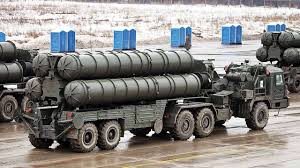
Encroachment of government land in the capital city of Bhubaneswar will no more be easy for land grabbers as the Bhubaneswar Land Use Intelligence System (BLUIS), a web and mobile-based solution, launched by Odisha government would raise alarm over attempts to change the land use. According to the government, BLUIS is a geo-tagged repository of all the government lands in Bhubaneswar, created through high-resolution satellite imagery to detect all changes taking place on government lands.

Odisha becomes the first state in India to use high-resolution satellite imagery utilizing space technology and artificial intelligence to monitor government lands. The lack of transparency and accountability of the enforcement in the current mechanisms and the increasing encroachment of government lands in Bhubaneswar resulted in the development of BLUIS.

images

“Bhubaneswar is one of the fastest-growing cities in India witnessing land-use changes on a daily basis. In the process, precious public land is prone to encroachment. The present mechanism of detection and enforcement lacks adequate transparency and accountability,” a senior officer said emphasizing real-time monitoring. A mobile application would alert the enforcement authorities of any new construction on government lands. The GPS on the application guides the enforcement staff to the exact location. Evidence of enforcement is uploaded on the application as geo-tagged images and videos,” he said. As per follow-up action, a case will be filed for removing encroachment. The Litigation Management System, an online application to record information on legal cases and enable end-to-end communication between government officials and advocates during different stages of a case, was also launched. It provides a smart technology solution to monitor court cases from initiation, online appointment scheduling, and allotment of the case to government advocate for preparation and submission of counter-affidavit.

Teaching in times of Corona

We are living through times of unprecedented change and confusion. The COVID-19 pandemic has posed challenges to mankind in every realm imaginable, urging as to rethink the way we have approached social activities as well as everyday tasks that we so far did without second thoughts. Work from home has become the norm for most IT companies and trade has moved largely online. Perhaps the most visible of all shifts is in the education sector with all educational institutions having been shut down for months with no definite time for reopening. Since learning cannot be paused, teaching has moved online as well. This has brought with it multiple challenges – from questions of accessibility to apprehension over a widening digital divide to difficulty in ensuring the students understand and the limited interaction possible. While online education is a viable alternative in most western countries, it is far from ideal and is only a poor substitute for classrooms in a developing country like India.

While we can agree that students all over the country, particularly from rural backgrounds, are facing a severe challenge with this new mode of learning, we also understand that teachers have been finding the shift extremely difficult as well. If many tech-savvy students who are used to spending much time online or facing a screen is finding the shift strenuous, it is natural that teachers who have spent years teaching on a blackboard would find it more so. Along with the challenges of learning how to use technology in a way that allows students to learn better and maximizes opportunities for optimum holistic engagement, teachers also face other concomitant issues.

photo of kid playing with kinetic sand while watching through imac
Photo by Julia M Cameron on Pexels.com

While at home, many of them, like their students, are unable to access proper internet or gadgets which will make their work easier. They also have longer days where much time is spent worrying over internet connections and whether they are able to teach the students well. Particularly for teachers of younger classes, making videos that will capture the attention of seven-year-olds, and being able to anticipate their reactions are a huge task. Many teachers also need to be involved with whatever is happening at home or in the places that they are staying. The privilege of being uninterrupted while teaching is not one that is available to all.

Teachers also say that they are unable to connect with their students and help them with their questions or doubts. And if a new academic year which is completely online is to commence soon, a batch of students the teacher has never met will be learning from her. It is impossible with our current limitations and methods to forge meaningful relationships that used to exist in the class. Another major issue that has come up is that of the student response. Teachers have come out with stories of rude and condescending behavior from students. Many students who dare not say anything otherwise have turned to mocking teachers and interrupting classes, flaunting their strength from behind a screen. This has led to public outrage but also largescale demoralizing of teachers. Burnouts have become common and many worry that they are unable to deliver according to the expectations and needs of those they are teaching.

It is time to come together and support each other more than ever now. The challenges faced by those on the teaching side should be taken as seriously as that of the students. Only if those are addressed adequately can we ensure that a semblance of normal learning can be maintained within our digital classrooms. Their voices have to be heard and amplified. They should also be provided with solutions to their issues so that the entire education sector does not suffer.

Social Media and Its Impacts       


It is not too much of an exaggeration to say that the internet has become an intrinsic part of our daily existence. We turn to the world wide web for answers to all our questions and to access the materials we need. A huge amount of the time we spent in the virtual world is spent on social media platforms. Social media has become a phenomenon of its own, becoming the axis around which many debates, discussions, and even trade occur. New trends are set, news is shared, opinions are written, art is created, and community is built. The number of people using social media has risen steadily over the years and almost half of the entire globe is now virtually present on some platform or the other.

Social media has many benefits and has made our lives richer in many ways. Here are some of them:

  • We have increased awareness of social issues and access to much material to educate ourselves.
  • It has enabled us to connect across distances and remain in touch.
  • It has made global communities of like-minded people possible, and much creative and collaborative work done.
  • It has widened our perspectives and increased our reach.
  • The entertainment industry greatly relies on social media for promotion as well as for profit.
  • It allows for the propagation of ideas, ideologies, and support for those who might be struggling.

facebook application icon
Photo by Pixabay on Pexels.com

While these are all great things in themselves, it is no secret that social media has also become a cesspool of anger and narcissism. It has made people more disconnected from their immediate spaces and the challenges they face there. Despite the increased connectivity that we have with the world, social media has not helped with loneliness. Rather, it seems to have made the problem worse with the internet being considered one of the loneliest places in the world. Here are some other problems that social media has brought around:

  • Creates a sense of invincibility giving rise to the keyboard warrior culture, where one is extremely bold and loud but only under anonymity and on a screen.
  • Increased sense of isolation; does not aid in mental health issues and depression.
  • Many create false identities by their interactions and project these onto the people around them, even deluding themselves. This causes them to be unable to love who they are once they have to deal with their weaknesses and flaws in real life leading to numerous self-hate and self-perception issues.
  • Social media has not made us more empathetic as some would like to believe but rather has fostered reactionary comments, one-liner retorts designed to hurt, and increased intolerance. Conversational skills and capacity to understand another that comes with extended engagement deteriorates.
  • It has severe effects on our mental faculties, clarity of thought, time-span of attention, time spent with oneself and one’s thoughts, and ability to engage on the ground with those who may oppose us.
  • Encourages a culture of instant gratification where one’s image and identity are built around likes and shares, and where one seeks immediate results. Continued work and perseverance for a cause become boring and illogical when momentary satisfaction is available through virtual means.

It is time for us to truly consider what social media has done for us and how much of it is good. It is becoming increasingly clear that when given a free rein, it can cause an amount of harm that outweighs any good it might do in any way. It is the knowledge of the effects that addiction to a virtual world causes that lead to many wealthy and brilliant men like Steve Jobs putting strict limits on the time his children spend online. With so much of our everyday lives moving online with the pandemic, it is impossible to completely keep away from all online platforms. Yet it is the need of the hour that we find alternate unplugged means of balancing our mental and physical health. Moving away and “detoxing” from social media has become necessary if we are not to lose our grip in life and our ability to have meaningful conversations and relationships in reality.


Photonics in fruit grading

Fruit commercialization is adopting the scientific method and detecting, grading,
packaging the fruits on the basis of comprehending the physiology metabolism law,
protecting and improving the quality, and achieving the change from the elementary
raw material to high added-value commodity. Nowadays, reducing the consumption
of post-harvest fruit is the most concerned question for the world agricultural trade. It
was reported that the consumption of post-harvest fruit in developed countries accounted for the 15-20% of the total amount. China is the world’s largest fruits and vegetable production country. The breeding, culturing, and pest control was paid
much attention, however, the post-harvest processing technology was neglected, the
question of detecting, grading, transporting, preservation was not solved, so the lost of
post-harvest fruits and vegetables in circulation was huge, the loss ratio was
30%~40% every year.

Spectroscopy_Spectrometers

With the rapid development of science and technology and computer vision technique
to the development of agricultural field, new methods of non-destructive detection for
fruit quality were provided. The main methods included optical properties, sonic vibration, nuclear magnetic resonance (NMR), machine vision technique, electrical properties detection, computed tomography and electronic noses technique and so on.

In recent years, fruits (of any variety) has become one of the most dependable organic product produced by farmers across the world; this lived much to its expectation as it serves not only for direct consumption, but also as a raw material for other products. Organic products grading and sorting is a vital procedure for producers, which influences the natural products quality assessment and export market. Despite the fact that the grading and sorting can be and has always been done by human, it is slow, tedious and prone to error, hence the need to evolve a smart fruit grading and sorting machine system. Researchers, at various level had come up with various designs with different algorithms for fruit grading by utilizing textural and morphological elements to distinguish the healthy fruits from the defected ones. Subsequently, these features, otherwise known as optical sorting, is the automated process of sorting solid products using sensors. Such sensors utilize product driven knowledge of the picture preparing system, by detecting the colour of fruits, shape and other auxiliary properties. The sensor (sorter) compares fruits based on client’s characterized acknowledgment to distinguish, sort and expel defected fruits and other foreign material from the creation line or to isolate result of various evaluations.

More LCA Tejas for the IAF

Tejas is an LCA (Light Combat Aircraft) designed by HAL (Hindustan Aeronautics Limited) for the Indian Air Force and Indian Navy. The HAL Tejas is an Indian single-engine, fourth-generation, multirole light fighter. It came from the Light Combat Aircraft (LCA) program, which began in the 1980s to replace India’s aging MiG-21 fighters. In 2003, the LCA was officially named “Tejas”. It was developed as a replacement for older Mig-21 Aircraft.

As of 2019, the Indian Air Force has planned for a total of 324 Tejas in several variants. The first batch of 40 Mark 1 aircraft consists of 16 Initial Operational Clearance (IOC) standards that were delivered in early 2019. The delivery of the second batch of 16 Full Operational Clearance (FOC) standard aircraft commenced in late 2019 and led to the formation of the second Tejas squadron — No. 18 Squadron IAF Flying Bullets — in Sulur on 27 May 2020. The IAF will also go on to receive eight twin-seat trainers. The next 83 are to be to the upgraded Mark 1A standard. By the time these first 123 are delivered, the Tejas Mark 2 is expected to be ready for series production by 2025–26.

Recent news says that India is likely to finalize the INR 40,000 crore contract for 83 Light Combat Aircraft (LCA) Tejas jets, 20% cheaper from previously quoted price, next February at DefExpo-2020 event in Lucknow city, Uttar Pradesh state. In November 2016, Defense Acquisition Council (DAC), India’s highest decision-making body on procurement, approved the purchase of Tejas Mark-1A fighters by the IAF at a cost of Rs 50,025 crore. Subsequent negotiations between defense ministry, Indian Air Force (IAF), and manufacturer Hindustan Aeronautics Limited (HAL) have helped bring down the price of the jets from INR 50,025 crore to INR 40,000 crore, Indian media reported late last week. “The draft contract of the deal has been readied by the HAL and the cost of the deal has now come down to around Rs 40,000 crore. This is Rs 10,000 crore less than the Acceptance of Necessity given by the Defense Ministry in 2016,” defense sources said. In December 2017, the IAF had issued a single-vendor tender to the HAL for procuring 83 LCA, but the negotiations and other related issues have been going on since then mainly due to issues over the price.

The aircraft will have improved serviceability, faster weapon-loading time, enhanced survivability, a better electronic warfare suite, an Active Electronically Scanned Array (AESA) radar that will significantly enhance its capability.  The Centre for Military Airworthiness and Certification (CEMILAC) had provided the Final Operational Clearance to the Tejas LCA earlier this year during Aero India in Bengaluru approving its capabilities including beyond visual range air-to-air and air-to-ground attack capabilities as well as longer endurance through mid-air refueling. In a previous order, the IAF had signed a deal with the HAL for 40 Tejas LCAs. So far, around 18 LCAs have been delivered to the IAF from the previous order.

download


BIGGEST TWITTER HACK IN US

Some of the hackers, who cheat people and earn money always try to find ways to use the internet and social media platforms for their benefit. The earlier such hacks have been through online games, phishing, malware, smishing, insecure networks, physical security threats, etc. We all are aware of the very famous Ransom virus which affected a very large population. Over time, hackers change their ways to attack people and steal money.

The recent news is the twitter hack in the US of some billionaires. The Twitter accounts of Joe Biden, Elon Musk, Jeff Bezos, Kanye West were among the tens of high-profile accounts that were hijacked last night. These accounts were then used to spread bitcoin scams and fool people into donating money through a link. Billionaires Elon Musk, Jeff Bezos and Bill Gates are among many prominent US figures targeted by hackers on Twitter in an apparent Bitcoin scam. The official accounts of Barack Obama, Joe Biden, and Kanye West also requested donations in the cryptocurrency. “Everyone is asking me to give back,” a tweet from Mr. Gates’ account said. “You send $1,000, I send you back $2,000.”

“We’re looking into what other malicious activity they may have conducted or information they may have accessed and will share more here as we have it,” the company tweeted. Twitter said that once they became aware of what happened, they “immediately locked down” hacked accounts and removed the tweets sent on their behalf. Twitter also limited functionality for all verified accounts, including those that showed no evidence of being compromised, while they investigated the issue. “We have locked accounts that were compromised and will restore access to the original account owner only when we are certain we can do so securely,” Twitter said. “Internally, we’ve taken significant steps to limit access to internal systems and tools while our investigation is ongoing. More updates to come as our investigation continues.”

Twitter also acknowledged that the hacks were a coordinated social engineering attack by people who successfully “targeted some of our employees with access to internal systems and tools.” Screenshots of the panel being posted by users are being taken down as a violation of Twitter policies. “As per our rules, we’re taking action on any private, personal information shared in Tweets,” said a Twitter spokesperson.

Some leading cryptocurrency sites were also compromised on Wednesday. Cryptocurrency platforms like Coinbase and Gemini falsely “announced” they had partnered up with an organization called CryptoForHealth, through their Twitter accounts. They claimed that the organization was going to provide people with bitcoin as long as they sent some to an address first. Other prominent Twitter accounts that were hacked were that of President Barack Obama, Kim Kardashian West, Warren Buffett, Jeff Bezos, and Mike Bloomberg. Official accounts of Uber and Apple tweeted out a post that was a spam message. The spam message directed readers to invest bitcoin in the wallet address that was provided in the tweets and claimed that they would get double the money they spend.


What is Sustainable Development?

Our planet is currently facing grave dangers in the form of climate change and global warming. Resources are depleting at a rapid rate and mass extinctions of species are on the rise. This is one among the, if not the foremost global issue of our times. We cannot underestimate its importance since what we do now about this crisis will decide the fate of our future generations and the existence of life itself on our planet.

It is in this context that sustainable development is propounded as a measure that can greatly better the quality of all human life as well as ensures better protection for the planet. Sustainable development refers to principles for development that we can follow to ensure that our current needs are met without us compromising the ability of future generations to meet their needs. It places great importance on healthy sustenance of the natural systems and ecological conditions that we have which ensures the prosperity of humankind as well. Without them, our societies would not be able to survive as they currently are.

low angle photo of airplane
Photo by Sam Willis on Pexels.com

This is absolutely essential because we have come dangerously close to irreversibly depleting the resources that we take from nature. With the industrial revolution and Capitalism taking a stronghold of our cultures in the last century, our focus was generally bent on mass production and profit. Materialism and consumer culture greatly encouraged and solidified this move. The need for progress, the development of cities that were built without proper planning, the rise of the use-and-throw culture, the large scale production of materials that do not naturally decompose, and poor waste management plans all led to a situation where nature was suffering from being indiscriminately exploited. Large scale mining, unprecedented deforestation that clears up entire woodlands, using up of non-renewable resources that cannot be replaced in the same quantity simultaneously at the rate of consumption are all situations where human intervention is disrupting the natural equilibrium. These states of harmony and equilibrium are vital for sustenance of all kinds of life and man cannot hope to progress as a species at the cost of using up every resource available. This will only lead to his extinction as well.

The United Nations Development Programme announced 17 Sustainable Development Goals (SDGs) in 2015. This includes goals such as eradication of poverty and hunger, gender equality, good health, and gender equality, while also aiming at better protection of natural resources on land and in water, climate action, clean water, responsible consumption and production, sustainable communities, etc. This was done to create a better environment and living conditions for all of humanity by 2030, fast-tracking progress for the communities who were behind. SDGs are for all the countries in the world.

A developmental method by which man and nature can co-exist well is the need of the hour, and sustainable development moves ahead with these goals. It seeks to redeem much of what has been lost and protect what we have now so that our existence will not be threatened, but also for the sake of the flora, fauna and the resources and ecosystems surrounding us. If we are to have a future where we do not need to pay for water and buy air, where lives can be led in ways not threatening to nature, we are to work towards more sustainable modes of progress and development.

Benefits of Learning Multiple Languages

Language being the primary means of human communication has become increasingly important with the advent of globalization. With more mobility between continents and cultures, effective communication is crucial for better understanding and for working together. Being able to speak the same language or being able to understand another’s language is a great asset here. Indians by virtue of living in a land of multiple languages and dialects will have some experience of hearing and maybe even learning another language. Our educational system usually insists on learning a minimum of two, and most often three languages. However, learning languages of other countries are also on the rise as well.

boy in yellow crew neck t shirt and gray pants sitting on carpet
Photo by Julia M Cameron on Pexels.com

There are various benefits to learning other languages. Some of them are given below:

  • Learning another language betters our faculties of cognition. When we acquaint ourselves with a new system of signs and meanings, our brain gets better at processing information and solving problems. It is proven to enhance our memory power as well. Other benefits include becoming better listeners, ability to grasp ideas well, and ability to multi-task to mention a few. It sharpens our minds and even increases our capacity for concentration.
  • All the above-mentioned benefits contribute to making the person better at academics and other cognition-oriented activities. The ability to be more focused and more attentive to nuances and meanings will enhance our comprehension. Their performance will be influenced by this skill which can lead them to score better in exams and competitive tests.
  • It allows us to engage better with other cultures and their histories. Language is reflective of a culture’s ideals and tenets. It is the means through which we express our sense of identity and belonging. Many cultures have words in their languages that cannot be translated into other languages simply because the word does not exist in another language. It also makes us better understand and appreciate their arts as well as their ways of living.
  • It is a good career option and enhances our networks which thereby increases our opportunities. Being multilingual is a good skill to have on a resume or CV since it implies an individual who is good at learning and used to switching between tasks. But it can even be a career option and a rewarding one at that. Many choose to learn foreign languages now and go on to work in multi-national corporations that have global presences. They work as translators and interpreters in multiple instances, becoming an irreplaceable part of the global market and trade. It is also a sought-after skill for positions in the government and for global platforms like the United Nations.

Proficiency in other languages allows us to engage with other contexts and spaces in ways that are productive and more meaningful. Now that we have technology and access to almost anything over the internet, it is not too difficult to learn new languages. Websites like Babbel and Duolingo, as well as lessons on YouTube, are very popular among learners. It is one of the most important skills that we can have in this age when the whole world is more interdependent than ever before. So go on, have some fun, and find yourself a language to learn!

The Problem with Online Activism Today

We live in times of great political and economic turmoil. Questions that have been pushed back till now are being asked on public platforms and many are unable to answer. There is also the rise of alternate ideologies, identities, and other categories which are challenging traditions and cultures, and rightly so.  An intrinsic part of our current culture is activism and social media engagement with issues in the world. Problems such as discrimination, violence, and abuse are talked about greatly and much needed debates held, often in the comments section of posts. While there is meaningful engagement, many activist pages on Facebook, Instagram, and Twitter are littered with comments of vitriolic language, multiple opinions, and yelling. While discussions are useful, one has to stop and wonder whether this is the best to go about bringing change.

Most of the social media today is usually seen protesting or talking about an issue. Posts are shared and people are called out. But we have to be mindful that it does not lead to a kind of elitism where only those who are educated in the ‘woke’ culture can speak. There has to be respectful space for dissent and dialogue that is inclusive of even opposing views. It is saddening that there is an increasing group of people who limit their activism to what they do online. We tend to become comfortable once we have posted something on a public platform and wait for approval from others. We shape our words in such a way that it will have a lot of impact or even invite debate. Once we have a debate going, it is often the sensational value of it rather than what is being said that is the focus. And this approach might be detrimental to true engagement. Such online activism also allows many to feel like they are actually doing something to change the status of things in the real world. This doesn’t mean that raising awareness online or speaking about it is unnecessary or useless but also shows that if our activism ends after posting something and ranting about it, we have changed nothing. It is a mechanism to gain emotional satisfaction especially in a culture that is oriented towards getting things done quickly and seeking instant gratification. Actually engaging on the ground is a messy affair and requires patience, perseverance, ability to listen, and also to accommodate. But we do not like those things and it is much more convenient to talk about discrimination sitting on our couches typing on our high-end laptop while watching Netflix. This is to be expected with the virtual world indulgence that we have but we need to realize that just because we enjoy something or think something is good does not mean that it is good.

A desire to change things is necessary and essential. But when we live in a culture geared towards justice but often becoming hateful in the process, unless we are able to see beyond our own opinions, look for objective frames of reference, and listen to those who have been systemically discriminated against, and then get onto practicing what we say in real life, no amount of sharing posts or shouting will change much. We have to learn to respond intelligently, with love and concern, rather than react spontaneously with anger and then stop with that. Unless we learn to do that, no matter how wronged we feel, the ultimate result of our campaign wouldn’t be effecting change but creating another kind of exclusivity which might not solve the problem at all.

Video Games: The Good Side

The State of Online Video Games throughout the World in 2019 ...

A new trend in our society is the issue of how frequent mass shootings are becoming. These events are awful and atrocious, but the ones that truly shock us are the ones that affect our youth. School is the one place where our youth should be allowed to learn in safety and without fear. However, these events are happening more frequently and without a proper solution and our society has started to place blame on things that are not related to the real issue. One main scapegoat for the issue is video games, many sources claiming that they are making younger people unsensitized and violent. However, this claim is simply based on fear and in reality, the use of video games is seen to play a highly positive role in the lives of children and adolescents. Video games can be a learning tool to improve essential skills in children, they can help improve intergroup relationships especially in struggling groups of youth, and they can also help improve grades for students. Video games are an engaging and interactive tool that should be used and integrated into the lives of children and adolescents so that they can gain the skills associated with them.

The use of technology such as video games has been increasing in the last few years as access to technology and electronics also increases. One main fear that people have with this increased use is that children and adolescents are going to become increasingly violent as they age. This is an understandable fear as school shootings are becoming more frequent in our current society. Articles have even been published, appealing to the fear that everyday citizens have. Katherine Kealty, a researcher who conducted a study into the connection between violence and video games, said that “In 2005, the APA issued a statement called the Resolution on Violence in Video Games and Interactive Media that stated that violent media was linked with feelings of aggression and feelings of hostility” (Kealty, 2013). However, in her article she told us that this idea was very misleading, especially for those who did not have the background knowledge on the topic. The same study by Katherine Kealty discovered that “video games caused no increase in aggressive behaviour and in children with ADHD, the video games actually had a decrease in aggressive behaviour” (Kealty, 2013). This study displayed that this fear of children and adolescents becoming violent because of video games was simply a myth and an idea that was appealing to the fear of those who do not have the background knowledge on the topic. Therefore, we should look past the false idea that video games make youth violent and instead focus on the proven results that cause positive change in youth.

Society has also become more and more competitive and the younger generations are needing to become more educated in order to succeed. As the world’s demand for skills and talents become greater, it is important that we change the way we look at learning tools. One main way to engage younger students in their learning process is by including the use of video games. A study completed by Ru-Lan Hsieh, Wen-Chung Lee, Jui-Hsiang L was completed over a four-week period where children with developmental delays played video games. This study showed that the brain released a chemical called endogenous dopamine which is involved in “learning, attention, sensory-motor integration, and behaviour reinforcement” (Hsieh, Lee & Lin, 2016, p. 10). The use of video games in this study showed increases in skills that help boost the abilities that are needed in order to learn new things in the classroom. Therefore, if video games are used with traditional methods of teaching then it could help children and adolescents succeed in school, especially those who struggle with the current educational system.

Overall, video games have been proven to have many positive benefits. They are shown not to increase aggression in younger individuals but to actually decrease aggression in children who have behaviours that tend to be more aggressive than the average child of their age. Video games have also been proven to release chemicals in the brain that promote learning, attention, sensory-motor integration, and behaviour reinforcement within adolescents. Both of these points show exactly how the use of video games in schools and younger individuals could have a major positive impact on the development of skills for children and adolescents. 

References:

Adachi, P.J.C., & Willoughby, T. (2017). The Link Between Playing Video Games and Positive Youth Outcomes. Children Development Perspectives, 11(3), 202-206. doi: https://doi-org.library.sheridanc.on.ca/10.1111/cdep.12232

Gonzalez-Bueso, V., Santamaría, J. J., Fernandez, D., Merino, L., Montero, E., & Ribas, J. (2018). Association between internet gaming disorder or pathological video-game use and comorbid psychopathology: A comprehensive review.International Journal of Environmental Research and Public Health, 15(4), 668. doi:http://dx.doi.org.library.sheridanc.on.ca/10.3390/ijerph15040668

Hsieh, R.L., Lee, W.C., & Lin, J.H. (2016). The Impact of Short-Term Video Games on Performance among Children with Developmental Delays: A Randomized Controlled Trial. PLoS ONE 11(3), 1-16. doi: 10.1371/journal.pone.0149714

Kealty, K. (2013, October 16). Study: Video games, gun violence not related. University Wire.  Retrieved from Sheridan Library Database


Page, Z. E., Barrington, S., Edwards, J., & Barnett, L. M. (2017). Do active video games benefit the motor skill development of non-typically developing children and adolescents: A systematic review. Journal of Science and Medicine in Sport, 20(12), 1087-1100. doi:http://dx.doi.org.library.sheridanc.on.ca/10.1016/j.jsams.2017.05.001

Print vs Digital: Reading in the Modern Era

Much has changed with the advent of technology and globalization in our societies. This change comes in all kinds of forms, from how we dress and eat to how we study and engage. Reading is an arena where this is very evident. Our reading habits have changed drastically with the inflow of gadgets and technologies that transform the reading experience. It has also affected how we engage with what we are reading, our attention span, and the ability to grasp and recollect the things we read. While many prefer older ways of reading like directly from a book or newspaper, more people are turning to the digitalized spaces to read what they are interested in.

The print versus the digital media has always been an ongoing tug of war. Both have their advantages and disadvantages but as time moves on, one is bound to see a shift in reading habits, when a generation that grew up with technology starts becoming the main consumers of the market. Reading printed copies of books and newspapers are many a time described as a wholesome activity with no ‘modern’ interruptions. It allows the individual to engage with something tactile, a book with pages they can feel, touch, and turn. It also allows one to mark passages with pencil and scribble down notes on the sides. And how can one let go of the sensory experience, the smell of old books, and the satisfaction of putting it down after finishing it or running your hands through the worn pages? Researches also opine that one is prone to remember better when one reads something in print rather than from a screen.

person reading on book
Photo by Oladimeji Ajegbile on Pexels.com

However, with the evolving ways of being and living in a technological era, change is inevitable. Today it is not uncommon to read entire books online or as a pdf on a computer. Books are available in these formats for sale as well as for free on some sites. Gadgets like the Amazon Kindle have furthered this field by offering a digital device that can store a large amount of information and books which you can access at all times. It is like carrying around thousands of books in your pocket and very efficient in that sense. It is also a very convenient and cost-effective investment. Books online tend to be much cheaper than paperbacks or hard copies. So, investing in a kindle and buying and reading books online turn out to be much more economical than spending on printed material. As a betterment from the app, kindle as a device also does not have any screen glare which makes the experience of sight exactly how it is as that of a book.  It also allows you to highlight, bookmark, and add notes. However, the aesthetic experience that paperbacks afford is almost non-existent here.

In the end, it comes down to what you and your preferences are. Older generations tend to prefer reading print, but also a huge part of the current generations lean towards print as well when given a choice between the two because of the experience of holding a book in your hand and reading. However, we should never discount the conveniences that digital reading affords, especially in such a fast-paced world. Understanding the limitations of both while embracing what is best suited to your situation in life, without discounting either completely, is the only way to go about it. Mixing both as and when required in order to gain the most out of it and learn better should be our goal. And one can keep wondering if reading as a phenomenon refers to only the act of reading or if it denotes the entire sensory experience.

The Problem with Online Education in India

With Covid-19 disrupting all the hitherto establish modes of living, studying, and working in our society, more activities are being moved online. This is aimed at continuing our stream of activities but in a different mode so as to ensure that no business or endeavour is fatally suffering from this pandemic. While this might not be fully possible for every aspect of existence, it is a method to try and maintain a semblance of normalcy in our everyday activities. Most IT companies have moved completely online and allow all their workers to work from home. Restaurants and hotels rely highly on apps that deliver food to continue their business, and even education is now gearing to completely move online. This seems well and good at first glance but the question of whether this can ever be successful in a country like India is a serious one.

woman working at home using her laptop
Photo by Vlada Karpovich on Pexels.com

Our country is a developing one, where the majority of the population still lives in rural areas and the internet is not a luxury that everyone can afford nor have access to. While the need to continue education is important, one might ask at what cost this is being done. Even when we talk about work from home, we are all aware that a very narrow part of the population has this privilege. Daily wage workers do not get to work from home and they have no option but to risk their lives in the midst of the pandemic if the government itself fails to take care of them. Small scale industries and shops all close down. We have a massive economic crisis on our hands but alongside this, we need to understand that there will be a widening of the educational gap, a crisis whose effects we will start to fully comprehend in a couple of months.

Most middle-class and upper-class households are able to comply with the needs of online learning since they own laptops and smartphones. They also have enough money for data and internet connections. However, it is still a stark reality that education in rural India and amongst lower-class households is extremely limited owing to factors of economy and access, as well as gender and caste. India supposedly houses 430 million persons below the age of 18 many of whom come from rural settings. Only 47% of households in India have electricity for more than 12 hours a day according to a survey that the Ministry of Rural Development conducted in 2017-18. It is an eye-opener to the urban citizen that only 24% of Indians own a smartphone. And one must remember that in a household with more than one child, there has to be multiple gadgets for all of them to receive their education.

66% of India’s population lives in villages and an extremely minuscule portion of them will even be able to attend classes of any sort. The development of our country and much of its economy is reliant on these villages but if we forget them in this hour of need, the consequences will be hazardous for the whole country. If we do not take aggressive measures to tackle these problems and provide materials resources to those in need so that their children can access classes, the current online education system will create a massive digital divide that will cause a majority of the Indian population to suffer. It will impair their access to a better life and opportunity, any attempt to get on par with their privileged peers would largely result in failure and this will drive many to lives of low economic value, toil, suffering, and access. This will be carried forward into their coming generations. Unless addressed, it will lead to a systemic denial of the fundamental right to education and opportunity, and hence, while attending our own online lectures, we should take this very seriously and implement measures to better this situation in every possible way. This is not the only problem that online education creates but it is by far the most important.

Technology and the pandemic

Tech companies may not have developed a new technology due to COVID-19, but they started to implement the technologies with innovative studies, said an expert.

Academician Ilker Kose, head of Istanbul Medipol University Technology Transfer Office, said Tech companies now focused to curb coronavirus.

With the transformation of the COVID-19 outbreak into a pandemic, measures have been taken in many areas to prevent the effects of the epidemic worldwide.

Technological developments are among the most curious topics in these difficult days.

“Among these developments protecting social distance comes first, and also controlling mobilizations situations and tracing systems are other important developments,” Kose said, in an exclusive interview with Anadolu Agency.

Meanwhile, tech giants Apple and Google had announced that they will make cooperation on COVID-19 contact tracing technology.

Turkish Health Ministry had also launched an application for smartphones that will enable people to detect and monitor the COVID-19 cases in their locations.

Another issue is technology companies focused on right after the first shock was the solutions that enable the things we do in daily life to be done remotely, said Kose and added:

“Distance education and video conferencing solutions improved and increased rapidly, and similarly, solutions have been developing to provide health services remotely.”

People still in COVID-19 trauma

Applications for smartphones, which developed as a warning system when entering the intensively COVID-19 patients area, became popular.
Kose said tracing people with their cameras and phone signals was already possible but it was limited due to law restrictions.

He emphasized that the people still have not gotten over the social trauma caused by COVID-19 and once we overcome this situation we will make more rational decisions.

“However, it is certain that relevant legislation will move forward to a point in which the public’s health becomes will be more important than individuals’ freedom. Therefore, many applications will be used for marking and following people, measuring the social distance which recent technology already enable to do so,” he said.

Saying that doing it is possible with all kinds of traceable devices, said Kose and added that mobile phones, smart ID cards, wearable technology such as watches and bracelet will become widespread.

5G technology people’s demand

Although the world focuses its eyes on vaccine studies, there are also very important developments in the field of digital technology.

Kose stated that wireless communication has become essential in our lives and this system mostly has been using for voice, image, and data communications.

“If people use their smartphones as they do now, this current infrastructure would be enough for these developments, but people’s demands are increasing. Furthermore, not only humans but devices also use the internet infrastructure,” he said.

He also stressed that the world approached the technological limit in wireless communication, therefore using 5G and the following technologies are necessary.

“5G technology is a solution that arising from the demands of people” he added.

Waiving freedom to prevent virus

Answering questions on personal data and individual freedoms Kose said people will prefer restriction instead of getting the virus from other people.

“This will certainly limit individual freedoms in the current sense. However, the same individuals will be willing to waive their freedom due to the risk of infection from anyone else. Therefore, when paradigms change, norms and rules will also change,” he added.

Kose said in modern societies, individual freedoms are somewhat ahead of public health.

“We see this approach in mandatory vaccine applications, but people and states will have the same opinion even the most libertarian state after this trauma for more strict tracing system to protect public health,” he said.

Western countries’ approach

China is known to have an enormous surveillance system that gives the ability to trace millions of people.

On the question of whether Western societies can establish a Chinese-style social surveillance system, Kose said: “Western societies will develop unique solutions different from China and similar countries.”

“Authoritarian countries will proceed by setting rules that the whole society will follow. But I don’t think Western countries will put pressure on people on this issue. Instead, they will ask the public to decide for the transition to the surveillance system to prevent pandemics,” he said.

Kose said that in a society where people accept such a surveillance system some people would disagree.

“Those who don’t accept it would be alienated from the people and the number of who disagree would decrease,” he added.

He claimed that there would be an accumulation of anger against surveillance and tracing system, and would witness social riots.

The novel coronavirus has spread to 185 countries and regions since emerging in Wuhan, China last December, with the U.S. and Europe now the hardest-hit areas.

There are over 2.71 million coronavirus cases worldwide with more than 191,000 deaths. More than 745,000 people have recovered, according to data compiled by US-based Johns Hopkins University.

7 Emerging Technology Industries for Startups

The Most Important Factors for Startup Success - Salesforce Canada ...

There are two types of entrepreneur – the ones that have an original idea and the ones who just want to start their own business. Either way, an entrepreneur tries to solve a problem and improve human lives as a whole. There are so many startups in the market and they cease to exist due to the fierce competition they face. The entrepreneurs can either differentiate their businesses with a very strong USP or enter a virgin territory. The former will make the business capable of fighting against existing competitors while the latter won’t have many competitors to begin with.

Learn about personal USP here.

For the people who want to start a business but don’t have any unique ideas, here’s a list of industries that are the future of technology and are yet to be fully exploited:

  1. Electronic Sports

It is hard to believe that people would watch other people play video games just like they watch their favourite footballers and cricketers on the field and in a stadium but Esports is becoming a reality now. The evidence of the same can be seen on Youtube where there is a whole section of trending gaming videos.

  1. Financial Technology

Fintech is simply the use of technology in financial services and it is becoming very popular as the days go by. Nearly everyone heard of Bitcoin when it came into the news and Fintech is behind the development of cryptocurrency. With the use of computers and smartphones in our daily activities, money related matters are also being digitalised every day.

  1. Blockchain

Blockchain is related to Bitcoin and it is very complex technology. It is used for handling of Bitcoins. It helps in keeping records of transactions that are made using the cryptocurrency and ensures that the information is unchangeable through advanced programming. The word ‘block’ means digital information which is stored on ‘chain’, that is a public database but the technology is yet very confidential at the same time

  1. Big Data Analytics

Big data is simply the large amount of data stored in different formats, at high speed and with high accuracy. Almost all the gadgets and instruments that we use transmit data about us that helps the manufacturers and developers in giving us better services but such useful data needs to obtained from the big data and this is where the big data analytics comes in play.

Read more about big data here.

  1. Robotics

Making use of robots for day to day activities is the future of technology. Computer science and engineering have given birth to robotics and Artificial Intelligence is its brain. Robots can perform almost all works that are done by humans and even the things that cannot be done by humans. Activities that are hazardous to human life can be easily performed by robots.

Learn about the different types of human intelligence here.

  1. Electric Cars

With rising environmental concerns, the world is moving towards sustainable solutions and offerings to problems and needs. The chances of running out of non-renewable fuels like coal and petroleum have driven the automobile companies to develop electric cars and even though we don’t see as many electric cars on the road, a Bloomberg study has found that by 2040, electric cars will outsell gasoline and diesel-fueled cars.

  1. Online Education

With the onset of the pandemic, the need for online education has been felt worldwide as almost all students shift to online learning. As life becomes more hectic and new technologies and subjects come to reality, almost everyone would want to learn about what is new and trending. Even elderly, retired people try to stay updated nowadays so online education has a huge market base and great potential.

Learn about skills that are in high demand here.

Is Technology Limiting Creativity

The term imagination is a hard word to describe. It can have a range of meanings, but creativity refers in its sense to the act of creating something original, creative or special through the use of thought. Creative thinking is often seen as the opposite of functions or disciplines requiring logic or being constrained by facts. Of course this is not necessarily true. But creative fields are widely believed to require creativity, while scientific fields do not. People often think that creativity is a chaotic, unforeseen, man-made phenomenon, while scientific research, math and machinery are bound by a set of substantive rules.

This has led to people sharing the paranoia that increasing society’s reliance on technology will limit creative thinking. When the question is presented, ‘Technology is limiting creativity,’ many people agree – yes, it is. In a recent report, Is Technology Killing Creativity, the author asserts that the point of the argument is often that we sacrifice original thinking to keep oneself constantly captivated.  Then the writer goes on to say, if we can find anything online anywhere, we don’t give ourselves opportunity to solve problems and invent on our own.

Technology Enhances Creativity - Lauren Cho - Medium

Although it’s undeniably true that most people use smartphones and the Internet to flood their lives with idle time, the other side of an argument, though, is that technology actually redefines innovation. Of course, the concern is that adolescents have replaced conventionally imaginative hobbies such as painting, creating, and playing with passive computer behaviours such as gaming. Yet, given the fact that contemporary children do have higher media consumption levels than any previous generation, it is not necessarily true that imagination is lacking in their computer activities. Many kids use the internet to write blogs, create websites or dabbling in coding.

The emergence of technology and smartphones in particular has led to many specific recommendations that our dependency on these tools is killing creativity. This is not a new thought-people suggested that technology had long ago extinguished creative impulses. This was television and video games when I was a kid that were to bring down imaginations everywhere.

What’s the deal, then? Back in 1932, Aldous Huxley wrote Brave New World, where he proposed a future in which living beings sat a constant desire for technological distraction. Thought could be kept at bay, because by trying to distract ourselves with our electronic gadgets we would simply zap any boredom. Often this is the crux of the argument – that we’re sacrificing original thinking to keep ourselves constantly captivated. It’s also argued that if we can find everything online somewhere, then we don’t give ourselves room to solve the problems and foster an innovative solution on our own.

Scientific research tells us that daydreaming requires time, as daydreaming enhances our imagination. When we fill some downtime with scrolling through screens, is the daydream time being inhibited? Creativity is often called a discipline of “use it or lose it.” You may be employed in a creative job position, but you can also strangle your creativity by being constantly fastened to a computer.

Technology has broadened the limits of what is possible with artistic practices like animation, music and graphic design. This has given creativity more definition, possibly even enabling more participants to join in. Taking a look at YouTube videos or even content present on Instagram-these are open platforms that allow everyone to participate and develop content.

Take the example like CGI in movies or platforms created to make graphic design more available for practitioners, the online outlets to promote the content. The openness extends the spectrum of artistic activities. On the Internet, only those considered by “experts” to possess artistic talent would have been revealed to the public. The curtain is lifted with the internet, and more people are noticed online every day. Artists like Bach and Van Gogh were not known in their own lives, though they would be well known if they were alive today.

Conclusion:

You can have a fair discussion free for both sides to disagree, but where does that leave us? Technology is here to stay and just continues to advance, and maybe one of the more rational reasons is for a healthy use of technology and knowledge, just like how we interpret our diets. There is the idea that our ancient ancestors benefitted from having as much information as possible – it would have been important for survival to know anything about their environment. The challenge now is that our brains need to be conditioned in an age of information overload to minimize the excess and just filter what is needed. It ties in with what we think the right climate requires to be nurtured

What is a Surveillance society?

The surveillance society is a society that is structured and organized using surveillance-based techniques. To be under surveillance means having information about individual’s movements and activities recorded by technologies, on behalf of the governments and organizations that structure our society. This information is sorted and categorized and then used as a basis for decisions which affect our life. Such decisions concern our entitlement, work, access to benefits, products, services, and criminal justice; our health, well-being, and our movement through private and public spaces. 

Everyday encounters with surveillance include:

• Video cameras which watch us every day everywhere we go – in buildings, shopping malls, streets, and residential areas. Automatic systems can now also recognize number plates (as well as faces).

• Electronic tags that keep a check on ones who are on probation do not break their release conditions, and people arrested by police have samples of their DNA taken and kept whether they are guilty or not. 

• We are constantly asked to prove our identity, for benefits like healthcare, and so on.

If surveillance is a normal aspect of the management and governance, then what’s wrong with it?

 Using surveillance to achieve one’s aims, no matter how big or small bestows great power. Some interests will be served, while others will be marginalized. Some will receive entitlements and benefits, while others may not.

As data travel silently across international boundaries, national states, and within transnational corporations, the impact of surveillance becomes even harder to identify and regulate.

It focuses on correcting the negative also it gives a message to those who are watched that they are not trusted to behave appropriately.

The rise of technology is shattering even the illusion of privacy. Video cameras peer constantly from lamp poles, satellites and drones float through the skies, smartphones relay a dizzying barrage of information about their owners and what not.

The information of every traveler on every stop is noted and stored by Internet service providers like Google, Verizon, and Comcast. Retailers scan, remember, and analyze each purchase by every customer. Smart TVs know what we’re watching—soon they will have eyes to watch us watching them.

The future is here. Nearly everything that happens from now on has the potential to be seen by someone and also stored indefinitely. Government and the private corporations working with them, collect and store billions of records every day and they’re hungry for more. Technology makes all secrets difficult to keep.

There has been evidence that shows mass surveillance erodes intellectual freedom and damages the social fabric of the affected societies. It opens door to flawed and illegal profiling of individuals. Mass surveillance has also not helped in preventing terrorist attacks.

Other evidence shows that even the possibility of being under surveillance changes the way people think and act, causing them to avoid talking or writing about sensitive or controversial subjects. This only showcases that mass monitoring of citizens achieves only one thing that is the development of mutual mistrust between individual and state.

Surveillance society instead of beneficial has given us more non-benefits. It affects the privacy of the individual. The mismanagement of CCTV, ID cards, mobile phone data, health, and social security databases, shop loyalty cards, and other data retention technologies has an enormous potential in causing public or personal catastrophe – from criminals and terrorists hacking into or sabotaging the health care database, down to personal data being stolen or accidentally destroyed.

However, if surveillance and personal data collection are to achieve its true value then it should be tightly regulated to avoid abuse and mismanagement by government, companies, and individuals. If we are living in a society that relies on surveillance to get things done are we committing slow social suicide?

Surveillance and personal data collection have the potential to be of benefit to society but only if maintained with due care, otherwise it only risks jeopardizing the public safety it’s meant to protect. 


Net Generation

The Internet is a boon no doubt about that. But where we can in our digital lives draw the line between convenience and addiction. Young people between the age of 11 to 31 are smart, quicker, more tolerant of diversity than other generations, they care strongly about justice and problems faced by their society, and are involved in some kind of civic activity at school, work or in their communities. This generation is more engaged politically and sees government as a tool for improving the world.

However, this generation is reckless about their privacy. In India, 1 out of 7 people are on social networking sites every second, 75% use the internet to escape their problems or overcome burden. India’s internet user base is the second largest after China globally. By 2020, there will be 730 million internet users in India. Many young people share very personal information and pictures on the internet and social networks. 

Considering the age of 11 to 19 years, one of the biggest challenges faced by parents of teens today is the internet. Despite social media playing a positive role for most, the high use of social it can harm youth self-esteem. Where children initially began using the internet to do homework that has become an afterthought and they are much more likely to spend their time alone socializing. Social networking sites, e-mails, and text messages enable teens to have relationships with almost anyone, new technology can make it difficult for parents to know what their teens are doing and who they spend time with. And how can they even know the Internet has become a major factor in building barriers between parents and children. There has been an increased communication gap between the two. Parents should keep these things into consideration and should teach them these following points-

Protecting your personal information and knowing that it’s not anonymous

If they face any cyberbullying, let your teen know to try not to retaliate or respond, speak to a trusted adult right away, aim to block the bully and report the behavior to the social media platforms

Should be taught how to use their time constructively by doing creative activities, involving in youth programs, etc. Set limits on when and how often they use the internet

Parents need to talk to them about online predators and warn them not to invite strangers into their networks

Parents can connect with teens by asking them for help with technology: Let the child be the teacher and show you how to e-mail, text, use social networks, or various other tasks on the internet

Warn them about the dangers of chatting with strangers and establishing online relationships with people they don’t know

Make teens aware of the far-reaching consequences of their postings. Some teens share personal thoughts and feelings just as they would in a private diary or journal. Sharing too much personal information can make them vulnerable to others

The Internet contains an endless supply of knowledge and information that allows you to learn about almost any topic or question you may have. Using a search engine like Google, you can ask virtually any question and find a web page with an answer to that question. There are also millions of videos on sites like YouTube that help explain various topics and even online courses that can be taken to help teach you about many different subjects.

In the past, it would take days and sometimes even months to receive a letter from someone else. Today, with the Internet, you can send an e-mail to anyone in the world and often have it delivered in less than a minute. With the help of GPS technology, the Internet can help map and direct you to almost every place in the world. You can quickly route to your location or find businesses in your area that may sell or provide you with a service you need.


Still, for every pro, there is a con. Just like teens, there are certain disadvantages that adults have to face. Spending too much time on the computer surfing the Internet or playing games can also lead to obesity and an unhealthy lifestyle. Social networking sites can also lead to depression as many people tend to compare their lives with others. The Internet and online games facilitate communication with others. Although you may find new connections around the world, you may also find yourself disconnecting from those in your real life. Social networking sites can also lead to depression as many people tend to compare their lives with others. Shifts focus quickly, which affects your interactions in general, making you more impatient and less focused on your activities. The Internet can hamper workplace productivity.


In the end, one should know that it is a great environment as evolution is a fundamental instinct in man, so do not hesitate to learn and develop, but always be aware of the unknown that conceals technology in its depth.

Big Data and IoT Explained

How Big Data Influences Your IoT Solution

Technology has been advancing and lives are getting improved everyday now. Businesses are doing everything to exceed the expectations of their customers and IoT is the next promising step towards the same. Internet of Things, IoT in short, is a platform that collects and analyses data from our regular use appliances with the aid of the internet and gives out information to both the manufacturer and user. This information could be about the servicing that is required or a part that has become dysfunctional and needs to be replaced. The huge amount of data that is generated by these sensor equipped machines is called the Big Data (no surprise there, hopefully).

Big Data has always been present but in earlier times, it was simple and could be easily recorded on Excel spreadsheets and analysed as such. The type of data wasn’t as complex back then and it could be easily filled into the cells of spreadsheets. Now, however, the format of data that is being transmitted is not very fixed and it could be in forms like audio, video and pictures. This data cannot be collected and analysed by traditional programs. New softwares (Cloud) are getting developed that can help separate the valuable information and recognise the trends or patterns if there are any. Examples of the same can be seen in apps like Netflix and Amazon Prime when they give you recommendations on the basis of your previous watch.

The big data is characterised by 4 Vs: volume, velocity, variety and veracity. The volume of data could be trillions of gigabytes and has to be stored at multiple locations. The velocity of transmission and collection of data currently, is unprecedented. ‘Variety’ refers to the format of data that can be both structured and unstructured but equally important. Veracity or the accuracy of the set of data that has been generated by a source and needs to be verified in case of redundancy or just to check if the data is suitable for analysis by a particular software. The role of data analyst becomes important with this discussion and it will be the most sought after profession eventually.

IoT and Big Data are very similar but yet very distinct at the same time. IoT seeks to analyse the data when it is transmitted and the data then contributes to the Big Data. A company can use both the technologies at the same time. For example, a sensor in a car could emit a signal that the car is in need of servicing and the owner might get a notification reminder for the same. The data of the times all the cars of the same company required servicing can be stored and used for predictive analysis for newly manufactured cars. 

The integration of the two technologies can help the both consumer and seller in the long run. The businesses will make more profits as they will become more efficient in catering to the needs of their customer and the overall costs will get reduced as well. The customer might be hesitant at first, for the idea of their appliances tracking their usage behavior seems like invasion of privacy, but it will save their time and money in maintenance and replacement.

How Agri-tech startups can help farmers?

Farmers are facing a bad time in this pandemic. As per IBEF(Indian Brand Equity Foundation) more than 58% of India’s population is dependent on agriculture for livelihood. The reverse migration of migrants due to covid-19 will also lead to more people being dependent on agriculture as a source of income. The government has come up with some reforms that can help farmers. Now, the question is whether agri-tech startups become a ray of hope for farmers and make their lives better.

Farmers have long been exploited by the present system of APMC. They have earned less due to the presence of middlemen. Thus, farmers are left with fewer returns. Farmers require more than policies and this where agri-tech startups come to their rescue.

Ways in which agri-tech startups can help farmers

Removing middlemen

The major problem that farmers face is of middlemen. This increases the cost per transaction which is mostly 2-3% in case of offline transactions. However, this cost can be upto 0.5% in case of online transactions. This is the same as online stock market investments, where people used to pay a lot per transaction before startups like Zerodha came into the market. The result of this reduction in cost is more profit in the hands of farmers.

Health of Crop

India loses around 30-35% crop due to pests. Also, attacks by insects is a major threat to farmers. The recent attack by locusts have created fear among many farmers. Agri-tech apps can help a lot in such situations. They can help in monitoring the health of crops with the help of AI. One such startup is Plantix which is a Hyderabad and Berlin-based startup. It helps farmers to identify plant diseases, pests and nutrient deficiencies. This is done with the help of AI.

Increasing crop productivity with the help of data

Agri-tech startups can store data and measure the performance of crops. With the data, farmers can identify in which conditions the crop yielding is good. These apps can study the history of land and also comment about the fertility of the soil. This data can also be used by other companies who produce agri based products and can lead to newer developments.

Easy availability of finance

The farmers have faced a lot of problems because of non-availability of finance from banks. This led them to borrow money from unorganised sectors at very huge costs. With these apps, the farmers can maintain their data regarding stock sold and inventory. This will help banks in monitoring their performance and thus banks will be more willing to provide money to farmers.

Challenges that can be faced by agri-tech startups

These startups can definitely help farmers but there are some challenges in their way. Their growth depends on the following factors:

  • Support from government.
  • Faster data penetration.
  • Strong financial support from private investors.

These are some of the technical and legal challenges that these startups may face. Apart from these challenges, the acceptance of these apps by farmers is also a challenge. As many farmers are not tech savy, these startups will have to make farmers comfortable with technology. Even with these challenges, agri-tech startups are likely to change the life of farmers.