Osteoarthritis can be mainly classified into two. They are primary and secondary. The criterion for this classification is based on the different types of risk factors. Primary OA is mainly due to age where the reason for cartilage breakdown is not known or maybe due to genetics. Secondary OA is due to direct injury through sports or trauma, stress, inflammation, or other metabolic diseases. In this case, the cause may localize.
OA grading
Grading is the process of classifying the disease based on its extent or severity. OA has been graded into 5 from grade 0 to grade 4
Stage number
Condition
0
Normal
1
Minor
2
Mild
3
Moderate
4
Severe
This was proposed by Kellgren and Lawrence and it is known as KL grading. The five grades have been proposed based on radiographic analysis of subjects. This was accepted as a standard measure by WHO in 1961. The grading has been done based on the narrowing of joint space and the formation of osteophytes.
grade 0 (normal): no changes in knee x-ray
grade 1 (minor): minimalistic joint space narrowing with possible osteophyte lipping
grade 2 (mild): definite osteophytes and joint space narrowing
grade 3 (moderate): multiple osteophytes, definite narrowing of joint space and some sclerosis and possible deformity of bone ends
grade 4 (severe): large osteophytes, marked narrowing of joint space, severe sclerosis and definite deformity of bone ends
Grade 0
Grade 0 is considered normal. The subject will not exhibit any features for OA. The x-ray image from this grade is taken as a standard and the other grades are compared with this grade.
Grade 1 is known as the minor. It can be considered as the initial grade. The joint space has just started to decrease. Osteophyte refers to excess bone growth. It is also known as bone spurs since spur refers to kind to sharp material. This bone growth can be observed as sharp spikes. Here there is very minimal growth of excess bone. Bone spurs occur only at the bones adjacent to the joint. There will be very minor loss of cartilage but this does not contribute to the narrowing of the joint space. Subject in this stage is not confirmed with osteoarthritis. However, subjects having any of the risk factors become more prone to the disease
Grade 2
Grade 2 is known as mild. In this grade, the narrowing of the joint space is more and is visible through the x-ray. There will be also more formation of osteophytes. This grade can be considered as the precursor to many complications like bone dislocation and rubbing. None of these complications are seen in this grade but these complications are soon to occur. The subject in this grade is confirmed with osteoarthritis. Special care has to be taken by those in this grade and through proper medications, they can prevent those further complications.
Grade 3
Grade 3 is known as moderate. Obvious damage occurs to the cartilage and the joint space narrows even at a faster rate. Swelling of the joints starts to occur in this stage. Erosion of cartilage becomes prominent in this stage. The joints become rougher due to spurs leading to stiffness. Inflammation occurs at regular intervals. Subjects can experience popping sounds from the knee.
Grade 4
Grade 4 is known as severe. It is the worst and highest grade of all. The changes become prominent and occur at larger scales. There will be no gap literally meaning the joint is absent. The bones start to rub over each other causing pain. The joint becomes stiff like a rock. The cartilage wears down and maximum growth of osteophyte is seen. Various cytokines are released at cartilage resulting in further death. Life would be dreadful for those in this grade. The arrow in the given X-ray indicates the bones are touching each other and there is no gap in between them.
Grade 4 osteoarthritis Courtesy: – James Heilman, MD Osteoarthritis of the left knee. Note the osteophytes, narrowing of the joint space (arrow), and increased subchondral bone density (arrow). the joint space (arrow), and increased subchondral bone density (arrow). Creative Commons Attribution-Share Alike 3.0
Osteoarthritis is the most well-known type of joint pain, influencing a huge number of individuals in the world. It occurs as a result of the wearing down of the cartilage that cushions the ends of your bone over time. It is a complex disease that integrates biomechanics and biochemistry associated with the knee. This is the standard way of defining OA which will be difficult to understand. Hence let us try to understand what OA is. The best way is by splitting the word and analyzing it part by part
Osteo- bone
Arth- joint
It is- inflammation
x-ray of the osteoarthritic knee joint
As mentioned earlier, the unit of bone is called osteon and any word ending with itis refers to inflammation. Also, arthro term refers to joints in general. Hence the combination of the terms corresponds to inflammation of bones in the joint. This rather sounds simplified. The previous definition had complex terms like biomechanics and biochemistry. Biomechanics refers to the study of movement in living beings. Biochemistry refers to the study of the reactions occurring in living things. So in short, osteoarthritis is such a disease that results in inflammation of joints that occur due to wearing down of the bones surrounding the joint hence affecting the movement and chemical reactions which used to occur properly during normal conditions.
Osteoarthritis can occur in any joint in the human body like elbows, hips, knees, etc. Since our primary focus is on the knee, we will take a deep dive into it. In view of its expectancy and the tolerance that goes with sickness in the knee osteoarthritis represents more prevalence with daily activities like climbing steps and walking when compared to other diseases. Osteoarthritis is the most standardized reason for total knee replacement. As a result of the frequency of this disease especially in middle-aged people, osteoarthritis can act as an extensive barrier towards work and can lead to early retirement.
Coining of OA
Many say that the term osteoarthritis was coined by the British physician John Kent Spender but it was Richard Von Volkmann who tried to separate it from rheumatoid arthritis. The other names which were offered to this disease were ‘chronical rheumatism’
‘senile arthritis’
‘hypertrophic arthritis’
‘arthritis deformans’.
Effect of age
Osteoarthritis can affect people of any age group but it majorly affects old age people. National Library of Medicine suggests that people with an age greater than 70 have more risk to get osteoarthritis. The reason lies in the definition of osteoarthritis. The definition says that disease occurs due to the wearing down of bones. So the bones don’t get worn down the next instant a baby is born. Every process requires time to occur. A mother has to wait for a minimum of 9 months to give birth to a healthy baby. A student must wait for 4 years to get a degree from college. Similarly, it takes time for the bones in the knee to get worn down.
This disease has always troubled old aged people in their lives. Living with osteoarthritis is dreadful. Even climbing the stairs will be a difficult task for them. Hence it is worth knowing about the disease.
When there are some imbalances within the knee then it can lead to disorders which can be indicated by deviation of the knee in terms of function. Most of these disorders occur due to some conditions imposed onto the structures present inside the knee.
BURSITIS: – inflammation (burning sensation) of the bursa causes pain.
(TIP- a word ending with itis refers to inflammation)
FAT PAD IMPINGEMENT: – the fat pad gets swollen heavily and can burst due to over-expansion.
TENDINITIS: – inflammation of a tendon
TORN MENISCUS: – a sudden twist of the knee can tear the rubbery cartilage leading to serious issues.
FRACTURE: – the bones surrounding the joint may get broken especially the patella is viable to damage in the case of accidents.
DISLOCATION: – the knee bone slips and comes out from its original location leading to excruciating pain.
ACL AND PCL INJURY: – the anterior and posterior cruciate ligament gets torn which may occur when there are a lot of instantaneous turns. However, this occurs rarely since these are very strong ligaments naturally.
OSGOOD-SCHLATTER DISEASE: – this is the swelling of the tendon between the tibia and patellar muscles.
STRAIN AND SPRAIN: – both are injuries but strain occurs in ligaments whereas sprain occurs in tendons.
These are some of the common disorders occurring to the knee. All of these disorders have something in common….PAIN but the intensity can vary based on time and severity of the disorder
ARTHRITIS
Arthritis is a commonly used word referring to the inflammation of joints. In fact, many people have an intuition that severe pain in the knee corresponds to arthritis mainly in old age groups. This is potentially a dreadful disease and can mainly affect the old aged. Most arthritis occurs over time but some can occur suddenly. Old-aged persons are more prone to this disease. This disease is likely to affect all age groups. This disease is more prevalent in women rather than men since their joints are weaker and more susceptible to motion when compared to men.
differences between normal and arthritic knee joint
In the case of arthritis, the bones start to wear down, the ligaments can tear, inflammation and swelling can occur, and also lead to internal bleeding (hematoma). There are about 100+ types of arthritis with different causes and symptoms.
comparisons between some of the arthritis
The different types of arthritis have symptoms different from each other. But arthritis, in general, shows some symptoms irrespective of the type.
Joint pain, stiffness in joints, red swollen mass, deranged and irregular motion is some of the common symptoms exhibited during arthritis. These symptoms are easy to identify by a common man and hence one can consult a medical practitioner known as a rheumatologist. The study of joints is known as arthrology and it is recommended to consult such a person.
As mentioned earlier cartilage is the one that protects the bones and also acts as a shock absorber. In the case of Osteoarthritis, this cartilage starts to vanish slowly. In the case of rheumatoid arthritis, the synovial fluid gets attacked by its own antibodies!!! This phenomenon in medicine is known as autoimmune disease and occurs due to error in the programming of these cells leading to the attack on their own cells.
In the case of gouty arthritis, there is a deposition of sodium urate crystals in the joints. It can lead to redness, pain, and heat around the joint. Uric acid which is generated in our body gets converted to purines (an essential component in DNA). Increased uric acid levels can lead to its deposition in the form of crystals. The best way is to remove the synovial fluid.
So these are the different types of disorders that can be seen in the knee. Proper diet and exercise and a healthy lifestyle can prevent most of them. So it is essential to be healthy to prevent the occurrence of these diseases.
Our human body can be compared to a machine in terms of its functioning, but the magnanimous human can perform extremely better than a machine. As there are many nuts and bolts to connect many parts in a machine, there are too some bolts and nuts in our body which join several parts of the body like arms and legs. The so-called nuts and bolts of the human body are known as JOINTS. A joint in general is the articulation that is present in between two bones. This sounds a bit complex. So joint in the English language refers to the association. So the joints in the human body associate something. The something defined previously is bones. In order to understand this, we have to know about the structure of bone in detail.
Fig 1.1- structure of a bone
The above image depicts the structure of a bone in general. Important information to be known is that the unit of a bone is called an osteon. Many osteons combine together to form a bone. Bone-destroying cells are known as osteoclasts and bone-forming cells are known as osteoblasts. The external structure of a bone has two parts namely epiphysis and diaphysis. Physis refers to the growing plate. An increase in the bone’s height corresponding to bone growth. Epi means above and dia means through. Hence diaphysis is found in between two epiphysis which acts as the head and tail to the bone. The point of attachment of muscle in this bone is known as the trochanter. Everything present in the human body has some kind of protection. In the case of bone, that protection is offered by the periosteum. The inner layers can be visualized by peeling off those previous layers hindering them. Next, we have the cartilage which is a rubbery kind of protection to the bone. Hyaline cartilage present in bone is rather glassy in nature. The bone also has nerves and blood vessels since the bone requires nourishment and a proper message for its functioning. Bone marrow is the spongy tissue inside the bones. It contains stem cells. The stem cells can develop into the red blood cells that carry oxygen through your body, the white blood cells that fight infections, and the platelets that help with blood clotting. Bone marrow can be considered the mother of blood cells. This table provides insights on the types.
Type name
Prevalence
Content
Red
Children
Blood
Yellow
Adults
Fat
So now we move onto how a joint connects two bones. Consider this situation where there are two pipes and we want to connect them. The best way to connect so as to minimize their loss is by using a junction. There may be other options also, but there is no need to make a fuss about it.
Fig 1.2- the structure of a healthy joint
Hence from all these, we can come to an understanding of the importance of joints in the human body. To be short, the human body is meaningless and fragmented as the face, trunk, hands, and legs are separated without the joints.
It is a philosophy that suggests that positive thoughts bring positivity and negative thoughts bring negativity to your life. It is basically a belief that when we tell the universe what we want in life, it delivers it to us. The positive energy from us attracts success in all aspects of our life like health, relationships, career, etc.
The theory was put forth by a book “The Secret”. But there is no scientific evidence for the claims. Many people in the world follow the law and claim that it is actually true.
How does this actually work?
It suggests that if we focus on positive things in our life it will attract it, likewise, if we focus on negative things, negative situations will be attracted towards us. So basically we must focus on what we want and not on what we don’t want.Another law suggests that if we ignore the negative thoughts, we give more space to positivity in our lives, which gets delivered in our day-to-day lives.
How can I implement this?
You can practice the law of attraction every second of your life by following a few things. Let me creates scenarios for better understanding.
One day, you are getting up from bed in a bad mood. You have lots of work on that day so you are a little frustrated with it. The first thing you can do there is, before doing anything, tell yourself that the day is going to be awesome and you will complete all your work by the end of the day. This simple thought will motivate you and make you feel positive right after you get up. People believe that a positive start to a day will give you the strength to survive the day no matter what comes in your way. Now, let us create another scenario.
You want to buy something, let’s say a bicycle. This law suggests that you should push yourself into thinking about how it will feel when you possess it and how you will enjoy it. Feel like you already own it. Focus your mind completely on it. Wake up to it. The universe will make ways for you to get it. But again, you also have to work to get it. Just simple thoughts cannot bring it to you. It is just a way of motivating you and making you believe that you can own it, everything I said now is about the positivity you are creating. This is one of the theories of the laws of attraction.
In another scenario, let’s say you are about to attend an interview and you are nervous about it. Instead of thinking “I hope I don’t mess this up”, you can think “I hope I do well in this interview”. This is basically an example of using positive affirmations. Again, this is one of the ways you can ignore negative thinking.
To conclude I would say, the law of attraction is not the only solution for all your life problems but it is definitely going to create a different perspective for you if you practice it daily. It is all about perspective and whatever we do is for our happiness so why not start it with a happy note?
The knee joint is one of the biggest and most important joints in the lower part of the body. The knee plays an important role in distributing the body weight throughout the body. It is worth studying about this joint.
The knee joint is the tibiofemoral synovial hinge joint. This seems a bit complex. This can be easily understood by splitting each term.
Tibio- tibia bone
Femoral- femur bone
Synovial- freely movable joint
Hinge- swinging motion
We can consider the knee joint as a castle with the patellar bone as a castle wall protecting it from the front, the femur from top, tibia and fibula from bottom and muscles aiding these bones. In general, the massive structures protect the joint from mechanical damage like banging the knee onto a hard surface etc…
the detailed structure of knee joint. Credit:- OpenStax College Anatomy & Physiology, Connexions Web site. http://cnx.org/content/col11496/1.6/, Jun 19, 2013
The above diagram shows the complete parts of the knee joint. There are some terms that were not explained earlier. Bursa can be compared to a tin of oil or any other lubricant and structurally is like a sac containing fluid to reduce friction. Friction is
A physical quantity develops when two things come in contact and the lubricant is the one that provides a medium between the two objects thus reducing friction.
Here are the anatomical terms and their meaning:-
Anterior-front
Posterior-back
Supra-upper
Infra-lower
Cruciate-cross shape
Pre-before
The fat pad is the one present beneath the knee bone and acts as a cushion for the joint. Ligaments are the primary elements of the knee joint which connect bone to bone.
There are two types of ligaments namely ACL and PCL. They connect the tibia to the femur as mentioned earlier through the term tibiofemoral. ACL is medial (present more close to centre) than PCL and PCL are lateral (present far from the centre).
NOTE:-Understanding these structures are very important as an imbalance in each structure can lead to a disorder.
The knee is the largest known joint in the human body which performs very complex functions. The various functions are:-
It bears the weight load and prevents the lower legs to take in all the weight.
Acts as a supportive agent to the body.
Provides motion but is limited.
Coordination of the movement of upper and lower legs
Fat present in knee acts as thermal insulator
Bursa reduces friction between the bones
Synovial fluid acts as medium for bones to articulate with.
As mentioned earlier motion is a key aspect amongst the functions of the knee. The following table shows the various movements exhibited directly or indirectly using the knee.
Knee movements are of two types- primary and secondary.
Name
Meaning
Flexion
Decreasing the angle
Extension
Increasing the angle
Medial rotation
Rotating towards centre
Lateral rotation
Rotating away from centre
Adduction
Moving towards middle
Abduction
Moving away from the middle
Anterio-posterior displacement
Front and back movement
Flexion, extension, medial and lateral rotations constitute the primary movements. Adduction, abduction and anterio-posterior displacement constitute secondary movements. Hence all these movements can be offered by the knee. In addition to that knee joint also has sensory receptors and produce proprioreceptic information about the position of knee.
The ligaments contribute more towards the stability of the joint as compared to other elements. The several structures inside the knee must perform perfectly so that the knee functions properly as a whole. The knee joint is hinge type and hence it is more vulnerable to injury (stretching beyond the limit leads to injury). In case of injury, the damaged cells start to heal when the stress is removed but there is a chance of losing their functions as there is a chance of them getting replaced with scars.
It is absolutely worth knowing about the structure and function of the knee joint and how they help to carry ourselves on.
The previous article dealt in detail about innate immunity. This article is about another type of immunity known as the acquired immunity.
The acquired immunity, unlike the innate immunity, is not present from birth. As the name suggests, it is the immunity that we acquire throughout our lives. This immunity is acquired through experience and learning. In order to understand the previous statement, it is essential to know about primary and secondary infections.
The first encounter with the foreign agent is known as the primary infection. Since this pathogen is new to the immune system, it does not know what to do and hence it produces a generalized response through innate immunity. Once the pathogen is driven away from the body, certain information related to this encounter is stored in the memory of the immune system.
If the same or a similar pathogen enters into the body, the memory is triggered and a strong & quick response is generated which kicks away the pathogen faster than before. Hence the immune system has learned to defend from a new pathogen through learning. This is known to be a secondary infection.
These two combine together to form the natural active acquired immunity which is the immunity acquired as a result of diseases. In most of these cases, innate immunity fails and we get sick. During the recovery phase, the immunity is good and the activity is stored. Hence we may not get these diseases for a long period. The following diseases fall into this category:-
Polio
Chicken pox
Measles
Influenza
Common cold (not effective since there are several strains of viruses)
There are two characteristics in this which are:-
Latent period= time in which no response is seen (required for activation)
Negative response= time in which there is reduced response
The second type is the artificial active acquired immunity. This is similar to that of the first type with a slight change. In this case, we are artificially introducing pathogens into the body. But these pathogens have undergone a major modification. Their disease-causing ability has been genetically removed. Still, these are non-self for the immune system but they do not cause infections. Hence the immune system produces responses similar to that of natural active. These artificially induced pathogens are called vaccines. These help to induce immunity in our bodies. There are three types of vaccines:-
Live
Dead
Products
I will be writing a separate article regarding vaccines.
The third type is natural passive acquired immunity. This is the immunity that we get from a natural source. You might have the answer. It is indeed the milk from the mother. Breast milk is rich in immunity cells especially immunoglobulins. A better idea will be in the article upon the immunity cells. This can provide immunity to the newborn up to 3 years but after three months it deteriorates since the child starts to develop immunity.
The last type is artificial passive acquired immunity. In this type, we get immunity (immunoglobulin) from an artificial source. These immune cells play a major role in identifying and binding to the pathogens and aid in phagocytosis. Don’t worry this process will be covered in the subsequent articles. There are three types in this namely
Hyperimmune sera- from animal or human source
Convalescent sera- from a recovering patient
Pooled human gamma globulin- from a healthy person
It is important to understand that the word active refers that the body is developing immunity and passive refers that we are providing immunity. The words artificial and natural refer to the source. There is one called combinational immunity (active+passive) in which the passive immunity provides protection until the active immunity activates (latent response).
Till now we have seen several types of immunity, the next article will be on the immune cells, the guys who are behind all these.
Hey there! So, Are you thinking about doing an internship but not sure when to start? Check out this!
Internships
An internship is a temporary period of work in some field where you can gain a piece of practical knowledge about the domain. It is up to you to select your field to gain experience.
Internships
When to start?
College! Yes, It is always the right time to start in your college.
You can be in your freshman year, yet you can apply for an internship.
It is always about your interests, not about your experience or prior knowledge.
In your freshman year, You can start applying for internships like content writing, video editing, digital marketing, etc. These are some digital internships that you can do from your home and don’t need much time.
It’s about right timing.
Summer Internship
A summer internship is about doing an internship in your career field. It needs basic subject knowledge to work on. Also, Some of them will be a daily commute for a certain period. Benefits of summer internships include :
An opportunity to explore different career paths
The chance to develop your interested skills needed for your chosen career
Experiences you can list on your resume when applying for jobs
The ability to build relationships and a network of professionals
You can start applying for summer internships after your second year. This will be the right time to apply for internship opportunities.
Virtual Internships.
Tips for applying for a summer internship
Here are some tips to keep in mind when applying for summer internships:
Get your resume ready.
Follow application directions closely.
Be familiar with the deadlines for internships.
Prepare for the interview.
What to avoid when applying for a summer internship
Don’t apply for an internship where the organization demands money from you.
In general, microbes are known to cause harm to plants, animals, and humans, and so on. In particular, bacteria have caused a lot of problems in humans like tuberculosis, anthrax, cholera, etc. but not all bacteria are pathogenic (disease-causing) in nature. The particular bacteria discussed here is friendly to humans and is completely trustable.
The ruminococcus genus of bacteria falls under the class clostridia. These bacteria are round-shaped, anaerobic (do not need oxygen for survival), and are gram-positive. These bacteria are gut-friendly. More than one type of these bacteria is present in the human’s gut helping in the process of digestion.
The gut of the human which primarily includes the intestines is known as the bacterial fermentation chamber. Most of these bacteria help the human and have a symbiotic relationship.
The symbiotic relationship is a relationship between two organisms in which both of the organisms get benefitted. A suitable example of this is the lichens.
The lichen is a symbiotic association between fungi and algae. The shape of the lichen is purely based on the fungus which is dominant and the green color is due to the presence of algae. The role of the algae is to produce food and the role of the fungi is to provide water from the tree it is in. So the fungus gets food in return for the water it gives to the algae. The lichen is not harmful and it gets converted into the organic matter once dead.
A similar relationship is seen in the intestine of the human. The bacteria help the human in digestion and in return get food. We all know that the human digestive system has HCl acid accompanied by a lot of other digestive enzymes and juices. There is a fact that the stomach acid is able to digest even a bar of steel. So in that case why are there some bacteria helping us out with indigestion?
gorilla- a perfect example for an omnivore
The reason is that we humans are omnivorous. So we eat meat and vegetables. There is no problem in digesting the meat. But there is a small concern when digesting the vegetables. The problem is that the cell wall of most of the plants contains a substance called cellulose which is lacking in the animal cell walls.
The enzyme which is used to digest cellulose is known as cellulase. This enzyme is not present in the human but is present in the ruminococcus species. Hence these bacteria present in the gut provide this enzyme in return for the food we give to them. Hence there is a mutualistic behavior seen in the gut. Also, there is an added advantage.
There fecal and genital routes are the most important routes for the transmission of several infectious and deadly diseases and most of these are caused by bacteria. There is a fact that the presence of one species/genus does not allow the presence of other species/genus. So the healthy bacteria present in the gut prevent some deadly infections.
Based on these facts, I think it is appropriate to say that this is a human-friendly bacterium and can be completely trusted.
A detailed description of innate immunity has been provided in the previous article. This article explains in detail the action of innate immunity. As mentioned earlier, innate immunity is a non-specific immunity that acts as the first line of defence. There are six mechanisms backing innate immunity. They are:-
Epithelial surfaces
Antimicrobial products
Microbial antagonism
Cellular factors
Inflammation
Acute phase proteins
These are the six different mechanisms of innate immunity.
Epithelial surfaces
The epithelial surfaces are those which form the outermost layer of the body. It is pretty obvious that the pathogens gain access into the body through the body openings. Hence it is trivial that the immunity is strong at these places. The following are the body openings where the immunity is present:-
Eyes
Ears
Nose
Mouth
Skin
Genital tracts
Eyes– there is a special fluid called the ‘tear’ generated by the lacrimal apparatus. This tear can flush out the microbes by its mechanical action. Also, the enzyme called lysozyme is present in it which is antibacterial in nature. This particular enzyme splits certain polysaccharide molecules from the cell wall of the bacteria without which it cannot sustain. Hence these are processes that confer immunity to the eyes.
Ears– there is a constant production of wax that entraps the foreign microbes. The cells lining the outer surface of the ear membranes secrete the wax for cleaning and protective purposes. The inner ear is filled with phagocytic cells.
Nose– the nose and the respiratory pathway are very important to be protected since they involve the exchange of air and microbes can easily enter. So there is tightened defence provided by several mechanisms:-
The anatomy of the nose itself prevents the entry of some microorganisms
There is mucus lining the entire respiratory pathway which have hairs that can sweep the microbes back to the air
There are mucopolysaccharides which are sticky in nature and hence the microbes get stuck to them
The alveoli of the lungs are filled with phagocytic cells
Mouth– the mouth and the digestive system are also as important as the nose. The following defence mechanisms can be seen
Saliva which is basic in nature kills some of the pathogens
The peristalsis movement can kick away some of the microbes
The stomach acid which is low in Ph can destroy most of the microbes
The digestive juices and secretions like the bile also provide immunity
Skin- the skin is present all over the body and there are 4 mechanisms
Long chain fatty acid
Salty nature of the sweat
Soaps contribution
Oils and sebaceous glands
Genital tract- this is also an important opening to be concerned about as there is a large concentration of microbes found here. The urine itself flushes out any incoming pathogens. In males, the sperm protein spermine and zinc are antibacterial. In females, high acidity can kill the microbes.
Antimicrobial products
There are some anti-microbial products present naturally in the bloodstream and other body fluids.
Beta lysine- effective against thermostable bacteris
Polypeptides- leukin and plakin
Lactic acid- muscles
Lactoperoxidase- present in breast milk
Interferons- effective against virus
Microbial antagonism
Remember the fact in the first article that the foreign microbe has to find a suitable ‘target site’. The reason is that there are already some microbes present inside us. Don’t worry they won’t hurt us. These microbes constitute the normal flora and are resident. They follow symbiotic relationships with us. A suitable example is an e.coli present in the intestine helping indigestion for food.
So the presence of one species of organisms do not allow the presence of similar or different species. So these microbes indirectly furnish immunity to the body. So nice of them!
Cellular factors
These are some cells that are specialised in the function of protecting the body by destroying pathogens. It is done by the process of phagocytosis which is the engulfing of substances. The phagocytising cells engulf the foreign particles in response to the chemical mediators (mediators are certain chemicals released by a special type of immune cell known as mast cell).
There is a special defence for viral infections. In this case, the interferons activate the NK cells (Natural Killer) to undergo phagocytosis. This cell can be called the assassin of the immune system.
Inflammation
Inflammation is one of the body’s responses to the invasion of foreign particles. This is an important process in the human body that occurs to drive away from the pathogen. Inflammation is one of the stages seen in healing. This inflammation can be either acute or chronic. Acute stay for a shorter time but produces more vigorous pain whereas chronic stays for a longer time with less vigorous pain. If the causative agent has been driven away then healing occurs either by complete restoration or scar formation. There are chances that the acute inflammation can become chronic which can be worse. It can lead to several diseases and complications.
Acute-phase proteins
These are certain indicator proteins present in the blood whose increase in the level indicates infections. A group of these proteins constitute the acute phase proteins. They are:-
C-reactive protein
Mannose binding factor
Serum P amyloid component
Alpha -1-acid antitrypsin
These proteins enhance the defence and host resistance, prevent tissue injury and aid in damage repairs.
The next article deals in detail with another type of immunity, the acquired immunity.
All of us have some purpose in our lives. This can apply to all the living species in this universe. The bees are present to produce honey, the flowers are present to produce nectar and pollen, and the cows are present to produce milk and plants to produce food. It is generally seen in plants that more than one part of them has a purpose. But there is a specific tree in which all its parts are useful and none of them is wasted. This is a tree with several purposes and indeed it is a gift from god. Already some of you would have found it out! It is the banana tree.
Mostly the fruits, vegetables and flowers of a plant are useful. But all the parts in the banana tree have more than one specific purpose. Also, these do not serve a purpose for humankind, but also to a lot of animals. This article mainly highlights the medicinal benefits of each part of the banana tree.
Speciality of banana tree
As we know the portion which is above the ground and which houses the leaves, flowers, fruits etc. is known as the stem. However, in the case of the banana tree, the true stem is found underground and the green part which we see is a ‘pseudo stem’ meaning false stem; the true stem is a rhizome. Even this part is also consumable. If one has decided to cut a banana tree, he can cut it till the pseudostem and a new tree start to grow from the original stem. This depends upon the condition and strength of the root to regenerate one.
Banana fruit
The fruit is the tastiest and delicious part of the tree. An interesting fact which some might know is that the banana tree can produce fruit only once in its lifetime. They say that the banana tree is dead after fruiting because it starts to degrade after fruiting. So the tree is cut down up to the false stem after fruiting.
There are different sizes and colours of bananas which are based on the fruit obtained from the banana tree. Some of the banana varieties known are:-
Red banana
Nendran
Mountain
Rasthali
Robusta
There is a banana known as the blue java banana which looks blue in colour and tastes like ice cream!!
Bananas are a good source of potassium, an ion which takes part in most of the body’s metabolic processes
Bananas can aid in weight loss
Bananas can make us full (healthy food)
Bananas are rich in antioxidants
Bananas are rich in fibre essential for proper stool
And there are even more health benefits. It is recommended to eat at least one banana a day.
Banana vegetable
The vegetable cannot be consumed raw as compared to its fruit. This is a bit hard in nature when compared to the fruit. This is mainly used in cooking to make curries, chips etc.
The raw bananas are rich in magnesium, a micronutrient essential for the body
They can help in regulation of blood sugar levels
They are a healthy source of starch
They aid in digestion due to high content of fibre
They can prevent constipation and other digestive problems
Banana flower
The flower is said to have an umami profile of taste. Hence this is least preferred by children. Also at the same, this part has the highest medicinal benefits.
They are immunity boosters; they prevent infections and add resistance to the body
Promote the kidney function in the filtration of the blood
They help in regulating diabetes
They can reduce anxiety and relax the mind
They help in reducing the blood cholesterol and blood pressure levels
Banana leaf
This is the point that separates the banana tree from the rest. The leaves of these trees are also used, apart from the fact that animals eat them. This part of the tree is non-edible for humans. The leaves of the tree have been traditionally used as plates. the following are the reasons for this purpose:-
There is a thin coating of wax in the leaves which get melted when hot food is placed, this process results in a release of good aroma and also enhances the flavour
These waxes are totally consumable and they contain polyphenols which is required for the immunity to fight off diseases
The antimicrobial property of the leaf is exposed when hot food is served, so these properties infuse into the food
The leaves are easy to use and are cheap
There is one dish called ‘kizhi parotta’ where the parotta is wrapped in a banana leaf and is steamed. All the flavours of the leaf enter into the food, enhancing its taste.
Banana pseudostem
The false stem is also edible and has a lot of medicinal benefits. It can be cooked to make a lot of dishes or can be consumed raw as juice.
Rich in fibre and helps in digestion
‘Kidney-friendly’, in fact it is recommended for kidney stone patients to drink the juice. It aids the kidney in the filtration process
Helps in weight loss
Rich in potassium and vitamin B, boosts the production of haemoglobin
Boosts the production of insulin hence helping in controlling diabetes
Banana root
Even the root of the tree is useful. It can be used to make ropes and sacks. The following are its medicinal purposes.
The root can cure tooth pain
They are rich in dopamine and can assist the mind in taking decisions
They can cure stomach problems
On the whole, the entire banana tree is useful and none of them gets wasted. from the medical point of view, this tree is equivalent to medicine. There is no doubt in calling this tree the ‘GIFT OF GOD’
The previous article gave a brief introduction to immunity, the internal force protecting us from several hazards. This article will be on the classification of immunity.
This is the classification chart for immunity. Immunity can be briefly classified as two, innate immunity and the acquired immunity. Innate immunity also known as natural immunity and native immunity is the one that has been bestowed to us. This type of immunity is present from birth till death. The following are the other names of innate immunity:-
Natural immunity
Native immunity
Non-specific immunity
Innate immunity is the resistance to infections which an individual possesses due to their genetics. Also, there are other factors that can decide native immunity.
Species- the native immunity which is present within everyone is species-specific. The meaning is that humans have resistance to a specific set of infections and the plants have resistance to another specific set of infections. This is the reason for which humans do not get affected by plant diseases and vice versa.
Race- race refers to the group of people from several parts of the world. People in one part of the world may be resistant to a particular disease when compared to others. This can also depend on the environmental conditions and other factors in which people reside. A suitable example for this is a study that shows that the Negroid species (of African origin) in the US are more resistant to tuberculosis when compared to the Caucasian species (European origin).
Individual- people having a similar genetic constitution may have the same resistance/non-resistance to infections. A study shows that twins have the same level of resistance and non-resistance to several diseases.
The innate immunity is long-lasting, non-specific, and has a good memory. The term memory will be explained while introducing the immune cells. Innate immunity forms the first line of defence in our body. This immunity primarily focuses on providing a barrier to the body and destroying the microbes and pathogens, irrespective of their type. Hence the innate immunity is known as non-specific immunity. There are specified cells that perform this activity and the process is known as phagocytosis. More details will be provided in the next article.
The innate immunity can be comprised of four namely. These can be known as the barriers of innate immunity:-
Physical
Physiological
Cellular
Cytokine
The physical type includes the mechanical barriers mostly present in the openings of the body (eye, nose, mouth, ears, genitals, and skin) which prevent the entry of microbes through several mechanisms.
The physiologic type includes the secretions of which help in kicking out the pathogens. These include sweat, highly acidic stomach acid, saliva, sebaceous glands, earwax, and mucus, and so on. These secretions mostly trap the pathogens and prevent them from reaching inside.
The cellular type includes some arrangements made to prevent microbe entry. For example, the wall of the blood vessels is tightly attached with each other ensuring that there is no gap hence preventing the entry of microbes.
The last type includes cytokines. The cytokines are a broad group of signaling proteins that take an important part in immunity. These molecules help in regulating the immune response.
The next article deals with the 6 mechanisms of innate immunity. Till that
There are about 1 trillion microbial species which constitutes about only 0.0001% of the entire species. One trillion itself is a huge number and they constitute the number of identified species only. Most of the microbes are packed inside the glaciers and is said that global warming which melts the glaciers can release them! The microbes can be broadly classified into 6:-
Bacteria
Archaea
Fungi
Protozoa
Virus
Algae
some shapes and forms of the microbes
An important thing is that even though there are these many species of microbes, we do not get infected by them so often. To understand this it is trivial to know about the infection. Infection is defined as the invasion of the host’s body tissues by disease-causing microorganisms followed by their multiplication, colonization, reaction with the host, and release of toxic product metabolites. Infection is a complex process in which the harmful organisms enter into the host, finds a suitable and weak target place, establishes themselves well, multiples themselves, react with body cells, and release bad substances. The series of these events constitutes the prevalence of several diseases. The word ‘target site’ is very important since the microbe cannot establish themselves in any place in the human body. A clear-cut idea of this concept will be given in the next article.
Infection by a microbe can be best understood through relationships. A relationship is always exhibited between two organisms. There are three different kinds of relationships namely parasitism, commensalism, and symbiosis.
Commensalism– the relationship in which one of the organisms is benefitted and the other is neutral (neither harmed nor benefitted)
Symbiosis/mutualism– the relationship in which both the organisms help out with each other so that both are benefited
Parasitism– the relationship in which one organism is benefitted and the other is harmed. In this scenario, the harmed one is known as the host and the one causing the harm is the parasite.
Credit- differencebetween.net
The reason for which that all microbes don’t cause disease might be that some of them are cannot cause infection meaning that they are not parasitic. Under those circumstances, there are about 1500+ kinds of microorganisms that particularly target and infect human beings. If so, then we would have got around 1500+ diseases and that is not the case. So there is some inner force that protects/guards us against these microbes. This protective force present in our body is known as immunity.
Immunity is defined as the response generated by the local mammalian in response to the infection caused by the pathogenic microbes and their products (toxins).
As mentioned earlier, the microbe has to enter into the body in order to establish itself. In fact, this is the hardest part for the microorganisms and most of them fail to cross this stage. It is this immunity that prevents most of the microbes to enter the body and cause infections. The immunity identifies and destroys these microbes and prevents their infections.
The first step is known as recognition which is an important characteristic of the immune system. It is the ability that the immune system destroys the objects which are foreign or not present in the body (non-self) and do not affect the body cells (self). An error occurs in this and as a result, the immune system is unable to differentiate both and starts to destroy their own body cells. This condition is known as autoimmunity.
A brief introduction to immunity has been provided, the next article discusses the classification of immunity.
Have you experienced pain in you legs and hands after a good session of deep sea diving? This blog explains about this particular problem which is experienced by most of the deep sea divers. A particular aspect of this problem is based on the affinity for the nitrogen by the fatty tissues. It is recommended to read the previous blog (CRACKING OF FINGERS-GOOD OR NOT) to get a clear idea on the affinity of nitrogen by the fatty tissues.
The particular problem which can affect the deep sea divers is known as decompression sickness. It can be classified as one of the forms of embolism. Embolism refers to the obstruction caused by any mass carried in the circulation. The human body is known to have a closed system of vascular system unlike cockroaches which have open type where the fluids freely flow throughout the body.
the representation of closed system of vasculation in the human body
In the case of human beings, there are vessels which carry the blood throughout the body. They can be broadly classified as three namely the arteries (carry oxygenated blood), the veins (carry deoxygenated blood) and capillaries (the mix of two). A vessel is like a cylindrical tube and there are high chances for it to be obstructed. This is known as embolism and the substance causing it is known as emboli. The following list shows the various possible emboli:-
Thromboemboli
Tumour cell
Athermatous plaque (fat)
Tissue fragments
Parasites
Foreign bodies
Amniotic fluid
Bone marrow
Air/gases
an example of fat emboli which obstructs the artery
As a result, these substances which initially obstruct the blood vessel; slowing cover the blood vessel and finally block them. So the oxygen and nutrient rich blood cannot be delivered to the target which leads to the death of cells from lack of oxygen and nutrients (infarction in medical terminologies)
The primary concern for us is the gas/air. Air or gas embolism can occur when the air or gas is introduced into the vasculature. Air emboli is seen in common while using invasive biomedical equipment (invasive refers to penetration into the body). This can be seen while using injections, IV supplementation, catheter usage etc.
If gases enter into the body and cause embolism then it is known as gas embolism. The particular concern for the divers is decompression sickness. The decompression sickness or generalised barotrauma (baro- pressure trauma-sickness) is a medical condition which results in injuries due to release of several gas bubbles as a result of rapid decrease in the pressure in the surroundings.
The rapid decrease can occur in two cases. The first case is descending from higher altitude to normal altitude and the second case is descending from normal altitude to lower altitude. In both these cases, there is a rapid decline in the atmospheric pressure. There are two situations to analyse right here.
credit-facebook
Situation-1
This occurs during the descent. As we go deep into the ocean, the pressure increases. So the gases that are present in the ocean diffuses into the blood and tissues. The primary gases which diffuse are nitrogen, oxygen and carbon-di-oxide.
Situation-2
This occurs when returning to original (ascent) quickly. As we go towards the surface of the ocean, the pressure decreases. So the gases which got diffused into blood, form bubbles and they are released from the blood. We already know that the fatty tissues have great affinity for nitrogen and hence they accept them. If the level of absorbed nitrogen is too much, then it can cause severe pain in the muscles and joints. Also these bubbles can block the blood vessels in any part of the body and can be fatal in areas like lung, brain etc.
The following are the consequences of the decompression sickness:-
Bends– acute pain in the skeletal muscles, joints and ligaments due to the accumulation of nitrogen bubbles
Chokes– accumulation of nitrogen bubbles in the lungs causing shortness of breath
Cerebral effects– stroke, vertigo, coma and even death
The severity of the consequences of decompression sickness depends on the following factors:-
Depth reached
Duration under the deep sea
Rate of ascent/descent (quick ascent after long descent can lead to this problem)
Condition of the individual
The chronic condition is known to as Caisson’s disease which can lead to the formation of gas emboli in the head of several bones like the tibia, femur and humerus and so on. The disease is named because it was seen primarily in deep sea divers who drill underwater tunnels. They are referred to as caissons (diving bell).
the condition of bends seen in a peruvian diver suffering with decompression sickness
Hence it is important to understand that the decompression sickness is mostly rare but dangerous. It can become fatal if not treated soon. It is trivial that the condition arises with a quick ascent after a deep descent. The following are some of the steps that can be followed to prevent decompression sickness:-
Take a safety stop or pauses in the ascent; this is done to make sure that there are gradual changes in the pressure
Drinking lots of water
Spending less time under the sea, this can reduce the concentration of nitrogen
Avoiding air travel after diving
keep nitroglycerin sublingual doses it can immediately cure the bends
Scuba and deep sea diving are indeed fun and interesting activities. It is recommended to enjoy and experience them at least once in a lifetime. But be aware of this problem that can occur while diving and take the precautionary measures responsively!!
It is around summer, and you have come home from an intense gym session/casual cricket match with your friends. You take a bottle of ice-cold water or any chilled beverage from the refrigerator and chug it at once. You can feel the immense amount of pleasure you get from this just by reading this. But what if I say that your body hates this even though you like it? This article brings upon the ill-effects of drinking ice water and a sustainable solution/alternative to that.
Ice water has some of its own benefits like ice water stimulates thirst enabling further consumption of water. Hence ice water can keep you hydrated. Also, ice water can keep one mentally active and awake. Research says that athletes who consume cold water are able to exercise or perform longer.
However, the benefits of ice water are countable and limited. On the other hand, there are many ill-effects of consuming ice water. Consumption of ice water and any chilled products can lead to “brain freeze”- an intense headache that is seen within few seconds of consumption of a chilled product. It is a principle that cold produces vasoconstriction (contraction of blood vessels) and this sudden experience of cold can make the blood vessels in the brain contract.
cartoonic representation of brain freeze
Hence there is limited blood and oxygen supply to the brain. This in medical conditions is known as shock. So in order to balance this more blood is supplied to the brain and hence the vessels swell. This can be considered as a mechanism of the brain in order to avoid consuming the cold substance. Hence this can be the reason for children not eating the ice cream after getting brain freeze. It is a natural defensive process and is not dangerous when it goes away within seconds but can be detrimental if prolonged. Repeated consumption can lead to migraines (heavy headache accompanied by nausea).
Also, ice water can disrupt the process of digestion. According to Ayurveda, there is a fire (jatharagni) inside us that helps in the process of digestion. This can be compared to the digestive enzymes and juices which aid in digestion. There must be an appropriate temperature for the digestive organs to work. This has also been proven scientifically which says that a minimum of 38’C of core body temperature is required. The ice water can disrupt the internal heat environment and can prolong digestion. This is not advisable in the long run.
a pictorial representation of inner fire- jatharagni
The entire process of digestion is prolonged especially in the regions of the stomach and intestine. Ice water can affect the absorption of nutrients in the small intestine. The intestine contract as a result and there can be chances that the stool becomes too hard. So it can lead to constipation. The worst time to drink ice water is after a meal. The reason is that the body raises the core temperature so as to start the process of digestion and ice can disrupt it. There are even more ill effects like a decrease in heart rate, improper fat metabolism, and throat irritation, and so on.
So a solution to all these problems is to avoid drinking ice cold water. But if we do so, we cannot rejoice in the pleasure we get from it. So we have to find an alternative method/source of ice water which is healthy for us. The answer lies with our ancestors. Years ago, there were no refrigerators then how was it possible for them to have cold water? They used earthen pots to get chilled water.
Earthen pots or Matka have been used for many years. They produce chilled water by the process of evaporative cooling. The pores present in the pot release the heat out by capillary action hence making the water ‘cool’. It is important to understand that the water is cool and is not cold.
This water provides the benefits of refrigerated ice water and rules out all its ill effects. The pot water does not only affects digestion problems but also enhances digestion. The minerals that are present in the water help in digestion and create a balance in the Ph. The minerals in pot water make it alkaline which balances the acidic Ph of the stomach. This can prevent a lot of digestive problems which can be caused due to excess acidic Ph.
Pot water does not irritate the throat and does not cause sore throat. Also, it refreshes the body with mineral-rich water and prevents dehydration and sunstroke in summer. The pot water also boosts metabolism. The earthen pots act as natural filters and remove the toxins. Apart from that, earthen pots are sustainable, eco-friendly, and also cheap to use. The fridges release chlorofluorocarbons (CFC) which is an important cause of ozone depletion. No such problems are seen in earthen pots.
earthen pots with water kept during summer to quench the thirst of several passerby’s source- twitter
On the whole, the earthen pots have produced the benefits of refrigerated water and on the contrary, they have no ill effects as compared to refrigerated water. And the important point is that we can get these benefits at minimal cost and do not harm Mother Nature. So from here afterward, chug upon a pot full of Matka water after an intense gym session or long and tiring sports match. This time, your body also enjoys the water along with you.
The cracking of the joints is often a common habit seen in a lot of people. This is especially seen in the joints of the fingers in the hand and legs (medically known as phalanges). Many people say that this is a very bad habit and can degrade your joints. However, to confirm this, it is essential to find the reason for the sound. Then, based on the cause we can come to a conclusion that whether the habit is good or not. This would be an appropriate and better approach.
In order to understand the noise, it is essential to understand joints. Joints can be called the nuts and bolts of the body. The joints are a medium of connection between several bones. There are about 360 joints and all of them fall into three main categories and have some subcategories. The table below well represents the classification.
Type
Other names
Mobility
Constituent
Example
Fibrous
Synarthroses
Immovable
Hyaline(denser)
Skull
Cartilaginous
Synchondrosis
Slightly movable
Hyaline cartilage
Sternum
Synovial
Diarthroses
Movable
Articular cartilage covered with synovial membrane
Knee
Out of these the synovial joints are of our importance. The prominent examples of a synovial joint include the knee, the hip and the forearms. There are six types of synovial joints which are tabulated below:-
Type
description/analogy
Example
Ball and socket
The tail of bone attached to the head of other bone
Shoulder
Hinge
Hinge present between the door
Knee
Pivot
Action of turning
Neck
Condyloid
Two plane motion
Wrist
Saddle
Looks like a seat in horse
Thumb
Gliding
Bones pass over each other
Wrist
pictorial representation of different synovial joints in human body
Hence it is to be understood that the freely moving joints (synovial joints) are those which are capable of producing the cracking sound. Also, not all of them can do so, it is the phalanges of the hands and legs, the elbow, the neck, and sometimes the knee which can produce the cracking sounds.
The important characteristic of synovial joints is the presence of synovial fluid and a fatty layer. There are two specific functions for the fat layer. An important feature of fat is that it has the highest affinity for nitrogen. Affinity can be known as “chemical love”. Like it can be considered that nitrogen is a drug for the fat in our joints which has an irresistible addiction towards it (just for analogy, please don’t even think about drugs….).
i) To provide protection from mechanical damage; For instance, banging the fingers/knee onto a wall
ii) To trap the heat; heat is required for internal mechanisms to occur, so it is essential that fat (adipose tissue) encapsulates the heat
There are two important facts that have to be known relevant to this phenomenon. The first is the atmosphere; it is a collection of enormous amounts of gases, liquids, and lots more. What is trivial is that nitrogen constitutes about 78% of the total atmosphere. Phew! That is indeed huge. Another aspect is the process of diffusion. Diffusion is a passive method of gas transportation that moves from a higher concentration to a lower concentration.
a visualisation of diffusion between oxygen and hydrogen molecules
So what happens is that the nitrogen diffuses from the atmosphere (high concentration) to the fat present in the joint (low concentration). As a result of this process, nitrogen bubbles get accumulated in the gaps in the synovial fluid. As we press the joints or do any movements, the bubbles inside the gaps are forced to be released out. This process is known as capitation and as a result, a popping/cracking sound is developed.
To conclude, the release of the nitrogen bubbles are the ones responsible for the popping sound and this activity has nothing related to the health of the joints. You can pop the joints and this is not a bad habit (in the sense of health). Make sure that you don’t disturb others in the process!!
Superfoods are foods that have a dozen or more unique properties. Superfoods comprise a specific set of edible, incredibly nutritious plants that are not entirely classifiable as foods or medicines. Some common superfoods are:
Algae
Berries- Acai berries, Blueberries, Goji berries
Leafy greens
Green tea
Legumes
Nuts and seeds
Olive oil
Dark chocolate
In this article, we will be looking at algae, specifically, microalgae.
Microalgae are microscopic aquatic organisms which use the solar energy and carbon dioxide for photosynthesis and produce a wide variety of complex substances and biologically active compounds. The aquatic microalgae are one of the oldest terrestrial organisms and can adapt to survive in adverse environmental conditions. They are characterized by the ability to grow and multiply rapidly within a short life cycle and are also easy to manipulate. Efficiency of microalgae in fixing carbon dioxide in the atmosphere is 10 to 50 times higher than that of terrestrial plants. The cultivation of microalgae reduces the level of pollutants in the air and in the aquatic environment. Microalgae is “20 times more productive than conventional crops,” with little needed in the way of input to keep them alive.
Microalgae
The edible types of algae are: Blue-green algae, Brown algae, Red algae and Green algae. Chlorella (a green algae) and Spirulina (a blue-green algae) are two extremely popular algae used as superfood. Spirulina is a potent source of phycocyanobilin. Nutrient-dense, like chlorella, and contains 10 percent more protein than chlorella, as well as more copper and thiamine, or vitamin B1. Chlorella is higher than spirulina in zinc, iron, magnesium, vitamin B2, calories, fat, and omega-3 fatty acids.
Production:
The large-scale microalgae cultivation started in the 1960s in Japan, in which Chlorella microalgae were used as a food additive. In the 1970s and 1980s, the industrial production of microalgae expanded to USA, China, Taiwan, Australia, India, Israel and Germany. In the last few years, the production of Spirulina and Chlorella microalgae has increased, and currently it is practiced by most countries. The annual production is about 7,500 tons of dry biomass (5,000 and 2,500 tons of Spirulina and Chlorella microalgae, respectively).
Microalgae production
Health Benefits of Algae:
Algae contain Omega-3 Fatty Acids
Algae deliver essential amino acids
Algae help in the prevention of diseases
Algae help in the development and maintenance of healthy kin
Dietary Supplements
dietary supplement is a manufactured product intended to supplement one’s diet by taking a pill, capsule, tablet, powder or liquid. Eating a variety of healthy foods is the best way to get the nutrients you need. However, some people do not get enough vitamins and minerals from their daily diet, and their doctors may recommend a supplement. Dietary supplements may provide nutrients that might be missing from your daily diet.
Supplement can provide nutrients either extracted from food sources or that are synthetic in order to increase the quantity of their consumption. The various compounds for which dietary supplements are available are- vitamins, minerals, proteins, fibers, fatty acids, and amino acids. Dietary supplements are also available to enhance and support fertility, prenatal care, and for body-building.
Microgreens are edible seedlings including vegetables and herbs, which have been used, primarily in the restaurant industry. They are used as a nutrition supplement, a visual enhancement, and a flavor and texture enhancement. They are harvested after the sprout stage of harvestation; just after the cotyledon leaves have developed with one set of true leaves when the plant is 1-3 inches in height and 7-21 days old (immature stage). Microgreens are composed of three parts: a central stem, cotyledon leaf or leaves, and a pair of young true leaves. Microgreens vary in taste, which can range from neutral to spicy, slightly sour or even bitter, depending on the variety. They have a flavor which is generally considered strong and concentrated.
Difference between Sproutsand Microgreens
In the case of sprouts, the harvest time is earlier than microgreens
Microgreens are grown in soil or soil-like materials such as peat moss. Sprout seeds are soaked in water, usually for eight hours and then drained. The sprouting process occurs in dark or very low light conditions. Microgreens are planted with very low seed density compared to sprout processing.
A sprout consists of seed, root, and stem. On the other hand, microgreens are harvested without the roots.
How Microgreens are grown
At home
Fill container with soil and water lightly. Sprinkle the seed of choice on top of the soil as evenly as possible. Lightly mist seeds with water and cover container with a plastic lid. Check tray daily and mist water as needed to keep the seeds moist. A couple of days after the seeds have germinated, remove the plastic lid to expose them to light. After 10–14 days, the microgreens should be ready to harvest.
In the industry commercially
Seeds are grown on large trays lined with absorbent growing mats. Seeds are sprinkled over the tray and grown covered for the first few days. Once the sprouts have reached the desired length the cover is removed. Sprouts are allowed to green under the fluorescent light and grown until the true leaves appear.
Types of Microgreens
Microgreens can be grown from different types of seeds. The most popular varieties are produced using seeds from the following plant families:
Brassicaceae family: Cauliflower, broccoli, cabbage, watercress, radish and arugula
Asteraceae family: Lettuce, endive, chicory and radicchio
Apiaceae family: Dill, carrot, fennel and celery
Amaryllidaceae family: Garlic, onion, leek
Amaranthaceae family: Amaranth, quinoa swiss chard, beet and spinach
Cucurbitaceae family: Melon, cucumber and squash
Health Benefits of Microgreens
Eating vegetables is linked to a lower risk of many diseases
Microgreens contain phytonutrients
Microgreens are juvenile seedlings that contain large concentration of vitamins, minerals and other higher health-giving phytonutrients compared to mature leaves
Young lettuce seedling after 7 days of germination contains highest total phenolic concentration and antioxidant capacity
Red cabbage, garnet amaranth, green Daikon and radish microgreens contain highest concentration of Vitamin E, C and K
All the nutrients that are packed in microgreens are essential for skin
Microgreen contain crystalline compounds having a wide range of health benefits such as an estrogen stabilizer DIM (diindolylmethane) which is necessary for both men and women
Stars are something we all know and see, glittering in the night sky above. Most people, however are content to just admire their beauty. These stars have their own fascinating physics and chemistry behind them. There are a lot of fascinating information which not many people are aware of. This article will attempt to give some basic information about stars to facilitate a greater interest in them.
What exactly are stars and how are they ‘born’
Stars are luminous spheroidal celestial objects made up of plasma. They are held together by their own gravity. They may be found singularly or in groups known as constellations. Stars are born in star nurseries called nebula. Nebula are nothings but clouds of gas and dust. Star formation begins due to instability in the gravity within molecular clouds. This gravitational instability soon causes the nebula cloud / clouds to collapse under its own gravitational force. The density of the region also increases. The gravitational energy gets converted into heat which causes a rise in temperature. After a certain period, the collapsed nebula cloud reaches the hydrostatic equilibrium condition. Hydrostatic equilibrium is the condition where and external force (like gravity) of an object either fluid or plastic in nature gets balanced by a pressure-gradient force. This gives rise to a protostar, which then evolves into a star.
Stars are comprised of gases, mainly hydrogen and helium. The structure of a star comprises of its core where various nuclear reactions take place, a conduction zone which carries energy outwards from the core, a convection zone which transfers gases of extremely high temperatures to the surface, and the surface of the star. The heat generated by these nuclear reactions is what makes the stars shine.
The types of stars
Red Giants
Red giants are stars which have run out of hydrogen from their core. As an alternative way, they start to use hydrogen present outside the core, which causes it to swell and puff up. After the hydrogen totally gets over, it starts burning up other gases which may cause it to grow into yellow or blue supergiants and hypergiants.
Betelguese, a red giant seen from a telescope
White Dwarfs
White Dwarfs are dying stars. They are formed from stars which has used up all of its available gas. It then collapses to form a small planet-sized star with only a white-hot and extremely dense core.
Sirius B, a white dwarf seen from a telescope
Neutron Stars
If a star roughly 5 times or more the size of our sun dies, it does not become a white dwarf. Instead, it undergoes a supernova explosion. Supernova explosions are very bright and powerful enough that it could be seen with the naked eye even on Earth despite the star being 168, 000 light years away (SN 1987A). The intense force of the gravity produced in the collapse causes the protons and electrons to merge forming a star made purely of neutrons, giving these stars the name ‘neutron stars’. However more massively sized stars, roughly 8 times the sun, instead collapse to form not neutron stars, but black holes, a region of space with gravity so extremely powerful that even light cannot escape it.
In a society that values conformity over emotional support, where giving time to yourself is frowned upon , it is essential to liberate yourself from the sameness. We as a society have been wired to conform to the social norms We constantly try to satisfy ourselves by satisfying others. True ,when you serve others you achieve some measure of happiness but if it comes at a cost where you neglect your own well being then it becomes a cause of concern
When people commit crimes , Society punishes them by locking up in solitary cells. This is not to say that they shouldn’t be punished though. You’d be considered a loser if you choose to stay at home on a Friday or a Saturday night.
The problem is that We’ve been wired to believe solitude is our worst enemy.
We’ve also tried to equate loneliness with being alone. Loneliness is a feeling of emptiness. It means you feel isolated and not connected to others , it’s a feeling or an emotion. On the other hand, solitude is a state of being happy and content with your own company.
Twice a year, Bill Gates takes a self-proclaimed “think week.” He spends seven days of solitude in a cabin in the forest.He does it to self introspect , to read books , to escape from the everyday stress in life and to develop a deeper creative thought.
Spending some valuable time with oneself is vital for your mental health and serves as an essentially ingredient for your personal growth . And perhaps the greatest gift to solitude is that it allows you to become the best version of yourself.
In today’s time of climate change and environmental degradation, it is of utmost importance to rein in the damage done to the environment before it crosses a point of no return. The major portion of environmental damage caused can only be worked towards reducing if the various governments, organizations and corporations work towards solving the various issues and the sources causing these issues. But that doesn’t mean that normal people cannot do anything. We each can, in our own way, change certain habits and follow a certain way of lifestyle which can be more efficient and reduce environmental strain. One person, or a small group of people’s efforts will not do anything. However, if all of us on the Earth try and make an effort to our best abilities, then our small steps will give rise to a large positive impact on the environment.
By regulating the way we manage certain things in our life and by following certain practices, right from within our home itself, each one of us can contribute to reducing environmental damage and making the Earth a better place.
A few ways you can make a difference in the health of the environment and planet:
Practice the 3Rs: The 3Rs stand for Reduce, Reuse and Recycle. Reduce means to limit and decrease the use of something. Reuse is using a used item again. Recycling is to make a new object from an old one.
3Rs
Both plastic as well as glass bottles can either be reused or recycled. However, not all types of plastic can be recycled, only certain types of plastic can. This recyclable plastic is taken to factories and used in the automobile industry to make plastic parts for cars. Glass bottles get taken to factories and recycled by crushing and then melting them to eventually form new bottles and the like. Both glass and plastic bottles can be reused. They can be reused normally or be used to grow small plants in.
Reuse of bottles
Paper can also be recycled to make new paper and cardboard. Recently, notebooks made from recycled paper have shown a rise in popularity.
Old clothes can either be sent to charity organizations, where they are given to the needy or sent to textile mills where they get recycled.
Vegetable waste like fruit peelings, tea leaves and even paper to a certain extent can be used to make compost. This compost is very nutrient rich and can be used for keeping plants grown at home healthy.
Carrier bags should be reused. It is better to use cloth bags, as they are not only eco-friendly, but also can be reused multiple times and repaired and washable if they get spoiled.
Electrical and energy consuming appliances should be switched of when not in use. Water taps should be checked to ensure that no water gets wasted due to dripping.
Apart from all this, it is necessary to spread awareness too. Educate and encourage your family, neighbors, friends and acquaintances. Students can form ‘Green Clubs’.
At first glance, these may seem insignificant, but with everyone doing it, it will make a difference.
On the 7th August 2021, 17:38 pm IST, history was created at the Olympic Stadium in Tokyo. After a long 13 years, Indian finally won another gold medal at the Olympic Games. Subedar Neeraj Chopra VSM had just won the gold medal in the men javelin’s throw and etched himself into Indian sports history. Neeraj Chopra’s gold medal is India’s first athletic track field medal. Apart from that, Neeraj is only the second Indian to win a gold medal after Abhinav Bindra’s historic performance at the 2008 Beijing Olympic Games.
Neeraj Chopra was born on the 23rd of December 1997 in Panipat, Haryana. In 2016, he enlisted in the Indian National Army. He currently holds the post of a Junior Commissioned Officer and has the rank of a Naik Subedar. He has been awarded the Vishisht Seva Medal by the Indian Army. He is a Track and Field athlete and specializes in javelin throw.
Neeraj Chopra started participating in javelin throw competitively since 2016 He has put on consistent performances. Apart from that, he also has 2 world records to his name. He competed in the 2016 IAAF World U20 Championships (the Junior World Championships) and on the 23rd of July 2016 won the gold medal. He also set a world record on that day for the longest throw (86.48 meters). The record still stands and has not been broken yet. In the same year, he won the South Asian Games. His throw of 82.23 meters equaled the national record of that time. In 2017, he won another gold medal at the Asian Athletics Championship. His winning throw was 85.23 meters.
The 2018 Glasgow Commonwealth Games were his first Commonwealth Games, where he ended up winning the gold medal. With this gold medal win in his debut appearance, he not only became to first Indian athlete to win in the javelin throw category at the Commonwealth Games, but also became one of the very few Indian athletes to win a gold medal in their first Commonwealth Games appearance. For this outstanding performance here, he was awarded with the Arjuna Award. He broke the previous national record and set a new one while competing in the Doha Diamond League with a throw of 87.43 meters.
The 2018 Jakarta-Palembang Asian Games were his first time competing at the Asian Games. He was selected as the flag-bearer for these games on account of his brilliant performance that year, especially his 2018 Commonwealth Games success. He won India her first gold medal in the javelin throw category in the Asian Games and also broke the national record he himself had set with a winning throw of 88.06 meters. In March 2021 at the Indian Grand Prix, he again broke his record with a marginally higher 88.07 meters.
The 2020 Tokyo Olympics were Neeraj Chopra’s first ever Olympic Games. He won the gold medal in the finals held on the 7th of August with a winning throw of 87.58 meters and created history. He is the second Indian athlete to win an individual gold medal at the Olympics and the first Indian athlete to win an Olympic gold medal in the discipline of athletics.
Subedar Neeraj Chopra VSM with his Tokyo 2020 Gold Olympic medal
Saina Nehwal is undoubtedly India’s greatest badminton player and one of India’s most iconic sports personalities. Saina was born on the 17th of March 1990 in Hisar, Haryana. Saina’s mother was a state-level badminton player while her father used to play badminton at the university-level. Saina originally took up badminton as a child due to loneliness. She also wanted to fulfil her mother’s dream of playing badminton at a national level. She trained at Pullela Gopichand’s Gopichand Badminton Academy, then trained at Prakash Padukone’s Prakash Padukone Badminton Academy, before returning to the Gopichand Badminton Academy. Saina also holds a brown belt in Karate.
Saina with her parents
Achievements
Saina is a former World No. 1 player, with her being declared the World No. 1 female badminton player on the 2nd of April, 2015. This made her the only female Indian and second Indian overall to achieve this. She is currently the World No. 19. She is the only Indian to win at least one medal in all of the major existing BWF individual events- the Olympics, the BWF World Championships, the BWF Junior World Championships- at any point of time. She is the first Indian badminton player to win an Olympic medal and advance to the BWF World Championship finals. She is also the only Indian badminton player to win the BWF World Junior Championship. In May 2006, with her winning the Philippines Open, Saina became the first Indian woman and youngest Asian to win a 4-star badminton tournament. She is the first Indian to win a Super Series title. Saina is also the first Indian badminton player to win two gold singles medals at the Commonwealth Games, with her wins in the 2010 and 2018 Games. She captained the Indian team and contributed majorly to getting India a bronze medal in the 2014 Thomas and Uber Cup, which was also the country’s first major BWF event team medal.
In 2008, she received the Most Promising Player of the Year (2008) award from the Badminton World Federation. She was a recipient of the Arjuna award in 2009 and the Padma Shri in 2010. She also was the recipient of the Major Dhyan Chand Khel Ratna that year. In 2016, she was awarded the Padma Bhushan, India’s second highest civilian honour.
Saina being awarded the Major Dhyan Chand Khel Ratna
Saina being awarded the Padma Bhushan
Career Highlights
Saina has played a total of 640 singles matches till date, and has won 440 of them. She has won 4 Super Series Premier events, 7 Super Series events, 8 Grand Prix Gold events and 1 Grand Prix title. In the 2012 London Olympic Games, she won the bronze medal. She has won 2 gold medals at the Commonwealth Games, in the years 2010 and 2018. She won a bronze medal in the 2018 Asian Games. In the BWF World Championship, she won a silver medal in 2015 and a bronze medal in 2017. Saina has won 3 bronze medals in the Asian Championships in the years 2010, 2016 and 2018. At the national level, Saina is a 13-timw winner of the National Badminton Championships.
On the 6th of August 2021, the Prime Minister of India, Narendra Modi tweeted that the Government of India would be renaming India’s highest sporting honour from the Rajiv Gandhi Khel Ratna to the Major Dhyan Chand Khel Ratna. This announcement came on the heels on the Men’s Indian Hockey team winning the bronze medal at the 2020 Tokyo Olympics. This is significant due to the greatness and impact Major Dhyan Chand left on the sport especially in India. Nicknamed The Wizard and The Magician of Hockey, he was renowned worldwide for his superior skills and extraordinary ball control skills.
Earlylife
Major Dhyan Chand was born on the 29th of August 1905 in Allahabad in what was then known as the United Provinces of Agra and Oudh in British-India. His father was a member of the British Indian Army. Major Dhyan Chand grew up with hockey right from his birth; his father used to play hockey for the Army. However, apart from playing casual games of hockey with his friends, according to Major Dhyan Chand, he did not have any serious interest in hockey. He joined the British Indian Army on his 17th birthday.
Major Career Achievements
Major Dhyan Chand started playing hockey competitively after joining the British Indian Army. Initially he played only tournaments within the army. His first international competition was in a tour against New Zealand. He was selected to be a part of the Indian hockey team for the 1928 Amsterdam Olympic Games. Despite it being the debut Games for the hockey team, they dominated it and ended up winning the gold medal. Major Dhyan Chand was the top-scorer in the whole tournament. This was the Games which lead to his nickname The Magician of Hockey. In the 1932 Los Angeles Olympics, he was once again a part of the hockey team as they once again won the gold. In 1934, he was appointed as the captain of the national team. In the 1936 Berlin Olympics, Major Dhyan Chand captained the team into winning its third consecutive gold medal.
Post-Retirement
Major Dhyan Chand continued playing hockey even after retiring from the competitive field. He used to regularly teach hockey in coaching camps at Mount Abu in Rajasthan. He was appointed to the position of Chief Hockey Coach at the Patiala branch of the National Institute of Sports and had a tenure of many years there. He passed away on the 3rd of December 1979.
Legacy
The Government of India declared his birthday, the 29th of August as National Sports Day. It is also the day when sports-related awards are conferred. India’s highest award for a lifetime achievement in sports was named the Dhyan Chand Award. The National Stadium in Delhi, a field hockey stadium, was renamed as the Dhyan Chand National Stadium. On the 6th of August 2021, India’s highest sporting award, the Rajiv Gandhi Khel Ratna was renamed to the Major Dhyan Chand Khel Ratna in highlight of the contribution and impact Major Dhyan Chand left on hockey both nationally as well as internationally.
The Lord of the Rings series is based on the iconic series of the same name written by J.R.R. Tolkien. Like its novel counterparts, it is regarded as one of the best and most influential series ever. It is set in the fictional world of Middle-Earth and follows a hobbit, Frodo Baggins, his friends and an allied group called the Fellowship in their quest to destroy the Dark Lord Sauron through the destruction of the One Ring, which was created by him. There are 3 parts in the series:
The Fellowship of the Ring (2001)
The Two Towers (2002)
The Return of the King (2003)
The Lord of the Rings series
The series also has a prequel series called The Hobbit based on the novel of the same name by J.R.R. Tolkien. It takes place 60 years before the events of The Lord of the Rings series and follows the journey of Bilbo Baggins as he, along with 13 dwarves, sets out to take back the Lonely Mountain from the clutches of the ferocious dragon Smaug. The Hobbit also has 3 parts:
The Hobbit: An Unexpected Journey (2012)
The Hobbit: The Desolation of Smaug (2013)
The Hobbit: The Battle of the Five Armies (2014)
The Hobbit series
The Harry Potter series
The Harry Potter series is based on the immensely popular Harry Potter book series written by British author J.K. Rowling. The series follows Harry Potter, given the epithet of The-Boy-Who-Lived,and his adventures at the wizarding school of Hogwarts, all the while trying to fight against Lord Voldemort, an evil wizard who tried to kill Harry as a baby but failed. The series has 8 parts:
Harry Potter and the Philosopher’s Stone (2001)
Harry Potter and the Chamber of Secrets (2002)
Harry Potter and the Prisoner of Azkaban (2004)
Harry Potter and the Goblet of Fire (2005)
Harry Potter and the Order of the Phoenix (2007)
Harry Potter and the Half-Blood Prince (2009)
Harry Potter and the Deathly Hallows – Part 1 (2010)
Harry Potter and the Deathly Hallows – Part 2 (2011)
The Harry Potter series
Pirates of the Caribbeanseries
Unlike many movies which are either adaptations of some sort of media or original stories of their own, the Pirates of the Caribbean series is inspired from a Disneyland ride of the same name. The series follows the adventures and shenanigans of the pirates sailing in the Caribbean, particularly following the story of Captain Jack Sparrow. The series has 5 parts:
Pirates of the Caribbean: The Curse of the Black Pearl (2003)
Pirates of the Caribbean: Dead Man’s Chest (2006)
Pirates of the Caribbean: At World’s End (2007)
Pirates of the Caribbean: On Stranger Tides (2011)
Pirates of the Caribbean: Dead Men Tell No Tales Salazar’s Revenge (2017)
Pirates of the Caribbeanseries
The Chronicles of Narniaseries
The Chronicles of Narnia is based on the best-selling book series of the same name written by C.S. Lewis. The series follows the adventures of a group of siblings in the magical land of Narnia. Although the book series contains 7 books, till today, only 3 have been adapted:
The Chronicles of Narnia: The Lion, the Witch and the Wardrobe (2005)
The Chronicles of Narnia: Prince Caspian (2008)
The Chronicles of Narnia: The Voyage of the Dawn Treader (2010)
Pusarla Venkata Sindhu (PV Sindhu) was born on the 5th of July, 1995 in Hyderabad, Andhra Pradesh. Coincidentally, both her parents were professional volleyball players who have played at the national level. In 2001, Indian male badminton player Pullela Gopichand won the All-England Open Badminton Championship. This piqued the interest of a young Sindhu, who became interested in the discipline of badminton. She started playing badminton when she was 8 years old. She initially trained at the Indian Railway Institute of Signal Engineering and Telecommunication, and later joined Pullela Gopichand’s Gopichand Badminton Academy.
Career
Sindhu starting playing badminton competitively at a tender age. She was successful right from a young age. When competing in the under-10 years category, she won the 5th Servo All India ranking championship in both the singles as well as doubles categories. While competing in the under-13 years category, she won the singles and doubles title at multiple Indian badminton competitions. In the under-14 years category, in the 51st National Games, Sindhu won a team gold medal.
Sindhu started playing internationally at the age of 14. She won the bronze medal at the 2009 Sub-Junior Asian Badminton Championships. In July 2012, she won the Asian Junior Championships. She won her first Grand Prix Gold title in 2103 by winning the Malaysia Masters. In the same year, the became the second Indian to win a medal in the singles category at the Badminton World Championships. She also won the Macau Open Grand Prix Gold. In 2014, she won the bronze medal at the Asian Championships and the 2014 Glasgow Commonwealth Games. She won another bronze medal in the 2014 BWF World Badminton Championships. In 2016, she won the silver medal in the Rio Olympics and created history as the youngest and first female Indian athlete to win a silver Olympic medal. She won the silver medal in the 2017 World Championships. In 2018, she became the only Indian to win the BWF World Tour Finals and won India her first silver singles medal at the 2108 Asian Games. In 2019, she became the first Indian to win a gold medal at the World Championships. In the 2020 Tokyo Olympics, she won the bronze medal.
PV Sindhu winning the silver medal at the Rio Olympics
PV Sindhu winning the bronze medal at the Tokyo Olympics
Achievements
Sindhu is the current World No. 7, having reached the rank of World No. 2 in 2017. She is the first Indian to win and become the World Badminton Championship, as well as the first Indian woman to reach an Olympic Final with her competition in the finals at the 2016 Rio Olympics. With her podium finish in the 2020 Tokyo Olympics, she now also holds the record of being the first Indian woman to win two medals at the Olympics. She is the second Indian athlete individually to win two consecutive Olympic medals. She is the second woman worldwide to win either five or more medals at the Badminton World Championships. In 2013, she was awarded the Arjuna Award. In 2015, Sindhu was awarded the Padma Shri, India’s fourth highest civilian award. 2016, she received the Major Dhyan Chand Khel Ratna (formerly known as the Rajiv Gandhi Khel Ratna), India’s highest sporting honour. In 2020, she was awarded the Padma Bhushan, India’s third highest civilian award. In 2018 and 2019, Sindhu was a part of Forbes’ list of the Highest-Paid Female Athletes. On the 8th of March 2020, she was declared as the BBC Indian Sportswoman of the Year.
Sindhu being awarded the Major Dhyan Chand Khel Ratna
AFGHANISTAN: BACKGROUND AND U.S. POLICY ( in brief )
Afghanistan emerged as a significant U.S. foreign policy concern in 2001, when the United States, in response to the terrorist attacks of September 11, 2001, led a military campaign against Al Qaeda and the Afghan Taliban government that harbored and supported it. in the intervening 19 years, the United States has suffered over 22,000 military casualties in Afghanistan and congress has appropriated approximately $144 billion for reconstruction and security forces there. In that time, an elected Afghan government has replaced the Taliban; improvement in most measures of human development is limited; and future prospects of gains remain mixed.
The United States and its international partners are removing their military forces from Afghanistan as part of a withdrawal announced by President Biden on April 14, 2021, heralding a possible end to the nearly two-decade U.S. military presence in the country. In a February 2020 agreement with the Taliban, the Trump Administration preventing other groups, including Al Qaeda, from using Afghan soil to recruit, train, or fundraise toward activities that threaten the United States or its allies.
INTRODUCTION :-
This report provides background information and analysis on U.S. policy in Afghanistan, with a focus on the ongoing U.S. military withdrawal and its implications for a number of factors, including :
security dynamics and the ongoing conflict between the Afghan government and the Taliban.
the social and political gains made in Afghanistan since 2001; and
intra- Afghan negotiations, which began in Doha, Qatar, in September 2020, but appear tp have since stalled.
The report also provides information on question about the future of U.S. development and security aid to Afghanistan.
BACKGROUND : U.S.- TALIBAN AGREEMENT
After more than a year of negotiations, U.S. and Taliban representatives signed a bilateral agreement on February 29, 2020, agreeing to two “interconnected” guarantees : the withdrawal of all U.S. and international forces by May 2021, and unspecific Taliban action to prevent other groups from using Afghan soil to threaten the United States and its allies.
In the months after the agreement, several U.S. officials asserted that the Taliban were not fulfilling their commitments under the accord, especially with the regard to Al Qaeda. U.S. officials also described increased Taliban violence as “not consistent” with agreement. Although no provisions in the publicly available agreement address Taliban attacks on U.S. forces in non- public annexes accompanying the accord. Some lawmakers have raised questions about the executive branch’s decision to classify these annexes.
When it comes to the genre of mystery, the name Agatha Christie is one bound to be discussed. She has left a long-lasting impact and influence on the genre with her various works even today. Her creations of the detective Hercule Poirot and Miss Marple are immortalized in the crime novel genre. According to the Guinness World Records, Agatha Christie’s works have sold more than 2 billion copies worldwide, making her the best-selling fiction writer of all time. According to UNESCO’s book translation database Index Translationum, she is the most translated individual author in record. Her mystery novel ‘And Then There Were None’ is the world’s fifth highest selling book of fiction and highest selling crime novel of all time, having sold around a 100 million copies. Her play ‘The Mousetrap’ holds the record for longest running initial run for a play, and ran from the 25th of November 1952 to March 2020, being closed due to the Covid-19 Pandemic.
Early Life
Agatha Christie was born on the 15th of September 1890 as Agatha Mary Clarissa Miller in Torquay, Devon, England. She was born to Frederick Alvah Miller and Clarissa Margaret Miller and was the youngest of three siblings, having an elder sister and brother. From early childhood, Agatha Christie had an enormous love for books and reading. She wrote her first piece of writing, a poem titled ‘The Cow Slip’ at the tender age of 10.
Career
Agatha Christie started writing at the age of 18. However, it wasn’t until later that she would be successful in her writing endeavours. She wrote a series of short stories and submitted them to various magazines, however, they got rejected most of the time. In 1916, she wrote her first detective novel. It was titled ‘The Mysterious Affair at Styles’ and starred the Belgium detective Hercule Poirot. It was also the first of the ‘Hercule Poirot’ series of her detective novels. Like her endeavours with her short stories, she was initially unsuccessful in getting a publisher to accept publishing the novel. Finally, it was published in 1920 by the publishing company ‘The Bodley Head’ was a change in the climax of the story. This was a turning point in her career and the start of her rise to the summit of the crime and mystery genre. Her second novel ‘The Secret Adversary’, published in 1922 starred new characters, a crime-solving detective couple named Tommy and Tuppence. In 1927, she created the character Miss Marple, an elderly detective woman. Miss Marple would then be featured in various short stories and novels.
Although Hercule Poirot and Miss Marple are Agatha Christie’s most famous detectives, she wrote multiple other crime novels starring other detectives like Tommy and Tuppence, Harley Quin and Parker Pyne.
Christie’s work extended to beyond the crime and mystery novels. She was also a successful playwright and found great joy in it. She also wrote non-fiction works based on her travel experiences around the world. She also published 6 mainstream novels under a pseudonym of Mary Westmacott.
Dystopian movies are movies set in futures where law and order are either absent, or is corrupted. These movies, while characterized with mild to heavy violence, oppression and death, are packed with action, suspense and thrills. For people into these genres, the dystopian genre of movies can be a thrilling watch.
For those with an established love for the genre, as well as first-time watchers and people wanting to get into the genre, here are 5 series to look into:
The Hunger Games series
The Hunger Games series is based on a novel trilogy of the same name by Suzanne Collins. The story is set in a country called Panem, which is divided into the Capitol and 12 Districts. Every year, there is a competition called the Hunger Games, in which a boy and a girl under 18 are selected and made to fight to death till one person remains standing. The story is told through the point-of-view of Katniss Everdeen, a seventeen-year-old from District 12 who along with her schoolmate Peeta Mellark is forced to compete in the Hunger Games.
The Maze Runner series
Similar to the Hunger Games series, the Maze Runner series is also based on a trilogy of novels written by James Dashner. The story follows Thomas, who wakes up amnesiac in the centre of a gigantic maze occupied by other boys who also have no recollection of life before the maze. They discover that the mazes are operated by an organization called WCKD and escape the maze to find WCKD and learn the secret behind them.
The Resident Evil series
The Resident Evil series, unlike most movie adaptations is actually adapted from a Japanese action-horror video game series and loosely based on it. The series follows Alice and her fight against the Umbrella Corporation, an organization responsible for causing a zombie apocalypse. The series was immensely successful, and holds the record for highest grossing zombie series as well as highest grossing movie series adapted from a video game. A reboot of the series more faithful to the game comes out in November 2021.
The Divergent series
The Divergent series is based on a novel series of the same name written by Veronica Roth. The movie is set in a society where humans get classified into five different groups which become their social and personal identity. The ones who cannot fit in are called Divergent are cast off from society. The Divergent series follows the story of Tris, a Divergent and her struggle to blend in with the rest of society.
The Purge series
The Purge is an original movie series created by James DeMonaco. It is set in a dystopic America, which on first glance looks normal, crime-free and idyllic. The truth behind the lack of violence is The Purge, a US Government-sanctioned annual, national holiday in which for a time period of 24 hours, each and any crime becomes legal. The movies follow different groups of people and their struggles to survive The Purge.
Animated movies are generally considered to be made for children. While it is true that originally animated movies and their plots were created to cater to children, this has changed with time. Animation studios decided to make more movies with plots which would appeal to older audiences as well and be enjoyable for them.
5 animated movies which everyone can enjoy regardless of age are:
Tangled
Tangled is based on the story of Rapunzel, but with a big twist. The story follows Rapunzel, a young lady who lives in a secluded tower, constantly dreaming of exploring the world beyond, but forbidden from doing so by her mother. When her mother leaves on a week-long journey, a thief, Flynn Rider breaks into the home while escaping palace guards with treasure. In return for his stolen treasure, she enlists his help to navigate the outside world and show her the mysterious lights which always appear on her birthday.
Coco
The premise of Coco is based on the Mexican holiday of the Day of the Dead. The story follows Miguel, a young boy who dreams of being a musician despite music being banned in his family. On the eve of the holiday, Miguel gets transported to the Land of the Dead. To return to the Land of the Living, Miguel sets out on a journey to search for his deceased great-great-grandfather, a musician, and also help lift the family ban on music. Coco was praised for having an all-Latino principle cast and has won multiple awards and accolades.
The Polar Express
Now considered a classic, The Polar Express is a beautiful story of belief. The story follows the adventure of a young boy, who does not believe in Santa, on the night of Christmas Eve. As he goes to bed, he notices a mysterious train outside his home. Learning that it is called the Polar Express, he then decides to get aboard it as it travels to the North Pole towards Santa and the elves. The movie was made through live-action motion capture of actors. According to the Guiness World Records, The Polar Express is the world’s first all-digital capture movie.
Frozen
Frozen is one of the most iconic animated movies to be released in the recent years. It is loosely based on the story ‘The Snow Queen’ by famous fantasy writer Hans Christian Anderson. It is centered around two sisters- Elsa and Anna. At a young age, Elsa is born with snow-based powers she has difficulty controlling. An argument with Anna causes her to lose control of her powers. Scared, she flees, accidently setting off an eternal winter in their kingdom. Anna, along with an iceman Kristoff, his reindeer Sven and a snowman Olaf set out on a journey to find Elsa and stop the winter.
Toy Story 3
Toy Story 3 is the third movie in the Toy Story movie franchise. The story is set a few days before Andy, the owner of the toys leaves for college. However, the toys accidently get moved to a day-care centre rather than the attic of Andy’s house. At its core, Toy Story 3 is a simple narration of moving on and learning to say goodbye.
The rich get richer and the poor get poorer, this it the reason why the topic of money should not only be taught in school but also in each and every child’s house. Many people learn how to manage money by their parents. In a poor family, if a child asks what is money or how should we manage money, the only thing a parent can tell is “go to school and study nicely”. There are chances that the child might study hard and pass out with good marks but what about the economic program or mindset, it will be still be same as a poor persons mindset when it comes to money management.
Here are some tips to low income family on how to manage money
If you are trying to save money on a low income, it can feel like challenge. But don’t let a low income stand between you and your savings goals.
Build a budget that works for you-Budgeting might sound like more trouble than it’s worth, but it can help you to build your savings. Unless you have a plan for your money, it can be extremely easy to spend it. With a budget, you can include your savings goals. Instead aimlessly saving what’s left over each month, you can meet your savings goals through careful budgeting. Learning how to budget is essential when it comes to how to save money on a low income.
Lower your housing costs-Housing expenses can be one of the biggest expenses. Image if you could cut down your housing expenses by a few Rs.500 each month. That money could make a huge difference in the size of your savings and overall quality of life. There are few ways to cut your housing costs including: A.) Move to new location-Location is a key detail in real estate prices. B.) Rent your rooms-If you could have more space in your home, you could rent them out to offset your housing costs. This is a great way to house hack. Consider a long-term tenants or short-term rentals, we can earn money from it.
Eliminate your debt-Debt can hold back from achieving new financial goals. The constant financial strain on your budget can leave no room for savings at the end of the month. Make it priority to tackle your debt. It will take commitment to erase your debts, but it can lead to an easier life. You will be able to put the money you were using for debt repayment towards your savings.
Be more mindful about food spending-Food spending can wreak havoc on any budget. With the constant temptation to eat prepared food at a restaurant, sticking to a food budget can feel like an impossible challenge. However, this is a good area to really focus on when it comes to how to save money on low budget or income.
Automate your saving goals-Making the choice to save money can be difficult. Forcing yourself to make that same choice many times each month can be unrealistic. You are more likely to spend all of the money in your checking account. Unless you move your savings automatically, you risk spending your intended savings.
Find free or affordable entertainment-One area of your budget that is entirely variable is your entertainment budget. You have the power to overspend in a big way with entertainment. On the flip side, some frugal fun can allow you to pad your savings without feeling deprived.
Go to the library- The library can be a great source of free entertainment. But it offers so much more that it deserves its own mention. Of course, you can check out books, movies and CDs. But most librabries often have many more. There might be community events, free local attraction passes, seeds for your garden and more.
Take care of your health-Health care is expensive. Unfortunately, there are not too many ways to cut down on your health care insurance costs. However, a preventive attitude about medical problems cam help you save money and enjoy a higher quality of life. A few ways to practice preventive healthcare include exercise, eating right, quit smoking, sleep enough.
For a long time, the main protagonist in a book was a male. As reflected in the patriarchal values of times long gone, women were relegated to either secondary background roles or as love interest or a role relative to the male lead. Gradually, as the times began to change, more and more authors started giving female characters the spotlight too, until literature finally breached the gender divide with the inclusion of women protagonists. Particularly, books with young female leads and their experiences became popular.
Here are 5 classic stories with a young female protagonist you must read:
The Anne of Green Gablesseries
Ever since its first published book (Anne of Green Gables), the Anne of Green Gables series has been considered a popular classic, with the titular character Anne Shirley becoming one of the most popular female protagonists in literary history. The Anne of Green Gables series is written by the Canadian author Lucy Mond Montgomery (published as L.M. Montgomery). The series follows the story of Anne Shirley, an orphan taken in by middle-aged siblings Matthew and Marilla Cuthbert. The series follows her life and experiences with others as she grows up.
A LittlePrincess
A Little Princess is another popular classic, and has a high-ranking book in a number of surveys. It is written by Frances Hodgson Burnett, a popular children’s writer A Little Princess follows the story of young Sara Crewe, a kind young girl sent to a lavish boarding school. The death of her father sees her fall into poverty and being treated horribly by the headmistress and her peers. Yet, Sara does not lose her kind and generous personality. A Little Princess is, at its heart, a story about staying strong in the face of adversity.
The Wonderful Wizard of Oz
The Wonderful Wizard of Oz, commonly known as the Wizard of Oz is one of the most iconic literature pieces to come from the United States of America. The Wizard of Oz is written by Frank L. Baum, who went on to become one of the United States’ prolific children’s book writers with his Wizard of Oz series. The story follows Dorothy, who along with her dog Toto get caught up in a cyclone which transports them to a mysterious and magical land called Oz. Dorothy and Toto, along with their new allies, a Scarecrow, a Tin Woodman and a Cowardly Lion embark on a journey to find the powerful Wizard of Oz, the only one who can solve their problems.
Rebecca of Sunnybrook Farm
Rebecca of Sunnybrook farm is written by Kate Douglas Wiggins, an American author for children. The story follows Rebecca Randall, who is sent to live with her mother’s sisters at their farm. The story follows her experiences with them and her journey from a child to a young lady, gaining knowledge and wisdom along the way.
Alice in Wonderland
Lewis Carroll’s Alice in Wonderland requires no introduction. Though primarily made for children, its story appeals to adults to, even in this age. It is one of the world’s most popular stories and has been adapted multiple times in different formats. It follows the story of Alice, a young girl who follows a mysterious rabbit down a rabbit-hole to a magical fantasy world and follows her adventures there.
When English children’s literature is discussed, the name Enid Blyton is bound to be brought up sooner or later. Enid Blyton was a British author who is known worldwide for her books targeted towards children. Even today, decades after her death, her books can still be found in the children’s section of libraries across the world even today. Out of the numerous books she’s written, she is most famed for her series. They span various genres like fantasy, boarding school slice of life as well as mysteries.
Out of Enid Blyton’s book series, these are her most popular five ones:
The Famous Five series
The Famous Five is centered around siblings Julian, Dick, Anne and their cousin Georgina and her dog Timothy. The series is set during their school vacations and follows various adventures the Five experience in the English countryside.
The St. Clare’s series
The St. Clare’s series is the second school boarding school-based series written by Enid Blyton after the Naughtiest Girl series. The story follows two twin girls- Patricia and Isabel O’Sullivan and their journey as well as the journey of their friends and schoolmates at the boarding school of St. Clare’s. The series sees their growth from conceited and arrogant girls to dignified and kind young women. While the original series contained only 6 books, author Pamela Cox, who was responsible for continuing Enid Blyton’s unfinished works after her death, added 3 more titles to the series.
The Secret Seven series
The Secret Seven series follows the adventures of a group of seven children- Peter, his sister Janet, and their friends Pam, Barbara, Jack, Colin and George. The friends form a secret group, which they call the Secret Seven and solve mysteries together. The Secret Seven is one of Enid Blyton’s rare series in which the characters do not attend boarding school; all seven of the children are shown to be attending day school. Coincidentally, the Secret Seven group is based on a real group of friends. Enid Blyton’s publisher’s son Peter and his friends had a ‘secret’ group of their own; they even possessed badges with the inscription of ‘SS’ on them. Enid Blyton exchanged correspondence with this Peter and through his help laid the foundation of the Secret Seven. In 2018 and 2019, two new books, written by author Pamela Butchart were officially added to the Secret Seven series.
The Malory Towers series
The Malory Towers series is Enid Blyton’s third school boarding school series. It follows the story of Darrell Rivers over her years spent at the boarding school of Malory Towers. The original series written by Enid Blyton consists of 6 books. In the year 2009, there was an official continuation to the series. Written by Pamela Cox, the books were a continuation of Darrell’s younger sister, Felicity’s life at Malory Towers.
The Five Find-Outers series
The Five Find-Outers series is another children-based detective series by Enid Blyton. It follows the adventures of Fatty, Larry, Pip, Daisy, Bets and Fatty’s dog Buster and the various mysteries they get entangled in and trying to solve it before the local policeman Mr. Goon.
When it comes to children’s books, probably no other English author can come close to the popularity of Enid Blyton. Enid Mary Blyton is one of Britain’s most popular authors, with numerous publications of stories, poems and plays targeted towards children.
Early life
Enid Blyton was born on the 11th of August 1897 in the eastern part of Dulwich in London, England. Her father was a salesman while her mother was a homemaker. She was the eldest of three siblings, having two younger brothers. As a child, she adored her father and shared a special bond with him. Her father had a keen interest in music, literature, theatre, gardening and nature. These interests were passed to her as well. Her father eventually walked out of the family when she was thirteen. This incident and its effects put a blow on her relationship with him and worsened her relationship with her mother. Unfortunately, Enid would never try to repair either relationship and remained distant the rest of her life.
In the September of 1916, she decided to enroll in a teacher training course at Ipswich High School, Ipswich. After finishing and getting her degree in 1918, she taught in a boys-school for a brief amount of time, before working as a nursery governess. She finally started writing as a profession in 1920.
Career
Enid Blyton showed an interest in writing from a young age. At the age of 14, she made her first foray into the literary world through a poetry competition. Her first publication was in March 1916 with a poetry submission in a children’s magazine called Nash’s Magazine. She actively started writing in 1920 and her work began to be noticed by quite a few publications. Her first published book was a twenty-four-page collection of poems. It was called Child Whispers and was published in 1922. She gained momentum as a writer in 1923, when her work of poems was published in the publication Teachers’ World alongside famous writers like Rudyard Kipling, Walter de la Mare and G.K. Chesterton.
Her first full length book and first series was Adventures of the Wishing Chair of the ‘Wishing Chair’ series. It was published in 1937. This would see the beginning of several of her famous series of books such as fantasy series like the Faraway Tree series and Wishing Chair series, the boarding school series like the Naughtiest Girl series, the St. Clare series, and the Malory Towers series along with detective series like the Secret Seven series, the Famous Five series and the Secret series. They continue to be popular and a sight seen in children’s section of libraries even today.
Apart from writing books, Enid Blyton was also had regular columns in magazines where she wrote about the mundane aspects of her life, along with her observations of her surrounding nature, an interest she had since childhood.
Death
In her mid-sixties, Enid Blyton began to show symptoms of dementia. She spent the final months of her life in a nursing home in London and passed away on the 28th of November 1968.
Despite the hardships and health risks, millions of essential front-line workers continue to do their jobs during the COVID-19 pandemic. These hardworking heroes are picking their up their trash, providing them life-saving medicine, delivering their groceries and packages, preparing their food, cleaning their hospitals, caring for those who are most vulnerable, and keeping us safe often while earning low wages and few benefits. Although doctors and nurses who earn a median wage of Rs.7875 per hour and Rs.2550 per hour, respectively receive the lion’s share of public recognition for their life-saving role in the fight against COVID-19, they represent less than 20% of all essential health workers. Millions of other health workers ear significantly lower wages while receiving less recognition for their roles, despite their sacrifices. Nearly 7 million essential workers are employed in low wages health jobs on the COVID-19 front-lines, including:
Health care support workers such as orderlies and phlebotomists.
Direct care workers such as home health and personal care aides
Health care service workers such as house-keepers and cooks
Median wages across these occupations were just Rs.1011 per hour in 2019 well short of a living wages. More than 80% of them are women, and they are also disproportionately workers of color.
Risk of infection
Shortage of PPEs-Shortage of personal protective equipment have been reported from several countries. The shortage of PPE has put many healthcare workers at risk for getting infected with COVID-19. Healthcare workers have recreated a solution to make up for the lack of PPE by using by using the resources they do to have in stock. They have used plastic bags has gowns and plastic water bottle cut-outs for eye protection.
The shortage of PPE is worst in low income hospitals. Items such as PPE has always been scare commodities in low income countries. UICEF reported that the organization was only able to acquire one tenth of 240 million masks requested by these communities.
Deaths
Doctors and nurses death due to COVID-19 has reported in many countries. In May 2020 at-least 260 nurses have died due to COVID-19. In March at-least 50 doctors have died due to COVID-19 in Italy. The number of deaths in Italy continued to go up. Two of the deaths within those who were nurses were suicides due to un-sustainable pressure at work. The Indian Medical Association announced that 198 doctors have died in India due to COVID-19. By February 2021, the India Medical Association said the number of deaths of doctor in India due to COVID-19 had increased to 734, however the government of India said that only 162 doctors died due to COVID-19.
Psychological impact
A study from Singapore showed that healthcare workers caring for patients with COVID-19 reported anxiety, depression and stress. Increasing work demands on healthcare professionals conflict with their duties to family and friends, which causes psychological stress. Healthcare professionals reported being anxious about having to self-isolate, quarantine or becoming ill. Healthcare workers like nurses, doctors and other medical staff that worked on the front-line in China experienced symptoms of anxiety, depression and difficulty in sleeping. Health care workers are at risk for developing trauma or other stress-related disorders due to fears of falling ill and no knowing what will happen in the future. Post-traumatic stress was common among health workers with nurses demonstrating a higher likelihood of developing or having anxiety among others in the medical field. An Italian committed suicide after being traumatized trying to save the lives of those with COVID-19. In Mexico, healthcare professional have also reported high levels of anxiety, because of the fear of being an asymptomatic patient, which could potentially lead to the unknowingly spread of the disease among their patients and their families.
Thirty-five years ago, it was on 19 March 1986 that the first mass suicide by a farmers family in Yavatmal district was recorded. Sahebrao Karpe Patil, a farmer, a former panchayat member of Chil Gavhan village had committed suicide along with his wife and four children. The family had traveled from what was then a relatively remote village in Yavatmal to Pavanar in nearby district, where Vinoba Ashram is located. The farmer couple committed suicide by consuming pesticide, first feeding their children the poisonous food. On Delhi’s borders, over 250 farmers associated with the ongoing agitation are said to have lost their lives over the past few months. Quite a few of them are said to have committed suicide, others died due to exposure to harsh winter, illnesses and accident.
Farmers suicide in India refers to the national catastrophe of framers committing suicide since the 1970’s, often by drinking pesticides, due to their inability to repay loans mostly taken from private landlords and banks. The National Crime Records Bureau of India reported that a total 294,438 Indian farmers had committed suicide since 1995. Out of these 60,750 farmers suicides were in state of Maharashtra since 1995 and the remaining in Odisha, Telangana, Andhra Pradesh, Madhya Pradesh, Gujarat and Chattisgarh, all states with loose financial and entry regulations.
India is an agrarian country with around 70% of its people of depending directly or indirectly upon agriculture. Agriculture had 15.4% share in economy of India in year 2017. Around 41.49% of total labor are associated with agriculture in the year 2020. Farmer suicide account for 11.2% of all suicides in India. Activists and scholars have offered a number of conflicting reasons for framer suicides, such as anti farmer laws, high debt burdens, poor government policies, corruption in suicides, crop failure, mental health, personal issues and family problems.
Causes of farmers suicide
Indebtedness
Crop failure
Inability to sell the crops grown
Disappointing realization of prices
Family problems Sense of loss and depression
The indebtedness of farmers is one of the main reasons driving them to commit suicide. The problem starts with the availability of timely credit. The banking sector is not ready to provide credit or loan to agriculture for avoiding risk. From 1991 to 2001, the indebtedness of farmers has grown by two times. Agriculture credit became a low priority, with some committees suggesting withdrawal of credit support to farmers. Credit for housing and buying a car is available at a 9% to 11% rate of interest while a crop loans to the farmers are 17%. This shows the lack of government support for the farmers.
The impact on COVID-19 on farmers
The coronavirus disease has impacted not only physical health but also mental health and well-being globally. These impacts can be critically higher among marginalized individuals and populations like farmers in India. Suicidal behavior is not new among farmers in the middle of COVID-19 lockdown, who had debts and could find laborers during the lockdown leading to helpless situation of committing suicide. Every year, Indian farmers face risks such as low rainfall, price volatility and rising debts. But risks from the COVID-19 pandemic are putting new challenges in front of a sector that is already under threat. The nation wide lockdown came at an unfortunate time farmers, as it was the harvest season for the winter crop (rabi).
Conclusion
The government of India needs to take measures to prevent this issue. The government must provide proper institutional financial support to farmers, a good crop insurance scheme in cases of crop failure, and provide genuine relief to the affected farmers because, every farmer who commits suicide, the country is falling one step down. So, we need to save our farmers from this misery as they are the ones who feed us.
Internships are popular amongst college students who need to gain work experience. Internships are important when deciding on a career. It helps you to figure out your interests and if possible even helps you to get paid for the work. It not only helps you develop your professional skills but also your leadership and soft skills.
Finding a job can be a challenge, especially if you don’t have experience. Unfortunately, you need to obtain a job before you can gain experience. Internships are a great way for college students, recent graduates or anyone considering a career change to obtain valuable work experience.
Here are some reasons why internships are beneficial –
It helps you figure out your interests. You might think you know what career you want to pursue, but you won’t know if it is the right fit for you until you gain some experience.
Internships are a great way to apply your knowledge to real-world experience. It not only provides you the first-hand experience in the real working world but also enables you to understand the desired job title.
Having an internship gives you experience in the career field you want to pursue.
Make connections – Through internships, you can get connected to the employees of the organization through Linkedln that you are working for as an intern. For many students, the internship is a stepping stone to additional opportunities within the same organization, including full-time employment. The more people you meet in the professional world with the same interest, the higher your chances to grow as a professional.
Students can gain work experience – If you have done an internship and remaining of the candidate haven’t then the internship will give you an edge over the remaining candidates who are there for the interview and haven’t done any internship. The interviewer will give preference to you cause you have work experience.
Build your resume – You are not only gaining experience but you are building your resume. Most organizations that you apply after your graduation look for candidates who had internship experience. You can highlight your qualifications in your resume.
Allows you to gain more internshipopportunities – After completing one internship, you can apply to another, and the chances of getting hired become more as you have the experience and the organizations always want to hire an experienced candidate.
Not only do internships help develop your professionalism, but they also encourage character growth. Many employers even value personal qualities over professional knowledge when it comes to employment. It develops the necessary skills required to stand out in the job market.
Learn from others – You can learn a lot about your strengths and weakness during internships. You get feedback on your from the supervisors and offer a learning opportunity.
Many internships are paid which means you can gain valuable work experience and make money at the same time.
If you are a college freshman and looking for an internship, then Internshala and Linkedln are the best options for you. Finding an internship might be difficult but don’t lose hope and keep trying.
Rajiv Hari Om Bhatia, known more by his popular name of Akshay Kumar is one of Bollywood’s most popular actors and a household name. Apart from being an actor, Akshay Kumar is also a producer, martial artist and television personality. Akshay Kumar is a certified black belt in Taekwondo, and learnt the martial art ‘Muay Thai’ while in Thailand. After returning from Thailand Akshay took up teaching martial arts. However, his childhood dream of becoming an actor never left him. One of his student’s parents recommended him for a modelling assignment. Akshay Kumar then decided to take up modelling as a career. A missed flight for an ad-shoot led him to visit a film studio with his portfolio. He was than scouted by a producer and the rest is history.
Akshay Kumar is primarily known for his action and comedy roles. His proficiency in martial arts has led to him performing his own stunts in his action movies. This has also given him the nickname of the ‘Indian Jackie Chan’. He has been praised by multiple critics as well as the general public for his acting and action stunts. He is also praised for his movies with a social message. According to the star, he feels that it is his way of giving back to society by making use of his stardom to communicate with and educate the masses.
Five of Akshay Kumar’s best films are:
Welcome
Akshay Kumar’s comedy acting is always a delight to see. Welcome gives a good showcase of this. The story follows the shenanigans Rajiv (played by Akshay Kumar) and his family and friends become entangled in when he decides to wed Sanjana (played by Katrina Kaif), the sister of two dangerous mafia leaders (played by Nana Patekar and Anil Kapoor). The movie is filled with humor and has scenes which will have you in stitches. The comedy-duo of Akshay Kumar and Paresh Rawal bring smiles to your face with this movie.
Bhool Bhulaiya
If you ever thought that having a horror-comedy movie wouldn’t work out, Bhool Bhulaiya is here to prove you wrong. Although both horror and comedy seem like two genres which wouldn’t work out well in a movie together, BhoolBhulaiya manages to pull it of spectacularly. Akshay Kumar plays a psychiatrist who gets called by a friend to help solve inexplicable incidences occurring at his ancestral home.
Hera Pheri
Considered a Bollywood classic and one of the best Bollywood comedy movies, Hera Pheri is one of Akshay Kumar’s most known films. The story follows three unemployed men searching for an issue for their lack of money. A solution soon arrives, but it may be more than what they bargained for. The movie stars Akshay Kumar, Sunil Shetty and Paresh Rawal.
Baby
Baby is a spy thriller movie. It follows the story of a special group of Indian spies, who under an operation called ‘Baby’ are on the hunt to catch an international terrorist and prevent terror attacks in India. Baby is engaging and keeps you guessing and on your toes throughout its run. Multiple critics have described Baby as a gritty and compelling movie, with praise for the acting and direction.
Online buying and selling have become important parts of many people’s lives. Virtual stores allow people to shop from the comfort of their homes without the pressure of a salesperson. Online marketplaces provide a new and more convenient venue for exchanging virtually all types of goods and services.
Online shopping is a form of electronic commerce which allows consumers to directly buy goods or services from a seller over the internet using a web browser or a mobile application. Consumers find a product of interest by visiting the website of the retailer directly or by searching among alternative vendors using a shopping search engine, which displays the same product’s availability and pricing at different e-retailers. As of 2020, customers can shop online using a range of different computers and devices, including desktop computers, laptops, tablet computers and smartphones. An online shop evokes the physical analogy of buying products or services at a regular “bricks and mortar retailer or shopping center, the process is called business-to-consumer (B2C) online shopping. When an online store is set up to enable businesses to buy from another businesses, the process is called business-to business (B2B) online shopping. A typical online store enables the customer to browser the firm’s range of products and services, view photos or images of the products, along with information about the product specification’s features and prices. Online stores usually enable shoppers to use “search” features to find specific models, brands or items. Online customers must have access to the internet and a valid method of payment i order to complete a transaction, such as a credit card, an interac-enabled debit card, or a service, such as PayPal.For physical products (for example paperback books or clothes), the e-trailer usually sends the file to the customers over the internet. The largest of these online online retailing corporations are Amazon, and eBay.
How does online buying work
Shopping online is just like heading out to the store. You can often but the same products online as available in a brick-and-mortar store and can sometimes score better sales.
Finding a product-When you shop online, you have to start by searching for a product. This can be done by visiting a store’s website, or of you are not aware of any store that has the particular item you are looking for, or you’d like to compare prices between stores, you can always search for the items with a search engine and compare the results. On major retail website, companies will have pictures, descriptions and prices. If a company or individual does not have the means to create a website, sometimes sites like Amazon and Etsy make it possible for them to display products or build their own online stores for a monthly fee. Many stores also have placed virtual customer service centers on their websites, so you can either call, email, or chat with a live customer service representative if you have questions.
Buying and receiving the product-After selecting product, the website usually has a “checkout” option. When you check out, you are often given a list o shipping and payments options. Shipping options include standard, expedited, or overnight shipping. Depending on the shipping company and your location, standard shipping usually takes seven to twenty one business days, and expedited shipping can take anywhere from two to six business days. There are typically various payments options available.
E-Check-This payment options is just like paying directly from your bank account. If you choose to pay by electronic check, you must enter your routing and account numbers. Once this is done, the amount is taken directly from your bank account.
Credit card-When you pay by credit card, instead of swiping your card as you would at a brick-and mortar store, you type the required credit card information into the provided fields. Required information includes your credit card number, expiration date, type of card and verification/security number, usually the last three digits on the back of the card above the signature.
Advantages of online trading
Convenience
Cost savings
Variety
No pressure
easy comparison
Disadvantages of online trading
Increased risk of identity theft
Vendor fund
Protecting yourself while shopping online
Overall, the advantages of shopping online out weight the disadvantages. That said, it is important to note that while they might be smaller in number,the disadvantages can be a major hardship. While shopping online, it is essential to protect yourself and your information.
Invest in technology
Be careful
Research
Shipping check
The bottom line
Also make sure that your computer is well protected before you begin any transactions that involves sensitive information. Many scams on the internet can negatively affect your credit score and cost you money, so be proactive in your research to get the most out of shopping online.
As a fresher, when you step outside and have no idea, how to prepare and how to prepare for Interviews, Then this article is for you.
I am 24 years old, working with an NGO, still a fresher, but I have fought a lot to get off-campus placement. So I will tell you some basic steps as a fresher, how you should proceed to prepare for the interviews. I am assuming, you know the basic tips before your job interview
Be Confident
Be confident, you have prepared well and this should show in your confidence level in the interview.
Try to appear your best at the Interview
Your appearance should convey that you have taken the interview seriously. Do not try to turn up in the interview in a manner that does not suit you. Some basics in grooming will help.
a. Well Groomed Hair b. Well Pressed Shirt c. Polished Shoes
Know about the company/organization
You should learn as much as you can about the company. A good place to start is the company’s website. If you have been referred through a friend also have a frank discussion with him or her. Also, do a google search on the company to understand what others are saying about the company.
Be prepared with questions for the Interviewer
Most interviewers will give you a chance to ask questions. Use this opportunity to show your knowledge and interest in the company. Also this is a good opportunity to clear any doubts that you have.
Address the Interviewer politely
It is always polite to refer to the Interviewer as SIR or Ma’am. You can also address them their Surname (Mr. XXX or Mrs. XXX). Do not use terms such as Honey, Girl, Dude, Yaar etc.
Do not be argumentative
Present your viewpoint and be professional. If you do not agree with something the Interviewer has said do not spurn it as invalid. Learn to understand their point of view even if it clashed with your own. This does not mean that you need to accept their point of view.
Answer clearly and directly
Spell out your ideas as clearly as you can. Also try to substantiate your ideas with examples. Don’t be overly wordy and try to keep your answers to the point. Do not try to deviate too much from the question.
Experience is not what happens to a man. It is what a man does with what happens to him
Stress is actually a normal part of life, at times of serves a useful purpose. Stress can motivate you to get that promotion at work, or run the last mile of a marathon. But if you don’t get a handle on your stress and it becomes long-term, it can seriously interfere with your job, family life, and health. More than half of Americans say they fight with friends and loved ones because of stress, and more than 70% say they experience real physical and emotional symptoms from it.
The present day youth are greatly stressed due to cut-throat competition and consumerist culture. Today, we are living in an age when people are more stressed than relaxed. Due to extreme competitiveness in every aspect of life, there is always a lack of time. This then leads to high level of anxiety, mental tension and of course, the feeling of dissatisfaction.
A cut-throat competition starts at school level with parents pressure-rising children to work extra hard and score high marks in all subjects. Students too feel the pressure of performing better than the rest. Therefore, they get stressed when they are unable to perform according to expectation. The stress builds on until it turns into health hazards, which stays on forever.
Then there is stress at work front, which is worse than scoring high. Students might acquire highest marks, but this does not guarantee that it would land their desired jobs. Even if they do, there are other reasons for one to feel the stress. Desired salary, timely promotion, material growth such as own house and car, marriage etc, often come along with anxiety, stress and lifestyle diseases. Therefore, it is suffice to say that the present day youth are greatly stressed and to some extent, the consumerist culture is to be blamed for this.
With the advent of technology and social media platforms like Facebook and Instagram a lot of people get stressed about how they’re living their lives and compare themselves to others. For example, models ad actors/actresses who adhere to the societal perception of beauty, make many people wish to be like them, which cause stress and anxiety when they find it hard to do so. Due to increased use of technology the face to face conversation or meetings have decreased resulting in loneliness, depression and stress. Also, Insomnia caused bu overuse of technological gadgets has decreased the life expectancy of the modern generation. Insomnia also causes stress and fatigue. People’s eyesight has also weakened from a very young age due to expose of the naked eye to the screen of the gadgets. Over usage of gadgets results into stress as people forget to rip away their faces from the smartphones and enjoy nature and its breathtaking views.
Tips to control stress
Fortunately there’s a solution for to avoid stress at all times. Regular exercising or yoga and maintaining good health improves concentration and keeps the mind healthy. It decreases physical ailments reduces behavioral problems reduces depression and stress thus calming one’s mind. One should also spend some quality time with one’s family friends and loved ones, do charity/ community service adopt pets go for walks or pursue a hobby in order to reduce stress.
Mangte Chungneijang Mary Kom, popularly known as Mary Kom, is a Manipuri boxer and undoubtedly India’s most and one of the world’s most accomplished female boxers in modern times. Her various accomplishments and her boxing prowess have given her the nickname of ‘Magnificent Mary’, a nickname very fitting for her.
Mary was born in Kangathei village, Moirang Lamkhai in the Churachandpur district of Manipur on the 24th of November, 1982. She hails from a family of farmers and is the eldest of three children; with her having a younger brother and a sister. Throughout her school years, Mary extensively took part in athletics and played many sports; with a special interest in javelin and running. All this changed in 1998. Her fellow statesman, Dingko Singh had just returned from the 1998 Bangkok Asian Games with a Gold medal. Mary, like many other Manipuri youth was inspired by him and decided to give boxing a try. She moved to Imphal and started serious boxing training under the then Manipur State Boxing Coach, M. Narjit Singh. She kept her boxing training a secret from her family, as her father previously had voiced his concern that while boxing her face may get spoiled, thereby ruining her chances of marriage. In the year 2000, she won the state boxing championship, as a result of which she was featured in the newspaper. This led to her family finding out about her career as a boxer. This, along with her love for boxing caused her father to give her his whole hearted support.
Mary Kom’s career is filled with numerous accomplishments, medals and records. Mary’s major achievements and records are:
The only female to win the World Amateur Boxing Championship six times
The only female boxer to have won a medal in all the first seven World Championships
The only boxer, either male or female, to win eight medals at the World Championships
The world’s No. 1 female light-flyweight by the International Boxing Association (amateur) [AIBA]
The only boxer to win the Asian Amateur Boxing Championship 6 times
The only female Indian boxer who qualified for the 2012 London Olympics
The first Indian female boxer to win a gold medal at the Asian Games (2014 Incheon Games)
The first female Indian boxer to win a gold medal at the Commonwealth Games (2018 Gold Coast Games)
Mary Kom received a Padma Shri in 2006, and a Padma Bhushan in 2013. On 25th April 2016, she was appointed as a member of the Rajya Sabha. In March 2017, she was appointed by the Indian Ministry of Youth and Sports as a national observer for boxing. On the 11th of December 2018, the Government of Manipur bestowed upon her the title of ‘Meethoi Leima’ (exceptional lady). She was awarded the Padma Shri in 2006 and the Padma Bhushan in 2013. On the 25th of January 2020, Mary Kom was awarded with the Padma Vibhushan. She was declared as a female representative of boxing’s athlete ambassadors’ group for the 2020 Tokyo Olympics.
Corruption is the abuse of public or private office for personal or political gain, and it is linked to fraud, tax evasion and money laundering.
Corruption in India is an issue which affects the economy of central, state and local government agencies in many ways. Corruption is blamed for stunting the economy of India. A study conducted by Transparency International in 2005 recorded that more than 62% of Indians had at some point or another paid a bribe to a public official to get a job done. In 2008, another report showed that about 50% of Indians ha first hand experience of paying bribes or using contacts to get services performed by public offices, however, in 2020 their Corruption Perceptions Index ranked the country 86th place out of 180, reflecting steady decline in perception of corruption among people.
The largest contributors to corruption are entitlement programs and social spending schemes enacted by the Indian Government. For Example include the Mahatma Gandhi National Rural Employments Guarantee Act and the National Rural Health Mission. Other areas of corruption include India’s trucking industry which focused to pay billions of rupees in bribes annually to numerous regulatory and police stops on interstate highways.
Causes
The causes of corruption in India include excessive regulations, complicated tax and licensing systems, numerous government departments with opaque bureaucracy and discretionary powers, monopoly of government controlled institutions on certain goods and services delivery, and the lack of transparent laws and processes. There are significant variations in the level of corruption and in the government’s efforts to reduce corruption across India.
Black Money
Black money refers to money that is not fully or legitimately the property of the owner. A government white paper on black money in India suggest two possible sources of black money in India, the first includes activities not permitted by the law, such as crime, drug trade, terrorism and corruption, all of which are illegal in India and secondly, wealth that may have been generated through lawful activity but accumulated by failure to declare income and pay taxes. Some of this black money ends up in illicit, such as deposits in tax haven countries.
Domestic black money
India companies are have been reported to misuse public trusts for money laundering. India has no centralized repository like the registrar of companies for corporate’s of information on public trusts.
Gold purchases-In Gujarat, Delhi and many other major cities, sales of gold increased on 9 November, with an increased 20% to 30% premium surging the price as much as Rs.45,000 from the ruling price of Rs.31,900 per 10 grams.
Donations-Authorities of Sri Jalakanteshwarar temple at Vellore discovered cash worth Rs. 4.4 million from the temple.
Multiple bank transactions-There have also been reports of people circumventing the restrictions imposed on exchange transactions and attempting to convert black money into white by making multiple transactions at different bank branches. People were also getting rid of large amounts of banned currency by sending people in groups to exchange their money at banks. In response, the government announced that it would start making customers with indelible link. This was in addition to other measures proposed to ensure that the exchange transactions are carried out only once, by each person. On 17 November, the government reduced the exchange amount Rs.2,000 to discourage attempts to convert black money into legitimate money
Municipal and local tax payments-As the use of the demonetized notes had been allowed by the government for the payment of municipal and local body taxes, leading to people using the demonetized rs.500 and Rs.1000 notes to pay large amounts on outstanding and advance taxes. As a result, revenue collections of the local civic bodies jumped. the Greater Hyderabad Municipal Corporation reported collecting about Rs.1.6 billion in cash payments of outstanding and advance taxes within 4 days.
Efforts on corruption
However, just as elsewhere in the word, the negative effects of corruption are the same, it reduces foreign direct and domestic investments, increases in-quality and poverty, raises the number of freeloaders in the economy, distorts and exploits public investments and reduce public revenues.
The answer seems to be love. But the task of a millennial finding love is fraught with ambiguity
By “What do millennials want?” is a lament that has echoed for the past decade. “Millennials” is a word to indicate the generation that grew up with the Internet, with the luxury of access to information, but a dearth of attention to consume it, the generation that is called too sensitive (you’re telling me I can’tcall them mannequins? Womanaquinns sounds weird!), yet too entitled. It’s the one flouting conventions of pairing off into couples, having babies at the time deemed appropriate by dadima, and (thankfully) acknowledging that sexuality is not binary, but a spectrum. For a group of people that actively defy classification — what do millennials want?
At the risk of sounding cliched (a phrase that is always followed by a resounding cliche), we all want the same thing as the generations before us — love. It’s an easy cliche to indulge in because love is such a catch-all term. It means a myriad of things to different people and, for that same reason, sometimes ends up meaning nothing to everyone.
The task of being a millennial finding ‘love’ in 21st century India is one fraught with ambiguity. If anything, it is the defining quality of this generation. It manifests itself in everything — our films teach us that ‘gusse se nahi, pyaar se darr lagta hai’ (we don’t fear anger, but love) and our news channels teach us that if we hold hands in public we might have to spend the night in jail. Families police our childhoods into reductive gender roles, telling us not to talk to strangers, but have no qualms shoving us into the arms of strangers when they think our age is right. The revelations of the #MeToo movement have shaken the foundations of what gender behaviours will look like in the future. Embodying the millennial paradox, we trawl the Internet looking for love in dating and marriage sites, and yet only a minority of us marry outside our castes and social circles. Millennial Indians have to straddle the line between ghosting and gotras and in it we have to find the definition of love as it might feel right to us.
And here’s a little secret — no generation ever knows what they want till they have it or have just lost it. Everything will be clearer in retrospect, when think tanks classify the generation that detests classification, but till then we have our beloved ambiguity, we have trial-and-error, we have an expanded vocabulary of what love might mean, an evolving world that’s (slowly) accommodating the spectrum of love and sexuality.
When the opportunity to write this column came along I wondered if there was the need for a heterosexual woman’s point of view. My experiences will only be able to reflect the view of an upper caste, upper class, urban, privileged woman. How would I be able to encompass the vastness of the experience of love? Maybe not knowing is why I might make a decent millennial columnist? While I promise that subsequent columns will have humiliating (and possibly hilarious) anecdotes from my personal love life, I hope that you will know that my inbox and heart is always open, to share in your ambiguity about love — for now, that’s what this millennial wants.
Mathematics, the science of structure, order, and relation that has evolved from elemental practices of counting, measuring and describing the shapes of objects. It deals with logical reasoning and quantitative calculations, and its development has involved an increasing degree of idealization and abstraction of its subject matter. Since the 17th century, mathematics ha been an indispensable adjunct to the physical sciences and technology, and in more recent times it has assumed a similar role in the quantitative aspects of the life sciences.
In many cultures under the stimulus of the needs of practical pursuits, such as commerce and agriculture mathematics has developed far beyond basic counting. This growth has been greatest in societies complex enough to sustain these activities and to provide leisure for compensation and the opportunity to build on the achievements of earlier mathematics.
All mathematics systems (for example, Euclidean geometry) are combinations of sets of axioms and of theorems that can be logically deduced from the axioms. Inquiries into the logical and philosophical basis of mathematics reduce to questions of whether the axioms of a given system ensure its completeness and its consistency.
As a consequence of the exponential growth of science, most mathematics has developed since the 15th century, and it is a historical fact that, from the 15th century to the late 20th century, new developments in mathematics were largely concentrated in Europe and North America. For these reasons, the bulk of this article is devoted to European development since 1500. This does not mean, however, that development, that development elsewhere have been un-important. Indeed, to understand the history of mathematics in Europe, it is necessary to know its history at least in ancient Mesopotamia and Egypt, in ancient Greece, and in Islamic civilization from the 9th to the 15th century. The way in which these civilizations influenced one another and the important direct contributions Greece and Islam made to later developments.
India’s contributions to the development of contemporary mathematics were made through the considerable influence of Indian achievements on Islamic mathematics during its formative years. A separate article, South Asian Mathematics, focuses on the early history of mathematics in the Indian subcontinent and the development there of the modern decimal place-value numeral system. The article East Asian mathematics covers the mostly independent development of mathematics in China, Japan, Korea ad Vietnam. The substantive branches of mathematics are treated in several articles.
Mathematics. Open book with maths doodles with lettering. Education vector illustration.
Ancient mathematical sources
It is important to be aware of the character of the sources for the study of the history of mathematics. The history of Mesopotamian and Egyptian mathematics is based on the extant original documents written by scribes. Although in the case of Egypt these documents are few, they are all of a type and leave little doubt that Egyptian mathematics was, on the whole, elementary and profoundly practical in its orientation. For Mesopotamian mathematics, on the other hand, there are a large number of clay tablets, which reveal mathematical achievements of a much higher order than those of the Egyptians. The tablets indicate that the Mesopotamian had a great deal of remarkable mathematical knowledge , although they offer no evidence that this knowledge was organized into a deductive system. Future research may reveal more about the early development of mathematics in Mesopotamian or about its influence on Greek mathematics.
In modern times the invention of printing has largely solved the problem of obtaining secure texts and has allowed historians of mathematics to concentrate their editorial efforts on the correspondence or the un-published works of mathematicians. However, the exponential growth of mathematics means that, for the period from 19th century on, historians are able to treat only the major figures in any detail. Mathematics like any other human activity has its own fashions, will look like a wave of the future.For this reason, the present article males no attempt to assess the most recent developments in the subjects.
The feeling of having a best friend who totally gets you is irreplaceable. Everyone needs a partner in crime to talk and actually do stupid things with, one who cheers you up when you’re feeling low or one who you just have a total blast with when you hang out. We all have those special friends whom we are ready to do literally anything for.There are many ways in which friendship is portrayed in Bollywood. When it comes to movies, everyone is pretty familiar with the main genres. You’ve got your comedies, your dramas, your action films, horror movies, etc. These can then be broken down even further based on their themes. There are period dramas and romantic comedies, sci-fi action films… but one genre that is never mentioned is movies about friendship. While they are not as talked about as other genres but there are plenty of movies which have celebrated this special bond. So what does it take to classify a movie as being about friendship? Basically just a non-romantic relationship needs to be at the center of the film. Bollywood has shown friendship in many different ways till date. Few movies show the great sacrifices a person makes for his friendship while few depict the everyday scenarios that we find ourselves in with our friends.
Best movies that have changed the definition of friendship in Bollywood:
1. 3 Idiots
3 Idiots is a comedy – drama unlike any which you have seen so far. Whatever the problem in life is… just say to yourself ‘Aal Izz Well’.. This won’t solve your problems but it will give the courage to face it..” “Chase Excellence and success will follow”.. ” Life is not about getting marks, grades but chasing your dreams”.. These are the golden rules which 3 IDIOTS teaches you in a very light and entertaining way. This film showed us what a crucial influence does friendship have on a person’s life. In the movie Farhan Qureshi (R Madhavan) and Raju Rastogi (Sharman Joshi) play engineering students forced in the rat race of reaching to the top while dealing with their own personal problems. And one man named Ranchoddas “Rancho” Chanchad (Aamir Khan) completely changed their view on life. He helped Farhan gather courage to confront his father and explain the desire to pursue his career as a wildlife photographer instead of an engineer. A career he actually was interested in. He also helped Raju Rastogi defy his fears and gave him enough confident to face them head on.
2. Sholay
“Yeh dosti hum nahin todenge…. todenge dam magar tera saath na chhodenge…..”. These lines itself prove that this movie is all about friendship. Sholay is regarded as an all time classic and one of the most watched movies over the past century. The characters Jai (Amitabh Bachchan) and Veeru (Dharmendra Deol) are still given as examples of great friendship. The movie was a story about these two friends who are appointed by Thakur Baldev Singh (Sanjeev Kumar) the duty to protect a village which is frequently attacked by dacoits. The dacoits are however able to capture Veeru and Basanti (Hema Malini), his love interest. Jai being a true friend that he is scarifies himself just to rescue them. Nothing is bigger than sacrificing your own life for your friendship but that is exactly the kind of friend Jai was.
3. Kuch Kuch Hota Hai
The movie which made friendships day and the friendship band popular again… Kuch Kuch Hota Hai will always have a place in our hearts. On paper it was just a coming of the age romantic drama but for everyone who has seen it, the movie means so much more than that. Kuch Kuch Hota Hai was also the directorial debut for the maestro Karan Johar. The movie spoke about friendship in a very beautiful manner. “Pyar dosti hai … agar woh meri sab se achchi dost nahin ban sakti, to main usse kabhi pyar kar hi nahi sakta … kyun ki dosti bina toh pyar hota hi nahin … simple, pyar dosti hai.” This line from Kuch Kuch Hota Hai gets it absolutely spot on. Friendship is indeed the root cause for any romantic relation. In this movie, we got to witness the amazing and fun filled friendship between Rahul Khanna (Shah Rukh Khan) and Anjali Sharma (Kajol) which eventually blossoms into true love.
4. Munnabhai M.B.B.S
Munnabhai M.B.B.S is one of the most unorthodox version of a friendship that we have witnessed in Bollywood movies until now. Never the friendship between a goon and his loyal mate was shown in such a light. Given that his father had wished him to be a medical doctor, he creates the faux Sri Hari Prasad Sharma Charitable Hospital (named after his father) and pretends to live in accordance with this wish whenever his father (Sunil Dutt) and mother (Rohini Hattangadi) visit him in Mumbai. Directed by Rajkumar Hirani, Munna (Sanjay Dutt) is a goon who is determined to get a doctor’s agree after his dad finds out that he isn’t a doctor, a lie that he was living since years. Well for a goon this obviously is not something easy but to help him get through it all was his best buddy Circuit (Arshad Warsi), a guy who is always ready to fulfil any desire that Munna may have. Be it getting an admission in college or even show up with an actual body just because his friend said he wanted one. The term “Jadoo Ki Jhappi” also became very popular after the movie as according to the film a simple hug has magical powers to solve any problem that a person might be facing. This movie was a great example of how friends stick with each other no matter what.
5. Rock On!!
Released a decade ago, Rock on was the first Rock Musical film that was made in India. This also marked the acting and singing debut of Farhan Akhtar. Rock On!! begins in Mumbai, with the rock band Magik, in 1998. Joseph (Joe) Mascarhenas (Arjun Rampal) is the lead guitarist who feels the necessity to prove his worth as a musician. Aditya Shroff (Farhan Akhtar) is the lead singer who rebelled against his well-to-do family to play music. Rob Nancy (Luke Kenny) who plays keyboards and Kedar Zaveri a.k.a. KD/”Killer Drummer” (Purab Kohli) comprise the remainder of the band. They manage to win a competition in which the winner gets to release their very own music album and the opportunity create a music video. However in the process of singing the contract, ego amongst those friends takes over and they have a fall out. 10 years later they decide to reunite the band for another show. Joe’s wife however holds a grudge against the band and forces him to take up a guitar playing job on cruise ship. In the end, when Joe discovers that Rob has a brain tumour and his last wish is to perform with magic once again, without any hesitation Joe comes through for his friend to fulfil his one last wish.
6. Rang De Basanti
Rang De Basanti is a drama film which was written and directed by Rakeysh Omprakash Mehra. The literal tittle of the film translates to “Paint me with the colours of spring.” It features an ensemble cast comprising Aamir Khan, Siddharth Narayan, Soha Ali Khan, Kunal Kapoor, R. Madhavan, Sharman Joshi, Atul Kulkarni and British actress Alice Patten in the lead roles. Although the film’s primary theme was based on patriotism, it gave an excellent example as to how deep of a bond do friends have and the extent they are willing to go to for their friends. The story is about a British documentary filmmaker who is determined to make a film on Indian freedom fighters based on diary entries by her grandfather, a former officer of the Indian Imperial Police. Upon arriving in India, she asks a group of five young men to act in her film although they weren’t interested in the idea for acting on a documentary on the country. They gradually begin to realize that their own lives are quite similar to the characters they portray in the documentary and that the state of affairs that once plagued the revolutionaries continues to torment their generation. So just like the documentary, these group of friends unite in a revolt against the leaders with the aim to get the truth out in the open which saw their friends sacrifice his life for the country due to the inefficiency of the government.
7. Yeh Jawaani Hai Deewani
Yeh Jawaani Hai Deewani is probably remembered for the sizzling chemistry between Ranbir Kapoor and Deepika Padukone but the film also showed how important friendships are in one’s life. Along with Ranbir Kapoor and Deepika Padukone which were seen for the second time together after Bachna Ae Haseeno, this film also starred Aditya Roy Kapur and Kalki Koechlin who were seen as Ranbir Kapoor’s close buddies. The three friends were shown as extremely close and were together since the days of their college. Even after when Kabir Thappar (Ranbir Kapoor) meets them again after a long gap at Aditi Mehra’s (Kalki Koelchin) wedding they are still close as ever. The movie gave a very beautiful message of valuing your friends. It went on to prove that despite having everything you need in life, if you don’t have friends your happiness is incomplete. We must learn to value our friends before it gets to late.
8. Dil Chahta Hai
Look around and we bet your group definitely has one Akash, Sameer or Sidharth. Because these were not just characters but real people like us. Dil Chahta Hai is a movie that went on to change Bollywood friendships forever. Who would have thought that the story of three close friends and their messed up lives would connect so well with the generation and remain in everbody’s heart even 16 years later. Dil Chahta Hai can truly be regarded as the game changer for mainstream Hindi cinema. It proved that you don’t need a typical Hero and Heroine pairing for making a commercially successful Bollywood movie. The reason why Dil Chahta Hai has such a special place in all our hearts is because it is so relatable in every aspect. The chemistry between Aamir Khan, Saif Ali Khan and Akshaye Khanna in the movie gave us an accurate reflection of how we talk and behave when with friends. The amazing direction of the movie made it hard to believe that it was Farhan Akhtar’s first film. The trademark scene in which Aamir, Saif and Akshaye gaze at the sun as they are contemplating life and then moments later look at each other and burst out laughing pretty much sums up the film.
9. Zindagi Na Milegi Dobara
Zoya Akhtar’s Zindagi Na Milegi Dobara is a perfect salute to friendship. It is a journey of three friends who go on a road trip and face the highs and lows of life together. Zindagi Na Milegi Dobara saw Hrithik Roshan (a successful investment banker), Abhay Deol (a wealthy businessman) and Farhan Akhtar (a writer from a modest background) as friends who are not bothered about each other’s family backgrounds. In fact, not only do they have different backgrounds but also contrasting personalities. While Farhan is an extrovert and fun loving, Hrithik is serious and introvert. Despite these differences, they are best of friends who want to be with each other through their ups and downs. They fought with each other, played pranks on others, had their emotional moments, confided in each other, had immense faith in each other and the sport they chose, went on a road trip, stayed awake all night and had hell lot of fun. Hrithik, Farhan and Kabir were perfect as the characters. In the movie, the three friends during their road trip were shown underwater diving, sky diving and running from bulls at the the San Fermin festival which not only showed the love these three friends had for adventure, but also justified how they conquered their fear and learnt to live in the present.
10.Kal Ho Naa Ho
Kal Ho Naa Ho was a movie that taught us to live life to the fullest. The story was about Naina Catherine Kapur (Preity Zinta), a pessimistic and uptight MBA student who lives in New York City with her widowed mother. With the burden of so many responsibilities and the duty to fulfil them, Naina somewhere forgets to enjoy her own life. And during this phase in her life she comes across a special friend in the form of Aman Mehra (Shah Rukh Khan), a person who wins her heart as with the help of his attitude he begins to solve the problems in Naina’s life and also teaches her to enjoy life again. As Aman learns about his cancer and the limited time that he has left, he tries to make two close friends Rohit Patel (Saif Ali Khan) and Naina fall in love as he does not want Naina to face the burden of his death. He sacrificed his love for her because he valued her too much.
On the 24th of July, 2021, history was made at the Tokyo International Forum. Saikhom Mirabai Chanu just won India her first medal in the ongoing 2020 Tokyo Olympics in the category of Weightlifting in Women’s 49 kg by claiming the silver medal and earning India it’s highest and second medal in weightlifting after Karnam Malleswari’s bronze medal in the 2000 Sydney Olympics.
Saikhom Mirabai Chanu was born on the 8th of August, 1994 at Nongpok Kakching. It is a village around 30 kms to the east of Imphal, the capital city of Manipur. She belongs to the Meitei, an ethnic group of people who are native of Manipur. Her family consists of her parents and five other siblings; three sisters and two brothers. Her father is a government employee contracted with the publics work department, while her mother sells samosas. Out of all their children, Mirabai was the only child who decided to pursue sports as a profession. Her athletic prowess came to light in her early childhood. According to her mother, a young Mirabai, then in class 6 had told her that she would one day play in the Khuman Lampak Stadium While Mirabai initially wanted to pursue archery, she was unable to do so due to her lack of height (Mirabai Chanu is 4”11). Her weightlifting prowess was known since her early childhood, as a twelve-year-old Mirabai had no difficulty in lifting and carrying weights which even her elder brother had difficulty in trying to pick up. This weightlifting prowess of her inspired her to take up the sport of weightlifting.
Mirabai Chanu with her family
Mirabai’s first major win in her career as a weightlifter came in the 2014 Glasgow Commonwealth Games. She competed in the Women’s 48 kg category and won the silver medal. While Mirabai qualified for and competed in the 2016 Rio Olympics, she was unsuccessful in her endeavor. However, she made a stunning comeback from that defeat the next year in the 2017 World Weightlifting Championships in the Women’s 48 kg category. She won two medals: Gold and Silver. Mirabai won Gold by lifting 109 kg in Clean and Jerk and Silver by lifting 85 kg in Snatch. Her total lifting of lifting 194 kg in total created a record.
Mirabai winning Gold at the 2017 World Weightlifting Championships
In the 2018 Gold Coast Commonwealth Games, Mirabai won the first medal with a Gold medal by lifting a total of 196 kg; 110 kg in Clean and Jerk and 85 kg in Snatch. This set a new record for the Commonwealth Games in her weight category. In the 2019 World Weightlifting Championship, Mirabai set a new national record in Women’s 49 kg by lifting a total of 201 kg (87 kg Snatch and 114 kg Clean and Jerk). On the 17th of April 2021, at the 2020 Asian Weightlifting Championship, she set a new world record for Clean and Jerk by lifting 119 kg. She won a bronze medal here. By June 2021, she was second in the rankings for Women’s 49 kg and was the only Indian weightlifter who qualified for the 2020 Tokyo Olympics.
Mirabai’s Gold medal at the 2018 Gold Coast Commonwealth Games
On the 24th of July 2021, Mirabai won the Silver medal in the Women’s 49 kg category by lifting 202 kg and created history. She succeeded Karnam Malleswari as the second Indian woman weightlifter to win an Olympic medal. Mirabai holds the honor of winning the highest medal in the weightlifting category in the Olympics that India has ever won. She also set a new Olympic record in the Clean and Jerk category by lifting 115 kg.
Mirabai’s historical Silver medal at the 2020 Tokyo Olympics
Mirabai has stated that her triumph at the 2020 Tokyo Olympics is a ‘dream come true’ for her.
Procrastination is the act of delaying or putting off tasks until the last minute, or past their deadline. Some researches define procrastination as a “form of self-regulation failure characterized by the irrational delay of tasks despite potentially negative consequences. No matter how well-organized and committed your are, chances are that you have found yourself frittering away hours on trivial pursuits (watching television, updating your Facebook status, shopping online) when you should have been spending that time on work or school-related projects. Whether you’re putting off finishing a project for work, avoiding homework assignments, or ignoring household chores, procrastination can have a major impact on your job, your grades and your life.
In most cases, procrastination is not a sign of a serious problem. It’s a common tendency that most people give in to at some point or another.
Causes
Remember that time that you thought you had a week left to finish a project that was really due the next day? How about the time you decided not to clean up your apartment because you “didn’t feel like doing it right now?’
We often assume that projects won’t take as long to finish as they really will, which can lead to a false sense of security when we believe that we have plenty of time to complete these tasks. One of the biggest factors contributing to procrastinating is the notion that we have to feel inspired or motivated to work on a tasks at a particular moment. The reality is that if you wait until you’re in the right frame of mind to do certain tasks (especially undesirable ones), you will probably find that the right time simply never comes along and the tasks never gets completed.
The following are the few factors that cause procrastination
Academics
Researchers suggest that procrastination can be particularly pronounced among students. A 2001 meta analysis published in the Psychological Bulletin found that a whopping 80% to 95% of college students procrastinated on the regular basis, particular when it came to completing assignments and course-work.
Overestimate how much time they have left to perform tasks
Overestimate how motivated they will be in the future
Underestimate how long certain activities will take to complete
Mistakenly assume that they need to be in the right frame of mind to work on a project
Depression
Procrastination can also be result of depression. Feelings of hopelessness, helplessness, ad a lack of energy can make it difficult to start the simple tasks. Depression can also lead to self-doubt. When you can’t figure out how to tackle a project or feel insecure about your abilities, you might find it easier to put it off and working on other tasks.
Obsessive-Compulsive Disorder (OCD)
Procrastination is also pretty common in people with obsessive-compulsive disorder. One reason is that OCD is often linked with mal-adaptive, unhealthy perfectionism, which causes fears about making new mistakes, doubts about whether you are doing something correctly, and worry over other’s expectation ofyou.
People with OCD also often have a propensity toward in-decision, causing them to procrastinate rather than make a decision.
ADHD
Many adults with attention-deficit/hyperactivity disorder (ADHD) struggle with procrastination. When you’re so distracted by outside stimuli, as well as internal thoughts, it can be hard to get started on a task, especially if that task is difficult or not interesting in you.
Negative impact on procrastination
It is only in cases where procrastination becomes chronic and begins to have a serious impact on a person’s daily life that it becomes a more serious issue. In such instances, it’s not just a matter of having poor time management skills, it’s a major part of their lifestyle. Perhaps they pay their bills late, don’t start work on big projects until the night before the deadline, delay gift shopping until the day before a birthday, and even file their income tax returns late. Unfortunately, this procrastination can have a serious impact on a number of life areas, including a person’s mental health and social, professional and financial well-being.
Higher level of stress and illness
Increased burden placed on social relationships
Resentment from friends, family, co-workers and fellow student
Consequences of delinquent bills and income tax returns
Tips for procrastination
Fortunately, there are a number of different things you can do the fight procrastination and start getting things done on time.
Make a to-do list: To help to keep you on track, ,consider placing a due date next to each item.
Take baby steps: Break down the items on your list into small, manageable steps so that your tasks don’t seem so overwhelming.
Recognize the warming signs: Pay attention to any thoughts of procrastination and do your best to resist the urge. If you begin to think about procrastinating, force yourself to spend a few minutes working on your tasks.
Eliminate distraction: Ask yourself what pulls your attention away the most-whether Instagram, Facebook updates, or the local news-and turn off those sources of distraction.
Pat yourself on the back: When you finish an item on your to-do list on time, congratulate yourself and reward yourself by indulging in something you find fun.
Comedy in Bollywood movies in the ‘80s, ‘90s, and the mid-2000s was gold. And so were the comedians who delivered some great light-hearted comedy. In the digital era, where stand-up comedians are ruling the roost, we take a look back at the long-forgotten comedy actors in Bollywood. From Johnny Walker to Rajpal Yadav, here’s a list of comedians we miss watching.
1. Johnny Lever
Johnny was not only our favourite but Bollywood’s most popular comedian for decades. In his 40-year-long career, he’s featured in more than 200 films. Little did we know that Johnny was the OG stand-up comedian who started his journey by performing comedy acts in musical shows. He was later discovered by Sunil Dutt, who got him his first movie Dard Ka Rishta in 1982. The actor was last seen in Cooli No.1 starring Varun Dhawan.
2. Laxmikant Berde
Salman Khan and Laxmikant Berde’s Jodi was an absolute hit in the ‘90s. But did you know that the comedian who was a constant in every Sooraj Barjatya film, was actually a superstar in Marathi cinema? He was popularly known as the ‘Comedy King’ of Marathi cinema. He made his Bollywood debut with Maine Pyar Kiya in 1989 and featured in a couple of other popular Hindi films including Hum Aapke Hain Koun..!, Mere Sapno Ki Rani, Aarzoo, Saajan, Beta, 100 Days and Anari. His sudden demise in 2004 came as a shock to everyone.
3. Raju Srivastav
Our very dear Gajodhar bhaiya needs no introduction. Much like Laxmikant, Raju also started his Bollywood journey with Maine Pyar Kiya. However, he never got much recognition in Bollywood and rose to fame with The Great Indian Laughter Challenge, an Indian reality stand-up comedy series. Raju is popular for doing some great mimicry.
4. Rajpal Yadav
The last we saw Rajpal in Coolie No.1 starring Varun Dhawan. There was a time when he delivered some of the most iconic comical roles in the mid-2000s like Lal Hanuman in Bhool Bhulaiyaa, Bandya in Chup Chup Ke, and Chota Don in Bhagam Bhag. His other notable films include Hungama, Mujhse Shaadi Karogi, Partner, and Dhol. How we wish we get to see him more.
5. Johnny Walker
Anand, Hrishikesh Mukherjee
Remember Isa bhai from Anand? Johnny is another iconic comedian from the bygone era who never failed to crack us up with his distinct voice. Oh, did we mention his signature pencil-thin moustache? Johnny was last seen playing the character of Joseph in Chachi 420. He passed away in 2003, we hope someone with a similar style emerged on the scene.
6. Keshto Mukherjee
Remember the drunk comedian in almost every ‘70s and ‘80s film? The man with a bottle of alcohol who made funny faces just to make us laugh? Keshto made his look legendary and one-of-a-kind, and was perhaps one of the best comedians Indian cinema has ever seen.
7. Mehmood
And we saved the best for the last. Mehmood aka Master Pillai from Padosan is Indian cinema’s best comedian ever. He’s not only featured in more than 300 films but also won several Filmfare Awards for Best Comedian.
Officially known as the Republic of Albania, Albania is a Balkan country located in southeastern Europe. Albania has a very diverse landscape. On one side, the country has the snowy peaks of the Albanian Alps while on the other, the country has the numerous tropical and sunny beaches of the Mediterranean Sea. This variance in the topography has not only lead to a variance in climate, but given rise to a lot of tourists spots.
Compared to its neighbors, Albania is relatively cheaper to visit, while offering similar views and experiences. Albania’s currency is the Albanian Lek and the conversion rate between them is 1 Indian Rupee equaling to 1.39 Albanian Lek. The months from March to June are the best time to visit Albania. Albania has a very rich history owing to it being inhabited by various civilizations over the centuries. This, along with its diverse landscape makes Albania a good tourist location. Whether for its history, natural beauty, or leisure, Albania offers them all.
Here are five places you must check out in Albania!
BUNK’ART
BUNK’ART is a series of museums of renovated former bunkers located in and about Tirana, the capital city of Albania. They were built by the former dictator of Albania, Enver Hoxha. It currently serves as a five floor art and history museum and displays the lifestyle in Albania during the 45 years it was under communism.
Mount Dajti
Located on the edge of Tirana, Mount Dajti, a designated national park is a paradise for nature lovers. It is filled with forests of different trees like pine and oak. Apart from that, other geographical features seen here are waterfalls, caves, lakes, canyons and an ancient castle too! It is a dream for hikers. For the less adventurous, there is a beautiful cable car line with scenic view of the slopes of Mount Dajti and Tirana city.
Berat
Berat is a designated UNESCO World Heritage Site. The architecture of the buildings is rich due to various civilizations making the city their home and leaving their mark on it through the architecture. This has given the city the nickname of the ‘City With a Thousand Windows’. The Berat castle is the city’s main attraction.
Gjirokaster
Gjirokaster is another UNESCO World Heritage Site. The older part of the town has homes with roofs of flat stones. This has given it the nickname of the ‘City of Stone’. The town is overlooked by the Gjirokaster Fortress. The Gjirokaster National Folklore Festival is held here every five years. The latest edition of the festival (the eleventh season), originally scheduled for 2020 was rescheduled to 1st May-8th May, 2021 due to the ongoing COVID-19 Pandemic.
Schkoder
From Rozafa Castle
Schkoder is considered to be the cultural capital of Albania. It has various structures of historical importance like Rozafa Castle, the Shirgj Church, the Mesi Bridge, the Lead Mosque and the nearby ruins of Shurdhah island. The Lake of Schkoder, which happens to be the largest lake in South Europe, is also a tourist attraction for both visitors as well as locals; especially during the summer.
Trees are the backbone of all ecosystems on which mankind and other living and non-living being rely. Tress help in maintaining the ecological balance of the earth by emission of oxygen, absorption of carbon dioxide. Most important benefits of trees are, it helps the environment to provide an enormous amount of energy and reduce the toxic carbon dioxide, nitrogen dioxide, sulphur dioxide and pollutants by absorbing. Helps in improving water quality, prevent soil erosion, helps in saving energy. According to U.S Department of Agriculture, 1 acre of forest absorbs six tons of carbon dioxide which is enough to meet the annual needs of 18 people. Consumption and the demand of paper is the most important factor in the depletion of forest trees as to produce 3000 sheets of paper 1 tree ha to be cut.
Beneficial reasons to plant a tress in your yard
Trees are a vital part of our world, and our crucial to our survival. They provide us with the oxygen we need to breathe, shelter for wildlife, and food to eat. But, there’s so much more. Here are the reasons why trees should be a staple in your landscaping.
Trees increase property values-Everyone wants their home to have the highest possible property value. Landscaping with trees and plants can increase your property value by as much as 20 percent, according to some estimates. That is a great return on investment in terms of the small amount of upkeep they require.
Trees clean the air-A tree can absorb as much as 48 pounds of carbon dioxide each year and can sequester 1 tone of carbon dioxide by the time it reaches 40 years old. In addition, trees absorb odors and pollutant gases such as nitrogen oxides, ammonia, sulphur dioxide and ozone, and filter particulars out of the air by trapping them on their leaves and bark.
Trees slow water runoff-Flash flooding can be significantly reduced by plating tress. According to Colorado Blue Spruce, either planted or growing wild, can intercept more than 1000 gallons of water annually when fully grown, which helps recharge underground aquifers.
Trees prevent soil erosion-A trees root system binds the soil and its leaves provide a barrier to wind and rain thus preventing soil erosion.
Tress help buffer noise pollution-Trees that are planted at strategic points in a neighborhood or around your house can abate major noises. This is especially nice if you live near a freeway or airport.
Trees cool our homes, streets, and cities-Trees can cool a city by up to 10 Fahrenheit by shading homes and streets, breaking up urban “heat islands” and releasing water vapor into the sir through their leaves.
Trees can save you money on energy costs-Building off the previous point, strategically placed trees can save homeowners up to 25 percent on energy bills by provided shade in the summer and windbreaks in the winter.
Trees are beautiful-This is non-brainer. Trees are stunning parts of our natural landscape. From the first buds of spring to the colorful leaves in the fall, trees are gorgeous. They make a great decoration indoors or outdoors.
Trees are sacred-Trees were sacred to many ancient worlds, and still hold special meaning in many cultures today. The Druids believed a number of trees to be sacred, including the Ash tree from which healing wands were made. Today,many people in Madagascar worship them because they believe their ancestor’s spirits live in the forests.
Medicines are derived from trees-While many drugs that come from plants and tress have been replaced by synthetics, there is no denying how important they are when it comes to modern medicine and research.
Advantages of planting trees in reducing global warming. planting trees can cut air-conditioning or electricity costs up to 50 percent. Planting trees for the environment is good as they are renewable, bio-gradable and recyclable, if we plant 20 million trees, the earth will get with 260 million more tons of oxygen.
Climate change has caused an increase in wildfires all around the world. Planting trees incorrectly or even ignoring them during their first few years of growth, can aid in the spread of forests. This will burn down more tress and further contribute to the amount of carbon dioxide in the atmosphere.
It is an often overlooked and uncommonly known fact that infrastructure like buildings also contribute to the environment strain. Both the construction of buildings as well as their maintenance require the consumption of a lot of electricity, water, energy, as well as raw materials and the like. They also contribute to emissions released into the environment. According to data from the year 2018, buildings and their related activities had a contribution of around 28 % of the world’s total CO2 emissions. Apart from the environmental aspect, there is the human aspect as well. Often construction workers develop respiratory diseases due to the inhalation of toxic fumes as well as particles let out by the materials used in construction. This situation can be improved by designing sustainable, green buildings.
The Concept of Green Buildings
Green buildings are sustainable infrastructure. They are planned in such a way that right from their design, to other steps such as construction and operation in order to minimize consumption of various resources like energy, water, materials, etc. and make them more efficient. It maintains and improves the quality of the environment in the surrounding area. The important factors to be considered during the planning of a green building are:
To maintain a natural habitat in the surrounding areas. Often green buildings have greenery grown in them too
To not build in any area which might be even slightly environmentally sensitive
To reduce the consumption of natural resources
To reduce the amount of water used during building construction
To try and reduce the water footprint of the building
To reduce energy consumption
To use renewable energy
To increase the energy efficiency of the building
To use sustainable and non-toxic materials in the construction phase
To implement and promote recycling technologies in the buildings
To design the building in such a way, that it remains durable for as long as possible
To create buildings which are adaptable and resilient to various climatic changes and conditions
Evaluation of Green Buildings
With an increase in interest and infrastructure in green buildings, there arose a need to have some sort of regulatory body to oversee the making of standards for the evaluation of green buildings. Both worldwide as well as domestically, regulatory bodies were created to evaluate activities related to green buildings and confer certificates. The granting of these certificates depends on the specific criteria declared by each respective authority.
In India, the Green Rating for Integrated Habitat Assessment (GRIHA) is the regulatory authority overseeing green buildings. It is a joint set-up by The Energy and Resources Institute (TERI) and the Government of India’s Ministry of New and Renewable Energy (MNRE). GRIHA has multiple types of rating standards for different conditions and building types and infrastructure. They can be viewed here: https://www.grihaindia.org/
Examples of Green Infrastructure
In India:
Suzlon One Earth, Pune
Rajiv Gandhi International Airport, Hyderabad
CII- Sohrabji Godrej Green Business Centre, Hyderabad
Internationally:
Olympic House (IOC Headquarters), Lausanne, Switzerland
One Central Park, Sydney, Australia
Amherst College Science Centre, Amherst, Massachusetts
Avul Pakir Jainulabdeen Abdul Kalam was born on 15 October 1931 to a Tamil Muslim family in the pilgrimage center of Rameswaram on Pamban Island, then in the Madras Presidency and now in the state of Tamil Nadu. His father Jainulabdeen Marakayar was a boat owner and Imam of a local mosque. His mother Ashiamma was a home-maker. Kalam was the youngest of four brothers and one sister in his family. In school years, Kalam had average grades but was described a s bright and hardworking student who had a strong desire to learn. He spent hours on his studies, especially mathematics. After completing his education at the Schwartz Higher Secondary School, Ramanathapuram, Kalam went on to attend Saint Joseph’s College Thiruchirapalli, then affiliated with the University of Madras, from he graduated in physics in 1954. He moved to Madras in 1955 to study aerospace engineering in Madras Institute of Technology. While Kalam working on a senior class project, the Dean was dissatisfied with his lack of progress and threatened to revoke his scholarship unless the project was finished within next three days, Kalam met the deadline, impressing the Dean, who later said to him “I was putting you under stress and asking you to meet a difficult deadline”. He narrowly missed achieving his dream of becoming a fighter pilot, as he placed ninth in qualifiers, and only eight positions were available in the IAF (Indian Air Force).\
Career
After graduating from the Madras Institue of Technology in 1960. Kalam joined the Aeronautical Development Establishment of the Defence Research and Development Organisation, as a scientist after becoming a member of the Defense Research and Development Service. He started his career by designing a small hovercraft, but remained unconvinced by his choice of a job at DRDO. In 1969, Kalam was transferred to the Indian Space Research Organisation where he was the project director of India’s first Satellite Launch Vehicle (SLV-III), which successfully deployed the Rohini satellite in near-earth orbit in July 1980. Kalam project independently at DRDO in 1965. In 1969, Kalam received the government’s approval and expanded the programme to include more engineers. Kalam played a major part in developing many missile under the mission and Prithvi, the tactical surface-to-surface missile, although the projects have been criticized for mismanagement and cost and time overruns. Kalam served as the Chief Scientific Adviser to the Prime Minister and Secretary of the Defence Research and Development Organisation from July 1992 to December 1999. The Pokhran-II nuclear tests were conducted during this period in which he played and intensive political and technological role. Kalam served as the Cheif Project Coordinator, along with Rajagopala Chidambaram, during the testing phase. Media coverage of Kalam during this period made him the country’s best known nuclear scientist. However, the director of the site test K.Santhanam, said that the thermonuclear bomb had been a fizzle and criticized Kalam for issuing an incorrect report. Both Kalam and Chidambaram dismissed the cliams.
This is my first stage in which I learnt leadership from three great teachers-Dr.Vikram Sarabhai, Prof Sathish Dhawan and Dr.Brahm Prakash. This was the time of learning and acquisition of knowledge for me.-A.P.J Abdul Kalam
Presidency
Kalam served as the 11th President of India, succeeding K.R. Narayan. He won the 2002 presidential election with an electoral vote, surpassing the votes won by Lakshmi Sahgal. His team lasted from July 25 2002 to July 25 2007. During his term as president, he was affectionately known as the People’s President saying that signing the Office of Profit Bill was the toughest decision he had taken during his tenure.
Awards
1981-Padma Bhushan-Government of India
1990-Padma Vibhushan-Government of India
1997-Bharat Ratna-Government of India
1997-Indira Gandhi Award for National Integration-Government of India
1998-Veer Savarkar Award-Government of India
2000-SASTRA Ramanujan Prize-Shanmugha Arts, Science, Technology and Research Academy, India
2013-Von Braun Award-National Space Society.
Death
On 27 July 2915, Kalam travelled to Shilliong to deliver a lecture on Creating a Livable Planet Earth at the Indian Institute of Management Shilliong. While climbling a flight of stairs, he experienced some discomfort, but was able to enter the auditorium after a brief rest. At around 6.35 p.m, only five minutes into his lectures, he collapsed. He was rushed to the nearly Bethany Hospital in a critical condition, upon arrival, he lacked a pulse or any other signs of life. Despite being placed in the intensive care unit, Kalam was confirmed dead of a sudden cardiac arrest at 7.45 p.m IST. His last words, to his aide Srijan Pal Singh, were reportedly ‘Funny guy” are you doing well.
Inspirational words
Don’t take rest after your victory because if you fail in second, more lips are waiting to say that your first victory was just luck.
Never give up your dreams no matter how old you are no matter where you are today. Do not give up dreaming for a better tomorrow.
It’s been almost two years surviving in lockdown and still there is no escape from the boredom which comes along every now and then. Its either scrolling through Instagram, snapping on snapchat, binge watching on Netflix or napping. At this point no one tries to find a way that isn’t entertainment related.
Today we’ll discuss things to do instead of social media.
Staying away from social media will be hard at first, but it may cause you to try new things and have brand new experiences. You may find yourself trying things you never expected, and many things you’ve always wanted to do more of.
What to do instead of scrolling?
Firstly if you want to scroll then let’s try it with a different way.
Try scrolling with a productive aim along with a time schedule. Aimlessly scrolling for hours is just going to damage you physically and will just fuel your boredom. Target an hour in the afternoon and scroll through the posts you’d actually want to look at like recipes, restaurants, celebrity’s account, etc. This will actually serve the satisfaction of looking at the posts of your own interest.
Listen to a podcast. There are variety of podcasts from educational to comedies. Go with one that interests you.
Learn a new language. There are countless of apps that provide you with studying material along with being able to talk to natives of that language. This can help you even in future.
Write in a journal. Many of the people think how childish it is to write in a diary about your life but it actually benefits you. Jotting down your thoughts can be good for you mind.
When you cut out or lower the amount of time that you spend on social media, you may find time for things in life that you wouldn’t normally have time to do.
Organize your room or closet.
Clear out the useless subscriptions from your mail.
Clear out the trash your phone to increase your storage.
Donate the items that aren’t of your use but could benefit others like books you don’t read anymore, clothes, notebooks, stationary etc.
If you’re looking for things to do instead of social media, making money, improving your financial situation can help you now and well into the future.
Answer surveys. There are many sites that pay you for answering and testing products for free.
Edit content. Many websites or companies are always looking for aspiring editors and if you have the talent then you should go for it.
Find internships. Many many companies are open for work from home internships and you can find the ones that interest you the most.
Now the point here isn’t deleting or removing social media from your life completely but rather decreasing the amount of time you spend on it.
Individuals from different sections of the society often see to get confused with their present career interest or worry about their career goals or want to give shape to their career after a gap. For them, internship exposure can be one of the ways to structure their career.
A recent college graduate who could not get a job through college placement and whose resume lacks professional experience can start their career with internship.
A mother who took a break from her career to take care of her child and want to start her career again, can join any organisation as an intern to update herself about the market.
Internship can be a good strategy for an individual who in his late 30s is planning to switch careers to convert his interest as his profession.
4 ways college students benefit from internships
1. Students can apply their classroom learning in professional environments
Students can gain exposure to their chosen field
Students can establish critical networking connections
Students can gain coveted work experience
“Whenever you are asked if you can do a job, tell ‘em, ‘Certainly I can!’ Then get busy and find out how to do it.”
Shah Rukh Khan
Internships are not limited to college students. Anyone seeking a career change will find that internships introduce them to a new career, help them to explore different skills, and prepare them for new experiences. For college students, summertime is an ideal opportunity to explore career interests while still in school but not actively involved with classroom and homework requirements.
Reasons Why An Internship is Important to All Students
Application of education and career exploration. Internships are a great way to apply the knowledge from the classroom to real-world experience. Learning is one thing, but taking those skills into the workforce and applying them is a great way to explore different career paths and specializations that suit individual interests.
Gain experience and increase marketability. Having an internship gives you experience in the career field you want to pursue. Not only does this give individuals an edge over other candidates when applying for jobs, it also prepares them for what to expect in their field and increases confidence in their work.
Learn how a professional workplace operates. Depending on your major, you may read about how organizations thrive and function in textbooks, hear from guest speakers who talk about organizational structures, or dive into case studies about workplace culture, but nothing compares to living the actual experience.
Professionalism. Internships can provide students with the soft skills needed in the workplace and in leadership positions. In a LinkedIn Skills Report (2018), 57% of people rated soft skills as being more important than technical skills. Skills, such as communication, leadership, problem-solving, and teamwork can all be learned through an internship and utilized beyond that experience.
Build your resume. Most organizations and jobs that you apply to following graduation want employees to have some sort of professional experience, even for entry-level jobs. In the event that you are a finalist for a position and haven’t had an internship experience but the other finalist has, you may lose out on a job opportunity, so make sure you at least have one internship on your resume before leaving college to give you a leg up on the competition.
Figure out what you like and don’t like. While everyone probably wants to walk away from an internship feeling excited and passionate about the experience, there’s a silver-lining to be found if you didn’t enjoy the job: you’ll know what you don’t like. According to an article from monster.com, “figuring out what type of job you don’t want while you’re interning can help prevent you from accepting an ill-fitting job when you graduate.”
Confidence is something that can be tough thing to build up. Not every one is born with inbuilt sense of self-confidence. Sometime it can be hard to develop confidence, either because personal experiences, have caused you to lose confidence or because you suffer from low self-esteem.
A confident person does what the believe is right, even if it’s unpopular. If that person is willing to take risks then his/her confidence increase. They also admits their mistakes and learns from them. A confident person will be able to accept a compliment and is also optimistic.
Self confidence is very much important because self-confidence is a feeling of trust in one’s abilities, qualities and judgment. Children with a health sense of self-confidence are able to feel good about themselves and know that they deserve respect from others. For example-if a guitarist know how to play a particular song in front of the audience then that’s self-confidence. Confidence in oneself, one’s abilities etc. A measure of one’s belief in one’s own abilities is also termed a s self-confidence.
Confidence can help you take on the world with more energy and determination, resulting in better relationships, quality work and a feeling of being connected with your surroundings. Self-confident people usually can influence others more easily as well as control their own emotions and behaviors more responsibly.
On the other hand, low self-confidence might make you feel full of self-doubt, be passive or submissive, or have difficulty trusting others. You may feel inferior, unloved or be sensitive to criticism. Feeling confident in yourself might depend on the situation. For instance, you can feel very confident in some areas, such as academics, but lack confidence in others, like relationships. Having low or high self-confidence is rarely related to your actual abilities, and mostly based on your perceptions. Perceptions are the way you think about yourself and these thoughts can be flawed.
Low self-confidence might stem from different experiences, such as growing up in an un-supportive and critical environment, being separated from your friends or family for the first time, judging yourself too harshly, or being afraid of failure. People with low self-confidence often have errors in their thinking.
How to increase your self-confidence
Recognize and emphasize your strengths. Reward and praise yourself for your efforts and progress.
When you stumble on an obstacle,treat yourself with kindness and compassion. Don’t dwell on failure.
Set realistic and achievable goals. Do not expect perfection, it is impossible to be perfect in every aspect of life.
Slow down when you are feeling intense emotions and think logically about the situations.
Challenge making assumptions about yourself, people and situations.
Recognize that past negative life experiences do not dictate your future.
Express your feelings, beliefs and needs directly and respectful.
Learn t say no to unreasonable requests.
Individual counseling can also help increase your self-confidence if you need more help.
Still lack confidence
Sometimes the quick fixes don’t help in the long term. If you’re feeling bad and things just don’t seem to be improving, it’s worth talking to someone who knows how to help you. Professionals like psychologists can help you develop strategies to help you build up your confidence. They may also be able to help you understand any underlying problems that might be causing you to feel bad about yourself.
Thor: Ragnarok is a 2017 movie released on the 3rd of November. It is an action-adventure superhero movie and is a part of the Marvel Cinematic Universe (MCU). Thor: Ragnarok is the third part of the ‘Thor’ series, preceeded by Thor (2011) and its sequel, Thor: The Dark World (2013). It is directed by Taika Waititi and stars Chris Hemsworth, Tom Hiddleston, Mark Ruffalo, Tessa Thompson, Cate Blanchett and Jeff Goldblum in main roles. It is written by Eric Pearson, Craig Kyle and Christopher L. Yost.
The story follows a reunited Thor and Loki as, along with the Hulk and a new ally Valkyrie, they attempt to escape the planet Sakaar in order to save their home Asgard from their tyrannical sister Hela and save their realm from the prophesied armageddon of Ragnarok. The movie cast sees Chris Hemsworth reprise his role as Thor the God of Thunder, Tom Hiddleston reprise the role of Loki, God of Mischief and Thor’s younger brother and Mark Ruffalo reprise his role of the Hulk. The franchise sees new additions to the cast in the form of Jeff Goldblum, Tessa Thompson and Cate Blanchett. Tessa Thompson plays the role of Valkyrie, a former Asgardian warrior who once fought against Hela and now lives as an enforcer on Sakaar. Jeff Goldblum plays the Grandmaster, the ruler of Sakaar who imprisons Thor. Cate Blanchett plays the role of Hela, the Goddess of Death and Odin’s firstborn daughter whose ambition is to take over the Nine Realms.
When Thor: Ragnarok was released, it caused quite a lot of discussions between Marvel fans due to the general nature and tone of the movie. Both Thor as well as Thor: The Dark World had a comparatively serious undertone. Thor: Ragnarok is the exact opposite. Thor: Ragnarok is colorful, bright, loud and filled with moments that will have you in stitches. The action sequences in the movie are very good and never feel over-the-top. The entire main cast has done a fantastic job and portrayed their characters wonderfully. The characters themselves are fleshed out and the main quartet of Thor, Loki, the Hulk and Valkyrie have good chemistry with each other. Thor: Ragnarok was well received by both the public as most critics.
The main cast of Thor: Ragnarok with director Taika Waititi
According to director Taika Waititi, many of the movie dialogues, 80 % in his words, are actually improvised. This ended up working out quite well for the movie, as a few of the improvised lines have become iconic and served to enhance the movie experience. The “Get Help” scene was improvised on-the-spot by Chris Hemsworth. It went on to become a fan-favorite scene from the movie. The “He’s a friend from work!” dialogue was an input from a child who had visited the set of Thor: Ragnarok through the ‘Make A Wish’ Foundation. The childhood snake scene was once again an improvisation by Chris Hemsworth.
The ‘Get Help’ scene
“He’s a friend from work!”
The childhood snake incident
The next installment of the Thor series and the direct successor to Thor: Ragnarok is currently titled Thor: Love and Thunder. It is a part of the Marvel Cinematic Universe’s Phase Four and will be released on the 6th of May, 2022.
The Marvel Cinematic Universe (MCU) is a superhero media franchise of different types of media such as movies, television series, digital series among various others, produced and managed by Marvel Studios. They are based on the superhero comics produced by Marvel Comics. The MCU is a shared universe, i.e., all the superhero series take place in the same universe. This leads to different characters from different series crossing paths with each other, and different storylines affecting each other. Currently, the MCU has three complete phases: MCU Phase One, MCU Phase Two and MCU Phase Three. Each phase has its own set of movies. According to popular opinion, Phase Three is generally considered to be the best out of the three. It also marks the conclusion of the current MCU storyline. The current order of watching MCU Phase Three movies are:
Captain America: Civil War (2016)
Doctor Strange (2016)
Guardians of the Galaxy Vol. 2 (2017)
Spider-Man: Homecoming (2017)
Thor: Ragnarok (2017)
Black Panther (2018)
Avengers: Infinity War (2018)
Ant-Man and the Wasp (2018)
Captain Marvel (2019)
Avengers: Endgame (2019)
Spider-Man: Far From Home (2019)
MCU Phase Three is filled with any excellent movies. Plot-wise, character-wise, action-wise and character-wise, each movie is a delight to watch. These three movies are the best of MCU Phase Three:
Thor: Ragnarok
When Thor: Ragnarok was released, Marvel fans all over the world were surprised. While the two previous Thor movies had a serious tone, Thor: Ragnarok is filled with bright humor. It follows Thor and Loki as they, along with the Hulk and a new ally Valkyrie, try to save and reclaim their home Asgard from the forced rule of their estranged sister, Hela. The movie stars Chris Hemsworth as Thor, Tom Hiddleston as Loki, Mark Ruffalo as the Hulk, Tessa Thompson as Valkyrie and Cate Blanchett as Hela.
Captain Marvel
Captain Marvel’s release in 2019 marked the first standalone feature for a female hero in Marvel, with an entire movie dedicated to her. Captain Marvel follows the story of Vers, a Kree soldier who’s crash landing on Earth shakes up her entire world. Along with Nick Fury and her friend Maria Rambeau, she must now fight against those she once held dear, including her mentor Yon-Rogg, and goes on to become one of the strongest heroes in the galaxy. The movie stars Brie Larson as Carol Danvers, Sameul L. Jackson as Nick Fury, Lashana Lynch as Maria Rambeau and Jude Law as Yon-Rogg.
Avengers: Endgame
One of the most highly anticipated movies of the year, Avengers: Endgame was a direct sequel to Avengers: Infinity War, and continued immediately from where it concluded. Avengers: Endgame brings back the avengers and their allies, some old while some new, in a final glorious battle as they take their last stand against Thanos and attempt to restore the universe back to normal. The movie marks the conclusion of the ‘Infinity Saga’ of the MCU, along with character conclusion acts of a few important characters and opens up the next saga of the MCU.
From lifting firewood as a kid to being elevated onto international podiums, weightlifter Mirabai Chanu’s story is one of a remarkable rise.
Saikom Mirabi Chanu was born on 8 August 1994 in Nongpok Kakching, Imphal, Manipur, to a Sanamahi Meitei family, is an Indian weightlifter. Ending India’s 21-year wait for a weightlifting medal at the grandest stages of them,star weightlifter Mirabai opened the nation’s medal account in the ongoing Tokyo Olympics 2020 on Saturday. She won Silver medal at the 2020 Tokyo Olympics in Women’s 49kg, helping to secure India its 1st medal of the games. The Prime Minister of India, Narendra Modi has also congratulated Mirabai for bringing her silver medal from this event. Saying that “India is full of happiness debut and great performance”.
Career
Mirabai Cahnu sprung to International prominence at the age of 20, when she bagged the silver medal in the 48kg category at the 2014 Common Wealth Games in Scotland. Chanu qualified for the 2016 Rio Olympics in the women’s 48kg category. However, she failed to finish the event, owing to no successful lifts in any of her three attempts in the clean and jerk section. In 2017, she won the Gold medal in the women’s 48kg category by lifting a competition record 194kg in total (85kg snatch and 109kg clean and jerk) in the 2017 World Weightlifting Championships held at Anaheim, CA, United States. In 2021, Mirabai Chanu became the 1st and only women Indian weightlifter to qualify for the 2021 summer games by securing the 2nd position in the 49kg category. The 27 year old, lifted 86kg in snatch and then created the world record by lifting a massive 119 kg in the clean and the jerk, for a total of 250 kg, which won her Bronze medal and a ticket to Tokyo Olympics.
Chanu won the silver medal at the 2020 Summer Olympics in Tokyo, becoming the 1st Indian weightlifter to win silver in Olympics, winning a silver medal in 49 kg weightlifting with a total of 202 kg. Chanu managed to lift a total of 202 kg in the women’s 49 kg category to become the second Indian weightlifter after Karnam Malleshwari to win an Olympic medal. A new Olympic record was registered by Mirabai Chanu with a successful lift of 115 kg in clean and jerk.
Awards and honor
Rajiv Gandhi Khel Ratna, highest sporting honor of India. Chanu received this award in the year 2018.
Padma Shri, the fourth highest civilian award of India, Chanu received this award in 2018.
Rs.20 lakhs from the Government of Manipur for the gold medal in the 2017 World Weightlifting Champions.
For winning the silver medal at the 2020 Tokyo Summer Olympics
Rs. 50 lakhs from the Government of India.
Rs. 1 crore from the Government of Manipu.
After Norman Pritchard, Rajyvardhan Rathore, Sushil Kumar, Vijay Kumar and P.V Sindhu, Chanu is India’s 6th individual silver medalist at the Olympics. “I am very happy, I have been dreaming of this for the past five years. I am very proud of myself right now, I did try for Gold but even silver is a great achievement for me,” Chanu told reporters after her sensational performance at the Tokyo Olympics.
Conclusion
Talent and hard work together can get any person to success, working hard can lead you to success and that success can be more durable because practice makes person perfect. Hard work is the only key to achieving it, it teaches us discipline, dedication and determination. Saikom Mirabai Chanu is the perfect example for hard work and determination.
Friendship is one of the greatest bonds anyone can ever wish for. Lucky are those who have friends they can thrust. Friendship is a devoted relationship between two individuals. They both feel immense care and love for each other. Usually, a friendship is shared by two people who have similar interests and feelings.
The definition of a true friendship is someone who has your back, no matter what. They watch out for you and ensure you are not in danger. They will never purposely lead you into making decisions that aren’t good for you. a true friendship will always have your best interest at heart.
Friendship, a state of enduring affection, esteem, intimacy, and trust between two or few more people. It is recognized by both members of the relationship and is characterized by a bond or tie of reciprocated affection. It is not obligatory, two or four individuals choose to form a friendship with each other.
Friendship means familiar and liking of each other’s mind. People who are friends talk to each other and spend time together. They trust one another and also help each other when they are in trouble or are hurt. Friends are people that can be looked up to and trusted. Usually friends have similar interests.
Being able to have and confidence in your friend is one of the most important requirements of a strong relationship because true friendship means you are able to count on one another. Part of caring for a friend is honoring what they tell you, no matter the significance, with confidentially and respect.
Good friends are loyal and accept you for who you are during the good and bad times. Good friends are also honest, honest enough tell you when you’re not being a good friend yourself. Along with good friends who are present, loyal, and honest, most people want friends who are trustworthy.
A recent Harvard study concluded that having solid friendships in our life even helps promote brain health. Friends choices that keep us strong and allow us to rebound from health issues and disease more quickly. Friendship is also important to our mental health.
Mental health
The lack of friendship has been found to play a role in increasing risk of suicidal ideation among female adolescents, including having more friends who were not themselves friends with one another. However, no similar effect was observed for males. Having few or no friends is a major indicator in the diagnosis of a range of mental disorders. Higher friendships quality directly contributes to self-esteem, self-confidence, and social development. A world Happiness Database study found that people with close friendship did not increase happiness. Other studies have suggested that children who have friendships of a highly quality may be protected against the development of certain disorder, such a s anxiety and depression. Conversely, having few friends is associated with dropping out of school as well as aggression and adult crime. Peer rejection is also associated with lower later aspiration in the work force, and participation in social activities, while higher levels of friendship was associated with higher adult self-esteem.
friendship is in many respects a comfortable love relationship. Friendships involve as little or as much intimacy as the partners are inclined to express at any given time. Friends are not normally obligated to exchange benefits, but do so in ways that are often so natural as to be unwitting.






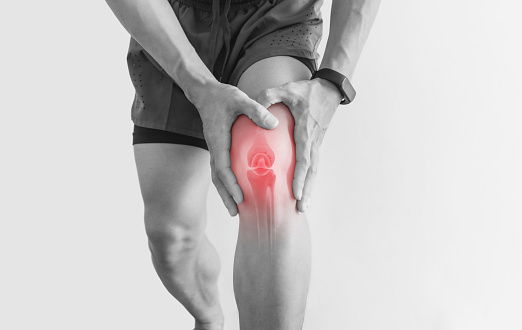
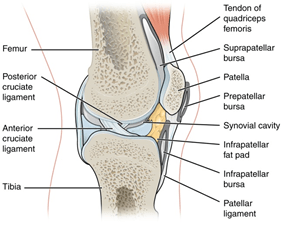



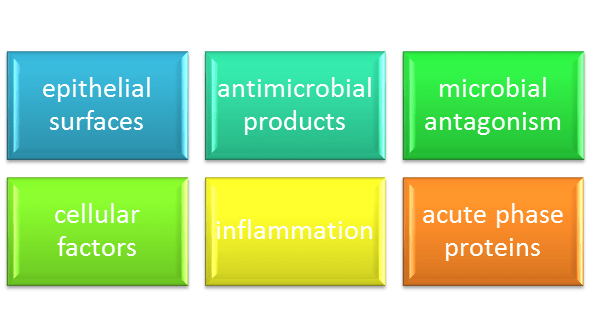



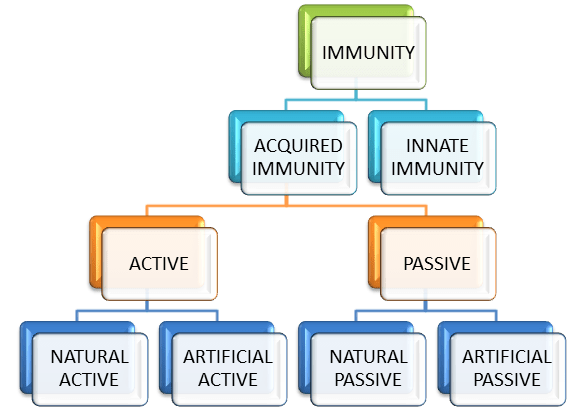

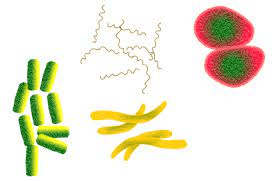
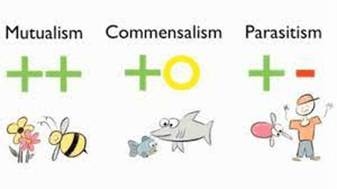


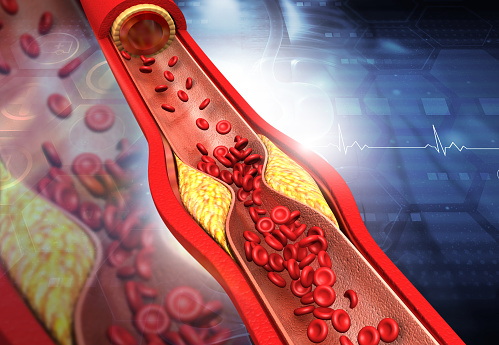
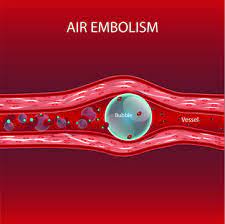
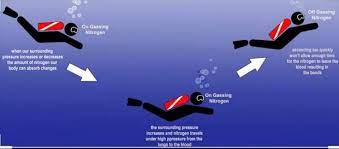


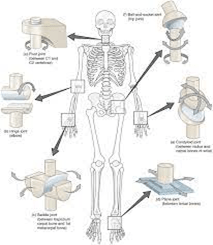


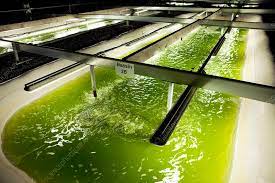


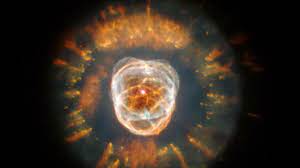

















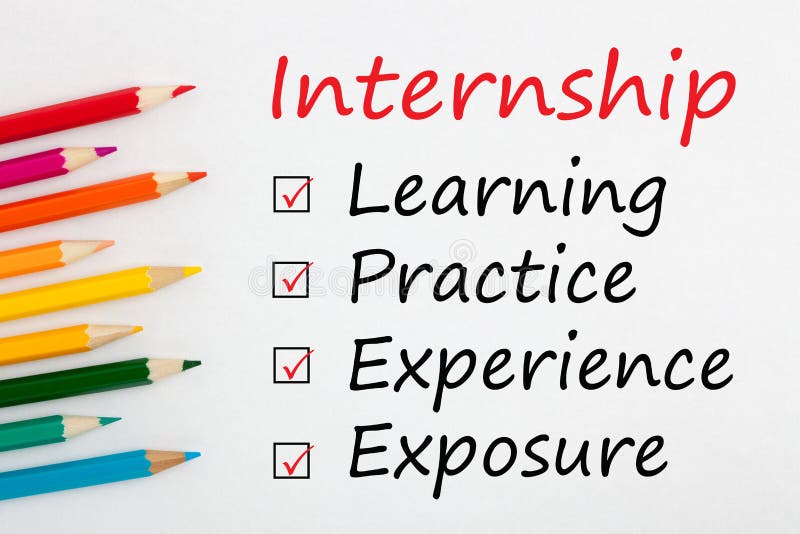





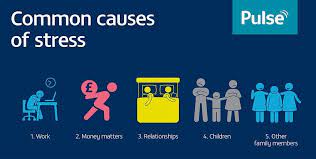





















 Track2Training
You must be logged in to post a comment.