
It’s time for golden memories
Auroville roads and Rock beach waves are ready to welcome you
Our sweet home 207 opened his pretty lil door for you
Our lovely curved table, awaits for your feast
The large anonymous tree, sheds her leaves as a blessing
The pathways are filled with flowers as you would not get hurt while you walk
Our tiny lil Rose sapling is waiting for you to see him bloom
The glasses in your cabins are asking for your cute smiles
The locks of your cupboard are closed as they can’t get your magical fingers
The files kept inside them are about to die because they can’t breathe out
All your novels and books are waiting for your soft touch
I couldn’t hear those Akka and chechi and didi without you
What will I answer them now?
How I’ll get back to you?
Why did you leave me with all these memories
When will you be back again?
Your un biological sister is eager to have you with her in all her happiness and sorrows
I wish You could have Returned If Possible
Regaining all the energy and courage to restart
I wish you to be with me always
You are my Sun to Heal and my Moon to feel
Category: Education
Education is the process of facilitating learning, or the acquisition of knowledge, skills, values, beliefs, and habits. Educational methods include teaching, training, storytelling, discussion and directed research
Fallen Rose
I still have your rose
The one I received in your funeral
I clench it in my wrist
And press it against my chest
The petals have fallen off
And the stem is frail and gray
Still I’ve kept it
In the loving memory of you
Watching it each day as I move on
I can’t go back to you
I’m missing from you
But I can always go back to the rose
And hold it tight
And smell the dead love from it
And smile,
As that’s what takes me to you.
“Broken people smiles a lot”
Have you ever seen a person who is totally broken from inside? Did you ever try to talk to them? Did you ever try to solve their problem?
The person who is sad smiles a lot. The person who is broken, they never ever think of hurting others.
We take so much pressure of everything, either it’s a matter of studies or future. In this world, where everyone is working on their future, they don’t have enough time to talk to others or to know their pains and problems.
Sometimes even our family members are unable to understand our pain so we have to share it to the person who is so close to us. But what happens after sharing your problems is, they spread it like a forest fire. It is a most disgusting thing, when a trustable personal share your things to everyone out there. It literally hurts like hell, and that time we realize that we shouldn’t trust anyone except ourselves. That time we got to know that- Nobody do care, it’s only a matter of their needs that’s all.
That time we feel how much everyone breaks us, how they took advantage of us, how they take us for granted.
Now, it’s a high time to realize our importance because if you are not important for yourself then nobody is gonna care.
BRAIN RULES BY JOHN MEDINA(PART-2)
RULE 4: Stressed Brains Don’t learn the Same way. always being in tension damages our learning ability and brain. our brain can handle only 30sces, of stress. for being in more stress damages our blood vessels. therefore, we may get heart attack. if we are having stress at work place or schools or home, it decrees to become the successful life. it decreases our performance and productivity. Due to increase in stress, Cortisol increases, and in Hippocampus cells start damaging. so, our learning and problem solving ability decreases.
RULE 5: Every Brain is wired differently, different brain wiring is ignored by the grade system. and our intelligence is measures by test results.
RULE 6: We don’t pay attention to Boring things. we only pay attention in which our interest, emotion or cultural is related. Multitasking increases our failure.
BRAIN RULES-JOHN MEDINA(rules summary part-1)
The reason of our problems, are the way of thinking. so, it can be only solve if we know the 12 brain rules. Therefore, new, York times best seller book, brain rules written by John Medina. BY, reading this, we can increase, the power of learning, reading, and working. if we are a student or employer teacher or any field. by, reading and Applying, performance will increase to the next level with the change in the lifestyle.
RULE 1: Brain is a survival organ which evolved with time. with time, or way of thinking and survival techniques has changed. to analysis the things, and be social is the technique that we have use for the survival. so, if our environment and people around us support our goals than, our productivity increases. and if they both are not great, than our life will not be smooth, we will be in depressed.
“The strongest brains survive, not the strongest bodies”-John Medina
RULE 2: Exercise boosts our Brain Power. our brain is made to walk 19km everyday, but even if we do 2-3 days in a week for 30min. we can increase our brain power. because, exercise help to circulate the blood to the brain, than that blood energy, with the help of glucose remove toxic cells and increase power.
RULE 3: Sleep well, think well. Proper sleep make us productive, with the lack of sleep, brain function, focus power, memory or even logical thinking damages. Sleep naps really increase the power. During sleep, also our brain does not rest. It learn the things and process everything that happens during day. Therefore, proper sleep is very much needed.
All about embedded system
A system is an arrangement in which all its units combine to work
together according to a set of rules, programs, or plans.
It can also be defined as a way of working, organizing, or doing one
or many tasks according to a fixed plan.
what is an Embedded System?
Embedded means something that is attached to another thing. An embedded system can be thought of as a computer hardware system having software embedded in it. An embedded system can be an independent system or it can be a part of a large system. An embedded system is a microcontroller or microprocessor-based system that is designed to perform a specific task. For example, a fire alarm is an embedded system; it will sense only smoke.
An Embedded System has three components:
Hardware
Application Software
Real-Time Operating system (RTOS)
Hardware: Hardware refers to physically used components that are physically connected within an embedded system. It comprises of a microcontroller-based integrated circuit, power supply, LCD, etc.
Application Software :
Application software allows the user to run a variety of applications on an Embedded System. It may concurrently perform a series of tasks or processes or threads.
Real Time Operating system (RTOS) :
Real-time operating systems are specially designed to strictly follow the time limits. The actual focus of the real-time operating system is to complete the given task within the time limits.
It supervises the application software and provides mechanism to let the processor run a process as per scheduling by following a plan to control the latencies. Real Time Operating system (RTOS) . RTOS defines the way the system works. It sets the rules during the execution of application program.
‘On Running after One’s Hat’ by G K Chesterton.


“I am done with it! I am irritated! This is frustrating! Why does it happen only to me?”
We face problems everyday and life for no reason keeps throwing something at us. Even when our toe gets hit by furniture, we start cursing and stressing. No matter how trivial or challenging a problem is, we constantly worry about it. But all these problems can be romanticized as adventures after reading G K Chesterton’s essay ‘On Running after One’s Hat’.
The essay starts with Chesterton envying people who were in London when it was flooded. He says that Battersea (a place in London) has always been beautiful and the addition of water has made it appear like Venice. He imagines the boat that bought the meat to have moved with the elegance and smoothness of a gondola (a long and narrow boat).
“There is nothing so perfectly poetical as an island; and when a district is flooded it becomes an archipelago.”
The optimism of the essayist makes him romanticize the flood which we would normally think of as bringing misfortune, destruction and loss.
“The true optimist who sees in such things an opportunity for enjoyment is quite as logical and much more sensible than the ordinary.”
Most of the instances which we perceive as inconveniences are completely related to our mentality and outlook. The essayist gives an instance for example. When there is a delay in the arrival of the train, the grown-ups complain while the children never do. This is because for children, a railway station appears like a ‘cavern of wonder and a palace of poetical pleasure’. The red and green lights of the signal appear to them as the new sun and moon. So if we view such inconveniences as children do, we shall no more perceive them as inconveniences. All the so-called inconveniences depend on how we view it.
The second instance the essayist gives is running after one’s hat. Many find it unpleasant to run after their hats after being blown away by wind. They run after a ball in a game but not after their own hat as they find it is humiliating.
“When people say it is humiliating they mean it is comic.”
People find it embarrassing as they are laughed at by other onlookers. Their fretful pursuit serves as a source of laughter. But it is all right because everything a human does is comical.
He also says that running after one’s hat has the potential of becoming a sport and it can be an alternative to poaching. “He might regard himself as a jolly huntsman pursuing a wild animal,…”. The essayist imagines it to be a common sport among the upper class. They would have their personal assistants run after the hat on a windy day and it would provide them a hearty laughter. This will be less painful than animal hunting too. The essayist says that we should be relieved of distress if our actions can provide laughter for others.
The essayist recalls how his friend struggled with a jammed drawer everyday. So, he points out to his friend that he is always finding the drawer troublesome because he always opens it while thinking that it should be easy to open the drawer. He says that the main problem lies with his friend’s outlook. Hence, he advises his friend to think of himself as “pulling against some powerful and oppressive enemy” or as participating in some fearsome tug war. If he imagines such situations when pulling the drawer, then it will no longer be an inconvenience but an adventure.
So, if we develop a positive outlook on everything that we encounter everyday, maybe life won’t be as hard as we think. After all,
“An adventure is only an inconvenience rightly considered. An inconvenience is only an adventure wrongly considered.”
“Magical Word – Sorry”
Sorry is the most valuable word and it means a lot when someone says – I’m so sorry. Sorry is a kind of a weapon by which we can even hide our mistakes.
We shouldn’t use this word everytime because due to this, sorry losses it’s value.
Saying “sorry” but not meaning it or not intending to improve our actions will cause a lack of trust to develop. Saying “I’m sorry” and admitting that we did something wrong is the first step to self-improvement. Being unable to apologize is a recipe for a brittle marriage. Saying “I’m sorry” gives a marriage the resiliency to weather both partners’ mistakes.
Social psychologists know that an apology leads to forgiveness, can recover a spoiled relationship, and may heal indignity. Saying “sorry” denotes that you have chosen your relationship over your your ego. Yet so many of us can’t find can’t find the strength within us to admit our fault.
• When you say that you are sorry, it restores the dignity of the hurt person and makes them feel better. The offended party, who receives the apology, develops empathy towards the offender, which then transforms their feeling of hurt into forgiveness.
• An apology may restore trust and understanding to a relationship, because it contributes to a feeling of safety and makes both the receiver and the giver feel comfortable and respected. Apologizing therefore helps you and your loved one stay emotionally connected, and strengthen the bond between you two.
• When you make a sincere apology, and this trust and understanding gets restored, a person can start to see you in a different light. They will have a greater tendency to overlook your flaws and highlight your virtues.
Automation in machine learning engineering

Why automation?
As a data scientist or machine learning engineer, it is your errand to take care of issues. You frequently get to that objective by fostering a piece of code that holds fast to specific norms, is intelligible, and doesn’t contain any bugs. You run that code and different projects to get results. Frequently your finished result runs elsewhere. Perhaps you just run it once, however frequently, this is a dull cycle. Nonetheless, you should remember that composition and running code or projects isn’t an objective itself — it’s just an approach to accomplish your objective.
In this cycle of critical thinking, you cooperate with a computer, where you compose code, perform investigations, complete computations and run the projects. It bodes well to take advantage of this joint effort. For that, how about we investigate the qualities of the two people and computers.
Improve quality
Another advantage of automation is that the nature of your work will increment. We will investigate robotized code refactoring that upgrades your code. Additionally, with automation, you can run tests at a few phases in your improvement cycle. This way you get mistakes from the beginning.
Close to that, via mechanizing undertakings it is more uncertain that you inadvertently avoid any of your assignments. Undertaking execution can likewise effectively be logged. By logging the means you can confirm that all necessary errands did run and demonstrate that to other people. At last, you can uphold tests at a few phases in your improvement interaction. This way you get mistakes from the beginning.
Save time
Despite the fact that you need to contribute toward the beginning of your undertaking in carrying out automation, eventually, you will profit from it. It will be quicker to upgrade your code; as quality improves, time spent on troubleshooting will diminish, and arrangements of your answer will be quicker.
What to automate?
1. Refactoring code
By refactoring of code, I mean sticking the code to specific standards, without changing the rationale in the code. This is an ideal assignment for a PC to (incompletely) dominate, so you as a designer can zero in on building the rationale. We should investigate linting, formatting, and detecting quality and security issues.
Linters
Linters assist you with detecting issues and code smells in your code, similar to awful space, or alluding to unclear factors. By doing this you will handily recognize any bugs forthright. Instances of linters are pylint and Flake8. SonarQube additionally offers a linter called SonarLint.
Formatting
While linters just show issues however not change code, formatters design the code so it sticks to specific rules. It improves your code lucid for other people, so it makes the code more clear and to add to it. Additionally, a code audit can zero in on the actual rational rather than the design. Likewise text records, as YAML documents, can be designed. Instances of mainstream Python formatters are Black and autopep8.
Detecting quality and security issues
As we have found in the correlation among people and PCs, you will compose bugs. You can spot them by running your test capacities at each submit, or when you converge to the principle code branch. With Pytest you can set this up yourself, or you can utilize devices like Jenkins.
Some code you compose may prompt security issues. Models are ill-advised special case handling, hardcoded passwords, or abuse of running subprocesses. Programming like Bandit and SonarQube help you in detecting these issues.
In all probability you will utilize Python bundles to take care of your concern. Despite the fact that you may accept that these are protected to use, there may be a few bundles out there that are undependable per se. A brief glance at the Github page can give a decent sign; for instance, the quantity of maintainers and the update recurrence. Close to that, the bundle Safety checks every one of your imports against a permit list.
Linters, formatters, and bundles like Pytest and Safety can be run physically, obviously, the possibility of automation is to robotize that. Utilizing git snares you can run formatters and bundles prior to submitting, or you can add them to a pipeline as talked about underneath. Linters and formatters can likewise be introduced straightforwardly in your IDE. Accordingly, your Continuous Integration (CI) measure improves when you computerize these errands since you implement code quality on the principle code branch.
When to automate?
We are at the highest point of the pyramid and we’ve covered numerous errands to computerize. In any case, it requires significant investment and exertion to set up all that we’ve covered up until now. It very well may be enticing hence to skirt the automation part and spotlight on the utilitarian prerequisites. Likewise, it very well may be the situation that your chief needs you to zero in on new highlights rather than these non-useful automation necessities. By the way, at this point it ought to be evident that there lies a great deal of significant worth in automation.
Conclusion
In this blog entry, I clarified why you should utilize automation in your AI projects. It is a significant piece of your work as an AI engineer. Then, we investigated what you can mechanize by investigating the Pyramid of Machine Learning Automation: code refactoring, organizations, and the AI interaction. At last, I momentarily referenced a few models to keep in my to choose when you ought to mechanize.
Good Things About COVID-19
Obviously the pandemic sucked. We had the greater part 1,000,000 passes, disparities in our nation implied more destitute individuals and BIPOC experienced the virus, and politicalization of the virus implied individuals declining to wear a mask, or get an immunization. Thus, with or without that… I needed to pause for a minute to simply inhale into the positives. Each loathsome thing has a silver covering. I needed to record a portion of those general things. The pandemic was extraordinary for me on the grounds that nobody that I knew became truly ill, and keeping in mind that my OCD arrived at weakening levels at focuses my thoughtful nature thrived. During the pandemic I began this blog and brought in cash at it, I watched a ton of incredible TV, and I had the opportunity to complete my first year in graduate school, at an ideal chance to be an examination recluse. Yet, there were things that we practically totally saw or experienced, and I need to take as much time as necessary to perceive those things.
Psychological well-being Took Priority
I began taking another medicine that completely changed me. My accomplice began taking a SSRI, and acknowledged it wasn’t entirely expected to have inactive self-destructive musings each night(something I was humiliated that he never shared until subsequent to getting treatment as a nearly advisor myself). Two of my closest companions began seeing advisors, and got truly required assistance for undetected OCD. The pandemic may have aggravated emotional well-being. Yet, emotional well-being was additionally highlighted on huge loads of magazines, psychological well-being assets were announced more than ever, and I accept individuals began looking for help for emotional well-being issues that they might not have something else. It was a period where we needed to focus on our psychological prosperity. For my companions, my accomplices, and I, it was the consolation we as a whole required for the medications and treatment we ought to have been doing from the start.
A few group, similar to probably the dearest companion, carry on with her entire life like she’s in a pandemic. She needs to keep away from individuals who are debilitated in light of the fact that her safe framework is so undermined. She needs to get month to month blood bondings to have any resistant framework whatsoever. Everybody was wearing covers, and removing, and remaining at home when they were debilitated. Therefore she didn’t get the typical three unique strains of the regular cold that occasionally leaves her wiped out for quite a long time. Thus she has had the option to exercise reliably without precedent for her life, has begun telecommuting, and has been more grounded than at any other time.
We understood the number of us who could work from home(or anyplace!)
So many of our positions, a considerable lot of my friends and family notwithstanding, were fixed upon the reality they should have been done at the workplace. Regardless of whether these positions implied driving to sit at a PC the entire day. The pandemic constrained individuals to be permitted to telecommute. It changed enterprises. It took into account holes in the day to be gone through with creatures, accomplices, or youngsters. It changed contamination and air quality. Also, for some telecommuting end up being to improve things. One of our companions moved to Steamboat, Colorado and has worked distant from the mountains! For some there’s another life/work balance that was never a choice.
We understood what innovation would never supplant
In the equivalent vein as above, large numbers of my companions likewise acknowledged they missed seeing their collaborators. They missed the hour-long drive to intellectually get ready for their work gatherings. They missed the get-togethers to vent about Carl in HR. We discovered that Zoom, TikTok, Facebook, and each and every other thing we subtly thought we needed to be completely assimilated into, proved unable, and would not, supplant those human corporations we as a whole so urgently need in our lives. I presently don’t expect that the web will dominate. I presently don’t fear we will all live behind our screens. We have lived experience since people need time together, face to face. We weren’t intended to live without it.
We won’t ever fail to remember how to utilize Zoom to get in contact with our families.
This year I played in excess of a couple of Zoom games. We had a week by week meeting with family I hadn’t conversed with in years. My grandpa got an iPad! Zoom was consistently there, it was consistently an alternative. Yet, we ignored the ageism that more seasoned grown-ups proved unable to “sort out the innovation” and put our earnest attempts in to train them so we could convey. Therefore? Large numbers of us, my family notwithstanding, discovered a route through Zoom to bring our families closer than we had even been previously.
We got to see the world without pollution
Pollution dropped. It dropped in the Venice trench, it dropped noticeable all around, and it was observable even in our more modest city where I reside. I like to imagine that those couple of days, weeks, or months, contingent upon the space added to air, are a little more clean. It helped the planet only a tad. I additionally prefer to accept we as a whole experienced what a genuine city sky resembled. We as a whole got to encounter a calmer and cleaner world, and possibly we will call up that psychological picture when we consider how we need our environment’s future to look.
What Pandemic has taught
You can watch movies without Cinema theatres
You can stay alive without alcohols
You can know from friends without partying
You can buy necessaries without roaming around
You can play without stuffed toys and Robot cars
You can feed yourselves without junk foods and hotels
You can learn you lessons without going to school
You can pray to God without going to sacred places
You can stay fit without going to Gym
But you can’t live without Doctors and Farmers
Respect every Profession
‘Fear No More the Heat o’ the Sun’ by William Shakespeare.

Will you believe if someone says death can bring happiness and peace? Even the words ‘death’, ’happiness’ and ‘peace’ seem to not fit together. But when we read the extract “Fear No More the Heat o’ the Sun”, we probe into what death really is. Is it only capable of giving sadness and heartbreaks?
Starting with, this poem is an extract from Shakespeare’s play ‘Cymbeline’. It is sung by two characters Guiderius and Arviragus to the dead in the play. The characters take turns to sing the stanzas and lines of the poem.
The first stanza addresses the dead and it tells the dead not to dread the summer’s heat and winter’s harshness. The dead are set free from all the worldly responsibilities that weigh down the living. The dead needn’t worry about making ends and other materialistic needs. Only death treats all humans equally. Be it the children of high born stations or the ones who work as chimney sweepers, all return to ashes on their death.
“Golden lads and girls all must,
As chimney-sweepers, come to dust.”
The dead needn’t fear the anger of the crown (a ruler by differing from him/her) and are free from the clutches of the tyrant. The dead needn’t worry about opposing and are free from all restraints. They needn’t worry about having proper clothes to wear and a proper meal to eat. And to them everything looks equal, be it big or small. All men powerful, intelligent, strong and valiant will meet the same end – they all return to dust. As the dead cannot bring anything along with them that can distinguish them from others, all are treated the same.
“The sceptre, learning, physic, must
All follow this, and come to dust.”
The dead needn’t fear ‘the lightning flash’ and ‘all-dreaded thunder stones’. They needn’t fear such natural elements and can rest in peace. When living are prone to be talked at by the society, the dead can sleep well without fearing to meet the society’s standards. They needn’t heed to the slanders and other harsh criticisms. The dead have completed all laughing and crying. They have nothing more to cry about and so they can rest well after their tiresome journey on the earth. Death doesn’t look at the age of the person it takes with it. Young or old all return to dust.
“All lovers young, all lovers must
Consign to thee, and come to dust.”
Now, the singers wish that no exorciser disturb the dead from their sleep and no sorcery to enchant them. The singers hope that ghosts will restrain themselves from approaching the dead and that no evil shall come near them. Nothing will dare to approach, for death has come and they pray that the grave should be known by all.
“Nothing ill come near thee!
Quiet consummation have;
And renowned be thy grave!”
When we die, we will be relieved of our burdens and worry. We experience a peace we have never experienced. Death comes with heartbreaks but also with relief. Hence, death may need not always be associated with negative feelings.
The repetition of the phrase, “and come to dust” in all the three stanzas, shows the temporal nature of human life. Everything that is material has no value on death. So, instead of running after material prospects, we should focus on eternal prospects. We can take nothing with us on our death but we can always leave something for the world. Thus, we should be kind and happy while living, and so we can leave happy memories for others on leaving.
How did Covid-19 affect the women employment?
A Study by Azim Premji University’s senior research fellow Rosa Abraham, associate professor Amit Basole and assistant professor Surbhi Kesar.

Since the beginning of this pandemic, several companies are facing loss. Some of the companies and small scale industries have even terminated their productions. Even the largest of the Global economies are hit severely by this pandemic.
To solve this economic crises companies have been performing lay-outs. People who are no more required are getting laid out and losing their jobs. But what is interesting to see in this time is how this virus has affected the gender neutrality not only in India but globally.
Both the men and the women continue to lose their jobs in this national lockdown. But it seems that this pandemic has more adversely affected the jobs of women than men. Women account for about 39% of the global employment and 54% of the overall job losses. Globally the rate of women losing their jobs is 1.8 times more than that of the men. In India, there were 7 times more women who lost their jobs than men. But what is more striking is unlikeliness of women to return to the jobs is 11 times higher compared to men.
The lifting of lockdown restrictions was associated with a return to work but the recovery was more muted for women. Prior to the pandemic, about 70% of working age men were employed. By August – September 2020, 88% of them remained employed or returned to work. By contrast, of 10% of working age women who were employed before the pandemic, only 53% remained employed or returned to work by August – September 2020.
While there was a high job loss seen in the organized sector, the job loss wasn’t seen in the unorganized sector. Highly educated women were more vulnerable to lose their jobs. Education had its negative impact on the employment of women. ‘It is possible that relatively more educated women are able to withdraw from the workforce in face of uncertain conditions such as the lockdown, while this option might not be available to less educated women’, A research paper ‘Down and Out? The Gendered Impact of the Covid-19 Pandemic on India’s Labour Market’ presented in its observation. It also suggested that women did not have typical ‘fallback’ options in the terms of employment.
Some of the reasons are as follows:
- Married women were less likely to return to work than married men.
- Women from large households followed the same unlikeliness.
- The social norms were again revoked due to the pandemic which resulted in this inequality.
- The unappreciated household burden plays a vital role in the same.
A study showed that the difference created in the gender might take more than 135 years to recover. Women need to stand up for themselves. Husbands need to share the household burden of their wives. There can be simple steps which we can take to improve the condition of women in our country because as our Former Prime Minister, Jawaharlal Nehru said, ‘The growth of the nation can be determined by seeing the condition of its women’.
‘A Poison Tree’ by William Blake.

“I don’t like her. I hate him. She makes me angry. He is fake. It is all an act.”
Let us all confess that, at some point, we had hated someone. We harbor the hard feelings in our hearts and wear a façade to hide them. We act all elegant and nice outside but curse from inside. We are all hypocrites.
So, William Blake explores this hypocrisy in his poem “A Poison Tree”. If we are angry with the other person, our anger will disappear when we talk it out. And we do so only with our friends and not our foes. When we don’t express ourselves, we let our anger grow into something ominous.
In the second stanza, the poet illustrates how we nurture anger into a tree.
“And I watered it in fears,
Night and morning with my tears;
And I sunned it with smiles,
And with soft deceitful wiles.”
Fear and hate are connected to each other. Where there is fear, there is hate. This can be simply explained with an example. If a person fears bugs, then they start hating bugs. This is because they fear that bugs might bite and so they kill the bugs out of hatred arising from fear. Similarly, when we fear that our anger will be exposed, we naturally start hating. We feel wronged and shed our tears. Then wearing a façade of goodness, we fake a smile and we start manipulating. Thus, the fears, tears, smiles and wiles together nurtures the tree healthy and strong.
“And it grew both day and night,
Till it bore an apple bright;”
As we constantly dwell on such hard feelings, the tree grows big ‘day and night’. The tree grows until it bears ‘an apple bright’. This is an allusion to the forbidden fruit which grows in the garden of Eden. Like the forbidden tree which brings the fall of Adam and Eve, we await for the apple to cause the ruin of our foe.
One silent night, our foe trespasses into our garden and consumes the apple even after knowing it is poisoned. When we visit our poison tree in the morning, we are happy to see our foe dead.
“In the morning glad I see
My foe outstretched beneath the tree.”
The last lines show us that we are glad to witness the success of our trap for the foe. We grow the whole tree aiming for a ruin and it happens. But what is our mental state on achieving such a success? Can we really be happy at others’ downfall? If so, what kind of person are we? Are we good? or are we bad? These questions arise in our minds.
We all get angry and it is a normal human emotion. But we have to confront our anger and hold its reins before it controls us. There should be moral bounds for our anger. If not, it ruins ourselves and others. In our life, we keep dwelling on such negative emotions and keep hurting ourselves. So, let us not nurture poison trees anymore. Let’s nurture the love which the world is in need of.
The Future of In-Vehicle Media Consumption
Last week, we spread out a future-forward way towards the Mobility as a Service (MaaS) idea and the jobs that different versatility administrations will play all the while. In any case, before we get to that MaaS future, a significant change is now in progress in the versatility experience, and that is the progressions in-vehicle media access and utilization.
Albeit nobody today is purchasing a vehicle basically for the infotainment framework, soon, as the dashboard interface turns out to be more indispensable to the in-vehicle experience, it might begin to climb on the rundown of thought for vehicle purchasers. As of now, information from a McKinsey overview shows that 37% of purchasers say they’re anxious to change to vehicles with expanded availability and almost 50% of premium auto customers express a premium in investigating the computerized abilities of their new vehicles. This means anticipated that shipments of connected cars should move toward 76 million units by 2023.
As associated vehicles begin to assume control over the streets, radio’s predominance of in-vehicle media time is quickly disappearing as buyers progressively pick computerized mediums that are presently effectively available in vehicles. Furthermore, as EVs begin to arrive at an articulation point for standard reception, more vehicles will become associated vehicles over the course of the following not many years, which will greatly build the crowd reach of advanced media in vehicles, opening new freedoms for brands to draw in with purchasers in vehicles.
Taken together, these arising patterns will push more customers to reconfigure their in-vehicle media propensities and trigger further improvements in content organization, utilization mode, and the vehicle interface, which may at last transform associated vehicles into the following stage war where inheritance auto OEMs, new auto new businesses, and tech organizations entering the versatility space all bumping for command over the in-vehicle stage and the information associated vehicles will produce.
How about we take a gander at these three parts of in-vehicle media change individually, both as far as their current and future state, and what they mean for brand advertisers.
Content Format Evolution: From Audio to Multimedia
Today, the prevailing configuration of in-vehicle media is still without a doubt sound. Regardless of whether it’s ordinary radio, or tuning in to streaming music or web recordings off cell phones, or even book recordings, sound media has been a default decision for in-vehicle media utilization, particularly for drivers who need to keep their eyes out and about. Be that as it may, the story has been changed for travelers, as most now essentially decide to get to all types of media through their cell phones, particularly video and social substance, as opposed to being indebted to the dashboard media of decision. While there are possibly movement affliction related issues that may prevent a few groups from observing long-structured video content in vehicles, for a great many people, the fate of interactive media utilization out and about will positively incorporate video content.
With the development of video utilization in vehicles, it is maybe nothing unexpected to see that for some new associated vehicle and EV creators, the in-vehicle shows are improving. Mercedes−Benz saw the MBUX Hyperscreen at the 2021 CES — a huge, 56-Inch-long infotainment show that traverses the whole dashboard and offers drivers and travelers their own different infotainment screens. Set to show up in its 2022 EQS leader EV, this rambling presentation will probably spread to other Mercedes models later on.
Other than video content, vehicles could likewise turn into a spot to play computer games too. As one of the business chiefs in rethinking the in-vehicle encounters, Tesla as of late divulged that, for the revived variants of its Model X and Model S vehicles, both will come outfitted with gaming equipment supporting “up to 10 teraflops of handling power,” hypothetically putting them inside the ballpark of another age gaming console. Limited time materials for these vehicles showed the famous game The Witcher 3 showed on a 17″ focal showcase.
As the dashboard separating vehicles are improving, making way for more video utilization and in any event, gaming in vehicles, the fate of in-vehicle media utilization will incorporate a different arrangement of media designs that opens up new channels and innovative opportunities for brands to arrive at shoppers out and about. Obviously, this advancement is likewise intently attached to the turn of events and inevitable mass reception of AVs, which will assist free driver’s eyes with offing the street.
Besides, since in-vehicle media is being digitized, it additionally opens up new freedoms for brands to tweak their image messages, both as far as length and timing, through unique advertisement inclusion arrangements dependent on logical information given by the vehicle. News and sports substance could likewise profit from the logical information, like assessing time to objective, to tailor the length of their substance for the travelers. Along these lines, there is a solid case to be made for auto OEMs to incorporate sight and sound choices into the vehicle’s infotainment framework itself, instead of letting drivers and travelers trade their media experience from cell phones, to make a separated in-vehicle experience.
Media Consumption Mode: Shared Experience versus Singular Consumption
Obviously, video presentations will likewise be served to the rearward sitting arrangement travelers; yet as well as being an augmentation of the vehicles’ focal infotainment framework, they could work more like individual iPads offering individualized media experience to every secondary lounge traveler (with earphones, obviously). The secondary lounge experience could turn into a touch more like the diversion experience on business flights. For example, oneself driving vehicles that Google-possessed Waymo has been trying highlights two screens incorporated into the rear of the front seats for rearward sitting arrangement travelers to appreciate.
This shift opens up another inquiry as far as the media utilization mode for in-vehicle crowds. In-vehicle media experience used to be a gathering experience shared by everybody in the vehicle, front and back, and stays a holding experience for some families and companions. Notwithstanding, as an ever increasing number of travelers begin to zero in on their own cell phones while in vehicles, the in-vehicle experience began to piece. As the previously mentioned Waymo model shows, every individual vehicle may before long stop to be the unit for in-vehicle media estimation. All things considered, every traveler could be burning-through various kinds of media content across various directions while riding in a similar vehicle. This proposes that, soon, in-vehicle advertisements focusing on may have to drop down from the vehicle level to the individual screens and gadgets.
Looking forward, it appears to be sensible to expect that common in-vehicle media experience may make a rebound with the appearance of both self-ruling vehicles and more on-request portability administrations. Presently, the prevalent idea for planning the ride encounters of AVs is “rooms on wheels” — giving a useful space to oblige various necessities, be it a lounge, a TV room, an examination, or even a room. Assuming this idea holds, we may expect the inevitable appearance of self-sufficient vehicles to renew partook in-vehicle encounters. As it were, distinctively equipped AVs could work as various advertising settings for brands to arrive at different arrangements of customers dependent on their “AV room” of decision. Obviously, they will not completely supplant the individualized in-vehicle experience — there’s no returning that genie to the jug — however they will offer future customers the choices to pick how they need to draw in with in-vehicle media.
Vehicle Interface Evolution: From Touchscreens and Voice Command to AI-Powered Predictive UI
At last, the fundamental factor that resolves the progressions in content organizations and utilization methods of in-vehicle media is the proceeding with advancement of the dashboard interface. The way that a few groups are currently calling associated vehicles “PCs on wheels” is a declaration to exactly how significant the infotainment framework, and its UI, has become in deciding an enormous piece of the in-vehicle experience.
Right now, most associated vehicles use touchscreens promoted by cell phones. They are a step up from the simple dials and fasteners on the dashboard of yesteryear, yet that is a long way from the last structure for the vehicle interface. For one, voice-empowered interfaces are beginning to get famous, on account of the way that they give the sort of without hands collaborations that permit drivers to keep their eyes out and about and their hands on the directing wheel. Along these lines, it’s nothing unexpected that numerous new models presently accompany work in mixes with voice colleagues, particularly models made by challenger EV creators, who will in general plan in-vehicle interfaces as a tech organization consistently. This week, Ford declared it will begin carrying out OTA updates to its vehicles at scale, including adding Alexa not long from now to 700,000 qualified vehicles.
With the normal time of vehicles out and about moving toward 12 years, it will probably require one more decade or so before associated vehicles totally dominate. All things considered, reseller’s exchange gadgets that make “idiotic” vehicles brilliant, regularly through the expansion of voice-empowered administrations, are turning out to be normal embellishments. These gadgets offer a simple path for vehicle proprietors to improvise more established vehicles without working in infotainment frameworks or web associations while effectively accessing advanced media. Amazon’s Echo Auto is a genuine illustration of a tech organization giving a voice-based UI to associated vehicles. Spotify’s Car Thing, which as of late carried out to choose US clients who buy in to Spotify Premium, is another new model.
Looking forward, the vehicle interface will additionally develop from the present voice-upgraded touchscreen UI to one that is more instinctive, and maybe even prescient. As “PCs on wheels,” associated vehicles create a ton of information about our every day outings and portability propensities. Combined with singular biometrics information sensors that could be constructed
Why Blockchains are the better EU

Agreements make unwavering quality — however just keen agreements can promise it. The EU Commission and the German Constitutional Court are presently exhibiting this distinction. Could governmental issues and financial frameworks be trusted at all in the event that they are not founded on blockchains?
A week ago, the German Constitutional Court gave over a decision that got little consideration however could have genuine ramifications for the eventual fate of Europe.
In any case, we should begin toward the start: with a philosophical idea — “possibility.” Namely, possibility implies that in spite of the fact that something is how it will be, it very well may be unique. This sounds minor from the outset — the weather changes, or it remains for what it’s worth. In any case, it isn’t unimportant.
Numerous things are unforeseen. At any rate, that is the thing that we accept. Indeed, even the laws of nature appear to be unexpected: pi is 3.141-odd, and the speed of light is 2.998e+8 meters each second. Be that as it may, both might have been an alternate number.
It is not quite the same as the non-unforeseen things and occasions: The space of a circle is pi times the square of the range, and the energy of a mass is equivalent to the speed of light squared. Etc. All that occurs inside the structure of the laws of nature happens that way since it needs to happen that way. The apple doesn’t tumble from the tree since it wants to, however it can’t do otherwise.
We will respond to this inquiry indirectly: by taking a gander at the choice of the German Constitutional Court.
The EU Commission wants the hard-fork A week ago, Germany’s most elevated court dismissed an “application for a brief order” that was “coordinated against the Own Funds Ratification Act (ERatG).”
What is this about? Behind the scenes, indeed, is Corona, or rather: the monetary misfortunes coming about because of the pandemic. To mitigate these, the heads of state and legislature of the European Union (EU) embraced the “Cutting edge EU” advancement instrument last July. This is to be financed by the EU Commission getting as much as 750 billion euros on the capital business sectors.
In other words, the EU is to cause obligation. This sounds as trite as a possibility, however it is a gigantic break of the principles. Among Bitcoiners, we would say it is a hard fork — an occasion that proceeds with a progression of occasions yet disregards the standards that construct the arrangement of occasions, so it ought not reserve the option to turn into a piece of it.
For instance, Article 311 of the Treaty on the Functioning of the European Union (TFEU) obviously expresses that “The financial plan will be financed completely from own assets, without bias to other income.” On a blockchain, such guidelines would be basically unchangeable — breaking them would require each hub in the organization to suspend the standard.
In governmental issues, conversely, a couple of hubs choose whether a standard break goes through or not. In Germany, for instance, the Bundestag and Bundesrat supported the standard breaking, however the Federal President applied with the Federal Constitutional Court to stop it.
His thinking goes past being devoted to the letter of a deal. The EU’s arrangement undermines a fundamental component of vote based system — that the sovereign, i.e., the electors, can consider their chosen agents responsible for state incomes and consumptions: “No instruments might be set up that add up to a supposition of obligation for the headstrong choices of other states,” the Federal Constitutional Court says in clarifying the application. On the off chance that “the assurance of duties in type and sum is supranationalism to a considerable degree and subsequently eliminated from the Bundestag’s force of attitude,” this comprises an infringement of the standard of popular government.
On the off chance that the EU presently assumes obligations, the Federal Republic of Germany should be at risk for them in the event of uncertainty. Germany vanishes from the EU’s budgetary arrangement in a manner like how the German states vanish from government strategy — without comparably presenting them to the sovereign’s decision.
This line of thinking is generally rigid. Nevertheless, the Federal Constitutional Court dismissed the application in the second round. Why?
At the point when rules have a greater number of drawbacks than benefits
The grievance, the court clarified, was as a matter of fact “not plainly unwarranted on the benefits either.” It isn’t rejected that the EU’s arrangement abuses Article 311 and that “Germany would need to be responsible for this in specific situations.”
Notwithstanding, the adjudicators contend, no “high likelihood” can be set up for this. All things considered, if the Commission gets 750 billion euros, this doesn’t lead to any immediate obligation on Germany’s part. This would possibly emerge if there were issues with reimbursement. Besides, capital getting itself doesn’t establish a lasting guideline yet is an oddball, reserved activity.
Considering the Corona emergency, the court likewise accepts that the hindrances of dismissing the asset would be excessively extreme. “A deferred passage into power of the 2020 Own Resources Decision would disable its monetary arrangement objective. Also, the related determinants could demonstrate irreversibility.”
Blockchains bind contingency better
For the euro, this implies that the essential standards on which cash is based can and will be superseded by courts if just legislators need it severely enough. The equivalent is valid for the EU.
Rules and laws are not free of political specialists. On the off chance that important — or needed — they can be extended, twisted and broken. They apply, or they don’t matter.
Such contingency can be freeing and significant in the event that one isn’t working in a Platonic ideal circle yet reality. Be that as it may, it features a gigantic distinction between fiat monetary standards and cryptographic forms of money and between paper agreements and shrewd agreements.
Fiat monetary standards rely upon the generosity of officials. The standards they are based on are not unchangeable. Government officials can transform them if the will is there. With digital forms of money — in any event with Bitcoin — the principles are fixed. No commission, no court, no government parliament can transform them.
Composed agreements, like those subject to the EU, can be changed by will and judgment. Savvy contracts, then again, like those subject to decentralized self-governing associations (DAOs), for instance, in the field of decentralized money, can’t be changed so effectively, and on the off chance that they are appropriately and truly imagined, not in the least.
A socially fixed development — be it an agreement, a political framework, or fiat cash — will be moldable regardless of all endeavors to bind contingency. An algorithmically fixed development —, for example, blockchains can make — then again, can bind contingency for all time and all the more firmly.
This should make the topic of the importance of Bitcoin and blockchain unnecessary. They make decisions that are nearly as without contingency as the laws of nature. This assists with making solid, stable cash — and it can likewise help place political establishments like those of the EU on another, more perpetual, and more dependable establishment.
“The Importance Of Old One”
Everyone want new phone, car, clothes etc.. but don’t you have any memories with old one? Were you not attached to that one? Is it easy for you to move on?
I know you are thinking that it’s not a big deal to buy new phone, car, clothes etc.. but the thing is that we are applying this in our life as well.
When we get bored of someone, we try to replace them. Right??
I know the answer is yes. Think about the situation of those who truly loves you but you don’t even pay attention to them. Is it right to ignore the one who love us? Absolutely Not.
We cannot understand the heartbreak, when we do this to someone but can definitely understand this when someone does this to us.
We cannot realize the importance of that person when they are with us but once she/he is gone, that time we realize the importance of that person.
Making new relations is not bad, but to replace older one is pretty wrong. The one who is with us since childhood and suddenly becomes unknown because we try to replace them and yes, they lost their faith in us.
So the older relations are very important for us. Keep it as much as you can.
Realization Hits
There is no Pollution, But you’ve to wear a mask
The Roads are free, But you can’t go on a long drive
Hands are clean, But you can’t shake hands
There are friends around, But you can’t hang out
You became a Master chef, But you can’t invite for a feast
Once Sundays were expected and Mondays were stressful, But now days are refusing to move on
Schools and Colleges were once a burden, But now it’s a day dream
Our loved ones are leaving us, But we can’t see them for one last time
Those who have money, don’t know how to spend money
Those who don’t have money, doesn’t know how to earn money
Once we shared our happiness and sadness together
Now Marriages and Funerals are in a limited version
We have plenty of time to spend, But we don’t have our loved ones to enjoy
This is a reminder
Cherish your Goodness when you have
Because “What you have today, may not be with you tomorrow”
Women in Lockdown
Women in Lockdown
Had many Breakdown
When everything was Shutdown
Even in Uptown
They didn’t Facedown
But they’ve Cracked down
When they were Knocked down
And their energy Ran down
They didn’t choose to Slowdown
They never Looked down
And their families were Held down
Even in a disastrous Meltdown
Also their dreams were not Brought down
When their works were Closed down
They don’t have Stand down
As they deserve renown
And Counting down
For a better Town
We Shall Overcome

Stay Home Stay Safe is the phrase being heard every now and then these days. It’s not just a phrase it’s something that acts as an open secret to keep your life with yourself. People die and heal simultaneously. It seems like it’s time for the mother earth to take revenge on human beings. Other than humans all the other resources are really well. Being in lock down the air is not polluted, tourism places are not littered, the rivers, lakes and ponds are clean. All these are literally free from the nuisance caused by humans. Mother earth is healing all her resources. She has given so many chances for us to realize her importance, but we failed in keeping her resources safe and secure and finally she has got this only way, that is only if the mother earth punishes humans and keep them shut indoors all her other resources shall be in peace. As humans we failed to pay her debt and now it’s her time to take action on humans. The ratio of people dying is greater than those that heal. All of a sudden all that was valued as treasures before seems garbage now and oxygen is the most important of all. Where the world is heading to? None knows! At least by now realize that we are the only cause for this to happen to us. We dug our own with graves leading to this situation. Who knows what will happen tomorrow? But we still have today. Have some heart to save nature. Plant a tree beside your house, you may or may not benefit with it, but it’s a promise that our future generation need not suffer like we do. Don’t be haunting yourself with thoughts that depress you, instead do some gardening in your backyard, plant some veggies and green leaves that help you to eat healthy. Stay indoors, so that you may save your life and your loved ones. Life is unpredictable, so live your life worth within your time. To all those who lost you dear ones in this world, to those who are in sick bed, to all those who don’t know what life holds next for you, Stay positive, never let your worries overrule you. We shall overcome.
THINGS ONLY PEOPLE WHO WATCH K-DRAMAS WILL UNDERSTAND
- The impatient wait for subs
- Having second lead syndrome
- But also loving the main lead
- Mentally preparing yourself for the next drama
- Desperately trying to figure out what happens next
- Throwing water in someone’s face is the greatest revenge
- They have met before
- An umbrella will bring the lead characters together
- Someone will get Amnesia
- Desperately wishing for second season.
THINGS THAT only engineers can understand
1. The endless lectures that seem to stretch on forever. These are supposed to arm you with engineering superpowers, but nothing much seems to seep into your brains.
2. The constant realization that engineering seems like a very different thing than you had imagined it to be. And the ensuing struggle to successfully achieve this degree.
3. No matter how well you plan your semester to get a decent GPA score, you have to deal with many bouncers (surprise tests, endless assignments, group projects) which ultimately result in a not-so-impressive final GPA score.
4. Your senior (to be called “sir”) is always right and imparts you the real gyaan that you need to know. Every fresher at an engineering college knows that and respects their seniors accordingly. Things you learn from your seniors include the fact that just GPAs don’t matter – extra-curricular activities are equally important for landing a good job placement.
5.Engineers do not stress under tight deadlines. Everything happens last minute in engineering, and now nothing can overwhelm us in life.
6.In four years, we doesn’t know what is happening, so we learn everything. Writing, acting, dance, vlogging
7.We are great manager. We can manage any situation. As we survived in four years, under this
8.Engineers have the power of on-demand jugaad. We find, any way to complete the task.
9.Answering question with far too complex words that only we can understand
10.Going into a project and having absolutely no idea what to do or where to start
11.Losing half of students by the second half of day
12.Everyone who know you’re an engineer thinks you can fix their household appliances.
But jokes apart, we are truly grateful to all the brilliant engineers whose intellect, dedication & curiosity has led to several path-breaking innovations across the world!
Biomimicry: Nature inspired technologies
Sometimes Engineers look up to nature for tackling some of the world’s biggest challenges. Adapting or getting inspired by nature for sustainability solutions by emulating nature’s time-tested patterns and strategies is termed Biomimicry.
Believe it or not, some of the vehicles and products you come across on daily basis are inspired by animals and nature.
The Bullet train

Japan produces some of the most efficient and fast trains in the world at speed of 300km/hr. At such speed usually, all trains produce sonic boom and contribute to noise pollution.
But with the help of Biomimicry, engineers turned to an unlikely source the Kingfisher. Kingfisher birds can travel between the air and water with a very little splash and hunting for prey.
So engineers got inspired by this and gave a long break-like shape in front of the train. It helped them o reduce around and optimize the functionality of the train.
Airplanes inspired by eagles

The goal of aviation engineers to make the flight more efficient consuming less fuel in the -process. The eagle’s wing and the tail structure provide the plane action flight control.
The mob is a group of people or a crowd and the act of punishing a person by presuming them as the offenders without any involvement of the law is called mob lynching.
This exasperated group of people tortures or kills the person who they believe has done something wrong, After they presume the being as the offender they administer their justice without any trial before the court.
Reasons for Mob Lynching in India:
Religion Rages
Political Rages
Cow vigilantism

The case of Mob lynching has surged periodically. In India mostly act and hence nobody tries or prevent or put laws against it. The survey revealed that the police registered cases against victims and survivors of mob lynching in 30% of cases.
No matter how much realization or grave or horrendous crime one alone is helpless. There has to be a law established to prevent such malicious activities.
COVID-19 and Black Fungus: Mucormycosis?

Numerous individuals recuperating from COVID-19 have of late been tormented by black fungus – or mucormycosis – sickness. The fungus attacks the sinus and advances into the intraorbital and intracranial districts. On the off chance that its movement isn’t checked mid, 50-80% of patients could kick the bucket.
The two creators are plant scholars inspired by growths. At the point when we originally knew about mucormycosis at some point a year ago, from reports from Europe, it rang a bell.
Individuals experience organisms regularly in their kitchens, when natural products decay or the bread turns rotten. Parasites advanced 400 million years prior and assume a significant part on Earth. They have assisted plants with moving from their oceanic natural surroundings to land, and still assist them with acquiring minerals from the dirt. Growths deteriorate natural litter and reuse the supplements secured up in the leaves and wood.
Some of them have additionally advanced to become plant microbes: they taint plants, increase and scatter to different plants, leaving obliteration afterward. The incomparable Irish starvation of 1845 that left 1,000,000 individuals dead was crafted by the fungus Phytophthora infestans, which cleared out the nation’s staple potato crop.
While contagious illnesses are normal among plants, just a minuscule part of them pounce upon people. One explanation is that creatures, including people, have developed unpredictable insusceptible frameworks.
Notwithstanding, when the invulnerable framework has been penetrated by another disease, growths that are generally innocuous exploit and attack human tissues. These are called pioneering diseases. All things considered, in contrast to their pathogenic bacterial partners, growths once in a while cause hazardous infections. A couple of growths, similar to the Candida yeast, can now and again start off a genuine disease. Candida lives on the skin and inside the mouth, throat and vagina of sound people without creating any issues. In any case, if the host’s body has been debilitated by another sickness or medications, it can cause oral thrush, diaper rash and vaginal diseases.
The Mucoralean organisms are even less dangerous. They incorporate the families of Mucor and Rhizopus. These are universal molds happening in the dirt, fertilizer, creature compost, spoiling wood and plant material. You may have considered them to be the black development on old leafy foods. Mucoralean organisms are by and large the principal colonizers of dead or rotting plant material. They quickly use the restricted measure of straightforward carbs accessible before different organisms appear for the more perplexing sugars, like cellulose.
Mucormycosis is an extremely uncommon disease. It is brought about by openness to mucor form which is ordinarily found in soil, plants, excrement, and rotting foods grown from the ground. “It is universal and found in soil and air and surprisingly in the nose and bodily fluid of sound individuals,” says Dr Nair.
It influences the sinuses, the cerebrum and the lungs and can be perilous in diabetic or seriously immunocompromised people, like disease patients or individuals with HIV/AIDS.
line
Specialists accept mucormycosis, which has a general death pace of half, might be being set off by the utilization of steroids, a daily existence saving treatment for serious and fundamentally sick Covid-19 patients.
Steroids lessen irritation in the lungs for Covid-19 and seem to help stop a portion of the harm that can happen when the body’s invulnerable framework goes into overdrive to ward off Covid. Be that as it may, they additionally lessen invulnerability and push up glucose levels in the two diabetics and non-diabetic Covid-19 patients.
It’s idea that this drop in invulnerability could be setting off these instances of mucormycosis.
Future of Vaccines and the Pandemic
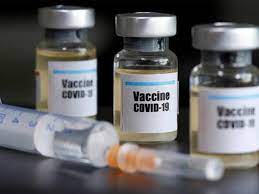
This previous week, we discovered that our vaccine wellbeing observing framework works. Reports that few individuals fostered an uncommon type of blood clump subsequent to getting the Johnson and Johnson vaccine prompted speedy examination, fast activity, and straightforwardness about what is known, not known, and what following stages ought to be. Vaccines remain right out of the pandemic.
Worldwide cooperation has been basic all through the pandemic. Public health and clinical specialists all throughout the planet are working together to decide if occasions related with the AstraZeneca vaccine are equivalent to those which might be related with the J&J vaccine.
Vaccine technology transfer
The pandemic is the world’s most significant issue, making technology transfer for vaccines progressively critical. At the present time, mRNA vaccine technology is our best arrangement. We need to make excellent assembling stages all throughout the planet to improve vaccine access.
mRNA technology is a protection strategy against the pandemic. Why? mRNA vaccines are simpler to change for vaccines-get away from variations, less subject to creation delays, and simpler and faster to bring to scale. They might be more successful against disease, and may likewise be more secure. All authorized vaccines are protected and viable, however mRNA is the most encouraging technology.
We likewise need more endeavors like Moderna’s to examine vaccine thermostability at non-frosty temperatures and different endeavors that may help get mRNA vaccines to spots and networks that are more enthusiastically to reach.
Vaccines: a public health example of overcoming adversity
Vaccines are quite possibly the main public health mediations ever, having saved at any rate a billion lives. Likewise with any clinical intercession, there might be a little danger. The tale of vaccines against rotavirus, which causes dangerous diarrheal infection in small kids, is enlightening.
In 1999, the RotaShield vaccine was removed from the U.S. market due to an uncommon, genuine confusion. Different nations went with the same pattern. This choice prompted in a real sense a huge number of preventable youngsters to pass all throughout the planet until another vaccine was created seven years after the fact.
There’s as yet an okay of genuine entanglements related with the more current rotavirus vaccines, however benefits of immunization far exceed the risks. Along these lines the U.S. furthermore, nations all throughout the planet keep inoculating youngsters against rotavirus, searching cautiously for potential confusions, and saving a large number of lives.
Vaccine risks vs. benefits
Indeed, even as uncommon yet genuine occasions conceivably connected with the J&J vaccine keep on being examined, the pandemic is proceeding — and speeding up in a large part of the world. Around one out of 200 individuals with Covid bite the dust from it. There have so far been six reports of blood clumps creating in the cerebrum among around 7,000,000 individuals who got the J&J vaccine. There are no known reports of such occasions related so far with the Pfizer or Moderna vaccines.
Examination of risks and benefits guides suggestions for vaccines, including against Covid. This can be awkward. We weigh “sins of commission” more intensely than “sins of oversight.” But in the event that each vaccine helps a larger number of individuals than it might hurt, isn’t this the best approach?
Internationally, until there is substantially more broad accessibility of mRNA vaccines, benefits of utilization of the vectored vaccines will far exceed risks in all networks in which Covid is spreading and for all populaces at high danger of intricacies of Covid.
Immunizing our way toward the new typical
The more individuals who are inoculated with accessible vaccines, the lower the case rates, the more lives saved, and the sooner we will get to the new ordinary. I actually believe we’re probably going to smash the bend of diseases by summer and be in the new ordinary this fall in the U.S.
We should adjust the gigantic risks presented by Covid with incredibly low risks of getting immunized. On a very basic level, the case for increasing mRNA vaccine stages all around the world just got much more grounded than when we supported it a month and a half prior.
Increasing creation of mRNA vaccines will not be basic. Life once in a while is. Innovative transfer of the most encouraging vaccine technology against Covid isn’t the perfect thing to do selflessly, it’s crucial for the health and wellbeing of each individual, wherever on the planet.
Is the age of mother really important for CHILDBEARING?

Know the right age for pregnancy and also the risks involved in late pregnancies.
Every eye visiting this article would be having a definite answer in their head; NO. In these modern times when every women wants an established career no one even thinks of planning a baby before 35 or say 30. But the question that follows here is Does the age of mother really matter for childbearing?
The age of reproduction of women starts around 13-14 years and lasts on an average till 45 years. So some may be wondering that when the reproduction can be done till the age of 45 then why to have baby in 20s and 30s. But the answer to the previous question is ‘YES’. The age of the mother really matters when it comes to bearing a child. Let’s understand why.

There are some facts we need to understand while we understand the reason:
- Definitely timed biological clock.
- Quality of eggs.
- Certain risks of Pregnancy.
Definitely timed biological clock:
As said that the reproductive age in women starts from 13-14 years and lasts till 45 years, there is certain age where the fertility of the women is at its peak. In her late teens and upto her late 20s, the women experiences the best fertile period. Post 30, the fertility potential decreases with each passing year. This decline is very pronounced after the age of 35. It decreases rapidly after that. So for a healthy couple if the chances of a pregnancy is about 1 in 4 in the late twenties or the early thirties, the chances reduces drastically by 1 in 10, by the time the woman reaches about 40.
Quality of eggs:
When we say that the possibility of the woman to get pregnant after 35 declines, but what is it that actually affects this? It is the Number and the Quality of eggs in a female. With age the number and the quality of the eggs reduces which opens the gates for the risks like miscarriage or having an abnormal baby. While the fertility potential of males also declines with age, this is seen to be dramatically declining in the case of females.
Certain risks of Pregnancy:
There are certain risks for the women and their foetus who plan their pregnancy after the age of 35.
- The relative risks of having certain diseases like High blood pressure, diabetes, miscarriage, premature births increase with an increasing age of the mother.
- The chances for genetic abnormality in an unborn baby of the mother who ages 25 is about 1 in 700 but this risk inclines about 1 in 400 for the mother ageing 35. Beyond the age of 40, this risk increases to 1 in 100.
Does that mean women have to leave their career and plan their babies first? No, it does not. With the progression of the science and technology there are certain solutions available. Do not look for them on the Google, instead visit a gynecologist for the same. Those women planning their babies after 40 can freeze their eggs when they are about 30 to 34 of age. Also the healthier the woman maintains her lifestyle, the lesser will be the chances of having a miscarriage.
And after all it’s not necessary to have a biological child to be a parent. Share this with every woman to spread awareness.
“Mental Health”
According to Mental News Today, Mental health refers to cognitive, behavioral, and emotional well-being. It is all about how people think, feel, and behave. People sometimes use the term “mental health” to mean the absence of a mental disorder.
Mental health can effect our daily lifestyle, physical health and relationships.
Looking after mental health can preserve a person’s ability to enjoy life. Doing this involves reaching a balance between life activities, responsibilities, and efforts to achieve psychological resilience.
Conditions such as stress, depression, and anxiety can all affect mental health and disrupt a person’s routine.
Although the term mental health is in common use, many conditions that doctors recognize as psychological disorders have physical roots.
• What is Mental Health?
According to WHO, “Mental health is a state of well-being in which an individual realizes his or her own abilities, can cope with the normal stresses of life, can work productively, and is able to make a contribution to his or her community.”
• Risk factors for Mental Health:-
1. Social and financial circumstances, biological factors, and lifestyle choices can all shape a person’s mental health.
2. A large proportion of people with a mental health disorder have more than one condition at a time.
3. It is important to note that good mental health depends on a delicate balance of factors and that several elements of life and the world at large can work together to contribute to disorders.
BOREDOM MAY POSE A PUBLIC HEALTH THREAT IN THE SOCIAL DISTANCING ERA
New studies offer clues to why some people find it difficult to follow social-distancing guidelines. Two recent studies suggest that people prone to boredom are more likely than others to break social-distancing rules. Accepting the idea that feeling bored is normal could help people cope, say researchers.

In recent months, you may have heard about “pandemic fatigue.” The term is not clearly defined. But the gist is that people have grown tired of the pandemic and of having to keep apart for so long. That fatigue can show up as feelings of anxiety, hopelessness, frustration, anger and boredom.
Seeing boredom on that list worries those who study the condition. “Usually boredom tells you that you should do something else,” says Wanja Wolff. During a pandemic, “that might not be the best thing,” says this sports psychologist. He works at the University of Konstanz in Germany.
Recently, scientists have shown that those fears could pose a problem. Two new studies have found that people who often feel bored are more likely than others to flout social-distancing guidelines. Those boredom-prone people also appear to be at higher risk of contracting the new coronavirus.
Boredom, these studies suggest, may well be a real threat to public health.
Defining boredom
“Boredom is a sign that you’re not meaningfully engaged in the world,” says Erin Westgate. She’s a social psychologist at the University of Florida in Gainesville. She and other researchers have identified two paths to boredom: a loss of focus and a loss of meaning.
Many of us have lost the focus, or mental clarity, that we had before the pandemic, Westgate says. The pandemic has brought many sources of stress. They include city shutdowns and remote-schooling. At the same time, there have been many other stressors both big and small. These include civil-rights protests, political unrest and tough economic times.
Such disturbances can impair our ability to stay mentally sharp. Westgate and others have found that both too much and too little stimulation can short-circuit one’s ability to pay attention.
Meanwhile, many of our lives have come unraveled. “We’re in a collective loss of routine right now,” says. She is a social psychologist at Rutgers University-Newark in New Jersey. Social-distancing guidelines are aimed at protecting us from a deadly disease. But they have also stolen the seemingly little things that we enjoy. Those monthly outings for ice cream with grandma or weekly baseball games with friends are more than just fun routines. They actually give our lives meaning.
When people lose both focus and meaning in their lives, the boredom becomes “doubly bad,” Westgate says. Even when something is meaningful, she points out, you may lose focus, she points out. If can be because either “it’s too easy or too hard. You can also be bored because you can pay attention, but it’s meaningless,” she says. “But if something is meaningless and you can’t pay attention, you’re like double bored.”
Prone to the blahs
The two new boredom studies each included almost 1,000 North American participants. They show how elevated boredom among people prone to the feeling may be playing out during the pandemic.
In one study, researchers looked at a person’s propensity for boredom. They sought to quantify how this related to rule-breaking behaviors during the pandemic. One example might be going to a party. Proneness to boredom explained 25 percent of the variance in rule-breaking behaviours among participants. The team reports this in the March Personality and Individual Differences.
No one thing can explain all of any human behavior, says James Danckert. But “25 percent is a huge amount.” This coauthor of the study is a cognitive neuroscientist. He works at the University of Waterloo in Canada.
Wolff and his colleagues, meanwhile, found that boredom-prone people ranked social distancing as more difficult than others had. They were also less likely to follow social-distancing guidelines. Their findings appeared online July 28, 2020 in the International Journal of Environmental Research and Public Health. Both studies showed that people who scored higher in boredom were also slightly more likely than those scoring lower to report having gotten COVID-19.
“Boredom is an incredibly powerful motivator for behavior,” Wolff says. Yet, he adds, people can struggle with how to respond to that signal in safe and meaningful ways.
The danger of the doldrums
Westgate is not surprised that people who are especially prone to boredom find staying home dull. She does wonder, though, about the rest of us. How are people who aren’t used to being bored coping with the pandemic? Are they also breaking the rules?
The research here is less direct but suggestive. In one 2014 study in Science, Westgate and her colleagues asked 42 undergraduate students to sit alone with their thoughts for several minutes. No cell phones were allowed. The students, though, had the option to push a button to receive a painful electric shock. About two-thirds of the male and a quarter of the female students pushed that button. Some pushed it more than once. This suggests that even pain can be preferable to boredom for some.
Similarly, one 2019 study induced boredom in people through a repetitive gambling game. That boredom prompted them to take more risks.
Momentary boredom is not inherently bad, says Wijnand Van Tilburg. He is a social psychologist at the University of Essex in England. He also coauthored the 2019 study, published in Behavioral Decision Making. But over a longer period, boredom can lead to serious public health outcomes. That’s true if the situation “is unresolved or the resolution to it is harmful, like overeating or becoming aggressive or not wearing a mask,” he says.
A recent study provides clues to how unresolved boredom may play out. It was published in the December 22 Proceedings of the National Academy of Sciences. The pattern of death rates from COVID-19 in some states did not match what researchers expected if people had hunkered down as the virus surged. Then the researchers factored into their models that some people would stop social distancing earlier than recommended. Now their models better replicated the real death rates.
The authors attribute people’s actions, and the higher-than-expected death toll, to pandemic fatigue. This includes boredom.
In the coming months, boredom from pandemic fatigue could worsen as the COVID-19 virus continues to spread in the United States and many other places. Hope is at hand with the rollout of vaccines. But public-health experts warn that vaccinating enough people to halt a U.S. spread of the virus could take several more months. How is that collision of hope and despair affecting our levels of boredom? How many of us will drop our guard?
What now?
Wolff is now looking at how to help people who are bored to follow social-distancing rules. His paper, last July, showed that when boredom-prone people have a lot of self-control, they do a better job with adherence. Training people to have more self-control can be difficult, however. Wolff instead suggests that people reduce the need for self-control by creating backup plans.
His preliminary research was posted online last June 25 at PsyArXiv.com. It suggests that “if-then ” plans can help. For instance, if an indoor gym is too dangerous, a person could plan to start running outside. Wolff suggests people take small steps to make it easier to follow such forced changes to their routine. One example: Put workout clothes out on the bed the night before and sneakers by the front door. “The idea is to make behavior more automatic,” he says.
But even with the best-laid plans, retaining focus and meaning during the pandemic is no easy task. Researchers say it’s worth reminding ourselves that boredom is a neutral signal. It is neither bad nor good. And some people may discover that their boredom has roots that may predate the pandemic.
So perhaps the best way to view the situation is that some people will use this moment of boredom to think about larger life goals, Van Tilburg says. “It is possible to get meaning out of these negative situations.”
MOVEMENT IN YOUR DAY
The trick is to get started not wait for a good time to do it.

Moving your body regularly and often is a key to good health. But for people who don’t feel urge to exercise, sitting can become a habit that hurts the body and the brain. Here are some easy tips that will invite more movement into your routines.
1.Budget in some mobile breaks
Make a conscious effort and set simple goals, say Tatiana Warren of Just TATI in Baltimore, Md. For example, for every hour that you’re sitting , you might set yourself a goal to get up for ten minutes and move round . Schools and work places can be creative about building those breaks into the day , she says.
2. Give yourself prompts
Are you forgetting to get up? Set a timer if you have to. Let it remind you to “break up” an hour of sitting with a couple-minute breaks for walking or more, says Aaron Kandola at University College , London.
“Or if you are watching television , just get up when there’s an advertisement break”, Hallgren says. For example, you might use the short break to do a quick chore like empty the dishwasher or pick up the dog’s toys.
3. Work with what you have
“If it’s nice weather , you should definitely get out,” Warren says. Even a quick walk up and down the block can help. If the weather is bad, plan for other options.
Warren likes to jump rope in her high-ceiling apartment. But you could stand and stretch even in a small place. Dance around online exercise videos. For example, the Lake Country YMCA in Ohio has free eight to twelve minutes kids’ yoga videos . Their themes include Star Wars, dinosaurs and the jungle.
4. Use the buddy system
Work with friends to remind each other to stand up and a stretch. Or, remind each other to stand when you are on the phone. Get your family involved too. Warren says her cousins’ family likes to play board games. But they often stand to reach for something or even jump during the games. No one sits still for long , she says.
5.Stand or walk in place
If you are watching something, such as a video or TikTok, consider standing while you do it. If you are listening to music , try dancing to the beat at least once every 20 to 40 minutes. If you are working on the computer, place it on a taller surface , a dresser or tabletop so you can stand while you work. If you are talking on the phone, walk around the room while you chat.
6. Push for better policies
School is a great place to start breaking up long periods of sitting , says Warren. And creative breaks can be fun . Tell your teacher , guidance counselor or principal what you have learned here. Suggest a trail school wide policy to get everyone moving, or maybe even a competition. Everyone stands to benefit from moving more.
These days we are moving to the work from home culture which means movement becomes less and lesser . Sitting in a place for a while could cause more problems so try to make movements and do muscular exercises. Stay healthy and Stay safe.
Covid-19 in children

Symptoms to track
Despite the fact that a larger part of the kids who contract the infection might be asymptomatic or somewhat suggestive, fever, hack, shortness of breath, weakness, myalgia, rhinorrhoea, sore throat, the runs, loss of smell, loss of taste are normal side effects. A couple of youngsters may likewise have gastrointestinal issues, the service said.
Another condition called multi-framework provocative disorder has been seen in kids. This condition is described by fever, stomach torment, retching, looseness of the bowels, rash, and cardiovascular and neurological issues.
In case the child is asymptomatic
In the event that a kid tests positive for the infection however is asymptomatic, there is a need to continually follow their wellbeing for advancement of indications. Early recognition of side effects will prompt early treatment, say wellbeing specialists. In the interim, if kids have gentle manifestations like sore throat, hack and rhinorrhoea yet no breathing trouble, they can be dealt with at home, the service said.
Kids with fundamental comorbid conditions including intrinsic coronary illness, constant lung infection, persistent organ brokenness or weight may likewise be treated at home.
Treatment of mild cases of Covid-19 in children
To treat fever in youngsters, a paracetamol (10-15mg) might be utilized each 4 to 6 hours. For hack, washes with warm, saline water will help, the wellbeing service said. Admission of liquids and a nutritious eating routine is compulsory.
The service additionally explained on the part of antiviral medicine in treatment of Covid-19 in youngsters. “There is no job of hydroxychloroquine, Favipiravir, Ivermectin, Lopinavir/Ritonavir, Redes Vir, Umifenovir, immunomodulators including Tocilizumab, Interferon B1a, healing plasma imbuement or Dexamethasone,” the rules read.
It was imperative to keep a checking graph for respiratory rates and oxygen levels. These ought to be checked 2-3 times each day. Chest indrawing, discolouration of body, pee yield, liquid admission and movement level ought to likewise be observed, particularly in little youngsters. Guardians should contact specialists in the event that they notice anything strange.
Treatment of moderate cases of Covid-19 in children
In the event that the respiratory rate is under 60 every moment in kids under two months old, under 50 every moment for youngsters short of what one year old, under 40 every moment for kids as long as five years and under 30 every moment for those more than five, they might be experiencing a moderate instance of Covid-19. The oxygen immersion level in all these age gatherings ought to be above 90%.
No normal lab tests will be required except if the youngsters have comorbid conditions and those conditions request customary tests. In any case, there is a requirement for kids with moderate Covid-19 to be conceded to devoted Covid wellbeing focuses and checked for clinical advancement. In these cases, there was a need to energize oral feeds (bosom takes care of in babies) and support liquid and electrolyte balance. Intravenous liquid treatment ought to be started if oral admission is poor, the service said.
Treatment of severe cases of Covid-19 in children
Kids with serious Covid-19 SpO2 (oxygen immersion) levels of under 90% and snorting, extreme withdrawal of chest, torpidity, sluggishness, seizure are a portion of the indications of extreme Covid-19. Such kids ought to be conceded to a committed Covid-19 medical services office and some of them may require HDU/ICU care. They ought to likewise be checked for apoplexy, hemophagocytic lymphohistiocytosis (HLH) and organ disappointment.
Complete blood tallies, liver and renal capacity tests and chest X-beams are obligatory for such cases. Corticosteroids (0.15 mg per portion) double a day or antiviral medications (like Remdesivir conceded for crisis use authorisation) ought to be utilized in a limited way following three days of beginning of indications and in the wake of ensuring that the kid’s liver and renal capacities are ordinary.
SPIRAL BACTERIA
The City of Perth on the west shoreline of Australia and its port, Fremantle, are not actually the best options on this planet where you would anticipate that huge scientific discoveries in biomedicine should happen. Such leap forwards ordinarily happen inside extremely huge and affluent metropolitan combinations, to which whole organizations of the world’s driving colleges float, and where the related and supporting monsters of the pharmaceutical and biotechnological ventures have their exploration divisions — an area which utilizes a huge number of the most instructed individuals all throughout the planet.
That being said, Perth, alongside Fremantle, is a genuine city when contrasted with Kalgoorlie, a mining town two or three hundred miles east of Perth, in Western Australia, where Barry James Marshall was brought into the world back in 1951. As per him, “these diggers owed a ton of cash and drank a great deal of lager.” So, his mom, who was a medical attendant, concluded that they expected to move before they procure those equivalent qualities. His family moved to Perth when he was 8 years of age, so Barry went to class there. In secondary school, he didn’t dominate too a lot, gathering strong, however essentially normal imprints. In any case, at his selection test and his meeting to go to the Medical School of the University of Western Australia in Perth, he had an incredible impression, so in 1974 he effectively finished his schooling there. He needed to rehearse family medication.
By then in his life, he was unable to have realized that his life would take him a totally extraordinary way and that his name would be recalled throughout the entire existence of medication, frequently referenced along with another specialist who was fourteen years his senior — John Robin Warren. Dr Warren was brought into the world in Adelaide. He was at that point an exceptionally experienced pathologist when Marshall procured his practitioner training. Following quite a while of work in Adelaide and afterward in Melbourne, in 1967, John Robin Warren was chosen for the Royal College of Pathologists of Australia and Asia, turning into a senior pathologist at the Royal Hospital in Perth. Undoubtedly, Perth was where he proceeded to spend most of his vocation. With Warren’s move from Melbourne to Perth, the existence of these two specialists — whose joint effort would get perhaps the most renowned joint efforts throughout the entire existence of medication — had effectively come very close, at any rate from a topographical perspective.
Among the entirety of the infections that can assault an individual, and there are in excess of sixteen thousand of them as per the global grouping of sicknesses, Barry Marshall was generally intrigued by stomach ulcers. One out of ten grown-ups at the time experienced alleged stomach ulcer illness. Medications to decrease gastric corrosive discharge were among the most intensely recommended in the whole world. The individuals who battled with this specific infection endured amazingly awkward torment. At the lower part of their stomach, or on the duodenum that proceeded from the stomach towards the digestive tracts, they would have an open ulcer. The lower part of the ulcer was not shielded from corrosive material created in the stomach by corrosive safe mucosa, but instead transparently presented to it. At the point when corrosive connected with an ulcer, victims would feel dull agony that was massively hard to endure.
Food ingested with every feast would kill, move away, or flush out that corrosive, so eating decreased the agony. However, when the processed food proceeded with its way through the stomach related framework and moved towards the gut, the corrosive creation would proceed and a similar horrible torment would return. There was additionally a persistent risk that the ulcer would totally enter through the mucosa. The corrosive would then start to spill into the stomach depression, causing hazardous irritation of the peritoneum.
‘The Doll’s House’ as a Feminist play.

“I have been your doll-wife, just as at home I was papa’s doll-child; and here the children have been my dolls. I thought it great fun when you played with me, just as they thought it great fun when I played with them.”
“The Doll’s House” by Henrik Ibsen, a 19th century play, strongly stamps the rights of women into the minds of the readers. It explores what roles women are forced to play and how they lose themselves by doing so. Now, the ‘Doll’ in the title will make us think about what its role is and how it is connected to the play. A doll is made to look pretty, made to entertain others, and to be toyed by its owner. Similarly, women are also expected to look pretty, please men and are directed to play the roles given. This is how women were treated and are even now.
This play explores these intricacies in the lives of women. Nora is the doll in the play and her house the playhouse. Nora is also an embodiment of the entire women folk in general. The plot is set during Christmas, and so we can see Nora busy with her Christmas preparation in the first act. She is happy to hear of her husband’s promotion and also expects greater happiness because of it. She is visited by Mrs. Linde, who is an old friend of hers, and has come to seek her husband’s help in finding a job. Afterwards, she is also visited by Krogstad from whom she had leant money in the past. He blackmails her of revealing a forgery done by her in borrowing money. She has forged her father’s signature to get money. Krogstad tells her to get him a job in the bank from her husband.
Through the series of dialogues in the first act, we see how her husband, Torvald pets her and objectifies her. Instead of calling by her name, he uses ‘little squirrel’, ‘little lark’, ‘little skylark’ and so. By using such words, he objectifies her and diminishes her being. The adjective ‘little’ shows how he considers her lower than him and how he always treats her like a child. In fact, everyone in the play treats her like a child.
When Nora reveals to her friend, Mrs. Linde, that she has borrowed a huge sum to save her husband’s life, Mrs. Linde is shocked by it.
“NORA.
Couldn’t I? Why not?
MRS LINDE.
No, a wife cannot borrow without her husband’s consent.”
This shows that women of that period weren’t allowed to concern themselves with financial matters. We can even see that for a woman to borrow money, she needs a consent of a man and his sign. This is why Nora forged her father’s signature to borrow money. Nora also adds that she wouldn’t let her husband know about it because it would hurt his pride. Torvald never considers Nora as his equal and seems that being helped by women would make him look weak. This is a conventional thought which needs to be broken.
“A man who has such strong opinions about these things! And besides, how painful and humiliating it would be for Torvald, with his manly independence, to know that he owed me anything! “
In the second act, things speed up and we see Nora anxiously awaiting what would happen after the revelation. She mentally prepares herself to face the consequences and strongly believes her husband will take the blame all upon himself. This will be proved wrong later.
NORA.
Your squirrel would run about and do all her tricks if you would be nice, and do what she wants.
HELMER.
Speak plainly.
NORA.
Your skylark would chirp about in every room, with her song rising and falling –
HELMER.
Well, my skylark does that anyhow.
These lines show how Nora is always expected to please her husband. Torvad also likes to show off her to others and is proud of ‘owning’ her. A woman is a human and an individual and no mere object to own or show off. Thus the playwright brings out the toxic habit of objectification.
It is also seen that Nora never has an identity of her own. She is referred to as the daughter of her father and wife of Torvald. The society seems to repress her individuality by adding surnames to her. The play progresses to show how Nora sets out to find herself and her identity as an individual.
HELMER.
There, you see it was quite right of me not to let you stay there any longer.
NORA.
Everything you do is quite right, Torvald.
It can also be seen that Nora is never to have her own thoughts and to do what she likes. Her freedom as an individual is thus constrained by her husband. Her husband controls her, her actions, thoughts and directs her on what she has to do. And when the truth of her debt and forgery is revealed, he blames her and throws her under the bus. He is more worried about how his reputation in the society will be tarnished on the revelation of her actions. He is self-conceited and doesn’t bother to listen to Nora.
HELMER.
[walking about the room]. What a horrible awakening! All these eight years—she who was my joy and pride—a hypocrite, a liar—worse, worse—a criminal! The unutterable ugliness of it all!—For shame! For shame! [NORA is silent and looks steadily at him. He stops in front of her.] I ought to have suspected that something of the sort would happen. I ought to have foreseen it. …. Now you have destroyed all my happiness. You have ruined all my future. It is horrible to think of!
This is an awakening to Nora. Nora borrowed money in order to save her husband, but her husband completely ignores that fact. And when Krogstad sends a mail to them telling that he won’t reveal anything to the world, her husband immediately changes his colours and tells her that he had ‘forgiven’ her.
All these makes Nora realize what kind of life she was leading. She has an honest talk with her husband for the first time in eight years since they have married. She tells him that he had never considered her as an individual with feelings but a merely pleasing doll.
“You have never loved me. You have only thought it pleasant to be in love with me.”
She says that she was a mere doll passed down from her father to him. She was never to have her opinions with her father and so the same with her husband too. All her life she was treated like a doll and now she has also become to treat her own children like that. Here I quote the lines told in the beginning again.
She breaks up her marriage and sets herself free from everything that restrains her from being an individual. Before everything, she owes a duty to herself which she had not been concerned about before. She is going to educate herself and find herself.
HELMER.
Before all else, you are a wife and a mother.
NORA.
I don’t believe that any longer. I believe that before all else I am a reasonable human being, just as you are—or, at all events, that I must try and become one.
The realization that she had never lived her life as an individual and that she had always been objectified transforms her. She slams the door of her house and sets out.
“I was your little skylark, your doll, which you would in future treat with doubly gentle care, because it was so brittle and fragile. [Getting up.] Torvald—it was then it dawned upon me that for eight years I had been living here with a strange man, and had borne him three children—. Oh, I can’t bear to think of it! I could tear myself into little bits!”
Every woman like Nora should liberate themselves from their constraints. The entire play takes place inside the house and it shows how Nora and women are confined to four walls. Nora finally escapes her confinement and liberates into the real world.
[The sound of a door shutting is heard from below.]
Thus this play motivates every woman to find her way out of the door and slam it. This is a realistic play even applicable for the 21st century.
Read the full play at https://www.gutenberg.org/files/2542/2542-h/2542-h.htm
Most people will add something-even when subtracting makes more sense
This “more is better” attitude could underlie modern day excesses expert say.

Picture a bridge made of Lego blocks. One side has three support pieces, the other two. How would you stabilize the bridge? Most people would add a piece to the short stack, a new study suggests. But why not remove a piece from the taller stack? When it comes to Lego blocks, ingredients in a recipe or words in an essay, people prefer to add, not subtract.
People can be nudged to subtract instead. But effectively changing that preference seems to require reminders or rewards. That’s the finding of a new study . Its authors shared details of it in the April 8 Nature.
This preference for adding isn’t limited to building blocks, cooking and writing. It might also contribute to modern-day excesses. Think about cluttered homes, excess government rules and even a tendency to pollute, says Benjamin Converse. He’s a behavioral scientist at the University of Virginia in Charlottesville. He worries that because of this bias toward adding, “We’re missing an entire class of solutions.”
Converse was part of a team that first found this bias when they asked 1,585 study participants to tackle eight puzzles and problems. Each could be solved by adding or removing things. One puzzle required shading or erasing squares on a grid to make some pattern symmetrical. In another, people could add or subtract items on a list of intended destinations to improve their vacation experience.
In each case, the vast majority of people chose to add not subtract. For instance, of 94 participants who completed the grid task, 73 added squares. Another 18 removed squares. Three simply reworked the original number of squares.
The researchers suspect that most people default to adding simply because subtracting never even comes to mind. But through a series of controlled trials, the team was able to nudge recruits toward the minus option.
Hint, hint…
In one test, the team offered 197 people wandering around a crowded university site a dollar to solve a puzzle. People viewed a Lego structure. It had a figure standing atop a platform with a large pillar behind her. A single block on one corner of the pillar supported a flat roof. Researchers asked the participants to stabilize the roof to avoid squashing the figure.

The researchers warned 98 participants that “each piece you add costs 10 cents.” Yet only 40 of them thought to remove the destabilizing block so that the roof could rest on top of the wide pillar below. The other 99 participants were told about the 10-cent cost of each extra block. But these people also learned “removing pieces is free.” That cue prompted 60 of them to remove the block.
Practice did help participants call to mind that elusive option of removing (subtracting) something. In a variation on the grid test, where subtraction yielded the best solution, participants got three practice runs. When they performed the actual task, more people now chose to subtract squares than did those who worked this problem without practice.
Throwing unrelated information at people reduced the chance they would subtract something. In fact, people added even more when fighting information overload, the new study reports.
“When people try to make something better … they don’t think that they can remove or subtract unless they are somehow prompted to do so,” says Gabrielle Adams. She’s a behavioral scientist who also works at the University of Virginia.
On some deep level, people seem to realize that subtraction comes less naturally than addition, the authors say. That may be what’s behind such sayings as “less is more” and Marie Kondo’s now infamous recommendation that people rid themselves of everything that fails to spark joy.
But curbing our love of excess will take more than nudges and a clear mind, suspects Hal Arkes. He’s a researcher at Ohio State University in Columbus. There, he studies judgement and decision-making. Organizational and political leaders really hate cutting the fat, he notes. They seem to feel that “if you add more people and more dollars, you won’t make any enemies,” Arkes says. “You’ll just make friends.” For them, he argues, “subtraction has serious downsides.”
Copper foam could be used as filter for COVID-19 masks
Face masks have become a common method of protection during the COVID-19 pandemic . A new copper foam could make those masks work even better. The lightweight new material is washable and recyclable.

Face masks have become a vital tool in a showing the spread of the virus that causes COVID-19. They help filter or block spit or mucus droplets that carry infectious particles. Even homemade fabric masks can do a good job. But many are not very durable. Now, researchers have come up with a new sort of filter for use in masks. Made of copper, it’s sturdy and lightweight. The sponge-like material also is easy to clean and can be recycled. In tests, it outperformed the filtering ability of a standard N95 mask. It might even trap and kill bacteria, its developers say.
Masks to guard against viruses can be made of many different materials. Some fabric ones even use extra layers– often cotton, silk or some synthetic –to boost their filtering process. Others use paper similar to coffee filters. With so many people now being asked to wear masks during the pandemic researchers began scrambling to identify new and better filters. Kai Liu was among them.
This materials scientist thought his team at Georgetown University in Washington, D.C., had a head start. They already had been testing materials to filter small particles out of polluted air.
Recalls Liu, “We saw that small droplets carrying viruses were the same size as some atmospheric pollutants”. Right away, he says, “We thought we should check our materials to see it they might make good filters for face masks”.

Liu’s team soon began cranking out new batches of a material they call copper foam.
They started with templates to make copper nanowires. The diameter of each wire was typically about 200 nanometers, says Liu- or less than one millionth of an inch . After dumping those wires into ultrapure water, they flash-froze the mix in liquid nitrogen. Afterward, they put the copper filled ice in a vacuum chamber. It drove off the water to freeze dry the now loosely packed mass of tiny copper wires. Finally , they heated the mass of wires to 300 degree Celsius(572 degree Fahrenheit). This fostered chemical reactions that helped bind them into a mesh.
Unfortunately, that mesh was super flimsy, says Liu. Tests showed it would collapse if someone breathed on it. Obviously, that would not work well in masks. So, the researchers kept tweaking the process.
They bathed the weak mesh in a liquid that included copper ions. Then they sent an electric current through this chemical bath. That deposited more copper onto the nanowires, thickening them. Liu says that it also helped in welding the wires at points where they touched. In tests, some samples of this material could now support about 10,000 times their own weight without collapsing. That was true even when the material was 85 percent air.
More importantly this 85 percent air foam filtered out tiny particles. A sample 2.5 millimeters (0.1 inch) thick captured 97 percent of particles between 0.1 to 0.4 micrometers in diameter . Such super small particles not only are the hardest to trap but also the size of aerosol droplets that can carry virus particles . These particles don’t get trapped by the material’s tiny pores, Liu explains. “The particles are instead attracted to the enormous surface area that the nanowires provide. They get stuck there on it as they try to move through the wire mesh between the outer and inner edges of the filter”. Liu and his colleagues described their innovative new foam.
“The Georgetown team developed an interesting and innovative way to produce their material “says Semali Perera. She is a Chemical Engineer at the University of Bath in England. She wonders, however, if it would be hard to scalp up the process to make really big batches and large pieces of the thin foam for use in masks.
Perera’s team is taking a different approach to germ filters. Theirs were initially targeted to collect and kill bacteria. Now they’re being designed to trap viruses , too.
One promising material her team is exploring is a plastic like foam made out of a polymer called polyimide. To give it a germ killing punch , the researchers added copper and nickel. Nickel helps slow the growth of bacteria and copper helps kill them. Those metals make up about 80 percent of the material, says Perera. The plastic like polymer helps bind the metal atoms together.
Instead of using a multi step process to make its material, this group mixes its ingredients in one container all at once. A chemical reaction that generates large amounts of carbon dioxide makes the material frothy , Perera notes. As it foams, it expands into a mold. Within three seconds it hardens into its final shape. To make big batches, the researchers merely mix more of the ingredients and then cook them up in a bigger pot.
Perera and her team are working with companies to design new products . One potential use for their material might be filters for home air-conditioners.
Marriage or Career?
While most of the women living in the modern society will choose career over marriage, why is the society uncomfortable with their choices?

Women have evolved from a dependent gender to a representative individual in the society. When most of the women earn their living on their own, there are many people who keep on forcing them to give up their career choices. Why is society so much uncomfortable in accepting the independent state of a woman?
You might be thinking that in what era am I living in; aren’t things like these extinct already. But in an answer I would like to say ‘NO’. Even today society wants women to stay at home because ‘Agar zyada padhi likhi hogi toh zyada zubaan chalegi iski’ (If she is more educated, she’ll have more opinions) Wait… What? Why do you want to have a submissive, Why do you want women to follow your orders, Why such dominance over a specific gender?
These are some basic questions asked by every woman at one or the other place in her life. Sometimes these questions have brought revolutions in the old customs and sometimes these questions fade in the screams of domestic violence, rapes, molestation, etc.
With the spread of awareness, many women are getting justice against these crimes but who will get justice for women who are suffering everyday because of their own family members?
Yes, you read that right. These wrongs aren’t highlighted but one in every three woman in India faces the pressure of marriage. She is forced to continue her studies after the marriage. Women aren’t allowed to have jobs in which they earn more than their subsequent other. Fathers and Husbands want their daughter to be dependent on them because they think that the day she becomes independent ‘Ladki haath se nikal jaegi’ (We’ll lose the hold of our daughter).
I’ll tell you one story which took place recently with me, One of my friend stopped talking to me. All of a sudden, She blocked all my calls and messages. I stopped contacting her after trying for a while. After few months, I get to know the reason. The reason left me speechless. Loosely putting in her words, ‘When I placed my desire to have a part-time job, Mom scolded me and told me not to contact you anymore. She thinks you are a bad influence and all these seeds of being independent are sown into me by you.’
Amazing! Isn’t it? And I’m not building up this story for this article. This is a true story of me and my friend. If speaking up for yourself makes someone a bad influence then we really need to re-consider our thoughts and customs.
Family needs to choose between a submissive unhappy daughter and an independent happy daughter. Because its high time we start to address the issues which bachelor women faces not only from the society but their families as well.
On this International Family Day, I’d like to address every person with a family to treat their daughters as their own family and not like ‘Paraya Dhan’ (Other’s wealth); I’d also like to tell the daughters to stand up for themselves and not make any decision due to family or societal pressure.
I’d like to conclude this feature with the words of a famous singer:
People are going to judge you anyway, so you might as well do what you want.
Taylor Swift
Corona’s speech
Stay Home
For I am a deadly virus
Stay Home
For I can damage your gyrus
Stay Home
For I can be prevented with vaccine
Stay Home
For I cannot be cured with crocin
Stay Home
For I’ve taken your loved ones
Stay Home
For I can take away your joy in tons
Stay Home
For I have shut schools
Stay Home
For I’m a death of pool
Stay Home
For I’ve made many lives miserable
Stay Home
For I’m not lovable
Stay Home
For I am pleasure less
Stay Home
For I’ve caused death measureless
Stay Home
For I became a sorrow
Stay home
For you can face tomorrow
“Depression”
Depression is a kind of a mental health disorder characterized by persistently depressed mood or loss of interest in activities.
Possible causes include a combination of biological, psychological and social sources of distress. Increasingly, research suggests that these factors may cause changes in brain function, including altered activity of certain neural circuits in the brain
What is Depression?
According to American Psychiatric Association, Depression (major depressive disorder) is a common and serious medical illness that negatively affects how you feel, the way you think and how you act. Fortunately, it is also treatable. Depression causes feelings of sadness and/or a loss of interest in activities you once enjoyed. It can lead to a variety of emotional and physical problems and can decrease your ability to function at work and at home.
Depression symptoms can vary from mild to severe and can include:
• Feeling sad or having a depressed mood
• Loss of interest or pleasure in activities once enjoyed
• Changes in appetite — weight loss or gain unrelated to dieting
• Trouble sleeping or sleeping too much
• Loss of energy or increased fatigue
• Increase in purposeless physical activity (e.g., inability to sit still, pacing, handwringing) or slowed movements or speech (these actions must be severe enough to be observable by others)
• Feeling worthless or guilty
• Difficulty thinking, concentrating or making decisions
• Thoughts of death or suicide
How to overcome from depression?
• Find small ways to be of service to others.
• Find workable goals that give you a sense of accomplishment.
• Pleasant Events: Schedule pleasant activities or events.
• Engagement: Stay in the present.
• Exercise: And, eat right too.
• Relationships: Focus on people who lift you up.
• Sleep Regularly: Try to keep a regular sleep schedule.
Emma Watson speech on feminism
I am reaching out to you because I need your help. We want to end gender inequality—and to do that we need everyone to be involved.
This is the first campaign of its kind at the UN: we want to try and galvanize as many men and boys as possible to be advocates for gender equality. And we don’t just want to talk about it, but make sure it is tangible.
I was appointed six months ago and the more I have spoken about feminism the more I have realized that fighting for women’s rights has too often become synonymous with man-hating. If there is one thing I know for certain, it is that this has to stop.
For the record, feminism by definition is: “The belief that men and women should have equal rights and opportunities. It is the theory of the political, economic and social equality of the sexes.”
I started questioning gender-based assumptions when at eight I was confused at being called “bossy,” because I wanted to direct the plays we would put on for our parents—but the boys were not.
When at 14 I started being sexualized by certain elements of the press.
When at 15 my girl friends started dropping out of their sports teams because they didn’t want to appear “muscly.”
When at 18 my male friends were unable to express their feelings.
I decided I was a feminist and this seemed uncomplicated to me. But my recent research has shown me that feminism has become an unpopular word.
Apparently I am among the ranks of women whose expressions are seen as too strong, too aggressive, isolating, anti-men and, unattractive.
Why is the word such an uncomfortable one?
I am from Britain and think it is right that as a woman I am paid the same as my male counterparts. I think it is right that I should be able to make decisions about my own body. I think it is right that women be involved on my behalf in the policies and decision-making of my country. I think it is right that socially I am afforded the same respect as men. But sadly I can say that there is no one country in the world where all women can expect to receive these rights.
No country in the world can yet say they have achieved gender equality.
These rights I consider to be human rights but I am one of the lucky ones. My life is a sheer privilege because my parents didn’t love me less because I was born a daughter. My school did not limit me because I was a girl. My mentors didn’t assume I would go less far because I might give birth to a child one day. These influencers were the gender equality ambassadors that made me who I am today. They may not know it, but they are the inadvertent feminists who are changing the world today. And we need more of those.
And if you still hate the word—it is not the word that is important but the idea and the ambition behind it. Because not all women have been afforded the same rights that I have. In fact, statistically, very few have been.
In 1995, Hilary Clinton made a famous speech in Beijing about women’s rights. Sadly many of the things she wanted to change are still a reality today.
But what stood out for me the most was that only 30 per cent of her audience were male. How can we affect change in the world when only half of it is invited or feel welcome to participate in the conversation?
Men—I would like to take this opportunity to extend your formal invitation. Gender equality is your issue too.
Because to date, I’ve seen my father’s role as a parent being valued less by society despite my needing his presence as a child as much as my mother’s.
I’ve seen young men suffering from mental illness unable to ask for help for fear it would make them look less “macho”—in fact in the UK suicide is the biggest killer of men between 20-49 years of age; eclipsing road accidents, cancer and coronary heart disease. I’ve seen men made fragile and insecure by a distorted sense of what constitutes male success. Men don’t have the benefits of equality either.
We don’t often talk about men being imprisoned by gender stereotypes but I can see that that they are and that when they are free, things will change for women as a natural consequence.
If men don’t have to be aggressive in order to be accepted women won’t feel compelled to be submissive. If men don’t have to control, women won’t have to be controlled.
Both men and women should feel free to be sensitive. Both men and women should feel free to be strong… It is time that we all perceive gender on a spectrum not as two opposing sets of ideals.
If we stop defining each other by what we are not and start defining ourselves by what we are—we can all be freer and this is what HeForShe is about. It’s about freedom.
I want men to take up this mantle. So their daughters, sisters and mothers can be free from prejudice but also so that their sons have permission to be vulnerable and human too—reclaim those parts of themselves they abandoned and in doing so be a more true and complete version of themselves.
You might be thinking who is this Harry Potter girl? And what is she doing up on stage at the UN. It’s a good question and trust me, I have been asking myself the same thing. I don’t know if I am qualified to be here. All I know is that I care about this problem. And I want to make it better.
And having seen what I’ve seen—and given the chance—I feel it is my duty to say something. English Statesman Edmund Burke said: “All that is needed for the forces of evil to triumph is for enough good men and women to do nothing.”
In my nervousness for this speech and in my moments of doubt I’ve told myself firmly—if not me, who, if not now, when. If you have similar doubts when opportunities are presented to you I hope those words might be helpful.
Because the reality is that if we do nothing it will take 75 years, or for me to be nearly a hundred before women can expect to be paid the same as men for the same work. 15.5 million girls will be married in the next 16 years as children. And at current rates it won’t be until 2086 before all rural African girls will be able to receive a secondary education.
If you believe in equality, you might be one of those inadvertent feminists I spoke of earlier.
And for this I applaud you.
We are struggling for a uniting word but the good news is we have a uniting movement. It is called HeForShe. I am inviting you to step forward, to be seen to speak up, to be the “he” for “she”. And to ask yourself if not me, who? If not now, when?
Thank you.
Today we are launching a campaign called “HeForShe.”
I am reaching out to you because I need your help. We want to end gender inequality—and to do that we need everyone to be involved.
This is the first campaign of its kind at the UN: we want to try and galvanize as many men and boys as possible to be advocates for gender equality. And we don’t just want to talk about it, but make sure it is tangible.
I was appointed six months ago and the more I have spoken about feminism the more I have realized that fighting for women’s rights has too often become synonymous with man-hating. If there is one thing I know for certain, it is that this has to stop.
For the record, feminism by definition is: “The belief that men and women should have equal rights and opportunities. It is the theory of the political, economic and social equality of the sexes.”
I started questioning gender-based assumptions when at eight I was confused at being called “bossy,” because I wanted to direct the plays we would put on for our parents—but the boys were not.
When at 14 I started being sexualized by certain elements of the press.
When at 15 my girlfriends started dropping out of their sports teams because they didn’t want to appear “muscly.”
When at 18 my male friends were unable to express their feelings.
I decided I was a feminist and this seemed uncomplicated to me. But my recent research has shown me that feminism has become an unpopular word.
Apparently I am among the ranks of women whose expressions are seen as too strong, too aggressive, isolating, anti-men and, unattractive.
Why is the word such an uncomfortable one?
I am from Britain and think it is right that as a woman I am paid the same as my male counterparts. I think it is right that I should be able to make decisions about my own body. I think it is right that women be involved on my behalf in the policies and decision-making of my country. I think it is right that socially I am afforded the same respect as men. But sadly I can say that there is no one country in the world where all women can expect to receive these rights.
No country in the world can yet say they have achieved gender equality.
These rights I consider to be human rights but I am one of the lucky ones. My life is a sheer privilege because my parents didn’t love me less because I was born a daughter. My school did not limit me because I was a girl. My mentors didn’t assume I would go less far because I might give birth to a child one day. These influencers were the gender equality ambassadors that made me who I am today. They may not know it, but they are the inadvertent feminists who are changing the world today. And we need more of those.
And if you still hate the word—it is not the word that is important but the idea and the ambition behind it. Because not all women have been afforded the same rights that I have. In fact, statistically, very few have been.
In 1995, Hilary Clinton made a famous speech in Beijing about women’s rights. Sadly many of the things she wanted to change are still a reality today.
But what stood out for me the most was that only 30 per cent of her audience were male. How can we affect change in the world when only half of it is invited or feel welcome to participate in the conversation?
Men—I would like to take this opportunity to extend your formal invitation. Gender equality is your issue too.
Because to date, I’ve seen my father’s role as a parent being valued less by society despite my needing his presence as a child as much as my mother’s.
I’ve seen young men suffering from mental illness unable to ask for help for fear it would make them look less “macho”—in fact in the UK suicide is the biggest killer of men between 20-49 years of age; eclipsing road accidents, cancer and coronary heart disease. I’ve seen men made fragile and insecure by a distorted sense of what constitutes male success. Men don’t have the benefits of equality either.
We don’t often talk about men being imprisoned by gender stereotypes but I can see that that they are and that when they are free, things will change for women as a natural consequence.
If men don’t have to be aggressive in order to be accepted women won’t feel compelled to be submissive. If men don’t have to control, women won’t have to be controlled.
Both men and women should feel free to be sensitive. Both men and women should feel free to be strong… It is time that we all perceive gender on a spectrum not as two opposing sets of ideals.
If we stop defining each other by what we are not and start defining ourselves by what we are—we can all be freer and this is what HeForShe is about. It’s about freedom.
I want men to take up this mantle. So their daughters, sisters and mothers can be free from prejudice but also so that their sons have permission to be vulnerable and human too—reclaim those parts of themselves they abandoned and in doing so be a more true and complete version of themselves.
You might be thinking who is this Harry Potter girl? And what is she doing up on stage at the UN. It’s a good question and trust me, I have been asking myself the same thing. I don’t know if I am qualified to be here. All I know is that I care about this problem. And I want to make it better.
And having seen what I’ve seen—and given the chance—I feel it is my duty to say something. English Statesman Edmund Burke said: “All that is needed for the forces of evil to triumph is for enough good men and women to do nothing.”
In my nervousness for this speech and in my moments of doubt I’ve told myself firmly—if not me, who, if not now, when. If you have similar doubts when opportunities are presented to you I hope those words might be helpful.
Because the reality is that if we do nothing it will take 75 years, or for me to be nearly a hundred before women can expect to be paid the same as men for the same work. 15.5 million girls will be married in the next 16 years as children. And at current rates it won’t be until 2086 before all rural African girls will be able to receive a secondary education.
If you believe in equality, you might be one of those inadvertent feminists I spoke of earlier.
And for this I applaud you.
We are struggling for a uniting word but the good news is we have a uniting movement. It is called HeForShe. I am inviting you to step forward, to be seen to speak up, to be the “he” for “she”. And to ask yourself if not me, who? If not now, when?
Thank you.
News value and importance
There’s a quote that states “Every piece of news is a piece of information but not Every piece of information is a piece of news.” Not every piece of information is worthy to be a news. There’s a lot factors that decides a news is worthy or not. These four deciding factors are used to find a news worth or not.
*Proximity
*Prominence
*Human Interest
*Time duration
PROXIMITY
The question “Where” deals with value of proximity. Every human come across different situations everyday. So it does matter if a news bothers. A common example is When a dog bites a man it is a common thing and when a man bites a dog it becomes a news.
PROMINENCE
This is about a renowned entity based on a person or an institution adds value to news. Eg. Famous singer S.P Balasubramaniyam passed away. There are lot of people who dies everyday but not everyones death is considered as a news. This has a great audience because of his star value.
HUMAN INTEREST
It is a key factor that decides that whether people will be bothered by reading a news. The reason why celebrity magazines have a big fan base is they relate with ones favourite celebrities and this adds fuel to news agency.
TIME DURATION
There’s a breaking news segment in every viewership of a news agency. This is because people want to stay updated with a recent and latest source and they must also know what’s happening around them. Even if a news agency wants to publish something old they can only relate with a current source to provide an overview of situation
Eg. As per 2015 records of polling current polling rate has been decreased.
‘The Darkling Thrush’ by Thomas Hardy.

Times are bad. Everything around us seems doleful and gloomy. Of the disasters we had only read in fiction, are now crawling out of the pages. At this time, all we want to find is hope. Hope , which consoles us that things will get better, expectations of the long nightmare ending and a belief that we too can resurrect ourselves like phoenix are those to which we dearly cling to.
Similarly, the poem ‘The Darkling Thrush’ is also set in a sombre mood. When the poem starts, we find the poet looking at everything as disconsolate. He is at his gate looking at the frost covered surroundings. The frost has made everything look pale like a ghost. The sun is setting and the day is coming to an end. Even the bine-stems are lifeless this winter. The lanes which would usually be bustling with humans are now forlorn. Winter has shut men into their houses and men huddle around the hearth to feel the warmth.
“And all mankind that haunted nigh
Had sought their household fires.”
These lines made me think that no matter how cold the outer world is, we feel warmth once inside our home. This warmth comes from our loved ones and it makes us not give up yet.
When we learn the fact that this poem was written on the 29th of December in 1900, we understand the context of the second stanza better. It wasn’t just the end of the year but also of the century. It may even be considered as a dirge to the ending century. The land is referred to as the corpse of the century with the clouds forming its crypt and wind lamenting the death of the century. There is no trace of life. Even the germs and microorganisms from which we were born are also lying frozen beneath the frozen ground. Everything the poet sees looks as passionless as him.
“And every spirit upon earth
Seemed fervourless as I.”
In the third stanza, the poet finds the most extraordinary thing happening. A sweet singing voice vibrates through the air. It is full of happiness and uncontrollable joy. It is a thrush. It’s appearance isn’t so grand. It is old, weak, small and scruffy. But it pours its soul into the song as the day is darkening.
“An aged thrush, frail, gaunt, and small,
In blast-beruffled plume,
Had chosen thus to fling his soul
Upon the growing gloom.”
It is interesting to note the description of the thrush. It is almost battered out of life yet it sings full of life and energy. Though we are worn out, though we are exhausted, we should never give up for we don’t know what lies ahead and for we haven’t opened all the doors.
There is nothing notable in the surrounding which would inspire the thrush to sing. There is nothing so full of life like that ‘ecstatic sound’ near and far. The thrush singing is out of place and odd. But it carried with it something that was unknown to the poet. The bird knew of the ‘Hope’ that the poet failed to see.
“That I could think there trembled through
His happy good-night air
Some blessed Hope, whereof he knew
And I was unaware.”
Though the surrounding is dreary and dull, the thrush knew that it wouldn’t be the same forever. The winter will eventually end; new things will spring from the ground; the lanes will once again be bustling with life. This the poet did not understand. The last lines of this poem also reminded me of the last line of Shelley’s ‘Ode to the West Wind’.
“If Winter comes, can Spring be far behind?”
We all should be like the little thrush. Finding hope and giving hope. All I want to say is – this too will pass away, and when tomorrow comes, it will be brighter than today.
Citizen Journalism
Social media on whole it changed how people consume news, where print media and television remain as popular forms of news outlets. Today’s youngsters get news from their smartphones either from dedicated news apps or from Twitter and Facebook. A lot of people around the world keeping up on social media to know with events around them. Either for a social cause or a viral video or cyclone. We get to know all about in Social Media. Even media houses started to post real time updates on social media . This is a citizen Journalism. Social Media also empowered the people to become Citizen Journalists. From footage to road accidents and riots people capture with their smartphones and spread news on their handle. Citizen Journalism also has it’s faults, Not everyone is trained as a Journalist and keeps up ethical standards that journalists do. This leads to fake news spreading like wildfire. As a perfect citizen one has to verify that the news is true or not. Such person is real citizen Journalist.
Perks of living alone as a teenager
Teenagers live by themselves for are numerous reasons for eg some choosing to have an independent life, some getting kicked out of their house or abandoned by family. Some move to different countries or cities for studies or their career.

Being at your parent’s house is a feeling of being protected all the. Being at your place makes you feel apprehensive but it gives you a sense of independence. Every single thing your bed, your dishes, groceries you don’t have to work under someone . I guess this is what independence feels like, Right?
Having your own house and living alone you can ask anybody to come over without asking or having some restriction.
Sometimes all you need is peace and tranquility. And having alone time can provide you a sense of serenity.
Types of Poetry.

If you like to read poetry, you may as well like to know more about it. Poetry can either be subjective or objective. In subjective poetry, the poet expresses his own feelings and reflects his thoughts. Whereas in objective poetry, the poet talks about other things other than himself – like external objects, sceneries, events and so on. Though poetry is classified as above, it doesn’t completely belong to one type. This is to say that even the most objective poetry may contain some of the poet’s feelings. Poetry is further divided into several types as follows.
LYRIC:
This is of Greek origin and is a song often sung by a single person backed by a lyre in the ancient times. It carries a single emotion and is musical in composition. Later ages found that this form of poetry can be made musical just by the use of words without any music to back it. Vowels and consonants were arranged musically for this purpose. A lyric tends to be quite short for its effect is weakened by huge length.
ODE:
It is also of Greek origin. The subject and treatment is serious and exalted. It often addresses something or someone. The opening lines either contain apostrophe appeal. Eg: Shelley’s ‘Ode to the west wind’ starts with ‘O wild west wind…”. There are two types of odes namely the Dorian or Pindaric ode and the Lesbian or Horatian ode.
SONNET:
As everyone knows, sonnet is a short poem. It is divided into two – the Italian Sonnet and the English sonnet. The Italian or Petrarchan sonnet contains fourteen lines concerning one single feeling or idea. It is divided into two parts – the Octave (contains eight lines) and the Setset (contains six lines). At the end of the eight line, there is a Caesura (a pause) followed by a Volta (a turn in thought). When this form was adopted by the English, it was altered. The fourteen lines were divided into three quatrains (stanzas of four lines) with a couplet to end. This is the form practiced by Shakespeare.
ELEGY:
Though this form bore a different meaning in older times, in modern connotation, it refers to a poem which takes up grim and doleful themes. It is often written in the memory of the dead but it can also take up other sorrowful subjects. There is another form called the Pastoral elegy in which the poet represents himself as a shepherd mourning the death of his friend. As the word ‘pastoral’ indicates, the setting and language are borrowed from countryside and country people.
EPIC:
It is a long story told in verse with all the character, language, setting and treatment exalted. It often has a lofty theme and has divine interventions for most parts. The classical examples are Homer’s ‘Iliad’ and ‘Odyssey’. Mock Epic, as the name suggests, treats the most trivial theme in an epic manner.
BALLAD:
It can be considered as one of the oldest forms of poetry as it developed during the early stages of civilization. The ballad is a short story in verse containing simplest subjects and themes. It takes its subject from the external world and nothing of the poet is known through the ballad. It is an objective poetry.
SATIRE:
It is a composition intending to attack a folly or vice. It attacks the sin and not the sinner. It is to create a light atmosphere even when it is scornful. Some of the best English satirists were Dryden, Pope, and Byron.
This is just a basic introduction to the types of poetry. The study of poetry is exciting and engrossing. The book referred for the purpose of the article is ‘A Background to the Study of English Literature’ by B. Prasad.
YOUR SECOND VACCINE DOSE IS CRUCIAL
Very nearly 150 million portions of Covid immunization have been regulated in the United States. Most grown-ups are presently in any event in part vaccinated, and the sky’s the limit from there and more individuals are deciding to get vaccinated each day. In any case, a few groups might be contemplating whether their second shot is fundamental. The appropriate response is yes.
In the event that you got one portion of a mRNA antibody (Pfizer or Moderna), don’t avoid the second portion. Without it, your antibody-prompted security will not be as solid or durable. The second portion extraordinarily supports the assurance your safe framework began working after the first shot.
With new variations in the blend that are more infectious and likely deadlier, being completely vaccinated is considerably more fundamental. Albeit by far most individuals who start inoculation get the two portions, 8% of individuals who have gotten their first portion hadn’t yet gotten their second, as indicated by information delivered by the Centers for Disease Control and Prevention (CDC).
A few groups may fear the symptoms of the second portion, which could be more grounded than the first. Others may have needed to drop their second arrangement or experienced challenges booking it. A couple have a serious dread of needles. What’s more, a part of the populace is deceived, accepting that the one portion of antibody gives sufficient security. (It doesn’t in case you’re getting Pfizer or Moderna’s antibodies.)
In a significant genuine investigation, CDC found that mRNA antibodies were 80% compelling after the first portion, and 90% viable after the second. Although 80% successful appears to be acceptable on a superficial level, a few examinations have discovered a lower adequacy after just one portion and others recommend that Covid antibodies don’t stop until after your second portion. Presently, plainly security endures in any event a half year, and likely more when you’re completely vaccinated. Be that as it may, we don’t have a clue how solid or dependable the security is from only one portion.
Regardless of whether you’ve effectively had Covid, proof shows the immunization helps your antibodies. The “characteristic insusceptibility” you acquire subsequent to recuperating from a Covid disease is acceptable, however inoculation is super-human. Getting vaccinated supports the assurance your safe framework has effectively assembled and lessens the danger that you’ll get reinfected.
The CDC gives rules on which Covid antibodies require two portions, the circumstance for the second shot, and when you’re considered completely vaccinated.
There’s been a great deal of spotlight on crowd resistance—when enough individuals inside a populace are secured against an illness, either through immunization or common disease. It’s imperative to consider crowd insusceptibility more as a dimmer dial instead of an on-off switch. Primary concern: The greater number of us who get vaccinated, the more secure we as a whole are.
To stop the spread of the Covid and save a huge number of lives, we should get completely vaccinated. Try not to allow your gatekeeper to down too soon. It requires fourteen days after the first portion for your safe framework to start building insurance, and if it’s been under about fourteen days since your second portion, or on the off chance that you’ve just had one portion of a two-portion immunization, you’re not completely vaccinated.
In the United States, we’re gaining huge headway against Covid and we’re nearer than at any other time to continuing life obviously. New CDC demonstrating shows that on the off chance that we keep up our inoculation speed and proceed to cover and distance for two or three months, we’ll have the option to get to the new ordinary. Our test currently is to arrive at those at this point unreached with immunizations by making it as helpful as feasible for everybody to get vaccinated and keep on battling the weariness large numbers of us feel with covering, social removing, and other assurance conventions. By summer, we’ll be fit as a fiddle, and by the fall, at the new typical in the United States.
The government just carried out vaccines.gov, another site where you can discover where to get Covid antibodies close to you. Look at it and timetable an arrangement to get vaccinated straightaway!
Want to Do ETL With Python?
Present day associations depend on gigantic pools of data accumulated utilizing the top tier apparatuses and methods to remove data-driven experiences that help in settling on more intelligent choices. Because of the upgrades brought over by the now business standard innovative progressions, associations presently have a lot simpler admittance to these pools of data.
Yet, before these organizations can really utilize that data, it needs to go through an interaction called ETL, short for Extraction, Transformation, and Loading.
ETL is answerable for not just making the data accessible to these associations yet in addition ensures that the data is in the correct design to be utilized productively by their business applications. Organizations today have heaps of choices while picking the privilege ETL device, for example, the ones worked with Python, Java, Ruby, GO, and that’s only the tip of the iceberg yet for this review, we’ll be focussing more on the Python-based ETL apparatuses.
What is ETL?
A center segment of data warehousing, the ETL pipeline is a blend of three interrelated advances called Extraction, Transformation and Loading. Associations utilize the ETL interaction to bind together data gathered from a few sources to assemble Data Warehouses, Data Hubs, or Data Lakes for their venture applications, similar to Business Intelligence devices.
You can think about the whole ETL measure as an incorporation interaction that assists organizations with setting up a data pipeline and begin ingesting data into the end framework. A concise clarification of ETL is underneath.
● Extraction: Involves everything from choosing the correct data source from numerous organizations like CSV, XML, and JSON, extraction of data, and estimating its exactness.
● Transformation: It is the place where all the transformation capacities including data purifying are applied to that data while it holds up in a transitory or arranging region for the last advance.
● Loading: Involves the genuine loading of the changed data into the data store or a data distribution center.
Python ETL tools for 2021
Python is presently surprising the world with its straightforwardness and productivity. It’s presently being utilized to build up a plenty of uses for a scope of areas. Really intriguing that the energetic local area of Python is effectively producing new libraries and instruments making Python quite possibly the most energizing and adaptable programming dialects.
Since it has now gotten the top decision of programming language for data examination and data science projects, Python-constructed ETL devices are altogether the rage at the present time. Why?
This is on the grounds that they influence the advantages of Python to offer an ETL instrument that can fulfill the easiest of your prerequisites as well as your most unpredictable ones as well.
The following are the best 10 Python ETL devices that are making a commotion in the ETL business at the present time.
1. Petl
Short for Python ETL, petl is an apparatus that is assembled simply with Python and is intended to be very direct. It offers all standard highlights of an ETL apparatus, such as perusing and composing data to and from databases, documents, and different sources, just as a broad rundown of data transformation capacities.
petl is likewise incredible enough to remove data from different data sources and accompanies support for a plenty of record designs like CSV, XML, JSON, XLS, HTML, and that’s only the tip of the iceberg.
It likewise offers a helpful arrangement of utility capacities that can allow you to envision tables, query data structures, check lines, events of qualities, and the sky’s the limit from there. As a fast and simple ETL apparatus, petl is ideal for making little ETL pipelines.
Despite the fact that petl is an across the board ETL instrument, there are sure capacities that must be accomplished by introducing outsider bundles.
2. Pandas
Pandas has become a monstrously mainstream Python library for data investigation and control, making it a record-breaking top choice among the data science local area. It’s an amazingly simple to utilize and natural instrument that is loaded up with advantageous highlights. To hold the data in memory, pandas brings the exceptionally productive dataframe object from the R programming language to Python.
For your ETL needs, it upholds a few ordinarily utilized data document designs like JSON, XML, HTML, MS Excel, HDF5, SQL, and a lot more record designs.
Pandas offers all that a standard ETL device offers, making it an ideal device for quickly extricating, purging, changing, and composing data to end frameworks. Pandas likewise play well with different instruments, for example, perception devices, and more to make things simpler.
One thing you should remember while utilizing pandas is that it places everything into memory and issues may happen on the off chance that you’re coming up short on memory.
‘Walking Tours’ by R L Stevenson.

“It must not be imagined that a walking tour, as some would have us fancy, is merely a better or worse way of seeing the country.”
R L Stevenson’s ‘Walking Tours’ guides us to the method of enjoying a ‘walking tour’. The essay which starts with relishing the ‘walking’ ends on an unexpected note of self reflection.
Miles and miles of walk may sound exhausting but it is not so when one reads this essay. If a tour is all about viewing landscapes and picturesque places, then a train would make for a satisfactory travel. But a walking tour starts with hope and spirit and ends with replenishing ourselves with peace and spirit. A person will find pleasure after pleasure during the walk.
When going on such a tour, one shouldn’t be an ‘over walker’ for they will not comprehend the purpose of the travel. To cover a long distance by walking fast is merely to brutalize one’s own body. An over walker will neither enjoy the evening sky nor the journey and his physical exhaustion will put him to sleep.
“It is the fate of such an one to take twice as much trouble as is needed to obtain happiness and miss happiness in the end…”
To enjoy the walking tour to the fullest, one has to go alone. For if one goes with a company or as pairs, it will be more like a picnic. In a walking tour, one should enjoy the liberty to stop and then continue.
“…you must be open to all impressions and let your thoughts take color from what you see. You should be as a pipe for any wind to play upon.”
In the beginning of the tour, it might be difficult and one would have the urge to give up. In this case, one is to take off their knapsack, enjoy a short break and “ give three leaps and go on singing”. This will improve the mood and soon the spirit of the journey will enter them. If one constantly ponders over their anxieties and worries, which like the merchant Abudah’s chest never empties, they will never be happy about the walk.
There are instances where one will be joined by other wayfarers. Of them is this one who walks fast with a keen look all concentrated on setting the landscape to words. There is this one who stops at each canal to look at the dragonflies and each gate to look upon cows. There is another who is busy talking, muttering, laughing and gesticulating to themselves; definitely composing the most passionate oration and articles.
There will also be that person who will sing even though he is not a master in that art. It is all fine until he comes across a stolid peasant. This person may be misunderstood for a lunatic for no reason can explain their gaiety to the passers-by. This is completely possible in a walking tour for when surrounded by pleasant things, a person will definitely skip, run, and laugh out of nowhere. Here the essayist quotes Hazlitt who had said,
“Give me the clear blue sky over my head, and green turf beneath my feet, a winding road before me,…I laugh, I run, I leap, I sing for joy.”
Though the essayist had quoted it, he is against leaping and running because these actions breaks the natural rhythm of respiration and break the pace. But when one is on an equable stride, there requires no conscious thought to keep one going and it neither does engage the mind. A walking tour gives us a sense of physical wellbeing, a delightful play of fresh air, contraction of thigh muscles and makes him relish the solitude.
“He becomes more and more incorporated with the material landscape, and the open air drunkenness grows upon him with great strides, until he posts along the road, and sees everything about him, as in a cheerful dream.”
The essayist stresses on bivouacs as a necessary part of the walking tour. One may dally time as long as one wishes to. It feels like prolonging the time and slowing it down. This is what we people in the industrial era miss. Being in a constant race with time, we have forgotten to live the time.
“You have no idea, unless you have tried it, how endlessly long is a summer’s day, that you measure out only be hunger, and bring to an end only when you are drowsy.”
The essayist draws near conclusion with a talk on an evening’s rest after a long walk. We throw ourselves into the hands of nature and bring down all our guards.
“And it seems as if a hot walk has purged you, more than of anything else, of all narrowness and pride, and left curiosity to play its part freely, as in a child of a man of science.”
When the night leaves us alone, we are free to reflect on the way we have led our lives. We are all running after our desires and greeds, we have failed to understand how ephemeral life is. The essayist puts out lines which makes the readers to question themselves.
“We are in such a haste to be doing, to be writing, to be gathering gear, to make our voice audible a moment in a derisive silence of eternity, that we forget that one thing, of which these are but the parts — namely, to live.”
“We fall in love, we drink hard, we run to and fro upon the earth like frightened sheep. And now you are to ask yourself if … to remember the faces of women without desire, to be pleased by the great deeds of men without envy, to be everything and everywhere in sympathy, and yet content to remain where and what you are — is not this to know both wisdom and virtue, and to dwell with happiness?”
These lines make us reflect on ourselves. It urges us to ask ourselves when was the last time we were happy, are we happy, are we living, what have we left for the world. These profound questions are for us to think. Maybe there will be no answer. To think and to live our life from here onwards is all that matters. When times get better and when you are to live, go on a walking tour.
“And whether it was wise or foolish, tomorrow’s travel will carry you, body and mind, into some different parish of the infinite.”
“Expectations – Leads to heartbreak
In this world, we should never ever expect something from others because if they will not be able to fulfill, then it literally hurts like hell. I’m talking about this topic because it’s really really important for us to know, don’t be dependent on anyone either they are important or not.
What is expectations?
Let me answer to this question, expectation is something that we want others to do, what we think of. Sometimes expectations looks like dominance that you are dominating & forcing someone to do what you want. So the simple thing is – “Don’t expect anything from anyone”.
Why we expect from others?
Okay, so the answer can be because we are so close to them that’s why we have expectations from them. But the thing is that, to expect someone is not wrong but over expectations and to be sad or upset when they are not gonna live on our expectations is pretty wrong.
Is expectations right or wrong?
See, I feel expectations from others is really not wrong because what I think is , it connects people much better than before, sometimes we feel happy while fulfilling the expectation of that person. But it really hurts when we have a lot expectations from others and they don’t even give a damm.
So according to me, we should never ever expect something from anyone, just expect from you. You are enough for yourself.
Eid Mubarak!
Know about Why and How Eid-al-Fitr is celebrated by Muslim community.
Eid-al-Fitr (also pronounced as Eid-ul-Fitr) is one of the two Eids of the Islamic Calendar. It comes after the holy month of Ramadan. This holy month is observed by Muslims every year to acknowledge the revelation of Quran to Prophet Muhammad by Allah. It falls it always falls on the first day of Shawwal in the Islamic calendar, which date does not always fall on the same Gregorian day because the date for the start of any lunar Hijri month varies based on when the new moon is sighted by local religious authorities.

It is the day when Muslim start eating their meals in the sunlight again. This festival is also known as ‘Festival of breaking Fast’ as on this day Muslims break their fast which they have been doing in the month of Ramadan.
On this day Muslims gather to express gratitude for every possession they have. They also perform donations in the form of zakat. Every Muslim contributes to the zakat according to their situations. On this day they also come forward to help the ones who are less fortunate.
On Eid, Muslim men attend the prayers (Namaz) at their local mosque while women offer their prayers from home. They all wear new clothes and visit their relatives with sweets. One of the most famous dishes of Eid is ‘Sewaiya’. On this day children receive Eidie and blessings from their elders.
Muslims typically decorate their homes, and are also encouraged to forgive each other and seek forgiveness. In countries with large Muslim populations, it is normally a public holiday with most schools and businesses closed for the day.
In the Islamic countries like Unites Arab Emirates, Saudi Arabia, Iran, etc., the festival is celebrated with firecrackers and large Eid parties are held.
On this day every person greets each other with ‘Eid Mubarak’; Loosely translated: ‘Blessed Eid’. So wish all of you who fasted for a month; a happy and safe Eid. Eid Mubarak…!!!
Reel to Real Hero
Then, Known as an acting hero
Now, known for your act of hero
You saved people from sorrow
Without you many lives would have been zero
Of course the time was narrow
But your pace was an arrow
You are a saviour sparrow
Let your love be borrowed
Salute to you Super Hero
Journalism
Communication is the exchange of information between people. It doesn’t mean verbal or non – verbal, every field of work needs a good communication. When communication is better, there’ll be no misunderstandings that lead to wrong directions. In field of Journalism, a news piece is communicated to huge audience, even the slightest miscommunication leads to grave consequences. Journalism is therefore called mass communication, which imparts and exchange information to a large section of people via mass media, newspaper, Tv, Web etc. Since most people rely on mass media to know what’s happening around them, Journalists ought to communicate facts and not opinions to the people. This must be done without any bias or motivation for profits, so that people can interpret what is based on facts and truth by themselves.
Positive effects of technology on Kids.
There’s no denying technology has an impact on a child’s development, but it is not a catastrophe if your children are using it for learning and development.

Ways how technology helps in child’s development:
Magnify creativeness
Technology helps the kid to develop researching skills and they help in growing interest such as
Animate videos and write content.
Stargazing with help of websites available online.
Can access communities and share knowledge.
Improving Language and vocabulary.
E-books and stories available online with upgraded vocabulary and language help kids to enhance their learning skills. Also, the internet provides the pronunciation of every word.
Socializing and Establishing relations.
Technology and social media are fruitful platforms to build relation later in life. Gradually people from the same fraternity come together and learn how to code, play games, etc.
Technology helps kids to grow cognitively and socially. However for the safer side li, it the interaction of technology with kids and regulate them.
If used efficiently and wisely technology can help ki9ds to grow immensely.
Robots in Healthcare
1.AI-enabled therapy
AI as a device in healthcare is utilized on various levels. It tends to be utilized to make better diagnostic instruments, improve prescriptions, and help with research (Jabbar et al., 2018). Of late, it has likewise started to be utilized as a semi-autonomous direct contact interface with the patient which is alluded to in this article as AI-enabled therapy. Since such words that used to be restricted to specialized language are in boundless use these days, they can allude to different things. Focusing on what they mean for the extent of this article;
AI here would be misleadingly evolved algorithms that hold the ability to copy at least one psychological capacity of people somewhat. For instance; getting language (voice discovery programming) which a large number of us have encountered with ‘Siri’, or perceiving pictures (arrangement algorithms). It falls under the wing of software engineering, nonetheless, has wide applications in different fields too.
Enabled as generally utilized in registering is characterized by Oxford as ‘adjusted for use with the predefined application or framework.’
Therapy is just characterized as the remediation of a medical issue.
Hence AI-enabled therapy signifies “some misleadingly evolved algorithms which copy common human capacity to remediate medical conditions, regardless of whether they be clinical, social, psychological, or something else.” Here we will start with a wide outline of the numerous sorts of frameworks this can discuss and afterward dig further into Social Support Bots.
A simple method to characterize the sorts of AI in therapy that work at the front end, so to say, prompting human-machine corporations, is to separate between the frameworks dependent on the sort of encapsulation they use and the self-governance that they are permitted to apply. The ‘Encapsulation hub’ separates between frameworks that are computerized instead of physical. Self-rule then again infers the level of self-administration or self-activity a bot can practice without outside or hard-coded impact.
Note that these classes are neither discrete nor supreme in their division. Self-rule, for example, is required to be fractional or restricted to their nearby climate in practically all AI-bots for at any rate a couple of years down the line. It is likewise generally a mixture of contents and self-reactions and once in a while either. Consequently, this framework has not been utilized here for great, particular order, rather it is required to consider simpler perception of the contrasts between the horde AI-empowered frameworks as of now working. The negative sign demonstrates zero adaptability of the framework being referred to and an extremely restricted scope of exceptionally unsurprising reactions which has been pre-coded. The positive sign demonstrates a generally higher scope of reaction and a more extensive space of usefulness.
Kinds of AI-enabled therapies
- Controlled exoskeletons are wearable machines that utilize electrical, pressure driven, pneumatic, or a mix of these and different procedures to expand, help or restore appendage development. They have been utilized widely for individuals experiencing development or engine problems, paraplegia, and loss of motion, to give some examples
- Analysis is a significant objective of any therapy and AI in finding has taken jumps and limits to make the framework more proficient. This has been additionally utilized as an immediate client contact by conveying it into application structure. Otherwise called symptomatic applications, these don’t practice any independence, they work on pre-taken care of data or through a publicly supported information base. Such applications that are open through cell phones or over the web commonly react to side effects seen by the client with a potential conclusion of the ailment that might be prevailing. They were at first acquainted as a path with ease clinical faculty of various case requests and responsibility. They have gotten significantly more advocated in the new pandemic
- Social Support Robots:In conclusion, there are social help bots. These are physical, three-dimensional robots that apply some self-sufficiency over their reactions, which are prearranged as well as emerge to a degree because of coherence and context oriented comprehension of the circumstance around them. A more distinct terminology is given here in an investigation by Čaić et al. (2019).
- In a quick moving universe of expanding social distance, to some degree because of the infection yet in addition generally to a worldwide shift towards computerized innovation, social help robots might be significant in their errand help and in giving a genuinely necessary break from forlornness and social segregation. Along these lines, this specific class offers a wide extent of assistance that one with canning AI-based specialists.
OOP vs Functional Programming

You’ve likely known about Object Oriented Programming, as it’s the most famous type of programming today, yet numerous individuals appear to need information on the lesser known method, Functional programming. For this it will be going over how it varies from object oriented programming, and what are the advantages of the two methods.
Object Oriented Programming
To comprehend the contrasts between functional programming and object oriented programming, first you need to comprehend what precisely is object oriented programming. In object oriented programming you are gathering gatherings of related variables and capacities, into a particular unit, also called an “object”(this can be considered as a gigantic advantage, as you have an unmistakable method of organizing everything, and can help when managing complex frameworks). These objects can have properties, and strategies. You can consider a property a variable, and each of the variables focuses on a worth. For instance, in the event that you needed to make ” var car = ‘ABC’ “as a property with a worth, rather you would compose this as var car = {model: ‘ABC’}. Straightforward right? Presently a technique is basically a capacity that may be identified with that object. For instance, a car can likewise have a technique for ‘start’. on the off chance that you needed to compose this in an object.
One of the enormous advantages to OOP is that you can limit repetitive/rehashing code by inheritance. for instance, on the off chance that you had a lot of vehicles, you wouldn’t need to compose techniques for each and every one of them, as the strategies for start(), stop() can be acquired by all vehicles. This identifies with the last point for OOP, which would be polymorphism. In OOP you can have a beginning() technique for vehicles, however the strategy may act diversely relying upon the vehicle you are referring to ( A vehicle may be electric, beginning the battery, over a customary vehicle, which will turn on its motor).
Functional programming
Functional programming varies in a couple of various ways. In functional programming, you should have what’s designated “pure functions” which implies that a capacity should have no side effects(the work itself should have nothing that doesn’t assist with yielding its return esteem), and should not highlight any global variables, as the capacity ought to have the option to chip away at its own. Some may say this is an advantage of functional programming as you don’t need to consider or allude to whatever is outside the capacity. Something else present in functional programming would be what’s classified “immutable data”, which in straightforward words implies, try not to have the option to change any of the variables made (you can reenact this impact in JavaScript with the freeze method). On the off chance that you need to, you make another variable, however never change the current one. One more typical thing you will see in Functional programming is functions that yield different functions. A basic model might be, if you somehow happened to deduct two distinct numbers you may have a capacity that creates another capacity that will take away numbers. This can rapidly get exceptionally mind boggling, however this article here goes into it in more detail.
In spite of the fact that OOP is “lord” right now, Functional Programming is filling in prominence, and more highlights are being carried out in dialects that permit an ever increasing number of individuals to work with this training (like the freeze method). This article doesn’t go into outrageous detail of both programming methods, however I trust this has at any rate motivated you to test, and accomplish more examination for the two ways to deal with see which you may like the best.
‘A Tale of Two Cities’ by Charles Dickens.

“It was the best of times, it was the worst of times, it was the age of wisdom, it was the age of foolishness, it was the epoch of belief, it was the epoch of incredulity, it was the season of light, it was the season of darkness, it was the spring of hope, it was the winter of despair.”
This is the opening line of the book ‘A Tale of Two Cities’ by Charles Dickens. Set in the time of French Revolution, this historical novel gives an insight of the cause and outcome of the revolution. The revolution, which was expected to be the kickstart of the new era and new hopes, turned out to be a bloody massacre. Dickens has intricately woven his plot to align with the timeline of the real events.
A fiction which is set in the past is Historical fiction. Such a genre mingles the fact, events as in the recorded history, and fiction, the author’s imagination. As the novel is set in the past, the characters, the places, the language, the conflict should all accord to those of that period. The plot doesn’t completely depart from the records. All these characteristics are observed in the novel ‘A Tale of Two Cities’.
The novel features two cities London and Paris and which in turn bridges two countries England and France. The French Revolution which occurs in France also casts its shadow on England. The novel traces the causes of French Revolution. Though a part of it may be fictional as in the part of St. Marquis Evremonde, the novelist brings out the cruelty of the aristocrats in the embodiment of Evremonde. It brings out the horror of the age and how inhumanely the third estates were treated.
“The mill which had worked them down, was the mill that grinds young people old; the children had ancient faces and grave voices; and upon them, and upon the grown faces, and ploughed into every furrow of age and coming up afresh, was the sigh, Hunger. It was prevalent everywhere.”
The conduct of the characters is also in congruence to the period. The time period and the cruelty of the age justifies the actions of the Defarges and the other revolutionaries. The conflict in the novel is also a parallel to the period of the revolutions. The novelist foreshadows from the very beginning of the impending terror in the novel.
“The time was to come, when that wine too would be spilled on the street-stones, and when the stain of it would be red upon many there.”
But the conflict is not only between the aristocrats and revolutionaries but also between the innocent whose lives were claimed by the revolutionaries. This is portrayed through the misfortunes of Darnay and his family. Though they were innocent, they were pulled into the political storm of France. By providing many sides of the history, the author makes us think to which degree the revolution was successful and to which degree it was a failure.
The novel doesn’t just bring out the themes of revolution, class division, poverty but also the themes of love, hatred, self-hatred, mental health and other complex themes. The character which makes the most impact in the reader is Sydney Carton. He doesn’t fail to move the readers to tears and a character with a lot of inner conflicts which is worth analyzing. No other words can give such a powerful ending as these.
“It is a far, far better thing that I do, than I have ever done; it is a far, far better rest that I go to than I have ever known.”
Thus, by going beyond the expectations of readers and by enchanting them with a descriptive language, Dickens has produced a timeless classic – ‘A Tale of Two Cities’.
Read more about Historical fiction at https://awriterofhistory.com/2015/03/24/7-elements-of-historical-fiction/
Read the novel at https://www.gutenberg.org/files/98/old/2city12p.pdf
‘A Thousand Splendid Suns’- Book by Khaled Hosseini

“One could not count the moons that shimmer on her roofs,
Or the thousand splendid suns that hide behind her walls.”

- Title: A Thousand Splendid Suns
- Author: Khaled Hosseini
- Publisher: Riverhead Books
- Genre: Contemporary, Historical Fiction
- First Publication: 2007
- Language: English
- Major Characters: Laila, Mariam, Rasheed, Tariq
- Setting Place: Herat and Kabul, Afghanistan
- Theme: History and Memory in Afghanistan, Suffering and Perseverance, Shame and Reputation, Love, Loyalty, and Belonging, Gender Relations and Female Friendship.
- Narrator: The story is told in the third person, alternating between Laila’s and Mariam’s points of view.
A Thousand Splendid Suns is a Heartbreaking story of Mariam and Laila. It represents the stereotypes against women and also implies the common quote, ‘Woman is woman’s worst enemy and a best friend’. The Storytelling is perfect and at no moment the reader feels bored or thought of putting it away.
A Thousand Splendid Suns by Khaled Hosseini stretches over decades and talks about the Afghan history in which the Soviets invaded and the Taliban took over and time after that. It revolves around the story of two heroines: Mariam and Laila. Both are born and brought up differently but the severity of the war and their fate brings them together.
While all the characters are fictional in this novel, the reader feels sad after reading it. The story of both the women is heartbreaking, I myself was shoving nails into my head while reading this book. It is a great melancholic representation of the sufferings of the Afghan people.
It deals with various injustices done against women. Most of them are portrayed through Rasheed. Khaled Hosseini explicitly deals with domestic violence, Discrimination in providing education to the girl child (Aziza; Laila and Tariq’s daughter), Exploitation of women’s right to freedom, and many more. He has also glorified the qualities of motherhood and sisterhood among the women.
This novel includes the romance of Tariq and Laila which shortly turns into a tragedy. But maybe Hosseini felt a little pity for his readers and thus united both of them towards the end of the novel.
‘A Thousand Splendid Suns’ is a disheartening novel and it may not be a good choice for sensitive readers. Almost 3/4th of the novel is following a melancholic theme. The reader cries at the agonies and miseries faced by these two women. It is indeed a masterpiece by Khaled Hosseini. If the reader is okay with the gloomy factor of this novel then definitely should give it a try. You can purchase your own copy of this novel from here.
DAILY TECHNOLOGY
Technology is basically the way we execute the discoveries of science and blend it with our own needs. Technology is a general term used to refer to the different tools, machines and equipment we use in everyday life. These tools and equipment have been invented by man to make the tasks faster, easier and more comfortable.
Advancements of Technology:
Since the invention of the wheel to the use of microchips in computers and mobiles, technology has come a long way. The man has reached the moon and explored the outer space just because of the advancement in the aeronautics field. Even in primitive occupations such as agriculture, there have been so many technological advancements with modern tools such as traction engine and steam tractor technology which has helped us make progress.
Prominent Examples:
Although there have been countless examples where technology has changed our lives, there are some which are considered as revolutions for mankind. The technology used in the field of robotics in one such fine example. Nowadays robots are being used by people and industries all over the world for various purposes. They are also used in places which are otherwise considered harmful for humans thereby protecting us. One such area is the cleaning and managing of radioactive waste.
Artificial Intelligence (AI) is another field which is a classic example of the technological advancements man has achieved. Who could have imagined that a machine would be capable of thinking like us? That is what AI has been successful in doing. It is an intelligent machine capable of behaving like us. It can do activities such as problem-solving, planning, learning and even reasoning. Today AI is used in all major areas such as warfare, security, healthcare and communication. On top of this, it is far more efficient than us and has a lower rate of error.
Importance of Technology:
Technology has its own importance in our lives. Without technological advancements, our lives would not have been simpler and faster. The modernisation that the world is witnessing today has all been possible because of the technological developments in different fields. Moreover, it has helped in reducing the risks people had to undertake in many sectors such as mining. With new tools available, the tasks are less risky and are more efficient as well.
Drawbacks of Technology:
Although technological advancements are important for us, it is also true that we seem to be over-dependent on them nowadays.
The drawbacks of technology can be seen in the following ways:
1. The use of mobiles was meant to be able to keep in touch in difficult times. But now we see kids too much involved in the different applications on mobiles and killing their valuable time.
2. Many crimes have been reported through the misuse of digital technology.
3. Also, it has been seen that many people lack the basic education required to ensure the proper use of the technology available today. In fact, most of them use it for the sake of fashion and hence end up misusing it.
4. People have been so dependent on technology that they no more want to do any kind of manual activity. Even for small works that can be done manually, people prefer to do it through technology. This has resulted in making humans mentally as well as physically dormant.
Technology is surely a boon for mankind. It is all the more important for the economic growth of a country. Modern technologies have in fact succeeded in reducing the human effort and the risk in doing a lot many things. But, still, it is for us to see how best we make use of the technology available to us.
While on one hand we can make use of technological advancements of nuclear energy to generate electricity and help many villages lighten us, at the hand the same nuclear energy can be used to create bombs which can cause mammoth destruction. Similarly, robots and other technological advancements have served as a good servant to us but the moment it becomes the master it can wipe off humanity from the Earth.
‘Travel by Train’ by J B Priestly.

“I can pass, at all times, for a quiet, neighborly fellow, yet I have sat more than once, in a railway carriage with black murder in my heart.”
This quote is for you if you had ever hoped for your train journey to end fast, if you had met with passengers who roused your inner devils and had your patience tested by them. We are not always gifted with best travel companions and J B Priestly gives an account of different types of fellow travelers we meet during our journey in his essay ‘Travel by Train.’
The first type of a traveler is the one who often arouses hatred in others.
“She is a large, middle-aged woman, with a rasping voice and a face of brass.”
Carrying heavy packages in all shapes and varying sizes, she pushes her way into smoking compartments. She glares at everyone around her until a poor victim gives their seat to her. She comes along with a ‘whining cur’ which is only less offensive than the lady by one degree. She wedges herself into the seat and the mood of the whole compartment is completely spoiled by her entry. It will be not long before she gets into trouble for there are few who are bold enough to call her out.
“From the moment has wedged herself in there will be no peace in the carriage, but simmering hatred, and everywhere dark looks and muttered threats.”
The most common among the travelers who annoy us to varying degrees are those as follows. Firstly, the person who comes with a myriad of luggage packing every old chattel and household utensil. They buy baskets of fruits and bunches of flowers adding weight and misery to themselves and others. Then there are those who forever eat and drink during the journey. As soon as they take their seats, they pass sandwiches and pastry to each other. They talk with their mouths full, scattering food crumbs on those around them.
“Some children do not make good travelling companions, for they will do nothing but whimper and howl through a journey,…”
Some children either weep throughout the journey or keep smearing their faces with chocolate and try to climb out of the window. There are also these ‘cranks’, as the author calls them, who insist on opening the windows on a cold winter day and on closing the windows on a hot summer day.
There are also these ‘innocents’ who always board the wrong train. Halfway through the journey, they ask if the train is going to their destination. When proved contrary, they get off at the next station looking clueless.
“I have often wondered if these simple voyagers ever reach their destinations, for it is not outside probability that they may be shot from station to station, line to line, until there is nothing mortal of them.”
The author envies the ‘mighty sleepers’ the most who fall asleep the moment they settle in their seats. While other passengers have to spend their journey in a boring way, they go on adventures and quests in their dreams. But no matter how deep asleep they are, they always wake up two minutes before their destination and get off at the right station.
The author remarks that the Seafaring men are the best companions for they have the best stories to tell. But they are hard to come across. As a contrast, we meet the ‘confidential stranger’ who compels us to listen to his ‘interminable story of his life’ and some boring hobbies. Lastly, there is this elderly gentleman who starts the conversation by telling that “the train is at least three minutes behind time.” On the cue of the slightest interest, he recites the whole railway time table and the essayist warns the readers of such an elderly gentleman.
“Beware of the elderly man who sits in the corner of the carriage and says that the train is two minutes behind the time, for he is the Ancient Mariner of railway travelers,…”
Have you come across any of these travelers? Or do you belong to one of these travelers? Which is your worst train travel? It’s time to think about it.
The Dire Need of youngsters in politics
Despite being one of the world’s youngest democracies, the percent of young people participating in Indian politics is negligible.

The youth plays a vital role in the country’s politics. The participation of young members can help in reforming things in society. Nowadays the youth tries to participate in politics via social media posts. But there is a dire need for young people to come out and participate more actively and professionally
With the growing up corruption, nepotism, criminalization in politics, lack of responsibility, shifting the onus towards the people, etc. The youth has
lost interest in being a participant in politics. They have materialized politics as a dirty game.
The young politician we have currently in our country mostly belong to influential families. They are in politics just because their ancestors were a part of it. I firmly believe that the veteran in politics should promote youth participation and guide them to a path to bring reformation to society. The youth can be a torchbearer and can comprehend contemporary youth problems which can ensure a greater sense of inclusiveness in our democratic system
The right balance of youth and experienced politicians can bring dire changes to the collapsing democracy.
What Is Patriarchy?
Patriarchy is a social system in which men hold primary power and predominate in roles of political leadership, moral authority, social privilege and control of property. Some patriarchal societies are also patrilineal, meaning that property and title are inherited by the male lineage.
Patriarchy is associated with a set of ideas, a patriarchal ideology that acts to explain and justify this dominance and attributes it to inherent natural differences between men and women. Sociologists hold varied opinions on whether patriarchy is a social product or an outcome of innate differences between the sexes.
Historically, patriarchy has manifested itself in the social, legal, political, religious, and economic organization of a range of different cultures. Most contemporary societies are, in practice, patriarchal.
How Patriarchy Affects Men
Toxic masculinity begins when a child is born. The blue outfit and blue beanie atop their head says, “male”. As a male child grows they are often told that they cannot play with “female” toys, and that if they are hurt they must not cry or show emotion. The phrases, “man up” and “act like a man” are typical, toxically-masculine phrases that are consistently said to young boys. As a child gets older the toxicity grows, men that do not fit into patriarchal norms are called “faggot” and “pussy”. “The socialization of young boys often prepetuates this violence and bullyig by claiming that boys will be boys” ; alluding to men that it is okay to be violent and aggressive.
The term “toxic masculinity” is not meant to demonize men, but rather to show the harmful effects of conforming to traditional “masculine” traits such as dominance, self-reliance, and competition.
Patriarchal society perpetuates toxic masculinity, which perpetuates, sexual assault, sexual aggression, substance abuse, negative mental health, domestic violence, and negative parenting techniques and expectations. For example, being a stay-at-home dad is not “normal”, but being a stay-at-home mom is both normal, and encouraged. For a woman to make more money than her male partner is frowned upon, and thus the male partner feels less than. These two examples are all directly linked to the fact that our culture sees parenting and childcare as a feminine activity.
Conclusion
If we don’t begin by raising our children to understand that traditional gender roles are antiquated and unnecessary, we will have another generation of women, and society as a whole, living in a rape culture. By not understanding how patriarchy impacts men, we are negating the entire message of feminism: that there should be equality amongst all genders.
 Track2Training
You must be logged in to post a comment.