My Favorite Indian Dance Forms

Alan Watts once said ‘life’s a dance of energy’. In the same way dance is also a way to express the energy of emotions and feelings. So here are my favourite dance forms.

Bihu Dance


By Rohan Gautam 002 – Own work, CC BY-SA 4.0, https://commons.wikimedia.org/w/index.php?curid=86530098

Bihu is a popular folk dance associated with the state of Assam in India and it is performed generally during the Bihu festival. It is generally performed during the springtime. The energetic dance steps and quick hand movements define the Bihu dance of Assam. A lot of vibrancy can be seen in the dance outfit of Bihu, the male performers of Bihu are dressed in dhotis and gamocha. The women who perform Bihu usually wear traditional Assamese attire for the performance. Women team up their outfits with gaudy and heavy jewelry and they also decorate their braids with pretty flowers that perfectly match the color of the dress worn by them.There are many instruments that are utilized during a Bihu performance namely a Dhol, Pepa, Taal, Toka, Xutuli, Gogona and Baanhi. Watching the Bihu dance is mesmerising, the music enchants the atmosphere while the women and men of Assam joyfully dance.

Samai Dance


https://udaipurblog.com/wp-content/uploads/2011/12/shilp331.jpg

The word samayi means brass. It is called Samai dance because men and women dance with brass lamps or deepak put on their heads. Samai dance is performed by people of Goa during Holi and Shigmo festival. During the Samai dance, the women wear bright and colourful sarees and men wear kurta with pajamas. The men have a head ribbon tied to their heads while taking part in the lamp dance. Women wear gajra in their hair along with other traditional jewelry such as bangles, bindi, earrings, nose pins, and necklaces.The brass lamp used in the Samayi dance is one foot long with burning wicks which dancers need to balance while dancing. Samayi dance consists of very slow dance movements as dancers need to balance lamps on their heads. Dancers dance to traditional folk songs while making exquisite movements.The main instruments used in samai dance are Harmonium, Shehnai, Ghumat, Samel, Surt, and Zanj.

Chhau Dance

The Chhau Dance is a popular form of tribal dance in India that also integrates elements of martial arts into its movements. It is generally performed in in the states of Odisha, West Bengal and Jharkhand.The dance form has three subtypes; namely Purulia Chhau, Mayurbanj Chhau and Seraikella Chhau, named differently because of the place of their origin.The dance developed a means to portray stories to the audience. The fables revolve around Ramayana and Mahabharata, Puranas and other India Literature with religious themes. Indian instruments – Dhol, Shehnai and Dhamsa make the recital come to life. The male dancers wear brightly colored dhotis with a matching kurta on top. A vast amount of costume jewelry is worn in the form of necklaces. Female dancers, or male dancers depicting female characters, are known to wear colorful sarees.The style and variety of the costume of the dancers largely depends on the characters being portrayed by them. The dancers also use different objects to display weapons.

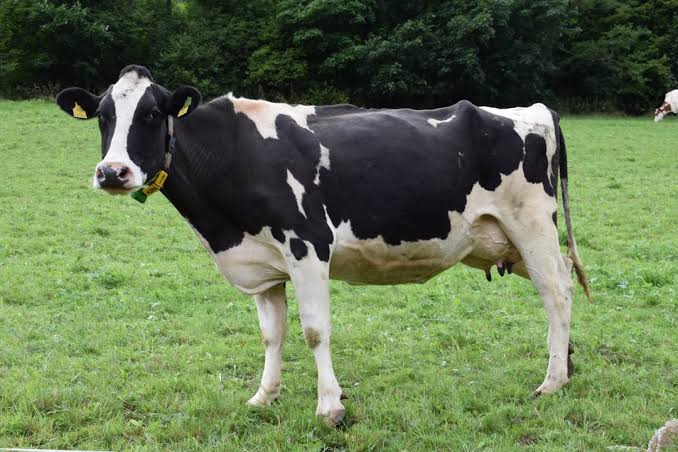
Govt to conduct national cow science exam; says it will educate on importance of cows

The 54-page study material released for the exam includes some diffent topics that claim things like earthquakes occur due to cow slaughter

The Rashtriya Kamdhenu  Aayog (RKA) chairman Vallabhbhai  Kathiria said on Tuesday that the government plans to conduct a nationwide voluntary online examination on “cow science” next month to infuse curiosity among people and educate students about the importance of cows.

According to an article in The Indian Express, the exam will be conducted by RKA, an agency established for the protection of cows under the Department of Animal Husbandry and Dairying.

This exam is going to be the first of its kind and will be held annually. During a press conference, Kathiria said that “cow is full of science and needs to be explored”.  He said that the exam will be held in 12 regional languages apart from Hindi and English.

The official release of the Ministry of Fisheries, Animal Husbandry and Dairying, under which RKA functions stated that the exam will be conducted in four categories – Primary level (up to 8th standard), Secondary level (from class 9th to class 12th), College level (after 12thstd) and the fourth category will be for the general public. It also said that the exam model is going to consist of multiple-choice questions (MCQ’s).

According to the ministry, the examination will be free of cost and meritorious candidates will be given certificates and prizes.

However, the study material released for this exam seems to be the most interesting and amusing part.  The 54-page study material includes some misleading topics that claim things like earthquakes occur due to cow slaughter and how nearly any disease can be cured by a cow by-product.

What was said to be a document to help the students study about the science behind cows, looks more or less like an excuse to spread a set narrative and propaganda.

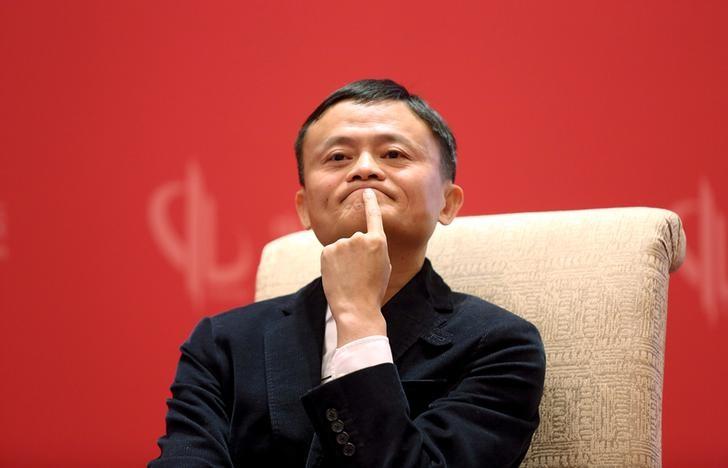
WHERE IS JACK MA, THE CO-FOUNDER OF ALIBABA?

Jack Ma is the second richest person in China and the co-founder of the Alibaba Group, a multinational technology company.
He is also the ambassador of Chinese business globally, an investor and a philanthropist.  Forbes ranked him 21st in “world’s most powerful people” in 2019. His total net worth as of January 2021 was estimated to be $58.3 billion. He was also ranked among the “world’s most powerful people” in 2017 by Fortune. 

Jack Ma wanted more from his life and thus, in September 2019 he retired from Alibaba. He wanted to pursue educational work, environmental causes and philanthropy. He has actively supported and worked for underprivileged communities in China, Africa, Australia and the Middle East. 

Apart from being a businessman, Ma likes being in the spotlight. He made his acting debut in a short film called Gong Shou Dao, participated in a singing competition, presented a dance performance on Alibaba’s 18th anniversary, all in the year 2017.

Recently, he was also the judge of his reality show Africa’s Business Heroes. But was later replaced because of a “schedule conflict”.

But for the past few months, he has not been seen publicly. After his last public appearance in October, no one is familiar with his whereabouts. This happened after he criticised the Chinese government stating that they need to change now. 

After the news flouted and people started questioning Jack Ma’s disappearance, China’s official newspaper printed an article stating that he is currently “embracing supervision”. This post was, however, taken down soon after. 

Jack’s Ant Group was also suspended after this event. They were offering a $37 billion public offering last November. Alibaba, which was co-founded by him, is also under antitrust investigation. Although he has retired from the company, he still holds a considerable amount of power in the company. All these events happened after Ma pointed out the banking system of China calling them “pawnshop mentality”. 

Jack has since then not posted anything on his social media also. For someone who loves the spotlight and is extremely active publicly, this event seems a bit unusual.

But this isn’t the first event where a celebrity or a millionaire has gone missing from China. A pattern can be observed here. All the previously missing celebrities or businessmen also hit the Chinese government with their critics one time or the other.

In 2020, a Chinese actress suddenly went missing and later it was reported that she was imprisoned for three months. 

Another similar event happened with a Chinese scientist, He Jiankui. He disappeared and was reportedly under house arrest. 

A reporter who revealed about the origins of the Coronavirus has also been missing ever since. 

It is yet uncertain as to where Jack Ma is. His company continues to keep silent about his whereabouts. But patterns and the chronology of the events similar to this have been seen in the past as well. 

All we can do is wait and see how this turns out and if Jack was actually “embracing supervision” or was it some other deeper and darker reason.

Digital Currency and drawbacks.

A virtual currency is a digital representation of value that can be digitally traded and functions as (a) a medium of exchange, and/ or (b) a unit of account, and/or (c) a store of value, but, unlike fiat currency like the rupee, it is not legal tender and does not have the backing of a government. A cryptocurrency is a subset of virtual currencies, and is decentralized, and protected by cryptography.

What are blockchain ?

Imagine a small group of school friends maintaining a list of transactions among themselves, but with a twist: Instead of holding this list in one single computer or in the notebook of one of the group members or authorising some outside authority (say, their class teacher) to maintain (and update) the list, all of them decide to maintain a separate copy of the list in their personal computers. Every time they transact, the rest of the members verify the transaction and once it is verified by all, they update their list. Further, to make sure that none of them changes records of the past transactions in their personal list, they decide to place each transaction as a block, and to stack it one after the other in a sequence. This way, no one can tweak the details of any past transactions because the overall sequence will not match with sequences held by others. Lastly, to make sure that no other child from the school gets to know the details, they devise a code (a cipher) for all their communications related to the list. These blocks are known as Digital ledger technologies (DLT) and bitcoin is special type of DLT.

What is the IMC’s (Inter ministirial commsion) view on DLT and cryptocurrencies?

The first thing to understand is that the IMC recognises the potential of DLT and Blockchain. The IMC accepts that internationally, the application of DLT is being explored in the areas of trade finance, mortgage loan applications, digital identity management or KYC requirements, cross-border fund transfers and clearing and settlement systems. To that extent, it recommends the Department of Economic Affairs (within the Finance Ministry) to take necessary measures to facilitate the use of DLT in the entire financial field after identifying its uses. The IMC also recommends that regulators — RBI, SEBI, IRDA, PFRDA, and IBBI — explore evolving appropriate regulations for development of DLT in their respective areas.

However, the IMC has recommended a ban on “private” cryptocurrencies. In other words, it is open to a cryptocurrency that the RBI may unveil. The IMC’s view is that it “would be advisable to have an open mind regarding the introduction of an official digital currency in India”. It noted that the RBI Act has the enabling provisions to permit the central government to approve a “Central Bank Digital Currency” (CBDC) as legal tender in India.

It recommended ban on private use of cryptocurrency.

Why have private cryptocurrencies attracted a ban?

While it is true that the technology used in virtual currencies has immense potential, without a central regulating authority, they can have numerous downsides.

The IMC’s first concern is that non-official virtual currencies can be used to defraud consumers, particularly less informed consumers or investors. The IMC gives the example of the Rs 2,000 crore scam involving GainBitcoin in India where investors were duped by a Ponzi scheme.

Second, the IMC is worried that if private cryptocurrencies are allowed to function as legal tender, the RBI would lose control over the monetary policy and financial stability, as it would not be able to keep a tab on the money supply in the economy.

Third, the anonymity of private digital currencies make them vulnerable to money laundering and use in terrorist financing activities while making law enforcement difficult.

Fourth

there is no grievance redressal mechanism in such a system, as all transactions are irreversible.

It is for these broad reasons that the IMC singled out private cryptocurrencies for a ban.

POLLUTION

ABOUT POLLUTION:

Pollution is the introduction of harmful materials into the environment. These harmful materials are called pollutants. These harmful materials are called pollutants. Pollutants can be natural, such as volcanic ash. They can also be created by human activity, such as trash or runoff produced by factories. Pollutants damage the quality of air, water, and land. These pollutants can be natural or can be man-made like, human wastes, ashes, trashes, or wastes runoff from the factories. This is mainly caused by human activities that harm the environment in ways more than one. Pollution is an issue that has been affecting our earth. Pollution is the stuff that pollutes the environment.  It also affects the ordinary living of the living things on this planet by disturbing the natural life cycle. There are several ways in which our environment can get polluted. Some of them being the use of chemicals, excessive noise, garbage disposal, etc. Pollution causes imbalances in the environment. This imbalance threatened the very survival of all forms of life. We should control pollution for our safe survival. Certain species have been exterminated, and humanity is under a great threat of environmental pollution.

TYPES OF POLLUTION:

There are different kinds of pollutions. Some of the major types of pollution are,
  • AIR POLLUTION:

Air pollution refers to any physical, chemical, or biological change in the air. It is the contamination of air by harmful gases, dust, and smoke that affects plants, animals, and humans drastically. The population’s heavy production of waste is the main reason that air pollution is increasing rapidly. The rapidly increasing human activities like the burning of fossil fuel, deforestation is the major cause of air pollution. There are some other air pollutants like industrial waste, agricultural waste, power plants, thermal nuclear plants, etc.

  • WATER POLLUTION:

Water pollution occurs when harmful substances, often chemicals or microorganisms that contaminate a stream, river, lake, ocean, aquifer, or other body of water, degrading water quality and rendering it toxic to humans or the environment. Water pollution is now a major environmental threat to the existence of humans.

  • LAND POLLUTION:

Land pollution is the cause of many different factors that ultimately pollute the land. These factors include solid waste, deforestation, chemical, and agricultural activities. Land pollution is a result of dumping garbage, waste, and other toxins making the land contaminated or polluted. Some soil or land pollutants are chemicals, pesticides and fertilizers, mining activity, use of plastic, deforestation, growing urbanization, and industrial waste.
WAYS TO CONTROL POLLUTION:

Some of the ways to control pollution are,

  • Avoid excessive idling of your automobile.
  • Avoid burning leaves, trash, and other materials.
  • Conserve energy – at home, at work, everywhere.
  • Encourage industries to avoid pollutant formation at the very source by use of cleaner fuels, the adoption of less polluting materials, and technology in manufacture.
  • Reduce, Reuse, Recycle
  • Do not throw waste in water bodies, remain waste of industries should not pour their waste in water bodies.
  • Plant trees.
  • Use fewer chemicals in home gardens and general agriculture.
  • Maintain our vehicles.
  • Conserve electricity.

NASA shared some interstellar fireworks to bring 2020 to an end. The Orion Nebula looks like a rainbow canvas peppered with dots of light.

A composite image of the Orion Nebula, as seen by the Hubble Space Telescope

NASA decided to share some interstellar fireworks to end an unforgettable year.

The agency posts an “image of the day,” every day, and the final image of 2020 did not disappoint.

A canvas of color, NASA’s December 31 image of the day depicts a composite image of the Orion Nebula, captured by the Hubble Space and Spitzer Space Telescopes.

It’s located more than 1,500 light-years away from Earth.

Nebulae like this one are interstellar nurseries – giant clouds of gas and dust in space that cradle infant stars as they’re born. Some nebulae form as stars die: As a star’s core cools, it starts to shed its outer layers, which disperse to form gaseous clouds

A rainbow canvas

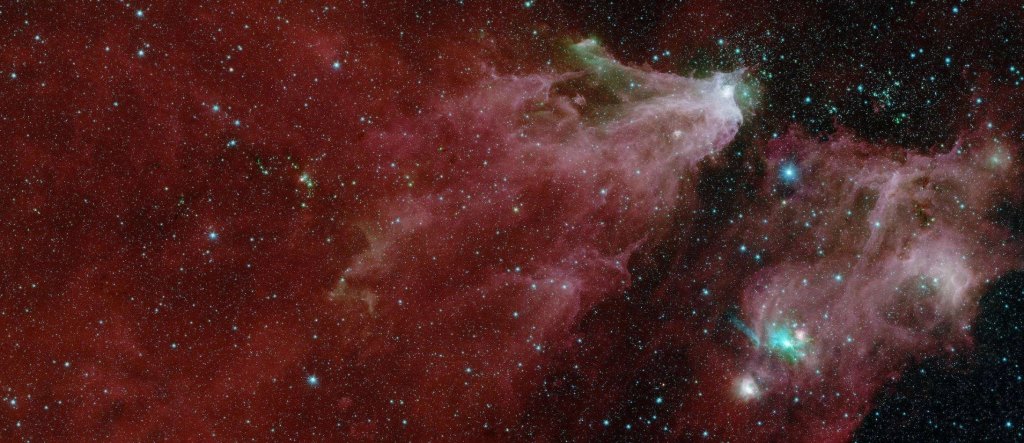
NASA’s Spitzer Space Telescope captured two nebula

When space telescopes like the Hubble image the hydrogen, sulfur, and carbon molecules that make up nebulae like Orion they don’t capture color. Rather, Hubble records particles of light, which NASA can then view through different filters that only let in certain wavelengths of color. Then they assign color to the particles that come through those filters (light than came through the red filter is assigned a red color, for example.)

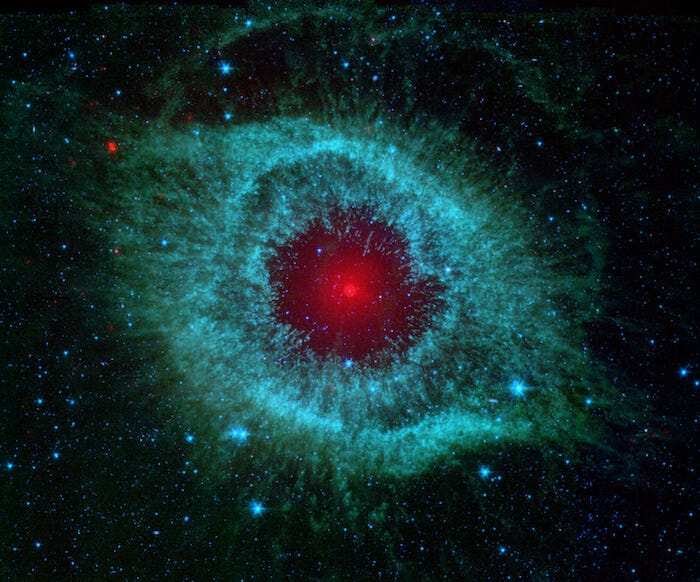
NASA’s Spitzer Space Telescope captured this image of the Helix Nebula, which is located in the constellation Aquarius-about 700 light-years away from Earth

By combining images of the same nebula viewed with different filters, the agency can create a composite, color image like the ones shown above

“We often use color as a tool, whether it is to enhance an object’s detail or to visualize what ordinarily could never be seen by the human eye,” NASA said.

There are roughly 3000 nebulea in our galaxy.

The closest known nebula to our planet is the Helix Nebula, the cosmic remnant of a dying star. It’s about half the distance from Earth as the Orion Nebula is – 700 light-years (so if you traveled at the speed of light, it’d take you 700 years to get there).

The Hubble Space Telescope has been imaging nebulae for 30 years, and these images help scientists learn more about how these cosmic clouds evolve, or even dim and shrink, over time.

RAINBOW

ABOUT RAINBOW:

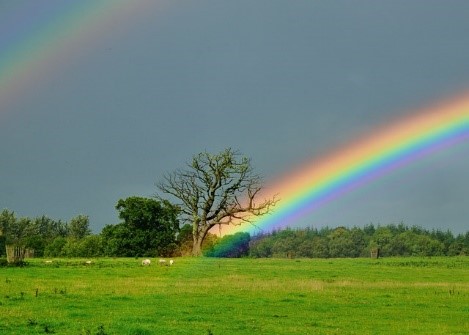
     Rainbow is a natural phenomenon that happens after Rain. It is one of the most beautiful phenomenon created on earth. A rainbow is a multicolored arc in the sky which appears when sunlight hits water droplets. The magical and wonderful phenomenon of a colorful arc in the sky is known as the rainbow. The seven colors that exist in a rainbow are violet, indigo, blue, green, yellow, orange and red. Rainbows are usually seen on the opposite end of where the sun is located. The Rainbow is a lovable scenery that is colorful and pleasant to eyes. In many Civilizations, rainbows are considered to bring good to society and is a symbol of peace and harmony. Rainbows means peace and harmony in many ancient cultures.  There are two main components by which a rainbow is formed i.e. light and drops of water. The state of Hawaii in America is the only place on earth, where rainbows occur most. When the sun is lower, then the rainbow formed in the sky will be higher. The semicircle formed by rainbow makes a 42-degree angle which starts from the direction opposite to the sun. In simple words, A rainbow is an arc of color in the sky that can be seen when the sun shines through falling rain. The Greeks used to imagine that it was a sign from the gods to foretell war or heavy rain. The Norsemen considered the rainbow as a bridge over which the gods passed from earth to their home in the sky. Others have tried to explain the phenomenon physically.

HOW RAINBOWS ARE FORMED:

     A rainbow is caused by sunlight and atmospheric conditions. Light enters a water droplet, slowing down and bending as it goes from air to denser water. The light reflects off the inside of the droplet, separating into its component wavelengths–or color. When light exits the droplet, it makes a rainbow.  A rainbow is caused by three phenomenon of light – reflection, refraction and dispersion.

TYPES OF RAINBOWS:

Some of the different types of rainbows are,

  • SUPERNUMERARY RAINBOWS:

     Supernumerary rainbows are faint bow lines that appear just inside the main rainbow.

  • MULTIPLE RAINBOW:

      Multiple rainbows are another type of rainbow which is also a rare occurrence. Multiple rainbows are sometimes referred to as double rainbows. As the name suggests, multiple rainbows are instances when more than one rainbow occur simultaneously in the same place and are made up of a primary rainbow and other secondary rainbows. 

  • MONOCHROME RAINBOW:

       A red rainbow, also called a monochrome rainbow, usually appears at sunrise or sunset.

  • HIGHER-ORDER RAINBOW:

      Higherorder rainbows appear to viewers facing both toward and away from the sun.

  • LUNAR RAINBOW:

      A moonbow is also commonly referred to as a lunar rainbow. A moonbow is a rare natural atmospheric phenomena that occurs when the Moon’s light is reflected and refracted off water droplets in the air. Moonbows are much fainter than rainbows made by the sun and often appear to be white.

INTERESTING FACTS OF RAINBOWS:

            Some of the interesting facts about rainbows are,

  • A very rare quadruple rainbow was seen over long Island, NY. In April 2015.In the past 250years, only triple and quadruple rainbows have ever been documented.
  • When you’re flying in an airplane and looking down below, you can actually see a rainbow as a complete circle! If the weather circumstances are just right.
  • A person standing next to you is standing in a slightly different spot and sees the rainbow different because they see different raindrops.
  •  A double rainbow occurs when the light is reflected twice in the raindrop, and thus, you can see two distinct reflections that are coming from two different angles.

Ancient Rainwater Harvesting Systems

Jal hi jeevan hai (water is life). Water is an indispensable part of our life. But some of us do not know that every drop counts. Our ancestors knew this and that is why they built many water harvesting systems.

Khadin system 

A khadin, also called a dhora, is an ingenious construction designed to harvest surface runoff water for agriculture. The khadin system is based on the principle of harvesting rainwater on farmland use of this land for crop production. It was first designed by the Paliwal Brahmins of Jaisalmer, western Rajasthan in the 15th century. A Khadin is an earthen embankment built across the general slope which conserves the maximum possible rainwater runoff within the agricultural field. The embankment not only helps to increase moisture in the submerged land, but also prevents the washing away of the top soil and the manure added to it.

Suranga system

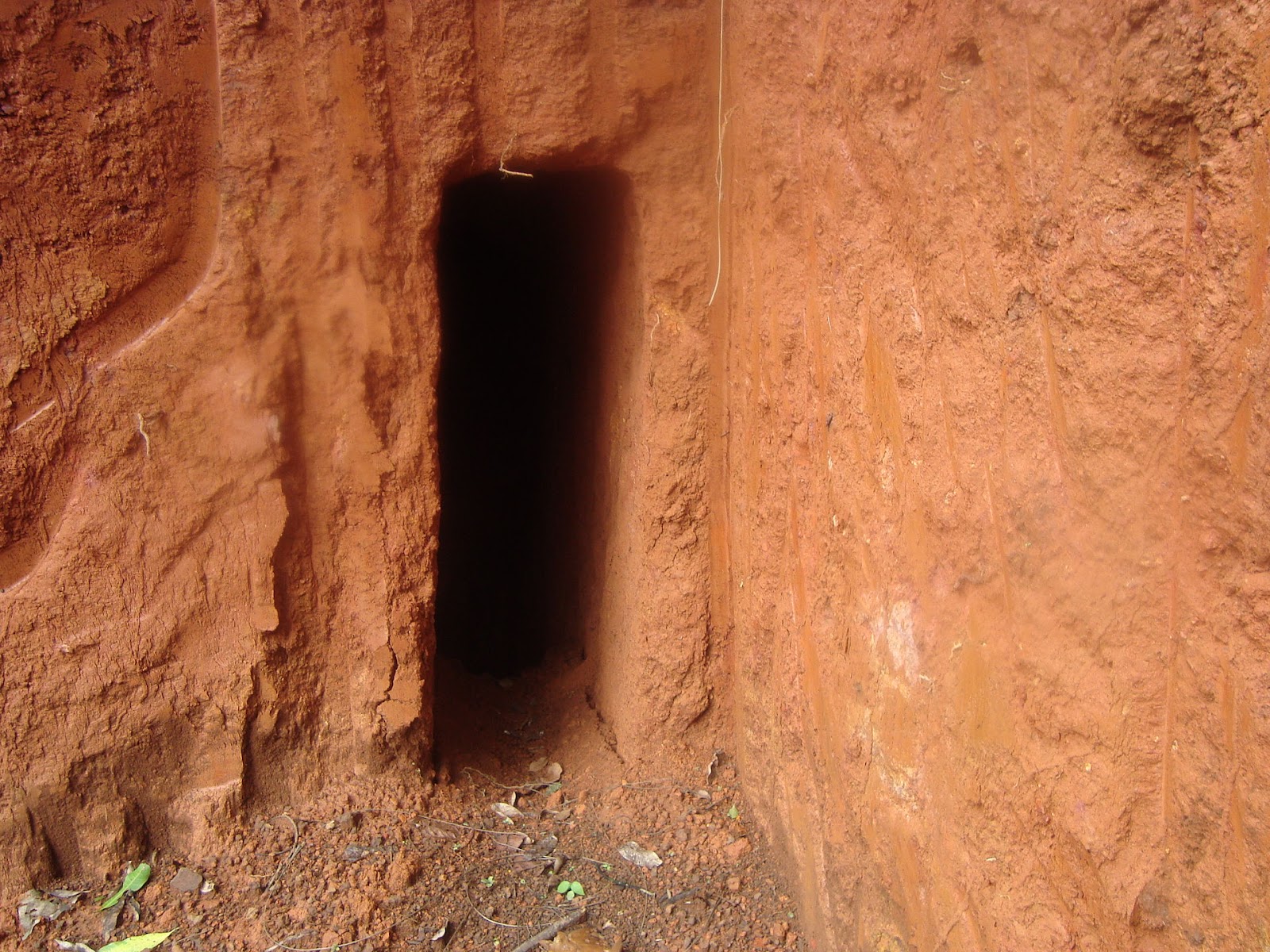
Suranga (also Surangam or thurangam) is a traditional water management system used to provide a reliable supply of water and irrigation in Kerala and Karnataka. A suranga is basically a horizontal tunnel dug in the slope of a laterite hill for about 30 metres to 40 metres , which uses gravitational force for extraction of the underground water and collects into a storage tank. 

By Vssun – Own work, CC BY-SA 3.0, https://commons.wikimedia.org/w/index.php?curid=20371095

As both the areas are covered by uneven and steep laterite hill which makes borewell expensive, surangas are considered as a relatively cheap option. The water can be collected by using a small barrier, which then can flow through a plastic or bamboo pipe into a storage pit or tank.

Pat 

Bhitada village, Jhabua district of Madhya pradesh developed the unique Pat system. This system was devised according to the peculiarities of the terrain to divert water from swift-flowing hill streams into irrigation channels called pats. The diversion bunds across the stream are made by piling up stones and then lining them with teak leaves and mud to make them leakproof. The villagers irrigate their fields by turns. The channel requires constant maintenance and it is the duty of the family irrigating the fields on a particular day to take care of the Pat on that particular day.

Kuis / Beris

Found in western Rajasthan, these are 10-12 m deep pits dug near tanks to collect the seepage. Kuis can also be used to harvest rainwater in areas with meagre rainfall. The mouth of the pit is usually made very narrow. This prevents the collected water from evaporating. The pit gets wider as it burrows under the ground, so that water can seep into a large surface area. The openings are generally covered with planks of wood, or put under lock and key. The water is used sparingly, as a last resource in crisis situations.

Baoris / Bers (Stepwell)

Baoris or bers are community wells, found in Rajasthan, that are used mainly for drinking. However, unlike the wells that we can find in the West, here the descent into the well is made up of hundreds of steps (hence the name Stepwell) that enclose places of great beauty and spirituality. Most of them are very old and were built by banjaras (mobile trading communities) for their drinking water needs. They can hold water for a long time because of almost negligible water evaporation.

WHAT IS FARM BILL 2020?

     We have been hearing the term ‘Farm Bill’ but seriously, What is Farm Bill 2020?  And how it affects the farmers?

     The Farm Bill 2020 refers to the agricultural bills passed by the Lok Sabha on 17 September 2020 and by the Rajya Sabha on 20 September 2020. The bills collectively seek to provide farmers with multiple marketing channels and provide a legal framework for farmers to enter into pre-arranged contracts among other things. The President of India, Ram Nath Kovind gave his assent for the three bills on 27 September 2020. The Farm Bill 2020 includes the three acts

  1. The Farmers (Empowerment and Protection) Agreement on Farm Services Act, 2020.
  2. The Farmers’ Produce Trade and Commerce (Promotion and Facilitation) Act, 2020.
  3. The Essential Commodities (Amendment) Act, 2020.

First of all, What is “The Farmers (Empowerment and Protection) Agreement on Farm Services Act, 2020? And how it affects the farmers?”

     It provides a legal framework for farmers to enter into pre-arranged contracts with buyers including mention of pricing and defines a dispute settlement mechanism.

     The agreement will outline conditions for the production of farm products and delivery requirements, the farmer then agrees to the supply products based on the quality standards, and in return, the buyer agrees to buy products. The primary purpose of this act is for contract farming whereas the secondary purpose of this act is to provide a nationwide legal framework wherein the farmer produces crops as per contracts and the central government says that it transforms Indian Agriculture and attracts private investment. As we see it does attracts private investment. This act may lead to the exploitation of farmers legally by buyers.

     Now coming to the second bill “The Farmers’ Produce Trade and Commerce (Promotion and Facilitation) Act, 2020”. It allows the trading of farm goods outside the Physical premises of Mandi and APMC Yard.

     As we know all the subjects in India are divided into three lists

  1. Union List
  2. State List
  3. Concurrent List

Agriculture comes under State List, states like Punjab and Harayana could lose a big source of state revenue. We may have seen our parents going to Mandis’ to buy vegetables and other agricultural products. These Mandis’ are spread across the country. Farmers usually sell their products in Mandis’ and these Mandis’ are managed by the state government through APMC ( Agricultural Produce Market Committee).

There are some conditions for the farmers to sell their products outside Mandis’ because the products which have all the minimum support price need to compulsorily go through Agricultural Produce Market Committee (AMPC).

     Otherwise, farmers can directly sell their products to consumers, the small-scale farmers are still doing it now. If a farmer like a larger-scale farmer wants his products to be sold through the government then he has to notify APMC or trade with only AMPC licensed traders. This bill will allow barrier-free trading of Agricultural produce outside the notified APMC Mandis’. With the help of this bill, the state government will not impose any tax on the purchase and selling of agricultural products outside the Mandis.

     This Bill is more beneficial to Large-scale farmers because it gives more options to them to sell their products and this bill makes hardly a difference to the small-scale farmers because anyhow, they are selling outside the Mandis.

      But the other perspective of this bill is it gives a way to the government to get out of the Agricultural business, once the farmers enter the market, their income will depend upon the ups and downs of the market.

The third bill is ‘The Essential Commodities (Amendment) Act, 2020’.

     This is not a new bill, the government had an amendment to the existing bill. Basically, it is a law that controls the production, supply, and distribution of certain commodities.

What is the essential commodities bill?

With the help of this law, the government can include new commodities to the essential commodities list to make sure that they are available to everyone when the need arises and take them off this list when the situation improves. For example, if someone illegally stores onions to create artificial demand (Hoarding) the government adds onions to the essential commodities list under this act to make sure that onions are available to the people at the right price.

     Recently in March 2020, the Central government added Masks and sanitizers under this act to make sure that all are available to the people in the pandemic situation at the right price and right quality, and again on 1 July 2020, the government removed them from this act.

     The amendment added in this bill is government removed certain commodities like cereals, pulses, potatoes, onions, edible oilseeds, and oils from this act even though they are daily used by everyone. The government will regulate and supply them only in case of Famine, High Price Rise, or Natural Calamities. There are more conditions to add this into essential commodities

  • If there is a 50% increase in the retail price of Non-Perishable items like cereals, edible oilseeds, and oils then only the government will add them back into the essential commodities list.

For example, If the retail price of the rice is 100 Rupees/Kg and it suddenly increased to 151 Rupees/Kg then, the government adds them back into the essential commodities list until the situation improves.

  • If there is a 100% increase in the retail price of Perishable items like onions, potatoes then only the government will add them back into the essential commodities list.

For example, If the retail price of the potatoes is 50 Rupees/Kg and it suddenly increased to 101 Rupees/Kg then, the government adds them back into the essential commodities list until the situation improves.

In one way this act is a good step because it boosts farmer’s income but on another hand, it leads to hoarding and black marketing.

US CAPITOL STORMED BY TRUMP SUPPORTERS

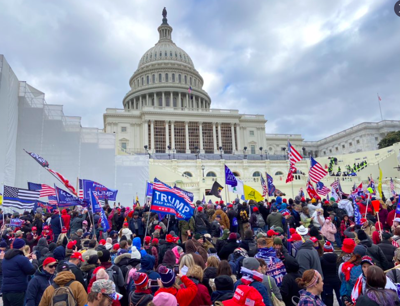
On Wednesday, the US Congress resumed the process of certifying Joe Biden’s presidential victory. But something very unusual and surprising happened and the session had to stop midway. Trump supporters violently invaded the US Capitol and created heavy chaos in Washington DC.  

The violent riots left four people dead and the Washington Mayor had to impose a curfew immediately beginning 6 pm on Wednesday. The curfew has now been extended for 15 days. 52 people have been arrested so far. 

A lot of senators who were to support the objection reversed their decision after the violent riot.

WASHINGTON, DC – JANUARY 06: Pro-Trump supporters storm the U.S. Capitol following a rally with President Donald Trump on January 6, 2021 in Washington, DC. Trump supporters gathered in the nation’s capital today to protest the ratification of President-elect Joe Biden’s Electoral College victory over President Trump in the 2020 election. (Photo by Samuel Corum/Getty Images)

The US Capitol has seen violence many times in the last 220 years but such an event has never been witnessed before. The mob forced its way past the majestic marble columns, disrupting the passage of power and desecrating the seat of the world’s greatest democracy.

The lawmakers were forced to flee the Capitol and resulted in the death of one woman. The Senate, however, resumed the process of certifying more than six hours after the attack.

Leaders from around the world condemned the act of supporters of President Donald Trump.

Prime Minister Boris Johnson of Britain tweeted, “disgraceful scenes in US Congress”. Britain has been a staunch ally of the US for generations. He further added, “The United States stands for democracy around the world and it is now vital that there should be a peaceful and orderly transfer of power.”

German Foreign Minister Heiko Maas also tweeted, “Trump and his supporters should finally accept the decision of the American voters and stop trampling on democracy”. He added to it “contempt for democratic institutions has disastrous effects.”

The personal assistant of the President of Nigeria, Bashir Ahmed with a shrug emoji tweeted “The beauty of democracy?”. Nigeria and the US have seen several coups ever since independence.

“In this sad episode in the US, supporters of fascism showed their real face: anti-democratic and aggressive,’‘ tweeted Luis Roberto Barroso, Brazilian Supreme Court justice and the head of the country’s electoral court. He said he hoped “American society and institutions react with vigour to this threat to democracy.”

In a tweet, Prime Minister Narendra Modi said he was distressed to see news about “rioting and violence” in Washington DC. “Orderly and peaceful transfer of power must continue,” PM Modi said. 

Venezuela, which is under U.S. sanctions, said the events in Washington show that the U.S. “is suffering what it has generated in other countries with its politics of aggression.”

“This is the widely anticipated outcome of Trumpism,” tweeted a retired Italian centre-left politician, Pierluigi Castagnetti. “And unfortunately it won’t end today. When politics is replaced by deception and fanaticism of the people the drift is inevitable.”

Canadian Prime Minister Justin Trudeau said his country was “deeply disturbed” by the events in the U.S., Canada’s closest ally and neighbour.

Former US President Barack Obama also condemned the violence, saying: “History will rightly remember today’s violence at the Capitol, incited by a sitting president who has continued to baselessly lie about the outcome of a lawful election, as a moment of great dishonour and shame for our nation.”

Apple CEO Tim Cook also said in a tweet, “Today marks a sad and shameful chapter in our nation’s history. Those responsible for this insurrection should be held to account, and we must complete the transition to President-elect Biden’s administration. It’s especially when they are challenged that our ideals matter most.”

President Trump and his supporters are receiving backlash and resistance from all around the world. President Trump might even be removed from office before his term ends in January. The discussion is still ongoing amongst the members of President Trump’s cabinet.

The discussion is focused on the 25th Amendment to the US Constitution, which allows for a president’s removal by the vice president and cabinet if he is judged “unable to discharge the powers and duties of his office.”

The lawmakers said, “The president is unfit to remain in office for the next 14 days. Every second he retains the vast powers of the presidency is a threat to public order and national security.”

Ancient marine creatures called radiodonts had incredible vision that likely drove an evolutionary arms race

The international study, led by Professor John Paterson from the University of New England Research Centre, in collaboration with the University of Adelaide, the South Australian Museum and The Natural History Museum (UK), found that radiodonts developed sophisticated eyes over 500 million years ago, with some adapted to the dim light of deep water.

“our study provides critical new information about the evolution of the earliest marine animal ecosystems,” Professor Paterson said. “In particular, it supports the idea that vision played a crucial role during the Cambrian Explosion, a pivotal phase in history when most major animal groups first appeared during a rapid burst of evolution over half a billion years ago.”

Radiodonts, meaning “radiating teeth,” are a group of arthropods that dominated the oceans around 500 million years ago. The many species share a similar body layout comprising of a head with a pair of large, segmented appendages for capturing prey, a circular mouth with serrated teeth, and a squid-like body. It now seems likely that some lived at depths down to 1000 meters and had developed large, complex eyes to compensate for the lack of light in this extreme environment.

“When complex visual systems arose, animals could better sense their surroundings,” Professor Paterson explained. “That may have fuelled an evolutionary arms race between predators and prey. Once established, vision became a driving force in evolution and helped shape the biodiversity and ecological interactions we see today.”

Some of the first radiodont fossils discovered over a century ago were isolated body parts, and initial attempts at reconstructions resulted in “Frankenstein’s monsters.”

But over the past few decades many new discoveries — including whole radiodont bodies — have given a clearer picture of their anatomy, diversity and possible lifestyles.

Co-author, Associate Professor Diego García-Bellido from the University of Adelaide and South Australian Museum, said the rich treasure trove of fossils at Emu Bay Shale on South Australia’s Kangaroo Island in particular has helped to build a clearer picture of Earth’s earliest animals.

“The Emu Bay Shale is the only place in the world that preserves eyes with lenses of Cambrian radiodonts. The more than thirty specimens of eyes we now have, has shed new light on the ecology, behavior, and evolution of these, the largest animals alive half-a-billion years ago,” A/Prof. García-Bellido said.

This new research published on December 2, 2020.

What is the 25th Amendment of the US Constitution that could be used to remove Trump?

In the immediate aftermath of Donald Trump supporters storming the Capitol building, which houses both the US Senate as well as the House of Representatives, there are calls by many to either impeach President Trump or invoke the 25th Amendment.

What is the 25th Amendment of the US Constitution?

This amendment lays out how a US president and vice president may be succeeded or replaced.

According to Cornell Law School, “The Twenty-fifth Amendment was an effort to resolve some of the continuing issues revolving about the office of the President; that is, what happens upon the death, removal, or resignation of the President and what is the course to follow if for some reason the President becomes disabled to such a degree that he cannot fulfill his responsibilities.”

According to Encyclopedia Britannica, while the first section codified the traditionally observed process of succession in the event of the death of the president—that the vice president would succeed to the office—it also introduced a change regarding the ascent of the vice president to president should the latter resign from office.

“In the event of resignation, the vice president would assume the title and position of president—not acting president—effectively prohibiting the departing president from returning to office,” states Britannica.

The second section of the amendment addresses vacancies in the office of the vice president.

The third section of the amendment set forth the formal process for determining the capacity of the president to discharge the powers and duties of office.

If the president is able to declare his/her inability, then the vice president takes over as the acting president.

In case the president is unable to declare his/her incompetence, the fourth section of the amendment requires the vice president and the cabinet to jointly ascertain this and if they do so, then the vice president immediately assumes the position of acting president.

It is this fourth section of the 25th Amendment that many are asking Vice President Pence to invoke against President Trump.

When was it introduced and has it been used in the past?

In the aftermath of the assassination of President John F. Kennedy, the 25th Amendment was proposed by Congress on July 6, 1965, and ratified by the states on February 10, 1967.

According to Cornell Law School, “The Watergate scandal of the 1970s saw the application of these procedures, first when Gerald Ford replaced Spiro Agnew as Vice President, then when he replaced Richard Nixon as President, and then when Nelson Rockefeller filled the resulting vacancy to become the Vice President.”

However, the fourth section of the 25th Amendment has never been invoked.

Role of Biodiversity and Agriculture in making of Atmanirbhar Bharat

While flipping pages of my Geography textbook, a fact caught my eye – two third of the population of India is engaged in agricultural activities. We are blessed to have diverse climatic conditions because of which we see a variety of flora and fauna, and grow so many veggies, fruits and other crops. But India still imports a lot of harvested produce from other countries.

Atmanirbhar Bharat

Atmanirbhar Bharat, which translates to ‘self-reliant India’ or ‘self-sufficient India’, is a policy formulated by Prime minister of India Narendra Modi for making India a bigger and more important part of the global economy. It was launched on 12 May 2020  during the announcement of India’s COVID-19 pandemic related economic package. Not only should products be ‘made in India’, but the promotion of those products should take place so as to make those products competitive.  We should appreciate our local products, if we don’t do this then our products will not get the opportunity to do better and will not get encouraged. The agriculture and biodiversity sector were also given a lot of importance in it. This scheme helps farmers by providing better financial help, good prices of crops and a lot of new schemes are introduced which will help to support farmers and other people who are dependent on the agricultural sector for their livelihood. The improvement in PDS (Public Distribution System) has also started. Sustainable fishing practices and organic farming practices are encouraged, beekeeping shelters are increased and Rs 1500 crore is specified for animal husbandry. Many medicinal herbs are to be grown by the shore of river Ganga. Minister of Chemicals and Fertilisers, D V Sadananda Goda, in September 2020, said that “India will be self-reliant in fertiliser production by 2023”. Three Farm Bills passed in September 2020 provide the legal framework to give the farmers the right to choose the price and people to whom they want to sell. Coir Udyami Yojana aims to develop the coir-related industry’s sustainable development.

Role of Agriculture and Biodiversity

From my point of view, the making of New India does not mean cutting the forests to make big buildings, industries or exploiting the natural resources without limit. When I think about a new Bharat, I imagine a country with minimum degradation of natural resources while still sustaining the agricultural demand of our country. 

Important focus on agricultural exports should also be given so as to improve the quality of exports rather than just quantity, thereby fetching more price for the farmer. Exports of medicinal herbs and oils, agricultural produce and raw materials like cotton and jute will increase drastically; also aiding the economy. Correspondingly, many people will start to prefer Indian exported products.

Great biodiversity will help to maintain ecological balance for ecosystem stability and support ecotourism. We can use resources and conserve them due to eco-friendly practices in farming, fishing, etc. 

At school level, a new subject – Agriculture should be introduced with hands-on experience and interaction with farmers. This will inspire many students to study agriculture and forestry streams. 

I think that biodiversity and agricultural prosperity will highly assist in the making of New India. Our new Bharat will be more sustainable and more developed. India will promote eco friendly practices, biodiversity, organic farming, quality produce and build a strong economy. From a developing country, it will turn into a super-power.

TREES

ABOUT TREES:

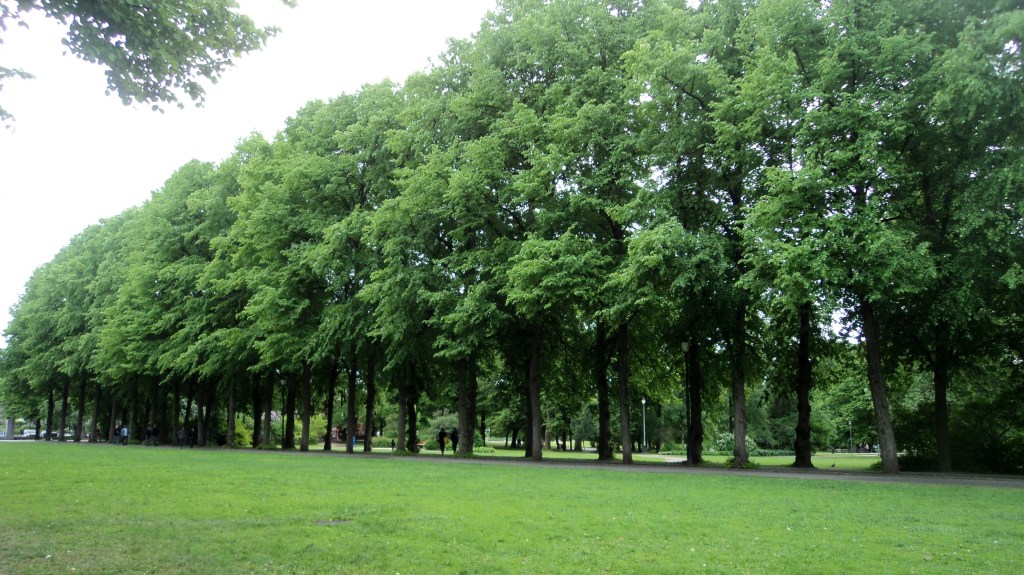
A tree is a tall plant with a trunk and branches made of wood. Trees can live for many years. Trees have a thick wooden central part from which branches grow. A single tree has many roots. The roots can carry nutrients and water from the ground through the trunk and branches to the leaves of the tree. The roots of trees bind the soil and help it from being washed away by water or wind.

BENEFITS OF TREES:

Trees are vital resources for the survival of all living beings. Trees are an important part of the ecosystem. Trees give off oxygen that we need to breathe. They give us oxygen, store carbon, stabilize the soil, and give life to the world’s wildlife. Trees provide fruits, wood, leaves, flowers, rubber, paper, and many other things to human beings. They also provide us with the materials for tools and shelter. Trees clean the air. Trees prevent soil erosion. Trees also provide food, protection, and homes for many birds and mammals. It also provides timber for construction. They also conserve water. They help in fighting back the climate changes by absorbing greenhouse gases which are the main cause of climate change. It helps to maintain balance and also acts as a valuable source of many resources – such as timber, medicine, shelter, raw materials, and more. Trees provide shade, which is needed during the summer months. Trees and their branches are used as a source of fuel. Trees are used to make furniture and other commercial products. We get many medicines from plants like Cinchona, aconite, coriander, digitalis, horehound, tulsi, neem, and garlic. They help in maintaining the right temperature on Earth. During rainy days, soil erosion is prevented with the help of trees. This process purifies the air and keeps the atmosphere clean. Trees also absorb other harmful gases to keep our environment clean. Trees help in balancing the water level in the atmosphere.

INTERESTING FACTS OF TREES:

Some of the interesting facts about trees are,

  • A large oak tree can consume about 100 gallons of water per day, and a giant sequoia can drink up to 500 gallons daily.
  • The rings in a cut tree don’t just reveal its age. They can also show signs of environmental changes, like a volcanic eruption or severe drought.
  • The tallest tree in the country is a Coast Redwood growing in northern California’s Redwood National Park. It is 369 feet tall and over 2000 years old.
  • The world’s shortest tree species is the Dwarf Willow. It is rare to find one more than 2 1/2 inches tall. They are also dioecious, producing both males, yellow-colored and female, red-colored catkins. They have been found growing on the frozen tundra in the Arctic.
  • Wind-blown cottonwood seeds can stay airborne for days before they land. In fact, they can fly longer than any other kind of tree seeds.
  • There is a tree called Rainbow Eucalyptus, with bark having blue, orange, and maroon colors. When the colors combine in sunlight, they give it a particular ‘Rainbow’ effect. This multi-colored tree grows in New Britain, New Guinea, Ceram, Sulawesi, and Mindanao.

Dowry system in India

What is dowry?
It is a cash or a goods that is given by the bride family as a gift to the groom family.

It has become a social evil in this society. The bride family has to go from many pressures with the demand by the groom family in their daughter’s marriage. This can become an issue with raising the girl child. That is why, the life of the girl miserable in some circumstances. If the demand is not fulfilled the marriage can be cancelled or tortured after becoming the wife.

Due to this, many parents abort their girl child or murder them after new born. Many girl child has been found thrown in the dustbin or rivers. The number of dead girl babies has increased in some areas. The number of boys exceed in comparison to girls in the entire population. Dowry has become a greed in today society.

The system of dowry was to give their daughter as a gift so that after the marriage she will be financially independent. The parents give their daughter with their own happiness. But when the demand came from the boy’s family, it has became an social evil.

Every girl should have the right to live their own life. Educate girls and women and make them aware about the social issue. Women can take action against the dowry system as various laws has passed by the government.

THE NEW NORMAL

After the COVID-19 pandemic, lifestyle of people have changed completely. It has placed the whole world at a standstill where nations are going into lockdowns and facing the crisis. Still there is no specific time and information that when will the situations stabilize and everything will become normal. However, people are learning valuable lessons through this global crisis and life after COVID is sure to change for the better.

People have learned to live with the bare essentials during the lockdown. Healthy home-cooked meals have replaced junk food. Closed shopping malls highlighted the futility of mindless consumerism. As pollution levels went down and nature flourished, people realized the necessity of a sustainable lifestyle for the health of the planet. In the future, more environment-friendly ways to operate will undoubtedly emerge, like remote working to save fuel and online paperless transactions. The people are more likely to get simple yet rewarding lifestyle, reducing consumption, increasing saving as precautions against future income uncertainties. The protection of the earth and the next generation is going to drive a majority of life-choices.

During these difficult times, families are working together to protect all its members from harm. Every member is assisting in household chores, along with caring for the children and the elders and developing stronger bonds. Post-lockdown as well, the virus will take time to be completely eradicated, making social distancing and other measures a part of the long-term future. Rather than going outdoors, people will choose to relax and unwind with their family members. Thus, the lockdown brought the importance of family into focus.

Even after the curve of coronavirus spread flattens, the virus will probably continue to exist. Wearing masks, using hand-sanitizers, and maintaining physical distances will be the new normal. In this situation, to reduce the chances of contamination, educational institutes will need to modernize their teaching techniques with smart technologies. During the lockdown, parents are homeschooling their children efficiently, and schools are taking online classes. As parents will prefer to shield small children from exposures until the coronavirus threat passes, virtual classrooms might take over conventional teaching methods.

As people work together in breaking the chain of coronavirus infection, a better world is emerging. The tough times are sure to pass, leaving behind the wisdom of practicing compassion and caring for what genuinely matters in life, like the welfare of the family members. People have realized the need for precautions and are taking steps against future contingencies to keep the future generations safe.

Could we ever pull enough carbon out of the atmosphere to stop climate change?

Nature has equipped Earth with several giant “sponges,” or carbon sinks, that can help humans battle climate change. These natural sponges, as well as human-made ones, can sop up carbon, effectively removing it from the atmosphere. 

But what does this sci-fi-like act really entail? And how much will it actually take — and cost — to make a difference and slow climate change

Sabine Fuss has been looking for these answers for the last two years. An economist in Berlin, Fuss leads a research group at the Mercator Research Institute on Global Commons and Climate Change and was part of the original Intergovernmental Panel on Climate Change (IPCC) — established by the United Nations to assess the science, risks and impacts of global warming. After the panel’s 2018 report and the new Paris Agreement goal to keep global warming to 2.7 degrees Fahrenheit (1.5 degrees Celsius) or less, Fuss was tasked with finding out which carbon removal strategies were most promising and feasible

Afforestation and reforestation — planting or replanting of forests, respectively — are well known natural carbon sinks. Vast numbers of trees can sequester the greenhouse gas carbon dioxide (CO2) from the atmosphere for photosynthesis, a chemical reaction that uses the sun’s energy to turn carbon dioxide and water into sugar and oxygen. According to a 2019 study in the journal Science, planting 1 trillion trees could store about 225 billion tons (205 billion metric tons) of carbon, or about two-thirds of the carbon released by humans into the atmosphere since the Industrial Revolution began. 

Agriculture land management is another natural carbon removal approach that’s relatively low risk and already being tested out, according to Jane Zelikova, terrestrial ecologist and chief scientist at Carbon180, a nonprofit that advocates for carbon removal strategies in the U.S. Practices such as rotational grazing, reduced tilling and crop rotation increase carbon intake by photosynthesis, and that carbon is eventually stored in root tissues that decompose in the soil. The National Academy of Sciences found that carbon storage in soil was enough to offset as much as 10% of U.S. annual net emissions — or about 632 million tons (574 million metric tons) of CO2 — at a low cost. 

But nature-based carbon removal, like planting and replanting forests, can conflict with other policy goals, like food production, Fuss said. Scaled up, these strategies require a lot of land, oftentimes land that’s already in use. 

This is why more tech-based approaches to carbon removal are crucial, they say. With direct air capture and carbon storage, for instance, a chemical process takes carbon dioxide out of the air and binds it to filters. When the filter is heated, the CO2 can be captured and then injected underground. There are currently 15 direct air capture plants worldwide, according to the International Energy Agency. There’s also bioenergy with carbon capture. With this method, plants and trees are grown, creating a carbon sink, and then the organic material is burned to produce heat or fuel known as bioenergy. During combustion, the carbon emissions are captured and stored underground. Another carbon capture trick involves mineralization; in this process, rocks get ground up to increase the surfaces available to chemically react with, and crystallize, CO2. Afterward, the mineralized CO2 is stored underground. 

The need to deploy these solutions is imminent. The global carbon budget, the amount of CO2 humans can emit before the global temperature rises 2.7 F (1.5 C) above preindustrial levels, is about 300 gigatons of CO2, Fuss said. 

RAIN

ABOUT RAIN:

Rain is liquid precipitation which is water falling from the sky. Rain is liquid water in the form of droplets that have condensed from atmospheric water vapor and then become heavy enough to fall under gravity. Rain is part of the water cycle. A light rain of small drops is known as a drizzle. Spring is the rainiest season of the year as measured by the number of days with precipitation. Rainfall is measured by the depth of water that falls on a level surface without soaking in. Rainfall is measured with a rain gauge.

HOW RAIN IS FORMED? :

Clouds are made of water droplets. Within a cloud, water droplets condense onto one another, causing the droplets to grow. When these water droplets get too heavy to stay suspended in the cloud, they fall to Earth as rain.

IMPORTANCE OF RAIN:

Rain is a wonderful gift of Nature to all mankind. Rain is a major source of water to the inhabitants of the earth, and it also plays a major role in ensuring the water cycle is complete. Rain may be the most essential weather phenomenon for life to exist on Earth. The growth of plants also may depend on rain. Without rain, no crops would grow. If rainfall is less, there is water scarcity which sometimes causes a drought-like situation. It can improve the level of groundwater. Rainfall is also very important for the survival of plants and animals. It brings freshwater to the earth’s surface. With temperature, rainfall is perhaps the most important factor in defining climate. Rainfall is also the major source of energy that drives the circulation of the atmosphere. The rain waters the Earth and refills streams, rivers, lakes, and oceans, and provides the moisture trees and plants use to make their food. This water also gives wild animals the water they need to drink. Thus, Rain is very important.

INTERESTING FACTS ABOUT RAIN:

Some of the interesting facts about rain are,

* Some regions of the world get rain nearly every day or every other day. Galway, Ireland gets this weather about 220 – 230 days or more each year. Similarly, parts of Hawaii and other tropical areas receive brief spurts of rain on an almost daily basis.

* The place that receives the most annual rainfall on average is a village in India called Mawsynram, Meghalaya, India. They receive about 467 inches each year, most of which falls during monsoon season.

*Drops are not shaped like teardrops as they fall, as is commonly depicted – they are actually dome-shaped.

* When raindrops fall on clay or dusty soils, they trap small air bubbles on the surface which raise upward and burst out of the droplet. This then produces pockets of scent into the air where they are then carried by the wind. This is what causes the familiar smell of rain, which is called ‘Petrichor’.

*Up in the clouds, rain most often starts off as snow. Clouds are made of freezing-cold water droplets and tiny crystals of ice. In most rains, this cold water adheres to ice, forming nascent drops that then fall out of the clouds. As they descend towards the relative warmth of the earth’s surface, they melt and become rain.

* Not all raindrops are made of water: Rain also consists of sulfuric acid or methane, which can also be found on other planets in the solar system.

Importance of Vocational Skills

The new Education Policy of India also focuses on vocational training of the students. But what are vocational skills? And why are they important? Let us find out.

What are Vocational skills?

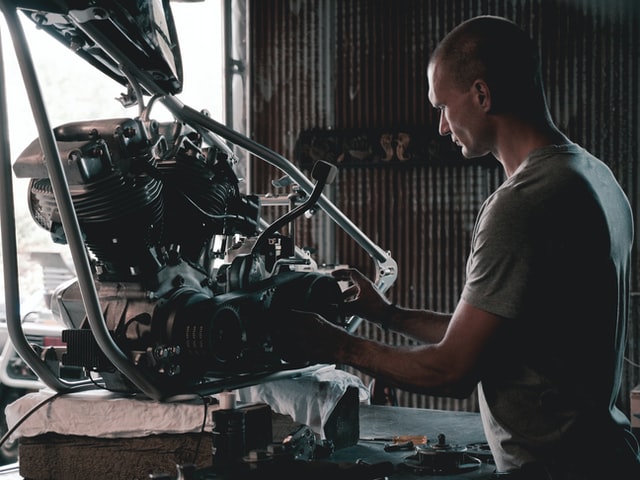
Vocational skills are empirical skills that individuals acquire in a specific area of interest. These are the practical skills that one requires to learn in order to choose a career option. Vocational skills are more practical than theoretical skills and are equally important for a student. Individuals learn vocational skills from hands-on experience.The training takes place outside the traditional classroom setting. Students are placed in manual labor intern positions that coincide with their vocational career choice. It trains a student in training for his career and it is related to the theory part. Vocational skills are those which allow a person to master a particular subject or procedure that is applicable to a career. Vocational skills are also known as content skills.

Importance of Vocational training

When a student receives vocational education in college or an educational institution, they are not getting prepared just to study and pass the college. But they are also being prepared to get a job in the future.

Vocational training is very important. It develops many skills. Here are the types of skills that are developed by it-

  1.  Domain knowledge in fields such as carpentry, plumbing, electrical works, automobile service
  2.  Mechanical aptitude 
  3.  Problem solving skills
  4.  Creative skills

These skills are acquired by the students and help them immensely. Skills create various job opportunities. In today’s world, almost every job providing company or organization wants people to work for them who have proper skills that will benefit their company and organization. And these skills can not be obtained by only theoretical training.

Skill is the most valuable asset in an individual’s life. Vocational education gives people a new learning experience. It increases your level of expertise in a particular field. This makes it easier to choose a career in future.

Learning a skill takes less time than a traditional four-year university, and can be learned in a few months.. Due to its short period of learning it is very flexible and cost-effective for the students. The students even get time to do their other important work by training  part time from the teacher.

After learning, they do not become dependent on machines or someone else because it is their skills which are helping them to work. They become more efficient and self dependent. Also, they realise their capabilities and use their potential to achieve heights of success. 

Career options from vocational skills

We are exposed to various job opportunities by vocational training. Some career options are listed below –

Car mechanic, Car body repair technician, Car electrician, Quality test engineer, Firefighter, Paramedic, Police officer, Search and rescue officer, CPR and first-aid responder, Coastguard officer, Vocational nurse, Surgical prep technician, Medical technician, Dental hygienist, Dental assistant, Phlebotomist, Sonographer, Radiologist, Pharmacy technician, Mammographer, Laboratory technician, Veterinary assistant, Veterinary technician, Chef, Caterer, Food service manager, Bartender, Mixologist, Quality assurance specialist, Welder, Electrician, Plumber, Web designer, Carpenter, Construction manager, Pipe-fitter, Machining, Computer-aided drafting, Network administration, Civil engineering technician, Court reporter, Hair stylist. 

By choosing a subject that interests you, you can shape your career and create your own success.

10 Books One Must Read At Least Once in their Life

Reading is a great way to keep your mind active. It gives you thousands of reasons to sit back and think about numerous things. It also helps you escape reality and travel to a different world.
 

Reading fills you with little pieces of knowledge that stay with you for a long time. You never know when something might come handy. You come across new words and they start slipping in your vocabulary. It makes you well-articulated and well-spoken. You read something and it gets stored in your brain. Thus it also helps to improve your memory.

There are countless benefits of reading and there are thousands of books to read. But some books are “evergreen”. They are written by some of the greatest literary minds of all times and are known as “classics”. You can pick them any day and they give you the same fresh feeling as it gave you the first time.

A list of 10 books that you must read at least once in a lifetime:

  1. To Kill a Mockingbird, by Harper Lee:

This book was published in 1960 and appears in almost all the lists of the best books. It explores human behaviour and the collective conscience of the Deep South in the early 20th century. It also revolves around the themes of prejudice, hatred, hypocrisy, love and innocence. And is delicately woven with humour. Anyone who has read it counts it as one of their favourites. 

  1. Harry Potter Series, by J.K. Rowling:

Those who have read the Harry Potter books or have even watched the movie are still waiting for their Hogwarts letter, including me. J.K. Rowling takes you on an amazing journey filled with magic and mystery. She introduces you to the world you will never want to leave. You grow up with Harry in this 7 books series.

  1. The Lord of the Rings, by J.R.R. Tolkein:

Another series that takes you into the world of hobbits, dragons, monsters and gods. This book allows you to escape from reality and go on unimaginable adventures. The book revolves around the themes of fantasy, evil and innocence. This series comprises three books in total. 

  1. Pride and Prejudice, by Jane Austen:

Jane Austen is said to be one of the most famous writers in English Literature and Pride and Prejudice is one of her best works. It is a story of the courtship of two opposite characters in a world where manners and courtesy are of utmost importance. The book leaves you with the message that “love knows no barriers and finds its way”.

  1. The Diary of a Young Girl, by Anne Frank:

Almost everyone is aware of the story of Anne Frank during the German Holocaust. The Diary of a Young Girl is a raw account of her life as she hides from the Nazis. She teaches the readers a valuable lesson that we should keep believing that people are good at heart and situations to change. She wishes to change her life too. The book is spin-chilling and tear-jerking as it reveals how the Jews suffered at the hands of the Nazis.

  1. The Book Thief, by Markus Zusak:

The book is set in Germany during 1939 when the Nazis were ruling Germany and the Jews were being brutally killed. It revolves around a girl named Liesel and how she rescues books from the wrath of Nazi rule. The story also features an unusual friendship that is formed in the most unusual situation. Like The Diary of a Young Girl, this book also gives you a view of the cruel Nazi rule.

  1. The Hobbit, by J.R.R. Tolkien:

Another fantasy fiction by J.R.R. Tolkien, The Hobbit was originally written as a short storybook for children. Later it was made into a long series of movies. It features the story of Bilbo Baggins and his journey to the Middle East to challenge a dragon. The book gives a strong message of bravery and takes you into a fantasy world just like the Lord of the Rings.

  1. Little Women, by Louisa May Alcott:

The story of four sisters, set in 19th century New England. Each sister has their own significant personality trait. The book gives you an account of their struggles and their flaws and how they turn into strong young women. The book is a pure joy to read.

  1. Jane Eyre, by Charlotte Bronte:

Jane Eyre is the first prose fiction to focus on its protagonist’s moral and spiritual development. Jane Eyre is one of the strongest fictional heroines of all time. It is a story of a girl who fights social criticism in a society with a strong sense of Christian morality at its core. It depicts a strong, unbroken woman despite her troubled childhood. 

  1. The Kite Runner, by Khaled Hosseini:

The story revolves around Amir and his journey to find his one true friend. He has to abandon him due to ethic and religious differences that existed in Kabul, Afghanistan. It also highlights the theme of guilt and redemption. It is a story of true friendship and atonement. The book has been awarded as the New York bestseller for two times in a row. 

These were some of the books which one should definitely read once in their life. These books never lose their essence and will surely blow your mind with their brilliant storylines.

Happy Reading!

Desalination : Maharashtra new mantra to solve water scarcity.

Desalination is seen as one possible answer to the problem of water scarcity. Recently, Maharashtra government has announced setting up of desalination plant in Mumbai, becoming fourth state to do. So, what is desalination process and what is its feasibility ?

What are desalination plant ?

A desalination plant convert salt water generally seawater into drinking water. The most common  used technology used for the process is reverse osmosis where an external pressure is applied to push solvents from an area of high-solute concentration to an area of low-solute concentration through a membrane. The microscopic pores in the membranes allow water molecules through but leave salt and most other impurities behind, releasing clean water from the other side. These plants are mostly set up in areas that have access to sea water.

How widely is this technology used in India?

Desalination has largely been limited to affluent countries in the Middle East and has recently started making inroads in parts of the United States and Australia. In India, Tamil Nadu has been the pioneer in using this technology, setting up two desalination plants near Chennai in 2010 and then 2013. The two plants supply 100 million liters a day (MLD) each to Chennai. Two more plants are expected to be set up in Chennai. The other states that have proposed these plants are Gujarat, Andhra Pradesh

What is the need to set up a desalination plant in Mumbai?

According to the BMC’s projection, the population of Mumbai is anticipated to touch 1.72 crore by 2041. In 2007, a state government-appointed high-level committee had suggested setting up desalination plants in Mumbai, however, over the years the authorities have avoided building the project claiming that the cost is enormous. However, with the city’s water problems on the rise owing to burgeoning population, Maharashtra Chief Minister Uddhav Thackeray Monday has given the BMC the go ahead for project. It will take about two and a half to three years to complete.

Is it ecologically safe?

The high cost of setting up and running a desalination plant is one reason why the Maharashtra government has over the last decade been hesitant in building such a plant. Desalination is an expensive way of generating drinking water as it requires a high amount of energy. The other problem is the disposal of the byproduct highly concentrated brine ( very high concentration of salt water) of the desalination process. While in most places brine is pumped back into the sea, there have been rising complaints that it ends up severely damaging the local ecology around the plant

Earth’s atmosphere is full of microbes. Could they help us find life on other worlds?

If you’re feeling lonely, take solace in remembering that there are countless tiny living things floating tens of thousands of feet above your head.

And as scientists have come to learn more and more about this high-flying life and how it interacts with Earth’s surface, they are beginning to question just how implausible it is to wonder whether similar life could theoretically hide out in the clouds of Venus or still more exotic worlds.

“We humans really are bottom-dwellers underneath an ocean of atmosphere above our head, and we really don’t know where Earth’s biosphere boundary stops at extreme altitudes,” David Smith, who studies life in the atmosphere at NASA’s Ames Research Center in California, said at a roundtable event held on Dec. 14 at the annual fall meeting of the American Geophysical Union, held virtually this month. “It seems just about anywhere we sample with NASA aircraft and balloons, we find signatures of microbial life.”

So far, life in Earth’s atmosphere seems to be strictly microbial and a temporary affair, intimately connected to life on Earth’s surface rather than an independent ecosystem. Tiny, hardy organisms are swept up from the thin transition where Earth’s atmosphere meets the planet and carried into the lower layers of the atmosphere on an epic detour.

“Based on what we know, the things are just moving through the atmosphere,” Kevin Dillon, a Ph.D. candidate in microbiology at Rutgers University, said during the panel. “Microbes travel and use the atmosphere almost like a highway, and specifically can hitch a ride in clouds.”

Microbes end up in two layers of the atmosphere. In the lower troposphere, microbes mostly have to contend with the risk of drying out, Diana Gentry, a research scientist at Ames, said during the panel. Hence the appeal of clouds.

“If you are picked up and suspended in the atmosphere, you’re in danger of losing all of your water pretty quickly,” Gentry said. “So clouds in the lower level are great — they’re like these mobile water hotspots that can help keep you wet as you’re picked up and transported around.” In the troposphere, some microbes may survive pretty normally, even.

Life in solar system

Of course, for as many uncertainties as there are when it comes to life in Earth’s atmosphere, they only multiply in atmospheres beyond Earth’s.

One key constraint is that while we know full well Earth’s surface is a paradise from which microbes can take their grand adventure, other planetary surfaces in the solar system are either certainly or likely more hostile to life as we know it, although they may well have been plenty habitable in the distant past. The appeal of someplace like Venus, for example, as a destination in the search for life is in its atmosphere, where some scientists have argued that liquid droplets about 30 to 37 miles (48 to 60 kilometers) up could act as a haven in the acidic, hot environment for which Venus is famous.

And beyond

Just as Earth serves as a template for considering other solar system worlds, our neighborhood offers archetypes to consider for worlds beyond our star — with another step down in how much we know about them, of course. Where Earth is our daily backdrop and the planets are destinations for sophisticated spacecraft, exoplanets are mostly blemishes silhouetted against their stars in astronomical observations.

And it turns out, spotting atmospheric life is tricky, even here on Earth. “Every time we fly through clouds and make cloud water collections, we have this really strong signal of Earth life. And yet, we can’t measure it remotely,” Smith said. “We know life is in those clouds, but we don’t have any instruments that are sensitive enough to detect that without actually collecting the cloud water.”

Kisan Kalyan Mission- to double the income of the farmers

     Uttar Pradesh government is going to launch a special program called  ‘Kisan Kalyan Mission’ to double the profits of the farmers on January 6, 2021. The program will cover all the assembly constituencies of the state. Farmers will be given benefits under the various schemes of the agriculture department during these events. Under the Kisan Kalyan mission, many departments of state government like agriculture marketing Mandi Parishad, Horticulture, animal husbandry, fisheries, sugarcane food and supply, and Panchayati Raj will work together and various programs will be organized across the state.

What happens under the Kisan Kalyan Mission:

  • Under this mission, various programs will be organized, Exhibition of Agriculture and the associate sectors will be organized which will be including the products of livelihood missions and MSME sector units.
  • Under the program, farmer meetings will be organized in which scientists, progressive farmers, and the workers associated with the Agriculture Department will be explaining scientific farming. They will also be providing information about the schemes of the government.
  • During the events organized under the program, farmers will also be benefitted from various schemes of the agriculture department.

The UP government under the program is also likely to felicitate 100 ‘progressive farmers’ in each district of the state. According to the Chief Secretary of the state, 100 progressive farmers in each district will be chosen as role models and will be congratulated. The government will also prepare their databases.

The farmer will also be coached in terms of the latest farming guidelines. It will help the farmers in getting benefit from the various schemes of the center such as PM Kisan Samman Nidhi, Kisan Credit Cards, and PM Fasal Bima Yojana.

MUSIC

ABOUT MUSIC :

Music is vocal or instrumental sounds (or both) combined in such a way as to produce beauty of form, harmony, and expression of emotion. It is a form of art. Music is a part of all of our lives, from when we’re growing up to when we’re old. Music is the sound that is pleasing to the human ear. Music is loved by most of the people. Music also makes us excited. Music is a thing that we all enjoy in the course of our lives. Music makes us joy and listening to a favorite song may help to uplift your mood. Music has the ability to convey all sorts of emotions to people. Music can match and manipulate our moods and emotions. Music is not only created by humans but also from the nature such as birds chirping, the whistle in the wind, the sound of rain, etc…. Music can be performed with a wide variety of vocal techniques and instruments. There are different elements of music such as structure, form, articulation, expression, dynamics, color or timber, voice allocation, style, texture, harmony, melody, rhythm, tempo, pulse, or beat and pitch. A person who sings a song is known as a singer. Anyone who composes conducts, or performs music may be referred to as a musician. The other words for the musician are composer, performer, soloist, symphonist, virtuoso, player, entertainer, etc…. There are different kinds of instruments such as percussion, string, brass, woodwind, and piano/keyboard.

TYPES OF MUSIC GENRES:

There are different types of music genres there. Some of them are,

  • POP MUSIC
  • ROCK
  • HIP HOP MUSIC
  • CLASSIC MUSIC
  • FOLK MUSIC
  • BLUES
  • RHYTHM AND BLUES
  • PUNK ROCK
  • COUNTRY MUSIC
  • INDIE ROCK

IMPORTANCE OF MUSIC:

Music has the great qualities of healing a person emotionally and mentally. Music is one of the most calming and soothing things. Music can also make a person calm and relaxed. It has the power to cure diseases such as anxiety, depression, insomnia, etc. Music can also make excitement. There is one language that we all can understand is the language of music. Music is also an important part of our life because it is a way of expressing our feelings as well as emotions. Music may also reduce stress, depression, etc….Music may also help us to enhance the ability to do a work. Music also entertains us. Music improves our minds. Music is also helps us to develop the memorizing capability.

INTERESTING FACTS ABOUT MUSIC:

  • The Japanese word ‘Karaoke’ comes from a phrase meaning ‘Empty Orchestra’
  • Music is one of the few activities in our life that utilizes the entire brain
  • The world’s longest concert by multiple artists took place from March 17 to April 5, 2017
  • Listening to music while working out measurably improves the physical performance
  • When you listen to music, your body releases dopamine, the same hormone released in the brain when you do exciting or pleasurable activities.
  • The most expensive instrument is a Stradivarius violin called Lady Blunt, which was made in 1741 and sold in 2011 for $15.9 million

How did the Students Learn in Ancient India?

The pupils in ancient India were also taught by teachers, but quite differently. This ancient indian education system is very impressive and we should learn about it.

https://www.spiritual.university/wp-content/uploads/sites/21/2014/12/Ancient-education-system1.jpg

Majorly there were two education systems in ancient India – Vedic and Buddhist. The Vedic system revolved around the Vedas, Vedangas and Upanishads and they were taught in sanskrit, while the Buddhist system preached the thoughts of the major Buddhist schools and they were taught in Pali. 

Education in ancient India was very different from the rest of the world back then. A child would leave his home to get an education, a child had to leave home and live with a teacher in a gurukul for the entire duration of his studies. No fee was charged for education; in fact, the teacher took care of everything, including food, clothing and housing. According to this system,  even if a child was interested in acquiring philosophical knowledge, he would still have to do some manual work every day along with debates and discussions.

Education for women was quite important in ancient India. Women were trained in housekeeping, as well as in dancing and music. Girls also had to conduct the Upanayana ceremony. Vedas and Vedangas were taught to women, too, but were limited to religious songs and poems necessary for rituals. Some notable Vedic and Upanishad women scholars were Apala, Lopamudra, Gargi and Maitreyi.

The teacher used to ask some students to sit in groups and then they would recite the Vedas  for hours. Same verses were also taught in different tones so that it would be easier for the students to learn it. Teachers or gurus also taught separately based on the ability and the capability of the student. 

According to ancient education, there were 3 processes of learning – Sravana (listening to the truths that the guru speaks), Manana (Interpreting the meaning of the words spoken by the guru in your own words so that you can remember it for a long time.) and Nididhyasana (The complete comprehension of the truth so that he may live to it and not just remember it as a theory) To them knowledge was the realization of truth and this truth must be passed on to the next generations.

There were very popular educational institutions in India during the ancient times as well. Four of these institutions were quite prominent and known for different specializations. The University of Nalanda was famous for its Catholic and cosmopolitan character and its department of logic. It was located in the east of India. Takshashila University, in an area what is now modern-day Pakistan, was well-known across the world for its medical school and was the chief learning center in 6th century BC. Vallabhi was a very well known university in west India. It was also a famous study center that had specialized in subjects like law, medicine and economics, and had students attending from all parts of the country. Vikramshila was yet another esteemed institution, best known for Tantric Buddhism.

The ancient Indian system of education focused on the training of the mind and process of thinking. But the British rule erased this system and erected an education system that had written examinations and had scheduled classes. India has now introduced a new education policy for the betterment of students.

ISRO is working on environment-friendly fuels for its rockets

Besides greenhouse gas pollution, kerosene-fueled rockets transport large amounts of black carbon, also known as soot, into the upper layers of the atmosphere. There, it remains for a long time, creating an umbrella that may add to global warming. Besides greenhouse gas pollution, kerosene-fueled rockets transport large amounts of black carbon, also known as soot, into the upper layers of the atmosphere. There, it remains for a long time, creating an umbrella that may add to global warming. Ross estimates that rocket launches around the world inject 10 gigagrams, or 11,000 tons, of soot and alumina particles into the atmosphere each year.

     Rockets emit a variety of substances depending on their propellant. Some, like liquid hydrogen and oxygen (H2/O2) are very clean, emitting mainly water (H2O) and some nitric oxide (NO), which is produced by the heat of combustion. Others, like aluminum/ammonium perchlorate (or “Solid Rocket Motors”, SRMs) release hydrochloric acid (HCl) and alumina (Al2O3) particles. Rockets that use hydrazine (N2H4) and nitrogen tetroxide (N2O4) (sometimes called “hypergolic”, because these chemicals spontaneously ignite on contact) produce large quantities of nitrogen oxides, which can further react with water vapor and sulfate in the atmosphere to form small particles containing nitric acid. Kerosene rockets (essentially “aircraft fuel”) produce CO2 and black carbon (“soot”), which are climate-active gases (meaning that they absorb infrared or visible light, heating the surrounding air).

There is a new type of propellant called “hybrid” that is being used by some private companies. Hybrids are a mixture of a liquid oxidizer, nitrous oxide (N2O), and solid synthetic rubber (butadiene) that, when burned in the oxygen-poor environment of the upper atmosphere produce CO2 and large amounts of soot and probably large amounts of nitric oxides (although there are no measurements in these plumes to verify the presence of NOx).

     The Chairman of the Indian Space Research Organization, K. Shivan has informed that the Indian space rockets are ready to go green as the space agency has been working to replace its existing hazardous fuels for its satellites and rockets.

     ISRO Chief also informed that the space agency has been looking at green propulsion through hydrogen peroxide in its rocket propulsion through hydrogen peroxide in its rocket that will take Indians into space under its ambitious ‘Gaganyan’ mission. He further added that since humans will be inside the rocket, there should only be non-hazardous fuel to power the human space mission’s rocket.

     The space agency has also been looking at the rocket engines that are powered by hydrogen peroxide as a bi-propellant or as a mono-propellant along with ethanol. It has also been developing another green fuel- LOX/Methane-where liquid oxygen will work as oxidizer and methane as fuel.

     This propellent also has advantages in terms of storability, specific impulse, cost, and low toxicity. As per the ISRO Chief, the space agency has also been looking to replace its existing liquid engine fuels with environment-friendly fuel-powered ones. ISROSENE has been developed by the space agency which is a rocket-grade version of Kerosene. It will be an alternative to the conventional hydrazine rocket fuel.

     While talking about powering the satellites, ISRO Chief informed that the space agency has been working towards lightweight electrical propulsion in place of the chemical fuel.

     Currently, ISRO can put into orbit communication satellites that weigh up to four tonnes with its rockets. Satellites over four tonnes are being orbited using Ariane rocket of Arianespace, a European Space Agency.

Mala’s new achievement: MALALA YOUSAFZAI SCHOLARSHIP ACT FOR PAKISTAN

Malala Yousafzai is a living example of bravery and resilience. The 23-year-old is well known around the world for her work as an activist to empower women. She has not only worked for the women of Pakistan but everywhere around the world. She is a female educationist and is the youngest Nobel Peace Prize, winner. 

Being the daughter of an educationalist activist, Mala was always inspired by her father’s work. In 2009, she wrote her first blog about her life during Pakistani Taliban occupation in Swat for BBC Urdu. She gained fame through interviews in print and television and was nominated for the International Children’s Peace Prize at the age of 11-12 years. 

Malala was shot in the head by an assassin in the year 2009. She was immediately taken to the Rawalpindi Institute of Cardiology in a critical condition. After the incident, Malala received an international outpour of support. The act was ordered by the Pakistani Taliban and they openly threatened her with a second attempt at her assassination. After this incident, the Pakistani Taliban was internationally denounced by governments, human rights organisations and feminist groups. 

After recovering, she became a prominent activist for the right to education. She founded the Malala Fund in 2012 and co-authored I AM MALALA with Shiza Shahid. It became an international bestseller. At the age of 17, she became the youngest-ever Nobel Prize laureate.
Ever since then, she has continuously worked for the right to education for girls.

Adding to her latest achievements, the US Congress passed the Malala Yousafzai Scholarship Act on January 1, 2021. With the passing of this act, the number of scholarships available to Pakistani women will expand. It will enable them to receive higher education under merit and needs-based programs. 

The bill has been passed by the US  Senate and will now head to the White House for the US President, Donald Trump’s sign to turn into a law. The bill requires the US Agency for International Development to award at least 50% of scholarships a Pakistan based higher education scholarship program to Pakistani women, between 2020-2022. A range of academic disciplines and the current eligibility criteria have to be taken into consideration. 

Since 2010, the USAID has awarded more than 6000 scholarships to young women to receive higher education in Pakistan. The bill further expands this program. 

A petition was signed by more than 1,000,000 people calling on the government to enrol every boy and girl in primary education. The petition was under the name “United Nations Special Envoy for Global Education”.

She was featured as one of the most influential people globally for three years, 2013, 2014 and 2015. On her 16th birthday, the UN named the day as “Malala Day”. The same day she spoke at the UN to call for worldwide access to education. It was her first public appearance since the attack.  She has received immense respect and support from everyone.

She continues to be an inspiration for thousands of girls around the world. Malala is yet to achieve a lot and improve uncountable lives. The world has a lot to learn from her. Her selfless contributions are heart-touching and never-ending.

WHY SHOULD WE LET THINGS GO?

These things that we talk about can be anything, it can be that argument or a fight or that regretful memory that you just can’t seem to let go of. Too often we keep holding on to these things that subconsciously keep hurting us like a pebble stuck in your shoe. It’s not causing too much pain, but we know it’s there and someway or another our minds keep drifting on to that pebble and as we keep walking we come to realize that this little tinny piece of rock is making it hard to think about anything else. Why do we do that? Like the pebble why do we have these lingering emotions that are’t causing us any harm or good but they keep lingering behind us like shadows.

81 Amazing Quotes on Moving Forward and Letting Go | Spirit Button

1.THEY HINDER US– Hinder us from thinking about positive things. Have you ever had a fight with someone and that fight is all you could think about throughout the day or a week and every time your mind drifts in that direction you see yourself getting more and more annoyed or angry. We hate to be hurt we hate to be made fun of, we hate to be unimportant for someone who was very important for us, we hate that our lives aren’t as picture perfect like that of our best friend from childhood. We keep these emotions in, let them broil, let them sit and infest and now we have gotten ourselves infested by a perfect parasite.

150 Letting Go Quotes That Will Make You More Peaceful

2.YOU WILL FEEL HOPELESS AND LOST– Now that those emotions have taken their stand in your mind you will begin feeling drained . You got hurt and now you’re scared that you’re going to get hurt once again. You have lost your trust and you call it commitment issues. Now, every time you see a story of a couple deep in love, the first thought that pops into your parasite infested head is ,” that shit will never happen with me”. It takes away your hopes, it takes away your dreams. It will make you feel inferior with your own goddamn consent. Why would you want that? Why would you want to live your life with such mediocre & substandard dreams? Where once your soul had dreams as high and mighty as sky scrapers is now filled with a village made up of huts. Why?

52 Inspirational Quotes about Moving On with Pictures

3.YOU WON’T SHUT UP ABOUT IT– Ever meet those people who keep on repeating that same horrific story over and over again. They keep on running you through the details on how they got into that horrific accident and now that story has completely brought down your mood and now you’re scared of ever sitting in a car. Yes, that’s the kind of person you will become. You’ll not only ruin your mood you will be ruining everyone else’s mood as well.

37 Dr. Seuss Quotes That Can Change the World - Bright Drops

4. LONELY MUCH? You’ve been sitting on those emotions for far too long. You’ve told everyone you know about that horrific incident and now there’s no one left. More like no one cares.You feel like talking about them but no one really wants to anymore. Everyone for you will seem bunch of people with lovely smiles on their faces while you’re sitting alone in your room dwelling and stinking of rotten feelings that haven’t been disposed of yet. Misery loves company and too many miserable people together might solve the overpopulation crisis.

24 Quotes About Moving On and Forward Thinking

5.SUCCESS?HAPPINESS? WHAT’S THAT? – This is obvious but can you really give everything to something when you have a goddamn pebble in your brain which you keep pondering about every time your mind is free? NO! Giving 100% is giving 100%, mind, body and soul included. Keep wondering about your ex’s new girlfriend and find yourself missing a promotion or flunking that test. Some guy pushed you in the train this morning and now you’ve mentally devised a 100 line speech which you’re going to recite the next time you meet him. If only those thoughts went to somewhere productive. Tell me, how can you be happy failing at something?

28 Trendy Quotes About Moving On Short | Life quotes to live by, Life quotes  to live by inspirational, Quotes to live by

6. LESS ATTRACTIVE Only fools rush in to love by looking at someone’s looks. Attractiveness has nothing to do with your looks and everything to do with how you carry yourself. Ever find yourself attracted to that guy with a ponytail playing the guitar and being applauded by 500 people? YEAH! that’s called personality. It’s how you interact with people, by your skills or persona or by your fascinating stories. It’s how you open your heart for others to see, when someone is talking to you it’s up to you to be insecure about your looks or be the most confident asshole telling the most ridiculous stories and somehow still having a grip over them. Now, you have decided to not go out, to not interact with people to completely shut yourself out because you think no one gets you because you can’t get over those emotions and you feel like not being happy and that has made your personality equivalent to a sloppy warm ice cream that no one wants. Get a grip over yourself.

STORYBOOKS

WHAT IS STORYBOOK? :

A storybook is a book of stories usually for children. A storybook relationship, situation, or life is one that is perfect and ends happily, just as many fairy stories do. There is also Children’s Picture Storybook which is a work written for children that use both text and illustrations to present a simple plot. Someone who tells or writes stories is known as storytellers.

IMPORTANCE OF STORYBOOKS:

Stories are a great way to introduce new words and the ideas into a child’s language. Storybooks encourages the children to read books further. Reading skills are important for success in their future lives. Reading stories can be helpful for relaxation, before bedtime for example. They allow children to forget the stresses and strains of the day and indulge in fantasy for a while. Reading also helps children improve their confidence levels. The storybook also increases our general knowledge. It also improves our mental ability and reading ability. Storybooks teach us various lessons and morals.

SOME OF THE INTERESTING STORYBOOKS ARE:

There are many storybooks there. Some of the interesting storybooks are,

  • Winnie the Pooh:

Winnie-the-Pooh is a best-selling classic children’s book. It is the first volume of stories about Winnie-the-Pooh, written by A. A. Milne and illustrated by E. H. The Winnie the Pooh Storybook was created to show little ones what it means to be a true friend.

  • The rainbow fish:

.           The Rainbow Fish is a children’s picture book drawn and written by author and illustrator, Marcus Pfister, and translated into English by J. Alison James. The book is best known for its message about selfishness and sharing and the distinctive shiny foil scales of the Rainbow Fish. In this story, Rainbow Fish learns that he must share and learn to be friendly so that other fish will want to be his friend

  • The Gruffalo:

The Gruffalo was written by Julia Donaldson. It is illustrated by Axel Scheffler. The moral of the story is, really, no matter how small or how big you are, you can get yourself out of any situation.

  • The Ugly Duckling:

Ugly Duckling is a fairytale written by the Danish author and poet Hans Christian Anderson. “The Ugly Duckling” is a fairy tale with the moral lesson for people to accept themselves for who they truly are. This popular tale has been adapted to many films, musicals, and dramas.

  • The tortoise and the hare:

The author of the story “The tortoise and the hare” is Aseop. This story tells us that you can be more successful by doing things slowly and steadily than by acting quickly and carelessly. Slow and steady wins the race is the moral of the story.

  • The Jungle book:

The Jungle Book is a collection of stories by the English author Rudyard Kipling. This book is great for kids who love animals and adventure. The most important life lesson in Jungle Book is to not be a coward. We need to face our fears, gain confidence, and triumph over them.

Music as a lifestyle

Music is beneficial both for mental and physical health. When you hear music you feel happy and you forgot the most stressful moments in your life. Music makes you fell exited and it can calm you down. More than million people suffers from depression. Study shows that music can really reduce the tensions.

People suffering from insomnia can be helpful by listening to music.Listening to music help the muscles to get relaxed due to which we get a healthy sleep. Some people also listen to music while doing household chores.People exercise while listening to music. This will motivate them to be more fit and healthy.

Learning instruments can make you successful. Researchers said that learning music or instrument can level up your IQ. Learning music is type of learning new language. It also helps to increase your memory power.

Some people like to put earphones or headphones while listening to music. These people are very lonely or alone or going through hardships in life. They listens to music escape from the pain and stress they are suffering from. The soothing music in restaurants or in parties can enlighten with positive vibes.

Music has become the most important part of us. People like to get attached with the music.

Four Ways Quantum Physics Challenges Our Sense of Reality

Imagine opening the weekend paper and looking through the puzzle pages for the Sudoku. You spend your morning working through this logic puzzle, only to realise by the last few squares there’s no consistent way to finish it.

“I must have made a mistake,” you think. So you try again, this time starting from the corner you couldn’t finish and working back the other way. But the same thing happens again. You’re down to the last few squares and find there is no consistent solution.

Working out the basic nature of reality according to quantum mechanics is a little bit like an impossible Sudoku. No matter where we start with quantum theory, we always end up at a conundrum that forces us to rethink the way the world fundamentally works. (This is what makes quantum mechanics so much fun.)

1. Spooky action-at-a-distance

As far as we know, the speed of light (around 3×10^8 metres per second) is the universe’s ultimate speed limit. Albert Einstein famously scoffed at the prospect of physical systems influencing each other faster than a light signal could travel between them.

Back in the 1940s Einstein called this “spooky action-at-a-distance”. When quantum mechanics had earlier appeared to predict such spooky goings-on, he argued the theory must not yet be finished, and some better theory would tell the true story.

2. Loosening our grip on reality

Yes, we can. And many in the quantum physics community think this way, too. But this would be no consolation to Einstein.

Einstein had a long-running debate with his friend Niels Bohr, a Danish physicist, about this very question. Bohr argued we should indeed give up the idea of the stuff of the world being well defined, so we can avoid spooky action-at-a-distance. In Bohr’s view, the world doesn’t have definite properties unless we’re looking at it. When we’re not looking, Bohr thought, the world as we know it isn’t really there.

3. Back to the future

The Bohr-Einstein debate is reasonably familiar fare in the history of quantum mechanics. Less familiar is the foggy corner of this quantum logic puzzle where we can rescue both a well-defined, independent world and no spooky action. But we will need to get weird in other ways.

If doing an experiment to measure a quantum system in the lab could somehow affect what the system was like before the measurement, then Einstein could have his cake and eat it too. This hypothesis is called “retrocausality”, because the effects of doing the experiment would have to travel backwards in time.

4. No view from Olympus

Imagine Zeus perched atop Mount Olympus, surveying the world. Imagine he were able to see everything that has happened, and will happen, everywhere and for all time. Call this the “God’s eye view” of the world. It is natural to think there must be some way the world is, even if it can only be known by an all-seeing God.

Recent research in quantum mechanics suggests a God’s eye view of the world is impossible, even in principle. In certain strange quantum scenarios, different scientists can look carefully at the systems in their labs and make thorough recordings of what they see – but they will disagree about what happened when they come to compare notes. And there might well be no absolute fact of the matter about who’s correct – not even Zeus could know!

So next time you encounter an impossible Sudoku, rest assured you’re in good company. The entire quantum physics community, and perhaps even Zeus himself, knows exactly how you feel.

World Braille Day

We all have heard about and seen the braille script. But we do not know who invented it. On the occasion of World Braille Day let us learn about the inventor of Braille and how we can help visually impaired people.

By Agence Rol – Bibliothèque nationale de France, Public Domain, https://commons.wikimedia.org/w/index.php?curid=9466496

World Braille Day is annually celebrated on January 4, the birthday of Braille inventor, Louis Braille. The day recognizes the contributions of Louis Braille in helping blind and visually impaired people to read and write. Braille is a code that uses bumps and indentation on a surface to represent letters, which can be recognized by touch. Louis Braille, a French man who was blinded in an accident at a very young age, invented it. Before Braille invented this form of communication, visually impaired people read and wrote using the Haüy system which embossed Latin letters on thick paper or leather. This was a complicated system that required much training and only allowed people to read, not write. Discouraged by this, Braille at the age of 15 invented the Braille code. While there are now several different versions of Braille, Louis Braille’s code was arranged in small rectangular blocks called cells with raised dots in a 3 x 2 pattern. Each cell represented a letter, number or punctuation. Since Braille is a code, all languages and even certain subjects like mathematics, music and computer programming can be read and written in braille. 

Louis Braille

Braille was blinded at the age of three in an accident that occurred while he was playing with tools in his father’s harness shop. A tool slipped and plunged into his right eye. Sympathetic ophthalmia and total blindness followed. Nevertheless, he became a notable musician and excelled as an organist. Upon receiving a scholarship, he went in 1819 to Paris to attend the National Institute for Blind Children, and from 1826 he taught there.  He published a treatise on his type system in 1829, and in 1837 he published a three-volume Braille edition of a popular history schoolbook.

Helping visually impaired people

  1. Introduce yourself and ask if the person needs help. A blind person may not necessarily need help all the time. Confirm it before you grab their hand and frighten them. 
  2. Assumptions can often come naturally because of misconceptions and stigmas that many non-disabled people have, but they can be very frustrating for blind and visually impaired people. Not making assumptions makes the situation so much easier for everyone.
  3. Treat a blind or visually impaired person like you would anyone else. There is no need to treat them specially. They may feel uncomfortable when you treat them with extra care. 
  4. Don’t change your vocabulary when talking to a person with a visual impairment. Generally, a blind person does not get offended by someone saying words such as ‘look’ or ‘see’, we all use those words, they’re part of our vocabulary so there’s no need to change the things you say to us.
  5. When you are standing far from them, talk a little loudly so that they can properly hear and understand you. 

A BRIEF ABOUT YOGA AND ITS BENEFITS

The word “YOGA” gets derived from the Sanskrit word Yuj, meaning “union”. It is a group of physical, mental and spiritual practices or disciplines. The origin of yoga goes back to ancient India. It dates back to pre-Vedic Indian tradition. Its traces can be found in the record of the Indus Valley Civilization around 3000 BCE. The first mention of the word “yoga” was seen in the Katha Upanishads.


Yoga is an ancient practice that brings together the mind and the soul. Yoga consists of breathing exercises, meditation and poses designed to relax and reduce stress.

According to the traditional approach of yoga, its ultimate goal is to achieve “moksha” (liberation). The first Hindu teacher of yoga who actively advocated yoga in the western world was Swami Vivekanand. He travelled to Europe and the United States and encouraged people to learn about the benefits of yoga and practice it.

Photo by Elly Fairytale on Pexels.com


Yoga largely consists of asanas connected by flowing sequences known as vinyasas, accompanied by breathing exercises of pranayama. It usually ends with a period of relaxation and meditation.


Yoga has proven to be very beneficial for the entire body. People who practice yoga daily have noticed an immense change in their body and their lifestyle. It also helps in delaying ageing if the body parts, keeps you healthy and keeps unnecessary diseases away
Some of the benefits of yoga are:

  1. Helps relax:

Yoga relaxes your body and decreases stress. Studies have shown that it decreases the secretion of cortisol, the hormone responsible for stress. A three-month yoga program can lower the levels of stress, anxiety and depression. It helps you slow down breathing and focus your shift on the present. Yoga shifts your balance from the sympathetic nervous system to parasympathetic nervous system. The parasympathetic nervous system is calming and restorative.


2. Improves flexibility:


Most people practice yoga to improve their flexibility and balance. If you practice yoga regularly, you will notice an increase in your flexibility. You’ll be able to bend your body more easily. You’ll also notice that the pains and aches in joints start to disappear. Your body becomes muscles become loose. This enhances your flexibility, balance and posture


3. Improves heart health:


Yoga helps lower blood pressure. High blood pressure is the main reason behind heart attacks and stroke. It also helps slow the progression of heart diseases. Yoga lowers the resting heart rate, increases endurance and improve oxygen intake.


4. Improves sleep:


Practising yoga helps improve sleep quality. It relieves you from the hustle and chaos of life and sleeps soundly. You’ll be less tired, less stressed and less likely to have accidents. Studies have shown that yoga increases the secretion of melatonin. It is a hormone that regulates sleep and wakefulness.

Photo by Prasanth Inturi on Pexels.com


5. Promotes a healthy lifestyle:


It is advisable to move more and eat less. Yoga helps you do both. It helps you burn calories and the spiritual dimension helps you focus and become a conscious eater. It helps induce mindfulness which further helps in encouraging healthy eating behaviours.


6. Gives peace of mind:


With today’s lifestyle, many people suffer from stress. Stress can also cause many other health problems. Like migraines, insomnia, high blood pressure and heart attack. Yoga helps you quiet your mind. It will reduce your stress and also keep you safe from all the other diseases related to stress.

Photo by Chevanon Photography on Pexels.com


There are several other benefits of yoga. It has both mental and physical benefits. Some of the benefits are scientifically proven but some are.
Some other benefits of yoga are:
Encourages self-care
Improves immune system
Reduces inflammation
Builds awareness for transformation.


Inculcating the habit of practising yoga for one hour daily can significantly change the way you live. You’ll be happier, less stressed and peaceful.
But don’t do more than your body can accept. You’ll improve slowly but don’t rush into learning everything in one go. It can be risky and cause injury. Your body will learn and adapt with time.

Ganymede – Largest Moon in Solar System

Jupiter has 79 moons, 53 named and 26 unnamed, still waiting for their official name. Among them is a moon named Ganymede, is the largest satellite in our Solar System. It has it’s own magnetic field. It has a diameter of 5,268 km which is larger than Mercury and Pluto, and slightly smaller than Mars. It would be easily classified as a planet if it were orbiting around the sun rather than jupiter.  It is the ninth-largest object in the Solar System. It orbits around the Jupiter at a distance of 1070400 km.

Ganymede was discovered by Galileo Galilei on January 7, 1610. The discovery, along with three other Jovian moons, was the first time a moon was discovered orbiting a planet other than Earth. Galileo called this moon Jupiter III. Its name was abandoned in mid-1800s and a new name was given as suggested by astronomer Simon Marius, after the mythological Ganymede, a Trojan prince desired by Zeus (the Greek counterpart of Jupiter), who carried him off to be the cupbearer of the gods.

Several spacecraft have flown by Jupiter and its moons. The first spacecraft explored Ganymede was Pioneer 10 in 1973 followed by Pioneer 11 in 1974. Voyager 1 and Voyager 2 returned striking photos during their flybys. The Galileo spacecraft passed as low as 162 miles (261 km) over the surfaces of the Galilean moons and produced detailed images and discovered Ganymede’s underground ocean and magnetic field.

The next planned mission to the Jovian system is the European Space Agency’s Jupiter Icy Moon Explorer (JUICE), due to launch in 2022 for arrival at Jupiter in 2030. While the mission will look at Ganymede, Callisto and Europa. Ganymede will be the focus and scientists will try to figure out more about its ocean and icy crust, map its surface in detail, learn about the interior, probe the atmosphere and study the magnetic field.

In February 2014, NASA and the United States Geological Survey unveiled the first detailed map of Ganymede in images and a video animation created using observations from NASA’s Voyager 1 and Voyager 2 spacecraft, as well as the dedicated Jupiter-orbiting Galileo spacecraft.

Ganymede has three main layers. A sphere of metallic iron at the center (the core, which generates a magnetic field) above which is a spherical shell of rock (mantle) and then the spherical shell of mostly ice surrounding the rock shell and the core. According to scientists the ice shell on the outside is very thick, maybe 800 km (497 miles) thick. The surface is the very top of the ice shell. Though it is mostly ice, the ice shell might contain some rock mixed in. Scientists believe there must be a fair amount of rock in the ice near the surface. Ganymede’s magnetic field is embedded inside Jupiter’s massive magnetosphere.


40 percent of the surface of Ganymede is covered by highly dark cratered dark regions and the remaining 60 percent is covered by a light grooved terrain, which forms intricate patterns across Ganymede. The grooved terrain is probably formed by tensional faulting or the release of water from beneath the surface. Groove ridges as high as 700m and runs for thousands of kilometres across Ganymede’s surface. The grooves have relatively few craters and probably developed at the expense of the darker crust. The dark regions on Ganymede are old and rough and the dark cratered terrain is believed to be the original crust of the satellite. Lighter regions are young and smooth.The largest area on Ganymede is called Galileo Region.

Scientists believe that Ganymede has a saltwater ocean below its surface. In 2015, a study by the Hubble Space Telescope looked at Ganymede’s auroras and how they change between Ganymede’s and Jupiter’s magnetic fields. The “rocking” seen by the auroras gives evidence that the probable ocean underneath is salty, more salty than oceans of Earth, scientists said at the time.

Some scientists believe that life may start in Ganymede. However there is so high pressure at the base of the ocean that any water down there would turn to ice. This would make it difficult for any hot-water vents to bring nutrients into the ocean. Because of which scientists believe extraterrestrial life would occur. This would be so fascinating to know about extraterrestrial life if it would exist in our own Solar System.

FESTIVALS OF INDIA

INDIAN FESTIVALS:

Festivals fill our lives with colors and enthusiasm. India is a beautiful land of festivals and fairs. India celebrates the most number of cultural and religious festivals than any other country in the world. There are more festivals celebrated in India than anywhere else in the world. Various festivals are celebrated across India. From small villages to big cities celebrate festivals with great excitement and joyfulness. People visit each other’s houses to celebrate and offer the best wishes for the festivals. Special arrangements are made for the celebration of various festivals each year. Indians celebrate both religious and National festivals with great enthusiasm.

IMPORTANCE OF FESTIVALS:

Festivals are a great part of human life as they bring in a lot of happiness and break the monotonous schedule of our lives. Festival keeps the people united. Festivals are a wonderful way to express joy, culture, and heritage. Festivals also give a sense of enjoyment, joy, fun, relaxation, and offer the time needed to bond with family members.

SOME OF THE INDIAN FESTIVALS ARE:

There are various festivals celebrated in India. Some of the festivals celebrated in India are,

  • Holi:

                Holi is a Hindu spring festival celebrated in February or March. The Holi Festival is celebrated as a way to welcome in spring, and also is seen as a new beginning where people can release all their inhibitions and start fresh. During the Holi Festival, people dance through the streets and throw colored dye on each other.

  • Diwali:

                Diwali is a festival celebrated with Lights. It is held from October to November. Diwali marks the biggest celebration of the year. During Diwali, people wear their finest clothes, illuminate the interior and exterior of their homes with Diya and rangoli, perform worship ceremonies of Lakshmi, the goddess of prosperity and wealth, light fireworks, and partake in family feasts, where mithai (sweets) and gifts are shared.

  • Dussehra:

                Dussehra is the tenth and final day of the Hindu festival of Navaratri, usually in October. Dussehra, also called Dasara or Vijayadashami, in Hinduism, holiday marking the triumph of Rama, an avatar of Vishnu, over the 10-headed demon king Ravana, who abducted Rama’s wife, Sita. Many people of the Hindu faith observe Dussehra through special prayer meetings and food offerings to the gods at home or in temples throughout India. They also hold outdoor fairs (mela) and large parades with effigies of Ravana (a mythical king of ancient Sri Lanka). The effigies are burnt on bonfires in the evening.

  • Eid al-Fitr:

                   Eid al-Fitr is the Muslim festival marking the end of the fast of Ramadan. Eid in Arabic means “feast, festival, holiday.” Eid al-Fitr features two to three days of celebrations that include special morning prayers. People greet each other with “Eid Mubarak,” meaning “Blessed Eid” and with formal embraces. Sweet dishes are prepared at home and gifts are given to children and those in need.

  • Christmas:

                    The day known as Christmas Day is celebrated on the 25th day of December. Christmas is celebrated to remember the birth of Jesus Christ. Some Christians start Christmas Day with a midnight service, called Midnight Mass. Christians often celebrate Christmas by giving and receiving presents and cards. This reminds them of the gift of Jesus, beginning his earthly life.

A huge asteroid and three small NEOs will shoot past Earth in early Jan, NASA warns

NASA has warned that a monstrous 220-meter asteroid is headed Earth’s way early in the new year.

Year 2020’s final asteroid, 2020 YB4, measuring just 36 metres in diameter or roughly half the wingspan of a 747,

passed by the Earth shortly after 6 am UTC at a distance of 6.1 million kilometres.

Keeping up with the trend, in the first days of January, three additional, small Near Earth Objects (NEOs) will grace

the Earth with their presence. 

The 15-metre asteroid 2019 YB4 will fly by at a safe distance of 6.4 million kilometres. It will be followed up by two

more chunks of cosmic debris in the form of the 15-meter 2020 YA1 and the 21-meter 2020 YP4, which will pass by at

1.5 and 2.1 million kilometers respectively, the next day.

A bigger asteroid will shoot past Earth on January 3, as the relatively mountainous 2003 AF23, measuring an

impressive 220m in diameter or about as wide as the Golden Gate Bridge is tall, at 6.9 million kilometers.  

How Did Education Help Women in India?

In India, women were not always allowed to read and write. But this changed when the Sarva Shiksha Abhiyan was launched. Now, women are learning, working and collaborating in all fields and making our nation proud.

What is Sarva Shiksha Abhiyan?

The Sarva Shiksha Abhiyan (SSA) was launched by the former prime minister of India, Shree Atal Bihari Vajpayee which aimed at compulsory education of every child  between the ages of 6 – 14 years.This programme is also an attempt to provide an opportunity for improving human capabilities to all children through provision of community owned quality education in a mission mode. It started in 2002 and SSA has been operational since 2000-2001. However, its roots go back to 1993-1994, when the District Primary Education Programme (DPEP) was launched, with an aim of achieving the objective of universal primary education. In 2018, Sarva Shiksha Abhiyan along with Rashtriya Madhyamik Shiksha Abhiyan was launched to form Samagra Shiksha Abhiyan. This Abhiyan has also assisted all children, especially a girl child to realise her true potential.

Education’s role in a women’s life

The development rate of any country depends highly on the education of all its citizens. The education of both men and women is equally important as they are the two sides of a coin. We can never develop, if we think that women do not deserve a right to education. Due to education, reforms started in many girls and women’s lives. These reforms are described below.

Women started getting equal respect by everyone. Traditionally, the women’s work in a household was only limited to washing, cooking and taking care of the family. After education, women could participate in the financial discussion of the family, they could now give advice to all the family members. Because of this men of the family have started to consider them as their equals.

The stereotypes and prejudices related to women are slowly disappearing from our society. The tradition of sati has stopped completely because now women know that their life still has a meaning without their husbands. Dowry has also stopped in India. Women are no longer considered a weight on fathers shoulders. 

Women also became aware of the laws, rights and their duty towards the nation. They also raise their voice against many issues and fight for their rights. They learn about various schemes introduced by the government. They also participate in elections and generally win by a large percentage of votes. 

They no longer stay at home. Due to a good education, many companies and offices are willingly giving them jobs. They are becoming financially independent. Women do not depend on husbands to provide them. This also has helped to increase the overall income of a poor family. The country’s defence forces have also opened up for women and they have become the pride of the family by joining the defence forces. 

The woman who started it all – Savitribai Phule

Savitribai Phule was an Indian social reformer, educationalist, and poet from Maharashtra. She established the first women school in India and became the first woman teacher of our country. She is regarded as the mother of Indian feminism.

By India Post, Government of India – [1], GODL-India, https://commons.wikimedia.org/w/index.php?curid=74738306

She worked to abolish the discrimination and unfair treatment of people based on caste and gender. She is regarded as an important figure of the social reform movement in Maharashtra.  Savitribai’s birthdate, 3 January, is celebrated as Balika Din in the whole of Maharashtra, especially in Girl’s Schools. She is an inspiration for all the women of India.

Theory of Trusteeship

Mahatma Gandhi, the father of our nation who fought for our independence of our country. His doctrines and views in society, education, economy, peace, women, Dalit etc may still prove the guiding to the present day world.He proposed a theory of trusteeship where he said that the money you earn should cover your necessary expenses and remaining money should be used for the welfare of the society. You are just a trustee not a owner.According to gandhiji everything belonged to god and was given by God. Therefore it is for the the whole not for a particular individual.

According to this theory the wealthy people should act like trustee that would benefit for the society. When an individual has more proportionate of money, he should become the trustee of that portion for the God’s people. Any business sector they should set up trust of certain amount of profit and that trust should be work in terms of health, charity, education etc to serve the society.
The corporates when reaching the highest position of wealth should understand the responsibility of poor section of society. This would reduce the indifference between them.

Gandhiji said that when the business are done the resources are being used by the society only. So they should also do something to serve the society. They should not think of their own profit. Gandhiji wanted the egalitarian order of society that means equal distribution of wealth. He wanted the wealthy people to share the surplus amount of money by becoming a trustee for the society.

This will reduce the difference among the rich and the poor. The wealth legally belong to the owner but morally and ethically it belongs to the society. Ganghiji ideas have to be given economic consideration for solving depressing socio-economic problems in an underdeveloped country.

“To honor indigenous people, the Australian government amends National Anthem,” says The Prime Minister.

“To honor indigenous people, the Australian government amends National Anthem,” says The Prime Minister.

     According to the Prime Minister of Australia Scott Morrison, the country brought in the New Year in a different way by tweaking their National Anthem ‘Advance Australia Fair’ in order to recognize the nation’s indigenous communities and history. The change in the anthem took effect on January 1, 2021.

     Indigenous Australians are people with familial heritage to groups that lived in Australia before British colonization. They include the Aboriginal and Torres Strait Islander peoples of Australia. The term Aboriginal and Torres Strait Islander people, or the person’s specific cultural group (their mob), is often preferred, though the terms First Nations of Australia, First Peoples of Australia, and First Australians are also increasingly common.

     The first line of the anthem, “Australians all let us rejoice, for we are young and free”, will now be ending with “one and free” to honor indigenous people. The change in the anthem reflects the spirit of unity and Australia’s Indigenous population. The National Anthem ‘Australia Fair’ was composed by Peter Dodds McCormick. It was first performed in 1878 and was later adopted as the National Anthem in 1984.

     According to the Prime Minister, it is time to ensure that the great unity in the country is reflected more fully in the National Anthem as Australia was the most successful multicultural nation in the world.

     He added that Australia as a modern nation may be young but its story is ancient, as are the stories of many First Nations Peoples whose stewardship we respect and acknowledge. He added that in the spirit of unity, it is rightful that the national anthem of Australia represents this truth and appreciation.

     Ken Wyatt, the Minister of the Indigenous Australians informed that he had been asked and consulted about the change in the anthem and he had decided to give his complete support.

     The first indigenous Australian who was elected to the federal Parliaments lower house added that the one-word change was small in nature but has greater significance. He mentioned that the change is an admission of the fact that Aboriginal and Torres Strait Islander cultures go back to 65,000 years.

     The change in the anthem came less than two months after Gladys Berejiklian, New South Wales State Premier, extended support for the indigenous people of Australia about the change in the anthem. She mentioned that this a disappointing way to end 2020 and to start in 2021. She further added ‘Everything about us, without us’.

GST collection creates a record

The gross goods and services tax (GST) revenue collected in the month of December 2020 was Rs 1,15,174 crore of which CGST was Rs 21,365 crore, SGST was ₹ 27,804 crore, IGST was ₹ 57,426 crore (including ₹ 27,050 crore collected on import of goods) and cess was ₹ 8,579 crore (including ₹ 971 crore collected on goods imports). The total number of GSTR-3B Returns filed for November up to December 31, 2020, was 87 lakhs.

The government settled ₹ 23,276 crore to CGST and ₹ 17,681 crore to SGST from IGST as regular settlement. The total revenue earned by the Union government and the state governments after regular settlement in the month of December 2020 was Rs 44,641 crore for CGST and Rs 45,485 crore for the SGST.

In line with the recent trend of recovery in the GST revenues, the revenues for December 2020 was 12 per cent higher than the GST revenues in the same month last year. During the month, revenues from import of goods was 27 per cent higher and the revenues from domestic transaction (including import of services) were 8 per cent higher that the revenues from these sources during the same month last year.

The GST revenues during December 2020 have been the highest since the introduction of GST and it is the first time that it crossed Rs 1.15 lakh crore. The highest GST collection to date was Rs 1,13,866 crore in April 2019. The revenues of April normally tend to be high since they pertain to the returns of March, which marks the end of financial year. The December 2020 revenues are significantly higher than last month’s revenues of Rs 1,04.963 crore. This is the highest growth in monthly revenues since last 21 months. This has been due to combined effect of the rapid economic recovery post pandemic and the nation-wide drive against GST evaders and fake bills along with many systemic changes introduced recently, which have led to improved compliance.

Until now, GST revenues have crossed ₹ 1.1 lakh crore three times since the introduction of GST. This is the third month in a row in the current financial year after the economy has been showing signs or recovery post pandemic that the GST revenues have been more than Rs 1 lakh crore. The average growth in GST revenues during the last quarter has been 7.3 per cent as compared to -8.2 per cent during the second quarter and -41.0 per cent during the first quarter of the financial year.

STRESS MANAGEMENT

Stress is the feeling of intense mental pressure that renders us unable to comprehend what the hell is going on. We all face stress, we all know how it feels when the deadlines are near or to prepare for that test overnight and so on. Often times you might have wondered why am I under such intense pressure? How did it get like this? Why didn’t I begin sooner or why the hell did I wait. Exactly! Why did you wait? What’s causing you to get under stress repeatedly , where you find yourself in the same exact situation over and over again.When you try to change but the situation is still remains the same.

The cause of our stress can be anything or anyone or any situation that is disturbing our mental peace. It can be that pile of work lying on your desk or it can be an ill loved one you’re worried about. In our lives we often encounter problems that take away our control from our own lives. They take away the power from our minds to think rationally and make sound decisions and these are the times when our patience and mental strength is truly tested.

  1. Know the cause of your stress and do something about it
  2. If it is something that you have no control over then move on and focus on whatever you can do at the present
  3. You’re not the only one going through tough times and having bad experiences. During times like these look at those who are less fortunate than yourself and take inspiration from them
  4. Work your body – exercise, meditate, do yoga
  5. Distract yourself from stressful situations and conflicts
  6. Be hopeful rather than stressful
  7. Know the implications and side effects of long term stress
  8. Know when to ask for help

Learning from Ancient Agriculture in India

Our earth can no longer tolerate pesticides and fertilizers, because of the ever increasing demand of food, we must return back to our basics – using age old agricultural practices with the help of modern technology.

The evidence of agriculture practice in India dates back to 9000 BC. The domestication of plants and animals was also reported around this time. Wheat, barley and jujube were among crops, sheep and goats were among animals that were domesticated. This period also saw the first domestication of the elephants. Agricultural communities became widespread in Kashmir valley around 5000 BC. It was reported that Cotton was cultivated by 5000 – 4000 BC in Kashmir. As early as 4530 BC and 5440 BC wild Oryza rice appeared in the Belan and Ganges valley regions of northern India. Agricultural activity during the second millennium BC included rice cultivation in the Kashmir and Harappan regions.  Agriculture was far from the dominant mode of support for human societies, but those who adopted it flourished.

Why should we return to ancient practices? 

Excessive use of fertilizers and pesticides to increase crop production has augmented the deterioration in quality of the yield. Using chemicals in farming destroys natural resources, and wastes a lot of water because it causes soil degradation and soil to become salty. The chemicals are washed from soil into water and also cause water pollution along with soil pollution. Due to the process of biological magnification, the chemicals are being accumulated in our bodies. Due to the above reasons we need to switch to sustainable methods of farming like organic farming.

Ancient practices that can help farmers

  1. Water harvesting should be adopted by farmers. This will irrigate their fields and the water can also be used for domestic use in the farmer’s house. This also will decrease the farmers dependence on borewells and tubewells and thereby save water. The Harappan farmers used to harvest the rainwater.
  1. Trees should be grown along with the crops. It increases biodiversity in the farm and also may be used as an income source. By planting a neem tree in a field, a farmer can sell its leaves and small branches. Also, birds will visit it and eat the pests from crops. Growing trees of medicinal value will help to cure an ill member of the farmers family. 
  1.  The farmers should grow crops with only traditional seeds. HYV seeds (High Yield Variety seeds) appear to be good for a short course of time; but in the long run, they decrease the groundwater table of the area and decrease the productivity of soil.
  1. Manure is a cost effective and an environment-friendly alternative of Fertilizer. Farmers should reintroduce the use of Jiwamrita which has been used for thousands of years in India. The only ingredients in this miracle fertilizer are cow dung, cow urine, evaporated cane juice or raw sugar and water.
  1. Mixed farming was the basis of the Indus valley economy. Indian farmers should also diversify their crops and grow at least two crops in  a year. This will aid in increasing the fertility of the soil.

These were a few ancient farming practices that can help a farmer to increase his income while saving water and energy; ultimately saving the world from food scarcity and pollution. 

Cottage industries in India

Cottage indusries is also known as traditional industries. These are organised by individuals with the private resources.They produce simple products with simple technology. The cottage indusries play a vital role in the growth of Indian economy. Cottage indusries provide employment opportunities in village.They can raise extra income.Women wanting to work can also work in the cottage industry. These industries uses local resources available in that area.

Cotton weaving. Cotton threads are made by the rural people. They spin and weave by hand. Cotton is spun around a chakra.

Silk weaving :They produce silk from silk worms. They threads are then purchased by the local people at the low price.

Knitting:People in the rural area do the buisness of knitting sweaters in their home. They make products and then sell them at the market.

Handicrafts:The handicrafts maintains a unique character in India. In foreign countries Handicrafts are considered as luxury but in India it is considered as normal material.

Pottery:Pottery is used in making pots and diyas. This is made from clay with the help of wheel.

Problems faced by cottage indusries :

1.Lack of power :The people in the villages do not get 24 hours electricity due to which their work is not properly done.

2.Problem of finance: Poor people cannot afford to purchase raw material or new machines for their industry.

3.Old methods of production:People use old techniques due to which the product do not result in high quality.

4.Problem of marketing :They do not have marketing strategy or the marketing planning. Due to which they do not get the right price for their product and they incur losses.

We should stop using Chinese products and should start buying from the Indian traditional markets.

BIRDS

ABOUT BIRDS:

Birds are vertebrates. Their main characteristic is their feathers. The birds come in all shapes, colors, and sizes. Other important features of birds are wings, beaks, and hollow bones. Birds are basically warm-blooded. Birds lay eggs. Birds are found in almost all parts of the world. The bodies of birds are covered with feathers and their feet covered by scales. Different birds are found in different places as determined by climate. Birds bring a kind of beautiful addition to the scene. Most of the birds can fly in the sky and travel long distances in the air. It builds a nest on the trees and eats insects, fish, grains, etc. Birds migrate for several reasons. Migration is a necessary part of the survival of many types of birds. The sounds that birds make are some of the most beautiful sounds in nature. When birds communicate, they use songs and calls. There are migratory birds that fly from one country to another over the hills, lakes, and oceans during some particular season.

DIFFERENT KINDS OF BIRDS:

There are over 10,000 various species of birds across the world.The bird differs in size, communication skills, colors, shapes, migration patterns, etc….

IMPORTANCE OF BIRDS:

Birds are important members of many ecosystems. They are important for the environment as well as for human beings, they play a vital role in every living thing present on earth. They play a vital role in controlling pests, acting as pollinators, dispersing seeds, and maintaining island ecology. Birds are greatly helpful to humans and nature. Due to pollution, excess use of pesticides, modernization, and widespread radiation many birds are getting extinct. Thus we need to protect them.

HOW CAN WE PROTECT BIRDS? :

Some ways to protect birds are,

  • Use Natural Pest Control
  • Support Conservation.
  • Clean your bird bath and bird feeders regularly.
  • Avoid the use of pesticides in your yard.
  • Provide or protect bird habitat.
  • Prevent Bird Collisions with Your Windows Collisions are one of the most frequent causes of bird deaths. Birds see nature reflected in the window or mistake houseplants inside the building for outdoor plants and fly into the glass. Putting up curtains or window decals helps make the window visible to birds.
  • Support bird conservations.
  • Protect birds from pets.

FUN FACTS ABOUT BIRDS:

  • Flamingo chicks are born gray or white and take up to three years to reach their mature pink.
  • To deal with the summer heat, birds have a behavior called gular fluttering. This is when the bird will open its mouth and “Flutter” the upper throat muscles to promote heat loss, similar to panting in dogs.
  • Birds have a third inner eyelid called the nictitating membrane, which sweeps horizontally across the eye. Blinking with this eyelid lubricates the eye, protects it from wind and dust, and assist aquatic birds with underwater vision.
  • Hummingbirds have 1,000 to 1,500 feathers, the fewest number of feathers of any bird species in the world. This keeps them more lightweight for easier flight.
  • Penguins can jump as high as 6 feet in the air.

NEW YEAR’S CELEBRATIONS AROUND THE WORLD

People around the world have been waiting for two things: the end of Covid-19 pandemic and the end of 2020. While the pandemic continues to stay, 2020 ended for good.


2020 proved to be a year like no other. The starting of the year saw the Australian forest fires, the death of Kobe Braynat and the breakout of a global pandemic. To top it off, the world was almost about to witness World War III. Luckily, that did not happen but the world came to a halt because of the coronavirus. People were forced to stay at home, some lost their jobs and many lost their loved ones. People named 2020 “The cursed year”.


New year celebrations are a sight to watch around the world. But this year the celebrations shifted to television only. The world watched the clock turn to 12 and the big celebrations but only from home.
We can say that the impact of the pandemic did not leave the new year celebrations alone as well.


Starting with the US, the new year celebration of Times Square, New York is said to be one of a kind. Everyone wishes to see it once in their lifetime. But this year only a handful of people were allowed to enter the Times Square. The frontline workers, first responders and their families were the only few people who saw the midnight ball drop. Celebrities performed through a televised event as usual.
Use of fireworks remained suspended in the cities of San Francisco and Las Vegas.


Australia witnesses new year first around the world. It was also under strict restrictions on movements, gatherings and internal borders. Yet, the fireworks over the Opera House and Harbour Bridge went on like every year.
Melbourne imposed harsh restrictions and cancelled the fireworks altogether.


Germany is under a lockdown till January 10. The government has banned the sale of fireworks and has limited the number of people in public gatherings.


China, which is believed to be the birthplace of the coronavirus saw a scaled-down new year’s celebration. The light show in Beijing was also cancelled. Wuhan however, saw a grand celebration where thousands of people gathered to release balloons in the air.


Russia also complied with the coronavirus restrictions and banned the celebrations. Yet, the fireworks at the Red Square happened like every year. On Thursday, the bars, restaurants and clubs remained closed. They are set to reopen on Friday as Russia starts weeklong festivities that span over Orthodox Christmas.


Italy imposed an 8:00 pm curfew. Bars, restaurants and clubs remained closed.
People stayed at home and continued closed celebrations.


Ireland imposed the highest level of restrictions and banned all celebrations. Household visits were cancelled, travel was limited to 5kms. All the non-essential shops remained closed as well.


England is currently tackling the new coronavirus variant. No celebrations were seen in London. The traditional London Eye celebration shifted to various locations across London.


Hong Kong continued to celebrate the new year indoors for the second year. Earlier it was due to security reasons but this time it was due to coronavirus.
Japan also cancelled the traditional new year’s celebrations.
The South Korea government banned visit to the Gangneung beach where people gather to witness the year’s first sunrise.

In India, Delhi announced a night curfew and restricted public gathering to five people. In Maharashtra, clubs, restaurants and hotels closed at 11 pm. No celebratory events or gatherings were allowed.


The fear of the coronavirus still looms over people. It could be clearly seen all around the world. Even though the celebrations shifted indoors, enthusiasm was seen in people. Some celebrated with families while some were away from home. Everyone prayed that 2021 makes things better around the globe.


People cheered and hoped 2021 brings happiness throughout the year.
I hope 2021 brings lots of happiness to you all. May you achieve all your goals and fulfil all your dreams.
Wishing everyone a very happy new year!

ANGER MANAGEMENT

We all are humans we all have those days when we lose it. We lose that little temper we had and end up saying or doing things that we regret and then we keep running around justifying our actions to the world. Getting angry isn’t all that bad but from my personal experience anger surmounts to absolutely nothing. You get angry you shout at something and someone and then you end up wishing you hadn’t and then you feel even more miserable. So, how should we stop it? How should we make our nature more likable?

Quotes About Anger - Awesome Quotes About Life

INTROSPECTION – before doing anything or saying anything take a deep breath and ask yourself why? Why am i so damn angry? Maybe it’s because you’re having a bad day or maybe you didn’t sleep well or maybe you’re just hungry or thirsty.Maybe you’re letting someone’s words get to you. So are you technically really angry or are you just venting at somebody else for no damn reason? Sit down and begin asking some serious questions.

JUST STOP REACTING– There are some people in this planet that are the epitomes of devils. They are born just to torment us and make us irritated as hell and are the true test of our patience. As easy as it sounds it’s awfully hard to control our emotions from overflowing on their face but we are the individuals who want to change ourselves so instead of just giving them a piece of our mind and telling them to bugger off which usually doesn’t work we will now use a different approach we’ll just smile and ignore. Just let them be. Let them say what they want to say let them make fun of us just stop reacting the way they want us to react. Someone threw coffee at your white shirt just say “i look prettier like this”. someone’s driving rashly just say “God is watching rest in piece”. Instead of always shouting at your kids just laugh it off for once just close your eyes to the world and become comatose and stop reacting.

LET IT OUT PRODUCTIVELY : If you want to live a happy life learn how to vent in different ways. Learn how to calm your mind and how to use that pent up anger for someone or something in a way that helps you to move on. The best way is to play sports, to start running and just don’t stop till that image of you shooting your neighbor with a gun doesn’t disappear from your brain or just write it down write all the emotions on a piece of paper and torch it. Burn it and feel good it is much better than burning that house down.

BE A SAINT – If something is happening to you repeatedly just tell them. Tell them how you feel in the nicest way possible almost like a speech.Tell them that their dog pooping in front of your house is NOT COOL. Their kids breaking your windows and making so much noise is not cool or that person who keeps parking in your space is definitely NOT COOL. Try to solve a problem with a nice tone first. Pen is mightier than a sword, be cunning be innovative you’re not a beast who lunges at anyone who disturbs you. You were with God’s grace made a human use your brain instead of your fists. Every problem can be solved if one tries to solve it patiently.

11 Anger Quotes For When You're Really Pissed Off

SAY SORRY – What about the times when you mess up? When you were the one who broke the headlights of that car and it’s owner is shouting his brains out at your face with no signs of mercy or that irritating guy who has brains smaller than that of an ant and gets angry at everything, what should you do? Bow down and say you’re sorry. Instead of getting angry just listen to their words that are sharper than a jagged glass and try to not let them pierce your heart. Be brave and just apologize there’s no point in two men/women shouting at each other because the quarrel will never end. You have to take the first step and just finish it for the sake of your sanity.”Fighting doesn’t prove which one is stronger but avoiding a fight definitely proves which one of is smarter”

Women In Labour Force : Challenges and Reform.

India’s female labour force participation (FLFP) rate is low and reducing consistently. National Sample survey (NSS) shows that between 1983 and 2011, India’s married women participation in labour force is declining even when the economy grew and fertility fell. Surprisingly, these trends are visible in high skill profession like senior officer, legislator and managers. Among engineers the female unemployment is five times more than men.

Reasons for low FLFP rate

High labour market barrier for socially and economically marginalized communities can increase the transmission of disadvantages across generation. Here we look at why participation of women labour force in economy is on a declining trend even when they have access to better education. These main reasons for decline in FLFP rate :

  1. Women are being overlooked among the unemployed people. Majority of them are outside labour force but are willing to work.
  2. Majority of women generally work in low paying or socially accepted jobs many of them are offshoots of domestic helps and childcare.
  3. Women are still entrusted to look after household duties and families across the social status.
  4. Existing skill and employment generation programme ignore the additional needs and constraint of women worker keeping them in disadvantage as compared to others.

Steps needed to be taken

Over the years both sate and central government have taken several steps to increase the participation of women in labour force so that they can contribute to the nation economy. In doing so they must undertake these policy reform

Strengthening existing policy

Both Central and State government use reservation as a policy to increase the representation of marginalized community in their workforce. Almost all states in India provide reservation to female child. Several survey has increased the SC / ST, OBC representation by around some percentage point. Its been observed that there is increase in female employment in education after operation blackboard reserve the post of teacher for women. These steps change the prejudice and bias against women. But these steps should be well monitor and well targeted.

Redesinging policy strategy

Recently, both states and central government has starting using the policy of Direct benefit transfer that is they are started transfering the social security amount direct beneficary bank account. The government should transfer the benefit amount directly to the bank account of women in the household as it leads to proper utilization of that amount.

Changing policy approach

Policy to increase FLFP and job creation can’t be viewed differently. This means that FLFP fails to create the level playing field for example job creation and skilling programmes often ignores safety, mobility, and other special needs of women which posses a big labour market barrier for women. Skilling and job creation programme should pay special attention to women needs and should break other entry barrier for women.

Influencing the private sector

Firms do not have incentive to support policy that benefit government and society at large. The great example is India’s recent maternity leave policy, where cost of leave is borne by private firms. This has led to low hiring or in some case no hiring of women in private firm which is just unacceptable.

The government should fund the cost of maternity leave to the firm especially for less education and women who hails from weaker and marginalized sector. Laying off women for just their biology it not unique to India this trends have been observed in all the countries around the world.

The way forward

Women need must be addressed and their participation must be increased not just in labour force but also in all sectors of the sectors. The dream transforming in to developed economy cannot be achieved if without the contribution of women. Not just government but private should come forward and implement gender parity and equal payment for equal work in their firms. Women contribution in society can be better understood by Gandhi quote : “If you educate a man you educate an individual, but if you educate a woman you educate a family (nation)”.

How can the youth make an impact?

Youth can bring a great change, they can change this world. Indian teenagers are yet to realize their full potential. They think that they can make an impact only after getting a job.

How can a teen make an impact?

The very first thing that we as youth can do is to know our rights. Know about your right to information, right to equality, right to freedom and other rights. These are important because this will assist you to determine those people whose rights are being suppressed. You can even make people aware of their rights.

To change the world you need to understand the world and its complex systems. For being capable of this understanding, education is very important. Every youth must be educated. Education increases a family’s standard of living and promotes economic development. More educated people will mean more economic growth. Education also helps to eradicate poverty.

Gender and race based stereotypes have always existed in our society. We can make an impact by even stopping one small stereotypic comment. We should even educate the people that every person deserves equal respect in this world. Education also helps in breaking this stereotypic perspective and teaches that each individual is unique in his/her own way.

We should always be aware about local and state issues. We can discuss these issues with our friends, families and teachers and find the solutions to it. When we learn about some issues, we can share our views on more similar issues. We also ponder upon the reasons because of which this problem became such a big issue. Knowing more about our locality urges us to be a responsible resident.

Just learning about various issues is not enough. We should speak up whenever we see anything wrong happening. We should speak up when we want to ask something. We should speak up even for others. We should speak up when we don’t feel well. Suppressing thought and feelings will make us unhappy. Speak your views and opinions confidently. 

We can join many organisations and groups as volunteers to share our views to others. Organizations influence many people and society. As a volunteer you can visit the households and make the issues/concerns be heard by all the people and also gather direct feedback from them. These groups generally take actions faster. You will not feel alone while protesting and campaigning.

You can even join many campaigns to protest against gender inequality, climate change, racism and any other issues. By campaigning against any wrong decision or thing, governments will have to review its decision and also stop any action that is not right according to the constitution. A peaceful rally is also a good means of protest but you have to make sure that it does not turn violent.

We all are aware of climate change. We can together combat and reverse it by organising rallies. We can even take digital actions like storming twitter, sharing posts on a single hashtag. Online campaigning is the new trend.

We should volunteer whenever we get a chance. Volunteering helps various people and organizations. We meet many people while volunteering. Each of our experiences are very special and they teach us something new.

And together we can change the world.

India hockey great and Olympic medalist Michael Kindo dies at 73

Former India hockey player, an Olympic medalist and World Cup-winner, Michael Kindo passed away on December 31 due to age-related complications.

  • Former India hockey player Michael Kindo passed away at 73 on 31/12/20 , Thursday.
  • Michael Kindo was part of the 1975 hockey team that won the World Cup in Malaysia
  • Kindo was also part of the 1972 bronze-medal winning hockey team in Munich

India hockey legend Micheal Kindo passed away aged 73 on December 31 in Rourkela, Odisha after a prolonged illness. Kindo was part of the 1972 bronze medal-winning Indian Olympic team in Munich.

Michael Kindo, who played as a full-back was also part of the 1975 hockey team that won the World Cup in Kuala Lumpur. Kindo was part of the squad that defeated Pakistan in the final to win its maiden World Cup gold medal.

According to his family members, Kindo was suffering from age-related complications and breathed his last at 3:30 pm IST on Thursday. Kindo is survived by his wife and two daughters.

Hockey India and Odisha Sports took to social media on Thursday to condole the death of Michael Kindo, who was also the first tribal to don India colours at the highest level in hockey.

We are deeply saddened by the demise of our former hockey player and 1975 World Cup winner, Michael Kindo. We send out our heartfelt condolences to his family,” Hockey India wrote.

@TheHockeyIndia, 👈 tag at Twitter.

HOW TO ACE YOUR INTERVIEW

Those who have given an interview in the past know how difficult it can be sometimes to ace an interview. Not everyone is born with confidence to impress someone with the first sentence they say. Some people like myself need a little help, research and motivation to prepare for the big moment. 

I will be sharing some of the tips that I came across on the internet, below. They might prove beneficial to you as well to pass your interview with flying colours. 

  1. Basic Research:

The first step is to run in-depth research about the organisation/ company you are applying to. You should be well aware of their background, values and culture. You should also know the latest news about the company. Checking the company’s social media accounts can also give you a lot of information. The interviewer might ask you questions like “when was the company formed?” or “how many divisions does the company have?”. You should be prepared with the answers to such questions. It will reflect your seriousness for the job.

  1. Review the job description:

Read the job description again and see if you are fit for the job or not. See if your experience, skills and accomplishments are enough for the job. You can also look into the hiring process of the company and prepare accordingly. Also, look into your qualifications and goals. You can tell the interviewer how your goals align with the company’s goals. 

  1. Practice answering questions:

Some of the questions are asked in almost all the interviews. Like “tell us about yourself” is the most common question. You should be well prepared for such questions. Don’t memorize the answers but do make bullet points. It will help you remember answers better and make it look natural. Your main focus should be on the company, the position, qualifications and goals. Stand in front of the mirror and practice these questions until your nervousness goes away.

  1. Crisp dressing: 

Believe it or not but dressing up nice gives you a different kind of confidence. You should always wear something formal or something that’s not inappropriate. It makes a good first impression on the interviewer as you walk in. Also, make sure your footwear is neat and clean. The best pick for an interview is usually pants and a formal shirt or a business suit. 

  1. Prepare questions to ask:

The best way to show your interest in the job is to ask the interviewer a few questions here and there. You can also reevaluate if the company’s goals, working environment and company culture are right for you. Prepare some questions that dig deeper into the company. This will show that you have done your homework.

  1. Keep the CV and other documents organised:

Keep your documents ready beforehand. This will not create chaos on the day of the interview. Also, keeping these things ready will reduce your burden a little and make you less nervous. A well-organised file speaks a lot about your work ethics to your interviewer. 

  1. Pay attention to your soft skills:

Your posture, handshake and attentiveness say a lot about your personality. Do not get aggressive during the interview and keep your volume low. Fiddling with your pen, tie or file can show the lack of confidence. Walk with confidence and try not to fiddle. Lastly, maintain eye-contact and a smile. It reflects a positive nature. 

Keeping in mind these few tips can make a huge difference during your interview. In the end, all that actually matters is your confidence. 

OLYMPICS

OLYMPICS:

Olympic a set of international sports competitions that happen once every four years. The Olympic games are held in different countries on each occasion. The Olympics were an internationally significant event that unites people from all over the world. The Olympic Games are considered the world’s foremost sports competition with more than 200 nations participating. The Olympic Games are normally held every four years, alternating between the Summer and Winter Olympics every two years in the four-year period. The Olympic Games include all the sports registered by the International Olympic Committee as Olympic sports. Olympic Games are the largest sporting event, in terms of the number of sports on the program, the number of athletes present and the number of people from different nations gathered together at the same time in the same place.

HISTORY OF OLYMPICS:

The Olympic games started thousands of years ago and lasted over a millennium. The Greeks loved sport and the Olympic Games were the biggest sporting event in the ancient calendar. The Olympic Games began over 2,700 years ago in Olympia, in southwest Greece. The most important and prestigious were the games held at Olympia to honor Zeus, the king of the gods. The modern Olympic games began in 1896. Pierre de Coubertin was a French educator and historian, founder of the , and its second president. He is known a International Olympic Committee s the father of the modern Olympic Games.

OLYMPIC SPORTS:

Currently, the Olympic program consists of 35 different sports, 53 disciplines, and more than 400 events. The Summer Olympics includes 28 sports with 38 disciplines and the Winter Olympics includes 7 sports with 15 disciplines. The list of Olympic games are,

  • 3*3 basketball
  • Acrobatic gymnastics
  • Alpine skiing
  • Archery
  • Artistic gymnastics
  • Artistic swimming
  • Athletics
  • Badminton
  • Baseball
  • Basketball
  • Beach Handball
  • Beach Volleyball
  • Biathlon
  • BMX
  • Bobsleigh
  • Boxing
  • Breaking
  • Canoe
  • Cross Country skiing
  • Curling
  • Diving
  • Equestrian Dressage
  • Equestrian Eventing
  • Equestrian jumping
  • Fencing
  • Figure Skating
  • Football
  • Freestyle skiing
  • Futsal
  • Golf
  • Handball
  • Hockey
  • Ice hockey
  • Judo
  • Karate
  • Luge
  • Modern pentathlon
  • Mountain bike
  • Nordic combined
  • Paralympic
  • Rhythmic gymnastics
  • Road cycling
  • Roller speed skating
  • Rowing
  • Rugby
  • Sailing
  • Shooting
  • Short track speed skating
  • Skateboard
  • Skeleton
  • Ski jumping
  • Ski mountaineering
  • Snowboarding
  • Softball
  • Speed skating
  • Sport climbing
  • Surfing
  • Swimming
  • Table tennis
  • Taek wondo
  • Tennis
  • Track cycling
  • Trampoline
  • Triathlon
  • Volleyball
  • Water Polo
  • Weight lifting
  • Wrestling

IMPORTANCE OF OLYMPIC GAMES:

The Olympics is important because at no other time does practically the entire planet come together, regularly and in a positive way, to experience the same thing. The goal of the Olympic Movement is to contribute to building a peaceful and better world by educating youth through sport practiced without discrimination of any kind and in the Olympic spirit, which requires mutual understanding with a spirit of friendship, solidarity, and fair play.

INTERESTING FACTS ABOUT OLYMPICS:

  • Women have been allowed to compete in the Olympics since 1900. The Olympic Games have been hosted by 23 different countries.
  • Olympic games were not held in the following years due to the two world wars 1916, 1940, and 1944.
  • Olympic Games are so-called because they were held in the city of Olympia.

India’s Great Comeback.


Comebacks are always special more so when you’ve back against the wall and no one expects you to fight back. Similar was the situation for Indian cricket team as they were demolished when Australian bowlers ran over them for just 36 runs lowest score for India ever. It infamously known as “Summer of 36” (because its summer season in Australia). To make situation worse Indian captain and superstar batsman Virat Kohli went on parental leave, ace pace bowler Mohammad Shami was ruled out due to fractured arm, another star batsman Rohit Sharma placed in mandatory quarantine for 14 days and Indian bowler Umesh Yadav injured during the second test match. Despite all the odds and challenges India defy the great odds to claim victory in second test match of the series by 8 wicket at MCG and level the series 1-1.

Day 1

The second test began with a lot of questions after all Indian team were demolished for just 36 and lost the first match of 4 match test series. This was evident when Indian team announced 4 changes including 2 debutant on the eve of 2nd test match to be played on Boxing Day at the MCG (Melbourne Cricket Ground). Mohammad Siraj for Mohammad Shami, Ravindra Jadeja for Virat Kohli, Shubman Gill for Prithvi Shaw and Rishabh Pant for Wriddhiman Shaha.

The first day of 2nd test match began with Australia winning the toss and opting to bat. An inspired Indian bowling unit, led by the menacing Jasprit Bumrah (4/56) Ravichandran Ashwin (3/35), steam-rolled Australia for a meagre 195. The debutant for India, Mohammed Siraj (2/40 in 15 overs) also repaid the faith shown in him. While Marnus Labuschagne (48) top-scored for Australia, Travis Head and Matthew Wade made 48 and 30 runs respectively.

India was 36 for one in its first innings in reply to Australia’s 195-10 at stumps on day 1 of the second Test at the MCG, Melbourne on Saturday. Debutant Shubman Gill batting on 28 in the company off Cheteshwar Pujara on 7.

Day 2

Stand-in skipper Ajinkya Rahane scored a fine century as India reached 277 for five against Australia before rain forced an early stumps on the second day of the second Test at Melbourne Cricket Ground (MCG) on Sunday. Rahane showed great determination as he made an unbeaten 200-ball 104, studded with 12 hits to the fence

Rahane (104) and Ravindra Jadeja 40 were at the crease when the stumps were drawn with India leading by 82 runs. In the third session, Rahane and Jadeja added 104 runs without losing a wicket. Australia were all out for 195 in their first innings on the opening day.

Day 3

India is well within distance of levelling the four-match Test series after reducing Australia to 133 for 6 in the second innings at stumps on the third day of the second Test at Melbourne Cricket Ground on Monday. Ajinkya Rahane’s 112 and Ravindra Jadeja’s 57 took India to a decent first innings score of 326 and a handy 131 run lead. India will now look to wrap up the proceedings on the fourth day as Australia has a slender lead of two runs with only four wickets in hand.

For India, Jasprit Bumrah bowled brilliantly to end the day with 1/34 while Ravindra Jadeja got 2/25. Ravichandran Ashwin and Mohammed Siraj also got a wicket each. The only worry for India is Umesh Yadav’s (1/5 in 3.3 overs) calf muscle injury after removing opener Joe Burns with a peach of delivery.

Day 4

India restricted Australia for 200 and required another 70 runs to win. Which India achieved with a loss 2 wicket and levelled the series 1-1 in what was incredible comeback story.

As the saying goes “Only darkness can make the stars shine” similarly in the most challenging times the stars of Indian cricket teams shine like brightest stars. Well whole series has not ended there are still two test matches to be played but this victory will be etched as among the most memorable victory of Indian cricket team as they defied great odds to clinched victory.

HYDROPONICS

Hydroponics is a type of farming technique that uses water instead of soil to grow plants. By using this method we can save a lot of water. Hydroponic plants are planted in a inert media exposing their roots to nutrients rich solutions. Plants commonly grown hydroponically, on inert media, include tomatoes, peppers, cucumbers, strawberries, lettuce and marijuana.

HYDROPONICS- REVOLUTION IN FARMING

HISTORY

The idea of growing terrestrial plants without soil was first published in the book Sylva Sylvarum or ‘A Natural History’ by Francis Bacon, in the year 1627. Growth of terrestrial plants without soil in mineral nutrient solutions was called solution culture. Later William Frederick Gericke created a sensation by growing tomato vines twenty-five feet (7.6 metres) high in his back yard in mineral nutrient solutions rather than soil and named it as hydroponics in 1937, proposed to him by W. A. Setchell, a phycologist with an extensive education in the classics.

The origins of hydroponics can be traced back to the Hanging Gardens of Babylon, one of the Seven Wonders of the Ancient World, is the first known example of soil-less growth of plants. This was around 600 BC. Later on, around 1100 BC, the Aztec Indians got creative with their growing techniques and created gardens that seemed to be floating. These “floating gardens” were called ‘chinampas’, which had a strong combination of roots and lashes, laden with sediment from lake-bottoms, providing nutrients to the crops and plantations. Similar floating plantations were discovered by Marco Polo on his visit to China, which left him surprised as he hadn’t seen anything like this ever before. In the 1990s, NASA grew aeroponic bean seedlings in zero gravity aboard a space station, opening up the possibility of sustainable agriculture in space.

Picture from NASA

ADVANTAGES OF HYDROPONICS

• Hydroponics plants can be grown anywhere even in small rooms. Since the plants roots don’t have to expand in search of oxygen and water it can be grown much closer to each other. And instead of putting its energy in its roots growth it can invest its energy into the growth above ground. Through this we can save a lot of space and get higher growth.

• Many diseases are soil-born. And it effects the plant growth in soil based agriculture whereas in hydroponics since weeds, pests and plants diseases are highly reduced and less chemicals are used. It helps the plant to grow cleaner and get healthier foods.

• Hydroponics systems can be built indoors, so there is no need to adapt to outside climate.

• Here, one can grow each crop simultaneously all year round.

• Because of their very less water usage this can be done in countries which have scarcity of water.

• Many organisms depend on plants for their food which disturbs the plants growth whereas in hydroponics since no soil there is no organisms.

• Weeds which grows with plants in soil based agriculture takes up the nutrients from the soil making it hard for the plants to get adequate amount of nutrients. This case is not seen in hydroponics since no soil so no unwanted growth of plants.

DISADVANTAGES OF HYDROPONICS

• For a large-scale hydroponic system proper facilities are required and it is not cheap.
A large field where you can pour a tons of
water is cheaper than building large
greenhouses.

• If a disease occurs it spreads very fast in water as compared to that in soil.

• Expect knowledge is required in this field.

• Proper maintenance of the plants is required.

• Not all crops can be grown here. Some roots based vegetables like potatoes and carrots does better in soil.


Hydroponics is a revolutionary change in farming technique. If it is implemented with proper knowledge and constant monitoring it can yield to a better harvest. We can get healthier food and can save a lot of water. You can start doing it even in your home now. The thing is we have no idea about it. So let’s put our hands together for this new technique which can help us in our long run.

Are we humans are destroying the animal habitat?

Home is feeling of comfort that is filled with love and safe. It is a feeling for both human and animals. We human being are becoming selfish by destroying their houses. Try to put yourself in their place, can you imagine your home is suddenly vanished and there is no place for you to live? It is like being lonely and sad.

Millions of species that ever lived in this earth has gone extinct now. Some endangered species are likely to get extinct. Eg:Tiger, polar bear, Mountain gorilla etc. And the reason behind this extinction is human beings. We are killing animals for food. We are destroying their habitat for our development. Deforestation is done by humans for wood, vegetation and construction of buildings. Due to this animals are dying out.

Another reason is human activities causes pollution in water, air and in land. This pollutes the entire natural habitat and had an adverse effect on animals as well as environment. Oil leakage in marine can lead to deaths of aquatic animals. Another most important reason is the killing or hunting of animals for human resources like fur or elephant tooth. In some places hunting is considered as sport.

Animals are important for the food chain. When animal are extinct they are gone forever and we can find them only in museums.

We should try to convert every human being into a conservationist. Zoos are working to preserve endangered species. We should care and save animals and their habitat because we both equally share the planet. Prevention of cruelty to animals act,The wildlife protection act are there to conserve the species.

Never Stop Learning- How and Why

My life mantra is simple: live as if you were to die tomorrow. Learn as if you were to live forever – Mahatma Gandhi. Learning is not  only bound to schools and colleges; it is a lifelong activity. 

Why?

Learning should never stop. We learn from everything that we hear and see. Many people share the perspective that learning stops after college or an age, this is wrong. We acquire new skills due to continuous knowledge and more skills deliver us various experiences. Experiences are the viable part of our lives and we even learn from them! In recent years, distinct skills are required to be qualified in a job interview. Many multinational companies hire only the people who have creative thinking. All this can be earned only through learning. The brain gets regular exercise, this prevents our mind from being left idle and also improves our memory. Individuals who keep learning are less likely to feel depressed and unenthusiastic. This way we can prevent many mental health diseases. Regular exercise of the brain keeps us mentally fit and active. The knowledge gained never goes to waste, it can always be shared so that more people can start learning. During these difficult and challenging times we can spend our time learning and teaching about various topics. We can also earn some money by taking tuitions/coaching classes. Learning about new topics and subjects increases our self confidence. We believe more in ourselves when we try new things. If an individual never tries new things, then he will never know his capabilities, he will surely avoid learning. It also boosts self esteem and makes us happy. Learning plays a key role in improving our mental health and providing peace of mind. It also builds a strong and charismatic personality.

How to keep learning?

Learning is not limited to only a particular place and a specific time. We can learn anywhere and anytime. From a role model to a child, anybody can be our teacher. It is often seen that students correct the teachers or parents and they learn great lessons from children. We also have to understand that all skills have their own importance. We should create a list of topics that are interesting to us and try to grasp as much as possible information for these topics. We should not restrict ourselves only to bookish knowledge. Our everyday lives also offer us a great opportunity to learn new things. E.g. a scientist should also learn how to change tyres along with his core subjects and work.

We can learn more by trying out different things. If you experience something first hand then you will remember it for a long time. Learning a guitar, a piano and a dance form are some examples. This can be a very good and productive use of our free time. You will feel more energetic and enthusiastic. These skills will come handy in the future. Knowledge can be also expanded by reading books, newspapers and journals on different subjects and issues. Our general knowledge will increase rapidly and reading will keep us occupied for several hours. Facing various challenges will also help us in learning. It will teach us the value of hardwork and time in our life. Always ask questions whenever you are curious, if your questions get answered then you will learn something new and if they don’t get answered, they will make somebody else curious. Learning is a part of the journey on earth and it should never stop. 

Happy learning.

South Korea’s ‘artificial sun’ sets new world record, lights up at 100 million degrees for record 20 seconds

Introduction


A superconducting fusion device, also known as the Korean artificial sun, set the new world record as it successfully maintained high temperature over 100 million degrees (Celsius) for a record 20 seconds.

Comfortably setting a new world record for fusion, South Korea managed to light up an artificial sun at over 100 million degrees for a record 20 seconds. In comparison, the core of the Sun burns at only 15 million degrees Celsius.

According to reports, a team of South Korean physicists used an “artificial sun” — a superconducting fusion device known as KSTAR (Korea Superconducting Tokamak Advanced Research) for the experiment. For the fusion, scientists obtained a plasma (one of the four fundamental states of matter) from hydrogen composed of hot ions that exceeded the 100 million degrees temperature. To retain the ions, it is necessary to maintain incredibly high temperatures.

The researchers established a world record by turning this national artificial sun nuclear fusion reactor on and maintaining the high-temperature plasma for 20 seconds with an ion temperature over 100 million degrees (Celsius).

This fusion surpassed last year’s plasma operation that worked for 8 seconds. In 2018, KSTAR had reached a temperature of 100 million degrees for the first time, but only managed to keep it running for around 1.5 seconds.
The goal of the institute is to achieve fusion ignition for 300 seconds at a time by 2025, the report said.

Tokamak devices like KSTAR are used to recreate fusion reactions that occur in the Sun, here on Earth. According to the Institute for Radiation Protection and Nuclear Safety (IRSN), there are about 250 tokamak devices around the world, the report said.

Tokamak is an acronym for the Russian term “toroïdalnaïa kameras magnitnymi katushkami” or “toroidal chamber with magnetic coils”.

However, “none of them broke the barrier of maintaining the operation for 10 seconds or longer. It is the operational limit of the normal-conducting device and it was difficult to maintain a stable plasma state in the fusion device at such high temperatures for a long time,” a report in Phys.org said.

Earlier in this month, China turned on its ‘artificial sun’ which managed to operate at 150 million degrees Celsius, a local report cited the China National Nuclear Corporation (CNNC).


In November 2018, the Institute of Plasma Physics in Hefei, China, had announced that an Experimental Advanced Superconducting Tokamak (East) device had reached a milestone temperature of 100 million degrees Celsius and heating power of 100Mw.

The Experimental Advanced Superconducting Tokamak (East) is an experimental fusion reactor built at the Institute of Plasma Physics in Hefei, China, on behalf of the Chinese Academy of Sciences. his temperature was sustained for 10 seconds.

Why is it important to plan a year ahead ?

“By failing to prepare, you are preparing to fail.” ― Benjamin Franklin, Founding Father of the United States

Planning can be considered to be one of the most important aspects that might control certain events in your life. This only helps an individual to concentrate if future but also encourage growth.

Setting yourself with monthly targets help to improve your productivity and be active in achieving your goals.

Planning also prepares us to overcome challenges and catching up with things during a limited period of time. It can not only help us to get our things done but also make us productive in fulfilling our day to day lists of work specially during this time of pandemic where being at home and completing online assignments and meeting can be a stressful task. Therefore, planning up the schedule can not only give you an incentive to be active but aslo encourage one to stay in the moment.

What are the benefits of planning

> Motivates to accomplish goals – planning helps an individual to maintain a schedule and completing the pending assignments. And even if someone is unavailable to accomplish the goals , one can have a record of the backlogs.

>You can measure both success and failure- planning helps one to keep a track on their success ti catch up with the task one has assigned for themselves, at the same time can help in identifying the failure and work for the betterment.

>Proper management of task- breaking down your activities , you can have higher success rates. By creating monthly milestones of a project, one can get close to achieving higher goals.

>Cuts down unnecessary budget- by moving forward with a planned budget might be good for your pocket as well. By planning ahead you can save up in bits and pieces from your monthly budget at the same time it can fetch you time that can later be used to get things at cheaper rates.

Therefore, with the new year approaching this week, it will be great to start something new and make the year 2021 one full of productivity and success. Happy New Year.

FOOD

Food is any nutritious substance that people or animals eat or drink or that plants absorb in order to maintain life and growth. We all need food and water. It is consumed to provide nutritional support to the body. It consists of essential nutrients, such as carbohydrates, fats, proteins, vitamins, or minerals. The substance is ingested by an organism and assimilated by the organism’s cells to provide energy, maintain life, or stimulate growth. Different species of animals have different feeding behaviours that satisfy the needs of their unique metabolisms.

TYPES OF FOOD

a) Adulterated Food- Adulteration is a legal term meaning that a food product fails to meet the legal standards. One form of adulteration is an addition of another substance to a food item in order to increase the quantity of the food item in raw form or prepared form, which may result in the loss of actual quality of food item. Among meat and meat products some of the items used to adulterate are water or ice, carcasses, or carcasses of animals other than animal meant to be consumed.

b) Camping Food- Camping food includes ingredients which are used to prepare food suitable for backcountry camping and backpacking. The foods differ substantially from the ingredients found in a typical home kitchen. The primary differences relate to camper’s and backpacker’s special needs for foods that have appropriate cooking time, perishability, weight and nutritional content.

c) Diet Food- Diet food is also known as dietetic food. It refers to any food or beverage whose recipe is altered to reduce fat, carbohydrates, adhore sugar in order to make it part of a weight loss program or diet. Such foods are usually intended to assist in weight loss or a change in body type, although bodybuilding supplements are designed to aid in gaining weight or muscle.

d) Finger Food- Finger food is meant to be eaten directly using the hands, in contrast to foods eaten with a knife and fork, spoon, chopsticks, or other utensils. In some cultures food is almost always eaten with the hands.

e) Fresh Food- Fresh food is that which has not been preserved and not spoiled yet. For vegetables and fruits, this means that they have been recently harvested and treated properly postharvest. Dairy products are fresh and will spoil quickly. Thus, fresh cheese is cheese which has not been dried or salted for aging. Sourced cream may be considered fresh. Fresh food is not dried, smoked, salted, frozen, canned, pickled or otherwise preserved.

f) Frozen Food- Frozen food preserves from the time it is prepared to the time it is eaten. Since early times, farmers, fishermen, and trappers have preserved grains and produce in unheated buildings during the winter season. Freezing food slows down decomposition by turning residual moisture into ice. Preserving food in domestic kitchens during modern times is achieved using household freezers.

g) Healthy Food- Healthy food is food marketed to provide human health effects beyond a normal healthy diet required for human nutrition. Foods which are considered as healthy may be part of one or more categories such as, natural foods, organic foods, whole foods, vegetarian foods or dietary supplements. A healthy diet is a diet that helps to maintain or improve overall health. It provides the body with essential nutrients, macronutrients, micronutrients, and adequate calories.

h) Natural Food- Natural foods are widely used terms in food labelling and marketing with a variety of definitions. The term is often assumed to imply on foods that are not processed and whose ingredients are all natural products. They do not contain any food additives such as antibiotics, sweeteners, food colors or flavorings.

i) Organic Food- Organic food is food produced by methods that comply with the standards of organic farming. Standards vary worldwide, but organic farming in general features practices that strive to cycle resources, promote ecological balance and conserve biodiversity. In general, organic foods are also usually not processed using irradiation, industrial solvents or synthetic food additives.

j) Traditional Food- Traditional foods are those dishes which are passed through generations or which have been consumed by many generations. They are traditional in nature and may have historic precedent in a national dish, regional cuisine or local cuisine. It may be produced as homemade, by restaurants and small manufacturers, and by large food processing plant facilities.

Infrastructure Crisis

Infrastructure sectors are consider to be bedrock of any economy and Indian economy is no different. Infrastructure is not only vital for growth of Indian economy but also for overall development of an economy. Any growth in an infrastructure sector has a multiplier effect on overall economy growth as it soars manufacturing and industrial growth which in turn increase consumer demand and overall standard of living. The infrastructure sector is often comprises of : Road, Railways, Power, Urban Infrastructure.

Over the years investment deficit has soars as infrastructure investment rate has decline since the highs of 2011-12. This has led to many stalled projects, delays, cost overrun and financially its been a nightmare because infrastructure project requires huge loans and these loans have fixed repayment schedule. If the project get finished on time, revenues from project finance the loans. But if the project gets delayed by months, years it gets bad. Its even worse if the project are unable to operates due to change in land acquisition policy, legal cases, abruptly changes environment regulation.

Its important to get infrastructure on the right track because its a key for an economy as it generation of huge employment which in turn increases income level, which results in increase in consumer demand which shoot up aggragte demand which leads higher level of output hence, higher growth of an economy. So, here are few general decision government should take.

Maintain Macroeconomic stability

Maintaining the macroeconomic stability is key for creating an environment that attract huge investment. There are two imporatnt macroeconomic indicator.

  1. Fiscal consolidation – It means government should take policy decision that reduces its fiscal deficit. It will leads to reduce in inflation rate which in turn leads to low interest rate in an economy. Low interest rate means that loans are cheaper as compared to before therefore it’ll more and more people to invest in economy. At the same government should maintain a healthy stock of savings to channelize into investment.
  1. Stability of inflation rate – It means there is no volatality in inflation rate which helps investor to know how much they are getting return for their investment.

It has often found that unstable macroeconomic indicator discourage investment whereas well articulated policy that maintain macroeconomic indicator invites many investors from all over the world.

Reform Public Finance

The government must scale up investment but in fiscal responsible way. There are few ways of doing it. Firstly, Reducing the government expenditure from current expenditure and increase the investment in capital good without raising national debt doing so will leads increase in capital formation in an economy and leads to higher growth. Raising GST by simplyfing, encouraging people and better targeting. Disinvest the non perform public sector enterprisis and monetize government holding and using process to invest in new infrastructure.

Declutter stalled projects

The number of stalled project sky rocketed in recent years. Majority of these stalled project are due to government policy. Here are few things that government can do.

Land Acquisition – Since the enactment of Land Acquisition, Rehablitation and Resettlement (LARR) in 2013, many states have explored some creative method acquiring land without invoking LARR. For example Andhra Pradesh introduced land pooling method to acquire the land for state capital Amravati. Under which 25000 farmer pooled 33000 acre of land by giving them alternative form of compensation in this case a share of developed land.

Environmental Clearance – The Environmental regulation agency should strengthened to ensure smooth functioning and transparency and enable them to take decision backed by data. This institution should also be headed by someone who has great knowledge about this sector.

Private Public Partnership (PPP) – The government should invite private sector to participate in reviving the stalled project. The government should give incentive to motivate them to invest in stalled projects.

Corporate Bond

While the bank remain an important instrument to finance any long term project or to increase any capital requirement its not the only option . It should promote usage of corporate bond . It refer to bonds issued by corporation to raise money to finance the projects.

While these some ways in which government can revitalize the infrastructure sector. Recently, government took great interest as well measure for resurgence of infrastructure sector. From road and highways construction to development of inland waterways as a new mode of transportation. The new policy is being formed for railways, aviation, coal, urban sector. Recently, government has National infrastructure Pipeline. National Infrastructure Pipeline Project will  play a crucial role in pulling the country out of impact of Covid 19.  NIP is a project that will revolutionize India’s infra creation efforts. Many new jobs will be created , our farmers , youngsters , entrepreneurs will benefit. If India has to transform it should invest hugely in its infrastructure.