Education is the process of facilitating learning, or the acquisition of knowledge, skills, values, beliefs, and habits. Educational methods include teaching, training, storytelling, discussion and directed research
Black box first came into widespread use on commercial aircraft after World War 2. It was invented by Australian scientist Dr David Warren in 1958. In 1960, Australia was the 1st country to make Black box mandatory for all commercial aircraft. A black box, technically known as an Electronic Flight Data Recorder, is an orange-coloured heavily protected recording device placed in a flight. Any commercial aircraft is required to be equipped with a Cockpit Voice Recorder(CVR) and a Flight Data Recorder(FDR). It is these two items which we commonly refer to as a Black box. While they do nothing to help the plane when it’s in the air ,it is vitally important if the plane crashes as it helps crash investigators to find out crucial events that led to the crash. They are usually kept at the tail of an aircraft which is likely to survive a crash. It usually takes at least 10-15 days to analyse the data recovered from the black boxes. Black boxes are also used in vehicles other than planes like railways, cars etc.
Parts of the black box : 1. Flight Data Recorder – It keeps the track of every instruction made by the pilots and records things like airspeed, altitude, vertical acceleration and fuel flow. 2.Cockpit Voice Recorder – It records the conversations in the cockpit and general noises in their vicinity such as audible warnings.
The federal Aviation Audio (FAA) requires them to be able to record 2 hours of audio. The previous requirement was 30 minutes but investigators found that they sometimes needed details from longer period before the crash.
Technology:
• Older black boxes used magnetic tape, a technology that was first introduced in the 1960s. Magnetic tape works like any tape recorder but is no longer in making as it leaves a bit of data on the tape and as airlines begin a full transition to solid-state technology. • These days, black boxes use solid-state memory boards, which came along in the 1990s. Solid state memory boards are much more reliable than memory tapes as they use stacked arrays of memory chips so they don’t have moving parts. With no moving parts, there are fewer maintenance issues and a decreased chance of something breaking during a crash., and are stronger. • Data from both the CVR and FDR is stored on stacked memory boards inside Crash-Survivable Memory Units (CSMUs) which are engineered to withstand extreme heat, jarring crashes and tons of pressure. • To make black boxes discoverable in situations where they are under water, they are equipped with locator Beacons. These broadcast their location by sending out ultrasound signals for upto 30 days even when submerged as deep as 6,000 meters (20,000 feet).
Airplanes are equipped with sensors that gather data. There are sensors that detect acceleration, airspeed, altitude, flap settings, outside temperature, cabin temperature and pressure, engine performance and more. Magnetic-tape recorders can track about 100 parameters, while solid-state recorders can track more than 700 parameters in larger aircraft. All of the data collected by the airplane’s sensors is sent to the flight-data acquisition unit (FDAU) at the front of the aircraft. This device often is found in the electronic equipment bay under the cockpit. The flight-data acquisition unit is the middle manager of the entire data-recording process. It takes the information from the sensors and sends it on to the black boxes.
Black boxes are painted in a bright shade of orange. This coloring makes them far easier to locate amid the potentially considerable devastation of an aircraft’s crash site. It has reflective surfaces to increase their visibility. But their are certain cases like the Malaysian Airlines MH370 flight where they are not found. And they still lack video recording capabilities.
It is being tried to stream all of their essential data directly to a ground-based station in realtime which would eliminate the desperate search for a box that may have been destroyed in a crash, and will be more dependable.
Fear of future is a negative word let’s call ourselves Forward Thinkers . Yes, forward thinkers are the ones who are always worried about what will happen in future.
If you are in school , you must be wondering what will I study in college, which career will make me more money , what if I don’t clear entrance, etc. If you are in college and you didn’t get into your dream college you are already dreading about your life by thinking of all the self sabotaging thoughts.
Well these thinkings if asked to an experienced person who has already lived his life will say that – ” Having worries and sleepless nights over future worries is a good sign that you are in a right path ” . It means you know that the life that you crave for will not come merely from attending college. You know that wasting time and money with friends who won’t contribute you in anyway is serious damage to your future. You are very much aware and that itself stands you out of the crowd.
A person who worries is more prone to take steps rather than the one who doesn’t. You are already more mature than your peers. You are already embracing the struggle in you and fighting to remove the worry. So keep that fire of worry in you alive and take that action today because the life that you crave for won’t come in a day it will come after many years of sleepless and ruthless nights.
“Entrance Exam” – almost all of us must have given atleast 1 entrance exam in our life . Basically it is a screening test to filter out the best students on the basis of marks, after that the filtered students get into their desired universities and colleges.
In India , science students face the entrance exams the earliest in their life as compared to other stream students . You ask any science student and they must be preparing for either JEE or NEET . Some maybe into KVPY or NDA as well. Generally the syllabus of these exams include the chapters of 11 and 12 . But you will be shocked to know that some parents enrol their children into institutions or coachings from 5 or 6 class for the preparation of these entrance exams.
A child whose age is to explore new things, hobbies and passion is made to take part in the rat race at such an early age that when the desired outcome is not achieved,the child gets heartbroken , demotivated and depressed. He/ She starts asking his/ her own worth just because they weren’t able to clear an exam. Every year we hear students committing suicide because they weren’t able to stand at their own expectations.
I would like to tell all the students who are preparing for any entrance exam that you are not defined by any question paper. You are not defined by any percentage or CGPA. You are more than that. Your life is full of possibilities and surprises. Even if that entrance didn’t clear, you still have a lot to do in this world and contribute for yourself and for others welfare.
Not getting into your dream college or course doesn’t mean you didn’t deserved it. It means you are destined for something else. Something that you can’t even imagine. So don’t ever measure your worth if your entrance didn’t cleared, it was just an exam not your life.
Tradition basically means undocumented beliefs and customs that have been passed on from generation to generation, which we all adhere to in our daily lives either knowingly or unknowingly. It is upto the decision of an individual where to follow traditional values and take them as a lesson or not. Since tradition is unwritten, it gets modified with time to suit the need of the time, but it is a chapter that provides lessons of right and wrong. Adhering to these values doesn’t make us orthodox, it rather makes us more aware of the past, and thus help make right decision. Along with binding us to our forefathers, it makes our character distinct. In fact tradition are a testimony to our culture and society. While we have modern lifestyle today, one should remember, traditions values are not meant to be erased.
Such is the significance of tradition in our lives, that it can never become an obstacle in progress. It teaches us ways to utilize our time more effectively.The tragedy lies in the fact that usually elders tend to look down upon the younger generation if they don’t adhere to the religious and cultural traits of their parents. This decision should left up to the individual. Moreover, traditional Indian habits like touching the feet of our elders to show respect or visiting the temple with the family on an auspicious occasion are signs of a refined sense of culture, not of backwardness. Tradition cannot be an obstacle.
A flex-fuel vehicle is a modified version of vehicle that could run both on gasoline and doped petrol with different levels of ethanol blends,which can include upto 100% ethanol. When FFV is integrated with strong hybrid electric technology, it is called Flex Fuel Strong Hybrid Electric Vehicles (FFV-SHEV). FFV-SHEV are the hybrid vehicles having capability to run solely on either electric or petrol modes. The central government has released an expert committee report on the roadmap for ethanol blending in India by 2025. The roadmap proposes a gradual rollout of ethanol-blended fuel to achieve E10 fuel supply by 2022 and phased rollout of E20 fuel supply by 2025. Currently, 9.45% of ethanol is blended with petrol in India. A 10% blending of petrol does not require major changes to engines but a 20% blend could require some changes and may even drive up the prices of vehicles.
Ethanol is a renewable biofuel as made from biomass. It is a clear ,colorless alcohol made from a variety of biomass materials called feedstocks such as sugarcane. It is naturally produced by the fermentation of sugar by yeast or via petrochemical process such as ethylene hydration. In India, it is primarily produced from sugarcane-based raw materials or certain types of heavy molasses, surplus rice available with the Food Corporation of India and maize.
Benefits of FFV : • Reduces pressure on oil import bill : It is expected to reduce the demands for petroleum products. India presently imports more than 80% of its petroleum requirement from gulf countries like Saudi Arabia, UAE etc. which is one of the biggest outflow of money from the country. This policy is likely to reduce the petroleum imports and the country can save upto ₹ 30,000 crores per year . • Benefiting Farmers : It will create alternative sources of income for farmers and will encourage them to produce water-saving crop like maize to produce ethanol. If the crops are damaged by any means, it can also be used in producing ethanol. • Boost to Atma Nirbhar Bharat : It is in line with Prime Minister’s vision ofAtma Nirbhar Bharat and government’s policy on promoting ethanol as a transport fuel. It will reduce our dependency on foreign countries over energy sources I.e., costly petroleum for automobiles and will be large step towards creating Atma Nirbhar Bharat. • Reducing Greenhouse Gas & Tackling Climate Change: By using biofuel ( ethanol), the greenhouse gas emissions like carbon monoxide, nitrogen oxide , etc. on the daily basis will reduce drastically thus reducing the pollution and providing better air quality.
Possible challenges during implementation of the program :
• High cost of the flex fuel engine. • Lower fuel efficiency as compared to fossil fuels like petroleum, coal and natural gas. • Running cost will be higher due to lower fuel efficiency. • Till now, most of the Indians are not ready to accept flex fuel vehicles due to higher cost and low efficiency reasons. • Ethanol act as solvent and could wipe out the protective oil film of the engine thus leading to wear and tear and further causing more expenses. • A greater percentage of blending could also mean more land being diverted for water-intensive crops such as sugar cane, which the government currently subsidises. • The increased allocation of land also puts into question the actual reduction in emissions that blending ethanol with petrol brings about. • Because flex fuel isn’t as economical as gasoline, gas stations are less likely to carry it. Only a small percentage of gas stations nationwide supply ethanol.
The debates surrounding the pros and cons of flex fuel vehicles aren’t going away anytime soon. However, there does seem to be a move toward using ethanol as an environmentally friendly and economical fuel source.More ethanol refining plants are opening up and it’s possible for more people to switch to FFV. Technology is always changing, so there’s no way to predict whether flex-fuel vehicles would emerge over the next few years.
Inflation refers to the rise in the prices of goods and services like food, clothing, petrol, housing, transport, etc. over a period of time. When there is rise in Inflation rate, purchasing power of money decreases,i.e. same amount of goods will be purchased in higher prices. When there is fall in the price index of the items, the purchasing power of the money increases this is called deflation. A certain level of inflation is required in the economy to promote expenditure and to demotivate hoarding money through savings. The optimum level of inflation will nurture economic growth.
Types of Inflation :
1.Demand Pull Inflation : An increase in the supply of money and credits stimulates the overall demand for goods and services. The demand increases more rapidly than the economic’s production capacity. This increasing demand creates demand-supply gap as there is not the supply of products as per demand, leading increase in prices. 2.Cost Push Inflation : Demands of the goods and services remains constant but there is increase in their prices. There are several factors affecting this pricing of goods like depletion of resources, monopoly over market , government taxation, change in exchange rate,etc. For example, sudden increase in prices of tomatoes, onions etc. due to poor harvest, crude oil fluctuations,etc. 3.Built-in Inflation : It evolves from the past events and continues to affect the economy of the country. We often get to see blue collar worker’s protest for higher pay scales.
Causes of Inflation :
• Increase in supply of money in the market beyond a certain limit reduces the value of currency. • Increase in prices of imported products. • High demand and low supply of products leads to hike in price. • People with more money tends to spend more causing increase in demands. • Low growth of agricultural products leads to decrease in agricultural prices causes rise in price of goods through reduced supply.
Impact of Inflation :
• It causes loss of purchasing power of the money. It impacts the general cost of living as now people have the constant wages but have to buy less amount of daily products due to hike in price which ultimately leads to deceleration of economic growth. • It reduces savings as substantial amount of income is spent on daily consumables due to increased costs. • It also leads to consumers hoarding goods in fear of further increase in prices leading more shortage of supply and exponential increase in price.
The government unveiled its new Agnipath scheme for recruiting soldiers below the rank of commissioned officers into the three services of the armed forces on 14th June, 2022.Under the new scheme, around 45,000 to 50,000 soldiers will be recruited annually and most will leave the service in just four years. Of the total annual recruits, only 25 per cent will be allowed to continue for another 15 years under permanent commission.
Format of the Scheme :
Aspirants between the ages of 17.5 years and 21 years will be eligible to apply. The scheme is only applicable to personnel below officer ranks. Recruitment will be done twice a year through rallies.The recruitment will be done on “all India, all class” recruitment to the services (from any caste, region, class or religious background). Currently, recruitment is based on ‘regiment system’ based on region and caste bases. There will be a training period of 6 months and deployment for three and a half years. Recruits will get starting salary of Rs 30,000, along with additional benefits which will go up to Rs 40,000 by the end of the four-year service.During this period, 30 per cent of their salary will be set aside under a Seva Nidhi programme, and the government will contribute an equal amount every month, and it will also accrue interest. At the end of the four-year period, each soldier will get Rs 11.71 lakh as a lump sum amount, which will be tax-free. For 25% of soldiers, who are re-selected, the initial four-year period will not be considered for retirement benefits.
Benefits :
• Make the armed forces much leaner and younger: For India’s over 13-lakh strong armed forces, the current average age profile is 32 years. It is envisaged it will come down by about 4-5 years by implementation of this scheme • Reduce the defence pension bill: The government has either allocated or paid more than Rs. 3.3 lakh crore in defence pension since 2020.As per Army calculations, the savings for the government in this ‘Tour of Duty model’ of recruitment from just one sepoy would be around 11.5 cr (the army initially proposed a 3-year service model). • Create “future-ready” soldiers: A youthful armed forces will allow them to be easily trained for new technologies. • Increased employment opportunities and higher skilled workforce: Apart from job opportunities in the army, recruits because of the skills and experience acquired during the four-year service such soldiers will get employment in various fields.The central government will likely give preference to Agniveers in regular employment after their four years stint.
Concerns regarding the scheme:
• Present benefits and security of jobs will be lost: Recruits will not get permanent jobs or promised pension and health benefits even after retirement. • Doubt about training: 6 months of short training may not be enough to trust them with the same kind of tasks that current troops can be trusted with. • Erosion of loyalty: “All India, all class” recruitment to the services may lead to the erosion of the loyalty that a soldier has for his regiment.
The Agnipath Scheme will be the only route for recruitment into the military. Personnel recruited under this system are to be called Agniveers , which will be a new military rank. The introduction of the scheme has been criticised for lack of consultation and public debate. The Communist Party of India stated that it strongly disapproved the ‘Agnipath’ scheme that does disservice to India’s national interests. Professional armed forces cannot be raised by recruiting ‘soldiers on contract’ for a period of four years. This scheme, to save pension money, severely compromises the quality and efficiency of our professional armed forces. Samajwadi Party president Akhilesh Yadav called the scheme, “negligent” and potentially “fatal” for the country’s future. Rashtriya Loktantrik Party (RLP) chief said that the people returning after four years of service would cause gang wars in the country. The scheme is scheduled to be implemented from September 2022.This scheme will bypass many things including long tenures, pension and other benefits which were there in old system. Opposition parties in India have criticized and expressed concerns about the consequences of the new scheme. They have asked the scheme to be put on hold and that the scheme be discussed in the Parliament.On 16 June 2022, violent protests erupted in several states in India where the army aspirants angry with the new scheme called for its rollback and damaged public property. By 17 June, 12 trains were set on fire, and the movement of 300 trains were affected. 214 trains were cancelled, 11 trains were diverted and 90 were terminated short of their destination. On 18 June, protesters in Bihar called a strike against the scheme. They clashed with the police and set fire on several vehicles since morning in Bihar. Train services were stopped in Bihar till 8 PM, on 18 June. They will be stopped again from 4AM onwards on 19 June. More than 350 trains were cancelled across India as the violence continued in several states. In Kerala a large protest march was held in Thiruvananthapuram and Kozhikode, against the scheme. The protesters said their strikes would continue till the Centre rolls back its decision and ensured justice.
A bad bank is a financial entity set up to buy non performing assets (NPAs), or bad loans, from banks. It is not involved in lending and taking deposits, but helps commercial banks clean up their balance sheets and resolve bad loans.It buys bad debtors of a bank at a mutually agreed value and attempts to recover the debts or associated securities by itself.
The aim of setting up a bad bank is to help ease the burden on banks by taking bad loans off their balance sheets and get them to lend again to customers without constraints. After the purchase of a bad loan from a bank, the bad bank may later try to restructure and sell the NPA to investors who might be interested in purchasing it. A bad bank makes a profit in its operations if it manages to sell the loan at a price higher than what it paid to acquire the loan from a commercial bank. A supposed advantage in setting up a bad bank is that it can help consolidate all bad loans of banks under a single exclusive entity. The one time transfer of assets out of the balance sheets will relieve banks of their assets out of bank’s balance sheets will relieve banks of their stressed assets and allow them to focus on their core business of lending. Banks with clean balance sheets can mobilize fresh capital from the market and improve their credit growth, which is crucial for spurring investments. Bad banks would also give an impetus to India’s economic growth , which has been affected by heightened risk aversion arising from the unbridled growth in NPAs . And the bad bank will unlock trapped capital, which will be a net positive for the economy in the long term. The idea of a bad bank has been tried out in countries such as the U.S.,Germany, Japan and others in the past. Some experts believe that by taking bad loans off banks, a bad bank can free capital of over ₹ 5 lakh crore that is locked in by banks as provisions against these bad loans. This will give banks the freedom to use the freed customers.
It is argued that creating a bad bank is just shifting the problem from one place to another.Without fundamental reforms to solve the NPA problem, the bad bank is likely to become a warehouse for bad loans without any recovery taking place. An important concern is regarding mobilizing capital for the bad bank. In an economy hit by the pandemic, it is hard to find buyers for distressed assets and the Government is also in a tight fiscal position. There is no clear procedure to determine at what price and which loans should be transferred to the bad banks.
Former RBI Governor Raghuram Rajan was cautious about the idea of a bad bank in which banks held a majority stake. In his book ‘I Do What I Do,’ the celebrated economist and banker had pointed out that if a bad bank was in the public sector, the reluctance to act would merely be shifted to the bad bank.
The Bay of Bengal Initiative for Multi-Sectoral Technical and Economic Cooperation (BIMSTEC) is a multilateral regional organisation established with the aim of accelerating shared growth and cooperation between littoral and adjacent countries in the Bay of Bengal region. It is interregional organisation connecting South Asia and Southeast Asia. It has 7 member countries in total – Five are from South Asia, namely India, Bangladesh, Nepal, Bhutan, Srilanka and 2 are from Southeast Asia , namely Myanmar and Thailand.
It was founded on 6th June 1997 as BIST-EC (Bangladesh, India, Sri-Lanka and Thailand Economic Cooperation) with the adoption of Bangkok declaration. It became BIMST-EC (Bangladesh, India, Myanmar, Sri Lanka and Thailand Economic Cooperation) with the entry of Myanmar on 22nd December 1997. Nepal entered as Observer country in December, 1998. And later on , it was named in its current form when Nepal and Bhutan became members in 2004. BIMSTEC headquarters is located in Dhaka , Bangladesh. Its principle is to maintain sovereign equality, territorial integrity, political independence, no interference in internal affairs , peaceful coexistence and mutual beliefs. It is an addition not substitute to any existing bilateral , multilateral or regional ties.
It is a sector driven organization. Each member-countries serve as a lead for a sector : trade,investment and development (Bangladesh ); Environment and climate change (Bhutan); Security,including counter terrorism,tourism,transport and communication (India); agriculture and food Security (Myanmar); people-to-people contacts (Nepal); science,technology and innovation (SriLanka) ; and connectivity (Thailand).
In terms of connectivity, Bimstec has three major projects that could transform the movement of goods and vehicles through the countries in the grouping. 1. Kaladan Multimodal Project – It seeks to link India and Myanmar. The project envisages connecting Kolkata to Sittwe port in Myanmar, and then Mizoram by river and road. India and Myanmar had signed a framework agreement in 2008 for the implementation of this project. It’s yet to be finished. 2. Asian Trilateral Highway – It will connect India and Thailand through Myanmar. The highway will run from Moreh in Manipur to Mae Sot in Thailand via Myanmar. It is expected to be completed by 2023. 3. Bangladesh-Bhutan-India-Nepal (BBIN) Motor Vehicles Agreement – the agreement was signed on 15th June 2015 for seamless movement of goods and vehicles.The BBIN project suffered a setback in 2017 when Bhutan temporarily opted out of it after being unable to get parliamentary approval for the
There are some issues hampering the progressive development of BIMSTEC : 1. Lack of cordial bilateral relations between its member states. Eg., India-Nepal, India-Sri Lanka, and Bangladesh-Myanmar ties are not good, due to political, economic, and social reasons. 2. Uncertainties over SAARC impact the development of BIMSTEC. Eg., BIMSTEC members Nepal and Sri Lanka want a revival of the SAARC summit. 3. Thegrowing influence of China in South Asia. Eg., popular Bangladeshi scholar supported admitting China as a partner in BIMSTEC. However, India will not welcome this idea. 4. Apathy towards holding regular annual summits. Eg., while most of the regional organisation (SCO, ASEAN, G20) were able to meet at a high political level even during the Pandemic, BIMSTEC leaders failed to meet.
the 5th BIMSTEC summit was hosted by Srilanka in hybrid mode on 30th March,2022. Our Prime Minister Narendra Modi announced a contribution of $1 million towards BIMSTEC’s operational costs and another $3 million to revive the organization’s center for weather and forecast at Noida, India. He stressed the need to give priority to regional security.
In the 25 years of its existence BIMSTEC hasn’t achieved much. That could be changing now with India’s heightened interest in the grouping, as a vehicle for the achievement of its strategic interests.
India is an agriculture dominated country. More than 50% of Indian workforce is employed by the agriculture. Farmers strive hard to produce high yield and quality products but their income is less than expenses. Market price is determined by supply and income demand. When there is large supply of crops but less demand , there is sharp fall in farm prices affecting farmers drastically. There is always price fluctuations in agricultural products while farmers get a decent return when there is shortage of supply,the same products fetch them poor price during bumper harvest season. The government of India has introduced MSP (Minimum Support Price ) to protect producers against excessive fall in farm prices leading heavy loss suffered by the farmers.MSP is the minimum price a farmer must be paid for their agricultural produce as guaranteed by the government of India. If the market price falls below MSP, the government procures that crop from the farmers at MSP. MSP is announced for 22 major crops along with a Fair Remunerative Prices (FRP) for sugarcane. MSP is recommended by Commission for Agricultural Costs and Prices (CACP) but the final decision is taken by the Cabinet Committee on Economic Affairs(CCEA) of union government.
MSP ensures profit of atleast 50% over the cost of production for the farmers.It includes cost of production, domestic and international prices, demand-supply conditions, inter-crop price parity and the terms of trade between agricultural and non-agricultural sectors. Farmers are free to sell their products to any non-governmental parties, if they get favorable terms to sell their products or better than MSP. The government mainly buys rice and wheat at guaranteed price.
Benefits of MSP: • It acts as a surety to farmers so that their crops get the fair amount for their produce and helps them sustain their losses and does not affect them drastically • It helps to keep a floor price which does not let the prices fall below a certain point. • The government can use these crops to be sold at government fair price shops at a price lower than market rate that will also help the government recover some amount and reduce the losses of the government. • It safeguard the interest of the consumer by ensuring supplies at a reasonable price. • Government manages food scarcity by distribution of stored grains at affordable prices.
Drawback of MSP : • It doesn’t increase in proportion to the increase in cost of production. • There are a lot of farmers who don’t have adequate information about MSP and are exploited by middlemen. • There are several regions in the country where farmers can’t access to the benefits through MSP. • Open market workings , which works on supply and demand relations is detrimental for farmers , is disrupted by government intervention. • Maintenance cost of procuring grains is raised by MSP which affects the investment in agri-infrastructure.
The Gurukul was India’s first educational system. It was a residential schooling system that began approximately 5000 BC, in which the shisya (student) and guru (teacher) lived in the guru’s ashram (residence) or in close vicinity. This allows for the development of an emotional attachment prior to the transmission of knowledge. The ancient Sanskrit language was used as a means of communication.
The foundation of learning was not just reading books and memorising facts, but a child’s well-rounded, holistic development. Their mental, cognitive, physical, and spiritual well-being were all considered. Religion, holy scriptures, medicine, philosophy, warfare, statecraft, astrology, and other topics were covered.
The focus was on instilling human values in students, such as self-reliance, appropriate behaviour, empathy, creativity, and strong moral and ethical principles. The goal was for knowledge to be applied in the future to develop solutions to real-world challenges.
The Gurukul students’ six educational goals are as follows:
The acquisition of highest knowledge: The Gurukul education system’s ultimate goal was to understand Brahma (God) and the universe beyond sensual pleasures in order to achieve immortality.
Character development: The student developed will-power, which is a necessity for excellent character, as a result of their study of the Vedas (old scriptures), allowing them to develop a more positive attitude and outlook on life.
Development in all areas: The optimum approach for entire living was thought to be learning to withdraw the senses inside and practising introversion. While completing various jobs at the Gurukul, pupils were able to become aware of the inner workings of the mind, as well as their responses and reactions.
Social virtues: The learner was motivated to only tell the truth and avoid deception and lying by training his body, mind, and heart. This was regarded as the pinnacle of human morality. They were also encouraged to believe in charitable giving, which made them more socially responsible.
Spiritual development: Ancient literature, especially Yagyas, recommend introversion as the best approach for spiritual development (rituals). As a result, the learner spent time in reflection and isolation from the outside world in order to gain self-knowledge and self-realisation by looking fully within himself.
Students presented food to a pedestrian or a guest once a year as part of their cultural education. This act was regarded as a sacrifice comparable to one’s social and religious obligations to others.
India’s Educational Statistics and Facts
Every child between the ages of three and eighteen is entitled to free and compulsory education under India’s Right to Education Act 2020.
According to India’s education statistics, over 26% of the population (1.39 billion) is between the ages of 0 and 14, which presents a significant opportunity for the primary education sector.
Furthermore, approximately 500 million people, or 18% of the population, are between the ages of 15 and 24, offering for prospects for expansion in India’s secondary and higher education institutions.
According to the Indian education data, the literacy rate for adults (15+ years) in India is 69.3%, with male literacy at 78.8% and female literacy at 59.3%.
Kerala has the highest literacy rate in India, with 96.2 percent as of 2018.
The University of Delhi is the most well-known Indian higher education institution, followed by the Indian Institute of Technology Bombay.
In the 2019 English Proficiency Index, India was ranked 34 out of 100 countries, allowing for easy distribution of educational materials that satisfy Universal standards.
Goals for India’s educational future
India joined the United Nations’ E9 programme in April 2021, which aims to build a digital learning and skills initiative for marginalised children and youth, particularly girls.
The Indian government allotted a budget of US7.56 billion towards school education and literacy in the Union Budget 2021-22.
India’s higher education system is expected to feature more than 20 universities among the top 200 universities in the world by 2030. With an annual research and development (R&D) budget of US$140 billion, it is expected to be among the top five countries in the world in terms of research production.
What is the present Indian Educational System like?
It is obvious that modern Indian education differs from that of the “Gurukula.” The curriculum is generally taught in English or Hindi, and computer technology and skills have been integrated into learning systems. The focus is more on competitive examinations and grades than moral, ethical, and spiritual education.
In the 1830s, Lord Thomas Babington Macaulay introduced the modern school system to India for the first time. Metaphysics and philosophy were deemed unnecessary in favour of “modern” subjects like science and mathematics.
Until July 2020, India’s education system was based on the 10+2 system, which awarded a Secondary School Certificate (SSC) after finishing class 10th and a Higher Secondary Certificate (HSC) after finishing class 12th.
This has been replaced by the 5+3+3+4 system as a result of the new National Education Policy (NEP). The phases have been divided to correspond to the stages of cognitive growth that a kid goes through naturally.
India’s obligatory education system is divided into four levels.
1. Establishing a foundation According to the NEP, the five-year foundational stage of education consists of three years of preschool followed by two years of primary school. This stage will include the development of linguistic abilities as well as age-appropriate play or activity-based strategies.
We have a course called English in Early Childhood: Learning Language Through Play for people working in early education that can help you understand the importance of play in language development and how to use play to teach language skills to children in a fun way. With our free online course, you can also learn how to Prevent and Manage Infections in Childcare and Pre-School.
2. Stage of preparation This three-year stage will continue to emphasise verbal development while also emphasising numeracy abilities. Classroom interactions will also be activity-based, with a strong emphasis on the aspect of discovery.
3. The middle stage The three-year focus moves to critical learning objectives, such as experiential learning in the sciences, mathematics, arts, social sciences, and humanities, for classes six through eight.
4. The second stage Students in grades 9 and 10, as well as grades 11 and 12, have a range of subject combinations to pick from and study, depending on their talents and interests.
Critical thinking, an open mind, and flexibility in the cognitive process are all encouraged at this level. Our course Volunteering in the Classroom: Bringing STEM Industry into Schools will boost your students’ thinking abilities while also encouraging their interest in the subject of STEM, which has a large skills deficit and hence has a great employment potential.
Higher education In India
At the undergraduate stage, students can choose to study at this level from age 18 onwards. The majority of students attend a free public college or university, while others choose a private institution for their education. Indian college and university degrees in the field of agriculture, engineering, pharmaceutics and technology usually take four years to complete. Law, medicine and architecture can take up to five years.
Post-graduate study in India
Known as master’s courses or doctorate degrees, they can take from two up to three years to complete, respectively. Post-graduate education in India is largely provided by universities, followed by colleges and the majority of students are women. Post-graduate study allows students to specialise in a chosen field and conduct large amounts of research.
Adult education India
Adult education aims to improve literacy and move illiterate adults over the age of 21 along the path to knowledge. The National Literacy Mission Authority (NLMA) in India is in charge of supporting and promoting adult literacy programmes.
Our course Online Teaching: Creating Courses for Adult Learners offers everything you need to educate adults online if you’re an adult education provider or thinking about becoming one.
In India, distance education is available.
The School of Correspondence Courses and Continuing Education at Delhi University was the first to implement distance learning in India in 1962. The goal was to allow people who had the desire and aptitude to learn more and improve their professional skills to do so.
Significant gains in online education in India have been made and continue to be made as technology advances. Due to rising consumer demand and the pandemic’s effects, Indian higher education institutions are focusing on developing online programmes. By 2026, India’s online education market is expected to be worth $11.6 billion.
In India, homeschooling and blended learning are popular.
While homeschooling is not common in India, nor is it usually acknowledged, distant learning is becoming the new standard as a result of the epidemic. As a result, many children will learn at home while also attending school, a practise known as blended learning.
Our course Blended Learning Essentials for Vocational Education and Training provides a complete introduction to blended learning for teachers and trainers.
What is India’s New Education Policy?
The Union Cabinet authorised a new National Education Policy (NEP) in July 2020, which will be fully implemented by 2040. They also changed the Ministry of Human Resource Development (HRD) to the Ministry of Education, which will serve as the sole regulator for all Indian schools and higher education institutions.
The NEP was initially drafted in 1964 by a 17-member Education Committee and ratified by Parliament in 1968. Its objective is to provide the framework and lead the development of education in India. It has been updated three times since then, the most recent being under Narendra Modi’s Prime Ministership.
The 2020 NEP’s five major changes in school and higher education
1. School will begin at age three: The Right to Education Act (RTE) will now cover free and compulsory schooling from age three up to 18 years, instead of six to 14 years. This brings early childhood education of ages three to five, for the first time, under the scope of formal schooling.
2. Students will be taught in their mother tongue: Although not compulsory, the NEP suggests students until class five should be taught in their mother tongue or regional language as a way to help children learn and grasp non-trivial concepts quicker.
3. One umbrella body for the entire higher education system: Under the Higher Education Commission of India (HECI), public and private higher education institutions will be governed by the same set of norms for regulation, accreditation and academic standards
4. Higher education becomes multidisciplinary: By 2040, all universities and colleges are expected to be multidisciplinary, according to the policy. Students will be able to create their own subject combinations based on their skill set and areas of interest.
5. There will be a variety of exit alternatives for undergraduate degrees: Colleges and universities in India are now permitted to offer a certificate after one year of study in a discipline or a diploma after two years of study under the new regulation. After completing a three-year programme, a bachelor’s degree is conferred.
Conclusion
Because of the proactive nature of the NEP, India’s education system is in sync with the global reforms in education brought about by Covid-19. We have various teaching tools accessible to help you create a better influence on your students’ lives and your teaching abilities, as blended learning appears to be the future of education in India.
We hope you’ve gotten a better understanding of the facts that make up India’s education system, whether it’s merely to broaden your horizons or to take advantage of the rapidly expanding Indian education sector.
Financial markets is a marketplace where buying and selling of securities like stocks, bonds, derivatives, commodities, currencies, etc. occur. These markets may include securities which are listed on an regulated exchanges or are traded Over-The-Counter(OTC). Financial markets basically provide a way for those who have excess money to invest and those who are in need to money to borrow.
Financial markets play an important role in creating liquidity for capitalist economies. Financial markets are transparent as they ensure that the prices set are efficient and appropriate.
Types of Financial Markets
Images created and referenced from Trade Nation – What time does the forex market open. All distribution rights belong to the publisher and cannot be used without written permission.
Stock Markets
Stock markets are a place where trading of equities occur. Equity is the value of shares issued by the company. In a stock market, securities are traded via Primary Market and Secondary Market. In Primary Market, securities are issued to investors directly by the issuer. Companies raise capital by an Initial Public Offering(IPO). Primary markets are also known as New Issue Markets.
Secondary markets are where investors buy and sell securities they already own. The secondary market, also called the aftermarket and follow on public offering, is the financial market in which previously issued financial instruments are traded.
The most popular stock exchanges in India are National Stock Exchange(NSE) and Bombay Stock Exchange(BSE).
Bond Markets
The Bond Market is a marketplace where participants can issue new debt, known as primary market and buy and sell debt securities, known as secondary market. A bond is an financial instrument in which an investor loans money for a specific period of time at a pre-determined interest rate. Bonds are issues by municipalities, states, and sovereign governments to finance projects and operations. Debt securities usually include bonds, but it may include notes, bills, and so for public and private expenditures.
Money Markets
Money Markets involves trading of securities that are highly liquid and are issued for short time period with low interest rates. Money market consists of various financial institutions and dealers, who seek to borrow or loan securities. Examples of securities traded in money markets are treasury bills, commercial papers and certificate of deposits. Money markets are considered a safe place to invest as they have high liquidity.
Money markets are Over-The-Counter(OTC) markets which means that they are not regulated and not structured. Money markets give lesser returns however they offer a variety of products.
Derivatives Market
Derivatives markets are financial markets for derivatives like futures, options, forwards, etc. Derivatives are financial instruments whose value is determined by the value of the financial instruments like bonds, commodities, currencies, interest rates, market indexes, and stocks. The four major types of derivative contracts are options, forwards, futures and swaps. Futures and Options are listed and traded on stock exchanges while forwards and swaps are not.
Forex Market
The forex (foreign exchange) market is a market where people can buy, trade, hedge, and speculate on currency pairs’ exchange rates. Because cash is the most liquid of assets, the Forex market is the most liquid in the world. The currency market conducts more than $5 trillion in daily transactions, which is higher than the combined volume of the futures and stock markets. The forex market, like the OTC markets, is decentralized and is made up of a global network of computers and brokers from all over the world. Banks, commercial companies, central banks, investment management firms, hedge funds, and retail forex brokers and investors make up the forex market.
Commodities Market
Commodities markets are gathering places for producers and consumers to trade physical commodities like maize, livestock, and soybeans, as well as energy goods (oil, gas, and carbon credits), precious metals (gold, silver, and platinum), and “soft” commodities (such as cotton, coffee, and sugar). Spot commodities markets are those where tangible things are exchanged for money.
Cryptocurrency Markets
Cryptocurrencies like Bitcoin and Ethereum, which are decentralised digital assets based on blockchain technology, have been introduced and have grown in popularity over the last few years. Hundreds of cryptocurrency tokens are now accessible and traded on a patchwork of independent online crypto exchanges throughout the world. These exchanges provide traders with digital wallets via which they can exchange one cryptocurrency for another or fiat currencies like dollars or euros.
I am sure most of you face or might have faced anxiety before giving an interview. Various questions like what to prepare, how to conduct yourself, what are the things that will make you stand out among the candidates might come into your mind. While, there is no guaranteed method to crack an interview, however there are still some aspects you can focus on to increase your chances of getting selected. This article provides some tips to help you with your interview.
What Aspects are Tested?
Past relationship with boss and co-workers Employers want to know if you’re a team player when you’re applying for positions that require you to collaborate with others. They may ask you a series of questions to learn about your prior coworkers’ relationships with you. You should demonstrate in your responses that you can get along with everyone and work well with others to form an effective team.
Respect for the value of others In a diverse workplace, there are people from different backgrounds and have different values. Employees might not love or enjoy everyone’s personalities and not believe in their values but they must respect their work in order to fulfil their objectives and remain professional.
Ability to meet deadlines Demonstrating your ability to manage your time can help you stand out as a job prospect. It would be hard to meet deadlines and complete each project to the best of abilities if you do not have good time management skills.
Ability to multi task A hiring manager will almost always ask if you can juggle multiple tasks at once. It’s a reasonable issue, given the volume of phone calls, emails, and meetings that can occur in a single day.
Value oriented approach to problem solving Value-based interviewing (VBI) is a type of interview that focuses on the ‘how’ and ‘why’ an applicant makes decisions in the workplace and aims to uncover the reasons for their actions. It gives managers a thorough grasp of and insight into candidates’ beliefs and behaviors, as well as how they align with the company’s.
Other aspects that employers check are how efficiently you use time, thorough knowledge of the industry, commitment to continual learning, ability to address small problems but always focused on the bigger picture.
Your personal values play a key role in your selection in an interview. Personal values include your integrity, your enthusiasm, accountability, team orientation, work ethics, respect for people, etc. Also, your technical expertise matters the most.
Dealing with Pre-Interview Nervousness
Make sure you sleep properly the night before the interview so that you are rested well and you give the interview with a fresh mind.
Go easy on caffeine before the meeting.
Give positive affirmations to yourself to give yourself motivation and to get rid of the negative thoughts.
Listen to the calming music on your way to the interview.
Look at the job opportunity as an interview to shine.
Welcome the challenge
Breathe
Exhibit interest in job instead of trying to be interesting.
Stay focused and positive.
Ten Variables for the First Impression
Arrive on time for the interview
Dress in a professional manner
Take good rest and be alert
Be respectful to everyone you meet during the interview process
Be honest
Clearly express your clarifications for the job
Show your interest in job and company
Responses to the questions should be specific and informed
Ask relevant questions
Your personality should fit well with the organization
Every year around 2,30,000 people appear for CAT(Common Admission Test) in India and given the limited number of seats, only 5100 are able to get a seat in IIMs. This article is for all the MBA aspirants who wish to secure a seat in a top-notch MBA college but are not aware of their options. Apart from IIMs, there are many other Tier-1 and Tier-2 colleges in India which provide good education. So, to ease your confusion, below is the list of entrances and colleges in which you can apply to-
CAT The Common Admission Test(CAT) is held on the last Sunday of November every year. The registration for it generally starts from the first week of August. The minimum eligibility criteria to fill the form is a Bachelor’s Degree with 50% percent marks or an equivalent CGPA. Candidates in the final year of their graduation can also apply.
CAT Expected Test Pattern -Mode of examination- Online – Duration of the Exam- 120 minutes (2 hours) – Number of Sections- 3 – Name of the Sections- 1. Verbal Ability and Reading Comprehension 2. Data Interpretation and Logical Reasoning 3. Quantitative Aptitude – Time allocated per section- 40 minutes for each section – Number of questions- 66 – Total marks- 198 – Marking Scheme- +3 marks for every correct question -1 for every wrong answer in MCQs No-negative marking for Non- MCQs
The second round after the entrance exam would be a Group Discussion or a Written Ability Test along with Personal Interview. This round is only for the candidates who clear the cut-offs.
Colleges accepting CAT scores – All the IIMs – FMS Delhi, IIT Bombay, IIT Kharagpur, IIT Roorkee, IIT Madras – MDI Gurgaon – JBIMS Mumbai – SPJIMR Mumbai – IMT Ghaziabad – Goa Institute of Management, Great Lakes Chennai, KJ Somaiya Mumbai, TAPMI Manipal, XIMB, Bhubaneshwar
IIFT Indian Institute of Foreign Trade is one of the best B-Schools in India. MBA in International Business is their flagship program and they have their campuses at Delhi, Kolkata and Kakinada. The minimum eligibility criteria to fill the form is a Bachelor’s Degree with 50% percent marks or an equivalent CGPA. Candidates in the final year of their graduation can also apply.
IIFT expected Test Pattern -Mode of examination- Online – Duration of the Exam- 120 minutes (2 hours) – Number of Sections- 4 – Name of the Sections- 1. Quantitative Aptitude 2. Verbal Ability and Reading Comprehension 3. Data Interpretation and Logical Reasoning 4. General Knowledge – Time allocated per section- No sectional time limit – Number of questions- 110 – Total marks- 300 – Marking Scheme +3 marks for every correct question in Section 1,2 and 3 +1.5 marks for every correct question in Section 4 -1/3rd of marks allocated for a question
The second round after the entrance exam would be a Group Discussion or a Written Ability Test along with Personal Interview. This round is only for the candidates who clear the cut-offs.
NMATby GMAC NMAT or NMAT by GMAC is a national level entrance test conducted for MBA admissions at NMIMS University and other reputed B-Schools in India as well as abroad. The minimum eligibility criteria to fill the form is a Bachelor’s Degree with 50% percent marks or an equivalent CGPA. Candidates in the final year of their graduation can also apply.
NMAT expected Test Pattern -Mode of examination- Online( from exam center or remote proctored exam from home) – Frequency of Exam- Once a year(74 days exam window) – Duration of the Exam- 120 minutes (2 hours) – Number of Sections- 3 – Name of the Sections- 1. Language Skills 2. Quantitative Skills 3. Logical Reasoning – Time allocated per section- 1. Language Skills- 28 minutes for 36 questions 2. Quantitative Skills- 52 minutes for 36 questions 3. Logical Reasoning- 40 minutes for 36 questions – Number of questions- 108 – Total marks- 324 – Marking Scheme +3 marks for every correct question in Section 1,2 and 3 No negative marking
Colleges accepting NMAT scores – NMIMS Mumbai -NMIMS Bangalore, Hyderabad, Indore – KJ Somaiya, Mumbai – Goa Institute of Management
The second round after the entrance exam would be a Group Discussion or a Written Ability Test along with Personal Interview. This round is only for the candidates who clear the cut-offs.
SNAP Symbiosis National Aptitude Test (SNAP) is a national-level MBA entrance exam conducted by Symbiosis International University (SIU) for admission to management programs offered by its affiliated institutes and several other private B-schools. The minimum eligibility criteria to fill the form is a Bachelor’s Degree with 50% percent marks or an equivalent CGPA. Candidates in the final year of their graduation can also apply.
SNAP expected Test Pattern -Mode of examination- Online – Duration of the Exam- 60 minutes (1 hour) – Number of Sections- 3 – Name of the Sections- 1. General English 2. Quantitative, Data Interpretation & Data Sufficiency 3. Analytical & Logical Reasoning – Number of questions- 60 – Total marks- 60 – Marking Scheme Each wrong answer will attract 25% negative marks
Colleges accepting SNAP scores – SIBM Pune – SCHMRD Pune – SIIB Pune – SIBM, Bangalore – SIOM, Nashik – SIDTM, Pune – SIMS, Pune – SIBM Hyderabad, Nagpur
The second round after the entrance exam would be a Group Discussion or a Written Ability Test along with Personal Interview. This round is only for the candidates who clear the cut-offs.
Other management entrance exams which offer good colleges in India are XAT, CMAT, ATMA, TISSNET, etc.
After finishing the first book in the ‘After’ series, I immediately jumped into this second book. There was no way that I was going to quit this series with the way things ended at the end of ‘After’–absolutely, no way! I had to know how things were going to play out for this disastrous couple. They are like crack! It might kill me. I know it’s really not healthy…but I just can’t seem to pull myself away from it!
If I thought that Hardin and Tessa were going to grow up and start treating each other better, I would’ve been sorely disappointed. These two are every bit as toxic as they were the first time around. The back and forth, break-up and make-up, abusive cycle continues, strong as ever. Of course, I’m such a glutton for punishment that I had to have a front row seat for all of it!
Picking up right where the first book ended, Tessa does her best to try and piece her life back together. She has been betrayed by everyone that she thought were her friends — most of all, Hardin. Unfortunately, the manipulative jackass succeeded in tying her to him when he tricked her into moving into an apartment with him and away from the dorms. This will make distancing herself from him more difficult than she had hoped.
While Tessa makes a weak attempt at moving on, Hardin sets out to prove that his feelings for her are genuine. Of course, every time he starts to make any progress in that regard he does something that sabotages all of his efforts. They truly are their own worst enemies.
For what it’s worth, Hardin does seem to show some actual emotions in this book. Mainly, his regret and heartache shines through. It’s hard to feel sorry for him though, since all of his pain is entirely the result of his own cruel actions. To make matters worse, every time he starts to gain a little “nice guy” stock, he goes and does something abhorrent again, reminding me of what a despicable asshat he is. Some big revelations about his past only further prove that he is not to be trusted. He really is deplorable…but I love to hate him!
I also found myself feeling a little more irritated with Tessa’s weakness this time around. Can you say “doormat”? How many times is this girl going to fall for his crap? She also played the same childish games over and over, using other guys to make Hardin jealous, only to play the victim when she got the reaction she was looking for all along.
I felt sorry for Tessa at first. By the end of this book, I was marveling at the fact that she hadn’t been weeded out as part of the process of natural selection. Surely, this girl is too stupid to live!
That being said, I still can’t pull myself away from this angsty, infuriating story. It is like watching a trashy talk show or soap opera. It’s unrealistic. The relationships are toxic. It probably kills off brain cells. However, I can’t get enough of it. It is my latest guilty pleasure. I’m kind of ashamed to admit it, but I’m completely hooked on this series.
Like the first book, ‘After We Collided’ ends with a huge cliffhanger. Anna Todd certainly knows how to pull me back in. At this point, I think my relationship with this series is much like the relationship between Hardin and Tessa. I should probably cut all ties and get out while I can, but I just can’t seem to resist the pull. I’m on to the third book in this addictive, dysfunctional romance.
I know I’m late to the After party. But hey, better late than never! I started After by Anna Todd in the evening, then stayed up all night because I had to finish it. And then, I begged my teen sister for the second book. She kindly agreed to give the book to me. I hope she doesn’t change her mind just to torture me. We’ll have to see how this unravels.
Synopsis:
Tessa is just starting college, and she’s got everything planned. In one year, her boyfriend Noah will join her as well. But then she meets her wild roommate Steph as well as the incredibly rude guy with a British accent, Hardin. And everything changes!
My Thoughts:
Tessa is a good girl and she doesn’t do parties and short dresses. And she goes to a party with Steph and something changes. She can’t look away. Harding is doing something to her and she can barely resist. But she has a boyfriend. And also, everything she has a good moment with Hardin, two bad ones follow. Hardin is toxic, and Tessa hurts him in return as well. Also, their communication has to improve. Not the mention how the whole boyfriend situation was handled.
Honestly, I thought my opinions would be conflicting. But they’re not. I really enjoyed the book and I’m looking forward to the second one. Also, I know Hardin is based on Harry Styles, but while I was reading the book, he didn’t once cross my mind. I also often have fantasies about celebrities, I just don’t happen to write them. Honestly, it’s not a big deal.
My only worry was that teens might see Hardin’s toxic side and think that’s how a girl should be treated. But that would mean underestimating the girls out there. Even in the book, Tessa was aware Hardin’s behaviour was not okay, which is why she reacted the way she did. The facts she would return only meant that she had feelings for him. Their relationship has more issues than good parts, but in all honesty, when I think about my high school days, it was that way for me too. I didn’t handle things well. Sometimes I didn’t communicate well. I trusted people I shouldn’t have trusted. And that’s the beauty of this book.
After by Anna Todd is the perfect teenage book.
It reminded me of my days of high school and uni. Attending parties I shouldn’t have and trusting people that didn’t deserve my trust. Handling relationships badly and having terrible ability to communicate. And this book brought all the excitement back and more. Fond and not so fond memories that reminded me that I have lived at the fullest.
In the next book, I do hope that their relationship improves. I hope Hardin grows up and Tessa communicates to him, instead of hurting him back. Also, I hope Tessa fixes her relationship with her mother as well, even though her mother needs to work on her own biases as well. I also hope that the dramas continue as well – I really love them.
The master of romance Nicholas Sparks returned with another novel titled Every Breath in 2018 after a break of two years. Every Breath is Sparks’ 21st novel. It is a touching story of Tru and Hope who are undergoing their own issues in life. They have a chance meeting at Sunset Beach, North Carolina and fall in love under hopeless circumstances but, fate has something else in store for them.
Tru Walls is a 42-year-old safari guide from Zimbabwe; Hope is a 36-year-old emergency room nurse from North Carolina. Tru travels from Zimbabwe to Sunset Beach, North Carolina for the first time in his life to discover his late mother’s early years, after he received a letter from a man who claims to be his biological father. While Hope Anderson is going through a personal crisis—she has been dating her boyfriend for six years with no wedding plans yet, and recently her father was diagnosed with ALS—and decides to take a break and to make some important decisions of her life at her family’s cottage at Sunset Beach, North Carolina. Their paths cross during a chance encounter on the beach, and there is an instant connection between Tru and Hope which changes their lives forever. But, Hope is divided between her feelings for her boyfriend of six years and Tru, whom she falls in love with.
What’s interesting to note is that though Tru and Hope are fictional characters, the story is inspired from a real-life mailbox ‘Kindred Spirit’ which is located on a secluded part of Sunset Beach in North Carolina, where people have left their love-letters for many years for others to read and share. Sparks also reveals on his website that Tru’s character is inspired from his recent trip to Africa, as he writes, “I then came up with the character of Tru when I was travelling in Africa. I was so impressed with the welcoming people, the exotic landscape, and the natural beauty and wildlife that I wanted to find a way to include a character from Zimbabwe into one of my books.” Spread across many years and continents, Every Breath is a bittersweet contemporary story of love at first-sight, circumstances and destiny which will warm your heart.
How critics view the book:
USA Today writes in a review, “What makes “Every Breath” rise above mere pleasurable manipulation is its unpredictability and strong character development, especially with Tru.”
Sara Lawrence for the Dailymail.co.uk writes in an article, “The tussle between Hope’s head and heart is deeply moving and I was captivated.”
India is one of the most populous countries among the rest. There is a change of cycle from past to present. People’s lifestyles and living patterns have changed and along with that the leap of authorization. The term reservation is nothing new, it is running for a long period. History speaks that people in past have faced discrimination in name of caste, crude, and sex. Although the terms have been given by humans themselves still some communities faced bias. Before independence, there was a hierarchy of class where different people were put into a different class box. According to a person is brahmin or Dalit they were given task and place to live. No doubt backward class people had to suffer a dark past. An individual was not allowed to touch the bowl of brahmin because it was a symbol of impurity. People behaved and formed a mentality among themselves that, if one belongs to the lower caste they should behave like a slave and if one is from an upper class, they should lead a glamorous life. The long injustice within a certain community was not justified. And due to this, after independence, the new government introduced a reservation system. Needless to say, the reservation policy was a much-needed gift to the people who mostly suffered from the unfairness. A scheme for ST, SC, OBC, and the backward class was initiated to empower them and ensure their participation in the decision-making process. Reservation was applied in the job sectors, education field, and economic field as well.The issue that arises at present time is that “whether there is a need for reservation in 2021?”. With a lot of discussions and eye-witnessed scenarios, it can be said that there is a demand for change in the system. No doubt we can’t repay the injustices that happened in the past but looking at the present picture it is becoming very hard for the common people to survive in this race. The change in a generation has led to great progress in all communities irrespective of caste or class. A Dalit man like Raja Nayak has turned his business to 60 crores. He currently serves as President of the Karnataka chapter of Dalit Indian Chamber of Commerce and Industries (DICCI) and runs schools and a college under the banner of Kalani Ketan Educational Society for the underprivileged and disadvantaged sections of society. So, it is in itself is the sign of change.Thus, it’s a request and a demand from the commoners to revise the scheme and at least serve all people equally. We see a student committing suicide just because she could not reach the cutoff and some others with less number book the seat because he/she is from a reserved category. A qualified employee has to lose his chance because that seat is for some other category person. If this is not partiality then what is? The revival of a year-long plan could change the whole picture and could provide justice. After all, people want democracy and not quotacracy.
It means getting more out of the limited time you have each day. It’s one of the cornerstones of productivity and once you know how to properly prioritize, it can help with everything from your time management to work-life balance.
Master lists
Capture everything on a Master List and then break it down by monthly, weekly, and daily goals.
Start by making a master list—a document, app, or piece of paper where every current and future task will be stored.
Once you have all your tasks together, break them down into monthly, weekly, and daily goals.
When setting your priorities, try not to get too “task-oriented” – you want to make sure you’re prioritizing the more effective work.
Eisenhower Matrix
The matrix is a simple four-quadrant box that answers that helps you separate “urgent” tasks from “important” ones:
Urgent and Important: Do these tasks as soon as possible
Important, but not urgent: Decide when you’ll do these and schedule it
Urgent, but not important: Delegate these tasks to someone else
Neither urgent nor important: Drop these from your schedule as soon as possible.
The Ivy Lee Method
Rank your work by its true priority with the Ivy Lee Method:
At the end of each workday, write down the 6 most important things you need to accomplish tomorrow.
Prioritize those 6 items n order of their true importance.
When you arrive tomorrow, concentrate only on the first task. Work until the first task is finished before moving on to the next one.
Approach the rest of your list in the same fashion. At the end of the day, move any unfinished items to a new list of six tasks for the following day.
Repeat this process every working day.
The ABCDE method
Instead of keeping all tasks on a single level of priority, this method offers two or more levels for each task:
Go through your list and give every task a letter from A to E (A being the highest priority)
For every task that has an A, give it a number that dictates the order you’ll do it in
Repeat until all tasks have letters and numbers.
Set the tone of the day by “Eating the frog”
Once you’ve prioritized your most important work, it’s time to choose how to attack the day. How you start the day sets the tone for the rest of it. And often, getting a large, hairy, yet important task out of the way first thing gives you momentum, inspiration, and energy to keep moving.
Warren Buffett’s 2-list strategy
Cut out “good enough” goals with Warren Buffett’s 2-list strategy.
Write down your top 25 goals: life goals, career goals, education goals, or anything else you want to spend your time on.
Circle your top 5 goals on that list.
Finally, any goal you didn’t circle goes on an “avoid at all cost” list. These are the tasks that are seemingly important enough to deserve your attention. But that isn’t moving you towards your long-term priorities.
The sunk cost fallacy
Humans are especially susceptible to the “sunk cost fallacy”—a psychological effect where we feel compelled to continue doing something just because we’ve already put time and effort into it. But the reality is that no matter what you spend your time doing, you can never get that time back. And any time spent continuing to work towards the wrong priority is just wasted time.
Yoga therapy meets people where they are, connecting them to their own innate healing potential. Yoga therapy clients report experiencing improved mood, decreased stress and chronic pain, and more. See a sample list of research articles on yoga therapy and yoga.
Women exercising in fitness studio yoga classes
One mechanism researchers have uncovered is yoga’s capacity to affect the nervous system by improving our ability to self-regulate. The practice uses methods that work via both the mind and the body, known in research as top-down and bottom-up regulation. Put simply, top-down regulation uses cognitive tools like meditation and ethical inquiry to affect the state of the body, whereas bottom-up regulation uses the body itself, through movement and breathing techniques, to change the state of the nervous system and to affect thoughts and emotions.
In short, the practice of yoga equips us with a comprehensive toolkit to help support regulation and resilience in the mind-body system. Yoga therapy is the specific use of these tools by a trained practitioner.
Click left or below to find out how individually tailored yoga therapy can help with
Chronic pain, including low-back pain, arthritis, premenstrual syndrome (PMS), and other types of pain such as that associated with fibromyalgia and chronic fatigue syndrome
Mental health, including concerns like anxiety, depression, trauma and PTSD, insomnia, and others
Neurological issues and complications of stroke, multiple sclerosis (MS), Parkinson’s disease, and traumatic brain injury (TBI)
I have been fascinated by the Japanese and their culture for at least ten years now and I have learned a lot from them. Some of the things I am most fascinated by about the Japanese are their longevity (the Japanese have the longest lifespans of any race in the world), the high importance they place on teamwork, social connections and social responsibility, and their incredibly healthy diets.
If you ask someone the reason why the average Japanese lives so long, the answer you will probably receive is, “because they have a healthy diet”. And that answer is mostly correct. But, as it turns out, there might be more to it than simply a healthy diet. It may also have to do with the fact that the Japanese believe in and adhere to something called “ikigai”, which loosely means “reason for being” or “reason for waking up”.
The Japanese take their ikigai seriously and this motivates them in many ways. It is somewhat akin to the word “passion” in English. It may relate to a person’s career or job, but it does not have to. In fact, only about a third of Japanese profess that their ikigai is related to the type of work they do.
Very often, the Japanese will cite social connections and responsibility as their ikigai. For example, the older generation is respected and highly appreciated. Their opinions and experience are valued by society and this allows them to feel a sense of purpose and responsibility towards others. In other words, their lives matter.
Unlike in the West where our passions mostly take into account what we love to do, ikigai also involves doing something that we love, but it also places a lot of emphasis on a group and fulfilling a role that benefits that group as a whole. Many Japanese are part of formal groups called “moai” and they consider their connection to these groups to be very important in their lives.
A fisherman’s ikigai might be to hone his craft so that he can help successfully feed his family, his moai, or the town, village, or city. A grandmother’s ikigai may be to impart wisdom to the younger generation. A traditional chef’s ikigai might involve preserving ancient recipes and passing them on so that every new generation can enjoy traditional Japanese food. A man who conducts the church choir every week might cite that as his ikigai.
Interestingly enough, a lot of research shows that the earlier a person retires, the higher the risk of an earlier death. This could have something to do with inactivity and being sedentary. It also could have something to do with losing one’s “raison d’etre”, or ikigai.
Some people in the West compare ikigai to happiness, but the two are not synonymous. Ikigai refers to finding happiness and joy in the small, day-to-day activities rather than reaching some final goal that promises bliss. It encompasses finding meaning in the small things. In fact, a person’s ikigai gives them a reason for living even when they are unhappy or miserable in the moment. It is what Victor Frankl wrote about in his epic book, Man’s Search For Meaning. In other words, one can still experience his or her ikigai during times of hardship or suffering. It fosters resilience.
How to Find Your Ikigai
Simply put, your ikigai is where what you are good at, what you love, and what your values are, intersect. When all three of these factors are in line and congruent, it is likely that you have found your ikigai. Try to recall a time when you were doing something and were so engrossed in it that you lost track of time and forgot to eat lunch or dinner. This is often referred to as being in the “flow”.
When you pay attention to tasks that seem to “flow” to you, you will find your ikigai and even deepen your association with it. You will find your life to be more meaningful and enjoyable. Once you notice the things that have meaning to you, you must then take the additional step of incorporating more of those types of tasks into your life. In other words, it requires some action and will not just happen on its own.
This also involves eliminating some things that are not harmonious with your values, that you are not good at, or that you do not like to do. Of course, this does not mean that you can get rid of every single task or activity that you do not like (some people do not like to brush their teeth, but it needs to be done anyway). But it does reduce the amount of tasks that are meaningless to you. Some people delegate these “meaningless” tasks to others to create more time for the tasks related to their ikigai.
One important point to note is that, once you find your ikigai, it will help you see the bigger picture and make even some mundane tasks more meaningful. For example, helping others by conducting research and writing this blog is very meaningful to me. I often experience “flow” and lose track of time when I am writing a blog post. However, I have also come to see that proofreading and correcting my mistakes (not my favorite things to do) are necessary in order to create an article that my readers like and can benefit from.
Knowing what your ikigai is (you can have more than one, although I would be suspicious if a person had more than four or five) not only creates more happiness and meaning in your life, it also can help you live a longer and healthier life. It makes sense if you really think about it: a person is more likely to jump out of bed each morning with vigor if he knows that the tasks he has to perform will make him more proficient at it, happier, and make a difference in the world. Knowing your ikigai also increases the likelihood of you taking better care of your health because your life has meaning.
Knowing your ikigai can be one of the most rewarding things in a person’s life. What is yours?
Man is not an “embodied” intellect, longing for the spiritual release of death, but rather an animal with, among all the other faculties, the ability to use reason and to create
Rejection of Plato’s Rationalism We must study humans as we would study other animals to discover what their “nature” is. Look among the species; see who are the thriving and successful and in what activities do they engage? For Aristotle, this is how to determine what is and is not appropriate for a human and human societies
Rejection that Mimesis= Mirroring Nature
Aristotle: Art is not useless
It is Natural:
It is natural for human beings to imitate
Any human society which is healthy will be a society where there is imitative art
Nothing is more natural that for children to pretend
Art production and training is a necessary part of any education since it uses and encourages the imaginative manipulation of ideas
Nothing is more natural than for human beings to create using their imagination
Since art is imitation, it is an imaginative use of concepts; at its heart art is “conceptual,” “intellectual”
Aristotle: good art is not dangerous
A) Art is not deceptive:
Artists must accurately portray psychological reality in order for characters to be believable and their actions understandable
It teaches effectively and it teaches the truth
Convincing and powerful drama is convincing and powerful because it reveals some truth of human nature
Introduces the concept of “Organic Unity” – the idea that in any good work of art each of the parts must contribute to the overall success of the whole
Just as in biological organisms each part contributes to the overall health and wellbeing of the creature, so too in good works of art reflects or imitates reality
Unified action, “with its several incidents so closely connected that the transposal or withdrawal of any one of them will disjoin and dislocate the whole”
B) Sensuous art is not a bad thing:
Aristotle did not believe that the mind was one thing and body was something else and therefore Aristotle did not have the bias against physical pleasure that Plato had
The only way of acquiring knowledge at all, according to Aristotle, was through the senses and so developing, exercising and sharpening those senses through art was a healthy thing to do
Art was not solely concerned with the sensual pleasures, but rather was/should be an intellectual, conceptual affair.
C) (Good) Art is tied to Morality and Truth
(Successful Tragic) Drama always teaches morality. When trying to understand how tragedies achieve their peculiar effect (Pathos), he notes the psychology and morality on which they must be based
NB: Aristotle believe that drama imitated not only “evens” but actions. As such they imitated intended behaviours, psychological forces and the unseen “inner life” of persons
He unwittingly set up two functions for a work of art to fulfil; to imitate nature’s perceptual detail and to imitate nature’s “organic unity.”
Aristotle agreed that art did stir up negative emotions but, he claims it then purged these in harmless, healthy way. This led to the principle of Catharsis
Art is neither psychologically destabilizing nor politically destructive
Art is a therapeutic part of the healthy life of not only the individual, but of the nation
Aristotle: Mimesis is not equal to imitation
Mimesis is more like
Rendering
Depicting
Construing
Idealizing
Representing
Aristotle’s Critical Responses
Poetry is more Philosophical than History
“Poetry is sometimes more philosophic and of graver importance than history (He means a mere chronicle of events here), since its statements are of the nature rather of universals, whereas those of history are singulars”
Poetry describes “not the thing that has happened” as Aristotle imagines history does “but a kind of thing that might happen, (i.e, what is possible) as being probable or necessary”
Thus history mere “mirrors,” but not art. Art is necessarily conceptual /cognitive.
Aristotle on Tragedy
In the Poetics, Aristotle compares tragedy to such other metrical forms as comedy and epic. He determines that tragedy, like all poetry, is a kind of imitation (mimesis), but adds that it has a serious purpose and uses direct action rather than narrative to achieve its ends. He says that poetic mimesis is imitation of things as they could be, not as they are — for example, of universals and ideals — thus poetry is a more philosophical and exalted medium than history, which merely records what has actually happened.
The aim of tragedy, Aristotle writes, is to bring about a “catharsis” of the spectators — to arouse in them sensations of pity and fear, and to purge them of these emotions so that they leave the theater feeling cleansed and uplifted, with a heightened understanding of the ways of gods and men. This catharsis is brought about by witnessing some disastrous and moving change in the fortunes of the drama’s protagonist (Aristotle recognized that the change might not be disastrous, but felt this was the kind shown in the best tragedies — Oedipus at Colonus,for example, was considered a tragedy by the Greeks but does not have an unhappy ending).
According to Aristotle, tragedy has six main elements: plot, character, diction, thought, spectacle (scenic effect), and song (music), of which the first two are primary. Most of the Poeticsis devoted to analysis of the scope and proper use of these elements, with illustrative examples selected from many tragic dramas, especially those of Sophocles, although Aeschylus, Euripides, and some playwrights whose works no longer survive are also cited.
Several of Aristotle’s main points are of great value for an understanding of Greek tragic drama. Particularly significant is his statement that the plot is the most important element of tragedy:
Tragedy is an imitation, not of men, but of action and life, of happiness and misery. And life consists of action, and its end is a mode of activity, not a quality. Now character determines men’s qualities, but it is their action that makes them happy or wretched. The purpose of action in the tragedy, therefore, is not the representation of character: character comes in as contributing to the action. Hence the incidents and the plot are the end of the tragedy; and the end is the chief thing of all. Without action there cannot be a tragedy; there may be one without character. . . . The plot, then, is the first principle, and, as it were, the soul of a tragedy: character holds the second place.
Aristotle goes on to discuss the structure of the ideal tragic plot and spends several chapters on its requirements. He says that the plot must be a complete whole — with a definite beginning, middle, and end — and its length should be such that the spectators can comprehend without difficulty both its separate parts and its overall unity. Moreover, the plot requires a single central theme in which all the elements are logically related to demonstrate the change in the protagonist’s fortunes, with emphasis on the dramatic causation and probability of the events.
Book Three of the After series—now newly revised and expanded, Anna Todd’s After fanfiction racked up 1 billion reads online and captivated readers across the globe. Experience the Internet’s most talked-about book for yourself!
Tessa and Hardin’s love was complicated before. Now it’s more confusing than ever. AFTER WE FELL…Life will never be the same. #HESSA Just as Tessa makes the biggest decision of her life, everything changes. Revelations about first her family, and then Hardin’s, throw everything they knew before in doubt and makes their hard-won future together more difficult to claim. Tessa’s life begins to come unglued. Nothing is what she thought it was. Not her friends. Not her family. The one person she should be able to rely on, Hardin, is furious when he discovers the massive secret she’s been keeping. And rather than being understanding, he turns to sabotage. Tessa knows Hardin loves her and will do anything to protect her, but there’s a difference between loving someone and being able to have them in your life. This cycle of jealousy, unpredictable anger, and forgiveness is exhausting. She’s never felt so intensely for anyone, so exhilarated by someone’s kiss—but is the irrepressible heat between her and Hardin worth all the drama? Love used to be enough to hold them together. But if Tessa follows her heart now, will it be…the end?
5 stars(this review contains spoilers for After and After We Collided)
The After series keeps on getting better and better! After We Fell is by far my favorite of the three! At the end of After We Collided we were left again on a cliffhanger with a rather unexpected turn of events, Tessa is trying to find a way to break the news of her impending move to Seattle to Hardin when she runs into her estranged father outside a tattoo shop… I hope you guys are fond of rollercoasters because, this book like its two predecessors, is nothing short of one, so hang on tight!
It’s no surprise when I tell you that as soon as I started I was already frustrated.Tessa is going ahead with her plans to relocate to Seattle with Vance Publishing, Things are rocky with Hardin though not completely called off.Hardin is wayyyyyyyy frustrating though, when one thinks that he is starting to understand that a relationship takes compromise and that it’s not all about him and what he wants, he turns into the most unreasonable person ever. He doesn’t have a valid reason at all to not want to move with Tessa to Seattle other than his insecurities, but yet even when he knows this he still chooses to be a total idiot about it.Tessa talks him into coming on a weekend trip with her and his family, in an effort to try and mend things and have some fun together.The trip will prove to be anything but fun! I felt like jumping into the book and screaming at Hardin I just couldn’t even process what he was doing!
Once again the Hardin from the past surfaces and it’s like we took 10 steps backward rather than forward, again he proves he can be overly controlling and inconsiderate. I was seriously pissed with him when I found out the lengths that he went to in order to try and get his way. I couldn’t blame Tessa for being tired of his antics, when over and over he screws things up and then expects her to just forgive and forget.
I was glad though to see that Tessa didn’t give in to Hardin’s wishes, and put herself and her career first. I think Hardin needs to learn that not everything can go his way.Though while super smart for some things Tessa can be soooo dense for others. She gets invited to a “going away” party at the frat house out of all places. Why would she even consider going there and hanging out with all those people that were nothing but horrible to her? I was screaming at the top of my lungs in frustration, ok fine maybe I was screaming into my Goodreads updates, but seriously Tessa!!
This is the point when things start getting really screwy and my heart was racing out of my chest, I mean we have seen betrayal before and I really didn’t think I would see anything that would have me totally flabbergasted again…! I was crying angry tears for Tessa, I had to put the book down and walk away from it for a bit… I was in total and absolute disbelief…
I don’t want to give you tooo many details but just know that there is drama, frat house drama, Tessa’s dad drama, Tessa’s mother drama oh! and if you didn’t guess it? Yeah, there is plenty of Zed drama!I mean I get it Zed is hot, he is nice, he shows up at the right time and at the right place but come on Tessa!!!! How much more are you going to push Hardin? Again I found myself wanting to slap some sense into this girl.
In After We Fell, like After We Collided, we have Hardin’s POV which again is crucial to the story because while he still makes you mad you can understand why he is the way he is. I cant deny the growth in him, trying to control his temper, trying not to be impulsive and especially being much more considerate with Tessa, even his relationship with Landon makes you smile in this book. Again you see the wonderful guy he can be if he can learn to love himself.
But, it’s Hessa we are talking about here so drama doesn’t stay at bay for too long and the last part of the book will prove to be jaw dropping totally unexpected drama, and for this I won’t drop even a hint because you really need to experience this for yourself. All I can say is that it was unexpected and devastating, I’m scared for Hardin and his state of mind and him falling into that downward spiral he seems to often flirt with. What he will face will definitely be a very tough pill to swallow.
The last line in this book left me hyperventilating and in disbelief…
and in need of wine.. lots and lots of wine…
It has been a very long time since I’ve had a book hangover, years even. I finished After We Fell and couldn’t stop thinking about it, let alone start another book right away.
The fourth and final installment will be hitting shelves on February 24, yup that’s 49 days from today (but who’s counting), I can totally wait, because I’m so not dying to know what happens next….
Are you struggling to be productive while studying online? This unexpected situation is not easy for anyone. We each have to create a new temporary lifestyle! Here are a few tips from Les Roches Global Hospitality Education to help you make the most of your time at home.
Create a designated study area
It is important to separate your studying and leisure spaces to avoid distractions. Your ideal studying area should be quiet, organized, free from distractions and comfortable: so avoid studying in your bed as you might be tempted to take a nap!
Manage your time
Create a plan to help you organize your time and keep track of your daily tasks. You’ll be more effective and feel in control of your day. Scheduling breaks is also helpful. Consider separating study subjects with breaks to help you focus.
Prioritize your daily tasks to achieve
At the end of the day, make sure your tasks have been carried out, and if they haven’t, put them back on your to-do list. Carry them out on the next day according to their priority, but try not to fall behind!
Be ready with questions
Keep track of each topic covered and prepare specific questions if needed. You may want to ask your teacher to clarify any unclear points during live sessions or in discussion forums.
Reward yourself
Striking a task off your to-do list is satisfying on its own, but when you finish a task, consider rewarding yourself with something you enjoy to keep yourself motivated!
Stay connected with your peers and teachers
Human connections are essential, so it’s important to create a support network to stay in touch with others. There are many ways to stay in contact virtually. For instance, you can attend virtual classrooms, take part in discussions boards, or organize a videoconference with your peers, for group work, a study circle, or just to hang out and decompress.
Build your routine
If you’re not used to this study from home situation, it’s critical to establish a routine. For instance, set an alarm, wake up, and get dressed to get yourself into a productive mood. Treat your day like any other, whether you’re going into school or not.
Human behaviour is largely a function of learned habits. To build a new routine, you need to start by forming new habits which will help your brain switch to automatic mode. Based on various studies, it often takes around 21 days to form a habit, so start now!
The situation around the coronavirus requires a high-level adaption. It is indeed challenging, but it’s an opportunity for you to learn and practice self-discipline which is a critical skill to have in life. Learn more about how Les Roches Global Hospitality Education can help you develop the skills you need for a great career.
The advent of critical theory in the post-war period, which comprised various complex disciplines like linguistics, literary criticism, Psychoanalytic Criticism, Structuralism, Postcolonialism etc., proved hostile to the liberal consensus which reigned the realm of criticism between the 1930s and `50s. Among these overarching discourses, the most controversial were the two intellectual movements, Structuralism and Poststructuralism originated in France in the 1950s and the impact of which created a crisis in English studies in the late 1970s and early 1980s. Language and philosophy are the major concerns of these two approaches, rather than history or author.
Structuralism which emerged as a trend in the 1950s challenged New Criticism and rejected Sartre‘s existentialism and its notion of radical human freedom; it focused instead how human behaviour is determined by cultural, social and psychological structures. It tended to offer a single unified approach to human life that would embrace all disciplines. Roland Barthes and Jacques Derrida explored the possibilities of applying structuralist principles to literature. Jacques Lacan studied psychology in the light of structuralism, blending Freud and Saussure. Michel Foucault‘s The Order of Things examined the history of science to study the structures of epistemology (though he later denied affiliation with the structuralist movement). Louis Althusser combined Marxism and Structuralism to create his own brand of social analysis.
Structuralism, in a broader sense, is a way of perceiving the world in terms of structures. First seen in the work of the anthropologist Claude Levi-Strauss and the literary critic Roland Barthes, the essence of Structuralism is the belief that “things cannot be understood in isolation, they have to be seen in the context of larger structures they are part of”, The contexts of larger structures do not exist by themselves, but are formed by our way of perceiving the world. In structuralist criticism, consequently, there is a constant movement away from the interpretation of the individual literary work towards understanding the larger structures which contain them. For example, the structuralist analysis of Donne‘s poem Good Morrow demands more focus on the relevant genre (alba or dawn song), the concept of courtly love, etc., rather than on the close reading of the formal elements of the text.
With its penchant for scientific categorization, Structuralism suggests the interrelationship between “units” (surface phenomena) and “rules” (the ways in which units can be put together). In language, units are words and rules are the forms of grammar which order words.
Structuralists believe that the underlying structures which organize rules and units into meaningful systems are generated by the human mind itself and not by sense perception. Structuralism tries to reduce the complexity of human experiences to certain underlying structures which are universal, an idea which has its roots in the classicists like Aristotle who identified simple structures as forming the basis of life. A structure can be defined as any conceptual system that has three properties: “wholeness” (the system should function as a whole), “transformation” (system should not be static), and “self-regulation (the basic structure should not be changed).
Structuralism in its inchoate form can be found in the theories of the early twentieth century Swiss linguist, Ferdinand de Saussure (Course in General Linguistics, 1916), who moved away from the then prevalent historical and philological study of language (diachronic) to the study of the structures, patterns and functions of language at a particular time (synchronic). Saussure’s idea of the linguistic sign is a seminal concept in all structuralist and poststructuralist discourses. According to him, language is not a naming process by which things get associated with a word or name. The linguistic sign is made of the union of “signifier” (sound image, or “psychological imprint of sound”) and “signified” (concept). In this triadic view, words are “unmotivated signs,” as there is no inherent connection between a name (signifier) and what it designates .
The painting This is Not a Pipe by the Belgian Surrealist artist Rene Magritte explicates the treachery of signs and can be considered a founding stone of Structuralism. Foucault‘s book with the same title comments on the painting and stresses the incompatibility of visual representation and reality.
Saussure’s theory of language emphasizes that meanings are arbitrary and relational (illustrated by the reference to 8.25 Geneva to Paris Express in Course in General Linguistics; the paradigmatic chain hovel-shed-hut-house-mansion-palace, where the meaning of each is dependent upon its position in the chain; and the dyads male-female, day-night etc. where each unit can be defined only in terms of its opposite). Saussurean theory establishes that human being or reality is not central; it is language that constitutes the world. Saussure employed a number of binary oppositions in his lectures, an important one being speech/writing. Saussure gives primacy to speech, as it guarantees subjectivity and presence, whereas writing, he asserted, denotes absence, of the speaker as well as the signified. Derrida critiqued this as phonocentrism that unduly privileges presence over absence, which led him to question the validity of all centres.
Saussure’s use of the terms Langue (language as a system) and Parole an individual. utterance in that language, which is inferior to Langue) gave structuralists a way of thinking about the larger structures which were relevant to literature. Structuralist narratology, a form of Structuralism espoused by Vladimir Propp, Tzvetan Todorov, Roland Barthes and Gerard Genette illustrates how a story’s meaning develops from its overall structure, (langue) rather than from each individual story’s isolated theme (parole). To ascertain a text’s meaning, narratologists emphasize grammatical elements such as verb tenses and the relationships and configurations of figures of speech within the story. This demonstrates the structuralist shift from authorial intention to broader impersonal Iinguistic structures in which the author’s text (a term preferred over “work”) participates.
Structuralist critics analyse literature on the explicit model of structuralist linguistics. In their analysis they use the linguistic theory of Saussure as well as the semiotic theory developed by Saussure and the American philosopher Charles Sanders Peirce. According to the semiotic theory, language must be studied in itself, and Saussure suggests that the study of language must be situated within the larger province of Semiology, the science of signs.
Semiology understands that a word’s meaning derives entirely from its difference from other words in the sign system of language (eg: rain not brain or sprain or rail or roam or reign). All signs are cultural constructs that have taken on their meaning through repeated, learned, collective use. The process of communication is an unending chain of sign production which Peirce dubbed “unlimited semiosis”. The distinctions of symbolic, iconic and indexical signs, introduced by the literary theorist Charles Sande Peirce is also a significant idea in Semiology. The other major concepts associated with semiotics are “denotation” (first order signification) and “connotation” (second order signification).
Structuralism was anticipated by the Myth Criticism of Northrop Frye, Richard Chase, Leslie Fiedler, Daniel Hoffman, Philip Wheelwright and others which drew upon anthropological and physiological bases of myths, rituals and folk tales to restore spiritual content to the alienated fragmented world ruled by scientism, empiricism and technology. Myth criticism sees literature as a system based or recurrent patterns.
The French social anthropologist Claude Levi-Strauss applied the structuralist outlook to cultural phenomena like mythology, kinship relations and food preparation. He applied the principles of langue and parole in his search for the fundamental mental structures of the human mind. Myths seem fantastic and arbitrary yet myths from different cultures are similar. Hence he concluded there must be universal laws that govern myths (and all human thought). Myths consist of 1) elements that oppose or contradict each other and 2) other elements that “mediate” or resolve those oppositions (such as trickster / Raven/ Coyote, uniting herbivores and carnivores). He breaks myths into smallest meaningful units called mythemes. According to Levi-Strauss, every culture can be understood, in terms of the binary oppositions like high/low, inside/outside, life/death etc., an idea which he drew from the philosophy of Hegel who explains that in every situation there are two opposing things and their resolution, which he called “thesis, antithesis and synthesis”. Levi-Strauss showed how opposing ideas would fight and also be resolved in the rules of marriage, in mythology, and in ritual.
In interpreting the Oedipus myth he placed the individual story of Oedipus within the context of the whole cycle of tales connected with the city of Thebes. He then identifies repeated motifs and contrasts, which he used as the basis of his interpretation. In this method, the story and the cycle part are reconstituted in terms of binary oppositions like animal/ human, relation/stranger, husband/son and so on.
Concrete details from the story are seen in the context of a larger structure and the larger structure is then seen as an overall network of basic dyadic pairs which have obvious symbolic, thematic and archetypal resonance. This is the typical structuralist process of moving from the particular to the general placing the individual work within a wider structural content.
A very complex binary opposition introduced by Levi-Strauss is that of bricoleur (savage mind) and an engineer (true craft man with a scientific mind). According to him, mythology functions more like a bricoleur, whereas modern western science works more like an engineer (the status of modem science is ambivalent in his writings). In Levi-Strauss’s concept of bricolage, what is important is that the signs already in existence are used for purposes that they were not originally meant for. When a faucet breaks, the bricoleur stops the leak using a cloth, which is not actually meant for it. On the other hand the engineer foresees the eventuality and he would have either a spare faucet or all the spanners and bolts necessary to repair the tap.
Derrida, the poststructuralist, opposes Levi-Strauss‘s concept of bricolage in his Structure, Sign and Play, saying that the opposition of bricolage to engineering is far more troublesome that Levi-Strauss admits and also the control of theory and method, which Levi-Strauss attributes to the engineer would seem a very strange attribution for a structuralist to make.
In Mythologies he examines modern France from the standpoint of a cultural theorist. It is an ideological critique of products of mass bourgeois culture, like soaps, advertisements, images of Rome etc., which are explained using the concept of ‘myth’. According to Barthes, myth is a language, a mode of signification. He reiterates Saussure’s view that semiology comprises three terms: signifier, signified and sign, in which sign is a relation between the signifier and signified. The structure of myth repeats this tri-dimensional pattern. Myth is a second order signifying system illustrated by the image of the young Negro in a French uniform saluting the french flag, published as the cover page of the Parisian magazine, Paris Match, which reveals the myth of French imperialism at the connotative level.
The complexity and heterogeneity of structuralism, which is reflected even in the architecture of this period (eg., structuralist artefacts like Berlin Holocaust Memorial, Bank of China Tower, etc) paved the way to poststructuralism which attacked the essentialist premises of structuralism. Poststructuralism argues that in the very examination of underlying structures, a series of biases are involved. Structuralism has often been criticized for being ahistorical and for favouring deterministic structural forces over the ability of people to act. As the political turbulence of the 1960s and 1970s (especially the student uprising of May 1968) began affecting the academy, issues of power and political struggle moved to the centre of people’s attention. In the 1980s deconstruction and its emphasis on the fundamental ambiguity of language—rather than its crystalline logical structure—became popular, which proved fatal to structuralism.
The sonnet is a popular classical form that has compelled poets for centuries. Traditionally, the Sonnet is a lyric in fourteen lines in iambic pentameter governed by certain prescribed rules in general and in the arrangement of the rhymes. It aims at concentrated expression, but fairly complex development of a single theme also is possible. It derives its name from the Italian ‘sonnetto’ which means ‘a little song’ or sound sung to the strain of music. It has only one leading thought or emotion as in Milton’s ‘On His Blindness’ or Keats’s ‘On first looking into Chapman’s homer.
Primary Types of Sonnets:
In English literature, there are two basic sonnet patterns:
Petrarchan Sonnet:
The first and most common sonnet is the Petrarchan, or Italian. Named after one of its greatest practitioners, the Italian poet Petrarch, the Petrarchan sonnet is divided into two stanzas, the octave has two rhymes ‘a’ and ‘b’ arranged in ab ab, ab ab scheme. The sestet has three rhymes arranged in various forms as abba, abba, cdecde or cdcdcd is suited for the rhyme-rich Italian language, though there are many fine examples in English. The octave may be divided into two stanzas of four lines each called tercets. Since the Petrarchan presents an argument, observation, question, or some other answerable charge in the octave, a turn, or volta, occurs between the eighth and ninth lines. This turn marks a shift in the direction of the foregoing argument or narrative, turning the sestet into the vehicle for the counterargument, clarification, or whatever answer the octave demands.
Sir Thomas Wyatt introduced the Petrarchan sonnet to England in the early sixteenth century. His famed translations of Petrarch’s sonnets, as well as his own sonnets, drew fast attention to the form. Henry Howard, Earl of Surrey, a contemporary of Wyatt’s, whose own translations of Petrarch are considered more faithful to the original though less fine to the ear, modified the Petrarchan, thus establishing the structure that became known as the Shakespearean sonnet. This structure has been noted to lend itself much better to the comparatively rhyme-poor English language.
Shakespearean Sonnet:
The second major type of sonnet, the Shakespearean, or English sonnet, follows a different set of rules. Here, three quatrains and a couplet follow this rhyme scheme: abab, cdcd, efef, gg. The couplet plays a pivotal role, usually arriving in the form of a conclusion, amplification, or even refutation of the previous three stanzas, often creating an epiphanic quality to the end. In sonnet 130 of William Shakespeare’s epic sonnet cycle, the first twelve lines compare the speaker’s mistress unfavorably with nature’s beauties, but the concluding couplet swerves in a surprising direction.
Shakespeare Sonnet 130: My Mistress’ eyes
Variations on the Sonnet Form
John Milton’s Italian-patterned sonnets (later known as “Miltonic” sonnets) added several important refinements to the form. Milton freed the sonnet from its typical incarnation in a sequence of sonnets, writing the occasional sonnet that often expressed interior, self-directed concerns. He also took liberties with the turn, allowing the octave to run into the sestet as needed. Both of these qualities can be seen in “When I Consider How My Ligth is Spent”.
The Spenserian sonnet, invented by sixteenth-century English poet Edmund Spenser, cribs its structure from the Shakespearean—three quatrains and a couplet—but employs a series of “couplet links” between quatrains, as revealed in the rhyme scheme: abab, bcbc, cdcd, ee. The Spenserian sonnet, through the interweaving of the quatrains, implicitly reorganized the Shakespearean sonnet into couplets, reminiscent of the Petrarchan. One reason was to reduce the often excessive final couplet of the Shakespearean sonnet, putting less pressure on it to resolve the foregoing argument, observation, or question.
THe Theme:
The common theme of a sonnet is love as in the sonnets of Shakespeare, Philip Sidney, and Elizabeth Barrett Browning. However several poets have used other themes also in their sonnets. Milton’s sonnet ‘On His Blindness ‘,Wordsworth’s sonnet addressed to Milton, Keat’s sonnet ‘On First Looking into Chapman’s Homer and Arnold’s sonnet on Shakespeare are examples.
Examples of Famous Fisrt Lines in Shakespeare’s Sonnet:
William Shakespeare is credited with writing 154 sonnets, collected and published a few years after his death. Shakespeare featured many themes and subjects in his sonnets, and his works in this poetic form are arguably the most famous in English literature. Most of Shakespeare’s sonnets are known by their first-line rather than their number. Here are some examples of famous first lines in Shakespeare’s sonnets:
Mine eye and heart are at a mortal war
Those lines that I before have writ do lie
To me, fair friend, you never can be old
My love is as a fever longing still
Shall I compare thee to a summer’s day?
So are you to my thoughts as food to life
My mistress’ eyes are nothing like the sun
No longer mourn for me when I am dead
Love is too young to know what conscience is
Then let not winter’s ragged hand deface
Sonnet Sequences:
There are several types of sonnet groupings, including the sonnet sequence, which is a series of linked sonnets dealing with a unified subject. Examples include Elizabeth Barrett Brownings’sSonnet from the Portuguese and Lady Mary Wroth’s The Countess of Montgomery’s Urania, published in 1621, the first sonnet sequence by an English woman.
Within the sonnet sequence, several formal constraints have been employed by various poets, including the corona (crown) and sonnet redoublé. In the corona, the last line of the initial sonnet acts as the first line of the next, and the ultimate sonnet’s final line repeats the first line of the initial sonnet. La Corona by John Donne is comprised of seven sonnets structured this way. The sonnet redoublé is formed of 15 sonnets, the first 14 forming a perfect corona, followed by the final sonnet, which is comprised of the 14 linking lines in order.
There are some major factors which influence the selection of our career
Selecting the right course and college is a very significant decision after 12th because the right selection will lead to a gratifying career as the wrong one is equal to ending up in studying a subject or a sphere that doesn’t really interest you. Moreover, the choice made after class 12 will be the one that will decide your future.
The contemporary and highly competitive world is giving the students a tough time to choose their career. Today, students are facing with plentiful options as there are several courses all of which look almost equally lucrative and interesting.
Cultural background: The cultural background of an individual plays a massive role in influencing the career.
Example: if the parents are doctors the child may be very much inspired by their way of life or the respect that is being paid in the society. So the child may opt to become a doctor.
Bad work experience: A bad work experience of any family member in a particular field may also influence the teenage in a negative way. It may lead to loss of interest in that particular kind of job.
Economic condition: It’s hard to believe that many dreams are killed every day as the economic condition of the family is one of the main reasons.
Example: A hefty amount is required to get admission in an architectural designing college.
Potential: Different profession demand different kind of requirements.
Example: If you want to join the film industry and you don’t have the requirements such as height and various physical requirements than perusing a course on acting and dreaming to be actor may be a waste of time and money. Pursuing a career depending on the potential may lead to success.
Parent’s dreams: Every parent has dreams and expectation for their child regarding their future. Sometimes children’s are being forced to fulfil their parent’s dream by killing their own dream.
Social value of the job: Some people get fascinated towards some jobs because of the respect and social value they carry.
Example: Being an IAS officer carries a lot of admiration in the society.
Peer pressure: Peer also plays a very important role while choosing a career. Some people choose the same career as their friend to maintain the same level of status forgetting their own field of interest.
Income: The future income of the job also plays a very important role while choosing a particular career. Some time running behind money kills the field that we are really interested in.
Our tastes and interests: Career should be selected depending on our tastes and interest which will help to give 100% to the job.
We have heard people telling us to read books for improving ourselves. There are a number of different books that people read so as to be in the habit of reading. Sometimes people read to entertain themselves and other time they read to pass their time and further some might read to improve their knowledge of certain language. There can be a lot of reasons of reading books and all of them are certainly justifiable. But very often it has been observed that people don’t actually read but they just put it in their resumes to look more apt for the jobs they apply for. But why do people insist on including the reading habit in their resumes even when they don’t really read? The answer is that people know the importance of reading but they hardly care to actually read. Some people believe it to be highly boring when they have to read and thereby completely ignoring the benefits of reading.
With reading our knowledge of a certain language improves. There are examples where people who are indulged in reading are better off in communicating their thoughts in a particular language as they read in that language. When people read in one language they usually start thinking and then conversing in that language. They get a hold of a certain language just by reading in that language. Reading not only improves their vocabulary but also help them enhance their overall knowledge. Reading just not mean reading novels, or books but it might also mean reading blogs, news etc, which enhances their knowledge and makes them smarter than they were before they started reading. Reading gives a person a sought of confidence that they get because of the knowledge which they achieve as they feel more comfortable in participating in intelligent conversation for they have their own say now.
The habit of reading as some might believe or some might not but teaches the art of patience. For to complete a thriller novel you cannot skip to the end or reach to the climax as some might do in movies and web series, for you need to follow the story word by word, sentence by sentence and page by page, so as to feel the euphoria of finally getting to the end. This euphoria can be achieved only by the art of patience as taught by reading. Reading improves our level of concentration for it is important to focus only on the story while reading it for we would be lost if we lose if slightest of our attention away from it. Reading improves our attention span and gives us some major focus goals. We see people reading while travelling in metro, while waiting for someone, just before going to sleep, all of this and more proves how entertaining reading could be. The best possible thrill, excitement, emotions of happiness, sadness, love, hate and others that reading make us feel are surely something we cannot even experience through some movie or other digital works.
What is Education? The first thing that strikes in our minds when we think about education is gaining knowledge. Education is a tool which provides people with knowledge, skill, technique, information, enables them to know their rights and duties toward their family, society as well as the nation. It expands vision and outlook to see the world. It develops the capabilities to fight against injustice, violence, corruption and many other bad elements in the society.
Education gives us knodwledge of the world around us. It develops in us a perspective of looking at life. It is the most important element in the evolution of the nation. Without education, one will not explore new ideas. It means one will not able to develop the world because without ideas there is no creativity and without creativity, there is no development of the nation.
Importance of Education in Our Society Education is an important aspect that plays a huge role in the modern, industrialized world. People need a good education to be able to survive in this competitive world. Modern society is based on people who have high living standards and knowledge which allows them to implement better solutions to their problems.
Features of Education
Education empowers everyone. Some of the areas where education helps are: 1. Removing Poverty Education helps in removing poverty as if a person is educated, he can get a good job and fulfill all the basic needs & requirement of his family.
2. Safety and Security against Crime If a person is well-educated, he will not be fooled by anyone easily. An educated person is less prone to involve in domestic violence & other social evils. They enjoy healthy relationships in life. This means people are less susceptible to being cheated or becoming a victim of violence.
3. Prevention of Wars and Terrorism To lead a safe & secure life, one needs to understand the value of education in our daily life. One needs to take an active part in various educational activities. These types of productive activities provide knowledge to live a better life.
4. Commerce and Trade A good education doesn’t simply mean going to school or college & getting a degree. Trade & commerce of the country will also be flourished easily if its citizens are well-educated. Education helps to become self-dependent and build great confidence among them to accomplish difficult tasks. On getting an education, their standard of life gets improved.
5. Law and Order Education enables the process of the Nation’s Fast Development. If you have a good education, you can serve your country well. It develops a good political ideology.
6. Women Empowerment Education also helps in empowering women. Certain old customs like Not Remarrying Widows, Sati Pratha, Child Marriage, Dowry System etc. can be demolished with the power of education. Women, if educated, can raise voice against the injustice done to her. This will bring a lot of development in society as well as in the nation. In short, Right to Freedom of speech & expression can be used in the right way if all women will become educated.
7. Upliftment of economically weaker sections of society Education is the most important ingredient to change the world. Due to lack of education, many illiterate people suffer the hardships of discrimination, untouchability & injustices prevailing in the society but with the advancement of a good education. If all the people will be educated; this ultimately leads to the upliftment of economically weaker sections of society.
8. Communications The relation between education & communication is apparent. Good education helps to communicate better with other people. It also improves our communication skills such as speech, body language etc. A person who is educated feels confident within him to confront or give a speech in front of a large public or can held a meeting or seminar.
One of the most important benefits of education is that it improves persnal lives and helps the society to run smoothly. By providing education, poverty can be removed and every person can provide their contribution to developing the country.
The first thing that strikes in our minds when we think about education is gaining knowledge. Education is a tool which provides people with knowledge, skill, technique, information, enables them to know their rights and duties toward their family, society as well as the nation. It expands vision and outlook to see the world. It develops the capabilities to fight against injustice, violence, corruption and many other bad elements in the society.
Education gives us knowledge of the world around us. It develops in us a perspective of looking at life. It is the most important element in the evolution of the nation. Without education, one will not explore new ideas. It means one will not able to develop the world because without ideas there is no creativity and without creativity, there is no development of the nation.
Importance of Education in Our Society Education is an important aspect that plays a huge role in the modern, industrialized world. People need a good education to be able to survive in this competitive world. Modern society is based on people who have high living standards and knowledge which allows them to implement better solutions to their problems.
Features of Education
Education empowers everyone. Some of the areas where education helps are: 1. Removing Poverty Education helps in removing poverty as if a person is educated, he can get a good job and fulfill all the basic needs & requirement of his family.
2. Safety and Security against Crime If a person is well-educated, he will not be fooled by anyone easily. An educated person is less prone to involve in domestic violence & other social evils. They enjoy healthy relationships in life. This means people are less susceptible to being cheated or becoming a victim of violence.
3. Prevention of Wars and Terrorism To lead a safe & secure life, one needs to understand the value of education in our daily life. One needs to take an active part in various educational activities. These types of productive activities provide knowledge to live a better life.
4. Commerce and Trade A good education doesn’t simply mean going to school or college & getting a degree. Trade & commerce of the country will also be flourished easily if its citizens are well-educated. Education helps to become self-dependent and build great confidence among them to accomplish difficult tasks. On getting an education, their standard of life gets improved.
5. Law and Order Education enables the process of the Nation’s Fast Development. If you have a good education, you can serve your country well. It develops a good political ideology.
6. Women Empowerment Education also helps in empowering women. Certain old customs like Not Remarrying Widows, Sati Pratha, Child Marriage, Dowry System etc. can be demolished with the power of education. Women, if educated, can raise voice against the injustice done to her. This will bring a lot of development in society as well as in the nation. In short, Right to Freedom of speech & expression can be used in the right way if all women will become educated.
7. Upliftment of economically weaker sections of society Education is the most important ingredient to change the world. Due to lack of education, many illiterate people suffer the hardships of discrimination, untouchability & injustices prevailing in the society but with the advancement of a good education. If all the people will be educated; this ultimately leads to the upliftment of economically weaker sections of society.
8. Communications The relation between education & communication is apparent. Good education helps to communicate better with other people. It also improves our communication skills such as speech, body language etc. A person who is educated feels confident within him to confront or give a speech in front of a large public or can held a meeting or seminar.
One of the most important benefits of education is that it improves personal lives and helps the society to run smoothly. By providing education, poverty can be removed and every person can provide their contribution to developing the country.
Let me introduce you all to the definition of law, in other words, what is law?
It is, by definition, the system of rules that a particular country or a community recognizes as regulating the actions of its members which it may enforce by the imposition of penalties.
Or, in the words of eminent Jurist Salmond, law is the body of principles recognised and applied by the state in the administration of justice.
Now why am I stating the facts you may think. Well, I am not giving weight to my part of the writings here, I am giving weight to the situation of the country. How conveniently we twist and turn mere facts in the grab of amendments. Some sure are in our favour but what about the others that are not?
I shall begin with the necessity of amending provisions in the constitution. Provision for amendment in the constitution is made with a view to overcome the difficulties which may encounter in the future in working of the constitution. No generation has the monopoly of wisdom nor has it any right to place fetters on future generations to mould the machinery of government according to their requirements. If no provisions were made for the amendment of the constitution, the people would have recourse to extra constitutional method like revolution to change the constitution, as held in Keshavananda v/s the state of Kerala All India Report 1973 Supreme Court page number 1461. The power of amending the law is exercised by the parliament under Article 368 of the Indian Constitution.
The framers of the Indian Constitution were keen to avoid excessive rigidity. They were anxious to have a document which could grow with a growing nation, adapt itself to the changing need and circumstances of growing people. the nature of the ‘amending process’ envisaged by the framers of the constitution can be best understood by referring the following observation of the late Prime Minister Pandit Nehru – “When we want this constitution to be solid and permanent as we can make it, there is no permanence in the constitution. There should be a certain flexibility. If you make anything rigid and permanent, you stop the nation’s growth.”
In any event, we could not make this constitution so rigid that it cannot be adopted to changing conditions. When the world is in a period of transition, what we may do today may not be wholly applicable tomorrow.
2021 Theme: Yoga for well-being The Day will be marked at a time when COVID-19 pandemic continues to upend lives and livelihoods of people globally.
Beyond its immediate impact on physical health, the COVID-19 pandemic has also exacerbated psychological suffering and mental health problems, including depression and anxiety, as pandemic-related restrictions continue in various forms in many countries. This has highlighted the urgent need to address the mental health dimension of the pandemic, in addition to the physical health aspects.
The message of Yoga in promoting both the physical and mental well-being of humanity has never been more relevant. A growing trend of people around the world embracing Yoga to stay healthy and rejuvenated and to fight social isolation and depression has been witnessed during the pandemic. Yoga is also playing a significant role in the psycho-social care and rehabilitation of COVID-19 patients in quarantine and isolation. It is particularly helpful in allaying their fears and anxiety.
Recognizing this important role of Yoga, this year’s commemoration of the International Day of Yoga focuses on “Yoga for well-being” – how the practice of Yoga can promote the holistic health of every individual.
The United Nations offers yoga resources to its personnel and others on the COVID-19 portal’s section on Wellness.
The World Health Organization mentions yoga as a means to improve health in its Global action plan on physical activity 2018–2030: more active people for a healthier world.
UNICEF says kids can practice many yoga poses without any risk and get the same benefits that adults do. These benefits include increased flexibility and fitness, mindfulness and relaxation.
2021 virtual event The Permanent Mission of India to the United Nations invites you to an online celebration of the 7th annual International Yoga Day on 21 June 2021, from 8:30 to 10:00 am EST, broadcast live on UN WebTV.
The event opened with messages from the President of the United Nations General Assembly and the Deputy Secretary-General of the United Nations, which was followed by demonstrations of Yoga exercises (asanas) to improve physical, mental, emotional and spiritual health and an interactive panel discussion on “Yoga for well-being.”
What is Yoga and why do we celebrate it? Yoga is an ancient physical, mental and spiritual practice that originated in India. The word ‘yoga’ derives from Sanskrit and means to join or to unite, symbolizing the union of body and consciousness.
Today it is practiced in various forms around the world and continues to grow in popularity.
Recognizing its universal appeal, on 11 December 2014, the United Nations proclaimed 21 June as the International Day of Yoga by resolution 69/131.
The International Day of Yoga aims to raise awareness worldwide of the many benefits of practicing yoga.
The draft resolution establishing the International Day of Yoga was proposed by India and endorsed by a record 175 member states. The proposal was first introduced by Prime Minister Narendra Modi in his address during the opening of the 69th session of the General Assembly, in which he said: “Yoga is an invaluable gift from our ancient tradition. Yoga embodies unity of mind and body, thought and action … a holistic approach [that] is valuable to our health and our well-being. Yoga is not just about exercise; it is a way to discover the sense of oneness with yourself, the world and the nature.”
The resolution notes “the importance of individuals and populations making healthier choices and following lifestyle patterns that foster good health.” In this regard, the World Health Organization has also urged its member states to help their citizens reduce physical inactivity, which is among the top ten leading causes of death worldwide, and a key risk factor for non-communicable diseases, such as cardiovascular diseases, cancer and diabetes.
But yoga is more than a physical activity. In the words of one of its most famous practitioners, the late B. K. S. Iyengar, “Yoga cultivates the ways of maintaining a balanced attitude in day-to-day life and endows skill in the performance of one’s actions.”
The United Nations is the symbol of hope for mankind. This hope, as former UN Secretary-General Dag Hammerskjold said, is the hope that peace is possible. The United Nations is an organization of 193 sovereign states. It was set up in 1945 to replace the ill-fated League of Nations. The Allies, who were fighting the Axis Powers in the Second World War to destroy dictatorship and secure the ‘world for democracy, resolved to establish a new world organization rather than revive the League of Nations. It was in the London Declaration of 12 June 1941 that all nations then fighting against Hitler’s Germany announced their intention of working together, with other free peoples, to establish ‘a world in which, relieved of the menace of aggression, all may enjoy economic and social security.’ Earlier, President Roosevelt of the United States in a message to the Congress in January 1941, had spelt out four freedoms as being of universal importance.
These were: (a) Freedom of speech and expression; (b) Freedom to worship God in one’s own way; (c) Freedom from want; and (d) Freedom from fear.
At that time the United States was not at war. She was observing neutrality. As explained earlier, the United states joined the Second World War only in December 1941 when Japan bombarded Pearl Harbour. The Soviet Union had joined the Allies in June 1941 after Germany’s attack. Thus the Four Freedoms and the London Declaration were expressions of the desire of mankind to be free from ‘war’ and free from ‘want’. On 14 August 1941, Roosevelt and Churchill issued the famous Atlantic Charter which spoke of the establishment of a ‘peace which will afford to all nations the means of dwelling in safety within their own boundaries,’ of freedom from ear and want, and the creation of ‘a wider and permanent system of general security.’
The principles spelt out in the Atlantic Charter, and the London Declaration, were endorsed by the 26 countries who were then Allies, on 1 January 1942 in what came to be known as the United Nations Declaration. This declaration signed in Washington was mainly concerned with war, not peace. It was to emphasize cooperation in an all-out struggle against Axis and to give an assurance to each other not to make peace individually.
Objectives And Principles
Objectives:
(i) to maintain international peace and security based on respect for the principle of equal human rights and self-determination of peoples.
(ii) to develop friendly relations among nations.
(iii) to cooperate in solving international problems of an economic, social, cultural or humanitarian character.
(iv) to be a centre for harmonizing the actions of nations in achieving these ends.
(v) to protect environment & to justify use of natural resource.
The United Nations act in accordance with the following Principals.
All member states are sovereign and equal.
All are pledged to fulfil their obligations under the Charter in good faith.
All are pledged to settle their international disputes by peaceful means and without endangering international peace, security and justice.
They are to refrain in their international relations from the threat or use of force against any other state.
They are to give the UN every assistance in any action it takes in accordance with the Charter.
The United Nations shall not intervene in matters which are essentially domestic ones of any state except when it is acting to enforce international peace.
Pt. Jawaharlal Nehru was born in Allahabad on November 14, 1889. He received his early education at home under private tutors. At the age of fifteen, he went to England and after two years at Harrow, joined Cambridge University where he took his tripos in Natural Sciences. He was later called to the Bar from Inner Temple. He returned to India in 1912 and plunged straight into politics. Even as a student, he had been interested in the struggle of all nations who suffered under foreign domination. He took keen interest in the Sinn Fein Movement in Ireland. In India, he was inevitably drawn into the struggle for independence.
In 1912, he attended the Bankipore Congress as a delegate, and became Secretary of the Home Rule League, Allahabad in 1919. In 1916 he had his first meeting with Mahatma Gandhi and felt immensely inspired by him. He organised the first Kisan March in Pratapgarh District of Uttar Pradesh in 1920. He was twice imprisoned in connection with the Non-Cooperation Movement of 1920-22.
Pt. Nehru became the General Secretary of the All India Congress Committee in September 1923. He toured Italy, Switzerland, England, Belgium, Germany and Russia in 1926. In Belgium, he attended the Congress of Oppressed Nationalities in Brussels as an official delegate of the Indian National Congress. He also attended the tenth anniversary celebrations of the October Socialist Revolution in Moscow in 1927. Earlier, in 1926, at the Madras Congress, Nehru had been instrumental in committing the Congress to the goal of Independence. While leading a procession against the Simon commission, he was lathi-charged in Lucknow in 1928. On August 29, 1928 he attended the All-Party Congress and was one of the signatories to the Nehru Report on Indian Constitutional Reform, named after his father Shri Motilal Nehru. The same year, he also founded the ‘Independence for India League’, which advocated complete severance of the British connection with India, and became its General Secretary.
In 1929, Pt. Nehru was elected President of the Lahore Session of the Indian National Congress, where complete independence for the country was adopted as the goal. He was imprisoned several times during 1930-35 in connection with the Salt Satyagraha and other movements launched by the Congress. He completed his ‘Autobiography’ in Almora Jail on February 14, 1935. After release, he flew to Switzerland to see his ailing wife and visited London in February-March, 1936. He also visited Spain in July 1938, when the country was in the throws of Civil War. Just before the court-break of the Second World War, he visited China too.
On October 31, 1940 Pt. Nehru was arrested for offering individual Satyagraha to protest against India’s forced participation in war. He was released along with the other leaders in December 1941. On August 7, 1942 Pt. Nehru moved the historic ‘Quit India’ resolution at the A.I.C.C. session in Bombay. On August 8,1942 he was arrested along with other leaders and taken to Ahmednagar Fort. This was his longest and also his last detention. In all, he suffered imprisonment nine times. After his release in January 1945, he organized legal defence for those officers and men of the INA charged with treason. In March 1946, Pt. Nehru toured South East Asia. He was elected President of the Congress for the fourth time on July 6, 1946 and again for three more terms from 1951 to 1954.
History And Early Life
Nehru was born on Nov. 14, 1889, at Allahabad, India. His name Jawaharlal mea»s “red jewel,” a name he once said he found “odious.” His father, Motilal Nehru, was a wealthy lawyer from the state of Kashmir. Both he and Nehru’s mother, Swarup Bani Nehru, were Brahmans, the highest caste in India. Jawaharlal had two younger sisters: Swarup, born in 1900, and Krishna, born in 1907. They grew up in a palatial home called Anand Bhawan, meaning Abode of Happiness.
India was a part of the British Empire, and many of Motilal’s friends were English. Until Nehru was 15, he was educated at home by British tutors. He also studied the Hindi and Sanskrit languages with a Brahman teacher who, according to Nehru, managed to impart “extraordinarily little.” The only one of his tutors who impressed the boy was a French-Irish philosopher named Ferdinand T. Brooks. Brooks imbued Jawaharlal with an enthusiasm for reading and for science.
He introduced the youth to theosophy, a mystical system of thought that claims to explain the universe on the basis of direct revelations. The doctrine fascinated Nehru, and at the age of 13 he joined the theosophical society. But his interest in theosophy soon waned.
Student in England. In 1905, Nehru’s father took him to England to enroll at Harrow, a leading English public school. Nehru’s housemaster, the Bev. Edgar Stogdon, remembered him later as “a very nice boy, quiet and very refined. He was not demonstrative but one felt there was great strength of character. I should doubt if he told many boys what his opinions were. . . .”
Jawaharlal entered Trinity College at Cambridge University in 1907. There he studied chemistry, geology, and botany. He displayed little intellectual interest or ambition. He attended meetings of a debating society, but seldom found courage to speak himself. Nonetheless, the society’s political discussions stirred his interest in the growing Indian nationalist movement. He also became sensitive to discrimination against Indians. After completing his studies at Cambridge University, Nehru studied law in London, where he passed his bar examination in 1912.
In the previous chapter a reference was made to pretensions of peace and friendship on part of Hitler in the early years of the Third Reich. We have seen that realignment of powers had taken place during 1934-35. Meanwhile, Germany had pulled itself out of the Disarmament Conference and withdrawn from the League of Nations in October 1933 on the ground that other powers had failed to reduce their armaments although they had promised to do so, when they had signed the Covenant of the League of Nations in 1919. Hitler was vigorously but secretly carrying on rearmament of Germany, but did not want to disclose it before Saar was returned to Germany. As provided for in the Versailles Treaty, a plebiscite was held in Saar in January 1935 and about 90 per cent of the people voted for reunion with Germany.
Hitler personally went to Saar to see the reunification of Saar with the Reich on 1 March 1935. As analysis of Hitler’s approach to foreign policy shows that he was always pragmatic. According to Paul Johnson, ‘Like Lenin, he was a superb opportunist, always ready to seize openings and modify his theory accordingly.’ While some historians conclude that he had no master programme, others like Johnson feel that he was always adjusting his tactics to suit the moment. He was never tempted to relax by a surfeit of autocratic power.
Actually he was ‘always raising the stakes on the table and seeking to hasten the force of history.’ Hitler was now free to unfold his true foreign policy based on Mein Kampf, i.e. anti-Communism, anti-Semitism, and promotion of German imperialism. During 1935-37 Hitler evolved and acted upon the strategy of befriending not only fellow dictator Mussolini, but also a militant Japan and even Britain who wanted ‘peace almost at any price.’ During this period, Hitler unilaterally repudiated not only the dictated Treaty of Versailles but also freely negotiated Treaty of Locarno. This period also witnessed another repudiation of international commitment-Italian aggression on Abyssinia and eventual annexation of that country into Italian Empire. These developments led to the formations of Rome-Berlin-Tokyo-Axis.
Repudiation Of Treaties
In February 1935 (after the Saar plebiscite, but before its reunion with Germany) England and France made certain proposals to Germany. These included signing of Central Pact and Eastern Pact. The former, to ensure non-interference in each other’s internal affairs and to be signed by Austria and her neighbours and the latter to be signed by France, Germany and the Soviet Union, each assuring the other against aggression by the third country. It was also proposed that the seven Locarno powers, including Germany, should promise that in case of air attack upon any of them, the others would provide assistance to the victim of attack. These proposals came to be known as ‘Air Locarno’. Germany showed willingness only for Air Locarno as that would permit her to establish an Air Force. The other two pacts were to be discussed by Hitler with British representatives, but before British ministers could go to Germany, the British government announced a programme of strengthening its armed might, a move that annoyed Hitler.
Hitler suggested that he was willing to sign a fresh treaty with France and Belgium, whereby there could be demilitarization of equal distance on both sides of the border. This was, as expected, rejected by France. Now, therefore, Rhineland was once again remilitarized and German troops firmly based themselves in the region. Hitler ha achieved one more success.
REFERENCES : International relations by V.N. KHANNA
Most of the peace treaties signed before the First World War imposed ‘war indemnity’ on the defeated states. It was a fine imposed by the victor on the vanquished by way of penalty. The theory was that the victor must recover practically the entire cost of a war from the defeated enemy. The defeated powers used to indemnify the losses suffered by the victors during the wars. During the First World War, it was argued in many countries that in view of heavy losses involved in the war, it would be impossible for the victors to recover the entire cost. Purely from an economic viewpoint, as Gathorne-Hardy says, ‘…the immense scale of the war of 1914-18 rendered it obvious at the outset that a claim of this description would be beyond the power of any nation to satisfy…’ Besides, there was a moral aspect also. President Woodrow Wilson was against the imposition of war indemnity on the ground of such a fine being undemocratic. As Carr also admits, ‘…democratic opinion in many countries had expressed itself against the practice…’ of imposing war indemnity. Wilson personally was not in favour of any prize for the victors and any punishment for the vanquished. However, the US President had to yield to the pressure put upon him by his European allies, and he had to agree to the imposition of a limited amount of fine to be called reparation.
The Treaty of Versailles provided for payment of an unspecified amount of reparation by Germany to the victors of the Fist World War. The demands made on Germany were to be limited to the ‘compensation for all damage done to the civilian population for the Allied and Associated Powers and to their property.’ This was supposed to be a concession, as Germany was not required to pay to recover the ‘entire cost’ of the war. Unlike in previous wars, the civilian population and their properties were not spread. Heavy damages were caused to the civilians and their properties as a result of indiscriminate attacks by the German army, navy and army force. The Allies decided not to claim military losses. Nevertheless, their greed was reflected in the fact that reparation was to cover, besides civilian losses, the separation allowances and pensions to be paid to the widows and dependents of the officers and men killed in action. The concession, therefor, was not of much practical consequence.
Germany, as we have seen, was made to admit her sole responsibility for the war and and the consequent liability for payment of reparation. Article 231 of the Treaty said: ‘The Allied and Associated Powers affirm and Germany accepts the responsibility for causing all the loss and damage to which the Allied and Associated Governments and their nationals have been subjected to as a consequence of the war imposed on them by the aggression of Germany and her allies.’ Germany was called upon by the Allies to pay to them such amount of money as would be determined by a Commission to be appointed for this purpose. This money was required to enable the Allies to ‘repair’ the losses suffered by them as a result of the war ‘imposed’ upon them by Germany.
Spa Conference (1920)
Contrary to German expectations the conference did not focus on the issue of war reparations but was initially dominated by the topic of disarmament, also part of the Treaty of Versailles. Due to current events the coal negotiations then moved to centre stage.
The issue of coal pertained to shipments from Germany to France, Belgium and Italy according to Art. 236 of Part VIII of the Versailles Treaty. In a protocol signed on 19 August 1919 Germany had agreed on these deliveries, but due to the uprisings of spring 1920 (Kapp Putsch, Red Ruhr Army) and associated strikes in the coal industry had been unable to comply.
Discussion of the coal issue, which began on 9 July, soon showed that the Allied side was unwilling to compromise. At the very beginning threats about sanctions were issued, with Millerand acting as the spokesman on the Allied side. After days of tough negotiations, the talks almost broke down on 14 July. On 16 July, Fehrenbach and foreign minister Walter Simons signed the Spa coal protocol as drawn up by the Allies. Germany promised to deliver 2 million tons of coal per month for six months. In exchange for the Allied right to insist on the delivery of specifics types or quality of coal, Germany was granted 5 Goldmark per ton to purchase food for the miners. In addition, the Allies agreed to monthly advance payments for the coal. The German side did not sign up to the Allied threat that missed deliveries would be answered by military occupation of the Ruhr or other German territories.
Despite Allied financial concessions the coal agreement dealt a heavy blow to the German economy. Supply of coal had been adequate before the conference, but now domestic bottlenecks emerged that damaged output of the iron and steel industry, the railways and coal conversion industry.
Plastic waste management is a collective term for various approaches and strategies used to recycle plastic materials that would otherwise be dumped into landfills, or bodies of water, or otherwise contaminate the environment. The idea behind this type of waste management is to utilize those discarded materials to manufacture new plastic products without the need to actually generate additional plastic materials. Doing so can help lower production costs as well as protect the environment.
Many different types of industries participate in some type of plastic waste management process. Some are specifically geared toward collecting plastic items for recycling. For example, many supermarkets encourage customers to contribute unwanted plastic bags into a recycling container located near the front of the store. The collected bags are then forwarded to recycling centres where the material is processed for use in the production of new products made from the recycled plastic.
Businesses that produce plastic products also engage in the task of plastic waste management. This often focuses on finding ways to recycle or reuse excess plastic that is discarded as units of different goods are produced. These plastic remnants can often be collected and ran through an internal recycling process to create additional products for sale. Not only does this approach prevent the disposal of the used materials into a landfill, it also allows the company to lower the actual cost associated with manufacturing each unit of its product line.
In some cases, businesses outsource the process of plastic waste management. Contracting with a waste management company makes it possible for unwanted plastic items to be collected and removed from the premises without expending additional company resources. Municipalities sometimes work with a waste management disposal company in creating plastic recycling programs that allow households to conveniently dispose of plastic milk jugs, broken plastic toys, and other plastic items without placing them into the trash. Depending on the nature of the arrangement with the plastic waste management company, the municipality may actually earn a small amount from the arrangement, creating another stream of revenue for the city or town that can be used to fund services offered to residents.
Any type of plastic waste management must be conducted in compliance with regulations set by local, state, and federal governments. This includes using recycling methods that are considered to be environmentally friendly, and that are not likely to create health risks for individuals living and working in the community. Since regulations regarding recycling vary somewhat from one jurisdiction to another, it is important to determine what is and is not allowed before establishing any type of ongoing program to deal with plastic waste.
Climate change is a long-term shift in global or regional climate patterns. Often climate change refers specifically to the rise in global temperatures from the mid-20th century to present.
Climate is sometimes mistaken for weather. But climate is different from weather because it is measured over a long period of time, whereas weather can change from day to day, or from year to year. The climate of an area includes seasonal temperature and rainfall averages, and wind patterns. Different places have different climates. A desert, for example, is referred to as an arid climate because little water falls, as rain or snow, during the year. Other types of climate include tropical climates, which are hot and humid, and temperate climates, which have warm summers and cooler winters.
Climate change is the long-term alteration of temperature and typical weather patterns in a place. Climate change could refer to a particular location or the planet as a whole. Climate change may cause weather patterns to be less predictable. These unexpected weather patterns can make it difficult to maintain and grow crops in regions that rely on farming because expected temperature and rainfall levels can no longer be relied on. Climate change has also been connected with other damaging weather events such as more frequent and more intense hurricanes, floods, downpours, and winter storms.
In polar regions, the warming global temperatures associated with climate change have meant ice sheets and glaciers are melting at an accelerated rate from season to season. This contributes to sea levels rising in different regions of the planet. Together with expanding ocean waters due to rising temperatures, the resulting rise in sea level has begun to damage coastlines as a result of increased flooding and erosion.
The cause of current climate change is largely human activity, like burning fossil fuels, like natural gas, oil, and coal. Burning these materials releases what are called greenhouse gases into Earth’ atmosphere. There, these gases trap heat from the sun’s rays inside the atmosphere causing Earth’s average temperature to rise. This rise in the planet’s temperature is called global warming. The warming of the planet impacts local and regional climates. Throughout Earth’s history, climate has continually changed. When occurring naturally, this is a slow process that has taken place over hundreds and thousands of years. The human influenced climate change that is happening now is occurring at a much faster rate.
Climate change is impacting human lives and health in a variety of ways. It threatens the essential ingredients of good health – clean air, safe drinking water, nutritious food supply, and safe shelter – and has the potential to undermine decades of progress in global health. Between 2030 and 2050, climate change is expected to cause approximately 250 000 additional deaths per year, from malnutrition, malaria, diarrhoea and heat stress alone. The direct damage costs to health is estimated to be between USD 2-4 billion per year by 2030. Areas with weak health infrastructure – mostly in developing countries – will be the least able to cope without assistance to prepare and respond. WHO supports countries in building climate-resilient health systems and tracking national progress in protecting health from climate change. Reducing emissions of greenhouse gases through better transport, food and energy-use choices results in improved health, particularly through reduced air pollution. The Paris Agreement on climate change is therefore potentially the strongest health agreement of this century. WHO supports countries in assessing the health gains that would result from the implementation of the existing Nationally Determined Contributions to the Paris Agreement, and the potential for larger gains from more ambitious climate action.
The First World War broke out with the declaration of war by Austria-Hungary upon Serbia on 28 July 1914. Many other countries joined the war within the next few days on one side or the other. The war was fought between the Allied and Associated powers (Allies) on one side and the Central Powers on the other. The principal allies were France, the British Empire and Russia. Italy joined them in 1915. There were many other smaller Allies also. The United States remained neutral for three years but was compelled to enter the war on the side of the Allies in April 1917.
Japan had joined earlier. Russia withdrew from the war after the Bolshevik Revolution in November 1917 (October, according to the old calendar followed in Russia). The Central Powers were Germany, Austria-Hungary and the Turkish Empire. The war ended in November 1918 with the unconditional surrender of Germany. Formal peace treaties were signed after several months.
Events Leading To The First World War
The war between France and Prussia (the future German Empire) that lasted from 1870 to 1871 ended with a humiliating defeat for France. It lost the regions of Alsace and Lorraine, and was forced to pay a huge indemnity to Prussia. The Franco-Prussian War led to creation of a powerful German Empire with a military and industrial potential to further disrupt the European balance of power on the one hand and widespread resentment and desire for revenge among the French (revanchism) on the other.
With the accession of Wilhelm II to the German throne in 1888, the German foreign policy became more bellicose. The new German Emperor dismissed the skillful Otto von Bismarck as Chancellor. He also refused to renew the Reinsurance Treaty with Russia that maintained the fragile peace between Russia and Austria-Hungary as well as kept France isolated. That way Wilhelm II helped create an alliance between France and Russia (formed in 1892) that became the basis for the future Triple Entente.
Russo-Japanese rivalry over Manchuria and Korea reached its height with the Russo-Japanese War (1904-1905). The outcome of the war against the Japanese was a major blow for the Russians who lost almost entire Baltic and Pacific fleet. The defeat also provoked a serious political crisis that led to the Russian Revolution of 1905. But the Russo-Japanese War also made an end to the Russian ambitions in the Far East and as a result, the Tsarist government focused its attention to Europe, in the first place to the Balkans. This intensified the old rivalry with Austria-Hungary that also had a great interest in the Balkans.
German militarism and especially the build up of naval power convinced Great Britain that Germany may soon establish itself as a dominant power on the Continent. In order to create a counterweight to the German Empire, the British decided to enter into an alliance with France that came to be known as Entente Cordiale. In 1907, Britain also entered into an alliance with Russia that was already in alliance with France. This formed the Triple Entente which in turn became the core of the Allies during World War I.
The Moroccan Crises – the Tangler Crisis (1905-1906) and Agadir Crisis (1911) – brought the European powers on the brink of war. Both crises were provoked by the Germans with an aim to cause tensions between France and Britain that just concluded an alliance. The result, however, was right the opposite. Instead of ‘softening’ Britain and bring it closer to the Central Powers, the Moroccan Crises further reinforced the Entente Cordiale and increased the British hostility towards Germany.
In 1908, Austria-Hungary decided to annex Bosnia and Herzegovina that was formally an integral part of the Ottoman Empire. The annexation of the provinces that were occupied by the Dual Monarchy since 1878 was bitterly opposed by Serbia that was closely related to the provinces both ethically and geographically. Serbia was supported by the Tsarist government and the crisis persisted into 1909. Russia failed to win as firm support from France or Britain as Vienna enjoyed from Germany and accepted the annexation of the provinces. Serbia was forced to back down and the crisis ended. But it permanently damaged the relationship between Russia and Serbia on the one hand and Austria-Hungary on the other. The annexation of Bosnia and Herzegovina caused embitteredness in Serbia, while the way it was carried out humiliated the Russian government that could not afford a similar humiliation during the 1914 July Crisis.
The Italo-Turkish War that took place between 1911 and 1912 did not pose any major threat to peace in Europe. But the Turkish defeat revealed the weakness of the Ottoman army and disagreement between the European powers about the so-called Eastern Questions – the fate of the decaying Ottoman Empire. The war between the Kingdom of Italy and the Ottoman Empire was also a strong incentive for the Balkan League which would capture the Balkan peninsula from the Turks independently from the great powers.
In 1912, Serbia, Greece, Montenegro and Bulgaria formed the Balkan League, a military alliance against the Ottoman Empire. Within a few months, the Balkan allies stripped the Ottoman Empire of its possessions in the Balkans and divided the conquered territory among themselves. In June, Bulgaria turned against its allies of Serbia and Greece due to a dispute over partition of Macedonia. But the Bulgarians were defeated within a month and forced to give up their claims in Macedonia. The success of the Balkan League shocked most European powers including the Russian allies of France and Great Britain. But it especially disturbed Austria-Hungary that strongly opposed a strong Serbian state. Vienna saw Serbia both as a rival in the Balkans and as a direct threat because it feared that its small Balkan neighbor may become the core of a future South-Slavic state. The Balkan Wars made Austro-Hungarian statesmen even more determined to take concrete action to prevent further strengthening of Serbia.
On June 28, 1914, a group of conspirators from the revolutionary movement called Mlada Bosna (‘Young Bosnia’) carried out the assassination of the Austro-Hungarian heir presumptive, Archduke Franz Ferdinand and his wife while they were visiting Sarajevo. Since the assassin, Gavrilo Princip and his 5 accomplices were Bosnian Serbs, the Dual Monarchy accused Serbia to stand behind the assassination. The event triggered the course of events that directly led to the outbreak of World War I but it did not cause it. Austria-Hungary was determined to eliminate the ‘Serbian threat’ before the assassination of its heir presumptive and it only needed an excuse to declare war on its Balkan neighbour.
On July 23, Austria-Hungary presented an ultimatum to Serbia. Vienna, however, intentionally imposed impossible demands to Serbia in order to be able to declare war on its neighbour for ‘orchestrating’ the assassination of Archduke Franz Ferdinand of Austria. A few days later, the Austro-Hungarian troops invaded Serbia and started the devastating World War I.
The most keenly debated issue in international relations has been the pessimistic view of realism and the optimistic view of liberalism. Realism is regarded as the dominant theory of international relations, while liberalism has a strong claim to being the historic alternative. Comparing the two to the main political parties in a democracy, Timothy Dunne wrote, ‘Rather like political parties, realism is the natural party of the government, and the liberalism is the leader of the opposition.’
The liberal tradition in international relations in its is closely connected with the emergence of the modern liberal state. The focus of liberalism has been on freedom, cooperation, peace and progress. It has often been identified with individualism, as it insists on freedom of the individual, his rights and property. It is also closely associated, mainly by its critics, with capitalism. Liberalism is sometimes associated with the views of Mo Ti, who was a contemporary of realist Chinese scholar Sun Tzu. Both gave their opposing views more than 2,000 years ago.
Basic Assumptions Of Liberalism
Liberalism assumes instead portraying lust of power as the international conflict liberalism fights for the basic rights of the people. It insists on pursuing the political reforms establish democracies. It emphasizes on the value of the free trade on the basis that it will help in preventing the conflicts between nations as it reduces the national selfishness and enhances the communication.
Liberalism advocated the formation of the global institutions such as the United Nations which sees any threat to any individual nation as a threat to everyone. The institutions help in resolving the conflicts by mediating the conflicts in the event of any misunderstanding.
Basically liberals assume that states will act in a rational manner and they are a unitary actor.
The liberalists fell into three different groups as classified by the realists: The first group advocated league of the nations was formed with the objective to consider the attack on the nation as an attack on all. The second group formed the Permanent Court of International Justice that would lead to formation of judicial body capable of issuing justices to the disputes. The third group sort to avoid war by advocating “Disarmament“ in order to reduce the international tension.
Neoliberalism
Neoliberalism is a policy model that encompasses both politics and economics and seeks to transfer the control of economic factors from the public sector to the private sector. Many neoliberalism policies enhance the workings of free market capitalism and attempt to place limits on government spending, government regulation, and public ownership.https://a6c140989941be06481216af16f29a9b.safeframe.googlesyndication.com/safeframe/1-0-38/html/container.html
Neoliberalism is often associated with the leadership of Margaret Thatcher–the prime minister of the U.K. from 1979 to 1990 and leader of the Conservative Party from 1975 to 1990–and Ronald Reagan, the 40th president of the U.S. (from 1981 to 1989). More recently, neoliberalism has been associated with policies of austerity and attempts to cut government spending on social programs.
Liberalism VS Neoliberalism
At its core, liberalism is a broad political philosophy; it holds liberty to a high standard and defines all social, economic, and political aspects of society, including–but not limited to–the role of government. The policies of neoliberalism, on the other hand, are more narrowly focused. They are primarily concerned with markets and the policies and measures that influence the economy.
Realism has been the most important approach of international relations over the years. It has been the dominant way of explaining international behaviour. Realism emphasizes relations among nations, as they have been and as they are. It is not concerned with the ideal world. It is the international interpretation of human behaviour. Individuals are essentially selfish, and they seek power to serve their interests and to prevail over others. As Morgenthau wrote in the 20th century, power is the control of men over the minds and actions of other men. And, there is constant strife leading to conflicts and clashes between individuals having divergent interests and seeking to acquire power. Thus, there is an ever-present struggle for power in the society. The same is the tone of nations that are guided by the same considerations as individuals.
Political Realism
Realism, or political realism, as an approach of international relations has evolved over the centuries. Prominent among its earlier advocates were Indian scholar Kautilya, Chinese strategist Sun Tzu, and Greek scholar Thucydides. Much later, Italian scholar Nicolo Machiavelli and English philosopher Thomas Hobbes also contributed to the evolution of realism. Their ideas may be called classical realism, though Morgenthau is now considered the principal classical realist. However, according to the view expressed by Robert Jackson and George Sorensen (1999) and many others, Morgenthau’s theory may be described as neo-classical realism. But, Morgenthau was the most systematic advocate of realism. However, British Professor E.H. Carr, who wrote The Twenty Years’ Crisis (1919-39) had prepared the ground on which Morgenthau developed his theory of realism.
Carr criticized democracies like the UK and France for their failure in defeating the designs of dictators. He blamed the democratic countries for failing to recognize the power realities in the world. Carr divided the scholars of international relations into two groups. These were ‘utopians’, or ‘idealists’, and the ‘realists’. He described the utopians as optimists- children of enlightenment and liberalism. The liberals held the view that reason and morality could structure international behaviour of the states towards peace. Wilson and (his) League of Nations were cited as main examples of utopians. Carr, who himself was a a realist, described realists as pessimists, or children of darkness, who emphasize power and national interest. Commenting on Carr’s views on power, Michael G Roskin and Nicholas O Berry wrote, ‘This does not necessarily mean perpetual war, for if statesmen are clever and willing to build and apply power, both economic and military, they can make the aggressors back down…’
Political realism is a significant theory in the field of international relations that seeks to explain state behavior under a set of specific and rigid assumptions. At its core, political realism is guided by three S’s: statism, survival, and self-help.
Statism asserts that states are the only entity on the international stage that matter and that they are unitary (acting alone) and rational (acting in its best interests) actors. Survival identifies the state’s primary goal is to survive in an international system characterized by anarchy. The final S, self-help, conveys the assumption that states cannot trust others in their pursuit of survival and must secure their security.
Political realism is further delineated into sub-theoretical frameworks, including:
Classical realism
Liberal realism
Neorealism
Neoclassical realism
While each sub-framework has its own nuance within the broader political realist theory, all forms of political realism fundamentally believe world politics is a field of conflict among states pursuing power.
Structural Realism
Structural realism, also referred to as neorealism in the academic community, is a major branch of political realism derived from classical realism. While the latter incorporates analysis of human behavior within state decision-making, structural realism focuses predominantly on the anarchic structure of the international system. In other words, structural realists see global conflict as inevitable because there is no supranational body that could prevent or mediate conflict between individual states. Therefore, structural realists assume that states must always be preparing for conflict because war could break out at any time.
Structural realists believe that understanding the international system is guided by the three S’s of political realism. However, they do incorporate analysis of inter-relationships between distinct state entities, particularly regarding power relationships. A key concept in structural realism is polarity, the balance of power within the international system. Today, international theorists often describe the world as unipolar, with the United States acting as the sole superpower endowed with the ability to dominate international relations via their economic, political, and military supremacy.
REFERENCES : International Relations By V.N. Khanna
As history has shown, India’s approach to development always remains contextual. This is evident when the nationalist leaders opted for a Soviet type centralized planning as perhaps an effective means for development. The idea was widely acclaimed regardless of the ideological differences among those who presided over India’s destiny following decolonization. The Planning Commission which was constituted in 1950 was hailed as an instrument to bring about quick development in India. India’s trajectory of development however proved otherwise : instead of being instrumental in contributing to a uniform development in the country, the Planning Commission failed to accomplish the goal; it was felt that centralized planning did not appear to be effective in attaining the goal that the nationalist leadership sought to attain.
The impact of the Planning Commission on India’s development cannot be easily ignored since it had been in place for more than six decades following the withdrawal of colonisation in India in 1947 while the NITI Aayog is too new to have any sway on the trajectory of growth in the country.
What is striking is the fact that while the Planning Commission was considered to be a piece of ideological baggage borrowed from the former Soviet Union, the NITI Aayog represents an effort toward articulating India’s neoliberal endeavour for sustainable economic growth. Ideologically drawn, both the planned development of the erstwhile era and its opposite, as conceptualized by the NITI Aayog, remain important pillars of India’s growth trajectory since independence. Centralized planning may have become futile though it undoubtedly had its role in the state directed development era.
Planning And Economic Development
With the formation of the Planning Commission in 1950, India was ushered in the state-led development era in which the state became a critical economic actor. Despite its historical antecedents, the idea of the state directed planned economic development gained significant salience in independent India, especially with Jawaharlal Nehru, India’s first prime minister, at the helm of affairs. Given his staunch opposition to the Gandhian model of democratic decentralization, Nehru always preferred the state-driven economy as perhaps the only driving force for India’s rapid socioeconomic regeneration in the aftermath of colonial rule.
There are two fundamental questions that need to be addressed: first, has the idea of the state-driven economic development lost its relevance just because of its failure to accomplish the stated goals or due to its vacuous claim in contrast with the rising importance of a market-driven counter ideology providing an alternative to the erstwhile strategy of the state-directed economic development? There is a connected second question: whether the market – driven strategy shall be useful for peripheral societies, including India, where the proportion of the people living below the poverty line is staggeringly alarming.
The Objective Of Economic Development
The following were the original objectives of economic planning in India:
Economic Development: This is the main objective of planning in India. Economic Development of India is measured by the increase in the Gross Domestic Product (GDP) of India and Per Capita Income
Increased Levels of Employment: An important aim of economic planning in India is to better utilise the available human resources of the country by increasing the employment levels.
Self Sufficiency: India aims to be self-sufficient in major commodities and also increase exports through economic planning. The Indian economy had reached the take-off stage of development during the third five-year plan in 1961-66.
Economic Stability: Economic planning in India also aims at stable market conditions in addition to the economic growth of India. This means keeping inflation low while also making sure that deflation in prices does not happen. If the wholesale price index rises very high or very low, structural defects in the economy are created and economic planning aims to avoid this.
Social Welfare and Provision of Efficient Social Services: The objectives of all the five year plans as well as plans suggested by the NITI Aayog aim to increase labour welfare, social welfare for all sections of the society. Development of social services in India, such as education, healthcare and emergency services have been part of planning in India.
Regional Development: Economic planning in India aims to reduce regional disparities in development. For example, some states like Punjab, Haryana, Gujarat, Maharashtra and Tamil Nadu are relatively well developed economically while states like Uttar Pradesh, Bihar, Orissa, Assam and Nagaland are economically backward. Others like Karnataka and Andhra Pradesh have uneven development with world class economic centres in cities and a relatively less developed hinterland. Planning in India aims to study these disparities and suggest strategies to reduce them.
Comprehensive and Sustainable Development: Development of all economic sectors such as agriculture, industry, and services is one of the major objectives of economic planning.
Reduction in Economic Inequality: Measures to reduce inequality through progressive taxation, employment generation and reservation of jobs has been a central objective of Indian economic planning since independence.
Social Justice: This objective of planning is related to all the other objectives and has been a central focus of planning in India. It aims to reduce the population of people living below the poverty line and provide them access to employment and social services.
Increased Standard of Living: Increasing the standard of living by increasing the per capita income and equal distribution of income is one of the main aims of India’s economic planning.
REFERENCES : Public Administration By Bidyut Chakrabarty and Prakash Chan Kandpal
Public Administration is a continuous process and, in the sense, it is always an undergoing reform. So, in public administration, ‘reform is a journey rather than a destination’. Reforms are an obvious response to the new challenges confronting state institutions managing public affairs. At the root of such an exercise lies the effort at enhancing administrative capability in the changed scenario. The problem of administrative reform has received continuing attention in India, both at the centre and in the states.
Since Independence, there have been a large number of changes in the structure, work methods, and procedures of the administrative organisations. Although these changes have been gradual, at times not too perceptible, they do indicate the efforts made by the government to affect procedural and policy innovation in the administrative system and to keep pace with the changed situations, growing needs, and exigencies of the government. With this background, the present chapter makes an attempt to understand the concept of administrative reform, to analyze the initiatives of reforms after Independence, and understand the changing patterns of administrative reforms in India in the post – liberalization era.
Theoretical Underpinning Of Administrative Reforms
Public administration as an academic discipline was born with a bias toward change and reform. The term ‘reform’ literally means forming again. The Oxford English Dictionary defines ‘reform’ as ‘to convert into another and better form, to amend or improve by some change of form, arrangement or composition; to free from previous faults or imperfection.’ Following this definition, ‘administrative reform’ is to convert public administration into a better, improved form.
As An Academic Discipline
The Public Management and Administration field, in essence, is broad, necessitating a specific study of theoretical frameworks. A review of conceptual literature and contemporary case studies material on structural transformation and policy reform was conducted to enlighten the research question and the statement of research. The existing knowledge was highlighted in terms of its relevancy to this research, thus enabling the incorporation of valid citation on previous experiences with civil service reform. Conceptual definitions by proponents usually do not provide generic approaches on administrative reform process, hence, the need for a focussed review of literature.
The objective is to consult the theoretical material relevant to public service reform. For any research, it is important to establish a relationship between theoretical and research perspectives (Procter, 2002) and identify gaps in the literature (Johnson, J. 1991). Varying views of different schools of thought cited must be contrasted so that what has happened over time helps to show how others handled similar problems in the past (Gerstenfeld, 2004). Philosophical or metaphysical nature of the phenomena being investigated, whether observable or unobservable, has to be proved early before the scientific knowledge of the object that is theory informed and the paradigms position used in the research is established, appropriately in the concept definition section. Research in the Public Administration field must not overlook or underlook the societal imperatives – dynamics, which are underpinning public service reform. Political, social and economic imperatives of a given society determine the type of public administration adopted for a particular developmental state. Each societal imperative would obviously contribute differently to the internal environment. This pattern is not common in every country as developed and developing societies likewise experience their unique situation where peace and stability enhance the conditions for reform.
In early 1953, there was a change in the leadership of both the superpowers- the US and USSR. In the US, President Truman’s tenure ended in January 1953. He was succeeded by Dwight Eisenhower. an ex-army general who had commanded the Allied forces in Europe during the Second World War. Meanwhile. Soviet leader Stalin died in March 1953. He was succeeded as party chief by Nikita Khrushchev and by Georgy Malenkov as prime minister. The two Soviet leaders were not very comfortable with each other. Malenkov was replaced by Nikolai Bulganin in 1955. He was more acceptable to the party chief.
But in 1958 even Bulganin was dropped and Khrushchev assumed the prime ministership as well. President Eisenhower led US for eight years till he was succeeded by John F Kennedy in January 1961. Khrushchev remained at the helm of affairs till he was overthrown in 1964 by the troika of Leonid Brezhnev, Nikolai Podgorny and Alexei Kosygin. After the Truman-Stalin era, the US-Soviet relations eased considerably, but the Cold war showed no signs of ending. During 1953-64 several steps were taken by both the sides to improve relations, but at the same time tension got accelerated on different occasions.
CRISIS IN POLAND
Poland was the first to ignite. In June 1956, riots in the industrial city of Poznam were brutally suppressed, leaving dozens of people dead and hundreds wounded. A conflict occurred in the Polish Communist Party between two factions – one owing allegiance to Boleslaw Bierut, who had died earlier the same year, and the other led by Gomulka, who was a Nationalist Titoist communist, and had remained in jail since 1949, and was recently released. Gomulka faction succeeded.
In October, Polish Communist Party issued a proclamation that Poland would henceforth pursue a ‘national road to socialism’, and Gomulka was elected Secretary of the Polish Communist Party. The Soviet leaders decided not to use force against Gomulka. This was second set-back to USSR after Yugoslav decision in 1948 to follow Nationalist Communism.
REVOLT IN HUNGARY
Since the end of Second World War, Hungary was governed by an orthodox Communist leader, Matyas Rakosi, a nominee of Stalin. (He had been freed from jail before the War on Stalin’s initiative after the Soviet Union returned old Hungarian flags captured by the Czar in 1849.) The Rakosi regime was severe ‘even by Stalinist standards.’ In 1953, he was summoned to Moscow, reprimanded and replaced by a reformist communist Imre Nagy.
A more intangible effect of 1956 arises with the spread of its talented diaspora. Many thousands of gifted Hungarians left their country and settled as far afield as Australia, the United States, and across Western Europe. The contributions they made to their adopted countries were incalculably beneficial. Nowhere have I heard the kind of objections to Hungarian refugees that one regularly encounters in relation to other refugee and asylum-seeking groups. To some degree this is because everyone knew what the Hungarians had fled from; they received instinctive sympathy. But it also reflects the performance of the Hungarians in their adopted countries. They assimilated well and quickly, and were soon more than repaying their hosts.
Even though assimilated, however, they were eloquent voices critical of communism and the Soviet empire. The eminence many soon achieved in their fields of scholarship and enterprise added weight to their criticisms. And in the United States especially, they formed the influential “captive nations” lobby with other émigré groups, to press for a realistic foreign policy and, in time, to provide Reagan with intellectual heft.
REFERENCES : International Relations By V.N. Khanna
China has undergone a massive transformation in the last four decades. It has emerged as a major world power within a short span of time and is set to challenge the hegemony of the United States in the coming years. China’s spectacular rise is predominantly due to its unprecedented economic growth which averages nearly 10 per cent for the last forty years. It has to be noted that this achievement has no precedence in recorded human history and even critics of China have acknowledged this grand success. Even the World Bank has noted that China has ‘experienced the fastest sustained expansion by a major economy in history – and has lifted more than 800 million people out of poverty.’
This transformation began in 1979 with the introduction of economic reforms and today China ranks first in the world in terms of economic size on Purchasing Power Poverty (PPP) basis. Many economists are predicting that China is set to emerge as the world’s largest economy in a couple of decades or even sooner. It is notable that when this happens, it will be for the first time in more than a hundred years a non- European country will hold the mantle of being the foremost economic power. This will be a seismic shift in international politics.
History Of China’s Economic Growth
Economist Angus Maddison’s work which studies Chinese economy through centuries notes that China had the world’s largest economy as late as 1820. It is often forgotten that China was one of world’s foremost economic powers before the negative impact of colonialism. By the beginning of the 19th century, the Qing dynasty which was ruling China has serious internal weakness which left the country vulnerable to Western and later Japanese imperialist ambitions. China lost the First Opium War with Britain in 1839 and subsequently signed the Treaty of Nanking in 1842 which was the first of many humiliating unequal treaties which the country would sign. It was a part of this treaty that Hong Kong was ceded o Britain and ports like Shanghai and Guangzhou were opened for British trade.
China also lost the Second Opium War in 1856 which was jointly fought by British and the French with the support of the United States. China was forced to sign the Treaty of Tientsin in 1858. This opened more ports for foreign trade and also granted more rights for foreigners to travel and trade within Chinese territory. By this time, China had already signed the Treaty of Wanghia with the United States in 1844 granting certain privileges to the country. During this phase of Chinese weakness, several European countries including France and Russia signed unequal treaties with China to gain trade privileges.
Implications Of The Rise Of China
With a rising economy, increasing military strength and growing ambitions, there is no doubt that China is set to dominate international politics in the century. This will however have major ramifications on the international system which needs to be discussed.
China’s rise has already caused concerns about whether the post Second World War liberal international political order will be threatened by the emergence of an authoritarian country as a systemic power. Since the end of the Second World War, the United States and its Western allies have set up international institutions like the United Nations, International Monetary Fund, World Bank and the WTO to construct a rule based international order.
Strategically, interdependence amidst economic globalization has eroded the foundation for a “new Cold War”, which would require four conditions. First, policymaking in both countries would have to be ideologically driven so that, second, the world can be politically divided into two camps against each other. Third, their economies would be independent of each other upon which, fourth, both sides could form alliances to sanction against each other.
However, like most countries today, policymaking in both the US and China are essentially interest oriented, not ideologically determined. Hence it is virtually impossible that the world could retreat to Cold War dynamics, where nations are divided into two camps politically hostile and economically independent of each other. Moreover, although a US-led security system has survived the end of the Cold War, the US allies would be reluctant to join the fight should confrontation take place between the two superpowers. As for China, Xi Jinping made it clear in his speech at the Belt and Road Initiative summit in May 2017 that China would not pursue any alliance but strives to foster partnerships with other countries.
Thus, despite Trump’s high-profile measures against China, it is hard to imagine that either the US or China would go to war against each other. This is not necessarily because they would give up the competition and even rivalry, but because it will be extremely difficult for both Beijing and Washington to achieve a policy consensus at home and form alliance abroad, which are necessary for a confrontation between the two global powers.
However, the US “tough approach” against China will have a far-reaching negative impact on world order and stability, not only because Trump’s anti-China measures are an essential part of his “America first” unilateralism and his anti-establishment impulse in international affairs, but also because China has already become a deep-rooted stakeholder in all the three layers of today’s international order, i.e., the political order centered on the United Nations and its affiliated organizations, the economic and trade order based on WTO and other multilateral trade agreements, and the financial order maintained by the World Bank, IMF and other institutions like the ADB and AIIB. Thus, it is not surprising that even America’s closest allies in Europe and Asia – despite their substantial differences with China in terms of value and political systems – are reluctant to join the US in its effort to roll back on China. This does not mean they support China at all. But like China, they are also deep-rooted stakeholders of the existing international order that based on multilateral arrangements. After all, the essential purpose of reckless unilateralist behavior by the Trump Administration (e.g., withdrawals from the Paris Agreement, the Iranian Nuclear Deal, the UN Human Right Council, levying heavy tariff taxes on almost all important trade partners, and demanding allies to pay more for the US security commitments) is to rewrite the rules of game in America’s term at the expense of the entire international order. It is in this regard that Trump’s “America first” has turned into “America isolated” because such an approach hurts all the stakeholders of the existing international order, including the US allies.
By contrast, China’s response to the US pressure sounds rational and positive. Xi Jinping made it clear in his speeches at the Bo’ao Forum for Asia in April 2018 that China will resolutely continue its reform and openness policy. Meanwhile, Beijing will firmly defend the free trade system based on multilateral arrangements on the one hand, and carry on its “peaceful development” strategy on the other hand. While it remains to be seen whether, and to what extent, China can turn the rhetoric into credible actions, how, and by what means, China can manage the volatile relationship with the US under a highly self-centered and unpredictable Trump Administration will indeed have a far reaching impact on peace and development of the world. The good news is that Trump’s ego-driven and unilateral behaviour can actually strengthen China’s hand, only if Beijing can handle it appropriately. The bad news is that the US still is the strongest power on earth.
REFERENCE : Russia in Global Affairs, International Relations by V.N. KHANNA
Public policy is a frequently used term in our daily lives. We often read in newspapers about a public health policy, education policy, environmental policy, agricultural policy, industrial policy, and so on. Public policies are primarily framed by the government to satisfy public needs and demands. They are the means by which ends of a collective community are served. Without a policy, government and administration are rudderless. Successful policies make for successful government and administration, and hence there is a saying that when a policy fails, the government fails.
Theoretical Dimensions : The Context
Public policy is a relatively new subfield in political science. Its development as an area of study emerged out of the recognition that traditional analyses of government decisions were incomplete descriptions of political activities. As the relationships between society and its various public institutions became more complex and more interdependent, the need developed for more institutions became more complex and more interdependent, the need developed for more comprehensive assessments of what governments do – how and why they pursue some policy alternatives over others.
The focus on the public policy process has developed with the emergence of modern society and industrialization. During the nineteenth century, representative governments began to evolve in some parts of the world. With increased political participation by larger portions of the public, government decisions assumed greater importance and legitimacy.
What Is A Public Policy?
The term “public policy” refers to a set of actions the government takes to address issues within society. For example, public policy addresses problems over the long-term, such as issues with healthcare or gun control, and as such, it can take years to develop. Public policy addresses issues that affect a wider swath of society, rather than those pertaining to smaller groups. To explore this concept, consider the following public policy definition.
For example, public policy might tackle the problem of student loans by creating a student loan forgiveness program that affects several students at once, rather than paying off the loan of one student. Something important to remember about public policy is that it does not just refer to the government’s actions, but also to the behaviours and actions that result from those actions.
Significance Of Public Policy
It is evident that the public policy is the significant factor in the democratic government and it emphasizes on the public and its problems, in fact it is a discipline which is branded as public. The concept of public policy assumes that there is an area of life which is totally individual but said in public. Likewise, public policies have a significant purposes to work in the society where the democracy is prevails.
The important role of the public policy is to make the society to lead a better life and to maintain the delivery of the goods and services are significant, it is regarded as the mechanism for developing economic-social system, a procedure for determining the future and so on.
REFERENCES : Public Administration by Bidyut Chakrabarty and Prakash Chand Kandpal
Structural approaches of international relations, also known as ‘neo-radical approaches’, are of recent origin. Theories in support of these approaches were advocated by leftist writers who were deeply influenced by Marxism-Leninisim. The structural approaches, including the ‘World System Approach’ and the ‘Dependency Theory’, consider the world structure from the class point of view, based largely on the level of development and accumulation of capital. Western capitalist countries, having huge accumulation of capital, are termed as the centre or core of the world system, while third world countries, lacking development and capital, are called the periphery. We shall examine the concept of development and underdevelopment with reference to the centre versus periphery.
A reference may be made here to neo-realists, who also examine the international structure, but from the political angle. They describe the international structure as chaotic or anarchic because there is no all powerful central authority to discipline the nation states, and to resolve their disputes and maintain world peace. The leftists, on the other hand, largely concentrate on economic relations between the rich industrialized nations of the capitalist world on the one hand and the poor developing third world countries on the other. This chapter will discuss the centre-periphery aspect of development as advocated by the neo-radicals.
Economic Accumulation : The North-South Divide
There is enormous gap today between income levels in the world’s industrialized regions and those in the third world. The rich industrialized countries generally lie in the northern parts of the world, while the poor developing countries are in the south. This difference in the income levels has caused differences in the overall prosperity between the rich North and the poor South. How can this gap be explained? This may be done with the help of the liberal view and also with reference to the revolutionary or radical world view.
The liberal view explains the problem by stressing that the capitalist countries have overall efficiency in maximizing economic growth. This view holds that the poor countries are merely lagging behind the industrial north. The liberals would make us believe that more wealth creation in the North is a good thing, as is wealth creation in the South. According to this view, there is no conflict between the two, as eventually the South will also acquire more wealth.
The leftist, or socialist, view is that the divide may be viewed not only in terms of creation of wealth but also with regard to its distribution. According to this view, the creation of wealth in the North often comes at the expense of the South.
The World System Approach – Centre And Periphery
The system of regional class divisions has been viewed by scholars of international relations with Marxist orientation as the ‘ world system’ or ‘capitalist world economy.’ The world system approach is a leftist theory and it relies on global system of analysis. Marx himself had limited his theory to domestic class conflict only, but Marxist scholars apply the same logic in their world system approach. In this system, class divisions are regionalized. The third world countries (exceptions apart) generally produce raw materials, including agricultural products.
These activities need large manpower but not much of capital. The peasants working in agriculture, mining and other sectors are paid low wages. The industrialized countries, on the other hand, mostly produce manufactured goods. This requires large amount of capital, and needs more skilled workers who are paid high wages. The industrialized manufacturing regions are called ‘centre’ of the world system; and the extraction regions (producing raw materials and agricultural items) are known as ‘periphery’.
After about 40,000 years ago, we see many significant changes in the archaeological record, reflecting important changes in cultural and social life. We see art, many new inventions, and considerable increases in the population. This period of cultural history in Europe, the Near East, and Asia is known as the Upper Paleolithic and dates from about 40,000 years ago to the period known as the Neolithic (beginning about 10,000 years ago, depending on the area). In Africa, the cultural period comparable to the Upper Paleolithic is known as the Later Stone Age and many have begun much earlier.
In many respects, lifestyles during the Upper Paleolithic were similar to lifestyles before. People were still mainly hunters, gatherers, and fishers who probably lived in small mobile bands. They made their camps out in the open in skin-covered huts and in caves and rock shelters. And they continued to produce smaller and smaller stone tools.
But the Upper Paleolithic is also characterized by a variety of new developments. One of the most striking developments is the emergence of art – painting on cave walls and stone slabs, and carving tools, decorative objects, and personal ornaments out of bone, antler, shell and stone. (Perhaps for this, as well as other purposes, people began to obtain materials from distant sources.) Because more archaeological sites date from the Upper Paleolithic than from any previous period and some Upper Paleolithic sites seem larger than any before, many archaeologists think that the human population increased considerably during the Upper Paleolithic. And the new inventions, such as the bow and arrow, the spear thrower, and tiny replaceable blades that could be fitted into handles, appear for the first time.
The Last Ice Age
The Upper Paleolithic world had an environment very different from today’s. The earth was gripped by the last ice age, with glaciers covering Europe as far south as Berlin and Warsaw, and North America as far south as Chicago. To the south of these glacial fronts was a tundra zone extending in Europe to the Alps and in North America to the Ozarks, Appalachians, and well out onto the Great Plains. Environmentally, both Europe and North America probably resembled contemporary Siberia and northern Canada. Elsewhere in the world conditions were not as extreme but were still different from conditions today.
For one thing, the climate was different. Annual temperatures were as much as 50 °F below today’s, and changes in ocean currents would have made temperature contrasts (i.e., the differences between summer and winter months) more extreme. The changing ocean currents also changed weather patterns, and Europe experienced heavy annual snowfall. Not all the world was cold, however; still, the presence of huge ice sheets in the north changed the climate throughout the world. North Africa, for example, appears to have been much wetter than today, and South Asia was apparently drier. And everywhere the climate seems to have been highly variable.
Upper Paleolithic Europe
With the vast supplies of meat available from megafauna, it is not surprising that many Upper Paleolithic cultures relied on hunting, and this was particularly true of the Upper Paleolithic people of Europe, on whom we focus here. Their way of life represents a small pattern throughout the Old World. But as people began to use more diverse resources in their environments, the use of local resources allowed Upper Paleolithic groups in much of the Old World to become more sedentary than their predecessors. They also began to trade with neighbouring groups to obtain resources not available in their local territories.
Everyone makes mistakes in life, we are believed to learn from our mistakes or try to avoid them, same happens when building a niche website, mistakes can cause damage to your brand value or prevent you get disire results.
However, no one really talks much about how doing things wrong on your website can deteriorate your image and cost you your business. There are common mistakes that are often made not out of ignorance but coincidentally or because of forgetfulness.
Effects of these mistakes can be seen in sales, website visitation rates, and bounce rates. This is why you need to be aware of them and have tools and knowledge to improve your website, eliminate the mistakes you are making, and inevitably, improve your business.
To avoid certain things which are causing us to gain the maximum number of reach I want you to keep these ‘10 Disappointing Niche Website Mistakes You Make Now’ in your mind while building a website.
Under-Plan Website: Without a plan, you can never ever run any business. Can you run a restaurant without having a proper plan? No. If you try it, you will create a mess, will be unable to get customer satisfaction. Similarly, it happens with websites.
“A successful website does three things:
It attracts the right kinds of visitors.
Guides them to the main services or products you offer.
Collect Contact details for future ongoing relations.”
― Mohamed Saad
The most successful component of a growing website is single, original quality content, which will increase your credibility and authority in your chosen area. It will also increase your search engine ranking.
Evergreen content would be something like an article that teaches you how to tie a bowtie. Something like that isn’t time-sensitive, so you can essentially write it once and continue driving traffic to it forever.
Working on multiple websites at a time: If you are working on a certain website stick to it. You may think that working on more websites will multiply your earning but, it will not, it will require more time and pace which will be not possible and will cost you the quality of your content. There are many other ways to accelerate your growth on your single website.
Not focusing on the quality of your website: You need to focus on the quality of the website while side keeping the quantity of the site. The quality of your website will determine the content of your website which will increase the audience towards your websites.
For example: if you own a photography studio you must add your best high-res photos or video to your website which attracts the customer which will direct them to buy your services.
Indicators
Checklist
Timely
Up-to-date information
How frequently the website is updated
When the website was updated
Relevant
Organization’s objectives
Organization’s history
Customers (audience)
Products or services
Photography of organization’s facilities
Multilanguage/culture
Use different languages
Present to different cultured
Variety of presentation
Different forms (text, audio, video, …)
Accuracy
Precise information (no spelling, grammar errors)
Sources of information are identified
Objective
Objective presentation of information
Authority
Organization’s physical address
Sponsor (s) of the site
Manager (s) of the site
Specifications of site’s managers
Identification of copyright
Email to manager
No presence in Social Media: Social media is just not for making friends is can be also used to marketing a business. Making a good presence on social media could help you to connect to the audience. Most users of social media platforms like Facebook, Instagram, Pinterest, Twitter, etc will help you to divert the attention of the audience towards your websites. All the social media outlets have a ‘Paid’ section by which you can grow your presence or multiply your reach by a promoted content.
The point is marketing on Social Media is rapidly becoming an excellent way to drive traffic to your website. Likely to soon be second only to Organic traffic as one of the more economical means of attracting visitors.
Ignoring keyword research: Some keyword research was necessary in order to pick a niche that was feasible to create a website about. You may use several keywords some of them for free or some with a price. By using free keyword tools as google Adwords can really help to find the adequate keyword we can maximize your reach. making a keywords research will be highlighted by google which will increase traffic on your website.
Google looks for keywords on your website and Google will send visitors to your website based on the keywords they find there.
Not getting proper training: You need to get the proper training to build a good niche website. You can search on the internet for various online training programs various website runs a training program that can help you to learn to run a website. Do some research and make a sound decision regarding a comprehensive training platform for starting an online business. You will likely experience some doubt as you continue to build your business, and the money does not start pouring in right away. So it is best that you start your journey on firm ground.
There are various websites you can follow like niche affiliate, niche academy a super affiliate, etc. they are all here to train you, build up your skills, and make your website more attractive and interesting. Some of them are paid courses and some will train you for free. I would recommend you can start with the free course then go for the paid version for a better understanding and advanced learning.
Not treating your business like a business: This is most likely the biggest reason that people fail to achieve success online. Establishing yourself as an Authority online and creating a business that will support your family is serious stuff and should be treated as such.
Unfortunately, many Newcomers treat this more like a “hobby”, than a business. You will be never able to figure that out. It can be used to get a little better organized yourself. You must have ‘hunger’ enough to take the advice of some very successful people and treat my business, as a business.
Not writing a site blog: Your website’s blog is an integral part of your overall success. A blog is where you can personalize your site, and therefore, differentiate yourself from your competitors. It’s where you can add fresh and interesting content that engages with your potential conversions in the way that a straightforward eCommerce platform cannot. Your blog should have regularly scheduled updates, with content that is relevant and well-written.
A blog is an aspect of operations that many websites outsource, and if you’re incapable of producing an interesting blog, then you should certainly consider farming the task out to a professional writer. A good writer will be able to create engaging headlines and titles, with an article that is written utilizing SEO, and yet is still personable and promotional (but not too promotional – a blog is different from an advertorial). You may hire a content writer online at a price. Prices vary from their experience in the field.
Not Getting Personal and Not Starting an Email List: If you have a great connection with the customers online directly, it will help to organic traffic on your website. It will help you when they can relate to you and your situation. Do not hesitate to let your visitors know that who you are and why you are an expert in your niche.
Not mentioning or forgetting to mention NAP (Name, Address, Telephone number) or not keeping it up updated will cost you to lose your customer forever. Your NAP needs to be clearly displayed and updated as needed, they can be directed to an incorrect location, or are unable to contact you via a method of their choosing.
Underestimate the Importance of Mobile Traffic: It’s amazing how many people are glued to their smartphones while out and about. You might see a group of people at a bar, totally ignoring each other as they intently tap away at their phones. They might be shopping for a new product or service, but are you prepared to receive them? Your website needs to be responsive to smartphone-based web browsers, meaning it needs to be configured to load quickly and display quickly on a screen of any size. If your page cannot be adequately navigated using a smartphone, then you could potentially be missing out on a significant amount of traffic and conversions.
Conclusion
Starting a niche website is easy. Getting it set up on WordPress and writing your first article is simple stuff that anybody can do. The difficult part comes in growing it into a money-making niche site. As you learned in this guide, there are a lot of moving parts. It takes patience, hard work, and persistence.
The biggest reason for failure is simply that people give up too quickly. And it’s not their fault. If it’s your first time, you don’t know what to expect. You don’t know the processes and different cycles that a new niche website goes through before breaking through and finally being successful.
Niche websites can truly change your life if you want them to. Starting a successful website can open a lot of different doors for you. It can allow you to quit your job, finally, travel the world, or just get some really good side income money.
Getting ahead or wealthy in life can be challenging. There are certain daily habits one must follow to achieve success. These habits enable people to use their potential and get things done on time. Many successful and wealthy people are said to have followed or maintained these habits to get to where they are today. So let us do ourselves a favor today by learning about some of these habits.
Everyday isn’t going to be a bliss in our lives. Instead, each day brings with it a challenge and problem of its own. But we don’t have to be upset or defeated by them. A positive attitude is one of the key habits of successful people that you can adopt. It is the habit of finding positive attributes in every challenge you face.
You might be overwhelmed and swamped with problems in your lives, but the idea that one day you will emerge as a resilient and a strong person after going through them can be relatively less draining.
After all, we can only control our reactions and not our circumstances.
The path to success is not always about solitude. It requires you to share your ideas with others and even help others. One doesn’t have to be super rich to help or share with people around them. You can share your ideas with people that can benefit you as well as them. Volunteering for a cause is also a great idea of helping and sharing with your community.
J.K. Rowling says that she used to read anything that comes her way as a child. She states that one must read as much as possible as nothing is as rewarding as reading. Today there are books, e-books and blogs being written on every possible field. You can read from a wide range of reading materials based on your fields of interest.
Reading also helps you develop your vocabulary. You can post or publish your own writings based on the knowledge and vocabulary you have gained by your readings.
Frugality is the habit of being cautious with expenditures. Successful people are very thrifty with their money and resources. They draw comparisons while making deals or purchases and find ways to save money. It is also known as being economical. Economically spending can result in reduction of wastage on resources and money. Thus leading to efficiency.
Success and wealth has often been associated with the habit of rising early. Early risers can devote more time to their work and get more things done. It is again one of the key habits of successful people that you can adapt. There are several benefits of rising early in the morning such as:
Enhancement of organisation skills as you plan your day ahead under a peaceful and calm environment in the mornings.
Rising early gives you enough time to prepare a healthy breakfast which is important to carry on the following tasks of the day.
Rising early puts you at the advantage of being on time. You get the following tasks of the day done without any delay.
Finally, early rising also helps you sleep early without leaving you watching your phone during midnight.
These are some of the habits of successful people you can adopt to be successful yourself.
The field of literacy studies has made many of us take a deeper look into the similarities and differences between text based and digital literacy. It seems not only through the literature but also by observation as a classroom practitioner that there are certain elements and conflicts between digital literacy and text based literacy that need to be combed through by educators in the field.
One of the most powerful lessons we’ve learned through our work with schools is the importance of doing the work we ask our students to do. Nothing helps us anticipate misunderstandings or understand the strategic support our students will need as much as stepping into their shoes, and doing the reading, writing, and thinking they will do as part of upcoming instruction. The approach to these said instructions is what one may categorize into digital literacy and text based literacy.
Similarities And Dissimilarities
There are a number of similarities between digital and text based literacy, one of them being, both have a common goal, which is, to gather information and communicate effectively. Digital literacy means having the skills you need to live, learn, and work in a society where communication and access to information is increasingly through digital technologies like internet platforms, social media, and mobile devices. While, text literacy is the ability to gather information to communicate using text. The common goal in both the cases is clearly somewhat similar, just the catalyst is different.
From school to the workforce, digital literacy is vital in many areas of life — but simply, having it is an absolute necessity for anyone who uses the internet. Sometimes forms and applications are only available online, so you’ll need to be comfortable accessing and using them. In short, digital literacy is a necessary skill for navigating in our modern, digital world.
Advantages And Disadvantages
Text based literacy has many advantaged over digital literacy. Text based materials are available all the time, regardless of not being in a good internet zone. Text based materials are not as expensive, But its limitation says, they are not as interactive as digital literacy might be. Also, text based literacy works merely on facts and memorization and has zero scope of innovations and ideas, unlike digital literacy.
People feel generally competent and confident when discussing matters of communication. Some perceive communication as one of the fundamental differences between human and other animal species, and as the very element that led to human change, development, adaptation, and domination. But to try and define such a broad term is a difficult task – one that many scholars have undertaken. The essence of communication though can be expressed in simple words: communication is the transfer of thoughts, feelings, ideas, and opinions from one person to another (or to a group of others) through specific channels.
The Virtual Scenario
Virtual communication clearly has many advantages including increased productivity, reduced business costs and a better work/life balance of the workforce. However, virtual communication also entails numerous challenges and obstacles which are often neglected in light of the benefits.
When communication is effective, it leaves all parties involved satisfied and feeling accomplished. By delivering messages clearly, there is no room for misunderstanding or alteration of messages, which decreases the potential for conflict. In situations where conflict does arise, effective communication is a key factor to ensure that the situation is resolved in a respectful manner. How one communicates can be a make or break factor in securing a job, maintaining a healthy relationship, and healthy self-expression.
In contemporary virtual scenario, effective communication fosters trust with others. Your ability to listen attentively and embrace different points of view helps others trust that you are making optimal decisions for everyone in the group. The ability to communicate effectively plays a large role in resolving conflicts and preventing potential ones from arising. The key is to remain calm, make sure all parties are heard and find a solution that is ideal for everyone involved. With people feeling more confident in their work and in their understanding of what they need to do, they become more engaged with their work as a whole. To cite a day-to-day example, video-conference with clients on another continent or even replying to a flood of emails for that matter, can be two of the very prominent instances, one may come across quite frequently.
A video-conference with clients on another continent, can be best accomplished only with one’s spontaneous communication skills, virtually. It is definitely not as easy as it may seem in an authentic face-to-face scenario.
The same holds true for online classes as well. Communicating with teachers, and students, virtually, isn’t as fun as it used to be in the past in a non-virtual scenario. To make situations like these more welcoming. One must have good communication skills and must know the right way to make use of it too. Being able to communicate effectively is one of the most important life skills to learn.
In India there is a discipline prescribed for the gradual evolution of the human individual by stages of
(1) education,
(2) adjustment of oneself with the demands of natural and social living and,
(3) an austere detachment from the usual entanglements in life and
(4) final rootedness of oneself in God. This last mentioned stage is known as Sannyasa and the first two stages are the religious disciplines preparing a person for the third and the fourth stages.
Religion has its various restrictions imposed on a person, keeping all human activity confined to specific areas of living with its several do’s and don’ts – ‘do this’ and ‘do not do that’. There cannot be any religion without these two mandates imposed on man. People in the first two stages of life mentioned above are placed under an obligation to follow these dos and don’ts of religion in social behaviour, in personal conduct and dealings with people in any manner whatsoever. Every religion has these ordinances defining the duties, which are religious, whether in the form of ritual, worship, or pilgrimage and even in diet, daily ablution, and an exclusive literal devotion to the word of the scripture of the religion. These restrictions are lifted in the third stage where the life of a person is mainly an internal operation of thought, feeling and understanding and not connected with human society in any way.
Children are called as the leaders of the future generations. They are also known to be the torch bearers for the future of the human society. Universal Children’s Day is celebrated every year on the 20th of November as an observance to promote children rights and welfare. Every year, the United Nations (UN) provides a particular theme for this day to improve the conditions of children and build a better environment for them. It was first celebrated in the year 1954 to encourage unity and friendliness among children across various nations. In the year 1959, the United Nations General Assembly accepted the Declaration of the children’s rights on the 20th of November. Therefore, this day is celebrated as Universal Children’s Day.
The theme
The theme for this year by UNICEF is to help children to recover from interruptions and learning losses experienced through the pandemic in the last two years and contribute towards the betterment of the children. Hence, the UNICEF has started a #GoBlue Campaign to highlight the issues faced by children due to the COVID-19 pandemic. This pandemic has shown us how unequal and unfair things have been for the children of the nation. From climate change to racism, many children have been deprived from their basic rights and the youngsters have been raising their voices against such injustices to lead the world towards a better future. Hence, the UNGA has requested several countries to support this cause so the children will be able to lead a better life. To support this cause, the United Nations Children’s Fund (UNICEF) will be holding a parliamentary meeting today at 7:30 pm to raise awareness regarding such issues.
India’s Contribution
IMAGE: ANI
India has also supported this campaign by illuminating monuments like Qutub Minar and Rashtrapati Bhavan with blue lights. The parliament buildings like North block and south block have also been lit up in the capital city of India on the occasion of World Children’s Day.
Conclusion
This purpose of this year’s theme is to encourage children and youngsters to highlight the issues faced by them and urges adults to understand and take the required actions for the future generations’ well-being. This World Children’s Day, it is extremely important to raise awareness against the discrimination and the racism faced by little children. it is more important than ever, that the leaders listen to their ideas and demands and take actions accordingly. It is our responsibility as a human being to create and build a better world for the children and we must work extremely hard towards achieving that goal.
For India, right now, the victory of cashless economy is as far as the eyes see. India is becoming a large middle income country, too complex, and varied to be controlled centrally. The government will need to withdraw from occupying the commanding heights of the economy, confining itself to providing public goods and the governing framework and, leaving economic activity to the people.
To harness their collective energy, India will need many such reforms in the years o come if it is to grow rapidly in a sustainable and equitable way. These were the words of our former RBI Chief Mr. Raghuram Rajan.
GST and Demonetisation
If our country’s people are still under the influence of the infamous twin-shock of GST and demonetisation, then how can we consider the thought of cashless economy at such a tender stage. This is not just a rhetoric, it is the fuming question with only one answer, NO.
Why is India not ready yet?
Enough of the statements from the philosophical jar, lets talk facts.
India is an economy where 98 per cent of all transactions are in cash. This is due to the large informal sector, which employs 90 per cent of the workforce. The overwhelming majority of them are not hoarders of black money. And yet, India cannot become a cashless society unless its mammoth informal sector transitions to digital payments.
Lack Of Cyber Security
And right now with hackers giving proofs of how one can misuse Aadhar details by stealing a real life example of none other than the TRAI Chief, I am saying that India will be ready for a cashless economy but definitely it is not now.
We need to built homogenous network of digital security to take the baby steps for a walk which has a long road.
“A cashless economy needs robust cyber security capabilities and India isn’t ready” – KPMG INDIA CHIEF, Arun M. Kumar.
Time is precious, it’s a saying that is reiterated often by everyone! We all are gifted with 24 hours everyday and many more during our whole lives. But often we don’t know how to utilize them. We understand how precious time is only when it passes away, leaving us with only a few hours left to turn in an assignment! This doesn’t have to repeat because here are some ways you can make the best use of time.
Keep track of your time
When time passes you in a whiff, leaving you with the feeling of having nothing done from your ‘to do list’. The moment has come to identify how you have been utilizing your time. A simple note making activity along the week can do the trick. Keep tabs on the activities you do on a regular basis across different time periods. You can do this the old school way by writing down in a notebook or the modern way by typing in your smartphone. The aim of the activity is to figure out the tasks that waste your time by the end of the week and curb the duration of indulging in such activities.
For example if using your mobile phone or watching television is eating up your time, leaving you with no time to do what is necessary. Keeping track of your time will help you understand this mishap and rectify your actions. Thus helping you to make the best use of time.
Make a ‘To do list’, but avoid listing a ton of items.
Making a ‘To do list’ is supposed to motivate us to get things done for the day. But listing a ton of tasks kills the motivation to do the same. Listing even 3 important items to do for the day can help you get things done and motivate you to do more. Three tasks might seem very less, but it accounts for a day well spent as you accomplish the 3 most important tasks that need to be done, rather than listing 10 items in your ‘to do list’ and get nothing finished.
Doing less also helps you focus and spend adequate time over your important tasks, making you less prone to make errors and getting things done efficiently.
Plan your day before time
We all have heard the famous words of Benjamin Franklin, “If you fail to plan, you are planning to fail.” Although it sounds daunting and negative, it makes a lot of sense when you try to make the best use of time. When you haven’t given a thought about the day ahead, you end up spending the day doing mundane things that take up the majority of your time.
It is best to plan the next day before going to bed or during the early hours of the day to make the best use of time. This helps you to remember the important things to be done for the day and keep you occupied.
We all develop some habits in our lives that are harmful or keep us from being productive. You might probably take your love for music to the next level by having your earphones plugged in for several hours. This could be harmful to your ears or reduce efficiency as you listen to music in the background while doing something important. Hence, it becomes necessary to fix a duration for plugging in some music rather than doing so all the time.
Similarly, you can curb other time consuming habits by spending less time over them or putting them away during your time of productivity.
Put your phone away to resist the urge for checking messages while you study or work on an assignment.
Turn off the Wifi or mobile data on your phone to prevent notifications from interrupting your work schedule.
Begin with the most important task for the day
Although it sounds intimidating, waking up after the right duration of sleep leaves you with great energy and potential to complete important tasks that you have planned for the day. Maybe that’s why schools, colleges and offices expect people to arrive in the morning as they are equipped with sufficient energy for conveyance and other important things.
Finishing the significant tasks in the morning such as studying or attending meetings, equips you with the necessary information and a sense of accomplishment to carry on with the rest of the day. Thus making the best use of time.
Figure out what is important to you in the long run
Finally, it’s all in the bigger picture. You need to figure out what carries significance in your life. Some may want to explore while the others may want to settle down. What is important to you would determine your actions.
Do tasks that provide good returns.
Taking a break during the day from your studies or work is something you deserve. As you plan your activities and ‘to do lists’, it is also necessary to plan your time of leisure. Playing video games or watching television for 4 hours straight can be tempting, but it prevents you from reading the book you were planning on reading or meeting up with a good friend.
It is better to limit your time over tasks that provide less returns and focus more on tasks that add value to your life. So pick an interesting book while you feel the urge to binge watch or initiate a meet-up with friends which you have been putting off for a while.
Because making the best use of time is to learn new things and add new experiences to your life.
The Body of man is made up of many tissues and organs. They number in millions. The cells are organised uniquely and function dynamically together. Their complexities can be better understood when it is closely scanned. Here are some bits of information that are quite interesting.
The stomach takes 20 minutes to tell the brain that is is full and that one should stop eating.
The thickness of the skin varies from 1/2 to 6 mm, depending on the area of your body.
The four taste zones on your tongue are bitter (back), sour (back sides), salty (front sides), and sweet (front)
One uses 14 muscles to smile and 43 to frown.
It takes the interaction of 72 different muscles to produce human speech.
The strongest muscle of the body is the masseter muscle, which is located in the jaw.
The small intestine is about 750 cm long.
The large intestine is 150 cm long and 3 times wider than the small intestine.
Most people shed 20 kg of skin in their lifetime.
When you sneeze, air rushes through your nose at the rate of 156 kmph.
An eye lash lives about 150 days before it falls out.
Our brain sends messages at the rate of 375 kmph.
About 5-6 litres of blood is filtered by 2 million nephrons 37 times a day.
Each of our eyes has 120 M rods, which helps us to see in black & white.
Each eye has 6 M cones, which helps us to see colour.
We blink our eyes about 20,000 times a day.
Our heart beats about 100,000 times day.
Placed end-to-end all our body”s blood vessels would measure about 90,000 kms.
The average human brain has about 100 billion nerve cells.
The thyroid cartilage is more commonly known as the Adam’s Apple.
It is impossible to sneeze with open eyes.
When you sneeze, all your bodily functions stop even your heart.
Babies are born without knee cap. They don’t appear till they are 2-6 years of age.
Children grow faster in spring season.
Women blink twice as much as men.
If one is blind in one eye, he/she only loses about 1/5 vision and the sense of depth.
Our eyes are always the same size from the birth, but our nose and years never stop growing.
The length of the finger shows how fast the fingernail grows. the nail on the middle finger grows fastest. On an average our toenails grow twice as slow as our fingernails.
Hair is made of the same substance as fingernails.
The nose can remember 50,000 scents.
A finger nail takes 6 months to grow from base to tip.
The energy used by the brain is enough to light a 25 watt bulb.
The heart produces enough pressure to squirt blood 900 cm.
We get a new stomach lining every 3-4 days. If we didn’t,the strong acids our stomach uses to digest foods would also digest our stomach.
A pair of feet has 500,000 sweat glands.
Each square inch of human skin consists of 600 cm of blood vessels.
The liver is the only major organ in the human body that can regenerate itself if part of it is removed.
Space technology is a significant aspect of a society’s development. It has greatly benefitted us in various fields such as education, research, communication, management of natural disasters and overall, in improving the quality of human life. With economical progress, India has been striving towards executing such space missions which not only aid the national development but establish our position in the international space exploration movement that has been rapidly expanding.
Another such progress was made recently when the Indian Space Association or ISpa was launched. It aims to privatize the space sector by allowing private firms to collaborate with the government for achieving the objective of self-reliant space technology as well as providing India with a lead role as the global space hub. Policies to achieve the same would be framed in consultation with the stakeholders.
Who are the members?
Larson & Toubro, OneWeb, Mapmyindia, Bharti Airtel, Ananth Technology Ltd and the like constitute the founding members. Other key members are Centum Electronics, Maxar India, Godrej and many more. These members will work in line with the shared vision of the government and coordinate with the shareholders.
The association’s Director-General is Lt Gen Anil Bhatt (Retd) who also served as the Director-General of Military Operations previously. Mr. Rahul Vatts who is the Director and Chief Regulatory Officer of Bharti Airtel will serve as the association’s Vice Chairman. The association’s first appointed chairman is Mr. Jayant Patil, Director of Defence and Space technologies, L&T-NxT.
What is it based on?
According to the government, four pillars comprise the shared idea of promoting this space reform.
Innovation freedom in the private sector– The government wishes to encourage private sector participation in the development of strategies that would shape the future of India in the space sector. Drafting legislation, engaging in research to develop efficient and high-quality devices that cater to the needs of clients across the globe so that India can become a major manufacturer of space-related equipment are some of the aspects which would be handled in a much better manner if many firms work mutually.
Government’s enabling role– The government would play an important role in the creation of an environment that is optimal for coordination and cooperation between the members and shareholders. Experts from the government would not only share their ideas but also promote much-needed innovation while keeping national interests at the forefront.
Preparing youth for the future- With extensive research and innovation emerges a brilliant opportunity to develop academia which would make the youth enthusiastic to learn more about the industry and contribute towards its expansion. Young minds would get a chance to explore more career options in this field which would enhance India’s global performance.
Using the space sector as a developmental source- This reform would aid India’s progress in multiple aspects such as better resource management, interplanetary explosion, more successful space missions, better weather forecasting, country’s imaging and mapping.
Overall, the launch of the Indian Space Association is a very positive step to benefit various sections of society, ranging from entrepreneurs to youth. It has the potential to transform India into a global leader of the space sector backed by expert interventions from the government and various agencies. Pushing for policies and legislations to enhance India’s growth in terms of critical technology would bring in employment and better wages.
The participation of national and international agencies would bring in more innovation and cooperation. It has the strength to make India a preferred destination for future international investments and which can transform it into a commercial hub. It would also assist in easing the workload of ISRO which has been at the center of India’s space hub developments.
The dependency of societies on technology is undebatable. Social media has emerged as a saviour amidst the pandemic which made it very challenging to stay connected in terms of our personal and professional life. However, the recent social media outages have revealed a scary fact: we cannot afford them. They cause damages to as many sectors of society as technology benefits.
Effects on economy
Facebook, home to one of the largest social media networks across the globe, upon recently facing a major outage and disruption in its services like WhatsApp and Instagram, took entrepreneurs by shock as their sales dipped dramatically and they scrambled to cater to the increasingly impatient customers. From beauty and clothing to food delivery, many industries were simultaneously affected. The services were completely stalled for hours which created a lot of stress and panic.
Facebook itself suffered revenue losses of billions and the world economy had to pay the price. The small-scale advertisers, influencers, and content creators were forced into helplessness as their only methods of interacting with the audience and making ends meet suffered a blow. Such financial dependence on social media continues to prove itself a major cause of concern.
Effects on education
Social media has been a boon for the education sector, providing students and educators around the world with ample opportunities to enhance knowledge sharing, despite the uncertainties of a global pandemic. But the outages on educational platforms have proved to be costly. Zoom, for example, suffered major glitches which were very inconvenient and caused communication problems between students and educators, which, in turn, is detrimental for their academic growth.
Moreover, educators also feel the pressure to rush through the materials since these technical issues take much time to be fixed. Many other platforms such as WhatsApp, Facebook and YouTube, which are also used by educators to keep the students updated, upon facing such issues, create a lot of panic and confusion.
Effects on mental health
Social media is constantly used by many as a way of entertainment and recreation. It allows us to relieve stress and cope with day-to-day life. But many people also use it as a form of escapism and eventually become addicted. Outages expose them to periods where they experience extreme withdrawal symptoms. When their mental health and happiness are dependent upon an external source such as social media in the form of validation received through likes and comments, feelings of anxiety, stress and emptiness creep in when those services are stalled for hours.
Not only are they unable to connect with others to reduce loneliness but they also get stuck with their negative thoughts which have a very poor effect on their overall well-being. Research shows that social media is one of the leading causes of depression as it is designed in such a way that people automatically fall into the trap of comparison and information overload.
Is there a way out?
While social media outages are abrupt and often uncontrollable, as individuals, we can educate others and take steps towards reducing our dependence on it in some ways-
Limiting screen time – Instead of scrolling endlessly for hours, social media can be used mindfully by delegating certain hours of the day to it while engaging in other activities and hobbies during the day. This would ensure that our well-being is not compromised and we can successfully achieve our goals.
Spending time with others – Be it a family member, friend or even a pet, we must make sure that we have some company so that we do not slip into loneliness or other destructive habits which can worsen social media addiction. Participating in volunteering work or joining local communities that align with our interests is also a great way to be more active physically and mentally.
Social media detox – Refraining from using technology and social media for a fixed amount of time is also a good method to overcome social media dependency. Taking help from family members and friends, identifying triggers which guide the over-consumption and making a planner to track its effects on daily mood are some helpful ways that can make this process easier.
Choosing alternatives – In the case of finance, we must make sure that social media is never the only source of making ends meet. We must always be prepared and have enough skills to tackle the challenges of a physical workspace in case our social media business comes to a halt. Multiple courses can be easily found, online or offline, which can aid us in the process.
Social media outages serve as a reminder that although it is a great source of education, entertainment and much more, it has an unpredictable aspect to it which can prove to be damaging if we do not gain control over our online consumption. Hence, we must learn to strike a balance between our online and offline worlds.
“Like all technology, social media is neutral but is best put to work in the service of building a better world.”
India has always put a feather on the cap when it comes to its contribution to the field of science and development. Throughout history, it is evident that along with men, Indian women too have been prominent contributors to science. One such great personality in the field of science was Ms. Asima Chatterjee
Prof. Asima Chatterjee was born in 1917 in Calcutta, British India. In spite of the regressive ideologies people possessed for women back then, Chatterjee’s family was extremely supportive of her education and encouraged her to be an academic. Her father was very interested in botany and Chatterjee shared in his interest. She graduated with honors in chemistry from the Scottish Church College of the University of Calcutta in 1936.
Asima Chatterjee received a master’s degree (1938) and a doctorate (1944) in organic chemistry from the University of Calcutta’s Raja bazar Science College campus, making her the first Indian woman to earn a doctoral degree in the field of science. She was acknowledged as the Doyenne of Chemistry. She specialized in synthetic organic chemistry and plant products as part of her doctoral research. Her research was directed by Professor Prafulla Kumar Bose, one of the pioneers in natural product chemistry in India. she was also inspired by the doyens of Indian science, like Acharya Prafulla Chandra Ray, Professor Prafulla Chandra Mitra, and Professor Janendra Nath Mukherjee, who influenced her career as a natural product scientist. In addition, she had research experience from the University of Wisconsin, Madison, and Caltech with László Zechmeister. Chatterjee’s research focused on natural products chemistry and led to the development of anti-convulsive, anti-malarial, and chemotherapy drugs. She made significant contributions in the field of medicinal chemistry with special reference to alkaloids, coumarins and terpenoids, analytical chemistry, and mechanistic organic chemistry over a period of 40 years. Her work led to the development of an epilepsy drug called Ayush-56 and several anti-malarial drugs.
She published around 400 papers in national and international journals and more than a score of review articles in reputed serial volumes. In addition to many citations in her work, much of it has been included in several textbooks.
She has won several prestigious awards such as the S S Bhatnagar award, the C V Raman award, and the P C Ray award; and is the recipient of the Padma Bhushan, the third-highest civilian award, in recognition of her contributions to the field of science. In addition to these accolades, she was also the first woman to be elected as the General President of the Indian Science Congress, a premier institution that oversees research in science. She was also nominated by the President of India as a Member of the Rajya Sabha from February 1982 to May 1990.
On the request of the late Professor Satyendra Nath Bose, FRS, she wrote Sarai Madhyamic Rasayan, a book in Bengali on chemistry for secondary school students, published by Bangiya Bijnan Parishad, an Institute for the Popularisation of Science founded by SN Bose himself.
In an era where people saw women as mere “property” that belonged to her husband, she rose to earn a name for herself. Due to her impeccable contribution to the field of science, she is truly an inspiration to many young girls. Being one of a kind, her achievements will be lauded for many more years to come.
Photo by u041fu0430u0432u0435u043b u0421u043eu0440u043eu043au0438u043d on Pexels.com
India is known for its contribution to medicine. Since the ancient times, traditional medicines like Ayurveda, Unani, and homeopathy have been prevalent. Apart from this, the status of allopathy has been equivalented as well. Every year, India graduates millions of well-qualified doctors. As an ode to the exceptional quality of medical education in India, here are a few top medical colleges in India –
All India Institute of Medical Sciences (AIIMS), New Delhi
All India Institute of Medical Sciences, New Delhi is a public hospital and medical research university based in New Delhi, India. The institute is governed by the AIIMS Act, 1956 and operates autonomously under the Ministry of Health and Family Welfare. AIIMS is considered the best institution of India in the field of medicine. A few undergraduate programs offered by AIIMS are Bachelor of Medicine, Bachelor of Surgery (MBBS), Bachelor of Science, Nursing, Allied Sciences. Post graduate programs are – Doctor of Medicine (MD), Master of Surgery (MS), Master of Dental surgery (MDS), Doctorate of Medicine (DM). All undergraduate admissions would be taken up only through a single national level examination NEET-UG conducted by NTA (National Testing Agency).
Armed forces medical college, Pune
The Armed Forces Medical College is a leading medical training institute in Pune, India, in the state of Maharashtra. The college is managed by the Indian Armed Forces, ranked among the best medical colleges in India throughout and 34th best globally by CEO World Magazine: 2021. The Armed Force Medical College doesn’t conduct any separate entrance exam for the admission; Candidates must qualify the NEET examination to get admission. The courses offered are MBBS, post graduate courses, super-speciality, and para-medical courses. It is also a premier institute for research.
King George’s Medical University, Lucknow.
King George’s Medical University is a medical school, hospital, and medical university located in Lucknow, Uttar Pradesh, India. The medical school was raised to a medical university by an act passed by the government of Uttar Pradesh on 16 September 2002. Apart from the top-notch quality of education that they provide, they have one of the most beautiful campus in India. Situated in a majestic white building, the college looks nothing less than a palace. With a green lush lawn in the centre, it offers a relaxing place for the already exhausted medical students. King George V, then the Prince of Wales, laid the foundation stone of King George’s Medical College in 1906. It has four main faculties – Faculty of Medical Sciences, Faculty of Dental Sciences, Institute of Paramedical Sciences, and Institute of Nursing. The University has about 1250 undergraduate students (including 280 dental students) and 450 postgraduate students.
Madras Medical College, Chennai
It was established on 2 February 1835 during British Raj. It is the third oldest medical college in India, established after Jawaharlal Institute of Postgraduate Medical Education & Research and Calcutta Medical College. Madras Medical College was ninth among medical colleges in India by The Week in 2019. The College of Pharmacy was ranked 57 in India by the National Institutional Ranking Framework (NIRF) pharmacy ranking in 2020. Rajiv Gandhi Government General Hospital (RGGGH), Park Town, Chennai, Tamil Nadu Government Dental College, Park Town, Chennai, Barnard Institute of Radiology, Park Town, Chennai, are a few notable institutes attached to this college.


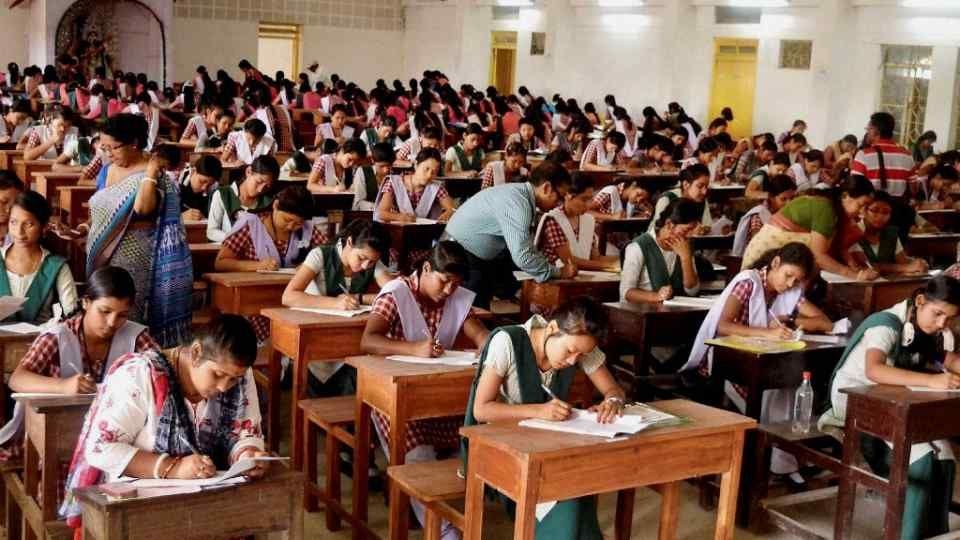
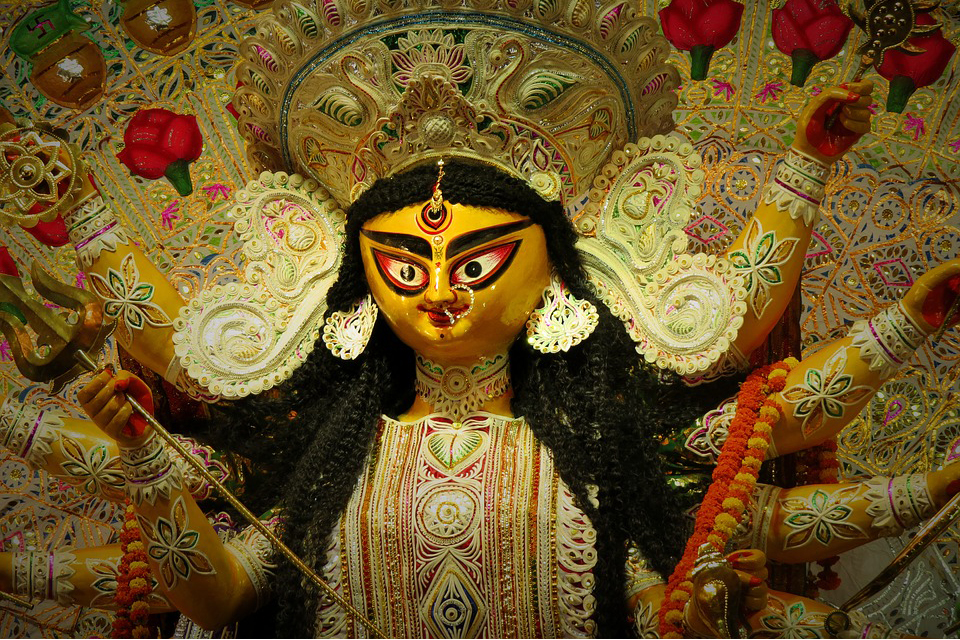




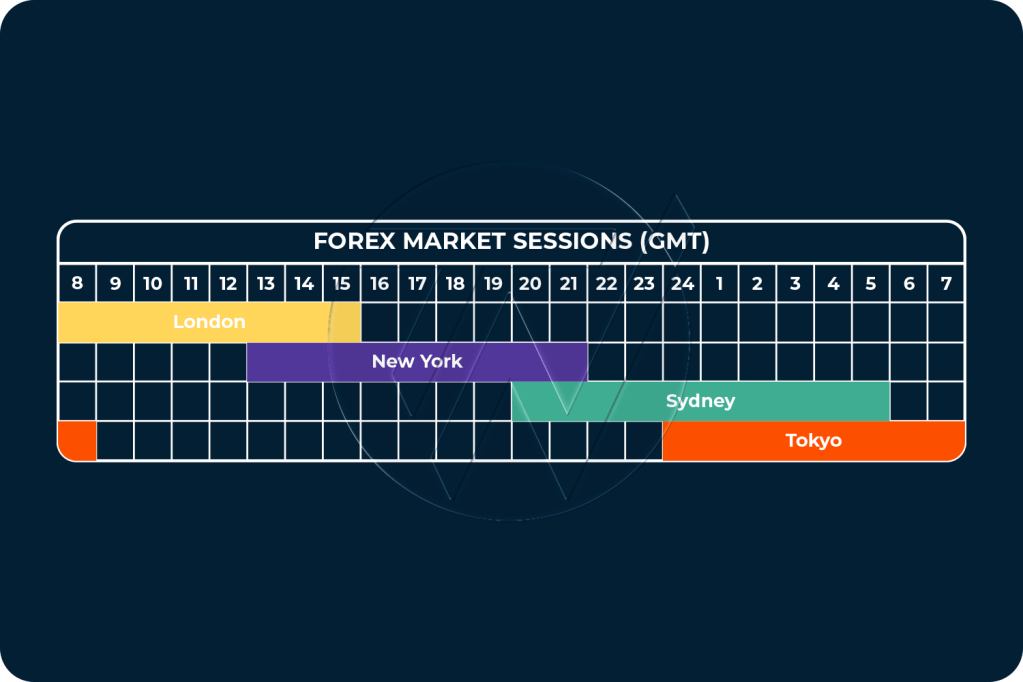














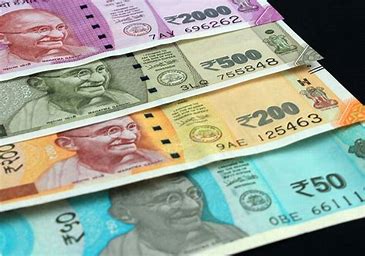










 Track2Training

You must be logged in to post a comment.