GOVERNMENT BUDGET

Government is required to undertake various economic, social, and other activities in every country. It is like to pursue various policies to achieve certain objectives like economic development, reduction of inequalities of income and wealth. The government has to incur expenditure in performing these activities and in pursuing its policies. For instance, the government has to incur expenditure in maintaining law and order and in undertaking various developmental activities. As such, government has to raise necessary revenue to finance these expenditures.

Accordingly, the government has to draw a financial plan corresponding to various activities it wants to undertake during the coming year . Such a financial plan is known as the budget of the government. “Budget of the government is an annual financial statement describing in detail the estimated receipts and proposed expenditures and disbursements of the government under various heads for the financial or fiscal year. The budget is the indicator of government functioning. It also gives the actual financial accounts for the previous year and the revised estimates for the current ye . In other democratic countries ,the government budget is a constitutional obligation in India. Under Article 112 of the constitution, a statement of estimated receipts and proposed expenditures of the Central Government has to be prepared for every financial or fiscal year and has to be placed before the parliament. It is titled Budget of the central government.

Government budget is a subject of immense importance for a variety of reasons.

  • Planned approach to government’s activities: The importance of government budget arises because of the fact that the activities of the government have increased tremendously. This calls for mobilization of large resources to meet the expenditure required to undertake these activities. There has to be a definite planning with regard to the estimated revenue and proposed expenditure for the proper conduct of the government activities.
  • Integrated Approach to Fiscal Operations: All these decisions and policies are interconnected and they must form a part of the overall set of objectives which the government wants to pursue. Government’s fiscal policy as reflected in the budget is an essential part of its overall economic and social policy.
  • Public Accountability: Budget proposals are discussed in the parliament. A popular debate also takes place in the media about the budget proposals. Parliament also exercises control over the government expenditure through various committees – Public Accounts Committee, the Estimates Committee and the Committee on Public Undertakings. Thus, Budget serves as a powerful weapon of financial control in respect of both collection of revenues and their disbursement.

STRUCTURE OF THE GOVERNMENT BUDGET

Constitution of the country demands that the budget must distinguish expenditure on revenue account from the expenditure on capital account. Revenue account covers those items which are recurring nature, while capital account covers those items which are of the nature of creating or reducing the capital assets. Budget is necessarily presented in two parts:

  • REVENUE BUDGET
  • CAPITAL BUDGET

Revenue budget shows revenue receipts of the government and the expenditures met from these revenue receipts. It consists of revenue receipts and revenue expenditure. Revenue receipts of the government are all those receipts which are non-redeemable. They create no liabilities or involve no sale or reduction in the assets of the government. Revenue expenditures relate to expenditures incurred by the government on day to day normal functioning of the government and interest payment on government debts. These expenditures neither create any physical or financial assets nor reduce any liability of the government .

Capital Budget comprises capital receipts and capital expenditure of the government. It shows capital requirements of the government and financing of these expenditures. Capital receipts are the receipts of the government which create liabilities or reduce assets of the government. The main component is to borrowing of all kinds from the public, RBI and repayment of loans to the central government by state government and public sector enterprises. Capital expenditures are those expenditures of the government which lead to creation of physical and financial assets or reduction of financial liabilities.

BUDGET DEFICITS

An important issue which is raked up every year during the budget in India is the issue of budget deficit. In the past two to three decades, government spending has increased more than its receipts. As a result , budget deficits and the government borrowings have increased sharply. Although politicians regularly make fine speeches about the need to reduce deficit, cutting down spending or raising taxes so as to reduce deficit are not politically popular. In every budget , the government has been setting the target of reducing the budget deficit, but reaching the target of reducing budget deficit has been rather difficult.

Budget deficit is financed by increasing the money supply and by borrowing from public and from other countries. This involves burden both on present as well as the future generations. The present generation has to shoulder the burden of budget deficits in terms of inflationary rise in prices. Higher debt also means that interest payments eat away a large part of government expenditure, which could otherwise be used for providing various economic and social services to the public. This deficit is a liability for future generations as well. Taxes will have to be increased in future to pay interest on the debt and to repay the debt. This is the burden of the debt on future generations.

SOME FACTS ABOUT INDIAN BUDGET OVER THE YEARS

  • The budget system was introduced in India on 7 April,1860.
  • James Wilson, the first Indian Finance member, delivered the budget speech
  • The first budget after independence was presented on 26 November, 1947 by R.K.S. Chetty.
  • Yashwant Sinha, the then finance minister, moved the budget to 11a.m. in 1999, instead of 5 P.M. as was the practice till then.
  • Arun Jaitley, the present Finance minister, has advanced the presentation of the budget to 1st February from the 2017-18 Budget. He has presented 4 regular budgets till date.
  • 24 people have presented budget in independent India.
  • Morarji Desai holds the record for the most budget presented in independent India with 8 full budgets and 2 interim budgets.
  • P Chidambaram has matched Morarji Desai’s record of presenting 8 full budgets.
  • All the three Prime Ministers from the Nehru family- Jawaharlal Nehru, Indira Gandhi and Rajiv Gandhi have presented one budget each.

Sources: Frank ISC Economics Class XII

After by Anna Todd

I know I’m late to the After party. But hey, better late than never! I started After by Anna Todd in the evening, then stayed up all night because I had to finish it. And then, I begged my teen sister for the second book. She kindly agreed to give the book to me. I hope she doesn’t change her mind just to torture me. We’ll have to see how this unravels. 

Synopsis:

Tessa is just starting college, and she’s got everything planned. In one year, her boyfriend Noah will join her as well. But then she meets her wild roommate Steph as well as the incredibly rude guy with a British accent, Hardin. And everything changes!

My Thoughts:

Tessa is a good girl and she doesn’t do parties and short dresses. And she goes to a party with Steph and something changes. She can’t look away. Harding is doing something to her and she can barely resist. But she has a boyfriend. And also, everything she has a good moment with Hardin, two bad ones follow. Hardin is toxic, and Tessa hurts him in return as well. Also, their communication has to improve. Not the mention how the whole boyfriend situation was handled. 

Honestly, I thought my opinions would be conflicting. But they’re not. I really enjoyed the book and I’m looking forward to the second one. Also, I know Hardin is based on Harry Styles, but while I was reading the book, he didn’t once cross my mind. I also often have fantasies about celebrities, I just don’t happen to write them. Honestly, it’s not a big deal. 

My only worry was that teens might see Hardin’s toxic side and think that’s how a girl should be treated. But that would mean underestimating the girls out there. Even in the book, Tessa was aware Hardin’s behaviour was not okay, which is why she reacted the way she did. The facts she would return only meant that she had feelings for him. Their relationship has more issues than good parts, but in all honesty, when I think about my high school days, it was that way for me too. I didn’t handle things well. Sometimes I didn’t communicate well. I trusted people I shouldn’t have trusted. And that’s the beauty of this book. 

After by Anna Todd is the perfect teenage book.

It reminded me of my days of high school and uni. Attending parties I shouldn’t have and trusting people that didn’t deserve my trust. Handling relationships badly and having terrible ability to communicate. And this book brought all the excitement back and more. Fond and not so fond memories that reminded me that I have lived at the fullest. 

In the next book, I do hope that their relationship improves. I hope Hardin grows up and Tessa communicates to him, instead of hurting him back. Also, I hope Tessa fixes her relationship with her mother as well, even though her mother needs to work on her own biases as well. I also hope that the dramas continue as well – I really love them. 

How to sleep better

Can’t figure out how to sleep better? Below are the best techniques for getting better sleep, from sleep experts and neurologists.

1. Keep Clocks Out of Your Bedroom

What’s the biggest change you can make to get more sleep? Don’t look at the clock during sleeping hours, says sleep expert Terry Cralle. Without a clock, the “chore” of falling asleep goes away. You won’t start doing math in your head and worrying about how little sleep you’re getting. If your room is dark and cool and you’re “in the dark” about how much sleep you’ve missed, you’ll most often fall back to sleep soon.

2. Follow a Sleep Schedule

One of the biggest reasons we don’t sleep is that we don’t respect it. “People say they only have time for 4–5 hours a night,” says Cralle. “But that can be dangerous, with studies showing metabolic changes after just a few nights of short sleeping.”

Wondering, “When should I wake up?” Or, “What time should I go to bed?” Try to go to bed as close to the first full darkness as you can, and rise with the sun. Going to sleep at 9pm, 10pm, or 11pm matters less than keeping the same sleep schedule every night.

Is 6 hours of sleep enough?

Getting 6 hours of sleep a night will sap your focus, moods, health, and well-being. Always get 7–9 hours of in-the-bed sleep time, even if you’re awake for some of it. Even if you feel fine after six hours of sleep, your effectiveness suffers.

3. Get More Daylight

Numerous studies show getting more natural light is one of the top techniques for how to sleep better. Yet we’ve got ever brighter screens in laptops and phones. Those screens—and our brightly-lit homes—are sending silent messages to our brains that say, “It’s morning! Go to sleep 12 hours from now.” Trying to override those messages can be like eating a 32-ounce porterhouse steak right after Thanksgiving dinner. Your body will say, “Nope.”

The upside? One-third of US employees work from home at least sometime during the week. That gives us a tremendous opportunity to work on a porch, park bench or in an outdoor cafe. In winter, sit near a window for a few hours in the morning.

4. Have a Coffee Cutoff Time

Tired of being tired? Try switching to decaf after 2pm. Studies show that even drinking coffee 6 hours before bedtime can rob your sleep time.

5. Try Audiobooks

Listening to an audiobook can help you sleep. Turn the volume down and set the playback to its slowest speed. Then set a timer so it shuts off in an hour. Most phones can set a “stop playback” alarm. Here’s how on iPhone and Android.

6. Distraction Techniques

When your mind has a tricky “job to do,” it stays alert. “Some people fall asleep better with a distraction,” says Cralle. So, here are a few tips for how to sleep better with distractions:

The Navy SEAL Technique

Why is sleep important for Navy SEALs? Imagine trying to sleep in the rain, cold, or in a fire zone, when your life depends on being rested. Thankfully, these hardened warriors have a trick that helps them drift off in two minutes.

How to fall asleep:

  1. Sit on the edge of your bed.
  2. Relax the muscles of your face, jaw, tongue, and eyes.
  3. Let your shoulders and arm muscles go slack.
  4. Breathe out. Relax your chest, then thighs, calves, feet, and toes.
  5. Clear your mind for 10 seconds.
  6. Picture one of these three images:
    1. You’re lying in a pit room in a black velvet hammock.
    2. You’re in a canoe on a calm lake with blue sky above.
    3. You repeat the words “don’t think,” for 10 seconds.

The 2-minute Navy SEAL sleep technique works for 96% of sleepers. The downside? It can take six weeks of practice.

How to review your year?

Reviewing Your Year

It is a healthy activity to reflect on the time gone by, objectively, before making plans for the year ahead. However, most of us are moving towards one of the two extremes:

  • Self-ridicule or lamenting the stuff we didn’t do or did wrong.
  • Self-congratulation of patting oneself on the back for all the great stuff we did, while ignoring the mistakes.
Reviewing The Year: Achievement And Effort

While reflecting on the past, we normally look at our achievements and appreciate what we have been successful at.
Despite our best efforts, we sometimes do not get success due to other factors like luck, timing etc. The right approach is to learn from the experiences and to appreciate one’s effort.
Example: Going for various interviews that didn’t go well wasted a lot of our time, energy, effort and resources, but we still have to appreciate our effort and what all we learned from the rejections.

Reviewing The Year: Self-Change

If we learned and changed during the past year/decade, we are on the path towards growth, even though it may not be visible or tangible as of now.
Personal growth means your experiments are paying results. The troubling thing would be to remain completely unchanged, as stagnancy is a cause for concern.

Reviewing The Year: The Boss-Like Evaluation

It’s a great idea to have an objective assessment for one’s achievements and efforts, reviewing them like a supportive boss would do while providing an appraisal.
To maintain an ideal balance, give yourself constructive feedback (25 per cent) and appreciate the hard work and achieved goals (75 per cent).

“Follow effective action with quiet reflection. From the quiet reflection will come even more effective action.” – Peter Drucker

Reviewing The Year: Understand What Worked

Sometimes the reason for your success is the failure you endured. The good night’s sleep that helped you shine the next day for the interview, is an important aspect of success.
Most of the time it is our self-care and other unidentified reasons that become a cause for our eventual success, and one needs to think holistically while reflecting to find the hidden reasons.

reference

https://www.forbes.com/sites/sophiamatveeva/2019/12/24/how-to-review-your-year/?sh=28c36ae4140a

Government Budgeting

Description of the budget

The word ‘budget’ is derived from the French word, Bougette, which means a leather wallet or purse.Therefore, the term modern budget refers to a document that contains estimates of revenue and expenditure of a country, usually for one year.

Types of Budget

Budgets can be categorized based on the following principles:

  1. Combined time.
  2. Number of budget’s tabled in the legislature.
  3. The overall finance budget’s position is presented in the budget.
  4. An approved policy on the takeover of revenue and expenditure in the budget.
Division of receipts and expenses in the budget.

Based on these principles budget’s can be:(Annual budget’s or long-term budget’s.

  1. One or more budget’s.
  2. Excess budget’s, deficits or estimates.
  3. Budget or revenue budget.
  4. Departmental budget or operating budget.

A brief description of the different types is as follows
1. ANNUAL or long-term budget’s

Generally, Government budget’s are for one year that is, for one year. In India, England and many other commonwealth countries the financial year, starts on April 1 and ends on March 31, but in the U.S.A., Australia, Sweden and Italy the dates are 1st July and 30th June. Some countries adopt a planned economic policy and meet the requirements for long-term planning, using a long-term budget, that is, preparing a budget for three years or more. Such a budget is a long-term plan rather than a long-term budget because what is offered is a financial plan over the years to fund the program.These countries spread the use of program costs over many years. The legislature approves the plan and estimates its costs, but that does not equal the actual voting of all-time shares. Every year, the national budget will include expenditure on a plan for that year, to be approved by the legislature.

2. One or more budget’s

When the estimates of all Government functions are allocated to a single budget, it is known as a single budget. The advantage of a single budget is that it reflects the financpractisetion of the Government as a whole.But if there are separate budget-related budget’s passed by the legislature, it is called a mass budget. In India, we have two budget’s — one for the railway line and one for the rest of the departments. The practice of having a separate train budget began in 1921. In England, there is one budget.

3. Extra income, deficit or limited budget

A budget is a surplus if the estimated income exceeds the estimated cost/expense But if the expected revenue falls below the expected cost, it becomes a budget deficit. According to economists, a deficit budget is a sign of global development. A limited budget is when the expected revenue is equal to the expected cost/expense. Budgets are often in short supply.

4. Income or budget of income

A budget is one in which the estimates of various items of income and expenditure include amounts to be acquired or used in one year,.In revenue and expenditure budget’s, accumulated in one financial year,, are planned for that financial year, regardless of whether the revenue is available or expenses incurred in that financial year,. In India, Britain and the U.S.A., counts are calculated, in France and other continents, counting income.

5. Departmental or operational budget

The current practice is to have a departmental budget, that is, the revenue and expenses of one department are organized under it. It does not provide any information about the work or activity that has been budgeted for. The operating budget is another where the total cost of a particular project is compiled under the head of a specific program.It is organized into activities, programs, activities and projects, for example, in the case of collaboration (employment), it will be divided into programs such as higher education, Secondary and Higher Education. Each program will be divided into activities, for example, teacher training is a task. The project is the final unit of division of labor.It symbolizes work as a major project, such as the construction of a school building. The A.R.C. proposed the adoption of a budget for all the departments and agencies of the Central and provincial governments that have managed development programs.

REFERENCE

Essay on Budget: Top 4 Essays | Government | Public Administration

How to be motivated for any goals!

We feel that comfort and convenience are the necessities of life, while all that we need to make ourselves happy is something to be proud of. ” – Albert Einstein

Dip

In all language courses, company building, and any type of creative project, there is immersion. Dip a long distance between beginner luck and real success.
Extraordinary benefits accumulate a handful of people who can push for longer than most.

Starting Before Immersion

In any goal to be achieved, there is a Beginning. It is often overlooked, as it always is.
Getting started is a big problem as you can only reach The Dip if you don’t finish Start, and many people dream of doing something rather than doing it and quitting.

Motivational management

The biggest problem we face in completing our projects is not production or time management, but motivational management. If you are motivated enough to accomplish something, you will move heaven and earth to do it.

Motivation Explained

Motivation is “the reason or reason for a person to do or behave in a certain way,” or to put it another way, “a common desire or determination.”

“If you stop doing what you want to do, then the reasons for quitting are more than just reasons to keep going. Thus, to maintain your motivation you can strengthen the reasons for continuing or weaken the reasons for quitting. Effective motivation often involves both. ” – Ericsson & Poole

Promotion to Start a Project
  • Increase your reason for starting a project, by increasing the importance of starting it.
  • Increase the time you are expected to succeed in the task.
  • Reduce your reasons for the delay, by increasing urgency, using deadlines.
Parkinson’s Law

It says “work grows to complete the available time for its completion.”

Commitment device

Many people use a dedicated device or play around them to find and stay motivated.
You can help your physical goal with things like throwing away your junk food, just bathing in the gym to get there, and similar activities aimed at focusing on your goal. People also use social responsibility in social media to keep themselves motivated by peer pressure.

Stay Motivated

Set small, climbing goals that are fun enough to motivate you and that you expect to achieve.

How to proceed
  • Keep your Expectancy feeling in the project using minimal winnings and achievements.
  • Reward yourself.
  • Maintain a sense of urgency by finding a way to remind yourself of the big picture of the small daily moments of effort.
  • Develop good habits.
  • Get flow.
  • Set clear goals to follow.
  • Save energy.
reference

https://www.nateliason.com/blog/motivation

How to prioritize work

Learning how to prioritize

It means getting more out of the limited time you have each day. It’s one of the cornerstones of productivity and once you know how to properly prioritize, it can help with everything from your time management to work-life balance.

Master lists

Capture everything on a Master List and then break it down by monthly, weekly, and daily goals.

  • Start by making a master list—a document, app, or piece of paper where every current and future task will be stored. 
  • Once you have all your tasks together, break them down into monthly, weekly, and daily goals.
  • When setting your priorities, try not to get too “task-oriented” – you want to make sure you’re prioritizing the more effective work.
Eisenhower Matrix

The matrix is a simple four-quadrant box that answers that helps you separate “urgent” tasks from “important” ones:

  • Urgent and Important: Do these tasks as soon as possible
  • Important, but not urgent: Decide when you’ll do these and schedule it
  • Urgent, but not important: Delegate these tasks to someone else
  • Neither urgent nor important: Drop these from your schedule as soon as possible.
The Ivy Lee Method

Rank your work by its true priority with the Ivy Lee Method:

  • At the end of each workday, write down the 6 most important things you need to accomplish tomorrow. 
  • Prioritize those 6 items n order of their true importance.
  • When you arrive tomorrow, concentrate only on the first task. Work until the first task is finished before moving on to the next one.
  • Approach the rest of your list in the same fashion. At the end of the day, move any unfinished items to a new list of six tasks for the following day.
  • Repeat this process every working day.
The ABCDE method

Instead of keeping all tasks on a single level of priority, this method offers two or more levels for each task:

  • Go through your list and give every task a letter from A to E (A being the highest priority)
  • For every task that has an A, give it a number that dictates the order you’ll do it in
  • Repeat until all tasks have letters and numbers.
Set the tone of the day by “Eating the frog”

Once you’ve prioritized your most important work, it’s time to choose how to attack the day. How you start the day sets the tone for the rest of it. And often, getting a large, hairy, yet important task out of the way first thing gives you momentum, inspiration, and energy to keep moving. 

Warren Buffett’s 2-list strategy

Cut out “good enough” goals with Warren Buffett’s 2-list strategy.

  • Write down your top 25 goals: life goals, career goals, education goals, or anything else you want to spend your time on.
  • Circle your top 5 goals on that list.
  • Finally, any goal you didn’t circle goes on an “avoid at all cost” list. These are the tasks that are seemingly important enough to deserve your attention. But that isn’t moving you towards your long-term priorities.
The sunk cost fallacy

Humans are especially susceptible to the “sunk cost fallacy”—a psychological effect where we feel compelled to continue doing something just because we’ve already put time and effort into it. But the reality is that no matter what you spend your time doing, you can never get that time back. And any time spent continuing to work towards the wrong priority is just wasted time.

REFERENCE

https://blog.rescuetime.com/how-to-prioritize/

Learning how to learn!

“Focused” and “Diffused” Modes

When learning, there are times in which you are focused and times in which you allow your mind to wander. Both modes are valuable to allow your brain to learn something.
Take regular breaks, meditate, think about other things, and give yourself plenty of time in both modes.

Chunking

This is the idea of breaking what you want to learn into concepts. The goal is to learn each concept in a way that they each become like a well-known puzzle piece. 
To master a concept, you not only need to know it but also to know how it fits into the bigger picture.

Beware of Illusions of Competence

There are many ways in which we can make ourselves feel like we have “learned” a concept. Instead of highlighting or underlining, rather take brief notes that summarize key concepts.

Recall

Take a couple of minutes to summarize or recall the material you are trying to learn. It goes a long way to taking something from short-term memory to long-term learning.

Bite-Sized Testing

To avoid breakthrough illusions of competence, you should test yourself as you’re encountering new material. The recall is a simple example of this mini-testing.

Over-Learning

Do not spend too much time in one sitting going over the same material over and over again. The law of diminishing returns certainly applies. Spread it out over many sessions and many different modes of learning.

Interleaving

Once you have a basic understanding of what you are trying to learn, practice jumping back and forth between problems that require different techniques. This will solidify your understanding of the concepts by learning how to choose to apply them in various situations. Knowing when to apply a particular concept is as important as knowing how.

Process over Product

When facing procrastination, think of the process over the product.
Instead of thinking that you have to get X done, rather think to spend an hour on X. It is then not overwhelming and doesn’t require a long breakdown of tasks.

Metaphors and Analogies

They are often talked about as helpful study techniques. 
Try to make a deliberate effort to teach what you learn to someone else and, in doing so, you will likely be forced to explain concepts with relatable metaphors and analogies.

Study Groups / Teamwork

This has proven to be most beneficial to maintain continued progress and hold each other accountable. Finding the right group is key.

Reference

https://medium.com/learn-love-code/learnings-from-learning-how-to-learn-19d149920dc4

Scientific ways to learn anything faster

Say it out loud

Learning and memory benefit from active involvement. When you add speaking to it, the content becomes more defined in long-term memory and more memorable.

Take notes by hand

Most of us can type very fast, but research shows writing your notes by hand will allow you to learn more.
Taking notes by hand enhances both comprehension and retention.

Chunk your study sessions

Studying over some time is more effective than waiting until the last minute.
The distributed practise works because each time you try to remember something, the memory becomes harder to forget.

Self-testing is highly effective

Regularly testing yourself will speed up learning. When you test yourself and answer incorrectly, you are more likely to recall the right answer after you look it up. You will also remember that you didn’t remember.

Change the way you practice

Repeating anything over and over might not be the best way to master that task. If you practice a slightly different version, you will learn more and faster. For example, if you want to master a new presentation:

  • Rehearse the basic skill. 
  • Wait at least six hours to allow your memory to consolidate.
  • Practice again, but speak a little faster. 
  • Practice next by speaking slower.
  • Break your presentation into smaller steps. Master each chunk, then put it back together.
  • Change the conditions. It will prepare you better for the unexpected.
Exercise regularly

According to research, regular exercise can improve memory recall.
Exercise also increases a protein (BDNF – brain-derived neurotrophic factor) that supports the function, growth, and survival of brain cells.

Sleep more, learn more

When you sleep, most of the consolidation process occurs.
In contrast, sleep deprivation can affect your ability to commit new data to memory and consolidate any short-term memories.

Concepts in parallel

Interleaving – studying related concepts or skills in parallel – improves your brain’s ability to differentiate between concepts or skills. It helps you to learn and gain an understanding at a deeper level.
Instead of focusing on one subject during a learning session, learn several subjects or skills in succession.

Teach someone else

Research shows that those who teach, speed up their learning and remember more.
Even just preparing to teach means that you will seek out key points and organize information into a coherent structure. 

Build on what you know

When you have to learn something new, try to associate it with something you are already familiar with. Then you only have to learn where it differs. You’ll also be able to apply greater context, which will help with memory storage and retrieval.

Reference

https://www.inc.com/jeff-haden/these-10-scientific-ways-to-learn-anything-faster-could-change-everything-you-know-about-dramatically-improving-your-memory.html

How BTS Saved Millions of Lives

BTS

In 2013, a group of seven boys, all from different backgrounds, who left behind their friends and family to follow their dream of becoming K-pop artistes, were about to debut. But soon afterwards, their hopes were crushed as the bad press from the media, internal strife and lack of proper finance forced them to almost disband multiple times. But they kept on fighting for their dream, even if that meant living in one cramped dorm room and having to beg people to come to their concerts. These boys had very humble beginnings – one of the members, Yoongi, recently had a surgery to repair a torn shoulder labrum. The tear was related to an injury that occurred in 2012, when the performer was hit by a car during one of his delivery-boy shifts.

Flash forward to years later, that same group of boys from South Korea, Bangtan Sonyeondan (BTS), are now one of the biggest boy bands in the world. Among other outstanding achievements, they have multiple No. 1 albums in the US Billboard Hot 100, 15 Guinness World Records and over 300 awards. BTS are the youngest recipients of South Korea’s Order of Cultural Merit award and the first ever K-pop act to receive a Grammy nomination. They are changing the world and the face of K-pop forever, paving the way for others.

For years, BTS struggled to get their music heard. They were not an overnight success, like some people might believe. But because of their struggles and despite of it, they became worldwide superstars and South Korea’s pride and joy. BTS refuse to be confined within the boundaries of the “K-pop” industry, instead often experimenting with different, versatile styles and musical genres like Hip-Hop, Jazz, EDM, R&B, Latin pop, Ballad, Country and Rock among others. Each of the seven members embody various roles and positions in the group, such as dancer, vocalist, leader, rapper, producer, choreographer, and more.

BTS

BTS’s music transcends language, time and cultural barriers; their raw and relatable lyrics resonates with people, going through different stages of life. The healing power of their music does not discriminate. The majority of their self-written and self-produced songs discuss socio-political issues found in contemporary society such as mental health, toxic-masculinity, women’s empowerment, self-love, capitalism, burn-out and the struggles of growing up among other things. Most of their topics are still taboo in the culturally-conservative Asia and are often brushed away as non-existent.

The Korean music industry is known for their “manufactured” and “engineered” sound, where the artistes themselves have no say in what they are singing about, but instead, have their music written and produced by a group of professionals fit for the industry standards. BTS breaks all those preconceived rules by having a voice in their own music. They have started a new trend for Korean singers to explore more complex and impactful themes.

These motifs are often seen in both their studio albums and individual mixtapes. In their latest album “BE”, which was released on November 20, 2020, BTS shared their experiences and hopes during the pandemic, as they as embrace “Be”-ing in this new reality. The relatable lyrics and catchy beats in titles like “Fly to my Room”, “Dis-ease”, “Stay” and “Telepathy” are contrasted with the raw, emotional ballads like “Blue & Grey” and “Life Goes On”.

This album also features their first ever completely English language song, “Dynamite”. It consoles anyone struggling with their mental health during these times and is a beacon of hope for listeners that everything will be okay and life goes on. To me, this album feels like a warm hug from a loved one on a cold winter morning.

BTS’s fans, known as ARMY (short for Adorable Representative MC for Youth) are a group of passionate and creative individuals, from all walks of life, who stand by BTS and each other through thick and thin. Shehrin Tabassum Odri, a digital marketer and an ARMY since 2018, shared her story of how much of an impact BTS has had in her life. “When I was at my loneliest, having hit rock bottom and losing the will to live, BTS was there for me. It was the day they released their ‘Life Goes On’ music video,” she says. “The song was like a wakeup call. It made me realise how many future opportunities and loved ones I will be losing if I give up now and that I’m not the only one feeling this miserable and lost, the members of BTS have gone through this phase too. If they have found a way to stay hopeful for the future to change and better times to come, maybe I should hold on a bit longer too. BTS gave me the hope to keep living.”

 “In conservative countries like ours, masculinity is associated with tall, bearded men with deep voices,” mentions Sumaiya Islam, a Nuclear Science and Engineering student.  “In a society where men struggle to be vulnerable and be seen as ‘manly’ enough, BTS breaks the gender norms by wearing makeup, jewellery, gender-neutral clothes, and long, colourful hair. They have completely changed my viewpoint on Asian men.”  Sumaiya has been an ARMY since 2018.

Atanu Roy Chowdhury shared that the band makes him feel “seen”. “Mental health is affecting our lives, but people don’t want to talk about it.  BTS is using the universal language of music to tell the world how important mental health is,” he says. “One of my closest friends died by suicide in 2012, and there are times when it still breaks my heart thinking that I will never see her or talk to her again. Songs from BTS albums help to ease the pain.  Having my favourite musicians talk about such issues makes me feel more connected to them.”

By breaking down age-old, ignorant ideas like “men don’t cry” and “only girls can wear makeup”, openly talking about their struggles and sharing their emotions, BTS are showing the world that gender does not have to confine anyone and there should be no one standard of being. Group members Min Yoongi (Suga), Kim Namjoon (RM) and recently, Kim Taehyung (V) and Kim Seokjin (Jin), are known for being open about their struggles with anxiety, depression and burn-out. “I have been called ‘girly’ because I like cooking, cleanliness and keeping my hair long. Even the way I walk has been criticised. Terms like ‘girly’ and ‘gay’ are so easily used as insults, when they should not be,” adds Atanu. “Toxic masculinity is so ingrained in us, and it affects people of all ages. BTS is fighting a difficult fight, and kudos to them for that!” Seeing someone like BTS’ Jungkook be named “Sexiest International Man Alive 2020”, in a sphere usually dominated by white men, can do wonders for brown, Asian men worldwide, giving them an ideal person they can actually relate to.  Another ARMY, Niaz Ahmed, shared that messages from the band to “Love Yourself” (a trilogy of their albums in 2018) resonated with him. “Their music was eye-opening, and helped me to start thinking that being happy with who I am is very important,” he says.

Subyeta Sarwar mentioned how being a part of the BTS fandom in Bangladesh has helped her connect with other ARMYs easily, creating deep bonds and long-lasting friendships. Going to different events such as the BD Korean Festival, hosted by BD K-Family, has helped her socialise and meet fellow ARMYs. Since there is a lack of K-pop concerts in Bangladesh, these events are the closest fans can get to experiencing them.

 For fans who have been with BTS for a couple of years like myself, it feels like we are growing up with them, experiencing the highs and lows of their lives and career alongside them, not as a distant fan, but as a close friend. There is a popular saying in the fandom, “If you are not a fan of BTS now, it’s because you’re not at a point where you need them yet. Just wait, they’ll find you and come to you when you need to be healed, never too early or too late.”

In the pop-dominated culture we live in, BTS have successfully utilised their music platform to spread the message of social inequality and injustice, which the youth often face. By speaking up about these issues, BTS are not only breaking the preconceived societal stereotypes and creating awareness, they are also urging their fans to do the same. To quote the group’s leader, Kim Namjoon (RM), from his UNICEF speech at the United Nations in 2018, “No matter who you are, where you’re from, your skin colour, gender identity: speak yourself.” 

How to be successful in life?

There are 8 very simple rules that you can follow to become truly successful.

Be Passionate

And do what you for love. If you don’t love it, then why do it? If we build careers or continue in jobs that aren’t our passion, we’re selling ourselves short. It’s like the guy that is a tech consultant that wanted to be the lead singer of a band. I’ve written about love and careers before and I think that the takeaway here is that if you do what you want to do, you will be more creative, more motivated, more tuned-in, and much more likely to be very financially and personally prosperous. Katherine Hepburn said it best.

Work Hard

Don’t ever fool yourself success comes from really hard work. And you might find that although you’re doing all of the heavy liftings, there is satisfaction in a job well done. But remember that you need to rely on others, so make sure that you surround yourself with colleagues that share your same work ethic.

Be Good

Focus always proceeds success which is not possible without a clear emphasis on what matters most. And leaders constantly need to remind themselves of this vital truth. Focus requires the pursuit of a mission and vision.


Push the Limits

Don’t constrain yourself to think inside of the box and don’t allow fear to get in your way. Today, people expect more than ordinary so you need to be extraordinary to get noticed and build strong relationships with your target market. Whether you sell a product or service, you must deliver the utmost experience.

Focus

And by that, I mean damn good. Successful people strive for greatness, not mediocrity. So push yourself (and your team) to ensure that you’ve reached your ultimate potential. And be sure to celebrate your wins, that not only breeds confidence among your team, it will keep your colleagues engaged and also will keep your clients or customers enfranchised. If you haven’t read the book From Good to Great, grab a copy.

Serve

Customer service excellence has always been and will always be one of the critical competitive advantages for any business. Meeting your customer’s needs will help you build a very strong and memorable brand. Be responsive, listen, and observe then you will create value. Learn from mistakes in service.

Create Ideas

In addition to service: ingenuity, authenticity, and forward-thinking will ultimately drive your brand. Aspiration is part of the creative process.
You must always continue to innovate, especially in a competitive market space. Push the envelope when it comes to ideation.

Be Persistent

Business development and entrepreneurship should be built out of love and any great love requires passion and persistence to capture your dream. Although you will experience setbacks and failures, you will also find success and triumph.

Reference

https://ce.uci.edu/careerzot/8-simple-ways-successful-8-inspiring-leaders/

Digital vs Handwritten Notes

An important process in studying and learning is note-taking. Almost every student does it, and it is a practical requirement to pass a class. With the large amounts of information presented in each course, note-taking helps in encoding the information and thus makes it easier to remember. It also produces study materials to refer to later for exams and projects.

TYping (computer)

Typing is a fast and easy way to take the information presented in lectures and textbooks and consolidate them for reference later. But, due to its fast nature, this method leads to the least amount of information retained and will require you to study more later.

The organization is customizable

Limitless folders can be created almost instantly so sorting is as easy as ever. Tags can be applied to files for easy access, sorting, and searching. Each file has a name so it is clear what that file is, and those names can always be changed.

Easy to share

Rather than copying or scanning notes, computers have simple share screens to instantly share with anyone. People can collaborate on the same document like in Google Docs, or files can be emailed and/or texted quickly.

Typing is the fastest

Writing can be time-consuming, especially in a fast lecture. Typing takes the least amount of time so more information can be put on the page and reviewed later.

Import lecture slides

If someone does not want to type out all the information a professor teaches, importing lecture slides is very easy and can be stored on the device.

Backups

Although it is less likely anything bad will happen to a computer since it is more valuable than a notebook, computers can backup manually (or automatically) so that your notes are safe.

Digitally Handwritten (Tablet)

The tablet (and other devices that allow digital handwriting) is a happy medium that has both benefits of the computer and those of paper notes. Sharing and customization are easy and handwriting yields greater retention while the size makes tablets as portable as notebooks.

Portable

Not only is a tablet the size of a notebook (or smaller), but it also takes the place of all of them. All your subjects can be stored on a single device.

Simple and extensive editing capabilities

Handwriting allows you to write anywhere on a sheet and not be restricted by margins or spacing and there are a variety of pen sizes and colours to use. Photos and other elements can be placed anywhere on a page and text wrapping is not a concern. If you want your handwriting to be turned into text, many apps offer that ability.

The organization is customizable

Tablets, and other such devices, offer the same organization options (and sometimes more) as computers.

Easy to share

Sharing is just as easy as with computers.

High retention

Since you are handwriting the notes on the device, there is higher retention and mental processing of the information. This yield to better acquisition of the information and less need for studying later.

Import lecture slides

Storing lecture slides is just as easy and the same as with computers.

Backups

All your notes can be stored on the device or in the cloud. Same as computers.

Paper notes


The standard modality that college students have used for centuries. Paper notes are the most accessible way to take notes. Cheaper than the other two methods, many people utilize paper notes to record information for courses.

Natural feel

Paper is what we all write on. Many aspects of our lives include writing by hand on paper.

Portable

Notebooks are easy to carry and transport. Just so long as there are not too many.

Flexible

There are no restrictions. A page is very flexible in that you can write anywhere on it.

Cheap

Unlike the other options, notebooks can cost only a few dollars or less and pencils/pens are very cheap as well. This is a great option if you do not want to break the bank.

Highest retention

Since you must be very aware of what content you are writing down as well as that erasing is not as easy on say a tablet, there is higher retention of the materials compared to the other modalities discussed.

No distractions

Computers and tablets have notifications and if someone texts you or you get emails on the device, or your favourite game sends an enticing notification to try and get you to play again can cause distractions. This disrupts your flow of learning and breaks your focus. Do Not Disturb is an option, but for a true distraction, a free distraction-free is the best option.

Reference

https://guts.wisc.edu/2020/11/19/pros-and-cons-of-typed-digitally-handwritten-and-paper-notes/

The Scrupulously Portrayed Erudition of Online Gambling

Prologue=

Gambling is the act of betting money on various platforms with the intention of earning more than the bet. This act is basically judging the chances of winning of a particular team or happening of an event so as to bet on that probability and make money out of it. A lot of people bet for the easy money that gambling brings in for them, while other might do it just for fun, and still others are just addicted to it after a certain period. Online gambling is the on the web, technological and virtual gambling that is fast gaining fans in the contemporary world.

Annals=

The way people betted was not always online, it was face to face in the old times where people betted with real cash to a bookie. With the improvement in the know-how of the internet, the upgrading of the gambling to the virtual space was an obvious result. It is agreed that it was in 1990s that civilians became aware of the detail that internet could be used for betting and not too late in 1996-1997 many online spaces and portals with the intention of promoting virtual betting came in existence, and since then, the fan following of this has been on a rise.

Legality=

Online gambling is a subject under the governance of the state law in India. It is not therefore illegal but there is no such act or provision relating only to it. Therefore, it is many-a-times dealt with Information Technology Act, of 2000. Various states have their own laws regarding gambling-

  • Nagaland- The Nagaland Prohibition of Gambling, Prohibition and Regulation of Online Games of Skills Act, 2015
  • Sikkim- Sikkim Online Gambling Regulation Act, 2008
  • Kerala- Kerala Gaming Act, 1960
  • West Bengal- West Bengal Gambling and Prize Distribution Act, 1957
  • Rajasthan- Rajasthan Public Gambling Ordinance, 1949

Winding Up=

In the day and age where it is becoming difficult to earn a living with rising unemployment and continuous price rise, gambling can prove to be a major source of income. Although there are reservations among some sections of the society regarding the act of betting but with expertise and experience in any field it is not knotty to earn a living through online gambling. The illegality leads to hideous betting thereby depriving government of its taxes. Legality is thus, a necessity.

Amendments Of Law

Introduction

Let me introduce you all to the definition of law, in other words, what is law?

It is, by definition, the system of rules that a particular country or a community recognizes as regulating the actions of its members which it may enforce by the imposition of penalties.

Or, in the words of eminent Jurist Salmond, law is the body of principles recognised and applied by the state in the administration of justice.

Now why am I stating the facts you may think. Well, I am not giving weight to my part of the writings here, I am giving weight to the situation of the country. How conveniently we twist and turn mere facts in the grab of amendments. Some sure are in our favour but what about the others that are not?

I shall begin with the necessity of amending provisions in the constitution. Provision for amendment in the constitution is made with a view to overcome the difficulties which may encounter in the future in working of the constitution. No generation has the monopoly of wisdom nor has it any right to place fetters on future generations to mould the machinery of government according to their requirements. If no provisions were made for the amendment of the constitution, the people would have recourse to extra constitutional method like revolution to change the constitution, as held in Keshavananda v/s the state of Kerala All India Report 1973 Supreme Court page number 1461. The power of amending the law is exercised by the parliament under Article 368 of the Indian Constitution.

The framers of the Indian Constitution were keen to avoid excessive rigidity. They were anxious to have a document which could grow with a growing nation, adapt itself to the changing need and circumstances of growing people. the nature of the ‘amending process’ envisaged by the framers of the constitution can be best understood by referring the following observation of the late Prime Minister Pandit Nehru – “When we want this constitution to be solid and permanent as we can make it, there is no permanence in the constitution. There should be a certain flexibility. If you make anything rigid and permanent, you stop the nation’s growth.”

In any event, we could not make this constitution so rigid that it cannot be adopted to changing conditions. When the world is in a period of transition, what we may do today may not be wholly applicable tomorrow.

International Day Of Yoga

2021 Theme: Yoga for well-being
The Day will be marked at a time when COVID-19 pandemic continues to upend lives and livelihoods of people globally.

Beyond its immediate impact on physical health, the COVID-19 pandemic has also exacerbated psychological suffering and mental health problems, including depression and anxiety, as pandemic-related restrictions continue in various forms in many countries. This has highlighted the urgent need to address the mental health dimension of the pandemic, in addition to the physical health aspects.

The message of Yoga in promoting both the physical and mental well-being of humanity has never been more relevant. A growing trend of people around the world embracing Yoga to stay healthy and rejuvenated and to fight social isolation and depression has been witnessed during the pandemic. Yoga is also playing a significant role in the psycho-social care and rehabilitation of COVID-19 patients in quarantine and isolation. It is particularly helpful in allaying their fears and anxiety.

Recognizing this important role of Yoga, this year’s commemoration of the International Day of Yoga focuses on “Yoga for well-being” – how the practice of Yoga can promote the holistic health of every individual.

The United Nations offers yoga resources to its personnel and others on the COVID-19 portal’s section on Wellness.

The World Health Organization mentions yoga as a means to improve health in its Global action plan on physical activity 2018–2030: more active people for a healthier world.

UNICEF says kids can practice many yoga poses without any risk and get the same benefits that adults do. These benefits include increased flexibility and fitness, mindfulness and relaxation.

2021 virtual event
The Permanent Mission of India to the United Nations invites you to an online celebration of the 7th annual International Yoga Day on 21 June 2021, from 8:30 to 10:00 am EST, broadcast live on UN WebTV.

The event opened with messages from the President of the United Nations General Assembly and the Deputy Secretary-General of the United Nations, which was followed by demonstrations of Yoga exercises (asanas) to improve physical, mental, emotional and spiritual health and an interactive panel discussion on “Yoga for well-being.”

What is Yoga and why do we celebrate it?
Yoga is an ancient physical, mental and spiritual practice that originated in India. The word ‘yoga’ derives from Sanskrit and means to join or to unite, symbolizing the union of body and consciousness.

Today it is practiced in various forms around the world and continues to grow in popularity.

Recognizing its universal appeal, on 11 December 2014, the United Nations proclaimed 21 June as the International Day of Yoga by resolution 69/131.

The International Day of Yoga aims to raise awareness worldwide of the many benefits of practicing yoga.

The draft resolution establishing the International Day of Yoga was proposed by India and endorsed by a record 175 member states. The proposal was first introduced by Prime Minister Narendra Modi in his address during the opening of the 69th session of the General Assembly, in which he said: “Yoga is an invaluable gift from our ancient tradition. Yoga embodies unity of mind and body, thought and action … a holistic approach [that] is valuable to our health and our well-being. Yoga is not just about exercise; it is a way to discover the sense of oneness with yourself, the world and the nature.”

The resolution notes “the importance of individuals and populations making healthier choices and following lifestyle patterns that foster good health.” In this regard, the World Health Organization has also urged its member states to help their citizens reduce physical inactivity, which is among the top ten leading causes of death worldwide, and a key risk factor for non-communicable diseases, such as cardiovascular diseases, cancer and diabetes.

But yoga is more than a physical activity. In the words of one of its most famous practitioners, the late B. K. S. Iyengar, “Yoga cultivates the ways of maintaining a balanced attitude in day-to-day life and endows skill in the performance of one’s actions.”

REFERENCE : UNITED NATONS

Shri Jawaharlal Nehru : The First Prime Minister Of India

Pt. Jawaharlal Nehru was born in Allahabad on November 14, 1889. He received his early education at home under private tutors. At the age of fifteen, he went to England and after two years at Harrow, joined Cambridge University where he took his tripos in Natural Sciences. He was later called to the Bar from Inner Temple. He returned to India in 1912 and plunged straight into politics. Even as a student, he had been interested in the struggle of all nations who suffered under foreign domination. He took keen interest in the Sinn Fein Movement in Ireland. In India, he was inevitably drawn into the struggle for independence.

In 1912, he attended the Bankipore Congress as a delegate, and became Secretary of the Home Rule League, Allahabad in 1919. In 1916 he had his first meeting with Mahatma Gandhi and felt immensely inspired by him. He organised the first Kisan March in Pratapgarh District of Uttar Pradesh in 1920. He was twice imprisoned in connection with the Non-Cooperation Movement of 1920-22.

Pt. Nehru became the General Secretary of the All India Congress Committee in September 1923. He toured Italy, Switzerland, England, Belgium, Germany and Russia in 1926. In Belgium, he attended the Congress of Oppressed Nationalities in Brussels as an official delegate of the Indian National Congress. He also attended the tenth anniversary celebrations of the October Socialist Revolution in Moscow in 1927. Earlier, in 1926, at the Madras Congress, Nehru had been instrumental in committing the Congress to the goal of Independence. While leading a procession against the Simon commission, he was lathi-charged in Lucknow in 1928. On August 29, 1928 he attended the All-Party Congress and was one of the signatories to the Nehru Report on Indian Constitutional Reform, named after his father Shri Motilal Nehru. The same year, he also founded the ‘Independence for India League’, which advocated complete severance of the British connection with India, and became its General Secretary.

In 1929, Pt. Nehru was elected President of the Lahore Session of the Indian National Congress, where complete independence for the country was adopted as the goal. He was imprisoned several times during 1930-35 in connection with the Salt Satyagraha and other movements launched by the Congress. He completed his ‘Autobiography’ in Almora Jail on February 14, 1935. After release, he flew to Switzerland to see his ailing wife and visited London in February-March, 1936. He also visited Spain in July 1938, when the country was in the throws of Civil War. Just before the court-break of the Second World War, he visited China too.

On October 31, 1940 Pt. Nehru was arrested for offering individual Satyagraha to protest against India’s forced participation in war. He was released along with the other leaders in December 1941. On August 7, 1942 Pt. Nehru moved the historic ‘Quit India’ resolution at the A.I.C.C. session in Bombay. On August 8,1942 he was arrested along with other leaders and taken to Ahmednagar Fort. This was his longest and also his last detention. In all, he suffered imprisonment nine times. After his release in January 1945, he organized legal defence for those officers and men of the INA charged with treason. In March 1946, Pt. Nehru toured South East Asia. He was elected President of the Congress for the fourth time on July 6, 1946 and again for three more terms from 1951 to 1954.

History And Early Life

Nehru was born on Nov. 14, 1889, at Allahabad, India. His name Jawaharlal mea»s “red jewel,” a name he once said he found “odious.” His father, Motilal Nehru, was a wealthy lawyer from the state of Kashmir. Both he and Nehru’s mother, Swarup Bani Nehru, were Brahmans, the highest caste in India. Jawaharlal had two younger sisters: Swarup, born in 1900, and Krishna, born in 1907. They grew up in a palatial home called Anand Bhawan, meaning Abode of Happiness.

India was a part of the British Empire, and many of Motilal’s friends were English. Until Nehru was 15, he was educated at home by British tutors. He also studied the Hindi and Sanskrit languages with a Brahman teacher who, according to Nehru, managed to impart “extraordinarily little.” The only one of his tutors who impressed the boy was a French-Irish philosopher named Ferdinand T. Brooks. Brooks imbued Jawaharlal with an enthusiasm for reading and for science.

He introduced the youth to theosophy, a mystical system of thought that claims to explain the universe on the basis of direct revelations. The doctrine fascinated Nehru, and at the age of 13 he joined the theosophical society. But his interest in theosophy soon waned.

Student in England. In 1905, Nehru’s father took him to England to enroll at Harrow, a leading English public school. Nehru’s housemaster, the Bev. Edgar Stogdon, remembered him later as “a very nice boy, quiet and very refined. He was not demonstrative but one felt there was great strength of character. I should doubt if he told many boys what his opinions were. . . .”

Jawaharlal entered Trinity College at Cambridge University in 1907. There he studied chemistry, geology, and botany. He displayed little intellectual interest or ambition. He attended meetings of a debating society, but seldom found courage to speak himself. Nonetheless, the society’s political discussions stirred his interest in the growing Indian nationalist movement. He also became sensitive to discrimination against Indians. After completing his studies at Cambridge University, Nehru studied law in London, where he passed his bar examination in 1912.

REFERENCES : 8sa.net, pmindia.gov.in

Nazi Dictatorship In Action

Introduction

In the previous chapter a reference was made to pretensions of peace and friendship on part of Hitler in the early years of the Third Reich. We have seen that realignment of powers had taken place during 1934-35. Meanwhile, Germany had pulled itself out of the Disarmament Conference and withdrawn from the League of Nations in October 1933 on the ground that other powers had failed to reduce their armaments although they had promised to do so, when they had signed the Covenant of the League of Nations in 1919. Hitler was vigorously but secretly carrying on rearmament of Germany, but did not want to disclose it before Saar was returned to Germany. As provided for in the Versailles Treaty, a plebiscite was held in Saar in January 1935 and about 90 per cent of the people voted for reunion with Germany.

Hitler personally went to Saar to see the reunification of Saar with the Reich on 1 March 1935. As analysis of Hitler’s approach to foreign policy shows that he was always pragmatic. According to Paul Johnson, ‘Like Lenin, he was a superb opportunist, always ready to seize openings and modify his theory accordingly.’ While some historians conclude that he had no master programme, others like Johnson feel that he was always adjusting his tactics to suit the moment. He was never tempted to relax by a surfeit of autocratic power.

Actually he was ‘always raising the stakes on the table and seeking to hasten the force of history.’ Hitler was now free to unfold his true foreign policy based on Mein Kampf, i.e. anti-Communism, anti-Semitism, and promotion of German imperialism. During 1935-37 Hitler evolved and acted upon the strategy of befriending not only fellow dictator Mussolini, but also a militant Japan and even Britain who wanted ‘peace almost at any price.’ During this period, Hitler unilaterally repudiated not only the dictated Treaty of Versailles but also freely negotiated Treaty of Locarno. This period also witnessed another repudiation of international commitment-Italian aggression on Abyssinia and eventual annexation of that country into Italian Empire. These developments led to the formations of Rome-Berlin-Tokyo-Axis.

Repudiation Of Treaties

In February 1935 (after the Saar plebiscite, but before its reunion with Germany) England and France made certain proposals to Germany. These included signing of Central Pact and Eastern Pact. The former, to ensure non-interference in each other’s internal affairs and to be signed by Austria and her neighbours and the latter to be signed by France, Germany and the Soviet Union, each assuring the other against aggression by the third country. It was also proposed that the seven Locarno powers, including Germany, should promise that in case of air attack upon any of them, the others would provide assistance to the victim of attack. These proposals came to be known as ‘Air Locarno’. Germany showed willingness only for Air Locarno as that would permit her to establish an Air Force. The other two pacts were to be discussed by Hitler with British representatives, but before British ministers could go to Germany, the British government announced a programme of strengthening its armed might, a move that annoyed Hitler.

Hitler suggested that he was willing to sign a fresh treaty with France and Belgium, whereby there could be demilitarization of equal distance on both sides of the border. This was, as expected, rejected by France. Now, therefore, Rhineland was once again remilitarized and German troops firmly based themselves in the region. Hitler ha achieved one more success.

REFERENCES : International relations by V.N. KHANNA

Reparation, Debts and Economic Crisis

Reparation

Most of the peace treaties signed before the First World War imposed ‘war indemnity’ on the defeated states. It was a fine imposed by the victor on the vanquished by way of penalty. The theory was that the victor must recover practically the entire cost of a war from the defeated enemy. The defeated powers used to indemnify the losses suffered by the victors during the wars. During the First World War, it was argued in many countries that in view of heavy losses involved in the war, it would be impossible for the victors to recover the entire cost. Purely from an economic viewpoint, as Gathorne-Hardy says, ‘…the immense scale of the war of 1914-18 rendered it obvious at the outset that a claim of this description would be beyond the power of any nation to satisfy…’ Besides, there was a moral aspect also. President Woodrow Wilson was against the imposition of war indemnity on the ground of such a fine being undemocratic. As Carr also admits, ‘…democratic opinion in many countries had expressed itself against the practice…’ of imposing war indemnity. Wilson personally was not in favour of any prize for the victors and any punishment for the vanquished. However, the US President had to yield to the pressure put upon him by his European allies, and he had to agree to the imposition of a limited amount of fine to be called reparation.

The Treaty of Versailles provided for payment of an unspecified amount of reparation by Germany to the victors of the Fist World War. The demands made on Germany were to be limited to the ‘compensation for all damage done to the civilian population for the Allied and Associated Powers and to their property.’ This was supposed to be a concession, as Germany was not required to pay to recover the ‘entire cost’ of the war. Unlike in previous wars, the civilian population and their properties were not spread. Heavy damages were caused to the civilians and their properties as a result of indiscriminate attacks by the German army, navy and army force. The Allies decided not to claim military losses. Nevertheless, their greed was reflected in the fact that reparation was to cover, besides civilian losses, the separation allowances and pensions to be paid to the widows and dependents of the officers and men killed in action. The concession, therefor, was not of much practical consequence.

Germany, as we have seen, was made to admit her sole responsibility for the war and and the consequent liability for payment of reparation. Article 231 of the Treaty said: ‘The Allied and Associated Powers affirm and Germany accepts the responsibility for causing all the loss and damage to which the Allied and Associated Governments and their nationals have been subjected to as a consequence of the war imposed on them by the aggression of Germany and her allies.’ Germany was called upon by the Allies to pay to them such amount of money as would be determined by a Commission to be appointed for this purpose. This money was required to enable the Allies to ‘repair’ the losses suffered by them as a result of the war ‘imposed’ upon them by Germany.

Spa Conference (1920)

Contrary to German expectations the conference did not focus on the issue of war reparations but was initially dominated by the topic of disarmament, also part of the Treaty of Versailles. Due to current events the coal negotiations then moved to centre stage.

The issue of coal pertained to shipments from Germany to France, Belgium and Italy according to Art. 236 of Part VIII of the Versailles Treaty. In a protocol signed on 19 August 1919 Germany had agreed on these deliveries, but due to the uprisings of spring 1920 (Kapp Putsch, Red Ruhr Army) and associated strikes in the coal industry had been unable to comply.

Discussion of the coal issue, which began on 9 July, soon showed that the Allied side was unwilling to compromise. At the very beginning threats about sanctions were issued, with Millerand acting as the spokesman on the Allied side. After days of tough negotiations, the talks almost broke down on 14 July. On 16 July, Fehrenbach and foreign minister Walter Simons signed the Spa coal protocol as drawn up by the Allies. Germany promised to deliver 2 million tons of coal per month for six months. In exchange for the Allied right to insist on the delivery of specifics types or quality of coal, Germany was granted 5 Goldmark per ton to purchase food for the miners. In addition, the Allies agreed to monthly advance payments for the coal. The German side did not sign up to the Allied threat that missed deliveries would be answered by military occupation of the Ruhr or other German territories.

Despite Allied financial concessions the coal agreement dealt a heavy blow to the German economy. Supply of coal had been adequate before the conference, but now domestic bottlenecks emerged that damaged output of the iron and steel industry, the railways and coal conversion industry.

REFERENCES : V.N. Khanna, wiki

Plastic Waste Management

Introduction

Plastic waste management is a collective term for various approaches and strategies used to recycle plastic materials that would otherwise be dumped into landfills, or bodies of water, or otherwise contaminate the environment. The idea behind this type of waste management is to utilize those discarded materials to manufacture new plastic products without the need to actually generate additional plastic materials. Doing so can help lower production costs as well as protect the environment.

Many different types of industries participate in some type of plastic waste management process. Some are specifically geared toward collecting plastic items for recycling. For example, many supermarkets encourage customers to contribute unwanted plastic bags into a recycling container located near the front of the store. The collected bags are then forwarded to recycling centres where the material is processed for use in the production of new products made from the recycled plastic.

Businesses that produce plastic products also engage in the task of plastic waste management. This often focuses on finding ways to recycle or reuse excess plastic that is discarded as units of different goods are produced. These plastic remnants can often be collected and ran through an internal recycling process to create additional products for sale. Not only does this approach prevent the disposal of the used materials into a landfill, it also allows the company to lower the actual cost associated with manufacturing each unit of its product line.

In some cases, businesses outsource the process of plastic waste management. Contracting with a waste management company makes it possible for unwanted plastic items to be collected and removed from the premises without expending additional company resources. Municipalities sometimes work with a waste management disposal company in creating plastic recycling programs that allow households to conveniently dispose of plastic milk jugs, broken plastic toys, and other plastic items without placing them into the trash. Depending on the nature of the arrangement with the plastic waste management company, the municipality may actually earn a small amount from the arrangement, creating another stream of revenue for the city or town that can be used to fund services offered to residents.

Any type of plastic waste management must be conducted in compliance with regulations set by local, state, and federal governments. This includes using recycling methods that are considered to be environmentally friendly, and that are not likely to create health risks for individuals living and working in the community. Since regulations regarding recycling vary somewhat from one jurisdiction to another, it is important to determine what is and is not allowed before establishing any type of ongoing program to deal with plastic waste.

References : infobloom

Climate Change

Climate change is a long-term shift in global or regional climate patterns. Often climate change refers specifically to the rise in global temperatures from the mid-20th century to present.

Climate is sometimes mistaken for weather. But climate is different from weather because it is measured over a long period of time, whereas weather can change from day to day, or from year to year. The climate of an area includes seasonal temperature and rainfall averages, and wind patterns. Different places have different climates. A desert, for example, is referred to as an arid climate because little water falls, as rain or snow, during the year. Other types of climate include tropical climates, which are hot and humid, and temperate climates, which have warm summers and cooler winters.

Climate change is the long-term alteration of temperature and typical weather patterns in a place. Climate change could refer to a particular location or the planet as a whole. Climate change may cause weather patterns to be less predictable. These unexpected weather patterns can make it difficult to maintain and grow crops in regions that rely on farming because expected temperature and rainfall levels can no longer be relied on. Climate change has also been connected with other damaging weather events such as more frequent and more intense hurricanes, floods, downpours, and winter storms.

In polar regions, the warming global temperatures associated with climate change have meant ice sheets and glaciers are melting at an accelerated rate from season to season. This contributes to sea levels rising in different regions of the planet. Together with expanding ocean waters due to rising temperatures, the resulting rise in sea level has begun to damage coastlines as a result of increased flooding and erosion.

The cause of current climate change is largely human activity, like burning fossil fuels, like natural gas, oil, and coal. Burning these materials releases what are called greenhouse gases into Earth’ atmosphere. There, these gases trap heat from the sun’s rays inside the atmosphere causing Earth’s average temperature to rise. This rise in the planet’s temperature is called global warming. The warming of the planet impacts local and regional climates. Throughout Earth’s history, climate has continually changed. When occurring naturally, this is a slow process that has taken place over hundreds and thousands of years. The human influenced climate change that is happening now is occurring at a much faster rate.

Climate change is impacting human lives and health in a variety of ways. It threatens the essential ingredients of good health – clean air, safe drinking water, nutritious food supply, and safe shelter – and has the potential to undermine decades of progress in global health. Between 2030 and 2050, climate change is expected to cause approximately 250 000 additional deaths per year, from malnutrition, malaria, diarrhoea and heat stress alone. The direct damage costs to health is estimated to be between USD 2-4 billion per year by 2030. Areas with weak health infrastructure – mostly in developing countries – will be the least able to cope without assistance to prepare and respond. WHO supports countries in building climate-resilient health systems and tracking national progress in protecting health from climate change. Reducing emissions of greenhouse gases through better transport, food and energy-use choices results in improved health, particularly through reduced air pollution. The Paris Agreement on climate change is therefore potentially the strongest health agreement of this century. WHO supports countries in assessing the health gains that would result from the implementation of the existing Nationally Determined Contributions to the Paris Agreement, and the potential for larger gains from more ambitious climate action.

REFERENCES : WHO, National Geographic Society

The World in 1914

The First World War broke out with the declaration of war by Austria-Hungary upon Serbia on 28 July 1914. Many other countries joined the war within the next few days on one side or the other. The war was fought between the Allied and Associated powers (Allies) on one side and the Central Powers on the other. The principal allies were France, the British Empire and Russia. Italy joined them in 1915. There were many other smaller Allies also. The United States remained neutral for three years but was compelled to enter the war on the side of the Allies in April 1917.

Japan had joined earlier. Russia withdrew from the war after the Bolshevik Revolution in November 1917 (October, according to the old calendar followed in Russia). The Central Powers were Germany, Austria-Hungary and the Turkish Empire. The war ended in November 1918 with the unconditional surrender of Germany. Formal peace treaties were signed after several months.

Events Leading To The First World War

The war between France and Prussia (the future German Empire) that lasted from 1870 to 1871 ended with a humiliating defeat for France. It lost the regions of Alsace and Lorraine, and was forced to pay a huge indemnity to Prussia. The Franco-Prussian War led to creation of a powerful German Empire with a military and industrial potential to further disrupt the European balance of power on the one hand and widespread resentment and desire for revenge among the French (revanchism) on the other.

With the accession of Wilhelm II to the German throne in 1888, the German foreign policy became more bellicose. The new German Emperor dismissed the skillful Otto von Bismarck as Chancellor. He also refused to renew the Reinsurance Treaty with Russia that maintained the fragile peace between Russia and Austria-Hungary as well as kept France isolated. That way Wilhelm II helped create an alliance between France and Russia (formed in 1892) that became the basis for the future Triple Entente.
Russo-Japanese rivalry over Manchuria and Korea reached its height with the Russo-Japanese War (1904-1905). The outcome of the war against the Japanese was a major blow for the Russians who lost almost entire Baltic and Pacific fleet. The defeat also provoked a serious political crisis that led to the Russian Revolution of 1905. But the Russo-Japanese War also made an end to the Russian ambitions in the Far East and as a result, the Tsarist government focused its attention to Europe, in the first place to the Balkans. This intensified the old rivalry with Austria-Hungary that also had a great interest in the Balkans.

German militarism and especially the build up of naval power convinced Great Britain that Germany may soon establish itself as a dominant power on the Continent. In order to create a counterweight to the German Empire, the British decided to enter into an alliance with France that came to be known as Entente Cordiale. In 1907, Britain also entered into an alliance with Russia that was already in alliance with France. This formed the Triple Entente which in turn became the core of the Allies during World War I.

The Moroccan Crises – the Tangler Crisis (1905-1906) and Agadir Crisis (1911) – brought the European powers on the brink of war. Both crises were provoked by the Germans with an aim to cause tensions between France and Britain that just concluded an alliance. The result, however, was right the opposite. Instead of ‘softening’ Britain and bring it closer to the Central Powers, the Moroccan Crises further reinforced the Entente Cordiale and increased the British hostility towards Germany.

In 1908, Austria-Hungary decided to annex Bosnia and Herzegovina that was formally an integral part of the Ottoman Empire. The annexation of the provinces that were occupied by the Dual Monarchy since 1878 was bitterly opposed by Serbia that was closely related to the provinces both ethically and geographically. Serbia was supported by the Tsarist government and the crisis persisted into 1909. Russia failed to win as firm support from France or Britain as Vienna enjoyed from Germany and accepted the annexation of the provinces. Serbia was forced to back down and the crisis ended. But it permanently damaged the relationship between Russia and Serbia on the one hand and Austria-Hungary on the other. The annexation of Bosnia and Herzegovina caused embitteredness in Serbia, while the way it was carried out humiliated the Russian government that could not afford a similar humiliation during the 1914 July Crisis.

The Italo-Turkish War that took place between 1911 and 1912 did not pose any major threat to peace in Europe. But the Turkish defeat revealed the weakness of the Ottoman army and disagreement between the European powers about the so-called Eastern Questions – the fate of the decaying Ottoman Empire. The war between the Kingdom of Italy and the Ottoman Empire was also a strong incentive for the Balkan League which would capture the Balkan peninsula from the Turks independently from the great powers.

In 1912, Serbia, Greece, Montenegro and Bulgaria formed the Balkan League, a military alliance against the Ottoman Empire. Within a few months, the Balkan allies stripped the Ottoman Empire of its possessions in the Balkans and divided the conquered territory among themselves. In June, Bulgaria turned against its allies of Serbia and Greece due to a dispute over partition of Macedonia. But the Bulgarians were defeated within a month and forced to give up their claims in Macedonia. The success of the Balkan League shocked most European powers including the Russian allies of France and Great Britain. But it especially disturbed Austria-Hungary that strongly opposed a strong Serbian state. Vienna saw Serbia both as a rival in the Balkans and as a direct threat because it feared that its small Balkan neighbor may become the core of a future South-Slavic state. The Balkan Wars made Austro-Hungarian statesmen even more determined to take concrete action to prevent further strengthening of Serbia.

On June 28, 1914, a group of conspirators from the revolutionary movement called Mlada Bosna (‘Young Bosnia’) carried out the assassination of the Austro-Hungarian heir presumptive, Archduke Franz Ferdinand and his wife while they were visiting Sarajevo. Since the assassin, Gavrilo Princip and his 5 accomplices were Bosnian Serbs, the Dual Monarchy accused Serbia to stand behind the assassination. The event triggered the course of events that directly led to the outbreak of World War I but it did not cause it. Austria-Hungary was determined to eliminate the ‘Serbian threat’ before the assassination of its heir presumptive and it only needed an excuse to declare war on its Balkan neighbour.
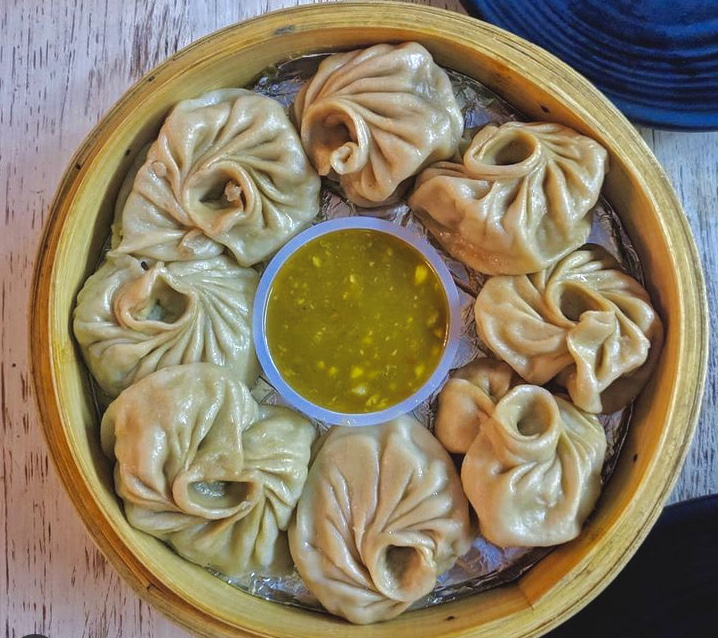
On July 23, Austria-Hungary presented an ultimatum to Serbia. Vienna, however, intentionally imposed impossible demands to Serbia in order to be able to declare war on its neighbour for ‘orchestrating’ the assassination of Archduke Franz Ferdinand of Austria. A few days later, the Austro-Hungarian troops invaded Serbia and started the devastating World War I.

Liberalism

Introduction

The most keenly debated issue in international relations has been the pessimistic view of realism and the optimistic view of liberalism. Realism is regarded as the dominant theory of international relations, while liberalism has a strong claim to being the historic alternative. Comparing the two to the main political parties in a democracy, Timothy Dunne wrote, ‘Rather like political parties, realism is the natural party of the government, and the liberalism is the leader of the opposition.’

The liberal tradition in international relations in its is closely connected with the emergence of the modern liberal state. The focus of liberalism has been on freedom, cooperation, peace and progress. It has often been identified with individualism, as it insists on freedom of the individual, his rights and property. It is also closely associated, mainly by its critics, with capitalism. Liberalism is sometimes associated with the views of Mo Ti, who was a contemporary of realist Chinese scholar Sun Tzu. Both gave their opposing views more than 2,000 years ago.

Basic Assumptions Of Liberalism

Liberalism assumes instead portraying lust of power as the international conflict liberalism fights for the basic rights of the people. It insists on pursuing the political reforms establish democracies. It emphasizes on the value of the free trade on the basis that it will help in preventing the conflicts between nations as it reduces the national selfishness and enhances the communication.

Liberalism advocated the formation of the global institutions such as the United Nations which sees any threat to any individual nation as a threat to everyone. The institutions help in resolving the conflicts by mediating the conflicts in the event of any misunderstanding.

Basically liberals assume that states will act in a rational manner and they are a unitary actor.

The liberalists fell into three different groups as classified by the realists: The first group advocated league of the nations was formed with the objective to consider the attack on the nation as an attack on all. The second group formed the Permanent Court of International Justice that would lead to formation of judicial body capable of issuing justices to the disputes. The third group sort to avoid war by advocating “Disarmament“ in order to reduce the international tension.

Neoliberalism

Neoliberalism is a policy model that encompasses both politics and economics and seeks to transfer the control of economic factors from the public sector to the private sector. Many neoliberalism policies enhance the workings of free market capitalism and attempt to place limits on government spending, government regulation, and public ownership.https://a6c140989941be06481216af16f29a9b.safeframe.googlesyndication.com/safeframe/1-0-38/html/container.html

Neoliberalism is often associated with the leadership of Margaret Thatcher–the prime minister of the U.K. from 1979 to 1990 and leader of the Conservative Party from 1975 to 1990–and Ronald Reagan, the 40th president of the U.S. (from 1981 to 1989). More recently, neoliberalism has been associated with policies of austerity and attempts to cut government spending on social programs.

Liberalism VS Neoliberalism

At its core, liberalism is a broad political philosophy; it holds liberty to a high standard and defines all social, economic, and political aspects of society, including–but not limited to–the role of government. The policies of neoliberalism, on the other hand, are more narrowly focused. They are primarily concerned with markets and the policies and measures that influence the economy.

Realism

Realism has been the most important approach of international relations over the years. It has been the dominant way of explaining international behaviour. Realism emphasizes relations among nations, as they have been and as they are. It is not concerned with the ideal world. It is the international interpretation of human behaviour. Individuals are essentially selfish, and they seek power to serve their interests and to prevail over others. As Morgenthau wrote in the 20th century, power is the control of men over the minds and actions of other men. And, there is constant strife leading to conflicts and clashes between individuals having divergent interests and seeking to acquire power. Thus, there is an ever-present struggle for power in the society. The same is the tone of nations that are guided by the same considerations as individuals.

Political Realism

Realism, or political realism, as an approach of international relations has evolved over the centuries. Prominent among its earlier advocates were Indian scholar Kautilya, Chinese strategist Sun Tzu, and Greek scholar Thucydides. Much later, Italian scholar Nicolo Machiavelli and English philosopher Thomas Hobbes also contributed to the evolution of realism. Their ideas may be called classical realism, though Morgenthau is now considered the principal classical realist. However, according to the view expressed by Robert Jackson and George Sorensen (1999) and many others, Morgenthau’s theory may be described as neo-classical realism. But, Morgenthau was the most systematic advocate of realism. However, British Professor E.H. Carr, who wrote The Twenty Years’ Crisis (1919-39) had prepared the ground on which Morgenthau developed his theory of realism.

Carr criticized democracies like the UK and France for their failure in defeating the designs of dictators. He blamed the democratic countries for failing to recognize the power realities in the world. Carr divided the scholars of international relations into two groups. These were ‘utopians’, or ‘idealists’, and the ‘realists’. He described the utopians as optimists- children of enlightenment and liberalism. The liberals held the view that reason and morality could structure international behaviour of the states towards peace. Wilson and (his) League of Nations were cited as main examples of utopians. Carr, who himself was a a realist, described realists as pessimists, or children of darkness, who emphasize power and national interest. Commenting on Carr’s views on power, Michael G Roskin and Nicholas O Berry wrote, ‘This does not necessarily mean perpetual war, for if statesmen are clever and willing to build and apply power, both economic and military, they can make the aggressors back down…’

Political realism is a significant theory in the field of international relations that seeks to explain state behavior under a set of specific and rigid assumptions. At its core, political realism is guided by three S’s: statismsurvival, and self-help.

Statism asserts that states are the only entity on the international stage that matter and that they are unitary (acting alone) and rational (acting in its best interests) actors. Survival identifies the state’s primary goal is to survive in an international system characterized by anarchy. The final S, self-help, conveys the assumption that states cannot trust others in their pursuit of survival and must secure their security.

Political realism is further delineated into sub-theoretical frameworks, including:

  • Classical realism
  • Liberal realism
  • Neorealism
  • Neoclassical realism

While each sub-framework has its own nuance within the broader political realist theory, all forms of political realism fundamentally believe world politics is a field of conflict among states pursuing power.

Structural Realism

Structural realism, also referred to as neorealism in the academic community, is a major branch of political realism derived from classical realism. While the latter incorporates analysis of human behavior within state decision-making, structural realism focuses predominantly on the anarchic structure of the international system. In other words, structural realists see global conflict as inevitable because there is no supranational body that could prevent or mediate conflict between individual states. Therefore, structural realists assume that states must always be preparing for conflict because war could break out at any time.

Structural realists believe that understanding the international system is guided by the three S’s of political realism. However, they do incorporate analysis of inter-relationships between distinct state entities, particularly regarding power relationships. A key concept in structural realism is polarity, the balance of power within the international system. Today, international theorists often describe the world as unipolar, with the United States acting as the sole superpower endowed with the ability to dominate international relations via their economic, political, and military supremacy.

REFERENCES : International Relations By V.N. Khanna

Evolution Of The Cold War

Cold War After The Truman-Stalin Era

In early 1953, there was a change in the leadership of both the superpowers- the US and USSR. In the US, President Truman’s tenure ended in January 1953. He was succeeded by Dwight Eisenhower. an ex-army general who had commanded the Allied forces in Europe during the Second World War. Meanwhile. Soviet leader Stalin died in March 1953. He was succeeded as party chief by Nikita Khrushchev and by Georgy Malenkov as prime minister. The two Soviet leaders were not very comfortable with each other. Malenkov was replaced by Nikolai Bulganin in 1955. He was more acceptable to the party chief.

But in 1958 even Bulganin was dropped and Khrushchev assumed the prime ministership as well. President Eisenhower led US for eight years till he was succeeded by John F Kennedy in January 1961. Khrushchev remained at the helm of affairs till he was overthrown in 1964 by the troika of Leonid Brezhnev, Nikolai Podgorny and Alexei Kosygin. After the Truman-Stalin era, the US-Soviet relations eased considerably, but the Cold war showed no signs of ending. During 1953-64 several steps were taken by both the sides to improve relations, but at the same time tension got accelerated on different occasions.

CRISIS IN POLAND

Poland was the first to ignite. In June 1956, riots in the industrial city of Poznam were brutally suppressed, leaving dozens of people dead and hundreds wounded. A conflict occurred in the Polish Communist Party between two factions – one owing allegiance to Boleslaw Bierut, who had died earlier the same year, and the other led by Gomulka, who was a Nationalist Titoist communist, and had remained in jail since 1949, and was recently released. Gomulka faction succeeded.

In October, Polish Communist Party issued a proclamation that Poland would henceforth pursue a ‘national road to socialism’, and Gomulka was elected Secretary of the Polish Communist Party. The Soviet leaders decided not to use force against Gomulka. This was second set-back to USSR after Yugoslav decision in 1948 to follow Nationalist Communism.

REVOLT IN HUNGARY

Since the end of Second World War, Hungary was governed by an orthodox Communist leader, Matyas Rakosi, a nominee of Stalin. (He had been freed from jail before the War on Stalin’s initiative after the Soviet Union returned old Hungarian flags captured by the Czar in 1849.) The Rakosi regime was severe ‘even by Stalinist standards.’ In 1953, he was summoned to Moscow, reprimanded and replaced by a reformist communist Imre Nagy.

A more intangible effect of 1956 arises with the spread of its talented diaspora. Many thousands of gifted Hungarians left their country and settled as far afield as Australia, the United States, and across Western Europe. The contributions they made to their adopted countries were incalculably beneficial. Nowhere have I heard the kind of objections to Hungarian refugees that one regularly encounters in relation to other refugee and asylum-seeking groups. To some degree this is because everyone knew what the Hungarians had fled from; they received instinctive sympathy. But it also reflects the performance of the Hungarians in their adopted countries. They assimilated well and quickly, and were soon more than repaying their hosts.

Even though assimilated, however, they were eloquent voices critical of communism and the Soviet empire. The eminence many soon achieved in their fields of scholarship and enterprise added weight to their criticisms. And in the United States especially, they formed the influential “captive nations” lobby with other émigré groups, to press for a realistic foreign policy and, in time, to provide Reagan with intellectual heft.

REFERENCES : International Relations By V.N. Khanna

Rise Of China And The International System

Introduction

China has undergone a massive transformation in the last four decades. It has emerged as a major world power within a short span of time and is set to challenge the hegemony of the United States in the coming years. China’s spectacular rise is predominantly due to its unprecedented economic growth which averages nearly 10 per cent for the last forty years. It has to be noted that this achievement has no precedence in recorded human history and even critics of China have acknowledged this grand success. Even the World Bank has noted that China has ‘experienced the fastest sustained expansion by a major economy in history – and has lifted more than 800 million people out of poverty.’

This transformation began in 1979 with the introduction of economic reforms and today China ranks first in the world in terms of economic size on Purchasing Power Poverty (PPP) basis. Many economists are predicting that China is set to emerge as the world’s largest economy in a couple of decades or even sooner. It is notable that when this happens, it will be for the first time in more than a hundred years a non- European country will hold the mantle of being the foremost economic power. This will be a seismic shift in international politics.

History Of China’s Economic Growth

Economist Angus Maddison’s work which studies Chinese economy through centuries notes that China had the world’s largest economy as late as 1820. It is often forgotten that China was one of world’s foremost economic powers before the negative impact of colonialism. By the beginning of the 19th century, the Qing dynasty which was ruling China has serious internal weakness which left the country vulnerable to Western and later Japanese imperialist ambitions. China lost the First Opium War with Britain in 1839 and subsequently signed the Treaty of Nanking in 1842 which was the first of many humiliating unequal treaties which the country would sign. It was a part of this treaty that Hong Kong was ceded o Britain and ports like Shanghai and Guangzhou were opened for British trade.

China also lost the Second Opium War in 1856 which was jointly fought by British and the French with the support of the United States. China was forced to sign the Treaty of Tientsin in 1858. This opened more ports for foreign trade and also granted more rights for foreigners to travel and trade within Chinese territory. By this time, China had already signed the Treaty of Wanghia with the United States in 1844 granting certain privileges to the country. During this phase of Chinese weakness, several European countries including France and Russia signed unequal treaties with China to gain trade privileges.

Implications Of The Rise Of China

With a rising economy, increasing military strength and growing ambitions, there is no doubt that China is set to dominate international politics in the century. This will however have major ramifications on the international system which needs to be discussed.

China’s rise has already caused concerns about whether the post Second World War liberal international political order will be threatened by the emergence of an authoritarian country as a systemic power. Since the end of the Second World War, the United States and its Western allies have set up international institutions like the United Nations, International Monetary Fund, World Bank and the WTO to construct a rule based international order.

Strategically, interdependence amidst economic globalization has eroded the foundation for a “new Cold War”, which would require four conditions.  First, policymaking in both countries would have to be ideologically driven so that, second, the world can be politically divided into two camps against each other. Third, their economies would be independent of each other upon which, fourth, both sides could form alliances to sanction against each other.

However, like most countries today, policymaking in both the US and China are essentially interest oriented, not ideologically determined. Hence it is virtually impossible that the world could retreat to Cold War dynamics, where nations are divided into two camps politically hostile and economically independent of each other. Moreover, although a US-led security system has survived the end of the Cold War, the US allies would be reluctant to join the fight should confrontation take place between the two superpowers. As for China, Xi Jinping made it clear in his speech at the Belt and Road Initiative summit in May 2017 that China would not pursue any alliance but strives to foster partnerships with other countries.

Thus, despite Trump’s high-profile measures against China, it is hard to imagine that either the US or China would go to war against each other. This is not necessarily because they would give up the competition and even rivalry, but because it will be extremely difficult for both Beijing and Washington to achieve a policy consensus at home and form alliance abroad, which are necessary for a confrontation between the two global powers.

However, the US “tough approach” against China will have a far-reaching negative impact on world order and stability, not only because Trump’s anti-China measures are an essential part of his “America first” unilateralism and his anti-establishment impulse in international affairs, but also because China has already become a deep-rooted stakeholder in all the three layers of today’s international order, i.e., the political order centered on the United Nations and its affiliated organizations, the economic and trade order based on WTO and other multilateral trade agreements, and the financial order maintained by the World Bank, IMF and other institutions like the ADB and AIIB.  Thus, it is not surprising that even America’s closest allies in Europe and Asia – despite their substantial differences with China in terms of value and political systems – are reluctant to join the US in its effort to roll back on China.  This does not mean they support China at all.  But like China, they are also deep-rooted stakeholders of the existing international order that based on multilateral arrangements. After all, the essential purpose of reckless unilateralist behavior by the Trump Administration (e.g., withdrawals from the Paris Agreement, the Iranian Nuclear Deal, the UN Human Right Council, levying heavy tariff taxes on almost all important trade partners, and demanding allies to pay more for the US security commitments) is to rewrite the rules of game in America’s term at the expense of the entire international order. It is in this regard that Trump’s “America first” has turned into “America isolated” because such an approach hurts all the stakeholders of the existing international order, including the US allies.

By contrast, China’s response to the US pressure sounds rational and positive.  Xi Jinping made it clear in his speeches at the Bo’ao Forum for Asia in April 2018 that China will resolutely continue its reform and openness policy.  Meanwhile, Beijing will firmly defend the free trade system based on multilateral arrangements on the one hand, and carry on its “peaceful development” strategy on the other hand.  While it remains to be seen whether, and to what extent, China can turn the rhetoric into credible actions, how, and by what means, China can manage the volatile relationship with the US under a highly self-centered and unpredictable Trump Administration will indeed have a far reaching impact on peace and development of the world.  The good news is that Trump’s ego-driven and unilateral behaviour can actually strengthen China’s hand, only if Beijing can handle it appropriately.  The bad news is that the US still is the strongest power on earth.

REFERENCE : Russia in Global Affairs, International Relations by V.N. KHANNA

Public Policy

Public policy is a frequently used term in our daily lives. We often read in newspapers about a public health policy, education policy, environmental policy, agricultural policy, industrial policy, and so on. Public policies are primarily framed by the government to satisfy public needs and demands. They are the means by which ends of a collective community are served. Without a policy, government and administration are rudderless. Successful policies make for successful government and administration, and hence there is a saying that when a policy fails, the government fails.

Theoretical Dimensions : The Context

Public policy is a relatively new subfield in political science. Its development as an area of study emerged out of the recognition that traditional analyses of government decisions were incomplete descriptions of political activities. As the relationships between society and its various public institutions became more complex and more interdependent, the need developed for more institutions became more complex and more interdependent, the need developed for more comprehensive assessments of what governments do – how and why they pursue some policy alternatives over others.

The focus on the public policy process has developed with the emergence of modern society and industrialization. During the nineteenth century, representative governments began to evolve in some parts of the world. With increased political participation by larger portions of the public, government decisions assumed greater importance and legitimacy.

What Is A Public Policy?

The term “public policy” refers to a set of actions the government takes to address issues within society. For example, public policy addresses problems over the long-term, such as issues with healthcare or gun control, and as such, it can take years to develop. Public policy addresses issues that affect a wider swath of society, rather than those pertaining to smaller groups. To explore this concept, consider the following public policy definition.

For example, public policy might tackle the problem of student loans by creating a student loan forgiveness program that affects several students at once, rather than paying off the loan of one student. Something important to remember about public policy is that it does not just refer to the government’s actions, but also to the behaviours and actions that result from those actions.

Significance Of Public Policy

It is evident that the public policy is the significant factor in the democratic government and it
emphasizes on the public and its problems, in fact it is a discipline which is branded as
public. The concept of public policy assumes that there is an area of life which is totally
individual but said in public. Likewise, public policies have a significant purposes to work in
the society where the democracy is prevails.

The important role of the public policy is to make the society to lead a better life and to maintain the delivery of the goods and services are significant, it is regarded as the mechanism for developing economic-social system, a
procedure for determining the future and so on.

REFERENCES : Public Administration by Bidyut Chakrabarty and Prakash Chand Kandpal

World System And Dependency

Structural approaches of international relations, also known as ‘neo-radical approaches’, are of recent origin. Theories in support of these approaches were advocated by leftist writers who were deeply influenced by Marxism-Leninisim. The structural approaches, including the ‘World System Approach’ and the ‘Dependency Theory’, consider the world structure from the class point of view, based largely on the level of development and accumulation of capital. Western capitalist countries, having huge accumulation of capital, are termed as the centre or core of the world system, while third world countries, lacking development and capital, are called the periphery. We shall examine the concept of development and underdevelopment with reference to the centre versus periphery.

A reference may be made here to neo-realists, who also examine the international structure, but from the political angle. They describe the international structure as chaotic or anarchic because there is no all powerful central authority to discipline the nation states, and to resolve their disputes and maintain world peace. The leftists, on the other hand, largely concentrate on economic relations between the rich industrialized nations of the capitalist world on the one hand and the poor developing third world countries on the other. This chapter will discuss the centre-periphery aspect of development as advocated by the neo-radicals.

Economic Accumulation : The North-South Divide

There is enormous gap today between income levels in the world’s industrialized regions and those in the third world. The rich industrialized countries generally lie in the northern parts of the world, while the poor developing countries are in the south. This difference in the income levels has caused differences in the overall prosperity between the rich North and the poor South. How can this gap be explained? This may be done with the help of the liberal view and also with reference to the revolutionary or radical world view.

The liberal view explains the problem by stressing that the capitalist countries have overall efficiency in maximizing economic growth. This view holds that the poor countries are merely lagging behind the industrial north. The liberals would make us believe that more wealth creation in the North is a good thing, as is wealth creation in the South. According to this view, there is no conflict between the two, as eventually the South will also acquire more wealth.

The leftist, or socialist, view is that the divide may be viewed not only in terms of creation of wealth but also with regard to its distribution. According to this view, the creation of wealth in the North often comes at the expense of the South.

The World System Approach – Centre And Periphery

The system of regional class divisions has been viewed by scholars of international relations with Marxist orientation as the ‘ world system’ or ‘capitalist world economy.’ The world system approach is a leftist theory and it relies on global system of analysis. Marx himself had limited his theory to domestic class conflict only, but Marxist scholars apply the same logic in their world system approach. In this system, class divisions are regionalized. The third world countries (exceptions apart) generally produce raw materials, including agricultural products.

These activities need large manpower but not much of capital. The peasants working in agriculture, mining and other sectors are paid low wages. The industrialized countries, on the other hand, mostly produce manufactured goods. This requires large amount of capital, and needs more skilled workers who are paid high wages. The industrialized manufacturing regions are called ‘centre’ of the world system; and the extraction regions (producing raw materials and agricultural items) are known as ‘periphery’.

Reference : International relations by V.N Khanna

The Upper Paleolithic World

Introduction

After about 40,000 years ago, we see many significant changes in the archaeological record, reflecting important changes in cultural and social life. We see art, many new inventions, and considerable increases in the population. This period of cultural history in Europe, the Near East, and Asia is known as the Upper Paleolithic and dates from about 40,000 years ago to the period known as the Neolithic (beginning about 10,000 years ago, depending on the area). In Africa, the cultural period comparable to the Upper Paleolithic is known as the Later Stone Age and many have begun much earlier.

In many respects, lifestyles during the Upper Paleolithic were similar to lifestyles before. People were still mainly hunters, gatherers, and fishers who probably lived in small mobile bands. They made their camps out in the open in skin-covered huts and in caves and rock shelters. And they continued to produce smaller and smaller stone tools.

But the Upper Paleolithic is also characterized by a variety of new developments. One of the most striking developments is the emergence of art – painting on cave walls and stone slabs, and carving tools, decorative objects, and personal ornaments out of bone, antler, shell and stone. (Perhaps for this, as well as other purposes, people began to obtain materials from distant sources.) Because more archaeological sites date from the Upper Paleolithic than from any previous period and some Upper Paleolithic sites seem larger than any before, many archaeologists think that the human population increased considerably during the Upper Paleolithic. And the new inventions, such as the bow and arrow, the spear thrower, and tiny replaceable blades that could be fitted into handles, appear for the first time.

The Last Ice Age

The Upper Paleolithic world had an environment very different from today’s. The earth was gripped by the last ice age, with glaciers covering Europe as far south as Berlin and Warsaw, and North America as far south as Chicago. To the south of these glacial fronts was a tundra zone extending in Europe to the Alps and in North America to the Ozarks, Appalachians, and well out onto the Great Plains. Environmentally, both Europe and North America probably resembled contemporary Siberia and northern Canada. Elsewhere in the world conditions were not as extreme but were still different from conditions today.

For one thing, the climate was different. Annual temperatures were as much as 50 °F below today’s, and changes in ocean currents would have made temperature contrasts (i.e., the differences between summer and winter months) more extreme. The changing ocean currents also changed weather patterns, and Europe experienced heavy annual snowfall. Not all the world was cold, however; still, the presence of huge ice sheets in the north changed the climate throughout the world. North Africa, for example, appears to have been much wetter than today, and South Asia was apparently drier. And everywhere the climate seems to have been highly variable.

Upper Paleolithic Europe

With the vast supplies of meat available from megafauna, it is not surprising that many Upper Paleolithic cultures relied on hunting, and this was particularly true of the Upper Paleolithic people of Europe, on whom we focus here. Their way of life represents a small pattern throughout the Old World. But as people began to use more diverse resources in their environments, the use of local resources allowed Upper Paleolithic groups in much of the Old World to become more sedentary than their predecessors. They also began to trade with neighbouring groups to obtain resources not available in their local territories.

Reference : Anthropology by Ember and Ember

Habits of successful people that you can take up. 

Getting ahead or wealthy in life can be challenging. There are certain daily habits one must follow to achieve success. These habits enable people to use their potential and get things done on time. Many successful and wealthy people are said to have followed or maintained these habits to get to where they are today. So let us do ourselves a favor today by learning about some of these habits. 

1.Positive Attitude

This is an image for positive attitude.
Photo by Andres Ayrton on Pexels.com

Everyday isn’t going to be a bliss in our lives. Instead, each day brings with it a challenge and problem of its own. But we don’t have to be upset or defeated by them. A positive attitude is one of the key habits of successful people that you can adopt. It is the habit of finding positive attributes in every challenge you face. 

You might be overwhelmed and swamped with problems in your lives, but the idea that one day you will emerge as a resilient and a strong person after going through them can be relatively less draining.

After all, we can only control our reactions and not our circumstances. 

2. Sharing

This is an image of sharing.
Photo by cottonbro on Pexels.com

The path to success is not always about solitude. It requires you to share your ideas with others and even help others. One doesn’t have to be super rich to help or share with people around them. You can share your ideas with people that can benefit you as well as them. Volunteering for a cause is also a great idea of helping and sharing with your community. 

3. Reading

This is an image of reading.
Photo by Dayan Rodio on Pexels.com

J.K. Rowling says that she used to read anything that comes her way as a child. She states that one must read as much as possible as nothing is as rewarding as reading. Today there are books, e-books and blogs being written on every possible field. You can read from a wide range of reading materials based on your fields of interest. 

Reading also helps you develop your vocabulary. You can post or publish your own writings based on the knowledge and vocabulary you have gained by your readings. 

4. Being frugal

This is an image of being frugal.
Photo by Katie Harp on Pexels.com

Frugality is the habit of being cautious with expenditures. Successful people are very thrifty with their money and resources. They draw comparisons while making deals or purchases and find ways to save money. It is also known as being economical. Economically spending can result in reduction of wastage on resources and money. Thus leading to efficiency. 

5. Rising Early

This is an image for rising early.
Photo by Josh Hild on Pexels.com

Success and wealth has often been associated with the habit of rising early. Early risers can devote more time to their work and get more things done. It is again one of the key habits of successful people that you can adapt. There are several benefits of rising early in the morning such as:

  1. Enhancement of organisation skills as you plan your day ahead under a peaceful and calm environment in the mornings. 
  2. Rising early gives you enough time to prepare a healthy breakfast which is important to carry on the following tasks of the day. 
  3. Rising early puts you at the advantage of being on time. You get the following tasks of the day done without any delay. 
  4. Finally, early rising also helps you sleep early without leaving you watching your phone during midnight. 

These are some of the habits of successful people you can adopt to be successful yourself. 

Digital And Text Based Literacy

Meaning And Introduction

The field of literacy studies has made many of us take a deeper look into the similarities and differences between text based and digital literacy. It seems not only through the literature but also by observation as a classroom practitioner that there are certain elements and conflicts between digital literacy and text based literacy that need to be combed through by educators in the field.

One of the most powerful lessons we’ve learned through our work with schools is the importance of doing the work we ask our students to do. Nothing helps us anticipate misunderstandings or understand the strategic support our students will need as much as stepping into their shoes, and doing the reading, writing, and thinking they will do as part of upcoming instruction. The approach to these said instructions is what one may categorize into digital literacy and text based literacy.

Similarities And Dissimilarities

There are a number of similarities between digital and text based literacy, one of them being, both have a common goal, which is, to gather information and communicate effectively. Digital literacy means having the skills you need to live, learn, and work in a society where communication and access to information is increasingly through digital technologies like internet platforms, social media, and mobile devices. While, text literacy is the ability to gather information to communicate using text. The common goal in both the cases is clearly somewhat similar, just the catalyst is different.

From school to the workforce, digital literacy is vital in many areas of life — but simply, having it is an absolute necessity for anyone who uses the internet. Sometimes forms and applications are only available online, so you’ll need to be comfortable accessing and using them. In short, digital literacy is a necessary skill for navigating in our modern, digital world.

Advantages And Disadvantages

Text based literacy has many advantaged over digital literacy. Text based materials are available all the time, regardless of not being in a good internet zone. Text based materials are not as expensive, But its limitation says, they are not as interactive as digital literacy might be. Also, text based literacy works merely on facts and memorization and has zero scope of innovations and ideas, unlike digital literacy.

Importance Of Effective Communication Skills

Contemporary World

People feel generally competent and confident when discussing matters of communication. Some perceive communication as one of the fundamental differences between human and other animal species, and as the very element that led to human change, development, adaptation, and domination. But to try and define such a broad term is a difficult task – one that many scholars have undertaken. The essence of communication though can be expressed in simple words: communication is the transfer of thoughts, feelings, ideas, and opinions from one person to another (or to a group of others) through specific channels.

The Virtual Scenario

Virtual communication clearly has many advantages including increased productivity, reduced business costs and a better work/life balance of the workforce. However, virtual communication also entails numerous challenges and obstacles which are often neglected in light of the benefits.

When communication is effective, it leaves all parties involved satisfied and feeling accomplished. By delivering messages clearly, there is no room for misunderstanding or alteration of messages, which decreases the potential for conflict. In situations where conflict does arise, effective communication is a key factor to ensure that the situation is resolved in a respectful manner. How one communicates can be a make or break factor in securing a job, maintaining a healthy relationship, and healthy self-expression.

In contemporary virtual  scenario, effective communication  fosters trust with others. Your ability to listen attentively and embrace different points of view helps others trust that you are making optimal decisions for everyone in the group. The ability to communicate effectively plays a large role in resolving conflicts and preventing potential ones from arising. The key is to remain calm, make sure all parties are heard and find a solution that is ideal for everyone involved. With people feeling more confident in their work and in their understanding of what they need to do, they become more engaged with their work as a whole. To cite a day-to-day example, video-conference with clients on another continent or even replying to a flood of emails for that matter, can be two of the very prominent instances, one may come across quite frequently.

A video-conference with clients on another continent, can be best accomplished only with one’s spontaneous communication skills, virtually. It is definitely not as easy as it may seem in an authentic face-to-face scenario.

The same holds true for online classes as well. Communicating with teachers, and students, virtually, isn’t as fun as it used to be in the past in a non-virtual scenario. To make situations like these more welcoming. One must have good communication skills and must know the right way to make use of it too. Being able to communicate effectively is one of the most important life skills to learn.

NATIONAL PRINCESS DAY

National Princess Day comes around annually on November 18, so clear your schedule and prepare for a magical day of pampering and fabulousness. Everyone has a favorite princess (real or fake) and dreams of being treated like one (at least for a day). A dream is a wish your heart makes, and it’s time to make that wish come true.

National Princess Day Wishes Images - Whatsapp Images

HISTORY

The first princess to come to our TV screens was Snow White in 1937’s Snow White and the Seven Dwarfs. Based on the fairy tale by the Brothers Grimm, this movie was also the first full length traditional animation film as well as the earliest Disney animated feature film. When Xena: Warrior Princess came out in 1995 and Mulan was released in 1998, they showed everyone that a princess can do more than wear a pretty dress. These two iconic women let children everywhere know that a princess can also be a strong and adventurous warrior. New wave princesses like Moana and Frozen’s Elsa show us that you can still be a princess while maintaining your independence.

We all grew up with animated, and live action, princesses guiding us through life. When thinking of our favorite princesses, our minds instantly go to Disney. However, when it comes to National Princess Day, Disney had very little involvement in its inception. Nest Family Entertainment, a Texas based entertainment company, teamed up with Rich Animation in 1994 to create the animated film The Swan Princess, a musical adaptation of Swan Lake. The studio wanted people of every age to have a day to celebrate like royalty, embodying the kindness and grace that we all associated with princess at the time — and thus, National Princess Day was created.

The definition of a princess is constantly changing. From the 1930s until the 1990s, princesses were meant to be saved by a prince and live happily ever after. Nowadays, princesses create their own happily ever after, save the prince, and then put the prince squarely in the friend zone. So basically, embodying a princess on National Princess Day is to embody, what the kids call, the G.O.A.T (greatest of all time)

FACTS

Almost everyone is fascinated by princesses but few people know everything there is to know about some of the famous fictional princesses of all time. That’s why we’re listing some of the top facts about princesses below. 

  • The only Disney princesses based on a real person is Pocahontas.
  • Almost all Disney princesses wear blue.
  • Snow White is the youngest princess and is 14-years old.
  • Jasmine is the next youngest princess and is 15-years old.
  • The oldest princesses are Cinderella and Tiana and both of them are 19-years old.
  • Snow White And Rapunzel are both from Bavaria.

PATHWAY

TIME MAGAZINE RECOGNIZED THIS PRINCESS INFLUENCE – 2013

​Princess Kate made Time’s “100 Most Influential People in the World” list for the second time.

PRETTY SMART PRINCESS – 2012

After earning a B.A. in International Relations at Sukhothai Thammatirat University and a Masters of Law and Doctor of Juridical Science degree at Cornell Law School, Princess Bajrakitiyabha of Thailand received an honorary Doctor of Law degree.

A HUMANITARIAN AWARD – 2011

Princess Ameera, a Saudi Arabian princess, received the ITP Special Humanitarian Award for her work with the Alwaleed Bin Talal Foundation.

THIS POPULAR PRINCESS ADVOCATED FOR AIDS – 1987

​Princess Diana opened the first hospital unit dedicated to AIDS in Middlesex Hospital. This is the same location where she famously hugged an AIDS patient four years later.

PRINCESS ANN TOOK ON CAUSE – 1970

Princess Ann of England served as president of the Save the Children organization, an non-governmental group that advocates for children rights and supports children in developing countries.

How to make the best use of time. 

This is an image for how to make the best use of time.
Photo by Eunice Lui on Pexels.com

Time is precious, it’s a saying that is reiterated often by everyone! We all are gifted with 24 hours everyday and many more during our whole lives. But often we don’t know how to utilize them. We understand how precious time is only when it passes away, leaving us with only a few hours left to turn in an assignment! This doesn’t have to repeat because here are some ways you can make the best use of time. 

Keep track of your time

When time passes you in a whiff, leaving you with the feeling of having nothing done from your ‘to do list’. The moment has come to identify how you have been utilizing your time. A simple note making activity along the week can do the trick. Keep tabs on the activities you do on a regular basis across different time periods. You can do this the old school way by writing down in a notebook or the modern way by typing in your smartphone. The aim of the activity is to figure out the tasks that waste your time by the end of the week and curb the duration of indulging in such activities. 

For example if using your mobile phone or watching television is eating up your time, leaving you with no time to do what is necessary. Keeping track of your time will help you understand this mishap and rectify your actions. Thus helping you to make the best use of time. 

Make a ‘To do list’, but avoid listing a ton of items. 

This is an image of  To do list.
Photo by Breakingpic on Pexels.com

Making a ‘To do list’ is supposed to motivate us to get things done for the day. But listing a ton of tasks kills the motivation to do the same. Listing even 3 important items to do for the day can help you get things done and motivate you to do more. Three tasks might seem very less, but it accounts for a day well spent as you accomplish the 3 most important tasks that need to be done, rather than listing 10 items in your ‘to do list’ and get nothing finished. 

Doing less also helps you focus and spend adequate time over your important tasks, making you less prone to make errors and getting things done efficiently. 

Plan your day before time

We all have heard the famous words of Benjamin Franklin, “If you fail to plan, you are planning to fail.” Although it sounds daunting and negative, it makes a lot of sense when you try to make the best use of time. When you haven’t given a thought about the day ahead, you end up spending the day doing mundane things that take up the majority of your time. 

It is best to plan the next day before going to bed or during the early hours of the day to make the best use of time. This helps you to remember the important things to be done for the day and keep you occupied. 

Take out the bad habits from your day

This is an image for bad habits
Photo by Maria Orlova on Pexels.com

We all develop some habits in our lives that are harmful or keep us from being productive. You might probably take your love for music to the next level by having your earphones plugged in for several hours. This could be harmful to your ears or reduce efficiency as you listen to music in the background while doing something important. Hence, it becomes necessary to fix a duration for plugging in some music rather than doing so all the time.

Similarly, you can curb other time consuming habits by spending less time over them or putting them away during your time of productivity. 

  • Put your phone away to resist the urge for checking messages while you study or work on an assignment. 
  • Turn off the Wifi or mobile data on your phone to prevent notifications from interrupting your work schedule. 

Begin with the most important task for the day

Although it sounds intimidating, waking up after the right duration of sleep leaves you with great energy and potential to complete important tasks that you have planned for the day. Maybe that’s why schools, colleges and offices expect people to arrive in the morning as they are equipped with sufficient energy for conveyance and other important things. 

Finishing the significant tasks in the morning such as studying or attending meetings, equips you with the necessary information and a sense of accomplishment to carry on with the rest of the day. Thus making the best use of time. 

Figure out what is important to you in the long run

This is an image for important
Photo by cottonbro on Pexels.com

Finally, it’s all in the bigger picture. You need to figure out what carries significance in your life. Some may want to explore while the others may want to settle down. What is important to you would determine your actions. 

Do tasks that provide good returns. 

Taking a break during the day from your studies or work is something you deserve. As you plan your activities and ‘to do lists’, it is also necessary to plan your time of leisure. Playing video games or watching television for 4 hours straight can be tempting, but it prevents you from reading the book you were planning on reading or meeting up with a good friend. 

It is better to limit your time over tasks that provide less returns and focus more on tasks that add value to your life.  So pick an interesting book while you feel the urge to binge watch or initiate a meet-up with friends which you have been putting off for a while. 

Because making the best use of time is to learn new things and add new experiences to your life. 

References

Chris Bailey, https://www.lifehack.org/articles/productivity/7-ways-make-better-use-your-time.html

Arda Ozdemir, August 25 2021, https://www.wikihow.com/Use-Your-Time-Wisely

John Rampton, May 1 2018, 8:00am, https://www.forbes.com/sites/johnrampton/2018/05/01/manipulate-time-with-these-powerful-20-time-management-tips/?sh=62c777857ab4

Things to know before taking up Mass Media and Communication courses.

Photo by Caleb Oquendo on Pexels.com

Let’s begin by knowing what Mass Media or Mass Communication is. Mass media refers to the media technologies such as movies, songs, news, podcasts, advertisements and photos, that are utilized to carry information to the masses. 

Importance of Mass Media

This blog you are reading is helping you gain knowledge about Mass Media and communication. Hence this blog becomes a media technology and educating you in the field of Mass Media defines its importance. From applying for a job to reaching out to a friend on your phone, everything becomes a portion of Mass Media as they help users pass on information from one place to another or one person to another. 

Here are some advantages of Mass Media to highlight its importance. 

  • It becomes a voice for the voiceless: Mass Media provides every individual with an opportunity to practice their freedom of speech and spread their ideas among the world. YouTube is a great example of Mass Media. As a platform in this 21st century it helps both small and large creators publish their videos for everybody to watch. 
  • Enables widespread communication: Today, the world is often referred to as a global village. This is made possible due to several types of mass media technologies such as social media, internet, and other digital content. It helps governments, businesses and organizations to communicate with each other and stay connected. 
  • Diversifying culture: Mass Media helps in diversifying languages and cultures beyond its place of origin. A good internet connection and a mobile phone or a computer is all you need to learn a new language or gain knowledge about a new culture. You can even take a peek around the world without leaving your home. 

The Evolution of Mass Media

Mass Media can be traced back to the 800 AD which consisted of prehistoric arts, writings and some basic printing technology. The introduction of Gutenberg’s printing press in the 1450s helped art and literature gain a wider reach among the people.The year 1605 witnessed the publishing of the first weekly newspaper in Antwerp, known as ‘Relation’. This was followed by the inventions of radio and television in 1895 and 1925 respectively. Finally in 1990, the world wide web was introduced by Tim Berners Lee. 

The number of people benefiting from these media technologies witnessed a steady growth from a handful, to thousands, and millions with the introduction of newspapers, radios and televisions. Today, due to the internet, these numbers are reaching billions. In 2018, the number of  World Wide Web’s users was estimated to be 4 billion. 

The 21st century has introduced the ability for even individuals to broadcast a customised message for thousands across the globe. You no longer need to be a part of some huge networking channel to do so. A good internet connection and a hand held device can do the job. 

The functions of Mass Media

Mass Media, in the form of writing, podcasting, and publishing, has a significant effect on the masses. Commercials on television, billboards and social media influence the audience into buying a product or availing a service. Hence companies across the world look for suitable mediums such as social media, blogs, forums, or video streaming platforms to convey their messages based on their businesses. Once they find the right mass media technology, they conduct campaigns to communicate their ideas. 

Majority of the companies today create and maintain their social media pages, maintain blog posts on their websites, and run advertisements on video streaming platforms to educate viewers about their products or to entertain them. These define the functionality of Mass Media. 

Courses in the field of Mass Media and communication

Photo by Redrecords u00a9ufe0f on Pexels.com

After addressing the ‘Wh’ questions of Mass Media, let us dive into the courses one can opt for in the field of Mass Media and communication. There are three kinds of courses available for aspiring students in the field of Mass Media and communication. Courses at undergraduate, postgraduate and diploma levels.

Both the course levels familiarise students both practically and theoretically in the field of Mass Media and Communication. 

Eligibility for courses in Mass Media and communication (UG PG) 

A student aspiring to seek admission in a Bachelor of Arts in Mass Communication course, he or she must fulfil some eligibility criterias. 

  • The applicant should have completed senior secondary schooling (10+2) from a recognized university. 
  • The applicant must have scored a minimum of 50% from the aggregate in their senior secondary schooling. 

Similarly, students aspiring for seeking admission in the Master of Arts in Mass Communication course must fulfil the following eligibility criterias. 

  • The applicant must have a Bachelor’s degree in any stream from a recognized university. 
  • The applicant must have scored a minimum of 50% from the aggregates in their Bachelor’s degree. 

Institutes may also require you to give an entrance exam to fulfil the admission process.

Here’s what you will learn from Mass Media and Communication courses

Courses in Mass Media helps you get acquainted with subjects such as Public Relations, Design and Graphics, Digital Media, Reporting and Editing for Print Media, Data Journalism, Photojournalism, Event Management, and Media Law and Ethics. The courses are inclusive of Computer based learning, Guest Lectures, Seminars, Workshops, Massive Open Online Courses, Individual and Group projects, and community based projects. 

Scope for Mass Media courses under employment prospect.

Photo by Pixabay on Pexels.com

With an increase in media technologies following new inventions and establishments such as Television Channels, Radio Stations, Advertising Agencies, PR Agencies, etc. Scope in this field is also parallely increasing. Here are some of the job profiles candidates can look out for upon completion of the course. 

  • Journalism
  • Public Relations
  • Advertising
  • Media Planner
  • Broadcasting and Production
  • Event Manager

Conclusion

Mass Media and Communication as a field in academics has a great scope in India and overseas. Freshers with expertise in specific areas and sufficient experience will be hired by prominent media companies for different job profiles. Individuals with good communication skills, writing proficiency, and passion for learning can pursue an undergraduate or a postgraduate course in Mass Media and Communication. 

References

Ritika Shrivastava, May 17, 2021 09:36 IST, shiksha.com

Akanksha Sirohi, July 15 2020, collegedekho.com

https://www.careers360.com/courses/mass-communication-course

EXOTIC FRUITS OF INDIA

Fruits that are not native and are cultivated at their place of origin are known as exotic fruits, simply they are unusual or different. There are several fruits around the world that are found in a particular place, collected from the wild and usually eaten by the locals. nowadays, exotic fruits have found their way to the international audience. India too is an abode to some fruits that are different from the usual fruits like mango, banana and are rare, found in particular places.

Photo by Geraud pfeiffer on Pexels.com

Carambola (star fruit)

Thanks to social media star fruit has become a known fruit among indian locals and is quite popular. Also known as five fingers, carambola is the native to southeast asia and is consumed in many parts of the world. The whole fruits is edible, and is fleshy, crunchy and firm. It is consumed when the fruit leaves all traces of green and turns yellow, it tastes sweet and sour. It is a source of a good number of nutrients, especially vitamin C and fiber. despite being anutritiuos fruit star fruit can have negative effects on some poeple due to availability of high oxalate content.

Buddha’s Hands (fingered citron)

An unusual hand like fruit which is given as an offering in buddhist temples, and it is believed that buddha prefers fingers that are closed rather than open as they resemble praying hands. In chinese religion it is a symbol of happiness, longitivity and good fortune. It is a very fragrant fruit an is used to add fragnance to rooms and clothes, specifically in china japan and malaysia. although citrus fruits are juicy but most variety of buddha’s hands contain no pulp and usually known for their aroma and texture. It is used as a flavouring agent in dishes, desserts and beverages. It is also a part of traditional medicine.

Phalsa (Indian sherbet berries)

Phalsa is a small dark purple fruit and is helpful in balancing sweet and sour flavors. It is a good cooling agent and perfect for hot weather. It is a good source of calcium, magnesium, potassium, iron, phosphorus and vitamin C. It cures diarrhea, stomachache, builds immunity and supports smooth digestion. It is also consumed in the form of squash or sugar syrup and despite numerous benefits it is a very less known fruit in India.

Bael (wood apple)

One of the most popular summer fruit, bael is a highly effective against the scorching heat of the sun. The outer covering of the fruit is hard but the inner part is sweet and soft. Every part of the plant is good for human body, high in fibre, vitamins and other essential nutrients, it cures ulcers and piles, prevents constipation, is a good source of energy and equally effective against respiratory issues. The number of benefits it provides are uncountable.

Chalta (elephant apple)

Large sized shrub that is native to southeastern asia and the fruit of this plant is loved by the local elephants hence the fruit is known as elephant apple. It is consumed in both ripe and unripe form and is usually used is usually used for making jam, chutney or pickled dishes. The fruit has a large greenish-yellow shape and consists of 15-20 carpels, the fruit pulp is bitter-sour. It consists of numerous health benefits, like lowering blood pressure, fighting flu,cold and other infections, it is also good for eyes, has vitmin C and also cures stomach related problems.

ALCOHOLISM IN INDIA

One of the most important products of global addiction demand is an alcoholic beverage. In developing countries like India, alcohol consumption tends to be a major problem because of the various socio-cultural practices across the nation, different alcohol policies and practices across the various states, lack of awareness of alcohol-related problems among the community, false mass media propaganda about alcohol use, various alcohol drinking patterns among the alcohol consumers and the emergence of social drinking as a habit because of the widespread urbanisation across the country. 

Social consequences of alcohol use

Alcohol consumption not only affects the individuals but also his family members get affected in one way or the other. The person in an intoxicated state may indulge in domestic violence with his family members; may exhaust the savings of the family, which can negatively affect the education of his children, and the children of alcoholic fathers will have strained relationship with their family members, which can affect their psychological wellbeing.

Road traffic accidents

One of the major problem of alcohol consumption are road traffic accidents which occur due to driving vehicles under the influence of alcoholic beverages. Both developing and developed countries report high rates of road traffic accidents because of alcohol consumption.

Primary care intervention for alcohol-related problems

In developing countries like India, primary care physicians are the first contact of patients with the healthcare system. primary care management of alcohol-related problems include three core steps, namely, counselling the patient on the ill-effects of alcohol and, if necessary, prescribing medications like disulfiram and connecting with the patients by organizing treatment programs and forming support groups. If necessary, they have to refer the patient to higher centres for further care and management.

BUT WHAT ABOUT PEOPLE WHO CAN’T AFFORD THESE TREATMENT AND SUFFERES FROM ITS CONSEQUENCES

In many countries AA Meetings are held for being a support emotionally and spiritually to an alcoholic person with no financial support and most of all countries it being held have not only they have accepted this but hole heartedly supported it some for their family members or some for their friends suffering from alcoholism.

What is AA?

Alcoholics Anonymous is a fellowship of men and women who share their experience, strength and hope with each other that they may solve their common problem and help others to recover from alcoholism.

The only requirement for membership is a desire to stop drinking. There are no dues or fees for AA membership; we are self-supporting through our own contributions. AA is not allied with any sect, denomination, politics, organization or institution; does not wish to engage in any controversy; neither endorses nor opposes any causes. Our primary purpose is to stay sober and help other alcoholics to achieve sobriety.

AA is nonprofessional – it doesn’t have clinics, doctors, counsellors or psychologists. All members are themselves recovering from alcoholism. There is no central authority controlling how AA groups operate. It is up to the members of each group to decide what they do. However, the AA program of recovery has proved to be so successful that almost every group follows it in very similar ways.

WHAT DOES A.A. DO?

  1. A.A. members share their experience with anyone seeking help with a drinking problem; they give person-to-person service or “sponsorship” to the alcoholic coming to A.A. from any source.
  2. The A.A. programme, set forth in our Twelve Steps, offers the alcoholic a way to develop a satisfying life without alcohol.

HISTORY OF AA IN INDIA

Here is an account of how AA came to India and it’s growth in the subsequent years. Though there are no accurate records from the early days, what is definitely clear is that Harold M., a school teacher by profession, was the first person in India, to stop drinking and gain lasting sobriety through the spiritual principles of Alcoholics Anonymous. He stopped drinking on 5th May 1957, and hence that date is nationally acknowledged as the “Founders Day” in India.

On 5th May 2021, AA completed 64 years of its service in India. Looking back, the results are heart-warming. The wide support and awareness generated by the groups in India and its members inspires immense hope for the future.

AWARENESS OF AA

In India, AA meeting is a program which mostly seen by people through foreign movies and shows not through advertisement or medical portals as its necessity seems nonsensical by people especially in India because of their traditional values about alcohol where some drinks it as a medicine and some as men for showing their authority and masculinity over others, stupid norms like that make bad habit like drinking into ADDICTION.

WHY MENSTRUATION A TABOO IN INDIA?

Menstruation is a phenomenon unique to girls. Menstruation is the natural part of the reproductive cycle in which blood from the uterus exits through the vagina. It is a natural process that first occurs in girls usually between the age of 11 and 14 years and is one of the indicators of the onset of puberty among them.

Taboos surrounding menstruation exclude women and girls from many aspects of social and cultural life. Some of these are helpful, but others have potentially harmful implications.

In India especially, I found it extremely ironic for it to be still a taboo in this time and era, even before I don’t understand why it was called a taboo and the reason for that I guess was, India where a girl child recognised as boon ( as GODDESS LAKSHMI when born) and giving birth is also considered boon given only to women despite that this unique process that make it possible for a women to have a child is considered a TABOO. Even with many scientific clarification of the process of this unique phenomenon, even though being this 21st century there still continuous myth regarding this adapted within the society.

SOME OF THEM ARE:

  • Women who menstruate have long been taught to keep silent about their periods. Young girls are taught from a young age that they have to manage it privately and discreetly.
  •  In Indian households including the literate ones, women are constantly reminded of the old-age traditions where “you are not allowed to touch anything holy, visit temples, cook or touch pickle.”
  • The taboo is so ingrained that women often have the “walk of shame” while carrying their sanitary pads wrapped in black plastic bags in their hands. 
  • Strangely enough, in some cultures, celebrations are held on the commencement of menstruation. And in the same cultures, the already menstruating women are looked down upon as impure and filthy.
  • It is not uncommon for boys to giggle and laugh during biology class when the topic of menstruation comes up.
  • BUT NOT IN EVERY CULTURE IT OCCURS- In Kashmiri Hindu culture, menstruating women are given special care considering the belief that they become weak due to blood loss. They do not consider them to be impure and rules like, a woman on her period can’t visit temples or can’t work don’t apply.

#BREAKTHEBLOODYTABOO

It’s high time that we normalize menstruation as just a healthy and positive part of the female life cycle. Menstrual periods are nothing to be ashamed of. Just like digestion, blood circulation and respiration are considered as natural and biological processes, both men and women should work towards making menstruation an important topic to talk about openly. This is the only way to combat its silence and break the stigma.

some changes I notice toward breaking this taboo for women in this society

  • The greatest changed I noticed was for the changed working environment toward women as the sanitary environment facilities given to them as employment care like washroom provided with sanitary pads and tampons etc.
  • knowledge about the first period to young girls now given at their school is compulsory not only to girls but to boys too given knowledge for it be known as normal topic and not as a taboo topic.
  • Advertisement about sanitary pads and tampons starts to make this topic to talk openly about.
  • Men buying the sanitary pads and tampons make it comfortable for women during their periods so that they can express their thoughts, sorrows, angers, happiness with them.

NOSTALGIC CHILDHOOD MEMORIES involves cartoons that today’s kids will never know

As we grow older, we sometimes forget about how much fun we had as children and how much we use to love waking up on Saturday morning and after returning from school to watch cartoons. Now that we are all grown up, it is easy to get lost in our long lists of things-to-do and forget to appreciate the little things.

The mind is a complicated thing, and although we have pushed back many of our childhood memories, it still harbours every theme song, character and saying that we use to live by. So, all it would take is for someone to hum a certain tune, and once recognized, you would probably be able to sing it out — word by word.

If you recently happened to flip through the channels, you might have caught a glimpse of today’s cartoons and been slightly disappointed at what you saw. Times are changing and with that the quality of TV shows are rapidly disintegrating. So be happy that you were born when you were and make sure to take a trip down memory lane every once in a while.

SOME MOST APPRECIATED AND ENJOYED CARTOON DURING MY TIME

  • BOB THE BUILDER

Bob the builder is one of my favorite cartoon show and I thoroughly enjoyed watching it as a kid. And the title track of this cartoon is super iconic, it just freshes up all the beautiful memories of my childhood. The show focused on Bob a building contractor who solves all the problems with a positive attitude along with his vehicles who can actually talk.

  • THE POWERPUFF GIRLS

Whenever I think of  Cartoons, the first thing that pops into my head is “Powerpuff Girls”. The Powerpuff Girls – Blossom, Bubbles, and Buttercup were created by Professor Utonium in an attempt to create the “perfect little girl” using a mixture of “sugar, spice, and everything nice”. However, he accidentally spilled a mysterious substance called “Chemical X” into the mixture, creating three girls and granting all three superpowers including flight, superhuman strength, superhuman speed, superhuman senses, nigh-invulnerability, x-ray vision, red heat vision, energy projection, space survivability, and thermal resistance. Despite being the main characters of the show, the villain of the show was most popular character i.e. MOJO JOJO and his popularity was so high that you could do a freaking show on Mojo JoJo alone!

  •  Ed, Edd n Eddy

The show is based on three adolescent boys, Ed, Edd n’ Eddy. They hang around their suburban neighborhood of Peach Creek Estates, coming up with scams to con their peers for cash, so they can buy themselves a handful of their favorite treat, jawbreakers. Their plans normally fail though, leaving them in predicaments and situations that always go hay-wire. The characters almost never leave the neighborhood, and adults are nowhere to be seen, as well as any other kids.  The characters are funny and the jokes are creative. Most of the episodes are funny with the Ed’s and my favorite one is Ed because he is stupid in a funny way and comes up with the most things he says. My least favorite characters are the Kanger Sisters, Kevin, Sarah, and Jimmy.

  • JOHNNY BRAVO

This is a show I grew up with. And probably the only show on this list that I’ve watched on and off for over a decade. Regardless of what age I was at,  “Johnny Bravo” has *always* made me laugh! And it made me laugh *a lot*! As you probably already know, Johnny is a 20 age something egotistical super-star wannabe.   What makes “Johnny Bravo” such a great show isn’t just the settings. It’s purely the main character! Constant Banters between Johnny and his mother were the most hilarious one of all things.

  • RECESS

Recess is an American animated show that revolves around 6 brave elementary school kids. This cartoon show was best, it used to come on Disney channel. Almost every 90s kid has grown up watching recess in their childhood. It was just great watching recess after coming from school, this cartoon show holds so many beautiful childhood memories. This was the time where these idiotic storyline made me to cause ruckus in my own school and get punished very tough and fun time that was.

  • COURAGE THE COWARDLY DOG

“Courage the Cowardly Dog”   I Watched “Courage” when I was 10 years old it was one of the 1st times I remember feeling… genuinely disturbed while watching a cartoon. There was a real sense of atmosphere in these settings. The colors were this strange contrast of bleak, yet alien. It really added to the sense of mystery in the show. All with alien, curses , psychopaths follows the dogs like a bad mojo and add to it the hilarious abuse he get from his male owner. I watched it both in English and Hindi, I seriously found it more hilarious in Hindi dude that psycho barber episode really give me goosebumps.

  • DEXTER’s LABORATORY 

 It mentions a scientific genius who conducts countless experiments in his secret laboratory while always keeping his eyes on his elder sister Dee Dee. This boy even has to use both his teeth and fingernail to prevent her from invading his lab. 

  • POWER RANGERS FRANCHISE

Power ranger was one of the most enjoyed show of all times especially in my time, kids were hooked on the special postures and tag lines to transform in the super gears. Popularity of power ranger over the kids was equally in both gender despite having some violent fight sequence it didn’t affected its popularity.  Each series revolves around a team of youths recruited and trained by a mentor to morph into the eponymous Power Rangers, able to use special powers and pilot immense assault machines, called Zords, to overcome the periodic antagonists.

These were some of my favourite show which was cherished and enjoyed not only by me but all from my age and still do.

COPING STRATEGIES ADOPTED DURING LOCKDOWN

GOOD SAY OR BAD ADOPTING COPING STRATEGIES OR HOBBIES ARE THE THING ON WHICH NOBODY HAS A CONTROL OVER DURING THE LOCKDOWN.

The COVID-19 pandemic and ensuing lockdown measures have created unprecedented circumstances that increase stress and anxiety, thus leading individuals experiencing home confinement to adopt various coping strategies that contribute to building resilience. Given the novelty and recency of the COVID-19 lockdown, factors of coping and resilience in this specific context of home confinement remain undefined. Some put this time in effective routine to get good result but there were some who waste their time with some bad coping strategies.

SOME COPING STRATEGIES WERE-

  • COOKING– people have learnt to cook for them-self. People who live alone and deprived from the food delivery option have taken up the ladle, some who have no choice and some who see this as a opportunity to learn or put their confined time to some effective work or activity.
  • DUSTING AND CLEANING- people have to take this activity without any choice as with this lockdown and without any house help their hands were tied or say only their hands were the one left to do the job. Some saw this as an opportunity to cover their missed fitness routine and some did because they didn’t have any choice but to keep their house clean.
  • READING- This is one of the good coping strategies people have taken up in this lockdown. Prior to this covid-19 lockdown, people with their busy and anxious schedule and working hours with no time left to give to literature or reading has taken this opportunity for an mind relaxing time with reading .
  • SCREEN TIME – This is the most adopted and with too much used time, it’s seen as and become a bad coping strategy and habit especially during this lockdown. Most people coped this confined and with too much time on digital screen with movies, shows and net etc, under these most people are kids and students with no school and colleges.
  • YOGA – Yoga during this lockdown has replaced the gym for fitness routine and mental health also. Some has adopted it to replace the gym but some ha adopted it to relax their mind from this anxious and confined situation. And surprisingly during lockdown it has become a big hit among all age of people from kids to adult and old people also.

ABOUT THE AUTHOR – AGATHA CHRISTIE

Known Mysterious Incident About “the queen of crime” except her famous novels.

Born in Torquay in 1890, Agatha Christie became, and remains, the best-selling novelist of all time.

She is best known for her 66 detective novels and 14 short story collections, as well as the world’s longest-running play – The Mousetrap. Her books have sold over a billion copies in the English language and a billion in translation.

Agatha Christie is one of the greats of mystery literature. For eleven days, she was at the center of her own mystery, that got international headlines. Unlike the plots in her brilliant books, the motives underpinning this particular storyline are rather vague.

The characters of this real and known incidents were the Two of Britain’s most famous crime writers, Sir Arthur Conan Doyle, creator of Sherlock Holmes, and Dorothy L. Sayers, author of the Lord Peter Wimsey series and herself (Agatha Christie” the queen of crime”).

AGATHA CHRISTIE’S DISAPPEARANCE CASE

WHAT DO WE KNOW-

On the December night of 3rd,1926 she drove away from her home in Berkshire and vanished completely. Her car was found abandoned and a huge manhunt was launched. Arthur Conan Doyle, author of the Sherlock Holmes mystery stories and Dorothy L. Sayers, author of the Lord Peter Wimsey series, participated in the search. Their specialist knowledge, it was hoped, would help find the missing writer.

Her disappearance would spark one of the largest manhunts ever mounted. Agatha Christie was already a famous writer and more than one thousand policemen were assigned to the case, along with hundreds of civilians.

Agatha Christie’s disappearance prompted a nationwide search and for the first time in UK history, aeroplanes were employed as part of the search effort.

Newspapers offered rewards for information and her husband Archie was suspected of foul play.

The Home Secretary, William Joynson-Hicks, urged the police to make faster progress in finding her.

It didn’t take long for the police to locate her car. It was found abandoned on a steep slope at Newlands Corner near Guildford. But there was no sign of Agatha Christie herself and nor was there any evidence that she’d been involved in an accident.

Not until 14 December, fully eleven days after she disappeared, was Agatha Christie finally located. Eventually, it was revealed that Christie had absconded to Harrow gate via train, where she spent eleven days hobnobbing with the young social crowd under the name of her husband’s mistress. Christie, upon being discovered, says she had no memory of the events.

The Speculations

  • Agatha Christie rarely talked about the incident, simply putting it down to about of temporary amnesia caused by a blow to the head.
  • The consensus of opinion at the time was that the whole affair (no pun intended) was an act of revenge aimed at her erring husband.
  •  Recent researches on her medical condition suggest that she was suffering from Alzheimer’s disease or other dementia. She died of natural causes in early 1976.

All That Glitters is not Gold

By- Supriya

All that glitters is definitely not Gold.In reality, many a times it is the fake one that glitters more.Even that useless broken piece of a glass that can do nothing but cut through flesh and make it bleed will shine with great glory as the sum rays fall and dance upon its surface. But that reflection of prismatic colours do not change that wounding piece of glass into gold. It is often thus said with a touch of a warning that ‘Appearance is always deceptive ‘. Thus we should never rely on outward manifestations and put up shows. Many a times people can put up false show of kindness, charity ,love, respect and other kinds of virtues.People even get swayed by that artful pretence of such people. But time and trails are the greatest examiners. With time when trails knock at their door, such people start showing their true colours.

Many a times ,in life, things are not what they seem to be. Most of the times, they are covered by false masks , faces and appearances.In fact , history has repeatedly proved that people have worn multiple masks in order to reach the higher ladders of success. People often make use of trickery ,cunningness,hypocrisy and flattery in order to achieve their dreams. They believe their inward reality of shallowness and hollowness by a fantastic and blinding show of grave morality.So, due to false appearances, morally depraved have easily passed as great moralists before the world ,fools have passed as wise, dishonest people have been thought of as honest,liars as great protectors of truth , wicked as sincere friends and traitors as great patriots. The garb of fine dresses, good manners, sweet voice ,kind behaviour and honey – dripping personality works out well with such persons as people at large are often swayed by such sweetness. But rarely do they realise that under this rosy appearance lies the serpent quietly coiled up ready to string at the slightest provocation.
It is in fact very easy to befool and misguide people by putting on a grab of goodness by means of fine dresses and speeches. People fall prey to good manners and good appearance. Human mind is gullible and foolish. It is often taken captive by what is shown and does not care to see what lies behind. Hence, people are often deceived because of such appearances. Sycophancy and hypocrisy can, of course ,help people for sometime to climb the social and economic ladder but concealment cannot work for long. Gold shows itself as purer than ever before when tried and tested, but it is the fake one that fails at the slightest touch of test.

It has been rightly and aptly said that everything is not exactly as it seems. A shiny piece of metal shining gloriously in the sun from afar, turns out to be a useless piece of sharp- edged tin if examined closely.

Thus, before making hasty judgement based on what seems to be one should take time to try and peep behind the facade of make – belief sweetness and politeness. One should use wisdom and discretion to weigh the appearance against what lurks behind as truth. Then only one can learn to differentiate between gold and the rest that glitters as gold.

Test your ‘MYTHS VS FACTS’ knowledge

Isn’t it amazing when your friends are talking about something that is a myth but you know the real fact about it and you can actually brag about it. Everyone thinks you are a genius but you know that it is something you read somewhere. It’s hard sometimes to think about thousands of myth and facts which we just don’t know and continue to believe what we know about it. When I was small my mother once told me that if you see your face in the mirror at night your face will get wrinkles. Yeah… like that doesn’t even make sense but she told me anyway because she was getting ready and I was In the way. And I know you too have come across some bizarre myths that I believe are made up. But there are myths that people actually believe and are common to everyone like black cats are unlucky. They are not!! I have a black cat and I love her the most.

Photo by Helena Lopes on Pexels.com

It’s modern time and people want facts if you want them to believe something. Science has progressed and has answer to almost everything but there are things which even science is unable to answer for e.g., why are women always right? And how moms are able to find anything when we ask them and we can’t. How?? Okay, I will pull my hair out and still won’t get any answer so let’s move on to our myths vs facts quiz. I will give you some common beliefs and you will have to identify it as a myth or a fact and at the end I will answer them.

READY, SET, GO…

  1. You have to drink at least 8 glasses of water a day.
  2. Bulls get angry when they see red color
  3. Only animals that blush are humans
  4. Dogs only see black and white. Poor doggos. (Simple huh?? Real questions start now.)
  5. If you swallow gum it will sit for 7 years in your stomach.
  6. Pineapple is a natural meat tenderizer.
  7. To boil water faster add salt to it.

Answers

(Myth) No you don’t have to. There are many factors involved as of how much water you should consume. Drink when you feel like drinking. Not too less not too much. 3 to 4 litres work perfectly fine. According to The U.S. National Academies of Sciences, Engineering, and Medicine, the adequate intake of fluids for men is 3.7 L and for women it is 2.7L. about 50 to 70 % of our body is made up of water and it is important for:

  • Keeping temperature normal.
  • Getting rid of body waste

(Myth) I’ve spent my life getting scared and hiding my red clothes whenever I saw bulls. Whoever made this myth hated red color. Everyone believed this because of that red cloth used by matadors in bull fights but American science guide says that bulls are red green colorblind. The actual reason for bulls’ anger was the movement of the cape. Feeling stupid? Yeah me too. We are in this together.

(Fact) Isn’t it amazing how our cheeks turn red when someone compliments us or when we are embarrassed of saying something stupid. humans are the only animals who are capable of blushing, and as Darwin states “the most peculiar and the most human of all expressions.” It’s still unknown how it happens voluntarily but in terms of science it is caused by the dilation of blood vessels in the facial skin.

(Myth) Here is a good fact dogs don’t see in black and white. Our friend is actually capable of seeing colors not many but can distinguish between them. The can see blue, yellow and some shades of grey. They may not see the true color of an object but they definitely see the color of love. Dogs are pure souls.

Photo by Andrea Piacquadio on Pexels.com

(Myth) “Oh my god! I just swallowed a gum, it will get stuck to my intestines now. (screaming in fear).” You can understand this, right? From fruit seeds to chewing gums we have avoided gulping them. But you will laugh after knowing that neither plants were going to grow from your stomach nor the gum will hijack your guts because your gut can’t digest it. If you anyhow swallow it, it will pass through you in a couple of days. Although a large amount of gum can result in intestinal blockage.

(Fact) Bromelain enzyme in pineapple is digests protein and softens the tissues in meat, hence, goes well with beef, pork and some types of fish. This is the reason why it stings our tongue, it breaks down the surface tissues thankfully our body regenerates cells and repairs the tongue. If you want to soften it you can bake it or soak it in salty water.

(Myth) Adding salt to water will increase the temperature of water fast but it’s boiling point will remain same. Even if you add a spoonful of salt the boiling point will change from 100° to hardly 100.4°.

I hope you enjoyed the quiz, if you know some more myths and facts do tell in the comments below also tell me how much you scored today.

FACTS.

Hi everyone,

We all love to know about facts,right and yes today I am going to share some facts.

Elephants are the only animals that can’t jump.

Like fingerprints, everyone’s tongue print is different.

The only food that doesn’t spoil is Honey.

You can’t kill yourself by holding your breath.

TYPEWRITER is the longest word that can be made using the letters only on one row on the keyboard.

People say, ‘Bless You’ when you sneeze because when you sneeze,your heart stops for a millisecond.

The longest muscle in the body is the tongue.

The most common name in the world is Mohammed.

Carbon monoxide can kill a person in less than 15 minutes.

The blood of mammals is red, the blood of insects is yellow in colour, and the blood of lobster is blue.

The hummingbird, the loon, the swift, the kingfisher, and the greb are all birds that cannot walk.

The fastest bird is the Peregrine falcon, clocked at speeds of up to 240 miles per hour.

Dragonflies are one of the fastest insects, flying 50 to 60 mph.

The electric chair was invented by a dentist.

A cat’s tail contains nearly 10 percent of all the bones in its body.

Corn is grown on every continent except antarctica.

Hearing is the fastest human sense. a person can recognize a sound in as little as 0.05 seconds.

“Rhythm” is the longest English word without a vowel.

Human thigh bones are stronger than concrete.

Earth is the only planet not named after a god.

Hope so it was useful.

Have a beautiful day.

Keep smiling ❣️❣️❣️

“How Does it feels to be a Single Child”

Childhood is the phase of life where our heart & soul truly resides. The time span of childhood is always precious, indescribable, tension- free and THE BEST. The time we spent in our childhood can never be compared to any phase of our life. Childhood is something which we will cherish for the rest of our life, it is probably the best time we all had in our whole life span. For some children, it might be a scary one also, but the things we learned and did in our childhood are absolutely unforgettable and always has a special place in our heart. Everyone has a different childhood, so I can only relay what it was like for me growing up as a single child. Being a single child consists of mixed emotions,at one point of time you enjoy being a single child, but when you become an adult , when you have so many things going on in your mind, when you literally want your person to listen to your feelings and the things that are going on, it hits you when you realise that you are all alone in this and there’s no one to listen and it literally breaks your heart. It is the only time where every single child might have felt the need of a sibling. Being a single child is never ever easy, spending the childhood all alone has mad a habit of being alone, and to be in your own little world. Having no siblings definitely affects the childhood and the adulthood of the person.

The phase of a childhood – where a small kid needs someone to play with, to share things with, to fight with, to make lifetime memories with, to get clicked doing some stupid stuff and later cherishing them, to care, to fight for the chocolate and what not.. but having no siblings means no one to play with or to do any of these things with, which completely affects the childhood of the person, it made the person to live alone, to entertain himself or herself, to play alone, to eat alone without any fight, to do every thing which developed a habit of being alone. Being alone is something very terrible, but for all the single child out there it has become a part of life for us, where for some children being alone is something very terrible for them, but for us, being lonely, soothes us and has become our comfort zone now. At some point we might have cried for being alone or having no siblings, but later when we learned to live alone, to play alone it become a part of our daily life, a part of our personality. In the adulthood phase, the need of having atleast one sibling hits the most, specially when you have no one to discuss your personal issues, trauma and fears. Though we cannot share everything with our parents. We literally need our person who has the same genes, same thought process. Adulthood is the phase where we face a lot of rejections , heartbreaks, we lose friends, denials and it is the age where we might lose one of our parent, the need of a sibling can be truly felt here only, when there’s no one to discuss your inner feelings or someone to guide you for the future, to atleast gives you a surety that, “everything will be alright”, that ,“I’m here” but then it hits you that you are all alone in this, that only you’ve got some serious responsibilities of your parents of their future and that you are all alone in this, you become hopeless and helpless when there’s no one to share about what’s going inside, what’s eating you. No one who knows you completely, who knows your innermost fear and insecurities. It is the time where you feel the need of having a sibling the most, but all you can do is nothing, you have to be strong in this, you have to feel comfortable in being alone, you have to do all the things alone. This is the time where a person’s heart breaks inside. Being a single child is never too easy, it is something we have to adjust in, to get comfortable in. Afterall, it’s not at all easy to spend your childhood all alone while seeing your friends having fun with their siblings, it something that hits you from inside. Being a single child means being all alone since the day you born without any sibling, being alone is something that made the child a bit mature than when the child is assumed to be.

I learned very early on how to entertain myself.I’m often asked if I was lonely growing up without siblings. I really wasn’t. Without siblings around to play with, I was forced to figure out ways to entertain myself. As a young child I enjoyed building things, usually with LEGOs and many other things like that. I also liked to draw, even though I was never particularly good at it. As I got older, I became very interested in computers, which became something that could infinitely satiate my desire to build and learn.

I was very curious about why I didn’t have a brother or sister. Growing up, all of the kids in my neighborhood had siblings and that confused me. I remember asking my parents why I didn’t have a brother or sister and them more or less saying that the reason I didn’t have a sibling is simply because I just didn’t have a sibling. One time after seeing a TV show about long-lost siblings reunited, I became obsessed with the idea and questioned my mom for a while about the possibility of me having a long-lost twin. At the time, I was confused how she could be so sure that I didn’t.

I never had to fight for my parents’ attention. I never felt like I was competing with anyone or anything for my parents’ attention. Whenever I needed to or wanted to talk about something, I had an attentive parent. As a result, I was always fully supported in my major interests. My mother and father has done their best to make me comfortable of doing everything alone. Instead of a sibling, my father used to eat the food made up of the paper from my kitchen set, he never complained and he literally enjoyed eating paper just for me. Both of them made my childhood easier and funnier, they both has also played the role of a sibling that I always needed.

My parents were often over-protective. From what I’ve observed, later siblings usually get more leeway than older siblings do. Parents, after the first few times around, figure out what children can actually handle at what ages and aren’t as scared to let them make mistakes. My parents weren’t terribly strict, but they often worried about me making mistakes, not because I was irresponsible or untrustworthy, but simply because I was the only child.

I like attention and want my accomplishments to be recognized. Growing up, every little thing I accomplished was celebrated, no matter how trivial. Moreover, I often listened to my parents bragging about how I accomplished this or that or the other thing to anyone who would listen. Now, like a stereotypical only child, I feel a need for my accomplishments to be called out and recognized for their importance.

I grew up always in my head. I had a lot of alone time, which meant I had a lot of time to think about everything, with no one around to distract me from it. I was (and still am) always in my head. I analyzed and over-thought everything. I was often in a state of worry. I had a lot of trouble sleeping as a teenager, because I was unable to turn off my thoughts and get into a restful place.

Dreams : Types & Facts

Dreams are stories and images that our minds create while we sleep. They can be entertaining, fun, romantic, disturbing, frightening, and sometimes bizarre.

Although it is hard to define what a dream is, for the purpose of this article, we will define dreams as our thoughts during sleep that we recall when we wake up. So, sleeping dreams are not the same as “daydreaming.” Dreams are mostly visual (made up of scenes and faces; sound, taste, and smell are rare in dreams). Dreams can range from truly strange to rather boring, snapshots from a recent event.

Facts on Dreams

  • We may not remember dreaming, but everyone is thought to dream between 3 and 6 times per night.
  • Dreams improve creativity and problem solving.
  • It is thought that each dream lasts between 5 to 20 minutes.
  • Dreams regulate our moods and emotions.
  • Around 95 percent of dreams are forgotten by the time a person gets out of bed.
  • Dreaming can help you learn and develop long-term memories.
  • Blind people dream more with other sensory components compared with sighted people.
  • Dreams support memories.

Types of Dreams

There are 5 main types of dreams : 

1. Normal Dreams

Common dreams about people and experiences that we can sometimes forget.

2. Day Dreams

When we escape from reality and visualise the past, present & future throughout the day.

3. Lucid Dreams

Being completely aware and in control of dream the dream you are having while you sleep.

4. False Awakening Dreams

A vivid type of dream that feels like you have woken up but you are actually still asleep.

5. Nightmares

The least favourite type of dream. Nightmares are disturbing and scary dreams that can feel realistic.

Whether you remember your dreams or not, most people dream every night during REM sleep. REM stands for rapid eye movements, which happen during this stage of sleep. During REM sleep, muscle and brain activity also differ from other sleep stages. Characteristics of dreams tend to be different for each of these sleep stages.

Conclusion

There are different ways scientists measure dreams from asking questions to using MRI. These studies show us that activity in the brain while we sleep gives us the interesting dreams we recall when we wake up. These dreams help us remember things, be more creative, and process our emotions.

We know most kids do not get enough sleep. Some diseases (like Alzheimer’s disease) also make people sleep less, while others (like REM sleep behaviour disorder and mood disorders) affect dreams directly. It is important to study sleep and dreams to understand what happens when we do not get enough sleep and how we can treat people with these diseases.

Organ Donation: Myths and facts

Every years, many thousands receives the gift of life, a life saving transplant of Heart, Kidney, Liver, Lungs, Pancreas and Interesting. And thousands more people receive Corneas and other tissues that restore sight and health. Organ transplantation is one of the medicals advances of our time.

How does it work?

It all starts when someone’s organ begins to fail and that person will need a transplant to survive. The steps are as folllow:-

  1. A through evaluation is conducted at a transplant centre and the person is a good candidate for transplant, he or she will be put into the National Transplant Waiting List.
  2. Once a person is on the waiting list, the wait for organ begins.
  3. A national system matches people on the waiting list with donors. That factors matching donors to recipient includes
    • Blood type
    • Body size
    • How sick the patient is
    • Distance from donor
    • Tissue type
    • Time on list

What isn’t taken into account, organs are never matched based on

  • Race
  • Gender
  • Income
  • Celebrity
  • Social status

There is no telling how long the wait will take. Infact, some people don’t receive an organ in time, because the Waiting List is really long and there aren’t enough donors available. That’s why an average of 20 people on the Waiting List died each day. Imagine how many could we save if we all were donors.

Becoming a donors

Most of organs transplant comes a deceived donors. For example, a person comes to the hospital with a life threatening brain injury, such as from an accident, stroke, our lack of oxygen. The doctors work hard to save them patients life but sometimes nothing can be done. There’s a complete, irreversible loss of brain function. The patient is clinically and legally dead.

Thats when being a donor can turn a time of loss into a time of hope. Because machines have blood containing and oxygen flowing into the organs, they can be passed along. One person can give life to as many as eight people through organ donation, and enhance the lives of fifty people or more with eye and tissue donation. But now minutes matter, matches must be found and transplants must happen quickly.

Organ Procurement organization

The hospital contracts an Organ Procurement Organization (OPO), it manages the recovery process. The OPO checks the state of organ donor registry, if the person is already registered as a donor they inform the family, if not they’ll ask the family to authorise donation.

A medical examination is taken place. They check the medical and social history and the person is eligible to be an organ donor, the computer begins to search on the National Waiting List for well matched patients The best matched patients are contracted by the transplant team. This is the call that every person on the Waiting List was waiting for.

The Transplant

A surgical team recovers the organs, then Corneas and other tissues. The organs are sent to the transplant hospital where patients and transplant teams are waiting and the life saving transplant takes place. It will take health living and medication to keep the organ working well in its new home.

You too could make the decision today, sign up on your state registry as an organ, eye and tissues donor, any age is the right age, Young or old, any day is the right day to sign up as a donor. You can register through your drivers license or you can register online. Remember to tell your family so that they can support your wishes. More than 1r5 million people have already registered, and we all need to save kore lives. So let’s share the gift of life.

NATIONAL EDUCATION POLICY 2021- SALIENT FEATURES

BY DAKSHITA NAITHANI

Who created NEP (National Education Policy)?

The challenges that would occur in the Indian education system – from school to college to work – were examined by a panel of experts chaired by former ISRO chairman K Kasturirangan. 

NEP- National Education Policy

The “New Education Policy 2020-2021” was recently adopted by the Central Government Cabinet Committee. 2 crore schoolchildren would be reintegrated into the mainstream under the NEP 2020. With 12 years of schooling and 3 years of Anganwadi/Preschool, a new 5 + 3 + 3 + 4 curriculum was launched.

Anganwadi will provide pre-school education to children for the first three years. The students will then be educated in first and second grades for the following two years. First five years of study will be completed by a new curriculum which will be developed. Activity-based learning will be the main focus. It will be available to youngsters aged three to eight. 

Preparatory stage – Classes three through five will be covered at this time. Children will be taught science, mathematics, the arts, and other subjects through experiments during this period. Children between the ages of 8 to 11 will be covered.

 Middle Stage – These subject-based workshops will include grades 6-8, as well as students aged 11-14. Courses in skill development will begin in sixth grade.

The secondary stage- From ninth through twelfth grade, students will be divided into two groups for intense study of the topics. There will also be the option of picking and choosing subjects. Previously, this system did not exist in government pre-schools. From first grade through tenth grade, there was a general education programme. 

With no clear distinction between academic streams, schools will focus a greater emphasis on extracurricular activities, professional development, reading, and numeracy. In accordance with the new policy 2020, vocational education will begin in the sixth grade. It will be mandatory to teach in the mother tongue / regional language till the fifth grade. Improvement of evaluation and tracking progress of students to accomplish learning goals, among other things, is covered with a full 360-degree progress card.

Other important changes in school education – Salient Features of #NEP2020

According to Dr. Kasturirangan, vocational education, led the committee created to approve the new education policy, and now the kid will get vocational education and skills beginning in the sixth grade. Internships will be available on a local level as well. Vocational education and skill development will be prioritised.

There will be no job losses as a result of the new education approach. The youngsters will receive the essential education in school for professional environment. The 10th and 12th grade Board examinations will be straightforward. The Board examinations for classes 10th and 12th will undergo modifications.

Exams conducted by the council will be undervalued. There are a lot of good ideas in this article. Exams, for example, should be given twice a year and divided into two portions, one objective and the other explanatory. When it comes to council examinations, students are always under pressure and rely on training to improve their grades. According to the education strategy, various councils will create a realistic model for board exams in the near future. Exams and units at the yearly and quarterly levels, for instance.

Changes will be made to children’s report cards, which will be used to evaluate their school achievement and performance. They will be graded on three different levels. The first will be a student, the second will be a classmate, and the third will be his teacher.

In 2019, the rough draft of NEP was introduced, and it received much praise as well as harsh criticism. The idea to declare Hindi one of the essential languages was quickly shot down. After that, the document was made public, and individuals and other stakeholders were asked to submit policy ideas for improvement.

Changes Made in Higher Education

50% Increase in GER

By 2035, the NEP intends to raise the existing GER (Gross Enrolment Ratio) from 26.3 – 50 percent. 3.5 Crore additional places in higher education would be added.

Interdisciplinary general education

The strategy aims to provide a complete, multidisciplinary, and broad-based college education with flexible plans, additional topic options, a greater emphasis on vocational education, and the ability to enrol and exit the programme with a recognised degree. For example, Certificate after 1 year, Advanced Diploma after 2 years, Degree after 3 years, License for research after 4 years.

India’s educational system is at a critical crossroads. On the one hand, it is expected to replace an out-of-date paradigm with the NEP 2020. New digital learning platforms and creative teaching approaches, on the other hand, are driving it to global standards and setting new milestones.

Any country’s education is judged by the quality of its human capital. A well-educated population with a high literacy rate is better prepared to take on social, economic, and political responsibilities responsibly while maintaining a broad understanding of global concerns. This is the goal embodied in the NEP 2020, which, if implemented well, would make education more comprehensive and enjoyable.

With the announcement to qualitatively improve 15,000 schools across India to adopt NEP in the Union Budget 2021-22 and these will act as role models for other schools to emulate. To maximise the benefits of the NEP, the education sector must harness the powers of technology in the future. This will result in a rising curve in the standard of education in India.

As we emerge from the coronavirus epidemic and begin a new academic year, it is critical to recognise the potential for change in Indian education as a consequence of these 3 forces: the National Education Policy (NEP) and the accompanying new platforms and teaching and learning methodologies.

.

The Fascination of Blue

Photo by Pixabay on Pexels.com

The fascination is something that comes in handy when you indeed are gifted with the weird yet beautiful planet of the solar system. Yes, earth, though this earth has many things to provide us and above all give us our life, a place to call home and a guardian to protect us too it also has many secrets, some of them we can find but some are way deep than our reach and all this is what makes it more fascinating and mysterious in its way.

So, today this article will provide you more facts and data to help the level of fascination to be more than just a child’s dream of a candy house.

Rolling It Up

  • Round- Round way flat- Though we have always learned from childhood that our home is round but what if I tell you it’s flat around the equator and the melting of ice is also helping in the broadening of its waistline. Earth rotation, many other forces, and motion are responsible for changing the earth’s shape, it still will be able to hold this not-so-round sphere shape for a long time.
  • The Purple and long DayDo you know that many scientists believe that our earth once was purple in color because at that time as a molecule Retinol was used as the way to absorb green light instead of chlorophyll. Our day use to be 6 hours long but as our moon keeps slowing down the rotation of the earth today we have 24hrs long days and it will keep on increasing after every century.
  • Magic is in Air: Every one of us believes in the magic of something or anything but what if I say that it’s actually true that magic is in the air and every day the dust or cosmic dust as we call them is falling on the earth surface around 60 tons every day. Our earth is not just having cosmic dust but also there is no record of having the information about who gave it the name Earth as every else planet is named after Greek god just not the earth.
  • The big Appetite: Our earth is close enough to the sun, though having many benefits over the doom but we still have some pressing issue of the big, old and angry star our Sun. As every old star gets old, exhausts its hydrogen and collapses into gravity, and then consumes everything around him to create a void-filled hole, a black hole. So do can happen with our sun and taking all of us in the process but we don’t need to worry it’s still a long way down.
  • The apple that fell: As the apple fell so do the gravity gets its virtue but even though we know there is everywhere gravity and not just our solar system but each and everything is under the direct effect of gravity which is keeping everything in its static position, but then also some of the places or point of the gravity bed is so high and so low that they make a noticeable difference. This variation is known as Gravity Anomili.

Butterflies🦋

Have you ever seen a baby butterfly? Me neither because they don’t exist🤭. Butterfly is the adult form of caterpillar. But who gave butterflies the right to be this beautiful🥺, they are a treat to eyes. All the colors they display with so much variety in shapes and patterns is just breathtaking. They indicate biodiversity but sadly the change in climate and the shift in weather is slowly making these creatures to go extinct. Since, they are known to react quickly on climate change and to see them struggling to survive is a serious indication and warning of global warming.

Photo by Madison Inouye on Pexels.com

let’s look at some amazing facts about butterflies.

Butterflies can fly with a speed of 12 miles per hour.Their size can differ from as tiny as 1/8 inch to a huge 12 inches.

Their wings are made up a substance called chitin and are transparent in real. All the colors we see are a reflection of various colors through the thousands of scales present in them.

Photo by Suzy Hazelwood on Pexels.com

There are about 24,000 butterfly species on this earth. Antarctica is the only place to be devoid of their presence.

The Monarch Butterfly Biosphere Reserve is located in Mexico. Millions of butterflies travel from Texas. The trees are filled with butterflies and appear orange in color. The goal of reserve is to protect the butterfly species and their habitat.

They have their taste receptors on their feet. Their legs help them in locating the best plants and are evn used by them to choose plants for laying eggs.

Photo by Quang Nguyen Vinh on Pexels.com

Their average lifespan is of a 3-4 weeks. One species of butterfly lives only upto 24 hours and some migratory butterflies can live for about 8 months.

Butterflies are cold blooded hence, require ideal settings. They can’t fly if their temperature is less than 85 degrees. Some species migrate to warm places when the temperature begins to drop.

Photo by Pixabay on Pexels.com

Butterflies are health conscious and so they follow liquid diet. Lol. Actually they don’t have the necessary apparatus that helps in chewing instead they have a straw like structure that helps them in sucking nectar from flowers.

Their wings are a great defense against enemies. All the color and patterns are actually to scare predators away. And also they have 4 wings not 2. Forewings, that are close to the head and hindwings, at the back.

Photo by Aenic Visuals on Pexels.com

The struggle is real

Every person has it’s own philosophy

What suits you, belongs you

AS IT IS!!

Starting from Darwin’s theory of survival of the fittest proves to be true even today, as everyone is striving to live. An individual tries to apply his consciousness to prepare plans for the future. One wants to move things as he wishes to regardless of the consequences. The never-ending desires keep adding up to the list and lead the being into the vicious cycle. While philosophy is an attempt to satisfy these reasonable desires. It is not an amenity but a necessity. In a broad sense, it means “love of knowledge “and tries to understand things that remotely concern man.

Several fields deal with different questions regarding the universe and man. The two broad branches were divided based on the belief of Vedas. Those who believed in it were termed as orthodox and the others as heterodox. Every book tried to solve the questions in their way. However, Bhagavad Gita made an effort to bring the direction towards an end of desire.

The meaning of Bhagavad Gita is 'Lord's song.' The words which were spoken by Krishna to Arjuna on the battlefield of Kurukshetra later got written down in the form of this pious book. 

It begins with teaching Arjuna regarding the duty of the Prince to fight against evil. It gives a synthesis of the three paths of knowledge, action, and devotion. The fundamental focus is on the path of Nishkaam karma.

A middle way between pravriti and nivriti proves to be the ethical doctrine. Pravriti refers to the actions which one does to get the fruits in return. While, nivriti is the giving up of all the materialistic things and responsibilities to achieve a life of sanyasi. Therefore, nishkaam karma avoids the extremes and accepts the necessities of both the karma. It depicts that one should do work without any expectation of getting the same in return. A sense of detachment and duty should arise.

A person needs to have a mental state of equanimity. The actions should be done either for humanity or the devotion towards God.

Happiness is the only key to live a happy and healthy life. However, it is disrupted by the expectations raise due to the unfulfillment of desires. When a person starts following this journey of Nishkaam karma, it does not only benefit him but also the society. And in turn the struggle becomes saral.

To whom the pleasure and pain are the same, is fit for attaining immortality.

INTERESTING FACTS ABOUT LIFE

Life is an unpredictable and a rollercoaster journey where everything might be seem sorted but still can mess up thereafter. You might be chilling in one second but in another second you can be in a huge trouble you haven’t think of. This is what life is. It is full of craziness, happiness, sadness, surprises, adventures and much more. It is a bundle of joy for one but can be a sad and painful story for another because they all have their different experiences. But you should enjoy every moment of your life before it turns into a memory. As it is said, ” YOU ONLY LIVE ONCE ”. Live your life to the fullest. So there are some interesting facts about life you should know-

1- HUMANS ARE THE ONLY ANIMALS THAT ENJOY SPICY FOODS Only humans are the creatures who enjoy spicy foods, no other creature enjoys it.

2- When you die, there are companies that will turn your ashes into fireworks so you can literally ” Go out with a bang ”.

3- It is impossible to hum while holding your nose.

4- It rains diamonds on Saturn and Jupiter.

5- ” I am ” is the shortest complete sentence in the English language.

6- There are at least 6 people in the world who look exactly like you. There is a 9% chance that you’ll meet one of them in your lifetime.

7- The Mona Lisa has no eyebrows.

8- People say ”Bless you” when you sneeze because when you sneeze, your heart stops for a millisecond.

9- Honey is the only food that doesn’t spoil. It can be tasted and added in food for years and years.

10- The name of all the continents end with the same letter that they start with.

11- It is impossible to lick your elbow.

12- Hot water will turn into ice faster than cold water.

13- The average person walks past 36 murderers in their lifetime.

14- A different version of you exists in the minds of everyone who knows you.

15- 99% of people who read this will try to lick their elbow.

These are some amazing facts you would want to hear and definitely enjoy it. It’s just short and simple facts but very interesting ones.

LUCID DREAMS

Photo by Pixabay on Pexels.com

We spend one third of our life dreaming. Sometimes dreams are happy, scary, unexplainable and even an indication of what is going to happen in future. There is a popular saying that the dreams we see in the morning are usually true and real, though there is no scientific proof to it. We usually dream what we think, stress is an important factor in dreams. Less stress means happy dreams.

But will you believe it if I tell you that you can actually control your dreams?🤔
A dream where one becomes aware of the dream it is known as lucid dreaming. And there are people who do this. You can do it too!! Let’s know how.
People have been studying lucid dreams for a very long time, from ancient to modern it has been studied to understand the cause and purposes of it. As a result many theories have emerged, though it is still under research.


This term was given by Dutch author and psychiatrist Fredreik Van Eeden. In his article A Study of Dreams in 1913. He studied his own dreams for a period of time and wrote them in his dream diary, 352 of his dreams were categorized as lucid.
He mentioned 7 different types of dreams and out of which he considered lucid dreams most interesting and worthy of observation.
The reference to this phenomenon can be found in ancient greek writings. According to Aristotle, Greek philosopher, “often when one is asleep, there is something in consciousness which declares that what then presents itself is but a dream”. Other than Aristotle, physician Sir Thomas Browne, Samuel Pepys and more have mentioned lucid dreaming.
In 2020 there was a large increase in reports of lucid dreams compared to the previous year.


There are a few conditions for a dream in order to be defined as a lucid dream and these were given by Paul Tholey. The conditions are:
1. Awareness of the dream state (orientation)
2. Awareness of the capacity to make decisions
3. Awareness of memory functions
4. Awareness of self
5. Awareness of the dream environment
6. Awareness of the meaning of the dream
7. Awareness of concentration and focus (the subjective clarity of that state)

Photo by Nadi Lindsay on Pexels.com

Lucid dreams are often found to be affective in treating nightmares. Physiotherapists have also been including lucid dreaming as a part of therapy. There are also books and movies based on this like inception, paprika, etc.
Though lucid dreaming has been beneficial in many aspects but for the people who experience it for the first time can go through the feelings of stress or confusion. People who see lucid dreams very often might feel empowered and also isolated from others in terms of their dreaming experience which is quiet different to others. Others might experience sleep paralysis, which is sometimes confused with lucid dreams.

Read about sleep paralysis here: https://edupub.org/2021/08/12/sleep-paralysis/

There are many methods using which one can experience lucid dream like, make a dream diary and jot down the dreams you remember, diary alone won’t help but it will be beneficial with other methods. Some devices and drugs are also used.

“MOMOS” – The Capital’s Obsession!


Delhi being the National Capital always wins the race, even for the obsession of momos- Delhi is on Number 1! Delhi has a forever- kind of love for momos! Street- food is the Highlight of our culture, and momos are always the go to street food for most of the citizens out there. The love and insanity for momos has been increasing, as momos always gives us it’s different character on different seasons – be it summer, winter or rainy season, eating momos always gives us different feelings in every season! Delhites has unconditional love for momos. When it comes to food, every state has its own specialty of street food or cuisine and it holds a special place in our hearts. Be it Mumbai’s Vada Pav or Kolkata’s Kathi Roll, we always have a fond memory with each of these dishes. But then some dishes are not only our comfort food, but they are also famous for being tasty, delicious, crispy , soft and what not! And one such dish is momo. We cannot eat enough of momos, be it steamed momos or fried momos, our love for momo is completely different. Evening is always the time for 1 plate momos be it the chicken one or the veg one, momos holds a precious place in our hearts when it comes to evening snacks! Trust me, the mouth watering taste of momos served with spicy chutney is all you need on a bad day! Momos are dumplings native to Tibet and Nepal. Traditionally, momo is prepared with minced meat filling, but now, one can find number of variations. If you enjoy momos and are thinking about going to the nearest momo joint to hog on some, you should certainly visit these places in Delhi to eat some unforgettable momos!

BEST PLACES TO EAT MOMOS IN DELHI!!

  1. DILLI HAAT
Place: Dilli haat, Sri Aurobindo marg, Kidwai nagar.

Dilli haat is the place where you can get each and every type of dishes and cuisines from different states. Every state has its own Cafe with its own food specialty of the state! Dilli haat is the place where you can get the feeling of eating typical Darjeeling chicken momos with the soup while literally sitting in New Delhi, you’ll literally feel that you are enjoying the chilly evenings in Darjeeling and are eating hot and spicy chicken Darjeeling momos in order to warm yourself and to enjoy the thin yet soft outer layering of the momos, with the juicy filling of chicken inside, and of course with the spicy yet sweet chutney that will surely make you cry!
There are several momo joints such as ‘Nagaland Old’, ‘Sikkim Tourism Tashi Delek Food Stall’, ‘Manipur Food Stall’ and others that sell mouth-watering momos.  

2. DOLMA AUNTY MOMOS

How can someone lives in Delhi and haven’t ate momos from Dolma aunty?? Haha, it’s surely not possible at all! Dolma aunty Momos, The first ever momos stall in Delhi, dolma aunty momos is mainly known for its Chicken & Veg momos which are worth the taste! These are the cheapest yet the tastiest momos you’ll ever get in Delhi. The ambience here isn’t so well, but as dolma aunty momos is located in Lajpat Nagar 2, the famous south Delhi market of Delhi, you can shop here! Dolma aunty still has maintained its taste since the day she started selling the momos for the first time. The taste has become more prominent and delicious. Since so many years of working, dolma aunty has opened 2 stalls- one in the most famous -Kamla Nagar market in north Delhi, and the second is in Janpath, CP.

3. DEPAULS, JANPATH

Place: Chinky momos, Depauls, Janpath

Janpath, the most famous market known for cheap yet bomb clothes for girls located in the centre of Connaught Place. Depauls in Janpath is the most crowded place, people even stand in a queue to order for their momos. It’s is also known for the cheap yet tastiest momos ever. People here literally come, not to buy clothes from Janpath but to eat momos from depauls!Along with momos you can also buy the most famous cold coffee of delhi from depauls which serves in various flavours!

4. BROWN SUGAR, GK

India’s first ever healthiest momos, you all will wonder that momos? And healthy?! Ofcourse, Brown sugar sells momos made up of wheat! Yes, you’ve heard it right , it’s WHEAT. And don’t you dare to think that momos made up of wheat will be in a very thick structure, no not at all! Wheat momos here are served with thin outer layer made up of wheat, which is healthy and the spicy serving is not like the common red- spicy one, brown sugar provides the spiciest chutney made with sesame seeds and green chillies! These wheat momos are worth to taste , different from others yet the best momos ever! The range of brown sugar momos lies from Rs 120 – Rs 340.

5. QDs

Place: QDs , Any outlet in Delhi.

If you visit QDs then you’ll notice that a hot and famous selling item here, that you will spot on every table is their signature Tandoori Momo. This is why they always place a bottle of mint chutney along with the red chilly garlic chutney on every table that serve as the best accompaniments to Tandoori Momos. Their momos are quite big in size and loaded with a spicy masala. Their chutney will bring tears from your eyes for sure!!

I’m sure you’ve loved reading this, now make a plan to visit all these places and eat different types of momos!! All the momos freak, go grab your plates, and don’t forget to take a water bottle to calm yourself after eating the juicy momos with the spiciest chutney!!!


-SUKHMANI PANESAR

Online Classes : Boon or Bane?

Coronavirus is changing the world in unprecedented ways. COVID-19 has its impact on all segments of life. It has also strongly affected whole education system. The sudden impact of corona pandemic in our country not only affects the global economy but harshly damaged our physical, social and mental well-being. The whole education system has been suddenly shifted digitally which is a huge challenge for both the students and teachers. The education system has been turned upside down. Students tend to lose their interest in online learning and it’s very challenging for the engagement of students.  

Online education has also proven to be a boon for people who were craving for some ‘me time’ amidst this hustle of life. This could be a great time to work on getting regular sleep, regular exercise, healthy nutrition, and getting regular work hours. We can finally enjoy that hobby that we never got around to. Online classes can often be more cost-effective than traditional classes and can be done at a pace the student is comfortable with.

Advantages of Online Classes

  1.  Online classes are convenient.

The biggest advantage of an online classes is that your classroom and instructor (theoretically) are available 24 hours a day, seven days a week. Your only excuse for missing class is not getting online. Otherwise, everything is available to you. You can get announcements, access notes, review assignments, take practice quizzes, discuss questions, chat with fellow students and study any time you want. Other than certain due dates, you make your own schedule for completing the requirements of the course.

2. Online classes offer flexibility.

You can study any time you want. You can study with whomever you want. You can study wearing anything you want. Online courses give you the flexibility to spend time with work, family, friends, significant others or any other activity you like.

3. Online classes offer flexibility.

You can study any time you want. You can study with whomever you want. You can study wearing anything you want. Online courses give you the flexibility to spend time with work, family, friends, significant others or any other activity you like.

4. Online classes have financial benefits.

Although you may think that buying a computer and paying for Internet access is pretty expensive, consider what it would cost you to reach to the campus. Consider the costs of eating out versus eating at home. These are very tangible benefits of having access to education at home.

5. Online courses teach you to be self-disciplined.

Most of us put off the things we need to do until the very last moment. When it comes to education, the last moment is the worst possible moment to learn. Sometimes that lesson is learned the hard way in the form of poor performance on an exam or assignment. But ultimately, you succeed because you realize the importance of doing things on time or even ahead of time. That self-realization propels your success in an online course. No one is there looking over your shoulder to tell you to go online and study. No one is there to make you ask questions or post responses. The motivation to study in an online course comes from you. It’s something we call student-centered or active learning. The online student takes responsibility for their course of studies and matures into an individual for whom learning and accomplishment are highly valued. In short, your success depends on you.

Disadvantages of Online Classes

  1. Online classes make it easier to procrastinate.

Procrastination will chop you to bits in an online course. There is no one to tell you to get to class on time. There is no one reminding you that assignments are due or that exams are coming. It’s easy to put off reading and assignments in the online environment. Before you know it, weeks have gone by, you haven’t done any homework and its exam time.

2. Online classes require you to be responsible for your own learning.

Only you are responsible for your learning. No one can force it on you. No one can make you study. Teachers can share a little knowledge and experience, show you a few tools and hope you get it. The spark and desire to pursue your dreams must be yours. So, the real disadvantage is that you might not own up to it. You might not take responsibility for your studies and your goals. You might get way behind and never catch up.

3. Online classes require more time than on-campus classes.

Believe it or not, you will spend more time studying and completing assignments in the online environment than you will in an on-campus course. If you are sitting in a classroom, it’s likely that you’ll miss a good percentage of what the teacher says, no matter how focused you are. It’s human nature to zone out for brief periods of time. When you are reading, you will have a tendency to go back over the notes if you miss something and that takes more time. The point is that you will likely learn more in an online environment, but you will have to make a greater effort to accomplish that learning.

4. Online classes may create a sense of isolation.

In an online class, no one can hear you scream. And that causes discomfort for some online students. Studying alone with only the computer as your companion can be terrifying. There’s no whispering in the back of the room, no commanding presence at the front of the classroom pleading for everyone to listen. The online environment is a much different atmosphere that takes some getting used to.

5. Lack of communicational skill development in online students

E-Learning methods are proven to be highly effective at improving the academic knowledge of the students. However, developing the communicational skills of the students is an area often neglected during online lessons. Due to the lack of face-to-face communication between peers, students and teachers in an online setting, the students might find that they are unable to work effectively in a team setting. Neglecting the communicational skills of the students will inevitably lead to many graduates who excel in theoretical knowledge, but who fail to pass their knowledge on to others.

Myth Or Science?

We have come across a lot of myths our entire life. You might have heard your parents saying if a black cat crosses your path then it is a bad omen. If you cut your nails at night then evil spirits will attract you. But did you ever imagine from where do these beliefs got their existence? People say these are just superstitions and have no scientific background. But it is not true. The people who made these beliefs were actually more scientific than us. Every ritual we follow always has some science or a valid reason behind it. Today we will be exploring the reasons and science of some of these myths or rituals. 

Black cats and bad omen

Top Black Cat Names

A lot of countries believe in the fact that black cats when cross your path bring bad omen. Nowadays it has just been a superstition. But at ancient times there existed a valid reason for this. In older times, people used to travel on bullock carts or horse-driven carts. When a black cat with its glowing eyes would come in between the path it will spook the animals. As a result, to calm them down the riders would take a break and feed them water and food. 

Opened umbrella inside the house

Things in Your Home That Could Be Bringing Bad Luck

It is said that if an umbrella is kept open inside the house brings bad luck. The actual reason behind this myth is, the umbrellas in older times were made of hard pointy metals. So if anyone keeps an umbrella open inside the house, there were chances that someone might get hurt. And this is how the myth came into existence. 

Chilies and lemon will avoid misfortune

What is the scientific reason behind hanging lemon and chilli ?

People usually hang 7 chilies and lemon outside their workplace to avoid misfortune. According to superstition, the goddess of misfortune will not enter the shop or store if they do this. They believe that the goddess of misfortune likes sour, spicy flavors and if we hang lemon and chilies then she will eat it and will lose the urge of entering inside the workplace. The real reason behind this ritual is, in ancient times, chilies and lemon were used as DIY insecticides. As a result, they used to hang it outside their workplace to avoid insects and pests. 

Cutting nails at night attracts evil spirits

How To Use Nail Clippers — The Right Way | Footfiles

The main reason this belief got its existence is that back in those days there was no electricity. If we cut our nails at night there were chances that we will cut a small area of our skin as well. To avoid this, cutting nails at night was prohibited.

Haunted Peepal trees

Can we sleep under a peepal tree at night? Why and why not? - Quora

Many people still agree that Peepal trees at night are home to witches. But this is not true. There is a very basic scientific reason for this myth. We all know that at night time, trees absorb oxygen and emit carbon dioxide in the air. Peepal trees are very large in size and as a result, the amount of CO2 emission will also be higher. CO2 is not good for human health and as a result, there were made restrictions to go near Peepal tree at night. 

Sleeping in north direction is harmful

Vastu Tips: घर की इस दिशा में सोने से बढ़ सकती है कलह! जानें किन बातों का  रखें ध्यान - vastu shastra tips for home south east direction vastu tips in  hindi

Earth has magnetic fields around the north and south poles. Likewise, our body also has poles where the head is considered as the north pole and the leg as the south pole. Also, it is obvious that opposite attracts and similar repels. So, if we sleep with our head in the north direction then the magnetic forces will repel causing disturbances to the brain. As a result, it is said that we should not sleep in the north direction. 

To conclude, there are proper scientific reasons for all the myths and practices. Though some of them need not to be followed at present days. But there are some that will be good for our health if we follow them. The practices performed in ancient times had valid reasons but were spread in a wrong way. And that is why we find them superstitious now.

Why do we look different in photos?

No wonder we always experience that how hard we try to click a good photo for our profile picture, it is so hard for all of us to get a decent photo.

Also, when we look ourselves in the mirror we look just fine! Then why exactly we look good in mirror but bad in photos?

Reality is we do not really know how we look. The mirror gives us a reflection and the camera does not show us our accurate face.

The mirror we look in all day during brushing or combing or before going out, makes us believe that this is how we look. We are so accustomed to see ourselves in mirror that when we see ourselves in a picture we are unable to recognize ourselves.

Mirror shows us the enantiomorph version of our face in simpler terms when we see in a mirror the right becomes left and the left becomes right, and so unless you have a 100% symmetrical face, you will always find slight change in the mirror image of you and photo clicked image of you.

Scientist call this familiarity MERE EXPOSURE. This mere exposure makes us favorable to things which are familiar and unfavorable to things which are unfamiliar. Henceforth, we are more inclined towards our mirror image than the camera clicked image. We somehow find that the mirror image is good looking than the camera image.

Also, the camera pictures we see are not true image. Camera clicks 2D images and thus it somehow distorts our real look.

Putting in a nutshell, we do not really know how we look and honestly it does not even matter how we look as Margaret Hungerford says beauty lies in the eye of the beholder.