ROLE OF SPORTS IN SCHOOL

Importance of sPORTS in lIFE

Sports should be given importance at school level because it gives the base of in cultivating sports activities at school level. Sports activities at school level works towards the child’s overall benefit. If there is some sports activity in students daily activities then it would contribute toward his overall brain development and physical development. Earlier more importance was given to grades rather than any extra curricular activities. But since then education system has been changed and no more focus is given on holistic development of students. To make students all rounders , schools are giving equal importance on sports and academics. Students need to keep a balance between sports and education to excel in both the fields. 

Advantages of sports 

Social interaction – Playing sports in school and participating in school sport team helps children to socialize and bond with each other. Physical health โ€“ playing sports daily will make a student healthy and stress free which in turn will boost his performance in school. Boost confidence- Sports helps students to gain confidence by playing with their classmates and engaging in friendly competition. Leadership skill- Playing in groups require a student to lead his/her team, which not only boosts his confidence but is also a great practice for future. Sports in education helps to develop mental growth and increases the power of reasoning of students. Being actively involved in sports can help students relax from their daily routine of learning syllabus and reduces exam stress. One needs to keep a balance between work and play to keep the body and soul inn sync. Sports not only makes a person strong from outside but also develops a fit and sound body. Qualities which sports can teach us are : Tolerance Patience Handling pressure Team spirit Proficiency to share victory and defeat Obedience Will power Self- confidence The curriculum should include sports for an all round development of a child. A good academic background is important towards pursuing a career in sports as education qualification is necessary in the long run. Sufficient amount of school time should be allotted towards sports and physical training. A good educational backup will help to maintain a good lifestyle beside continuing sports. click here for more courses on sports. Sports are a crucial part of a student’s growth and development. They help in the development of mental health and physical fitness of the body. The school not only aims to improve a student’s physical abilities but also instill a sense of good sportsmanship in them 

NEED of sports for children 

Taking part in sports is important for children as it reduces stress and enhances their mood. Sports builds healthy bones and muscles, increases fitness, improves sleep, helps them socialize, improves their cooperation skills, boosts self-confidence and lowers the risk of getting obese. 

Sports education in school education 

*) Can stay healthy: Regular physical activity in the form of sports can help students to stay healthy and avoid unwanted illness. One of the most important benefits is reduced risk of obesity which is otherwise a common problem among todayโ€™s kids. 

*) Maintain good fitness level: Being involved in sports activities help students to avoid formation of excess fat deposits and thus stay fit and slim. The training activities for the sports help them to develop a good posture which is an important factor of staying fit.

*) Boost in self esteem: Several research studies have noted that playing sports can enhance a childโ€™s self-esteem and self-confidence. Even small gestures such as a handshake from the coach, a pat on the back from their team mate, a high-five from an opponent or praise of words from parents and friends can boost their self esteem as a student.

*) Be more social: Being a part of sports team helps them to interact well with people of all ages. Making friends and respecting diversities with a more open mindset becomes easier.

*) Improved teamwork and cooperation: Sports competitions and matches needs a very good coordination, teamwork and cooperation. These skills will help students when they grow up as tomorrowโ€™s individuals. In addition to participating in individuals sports, team sports improves their role as a team player which helps them a lot when it comes to group projects both in academics and future career. 

IMPROVES SOCIAL INTERACTION

Playing in a team helps children to develop many of the social skills they will need for life. Sports teaches them to cooperate, to be less selfish, and to listen to other children. Sports also gives children a sense of belonging. It helps them make new friends and builds their social circle outside school. 

SPORT – A TEACHER OF QUALITIES

Discipline. One of the most important things in life is to learn how to train yourself to know your own limits and goals.Respect. Having respect for your coaches in sports helps kids later on in life when dealing with adults or authoritative figures.Friendship. Overcoming AdversityLeadershipResilienceTeamwork. 

Sports Education IMPROVES confidence 

As your strength, skills, and stamina increase through playing sports, your self-image will improve as well. With the renewed vigor and energy that comes from physical activity, you may be more likely to succeed in tasks off the playing field as well arson it. 

HEALTH AND FITNESS

For most people, taking part in sport will improve your general health and well being. Playing sports helps reduce body fat or controls your body weight. Sports allow you will gain the satisfaction of developing your fitness and skills. Sports can help you fight depression and anxiety. 

Leadership skills

*) As a leader and authority figure, your fellow team members are likely to follow you down any behavioral path you choose.

*) As a leader and authority figure, your fellow team members are likely to follow you down any behavioral path you choose.

*) As the leader of a team, awareness is key. There’s no absolute method to leadership, and your approach to certain scenarios should be heavily influenced by external factors.

*) Sport is intrinsically passionate. You feel the same set of emotions out on the pitch every weekend: euphoria from victory and disappointment in defeat.

*) Leaders, and in this case particularly coaches, live and die by their decision making. As the creator and implementer of a strategy off the field, or key figure in decision making on it, you need to have the knowledge and ability to stand by the strength of your convictions.

CONCLUSION

Engage yourself in at least one sport because it drives your mind off from everything in the world and makes you more optimistic.

Data Science Simplified : )


undefined Data Science is the process of gathering, analyzing, and visualizing large voluminous amounts of data to gain some insights or knowledge about it to make better decisions. If needed, machine learning algorithms ( clustering, Neural networks, etc) and NLP are also used. The data used here can be structured ( 6 digit pin code, dates, credit card numbers) or unstructured ( audio files, videos, email messages, etc). Data science helps us to find and express solutions to business problems. Hence, we can say that Data science enables the creation of data products.
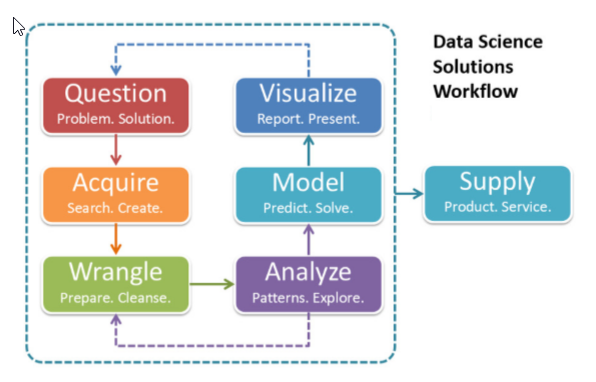
Some of the real-world applications are :
The recommended movies and products displayed to us in the online sites ( Netflix, Amazon, etc) are implemented with the help of Data Science. It is also used to predict the demand for particular brands based on customer preferences and shopping behavior. It is widely used in the shipments industry to calculated the optimized routes etc.
undefinedThe Data Science process: It typically consists of six steps. They are 1) Setting the research goal, 2) Retrieving the data, 3) Data preparation, 4) Data exploration, 5) Data modeling and 6) Data visualization.
Setting the research goal: Data science helps us to find and express solutions to business problems. It is usually applied in the context of organizations. A project charter is prepared that contains information about the research โ€“ data and resources needed, benefits, timetable, and deliverables.
Retrieving the data: With the evolution of the Internet and smart technologies, data is grown as Big data. Sometimes, the data is extracted from the web using web scraping methods.
Data preparation: The collected data ( .csv, .pdf, or .txt formats) is cleansed to remove the outliers (data that does not fall within the range or boundary), bad data, etc. The database system used for loading the data is MySQL or PostgreSQL.
Data exploration: Statistical & predictive modeling methods and probability distributions are used to explore the patterns in data. This step is often called Exploratory data analysis ( EDA, in short). PYTHON or R programming is extensively used in Data Science. Jupyter, Spyder, or Pycharm integrated development environment can be used for writing the coding in Python language. It offers interactive coding ( My goodness, what an amazing feature it is !!!) with Jupyter Notebooks which enable intermixing of code, module outputs, plots, and charts, all within one seamless notebook.
Data modeling or Model building: Either the predictive modeling techniques or Machine learning algorithms can be used to build a model. It involves selecting the variables for the model, model execution, and diagnostics.
Data visualization: For midsized data, the standard libraries supported by python is used for presenting the data distribution in a visual form. Tableau, Microsoft Power BI can also be used for visualizing them.
We shall discuss the amazing Python language features in significant detail sometime later.

TIPS AND TRICKS TO CRACK THE COMPETITIVE EXAMS

The season of competitive exams is around the corner and we know you are doing all you can to crack these exams. These exams are designed to check your knowledge in particular sections. In this post we have tried to give you some important tips to crack any competitive exam, be it SSC, IBPS, Insurance, NDA, etc.

SMARTLY PLAN YOUR WORK

Once you have made up your mind to prepare for a competitive exam or to enter a particular sector, the most important thing is to plan your way. Get a rough idea when these exams are conducted in a given year and calculate how much time is with you for your preparation.
In all the competitive exam what is required essentially is your presence of mind. Studying till the last moment will only lead to stress and exhaustion. Before formulating your preparation strategy, chalk out the syllabus and measure your comfort level in individual section. Suppose you feel you are not good in reasoning or essay writing, divide your time table according to it and give extra time to these.
LIST PREPARATION

Once you have a sense of the syllabus, make a list of the books or study material you would be requiring for the exam. Study material for the areas like Verbal Abilities, Math andย Englishย should be collected.

BALANCE YOUR TIME

Make a daily time table and do not forget to include your recreational activities in it. Also try to shuffle the subjects so that you do not get bored. You should try studying for at leastย 4 hours a day. Take time out for reading newspaper daily. 30 minutes for this would be sufficient, this will certainly help you prepare for your general awareness section.

PREPARE YOUR OWN NOTES

Whatever you study, try maintaining a notebook for it. Go through this notebook at the time of revision.
PLAN YOUR DESTINYย 

Set a finish date on your mobile, calendar or put it on your table. By this date you should finish learning new concepts. It is important that you stick to this date. After this you can start applying what you have learnt and see your performance by giving mock tests, practice previous year papers etc.

PREPARE FOR QUANTITATIVE APTITUDE

Quantitative Aptitude should be given utmost importance at the time of preparation. Tryย practicingย questions daily. Go through the concepts first and then solve problems. Make a note of important formulas, theories and corollaries. You should be thorough with tables, square roots and cube roots to do calculations quickly. Quantitative questions are not difficult to solve, all you need is practice and speed to excel in this section.

DEVELOPING VOCABULARYย 

Improving your vocabulary will help you a great deal in your English section. Questions on Synonyms, Antonyms and One word substitution will become an easy nut to crack. This is the part which is not given due importance by students. Having a good vocabulary will do you no harm instead it will also help you in your Group Discussion and Interview round ( only if you wish to sweep others by your command on language and some flowery words

REASONING

Practice questions on age, direction and distance, seating arrangement andย Vennย diagram. They are almost asked in every competitive exam. You should also work on your speed. Try learning or making your own short cuts to solved a particular set of question. This is the part where you cannot cram anything. All you need to do is to apply your brain and get done with the question and that isnโ€™t a difficult task.

Zamdoodh

I have been very lucky when it comes to โ€˜homesโ€™. Now, one may ask why I am using the plural form of a word which for most people translates into love and comfort. Well, Iโ€™m a fauji brat and I have been quite fortunate for having been to and lived in so many places across India that for me, home isnโ€™t a place where we live, it is much beyond that. More so because we usually live in places for not more than 2 years so you must understand that I have to arrive, like, love and miss a particular place in less than 800 days.

As a child while most people associated their favourite place with their favourite restaurant or say, some really good friends, I always have fallen in love with those cities and towns which were very quaint and tiny, filled with people who had nothing to do with the world outside. For them, the place was โ€˜gharโ€™ and like most Indians they had sworn to not leave their โ€˜gharsโ€™ ever. We, the fauji guys were simply โ€˜fauji jo aate jaate rehte hain aur border par hote hain.โ€™

Today, while having my lunch I ate some curd which reminded me of my first love story which began long back, around 16 years ago. The memory is still as fresh in my mind as a daisy. I was also watching the news, something to do with the bitter bilateral relations between India and China where Ladakh is now on the butcherโ€™s block. Letโ€™s not get into the news here. I wanted to tell you all about my experience of having lived in Kashmir, very near to the border. Itโ€™s a very simple one but Iโ€™m sure youโ€™ll enjoy.

I think this was somewhere in December. My birthday is on the 27th so back then mum had decided to bake me cake. You donโ€™t usually get a maid in Srinagar but we were lucky to have found one. Maa and I were looking for the cake tin and other paraphernalia required for making my birthday a huge success, invitees for which were me, maa, baba and my favourire- Raja Begum.

I donโ€™t remember much of her but maa tells me Raja Begumโ€™s name was Shehnaz. Heaven knows who named her raja and why but she loved it and didnโ€™t like been called Shehnaz, nor โ€˜Rajaโ€™ or just โ€˜Begumโ€™. Meticulous and organised to the tee, her routine was set. She would come, make herself do ande ka โ€˜aamletโ€™, have some tea, talk about how beautiful Kashmir is while washing the dishes, dance around with the broom for some while and then leave. I donโ€™t know if she really helped my mother with the chores but in an awfully cold place like Srinagar with connections snapping every now and then, my wailing self to top it all, I reckon Raja Begum was a pleasant presence.

She was the one who had taught me how to walk. I was almost 2 and wouldnโ€™t move an inch from my stroller. I used to just sit there either crying or eating mashed apple looking outside the window. My Raja Begum took it on herself to teach me the art of moving on two feet and she was very successful I must say, itโ€™s been 19 years since and I have only improved. She took me in her arms one day and put me on the floor and as expected, I didnโ€™t do anything. โ€˜Haraamzaadi, tum chalegi nahi?!, yelled Raja Begum and within no time I had started to walk to my dear motherโ€™s utter pleasure.

So now I hope you understand what value Raja Begum holds in my life. Coming back to my birthday party prep in full swing, as always, Raja Begum walked in, made herself an โ€˜amletโ€™ and since she was loving herself a bit more that day, she used three eggs that day instead if two thus using up all we had.

โ€˜Arey ab kaise cake banega Raja Begum! Ande khatamโ€™, said my poor maa.

โ€˜Usme kya beti? Zamdoodh daalo, cake ko banega.โ€™ For those of you who donโ€™t know, Zamddodh is curd/yoghurt which apparently is used to make cake sometimes. My mum didnโ€™t know this and asked Raja Begum if it would turn out edible to which she replied, โ€˜ Kyun nahi banega accha? Raja Begum ko aata cake. Hum Kashmiri daalte hain zamdoodh. Aap Hindustani nahi istmal karte honge.โ€™

We made the cake and it was tasty and while it has been so many years, Iโ€™ll always remember how Raja Begum felt she wasnโ€™t Hindustani enough. She stands for the many Kashmiris who donโ€™t feel like a part of India but alas, in spite of all the constitutional changes and the political efforts, they are still Kashmiris trying to save themselves from us Hindustanis.

Burden of healthcare on poor

When it comes to health care, every individual dreads it. Health care costs are taking a large chunk out of the savings of an individual. These costs make the lives of poor people more vulnerable. Though India is becoming a destination for foreigners to avail affordable health care, many Indians find health care services unaffordable. The treatment costs are rising at a much faster rate than inflation for both rural and urban areas. Also inefficiency of government hospitals and pharmacies have led people to turn towards private players resulting in increased health care costs.

The private expenditure on health care is around 4% in India, which makes it one of the highest ranking countries when it comes to private expenditure on health care. However, major costs of healthcare are born by individuals rather than insurance companies or employees.ย 

A research paper in BMJ, a medical weekly, reported that 55 million Indians-more than the population of South Korea- were pushed into poverty because of out of the pocket health expenses between 1994 to 2014. Out of those 55 million, 69% (38 million) were impoverished due to expenses on medicine alone. This study also reported that 80% Indians incurred out of the pocket expenses in 2011-12 which was 60% in 1993-94. The contribution of medicines was more than 67% of these out of the pocket expenses in 2011-12.

Government has rolled out various schemes to ensure that poor people donโ€™t have to bear the costs of medicine. However, as per study by Indiaโ€™s largest national survey on social consumption conducted between July 2017 and June 2018, reported that 90% of India’s poor population do not have any health insurance. Despite of many health insurance schemes like Rashtriya Swasthya Bima Yojana (RSBY, National Health Insurance Scheme), which was precursor of PMJAY, the central government health schemes for government employees, the Employee State Insurance Scheme for formal sector employees, the poor did not have any kind of health insurance.

The health insurance coverage in India is poor because the private health insurance industry has not yet developed in India and the number of people who are willing to pay for health insurance are very low. Also the insurance premiums are high which makes health insurance unaffordable by many poor people. In rural India, people have limited access to healthcare services like doctors and hospitals, thus they do not prefer to buy health insurance.

This condition led the government to roll out an effective scheme and the result was Ayushman Bharat- National Health Protection Scheme(AB-NHPS) in 2018. The scheme is targeted at following categories:

  • Poor
  • Deprived rural families
  • Identified Occupational category of urban workersโ€™ families

Benefits of this scheme

  • This scheme defined benefit cover of Rs 5 lakhs per family per year for secondary and tertiary care hospitalisation.
  • There is no cap on family size and age under this scheme.
  • This scheme will be cashless and paperless in public and enlisted private hospitals.

With Covid-19, poor are facing a lot of issues and all they need is support majorly in financal ways.

Education

Education is by far the most important thing in your life. Everything in your life can go wrong, everyone who have right now can turn their backs on you but education will always be there with you. No matter how low you might be education can always pull you up. Dont waste your precious time and money having the fun which can be enjoyed later too. Focus on what is important. Focus on what can give you a decent livelyhood. Sometimes you might not be having enough resources but if you have determination to fulfil your dreams , you will always find a way out. Dream my friend. Dream of bigger things in your life. A person who dreams and has the zest to complete them is the most motivated and enthusiastic person you will ever meet. Have that zest to complete your dreams. Make education your priority because if you have right kind of education, my friend you are the richest person in the world.

Black it up…or in our case maybe brown or Rainbow?

So as we all know what is happening around us nowadays starting from Corona virus and ending with riots. But the thing which caught everybody’s attention was the riot which started in USA and is now making ripples through out the world as the coveted movement of black lives matter. The words which came out of George Floyd’s mouth still haunt me in my dreams as he said “I can’t breathe officer, I can’t breathe, I wanna see my mama”. Nobody deserves to die like that I don’t know if he is guilty or not guilty but it’s wrong to take the precious and the most valuable right a being on this planet Earth has that is the right to breathe,as if you call yourself a human and if in your whole life you have seen in someone else’s eye and you have realized that this being loves me as a mother, brother,wife,husband,daughter,son, family, pet or a stranger as they love me because my heart’s still beating and my brain’s still functional so that I can share this love with someone else to make a world with the harmony of heaven. I know it’s a little bit of an utopia but still then reality starts and ends with belief and hope.

Through out the world there are millions and millions of people facing racism ever single day of their life starting from Breonna Taylor to Freddie Gray to Alton Sterling and many more whose name still remains in that veil of oblivion and the complications of corruption to hide this cruelty. Statistics also speaks for racism as such the increasing number of hate crimes,atrocities upon minorities are like the so called all time trending subject of world’s total information and news scenario. Homophobia, Trans phobia and racism are really concerned and perilous issues for this great civilization which we call humanity. It was really a great moment to see India to tear away that orthodox article 377 of Indian Constitution which made homosexuality illegal so in a manner it was a massive point of elation for those millions and millions of Indians who use to live in the shadows of fear and pain as unapprehended felon due to that cruel article which made the dance of horrors for so many years in this great country we call home. Well if you ask me it was a bright moment for India but still then homophobia goes deep in Indian soil starting from those atrocities with trans people on train rides to any person coming out in a so called traditional Indian orthodox family so it all has to change and we all know that it’s gonna take some time but we can hope can’t we. As at the end that’s all we have.

But what about India after all why is the world’s largest democracy is silent in this one a bit weird right! well I don’t think we are not doing anything because we are really conscious about the lock down or we are really obedient and stuff like that because we all know that protesting is in our blood so how come is this blood not working in this massive scenario of ignited souls through out the world but not in case of Indians. Well I guess we all know the answer that racism is something which goes quite casual and is rooted deep in India starting from Bollywood to commercials to cosmetics and to every house hold we all are quite aware of the value of being fair and white. I think everybody as growing up in India have heard the term gora(fair),saonla(brown) and kala(black) but trust me nobody cares or gives an importance towards the later two the only color we see is gora. Let me ask you something have you seen a single actor or actress in Bollwood who is lets say not super famous but is considered in bollywood being brown or black on purpose for a lead role well I haven’t maybe maximum in a tiny side role or worse a villain maybe and maybe shown in one movie and also that movie is a super hit and after that her/his/their era fades away in a very clean crystal manner so if we are going to debate my question then i guess we all can agree on the fact that we have a few but is that few participation of black and brown justified till 2020. Now if we come to house hold then we all know Indian neighbor are really deserving for the label of gossip girls or mean girls sometimes and the same for guys. So in a manner I’m disgusted by this whitewashing of every single thing which we have in public or which may come in public in this great subcontinent, I mean why can’t we see that color of the skin is nothing but just a reflection of what our genes are speaking for us what our ancestry has made for us and that is it, it is nothing I mean literally nothing more than that. We should realize and we should help others to realize this too that live your life in the way that you won’t have any regrets the moment you will be leaving this world. Accept who you truly are and let others do the same even if it’s really exciting to make fun of others but think about yourself in that person’s shoe before you do that then you will know how bad it is to do that to anyone. So live your life in a manner which makes you happy and other’s happy too because we don’t know that is there another life after this or not we only know this one so use it to be happy,sad,angry,passionate and everything by which you can be humane.

MBA COURSE(HOW IT HELPS YOU TO ENCOURAGEMENT OF YOUR CARRER)

MBA (Master of Business Administration) is a master degree programmer in business administration.

Before jumping to the conclusion that a Masterโ€™s in Business Administration (MBA) is the right path for you, stop and ask yourself why. The hunky-dory vision of life after MBA may not be so easy after all. Not every management graduate receives a cushy job and dream salary package. You must have your goals in place to be able to establish a solid and successful career after an MBA.

The usual reasons for doing an MBA these days:

It earns you more money

It gives you a promotion in your job

It helps you quit a job that sucks

Why pursue an MBA

To launch a progressive career

To make a shift in career, if you already are an experienced professional

To nurture an innovative outlook

To network with the best in the market

To add a brand value to yourself

To enhance personal growth

To start a business/ start-up/ turn entrepreneur

To move to another location

Scope of an MBA amongst Current Market Trends

Pursuing an MBA will give you skills that you may use to solve day-to-day business and management problems. MBA courses are more relevant today than ever before because thought leaders are needed to exploit the rapid growth in the Indian economy.

Unique Knowledge

Cut-throat competition is a reality. It is not uncommon for senior employees who have experience but lack an up-to-date skill set to lose out to younger colleagues who have pursued an MBA.

Specialization

There is an increased specialization of careers in the service sector. This has led to emergence of specialized subjects in which you can pursue an MBA. Through subjects such as finance or marketing, you will not only learn the basics of business, but also be able to create a niche for yourself. You can look for the availability of a course of your liking in the best B-schools of India online or through appearing for their entrance exams, if any.

Better pay and Scope for Promotions

Pursuing a course such as a 2 year or1 year full time may change the direction of your career. It is an added academic achievement, which may increase the likelihood of getting a raise and promotion. It may also open up opportunities for jobs that you were not eligible for before because of its orientation towards leadership and team-building.

Entrepreneurship Skills

Startup India and other initiatives have made the Indian economy conducive to the establishment and growth of businesses.

The curriculum of a one year MBA or any other MBA courses in India will train you to differentiate between a good and bad strategy business strategy. You will learn how to give your business a global outreach, how to adopt techniques to attract external funding, and how to hire the best minds in the job market.

Having an MBA on your CV may translate into job security because you will still be able to find a job even if your business does not perform favorably.

India as an Emerging Economy

Emerging economies are proving to be fertile ground for MBA graduates, because it is easier to navigate unstructured markets with a structured mind. Companies are constantly looking to expand in such economies, and they need professionals trained in business and management to give direction to their growth.

The increase in domestic and foreign demand coupled with expansion in finance, real estate and investments are expected to cause a surge in Indiaโ€™s growth story, and an MBA degree is best designed to take advantage of it.

 MBA is a biggest opportunity for future security ,an mba aspirant can do anything in industrial sector .mba is one the most big job oriented professional programme and one which has been sought by the students .after completing this degree you may become the manager or can start their own business.

The MBA degree was initiated in the late 19th century in the USA. The MBA degree has been started to produce the sound management professional equip with the basic and advanced knowledge to stand the business administration.

Today, the world is growing in the fields of marketing, industrialization, financing and education. The MBA programme has specially been designed for the candidates who are executing the administration of the industries or related field.

Courses :-  For the admission in an MBA programme, many institutions require the GMAT 2020 (Graduate Management Admission Test) score.

But, entrance test is not required for the admission to the distance learning or Online.

In india (ignou : Indira Gandhi national open university provides mba course)

But in delhi university you need to crack the the cat exam after that you will get the admission in delhi university.

Many colleges and Universities are offering MBA programme as full-time and part-time or through online or distance learning education.

An exe-MBA (Executive Management of Business Administration) is also popular now. The working professional who wishes to get the higher degree according to his job profile can do the EMBA as part-time or online medium. In India, the accreditation body for MBA or related programme is AICTE (All India Council of Technical Education). There are different accreditation bodies in different countries.

The student can choose the core courses according to the interest. The top core subjects of an MBA degree are as the following:

The students choose the mba specialization fields according to their interest. Whether you have done graduation in engineeringartsscience or humanities, you are free to choose the MBA programme in any specialization, what you wish to.

Once you have done your MBA degree, you can go for the doctoral degree programme (PhD), offers by the various institutions in India and Abroad.

Admissions:

There are many universities which provides mba in india or foreign

The best part of the programme that the graduate in any discipline can get the admission in MBA programme.

The top colleges or universities in India, offering MBA programme are as following:

  • IGNOU
  • Symbiosis International University
  • Institute of Management & Technology
  • Sikkim Manipal University
  • Maharishi Dayanand university
  • ICFAI University
  • Amity University
  • Lovely Professional University
  • Bharati Vidyapeeth University
  • Indian Institute of Finance

Jobs profiles of mba holder

 An MBA professional always plays a vital role in his/her company and this is why, he used to keep in touch with the board of directors.

No need to specify the companies who recruit the MBA professionals. The all sectors including government and public have various industries, companies, institutions or related organizations, come in the job prospective fields for an MBA professional.

  • Brand Manager
  • Account Manager
  • International Business Manager
  • Marketing Executive
  • Business Technical Consultant
  • Business Development Executive
  • Marketing Manager
  • Management Consultant

These are some profiles of a mba holder who can be engaged in this work after completing his post-graduation in mba

Salary

โ€œHandsome salary packages are offered to MBA qualified candidatesโ€.

Management sector is one of the highest paying sector. The salary is no issue for the right candidates who have a good leadership, decision making skill, enthusiasm and good academic background.

The initial package in India is around Rs. 2 to 3 lakh per annum but the maximum is unlimited. Also the increment in this sector is quiet good and depending on your capability, you can reach up to six figure income in quick span of time.

  • Enrollment : if you completed your graduation from any fields you can prepare now for entrances for ex: CAT Entrance Exam ,XAT Entrance Exam,GMAT Entrance Exam,CMAT Entrance Exam,MAT Entrance Exam

After clearing this exam you can enroll your interest in your dream universities.

HABITS: that we can form!

Habits are normal and in some cases compulsory.
At the point when you consider having effective habit for work or business, you think about the ones that make you profitable and increment development.
A habit is something you do more than once and routinely without contemplating doing it.
For instance, you get up each day simultaneously even without a morning timer.
You have a set routine you do every morning. In your business or occupation, you assault extends similarly.
Habits are standard and now and again obligatory.
At the point when you consider having effective habits for work or business, you think about the ones that make you gainful and fit in worth development.

Formation of Habit

The way toward changing a habit into another conduct is called habit arrangement.
It’s exceptionally difficult to get out from under old habits and structure new propensities since our conduct is engrained into our neural pathways.
In any case, redundancy is the way to changing a habits.

Habits are shaped through playing out a specific activity or conduct so routinely that it gets programmed.

The time span it takes to bring an end to or structure another habit has been discussed frequently.
We’ve been informed that a habit can be framed and continued in 21 days.
This originated from a plastic specialist, Maxwell Maltz, who distributed a book, “Psycho-Cybernetics” during the 60s.
In it, he discussed his perceptions that amputees took on normal just 21 days to change in accordance with the passing of an appendage. He contemplated that the equivalent must be valid for every large change and it must take 21 days to change a habit.
Habits can be at first activated by an objective however after some time that objective blurs and the habit turns into a programmed conduct.

Habits are shaped in a piece of the cerebrum called the basal ganglia, which has to do with the improvement of feelings, design acknowledgment, and recollections.
Choices, be that as it may, are from the prefrontal cortex part of the cerebrum.
When a conduct turns into a habit, the dynamic piece of the mind quits handling new information.
In this way a habit is something you manage without pondering doing it.
It takes somewhere in the range of 18 days to 245 days to shape another habit, contingent upon the unpredictability of the habit.
Changing an unfortunate habit into a decent one can be troublesome however not feasible.

Social Media and Mental Health

Social media is a double edged sword . It gives an individual the ground to showcase their talents and boast their confidence , but over use of social media can fuel up mental disorders , such as anxiety , depression, isolation and so on.


Role of Social Media


Humans are social creature, they always crave for social contact. Companionship of others and strength in our relationships with others impact our mental well-being. When an individual experiences good interpersonal relationship with others , they are much more contented with themselves and happy with the world around them. However if social media becomes our only source of contact then it can do more harm than any good . Rather then doing any good , they become a source of anxiety , depression and stress.


Now a days most of us have started spending greater amount of time on social networking sites , like Facebook , Instagram , Twitter and so on. They do provide us with a field to explore and be more closely connected with people , however they should not be substituted for real world human contact . It is real world interpersonal relationships that satisfy ones social need. Ironically , the social media which promised to bring people closer , has become the cause of being more socially secluded . social media

Positive and Negative Impact of Social Media

Though social media cannot discount the importance of face to face contact , but there are certain merits as well . Social networking sites gives us greater connectivity with the world. They help us to stay up to date with what is happening in the world . They also give us the playing ground to connect with like minded people and thus boast our self worth. Social networking sites can also give us greater exposure to show our creative talents . Social media has also given boast to marketing as well , traditional marketing strategies are now backed with social media marketing .


However just like a coin has two faces , so does social media. Social media has given a major boast to insecurities . Those perfectly clicked and edited social media pictures makes the person viewing it feel inadequate about their lifestyle and appearance. Social media has also instilled the fear of missing out . Youngsters now a days need it all, which is practically not even possible. With the booms in social networking, people have started to compare their talents , lifestyle, growth with that of others leading to major negative impact on mental well-being . Social media has also given boast to troll culture and cyber bullying and not everyone is so strong headed to deal with this negativity. Every move of an individual is now monitored and compared. All this distorts oneโ€™s mental peace and cause major mental health issues.


Signs Social Media is impacting Mental Health


Individual are different and unique. It is not the amount of time you spend in phone , not the number of post you make and pictures you upload , that measures whether your mental health is impacted by social media . Rather , the under mentioned reasons are :


โ€ข Spending more time and energy on social media than real world friends
โ€ข Comparing oneself with others on social media , mostly unfavourably
โ€ข Experiencing cyber bullying and trolling
โ€ข Being distracted from real world activities , such as school and work
โ€ข Having no โ€œme timeโ€
โ€ข Engaging in risky behaviour just for gaining likes
โ€ข Experiencing symptoms of anxiety and depression
โ€ข Intensified stress
โ€ข Experiencing sleep disorders


Conclusion


Social media is just like a double edged sword , with its fair share of good and bad. It connects us with people all over the world , but at the same time make us distant from our close ones . It helps us realize our self worth but if overused can also make us insecure with ourselves . We as individuals have to set our boundaries , we need to make a distinction between use and abuse of social media . We can spend time on social media , but cannot let that impact our mental well-being . Engaging more time with real world supportive individuals is most important , because nothing is world can discount the importance of healthy interpersonal communication .

DEPRESSION

Depression as a serious mental illness has been ignored since ages. But, do you know, depression if not treated, can also lead to death. Depression is the leading cause of bad mental health worldwide and is a major contributor to the overall global burden of disease. It affects the way we speak, how we feel, how we communicate or convey, how we respond to external stimuli, how we cope with the changing environment.
The World Health Organization asserted that women are more likely to suffer from depression than men. Depression can cause a person harm himself and at its worst, can lead to suicide. It is reported that depression is a major contributor to the suicides globally. Depression neither has a face nor an age. It can occur to anybody at any point of time. If a person physically appears to be healthy, doesnโ€™t necessarily mean, he is mentally healthy too.
Doctors diagnose depression when one has the following symptoms for at least two or more weeks : A depressed mood especially in the morning hours, Loss of Appetite, Feeling of restlessness, Lack of energy, Lack of interest or having no pleasure in working, Feeling empty from inside, anxiety, Having suicidal thoughts etc. These are some common symptoms one is likely to experience. Although, it varies with the severity. Not everybody with depression will have the same symptoms. In some, the signs may be identifiable. While others may show no sign of depression but likely to suffer from the same. It varies from one individual to another.
Physical symptoms include back pain, digestive problems, sleep trouble and the like. The reason is that brain chemicals linked to depression, especially serotonin may influence mood in a way that leads to depression. It plays a vital role in both mood and pain.
Researchers suggest that depression doesnโ€™t only spring from an imbalance in the level of brain chemicals. Rather, there are many possible causes of depression, such as genetic imbalance, stressful life events, traumatic experience in the past and the like.
If a person is sad or succumbed with grief, it doesnโ€™t necessarily mean, he or she has depression. Both grief and sadness may influence our mood, cause a feeling of emptiness but if the feeling stays for a prolonged period of time, then the person is likely to have depression.

STIGMA ASSOCIATED WITH MENTAL ILLNESS
Stigma is when a person with mental illness is alienated or isolated from the society. For people with mental illness, the social stigma and discrimination they experience, trigger a sense of fear in them. The fear of getting judged or humiliated may make their situation even worse. They may avoid reaching out to people. Mental illness is not a sign of weakness. It is natural and curable.


DEALING WITH THE STIGMA

  1. Seek help from a professional โ€“ Instead of avoiding people, we must seek help from a professional. Proper medication and treatment can help us recover at a faster pace.
  2. Do not hide your emotions โ€“ Communication is the key. It is very important to open up rather than bottling up the emotions.
  3. Do not fear โ€“ Say out loud. People will pass judgement because of lack of understanding. You have to believe yourself. You have to stand up for yourself.

Depression is associated with a plethora of emotions. It may involve a lot of negative emotions too. But, suicide is definitely not the only solution. Depression is curable. All you need is help. We ought to fight against the stigma associated with mental illness. It is very important to maintain peace. A peaceful mind battles the odds.

Sources – Manorama Year Book 2020

How to overcome self doubt?


A certain level of self doubt is good because it indicates you understand where you need to improve in order to have a better version of you. Self doubt which occur in life make you do weirdest of thing. We question ourselves do we have the capability to do certain task and overcome from our thoughts. You over think too much which raise another set of question and just like that a link is formed in our subconscious. When you are given a big task you donโ€™t consider it as an opportunity but you feel that I am capable to do the task it creates a panic inside you. Many people donโ€™t do new things and are stuck.
Common causes of self doubt

  1. Past experience and mistakes
    Remember when you are not up to the expectations of other people. You felt criticism and your self-confidence was shattered. Past experience can have impact in your life. It can change your point of view and set of beliefs. Keep referring to past experiences without learning is a waste of your effort.
  2. Comparison with others
    It is not surprising we compare ourselves with others because we are living in world of competition and everyone wants to evolve in their job. It creates in you a peer pressure. Itโ€™s easy for us to envy otherโ€™s live and thinking that we are not just great as they are .When youโ€™re comparing too much with others about what they have and what you lack, youโ€™ll start to lose yourself. You have to learn to appreciate yourself.
  3. The rise of new challenges
    This is normal we all have a fear of unknown we donโ€™t dare to go to the grounds until about the situation on the new hunting ground. The fear of insecurities and uncertainty will make you feel uncomfortable. Instead of thinking that you are not capable take it as a chance to learn.
    We all learn to walk and talk how much we fall or fumble we eventually learn to avoid mistakes done in the past.

How to overcome self-doubt
What can you do to overcome self doubt and be confident again no matter how tough things go?

  1. Know youโ€™re not alone
    Acknowledge that everyone has doubts. It should not be negative. You will be your own barrier for success. Itโ€™s isolating to believe that youโ€™re only one suffering from lack of confidence.
  2. Take a break and be optimistic
    If we feel stuck in a situation or emotion, the harder it is for us to get out of situation.
    You should take a moment and shift your focus to something totally different. It allows us to clear out mind and look at things from a new perspective.
  3. Donโ€™t be afraid to seek to help
    It is good to work on ourselves and ask other about their opinion which help to improve self confidence keep motivated. Donโ€™t be afraid to ask for help.

Itโ€™s common to have doubt it gives you different point of view toward things but you should not stuck in the situation and over think cause problems for yourselves. We should get out of loop.

National old age pension scheme- The Social Security

Ministry of Rural Development of India has introduced Indira Gandhi National Old Age Pension Scheme (IGNOAPS) under National Social Assistance Programme (NSAP) in the year 2007. IGNOAPS also called as National Old Age Pension Scheme (NOAPS).

National Social Assistance Programme (NSAP) provides social assistance benefits to poor households in India such as old age person, widow and disability person. NSAP key objective is to ensure social protection to its beneficiaries in India.

Indira Gandhi National Old Age Pension Amount for senior citizen is as below:

S.No. Age of BPL Citizen. Amount


1. 60 to 79 years. Rs. 200 per month


2. 80 and above. Rs. 500 per month

Documents Required

The documents required for apply Indira Gandhi National Old Age Pension Scheme are as follows:

  • Application form for IGNOAP
  • Proof of age โ€“ The age certificate needs to be obtained from the concern medical officer and to be attested by the concerned Block medical officer.
  • Income certificate to be submitted
  • Below Poverty Line (BPL) card in the name of Applicant should be submitted.
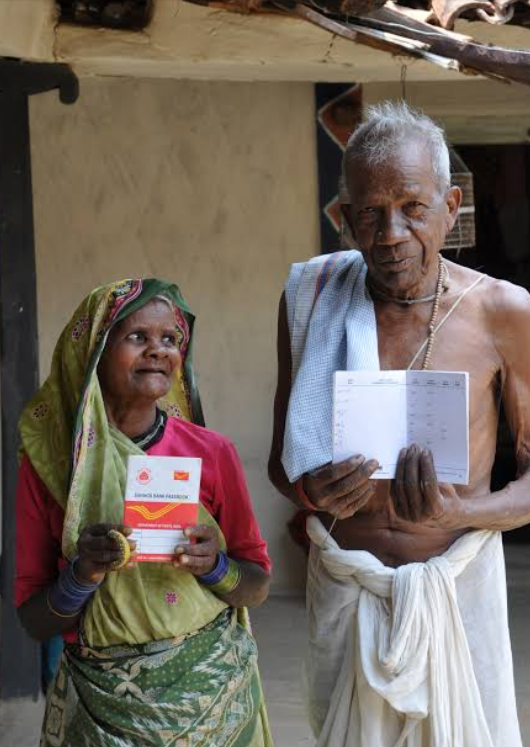
  • Bank pass book or Post office passbook
  • Passport size photographs

Eligibility

All the Indian citizens are eligible for a pension account under National Pension Scheme through eNPS. Aadhaar is mandatory for opening an NPS account. The KYC for NPS is done using Aadhaar and One Time Password (OTP) authentication using your mobile number registered with Aadhaar.

All individuals above the age of 60 who live below the poverty line are eligible to apply for IGNOAPS.

How to apply

Step 1: Get an application form from Social Welfare Department in the concerned area.

Step 2: Fill all information in the Application form.

  • State, District and Block details
  • Name of the village Panchayat
  • Name of Society, Beneficiary and Heirs
  • House number
  • Gender (Male / Female)
  • Age and Date of Birth
  • Birth certificate details
  • Annual income and domicile certificate details.
  • EPIC number (Voter ID number)

Sample Copy of Indira Gandhi National Old Age Pension Application is given here.

Step 3: Submit the application form along with all documents to the concerned Tehsil Social Welfare Officers. An applicant from urban area can directly submit the application to concern District Social Welfare Officer.

Step 4: Application will be scrutinized or verified by officers

Step 5: Social Welfare department will recommend the beneficiaries to District Social Welfare Officer.

Step 6: The final sanction will be made by District Level Sanctioning Committee (DLSC).

Mode of Payment of Pension Amount

The old age pension amount will be credited to the beneficiary bank account or post office account as per the information furnished by Applicant.

Check Old Age Pension Scheme Beneficiaries List

Step 1: In the NASP web portal, select Beneficiary search option from the menu given.

Step 2: Select your State District Municipality, Grama Panchayat or Ward from the drop down menu.

Indira Gandhi National Old Age Pension Scheme Beneficiaries list will appear on the screen.

IMPACT OF SOCIAL MEDIA ON OUR LIVES: GOOD AND BAD!

The Impact of Social Media on Politics

Another examination from Pew Research guarantees that 62 percent of individuals get their report from web-based social networking, with 18 percent doing so frequently. The political scene has changed a considerable amount over the most recent few decades. The web has assumed an enormous job in this change. Internet based life, specifically, is presently a genuine factor in political crusades and in the manner in which individuals consider issues. Competitors and their supporters continually post their perspectives on Facebook and Twitter. Each gathering has its own pages, from which it communicates publicity and solicitations for gifts. How about we take a gander at a portion of the main ways that web-based social networking impacts governmental issues today.

The Impact of Social Media on Society

Right around a fourth of the total populace is presently on Facebook. Since interpersonal organisations feed off cooperation among individuals, they become all the more remarkable as they develop. On account of the web, every individual with minor perspectives can see that he’s not the only one. Also, when these individuals discover each other by means of internet based life, they can get things done โ€” make images, distributions and whole online universes that reinforce their perspective, and afterward break into the standard. Without web-based social networking, social, moral, ecological and political ills would have negligible perceivability. Expanded perceivability of issues has moved the level of influence from the hands of a couple to the majority. The flipside: Social media is gradually murdering genuine activism and supplanting it with ‘slacktivism’. While internet based life activism brings an expanded mindfulness about cultural issues, questions stay regarding whether this mindfulness is converting into genuine change. Some contend that social sharing has urged individuals to utilize PCs and cell phones to communicate their interests on social issues without really captivating effectively with battles, all things considered.

The Impact of Social Media on Commerce

The ascent of web based life implies it’s strange to discover an association that doesn’t arrive at its clients and prospects through some internet based life stage. Organisations see the significance of utilising internet based life to interface with clients and construct income. Organizations have acknowledged they can utilize web based life to create bits of knowledge, invigorate request, and make focused on item contributions. This is significant in customary block and-engine organizations, and, clearly, in the realm of online business.

The Impact of Social Media on Work

Web based life has profoundly affected enrollment and employing. 19 percent of recruiting administrators settle on their employing choices dependent on data found via web-based networking media. As per CareerBuilder’s 2016 internet based life enlistment review, 60 percent of bosses utilize long range interpersonal communication destinations to investigate work applicants. Proficient interpersonal organizations, for example, LinkedIn are significant online networking stages for anybody hoping to hang out in their calling. They permit individuals to make and market an individual brand.

The Impact of Social Media on Development

Occupation competitors who create aptitudes in the most recent and most developed web based life methods are unmistakably progressively employable.
A 2013 study by Pearson Learning Solutions announced a critical increment in the utilization of internet based life in learning. Over a large portion of the instructors who were met concurred that social sharing empowers connection, giving a domain that encourages learning.
Websites, wikis, LinkedIn, Twitter, Facebook, and web recordings are currently regular instruments for learning in numerous instructive organizations. Web-based social networking has added to the expansion in significant distance internet learning.
In spite of issues of absence of protection and a few cases of cheating among significant distance students, this has not hindered social stages from being utilized in instruction.

The Challenges of Social Media

Online life has been accused for advancing social ills, for example,

Cyberbullying:

Adolescents have a need to fit in, to be well known and to exceed others. This procedure was testing some time before the approach of online life. Include Facebook, Twitter, Snapchat, and Instagram in with the general mish-mash and you out of nowhere have young people being exposed inclination strain to grow up excessively quick in an online world.

Absence of Privacy:

Following, data fraud, individual assaults, and abuse of data are a portion of the dangers looked by the clients of web based life. More often than not, the clients themselves are at fault as they wind up sharing substance that ought not be in the open eye. The disarray emerges from an absence of comprehension of how the private and open components of an online profile really work.
Lamentably, when private substance is erased, it’s generally past the point of no return and can mess up individuals’ close to home and expert lives.

The Impact of Social Media on Relationships

One of the impacts of online networking is urging individuals to shape and love fake bonds over genuine companionships. The term ‘companion’ as utilized via web-based networking media comes up short on the closeness related to regular fellowships, where individuals really know one another, need to converse with one another, have a personal bond and much of the time cooperate up close and personal.

The Bottom Line

It’s been said that data is power. Without a methods for appropriating data, individuals can’t saddle the force. One positive effect of online networking is in the circulation of data in this day and age. Stages, for example, Facebook, LinkedIn, Twitter and others have made it conceivable to get to data at the snap of a catch

Benefits of technology in education:

Using the new technology in education has become a center point of many researches and studies. Modern education has to combine with modern technology to come up with best results. The teacher and the student both can use the technology to enhance the teaching and learning strategies. On the other hand, many people are worried of the possible harmful effects of using technology in the classroom or at home. Will children lose their ability to relate to other people? Will they become dependent on technology to learn? Will they find inappropriate materials? The same was probably said with the invention of the printing press, radio, and television. All of these can be used inappropriately, but all of them have given humanity unlimited access to information which can be turned into knowledge. Appropriately used- interactively and with guidance- they have become tools for the development of higher order thinking skills.

To begin with, TV the invention that helps us to get useful information in easiest way.โ€ I think, the most important advantage of television is that it is a huge source of informations, knowledge and entertainment.โ€ (wojtas Dodano, 2003). Although TV is not a new invention, people try to find many new ways to use it as a communication tool. Some of the TVโ€™s benefits that it may help the learners in different ways. For example, the learner of English Language -or any other language- can find a collection of programs, movies, series, documentary and educated programs and channels that they can use to learn the language they want. Moreover, TV is an easy, cheap, and available tool to communicate with all over the world and know the latest news anytime anywhere. To focus more on language learning, TV can help in many ways. For example, the learner can watch the movie while reading the subtitles, or watch a simple language program to strengthen the listening skills. TV can also present many different shows, not only entertainment, but also News, documentary programs, educated programs, historical and scientific movies.

Secondly, the internet, which become the most popular technology these days. It can be consider as the โ€œbestโ€ way to keep in touch with friends from all countries over the world. In other words, the internet makes our earth as a small village. It actually has so many benefits; we can mention here the use to search for information and data for academic purposes. Students can always use the internet to get more information for their researches. It also became a popular way to communicate, you can send emails, use chat, voice chat, or even video chat with your friends and family. If we take a closer look, internet is playing an essential role in education nowadays. In his article, Muthukumar said that the Internet is a complex storage area containing a huge maze of information from a variety of sources. It has become a famous source of information for many people worldwide. The Internet wave has also hit the educational landscape in many big ways. The use of technologies such as the Internet as a teaching tool in schools is not the issue now since it is pervasively used. Relatively, the issue is how to effectively employ such technologies and harness fully the new opportunities created by them to promote positive student learning experiences.

Computer assisted learning is being widely used by teachers and studied by researchers. Teachers use computers inside classrooms and give the students assignments to integrate the technology with the homework. A number of studies have been done concerning how the use of computer for language learning affects the development of language learnersโ€™ four skills (listening, speaking, reading and writing). Most report significant gains in reading and listening and most CALL programs are geared toward these accessible skills because of the current state of computer technology. However, most reading and listening software is based on drills.ย On the other hand, using current CALL technology, even with its current limitations, for the development of speaking abilities has gained much attention. There has been some success in using CALL, in particular computer-mediated communication, to help speaking skills closely linked to โ€œcommunicative competenceโ€ (ability to engage in meaningful conversation in the target language) and provide controlled interactive speaking practice outside the classroom.ย Using chat has been shown to help students routines certain often-used expressions to promote the development of automatic structure that help develop speaking skills. This is true even if the chat is purely textual. The use of videoconferencing gives not only immediacy when communicating with a real person but also visual cues, such as facial expressions, making such communication more real.The challenging process of educating is in demanding need for solutions on how technology will change education. Society seems to be fascinated by the eruption of technological advancements in the educational field. In 1981 about eighteen percent of U.S. public schools had one computer for instructional use. By 1991 that percentage increased to ninety-eight percent (Alhalabi p.22). Technology has changed and will change many ideas of education the potential of educational systems captivates the lives of many students and teachers.
ย ย ย ย ย ย ย ย ย ย ย ย  The effects of technology in the classroom are related to both the teacher and the students. In the past classrooms were lecture driven. With technology involved in education, the students are more active in their learning. The teacher is no longer the center of attention. They play the role of a facilitator or guide of information and not so much of an information source. Technology in the classroom allows the students to be more active with the opportunity of communication of information. By being active the students are then more likely to generate their own choices on how to obtain, manipulate, or display information (Bridgforth). This gives students a higher confidence level.
ย ย ย ย ย ย ย ย ย ย ย ย  Teachers reported students had an increase in motivation when using technology. Because of their willingness to work with technology as opposed to a normal classroom setting of boring lecture, helps motivate students to learn. “Technology is the ultimate carrot for students. It’s something they want to master. Learning to use it enhances their self-esteem and makes them excited about coming to school,” stated a fifth grade teacher (Cradler p. 5).
ย ย ย ย ย ย ย ย ย ย ย ย  Technologies also give an opportunity for students and teachers to learn from a broader perspective of learning other skills. Instead of having the social norm of “lecture, notes” type of classes, students get to be active in learning with such a broad area of students.Inย the current age, we are in, technology has become an important factor. Every day comes new gadgets or software that make life easier and enhance the already existing technology and software.ย Simplifying lifeย does not just play a technical role in our lives.

The importance of the technology sector is constantly increasing. The more technology advances, the more benefits it provides to students at every level of education.

There are numerous reasons why technology is such an important aspect of learning in schools. Whether we like it or not, technology is everywhere; And our students must know the technology to survive in post-secondary education and the professional world.

Does technology improve education? 

This is a big question that we need to answer. If it doesn’t improve education, is it worth a try?

When teachers are using technology effectively, it will engage students in the learning process. This was revealed in a study published inย the British Journal of Educational Tech.ย 

The study does not neglect the importance of the teacher. In fact, researchers say that “when professors have more ‘sophisticated’ ideas of teaching, they probably use teaching strategies that result in students being actively involved in the teaching and learning management.”


Students are praised by such technology, so we can find a way to use it to promote business.

Conclusion:

So how does technology support education? Easy; It makes it even better. When teachers introduce tech in an appropriate way, it keeps students engaged. This makes the evaluation easier. It prepares students for the future.


Now that we understand the importance of tech, we have no choice but to use it better our students expect it from us. Both teachers and students are the driving force of the education system. Students tell us what they need and we find the best ways to provide them with this kind of knowledge.

Importance of examinations in student’s life

Exams have an important role in the process of learning and in the whole educational institution.โ€ Exams and tests are a great way to assess what the students have learned with regards to particular subjects. … Strengths and weaknesses can also be assessed through exams.

Importance Of Exam: Why Exam Is Necessary

Many of the students get irritated when they heard the words of an exam because their exam mentality is very poor, maybe they donโ€™t know about the importance of exams.

Generally, students give oral and written exams in their schools/colleges. They have a wrong belief like an exam is not necessary but if they try to think in a detailed positive manner at that time they able to understand the benefits of exams.

Today Iam trying to change the examโ€™s viewpoint about the importance of the exam and why an exam is necessary.

Why Exam Is Necessary

Confidence:

The exam develops confidence which increases a studentโ€™s personality in a hard-working manner.

At exam time, students become conscious about their exam performance and they do hard work and try to give the best performance.

When they get good marks they feel happy and their marks help to increase confidence level.

Enthusiasm for competition:

An exam is just like a type of healthy competition for proving more knowledge and skill.

Every student prepares themselves as they participate in the competition and most of them to prove themselves better than other students, they try to get more score and also built a new strategy for reading, they improve their writing skills for better marks.

Self-analysis of own skill:

The exam evaluates the studentโ€™s ability of learning. It is an effective way to analyze the knowledge of students. It is a measurement of how much they learn and constraint in the study. An exam is for self-improvement.

Achievements:

Often, students take an exam as a career at that time they are very serious about the exams and they prove themselves for their goal and they get the achievement.

Some schools/colleges enhance the studentโ€™s knowledge by giving them awards and certificate and motivate students to increase their intelligence which is the proud moments of hardworking not for individuals but also it is all about the support of their parents and teachers.

Learning:

Each and every step of life, we face new situations and learn from them.

An exam is a major factor in learning. students learn the lesson of patience, discipline, and leadership through exams.

Exam help to introduce own skill. Exam develops thinking, logic and makes quick decision-making.

Scholarship:

Sometimes, not each parent are capable to provide the best knowledge for their children at that time scholarship is one of the options for students to study.

An exam is one of the gateways to achieve scholarship and study for further higher education.

Easy judgment for teaching:

Exams is an analysis of the studentโ€™s understanding and grasping power. It is the judgment of how students are capable of their study. Parents and teachers analyze the potential of the study.

5 Reasons Why Exams Are Important

1. Instills discipline 

You can say what you want about exams but they do help you to become more disciplined. The fact that you have to prepare months in advance to conquer examinations in the summer can most definitely set you up for the real world. Take this life skill and use it to become successful in the career path of your choice. Discipline is a key trait of all success stories and this routine will guide you and be your knight in shining armour if you want to make it to the top. 

2. Gives you the ability to stay focused under pressure

During the exam, you are put under extreme duress to remember pieces of information which you may have learnt at the beginning of the year. Now this takes extreme focus and dedication to remember that far back and to also apply it to the question in hand. If you can take this as a life lesson, you will be well on your way to glory. The top individuals all possess the trait of being calm during the storm and if you can acquire this trait and focus all of your energy into remaining calm, even in the worst of situations, there is no limit as to what you can do. 

3. Qualifications you need in life are only acquired through examinations

In your lifetime, you will come to realise that you need certain qualifications to pass a certain stage in the job process. These qualifications will only be under your name if you pass exams. This is a very good reason as to why exams are important. They are the pathway to a job and without qualifications, your career path becomes very limited.

4. Time Management

Time management is a key skill in life and this skill is definitely acquired through the practice of exams. Before the exam, you would need this skill to learn how to manage your time revising. During the exam, you need to learn how to answer each question in a timely manner so that you leave yourself enough time at the end to review your work. In the exam process, time management is integrated every step of the way. This will instill this life skill in you which will dramatically help you to meet deadlines in your dedicated career.

5. Improve Learning

The exam process improves learning and your ability to take on new information. Going through exams will make your brain adapt to being given new information and it will be able to recall facts and figures more efficiently because it is so used to doing so. Being a good learner is most definitely a good trait to have. Some legends claim that they never stop learning. If they put that much respect on this trait, then you should.

We all remember the exam period in schools. The daunting experience of entering the examination hall, finding your name on the exam desk and taking a seat with a booklet with blank paper and unknown questions. The sweaty hand palms and sickness feeling that seems to have made you forget everything that you have been revising for over the last previous few weeks (or in my case few days, I have always been a bit last minute). In all those years of school, college and university I always wondered what the main purpose was for exams. What would this stress achieve later in our lives? Luckily I am able to look into all this and finally learn that the stressful weeks truly are beneficial.

โ€œExams have an important role in the process of learning and in the whole educational institution.โ€

Exams and tests are a great way to assess what the students have learned with regards to particular subjects. Exams will show what part of the lesson each student seems to have taken the most interest in and has remembered.

With every pupil being so individual, exams are also a great way for teachers to find out more about the students themselves. The test environment comes with added stress, which allows teachers to work out how their students argue and how they think individually by their works, which is a great attribute for them to keep in mind for future class activities.

Strengths and weaknesses can also be assessed through exams. The teachers will be able to understand where more attention in class may be needed when teaching the particular subject. A pattern of weaknesses may be apparent when marking the works. This is where mock tests are a great technique to use when teaching before the formal examinations. This will give students and teachers the opportunity to understand where their weaknesses may be, in time for the preparation of the formal exam. This will give them all the chance to ensure that they are able to achieve the best of their abilities in class, thus helping them in the future.

School becomes more demanding as you get older. As you grow as a person, you also do as a student and the school curriculum becomes more demanding. Exams allow higher education establishments to assess whether the students applying are going to be able to deal with the work demand. Although this idea of โ€œranking students capability based on gradesโ€ seems harsh, it is an easier way for them to assess the studentsโ€™ potential, which becomes even more important with regards to higher education establishments.

The exam process is beneficial to the school in regards to assessing where faculties and particular classes need more focus or resources. Schools need to ensure that they are offering students the best that they are able to and exams are a great technique to use to monitor the progress and effectiveness of that particular class. School administrators can see where improvement may be needed within the school, college or university based on the studentsโ€™ grades. Studies have shown that a โ€œhappier class has higher gradesโ€ so a pattern of similar average results may indicate the motivation that a particular class may have or not.

After reading about all the benefits and advantages gained, it just goes to show that the stress, pulling my hair out was all worth it in the long run. I have found my strengths and weaknesses, applying them to where I am now. I am starting to realise that the age old saying โ€œschool is the best days of your lifeโ€ could actually be trueโ€ฆย 

The only problem that can manifest itself between you and studying for the upcoming exam is an academic writing assignment you need to finish relatively soon. The deadline is approaching, and you don’t know whether to study for an exam or focus on this college paper fully and just hope for the best. We have a third solution that may be the best choice for you now. Addressย SmartWritingService โ€” essay serviceย students come to for help with their custom assignments. Here, you can hire professional writers and delegate some of your assignments just in a few clicks. Choosing a reliable online service to assist you with your studies is a wise choice when you want to succeed in all aspects of your education.ย 

Mental Health Awareness

The demise of actor Sushant Singh Rajput brought an instantaneous attention to people’s psychological state these days, particularly in this period of lock-down. In order to build a better mental health one should know the difference between a good mental health and a bad mental health. Mental illness conjointly known as mental disorders, covers a vast range of mental health conditions – disorders that affect your mood, thought process and behavior. Typical cases of mental illness include depression, anxiety disorders, schizophrenia, eating disorders and addictive behaviors. Innumerable people have mental health concerns from every once in a while. Still a mental health concern waxes into a mental illness when going on signs and symptoms cause frequent stress and affect your ability to function. Your mental health effects how you think, feel, and behave in daily life. It conjointly affects your capacity to overcome stress, surmount challenges, build relationships, and revive from lifeโ€™s setbacks and privation. Resilient mental health isnโ€™t just the absence of mental health problems. Being mentally or emotionally healthy is much more than being free of depression, anxiety, or other psychological problems. Instead of the absence of mental illness, mental health refers to the presence of positive characteristics.

A few signs that show that a person is in a good mental health are: having a sense of contentment, the very first thing that a person with good mental shows, is the state of being satisfied and happy with his life. Second, a zest for living and the ability to laugh and have fun, enjoying every second of your life is what matters ultimately. Third, the ability to deal with stress and bounce back from adversity. Fourth, a sense of meaning and purpose, in both their activities and their relationships, doing something which has no meaning in your life is a total waste of time and your energy. Fifth, the flexibility to learn new skills and adapt to change. Sixth, a balance between work and play, rest and activity, etc. Seventh, the ability to build and maintain fulfilling relationships. And last however not the least self-confidence and high self-esteem.

Having resilient mental health doesnโ€™t mean that you never go through bad times or experience emotional problems. Everybody at some point of time goes through disappointments, loss, and change. Although these are normal parts of life, they can still cause sadness, anxiety, and stress. But just as physically fit people are better able to recover back from illness or injury, people with strong mental health are better able to recoil back from adversity, trauma, and stress.

A mental illness can make you dismal and can be the root cause of problems in your daily life, such as at school or work or in relationships. In many cases, symptoms can be managed with a combination of medications and psychotherapy. Signs and symptoms of mental illness can differ, depending on the disorder, circumstances and other factors. Mental illness symptoms can alter emotions, thoughts and behaviors. Sometimes symptoms of a mental health disorder appear as physical problems, such as stomach pain, back pain, headaches, or other unexplained aches and pain.

Anybody can go through mental or emotional health problemsโ€”and over a lifetime most of us will. This year itself, about one in five of us will undergo a diagnosable mental disorder. Notwithstanding how common mental health problems are, many of us make zero effort to improve our situation.We disregard the emotional messages that tell us something is wrong and try putting up with it by distracting ourselves or self-medicating with alcohol, drugs, or self-destructive behaviors. We keep a lid on our problems in the hope that others wonโ€™t notice. We wait for our condition to improve on its own. Or we plainly give upโ€”telling ourselves this is โ€œjust the way we are.โ€

If youโ€™ve made consistent efforts to improve your mental and emotional health and still arenโ€™t functioning optimally at home, work, or in your relationships, it may be time to seek professional help. Following these self-help steps will still be beneficial to you, though. In fact, input from a caring professional can often help motivate us to take better care of ourselves.

How to grow your business through Instagram

Instagram business account

If you already have a personal Instagram account with brand-appropriate content and an established following, you might want to simply convert it to an Instagram business account. This gives you access to all the business features but makes the transition seamless for your existing followers.

You could also choose to create a brand-new Instagram business account. This is the right choice if you donโ€™t have an existing personal account, or if your personal account does not accurately represent your business.

target audience

Before you can decide what kind of content to post in Instagram, you need to think about whoโ€™s going to see it.

The vast majority of Instagram users are under the age of 35, with a fairly close split between male and female users. The United States has the largest number of Instagram users, closely followed by India, Brazil, and Indonesia. Thatโ€™s good information to get you started, but you need to go beyond these overallย instagram demolitics to define a target audience unique to your brand.

goals and objectives

Knowing what you want to accomplish by using Instagram for business is the first stage in creating an effective Instagram strategy. Understanding your goals keeps you on track and allows you to focus all of your efforts on achieving real business objectives.

CONSISTENT

Once you start building a following on Instagram, your fans will expect to see posts from you on a regular basis. You want to keep them aware of your brand and engaged with your content without overwhelming them to the point that they tune outโ€”or worse, unfollow.

bio

Your Instagram bio is only 150 characters long, but it needs to do a lot of heavy lifting. It tells first-time visitors who you are, what your brand is all about, and why they should care.

How do you cram so much information into such a small space, while also conveying brand personality? Weโ€™ve got a full guide to creating an effective bio but here are some quick tips:

  • Use your brand voice: Convey your personality. Go casual, or professional, or a little bit cheeky, depending on what makes the sense for your business.
  • Include hashtags: Instagram bio hashtags are clickable, and are a great way to show off user-generated content.
  • Try emoji: These little symbols can help you convey a lot of information in just one character.
  • Use spacing and line breaks: Line breaks make your bio easier to read online.

photos

To make Instagram work for your business, youโ€™ve simply got to have great photos. But you donโ€™t need to be a professional photographer, and you donโ€™t need a lot of equipment.

Your mobile phone is your best friend when it comes to Instagram photography, since you can post straight from your device. Here are some tips to get the best photos

  • Use natural light. No one looks great with a flash lighting up the oiliest parts of their face and casting weird shadows on their nose and chin. The same is true for product shots. Natural light just makes shadows softer, colors richer, and photos nicer to look at.
  • Avoid harsh light. Late afternoon is an unbeatable time to take photos. Cloudy days are better than sunny ones for mid-day shooting.
  • Use the rule of thirds. Your phone camera has a grid built in to help you follow this rule. Place your subject where the grid lines meet to create an interesting photo thatโ€™s off center but still balanced.
  • Try different angles. Crouch down, stand on a chairโ€“do whatever it takes to get the most interesting version of your shot (as long as its safe to do so, of course).

How Agri-tech startups can help farmers?

Farmers are facing a bad time in this pandemic. As per IBEF(Indian Brand Equity Foundation) more than 58% of Indiaโ€™s population is dependent on agriculture for livelihood. The reverse migration of migrants due to covid-19 will also lead to more people being dependent on agriculture as a source of income. The government has come up with some reforms that can help farmers. Now, the question is whether agri-tech startups become a ray of hope for farmers and make their lives better.

Farmers have long been exploited by the present system of APMC. They have earned less due to the presence of middlemen. Thus, farmers are left with fewer returns. Farmers require more than policies and this where agri-tech startups come to their rescue.

Ways in which agri-tech startups can help farmers

Removing middlemen

The major problem that farmers face is of middlemen. This increases the cost per transaction which is mostly 2-3% in case of offline transactions. However, this cost can be upto 0.5% in case of online transactions. This is the same as online stock market investments, where people used to pay a lot per transaction before startups like Zerodha came into the market. The result of this reduction in cost is more profit in the hands of farmers.

Health of Crop

India loses around 30-35% crop due to pests. Also, attacks by insects is a major threat to farmers. The recent attack by locusts have created fear among many farmers. Agri-tech apps can help a lot in such situations. They can help in monitoring the health of crops with the help of AI. One such startup is Plantix which is a Hyderabad and Berlin-based startup. It helps farmers to identify plant diseases, pests and nutrient deficiencies. This is done with the help of AI.

Increasing crop productivity with the help of data

Agri-tech startups can store data and measure the performance of crops. With the data, farmers can identify in which conditions the crop yielding is good. These apps can study the history of land and also comment about the fertility of the soil. This data can also be used by other companies who produce agri based products and can lead to newer developments.

Easy availability of finance

The farmers have faced a lot of problems because of non-availability of finance from banks. This led them to borrow money from unorganised sectors at very huge costs. With these apps, the farmers can maintain their data regarding stock sold and inventory. This will help banks in monitoring their performance and thus banks will be more willing to provide money to farmers.

Challenges that can be faced by agri-tech startups

These startups can definitely help farmers but there are some challenges in their way. Their growth depends on the following factors:

  • Support from government.
  • Faster data penetration.
  • Strong financial support from private investors.

These are some of the technical and legal challenges that these startups may face. Apart from these challenges, the acceptance of these apps by farmers is also a challenge. As many farmers are not tech savy, these startups will have to make farmers comfortable with technology. Even with these challenges, agri-tech startups are likely to change the life of farmers.

Social Empowerment of Women in Rural areas

Empowerment means giving strength to an individual. The empowerment of women has been considerably reasoned and penned all over the world. As per a well-known sociologist, empowerment of women means furnishing them to be economically independent, self-sufficient, in addition to providing positive self-esteem to face any adverse situation. Women should be prepared enough to take part in any development procedure.

Known and probably ‘repetitive’ points- but never got commissioned appropriately!

But now, after making these the last of the priorities for a good amount of time, the measures that will be taken into consideration towards the cause are stated below. Positive efforts are always welcomed.

Here they go:

Education
Equal access to education for women and girls will be ensured. Special measures will be taken to eliminate discrimination, universalize education, eradicate illiteracy, create a gender-sensitive educational system, increase enrolment and retention rates of girls and improve the quality of education to facilitate life-long learning as well as the development of occupation/vocation/technical skills by women. Reducing the gender gap in secondary and higher education would be a focus area. Sectorial time targets in existing policies will be achieved, with a special focus on girls and women, particularly those belonging to weaker sections including the Scheduled Castes Scheduled Tribes/Other Backward Classes Minorities. Gender-sensitive curricula would be developed at all levels of the educational system in order to address sex stereotyping as one of the causes of gender discrimination.

Health

A holistic approach to womenโ€™s health which includes both nutrition and health services will be adopted and special attention will be given to the needs of women and the girl at all stages of the
life cycle. The reduction of infant mortality and maternal mortality, which are sensitive indicators of human development, is a priority concern. This policy reiterates the national demographic goals for Infant Mortality Rate (IMR), Maternal Mortality Rate (MMR) set out in the National Population Policy 2000. Women should have access to comprehensive, affordable and quality health care. Measures will be adopted that take into account the reproductive rights of women to enable them to exercise informed choices, their vulnerability to sexual and health problems together with endemic, infectious and communicable diseases such as malaria, TB, and water-borne diseases as well as hypertension and cardio-pulmonary diseases. The social, developmental and health consequences of HIV/AIDS and other sexually transmitted diseases will be tackled from a gender perspective. To effectively meet problems of infant and maternal mortality, and early marriage the availability of good and accurate data at micro level on deaths,
birth and marriages are required. Strict implementation of the registration of births and deaths would be ensured and registration of marriages would be made compulsory. In accordance with the commitment of the National Population Policy (2000) to population stabilization, this Policy recognizes the critical need of men and women to have access to safe, effective and affordable methods of family planning of their choice and the need to suitably address the issues of early marriages and spacing of children. Interventions such as the spread of
education, compulsory registration of marriage and special programmes like BSY should impact on delaying the age of marriage so that by 2024 child marriages are eliminated. Womenโ€™s traditional knowledge about health care and nutrition will be recognized through proper
documentation and its use will be encouraged. The use of Indian and alternative systems of medicine will be enhanced within the framework of overall health infrastructure available for women.

Nutrition

In view of the high risk of malnutrition and disease that women face at all the three critical stages viz., infancy and childhood, adolescent and reproductive phase, focused attention would be paid to meeting the nutritional needs of women at all stages of the life cycle. This is also important in view of the critical link between the health of adolescent girls, pregnant and lactating women with the health of the f infant and young children. Special efforts will be made to tackle the problem of micronutrient deficiencies especially amongst pregnant and lactating women as it leads to various diseases and disabilities. Intra-household discrimination in nutritional matters vis-ร -vis girls and women will be sought to be ended through appropriate strategies. Widespread use of nutrition education would be made to address the issues of intra-household imbalances in nutrition and the special needs of pregnant and lactating women. Womenโ€™s participation will also be ensured in the planning, superintendence and delivery of the system.


Drinking-Water and Sanitation
Special attention will be given to the needs of women in the provision of safe drinking water, sewage disposal, toilet facilities and sanitation within accessible reach of households, especially in rural areas and urban slums. Womenโ€™s participation will be ensured in the planning, delivery and maintenance of such services.


Housing and Shelter
Womenโ€™s perspectives will be included in housing policies, planning of housing colonies and provision of shelter both in rural and urban areas. Special attention will be given for providing adequate and safe housing and accommodation for women including single women, heads of households, working women, students, apprentices and trainees.


Environment
Women will be involved and their perspectives reflected in the policies and programmer for the environment, conservation and restoration. Considering the impact of environmental factors on their livelihoods, womenโ€™s participation will be ensured in the conservation of the environment and control of environmental degradation. The vast majority of rural women still depends on the locally available non-commercial sources of energy such as animal dung, crop waste and fuelwood. In order to ensure the efficient use of these energy resources in an environment-friendly manner, the Policy will aim at promoting the programmes of non-conventional energy resources.
Women will be involved in spreading the use of solar energy, biogas, smokeless chulahs and other rural application so as to have a visible impact of these measures in influencing ecosystem and changing lifestyles of rural women.

Science and Technology
Programmes will be strengthened to bring about greater involvement of women in science and technology. These will include measures to motivate girls to take up science and technology for higher education and also ensure that development projects with scientific and technical inputs involve women fully. Efforts to develop a scientific temper and awareness will also be stepped up. Special measures would be taken for their training in areas where they have special skills like communication and information technology. Efforts to develop appropriate technologies suited to womenโ€™s needs as well as to reduce their drudgery will be given a special focus too.

Women in Difficult Circumstances
In recognition of the diversity of womenโ€™s situations and in acknowledgement of the needs of especially disadvantaged groups, measures and programmes will be undertaken to provide them with special assistance. These groups include women in extreme poverty, destitute women, women in conflict situations, women affected by natural calamities, women in less developed regions, the disabled widows, elderly women, single women in difficult circumstances, women heading households, those displaced from employment, migrants, women who are victims of marital violence, deserted women and prostitutes etc.

Violence against women
All forms of violence against women, physical and mental, whether at domestic or societal levels, including those arising from customs, traditions or accepted practices shall be dealt with effectively with eliminating its incidence. Institutions and mechanisms/schemes for assistance will be created and strengthened for prevention of such violence, including sexual harassment at workplace and customs like dowry; for the rehabilitation of the victims of violence and for taking effective action against the perpetrators of such violence. A special emphasis will also be laid on programmes and measures to deal with trafficking in women and girls.

Rights of the Girl Child

All forms of discrimination against the girl child and violation of her rights shall be eliminated by undertaking strong measures both preventive and punitive within and outside the family.
These would relate specifically to strict enforcement of laws against prenatal sex selection and the practices of female feticide, female infanticide, child marriage, child abuse and child prostitution etc. Removal of discrimination in the treatment of the girl child within the family and outside and projection of a positive image of the girl child will be actively fostered. There will be special emphasis on the needs of the girl child and earmarking of substantial investments in the areas relating to food and nutrition, health and education, and in vocational education. In
implementing programmes for eliminating child labour, there will be a special focus on girl children.

Mass Media

Media will be used to portray images consistent with the human dignity of girls and women policy. The policy will specifically strive to remove demeaning, degrading and negative conventional stereotypical images of women and violence against women. Private sector partners and media networks will be involved at all levels to ensure equal access for women particularly in the area of information and communication technologies. The media would be encouraged to develop codes of conduct, professional guidelines and other self-regulatory mechanisms to remove gender stereotypes and promote balanced portrayals of women and men.

People’s Perception towards NGO(Non Government Organization).

How many of yours dream is to work in MNC’s ? I know many of you say yes. But do you ever thought of working in NGO’s. Why is that so we are always behind highest salary packages.

What is a NGO?

There is a saying, what can make you happier than helping others. Similarly, Non Government Organization is a non profit organization which promotes educational, cultural activities and work for the betterment of the society.

Work Together for the betterment of the society.

How NGO’s work?

Many of you are quiet curious about this. All you want to know is that how are the volunteers gonna make money. Here are your answers:

  • Existence of an organization with the intention to provide services.
  • Appointment of volunteers. Here they are the person whose intention is not make money out of it.
  • Collecting/Raising funds to execute the plan and supervising the activities.

People’s perception regarding NGO:

Money versus Social Work concept. What do you think weighs more?

  • Waste of time: We dreaming to work in topmost industries never think of joining hands with NGO’s or just to contribute a percentage of salary towards the cause.
  • No Income: Why do people always run behind money? Yes this is an organization where they help others and make their lives living worth it.
  • No support: yes, this is the main drawback. But don’t you think effort from your side is also necessary. If you start for a good cause then you gonna achieve success.
  • Risk Factor: Who do think was the warrior during this pandemic situation? Yes of course, along with doctors, sweepers the volunteers for such organization are also the warriors. They provided food, shelter to large number of people.

To conclude, Don’t think about what people think if I might start or work in NGO. It is always you who takes the decision and let’s not forget that sharing is caring. So join your hands with NGO’s and be brave as warriors.

Mystery is now History: Sushant Singh Rajput

Yesterday, everyone shook to the core of getting the news of the demise of one of the Bollywoodโ€™s amazing actor and a great human being from the heart, Sushant Singh Rajput. What was more shocking was the fact that he ended his own life by committing suicide in his home in Mumbai. While the world is dealing with a virus that has taken the world by a storm, there are still some viruses related to the concept of โ€˜human mental healthโ€™ that needs immediate vaccine: the one that makes one feel โ€œwe are not aloneโ€.

The person who was more than an actor, with his adorable smile has always been the kindest and down to earth. An AIR 7 in DCE, an engineer who left the college after 3 years to pursue acting, Sushant was a role model for millions of people. He was an ambitious human who had a very different perspective towards life and his curiosity about diverse topics was pretty evident from what he used to post on his social media platforms. Once, he shared his 50 unique lists of his dreams emphasizing glamour wasnโ€™t the only thing he wanted in his life, it was more than that. The list had dreams such as โ€œdive in a blue-holeโ€, โ€œplay chess with a championโ€, โ€œbe an ambidextrous archerโ€, โ€œlearn kriya yogaโ€ etc. He wanted to make an impact on the education of students and was involved in multiple on-field activities for the same. He used to donate his money on someoneโ€™s else behalf, the kind of soul that we need in this world. For instance, once a fan commented on a post that he cannot donate money to Kerela Flood victims due to lack of it, Sushant replied that he will donate Rs 1 crore from his fanโ€™s behalf.

He started his acting career with TV serial โ€˜Kis Desh Mein Hai Meraa Dilโ€™ (2008) and shot to fame with another soap opera โ€˜Pavitra Rishtaโ€™. He also participated in the dance show โ€˜Jhalak Dikh laa jaaโ€™ where he was the first runner up. His Bollywood career was great. His first movie was โ€˜Kai Po Cheโ€™ for which he won multiple awards. He has then acted in multiple films, โ€˜Chicocheโ€™ being the last one where the main message was to live life and that quantifying success is not everything. It’s all about giving your best. One of the best characters that he played was the one where he portrayed the former Indian captain, โ€˜MS Dhoniโ€™. Dhoni- The untold story was such a huge success that people couldnโ€™t differentiate between the reel and the real hero. But seems like there are a lot of things that were undiscovered about him and his own story was something that should have got the attention.

The media highlighted after he was gone that he was suffering from depression from the past 6 months. A man who had almost everything that one can think of was deep down the loneliest person. Social media was full of messages, posts, and comments about what and why it happened. The concept of mental health was again emphasized yesterday and how important it is to reach out to someone you can trust upon.

The mystery of how and why it happened will be a topic of discussion for some time after which it will disappear and only the ones who loved him, the family members, some true fans, and few friends will be impacted. A person who was philosophical and was so vibrant on social media and award shows didnโ€™t deserve an end so soon. It is extremely important to live a life where one is generous for everything and towards everyone. A sweet nudge can make someoneโ€™s day.

Letโ€™s start appreciating people for even their tiniest of efforts and make them feel humane. Letโ€™s inspire people to come out as natural as they want to. Letโ€™s take one step towards positivity so that no other human can feel ending this beautiful gift of life.

mental-health-1

“Express or impress, itโ€™s their choice

Never let down anyoneโ€™s voice”


Matters of the mind

The sudden demise of Sushant Singh Rajput came as a shock. The young actor was apparently undergoing treatment for depression and had been on medication for quite a few moths but yesterday, he succumbed to his illness.

I had recently watched Kedarnath and was awestruck by the late actor’s work little realizing that he had been undergoing such emotional turmoil. His death was sudden and shocking and it got me thinking about one’s emotional and mental well being.

Well, prima facie the actor had everything. A swanky house, a well established and growing career, money, looks, a great physique- everything one would desire. A graduate of DTU, it is quite obvious that he must have been great at academics as well so then, what drove him to take such a step? There has been an outpouring of grief from across the country. Fans, friends, family and all the big shots of Bollywood took to the web to express their grief sorrow. Some even went on to ask questions like ‘Why did you do it?’

Really? Are we honestly stooping down to the level of saying that it was Sushant who was mentally unstable and not strong enough to handle the pressure which comes with the very first film you sign? Are we saying that it was his fault that he gave up and not that of others? Well, to be very honest I was one of these people blaming Sushant for what he had done and how he should have shared his thoughts with others but after a lot of contemplation I realized that I was wrong. It wasn’t his fault because if we go on to assume that  every person who chooses to commit suicide is the one who is weak and should have thought of some way to get out of his/her/their mental condition, we are actually assuming that people deliberately choose to kill themselves inspite of there being other more viable options.

The problem doesn’t lie with the people who end their lives but others, who create that atmosphere where ‘flight’ seems like the only option and apart from escaping this thankless world there isn’t any way out.

I do not have much to say in this regard. I am not a psychologist to suggest a few ways to be happier and not suicidal nor am I a spiritual guru who can relate life’s every problem with the divine and how the answer to every question of ours lies in the universe heaven knows where. I am just a regular girl who has only one thing to say and that is- please make this global space a bit more liveable. Let’s not talk behind each other’s backs and let others live for godโ€™s sake! Stop criticising others for not fitting the template you have created for the ideal someone. Can we not appreciate everyone for their efforts/ Can we not  love a bit more and be more kind? Is this what we have come to that people cannot even speak thieir minds out in the society? Why have we become so pathetic, obnoxious, miserable and judgemental?

We have something to ponder over and think about. Mental well being is not a myth and nor is it funny. It is serious and we have to take it seriously.

Bad habits in the most of the young generation.

You know when we all were kids and studying in school that time we all follows the disciplines and inculcate good habits like (Giving respect to parents, elders, teacher, etc), but when this children step out from school and put their first steps in college life, some of them forgot the disciplines of good habits which was taught in teenage life in school and suddenly in college life catch up “Bad habits” like speaking of bad words in their friends circle example =( Horrible bad words on mother ,father ,and teacher, etc)

Do you know why they use this harsh language? Because of the bad friends circle, and they thought that using such bad words is common and everyone use it, But my point is that the why they forgot that whatever they are right now (having good life style, parents are fulfilling their basic needs, etc) this is only because of parents, you teacher taught you to read ,write and to speak, and even encouraged you and guides yoyto do something creative in your favourite subject. And how these such students appreciate their teachers by making some laugh jocks on them.

  • Do you know in past era and even in some ancient “Vedas” the teacher ( Guru) is treated like a god, and the teacher teaching is respected and never let them to fall their words from mind. (Example =Mahabharata) and even our great poet “Sant Kabir ” who wrote various ‘dohe ‘on teacher which tells us that without teacher student is nothing because teachers helps to shape the mind of its students through his teaching and in recent era some of the students are forgotten their teaching and making some bad jokes on them
  • The next step of the bad friends circle is that most of them get addicted of drugs like alcohol, smoking, etc. And this bad habits may give rise to act of crime in society. So I need to suggest some tips to think on this topic.
  • While having some bad drugs ask this questions to yourself (Is this good for me? Or does it have some benefits on my health (like it going to boost my immune system? And why I am taking this? Answer questions inYes or No form and why yes or no. )
  • While giving some ugly bad words on mother, father, etc, just ask yourself ( Is it good to give bad words on parents, teachers,etc ? Because right now you are wearing the clothes, having a good education system, etc this all because of your parents who are fulfilling your every day needs .
  • Ask yourself such “why” questions an talk to yourself in alone ,you will definitely get your answers
  • ( I hope after reading this article you will start asking such questions to yourself and identifying what is good and bad for you. )

DIGITAL Marketing Basics in a Nutshell

Marketing generally creates interest in the product or services among the potential buyers. It helps the manufacturers to promote and sell their products. It is the digital era and technology is everywhere. Hence, there is a need for businesses to go online and have a web presence.

Digital marketing can be simply explained as selling products or services online ( or offline) using digital channels such as social media, mobile applications, email, web applications, search engines, websites, etc. Offline marketing channels include TV Marketing, SMS Marketing, etc.
The tools used for digital marketing are called the assets of it. They are Your website , Branded assets(logos,abbreviations,etc) , Video content(video ads,product demos, etc),Images (product shots),Written content (blog posts, eBooks, product descriptions etc) ,Social media pages etc.

undefined

The businesses develop a plan and create a website with web-based payment software. It helps to create brand awareness. Brands and organizations use websites to create and upload the content (product information, images, etc) while using other mediums to distribute it. The successful digital marketing efforts convert a visitor of the website as a regular customer or client. Booking a movie ticket or purchasing a product in the website are some instances.
Almost every e-commerce website these days wants a mobile version of it. Screen sizes are always changing, so it’s important that your site can adapt to any screen size. Compared to the desktop computers ,the Android smartphones, Apple iPhones, iPads etc have relatively small display size and require a different approach to how content is laid out on the screen.

Responsive web design responds to the needs of the users and the screen size, platform, and orientation (Portrait or Auto-rotate) of the devices they’re using. The layout changes based on the screen size and capabilities of the device. For example, some of your visitors will be using a touchscreen. The modern responsive design considers all of these things to optimize the experience for everyone.
The different digital marketing strategies are:
i) Search engine optimization (SEO) ,
ii) Search engine marketing (SEM) ,
iii) Pay-per-click advertising (PPC) ,
iv) Email marketing ,
v) Social Media Marketing (SMM) ,
vi) Content marketing etc .
Web analytic tools enable marketers to collect and analyze data. This is commonly tracked through Google Analytics. The data collected could be quantitative or qualitative. They help them to understand the sources of traffic on their website, what’s working and what’s not, their ROI ( Return on investment) and how they can enhance their digital marketing efforts. This facilitates them to make the right offer at the right time and in the right place.
The customers are segmented based on their geographical location and served accordingly. There is a variation in the marketing style depending on the language, nativity, etc. Thus, businesses carry out Local & international operations online.
Conclusion :
Digital marketing costs considerably less and reaches a wider range of audiences. Using digital marketing to promote your small business will help you to have a much better chance of business success.
In the forthcoming articles, we shall discuss about each digital marketing strategy in greater detail.

Racism- The Ugly Face Of Discrimination

Racism has existed since mankind and turned brutal over the years. Following the death of George Floyd, massive protest spread across the United States and internationally. Racists belief that white people are superior than people of other races. As a result of which, people of different race, ethnic group or culture are often exploited on many grounds. They have less or no access to proper health care and are subjected to impoverished living conditions. Blacks are often considered middle class and likely to be trapped in poverty. They are treated as slaves and paid low wages.
Talking about racism in general, it is often thought of an individual act of discrimination but has emerged as a public health crisis. The impact of racism on human life is pervasive. In countries like the United States , the African-Americans suffer from existential crisis. They are deprived of the necessary amenities essential for a healthy life.

Sexual And Reproductive Health Of African- American Women
The sexual and reproductive health of African American women have always been compromised and put at stake due to multiple experiences of racism. They are at a higher risk of experiencing the burden of maternal mortality, infant mortality, and sexually transmitted diseases, including HIV.

The Effects Of Racism On Mental Health
Racism is a fundamental determinant of mental heath because it contributes to social disparities causing stress and anxiety. Chronic stress may result in depression. Experiences of discrimination can trigger negative emotions in those suffering from racism. The exposure to stereotypical mindsets and prejudice directed against them hinder their lifestyle. As a result of which, people begin to question their existence. The stigma attached to mental illness should be curbed to avoid racial discrimination.

The belief in considering oneโ€™s own race to be superior of others is nothing but a misconception, we are consumed with. For justice to prevail, we ought educate ourselves from being a racist.

Knock knock. Whoโ€™s there? Democracy. Democracy who?

Democracy in layman terms is the government of the people, by the people and for the people. Media is being considered as the fourth pillar of democratic society after executive, legislature, and judiciary. One of the crowning glories of the democratic system is the freedom of expression and the space that is provided to views from different sections of the society. The last few years witnessed an enhanced interface between the media and the common man, thanks to social media

The role of Social Networking Sites in Indian politics has risen tremendously in recent years. Different Indian political parties have their websites and some of them also use other social mediums to interact with people. With every party having its website and leaders being active on different media it makes the citizens feel that they are within their reach. It feels like the leaders are a touch away. Mr. Shashi Tharoor of Congress Party was one of the first politicians to start tweeting and has a separate fan base for his tweets now. Through social media, politicians now constantly display their message through endless campaigns, see direct responses to their actions via Facebook or Twitter, and connect with the public. One of the most recent example is Bharatiya Janata Partyโ€™s โ€˜Main Bhi Chowkidarโ€™ campaign with Prime Minister Narendra Modi and other BJP leaders, where an auto-generated response was sent to all those who tweeted to the PM, giving the illusion that they were contributing to something large.

It is important to note that political engagement through social media is not limited to adults, but young potential voters increasingly use social media for online political participation. Especially younger people are using social networking platforms such as Twitter to develop an individualised form of activism that they connect to most. Unlike Mainstream media where narratives are indirectly controlled, influenced and favoured by the business houses and political parties that are funding the channel, Social media is comparatively a less regulated space.

Ravish Kumar on his Prime Time show on NDTV urged everyone to stop watching television back in March 2019. Why would someone who earns his living through mainstream television media tell you to do that? This shows how grave the situation was and still is. Public issues have disappeared from the channels, when Indian states were reeling under floods, the channels were still flooded by anti- Pakistan narratives, tukde-tukde gang narratives and the never-ending glorification of the honourable PM. Is TRP more important than highlighting important issues? Is selling news more important than upholding the fourth pillar? If we see the current media scenario then the answer to the latter question seems too easy.

Wouldnโ€™t you agree if I said that the watchdog, or in other words the press and the media have a significant influence on society? Then is it fair to have corporate houses and political parties with vested interests invest in the media?

India News is owned by Karthikeya Sharma, son of a Congress leader. News 24 is controlled by Rajeev Shukla, a Congress leader and his wife Anuradha Prasad who is the sister of BJP leader, Ravi Shankar Prasad. Times Group is owned by Bennet & Coleman. The Italian, Robertio Mindo who has a share in the group is a close relative of Sonia Gandhi. CNN- News 18 is owned by Mukesh Ambani. Republic TV is owned by ARG Outlier Media Pvt Ltd and one of its biggest investors is Rajeev Chandrasekhar, a BJP leader- These are just a few examples out of the many news channels.

Editors are pulled up for putting their opinion, journalists are asked to toe the line, and media houses align themselves with different political ideologies and the interests of the owners and sponsors.ย Is it really possible to have a free and a fair media with this direct hold?

โ€˜Freedom of the press is not just important to democracy, it is democracy.โ€™

Walter Cronkite

India is the worldโ€™s largest democracy, and the media mustnโ€™t be controlled by any political party, big corporate houses or any other sector. The Press and the media is the voice of the voiceless and should promote the rights of not just the majority but also the minority; it is the duty of the press of any country to ensure that the government is functioning properly and no section of the society is left behind.

Sources-

  1. Role of media in Indian democracy https://shodhganga.inflibnet.ac.in/bitstream/10603/203650/11/11_chapter5.pdf
  2. https://www.thenewsminute.com/article/critic-inside-ravish-kumar-speaks-tnm-state-indian-journalism-109378
  3. Participatory Politics: New Media and Youth Political Action- University of Chicago
  4. Who owns your media?- https://www.newslaundry.com/2014/02/05/who-owns-your-media-4https://cablequest.org/index.php/news/channels-owned-by-polticians

7 STRATEGIES TO BUILD A SUCCESSFUL CAREER

In order to build a successful career, you have to plan first. Itโ€™s not a one time thing that you do in your school and college and then leave it, and move onward towards your job and career. In fact, Planning must be done on a daily basis, no matter “What platform you are atโ€; and at “What position”.

Before structuring a successful career for yourself, the utmost thing is to evaluate yourself and have a clear focused mind; stating โ€œWhatโ€™s your Goal in life?โ€ โ€˜Orโ€™ โ€œWhich career path do you want to choose?โ€ A positive methodology towards your goal will make your life better in all phases, as it offers you a feeling of sanctuary and triumph.

The following SEVEN Approaches will give you enough boosts to improve your career and be successful:-

*)ย Know your Goalย โ€“ โ€œWhat’s your Ultimate Goal?โ€ This is an imperative question to ask yourself before you start your journey. You must know your goal in life. Many people today, are just drifting with the trend. They do not follow their dreams; even if they donโ€™t like what they are doing. Hence, it is imperative that you set your priorities and act accordingly.

*)ย Update your resumeย โ€“ Your resume speaks for you. It tells who you are, what have you done, and how useful can you be for the company. Thatโ€™s why you should create a professional and neat resume, and be ready when the next opportunity knocks at your door.

*)ย Develop your skillsย – There is no doubt that skilled candidates are being searched, and hired by all organizations. Hence it is important to give equal importance to both Soft and Technical skills. Its best to keep updating your knowledge, attend seminars, conferences and read books.

*)ย Increase your Networkย – Networking is all about making connections. When you meet new people, you fundamentally get a chance to learn, interact and enhance your skills. Successful people always make networks and create long lasting relationships.

*)ย Be Socially Activeย – Create your social media profiles on LinkedIn, Twitter, and Facebook. These three networks will be your best bet; and you will get lots of opportunities and career choices along the way. Be sure to be updated on them.

*)ย Believe in Yourselfย – Your objective in an interview is to go in there, and convince the assessors that youโ€™re more than capable of doing the job, and that youโ€™re the top candidate for the position. Be Confident!

*) Stay positive always – Whatever may be the situation , always stay positive and wait for your time to come and when it comes you’ll succeed.

CONCLUSION:

Take your time and decide your career because it will not only gives you money but also job satisfaction also. So decide well.

Mid day meal scheme – A nutritious promise programme

Nutrition, as we all know, forms the pillar for sustainable growth of the human body and mind. One of the primary objectives of the Mid-Day Meal Schemeโ€”the worldโ€™s largest school feeding programme โ€” is to enhance childrenโ€™s nutritional profile, thus having a positive impact on their health as well as learning outcomes. It was launched in 1995 comes under the human resource development. The programme supplies free lunches on working children. No midday meal scheme made many changes and is covered under the National Food Security Act, 2013. It provides everyday meal and Mid-day meal (MDM) is a wholesome freshly-cooked lunch served to children in government and government-aided schools in India.ย 

Who is eligible?

Children studying in Primary and Upper Primary Classes in Government, Govt. Aided, Local Body, EGS and AIE Centres, Madarsa and Maqtabs supported under Sarva Shiksha Abhiyan and NCLP Schools run by Ministry of Labour are eligible forย Mid Day Meal.

Moreover, when children are healthy, they are less likely to miss school due to illness, and considering that absenteeism is one of the major impediments when it comes to education, the nutritional mid-day meal is no doubt a blessing for children. In a country like India, where hunger and malnutrition are chronic issues, long-term exposure to a nutritional program as an educational intervention is of great significance.

According to norms under the scheme, pulses, rice, rotis, vegetables, with fruits and milk on certain days, are to be served to school-going children to ensure necessary nutrition to them. The scheme is designed to provide a minimum of 450 calories per child per day, of which at least 12 grams should be of protein each day. These meals should be served to each child at least 200 days a year.

โ€œWe are working on changing the mid-day meal scheme and it will be a big revamp. Most changes will be related to financing and monitoring,โ€ a senior HRD ministry official said.

โ€œWe are not planning on changing the meal type as many of the children come from poor families and the mid-day meal is the only nutritious one that they have in a day. We cannot change the menu from dal, roti, rice and such things to dry items.โ€

Main objectives:

  • Improving the nutritional status of children in classes I โ€“ VIII in Government, Local Body and Government aided schools, and EGS and AIE centres.
  • Encouraging poor children, belonging to disadvantaged sections, to attend school more regularly and help them concentrate on classroom activities.

Meal provision

The scheme guidelines envisage to provide cooked mid-day meal with 450 calories and 12 g of protein to every child at primary level and 700 calories and 20 g of protein at upper primary level. This energy and protein requirement for a primary child comes from cooking 100 g of rice/flour, 20 g pulses and 50 g vegetables and 5 g oil, and for an upper primary child it comes from 150 g of rice/flour, 30 g of pulses and 75 g of vegetables and 7.5 g of oil.

Contribution of education to social progress

Education is the process of learning and expanding culture, and, as it contributes to the improvement of the human condition through better knowledge, health, living conditions, social equity and productivity, is a central tool for social progress. Education is expected to foster social progress through four different but interrelated purposes: humanistic, through the development of individual and collective human virtues to their full extent; civic, by the enhancement of public life and active participation in a democratic society; economic, by providing individuals with intellectual and practical skills that make them productive and enhance their and societyโ€™s living conditions; and through fostering social equity and justice. The expansion of formal education, which was part of the emergence of the nation states and modern economies, is one of the most visible indicators of social progress. In its expansion, education created a complex web of institutions distributed according to different paths along the life course, from early education through the school cycles to the final stages of higher education, continuing with the provision of forms of lifelong education. This web of institutions is subject to breaks and cleavages that reflect their diverse and multiple historical origins and purposes and the asynchronous developments in different regions. From primary schooling, education institutions grew horizontally (by learning fields, subjects, or occupations) and vertically (by levels and credentials.) The allocation of children and young people to different tracks and institutions, by a mixture of choice and assignment, is a core process in formal education that often reflects and reproduces preexisting inequalities. The chapter presents the main actions needed to allow education to fulfill its promise to promote social progress considering the four purposes of education. On a global level more research informed policy is required and a balanced approach to educational reform, including teacher education, by putting more emphasis on the civic and humanistic purposes. Governance structures that are flexible, participatory, and accountable considering the political and social context are recommended. The new agenda of Sustainable Development Goals for 2030 established in 2015 calls for a new cooperative paradigm based on the concept of โ€œfull global partnershipโ€ and the principle of โ€œno one will be left behind.โ€ Sustainable Development Goal 4 for Education aims โ€œto ensure inclusive and quality education for all and promote lifelong learningโ€. This provides a broad framework for educationโ€™s contribution to social progress. To achieve this, it is necessary: (1) to expand access and improve the quality of early childhood education, as a precondition for life-long educational success in all its goals; (2) to improve the quality of schools, including in learnersโ€™ direct interactions with their peer groups, educators and the surroundings; in institutional characteristics such as group size, student-teacher ratio, teacher qualifications and spatial and material conditions, and in the provision of a meaningful and relevant curriculum; (3) to enhance the role of educators, considering that teachers are not just carriers of knowledge and information, but role models that have a significant impact on childrenโ€™s dispositions towards learning and life more generally; (4) to make higher and vocational education more inclusive and socially relevant, thereby enhancing the opportunities for students of all sectors of society to further their education in a meaningful and practical ways, eliminating social and cultural restrictions to access and reducing the dividing lines between high and low prestige and esteem between institutions and careers. Additionally, appropriate use of the opportunities created by the new digital technologies is recommended. These are not a magic bullet that will replace existing educational institutions and create a new learning world. But they can be powerful instruments to improve the quality and relevance of education and its contribution to social progress.Culture, “that complex whole which includes knowledge, belief, art, morals, law, custom and any other capabilities and habits” (Tylor 1870) is the most distinctive element of human societies, and in its broadest sense education is the process of facilitating learning or the acquisition of culture. Education takes place informally, starting with the interaction of children with their parents and relatives, but becomes to a large extent formal in complex societies, as it is codified (in primers, manuals, catechisms, handbooks) and provided by specialized institutions (churches, schools, universities, professional guilds, academies) according to specific methods (lecturing, memorization, demonstration, interpretation, collaboration, practice, experimentation).In most societies, education is a valued asset: more education is expected to enhance specific dimensions of culture (religious beliefs, citizenship, professional skills, humanistic values, critical thinking), fostered by different institutions and sought by individuals and families as a means of achieving or securing social and economic standing and prestige. As the notion of social progress becomes entrenched, more and better education becomes considered one of its main instruments.The expansion of formal education, which followed the emergence of the nation state and the modern economy, is one of the most visible indicators of social progress. Until the early 19th century, advanced learning was limited to a small elite of priests, bureaucrats and specialists, provided by universities and other prestigious learning centers, usually associated with the churches. The notion that all persons should be able to read the sacred books was part of the Jewish, Christian and Muslim traditions, but was never fully practiced and mostly limited to men (Hanna 2007, Vincent 2000, Gawthrop and Strauss 1984, Botticini and Eckstein 2012). This notion was adapted and spread out by the modern, industrialized Western nation states, and exported to some degree to their colonies and areas of influence. By the end of the 19th Century, the United States, Australia, Canada and New Zealand had already reached universal schooling, followed closely by Northern Europe. In Asia, expansion of primary education started in Japan, followed later by Taiwan, Thailand, Sri Lanka and the Philippines. In Latin American and Africa, it expanded first in areas with strong European immigration, such as Argentina, Chile, Uruguay and Southern Brazil, as well as in South Africa and Zimbabwe (Benavot and Riddle 1988).

Conclusion

The section focuses on characteristics of institutions, educators and principals that contribute to their ability to work towards the four goals enabling social progress rather independently of specific cultural and national contexts. They are expected to put learners in the position to actively participate in shaping their educational careers, gather information and have confidence in their ability to overcome challenges and uncertainty. Learners have to be prepared for overcoming social barriers โ€“ both of a personal nature and with regard to society in general.Educational institutions should not only focus on their respective educational duties but also recognize theirย shared responsibility for social progress, for successful incoming and outgoing transitions and for the complete educational careers of their students. This responsibility about what happens before and after learners are part of their own institution also needs to be better anchored within universities. This is recommended as they are actively involved in the training of educators in many countries.

Are you struggling to discover your purpose?

Are you struggling to discover your purpose? Do you have a sense of purpose?
Purpose gives a meaning to work you do to which take your most of the time. Many seem to believe that purpose arises from special gifts which set apart from other people but that are only part of the truth. A sense of purpose occur from our connection with others and to the community to which we belong
Here are 5 things which help you to find purpose in life

  1. Reading.
    Reading connects us to people weโ€™ll never know across time and space. We often learn from experience of other person. Reading auto-biography or biography of famous person which gives insights of the person teaches us how to find a driving force or purpose towards your goal of life.
    By seeing purpose in the lives of their favorite person people are more likely to see in their life. In this sense, purpose is an act of imagination
  2. Turn hurts into healing of others
    Finding purpose is not an intellectual pursuit; itโ€™s something we need to feel. Thatโ€™s why it can grow from sufferings of our own or others. There are many examples in history such as Mother Teresa who found hurting of poorโ€™s into her purpose
    This helped to uplift their life. Abraham Lincoln president of United States sacrificed his life to abolish slavery from his country.
    โ€œBe the change you want to see in the worldโ€ said by M.K Gandhi.
  3. Cultivate awe, gratitude and altruism.
    We should have gratitude toward life which helps us to have a positive outlook toward life. It can foster in us a sense of purpose.
    Several studies have shown that the experience of awe make us feel connected to something larger than ourselves and so can provide emotional foundation for sense of purpose. There are various studies which show us that children and adult count their blessing are much likely to contribute to the world.
  4. Listen to what people appreciate about you.
    Giving thanks can help you find a sense of purpose but you can find a sense of purpose for which people appreciate you.
    Many people are appreciated and criticized for their work which teaches them about their strength and weakness. Appreciations have helped artist, musician and writers to rebuild their focus and how it motivated to work.
  5. Find and build a community.
    Many people should find the problems faced by their community and can help them to solve the problem which would able to create a higher sense of purpose on an individual. One should leave world in better place then found it.

Education: biggest tool of progress.

Education is very important tool for everyone to succeed in life and get something different.

help a lot in lessening the challenges of life. Knowledge gained through out the education periods enables each and every individual confident about their life. It opens various door to the opportunities of achieving better prospects in life so promote career growth. Many awareness programmes has been run by the government has been run enhance the value of education is in rural areas. It brings feelings of equality among all people in the society and promotes growth and development of the country.

Education plays a role in the modern technology world. Now a days there are many ways to enhance the educational level. The whole criteria of education have been changed now. We can study through the distance learning programs after 12 standard together with the job. Education is not so costly anyone with less money may study continuously. We can get admission in the big and popular universities with fewer fees the distance of learning. Other small training institutes are providing education to enhance the skill level in particular field education is must for both men and women equally as both together make a healthy educated society. It is an essential tool for getting bright future as well as plays a most important role in the development and progress of the country. Citizen of the country became responsible for the better future and development of the country. Highly educated people become the base of the developed country so proper education makes the bright future of both the individual and the country. So, proper education makes the bright future of both the individual and the country it is only educated leaders who build the nation and lead it to the height of success and progress. Education makes people as perfect and noble as possible.

Good education give many purpose to the life such as enhancement of the personal advancement increase social status increased social health economical progress success to the nation set goals of Life make us a way to work towards many social issues and give solution to solve environmental problem and other related issue. Now a days education has become very simple and easy because of the implementation of distance learning program. Modern education system is fully capable to remove the social issues of illiteracy and inequality among people of different religion and caste.

Education developed the people’s mind to great level and help in removing all the differences in the society. It makes us able to become a good learner and understand very aspect on life. It provides ability to understand all the human rights social rights duties and responsibilities towards the country.

It is often said that education holds a magnificent place in an individualโ€™s life. A person with proper education has better understanding of things happening around him/her and is better able to face challenges in all walks of life. An educated mind is the one which rules the world. Education in laymanโ€™s language is restricted to receiving marks or having a degree which is necessary to earn money for a living. But education isnโ€™t just restrict to just that much. There are schools and colleges developed as a part of educational institutions where knowledge is imparted to students. Here, education is one which provides a platform for healthy growth of knowledge, skills, talents and for overall development of personality of an individual.

In ancient times, girls and women were deprived of receiving an education because they were married off at an early age. Giving her an education was considered a burden to the family as dowry was also practised when she was to get married. Poor families who could not afford to send their children to school made their children work from an early age in hazardous industries which was extremely unhealthy and dangerous for their life. Child labour is now illegal. They say the pen is mightier than a sword which clearly states that education is a weapon more powerful than others. An educated person can live a respectful and dignified life and can impart moral and social values by sharing their knowledge with others. Article21 โ€“ A of the Indian Constitution speaks about the basic Right to Education.

Savitribai Phule was one such woman who fought to educate the women and girls in her time and kick-started the process of education. In the present era, women are as adept, qualified, educated and able as men are. A woman is today no longer dependent on others but independent due to education and has earned herself a respectful position. Today the thought of male dominance needs to be transformed and equality needs to prevail in all walks of life. The word education itself states

E-Enhancement.

D-Directive.

U-Understanding

C-Confidence.

A-Achieve

T-Target

I-Intelligence

O-Opportunity

N-Narrative

Thus, along with the changing scenario women too should be educated and receive an equal footing with men. There are numerous crimes that occur predominantly against women like sexual violence, rape, molestation, human trafficking, acid attacks, etc. The news, everyday, flashes with stories of domestic abuse, sexual violence, rapes, discrimination on the basis of gender where a woman in society is not valued, is objectified and is always blamed for whatever happens. Women havenโ€™t received justice and this needs to change. An idea of development starts with the ideals of equality, unity, togetherness, growth, in order to attain prosperity. Education helps to remove illiteracy, unemployment, poverty, and unnecessary evils which obstruct the development process. Education in oneโ€™s life can help improve the standard of living. Various programmes have been conducted in order to spread awareness about the rights of women, their legal rights, the importance of a girl child, the need to educate a woman and empower her to move ahead in all walks of life. An educated, aware and literate country can fasten the process of development and progress in all walks of life and help it transform from a developing one to a developed one.

IMPORTANCE OF EDUCATION IN SOCIETY

The human race has made significant progress in the past 7 million years. From being cave dwelling Neanderthals to now being jet-setting futurists, we have come a long way.  Today, as we gear up to become a planet of 9 billion people, are we better off than we were millenniums ago? Of course access to the bare necessities of life has never been easier. Shelter electricity, food, and hygiene have considerably improved the quality of our lives. But the one essential element that separates us from the dumb, that helps create better societies, develop virtues and gives us a sense of freedomโ€”is Education and many around the world are still deprived of it.

The classic definition of education is โ€the process of receiving or giving systematic instruction, especially at a school or universityโ€. But education is much more than that. It is a processย which can be acquired anywhere at any time and any age. It is the fundamental right of every citizen because it promotes empowerment and ensures development benefits. Education can be used for the upliftment of society since it helps elevate the social and economic conditions in the marginalized sections of society.

Education makes us better citizens by teaching us how to conduct ourselves through life by following rules and regulations and giving us a sense of conscience. It make us more confident to go out there and achieve things. Many governments across the world have recognized the importance of education as a tool to enhance progress and make the world a better place. Let us see how it achieves that:

spread awareness

Blind faith and superstitions are what bog down society. People misled by false beliefs do more harm than good to society. Education helps us question, gives us an analytical mind and helps us reject superstitions. An educated mind asks for logic and scientific reasoning behind all actions.

helps us stand up for the right

Education helps lower crime rate. Thatโ€™s because the educated can differentiate between whatโ€™s right and whatโ€™s wrong. Research has shown that increasing the high school completion rate by just 1 percent for all men ages 20-60 would save the U.S. up to $1.4 billion per year in reduced costs from crime. This is true for other regions as well.

It helps progress

Better education opens up a host of opportunities and this is especially relevant in the times we live in where technology and education ensure that opportunities are not bound by geography.

gives us a heALTHY LIFE

Better educated people tend to live longer and have better lifestyles. For example research conducted in central European OECD countries have shown that a 30-year-old tertiary-educated man can expect to live eight years longer than a 30-year-old man who has not completed upper secondary education. While a tertiary-educated woman can expect to live four years longer than a woman without an upper secondary education.

MAKES US PRODUCTIVE

It is a fact well known that the more degrees you have, better would be your economic performance. There is a deep connection between education and productivity and in this age where there is competition at every turn, education is what will help an industry and subsequently a nation, to flourish.

It helps us connect across borders

Digital education has helped achieve this. Education has given students from across borders opportunities to connect and communicate and work towards building a better future and a better world. For example, a professor in America can help inspire a student in Afghanistan to study and travel the world, help herself and a whole generation after her, to lead a better life.

It gives empowerment FOR EVERYONE

Education helps turn weakness into strength. Education gives us the confidence to stand for ourselves. It improves our decision making capabilities, makes us mobile and gives us access to social networks. Many researches have proven that in countries where women are subjected to gender bias, education helped them stand up against marital violence, improved their decision making capabilities and helped them take charge of their own lives.

To quote Nobel laureate Malala Yousafzai, โ€œbooks and our pens, they are the most powerful weapons. One child, one teacher, one book and one pen can change the world. Education is the only solution. Education first.โ€

How Important is our MENTAL HEALTH!

As we all know that we have lost one of the brightest actors today, Sushant Singh Rajput. He committed suicide in his apartment. God knows what he was suffering through. Hence today it is very important to address how important our mental health is. We need to break that “taboo” of calling people suffering from depression or anxiety sick or mad. Depression and anxiety is a very serious issue that needs to be addressed. People often make fun of people who actually suffer from these. It is not something people enjoy doing. It takes away lives. That’s how severe it is. Depressed people don’t have anything different from us. They talk normally, behave commonly, but you might not know what goes on in their head. Hence help people out. Be gentle and kind to people around you. With this increasing hatred in mankind among each other, such issues are on a rise. Let’s pledge today that in a day you will make at least one person smile. You might not know how your smallest gestures might save a person’s life.

เคธเคพเค‚เคชเฅเคฐเคฆเคพเคฏเคฟเค• เคธเค‚เค•เฅเคฐเคฎเคฃ -เค†เค–เคฟเคฐ เค•เฅเคฏเคพ เคนเฅˆ เค‡เคธเค•เฅ€ เคชเคฐเคฟเคญเคพเคทเคพ เค”เคฐ เค•เฅเคฏเฅ‹เค‚ เค‡เคธเค•เฅ€ เคœเคพเค‚เคš เคœเคผเคฐเฅ‚เคฐเฅ€ เคนเฅˆ?

เคญเคพเคฐเคค เคฎเฅ‡เค‚ เค•เฅ‹เคฐเฅ‹เคจเคพ เคฎเคนเคพเคฎเคพเคฐเฅ€ เคจเฅ‡ เคœเคฌเคธเฅ‡ เคฆเคธเฅเคคเค• เคฆเฅ€ เคนเฅˆ เคคเคฌ เคธเฅ‡ เคฏเคนเคพเค‚ เค•เคพ เคœเคจเคธเค‚เค–เฅเคฏเคพ เค˜เคจเคคเฅเคต เคตเคฟเคถเฅ‡เคทเคœเฅเคžเฅ‹เค‚ เค”เคฐ เคถเฅ‹เคงเค•เคฐเฅเคคเคพเค“เค‚ เค•เฅ€ เคšเคฟเค‚เคคเคพ เค•เคพ เค•เคพเคฐเคฃ เคฌเคจเคพ เคนเฅเค† เคนเฅˆเฅค เคญเคพเคฐเคค เคœเฅˆเคธเฅ‡ เค˜เคจเฅ€ เค†เคฌเคพเคฆเฅ€ เคตเคพเคฒเฅ€ เคœเค—เคน เคชเคฐ เคธเคพเคฎเคพเคœเคฟเค• เคฆเฅ‚เคฐเฅ€ (2 เค—เคœเคผ เคฆเฅ‚เคฐเฅ€) เคœเฅˆเคธเฅ‡ เคจเคฟเคฏเคฎ เค•เคพ เคชเคพเคฒเคจ เค•เคฐเคจเคพ เคฌเคนเฅเคค เค•เค เคฟเคจ เคนเฅˆ เค”เคฐ เค•เฅ‹เคฐเฅ‹เคจเคพ เคฌเคนเฅเคค เค…เคงเคฟเค• เคธเค‚เค–เฅเคฏเคพ เคฎเฅ‡เค‚ เคฒเฅ‹เค—เฅ‹เค‚ เค•เฅ‹ เคฌเฅ€เคฎเคพเคฐ เค•เคฐเคคเคพ เคฐเคนเคพ เคคเฅ‹ เคฏเคนเคพเค‚ เค•เฅ€ เคธเฅเคตเคพเคธเฅเคฅเฅเคฏ เคตเฅเคฏเคตเคธเฅเคฅเคพ เคชเฅ‚เคฐเฅ€ เคคเคฐเฅ€เค•เฅ‡ เคธเฅ‡ เคšเคฐเคฎเคฐเคพ เคœเคพเคเค—เฅ€เฅค เคฏเฅ‡ เคธเฅเคฅเคฟเคคเคฟ เคนเคฎ เค…เคญเฅ€ เคธเฅ‡ เคฆเคฟเคฒเฅเคฒเฅ€, เคฎเฅเค‚เคฌเคˆ, เคชเฅเคฃเฅ‡, เคšเฅ‡เคจเฅเคจเคˆ, เค…เคนเคฎเคฆเคพเคฌเคพเคฆ เคœเฅˆเคธเฅ‡ เคฎเคนเคพเคจเค—เคฐเฅ‹เค‚ เคฎเฅ‡เค‚ เคฆเฅ‡เค– เคธเค•เคคเฅ‡ เคนเฅˆเค‚เฅค เค‡เคจ เคถเคนเคฐเฅ‹เค‚ เคฎเฅ‡เค‚ เคฎเคฐเคฟเคœเฅ‹เค‚ เค•เฅ€ เคธเค‚เค–เฅเคฏเคพ เคฎเฅ‡เค‚ เคตเคฟเคธเฅเคซเฅ‹เคŸ เคนเฅ‹ เคšเฅเค•เคพ เคนเฅˆ เค”เคฐ เค…เคธเฅเคชเคคเคพเคฒเฅ‹เค‚ เค•เฅ€ เค•เฅเคทเคฎเคคเคพ เคธเคฎเคพเคชเฅเคค เคนเฅ‹ เคšเฅเค•เฅ€ เคนเฅˆเฅค เคฒเฅ‡เค•เคฟเคจ เค‡เคธ เคธเคฎเคฏ เคฎเฅ‡เค‚ เคฏเฅ‡ เคธเคฎเคเคจเคพ เคœเคผเคฐเฅ‚เคฐเฅ€ เคนเฅˆ เค•เคฟ เค†เค–เคฟเคฐ เคตเคฟเคชเค•เฅเคท เค”เคฐ เคœเคพเคจเค•เคพเคฐ เค•เคฟเคธ เค•เคพเคฐเคฃ เคธเฅ‡ เคฌเคพเคฐ-เคฌเคพเคฐ เคญเคพเคฐเคคเฅ€เคฏ เค†เคฏเฅเคฐเฅเคตเคฟเคœเฅเคžเคพเคจ เค…เคจเฅเคธเค‚เคงเคพเคจ เคชเคฐเคฟเคทเคฆ(เค†เคˆ.เคธเฅ€.เคเคฎ.เค†เคฐ) เคธเฅ‡ เคฏเคน เคชเฅเคฐเคถเฅเคจ เค•เคฐ เคฐเคนเฅ‡ เคนเฅˆเค‚ เค•เคฟ เคตเคน เค‡เคธ เคธเฅเคฅเคฟเคคเคฟ เค•เฅ‹ “เคธเคพเค‚เคชเฅเคฐเคฆเคพเคฏเคฟเค• เคธเค‚เค•เฅเคฐเคฎเคฃ” เค•เฅเคฏเฅ‚เค‚ เคจเคนเฅ€เค‚ เค˜เฅ‹เคทเคฟเคค เค•เคฐเคคเฅ‡เฅค

เค†เค–เคฟเคฐ เคธเคพเค‚เคชเฅเคฐเคฆเคพเคฏเคฟเค• เคธเค‚เค•เฅเคฐเคฎเคฃ เค•เฅ€ เคชเคฐเคฟเคญเคพเคทเคพ เค•เฅเคฏเคพ เคนเฅˆ? เค‡เคธเค•เคพ เคนเฅ‹เคจเคพ เค•เคฟเคธ เคญเคตเคฟเคทเฅเคฏ เค•เฅ€ เคธเค‚เคญเคพเคตเคจเคพ เค•เฅ‹ เคตเฅเคฏเค•เฅเคค เค•เคฐเคคเคพ เคนเฅˆ? เค”เคฐ เค†เค–เคฟเคฐ เค•เฅเคฏเฅ‚เค‚ เคœเคผเคฐเฅ‚เคฐเฅ€ เคนเฅˆ เค‡เคธ เคชเคฐ เคšเคฐเฅเคšเคพ?
เคตเคฟเคถเฅเคต เคธเฅเคตเคพเคธเฅเคฅเฅเคฏ เคธเค‚เค—เค เคจ เคจเฅ‡ เคนเคฐ เคฎเคนเคพเคฎเคฐเฅ€ เค•เฅ‡ เค•เฅเค› เคšเคฐเคฃ เคฌเคจเคพเค เคนเฅˆเค‚ เคคเคพเค•เคฟ เค‡เคธเคธเฅ‡ เคจเคฟเคชเคŸเคจเฅ‡ เค•เคพ เคฌเฅเคจเคฟเคฏเคพเคฆเฅ€ เคขเคพเค‚เคšเคพ เคฌเคจเคพเคฏเคพ เคœเคพ เคธเค•เฅ‡เฅค เคชเคนเคฒเฅ‡ เคšเคฐเคฃ เคฎเฅ‡เค‚ เคฌเฅ€เคฎเคพเคฐเฅ€ เค•เฅ‡ เคฎเคพเคฎเคฒเฅ‡ เคฆเฅเคจเคฟเคฏเคพ เค•เฅ‡ เค…เคฒเค—-เค…เคฒเค— เคฆเฅ‡เคถเฅ‹เค‚ เคธเฅ‡ เค•เฅเค› เคฎเคพเคคเฅเคฐเคพ เคฎเฅ‡เค‚ เค†เคคเฅ‡ เคนเฅˆเค‚ เคœเคนเคพเค‚ เค‰เคธ เคตเคพเคฏเคฐเคธ เค•เฅ€ เค‰เคคเฅเคชเคคเฅเคคเคฟ เคจเคพ เคนเฅเคˆ เคนเฅ‹ เคœเฅˆเคธเฅ‡ เค‡เคŸเคฒเฅ€, เค…เคฎเคฐเฅ€เค•เคพ, เคธเฅเคชเฅ‡เคจ, เคญเคพเคฐเคค เคฎเฅ‡เค‚ เคœเคฌ เคšเฅ€เคจ เคธเฅ‡ เค†เคจเฅ‡ เคตเคพเคฒเฅ‡ เคฒเฅ‹เค—เฅ‹เค‚ เคฆเฅเคตเคพเคฐเคพ เคฌเฅ€เคฎเคพเคฐเฅ€ เคจเฅ‡ เคชเฅเคฐเคตเฅ‡เคถ เค•เคฐ เคฒเคฟเคฏเคพเฅค
เคฆเฅ‚เคธเคฐเฅ‡ เคšเคฐเคฃ เค•เฅ‹ เคฒเฅ‹เค•เคฒ เคŸเฅเคฐเคพเค‚เคธเคฎเคฟเคถเคจ เค•เคนเคพ เคœเคพเคคเคพ เคนเฅˆ เคœเคฟเคธเคฎเฅ‡เค‚ เคฌเคพเคนเคฐ เคธเฅ‡ เค†เค เคธเค‚เค•เฅเคฐเคฎเคฟเคค เคตเฅเคฏเค•เฅเคคเคฟ เค•เฅ‡ เคธเค‚เคชเคฐเฅเค• เคฎเฅ‡เค‚ เค†เค เคฒเฅ‹เค—เฅ‹เค‚ เค•เฅ‹ เคญเฅ€ เคฌเฅ€เคฎเคพเคฐเฅ€ เคนเฅ‹ เคœเคพเคเฅค เค‡เคจ เคฎเคพเคฎเคฒเฅ‹เค‚ เคฎเฅ‡เค‚ เคŸเฅเคฐเฅ‡เคธเคฟเค‚เค— เค•เคฐเค•เฅ‡ เคธเค‚เคญเคพเคตเคฟเคค เคธเค‚เค•เฅเคฐเคฎเคฟเคคเฅ‹เค‚ เค•เฅ‹ เค•เฅเคตเคพเคฐเคพเค‚เคŸเคพเค‡เคจ เค•เคฟเคฏเคพ เคœเคพ เคธเค•เคคเคพ เคนเฅˆเฅค
เคคเฅ€เคธเคฐเฅ‡ เคšเคฐเคฃ เค•เฅ‹ “เคธเคพเค‚เคชเฅเคฐเคฆเคพเคฏเคฟเค• เคธเค‚เค•เฅเคฐเคฎเคฃ” เค•เคนเคพ เคœเคพเคคเคพ เคนเฅˆ เค‡เคธเค•เฅ€ เค•เฅ‹เคˆ เคธเฅเคชเคทเฅเคŸ เคชเคฐเคฟเคญเคพเคทเคพ เคจเคนเฅ€เค‚ เคคเคฏ เค•เฅ€ เค—เคˆ เคนเฅˆ เคฒเฅ‡เค•เคฟเคจ เคฎเฅ‚เคฒ เคฐเฅ‚เคช เคธเฅ‡ เคœเคฌ เค•เฅ‹เคˆ เคธเค‚เค•เฅเคฐเคฎเคฃ เค•เคฟเคธเฅ€ เคฆเฅ‡เคถ เคฎเฅ‡เค‚ เค‡เคคเคจเคพ เคซเฅˆเคฒ เคœเคพเค เค•เคฟ เค•เคฟเคธเฅ€ เคตเฅเคฏเค•เฅเคคเคฟ เค•เฅ‹ เค•เคนเคพเค‚ เคธเฅ‡ เคฌเฅ€เคฎเคพเคฐเฅ€ เคนเฅเคˆ เคฏเฅ‡ เคชเคคเคพ เคจเคพ เคšเคฒ เคชเคพเค เคคเฅ‹ เค‡เคธเฅ‡ เคธเคพเค‚เคชเฅเคฐเคฆเคพเคฏเคฟเค• เคธเค‚เค•เฅเคฐเคฎเคฃ เค•เคนเคคเฅ‡ เคนเฅˆเค‚เฅค เค‡เคธ เคคเคฐเคน เค•เฅ€ เคธเฅเคฅเคฟเคคเคฟ เคฎเฅ‡เค‚ เคฎเคนเคพเคฎเคพเคฐเฅ€ เค•เคพ เค…เค‚เคค เคคเคฏ เคจเคนเฅ€เค‚ เค•เคฟเคฏเคพ เคœเคพ เคธเค•เคคเคพเฅค เค…เคงเคฟเค• เคธเฅ‡ เค…เคงเคฟเค• เคฒเฅ‹เค—เฅ‹เค‚ เค•เฅ‹ เคฏเคน เคธเค‚เค•เฅเคฐเคฎเคฃ เค˜เฅ‡เคฐ เคšเฅเค•เคพ เคนเฅˆ เคเคธเคพ เคฎเคพเคจ เคฒเคฟเคฏเคพ เคœเคพเคคเคพ เคนเฅˆเฅค เคชเฅเคฐเคคเคฟเคฆเคฟเคจ เคธเค‚เค–เฅเคฏเคพ เคฌเคขเคผเคคเฅ€ เคœเคพเคคเฅ€ เคนเฅˆ, เคธเค‚เค•เฅเคฐเคฎเคฟเคคเฅ‹เค‚ เค•เฅ€ เค”เคฐ เค‰เคธเคธเฅ‡ เคฎเคพเคฐเคจเฅ‡ เคตเคพเคฒเฅ‹เค‚ เค•เฅ€ เคญเฅ€เฅค เคœเคฌ เคฏเคน เคšเคฐเคฎ เคชเคฐ เคชเคนเฅเค‚เคš เคœเคพเค เคคเฅ‹ เค‰เคธเฅ‡ เคชเฅ€เค• เค•เคนเคพ เคœเคพเคคเคพ เคนเฅˆ เคœเคฟเคธเค•เฅ‡ เคฌเคพเคฆ เคธเฅเคฅเคฟเคคเคฟ เคงเฅ€เคฐเฅ‡-เคงเฅ€เคฐเฅ‡ เคธเคพเคฎเคพเคจเฅเคฏ เคนเฅ‹ เคœเคพเคคเฅ€ เคนเฅˆเฅค
เค…เคจเฅเคคเคฟเคฎ เคšเคฐเคฃ เค•เฅ‹ เคธเฅเคฅเคพเคจเคฟเค• เคฏเคพ เคเค‚เคกเฅ‡เคฎเคฟเค• เค•เคนเคพ เคœเคพเคคเคพ เคนเฅˆ เคœเคฟเคธเคฎเฅ‡เค‚ เคฌเฅ€เคฎเคพเคฐเฅ€ เค•เฅ‡ เคนเคฐ เคตเคฐเฅเคท เค†เคจเฅ‡ เค•เคพ เค–เคคเคฐเคพ เคฌเคจเคพ เคฐเคนเคคเคพ เคนเฅˆ เคœเฅˆเคธเฅ‡ เค•เคฟ เคฎเคฒเฅ‡เคฐเคฟเคฏเคพ, เคกเฅ‡เค‚เค—เฅ‚ เค†เคฆเคฟเฅค

เคฆเคฟเคฒเฅเคฒเฅ€ เค•เฅ‡ เคธเฅเคตเคพเคธเฅเคฅเฅเคฏ เคฎเค‚เคคเฅเคฐเฅ€ เคฆเฅเคตเคพเคฐเคพ เคคเฅ‹ เคฏเคน เคธเฅเคชเคทเฅเคŸ เค•เคฐ เคฆเคฟเคฏเคพ เค—เคฏเคพ เคนเฅˆ เค•เคฟ เคฆเคฟเคฒเฅเคฒเฅ€ เคฎเฅ‡เค‚ เค•เคˆ เคฎเคฐเฅ€เคœเฅ‹เค‚ เค•เฅ‹ เค•เคนเคพเค‚ เคธเฅ‡ เคธเค‚เค•เฅเคฐเคฎเคฃ เคนเฅเค† เค‡เคธเค•เคพ เคชเคคเคพ เคจเคนเฅ€เค‚ เคฒเค—เคพเคฏเคพ เคœเคพ เคธเค•เคพ เคนเฅˆเฅค เคฎเคนเคพเคจเค—เคฐ เคฎเฅเค‚เคฌเคˆ เคฎเฅ‡เค‚ เคฎเคพเคฎเคฒเฅ‡ 57000 เคคเค• เคชเคนเฅเค‚เคš เคšเฅเค•เฅ‡ เคนเฅˆเค‚ เคฒเฅ‡เค•เคฟเคจ เคธเคฐเค•เคพเคฐ เคฆเฅเคตเคพเคฐเคพ เค…เคญเฅ€ เคญเฅ€ เคฏเคนเฅ€ เคœเคพเคจเค•เคพเคฐเฅ€ เคฆเฅ€ เคœเคพ เคฐเคนเฅ€ เคนเฅˆ เค•เคฟ เคธเคพเค‚เคชเฅเคฐเคฆเคพเคฏเคฟเค• เคธเค‚เค•เฅเคฐเคฎเคฃ เคจเคนเฅ€เค‚ เคนเฅเค† เคนเฅˆเฅค เคธเคฐเค•เคพเคฐเฅ€ เคเคœเฅ‡เค‚เคธเคฟเคฏเฅ‹เค‚ เคฆเฅเคตเคพเคฐเคพ เคธเคพเค‚เคชเฅเคฐเคฆเคพเคฏเคฟเค• เคธเค‚เค•เฅเคฐเคฎเคฃ เค•เฅ€ เคธเค‚เคญเคพเคตเคจเคพ เค–เคผเคพเคฐเคฟเคœ เค•เคฐ เคฆเฅ€ เค—เคˆ เคนเฅˆ เคฒเฅ‡เค•เคฟเคจ เค•เคˆ เคกเฅ‰เค•เฅเคŸเคฐเฅ‹เค‚ เค”เคฐ เค…เคจเฅเคฏ เคถเฅ‹เคงเค•เคฐเฅเคคเคพเค“เค‚ เคฆเฅเคตเคพเคฐเคพ เค•เคนเคพ เคœเคพ เคฐเคนเคพ เคนเฅˆ เค•เคฟ เคนเคฎ เคธเคพเค‚เคชเฅเคฐเคฆเคพเคฏเคฟเค• เคธเค‚เค•เฅเคฐเคฎเคฃ เค•เฅ‡ เคšเคฐเคฃ เคฎเฅ‡เค‚ เคชเฅเคฐเคตเฅ‡เคถ เค•เคฐ เคšเฅเค•เฅ‡ เคนเฅˆเค‚เฅค
เค…เคฌ เคชเฅเคฐเคถเฅเคจ เคฏเคน เค‰เค เคคเคพ เคนเฅˆ เค•เคฟ เค†เค–เคฟเคฐ เค‡เคธ เคถเคฌเฅเคฆ เค•เฅ‡ เคชเฅเคฐเคฏเฅ‹เค— เคธเฅ‡ เค•เฅเคฏเคพ เค…เค‚เคคเคฐ เคนเฅ‹ เคœเคพเคเค—เคพเฅค เคตเคฟเคถเฅ‡เคทเคœเฅเคž เค•เคนเคคเฅ‡ เคนเฅˆเค‚ เค•เคฟ เคœเคฌ เคนเคฎ เคฎเคพเคจ เคฒเฅ‡เค‚ เค•เคฟ เค…เคฌ เคนเคฎเคพเคฐเฅ€ เค…เคงเคฟเค• เคธเฅ‡ เค…เคงเคฟเค• เคœเคจเคธเค‚เค–เฅเคฏเคพ เค‡เคธเคธเฅ‡ เคธเค‚เค•เฅเคฐเคฎเคฟเคค เคนเฅˆ เคคเฅ‹ เคธเคฐเค•เคพเคฐ เค•เฅ€ เคจเฅ€เคคเคฟ เคฎเฅ‡เค‚ เคชเคฐเคฟเคตเคฐเฅเคคเคจ เค† เคœเคพเคคเคพ เคนเฅˆเฅค เคคเคฌ เคธเคฐเค•เคพเคฐ เคธเค‚เค•เฅเคฐเคฎเคฟเคคเฅ‹เค‚ เค•เฅ‡ เคชเคพเค เคœเคพเคจเฅ‡ เคชเคฐ เคŸเฅเคฐเฅ‡เคธเคฟเค‚เค— เคฌเค‚เคฆ เค•เคฐ เคฆเฅ‡เคคเฅ€ เคนเฅˆ เค”เคฐ เค‰เคธเคฎเฅ‡เค‚ เค‡เคธเฅเคคเฅ‡เคฎเคพเคฒ เค•เคฟเค เคœเคพเคจเฅ‡ เคตเคพเคฒเฅ‡ เคธเค‚เคธเคพเคงเคจเฅ‹เค‚ เค•เฅ‹ เค‡เคฒเคพเคœ เคฎเฅ‡เค‚ เคฒเค—เคพ เคฆเฅ‡เคคเฅ€ เคนเฅˆเฅค เคธเคฎเคฏ, เคงเคจ เค”เคฐ เคชเฅเคฐเคถเคพเคธเคจ เคคเคฌ เคธเคฟเคฐเฅเคซ เค…เคธเฅเคชเคคเคพเคฒเฅ‹เค‚ เค”เคฐ เค…เคฒเค—-เค…เคฒเค— เคœเค—เคนเฅ‹เค‚ เคฎเฅ‡เค‚ เคฎเคฐเฅ€เคœเฅ‹เค‚ เค•เฅ‡ เคฒเคฟเค เคฌเฅˆเคก เค‰เคชเคฒเคฌเฅเคง เค•เคฐเคพเคจเฅ‡ เคฎเฅ‡เค‚ เคฒเค— เคœเคพเคคเคพ เคนเฅˆเฅค เคœเคจเคคเคพ เค•เฅ‹ เคชเฅ‚เคฐเฅ‡ เคคเคฐเฅ€เค•เฅ‡ เคธเฅ‡ เคฌเคคเคพ เคฆเคฟเคฏเคพ เคœเคพเคคเคพ เคนเฅˆ เค•เคฟ เค…เคฌ เคธเค‚เค•เฅเคฐเคฎเคฃ เค•เคฟเคธเฅ€ เค•เฅ‹ เคญเฅ€ เคนเฅ‹ เคธเค•เคคเคพ เคนเฅˆ เค”เคฐ เคเคธเฅ‡ เคนเฅ€ เคธเคฎเคฏ เคฎเฅ‡เค‚ เคธเค–เฅเคค เคฒเฅ‰เค•เคกเคพเค‰เคจ เค•เฅ€ เค†เคตเคถเฅเคฏเค•เคคเคพ เคนเฅ‹เคคเฅ€ เคนเฅˆเฅค

เค†เคˆ.เคธเฅ€.เคเคฎ.เค†เคฐ เค•เคนเคคเคพ เคนเฅˆ เค•เคฟ เคญเคพเคฐเคค เค•เฅ€ เค•เฅเคฒ เค†เคฌเคพเคฆเฅ€ เคฎเฅ‡เค‚ เคธเฅ‡ เค…เคฌเคคเค• เค•เฅ‡เคตเคฒ 0.73% เคฒเฅ‹เค—เฅ‹เค‚ เคฎเฅ‡เค‚ เคนเฅ€ เค•เฅ‹เคฐเฅ‹เคจเคพ เค•เฅ€ เคชเฅเคทเฅเคŸเคฟ เคนเฅเคˆ เคนเฅˆ เคนเคพเคฒเคพเค•เคฟ เคฆเฅเคจเคฟเคฏเคพ เคญเคฐ เคฎเฅ‡เค‚ เคŸเฅ‡เคธเฅเคŸเคฟเค‚เค— เค•เฅ‡ เคฎเคพเคฎเคฒเฅ‡ เคฎเฅ‡เค‚ เคญเคพเคฐเคค เค…เคญเฅ€ เคญเฅ€ เค•เคพเคซเคผเฅ€ เคชเฅ€เค›เฅ‡ เคนเฅˆเฅค เคคเฅ‹ เค•เฅเคฏเคพ เคฏเคน เคฎเคพเคจ เคฒเฅ‡เค‚ เค•เคฟ เคฌเคพเค•เฅ€ เค•เฅ‡ 99.27% เคฒเฅ‹เค— เคธเฅเคฐเค•เฅเคทเคฟเคค เคนเฅˆเค‚?
เคเคฎเฅเคธ เค•เฅ‡ เคชเฅ‚เคฐเฅเคต เคจเคฟเคฆเฅ‡เคถเค• เคกเฅ‰เค•เฅเคŸเคฐ เคเคฎ.เคธเฅ€ เคฎเคฟเคถเฅเคฐเคพ เค”เคฐ เค…เคจเฅเคฏ เคœเคพเคจเค•เคพเคฐเฅ‹เค‚ เคจเฅ‡ เคฏเคน เคธเคตเคพเคฒ เคชเฅ‚เค›เค•เคฐ เคธเคพเคซ เค•เคน เคฆเคฟเคฏเคพ เคนเฅˆ เค•เคฟ เคญเคพเคฐเคค เคฎเฅ‡เค‚ เค•เคฎเฅเคฏเฅเคจเคฟเคŸเฅ€ เค…เคฅเคตเคพ เคธเคพเค‚เคชเฅเคฐเคฆเคพเคฏเคฟเค• เคธเค‚เค•เฅเคฐเคฎเคฃ เคนเฅ‹ เคšเฅเค•เคพ เคนเฅˆเฅค เคธเคฐเค•เคพเคฐ เค•เคฌ เค†เคงเคฟเค•เคพเคฐเคฟเค• เคคเฅŒเคฐ เคชเคฐ เค‡เคจ เคฌเคพเคคเฅ‹เค‚ เค•เฅ€ เคชเฅเคทเฅเคŸเคฟ เค•เคฐเฅ‡เค—เฅ€ เค•เฅ‹เคˆ เคจเคนเฅ€เค‚ เค•เคน เคธเค•เคคเคพ เคฒเฅ‡เค•เคฟเคจ เค‡เคธ เค†เคฐเฅเคŸเคฟเค•เคฒ เค•เฅ‡ เคฎเคพเคงเฅเคฏเคฎ เคธเฅ‡ เคนเคฎเฅ‡เค‚ เค”เคฐ เค†เคชเค•เฅ‹ เคฏเฅ‡ เคคเฅ‹ เคธเคฎเค เคœเคพเคจเคพ เคšเคพเคนเคฟเค เค•เคฟ เคธเฅเคฅเคฟเคคเคฟ เค—เค‚เคญเฅ€เคฐ เคนเฅˆ เค”เคฐ เคนเคฎเฅ‡เค‚ เค…เคชเคจเฅ‡ เค†เคช เค•เฅ‹ เคธเฅเคฐเค•เฅเคทเคฟเคค เคฐเค–เคคเฅ‡ เคนเฅเค เคธเคพเคฎเคพเคœเคฟเค• เคฆเฅ‚เคฐเฅ€ เค•เฅ‡ เคธเคญเฅ€ เคจเคฟเคฏเคฎเฅ‹เค‚ เค•เคพ เคชเคพเคฒเคจ เค•เคฐเคจเคพ เคนเฅˆเฅค

Skill Development for the students in the 21st century

A skill can be defined as personal excellence in academics or any other field or domain.

The primary education teaches the foundation and basics of the language and other subjects. And, the secondary and higher secondary education follows an academic-centric model. At this stage, skill development and education should go hand in hand for skilling to take wings.

There are different categories of skills needed to survive and excel in this competitive world. The first and foremost is LIFE skills. As we all know, โ€œChange is constant โ€œ. Change is the only thing permanent in this world. Everything around us keeps changing or evolving into a better shape.

Skills , Abilities and Knowledge blocks

Problem-solving & positivity skills: In a constantly changing world, the students should be taught to look out for the positive things and to get adapted to them to handle the life challenges and situations efficiently. This helps them to overcome the negative mindset or the disappointments they come across while facing everyday practical difficulties. At an early age, they learn to train their mind and understand that life will not be a smooth journey always. Life skills help them to manage the uncertainties and remain successful in their lives. Hence it is rightly said that โ€œPractice makes us perfectโ€.

Communication skills: Thanks to innovation, a wide variety of gadgets are available. The students make use of them to improve their cognitive(intellectual) skills. They must be taught to communicate effectively (i.e) in an organized manner and to resolve the conflicts that arise while trying to solve the real-world problems. In this way, it bridges the gaps in sharpening their collaboration or team skills.

Creativity and Innovation: New Innovations have improved our lives significantly. The students should learn to look at things from a different perspective or dimension. There is no limit to imagination and the human mind can make wonders with the available resources. Demonstrations showing the useful products made out of waste, science exhibition using related technology (software), etc can be conducted in schools regularly to hone their creative skills.

Technological skills: These skills can be learned with regular practice. Learning how to operate a computer system, making it work for us through different available software ( programming, multimedia, database, networking, etc) are some of them. New advancements emerge so fast and one must keep himself updated with them consistently. He /She has to upgrade himself regularly or they will be outdated. Out of their own self-interest, these can be mastered with self-help books, online courses, coaching centers, etc. These can be evaluated using a qualifying test or certification.

Conclusion :

When the above employable skills are taught in school at an early stage, the students have ample amount of time to explore, select & undergo training or college studies and build up their careers. It eases the transition from the student phase to the professional phase.

E-learning

Disruptive technologies are taking the world by a storm and changing the way of life. We, as a human are adopting to this change by utilizing and making these advancements a part of our daily lives. With number of people using smartphones and other computing equipment increased, there is a shift in the medium of imparting and gaining knowledge. From the traditional way of black board and a classroom, virtual classrooms are a trend and technology has shifted the way learning used to take place earlier.

Online edu

What is E-learning?

E-learning in simple words can be defined as the teaching system through the use of electronic resources such as mobile phones, computers, tablets and other medium that are connected to the internet. It is a convenient method of learning as users can learn anywhere and at any particular time that they want to provided they have the available resources to get access to the online material.

Advantages of E-learning

  • Cost effective: once a course is uploaded, it can be watched by many people and hence saves the cost of conducting classes again and again. One of the practical example is when a YouTube video on a particular topic is uploaded by a tutor, it can reach to the masses without putting much effort and is cost effective in nature.
  • Scalability: E-learning concepts can be scaled to other people easily once they are recorded or uploaded provided the user has accessibility to the concepts.
  • Saves times: As the content can be used and accessed at any point of time, it gives an option to the learner to plan and learn according to their own convenience. For instance, the most of the online mode also gives an option to increase the speed of the video and skip button option. If a user feels that a topic is of utmost importance for him/her, they tend to pay more attention to it.
  • Online discussion forums: E-learning provides multiple online discussion forums where one can chat and inquire about a topic. The users can update about their views as well as explore about other people who are a part of the same course.
  • Rewind, Pause and Play: E-learning gives an option to play, pause and rewind videos and save the context for later stages. One can bookmark a page or a concept for future reference as well.
  • Environment friendly: This leaves less carbon footprints and hence is a sustainable option of imparting education.

With the global cases rising due to COVID-19 and various schemes intended to the extension of the country’s state of emergency, there is no doubt in the fact that the world is going through a tough phase and the only way people can contribute to this situation is by staying indoors. There have been shutdowns of various educational institutes and due to which the mode of education has changed to online learning. E-learning platforms have seen an increase and due to its personalization features, it is being accepted. It is not only helping the world to bridge the gap between education and knowledge, but is also helping millions to learn online.

Anxiety Disorder

โ€œCalm down โ€œ , โ€œitโ€™s all in your mind โ€œ , โ€œstop overthinking โ€œ , some of the most remarks a person with anxiety hears. Anxiety is a psychological disorder. Though every person so feel anxiety at some special occasions , such as while undertaking an examination , going for interview and so on , and it does help them to work more efficiently and accurately . However , if the anxiety persist for a longer period , it not only hinders ones performance but also impacts the mental health of the person.

What is Anxiety Disorder?


Anxiety is usually defined as a vague , diffuse , unpleasant feeling of fear and apprehension. Common symptoms of anxiety includes rapid heart rate , shortness of breath , dizziness , loss of appetite , fainting , diarrhoea , frequent urination , sweating , sleeplessness and tumour . An individual with anxiety disorder can show all or combination of some symptoms.

What are the types of Anxiety Disorder ?


There are different types of anxiety disorders , namely, generalized anxiety disorder, panic disorder , phobias , obsessive compulsive disorder , post traumatic stress disorder .
Generalized anxiety disorder : One of the most common anxiety disorder is generalized anxiety disorder . It includes prolonged , vague , intense , unexplained fear which is not related to any object . The symptoms include , worry and apprehension feeling about future and hypervigilance . It is characterized by motor tension , which results are individual to be restless , visible shaky , tense.
Panic disorder : Panic attack denotes an abrupt surge in anxiety level rising to a peak when the thoughts of a particular stimuli is present . These thoughts usually occurs in an unpredictable manner . Symptoms include dizziness, chest pain , nausea , shortage of breath , rapid palpitation , fear of losing control.
Phobia : People with phobia have intense irrational fear relating to a specific object , person or situation . Phobias can further be subdivided into specific phobia , social phobia and agoraphobia . Specific phobia is the most common one. It is the intense fear from a particular animal or person . Social phobia being the irrational and incapacitating fear and embarrassment when dealing with others. Agoraphobia is the phobia which people develop when entering an unfamiliar situation .
Obsessive compulsive disorder : People suffering from this disorder are unable to control their preoccupation with specific ideas and are unable to prevent themselves from carrying out certain activities again and again. Obsessive disorders is the inability to stop thinking about something and compulsive disorder is the need to perform a particular behaviour again and again.
Post traumatic stress disorder : This disorder is often experienced by a person after being exposed to a extremely traumatic situation , such as caught in a major accident , loss of a loved one , break up from a long term relationship . Symptoms include recurrent dream , flashback , impaired concentration and emotional numbing .

Dealing with Anxiety Disorder


The most reliable and effective way to deal with anxiety disorder is to seek help . Consulting a psychologist is highly recommended . A psychologist not only help the individual to deal with their disorder , but also provide them with a judgement free environment to discuss their feelings .
A person with anxiety or any other psychological disorder needs a social support network . Talking to a trustworthy family member or friend also does help . If someone for that matter approaches you to talk about their anxiety , then providing them with a judgement free environment is least one can do . Telling them to stop overthinking or staying calm doesnโ€™t help , since they themselves might not be aware why they are feeling this way .
Listening to their thoughts and providing them comfortable space to share their thoughts does help. Telling them you are with them in this would make them feel supported.
Encouraging them to develop a hobby would also help. Hobbies does divert the mind from the feeling of anxiety . At the same time, since they learn something new it help them boast their confidence.


To all the anxious people this is not constant , this hard times too shall pass . Letโ€™s fight with the devils in the brain together , you are not alone in this .

Just a labour and sewer cleaners, jobless due to lockdown

We are now trapped due to lockdown but we all are creating some new things everday. Some became chef during lockdown and having fun. But what about those who doesn’t have enough money to survive their lives. Yes, they are not happy. Yes, they fight everday to fulfill their needs. Yes, they starve everyday. Yes, they fight for death everyday. Yes, they struggles a lot but not get respect, money, can’t afford anything. Yes, they are laborers or sewer cleaners or sweepers. Sewer cleaners life is a hard life. The practice of manual scavenging involves workers physically entering sewers or septic tanks to clean out excreta. The work has historically been connected to Dalit communities in India, making its prevalence not just a question of capability but also one of social mores. But now they are jobless due to lockdown. But why to enter in it just like other countries we can also provide some machines which can automatically clean the sewage system that’s how they’ll do their work and no shortage of money wiuld be there. Entering into it is very dangerous for the person because of germs. And yes its a hell. Helping them by providing some kind of new technologies and that would be more beneficial to the person and for the country.

A labour who works a lot but now they are jobless due to lockdown. No money, no food. So donating some money will help them a lot. Donation is one of the biggest solution.

Here are many people who are not having enough money to have food or for medicine or for hospital charges. If want to donate you can go various social media pages on insta like milaap, kettoindia or from facebook you can pay through paytm. The above pic says ” i m just a labour, jobless due to lockdown. I sold and spent everything i had for my first son who suffered from brain disease. Now the second one is also suffering the same thing. He needs urgent treatment to survive i am not having enough money and no one to ask for. Your donation is the only way to save my child.” Your donation will save a precious life.

TRYST WITH YOUR BRAIN

Strategies to help you stop spiralling this quarantine season

The COVID-19 pandemic can stressful and incredibly frightening for some people. It may involve fear and anxiety about the disease which can be overwhelming and cause strong emotions in both children and adults. This is why it is crucial to take care of your mental health now more than ever. 

The following four solutions can be enacted in different ways, depending on your surroundings.ย 

METHOD ONE: Writing

Writing about the problems you are facing is a good start to getting through them. Start maintaining a journal or if youโ€™re more electronically inclined even a new note on your phone would do. When youโ€™re faced with a problem, write how it makes you feel, its ideal outcome, even if that counts as the worst-case scenario, and then write the possible solutions.

Donโ€™t worry about maintaining grammar. When sentences start pouring out of you, your brain works to solve whateverโ€™s going on. Later you might want to read it over and see if any possible solutions jump out at you; or donโ€™t, if this act of writing was enough to make you feel better about the situation. 

PLAN OF ACTION:

When youโ€™re alone: You might find it helpful to write a letter about everything you are feeling about the situation addressed to the person who caused it. If the problem is caused by a situation or circumstance rather than a person, address it to your feelings, the Universe, some higher power you believe in or even to yourself. The11 simple act of writing can lend you an immense amount of clarity and/or relief.

With your family around: Since everyoneโ€™s at home and on their phones, all the time, pulling yours out and pretending to send a text wonโ€™t draw any extra attention. Breathe and vent in your notes. Nobody will be the wiser.

METHOD TWO: Making Art 

Maybe after you start writing you immediately start self-editing and judging your own feelings. You might even be worried that if you put your feelings down on paper, someone could find and read them, and you will have to suffer the consequences. Instead, how about you grab magazines, crayons, paints, brushes, a sketchbook, or whatever medium you want to go for, and start making something tangible? Art offers a safer means of expression for people concerned with invasions of privacy by parents or relatives.

 PLAN OF ACTION:

When youโ€™re alone: Go for it! Get every craft supply you own out of that cupboard and make a giant mess. You could start a long-term project that you can get back to whenever youโ€™re not feeling great. You donโ€™t have to be Van Gogh to benefit from this. The mere act of scribbling all over a piece of newspaper and going letting loose will make you feel a little better.

When you feel unsure of yourself, temporarily refocus your attention on making something that helps you resurface, like picking up a pen and scrawling aimless loops on a piece of paper. Your version doesnโ€™t have to revolve around drawing or painting: Try paper-machรฉ or do origami. 

With your family around: Acknowledging where you are and what youโ€™re doing can quickly recenter you if you start to panic or dissociate. Draw the street you live in; the person at the table next to you; the contents of your fridge. Focusing largely on the details of whatโ€™s physically real can take you away from intangible feelings and can bring you back into yourself. If your family is artsy too, try craft tutorials or paint some old jeans- anything that distracting enough and gets your creative juices moving.

METHOD THREE: Talk It Out

Sometimes spiralling makes you want to shut every thought youโ€™ve ever had away in a safe, never to be seen or heard from again. Sometimes when youโ€™re already doubting your judgment, sharing your thoughts with someone, even a trusted friend, can feel icky. But if youโ€™re capable of surpassing those feelings, even temporarily, sharing your thoughts and experiences with someone you trustโ€” whether thatโ€™s your someone in your girl gang, parent, sibling or a twitter palโ€”can result in having fresh set of themes to help you work on whatโ€™s bothering you.

If your problems involve experiencing violence at home or youโ€™ve been abused or assaulted, the legally mandated 

lockdown can present unprecedented challenges that are unfamiliar territory. If you are experiencing abuse, reaching out to the ones you trust is crucial. 

PLAN OF ACTION:

When youโ€™re alone: Just start talking out loud. Try and suspend your feelings- with just enough practice, you can become your companion this way. This act of speaking your problems instead of bottling them can give you some cognitive distance from the issues bothering you. When you spill whatโ€™s on your mind in a space where no one around is there to hear you, it can lead to major realizations. 

With your family around: The only thing harder than opening up is figuring out who you can trust. If I have a family member whom I love dearly but who makes sure to tell me everyone elseโ€™s gossip, maybe they arenโ€™t quite the right confidante when youโ€™re already feeling unstable. The kind of confidante youโ€™re looking for here is someone who will sit and listen, then ask the right questions-what have you tried so far? what do you need? how can I help?

If you arenโ€™t up for face-to-face contact with a family member nor a call to your trusted friend, but you still want to talk to someone about facing any mental health issue due to the ongoing lockdown, call one of the many helplines designed to support people experiencing unpleasant feelings. The government has launched a crisis hotline which can be reached at 08046110007

METHOD FOUR: Exercise

If you need a temporary distraction to process your thoughts and feelings but an art project and poetry just isnโ€™t doing it for you, try going for a long walk on your terrace, flailing around your bedroom wildly to โ€˜Starboyโ€™, giving Pilates a shot or even practicing headstands until your hair permanently stands on end?ย 

Physical activity will reduce stress and fatigue and eventually help you to feel more alert. It doesnโ€™t matter what kind of exercise you do- itโ€™s all about moving your body in ways that feel great and work for you. It doesnโ€™t have to be a giant commitment. Just set small goals.

PLAN OF ACTION:

When youโ€™re alone: This is a good time to experiment and find out what kind of physical activity works best for you. You could follow stress-reducing yoga videos, a zillion of which can be found on YouTube, If youโ€™re feeling something which is more high-energy, the internet is filled with amazing dance tutorials available as well. Working out with your confidante over video call can also be an effective alternative, youโ€™ll both get to blow off some steam and clear your heads, which is a great place to be in if you want to ask for advice or even spill your guts.

With your family around: Pick an activity that the family likes, yoga or hula hooping- the family favourites or any other and get going! High-energy activities like planks, push-ups, squats can be difficult, but rewarding, and doing it with another person makes it into a fun challenge

Union health ministry toll-free helpline for mental health issues: 08046110007 

Future of Electric Vehicles in India and Effect of Covid-19 on EV Industry

Introduction:

India’s emphasis on next-gen transportation has undoubtedly taken on legs under the incumbent administration, but the ‘Global Electric Mobility Project Plan (NEMMP) 2020’ was launched in 2013 in reality under the previous Congress-led administration. That further puts the concerted efforts for green mobility and electric cars across the aisle in perspective. The country has since been willing to embrace a 360-degree approach to transform into an EV nation.

Electric vehicles are changing the future of auto maintenance ...

In December 2019, India’s rank deteriorated from 14th position in 2017 to 5th in 2018 in the global vulnerability ladder in the Climate Risk Index 2020 published by the environmental think tank, Germanwatch. This provides it all the more rationale for India to make electric cars and buses a mission in countering fossil fuel dependence.

Although the initial movement was seen towards electrification of two-wheelers and three-wheelers, the greater need is for public electric transport and vehicles. Given the current difficulties and uncertainty inherent in the market, this largely untapped market is now being looked with hope by major automakers.

Will Electric Vehicles gain traction?

For many rationales, industry leaders view electric cars as a feasible strategy for Indian audience. According to Akhil Aryan, CEO and co-founder of ION Energy, quick and efficient adoption especially combined with the electrification of existing vehicles and the growth of charging infrastructure will lead to a shift whose significance will be felt in metropolitan cities, particularly since pollution has reached disastrous levels.

Moreover, Zoomcar founder Greg Moran added that the younger generation is motivated by creativity, sustainability and environmental protection with the median age of the Indians being 27 years. Around the same time, numerous existing conglomerates and start-ups ensure home-grown product availability by manufacturing cars, parts, and batteries together.

Challenges faced by Indian Auto industry in adopting Electric Cars:

Having broken away the old expectations and building up a modern customer culture is indeed a struggle. It is common to find users worried about velocity and range of EVs. In order to smash many myths and encourage EVs on the Indian market, a lot of sensitization and education is required. Aside from this, the introduction of electric vehicle vehicles in India in the immediate future poses a range of obstacles. Including:

  1. Lack of Charging Stations
  2. Battery performance
  3. Delivery-demand difference
  • Absence of battery cell development:

There is a complete lack of principal manufacturing of battery cells in India which postures the risk of our trade deficit increasing. Currently most manufacturers rely on imported batteries from Japan, China, Korea, and Europe. The Indian market therefore needs a push for indigenous technologies that are strategically and economically suitable for India, such as aluminium fuel cells.

  • Establishment of charging stations:

Of course, the big challenge is to set up a charging infrastructure that needs to be integrated with existing refuelling stations and at alternative locations closer to homes. According to Akhil Aryan, the installation of battery swapping stations would reduce waiting time for charging, allow better use of property, reduce the size of batteries in vehicles and offer an increased range available.

In addition, it will need to streamline the country’s charging system. Vendors of EV charging stations are currently perplexed on the standard to be followed for fast charging. While the existing standards require charging stations to install European CCS and Japanese CHAdeMO charging platforms, constructing both will increase the operating cost substantially.

ION’s Akhil Aryan figured out that if the generation is from thermal power plants functioning on coal, home charging could also be a concern, given the current electricity prices. A change in the entire electricity generation environment is what’s needed to encourage electric car production.According to Akshay Singhal, founder of Log 9 Materials, the service and maintenance options are also currently restricted given that Indian consumers prefer widespread brands with a countrywide service network.

  • Improving battery performance:

Given that it would take great deal of time to duplicate the electric charging system and the ubiquity of India’s fuelling network, it is important that batteries are much more efficient in order to compete better with the internal combustion engine automobiles. The Hyundai Kona electric currently has the highest range of 452 km available on a single charge among electric cars in India, which could shift in near future.

  • Bridging the divide in supply-demand:

Another great hurdle trying to prevent todayโ€™s wider adoption of EVs is the fact that the range is quite limited, thus limiting the use-cases for electric vehicles.

Effect of Covid-19 on EV Industry:

Despite the uncertainty arising from the coronavirus pandemic, electric car makers also have a flicker of hope in driving the development of the electric vehicle industry. But from a manufacturing point of view, this would entail a major change in the environment.

Currently, for certain parts, such as drivetrains and batteries, most businesses that manufacture electric vehicles on a global scale rely on imports from other countries (China, South Korea and Japan). Ironically, if one looks at the automakers producing internal combustion engine (ICE) cars, the industry’s major boost came from domestic manufacturing.

Sean Mitchell at All Things EV said electric auto makers need to decentralize their supply chain, particularly the raw materials that they can supply closer to the manufacturing sites or else it will significantly hinder the growth of electric vehicle manufacturers.

In other words, businesses need to concentrate on continuously acquiring raw materials and manufacturing battery cells locally. Similar to Teslaโ€™s Gigafactories, “The domestic production protects them as a manufacturer of electric vehicles just a little more if they can supply their raw materials from the same continent where the vehicles are manufactured,” Mitchell said

Conclusion:

The Covid-19 lockdowns have also delayed the Indian electric vehicle movement and restrictions on imports. The mobility market, which is a large client base for EV manufacturers, is heavily impacted. However, once the lockdown is over, many experts believe that players involved in electric vehicles need to speed up their business plans.

Audi India head Balbir Singh Dhillon also said the EVs are the way forward but the market will not grow overnight. He has said that the architecture has an important role to play, and tangible government policies towards e-mobility infrastructure and adequate support for electric vehicle imports would be a positive indicator.

Ketsu Zhang, BYD India’s executive director told that the company sees tremendous potential for the electric vehicle industry in India and as one of the biggest markets in the future. BYD, with its alliance with Olectra, has arisen as a pioneer in the electric bus market. The pair had a strong role in India, where it obtained 52 per cent market share of commercially operated electric buses in India. The first to launch pure electric buses in India were BYD and Olectra succeeded by Tata Motors, Ashok Leyland and JBM Group.

The Class of 2020

The Corona pandemic came like a hailstorm pretty much disrupting the life of everyone in some way or the other. People are facing financial issues, there’s panic about job security, the poor don’t have a place to live nor food to feed themselves. Amidst all of this, it is the field of education which in my opinion has been hit the worst.

While the younger tiny tots continue to stay at home, I wonder what memories will they have of their childhood growing up? That they weren’t allowed to meet their friends or the fact that they didn’t go to school? Will their childhood be spent in this ‘masked avatar’ we all have or will this pandemic ever end to give these children a ‘normal childhood’- the way someone from our generation would describe it.

But, let us not forget about the graduating lot- The class of 2020. The smiling faces which had entered their classrooms a few years back, didn’t even get a farewell from their juniors. From completing and submitting online assignments to taking online exams- these fellows have had it the tougher way. While the anxiety of their graduation mulls over, these young minds also have a more serious question lingering at the back of their heads- what about the placements? In this financial crisis will they ever get a job? This degree they’ve worked so hard upon, is it of any tangible use? The amount of investment which goes into higher education, was it any worth?

Well, as the panic continues, we have to look for ray of light somewhere in this vicious tunnel which doesn’t seem to have an end! My suggestion to the outgoing batch would be to shift online and start applying for various internships and jobs virtually. We don’t know when this pandemic is going to end and what it is going to leave us with but, instead of panicking and worrying, we should work with what we have as of now, which is the web.

Another question which students may have is about their stipends? What about the money? Well, companies across the globe are facing an economic crisis so whether or not someone freshly out of college will be paid is really upto the employer, but nonetheless, don’t miss out on gaining the experience.

Even though the pandemic has swept away our happiness to quite some extent, let’s smile and work along with millions people who are out there all day everyday serving us, without complaining. 2 decades into this century, having faced a global emergency of such magnitude, it does scare me but still, at the back of my mind I have this weird thought that it’s a ‘once in a lifetime experience’, hopefully!

Covid-19 lockdown: How the pandemic bringing change in Indian education system

Subscribe to get access

Read more of this content when you subscribe today.

Sorry! This product is not available for purchase at this time.

The Covid- 19 pandemic has sparked a global realization that our current way of life does not work. It has broken our perception of what is normal and deconstructed society as we know it.One such critical area, where the need for change has become evident, is education. The effects of the coronavirus and thereby its preventive measures, has upended the life of students, parents and teachers.The clear disruption in the โ€˜normalโ€™ functioning of education has placed an emphasis on many questions, which were previously asked and subsequently left unanswered. So, what could the current effects of this global pandemic mean for the future of education?

Factors affecting the evolution of the education system:

To answer these questions, which pertain to modernization and efficiency, a lot of factors must be considered. Given the period weโ€™ve spent in lockdown and the observations of our abrupt transition to online learning, weโ€™ve found the time to think and the direction in which we must apply our efforts.Weโ€™ve not only been given a chance to rethink the education sector, but also the opportunity to visualize how it can evolve in tandem with our changing world.

This possible scope for the evolution of schools, post coronavirus:

*A change in the purpose of learning

The course of learning and the way curriculums are taught may change. Aspects that were once considered fundamental to education may be revised to largely accommodate life skills of the future.Not just careers, but residents of the future as well will require skills like resilience, adaptability, collaboration, communication, empathy, creativity and emotional intelligence. Learning in schools will have a new purpose, and it will be a major deviation from the information-focused education of today.

*The utilization of innovative methods of education

Aside from the disruption faced due to the novel coronavirus, education in our developing world has experienced some major changes. Yet, even in the face of rapid innovation, we have yet to shift the way in which we impart education. Learning is the acquisition of knowledge, but it doesnโ€™t have to solely occur through age-old methods that do not utilize the highest potential of the brain. Instead of being taught, can students be given an experience that influences their learning? Approaches like integrated learning and experiential learning, with greater implementation of technology, will power the future the education in schools.

*A tighter relationship with technology

In the face of a crippling pandemic, technology has emerged as a major lifesaver. Communication is a major key to our interconnected existence and technology is the driving force that maintains our connections. For education, that means creating content and delivery systems that harness and utilize technology to its fullest. Perhaps, education may become more flexible and accessible, relinquishing its over-reliance on rigid structures that we currently consider necessary. Additionally, the current generations of school students are generation Z and alpha. They are generations that are defined by their use of technology; it has become an extension of their consciousness and they do not know a world without it. The future of education will find no room to ignore the utilization of technology since it may very well be the best platform to empower learning in an age that is integrating technology as a way of life. These generations could influence the evolution of education, as they themselves are the ones majorly impacted by the pandemic and are in the best position to learn and grow from it.

*A focus on bigger issues

How will we ask students to go back to a way of life that compromises their physiological, emotional and mental health? Will we still ask students to get up to attend school at a time when their brains arenโ€™t suitably active? Will we teach students about protecting the environment while asking them to sit in buses that move through traffic and leave a large carbon footprint? The world could require a different focus tomorrow than it does today. Perhaps, education post-Covid- 19 will embrace learnings from science and emphasize a greater focus on issues that endanger our health, society, life and earth. Covid-19 may have been the catalysis for a change that has been long pending. What we will witness in the aftermath of this global health crisis may very likely be the adoption of approaches that were sought in it. Perhaps, the world may never go back to what it was pre-pandemic. But we can count on it to adapt to the future, irrespective of what it contains.

Measures taken by the educational institutes are as follows:-

* Closed schools

* Postponed or rescheduled the examinations

* Cleaning and sanitisation of premises.

* Consideration of long term uncertainty etc.

Possible alternatives or solutions for interrupted education during COVID-19:

* With the help of power supply, digital skills of teachers and students, internet connectivity it is necessary to explore digital learning, high and low technology solutions, etc.

* Students those are coming from low-income groups or presence of disability, etc. distance learning programs can be included.

* To provide support for digitalisation to teachers and students.

* The necessity to explore digital learning platforms.

* Measures should be taken to mitigate the effects of the pandemic on job offers, internship programs, and research projects.

* EDtech reform at the national level that is an integration of technology in the present Indian education system.

We can’t ignore that at this time of crisis effective educational practice is needed for the capacity-building of young minds.

Central Government and State need to take some measures to ensure the overall progress in the country. Time never wait, this tough time will also pass. Till then stay safe, stay at home!

IMPACT OF COVID-19 ON STUDENTS

The global impact of Corona virus is immense as educational institutes all over the world โ€“ from Harvard to the IITs โ€“ are closed. Covid-19 has thrown education all over the world in a loop. Here are the major problems.Schools are shut, and students are stranded at home, with extremely limited contact with friends and virtually no physical activity, thanks to the Covid-19 pandemic raging across the world. IB, A Levels, ICSE, CBSE all known and recognized boards have postponed or cancelled examinations. Likewise, top colleges like MIT, Harvard, Princeton have closed.

Closer home, institutions like IITs and IIMs have all closed their campuses and moved classes online. Even standardized tests like GMAT, GRE, SATs, ACT remain suspended and the future of many students hangs in balance!

Clearly, there is panic all around and educators and students alike are confused as to next steps and continuity with respect to educational objectives.

STUDENTS CAUGHT IN MIDDLE OF THE PANDEMIC

These are those students who are caught in the limbo on account of education outcomes being withheld due to the Covid-19 pandemic. Some of them do not have a result because exams either did not happen or were left in the middle.

Many of them face uncertainty as to their future because their next steps further education or careers are dependent upon them clearing their school or college leaving exams.

We believe that these students, while may face a degree of uncertainty with respect to future, are not facing a very difficult problem.

The only challenge is when they would start their next innings?

Hence, they should patiently wait while staying in touch with their prospective universities.

Any clarity as to the decision-making process and entry factors would come as soon as the Covid-19 pandemic impact recedes and life returns to normalcy.

Be on the lookout for new information and make sure that you are able to position yourself very quickly in line with that so that you donโ€™t lose out when things start to move.

STUDENTS ONE YEAR AWAY FROM INSTUTION LEAVING EXAMS

These students are in a bigger quandary because of the Covid-19 pandemic because not only their education process is disrupted, but they also face a big challenge of proving themselves for their next journey.

In the absence of hard academic indicators such as grades and marks, many of these students find themselves in a situation where they are unable to differentiate themselves and lack a cohesive framework to get themselves ready for the jobs and education tasks they face next.

DISRUPTION OF THE EDUCATION

All other students who are away from such outcome-dependent situations such as above also face severe education disruption.

In response to the Covid-19 scare, many schools have moved online and parents seem to have assumed the role of teachers and are fast becoming savvy with resources created for home-schoolers to cause minimal disruption to their childrenโ€™s education.

Again, while there are a ton of fantastic resources which are available, there are not too many resources which mimic the school that is, provide for multidisciplinary learning, encourage connections across different domains and inspire ideas which help a child develop 21st century skills and prepare themselves for the jobs of the future.

MEASURES TAKEN BY EDUCATIONAL INSTITUTES

*)Closed schools

*)Postponed or rescheduled the examinations

*)Cleaning and sanitisation of premises.

*) Consideration of long term uncertainty etc.

Obsessive Compulsive Disorder

It’s totally okay if you sometimes, go back and double-check that the iron is unplugged or worry that you might be infected by germs, or even have an occasional unpleasant, violent thought. However if you suffer from obsessive-compulsive disorder, obsessive thoughts and compulsive behaviors become so consuming that they start interfering with your everyday life. Obsessive-compulsive disorder or more commonly known as OCD is a mental health characterized by distressing, intrusive, obsessive thoughts and repetitive compulsive physical or mental acts. People who have OCD, will probably recognize that their obsessive thoughts and their compulsive behavior are irrational yet they can’t resist them and break free. A 2001 World Health Organization (WHO) mental health report estimated that OCD was among the top twenty causes of illness-related disability worldwide for people aged fifteen to forty-four years. The report also suggested that OCD was the fourth most common mental illness after phobias, substance abuse, and major depression. OCD is associated with a wide range of functional impairments and has a significant impact on social and working life.

Just like a needle getting stuck on an old record, OCD causes the brain to get stuck on a particular thought or urge. For instance you might wash your hands until they are scrubbed raw for fear of germs. Though you don’t derive any sense of pleasure from performing these repetitive actions, they may offer a temporary sense of relief from the anxiety created by these obsessive thoughts. Common obsessions include contamination fears, worries about harm to self or others, the need for symmetry, exactness and other, religious/ moralistic concerns, forbidden thoughts or a need to seek reassurance or confess. Common compulsions include, cleaning/washing, checking, counting, repeating, straightening, routinized behavior, praying, touching, tapping or rubbing and avoidance. Unlike adults, children need not review their symptoms as nonsensical to meet diagnostic criteria.

OCD is segregated from other mental health conditions by the presence of obsessions, compulsions, or both. The obsessions or compulsions cause marked distress, and are time-consuming. Signs of OCD can occur in children and teenagers, with the disease usually beginning gradually and worsening with age. Indications of OCD can be mild or severe. Some people come in contact with obsessive thoughts only, without engaging themselves in compulsive behavior. A few who experience OCD successfully hide their symptoms for fear of embarrassment or stigma. Friends and family may, however, notice some of the more physical sign.

Over the past three decades, OCD has moved from an almost untreatable, life-long psychiatric disorder to a highly manageable one. This is a very welcome change to the 1% – 3% of children and adults with this disorder as, thanks to advances in both pharmacological and psychological therapies, prognosis for those afflicted with OCD is quite good in the long run, even though most have comorbid disorder that are also problematic. We still have a long way to go, anyhow, until OCD can be described as either easily treatable or the effective treatments are largely known about among clinicians. Successful treatment can significantly improve and even cure OCD.

CAREER FOR INDIAN STUDENTS IN DRDO

The Indian Defence Research and Development Organisation which was Established in 1958, with currently having 50 Laboratories has been one of the Dream for many Youngsters of India to Pursue a Career in the DRDO as a Scientist. The DRDO which provides oppurtunity for almost all the Engineering and Science branches even for the Specialisation of the Branches.The Laboratories such as: Advanced Systems Laboratory Hydrebad, Aeronautical Development Establishment Bengaluru are popular Laboratories of Students Interests. All the Laboratories over the Country Contribute in one or the other way to the Nation.

Currently there are around 5000 Scientists in all the Laboratories around the Country, and almost in total there are 30000 Employees. The DRDO serve in all Domains such as:Aeronautics , Materials, Metallurgy, Biomedical e.t.c. The Students are Inducted by conducting Exams by Recruitment and Assesment Centre of DRDO. The Expeected to have a Valid GATE score and also with an Aggregate of 60% in their Undergraduate Degree in any Branch either in Science or Engineering. For the Scientists Post, they Seperately Conduct an Exam and People finished their HSC are Assessed by DRDO CEPTAM as DRDO MTS(Multi Tasking Staff) exam.

The Students are Ranked in the order of their Performance in the Written Test and Interview. The students are Qualified Generally in the Order as:(Valid Gate Score+Written Test+Interview).The Students are selected according to the Number of Vaccancies and the Ranking List Prepared by them for the number of Vaccancies according to their Performance. The Students are then indulged into the Training held at Defence Institute of Advanced Technology (DIAT) at Pune. There the Students are given a Training for a Period of around 16 weeks termed as the Post Induction Training.

There the Students are involved in General Organisational Orientation Training (GOOT) for a period of 08 weeks and General and Advanced Technology Training (GATT) for a Period of 08 weeks, and only Scientists are incorporated in this Training. Apart from the Training the Students are also made to involve in Group Activities such as Presentations and Communication Skills, Material Design , Manufacturing Technology, Research Methodology. Faculties from Premier Institutes such as IIT, NIT and other Premier Institutes Recognized by the Country will Deliever Lectures.

The students are also made to Involve in Group Research Projects during their Training Period. The Students after the Training Period they are inducted in one of the DRDO labs from the Country with the Designation as Scientist B .The Students are Provided with good Grade Pay and also with many perks and also they provide accomodation for the Scientists. They also Provide Mtech and Phd Courses from Premier Institutes like IIT by using Screenings from the Institutes . You also get a Stipend from the DRDO. Otherwise you are like a normal Mtech Student from the IIT. The procedures are same as per the Institutes Norms. Thus Students who have the Real Pssion towards DRDO can make use of the oppurtunities provided by them in all Fields and I hope the Information I provided here helps you in one or the other way to know about the Career in DRDO.

Is Rural India ready for Ed-tech?

Many schools and universities have switched to online mode for education of their students. However, one question still remains whether the economically weaker section of the society will be able to keep pace with the technology. The migrants are jobless and farmers are in distress. They used to sustain their lives on daily wages and somehow managed to educate their children. Now, with the outbreak of Covid-19 the question arises of how these kids will avail education.

There has been a huge divide in India when it comes to education. Ed-tech may be able to provide good education but it can not be afforded by everyone at least for now. Millions of students studying in government schools and colleges specially from poor economic backgrounds have lost access to education. Though people argue that online courses bridge the gap between economically stronger and weaker sections of society, the question here is of accessibility to technology. Technology has become accessible to many people but it is still not accessible to many rural parts of the country. As per National Sample Survey report on education 2017-18, less than 15% of the rural parts of India have access to the internet, whereas for urban areas the percentage is 42%. The economically weak cannot afford internet or smartphone or a computer. 

Thus the poor students are hit hard by this pandemic because they can be left behind with this sudden change in teaching pedagogy. Many poor families used to send their children to schools because they were assured that their children would get a mid-day meal. They believed that school was a safe environment for them. Many poor students do not have such facilities like their private rooms in which they can study. The houses in rural areas are not very spacious and sometimes lack basic amenities. Therefore, even if the students get access to the internet there will be another challenge of whether they will have the right environment for studies.

Impact on education of Girls

This may have an impact on the education of girls. Many poor people have a laid back attitude when it comes to education of girls. This problem of accessibility of education has further added to the problems of education of girls. This may increase the drop out rate of girls.ย 

Challenge of learning in English rather than their native language

The other challenge is providing them education in the language they understand. Many ed-tech platforms are not available in vernacular languages. The students should be able to connect to their teacher through these platforms. However, many government schools and colleges donโ€™t have the infrastructure for this connectivity and building this infrastructure right now will incur huge costs. The schools will have to invest in digital infrastructure as well training of the teachers and they lack funds for these changes.ย 

Electricity Issue

Even if the students tackle all the above barriers there is one more barrier which comes in way of their education and that is electricity. Though the government, through the Subhagya scheme, claims that 99.9% of Indian households receive electricity, the question is about their quality. The electricity connection is poor in major parts of the country. Electricity is very crucial for digital learning because digital devices operate on it. This leads to more cost in accessing education.

What can be immediate solution for this?

For short-term the government schools should explore other options like radio and TV. Most preferably the government can work out something with radio. It can be like setting some local frequencies for an area like one frequency for Gujarat students where they can learn in their native language gujarati. This may help them in accessing education till the situation improves. The government should ensure that lack of access to internet should not lead to digital divide.

Be a RAY OF HOPE for someone!

We are in the midst of a catastrophe. So much has been happening around lately that it has become really difficult to cope up. In the middle of this hardship, we often forget how badly our mental health can be affected. There are people who have anxiety problems, maybe depression, having a pattern of excessive overthinking , is stuck because there is no one to show them a positive viewpoint. Sometimes people who don’t undergo such vexatious things are so busy in their own little world with the petty issues that they often tend to forget to help the people who are actually undergoing agony.

Hope is the most important part of any individualโ€™s life. Hope can be for anything, a hope for a good future with a better job, a hope for a person who thinks you are worthy enough to spend a lifetime with, a hope of getting good grades, a hope of owning a house one day, a hope to travel the world, a hope to build an empire and several more. Hope is the thing that keeps us going. Sadly, in the middle of this crisis, there are many of us who had lost their hope, desire, confidence. They think so low of themselves sometimes that they start to loath themselves which someday can even lead to taking their own lives.

Everyone needs a supporting hand whenever they feel low. A right person or right guidance at the time of darkness can bring a ray of sunshine in anybody’s lives. So it is very important to have a heart that is ready to give. One doesn’t need to do some extravagant things for being that ray of hope. It is the small gestures that count.

Appreciate such people once in a while. Ask them what is bothering them and talk to them about it. Give them time. Tell them how their dreams and goals are waiting to be fulfilled. Tell them of how worthy they are of every ounce of love. Tell them how their presence affects your life. Tell them that they are beautiful in their own ways. Tell them they are perfect and need not change for somebody but themselves.

Be a ray of hope for someone. You don’t know you might just make someone’s day better with your tiny gestures.

Rural Education in India

How many one of us remember those pictures of farmers cultivating a field and distressed kids looking after the field? Or a child dreaming about entering a normal school for learning new things and exploring about the world? Well, some of the dreams have come true and rural India is improving when it comes to education as a whole. With new schools opening in the villages and Government schemes being implemented properly, the results are astonishing. ย But there is still a way to go before the urban-rural gap of education is limited.

1_mmh-p0MZ8eNr3O8yt9lvqg

The purpose of education is to keep oneself updated about the present day situation. Literate and educated people help in keeping the economy blooming and are actually a pre-requisite for developing economy. Education in rural India has improved a lot where earlier this section was on the verge on being ignored due to multiple factors. Today, younger generation is actually surpassing their parents when it comes to being educated in rural areas. An astonishing yet powerful transformation has taken place and there is indeed a rising trend of education in rural India.

According to multiple surveys, there is a rise in students going to schools but the plight of the educational quality is questionable as there still exist a problem of low learning among the students. Whose fault is it? Is it because of lack of teachers or are teachers not able to deliver lectures properly?

Letโ€™s explore some of the reasons of why rural education is still not prominent enough to be counted as an example for an ideal educational system.

  • Inadequate Infrastructure: One of the major reason of lacking quality education is due to poor infrastructure of schools in rural India. There is lack of expert teachers and hence the knowledge that is imparted to students is not up to the mark.
  • Schemes not implemented properly: The Government tries to make laws and schemes to up skill rural India but somewhere those schemes are not implemented properly on the ground level and there is still lack of transparency on who is to be blamed.
  • Employment opportunities: With the current unemployment rising, if an educated person does not end up in having a good job or experience, it sets a negative example on fellow people of rural India and they see education their children as a waste of money. With their investment not giving fruitful results, this also leads to not sending their other children to schools in future.
  • Lack of number of schools: Though the number of schools at various geographical location in rural India has improved, there is still lack of schools at multiple location. The roads to schools are also not in a good state and students have to cross hurdles to reach. This problem restricts girls going to schools after a point as they face some physical changes and lack of proper sanitation and required commodities.

โ€œPadega India, Tabhi toh badega Indiaโ€

(When people of India will get educated, India as a country will prosper).

images (1)

(Picture source: https://encrypted-tbn0.gstatic.com/images?q=tbn%3AANd9GcQrOjGmFEVYr_0e9zXiRUt7hUZwyQ001UJscc6JZC9cHQkhgtkI&usqp=CAU )

This is definitely true. With advancement of technology and economic development, there is always a bright future in store for rural communities. When rural India will progress, ultimately the whole India will progress and it has to start with quality education, innovative methods used in teaching, use of edutech tools and technologies and proper implementation of multiple schemes.


Improving the quality of Education

5 Ways Policy Makers Can Improve the Quality of Education:

* Acknowledge and address overcrowding.

*Make funding schools a priority.

*Address the school-to-prison pipeline.

*Raise standards for teachers.

*Put classroom-running and curriculum-building decisions in the hands of the community.

Increasing graduation rates and levels of educational attainment will accomplish little if students do not learn something of lasting value. Yet federal efforts over the last several years have focused much more on increasing the number of Americans who go to college than on improving the education they receive once they get there.By concentrating so heavily on graduation rates and attainment levels, policy makers are ignoring danger signs that the amount that students learn in college may have declined over the past few decades and could well continue to do so in the years to come. The reasons for concern include:College students today seem to be spending much less time on their course work than their predecessors did 50 years ago, and evidence of their abilities suggests that they are probably learning less than students once did and quite possibly less than their counterparts in many other advanced industrial countries.Employers complain that many graduates they hire are deficient in basic skills such as writing, problem solving and critical thinking that college leaders and their faculties consistently rank among the most important goals of an undergraduate education.Most of the millions of additional students needed to increase educational attainment levels will come to campus poorly prepared for college work, creating a danger that higher graduation rates will be achievable only by lowering academic standards.More than two-thirds of college instructors today are not on the tenure track but are lecturers serving on year-to-year contracts. Many of them are hired without undergoing the vetting commonly used in appointing tenure-track professors. Studies indicate that extensive use of such instructors may contribute to higher dropout rates and to grade inflation.States have made substantial cuts in support per student over the past 30 years for public colleges and community colleges. Research suggests that failing to increase appropriations to keep pace with enrollment growth tends to reduce learning and even lower graduation rates.While some college leaders are making serious efforts to improve the quality of teaching, many others seem content with their existing programs. Although they recognize the existence of problems affecting higher education as a whole, such as grade inflation or a decline in the rigor of academic standards, few seem to believe that these difficulties exist on their own campus, or they tend to attribute most of the difficulty to the poor preparation of students before they enroll.

Some immediate improvements:

Many colleges provide a formidable array of courses, majors and extracurricular opportunities, but firsthand accounts indicate that many undergraduates do not feel that the material conveyed in their readings and lectures has much relevance to their lives. Such sentiments suggest either that the courses do not in fact contribute much to the ultimate goals that colleges claim to value or that instructors are not taking sufficient care to explain the larger aims of their courses and why they should matter.Other studies suggest that many instructors do not teach their courses in ways best calculated to achieve the ends that faculties themselves consider important. For example, one investigator studied samples of the examinations given at elite liberal arts colleges and research universities. Although 99 percent of professors consider critical thinking an โ€œessentialโ€ or โ€œvery importantโ€ goal of a college education, fewer than 20 percent of the exam questions actually tested for this skill.Now that most faculties have defined the learning objectives of their college and its various departments and programs, it should be possible to review recent examinations to determine whether individual professors, programs and departments are actually designing their courses to achieve those goals. College administrators could also modify their student evaluation forms to ask students whether they believe the stated goals were emphasized in the courses they took.In addition, the average time students devote to studying varies widely among different colleges, and many campuses could require more of their students. Those lacking evidence about the study habits of their undergraduates could inform themselves through confidential surveys that faculties could review and consider steps to encourage greater student effort and improve learning.The vast difference between how well seniors think they can perform and their actual proficiencies (according to tests of basic skills and employer evaluations) suggests that many colleges are failing to give students an adequate account of their progress. Grade inflation may also contribute to excessive confidence, suggesting a need to work to restore appropriate standards, although that alone is unlikely to solve the problem. Better feedback on student papers and exams will be even more important in order to give undergraduates a more accurate sense of how much progress theyโ€™ve made and what more they need to accomplish before they graduate.

Animal Cruelty


It’s June 2020 and currently, we are dealing with a plethora of crises around the world, but I believe that not the majority of people have deciphered that yet properly. The irony of the time is that at each point, where some of us are trying our best to give reminders or bestowing proposals to overcome the plight of the situation, the rest are busy acting despicably.

This is concerned with human civilization and it’s preceding and long-term support system, acting no less than any ‘ancillary’ – Animals.
We often overlook a very common thing, which ends up being stigmatic- every existence on this planet counts.
How could we act so cruel?

If we go back in time or could recall the memories of our childhood- watching animated shows on TV, and most of the time marking some of them as our favourites for the reason being that we could hear animals talking, like us. (at least it was mine for sure)
That was the time when we wanted to hear them and now, few of us are showing the barbarity towards them because they can’t talk!

We are witnessing these shameful acts for a long time and still waiting for the juncture that one day, things would change around us.
I still wonder at times, why the ruthlessness of humans is being compared to the savagery of animals? Because as of now, humans are less humane!

Recently, we heard the news of a pregnant elephant who died in Kerala because of eating a pineapple which had explosives inside.
People who were accused of feeding her had another angle of their tale. They explained that to protect their agricultural land from wild boars, they had planted those.
But the question that arises here is, who was at fault? The innocent animal or the rural people who did so for the protection of their only way of sustenance?
If the government of that state has allowed shooting the boars or killing them with any means, then how far it’s justified that the innocents get trapped unknowingly, get killed in the name of protection? Who will ensure their safety? We can’t just put an end to lives.

Laws aren’t just meant to be made, they need to be assessed well in the first place that how far their execution is going to be favourable to most of the beings.
Something similar had happened once to blue bulls (antelope) in Bihar. The government had the same reason to pass the order of killing them. 200 of them were killed.
We can’t just opt for the easy way out rather than making sensible decisions and then finding the ways in which we can protect all.

We have seen numerous incidents where humans have shown their heartlessness. Some of them are mentioned below-

Case of thrashing 20 stray dogs to death in Dehradun came out.

A Dog was beaten up brutally by a guard in Hyderabad.

In Himachal, miscreants blew off cow’s jaw with crackers.

It doesn’t end here, 49 people were arrested in Bareilly, U.P for illegal slaughtering of animals.

The list is endless but just hearing about the incidents is of no avail, it never was.

Many of us aren’t even aware of the laws that have been made for balancing the animal-humane society.
Here I am writing down six of them:

  1. Under Section 11 of the Prevention of Cruelty to Animals Act of 1960, it is a criminal offence to feed toxic food to stray animals.
  2. Sections 428 and 429 of the Indian Penal Code and the Cruelty to Animals Act of 1960 make it unlawful to maim or cause injury to any animal. It is also illegal for vehicles to intentionally injure dogs, cats and cows on the streets.
  3. Stray dogs are safeguarded under the Prevention of Cruelty to Animals Act, 1960, and rules enacted under Section 38 of the act, particularly, the Animal Birth Control (Dogs) Rules, 2001; Indian Penal Code, sections 428 & 429 and Article 51A (g) of the Constitution.
  4. It is the fundamental duty of every citizen of India to have compassion for all living creatures. Article 51A(g).
  5. Animal sacrifice is forbidden in every part of the country and considered illegal. Rule 3, Slaughterhouse Rules, 2001.
  6. Under Section 11(1)(i) and Section 11(1)(j), PCA Act, 1960, abandoning any animal for any reason can put you behind the bars for up to three months.
Enough of killing ‘humanity’ in the name of different motives at different times. We’ve screamed enough for human rights while violating much of the freedom given to us, and abovementioned were few of the examples. We can become the voice of the voiceless as well.
We need to act, need to be ‘humans’ in actual ways by saving animals and humanity!

EDUCATION WITH INTERNET: MAY BE GOOD OR BAD

In this advanced age, about each study room in schools can get to the Internet. A few educators utilize the Internet with each task while others adopt an alternate strategy. Likewise with any training strategy, study room Internet utilization accompanies the two favorable circumstances / advantages and drawbacks / disadvantages.
A significant advantage of the Internet is the capacity to get to a wide range of data from library assets everywhere throughout the world, including magazines, books, papers and diary distributions, immediately. This data builds the learning potential by giving students the most recent data. It likewise extends the assets of a littler library colossally. Students utilizing web indexes can discover data snappier and increasingly custom fitted to their particular needs.
As a disadvantage, teachers may consider this data over-burden. With the entirety of the data accessible to students, they may think that its hard to pick which data is generally critical to a point and furthermore when to quit looking. Likewise, the legitimacy of Internet sources fluctuates extensively from site to site, which implies students can without much of a stretch obtain mistaken or out-dated data on the web.
Online instruction gives students the comfort of going to class and finishing assignments on their own plan. Students can take classes from a school or college not even close to their home and get training experience not accessible to them locally. Students who travel with an occupation can take a class in a house, lodging or cafe. Students save money on lodging, gas cash and travel costs.
Be that as it may, online training implies eye to eye guidance doesn’t exist, nor does the capacity to get moment criticism on class assignments much of the time. They likewise can’t hear inquiries from different students (or pose inquiries themselves), which frequently can offer explanation to a student battling with the ideas of the material.
The Internet permits students to meet individuals from everywhere throughout the world at the snap of a catch.
While these open doors give incredible subtleties and assets, they likewise can harm social abilities. Students who answer essentially on the Internet for data and collaboration don’t converse with individuals face to face so a lot; rather they simply email to and fro. This can make it difficult to create listening aptitudes, particularly while talking with somebody, or to gain fitting social abilities for eye to eye associations.

WHAT A STUDENT PREFER SELF STUDY OR PRIVATE COACHING

One of the biggest question that confront is to decide whether to go for self – study or for private coaching. Personally I feel that self – study is the best option for every student because without self – study it is very difficult to clear any examination. The main reason behind this thinking is that coaching also involves a remarkable amount of self – study. Another reason to go for self – study ids the confidence factor involved in it. Successful self – study may give us an incredible amount of confidence to deal with any kind of subject. There are many students who have cleared their exams quite easily jist by doing self – study and some of the students who have taken coaching ar still struggling. So, the main decisive factor is our honest efforts and commitment towards our preparation and nothing else. Another reason to go for self – study is money saving. We waste lot of money on private coaching, evn then we are not able to score good marks, the reason being, that our mind has limited capturing power. We go to school in the morning so we wake – up early, we spend around six hours there, then we come back home and take lunch, we do our homework (school/coaching) and go for coaching . where is the time for our mind to rest? Our mind too is a machine that needs some peace/rest. We waste a lot of time and money whereas we can spend both on ourselves by doing self – study. Actually even private coaching is incomplete with self – study. But the point is, some students find coaching usefull it is systemized our preparations which many students are unable to do themselves. On the contrary we may find our times being wasted only on a few chapters as coaching works according to entire batch and not as per an individual. So, in context of the above views I thing self – study is more important than private coaching. We can achieve our goals without private coaching but not without self – study.

Central Government Schemes for single girl child

Girls are the future of nation. They are having an equal hand in nation’s progress and ensuring well being for the country. To keep these in mind government started various schemes for girl child along with the central and state government. Educate the girl and she will be also having a beautiful future.

Government had started schemes for any initial benefits like for farmers or for the old age but there are schemes for the girls too. The main moto of the schemes for girls is to create awareness and importance of a girl child, their education and to save a girl child. Some schemes provide free education for girls who’s parents can’t afford. Building up their better future, having enough money for their savings. Here are some benefits of launching the schemes:

* The interest rate on FDs and accounts in these schemes are higher and this allows more savings.

* The terms and conditions are clear that the savings should be used for girl child for their better future or for their marriage.

Here are some schemes for girl child and how to apply for it

1. Beti bachao, beti pdhao yojna (save the daughter, educate the daughter)

Country: India

This schemes was launched on 22nd January, 2015 by PM Narendra Modi. Its aim is to address the issue of the declining child sex ratio image (CSR) and is a national initiative jointly run by the Ministry of Women and Child Development, the Ministry of Health and Family Welfare and the Ministry of Human Resource Development.

To only educate them not to kill them. They are the future of nation. They also have the equal rights in any sections. People should celebrate the birth of their girl child and educate them with full responsibility as they do for the boy.

“Let us celebrate the birth of the girl child. We should be equally proud of our daughters. I urge you to sow five plants when your daughter is born to celebrate the occasion.โ€ -PM Narendra Modi to citizens of his adopted village Jayapur.

Eligibility

* A girl age should be below the 10 with having a family.

* There should SSA account in bank in the name of a girl child.

* Should be a Indian citizen.

How to apply

  • Visit the bank or post office wherever the scheme is available
  • Obtain and Fill the application form for BBBP/SSA
  • The form is to be filled manually and attached with all the required documents
  • Submit the documents to the same bank/post office. The account must be opened in the name of the girl child

Note: This account can be easily transferred from one bank/post office account to another bank/post office account

2. Suknaya samriddhi account

Country : India

It is a government programme targeted at the parents of girl children. The scheme encourages parents to build a fund for the future education and marriage expenses for their female child. It was launched on 2015 by PM Narendra Modi and is a part of beti bachao beti pdhao.

Eligibility

  • Only parents or legal guardians of the girl child can open a Sukanya Samriddhi account in the name of the girl.
  • The girl child should be less than 10 years at the time of account opening. The account can be operational till the girl reaches the age of 21 years.
  • The initial investment can start from Rs. 250 and a maximum of Rs. 1,50,000 annually with further deposits in the multiples of Rs. 100.
  • A single girl child cannot have multiple Sukanya Samridhhi accounts.
  • You can benefit from higher interest rates offered by company fixed deposit
  • Only two Sukanya Samriddhi Yojana accounts are allowed per family i.e., one for each girl child.

Process

  1. Fill the application form.
  2. Carry ID and Address proof.
  3. Good if you have Aadhaar card.
  4. Birth certificate of the girl child.
  5. Fill out the SSYย Accountย opening form.
  6. Keep the documents ready along with photographs.
  7. Pay the deposit amount (any amount between Rs. 250 and Rs. …
  8. You can give a standing instruction at the branch or you can set up automatic credit to SSYย Accountย through NetBanking.

3. Ladli laxmi yojna

Country: India

This scheme was launched by the Government of Madhya Pradesh on 2nd May, 2007. The objective of this scheme is to bring a change in the negative approach of the society towards the birth of a girl child.

  • The Government provides Rs. 1 Lakh to applicantโ€™s family for her marriage
  • Girls who are married before the age of 18 will not be benefited under the Ladli Laxmi Yojana

Eligibility

  • The girl child whose parents are a native of Madhya Pradesh. The parents of the girl child must not be paying any kind of tax to the Government
  • In case of a second girl child, the parents who have adopted family planning can get the benefits of the scheme
  • The lump sum amount of Rs.1 lakh gets released only when the registered girl child is not married before the age of 18 years
  • In case the girl leaves her education in between, she will not be eligible to get any benefits of the scheme
  • Two girls from a family will be benefited under Ladli Laxmi Yojana. However, in case the girls are twins then the third girl child will also get the benefit
  • The scheme stands valid only for the ones people below poverty line
  • An orphan girl child can receive the benefits of this scheme only when she is adopted and the certificate of adoption is duly submitted by the family.

How to apply

  • Visitย ย ladlilaxmi.mp.gov.inย and click on โ€œApplication Letterโ€ to proceed
  • There are three options on the page- Public Service Management, General Public and Project Officer
  • Select and Click on โ€œGeneral Publicโ€ย 
  • Read and Fill the form carefully. Click on โ€œSaveโ€ to apply
  • The applicant is required to attach scanned copies of all the mandatory documents with the application form and click on submit to send the form for further selection process.

Will agri reforms solve the problem of distressed farmers?

For a long time, the farmers have been distressed. From harsh nature to corrupted humans, they have to deal a lot in their lives. The Covid-19 pandemic destroyed the supply chains and thus devastated the business of many farmers who grew fruits and vegetables.ย 

To provide some relief to farmers, the government came with three reforms

  • Ammendment of Essential Commodities Act 1955.
  • Enabling Contract farming.
  • Relaxing Agriculture marketing rules.

Ammendment of Essential Commodities Act 1955

There are many products that are categorised as essential commodities and therefore their prices and quantities are regulated by government. The government has now ammended this act and deregulated cereals, edible oils, oil seeds, pulses, onions and potato.

Enabling Contract Farming

This reform was passed as ‘The Farmers (Empowerment and Protection) Agreement on Price Assurance and Farm Services Ordinance, 2020’. We are all aware of how businesses hedge their risks by entering into contracts. Now, this model of contract can be used in farming also. Farmers can now enter into contracts with the buyers and get an assured amount for their crops. This will enable them an assured income.

Relaxing Agriculture marketing rules

Out the the three reforms this reform is the most appealing one. The government passed this reform as ‘The Farmers’ Produce Trade and Commerce(Promotion and Facilitation) Ordinance,2020′. This ordinance not only frees farmers from many barriers but also gives them exemption from taxes and fees.ย 

The existing system:

In the current system farmers had to sell their crops in mandis aka APMC (Agriculture Produce Marketing Companies). APMCs were formed by state government to ensure that farmers get fair price on their farm produce and these APMCs are governed by the APMC Act. The farm produce is brought to the market and sold through auction. Only licensed traders can operate within the market and private ones are not allowed to buy directly from the farmers. These licensed traders used to form a cartel and thus farmers had to sell them at  very lower prices. Under this system, only those traders who registered with that market can purchase from the farmers of that market. So, a trader from Gujarat will not be able to purchase from a mandi in Delhi unless he is registered there. The recent ordinance removed this barrier and thus allows farmers to sell their crops to any buyer. 

This open ups the opportunity for private players to enter the market. However, these private players will have to incur capital expenditure in form of establishing a system to procure farm produce. They will compete against the existing system of APMC and thus it is not going to be easy for the new entrants. They will have to setup a physical infrastructure (a private mandi) which enables them to weigh, sort and grade the farm produce. This mandi should also be near to the farm-gate.

Without any doubt these reforms are a step towards prosperity of farmers. However, the farmers may not get immediate benefits of these reforms. In these times, the farmers required actions that provides them with immediate benefits. This reforms will help them in long run but when it comes to fighting the current situation, the farmers are not equipped. They needed measures which could support their family in a short time. If government does not come with any measure to give farmers short term benefits than farmers have to look for themselves. In that situation, they can only hope of some good private players entering the market immediately and thus paying them to sustain themselves.

“เคนเคฎ เคถเฅเคฐเคฎเคฟเค•เฅ‹เค‚ เค•เฅ‡ เค…เคงเคฟเค•เคพเคฐเฅ‹เค‚ เค•เฅ€ เคฐเค•เฅเคทเคพ เค•เคฐเฅ‡เค‚เค—เฅ‡ เคชเคฐเคจเฅเคคเฅ เคนเคฎ เคถเฅเคฐเคฎ เคฎเค‚เคคเฅเคฐเฅ€ เค•เคพ เคจเคพเคฎ เคจเคนเฅ€เค‚ เคœเคพเคจเคคเฅ‡ “~~เคเค• เคธเค‚เคตเฅ‡เคฆเคจเคถเฅ€เคฒ เคฐเคพเคœเคจเฅ‡เคคเคพ

เค•เฅเค› เค‡เคธเฅ€ เคชเฅเคฐเค•เคพเคฐ เคธเฅ‡ เคฐเคพเคœเคจเฅ‡เคคเคพเค“เค‚ เค•เฅ€ เคชเฅ‹เคฒ เค–เฅเคฒเฅ€ เคœเคฌ เคฎเคœเคฆเฅ‚เคฐเฅ‹เค‚ เคธเฅ‡ เค…เคธเฅ€เคฎ เคธเคพเค‚เคคเฅเคตเคจเคพ เคฐเค–เคจเฅ‡ เคตเคพเคฒเฅ‡ เคฐเคพเคœเคจเฅ‡เคคเคพ เคฆเฅ‡เคถ เค•เฅ‡ เคถเฅเคฐเคฎ เคฎเค‚เคคเฅเคฐเฅ€ เค•เคพ เคจเคพเคฎ เคจเคนเฅ€เค‚ เค•เคน เคชเคพเคเฅค เค‡เคธ เคฌเคพเคค เคธเฅ‡ เค•เฅ‹เคˆ เคซเคผเคฐเฅเค• เคจเคนเฅ€ เคชเคกเคผเคคเคพ เค•เคฟ เค‡เคธ เคธเคฎเคฏ เคตเคน เคธเค‚เคธเคฆ เค•เฅ‡ เค•เคฟเคธ เคญเคพเค— เคฎเฅ‡เค‚ เคตเคฟเคฐเคพเคœเคฟเคค เคนเฅˆ เคฒเฅ‡เค•เคฟเคจ เค•เฅเคฏเคพ เคธเคฐเค•เคพเคฐ เค…เคฅเคตเคพ เคตเคฟเคชเค•เฅเคท เค•เฅ€ เค‡เคธเคฎเฅ‡เค‚ เค•เฅ‹เคˆ เคœเคตเคพเคฌเคฆเฅ‡เคนเฅ€ เคจเคนเฅ€?
undefined
เค•เฅเค› เคฆเคฟเคจเฅ‹เค‚ เคชเคนเคฒเฅ‡ เคเค• เคฎเคพเคฐเฅเคฎเคฟเค• เคšเคฟเคคเฅเคฐ เคชเฅ‚เคฐเฅ‡ เคฆเฅ‡เคถเคญเคฐ เคฎเฅ‡เค‚ เคตเคพเคฏเคฐเคฒ เคฅเคพเฅค เคเค• เค›เฅ‹เคŸเคพ เคฌเคšเฅเคšเคพ เคฌเคฟเคนเคพเคฐ เค•เฅ‡ เคฎเฅเคœเฅเคœเคซเคฐเคชเฅเคฐ เคฐเฅ‡เคฒเคตเฅ‡ เคธเฅเคŸเฅ‡เคถเคจ เคชเคฐ เค…เคชเคจเฅ€ เคฎเคพเค‚ เค•เฅ‡ เคฎเฅƒเคค เคถเคต เค•เฅ‡ เคธเคพเคฅ เค–เฅ‡เคฒเคคเคพ เคนเฅเค† เคชเคพเคฏเคพ เค—เคฏเคพเฅค เค‰เคธเค•เฅ€ เคถเฅเคฐเคฎเคฟเค• เคฎเคพเค‚ เคญเฅ‚เค– เค”เคฐ เค—เคฐเฅเคฎเฅ€ เคธเฅ‡ เคชเฅเคฐเคคเคพเคกเคผเคฟเคค เคนเฅ‹ เค•เคฐ เค…เค‚เคค เคฎเฅ‡เค‚ เค…เคชเคจเฅ‡ เคœเฅ€เคตเคจ เคธเฅ‡ เคนเคพเคฅ เคงเฅ‹ เคฌเฅˆเค เฅ€เฅค เคเคธเฅ‡ เค…เคจเฅ‡เค• เคฆเฅƒเคถเฅเคฏ เคชเคฟเค›เคฒเฅ‡ 3 เคฎเคนเฅ€เคจเฅ‹เค‚ เคธเฅ‡ เคฆเฅ‡เคถ เค•เฅ‡ เค…เคฒเค— เค…เคฒเค— เคถเคนเคฐเฅ‹เค‚ เคธเฅ‡ เคชเฅเคฐเคคเคฟเคฆเคฟเคจ เคนเคฎเคพเคฐเฅ‡ เคธเฅ‹เคถเคฒ เคฎเฅ€เคกเคฟเคฏเคพ เคชเคฐ เค† เคฐเคนเฅ‡เค‚ เคนเฅˆเค‚เฅค
เค•เคนเฅ€เค‚ เคฎเคœเคผเคฆเฅ‚เคฐ เคธเคกเคผเค•เฅ‹เค‚ เคชเคฐ เคญเฅ€เคทเคฃ เค—เคฐเฅเคฎเฅ€ เคฎเฅ‡เค‚ เคชเฅˆเคฆเคฒ เคšเคฒ เคฐเคนเฅ‡ เคนเฅˆเค‚ เคคเฅ‹ เค•เคนเฅ€เค‚ เค†เคฏ เคธเฅ‡ เค•เคˆ เค—เฅเคจเคพ เค…เคงเคฟเค• เคชเฅˆเคธเฅ‡ เคฆเฅ‡เค•เคฐ เคŸเฅเคฐเค•เฅ‹เค‚ เคธเฅ‡ เค…เคชเคจเฅ‡ เค˜เคฐ เคœเคพเคจเฅ‡ เค•เฅ€ เค•เฅ‹เคถเคฟเคถ เค•เคฐ เคฐเคนเฅ‡ เคนเฅˆเค‚เฅค

เค‡เคธ เคคเคฐเคน เค•เฅ‡ เคฎเคพเคฎเคฒเฅ‹เค‚ เค•เฅ‡ เคฌเคพเคฆ เคญเฅ€ เคธเคฐเค•เคพเคฐ เค‡เคจ เคถเฅเคฐเคฎเคฟเค•เฅ‹เค‚ เค•เฅ‡ เคฒเคฟเค เค•เฅ‹เคˆ เค เฅ‹เคธ เค•เคฆเคฎ เคจเคนเฅ€เค‚ เค‰เค เคพ เคชเคพเคˆเฅค เคฐเคพเคœเฅเคฏ เค”เคฐ เค•เฅ‡เค‚เคฆเฅเคฐ เคฆเฅ‹เคจเฅ‹เค‚ เคนเฅ€ เคฆเคฐเคตเคพเคœเฅ‹เค‚ เคธเฅ‡ เคฎเคœเคฆเฅ‚เคฐเฅ‹เค‚ เค•เฅ‹ เค•เฅ‡เคตเคฒ เคฎเคพเคฏเฅ‚เคธเฅ€ เคนเฅ€ เคฎเคฟเคฒเฅ€เฅค เคฎเคนเคพเคฎเคฐเฅ€ เค•เฅ‡ เค‡เคธ เคฆเฅŒเคฐ เคจเฅ‡ เคเค• เคฌเคนเฅเคค เคนเฅ€ เค•เคกเคผเคตเฅ‡ เคธเคš เคธเฅ‡ เคชเคฐเฅเคฆเคพ เค‰เค เคพ เคฆเคฟเคฏเคพ เคนเฅˆ เค•เคฟ เค‡เคธ เคฆเฅ‡เคถ เค•เฅ‡ เคตเคฟเค•เคพเคธ เคฎเฅ‡เค‚ เคถเฅเคฐเคฎเคฟเค•เฅ‹เค‚ เค•เฅ€ เค…เคนเคฎ เคญเฅ‚เคฎเคฟเค•เคพ เคคเฅ‹ เคนเฅˆ เคฒเฅ‡เค•เคฟเคจ เค‰เคจเค•เฅ‡ เคจเคฟเคœเฅ€ เคตเคฟเค•เคพเคธ เคฎเฅ‡เค‚ เค•เคฟเคธเฅ€ เค•เฅ‹ เค•เฅ‹เคˆ เคฐเฅเคšเคฟ เคจเคนเฅ€เฅค
undefined
เคนเคฎเคพเคฐเฅ‡ เคถเฅเคฐเคฎ เคฎเค‚เคคเฅเคฐเฅ€ เคถเฅเคฐเฅ€ เคธเค‚เคคเฅ‹เคท เค•เฅเคฎเคพเคฐ เค—เค‚เค—เคตเคพเคฐ เค‡เคธ เคฆเฅŒเคฐ เคฎเฅ‡เค‚ เคญเฅ€ เคฎเฅ€เคกเคฟเคฏเคพ เคธเฅ‡ เค—เคพเคฏเคฌ เคนเฅˆเค‚เฅค เค‰เคคเฅเคคเคฐ เคชเฅเคฐเคฆเฅ‡เคถ, เคชเค‚เคœเคพเคฌ เคœเฅˆเคธเฅ‡ เคฐเคพเคœเฅเคฏเฅ‹เค‚ เคฎเฅ‡เค‚ เคถเฅเคฐเคฎเคฟเค• เค•เคพเคจเฅ‚เคจเฅ‹เค‚ เคฎเฅ‡เค‚ เค•เคฟเค เค—เค เคฌเคฆเคฒเคพเคตเฅ‹เค‚ เคชเคฐ เคญเฅ€ เค‰เคจเฅเคนเฅ‹เค‚เคจเฅ‡ เค•เฅ‹เคˆ เค†เคชเคคเฅเคคเฅ€ เคจเคนเฅ€ เคœเคคเคพเคˆเฅค เคจเฅเคฏเฅ‚เคœเคผ เคšเฅˆเคจเคฒเฅ‹เค‚ เคชเคฐ เคฌเฅˆเค เค•เคฐ เคตเคฟเคญเคฟเคจเฅเคจ เคฐเคพเคœเคจเฅˆเคคเคฟเค• เคชเคพเคฐเฅเคŸเคฟเคฏเฅ‹เค‚ เคธเฅ‡ เค†เค เคชเฅเคฐเคตเค•เฅเคคเคพเค“เค‚ เคจเฅ‡ เคชเฅ‚เคฐเฅ‡ เค‰เคคเฅเคธเคพเคน เคธเฅ‡ เคฎเคœเคฆเฅ‚เคฐเฅ‹เค‚ เค•เฅ‹ เค…เคชเคจเคพ เคธเคฎเคฐเฅเคฅเคจ เคฆเคฟเคฏเคพ เค”เคฐ เคฌเคกเคผเฅ‡ เคนเฅ€ เค‰เคคเฅเคคเคฎ เคคเคฐเฅ€เค•เฅ‡ เคธเฅ‡ เค†เคฐเฅ‹เคช เคชเฅเคฐเคคเฅเคฏเคพเคฐเฅ‹เคช เค•เฅ‡ เค–เฅ‡เคฒ เค•เฅ‹ เคจเคฟเคญเคพเคฏเคพ เคชเคฐเคจเฅเคคเฅ เค•เฅ‹เคˆ เคญเฅ€ เคฎเฅเค–เฅเคฏ เคธเคฎเคธเฅเคฏเคพ เคชเคฐ เคธเฅเคชเคทเฅเคŸ เค‰เคคเฅเคคเคฐ เคจเคนเฅ€เค‚ เคฆเฅ‡ เคชเคพเคฏเคพเฅค

เคฆเฅ‚เคธเคฐเฅ‡ เคฎเฅเคฆเฅเคฆเคฆเฅ‹เค‚ เค•เฅ€ เคคเคฐเคน เคฏเฅ‡ เคญเฅ€ เคšเฅเคจเคพเคตเฅ€ เคฐเฅˆเคฒเคฟเคฏเฅ‹เค‚ เคฎเฅ‡เค‚ เคฐเคพเคœเคจเฅ‡เคคเคพเค“เค‚ เค•เฅ€ เคœเคฏ เคœเคฏเค•เคพเคฐ เค•เคฐเคตเคพเคจเฅ‡ เค•เฅ‡ เคฒเคฟเค เค›เฅ‹เคกเคผ เคฆเคฟเคฏเคพ เค—เคฏเคพเฅค เคถเฅเคฐเคฎเคฟเค•เฅ‹เค‚ เค•เฅ‡ เคฒเคฟเค เคšเคฒเคพเคˆ เค—เคˆ เคŸเฅเคฐเฅ‡เคจเฅ‡เค‚ เคญเฅ€ เคชเคฐเฅ‡เคถเคพเคจเฅ€ เค•เคพ เคธเคฌเคฌ เคฌเคจ เค—เคˆเฅค เคฎเฅเค‚เคฌเคˆ เคธเฅ‡ เค—เฅ‹เคฐเค–เคชเฅเคฐ เคœเคพเคจเฅ‡ เคตเคพเคฒเฅ€ เค—เคพเคกเคผเฅ€ เค“เคกเคฟเคถเคพ เคชเคนเฅเค‚เคš เค—เคˆ เคคเฅ‹ เค•เคฟเคธเฅ€ เคŸเฅเคฐเฅ‡เคจ เค•เฅ‹ เคชเคŸเคจเคพ เคชเคนเฅเค‚เคšเคคเฅ‡ เคนเฅเค 60 เค˜เค‚เคŸเฅ‡ เคฒเค— เค—เคเฅค เคŸเฅเคฐเฅ‡เคจเฅ‹เค‚ เคฎเฅ‡เค‚ เคฆเคฟเค เค—เค เคญเฅ‹เคœเคจ เคฎเฅ‡เค‚ เคšเฅ€เคŸเคฟเคฏเคพเค‚ เคนเฅ‹เคจเคพ, เค•เคˆ เค˜เค‚เคŸเฅ‹ เค•เคกเคผเฅ€ เค—เคฐเฅเคฎเฅ€ เคฎเฅ‡เค‚ เคฌเคฟเคจเคพ เคœเคฒ เค•เฅ‡ เคธเคซเคผเคฐ เค•เคฐเคจเคพ เคเคธเฅ€ เค•เคˆ เคชเคฐเฅ‡เคถเคพเคจเคฟเคฏเฅ‹เค‚ เค•เคพ เคธเคพเคฎเคจเคพ เค•เคฐเคคเฅ‡ เคนเฅเค เคฏเฅ‡ เคถเฅเคฐเคฎเคฟเค• เค…เคชเคจเฅ‡ เค˜เคฐ เคชเคนเฅเค‚เคš เคญเฅ€ เค—เค เคคเฅ‹ เคซเคผเคฟเคฐ เคธเคฐเค•เคพเคฐ เค•เฅ‡ เค•เฅเคตเคพเคฐเคพเค‚เคŸเคพเค‡เคจ เคธเฅ‡เค‚เคŸเคฐ เคฎเฅ‡เค‚ เค‡เคจเฅเคนเฅ‡ เคฒเคšเคกเคผ เคตเฅเคฏเคตเคธเฅเคฅเคพ เคฎเฅ‡เค‚ เค—เฅเคœเคผเคพเคฐเคพ เค•เคฐเคจเคพ เคชเคกเคผ เคฐเคนเคพ เคนเฅˆเฅค เคฌเคฟเคนเคพเคฐ เคฎเฅ‡เค‚ เคœเคฟเคคเคจเฅ€ เคฎเฅŒเคคเฅ‡เค‚ เค…เคธเฅเคชเคคเคพเคฒเฅ‹เค‚ เคฎเฅ‡เค‚ เคจเคนเฅ€เค‚ เคนเฅเคˆ เค‰เคธเคธเฅ‡ เค…เคงเคฟเค• เคคเฅ‹ เค‰เคจเค•เฅ‡ เค•เฅเคตเคพเคฐเคพเค‚เคŸเคพเค‡เคจ เคธเฅ‡เคจเฅเคŸเคฐ เคฎเฅ‡เค‚ เคญเฅ‚เค– เคธเฅ‡ เคนเฅ‹ เคฐเคนเฅ€ เคนเฅˆเฅค
undefined
เค‡เคคเคจเฅ‡ เคนเคพเคฆเคธเฅ‹เค‚ เค•เฅ‡ เคฌเคพเคฆ เคœเคฌ เค‰เคšเฅเคš เคจเฅเคฏเคพเคฏเคพเคฒเคฏ เคจเฅ‡ เคธเคฐเค•เคพเคฐ เค•เฅ‹ เคจเคฟเคฐเฅเคฆเฅ‡เคถ เคฆเคฟเค เคคเคฌ เคคเค• เคฌเคนเฅเคค เคฆเฅ‡เคฐ เคนเฅ‹ เคšเฅเค•เฅ€ เคฅเฅ€เฅค 8 เค•เคฐเฅ‹เคกเคผ เคนเฅ‹เคจเฅ‡ เค•เฅ‡ เคฌเคพเคตเคœเฅ‚เคฆ เค‡เคจ เคฎเคœเคฆเฅ‚เคฐเฅ‹เค‚ เค•เฅ€ เค•เฅ‹เคˆ เค†เคตเคพเคœเคผ เคจเคนเฅ€เค‚ เคนเฅˆเฅค เคธเฅเคฅเคฟเคคเคฟ เคธเคพเคฎเคพเคจเฅเคฏ เคนเฅ‹เคจเฅ‡ เคชเคฐ เคฏเฅ‡ เคซเคฟเคฐ เคธเฅ‡ เคชเคฒเคพเคฏเคจ เค•เฅ‹ เคฎเคœเคฌเฅ‚เคฐ เคนเฅ‹เค‚เค—เฅ‡ เค”เคฐ เค…เคชเคจเฅ€ เคœเฅ€เคตเคฟเค•เคพ เค•เฅ‡ เคฒเคฟเค เคซเคฟเคฐ เคธเฅ‡ เคฎเคนเคพเคจเค—เคฐเฅ‹เค‚ เค•เคพ เคฐเฅเค– เค•เคฐเฅ‡เค‚เค—เฅ‡ เค•เคฟเคจเฅเคคเฅ เค•เฅเคฏเคพ เคธเคฐเค•เคพเคฐ เค”เคฐ เคตเคฟเคชเค•เฅเคท เค…เคชเคจเฅ€ เคœเคตเคพเคฌเคฆเฅ‡เคนเฅ€ เคคเคฏ เค•เคฐเฅ‡เค‚เค—เฅ‡? เค•เฅเคฏเคพ เค†เค—เฅ‡ เคซเคฟเคฐ เคเคธเฅ€ เคธเฅเคคเคฟเคฅเคฟ เค•เคพ เค‰เคชเคพเคฏ เค•เคฟเคฏเคพ เคœเคพเคเค—เคพ? เค•เฅเคฏเคพ เคฏเฅ‡ เค—เคฐเฅ€เคฌ เคคเคฌเค•เคพ เค…เคชเคจเฅ‡ เคฒเคฟเค เค†เคตเคพเคœเคผ เค‰เค เคพ เคชเคพเคเค—เคพ? เค•เฅเคฏเคพ เคฎเคœเคฆเฅ‚เคฐ เคธเค‚เค˜ เค”เคฐ เคœเคŸเคฟเคฒ เคคเคฐเฅ€เค•เฅ‡ เคธเฅ‡ เคถเฅเคฐเคฎเคฟเค•เฅ‹เค‚ เค•เคพ เคชเค•เฅเคท เคฐเค– เคธเค•เฅ‡เค‚เค—เฅ‡ เคฏเคพ เคซเคฟเคฐ เคฏเฅ‡ เค…เคงเคฟเค•เคพเคฐเฅ‹เค‚ เค•เฅ€ เคฒเคกเคผเคพเคˆ เคญเฅ€ เค…เคฆเคพเคฒเคค เค”เคฐ เคธเคฐเค•เคพเคฐเฅ€ เคฎเฅ‡เคœเฅ‹เค‚ เคชเคฐ เค•เฅ‡เคตเคฒ เค•เคพเค—เคœเคผ เคฎเคพเคคเฅเคฐ เคฐเคน เคœเคพเคเค—เฅ€เฅค

Gig Economy

I remember 2 months back, there was GEPIWAT (Group Exercise, Personal Interview, and Word Association Test) Process for the upcoming batch in our college and I was one of the Volunteers for the same. In Group Discussion, a panel was given the topic of โ€œGig Economyโ€.

Gig Economy is a new concept where provisional, flexible jobs are commonplace and companies tend toward hiring independent contractors and freelancers instead of full-time employees. This gives workers greater control of their time, money and lives.

gig

During that period the concept had a more positive side to it. For instance, delivery guys used to get paid according to their one-day work or on payment on flexible bases. It is used by a lot of companies such as Oyo, Airbnb, Ola and Uber to name a few. This also means role reversal easily. A person can become a car driver for a month and choose food delivery for next depending upon the demand. It somehow gave more power to the worker as a whole.

But considering the current situation, the tables have turned. Workers who were provided with multiple opportunities are forced to stay at home due to the unavailability of jobs. Instead of finding one role. They are sitting idle. With India amid a 21-day lock-down, demand has collapsed at transportation and hospitality marketplaces.

There is a myth among the masses that gig economy work is usually the one that has less return on investment and people who are a part are actually paid less.ย  But the truth is that if a person is cultivated by the right skill set, they are bound to get more stipend even at times compared with full-time employees. For instance, With the advancement of technology and automation taking the world, deep learning jobs stand as one of the highest paying jobs. The professionals need the right skill set and knowledge of technological tools and programming languages. It is then followed by another interesting job that is the one in the field of cryptocurrency. Some other fields include robotics, data analysts, AWS, coders and developers etc.

When times are good, marketplaces see their valuations soar as they attract large amounts of capital, a fraction of which goes to their drivers and suppliers. When the bad times come, platforms simply wait for them to pass, leaving workers and suppliers to foot the bill.

Surely this is an important question to consider. The gig economy has left workers vulnerable to risk in this pandemic. Is it better than the traditional form of employment?


Is money donation the only way to save a life

We all know about the donation but what if it could not save the lives. Money donations are right because money is the important source of our lives. But beside this there are more donations which you can go through like blood donations or making some useful things from the old clothes. Helping the kids in orphanage. Making yourself with the first volunteer planning about what to do for them and what to make for them. Making some toys with the old clothes that would be more beneficial or giving them an education so that they can also learn about what is happening in this world, learn about faith, love, wisdom, sincere, sacrifice, success, helping others.

Blood donations

Blood is donated when a person is in need of it. It may be of a whole blood and may be a part of it.

Who can donate blood

You can donate blood if you are eligible to donate blood with having good health. A proper test has been done it sees that whether you are capable of it or not.

Who cannot donate blood

You will be denied if your blood tests positive for: HIV-1, HIV-2, human T-lymphotropic virus (HTLV)-I, HTLV-II, hepatitis C virus, hepatitis B virus, West Nile Virus (WNV), and T. pallidum (syphilis). Blood donation is actually a quick and easy way to get tested for all of these things.

How you can donate blood

You must be 18 years old and above not less than 18. Should be healthy and not having any internal problem. Find a local blood bank.

Here is a hero who just save a 14 years old girl’s life without hesitation by donating blood

A Mumbai cop who just save a life of a girl by donating blood. When the lockdown had trapped us tight and cyclone nisarga threatened to shake our world. He was on duty then found her family helpless due to cyclone and covid 19. So always be a volunteered. Donate to the needed people if you can like Donate Sadaqah.

Helping with old clothes by making soft toys and be a volunteer

We all are having old clothes which we sometimes threw them but we can you it and can make some different things. You can make a small bag from that or make a soft toy by filling cotton inside it and distribute/ donate the owner of orphanage.

When to give

You can give as per choice or when asked on a monthly basis. So by this always be a volunteer. A volunteer needs a time initiating and how to be innovative how much skills you can share how much you are passionate about and how much time you can give in this. A quote which inspired us all by National volunteer and philanthropy centre that think about the cause you are passionate about, how much time you can commit and the skills you can share when considering volunteering .

REAL ESTATE SURVIVAL IN THE TIME OF PANDEMIC.

As we are surviving through a virus called COVID-19, not just the health but it has been affecting each and every aspect of the people’s life. In terms of health we atleast have some of the precautions for our defense from it but in terms of other aspects specially buisness, we don’t even have precautions, all we are left with is finding a cure. One among the badly affected businesses is the real estate business.

Impacts on the indian real estate business:
As the whole Indian economy is in crisis, the most anticipated result of it in real estate sector is delayed investment decisions, specially from the eastern countries. However, the actual possible impact is still uncertain as the COVID-19 situation remains volatile.
As per the researchers, the impacts that we may face are:

  1. If the COVID-19 stays longer than expected, the commercial real estate may face less investments as it is already a slow mover.
  2. In the current situation, investors are more likely to shift their investment into something more stable such as a bond market.
  3. According to UN, india is at risk of trade loss of about 2,500 crores as most of the real estate investment in India came from Singapore, China and Hongkong in 2019.
  4. As the export from China will be at pause, the cheaper supply will be hindered and this will affect the profit margin of the real estate developers.
  5. The recent crash in the stock market in India is another sign that suggests the reduce investment in the real estate sector.

Measure taken by Indian government to improve the situation:
In order to improve the economy and the stressed real estate sector the government has announced variety of financial packages, schemes and new ideas to formulate within the country.

  1. Under “Atmanirbhar Bharat”, government announced a financial package of โ‚น200 crores restricted to the local markets compulsorily.
  2. RBI has provided special fund of 30,000 crores for non-banking finance companies and Housing finance companies generating a wave of relief to the real estate sector.
  3. Extention of loan repayment period and reduced repo rate by RBI and extention if loan compliance for the current financial year has been a hope of light in the construction sector.
  4. Subordinate debt-based scheme, equity support, collateral free automatic loans and revised definition or classification are some measures for MSMEs which will provide a force to the infrastructure sector as MSMEs supplies various construction materials to them.

Conclusively, the real estate sector has to hold itself for even worse impact than assumed. As this pandemic is affecting the lives of people the real estate has already facing less investors and property buyers. But with the hope and positivity that as we have overcome many calamities previously we will overcome this too, we must continue our production and innovation and take the full opportunity in the bad times as well till the government finds a measure to stop the spread of this virus.

Strictest Punishment For Mob Lynching Needed Now Most

 It has to be said right at the outset that mob lynching cannot be justified on any pretext and under any circumstances come what may! There has to be zero tolerance for it but right now we see that the perpetrators of the crime are either escaping with just no punishment or are being punished on a very lenient basis thus making a complete mockery of our country on the world stage! It merits no reiteration that this must be set right now.

                                         What message are we sending to the world if we donโ€™t ensure that mob lynchers are promptly punished with most appropriately death penalty or at the least with life imprisonment for at least 25 years in jail without any parole or remission of any kind whatsoever? How can mob lynching be justified by anyone under any circumstances? Are we living in Talibani India? Certainly not!

                                             Every year we get to hear many incidents of mob lynching but when do we hear that mob lynchers have been mob hanged or mob jailed for life! Centre must now wake up and act on this immediately. I rate mob lynching no less than terrorism rather even worse than terrorism because without being trained ever by the intelligence agency or army of any foreign country such brutal crimes are committed most heinously!

                                               There is no reason that why it must not be crushed with an iron hand and those involved in it be made to pay for it by paying fine of many lakhs and also death penalty or life term! We all know how even a police officer Mohammad Ayyub Pandit was not spared in Kashmir and his body was broken after mob beat him badly, broke all his bones and set him ablaze! Same is the case in many other similar cases! We saw how brutally Tabrez Ansari was mob lynched in June yet the Jharkhand police has sought to charge the 11 men with culpable homicide that does not amount to murder! Should all those involved in such heinous acts not be hanged promptly? Yet we see that not even murder charges are slapped against such mob lynchers!  

                                         Needless to say, we all know fully well that even Supreme Court in Tehseen S Poonawalla Vs Union of India & Ors in Writ Petition (Civil) No. 754 of 2016 delivered on July 17, 2018 has most unequivocally directed the Centre and States to take preventive, punitive and remedial measures to stop lynching incidents in the future and issued detailed guidelines pertaining to the same. The Apex Court Bench has minced just no words to hold unequivocally that the State has to act positively and responsibly to safeguard and secure the constitutional promises to its citizens. Article 21 of the Constitution guarantees the right to life and personal liberty to all the citizens of our nation and no mob can be allowed under any circumstances to hold it to ransom!

                                        Having said this, it must now be brought out here that the Apex Court then issued some guidelines to be followed. Those guidelines are as follows: –

A.                Preventive Measures

(i)   The State Governments shall designate a senior police officer, not below the rank of Superintendent of Police, as Nodal Officer in each district. Such Nodal Officer shall be assisted by one of the DSP rank officers in the district for taking measure to prevent incidents of mob violence and lynching. They shall constitute a special task force so as to procure intelligence reports about the people who are likely to commit such crimes or who are involved in spreading hate speeches, provocative statements and fake news.  

(ii) The State Governments shall forthwith identify Districts, Sub-Divisions and/or Villages where instances of lynching and mob violence have been reported in the recent past, say, in the last five years. The process of identification should be done within a period of three weeks from the date of this judgment, as such time period is sufficient to get the task done in todayโ€™s fast world of data collection.

(iii) The Secretary, Home Department of the concerned States shall issue directives/advisories to the Nodal Officers of the concerned districts for ensuring that the Officer In-charge of the Police Stations of the identified areas are extra cautious if any instance of mob violence within their jurisdiction comes to their notice.

(iv) The Nodal Officer, so designated, shall hold regular meetings (at least once a month) with the local intelligence units in the district along with all Station House Officers of the district so as to identify the existence of the tendencies of vigilantism, mob violence or lynching in the district and take steps to prohibit instances of dissemination of offensive material through different social media platforms or any other means for inciting such tendencies. The Nodal Officer shall also make efforts to eradicate hostile environment against any community or caste which is targeted in such incidents.

(v) The Director General of Police/the Secretary, Home Department of the concerned States shall take regular review meetings (at least once a quarter) with all the Nodal Officers and State Police Intelligence heads. The Nodal Officers shall bring to the notice of the DGP any inter-district co-ordination issues for devising a strategy to tackle lynching and mob violence related issues at the State level.

(vi) It shall be the duty of every police officer to cause a mob to disperse, by exercising his power under Section 129 of CrPC, which , in his opinion, has a tendency to cause violence or wreak the havoc of lynching in the disguise of vigilantism or otherwise.

(vii) The Home Department of the Government of India must take initiative and work in coordination with  the State Governments for sensitising the law enforcement agencies and by involving all the stakeholders to identify the measures for prevention of mob violence and lynching against any caste or community and to implement the constitutional goal of social justice and the Rule of Law.

(viii) The Director General of Police shall issue a circular to the Superintendents of Police with regard to police patrolling in the sensitive areas keeping in view the incidents of the past and the intelligence obtained by the office of the Director-General. It singularly means that there should be seriousness in patrolling so that the anti-social elements involved in such crimes are discouraged and remain within the boundaries of law thus fearing to even think of taking the law into their own hands.

(ix) The Central and the State Governments should broadcast on radio and television and other media platforms including the official websites of the Home Department and Police of the States that lynching and mob violence of any kind shall invite serious consequence under the law.

(x) It shall be the duty of the Central Government as well as the State Governments to take steps to curb and stop dissemination of irresponsible and explosive messages, videos and other material on various social media platforms which have a tendency to incite mob violence and lynching of any kind.

(xi) The police shall cause to register FIR under Section 153A of IPC and/or other relevant provisions of law against persons who disseminate irresponsible and explosive messages and videos having content which is likely to incite mob violence and lynching of any kind.

(xii) The Central Government shall also issue appropriate directions/advisories to the State Governments which would reflect the gravity and seriousness of the situation and the measures to be taken.

B.            Remedial measures

(i) Despite the preventive measures taken by the State Police, it comes to the notice of the local police that an incident of lynching or mob violence has taken place, the jurisdictional police station shall immediately cause to lodge an FIR, without any undue delay, under the relevant provisions of IPC and/or other provisions of law.

(ii) It shall be the duty of the Station House Officer, in whose police station such FIR is registered, to forthwith intimate the Nodal Officer in the district who shall, in turn, ensure that there is no further harassment of the family members of the victim(s).

(iii) Investigation in such offences shall be personally monitored by the Nodal Officer who shall be duty bound to ensure that the investigation is carried out effectively and the charge-sheet in such cases is filed within the statutory period from the date of registration of the FIR or arrest of the accused, as the case may be.

(iv) The State Governments shall prepare a lynching/mob violence victim compensation scheme in the light of the provisions of Section 357A of CrPC within one month from the date of this judgment. In the said scheme for computation of compensation, the State Governments shall give due regard to the nature of bodily injury, psychological injury and loss of earnings including loss of opportunities of employment and education and expenses incurred on account of legal and medical expenses. The said compensation scheme must also have a provision for interim relief to be paid to the victim(s) or to the next of kin of the deceased within a period of thirty days of the incident of mob violence/lynching.

(v) The cases of lynching and mob violence shall be specifically tried by designated court/Fast Track Courts earmarked for that purpose in each district. Such courts shall hold trial of the case on a day to day basis. The trial shall preferably be concluded within six months from the date of taking cognizance. We may hasten to add that this direction shall apply to even pending cases. The District Judge shall assign those cases as far as possible to one jurisdictional court so as to ensure expeditious disposal thereof. It shall be the duty of the State Governments and the Nodal Officers, in particular, to see that the prosecuting agency strictly carries out its role in appropriate furtherance of the trial.

(vi) To set a stern example in cases of mob violence and lynching, upon conviction of the accused person(s), the trial court must ordinarily award maximum sentence as provided for various offences under the provisions of the IPC.

(vii) The courts trying the cases of mob violence and lynching may, on an application by a witness or by the public prosecutor in relation to such witness or on its own motion, take such measures, as it deems fit, for protection and for concealing the identity and address of the witness.

(viii) The victim(s) or the next kin of the deceased in cases of mob violence and lynching shall be given timely notice of any court proceedings and he/she shall be entitled to be heard at the trial in respect of applications such as bail, discharge, release and parole filed by the accused persons. They shall also have the right to file written submissions on conviction, acquittal or sentencing.

(ix) The victim(s) or the next of kin of the deceased in cases of mob violence and lynching shall receive free legal aid if he or she so chooses and engage any advocate of his/her choice from amongst those enrolled in the legal aid panel under the Legal Services Authorities Act, 1987.  

C.                   Punitive measures

(i) Wherever it is found that a police officer or an officer of the district administration has failed to comply with the aforesaid directions in order to prevent and/or investigate and/or facilitate expeditious trial of any crime of mob violence and lynching, the same shall be considered as an act of deliberate negligence and/or misconduct for which appropriate action must be taken against him/her and not limited to departmental action under the service rules. The departmental action shall be taken to its logical conclusion preferably within six months by the authority of the first instance.

(ii)  In terms of the ruling of this Court in Arumugam Servai v. State of Tamil Nadu (2011) 6 SCC 405, the States are directed to take disciplinary action against the concerned officials if it is found that (i) such official(s) did not prevent the incident, despite having prior knowledge of it, or (ii) where the incident has already occurred, such official(s) did not promptly apprehend and institute criminal proceedings against the culprits.

                        Simply put, the Bench directed that, โ€œApart from the directions we have given hereinbefore and what we have expressed, we think it appropriate to recommend to the legislature, that is, the Parliament, to create  a separate offence for lynching and provide adequate punishment for the same. We have said so as a special law in this field would instill a sense of fear amongst the people who involve themselves in such kinds of activities.โ€ Now it is up to Parliament to act and make lynching a separate offence as soon as possible as the Apex Court has directed.

                                Needless to say, it was made amply clear by the Bench that the measures that are directed to be taken have to be carried out within four weeks by the Central and the State Governments. The Bench also made it clear that, โ€œReports of compliance be filed within the said period before the Registry of this Court. We may emphatically note that it is axiomatic that it is the duty of the State to ensure that the machinery of law and order functions efficiently and effectively in maintaining peace so as to preserve our quintessentially secular ethos and pluralistic social fabric in a democratic set-up governed by rule of law. In times of chaos and anarchy, the State has to act positively and responsibly to safeguard and secure the constitutional promises to its citizens. The horrendous acts of mobocracy cannot be permitted to inundate the law of the land. Earnest action and concrete steps have to be taken to protect the citizens from the recurrent pattern of violence which cannot be allowed to become โ€œthe new normalโ€. The State cannot turn a deaf ear to the growing rumblings of its People, since its concern, to quote Woodrow Wilson, โ€œmust ring with the voices of the people.โ€ The exigencies of the situation require us to sound a clarion call for earnest action to strengthen our inclusive and all-embracing social order which would in turn, reaffirm the constitutional faith. We expect nothing more and nothing less.โ€

                                             It has been more than a year and two months that the top court had urged the Parliament in this extremely landmark and laudable judgment to enact a separate law to punish offenders participating in lynching of persons yet no action taken till now! India has faced major international embarrassment because of this and will continue to face so thus giving a bad name to our nation if such incidents are not controlled on a war footing immediately! It brooks no more delay now! Centre must abide entirely by what the Apex Court has held so categorically, clearly and convincingly! Letโ€™s hope so!

Sanjeev Sirohi, Advocate,

s/o Col BPS Sirohi,

A 82, Defence Enclave,

Sardhana Road, Kankerkhera,

Meerut โ€“ 250001, Uttar Pradesh.