An article to pay tribute to all the frontline nurses on this INTERNATIONAL NURSES DAY.
When we have always celebrated the Raksha-Bandhan tying the Rakhi on our brother’s hand, we need to understand that in this pandemic it is not just the brothers who are protecting us but the Sisters who wear their armor as PPE kits and are battling against the virus. Today is the day we pay tribute to them, Yes today is International Nurses Day.
International Nurses Day is an annual event celebrated on 12th May every year. It marks the birth anniversary of Florence Nightingale, an English nurse, a social reformer, and a statistician who founded the key pillars of modern nursing. It is commemorated every year by the International Council of Nurses (ICN) who also decides the theme of the event. The ICN’s key pillars are Professional practice, Regulation, and Socio-economic welfare. The theme for International Nurses Day 2021 is ‘Nurses: A Voice to Lead- A vision for future healthcare’.
While declaring the theme for IND 2021 on 15 October 2020, ICN President, Annette Kennedy said, ‘This global COVID-19 pandemic has shown the world the important role that nurses play in keeping people healthy across the lifespan, While there has been significant disruption to healthcare, there has also been significant innovation that has improved access to care. In 2021, we will focus on the changes to and innovations in nursing and how this will ultimately shape the future of healthcare.’
According to the WHO, ‘nurses account for more than half of all the world’s health workers, yet there is an urgent shortage of nurses worldwide with 5.9 million (2020) more nurses still needed, especially in low and middle-income countries.’ As reported by INC on 31 December 2020, more than 1.6 million healthcare workers have been infected by the virus while battling against it.
Though being at the forefront since the pandemic started, many people fail to appreciate the services of a nurse which leads to the inhumane behavior towards the nurse. They forget that if doctors are able to save lives, it is because of the equal assistance given by the nurses. Nurses are the hospitality of the hospital. Let us not forget their selfless devotion and dedication to saving lives. Here is a video of frontline workers raising the spirits of patients:
This day comes of great significance in the middle of the pandemic. It is a great opportunity for us to pay a tribute to these heroes and express our gratitude for their noble work. Let’s laud them for their service towards humanity; ‘Respect and Gratitude…!!!’
Let’s conclude this article with the following lines from Muskurayega India:
Phir se sadakon pe sab naachenge (The roads will again be filled with dances) Patri pe pahiye bhaagenge (The wheels will bustle again on the tracks) Goonjege khelon ke maidaan (The Playgrounds will feel lively again) Baatenge sab khushiyan (Everyone will share the happiness) Gham bhi hum milkar baatenge (and will also share the griefs) Phir se hogi sapno ki udaan (The dreams will catch a flight again)
When you write a book, you spend day after day scanning and identifying the trees. When you’re done you have to stay back and look at the forest.
STEPHEN KING, Author of ‘It’, ‘Misery’ and many other horror fiction novels.
For a writer, Editing is one of the most important elements in their article. It revises the article and makes it accurate. While writing, the author may not be able to focus on the grammar or correctly using the punctuation marks, which makes editing an almost inevitable activity for the writer. But how can editing be done properly? Let’s find the solution from the following questions.
Before we start the first question which arises is ‘What is Editing?’ Editing is a preparation of written material for publication by correcting, condensing, and modifying it. It follows the principle of 3 Cs i.e., Complete, Correct, and Consistent. It ensures that the work is complete, it does not contain any type of typographical errors or grammatical errors, and it also makes sure that the pace, narration, and the flow of the subject are consistent.
After understanding the meaning of editing, another question we find ourselves asking is, ‘Why is Editing so much Important?’ Many times when we write, we are unable to detect grammatical mistakes. We continue writing with our flow without identifying the basic mistakes we are producing in our work. Here by ‘our work’ I do not point towards our daily journal, Instead, I’m talking about the work that is supposed to be read by a third person. No one is going to read our daily journal and thus we don’t have to be grammatically correct in it. But when we are writing for another pair of eyes then it becomes necessary for the writer to be precise with every letter he types/writes. It is also necessary that the work must be without errors because errors are those enemies of the writer who divert the attention of the reader, which may end up with the reader losing his interest to read further.
I am writing a first draft and reminding myself that I am simply shoveling sand into a box so that later I can build castles
SHANNON HALE, Author of ‘Princess Academy’, ‘The Goose Girl’, etc.
How can we start editing? There are two stages of editing. One, When the author edits his work himself. Two, When a second person edits the work. We may wonder that when the editing has been done by the author then why does it become necessary for the work to be edited by a second person? The answer to this question is many a time our eyes can’t detect errors in our work because of the flow our brain follows. Therefore it becomes really necessary for the work to be analyzed by a second person. For Editing, many authors even hire freelancers as a second person who can edit their work.
If your budget is low (like mine) and can’t hire a freelancer then here are some following tools and tricks I like to use before publishing my article:
Keep on checking the punctuation marks and other basic grammars while writing the article.
Make sure that there are no typographical errors.
Checking the correctness and accuracy on Grammarly App.
To find if the pace and narration in the article are consistent, I like to re-read my article at least 4 times.
Sometimes the hard words may distract the reader and so I make sure to use an easily understood and exact word. For this, I sometimes take the help of OneLook Dictionary.
After completing the above steps, I let my work settle for at least one day before publishing it.
On the day of publishing, I read the article once again.
After being fully assured of its correctness, I publish it.
This article which you are reading currently is written by me on 9 May 2021. Let’s see for how many days will it cool down before I publish it.
The sages loved their music. It gave them the same spiritual boost as the sun did. Music made them laugh, it made them dance and it made them sing. It will do the same for you. Never forget the power of music. Spend a little time with it every day, even if it is listening to a soft piece on a cassette while you drive to work. When you feel down or weary, play some music. It is one of the finest motivators I know of.
ROBIN SHARMA, Author of ‘The Monk who sold his Ferrari’
The above words are found in the Internationally famous book ‘The Monk who sold his Ferrari’. These words endow us with a message of how important it is to always remember the power of music and even on our busiest day we must not forget to listen to it.
Every person has their taste in music, some like Soft and Sufi songs while others may enjoy listening to Jazz and Trance. Whatever their taste may be the function of music in everybody’s life is the same; Relieve the person of his daily-life tensity. Music is one of the greatest forms of art derived from Nature. Let us know why is Music so much important in our day-to-day life.
MUSIC: A UNIVERSAL LANGUAGE:
We all have heard this at one or the other time in our life. But what does it exactly mean? Let’s understand this with a simple example. Some songs like Despacito or Bella Ciao, in that case, are not understood by everyone but every other person enjoys these songs without even being able to sing them correctly. These songs bring people together. Similarly, the language of music is universal. It doesn’t matter from which corner of the world a person belongs, you can communicate with them easily through the language of Music. This is the only language which even if not understood but is enjoyed by all.
MUSIC AS A CREATIVE FUEL TO THE MIND:
As a form of art, music brings out the creativity of a person. Listening to instrumental music challenges one to listen and tell a story about what one hears. In the same sense, playing a musical instrument gives you the ability to tell the story without words. Both require maximum right brain usage which not only exercises one’s creativity but also one’s intellect. This is also one of the reasons why people turn to music whenever they feel worn out or out of ideas to recollect their minds.
MUSIC HAS SPIRITUAL POWERS:
Many theories are suggesting the presence of Music dating back even before the existence of mankind. Music is believed to be derived from nature and one of the most common uses is found at religious and sacred events. Many civilizations mark their triumph at war and the cremation of influential figures with Music. Some people believe Music to be a key to God leading to the holy path, this also signifies the presence of prayers at religious places.
AN EMOTIONAL HEALER- MUSIC:
Many studies have shown the connection between the human mind and the type of music a person listens to. There are times in every person’s life when he turns to music for achieving an emotional balance. This is because music stimulates the release of happiness hormone in our brain. It reduces the stress of a person and makes the person dance to its beat. Thus Music is known as one of the best therapies for dealing with emotions. So next time when you feel low; put on the headphones-play a song-turn the volume up-exit from reality.
MUSIC BRINGS PEOPLE TOGETHER:
Let’s first see the following video:
As we saw in the video that every person enjoys himself on the tune of the music. This is the reason music is seen as the key ingredient to bring people together.
When Music is so much important then why are we still not ready with our headphones? Let’s Go and enjoy our day listening to our favorite music.
India is going through the second wave and suffering the loss of lakhs of lives. The country witnessed 4,12,000 cases in the last 24 hours which is the highest number of cases reported in a single day. The smiles from Indian faces is burning on funeral pyres. In such a drastic crisis, plasma and oxygen cylinders stand out to be two things which have not only become the life line of people but also has become the only ray of hope for people. India requires plasma, every day, the social media handles are flooded with millions of posts seeking for plasma. Let us try to find out why plasma holds such a significance in fighting the covid war.
Plasma is the liquid component of the blood which holds the white blood cells (WBCs), Red blood cells (RBCs). About 55% of the blood is plasma and remaining 45% are RBCs and WBCs. 92% of the constituent of plasma is water.
Now, the question arises, how does this plasma help a covid-19 infected individual? The answer to this question lies in the fact that whenever an individual gets an infection, the human body produces a response to it and produces anti bodies against the pathogen (corona virus). These anti bodies remain dispersed in the plasma of the individual and can be used to introduce anti bodies in another body to produce an immune response. Any individual who had been infected by covid 19 and has recovered can donate plasma given that the infection was moderate. Asymptomatic individuals cannot donate plasma. The age group which is legible is in between 18 to 65 years having a body weight more than 50kg and no other disease like diabetes, hypertension etc.
Donating plasma is an absolutely safe process. The donor doesn’t feel any kind of side effects or weakness at all. The donor just needs to take a 15 minutes rest post donation following which he/she can return to daily activities and routine. An individual is recommended to donate plasma after 14 days of complete recovery after infection and can continue donating plasma for about 4 to 6 times in the next 3 to 4 months.
A single donor of plasma saves at least three lives. The human body automatically regenerates plasma after 24 hours so, your need not worry about running short of plasma! All the people reading out this article, encourage people to donate plasma and save lives!
Online games can be credited for being the best help to parents at the time of lockdown. Games kept the children busy making it easy for parents to keep them at home. While it has not been hidden from us that the market of online gaming is growing very fast, the vulnerability caused in a child’s mind due to its addiction is out as well. There have been many debates regarding the advantages and disadvantages of online gaming. While many studies have presented its benefits some have criticized it for developing a lazy generation. Let us look at some of the advantages and disadvantages of online gaming.
Some of the Advantages of Online Gaming are:
Develops Multi-tasking skills: Many games in the market require maximum attention when the player has to gather the weapons along with fighting the opponent. This develops the multi-tasking ability in the player which can be very well equipped in real life. Hence providing an important life skill to the players.
Increased Concentration: Games that include warfares demands maximum attention of the player in every direction of the game. This way the player is forced to only focus on the game neglecting the outer disturbance, hence improving the concentration and memory of the player.
Promotes Teamwork: Multiplayer games are to be played with team-mates. This promotes the strategy of teamwork in the minds of the player. This can further help the player in his future jobs and also develop his mindset with a more compassionate approach towards his team.
Develop future skills: While promoting teamwork multiplayer games also demand instant reaction and problem-solving skills while attempting a task in the game. These skills when employed in real life can increase the outsourcing capacity of the player, thus developing his skills for future life.
With the above advantages, there are many disadvantages of online gaming as well. Some of them are listed below:
Addiction: This is one of the biggest disadvantages of online gaming. Online Video games are designed to be addictive but it is up to the person to control himself from getting addicted. One of the studies compares the addiction to online gaming as bad as that of drugs. This addiction can also affect the academics of a student. So if you ever feel like you are spending a lot of time on your computer or mobile then ALERT! This can be dangerous for your mental health.
Promote Aggression: Online gaming inhabits the player with a different level of stress. A stressful player can turn aggressive towards the people surrounding him. In a Psychological experiment, the people playing violent video games were examined to be more aggressive and have lower patience levels than others.
Social Replacement: While many stats are presenting that people who are regular gamers may tend to lose their self-esteem and their confidence, this can also result in turning the people anti-social. Players may start to find socializing too difficult and thus end up being a loner.
Obesity: As surprising as it may sound, one of the most common problems found in gamers is the problem of Obesity. Sometimes players get so involved in the games that they lose track of their appetite, eating more than required. Also, online gaming does not include any physical activity for the extra calories to be burnt resulting in the accumulation of extra fat on the body of the gamer.
Bad Vision: Spending a lot of time in front of the computer or cell phone may result in a distorted vision of the player.
It’s said that everything done in excess is harmful. It is best applicable to online gaming which if played for some time is beneficial both mentally and socially but is equally dangerous if played in excess. So while enjoying online games also pay attention to your physical and mental health.
Ideonella sakaiensis is Gram-negative, aerobic, and rod-shaped is a bacterium from the genusIdeonella and family Comamonadaceae, capable of breaking down and consuming the plastic polyethylene terephthalate (PET) as a sole carbon and energy source.
DISCOVERY
In 2016, Japanese team, led by Dr. Kohei Oda from the Kyoto Institute of Technology and Dr. Kenji Miyamoto from Keio University, collected 250 samples of PET debris and screened for bacterial candidates that depend on PET film as a primary source of carbon for growth. The bacterium was isolated from a consortium of microorganisms in the sediment sample, including protozoa and yeast-like cells. The entire microbial community was shown to mineralize 75% of the degraded PET into carbon dioxide once it had been initially degraded and assimilated by ‘Ideonella sakaiensis’
They identified Ideonella sakaiensis 201-F6, which could nearly completely degrade a thin film of PET after six weeks at a temperature of 86 degrees Fahrenheit (30 degrees Celsius). The PET degrading enzyme of Ideonella sakaiensis, has been genetically modified and combined with MHETase to break down PET faster, and also degrades PEF. This may possibly, along with other approaches, be useful in efforts for recycling and upcycling of mixed plastics.
HOW DOES IT WORKS?
Plastics are polymers, meaning they have a long repeating chain of molecules.
These long chains are exceptionally durable, making them tough to break down and decompose naturally.
If these long polymer chains could somehow be broken down into shorter chains, then they could be recycled easier to form new plastics.
This is exactly what the newly discovered bacteria do; break down the molecules of the plastics into their original building blocks.
By secreting an enzyme which “eats” the chemical bonds in the chain, the molecules are broken down into their smaller components, making them easier to be recycled.
Am I a Puppet? Is not only an emotion but also a truth that each and every female keep asking themselves each single day. We could play outside when we were a child but once we grown up, we have to face a lot of domination from others. There are a lot of cruel people outside who can make our life like a hell. Crime against women have been steadily rising over the years. According to the latest NCRB report, 2019 saw over 4 lakhs reported cases of crime committed against women. NCRB reported 32,033 rape cases which translates to a shocking 88 rape cases a day – and this is just 10% of all crime against.
Emotion of a girl
I am the sky, I am the earth I am the moon and I am the sun Who are you to judge me all, Dammed I am the girl who endure the rape.
Why do I shut my mouth, Why do I be silent. I am not wrong he is the rapist, Why don’t you guys try to understand.
I have seen the dark room, I have felt the bad touch. A devil comes towards me, And always sells my self respect.
Don’t you dare to stop me Because I will not. Where were your so-called voice When I was being raped.
I have seen my bloody body, I have seen my torn clothes. The nailmark of the rapist, Still hurts me everywhere.
The mark of red on shoulders, The stitches on my chest. How can someone be so cruel? Am I a puppet?
Tell me, am I a puppet for you all? Or a doll with whom you wanna play, Use and throw me away. ? Dude, I am in pain, But i am not weak. I know there are so many stitches, But still I can fight. But still I can fight.
Dude, I am in pain, But i am not weak. I know there are so many stitches, But still I can fight. But still I can fight.
As a result of the current COVID-19 pandemic, life as we know it has changed in profound ways. There have been over 140 million incidents and over 3 million deaths worldwide to date. To combat this crisis, scientists from all over the world came together in a once-in-a-lifetime effort. As a result of this global research effort, a number of vaccines have been granted Emergency Use Authorization (EUA)/Listing (EUL). In the United States, the introduction of three vaccines by Pfizer-BioNTech, Moderna, and Janssen promises to put an end to what has been a particularly bad year. As of April 14th, 2021, the World Health Organization (WHO) has granted EUL to four vaccines: Pfizer-BioNTech, SK BIO AstraZeneca, Janssen (J&J), and Serum Institute of India, with several more awaiting investigation, including Moderna (approval decision pending end of April). At least one country has approved a total of 14 vaccines.
OUR TIMELY RESPONSE TO THE COVID-19 PANDEMIC WAS INFLUENCED BY ANIMAL RESEARCH
Animal research is more important than ever before, both in fundamental research, such as understanding immune system control, and applied research, where that expertise is applied to the production of cures and other therapeutic strategies. The timescales from bench to bedside are often long in Animal Research, making it difficult to understand the immediate human value of such science. Consider the fact that in the United States, we were able to manufacture three vaccines with an EUA for COVID-19 in less than a year. How was it possible to pull off such a feat? Such rapid progress was possible because of Animal Research into coronaviruses over the last decade, which included Severe Acute Respiratory Syndrome (SARS) and the Middle East Respiratory Syndrome (MERS), as well as decades of prior research into mRNA vaccines, as we wrote at the start of the pandemic.
Vaccines (like all other medications) are generally tested in animals before going through clinical (human) trials to ensure their safety and effectiveness. However, due to the urgency of the COVID-19 hazard, safety and efficacy testing for some of the 110 candidate vaccines and treatments produced (e.g., Moderna’s mRNA-1273 vaccine) was accelerated, and Phase 1 clinical trials began—where the smallest number of human subjects is usually enrolled. That isn’t to suggest that those candidates’ protection and effectiveness weren’t tested in animal models until going into clinical trials. Instead of testing safety and effectiveness prior to clinical trials, animals were tested concurrently with human trials.
‘The Personal is the Political’ was a rallying cry of the second-wave feminist movement. The idea was first reflected in an essay by Carol Hanisch titled the same. The radical feminists used this slogan and spearheaded the movement. They believed that women’s oppression occurred everywhere even in areas that hitherto have not been subjected to scrutiny. The slogan was a potential threat and a considerable critique of traditional liberal separation between the political and the personal sphere.
Susan Moller Okin, in her celebrated magnum opus, “Justice, Gender and Family” argues that ‘the personal is the political’ consists of four seperate yet interrelated claims.
Firstly, she claims that the private sphere is the ‘sphere of power’. It simply means that power and advantage also characterize the areas of life that are excluded from the political sphere like the family life and personal relationships. For instance, the subjugation of women, domestic violence and subservient position of children in family are best examples of the same.
Secondly, she claims that the political sphere infiltrates into the personal. That is, institutions like family that are considered to be highly personal are not immune from interference from the State. For instance, the State decides the form of marriage, i.e. if it is to be homosexual or hetrosexual; the State decides the requirements for marriage like the marriage age, number of spouse permitted, legal rights and duties applicable to married couples, incentives and tax benefits, ownership of property, conditions for divorce, etc. Therefore, Okin claims that there exist no private sphere absolutely free from any form of State interference.
Thirdly, she argues that the private sphere or family life creates psychological conditions to govern the public life. Family is an arena of social construction and social construction is deeply gendered in patriarchal societies. For instance, in patriarchal societies, there will be certain standard norms that govern clothing style, make-up and beauty concepts. Family or personal sphere is an arena where we, as individuals, develop our attitude towards these norms. That is, if children grow up in a household that is characterized by gendered division of labour, they will feel that these are ‘right’, ‘good’ and ‘natural’. They will internalize these differences and apply them in their lives in ways that will undermine gender equality. They will internalize the idea that women are nurturers and nourishers and should have ultimate responsibility for childcare as opposed to male role of breadwinning. This makes the gender differences instill in the next generation and gets perpetuated in the society. And hence, the personal sphere conditions our attitude and values that govern the political or public sphere.
Lastly, the private sphere is characterized by gendered division of labour and creates barriers for women in all other spheres of life. That is, women’s material and mental resources are exhausted or diminished by the need to take over all the domestic work in the household. Women have to work in their house as well as in their workplace. These days where childcare is expensive and holidays that are not in sync with the children’s school holidays, women are forced to take unpaid leave and sometimes resign from their job to take care of their children.
With the increasing number of cases day by day, India witnessed a high demand of ventilators, oxygen cylinders, injections, medicines and beds. People are struggling for even a breath due to lack of oxygen supply. The corona virus pandemic has challenged the health care system of India and has seriously disturbed the mental balance of the front-line workers. People who reach out to the hospitals for better care and medical assistance are being sent back at their respective homes in home isolation in order to save those who are critically affected by the disease.
Here are some tips suggested by doctors which could improve the quality of care which you can offer to your family/friends/relatives who have tested positive for covid.
The first and the foremost thing to do under such a scenario is to isolate the patient, followed by sincere monitoring of the patient’s health for which some monitoring equipments are required such as a pulse oximeter to keep a regular check on the patient’s oxygen saturation level, thermometer for monitoring body temperature, gloves, mask , garbage disposal bag and hand sanitizers to avoid infection from the patient, and a separate washroom if possible. Proper ventilation in the isolation room is equally important. Keep the windows open and the fans on. Thermometer and pulse oximeter are the most important monitoring devices. Always wipe them before use to ensure correct readings. In every six hours, the following things should be monitored:
Pulse
Oxygen Saturation
Body temperature
Take two readings of oxygen saturation level. (1) While sitting (2) After exercising for 1 minute (sit and stand for 1 minute). If the oxygen saturation is above 94%, continue to monitor the same, no need of hospitalization. If oxygen saturation is between 92 to 94%, continue monitoring after every four hours (in rest position only). If oxygen saturation level is below 92%, immediately contact your doctor. Fever is also to be monitored after every six hours. If the body temperature is high than normal, the patient can be given 1gm paracetamol in every 6-8 hours depending upon the body temperature.
Ensure sufficient hydration of the patient. Inhaled Steroids like BUDESONIDE can help the patient in such a situation. The prescribed dosage of BUDESONIDE is 800 MCG twice daily through the spacer. These steroids usually come in aerosol packages.
If the oxygen saturation of the patient continues to decline from 92%, the patient should immediately arrange for hospitalization. But if the beds are unavailable and hospitalization is not possible, the patient could be given any ONE of the following medicines- (1) Dexamethasone 6mg/day or equivalent steroid (2) Prednisone 40mg (3) Methylprednisolone 30mg (4) Hydrocortisone 150 mg.
It is highly recommended and scientifically proven to lie down in prone position. This position increases oxygen saturation level in the body. In severe conditions, an oxygen cylinder or nasal canula would also be required to increase declining oxygen levels.
Signs of improvement include oxygen levels higher that 92%, respiratory rate less than 24 breaths per minute and the patient experience no breathlessness.
The following are the drugs which are NOT recommended/useful by doctors:
Azithromycin, hydroxychloroquine, doxycycline, favipravir, ivermectin, remdesivir (can only be used upon doctor’s prescription)
The above tips are derived directly from highly reputed doctors but it is advisable to kindly consult your doctor before following the above tips. Stay home, save lives.
The word coronavirus and the virus itself has been hovering around each one of us since 2020. Its been more than a year and the human race, which is regarded as the owner of the most intelligent brain has been unsuccessful in finding a permanent solution to the ongoing global pandemic situation. But, do you know what is this tiny, invisible organism which has proven “deadly” to the most advanced and the most evolved body system on the earth? Yes, you are right, it’s a ‘virus’! So, today let us initiate a step forward to understand the mechanism of infection of the Covid-19 virus.
MECHANISM OF MULTIPLICATION OF COVID-19
As soon as the virus comes in contact with a human cell, the receptors present on the surface of the human cell attach to the virus. ( These Receptors have an affinity towards a specific kind of molecule or a virus). The coronavirus binds to these receptors following the introduction of the viral RNA into the normal human cell. The viral RNA thus undergoes reverse transcription (the process of formation of DNA from RNA) which leads to the incorporation of the viral DNA into the host genome( human cell). The infected human cell undergoes its normal processes and along with its own RNA, it also produces a new viral RNA which finally leads to the further multiplication of the virus which in turn are ready to infect other cells .
This is the complex mechanism of the multiplication of the Covid-19 virus. The virus directly attacks your lung cells and makes the respiratory system completely dysfunctional.
Therefore, it is very crucial to block the entry of the virus itself using masks and avoiding touch of infected surfaces. Remember, the number of people getting infected or the number of deaths are not just numbers, they are the families who spend each minute of their lives in tears with burning hearts. Save yourself, save your family.
Hydroponics is a type of farming technique that uses water instead of soil to grow plants. By using this method we can save a lot of water. Hydroponic plants are planted in a inert media exposing their roots to nutrients rich solutions. Plants commonly grown hydroponically, on inert media, include tomatoes, peppers, cucumbers, strawberries, lettuce and marijuana.
HYDROPONICS- REVOLUTION IN FARMING
HISTORY
The idea of growing terrestrial plants without soil was first published in the book Sylva Sylvarum or ‘A Natural History’ by Francis Bacon, in the year 1627. Growth of terrestrial plants without soil in mineral nutrient solutions was called solution culture. Later William Frederick Gericke created a sensation by growing tomato vines twenty-five feet (7.6 metres) high in his back yard in mineral nutrient solutions rather than soil and named it as hydroponics in 1937, proposed to him by W. A. Setchell, a phycologist with an extensive education in the classics.
The origins of hydroponics can be traced back to the Hanging Gardens of Babylon, one of the Seven Wonders of the Ancient World, is the first known example of soil-less growth of plants. This was around 600 BC. Later on, around 1100 BC, the Aztec Indians got creative with their growing techniques and created gardens that seemed to be floating. These “floating gardens” were called ‘chinampas’, which had a strong combination of roots and lashes, laden with sediment from lake-bottoms, providing nutrients to the crops and plantations. Similar floating plantations were discovered by Marco Polo on his visit to China, which left him surprised as he hadn’t seen anything like this ever before. In the 1990s, NASA grew aeroponic bean seedlings in zero gravity aboard a space station, opening up the possibility of sustainable agriculture in space.
Picture from NASA
ADVANTAGES OF HYDROPONICS
• Hydroponics plants can be grown anywhere even in small rooms. Since the plants roots don’t have to expand in search of oxygen and water it can be grown much closer to each other. And instead of putting its energy in its roots growth it can invest its energy into the growth above ground. Through this we can save a lot of space and get higher growth.
• Many diseases are soil-born. And it effects the plant growth in soil based agriculture whereas in hydroponics since weeds, pests and plants diseases are highly reduced and less chemicals are used. It helps the plant to grow cleaner and get healthier foods.
• Hydroponics systems can be built indoors, so there is no need to adapt to outside climate.
• Here, one can grow each crop simultaneously all year round.
• Because of their very less water usage this can be done in countries which have scarcity of water.
• Many organisms depend on plants for their food which disturbs the plants growth whereas in hydroponics since no soil there is no organisms.
• Weeds which grows with plants in soil based agriculture takes up the nutrients from the soil making it hard for the plants to get adequate amount of nutrients. This case is not seen in hydroponics since no soil so no unwanted growth of plants.
DISADVANTAGES OF HYDROPONICS
• For a large-scale hydroponic system proper facilities are required and it is not cheap. A large field where you can pour a tons of water is cheaper than building large greenhouses.
• If a disease occurs it spreads very fast in water as compared to that in soil.
• Expect knowledge is required in this field.
• Proper maintenance of the plants is required.
• Not all crops can be grown here. Some roots based vegetables like potatoes and carrots does better in soil.
Hydroponics is a revolutionary change in farming technique. If it is implemented with proper knowledge and constant monitoring it can yield to a better harvest. We can get healthier food and can save a lot of water. You can start doing it even in your home now. The thing is we have no idea about it. So let’s put our hands together for this new technique which can help us in our long run.
In India,the National ConsumerDay is observed every year on December 24 to spread awareness about importance of consumer,their rights and responsibilities.
Mahatma Gandhi said”A customer is the most important visitor on our premises.He is not dependent on us,we are dependent on him.He is not an interrruption in our work,he is the purpose of it.”
On Dec 24,1986,the Consumer Protection Act 1986 received the approval of the President of India and came into force.It was enforced so that consumers can be more aware of their entitled rights.
The rights recognized under the Consumer Protection Act,1986,provided in the UN Charter are Right to protection,Right of Information, Right of Choice,Right of Hearing,Right of Redressal and Right of Education.
The theme of National Consumer Day 2020 is “The Sustainable Consumer”.Acknowleding the sustainability of the customer in these critical times is the most important thing to do to sustain Indian economy.
The consumer movement will highlight the changes in lifestyles of consumers so that it gets easy for the government and businesses to make sustainability the easy choice for consumers.
Around 150,000 to 200,000 women during the Second World War were coerced, abducted and forced into being sex slaves for the Imperial Japanese Army. These women were lured in with promises of nurse jobs, waitresses, to work in an office or to work as an entertainer but there taken to military bases and kept in comfort stations. The reason for this brutal and inhumane legally sanctioned rape was to mitigate or to reduce the rape crime by the Japanese Imperial Army due to rising anti-Japanese sentiment. The rising anti-Japanese sentiment was due to incidents like the rape of Nanking. By forming comfort stations where women were ready to service the Japanese army men then they could confine rapes and abuse to the military stations and such atrocities would not reach international news. The first Comfort station was formed in Shanghai in 1932. The women working there were voluntary Japanese prostitutes or kidnapped Japanese women but later when the resources dried up in Japan, the army started to look beyond its country. Women from Japanese concessions and Japanese colonies were recruited. Women were falsely misled into thinking that they were about to get a job as a nurse or waitress or a simple office worker but were taken to Japanese military stations where they were made to learn a routine and were coerced into having sex multiple times with different people. Because of such inhumane conditions, most of the comfort women would contract sexually transmitted diseases. But the Japanese military doctors would carefully and regularly monitor comfort women to detect STDs and to stop it from reaching the troops.
The women were 80 per cent Koreans and the rest were Chinese / Filipina /Dutch/women who were abducted. Many such women were taken in and were raped 30 -40 times every day. Those who refused were beaten severely. Girls who were virgins while entering the stations were broken in or raped. So Tetsuo who was a medical physician in the Imperial Japanese Army wrote that comfort was referred to as female ammunition and was seen as things to be used rather than human beings. Comfort women were also forced to donate blood to save wounded soldiers. When a soldier would enter a comfort station, where photographs of comfort women were displayed and soldiers could choose from there. Women who got pregnant were forced to get abortions. Any human being with a little shred of humanity would know that this is wrong but this issue went unnoticed. Most comfort women were told and the theory that white men were cannibals were indoctrinated into them. When the Allied forces came close to capturing Japanese military stations, most of these women were forced to commit suicide or were killed by the soldiers. Many comfort women killed themselves as they didn’t want to be eaten by white men as this fact that white men were cannibals were drilled into them.
The Japanese military used the drug called salvarsan which was used to sterilize women; many condoms were given out for free to prevent the spread of sexually transmitted diseases. Japan has issued apologies to the countries where it had forcefully taken women from. Prime Minister Shinto Abe stated in a newspaper interview that there was zero evidence that the Japanese army had used sex slaves but the fact that the Japanese government had admitted that they used brothels in a statement issued in 1993. But the country had issued an apology for the inhumane treatment of women and the deep psychological trauma that it had inflicted on the countries citizens.
India lifted 271 million people out of poverty in a decade. Poverty is a state of economic status where employment or financial resources of a person isn’t enough to meet the minimum standard of living and basic human needs aren’t met. A person needs basic shelter, food, access to health care and education as these are basic human needs to lead a life. But a poor person does not have access to most of these needs. Though India has pulled millions of people out of poverty but yet the distribution of wealth is extremely uneven across the population. In India, 1 per cent of the population holds 73 per cent of the wealth. Poverty is a problem that all countries are facing but India had done an exceptional job lifting people out of poverty. In India, most poor people who can’t afford food can’t also afford shelter. Over dependency on monsoon with no proper irrigation makes people come to cities which have much stable employment opportunities. Poor people in India depend upon subsidized food rates provided by the government and free food given by organizations and temples. They end up sleeping on the streets with zero access to proper and safe food and basic health care. Urban poverty is higher than in rural poverty. The rural population migrates to cities in search of better job opportunities. Because of the lack of education, most jobs that they find are labour intensive and underpaid. Large numbers of people who live below the poverty line live in slums where there isn’t proper sanitation, infrastructure and no safe access to drinking water. There are multiple causes of poverty is high employment levels. But the main causes of poverty are the lack of funds to invest in education and limited access to bank systems. Corruption, the growing population which means fewer job opportunities, clears dependency on irregular rains for agriculture and illiteracy. A large portion of the population is dependent on agriculture but agriculture doesn’t pay well low agriculture and many crop failure leads to farmers in debt traps some farmers go to banks or some go to other illegal methods. Historical causes are colonialism, slavery and frequent wars. Because the parents aren’t earning the children usually go get jobs. Children get jobs such as waitressing, mining and other such jobs. When the children are working their education is at pause thus the poverty circle continues. The government has incentives like Indira Awas Yojana which provides housing to the poor. The government has mid-day meal schemes to attract children to stay in schools and the Mahatma Gandhi National Rural Employment Guarantee Act secures the citizens right to work. The state governments offer food, rations as a cheap and subsidized rate to people owning a below poverty line card. There are also government schemes which allow subsidized school rates for people who own a below poverty line card. Poverty is an issue for the entire country. India has an annual growth of 7 per cent for 15 years and has put more than 271 million people out of poverty. Elimination of poverty has been India’s priority and should continue to be.
We will in a world where being thin is considered to be the beauty standard and anything other than thin is fat. People openly comment and advise on how to lose weight. So people in the process of being thin some develop eating disorders. Eating disorders are a type of mental disorder which abnormal eating behaviour negatively affects ones physical and mental health. People tend to assume that eating disorders are a lifestyle choice or that people choose to have an eating disorder. The eating disorders are of different types. Some range from extreme overeating and extreme restrictive eating. There are different types of eating disorders. But there are two main types, Anorexia Nervosa and Bulimia Nervosa. Anorexia Nervosa is a type of eating disorder where people perceive that they are overweight, they also have bad self-esteem where they constantly feel fat and have to lose weight. People suffering from anorexia nervosa restrict their diet or vomit or use a laxative to force out the food in their system. Because they don’t want to gain weight, they force out food. Anorexia Nervosa has the highest mortality rate of any mental health disorders. Their diets are always restrictive with less calorie intake. Because they don’t eat a nutrition meal, they are very thin and have a deep fear of gaining weight. They consider themselves as overweight and continue to start themselves despite life-threatening starvation. The symptoms of the disorder are seen over a while. Mild anemia, brittle hair and nail and growth of fine hairs are one of the first symptoms seen. The growth of the fine is to keep the body warm when there is no fat to keep the body warm. Severe constipation, low blood pressure and multiple organ failure, the person will feel cold all the time and infertility are major symptoms the patients will face. Bulimia Nervosa is an eating disorder where people tend to overeat large amounts of food with control over their eating habit. People suffering from Bulimia Nervosa eat large amounts of food and overcompensate by self-induced vomiting, over the use of laxatives to force the food out, fasting for long times. They overeat and then use extreme methods to get rid of it. They consider themselves as overweight and have self-perceived flaws. They always fear of gaining weight. They have a chronic swollen throat because of self-induced vomiting. They also have swollen salivary glands of self-induced vomiting. Acid induced reflex and intestinal distress and irritation from the use of laxatives. Long term effects are electrolyte imbalance which can lead to a stroke from there a heart attack; tooth enamel can become overly sensitive because of stomach acid because of self-induced vomiting Eating disorders can affect people of all genders, ages and racial backgrounds. They usually start in the teenage year of a patient. There are many treatments for eating disorders. People suffering from eating disorders have a higher risk of depression and suicidal tendencies. The treatments are usually psychotherapies and medications. To reduce the tendencies of self-induced vomiting and binge eating, Cognitive behavioural therapy is a frequently used therapy tool to help the patients acknowledge their unhealthy patterns of eating behaviour. Some medications are prescribed by the psychiatrist.
Recently America and Australia have rejected most of china’s claim over the South China Sea as well are its territorial claims over certain islands. So what is this dispute about? The South China Sea is a marginal sea from Karinata and Malacca Straits to the Strait of Taiwan. The sea is the south of China, east of Vietnam, the west of the Philippines and the east of the Malay Peninsula and Sumatra up to the Strait of Singapore. One-third of the world’s shipping passes through it. About 5.3 trillion worth of goods pass through the South China Sea. 1.2 trillion Of trade is with the US. Because the sea is surrounded by various countries, the various parts of the sea are also claimed by different countries.But China claims most parts of the sea and Vietnam, Brunei, Philippines, Malaysia and Taiwan have contested the Chinese claim.All the claims of all the countries overlap at some point; all these claims are mostly geological claims and historical claim. China claims 80 per cent of the sea and Taiwan claims the islands of Paracel and Spratly. The Philippines claims the Spratly Islands and the Scarborough Shoal comes under Philippine sovereignty Brunei and Malaysia claimed the southern parts of the sea was under their sovereignty. Vietnam in 2009 began reclaiming the 48 islands they had occupied from before. In retaliation, China reclaimed larger portions of the sea it had occupied since the 1980s. China formed the nine-dash line which extends 2000 km from the Chinese mainland. This line almost touches the Indonesian and Malaysian international waters. In July 2016, an arbitration tribunal was formed under the United Nations Convention on the Law of the Sea in Hague. The tribunal ruled against china’s claims over the South China Sea, the case was brought by the Philippines. The People’s Republic of China and the Republic of China; the countries also did not recognize the tribunal. Disregarded the judgment of the tribunal and dismissed the judgment saying that this matter should be solved by negotiating with other claimants.
According to the international laws and the United Nations Convention on the Law of the Sea, every nation in the South China Sea have the right to claim 200 nautical miles of the sea as an exclusive economic zone where they can mine for oil or minerals or exploit the sea and sea bed. When the boundaries overlap usually countries negotiate to agree. But this hasn’t happened in the South China Sea. All countries have historical claim over the sea. China claims most of the sea due to ancient claims of trade, Japan occupied islands of the South China Sea, and the country later recognized Taiwan thus giving Taiwan historical claim over the land. Also, the nine-dash line is not recognized by international law. Taiwan isn’t recognized as a sovereign state, the country isn’t a signatory to the Convention on the Law of the Sea. In international law, for a country to claim part of the sea, the island must be habitable for humans, there was no such island found on Spratly islands. This sea is important as it houses one-third of the world’s sea trade and the sea is also a huge source of oils and natural gas. The sea also has 80 per cent of China’s sea trade. The situation hasn’t evolved and there is no resolution as no two countries are open to bilateral negotiations as of now.
We all have heard about the Rafale jet controversy, but not so much about the jet itself.We all have heard about the controversy regarding Rafale jets. But what are these jets? The fighter jets are developed by the French aviation company Dassault aviation. They are twin-engine, canard delta wing and multi-role fighter jets. To a simple man, these jets have two engines which are useful when one engine fails and they have much better fuel efficiency compared to single-engine jets. The jet allows faster speed and better pick up than single-engine jets. They also have canard delta wing, canard means the arrangement of the wings which mean that the brewing to the jet is placed forward to the main wing of a fixed-wing aircraft, this arrangement reduces the weight of the main wing loading, this allows much better control of the airflow to the main wing thus is easier to manoeuvre the jet at high angles; delta wing is the shape of the wing which is in the shape of a triangle. It is fighter jet is an aircraft designed specifically for air-air combat. Rafale has three variations the Rafale C single-seat land-based variation, Rafale B twin seat-based variation and the Rafale M single-seat carrier-based variation. The aircraft has the capacity of fire short-range and long-range missiles with high accuracy. The jet can carry 9 – 14 hardpoint which is its external weight. The Indian military has ordered 36 Rafale jets that were delivered today for 58,000 crores.
The jets are the newest edition to India’s air force. The Indian government made a contract in 2015 for 36 Rafale aircraft. The deal is worth 8 billion and was signed for purchase in September 2016. The aircraft was selected in the Indian MRCA competition for a contract to supply 126 multi-role fighter aircraft to the Indian Air Force in 2011. The final contenders were the euro fighter typhoon and the Dassault Rafale. Dassault Rafale won and a contract was made to supply 126 combat aircraft. But due to delay in negotiations overproduction of Rafale jets in HAL India. Dassault would then review the two productions by the two companies. Dassault refused to take responsibility for the 108 jets manufactured by HAL. Later, after several reviews and contentions on July 2015, India withdrew the tender on the M-MRCA agreement. Then by a joint statement by French President Francois Hollande and Narendra Modi, it was announced that India will purchase 36 Rafale jets which would be delivered in flying conditions and the contract would add up to 8 billion dollars and 30 per cent of the deal’s value France would reinvest it in India’s defence sector.
The Rafale jets controversy was centred that the procurement process for the combat jets where there was price escalation and promoting private sectors over public sectors. The Indian government was also accused of price escalation. The manufacturing companies in the first contract was Hindustan Aeronautics Limited but in the final contract was obtained by Reliance Naval and Engineering Limited. The INC spoke that the company chosen had no experience over HAL. A Public Interest Litigation was filed in the Supreme Court was filed to probe the procurement deal of the Rafale deal. Later in September 2018, the PIL was accepted by the Supreme Court and in December 2018, the Supreme Court verdict was given that the government had done nothing wrong regarding the Rafale deal. It reviewed the procurement process and found that there were no flaws in the decisions making process, the pricing of the jets was fair and that there was no foul play in the selection of Indian partner. Thus the case was closed and 5 five French-built and combat-ready aircraft landed in Ambala on July 27, 2020.
“The outbreak of novel coronavirus pneumonia will inevitably have a relatively big impact on the economy and society … For us, this is a crisis and is also a big test.”
With the whole Coronavirus pandemic engulfing the whole world in its clutches, there’s a thing or two humanity had to learn the hard way. Firstly, all strings are attached. If your neighbour’s house is on fire, then it is not the time to judge his doings, his karma, even shielding your own house isn’t advisable. Run for him, save his house put off the fire first. Secondly, invisible thing mess us up better, whether it is your so called almighty or a deadly virus. Third, public are the second priority for any government, obviously, first is their party. Lastly, home isn’t sweet home but a jail if you live locked in it for months. It eats you, it’s door is like mouth and you’ve walked into it yourself, and can’t find an escape route.
We, as people, have started craving human connection. What happened to conversations? We are all stuck in this same catastrophe, feeling like there’s nothing left to say. We focus on the weather, pretend its something new. There’s an elephant in the room that keeps us standing six feet apart. We all miss human touch. We now feel like an empty shell, once fuelled by love, now left to rot. It’s hard to speak these days. Respirators and cloth masks return our warm breath and words against our lips and cheeks. Many of us haven’t seen a smile in weeks. Even if our mouths weren’t covered, I’m not sure I would see a smile in these conditions. These are dark times. There’s a glimpse of light at the end of the tunnel. I’m so afraid we’ll all forget these lessons, as we open back up, and cause greater destruction. It’s really sad that coronavirus is creating a point of shared experience between the chronically ill and disabled and generally healthy people all forced to stay at home. And while it will be handy going forward to explain to people who think me being home on disability must be nice, I can now say “remember coronavirus?” But at the same time, people have died and are dying just so ablest get a taste of what disability living is like.
The pandemic has also taught us a few valuable lessons that can’t be ignored in the future.
• Foundational research may be expensive, but it is necessary.
• No country can deal with a crisis like this on its own.
• A strictly for profit health care system is not prepared to deal with a pandemic in any way, shape or form.
• Instead of equating wealth to success, as we have done until today, we will need to start equating positive contribution to society with success.
We can see some signs of such a motion during the pandemic in the praise that health-care workers receive for their efforts to help the often-unmanageable amount of coronavirus cases. However, we need to further internalize this redefinition of success, as our social connections, life engagements, work and social values all stem from it: There is nothing successful in being individually successful and wealthy at the expense of others. Success lies in creating a positively-connected society, where its members take responsibility and care for each other, contribute to each other’s well-being, and promote to each other the need for centering everyone’s focus on benefiting others instead of benefiting our individual selves.
The world is learning about the need to be more considerate of everyone, as we all depend on each other. However, I think that an extra “push” on our behalf to further implant this understanding will serve to better balance us with the tighter interdependence and interconnectedness that the coronavirus era has revealed to us.
Whatever silver lining we can find in this crisis will, however, always be tainted by travesties we had to endure, because we had the knowledge and tools to do a lot better and save more lives.
A key way to fight a pandemic is with positive chaos, to sew kindness and love into the fabric of society at every opportunity possible.
900,000 Rohingya Muslims were driven out of Myanmar. The refugees fled the country due to persecution of Myanmar’s military. The refugees fled to neighbouring countries of Bangladesh, India, Thailand and other south-east countries. The Buddhist nationalist majority in the country, they consider the Rohingya Muslim minority as illegal immigrants from Bangladesh and refer the immigrants as Bengalis. They are considered as illegal immigrants as the Burmese nationality law effectively denied them citizenship. Because they are denied citizenship, they can’t pursue higher education. The citizenship act of 1982 banned them from getting citizenship; they are the biggest stateless population. They are the most persecuted minorities in the world. The Myanmar government and its military have been accused of ethnic cleansing.
The genocide had two waves, the first phase of persecution was from October 2016 – 2017, and the second phase was 2017. The genocide started in December 2016, where the military in northern Rakhine where more than 1,250 villages were burned down by the military. The crackdown caused arbitrary arrests, sexual assaults, gang rapes and violence against civilians. All of this violence was sanctioned by the government. According to a police document that was procured by the Reuters said that the Myanmar police that 423 Rohingya Muslims were detained and among the 423, 13 were children. From the interviews done by the office of the United Nation High Commission of Human Rights women said that sexual assaults and gang rapes were systematic and planned. Rape has been used as a weapon in the genocide and women are forced to watch their children, husbands and family members die in front of them. In January 2017, an online video surfaced in which the armed forces were violently beating Rohingya Muslims, the Myanmar government then detained 4 officers over the video. All these crimes amount up to war crimes. There have also been reports of using child soldiers in the ongoing persecution. Satellite images show that Rohingya Muslim villages were ransacked and burned to the ground. The military-led government hasn’t taken any actions against the genocide but are a part of it. The first free elections were held in 1990 but it was annulled. The free elections held in 2016 elected Aung San Suu Kyi as its leader but the military still holds all the power behind this democratic facade. When cyclone Nargis hit the country, the government intentionally blocked attempts to aid the minority population, thousands died as a result. Despite, the international condemnation, the government has declined to stop or comment on the issue. It’s largely Buddhist population believes that the Rohingya Muslims are illegal immigrants thus it justified the actions of the government. This genocide has led to the world’s biggest stateless population and a huge refugee crisis. Most of the Rohingya Muslims flee the country and go to Bangladesh. Due to this Bangladesh has a high influx of refugee who then migrates to India, Nepal, Bhutan, Thailand, Malaysia and other Southeast Asian countries looking for refuge. Because most of these countries have a huge population they are reluctant to take it, refugees. Because no country is willing to take them in they must live in refugee camps till the issue gets resolved. The ongoing genocide has been a huge blow to human rights in Myanmar, the government refusal of acknowledgement and its participation in the genocide has garnered international criticism. Many reports of rape, assault, attack on the civilian population have made it very clear that there is a rampant violation of human rights. The crisis is currently ongoing with little efforts from the government to control it.
“The main hope of a nation lies in the proper education of it’s youth.”
– Erasmus
Education is a necessary tool as it plays a vital role in one’s life. It provides us with the skillset to survive and thrive in this world. It shapes our ideas and brains so we can have critical thinking skills; and enables us to differentiate ourselves mindless sheep. Education is essential as it constitutes a means to eradicate the various social evils that prevail and plague our society like poverty, racism, gender discrimination, differentiation based on colour, caste, creed, religion. It’s quintessential in leading a good and healthy life, enabling us to learn and practice rules & regulations while making us responsible citizens of the nation. It is rightly said that education is the foundation upon which we build our future.
Children are inherently valuable as the pillars of the nation, and, therefore its extremely important that they’re encouraged and provided with resources to study & attain good education.
However, as unfortunate as it is, our global culture has stolen the rightful priority of children and placed it squarely on the wants of the adults. Our laws, our media, our investments; all favour the desires of adults first, second, third, and fourth, before ever considering youth. Our adult-centric society takes bets and loans against children, leveraging their future without consent. Thus, it’s essential that we realize that every child should be educated because each child is precious. Even though people have started realizing this gradually, the path of educating the underprivileged and enabling them a means to build a secure future still remains rocky nevertheless.
Awareness still remains an issue as the underprivileged communities are not well aware about education or importance of it, thus, they don’t understand or realize the need to send their children to schools. There’s a severe lack of role models modelling good learning practices and sharing the understanding that schools are indispensable in providing a space where skills are obtained and that the more skills obtained the greater chance at future successes. The next major hindrance is the accessibility to the education institutions. For some, obtaining the inexpensive education resources such as books, copies, pens, etc. too might appear a distant dream. The next impediment lies in the feedback received from those who are educated, yet unemployed or under-employed. This is partly because many educated are, in fact unemployable and others struggle to get a job even when they are employable. In the eyes of parents, therefore, education is either luxury or a palliative. The poor parents cannot afford luxury. The expected value of education, at least from their perspective, remains low.
And thus, due to the aforementioned reasons, the underprivileged communities remain perpetuated in the vicious cycles of poverty and misery for generations altogether. The only way for them to escape from repeating the cycle is acquiring an education and building a safe, secure and stable future on the basis of it.
“If we nurture the dreams of children, the world will be blessed. If we destroy them, the world is doomed!”
“Openness may not completely disarm prejudice, but it’s a good place to start.”
-Jason Collins
India’s Supreme Court last year struck down Section 377, a colonial-era law that outlawed same-sex relations, sparking hopes of equality for the country’s lesbian, gay, bisexual and transgender population. Hundreds of students with rainbows painted on their faces descended on a New Delhi college on Friday and others held parties in major Indian cities to commemorate the overturning of the ban on gay sex.
However, once all the celebrations and merrymaking faded into the background and harsh reality set in, it became apparent that homosexuality in India wasn’t going to be about unicorns and rainbows anytime soon. Even those beating drums and dancing warned that the fight for equal rights, including same-sex marriage and serving in the military, had not been won.
After all they still cannot marry, they still cannot adopt. They have many, many years before any of this is over. The harsh truth still remains that even though LGBTQ activists are growing in numbers, acceptance is still elusive as they continue struggle against internalized homophobia.
So, “where does this homophobia stem from?” and “how bad can it be?” you may ask.
One of the root causes of homophobia is that we, as a society, are unaware of homosexuality. We live in a time and place where people call each other gay to mock and insult them. A decade ago, gay and eunuch were used interchangeably and people were highly ignorant and intolerant towards homosexuality. My classmates often gossiped about (Bollywood producer and director) Karan Johar and (actor) Shahrukh Khan. It was a subject of ridicule and mockery. The stereotypical portrayal of gay and effeminate men in Johar’s movies was in unfair representation of the queer community. Even the popular sitcom FRIENDS was riddled with casual and sometimes blatant homophobia. “Gay” and “LGBTQ” still conjure images and connotations of loud, cackling men in gaudy drag costumes in India, partly because that is the only representation LGBT people get to have.
There’s also lack of sensitisation about the LGBTQ+ community. If they had a dime for each time someone told them that it’s “just a phase” or “why someone from the same gender, it’s not like you are deprived”, they probably could afford to move to a more accepting country. When I was in school, there was a guy who was often severely bullied by the “masculine” classmates because he was effeminate. Kids who weren’t “manly enough” were often a subject to ridicule and bash. No one stopped that. People thought it was normal and the right thing to do. This isn’t surprising though, given that even now there are people who find hijras scary.
The LGBTQ+ community also suffers from lack of support from their family. As a result, their only options are either getting excommunicated if they come out or remaining closeted which can be extremely draining.
They suffer from religious dogmatism. India is a secular country. Every major religion in India condemns homosexuality. It must no doubt be petrifying to live in a place which has more than 330 million gods and yet you can count on neither one of them for their blessings.
The arduous journey to acceptance becomes even more strenuous when you try discussing and rationalizing homosexuality to those intolerant towards it and reach the realization that the minds of recalcitrant homophobes are incapable of processing things beyond black and white. They need that sharp dichotomy. Without it, they panic. They feel adrift, as if nothing is sacred anymore. Which is, of course, ridiculous. But anyway, that whole thing comes from an “us or them” mentality, in which they’re the righteous and anyone who disagrees with them is clearly a secret homosexual out to convert their children to dance around a fire with Satan.
It appears that we have become obsessed in this toxic society with the labelling of others, especially with an intense and revolting over- interest in the sexuality and gender orientation of others what happened to the idea of loving our neighbours unconditionally and paying more attention to developing our own selves in good ways? After all, to change the world we change ourselves in ways that enable us to love others all the more. So let us drop the facade of “morality”, the wilting fig leaf over such garish homophobia, and have no agenda on the LGBTQ community.
Diversity is good, and it’s okay to be different from the norm.
It’s easy to fictionalize an issue when you’re not aware of the many ways in which you are privileged by it.
– Kate Bornstein
One can imagine many raised eyebrows at the idea of this distinction between sex and gender. Aren’t they the same; two names given to the same phenomenon? Yes, and No.
Yes, because these two terms are often used interchangeably by people at large. No, because thinking of the terms as meaning the same thing is an error. The terms ‘sex’ and ‘gender’ are closely linked, yet they are not synonyms. There is a subtle difference between the two as stated by psychologists and anthropologists across the globe. Today, let us explore how they are different.
The word sex has its root probably in Middle English which means “section” or “divide”. If we go further back, sex means the number six in Latin. On the other hand, the word gender is derived from Middle English which in turn is derived from Old French which is ultimately derived from the Latin word genus. Genus means “kind” or “type” or “sort”.
If we quote from the Medilexicon’s medical dictionary, we find two definitions of sex and gender respectively:
Sex is “the biologic character or quality that distinguishes male and female from one another as expressed by analysis of the person’s gonadal (gonad is an organ in animals that produces gametes, especially a testis or ovary), morphologic (internal and external), chromosomal, and hormonal characteristics.” Gender is “the category to which an individual is assigned by self or others, on the basis of sex.” To put it in a nutshell, sex refers to biological differences while gender refers to socio-cultural differences. This will become clearer by way of examples. Sex and gender have different characteristics. Some features related to sex are – while males have testicles, females have ovaries; while males have penis; females have vagina, females get pregnant while males do not; females can breastfeed their babies, males cannot; at the time of birth, males tend to weigh more than their female counterparts; generally, males have deeper voices than females.
Some features related to gender are – women have long hair and men short; women contribute more to household chores than men do ; some cultures expect their women to cover their heads when they step out of the house while there is no such injunction for men; up till the twentieth century women were not allowed to vote in a number of countries (UK granted female franchise in 1928) ; some professions, like teaching and nursing, are considered to be more suitable for women while others like, climbing the corporate ladders, are more appropriate for men (women are now breaking these barriers); men are regarded as bread earners and protectors of women in the majority of cultures.
This means while sex is a natural or biological feature, gender means a cultural or learned feature – the set of characteristics that a society or culture defines as masculine or feminine. As stated succinctly by the French writer and feminist, “one is not born a woman, but becomes one”. We can extend this to mean that one is not born a man but becomes one, too.
While a person is born with a sex, gender is dictated by socio-cultural norms in which he or she finds himself or herself. Gender is not about being born with a penis or vagina but how we feel about ourselves, or identify with a particular group, men or women. Some people are transgender which means their gender identity is not aligned with their biological sex. A person born with a man’s body might identify more with women and vice-versa. Sexual identity is about our attraction to people of a particular sex. While it is largely true that opposite sexes attract, people of the same sex also experience attraction and hence terms like gay, lesbian, bisexual.
Needless to say, cultural norms vary and so do the gender roles. For example in India, it is normal for Sikh men to have long locks while in some matriarchal societies in Africa, women are supposed to provide for the family while men take care of the kids and household.
Similarly, the sexual differences among people cannot be categorized into two binary opposites. While females have XX sex chromosomes, men have XY chromosomes. There are some babies who are born with XO chromosomes (Tuner Syndrome) or XXY chromosomes (Klienfelter’s Syndrome). They are intersex which may have sex organs that appear to be somewhat female or male or both. A lot of times surgeries are performed on such babies right after their births so as to assign a particular sex to them. However, psychologists advise that such surgeries should be postponed till the babies grow up and can decide for themselves which sex they identify with more, male or female, and accordingly go for sex change procedures. Otherwise, they may experience an identity crisis which may lead to depression or even suicides.
In our culture, gender education is given to kids on the basis of their sex from an early age. While men are told that they need to be aggressive and not emotional (men don’t cry), women are told that they have to be feminine (don’t laugh loudly, learn how to cook, don’t study too much else who will marry you). However, such roles can prove to be a disadvantage for both male and female. What about those men who are fragile? Or those women who do not want to marry and bear children but to make a career? Hence, it is stands to reason that such choices should be granted to different sexes irrespective of the expected gender roles in order to ensure the fullest developments of their personalities in accordance with their innate abilities or desires.
In a nutshell, sex is what lies beyond your legs. Gender is what lies between your ears.
International humanitarian law is a set of legal laws that regulate the conduct of war. It seeks to protect the people who do not participate in the war and to limit the methods and the repercussions of war. International humanitarian law is a part of public international law. It is made up of a set of treaties, rules, principles and regulations. It also follows the customary war laws that regulate the conduct of participants of the war. Its main purpose is the proportionality between the military necessities of humanity and its humanitarian cause. The sources of international law are international agreements such as the Geneva Convention 1, 2, 3 & 4, protocol 1 and 2, and the Hague regulations. All these agreements aim to protect civilians, non-combatants and medical professionals who are not participants of war but are victims of war.
International law divides conflict into international armed conflict and non-international armed conflict. International armed conflict is strictly between two states only as stated in the article two of all Geneva Convention. The rules regarding combatant status, conduct regulations and methods of war are more conditioned for international armed conflict. Non-international armed conflict is defined in article 3 in all Geneva Convention. Any inclusion of a non-state actor makes the war a non-international conflict. IHL follows some basic rules that every country that had signed or ratified has to agree to. Non-combatants or the civilian population who are not participants of the war shall and must be protected at all times. Any prisoner of war must be protected from violence. It prohibits perfidy. Treatment of the wounded and the sick is done by medical groups or the Red Cross, any attack on medical personnel is considered as a war crime. There must be a clear difference between non-combatants and combatants. There should be special protection given to women, children and medical professionals. International humanitarian law also speaks about the prohibition on certain kind of weapons such as cluster weapons which harms all combatants and non-combatants. It also forbids the conscription of children under the age of 15 into armed forces. The use of protective emblems to attack other parties who are participants of the war is considered illegal.
Crimes such as genocide, attacking civilian population, ethnic cleansing and using child soldiers in war are considered as grave war crimes. Present trends in wars are likely to continue. International human rights bodies should make more stringent laws. Given that most human rights laws are governed by the state and its behaviour. The state must take strict actions against it. International humanitarian laws serve the purpose of keeping a balance of the necessity of war and humanitarian laws. It aims for war to occur without the loss of any non-combatants. Combatants who knowingly break the law are subjected to go under a tribunal for their crimes and these individuals are held accountable for the war crimes that they have committed. It is rightly said that only in total abandonment of human conflict will human rights prevail. The human capacity and to inflict suffering to one and other is inevitable in the history of mankind but when we can’t prevent it then we must regulate it and reduce the amount of suffering.
As we all know that earth has so many wonders in it….nature show us its beautiful creation but there are some mysterious places also present on earth…Bermuda triangle is one of them….
The Bermuda Triangle, also known as the Devil’s Triangle or Hurricane Alley, is a loosely defined region in the western part of the North Atlantic Ocean where a number of aircraft and ships are said to have disappeared under mysterious circumstances. Popular culture has attributed various disappearances to the paranormal or activity by extraterrestrial beings. The earliest suggestion of unusual disappearances in the Bermuda area appeared in a September 17, 1950, article published in The Miami Herald (Associated Press) by Edward Van Winkle Jones. Two years later, Fate magazine published “Sea Mystery at Our Back Door”, a short article by George Sand covering the loss of several planes and ships, including the loss of Flight 19. Sand’s article was the first to lay out the now-familiar triangular area where the losses took place, as well as the first to suggest a supernatural element to the Flight 19 incident. In February 1964, Vincent Gaddis wrote an article called “The Deadly Bermuda Triangle” in the pulp magazine Argosy saying Flight 19 and other disappearances were part of a pattern of strange events in the region. The next year, Gaddis expanded this article into a book, Invisible Horizons.
There are some explanations also about the Bermuda triangle- Compass variations- Compass problems are one of the cited phrases in many Triangle incidents. While some have theorized that unusual local magnetic anomalies may exist in the area, such anomalies have not been found.
Gulf Stream- The Gulf Stream is a major surface current, primarily driven by thermohaline circulation that originates in the Gulf of Mexico and then flows through the Straits of Florida into the North Atlantic. In essence, it is a river within an ocean, and, like a river, it can and does carry floating objects. It has a maximum surface velocity of about 2 m/s (6.6 ft/s). A small plane making a water landing or a boat having engine trouble can be carried away from its reported position by the current.
Human error-One of the most cited explanations in official inquiries as to the loss of any aircraft or vessel is human error.
Violent weather- Hurricanes are powerful storms that form in tropical waters and have historically cost thousands of lives and caused billions of dollars in damage. The sinking of Francisco de Bobadilla’s Spanish fleet in 1502 was the first recorded instance of a destructive hurricane. These storms have in the past caused a number of incidents related to the Triangle. A National Hurricane Center satellite specialist, James Lushine, stated “during very unstable weather conditions the downburst of cold air from aloft can hit the surface like a bomb, exploding outward like a giant squall line of wind and water.”
Methane hydrates- An explanation for some of the disappearances has focused on the presence of large fields of methane hydrates (a form of natural gas) on the continental shelves. Laboratory experiments carried out in Australia have proven that bubbles can, indeed, sink a scale model ship by decreasing the density of the water. However, according to the USGS, no large releases of gas hydrates are believed to have occurred in the Bermuda Triangle for the past 15,000 years.
HERE ARE SOME INCIDENTS – • Flight 19 was a training flight of five TBM Avenger torpedo bombers that disappeared on December 5, 1945, while over the Atlantic. The squadron’s flight plan was scheduled to take them due east from Fort Lauderdale for 141 mi (227 km), north for 73 mi (117 km), and then back over a final 140-mile (230-kilometre) leg to complete the exercise. The flight never returned to base. The disappearance was attributed by Navy investigators to navigational error leading to the aircraft running out of fuel.
One of the search and rescue aircraft deployed to look for them, a PBM Mariner with a 13-man crew, also disappeared. A tanker off the coast of Florida reported seeing an explosion and observing a widespread oil slick when fruitlessly searching for survivors. The weather was becoming stormy by the end of the incident. According to contemporaneous sources the Mariner had a history of explosions due to vapor leaks when heavily loaded with fuel, as it might have been for a potentially long search-and-rescue operation.
• G-AHNP Star Tiger disappeared on January 30, 1948, on a flight from the Azores to Bermuda; G-AGRE Star Ariel disappeared on January 17, 1949, on a flight from Bermuda to Kingston, Jamaica. Both were Avro Tudor IV passenger aircraft operated by British South American Airways. Both planes were operating at the very limits of their range and the slightest error or fault in the equipment could keep them from reaching the small island.
• On December 28, 1948, a Douglas DC-3 aircraft, disappeared while on a flight from San Juan, Puerto Rico, to Miami. No trace of the aircraft, or the 32 people on board, was ever found. A Civil Aeronautics Board investigation found there was insufficient information available on which to determine probable cause of the disappearance.
• Connemara IV a yacht was found adrift in the Atlantic south of Bermuda on September 26, 1955; it is usually stated in the stories (Berlitz, Winer) that the crew vanished while the yacht survived being at sea during three hurricanes.
• On August 28, 1963, a pair of US Air Force KC-135 Stratotanker aircraft collided and crashed into the Atlantic 300 miles west of Berm
As we are humans and we always want something new, something unique, something bigger, and most importantly something different…..our history is full of great people and great inventions…..there were some inventions after them, the world has took a new dimension or we can say that the world get updated by time by time……there are some inventions which have changed the way of thinking of human beings, and provide a new face to the world……these inventions are as follows:
WHEEL- just imagine if there were the invention of wheel didn’t take place then how our life will be going on….This primitive technology made it easier for all of us to travel. From the archaeological excavations, the oldest known wheel is from Mesopotamia, around 3500 B.C. As a result of advancement in the new and innovative design of wheels, industrialization could take root. Wheel played a vital role in our life.
COMPASS- It was created for spiritual and navigational purposes; the earliest compasses were most likely invented by the Chinese in around 1050 BC. It was made of lodestones, which is a naturally magnetized iron ore.The invention of the electromagnet in 1825 led to the development of the modern compass.
STEAM ENGINE- In 1781, James Watt introduced a steam engine and went on to fuel one of the most momentous technological leaps in human history during the Industrial Revolution. During the 1800s these engines lead to an improvement in transportation, agriculture, and manufacturing industries.
AIRPLANE- On December 17, 1903, Wilbur and Orville Wright achieved the first powered, sustained and controlled airplane. Beginning with gliders, the duo laid the foundation for modern aeronautical engineering. The possibility to fly over thousands of miles in less time would not have been made possible if the aircraft were not invented.
FIRE- From the past to the present Fire has been in rituals, agriculture, cooking, generating heat and light, signaling, various industrial processes, cremation, and as a weapon or medium of destruction. This remarkable control of fire happened during Early Stone Age by Homo erectus. The invention of fire was the biggest achievement of our ancestors and an essential thing of all the time.
LIGHT BULB- Today we get light by only switching on a button….the light bulb was just like a revolution in the history of world…Thomas Alva Edison invented the light bulb.
ELECTRICITY- There is a very big invention apart from light bulb….the electricity….without electricity we feel very incomplete now a days…Alessandro Volta discovered the first practical method of generating electricity. 1831 is marked the year of major breakthrough for electricity. A British scientist Michael Faraday discovered the basic principles of electricity generation. This invention was also the revolution in the history of world. It works as a backbone for almost every work..
X-RAY- X-ray was the very big invention for the medical field as it brought an ease in treating people. All credits to physicist Wilhelm Conrad Rontgen. While testing whether cathode rays could pass through glass, he noticed a glow coming from a nearby chemically coated screen. Because of their unknown nature, he named it as X-rays. Through his observation, he learned that X-rays can be photographed when they penetrate into human flesh.
In 1897, during the Balkan war, X-rays were first used to find bullets and broken bones inside patients. In 1901, he received the Nobel Prize in physics for his work.
CAMERA- Camera was one of the remarkable inventions in the history as it allows us to capture all the moments and with the help of this, we can travel in the memories of flash back. The first partially successful photograph of a camera image was made in approximately 1816 by Nicephore Niepce, using a very small camera of his own making and a piece of paper coated with silver chloride, which darkened where it was exposed to light.
COMPUTER- In today’s life laptop, computer become an essential thing either it is business man, student, employee everyone need it. It was also the biggest achievement for history. Major Shoutout to the mechanical engineer Charles Babbage for laying the foundation to this remarkable and most reliable invention. In the early 19th century, the “father of the computer” conceptualized and invented the first mechanical computer.
TELEPHONE- Alexander Graham Bell, best known for his invention of the telephone. Today we can talk to any one from anywhere…and we feel connected to our every loved ones because of telephone.
INTERNET- Internet was also the remarkable invention as everyone needs it in today’s time either it is a school going child, an employee, or elder ones. Since the mid-1990s, the Internet has had a revolutionary impact on technology, including the rise of electronic mail, instant messaging, voice over Internet Protocol (VoIP) telephone calls, and two-way interactive video calls.
WORLD WIDE WEB- The Internet is a networking infrastructure. Whereas the World Wide Web is a way to access information over the medium of the Internet. The father of the World Wide Web is a British Computer Scientist, Tim Berners-Lee. By October 1990, three Tim laid the foundation to the web through HTML, URL, and HTTP technologies. April 1993, marked an important step in the history of Web. The decision to use the web for free was announced. And today we can see there is not a single day gone when we don’t search something on Google. We can say Google has become the part of our life…if we don’t know something and if we want to search something, then we easily open Google and collect the information….from a street to the world every information is available here.
Recently we have heard about a lake which water turned into pink color and it was the big cause of everyone’s wonder….everyone was surprised that how it happened ….then every had curiosity to know about that lake and to know about how it’s green color changed into pink color……and the name of that lake is the LONAR LAKE…….
The lonar lake is located at Lonar in Buldhana district, Maharashtra, India. Lonar Lake was created by an asteroid collision with earth impact during the Pleistocene Epoch.
The lake was initially believed to be of volcanic origin, but now it is recognized as an impact crater. Lonar Lake was created by the impact of either a comet or of an asteroid. The crater has an oval shape.
The water of the lake contains various salts and sodas. During dry weather, when evaporation reduces the water level, large quantities of soda are collected.
The lake is a haven for a wide range of plant and animal life. Resident and migratory birds such as black-winged stilts, brahminy ducks, grebes, shelducks (European migrants), shovellers, teals, herons, red-wattled lapwings, rollers or blue jays, baya weavers, parakeets, hoopoes, larks, tailorbirds, magpies, robins and swallows are found on the lake.
In early June 2020, the lake turned red/pink in a span of 2–3 days. A report by Agharkar Research Institute, National Environmental Engineering Research Institute and Geological Survey of India suggested that lowered water levels and high salinity caused growth of Halobacterium and increased Carotenoid levels, which in turn led to color change.
PROBLEMS OF LONAR LAKE- • Use of fertilizers, pesticides and toxic materials in the agriculture field around the lake results in pollution of lake water. • Deforestation is illegally carried out in the surroundings and cattle grazing inside or near the rim of the crater creates fecal pollution. • Excavation activities are often carried out illegally thus disturbing the lake’s underground water source. • The lake’s ecosystem is being damaged because of the sewage dump in the lake. • Commercial activities, including illegal construction, within the vicinity of lake has damaged the lake’s natural.
There are various activities (e.g. “Save Lonar”) for the protection of Lonar crater are on-going.
Ethnic cleansing is a premeditated attack done to drive out a specific community of people from a particular area. This means that a place will no longer have any signs of existence of the specific community; the area will no longer have the cultural or physical remains of the community thus effectively ethnically cleansing the area of traces of the specific community. It differs from genocide as the only intention of ethnic cleansing is to push a particular community from the area where genocide aims to completely kill an ethnic community in the area. Ethnic cleansing or forcibly pushing out a community is considered as a crime against humanity and condemned by the International Criminal Court and the International Criminal Tribunal for the Former Yugoslavia. Ethnic cleansing is done using a wide range of inhuman methods such as rape, executions, assaults or unlawful detention or forceful displacement, threatening civilians and attacking civilian population all these crimes are classified as crimes against humanity.
Ethnic cleansing is ideas that rise when nationalist movements with racist ideologies. The term ethnic cleansing was first used during the war in Yugoslavia where Bosnian Muslims were driven out of the country by Bosnian Serbs who claimed the land as their own. There are many examples of ethnic cleansing; the most radical and extreme is the displacement of Jews with culminated in the mass killing of the Jews. The ethnic cleansing of Jews was tied to the final solution proposed by Hitler which says that the true and real solution to the problems faced by the people of Germany was the Jews and the only way to end it was to deport them or kill them in concentration camps. The Tutsi community in the country of Rwanda was also first raped, its civilian population attacked and unlawful detention this later progressed to a genocide where the Tutsis in the country were violently killed. The most recent example is the Rohingya persecution in Myanmar where Rohingya Muslims were forcefully deported from Rakhine State by Myanmar’s military government. The Rohingya Muslims were denied from getting citizenships thus were considered as illegal immigrants and were driven out of the country to Bangladesh.
Ethnic cleansing occurs during a war which later escalates into genocide. At least this is the usual trend. The reason could be a community’s religion, race or colour which is discriminated in an area. It is accompanied by assault, unlawful deportation and attack on civilian population which is against the Geneva Convention and a war crime. The very idea of ethnic cleansing debases a value of human life and disregards every human right which every person regardless of their nationality is entitled to. The entire idea of ethnic cleansing is inhuman and a disgusting taint on humanity. Political parties tend to take advantage over nationalism to create a common enemy where the majority of the population can relate to it. Ethnic cleansing divides an already fragmented population of a country leading to more problems. There should be more stringent rules from the international laws laid down that condemn ethnic cleansing. Monitoring bodies such as the UN must make ethnic cleansing which occurs in various forms must be recognized.
There are many environmental issues in India. Air pollution, water pollution, garbage domestically prohibited goods and pollution of the natural environment are all challenges for India. Nature is also causing some drastic effects on India.
Environmental issues are one of the primary causes of disease, health issues and long term livelihood impact for India. Major environmental issues are forests and agricultural degradation of land, resource depletion (such as water, mineral, forest, sand, and rocks), environmental degradation, public health, loss of biodiversity, loss of resilience in ecosystems, livelihood security for the poor.
The major sources of pollution in India include the rapid burning of fuel wood and biomass such as dried waste from livestock as the primary source of energy, lack of organized garbage and waste removal services, lack of sewage treatment operations, lack of flood control and monsoon water drainage system, diversion of consumer waste into rivers, cremation practices near major rivers etc.
Air pollution, poor management of waste, growing water scarcity, falling groundwater tables, water pollution, preservation and quality of forests, biodiversity loss, and land/soil degradation are some of the major environmental issues India faces today.
India’s population growth adds pressure to environmental issues and its resources. Rapid urbanization has caused a buildup of heavy metals in the soil and these metals are being ingested through contaminated vegetables. Heavy metals are hazardous to people’s health and are known carcinogens. According to a British thinker Malthus, a growing population exerts pressure on agricultural land, causing environmental degradation, and forcing the cultivation of land of higher as well as poorer quality. This environmental degradation ultimately reduces agricultural yields and food availability, famines and diseases and death.
Population growth, is also seen as a major cause of air, water, and solid-waste pollution.
Some measure issues which affect the environment-
• WATER POLLUTION India has major water pollution issues. Discharge of untreated sewage is the single most important cause for pollution of surface and ground water in India. There is a large gap between generation and treatment of domestic waste water in India. The problem is not only that India lacks sufficient treatment capacity but also that the sewage treatment plants that are exist do not operate and are not maintained. The majority of the government-owned sewage treatment plants remain closed most of the time due to improper design or poor maintenance or lack of reliable electricity supply to operate the plants, together with absentee employees and poor management. The uncollected wastes accumulate in the urban areas cause unhygienic conditions and release pollutants that leaches to surface and groundwater.
According to a World Health Organization study, out of India’s 3,119 towns and cities, just 209 had partial sewage treatment facilities, and only 8 have full wastewater treatment facilities (1992). Over 100 Indian cities dump untreated sewage directly into the Ganges River. Other sources of water pollution include agriculture run off and small scale factories along the rivers and lakes of India. Fertilizers and pesticides used in agriculture in northwest have been found in rivers, lakes and ground water. Flooding during monsoons worsens India’s water pollution problem, as it washes and moves all sorts of solid garbage and contaminated soils into its rivers and wetlands.
• AIR POLLUTION Surveys suggest over 100 million households in India use such stoves (chullahs) every day, 2–3 times a day. It is a major source of air pollution in India, and produces smoke and numerous indoor air pollutants at concentrations 5 times higher than coal. Clean burning fuels and electricity are unavailable in rural parts and small towns of India because of poor rural highways and limited energy generation infrastructure. Air pollution in India is a serious issue with the major sources being fuel wood and biomass burning, fuel adulteration, vehicle emission and traffic congestion. These biomass-based household stoves in India are also a leading source of greenhouse emissions contributing to climate change.
In other states of India, rice straw and other crop residue burning in open is a major source of air pollution.
Vehicle emissions are another source of air pollution.
• SOLID WASTE POLLUTION Trash and garbage is a common sight in urban and rural areas of India. It is a major source of pollution. Indian cities alone generate more than 100 million tons of solid waste a year. Street corners are piled with trash. Public places and sidewalks are despoiled with filth and litter, rivers and canals act as garbage dumps. In part, India’s garbage crisis is from rising congestion. India’s waste problem also points to a stunning failure of governance. The tourism regions in the country mainly hill stations are also facing this issue in the recent years.
Even medical waste, theoretically controlled by stringent rules that require hospitals to operate incinerators, is routinely dumped with regular municipal garbage. A recent study found that about half of India’s medical waste is improperly disposed of.
Some of the few solid waste landfills India has, near its major cities, are overflowing and poorly managed. They have become significant sources of greenhouse emissions and breeding sites for disease vectors such as flies, mosquitoes, cockroaches, rats, and so on.
• NOISE POLLUTION Noise pollution or noise disturbance is the disturbing or excessive noise that may harm the activity or balance of human or animal life. Noise-wise India can be termed as the most polluted country in the world. The source of most outdoor noise worldwide is mainly caused by machines and transportation systems, motor vehicles, aircraft, and trains. In India the outdoor noise is also caused by loud music during festival seasons. Outdoor noise is summarized by the word environmental noise. Poor urban planning may give rise to noise pollution, since side-by-side industrial and residential buildings can result in noise pollution in the residential areas.
Indoor noise can be caused by machines, building activities, and music performances, especially in some workplaces. Noise-induced hearing loss can be caused by outside (e.g. trains) or inside (e.g. music) noise.
• GREENHOUSE GAS EMISSIONS India was the third largest emitter of carbon dioxide, a major greenhouse gas, in 2009 at 1.65 Gt per year, after China and the United States . With 17 percent of world population, India contributed some 5 percent of human-sourced carbon dioxide emission; compared to China’s 24 percent share. On per capita basis, India emitted about 1.4 tons of carbon dioxide per person, in comparison to the United States’ 17 tons per person, and a world average of 5.3 tons per person
Literacy in India is a key for socio-economic progress, Despite government programs, India’s literacy rate increased only “sluggishly”. The 2011 census, indicated a 2001–2011 decadal literacy growth of 9.2%, which is slower than the growth seen during the previous decade.
There is a wide gender disparity in the literacy rate in India: effective literacy rates (age 7 and above) in 2011 were 82.14% for men and 65.46% for women. The census provided a positive indication that growth in female literacy rates (11.8%) was substantially faster than in male literacy rates (6.9%) in the 2001–2011 decadal period, which means the gender gap appears to be narrowing. One of the main factors contributing to this relatively low literacy rate is usefulness of education and availability of schools in vicinity in rural areas. There is a shortage of classrooms to accommodate all the students in 2006–2007. In addition, there is no proper sanitation in most schools. The study of 188 government-run primary schools in central and northern India revealed that 59% of the schools had no drinking water facility and 89% no toilets. In 600,000 villages and multiplying urban slum habitats, ‘free and compulsory education’ is the basic literacy instruction dispensed by barely qualified ‘para teachers’. The average pupil teacher ratio for all India is 42:1, implying a teacher shortage. Such inadequacies resulted in a non-standardized school system where literacy rates may differ. Furthermore, the expenditure allocated to education was never above 4.3% of the GDP from 1951 to 2002 despite the target of 6% by the Kothari Commission. This further complicates the literacy problem in India. Several caste disparities also exist. Discrimination of lower castes has resulted in high dropout rates and low enrollment rates. The National Sample Survey Organization and the National Family Health Survey collected data in India on the percentage of children completing primary school which are reported to be only 36.8% and 37.7% respectively. On 21 February 2005, the Prime Minister of India said that he was pained to note that “only 47 out of 100 children enrolled in class I reach class VIII, putting the dropout rate at 52.78 percent.” It is estimated that at least 35 million, and possibly as many as 60 million, children aged 6–14 years are not in school.
The large proportion of illiterate females is another reason for the low literacy rate in India. Inequality based on gender differences resulted in female literacy rates being lower at 65.46% than that of their male counterparts at 82.14%. Due to strong stereotyping of female and male roles, Sons are thought of to be more useful and hence are educated. Females are pulled to help out on agricultural farms at home as they are increasingly replacing the males on such activities which require no formal education. Fewer than 2% of girls who engaged in agriculture work attended school. The provision of universal and compulsory education for all children in the age group of 6–14 was a cherished national ideal and had been given overriding priority by incorporation as a Directive Policy in Article 45 of the Constitution, but it is still to be achieved more than half a century since the Constitution was adopted in 1949. Parliament has passed the Constitution 86th Amendment Act, 2002, to make elementary education a Fundamental Right for children in the age group of 6–14 years.
Several states in India have executed successful programs to boost literacy rates: • Bihar has significantly raised the literacy rate as per the 2011 census. The literacy rate has risen from 39% in 1991 to 47% in 2001 to 63.8% in 2011. The Government of Bihar has launched several programs to boost literacy, and its Department of Adult Education won a UNESCO award in 1981.
• Presently Tripura has the third highest literacy rate in India. According to the 2011 census, literacy level was 93.91 percent in Kerala and 91.58 percent in Mizoram, among the most literate states in the country. The national literacy rate, according to the 2011 census, was 74.04 percent. projects implemented by the state government of Tripura to increase literacy in the state are: 10,000 Anganwadi centers have 100 percent enrollment. Policy of no-fail till class VIII to prevent children from dropping out. Midday meals in all schools with an eclectic menu for all days of the week to attract more students. No tuition fee in government colleges.
• In Kerala a special program – titled improved pace and content learning (IPCL) – has been designed to provide basic education to such people. Kerala topped the Education Development Index (EDI) among 21 major states in India in the year 2006–2007. More than 94% of the rural population has access to a primary school within 1 km, while 98% of the population benefits one school within a distance of 2 km. An upper primary school within a distance of 3 km is available for more than 96% of the people, whose 98% benefit the facility for secondary education within 8 km. The access for rural students to higher educational institutions in cities is facilitated by widely subsidized transport fares. Kerala’s educational system has been developed by institutions owned or aided by the government. In the educational system prevailed in the state, schooling is for 10 years which is subdivided into lower primary, upper primary and high school. After 10 years of secondary schooling, students typically enroll in Higher Secondary Schooling in one of the three major streams— liberal arts, commerce or science. Upon completing the required coursework, students can enroll in general or professional undergraduate programs. Kerala launched a “campaign for total literacy” in Ernakulam district in the late 1980s, with a “fusion between the district administration headed by its collector on one side and, on the other side, voluntary groups, social activists and others”. Kala Jāthas (cultural troupes) and Sāksharata Pada Yātras (Literacy Foot Marches) were organized to generate awareness of the campaign and create a receptive social atmosphere for the program.
Himachal Pradesh underwent a “Schooling Revolution” in the 1961–2001 period that has been called “even more impressive than Kerala’s.”
• The government of Mizoram identified illiterates and organized an administrative structure that engaged officials and community leaders and manned by “animators” who were responsible for teaching five illiterates each. Mizoram established 360 continuing education centers to handle continued education beyond the initial literacy teaching and to provide an educational safety net for school drop-outs.
• Tamil Nadu’s midday meal program is among the best-known in the country. Starting in 1982, Tamil Nadu took an approach to promote literacy based on free lunches for schoolchildren, “ignoring cynics who said it was an electoral gimmick and economists who said it made little fiscal sense.” Then the chief minister of Tamil Nadu, MGR launched the program, which resembled a similar initiative in 19th century Japan, because “he had experienced as a child what it was like to go hungry to school with the family having no money to buy food”.
GOVERNMENT EFFORTS:
NATIONAL LITERACY MISSION The National Literacy Mission, launched in 1988, aimed at attaining a literacy rate of 75 per cent by 2007. Its charter is to impart functional literacy to non-literates in the age group of 35–75 years. The Total Literacy Campaign is their principal strategy for the eradication of illiteracy. The Continuing Education Scheme provides a learning continuum to the efforts of the Total Literacy and Post Literacy programs.
SARVA SHIKSHA ABHIYAN The Sarva Shiksha Abhiyan (Hindi for Total Literacy Campaign) was launched in 2001 to ensure that all children in the 6–14-year age-group attend school and complete eight years of schooling by 2010. An important component of the scheme is the Education Guarantee Scheme and Alternative and Innovative Education, meant primarily for children in areas with no formal school within a one-kilometer radius. The centrally sponsored District Primary Education Programme, launched in 1994, had opened more than 160,000 new schools by 2005, including almost 84,000 alternative schools.
The rising average temperature of Earth’s climate system, called global warming, is driving changes in rainfall patterns, extreme weather, arrival of seasons, and more. Collectively, global warming and its effects are known as climate change.
CAUSES OF CLIMATE CHANGE –
• The largest human influence has been the emission of greenhouse gases, with over 90% of the impact from carbon dioxide and methane. Fossil fuel burning is the principal source of these gases, with agricultural emissions and deforestation also playing significant roles. Temperature rise is enhanced by self-reinforcing climate feedbacks, such as loss of snow cover, increased water vapor, and melting permafrost.
• Forces that contribute to climate change include the sun’s intensity, volcanic eruptions, and changes in naturally occurring greenhouse gas concentrations. According to NASA, “These natural causes are still in play today, but their influence is too small or they occur too slowly to explain the rapid warming seen in recent decades.”
• On Earth, human activities are changing the natural greenhouse. Over the last century the burning of fossil fuels like coal and oil has increased the concentration of atmospheric carbon dioxide (CO2). This happens because the coal or oil burning process combines carbon with oxygen in the air to make CO2. To a lesser extent, the clearing of land for agriculture, industry, and other human activities has increased concentrations of greenhouse gases.
EFFECTS OF CLIMATE CHANGE: The consequences of changing the natural atmospheric greenhouse are difficult to predict, but certain effects seem likely:
• On average, Earth will become warmer. Some regions may welcome warmer temperatures, but others may not.
• Warmer conditions will probably lead to more evaporation and precipitation overall, but individual regions will vary, some becoming wetter and others dryer.
• A stronger greenhouse effect will warm the oceans and partially melt glaciers and other ice, increasing sea level. Ocean water also will expand if it warms, contributing further to sea level rise.
• Meanwhile, some crops and other plants may respond favorably to increased atmospheric CO2, growing more vigorously and using water more efficiently. At the same time, higher temperatures and shifting climate patterns may change the areas where crops grow best and affect the makeup of natural plant communities.
The Role of Human Activity in climate change: In its Fifth Assessment Report, the Intergovernmental Panel on Climate Change, a group of 1,300 independent scientific experts from countries all over the world under the auspices of the United Nations, concluded there’s a more than 95 percent probability that human activities over the past 50 years have warmed our planet.
The industrial activities that our modern civilization depends upon have raised atmospheric carbon dioxide levels from 280 parts per million to 412 parts per million in the last 150 years. The panel also concluded there’s a better than 95 percent probability that human-produced greenhouse gases such as carbon dioxide, methane and nitrous oxide have caused much of the observed increase in Earth’s temperatures over the past 50 years.
Rosalind Elsie Franklin (25 July 1920 – 16 April 1958) was an English chemist and X-ray crystallographer whose work was central to the understanding of the molecular structures of DNA (deoxyribonucleic acid), RNA (ribonucleic acid), viruses, coal, and graphite. A victim of male prejudice, she is also known as “wronged heroine of DNA.” Franklin is best known for her work on the X-ray diffraction images of DNA, particularly Photo 51, while at King’s College London, which led to the discovery of the DNA double helix for which James Watson, Francis Crick and Maurice Wilkins shared the Nobel Prize in Physiology or Medicine in 1962. After finishing her work on DNA, Franklin led pioneering work at Birkbeck on the molecular structures of viruses. Her team member Aaron Klug continued her research, winning the Nobel Prize in Chemistry in 1982.
She struggled throughout her life for recognition for her work among her male counterparts. Her work wasn’t highlighted while she was alive nor after her death for a long time. Her research played a huge role in the awarding of Nobel Prizes to Watson, Crick and Wilkins and Aaron Klug. She was a potent symbol of male prejudice and also her grave read that her work on viruses was of “lasting benefit to mankind”. However her top priority remained academic success.
Israel- Palestinian conflict is a currently ongoing conflict between the Jewish Israelis and Arab Palestinians to gain control of the land. The conflict has been a long one. It started when after the British mandate, the country that was occupied by the British was divided into two countries a Jewish country of Israel and an Arab nation of Palestine. During the First World War, the British government has agreed to respect Arab independence but later with the Balfour Declaration which stated that the British government would support a state for the jews. This was the first legal friction between the two self-determined communities. In 1947- 1948, the British forces withdrew from the Mandate Palestine and war broke out, on one side were the Israeli forces and on the other side was the Arab Palestinians and the surrounding Arab countries who supported the Arab Palestinians. The war broke out when the United Nations decided and voted to split region of Palestine into two states, a Jewish state and an Arab state. But the Arab community and the surrounding Arab countries did not accept the plan and the two communities started fighting using guerilla techniques. In the early march of 1948, Israelis had fought and won against the Palestinians in battles.
Later, when the British left the country a fully-fledged war broke out when the Jewish community residing in Palestine declared the formation and initiation of the state of Israel. The Arab nations and the Arab Liberation Army in retaliation attacked Israel. Egypt attacks the southern cost, Syria and Lebanon fought with Israelis in the north. The war had 15,000 casualties and Israel held on to most of the Mandate Palestine, Jordon had occupied west bank region and Egypt takes over the Gaza strip. In the 6 day war of 1967, Israeli toke control of the west bank from Jordan and the Gaza strip from Egypt. This seriously affected the Palestinian nationalism. Peace efforts were made in the Oslo Accords in 1993, where Arab Palestinians were allowed to come back to Israel to Gaza strip and west bank but these decisions weren’t taken well by both communities. The peace initiatives were opposed and prime minister of Israel Rabin was murdered by a fanatical Israelis man, thus ending the peace talks. Later in 2000, the war of the second Intifada where there was a prolonged conflict between the Israeli and Palestinian sides which ended in 2004-2005. Later, the Israeli government removed itself from the Gaza strip and ended the Israeli occupation in the Gaza strip. The militant group Hamas gained electoral majority as the Palestinian parliamentary elections and Israel issued a notice that the group must follow the Israeli agreements, Hamas rejected the notions. This agreement and military tensions culminated in the battle of Gaza. Hamas took control of the entire Gaza strip . in 2008, Israel government planned an operation called cast lead which leads to many civilians deaths and damage. This has been the fight for territory by the Israelis and the Palestinians
. Over 7 million Palestinians refugees were and are displaced from their home. Israel refuses to take in the refugees. these refugees seek refuge in Jordan, Lebanon and other neighbouring states. The main reason is the different religions of the two community one being Jewish and the other being Muslim. One of the core problems is its negotiation as both parties are reluctant to conclude this seemingly constant state of violence.
Coronavirus has already created a havoc in the world by taking the lives of around 571,574 people. Where as till now almost 13,036,587 people have been infected by COVID-19. This is the first mega pandemic which has caused so much panic among the people. This virus doesn’t know how to discriminate people and has ended up infecting all kinds of people from all sides of the world. It successfully forced some powerful countries with the largest economy to impose shutdown. many people in their lifetime might have never witnessed something like this, which can force the world to shutdown.
But don’t you think this pandemic happened because of we people only ? Can we say that this is the karma we are facing for destroying our environment and killing poor animals ? We people have always taken our environment for granted. some scientists think that corona virus originated in bats and could have been transmitted from that. Also huge amount of corona virus traces were found in the meat market of wuhan and the city had to stop the trade of live animal sales because that’s where COVID-19 started. So basically people like us are the reason behind this pandemic. By considering the brightest part of this situation we have rediscovered some values, because we realized that everyone in the world is vulnerable to crises, irrespective of religion, wealth and economy. So let’s know what are the lessons we learned from corona virus pandemic.
SOME MAJOR LESSONS LEARNED :
Hygiene habits : A habit which we are well aware of now. We have all been taught to wash our hands everytime we have been to a place. Earlier we didn’t wash our hands from time to time but now this pandemic has forced us to get few of our good habits back. Rather on today’s date washing hands is a game changer habit to keep the virus away from you. Washing hands with just water in not just enough rather we learned to wash our hands more often with soap, which plays a vital role in killing germs and viruses. Hence we rediscovered the value of washing hands again!
focus on personal health : Before pandemic we never bothered about our health, we were more into junk foods and less into healthy foods. This pandemic has made us realized the importance of our own health. The more careless we are towards our health the more problems we invite. During this pandemic we have started living a healthy life. people now exercise more often and go for healthy drinks and foods. Because now we understand the importance of having a strong immune system and therefore now we are more conscious about our health. Now we understand the real meaning of “Health Is Wealth” , because money might not save you but a strong immune system can.
Responsibility towards environment : We all can see how our environment is healing during this pandemic. We people are the reason behind the calamities that take place in our earth. Our irresponsibility and carelessness are the only reason for what we are facing today. But the shutdown has given our environment ample time to heal and ample time to we people to think about the destruction we have caused to our planet. The sky and water bodies are more cleaner now, animals and birds are roaming freely without getting scared because there are less cars in the streets, yes the nature is healing as there is less pollution now.
We have taken extreme measures and have changed the way we live our lives to fight for the survival. All these changes have created a positive chain of reaction and it is definitely saving lives.The coronavirus has changed our perception toward’s life.
We might all pay for it unless we take this NEW state of the world as a lesson! A lesson we are capable of taking extreme steps to save lives, A lesson we are capable of reversing our environmental mistake. Once we win against COVID-19, we should not forget the lessons we learned during this pandemic then only we will be in our way to a safer future.
the coronavirus pandemic has already affected atleast 188 countries with more than 14.5 million confirmed cases. The virus has not only killed 6 lac people but has also made countries experience their worst economic crises. The pandemic has indirectly affected people in many ways, starting from poor to rich, everyone is facing one or more problems. It has forced some powerful countries with largest economy to impose lockdown which has affected many communities, not because the government wants to destroy their own economy but because there is no other choice left to save people. Countries now are in their worst condition, as they are in situation where they know that in order to save lives, their decisions and strategies will indirectly affect many communities.
Among all other communities, students are one such community who are also facing a lot of problems. Yes it is true that their difficulties and issues might not be greater and even equal to the difficulties faced by health officials, police forces, daily-wage earners, LGBTQ community or any other human being who is seriously affected due to the pandemic, but yet we can not ignore the problems faced by the students since they are the future of the country.
It has already been 4 months since the lockdown was declared for the first time in India. So probably 23rd of march was the last day for students at their schools and college. school students were then very happy about the 15 day lockdown since they thought they will be joining their respective schools after this mini vacation but little did they know that this little vacation of theirs will go on forever.
All sort of educational institutions were forced to close their doors for the safety of their students,but students are atleast now able to cope up with their studies through virtual classes. But unfortunately not all are able to access online classes since it requires good connectivity and most of the students are unable to attend their classes because of poor network. Especially students living in remote or rural areas are facing this particular problem. Government has failed to address this issue since students can only depend upon internet to continue learning. Apart from that we understand that online classes are a good option to continue learning but not the best when compared to classroom learning.
Student – teacher interaction is something which is lacking in online classes, and hence it decreases their motivation to study. It is quite understandable that such problems will arise in such a situation and it can not be avoided. Students have to manage their studies during this crises, since there is no other option left. This pandemic has also left final year students in a great confusion as they are not sure whether they will be having exams or not. Most of the companies have also withdrawn their offer letters from the students which is another sad thing faced by the final year students. Till now nobody addressed these issues faced by the students and no serious decisions are taken regarding this.
All i know is, that it took a whole pandemic to make students realize the importance of classroom teaching. Nobody knows for how long educational institutions will remain closed, but i am sure all of them are badly waiting for that day when they will be able to learn in their classrooms.
Product positioning, the concept of this market strategy is not as easy as it sounds. It is a strategy which helps the company keep ideal bond with their customers. As an outsider we might think it’s not even a big deal for the companies to keep good relations with their customers since they have so much money and they can spend it to keep their customers happy. But that’s not how it works. Companies struggle a lot to do so. Before that let me tell you what is product positioning. Product positioning is a strategy that is used by the companies to permanently position their product in the mind of their customers. It is a very essential strategy especially when a company introduces a new product.
Product positioning is not just about occupying the consumers mind but is rather to occupy the minds of the consumers as an ideal product so that they don’t prefer other competitor’s product. But the questions arises , why is that necessary to position a product and why can’t companies ignore product positioning ? well the most simple answer to this is that customers are always overloaded with information and always get confused between similar products and end up buying another competitor’s product. In order to avoid such confusions and situations companies focus on product positioning.
Also as i said earlier it takes a whole lot of planning to position a product since it’s not that easy to control the perception of the customers because in the world of marketing, it gets very difficult to create and erase an impression. If the strategy is implemented in a proper manner then the chances of changing the perception of the consumer towards the product increases. Yes product positioning is all about perception, impressions and feelings a customer has towards a product.
The strategy of positioning is always implemented during the 1st stage of product lifecycle which is the introduction phase of the product, and the product can be positioned on various grounds and factors such as quality, durability , pricing and many more. Also most of the time some companies like Patanjali try to position their products as a common man’s product where as some superior companies such as Apple position their products as a premium or a luxury products.
Positioning can be done by various means and the most common mean is advertisement. Majority of the companies agree that advertisement is the most favorable way to position their products in the mind of their target customers. A well planned advertisement makes it easy for the companies to position their product also apart from this there are several factors as well, which can be used to position the product such as good packaging, good pricing strategies, after purchase services and etc.
Thus that’s how product positioning works, looks easy but is way too complicated for the companies as they have to do proper analysis before trying out this strategy. Chances of failure and success depends upon the way the company decides to position their product, but they can not avoid it since that’s how they will be increasing the demand for their products.
WHAT DOES IT MEAN BY DEMOCRACY: A form of government in which the supreme power is vested in the people and exercised directly by them or by their elected agents under a free electoral system.
TYPES OF DEMOCRACY: Generally there are two types of democracy: direct and representative.
In a direct democracy, the people directly deliberate and decide on legislature. In a representative democracy, the people elect representatives to deliberate and decide on legislature, such as in parliamentary or presidential democracy.
KEY ELEMENTS OF DEMOCRACY: According to American political scientist Larry Diamond, democracy consists of four key elements:
• A political system for choosing and replacing the government through free and fair elections. • The active participation of the people, as citizens, in politics and civic life. • Protection of the human rights of all citizens. • A rule of law, in which the laws and procedures apply equally to all citizens.
CHARACTERISTICS OF DEMOCRATIC GOVERNMENT :
•Citizen Rule– citizens have the power to decide who will be the decision makers that run the government. • Majority Rule and Minority Rights- as we know that there are minority and majority in a country so in democratic country there is some rules for majority and some rights for minority. • Individual Rights-apart from the minority rights ,in democratic country there are human rights also exists. • Free and Fair Elections- there is free and fair elections held in democratic country to choose the government. • Citizen Participation- in election every citizen who is eligible to vote cast the vote for choosing a government for the country. • Cooperation and Compromise- there is always a cooperation and some compromise in a democratic country. Because if there will be no cooperation and compromise then there conflicts will rise..
We have heard about many persons which have received something from God as God gift…we have heard about many persons who made India proud in all over the world by their talent…..we have heard about so many wonders in our India…….there was also a legend in early time she was not less than a wonder.. and she is known as a HUMAN COMPUTER…and her name is SHAKUNTALA DEVI…..
Shakuntala Devi was born in Bengaluru, Karnataka in a Brahmin family. Her father and was in circus where he worked as a trapeze artist, lion tamer, tightrope walker, and magician. He discovered his daughter’s ability to memorize numbers while teaching her a card trick when she was about three years old. Her father left the circus and took her on road shows that displayed her ability at calculation. She did this without any formal education. At the age of six, she demonstrated her arithmetic abilities at the University of Mysore.
In 1944, Shakuntala Devi moved to London with her father.
Shakuntala Devi travelled to several countries around the world demonstrating her arithmetic talents, though not to Russia (then USSR) and China because they were communist countries and she believed that her talent is god gifted and that she is spreading the message of god throughout the world. She was on a tour of Europe in 1950 and New York City in 1976. In 1988, she travelled to US to have her abilities studied by Arthur Jensen, a professor of educational psychology at the University of California, Berkeley. Jensen tested her performance at several tasks, including the calculation of large numbers. Examples of the problems presented to Devi included calculating the cube root of 61,629,875 and the seventh root of 170,859,375.Jensen reported that Shakuntala Devi provided the solution to the above mentioned problems (395 and 15, respectively) before Jensen could copy them down in his notebook. Jensen published his findings in the academic journal Intelligence in 1990.
In 1977, at Southern Methodist University, she gave the 23rd root of a 201-digit number in 50 seconds. Her answer 546,372,891 was confirmed by calculations done at the US Bureau of Standards by the UNIVAC 1101 computer, for which a special program had to be written to perform such a large calculation, which took longer time than her to do the same.
On 18 June 1980, she demonstrated the multiplication of two 13-digit numbers—7,686,369,774,870 × 2,465,099,745,779.
picked at random by the Department of Computing at Imperial College London. She correctly answered 18,947,668,177,995,426,462,773,730 in 28 seconds, which was the time taken by her to speak the answer. This event was recorded in the 1982 Guinness Book of Records. Writer Steven Smith said, “the result is so far superior to anything previously reported that it can only be described as unbelievable. Once, Indira Gandhi told Shakuntala, “Shakuntala, I have got many ambassadors all over the world, but you are a very special ambassador, as you can win many friends for India through your Mathematical and Quick Calculation Skills”.
Shakuntala Devi explained many of the methods she used to do mental calculations in her book Figuring: The Joy of Numbers, which is still in print.
In 1977, she wrote The world of Homosexuals, the first study of homosexuality in India. for which, she was criticized. She returned to India in the mid-1960s and married Paritosh Banerjee, an officer of the Indian Administrative Service from Kolkata. They were divorced in 1979 .
In April 2013, Shakuntala Devi was admitted to a hospital in Bangalore with respiratory problems. Over the following two weeks she suffered from complications of the heart and kidneys. She died in the hospital on 21 April 2013. She was 83 years old.
On 4 November 2013, Shakuntala Devi was honored with a Google Doodle on what would have been her 84th birthday.
EVEN THOUGH SHE HAD DIED BUT SHE IS STILL ALIVE IN HEART OF EVERY INDIAN… AS WE ALL KNOW THAT LEGENDS NEVER DIE…..THE COUNTRY WILL ALWAYS BE DEBTED WHATEVER SHE DID FOR THIS…..
“History owes an apology to the LGBT community. They were denied the fundamental right to equality, the right against discrimination and the right to live with dignity.”
– Justice Indu Malhotra
“Gay marriage and relationship are not compatible with nature and are not natural, so we do not support this kind of relationship. Traditionally, India’s society also does not recognise such relations.” As usual, other members of right-wing factions joined the chorus – stubbornly maintaining that homosexuality is against nature.
But are we sure about that? Can we honestly say that it was never “recognised”?
It’s impossible to talk about homosexuality in ancient India without referring to one of its most affirmative and visual ‘proofs’, so to speak. The sculptures in the Khajuraho temple of Madhya Pradesh are known for their overt homosexual imagery. The temple is popularly believed to have been built sometime around the 12th century. The sculptures embedded in the Khajuraho temple depict what seem to be sexual fluidity between man and man and woman and woman with either women erotically embracing other women or men displaying their genitals to each other, the former being more common (suggesting a tilt in favour of the male voyeur).
The story of Shikhandi, a transgender who becomes the nemesis of Pitamah Bhishma in the kurukshetra war, and the story of Arjuna turning into a transgender with the name Brihannala for a limited period due to a curse, which in fact is proved to be a blessing in disguise when the Pandavas were required to lead an incognito life at the end of their exile, are two examples of the existence of and awareness about the transgenders even during ancient times.The story of Krishna assuming female form to marry Aravan the son of Arjuna might also have been an euphemism or a veiled reference to homosexuality. During the Mughal rule, men were reportedly castrated to make them transgenders, before getting posted as sentries or servants in the Harems of the Kings where a large number of queens and other ladies were confined behind the Purdah.
I think the fact that the boys and girls getting married at a very early age (in pre adolescence and in case of girls even before attaining puberty) during older times in India also might have prevented a large number of men and women even to properly understand sex or become aware of their own sexual orientations. And in a closely knit joint family/community living systems, LGBTs might still have managed to lead the lives of their choice without openly flaunting their alternate sexuality or inviting the notice of the society to this particular behavior.
Purushayita in the Kama Sutra, a 2nd century ancient Indian Hindu text, mentions that lesbians were called “swarinis”. These women often married other women and raised children together. The book further made mention of gay men or “klibas”, which though could refer to impotent men, represented mostly men who were impotent with women due to their “homosexual tendencies”. The Kama Sutra’s homosexual man could either be effeminate or masculine. While they were known to be involved in relationships of a frivolous nature, they were also known to marry each other. The book further mentions that there were eight different kinds of marriages that existed under the Vedic system, and out of those, a homosexual marriage between two gay men or two lesbians were classified under the “gandharva” or celestial variety – “a union of love and cohabitation, without the need for parental approval”. Varuna and Mitra, famously referred to as the “same-sex couple” in the ancient Indian scripture of the Rig Veda, were often depicted riding a shark or crocodile or sitting side-by-side on a golden chariot together. According to the Shatapatha Brahmana, a prose text describing Vedic rituals, history and mythology, they are representatives of the two half-moons.
Amongst scenes from epics and legends, one invariably finds erotic images including those that modern law deems unnatural and society considers obscene. Curiously enough, similar images also embellish prayer halls and cave temples of monastic orders such as Buddhism and Jainism built around the same time. The range of erotic sculptures is wide: from dignified couples exchanging romantic glances, to wild orgies involving warriors, sages and courtesans. Occasionally one finds images depicting bestiality coupled with friezes of animals in intercourse. All rules are broken: elephants are shown copulating with tigers, monkeys molest women while men mate with asses. These images cannot be simply dismissed as perverted fantasies of an artist or his patron considering the profound ritual importance given to these shrines. There have been many explanations offered for these images – ranging from the apologetic to the ridiculous. Some scholars hold a rather puritanical view that devotees are being exhorted to leave these sexual thoughts aside before entering the sanctum sanctorum. Others believe that hidden in these images is a sacred Tantric geometry; the aspirant can either be deluded by the sexuality of the images or enlightened by deciphering the geometrical patterns therein. One school of thought considers these images to representations of either occult rites or fertility ceremonies. Another suggests that these were products of degenerate minds obsessed with sex in a corrupt phase of Indian history.
According to ancient treatises on architecture, a religious structure is incomplete unless it’s walls depicts something erotic, for sensual pleasures (kama) are as much an expression of life as are righteous conduct (dharma), economic endeavours (artha) and spiritual pursuits (moksha). Why is homosexuality considered such a big taboo in India? We marry people to trees and rocks in the name of religion but do not support a homosexual marriage.
To sum up, if we go by these popular references in Indian history and mythology, then it appears that ancient “Indian society” did indeed “recognise” homosexuality through that period, and in many cases, even accepted it. So, ultimately, it’s just factually incorrect to deny that homosexuality has been part of Indian tradition.
“I believe it’s worth thinking about what accountability looks like beyond simply exiling someone. In doing so, we can position ourselves more firmly within the values of social justice.”
Cancel. It’s dictionary definition is “to destroy the force, effectiveness, or validity of.” Cancel culture, originally started as a means to correct or inform the misguided. However, it has become something much worse. People go along with it because they think it’s a cool trend to follow. They have gone down this spiral of cancel culture and the idea that everything is offensive. Nowadays, anyone and everyone is getting cancelled. It has become so widespread that by now people think of it to be a normality.
But it shouldn’t be.
The problem arises when it turns into a bunch of people only doing it so that they can show everyone else how good of a person they are. Then everyone tries to out-do each other and ultimately, you end up with a bunch of people wasting their time going through years and years of tweets to find the one wrong thing that someone said and call them out on that. All this, despite the fact that society didn’t care about those things at the time and the person has clearly changed since then. It’s quintessential to realize that today’s morals cannot be applied to something that happened ten years ago.
It should be understood that there’s a huge difference between “I dislike or disagree with this person, and it’s important enough to me that I will not personally patronize them” and “I dislike or disagree with this person, therefore they shouldn’t have a career at all.” Lamentably, the latter view pretty much plagues the minds of most social media users.
Cancel culture is based on the premise that anyone who offends you does so with deliberation, intention, and (usually) malignant motivation. Cancel culture uses public shaming and group complaining to attempt to induce permanent harm to those with whom they take exception. It uses the legal system to induce financial crisis, uses the publicity system to amplify their voice, and generally acts like that kid you see in kindergarten who has to play alone because they can’t be around other people without attacking them for not submitting to their desire to dominate a cultural or economic space. These kinds of people tend to regularly miss noticing that the world and other people (by and large) could not possibly care less about them, if they even know they exist. These kinds of people tend to assume that their own perspective is always the most important and relevant one, and try to get attention by amplifying outrage to culturally blackmail perspectives and people with whom they disagree. Then, they refuse to accept the concerned person’s apology when they do apologize and admit it was wrong and insensitive. It just ends up turning into virtue signalling for selfish reasons. Worst of all, they are willing to injure others and ruin lives to do it.
Personally, I find it to be an appalling display of self- absorption and egotism by people who, I think, behave and seem to be so emotionally insensitive that they just stop caring about anyone but themselves. The worst of the lot always seems to be the same personality. Cancel culture will die the moment this becomes more apparent. The good news is, that’s probably not that far off. The sad news is that in the meanwhile, they’re deriding and tarnishing a far longer and better tradition of social and cultural discourse that actually delivers on change.
It’s generally organized by malicious people who only gather together to form groups of hatred and intolerance for anything that they deem unfit. They probably have never let go of a grudge in their life and are also very likely to be the ones who take a sick pride in that. Their circles are usually only held together by common bonds of hatred, but quickly implode upon themselves the moment they can gather a group to harm one another. They tend to be ruthless, claiming virtue but displaying a twisted set of morals that only fit their own bill. They try and sell you a picture they’ve created from fragments of reality, out of desperation to advance their narrative (i.e., that their upset is more important than anything else in the world) and, sadly, most will probably buy into it if they are not aware of their intentions.
Their logic, too, struggles to hold up, for example, the “once a racist, always a racist” argument. From this perspective, an ignorant 15 year old cannot possibly change and become more educated or grown as a human being. Their comments imply that the people they’re fighting to stop never grow, never change their views on particular topics and are social scum because of comments, posts, tweets, etc. from years ago. It’s embarrassing to say the least. The best part is the likely hypocrisy. I’m willing to wager that even they, themselves, have committed ignorance acts in the past, which just haven’t been exposed, but they don’t think about that.
These people are willing and happy to see others suffer and that’s pretty much the antithesis of the intent of public discourse and even public protest. Some of them, however, outgrow this behavior and learn more productive ways to advance change. Then again, these would be the ones that are actually interested in change, not retribution.
We need to become a more tolerant society not only in matters of differences in sex, sexual preference, race, religion, and nationality but also in showing the willingness to allow the existence of opinions or behavior that one does not necessarily agree with and not seek to harm the offender. It may be a fine line that we walk between a legitimate cancel and ill-advised one, but it’s a line that must be drawn to bring civility back to society.
We need to come up with ways to hold people accountable for their wrongdoing and yet at the same time remain in touch with their humanity enough to believe in their capacity to be transformed.
Either as your grandmother’s favourite piece of advice or through the perpetual barrage of fairness cream advertisements on television, if you’re an Indian, it’s hard to miss the magical myths of fair skin is everywhere. One such myth that I came upon, that struck a cord with me was that ‘fair skinned persons don’t lie’, which, needless to say is enough to reveal the fair-skin obsession that plagues the young minds of our society.
Consumer brand Hindustan Unilever announced on June 25 that it’s dropping the word ‘Fair’ from its popular skin-whitening cream brand ‘Fair & Lovely’ to achieve a ‘more inclusive vision of beauty’. However, it’s still a change that only goes skin deep as the change, by all accounts, remains at the level of branding. It was also announced that announced, the emphasis would be shifted from “fairness” to “glow”. But words such as “glow” and skin “brightening” have long been used by cosmetic products as more acceptable alternatives for treatments that aim to lighten skin tone.
Banning anything that goes against the norm seems to be the pitch of the season. The barrage of criticism against the way fairness creams are being promoted in the advertisement is the ‘height of creative low’. Instead of projecting a healthy thought, these ads seem to be promoting stereotypes and problematic beliefs such as fairness being a resume-worthy quality. The ads play big on the connect people have with skin fairness and the job they do. It is blatantly projected though the numerous ads where the girl gets rejected from an interview for the role of a flight attendant-fashion model-teacher. Armed with fairness cream, the renewed zeal of the woman gets her the job she aspired to do. How convenient! These ads must be banned for glorifying skin complexion as part of the resume. It also seems to convey very ambiguous messages. Are dark-skinned individuals the only consumers who use fairness creams? Even those born with the ‘quality’ use dollops of cream and expect to retain their fairness for ever. Despite this fact, the ads continue to project the creams as a Messiah for dark-skinned people. It breeds contempt among users and potential customers. The advertisements also seem to portray that the wonder creams have the ability to get you married or turn you into a star overnight!
However, at the end of the day, they exist because people buy them, and since there is a market for them…like all products or services. But yes, they do feed into the existing prejudice and preference against a darker complexion.
Products like these, make people ashamed of their originality. It’s a shallow concept and its propaganda is ignominious. Some people make a fair skin tone as the yardstick of a person’s success. A woman once hinted me that I am excelling in a lot of places because I am fair skinned. Thank you, fairness creams ads. The question isn’t about the fact that whether or not dark is beautiful. The question is about an individual’s dignity. Let’s not stoop this low to believe in the authenticity of such a biased idea of beauty. So, should the skin-whitening products be allowed to take such a significant place in our society?
I guess, the answer is pretty simple. We don’t need products which make people diffident and which make people shallow in their perseverance of beauty. At the end of the day, they are just devouring off our backward mind-set, insecurities and inferiority complex.
Dropping of fair in the name of a face cream is, thus, only symbolic. It does not change the social bias towards fairness specially for women. They’re just as problematic. Such changes may lend these products a glow of wokeness. But it only whitewashes the in-built prejudices that are yet to be challenged in any meaningful way.
In a country obsessed with fairness creams, people should be educated to find beauty beyond skin colour.
Micro, Small and Medium Enterprises (MSME) contribute nearly 8% of the country’s GDP, 45% of the manufacturing output and 40% of the exports. They provide the largest share of employment after agriculture. They are the nurseries for entrepreneurship and innovation. They are widely dispersed across the country and produce a diverse range of products and services to meet the needs of the local markets, the global market and the national and international value chains.
The Ministry has a number of programmers to help and assist entrepreneurs and small businesses. If anyone is planning to set up business, one may contact National Institute for Entrepreneurship and Small Business Development (NIESBUD), National Institute for Micro, Small and Medium Enterprises (NI- MSME), Indian Institute of Entrepreneurship (IIE) or the Development Commissioner (DCMSME) for details about their programs. If one is an existing entrepreneur and would like to improve one’s competitiveness, one may contact DC, MSME who can be of assistance in various ways. If one is willing to set up a village industry or want to know more about Khadi or Coir Products, one may contact KVIC or Coir Board.
Ministry of MSME encourages and honors innovation and enterprise. It work in close coordination with the State Governments, Industry Associations, Banks and other stakeholders through its numerous field offices and technical institutions to help the ‘engines of growth’ throughout the country.
Micro, Small and Medium Enterprises Development (MSME) Act was enacted in 2006. It provides the first-ever legal framework for recognition of the concept of “enterprises” (comprising both manufacturing and services) and integrating the three tiers of these enterprises, viz., and micro, small and medium.
It also provided for a statutory consultative mechanism at the national level with wide representation of all sections of stakeholders, particularly the three classes of enterprises. Under the Micro, Small and Medium Enterprises Development Act 2006, the definition and coverage of the MSE sector consisting of micro and small enterprises were broadened significantly. Further, the Act also defined the medium enterprises for the first time. Medium enterprises are those which have investment in plant and machinery exceeding Rs 5 crore.
Salient Features of the MSME Development Act, 2006 :
· The MSME Act provides the first legal framework for recognition of the concept of “enterprise” and integrating the three tiers of these enterprises, viz., micro, small and medium.
· Under the Act, enterprises have been categorized broadly into those engaged in :
-> Manufacturing
-> Rendering of Services
Both categories have been further classified into micro, small and medium enterprise based on their investment in plant and machinery or in equipments as under:
· Manufacturing Enterprises: Micro Enterprises investment upto Rs 25 lakhs, small enterprises investment above Rs 25 lakhs and upto Rs 5 crore. Medium Enterprises investment above Rs 5 crore and upto Rs 10 crore.
· Service Enterprises: Micro Enterprises investment upto Rs 10 lakhs, small enterprises investment above Rs 10 lakhs and upto Rs 2 crore. Medium Enterprises investment above Rs 2 crore and upto Rs 5 crore.
· The Act provides for a statutory consultative mechanism at the national level with wide representation of all sections of stakeholders, particularly the three classes of enterprises, and with a wide range of advisory functions and an Advisory Committee to assist the Board and the Center/State Government.
The other features include:
· Establishment of specific funds for the promotion, development and enhancement of competitiveness of these enterprises.
· Notification of schemes/programs for the purpose.
· Progressive credit policies and practices.
· Preference in Government procurement to products and services of the micro and small enterprises.
· More effective mechanism doe mitigating the problems of delayed payments to micro and small enterprises.
· Simplification of the process of closure of business by all the three categories of enterprises.
As we know that in our constitution of India there are fundamental rights and duties of citizens of India… But we have also seen that so many people talk about only fundamental rights….hardly some people talk about fundamental duties…..why??
Why we always thought that …what the government has done for us?….. Why we don’t think about that… what we are doing for our nation??
If we are aware about our rights , Then we should also get aware about our duties..
So , the fundamental duties are listed below :
FUNDAMENTAL DUTIES:
It shall be the duty of every citizen of India –
(a) To abide by the Constitution and respect its ideals and institutions, the National Flag and the National Anthem.
(b) To cherish and follow the noble ideals which inspired our national struggle for freedom.
(c) To uphold and protect the sovereignty, unity and integrity of India.
(d) To defend the country and render national service when called upon to do so.
(e) To promote harmony and the spirit of common brotherhood amongst all the people of India transcending religious, linguistic and regional or sectional diversities. To renounce practices derogatory to the dignity of women.
(f) To value and preserve the rich heritage of our composite culture.
(g) To protect and improve the natural environment including forests, lakes, rivers and wild life, and to have compassion for living creatures.
(h) To develop the scientific temper, humanism and the spirit of inquiry and reform.
(i) To safeguard public property and to abjure violence.
(j) To strive towards excellence in all spheres of individual and collective activity so that the nation constantly rises to higher levels of endeavor and achievement.
(k) To provide opportunities for education by the parent the guardian, to his child, or a ward between the age of 6-14 years as the case may be.
So, if we know our rights then we should also know our duties… we should know that what are our responsibility being an responsible citizen of India . We can see in our surroundings that in today’s time we need these duties… we need human responsibilities… to make a better society…. to make a better nation….. to make a better reputation of our nation in the whole world… so that we can proudly say
SAARE JAHAN SE ACCHA HINDUSTAN HAMARA….HUM BULBULE HAIN ISKE YEH GULSITAAN HAMARA.. HAMARA…
We live in a world where being positive is supposed to be one of the most important characteristics of an individual can possess. But is it normal to be positive round the clock? Is it healthy? We see multiple posts on social media to be positive and the famous line “Good vibes only” as a common caption under such posts. These posts suggest that the only way to deal with life is to be optimistic all the time and disregard any other complex feeling you might be feeling. Positivity is different for everyone but it is also healthy to recognize other feelings of despair or sadness or feel hopeless. A lot of us feel the pressure to feel and be happy all the time as though we are living the best time of our life covering up what we actually feel. Normally, we feel sad or desperate or lonely at times, that’s human nature. There is no one way to feel happy but quotes like “good vibes only” seems to put us a layer of fake happiness rather than acknowledging them What is toxic positivity? Toxic positivity is a culture or concept where being positive all the time regardless of the situation is promoted as an ideal way to live and any feeling that causes negative feelings is neglected or disregarded. It seems like quite a plan to deal with tough situations but ignoring unpleasant feelings only makes them bigger. Ignoring unpleasant feelings can lead to bigger problems such as depression and anxiety. Toxic positivity makes you feel like you are flawed if you don’t feel happy all the time and being happy all the time is the only true way to live. Good vibes only, smile more, or think happy are part of the idea that you ignore any other uncomfortable feelings. Neglecting any feeling makes them a bigger problem because they are unprocessed. It is normal for us as human beings to feel a wide array of feelings. Snubbing any emotion doesn’t do well to our mental health. We need to recognize the complex feelings that we feel.
Toxic positivity during lockdown – Many people have openly and extensively discussed on social media that they will use this time of lockdown to learn a new language or read a book or learn new skills, while this is nothing wrong but it makes a large chunk of us who use this time to recuperate or use this period to rest feel like we are a failure and flawed beings because we don’t do the same things. Promoting the idea that we always have to be productive during a lockdown steals our right to have bad days. Rejecting emotions when you should have addressed put a damper in the mood. It’s completely okay to treat the lockdown as vacation and sleep all day or if we learn a new language. There is no one right way to feel emotions as all of us are different and have different ways we care about ourselves and others.
Ways to avoid being toxic positive person– We first need to accept our negative emotions and figure out why we are feeling that way. Speaking to a friend or parent or writing down our feelings positive and negative decreases the intensity of emotions. We need to give our self permission to understand and feel all complex emotions. We need to learn to be kinder to ourselves and our flaws. We need to acknowledge our pain, we should not shame ourselves or others for feeling the way we feel. This is our first pandemic and sadly we don’t have self-help books to help us through this pandemic. We all are new to this situation; we should be kinder to others and ourselves. This lock-down has been hard for all of us and the world could use some kindness in any way form. We need to understand that we are not pleasant all the time and pay attention to our fleeting emotions and understand them.
It is not too much of an exaggeration to say that the internet has become an intrinsic part of our daily existence. We turn to the world wide web for answers to all our questions and to access the materials we need. A huge amount of the time we spent in the virtual world is spent on social media platforms. Social media has become a phenomenon of its own, becoming the axis around which many debates, discussions, and even trade occur. New trends are set, news is shared, opinions are written, art is created, and community is built. The number of people using social media has risen steadily over the years and almost half of the entire globe is now virtually present on some platform or the other.
Social media has many benefits and has made our lives richer in many ways. Here are some of them:
We have increased awareness of social issues and access to much material to educate ourselves.
It has enabled us to connect across distances and remain in touch.
It has made global communities of like-minded people possible, and much creative and collaborative work done.
It has widened our perspectives and increased our reach.
The entertainment industry greatly relies on social media for promotion as well as for profit.
It allows for the propagation of ideas, ideologies, and support for those who might be struggling.
While these are all great things in themselves, it is no secret that social media has also become a cesspool of anger and narcissism. It has made people more disconnected from their immediate spaces and the challenges they face there. Despite the increased connectivity that we have with the world, social media has not helped with loneliness. Rather, it seems to have made the problem worse with the internet being considered one of the loneliest places in the world. Here are some other problems that social media has brought around:
Creates a sense of invincibility giving rise to the keyboard warrior culture, where one is extremely bold and loud but only under anonymity and on a screen.
Increased sense of isolation; does not aid in mental health issues and depression.
Many create false identities by their interactions and project these onto the people around them, even deluding themselves. This causes them to be unable to love who they are once they have to deal with their weaknesses and flaws in real life leading to numerous self-hate and self-perception issues.
Social media has not made us more empathetic as some would like to believe but rather has fostered reactionary comments, one-liner retorts designed to hurt, and increased intolerance. Conversational skills and capacity to understand another that comes with extended engagement deteriorates.
It has severe effects on our mental faculties, clarity of thought, time-span of attention, time spent with oneself and one’s thoughts, and ability to engage on the ground with those who may oppose us.
Encourages a culture of instant gratification where one’s image and identity are built around likes and shares, and where one seeks immediate results. Continued work and perseverance for a cause become boring and illogical when momentary satisfaction is available through virtual means.
It is time for us to truly consider what social media has done for us and how much of it is good. It is becoming increasingly clear that when given a free rein, it can cause an amount of harm that outweighs any good it might do in any way. It is the knowledge of the effects that addiction to a virtual world causes that lead to many wealthy and brilliant men like Steve Jobs putting strict limits on the time his children spend online. With so much of our everyday lives moving online with the pandemic, it is impossible to completely keep away from all online platforms. Yet it is the need of the hour that we find alternate unplugged means of balancing our mental and physical health. Moving away and “detoxing” from social media has become necessary if we are not to lose our grip in life and our ability to have meaningful conversations and relationships in reality.
Well innovation is the need of the hour. But how to get the right innovative idea for the right product/service, is the most important question to answer. See, marketing a product or service is as important as say, giving a life to a product. Without proper marketing techniques, a product or service, be it very very good won’t succeed in a consumer-oriented market, which is in place nowadays. Consumer is the king of the market, whatever he/she demands needs to be provided, if not the consumers can shift from one seller to another in no time. So, now the question arises, how can one be innovative in a right way.
The answer to this question is the fact that marketers should be open to analysing the market in frequent intervals. What I mean by analysing the market is, the marketers need to know about what is the target market for their product or service, how will they manage to get their attention, what’s the best means of communication through which they can communicate about their product to the customer in a very effective way. Innovation comes to play in this area of work for the marketer. Marketer after making sure that he/she has selected the best medium of communication, has to now decide the innovative feature he/she can add to make the advertisement of the product or service stand out among the competitors in the market in the eyes of the consumers.
Now talking about innovation, innovative means are very different for any individual. Some marketers might innovate with the distribution strategy, put into perspective different schemes for their customers to increase sales, some might look for product innovation, creating a unique product for the consumers, which would let them earn higher profits in the future. What marketers can use is the psychological aspect. Psychological aspect in branding can be very well used through the use of colours.
Now let me explain you the use of colours in branding in a very effective way:
COLOURS
EMOTIONS
BRAND (Using this in logo)
Blue
Strength, Trust
HP, Twitter
Green
Peaceful, Health
Monster
Diversified
Mixed Feelings
Microsoft, eBay
Yellow
Warmth, Clarity
Best Buy
Red
Bold, Power
Exxon
Now, see this is one of the innovative ways through which various companies can design their logo’s in a very different and attractive way.
The 2nd innovative thing which a company can do is the use of innovative names. According to a survey, the company with the most innovative names in the 21st century is Apple Inc. and the 2nd position is taken by Alphabet company. And look at the performances of these companies, these are the top companies of the world, and one of the factors besides their unique and technology bounded products is the uniqueness of their names. Now, having said so much about marketing and stuff, what about the uniqueness in the advertising displayed through various communication modes.
The 3rd and the most important thing is the innovativeness shown in the advertisements. Advertisements are the one’s which show the product or service to the end consumers. So, if the advertisement is unique, so will the sales ultimately increase. One of the most important aspect in advertisement is the use of emotional aspect in advertisement. If the advertisement is emotionally appealing, them it has the most positive impact on the consumers. This is a kind of mind game which the marketer needs to play and sell his product.
As we know that we got our independence by sacrificing a lot…. There were some heroes (we call them freedom fighters ) who made the independence possible by their efforts…. today we are free from the chain of restrictions which were applied by the British rulers on that time…..and now we can breathe under the sky of freedom.
India’s history is fully filled by the stories of great people and I am talking about one of them.
Today I want to talk about a queen ,a warrior of our country who made a remarkable image of her in the pages of history… even today’s women are getting inspire with her journey.. With her soul.. I am talking about the RANI LAXMI BAI……..JHANSI KI RANI….
Her remarkable efforts, sacrifices.. Made her immortal…. Let’s start the journey of JHANSI KI RANI…..
The rani Laxmi bai was born to a high-caste prominent Brahmin family in Banaras (now Varanasi) on November 19, 1828. Formally named Manikarnika, she was called “Manu” by her parents. Her mother, Bhagirathi, died when she was 4. Under the care of her father, Moropant Tambe, she grew up. Her father worked for Peshwa Baji Rao II of Bithoor district. The Peshwa called her “Chhabili”, which means “playful”. Her education included horsemanship, fencing and shooting.
Laxmibai contrasted many of the patriarchal cultural expectations for women in India’s society at this time
Manikarnika was married to the king of Jhansi gangadhar rao in 1842 And was afterwards called Laxmibai in honor of the Hindu goddess Laxmi and according to the traditions. She gave birth to a boy, later named Damodar Rao, in 1851, who died after four months. The Maharaja adopted a child called Anand Rao, the son of Gangadhar Rao’s cousin, who was renamed Damodar Rao, on the day before the Maharaja died. The adoption was in the presence of the British political officer who was given a letter from the Maharaja instructing that the child be treated with respect and that the government of Jhansi should be given to his widow for her lifetime.
After the death of the Maharaja in November 1853, because Damodar Rao (born Anand Rao) was an adopted son, the British East India Company, under Governor-General Lord Dalhousie, applied the Doctrine of Lapse, rejecting Damodar Rao’s claim to the throne and annexing the state to its territories. When she was informed of this she cried out “I shall not surrender my Jhansi” (Main apni Jhansi nahi doongi). In March 1854, Rani Laxmibai was given an annual pension of Rs. 60,000 and ordered to leave the palace and the fort.
When the entire country was already fighting the first war for Independence, Rani joined the wagon after Sir Hugh Rose demanded the complete surrender of Jhansi.
She was further supported by great warriors like Gulam Gaus Khan, Dost Khan, Khuda Baksh, Sunder-Mundar, Lala Bhau Bakshi, Moti Bai, Deewan Raghunath Singh and Deewan Jawahar Singh among others. To strengthen her defence, Rani also had an army of women. She decamped to Kalpi with a few guards, where she joined additional rebel forces, including Tatya Tope. They occupied the town of Kalpi and prepared to defend it. On 22 May British forces attacked Kalpi; the forces were commanded by the Rani herself and were again defeated.
They came to Gwalior and joined the Indian forces The Rani was unsuccessful in trying to persuade the other rebel leaders to prepare to defend Gwalior against a British attack which she expected would come soon. General Rose’s forces took Morar on 16 June and then made a successful attack on the city.
It is said that she fought the British bravely with her infant son Damodar tied to her back and swords in her hands. After giving a tough fight to the Britishers, she was killed on 17 June 1988, following which troops whisked away her body so that her last wish of not being captured by the British could be fulfilled.
In the British report of this battle, Hugh Rose commented that Rani Laxmibai is “personable, clever and beautiful” and she is “the most dangerous of all Indian leaders”.
Today Rani Jhansi Museum in the Fort of Jhansi is home to some of the weapons used by Rani Laxmibai and her fellow warriors throughout the Rebellion of 1857. The museum houses a collection of archaeological remains of the period between the 9th and 12th centuries AD.
There is a famous poem on JHANSI KI RANI…
BUNDELE HARBOLON KE MUKH HMNE SUNI KAHANI THI KHOOB LADI MARDAANI WHO TOH JHANSI WALI RANI THI…….
There are also some poems which are written on the great JHANSI KI RANI…
As we have read above the story of RANI LAXMI BAI we see that how many challenges she faced but she didn’t compromise with her self-respect and she just fought, fought and fought with the British rulers…..
There are a lot of people born daily…. a lot of people die daily… but.. there are only few people who made their remark in history …only few become immortal in history…….we should learn.. form them…
shakesphere once said “what’s there in a name” , well this famous saying is not applicable in the case of marketing. In the world of marketing a name which i mean as brand is often used to increase sales , attract and retain customers. So basically in simple words, brand is an identity or a recognition of a product or a service. A brand can be a logo, a picture, or even just a word which distinguishes itself from other competitors. Hence this practice of creating a name or an image for a product or service is known as branding.
Companies and marketers are well aware of the power of branding, which is why they always end up in brand awareness. They know that in order to capture the mind of their target customers all they need to do is just advertise their brands instead of their products. But not every company focuses on their branding awareness some newly developed company can not depend upon their brand name just to increase their sales. But yes such small companies can simultaneously aware about their product and their new brand which can be useful for the companies to slowly improve their brand image.
More or less we somehow know why branding is important, because most of us while buying our daily essentials, we prefer to choose the brand, which we are well aware of . We might not be aware of the ingredients of a particular brand but if we know the brand then we do not think of anything else , and that’s the power of branding. hence, a powerful brand creates trust in the mind of it’s customers and within the market place.
So basically branding is a strategy which generates new customers and increases the value of the product. Let’s understand this in a very easy manner. Tell me what comes to your mind when you think of noodles ? ………Is it maggie ? , now think of a toothpaste ?…. Is it colgate ? okay last one , if you are asked to buy a branded notebook which notebook will you buy ? ….. wait, is it classmate ? I am sure most your answers were same as mine, probably we would have given the same answers in our subconscious state too, and that’s the power of these brands.
So far we came to know about the power of branding, but as there are two side of a coin, this strategy too has some disadvantages. A brand can also be the reason for the decline in the growth of a product. Let’s understand this with an example. Suppose their is company called ‘XYZ’ , this company’s name itself is a brand and it has got different product lines like XYZ-soaps , XYZ-drinks , XYZ- cosmetics. Some researchers found that this company is using harsh chemicals in it’s cosmetics but their other two product line has no flaws. But since their is a flaw in one of it’s product line people will start assuming that this brand uses harsh chemicals in all of it’s products and hence will stop buying the product which will eventually affect the company’s financial position.
That’s how simple is the concept of branding. As long as there will be competition in the market, companies will try hard to keep permanent impression of their product in their customer’s mind by improving their branding strategies.
We live in times of great political and economic turmoil. Questions that have been pushed back till now are being asked on public platforms and many are unable to answer. There is also the rise of alternate ideologies, identities, and other categories which are challenging traditions and cultures, and rightly so. An intrinsic part of our current culture is activism and social media engagement with issues in the world. Problems such as discrimination, violence, and abuse are talked about greatly and much needed debates held, often in the comments section of posts. While there is meaningful engagement, many activist pages on Facebook, Instagram, and Twitter are littered with comments of vitriolic language, multiple opinions, and yelling. While discussions are useful, one has to stop and wonder whether this is the best to go about bringing change.
Most of the social media today is usually seen protesting or talking about an issue. Posts are shared and people are called out. But we have to be mindful that it does not lead to a kind of elitism where only those who are educated in the ‘woke’ culture can speak. There has to be respectful space for dissent and dialogue that is inclusive of even opposing views. It is saddening that there is an increasing group of people who limit their activism to what they do online. We tend to become comfortable once we have posted something on a public platform and wait for approval from others. We shape our words in such a way that it will have a lot of impact or even invite debate. Once we have a debate going, it is often the sensational value of it rather than what is being said that is the focus. And this approach might be detrimental to true engagement. Such online activism also allows many to feel like they are actually doing something to change the status of things in the real world. This doesn’t mean that raising awareness online or speaking about it is unnecessary or useless but also shows that if our activism ends after posting something and ranting about it, we have changed nothing. It is a mechanism to gain emotional satisfaction especially in a culture that is oriented towards getting things done quickly and seeking instant gratification. Actually engaging on the ground is a messy affair and requires patience, perseverance, ability to listen, and also to accommodate. But we do not like those things and it is much more convenient to talk about discrimination sitting on our couches typing on our high-end laptop while watching Netflix. This is to be expected with the virtual world indulgence that we have but we need to realize that just because we enjoy something or think something is good does not mean that it is good.
A desire to change things is necessary and essential. But when we live in a culture geared towards justice but often becoming hateful in the process, unless we are able to see beyond our own opinions, look for objective frames of reference, and listen to those who have been systemically discriminated against, and then get onto practicing what we say in real life, no amount of sharing posts or shouting will change much. We have to learn to respond intelligently, with love and concern, rather than react spontaneously with anger and then stop with that. Unless we learn to do that, no matter how wronged we feel, the ultimate result of our campaign wouldn’t be effecting change but creating another kind of exclusivity which might not solve the problem at all.
Behavioral scientists have spent a lot of time studying what makes us happy (and what doesn’t). We know happiness can predict health and longevity, and happiness scales can be used to measure social progress and the success of public policies. But happiness isn’t something that just happens to you. Everyone has the power to make small changes in our behavior, our surroundings and our relationships that can help set us on course for a happier life.
Mind
Happiness often comes from within. Learn how to tame negative thoughts and approach every day with optimism.
Conquer Negative Thinking
All humans have a tendency to be a bit more like Eeyore than Tigger, to ruminate more on bad experiences than positive ones. It’s an evolutionary adaptation — over-learning from the dangerous or hurtful situations we encounter through life (bullying, trauma, betrayal) helps us avoid them in the future and react quickly in a crisis.
But that means you have to work a little harder to train your brain to conquer negative thoughts. Here’s how:
Don’t try to stop negative thoughts. Telling yourself “I have to stop thinking about this,” only makes you think about it more. Instead, own your worries. When you are in a negative cycle, acknowledge it. “I’m worrying about money.” “I’m obsessing about problems at work.”
Treat yourself like a friend. When you are feeling negative about yourself, ask yourself what advice would you give a friend who was down on herself. Now try to apply that advice to you.
Challenge your negative thoughts. Socratic questioning is the process of challenging and changing irrational thoughts. Studies show that this method can reduce depression symptoms. The goal is to get you from a negative mindset (“I’m a failure.”) to a more positive one (“I’ve had a lot of success in my career. This is just one setback that doesn’t reflect on me. I can learn from it and be better.”) Here are some examples of questions you can ask yourself to challenge negative thinking.
First, write down your negative thought, such as “I’m having problems at work and am questioning my abilities.”
Then ask yourself: “What is the evidence for this thought?”
“Am I basing this on facts? Or feelings?”
“Could I be misinterpreting the situation?”
“How might other people view the situation differently?
“How might I view this situation if it happened to someone else?”
The bottom line: Negative thinking happens to all of us, but if we recognize it and challenge that thinking, we are taking a big step toward a happier life.
Controlled Breathing
Science is just beginning to provide evidence that the benefits of this ancient practice are real. Studies have found, for example, that breathing practices can help reduce symptoms associated with anxiety, insomnia, post-traumatic stress disorder, depression and attention deficit disorder. For centuries yogis have used breath control, or pranayama, to promote concentration and improve vitality. Buddha advocated breath-meditation as a way to reach enlightenment.
The year 1994 marks the occurrence of one of the most horrifying incidents to ever happen to humanity. The Rwandan genocide was a systematic killing of the people of Tutsi ethnic minority by the members of the Hutu ethnic majority in Rwanda. The main agenda of the mass killings that were instigated by the Hutu government was to kill all of the members of the Tutsi community in the country… About 800,000 to 1 million Tutsi were massacred by the Hutu government, their militia and ordinary citizens who were trained by the government. The genocide was halted when the RPF (Rwandan Patriotic Front) took control of the country through military tactics.
Racial tensions in the country between the Tutsis and the Hutus served as fuel to the genocide. During the colonization of Rwanda by the Belgians and the Germans, the Tutsis ethnic minority was favored and the Hutus ethnic majority was discriminated against. The Belgians and the Germans supported the Tutsi monarchy and decreed that all local chiefs must be Tutsis. A Hutu revolution in 1959 forced more the 300,000 Tutsis to leave the country in fear of their lives and 1662 the Hutus captured and exiled the Tutsi monarch and declared that Rwanda is a republic country. Belgium granted Rwanda independence in July 1962. Post-independence with the majority of the population being Hutu, a resolutely Hutu government came to power. The leader of the new Hutu government was Habyarimana who founded a new party and the only party in the country called the national revolutionary movement for development. Now with the Hutu government violence against the Tutsis became the new normal.
In 1990- 1993, the Hutu government fought wars with the RPF (Rwandan Patriotic Front). The RPF was mainly Rwandan refugees from Uganda. These actions of the government and the RPF started the civil war in Rwanda. Seeing, how both parties were running a loss, the Arusha accords were signed. The Arusha accords were the peace agreement between the government of the Republic of Rwanda and the Rwandan patriotic front to end the three-year-long civil war that battered the country in 1993. But the Rwandan genocide was not an ordinary war crime, it was predetermined and a carefully planned massacre of the Tutsi people. The Hutu ruling government had members of the party who were against Habyarimana and believed that a final killing of all the Tutsi people will solve the problem of the country. The Hutu power wing trained and armed youth militia groups such as the Interahamwe and the impuzamugambi. The youth militia youth had already been actively killing Tutsi people across the country. In 1990, the government armed civilians and trained them with the pretense of self-defense against the RPF. But the peace agreement fell through when presidents Habyarimana plane was shot down. Who was responsible for the shooting down the plane is still unclear but this incident catalyzed the genocide. On April 7th, the genocide started with the murder of moderate Hutu the Prime Minister Agathe Uwilingiyimana. This created a power vacuum in the country where the country had no clear leader. An intermediate government was formed with Hutu power leaders was formed.
The genocide started on 7th April of 1994, mass killings in Kigali started with the killing of moderate leaders and liberal journalists in the capital. The extremely efficient militia and the trained ordinary citizens proceeded to slaughter all Tutsi insight. In the capital city of Kigali, the military set up roadblocks where they would check a person’s identity card, if the card classified them as Tutsi then they were murdered. Ordinary citizens were prompted to kill the neighboring Tutsi. In the rural areas where everyone knew each other, it was relatively easier to identify and kill Tutsi people. Within months 800’00 to 1 million people had been killed. The Hutu military also used other disgraceful methods in the genocide. The military supported group Interahamwe used rape as an instrument to hurt the moderate Hutu and Tutsi women. Not only did the Interahamwe but the soldiers of the army of the liberation of Rwanda, the presidential guard, and Hutu civilians also engaged in sexual violence against Tutsi women. The Interahamwe used men who were HIV positive and formed them into rape squads. Every day around 800 Tutsis were killed. Only in July of 1994 did the genocide end. The genocide ended when the RPF took control of the country and the capital. The remaining Hutu population fled to the country of Zaire (now the democratic republic of Congo) in fear that the army would retaliate for the genocide.
The genocide had many repercussions, due to sexual violation; many female survivors had a long list of sexually transmitted diseases, unwanted pregnancies, and self-isolation. The genocide had left many buildings inhabitable and the economy of the country was in a deplorable state. The country since then has bounced back. The country has adopted a new constitution, the ethnic classification on the Rwandan identity cards were removed. The economy of the country has grown at a rate of 8 percent making Rwanda one of the most invest able countries in Africa.
Soil pollution refers to the contamination of soil with anomalous concentrations of toxic substances. It is a serious environmental concern since it harbours many health hazards. For example, exposure to soil containing high concentrations of benzene increases the risk of contracting leukaemia. An image detailing the discolouration of soil due to soil pollution is provided below.
It is important to understand that all soils contain compounds that are harmful/toxic to human beings and other living organisms. However, the concentration of such substances in unpolluted soil is low enough that they do not pose any threat to the surrounding ecosystem. When the concentration of one or more such toxic substances is high enough to cause damage to living organisms, the soil is said to be contaminated.
The root cause of soil pollution is often one of the following:
Agriculture (excessive/improper use of pesticides)
Excessive industrial activity
Poor management or inefficient disposal of waste
The challenges faced in soil remediation (decontamination of soil) are closely related to the extent of soil pollution. The greater the contamination, the greater the requirement of resources for remediation.
What are the Pollutants that Contaminate Soil?
Some of the most hazardous soil pollutants are xenobiotics – substances that are not naturally found in nature and are synthesized by human beings. The term ‘xenobiotic’ has Greek roots – ‘Xenos’ (foreigner), and ‘Bios’ (life). Several xenobiotics are known to be carcinogens. An illustration detailing major soil pollutants is provided below.
The different types of pollutants that are found in contaminated soil are listed in this subsection.
Heavy Metals
The presence of heavy metals (such as lead and mercury, in abnormally high concentrations) in soils can cause it to become highly toxic to human beings. Some metals that can be classified as soil pollutants are tabulated below.
Toxic Metals that Cause Soil Pollution
Arsenic
Mercury
Lead
Antimony
Zinc
Nickel
Cadmium
Selenium
Beryllium
Thallium
Chromium
Copper
These metals can originate from several sources such as mining activities, agricultural activities, electronic waste (e-waste), and medical waste.
Polycyclic Aromatic Hydrocarbons
Polycyclic aromatic hydrocarbons (often abbreviated to PAHs) are organic compounds that:
Contain only carbon and hydrogen atoms.
Contain more than one aromatic ring in their chemical structures.
Common examples of PAHs include naphthalene, anthracene, and phenalene. Exposure to polycyclic aromatic hydrocarbons has been linked to several forms of cancer. These organic compounds can also cause cardiovascular diseases in humans.
Soil pollution due to PAHs can be sourced to coke (coal) processing, vehicle emissions, cigarette smoke, and the extraction of shale oil.
Industrial Waste
The discharge of industrial waste into soils can result in soil pollution. Some common soil pollutants that can be sourced to industrial waste are listed below.
Chlorinated industrial solvents
Dioxins produced from the manufacture of pesticides and the incineration of waste.
Plasticizers/dispersants
Polychlorinated biphenyls (PCBs)
The petroleum industry creates many petroleum hydrocarbon waste products. Some of these wastes, such as benzene and methylbenzene, are known to be carcinogenic in nature.
Pesticides
Pesticides are substances (or mixtures of substances) that are used to kill or inhibit the growth of pests. Common types of pesticides used in agriculture include:
Herbicides – used to kill/control weeds and other unwanted plants.
Insecticides – used to kill insects.
Fungicides – used to kill parasitic fungi or inhibit their growth.
However, the unintentional diffusion of pesticides into the environment (commonly known as ‘pesticide drift’) poses a variety of environmental concerns such as water pollution and soil pollution. Some important soil contaminants found in pesticides are listed below.
These chemicals pose several health risks to humans. Examples of health hazards related to pesticides include diseases of the central nervous system, immune system diseases, cancer, and birth defects.
What are the Processes that Cause Soil Pollution?
Soil pollution can be broadly classified into two categories –
Naturally caused soil pollution
Anthropogenic soil pollution (caused by human activity)
Natural Pollution of Soil
In some extremely rare processes, some pollutants are naturally accumulated in soils. This can occur due to the differential deposition of soil by the atmosphere. Another manner in which this type of soil pollution can occur is via the transportation of soil pollutants with precipitation water.
An example of natural soil pollution is the accumulation of compounds containing the perchlorate anion (ClO4–) in some dry, arid ecosystems. It is important to note that some contaminants can be naturally produced in the soil under the effect of certain environmental conditions. For example, perchlorates can be formed in soils containing chlorine and certain metals during a thunderstorm.
Anthropogenic Soil Pollution
Almost all cases of soil pollution are anthropogenic in nature. A variety of human activities can lead to the contamination of soil. Some such processes are listed below.
The demolition of old buildings can involve the contamination of nearby soil with asbestos.
Usage of lead-based paint during construction activities can also pollute the soil with hazardous concentrations of lead.
Spillage of petrol and diesel during transportation can contaminate soils with the hydrocarbons found in petroleum.
Activities associated with metal casting factories (foundries) often cause the dispersion of metallic contaminants into the nearby soils.
Underground mining activities can cause the contamination of land with heavy metals.
Improper disposal of highly toxic industrial/chemical waste can severely pollute the soil. For example, the storage of toxic wastes in landfills can result in the seepage of the waste into the soil. This waste can go on to pollute groundwater as well.
Chemical pesticides contain several hazardous substances. Excessive and inefficient use of chemical pesticides can result in severe soil pollution.
Sewage produced in urbanized areas can also contaminate soil (if not disposed of correctly). These wastes may also contain several carcinogenic substances.
Other forms of waste that can pollute soil include nuclear waste, e-waste, and coal ash.
What are the Negative Consequences of Soil Pollution?
Soil pollution harbours a broad spectrum of negative consequences that affect plants, animals, humans, and the ecosystem as a whole. Since children are more susceptible to diseases, polluted soil poses a greater threat to them. Some important effects of soil pollution are detailed in this subsection.
Effects on Human Beings
Soil contaminants can exist in all three phases (solid, liquid, and gaseous). Therefore, these contaminants can find their way into the human body via several channels such as direct contact with the skin or through the inhalation of contaminated soil dust.
The short term effects of human exposure to polluted soil include:
Headaches, nausea, and vomiting.
Coughing, pain in the chest, and wheezing.
Irritation of the skin and the eyes.
Fatigue and weakness.
A variety of long-term ailments have been linked to soil pollution. Some such diseases are listed below.
Exposure to high levels of lead can result in permanent damage to the nervous system. Children are particularly vulnerable to lead.
Depression of the CNS (Central Nervous System).
Damage to vital organs such as the kidney and the liver.
Higher risk of developing cancer.
It can be noted that many soil pollutants such as petroleum hydrocarbons and industrial solvents have been linked to congenital disorders in humans. Thus, soil pollution can have several negative effects on human health.
Effects on Plants and Animals
Since soil pollution is often accompanied by a decrease in the availability of nutrients, plant life ceases to thrive in such soils. Soils contaminated with inorganic aluminium can prove toxic to plants. Also, this type of pollution often increases the salinity of the soil, making it inhospitable for the growth of plant life.
Plants that are grown in polluted soil may accumulate high concentrations of soil pollutants through a process known as bioaccumulation. When these plants are consumed by herbivores, all the accumulated pollutants are passed up the food chain. This can result in the loss/extinction of many desirable animal species. Also, these pollutants can eventually make their way to the top of the food chain and manifest as diseases in human beings.
Effects on the Ecosystem
Since the volatile contaminants in the soil can be carried away into the atmosphere by winds or can seep into underground water reserves, soil pollution can be a direct contributor to air and water pollution.
It can also contribute towards acid rain (by releasing huge quantities of ammonia into the atmosphere).
Acidic soils are inhospitable to several microorganisms that improve soil texture and help in the decomposition of organic matter. Thus, the negative effects of soil pollution also impact soil quality and texture.
Crop yield is greatly affected by this form of pollution. In China, over 12 million tons of grain (worth approximately 2.6 billion USD) is found to be unfit for human consumption due to contamination with heavy metals (as per studies conducted by the China Dialogue).
How can Soil Pollution be Controlled?
Several technologies have been developed to tackle soil remediation. Some important strategies followed for the decontamination of polluted soil are listed below.
Excavation and subsequent transportation of polluted soils to remote, uninhabited locations.
Extraction of pollutants via thermal remediation – the temperature is raised in order to force the contaminants into the vapour phase, after which they can be collected through vapour extraction.
Bioremediation or phytoremediation involves the use of microorganisms and plants for the decontamination of soil.
Mycoremediation involves the use of fungi for the accumulation of heavy metal contaminants.
Due to the clash between soldiers of both the countries – India and China around Pangong Lake in Ladakh, one thing is clear that nobody knows what’s coming up next. Once India’s friendship with China seemed natural as the country has put socialist principles in its national constitution and prided on taking a neutral stand during the cold war. Under its first prime minister, Jawaharlal Nehru, India was interested in broadening ties with other socialist nations, including Russia & China. But factors more powerful than the ideologies knocked off the relationship leading to tensions and war-like situations today.
At first, the relationship was all smiles based on five principles enunciated under the Panchsheel Agreement: mutual non-aggression, mutual respect for territorial integrity and sovereignty, mutual non-interference in internal affairs, peaceful coexistence and equality and mutual benefit. A slogan also went out, “Hindi Chini Bhai-Bhai”– India and China are brothers.
But soon, India and China started to disagree on the border between the two nations. All thanks in part to the legacy of certain colonial boundaries. The Ardagh- Johnson Line was drawn by British India that showed Aksai Chin inside Jammu& Kashmir in India. This didn’t go down well with China as they never accepted this border. Instead, they argued for Macartney-MacDonald Line, a later boundary that gave it more territory.
There were talks in India in 1960 between Nehru and Zhou Enlai, the Chinese Premier to address border issues but no solutions came up. Keen to maintain the strategic relationship between the two countries, India hosted Dalai Lama when he fled and kept funding resistance movements in Tibet.
The brotherhood died after the two nations went to war. The events of 1962 are broadly seen as humiliating domestically for India.
Even more critical to understand India- China relationship is an alliance between Pakistan & China. As both have border issues with India, a common goal emerged. In recent years, Pakistan Prime Minister Imran Khan and his predecessors have maintained deeper ties with China through initiatives such as Chinese funding for Gwadar port, China-Pakistan Economic Corridor, and other economic initiatives. Because of this, Pakistan’s cooperation with the US has also crumbled up under pressure. If another Cold War happens, it already seems Pakistan has chosen its side.
This has helped India to strengthen its relationship with the US. India choosing free markets was a drastic change for the nation, and a shift to the Western economic sphere soon followed. As India started seeing high rates of growth, it started becoming China’s competitor. India also managed to tighten relations with American allies such as Vietnam and Japan.
Today, the United States plays a key role in the Indo-China relationship. In recent times, India has sought to strengthen ties with the US, powered by fear of Chinese political and economic influence in the region. Even since the Chinese have got more aggressive in the Indian Ocean, India is seeking an ally in the US to bolster deterrence.
All this clearly shows we are a long way in Hindi-Chini Bhai Bhai.
The novel Coronavirus, better known as Covid-19, has proved itself to be the biggest health crisis that mankind has seen in nearly a century. While the H1N1 influenza outbreak of 2009 was also a pandemic, it wasn’t as all-pervasive and life-disrupting as Covid-19 is, atleast to many parts of the world. Covid-19 is a disease caused by the novel coronavirus (SARS CoV-2 virus) which primarily attacks the lungs. It is largely spread from infected persons and leads to situations of community transmissions which can cause uncontrolled spreading of the infection and cause a huge number of deaths. This is currently a global health crisis and may change every aspect of the world as we know it.
The symptoms of the infection include fever, dry cough, and breathing difficulties. The infection is not usually fatal, although extra care should be taken by those with underlying health conditions, and it can be treated using medications since we do not have a vaccine yet. Much vigilance and care are taken regarding this and recovery rates are encouraging. However, new studies are starting to show that the virus does more than just affect the lungs. Even when the patient has recovered and tests negative for the COVID-19 test, the disease seems to affect the individual’s brain. It is not just the respiratory system that is attacked by the virus. The researchers at University College London (UCL) report that many COVID patients show conditions of a rare brain inflammatory condition usually only seen in children. Increase dizziness, weakness, and headaches among others are also now considered symptoms of the infection and they are all neurological. It can even cause delirium and long-lasting brain damage, studies say. The Hindu reports that UCL studies show “43 cases of patients with COVID-19 who suffered either temporary brain dysfunction, strokes, nerve damage or other serious brain effects”.
This is a cause of great concern for neurologists, medical professionals, and the governments of the world since it indicates that there can be a whole wave of neurological disorders and problems arising from this damage. It can even lead to an unprecedented medical crisis wherein newer ways of treatment have to be devised. The increasing number of studies that show such concomitant complications caused by the novel coronavirus is a warning that this disease has far-reaching effects, the extent, and scale of which we might not have yet understood. This is to be taken seriously by the world governments seeing how this can escalate demands on healthcare as well at a time when it is already under high pressure. It should also serve as a warning to the citizens of the world to not take this disease lightly and to follow government regulations. While one can always say that it is easy to recover from the disease and thereby it is okay to risk it, we should keep in mind that such findings only serve to prove that this infection can cause complications in our body that will not be cured when the infection is. Utmost caution and care should be taken in this situation to ensure that we keep our own selves and those around us safe. It is our duty and responsibility to be wise, alert and cautious at this time.
Among the various kinds of pollutions that we discuss about and find measures to deal with in the contemporary world , light pollution is probably the one least known and consequently least discussed. This is particularly a problem in developed countries and the metropolitan cities of the world owing to the increased commercial activity. Lights are always on and roads are always illuminated. People work longer into the night and many go to sleep late as a routine. This phenomenon is increasingly seen in different parts of the world as we move towards greater urbanization and longer days of work.
Light pollution is also known as luminous pollution. It refers to the excessive use of artificial light to such an extent that it is obtrusive and starts harming the environment. This is a direct result of our modern and industrial lifestyle. Light pollution is important because it is also a way through which humans leave their carbon imprint on the planet. It is seen that increased light pollution can create health issues as well as be harmful to wildlife and the natural environment. It affects nocturnal animals more and can even have an effect on the physiology of plants. It can disrupt normal migration patterns and the biochemical rhythmic cycles of nature which rely on the variations of light and dark during the day. In humans, it can cause stress, headaches, fatigue, sleeplessness, and many lifestyle disorders. It can even cause depression or cardiovascular diseases. Light pollution makes it extremely difficult to see the night sky as it is without the extraneous lights that tend to get in our eyes thereby dimming our view of the sky. The peace of the night sky and the view it offers has become difficult to find. Increased light pollution also interferes with research related to astronomy and can lead to calculation errors as well. This interference is the reason even astro-photographers search for places where there are no extra lights to click pictures of the night sky. These dark spaces where only natural illumination is present are decreasing at a rapid rate. Many researchers opine that the darkness of the night is essential for us and have to be reclaimed. The excessive light used causes a massive waste of energy also which directly increased the carbon footprint that humans leave on the planet.
We can do much to reduce light pollution if we are thoughtful and take some simple measures. Making sure that we do not use an unnecessary amount of illumination in our homes and streets is an effective method that can help. Turn off lights that are unnecessary. Wastage of light energy has to be reduced as well. So, we can use light bulbs that are energy efficient and use light shields to reduce glares. LED lights if used well can be an answer here. We can also work towards policies that seek better strategies of utilizing light energy and is eco-friendly. Spread awareness about this issue and help others to use their lights efficiently. All these will aid us in protecting our planet better and being responsible guardians of it.
Mental Health is a topic much discussed in the current times owing to its increasing importance in the world. Since it was not considered as important as our physical health, mental health disorders, illnesses and issues had been ignored and pushed under the rug for many years. However, with depression and suicide becoming the greatest threat to human life in this modern world, addressing mental health with understanding and seeking solutions are extremely important. Emotional and mental well-being is necessary for an individual to function as he ought in society, complete his tasks and maintain his space in the world.
Modernity has brought with it a number of problems all of which have contributed in their own way to a crisis of mental health. Long hours at the office, increased stress levels, financial crisis, managing work life and home life are all significant factors that affect our mental health. Among students, demanding coursework, fear of the future, a crashing job market, worry about not performing well and peer pressure can all lead to a situation where one is not able to think and behave as one ought.
Right now, the COVID-19 pandemic has caused a spike in the number of mental health issues coming up. There is fear of the virus, worry about what happens next, and many don’t see how they can survive. 1 in 5 college students say that they are experiencing heightened mental health issues during this pandemic. This will become a pandemic by itself and the countries of the world are already realizing this.
A major issue that we in India is what the World Health Organization considers the mental health gap. It refers to the gap between number of those with the need and the number of providers available. There are not enough responders who can adequately deal with the issues and the number of people who are in need of help.
Another major issue with addressing mental health concerns in India is the stigma associated with it. Many are told to ‘just get over it’ or asked to ‘forget about it’. The honour-shame culture in India lends itself to this. It is considered shameful to approach someone for help or to say that I am struggling mentally. It is not a choice to go into depression. There is rejection and discrimination against people who suffer from severe anxiety or other issues and they are not given the care they need. We need to understand that mental health is as important as physical health and that it needs to be dealt with as seriously.
If you or anyone you know seem to be struggling mentally, never hesitate to reach out for help. It is important that we ourselves do not try to treat anyone or counsel them if we are not qualified. Never wait for your mental health to deteriorate immensely before you start seeking help. Self medication and deluding oneself into thinking that they can conquer this on their own should also not be encouraged. If we see someone struggling with mental health, learn how to move towards them and assure them they are not alone. Don’t moralize them but listen to them and walk with them in their journey. You can do much by taking people seriously when they talk to you about their struggles and by being there for them.
Yoga is a mind and body practice with a 5,000-year history in ancient Indian philosophy. Various styles of yoga combine physical postures, breathing techniques, and meditation or relaxation.
In more recent years, it has become popular as a form of physical exercise based upon poses that promote improved control of the mind and body and enhance well-being.
There are several different types of yoga and many disciplines within the practice. This article explores the history, philosophy, and various branches of yoga.
In the modern world, the South Asian art of yoga has expanded to all corners of the globe. While it is now a popular form of exercise and meditation, this has not always been the case.
History
Yoga has a long history of helping people achieve mental and physical balance.
There is no written record of the inventor of yoga.
Male yoga practitioners are known as yogis, and female yoga practitioners are called yoginis. Both practiced and taught yoga long before any written account of yoga came into existence.
Over the next five millennia, yogis passed the discipline down to their students, and many different schools of yoga developed as the practice expanded its global reach and popularity.
The “Yoga Sutra,” a 2,000-year-old treatise on yogic philosophy by the Indian sage Patanjali, is a guidebook on how to master the mind, control the emotions, and grow spiritually. The Yoga Sutra is the earliest written record of yoga and one of the oldest texts in existence and provides the framework for all modern yoga.
Yoga is well known for its postures and poses, but they were not a key part of original yoga traditions in India. Fitness was not a primary goal. Practitioners and followers of yogic tradition focused instead on other practices, such as expanding spiritual energy using breathing methods and mental focus.
The tradition began to gain popularity in the West at the end of the 19th century. An explosion of interest in postural yoga occurred in the 1920s and 1930s, first in India and later in the West.
A Tool to Reveal the Self
The Sanskrit root yuj means to “yoke,” “bind,” or “join together.” It also indicates “union” or “Oneness.” At the deepest spiritual level, yoga allows us to reveal the Self, the True Essence of our Being. Ultimately, it is the means by which we realize that there is no separation between anyone or anything. Everything is One. According to the Yoga Shikha Upanishad: “Verily, there is no virtue greater than Yoga, no good greater than Yoga, and no subtlety greater than Yoga. There is nothing that is greater than Yoga.”
Defining yoga in an all-encompassing way can be challenging. There are so many distinct and overlapping aspects, layers, branches, and nuances within the vastness of yoga that a single definition inherently creates a limitation.
And yet, the real essence of yoga is about transcending all limitations. Yoga is an empirical science and philosophy aimed at understanding life’s most important questions.
An Art, Science, and Philosophy
The modern yogi B.K.S. Iyengar describes yoga in this way:
“Yoga is an art, a science and a philosophy. It touches the life of man at every level, physical, mental, and spiritual. It is a practical method for making one’s life purposeful, useful and noble.
As honey is sweet from any part of the honeycomb, so is yoga.
It enables every part of the human system to become attuned to its essence, the conscious seer within.
Yoga alone enables the practitioner to perceive and experience the world within and around himself, to touch the divine joy of all creation, and then to share that nectar of divine wealth and happiness with his fellow beings.”
Four Categories of Yoga
Stephen Cope, the author of Yoga and the Quest for the True Self, divides yoga into four categories:
Yoga as mystical union. From this perspective, yoga applies broadly to any tradition or person seeking to go beyond personal consciousness in order to unite with the Absolute. Thus, it is not limited to saints or yogis in India, but applies just as aptly to other contemplative traditions—be they Buddhist, Jain, Taoist, Sufi, Christian, or Jewish mystics—and anyone seeking to merge with the Divine. From this perspective, St. John of the Cross would be just as much a yogi as Swami Sivananda. Here, yoga is about the realization of mystical union, the Consciousness of Oneness.
Yoga as a broad term for an Indian spiritual discipline. Here, yoga refers to a particular spiritual technology, with its origins in India as early as 1800 B.C. Recent archaeological excavations in the Indus River Valley have uncovered depictions of people in positions that can be recognized as yogaasanas (postures) even today. These practitioners approached yoga in a highly experiential and experimental way, often involving renunciation and strict discipline.
Particular branches of yoga.
Classical Yoga. When many practitioners talk about yoga, they are specifically referring to the comprehensive system of yoga laid out in Patanjali’s Yoga Sutras.
Advantages of yoga Yoga has many advantages over other methods of maintaining health, such as gymnastics, athletics, aerobics, games, and various other forms of exercise. It does not need any costly equipment and materials, or playgrounds, swimming pool, gyms, etc. Yoga can be practiced throughout the year. It can also be practiced inside the house or in the open, singly or in groups. The only requirement is a thick carpet spread on the floor and covered with a clean sheet of cloth.
Yoga should only be practiced on empty stomach. You can do it at any time during the day. It will benefit you irrespective of whether you are young or old, lean or heavily built, highly educated or unlettered, rich or poor, from higher or lower middle class, busy, over busy, or retired or worker in the factory or in the field. Yoga has something very valuable, and useful to offer to everyone. It is often described as the best form of health insurance for all from the age of 7 to 77 or more. Two main advantages of Yoga are prevention of disorders and ailments and maintenance of health and fitness in daily life. Other advantage include flexible muscles, supple joints, relaxed and tension–free mind and efficiently working vital organs such as the heart, lungs, endocrine glands, liver, pancreas and good balance between various functions, such as neuromuscular coordination, etc.
Can all the yoga techniques be practiced in all age groups? Although yoga can be practiced in all age groups, some techniques are more suited and desirable for specific age groups. For example, some asanas that involve forward and backward bending are good for children aged 5 to 10 years. At about 10 years of age, the asanas that have an upside down position and deep breathing can be started. Shuddhikriyas should not be practiced everyday. They need to be performed as and when required for removal of impurities from the body. However, Kapalabhati Nauli can be done every day. They are generally most suited for people in age group of 20 to 60 years. Relaxation is necessary for all, irrespective of age. People in all age groups can therefore practice meditation regularly. It is desirable that older people avoid asanas that involve excessive stretching, such as the plough pose or halasana. Strenuous poses such as the scorpion or vrischikasana head–stand or shirshasana should also be avoided older people. When yoga is practiced for therapeutic purpose to overcome or cure ailments, other restrictions are necessary. This is why yoga should not be practiced unless you have learned the correct technique from an expert.
Disadvantages of Yoga If you only have 20 minutes a day to spend on your body and your foremost goal is to burn lots of calories, yoga will disappoint you. Although yoga is a sound adjunct to any weight–loss program and has even been shown to promote gradual weight loss, it is not primarily a fat–burning enterprise.
Another potential pitfall is finding a qualified teacher. Before enrolling in a class, ask what type of training the instructor had. Currently, there is no national certification program for yoga instructors. Voluntary certification is available from various groups, but some organizations award teaching certificates to people who have completed only a weekend course. The Yoga Alliance – a voluntary national coalition of yoga organizations and individual yoga teachers – is seeking to establish voluntary national standards for yoga teachers, but not all yoga instructors agree with those standards or support the alliance’s philosophy. To reap the intangible benefits of yoga, it helps to be humble and to realize that yoga is meant to be practiced, not perfected. It’s a noncompetitive activity. According to Georg Feuerstein, Ph.D., founder–director of the U.S. based Yoga Research and Education Center, at the heart of yoga is “The assumption that you have not yet tapped into your full potential as a human being.”
Even for the most open–minded beginner, yoga is not easy to learn. Although you don’t need to be flexible or in shape to do yoga, the practice is physically, emotionally and mentally challenging.
Water is one of the most important substances on earth. All plants and animals must have water to survive. If there was no water there would be no life on earth.
Plants and animals need water.
Apart from drinking it to survive, people have many other uses for water. These include:
cooking
washing their bodies
washing clothes
washing cooking and eating utensils; such as billies, saucepans, crockery and cutlery
keeping houses and communities clean
recreation; such as swimming pools
keeping plants alive in gardens and parks
Water is also essential for the healthy growth of farm crops and farm stock and is used in the manufacture of many products.
Some domestic uses of water.
It is most important that the water which people drink and use for other purposes is clean water. This means that the water must be free of germs and chemicals and be clear (not cloudy).
Water that is safe for drinking is called potable water.
Disease-causing germs and chemicals can find their way into water supplies. When this happens the water becomes polluted or contaminated and when people drink it or come in contact with it in other ways they can become very sick.
Water that is not safe to drink is said to be non-potable. Throughout history there have been many occasions when hundreds of thousands of people have died because disease-causing germs have been spread through a community by a polluted water supply.
One of the reasons this happens less frequently now is that people in many countries make sure drinking water supplies are potable. Water supplies are routinely checked for germs and chemicals which can pollute water. If the water is not safe to drink it is treated. All the action taken to make sure that drinking water is potable is called water treatment.
Sources of water
There are many ways in which we can collect water. The main sources are discussed below.
Surface water
This is water which falls to the ground as rain or hail.
This water is collected from a special area called a catchment. The catchment feeds water into a holding area via rivers, streams and creeks. The water is then stored in a natural or artificial (manmade) barrier called a dam or reservoir. Dams are usually placed at the lower end of a valley.
Catchment areas are usually far away from towns or cities to lessen the chance of the water being polluted. There are laws which control human activities, such as farming and recreation in catchment areas and on dams to make sure that water supplies are kept potable.
A surface water dam.
Rivers or lakes
Town or community water supplies are sometimes drawn directly from nearby rivers or lakes.
Rivers and lakes can supply water.
Springs
These are found where underground water flows out of the ground naturally without the use of bores, wells or pumps. Springs often occur towards the bottom of a hill or on sloping ground.
A spring.
Rock catchment areas and rockholes
Sometimes large rocky outcrops contain low areas in which water is trapped. These low areas make good natural dams. Often a wall can be built to increase the amount of trapped water.
A rockhole.
Excavated dams
Excavated dams are made by scooping out soil to make a large shallow hole. These dams are sometimes placed at the bottom of a slope to aid water collection. However, this can only be done in areas where the soil will not allow the water to drain away very easily through the ground. For example, in clay soils.
Soils which do not allow water to drain away are called impervious.
If a community wants a dam in an area where the soil is not impervious this can still be done by digging the hole and lining it with clay or an impervious liner, such as concrete or heavy plastic. Excavated dams are often used by farmers to supply water to stock.
An excavated dam.
There is often a layer of water lying beneath the ground surface, trapped by an impervious layer of rock which will not allow it to drain away. The water may be close to ground level or it may be deep in the ground. This layer of water is called the water table.
When this water table is close to ground level the water may actually come to the surface and create a permanent wet area called a soak. This usually occurs in low lying areas or hollows.
Soaks are affected by changes in the depth of the water table. That is, if the water table drops then soaks may dry up. Some causes of this can be drought or overuse of ground water by people.
A soak.
Rainwater tanks
The rainwater which falls on the roofs of houses is often collected using roof guttering leading through a pipe to a storage tank.
A rainwater tank.
Note: EnHealth’s monograph ‘Guidance on use of Rainwater Tanks’ provides the most up-to-date information and advice on the range of potential hazards that can threaten rain water tank water quality. Environmental Health Practitioners are encouraged to use the guide when planning how to prevent these hazards from contaminating rainwater, straightforward monitoring and maintenance activities and, where necessary, corrective actions. The monograph can be found on the enHealth website or by using a search engine with the title of the monograph.
Bores and wells
These are holes drilled into the ground deep enough to find a permanent (long-lasting) body of water. A pipe runs down the hole into the water and a pump is used to get the water up to ground level. The water is then pumped to the community.
A bore.
Artesian bores
Sometimes when a bore is sunk into a low lying area the water gushes out of the hole under its own pressure. This water is under pressure because it is part of an underground body of water much of which is at a higher level than the bore opening. This kind of bore is called an artesian bore.
An artesian bore.
A water supply taken directly from a bore or well is often called groundwater.
The water which comes from any of these sources may be salty, cloudy, smell unpleasant or have germs in it. Water of this kind would require special treatment to make it potable.
On a quiet visit to Ladakh designed to deliver a loud message to China, Prime Minister Narendra Modi told soldiers posted along the Line of Actual Control that the courage they had demonstrated had sent a message to the entire world. Addressing soldiers deployed in Ladakh, PM Modi said tales about their valour were being spoken in every house across the country.
‘The enemy has seen your fire and fury as well,’ PM Modi told the soldiers in an address telecast live from Ladakh to the country. PM Modi also referred to the violent clash between soldiers of India and China at Galwan on 15 June and paid his tributes to soldiers who laid down their lives.
“From Leh, Ladakh to Siachen and Kargil…and Galwan’s icy waters…every mountain, every peak is witness to the valour of Indian soldiers,” PM Modi said. “You have given a befitting reply to people who attempted to conquer,” he told them before going on to deliver his direct message to China.
PM Modi underscored that India had always pursued the path of peace in the world but at the same time, those who are weak can never initiate steps for peace. “Bravery and courage is a prerequisite for peace,” he said.
“We are the same people who pray to the flute playing Lord Krishna but we are also the same people who idolise and follow the same Lord Krishna who carries the ‘Sudarshana Chakra,” the Prime Minister said.
Without naming Beijing that has been trying to encroach into Indian territory in Galwan valley and Pangong Tso and create new boundary disputes, PM Modi said times had changed and the era of expansionism was over. This is the time for development, not expansion, he said.
PM Modi stayed on target and continued hurling darts at China. The expansionist policies of some countries had affected world peace, he said, a clear reference to China that has disputes with 21 of its neighbours.
But history records that expansionist forces have either lost or were forced to turn back, PM Modi said, delivering his final shot before wrapping up his surprise visit. PM Modi’s office had finalised the day-trip to Ladakh late last evening but kept it a closely-guarded secret till the last moment.
News of the visit got out sometime after he landed at Leh’s airport, a height of over 11,000 feet with rarefied atmosphere, dry air and ultra-violet rays from the sun in the cold desert.
PM Modi, 69, headed straight for his briefing by top military commanders at the XIV Corps headquarters at Nimu outside Leh. He had had similar briefings back in Delhi also. This time, PM Modi could see the Zanskar and the mighty Karakorams that he had been spotting on the maps during the briefings. He also interacted with the soldiers to give them pep talks and hear their perspectives before he came around to delivering his speech.
His arrival in Leh had already delivered the first set of messages to Beijing. It also contrasts India’s approach to the standoffs along the Line of Actual Control to Chinese leadership’s efforts to signal a hands-off approach.
The PM’s visit is also a very strong message to President Xi Jinping that either he gets his aggressive Western Theatre Commander Zhao Zongqi to restore status quo ante or accept the inevitable consequences of PLA escalation. The Indian Army and Chinese PLA are locked up at four points on the LAC in East Ladakh with the latter consolidating on ground while mouthing peace overtures.
The location at Nimu where PM Modi addressed soldiers from the army, air force, ITBP and border road organisation resembled an active forward base. “There were artillery guns and other heavy equipment all under camouflage with soldiers wearing helmets and sitting in trenches and other kinds of dug out positions with a rare glint of courage on their faces,” a top military commander said.
Referring to some veterans who taunted that Nimu is a picnic spot, the commander said it was “a picnic spot for those who have treated their tenures as picnics instead of doing serious soldiering. For them even Kargil and Pangong Tso are picnic spots. If only they had treated these locations as future combat zones they would dare to comment,” he said.

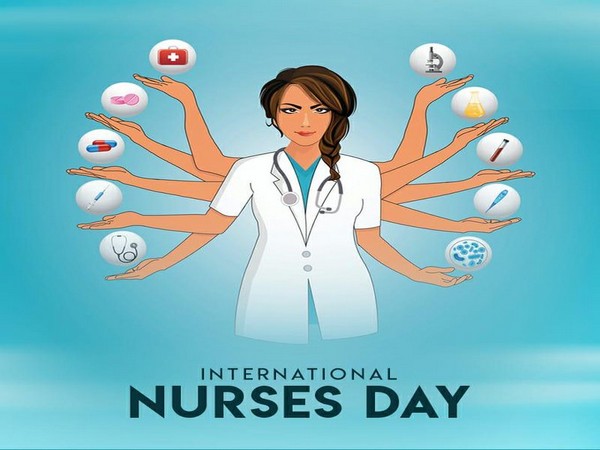
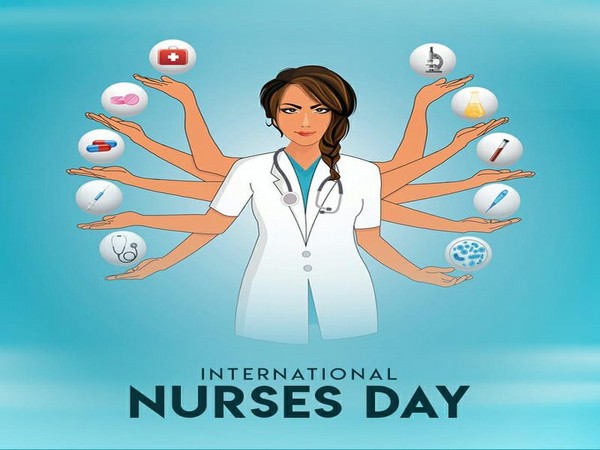


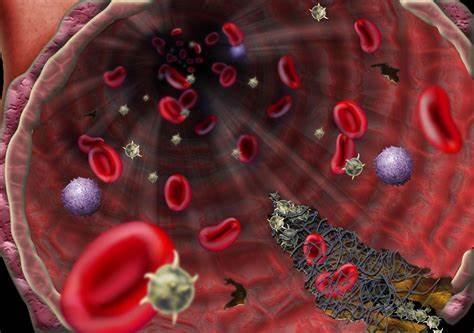


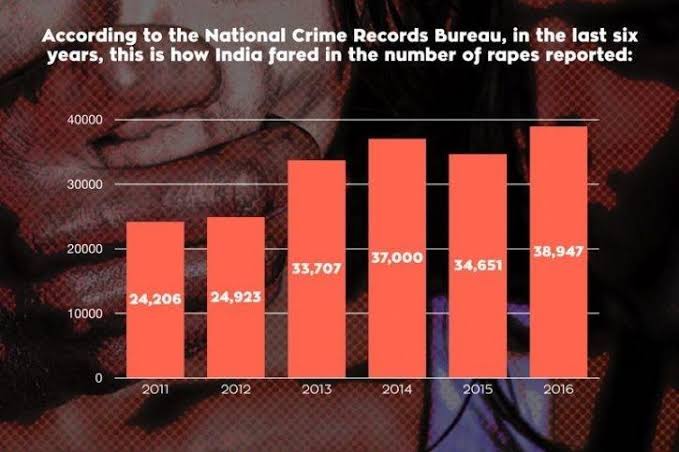



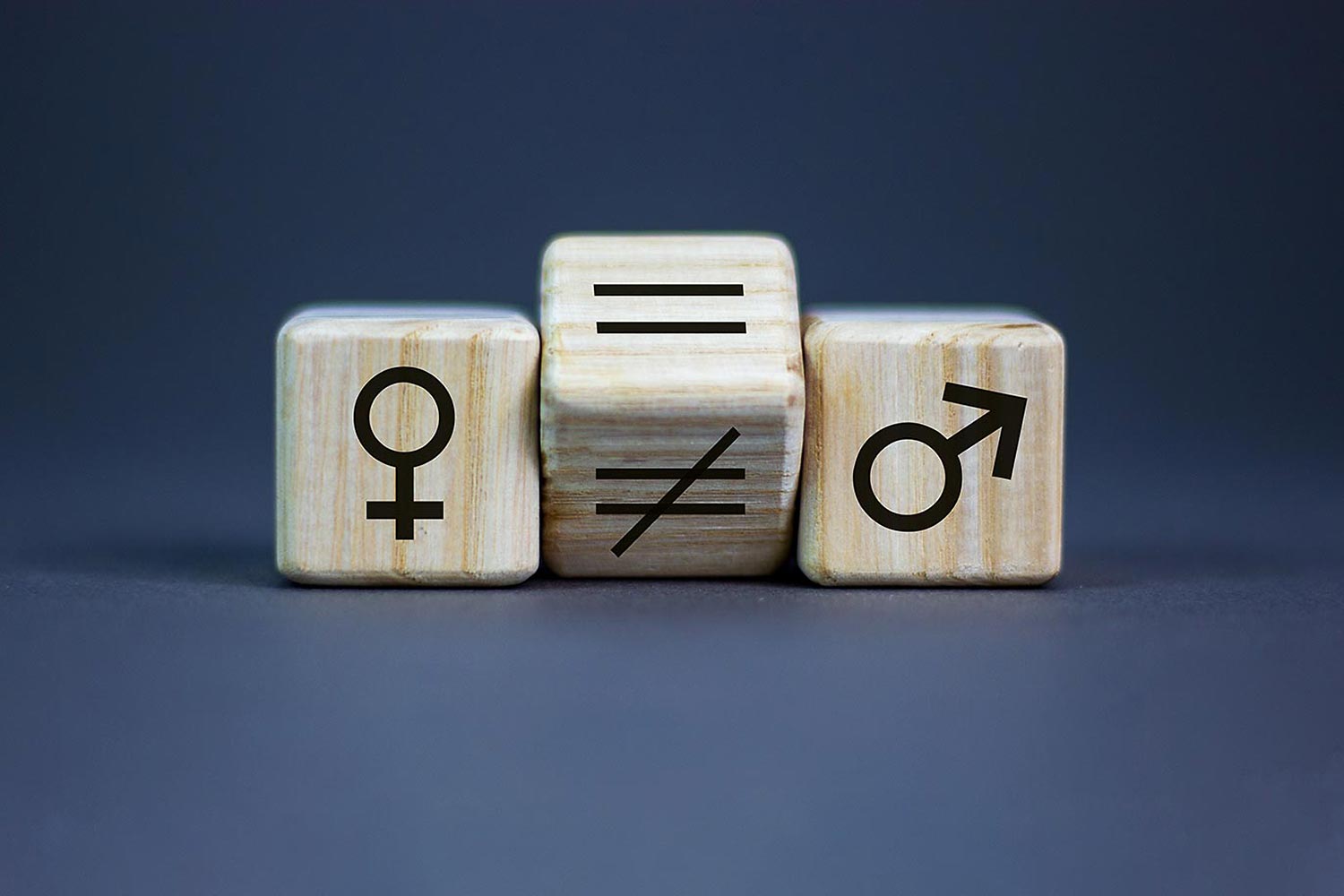



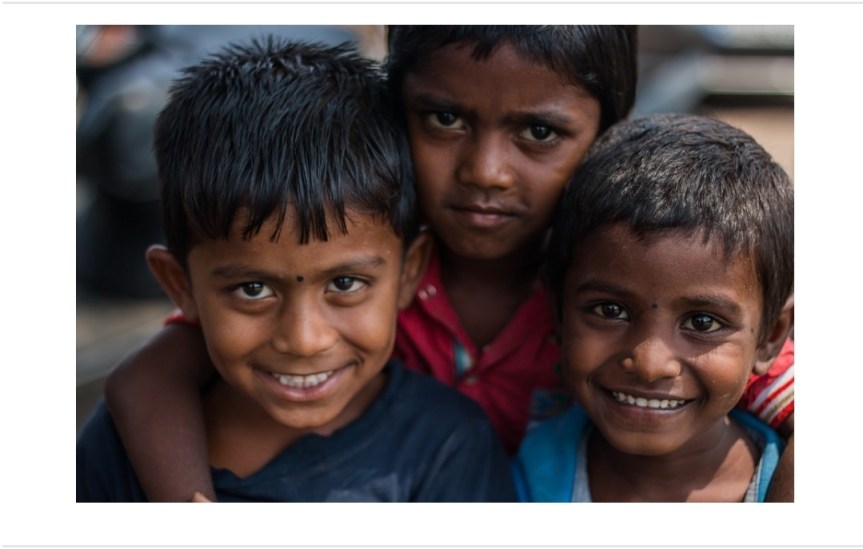

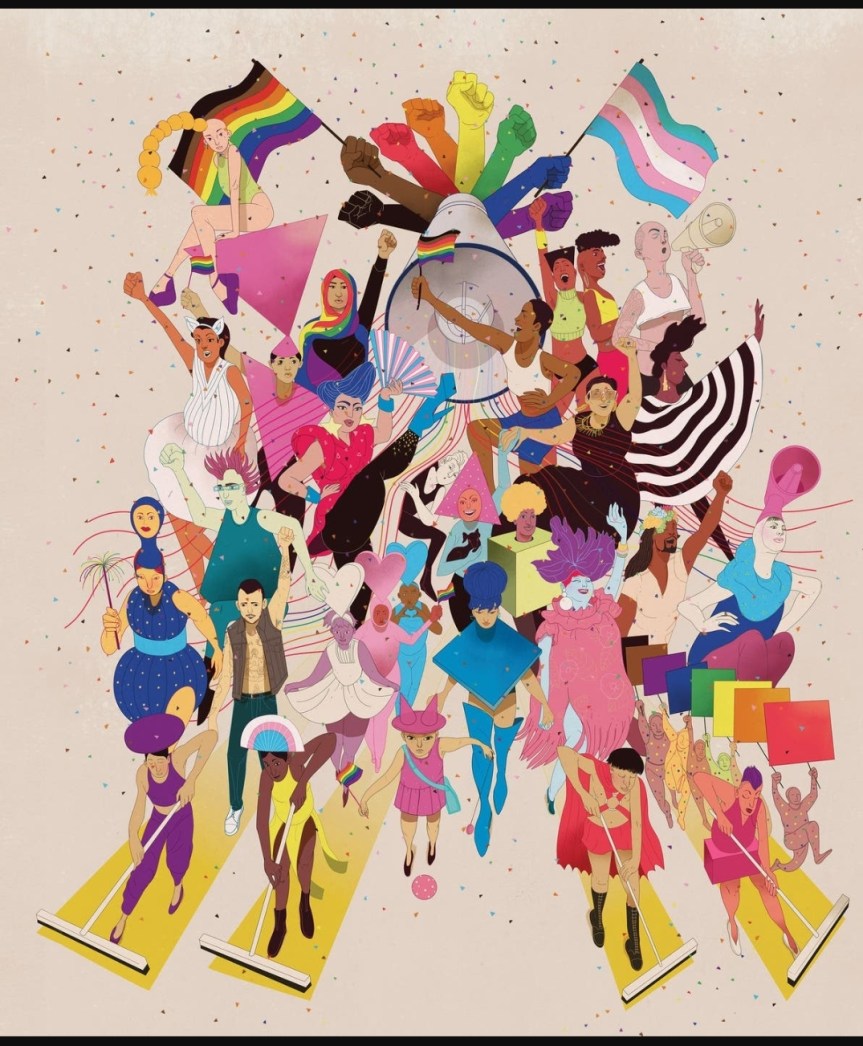


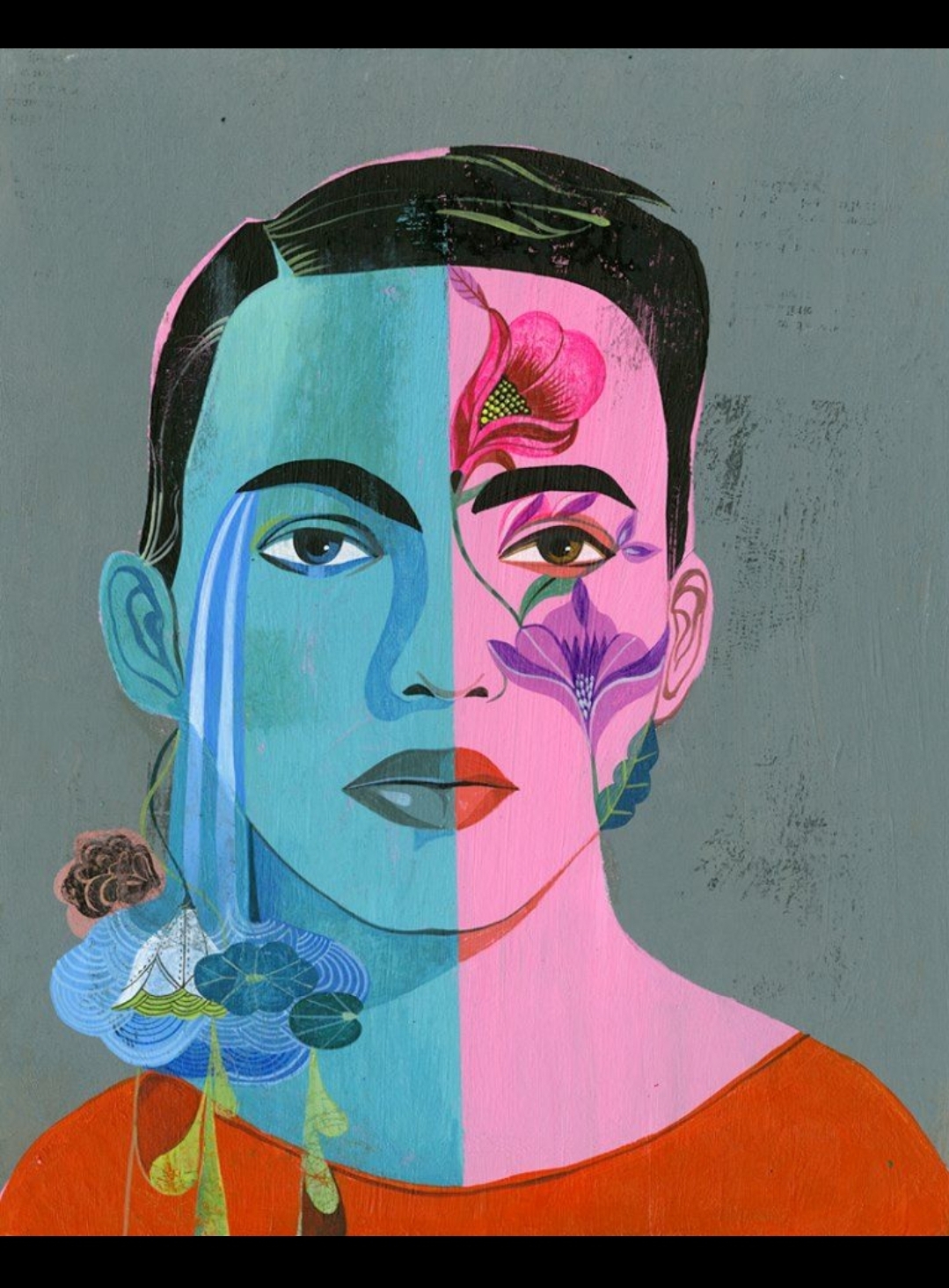


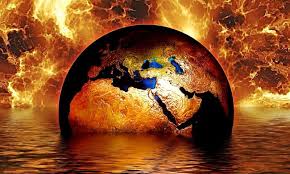

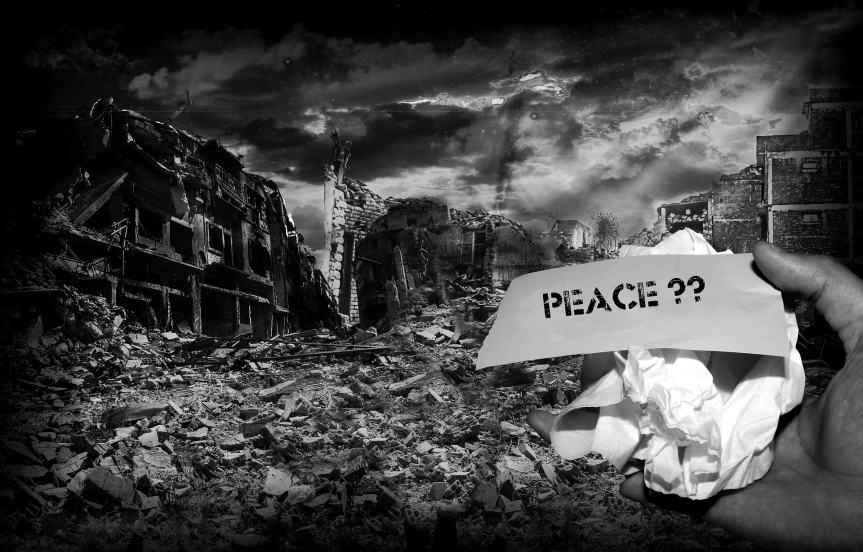
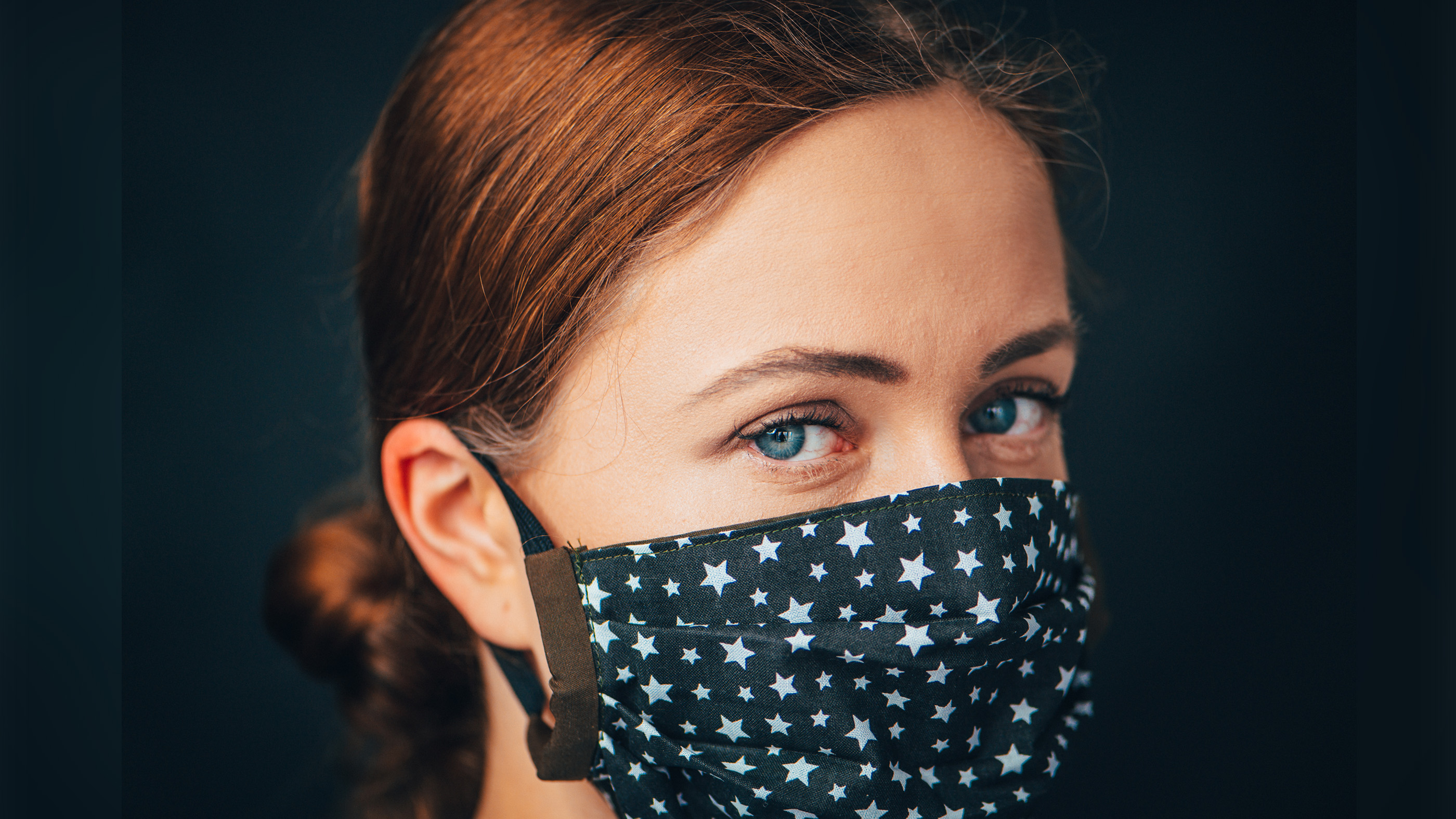


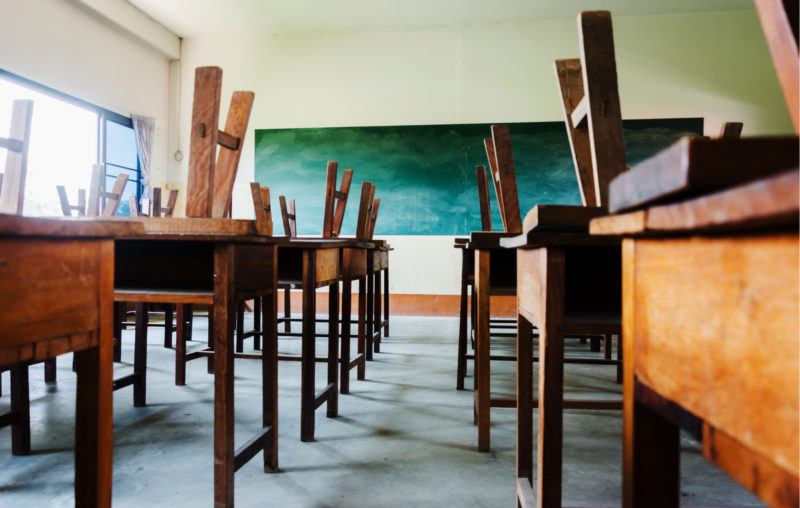








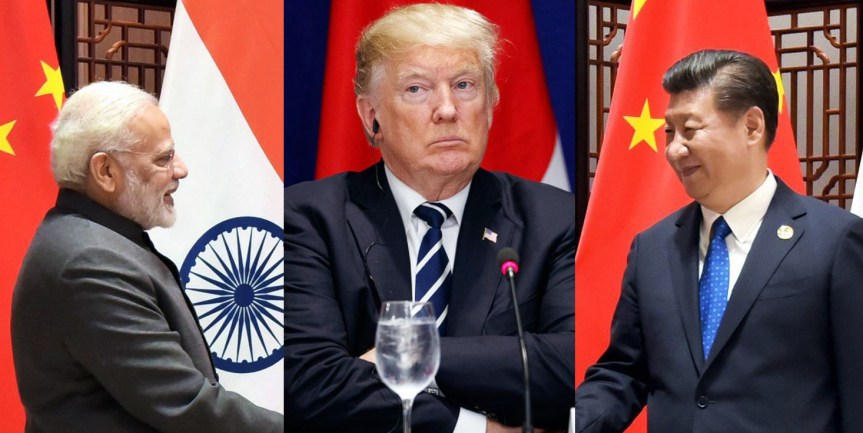


 Track2Training
You must be logged in to post a comment.