How to find out or develop a passion that gives a fulfilling life?


Parents have to guide their kids to find out the true passion to lead a fulfilling life. In this regard, they have to be super supportive in helping the teenager to find it out. This helps them to move in the right direction towards higher studies and or careers. Here are a few ways that parents can support them in recognizing or developing his own passion:
Start With the Right Perspective
Firstly, the teens should believe that a fulfilling work exists and it can be found out by identifying one’s passion.
Initially, Parents can initiate the process by giving teens time and space to think about the childhood activities he likes to do. Hobbies or objects he’s chosen for his room may spark ideas. The teenager can talk to the persons in their family who know him very well and make a list of the ingredients that truly mattered the most in his peak moments in his life. This will help them to rekindle his childhood passions and mine his talents.
It’s important for your teen to figure his passion out on his own. To become his own true, authentic self.
Talk about meaningful & fulfilling work
At this stage, the parents can have a conversation about how following a passion can create a meaningful, rewarding life. Your teen should know that he can do something that he loves and gets paid for it – an absolute win-win! By showing your teenager how you engage in those passions and how rewarding they are to you, he’ll learn that doing things that are meaningful is a worthwhile, fulfilling endeavor.
Work out what you hate doing
College is a great place to explore new subjects and potential interests – and they may change over time. And in fact, the students who enter college with an undeclared major gets the freedom to explore freely and follow interests as they arise.
The parents can let the teen rate each interest-say, from 1 to 10. Some may suggest careers — a useful list for the student to a specific course in the college or vocational school.
Ask him to list the jobs or tasks that you absolutely loathe. Once you have eliminated these options, his true passion may become more clear. Therefore, it can be cross-checked and a significant level of clarity will be got.

Combine the mediocre skills together into talents

Even if they don’t possess exceptional skills at any one thing, most people have lots of expertise that they are “okay” at.
If you fuse your mediocre skills together, you’ll find your passion.
For instance, an average artist, with a decent sense of humor, could be an awesome cartoonist.
The most successful people, the ones that are most passionate about their work, are almost never defined by a single skill. They are a combination of skills, often not even exceptional skills, but they’ve made their fusion exceptional.

Encourage your teen to try out lots of different activities
If any of your nearest and dearest have hobbies that interest you, ask to spend some time helping out, or give them a try.
Check out online courses, clubs, internships, activity centers, and part-time jobs to find out what might spark an interest. And then…participate! The more exposure your teenager has to different activities, the better understanding he’ll have. It’s all a great learning experience.
This exploration is a great way to find activities that might really drive her. Discuss unique talents and abilities with your teen.
Explore your artistic side. You may have a wonderful artistic side without even knowing it. To explore your artistic side, you can try painting, writing, acting, singing, or designing clothes, just to name a few things.
Play an instrument. Maybe you loved playing the piano or keyboard when you were a kid and stopped. Give it another try.
• Write. Try your hand at penning a poem, short story, or even a fiction or non-fiction novel.
• Act. If you just have fun staging a play with a few friends or try to join a media-related course.
• Sing. If you’ve always had a passion for singing but never had time to share on your social media networking websites or channels. Then, it is the right time to get their feedback and to take up further training to excel in that. The same applies to draw, painting, etc using online tools available.
Pick up a new hobby: Whether you want to pick up a new language or a new sport or craft, any new hobby you pursue can turn into a real passion for you. Here are some hobbies you can consider:
• Learn a new language. You can pick up a language just for fun. Convert this to a passion by working as a translator or getting so absorbed in the foreign language that you read and watch movies only in that language or even move to a foreign country because of it.
• Cooking. If you already love cooking, start watching more cooking shows, reading food blogs, and sharing your recipes with your friends and see if you can make your love for tasty cuisine into a full-time passion.
• Birdwatching or pet grooming: Maybe you’ve always loved pets — now is your time to turn your hobby into a full – time passion. Or maybe you just want to spend more time connecting with your own pet by writing blogs, uploading videos, etc. That’s great too!
Do as Much Research as Possible
Know as much about your passion as possible. Notice what you love. Notice what makes you feel like a kid. Notice what you long to have more time for.
Make time for these things, to whatever extent you can and watch. Your life starts to change. It’s really magical. This can really transform your life.
Conclusion :
The child’s passion may develop early in his life or later. But the role of the parents is the same. They need to be supportive and have to bear in mind that ultimately the child, on his own, should find his passion for his career and fulfilling life.

When somebody/something starts deterring you…

If prosperity, enthusiasm and courage are prevailing in life, on the other side there is always a setback. There comes a time when our inner strength begins to shatter, or at times somebody else starts smashing it.
Struggles and turmoils are a very vast part of our existence. This is the moment when we have to act with courage. There is always someone in our lives who often breaks our courage, makes us feel pathetic, after which we start losing our strength, even if we don’t want to.

We can infer this in two ways.
First, we do nothing and sit down seizing the corner which implies that we have kneeled down and we have lost our courage.
The other way is – acknowledging it as a challenge and believe that we are and we deserve better than this.

With the right attitude, think about tackling the situation. You can choose whether you want to give yourself courage or deplete it.

When any unfavourable moment arrives, we feel that there is an overcast by the dark clouds- trouble is on the way. The truth is, there is no soul which does not undergo; every person feels sorrow and happiness no matter how strong or how mindful. But the difference lies in the way of grasping it. Some of us lose courage and some face it valiantly.

Typically, we come across individuals-

-who solely utter pessimistic things to us in one whack! Like – ‘you will not do this, you will not be able to do this.’ ‘This isn’t for you.’ ‘Stop wasting time.’
Their intentions are quite clear. They have only one task – to break your morale, to thwart you, make you dodge your determination.

What should be done in such a situation?

There are two ways to circumvent, first, keep a distance from such people or confront them- it might seem absurd but whenever somebody tries to besiege you with cynical things, you simply start ‘smiling’ within yourself. That way you are strengthening yourself!

It is just because you know that you have identified such an individual – and that realization should make you laugh! You won’t lose your confidence that way. Now, carry such circumstances positively, no one will dare break your solidity.

-who aren’t concerned about you at all, or don’t have anything to do with you or your life, but they just like talking about you or make fun because they just enjoy doing it!

They have no personal enmity with you, they only ‘enjoy’ speaking low of you and like doing tittle-tattle.

Sadly, you can do nothing but ignore them. Because for them, you’re merely a source of entertainment!

If you ever run into them and get a chance to mock yourself, do it!
Laugh with them and make them laugh! Take it sportingly.
Chances are, it won’t happen again.
Think of how many stand-up comedians make fun of themselves and make us laugh. Have we ever made fun of them? Not at all, but we end up being an admirer.

And then exceptionally, there are few people who are courteous and rational. Acknowledge them. Although they will show your shortcoming, their intention is not to scramble your courage but to make your path easier by manifesting your stumbling block.
You don’t have to avoid such people, rather you have to learn.

It’s all about recognizing the difference between the perceptions of others and perspectives of own.

Free Speech vs Hate Speech

Free speech by simple definition means the freedom to express one’s opinion, views, thoughts about a particular topic, discussion or a concept per se. It has given the speaker a sense of ownership to articulate their ideas without any fear of retaliation, censorship, or legal sanction.

Today, freedom of speech, or the freedom of expression, is recognized in international and regional human rights law. International, regional and national standards also recognize that freedom of speech, as the freedom of expression, includes any medium, whether it be orally, in written, in print, through the Internet or through art forms. This means that the protection of freedom of speech as a right includes not only the content, but also the means of expression.

Taking into consideration the last few years, the internet has grown from just being a non-existing market to becoming a part of our lives in such a way that it has changed how people used to communicate, shop, socialize, advertise, learn, do business and has become a great medium to spread knowledge. It has become one of the largest database which is flexible, accessible and ensures easy availability of information. Not only that, it has given people a platform to express about anything freely but has also given a chance to spread hate as there is no restrictions on that.

Legal systems sometimes recognize certain limits on or to the freedom of speech, particularly when freedom of speech conflicts with other rights and freedoms, such as in the cases of libel, slander, pornography, obscenity, fighting words, and intellectual property. Justifications for limitations to freedom of speech often reference the “harm principle” or the “offence principle”. Limitations to freedom of speech may occur through legal sanction or social disapprobation, or both.

Social media on the other hand has also given some people a platform to spread hate, violence, misinformation as they can easily wear a mask and behave like someone else. These people then make use of fake IDs and target everyone to spread fake news. There have been various steps taken by big social media giants to stop the hate speech but still is it happening. Freedom of speech has a new dimension which is not very bright and must be tackled with strict regulations so that perpetuates are punished for harassing people online with bad and vulgar comments.

Formally, Hate speech is commonly defined as the one that attacks a person or a group on the basis of attributes such as race, religion, ethnic origin, national origin, sex, disability, sexual orientation, or gender identity. Sometimes people also argue that inflammatory public speech increases before outbreaks of mass violence, which could suggest that hate speech is a precursor or even a prerequisite for violence.

Words, vulgar comments, name-calling, misinformation, hateful phrases, casual racist comments, sexual and other inappropriate jokes – they all have an impact, and this impact leaves some people with mental scars.

Now-a-days some companies are also taking various steps to curb the spread of fake news on social media platform. Recently, Starbucks has decided to pause paid advertising across various social media platforms as it explores the best ways to help stop the spread of hate speech. More than 160 companies have decided to stop buying ads on Facebook.

It is also high time that the thin line between freedom of speech and hate speech is understood and must be taken care of before it gets overlapped into one.


2020

The Year 2020 has brought a lot of ups and downs in everybody’s life. The COVID-19 pandemic has been a significant source of worry and stress for months now, with no end in sight, evoking a plethora of emotions. On top of this, there have been massive protests, both peaceful and violent, as people strive to find justice in the wake of George Floyd’s death. Living through stressful times can have harmful effects on our body and mind. On a global scale, this pandemic is affecting our social lives, our mental health, our sleep patterns, and more. You may be feeling afraid for yourself, your loved ones, your job, or your housing.


SLEEP DEPRIVATION
Sleep deprivation can affect our immune system and metabolism making us more vulnerable to infection. Stress and Anxiety can make getting a healthy amount of sleep each night more difficult. Getting proper amount of sleep is essential for the body to function well.


LONELINESS
Loneliness describes the negative feelings that can occur when a person’s needs for social connection aren’t met. Isolation can trigger negative emotions followed by anxiety and stress. During these stressful times of the crisis phase where self isolation is the only solution to curb the spread of the virus, many suffer from loneliness . It is very important to keep one self engaged. Reports have shown a high increase in the rate of suicide in India.

How To Manage Stress?


Be active

It’s easy to skip exercise when you’re stressed, but exercise is good for your physical health. It helps combat the negative effects of stress on your body and is good for your mental health.


Be an optimist
When you’re worried or feel your stress level rising, try to surround yourself with positive thoughts and experiences. Listen to music, watch a funny video, or call a friend who makes you laugh.
Meet negativity with a positive reaction. A positive attitude will keep you from slipping back into feeling overwhelmed.


Outlook
Stress affects us all, no matter what you have going on in your life. But not all stress is bad. It’s important to your natural fight-or-flight mechanism that allows you to act quickly in times of duress.
Managing stress is important in juggling the many day-to-day activities of life without letting it have a negative impact on your health. There are many things you can do to prevent stress and manage unavoidable stress.

POLLUTION IN THE TIME OF LOCKDOWN

Pollution or contamination levels in Delhi-NCR – which had descended by around 79% during the underlying period of the lockdown, for the most part attributable to no mechanical action, diminished on-street traffic and an interruption on development exercises – is on a rise again as the city continuously opens up, an investigation by Center for Science and Environment (CSE) has found.

Of the six uber urban communities where PM 2.5 levels were concentrated during this period, Delhi saw the steepest ascent of four to multiple times, when contrasted with two to multiple times in different urban communities, the investigation appears.

CSE contemplated the PM 2.5 degrees of six urban communities — Delhi, Mumbai, Kolkata, Chennai, Hyderabad and Bengaluru — during both the underlying and last periods of the across the nation lockdown to check the spread of Covid-19.

As per the discoveries, while the PM 2.5 levels in different urban areas dropped by 45-88% in the underlying lockdown stage and saw a contamination spike of 2-6 times on opening up, Delhi saw both the steepest drop and most keen spike.

“In Delhi-NCR, one of the main considerations that prompted the drop in contamination was a 97% decrease in generally speaking rush hour gridlock and 91% decrease in trucks and business vehicles entering the capital during April, when contrasted with the pre-lockdown long periods of December-January,” the examination found.

It stated, when contrasted with 84,399 substantial vehicles entering Delhi in January this year, just 7,942 utilized in the city during April, when the lockdown was in full impact.

PM 2.5 (ultrafine particles that can enter the lungs and circulation system) is the most conspicuous poison in Delhi-NCR just as in other significant urban areas the nation over.

Between March 25 and May 18, when the across the nation lockdown was executed with no significant relaxations, the contamination levels in the national capital decreased definitely and stayed in the “palatable” classification for more often than not. After May 18, be that as it may, as lockdown rules were facilitated, the contamination chart began climbing once more. From May 18 to June 5, the air quality list of Delhi has stayed in the ‘moderate’ class. On Friday, the AQI levels was recorded as 111 in the moderate classification, according to the Central Pollution Control Board (CPCB).

The contamination levels were likewise held under wraps as a result of the expanded Western Disturbances that crossed Delhi during and after the lockdown time frame. Despite the fact that not every single Western Disturbance brought downpour, the sped up helped overwhelm contaminations.

Sunita Narain, executive general, CSE, said the examination unmistakably shows that the country required a mediation at such a monstrous scope — where development the nation over was totally limited, and every single mechanical action quit working — to clean our air and lungs. “It lets us know plainly what the key wellsprings of air contamination are — discharges from vehicles and industry,” she said.

The examination expresses that Delhi has an around 12.1 million enrolled vehicles, of which 4.6 million are private vehicles. Of these, lone a part employed during the lockdown time frame. Likewise, visits to work environments decreased by 60%, while retail and diversion exercises diminished by 84%. Furthermore, exercises in local locations expanded by 29%. Cycling and strolling expanded from 14% to 43%.

“The test lies in the way that on opening up, we are probably going to return to the old propensities. Today we are re-opening with no arrangement to keep the air clean. We have to set a plan including brief usage of BS-VI for cleaner fuel, growth of open vehicle, make foundation and advance boosted cycling and strolling and presentation of cleaner battery-controlled para-travel modes,” said Anumita Roychowdhury, official chief, exploration and promotion and head of air contamination and clean transportation program at CSE.

How have sports been affected by COVID-19?

The sports industry has lost billions of dollars due to this global pandemic. Although some sports are beginning to start-up this doesn’t mean that the sports industry is going to be the same as is it was pre-COVID. Let me elaborate on what I just stated, the Premier League (which is the most competitive football league in England) has resumed their season but they aren’t allowed to have any fans in the stadium. This is a horrible concept for the fans because they want to watch their beloved club play in real life.

You might think that because the fans aren’t allowed to go to the stadium to watch the games in real life, the sports industry is going to become bankrupt soon, but you couldn’t be further away from the truth. In reality, the tickets are only a small fraction of the money that the Premier League receives, most of the money they earn comes from the sponsorships/ commercials and broadcasting.

Mark Tatum is the Deputy Commissioner and Chief operating officer of the NBA and this was his thought on the future of the NBA “…This pandemic may change the protocols we have to live by, but not our focus on expanding basketball around the world.” This quote shows that the sports industry is welcoming this pandemic instead of running from it by figuring out an alternative way to continue entertaining us during these difficult and dark times, where depression rates are higher than ever.

Report: NBA Players Can Include Social Justice Statement on Jerseys |  SportsLogos.Net News

The NBA is taking initiative by becoming one of the first major sports organization to resume their season despite having the huge hurdle of COVID-19 in the way. They will be resuming their season in early July and it will be held at Disney World, Orlando to prevent COVID-19 from getting to the NBA players.

This will prevent the virus from spreading because normally the NBA teams travel a lot from city to city due to their busy schedule but since all the teams will be at Disney World there won’t be any traveling so that minimizes the risk of getting infected.

NBA news: Walt Disney World floated as possible 'safe' location should  season resume

The only thing that will affect the sports industry is not being allowed to have fans in the stadium apart from that everything is pretty much going to stay the same. The athletes in whatever genre you enjoy watching are going to continue to perform and entertain you. The sports drought has been awful but the sports industry is finally coming back!

COVID-19 and Diabetes

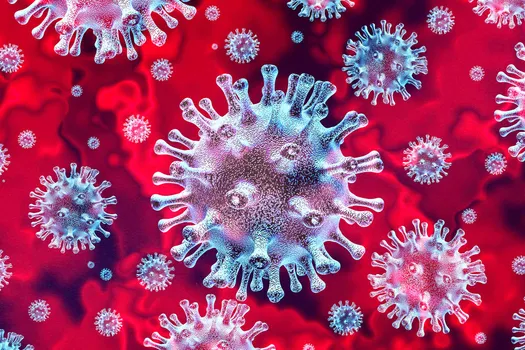
photo of virus 3d render red

Everyone needs to be careful to avoid the coronavirus that causes COVID-19. If you have type 1 or type 2 diabetes, you should be even more cautious.

Your risk of catching the virus isn’t higher than anyone else’s. But you could have worse complications if you do get sick. That’s especially true if your diabetes isn’t well-controlled.

To reduce your chance of getting infected:

  • Keep your distance from other people.
  • Use good hygiene.
  • Keep your blood sugar under control.

Have a plan in place in case you get sick.

Diabetes and Coronavirus

Early studies have shown that about 25% of people who went to the hospital with severe COVID-19 infections had diabetes. Those with diabetes were more likely to have serious complications and to die from the virus. One reason is that high blood sugar weakens the immune system and makes it less able to fight off infections.

Your risk of severe coronavirus infection is even higher if you also have another condition, like heart or lung disease.

If you do get COVID-19, the infection could put you at greater risk for diabetes complications like diabetic ketoacidosis (DKA). DKA happens when high levels of acids called ketones build up in your blood. It can be very serious.

Some people who catch the new coronavirus have a dangerous body-wide response to it, called sepsis. To treat sepsis, doctors need to manage your body’s fluid and electrolyte levels. DKA causes you to lose electrolytes, which can make sepsis harder to control.

Tips to Avoid Infection

The best way to avoid getting sick is to stay home as much as you can. Under the Americans With Disabilities Act, people with diabetes have the right to “reasonable accommodations at work.” That includes the right to work from home or take sick leave when you need it.

If you have to go out, keep at least 6 feet away from other people, and wear a cloth face mask. Wash your hands or use hand sanitizer often while you’re out and when you get home.

Also wash your hands before you give yourself a finger stick or insulin shot. Clean each site first with soap and water or rubbing alcohol.

To protect you, everyone in your house should wash their hands often, especially before they cook for the family. Don’t share any utensils or other personal items. And if anyone in your house is sick, they should stay in their own room, as far as possible from you. They should wear a cloth face mask when you have to be in the same room.

Your COVID-19 Diabetes Plan

Social distancing and shelter-in-place rules may make it harder to get the supplies you need. Stock up on enough goods to last you for a couple of weeks, in case you get quarantined.

Make sure you have:

  • Enough food, especially healthy carbs like whole-wheat crackers, vegetable or noodle soups, and unsweetened applesauce
  • Simple carbs like honey, sugar-sweetened soda, fruit juice, or hard candies in case your blood sugar dips
  • The maximum number of refills you can get of your insulin and other medications
  • Extra glucagon and ketone strips
  • Phone numbers for your doctors and health insurance company

Medicare and some private insurance companies now cover the cost of telehealth visits. So if you have questions for your doctor, you can ask by video chat or phone instead of going into the office.

When you talk to your doctor, ask:

What to Do if You Get Sick

If you start feeling sick, stay home. Check your blood sugar more often than usual. COVID-19 can reduce your appetite and cause you to eat less, which could affect your levels. You also need more fluids than usual when you’re sick. Keep water close by, and drink it often.

Some over-the-counter medicines that relieve virus symptoms like fever or cough can affect your blood sugar levels. High doses of aspirin or ibuprofen can lower blood sugar levels. Acetaminophen can cause falsely high readings on a continuous glucose monitor. Many liquid cough and cold medicines are high in sugar, which can raise your blood sugar levels. Before you take them, check with your doctor or diabetes team. Tell your doctor if you’ve taken them and your blood sugars are out of control.

Call your doctor if you get coronavirus-like symptoms such as a dry cough, fever, or shortness of breath. Have your most recent blood sugar and ketone readings available to share with your doctor.

Get medical help right away if you have:

  • Moderate or large ketones
  • DKA symptoms like tiredness, weakness, body aches, vomiting, or belly pain
  • Severe shortness of breath

COVID-19 Precautions

Stay aware of the latest information on the COVID-19 outbreak, available on the WHO website and through your national and local public health authority. Most countries around the world have seen cases of COVID-19 and many are experiencing outbreaks. Authorities in China and some other countries have succeeded in slowing their outbreaks. However, the situation is unpredictable so check regularly for the latest news.

COVID-19: 10 Do's and Don'ts To Stay Safe During The Outbreak ...

Protecting yourself and others from the spread COVID-19

You can reduce your chances of being infected or spreading COVID-19 by taking some simple precautions:

  • Regularly and thoroughly clean your hands with an alcohol-based hand rub or wash them with soap and water. Why? Washing your hands with soap and water or using alcohol-based hand rub kills viruses that may be on your hands.
  • Maintain at least 1 metre (3 feet) distance between yourself and others. Why? When someone coughs, sneezes, or speaks they spray small liquid droplets from their nose or mouth which may contain virus. If you are too close, you can breathe in the droplets, including the COVID-19 virus if the person has the disease.
  • Avoid going to crowded places. Why? Where people come together in crowds, you are more likely to come into close contact with someone that has COIVD-19 and it is more difficult to maintain physical distance of 1 metre (3 feet).
  • Avoid touching eyes, nose and mouth. Why? Hands touch many surfaces and can pick up viruses. Once contaminated, hands can transfer the virus to your eyes, nose or mouth. From there, the virus can enter your body and infect you.
  • Make sure you, and the people around you, follow good respiratory hygiene. This means covering your mouth and nose with your bent elbow or tissue when you cough or sneeze. Then dispose of the used tissue immediately and wash your hands. Why? Droplets spread virus. By following good respiratory hygiene, you protect the people around you from viruses such as cold, flu and COVID-19.
  • Stay home and self-isolate even with minor symptoms such as cough, headache, mild fever, until you recover. Have someone bring you supplies. If you need to leave your house, wear a mask to avoid infecting others. Why? Avoiding contact with others will protect them from possible COVID-19 and other viruses.
  • If you have a fever, cough and difficulty breathing, seek medical attention, but call by telephone in advance if possible and follow the directions of your local health authority. Why? National and local authorities will have the most up to date information on the situation in your area. Calling in advance will allow your health care provider to quickly direct you to the right health facility. This will also protect you and help prevent spread of viruses and other infections.
  • Keep up to date on the latest information from trusted sources, such as WHO or your local and national health authorities. Why? Local and national authorities are best placed to advise on what people in your area should be doing to protect themselves.

Advice on the safe use of alcohol-based hand sanitizers

To protect yourself and others against COVID-19, clean your hands frequently and thoroughly. Use alcohol-based hand sanitizer or wash your hands with soap and water. If you use an alcohol-based hand sanitizer, make sure you use and store it carefully.

  • Keep alcohol-based hand sanitizers out of children’s reach. Teach them how to apply the sanitizer and monitor its use.
  • Apply a coin-sized amount on your hands. There is no need to use a large amount of the product.
  • Avoid touching your eyes, mouth and nose immediately after using an alcohol-based hand sanitizer, as it can cause irritation.
  • Hand sanitizers recommended to protect against COVID-19 are alcohol-based and therefore can be flammable. Do not use before handling fire or cooking.
  • Under no circumstance, drink or let children swallow an alcohol-based hand sanitizer. It can be poisonous. 
  • Remember that washing your hands with soap and water is also effective against COVID-19.

Symptoms of COVID-19

The main symptoms include:

  • Fever
  • Coughing
  • Shortness of breath
  • Trouble breathing
  • Fatigue
  • Chills, sometimes with shaking
  • Body aches
  • Headache
  • Sore throat
  • Loss of smell or taste
  • Nausea
  • Diarrhea

The virus can lead to pneumonia, respiratory failure, septic shock, and death. Many COVID-19 complications may be caused by a condition known as cytokine release syndrome or a cytokine storm. This is when an infection triggers your immune system to flood your bloodstream with inflammatory proteins called cytokines. They can kill tissue and damage your organs.

If you notice the following severe symptoms in yourself or a loved one, get medical help right away:

Strokes have also been reported in some people who have COVID-19. Remember FAST:

  • Face. Is one side of the person’s face numb or drooping? Is their smile lopsided?
  • Arms. Is one arm weak or numb? If they try to raise both arms, does one arm sag?
  • Speech. Can they speak clearly? Ask them to repeat a sentence.
  • Time. Every minute counts when someone shows signs of a stroke. Call 911 right away.

If you’re infected, symptoms can show up in as few as 2 days or as many as 14. It varies from person to person.

According to researchers in China, these were the most common symptoms among people who had COVID-19:

  • Fever 99%
  • Fatigue 70%
  • Cough 59%
  • Lack of appetite 40%
  • Body aches 35%
  • Shortness of breath 31%
  • Mucus/phlegm 27%

Some people who are hospitalized for COVID-19 have also have dangerous blood clots, including in their legs, lungs, and arteries.

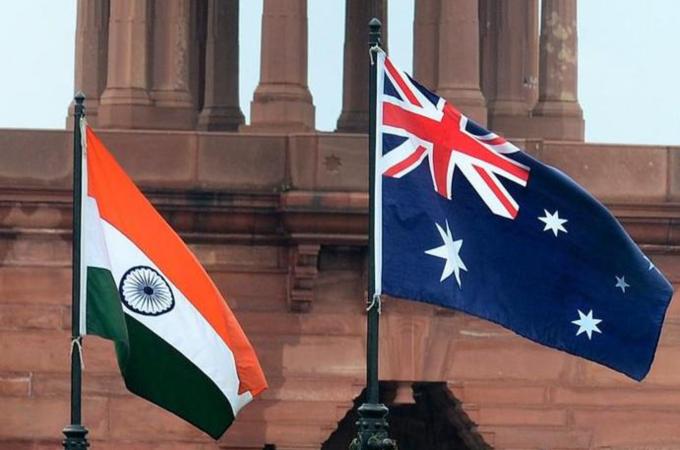
Australia being a cute Rasgulla.

So due to increase tension between India and China and India and Australia there is a huge chances and probability that i the days to come India and Australia may become strongest of allies as by discovering some of the biggest potential they behold through trade and military presence in both Asia and Oceania if there is a mutual respect and support between each other. There is also an ambitious bilateral agenda that will add substance to the India-Australia summit. When it comes to defense, India and Australia share a common concern over China it is that aspect which informs a lot of the bilateral transactions between the two countries. While Australia is worried about China’s presence in the Pacific, India is worried about China’s increasing activities and influence in the Indian Ocean.

Earlier this year, the Australian and Indian navies concluded a two-week-long bilateral maritime exercise code-named AUSINDEX. A government release at the time said the exercise was conducted, “to strengthen and enhance mutual cooperation and interoperability between the IN (Indian Navy) and RAN (Royal Australian Navy), providing opportunities for interaction and exchange of professional views between the personnel of the two navies”. From 2016-18, the armies of the countries conducted a joint military exercise dubbed “AUSTRA HIND”. Significantly, for the first time in 2017, Australia’s Foreign Policy White Paper identified India as being at the “front rank” of Australia’s international partnerships, “on par with the US, Japan, Indonesia, and China”, Australian High Commissioner Harinder Sidhu said in her address at the National Defence College in May this year.

The informal strategic Quadrilateral Security Dialogue (QSD) that was initiated by Japan’s Prime Minister Shinzo Abe in 2007 was largely in response to China’s growing power and influence. Initially, the “Quad” members included India, Japan, the US, and Australia; however Australia chose to withdraw when Kevin Rudd was Prime Minister, since it did not want to be a part of an anti-China alliance at the time. In an article in the Nikkei Asian Review in March 2019, Rudd said, referring to his opposition to the Quad: “Japan said that the rationale for the QSD was to defend the international rules-based order, implying that China back in 2007 had already become a threat to the order.“For Australia in 2007 therefore, to begin embroiling itself in any emerging military alliance with Japan against China, in the absence of any formal reconciliation between Tokyo and Beijing over the events of the Second World War (Nanking Massacre), was incompatible with our long-term national interests.”However, Australia later rejoined the dialogue in 2017 on the sidelines of the ASEAN Summit, signalling a re-ignition in Australia’s interest in the dialogue.

However, it is the economic dimension that continues to lag. The summit provides Modi and Morrison with the opportunity to impart a fresh momentum to it. Bilateral trade is barely 30 billion dollars and even though Australia is a world leader in niche technologies, investment in India is relatively limited. ‘An India Economic Strategy to 2035’ by Peter Varghese, former Australian Foreign Secretary and High Commissioner to India, provides an excellent blueprint. It identifies 10 states and 10 sectors of the economy that can be of particular focus, and underscores the important role of investment in driving the economic relationship. But while Canberra sees the opportunity, private business groups have been shy to grab it. With the exception of the Macquarie Group and a couple of others, Australia’s large financial institutions, pension funds and even the sovereign Future Fund have shown reluctance to invest in India. From India, the Adani group’s multi-billion dollar investment into the Carmichael coal fields in Queensland also ran into a series of hurdles and dampened some of the initial ardor to invest in Australia. There are also a number of less glamorous areas that offer fertile ground for collaboration in sectors where Australia has proven expertise. Some projects are already underway in agriculture, animal husbandry, water conservation, mining technology and equipment and sports infrastructure, but there is ample scope for scaling these to become success stories that both countries can proudly showcase. Cyber security is of critical interest to both, as is the need to work together in tapping Australia’s huge deposits of lithium and rare earths.

India and Australia’s Alliance against the Dragon.

The virtual bilateral summit between Prime Minister Narendra Modi and his Australian counterpart Scott Morrison Wednesday is a big deal. Not just because it is perhaps the first virtual summit of its kind, nor because it demonstrates the determination to ‘meet’ despite the international travel restrictions. It is important because it takes place at a time when both countries find themselves under attack from the belligerent dragon — China.For India, the ‘Wuhan spirit’ or the bonhomie after the informal summit between President Xi Jinping and PM Modi in 2018 has been wiped out by the virus from Wuhan, along with China’s agressive stand on Ladakh. 

For Australia, its thriving economic diasora and ethos with China has been hit by sanctions on beef and barley exports because of ostensibly a retaliation to Canberra having had the temerity to ask for an independent inquiry into the origins of the novel coronavirus. Morrison responded to Chinese bluster and bullying by replying firmly that Australia won’t trade away its values.

For Prime Minister Morrison, standing up to China is becoming familiar territory. As treasury secretary in 2015, he had to strengthen his country’s foreign investment review process after the Northern Territories government signed a 99-year lease agreement for the strategic port of Darwin with a Chinese company that has links with the People‘s Liberation Army. He then had to invoke the new provisions twice in 2016 — to block the sale of Australia’s largest cattle business, S Kidman’s 100,000 square kilometres of land holdings to a Chinese consortium, and to prevent a state-owned Chinese company from buying a controlling stake in power distribution company “Aus grid”, which also manages critical communications infrastructure. Later, as the home minister, he had to invoke national security provisions to keep Huawei out of Australia’s 5G infrastructure.

Over the last few years, China’s influence on operations in Australia have grown to a point where the country feels that its institutions and its values are under a coordinated and relentless attack. Chinese-Australian tycoons have attempted to bribe gullible politicians; Chinese community leaders are mobilized to rally support for Beijing’s position on the South China Sea; Chinese students on university campuses have clashed with others over developments in Hong Kong, cyber security attacks have targeted Australian research institutions and even the Australian parliament. The list is endless. Therefore due to this massive amount of tension between the two countries both of these countries can be of use to each other by using each others resources and supporting each other at the time of their need so as by making a very powerful presence in the Asia-Oceania territories.

Transitioning Military Medics to Rewarding Careers in Nursing

Most people would assume that veterans who have served our country would get credit – by employers and by educational institutions – for the remarkable training they’ve received in the military.
However, most educational institutions don’t take into account military medics’ credentials when they try to continue their education after serving our country. Few programs in the country honor military medics experience when they pursue a nursing degree. With the Vet2RN initiative at our Madison, WI, campus, I am proud to say Herzing University is one of those institutions.
Hands-on experience puts veterans in a unique position to make good use of their medical knowledge. In the healthcare field, more than half-a-million nursing jobs are expected to open up between 2012 and 2022, according to the Bureau of Labor Statistics (BLS). What’s more, the American Association of Colleges of Nursing (AACN) predicts that the national nursing shortage will only intensify as the “Baby Boomer” generation ages. This has created a nationwide demand for RN’s and healthcare professionals with related degrees.
Civilian life should not slow down the men and women who have served. Instead, by transferring military experience toward education, Herzing empowers veterans to use their medical background to build a rewarding career and continue helping the U.S. by fulfilling a nationwide demand for skilled healthcare workers. In fact, Herzing’s Madison campus has worked with the Department of Veteran Affairs and the National Governor’s Association and the to identify pathways for veterans to earn their nursing degrees and has received fantastic reviews for helping our country’s service members.

How does the Vet2RN initiative work?

Veterans military training and experience are evaluated through a review process through which credits may be applied toward becoming a licensed practical nurse (LPN). Simply stated, Herzing applies military healthcare training into nursing credits. By translating military experience into college credit, veterans can earn an Associate Degree in Nursing (ADN) at an accelerated pace.
Most veterans in the are eligible to take the National Council Licensing Examination for registered nurses (NCLEX – RN) in one-year or less and become eligible from the NCLEX – PN in one to four months.
Veterans qualify for the Vet2RN initiative if they’ve received any of the following healthcare training: 
  •  Army 68W, Healthcare Specialist
  • Navy HM, Hospital Corpsman
  • Air Force 4N0X1, Aerospace Medical Service
Military medics can bring their experience to the nursing workforce. By making the process of getting a degree more efficient, Herzing proudly helps veterans complete their nursing school education and become part of the growing healthcare system in this country.
Bill Vinson is the Campus President at Herzing University in Madison, WI. Bill has been in higher education for almost 15 years and is passionate about giving back and helping others. He believes by taking this passion and combining it with the competitive spirit we can change our communities for the better.

Pride: The celebration of self

Pride is a movement of self affirmation, equality, dignity and increasing visibility of the LGBTQ+ community. LGBTQ+ community includes lesbian, gay, bisexual, transsexual, queer, asexual and everything in between. The pride movement celebrates the spectrum of sexuality.

Pride as a movement is a opposition to the social stigma and shame that surrounds the community, and bolsters the LGBT movements. The month of June is celebrated as the Pride month all over the globe. Common symbol of pride is the rainbow, which is the pride flag.

The historic origin

The Stonewall Riot is often considered as the birth of modern LGBTQ+ rights movement. The first pride parade was held one year after Stonewall riot incident, on 28 June 1970. The parade was then known as Christopher Street Liberation Day March, named after the street on which Stonewall was located.

Back then, the largest LGBTQ+ rights rally was a silent yearly vigil known as the “The Annual Remainder” held in Philadelphia. The event was a remainder to American people that a substantial number of American citizens were denied the right to life, liberty, and pursuit of happiness. It was a sober and orchestrated event. It was a silent event, and both men and women had formal dress code. However after Stonewall riot, the need of an entirely new event arose.

Unlike the Annual Remainder, these new marches had no formal and gender- normative dress code. Rather, the marchers were encouraged to be themselves. It celebrated being gay with utmost pride.

Important people related to the initial movement

The Pride movement was not a one day thing. It took a lot of courage and determination to go ahead with this movement. It was due to the prime contribution of some individuals that we today celebrate the month of June as pride month.
• Mattachine Society, which was one of earlier LGBTQ+ right group in United States.
• Craig Rodwell, a member of Mattachine Society, originally came up with the idea of The Annual Remainder.
• Fred Sargeant was one who organisers of the first march.
• Ellen Brody and Linda Rhodes, activists who along with Rodwell and Sargeant attended the Eastern Regional Conference of Homophile Organisation (ERCHO) in Philadelphia and proposed the resolution of holding a annual march on last Sunday of June to commemorate Stonewall.
• Brenda Howard, known as “Mother of Pride” coordinated week long series of event around the Pride day.
• Activist L. Craig Schoonmaker, the one who suggested the world “Pride” instead of “gay power”.
• Gilbert Baker, designed the Pride flag.

Pride Movement in India

In context of India, the Pride movement had a long struggle. During British Rule in 1860, homosexual intercourse was considered a criminal offence under Chapter 16, Section 377 of Indian Penal Code. Post independence, the right to equality was implemented on 26 November 1949, however homosexuality remained a criminal offence.

The first gay protest was conducted on 11 August 1992. In 1999, Kolkata hosted the first Gay Pride parade, however it was a small affairs with only 15 attendees. In 2009 the high court of Delhi held that considering consensual homosexual intercourse between two adults as a crime is violation of fundamental right to equality. However this was overturned by the supreme court in 2013.

Shashi Tharoor introduced the bill to decriminalise homosexuality in the year 2015, however it was rejected by Lok Sabha. In August 2017, the Supreme Court upheld the right to privacy as a fundamental right under the Constitution in the landmark Puttuswamy judgement, giving LGBTQ+ community a new hope. On September 6, 2018, the supreme court decriminalised homosexuality by scrapping Section 377, calling it unconstitutional.
The scrapping of Section 377 has been a partial win for the LGBTQ+ community. However a long battle is still ongoing. The battle is long, but the community is winning small successes.

There are only so many hours in the day, so making the most of your time is critical. There are two ways increase your output–either put in more hours or work smarter. I don’t know about you, but I prefer the latter.

Being more productive at work isn’t rocket science, but it does require being more deliberate about how you manage your time. This post will walk you through 5 simple but effective strategies for increasing your productivity at work.

1. Track and limit how much time you’re spending on tasks.

You may think you’re pretty good at gauging how much time you’re spending on various tasks. People are able to accurately estimate the passage of time. A tool like Rescue Time can help by letting you know exactly how much time you spend on daily tasks, including social media, email, word processing, and apps.


2. Take advantage of your commute.

This goes for any unexpected bonus time you may find on your hands . Instead of Candy-Crushing or Facebooking, use that time to pound out some emails, create your daily to-do list, or do some brainstorming.

3. Give up on the illusion of perfection.

It’s common for people to get hung up on attempting to perfect a task–the reality is nothing is ever perfect. Rather than wasting time chasing after this illusion, bang out your task to the best of your ability and move on. It’s better to complete the task and move it off your plate; if need be, you can always come back and adjust or improve it later.

4. Take exercise breaks.

Using work time to exercise may actually help improve productivity. If possible, build in set times during the week for taking a walk or going to the gym. Getting your blood pumping could be just what’s needed to clear your head and get your focus back.

5. Be proactive, not reactive.

Allowing incoming phone calls and emails to dictate how you spend your day will mean you do a great job of putting out fires–but that may be all you get accomplished. Set aside time for responding to emails, but don’t let them determine what your day is going to look like. Have a plan of attack at the start of each day, and then do your best to stick to it.

No one can be expected to resist the allure of an email, voicemail, or text notification. During work hours, turn off your notifications, and instead build in time to check email and messages. This is all part of being proactive rather than reactive.


What you can learn from ‘The Go-Giver’

The 5 Laws of Stratospheric Success | Elite Marketing Pro

‘The Go-Giver’ is a self-help, story book written by Bob Burg and John David Mann and the book tries to make a reader look at both his personal and professional life from a different perspective. Almost all of us are go-getters. A go-getter is an ambitious person who would do anything to achieve his goals and become successful. You might argue that there is nothing wrong with being a go-getter but being a go-getter will only get you so far in life. All the founders of great companies have one thing in common – they gave their idea to improve lives without any anticipation of rewards or fame. You might get that job or promotion but you can’t get to that level of success.

The main characters of the story are Joe and Pindar. Joe is a go-getter employee and Pindar is someone Joe approaches in order to land a great contract. Pindar makes a deal with Joe that he will tell him his trade secret, ‘the five laws of stratospheric success’ on one condition. Joe must apply that law in his life in some way or the other, on the very same day. Joe really wanted to have Pindar in for the contract so he obliged and they started meeting for lunch everyday for five days the next week. Every lunch, Pindar would take Joe to meet people who have had stratospheric success and they would demonstrate the law through their life stories. 

The following are ‘the five laws of stratospheric success’ that we can all inculcate in our lives as we walk the path towards success –

  1. The Law of Value

The first law was explained by Ernesto who owned several restaurants, cafes and a lot of real estate. He had started off from a hot dog stall and reached where he was mainly because of his social skills and the taste of food he served. The value that he gave to his customers was much more than he asked for and the first law states, ‘your true worth is determined by how much more you give in value than you take in payment.’

  1. The Law of Compensation

The second law states, ‘your income is determined by how many people you serve and how well you serve them’ and it was explained by Nicole, a school teacher who had a unique and fun way of teaching her students through games and she started her own company to reach out and teach children globally through her learning software. She was passionate about teaching and started her company solely because of her passion.

  1. Law of Influence

Sam Rosen was an awful insurance salesman before his financial services company leapt to stratospheric success and he became the state’s number one philanthropist. According to him, what led to his success was the great network of people he had. These people are like your brand ambassadors and help in increasing your goodwill. To have such a network, you must keep the people’s interest before your own. The third law states, ‘your influence is determined by how abundantly you place other people’s interest first’.

  1. Law of Authenticity

Debra Davenport had become the most successful real estate dealer in the town but before that she was a housewife and a mother. She wasn’t always so good at selling properties but it was Pindar who showed her the right way. Pindar told Debra to add value to whatever she was selling and it took her some time to understand that she wasn’t selling properties but herself. She tried to put her social skills of being a friend to her ex husband and children and tried to connect with her clients at a very personal level and the fourth law states, ‘the most valuable gift you have to offer is yourself’.

  1. Law of Receptivity

The fifth and last law was demonstrated by Joe himself by being receptive to whatever Pindar had to give to him, that is accepting all the five laws of stratospheric success with an open heart. The law states, ‘the key to effective giving is to stay open to receiving’.

Locust Plague in India

Large and aggressive swarms of these crop-devouring short-horned insects have invaded more than two dozen districts covering more than 50,000 hectares of desert areas of western India. Rajasthan, Madhya Pradesh and Gujarat are the worst affected states. In neighbouring Pakistan, authorities declared a nationwide emergency in February, saying locust numbers were the worst in more than two decades. Local reports say that farmers are fighting the ” worst locust plague in nearly three decades” and the swarms were decimating crops and sending prices of food soaring.We are battling a major locust attack from across the border. This is the biggest invasion in nearly three decades. The swarms are very big and they have migrated from across the border after breeding a month earlier than we were expecting,” KL Gurjar, deputy director of India’s Locust Warning Organisation, said”We are lucky that there is no crop in the fields now. But the locusts eat up all the green vegetation, leaves, flowers, fruits, seeds and plants,” Mr Gurjar said.

The Covid-19 pandemic is posing fresh challenges for some 100 odd workers who are battling the insects, using vehicle-mounted sprayers, pesticides and drones in the searing desert heat.
They are staying in the villages, where they are being given foods by locals, and going out at night to hunt down the insects in face masks and wearing some basic protective clothing. “They have migrated here after breeding across the border. It is a severe attack,” says Om Prakash, a plant-protection officer, who works in Rajasthan state .
India, clearly, needs to be watchful in the months ahead. “We need to be alert and anticipate where this is going next. The situation is all the more alarming as it comes at a time when the affected states are already reeling under Covid-19 and the ongoing heatwave,” says Anshu Sharma of Sustainable Environment and Ecological Development Society, a non-profit disaster management organisation.

MASLOW’S HIERARCHY OF NEED THEORY

What Is Maslow’s Hierarchy of Needs?

In order to better understand what motivates human beings, Maslow proposed that human needs can be organized into a hierarchy. This hierarchy ranges from more concrete needs such as food and water to abstract concepts such as self-fulfillment. According to Maslow, when a lower need is met, the next need on the hierarchy becomes our focus of attention.

These are the five categories of needs according to Maslow:

Physiological

These refer to basic physical needs like drinking when thirsty or eating when hungry. According to Maslow, some of these needs involve our efforts to meet the body’s need for homeostasis; that is, maintaining consistent levels in different bodily systems (for example, maintaining a body temperature of 98.6°).1

Maslow considered physiological needs to be the most essential of our needs. If someone is lacking in more than one need, they’re likely to try to meet these physiological needs first. For example, if someone is extremely hungry, it’s hard to focus on anything else besides food. Another example of a physiological need would be the need for adequate sleep.

Safety

Once people’s physiological requirements are met, the next need that arises is a safe environment. Our safety needs are apparent even early in childhood, as children have a need for safe and predictable environments and typically react with fear or anxiety when these are not met. Maslow pointed out that in adults living in developed nations, safety needs are more apparent in emergency situations (e.g. war and disasters), but this need can also explain why we tend to prefer the familiar or why we do things like purchase insurance and contribute to a savings account.

Love and Belonging

According to Maslow, the next need in the hierarchy involves feeling loved and accepted. This need includes both romantic relationships as well as ties to friends and family members. It also includes our need to feel that we belong to a social group. Importantly, this need encompasses both feeling loved and feeling love towards others.

Since Maslow’s time, researchers have continued to explore how love and belonging needs impact well-being. For example, having social connections is related to better physical health and, conversely, feeling isolated (i.e. having unmet belonging needs) has negative consequences for health and well-being.2

Esteem

Our esteem needs involve the desire to feel good about ourselves. According to Maslow, esteem needs include two components. The first involves feeling self-confidence and feeling good about oneself. The second component involves feeling valued by others; that is, feeling that our achievements and contributions have been recognized by other people. When people’s esteem needs are met, they feel confident and see their contributions and achievements as valuable and important. However, when their esteem needs are not met, they may experience what psychologist Alfred Adler called “feelings of inferiority.”

Self-Actualization

Self-actualization refers to feeling fulfilled, or feeling that we are living up to our potential. One unique feature of self-actualization is that it looks different for everyone. For one person, self-actualization might involve helping others; for another person, it might involve achievements in an artistic or creative field. Essentially, self-actualization means feeling that we are doing what we believe we are meant to do. According to Maslow, achieving self-actualization is relatively rare, and his examples of famous self-actualized individuals include Abraham Lincoln, Albert Einstein, and Mother Teresa.

How People Progress Through the Hierarchy of Needs

Maslow postulated that there were several prerequisites to meeting these needs. For example, having freedom of speech and freedom of expression or living in a just and fair society aren’t specifically mentioned within the hierarchy of needs, but Maslow believed that having these things makes it easier for people to achieve their needs.

In addition to these needs, Maslow also believed that we have a need to learn new information and to better understand the world around us. This is partially because learning more about our environment helps us meet our other needs; for example, learning more about the world can help us feel safer, and developing a better understanding of a topic one is passionate about can contribute to self-actualization. However, Maslow also believed that this call to understand the world around us is an innate need as well.

Although Maslow presented his needs in a hierarchy, he also acknowledged that meeting each need is not an all-or-nothing phenomenon. Consequently, people don’t need to completely satisfy one need in order for the next need in the hierarchy to emerge. Maslow suggests that, at any given time, most people tend to have each of their needs partly met—and that needs lower on the hierarchy are typically the ones that people have made the most progress towards.

Additionally, Maslow pointed out that one behavior might meet two or more needs. For example, sharing a meal with someone meets the physiological need for food, but it might also meet the need of belonging. Similarly, working as a paid caregiver would provide someone with income (which allows them to pay for food and shelter), but can also provide them a sense of social connection and fulfillment.

Testing Maslow’s Theory

In the time since Maslow published his original paper, his idea that we go through five specific stages hasn’t always been supported by research. In a 2011 study of human needs across cultures, researchers Louis Tay and Ed Diener looked at data from over 60,000 participants in over 120 different countries. They assessed six needs similar to Maslow’s: basic needs (similar to physiological needs), safety, love, pride and respect (similar to esteem needs), mastery, and autonomy. They found that meeting these needs was indeed linked to well-being. In particular, having basic needs met was linked to people’s overall assessment of their lives, and feeling positive emotions was linked to meeting the needs of feeling loved and respected.3

However, although Tay and Diener found support for some of Maslow’s basic needs, the order that people go through these steps seems to be more of a rough guide than a strict rule. For example, people living in poverty might have had trouble meeting their needs for food and safety, but these individuals still sometimes reported feeling loved and supported by the people around them. Meeting the previous needs in the hierarchy wasn’t always a prerequisite for people to meet their love and belonging needs.

Maslow’s Impact on Other Researchers

Maslow’s theory has had a strong influence on other researchers, who have sought to build on his theory. For example, psychologists Carol Ryff and Burton Singer drew on Maslow’s theories when developing their theory of eudaimonic well-being. According to Ryff and Singer, eudaimonic well-being refers to feeling purpose and meaning—which is similar to Maslow’s idea of self-actualization.4

Psychologists Roy Baumeister and Mark Leary built on Maslow’s idea of love and belonging needs. According to Baumeister and Leary, feeling that one belongs is a fundamental need, and they suggest that feeling isolated or left out can have negative consequences for mental and physical health.5

Triple Talak

Triple Talak, an instant divorce is a type of Islamic divorce which is used by Muslim men in India. It allows a Muslim man to legally divorce his wife by uttering ’Talaq, Talaq, Talaq’ (the Arabic word for divorce) three time in oral, written off more recently by electronic means such as email, SMS and WhatsApp.

Triple Talaq is the 1400-year-old practice among Sunni Muslims. It is “manifestly arbitrary” and allows a man to break down a marriage “whimsically and capriciously”. This has been an issue of concern for over 65 years for Muslim women in India, who comprise approximately 8% of the population as per 2011 census.

This weird and sinful culture adversely affects the life of Muslim women as it creates mental insecurity, threats of sudden divorce, and also encourages polygamy. Hence, puts a question mark on the Gender Equality, the dignity of women, justice, human rights and women empowerment.

In fact, many Muslim countries like Iraq, Saudi Arabia and Pakistan completely banned this unethical law. Our Government has also taken Stern step against this on 22 August 2017, India Supreme Court deemed triple talaq unconstitutional and also formulated a bill called The Muslim women (protection of rights on marriage) bill 2017 by which triple talaq in any form will be illegal and void with up to 3 years jail for the husband.

One thing is undeniable that once this Bill will become a law, no more Muslim women will face such adversity in future. But for that this situation should not be seen by religious eye and society should also come forward to act against this social evil without any prejudice. Because no nation can process without active and equal participation of women.


Today we are living in 21 century and it’s called modern era. Every individual or group have a fundamental rights, constitutional rights and human rights to raise voice against exploit tradition. India is a democratic country, the citizen of India follow and respect the constitution of India. In a democracy, every person has rights to express their expression against some unwritten law, which affects human life. Every community and every religion have its own personal low, which decides what is right and wrong tradition?

Now India facing triple talaq issue in the Muslim community. Especially, Muslim religion women are so much worst effect by triple talaq problem. It is a very old tradition. Triple talaq mean is just say 3 words (talaq, talaq, talaq) the relationship between husband & wife will be finished. It is a form of divorce. Muslims women are always afraid of this triple talaq. This type of tradition is practicing in India. Only small matter, male dominant gives threat triple talaq. As Muslims community can legally divorce his wife by pronounced three times talaq. Pronouncement can be oral or written. Today youth is misusing the law and they use social platforms like telephone, SMS, Facebook, etc. The life of women and children gets destroyed. A divorced woman may not remarry her divorce husband unless she first marries another man called nikaha halala.

When Narendra Modi started a campaign for Uttar Pradesh election 2017, Muslims women raise the issue in that government should find out any solution of it. It has been subjecting of controversy and debates, raising the issue of Justice, gender equality, human right and secularism. Muslim marriage in India is considered to private matter as they follow Muslim law, but if the couple wants they can register their marriage under special marriage act 1954. PIL was in Supreme Court against this. On 22 August 2017, the Indian Supreme Court deemed instant triple talaq.

Make in India

The “Make in India” campaign was started by the Honorable Prime Minister Shri Narendra Modi on September 25, 2014 for the recognition of India as a special identity in the field of economy and development of the country. The symbol of this campaign is a lion with many mechanical wheels. Moving with the help of these wheels, this lion displays perseverance and intelligence.

The aim of the Make in India campaign is to promote the development of new technologies in India and to promote products made in India. The biggest principle of Make in India campaign is to encourage foreign companies to invest in India and encourage them to make products in India.

The Make in India campaign will help in the production of many commodities in the country, along with the unprecedented potential of employment, level of property in the country will also be greatly reduced. 25 areas for investment have been selected, under which national and international investors will be to invest.

Due to decreasing employment opportunities in the country, the problem of unemployment has increased in the country. Also, due to the complexity of business and investment, the big investors and businessmen of the country have also been forced to leave the country. In such a way, the Make in India campaign has proved to be a milestone.

Growing production in any country is a symbol of its economic prosperity. If, by that, the country is also able to increase exports, then it will be the happiest place for the economy of that country. Make in India campaign in India is inspired by this. If the investment comes in the country, new factories will be opened in the country, people will get jobs, production will increase, affordable goods will be available and at the same time, India will emerge as a major exporting country.
On 25th September 2014, Prime Minister Narendra Modi launched Make in India, one of the flagship programmes of our government intended to boost domestic manufacturing currently contributes approximately 16 per cent to the GDP and target is to take it to 25% by 2022.

Make in India focuses on 25 sectors of the economy like automobile, mining, electronics etc. This emphasis on manufacturing will serve several objectives. First, it will provide employment to more than 10 million people. Second, it will boost foreign direct investment (FDI) thereby bringing development. Third, it will minimise the imports of various products so it will mitigate the pressure on our trade deficit. Fourth, it will augment our exports and lastly, it will help in bringing the latest technologies into the country.

This highly beneficiary programme faces several challenges like prevalent labour laws of India, red-tapism, providing environmental clearance for the big project, low technology and poor transportation system.

The government has taken a number of steps to improve the ease of doing business in the country. Rules and procedures are being simplified single window clearance have been created to guide the first time investors. Besides these, these initiatives must have great linkage with other initiatives of the government like skill India, startup India, digital India etc.

The campaign has already made a considerable success and if it moves forward with the same pace it will surely transform India into a manufacturing giant and improve our economy.

Track2Training for Internship

Training and Internships are really important because trainings and internships helps one individual make him career more successful also makes the individual more relevant skilled and also better than the individuals who did not do an internship or had a training.
Training presents a prime opportunity to expand the knowledge base of all employees, but many employers in the current climate find development opportunities expensive. Employees attending training sessions also miss out on work time which may delay the completion of projects. However, despite these potential drawbacks, training and development provides both the individual and organisations as a whole with benefits that make the cost and time a worthwhile investment. The return on investment from training and development of employees is really a no brainer.
Internships are known for giving students the opportunity to apply their knowledge in real world environments. At the same time, they will also develop skills which will help them perform better at their jobs. Internships greatly increase the chances that a student will gain full time after graduation. In this article, we will look at internships, and how they can assist students in performing well at their jobs. One problem commonly cited by employers is that many graduates do not have the practical skills necessary to excel in the jobs. They also feel that the professionalism of students is less than it should be. Even though there are a large number of theories on how to encourage employees and increase profits, it is apparent that enhanced levels of education are not enough to prepare students for a real-world environment. Being able to improve these weaknesses will make graduates much more effective in their careers. We at Track2Training will help you in getting right training and internship.

Substance Abuse and Mental Health

If one is already suffering from a problem with drug abuse and a mental health condition such as depression, bipolar disorder or panic, it is considered a co-occurring illness or dual diagnosis.

Both the mental health problem and alcohol or drug addiction have their own different signs and symptoms in co-occurring disorders that may interfere with your ability to function at work or school, ensure a sustainable home life, handle the problems of life, and relate to others. The co-occurring disorders also directly impact each other, to make the experience more complicated. The problem of substance abuse usually gets even worse when the mental health issue remains undetected. So when there is a rise in alcohol or substance misuse, mental health issues increase significantly too. You’re not the only one however. Co-occurring issues around drug abuse and mental health are more widespread than many people know. Reports published in the American Medical Association Journal state: About 50% of persons with severe mental disorders are affected by substance abuse.37% of alcohol abusers and 53% of drug abusers also have at least one severe mental illness. 29 per cent of the people diagnosed as mentally unstable use either alcohol or drugs.

Substance Abuse and Mental Health Issues - HelpGuide.org

Although problems with addiction and mental health issues do not get better when overlooked in reality, they are likely to get much worse. It’s important to understand you don’t have to feel this way. You can do things to overcome your demons, repair your relationships, and get on the path to recovery. You will conquer a co-occurring illness with the right resources, self-help and care, regain your sense of self and get your life back on track.

Substance abuse and mental disorders such as depression and anxiousness are strongly connected, and while some substance abuse may cause prolonged psychotic reactions one does not cause the other directly. Nonetheless: The side effects of mental health problems are often self-medicated with alcohol and drugs. People often exploit alcohol or drugs to ease the symptoms of an undiagnosed mental disorder, cope with difficult emotions or change their mood temporarily. Unfortunately, the abuse of drugs causes side effects and also worsens the symptoms they originally tended to mitigate in the long run.

Alcohol and substance misuse can raise the risk of psychiatric illness underlying it. Mental illnesses are caused by a complex interplay between biology, the climate and other influences beyond. If you are at threat for a psychological illness, you may be pushed over the edge by alcohol abuse or illegal or prescription medications. For example, there is some indication that some drug abusers have an elevated risk of psychosis while those who misuse prescription painkillers are at higher risk of depression.

Drug and alcohol abuse can aggravate the symptoms of a mental health issue. Substance abuse can significantly increase mental illness symptoms, or even cause new symptoms. An integrated approach, in which both the issue of drug abuse and mental illness are addressed together, is the best cure for co-occurring disorder. Whether your mental health and substance abuse issue first came, lengthy-term recovery relies on getting treatment from the same treatment provider or team for both disorders. Focusing on specific question you have:

Your psychological health problem may be treated with medication, individual or group counselling, changes in lifestyle and peer support. Treatment for your substance abuse may include detoxification, withdrawal symptoms management, behaviour interventions and group support to help maintain your sobriety. The best way of supporting others is by knowing what you can and can’t. You can’t compel someone to stay sober, nor can you convince someone to take their medication, or schedule arrangements. What you can do is make smart decisions for yourself, encourage help from your loved one and offer support while trying to make sure you don’t lose yourself in the process.

Internet is reducing our attention span

Using the internet is affecting our brains physically so we have shorter periods of attention and poorer memory, has suggested significant research. An analysis by Oxford academics, King’s College London, Harvard and Western Sydney University, revealed that smartphones have weakened our ability to memorize facts while manipulating us into believing that we are smarter than we are. The revelations resulted after scores of studies and experiments have been reviewed by a global organization to assess the impact the internet has had on our brains over the last 3 decades. It emerges as Ofcom noticed earlier this month that the average British adult now spends 50 complete days online a year.

The Shortening Human Attention Span [INFOGRAPHIC]

Dr. Joseph Firth, senior researcher at Western Sydney University, said: This report’s initial takeaways are that high-level internet activity could significantly affect many brain functions.

The unlimited stream of instructions and notifications from the internet, for example, motivates us to keep our attention constantly divided — which in turn may diminish our ability to concentrate on a single task. Experiments analysed in the study showed that people who spent their time constantly tossing between short online activities require greater sensory effort to retain concentration. It has been found that the unending stream of notifications and digital distractions have a strong impact on the brain, with those affected showing less grey matter in the cerebral areas associated with trying to develop focus and attention.

Other studies have shown that the internet has an instantaneous impact on our ability to focus, with people displaying a significantly lower capacity to maintain attention following activities such as internet shopping. Whereas offline behaviours like reading a magazine did not show such an impact.

Computing online has also been found to make the multitasking offline less successful. The study told reporters that Overall, the evidence available strongly indicates that trying to engage in multi-tasking via digital technology does not improve our multi-tasking efficiency in other settings – and in fact seems to diminish these intellectual capabilities by diminishing our ability to ignore incoming distractions.

The study provides evidence that the internet was becoming our external memory as we relied more and more on smartphones to extract knowledge.  Instead of learning new factual information, however, the brain tended to log in on the internet to find the information. One research cited showed a group of online searchers find information faster than another using encyclopaedias but were less able to correctly remember the information.

Other studies have shown that the Internet has also tricked people into thinking that they are smarter than they are because they have “blurred the lines” between their own recollections and what they can conveniently look up on their present smartphones. The study said that Studies have shown that online searching improves our sense of how much we learn, even though the perception of self-knowledge is interpreted only for the domains where we can ‘fill in the gaps’ for the internet.

The study indicated that in the future there could be an additional benefit to this internet reliance as virtual memory, as it could free up intellectual capacity for other activities-though it did not speculate what these might be.

Lastly, the academicians found that online as offline the social side of our brains was acting in a very similar way. However, we are placed under new stresses, such as the strong rejection that people feel of having social value quantified by the number of friends and likes they receive, as well as constantly comparing themselves to hyper-successful individuals who are omnipresent on social media.

How to Lead an Empowered Life

Self-empowerment is the process which leads people to exert greater control over their lives. Self-empowerment includes fostering skills that would eventually allow you to influence certain outcomes and produce tangible results. This is different from solely feeling self-empowered. People may feel selfempowered by listening to a moving speech, but as new research accurately shows, people won’t in fact be empowered unless they’re able to significantly change an aspect of their lives.

The idea that self-empowerment calls for awareness sound like a cliche these days. However I’d like to offer a fresh view on the idea of expanding awareness. I find it’s best to think of self-empowerment as the ability to become conscious of your choices so you have in becoming who you want to be. I settled for this definition because I’ve observed that when people are dis-empowered, they lose sight of what they’re capable of and who they can be. So the first step is to fully apprehend that you do have options.

There are many people in our life who keep bringing us down, therefore making them a culprit for our dis-empowerment apart from ourselves. It’s safe to let others direct your life since you’ll always have someone to blame if things go wrong. Stop giving away your power and let go of immature thought patterns. Continuing on this route will only fuel feelings of inferiority, and you’ll believe that you’re “less” than others.

Courage is the first pillar of self-empowerment. It is your foundation for any real and lasting change in life. Courage will help you overcome your fears, try new things, to quit things that don’t work, to find new relationships, and to start your first business. Courage will furthermore make you help, love, learn, give back, forgive, start over, to stand up for yourself, to stand up for others, to say yes, and to say no. Courage, in my view, is the most radical value.

A paradigm is a belief system within which you define yourself and the world in a rational way. The coherence of these beliefs depends on the web of principles, values, and judgments that you have formed about who you are. In any given paradigm, events are interpreted in line with the “rules” of that paradigm and as such derive their plausibility from it. We all live within paradigms. We all have credences about who we are and why we are the way we are. While few paradigms are empowering, others can be dis-empowering. For example, a person who lacks self-confidence might feel that social situations provoke anxiety and such situations must be avoided.

Innumerable of the personal challenges that people go through such as low self-confidence, lack of productivity, certain financial challenges; etc., arise from living in a performance-oriented paradigm. This paradigm contains inflexible and firm beliefs about oneself and the processes of doing something well.

The person that operates within that paradigm is concerned with how they look. They’re preoccupied with how others see them. 

I encourage you to let go and to make mistakes. People can be so self-absorbed that they won’t even remember your mistakes. On the other hand, a growth-oriented paradigm is one in which you don’t judge yourself. You take on experiences because you know that becoming good at something requires working and probably failing along the way. 

Cultural awareness

Cultural awareness or cultural sensitivity refers to the idea of being aware of your own cultural background as well as others. It is nearly impossible to learn about all the cultures present in this world but it is necessary to gain some helpful knowledge if we ever visit a particular country. This can go on to avoid a lot of conflicts and misunderstandings. You will never want to send out the wrong vibes to anyone, so being informed can prevent all of this from happening.

When we learn or are exposed to some new information regarding any culture, it should not be considered as a division or barrier. It should be looked at in a positive way, believing that everyone has their own cultural beliefs and no culture is above any other culture. Feeling of judgment should be absent, rather there should be a willingness to learn when you are likely to experience cultural differences.

Cultural sensitivity should be kept in mind even when you are at home or in a workplace. In your offices or workplace, you will interact with a lot of people who have grounds or origins of cultures that are completely different from your own. You will never want to sound insensitive and create an awkward environment for work. Everyone has some pre-conceived notions or stereotypes but cultivating cultural sensitivity is basically removing them from one’s minds.

Travelling to other countries also does a bit in making people aware of the differences present and how these differences should be acknowledged and appreciated. It is an effective communication key. This also involves body gestures. Some responses may be considered rude in some countries whereas appreciated elsewhere. If misinterpreted, it can spoil budding relationships, both personal and professional. Hence, it is always safe to do one’s homework.

The first step in developing cultural awareness is to keep an open mind accompanied with a desire to learn and adapt. One should be observant about what basic social clues are acceptable and unacceptable. It is also okay to raise questions and seek answers about what may confuse you regarding certain cultural beliefs.

Cultural diversity should always be viewed as an advantage because you get to learn a lot about each other which not only creates a positive mindset but also one of brotherhood.

Active discussions have been going about this issue recently as every one has started becoming more aware. Provided people also have a lot of information on the internet to educate themselves regarding any topic, all they basically need is to have a willingness for it. There is a higher chance that the future generation will consists of global citizens being more culturally sensitive, aware, and understanding in their interactions with others.

Person Suffering From Covid-19 Cannot Be Expected To Produce Proof

In a big respite for Covid-19 patients which has ostensibly given them a good and genuine reason to smile is the recent, remarkable and righteous decision delivered by the Bombay High Court just recently on June 26, 2020 in Abdul Shoeb Shaikh and Ors. Vs. K.J. Somaiya Hospital and Research Center and Ors. in WP-LD-VC No. 54 of 2020 in exercise of its ordinary original civil jurisdiction and which was conducted in chamber – video conference  observed categorically in no uncertain terms that a person suffering from Covid-19 who belongs to the economically weaker section of the society cannot be expected to produce documentary proof before seeking admission in a hospital for free treatment. It must be mentioned here that a Division Bench of Bombay High Court of Justice RD Dhanuka and Justice Madhav Jamdar were hearing via video conference a writ petition filed by seven residents of a slum rehabilitation building in Bandra who were charged Rs. 12.5 lakh by KJ Somaiya hospital for Covid-19 treatment in April. No wonder that the petitioners ultimately got the respite which they so desperately wanted from the Bombay High Court!   

                                     To start with, the ball is set rolling first and foremost in para 1 wherein it is observed that, “We have heard the learned counsel appearing for the parties at length. The undisputed position in the matter is that the Scheme prescribed under Section 41AA of the Maharashtra Public Trust Act  empowering the Charity Commissioner and the State Government to issue directions in respect of hospitals to earmark certain beds for weaker sections of the people under Section 41AA(4)(c) and for indigent person under Section 41AA(4)(b) is applicable to the respondent no. 1 Trust. One of the question raised by the petitioners in this Writ Petition is that though the respondent no. 1 was required to reserve 10% beds for weaker section of the people and 10% beds for indigent persons out of the operational beds no such beds are provided. Out of 90 beds under those categories which were required to be reserved for the persons belonging to weaker section of the people and indigent persons in toto, all such beds had not been made available. The record indicates that only three patients were admitted by the respondent no. 1 in the month of March 2020 out of 90 beds earmarked for indigent persons and persons belonging to the weaker section of the people under Section 41AA(4)(c) and (b) respectively.”  

                                   Needless to say, para 2 of the judgment then notes that, “It is the case of the respondent no. 1 that the petitioners did not belong to any of these categories nor the petitioners produced any record to prove that the petitioners would fall under those categories. It is vehemently urged by Mr. Dwarkadas, senior counsel for the respondent no. 1 that it was for the petitioners to produce a certificate of income from the Tehsildar or a certificate from the Social Welfare Officer proving income of the petitioners. On the other hand, it is the case of the petitioners that the petitioners having suffered from a covid-19 and required immediate medical help were not required to produce such certificate at the threshold while seeking admission in the hospital.”  

                                            To be sure, it is then envisaged in para 3 that, “A perusal of the report submitted by the Joint Commissioner indicates that the report submitted is on the basis of documents called for and submitted by the respondent no. 1 and without visiting the premises and inspecting all the records. The affidavit in reply filed by the Charity Commissioner also clearly indicates that only three patients have been treated under the hospital scheme since lockdown till the end of May 2020. Petitioners claims to be staying in slums.”

                                            While dwelling on the relevant questions for consideration here, it is then stipulated in para 4 that, “Whether it was the duty of the Management of respondent no. 1 to enquire whether the persons seeking admission in the respondent no. 1 hospital were falling under the category of Section 41AA(4)(b) and (c) or not or whether such patients were required to produce at the threshold the certificates of Tehsildar and Social Welfare Officer before seeking admission in the situation faced by the petitioners for patient of covid are some of the questions which require consideration in this matter.”

                                                  Most crucially, it is then very rightly underscored in para 5 that, “In our prima-facie view a person who is suffering from the disease like Covid-19 is not expected to produce a Tehsildar certificate or certificate from Social Welfare Officer before seeking admission in the hospital for seeking benefits under Section 41AA(4)(c) and (d). We are not inclined to accept the submission made by the learned senior counsel for the respondent no. 1 that unless such certificate is produced by the petitioners at the threshold, the respondent no. 1 is not liable to admit any such patient under those categories in the precarious situation prevailing at the date of admission of the petitioners.”

                                        Going forward, it is then also pointed out in para 6 that, “We also noticed that the State Government was required to issue a Notification dated 21st May, 2020, providing the rates for treatment of such patients and for other diseases in view of the grievances regarding exorbitant amount of money charged by Healthcare providers causing hardship to public in general during Covid-19 pandemic. Government has also considered the provisions of Section 41AA of the B.P.T. Act in the said notification.”

                                             Be it noted, para 8 then states that, “Considering the facts of this case, we are directing the respondent no. 1 to deposit a sum of Rs. 10,06,205/- in this Court within two weeks from today.”

                                       Finally, it is then held in the last para 10 that, “This order will be digitally signed by the Personal Assistant of this Court. Associate of this Court is permitted to forward the parties copy of this order by e-mail. All concerned to act on digitally signed copy of this order.”

                                             To sum up, the Bombay High Court has in a humanitarian gesture very rightly held in this latest, landmark and extremely laudable judgment that a person suffering from Covid-19 who belongs to the economically weaker section of the society cannot be expected to produce documentary proof before seeking admission in a hospital for free treatment. In such cases, they must be granted exemption from strict rules! This is imperative to ensure that they don’t suffer endlessly and end up getting more troubled for getting admitted in a hospital for free treatment!

Sanjeev Sirohi, Advocate,

s/o Col BPS Sirohi,

A 82, Defence Enclave,

Sardhana Road, Kankerkhera,

Meerut – 250001, Uttar Pradesh.

Minimalism and You

“Minimalism” has become the new buzzword with YouTube, podcasts encouraging people to adopt a minimalist life style. But what exactly is minimalism? Would you call yourself a minimalist based on your everyday habits? If yes, then what type of minimalist would you classify yourself into? Let’s try to understand the philosophy of minimalism in the simplest ways.

Origin of Minimalism

Minimalism became popular back in 1950s when artist Frank Stella’s “Black paintings” were displayed at the Museum of Modern art in New York. It started a new movement altogether breaking the conventional notions of arts. Later, many artists came to the forefront producing minimalist art.

The main themes of minimalist art were simplicity, harmony and purity. Aesthetically, the minimalist art is all about being real (Nothing more or nothing less).

Black painting at the gallery

Who is a minimalist?

Now, minimalism isn’t about living in all white houses with bare minimum objects (you could, if you’d like to). But don’t unnecessarily push yourself. To put it simply, minimalism is the art of appreciating thing in their simplest forms. It’s about making a conscious choice of spending money on experiences rather than things.

Now, I’m not implying you get live life of a monk from Himalayas and get rid of you possessions. Minimalism is about getting rid of things but rather eliminating the unnecessary and shifting focus to what matters the most.

Essence of minimalism could be summed up in “less is more”. For example, the lesser you spend on that luxury watch for the sake of showing off, the more you can spend on worthy holiday experience. The lesser you attend superficial parties; you’d be rewarded with extra time for self investment.

Now there’s no “one size fits all”. Minimalists come in all shades .It’s more of an umbrella term. So you better figure out for yourself “what type of minimalist are you?” No worries! Even if you don’t fall into any of these categories. There are lots of takeaways from each type.

The Essentialist

Are you someone who focuses on quality over quantity? You own few things but they are the finest collection. Like instead of buying dozens of clothes from that online sale you’d rather invest in that superior quality dress and wear it often.  You would any day choose owning fewer things over piling and wasting them.

The Experientialist

Do you prefer collecting experiences over things or swear by the philosophy of making maximum memories.

If your bucket list is larger than your ‘Things to own list’, pat yourself at the back for being an experientialist.

The Enoughist

Are you contended with what you have despite not having it all? If you find peace in voluntarily using enough; also deliberately choose not to get into the rat race for materialistic pursuits. Go ahead; call yourself an Enoughist if those new launches every week in the market doesn’t crave you enough.Are you contended with what you have despite not having it all? If you find peace in voluntarily using enough; also deliberately choose not to get into the rat race for materialistic pursuits. Go ahead; call yourself an Enoughist if those new launches every week in the market doesn’t make you crave for more.

The Eco-Minimalist

Are you someone who is highly environment conscious? You fill your house with plants and plant based products. You prefer buying environmentally sustainable products even though they cost you extra bucks. Ditching plastic all the way and embracing natural products. If that sounds like you, kudos! Mother nature loves you.

 The Soul Minimalist 

Soul Minimalist is someone who prefers in cleansing of soul, eliminating negativity and practicing mindfulness.A soul minimalist is someone who gives importance to healthy relationships, investing in emotional well being and cutting toxicity. Having a peaceful world on the inside cultivates happier surroundings.

 In the end, being a minimalist is about making a conscious choice. Putting efforts in enhancing the quality of your life. You don’t have to fit yourself into any of these so called labels. You can be everything you want to as long as you’re progressing in the direction of self growth.

Remember, it’s your journey. Don’t compare and confine yourself. Take charge of your life’s story and invest in what matters.

Track2Training NGO

Track2Training is a Non-Governmental Organisations (NGOs) that play a significant role in today’s society. Non-governmental organisations (NGOs) play a significant role in today’s society, typically picking up the government’s deficits in services and social protection for citizens via the philanthropy of donors and the socially awareNGOs general aim is to alleviate poverty through activities that promote capacity building and self-reliance.

One of the roles was that Track2Training NGO is to balance the social, economic and environmental factors in promoting sustainable development.

Indian Tourism and The Covid -19 Pandemic

India offers a diverse portfolio of niche tourism products – cruises, adventure, trek, film, rural and religious tourism. India has been recognized as a destination for spiritual tourism for domestic and international tourists. The tourism sector has a major contribution to the National GDP. Total contribution by travel and tourism sector to India’s GDP is expected to increase from Rs. 15.24 trillion in 2017 to Rs. 32.05 trillion in 2028. India was ranked 7th among 184 countries in terms of travel and tourism’s total contribution to GDP in 2017. Travel and Tourism is the third largest foreign exchange earner for India. Several marketing initiatives by the Government of India, such as ‘Incredible India!’ and ‘Atithi Devo Bhava’ has provided a focused impetus to growth. In October 2018, Statue Of Sardar Vallabhbhai Patel, also known as ‘Statue Of Unity’, was inaugurated as a tourist attraction. It is the tallest statue in the world standing at a height of 182 metre. It is expected to boost the tourism sector in the country and put India on the world tourism map. The visiting hours to the statue have been increased by two more hours and has been equipped with e-bike tours. Travel and Tourism generated millions of jobs directly in 2018 and this is to grow by 2.2% in 2019. It also includes, for example, the activities of the restaurant and leisure industries directly supported by tourists.

How is the tourism sector affected by the pandemic?


The COVID-19 pandemic has had a significant impact on tourism industry due to the resulting travel restrictions as well as slump in demand among travelers. The tourism industry has been massively affected by the spread of coronavirus, as many countries have introduced travel restrictions in an attempt to contain its spread. The coronavirus epidemic is putting up to 50 million jobs in the global travel and tourism sector at risk, with travel likely to slump by a quarter this year, Asia being the most affected continent, the World Travel and Tourism Council has said Once the outbreak is over, it could take up to 10 months for the industry to recover. The tourism industry currently accounts for 10% of global GDP. The impact would depend on how long the epidemic lasts and what are its repercussions.

Smile Every-Day

Many see smiling simply as an involuntary response to things that bring you joy or laughter. While this observation is certainly true, what most people overlook is that smiling can be just as much a voluntary response as a conscious and powerful choice.

Countless scientific studies have confirmed that a genuine smile is generally considered attractive to others around us. Other studies have shed light on how the act of smiling can elevate your mood and the mood of those around you.

A strong link has been found between good health, longevity, and smiling. Most importantly, studies have shown​ that just the act of smiling (making the physical facial shapes and movements), whether the result of real joy or an act, can have both short- and long-term benefits on people’s health and wellbeing.

Still not convinced? Here are the top 10 reasons you should make a conscious effort to smile every day.

101 Quotes about Smiling to Boost Your Mood

Smiling Makes Us Attractive

We are naturally drawn to people who smile. There is a real physical attraction factor linked to the act of smiling. Not surprisingly, more severe or negative facial expressions like frowns, scowls, and grimaces actually work in the opposite manner, effectively pushing people away. Instead, use the attraction power of your smile to draw people in.

Smiling Relieves Stress

Stress can permeate our entire being, and can really show up in our faces. Smiling not only helps to prevent us from looking tired, worn down, and overwhelmed but can actually help reduce stress.

Believe it or not, smiling can reduce stress even if you don’t feel like smiling or even know that you’re smiling! When you are stressed, take the time to put on a smile. You and those around you will reap the benefits.

Smiling Elevates Our Mood

Next time you are feeling down, try putting on a smile. There’s a good chance your mood will change for the better. Smiling can trick the body into helping you elevate your mood because the physical act of smiling actually activates neural messaging in your brain.

A simple smile can trigger the release of neural communication boosting neuropeptides as well as mood-boosting neurotransmitters like dopamine and serotonin. Think of smiling like a natural anti-depressant.

Smiling Is Contagious

How many smiles have been described as having the power to lighten up the room? While it is certainly a beautiful sentiment, it carries a hint of truth. Smiling not only has the power to elevate your mood, but it can also change the moods of others and make things happier.

The part of your brain that is responsible for your controlling the facial expression of smiling is an unconscious automatic response area. Meaning that smiling can be completely unconscious, particularly when it comes to our habit of mimicking another person’s smile. Yes, it is scientifically proven that smiles are “contagious!”

Smiling Boosts Your Immune System

Smiling can also boost your overall health. The act of smiling actually helps the human immune system to function more effectively. It is thought that when you smile, immune function improves because you are more relaxed (thanks to the release of certain neurotransmitters).

In addition to taking precautions like washing your hands, why not try to prevent the cold and flu by smiling?

Smiling Lowers Your Blood Pressure

When you smile, there is a measurable reduction in your blood pressure. Give it a try if you have a blood pressure monitor at home. Sit for a few minutes, take a reading. Then smile for a minute and take another reading while still smiling. Do you notice a difference?

Smiling Makes Us Feel Good

Studies have shown that smiling releases endorphins, natural painkillers, and serotonin. Together these three neurotransmitters make us feel good from head to toe. Not only do these natural chemicals elevate your mood, but they also relax your body and reduce physical pain. Smiling is a natural drug.

Smiling Makes You Look Younger

Not only can smiling make you more attractive it can also make you look more youthful. The muscles we use to smile also lift the face, making a person appear younger. So instead of opting for a facelift, just try smiling your way through the day—you’ll look younger and feel better.

Smiling Makes You Seem Successful

Studies have shown that people who smile regularly appear more confident, are more likely to be promoted, and are more likely to be approached. Try putting on a smile at meetings and business appointments. You might find that people react to you differently.

Smiling Helps You Stay Positive

Try this test: Smile. Now try to think of something negative without losing the smile. It’s hard, isn’t it?

Even when a smile feels unnatural or forced, it still sends the brain and ultimately the rest of our body the message that “Life is Good!” Stay away from depression, stress, and worry by smiling.

Expectation vs Reality

Some days may be nice and some may be not up to your expectation. There will be many situations and moments that you may not like but you have to up come those days and stay positive in all situation. I am gonna tell some ways that may help you in finding positivity in the hard days. Lets see…..

STAY POSITIVE

The best way to lead a good and healthy life is to make yourself positive in all situation. Coz if you stay positive all time then your life will change automatically. And know this, your life will be decided by the way of your looking towards the world. So make yourself strong and make the day as yours.

HAVE HOPE AND WAIT FOR YOUR TIME

It is also a better way to turn your day a nice one. Everyday will not be yours. There will be downfalls and upraises. So don’t worry on those failures and cry instead celebrate those winnings of yours. And always have the hope in yourself that you’re gonna rock this globe and one day you will be a personality. Till that day don’t wait for anything, Work hard and stay positive.

CONCLUSION

“IF YOU STAY POSITIVE IN A NEGATIVE SITUATION, YOU WIN”, words of APJ. ABDUL KALAM.

Telematics

Hello Reader, Lets dive into a new concept that is changing the way one can be benefited when it comes to vehicles and their operations. Broadly speaking, telematics is the combination of two sciences—telecommunications and informatics. Telecommunication include phone lines, wires, cables, GPS systems, navigation systems etc. and informatics is related with computing systems. It has developed and progressed with the advancement and changes in technology and various new concepts such as big data are elevating the usage of this concept.

Telematics enables wireless data communication through the use of high end technology and opens up a huge range of possibilities. It can enable one to have wireless television and internet on your vehicle. Since the world is focusing more on analytics, the most essential thing is “data”. Telematics is essentially a range of different features, options and devices that are brought together by a single principle – data and communication. Though the concept was there in the industry from a long time, it is getting evolved with each day.

According to Gartner, wireless telematics devices and “black box” technologies collect and transmit data on vehicle use, maintenance requirements and automotive servicing.  Today, a vehicle can have various things connected to it at the same time such as asset tracking, rear camera, GPS, driving behaviour, front cameras, special gears etc.

From the business perspective, the value comes from data transformation. Telematics has changed how various industries used to work earlier, transforming them in construction, transfer and site excavation. Telematics can be used in a wide range of vehicles from cargo vans/pickup trucks to smaller cars, buses and specialist vehicles.

Working of Telematics

The working of telematics includes a GPS system data gathering system and sensor and vehicle data to provide fleet operations. The data that is fetched from various systems is temporarily stored in a telematics device that in installed in each vehicle, and is then transmitted over private cellular networks to secure servers. It is like a centralized controlled system, the central data hub that enables fleet management system to provide easy-to-understand visualizations that help fleet managers optimize their operation.

Fleet management programs now enable firms to manage fleets of all sizes – from a handful of vehicles to hundreds – and help deliver major improvements across the board. Telematics has now developed to the point where it goes well beyond mere asset tracking to incorporate vehicle and driver performance as well as maintenance management.  (https://www.teletracnavman.com/resources/resource-library/faqs/what-is-telematics)

Telematics in Business:

Telematics can greatly streamline communication, job dispatch and routing, and also record and transmit information on whether individual vehicles are in motion or stationary, their engine performance (including power-up, shutdown, idling or malfunctions), vehicle speed, driver conduct and more besides. It benefits in improving service, lower the administrative costs and help in improving the safety via location tracking and other features.

Telematics has changed the way businesses used to work specially in managing fleet of vehicles and is already delivering major improvements to safety, productivity and ultimately profitability, and it is only likely grow in the coming times. The businesses that have integrated and implemented this across the world into their operations can actually expect to continue to reap significant rewards.


How to improve Writing skill

Its easy to speak but it is a little more difficult, Coz you have to practice every time and day. So don’t think that you can’t do and leave it as such. There are tricks and ways that you can do and become a good writer. Try these..

PRACTICE DAILY

Surely you will be having a minimum of 2 hours free time everyday. But in that time, you can use just 20 minutes to be a good writer. If this writing becomes your daily routine, then automatically you will be improved. Don’t think that you don’t know what to write, instead write something from your book and papers. The aim is to write and improve your skill and not to waste time. So pick anything and just write.

OBSERVE NEWSPAPERS

It is the basic knowledge that every writer should possess. If you come to possess this skill then you can able to frame the sentences, you will be able to discover new words and use those in your sentences. Start this skill and remember one thing , everything comes from a little start only and try to start that beginning today.

CONCLUSION

“SMALL THINGS MAKES EVERYTHING, SO PREPARE YOURSELF FOR SMALL ONES, AUTOMATICALLY YOU WILL WIN LARGER ONES!!!”

Expectations vs Reality

Let’s face it, life does hit us hard a million times. We get hurt, cry, try to vent out our anger and then finally get back on track but do you realise that 99% of the times, the problem wasn’t that big as you had imagined it to be. I’m not saying you cried over something stupid but probably, the intensity of your reaction wouldn’t have been that strong if you didn’t have really high expectations. Yes, ‘expectations vs reality’ is the root cause to most of our problems and if we don’t imagine and expect a lot, the reality won’t hit us hard either.

Let me give you an example- you went to a new grocery store and as luck would have it that day, in the baked items section you found your favourite bread. Voila! Great day! Now you can have that delicious pasta with the bread you had been planning to eat for the past whole month. ‘Great store’ you say to yourself and decide that now on, this will be your go-to place for groceries.

Next time you go to the store, you neither find the bread you loved last time nor do you get the usual cheese Urgh! Frustrating isn’t it? The store let you down and now you hate it.

Well, things run out sometimes, doesn’t mean that the store is bad, right? Sometimes you find what you wanted and sometimes you don’t. You don’t have to hate it to be honest. Same is the case with life, if it doesn’t meet your expectations, don’t start hating it. It’s fine, relax. What you are expecting isn’t the reality and the reality can’t really ever be expected from before.

This may have sounded a bit complicated so let me simplify it for you. What I’m trying to say is basically, don’t keep any expectations from or in life. Take things as they come. This doesn’t mean you shouldn’t plan ahead in life or you should not be ambitious. You just don’t have to over fantasize and imagine every single moment of your life because sometimes things may not go as you had planned and that can be very hurtful so the best thing to do is, do whatever is at hand and leave the rest to the universe. Try not being obsessive about planning everything. It leads to unnecessary exhaustion and anxiety. Relax, take each moment as it comes, utilise it to the fullest and enjoy!

During the lockdown as we keep scrolling through our social media profiles, seeing other’s pictures of doing yoga I don’t know for how many hours a day, looking all fit and eating healthy etc can make us nervous. ‘Why am I not doing anything? Why am I useless’ – these thoughts are likely to come to your mind if you compare yourself with others and expect that you are going to be exactly like others. It’s dumb. We alk have our own individual and unique journey in life. You are not always going to react to situations the way your friends do. You have a different life, you have had different experiences, you’ve met different people, you are your own unique and different individual, period.

Hence, as I had said earlier live your own life and don’t try to clone others. It won’t help.

Impact of Covid-19 on Manufacturing & E-commerce

How the Coronavirus Pandemic Impacts Security Service Firms

The novel Coronavirus outbreak has led to complete shut down of many parts of the world in order to limit the spread of the contagion and ensure safety of lives from the pandemic. The nation-wide lockdowns have had a very adverse effect on the production and supply chain and it has many economic implications which will be further discussed in this article.

Manufacturing sector was severely affected due to two main supply problems. Firstly, a ripple of disruption in production originated from the East-Asian manufacturing giant and quickly reached the other industrial hubs like the USA and Germany, because of globalization of trade. Secondly, even the regions that are not as affected by the pandemic cannot produce smoothly because of disturbance in the supply of raw materials and inputs from hard-hit regions. The service sector isn’t untouched either as restaurants and movie theatres go out of business due to lockdown as well.

One of the key elements of the supply chain that is most affected by the pandemic is the human resource. Humans are involved in everything, from logistics to doing actual work in manufacturing units. The social distancing norms limits the gathering of people and even the fear of catching the disease is making the industries lose labourers and workers. The currently operational industries that produce essential goods and e-commerce sites like Amazon and Flipkart are facing difficulty and/or not running as smoothly because they have to take stringent measures to ensure social distancing during their daily activities.

The lockdown may have pushed people towards online shopping but the things that they are buying are mainly the necessities so the other industries have been negatively impacted. Electronics industry has been affected the most as the main supplier of electronic parts and appliances is China. There has been a rise in sales of subscription services, whatsoever, and it is one of the positively impacted industries in the times of pandemic.

Indian economy is severely affected not just because of the lockdown but also because of its dependency on the epicentre of the pandemic itself – China. Many industries, especially the SMEs, heavily depend on China for supply of raw material so even if the lockdown was to be lifted at some time, these units will fail to operate. For India, one way to overcome this hurdle could be becoming more self-reliant.

Logistics can be made more efficient by eliminating the distributors between the supplier and the retailers and from suppliers to manufacturers. Not only does this ensure that less human resources are involved in the procurement and distribution process, but it also reduces the time duration, making the supply of goods and raw materials timelier. The human resource that is still involved needs to be taken care of and necessary precautions should be taken for their safety. 

The e-commerce deliveries can be made more efficient and effective by grouping up the deliveries of one locality together and doing them at once, even if it causes some delay. Inventory could be reduced and goods could be directly supplied to regions that are deficient.

Don’t Flop on These 4 Easy Interview Questions

Your answers to four basic interview questions could make or break your chances of landing your dream job. Read on and learn how to flip your next interview from “flop” to “nailed it.”
1) Can you tell me a little about yourself?
Flop: “Well, I grew up in this city and have lived here my whole life. My house is on Cherry Street, and I live with my spouse, two kids and our pet cat. I love country music, bowling and hanging out with my friends.”
Nailed it: “I have a bachelor’s degree in marketing from Herzing University. To gain experience and develop professionally, I completed an internship in the marketing department at XYZ Company and currently volunteer for XYZ Organization managing their social media accounts. I’ve learned that my strengths are communication, creative thinking and multi-tasking.”
The trap many job seekers fall into is not considering this a “real” interview question. Remember that from the second you walk in the door, you are being interviewed. Set the tone for the rest of the interview by grasping this opportunity to highlight your qualifications. Impressing the hiring manager from the start is crucial. After all, first impressions are priceless.
2) Why are you looking for another job?
Flop: “I struggle to see eye-to-eye with my boss/coworkers, so I’m looking for a change.”
Nailed it: “My current job has been an excellent learning experience. Now I’m looking forward to further developing my career. I’m seeking new challenges and an opportunity to take on more responsibility.”
Speaking ill of your current boss, colleagues and company will never work in your favor. Remember that even tough employment situations help you develop and learn new skills. Dwell on the positive rather than the negative, and try to keep your response brief. This can help you move on from the topic quickly and get onto questions that let you highlight why you’re the best fit for the job.
3) What are your weaknesses?
Flop: “I don’t have any.”
Nailed it: “I tend to take on too much and – at times – can create extra stress, but it has also taught me to be an excellent multitasker. I’ve developed project management skills that have contributed to my team and our collective success.”
This question is a litmus test of how you react to a tough situation. The interviewer wants to see if you throw in the flag or rise up to the challenge. None of us perfect, right? But our mindset and work ethic can make all the difference in the world. Focus on that, and you’ll show the interviewer that you’re prepared to overcome any challenge.
4) Do you have any questions for me?
Flop: “No, I don’t have any questions right now. Thanks for your time!”
Nailed It: “Yes, I do have a few questions for you…”
It’s important that you ask at least three questions to show your genuine interest in the position and the company. Ask your interviewer to describe their favorite aspect of working for the company. Show that you’ve done your research about the company values. Did you see that they actively support a community service organization? If volunteering is important to you, ask how you could get involved.
The next time you interview, don’t let these fundamental questions be your stumbling blocks. Being prepared with focused and strong answers will help you walk out of an interview with confidence and hopefully, that new job.
Herzing University’s Career Development Team is your resource for all things career. We’re here to help you develop attention-grabbing resumes and cover letters, hone your networking and interviewing skills, and discover internship and job opportunities. If you’re a current student or alumni, we’re at your service. Let us help you land the career of your dreams! Contact us at careerdevelopment@herzing.edu.

Biotechnology is underrated!

33 Best Masters Biotechnology Programs for Commercialization and ...

Everyday, we see advances in almost everything around us. Not just technological advancements but even in living organisms as they continue to evolve with time. From the smallest microorganisms to more complex human beings, every living thing is upgrading just to survive as the living conditions become harsher. After the Covid-19 outbreak, it can be certainly said that new infectious organisms are also on the rise somewhere, waiting for their turn to enter the human world. Species are becoming extinct at a much faster rate due to human interference, lack of benevolence, and greed. With these developments, the role of biotechnology has become more significant than ever.

Biotechnology is the modification and usage of living organisms for various purposes like agricultural, industrial, and healthcare. We know that microorganisms like yeast help us in making bread and Lactobacillus leads to curdling of milk and they have been there for a long time now but now we know that there are several other such living organisms that have the potential to make lives better. These organisms are capable of doing work that are more important than making a loaf of bread or a bowl of milk but the fact that they can save lives! Biotechnology isn’t even about only these organisms but also human beings in which genetic manipulation is definitely complicated but not impossible.

In the field of agriculture and animal husbandry, biotechnology has made it possible for farms to raise both disease resistant plants and animals that are also more resilient to changing environmental conditions. The population is growing rapidly and food shortage is a major concern. With the aid of biotechnology, it is possible to ensure that no man, woman or child goes to bed hungry through enhanced productivity of crops and animals that take up less space and resources. The new farming methods also need to be environmentally sustainable so as they are not burdensome on mother earth and nature. The practices and manipulation must not take the dignity of species that can’t even speak out their concerns, for granted and humanity and empathy must persist. 

The healthcare has also been benefited by introduction of more effective medications and drugs that are biotechnologically synthesised and pose lesser risks of contamination and side effects. Gene testing and manipulation has made it possible to diagnose, prevent and even cure diseases that are inheritable. Various substances like insulin that are synthesised by the body can also be synthesised using genetically modified organisms and can aid the people that are unable to synthesise them due to underlying medical conditions. Biotechnology can also be applied to industrial processes to manufacture products that are important for human beings. Not just that, renewable sources of energy can be generated using biotechnology and can replace fossil fuels in industries. The industrial waste can be treated using genetically modified organisms until the waste is not hazardous when it is released into the environment.

Biotechnology has innumerable applications and the fact that it is a comparatively new field, a lot of research still needs to be done and new techniques are yet to be discovered so a career in biotechnology is definitely a promising one.

Homeschooling kids

Homeschooling is the type of education that is provided to children at home or at a variety of places other than school. It is usually conducted by parents, tutors or online teaching. People generally prefer to send their children to schools to get a formal education. Homeschooling does its best to provide the same level of education and has certain positives over formal education but this choice of education is also accompanied by some cons.

The biggest advantage that homeschooling confers is the flexibility. Guardians and the children themselves can come up with a curriculum that may benefit the child in the best way possible. In a formal education setting, providing personalized education is near to impossible but home schooling can make it possible. The quality of the education increases in a one to one environment. Parents can inculcate the value system in their own children. Moreover, they can even take vacations during off-season. Stress encountered may even be less since there will not be as strict of a regime as in schools. People who are home-schooled often feel that they had more educational and physical freedom than in schools. They have the option to learn things at their own pace, this does not mean that any basics are left uncovered.

Parents may also feel more confident since they will have a direct role in their child’s learning. The child can move more quickly through assignments and subjects they understand, and spend more time on topics that are challenging. Also, the best part that every student can relate to is technically not having any homework.  Classroom distractions can also be avoided.

Along with its benefits, it may also bring certain disadvantages. The parents would have to take up the responsibility of a teacher or an administrator. This may be a potential for more stress and fatigue. More family time may also be spent on homeschooling. There is a chance that their extracurricular activities may suffer. Children are provided with all overall development in home education as well but they may not be allowed to participate in certain competitions.

They may also have fewer technology or resources to use. Parents must also be versed enough to teach a whole variety of subjects, along with a strong value-based education.  Also, the teaching program may be less structured. The biggest opposition that home education faces is socialization or lack thereof. Home schooled kids generally tend to have a small circle of friends and may feel missed out on interaction with their peers. Children may also not get much recognition outside of family as much as that in schools.

Since both the types of learning style pose advantages and disadvantages, it all comes down to what suits a child better to attain his or her development. Some may grow better in a one to one environment while others may be best suited for a typical classroom learning experience.

Eduperk

After 9 great years of teaching science, Eduperk get to work with amazing educators in the world as we explore ways to increase the engagement, relationships and relevance of the learning throughout our district using the proper tool, only after we consider what is the goal of the event.
Learn or Teach your favorite Courses by easy and fun way!
Earn Money by sharing your notes!
Simply find any notes with Hashtags!
Make new friends with people studying similar courses nearby!

EDUPERK is an online higher education platform providing rigorous industry-relevant programs designed and delivered in collaboration with world-class faculty and industry. Merging the latest technology, pedagogy, and services, upGrad is creating an immersive learning experience – anytime and anywhere.

Mission of Eduperk

To provide opportunities to advance your professional journey through rigorous online programs that offer personalised support, developed in collaboration with best in class faculty and industry professionals.

With the conviction that in an ever-changing industry, professionals need to continuously upskill themselves in order to stay relevant. Since then EDUPERK have always focused on building a great online learning experience by collaborating with the right universities and industry partners. We then steadily built a strong support system around our learners. Starting with our first program in Entrepreneurship, upGrad has created some of India’s largest online programs to help thousands of professionals achieve their career goals in the areas of data technology, and management.

Eduindex News

Eduindex News is an Educational News platform for sharing campus news and academic news.

Newspaper is almost the first thing that greets you in the morning.

Photo by cottonbro on Pexels.com

If one knows how to read and write, then one should definitely read at least one newspaper everyday.

Newspaper reading is a good habit. People who frequently read newspapers are more likely to be reading other things in their life than non readers. Reading is good for you, I bet!
It helps you move outside the narrow zone of your personal affairs. It helps you keep you adjust yourself according to the changing times and move with changing times easily.
It keeps you updated and can provide a great sense of educational value. Not only it gives you information about economy, polity, trade, business, world affairs, international issues, sports, entertainment, but it also enhances your vocabulary and English language skills. (Same applies for other language newspapers)
You are not only updated with current events of your own nation but also that of the world.
It widens the scope of your knowledge and thus widens your outlook.
It helps you become well informed. Thus, enabling you to take part in any sort of discussion and debates. Ultimately, helps in your personality development.
They help you become part of a well evolved society.
You can relate to other people’s views, understand their perspective.
Most importantly, in today’s world, where Democracy is considered to be the ideal form of government, it is in the interest of each and every individual of the nation and the world ( I say world, because world is becoming a global village in this 21st century) to be aware of their own governments’ plans, programs and policies. How will these plans, programs and policies affect them?( After all, democracy is rule by the people, of the people and for the people. ) It is for their own benefit.
People who read newspapers regularly are more likely to be active voters (good for democracy 🙂 )
Good for students. Students who use the newspaper in school read more sections of the newspaper and show significantly greater interest in local government, neighborhood events, current issues and foreign affairs.
I would like to quote a research.
Research by Dr. Dan Sullivan of the University of Minnesota examined programs in 22 cities across the country. The study compared test scores of students who had used the newspaper in class with those who had not. In all 22 cases, those student who used the newspaper scored better on standardized reading test than did those who did not. Minority students and those who were not native English speakers showed the greatest achievement. (2002, NAA Foundation.)

Newspapers help form you develop your opinion.
They sharpen thinking skills in you.
The Indian freedom struggle in itself is a great example how reading newspapers enlightened and educated the masses of their own civil, political and economic rights. These masses comprised mostly of people who weren’t able to read and write. So even if one person in the village or community knew how to read, people would encircle him to get their daily dose of the news. Thus, they got to know about the issues. Thus, the Indian freedom struggle became a mass struggle. Freedom of Press is a Fundamental Right in the Indian Constitution, thanks to the habit of newspaper reading (or hearing) by these masses.
I have seen many people who are stalwarts in their own respective fields suggesting that one should not read or listen to news. It is a waste of time. The reason being that they bring pessimism around you. The news of bombings, killings, rape, murder etc. don’t let you sleep well and suck the positive energy in your life. True. I too feel sad reading about these news items. But avoiding them is not the solution, neither for your problem nor for the problems of the world around you.

But according to me turning your head away from reality of the world is not a wise act. Though awareness can remove the darkness in the society.

You have to choose high standards of journalism to avoid becoming part ofsensational journalism. I vouch for critical and independent readership. Derive wisdom from newspapers without getting involved in the sensationalism which they try to sell to increase their readerships.

Happy reading!:)

Pradhan Mantri Jeevan Jyoti Bima Yojna (PMJJBY)

It was originally mentioned in the 2015 Budget speech by Finance Minister Arun Jaitley in February 2015. It was formally launched by Prime Minister Narendra Modi on 9 May in Kolkata. As of May 2015, only 20% of India’s population has any kind of insurance, this scheme aims to increase the number.

Enrolment period
The cover period is 1st June of each year to 31st May of subsequent year. For the cover period 1st June 2018 to 31st May 2019, subscribers are required to enrol and give their auto-debit consent by 31st May 2018. Those joining subsequently would be able to do so with payment of full annual premium for prospective cover. As on May 14, 2018, nearly 5.35 crore people had enrolled under PMJJBY, and the total number of claims received till date were nearly 1,02,849.

PMJJBY is available to people in the age group of 18 to 50 years ( life cover up to age 55) having a savings bank account who give their consent to join and enable auto-debit.

Under PMJJBY scheme, life cover of Rs. 2 lakhs is available at a premium of Rs.330 per annum per member and is renewable every year. In the case of a joint account, all holders of the said account can join the scheme provided they meet its eligibility criteria and pay the premium at the rate of Rs.330 per person per annum.

Enrolment
PMJJBY is administered through LIC and other Indian private life insurance companies. One may also approach their bankers as for the process of enrolment banks have tied up with insurance companies. In the case of multiple bank accounts held by an individual in one or different banks, the person would be eligible to join the scheme through one bank account only.

For those who wish to join the scheme now may still do so. On may join or renew the scheme anytime during the year by paying the full premium and not the proportionate amount. However, the renewal date will remain June 1 for all of the subscribers.

It’s better to join now and get the cover for the entire 12 months. If you had exited the scheme at any point, you may still re-join the scheme by paying the annual premium.

The enrolment process has been kept simple and easy. To enrol, you can download the form and submit it to your banker. Some banks have initiated an SMS-based enrolment process too. It can be done through net banking also. To join/pay by auto-debit from the designated individual bank account on the prescribed forms will be required to be given by 31st May of every year.

Eligibility

  • This policy is available for the people between the age of 18-50 years. The policy ceases at 55 years of age of the policy holder.
  • The assurance on the life of the member shall terminate on any of the following events and no benefit will become payable there under,
    • On attaining age 55 years (age near birthday) subject to annual renewal up to that date (entry, however, will not be possible beyond the age of 50 years).
    • Closure of account with the Bank or insufficiency of balance to keep the insurance in force.
    • A person can join PMJJBY with one Insurance company with one bank account only.
    • For subscribers enrolling for the first time on or after 1st June 2016, insurance cover shall not be available for death (other than due to accident) occurring during the first 45 days from the date of enrolment into the scheme (lien period) and in case of death (other than due to accident) during lien period, no claim would be admissible.

How to apply?

https://www.icicibank.com/Personal-Banking/insurance/pm-bima-yojana-apply.page

How to improve your writing skills ?

Communication skills are more important than ever, but what if your grammar doesn’t quite make the grade?

Fifty years ago, you would’ve walked over to your coworker’s desk or called up to the second floor to ask a question. Now, whether your coworkers are in the next cube or half a world away, it’s standard practice to email, instant message, or text them.

This shift in basic communication has made writing skills crucial to being listened to.
No matter what format your written communication takes, it needs to be clear and concise. Misunderstandings can lead to costly mistakes. Given that the average professional sends and receives more than100 emails a day, no one has time to read rambling messages that don’t get to the point quickly.

We could all use a little refresher on our business writing skills. And thanks to a wealth of free classes and resources online, we can improve our grammar and writing from the comfort of our own desk chairs — without spending a dime.

Tips to improve your writing

1. Develop a daily writing habit.

Practice makes perfect, so set aside just 10 or 15 minutes each day to free-write. Free writing is a healthy daily habit that allows you to get your thoughts down on paper (or computer) without worrying about outlining or proofreading your ideas. Think of it like a journal, but focus your daily entry on personal growth or a subject in which you want to become — or be seen as — an expert.

Once you’ve finished writing every day, you can then use a tool like Grammarly to help spot mistakes and remember them for the next day.

2. Try to read every day.

In addition to writing each day, a daily reading habit is also crucial to increasing your vocabulary and expanding your writing repertoire.

Be selective about your reading choices, though. While reading in general does help you take on new points of view, the content you’re reading can have the biggest impact on what you get out of it. Reading academic journals and literary fiction can actually make you capable of more complex writing projects than reading simple, curated, or pop-culture web content.


3. Capitalize when you’re supposed to.
It might seem pedantic to school you on basic rules of grammar, but it’s not always clear what deserves to be capitalized and what doesn’t. Here are two types of writing you should always examine closely when uppercasing your words:

Proper nouns. If it’s an official name of a person, city, company, product, book, publication, country, continent, government job title, or school (we’re likely missing some on this list), capitalize it. These words refer to specific people, places, or things, and should be capitalized to reflect it.

Title case. Whenever you’re titling a new story, book, article, or even a new section of an article, you’ll need capitalizations to distinguish it. This means email subject lines, blog post headlines, and even report titles should be capitalized. Check out the Associated Press Stylebook to learn a popular way of doing so.

4. Avoid using exclamation points.

Often, we rely on exclamation points too heavily as a crutch. It dilutes your message. Instead, she suggests working on making our words convey more precisely what you want to say. When in doubt about whether to use an exclamation point, consult this flowchart.

5. Always think about your audience.

You can be casual with your coworkers and peers, but when communicating with management or clients, it’s a good idea to write using more formal grammar.
It’s much harder to convey tone in the form of words than it is in person — the types of formality described above are how you can compensate for this and ensure your audience doesn’t feel disrespected.

The state of Assam

Assam is one of the state among the seven sisters. It belongs to the north-eastern part of India. The state is famous for its wildlife, archaeological site and tea plantation. Assam tea and Assam silk is very famous all around the globe. Assam was the first site for oil drilling in Asia. Assam is also the home of endangered one horned Indian Rhinoceros.
It you love traveling, then visiting Assam should be in the top of your bucket list. You will be mesmerized by its wildlife, the Brahmaputra and the Barak will leave their impression for long, the Assamese culture will astonish you and the hospitality of the people will touch your soul.

About the state?

The state of red rivers and blue hill, Assam, is the oldest state of the north-east region of India and comprises as the gateway to the Seven Sisters. The state comprises three main geographical areas. They are:
• The Brahmaputra valley
• The Barak valley
• Karbi plateau and North Cachar hills
Assam shares it borders with Arunachal Pradesh, Manipur, Meghalaya, Mizoram, Nagaland, Tripura and West Bengal. It shares it’s international borders with Bangladesh and Bhutan. It also is very close to Myanmar.

Must visit

If you are planning to or want to visit the state in near future, then here is a guide to the place you must visit.
• Kaziranga National Park : This protected area is a UNESCO World Heritage site and is the last remaining habitat of the Great Indian One horned Rhinoceros. It is spread in Golaghat, Karbi Anglong and Nagaon district of the state. Kaziranga is also the home of highest density of tigers among the protected areas of the world and is declared as a Tiger Reserve in the year 2006.
• Kamakhya Temple: It is an important pilgrimage destination for Hindus. The temple is dedicated to mother Goddess Kamakhya and is one of the oldest of the 51 Shakti Pithas. It is situated on Nilachal hills in the western part of Guwahati city of Assam.
• Umananda Temple: Umananda Devaloi is a Shiva temple located in the peacock island in the middle of Brahmaputra. Umananda is known to be the smallest inhabitant riverine island in the world.
• Manas Wildlife Sanctuary: It is a national park, UNESCO Natural World Heritage Site, a Project Tiger Reserve, elephant reserve and a biosphere reserve in India. The park is famous for its rare and endangered endemic wildlife, like, golden langur, pygmy hog, hispid hare. It is also known for its wild water buffalo.
• Majuli: Majuli is the largest freshwater island is Southeast Asia on the Brahmaputra river. It is famous for its Vaishnavite Satras.
• Ranghar: It is a two storeyed building, which once served a royal sports pavilion to the Ahom kings and nobles. It is located in Sivasagar.
• Kareng ghar: It is also known as The Garhgaon Palace and is located 15 kilometres from Sivasagar, Garhgaon. Of all the Ahom ruins, it is the grandest piece of Ahom architecture.
• Dehing Patkai Wildlife Sanctuary: It is also known as Jeypore Rainforest. It is the only sanctuary in India which is the home of 7 different species of wild cat. The rainforest stretches in the district Dibrugarh, Tinsukia and Charaideo. This rainforest is very important for elephant habitat and was declared Dehing Patkai elephant reserve under project elephant.

Assam as a state does offer more which includes ,
• Dibru Saikhowa National Park
• Digboi Oil Refinery
• Pobitora Wildlife Sanctuary
• Jatinga
• Gupta Khasi
• Tocklai Tea Research Institute
• Gibbon Wildlife Sanctuary
• Panidihing Bird Sanctuary

For all the travel geeks, a visit to Assam is a must.

CORROSIVE ASSAULT IN INDIA

Acid attack or corrosive assault isn’t something unfathomable in India. It has stunned the inner voice of our country over and over – with mangled appearances, unbeaten survivors going to the cutting edges to share their horrendous stories, and families headed to chapter 11 supporting recuperation costs. The Indian Penal Code was altered in 2013 just because to add guidelines custom fitted to corrosive assaults. In any case, have we done what’s needed? Do what’s needed of us give it a second thought? For what reason would it be a good idea for us to mind? For what reason would it be a good idea for us to mind any longer than we accomplish for general battle for ladies’ privileges and wellbeing in India about corrosive assaults?

Since corrosive assault is potentially the most noticeably terrible curse on another human – prompting total crippling, loss of pay and opportunity, and even social sequestration-and it can transpire, whenever. The way to this evil remain very available to most and the causes inciting such vindictiveness can be unbelievably insignificant.

Tolerating a beverage from a nearby retailer? Or then again censuring provocation in the city? Simply being in home sitting on a lounge chair? These are totally known reasons for assaults on corrosive assault survivors. The last story – is that of Piyali Dutta – who got trapped in a crossfire and now is a corrosive survivor forever. Sonali Mukherjee’s story – assaulted while dozing in her own home for confronting provocation – is one that should keep we all wakeful as it could have been, or still can be, anybody. 85% of casualties are ladies, so corrosive assault can overwhelmingly be delegated sexual orientation viciousness. For the 15% male casualties, the essential driver of assault is property question.

What components permit such assaults? Un-advised indignation and disappointment is behind the violations as much as pre-mien to sociopathic qualities, and savagery and cultural closed-mindedness assumes a noteworthy job (85% of the casualties are ladies). Be that as it may, the genuine offender to fault is the simplicity to pull off it. Outrage regarding dismissal (41% of assaults in India from 2010 – 2013 was from scorned darlings) makes the longing lash out and natural negligence for ladies in explicit and human enduring as a rule seeds the idea, however the remiss laws – both to restrict accessibility and to counter the wrongdoing – is the thing that lets the culprits (who happen to list from clerical authorities to vagrant specialists) convert their considerations in to activity.

Before inclusion of Sections 326A-326B of Indian Penal Code (as later as 2013), corrosive assault must be arraigned as viciousness against ladies. This massively ruined information accessibility and made capture and discipline abstract and indulgent. The Indian Penal Code revision on the second of April 2013 included arrangements for arraignment of culprits, treatment and recovery of the people in question, right to self-preservation against corrosive assault and control of corrosive deals. The laws notwithstanding, without a doubt ‘past the point of no return’, may likewise be ‘excessively little’ in their present status.

How about we investigate the corrosive deals limitations, arraignment and recovery real factors present 2013 on get why.

When counseled, Acid Survivors Foundation India (ASFI; accomplice of Acid Survivors Trust International (ASTI)), separated the acids taking essentially West Bengal, India and Bangladesh as models. Accessibility of acids (12% or higher focus, or in structures which can be concentrated to higher quality) relies upon use. The composed area – compost and other overwhelming businesses – are generally under controlled control framework, so spillage or misappropriation, albeit plausible, are not very normal.

The chaotic part then again, in lieu of the huge vagrant and rustic populace in these areas, have a horde of acids bountiful relying upon the business. Pearl and adornments business – a prime buyer of water regia – flourishes with for the most part transient specialists who thusly approach. Difficult to track and blue pencil, they accordingly should be focused through mindfulness crusades (one of the best approaches to check assaults – as showed in Bangladesh – has been by restricting accessibility through monstrous battles). Attackers can likewise think lower quality acids still accessible unhindered.

Dowry system

Any young man, who makes dowry a condition to marriage, discredits his education and his country and dishonours womanhood” – Mahatma Gandhi.

In India, there is a practice to give presents to the girl at the time of her marriage. Their marriage gifts are known as dowry. The parents of the girl velds her materially at the time of going to her bridegroom’s house.

In the present time dowry has become a curse sometimes it becomes difficult to quench the thirst of girl’s father-in-law. He forces more and more the girl’s parents to give something or the other. If his greed is not satisfied, the girl is tortured. In such a condition often a newly married girl of a poor family commits suicide. Parents give dowry to help their daughter for starting a new life and as a token of love.

Married women suffer much. Sometimes a young bride dies in a store explosion and sometimes found hanging from a ceiling fan. This happens when a lady does not bring enough money from her parents. “The need of a person can be satisfied but not the greed”.

The government has also passed a law making dowry a punishable offence however it is still being practised in most parts of the country causing agony for the girls and their families. Demanding checked if public opinion is formed against it. This can not be checked without the support of the public.

The abolition of dowry is the need of today. Young boys should realise that they are not commodities to be sold. Young girls should refuse to marry young boys whose parents are greedy. Without determination, the evil can not disappear.

‘Money is not the source of happiness but it is the source of pain. When we earn it, it gives pain, when we guard it, it gives pain and it gives pain when it is lost.’

Dowry System Essay
The existence of systems is probably only since human civilization has evolved, there are many types of systems prevailing in the whole world. Systems or Practices, which were made for human society. But sometimes these systems subdue humans, The perception of the tradition falls on their thinking and understanding, and if somebody removes the curtain and conveyed the truth to the people, then some people suppress that “transformative thinking”.

One such system the “dowry system”. After the marriage, the gifts, household items, rupees and ornaments, and any kind of movable and immovable property brought with her by the daughter-in-law are called dowry.
Dowry-system was started as blessings to give a start to a new home of daughter after marriage. But due to the time, some greedy tendencies people have changed the real meaning of this system. Now “dowry system” has become a very important part of marriage. Dowry system is not only prevail in India but also in Europe, Africa, China, Greece, Japan and more other countries. In different countries, the type and purpose of dowry have remained very different, but now many countries have stopped the circulation of this practice, but this practice in India has still been formidable form.

Many people pretend not to take dowry, At first the groom-side people say that “we only need your daughter” And then there are later dialogues “There should be at least one gold chain, ring and 51 thousand cash in the “Teeka” (a kind of ritual before marriage), otherwise what will be our respect in the relatives?” After that, before marriage “daughter should have her ornaments in full with her, and then whatever you wish, give her, taking care of caste and society.” The Excuse is to keep honour in the caste and society and means the solution is itself. If the boy is a doctor or engineer then the demand for dowry increases even more because the boy is very educated.

Many laws have been made to eradicate the dowry system and over time the law has been made more rigid. But still, daughters could not escape. Many dowry grievances cannot reach the law and daughters commit sins like suicide. Laws related to Dowry system are following -
• According to the Dowry Prohibition Act, 1961, there is a provision for the imprisonment of 5 years and fine of 15,000 rupees for taking dowry, giving or cooperating in its transactions. For harassment of dowry, under section 498-A of the Indian Penal Code which is related to the case of illegal demand for property or valuables by husbands and their relatives, there can be 3 years of imprisonment and fine.

Whether it is a parent or a sibling, everyone thinks that their sister-daughter is always happy and safe, but does not anyone else’s daughter or sister should possess this pleasure and security? Giving away the daughter to such dowry-greedy people by ourselves is like we pushed our daughters in the wells of plight and sorrow. We all have to oppose this system together. Dowry will neither give nor take.

Women empowerment

The term “Women Empowerment” broaches to empowering women with surpassing education, better employment, decision making , and superior health in view of an indistinguishable and so just society. Women empowerment is an undertaking to forge the women financially liberate, educative and more progressive, savoring a superior social status. Women since ages have been wrestling to be socially and professionally recognized as correspondent to all men. There are myriad of incidents in a woman’s personal and professional life, where her own abilities are enfeeble against that of a man’s having an untoward impact on her over all personality and hampering her over growth.

So basically real women empowerment is making society serve every women as a counterpart just exactly like other men in this colossal cosmos. It is proffering women all her true consents and all the opportunities to gambol purposeful part in the society and letting her excel in all the different fields where only men are prevailing. It actually means to empower her human first then empower her social, political and economical liberties and forge her stand in this colossal society on the exact tribune as male counterparts. However, when it approaches to giving them correspondent rights and independence the same people abandon its major importance and that’s all because we reside in a patriarchal union where people swallow that the main purpose of women is to take care of her family and kids firstly.

The actual require for women empowerment commenced all because of the gender inequity and male supremacy in our colossal Indian society since the prior ancient time. Nowadays women are being repressed by their own family natives or members and the society for many reasons. They have been preyed for myriad types of brutality and prejudicial practices by all the male adherents of our own native family and society from the past ancient times have taken the form of highly developed customs and traditional virtues. There are myriad of incidents in a woman’s personal and professional life, where her own abilities are enfeeble against that of a man’s having an untoward impact on her over all personality and hampering her over growth. Now, empowering girls and women is quite lusty and more powerful. Today, we know it is the minute key to economic growth, political firmness, and to the social transformation. World leaders, experts or scholars alike are proffering their tender voice to this scathing endeavour.

We have a true faith over a locution that India is a country where all women have been honoured as goddesses since old times. However, when it approaches to giving them correspondent rights and independence the same people abandon its major importance and that’s all because we reside in a patriarchal union where people swallow that the main purpose of women is to take care of her family and kids firstly.

In today’s colossal world women’s empowerment basically refers to the faculty for women to savour their legality to control and welfare from other resources, assets, their own income and own momentous time, as well as the true capability to supervise risk and making better their economic status and their well being. While frequently interchangeably plied, the more cross-disciplinary concept of gender empowerment refers to every individual of any gender, trensity the major chasm between biological sex, and between the gender as a role. This thereby also introduces to other marginalised genders in a precise political or social context.

Now, empowering girls and women is quite lusty and more powerful. Today, we know it is the minute key to economic growth, political firmness, and to the social transformation. World leaders, experts or scholars alike are proffering their tender voice to this scathing endeavour.

Here with economic and occupational empowerment implies over a superior quality of material life all through sustainable bread and butter owned and completely managed by all women. It means minimizing their major financial reliance on their male counterparts all by forging them with a most significant part of a human resource. If we consider over De jure women empowerment, it advocates the provision of an efficacious de jure structure which is quite sympathetic of women empowerment. It means addressing the interstices between what the law prescribes and what actually occurs. There is not a radical but a little bit of change in the mindset of people that are allowing women to walk on the pathway of development. Women are leaving no stones unturned to prove themselves to the world and despite many hurdles, they turn out to achieve respectable and notable positions.

So now, we have to consider over each and every concept on women empowerment first. And apart from everything else, empowering women has an affirmative impact on a country’s genuine economy. Those colossal countries that swallow, as some of the testimonies here actually indicate no matter what the resolutions of the question, that women should be unearthed within the traditional positions in our society’s wives and mothers, but shown more esteem are and will be remain economically backward. Emancipating up women’s participation in society will free up and rampant minds and economies.

Now, to eradicate all these wickedness from our society and to construct our society a superior place to reside for both men and women, women empowerment is quite vital because unless and until a place is not safe for all the natives of our society it can’t be a superior place. Women empowerment supports women to perceive upon their lives as a confident being. It truly incites women to stand and fight by their own for their own rights and live a well-worthy life. There is no bolshevik but a little bit of difference in the mindset of that are actually allowing women to wander on the simple pathway of development. As, women are evacuating no stones untwirled to prove themselves to the world and despite many hurdles, they twirl out to attain reputable and notable positions. Women since ages have been wrestling to be socially and professionally recognized as correspondent to all men. Because, women are evacuating no stones untwirled to prove themselves to the world and despite many hurdles, they twirl out to attain reputable and notable positions.

Should schools switch to eBooks?

Having brought modern technologies to classrooms has had a positive impact on the quality of the delivered education. Universally the students and teachers agree on the benefits of using eBooks in education.

The aim of eBooks is to simplify and improve the overall learning experience. Digital Books make the learning process more interesting and engaging. Students can now regularly participate in the learning process rather than listening to one person talking constantly. The integration of eBooks into teaching in classrooms makes learning a fun and engaging experience. Gone are the days when students were expected to carry a bag full of books to classrooms and back home every day. With eBooks joining the educational domain one machine is sufficient to include the syllabus of the whole year. Students at a very early age will be exposed to these electronic books, right from kindergarten to university level, ensuring that learning never becomes routine.

80% of US schools use e-books or digital textbooks

A successful learning program must ensure that the learning process includes the students actively. The eBooks also launched an educational innovation that lets students learn better and faster. Some of the benefits of introducing eBooks into education are listed below:

1. Study anyplace anytime:

Simple to bring an eBook around. It’s easier to move a mobile device that supports eBooks, instead of carrying a bag full of books. Most of the students already carry a mobile device these days. It might be a smartphone, a tablet, a laptop.  An eBook’s portability allows students to refer whenever they want to their notes and course materials. The students will now have everything within one location instead of bringing several books.

2. Offline eBook Access:

More than 50 per cent of the world’s population has Internet connectivity. Yet we all have networking and network problems often in trouble. To ensure that the internet connection doesn’t hamper the mobile devices learning cycle, provides offline services these days. Students can now install and save any content they want on their device, and then go through it at their comfort later.

3. Interactive Multiple Functions:

Not only are eBooks basic reading materials, they also have all the required resources to help students make notes and illustrate content. EBook readers have many interactive features, such as annotations, pen tools, page zoom, and much more. Due to the ability to find words and topics in an instant, the search tool is the most favoured instrument.

The search tool tries to avoid the time-consuming process of turning pages after pages in order to find a specific topic or sentence. They can also bookmark chapters and pages. The Online Dictionary helps them find word definitions easily. Additionally, the user can also change the font size and style, and adjust the device’s brightness to suit their eyes. An eBook is an all-in-one device that gives students a wholesome learning experience.

They need to just point the image or object to their AR-enabled device, and a computer-generated visual will pop up on their screen. This 3D image helps provide a convincing and immersive learning experience for the students. Those improved visuals would be more interesting for students over flat diagrams. It may also have links to relevant external sites, where more information about the projected image can be found.

Why Students Struggle with Math

Many children have mathematical problems but some students find it much harder than others. These may otherwise be bright children who have a great understanding of logic and reasoning but still fail spectacularly on homework, tests, and quizzes. Over time, repeated mathematical poor performance can cause a student to become disheartened and believe that he or she is “dumb” or not good at the specific topic. Furthermore, as math is cumulative, falling back might mean that a learner forgets much of what is taught. It’s important to have basic math skills, no matter what profession an person chooses to pursue. This is why recognizing problems early on is important. With the right balance of classroom accommodation and learning strategies, each student will reach their full potential in mathematics.

Reason Your Student Struggles with Math | Miami Beach Math Tutor

There are several reasons why a child may have math difficulties at home, ranging from low motivation due to academic stress to a shallow grasp of how to apply and perform numerical computations. But sometimes the root cause of poor performance is something else, like a disparity in learning or a difficulty in motor skills.

Dyscalculia is the most frequently detected condition in which individuals struggle to perform simple arithmetic and have trouble attempting to manipulate numbers in the same way as their peers. Nonetheless, students with dyslexia may also have trouble with reading numbers and having to follow word problems with math at school. When doing paper work, they may rearrange digits, or correctly solve problems, but record their responses in the wrong way.

Children with ADD / ADHD have the capability to rush ahead and skip a step or struggle to focus and be unable to check their work once a problem is over. Students with dysgraphia and dyspraxia, who are having difficult time trying to write by hand, may become so overwhelmed by number formation that they make silly mistakes or get the steps in the wrong order in an equation. Finally, children with visual processing disorders may lack the visual-spatial learning ability necessary to align numbers, read graphs and perform basic geometric operations.

Math is one of the topics that both children and adults have little understanding of. This is because while pre-school maths are about realistic problem solving, patterns being observed, shapes being recognized in your environment and learning to count, secondary and high school math teaching is more abstracted. It often concentrates on rotary learning and solving equations in books – think arithmetic and time tables – that can turn off students and make them believe that math skills are not relevant to their daily lives.

Indeed, many students lament that math is boring. At school, they might not see the point of learning algebra, geometry or calculus. Or they may question why they need to be able to do basic arithmetic’s such as adding, subtracting, multiplying and dividing by hand when they can easily find answers using a calculator or a computer.

The answer to this last point is multi-fold. One, you might not always have a calculator at your disposal; two, even if you do, trying to understand how and why to do it for yourself provides a stronger basis for future learning, and three, doing arithmetic is a mental form of exercise that strengthens your working memory.

Math is much more than arithmetical, though. Much of what goes into solving multi-step word problems is identifying the problem, choosing a suitable approach to solving it (there may be more than one), and following the correct operation order.

Some Valuable Suggestions:

Motivating and inspiring learners by demonstrating them real-world situations involving the use of math outside classrooms. Explain how math works, try and convince learners that it’s not all about arithmetic, and get them excited to give it a go and feel comfortable trying out different methodologies to problem-solving, even if that means they don’t always get the right answer.

The teacher gives visual explanations, demonstrates research on the wall, and uses physical objects that students can reach and push around, where possible. Multi-sensory feedback can improve learning by making it easier for students to interact with a lesson, and can also enhance memory content. It is extremely important to promote understanding of a subject that can be very abstract.

It can be daunting for the students to write down information and process it at the same time. It may also be that copying from the board can cause numbers to be transposed or recorded in a manner that makes no sense for the work any longer. It can help encourage a child to use a computer to take notes, or to pair them with a note-taking buddy.

13 THINGS I WISH I’D KNOWN AT THE AGE OF 13

  1. You don’t need to be peer pressured to do anything you aren’t comfortable with.
  2. Being trendy doesn’t count for much and instead, it is  feeling confident in whatever you wore that mattered.
  3. How important it is to stand up for people you love.
  4. To do what scares you. If you think you wrote a great story, stand up and read it in class! You’ll never know unless you try it.
  5. Don’t ghost. Remember that friend you’ve drifted apart from? Don’t blow her off, instead ask her what’s going on with you two from her perspective. Confrontation is what will get you through Senior School.
  6. Saving Journals. Just look back on how you saw the world at 12, and I bet you’ll have a day full of laughter.
  7. Significant others will always come in time. Right now it might seem like everyone you know is having the time of their lives with their best friend and that your life would improve if a best friend was by your side. But take it from me- Concentrate on good friendships first, if a closer relationship comes out of it, great and even if it doesn’t, then connections that will last won’t make you regret anything.
  8. You’re going to change so much, you might as well accept it now. You might be thinking that who you are now is who you will always be. But the world is ever changing and you’re going to grow for better. So, go with it!
  9. You don’t have to always fit in. Let individuality take the wheel.
  10. Don’t tolerate white lies and don’t tell white lies. The more you get caught up in lies and made-up stories, the more difficult it will be to survive in school. 
  11. Go (slightly) nuts! This is your opportunity in life to be slightly stupid, to be the life of the party. Because it turns out being slightly nuts in board classes isn’t as socially acceptable.
  12. For the love of everything, please stop making a puff. You’ll realise this when you look back at your pictures and cry for 5 days straight. Also hair straight down or pulled back is a hundred times better.
  13. You create the definition of happiness. Not your fake friends. Not your classmates and not even the society.

3 Ways for Students to Make Money Online Without Getting a Job

USE Depop

Similar to eBay, Depop is a platform for those who want to sell their clothing, jewelry, artwork, and anything else under the sun. The app is well known for being populated by vintage lovers and those who want to reduce their carbon footprint by practicing sustainability. The app also includes item recommendations based on your taste, top sellers based on style, and world favourites. Users can decide to follow shops and sellers in order to keep track of the items they are selling.

Starting up on this app is very elementary. The user only needs to connect their Paypal account for transactions and other payments. In addition to payments, many sellers and users on the app also participate in trades where they trade items from either store of similar value. After this step, the only thing left is setting up an account with a profile photo, a biography, and social media links, if that’s what your heart desires. From here, you can post photos of whatever you want to sell and choose the price.

If your item is a clothing item, a jewellery piece, or an accessory of any sort, wearing it in a photo for reference is normally preferred by buyers so they can see how it may fit another individual. Always take as many photos of your product as possible. This usually increases the likelihood that someone will buy it because you show all the angles of the product as well as the flaws it may have. Include a bunch of tags related to your item under the post. These tags are used for when other users search an item through keywords.

Youtube

For creators from all walks of life, Youtube is one of Gen Z’s golden media platforms. From compilations to make up tutorials to daily vlogs to art tutorials to photography tips, the platform is extremely versatile. And this is where you come in. Like the previous idea, take something you like and start a channel on it. If you’re really religious, start a channel on things you have learned or practice. If you love makeup, become a practicing beauty guru. Or maybe even just do daily vlogs and stream your routine in quarantine. The possibilities of Youtube are endless, but that doesn’t always promise you money. Many Youtubers correlate their large incomes from Youtube to brand deals, views and hard work But the message on success in the Youtube space is clear: you need to be patient. Success on Youtube doesn’t just come with the click of the upload button, you need to work for it or do something that is worth remembering. 

SELL YOUR ART

This option is much more universal than you think. Whether you are a skilled artist or not, selling paintings or art on eBay is much more simple than one would expect. If you’re an amateur then start by making a small abstract piece. If you’ve mastered an art form then you have an upper hand, show your art skills, create more art pieces since you have more time on your hand.

An insight into VEDIC Mathematics


Vedic Mathematics is the name given to an ancient system of calculation that was “rediscovered” from the Vedas between 1911 and 1918 by Indian mathematician Jagadguru Sri Bharati Krishna Tirthaji Maharaj (1884-1960) and published his findings in “Vedic Mathematics Book by Tirthaji Maharaj”. Veda is a Sanskrit word which means ‘Knowledge’.
Much of the mathematics contained within the Vedas is found in works called Vedangas of which there are six. Of the six Vedangas, those of particular significance are the Vedangas Jyotis and Kalpa (the fifth and sixth Vedangas).


Vedic Mathematics ….?
Vedic Mathematics is a collection of Techniques to solve mathematical arithmetics in an easy and faster way. Techniques are also called as Formulas or Sutras. It consists of 16 Sutras (Formulae) and 13 sub-sutras (Sub Formulae) which can be used for problems involved in arithmetic, algebra, geometry, calculus, conics. Perhaps the most striking feature of the Tirthaji system is its coherence.

Vedic maths is a calculation improvement program. Vedic Maths consists of higher arithmetics.
Perhaps the most striking feature of the Vedic system is its coherence. The whole system is beautifully interrelated and unified: the general multiplication method, for example, is easily reversed to allow one-line divisions, etc .And these are all easily understood. This unifying quality is very satisfying, it makes mathematics easy and enjoyable and encourages innovation. Vedic Mathematics manifests the coherent and unified structure of mathematics and the methods are complementary, direct, and easy.
The complement of a number, Vinculum Process, or Vinculum Numbers are the very basics of Vedic Mathematics. Vinculum Numbers is a concept used in Vedic Mathematics and are those numbers which have at least 1 digit which is negative (having bar over them). Also called as Bar Numbers.


What parents can do to help children with Vedic Maths?
Vedic Math is really a great section that is to be explored and taught to children. It enhances their calculation speed which improves their brain. If schools do not teach it, parents can do so. They can help their children in learning from websites, youtube videos in their free time.
It can start from age 4 onward and Vedic maths has got nothing to do with brain development. Vedic Mathematics is a compilation of tricks that help in solving mathematical calculations quite easily. From Class 6th onwards, one can start learning Vedic maths.


Benefits of VEDIC Mathematics
 Using regular mathematical steps, solving problems sometimes are complex and time-consuming. But using Vedic Mathematic’s General and Specific Techniques (applicable to all or specific sets of given data), numerical calculations can be done very fast.
 Eradicates fear of Math completely. So If your child is fully scared and worried about Maths, High-Speed Vedic Maths is a Fun-Filled way to do Math and arises interest in your child.
 Much Improved Academic Performance in School and Instant Results.
 Sharpens your mind, increases mental agility and intelligence.
 Increases your speed and accuracy. Become a Mental Calculator yourself.
 It improves memory and boosts self-confidence.
 Cultivates an Interest in you for numbers.
 Develops your left and right sides of your brain hence using intuition and innovation. It has been noted that Geniuses have been using the right side of the brain to achieve exceptional results.
 Easy to master and apply. It lessens the load of remembering a large amount of information because it requires you to learn tables up to 9 only. When compared to the conventional methods, it enables faster calculations.


VEDIC mathematics versus ABACUS
Apart from mental maths, abacus improves all the subjects.
Abacus is a brain development program and is based on a concept called visualization. Whereas, Vedic maths is a calculation improvement program.
Abacus covers 4 basic operators such as addition, subtraction, multiplication, and division. While Vedic Maths consists of higher arithmetics.

Summing up :
Once the mind of the student develops an understanding of the system of mental mathematics it begins to work more closely with the numbers and becomes more creative. The students understand the numbers better. Vedic Mathematics is very flexible and creative and appeals to all groups of people. It is very easy to understand and practice.

Job is lost, not the mastership!

Get the ‘tasks’ of your own!

You’ve lost your job but you are still in the possession of your skills.

“Unemployed, what to do now?”
“From where to start?”
“I can’t find anything else to do!”
It’s better to ponder over the strategies to get a job instead of spoiling the mood following such qualms.
Stop worrying, start learning something new. Because it’s just the scepticisms talking!

Many fundamental tasks at home must have been hung back, caused by unemployment. But it does not mean that all the portals are closed.
You have got time to think something raw, something fresh and to do something new as well. Then why not to do the enhancement of your skills?
First and foremost, start making a plan to control the expenditures and start executing it at your earliest convenience.
You can do anything you want to do. Just think ahead about what to do.

Think of ahead, what do you want to do


It happens many times that we stay in a job despite the fact that it is bearing no interest. Or say that we never really wanted to do.

Co-founder of a career assessment – ‘Map My Talent’, Rohit Sehgal says, “About 80% of employees believe that they are stuck in their jobs which actually is not for them.”


So you seek such a job that interests you.
For that, if you need to do any course or get enrolled in any program of two or three months, just go for it.
Can do work from home or would like to start something of your own, considering all these aspects, search for a new job.

“Don’t Worry About Job Burn-Out. Worry About Job Boredom.” -Darius Foroux

Learn something new

HR consultant, Nirmala Menon says, “You’ve to remember one thing that whether the company has fired you or you’ve left the job, no matter what’s the case with you, your skills are still lodging in there!”
Instead of being disappointed, think about the ways in which you can reinforce your skills.
Due to lockdown, you’ve got enough time to train yourself to be a multitasker. If you want to learn something new, then choose the hi-tech way! Choose your desired online course from a list of choices and join online programs. (‘Modern problems require modern solutions!’)

Don’t flatten the graph of evolution

Networking is constructive


A survey of Yale University claims that 70% of jobs are available through the networks only.
So you need to find a new networking strategy.
You need to be active on social media platforms. Keep your revamped profile on job providers or search engines, particularly for jobs like LinkedIn and other job sites.
If you are looking for a job in marketing, then you can join the space of global marketing and communication professionals on LinkedIn.
Stay connected to your seniors and ex-colleagues. Discuss and swap viewpoints, seek pieces of advice.
Thrive the flexibility of decision-making as per the requirement of time.
Don’t think twice about challenging yourself otherwise you’d stop evolving.

Indian Women Rising

Ever since, India got her Independence, the social status of women has changed tremendously. Women have managed to reach newer heights and excel in various fields. In spite of many worth-praising breakthroughs, there are still major areas where women are to see a drastic change taking place. In this scenario how well are India’s daughters progressing? Do they have much to relish? Are they appreciated for every ounce of blood and sweat they put in standing a chance in the society? The truth is, it has been a roller coaster ride. Women have always been victims of torture, violence and exploitation. Although the scenario has changed and in today’s time women are seen breaking the glass ceiling in various fields, making it possible for other women to excel.
Indian women have always been successful in accomplishing their dreams like Nirmala Sitaraman who made us proud becoming India’s first full time woman Finance Minister. And also the women team who headed the “Chandrayan – 2” Mission and propelled India into the global elite space club are worth praising.


WOMENN AND GENERAL ELECTIONS 2019
Women’s rising turnout in elections and their growing political involvement has been recorded as a major breakthrough in the history of Indian Politics.
In the 2019 general elections, 724 women candidates contested elections, of these 222 women contested independently. The 17th Lok Sabha has 78 women MPs, the highest number of women MPs to be elected till date.

GROWTH – SLOW OR HIGH?


• According to the Census, India’s population stands at 1.38 billion (Jan 1, 2020) , 48% of the population comprises of women. When we look at the state of the women who still have no access to education, the reports are not encouraging. The rural women tend to engage themselves more in household chores rather than in attending school. One reason possibly could be – lack of resources. Children (girls specifically) in the rural areas either have to cycle or walk bare foot to reach school. They have no access to public transport. And once, the girl child hits puberty, parents force her to get married and have children. These issues need to be addressed at the earliest.

• An area that requires attention is that of unpaid work done by women such as the household chores including cooking, cleaning and child care. Indian women spend half of their lives catering to the needs and desires of her family. It is important and essential that the invaluable unpaid work done by women should be given equal credit nationally. This will not only boost their self-esteem but help them get greater support at home from their spouses and family.

SAFETY FOR WOMEN


In India, where women are believed to be worshipped as goddesses, ironically are not safe. They are victimized, exploited and abused. In order to improve women safety in India the first task is to improve the number of women in every sphere of society. Along with that the change in mind set of people is very essential for the safety of women. There should be fast-track courts to hear the cases and the cases should be investigated in a time bound manner. Only strict laws can not solve the problem of women safety in India rather the implementation of these laws in a time bound manner can solve the issue to a large extent. Women safety is the key to women empowerment.

Body shaming

We all at some point of our lives have been subjected to or have been a part of body shaming. We are constantly told thinness is desirable, but being skinny is unacceptable. Magazine constantly give us tips on how to lose weight instantly, without even knowing our medical condition, this is a clear cut example of body shaming , fat shaming to be precise.

Body shaming is present everywhere. Body shaming means criticising yourself or other people around you based on certain aspects of their physical appearance. It usually leads to a vicious cycle of judgement and criticism. It is a serious form of bullying, harassment and humiliation. Women are more subject to body shaming in comparison to men.

Words like “you are too fat”, “try losing weight”, “try gaining weight”, “use some fairness cream” and so much more are all instances of body shaming we face on a daily basis. These statements can come from absolute stranger to close relatives, and can make anyone keep self conscious and humiliated.

We all have been subjected to body shaming at some point. No matter how seemingly “perfect” you look, but everyone of us will be able to recall that one incident when we were made to feel gross about the way we look. We all have incidents when people told us how inappropriate we look in a certain dress because of how stick thin or too fat we are.

How does body shaming feels?

A person experiencing body shaming usually goes through a feeling of unacceptance. It can be both external as well as internet. Researchers also show that a large section of women also restore to self shame, because they do not look like the women in magazines.

Being subjective to body shaming can also make an individual more vulnerable to mental disorders. Individuals may start vigorous exercising or extreme diets in order to gain or lose weight. Many individuals also develop eating disorder as a consequence.

Is the perfect figure practical?

People usually woman has a presumed image of an ideal figure. At 7 they play with Barbie dolls and by 17 they are expected to be just like one. Women are usually expected to have skinny thighs and waist, but fuller bust and hips, however it is most of the time unattainable.

Even the women in the magazines aren’t as perfect as they seem. There are a lot of allegation against these magazines to blatantly photo shop the images. It is important for us to realise that the Instagram pictures of the influences and models also include good amount of editing and filters.

What should one do?

People now are being more vocal about their struggles, their stories, and it is making us realize how important it is to let out. Speaking out about your struggles give others the courage too. It is important for us to realise that though we all are in different boats, but we all are in the same sea, we all are struggling.
Having an accepting position attitude to your body is important.

Self love is the key. Having confidence on yourself and your appearance never goes out of style. If you feel this body shaming has taken a toll on your mental health, asking for help is always an option.

Lastly it is important to accept yourself, keeping aside the judgements of this superficial world. Work on yourself, your knowledge, your skill, your esteem, grow and become a confident individual.

1st Rank Cannot Claim Right to Post, Appointment of 2nd Ranker by State

It is most heartening to note that the Uttarakhand High Court has just recently on June 23, 2020 in a latest, landmark and extremely laudable judgment titled Professor GS Tomar Vs State of Uttarakhand and others in Writ Petition (S/B) No. 423 of 2019 most remarkably and most rightly held that while the holder of first rank in a selection process cannot claim the right to be appointed, the appointment of the second-ranker is arbitrary and violative of Article 14 of the Constitution. The Chief Justice-led Bench held that the failure of the respondent-state authorities to intimate the petitioner that he had stood first in the merit-list of selected candidates, pursuant to the selection process undertaken in terms of the advertisement issued in March 2015 and in offering appointment to the second candidate in the merit list is ex-facie arbitrary and illegal. Very rightly so!

                                                  To start with, this latest, landmark and extremely laudable judgment authored by Chief Justice Ramesh Ranganathan for himself and Justice Ramesh Chandra Khulbe sets the ball rolling by first and foremost pointing in para 1 that, “The jurisdiction of this Court has been invoked by the petitioner herein seeking a writ of mandamus directing respondent no. 1 – Additional Chief Secretary, Technical Education, Government of Uttarakhand to issue an order appointing the petitioner as the Director of the Govind Ballabh Pant Institute of Engineering and Technology, Pauri Garhwal (for short the “GBPIET”) since he had secured the highest marks based on the recruitment process that was completed by the Government of Uttarakhand; in the alternative, for a writ of mandamus directing the State Government to conduct interviews for the recruitment process initiated earlier, for which screening of applications had been completed and the selection process is underway, within a specified time frame under the supervision of the Court; for a writ of mandamus directing the State Government to initiate appropriate inquiry and consequent disciplinary proceedings against errant officials/individuals, who were responsible for having denied the petitioner his rightful due of being appointed as the Director way-back in the year 2016, and yet again in the year 2019, under the supervision of this Court; and for a writ of certiorari to quash the government decision to invite more applications for the post of Director, Pauri Engineering College as the same is patently in violation of the law.”  

                                              While dwelling on the facts of the case, it is then stated in para 2 that, “Facts to the limited extent necessary, are that an advertisement was issued in March, 2015, inviting applications from eligible candidates for appointment to the post of the regular Director of the GBPIET, Pauri Garhwal. The petitioner and others submitted their applications pursuant thereto. The petitioner had also applied for the post of Director, Tehri Hydro Development Corporation Institute and was selected and appointed to the said post in February 2016. The tenure of Office of the Director, THDC Institute was also for a period of three years. On conclusion of the selection process, for appointment to the post of Director, GBPIET, Professor SP Pandey was appointed as its Director for a period of three years from August, 2016 till August, 2019.”

                                                  Truth be told, it is then brought out in para 3 that, “In his affidavit dated 04.09.2019, filed in support of this Writ Petition, the petitioner alleges that, though he stood first in the merit list of candidates selected for the post of Director, GBPIET, he was neither intimated of his result nor was he offered appointment to the post of Director, GBPIET and, instead, Professor S.P. Pandey who stood second in the merit list, was appointed as its Director in August, 2016.”

                                              While continuing in the same vein, it is then stated in para 4 that, “To continue the narration further, even before completion of his three year tenure as Director, GBPIET, Professor SP Pandey resigned from the said office and left on 03.02.2018. The second respondent-Institute was then placed under the control of an In-charge Director and a fresh advertisement was issued (hereinafter referred as the ‘second advertisement’) on 02.06.2018 inviting applications afresh for the post of Director, GBPIET. The petitioner again applied and participated in the selection process held in terms of the second advertisement. While 80 marks were allotted for several other criteria, 20 marks were allotted for interview. The petitioner was awarded more than 64 marks from out of 80, and the next most meritorious candidate, i.e. Prof RB Patel, was awarded only 31.42 marks.”

                                          To be sure, it is then pointed out in para 5 that, “Mr Abhijay Negi, learned counsel for the petitioner, would contend that, if interviews had been held and the petitioner had been awarded zero marks out of 20, and Prof RB Patel had been awarded 20 marks out of 20, even then it is the petitioner who would have stood first in merit, and ought to have been appointed as the Director, GBPIET. The fact, however, remains that the selection process, pursuant to the second advertisement dated 02.06.2018, was discontinued, and a third advertisement was issued on 23.01.2019.”

                                                As it turned out, after hearing both the parties, the Bench most importantly then minced no words in para 14 to clearly convey that, “Failure of the respondents to intimate the petitioner that he stood first in the merit-list of selected candidates, pursuant to the selection process undertaken in terms of the advertisement issued in March, 2015, and in offering appointment to the second candidate in the merit list, is ex-facie arbitrary and illegal. The respondents’ contention that the petitioner had already been appointed as the Director of the THDC Institute (another State Government Institution) by then, did not absolve them of their obligation to inform the petitioner that he was entitled to be appointed as the Director, GBPIET for the choice, whether to continue as the Director, THDC Institute or to join the office of Director, GBPIET, was for the petitioner to make, and not for the respondents to impose. If the petitioner had been intimated of his selection, it was then open to him to exercise his option to either resign as the Director, THDC Institute and join the office of Director, GBPIET, or to continue as the Director of the THDC Institute. By their failure to so intimate the petitioner, the respondents have acted in violation of Article 14, as the petitioner has been arbitrarily and illegally deprived of his right to be appointed as the Director, GBPIET though he stood first in the order of merit.”   

                                        Needless to say, the Bench then also makes it clear in para 20 that, “It is true that no candidate, by mere selection, has a legal right to be appointed. In terms of Article 16 of the Constitution of India, he has only a right to be considered for selection and appointment. (Pitta Naveen Kumar and Ors. v. Raja Narasaiah Zangiti and Ors. (2006) 10 SCC 261). Ordinarily, notification of posts is merely an invitation to the qualified candidates to apply for recruitment and, on their selection, they do not acquire any right to the post. Unless the relevant recruitment rules so provide, the State is under no legal duty to fill up all or any of the vacancies. Notification of vacancies for appointment, and a candidate being found fit for selection, does not mean that the successful candidate can claim to be appointed as of right. (Laxmibai Kshetriya v. Chand Behari Kapoor and Ors. (1998) 7 SCC 469; Shankarsan Dash (1991) 3 SCC 47; State of Bihar and Ors. v. Md. Kalimuddin and Ors. (1996) 2 SCC 7; Mahadev Appa Rao (2010) 7 SCC 678; and Punjab State Electricity Board and Ors. v. Malkiat Singh (2005) 9 SCC 22). By his mere selection, the candidate acquires no indefeasible right for appointment even against existing vacancies. (All India SC & ST Employees’ Association and Anr. v. A. Arthur Jeen and Ors. (2001) 2 SCR 1183; Aryavrat Gramin Bank v. Vijay Shankar Shukla (2007) 12 SCC 413; State of Rajasthan and Ors. v. Jagdish Chopra (2007) 8 SCC 161; State of M.P. and Ors. v. Sanjay Kumar Pathak and Ors. (2008) 1 SCC 456 and Asha Kaul (Mrs.) and Anr. v. State of Jammu and Kashmir and Ors. (1993) 2 SCC 573).”     

                                               To put things in perspective, it is then made absolutely clear in para 22 that, “Ordinarily a Superior Court, in the exercise of its powers of judicial review, would not interfere with the decision of the employer in making appointment, unless its action or inaction is found to be so arbitrary as to offend Article 14 of the Constitution of India. (Aryavrat Gramin Bank v. Vijay Shankar Shukla (2007) 12 SCC 413). While a candidate, who finds a place in the select list, may have no vested right to be appointed to any post, in the absence of any specific rules entitling him thereto, he may still be aggrieved by his non-appointment if the authority concerned acts arbitrarily or in a mala fide manner (UT of Chandigarh v. Dilbagh Singh AIR 1993 SC 16 and Mahadev Appa Rao (2010) 7 SCC 678).”

                                             To sum up, this well balanced, well reasoned and well analyzed judgment leaves no room for doubt that while 1st rank cannot claim right to post, appointment of 2nd ranker by State also illegal, arbitrary and violative of Article 14 of the Constitution! All courts must follow this! There can be no denying or disputing it!

Sanjeev Sirohi, Advocate,

s/o Col BPS Sirohi,

A 82, Defence Enclave,

Sardhana Road, Kankerkhera,

Meerut – 250001, Uttar Pradesh.

India: A country of a billion dreams and flaws.

India a country representing diversity in it’s name and everything for which it stands for. The world’s biggest democracy, seventh largest country in terms of area and one of the biggest military power in the whole world with Indian nationals and persons of Indian origin excelling in each and every field around the world. But what about it’s status as economy and a country with some stance around the world. Well as we know there will always be two sides to the same coin so we can definitely say this that in this era the golden peacock named India is somehow chained with a leash due to which it is unable to reach it’s horizons and limits which it once touched as that epitome of a success and prosperity in the history of mankind. So let’s talk about those leashes first as such to be honest there are many and we all know about them but we still ignore them as ranging from brain drain to corruption to heavy imports to reservation and lack of so called attachment to ones mother land. Let’s start with brain drain and the education system of India well as the whole world knows that India is the biggest producer of a lot of brilliant minds who are present in these centuries for example Sundar Pichai, Satya Nadella, Dhivya Suryadevara, Indra Nooyi to vikram Seth and and many more if you are all wondering why are these people are here that’s because these people are all the result of brain drain caused by India’s callousness for it’s ginormous talent which is getting neglected or supplied to other countries. So if you are wondering what leads to this brain drain there are a lot of things which leads to brain drain starting from reservations to lack of diversity in the employment sector and the massive lacking of celebration of real talent in academics or other category ranging from sports to artistry to what not, as Indian Education only cares about the so called science student or in a better manner a student who is good in mathematics as in here we never get a choice to choose of which line we wanna pursue as students or aspirants but generally chosen by our teachers, relatives or in worst case by our neighbors or the so called ,”mohale wale aunty”. Secondly is the lack of creativity and the admiration of differences at the school level too which creates a lot of dilemma in a students mind and added to that the discrimination on the basis of gender doesn’t help at all. After this comes the fleeting issues of corruption and lack of dedication towards the country as citizen or not, still living here or not living here it doesn’t matter this soil is responsible for granting us the soul with which we stand up and go to live our life everyday so we should always dedicate some parts of us towards the betterment of this country at all times. Next comes the biggest issue of economy . India is such a massive country with such a massive population that every country’s main goal is to export to India as we all know it’s the biggest open market and as we all know we love buying things non Indian don’t we, as nobody likes to support a local deep fried business but everybody supports KFC then again after all the things China has done to us there are around crores and crores of people who still use tik tok in India and also brag about there Xiaomi or Realme smart phones that also the youth mass that’s something which we should change because it’s not only a streak of shame on us but on our whole subcontinent. Then the massive presence of militant patriarchy and lack of understanding of what westernisation actually means as we to be developed right now we need to get rid of everything we once thought is right for me or you and start thinking about whats right for us. So as we being sons and daughter of that mother India living here or not it doesn’t matter but we should try making this small changes because a bigger change comes with a beginning of an act which defines our motive and aim. So as that being said, “change starts with you” so let’s do it not for us but for anybody in this world who was proud or who is proud or a least can be proud to say that he is of Indian origin. Jai hind.

Route To A Healthy Skin

Skin is the body’s largest organ. When healthy, its layers work diligently to protect us. However, when it’s compromised, the skin’s ability to work as an effective barrier is weakened. Hence, here are few ways to keep it healthy and support it in it’s protective role.

Your skin is the aperture to your body that reveals the stories of your life. From  breakouts during your teen years to the radiant glow of pregnancy and the sunspots of aging, both your age and your health are evinced in your skin. Skin has various functions, making it the ideal multitasker of the human body. It’s most salient role is being the first line of defense between our bodies and the outside world, protecting us from numerous bacteria, viruses, and chemical substances that we encounter in the workplace and at home.

Many elements impact your skin. Genetics, aging, hormones, and conditions such as diabetes are internal factors that have an affect on the skin. Few of these you cannot control, but there are numerous external factors that you can. External influencers like unprotected sun exposure and washing too frequently or with water that is too hot can damage skin. An unhealthy diet, stress, a lack of sleep, not enough exercise, dehydration, smoking, and particular medications can be a hindrance to the skin’s ability to operate as an effective protective barrier.

EAT A HEALTHFUL DIET

There is a multibillion-dollar industry devoted to products that keep your skin in it’s best condition, and which avouch to fight signs of aging. However emollients only go skin deep, and aging develops at a deeper, cellular level. What you eat is as essential as the products that you put on your skin. Your diet could ameliorate your skin health from the inside out, so a clear complexion begins with eating a healthy diet.

KEEP STRESS IN CHECK

Have you ever observed that right before an important event, an unsightly zit appears on your face? Well, scientists have established some links between stress levels and skin problems.

In a study of college students, those who experienced high levels of stress were more likely to experience skin problems such as:

  • itchy skin
  • hair fall
  • scabrous, oily, or waxy patches on the scalp
  • troublesome sweating
  • scaly skin
  • hand rashes

Other researches showed that teenagers who reported high stress levels were 23 percent more likely to have severe acne. The researchers reckon that stress increases the amount of sebum, which is the oily substance that blocks pores. This leads to greater acne problems. Lowering your stress levels may lead to clearer skin. If you think that stress is having an affect on your skin, try stress reduction techniques such as tai chi, yoga, or meditation.

keep your skin hydrated

Skin emollients keep the top layer of skin cells hydrated and seal in moisture. Emollients often contain humectants to attract moisture, occlusive agents to retain moisture in the skin.

The American Academy of Dermatology suggests the following ways to keep moisture in and prevent dry, red, and itchy skin:

  • Take a 5- to 10-minute shower or bath everyday. Excessive washing can strip away the oily layer of the skin and make it dry.
  • Use lukewarm water instead of hot water.
  • Minimize the use of harsh soaps. Use a gentle and fragrance-free organic soap.
  • Stay away from abrasive scrub brushes, bath sponges, and washcloths that can damage the skin’s uppermost layer.
  • Pat skin gently dry with a soft towel.
  • Moisturize immediately after washing. To trap in moisture, emollients, lotions, and creams need to be applied within minutes of drying off.

get your beauty sleep

Getting your beauty sleep will help you get rid of those dark circles around your eyes and improve your skin tone, and, best of all, it is free. Sleeping for under that amount of time could be harmful to your health — and your skin, in particular.

People classified as poor sleepers had increased signs of premature skin aging and reduced ability for their skin to repair itself at night from environmental stressors such as sun exposure. During deep sleep, your body enters repair mode and regenerates skin, muscles, and blood and brain cells. Without adequate sleep, your body is incapable to produce new collagen. Collagen prevents your skin from sagging. Keeping your skin healthy and young does not automatically mean purchasing expensive creams and lotions; by following these simple steps, you can make dull and lifeless skin glow.

Impacts of Water on our Body

Keeping hydrated is essential for health and well-being, but many people do not consume enough fluids each day.

Normally 60 percent of our body is full of water, and around 71 percent of the planet’s surface is covered by water.

Perhaps it is the nature of water that means drinking enough each day is not at the top of many people’s lists of priorities.

Fast facts on drinking water

  • Adult humans are 60 percent water, and our blood is 90 percent of water.
  • There is no universal agreed quantity of water that must be consumed daily.
  • Water is essential for the kidneys and other body functions.
  • When dehydrated, the skin can become more vulnerable to the skin disorders and wrinkling.
  • Drinking water instead of soda can help with losing weight.

Fifteen benefits of drinking water

Benefits of drinking water range from keeping the kidneys healthy to weight loss.

To function regularly, all the body cells and organs of the body need water.

Here are some reasons our body needs water:

1. It lubricates the joints in our body

Cartilage, found in the joints and the disks of the spine, contains around 80 percent water. Long-term dehydration can reduce the joints’ shock-absorbing ability, leading to the joint pain.

2. It forms saliva and mucus

Saliva helps us to digest the food. It keeps our mouth, nose, and eyes moist. This prevents us from friction and damage. Drinking water also keeps our mouth clean.

3. It delivers oxygen throughout the body

Blood is more than 90 percent of water, and blood carries oxygen to different parts of the body.

4. It boosts skin health and beauty

With dehydration, the skin will become more vulnerable to skin disorders and premature wrinkling.

5. It cushions our brain, spinal cord, and some sensitive tissues

Dehydration can affects the brain structure and function. It is also involved in the production of several hormones and neurotransmitters. Prolonged dehydration leads to problems with thinking and reasoning.

6. It regulates body temperature

Water is stored in the middle layers of the skin. It will comes to the skin’s surface as sweat when the body heats up. As it evaporates, it cools the body.

Scientists have suggested that when there is too little water in the body, heat storage increases in our body and the individual is less able to tolerate heat strain.

Having a lot of water in the body may reduce physical strain in the body if heat stress occurs during exercise.

7, The digestive system depends on it

The bowel needs some water to work properly. Dehydration can lead to digestive problems, constipation, and overly acidic stomach. This increases the risk of heart burn and stomach ulcers in our body.

8. It flushes body waste

Water is needed in the process of sweating and removal of urine and feces.

9. It helps maintain blood pressure

A lack of water will cause blood to become thicker, increasing blood pressure.

10. The airways need it

When dehydrated, airways are restricted by the body in effort to minimize the amount of water loss. This can make diseases like asthma and allergies worse.

11. It makes minerals and nutrients accessible

These dissolve in water, which makes to reach different parts of the body.

12. It prevents kidney damage

The kidney regulates fluid in our body. Insufficient water can lead to kidney stones problems.

13. It boosts performance during exercise

Dehydration during exercise Share on Pinter

Scientists have proposed that consuming more water might enhance performance during some strenuous activity.

More research is needed to confirm this, but a review found that dehydration reduces performance in activities lasting longer than 30 minutes.

14. Weight loss

Water may also help with losing weight, if it is consumed instead of sweetened juices and sodas. Preloading with water before eating meals can helps to prevent our stomach from overeating.

15. It reduces the chance of a hangover

When partying, unsweetened soda water with ice and lemon alternated with alcoholic drinks can helps to prevent over consumption of alcohol.

Facts

Here are some facts about water:

  • Babies and children have a higher percentage of water compared to adults. When babies are new born, they are about 78 percent water, but this falls to 65 percent by the age of 1 year.
  • Fatty tissue has less water than some lean tissue.
  • Men have more water when compared to women, as a percentage.

Do we drink enough water?

A research carried out by the Centers for Disease Control and Prevention (CDC) in 2013 analyzed data from the National Cancer Institute’s 2007 Food Attitudes and Behaviors Survey.

Out of a sample of 3,398 adults, the researchers found:

  • 7 percent of adults reported no consumption of daily drinking water
  • 36 percent of adults reported drinking 1-3 cups of daily drinking water
  • 35 percent of adults reported drinking 4-7 cups of daily drinking water
  • 22 percent of adults reported drinking 8 cups of water or more in a day

People were more likely to drink less than 4 cups of drinking water everyday if they consumed 1 cup or less of fruits or vegetables a day.

The research only measured the intake of drinking water. Fluid can be gained from some other beverages, but water is best because it is calorie-free, caffeine-free, and alcohol-free.

Seven percent of respondents reported drinking no water daily at all, and those who drank a very low volume of water also consumed less fruit and vegetables. This suggests that a some number of people are risking their health by not getting enough fluid properly.

Even if the respondents reporting a very low levels of water intake were obtaining enough fluid, it is likely that they would be obtaining it from other sources that could potentially compromise their health in other ways.

Social media marketing

Social media marketing is the action of creating content to promote your business and products on various social media platforms such as Facebook, Instagram, and Twitter. Your unique content should be tailored to the specific platform it’s being shared on to help you boost conversions and increase brand awareness.

Social media marketing is all about meeting your target audience and customers where they are and as they socially interact with each other and your brand.

While social media marketing as a whole is incredibly valuable and beneficial to your business growth and your strategy will differ based on which social networks your audience spends their time.

Benefits of Social Media Marketing

There are a variety of reasons why your company should use social media marketing. We’ve created a list of the four most beneficial reasons to consider.

Let’s dive in.

1. Increase Brand Awareness

Due to the sheer amount of people on social media, you can see why ensuring your business is sharing content related to your products as well as details about your company via a platform or two has the potential to help you improve brand awareness.

In fact, social media has been proven to boost brand awareness by driving up engagement. Social engagement includes things like comments, likes, shares, and re-posts. Social media also helps you increase brand awareness by directing traffic straight to your site. You can do this by including direct links to your website in your profile, bio, and posts.


2. Generate Leads and Boost Conversions

Promoting and sharing your products on social media is a simple way to improve lead generation, boost conversions, and increase sales because you’re advertising to people who have opted to engage with you by following your account.

Here are some examples of ways you can use social media to generate more leads.

Create contests for your visitors and followers to participate in on your social media profiles.

Include links to your website and offers in the bio sections of your profiles.

Host live videos to make announcements about products and provide updates or details about exciting news at your company.

Implement a social media marketing campaign on one of your channels.

Sell your products through your social profiles. For example, you can enable Facebook’s Shop Section or Instagram’s Shopping feature on your profiles. These features allow your visitors and followers to click on products you’ve shared in posts to view information such as price, material, and size. Then, visitors can easily proceed to checkout through the platform and buy the product directly from you.

3. Foster Relationships With Customers

By connecting and engaging with your social media followers, you’ll be able to build lasting relationships between them and your business. You can do this by interacting with them on your posts, responding to their questions and comments, and providing them with any help they may need.

You can also ask your followers questions about your products, their pain points, or create giveaways to help you build trust and show them how much you value their input and support.

4. Learn From Competitors

Social media is a great way to keep tabs on your competitors — whether that’s in reference to their social media tactics, the products they’re promoting, the campaigns they’re implementing, or their level of interaction with followers.

Social media allows you to get a look at what is and isn’t working for your competition, and therefore helps you decide what should or shouldn’t change in terms of your company’s approach. Lastly, reviewing the social accounts of your competitors can help you make sure your marketing stands out and is unique to your brand.

4 Ways to Maximize Your Transfer Credit

You can save time and money when you apply what you already know to your college education. Makes sense, right? The truth is that many students underestimate the value of their own life experience and prior knowledge as they consider their degree program.
More students are entering college with a wealth of relevant skills already at their fingertips. Wondering if that’s you? Take a second to answer these simple questions:
  • Have you taken a class at an accredited post-secondary institution?
  • Have you taken advanced placement testing?
  • Have you completed formal on-the-job training?
  • Have you served in the military?
If you answered yes to one or more of these questions, you might be eligible for transfer credit. Here are four tips to maximize the number of credits you transfer into Herzing University.
1) Submit all of your transcripts.
Send in all of your transcripts from previous coursework at any accredited post-secondary institution, no matter your cumulative GPA. You never know what will be accepted! In fact, Herzing University accepts transfer credits into any degree or diploma program. Check out Herzing’s complete credit transfer checklist to learn more.
2) Submit your advanced placement testing results.
Advanced placement testing is a great way to earn credit for what you already know. Herzing accepts credit for nationally recognized tests including:
  • Advanced Placement (AP) from the College Board
  • DANTES Subject Standardized Test (DSST) from Defense Activity for Non-traditional Education Support (DANTES)
  • College Level Examination Program (CLEP) from the College Board
3) Don’t forget about military courses or on-the-job training.
Many military courses in the Army, Navy, and Marine Corps have been evaluated for college credit by ACE, as documented on a Joint Service Transcript (JST). For more information on credit recommendations for military courses, see the ACE Military Guide. Also, Herzing University is one of two institutions in the U.S. to offer military medics credit toward becoming a licensed practical nurse or registered nurse.
Some private companies have also had their training courses or certification tests evaluated for award of college credit by ACE. For more information on credit recommendations for industry courses and tests, see the ACE National Guide to College Credit for Workforce Training.
4) Think outside of the box.
Not all college-level learning takes place in the classroom. Herzing University works with organizations like Learning Counts and the National College Credit Recommendation Service to recognize expertise gained from career, military, or volunteer service.
To discuss how your own life experience could maximize your transfer credit, talk to an admissions advisor today. Good luck!
Christy Juul Nyemeck is the Associate Director of Admissions at Herzing University’s Brookfield Campus. She has a BA in Communication with an emphasis in Peace Studies from UW-Milwaukee and an MBA from Herzing University. Favorite part about what she does? Seeing graduates update their LinkedIn Profile with a shiny new job that they got as a result of their education. When she’s not busy being a “closet nerd,” you can find Christy cheering on her favorite NBA team: OKC.

Beauty standards

A straightforward and a simple title, but a very difficult and a dynamic topic. Since ages, the beauty ideals across the world have been very different. From wanting a tall and slim wife in Europe to a robust woman in some parts of Africa- the beauty ideals for women have been even more different. I can speak for India. In India, a common ideal is ofcourse the much overrated and controversial- fair skin. Everybody in India wants to get fairer. We have traditional face packs to our grandmother’s remedies for getting a whiter skin. I don’t know if it’s a trailing effect of the colonial days or has the society always been like that but one thing is for sure, had not most Indians been brown, I think we would have been the most brutal racists on the planet.

The obsession which Indians have with white skin is crazy. Recently, a very famous company in India which sold a fairness cream called ‘fair and lovely’, dropped the initial word and is now called the ‘lovely cream’. I don’t know if changing names of products is really going to make a difference in the social mindset but it is a great leap forward. The fact that companies are willing to admit and accept that they do in fact have very racist ideals is a big change, a change for the better.

Growing up I was always loved by my teachers and relatives since I have a fairer skin than the average Indian. There was a time in my life where I felt that people who are dark have committed some crime that God made them like that. I didn’t like darker people as a child because it was fed into my mind by the society and my family that being fair is something great and is a privilege. It was only later when I got older and realised that skin is just- skin. It comes in various colours, shades, types but none is superior to some other. I feel that children these days are growing up in a much more acceptable environment. George Flyod’s death sparked off millions of protests across the world because people realised that racism is unacceptable. Imagine him being killed say even 20 years back. Do you really think people would have spoken up? I don’t think so.

I understand that the world still isn’t perfect nor is it ever going to be but from my life’s lense, I feel that the world is changing and it is changing for the better.

THE IMPACT OF SOCIAL MEDIA ON BUSINESS

Here are six reasons why investing in social media is a wise business move.

1. Build Awareness

If people don’t know about your business, they can’t become your customers. Social media boosts your visibility among potential customers, letting you reach a wide audience by using a large amount of time and effort. And it’s free to create a business profile on all the major social networks, so you have nothing to lose.

Define what you want to get out of social media to develop a social media strategy. Do you want new customers to discover your services? Do you hope to bring more local shoppers into your stores? By keeping your strategy specific, you can determine which social media channels are the best fit for your business.

2. Communicate Authority

Customers are increasingly savvier and more discerning about which businesses they support. Before making a decision, they’ll do a quick search to browse your website and social media.

Will they find an empty storefront or a rich source of information? Setting up robust profiles that you update frequently with relevant content will build your brand’s authority and make sure you make a positive first impression through social media, showing that your business is trustworthy, knowledgeable, and approachable.

Look for ways to demonstrate your expertise as a thought leader in your industry—like writing pieces related to your expertise or expanding on your company’s mission. By showing what your business offers and values, you will establish confidence in potential customers.

3. Show Authenticity

Customers aren’t interested in businesses that publish dry, corporate-style social media posts.

Instead, let your brand’s personality shine through in everything you share on social media. What does your brand voice sound like? How does it represent who you are?

Practice getting your tone just right, whether it’s casual and funny or formal and friendly. Be true to who you are, not who you think you should be. Followers want to see real people behind your social profiles. Show them.

4. Encourage Engagement

Social channels evolve, constantly releasing new features, and this rapidly changing environment can be intimidating for some business owners.

But remember: you don’t have to do everything. Play with new ways to connect with your audience, and give yourself permission to learn as you go. One day, you could post a series of Instagram Stories to give customers a behind-the-scenes tour of your office. The next, you could host a quick Q&A session via Facebook Live video streaming. Over time, you’ll get a better idea of your followers’ preferences.

You can create engaging video content for social media with a simple setup—good lighting, a smartphone, and a tripod. Also, do a test run before you go live to make sure your internet connection or hotspot has enough speed to avoid delays and interruptions.

5. Provide Support

Social platforms have successfully broken down barriers between companies and their customers. Now, instead of calling a customer service line, many people turn to Facebook or Twitter to solve problems or find information.

Develop your reputation as a responsive, caring brand by offering support through social channels:

  • Create a system for tracking customer comments, questions, and complaints on social media.
  • Respond as quickly as possible to questions and concerns.
  • Go out of your way to be positive and helpful.
  • Listen to criticism and make customers feel heard.
  • Know when to resolve public conversations in private messages.

6. Grow Affordably

Marketing costs add up, and not every business can afford huge campaigns. But you can get a lot of value for your dollar with social media advertising. Your business, regardless of size or budget, has an opportunity to grow your audience and reach your objectives through ads on social platforms like Facebook and Instagram.

When building an ad campaign, know who you’re trying to reach and what goal you want to achieve so you don’t waste any of your budget on unhelpful advertising. Avoid overly salesy ads, and opt for content that educates or entertains (or does both at the same time).