The Idea of Indian Democracy: Types, Successes, and Shortcomings

By Dileep Verma

Photo by Pixabay on Pexels.com

The Idea of Indian Democracy: Varieties, Successes, and Shortcomings

Introduction

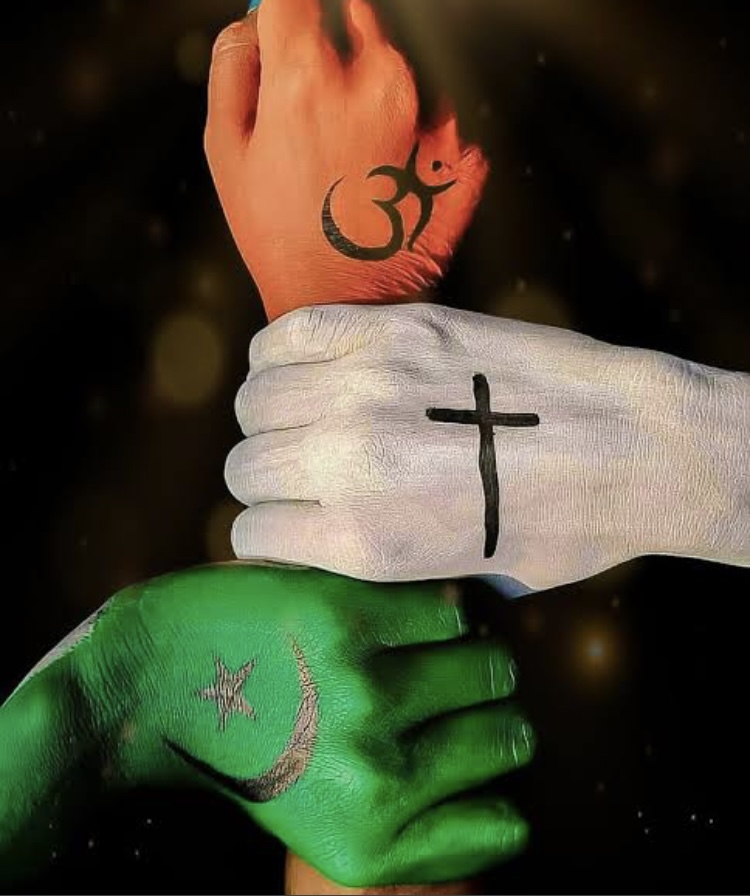
Indian democracy stands as the largest and one of the most vibrant democratic experiments in the world, embodying the aspirations of over a billion people across diverse cultures, languages, and religions. Rooted in the Constitution adopted in 1950, it is founded on the principles of sovereignty, equality, liberty, and justice, while embracing pluralism as its defining strength. The system operates through multiple forms โ€“ representative, parliamentary, federal, and social โ€“ ensuring governance that is both participatory and inclusive. Over the decades, Indiaโ€™s democratic journey has witnessed remarkable achievements, from peaceful transitions of power to the empowerment of historically marginalised communities. At the same time, it has grappled with persistent challenges such as corruption, casteism, communal tensions, and the influence of money in politics. Understanding the varieties, successes, and shortcomings of Indian democracy is essential to appreciating its resilience, diagnosing its flaws, and envisioning a future where democratic ideals are fully realised in practice.

Types of Indian Democracy

Representative Democracy
In Indiaโ€™s representative democracy, citizens elect their leaders through free and fair elections to voice their concerns and make decisions on their behalf. This system ensures that governance reflects the will of the people, allowing them to hold their representatives accountable through periodic elections. By delegating decision-making authority to elected officials, citizens can participate indirectly in shaping policies and laws, creating a bridge between the government and the governed.

Parliamentary Democracy
India follows the Westminster model of parliamentary democracy, where the Prime Minister and the Council of Ministers are chosen from among the elected members of Parliament. They are collectively responsible to the legislature, ensuring that the executive remains answerable to the people’s representatives. This arrangement allows for continuous legislative oversight, fosters transparency, and maintains a balance of power between law-making and law-enforcing bodies.

Federal Democracy
Indian democracy is also federal in nature, with powers and responsibilities distributed between the Union government and the states. This division, outlined in the Constitution, enables regional governments to address local needs while maintaining national cohesion. Such an arrangement not only protects the diversity of Indiaโ€™s vast population but also strengthens democratic participation at multiple levels of governance.

Social Democracy
Social democracy in India strives to create a society where justice, equality, and dignity are accessible to all. Through measures such as affirmative action, reservations, and targeted welfare programmes, it aims to bridge the socio-economic gaps caused by historical injustices. This commitment to inclusivity ensures that disadvantaged communities are given opportunities to participate equally in the democratic process.


Successes

Smooth Transitions of Power
One of the notable successes of Indian democracy is the peaceful transfer of power through regular elections. Governments change hands without violence, demonstrating the maturity and resilience of the democratic system. This stability strengthens the legitimacy of political institutions and builds public trust in governance.

Empowerment of Marginalised Communities
Affirmative action policies, reservations, and rights-based legislation have empowered Scheduled Castes, Scheduled Tribes, women, and other marginalised groups. These measures have expanded access to education, employment, and political representation, helping to address centuries of social exclusion.

A Robust Judiciary
Indiaโ€™s independent judiciary serves as the guardian of the Constitution and protector of citizensโ€™ rights. Through judicial review, it checks executive and legislative excesses, ensuring that the principles of justice, liberty, and equality remain intact.

Freedom of Speech and Press
The right to freely express opinions and access information through a free press is a cornerstone of Indian democracy. This freedom encourages public debate, holds leaders accountable, and ensures that governance remains transparent and responsive to the people.


Shortcomings

Corruption and Abuse of Public Office
Despite democratic safeguards, corruption remains a significant challenge in India. Misuse of public office for personal gain undermines trust in institutions and diverts resources away from public welfare.

Casteism, Communalism, and Political Polarization
Deep-rooted caste and communal divisions continue to influence politics, often leading to social tensions and reduced national unity. Increasing polarisation can weaken democratic consensus and hamper effective governance.

Limited Political Awareness
In certain sections of society, low levels of political literacy limit meaningful participation in democratic processes. Without adequate awareness, citizens may be less able to hold leaders accountable or make informed electoral choices.

Criminalization of Politics and Money Power
The growing presence of individuals with criminal backgrounds in politics, coupled with the influence of money in elections, poses a serious threat to democratic integrity. These factors distort the electoral process and reduce public confidence in political leadership.

Conclusion

The idea of Indian democracy is both ambitious and dynamic, reflecting the nationโ€™s vast diversity and complex socio-political fabric. Its varietiesโ€”representative, parliamentary, federal, and socialโ€”work together to create a framework that aspires to uphold justice, equality, and liberty for all citizens. Over the decades, the system has achieved notable successes, such as peaceful transfers of power, empowerment of marginalised groups, a vigilant judiciary, and the safeguarding of freedoms that form the lifeblood of democratic governance. Yet, persistent shortcomingsโ€”corruption, social divisions, political polarisation, low civic awareness, and the influence of money and crime in politicsโ€”remain significant challenges. The endurance of Indian democracy lies in its ability to reform, adapt, and engage citizens more meaningfully. Strengthening institutions, deepening political literacy, and fostering inclusivity are essential for ensuring that the promise of democracy is not merely an ideal but a lived reality for every Indian.

References

Verma, R. (2023). The Exaggerated Death of Indian Democracy. Journal of Democracy, 34(3), 153-161.

Dehalwar, K., & Sharma, S. N. (2024). Politics in the Name of Womenโ€™s Reservation. Contemporary Voice of Dalit, 2455328X241262562.

Guha, R. (1976). Indian Democracy: Long Dead, Now Buried. Journal of Contemporary Asia, 6(1), 39-53.

Kohli, A. (Ed.). (2001). The success of India’s democracy (Vol. 6). Cambridge University Press.

Kohli, A. (Ed.). (2014). India’s Democracy: An Analysis of Changing State-Society Relations. Princeton University Press.

Lijphart, A. (1996). The Puzzle of Indian Democracy: A Consociational Interpretation. American Political Science Review, 90(2), 258-268.

Tudor, M. (2023). Why India’s Democracy Is Dying. Journal of Democracy, 34(3), 121-132.

Varshney, A. (1998). India Defies the Odds: Why Democracy Survives. Journal of Democracy, 9(3), 36-50.

My Pleasant Moments with Honourable Judge of Tamil Nadu State Human Rights Commission, V Kannadasan: Cases of His Few Judgements

As an Indian, I am proud of my country. India is a country of pluralism and diversity, whether religions are concerned or languages, cultural issues, food habits, etc. Such diversity cannot be found in any other country, as I have visited many countries and heard from many foreigners. Our judiciary is neutral, and judges have been doing their best. Here, I wish to mention the activities of an honourable judge of Tamil Nadu whom I know closely, as I have visited Tamil Nadu many times. He is the Honourable Judge of the State Human Rights Commission (SHRC) of Tamil Nadu, V. Kannadasan, who was selected and joined in December 2022. It is pertinent to mention that the SHRC of Tamil Nadu is for the protection and promotion of human rights. V Kannadasan, a native of Mayiladuthurai, has more than 25 years of professional experience. He is a scholarly person in the legal field, particularly in civil, criminal, and human rights cases, and also an expert in prison and prisoner rights issues. He served as a special public prosecutor for the human rights court in Chennai from 2006 to 2011.
Among his many praiseworthy activities, I wish to mention a few covering the period from December 2022 to mid-October 2024.
Case 1: The Honourable Judge passed an order during his tenure while allowing a complaint moved by a woman, R. Vasuki, a resident of Besant Nagar, Tamil Nadu. Although the incident occurred on July 11 2013, the order was passed during his tenure. On July 11, 2013, sub-inspectors S. Rajasekharan and S. Ismayil, with the constables Padmanabhan and L. Umashankar attached to an anti-land grabbing cell, Kancheepuram, trespassed in her house. For these illegal activities, after the hearing, Honourable Judge Kannadasan directed the Tamil Nadu government to pay an amount of Rs 1.5 lakh as compensation to the victim of police access. Further, he directed the State Government to recover the money from the salaries of police personnel who were the culprits.
Case 2: This is the case of death because of drowning in a quarry. Divya, with her son Ariyan, went to an abundant quarry full of water for bathing. During the time of bathing, both died in drowning. The husband, M. Sankar, filed a complaint on June 13, 2020. After a thorough review, Honourable Judge Kannadasan directed the State Government to pay Rs. 5 lakh. Also, it is not noteworthy that the District Collector was directed to close the quarry.
Case 3: This case is related to the accident of a woman who was initially victimized by police inaction. Devi, a young woman going by two-wheelers, suffered severely as one pickup van dashed her two-wheelers from the back side on March 7, 2019. Subsequently, her left hand was amputated. But she did not get any justice from the police; Thiruvarur taluk police tried to hush up the case. After running from pillar to post, she filed a complaint to the State Human Rights Commission. The Honourable Judge of the SHRC passed a judgment and ordered the Tamil Nadu government to pay her an amount of Rs 3 lakh as compensation. Also, the honourable judge reprimanded the police for their inaction and recommended the government for appropriate departmental action.
Case 4: This case is from Tirunelveli, and the incident occurred recently. It happened in a NEET coaching centre run by a person from Kerala, where more than 250 students had undergone coaching. The owner was inhuman in his behaviour. For instance, one day during the class hour, one boy slept, and he was beaten with a stick by the owner of this Centre. Secondly, students should usually keep their chappals outside the class in order. One girl student kept her chappals improperly. So, the owner took the chappals and threw them over the students amidst all their classmates. All these inhuman activities were brought to Judge Kannadasan’s notice, and he took this case on his own and wanted to take action against the owner. But the owner fled to Kerala. Anyway, a police complaint has been filed.
Case 5: This is a case of custodial death in Madurai Central prison in 2007. One person, Pulipandi, was brutally killed in Madurai Central Prison, and later on, his father alleged that the prison authorities brutally assaulted his son. Judge Kannadasan, after a thorough hearing and review, recommended to the Tamil Nadu Government to pay a compensation of Rs. 3 lakh to the legal heirs. He concluded that it was a violation of human rights. In addition to compensation, he held Assistant Jailor Syed Shahul Hammeed and two Grade I Warders, Natarajan and Jayasrelan, responsible and legal action was recommended against them.
I have presented his few verdicts out of many so that readers can understand his dynamism. I have observed that he is a fair-minded judge. I wish him more laurels in his life.
Prof Shankar Chatterjee, Hyderabad

List of Top Social Scientists

Daily writing prompt
List the people you admire and look to for advice…

By Shashikant Nishant Sharma

list of ten influential social scientists who have made significant contributions to their respective fields:

Photo by Luis Quintero on Pexels.com
  1. Max Weber (1864-1920): A German sociologist, Weber is known for his work on the rationalization of society, the Protestant Ethic and the Spirit of Capitalism, and his theory of social action. He was instrumental in developing sociology as a distinct academic discipline.
  2. Karl Marx (1818-1883): A German philosopher, economist, and political theorist, Marx is best known for his analysis of capitalism and his theories on class struggle, labor, and historical materialism. His ideas laid the foundation for modern communism and have had a profound influence on sociology and political science.
  3. ร‰mile Durkheim (1858-1917): A French sociologist, Durkheim is considered one of the founding figures of sociology. He pioneered the study of social facts, collective consciousness, and the division of labor in society. His work laid the groundwork for functionalist theory in sociology.
  4. Sigmund Freud (1856-1939): An Austrian neurologist and the founder of psychoanalysis, Freud revolutionized the understanding of human psychology. His theories on the unconscious mind, defense mechanisms, and the interpretation of dreams have had a lasting impact on psychology, psychiatry, and cultural studies.
  5. Michel Foucault (1926-1984): A French philosopher and social theorist, Foucault is known for his critiques of power, knowledge, and the mechanisms of social control. His work on institutions such as prisons, asylums, and sexuality has been influential in fields ranging from sociology to cultural studies.
  6. Jane Addams (1860-1935): An American social worker, feminist, and suffragist, Addams co-founded the Hull House in Chicago, a settlement house that provided social services to immigrants and the urban poor. She was a pioneer in the field of social work and an advocate for social justice and women’s rights.
  7. W.E.B. Du Bois (1868-1963): An American sociologist, historian, and civil rights activist, Du Bois was one of the founders of the NAACP and a leading figure in the fight against racial inequality. His seminal work, “The Souls of Black Folk,” addressed issues of race, identity, and social justice in America.
  8. Margaret Mead (1901-1978): An American cultural anthropologist, Mead is best known for her studies of non-Western cultures, particularly in the South Pacific. Her work challenged conventional notions of gender and sexuality and highlighted the cultural variability of human behavior.
  9. Pierre Bourdieu (1930-2002): A French sociologist, Bourdieu is known for his theories on cultural capital, habitus, and social reproduction. His work explored the ways in which social structures shape individual behavior and cultural practices, and has had a significant impact on fields such as sociology, anthropology, and education.
  10. Amartya Sen (1933-present): An Indian economist and philosopher, Sen is known for his work on welfare economics, social choice theory, and development economics. He has made significant contributions to our understanding of poverty, inequality, and human development, and was awarded the Nobel Prize in Economics in 1998.

These social scientists have each left a lasting legacy in their respective fields and have contributed to our understanding of society, culture, and human behavior.

Religion as Social Work: Understanding its Significance in Planning

Daily writing prompt
How have you adapted to the changes brought on by the Covid-19 pandemic?

By Kavita Dehalwar

Religion has long been a cornerstone of human societies, influencing cultures, values, and behaviors across the globe. Beyond its spiritual and philosophical aspects, religion often plays a significant role in social work and community planning. Understanding this role is crucial for effective societal development and creating inclusive planning strategies.

Photo by Pixabay on Pexels.com

The Intersection of Religion and Social Work

Religion serves as a catalyst for social change and community development through various avenues:

  1. Community Building: Religious institutions often serve as hubs for community activities, providing spaces for social gatherings, support groups, and charitable initiatives. These activities contribute to social cohesion and foster a sense of belonging among members.
  2. Social Services: Many religious organizations actively engage in social welfare activities, such as feeding the hungry, providing shelter to the homeless, and offering healthcare services. These initiatives address immediate societal needs and alleviate suffering among marginalized populations.
  3. Counseling and Support: Religious leaders and volunteers frequently offer counseling and emotional support to individuals facing personal crises or societal challenges. The spiritual guidance provided by these figures often complements professional counseling services, offering holistic support to individuals in need.
  4. Advocacy and Social Justice: Religious teachings often advocate for principles of justice, equality, and compassion. Religious leaders and organizations frequently engage in advocacy efforts to address systemic issues such as poverty, discrimination, and human rights violations. These efforts contribute to shaping public policy and promoting social change.

Significance in Planning

In the realm of urban and community planning, religion holds significant importance for several reasons:

  1. Community Engagement: Religious institutions serve as vital stakeholders in the planning process. Engaging with religious leaders and communities ensures that planning initiatives are inclusive and responsive to the needs of diverse populations. Moreover, religious organizations often have extensive networks and resources that can support planning efforts, including access to volunteers, funding, and facilities.
  2. Social Capital: Religious communities are rich sources of social capital, comprising networks of trust, reciprocity, and shared values. Leveraging these networks can enhance community resilience, facilitate grassroots initiatives, and promote civic participation in planning processes.
  3. Ethical and Cultural Considerations: Religion shapes individuals’ ethical beliefs and cultural practices, influencing their attitudes towards land use, development, and conservation. Understanding these perspectives is crucial for crafting culturally sensitive and ethically sound planning policies that respect religious diversity and heritage.
  4. Social Services and Infrastructure: Religious institutions often provide essential social services and infrastructure within communities, including schools, healthcare facilities, and affordable housing. Incorporating these existing resources into planning strategies can optimize resource allocation and promote sustainable development.

Challenges and Considerations

While religion can be a powerful force for social good and community development, it also presents challenges and complexities in planning:

  1. Religious Diversity: Communities are increasingly diverse, encompassing a multitude of religious beliefs and practices. Planning processes must be inclusive and respectful of this diversity, avoiding favoritism towards any particular religious group.
  2. Secularism and Separation of Church and State: Planning initiatives must navigate the delicate balance between respecting religious freedoms and upholding principles of secular governance. Ensuring that religious involvement in planning does not infringe upon individuals’ rights or promote sectarian agendas is essential.
  3. Conflict and Controversy: Religious issues can be contentious, sparking debates and conflicts within communities. Planners must navigate these tensions carefully, fostering dialogue and consensus-building to address conflicting interests and values.

Conclusion

Religion plays a multifaceted role in social work and community planning, serving as a source of social cohesion, support, and advocacy. Recognizing the significance of religion in planning processes is essential for fostering inclusive, resilient, and culturally sensitive communities. By engaging with religious stakeholders, respecting diverse beliefs, and leveraging existing resources, planners can harness the transformative potential of religion to create more equitable and sustainable societies.

References

Constable, R. T. (1983). Values, religion, and social work practice.ย Social Thought,ย 9(4), 29-41.

Dehalwar, K., & Sharma, S. N. (2023).ย Fundamentals of Research Writing and Uses of Research Methodologies. Edupedia Publications Pvt Ltd.

Joseph, M. V. (1988). Religion and social work practice.ย Social Casework,ย 69(7), 443-452.

Praglin, L. J. (2004). Spirituality, religion, and social work: An effort towards interdisciplinary conversation.ย Journal of Religion & Spirituality in Social Work: Social Thought,ย 23(4), 67-84.

Sanzenbach, P. (1989). Religion and social work: It’s not that simple!.ย Social Casework,ย 70(9), 571-575.

Sharma, S. N. (Ed.). (2016).ย New perspectives in sociology and allied fields. EduPedia Publications (P) Ltd.

Spencer, S. (1956). Religion and social work.ย Social Work,ย 1(3), 19-26.

Types of NGOs based on Legal Mandates and Constitution

By Kavita Dehalwar

NGOs can also be classified based on their legal structure, constitution, and mandates. The legal framework under which an NGO operates can influence its organizational structure, funding sources, and activities. Here are different types of NGOs based on their constitution and legal mandates:

Photo by RDNE Stock project on Pexels.com
  1. Community-Based Organizations (CBOs):
    • Constitution: Typically informal, with a focus on community-driven initiatives.
    • Legal Mandate: Often registered at the local level, emphasizing community development and engagement.
  2. Nonprofit Organizations:
    • Constitution: Governed by a board of directors or trustees.
    • Legal Mandate: Registered under specific nonprofit or charity laws, with a focus on serving the public good.
  3. Trusts:
    • Constitution: Governed by a trust deed that outlines the objectives and management structure.
    • Legal Mandate: Operates as a legal entity, managed by trustees for charitable or beneficial purposes.
  4. Foundations:
    • Constitution: Governed by a foundation charter or constitution.
    • Legal Mandate: Typically established for philanthropic purposes, with a focus on grantmaking and supporting charitable causes.
  5. Associations:
    • Constitution: Governed by articles of association or bylaws.
    • Legal Mandate: Formed by individuals or organizations with common interests to achieve specific social, cultural, or economic goals.
  6. Cooperatives:
    • Constitution: Governed by cooperative bylaws.
    • Legal Mandate: Formed by individuals with shared economic goals, emphasizing democratic ownership and control.
  7. International NGOs (INGOs):
    • Constitution: Governed by international agreements or charters.
    • Legal Mandate: Operates across borders, often registered under the laws of the country where they are headquartered or established.
  8. Advocacy Organizations:
    • Constitution: Emphasizes advocacy goals in its founding documents.
    • Legal Mandate: Focuses on influencing policies and legislation to promote specific causes or interests.
  9. Social Enterprises:
    • Constitution: May take various legal forms, often incorporating both profit and social impact goals.
    • Legal Mandate: Balances financial sustainability with social or environmental impact, operating for a dual bottom line.
  10. Professional Associations:
    • Constitution: Governed by bylaws or articles of association.
    • Legal Mandate: Represents the interests of professionals in a specific field, often providing support, standards, and advocacy.
  11. Religious NGOs:
    • Constitution: Guided by religious principles or doctrines.
    • Legal Mandate: Operates based on religious beliefs, providing charitable services and community support.
  12. Government-Organized NGOs (GONGOs):
    • Constitution: May resemble an NGO but is initiated or controlled by a government entity.
    • Legal Mandate: Works in collaboration with or under the influence of the government, often to implement specific programs or policies.

Here’s a table with examples of NGOs across various sectors based on their areas of focus:

Type of NGOExamples
Human Rights NGOsAmnesty International, Human Rights Watch
Environmental NGOsGreenpeace, World Wildlife Fund (WWF)
Health NGOsMรฉdecins Sans Frontiรจres (Doctors Without Borders), Partners In Health
Development NGOsOxfam, CARE International
Education NGOsTeach For All, Room to Read
Emergency Relief NGOsInternational Federation of Red Cross and Red Crescent Societies (IFRC), Mรฉdecins du Monde (Doctors of the World)
Gender and Women’s Rights NGOsUN Women, Women’s International League for Peace and Freedom (WILPF)
Animal Rights NGOsPETA (People for the Ethical Treatment of Animals), World Animal Protection
Cultural NGOsUNESCO, National Trust for Historic Preservation
Advocacy and Lobbying NGOsTransparency International, Human Rights Campaign
Research and Policy NGOsBrookings Institution, Center for Global Development
Social Services NGOsSave the Children, International Rescue Committee
Community-Based Organizations (CBOs)Self-Employed Women’s Association (SEWA), Kibera Community Development Agenda (KCODA)
Nonprofit OrganizationsThe Salvation Army, Mรฉdecins du Monde (Doctors of the World)
TrustsTata Trusts, Ford Foundation
FoundationsBill & Melinda Gates Foundation, Rockefeller Foundation
AssociationsAmerican Cancer Society, International Federation of Red Cross and Red Crescent Societies (IFRC)
CooperativesFair Trade Certified, Organic Valley
International NGOs (INGOs)World Food Programme (WFP), Mรฉdecins Sans Frontiรจres (Doctors Without Borders)
Advocacy OrganizationsHuman Rights Campaign, Greenpeace
Social EnterprisesGrameen Bank, TOMS Shoes
Professional AssociationsAmerican Bar Association, World Medical Association
Religious NGOsWorld Vision, Islamic Relief Worldwide
Government-Organized NGOs (GONGOs)China Association for NGO Cooperation (CANGO), Vietnam Union of Friendship Organizations (VUFO)

Please note that the list is not exhaustive, and there are many more NGOs globally, each contributing to different causes and sectors.

Understanding the legal structure and mandates of NGOs is crucial for effective governance, accountability, and compliance with local regulations. The specific legal framework can vary significantly from country to country, shaping the way NGOs operate and fulfill their missions.

References

Bebbington, A. J., Hickey, S., & Mitlin, D. C. (Eds.). (2008).ย Can NGOs make a difference?: the challenge of development alternatives. Bloomsbury Publishing.

Clarke, G. (1998). Nonโ€governmental organizations (NGOs) and politics in the developing world.ย Political studies,ย 46(1), 36-52.

Dehalwar, K. The Slums of Bhopal: A Tale of Struggle and Resilience.

Ebrahim, A. (2003). Accountability in practice: Mechanisms for NGOs.ย World development,ย 31(5), 813-829.

Mercer, C. (2002). NGOs, civil society and democratization: a critical review of the literature.ย Progress in development studies,ย 2(1), 5-22.

Mitlin, D., Hickey, S., & Bebbington, A. (2007). Reclaiming development? NGOs and the challenge of alternatives.ย World development,ย 35(10), 1699-1720.

Raustiala, K. (1997). States, NGOs, and international environmental institutions.ย International Studies Quarterly,ย 41(4), 719-740.

Sharma, S. N. (2014). Fate of Rural Sanitation Scheme.ย International Journal of Research (IJR),ย 1(2).

Sharma, S. N. The Complex Reality of Delhiโ€™s Slums: A Closer Look at Urban Informality.

Social Structure and Social Control: An In-depth Analysis

by Dr. Kavita Dehalwar

Social structure refers to the complex framework of relationships and institutions that shape human societies. It encompasses various elements such as social institutions, hierarchies, norms, roles, and values. Social control, on the other hand, is the set of mechanisms, strategies, and institutions that regulate individual and collective behavior within a society. Together, they play a pivotal role in maintaining order and stability. This essay delves into the intricacies of social structure and social control, providing a comprehensive analysis supported by charts and graphs.

Social Structure:

Social Institutions: Social institutions form the backbone of social structure. These include family, education, economy, religion, and government. Each institution has a specific role in shaping individuals’ behaviors and interactions within the society.

Figure 1: Distribution of Influence among Social Institutions.

The chart above illustrates the relative influence of different social institutions. It indicates that education and family play crucial roles in shaping individuals during their formative years.

Social Hierarchies: Social hierarchies are systems of ranking and categorization that determine the distribution of power, resources, and prestige in a society. Hierarchies can be based on factors such as wealth, race, gender, and education._

Graph 1: Distribution of Wealth in a Social Hierarchy_The graph above demonstrates the unequal distribution of wealth in a hypothetical society, highlighting the disparities that can arise within social hierarchies.

Norms and Roles: Norms are societal expectations that dictate acceptable behavior, while roles are the expected behaviors associated with a particular status or position. These elements contribute to the cohesion and functioning of social structures._

Social Control:

  1. Formal Mechanisms: Formal mechanisms of social control involve established institutions and laws. Governments, legal systems, and law enforcement agencies are examples of formal mechanisms that regulate behavior through explicit rules. The bar graph depicts the effectiveness of formal mechanisms in maintaining social order. It suggests that legal systems are more effective than other formal mechanisms in curbing deviant behavior.
  2. Informal Mechanisms: Informal mechanisms operate through social interactions, norms, and values. Peer pressure, social expectations, and informal sanctions are examples of these mechanisms. The line graph demonstrates the influence of informal mechanisms over time, indicating that social expectations and informal sanctions play a significant role in shaping individual behavior.

Conclusion:

In conclusion, social structure and social control are interconnected components that define the dynamics of human societies. The charts and graphs presented in this essay provide visual insights into the complexity and functionality of these concepts. Understanding social structure and social control is crucial for creating informed policies and fostering societies that prioritize equity, justice, and stability.

References

Horwitz, A. V. (1990). The logic of social control. Springer Science & Business Media.

Nadel, S. F. (2013). The theory of social structure (Vol. 8). Routledge.

Ross, E. A. (1896). Social control. American Journal of Sociology1(5), 513-535.

Sharma, S. N. (2015). Introduction to Sociology. Journal for Studies in Management and Planning1(8), 32-36.

Stinchcombe, A. L. (2013). Social structure and organizations1. In Handbook of organizations (RLE: Organizations) (pp. 142-193). Routledge.

Sociology and Sociological Imaginations

Daily writing prompt
Describe your most ideal day from beginning to end.

By Kavita Dehalwar

Sociology is the scientific study of society, human social behavior, and the structures and processes that shape and influence it. It is a discipline that seeks to understand the patterns and dynamics of human interaction, social institutions, and the broader social forces that impact individuals and groups. Sociology examines how societies are organized, how they change over time, and how individuals are shaped by their social environments.

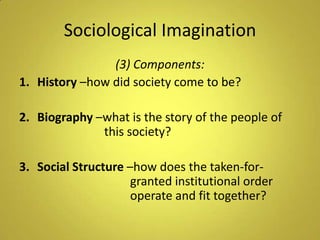
One key concept in sociology is the sociological imagination, which was introduced by American sociologist C. Wright Mills in his 1959 book of the same name. The sociological imagination encourages individuals to connect their personal experiences to larger social issues and historical contexts. Mills argued that people should be able to see the intersection between their private lives and the broader social structures in which they exist. This perspective helps individuals understand how personal troubles are often connected to public issues and how societal factors influence personal experiences.

The sociological imagination involves the ability to view one’s own life and the lives of others from a sociological perspective. It requires considering the broader social, historical, and cultural context in which individuals live. This perspective enables individuals to move beyond personal anecdotes and recognize the social forces at play in shaping their lives.

Key components of the sociological imagination include:

  1. Biography and History: Understanding the interplay between personal experiences (biography) and historical and social contexts (history). It involves recognizing that personal choices and experiences are influenced by societal structures and historical developments.
  2. Social Structure: Examining the overarching patterns and structures that organize society, such as institutions, social classes, and power dynamics. Social structure influences individuals and shapes their opportunities and constraints.
  3. Culture and Society: Recognizing the role of culture in shaping values, beliefs, norms, and practices within a society. Sociological imagination involves understanding how culture influences individual behavior and societal trends.
  4. Critical Thinking: Developing a critical and reflective mindset to question assumptions, challenge common beliefs, and analyze social phenomena. This involves looking beyond individual experiences to identify broader social patterns and inequalities.

Sociological imagination is a powerful tool for both sociological research and personal development. It encourages individuals to go beyond individualistic explanations for their circumstances and consider the broader social context. By understanding the societal forces at play, individuals can develop a more informed and critical perspective on their own lives and the world around them.

In the field of sociology, researchers use the sociological imagination to conduct studies and analyze social issues. Sociologists explore topics such as inequality, crime, education, family dynamics, and more, aiming to understand the underlying social structures and processes that contribute to these phenomena. This sociological perspective is crucial for developing insights into societal problems and proposing solutions that address root causes rather than merely addressing symptoms.

References

Dehalwar, K., & Sharma, S. N. (2023). Fate of Slums of Bhopal-A Tale of Struggle and Resilience.ย Think India Journal,ย 26(4), 12-18.

Harvey, D. (2005). The sociological and geographical imaginations.ย International journal of politics, culture, and society,ย 18, 211-255.

Hughes, E. C. (1963). Race relations and the sociological imagination.ย American Sociological Review, 879-890.

Mills, C. W. (2023). The sociological imagination. Inย Social Workย (pp. 105-108). Routledge.

Sharma, S. N. (Ed.). (2016).ย New perspectives in sociology and allied fields. EduPedia Publications (P) Ltd.

Thomson, R. (2014). Generational research: between historical and sociological imaginations.ย International Journal of Social Research Methodology,ย 17(2), 147-156.

Rishi sunak: Prime minister of UK

Rishi Sunak born on May 12, 1980, is a British politician who has served as Prime minister designated the United Kingdom and Leader of the conservative party since 24 October 2022. He previously served as Chancellor of the Exchequer from 2020 to 2022 and chief secretary to the treasure from 2019 to 2020. He has been a member of Parliament and MP for Richmond York since 2015.

ย ย ย ย Rishi Sunak was born in Southampton to parents of Punjabi-Indian descent who migrated to Britain from East Africa in the 1960s. He was educated at Winchester College read philosophy politics and economics PP at Lincoln College Oxford and gained an MBA from Stanford University in California. As a Fulbright scholar while studying at Stanford, he met his future wife shitamorti, the daughter of Inar Narayana Morty the Indian Billionaire businessman who founded Infosys. Sunak and Morty are the 2022 richest people in Britain with a combined fortune of 730 metres as of 2022. After graduating Sunak worked for Goldman Sachs and later as a partner at the huge fund firms the Children’s investment fund management and Saleem Partner. Sonic was elected to the House of Commons for Richmond in North Yorkshire. Its the 2015 general election succeeding William Hague sonic supported Brexit in the 2016 reference on EU membership he was appointed to Thresha Mays’s second government as the parliamentary government in the 2018 reshuffle he voted three times in favor of Mays’s Brexit withdrawal agreement after May resigned, Sonak supported Boris Johnson campaign to become a conservative leader. After Johnson was elected and appointed prime minister he appointed Sunak as Chief secretary to the treasury Sonak replaced Saja David as Chancellor of ex check after his resignation in February 2020 Cabinetry shuffle as Chancellor sunak was prominent in the government’s financial response to the Covid 19 pandemic and it’s economic impact including the coronavirus job retention and reaches to help out schemes. He resigned as Chancellor on July 2022 followed by Johnson’s resignation amid a government crisis. Sunak stood in the Conservative party leadership election to replace Johnson and last the members vote for Liz Dress following Truss’s resignation amid another government crisis. Sunak was elected unopposed as a leader of the conservative party and is set to become the next British prime minister.ย ย 

He is the eldest of three siblings. His father was born and raised in the colony and protectorate of Kenya present-day Kenya while his mother was born in Tanganyika which later became part of Tanzania. His grandfather was born in Punjab province British India and migrated from East Africa with their families to the UK in the 1960s. His paternal grandfather Ramdas Sunak was from Gujranwala in presence Pakistan and moved to Nairobi in 1936 to work as a clerk where he was joined by his wife Suhagwani sunk from Delhi

Sunak’s maternal grandfather rub reason berry MBE worked in Tanganyika as a tax officer and had arranged a marriage with 16-year-old Tanganyika born srksha with whom he had three children the family moved to the UK in 1966 funded by Srksha sold her wedding jewelry Sunk attended school in Romsey Hampshire and Winchester college a boy’s independent boarding school where he was head boy.

The Christian,Muslim conundrum

Credits-peakpx

I sat with my friend clive to know more about his culture. He told me how he was brought up to be a Christian and what were his values. He used to go to church every morning. Then we discussed if he has ever faced discrimination due to his religion. He didnโ€™t feel that he has experienced discrimination. I also asked my Muslim friends if theyโ€™ve had any such experiences. They also felt the same way.

All of the people that I interviewed are from a well-to-do backgrounds. This makes me come to my next observation. Are people discriminated against because of their religion or because they belong from a not so well to do background? If you see in our society, Muslim or Christian people who have money donโ€™t have to go through the religious stigma that other people go through. For example, a poor Muslim might have to go through a lot of discrimination as compared to a well-to-do Muslim. In todayโ€™s world if you are rich then youโ€™re a powerful man.

Credits- gettyimages

I also had the opportunity of meeting a Muslim boy who was not very well-to-do. He told me that in his school, people were always given an opportunity before him. He was the last boy to be considered for every activity and he feels itโ€™s because of his religion. I am not trying to make a stupid assumption but I feel this has some truth to it. In todayโ€™s world, if you belong to the higher class of society, you are likely to not go through any hardships due to your religion. Although, that is not completely true because there have been a lot of events where people were either kicked out or denied to take property at a certain place.

This activity led me to discover a lot of insights into the religious stigma that exists around me. Iโ€™d encourage everyone to go and ask people from vulnerable backgrounds about their lives. It serves two purposes. They get to share their sorrows and you become more informed about the situation of the matter.

Decoding Kenyaโ€™s police brutality and the core reasons behind it.

A police brutality art.

In February 2021, there was a brutal police attack in one of the informal settlements of Kenya called Mathara. A cop shot one of the teenagers, Dominic Kulema, leaving him severely injured. He ran inside a youth centre to save himself. He pleaded to the police for his life with his hands raised. But, the Police forced him out of the building and killed him. This story hardly made it to any news whatsoever. This is part of a normalised pattern that exists in the informal settlements of Kenya. Police kill a lot of young people without any criminal background because they think it is โ€œmorally rightโ€.

In 2020, A total number of 167 people were killed or misplaced according to missing voices Kenya (Human rights organisation that tracks extrajudicial killings). Despite well-funded police reforms launched by the government, this brutal practise has not stopped. Some anthropologists are trying to find the grassroots reasons for these activities and it dates back to colonialism. It is also a moral conflict country like Kenya. Police kill young people because they think it is morally right to do.

The foundations of the social division and brutal police system were laid in the first few decades of its existence. In 1899, Great Britain established the settlement as a rail depot between the port of Mombasa and the Nile River. Nairobi was named the capital of Britainโ€™s east Africa protectorate. The European settlers started to capture the better lands of the settlement and left the unhygienic and disease-prone areas for the African workers and localities. They never developed the basic infrastructure that was needed in this settlement.

In 1920, Kenya was declared an official colony, the British also established the Kenyan police force in the same year. African men were required to wear a box around their neck with their name, tribe and employer written on it. These police forces monitored their movement within the city. Administrators had the power to evict or expel African workers which basically means they had the power to kill them.

In the 1950s, The Kenya Land and Freedom Army, comprised of landless Africans gathered and fought for their lost lands, terrorising white settlers. Seeing this, the Administration enlisted a Home Guard, comprised of native Africans working for the colonial government and were fully given the authority to enforce the law and they did that very brutality. It was later formalised as administration police (AP).

A group of African people hired by the colonial government.

This dual system existed even after independence in 1963. In 2019, the AP was absorbed by the Kenya police force. While AP conducted raids, the police force was focused on more day-to-day policing of the affluent areas in Kenya.

Kenya is not the only country that deals with dual law practising. In the united states of America, some people are treated democratically while some minorities are treated harshly.

The day Kulema died, his friend collins witnessed everything and immediately approached the Mathare social justice centre (MSJC), a ray of hope in the doomed land of Kenya. It was co-founded by anthropologist Kimari. MSJC has been trying to track this kind of story for years. They rely upon local community sources like collins. They released their first report of epidemic killings in Nairobi in 2017. Kinnari calls this โ€œ A systematic annihilation of young people โ€œ. In February 2021, MSJC reported 14 killings of young people. These brutal police forces also target the families of young people.

They perform female genital mutilation which is just beyond being inhuman.

Organisations like MSJC have made people in Mathara realise their need for basic human rights. It has made people come together and fight for each other. A supporter of MSJC said and I quote โ€œtheir power vanishes the moment we stop fearing โ€œ. Due to the active voice raised by this organisation, the killings have decreased and women are safer now. There is a visible fear in the police’s minds about killing more people. While this is a huge fight, we can already see small changes in place due to the efforts of organisations like these.

Reference – https://www.sapiens.org โ€บ cultureWhat Kenya’s Killer Cops Reveal About Police Culture – Sapiens.org

Communalism

Communalism can be defined as an ideology stating the division of states on the Basis of ethnicity, religion, believes, values etc. The difference of two or more religious, Ethnic and social communities can sometimes produce clashes in the Society.

Communalism is a theory of government in which autonomous play song communities from Confederations. Communalism as a historical method follows the development of communities. It is a political trade in religion and an ideology On which communal politics is based. Communal Violence is conjectural consequence of communal ideology. Communalism has a major effect on the public it tends 2 separate people based on religion, language, territory, and ethnic origins. It leads to communal riots, Curfew situations, and can even cause terrorist activities. A communal Thought always tends to Establish political dominance Over a particular religious community. The country weakens when Political parties are formed and political activities are conducted on communal lines. The most negative impact of Communalism is riots, violence, and homicides. Communalism is a significant social issue in India, Bangladesh, Pakistan, and Sri Lanka.

When it comes to India, communal conflicts between religious communities in the country have Occurred since the period of British colonial rule, occasionally leading to serious inter communal Violence. Communalism is not just unique to South Asia as it can also be found in countries like Africa, America, Asia, Europe, and Australia.

The rising movement of communalism and the coexistence with violence have created a insecurity feeling between religious minorities among them Muslims, Sikhs and Christians in particular has feared of discrimination and confrontation in the coming days.

To prevent damages of the peace and integrity of the nation. It has many ways needed to analyse and debate the problem of communalism and communal violence. Itโ€™s became an absolute importance to be define communalism between people and also made equally pertinent to discovery of โ€˜commu-nalโ€™.

The major factors towards the emergence and growth of communalism in modern India involves:

  • Indian Britishers create a new policy during the Indian colonial is โ€˜Divide and Ruleโ€™ this made division between two countries.
  • The disappointments and frustration among younger generations and aspiring middle class of youths, caused by static agriculture, absence of modern industrial development and inadequate employment opportunities, which is exploited by political opportunists.
  • Hindu and Muslim revivalist movements.
  • A communal and distorted view of Indian history, taught in school and colleges played a major role in rise and growth of communal feelings among the masses.
  • The separatism and isolation between religious communities.
  • The rise of communal and fundamentalist parties.

Factors that responsible for Communal Violence:

  • Politics division โ€“ Communalism is often defined as a political perspective that makes use of religious and cultural differences in achieving a political gains.
  • Economy problems โ€“ Uneven development, class divisions, poverty and unemployment aggravates insecurity in the common men which make them vulnerable to political manipulation.
  • History of Communal Riots โ€“ Probability of recurrence of communal riots in a town where communal riots have already taken place once or twice is stronger than in a town when such riots have never occurred.
  • Politics of Appeasement โ€“ Prompted by political considerations, and guided by their vested interests, political parties take decisions which promote communal violence.
  • Isolation and Economic Backwardness of minority religion Community โ€“ The failure to adopt the scientific and technological education and thus, insufficient representation in the public service, industry and trade etc has led to the feeling of relative deprivation among minorities.
  • The resurgence of religious economic competition, especially among the lower and middle class strata has fuelled the communal ideology.
  • The lack of Administrative โ€“ A weak law and order is one of the causes of communal violence.
  • Psychology problem between communities โ€“ The lack of inter-personal trust and mutual understanding between two communities often result in perception of threat, harassment, fear and danger in one community against the members of the other community , which in turn leads to fight, hatred and anger phobia.
  • Role of Media โ€“ It is often accused of sensationalism and disseminates rumours as โ€œnewsโ€ which sometimes resulted into further tension and riots between two rival religious groups.
  • Social media has also emerged as a powerful medium to spread messages relating to communal tension or riot in any part of the country.

Measures to Deal with Communalism

There is need to reform in present criminal justice system, speedy trials and adequate compensation to the victims, may act as deterrent.

Increase in representation of minority community and weaker sections in all wings of law-enforcement, training of forces in human rights, especially in the use of firearms in accordance with UN code of conduct.

Codified guidelines for the administration, specialised training for the police force to handle communal riots and setting up special investigating and prosecuting agencies can help in damping major communal disgruntlement.

Emphasis on value-oriented education with focus on the values of peace, non-violence, compassion, secularism and humanism as well as developing scientific temper (enshrined as a fundamental duty) and rationalism as core values in children both in schools and colleges/universities, can prove vital in preventing communal feelings.

Government can adopt models followed by countries like Malaysia that has developed early-warning indicators to prevent racial clashes.

The Malaysian Ethnic Relations Monitoring System (known by its acronym Mesra) that makes use of a quality of life index (included criteria such as housing, health, income and education) and a perception index to gauge peopleโ€™s needs and feelings about race relations in their area.

Also the Hong Kong model of combating communalism by setting up a โ€œRace Relation Unitโ€ to promote racial harmony and facilitate integration of ethnic minorities, can be emulated by India.

RRU has established a hotline for complaints and inquiries on racial discrimination. Meanwhile, to create awareness about communal harmony, RRU talks to schools on culture of ethnic minorities and concept of racial discrimination.

Government can encourage and support civil society and NGOs to run projects that help create communal awareness, build stronger community relation and cultivating values of communal harmony in next generation.

There is a need for minority welfare schemes to be launched and implemented efficiently by administration to address the challenges and various forms of discrimination faced by them in jobs, housing and daily life.

A pro-active approach by National Foundation for Communal Harmony (NFCH), the body responsible for promoting communal harmony is needed.

NFCH provides assistance for the physical and psychological rehabilitation of the child victims of communal, caste, ethnic or terrorist violence, besides promoting communal harmony, fraternity and national integration.

A legislation is required to curb the communal violence. Communal Violence (Prevention, Control and Rehabilitation of Victims) Bill, 2005 must be enacted soon.

The enormous scope and changes for transformation due to our new generation and their progressive of the countries. The new generation can give new hopes and changes towards the making of new India which would help to free from all kinds of communal and caste conflicts, prejudices, hatred and discrimination, this may not possible through law but it can help us to have positive efforts of the new generation.

POLITICS IN INDIA

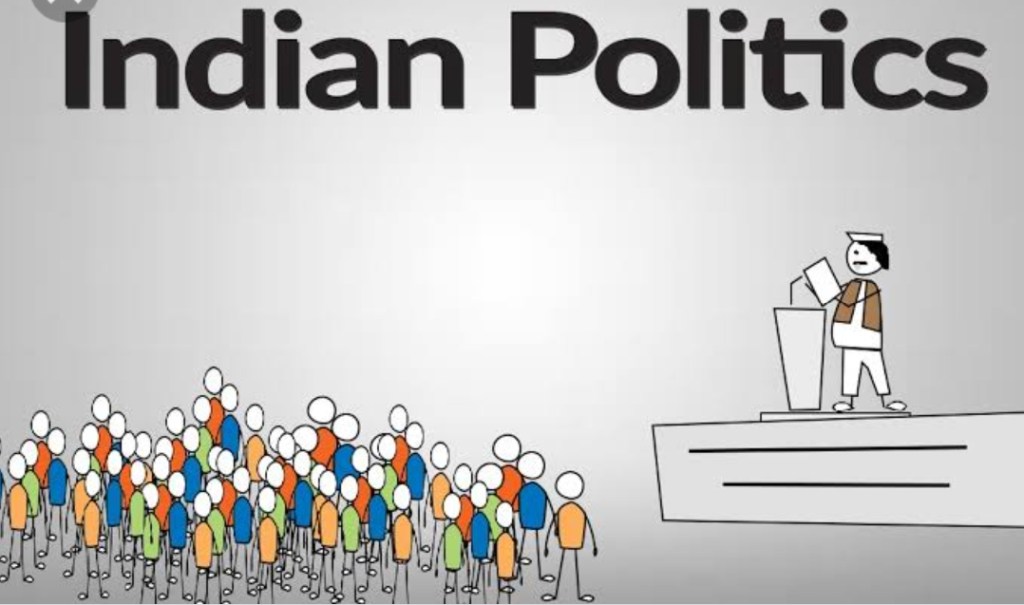
Politics work with inthe constitution of India.India is a parliamentary democratic republic in which the president of India is the head of state and the prime minister of India is the head of government.

POLITICAL PARTY IN INDIA:-

As per 23, September 2021 the election commission of India total number of parties registered was 2858, with 8 national parties, 54 state parties and 2796 unrecognised parties.

THREE BRANCHES OF INDIAN GOVERNMENT:-

* Executive.

*Legislative.

* Judiciary.

EXECUTIVE:-

Executive type of Indian government include,

* president of india.

* prime minister of India.

* union cabinet.

* council of ministers.

* Bureaucrats.

PRESIDENT OF INDIA:-

President of India is the highest post and is the constitutional head of the country. According to our constitution, President is the first citizen of our country and a symbol of unity and integrity.President is also responsible for appointing other executives and judicial members in the country like the Chief Justice of India, Judges of all the High courts, the Election Commissioner of India and states too. President of India is also the Commander in Chief of all the Indian forces i.e. Indian Army, Indian Navy, and Indian Air force.

PRIME MINISTER OF INDIA:-

Prime Minister is the chief of the Central government of India and also acts as the advisor of President. He is also head of the Council of Ministers and is responsible for appointing or dismissing any minister from the council. In case Prime Minister resigns from his office or dies during his tenure then the cabinet will automatically dissolve.

UNION CABINET:-

Union Cabinet consists of the Prime Minister and Cabinet Ministers. This is the decision making body in the central government.The Cabinet Minister cannot make a law concerning his department on its own, he can only propose the decision and then the Union Cabinet will make the final law.

COUNCIL OF MINISTERS:-

Council of Ministers works under the Union Cabinet. All the members of the Union Cabinet are members of the Council of Ministers and here the Minister of States appointed by the President on the advice of the Prime Minister.

BUREAUCRATS:-

Bureaucrats are selected and appointed by Union Public Service Commission and for states there is a State Public Service Commission. They are responsible for implementing the laws and all the other functions of government. Bureaucrats consist of IAS, IPS, IFS and other officials leading various government agencies.

LEGISLATIVE:-

Legislative type of government include president,lok sabha also known as lower house,Rajya sabha also known as upper house.

LOK SABHA:-

Lok Sabha is more powerful in both the houses. Members of Lok Sabha are elected directly by citizens of India. There are total 530 members from the states and 20 members from the union territories. They are elected in general election. Their term is five years.

RAJYA SABHA:-

There cannot be more than 250 members in the Rajya Sabha. Members of Rajya Sabha are elected by state legislative assemblies out of which 12 members are directly appointed by President who come from different backgrounds like Literature, Art, Social Services etc.

JUDICIARY:-

Judiciary type of government includes supreme court,high court and district court.

SUPREME COURT:-

Supreme Court is the highest judicial body of the country. The decision by Supreme Court of India is acceptable by all judicial bodies and no other judicial body has the power to change a decision by Supreme Court. Indian judiciary is an independent body and is not affected by Legislature or Executive. Supreme Court has the power to question any decision made by Legislative Bodies or Executive if the decision is not in accordance with the Constitution of India.supreme court of india consists of 34 judges maximum in which there can be a Chief Justice and 33 other judges.

HIGH COURT:-

The High Court is the highest judicial body of a state. High court functions under Supreme Court. High court maintains the rule of law in the particular state and in case of two small states there can be one common High court.

DISTRICT COURT:-

District court or sub-ordinate courts function under High court. They maintain rule of law in a particular district or locality in which they function. They look after the civil and criminal matters of that particular region.

RECOGNISED NATIONAL PARTIES IN INDIA:-

* Bahujan samaj party.

* Bhartiya Janata party.

* Communist party of India.

* Communist party of India (Marxist).

* Indian National Congress.

* Nationalist Congress party.

เคจเคฟเคคเคฟเคจ เค…เค—เฅเคฐเคตเคพเคฒ เค•เฅ‹ เคฐเคพเคนเคค, เคฌเคจเฅ‡ เคฐเคนเฅ‡เค‚เค—เฅ‡ เคตเคฟเคงเคพเคฏเค•

เคนเคฐเคฆเฅ‹เคˆเฅค

เคธเคฆเคฐ เคตเคฟเคงเคพเคฏเค• เคจเคฟเคคเคฟเคจ เค…เค—เฅเคฐเคตเคพเคฒ เค•เฅ‹ เคฌเฅœเฅ€ เคฐเคพเคนเคค เคฎเคฟเคฒเฅ€ เคนเฅˆ. เคตเคฟเคงเคพเคจเคธเคญเคพ เคธเคฆเคธเฅเคฏเคคเคพ เคฐเคฆเฅเคฆ เค•เคฐเคจเฅ‡ เค•เฅ‡ เคฒเคฟเค เคธเคชเคพ เคจเฅ‡เคคเคพ เคฆเฅเคงเคพเคฐเคพ เคฆเคพเค–เคฟเคฒ เค•เฅ€ เค—เคˆ เคฏเคพเคšเคฟเค•เคพ เค•เฅ‹ เคตเคฟเคงเคพเคจเคธเคญเคพ เค…เคงเฅเคฏเค•เฅเคท เคนเฅƒเคฆเคฏ เคจเคพเคฐเคพเคฏเคฃ เคฆเฅ€เค•เฅเคทเคฟเคค เคจเฅ‡ เค–เคพเคฐเคฟเคœ เค•เคฐ เคฆเคฟเคฏเคพ เคนเฅˆเฅค เค‡เคธเค•เฅ€ เคœเคพเคจเค•เคพเคฐเฅ€ เคฎเคฟเคฒเคคเฅ‡ เคนเฅ€ เคธเคฆเคฐ เคตเคฟเคงเคพเคฏเค• เค•เฅ‡ เคธเคฎเคฐเฅเคฅเค•เฅ‹เค‚ เคฎเฅ‡เค‚ เค–เฅเคถเฅ€ เค•เฅ€ เคฒเคนเคฐ เคฆเฅŒเคกเคผ เค—เคˆเฅค


เคตเคฟเคงเคพเคจเคธเคญเคพ เคฎเฅ‡เค‚ เคจเฅ‡เคคเคพ เคชเฅเคฐเคคเคฟเคชเค•เฅเคท เคฐเคพเคฎเค—เฅ‹เคตเคฟเค‚เคฆ เคšเฅŒเคงเคฐเฅ€ เคจเฅ‡ 11 เคจเคตเค‚เคฌเคฐ 2019 เค•เฅ‹ เคตเคฟเคงเคพเคจเคธเคญเคพ เค…เคงเฅเคฏเค•เฅเคท เค•เฅ‡ เคธเคพเคฎเคจเฅ‡ เคฏเคพเคšเคฟเค•เคพ เคฆเคพเค–เคฟเคฒ เค•เฅ€ เคฅเฅ€เฅค เค‡เคธเคฎเฅ‡เค‚ เค•เคนเคพ เคฅเคพ เค•เคฟ เคธเคฆเคฐ เคตเคฟเคงเคพเคฏเค• เคจเคฟเคคเคฟเคจ เค…เค—เฅเคฐเคตเคพเคฒ 2017 เคฎเฅ‡เค‚ เคนเฅเค เคตเคฟเคงเคพเคจเคธเคญเคพ เคšเฅเคจเคพเคต เคฎเฅ‡เค‚ เคธเคชเคพ เค•เฅ‡ เคŸเคฟเค•เคŸ เคชเคฐ เคจเคฟเคฐเฅเคตเคพเคšเคฟเคค เคนเฅเค เคฅเฅ‡เฅค 2019 เคฎเฅ‡เค‚ เค—เคพเค‚เคงเฅ€ เคœเคฏเค‚เคคเฅ€ เค•เฅ‡ เคฎเฅŒเค•เฅ‡ เคชเคฐ เคนเฅเค เคฎเฅˆเคฐเคพเคฅเคจ เคตเคฟเคงเคพเคจเคธเคญเคพ เคธเคคเฅเคฐ เค•เฅ‡ เคฆเฅŒเคฐเคพเคจ เคธเคชเคพ เคจเฅ‡ เคตเคฟเคนเฅเคช เคœเคพเคฐเฅ€ เค•เฅ€ เคฅเฅ€ เค•เคฟ เคธเคชเคพ เค•เคพ เค•เฅ‹เคˆ เคญเฅ€ เคตเคฟเคงเคพเคฏเค• เค‰เค•เฅเคค เคธเคคเฅเคฐ เคฎเฅ‡เค‚ เคถเคพเคฎเคฟเคฒ เคจเคนเฅ€เค‚ เคนเฅ‹เค—เคพเฅค

เค‡เคธเค•เฅ‡ เคฌเคพเคตเคœเฅ‚เคฆ เคจเคฟเคคเคฟเคจ เค…เค—เฅเคฐเคตเคพเคฒ เคธเคคเฅเคฐ เคฎเฅ‡เค‚ เคถเคพเคฎเคฟเคฒ เคนเฅเคเฅค เคตเคฟเคนเฅเคช เค•เคพ เค‰เคฒเฅเคฒเค‚เค˜เคจ เค•เคฟเค เคœเคพเคจเฅ‡ เค•เคพ เค†เคฐเฅ‹เคช เคฒเค—เคพ เค‰เคจเค•เฅ€ เคธเคฆเคธเฅเคฏเคคเคพ เคฐเคฆเฅเคฆ เค•เคฐเคจเฅ‡ เค•เฅ€ เคฎเคพเค‚เค— เค•เฅ€ เค—เคˆ เคฅเฅ€เฅค เคชเฅ‚เคฐเฅ‡ เคฎเคพเคฎเคฒเฅ‡ เคชเคฐ เคšเคฒเฅ€ เคธเฅเคจเคตเคพเคˆ เค•เฅ‡ เคฌเคพเคฆ เคตเคฟเคงเคพเคจเคธเคญเคพ เค…เคงเฅเคฏเค•เฅเคท เคนเฅƒเคฆเคฏ เคจเคพเคฐเคพเคฏเคฃ เคฆเฅ€เค•เฅเคทเคฟเคค เคจเฅ‡ เคฐเคพเคฎเค—เฅ‹เคตเคฟเค‚เคฆ เคšเฅŒเคงเคฐเฅ€ เค•เฅ€ เคฏเคพเคšเคฟเค•เคพ เค–เคพเคฐเคฟเคœ เค•เคฐ เคฆเฅ€ เคนเฅˆเฅค เคธเคฆเคฐ เคตเคฟเคงเคพเคฏเค• เคจเคฟเคคเคฟเคจ เค…เค—เฅเคฐเคตเคพเคฒ เคจเฅ‡ เค‡เคธเค•เฅ€ เคชเฅเคทเฅเคŸเคฟ เค•เคฐเคคเฅ‡ เคนเฅเค เคฌเคคเคพเคฏเคพ เค•เคฟ เค—เฅเคฐเฅเคตเคพเคฐ เค•เฅ‹ เคนเฅ€ เค‡เคธ เคธเค‚เคฌเค‚เคง เคฎเฅ‡เค‚ เคตเคฟเคงเคพเคจเคธเคญเคพ เค…เคงเฅเคฏเค•เฅเคท เคจเฅ‡ เค†เคฆเฅ‡เคถ เคชเคพเคฐเคฟเคค เค•เคฐ เคฆเคฟเคฏเคพ เคฅเคพ

เคฌเคคเคพ เคฆเฅ‡เค‚ เค•เคฟ เคนเคฐเคฆเฅ‹เคˆ เคธเคฆเคฐ เคตเคฟเคงเคพเคจเคธเคญเคพ เคชเคฐ เค•เคˆ เคชเค‚เคšเคตเคฐเฅเคทเฅ€เคฏ เคธเฅ‡ เคจเคฟเคคเคฟเคจ เค…เค—เฅเคฐเคตเคพเคฒ เค•เฅ‡ เคชเคฟเคคเคพ เคจเคฐเฅ‡เคถ เค…เค—เฅเคฐเคตเคพเคฒ เค•เคพ เคฆเคตเคฆเคตเคพ เคฐเคนเคพ เคนเฅˆ. เค‡เคธ เคธเฅ€เคŸ เคชเคฐ เคนเคฎเฅ‡เคถเคพ เคธเฅ‡ เคนเฅ€ เคจเคฐเฅ‡เคถ เคนเฅ€ เคœเฅ€เคคเคคเฅ‡ เค†เคฏเฅ‡ เคนเฅˆเค‚. 2017 เค•เฅ‡ เคตเคฟเคงเคพเคจเคธเคญเคพ เคšเฅเคจเคพเคต เคฎเฅ‡เค‚ เคฌเฅ‡เคŸเฅ‡ เคจเคฟเคคเคฟเคจ เค…เค—เฅเคฐเคตเคพเคฒ เคธเคชเคพ เค•เฅ€ เคŸเคฟเค•เคŸ เคชเคฐ เคตเคฟเคงเคพเคจเคธเคญเคพ เคชเคนเฅเค‚เคšเฅ‡ เคฅเฅ‡. เคฌเคพเคฆ เคฎเฅ‡เค‚ เคตเฅ‡ เคธเคคเฅเคคเคพเคงเคพเคฐเฅ€ เคชเคพเคฐเฅเคŸเฅ€ เคญเคพเคœเคชเคพ เคฎเฅ‡เค‚ เคถเคพเคฎเคฟเคฒ เคนเฅ‹ เค—เค เคฅเฅ‡เฅค

เค…เคจเคจเฅเคฏเคพ เค•เฅŒเคถเคฒ เคฆเฅเคตเคพเคฐเคพ เคธเค‚เคชเคพเคฆเคฟเคคเฅค

Indian political system

Politics in any country involves the ruling party and the opposition. Usually and ideally, political parties are formed based on the same line of thinking and ideology. The left and the right are the two terms usually used by media and political commentators to define the group of people with the same ideological bend of mind. The lefts are usually considered liberal, secular and pro-government ideologies while the right is considered majoritarian, pro-poor and rebellious in nature.

These definitions are not defined anywhere in the constitutions. of any governmental organisations, but are the terms coined by journalists, authors and commentators. For example, in the USA, the democrats are known to be left-leaning while the republicans are known to be right-leaning, in UK Labour party is seen to be right-leaning ideology and the conservative party having a left-leaning ideology. The case is similar in India as well, with Congress having left-leaning ideologies while BJP having right-leaning ideologies.

And for a perfect democracy to work, both the ideologies are necessary. A mature democracy is one where there is a fine demarcation between the two ideologies, but in countries like India, these demarcations are blurry and the left and right ideologies superimpose on each other often number of times.

The political system is built in such a way that, irrespective of what ideologies, policies, processes, institutions, strategy, behaviours, classes or diplomacy that a political party follows, the core vision and objective lie in the development of the country.

But, like always, not everything that glitters is gold, is it not?

Politics is called a dirty game and rightly so, especially in a country like India. Greed, corruption, injustice, bigotry and hatred are some of the very few terms that are usually associated with Indian politics. In this essay on Indian politics, we will not be able to talk about it all, but we will try to touch upon each of the issues.

Politicians usually choose their parties, not because they believe in the ideologies of the party, but because of the winnability quotient in the elections. Elections, unfortunately, is all about money power and muscle power. The ideologies and promises are just the sugar coating that politician do to get votes from people. But even if they follow the ideology of a party, the ideologies itself is flawed and broken from its core. Divide and rule policy followed by the British to rule India is followed by todayโ€™s politicians to get votes. Political parties, across the spectrum, try to divide people of India on the basis of religions and class. This is usually called by the term communal polarisation. The gullible voters play into the hands of these political parties and belive the fancy promises they show in the name of development. In a good democratic system, a common man should also be well aware of their rights and responsibilities as a law-abiding citizen.

A good politics consists of the government and its opposition, with both of them working for the development of the country, in their capacities. The opposition parties questions criticise and demands accountability from the ruling party so that the ruling regime is kept in check. The system works fine in its idealistic form. But political parties, with their greed for power, forget their true responsibilities and indulge in dirty games to grab power at any cost. That cost is borne by the common man of the country.

According to our Constitution, India is a “sovereign secular socialist democratic republic.” It has 28 states and seven Union Territories. With a population of approximately 112 crore, India happens to be the largest democracy in the world. Indian polity is a multi-party democracy, based on the adult franchise system of voting. That is any Indian citizen of 18 and above, who is not debarred by law, can vote in the Indian elections, at national, state and local levels.

India is a parliamentary democracy and a federal parliamentary representative democratic republic, where the Prime Minister is the head of government. He or she should be chosen by the MPs (Member of Parliaments) of the ruling party or the coalition that comes to power. The Vice President has to temporarily assume the role of President in the event of the death, resignation, or removal of the President, until a new President is chosen by the electoral college. The Vice President of India may also act temporarily as President, during the absence or illness of the President. The Vice President of India is also the Ex-officio Chairman of the Rajya Sabha. Mohammad Hamid Ansari is the present Vice President of India.

Executive, Legislature and Judiciary

With the Union Government and State Governments wrest the executive power, while the legislative power is vested on the Union Government and the two houses of Indian Parliament- the Lok Sabha and Rajya Sabha- and also the State Government and two state legislatures-Vidhan Sabha and Vidhan Parishad. However, here it deserves a mention that only five of India’s 28 states have Vidhan Parishad or Legislative Council, which is also known as the upper house of state legislatures, along with the Vidhan Sabha. The rest of the states don’t have bicameral legislatures, and only have Vidhan Sabha or Legislative Assembly. Each state also has a Governor, who is formally appointed by the President of India. The role of the Governor is somewhat similar to that of President in the national level; he is a titular head of the state in normal circumstances, but can exercise some powers when directed by the Union Government.

Advertisements

Importance of Voting – Why should we vote!

Importance of Voting in India:

Voting in India is a Constitutional right if one is a citizen over 18 years of age. However, that also makes it optional. It has been a tendency among voters, especially in the urban areas, to treat the voting day as a day of rest. While skipping the vote may not seem to cause any harm,the long-term consequences are disastrous.

Whatโ€™s the need to vote?

  • We complain that we donโ€™t have proper roads, no regular supply of water, no development, corruption etc. Rather than complaining if we elect a good candidate who will work for the people then thatโ€™s what the true power of common man.
  • Voting is not just our RIGHT, itโ€™s also our DUTY.
  • Our country is a republic and its the responsibility of the people to elect the right candidate.
  • A good leader will make sure that the next 5 years will be safe, progressive and pro-development.
  • We should never think that how will it matter if one or two persons donโ€™t vote. Our constitution has given a very important power to us to elect the person who can take forward the country on the right path, so we have to use our power intelligently.
  • We should always remember that we ( as an individual ) should not vote a person based on just caste (thinking that he is of my caste), religion. We should not accept any gifts or monetary benefits from any candidate in exchange for vote.
  • We should check the candidates standing for elections in our constituency and then among them, we have to vote for one candidate.
  • Please take necessary help from the staff in the voting poll centres as the incorrect process will make your vote invalid.
  • ย In 2014, the voting percentage of our country was around 66.5%, which can be improved if we all decide to vote and also create awareness of voting among our friends and family.
  • On the voting day it will be a holiday, but donโ€™t go for outing/movie without voting as one day of enjoyment may cost us and our country.
  • Those people who have migrated to different cities due to different reasons and if they have their vote in their native then they need to plan to visit their native and vote as each and every vote matters for electing the right candidate.

It has become a common ritual to talk bitter about any candidate or an elected leader of any legislative assembly or the parliament. The faultfinding then comes down to the โ€˜Systemโ€™ and how democracy is not working as it should. However, a very little room has been given to โ€˜What the people can doโ€™ to strengthen the democratic roots and bring about a change in the system. Just as it is the responsibility of the elected leader to fulfill the well-beings of the voters, the same is the need for the people of India to contribute to choosing the correct leader for their representation.

Democracy has given people a powerful right- that is to VOTE. Voting is the fundamental basis of democracyโ€™s โ€˜Of the people, for the people, and by the peopleโ€™ slogan. Therefore, rather than enjoying it as a holiday, one must vote if he truly wants to contribute to the nation-building process and bring about a change. A Citizen should actually not need to find any reason to Vote. It must be done as a compulsive duty although there is no legal obligation to vote.

Every Single Vote Is Significant:

Needless to say, every citizenโ€™s vote is counted in the polling process. If the people are equally divided between two candidates, one single vote can be a game-changer and a decisive factor. We have seen in the past how one vote from an MP can decide the fall of the government. Exactly the same way, a single personโ€™s vote can confirm the win/fall of an aspiring MP or MLA.

Whom to Vote?

  • Check the candidateโ€™s manifesto and his/her background. If he/she is sitting MP then check his/her and his/her partyโ€™s work and based on that you can decide.
  •  If you want to vote based on political partyโ€™s work then check the partyโ€™s last timeโ€™s promises and check which all party has fulfilled their promises and compare their work.
  • Think about the country, present and future of our next generations when you vote.

Non-choosers get NOTA:

At times, it is possible that one does not want any single candidate to be elected from all who are contesting. The election commission has made a special provision of NOTA. It stands for None of The Above. Hence if none of the candidates fit into your criteria, just hit the NOTA option and voice the opinion. Introduction of this alternative is believed to play a significant role in the future. In the late future, it may also be possible that the NOTA will decide the re-elections with fresh candidates.

We must honor the right of voting given by the constitution of India. The youngsters are well excited to exercise their right to vote as soon as they turn 18. The feeling after having cast a vote infuses a sense of pride for being a responsible citizen. As can be witnessed from the sharing of the inked finger on social media. The trend is continuing to gain popularity amongst the youngers and the elders as well.

Gone are the days when it was required for people to motivate them to vote. The vote share for the General Election of 2014 was 8% higher than the previous election. Voter turnout in the Lok Sabha Election 2019 was 67%. Voter awareness program has become successful in its mission and the vote share continues to increase till date in many state elections. With this increasing number of voter turnout, we will soon reach the 80-90% golden mark.

โ€œVoting is the expression of our commitment to ourselves, one another, this country, and this world.โ€

Sharon Salzberg

127th Amendment Bill, 2021: The way to comprehensive turn of events

Indian Constitution is well known for the social designing of a conventional society, to change it from the customary progressive request into a cutting-edge libertarian country, where positive segregation in the blessing of least advantaged areas of the general public, is looked as a system for advancement and development. Indeed, Right to Equality cherished in Article 15 and Article 16 plans to appear the longing of Constitution producers of India to carry thorough development to individuals of India. One of the systems to guarantee equity is the possibility of reservation in training in the state-run establishment just as work in the public authority and public area. As to Schedule Castes and Schedule Tribes instance of the booking is quite clear. Be that as it may, the account of reservation has seen many good and bad times on account of the Other Backward Communities.

In India, there has been a background marked by the backwardness of networks outside of the pale of timetable positions and clans. Rank System in our nation is a perplexing snare of social association where standing personalities advise person’s position in the customary social request. Notwithstanding, the issue with the standing framework is that for the sake of societal position it has prompted the double-dealing and inside and out torment of the lower stations throughout the long term, justifying the sear of pioneers like Baba Sahib Ambedkar, Jyotiba Phule and others. It is to guarantee the comprehensive advancement of individuals from the lower positions under the aegis of the Indian government assistance state, reservation is given. Truly, OBCs are those networks which fall in the middle of the least rungs of positions and the higher standings. Their issue is financial backwardness. To survey their backwardness different advisory groups from Kalekar Committee to Mandal Committee were establishes to distinguish the networks which are really in reverse, to bring them under the umbrella of State supported government assistance. It is in this light that the Hundred and Twenty Seventh Constitution Amendment Bill, 2021 should be seen.

127th Constitution Amendment Bill: States right to make Inclusive OBC list

The new revision bill was presented following quite a while of organization of the booking systems for the Obc’s. Starting from the giving the sacred height to the National Commission for the Backward Communities in 2017, the NCBC was made the nodal office to manage the issues in regards to OBCs including a pivotal part of complaint redressal which was being managed by the National Commission for Schedule Castes. The revision gave a solid balance to the OBCs by guaranteeing the institutional component and sacred status. Nonetheless, in ongoing past there have been many issues which have sprung up with respect to consideration/prohibition of networks in the OBC list. One of the significant mixes was brought about by the interest for the OBC status to Maratha people group in Maharashtra. This interest has seen cases and counter cases in different echelons of Judiciary. Yet, the Hon’ble Supreme Court judgment of 2021 completely made Central Government the watchman of OBC list. It put the Center in an off-kilter position since it has been the states which are principally liable for the government assistance of their residence. Additionally through this judgment, by one assessment, around 671 networks were kept out of the ambit of OBC classification, getting them far from the advantages that this booking involves.

The effectivity of 127th Constitution Amendment Bill 2021 should be surveyed against this foundation. The revision has enabled states to add networks to OBC list. It has enabled NCBC to be counseled by states in the matter concerning OBCs. It is a significant revision for different reasons. First and foremost, this change permits state governments to add networks to the OBC records that they consider fit. This proviso is huge in light of the fact that it permits the advantages of OBC reservation to reach to the grassroot level. Also, it unites the situation of NCBC, by ordering states to hold discussion with this established body in all issue identified with OBCs. Besides, this revision should be found in the light of development of the OBC reservation from advertisement hocism of early days to the more noteworthy organization of components that arrangements with the issues of OBCs, going from established status of NCBC to substantial job for states in keeping up with their OBC records. The greater clearness in this regard is a welcome advance as it will just reinforce the government assistance measures for the more vulnerable areas of our general public as embraced in the Constitution of India.

The ramifications of 127th Constitution Amendment Bill are all over. It’s undeniably true that the social design and chains of importance in India have stayed unaltered even get-togethers given to the more vulnerable networks, the synthesis of the elites in our nation is intensely shifted towards the forward positions. Reservation as a device of positive separation can be utilized to modify the social request to the advantage of the individuals who have been taken advantage of at its hands for millenniums. All the more critically, the equity that laws like this will grant will likewise guarantee social correspondence, and in the end might even modify the structure of the elites in our country. Just before 75th commemoration of India’s Independence, a fortunate advance was taken by noteworthy Prime Minister, Shri Narendra Modi for the advantages of in reverse networks of India. This choice will be an achievement for making another personality of a New India.

Alternately the meaning of this sacred alteration focuses to the more noteworthy need of advancement and development in our general public, a development that would reach to each person of India, so the requirement for reservation will become repetitive. The way that various networks need the front of OBC order is connected with the possibility that there is an immense degree for cultural improvement in India even following 74 years of our autonomy. This is a bleak reality that requirements further reflection and strategy development. Additionally, one worry that ascents from this alteration is the crystallization of rotating entryway strategy as to OBC reservation, as states will be constrained by the neighborhood governmental issues to add more current networks into their individual OBC records. This viewpoint should be remembered, in case we wind up weakening the impacts of this way breaking alteration.

All in all, the Constitution Amendment Bill has acquired sufficient measure of clearness the standard working systems of working of OBC reservation. It additionally has a gigantic potential to enable individuals from in reverse networks, upgrading their societal position through well-rounded schooling and business openings, making ready for comprehensive turn of events. In the hours of COVID-19 and financial difficulties, 127th Constitution Amendment Bill will actually want to connect the broadening bay of dejection and neediness. It will guarantee portrayal and strengthening to the networks that fall in the breaks of advancement talk in our country.

MAHARASHTRA GOVT. REPORTS NEW RAJIV GANDHI , BJP SCORNS MOVE

The Maharashtra government has reported another honour named after Rajiv Gandhi, days after the central government changed the name of the Rajiv Gandhi Khel Ratna Award to Major Dhyan Chand Khel Ratna Award.

minister of State for Information and Technology Satej Patil said the honour will be given to organizations and organizations for exceptional execution in the data innovation area, the birth commemoration of previous leader Rajiv Gandhi.

The BJP said it had no issue with the new honour except for tried to know why the Congress didn’t name the IT grant after Rajiv Gandhi regardless of being in power for 15 successive years.

BJP representative Madhav Bhandari said, “We have no resistance to the honor being given for the sake of Rajiv Gandhi. However, Congress ought to disclose with regards to why notwithstanding being in power for 15 successive years, it didn’t name the IT grant after Rajiv Gandhi? They are wading into controversy; their governmental issues just revolve around the name of Gandhi-Vadra family.”

He added, “It appears to be the Congress didn’t know about the commitment of Rajiv Gandhi this load of years and presently they have unexpectedly understood that he made a major commitment to the IT area.”

Patil tweeted on Tuesday evening, “โ€ฆ The honor, which will be reported on August 20, will be an enduring recognition for Late Shri Rajiv ji for his spearheading work in the innovation area in India.” Patil rejected that there was any political rationale in naming the honor after Rajiv Gandhi. “The world thinks about Rajiv Gandhi’s commitment to the IT area. He introduced the IT period, which has helped change the substance of the country,” he said.

It was chosen to report the honor at a gathering of the IT office on July 7, Patil said, adding, “The document was put before the Chief Minister, who endorsed it two days prior and afterward I tweeted it late in the evening,” he said.

The public authority will converse with different associations like NASSCOM to finish the modalities of the honor, Patil said.

“It will be given to organizations or foundations which dominate in the field with novel thoughts and developments. The honor will be given out by Chief Minister Uddhav Thackeray,” he said.

“This year, the honor will be reported on August 20, the choice technique will be finished and the honor will be given before October 30. From the following year, the appropriation of the honor will be given on August 20. Maharashtra IT Corporation Limited (MAHA-IT), the state government undertaking, has been selected the nodal organization to propose the honor,” Patil said.

Congress representative Atul Londhe said, “The IT upheaval introduced by Rajiv Gandhi lifted 24 crore individuals over the destitution line. It is the BJP which is wading into controversy by changing the name of Rajiv Gandhi Khel Ratna Award. We have not changed any nameโ€ฆ We have no issue with an honor being named after Prime Minister Narendra Modi for his commitment to GST and demonetisation.”

Lok Sabha passes Bill to re-establish states’ controls over OBC list

Lok Sabha on August 10 passed the Constitution (127th Amendment) Bill that targets re-establishing forces of states and Union Territories to inform their own rundown of in reverse classes.

The Bill was gone through a division vote. Every one of the 385 individuals who were available in the House casted a ballot for the enactment.

The House saw conversation in a systematic way, dissimilar to recent long stretches of Monsoon Session when the procedures of both Lok Sabha and Rajya Sabha were upset because of the Opposition’s fights over Pegasus Project report, ranch change laws and value rise.

The Bill got support from all Opposition parties who participated in the discussion that went on for more than five-and-a-half hours before the division casting a ballot to pass the enactment occurred. However, before long the Bill was passed, the Opposition chiefs continued their dissent.

Association Minister of Social Justice and Empowerment Dr Virendra Kumar presented the Bill in the Lok Sabha on August 9. He moved the “memorable enactment” for thought at 12: 15 pm on August 10 which was trailed by comments by heads of both decision and Opposition parties till 5:45 pm.

“The Bill would profit 671 stations in the country. It will re-establish the states’ privileges to set up their own arrangements of OBCs so different networks can be given social and monetary equity,” he said.

Head of Congress in Lok Sabha, Adhir Ranjan Chowdhary said that when the first Constitution alteration was gotten 2018, Opposition had cautioned the public authority that it will remove privileges of state yet the public authority didn’t listen then, at that point. He said that the Congress party was being a party in question by helping out the public authority on the Constituent Amendment Bill.

“At the point when states began dissenting, individuals began dissenting and with an eye on political race, you (Centre) brought this Bill now. However, we additionally request that 50% roof be taken out,” Chowdhary said. No less than 30 individuals from parliament participated in the conversation on the Bill.

The Bill has political ramifications as restoring powers of the states to identify backward classes has been a demand by many regional parties and even the ruling BJPโ€™s OBC leaders. The BJP, and the Opposition parties, including the Congress, want to get the support among the OBC communities in the poll-bound states, especially in the politically crucial Uttar Pradesh, sources said.

That is precisely why all Opposition parties are on the same page on the importance of the Bill, they said. The Congress, they said, paused the protest and participated in the discussion to prevent the government from projecting it as a party that is opposing a key legislation related to OBCs.

The new Bill, coming ahead of crucial elections in five states early next year, will effectively bypass the Supreme Courtโ€™s May 2021 decision, which triggered protests by state governments and other backward caste (OBC) groups.

On May 5, while scrapping the quota for Marathas in Maharashtra, the apex court had ruled that after the 102nd amendment to the Constitution made in 2018, only the Centre can notify socially and educationally backward classes, not the states.

During the discussion in Lok Sabha, most of the Opposition leaders who supported the Bill, including SP’s Akhilesh Yadav and AIMIM’s Asaduddin Owaisi, demanded to remove the 50 percent limit. Opposition support to pass the bill was significant as a constitutional amendment requires two-thirds majority of lawmakers who are present during the proceedings, with at least 50 percent in attendance.

Meanwhile, the protests continued in Rajya Sabha and the House was adjourned for the day.

Should celebrities be allowed to join politics

India is a democratic country so any individual of the country has the right to join the politics . Joining politics in India doesn’t even require a minimum level of education, any person from any background has the right to join the politics in our country. We have seen some really great politicians with good educational background where as some politicians who have never been to school and also some politicians who earlier belonged to entertainment industry.

Photo by Pixabay on Pexels.com

Almost everyone have their favourite celebrity whom they consider as their idol and love them for their talent and always support them in their work. But how many of we really support our favourite celebrity when they join politics ? I agree some of us support them because of the craze we have for them and some of us don’t support them because we feel that their job is to entertain people but not to rule as a leader.

Most of the people believe that celebrities should not be allowed to join politics because they belong from an entertainment background and they don’t have enough knowledge about politics . some celebrities join politics to become more popular or to acquire more fan followings. Since they already have a mass following it becomes very easy for them to influence people and they often misutilise their power to manipulate decisions. Many parties intentionally appoint celebrities to run campaign because they know their followers can get them a lot of votes. many believe since they don’t have real knowledge on how to run a country or how to handle political or economical crises they shouldn’t be allowed to join politics.

where as some believe like any other citizen, celebrities too have the right to join politics. Their influential image can be used to deal some real issues of our country such as child marriage, child labour, poverty and many more. Celebrities can use their power to make some good decisions for any good cause. Their voice can make fast changes than any other normal politician since they are already known by the people. Their popularity can be used to bring changes.

well no matter who ever becomes a politician but there should be some basic criteria to become one, like minimum educational qualification. Even if they are celebrities they should have enough knowledge about politics and then they should be allowed to join it.

Media mere puppet for politicians and giant corporations.

Media, the fourth pillar of democracy act like a puppet in front of politicians lately. With many toolkits, cases highlight. Excessive paid news reporting during Election. Exhibits how media is governed by political parties. Today massive advertisement by the political parties shows the nexus between media and political parties. Showcase their close economic connections. Media also alleged for running agenda and propaganda for their allied politician during elections. Which hampered the credibility of the media. Many journalists appear to favor their alleged political parties openly in their text, report, and debate. Even the questions asked in interviews are biased one sustaining only one side or party. Its been observed during elections, this funding increase manifold. To dominate media investment partnership, toolkit, gifts, privileges are some tactics that political parties used without coming into suspicion. Such malpractice is performed by political parties to bribe the Media. To use it as a weapon during election campaigns. witnessed in the way media seems divided in their message. They showcase only the positive side of their party, their positive work shaping the idea and ideology of the common people. Media runs agenda and propaganda to deviate audience from the basic problem of the society and shift towards the direction their funders want. media propagates only those messages there supportive parties want. Maximum paid news reports are linked with political parties. Many politician leaders names are highlighted and summoned by the election campaign. But lack of proof and unwillingness lead to no fruitful result. And no severe action was taken place. Now media listen and write only what there investor wants. The incomplete, partial and biased information shared by the news channel became a hindrance for the sovereignty of the country. Severe actions and identification of the political parties became the necessity of time. the large number of manipulation on the part of the media shows that it has lost the credibility and trust that people have in them prior. Passive audience are consuming the biased or manufactured message that can hamper the autonomy and sovereignty of the country.ย Nowadays, Beside politicians many private institutions and cooperate giants seem to invest their large chunks in the media .For example, Mukesh Ambani, his family and friends owned INXย Media recently. That show media became a puppet now.

Understanding Approaches to Political Power

Itโ€™s not very difficult to conclude that the understanding of power is central to understanding politics. The following paragraphs shall aim to enumerate various approaches to power and relate them with a hypothetical political example i.e. a child complaining to his father because he got fewer chocolates in number than his brother. 

Coming back to the two children, say, X and Y, where X is younger than Y. Now, suppose the father legitimized the situation by claiming that X got more chocolate pieces because he is younger than Y. Since the decision is not in the favour of Y, Y starts to express his displeasure over the same and consequently the father settles Y by the use of force. Implementation of the decision hence made through the coercive form of power exercised by the father explains the first approach to power, i.e. decision-making. This approach overlaps with the concept of Dahl where he defines power as the ability of A (father) to make Y do a task T (abiding by his decision) that he/she otherwise wonโ€™t do. 

This approach is known as the one-dimensional or pluralist approach to the understanding of power. Itโ€™s worth noting that this approach measures power as an exercise provided the exercise of power is visible, transparent and easily noticeable by the recipients of power. Here, the force exercised by the father is easily noticeable. This approach helps in understanding the visible exercise of power and the transparent use of coercion in the current political ecosystem. 

Now, consider a modified version of the same situation. The father just proclaimed that X got more chocolates just because he gave them to him and itโ€™s unquestionable. Here, the father fails to give a plausible backing or a reason for his decision. This is explained by Carl Schmitt as the divine power of the decisive where the decision/law is legitimized by the lawmaker. I.e. itโ€™s the decision-maker that matters and not the decision. Here, the event where X got fewer chocolates than Y is deemed to be legal and justifiable only because it was the decision of the father. This is known as decisionism.

Now, letโ€™s attribute a specific gender to both X and Y. Consider X and Y as identical twins where X is a boy and Y is a girl. Now, assume that the father gave more chocolate pieces to X only because heโ€™s a boy. And, for the time being, assume that Y accepted his decision and no conflict was triggered. This is what Bachrach and Baratz claim to be the two-dimensional form of power, i.e. power as non-decision making. Here, we cannot notice the exercise of power with ease as it requires precise observation. 

The above example could be easily comprehended by explaining the fatherโ€™s action to be his contribution to ensuring the future existence of patriarchy. As itโ€™s said, the subjugation of women is central to the existence of patriarchy. The exerciser(s) of power (the father) attempts to keep potential issues (gender equality) out of the political arena. Such potential issues are excluded from the current political scenario as they conflict with the current, dominant, perpetuating norms (patriarchy) and most importantly, these are in favour of the powerful (the father, men in general). 

Considering a larger political environment, this approach helps us to identify the issues that are intentionally kept out of the purview of the public or the opposition. For instance, consider a speech on โ€˜merits of capitalismโ€™ proposed to be delivered in the erstwhile USSR. The Government will never give consent to the same as itโ€™s against the socialist interests of the Government. It aspires to keep this issue away from the purview of decision-making to avoid any future conflict with their interests. This is also known as the neo-elitist approach to power. 

Again consider the two children, X and Y, where X is younger than Y. Now, suppose they are born in a family that has been inculcating the social value of brotherhood since their birth. Now, consider that the father gave them a full chocolate piece and theyโ€™re supposed to divide them amongst themselves. In this case, Y divided the chocolate pieces in such a manner that X gets more pieces than Y. This is what Lukes claimed to be the three-dimensional approach to power, i.e. ideological power or radical approach to power. On analysing this situation, we cannot see a visible exercise of power and itโ€™s noteworthy that even the recipients of power arenโ€™t aware of the fact that some form of power is exercised over them. 

In such cases, the exerciser of power attempts to shape the preferences and mould the thoughts of the recipients of power, ensuring acceptance of certain decisions in the existing order. This can be explained by a simple example- a rustic woman, born in a conservative household will consider the concepts of female literacy, love marriage and wearing the dress of their choice as illegal and unsanctioned. They may not realize the exercise of social power over them that impedes even their basic fundamental rights. On growing up, they will be accustomed to the aspirations of the society that are reinforced on them. As itโ€™s said, one is not born as a woman. Itโ€™s the society that attributes womanly characters and thought-process to them. 

Similarly, consider the two children X and Y asking their father chocolate of brand Z. In this case, large scale advertising and glorification of brand Z has created an impression in their mind and successfully shaped their preferences. Therefore, the concept of radical power overlaps with the concept of soft power and ideological hegemony

On considering a larger political arena, this helps us in understanding the widespread concept of โ€œMcDonaldizationโ€ and the cultural impacts of Globalization. Itโ€™s also the main element in understanding the concept of Joseph Nyeโ€™s โ€˜soft powerโ€™ concerning the US Hegemony. 

Finally, we can derive three more approaches to power from the above three approaches. Theyโ€™re:

  1. Power as control over resources: The father is considered to be โ€˜powerfulโ€™ because he has money and can buy chocolates (resources) for the children, X and Y. 

During the cold-war era, the USA and USSR were considered to be โ€˜superpowersโ€™ as they owned vast resources (oil, minerals, water, money, maritime routes, satellites, technology, etc) that were necessary for human survival. Moreover, they owned nuclear warheads and weapons of mass destruction. 

  1. Power as control over actors: The father is powerful as his decisions are binding on both the children. i.e. he has control over their children. 
  2. Power as control over outcomes/events: In the case of X being a boy and Y a girl, the father gives fewer chocolates to Y as he aspires for the continuity of patriarchy. The desirable outcomes are always defined in terms of the more powerful actor. 

Throughout this article, every concept mentioned was explained using a seemingly apolitical situation- the division of chocolate between two children. This alone implies the inseparability of politics from human lives and how even a microscopic issue can be conferred with infinite political dimensions. 

What is Politics?

Beginning with an attempt to attribute a precise definition to โ€œpoliticsโ€, this article moves forward to contradict the prevalent notions of โ€˜the politicalโ€™ being confined to the public life of an individual, the State and its institutions. Politics is not only intertwined with the day-to-day events of oneโ€™s life but also itโ€™s present in its private sphere. The first part of this article is concluded by attributing a political dimension to the concept of Nature.ย 

The entire article defines politics and approaches to power with the help of a simple issue of distributing a piece of chocolate among two children, which is considered to be purely apolitical prima facie. The dynamic dimensions of politics being prevalent in every aspect of human life, however, cautions us from an attempt to generalize the term and attribute a single definition to this undefinable, abstract entity.  

Politics is something concerning the polis. While polis stands for a city-state, itโ€™d be much better if it means โ€˜a a communityโ€™ as city-states can be adjudged as a higher level of social interaction. If so, politics acquires a new definition of โ€˜something concerning the communityโ€™. Whatever concerning the community shall be in sync with the aspirations of the common folk and shall ultimately result in social well-being. Therefore, politics is an act of decision-making keeping in mind the hankerings of the community and formulating policies for the common good. However, this decision-making is not only confined to the term โ€˜communityโ€™ or โ€˜societyโ€™ but itโ€™s also about decisions made by a family or an individual. If politics is about decision making in a society, then itโ€™s also about decision-making in a family because family is the lowest unit of social interaction. 

For instance, consider a child complaining to his father because he got fewer chocolates in number than his brother. This situation can be called political because:

  1. The child is making a โ€˜claimโ€™ and aspires to โ€˜equal treatmentโ€™.
  2. The father is considered to be a โ€˜decision-making authorityโ€™ who is supposed to take โ€˜just decisionsโ€™.
  3. The decisions are โ€˜bindingโ€™ on both the children. 

On considering the first point, the child made a โ€˜claimโ€™ because he was free and he has the right to do so. Hence, politics is also about freedom and rights. Freedom comes from self-realization and thus, politics is a path to achieve self-realization. The child made a โ€˜claimโ€™ because he aspires to equality. Hence, isnโ€™t politics also about aspirations for a better living? 

Coming to the second point, the father is entitled to take decisions on behalf of the two children. Here, the father becomes an authority. Considering a larger unit of social interaction, decisions can be made by an individual or by a group of people. Where itโ€™s impractical for the entire population to make decisions, a group of people make decisions on behalf of the entire population. However, in any of these forms: may it be individual, group or representative; the decision-maker is expected to make just and fair decisions, in sync with the aspirations of the people that make the ideas of justice and fairness intrinsic to politics. 

However, the father is a decision-maker because he is vested with the power to make decisions. Therefore, power is a prerequisite for decision making and so, power and politics are inseparable. This power is a typical form of โ€˜power overโ€™ someone, in this case, his children. When the concept of โ€˜power overโ€™ is exercised by a narrow personal interest, it leads to a personality cult and the authority becomes authoritarian. In this case, the decisions taken will be serving the exerciserโ€™s interest and not the interest of the community as a whole. This is similar to the case of โ€˜bourgeoisie oppression of the proletarianโ€™ and it can be resolved via a proletarian revolution. Hence, politics can also mean political actions like a revolution, protest, demonstration, civil disobedience, or any form of collective action that aspires for the public good

Itโ€™s already mentioned above that politics is also about aspirations for a better living. If thatโ€™s so, politics is also about actions to realize this aspiration. However, power doesnโ€™t necessarily mean โ€˜power overโ€™. Itโ€™s also defined in terms of โ€˜power toโ€™. However, the concept of โ€˜power toโ€™ overlaps with freedom as freedom is the power to do something and similar reflections are made with respect to the first point.

Finally, the third point paves the way for defining politics in terms of an obligation. Whatever decision the father makes is morally binding on the children. In a larger sense, the decisions made by an authority is morally binding on the community. If so, what if such decisions are contradictory to the aspirations of the people? What if the decisions are authoritarian? What if the authority exercises his power for his interest? The Communist Manifesto considers power to be all about subjugation and oppression where one class is seen oppressing the other. As mentioned earlier, this issue can be resolved only through political actions. So, when authority becomes authoritarian, power becomes a means of subjugation and oppression and hence, politics also becomes oppression and subjugation

Politics is interesting because people disagree. In the above example, the two children disagreed based on which chocolates were divided among them. This makes politics a struggle over scarce resources. It is to be noted that disagreement is intrinsic to a community and if politics, as defined above, is something concerning the community; then politics is also about disagreement and conflicts in opinion. Disagreement makes social interaction political and for the smooth functioning of the community, there shall be co-operation and consensus and disagreement is an obstacle to the same. These disagreements shall be resolved through discussion and deliberation. Therefore, if politics is about disagreement, then politics is also about resolving it. Politics is hence, also about discussions and deliberations. Politics is the phenomenon of conflict and cooperation

However, as mentioned in the earlier paragraphs, disagreements are also resolved through the exercise of coercive power and if itโ€™s incongruent with the concept of the public good, political actions serve as an antidote. People protest because they feel that they can be much better off if theyโ€™re granted political attention. Hence, they imagine an alternate world where they are lucky enough to receive the aspired attention and where they can lead a more sophisticated living. Hence, politics is an arena of imagination and aspiration for a better livelihood. 

As time progressed, the exercise of power by the authority was confined to the public domain of an individualโ€™s life. This led to the separation of social from โ€˜politicalโ€™ and led to the framing of the concept of the state. In the due course of time, โ€˜politicalโ€™ came to define the power of the state and its institutions. If so, politics is also about public agencies with power or authority to make decisions that have an impact on every member of society. Chancellor Bismarck declared politics as an art and here, he refers to the art of governance. However, โ€˜politicalโ€™ here is only confined to the state and its agencies. It is to be noted that politics also exists in society as deliberated in the earlier paragraphs. Separation of the private and the political doesnโ€™t imply that the private sphere is apolitical. For instance, the conflict among two children in a family, thatโ€™s seen as totally private and out of the purview of the state, has a political connotation. For instance, parents have to get their child educated and itโ€™s the inalienable right of the dependent members of a family to be treated with respect. What if a woman in a family becomes a victim of domestic violence? The State cannot merely be a lotus-eater in this case simply because it concerns the private life of an individual. The exploited has to be legally backed by the State and hence, it justifies the legal intervention of the State in private affairs. In line with the famous radical feminist slogan, โ€˜the personal is the politicalโ€™.  Therefore, politics is not only about the State but also itโ€™s intertwined with the day-to-day lives of every individual. 

Coming back to the chocolate conflict, on the face of it, the two children who are considered to be โ€˜apoliticalโ€™ get involved in political action. They make claims and consider their father as an authority to make a fair decision. The chocolate they are fighting for is manufactured by a company that is bound by the Companies Act and the Income Tax Act. GST and SGST are appropriated from the price of the chocolate. Moreover, the children have the right to education and are going to schools either funded by the government or run by private institutions bound by the laws made by the State. The children use public roads and public transport to go to school and their father may be a taxpayer and so on and so forth. This is how a conflict between two children that appears to be apolitical prima facie is being made thronged by political ideas and perhaps this made Aristotle declare Political Science as a Master Science

From the above discussion, itโ€™s undeniable that politics is similar to a leaf in the bud of oneโ€™s life. However, more than being related to the concept of power, authority, society, conflict, justice, protest, governance, privacy etc. Politics is also present in nature. Politics becomes resource geopolitics or politics of resources. Politics is subjected to translocation from โ€˜politicalโ€™ to โ€˜cosmopoliticalโ€™. Whereas politics aspires for the betterment of the community, cosmopolitics widens the scope of the โ€˜communityโ€™ to include plants, animals and other living beings. This makes the air we breathe and the water we drink, political. The State intervenes in framing laws to prevent air pollution to an extent that the right to clean air and safe drinking water has been brought under the purview of basic fundamental rights. The State is committed to ensuring that the people are provided with safe drinking water. The State frames laws for waste disposal and stubble burning and gets involved in mining activities and search for natural resources. This makes even nature a political entity. 

Politics and Life

Educating the promises of tomorrow regarding politics in the society.

Human beings are social beings. Being a social being, I strongly believe oneโ€™s life has to indulge with politics or politics will definitely cross paths with theirs.

No one is born with full fledged  knowledge about the politics of the world. Knowledge in these matters arise from social interactions, which could and should be nurtured at a young age through healthy mediums.

Hindering the promises of tomorrow in this aspect is no different than digging an immaculate grave for all of us. In all honesty, Iโ€™d rather be informed than ignorant!

The very generation that is bound to take over in a decadeโ€™s time are often found ignorant and ill- informed about whatโ€™s what in this ever evolving world. I donโ€™t advocate upon political affairs being sternly exposed  to such individuals. But rather the mere essence of it will equip them of the basic knowledge required to sustain their life in a society.

Without an apt source for educating them about the order and history of politics and its relevance, these young minds wouldnโ€™t have an authentic source for learning much about it; and will grow up as idealists. 

Easily influenced by the ideals of their acquaintances and their families making them unable to have an identity of their own. 

Being an individual, the need for having a personal understanding and stand has been outright frowned upon at times.

The world is indeed a cruel place, more often than not such unnecessary restrictions  leaves them unaware of the harsh realities of life in a society. Catering to such needs will not only save them from making a laughingstock of themselves but would rather provide for a better tomorrow to one and all. 

With the forward pouncing of most aspects of society- socially, politically and economically; more and more younger individuals are growing unaware of the nuances of the world. Making the need for educating about the same more perennial than ever.

Itโ€™ll also aid an individual blossom into a being, fully aware of the concepts of the society and might even strike an interest towards it. Making them the much needed change amongst around the ones who lead a society.

A generation sound with a strong foundation of the workings of the public domain.

Change is the only constant and those who dare to stand in the way shall not prosper. For revolution is impersonal.

The Paradox of Freedom of Speech

Freedom of speech is a wonderful liberty and health inducing function of society if, and only if, the citizens exercise their right to freedom of thought beforehand – exploring their ideas to see if they come from a place of love, good intention and virtue – or emotional indifference, entitlement and fear.โ€

The paradox of free speech and freedom of expression – at what level can one’s freedom of speech will involve limiting the freedom of speech of another person’s? Its really something to think about. The irony and the paradox of freedom of speech is this – in theory, every single citizen, regardless of who they are or where they come from, are entitled to their opinions and should be free to say whatever they please and the government should not try any means necessary to censor that person.. โ€ฆ except that someone else can who is not a part of the government can, or the government can censor that person through indirect means, or that person can be limited in their freedom of speech because of other reasons. Hate speech is one of them or speech that is deemed as offensive or crude.

Sure, saying homophobic slurs or racist slurs are deemed as hate speech, but what if this angrily-provoked language is done to antagonize a particular group of people who rightfully deserve it (like for example, a dictator or an social elite that have all the power but leave little of that power to the public)? Can that turn into censorship as well? Or what if someone has an opinion or makes a statement that is unpopular or controversial or unorthodox? For example, if a person says that he/she does not like a section of people following a particular religion because they possess an internalized paranoia about a religion that they do not know. That person can easily be deemed as being intolerant.

What about having unpopular opinions but you do not want to say anything about of the fear of being judged because of stigma or taboo like sexual fantasies or sexual orientations or having an opinion that is very unpopular like thinking that Communism is justified or thinking that the Earth is flat, even though scientific evidence will show otherwise? Or what about the political correctness movement that has been happening the past few years that replaces certain words with other words which at the same time limits the amount of speech that people are allowed to say or not say or else their words will have a negative effect on a certain demographic? (even though it is already well-known that whatever word or phrase you say, those words will shape our thoughts and may even reinforce already internalized schemas about certain categorized human groups like the mentally challenged as “idiots” will further reinforce the internalized image of an idiot).

What if someone makes a statement that someone else would find as unsettling or offensive? What gives the other person the right to censor the person who made their joke and limit his/her freedom of speech because that person did What if someone makes a statement that someone else would find as unsettling or offensive? What gives the other person the right to censor the person who made their joke and limit his/her freedom of speech because that person did not like it? Whether you liked the joke or not, that person given charges for hate speech and many people feel that his joke can taken out of context and his freedom of speech was taken from him just because some people did not like it.

What about people who have a lot of influence or in a very high position where their influence will influence the behaviors of others? Businessmen, lawyers, politicians, marketers and so on. If they say something that will eventually upset a lot of people, whether they are being genuine or not, they could be risking having their own image damaged such as when EA chief creative officer Patrick Sรถderlund said about the upcoming game Battlefield V having women in game despite the historical context, he said “either accept it or don’t buy the game” and a few months, it was reported that the number of pre-orders of BFV was low, possibly as a response to Sรถderlund’s comment (who now left EA). I think we all know that whatever you say, you are not going to please everyone but I sometimes feel that people are in an advantage or a disadvantage – if a person has a lot of influence and power, their freedom of speech will surely have a positive influence on others, regardless of what say or should be very picky on what they say or else their may be a backlash; or for those people who are in a severe disadvantage for having opinions or statements that are unpopular statement are of sound mind or not.

Despite the shortcomings, free speech is an error-correcting mechanism whose function is to prevent the entire structure from collapsing; the ability to constantly criticize ideas serves as a firewall to contain bad ideas and prevent them from spreading uncontrollably. It also serves as a guide to navigate grey areas where the right path is often hard to see. Having said that, everything has a cost and benefit, and free speech is no exception to this. However, I think that this is a commodity that is far too valuable to be jettisoned, such that the price we pay for not having massively outweighs the downsides of having it.

It should be also realized that freedom of speech is deemed to be a governor of other freedoms, and the erosion of it is usually a reliable signifier that some semblance of totalitarianism is beginning to take root. Freedom of speech is the natural extension of freedom of thought, and thus should be the most vigorously defended of all inalienable rights. If your right to free is being violated, it’s your duty as a citizen of a free country to make that known, and if all else fails, it’s a important enough matter to warrant violence if no other means will suffice. Free speech, especially free political speech, speech is the beacon of all other freedoms. It must be protected Is the costs, and at least here in America, our first constitutional government was created with the idea in mind that their constituents should openly rebel should their rights begin to erode. The last time that happened, it ended up being much more complicated than that. You know it as the American Civil War.

โ€œIf we don’t believe in freedom of expression for people we despise, we don’t believe in it at all.โ€

Noam Chomsky

Why Protest?

Protests are public expressions of discontent, disagreement, or objection to an authority, idea, or things that have public impacts. Our country has seen a large number of public protests and upheavals in the past one year. Globally, we have been living in times of great change and public displays of dissent in the recent past, from the Hongkong protests to the Black Lives Matter movement. Many are skeptical of protests and their ability to bring change. Protests have been considered as inherently violent and anti-establishment, and hence something that should be stayed away from. What can marches and slogans do anyway, is the attitude of many who stay on the sidelines. However, a quick look into history can reveal that protests have been an integral part of multiple struggles that have brought in moral progress and change to our societies. The manner of conduct and how those involved acted might vary but there is no doubt that such displays of disapproval have brought in changes big and small.

monochrome photo of resist signage
Photo by Sides Imagery on Pexels.com

The right to protest is one of the most important rights in a democracy since it ensures that the peopleโ€™s voice is heard. The form of democracy that we practice in India is representative democracy, where people are represented by elected individuals in parliament. This means that the voice of a huge population is given a hearing through this one person. We cannot discount the biases and affiliations of these individuals when they present their demands, even though on paper we reassert that they are to represent the voice of the people even if they disagree themselves. Democracy is considered the rule of the people: a governing system for the people, by the people, and of the people. One of the downsides of democracy is the fact that it is often only the majority voice that gets to be heard and accepted, while there would be multiple other opinions which might be statistically a little less in number that goes unheeded. This is all the more dangerous if the voice of the majority turns out to be bigoted and discriminatory.

Protests are fundamental precisely because people have the right to disagree and do so freely without fear of repercussions. Protests bring people together as a group and imbibe a sense of strength and unity. They realize that they are not alone in their cause and that there will be others who will stand along. Protests are vital to create spaces of engagement, debate, and dialogue. It also provides minorities with an opportunity to voice their concerns, especially when they have no representation and are suffering from perpetual marginalization. The anger that often accompanies protesting voices is the expression of prolonged frustration by those who have suffered under the system. Those who tone-police by saying that people should not sound so angry are more concerned about the manner of protest than the reasons that force people out onto the streets. It is a sign of great privilege that one can live their everyday lives without having to demand anything that has been denied to them over the years. It is usually those who have not been affected at all by what is happening who ask why protest at all or give the excuse that protests are violent. People protest because they need to be heard, and because the system has so often failed them that waiting for change to come through office paperwork if they do not exert any outside pressure is almost illusory.

Protests are often not violent till force is exerted on them by state machinery. And using the excuse that protests tend to turn violent and so they should not be allowed is a way of discounting all the good that a protest can potentially do. One cannot use a deviant illustration to invalidate an entire expression. Being able to dissent and having the right to challenge authority, if taken away, would spell the death of democracy. Protests are not so much about winning an argument or agenda as they are about the right to disagree freely and make the voices of the people heard. ย It might take decades to create any change but protests provide people with the strength to fight and the assurance that they are part of a larger whole. It enables those on the fringes of society to stand up for their rights and those who seek the attention of the authorities to do it quicker. At this time, we have to be vigilant that this right itself is not taken away from us and it is imperative that we understand the position that protests hold in a democracy.

What is Social Justice?

Social Justice is a word that we hear a lot on public platforms and in the media these days. The idea of justice encompasses notions like equity, fairness, getting what one deserves, and the absence of bias. It is a fundamental element for the proper and ethical functioning of any civilization or society. A society that is lacking in justice and does not seek to amend for this lack will be marked by discrimination, violence, and a loss of the recognition of the intrinsic value of life. It is fundamental to our existence as human beings and necessary for the harmonious co-existence of diversities.

The United Nationsโ€™ definition of social justice is as follows: โ€œSocial justice may be broadly understood as the fair and compassionate distribution of the fruits of economic growth.โ€ The US Centre for Economic and Social Justice defines it as thus: โ€œSocial justice encompasses economic justice. Social justice is the virtue that guides us in creating those organized human interactions we call institutions. In turn, social institutions, when justly organized, provide us with access to what is good for the person, both individually and in our associations with others. Social justice also imposes on each of us a personal responsibility to work with others to design and continually perfect our institutions as tools for personal and social development.โ€ The concept of Social Justice arose in the 19th century during the industrial revolution in Europe. The industrial revolution saw the emergence of Capitalism which thrived on exploitation and cheap labour. Concepts of social justice were brought forward to remedy the injustices that were being thus perpetuated in society. However, today we use the term to not only signify disparities in economic situations but also various other social injustices and discriminations. These could be related to gender, caste, race, ethnicity, religion, disability, or anything else that becomes a means by which negative differentiation comes about in society.

Social justice has become an umbrella term under which various struggles and fights against societal inequalities take place. It is intrinsically connected to human rights and operates under the assumption that all individuals are equal and have the right to enjoy equal access to health, justice, societal privileges, etc irrespective of the background or culture that they come from. It is employed to fight systemic injustices manifested in political, economic, and legal structures. Equality can be achieved through protests which are to lead to changes in policy. It is also supportive of affirmative action that allows groups that have been marginalized and oppressed over centuries to be given compensatory benefits. This is to ensure that they are able to move ahead and be on par with their peers in the long run, while also not being victimized by any oppressor. It stands for political representation and equity in all spheres of life.

Social justice should be the concern of every honest individual in society who cares about his fellow being. Those who fight for social justice are to understand the deeply rooted inequities in society and call them out, working towards better policies and laws. But it also involves changing mindsets, unlearning privileges, breaking apart structures of thought, opening up spaces. Recognizing privileges and being allies to those who have been subjugated by powers and thereby forced into a life of heightened oppression and lesser opportunities is absolutely necessary at this juncture in history. We have come a long way and won many battles against societal evils but there are more that need to be fought, and there is always more that we can do for others.

KERALA MODEL – The Trail and Error

The Kerala model was established in 1970. This received world wide recognition and applauds for its immense development of two most crucial aspects of humanity – Health and Education, also ensured high female literarcy rates. Much prior to today’s situation, the measures taken by Kerala was a milestone and also proved deep insights in the matter. The upliftment of The Health and Education is the treasure of a state. On the early March, Kerala and Maharashtra had the most number of cases all over India. Inspite of all all the necessary precautions taken beforehand, the question here lies is… Whether the Model was successful enough to combat the Pandamic- Covid 19? Was this Model efficient enough to be implemented nationally? Can a Pandemic be controlled by any specific Model or theries? Initially during the outbreak of Pandemic in India, Kerala a state with population over 35 Million, has reported 4189 cases of Covid – 19 as on 30th June, 2020 and 23 deaths with a stirring recovery rate of 51.7 per cent. hence, this Model got praises all over India. BJP Government in Madhya Pradesh has leant and adopted Kerala’s strategy of tackling Covid 10 infection. Kerala actually emphasized on various key factors, firstly educating or alerting the citizens on the gravity of the situations and hence dealing with it on personal levels, this is the primary step as it is mandatory for the citizens to understand it is safe for them as well as for safeguarding other’s interests. After that, as recommended by the World Health Organizations the 4 T’s Test, Trace and Treat, Kerala followed the same. Thirdly, Isolation that is Quarantining the infected ones specially and not allowing them to roam. Kerala played a very significant role in treating the issues of migrant labourers hence tackling them properly and this was a remarkable achievement of India. Kerala was the first state amongst India to conduct exams as well for students of Class 10-12. A lot of controversies were triggered upon across the media as to who will guarantee the protection of the students? due to the speedy recovery rate has there been a sense of carelessness and over confidence in the mindsets of Kerala Government?

Commissioner of Police Vijay Sakhare, Kochi, Kerala was the chief architect of Kerala’s brand new policy i.e., Triple Lock Strategy in Kasaragod District. This was actually made on the basis of Three relevant lock down stages for the people, separately for each sets of people strictly for their security. 1) The General Lock – the 1st lock was implemented on 25th March, 2020. This is the primarly lockdown for all the people to remain confined in their homes and not to roam around. Self quarantining is absolutely essential for restricting the movements. Rule- breakers were hence widely punished by the cops. 2) Containment Zones – the 2nd lock was implemented as on 28th March, 2020. This is the segregated places with the most number of Covid – 19 positive patients. Only the service for most essential goods very provided as the rest shops, industries, market places were closed down to avoid gatherings. 3) Home Quarantine – the 3rd lock was made especially for those who were affected and also their contacts, they were isolated and their treatments were to be done in the house itself. wearing masks and repeatative sanitizations is a must of those who were isolated. This led to around 75 per cent reduction of new cases which was commendable.

Unfortunately, Mass Spread of Covid Infection was confirmed in the state of Kerala on 17th July, 2020. Silent community transmission happened in Thiruvananthapuram at over 50 percent rate in Covid- 19, says Kerala Health Minister. This created a terror amongst the common people. Around 10 large community clusters has occurred in the state. The costal neighbourhoods of Pulluvila and Poonthura is coping with the stage of community transmission, as declared by the Chief Minister of Kerala, Sir. Pinarayi Vijayan in a press conference. The community transmissions has also been found in Kerala, Maharashtra, Goa, Karnataka and Madhya Pradesh. Hence, the Government is answerable to the people that whether a Model of a state can actually help to combat with relatively world-wide issues such as a Pandemic.

Studentsโ€™ Engagement with Politics

The average Indian studentโ€™s encounters with the word ‘politics’ is often colored with negative experiences and connotations. When one talks of politics at the workplace or at the church, it is always used in a manner that signifies that something is wrong there โ€“ there is a moral implication in these ideas. Many use the word itself as referring to something which is the domain of a certain few who are power-hungry and seek to control. This is because their definition of what is political is extremely limited and their experience of the world has been limited to certain spaces that they inhabit. Many do not see their duty as a citizen of a democratic country to include anything but going to the voting booth whenever elections come along. Many also do not know whom to vote for or what they stand for, so they are easily persuaded by campaigners, many are promised material benefits, many others go with what their family or friends say, and still others for whoever appears to match their personal tastes. With India being the largest democracy in the world and yet finding itself the hub of many communal riots and systemic shutting down of voices, it is time we start asking what our role is in a political system.

The student is considered the future of the country. She is the one who is going to inhabit the world that is currently being built and who will go on to shape and change the world as she moves into the public arena. In this context, it is absolutely vital that she be able to understand what the system that governs her stands for and how it functions. A general understanding of political systems of governance, ‘political literacy’ itself is one of the most essential qualities that an individual should possess. This also makes the person aware of the challenges that are facing their society, the issues that other sections of the society are fighting against, and also nurtures a sense of responsibility. It will aid in creating a bent towards social action and for standing for what is right.

It is in recognition of the potential that resides in young minds and their part in creating the future that many fundamental aspects of the government are included in school curriculums for all students and not just those going onto study political science or sociology. This is also why the governmentโ€™s move to remove many-core passages from CBSE textbooks which talk of these very things is looked upon with apprehension. This is also why political parties are allowed to exist on many college campuses, although this is becoming rarer now. It is in these formative years that a studentโ€™s capacity to think is shaped by what he reads and sees, and his perception of the world expanded. While many college politics stories turn violent, the solution is not to curb all activism but to instill principles that will guide students as they make decisions and decide what is worth standing for. The idea that machoism and calling for blood is the epitome of political interaction has to be dismantled and replaced by consistent engagement and listening. There should be dignity and freedom of making choices that are based on strong moral principles, and spaces of dialogue created. The youth will not disappoint if they are given the tools they need to navigate these discussions, and they are standing up for causes as is evident from the number of student-led protests that happened in our country in the past one year. Students are to be exposed to arenas of political interaction and allowed to participate so that they can develop their own ways of seeing and thinking, as well as ensure that the country is in safe hands.

The Problem with Online Activism Today

We live in times of great political and economic turmoil. Questions that have been pushed back till now are being asked on public platforms and many are unable to answer. There is also the rise of alternate ideologies, identities, and other categories which are challenging traditions and cultures, and rightly so.ย  An intrinsic part of our current culture is activism and social media engagement with issues in the world. Problems such as discrimination, violence, and abuse are talked about greatly and much needed debates held, often in the comments section of posts. While there is meaningful engagement, many activist pages on Facebook, Instagram, and Twitter are littered with comments of vitriolic language, multiple opinions, and yelling. While discussions are useful, one has to stop and wonder whether this is the best to go about bringing change.

Most of the social media today is usually seen protesting or talking about an issue. Posts are shared and people are called out. But we have to be mindful that it does not lead to a kind of elitism where only those who are educated in the โ€˜wokeโ€™ culture can speak. There has to be respectful space for dissent and dialogue that is inclusive of even opposing views. It is saddening that there is an increasing group of people who limit their activism to what they do online. We tend to become comfortable once we have posted something on a public platform and wait for approval from others. We shape our words in such a way that it will have a lot of impact or even invite debate. Once we have a debate going, it is often the sensational value of it rather than what is being said that is the focus. And this approach might be detrimental to true engagement. Such online activism also allows many to feel like they are actually doing something to change the status of things in the real world. This doesnโ€™t mean that raising awareness online or speaking about it is unnecessary or useless but also shows that if our activism ends after posting something and ranting about it, we have changed nothing. It is a mechanism to gain emotional satisfaction especially in a culture that is oriented towards getting things done quickly and seeking instant gratification. Actually engaging on the ground is a messy affair and requires patience, perseverance, ability to listen, and also to accommodate. But we do not like those things and it is much more convenient to talk about discrimination sitting on our couches typing on our high-end laptop while watching Netflix. This is to be expected with the virtual world indulgence that we have but we need to realize that just because we enjoy something or think something is good does not mean that it is good.

A desire to change things is necessary and essential. But when we live in a culture geared towards justice but often becoming hateful in the process, unless we are able to see beyond our own opinions, look for objective frames of reference, and listen to those who have been systemically discriminated against, and then get onto practicing what we say in real life, no amount of sharing posts or shouting will change much. We have to learn to respond intelligently, with love and concern, rather than react spontaneously with anger and then stop with that. Unless we learn to do that, no matter how wronged we feel, the ultimate result of our campaign wouldnโ€™t be effecting change but creating another kind of exclusivity which might not solve the problem at all.

The New Watchdog

Mainstream media to new media- how has the shift affected political reporting

Politics is undoubtedly a game for supremacy solely played in the name of the people for evoking national interest. Fred Fedler was right then he said โ€œjournalism is built on reporting governmentโ€. The idea of โ€˜the watchdogโ€™ means that the journalist, as an independent observer without any vested interest in any side of the controversy, can inform the public about what is going on, particularly if the government is corrupt or even incompetent. However, the political journalists do not play this role flawlessly. 

There is a paucity of good political reporting in India- reporting with an insight, reporting that captures in action the trouper of the political field, reporting that exposes the petty politics and the never ending hypocrisies of political parties and the conspiracies of those in power.

The grave situation that the Indian democracy is in, is that it is they who guide and shape the destiny of some 135 crore people. Lacking ideas, bereft of intelligence and character, they exploit religion and caste to stay in power. 

Most political commentators and reporters on traditional medias like mainstream news channels and newspapers have glorified politicians and never truthfully presented their failures as much as their achievements. Programmes of political parties are rarely critically evaluated by reporters of most traditional media and their flaws are never commented upon so that the people are carried away by their rhetoric or patriotic postures. The Inadequate political coverage, not judged by the quantity of the news brought in or reported but by the quality of it, brings down the credibility of the traditional media. 

The mediatization of the political news necessitates that media content is governed by media logic rather than political logic, and can be indicated by media interventionism where the journalists are in control of news making. (Esser, 2008, Strรถmbรคck and Dimitrova, 2011, Zeh and Hopmann, 2013). 

The way we use social media today impacts what we read and how we read or listen to news. Consider politics for that matter- Political parties bank on news channels, such as ZEE News or NDTV to get their updates on how the election campaign is going. Unbeknownst to many, both of these news outlets are on opposite sides of the political spectrum. If you tune into Zee News, you will get a completely different view of any candidate than you would on NDTV and viseversa. This type of controlling what people read and hear causes a lot of misinterpretation. This is where political reporting in new media comes into, where you not just read what the journalist has to say but also what others think about it and more importantly why they think the way they do. Unlike the traditional media, you donโ€™t hear one side of the story, on new media platforms you can view multitude versions of the same story. With the advent of political reporting via social media and news portals, journalists who act like the watchdogs are now backed up, not only by their organisation, but also by their viewers, readers and followers who make an informed choice. 

At the same time, the new media has initiated trends time and again. exposed how the traditional political reporters undercut the ideal aims of a free democratic press. The watchdog role is now played by the new media which had previously only been performed by trained political journalists who even under the worst of circumstances focused on uncovering the facts surrounding serious political wrongdoings.

Zamdoodh

I have been very lucky when it comes to โ€˜homesโ€™. Now, one may ask why I am using the plural form of a word which for most people translates into love and comfort. Well, Iโ€™m a fauji brat and I have been quite fortunate for having been to and lived in so many places across India that for me, home isnโ€™t a place where we live, it is much beyond that. More so because we usually live in places for not more than 2 years so you must understand that I have to arrive, like, love and miss a particular place in less than 800 days.

As a child while most people associated their favourite place with their favourite restaurant or say, some really good friends, I always have fallen in love with those cities and towns which were very quaint and tiny, filled with people who had nothing to do with the world outside. For them, the place was โ€˜gharโ€™ and like most Indians they had sworn to not leave their โ€˜gharsโ€™ ever. We, the fauji guys were simply โ€˜fauji jo aate jaate rehte hain aur border par hote hain.โ€™

Today, while having my lunch I ate some curd which reminded me of my first love story which began long back, around 16 years ago. The memory is still as fresh in my mind as a daisy. I was also watching the news, something to do with the bitter bilateral relations between India and China where Ladakh is now on the butcherโ€™s block. Letโ€™s not get into the news here. I wanted to tell you all about my experience of having lived in Kashmir, very near to the border. Itโ€™s a very simple one but Iโ€™m sure youโ€™ll enjoy.

I think this was somewhere in December. My birthday is on the 27th so back then mum had decided to bake me cake. You donโ€™t usually get a maid in Srinagar but we were lucky to have found one. Maa and I were looking for the cake tin and other paraphernalia required for making my birthday a huge success, invitees for which were me, maa, baba and my favourire- Raja Begum.

I donโ€™t remember much of her but maa tells me Raja Begumโ€™s name was Shehnaz. Heaven knows who named her raja and why but she loved it and didnโ€™t like been called Shehnaz, nor โ€˜Rajaโ€™ or just โ€˜Begumโ€™. Meticulous and organised to the tee, her routine was set. She would come, make herself do ande ka โ€˜aamletโ€™, have some tea, talk about how beautiful Kashmir is while washing the dishes, dance around with the broom for some while and then leave. I donโ€™t know if she really helped my mother with the chores but in an awfully cold place like Srinagar with connections snapping every now and then, my wailing self to top it all, I reckon Raja Begum was a pleasant presence.

She was the one who had taught me how to walk. I was almost 2 and wouldnโ€™t move an inch from my stroller. I used to just sit there either crying or eating mashed apple looking outside the window. My Raja Begum took it on herself to teach me the art of moving on two feet and she was very successful I must say, itโ€™s been 19 years since and I have only improved. She took me in her arms one day and put me on the floor and as expected, I didnโ€™t do anything. โ€˜Haraamzaadi, tum chalegi nahi?!, yelled Raja Begum and within no time I had started to walk to my dear motherโ€™s utter pleasure.

So now I hope you understand what value Raja Begum holds in my life. Coming back to my birthday party prep in full swing, as always, Raja Begum walked in, made herself an โ€˜amletโ€™ and since she was loving herself a bit more that day, she used three eggs that day instead if two thus using up all we had.

โ€˜Arey ab kaise cake banega Raja Begum! Ande khatamโ€™, said my poor maa.

โ€˜Usme kya beti? Zamdoodh daalo, cake ko banega.โ€™ For those of you who donโ€™t know, Zamddodh is curd/yoghurt which apparently is used to make cake sometimes. My mum didnโ€™t know this and asked Raja Begum if it would turn out edible to which she replied, โ€˜ Kyun nahi banega accha? Raja Begum ko aata cake. Hum Kashmiri daalte hain zamdoodh. Aap Hindustani nahi istmal karte honge.โ€™

We made the cake and it was tasty and while it has been so many years, Iโ€™ll always remember how Raja Begum felt she wasnโ€™t Hindustani enough. She stands for the many Kashmiris who donโ€™t feel like a part of India but alas, in spite of all the constitutional changes and the political efforts, they are still Kashmiris trying to save themselves from us Hindustanis.