Why Do Mosquitoes Buzz?

Theyโ€™re actually singing mating songs for each other.

mosquito buzz

The drawing to the right showing part of the mosquitoโ€™s wing is what makes the buzzing or whining sound. The comb-like half, shown in blue, scrapes against the part shown in yellow, whenever the mosquito flaps its wings. (Source: โ€œOn a Possible Stridulating Organ in the Mosquitoโ€)

Why do mosquitoes buzz in your ears? The short answer: They canโ€™t help it. Mosquitoesโ€™ wings make that annoying buzz or whining sound whenever they fly. When they circle your head, looking for a place to land and bite, their buzz sounds louder whenever theyโ€™re close to your ear.

Both male and female mosquitoes buzz, since they both have wings, but you probably wonโ€™t notice the whine of the males, because they donโ€™t want to drink your blood. So they stay away from your ears, eating nectar, while the females come near to annoy you.

Scientists have discovered that the buzz of mosquitoes is more than just a way to annoy you. Itโ€™s actually important to help them find suitable mates.

Since female mosquitoes are larger, they flap their wings slower, and males know it. They use the distinctive pitch of the femalesโ€™ buzz to recognize them. Louis M. Roth, who studied yellow fever mosquitoes for the U.S. Army during World War II, noticed that males ignored females whenever the females were quietly resting, but whenever the females were flying, and therefore buzzing, the males wanted to mate with them. The males even wanted to mate with recordings of female mosquitoes or tuning forks that vibrated at the same pitch.

โ€œA delightful African folk tale for anyone who hates the sound of mosquitoes buzzing in their ears. Kids will learn the lesson not to gossip, and theyโ€™ll enjoy looking for the little pink bird in the colorful pictures too.โ€

Dr. Christopher Johnston of Baltimore, Maryland had already discovered how mosquitoes can hear, almost a hundred years before. He found that they have an organ in their antenna, which was named the Johnston organ after him. It allows them to recognize the buzz of other mosquitoes.

It took other scientists to discover exactly what made the sound. Though you hear the buzz whenever mosquitoes fly, itโ€™s not actually caused by the wings beating against the air. Thereโ€™s an organ at the base of the wings which scrapes and makes the sound when the wings move. British entomologists A. E. Shipley and Edwin Wilson published a paper describing it in 1902, which they called โ€œOn a Possible Stridulating Organ in the Mosquito.โ€ Stridulating means to make noise, and the toothed organ they found made noise as it rubbed against itself, while the wings moved.

By the middle of the 20th Century, scientists had figured out that mosquitoes have special organs to whine or buzz as they fly, that other mosquitoes can hear the noise, and that the buzz of female mosquitoes makes males want to mate with them.

It wasnโ€™t until more recently that researchers Gabriella Gibson and Ian Russell discovered that mosquitoes actually change their buzz to โ€œsingโ€ to each other before they mate. They discovered that when males and females flew nearby, they altered the pitch of their buzz to match each other, and if they matched well enough, they mated. Cornell researchers tried the same experiment with mosquitoes which carry the dangerous disease dengue, and found the same thing.https://www.youtube.com/embed/F9uVyCInhhI?rel=0

As scientists learn more about why mosquitoes buzz, they may be able to use that knowledge to help keep them from mating. Fewer mosquitoes mean fewer mosquito bites, and fewer diseases being spread. For example, in this article, researcher Lauren Cator suggests that if scientists can make sterile male mosquitoes who โ€œsingโ€ to females just as well as fertile males, the females will choose the sterile males, and wonโ€™t produce fertile eggs.

There are a few myths about the mosquitoes you hear buzzing near your ears. Some people say that mosquitoes which buzz, donโ€™t bite. Well, thatโ€™s true. As long as theyโ€™re buzzing, theyโ€™re flying, so they wonโ€™t bite you. But as soon as they land, look out!

Does anybody actually enjoy the sound of mosquitoes buzzing? Apparently, teenagers do! With what scientists are learning about mosquitoes, I suppose itโ€™s fitting that teenagers are using an electronic sound called a mosquito buzz as their mating โ€œcall.โ€

Cornell researchers have found out that mosquitoes not only buzz in your ears, they buzz in each othersโ€™ โ€œearsโ€ too.

The commitment a mother bears her children, biological imperative though it may be, can produce some astounding behavior. Fathers, take note. Not one of the 3,000 known species of mosquitoes features a male willing to dine on blood for his kids.

In most species the female requires a meal of blood to aid in egg production, in addition to her usual diet of nectar.

To find victims, the mother-to-be follows cues like our body heat, moisture and carbon dioxide emissions. In particular, the carbon dioxide we exhale attracts the insect to our heads, where theyย flyย around looking for a tasty spot.

I would write a brilliant blog tonight, but I am tired. Not because of bad dreams or pressure at work. No, I am sleepy because of a small winged, creature who snuck into my room and proceeded to offer a high pitched tone directly into my ear. When I turned on the lights to find it, it was not there. When I gave up and attempted sleep, buzzzz… or maybe zzzzinnng? I would find the perfect word, but as mentioned, I am too tired.

Dang mosquito.

Mosquitoes are actually the most dangerous animals in the world, killing more than two million people per year. In the United States alone, there are 150 different species, each carrying a different type of disease. The most common species found in the U.S. include the Aedes albopictusCulex pipiens and Anopheles quadrimaculatus, but what I am interested in tonight is, why do they buzz? Why right in my ear? Why?

According to the West African tale, it happened this way: a mosquito said something foolish to the iguana who put sticks in his ears to hear no more of such foolishness. This frightened the next animal and thus created a chain of panic until a monkey killed an owlet which caused the mother owl to mourn and neglect her duties of waking the sun. The animals were furious with the mosquito. So, mosquitoes buzz in people’s ears cause they are asking if everyone is still angry with them. I’m not buying it.

A ranger at a local park told me that since mosquitoes are attracted by the smell of carbon dioxide, given off by us when we exhale, perhaps the mosquitoes benefit from our jumping about when they try to buzz us, causing more breathing and more carbon goodness. Another expert said it was a little warning sign, a gift from nature, like a snakeโ€™s rattle. Another said the tone attracts the male. Then why in MY ear? Does anybody really know?

Here’s a few things I do know:

  • Mosquitoes are crepuscular, most active at dawn and dusk.
  • Only female mosquitoes suck blood so that their eggs can mature prior to laying. The blood serves no nourishment. Both males and females feed on nectar.
  • She will often drink more than her weight in blood in one “sitting.”
  • A mosquito does not “bite”, but siphon the blood out by a tube.
  • The only place mosquitoes do not live is Antarctica.
  • You can scare off mosquitoes by eating garlic! For more tips on keeping them away, check out: http://www.doityourself.com/stry/mosquitopesticides
  • You can get a mosquito buzz ringtone on your mobile phone that is rumored to be at a frequency too high for those over 40 to hear. (17KHz Mosquito .wav). I could hear it fine, by the way, but why would anyone want to?

I am now off to sleep with no answers, fearing another night of mystery buzz tones. If anyone can tell my why mosquitoes buzz in our ears, please do. With sleep and knowledge, I promise my next blog will be brilliant.
The Dark Pandemic….

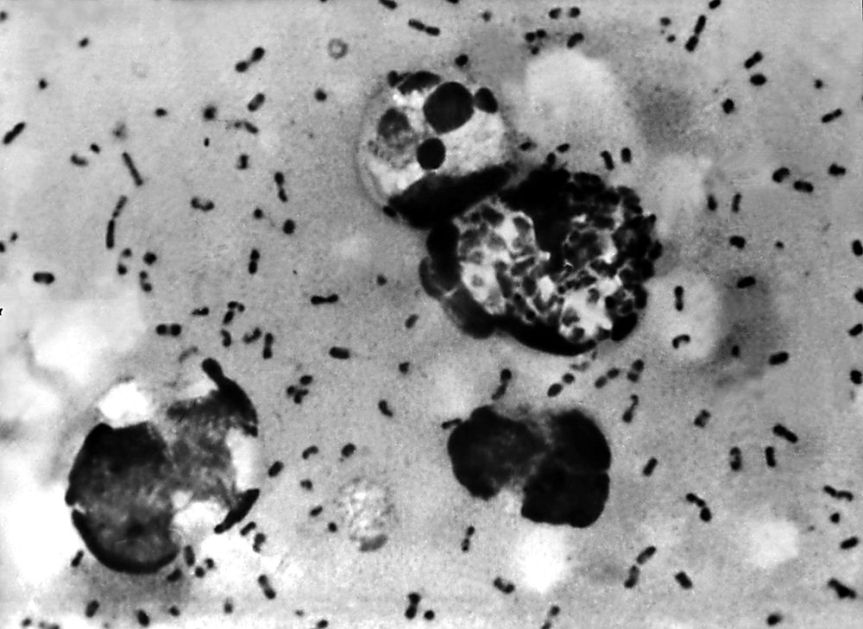
The black death or what we call the Bubonic Plague is the most feared epidemic in this whole world till date. The three types of plague are the result of the route of infection: bubonic plague, septicemic plague, and pneumonic plague. Bubonic plague is mainly spread by infected fleas from small animals.It may also result from exposure to the body fluids from a dead plague-infected animal. In the bubonic form of plague, the bacteria enter through the skin through a flea bite and travel via the lymphatic vessels to a lymph node, causing it to swell. Diagnosis is made by finding the bacteria in the blood, sputum, or fluid from lymph nodes.The plague was the cause of the Black Death that swept through Asia, Europe, and Africa in the 14th century and killed an estimated 50 million people.This was about 25% to 60% of the European population. Globally between 2010 and 2015 there were 3248 documented cases, which resulted in 584 deaths. The countries with the greatest number of cases are the Democratic Republic of the Congo, Madagascar, and Peru. For over a decade since 2001, Zambia, India, Malawi, Algeria, China, Peru, and the Democratic Republic of the Congo had the most plague cases with over 1,100 cases in the Democratic Republic of the Congo alone. From 1,000 to 2,000 cases are conservatively reported per year to the WHO. From 2012 to 2017, reflecting political unrest and poor hygienic conditions, Madagascar began to host regular epidemics. Between 1900 and 2015, the United States had 1,036 human plague cases with an average of 9 cases per year. In 2015, 16 people in the Western United States developed plague, including 2 cases in Yosemite National Park. These US cases usually occur in rural northern New Mexico, northern Arizona, southern Colorado, California, southern Oregon, and far western Nevada. In November 2017, the Madagascar Ministry of Health reported an outbreak to WHO (World Health Organization) with more cases and deaths than any recent outbreak in the country. Unusually most of the cases were pneumonic rather than bubonic. In June 2018, a child was confirmed to be the first person in Idaho to be infected by bubonic plague in nearly 30 years. A couple died in May 2019, in Mongolia, while hunting marmots.Another two people in the province of Inner Mongolia, China were treated in November 2019 for the disease. On July 2020, in Bayannur, Inner Mongolia of China it was reported that a case of bubonic plague happened since the last case on May across the border of Inner Mongolia. Then later, the authorities issued a third-level of warning for plague prevention that will last till the end of the year.

First pandemic

The first recorded epidemic affected the Sassanian Empire and their arch-rivals, the Eastern Roman Empire (Byzantine Empire) and was named the Plague of Justinian after emperor Justinian I, who was infected but survived through extensive treatment. The pandemic resulted in the deaths of an estimated 25 million (6th century outbreak) to 50 million people (two centuries of recurrence).The historian Procopius wrote, in Volume II of History of the Wars, of his personal encounter with the plague and the effect it had on the rising empire. In the spring of 542, the plague arrived in Constantinople, working its way from port city to port city and spreading around the Mediterranean Sea, later migrating inland eastward into Asia Minor and west into Greece and Italy. Because the infectious disease spread inland by the transferring of merchandise through Justinian’s efforts in acquiring luxurious goods of the time and exporting supplies, his capital became the leading exporter of the bubonic plague. Procopius, in his work Secret History, declared that Justinian was a demon of an emperor who either created the plague himself or was being punished for his sinfulness.

Second pandemic

In the Late Middle Ages Europe experienced the deadliest disease outbreak in history when the Black Death, the infamous pandemic of bubonic plague, hit in 1347, killing a third of the European human population. Some historians believe that society subsequently became more violent as the mass mortality rate cheapened life and thus increased warfare, crime, popular revolt, waves of flagellants, and persecution. The Black Death originated in Central Asia and spread from Italy and then throughout other European countries. Arab historians Ibn Al-Wardni and Almaqrizi believed the Black Death originated in Mongolia. Chinese records also showed a huge outbreak in Mongolia in the early 1330s.Research published in 2002 suggests that it began in early 1346 in the steppe region, where a plague reservoir stretches from the northwestern shore of the Caspian Sea into southern Russia. The Mongols had cut off the trade route, the Silk Road, between China and Europe which halted the spread of the Black Death from eastern Russia to Western Europe. The epidemic began with an attack that Mongols launched on the Italian merchants’ last trading station in the region, Caffa in the Crimea. In late 1346, plague broke out among the besiegers and from them penetrated into the town. The Mongol forces catapulted plague infected corpses into Caffa as a form of attack one of the first known instances of biological warfare When spring arrived, the Italian merchants fled on their ships, unknowingly carrying the Black Death. Carried by the fleas on rats, the plague initially spread to humans near the Black Sea and then outwards to the rest of Europe as a result of people fleeing from one area to another.

Biological warfare

Some of the earliest instances of biological warfare were said to have been products of the plague, as armies of the 14th century were recorded catapulting diseased corpses over the walls of towns and villages to spread the pestilence. This was done by Jani Beg when he attacked the city of Kaffa in 1343.Later, plague was used during the Second Sino-Japanese War as a bacteriological weapon by the Imperial Japanese Army. These weapons were provided by Shirล Ishii’s units and used in experiments on humans before being used on the field. For example, in 1940, the Imperial Japanese Army Air Service bombed Ningbo with fleas carrying the bubonic plague. During the Khabarovsk War Crime Trials, the accused, such as Major General Kiyoshi Kawashima, testified that, in 1941, 40 members of Unit 731 air-dropped plague-contaminated fleas on Changde. These operations caused epidemic plague outbreaks.

A Glare Beyond Ravages of Time: Lupine Arcticus

Lupinus arcticus is a species of flowering plant in the legume family known by the common names Arctic lupine or subalpine lupine. It is native to northwestern North America, where it occurs from Oregon north to Alaska and east to Nunavut. It is a common wildflower in British Columbia.This is a perennial herb growing from a taproot and producing an erect stem up to 50 centimeters tall. The dark green, hairy leaves are borne upon rough, hairy petioles up to 17 centimeters long. The leaves are palmately compound, made up of 3 to 9 leaflets each measuring up to 6 centimeters long. The inflorescence is a raceme up to 15 centimeters long bearing up to 30 flowers. The flowers are usually blue, sometimes purple, and occasionally white. The banners of the pealike flowers may be tinged with pink. The fruit is a hairy, greenish to blackish legume pod 2 or 3 centimeters long. It contains up to 10 white-speckled black seeds each about half a centimeter long. The plant may hybridize with other Lupine species when they grow together.

Lupinus arcticus - Wikipedia

This plant grows in several types of habitat, including fields of sedge and moss, alpine regions, and the hills of the Canadian Arctic Archipelago. It grows on tundra and in moist and wet substrates. This species has been the topic of some biological research. In 1967 it caused a stir when the seeds of this species were discovered in ancient lemming burrows dating back to the Pleistocene; the seeds were germinated and they produced plants, causing them to be declared the oldest viable seeds ever discovered. In 2009 a follow-up article detailed how radiocarbon dating was used to determine that the seeds were, in fact, just a few years old at the time of their discovery, and had probably fallen into the burrows not long before.

The plant contains a neurotoxin called sparteine, possibly as a deterrent to herbivores such as the snowshoe hare. The levels of sparteine in the leaves cycle, becoming higher at night, when herbivory is more likely to occur. In addition to the hare, species of ground squirrel have been known to feed on the plant.In Science, they described how these burrows, found at Miller Creek within the Yukon territory of western Canada, had been buried deep within frozen silt since the Pleistocene. That made them over 10,000 years old. As well as rodent nests, faecal pellets and seeds, they also contained an ancient lemming skull, further confirming their old age.Crucially, the seeds remained viable, as the scientists managed to germinate and cultivate normal healthy Arctic lupine (Lupinus arcticus) plants from them.”These were considered to be the oldest viable seeds to have ever grown,” says Grant Zazula, a scientist working for the Yukon Palaeontology Program run by the Government of Yukon, based in Whitehorse, Canada. They were found in ancient frozen lemming burrows and the radiocarbon dating did confirm that the lemming skull found alongside the seeds was from the Pleistocene. That validated the original researchers’ claim that they had collected Pleistocene samples from deep within the permafrost.But without their knowledge, the seeds must have fallen into the burrows just years before they were collected. The burrows had likely been exposed by mining activity in the region.More than four decades ago, Canadian scientists published details in one of the world’s foremost scientific journals of how they discovered two dozen seeds of an Arctic lupine plant within ancient lemming burrows and finally these plants survived and thrived as a few of the challengers to the tides and cleansing of that being called time.

How to Choose your Career?

With thousands of options, how will youย choose aย careerย that’s right for you? If you don’t have any idea what you want to do, the task may seem insurmountable. Fortunately, it isn’t. Follow an organized processย and you will increase yourย chances ofย making a good decision.

1.Assess Yourself
Before you can choose the right career, you must learn about yourself. Your values, interests, soft skills, and aptitudes, in combination with yourย personality type, make some occupations a good fit for you and others completely inappropriate.

Useย self-assessment tools, andย career testsย to gather information about your traits and, subsequently, generate a list of occupations that are a good fit based on them.ย Some people choose to work with aย career counselorย or other career development professionals who can help them navigate this process.

2.Make a List of Occupations to Explore
You probably have multiple lists of occupations in front of you at this pointโ€”one generated by each of the self-assessment tools you used. To keep yourself organized, you should combine them into one master list.

First, look for careers that appear on multiple lists and copy them onto a blank page. Title it “Occupations to Explore.” Yourย self-assessmentsย โ€‹indicated they are a good fit for you based on several of your traits, so they’re definitely worth exploring.

Next, find any occupations on your lists that appeal to you. They may be careers you know a bit about and want to explore further. Also, include professions about which you don’t know much. You might learn something unexpected
Explore the Occupations on Your List

3.Explore the Occupations on Your List
At this point, you’ll be thrilled you managed to narrow your list down to only 10 to 20 options. Now you can get some basic information about each of the occupations on your list.ย 

Findย job descriptionsย and educational, training, and licensing requirementsย in published sources. Learn aboutย advancement opportunities. Use government-producedย labor market informationย to get data about earnings and job outlook.

4.Create a “Short List”
Now you have more information, start to narrow down your list even further. Based on what you learned from your research so far, begin eliminating the careers you don’t want to pursue any further. You should end up withย two to five occupations on your “short list.”

If your reasons for finding a career unacceptable are non-negotiable, cross it off your list. Remove everything with duties that don’t appeal to you. Eliminate careers that have weakย job outlooks. Get rid of any occupation if you are unableย or unwilling to fulfill the educational or other requirements, or if you lack some of the soft skills necessary to succeed in it.

Never forget โ€“ if youโ€™ve got the interest, you can build theย skillsย and qualifications.

Thereโ€™s no one set path to a career destination, whatever careers you choose. We always list multiple career paths in all theย career ideasย we offer. You can go to university. You can start in a junior job and work your way up. And you can getย apprenticeshipsย for almost any career you can think of. Itโ€™s all aboutย finding the right apprenticeship for you. For example, if you want to get into aย finance careerย or aย digital career, financial service giantsย EYย offerย business apprenticeshipsย and evenย digital degree apprenticeshipsย โ€“ where you can become an apprentice and get a degree for free!

Remember โ€“ย  there is more than one path to your dream career, and thereโ€™s also more than one dream career.

Your skills and interests could be a great match for all kinds of careers โ€“ even some you havenโ€™t heard of yet. Whatโ€™s important is figuring out a range of careers that excites you, because a career path that starts with customer service (maybe you love being social) could lead to a career path inย healthcare,ย catering and hospitality,ย journalismย orย sales careersย โ€“ to name a few.

Personal Development

Personal development is a lifelong process. It is a way for people to assess their skills and qualities, consider their aims in life and set goals in order to realise and maximise their potential.

It helps you to identify the skills you need to set life goals which can enhance your employability prospects, raise your confidence, and lead to a more fulfilling, higher quality life.ย Plan to make relevant, positive and effective life choices and decisions for your future to enable personal empowerment.

Although early life development and early formative experiences within the family, at school, etc. can help to shape us as adults, personal development should not stop later in life.

Firstly are the basicย physiological needsย for food, drink, sex and sleep, i.e., the basics for survival.

Second are the needs forย safety and securityย in both the physical and economic sense.

Thirdly, progression can be made to satisfying the need forย love and belonging.

The fourth level refers to meeting theย need for self-esteem and self-worth.ย This is the level most closely related to โ€˜self-empowermentโ€™.

The fifth level relates to theย need to understand. This level includes more abstract ideas such as curiosity and the search for meaning or purpose and a deeper understanding.

The sixth relates toย aesthetic needsย of beauty, symmetry and order.

Self-actualisationย refers to the desire that everybody has โ€˜to become everything that they are capable of becomingโ€™.ย In other words, it refers to self-fulfilment and the need to reach full potential as a unique human being.

Managing Your Personal Development

There are a number of steps to take in managing your personal development.

1. Developing a Personal Vision

Personal development can simply be for fun. Most of us, however, find it easier to motivate ourselves to learn and improve if we have a purpose in doing so. Developing your personal vision – a clear idea of where you want to be in a few months or years, and why – is a crucial part of developing this purpose.

There is more about this in our pages onย Developing a Personal Vision,ย Refining and Narrowing Your Vision, andย Setting Personal Goals.

2. Planning Your Personal Development

Once you are clear about where you want to be, you can start planning how to get there. Drawing up a personal development plan is not essential, but it does make the planning process more realistic.

For more about this part of the process, take a look at our page onย Planning Your Personal Development.

If you are struggling to identify which areas to target for development and improvement, you may find it helpful to read onย Personal SWOT Analysisย andย Identifying Areas for Improvement.

3. Starting the Improvement Process

There are a number of different ways in which you can learn and develop.

Our page onย Improving Performance โ€“ Some Specific Techniquesย explains some ways of learning, including a technique called expertise transfer.

Our page onย Learning Preferencesย suggests how different types of learning process may be more effective for certain people. You may also find our page onย Learning Stylesย helpful in understanding how you like to learn.

4. Recording Your Personal Development

It is often a good idea to keep a record of your personal development. By writing down key developments in your learning and development as and when they occur, you will be able to reflect on your successes at a later date.

There is more about this on our page,ย Recording Your Personal Development.

This reflection may well help to motivate you to learn more skills in the future.ย Try keeping a learning log or journal as you develop your skills and knowledge.

See our page onย Reflective Practiceย for some ideas of how to do this.

5. Reviewing and Revising Personal Development Plans

ย Learning Stylesย uses Kolbโ€™s Experiential Learning Cycle to show that learning is a cycle. For more effective learning, it is important to reflect on your experience, and consider what you have learnt from it. Regular review of your personal development plans, and your development activities, will ensure that you learn from what you have done. It will also ensure that your activities continue to move you towards your goals, and that your goals or vision remain relevant to you.


ย 

ย 

ย 


Tobacco consumption

Tobacco consumption is a huge public health issue in India and its impact is especially devastating among the poor. Effective tobacco control should be a top priority, both as a health issue and as a method to reduce poverty. Tobacco use is deeply ingrained as a cultural practice and there are a myriad of tobacco types. We reviewed multiple determinants of tobacco consumption including socio-economic status, marriage, population growth, marketing strategies, and price. We also considered the tobacco burden including economic and social costs and adverse health impacts especially those resulting from oral cancer. We then addressed the history of tobacco control legislation in India and challenges in implementation. Tobacco consumption in India is continuing to increase despite tobacco control policy. Needed are more visible and aggressive anti-tobacco campaigns including increased public awareness of tobacco harms and active engagement of worksites and health professionals in promoting tobacco cessation.

Databases searched include PubMed, EMBASE, CINAHL, Google Scholar using key words tobacco use in India, cigarettes, beedis, smokeless tobacco, tobacco control, and legislation policies, and wide probability of these words was used in a variety of combinations. Reports of Government of India and World Health Organization (WHO), news reports from Web sites, names of individual states in India were used with the above key words to obtain state-specific information. The cross references of the selected articles were also considered. Nationally representative surveys conducted by Government of India time to time with tobacco as the component and large-scale and local community-based studies on tobacco were all taken into consideration. Articles reporting findings of empirical studies and were extended to increase use of evidence-based prevention and intervention to maximize review data. Most of the studies included are those relevant to Indian subcontinent.

India is the second largest consumer of tobacco.

Males contributed 91% of the entire economic burden and remaining accounted for the females. SLT accounts for 66% of direct medical costs among the females. SLT has grown at an alarming rate in India, about one-fifth of the world’s total production and cultivation is done by India.

Hazards of tobacco use

Tobacco is deadly in any form either be smoking or smokeless; scientific evidences have proved that tobacco leads to disease, disability, and death. According to the International Agency for Research on Cancer (IARC) monograph, there is sufficient evidence in humans that tobacco smoking causes cancer of the lung; oral cavity; naso-, oro-, and hypo-pharynx, nasal cavity, and paranasal sinuses; larynx; esophagus; stomach; pancreas; liver; kidney (body and pelvis); ureter; urinary bladder; uterine cervix; and bone marrow (myeloid leukemia). Colorectal cancer is seen to be associated with cigarette smoking, although there is insufficient evidence for it to be causal. Ninety percent of all lung cancer deaths in men and 80% in women are caused by smoking. Research has clearly indicated causal associations between active smoking and adverse reproductive outcomes, chronic obstructive pulmonary disease, and cardiovascular diseases. Studies on bidi smoking, the most common form of tobacco smoking in India, provide evidence toward causality of it as carcinogenic substance. Caseโ€“control studies demonstrate a strong association of bidi smoking with cancers at various sites, such as oral cavity (including subsites), pharynx, larynx, esophagus, lung, and stomach. The research has indicated the significant trends with the duration and number of bidi smoked with causation of any type of cancer; passive smoking also attributed to diseases related to tobacco consumption.

Prevalence of various smoking tobacco in India

People smoke more tobacco in urban areas as compared with rural mind. With increase in age, smoking prevalence increases, and in India, males smoke more tobacco as compared with females. As compared with the urban area, there is more consumption of bidi and hookah in the rural areas. Daily cigarette smoking is about 6% compared with bidi smoking, which is 10%. In total, 63% of cigarette smokers smoke cigarette every day, whereas 81% of bidi smokers smoke bidi every day. In rural and urban areas, prevalence of daily cigarette smoking is 3% and 5%, respectively, whereas that of daily bidi smoking is 9% and 5%, respectively.

Sociocultural factors influencing tobacco consumption in India

Prevalence studies of tobacco use in India have shown wide variations between urban and rural areas, regions, age, gender, education, and other sociodemographic variables across the country.

There has also been a complex interplay of sociocultural factors that not only influenced the acceptance or rejection of tobacco by sections of society but also determined the patterns of use. In ancient India, smoking tobacco in the joint family was considered as a taboo and was mostly consumed by the dominant male members of the family. The younger members of the family avoid consumption of tobacco products in presence of elder family members. The practice of members of different generations smoking together, in a home setting, is rare even today though modernity has led to some relaxation of these rules.

Now,tobacco prevention and control policies in India have largely focused on awareness and behavior change campaigns, with much weaker implementation of more effective population level interventions, such as taxation increases and the banning of smoking in public places.

Public policy and health promotion interventions (a part of the sociopolitical context) need to have an inequality perspective to have desired impact and accordingly modify tobacco control policies. Uniform population-based approach of health education had worsened social inequalities as major benefits are harnessed by upper economic classes. Tobacco control measures that differentially target the poor include banning of advertisements, raising tobacco prices, work place interventions, free supply of cessation aids, and telephone help lines. Taxation has been reported as the most effective policy measure to curb smoking epidemic in poor. A 10% increase in bidi prices cut down bidi consumption by 9.2%.

All in all, addressing the inequalities in tobacco consumption did not necessitate introducing new set of interventions for tobacco control, but modifying the existing ones. To reduce the mortality and morbidity related to tobacco, there should be suitable policy reformation with interventions like inclusion of large public health programs in relation with NCD program to solve this problem holistically.

Inaccessible or Untouchables?

There is more to this existence than meets the eye!

Our economy is being ruined between inefficient government and sluggish opposition, if the situation does not improve then we will become the new ‘Untouchables.’


Untouchability has been a stigma for our country for centuries. Ambedkar, who fought for his whole life, claimed that there is enough evidence to suggest that it has been going on since 400 BC and it has always been the way of Indians to live.
This is the reason why devout Hindus on one hand and committed inclusionist Gandhi, on the other hand, believed that it is good for us to end this deadly practice. And Nehru, who relied on social justice, had said that India will never reach its true height until we end the caste system and ensure equality for all Indians.

This is the motive that our constitution made untouchability illicit and considered it a punishable offence.
But is it over? No.
Untouchability is deeply ingrained in our thinking and is seen openly. Its ugliness has recently increased, which has been promoted by some political parties, who want to keep it alive to achieve ruthless majoritarianism.

Now only the lower castes, Dalits, are not suffering. In some parts of India, indigent people belonging to a particular community have become new untouchables. So in some parts, some tribes are the new untouchables, who have been left marginalized by governments to grab their land, forest and mineral wealth.

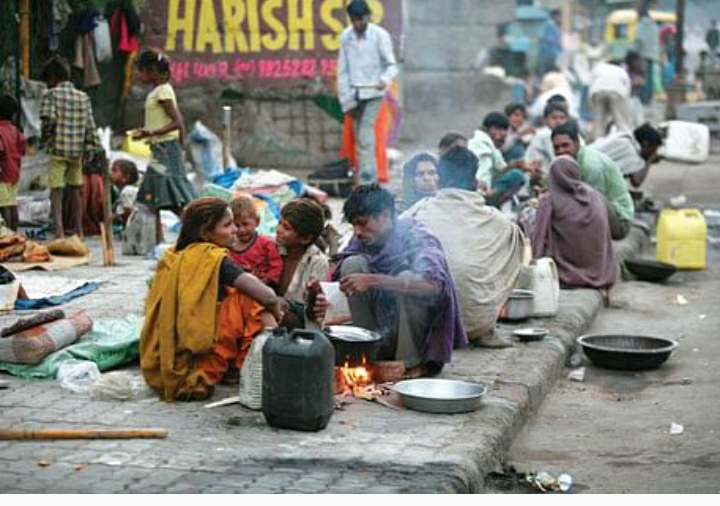
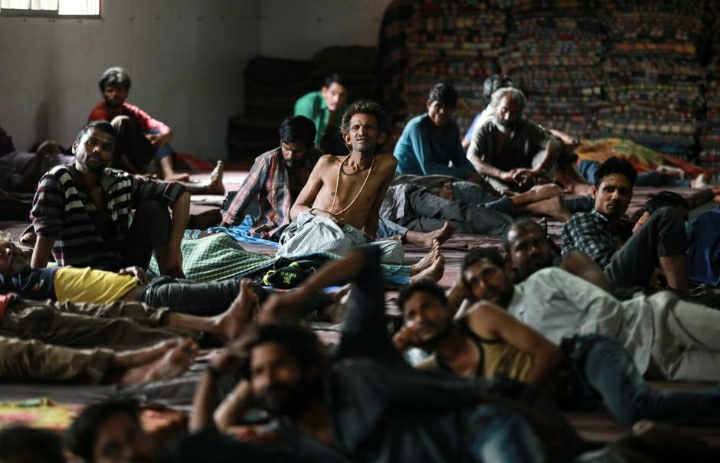
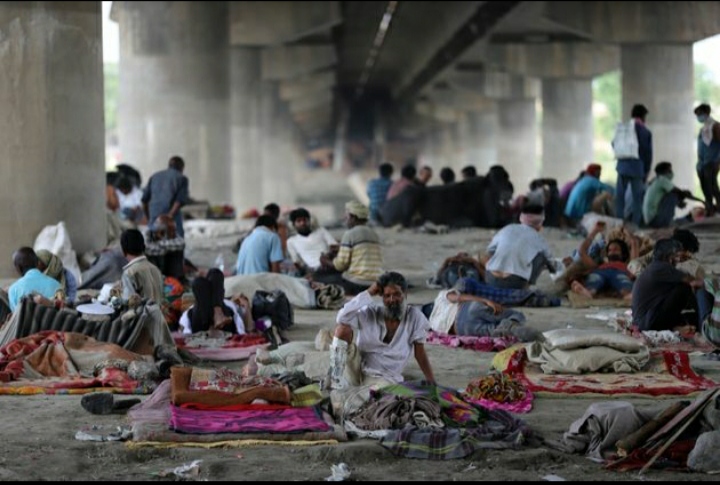
And now, after this pandemic in the country, we see a new class of untouchables is emerging. These are sick, migrant labourers, unemployed and extremely impoverished people. Their connection with the cities is broken and their villages do not want to take them back because they are unemployed and miserable and additionally there is a risk of health issues.

Today the suffering/affected people are being boycotted openly. Their wives and children are not allowed to be home quarantined as per the regulations. People are getting them out of the village, throwing them along with their family members from trains, refusing to burn in the crematorium when one dies. Dead bodies are being collected in hospital corridors. Nobody wants to accept them, not even own family. The corpses are placed next to the patients being treated. It is like a return to the fierce plague.

But, today who is the frustrated-indigent?
No, not the farmers who commit suicide every year due to poverty. Now, these dispirited poor are those who were working in our factories, offices and our homes till back in the days. It also includes small traders, food carts, autorickshaw drivers, small restaurant workers, multiplexes and security guards standing outside malls.

Viruses and lockdowns left them unemployed, homeless and nearly devastated. And now about 14 crores middle-class families have also been associated with them. According to research, their savings will end by the end of July. That is, they will be poverty-stricken.

A recent survey shows that 84 per cent of the households have suffered severe loss of income after lockdown. They are living on their savings right now. By the end of this month, with the increase in rains, many middle-class families will fall into the category of destitute.

They will also be unable to spend on treatment or meet basic family needs. They will have to leave the rented house, sell their goods and borrow money at such a rate, which will become impossible for them to repay later. They are also worried pensioners who relied on interest from the bank, as banks have reduced interest rates.

Those who counted on their children working abroad are also trapped because their children have lost their jobs or lost wages. Meanwhile, the prices of petrol and diesel are continuously increasing, while the prices should have been reduced based on the global trend. This is going to make everything expensive.

Overall, the pace of the wave is not stopping and more and more people will continue to drown.  The government is refusing to provide cash in their hands, as some other countries are doing. These are the new untouchables. Nobody has time for these and the government has the least interest in their future or prospect. Instead, govt is making hefty policies of millions for billions, which will never reach out to these people.

An economy that was ready for a better future, is being wrecked.

The origin history of Pride Movement

The Pride movement is self affirmative movement, celebrated by the LGBTQ+ community and itโ€™s supporters. The LGBTQ+ is an abbreviation for lesbians, gays, bisexuals, transgender, queer and everything in between. The Pride movement celebrates the spectrum of sexuality.

The Stonewall Riot is often considered as the birth of modern LGBTQ+ rights movement. The first pride parade was held one year after Stonewall riot incident, on 28 June 1970. The parade was then known as Christopher Street Liberation Day March, named after the street on which Stonewall was located.

Back then, the largest LGBTQ+ rights rally was a silent yearly vigil known as the โ€œThe Annual Remainderโ€ held in Philadelphia. The event was a remainder to American people that a substantial number of American citizens were denied the right to life, liberty, and pursuit of happiness. It was a sober and orchestrated event. It was a silent event, and both men and women had formal dress code. However after Stonewall riot, the need of an entirely new event arose.

Unlike the Annual Remainder, these new marches had no formal and gender- normative dress code. Rather, the marchers were encouraged to be themselves. It celebrated being gay with utmost pride.

People related to the initial movement

The Pride movement was not a one day thing. It took a lot of courage and determination to go ahead with this movement. It was due to the prime contribution of some individuals that we today celebrate the month of June as pride month.
โ€ข Mattachine Society, which was one of earlier LGBTQ+ right group in United States.
โ€ข Craig Rodwell, a member of Mattachine Society, originally came up with the idea of The Annual Remainder.
โ€ข Fred Sargeant was one who organisers of the first march.
โ€ข Ellen Brody and Linda Rhodes, activists who along with Rodwell and Sargeant attended the Eastern Regional Conference of Homophile Organisation (ERCHO) in Philadelphia and proposed the resolution of holding a annual march on last Sunday of June to commemorate Stonewall.
โ€ข Brenda Howard, known as โ€œMother of Prideโ€ coordinated week long series of event around the Pride day.
โ€ข Activist L. Craig Schoonmaker, the one who suggested the world โ€œPrideโ€ instead of โ€œgay powerโ€.
โ€ข Gilbert Baker, designed the Pride flag.

Pride Movement in India

In context of India, the Pride movement had a long struggle. During British Rule in 1860, homosexual intercourse was considered a criminal offence under Chapter 16, Section 377 of Indian Penal Code. Post independence, the right to equality was implemented on 26 November 1949, however homosexuality remained a criminal offence.
The first gay protest was conducted on 11 August 1992. In 1999, Kolkata hosted the first Gay Pride parade, however it was a small affairs with only 15 attendees. In 2009 the high court of Delhi held that considering consensual homosexual intercourse between two adults as a crime is violation of fundamental right to equality. However this was overturned by the supreme court in 2013.
Shashi Tharoor introduced the bill to decriminalise homosexuality in the year 2015, however it was rejected by Lok Sabha. In August 2017, the Supreme Court upheld the right to privacy as a fundamental right under the Constitution in the landmark Puttuswamy judgement, giving LGBTQ+ community a new hope. On September 6, 2018, the supreme court decriminalised homosexuality by scrapping Section 377, calling it unconstitutional.
The scrapping of Section 377 has been a partial win for the LGBTQ+ community. However a long battle is still ongoing. The battle is long, but the community is winning small successes.

Big fan of Korean Cuisine!

๋‚˜๋Š” ํ•œ๊ตญ ์Œ์‹์˜ ํฐ ํŒฌ์ž…๋‹ˆ๋‹ค

There is nothing wrong with saying that Globalization has changed our taste buds. Different varieties of delicacies present all over the world has attracted many people towards them. Letโ€™s talk about Korean dishes. There are many which has gained popularity In Asian and Western nations. People are becoming a die-hard fan of them. Kimchi is the foremost dish which come to our mind when we talk about Koreans. It is turn out to be a global sensation.

Today, I am going to tell you some of my favorite Korean cuisine.

Kimchi: Mixture of fermented vegetables. Itโ€™s a side dish but has gained so much popularity that UNESCO has identified it in the list of Cultural Heritage. Ingredients added in it are Korean chili peppers, garlic, ginger, and green chili. Korean believes itโ€™s rich for health, it contains vitamins that are needed for their glass skin. Kimchi is an enriching representation and state gem of South Korea.ย There is even a kimchi museum developed in a city of Seoul in South Korea.ย 

Bibimbap: It is a blend of rice along with desired vegetables, eggs, fried mushrooms, soy sauce, and beef. The color combination of the bowl filled looks great and attractive. Itโ€™s definitely added to my favorite list.

Makgeolli: If you love to drink, then you must try Makgeolli often called Drunken rice. Itโ€™s the easiest drink to be made at home. Korean generally ferment it at home and try it with Kimchi. Itโ€™s the best combination. It increased the flavor of your taste buds. Counted as an alcoholic beverage, it has milk consistency included with rice water, sweet and nuruk. It takes 5 days approximately to get fermented.

Jeon: Universally known as Korean pancake. It is definitely a type of snack that Koreans relish a lot. You have to pick beef, kimchi, or green onions, it will come layered in a mixture of eggs and flour.

The most significant superiority while eating Korean food is “sense of taste”

Korean food is good for your health for the reason that it comprises primarily of puffed rice and root vegetables.

Itโ€™s absolutely true that Korean foods are becoming the favorites among people universally. In this, the leading role portrayed by โ€œHallyu Waveโ€ has publicized successfully. If we grasp the whole situation, we could see the Korean Government has also worked a lot in globalizing the Korean food business in numerous nations like the USA, France, India. The drum up support by the Government also displayed a constructive impression on the preferences of people.

Breonna Taylorโ€™s Family Says She Was Still Alive After Being Shot, But Police Didnโ€™t Offer Aid

Breonna Taylorโ€™s family is once again speaking out about new details regarding the murder of the 26-year old EMT after a new report reveals that she was actually still alive after being shot in her home. On Monday (Jul 6), Breonna Taylorโ€™s family, who is currently in a lawsuit against police and the city of Louisville, revealed that Taylor was actually still alive after being shot more than 8 times while sleeping in her bed and only succumbed to her injuries after being denied medical attention by the detectives. 

Breonna Taylorโ€™s Family Says She Was Still Alive After Being Shot, But Police Didnโ€™t Offer Aid

NoSQL Databases


In Relational database management systems, data is organized as tables (called relations)in rows and columns. A table contains data about only one entity ( real-world object – employee details, patient details, book details, etc). Each table should have a primary key and the tables are linked by primary and foreign keys. The tables are created using SQL. SQL constraints ensure the accuracy and reliability of the data within the database. Database normalization is the method by which data is efficiently organized in the database. Eliminating redundant information, as an instance, storing the same data in more than one table. This reduces storage and increases the complexity of the system.ACID stands for Atomicity, Consistency, Isolation, and durability property of RDBMS.
A NoSQL ( referring to โ€œnon-SQLโ€ or โ€œnot only SQLโ€ or โ€œnon-relationalโ€) database store data in a non-tabular format compared to relational databases. They store the relationship information as well by allowing related data to be nested within a single data structure. Doesn’t use data normalization or complex features like query languages, integrity constraints, ACID property, etc.
BASE features of NoSQL Databases
( Basically Available, Soft state, Eventual consistency)
โ€ข Basically, available means the data is guaranteed to be available all the time. There is a response to any request ( can be a failure too).
โ€ข Soft state means even without an input; the system state may change over a period of time.
โ€ข Eventual consistency means that the system will become eventually consistent over time (maybe, once it stops receiving input).
The term “eventual consistency” means to have copies of data on multiple machines to get high availability and scalability. Data replication may not be instantaneous as some copies will be updated immediately while others in due course of time. These copies may be in due course of time, become consistent. Hence, the name eventual consistency.
Query Mechanism tools for NoSQL
The most common data retrieval mechanism is the REST-based retrieval of a value based on its key/ID to get the resource.
Shared-nothing architecture
In a shared-nothing design, Multiple NoSQL databases can be executed in a distributed fashion. Each server node in the cluster operates independently of every other node. The processes donโ€™t share memory or disk among them. The system doesnโ€™t have to get consensus from every single node to return the output data to a client. Queries are fast because they can be processed and the output is got by the node which received it. It typically involves sacrificing consistency across the cluster for performance.
Features of NoSQL
โ€ข Offers auto-scaling (both vertical and horizontal).
โ€ข Only provides eventual consistency.
โ€ข Shared Nothing Architecture. This enables less coordination and higher distribution.
Need for NoSQL Databases
NoSQL databases are especially useful for working with large sets of distributed data. NoSQL databases are widely used in many modern applications such as mobile, web, and gaming that require flexible, scalable, and high-performance.
Applications are moving to the cloud platform and big data is becoming bigger.
The concept of NoSQL databases became popular with Internet giants like Google, Facebook, Amazon, etc. who deal with huge volumes of data.
Tesco, Europeโ€™s No.1 retailer, uses NoSQL for e-commerce services and other applications.
GE and Marriott are also deploying NoSQL Database systems on a large scale.

undefined

Types of NoSQL Databases
There are four major types of NoSQL databases. They are document databases, key-value databases, wide-column stores, and graph databases.
Document databases store data in documents similar to JSON (JavaScript Object Notation) objects. Each document contains pairs of fields and values. The values can typically of types including strings, numbers, booleans, arrays, or objects.
MongoDB is consistently ranked as the worldโ€™s most popular NoSQL database and is an example of a document database. Other examples are Couchbase, CouchDB, IBM Domino, etc.
Key-value databases are a simpler type of database where each item contains keys and values. Key-value databases are great for use cases where you need to store large amounts of data but you donโ€™t need to perform complex queries to retrieve it. Common use cases include storing user preferences or caching. Redis and DynanoDB are popular key-value databases.
Wide-column stores store data in tables, rows, and dynamic columns. Wide-column stores provide a lot of flexibility over relational databases because each row is not required to have the same columns. Wide-column stores are commonly used for storing Internet of Things data and user profile data. Cassandra, Hypertable, and HBase are two of the most popular wide-column stores.
Graph databases store data in nodes and edges. Nodes typically store information about people, places, and things while edges store information about the relationships between the nodes. Graph databases are used in applications s where you need to traverse relationships to look for patterns such as social networks, public transport links, road maps, and recommendation engines. Neo4j and JanusGraph are examples of graph databases.
The final wordsโ€ฆ.

Since the NoSql databases often sacrifice the ACID property for its scalability (and does not support constraints), it cannot be used in transaction management like SQL and Relational databases. NoSQL offers limited query capabilities. GUI mode tools to access the database are not flexibly available in the market ( as NoSQL is an open-source software). Some databases store data that are quite large (BigData) and having descriptive key names actually increases the document size and it is very difficult to handle.

To know further about NoSql Databases, use the below link :
https://www.couchbase.com/resources/why-nosql
https://www.oracle.com/in/database/technologies/related/nosql.html

COVID-19 pandemic may lead to rise in child trafficking

The nationwide lockdown which was imposed in the nation to stop the spread of novel coronavirus can lead to a spike in child trafficking cases because of pandemic induced economic crisis.

The increased insecurity, financial constraints, and marginalization induced by COVID-19 are key drivers for families grasping onto straws of survival for pushing children into trafficking.ย  From states: Assam, Bihar, Chhattisgarh, Delhi, Maharashtra, Telangana, West Bengal, and Jharkhand cases have come up.

Since poignant reality has hit the migrant laborers, that poverty and hunger await them, many will be forced into a vicious debt cycle at predatory interest rates because of their dire financial situations, which will prove to be a fertile ground for child traffickers.

Children are trafficked first and then placed in labor, either forced or for a sub-minimal wage. However, the most unfortunate ones especially young girls are forced into sexual exploitation.

Ever since the lockdown has come into place, the traffickers have become active and have started approaching potential victims and families and even handling out advanced payments for their children. Not just this, once lockdown is lifted and normal manufacturing activity resumes. Factory owners will look to cover their losses by employing cheap labor and the easiest way of doing this is by employing child labor.

For this, policing alone would not be the solution and the problem of child trafficking persists because there is a ready market for child labor. The contractor who is engaged in supplying labor should be kept under strict vigilance in a bid to prevent child trafficking and child labor.

The apex court has contemplated setting up an expert committee to address this issue.

The business of commercial sexual exploitation which took a downturn due to lockdown restrictions would look for innovative ways to be back in the business and overcome the losses by engaging younger girls as they fetch more money. Underage girls will be sold into prostitution and the number of street children will be pushed into begging will also give up.

With the transportation be resumed, child laborers will be sent back home by their employers armed with fake id and documents. Children working in hazardous occupations are at a higher risk now since no employee will reveal their identities and numbers as employing them is a criminal offense.

There are reports that 136 minor girls have been married in Bengal as the agricultural class in the state had only lost the livelihood due to lockdown but was hit by Cyclone Amphan.

It has been found that in 115 districts of Bengal, Bihar, Jharkhand, Rajasthan, Assam, Chhattisgarh, Maharashtra, and Delhi where many families were rendered jobless, child trafficking and middlemen have become active. Middlemen have started making advance payments to poor families without livelihood for taking their children in the promise of providing employment or getting them married.

Over 39 crore โ€“ of unorganized and migrant workers on the fringes or outside the socio-economic security umbrella, are the most vulnerable. This makes them the easiest target for the organized crime network. Hundreds of thousands of children will be enslaved. A large number of these laborers will be children, forced out of school, bearing the burden of sustaining their families. Thousands of children will likely be trafficked across the country to work in manufacturing units where they will be paid meagre to no wages and will most likely face extreme physical, mental, and sexual violence.

Pornhub, the largest pornography platform in the world, has seen a 20-time jump in India, from 0.9% on February 24 to 18.1% as on March 16. A large segment of this ‘content’ includes trafficked children who are exploited to create pornographic material. Adults and children who consume this content are likely to ‘normalize and fetishize’ child rape and sexual violence, which may translate into offline sexual violence.

As the central and state governments struggle to contain the immediate health and economic challenges, a great amount of planning must go into dealing with the imminent impact of this crisis, especially in terms of the safety of the most vulnerable children.

Insomnia

Insomnia is a sleep disorder that regularly affects billions of people around the world. In a nutshell, people with insomnia find it difficult to fall asleep or stay asleep. The effects can be harmful. Insomnia often leads to daytime sleepiness, lethargy, and a general feeling of being unwell, both mentally and physically. Mood swings, irritability, and anxiety are common related symptoms. Insomnia has also been concerned with a higher risk of developing chronic diseases.

CAUSES

Insomnia can be due to physical and psychological factors. There is seldom an underlying medical condition that causes chronic insomnia, while transient insomnia may be caused by a recent event or occurrence. Insomnia is caused by:

  • Disruptions in circadian rhythm โ€“jet lag, job shift changes, high altitudes, environmental disturbance, extreme weather condition.
  • Psychological issues โ€“depression, bipolar disorder, anxiety disorders, or psychotic disorders.
  • Medical conditions โ€“ chronic pain, chronic fatigue syndrome, congestive heart failure, angina, acid-reflux disease (GERD), chronic obstructive pulmonary disease, asthma, sleep apnea, Parkinsonโ€™s and Alzheimerโ€™s diseases, hyperthyroidism, arthritis, brain lesions, tumors, stroke.
  • Hormones – estrogen, hormone shifts during menstruation.
  • Other factors โ€“ sleeping next to a snoring partner, parasites, genetic conditions, overactive mind, pregnancy.

Media technology in the bedroom

Several researches in adults and children have suggested that subjection to light from televisions and smartphones prior to going to sleep can affect natural melatonin levels and lead to increased time to sleep.

Moreover, a study conducted by Rensselaer Polytechnic Institute found that back-lit tablet computers can affect sleep patterns. These studies imply that technology in the bedroom can worsen insomnia, leading to more complications.

SIGNS AND SYMPTOMS

Insomnia itself may be a sign of an underlying medical condition. Even so, there are many signs and symptoms that are associated with insomnia:

  • Difficulty in falling asleep at night.
  • Waking during the night.
  • Waking earlier than desired.
  • Still feeling tired after a nightโ€™s sleep.
  • Daytime fatigue or sleepiness.
  • Irritability, depression, or anxiety.
  • Poor concentration and focus.
  • Difficulty socializing.
  • Gastrointestinal symptoms.
  • Worrying about sleeping.

Sleep deprivation can lead to other symptoms. The affected person may wake up not feeling fully awake and refreshed, and may have a feeling of tiredness and sleepiness throughout the day. Having trouble concentrating and focusing on tasks is common for people with insomnia.

TYPES

Insomnia includes a vast range of sleeping disorders, from lack of sleep quality to lack of sleep quantity. Insomnia is generally categorized into three categories:

  • Transient insomnia โ€“ occurs when symptoms last up to three nights.
  • Acute insomnia โ€“ also called short-term insomnia. Symptoms continue for several weeks.
  • Chronic insomnia โ€“ this one lasts for months, and sometimes years.

treatment

Few types of insomnia resolve when the underlying cause is treated or wears off. In general, insomnia treatment focuses on determining the cause. Once identified, this underlying cause can be correctly treated . Besides treating the underlying cause of insomnia, both medical and non-pharmacological (behavioral) treatments may be used as therapies. Non-pharmacological approaches are inclusive of cognitive behavioral (CBT) therapy in one-on-one counseling sessions or group therapy:

Medical treatments for insomnia include:

  • prescription sleeping pills
  • antidepressants
  • sleep aids available online or over-the-counter
  • antihistamines
  • melatonin, which can be purchased online
  • ramelteon

HOME REMEDIES

Home remedies for insomnia are:

  • Improving โ€œsleep hygieneโ€: Not sleeping too much or too little, exercising daily, not forcing sleep, maintaining a regular sleep schedule, avoiding caffeine containing products at night, avoiding smoking, avoiding going to bed on an empty stomach, and ensuring a comfortable sleeping environment.
  • Using relaxation techniques: Such as meditation and muscle relaxation.
  • Stimulus control therapy โ€“ only go to bed when sleepy. Avoid watching TV, reading, eating, or worrying in bed. Set an alarm for the same time every morning (even weekends) and avoid long daytime naps.
  • Sleep restriction: Decreasing the time spent in bed and partially depriving the body of sleep can increase tiredness, ready for the next night.

rISK FACTORS

Insomnia can afflict an individual of any age; it is more prevalent in adult females than adult males. It can erode school and work performance, as well as contributing to obesity, anxiety, depression, irritability, concentration problems, memory problems, poor immune system function, and reduced reaction time. Few people are more likely to experience insomnia. These include:

  • travelers, particularly through multiple time zones
  • shift workers with frequent changes in shifts (day vs. night)
  • the elderly
  • users of illegal drugs
  • adolescent or young adult students
  • pregnant women
  • menopausal women
  • those with mental health disorders

The City of Nawabs

The culture of Lucknow is still very much alive and retains its old world charm even today. Popularly known as the City of Nawabs, Lucknow is famous for its traditional cuisine, fine arts and the most courteous people you will ever find in India. The cultural heritage of Lucknow was pretty much influenced by the Mughal era and you find that Mughal touch in almost everything that relates to the culture of Lucknow. Be it the lip-smacking cuisine, the delightful music and dance forms or the conversation language, everything has a touch of the royal splendor that Lucknow once flourished in. Read on our related sections on Lucknow culture that shall tell you about the royal colors of Lucknow.

Lucknow People
The people of Lucknow are among the warmest and the most courteous people in India. They are known to be very soft spoken and treat guests like Gods. The place has a rich cultural heritage and is known to be the city of Nawabs.

Lucknow Cuisine
The cuisine of Lucknow has its own distinct individuality and identity. The traditional food of Lucknow was highly patronized by the Mughals thus giving it a very royal touch. The royal chefs and cooks were trained to give that distinct royal touch and regal look to anything they cooked.

Lucknow Music and Dance
Music and dance in Lucknow has been much influenced by the Mughal rule India. The kings were known to lead a life of pleasure and their main source of entertainment was to indulge in music and dance.

Lucknow Languages
In Lucknow, languages differ from region to region. Among the most common languages of Lucknow is Hindi, which is spoken all over India. However, the most prominent language spoken in Lucknow is the Urdu language. Though it is an ancient language, it is very much prevalent in Lucknow. In fact, the language is synonymous with Lucknow and is often referred to as Lucknowi Urdu. It is this form of Urdu that is used by most literary figures like poets and novel writers.

Urdu is also the official language of Lucknow. Apart from Urdu and Hindi, many other languages are spoken in different parts of Lucknow. These include the two thousand year old language called Braj, Awadhi, Koshali, Bhojpuri and Koeli. Bhojpuri is a widely spoken language in not just Lucknow but also most of Uttar Pradesh and the neighboring state of Bihar. The younger generation of Lucknow is well versed in English as most schools and educational institutions impart education in English medium.

Covid and the economy

According to the International Monetary Fund, India will be the large economy worst hit by the Covid pandemic. The Fund now says that Indian GDP in the ongoing financial year, which began in March 2020, will contract by 4.5%. Just a few weeks ago, it had been predicting 2% growth for the year.

The IMFโ€™s projection is by and large in line with estimates from investment banks and other international organizations. Indian officials have been reticent about their own estimates. This is not surprising: Indiaโ€™s economy has not contracted since 1979. For the government, this is uncharted territory.

A slowdown of this magnitude will have enormous human consequences. By some estimates, the loss of three monthsโ€™ income would leave nearly half of the countryโ€™s population mired in poverty, reversing all the gains made since the economy was liberalized in the early 1990s.

Worse, the governmentโ€™s finances are strained. Tax revenues are set to crash and Indiaโ€™s hitherto relatively stable debt-to-GDP ratio may spike up toward 90%. Controlling the spread of the pandemic will bleed state resources, leaving little for the welfare measures that will be essential in coming months.

Such economic pressures help explain why the government lifted Indiaโ€™s stringent lockdown even though the spread of Covid-19 clearly hadnโ€™t been controlled. India now has the worldโ€™s fourth-largest number of Covid-19 cases. While the country may be partly protected from a tide of deaths by its favorable age distribution, there is every reason to suppose that more lockdowns to protect its inadequate health infrastructure will be required. If nothing else, this complicates predictions for the medium term and makes the task of reviving the economy that much harder.

But donโ€™t let anyone tell you the pandemic is the main reason Indiaโ€™s growth has gone off a cliff. The economy had already been weakened by years of mismanagement before this crisis struck.

Figures released by national statisticians at the end of May explain what went wrong. Even before the pandemic properly hit India, in the financial year ending in March, GDP only grew at 4.2%. The sequence of quarterly GDP growth numbers leading up to that point tells a clear story: 7% growth shrunk to 6.2%, then to 5.6%, 5.7%, 4.4% and finally 3.1% in the quarter that ended with the lockdown.

What was behind this slowdown? The answer is a lack of investment. Investment shrank by almost 3% over the year. Until then, India hadnโ€™t seen investment shrink for almost two decades, according to World Bank data. (It grew about 10% in 2018-19.) And this shrinkage began well before the pandemic โ€” in April 2019. In India, the virus struck an economy with pre-existing conditions.

The investment crisis and Indiaโ€™s large debt pile have the same cause: a government that thinks its own spending is what will fuel economic growth. According to official statistics, government spending increased by 12% last year, more than twice the growth rate of private consumption. Government spending was similarly higher than the other components of GDP in the previous year as well.

As a consequence, the government last year โ€” again, before the pandemic properly hit โ€” had a fiscal deficit 4.6% higher than the one it inherited six years ago. This is pretty embarrassing, given the government has long claimed that its stewardship had provided macroeconomic stability following the turbulent last years of its predecessor.

This should all be enough to sober any government. Yet, policymakers in New Delhi seem to be oddly sanguine. On Tuesday, they posted a cheerful update praising their โ€œprompt policy measuresโ€ and touting an โ€œincrease in economic activity.โ€ Itโ€™s true that May looked like a better month than April, when the lockdown was at its height. But pretty much every indicator for May 2020 is in the red when compared to May 2019. And most analysts believe any recovery will now take two years or so, rather than a couple of months.

The governmentโ€™s confidence is inexplicable. It has not done enough to reinvigorate the economy. Its big weapon โ€” spending โ€” has failed and there is little left in its armory. Recovery needs reform. India has postponed competitiveness-enhancing measures long enough. In a crisis of this magnitude, there are no excuses left.

Sleeping Pills

Which sleeping pill is right for me?

Woman awake in bed wondering which is the best sleeping pill to take
A person can take a sleeping pill as a short-term solution if lifestyle adjustments have not worked.

Many people may not need sleeping pills.

By practicing good sleep hygiene, exercising, and avoiding alcohol and nicotine, an individual can often improve their sleep cycle and prevent insomnia.

Insomnia involves having trouble falling or staying asleep. People with insomnia may wake up too early or not feel refreshed upon waking.

If lifestyle adjustments do not work, for example when insomnia is severe, a sleeping pill may be a good short-term solution.

Avoid the long-term use of sleeping pills, because it can make insomnia worse, especially if a person stops taking the pills.

The range of sleeping pills includes supplements and over-the-counter (OTC) and prescription drugs. Anyone with ongoing insomnia should consult their doctor about the best approach.

The following are some of the most effective sleeping pills.

Melatonin

When it gets dark outside, the brain produces a hormone called melatonin. This regulates the sleep-wake cycle by telling the body that it is almost time for bed.

The brain makes less melatonin when it is light out and more when it is dark, such as during the winter. Age also plays a role โ€” the older a person gets, the less melatonin they produce.

Many sleeping aids contain melatonin. They tend to be most effective for people with circadian rhythm sleep disorders, which are problems with the timing of sleeping or waking up.

Melatonin can be especially helpful for people:

  • experiencing jet lag
  • having trouble falling asleep at night
  • coping with shift work

In recent years, manufacturers have marketed snacks and drinks that contain melatonin as โ€œrelaxationโ€ products. Doctors do not know, however, if they are effective.

Melatonin supplements are available without a prescription from drug stores, supermarkets, and online shops. The pills tend to come in doses of 1โ€“5 milligrams (mg), and a person should take them at bedtime.

Limited evidence suggests that melatonin can treat insomnia. However, though some findings have been mixed, most research indicates that it can reduce the amount of time it takes to fall asleep, including a 2017 meta-analysis published in the journal Sleep Medicine Reviews.

Sedating antihistamines

Sedating antihistamines can help people who have trouble falling or staying asleep.

Some OTC antihistamines, which people usually use to treat allergies, can cause drowsiness.

Though not all antihistamines have this effect, people sometimes use first-generation antihistamines, or sedating antihistamines, to promote sleep or relieve tension and anxiety.

The following are sedating antihistamines:

  • diphenhydramine, the active ingredient in Benadryl
  • doxylamine, the active ingredient in Unisom
  • cyclizine, the active ingredient in Marezine

Second-generation antihistamines are less likely to cause drowsiness. People use them to treat long-term allergy symptoms, and they are not effective as sleeping aids.

The following are nonsedating antihistamines:

  • cetirizine, the active ingredient in Zyrtec
  • loratadine, the active ingredient in Claritin
  • fexofenadine, the active ingredient in Allegra

A doctor may recommend a sedating antihistamine, but only as a short-term solution. Though they are not addictive, the body gets used to them quickly, so they become less effective over time.

Valerian root

Valerian root is common in herbal supplements and can improve sleep quality.

Valerian is a plant. People have used the medicinal properties in the root since the times of ancient Greece and Rome.

Valerian root is a common ingredient in herbal supplements that people use to improve sleep, relieve anxiety, and support relaxation.

The supplements come in many forms, such as teas, liquids, and capsules.

Several clinical studies show that taking valerian can improve impressions of sleep quality in people with insomnia. However, not enough evidence is available to confirm whether valerian root is an effective sleep aid.

Valerian root-based sleep aids are available in drug stores, health food stores, and online shops.

Hypnotics

Hypnotics are a group of sleeping medications only available by prescription.

A doctor may prescribe hypnotics to treat a number of sleep disorders, including insomnia. These medicines can also treat movement disorders that interrupt sleep, such as restless legs syndrome (RLS) and periodic limb movement disorder.

The most common hypnotic sleeping pills are:

  • zolpidem
  • zaleplon
  • eszopiclone
  • ramelteon

Doctors tend only to prescribe hypnotics for insomnia that is long-lasting and bothersome because the drugs can have side effects.

Another class of sedative-hypnotics, called benzodiazepines, can also treat insomnia. These medications include:

  • alprazolam
  • diazepam
  • lorazepam

Before prescribing a benzodiazepine, the doctor will usually first recommend a hypnotic. This is due to concerns about benzodiazepine dependence and its more severe side effects.https://tpc.googlesyndication.com/safeframe/1-0-37/html/container.html

When to use sleeping pills

Always follow the instructions for OTC sleeping aids, including valerian products and antihistamines containing diphenhydramine or doxylamine.

The best time to take melatonin will depend on the nature of the sleep problem.

Sleeping pills for insomnia

A person with insomnia should take a sleeping aid just before or at bedtime.

Sleeping pills for jet lag

If tackling jet lag, take melatonin several hours before the intended bedtime every day throughout the trip and for a few days afterward. Doses of 0.5โ€“5 mg tend to be sufficient.

Sleeping pills for shift work

For people with shift work, taking 2โ€“3 mg of melatonin at the end of a shift can help prepare the body for bed.

Prescription sleeping pills

The right dosage and frequency will depend very much on a personโ€™s condition and the type of medication.

Always follow the doctorโ€™s instructions carefully.

Side effects and risks

Woman drowsy at work due to taking sleeping pills
People can feel tired and drowsy the day after taking sleeping pills.

Sedating medications, including antihistamines and hypnotics, can leave people feeling tired, drowsy, or groggy during the following day.

In older adults, using these pills can cause memory problems.

Some sleeping aids, when a person takes them to relieve insomnia, can make it more difficult to fall asleep without them.

No evidence suggests that using melatonin comes with serious risks. Researchers have yet to explore the long-term effects.

Do not take any sleeping aid before driving or operating machinery.

For many people, the risks of using prescription hypnotics outweigh the benefits. These medications are only suitable for short-term use. Most are habit-forming, meaning that they can be addictive, and they can also cause side effects.

Some side effects of prescription sleeping pills include:

  • drowsiness or dizziness during the day
  • confusion
  • problems with memory
  • balance problems

In rare cases, they can cause people to perform actions, including driving, walking, eating, or making phone calls, while asleep.

Sleeping pills may also interfere with:

The safety profile of valerian root is still unclear. Possible side effects may include headaches, dizziness, itchiness, and stomach problems. Some people feel groggy or drowsy in the morning after taking valerian root.

Also, people who have taken valerian root for extended periods then stopped suddenly may experience withdrawal symptoms. People who stop taking benzodiazepines after long periods may experience similar symptoms.

Because the medical community is still unsure of the effects, women who are pregnant and children under 3 years of age should not use valerian.

Does EIA need revaluation?

This year, in March, a new draft of the EIA has been proposed by the Union Government. It constitutes some complicated and argumentative changes in the rules.


What was the need to bring out this notification in the midst of the pandemic?
How are people going to take part in public consultation during this lockdown?
How will they protest if they want changes in it?
Is the government trying to lay the blame on this pandemic for their decisions?


What is EIA?
On 27th January 1994, the Union Ministry of Environment and Forests (MEF), Government of India, under the Environmental Protection Act 1986, proclaimed an EIA notification making Environmental Clearance (EC) mandatory for expansion or modernization of any activity or for setting up new projects listed in Schedule 1 of the notification.
The Ministry of Environment, Forest and Climate Change (MoEFCC) has proposed a draft Environmental Impact Assessment (EIA) notification to replace the current one, which dates back to 2006. The EIA process is extremely important because it is the only process which is supposed to prioritize Environment safety over Economic benefits. A prior, free and informed consent of people is welcomed in it; people can ask questions about the need of the process. In this process, the project can be rejected on precautionary grounds. The values that are fundamental to the EIA process are sustainability, equity, environmental justice, accountability, transparency; it is these values that make the EIA meaningful.

But the new draft of 2020 is considered to change some of these basic values of EIA and some of the provisions are:
๏‚ง Projects can receive clearance post-facto; a project operating in violation of the EPA can now apply for clearance.
๏‚ง The draft says that no information on such projects shall be placed in the public domain. This list also includes all inland waterways projects.
๏‚ง Violations on any project can only be reported by any government representative or the project proponent, not citizens.
Now, the EIC members typically are bureaucrats, project proponents from previous projects who do not have any environmental credential.
๏‚ง Priorly the EIA report does not go directly to the decision-maker, that report is to be shared with the public. A person who may be directly affected by the report or anyone interested in knowing about its impact can participate in the public hearing. But now the Public Consultation may be cancelled owing to the local situation, i.e; if the people are protesting against a project that itself can be used to cancel Public hearing. Isnโ€™t it a violation of our rights?
๏‚ง Once the EC is granted it will be included for the lifetime in the project without any review. EC cannot be revoked even in case it violates EIA.
๏‚ง The time allotted for public hearings has been reduced to speed up clearance process, this makes it difficult for people living in rural and tribal areas who are most often directly influenced by these projects. Today we have 30days notice period which is itself insufficient, now itโ€™s been said to be reduced to 20days. The only motive behind this is that people will not be able to participate.
๏‚ง Earlier buildings of 20,000sq.m or above required an environment clearance after detailed scrutiny by the state-level expert committee. Now, in this draft, it has been proposed to make it 150,000 sq.m, more than 7times if you count.

The 2020 EIA draft seems to be leaning in favour of the industries and does not take care of the environment. This is important amidst the climate crisis and the pandemic. In the last 6 years, MoEFCC has given environment clearance to 2,256 of the 2,592 received proposals. At least 49 industrial projects have been approved since the lockdown began. Some of the projects which are in question are:
โ€ข Dibang Valley Hydropower Project, Arunachal Pradesh
A 3,097 MW project is being developed by Etalin Hydro Electric Power Company Limited which comprehends the felling of 2.7 lakhs trees in the subtropical rain forests.
โ€ข Coal Mining Project in Dehing Patkai Elephant Reserve, Assam
The government is discussing a proposal to divert 98.59 hectares of the reserve forest in Assam for a coal-mining project. This Reserve is home to a vibrant habitat including Asian elephants, Royal Bengal tigers, Leopard, and crab-eating mongoose.
โ€ข Oil Drilling in Baghjan, Assam
In 2016, Oil India Limited decided to extend its drilling and bypassed the public hearings clause. On May 27, 2020, an oil well in eastern Assamโ€™s Tinsukia district experienced a blowout which led to a fire.
โ€ข Talabira coal mines, Odisha
The forest area has been cleared in Odisha for an opencast coal mining project. Parts of the forest have been protected over decades by the local community are now gone forever.
โ€ข Gas leakage in LG Polymers, Vishakhapatnam
In May, there was a gas leak in this company and this project didnโ€™t have all the clearances as the company admitted this subsequently.
โ€ข A dyke at a Reliance power plant in Madhya Pradesh broke, spilling ashes over hundreds of acres of cropland, polluting the river and killing many people.

Recently the state government of Goa was caught for being engaged in fraudulence. It submitted a false report to obtain clearance for an airport near the ecologically sensitive Mopa plateau which will not only affect the vegetations or animals but also plunder the livelihood of hundreds of farmers. Even after this, no one was blamed for it. On the other hand, the EAC of MoEFCC revisited the project and issued a clearance.

Bipolar Disorder

Bipolar Disorder is a mental illness characterized by extreme shifts in the mood from high to low, low to high. Symptoms can include an extremely elevated mood called mania. They can also include episodes of depression. Bipolar Disorder is also known as manic depression. People with Bipolar Disorder may have trouble managing everyday life tasks at school or work, or maintaining relationships.


SYMPTOMS
There are three main symptoms that can occur with bipolar disorder : mania, hypomania, and depression. While experiencing mania, a person with bipolar disorder may feel an emotional high. They can feel excited, impulsive, euphoric, and full of energy. During manic episodes, they may also engage in behavior such as :
โ€ข Spending Sprees
โ€ข Unprotected Sex
โ€ข Drug Use

Hypomania is generally associated with bipolar II disorder. Itโ€™s similar to mania, but itโ€™s not as severe. Unlike mania, hypomania may not result in any trouble at work, school, or in social relationships. However, people with hypomania still notice changes in their mood.
During an episode of depression you may experience:
โ€ข Deep sadness
โ€ข Hopelessness
โ€ข Loss of energy
โ€ข Lack of interest in activities they once enjoyed
โ€ข Suicidal thoughts
โ€ข Periods of too little or too much sleep


Although itโ€™s not a rare condition, bipolar disorder can be hard to diagnose because of its varied symptoms.


Bipolar disorder and depression
Bipolar disorder can have two extremes: up and down. To be diagnosed with bipolar, you must experience a period of mania or hypomania. People generally feel โ€œupโ€ in this phase of the disorder. When youโ€™re experiencing an โ€œupโ€ change in mood, you may feel highly energized and be easily excitable.
Some people with bipolar disorder will also experience a major depressive episode, or a โ€œdownโ€ mood. When youโ€™re experiencing a โ€œdownโ€ change in mood, you may feel lethargic, unmotivated, and sad. However, not all people with bipolar disorder who have this symptom feel โ€œdownโ€ enough to be labeled depressed. For instance, for some people, once their mania is treated, a normal mood may feel like depression because they enjoyed the โ€œhighโ€ caused by the manic episode.
While bipolar disorder can cause you to feel depressed, itโ€™s not the same as the condition called depression. Bipolar disorder can cause highs and lows, but depression causes moods and emotions that are always โ€œdown.โ€


Possible causes of bipolar disorder include


Genetics
If your parent or sibling has bipolar disorder, youโ€™re more likely than other people to develop the condition. However, itโ€™s important to keep in mind that most people who have bipolar disorder in their family history donโ€™t develop it.


Your brain
Your brain structure may impact your risk for the disease. Abnormalities in the structure or functions of your brain may increase your risk.


Environmental factors
Itโ€™s not just whatโ€™s in your body that can make you more likely to develop bipolar disorder. Outside factors may contribute, too. These factors can include:
โ€ข extreme stress
โ€ข traumatic experiences
โ€ข physical illness
Each of these factors may influence who develops bipolar disorder.


Bipolar Disorder Treatment


Psychotherapy
Recommended psychotherapy treatments may include:


Cognitive behavioral therapy
Cognitive behavioral therapy is a type of talk therapy. You and a therapist talk about ways to manage your bipolar disorder. They will help you understand your thinking patterns. They can also help you come up with positive coping strategies.


Psychoeducation
Psychoeducation is a kind of counseling that helps you and your loved ones understand the disorder. Knowing more about bipolar disorder will help you and others in your life manage it.


Interpersonal and social rhythm therapy
Interpersonal and social rhythm therapy (IPSRT) focuses on regulating daily habits, such as sleeping, eating, and exercising. Balancing these everyday basics can help you manage your disorder.

Reading is the biggest joy in world

If you are a reader then you can undoubtedly tell what I am talking about.

Reading is blissful. It’s divine to get wrapped up with a fascinating charism, stirring circumstances, and gorgeous venues. Reading for liking is immensely imperative for every human. It not only shapes your personality, provides you the knowledge, gives you happiness and understanding but also gives an insight into certain living compassion. There are voluminous books available, people should make the habit of reading. A book story can support readers in identifying unfavorable circumstances, it benefits in problem resolving and advances in be subjected to an enchanted scenario.

“What knocks me out is a book that, when you’re all done reading it, you wish the author that wrote it was a terrific friend of yours and you could call him up on the phone whenever you felt like it. That doesn’t happen much, though.”

โ€• J.D. Salinger

These days Boosting individuals to read books have to turn into a prominent subject. Countless lecturers in academies, schools, institutes repeatedly argue that adolescents have plugged up from reading. Even though there is no weighty deterioration in literateness nonetheless there is a regression in preference readings. 

Rima is sixteen years old; she has a liking of reading books. She has got a collection of JK Rowling, Stephen King, Arundhati Roy, and many more. Her mother revealed, Rima canโ€™t live without them. Whenever she goes on vacation or anyplace, it has developed a practice of her to stock a few books in a suitcase. Books are her dualistic life. She relishes reading them and surrounded by them.

In the new-fanged digital generation, abundant betting sites, social media, or other fun-loving gaming sites have possessed human beings because of which people are unable to summon up the joy rests in books. To weakened the blockades, people need to start amending their addiction.ย 

Always keep in mind-

โ€œBooks are your true friend. They never erase and they never forget, they keep you tagged till your death.โ€

History of Maharashtra

The Shivaji Bhosle the founder of Maratha empire, did a lifelong struggle against the mughals. by the years of shivaji death nearly the whole of Deccan belonged to this empire. shivaji was worried and one of the finest rules of india, so he holds the highest place in Maratha history. Sambhaji succeeded shivaji, but he is not great his father shivaji. 1680 to 1707 is known as the period of instability in the history of maharashtra. Balaji Vishwanath, Bajirao peshwa, Nanasaheb peshwa, Thorale Madhaorao peshwa, Naraynrao peshwa were the other important rulers of maharashtra.

The fall of Ahemednagar fort in 1803 marked the end of Indian rules and supremacy of British in Deccan. In 1804, general Wellesly proclaimed the in a state of chaos, established military rules and the Peshwa remainder rulers for namesake. The present of state was formed in 1960 with Bombay as the capital, when the Marathi and Gujarati linguistic areas of former Bombay sate were separated. Maharashtra became the channel of cultural exchange between southern to northern India.

The maharashtra is quite rich some of the great rules and King of this is region, eaving behind the mentioned in the account of a contempporary chinese traveler, Hunan Tasang. as per historian, Dravidians were the inhabitants of Maharashtra and the forest region was called Maharashtra or Dandakarayana. After the declined if the chalukyas came to power.

about the maharashtra there were the Mumbai is the capital of maharashtra of the entire country. Nagpur is known as the Wealthiest state, Maharashtra contributes around 15% of the industrial output of the country and around 14% of it us gross domestic or product. The sate has a varied landscape and is bounded by the Western ghat. It boasts of several wildlife sanctuaries and national parks, and also patronizes project tiger, which is attempt to preserve the endangered of the country. Maharashtra has a tropical monsoon climate and of the country. maharashtra has a tropical monsoon climate and annual rainfall is between 400 to 6000 mm annually, with the Konkan area receiving the maximum rainfall in the state. five main region, Maharashtra has 19 Rajya Sabha or Upper House seat and 48 Lok Sabha or lower House seats. In the maharashtra their are many forts of with huge history as well as tracking

  1. Sinhagad Fort
  1. This fort is located to the Pune. This fort is name gets its mean from the Marathi word Lion. One of the more popular fort in Maharashtra Sinhagad Fort is believed to the have been conquered by Tanaji Malusare’s brother from the Mughals. At fort, you will see a few old stables were believed to the have been used by the Maratha army to keep their horses.this also a brave Tanaji malusare worrier.

2. Rajgad Fort

The rajgad Fort, Pune was built on the Murumbadevi Hills in the Sahyadris range. It was the first capital of shivaji Maharaj and is also for believed to be the place where shivaji’s wife, saibai, spent her last few days. Inside the rajgad is a popular of trekking spot for local and tourist who though the place in the monsoon. from the top of Rajgad Fort.

3. Shivneri Fort –

This fort is the birthplace of shivaji Maharaj, the shivneri fort holds high esteem in Maratha and Maharashtrian history. The fort was constructed in a unique triangular shape and had many mosques, ponds and a tomb inside the shivneri fort, there is a temple that is dedicated to goddess Shahi Devi and a massive chain gate at the entrance. However you are good at trekking, you can try up to the fort from chain route located on the western of the fort.

Culture of Maharashtra : The images of and social consciousness about deities such as Gautam Buddha, Shiva, Vishnu, Ganpati, Paravati, Laxmi, Saraswati, Jain gods etc, have been expressed through various art forms and that through various psychic disposition of the concerned artist.

Taking Care Of Your Mental Health In The Times Of COVID-19

Breathe In. Breathe Out.

Hey, Itโ€™s normal to feel stressed, nervous, anxious, drained or worried right now.

COVID-19 has most likely changed every aspect of your life- your family dynamics, your eqaution with your friends, your social life, your schooling, your career, your interests, your habits and even you. As you deal with uncertainity and all the emotions that tag along, itโ€™s crucial that along with your physical health, you take care of your mental health as well. Here are some things that I religiously follow and have worked for me. I hope they work for you as well!

You deserve patience, so be patient with yourself

  • Allow others to help you when you’re struggling. Don’t be shy to ask for help from those you trust and the ones who care about you. Asking for help is not a sign of weakness, it’s a sign of strength, strength in acknowledging that you need help and that you’re willing to work towards a better self.
  • Remind yourself that โ€œIt will passโ€. Like any other moment, any other journey, any other hurdle in life, this too shall pass, for better. We can’t control what’s happening around us, and with the lack of control and constant bugging of how uncertain the times are, it’s important to remind ourselves we are doing what we can and that’s enough for today.
  • Self-reflect and see what you feel is important to you right now.

Reach out

  • Call your close friends and share your feelings with each other. As simple as it sounds, it is therapeutic, and will leave you in a better state than before. This will help lift off the weight from your chest.
  • Arrange a video call with friends, seeing their faces is as close to physical proximity as you can get right now.
  • Text a friend you haven’t spoken to in a long time, rekindle with them. Maybe reminiscence the times you spent together, memorable moments that you shared, tell them something that remind you of them, go where the conversation takes you.

Take care of your body

  • Since there is very less to no physical activity. Make an active effort to do any form of exercise that you like: walking, jogging, skipping rope, dancing, Zumba, weights, yoga.
  • Get your quota of fresh air during the day. Inhale as much oxygen as you can.
  • Stick to a sleeping routine. In times that are so uncertain and unstable, having a routine can make you feel in control and calm about your surroundings. If you’re having trouble with sleeping, check my article- What should you do if youโ€™re struggling to sleep in quarantine?
  • Practice deep breathing. Try 4-7-8 breathing if you feel anxious or stressed.

Eat your meals

  • Since most of us have erratic sleep schedules it’s no secret that we’re skipping out on meals. Try and eat three small meals each day.
  • Don’t starve yourself. It’s normal to not want to have full meals sometimes. Choose a trusted snack and rely on it whenever you feel hungry but not enough to have a meal.
  • Stay hydrated. Drink 4-6 cups of water daily to avoid dehydration. Warning signs of dehydration can include dizziness, weakness, low blood pressure, or urine that’s dark in color. (source: Harvard Medical School)

Releasing anger

Have you ever felt an intense anger for something that ticked you off because of which you unloaded your emotions on someone who didnโ€™t deserve it and then ended up regretting it?  The same thing happened with me a few days back and now I regret my previous actions.

Anger is one of the many emotions that humans feel and is very natural but sometimes this anger may not find a proper outlet. It can be misdirected and may be harmful for the one being at the receiving end of it. This may destroy both personal and professional relationships.

Some people may often find themselves getting annoyed with even the slightest of discomforts. In times like this, one should learn to manage them. The first step to deal with oneโ€™s anger issues is to acknowledge them and address the nature that instigates it. ย Sometimes it may be a spur of a moment thing such as getting stuck in traffic or it may be induced by some past traumatic events. Most people resort to high level of aggression when triggered. This natural response may work well as a defense when someone feels attacked but you canโ€™t go on lashing out at every other person for the littlest of things that may bother you. For example: A person dropped his coffee at you as a mistake but then you started verbally abusing him even after he apologized.

Suppression of anger doesnโ€™t work well either since this pent-up frustration may burst one day. Anger should be expressed but in a healthy way, meaning, that the person should keep his needs in an assertive manner and be clear about what actually bothered him. This should not sound demanding or disrespectful.  Keeping oneโ€™s anger inside without dealing with it can often eat up people from inside and make them bitter. Such type of people then become cynical about everything and try to criticize others at every turn.

Some people are naturally more hotheaded than others which can be attributed to genetic, physiological or sociocultural aspects. Since anger is always perceived as a negative emotion, people never learn to deal with it.

Some easy steps one can resort to are:

  • Slowly repeat yourself to be calm.
  • Take deep breaths from your diaphragm
  • Meditation and some yoga techniques can be helpful
  • Take a time out and dissociate your self from the environment leading to your fury
  • Stop holding grudges. It does you more harm than others
  • Use humor to release tension

Whenever you see yourself getting agitated, always tell yourself that there is no point of getting angry. Learn to address and deal with the root cause of the problems. If you learn to stay calm and look at things with the same attitude, you will be able to come up with the solution to the problem. If there is no solution, then donโ€™t let yourself get frustrated and choose to deal with it head-on. Also, donโ€™t jump to conclusions and end up trying to find yourself a person who can be used as your personal punch bag. This will improve your communication skills and prevent you from spoiling building relationship. If you feel as if you are unable to control your issues, then never shy away from resorting to professional help. Professionals will be able to help you come up with certain strategies and techniques to deal with them.

Obsession with Fair Skin

Sapna Babul Ka.... Bidaai (2007-2010)

In a country like India, where more people population is brown, people are still strangely obsessed with fairer skin colours. This affinity that Indians have with white skin dates back to the time when the country was ruled by the Mughals, Portuguese, Dutch, French and finally the British. All these rulers were relatively fairer than Indians and so the fair skin came to be viewed as a trait of people who are superior in position and class. Even after the independence and to this date, the country has reincarnated the views giving the fair-skinned men and women preferential treatment in almost all aspects of life.

Only recently have we started to see not-so-fair actresses on the big screen but before that, the film industry was mostly dominated by actresses with glowing, white skin. This regime did not only impact the careers of many brown and darker skin people who aspired to be in movies but also the general public who is the audience to these movies, TV shows, and commercials. It had helped in building the perspective that people have towards skin colours. The unjust treatment starts at a very tender age of childhood when kids knowingly or unknowing fellow kids names like Kaali and Kaalu just for fun.

The victims of skin colour based bullying may or may not take it too seriously at that time but it does get into their head. In several cases, getting called out for having dark skin by both friends and relatives had lead to depression, social anxiety and underconfidence. It is not even just about getting bullied but also losing the opportunities for something that is so natural and we have had from our birth. Not only do people with fair complexion get jobs regardless of their qualifications, but they also get unjust special treatment at the workplace. The matrimonial sites and advertisements too emphasise the need for fair-skinned bride and groom. Even when the brown ones do get accepted, it is unfair when families ask for more dowry just because the prospective bride isnโ€™t snow-white.

Indians are so obsessed with fair skin that shelves of stores are filled with cosmetics that claim to lighten your skin colour and people do believe and buy these products to change something that cannot even be changed. The colour of our skin is genetic and one can only get lighter to some extent by removing the tan. People often bleach their skin and put on make up that is supposed to be for lighter tones. There was a time when people werenโ€™t even aware of the different colours of foundations that are supposed to go with different colours and there was only one colour of foundation in the eyes of these people – the one that makes them unrealistically fair. There are even products available that make the groin fairer.

The change in the mindset of people regarding skin colour is a very recent phenomenon but better late than never. People have started to value whatโ€™s inside more than the view. There are many NGOs that are working towards creating awareness and fighting discrimination against skin colour in various parts of the country and with the online campaigns have started to reach more people as almost everyone is joining the world of internet. Several brands have taken steps in order to resonate the values of equality by making their products and commercials unbiased to fair skin.

The boat of “Hallyu”

The extensive Korean culture counting films, dramas, and Music present universally portrays the influence of it. This large wave is introduced as Hallyu. Adding to the economic value, this wave also has a weighty impression on the Korean GDP. As the Korean culture has fired up and breaks through the Western, Asian, and African boundaries, it was followed by a whim of craze, which was never experienced and existed. The term Hallyu was originated in the year 1990. Since then many researchers have also teamed up to find the reason lying underneath this intense obsession flooded globally. After observing you will also discover, the mass media (television and internet) befitting the only tool in making this culture omnipresent. There is an outbreak of obsession with Korean fashion, food, language, song, and etc.

Those glitzy videos and puzzling libretti have also appealed millions of Indians.

I start my day listening to the BTS song โ€œBoy in Luvโ€™โ€™, surfing internet in search of interesting stories about them, and updating my fan page with new photos on Instagram. In fact, my closed ones are also aware of my playlist is filled with all the BTS songs.

โ€œI am not the only one, who is obsessedโ€. Like me, you could find many Indians following the Koreans.

Recently ended Korean drama โ€œThe king-eternal Monarchโ€ of Lee Min Ho gained the huge Indian followers on social sites and went viral. The โ€œBoat of Hallyuโ€ is nowadays mooring in India. This new cultural revolution of the present era in no doubt is acquiring berth everywhere. Think about any BTS videos or tweets getting viral in an hour, it displays the acceptance. Regardless of being concise and a different tongue, each drama is efficacious in forming an emotive relationship with the viewers through subtitles. Fans progressively get hooked that they started craving for everyday Korean dose.

Well, everyone has their own reason but simply put K-dramas or music are worth watching for. What do you think?

Yummy Pasta….

One of my all time favorite delicious food is Macroni this might be with you all too….. it is often called as Pasta. Every Year on July 7th people celebrate as “Macroni Day”.Macroni is one of the type in Pasta. Macroni was introduced in Italy in 13th century but efficient manufacturing equipment and highly quality produce came only during 20th century and it was the nation this of Italian and it was prepared by hand before industrialization in small shops.25 years ago the only way that the average American enjoys perfect plate was probably to take a tribe to Italy.

One of the most accessible food every country has its own unique version it is made from grain flour commonly wheat. Pasta is of two types of categories one is dried and other is fresh pasta Both of them come in number of shapes and varieties with 310 specific forms known by over 1300 documented names. Its Nutritional value per 100gms is Energy 160 kcal,Carbohydrates 30.9g, Fat 0.9g, Protein 5.8g, Calcium 7mg, Iron 0.5mg .Macroni is one of the famous variety in dry Pasta and it does not contain egg.It is associated with Italian Cuisine and made from semolina and it is formed into various shapes like cords,tubes,ribbons etc. It is something everyone eats and loves so today make your own Macaroni on this Macroni Day to you loved onces and enjoy the day.

What makes life beautiful?

The most beautiful thing about our life is that it works in a mysterious way. Sometimes, dwelling upon the past, clinging to things we desire most, chasing our passion, overthinking our problems donโ€™t help us much and we find ourselves stuck at the same place even after years with slight or no change in our lives.

May be sometimes itโ€™s essential to be truthful to ourselves and keep doing what we are meant to do every single day because it would just take one second for every thing to change. A single decision of someone, one random event, thought or proposal and our life will change itโ€™s entire course. Read that again because the message is more powerful than we think.

For years, I have been imagining myself on a magical stage, with an overhead spotlight, glistening every cell of my outer body. My eyes are sparkling, heart sinking in fear and yet I am holding myself all together in front of the huge crowd whose faces are barely vivid. I see myself taking small walk on stage, gesturing my hands, occasionally stopping to make a point and smiling at my audience. I have witnessed myself doing this in the closed room with no particular intention in my mind. I have practiced telling stories, rehearsed in front of the mirror, recorded my audio, listened how my voice sounded while I spoke and all that I have imagined is about to happen.

The power to imagine things and events happening for real in front of our eyes, mind and in our dreams is beyond comprehensible. Everything that I have achieved and enjoyed in my short life is the manifestation of the image I created in my mind. I always imagined being surrounded by quality people, eating healthy food, earning just sufficient money, being loved, writing and inspiring others through my actions and thatโ€™s exactly how my life has unfolded. I have never asked for any of this exclusively. I have only imagined myself in a situation which I prefer and where I find myself physically and emotionally comfortable.

Visualisation is one step ahead of positive thinking. The research has proved that our subconscious mind doesnโ€™t know the difference between what we want and what we donโ€™t, what is right and what is wrong. All it does is, bring to life the thoughts and characters we create inside our mind.

We can easily see that when, instead of letting the hungry husband dive into the sumptuous dinner before us, for example, heโ€™ll still have to wait because we are going to take pictures first (for IG perhaps!) before the nice arrangement is messed up. Instead of sitting quietly down to dinner, thank the Lord for the good food and ask Him to bless it, then share it with the ones we love gathered around, our thoughts and actions are centered on sharing it first to the world. We make these little decisions for the sake of the world and not for us.

Now, if we fail to show our moments to the world before they come to pass, we feel like thereโ€™s something lacking in our lives. But, this shouldnโ€™t be the case. Our lives should be lived to satisfy us and not the world through its โ€œlikes and commentsโ€.

Is life beautiful because a photo shared is scooping up โ€œlikesโ€ by the hundreds or even thousands? Is that the gauge?

Iโ€™m learning, dear readers, Iโ€™m learning!

What makes life beautiful? Is it what people see on the outside? Or is it essentially the life on the inside, the one that cannot be seen? The one that is sturdily connected to its Creator and Sustainer and Savior? The one that is whole and full and complete enough in its God it doesnโ€™t need glorying in โ€œlikesโ€? The one that doesnโ€™t need to show off because it is happy and contented in itself?

I am learning hard, yes, on how to live this one life in contentment in God and not in the world. Sometimes, we think that striving to make our lives beautiful for others to admire and emulate is the way to happiness, but I believe that we need to create first a place in our inmost being that is authentically contented, happy, and grateful before it can even be called beautiful. Our lives should deeply satisfy us first before it can attempt to satisfy others. They should be loved, cherished, and made happy first before they can even be useful to others.

I used to think that adorning and surrounding my life with beautiful things โ€“ scented candles, pretty English teacups, flowers arranged in a crystal vase, lovely and comfortable bedroom with walls and covers in perfect harmony (you get the picture) โ€“ will somehow cover the want in other areas, such as the lack of health and the absence of travel because of it. These things could temporarily bring comfort and joy and even peace, but in no way can they reach that place in the heart and soul where true and enduring happiness and contentment reside, if in the very first place they arenโ€™t there. The true state of the heart, mind, and soul will determine whether the life that they support is beautiful or wanting.

Marketing Keywords

Hey Readers! Hope you are doing well. Here are some terms related to the field of โ€œMarketingโ€ that are not much popular but everyone should be aware of them. Letโ€™s try to know about them in a simplified manner.

3510fde9ffb75ed4c651ee5e26988614

  • Bottom of the funnel

The funnel approach determines the customer journey with the company. It begins from awareness when customers start knowing about the product or service and then move to other stages and finally making a purchase. At the bottom stage, the leads are finally ready to try the product/service.

How the Marketing Funnel Works From Top to Bottom

  • Business-to-Business (B2B)

B2B is a transaction between businesses where both parties are involved in some agreement for benefiting each other and fuel the business growth of their company with the deal.

  • Business-to-Customer (B2C)

B2C, as the name suggest, involves transaction and communications that take place between a company and an individual (customer).

  • Churn Rate

Sometimes, individuals leave the usage of product or service in the middle and churn rate measures the number of such individuals who stop subscribing to a service or a product in a specific time duration.

  • Cold Calling

This term is quite common and used a lot when it comes to sales department. The main objective if any business is that their product or service should reach out to the masses and for that the concept of cold calling comes into picture. It means reaching out to potential customers who have never been contacted before and telling them about the product or service.

Cold Calling Techniques: Are you doing these 10 things to improve ...

  • Comparative Advertising

Some days before, I wrote a blog on โ€œreverse comparative marketingโ€. Comparative Advertising is one of the advertising method where companies make direct comparison with their competitors.

  • Corporate Identity

Just like your identity is defined by various parameters, a company has its own logo, vision, mission, symbols etc. that form the โ€œcorporate identityโ€.

  • Dark

Well, now that โ€œDarkโ€ has taken the internet by storm and people are loving the series, โ€œdarkโ€ in case of marketing refers to the person who is not more responding to notifications and has left probably due to his/her own reasons.

  • Demographics

This term is also used in various circumstances to get the basic information about the person such as their age, gender, occupation, income, family class etc. In the field of marketing, demographics help in segmenting people into various groups that can be used for strategizing and implementing innovative campaigns.

  • Discovery Call

This refers to the first call that the person makes to any prospect in order to get information about the person, โ€œto discover about themโ€.

  • Engagement

After people have joined the service, it is very important to design campaigns to maintain their interest and keep them โ€œengagedโ€. Social media is a boon and helps in customer engagement with various activities such as comments, asking questions, creating a poll, live streaming about something, resharing the content, viral marketing and real time advertisements etc.

What is digital engagement? | The Digital Engagement Guide

  • Forecasting

It refers to the process of predicting the future with past data and other analyses and help in getting more insights of marketing and sales trends.


I am now making a prediction that you will have gone through these keywords and must have learnt something new. Donโ€™t go in the โ€œdarkโ€ as there will be more articles coming with more such interesting keywords.


Till then, keep reading, liking and sharing.


Types of Toxic Relationships

Everyone has difference in opinions which leads to disagreement and argument with partner, family member and over close to them. At times, we all do things that cause unhappiness to people who care for us. Our actions and words might hurt our loved ones, and we do regret it. However if it becomes a constant and consistent phenomenon, then chances are you are in an toxic relationship.

It is difficult to get out of an toxic relationships. In most of the cases the one suffering might start thinking it is their fault and they deserve it, but the fact is no more deserves to be hurt every single time. Do not blame yourself for someone elseโ€™s behaviour.
Here are the types of toxic relationships, and none of it is worth being in.

Physical Abuse

Physical abuse is intentional and unwanted contact to you or something close to your body. It might not always leave a bruise, but it is still unhealthy. It includes :
โ€ข Scratching, punching, pushing, pulling, biting, or kicking
โ€ข Throwing objects at you, like phone, book, plates
โ€ข Using weapons like gun, knife
โ€ข Forcing you for sexual acts
โ€ข Grabbing your face, clothes or you violently
โ€ข Pulling your hair

Emotional or Verbal Abuse

Emotional abuse are non physical behaviour, such as threats, humiliation, insults, constant monitoring, excessive texting, stalking. It includes:
โ€ข Calling you names and putting you down
โ€ข Yelling or screaming at you
โ€ข Intentionally embarrassing you when in public
โ€ข Not letting you speak to family and friends
โ€ข Dictating you what to do and wear
โ€ข Accusing you of cheating or flirting
โ€ข Stalking you and threating you to spill out your secrets
โ€ข Threating you of self harm or harming you or things related to you
โ€ข Using gaslighting techniques to manipulate you

Sexual Abuse

Sexual abuse is forcing someone to do something sexual that they do not want to and consent to. It is important to understand that โ€œnot saying noโ€ is not a โ€œyesโ€. Unless there is a loud and clear yes, it is a no. In such circumstances, physically resisting can cause even more violence. It is a myth that if the individual did not physically resist, it is not a abuse. In reality it is not the case, the person might be intoxicated or felt pressurised. Sexual abuse includes:
โ€ข Unwanted kissing or touching
โ€ข Unwanted rough and violent sexual activity
โ€ข Rape or attempt to rape
โ€ข Using sexual insults
โ€ข Not letting someone to use contraception
โ€ข Sexual contact when the person is drunk, unconscious or intoxicated
โ€ข Pressuring someone to perform sexual activities
โ€ข Marital rape

Financial Abuse

Financial abuse can be quite subtle. It might include resisting you to buying something or require you to share your bank account details. It may not look like a big of a problem in first place, but no one you are dating has the right to tell you how to spend your own money and restrict you from getting things you desire. Financial abuse includes:
โ€ข Looking closely what you buy and how much you spend
โ€ข Not letting you to see the joint bank account records
โ€ข Forbidding you to work or limiting work hour
โ€ข Harassing you, your co-worker or employer so as to get you fired
โ€ข Refusing to give you money for food, clothing, rent and medication
โ€ข Maxing your credit card for their need
โ€ข Using your financial aid for their own benefit
โ€ข Using their money to hold power over you
โ€ข Giving you gifts and paying your gift and expecting you to return the favour somehow

Digital Abuse

Digital abuse means using digital platforms such as texting or social networks to bully, harass, stalk or intimidate your partner. It is becoming extremely common in recent times. Digital abuse includes:
โ€ข Pressurises you to send sexually explicit video or sexts.
โ€ข Send you unwanted sexually explicit content and demands you to send the same in return
โ€ข Makes decisions with whom you can or cannot be friends on social networking sites
โ€ข Steals or forces you to give your passwords
โ€ข Using technology, such as GPS to monitor you
โ€ข Looks through your phone frequently
โ€ข Messaging you constantly and lashing out on you when you reply late
โ€ข Sending you negative messages or threats on social networking sites

Stalking

Stalking means you are constantly watched, followed or harassed to the point you feel afraid and unsafe. A stalker can be some you know like an ex partner or any stranger. Stalking includes:
โ€ข Showing up at your house or work place unannounced or uninvited
โ€ข Sending you unwanted gifts, messages and letters
โ€ข Using social media sites to track on you
โ€ข Constantly calling you
โ€ข Spreading rumours about you
โ€ข Use other people as resource to investigate about you
โ€ข Damage your property, such as your car, or other property

Experiencing even one or two of these warnings are a major red flag and probably you are trapped in the viscous cycle of toxicity in the relationship. Each type of abuse is serious and no one deserves abuse in any form.

If you are the sufferer of a toxic relationship it is important to call off the relationship, no matter what, it is not worth you. No relationship that drenches your happiness and mental peace is a major red flag. If you are the toxic one, still end the relationship. By hurting someone else you will end up hurting yourself too. In addition do seek medical help to deal with your internal psychological issues.

Artificial Intelligence & Driverless cars


Artificial Intelligence ( shortly abbreviated as AI) is the technique used to create machines or devices that work and behave like humans. AI is the science and intelligence of making intelligent machines. AI is a broad domain that encompasses many subdomains within it โ€“ computer vision, machine learning, neural networks, deep learning, natural language processing, image processing, etc.


undefined

AI will provide human-like interactions with software and offer decision support for specific tasks. The simple memorizing of individual items/procedures is known as rote learning and is relatively easy to implement on a computer. More challenging is the problem of implementing what is called generalization. Generalization involves applying past experience to analogous new situations.
Machine learning is where a computer system is fed large amounts of data, which it then uses to learn how to carry out a specific task, such as understanding speech, etc. A subset of machine learning is deep learning. The brain kind of neuron network structure is simulated and created to solve deep and complex problems using neural networks.

Computer vision relies on pattern recognition and deep learning to recognize whatโ€™s in a picture or video. When machines can process, analyze, and understand images, they can capture images or videos in real-time and interpret their surroundings. Natural language processing (NLP) is the ability of computers to analyze, understand, and generate human language, including speech. Using these technologies, computers can be trained to accomplish specific tasks by processing large amounts of data and recognizing patterns in the data.

Types of AI Systems

Based on the intelligence simulated in the machines, they can be classified as Artificial Narrow Intelligence(ANI), Artificial General Intelligence (AGN), and Artificial Super Intelligence.
Narrow AI is what we see all around us in computers today: intelligent systems that have been taught how to carry out specific tasks without being explicitly programmed how to do so. Interactive voice recognition is the most-widely used AI technology in the business today. Voice Assistants like Microsoft Siri, Amazonโ€™s Alexa, Google Assistant, Microsoft Cortona belong to the first category (weak AI or ANI system).
Appleโ€™s Siri is one of the most well known personal assistants that comes with the iPhone and iPad. The friendly female voice assistant can interact daily with the user. She assists us to get the needed information from the Internet by searching, get directions to local destinations, send messages, make voice calls, and add events to the calendar.
Tesla is one of the best automobiles available until now. The car has several fascinating features like self-driving, predictive capabilities, updation of its knowledge based on past experiences, and make future decisions smarter by continuously applying them. The vision-recognition systems on self-driving cars come under Narrow AI. And, it is powered by its deep learning algorithm and they are fully autonomous vehicles. In general, the vehicle would be pre-programmed with a map of the area being driven. This map would include data on the approximations of street light and curb heights in order for the vehicle to be aware of its surroundings.

The Amazon go shop is another example of this kind. There are a lot of sensors around the shop and only self-service facility is available for the shoppers. There are no workers in the shop ( except for arranging the items and stock them). After the purchase, the bill amount is directly debited from the customerโ€™s card instantly before they check out from the shop.
IBMโ€™s Watson software is used to recommend customized treatment options for the patients according to their health conditions.
Strong AI aims to build machines that think. A flexible form of intelligence capable of learning how to carry out vastly different tasks is the feature of Artificial General Intelligence(AGI).
Superintelligence can be defined โ€œas any intellect that greatly exceeds the cognitive performance of humans in virtually all domains of interest” is expected some 30 years after the achievement of AGI.
Summing up:
Though, technology is a boon to specially challenged people in some circumstances. It may reduce job opportunities in some sectors. Since it has the ability to constantly update its knowledge, there is a risk that it surpasses human capabilities.

For further detailed information on Artificial Intelligence, please check the following links.

https://www.britannica.com/technology/artificial-intelligence/Is-strong-AI-possible

https://www.sas.com/en_in/insights/analytics/what-is-artificial-intelligence.html

Question- what is the importance of birds?

The data of the recently released State of India Birds 2020 report is extremely shocking.

Wherever you live in the country, from dense forest to desert or any other city to streets. Possibilities are you wake up in the morning and the very first thing you hear is birds’ chirping. There are a number of countries around the world where there is a vast population of birds like ours. Bird watchers have recorded 867 species of sightings so far, which includes locals as well as expatriates.

The truth is that for decades our subcontinent has welcomed migratory birds from places that are miles away like Siberia. In the Lakkundi village near Hampi, relief carvings of migratory birds can be found on the walls of the Chalukya temple which is thousands of years old. It includes goose, cranes and flamingos.

If seen, birds are remarkably acknowledged in our culture. Coming to mythology, we do not even need to be reminded which birds are the vehicle mount of the Gods or Goddesses, or which birds had impressions in the emblems of our royalty. Whether it is music or art, we can find its presence symbolically.
Every child remembers stories of birds, must remember the story of a clever crow, birds are in every story of Indians. Even India, itself was known as ‘The Golden Bird.’

However, the data of the recently released State of India Birds 2020 report is extremely shocking.  This is the detailed (first of its kind) assessment of the conservation status of birds in abundance in the country. Tens of organizations like NCF, NCBS and A Tree have come together to collect bird data in India. They have reposed great faith in the 1 crore observations of 15,500 common people who have recorded their data on the easy-to-use ‘e Bird’ platform.

According to the data, out of 867 species, 101 are highly in need of preservation, 319 in general and 442 the least. Long-term trends were considered for 261 species, of which 52 per cent, more than half, have declined since 2000 while 22 per cent of these numbers have fallen significantly. Annual trends were read for 146 species and 80 per cent of them are declining and 50 per cent are at alarming levels. This situation requires immediate attention.

We did not know the objective of our birds’ lives until the arrival of this report. We knew about selected species, such as peacock. Its situation is quite better and the number is increasing well and about Gauraiya (Sparrow), which environmentalists thought was coming to an end.

Simply because their presence in urban areas was decreasing, while in reality, their numbers are stable. This report has now revealed that migratory birds such as the Golden Plover, prey birds such as vultures and Habitat specialists such as Forest Wagtail are in great danger.
But why should we worry about them? What is the importance of these birds?

Birds play an important role in our ecosystem.  They are pollinators for other species, seed dispersers, scavengers and also sustenance for other organisms. Birds can become part of the local economy, as several people like to watch them. A growing number of bird watchers in the country have promoted ecotourism.

The truth is that human health is closely related to the well being of birds and their number is threatening. There is an English metaphor, ‘Canary in the Coal Mine’ i.e. a canary bird in a coal mine. In the old days, while going to the mine, labourers used to carry the canary bird in the mines. If the levels of methane or carbon dioxide in the mine were high and the gas reached a dangerous level, the bird would die and workers used to come out of the mine safely.

The State of India Birds Report 2020 can alert us just like this canary bird. What can we do to save our birds? We need to observe, understand and protect them. Many of you would be a bird lover or chances are that birds give you immense pleasure.  In a way, to pay their debts, you should allow a part of your garden to remain untouched so that birds can reach there and make their nest. Many species of Munia (Lonchura), Bulbul and Sunbird are flourishing around us. Try to keep water for birds in different corners at different altitudes of the garden.

Many communities in India are doing a lot for the conservation of birds, sometimes even at the cost of their livelihood. There is a special connection between the villagers in Kokrebellur, Karnataka, and the two types of bird species, the spot build pelican and the painted stork. Villagers in Pangati, Nagaland, have vowed not to kill Amur Phalkan in the past. These birds pass through that area in large numbers.

Recently, the Supreme Court has taken the initiative to direct the Government of Rajasthan to save the endangered Sarang (Herons). It’s lesser-known fact that Sarang was in the race to become our national bird while picking peacocks. Such examples can be found everywhere. Birds fill our sights with grandeur, lends peace to our souls. As a nation, we should think about what we can do to preserve India’s incredible diversity of birds. For them as well as for us.

The Joy of Baking

As a little girl, I always loved confectionery. I would eagerly wait for Sunday mornings for my mother to bake me a cake. As a working woman she never really had time for me but a bright sunny Sunday morning would make up for the entire week. Now, during this lockdown when I look back at my childhood, I realise that cooking or baking is not something you do just for the sake of it. Those actions kneading the dough and mixing the batter have a much deeper meaning. As my mother says, ‘it is the joy of baking which helps me live through the week’, and I second that. Just before writing this article I baked some muffins and as I write and enjoy eating, let me tell y’all why I love baking.
Well to begin with, it’s therapeutic. We all know how baking a loaf of bread helps us when we need a shoulder to cry on or how that piece of cake comforts us when nothing seems alright. The world of baking is the happiest.
Blending ingredients such as sugar, flour and eggs and turning them into an edible masterpiece never fails to awe and can make you feel proud of yourself. Ingredients can be mixed in so many different combinations to form different types of cakes, biscuits or pies. Thatโ€™s the beauty of baking.

Baking not only removes your bad moods, it brings joy. Nothing compares to the wonderful aroma of freshly baked bread or cakes wafting out from your oven in the morning. It immediately conjures the images of holidays, and childhood memories of licking the spoon and the baking bowl clean of cake batter.
Instead of buying an impersonal present, turn up with your own beautifully decorated cakes and cookie creations at social gatherings. Youโ€™re telling them how much you care: โ€˜See I made this for you.โ€™ The recipient will definitely be more touched by this type of gift. You are gifting them a piece of your heart.
All mothers treasure the smiles of their children. This is true especially when you bake them your extra special chocolate chip cookies. You put in extra sprinkles on a cake, a little more icing sugar on the biscuits โ€“ a silent but meaningful gesture to express your love. And of course, you can always bake them their favourite cakes for their birthday.
Youโ€™ve mastered the art. You want to share it with the whole world. You can always take this passion and make it a full-time career. Many notable bakers started small time and developed a thriving business from it, so keeping on baking!

If these reasons are not compelling enough for you to start rolling that dough, and heating up your oven, well, baking may not be considered your forte.

Stand-Up India

Stand-Up India was launched by Government of India on 5 April 2016 to support entrepreneurship among women and SC & ST communities. It is similar to but distinct from Startup India.

The Stand up India scheme aims at promoting entrepreneurship among women and scheduled castes and tribes. The scheme is anchored by Department of Financial Services (DFS), Ministry of Finance, Government of India.

Stand-Up India Scheme facilitates bank loans between Rs 10 lakh and Rs 1 Crore to at least one Scheduled Caste (SC) or Scheduled Tribe (ST) borrower and at least one woman borrower per bank branch for setting up a greenfield enterprise. This enterprise may be in manufacturing, services or the trading sector. In case of non-individual enterprises at least 51% of the shareholding and controlling stake should be held by either an SC/ST or woman entrepreneur.

Eligibility

  • SC/ST and/or woman entrepreneurs, above 18 years of age.
  • Loans under the scheme is available for only green field project. Green field signifies, in this context, the first time venture of the beneficiary in the manufacturing or services or trading sector.
  • In case of non-individual enterprises, 51% of the shareholding and controlling stake should be held by either SC/ST and/or Women Entrepreneur.
  • Borrower should not be in default to any bank/financial institution.

The scheme offers bank loans of betweenย โ‚น10 lakhย (US$14,000) andย โ‚น1 croreย (US$140,000) for scheduled castes and scheduled tribes and women setting up new enterprises outside of the farm sector.

How to Apply

A person can apply the application for a loan under the Stand Up India scheme under three ways:

  • Directly at the Banks Branch
  • Stand Up India Portal
  • Lead District Manager (LDM) โ€“ List of LDM available on Stand Up India portal

Documents Required

  1. Proof of Identity: Voterโ€™s ID Card / Passport / Driving License / PAN Card / Signature identification from present bankers of the proprietor, partner of the director ( if a company)
  2. Proof of residence: Recent telephone bills, electricity bill, property tax receipt /Passport/voterโ€™s ID Card of Proprietor, partner of Director (if a company)
  3. Proof of Business Address
  4. Applicant should not be a defaulter in any Bank/F.I.
  5. Memorandum and articles of association of the Company / Partnership Deed of partners etc.
  6. Assets and liabilities statement of promoters and guarantors along with latest income tax returns.
  7. Rent Agreement (if business premises on rent) and clearance from pollution control board if applicable.
  8. SSI / MSME registration if applicable.
  9. Projected balance sheets for the next two years in case of working capital limits and for the period of the loan in case of term loan
  10. It offers photocopies of lease deeds/ title deeds of all the properties as primary and collateral securities.
  11. Documents to establish whether the applicant belongs to SC/ST Category, wherever applicable.
  12. Certificate of incorporation from ROC to establish whether the majority stakeholding in the company is in the hands of a person who belongs to SC/ST/Woman category.
  13. Profile of the unit (includes names of promoters, other directors in the company, the activity undertaken addresses of all offices and plants, shareholding pattern etc.
  14. Last three years balance sheets of the Associate / Group Companies (if any).
  15. Project report (for the proposed project if it requires term funding is required) containing details of the machinery to be acquired, from whom to be acquired, price, names of suppliers, financial details like capacity of machines, capacity of utilization assumed, production, sales, projected profit and loss and balance sheets for the tenor of the loan, the details of labour, staff to be hired, basis of assumption of such financial details etc.
  16. Manufacturing process if applicable, a major profile of executives in the company, any tie-ups, details about raw material used and their suppliers, details about the buyers, details about major-competitors and the companyโ€™s strength and weaknesses as compared to their competitors etc.

Depression: Mental disorder

Depression is one of the most common mental disorder. It is classified as a type of mood disorder. It can be characterized as the feeling of sadness, angry or loss which affects the day to day activities of a person.
Sadness and anger are basic human emotions. Every individual does experience these emotions from time to time. But if a person experiences these emotions on a day to day basis, there are high chances that the person might suffer from depression and consulting a mental health expert is highly recommended.

Depression is a serious mental health condition. According to the World Health Organisation (WHO) it is the main cause of disability worldwide. Depression can occur at any stage of a person’s life, be it childhood, adolescent or adulthood.
Depression involves persistent feeling of sadness and loss of interest from daily activities. Major life events such as death of loved ones, bereavement, loss of job are few events that can cause depression. It is not a passing phase, but a persistent one . It is a serious medical condition and can worst if not treated properly.

Symptoms of Depression

The symptoms of depression are as follows :
โ€ข Persistent low mood
โ€ข Loss of interest even from activities once enjoyed
โ€ข Sudden change in weight
โ€ข Reduced sexual desire
โ€ข Change in appetite
โ€ข Unstable sleeping patterns
โ€ข Slow movement or speech
โ€ข Agitation and restlessness
โ€ข Feeling of worthlessness
โ€ข Fatigue or low energy level
โ€ข Difficulty in thinking, concentrating and making decisions
โ€ข Recurrent thoughts of death and suicidal tendencies

However, the symptoms of depression can vary depending on the age group and gender the persons belong. Usually woman are more likely to develop depressive disorder in comparison to their male counterparts. The symptoms must stay for a minimum of 2 weeks for a person to be diagnosed with depression. It can however stay for several weeks, months and years.

Causes of Depression

Though the medical community can not designated any specific cause of depression, however it can be an interplay of several causes which combined triggers the symptoms.
โ€ข Family History : An individual is at high risk of developing depression if they have a family history of the same. Genetics are a predominant factor of any mood disorder.
โ€ข Childhood trauma : A person who has had a traumatic childhood, such as experienced physical, emotional or sexual abuse during childhood are at higher risk of developing depressive disorders.
โ€ข Substance abuse : A person who has had a history of substance abuse be it drug or alcohol abuse has higher probability of developing depression.
โ€ข Brain structure : The vulnerability of depression increases if the frontal lobe of the brain is less active. Scientists however are unsure if this happens before or after the onset of depression symptoms.
โ€ข Medical condition : An individual’s mental condition also has an impact. Individual suffering from chronic illness, insomnia or chronic pain usually has higher chances of developing symptoms of depression.

Types of Depression

Depression can be categorised into several types depending on the severity of symptoms the individual experiences. Broadly there are two types of depression, major depressive disorder and persistent depressive disorder.

โ€ข Major depressive disorder: It is the more severe form of depression, characterized by persistent feeling of sadness, hopelessness and worthlessness. It is necessary to show minimum of 5 symptoms for at least 2 week period to be diagnosed of clinical depression.
โ€ข Persistent depressive disorder: It is the milder form of depression but a chronic one. PPD is usually called dysthymia. To be diagnosed of PPD it is necessary for the symptoms to last for at least 2 years.

Depression is not an ongoing phase , it a serious mental health disorder. Seeking help is nothing wrong rather it is a must.

A little note about YOGA

What Is Yoga? | Serenity Yoga Retreats | Workshops | Classes

Philosophy

To convey its spiritual message and guide sessions, yoga often uses the imagery of a tree with roots, a trunk, branches, blossoms, and fruits. Each โ€œbranchโ€ of yoga represents a different focus and set of characteristics.

The six branches are:

  • Hatha yoga: This is the physical and mental branch designed to prime the body and mind.
  • Raja yoga: This branch involves meditation and strict adherence to a series of disciplinary steps known as the โ€œeight limbsโ€ of yoga.
  • Karma yoga: This is a path of service that aims to create a future free from negativity and selfishness.
  • Bhakti yoga: This aims to establish the path of devotion, a positive way to channel emotions and cultivate acceptance and tolerance.
  • Jnana yoga: This branch of yoga is about wisdom, the path of the scholar, and developing the intellect through study.
  • Tantra yoga: This is the pathway of ritual, ceremony, or consummation of a relationship.

Approaching yoga with a specific goal in mind can help a person decide which branch to follow.

Chakras

The word โ€œchakraโ€ literally means spinning wheel.

Yoga maintains that chakras are center points of energy, thoughts, feelings, and the physical body. According to yogic teachers, chakras determine the way people experience reality through emotional reactions, desires or aversions, levels of confidence or fear, and even physical symptoms and effects.

When energy becomes blocked in a chakra, it is said to trigger physical, mental, or emotional imbalances that manifest in symptoms, such as anxiety, lethargy, or poor digestion.

Asanas are the many physical positions in Hatha yoga. People who practice yoga use asanas to free energy and stimulate an imbalanced chakra.

There are seven major chakras, each with their own focus:

  • Sahasrara: The โ€œthousand-petaledโ€ or โ€œcrownโ€ chakra represents the state of pure consciousness. This chakra is located at the crown of the head, and the color white or violet represents it. Sahasrara involves matters of inner wisdom and physical death.
  • Ajna: The โ€œcommandโ€ or โ€œthird-eye chakraโ€ is a meeting point between two important energetic streams in the body. Ajna corresponds to the colors violet, indigo, or deep blue, though traditional yoga practitioners describe it as white. The ajna chakra relates to the pituitary gland, which drives growth and development.
  • Vishuddha: The color red or blue represents the โ€œespecially pureโ€ or โ€œthroatโ€ chakra. Practitioners consider this chakra to be the home of speech, hearing, and metabolism.
  • Anahata: The โ€œunstruckโ€ or โ€œheartโ€ chakra relates to the colors green and pink. Key issues involving anahata include complex emotions, compassion, tenderness, unconditional love, equilibrium, rejection, and wellbeing.
  • Manipura: Yellow represents the โ€œjewel cityโ€ or โ€œnavelโ€ chakra. Practitioners connect this chakra with the digestive system, as well as personal power, fear, anxiety, developing opinions, and tendencies towards an introverted personality.
  • Svadhishthana: Practitioners claim that the โ€œoneโ€™s own baseโ€ or โ€œpelvicโ€ chakra is the home of the reproductive organs, the genitourinary system, and the adrenal gland.
  • Muladhara: The โ€œroot supportโ€ or โ€œroot chakraโ€ is at the base of the spine in the coccygeal region. It is said to contain our natural urges relating to food, sleep, sex, and survival, as well as the source of avoidance and fear.

Types

Modern yoga
Modern yoga has a range of styles to suit everyone, whatever the desired outcome.

Modern yoga has evolved with a focus on exercise, strength, flexibility, and breathing. It can help boost physical and mental well-being.

There are many styles of yoga, and no style is more authentic or superior to another. The key is to choose a class appropriate for your fitness level.

Types and styles of yoga may include:

Ashtanga yoga: This type of yoga uses ancient yoga teachings. However, it became popular during the 1970s. Ashtanga applies six established sequences of postures that rapidly link every movement to breath.

Bikram yoga: Also known as โ€œhotโ€ yoga, Bikram occurs in artificially heated rooms at temperatures of nearly 105 degrees and 40 percent humidity. It consists of 26 poses and a sequence of two breathing exercises.

Hatha yoga: This is a generic term for any type of yoga that teaches physical postures. โ€œHathaโ€ classes usually serve as a gentle introduction to the basic yoga postures.

Iyengar yoga: This type focuses on finding the correct alignment in each pose using a range of props, such as blocks, blankets, straps, chairs, and bolsters.

Jivamukti yoga: Jivamukti means โ€œliberation while living.โ€ This type emerged in 1984 and incorporates spiritual teachings and practices that focus on the fast-paced flow between poses rather than the poses themselves.

This focus is called vinyasa. Each class has a theme, which is explored through yoga scripture, chanting, meditation, asana, pranayama, and music. Jivamukti yoga can be physically intense.

Kripalu yoga: This type teaches practitioners to know, accept, and learn from the body. A student of Kripalu learns to find their own level of practice by looking inward. The classes usually begin with breathing exercises and gentle stretches, followed by a series of individual poses and final relaxation.

Kundalini yoga: Kundalini means โ€œcoiled, like a snake.โ€ Kundalini yoga is a system of meditation that aims to release pent-up energy.

A class typically begins with chanting and ends with singing. In between, it features asana, pranayama, and meditation customized to create a specific outcome.

Power yoga: In the late 1980s, practitioners developed this active and athletic type of yoga, based on the traditional ashtanga system.

Sivananda: This is a system based on a five-point philosophy. This philosophy maintains that proper breathing, relaxation, diet, exercise, and positive thinking work together to form a healthy yogic lifestyle. Typically uses the same 12 basic asanas, bookended by sun salutations and savasana poses.

Viniyoga: Viniyoga can adapt to any person, regardless of physical ability. Viniyoga teachers require in-depth training and tend to be experts on anatomy and yoga therapy.

Yin: This is a quiet, meditative yoga practice, also called taoist yoga. Yin yoga allows the release of tension in key joints, including:

  • the ankles
  • knees
  • ยท hips
  • the whole back
  • neck
  • shoulders

Yin poses are passive, meaning that gravity shoulders most of the force and effort.

Prenatal yoga: Prenatal yoga uses postures that practitioners have designed for people who are pregnant. It can support people in getting back into shape after pregnancy as well as supporting health iduring pregnancy.

Restorative yoga:ย This is a relaxing method of yoga. A person spends a restorative yoga class in four or five simple poses, using props like blankets and bolsters to sink into deep relaxation without exerting any effort in holding the pose.

Risks and side effects

Yoga is low-impact and safe for people when a well-trained instructor is guiding the practice.

Injury due to yoga is an infrequent barrier to continued practice, and severe injury due to yoga is rare. However, consider a few factors before starting.

Anyone who is pregnant or who has an on-going medical condition, such as high blood pressureglaucoma, or sciatica, should talk to their healthcare practitioner before practicing yoga. They may need to alter or avoid some yoga poses.

Beginners should avoid extreme poses and difficult techniques, such as headstand, lotus position, and forceful breathing.

When using yoga to manage a condition, do not replace conventional medical care with yoga or postpone seeing a healthcare provider about pain or any other medical problem.

Takeaway

Yoga is a five-millennia-old practice that has changed over time. Modern yoga focuses on stretches and poses designed to stimulate inner peace and physical energy.

Ancient yoga was less about fitness and more about mental focus and expanding spiritual energy. The Yoga Sutra, now considered to be the definitive guidebook to practicing yoga, came into the practice 2000 years ago.

There are many different types of yoga depending on what people want from it and a personโ€™s current level of physical fitness. However, some people choose to replace conventional treatment for conditions with yoga and this can prevent a person from receiving the necessary care.

People with certain conditions, such as sciatica, should approach yoga slowly and with caution.

Yoga can help support a balanced, active lifestyle.

What Is Yoga?

Yoga is a mind and body practice with a 5,000-year history in ancient Indian philosophy. Various styles of yoga combine physical postures, breathing techniques, and meditation or relaxation.

In more recent years, it has become popular as a form of physical exercise based upon poses that promote improved control of the mind and body and enhance well-being.

There are several different types of yoga and many disciplines within the practice. This article explores the history, philosophy, and various branches of yoga.

What is yoga?

In the modern world, the South Asian art of yoga has expanded to all corners of the globe. While it is now a popular form of exercise and meditation, this has not always been the case.

History

yoga history
Yoga has a long history of helping people achieve mental and physical balance.

There is no written record of the inventor of yoga.

Male yoga practitioners are known as yogis, and female yoga practitioners are called yoginis. Both practiced and taught yoga long before any written account of yoga came into existence.

Over the next five millennia, yogis passed the discipline down to their students, and many different schools of yoga developed as the practice expanded its global reach and popularity.

The โ€œYoga Sutra,โ€ a 2,000-year-old treatise on yogic philosophy by the Indian sage Patanjali, is a guidebook on how to master the mind, control the emotions, and grow spiritually. The Yoga Sutra is the earliest written record of yoga and one of the oldest texts in existence and provides the framework for all modern yoga.

Yoga is well known for its postures and poses, but they were not a key part of original yoga traditions in India. Fitness was not a primary goal. Practitioners and followers of yogic tradition focused instead on other practices, such as expanding spiritual energy using breathing methods and mental focus.

The tradition began to gain popularity in the West at the end of the 19th century. An explosion of interest in postural yoga occurred in the 1920s and 1930s, first in India and later in the West.

A Tool to Reveal the Self

The Sanskrit root yuj means to โ€œyoke,โ€ โ€œbind,โ€ or โ€œjoin together.โ€ It also indicates โ€œunionโ€ or โ€œOneness.โ€ At the deepest spiritual level, yoga allows us to reveal the Self, the True Essence of our Being. Ultimately, it is the means by which we realize that there is no separation between anyone or anything. Everything is One. According to the Yoga Shikha Upanishad: โ€œVerily, there is no virtue greater than Yoga, no good greater than Yoga, and no subtlety greater than Yoga. There is nothing that is greater than Yoga.โ€

Defining yoga in an all-encompassing way can be challenging. There are so many distinct and overlapping aspects, layers, branches, and nuances within the vastness of yoga that a single definition inherently creates a limitation.

And yet, the real essence of yoga is about transcending all limitations. Yoga is an empirical science and philosophy aimed at understanding lifeโ€™s most important questions.

An Art, Science, and Philosophy

The modern yogi B.K.S. Iyengar describes yoga in this way:

โ€œYoga is an art, a science and a philosophy. It touches the life of man at every level, physical, mental, and spiritual. It is a practical method for making oneโ€™s life purposeful, useful and noble.

As honey is sweet from any part of the honeycomb, so is yoga.

It enables every part of the human system to become attuned to its essence, the conscious seer within.

Yoga alone enables the practitioner to perceive and experiยญence the world within and around himself, to touch the divine joy of all creation, and then to share that nectar of divine wealth and happiness with his fellow beings.โ€

Four Categories of Yoga

Stephen Cope, the author of Yoga and the Quest for the True Self, divides yoga into four categories:

  1. Yoga as mystical union. From this perspective, yoga applies broadly to any tradition or person seeking to go beyond personal consciousness in order to unite with the Absolute. Thus, it is not limited to saints or yogis in India, but applies just as aptly to other contemplative traditionsโ€”be they Buddhist, Jain, Taoist, Sufi, Christian, or Jewish mysticsโ€”and anyone seeking to merge with the Divine. From this perspective, St. John of the Cross would be just as much a yogi as Swami Sivananda. Here, yoga is about the realization of mystical union, the Consciousness of Oneness.
  2. Yoga as a broad term for an Indian spiritual discipline. Here, yoga refers to a particular spiritual technology, with its origins in India as early as 1800 B.C. Recent archaeological excavations in the Indus River Valley have uncovered depictions of people in positions that can be recognized as yoga asanas (postures) even today. These practitioners approached yoga in a highly experiential and experimental way, often involving renunciation and strict discipline.
  3. Particular branches of yoga.
  4. Classical Yoga. When many practitioners talk about yoga, they are specifically referring to the comprehensive system of yoga laid out in Patanjaliโ€™s Yoga Sutras.

Advantages & Disadvantages of Yoga

What Are the Advantages and Disadvantages of Yoga? | Reference.com

Advantages of yoga
Yoga has many advantages over other methods of maintaining health, such as gymnastics, athletics, aerobics, games, and various other forms of exercise. It does not need any costly equipment and materials, or playgrounds, swimming pool, gyms, etc. Yoga can be practiced throughout the year. It can also be practiced inside the house or in the open, singly or in groups. The only requirement is a thick carpet spread on the floor and covered with a clean sheet of cloth.

Yoga should only be practiced on empty stomach. You can do it at any time during the day. It will benefit you irrespective of whether you are young or old, lean or heavily built, highly educated or unlettered, rich or poor, from higher or lower middle class, busy, over busy, or retired or worker in the factory or in the field. Yoga has something very valuable, and useful to offer to everyone. It is often described as the best form of health insurance for all from the age of 7 to 77 or more. Two main advantages of Yoga are prevention of disorders and ailments and maintenance of health and fitness in daily life. Other advantage include flexible muscles, supple joints, relaxed and tensionโ€“free mind and efficiently working vital organs such as the heart, lungs, endocrine glands, liver, pancreas and good balance between various functions, such as neuromuscular coordination, etc.

Can all the yoga techniques be practiced in all age groups?
Although yoga can be practiced in all age groups, some techniques are more suited and desirable for specific age groups. For example, some asanas that involve forward and backward bending are good for children aged 5 to 10 years. At about 10 years of age, the asanas that have an upside down position and deep breathing can be started. Shuddhikriyas should not be practiced everyday. They need to be performed as and when required for removal of impurities from the body. However, Kapalabhati Nauli can be done every day. They are generally most suited for people in age group of 20 to 60 years. Relaxation is necessary for all, irrespective of age. People in all age groups can therefore practice meditation regularly. It is desirable that older people avoid asanas that involve excessive stretching, such as the plough pose or halasana. Strenuous poses such as the scorpion or vrischikasana headโ€“stand or shirshasana should also be avoided older people. When yoga is practiced for therapeutic purpose to overcome or cure ailments, other restrictions are necessary. This is why yoga should not be practiced unless you have learned the correct technique from an expert.

Disadvantages of Yoga
If you only have 20 minutes a day to spend on your body and your foremost goal is to burn lots of calories, yoga will disappoint you. Although yoga is a sound adjunct to any weightโ€“loss program and has even been shown to promote gradual weight loss, it is not primarily a fatโ€“burning enterprise.

Another potential pitfall is finding a qualified teacher. Before enrolling in a class, ask what type of training the instructor had. Currently, there is no national certification program for yoga instructors. Voluntary certification is available from various groups, but some organizations award teaching certificates to people who have completed only a weekend course. The Yoga Alliance โ€“ a voluntary national coalition of yoga organizations and individual yoga teachers โ€“ is seeking to establish voluntary national standards for yoga teachers, but not all yoga instructors agree with those standards or support the allianceโ€™s philosophy. To reap the intangible benefits of yoga, it helps to be humble and to realize that yoga is meant to be practiced, not perfected. Itโ€™s a noncompetitive activity. According to Georg Feuerstein, Ph.D., founderโ€“director of the U.S. based Yoga Research and Education Center, at the heart of yoga is โ€œThe assumption that you have not yet tapped into your full potential as a human being.โ€

Even for the most openโ€“minded beginner, yoga is not easy to learn. Although you donโ€™t need to be flexible or in shape to do yoga, the practice is physically, emotionally and mentally challenging.

The ancient world

Control of fire by early humans - Wikipedia

The invention of the first tools in the 2 million year ago was the moment when human kind started to distinguish itself from all other species on the planet. It took they found other ingenious way to control fire, build shelter, and make items of clothing,but the idea kept coming, and the invention that followed by the resulted in full civilization. Lets see about some examples for this world invention.

  1. Stone Tools : –
Exciting stone tool find in Kenya - BBC News

The stone tool it is the first human invention consisted of sharp flint. found and used in their state by primitive people, who the went on to purposely sharpen tones the practice reaches back to the very dawn of humankind stone tools found in 1969 in Kenya are establish to be 2,600,000 year old. The principle types of tools which appeared in the paleolithic period and varied in size and appearance, are known as core, flake, and blade tools. the core tools. The core tools are the largest and most primitive, and were made by working on a first-size piece of rock or stone with similar rock and knocking large flake off one side to produce a sharp crest. This was general purpose implement used for hacking, pounding or cutting.Eventually thinner and sharper core tools were developed which were most useful.

2. Clothing :- Early human covers their nakedness.

Is Violence What Made Humans Smarter than Other Animals? โ€“ The ...

Around a 400.000 years ago homo sapiens devised a solution to protect the vulnerable naked human body from the environment – clothes. Anthropologist believe the earliest clothing was made from the fur of hunted animal or leave creativity wrapped around the body to keep out the cold ,wind and rain. Determining the date of this invention is difficult, although sewing needles made from animal bone dating from about 30,000 has been founded by archeologists. However, genetic analysis of human body lice reveals that they evolved at the same time as clothing. Scientists originally thought the lice evolved 107,000 years ago, but further investigation placed their evolution a few hundred thousand years earlier. Clothing has change dramatically over the centuries although its ancient role as an outward indication of the status, wealth and beliefs of the wears is as important as ever. During the industrial revolution the textile industry was the first to be mechanized, enabling increasingly elaborate designs to be made at faster rate.

3. Fishhook :- Early human discover how to retain caught fish.

The word are their no fish-hand account documenting their concept of use. The fish hook is one of the ingenious conception of early man and is one of the important success of human than most us of would suspect.

there is in one of the example so far found by archeologists date from around 35000 appearing well before the advent of metalworking, early fish hook from durable material of organic origin such as bone, shell, animal horn and wood. with addition of verity of baits on the hook, prehistoric man gained access. previously largely denied, to an easy source of energy loaded with a protein and fat. Over thousand of year the technology of fish hood has evolved to optimize prey attraction, retention and retrieval. the very earliest fish hooks of all though to have been made from wood.

THE OLD MAN AND THE SEA

Source :Google

“A man can be destroyed, but not defeated” ~~Ernest Hemingway

Author :Ernest Hemingway

Country :United States

Language :English

Published :1952

Pages:127

Awards:Pulitzer Prize for Fiction (1953),Nobel Prize in Literature (1954)

ISBN- 0-684-80122-1

Dewaj Decimal – 813.52

LC class- PS3515. E37

‘The Old Man And The Sea’ is one of the most popular novel written by Ernest Hemingway. While, he is known as the master of brevity, his concise works also are much more complex than they would first appear, and ‘The Old Man And The Sea’ is no exception. The book was published on 1952.The story goes through the life of an old man named Santiago.

Santiago is a old fisherman who has gone for 84 days without catching a fish. His dream is to catch a big fish, so that he can prove his life is not a failure. On the 85th day old man sets out to the open sea. He goes a little farther out than he normally would in his desperation to catch a big fish. After sometimes he saw a big fish, but it is very difficult for him to handle. He expertly hooks the fish, but he cannot pull it in. Instead the fish begins to pull the boat. For two days they battle and Santiago wins that battle, but on the way back to his home scavenger sharks came and ate the flesh of the big fish. The skeleton was only there when he reach the shore. As soon as he reached, he fell asleep. undefined

The story is told with incredible economy of words and description, yet nothing is sacrificed which drives home the power and inner strength of this man, who just takes it as what he does, what it is to be a serious fisherman.

There is a side tale as well. This great individual the old man who stands alone, is not alone completely by choice. He has developed a friendship, a working relationship, a love with a young boy who began fishing with him, when the boy was only five. Now the boy has moved on to another boat, a more successful one,at his parents behest, but he pines to work with Santiago, and when the battle with the great fish has been engaged Santiago pleads over and over :”I wish the boy were here”.

The novel seems to be a simple story. It however has lots of hidden meanings which reflect on society and human’s personality. I got three lessons from this novel, which are patience, courage and friendship. Santiago’s patience is suggestive of satisfaction and happiness after the patience. We are faced with lots of hardships and suffering. We often give up and feel desperate from it. It is not easy to struggle with those. Santiago’s life and challenge encourage us not to be frustrated.

At last, I suggest that this novel is valuable to read. It is not only because this novel is famous or interesting but also there are morals and messages and even courage.

Are We Physically Strong???

In this day to day Scenario Deficiency in significant leads to Deterioration of Organs it leads to conventional method of Education a lot of health problems occurs.There is a huge gap Occur between the Physical Education due to Conceptual Theoretical mode of daily practice. Multimedia Technology Education and Physical Education both are unique and both are different from each other .Physical Education aim to develop the coming Generations Physical Competence, Knowledge and Safty and it also develop Skills,Creativity and Critical Thinking. This helps the people Positive Values and Positive Attitude, Physical Education is basically deals with the Nutrition .

“Physical Fitness is not onlyone of the most important keys to healthy body,but it is the basis of dynamic and creative Intellectual Activity”

The Research from The Youth Sport Trust shows that 38% of secondary schools have cut the Physical Education period from the timetable. The main reason for this is to increase the pressure and produce the Exam results. Over 30% under the age of 6 year children are classed as “Over weight”. Traditional Education helps to learn Physical Education, Values,Manners,Skills and Social Practices to the next generations where in the modern education teaches about the skills required for knowledge but not for health purpose that is skills of Science and Technology.

As I conclude that now a days all are becoming over weight due to the fact that they do not participate in physical activities.Everyone should Enjoy Physical Activity and if done the right way you will be able to experience the benefits for years to come.

“BUT THINK ONCES ARE WE PHYSICALLY STRONG???”

Fat Shaming

Some believe that making overweight people feel ashamed of their weight or eating habits may motivate them to get healthier. However, the truth is, people who are overweight become more vulnerable to illnesses. Fat shaming makes them feel terrible about themselves, causing them to eat more and gain more weight.


What Is Fat Shaming?


Fat shaming involves criticizing and harassing overweight people about their weight or eating habits making them feel ashamed of themselves.

The belief is that this may motivate people to eat less, exercise more and lose weight. In the majority of the cases, the people who fat-shame are slim and never had to struggle with a weight problem. Research shows that much of the discussion on obesity on social media involves fat shaming, which often turns into harassment, and cyberbullying especially against women. In fact, there are entire online communities where people gather to troll overweight people. However, stigma and discrimination against overweight people cause major psychological harm and worsen the problem.


What Causes Overweight People To Eat More?


Discrimination causes stress and negatively affects people. In the case of overweight individuals, this stress can drive them to eat more and gain more weight. They have less or no control over their eating habits. Fat shaming causes overweight people to eat more, consume more calories and gain more weight.


Harmful Effects On Obese People


The harmful effects of fat shaming go beyond increased weight gain โ€” which is serious enough.
โ€ข Depression– People who are discriminated against due to weight are at a higher risk of depression and other mental issues.
โ€ข Eating disorders– Fat shaming is linked to an increased risk of eating disorders, such as binge eating.
โ€ข Reduced self-esteem– Fat shaming is linked to reduced self-esteem.
โ€ข Others– By causing stress, weight gain, increased cortisol levels, and mental problems, weight discrimination may raise your risk of various chronic diseases.


The Bottom Line


Weight discrimination โ€” including fat shaming โ€” leads to stress and causes overweight and obese people to eat more. This form of bullying may not only cause additional weight gain but is also linked to depression, eating disorders, reduced self-esteem, and an increased risk of various other mental and physical problems.

Be proactive

The word proactive is often tossed around in the workplace with little context. If youโ€™re reading this article, itโ€™s safe to assume youโ€™ve heard it. Perhaps youโ€™ve even been instructed to โ€œbe more proactive.โ€ But you may be wondering what itย reallyย means to be proactive at work. This is the critical question that never seems to get addressedโ€”and itโ€™s why so many professionals struggle with the concept.

The Proactive Approach

Put in the simplest of terms, being proactive means doing the things you need to doย beforeย you need to do themโ€”like regularly changing the oil in your car instead of waiting for it to start sputtering and spewing smoke. When youโ€™re proactive, you keep your car running smoothly and prevent costly repairs. As a result, you experience greater peace of mind and extend the overall lifespan of your vehicle. The minimal investment you make in regularly getting your oil changed pays huge dividends in the long run. Thatโ€™s the essence of proactivity.

Being reactive means you allow circumstances to control you, rather than the other way around. Reactive people only take action when itโ€™s absolutely requiredโ€”when the consequences of inaction are pressing down upon them. Itโ€™s like waiting to put your seat belt on until you see an accident about to happen or waiting until the day you retire to start saving for retirement. It just doesnโ€™t work.

Be Solution-Focused

One of the greatest traits of effective people is good problem-solving skills. We are all going to run into problems. Itโ€™s how you handle them that makes you effective. The most effective way to handle a problem is to focus on finding a solution. Focusing on things that are out of your control is a waste of time, so focus on what you can control with the final outcome. Your team will learn to approach problems and solutions effectively if you lead by example.

Make Your Own Luck

Being successful is not about having the right kind of luck or expecting the right break to come your way. It is not about the mere expectation that you will succeed. It is about taking steps every day to be better than you were the day before by moving in a positive, forward trajectory. Make a blueprint and set out milestones for yourself in specific timeframes, or you are not going to hit your goal. Things do not come to fruition just because you really, really want them to happen. You have to make them happen.

Be Consistent

Ultimately, success is not about getting everything right. It is about being consistent. Are you consistently and persistently taking steps every day to steadily move toward your goal? Do you stop making progress or do you continue on when you encounter a seemingly insurmountable problem? Be consistent in what you do. And even though the steps may seem small at the time, doing the right things day in and day out will move you further down the path to success.

Performance Marketing

Hello Readers! Let’s understand the concept of “Performance Marketing” in this article in a simplified manner.

Think about how you used to get marks in your school time. The better you write in your exam sheets, the better you scored. The grades are based on your “performance”. From junior school to college to the corporate, people have been judged and have reaped the benefit according to their efforts. In the era of digitization, the concept ofย  “performance based marketing” follows the same pattern.

pm

The world is interconnected and though red market exist for most of the businesses as well as industries, it has become crucial to keep aside the competitiveness and mutually benefit each other. For instance, a website is no more about just themselves but contains various videos, links, advertisements and images for other businesses as well. One way to increase the traffic is about creating back-links and posting the content of another page/site to own page.

What Is Performance Marketing and How Does It Work?

Now, here comes the concept of “Performance Marketing” which can be defined as the comprehensive term that refers to online marketing and advertising programs in which advertisers (a.k.a., โ€œretailersโ€ or โ€œmerchantsโ€) pay marketing companies (a.k.a, โ€œaffiliatesโ€ or โ€œpublishersโ€) when a specific action is completed; such as a sale, lead or click. (https://thepma.org/)

The business environment is a very dynamic one and to keep up with the pace, performance marketing helps retailers and affiliates to sustain and grow. It creates a win-win situation for both parties involved: retailers as well as affiliates. You might have come across a page with too many advertisements running along the page. And I am sure you know why it is important for websites to do so.

The performance in this case can be an array of executed desired results, such a completed lead, sale, booking or download. Some believe in “clicks” as the more number of prospects click on the advertisement, the more the affiliate are benefited. There are multiple strategies one follows while designing the affiliate program according to theย  business.ย  In this data driven marketing world, performance marketing campaigns give one the ability to measure everything from brand reach to conversion rate down to a single ad.

Benefits of running this campaign:

  • Easy to track performance
  • ROI
  • Innovative
  • Increase brand visibility
  • Networking
  • Low Risk
  • Scalability

Limitation:

  • Some marketing tools need investments to run and analyse about any campaign
  • Goals setting must be very specific from the beginning
  • Catering to the masses

Performance marketing has evolved over time thanks to new technology and changing consumer behaviors. In todayโ€™s performance-driven world, digital marketing is all about โ€œhitting the right people on the right device at the right time.โ€ (utbrain) With performance marketing, only the successful transactions are considered and paid accordingly which reduces the chances of investing and paying for useless campaigns that have no or minimum ROI.

What Is Performance Marketing In The Singapore Context?

With a great vision, good team and marketing tools, a company can go ahead with launching various performance marketing campaigns and increase their web presence by collaborating with others in the market.


Why it’s okay to not be productive right now

Pandemic or not, your self worth is not proportional to your productivity

Like me, if social media has become your only out to boredom, you may have noticed conversations about the notions of โ€˜productivityโ€™ rocketing. Whether it is your twitter mate updating you with their daily baking sessions or an Instagram friend showing off the pages and pages of work that they finished, or your family groups bombarding you with motivational posts about how to spend your free time, if you have any. Thereโ€™s so much pressure right now to make the most of this ‘free’ time. Itโ€™s exhausting to even try to keep up. The rhetoric around productivity is so romanticised, glamorised and even glorified. However, every time I come across a reminder to be productive, I find myself thinking whether is it really a practical thing or can being productive everyday be a damaging to oneself?

As a university student doing her under graduation, the increase of workload, since the onset of Coronavirus in India, hasnโ€™t gone unnoticed- being given a task after task, a deadline after deadline took a toll on all students. At the start of lockdown, I had internals, I was constantly pulling all nighters revising for the tests, completing assignments and keeping up with the daily workload of the online lessons. In this sense, it felt like nothing even while being locked up in our homes. There was always something that had to be submitted, something that needed to be revised or something that I needed to start working on. I was trying, as was everyone, but oftentimes, it felt like all the efforts amounted to nothing in the end. The workload didn’t end with the end of the semester, having to take-up internships in the middle of a pandemic caused immeasurable pressure and paranoia. My work plans are disrupted by distractions, I find myself unknowingly overextending and the balance between work & free time has become invisible. Not to mention the stress is unavoidable, and I constantly find myself waking up wishing for the day to end.

Is there anything that can be done?

Last year, if someone told us that we would be trapped inside our homes in a state of quarantine due to a deadly pandemic, we would have laughed it off. So, at the time our worst and unimaginable fears are coming true, being plunged into uncertainty does not mean that we have to function effectively alongside it. And therefore, being productive is no longer as important as it was before.

It is of utmost importance to acknowledge that not everyone is fortunate enough to be able to use this situation to hone their skills, try new hobbies, explore new passions or build something unforgettable. In the midst of rapid unemployment, losing your loved ones, anxiety caused by separation from friends and family, isolation and loneliness, bad mental health is inevitable- and that’s okay. It’s okay not to be okay, it’s okay needingย to take time off. It’s okay to listen to your body. Donโ€™t be mad at yourself for not being able to deal with the situation as efficiently as your friend or your parent or your Instagram mutual. Getting out of the bed at a reasonable time is a task enough. Not putting off taking care of yourself and your needs is a task enough. Keeping up with your friends and checking up on them is a task enough. Spending time with your family is a task enough. Doing these tasks is no where near the perfect productive day I imagined – and it wonโ€™t be for a long while. I was meant to be getting excited about interning opportunities and travelling more and capturing more. Now when everything has gone south, the task of prioritising yourself is a rebellious act.

How can we change this mindset?

If youโ€™re anything like me, university and work mean that I can not entirely ignore all my responsibilities in favour of self-care. Prioritising what you have to do is a good start to make sure you can do what needs to be done. Practice different methods or working. For me, sitting at my desk for more than 7 hours, staring at the laptop screen is quite overwhelming, mentally exhausting and doesnโ€™t leave me feeling fulfilled. Taking breaks to perhaps watch an episode from a show that I’m currently hooked to or to mindlessly scroll on twitter ensures that I feel the balance.

This unsettling environment can be taxing. Forgive yourself for making mistakes.

Feeling Alone Vs. Feeling Lonely

Feeling lonely and feeling alone are two totally different things. Triggered by the absence of companionship, loneliness causes a level of isolation that can damage your mental health and well-being. As an introvert, I get my energy from being alone. I prefer to have a balance between solitude and social connectedness. I give my mind the space, it needs. Sometimes, introverts are cornered in a social gathering, and that feeling can lead one down an emotionally painful road followed by a trail of traumatic experiences. The effects of loneliness can make it harder for an introvert to establish connections and close relationships with others. In times when we (introverts) feel vulnerable, it may seem as if thereโ€™s no one we can reach out to, that no one is trustworthy. Growing up as the only child of my parents, I experienced loneliness from a very tender age. I didnโ€™t have siblings to fight with. I kept my emotions confined to myself. Making friends was never an issue for me, but it took me years to master the art of communication and conflict resolution. Relationships are less likely to last when thereโ€™s a lack of these two things, and I learned this the hard way. Long-term loneliness is the danger zone you donโ€™t want to reach, as it poses a much higher health risk. As humans, we are social by nature. We werenโ€™t wired or created to live life alone. Thatโ€™s why we crave for social interactions and connectivity when thereโ€™s lack of it in our personal lives.


How To Curb Loneliness Amid The Crisis Phase?


โ€ข Stay Connected And Plugged In


As we endure this crisis, we must stay connected to others while we are striving hard to cope with the changing environment. Technology makes it easier to stay in touch with people without physically being present. Family, friends, and loved ones are always just a phone call away โ€” unless you live with them already.


โ€ข Attend virtual social gatherings


Since we canโ€™t go out and meet new people offline, why not get crafty with the way you meet them online? Along with the internet comes the benefit of online community. There are tons of communities for pretty much every walk of life. Many are available to the public for free.


โ€ข Talk It Out With A Mental Health Expert


Thereโ€™s a lot that therapy can do for your mental health. For one, a professional therapist can equip you with the tools you need to cope more effectively with loneliness.

Anorexia Nervosa

Anorexia nervosa is eating disorder and is characterized by irrational fear of weight gain. Individuals suffering from anorexia nervosa are obsessed with their weight. These individual tend to exercise and diet to such a point that their body weight is grossly below optimum. These individuals perceive themselves as over weight even if they are extremely under weight. They self starve to a point that it imposes serious threat to life and wellbeing.

Eating disorder is a mental disorder that is characterized by irregular eating and severe body image issues. Anorexia nervosa being a kind of eating disorder include all.

Anorexia nervosa is extremely common in women. Especially modern urban women are at high risk, though men are catching up fast. Women aged 15-24 commonly report eating disorders. Reports also show that people as young as 7 may also develop symptoms of eating disorders.

Sign and Symptoms of Anorexia Nervosa

There are a multitude of symptoms of Anorexia Nervosa, which ranges from physical to emotional and behavioural symptoms.

Physical symptoms
โ€ข Extreme weight loss
โ€ข Insomnia
โ€ข Fatigue
โ€ข Dizziness and fainting
โ€ข Extremely thin appearance
โ€ข Hair loss
โ€ข Constipation and abdominal pain
โ€ข Reduced blood count
โ€ข Irregular heartbeat
โ€ข Intolerance to cold
โ€ข Dry pale skin
โ€ข Irregular menstruation
โ€ข Dehydration
โ€ข Swelling arms and legs

Emotional and behavioural symptoms
โ€ข Severely limiting food intake by dieting or fasting
โ€ข Excessive exercising
โ€ข Self induced vomiting
โ€ข Frequently skipping meal or refusing to eat
โ€ข Denial of hunger
โ€ข Refusing to eat in public
โ€ข Following a specific diet, even if it does not include necessary nutrition
โ€ข Irrational fear of gaining weight
โ€ข Reduced sexual desires
โ€ข Social withdrawal
โ€ข Irritability
โ€ข Insomnia
โ€ข Lack of interest in social activities
โ€ข Frequent mood swings
โ€ข Complaining about being fat, even when they are excessively thin
โ€ข Frequently checking in the mirror for perceiving flaws

Treating Anorexia Nervosa

Dealing with Anorexia Nervosa, or any other eating disorder for that matter is extremely difficult. It is not a one day thing. Dealing with Anorexia Nervosa is a long process.
Below mentioned are some ways to treat eating disorders, including Anorexia Nervosa.

โ€ข Medical care and monitoring: Anyone suffering from eating disorder usually has some inbuilt causes for it. Dealing with the health issues caused due to eating disorder is of primary importance. Thus medical care and monitoring is of utmost importance.
โ€ข Nutritional intake: It involves restoring normal weight and stabilizing the same. Proper and balanced diet is of prime importance in this stage.
โ€ข Therapy: Therapeutic help can help the individual to know about the underlying cause of eating disorder. It not only help individual to overcome the disorder, by also help develop self confidence and self esteem.
โ€ข Medication: Medication is helpful in dealing with anxiety and mood disorder that is usually associated with eating disorder. However medication should only be consumed when prescribed by a health professional.

Though there is no hard and fast rule on which in the most effective way to deal with eating disorder. Every one differs and so does the proportion of effectiveness of each treatment on each individual. Most medical health professionals however suggest the different combination of all the four treatments depending on the physical, mental and emotional state of the individual. Consulting a mental health professionals is the key.

Water Resources

Diseases which can come from polluted drinking water

Diseases in Indigenous communities caused by germs from polluted water

Bacterial diseases

  • salmonellosis
  • shigellosis
  • acute diarrhoea (caused by E. coli)

Viral diseases

  • gastroenteritis
  • hepatitis A

Parasitic

  • giardiasis
  • hookworm infection (there is some evidence that hookworm larvae can live in drinking water)
Fig.  6.12: Stomach upsets can be caused by contaminated drinking water.

Stomach upsets can be caused by contaminated drinking water.

In most parts of Australia and many other countries, proper water treatment methods have almost eliminated the germs that cause many of these diseases from water supplies. However, water treatment and hygiene standards in Indigenous communities, especially small communities or camps, are often inadequate and this is why many of these diseases still occur in Indigenous communities.

The germs may get into the water:

Directly by:

  • a lagoon overflow effluent pipe discharging into a river or stream supplying drinking water
  • the presence of dead animals in the water
  • people or other animals swimming, washing or going to the toilet in a drinking water supply

Indirectly by:

  • contamination from an effluent system, such as a leach drain too close to a bore or the overflow from a lagoon flowing into a water supply
  • People washing themselves or going to the toilet in or near a water source

Water contamination and how it can be prevented

Anything which contaminates water is called a contaminant or pollutant. Water can be contaminated or polluted by:

  • Organic materials such as:
    • animal carcasses
    • animal and human faeces and sewage
    • food waste
    • plant matter (grass, leaves, wood)
    • oil, petrol and grease.
  • Inorganic materials such as:
    • scrap metal and junk
    • sand
    • chemicals

Many of these materials can carry disease-causing germs into water supplies. Chemicals in the water supply can poison people and other animals.
Water can be contaminated at:

  • the source, such as the river or bore
  • in storage, such as in elevated tanks
  • in the pipe system which delivers water to the user
Fig.  6.13: Drinking or swimming in contaminated water can be dangerous to health.

Drinking or swimming in contaminated water can be dangerous to health.

Different types of water supplies can become contaminated in a number of ways. Some of these, and their methods of prevention are described below.

Domestic rainwater tanks

Contamination

The rain which fails onto the roof of a house is usually clean, and should not normally contain germs. However, there may be a lot of dirt and rubbish on the roof, especially if it has not rained for a long time.

This dirt might include the faeces from birds and small animals. Also, the wind can carry germs in dust blown onto the roof. When it rains the dirt and rubbish will be washed into the storage tank, along with the germs. Some of these germs may cause disease.

Dirt, animals and bird faeces can get into a storage tank if it does not have a lid. All these things can carry disease-causing germs. Often animals are trapped in water tanks and drown. As dead bodies rot, germs will grow and contaminate the water.

The inside of the tank walls and floor may also become dirty after a period of time. This dirt can contaminate the water.

Prevention

If a house has a rainwater tank as its water supply, these are the things which should be done to keep the water clean:

  1. Install a first flush diverter. This prevents the first flush of water, which may have contaminants from the roof, from entering the tank.
  2. Keep the roof and gutters clean.
  3. Keep a lid on the water tank.
  4. Check for and repair any leaks.
  5. Regularly look into the tank. If the water or walls or floor are dirty the tank will need to be cleaned.

Rivers and billabongs

Contamination

There are several ways in which rivers and billabongs can become contaminated with germs or chemicals:

  • Rubbish may fall into or be washed into the river or billabong, for example, from a nearby dump
  • Sewage may seep into the river or billabong from nearby septic tanks and leach drains
  • Faeces may be deposited directly into the river by people or other animals
  • Faeces deposited near the river may be washed into it by rain
  • Chemicals or poisons sprayed onto land near the river or billabong may be washed into the water
  • People or animals may wash themselves in the river or billabong

There is a risk that the water supply will be contaminated if the community pumps its water from a place:

  • near where a contaminant enters the water such as an effluent discharge point
  • where contamination is occurring, such as a swimming area
Fig.  6.14: Faeces contaminate drinking water.

Faeces contaminate drinking water.

Fig.  6.15: People washing or swimming in a water source can pollute it.

People washing or swimming in a water source can pollute it.

Fig.  6.16: Water supply contaminated by effluent discharge.

Water supply contaminated by effluent discharge.

Prevention

It is important to try and stop the river or billabong from being contaminated, particularly in the area from which the community takes its water supply. Discharging effluent into rivers and streams should always be avoided.

Sometimes it is not possible to stop the contamination of a river or billabong. This is because the contamination source is not known, or cannot be controlled, like if the contamination is occurring upstream or is because of not being able to keep cattle out of a billabong.

The following prevention methods can be adopted:

  1. If the community water supply comes from a river make sure:
    • it is obtained upstream from any possible contamination sources, for example, swimming holes or effluent runoff points
    • it is taken from the deepest possible point in the body of water
  2. Make sure that there is little or no building development near the water supply source. There are laws which control where people can put septic tanks/leach drains, effluent ponds, and rubbish tips in relation to water supplies.
  3. Make sure people do not use the area around the water supply source for recreational purposes, such as playing sport and having picnics.
  4. In the case of a billabong, it may be possible to fence the water source to prevent contamination by people and other animals.
Fig.  6.17: Take drinking water upstream from effluent discharge.

Take drinking water upstream from effluent discharge.

Bores

Contamination

Bores can become contaminated:

  • underground. (This can happen if a contaminant is able to get to the water body, for example, if a leach drain is built too close to the water source, or a faulty effluent disposal system allows disease-causing germs to soak down into the groundwater)
  • While bringing it to the surface
Fig.  6.18: Leach drain too close to water supply.

Leach drain too close to water supply.

This could occur in the bore itself or at the place where the bore pipe comes out of the ground. This is called the bore head.

If the bore head is unprotected then animals can spread disease causing germs and parasites to the water via the equipment. For example, if the equipment leaks and allows water to pool, animals will be attracted (especially stock and birds) and their faeces may enter the water at the bore head.

Prevention

It is important that:

  1. covers be placed over bore heads
  2. there are fences around bore heads to keep animals away
  3. the bore head area is protected from flooding as this can carry disease-causing germs into the bore. The bore head is usually protected by raising it above ground level
  4. septic tanks/leach drains and effluent disposal sites are well away from the bore.
Fig.  6.19: Protective cover for bore

Protective cover for bore.

Laws control the distances these facilities must be away from a bore or water source.

Community water tanks

Contamination

If a large community tank does not have a proper fitting lid, then people, especially children, birds or other animals may find their way into it and contaminate the water with disease-causing germs.

Occasionally, the inside of the community water tank will get dirty and can contaminate the water.

Prevention

To make sure that the water in the community tank is always clean:

  • The tank should have a proper fitting lid
  • There should be a high fence, with a locked gate, around the tank
  • The tank should be regularly inspected to make sure that it is not leaking and that the water is clean and free of animals, such as frogs
  • If the inside of the tank is dirty it must be cleaned. The proper way to clean a tank is described in Section 6.2

Community water pipes and household plumbing

Contamination

A water supply can become contaminated between the source and the community water tank or the user. The pipes that carry the water can be below or on the surface of the ground. They can be above the ground also, such as in the case of pipes carrying water from an elevated tank to the ground. An elevated tank is one that is raised above the user’s water outlets either on a stand or on a hill.

Fig.  6.20: Community elevated water tank.

Community elevated water tank.

If a pipe is leaking around a joint or has been broken, disease-causing germs and parasites can get into the water and contaminate it. These germs and parasites can come from:

  • the surrounding soil
  • the wind
  • animals, including people, attracted to leak or the pools of water.

Prevention

Contamination of water in pipes can be avoided by ensuring that:

  • all joints are maintained free of leaks
  • pipes are placed below ground whenever possible to protect them from damage
  • any above ground pipes are held secure and are protected from damage, especially from vehicles
  • any leaks or broken pipes are repaired as soon as possible
  • connections to tanks, pumps and bores are well maintained and kept free of leaks

    A little note about Water

     The importance of water

    Water is one of the most important substances on earth. All plants and animals must have water to survive. If there was no water there would be no life on earth.

    Fig.  6.1: Plants and animals need water.

    Plants and animals need water.

    Apart from drinking it to survive, people have many other uses for water. These include:

    • cooking
    • washing their bodies
    • washing clothes
    • washing cooking and eating utensils; such as billies, saucepans, crockery and cutlery
    • keeping houses and communities clean
    • recreation; such as swimming pools
    • keeping plants alive in gardens and parks

    Water is also essential for the healthy growth of farm crops and farm stock and is used in the manufacture of many products.

    Fig.  6.2: Some domestic uses of water.

    Some domestic uses of water.

    It is most important that the water which people drink and use for other purposes is clean water. This means that the water must be free of germs and chemicals and be clear (not cloudy).

    Water that is safe for drinking is called potable water.

    Disease-causing germs and chemicals can find their way into water supplies. When this happens the water becomes polluted or contaminated and when people drink it or come in contact with it in other ways they can become very sick.

    Water that is not safe to drink is said to be non-potable. Throughout history there have been many occasions when hundreds of thousands of people have died because disease-causing germs have been spread through a community by a polluted water supply.

    One of the reasons this happens less frequently now is that people in many countries make sure drinking water supplies are potable. Water supplies are routinely checked for germs and chemicals which can pollute water. If the water is not safe to drink it is treated. All the action taken to make sure that drinking water is potable is calledย water treatment.

    Sources of water

    There are many ways in which we can collect water. The main sources are discussed below.

    Surface water

    This is water which falls to the ground as rain or hail.

    This water is collected from a special area called a catchment. The catchment feeds water into a holding area via rivers, streams and creeks. The water is then stored in a natural or artificial (manmade) barrier called a dam or reservoir. Dams are usually placed at the lower end of a valley.

    Catchment areas are usually far away from towns or cities to lessen the chance of the water being polluted. There are laws which control human activities, such as farming and recreation in catchment areas and on dams to make sure that water supplies are kept potable.

    Fig.  6.3: A surface water dam.

    A surface water dam.

    Rivers or lakes

    Town or community water supplies are sometimes drawn directly from nearby rivers or lakes.

    Fig.  6.4: Rivers and lakes can supply water.

    Rivers and lakes can supply water.

    Springs

    These are found where underground water flows out of the ground naturally without the use of bores, wells or pumps.
    Springs often occur towards the bottom of a hill or on sloping ground.

    Fig.  6.5: A spring

    A spring.

    Rock catchment areas and rockholes

    Sometimes large rocky outcrops contain low areas in which water is trapped. These low areas make good natural dams. Often a wall can be built to increase the amount of trapped water.

    Fig.  6.6: A rockhole

    A rockhole.

    Excavated dams

    Excavated dams are made by scooping out soil to make a large shallow hole. These dams are sometimes placed at the bottom of a slope to aid water collection. However, this can only be done in areas where the soil will not allow the water to drain away very easily through the ground. For example, in clay soils.

    Soils which do not allow water to drain away are called impervious.

    If a community wants a dam in an area where the soil is not impervious this can still be done by digging the hole and lining it with clay or an impervious liner, such as concrete or heavy plastic. Excavated dams are often used by farmers to supply water to stock.

    Fig.  6.7: An excavated dam.

    An excavated dam.

    There is often a layer of water lying beneath the ground surface, trapped by an impervious layer of rock which will not allow it to drain away. The water may be close to ground level or it may be deep in the ground. This layer of water is called the water table.

    When this water table is close to ground level the water may actually come to the surface and create a permanent wet area called a soak. This usually occurs in low lying areas or hollows.

    Soaks are affected by changes in the depth of the water table. That is, if the water table drops then soaks may dry up. Some causes of this can be drought or overuse of ground water by people.

    Fig.  6.8: A soak.

    A soak.

    Rainwater tanks

    The rainwater which falls on the roofs of houses is often collected using roof guttering leading through a pipe to a storage tank.

    Fig.  6.9: A rainwater tank.

    A rainwater tank.


    Note: EnHealthโ€™s monograph โ€˜Guidance on use of Rainwater Tanksโ€™ provides the most up-to-date information and advice on the range of potential hazards that can threaten rain water tank water quality. Environmental Health Practitioners are encouraged to use the guide when planning how to prevent these hazards from contaminating rainwater, straightforward monitoring and maintenance activities and, where necessary, corrective actions. The monograph can be found on the enHealth website or by using a search engine with the title of the monograph.


    Bores and wells

    These are holes drilled into the ground deep enough to find a permanent (long-lasting) body of water. A pipe runs down the hole into the water and a pump is used to get the water up to ground level. The water is then pumped to the community.

    Fig.  6.10: A bore.

    A bore.

    Artesian bores

    Sometimes when a bore is sunk into a low lying area the water gushes out of the hole under its own pressure. This water is under pressure because it is part of an underground body of water much of which is at a higher level than the bore opening. This kind of bore is called an artesian bore.

    Fig.  6.11: An artesian bore.

    An artesian bore.

    A water supply taken directly from a bore or well is often called groundwater.

    The water which comes from any of these sources may be salty, cloudy, smell unpleasant or have germs in it. Water of this kind would require special treatment to make it potable.

    Saving the artisans of India

    The Corona epidemic has broken our back,โ€ said a usually cheerful Aarti Patra, part of a group of sabai-grass basket-makers in an Odisha village. Rajkumari Joshi, a craftswoman from SADHANA, a womenโ€™s cooperative we work with in Rajasthan, agrees. โ€œAll the women here are feeling completely helpless and in need. We do not have work,โ€ she says. Other artisans tell Dastkar they wonder what will finish them first – the virus or hunger.

    It is an unparalleled and strange time. Not just fear of a possibly mortal disease, but a lockdown of all social, and economic activity. For craftspeople, dependent on daily production and sales, life has come to a halt โ€” there are no melas, no sales, no raw material, no money to feed their families. We have worked with them for decades, now we share their pain.

    โ€œAll our orders have been cancelled,โ€ Vimal Kumar, a young Rajasthani potter, explains. โ€œEven if we try our best, we will not be able to clear this stock for two years at least. This will cause not only debt, but a decrease in production. Craftspeople will be out of jobs for a long time,โ€ he adds.
    The videos of jobless migrant workers walking homewards, were incredibly moving. Craftspeople, equally affected, remain invisible and therefore ignored โ€” by the Government, by the media, even by those who used to buy their products. Outside the safety net of regular salaries or social security, they are helpless.

    The global economy is predicted to contract 3%. Even as Italian fashion house Armani makes protective overalls, and Louis Vuitton turns out face masks instead of luxury luggage, craftspeople too will need to adapt to changing times. Craft is sadly not an essential; it is the first thing to be struck off consumer wish lists when purchasing power diminishes.

    Different crafts and communities need different solutions โ€” disposing of existing stock, planning their re-entry into what will be a very changed market. Skills have to be targeted to differing markets; some making functional products of everyday use, others creating one-of-a-kind pieces for high-end buyers.
    As Dastkar responds to distress calls from across India, we know our aid is a temporary sop. Craftspeople, the second largest employment sector in India, need sustained investment and assistance. Housebound, itโ€™s easy to feel helpless. But the courage and spirit of these artisans keeps us from despair.

    Government, crafts organisations and designers need to come together and work closely with the craftspeople, listen to their voices, build on their strengths, think out of the box. Anand Mahindraโ€™s response to the plight of banana farmers โ€” getting his factory canteens to substitute banana leaves for plates โ€” is a brilliant example.

    To end with master craftsman, Prakash Joshi, โ€œWe are artists and the artist shapes the tomorrow with his art, dissipating the negative energy because after a thick dark night there is always a golden morning.โ€

    While we celebrate that spirit, we need also to help craftspeople rediscover that golden morning. Thinking inwards and buying local will help. Don’t go and shop at fast at fashion stores like Zara and H&M, go ahead and buy that beautiful Ikat kurta from a crafts mela.

    PS- My source has been The Hindu.

    Chinese apps

    59 Chinese Apps Banned In India, Removed From Google Play Store ...

    The Indian’s ministry government are 59 mobile applications are banned, because of the government said the application are engaged in activities “prejudicial to sovereignty and integrity of India, defence of India security of state and public order” . And first of all the there was the Tik-tok video sharing app which is very popularity since the beginning of pandemic corona virus. there are many apps also from Xiaome, Mi application, Share chat, mi video chat, etc and more popularity apps are the xender, shareit, cam scanner and most famous in game application is the clash of king. The incredibly popular in camera apps like Beauty Plus, You cam perfect. This all famous apps are banned in India . The india citing section 69A of the information technology act, the power of issue direction for blocking of public access information thought computer. tension between India and china have been escalating this month over border disputes which led to a major smart phone have cancelling its live online product launch and spurring consumers to voluntarily boycott Chinese made apps and product.

    Feedback system in schools

    Feedback is the response or the reaction to the work or performance of the workers but it can not only be limited to employees. Feedback plays a significant role in school systems as well . Students, if provided with teachers who can guide them well can help them navigate their own lives but students aren’t the only ones who are in need of it. The teachers as well as the management should also be receptive of the feedback so that a collective approach can be established.

    Appropriate feedback systems when employed in school provide a provision to measure the efficacy of the current educational system and methodology of teaching. It would also help to highlight the nature of the school leadership and whether it is being reciprocated by the students in a positive manner. An amicable working environment can also be judged with the help of feedback systems that are designed to test that; it also provides an opportunity to address the issues of sexual harassment which require continuous vigilance.

    • This should be made out into a cohort study with the help of psychologists and trained personnel to create a nurturing environment for the kids.
    • Also, a sensitization of various social issues is especially important at the school level and a prospective approach should be taken to analyse the effectiveness of these feedback forms. It should be monitored whether these feedback systems are in anyway helping students to self-reflect and improve upon themselves.
    • Teachers should also be trained and sensitized to become competent to help students. A teacherโ€™s ability to teach should not only be assessed on the basis of their knowledge but also on their overall personality. Some people have a lot of knowledge but may not be equipped enough in social skills and find it hard to deal with children. It would be better if such people are trained or there are some training programs for teachers as well which helps them to take their students feedback in an impersonal manner.

    A feedback system designed to address all the issues that a student, teacher and the workers face, would also help to bring trust and faith in the working of the educational institutions. Such systems help to develop and build community trust that would allow individuals to openly discuss the issues that they might face with their self-image. Students should be able to trust their elders so that they can seek their help. A healthy working environment would also help the teachers and other workers to enjoy their work and be satisfied with it.

    This would also improve their productivity. Therefore, any new measure/system undertaken by the educational institute should also be subjected to feedback from both teachers and students as they are the ones directly affected by it.

    This is necessary to create an environment that would help both the teachers and students to grow.

    Hence, the positive implications of the feedback system are innumerable. However, these need to be properly studied and designed to be able to properly capture the intricacies of human nature and behavior.

    Pollution due to urbanisation

    Human beings have become an increasingly powerful environmental force over the last 10,000 years. With the advent of agriculture 8,000 years ago, we began to change the land.ย And with the industrial revolution, we began to affect our atmosphere. The recent increase in the worldโ€™s population has magnified the effects of our agricultural and economic activities. But the growth in world population has masked what may be an even more important human-environmental interaction: While the worldโ€™s population is doubling, the worldโ€™s urban population is tripling. Within the next few years, more than half the worldโ€™s population will be living in urban areas.

    The level and growth of urbanization differ considerably by region . Among developing countries, Latin American countries have the highest proportion of their population living in urban areas. But East and South Asia are likely to have the fastest growth rates in the next 30 years. Almost all of future world population growth will be in towns and cities. Both the increase in and the redistribution of the earthโ€™s population are likely to affect the natural systems of the earth and the interactions between the urban environments and ural populations desire for the advantages that urban areas offer. Urban advantages include greater opportunities to receive education, health care, and services such as entertainment. The urban poor have less opportunity for education than the urban nonpoor, but still they have more chance than rural populations.

    Urban fertility rates, though lower than rural fertility rates in every region of the world, contribute to the growth of urban areas. Within urban areas, women who migrated from rural areas have more children than those born in urban areas.ย Of course, the rural migrants to urban areas are not a random selection of the rural population; they are more likely to have wanted fewer children even if they had stayed in the countryside. So the difference between the fertility of urban migrants and rural women probably exaggerates the impact of urban migration on fertility.

    ENVIRONMENTAL EFFECTS OF URBANIZATION

    Urban populations interact with their environment. Urban people change their environment through their consumption of food, energy, water, and land. And in turn, the polluted urban environment affects the health and quality of life of the urban population.

    People who live in urban areas have very different consumption patterns than residents in rural areas.ย For example, urban populations consume much more food, energy, and durable goods than rural populations. In China during the 1970s, the urban populations consumed more than twice as much pork as the rural populations who were raising the pigs.With economic development, the difference in consumption declined as the rural populations ate better diets. But even a decade later, urban populations had 60 percent more pork in their diets than rural populations. The increasing consumption of meat is a sign of growing affluence in Beijing; in India where many urban residents are vegetarians, greater prosperity is seen in higher consumption of milk.

    Urban populations not only consume more food, but they also consume more durable goods. In the early 1990s, Chinese households in urban areas were two times more likely to have a TV, eight times more likely to have a washing machine, and 25 times more likely to have a refrigerator than rural households.ย This increased consumption is a function of urban labor markets, wages, and household structure.

    HEALTH EFFECTS OF ENVIRONMENTAL DEGRADATION

    The urban environment is an important factor in determining the quality of life in urban areas and the impact of the urban area on the broader environment. Some urban environmental problems include inadequate water and sanitation, lack of rubbish disposal, and industrial pollution.Unfortunately, reducing the problems and ameliorating their effects on the urban population are expensive.

    The health implications of these environmental problems include respiratory infections and other infectious and parasitic diseases. Capital costs for building improved environmental infrastructure โ€” for example, investments in a cleaner public transportation system such as a subway โ€” and for building more hospitals and clinics are higher in cities, where wages exceed those paid in rural areas. And urban land prices are much higher because of the competition for space. But not all urban areas have the same kinds of environmental conditions or health problems. Some research suggests that indicators of health problems, such as rates of infant mortality, are higher in cities that are growing rapidly than in those where growth is slower.

    Disappearing Shadows of a Rising Sun…

    Japan’s birthrate has dropped to a historic level, the lowest since data gathering began in 1899. For years, Japan has seen aย declineย in its population, leading experts and lawmakers to consider the economic and social repercussions. Ministry of Health, Labor and Welfare of Japan estimated that 921,000 babies will be born by the end of 2018 โ€” 25,000 fewer than in the previous year. About 127 million people live in Japan. The population could drop below the 100 million mark by 2049,ย accordingย to the National Institute of Population and Social Security Research. Not only is Japan expected to enter a long period of population decline, but also its inhabitants are aging out of the workforce. By 2036, one in three people will be elderly, researchers project.”To help ensure Japan stays on a path of sustained economic growth, we know we must address the birthrate and aging population issues,” Communications and Cultural Affairs Ministry of Japan. Government launched a new economic policy package in 2017 to address the dilemma.

    The plan is designed to promote both supply system innovation,” such as robots, “and human resources development revolution,” a social security system for “not only the elderly and the youth, but also Japan’s working-age generation so they are provided with support for child-rearing and nursing care.Amid a shrinking workforce, Japan has already turned to robots for some of its daily needs. They are used in restaurants, stores and banks. The International Monetary Fundย statedย last year that because of the aging population, robots will be found in “schools, hospitals … and even temples.”

    Lawmakers also passed a measure in December that willย allow more foreign workersย to enter the country, for longer periods of time and, in some cases, with a path toward attaining Japanese citizenship.Birthrates aren’t just falling in Japan. South Korea has one of theย lowest fertility ratesย in the world. Around the globe, the fertility rate fell more than 50 percent, from 4.99 in 1960 to 2.44 by 2016,ย accordingย to the World Bank.Japanese researchers found that among unmarried people between the ages of 18 and 34, nearly 70 percent of men and 60 percent of women were not in a relationship,ย reported The Japan Times.But that isn’t necessarily why the country is producing fewer babies.

    A major factor may be a dearth of stable jobs for young people. Since the 1990s, labor laws changed, leading to more part-time and contract work, according toย The Atlantic. That could have affected people’s trajectory, building a class of men who don’t marry and have children because they โ€” and their potential partners โ€” know they can’t afford to.

    Why corporate culture is soo important in business?

    Corporate world

    It’s a formal world where work counts more than anything else. Hence maintaining a professional attitude will help you cope. Learning to behave professionally can’t be learned in a day or two but it is a gradual process. Be a professional at all levels, and each minute.

    ” The corporate world has the resources to improve the world. It’s where people live and work”. – Douglas Conant

    The above quote is truly said that a corporate world can improve the world with its own talent, its own behaviour, with the proper discipline where people can learn and work carefully and with responsibility.

    Corporate culture

    Corporate culture refers to the shared values, attitudes, standards, and beliefs that characterize members of an organization and define its nature. Corporate culture is rooted in an organization’s goals, strategies, structure, and approaches to labor, customers, investors, and the greater community. As such, it is an essential component in any business’s ultimate success or failure.ย 

    Ever work at a company where you felt like your boss didnโ€™t care about your development, didnโ€™t care if you did well, and only saw you as a resource and didnโ€™t value your contributions?ย  The truth is, most of us have.

    On the other hand, companies that promote leadership and productivity, and place emphasis on employee development is the type of environment we all strive to be a part of. These types of companies typically have aย diverse and well-developed company culture.

    Businesses with a positive company culture are more likely to succeed and have a higher retention rate because they invest in their employees.

    This article will highlight three good reasons why having a strong company culture is important to the success of your business. 

    Builds Company Image

    When you develop and communicate a strong company culture, itโ€™s a direct reflect on yourย companyโ€™s core valuesย . When you can identify what is important for your company, you can help to foster those values and practices in your employees.

    It all starts with you. Lead by example and communicate your expectations to your employees. Good company culture starts at the top, if you donโ€™t practice the values that you preach, your employees wonโ€™t practice them either.

    Developing a strong company culture helps build a positive image that will attract new employees.  People are attracted to companies that have individuals who share similar values.

    When you showcase the culture that you promote in the workplace, it allows others to see how you treat employees and how you relate with others apart from what you do. This should all be incorporated in your online presence since it will show others what you value as a company.

    why organizational culture is important

    1. It defines your companyโ€™s internal and external identity

    Hereโ€™s a thought exercise: write down on a piece of paper five attributes that best describe your organizationโ€™s culture. You might write something like โ€œgood work-life balanceโ€ or โ€œlots of meetingsโ€ or maybe โ€œteam-oriented.โ€

    2. Organizational culture is about living your companyโ€™s core values

    Your culture can be a reflection (or a betrayal) of your companyโ€™s core values. The ways in which you conduct business, manage workflow, interact as a team, and treat your customers all add up to an experience that should represent who you are as an organization and how you believe a company should be run. In short, your culture is the sum of your companyโ€™s beliefs in action.

    But if your espoused values donโ€™t match your culture, thatโ€™s a problem. It could mean that your โ€œcore valuesโ€ are a list of meaningless buzzwords, and your people know it.

    A strong organisational culture keeps your companyโ€™s core values front and center in all aspects of its day-to-day operations and organizational structure. The value of doing so isย incalculable.

    3. Your culture can transform employees into advocates (or critics)

    One of the greatest advantages of a strong organizational culture is that it has the power to turn employees into advocates.

    Your people want more than a steady paycheck and good benefits; they want to feel like what they do matters. And when your people feel like they matter, theyโ€™re more likely to become culture advocatesโ€”that is, people who not only contribute to your organizationโ€™s culture, but also promote it and live it internally and externally.

    Conclusion

    These are just a smattering of reasons why organizational culture is important, but theyโ€™re a good starting point to get you thinking about what your own organization brings to the table. Whatโ€™s important at your company might be totally different depending on the situation.

    Is Our Earth Sustainable?

    One of the most familiar word we hear in our day to day life and many within and beyond academia and in the more developed and developing parts of the world is “SUSTAINABLE DEVELOPMENT”. It is another principle that emerged after the development of UNCLOS.The Sustainable Development resources refers to the mutual promotion of Economy, Ecology and Society to develop Sustainable Development. It is a development model that consider the Environment when achieving balanced growth with efficiency and fairness.

    What is Sustainable Development? The development that meets the needs of the present without Compromising the ability of Future Generations to meet their own needs. Achieving Sustainable Development in the 21th Century is not an option but am Imperative. The journey of four World Summits from “Stockholm to Johannesburg ” they have decided that Sustainable Development is an Imperative.

    Nature Provides a Free Lunch but only If We Control Our Appetites”

    During the year 1972 UN conference in Stockholm highlighted the “concerns for preserving and enhancing the environmentand its biodiversity to ensure Human Rights to a healthy and Productive world”,In 1982 the United Nations commission on Environment and Development was created .During the period 1972-1992 over 200 Regional and International Agreements and Conventions for Environment Protection were Adopted. Non Government Organizations from around the world also collaborates and Deliberated Strategies for Sustainable Development. In 2012 the United Nations conference met to discuss and develop a set of goals to work towards on Sustainable Development. This Sustainable Development came up with a list of 17 items. The 1st Sustainable Development Emphasizes the coordinate development between Resource Utilization and Economic growth and The 2nd Sustainable Development Emphasizes moderate development taking into account the Environment carrying Capacity while using Natural Resources,Finally the main Goal of the Sustainable Development theory is to improve the quality of Human life i.e In which people can live and work in Peace and Contentment and have a high quality of Life.

    Sustainable Development Characterised by three P’s People, Planet and Profit. At the core of Idea of Sustainable is the matter of meeting people needs for the home,job etc,.If we dont take care of Environment in which we live now,we wont have anything to leave behind us for Future Generations.

    ” IS OUR EARTH SUSTAINABLE FOR FUTURE GENERATIONS?”.

    The Beautiful Monsoon

    Today, I woke up and it was raining heavily outside. Seeing the view outside made my heart filled with pleasure. I love the rainy season because itโ€™s the season of festivals!

    Farmers also longed-for monsoon season with honest emotions, it gives them a purpose to rejoice numerous carnivals, cross fingers for high-quality harvests, and make รฉlite monsoon dishes. Monsoon in actuality shows us one of its finest natural outlooks, as streams are bursting, flooding and swinging, foothills are wide-awake in pursuit of greeneries and downpour ornamented the entire hills with a lustrous look, glorious ponds, plush natural foliage, and stunning floras.

    The rainy season is one of the four main seasons of India. It ends every year after the summer season, especially in the month of July and ends in September. Clouds in the sky rain when the monsoon occurs. It gets very hot during the summer season and goes up in the sky as vapor from water resources like oceans, rivers, etc. Water is of the utmost importance in human life. That is why we should plant more and more trees for good rainfall so that our environment remains clean and green.

    We all the more so get unexpected appetites for pakoras, samosa, and corn cobs. Certainly, it’s the finest nosh for all periods but flavors extremely satisfactory the minute it showers outdoor.ย Avoid eating leafy vegetables like spinach, cabbage, cabbage, during the rainy season. Instead, use cucumber, orange, mango, and tomato more in food. Eat plenty of dry fruits during the rainy season. They help in increasing the immunity of the body. Aloo paratha prepared for breakfast or dinner during the rainy season. The whole family will be happy. If you mix onions and potatoes in the stuffing, the taste will be even better.

    3 Things To Do When A Friend Opens Up About Their Mental Health Struggles

    All of us want to be there for our friends when they need us. We want to help them and provide the support in the best way we know. Nonetheless, when a friend tells us about their current struggle with their mental health, it can be challenging to decide what to do or what to say. It is valid to be worried about not making the situation worse or upsetting them by saying the wrong thing at the wrong time. Here are 3 things that will help you support your friend in a way that’s healthy for the both of you.

    Seamless pattern of a crowd of many different people profile heads. Vector background.

    1. Listen to them

    We are constantly hearing people talk which may lead us to think that listening is easy. However, the goal is to listen and not just hear, to be a good listener, you must be able to put all your thoughts and judgements to one side. Try not to interrupt them while they are taking or rush them into talking. Itโ€™s most ideal to have the conversation with them when you do not have something to do soon since this can add to the pressure which could make you want to rush the conversation and make them feel unheard or worse, abandoned. You should also try to stay calm, process the information as and when you receive it.

    2. Ask them what they would like from you

    Sometimes people just want to be seen, be heard, or just want to get something off their chest. Other times they simply want advice or maybe reassurance. Asking them what they would like from you will help you to support them in the better way and it will ensure they do not leave feeling unsatisfied or unheard. Try to be as honest, patient and kind as possible when responding to your them. In dealing with such situations, you can be most helpful by asking yourself these three questions: โ€˜What’s best for my friend?โ€™. ‘What would I want the most from my friend if I was in this situation?’ and โ€˜How would I want to be treated had I been in the same situation?โ€™

    3. Check up on them

    If you feel mentally stable enough and are able to, keep asking your friend how they are and how they feel, take the time out to candidly listen to what they have to say, keep repeating this cycle. Mental health problems don’t vanish after one conversation. These problems can also be incredibly isolating. Regualrly checking up on your friend is one step closer to making them feel a little less alone, visible and will also serve as a reminder that you care about them.

    It is okay if you can’t always be there for the people you love and care about. We all have our own challenges and struggles. If you do not feel up to it, you should signpost them to others who they can talk to likeย some other close friend, a trusted family member or a mental health organisation that can professionally help.

    ‘Hallyu’

    In the last decade, the attractiveness of South Korean everyday and pop culture has increased around the world. The popularity of this Korean cultural wave (hallyu) is largely the result of state cultural policy. Through globalization, new technologies and cooperation between the public and private sectors, mass culture has become an important driver of South Koreaโ€™s economic development. Hallyu also strengthens South Korean soft power, building a positive image of the state. The global popularity of hallyu will grow, and its elements will increasingly penetrate the pop culture of other countries.

    Hallyu is a socio-cultural phenomenon associated with the growing popularity of South Korean culture, especially popular. It was initiated in the late 1990s in connection with the success of Korean television series (K-dramas) and movies in east and southeast Asia. At the beginning of the 21st century, popular music (K-pop) gained importance and remains to this day the largest vehicle of hallyu. Currently, the Korean wave also includes, among other things, online games, comics and animations, literature, cuisine, cosmetics and fashion.

    In the last decade, hallyu has found audiences beyond Asia, becoming a global phenomenon. According to the estimates of the Korea Foundation, there are 1,799 Korean wave fan clubs (social media groups) in 94 countries, connecting approximately 99.32 million people (end of 2019). Most fans are in Asia and Oceania (71.81 million, 479 fan clubs), while in Europe there are the most fan clubs (624), connecting 15.5 million people. The Korean wave is becoming increasingly popular in the Americas (about 12.15 million people in 542 fan clubs). The fewest fan clubs and members (154 and 320,000, respectively) are in the Middle East and Africa. Recent successes on the U.S. market, including four Oscars for the movie โ€œParasiteโ€, and multiple chart-toppers by the K-pop band BTS, confirm the strength of hallyu. Its success is due to the cultural policy of the Republic of Korea, initiated in the 1990s, which uses globalization and technological development.

    Hallyuโ€™s global popularity will grow due to the constant expansion of the offer, with new fields, mastery of the mechanisms of digital distribution and consumption of cultural content, greater orientation towards foreign recipients and the use of new technologies. Elements of hallyu will increasingly penetrate the pop culture of other countries, affecting their cultural industries (such as the film industry in the United States, following the success of โ€œParasiteโ€).

    South Korea has become one of the global pop culture centers also thanks to the involvement of fans around the world. They increase the reach of hallyu through social media activity, and translations of TV series and lyrics of songs. They can also act as a lobbying group. This was shown by the example of one of the Polish TV stations, which, for its negative opinions about a K-pop singer, was flooded with a wave of critical comments in social media and forced to apologize. Hallyu will also have a greater impact in Poland, where, according to the Korea Foundation, there are around 115,000 fans. The growing popularity of hallyu in Poland may prompt South Korea to increase the export of cultural content and related consumer goods and services to the Polish market. The South Korean example may encourage deeper cooperation between the public and private sectors for the development of creative industries in Poland.

    Habits that Sharpen Your Brain.

    You most likely spend at least a couple of hours each week training your body-doing cardio, weight training, or even just walking. You’re training your muscles to stay pliant and strong, your joints to stay fluid, and your body’s physical systems to run ideally. At the same time how much time do you spend training your brain? Brain training isn’t a fresh concept. It can help us remember information, recall facts more quickly, and hone our focus. Even a brief course of brain exercises can help older adults enhance reasoning skills and processing speed for ten years after the training ends, according to a recent federally sponsored research on cognitive training.

    Here are seven simple daily habits you can work into your schedule to sharpen your intelligence:

    1. Follow ideas through to various outcomes.

    Entrepreneurs are often bedeviled with more ideas than time to deal with them in. Make it a habit to do idea exercises-come up with three potential outcomes for your next idea, even if there’s only one way you expect it to turn out. Visualize your idea in various ways. Make it a habit to take into account more alternatives.

    2. Add 10-20 minutes of aerobic exercise to your day.

    Aerobic activity axes your lifetime risk of Alzheimer’s in half and your risk of general dementia by sixty percent, according to John Medina, PhD, director of the Seattle Pacific University Brain Center for Applied Learning Research. Probably, you’re exercising already for the physical benefits, but if not, the fact it can keep you sharp and even enhance your creativity, should be great motivators!

    3. Engage in stimulating conversation.

    In reality-outside the computer or mobile phone screen. The art of tรชte-ร -tรชte requires that we think on our feet, and conversing with someone smarter than you can be a fantastic exercise in quick thinking as well as a chance to learn something new. Seek out interesting people and engage them in conversation, however concise.

    4. Take online courses.

    You can learn anything online-even on a mobile device. Commit to learning something new everyday, whether it’s during your transit to work, on your lunch break, or in the five spare minutes you have between meetings. Better yet, make it something super useful, like learning a new language.

    5. Give your brain a break.

    You can’t be “on” all the time. Make productivity apps a part of your daily schedule, to automate redundant tasks that take up your time and brain space.

    6. Practice a hobby.

    Make sure you’re doing something that you love, every day. If your brain is continuously bogged down in work, it has no time or space to explore creative, fun ideas and concepts. In fact, some recreational activites-like playing video games or practicing a musical instrument-can help sharpen your intelligence as well!

    7. Look, Listen, Learn.

    Try working an array of media types into your day. Read reports, listen to podcasts, watch video clips whenever you can, and use gamified apps or sites when possible. Switch it up so you’re using more of your senses to take in information, and staying more engrossed to retain more of it. If you’re finding yourself bored to death with reading or bogged down in audio files, take a break and try a new media type.

    Toxic Productivity

    All of us at some point or the other have experienced exhaustion. We all at some point have set unrealistic and unachievable goals, and have been highly disappointed when they are not fulfilled. But the question to address is, Is that productivity actually productive ?

    One of the most important thing to keep in mind while striving for productivity is not to over exhaust ourselves. It is worth remembering that we are human and not machines. Even machine wear and tear with time, and we are humans make up of flesh and blood, we are bound to experience exhaustion after a point.

    Being productive 24ร—7 is not possible. Setting unrealistic goals will just disappoint you and nothing more. Toxic productivity does little for quality of work and life.

    What is Toxic Productivity?

    Toxic productivity is our unhealthy obsession with productivity. A toxic productive person thinks their work are never ending and never enough. It is the obsession with work where quantity matter more than quality.

    Toxic productive person usually feel guilty for enjoying free time. They are mostly unsatisfied with their work. But more than focusing on constantly improving their work, they focus on the amount of work done.

    Signs of toxic productivity

    Toxic productivity is a serious issue. Below are some of the major signs of productivity turning toxic.

    โ€ข Impacting personal life: Toxic productive person is so overloaded with work that it impacts your personal relationships. They usually are left with no time to maintain real human relationships. They therefore end up being lonely after a point of time.

    โ€ข Unrealistic expectations: Toxic productive individuals end up having unrealistic expectations from their work. They set unattainable goals and become extremely disappointed when it is not achieved.

    โ€ข Never satisfied: The individual experiencing toxic productivity are mostly restless and never satisfied with work. They want to achieve it all, but in no time. They think their work is never upto the mark and strive for unattainable perfection.

    Deal with toxic productivity

    Dealing with toxic productivity is very important for us, to be a satisfied and secured individuals. Some important key to deal with toxic productivity are as follows:

    โ€ข Set realistic goals: The first step of being productive is setting goals. Not only long term goals, but focus on one day at a time. Productivity is a process. We donโ€™t have to keep working all 24 hours. Productivity is the goal, over exhausting isnโ€™t. Depending on your goal, set to do list for the day.

    โ€ข Take breaks: Taking break is very important to increase your productivity. If we keep working without any breaks, then our brain becomes monotonous and we usually experience lack of ideas, thus our work quality ends up deteriorating.

    โ€ข Meditate: Meditation calms your mind. It increases your focus. A calm and focus mind is much more productive.

    โ€ข Connect with family and friends: If you have a good support network, your productivity will most definitely increase. Connecting to family and friends is very important to get out of the vicious cycle of toxic productivity. They help keeping you in proper sense and not lose your cool.

    Pradhan Mantri Mudra Yojana

    The Government of India launched a flagship scheme calledย Prime Minister Mudra Yojana (PMMY)ย on 8thย April 2015 to extend affordable loans to the non-corporate, non-farm micro and small enterprises to cater to their funding needs. One of the major aims ofย MUDRA loansย was to bring the target audience into the formal financial fold.

    Micro Units Development & Refinance Agency Ltd. (MUDRA) is a new institution set up by Government of India to provide funding to the non-corporate, non-farm sector income generating activities of micro and small enterprises whose credit needs are below โ‚น10 Lakh.

    Under the aegis of Pradhan Mantri MUDRA Yojana (PMMY), MUDRA has created three products i.e. ‘Shishu’, ‘Kishore’ and โ€˜Tarunโ€™ as per the stage of growth and funding needs of the beneficiary micro unit. These schemes cover loan amounts as below:

    1. Shishu: covering loans up to โ‚น50,000
    2. Kishore: covering loans above โ‚น50,000 and up to โ‚น5,00,000
    3. Tarun: covering loans above โ‚น5,00,000 and up to โ‚น10,00,000

    All Non-Corporate Small Business Segment (NCSBS) comprising of proprietorship or partnership firms running as small manufacturing units, service sector units, shopkeepers, fruits/vegetable vendors, truck operators, food-service units, repair shops, machine operators, small industries, food processors and others in rural and urban areas, are eligible for assistance under Mudra.

    Bank branches would facilitate loans under Mudra scheme as per customer requirements. Loans under this scheme are collateral free loans.

    Eligibility for MUDRA Loan Application:

    Enterprises and entities falling under the following categories comprise MUDRA loan eligibility.

    • All non-corporate non-farm enterprises.
    • Primarily engaged in income generation through manufacturing, trading and services.
    • Where the requirement of credit is for maximum Rs.10 lakhs or lower.
    • Engaged in allied agriculture services since 1st April 2016.

    How to apply for MUDRA loan at a financial institution?

    Individuals have to follow the steps mentioned below to apply for MUDRA loan:

    • Step 1.Keep the necessary documents ready
      Applicants need to have the necessary documents required to avail a MUDRA loan. These include identity proof (Aadhaar, Voter ID, PAN, Driving License, etc.), address proof (electricity bill, telephone bill, gas bill, water bill, etc.), proof of business (business registration certificate, etc.).
    • Step 2.Approach a financial institution
      Individuals can apply for a MUDRA loan with almost all leading financial institutions in India.
    • Step 3.Fill in the loan application form
      Applicants then have to fill the MUDRA loan application form and furnish their personal and business details. They also have to ascertain the amount they want to avail before knowing how to apply for MUDRA loan scheme.

    Under the PMMY scheme, one can apply for 3 types of MUDRA loans:

    1. Sishu – Covers loans up to Rs.50,000 for starting a business or for businesses in its early stages.
    2. Kishor – Covers loans up to Rs.5 Lakh for already established businesses seeking additional funding.
    3. Tarun – Covers loans up to Rs. 10 Lakh for well-established businesses meeting certain eligibility.