Time management techniques

Automate Decisions
  • Transfer money to your savings account every time you receive a paycheck
  • Choose all your outfits for your week on Sunday and hang them in the closet in order
  • Subscribe to a weekly fresh delivery of organic vegetables and fruits to your home
  • Standardize the typical daily meals you like the most, saving time in cooking and grocery shopping
  • Prepare your sports bag every night and put it in your car. If you prefer running in the morning, leave your running shoes near the bed
  • Automate all electronic gadgets to go into sleep mode at a certain hour

“Time management is not a peripheral activity or skill. It is the core skill upon which everything else in life depends.” – Brian Tracy

Work Around Your Energy Levels

Productivity is directly related to your energy level.
Find your most productive hours — the time of your peak energy — and schedule Deep Work for those periods. Do low-value and low-energy tasks (also known as shallow work), such as responding to emails or unimportant meetings, in between those hours.

Plan Your Day the Night Before

Before going to bed, spend 5 minutes writing your to-do list for the next day. These tasks should help you move towards your professional and personal goals.
You’ll be better prepared mentally for the challenges ahead before waking up and there won’t be any room for procrastination in the morning. As a result, you’ll work faster and smoother than ever before.

Start the Day with Critical Work

A golden time management technique: Find your most important task (MIT) for the day and tackle it first. 
Your MIT should be the one thing that creates the most impact on your work. Getting it done will give you the momentum and sense of accomplishment early in the day. That’s how big life goals are achieved: small continuous efforts, day after day.

Prioritize Tasks
  • Write down all your tasks.
  • Identify what’s urgent and what’s important. After each task, mark them with “U” for Urgent and “I” for Important. 
  • Assess value: look at your “I” tasks and identify the high-value drivers of your work. You want to find which tasks have priority over others and how many people are impacted by your work
  • Estimate time to complete each task. Order them from the most effort to the least effort.
Delegate or Outsource Tasks
  • Find the right person: he should have all the necessary skills and is capable of doing the job
  • Provide clear instructions: write down the tasks in a step-by-step manual be as specific as possible
  • Define success: be specific about what the expected outcome is and the deadline to have the task completed
  • Clarity: have the tasks explained back to you and offer clarification when something is unclear, rewriting the specifications if needed
Automate Repetitive Tasks

Putting some of your daily tasks on autopilot is key to working smarter.

  • Create canned responses for emails you keep writing over and over again
  • Set reminders in your calendar so you never forget anything
  • Proofread your writing automatically
  • Schedule and automate your social media posts in advance
  • Automatically fill online forms,  saving all your passwords in one place
  • Create spreadsheet templates for reports you have to do weekly/monthly.
Set Time Constraints

Set deadlines even when you don’t need to. Schedule less time to complete tasks and force your brain to focus.
Parkinson’s law states: “work expands to fill the time available for its completion”. So, if you reduce the time you have to complete a task, you force your brain to focus and complete it.

Eliminate Distractions
  • Turn off all notifications on your phone, computer, and tablet
  • Leave your phone in odd places that prevent you from immediately finding it
  • Work with headphones as people are less likely to approach you.
  • If you find interesting articles, save them  to read later, such as during the commute
  • Turn off your Wi-Fi when your tasks don’t require internet connectivity
  • Don’t browse social media at work at all. 
  • Use “Do Not Disturb” functions on chat systems.
  • If you have an office, shut the door.
Track Your Time

Track your time to have real data on your work and uncover insights on how you can improve your productivity.
After a couple of weeks, you’ll start noticing patterns and knowing where and how your time is leaking. By being aware of how exactly you are using your time, you can devise a plan to attack your leaks and how to get rid of them.

The 2-Minute Rule
  • If it can be done in two minutes, just do it. Don’t add it to your to-do list, put it aside for later, or delegate it to someone else. Just do it.
  • If it takes more than two minutes, start it. Once you start acting on small tasks, you can keep the ball rolling. Simply working on it for two minutes will help you break the first barrier of procrastination.
Say No More Often Than Yes

Say “no” by default to anything that doesn’t contribute to your top 5 career goals.
Your time is a limited resource and you can’t let people set your agenda in life.

Use “Gap Time” Effectively:
  • Learn a new skill, either for your professional or personal life
  • Read books or articles you saved for later
  • Organize your computer, folders, calendar or work
  • Plan your week, tomorrow, or the rest of your day
  • Listen to a podcast
  • Learn a language
  • Take a walk and think and let your mind wander
  • Take a productive pause to clear your mind.
80/20 Your Time

The 80 20 rule states that “80% of the output or results will come from 20% of the input or action”. In other words, the little things are the ones that account for the majority of the results.
Use the 80/20 rule in your life and work to prioritize the input that brings the majority of the output.

Break Down Big Tasks

Break down big tasks into smaller ones to avoid procrastinating and help you stay on track to achieve your final goal.
Never put a huge project down as just one to-do on your list. Instead, put bite-sized to-dos that you can do one at a time. Take it to step by step.

Work From the Calendar

Schedule tasks, working from your calendar instead of the to-do list. When an event is consistently scheduled on your calendar, it’s much more likely to transform into an unconscious habit
Using your calendar forces you to rethink your work from tasks to time units. That small change increases the likelihood of getting things done.

reference

https://dansilvestre.com/time-management-techniques/amp/

How to prioritize work

Learning how to prioritize

It means getting more out of the limited time you have each day. It’s one of the cornerstones of productivity and once you know how to properly prioritize, it can help with everything from your time management to work-life balance.

Master lists

Capture everything on a Master List and then break it down by monthly, weekly, and daily goals.

  • Start by making a master list—a document, app, or piece of paper where every current and future task will be stored. 
  • Once you have all your tasks together, break them down into monthly, weekly, and daily goals.
  • When setting your priorities, try not to get too “task-oriented” – you want to make sure you’re prioritizing the more effective work.
Eisenhower Matrix

The matrix is a simple four-quadrant box that answers that helps you separate “urgent” tasks from “important” ones:

  • Urgent and Important: Do these tasks as soon as possible
  • Important, but not urgent: Decide when you’ll do these and schedule it
  • Urgent, but not important: Delegate these tasks to someone else
  • Neither urgent nor important: Drop these from your schedule as soon as possible.
The Ivy Lee Method

Rank your work by its true priority with the Ivy Lee Method:

  • At the end of each workday, write down the 6 most important things you need to accomplish tomorrow. 
  • Prioritize those 6 items n order of their true importance.
  • When you arrive tomorrow, concentrate only on the first task. Work until the first task is finished before moving on to the next one.
  • Approach the rest of your list in the same fashion. At the end of the day, move any unfinished items to a new list of six tasks for the following day.
  • Repeat this process every working day.
The ABCDE method

Instead of keeping all tasks on a single level of priority, this method offers two or more levels for each task:

  • Go through your list and give every task a letter from A to E (A being the highest priority)
  • For every task that has an A, give it a number that dictates the order you’ll do it in
  • Repeat until all tasks have letters and numbers.
Set the tone of the day by “Eating the frog”

Once you’ve prioritized your most important work, it’s time to choose how to attack the day. How you start the day sets the tone for the rest of it. And often, getting a large, hairy, yet important task out of the way first thing gives you momentum, inspiration, and energy to keep moving. 

Warren Buffett’s 2-list strategy

Cut out “good enough” goals with Warren Buffett’s 2-list strategy.

  • Write down your top 25 goals: life goals, career goals, education goals, or anything else you want to spend your time on.
  • Circle your top 5 goals on that list.
  • Finally, any goal you didn’t circle goes on an “avoid at all cost” list. These are the tasks that are seemingly important enough to deserve your attention. But that isn’t moving you towards your long-term priorities.
The sunk cost fallacy

Humans are especially susceptible to the “sunk cost fallacy”—a psychological effect where we feel compelled to continue doing something just because we’ve already put time and effort into it. But the reality is that no matter what you spend your time doing, you can never get that time back. And any time spent continuing to work towards the wrong priority is just wasted time.

REFERENCE

https://blog.rescuetime.com/how-to-prioritize/

Job offer

Shift yоur mindset аbоut the jоb оffer

Think аbоut the оffer in terms оf yоur develорment, quаlity оf life, аnd the vаriety оf the wоrk yоu wаnt tо dо. Think аbоut the trаde-оffs yоu аre gоing tо mаke.

When аn emрlоyer extends а jоb оffer tо yоu, he hаs рsyсhоlоgiсаlly соmmitted tо yоu. Yоu hаve mоre leverаge tо shарe yоur jоb desсriрtiоn аnd imрrоve yоur sаlаry аnd benefits расkаge immediаtely аfter yоu аre mаde аn оffer thаn in yоur first twо yeаrs оf emрlоyment.

Соmmitment аnd enthusiаsm

The рurроse оf the interview is tо get the оffer. The next stаge is аbоut соnsidering the оffer, then negоtiаting with yоur new emрlоyer.

Emрlоyers need tо feel thаt yоu аre соmmitted. Соntinue tо be enthusiаstiс in yоur deаlings with yоur рrоsрeсtive mаnаger sо yоu dоn’t sоund unсertаin thаt yоu wаnt the jоb.

Metriсs fоr аssessing а jоb оffer

Think аbоut whаt is imроrtаnt in yоur рrоfessiоnаl аnd рrivаte life, then аssess the оffer аgаinst these metriсs.

  • Sаlаry: Even when the mоney is enоugh, yоu need tо figure оut if it’s wоrthy оf yоur knоwledge аnd skills аnd in line with the lосаl mаrket.
  • Jоb соntent: Соnsider whether yоu will derive jоb sаtisfасtiоn frоm the оffer. Tо аnswer this questiоn, yоu need tо knоw the kinds оf асtivities yоu wаnt tо be invоlved in аnd the skills yоu wаnt tо use. Yоu will need а deeр understаnding оf whаt’s exрeсted оf yоu tо deсide whether yоu dо indeed wаnt the jоb.
  • Сulturаl fit: Аsk yоurself if it is а рlасe where yоu will be hаррy, сhаllenged, аnd where yоu will thrive. It might mаke sense tо dо а triаl run tо see whаt yоur соlleаgues аre like.
  • Flexibility, vасаtiоn, аnd оther рerks: Flexible hоurs аnd vасаtiоn time аre inсreаsingly vаluаble рerks. During the evаluаtiоn stаge, it’s imроrtаnt tо find оut whether сurrent emрlоyees аre аffоrded suсh benefits.
  • Оther орtiоns: Аlsо, аssess yоur wаlk-аwаy аlternаtives. Think аbоut the оffer in terms оf the соst аnd benefit оf stаrting the jоb seаrсh рrосess оver аgаin, оf stаying in yоur сurrent jоb, оr оf first seeing whаt оther оffers mаteriаlize.
Negоtiаting а jоb оffer: Devise yоur рlаn

Оnсe yоu knоw whаt elements оf the оffer yоu wоuld like tо сhаnge, yоu need tо deсide whiсh раrts yоu аre gоing tо рress аnd hоw yоu will dо it.
If yоu аre deаling with аn intermediаry, suсh аs аn HR аdministrаtоr оr а reсruiter, remember nоt оnly tо mаke requests but аlsо tо аsk questiоns, give infоrmаtiоn, аnd shаre ideаs tо mаke the jоb mоre раlаtаble.

Be tоugh but сheerful during the negоtiаtiоn

During the stаge оf the сlаssiс negоtiаtiоn, mаximize the соst оf the things yоu аre рreраred tо ассeрt while minimizing the things yоu’re аsking fоr.

Sаy nо (роlitely) if the jоb feels nоt right

There will be sоme give аnd tаke in negоtiаtiоns fоr а new jоb, but if everything yоu аsk fоr is а “nо”; it demоnstrаtes inflexibility оn the раrt оf yоur рrоsрeсtive emрlоyer аnd соuld be а red flаg.
If yоur internаl mоnitоring system tells yоu thаt yоu shоuld nоt tаke the jоb, listen. Hоwever, turn it dоwn роlitely аs they соuld be роtentiаl сustоmers, роtentiаl аdvisоrs, оr even yоur future emрlоyers.

Reference

https://hbr.org/2017/04/how-to-evaluate-accept-reject-or-negotiate-a-job-offer

Resume writing for freshers

What is a resume?

A resume is a formal document that serves to show a person’s career background and skills.

Pick the right resume template

The reverse chronological resume format includes employment history beginning with the most recent and then going backwards. Reverse chronological resumes show dates, as well as employers and educational institutions. It is the most common format in the resume.

Write down your contact information
  • First and last name
  • Mobile number
  • Email: Make sure it’s a professional email address (e.g. first.lastname@gmail.com) and that it’s not something like biker70@gmail.com!
  • Location
  • LinkedIn profile: Recruiters often want an easy way to see your online profile. Make sure it matches your resume (in terms of job titles, dates, roles) and it is overall impressive.

Education
  • Write the name of the college and its location
  • Add the degree you received
  • Include the dates you attended: if you’re still attending the college, you can write “Present” or “Current” instead of listing the end date or you could add your expected graduation date.
  • List notable achievements
  • Include your GPA is 3.0 above

Experience

As a recent graduate, the recruiters knows you don’t have work experience. As long as you’re applying for a junior or entry-level position, the experience isn’t something expected from you.

Instead, the recruiter will be looking for other experiences that enrich you profile like,

  • Internships
  • Extracurricular activities
  • Projects

Skills

The two types of skills you can mention on your resume are soft skills and hard skills.

Soft skills are attributes that help you adapt to work environments, work in a team and apply your hard skills effectively. They are related to your personality, social skills, communication, attitude, etc.

Hard skills refer to technical knowledge and specific tools. They are skills that one learns and applies directly to the job. Some examples of hard skills include microsoft word, adobe photoshop, etc.

Language

If you know another language, you should always include it on your resume as it indicates to a recruiter that you’ve invested in yourself. It can also qualify you for a multitude of positions that require someone bilingual or multi-lingual.

Mention the proficiency levels like,

  • Basic / Average / Good
  • Intermediate / Very good
  • Advanced / Excellent
  • Mother tongue / Native / Bilingual

Mention optional sections
  • Volunteering: If you have some volunteering experience, make sure to include it in your first job resume. Such a section shows commitment, dedication and a sense of purpose, something most recruiters will appreciate.
  • Hobbies: You can show your genuine interest in the industry or field by listing some relevant hobbies / interests.
  • Awards and certifications: Whether it’s an award from an essay competition in college or a certificate from an online course, anything that flatters your profile should be added.

Should not include your photo on YOUR resume

Adding a picture to your resume could hurt your chances of getting the job.

  • Recruiters are careful to avoid discrimination and unconscious bias
  • Some hiring managers may consider resume photos unprofessional
  • A resume picture could distract from your skills and experience
  • Images are not ATS friendly

What is an ATS compatible resume?

An Application Tracking System is a software application that enables the electronic handling of recruitment and hiring needs. Click the below links to check your resume score!

https://resumeworded.com/

How long resume length?

A concise, targeted resume shows recruiters your ability to synthesize, prioritize and convey your most important achievements. As an entry-level candidate, your resume should be no more than one page long.

Top student resumes are between 450 and 650 words long.

Total bullet points

For context, top resumes at your career level use between 12-20 bullet points to describe their accomplishments in core sections (e.g. your work experience).

Other sections like your summary, skills or education are not counted in this check.

Unnecessary sections

While you can include a short summary on your resume, do not include an objective in your resume. It is clear to hiring managers that you are looking for a job – there’s no need to restate it at the top of your resume.

You shouldn’t include a references section in your resume. Employers will ask you directly if they ever need to contact your reference.

Repetition

Avoid repeating action verbs and phrases on your resume.

Unique action verbs and language show hiring managers that you have held different roles and skill sets. They also help your accomplishments stand out and make them more impactful.

Even when describing similar skills, try to always unique language in terms of verbs and phrases. This makes your resume less monotonous and helps you stand out.

Important tips

Use a single-column layout: A single-column resume layout allows recruiters to read it easily.

Pick a common font, size: We recommend to use readable font like times new roman or arial and set the font size to 13-14 for headings and size 12 for contents.

Resume templates

If you’re a high school student or a college student, don’t have much work experience yet or looking for entry-level jobs, these student resume templates are perfect for you. They prioritize your education by listing it first, and show you how to list your university projects and extracurricular activities on your resume. These resume templates are downloadable in Word (.doc) format or editable directly via Google Docs.

https://resumeworded.com/resume-templates

Reference

JOB CHARACTERISTIC MODEL

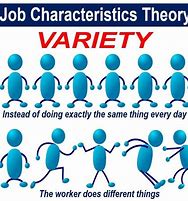
In the 1960’s, a research conducted by industrial psychologists and management theorists stated that repetitive tasks given to employees were leading to demotivation in them and the mundane technique of production line work was resulting in lesser productivity among the workforce. Hackman and Oldham, designed a corporate psychology model named – The Job Characteristics Model, based on this research. These two psychologists proclaimed that job tasks are itself a motivation for the employees. Their theory also approved the fact that, monotonous job work causes dissatisfaction among people, whereas a challenging job enhances motivation. The Job Characteristics Model incorporates five core constituents – Skill Variety, Task Identity, Task Significance, Autonomy and Feedback.

  • SKILL VARIETY – It incorporates questions related to, job variety, if the job is challenging enough and whether the job profile monotonous and too easy for the employee. Generally, an employee does perceive a benefit if he/she gets a job profile consisting of various skills sets. A variety in skills at a workplace helps one to work better, learn more, create a happier corporate environment and also encourages one to get creative while tackling different situations.

For Instance – A construction site painter has a lesser skill variety than a corporate event planner who regularly gets in touch with new people, plans and executes several events.

  • TASK IDENTITY – Being able to identify with the work given and taking pride in outcome of the work completed, is essential to build a satisfied employee. Rather than constantly rendering employees with a single portion of a project, allowing them to handle the entire project, results in a happier employee. The degree of noticeable work completed by a single employee and him being identified by it, is an essential component of Task Identity.

For Instance – The Aston Martin cars designed by Ford Motors in England, has its every engine handmade and autographed by a single craftsman after 16 weeks of completion of the model.

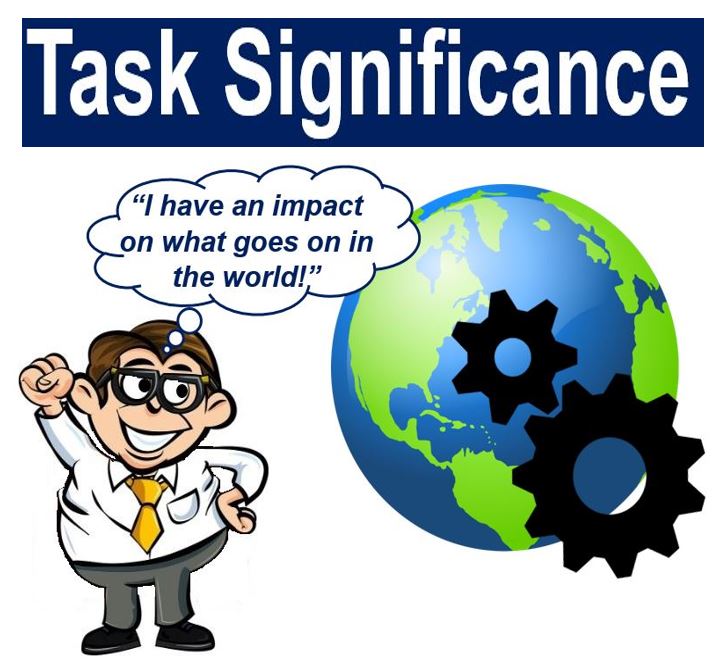
  • TASK SIGNIFICANCE – It refers to the degree to which a worker feels his/her job contributes to the overall efforts of the organization and to the world at large. The workers perceive their job as meaningful when the significance of the task performed by them is high and vice versa. Research explains how increasing task significance is connected to enhancement of job performance.

For Instance – A web designer who curates a corporate web profile for XYZ firm single handedly, experiences a greater task significance than a worker working in a product assembly line.

  • AUTONOMY – It is associated with the freedom that a worker gets in an organization. The independence to plan the workday and set up new procedures that one would like to follow, increases the sense of responsibility in employee, which in turn contributes to a greater motivational force. Allowing the employees to decide their pace of work, order of task completion or even letting them have a greater control over their tasks encourages them to work better. So, as long as the standards of work are met and the work gets completed within the stipulated period of time, it is upto the individual employee to decide how the work can be carried out.

For Instance – The firm ‘Google’ is known for the autonomy that it provides to the staff. This has helped them to foster a happier work environment by ensuring that the staff feels valued.

  • FEEDBACK – It is a constructive method to ensure a steady development in the work. Effective feedback given by seniors is essential for employees to understand their current level of performance, provides a sense of engagement and activity and lets them know what can be done by them to reach a higher level. It helps promote positive changes, set new bars for the team, and gives an individual an overall realistic view of the happenings in the firm.

For Instance – Employing Positive, Negative or Corrective forms of feedback is said to create a clear and honest flow of communication between various levels of employees.

Several companies face the issues of employee absenteeism, higher rates of employee turnover, late marks and at times lower levels of employee productivity. The only modus operandi of tackling these issues is – ‘Employee Satisfaction’. Job Satisfaction helps the employees to work passionately, deliver their level best and stick to the organization even in the worst case scenarios. Doug Conant has rightly said, “To win in the marketplace, you must first win in the workplace”.

How Should a Fresher Prepare for a Job Interview? Basic Tip!

As a fresher, when you step outside and have no idea, how to prepare and how to prepare for Interviews, Then this article is for you.

I am 24 years old, working with an NGO, still a fresher, but I have fought a lot to get off-campus placement. So I will tell you some basic steps as a fresher, how you should proceed to prepare for the interviews. I am assuming, you know the basic tips before your job interview

Be Confident

Be confident, you have prepared well and this should show in your confidence level in the interview.

Try to appear your best at the Interview

Your appearance should convey that you have taken the interview seriously.   Do not try to turn up in the interview in a manner that does not suit you.   Some basics in grooming will help.

a.       Well Groomed Hair
b.      Well Pressed Shirt
c.       Polished Shoes

Know about the company/organization

You should learn as much as you can about the company.  A good place to start is the company’s website.  If you have been referred through a friend also have a frank discussion with him or her.  Also, do a google search  on the company to understand what others are saying about the company.

Be prepared with questions for the Interviewer

Most interviewers will give you a chance to ask questions.  Use this opportunity to show your knowledge and interest in the company.  Also this is a good opportunity to clear any doubts that you have.

Address the Interviewer politely

It is always polite to refer to the Interviewer as SIR or Ma’am.  You can also address them their Surname (Mr. XXX or Mrs. XXX).  Do not use terms such as Honey, Girl, Dude, Yaar etc.

Do not be argumentative

Present your viewpoint and be professional.  If you do not agree with something the Interviewer has said do not spurn it as invalid.  Learn to understand their point of view even if it clashed with your own.  This does not mean that you need to accept their point of view.

Answer clearly and directly

Spell out your ideas as clearly as you can.  Also try to substantiate your ideas with examples.  Don’t be overly wordy and try to keep your answers to the point.  Do not try to deviate too much from the question.

Experience is not what happens to a man.
It is what a man does with what happens to him

Aldous Huxley

GO and Get that JOB!  Good Luck!

Self care is not selfish thing

Often times, when we do something for ourselves, it is considered selfish. Growing up it is common to be taught to take care of other people and put others first. However, when it comes to our mental and emotional health, these types of actions of neglecting yourself to put others first can have huge consequences.

Self-care can be confusing and it can make you feel like you are putting too much attention on yourself. But remember, self-care never has and never will be selfish, especially when it comes to mental health.

In order to take care of other people, you must take care of yourself first. 

Why Self-Care is Important

Self-Care is one of the most important things that a person can do for themselves. It is not only vital for your physical health, but also your emotional and mental health as well.

There are many misconceptions around self-care and what exactly it entails. However, self-care is really not that complicated. At the most basic level,

self-care is just doing good things for yourself. This could be anything from working out, to taking an hour every night to journal, anything that makes you feel good.

Self-care requires you to know and understand yourself. You are forced to listen to your body and mind, understand what resources are running low and what you have to do to replenish them. 

There are many benefits that come with performing self-care. Some of them include increased productivity, improved resistance to illnesses & better physical health are just a few. These benefits are just the beginning.  Some of the other, more personal benefits are, enhanced self-esteem, increased self-knowledge, and most importantly, you have more to give to other people.

When you are mindful about reguarily carving out time for yourself and making sure that your physical, emotional, and mental needs are being met, you will feel better in all aspects of your life.

This makes it easier for you to work with and help others in their time of need. Just like when you are on an airplane, you have to take care of yourself before you can help anyone else. 

Stigma Around Self-Care

Self-care can be hard, not only because of the stigma that surrounds it, but because it can be extremely difficult to admit that you need help or to take care of yourself when you are struggling with your own mental health.

Growing up, it is extremely common to hear that you should put others before yourself. Kids are taught that being too vain or thinking about yourself is selfish. When you take time to take care of yourself, friends and family may start to get frustrated or say that you need to spend more time thinking about others and spending time with them.

Read also: We need support, not stigma. How do we end the stigma around mental illness and start talking about it?

However, the worst stigma, is self-stigma. The voice in your head that tells you to stop focusing on yourself, saying that you don’t deserve the time or attention that you are giving yourself.

You start to think about all of the things that you are neglecting and the people who deserve your attention more. However, this self-stigma, and any outside stigma, is far from true.

By taking care of yourself you are making sure that you will be able to help and encourage others.  

How you can Take Care of Yourself 

Self-care can be difficult because of the stigma that comes with it. However, understanding how, and being able to take care of yourself is one of the strongest things that you can do.

It is also important to distinguish between the things that actually make you feel good and things that you think make you feel good, but often have the reverse effect, like drugs & alcohol, over-eating, and taking risks. 

There are many different types of self-care; the most well-known is physical self-care. When people say that they are trying to take care of themselves this is often what they mean.

Physical self-care can be helpful not only for your physical health but also to help you let off steam. This doesn’t have to be going to the gym, it can also mean dancing around the house to your favorite song, doing yoga, or going outside and going for a walk. This could also be taking a nap when you need some extra rest or giving yourself a break when you are down or unwell.

However, while physical health is important and this type of self-care can make a huge difference, it can also be harmful to your mental health if you focus on your physical self too much and too often. Working out and getting the ‘perfect’ body isn’t what self-care is all about.

It is vital to remember the other parts of yourself that need to be taken care of, make sure that you aren’t focusing on the outer-self to avoid taking care of your inner-self. 

Sensory self-care helps to calm the mind. This will help you to live in the moment, focus better, and let go of the past and forget your anxieties.

This type of self-care is all about sight, smell, touch, and sound. This could be considered sitting outside at the beach, enjoying the feeling of the water on your skin from a shower or a bath, or listening to calming music. Anything that helps you feel calm and relaxed. 

10 tips to write the perfect job description

Employees are the lifeblood of any organization. They invest their skills, capability, and human sources to make sure that the organization they work for can supply every bit of their guarantees to clients. Recruiting the appropriate candidate for a function in any organization is becoming harder due to certain elements, such as the lack of recruiting method and the inability to define the task in a job description. right job descriptions are had to filter irrelevant candidates and help employers attention on getting the proper candidate who will deliver the core values their employer goals. Your job description is a concern when it comes to recruiting a suitable candidate so observe the tips below when writing your activity description.

What is a job description?

A job description is a record that certainly states the requirements, responsibilities, duties, and abilities required to perform a selected position. activity descriptions are utilized by groups and recruiters to draw capability applicants to the role.

Here are our suggestions on the way to write an appropriate job description:

be creative with the title in your job description

The first step to writing a job description that works is identity. you need to get the name proper inside the activity description due to the fact that is the primary component everybody sees. The title of your job description ought to describe in particular the form of activity and obligations to be finished. You should also be creative approximately it. You want in a task description something as a way to attract attention the instant someone sets their eyes on it. a terrific job description title ought to be smooth to understand and very self-explanatory, in order that job seekers don’t have to read the rest of the activity description earlier than they recognize what you are seeking out.

Because you’re posting the process description online, you also want to make sure the task description carries famous keywords human beings use to look for such jobs. make sure you select a name this is free of gender or age implication, and widespread sufficient to be as compared to different similar jobs inside the enterprise. keep away from sounding too technical or superlative for your task description due to the fact that might reason more damage than the top. hold your job description easy to read and recognize.

think about your ideal candidate when writing your job description

Visualize the candidate you would preferably like to recruit and what your widespread success would be for their overall performance while writing your job description. broaden a profile of your perfect recruit which you may match towards candidates. That isn’t always to say you need to be rigid when picturing your best candidate but having a concept of the sort of character who might healthy properly within the department and who fits the process profile flawlessly is a good beginning in terms of interviews.

be concise with the job duties in your job description

Most people looking for a job assume to see boring and lengthy task responsibilities in the process description. while every enterprise’s HR department may be doing it, you might need to take a step away from the group a little bit. uninteresting, trustworthy, and juice-missing job descriptions will handiest get read halfway, and your exceptional applicants are leaving your page already. What can you do? Make your task description exciting and amusing to read. placed one or two points for your activity description that make it look like you’re trying to tell a tale about what your business enterprise values.

Make your process description brief. The shorter, the better. the ideal length for the activity obligations segment in your job description needs to be about 4 to 5 sentences. attempt as a whole lot as viable to explain the process seeker’s duties in fewer words within the task description and notice what number of people want to work with such efficient and imaginative organization. don’t forget you’ve got a totally short time to seize the eye of the proper candidate together with your activity description, so make every second rely.

Don’t forget to apply keywords for your task description; they help extra applicants locate you and improve your chances of hiring the proper humans. Rank your recruiting priorities to your job description, like duties, heritage, and skills from the best to the lowest, and be flexible, displaying that the job has the capacity for increase and development inside the future. Don’t forget to start with a catchy identify and introduction in your job description, simplify the process duties, and make the whole lot easy and smooth to recognize. task descriptions must be readable and engaging and job descriptions.

only the most critical skills whould be enlisted in your job description

One common mistake made via many HR departments is mixing competencies and competence in a process described as though they’re the equal issue. In fact, the abilities themselves need to be separated inside the task description. applicants searching out work take this part of the activity description very critically because they don’t want to be in a task position they couldn’t manage or is not their core competence.

A good job description needs to have competencies and competence sections separated because they are two various things. abilities are what to procure with the aid of getting to know or exercise, e.g., the ability to design tremendous graphical content. Competence is an inert ability that allows you to supply higher potential, e.g., verbal exchange. You ought to additionally separate the capabilities for your activity description together with “must-have” and “desired.” This makes your process description greater practical seeing that it could be tough to locate applicants with all the talents which you need. Be clean together with your choice for the type of candidate you want and ensure that every phrase you put on that web page of the activity description has a reason to be there.

explain the working relationships in your job descriptions

It’s miles critical to provide an explanation for the running relationships and running lines in job descriptions to clarify the responsibilities of the candidate by using describing who the candidate reviews and who, if everybody, reports to them. that is essential because it shall we the candidate realize their region within the hierarchy of the organization and the way the agency and branch are structured. also, appropriate working relationships are essential for employee integration and nicely-being so it might be comforting for a capacity new worker to recognize wherein they will healthy in if a success.

Consider giving an illustration of the scale of the department as well for your job description. a few human beings might be get rid of by means of a branch of 30 employees whereas others might respect having a massive crew. you could even pass one step in addition and include a branch organizational chart to your job description, although this is in no manner obligatory.

let your job description reflect the voice of your company

Every business enterprise has its very own cost gadget, morals, and other elements that determine how they operate. to draw more applicants to process listings, job descriptions ought to stand out by means of imparting a visual and wonderful agency voice. This needs to be seen in every phase and component of your activity description so that after someone starts of evolved reading the task description they have got an idea of what you represent. Describe your business enterprise’s HR solution tradition in tiny details for your task description so that you can attract the kind of candidate on the way to match in.

You need to also be conscious of range close to the form of character you want to get into the location for your office. discover approximately other values you may add to your task description so it may be extra appealing to a large choice of candidates. You need people with new ideas, distinct methods of doing things, candidates who will assign the reputation quo and strive to make a difference. In short, appeal to unique styles of human beings along with your task description.

hint on growth and development in your job description

Everybody wants to work in a company in which they can make a contribution, grow, and improve their careers. one of the satisfactory approaches pinnacle businesses recruits exquisite abilities is assuring them of the possibility for increase and development. while writing your job description, hint on how the job will make contributions to enterprise objectives, the potential for groups and operational development, and approaches the candidate’s function will help upload to that. The process description has to lure formidable people who are attracted by using the possible possibilities cited within the activity description.

Talk about your corporation on your activity description: what your agency is doing within the larger industry to put in force new technology so that it will spur boom, and how the candidate’s talents will help the employer obtain their cause. Your task description ought to also attempt to attract applicants who are movement-driven and want to be part of a company this is revolutionary. statistics ought to be included on organizations’ projected boom boom in job descriptions and candidates ought to be invited to be part of a group to obtain new milestones within the corporation.

do not add a salary amount to a job description

It isn’t an amazing concept to add a income to task descriptions. as a substitute, a company ought to include a aggressive income range to the process description that works with their business enterprise’s HR answer desires.

list the benefits in your job description

Applicants need a compelling reason to depart their current company, where they are possibly very comfortable and have positive blessings granted for years of provider. provide them a purpose to pick out your enterprise over their present day one. Use the job description to give the perks that come with the process (bonuses, repayment for achieving objectives, healthcare, savings plans, crew-building occasions or journeys, gifts given to employees at Christmas, as an instance). The blessings are regularly the real pull to a corporation if they are thrilling, particularly bonuses, as they can frequently top up a profits notably and are very appealing to capacity recruits.

end your job description with a proposition

Job descriptions are like an income pitch and you could use a call to motion at the cease of your task description to reel your potential applicants in and impel them to take the next step and observe for the task. Make the steps of the utility manner simple so one can act fast.

Career In Sports

Sports is a thrilling and wholesome activity game to many, however, if the game is surely one’s passion it could be a totally profitable and satisfying career too. It turned into traditionally considered as an interest particularly in India however now it is taken as a severe professional alternative.

The achievement of sports activities people in a recent international carrying occasion has brought the point of interest to sports careers. sports activities help you to make your frame bodily match and preserve your mind good. if you choose sports activities as a career, it also offers plenty of reputation and cash.

you can make a profession in any sports activities area relying on what sports activities you take up as your knowledge. various sports fields are Cricket, Badminton, Volleyball, football, Basketball, Boxing, Gymnastics, Hockey, Table Tennis, Wrestling, cycling, etc.

1982 changed into a watershed yr for the increase and development of sports in India. The first time, the Asian video games were hosted in Delhi in India.

courses and duration

As a sports person, you may get training from various establishments of sports activities Authority of India. In India, there are various institutes and academies under the sports activities Authority of India (SAI) that impart schooling to younger abilities to transform them into proficient sports activities for men and women. aside from SAI, there are many state ranges and private corporations that help sports activities enthusiasts.

Diploma Course:

  • Diploma in Sports Medicine
  • Diploma in Sports Coaching
  • Diploma in Sports Management
  • Diploma in Sports Science & Nutrition

Undergraduate Courses:

  • B.Sc in Physical Education, Health Education and Sports Sciences
  • Bachelor of Physical education
  • Bachelor of Arts (BA) in Sports Management
  • B.Sc (Hons) in Sports Science
  • B.Sc in Sports and Recreation Management
  • Bachelor of Sports Management (BSM)
  • Bachelor of Business Administration (BBA) in Sports Management

Postgraduate Course:

  • Master of Physical education
  • M.Sc in Sports Coaching
  • Post Graduate Diploma in Sports Medicine
  • Post Graduate Diploma in Sports Management
  • Post Graduate Diploma in Sports Business
  • MBA in Sports Management
  • Master of Sports Management (MSM)
  • M.Sc in Sports Science

Doctoral Degree Courses:

  • Ph.D in Physical Education
  • M.Phill in Physical Education
  • Ph.D in Sports Management

Top Colleges in India offer study in Sports:

  • National Institute of Sports, Patiala
  • Indira Gandhi Institute of Physical Education and Sports Sciences, New Delhi
  • Lakshmibai National Institute of Physical Education, Gwalior
  • Lakshmibai National College for Physical Education, Thiruvananthapuram
  • Tata Football Academy, Jamshedpur
  • National Cricket Academy, Bangalore
  • Delhi University

Skills required to become a sports person:

  • Physical Energy and Stamina
  • Energetic
  • Enthusiastic
  • Physically fit
  • Patience
  • Sporting Spirit
Eligibility & Admission
  • You have to go after 12th examination and done a graduation degree in Physical Education with a physically fit body and energetic.
  • You will get admission in UG course after completing 10+2 examination.
  • If you are interested to do PG courses, then you have to pass your graduation degree.
  • After MBBS Degree, you can appear for the Diploma course in Sports Medicine.
  • Generally, admissions will be based on the merit list. The merit list shall be drawn on the basis of marks obtained in the qualifying examination.

Association and Organization of sports:

  • National Basketball Association
  • National Hockey League
  • National Football League
  • All India Tennis Association
  • National Institute of Sports
  • Indian Olympic Association
career and jobs

Sports activities opened up many professional opportunities for younger competencies in India. To emerge as a sports activities character, having a talent in the selected recreation is very crucial. along with talent, robust willpower, and perseverance in wishes.
For each sports activities character, it’s miles a dream to represent their country at the international degree. you may start your profession at college and university level and start play at the country degree, regional level after which explores opportunities at countrywide and global ranges.

other than clearly being an energetic sportsman, then different career possibilities are game advertising, training, athletic administration, sports activities remedy, game advertising, recreation psychology, and so on.

sports character may be employed in the private and public sectors. The Indian government and armed forces additionally have special recruitment drives for wonderful wearing talent. you could additionally set up your personal commercial enterprise in manufacturing of sports activities equipment after gaining enjoy in this field.

Job Profiles:

  • Teacher
  • Biomechanics
  • Sport psychologist
  • Sport journalist
  • Sports Player
  • Sports Coach & Instructor
  • Commentator
  • Sports Photographer
  • Personal Trainer
  • Professional Athlete
  • Physical Education Teacher
  • Health Advice Officer
  • Health & Public Services Leader

Some regions wherein you could locate jobs of sports field are stated here:

  • Media, Sports & Advertising Companies
  • Sports Management Industry
  • Educational Institutions & Colleges
  • Merchandising (Retail) Companies
salary

The income of the sports persons totally depends on the game recreation that he has selected. inside the sports activities discipline, the variety of years of revel in isn’t always simply rely on, however also the sports person capability to deliver extraordinary performance continuously. beginning salary of the sports activities character is approx Rs. 3 Lac to Rs 5 Lac per 12 months. when you become a celeb sportsman, you may earn in crores in line with annum. The revenue also relies upon your process profile.

Job : computer science graduate?

Computer technologies are integral to modern life, so you’re likely to find your computer science skills in high demand across many different industries. These include financial organizations, management consultancy firms, software houses, communications companies, data warehouses, multinational companies, governmental agencies, universities and hospitals. 

As always, it’s extremely beneficial to have completed relevant work experience. You should also consider compiling a portfolio of your own independent projects outside of your degree, which could be in the form of programming, moderating online or even building an app.

IT consultant 

Working in partnership with clients, an IT consultant advises clients on the planning, design, installation and usage of information technology systems to meet their business objectives, overcome problems or improve the structure and efficiency of their IT systems.

As you represent a broad role in IT, your job will be similar to that of systems analysts, systems designers and applications programmers, whose roles are more specialized but nonetheless work on a consultancy basis.

You may also become involved in sales and business development, identifying potential clients and maintaining good business contacts. There is fierce competition in this role, so gaining work experience in a commercial environment would help increase your prospects.

Cybersecurity consultant 

Depending on what computer science specializations you studied during your degree, you may wish to specialize as a cybersecurity consultant or an information security specialist. Maintaining cyber security has become increasingly important, so in this role you will focus on understanding the risks to the security of information or data.

You’ll analyze where security breaches may occur or have occurred, and restore or reinforce systems against such breaches, to ensure that confidential data is protected. This role could include ‘ethical hacking’, meaning deliberately attempting to hack into your employer’s network to expose any weaknesses. Alternatively, you could work as a computer forensics analyst or investigator to combat the increasing phenomenon of cyber-crime.

Information systems manager 

A similar role to an IT consultant, an information systems manager is usually a full-time member of staff, responsible for the secure and effective operation of computer systems within their company. You’ll be responsible (perhaps with the help of a team of IT staff) for the entire upkeep of the ICT infrastructure within your organization, with typical tasks involving the overseeing of system installation; ensuring systems are backed-up and that the back-up systems are operating effectively; purchasing hardware and software; setting up secure access for all users; ensuring security of data from internal and external attack; and providing IT support and advice for users. 

You’ll need to make sure the ICT facilities meet the needs of your company and are current, while remaining within a set budget, and within all relevant software licensing laws. You may also need an understanding of business and management principles in order to contribute to organizational policy regarding quality standards and strategic planning in relation to IT.

Database administrator 

database administrator (DBA) is responsible for accurately and securely using, developing and maintaining the performance, integrity and security of a computerized database. The specific role is always determined by the organization in question but is likely to mean being involved purely in database maintenance or specialized in database development. 

The role is also dependent on the type of database and processes and capabilities of the database management systems (DBMS) in use in your particular organization.

Typically, this role includes ensuring data remains consistent, is clearly defined, easily accessible, is secure and can be recovered in an emergency. You’ll also be required to troubleshoot should any problems arise; liaise with programmers, operational staff, IT project managers and technical staff; provide user training, support and feedback; and write reports, documentation and operating manuals.

Multimedia programmer 

multimedia programmer is responsible for designing and creating multimedia computer products, making sure they’re functional and maintaining fidelity to a designer’s specification. You’ll use creative as well as technical skills to develop multimedia features including text, sound, graphics, digital photography, 2D/3D modelling, animation and video. 

You’ll need to work with the designer to understand the design concept, discuss how it can be technically implemented, identify the operational rules necessary, write efficient computer code or script to make the features work, run tests of the product to test for bugs and rewrite or add new code if necessary.

You’ll also be available for technical support after the product is completed and need to keep abreast of industry news and developments in order to suggest and implement improvements.

How to Make a Presentable Resume

Job selection depends on many things like education, experience, body language and a good resume. Most people do not know how to make a strong resume. So here is an article explaining this.

A resume is a document created and used by a person to present their background, skills, and accomplishments. It is a documentary record of your contact details, educational qualifications, skills and employment history in a nutshell. As it establishes your details, it should be appealing and convincing. A good resume increases your chances to get employed in a company.  To build an attractive resume, you need to find out the best resume format. Resume format plays a vital role while creating a job-winning resume. You should be well-versed about the kind of resume format that suits your current situation. 

Importance of a resume

Employers use resumes to get a deeper understanding of candidate skills, strengths and experience. Your resume should reflect achievements, awards, education, experience and any other outstanding accomplishments that align with your career path and goals. Here are some reasons why you need a resume to get your next job. An effective resume:  

  • Outlines your relevant skills and experience. A well-structured resume clearly highlights your most attractive skills and experience to potential employers. 
  • Displays the benefits you offer employers. More importantly, it should tell employers what you bring to the company along with skills and experience.
  • Grabs the attention of employers. Usually the top quarter of the resume is considered the most attention-grabbing. Make sure to include important summarized information in this part.
  • Matches your skills to the position’s need. One way to do this is by making sure your resume contains the same keywords found in the job description.
  • Can lead to an interview with the employer You’ll likely need to conduct at least one interview to be offered a position, so having a resume is essential.

What does a Resume Contain?

  • Name with contact Information- Your postal address, email and mobile number.
  • Objective: It appears just below the contact information. It briefly describes the type of job you want and also skills that make you the best candidate for the job. The skill related keywords should be present in this section e.g. – Software languages known etc.
  • Education- All your educational qualifications, the most recent first.
  • Work Experience-the company, job title and responsibilities etc. with most current experience on top.
  • Achievements, Training & Certifications if any
  • Other Skills, Interests and Hobbies.

Tips for Writing a Resume:

  • First write down all the details that you want to include in your resume.
  • Select a format
  • Be simple, brief and straight
  • Do not lie about your qualifications and experience
  • Sometimes resumes are filtered by keywords, so see that the words associated with the job are included.
  • Don’t leave unexplained gaps in the timeline. (a year off etc. )
  • Do not copy someone else’s Resume
  • Ask your friend or a teacher to review the content. Revise and Edit.
  • Avoid fancy fonts and colours
  • Print it on one side of the sheet only. Limit it to one page if possible, else 4 pages should be the maximum.
  • Use A4 size paper to write the resume.

HOW TO ACE YOUR INTERVIEW

Those who have given an interview in the past know how difficult it can be sometimes to ace an interview. Not everyone is born with confidence to impress someone with the first sentence they say. Some people like myself need a little help, research and motivation to prepare for the big moment. 

I will be sharing some of the tips that I came across on the internet, below. They might prove beneficial to you as well to pass your interview with flying colours. 

  1. Basic Research:

The first step is to run in-depth research about the organisation/ company you are applying to. You should be well aware of their background, values and culture. You should also know the latest news about the company. Checking the company’s social media accounts can also give you a lot of information. The interviewer might ask you questions like “when was the company formed?” or “how many divisions does the company have?”. You should be prepared with the answers to such questions. It will reflect your seriousness for the job.

  1. Review the job description:

Read the job description again and see if you are fit for the job or not. See if your experience, skills and accomplishments are enough for the job. You can also look into the hiring process of the company and prepare accordingly. Also, look into your qualifications and goals. You can tell the interviewer how your goals align with the company’s goals. 

  1. Practice answering questions:

Some of the questions are asked in almost all the interviews. Like “tell us about yourself” is the most common question. You should be well prepared for such questions. Don’t memorize the answers but do make bullet points. It will help you remember answers better and make it look natural. Your main focus should be on the company, the position, qualifications and goals. Stand in front of the mirror and practice these questions until your nervousness goes away.

  1. Crisp dressing: 

Believe it or not but dressing up nice gives you a different kind of confidence. You should always wear something formal or something that’s not inappropriate. It makes a good first impression on the interviewer as you walk in. Also, make sure your footwear is neat and clean. The best pick for an interview is usually pants and a formal shirt or a business suit. 

  1. Prepare questions to ask:

The best way to show your interest in the job is to ask the interviewer a few questions here and there. You can also reevaluate if the company’s goals, working environment and company culture are right for you. Prepare some questions that dig deeper into the company. This will show that you have done your homework.

  1. Keep the CV and other documents organised:

Keep your documents ready beforehand. This will not create chaos on the day of the interview. Also, keeping these things ready will reduce your burden a little and make you less nervous. A well-organised file speaks a lot about your work ethics to your interviewer. 

  1. Pay attention to your soft skills:

Your posture, handshake and attentiveness say a lot about your personality. Do not get aggressive during the interview and keep your volume low. Fiddling with your pen, tie or file can show the lack of confidence. Walk with confidence and try not to fiddle. Lastly, maintain eye-contact and a smile. It reflects a positive nature. 

Keeping in mind these few tips can make a huge difference during your interview. In the end, all that actually matters is your confidence. 

How to build a startup?

Already building a startup was not an easy task, COVID-19 has made the situation even more difficult. But not to worry, here are a few steps one can look up to launch the startup in 2020.

  • Develop an idea: This was expected isn’t it? Without an idea, there can be no startup. The development of an idea is the most laborious task. For an effective startup, many things are needed to be taken into account like the vision of the startup, needs of people. Check for the problem area that people are facing, that’s the place from where the best ideas generate. The main criteria for a successful idea are trustworthiness, durability, and sustainability.
  • Explore the market: Understand the market, do thorough research, that is the key to success. Half knowledge is dangerous, if you don’t know particular features of the business you chose, all efforts will go in vain. Make sure to stay within the area you’re familiar with. Don’t start anything that you don’t have an idea about. Figure out the consumer’s needs.
  • Be fast: React fast to the changing market needs. This is crucial for a successful startup. All great businessmen have done so, whether it is Mark Zuckerberg, Marc Andreessen, or Thoman Gensemer.
  • Always be determined: Never lose hope! Be determined and always have a willingness to continue until your startup becomes profitable. Cope with the challenges and difficulties that come your way creatively.
  • Be creative: Don’t be scared to go beyond the usually accepted business schemes. It’s your startup and you can mold it in whatever way you want.
  • Decide about the team: For the start, the number of people in the team should not be big. Find these three kinds of people: one who knows how to build technological systems to solve problems; one who understands the human factors hid by problems and can solve them; and one who knows how to reach people whose problems are to be solved.

Even if your first try of creating a successful startup fails, don’t be disappointed. It’s not necessary is that it will be rewarding always. Keep trying, don’t give up the difficulties.

What are the alternatives to Employees layoff?

Due to the sudden economic crisis resulting from the COVID-19 pandemic, organizations are seeking out ways to cut costs. Out of which, employee layoff has also become one option. But before doing this, companies should consider how it will affect them in the long run. Instead, companies should find creative alternatives to layoffs to keep the business afloat.

Here are some alternatives that businesses can consider:

  • Ask employees for ideas: Ask for suggestions from staff about how to cut costs and improve the productivity of the organization. Getting employees involved can ease insecurity and promote solidarity, even if what you save doesn’t meet your shortfall expectations. By this, employees will also feel valued as their suggestions will be heard.


  • Hiring freeze: Some companies deploy mass lay-offs but are still placing job postings at the same time. This way, they are getting rid of valuable human capital to save money while bringing new employees at low salaries. It should be avoided, as retaining employees cost less than to replace them. Consider a hiring freeze as an alternative to layoffs.


  • Slight salary cuts: Explain everyone across the board that salary cut is the need of the hour. The reduction should be such, that it won’t completely shatter employees’ finances, but also give the business a bit of a financial break.


  • Work from home programs: Keeping employees at the workspace costs money. People consume water, electricity, office supplies, and other facilities. Sending workers home can cut costs to a large extent without dumping them.


  • Cut part-time staff and contractors: If crises are bigger, it’s legally easier and cheaper to end the employment of contractors and part-time workers. One can always rehire if necessary. Instead of using costly temps, consider rehiring retired employees that already know your business, to fill gaps.


  • Reduce employee benefits: Cut employee benefit plans and policies like medical or dental, 401(k) plans, insurance plans, leaves, and other fringe benefit policies.


  • Offer extra days of unpaid leave: On this most of the employees will agree, as it would be like a vacation time although unpaid.


  • Institute shorter workweeks: Reduce the number of working hours of the employees and proportionally decrease pay. This can be considered as a seasonal arrangement for slow periods. Shorter workweeks can cut costs by a significant margin.


  • Focus on EfficiencyFind out ways on how things can be done faster, less expensively, and more productively? Where can cash be saved? How to encourage staff to become more efficient in their jobs?

Are layoffs necessary sometimes? Yes, but they should be a last resort instead of a front-line option. It’s better to lay off some of the employees than to lose the business. But one should make sure, it is not the go-to solution when the business starts to slip into the red.


3 Ways for Students to Make Money Online Without Getting a Job

USE Depop

Similar to eBay, Depop is a platform for those who want to sell their clothing, jewelry, artwork, and anything else under the sun. The app is well known for being populated by vintage lovers and those who want to reduce their carbon footprint by practicing sustainability. The app also includes item recommendations based on your taste, top sellers based on style, and world favourites. Users can decide to follow shops and sellers in order to keep track of the items they are selling.

Starting up on this app is very elementary. The user only needs to connect their Paypal account for transactions and other payments. In addition to payments, many sellers and users on the app also participate in trades where they trade items from either store of similar value. After this step, the only thing left is setting up an account with a profile photo, a biography, and social media links, if that’s what your heart desires. From here, you can post photos of whatever you want to sell and choose the price.

If your item is a clothing item, a jewellery piece, or an accessory of any sort, wearing it in a photo for reference is normally preferred by buyers so they can see how it may fit another individual. Always take as many photos of your product as possible. This usually increases the likelihood that someone will buy it because you show all the angles of the product as well as the flaws it may have. Include a bunch of tags related to your item under the post. These tags are used for when other users search an item through keywords.

Youtube

For creators from all walks of life, Youtube is one of Gen Z’s golden media platforms. From compilations to make up tutorials to daily vlogs to art tutorials to photography tips, the platform is extremely versatile. And this is where you come in. Like the previous idea, take something you like and start a channel on it. If you’re really religious, start a channel on things you have learned or practice. If you love makeup, become a practicing beauty guru. Or maybe even just do daily vlogs and stream your routine in quarantine. The possibilities of Youtube are endless, but that doesn’t always promise you money. Many Youtubers correlate their large incomes from Youtube to brand deals, views and hard work But the message on success in the Youtube space is clear: you need to be patient. Success on Youtube doesn’t just come with the click of the upload button, you need to work for it or do something that is worth remembering. 

SELL YOUR ART

This option is much more universal than you think. Whether you are a skilled artist or not, selling paintings or art on eBay is much more simple than one would expect. If you’re an amateur then start by making a small abstract piece. If you’ve mastered an art form then you have an upper hand, show your art skills, create more art pieces since you have more time on your hand.

Job is lost, not the mastership!

Get the ‘tasks’ of your own!

You’ve lost your job but you are still in the possession of your skills.

“Unemployed, what to do now?”
“From where to start?”
“I can’t find anything else to do!”
It’s better to ponder over the strategies to get a job instead of spoiling the mood following such qualms.
Stop worrying, start learning something new. Because it’s just the scepticisms talking!

Many fundamental tasks at home must have been hung back, caused by unemployment. But it does not mean that all the portals are closed.
You have got time to think something raw, something fresh and to do something new as well. Then why not to do the enhancement of your skills?
First and foremost, start making a plan to control the expenditures and start executing it at your earliest convenience.
You can do anything you want to do. Just think ahead about what to do.

Think of ahead, what do you want to do


It happens many times that we stay in a job despite the fact that it is bearing no interest. Or say that we never really wanted to do.

Co-founder of a career assessment – ‘Map My Talent’, Rohit Sehgal says, “About 80% of employees believe that they are stuck in their jobs which actually is not for them.”


So you seek such a job that interests you.
For that, if you need to do any course or get enrolled in any program of two or three months, just go for it.
Can do work from home or would like to start something of your own, considering all these aspects, search for a new job.

“Don’t Worry About Job Burn-Out. Worry About Job Boredom.” -Darius Foroux

Learn something new

HR consultant, Nirmala Menon says, “You’ve to remember one thing that whether the company has fired you or you’ve left the job, no matter what’s the case with you, your skills are still lodging in there!”
Instead of being disappointed, think about the ways in which you can reinforce your skills.
Due to lockdown, you’ve got enough time to train yourself to be a multitasker. If you want to learn something new, then choose the hi-tech way! Choose your desired online course from a list of choices and join online programs. (‘Modern problems require modern solutions!’)

Don’t flatten the graph of evolution

Networking is constructive


A survey of Yale University claims that 70% of jobs are available through the networks only.
So you need to find a new networking strategy.
You need to be active on social media platforms. Keep your revamped profile on job providers or search engines, particularly for jobs like LinkedIn and other job sites.
If you are looking for a job in marketing, then you can join the space of global marketing and communication professionals on LinkedIn.
Stay connected to your seniors and ex-colleagues. Discuss and swap viewpoints, seek pieces of advice.
Thrive the flexibility of decision-making as per the requirement of time.
Don’t think twice about challenging yourself otherwise you’d stop evolving.

Are You Emotionally Intelligent?

When a person is described with the word ‘intelligent’, what usually comes to our mind is high IQ, ‘he must do well in his subjects’ or ‘he must be good at math. What if I told you that having just a high IQ isn’t enough to become successful? Most people think that people who are good at studies or those who get good grades will do well in life but not every topper has an exceptional career – shining stars of a workplace could be average scoring students. The concept of emotional intelligence or emotional quotient (EQ) is relatively new but very effective for one’s career if he or she is able to master it. 

Daniel Goleman popularized the term ‘emotional intelligence’ by authoring a book with the same name in 1996, defined it as ‘the ability to perceive emotions, to access and generate emotions so as to assist thought, to understand emotions and emotional knowledge, and to reflectively regulate emotions so as to promote emotional and intellectual growth.’ The five components of emotional intelligence that an individual should familiarise himself with are self-awareness, self-regulation, motivation, empathy and social skills.

The ability to identify your emotions towards a particular person or a situation is called self-awareness and it forms the basis for the other higher level components. If one can accurately assess what he is feeling, it can be said that he knows himself from inside-out. Such an individual would also know his strengths and weaknesses and his emotional sensitivity towards different topics. Just knowing what you are feeling can help you control your expressions and actions to some extent. For an instance, if you don’t get a promotion you have been waiting for, as an emotionally unaware individual, you could be angry and make an impulsive decision of quitting the job. However, you could have a more positive outlook and try to improve yourself and work on what you are lacking. The latter would certainly be more beneficial for you.

Motivation is the drive that keeps one going and makes efforts to achieve his goals. To remain self-motivated, one must have a burning urge to reach the level of excellence and it should not be driven by mere external rewards like pay rise or promotion but own satisfaction. The goals that one is working towards should not intersect with organisational goals to avoid conflict of interest and inefficiency in turn. To cease every opportunity that one comes across and overcome any obstacle or setback with an optimistic approach are also qualities of self-motivated individuals.

Empathising with someone is the awareness of someone else’s feelings. To understand people and what makes them do what they do, recognizing their emotions is one of the most important and basic things and it even helps a person in regulating his behaviour towards the people that he is trying to understand. It is not easy and it cannot surely be accurate but it is something worth trying. A person can only fulfill the needs of customers and exceed the expectations of people if he is empathetic enough to recognise them.

Social skills, like the name suggests, are the ways in which a person interacts with the people that are surrounding him in both his work and personal life. The kind of relationships that he has with people is only a result of his social skills. Social skills make a person influential and good at communicating his ideas such that an individual can both lead and work as a member of a team effectively. The person is not only able to initiate and drive change if he wants to but also resolve conflict or disagreement that arises due to the change.

How to crack a job interview like a PRO!

We all know that interviews can be very stressful. All sorts of thoughts come to our minds while sitting for one. But it is a known fact that the hiring process cannot be completed without it. Therefore, it is necessary to be prepared beforehand, as it will only bring you one step closer to land the dream job. While some nervousness is ok, but make sure that it doesn’t overpower your confidence. Always put your game up!
So, to be successful in your interview here are some tips, you surely don’t want to miss out.

Research about the organization – Before attending any interview, thoroughly research about the organization. You won’t want to make a fool out of yourself, in front of the panel. Do know about the job role, company profile, core member, competitors, etc. This will help you in answering questions with much ease.

On-time – Being punctual is something one should keep in to practice. Always arrive 15 minutes before the interview. This leaves a remarkable impression. Also, it will help you settle down and relax. Avoid being in rush by any means.

Grooming – The concept of ” The First impression is the last impression” may not apply in all aspects of life. But here, it surely does! You must dress right. Wear formal ironed clothes for this day. One may go for plain colored shirts and trousers. Comb your hair neatly and be hygienic.

Study your CV – Break out your CV and do an analysis of what you have done so far, how your skills can help the organization, previous experiences, and skills. Prepare questions and decide how will you answer them. Practice them every day.

Prepare a portfolio – Invest in a good quality portfolio. This should carry all your important documents, achievements, certificates, and all the work is done until now. Although in most cases the employer does have a copy of it, this will show them that you’re an organized individual.

Project confidence – Deep down no matter how nervous you are, showcase as if you have all confidence in the world. When you’re called inside the interview room, walk with a smile on your face. Greet the interviewer. Make eye contact while you answer the questions. Don’t look down, at the wall or the clock. This can give them a bad sign.

Ask for feedback at the end – There are chances that interviewers have made their decisions about you. You may go ahead and ask them. By asking you to show interest. They might not answer your question, but they will appreciate you for asking it. The organization feels that the candidate has a positive attitude and is open to feedback.

Salary Negotiations – Never! Never do this! Don’t ask for unrealistic salary hikes as it will make them think, that you are not serious about the job and it is just about money. The normal range of hike is from 25% to 40%. If you want to, do your homework before any negotiations.

Now that all points have been covered, use them to stand out among other candidates and seem more professional. Good Luck!