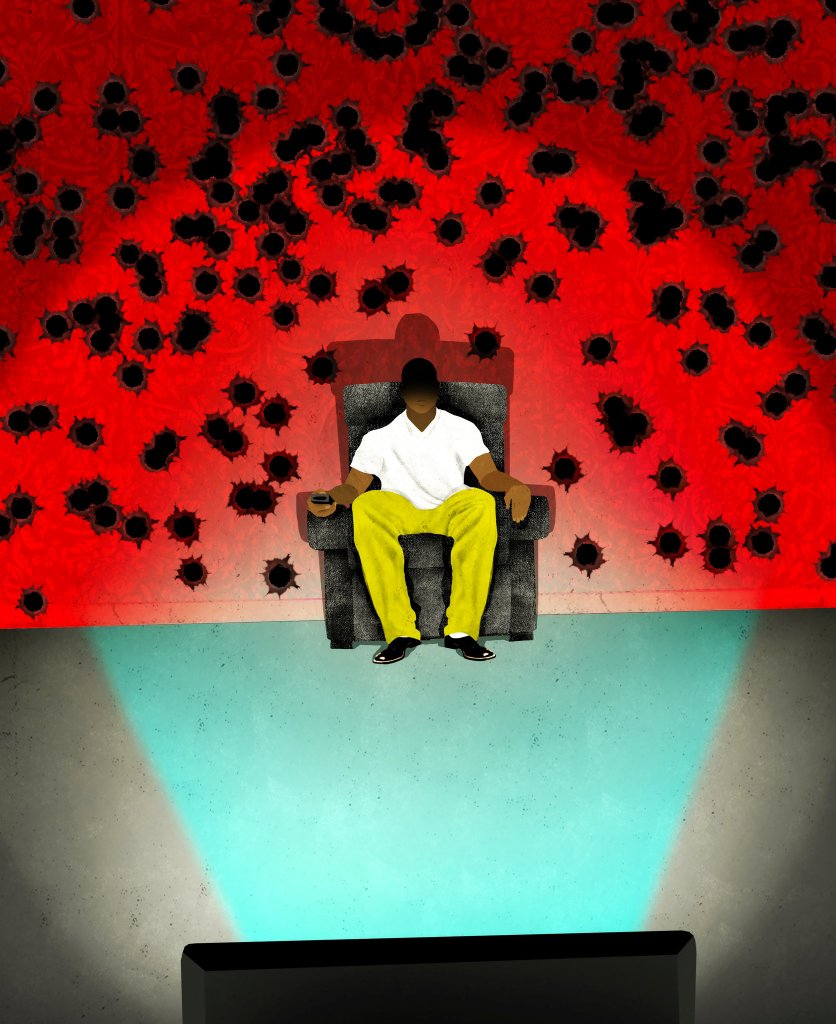
Addressing Toxic Masculinity


“Sometimes people hear “toxic masculinity” and think the term is anti-men. It isn’t. It’s anti-telling- men -they-have-to-repress-emotions- and – be-dominant-alphas-to- be- considered – real-guys. It’s pro-men. Thinking, feeling, resilient, strong, awesome men.”

– Amanda Jette Knox

I am sure that if you’re an international K-pop fan, then you are no stranger to the knee-jerk reaction people have after they have begged you to show them the images and/or music videos or any K-Pop group. Most reactions generally revolve around “They look like women” or “They are too feminine” or “Why are they wearing make-up?” or the infamous “Are they gay?”.

This made me wonder, what exactly is it that causes such a reaction? What does it mean to be ‘man’ or to be something lesser than that? Are we, as a society, missing out on addressing the toxic masculinity that plagues the young minds?

Although, there have been some colloquies on it, most of them leave out the dialogue that Asian men are particularly hyper-emasculated in western culture (and also by minorities in western culture) which could also be a reason why people automatically react in this manner, besides already having discrimination towards appearances that don’t fit the extremes of femininity and masculinity. As for the people mouthing off about K-pop looking too “feminine”, it ends up bringing up the connotation that femininity is a bad thing somehow. It’s essential to understand that feminine and masculine traits are social constructs, so they change according to each culture.

What is toxic masculinity?

Toxic masculinity is those elements of our social definition of masculinity that have concrete negative impacts on men by promoting behaviours such as refusing medical treatment to appear strong, suppressing emotions that show vulnerability, and idolizing violence as a solution to problems.

These behaviours are enforced by other men (and society as a whole), by challenging the manhood of those who deviate from this behavior, while also teaching each other that manhood is something to be valued above all else. In addition, most of them wrestle with the perception of masculinity, which, in a feudal society like ours, is very conditional. Of course, women perpetrate violence too: they can be aggressive and brutal, particularly to other women. But undoubtedly, the culture that stokes such violence smacks of machismo. Manhood is not naturally given, but is a goal to be achieved. To be born a boy is a privilege but one that can be lost if one is not properly initiated into masculine practices.

What are the core features of this model of manhood?

First, aggression is natural and desirable in men. A ‘real’ man is eager to pick up a fight. If he does not, he is told to wear bangles on his wrist. Even the slightest intrusion in his physical, mental or social space is unacceptable. Second, men must be tough — muscular and unemotional; they must not be easily perturbed, must not grieve and cry. Part of what it means to be tough is to suppress empathy towards others, to be embarrassed by fear or any other vulnerability. Third, men must be ambitious and ruthless. Once they set a goal, it must be achieved regardless of consequences to others. Since winning is all-important, other men striving to achieve the same goal are rivals to be eliminated. Extreme competitiveness, on this model, is a classical male characteristic. Fourth, it does not behove men to consult others, negotiate with the weak, or settle for anything less than what they want. They take independent decisions that brook no questioning. As famously put by Amitabh Bachchan in one of his films, ‘Bas… keh diya na (Enough, I have said so).’

And if you don’ fill in these roles, then too bad, you’re deemed to be not ‘man enough’.

In most discourses, however, what isn’t properly addressed is that women perpetuate toxic masculinity too. There is an institutionalized aspect of masculine toxicity as culture that we recognize as true for men in general, but ignore being equally true among women, even many feminist women. Most people and groups do this to some extent, it’s hard to be fully self aware and self critical. We don’t always see the flaws in ourselves as readily as we see them in others. Part of feminism is recognizing the invisible structures that pull societal norms to be what they are. This is just an aspect of that and speaks to the idea that we really have to be the change we want to see in the world and it’s pretty naive to consider yourself or your group as “clean hands” in the matter just because you are aware of one piece of the puzzle.

So, what can be done to overcome this?

The first step would be, abandoning ‘just for men’ attitudes, and not doing it for the sake of getting women to like you. ‘Woke’ bros are just as problematic, so just live honestly and act respectfully towards everyone. Stand up for what’s right even when it’s hard and you’re a minority voice.

Just like we “make room” or “hold space” for voices that are actually impacted by the problems we see in our society it makes sense we should do the same to at least include men as valuable voices to addressing the “male toxicity” problem. Only they can speak their own truth.

Violence, misogyny, and no accountability are pillars of toxic masculinity. So, knock down those pillars daily. Embracing who you are and standing up for those who need it, you start to realize gender doesn’t have a place to shape our lives as rigidly as society tells us. Call it inner peace and confidence! You can embrace your personhood, just not things. You can embrace your own idea of a ‘masculine’ identity, just don’t be attached to the external.

“All of us have to recognize that being a man is first and foremost being a good human. That means being responsible, working hard, being kind, respectful, compassionate. If you’re confident about your strength, you don’t need to show me by putting somebody else down.”

TOXIC POSITIVITY


We live in a world where being positive is supposed to be one of the most important characteristics of an individual can possess. But is it normal to be positive round the clock? Is it healthy? We see multiple posts on social media to be positive and the famous line “Good vibes only” as a common caption under such posts. These posts suggest that the only way to deal with life is to be optimistic all the time and disregard any other complex feeling you might be feeling. Positivity is different for everyone but it is also healthy to recognize other feelings of despair or sadness or feel hopeless. A lot of us feel the pressure to feel and be happy all the time as though we are living the best time of our life covering up what we actually feel. Normally, we feel sad or desperate or lonely at times, that’s human nature. There is no one way to feel happy but quotes like “good vibes only” seems to put us a layer of fake happiness rather than acknowledging them
What is toxic positivity?
Toxic positivity is a culture or concept where being positive all the time regardless of the situation is promoted as an ideal way to live and any feeling that causes negative feelings is neglected or disregarded. It seems like quite a plan to deal with tough situations but ignoring unpleasant feelings only makes them bigger. Ignoring unpleasant feelings can lead to bigger problems such as depression and anxiety. Toxic positivity makes you feel like you are flawed if you don’t feel happy all the time and being happy all the time is the only true way to live. Good vibes only, smile more, or think happy are part of the idea that you ignore any other uncomfortable feelings.
Neglecting any feeling makes them a bigger problem because they are unprocessed. It is normal for us as human beings to feel a wide array of feelings. Snubbing any emotion doesn’t do well to our mental health. We need to recognize the complex feelings that we feel.


Toxic positivity during lockdown –
Many people have openly and extensively discussed on social media that they will use this time of lockdown to learn a new language or read a book or learn new skills, while this is nothing wrong but it makes a large chunk of us who use this time to recuperate or use this period to rest feel like we are a failure and flawed beings because we don’t do the same things. Promoting the idea that we always have to be productive during a lockdown steals our right to have bad days. Rejecting emotions when you should have addressed put a damper in the mood. It’s completely okay to treat the lockdown as vacation and sleep all day or if we learn a new language. There is no one right way to feel emotions as all of us are different and have different ways we care about ourselves and others.


Ways to avoid being toxic positive person
We first need to accept our negative emotions and figure out why we are feeling that way. Speaking to a friend or parent or writing down our feelings positive and negative decreases the intensity of emotions. We need to give our self permission to understand and feel all complex emotions. We need to learn to be kinder to ourselves and our flaws. We need to acknowledge our pain, we should not shame ourselves or others for feeling the way we feel. This is our first pandemic and sadly we don’t have self-help books to help us through this pandemic. We all are new to this situation; we should be kinder to others and ourselves. This lock-down has been hard for all of us and the world could use some kindness in any way form. We need to understand that we are not pleasant all the time and pay attention to our fleeting emotions and understand them.

Social Media and Its Impacts       


It is not too much of an exaggeration to say that the internet has become an intrinsic part of our daily existence. We turn to the world wide web for answers to all our questions and to access the materials we need. A huge amount of the time we spent in the virtual world is spent on social media platforms. Social media has become a phenomenon of its own, becoming the axis around which many debates, discussions, and even trade occur. New trends are set, news is shared, opinions are written, art is created, and community is built. The number of people using social media has risen steadily over the years and almost half of the entire globe is now virtually present on some platform or the other.

Social media has many benefits and has made our lives richer in many ways. Here are some of them:

  • We have increased awareness of social issues and access to much material to educate ourselves.
  • It has enabled us to connect across distances and remain in touch.
  • It has made global communities of like-minded people possible, and much creative and collaborative work done.
  • It has widened our perspectives and increased our reach.
  • The entertainment industry greatly relies on social media for promotion as well as for profit.
  • It allows for the propagation of ideas, ideologies, and support for those who might be struggling.

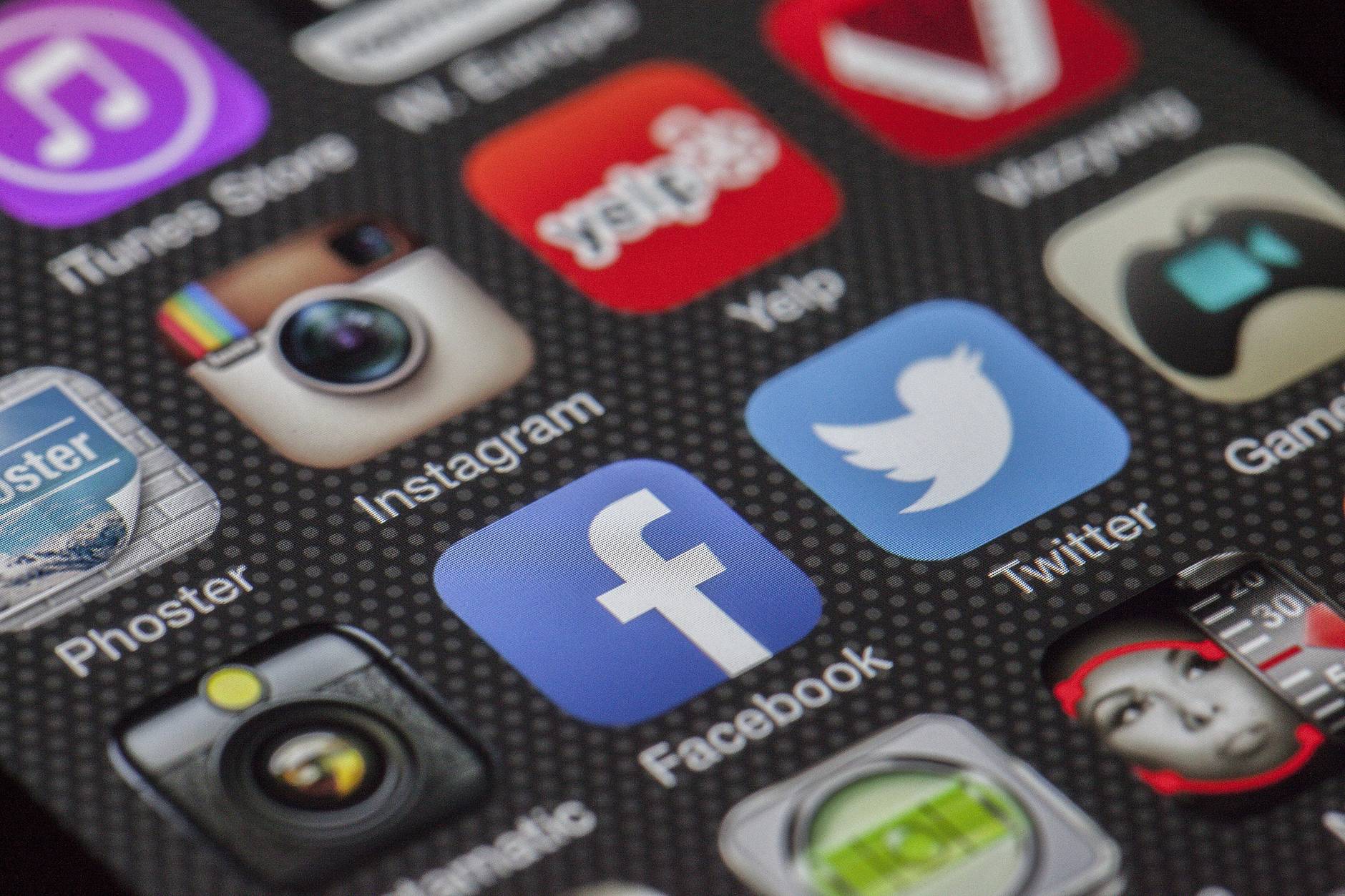
facebook application icon
Photo by Pixabay on Pexels.com

While these are all great things in themselves, it is no secret that social media has also become a cesspool of anger and narcissism. It has made people more disconnected from their immediate spaces and the challenges they face there. Despite the increased connectivity that we have with the world, social media has not helped with loneliness. Rather, it seems to have made the problem worse with the internet being considered one of the loneliest places in the world. Here are some other problems that social media has brought around:

  • Creates a sense of invincibility giving rise to the keyboard warrior culture, where one is extremely bold and loud but only under anonymity and on a screen.
  • Increased sense of isolation; does not aid in mental health issues and depression.
  • Many create false identities by their interactions and project these onto the people around them, even deluding themselves. This causes them to be unable to love who they are once they have to deal with their weaknesses and flaws in real life leading to numerous self-hate and self-perception issues.
  • Social media has not made us more empathetic as some would like to believe but rather has fostered reactionary comments, one-liner retorts designed to hurt, and increased intolerance. Conversational skills and capacity to understand another that comes with extended engagement deteriorates.
  • It has severe effects on our mental faculties, clarity of thought, time-span of attention, time spent with oneself and one’s thoughts, and ability to engage on the ground with those who may oppose us.
  • Encourages a culture of instant gratification where one’s image and identity are built around likes and shares, and where one seeks immediate results. Continued work and perseverance for a cause become boring and illogical when momentary satisfaction is available through virtual means.

It is time for us to truly consider what social media has done for us and how much of it is good. It is becoming increasingly clear that when given a free rein, it can cause an amount of harm that outweighs any good it might do in any way. It is the knowledge of the effects that addiction to a virtual world causes that lead to many wealthy and brilliant men like Steve Jobs putting strict limits on the time his children spend online. With so much of our everyday lives moving online with the pandemic, it is impossible to completely keep away from all online platforms. Yet it is the need of the hour that we find alternate unplugged means of balancing our mental and physical health. Moving away and “detoxing” from social media has become necessary if we are not to lose our grip in life and our ability to have meaningful conversations and relationships in reality.


Social Media Has Turned Into A Breeding Ground for Toxicity

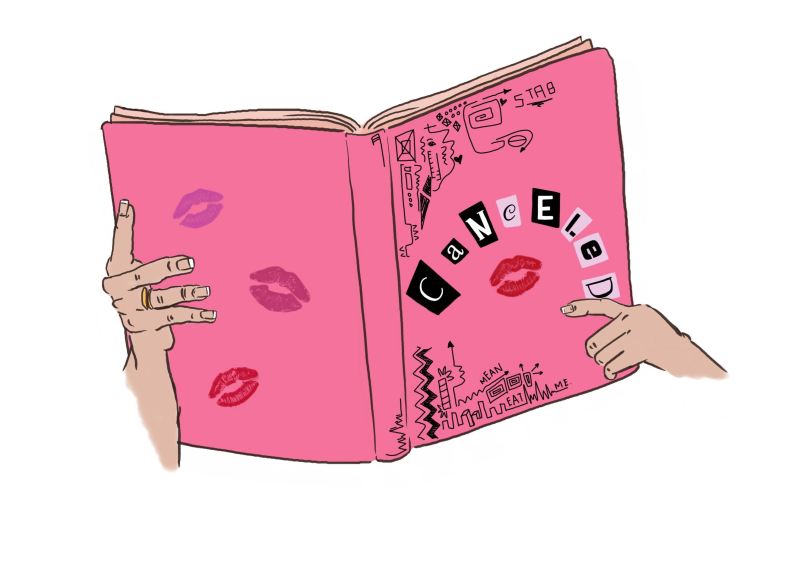
Social Media is great – no contesting that. It’s a tool for self-empowerment, it’s a way to express yourself, it’s a way to stay connected with your inner circle….all of that. But what happens when the noise of social media becomes so intense that it overpowers your life? Unfortunately, that’s what social media has become for many people today. There’s everything from the infamous cancel culture, fleeting news trends, and fake influencers, to the body dysmorphia faced mostly by women users…..the list goes on.

Being a social media user myself, I find it disturbing how petty and superficial our reliance on social media has become. Instead of developing our personalities through real life experiences, we have developed digital walls. Walls filled with ideas of perfectionism and unrealistic standards of life. I’m still mind blown that we once lived in a world where social media was just another piece of entertainment. Now, it seems to be a necessity to function in life. You are not cool unless you have social media. If you don’t, you are deemed a social outcast. Life is not a picture, nor can it be summarized in a bunch of captions. We are not one-dimensional people, yet we are glued to boxes with snippets of other people’s lives. We wake up first thing in the morning checking our notifications to see how many likes and comments we’ve garnered. This was me, and I know this is a lot of you out there too. But at the end of the day, does of any this matter? If we as a community rely on digital acceptance to function as human beings, then it’s really just disappointing. Our happiness should not be defined by social media, let alone a heart or like. Social media is harmful to us, especially to the younger generation.

We as a society rely on digital acceptance to function as human beings. Nowadays, we can’t take a photo without some sort of embellishment, the “right” angle, or even a filter. We’ve been convinced that anything less than perfect is a flaw, and thus unacceptable. Curves, lips, accomplishments, awards, etc. define beauty and success. If it’s not an already altered image of our self, it’s one of something as trivial as food. But for what? To make someone jealous? Does happiness really need to come through the acceptance of others with a single like on a post? Our intentions on posting may be harmless, but our mind set is so focused on the opinions of other people. When are we going to focus on ourselves? Doing things for ourselves, because of what we want and need regardless of what other people may think.

Social media also enables commoditizing social status via likes is detrimental to mental health.
It’s disheartening to see what social media has done to our society. Nothing feels genuine anymore. A picture is taken to be posted on Snapchat. A video to be shared on our story. An activity because it’s popular on Instagram. We read posts on a person’s Facebook and assume to know their whole life.

Today’s social publishing environment rewards sensationalized content, thereby damaging healthy relationships online. These platforms reward “engagement” by highlighting highly liked posts more prominently in newsfeeds, accustomizing social media users to attempting to post that sensationalized content themselves. This attention-seeking behavior has left people vulnerable to dangerous propaganda and influence campaigns.

Social media is not life, instead, at this point, it has evolved into a wall. What was once a seemingly harmless platform, then, has now evolved into a powerful machine that, due to confusing hate speech and privacy policies, has set dangerous precedents for the future of social media.

At the end of the day, we need to come to the realization that social media doesn’t define us, but it should represent who we are.

Screenshot_20200717-165445_Chrome
Social Media has turned into a breeding ground for toxicity.

Signs You Should Not Ignore

There are moments in many people’s life where out of nowhere we suddenly feel negative and sad, and emotionally vulnerable. We think that this is just momentary and as a result ignore these signs. When in fact we should really pay attention to small details as this could be a sign of something deeper. Some unresolved issues or a trauma which we have not had a closure with yet.

Now one might wonder what these signs are. Generally they would go unnoticed by others. We ourselves ignore them many a times. Let’s now see what are these mental illness signs are. They may be subtle, but they are important.

Before we proceed though, keep in mind that this article might be triggering. Please be careful.

1. Feelings of sadness or depression for more than 2 weeks. People generally causally use the term ‘depression’ to express their mood for the day. It is usually recommended not to do so. But if you feel sad, or worthless and helpless for more than two weeks this might be alarming. This means that the activities that once brought joy to your heart aren’t doing so anymore.

2. Extreme mood swings. When you randomly go from one extreme behaviour say, sadness to another extreme behaviour say, excitement for no reason in a very short time, that is when we say it’s a mood swing. When the frequency of this happening increases at an alarming high rate, one should pay attention and think about consulting a professional as it can be sign of bipolar disorder.

3. You worry and anxiety is out of control. Some times even though we have written in our examination well we feel extremely anxiousabout the results. So much so that even our body reacts by sweating too much or having a digestive issues or even catching the flu. This is can be a sign of an anxiety disorder. Some people feel anxious and are worried for literally no reason. This is also a sign of a mental illness. We face trouble sleeping, can’t relax easily and overthink all the time.

4. Self isolation. All of us need a little ‘me’ time. Time where we are alone and don’t have any social obligation to follow. But when someone suddenly takes a lot of this ‘me’ time, to the extent that they totally avoid talking to people, it is an alarming sign of mental illness. It is actually important to spend some time alone but when you start totally withdrawing yourself from everyone one must think of approaching a mental health professional.

5. Delusions and/or hallucinations. Delusions refer to false beliefs or perception that we hold about a particular thing or a person. Now this usually goes unnoticed by the person suffering from delusions. But it is noticeable by people around them. For example, one might think that someone tried to sabotage their school project by throwing it off the table when in reality they themselves by mistake pushed it over the table. It is important for the people around them to take this seriously if it happens more than once.

6. Difficulty in dealing with normal life situation. Most of the time people are capable enough of dealing with their normal lives. But when you are unable to deal with the most normal situation like driving (assuming you have been driving for a long time) this gets serious. This maybe a sign of a mental illness and one must consult a mental health professional.

7. Disturbed sleeping pattern. This means you are either sleeping too much or too little. We know that on an average a person should sleep for about 7 hours. Considering that you generally sleep this much, when you are suddenly not able to sleep at all or you are sleeping too much it can be a sign of depression or an anxiety disorder. This maybe a sign of bipolar disorder too. In such a case try to meditate and have a healthy balanced meal. But if this doesn’t help either, it’s best you reach out to a mental health professional.

8. Anger issues. You maybe a calm and peaceful person. But when you suddenly start losing our patience or are ticked off quicker than usual this can be a sign of mental illness. When someone suddenly start feeling angry for no reason and feel like it is practically impossible to control it is most probably warning you about your stress level and unresolved grief or trauma.

There are many more signs that we can look out for but these are the primary ones which are generally most noticeable in someone. If you know someone who has any similarity to the signs mentioned above, they must seek professional help. Remember, your mental health is most important and social stigma regarding mental health must be removed at all costs. Never shy away from asking for help and their is always a out of this. Self harm is not a solution. It is really much easier than that.

Is Cyberbullying Real?

Unless and until our society recognizes cyberbullying for what it is, the suffering of thousands of silent victims will continue.

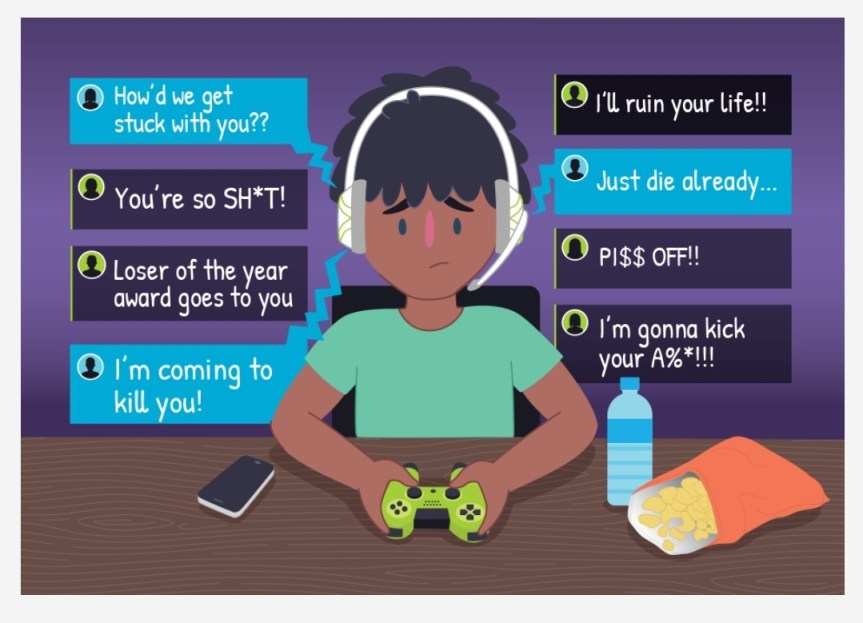
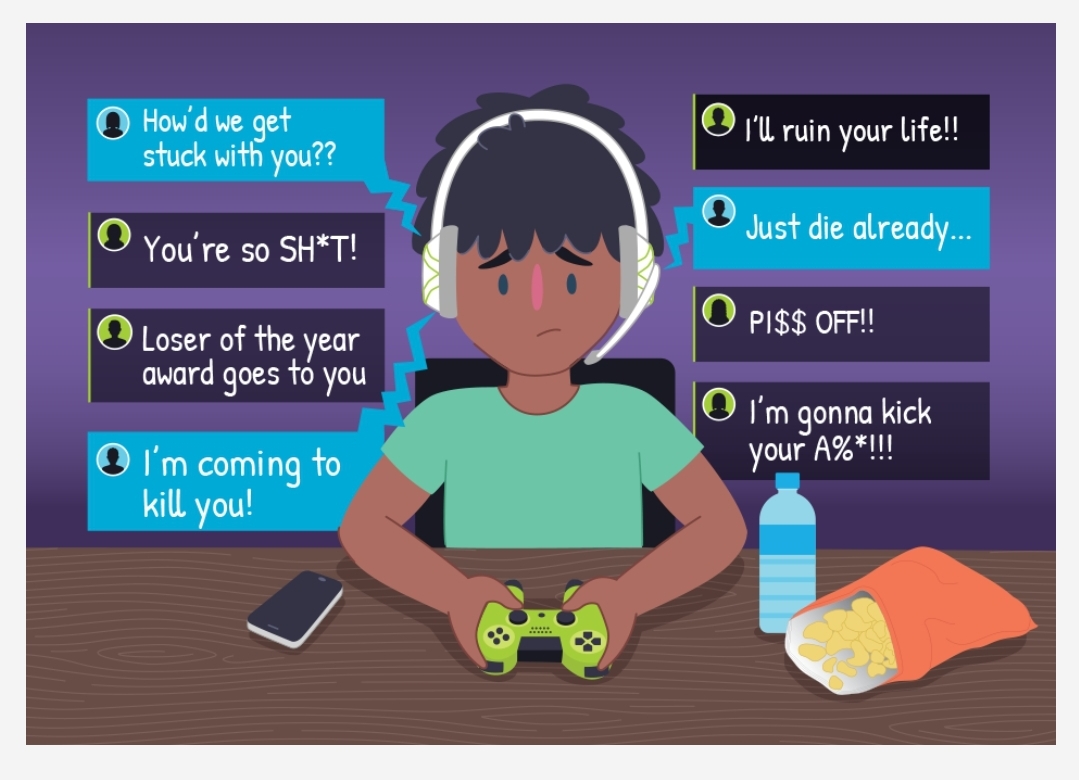
Facebook, Instagram and Twitter may be the main social networks used to keep in touch with friends, but, worryingly, they are also the main sites used for cyberbullying and internet trolling.

Cyberbullying has been emerging as a growing concern for quite some years now. With the power of anonymity, people can verbally attack others over social networking sites, most often going after students with low self-esteem or a low circle of friends. These are not exclusive targets, but there’s a general consensus that these are the groups that are most affected by cyberbullying. Anybody can be a victim- although it’s the young teens that are most vulnerable.

Cyberbullying can affect its victims in more ways than you can imagine. Besides bringing down self esteem, it alienates you from social crowds, and in some cases, it may push people to severe depression and suicide. And, no it’s not as simple as ‘just turning the computer off’ or ‘simply looking away’. Think of it this way: if someone hurts your feelings on the phone, is stepping away from the phone going to magically fix it? No, because the issue lies with the person and the interaction, not the phone itself. Similarly, cyberbullying doesn’t end when you turn off the computer. Our real lives are so intertwined with social networks now that if you poison someone’s network, it will poison his or her real life. Besides, asking the bullied victim to not use the computer or advising them to refrain from going online is a rather harsh demand for obvious reasons. The focus should be on fixing the bully issue, not putting the onus on the victims. It’s even worse when the bullies wear the shroud of anonymity. After all, how do you deal with a bully when you don’t even know who he or she is. Cyberbullying is visceral too. Bullies can go out of their way to post unflattering pictures of you or paint you in a negative light in ways that they can’t do face-to-face.

What’s worse it that there’s not much that can be done about it. Cyberbullying is still protected by freedom of speech, and as long as a bully isn’t crossing over into obvious libel territory, they can’t really be touched. Even then, if you had a libel case, it is costly, expensive, and hard to prove.

So, why do people cyberbully? Is it out of jealousy or hatred? Or is it just the law of the jungle that the strong bullies the weak?

It is a myth that the strong bully the weak. It is those who cannot handle their stress with grace, who attack the gentle natured. The most clear, and psychological aspect is that they feel tough behind a computer screen, and believe that anything they say won’t affect them negatively in the grand scheme. It is a sort of thought process that most people employ when cyberbullying. Think of it this way. How much more likely are you to argue or even insult someone online than you are to do in person? You would probably feel “safer” attacking someone online as opposed to in-person, and understandably so. They could do it to feel better about themselves. A lot of bullying cases, IRL or online are usually fed by insecurity or hatred towards oneself. Again, most bullies have some underlying problem which they believe can be quelled by being aggressive online. It’s also much easier since they don’t have to worry about other factors and feel they are safe from consequence. Lastly, they could just be looking for attention. It is evident that most cyberbullies attack others for the sake of attention, and the ability to instigate a response out of a victim.

So, if you ever encounter a cyberbully, Know that it’s not your fault and Don’t respond or retaliate. Sometimes a reaction is exactly what aggressors are looking for because they think it gives them power over you, and you don’t want to empower a bully. Further, you should save the evidence and Use available tech tools to either block the person and/or report the person to the service.

Lets never forget that words impact people emotionally, and how you feel emotionally affects how you are physically. Pulling someone down will never help you reach the top.

Screenshot_20200716-120846_Chrome
A keyboard away doesn’t make it okay.

Don’t Bully the Bully

End bullying before it ends another life.

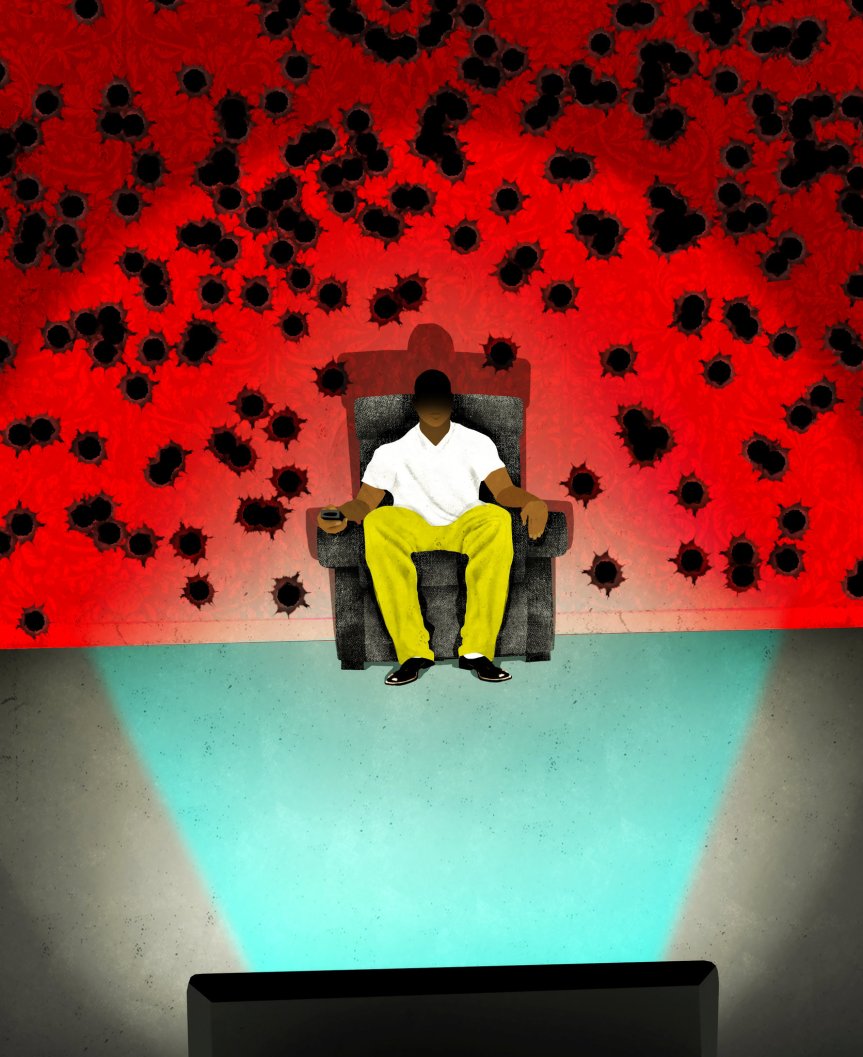
The news of tragic demise of Sushant Singh Rajput has shaken up the entire film industry to the core and people are filled with understandable grief and outrage, but unfortunately, the whole situation has turned ugly as the people who’re rightfully filled with anger have become so blinded by it that they think that there are no consequences to abusing on the internet and they think that their actions are justified. They want to take out their frustration, so where do they go? Of course, the Internet. On social media, the initial outpouring of grief and conversations about mental health rapidly gave way to conspiracy theories, allegations of dark plots, and soon enough, some “villains” had been zeroed in upon – recognisable faces on which to pin blame, and then mercilessly, relentlessly abuse.

So far, it’s Sushant’s close associates and the “star kids”, in the recent turn of events, have been bearing the brunt of all the outpouring rage. Of late, people have been invading Ankita Lokhande’s fiancé Vicky Jain’s Instagram handle with hate comments for him. While some asked Vicky to leave Ankita, some accused him of ruining Sushant and Ankita’s relationship. Vicky has even now limited the comments to his Instagram posts to avoid the negativity. Actress Sonam Kapoor Ahuja too has been receiving several hate messages where people have slammed her and wished death for her future children.

It’s high time that we realize that cyber bullying is a crime. It’s in a way ironical that Sushant Singh Rajput lost his life due to bullying, lookism and nepotism, but now we are doing the same thing. Bullying the bully won’t cut it. Tragic as it is, Rajput’s suicide only highlights the stress faced by those in Bollywood. But issues such as nepotism, insider-outsider biases, sexism, discrimination are also part of other industry. By blaming and shaming Karan Johar or other so- called “nepotists” like Bhatt, Ranveer Singh, Varun Dhawan among others, many on so social media seemed to lose the real focus of the discourse which should be on improving mental health awareness, preparedness and infrastructure to help people cope with stress in all environments.

Toxicity cannot be reduced with further toxicity and cyberbullying is not the best practice when the end-goal is improving mental health.

Sending death threats and calling people ugly is definitely not the way to pay tribute to his legacy. If you want to pay a tribute to SSR, then the best thing is to be kind and never fear from struggle. We should remember him for his acting and his talent. Sushant Singh Rajput was struggling with mental health. The worst way to disgrace his memory is to subject others to bullying and mental harassment. Nepotism in Bollywood is real and rampant. The industry is largely run by a few clans, promoting their kin at the cost of talented outsiders, who are robbed audience, which is robbed of quality content. All these problems need to be acknowledged and discussed. None of these problems can be solved by heaping abuses on individual actors and subjecting them to vile trolling. This incident has also caused a much-needed debate regarding India’s mental health awareness and preparedness.

Everyone you meet is fighting a battle that you know nothing about. Be kind. Always.

IS PROCRASTINATION POISONOUS TO HUMANS?

Did you ever involve yourself in something very trivial , when you had an important assignment submission or work? Did you ever regret not doing the job right?. If yes , then that’s what we call procrastination. Procrastination is the act of delaying or postponing something that needs to be accomplished within a given period […]

IS PROCRASTINATION POISONOUS TO HUMANS?

Self-love Culture: Is it Healthy?

Importance to the individual and the self is a phenomenon that came by as a product of modernity. With more emphasis on self-accomplishment and success becoming often defined as what you are able to make of yourself, talks about what is important to the self and how to understand our own personalities have increased. Nowadays we see a large number of people who propagate what is known as the ‘self-love’ culture. The self-love essentially prioritizes the well-being of the self and calls for the acceptance by each person of their own individuality.

woman in black shirt holding white flowers
Photo by Masha Raymers on Pexels.com

This movement which is increasingly seen in online spaces and urban settings have its benefits as well as adverse effects. We can say that it is extremely necessary, especially when we have a society that is constantly finding fault with us and setting standards that very few are able to stick to. Everyone who does not meet those standards, whether it be about success or beauty or relationships, are considered as failures. Many companies are designed in such a way that they prey on insecure individuals and make a profit by offering them products that supposedly will make them ‘enough’. However, this is a false hope. in this situation, it is absolutely crucial that we have counter-narratives that dispel these myths of success and encourage people to understand their own uniqueness. We should not buy into the ideas that are marketed for the sake of money nor give into traditions that place unwarranted emphasis on appearances and performances. This idea can even cause serious mental health issues when one is constantly seeking the approval of others to be worthy of love.

The problem with this self-love culture, however, is when it goes out of hand and becomes almost narcissistic. People tend to get obsessed with their own selves and will do anything they have to in order to secure what they think will bring them fulfillment. This is dangerous because such an individualistic outlook might lead them to take advantage of others and even cause them harm. It also makes them egoistical and unwilling to accept any criticism. They forget that loving oneself does not mean loving everything about one’s own self and being against all kinds of change or betterment. In fact, if one is loving, one should be willing to change or work towards bettering aspects of their personality which might be potentially hurting themselves or others. Anger issues is an example of an aspect like this.

Self-love is healthy as long as it doesn’t lapse into the other extreme of being obsessed and infatuated with everything about ourselves. Man being a social animal has to live in relationship with others and anything that hinders that will potentially hurt him as well. It is a tightrope walk of loving oneself and accepting our personalities, flaws and all, and being cocksure of our supremacy and infallibility as an individual. We should love ourselves enough to identify things that could potentially be hindering our growth as a person while also keeping in mind that it is not our performance in the world out there that defines our worth. If we are able to be secure in our identity thus, evolving and changing, and embracing it, then we will also be willing to take constructive criticism as well as discern between what should be taken seriously and what should not be.

Friendship And Physical Distancing

Introverts or extrovert, social interaction is a need for everyone. No one is liking the fact that physical distancing isn’t taking place on their terms.

Self Isolation, physical distancing and ‘Real Friends’

To give you a breakup: Some of my friends aren’t taking self-isolation very well. Some don’t seem to be minding it at all. And then there are those who, on the surface, seem to be taking it well, but in reality are carrying the heavy load of being ‘the strong friend’.

In April, a tweet by the handle @/tiamowry got viral, it read “During this pandemic, you’ll really see who your friends are. Who’s really checking up on you? Making sure you’re okay? Remember that when all this is over?”. It was deleted after the backlash, but the sheer number of likes, retweets and all the ‘yes omg, you’re right’ comments it received made it clear that a lot of us follow the same mentality that the tweet reflected. The mentality, in plain words, is being self-absorbed. Sure, all of us want to receive love and feel loved. We want constant reassurance from our friends and family that care about us.

However, to go ahead and suggest that a friend who is not constantly checking up on you isn’t a ‘real’ friend is parochial. This mentality implies that the pandemic is only affecting you and your mental health. It fails to acknowledge that it is also affecting everyone else, which includes your ‘real’ friends.

The last thing you should do is measure the strength of your friendships based on how often a friend is checking up on you as if they don’t have other things that could be worrying them or occupying their time during a pandemic.

Personally, I’ve been checking in on my friends, talking to them as much as I can. Doing as much listening as sharing. In no way am I doing this expecting everyone else to do the same for me. While saying this, it is also important that I mention the context- I’m in an extremely privileged position than most in this whole situation. For one, I have a roof over my head, three hot meals and not any financial burden to keep me worried about. I am someone who can be described as an ‘overly productive’ person during the pandemic. While on most day I like to be buried in work, but there are also days when everything starts to take a toll on me, on those days, sometimes I’m busy pretending to be strong for people even though I can hardly seem do anything for my own mental health. The other times I prioritise myself, something I learned the hard way.

Who SHOULD YOU CHECK UP ON?

There is no fixed answer to this question. It could be people with emotional/mental disorders, your current friends, old friends, new friends, family or even distant relatives. It is okay to do this as long as it doesn’t cost you your own peace of mind. You can not help anyone if you yourself are struggling. If you are over extending yourself it is okay to not check in with people you regularly check in with. You can keep yourself first without dissolving in guilt.

UNLEARNING

Like I mentioned before, I personally don’t take offence to whether or not a friend drops me a text or randomly video calls me. The pandemic isn’t just about me nor is it just about them. It is something that we are all collectively experiencing combined with our own personal struggles.

Take a quick moment to practice a more open and accommodating mindset.

Things I Wish Someone Told Me Before Graduating School

It’s again the time to apply for colleges while you’re just out of school. This stage in life always involves uncertainty and stress, and in addition COVID-19 has made it even more challenging for students. Here are some things I wish I knew before I got out of school-

It’s okay to not have everything figured out just yet

I’m sure you have heard all types of questions about your future- ranging from which college would you like to get into to what do you want to major in, from what type of career do you want after college to what’s your plan-B. If you know the answer to such questions then, congratulations you’re the lucky one. But It’s okay if you don’t know the answers to these right now. Most people don’t have their entire life figured out at age of 17/18. You’ll get there eventually. Try exploring one question at a time instead of stressing about all of these at once. Small steps, remember?

Don’t be afraid to get out of your comfort zone

This is probably one of the biggest things I had to learn after getting out of school. It’s so important that you learn to step out of your comfort zone while you’re in school. School offers you a very sheltered environment, but college doesn’t. You’ll have to make ways to achieve things you want and even go and extra mile for them. Inculcating this habit will benefit you in the long run. You surely don’t want to miss out on opportunities in college simply because you were afraid to take a risk.

You and your friends might grow apart

I was fortunate enough to experience my school friendships grow even stronger after leaving school. But this wan’t the case with most of the friend groups in my school batch. It is something that happens when you all jet off to different cities, when you meet new people who you connect with better or when you see that people who you were close to in school aren’t making as much effort to communicate as you are, which happens a lot. It’s highly unlikely for your entire friend group to end up in the same university or college after graduation or for them to make the same efforts they were making when you all were meeting each day. Either way, don’t be discouraged if you realise you’re not as close as you were in school.

ask for help

Don’t be afraid to ask for help. Whether it’s your pride or your fear holding you back, try and get over it. You don’t have to force yourself to struggle when you can ask the ones you trust for help. Whether it’s related to academics or your personal struggle adjusting to a new environment, reach out for help. Looking back you will wish you had asked for help when you had the chance to. This will make your life a lot more easier.

PRIORITIzE your health, physical and mental

Learn to prioritize your health and pay attention to what your body needs from you. Pulling all nighters day after day after day will destroy you and your focus. And No, you can’t survive the whole day at college on a diet of lays and coke forever. Don’t skip your meals. Your health is very important.

You don’t have to be the same person you were in high school

College is the perfect time to reinvent yourself. It’s the perfect time to unlearn concepts and opinions that you no longer agree with. It’s the perfect time to to better yourself educating yourself with issues that are revenant around you. University offers you an environment suitable to reinvent yourself, it offers you the space to give educated opinions and to find like minded people who you willingly want to interact with online school where you had to interact with your classmates only. If you were the brainiac that always had a secret passion for art, then join your college’s art club. If in school you were into sports but always appreciated and enjoyed debating, then join the debate club while participate in the sports activities of your choice. You don’t have to stay the same and that’s the beauty of it.

Pressure On Students To Do Well

Our extended families probably don’t wish us on our birthdays, don’t talk to us to ask about our general health from time to time. But they always call us the moment our results are declared. They pry on our very move after our results are out. And they always look out to see if their child is better than everyone else. Heck even our neighbors ring our doorbells to ask our parents about our result.

If you are a high achiever they would expect nothing less than admissions in the top universities. But if you are of any ‘other‘ category, you have to go through a kind of pressure that is worse than that of anything else. Your parents keep hovering over you to get good grades. Mostly because they want a bright future for you. Partly because they want to look proud infront of others. They want to boast about their child’s achievements. Sometimes, they worry a hundred times more than their child because they know what the society expects from them.

And because of all these multiple kinds of stress, the worst affected are the students. They study day and night, all year long. They study so much that sometimes they literally faint walking down their school halls. Because they too don’t want to disappoint their parents. They too, want their parents to boast about them in family and social gatherings. Why do we forget that ultimately they are just kids right now?!

Now with the current situation of Covid 19, I can’t imagine what these kids must be going through. Exams were cancelled. Students who were not very good at one subject were hoping that they would cover up in the upcoming exams. Now that the result is going to be declared soon, they are continuously on the edge. Some of them are sleeping too less or too much. Some of them are binge eating or not eating much. Their mental health is at stake and in grave danger.

So, to all those students who are going through a tough time, I would like to say that all this stress and anxiety is not worth it. Even if you don’t score as well as you expected, always remember that no matter what, your parents will never stop loving you. It all works out for the best in the end. If you score well, COODOES to you because you have made your life just a bit easier. Yes, just a little bit. Because this is just the beginning. Once you enter college it’s a whole different ball game. And once you get a job, forget about a comfortable social life.

Friends, it’s an endless cycle of struggle no matter how well you do. So take a break. Relax a little. Try to calm yourself down. Because that’s all you can do right now. What’s done is done. Start planning your timetable. For example, wake up, exercise a little, eat, spend a healthy time with your parents, call up your friends, play video games, watch movies and eat lots of food.

Because no matter what, at the end of the day you are going to make your parents proud. It’s a long way ahead. Don’t think too much about those prying relatives and neighbors. You are different. You are unique and you are special in your own way. Don’t forget that no one can steal this time from you. It’s yours. Develop a hobby and find out your zing. Live your life. Because if not now, then never!

How Can You Avoid Getting Sucked Into Toxic Behaviour Online

A lot of us, without even realising, engage in toxic and unhealthy behaviours online. I’ll shares some tips that I follow for avoiding getting sucked into such behaviours.

RECOGNISING TOXIC BEHAVIOUR ONLINE

People today are always on some form of social media all the time, whether it’s Facebook, Instagram, Snapchat, TikTok, Twitter, the list is never ending. Though using social media has its own benefits, I feel as though a lot of people get trapped in unhealthy behaviour patterns online without even knowing, as it isn’t something we talk about often.

step 1: Unfollow the ones you compare yourself to

It is a drastic step, but I really do believe that this helps you to stop comparing yourself to others online. If you compare yourself to people online and if you’ve been doing for a while, then it will be natural for you to compare yourself to the ones that you deem perfect. The best way to stop doing this, is to unfollow such accounts and fill your feed with accounts that are raw and make you feel good and real about yourself. After you have completed this step, you will begin to feel positive about yourself when you scroll your feed.

step 2: Make yourself Realise that it’s just one photo not their whole life

When you post a picture on any social media platform, do you tend to post when you’re having a bad day, or do you post it when you know you look your best? It’s more likely that you post a picture when you feel good about yourself, when you’re enjoying yourself, when you’re having fun and you then post the highlight of your day. When we look a someone’s picture, we automatically assume that you know everything about their lives, and that everything in their life is as perfect at their post. When you realise that every single person tends to post only the bits of the day that they love or enjoy, the sooner you’ll be able to ditch the unhealthy pattern and it will instantly make you feel good and much happierWhen you realise that every single person tends to post only those bits of their day that they love or enjoy, the sooner you’ll be able to ditch this unhealthy pattern and it will instantly make you feel good and much happier about where you are in life.

step 3: Set aside time to scroll

But I seem to have even 5 free minutes to myself I will pick up my phone and scrolled through my social media feed as if it is my daily newspaper. But this is something that I am working on and that something that you should aim to change too. The more you endlessly scroll through your social media feed, be it any platform, the more you will be out of touch with reality. That is why it is important to set aside some time for scrolling. In a long run this would allow you to focus throughout the day on things that you actually need to do as you know whenThat is why it is important to set aside some time for scrolling. In a long run this would allow you to focus throughout the day on things that you actually need to do as you know when you have allotted time to scroll.

Social Media can be a positive and an empowering place, but when/if it starts to have a negative impact on your mental health then something needs to change. Start making these small CHANGES today – you can do it

Depression?

The term ‘depression’ is not just extreme sadness due to a situation. Its more than that. Depression is just like a cancer it kills you every day from inside till it takes your life completely.

People still do not get what is actual depression. They often misuse the depression word and relate it with some kind of temporary sadness or pain.

A lot of people need to understand the sensitivity of the situation that depression is much more than sadness. It is not a temporary pain that will go away instantly but also not a lifetime pain. Depression is different to each and every people dealing with it.

Depression is real. It cannot be compared with the sadness you feel for some time. I have seen many people who don’t understand the real meaning of depression and any small pain or small thing that hurts them they give it a name called ‘depression.’ If anything happens its depression. No, its not.

So what is Depression?

Depression is a mood disorder that causes a persistent feeling of sadness and loss of interest. It affects your mental health, your daily activities, your relations with others, your work, and most important yourself. Depression makes you lose interest in everything and sometimes you may even feel as if life isn’t worth living.

Everyone talks about the symptoms, causes, treatments, for the depression but no one talks about the pain that depressed person actually feel or go through.

Its true that there is help and we can get help from our friends, our parents, psychiatrists, doing yoga,etc.

Depression makes you feel lost in the world where you just exist but start losing hopes and a way to live your life to the full extent. It lives inside you. You take your depression for several years with you. Its like we never heal from the depression and as soon as you receive a new pain , it adds to your lists of pains which you were trying to heal from.

The sadness, the pain, the void, its just there. The pain is real. It makes you feeling unwanted, unworthy all the time. Sometimes you can’t even explain to anyone or yourself about the pain you actually feel inside you. The day you let go of all the pain that day you will be a free soul.

But, honestly its very easy to say that or to make someone explain but the person going through with the depression only knows his or her pain. No one can understand their pain what they go through.

All I want to say is some people choose to get out of depression, they try but still maybe they are more comfortable now in that pain. They love that pain and no matter what it remains with them for a very long time. I do not say that its okay to be depressed. No, not at all. But, healing takes time.

We can’t heal in a one day. Talking to our loved ones will help us but some people choose to not let their hearts out.They feel that no one can understand what they feel. And yes, it is the truth. People really do not try to understand the feeling that the other person is going through. Some show them concern, some joke about it.

Depression is not a joke. It can happen to anyone at any time for any reason.

What should we do?

– Just try to understand the people who are depressed, support them as much as you can and sooner or later they would start living their life once again.

-Depression is real and it can be healed. Give some time.

-If you want to help depressed persons, first help your close ones who are actually dealing with it.

– Be there for them when they really need it.

– Listen more. Sometimes, they just need a shoulder to cry.

– Encourage them.

Some choose to seek help from psychiatrists. Some ain’t that comfortable to seek help from them. They find it more easier to share their pain with their closed ones. Some prefer to deal with it all alone.

Still depression or mental health for that matter is known as a taboo in our country. People do hesitate to talk about it openly. It is not a disorder or disease.

We can’t change everyone’s mindset but yes we can create a change for someone close to us who is depressed by offering help to them. Start by helping your near and dear ones or any person where you feel you can really help them.

“I alone cannot change the world, but I can cast a stone across the waters to create many ripples.” – Mother Teresa

Taking Care Of Your Mental Health In The Times Of COVID-19

Breathe In. Breathe Out.

Hey, It’s normal to feel stressed, nervous, anxious, drained or worried right now.

COVID-19 has most likely changed every aspect of your life- your family dynamics, your eqaution with your friends, your social life, your schooling, your career, your interests, your habits and even you. As you deal with uncertainity and all the emotions that tag along, it’s crucial that along with your physical health, you take care of your mental health as well. Here are some things that I religiously follow and have worked for me. I hope they work for you as well!

You deserve patience, so be patient with yourself

  • Allow others to help you when you’re struggling. Don’t be shy to ask for help from those you trust and the ones who care about you. Asking for help is not a sign of weakness, it’s a sign of strength, strength in acknowledging that you need help and that you’re willing to work towards a better self.
  • Remind yourself that “It will pass”. Like any other moment, any other journey, any other hurdle in life, this too shall pass, for better. We can’t control what’s happening around us, and with the lack of control and constant bugging of how uncertain the times are, it’s important to remind ourselves we are doing what we can and that’s enough for today.
  • Self-reflect and see what you feel is important to you right now.

Reach out

  • Call your close friends and share your feelings with each other. As simple as it sounds, it is therapeutic, and will leave you in a better state than before. This will help lift off the weight from your chest.
  • Arrange a video call with friends, seeing their faces is as close to physical proximity as you can get right now.
  • Text a friend you haven’t spoken to in a long time, rekindle with them. Maybe reminiscence the times you spent together, memorable moments that you shared, tell them something that remind you of them, go where the conversation takes you.

Take care of your body

  • Since there is very less to no physical activity. Make an active effort to do any form of exercise that you like: walking, jogging, skipping rope, dancing, Zumba, weights, yoga.
  • Get your quota of fresh air during the day. Inhale as much oxygen as you can.
  • Stick to a sleeping routine. In times that are so uncertain and unstable, having a routine can make you feel in control and calm about your surroundings. If you’re having trouble with sleeping, check my article- What should you do if you’re struggling to sleep in quarantine?
  • Practice deep breathing. Try 4-7-8 breathing if you feel anxious or stressed.

Eat your meals

  • Since most of us have erratic sleep schedules it’s no secret that we’re skipping out on meals. Try and eat three small meals each day.
  • Don’t starve yourself. It’s normal to not want to have full meals sometimes. Choose a trusted snack and rely on it whenever you feel hungry but not enough to have a meal.
  • Stay hydrated. Drink 4-6 cups of water daily to avoid dehydration. Warning signs of dehydration can include dizziness, weakness, low blood pressure, or urine that’s dark in color. (source: Harvard Medical School)

Why it’s okay to not be productive right now

Pandemic or not, your self worth is not proportional to your productivity

Like me, if social media has become your only out to boredom, you may have noticed conversations about the notions of ‘productivity’ rocketing. Whether it is your twitter mate updating you with their daily baking sessions or an Instagram friend showing off the pages and pages of work that they finished, or your family groups bombarding you with motivational posts about how to spend your free time, if you have any. There’s so much pressure right now to make the most of this ‘free’ time. It’s exhausting to even try to keep up. The rhetoric around productivity is so romanticised, glamorised and even glorified. However, every time I come across a reminder to be productive, I find myself thinking whether is it really a practical thing or can being productive everyday be a damaging to oneself?

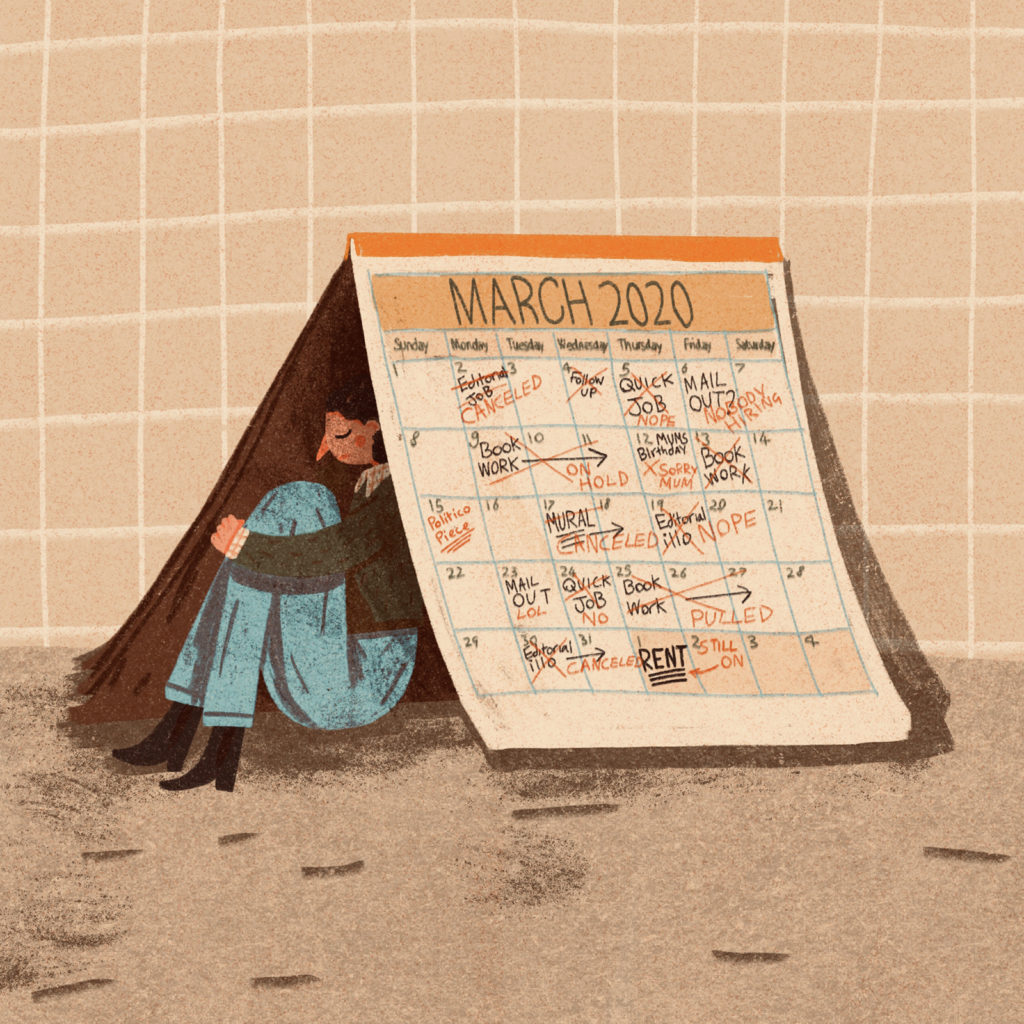
As a university student doing her under graduation, the increase of workload, since the onset of Coronavirus in India, hasn’t gone unnoticed- being given a task after task, a deadline after deadline took a toll on all students. At the start of lockdown, I had internals, I was constantly pulling all nighters revising for the tests, completing assignments and keeping up with the daily workload of the online lessons. In this sense, it felt like nothing even while being locked up in our homes. There was always something that had to be submitted, something that needed to be revised or something that I needed to start working on. I was trying, as was everyone, but oftentimes, it felt like all the efforts amounted to nothing in the end. The workload didn’t end with the end of the semester, having to take-up internships in the middle of a pandemic caused immeasurable pressure and paranoia. My work plans are disrupted by distractions, I find myself unknowingly overextending and the balance between work & free time has become invisible. Not to mention the stress is unavoidable, and I constantly find myself waking up wishing for the day to end.

Is there anything that can be done?

Last year, if someone told us that we would be trapped inside our homes in a state of quarantine due to a deadly pandemic, we would have laughed it off. So, at the time our worst and unimaginable fears are coming true, being plunged into uncertainty does not mean that we have to function effectively alongside it. And therefore, being productive is no longer as important as it was before.

It is of utmost importance to acknowledge that not everyone is fortunate enough to be able to use this situation to hone their skills, try new hobbies, explore new passions or build something unforgettable. In the midst of rapid unemployment, losing your loved ones, anxiety caused by separation from friends and family, isolation and loneliness, bad mental health is inevitable- and that’s okay. It’s okay not to be okay, it’s okay needing to take time off. It’s okay to listen to your body. Don’t be mad at yourself for not being able to deal with the situation as efficiently as your friend or your parent or your Instagram mutual. Getting out of the bed at a reasonable time is a task enough. Not putting off taking care of yourself and your needs is a task enough. Keeping up with your friends and checking up on them is a task enough. Spending time with your family is a task enough. Doing these tasks is no where near the perfect productive day I imagined – and it won’t be for a long while. I was meant to be getting excited about interning opportunities and travelling more and capturing more. Now when everything has gone south, the task of prioritising yourself is a rebellious act.

How can we change this mindset?

If you’re anything like me, university and work mean that I can not entirely ignore all my responsibilities in favour of self-care. Prioritising what you have to do is a good start to make sure you can do what needs to be done. Practice different methods or working. For me, sitting at my desk for more than 7 hours, staring at the laptop screen is quite overwhelming, mentally exhausting and doesn’t leave me feeling fulfilled. Taking breaks to perhaps watch an episode from a show that I’m currently hooked to or to mindlessly scroll on twitter ensures that I feel the balance.

This unsettling environment can be taxing. Forgive yourself for making mistakes.

It’s Okay To Be Sad

This one is for all the people out there who are energetic and quirky all the time. Who brightens up every room the moment they walk in. The ‘life of the party’ people!

Such kinds of people are generally thought of as happy-go-lucky. They make everyone laugh and keep them entertained. Now mind you, I am not saying that all of these people are sad and feel like they are responsible for entertaining the rest of us. But there are a bunch of people who feel like they have to make everyone laugh. Not all of them, but yes, there is definitely a section of homo-sapiens who think like that.

As a result, whenever anything sad and unfortunate happens to them, they suppress their emotions. They don’t give themselves a chance to process their lives’ events. They are with the thought process that if they become all sad, who is going to keep their friends and family entertained?

This one is also for those who think that they have to be strong for everyone else’s sake. Maybe the 18-year-old someone who has to work nonstop to feed the family. Someone who thinks that if they won’t take care of others, no one will. Someone who constantly feel the need to be happy. And there are many more. This one is for all of them.

It is extremely important for them to process emotions like everyone else. What I am trying to say is, it’s okay to be sad. It’s okay to cry, yell, and scream when you are feeling sad or betrayed. Basically expressing negative emotions (to some extent) is equally important for these people.


boss-fight-free-high-quality-stock-images-photos-photography-sad-man-1200x800


Now, we all have our ways of letting out this negative energy. Some of us, talk to their parents. Some of us call up a friend. Some of us listen to music. Some of us meditate. And some of us go in our shell to regain our energy. It is just as important how we express emotions as it is to deal with them. Because if we let it all inside of us, never giving these emotions a chance to let themselves out, then we are just burdening our minds with it. By showing emotions, we don’t become weak. By crying (it’s proven scientifically) we actually become a bit more emotionally strong.

Now, what I must stress on is that expressing your feelings and dealing with them are two separate things. Although they both are a part of the same process. Without expressing your emotions you can’t deal with them. If you can’t deal with them and still keep pretending that everything in your life is perfect, it will ultimately take a bad toll on your entire mental health. Suppressing is one of the defense mechanisms. Suppressing negative memories or emotions to pretend like everything is fine, is a way to defend your psyche from these same things you are suppressing. This defense mechanism is a very sketchy one. We should know when to let our emotions out and when to get them in control.

This process is difficult. Very difficult. It takes a lot of time, practice, and dedication to master this process. What aids us while we are working through the process is usually talking to someone you trust about your feelings and emotions. Talking about it is probably the most recommended way to deal with it. We have to learn how to talk. Even if you are the most introverted person in the world. Maybe start by writing your thoughts somewhere and then progress slowly towards talking to someone. It can be literally anyone. A friend, a parent, a sibling, or even an acquaintance. And if you still are unable to succeed at finding any of them trustworthy, talk to an expert. A psychologist. They are trained and put in all their life’s time into studying humans and their behavior. Plus they are bound to keep your story to themselves. So they can be your safe haven.

Someone wisely said, “Working through your problem is the only way to completely get rid of it.”

3 Things To Do When A Friend Opens Up About Their Mental Health Struggles

All of us want to be there for our friends when they need us. We want to help them and provide the support in the best way we know. Nonetheless, when a friend tells us about their current struggle with their mental health, it can be challenging to decide what to do or what to say. It is valid to be worried about not making the situation worse or upsetting them by saying the wrong thing at the wrong time. Here are 3 things that will help you support your friend in a way that’s healthy for the both of you.

Seamless pattern of a crowd of many different people profile heads. Vector background.

1. Listen to them

We are constantly hearing people talk which may lead us to think that listening is easy. However, the goal is to listen and not just hear, to be a good listener, you must be able to put all your thoughts and judgements to one side. Try not to interrupt them while they are taking or rush them into talking. It’s most ideal to have the conversation with them when you do not have something to do soon since this can add to the pressure which could make you want to rush the conversation and make them feel unheard or worse, abandoned. You should also try to stay calm, process the information as and when you receive it.

2. Ask them what they would like from you

Sometimes people just want to be seen, be heard, or just want to get something off their chest. Other times they simply want advice or maybe reassurance. Asking them what they would like from you will help you to support them in the better way and it will ensure they do not leave feeling unsatisfied or unheard. Try to be as honest, patient and kind as possible when responding to your them. In dealing with such situations, you can be most helpful by asking yourself these three questions: ‘What’s best for my friend?’. ‘What would I want the most from my friend if I was in this situation?’ and ‘How would I want to be treated had I been in the same situation?’

3. Check up on them

If you feel mentally stable enough and are able to, keep asking your friend how they are and how they feel, take the time out to candidly listen to what they have to say, keep repeating this cycle. Mental health problems don’t vanish after one conversation. These problems can also be incredibly isolating. Regualrly checking up on your friend is one step closer to making them feel a little less alone, visible and will also serve as a reminder that you care about them.

It is okay if you can’t always be there for the people you love and care about. We all have our own challenges and struggles. If you do not feel up to it, you should signpost them to others who they can talk to like some other close friend, a trusted family member or a mental health organisation that can professionally help.

What should you do if you’re struggling to sleep in quarantine?

For many of us, quarantine has disrupted our daily routines which have in turn affected our sleep patterns. Sleep is essential for the well being of our mental health, so if like me, you’re too struggling to sleep during this challenging time, I’ve picked out three things that have personally helped me to relax and fall asleep.

Avoid checking the news before sleeping

I’ve noticed that if I watch or read the news before I go to sleep, it leaves me with anxiety, feelings of uncertainty, and even stress which then keeps me awake thinking about what’s to come next. Getting your news updates in the morning is so much easier for me as it gives me the whole day to process what’s happening in the world around me instead of trying to process all the heavy information at night.

Create a routine for yourself

For a person who has not believed in maintaining strict routines, I discovered that creating a routine for yourself can help you by providing a structure and offer feelings of normality, which for me now has taken away a lot of the stress. In the time that is so uncertain and unstable, having a routine can make you feel in control and calm about your surroundings. Try and stick to the same sleep schedule at night so that you can follow your daily routine without any trouble.

have a relaxing bath before sleeping

Taking time out of your schedule to have a relaxing bath or shower can help you fall asleep faster and also improves the overall quality of sleep. The cooling down of your body helps build a strong urge to sleep which can send you into a deeper sleep. This is something that has undoubtedly helped with my sleep struggles over the past month.

acknowledge and accept the change

At this time it is very difficult to not feel anxious about what the future holds and what’s to come. It’s human to feel worried about yourself and the ones you love and care about and it is also normal for there to be a change in the sleeping and eating patterns to feel more comfortable. But if you feel like you’re losing control of things around you, take a deep breath in and remember that this will not last forever.

Lets Defeat Insta-Anxiety

The new common question that pops up in everyone’s mind is- How do we move past our anxieties and insecurities so we can grow our personally on social media?

1. Unfollow your celebrities

This can be hard, and it can even take a long time, especially if, like me, you follow hundreds of celebrities alone. It can be hard to break from the habit of constantly checking what your favourite celeb is doing or wearing but for the sake of your mental health you need to make this move.

You can easily find any ground breaking news of your favourite in the on sites like BuzzFeed or Cosmopolitan. 

2. Follow real and actual people

Instead of page 3 celebrities, follow more people who are like you, real people. If you are a writer, follow more writers. If you are a local blogger owner, follow other local bloggers. If you are an illustrator, follow more illustrators. If you just appreciate any form of art, be it singing, dancing, spoken poetry, follow more such artists. You’ll come to realise that everyone has flaws, no one is really perfect. On the upside, you’ll be lifting other talented people up, and they will be lifting you up. All will grow together. 

3. Do your own photoshoot

Take your phone and a tripod if you have one, and just walk around your house. Wander around and see what catches your eye, maybe it’s a well-lit corner in your house that you never noticed before or a tiny window with a sky view. Snap a picture or ten, then move onto the next thing. 

Look for the beauty in yourself and the world around you. Be raw, you don’t always have to filter your photos, you are beautiful as you are. Be as much or as less artistic you want to be while taking pictures. The more photos you take, the better you’ll get at it, don’t give up.

4. Try scheduling your posts

For me, scheduling Instagram posts saves me from a lot of fear. It’s less scary when you aren’t actively thinking about posting something. 

With Facebook’s Creator Studio, you can easily schedule your Instagram posts. For this all you need is a Facebook page and an Instagram page that are connected to each other, that’s it, it is that easy!

No more third-party scheduling apps that don’t even automatically post the images. Now, you can plan everything out in advance, schedule it for whenever you want, sit back and (try to) relax.

How Social Media Affects Your Self Awareness

I recently acquainted myself with a new term called ‘Smiling Depression’. This term is unusually used for people who appear happy on the outside but are in actual fact not happy. Because of social media, this condition has become more prevalent in social media users. 

We all know of Maslow’s hierarchy of our basic needs- self actualisation is one of the needs we have as an individual and we are constantly making efforts to craft this image that is better than the current one. We try so much that this becomes almost obsessive. As humans, we are set up with the basic instincts of self-improvement and we always somehow seem to know how to identify someone who we feel is ahead of us. This creates the an endless loop of ‘smiling depression’. 

Social media is an easy and dreamy out to reality. To create the image of a person who simply wakes up fresh and rejuvenated face, has time for make-up and heads out stylish without even trying to be, but how many of us can testify it as that easy? Very few if any. We all need to realise that regardless of the amount of time we spend creating these social identities online, we are only simple humans. Others are just better at creating and embracing these images and facades on social media.

So next time you are scrolling through your Instagram or Facebook feed, realise these points before you slip into ‘smiling depression’:

  1. You need a time-out from social media, maybe even for the rest of the day. People are not who they are online, their image on social media is highly curated and does not always represent reality. 
  2. Confront the negative thoughts and ask yourself  ‘Where are they coming from?’. Remind yourself we all wear a mask online, no one is as happy as they appear to be on social media. Everyone has problems, even celebrities. 
  3. If social media is your boredom killer where you scroll endlessly the whole day, logout and grab a book or download gaming app or do something that you like and you’re good at. Be more productive in real life and less online.

13 THINGS I WISH I’D KNOWN AT THE AGE OF 13

  1. You don’t need to be peer pressured to do anything you aren’t comfortable with.
  2. Being trendy doesn’t count for much and instead, it is  feeling confident in whatever you wore that mattered.
  3. How important it is to stand up for people you love.
  4. To do what scares you. If you think you wrote a great story, stand up and read it in class! You’ll never know unless you try it.
  5. Don’t ghost. Remember that friend you’ve drifted apart from? Don’t blow her off, instead ask her what’s going on with you two from her perspective. Confrontation is what will get you through Senior School.
  6. Saving Journals. Just look back on how you saw the world at 12, and I bet you’ll have a day full of laughter.
  7. Significant others will always come in time. Right now it might seem like everyone you know is having the time of their lives with their best friend and that your life would improve if a best friend was by your side. But take it from me- Concentrate on good friendships first, if a closer relationship comes out of it, great and even if it doesn’t, then connections that will last won’t make you regret anything.
  8. You’re going to change so much, you might as well accept it now. You might be thinking that who you are now is who you will always be. But the world is ever changing and you’re going to grow for better. So, go with it!
  9. You don’t have to always fit in. Let individuality take the wheel.
  10. Don’t tolerate white lies and don’t tell white lies. The more you get caught up in lies and made-up stories, the more difficult it will be to survive in school. 
  11. Go (slightly) nuts! This is your opportunity in life to be slightly stupid, to be the life of the party. Because it turns out being slightly nuts in board classes isn’t as socially acceptable.
  12. For the love of everything, please stop making a puff. You’ll realise this when you look back at your pictures and cry for 5 days straight. Also hair straight down or pulled back is a hundred times better.
  13. You create the definition of happiness. Not your fake friends. Not your classmates and not even the society.

Heads- I Stay, Tails- I go

Advice for making taxing decisions about friendships, and not by tossing a coin on google.

Most of us, at some point in our lives, have been in friendship limbo- a weird patch of uncertainty where we don’t know whether to stay in or leave a friendship. There are several catalysts that can lead us to limbo land, and the tricky part is that the only way to get out of it is to make an ultimate decision. Like Marilla Cuthbert choosing whether to keep Anne or not, you may feel torn about the outcomes of two completely contrasting options. Unlike Marilla’s initial quick judgement, I definitely recommend taking just enough time decide what you want to do. 

If you’re unsure about your text move, don’t stress about it. Take the time you need. Are friendship breakups terrible? yes, but so are unhealthy and toxic friendships. Whether your friendship limbo is a result of the ever changing dynamics, circumstances or conflicts, it is worth gaining some perspective on the friendship and checking in with yourself by asking questions like these: 

  1. Does this friendship bring joy to me? 
  2. Does this person make my life better by being in it? 
  3. Is this person treating me with love and respect?

For now, with these three questions in mind, let’s get going.

Should I stay if the circumstances are bad?

Sometimes, the choice to end or continue a friendship only comes down to the current circumstances. Maybe your friend is moving to a different city. Maybe you’re both in the same city but are attending different schools or colleges. Either way, most friendships begin only because the circumstances were favourable. You were both in the same class, shared the same interests, watched the same movie & shows or maybe you were neighbours since childhood. But, circumstances change, it’s life as we know it.

To help you bring clarity to the situation, you can start by referring to the questions above. If this is friendship makes you feel valued and loved, you have your answer. However, there are more things to think about as well, like how much energy and time you’re willing to spend on maintaining a long-distance friendship. Long-distance friendships are no doubt tough, but can also be insanely rewarding. 

Make an effort to call and text them at least once a week. Be understanding during the weeks where you don’t talk to each other. From time zone differences to hectic schedules, remind yourself that you won’t be able to be in contact with each other every day. This can at times seem like a lot, if you’re not cool with putting this much effort into maintaining your friendship, then that is completely alright. Similarly, if the friend hasn’t been particularly a positive person in your life, think about the new circumstances as a sign to let go of the friendship. 

We’re growing apart, but should I stay?

When you realize that things just aren’t the same. There, again, can be several catalysts behind this realization: the negative comments that they passed and later laughed them off but you can’t stop thinking about, an unsatisfying meetup or stumbling upon something they said before that now deeply hurts you. The important part here is that you can’t get this new information out of your head, you can’t undercut the blatant incompatibility and are now left to decide which move to make next. Do you give the friendship a shot and try to save it, or do you let it slip away? How do you know that this isn’t just a phase? 

Growing apart is distressing, perplexing and often destabilizing, which can often cause resentment and anger. However, feelings like these are negative, we want to avoid holding onto them and instead, advocate open and honest conversations with the friend. If, after referring to the above questions, you conclude that your friendship with your friend is worth recovering and working upon, here are some things to keep in mind:

  • Growth is usually a good thing, people changing usually means they’re growing into the person they want, like or are supposed to be.
  • This could just be a phase. Often in long friendships, there are periods you don’t talk for days and days, even weeks, because your personalities were, point-blank, totally incompatible and contrasting. But only temporarily. 
  • Before you make the decision to cut off a close friend, consider openly communicating with them. Call them and say, “Hey, I feel like we’re not on the same page right now. This friendship matters a lot to me and I want to maintain it, even if that means it’s going to be different.”

When I think about changing relationships, I think about this quote that I found on tumblr- “People change and forget to tell each other.” Just like you’re not trying to hurt anyone when you change, no one else is intentionally trying to hurt you when they change. We have to let the people we love and care about do what’s best for them, and sometimes, that means letting them do their own thing while we do ours!

Three Ways To Prevent Virtual Communication Fatigue While Successfully Working From Home

During the coronavirus-led lockdown, the concept of ‘workplace burnout’ has taken an all-new meaning, with employees having to deal with virtual communication fatigue. 

While working from home has been a sought-after perk for some employees, we have entered a new reality of frequent online meetings and an inability to disconnect from the job, which has created a new stressor, known as communication fatigue. With the coronavirus pandemic, companies across the globe opted for the work from home model to ensure the safety of their employees, and to follow the social distancing guidelines. 

As time went by, several organisations realised the benefits that work-from-home provides both for businesses as well as their employees. Many large organisations such as Facebook are considering permanent work from home policy for their employees. Twitter has already implemented work-from-home measures during the lockdown and declared it a success. 

In this context, the concept of ‘workplace burnout’ has taken an all-new meaning, with employees having to deal with virtual communication fatigue. Today, with the array of communication and conferencing platforms available, employees are continuously connected virtually with their colleagues, seniors, clients and more. 

This communication overload is resulting in employees feeling drained at the end of the day with virtual communication fatigue being one of the most talked-about topics today. With this perspective in mind, below are four ways to identify and prevent virtual communication fatigue: 

  1. Virtual time off 

As the work-from-home trend continues, many people within the workforce are noticing the blurred lines between work and home since they both are part of the same space today. It can be tempting for employees to schedule back-to-back meetings to get through the day quicker, but doing so can cause signs of fatigue to appear earlier than expected. While most of us take the support of caffeine to look and sound fresh, it can only do so much when up against consistent virtual meetings. To combat virtual communication fatigue that comes with a busy virtual meeting schedule, the cure is as simple as scheduling breaks during the day. Taking breaks at regular intervals will help you to recharge before the next call appointment and allow for extra planning so the next interaction goes as effortlessly as the last one. And your break doesn’t have to involve sitting at your home workstation. An effective break should include moving around to get your blood flowing and introduce a change of scenery. Talk to your family members, quickly whip up a salad or just take a power nap. 

  • Set a deadline and create an itinerary for every video call 

We’ve all been there before: one co-worker begins the meeting by asking how everyone is doing, what’s their current favourite thing to do and before you know it, half an hour is gone by without any discussion of the true topic at hand. As much as everyone loves to hear all about each other’s lockdown life; too much talk can cause meetings to go longer than planned. To prevent this, create an itinerary ahead of time. By scheduling minutes and other talking points, your meetings will run effortlessly while also limiting everyone’s virtual time to prevent communication fatigue. 

  • Block your front camera view 

One of the biggest contributors to video call fatigue is keeping the self-view feature open during meetings – no matter how wonderful your look turned out. As humans, we’re not used to staring at ourselves constantly. Regardless of how you feel about your quarantine look, self-view induces a feeling of anxiety; worried about how we look, sound, or what’s going on with the lighting and background. To prevent any sort of communication fatigue from view yourself, simply turn off the camera feature whenever you’re not presenting or not expected to talk. If you’re worried about how you’ll look on camera, open up your camera app before a meeting to make any last-minute adjustments, test the lighting, or make a quick location change. If closing the self-view isn’t possible on the platform you’re using, you can block it off by taping a piece of paper.

5 Ways to Stay Fit During Quarantine

Now that you are spending less or no time outside your homes, it’s more important than ever to prioritize your physical health. Staying active can boost your mood and even reduce stress. How can you stay on top of fitness game without going to your local gym, doing weights and following your fitness instructors? Online challenges and videos, home fitness apps, creative at home swaps and the use of the safe outdoors, if available, can help.

Here are some ways to stay active while also staying home: 

Switch up your running/walking routines

Whether you’re a runner, jogger or a walker, try and keep your routine fun by setting a schedule and small goals. If you’re a walker, map out a different route of your house for each week of exercise or just stay in one place. If you’re a runner and have access to a terrace or a garden, select a goal such as run a 4 KM and set up a training schedule to achieve your goals, and with time you can increase up a notch and challenge yourself.

Check out this 1 Mile walk at home- https://www.youtube.com/watch?v=njeZ29umqVE

Try a bodyweight workout

You don’t have to grab weights to achieve a good workout. You can still feel the burn if you do a low impact cardio, bodyweight strength or a high intensity interval training circuit. 

Check out this 30-minute body weight workout from Greatist- https://greatist.com/fitness/no-gym-bodyweight-workout-infographic#1

Try a fitness challenge on YouTube

Want to build core strength? Tone your abs? Tone your arms? Find a fitness challenge on YouTube that targets the zone you want to work on. You’ll be surprised by how much stronger you can become in a week or more.

Check out these videos out

7 day workout challenge by Carly Rowena: https://www.youtube.com/watch?v=6ixZnsKTErE
6 minute arm workout by The Uma Show: https://www.youtube.com/watch?v=qpLA1tPwjXA

20 Min Total Core Workout (Equipment Free Ab Workout): https://www.youtube.com/watch?v=-b2lNLq3EaA

Try a Fitness Website

Active.com offers 30-day fitness challenges including push-up challenges, ab challenges and more.

Greatist offers many detailed work out blogs- from workout plans for beginners to expert routines. For a start, check these out- 

https://greatist.com/health/back-workouts-at-home

https://greatist.com/health/calisthenics

https://greatist.com/fitness/chest-workout-at-home

Follow along with a studio

Many studios offer video easy to follow tutorials, try Zumba tutorials for high energy workouts or go with cardio dance workouts. You can also try free tutorials with simple, at-home equipment swaps like bags of flour or books instead of weights. Although these workouts will be different than the gym sessions that you’re used to, it’s an interesting way to break a sweat and re-connect with your own body.

Check out Keaira LaShae’s  dance workouts-

10 Minute Cardio Dance Abs Workout: https://www.youtube.com/watch?v=XTH5saFBDqA

Cardio Fitness Party Workout: https://www.youtube.com/watch?v=fhUP6FQj3t4

Check out the link to read more on at-home equipment swaps-

8 Household Items That Double as Workout Equipment for Your Makeshift Home Gym: https://www.realsimple.com/health/fitness-exercise/fitness-equipment-alternatives-home

TRYST WITH YOUR BRAIN

Strategies to help you stop spiralling this quarantine season

The COVID-19 pandemic can stressful and incredibly frightening for some people. It may involve fear and anxiety about the disease which can be overwhelming and cause strong emotions in both children and adults. This is why it is crucial to take care of your mental health now more than ever. 

The following four solutions can be enacted in different ways, depending on your surroundings. 

METHOD ONE: Writing

Writing about the problems you are facing is a good start to getting through them. Start maintaining a journal or if you’re more electronically inclined even a new note on your phone would do. When you’re faced with a problem, write how it makes you feel, its ideal outcome, even if that counts as the worst-case scenario, and then write the possible solutions.

Don’t worry about maintaining grammar. When sentences start pouring out of you, your brain works to solve whatever’s going on. Later you might want to read it over and see if any possible solutions jump out at you; or don’t, if this act of writing was enough to make you feel better about the situation. 

PLAN OF ACTION:

When you’re alone: You might find it helpful to write a letter about everything you are feeling about the situation addressed to the person who caused it. If the problem is caused by a situation or circumstance rather than a person, address it to your feelings, the Universe, some higher power you believe in or even to yourself. The11 simple act of writing can lend you an immense amount of clarity and/or relief.

With your family around: Since everyone’s at home and on their phones, all the time, pulling yours out and pretending to send a text won’t draw any extra attention. Breathe and vent in your notes. Nobody will be the wiser.

METHOD TWO: Making Art 

Maybe after you start writing you immediately start self-editing and judging your own feelings. You might even be worried that if you put your feelings down on paper, someone could find and read them, and you will have to suffer the consequences. Instead, how about you grab magazines, crayons, paints, brushes, a sketchbook, or whatever medium you want to go for, and start making something tangible? Art offers a safer means of expression for people concerned with invasions of privacy by parents or relatives.

 PLAN OF ACTION:

When you’re alone: Go for it! Get every craft supply you own out of that cupboard and make a giant mess. You could start a long-term project that you can get back to whenever you’re not feeling great. You don’t have to be Van Gogh to benefit from this. The mere act of scribbling all over a piece of newspaper and going letting loose will make you feel a little better.

When you feel unsure of yourself, temporarily refocus your attention on making something that helps you resurface, like picking up a pen and scrawling aimless loops on a piece of paper. Your version doesn’t have to revolve around drawing or painting: Try paper-maché or do origami. 

With your family around: Acknowledging where you are and what you’re doing can quickly recenter you if you start to panic or dissociate. Draw the street you live in; the person at the table next to you; the contents of your fridge. Focusing largely on the details of what’s physically real can take you away from intangible feelings and can bring you back into yourself. If your family is artsy too, try craft tutorials or paint some old jeans- anything that distracting enough and gets your creative juices moving.

METHOD THREE: Talk It Out

Sometimes spiralling makes you want to shut every thought you’ve ever had away in a safe, never to be seen or heard from again. Sometimes when you’re already doubting your judgment, sharing your thoughts with someone, even a trusted friend, can feel icky. But if you’re capable of surpassing those feelings, even temporarily, sharing your thoughts and experiences with someone you trust— whether that’s your someone in your girl gang, parent, sibling or a twitter pal—can result in having fresh set of themes to help you work on what’s bothering you.

If your problems involve experiencing violence at home or you’ve been abused or assaulted, the legally mandated 

lockdown can present unprecedented challenges that are unfamiliar territory. If you are experiencing abuse, reaching out to the ones you trust is crucial. 

PLAN OF ACTION:

When you’re alone: Just start talking out loud. Try and suspend your feelings- with just enough practice, you can become your companion this way. This act of speaking your problems instead of bottling them can give you some cognitive distance from the issues bothering you. When you spill what’s on your mind in a space where no one around is there to hear you, it can lead to major realizations. 

With your family around: The only thing harder than opening up is figuring out who you can trust. If I have a family member whom I love dearly but who makes sure to tell me everyone else’s gossip, maybe they aren’t quite the right confidante when you’re already feeling unstable. The kind of confidante you’re looking for here is someone who will sit and listen, then ask the right questions-what have you tried so far? what do you need? how can I help?

If you aren’t up for face-to-face contact with a family member nor a call to your trusted friend, but you still want to talk to someone about facing any mental health issue due to the ongoing lockdown, call one of the many helplines designed to support people experiencing unpleasant feelings. The government has launched a crisis hotline which can be reached at 08046110007

METHOD FOUR: Exercise

If you need a temporary distraction to process your thoughts and feelings but an art project and poetry just isn’t doing it for you, try going for a long walk on your terrace, flailing around your bedroom wildly to ‘Starboy’, giving Pilates a shot or even practicing headstands until your hair permanently stands on end? 

Physical activity will reduce stress and fatigue and eventually help you to feel more alert. It doesn’t matter what kind of exercise you do- it’s all about moving your body in ways that feel great and work for you. It doesn’t have to be a giant commitment. Just set small goals.

PLAN OF ACTION:

When you’re alone: This is a good time to experiment and find out what kind of physical activity works best for you. You could follow stress-reducing yoga videos, a zillion of which can be found on YouTube, If you’re feeling something which is more high-energy, the internet is filled with amazing dance tutorials available as well. Working out with your confidante over video call can also be an effective alternative, you’ll both get to blow off some steam and clear your heads, which is a great place to be in if you want to ask for advice or even spill your guts.

With your family around: Pick an activity that the family likes, yoga or hula hooping- the family favourites or any other and get going! High-energy activities like planks, push-ups, squats can be difficult, but rewarding, and doing it with another person makes it into a fun challenge

Union health ministry toll-free helpline for mental health issues: 08046110007