

The radio, newspaper, and TV. All are mediums of communication. They all were invented to enlighten human beings. Every creation has its purpose So they have. It’s true that for daily information we depend on this medium but does this products assisting us. Or it’s just deception. The reality is they are a tool in hands of cooperation to earn profit. And increase their business. Providing information is just a business. we get only that much information that cooperates giants want. As half of the media is dominated by politicians and giant cooperates. That influences their credibility. Hard to believe but this is a bitter truth. this invention acts like a tool in those hand who have money. consumerism is created intentionally through media in the form of advertisement. Advertisement creates a desire in human beings. This desire resulted in more consumption thus adding profit to the big giants. That shows how people are betrayed. Today content is created in such a way that doesn’t make a person intellectual. But merely a passive consumer.
In this gamble and deception, along with corporate giants, politicians are also involved. They use the mediums to propagate their message. Thus people consider the propagated message as truth. Start believing it and thus there ideology and perspective got to change. These tactics can be a hindrance to the democracy and sovereignty of the country. The enlightenment that media promise somehow vanishes because of the huge enrollment of money. People themself need to enlighten. By becoming the active audience by actively analyzing, understanding every message. We can be saved from this mass deception through the mass medium. Just we need to be vigilant in our approach whenever we encounter a media product. we need to understand the hidden motive behind that content. We need to know who is the creator of the content. And what purpose the content fulfills for the creator. Thus content by media or medium of communication needs to be observed. To better understand them. To save ourselves from enlightenment as mass deception.
Category: Interview
An interview is essentially a structured conversation where one participant asks questions, and the other provides answers. In common parlance, the word “interview” refers to a one-on-one conversation between an interviewer and an interviewee.
“Online Education and Digital Divide”

Recently our Union minister Prakash Javadekar said in the Lok Sabha, “No child was deprived of online education during the pandemic as the government had taken several steps in that direction.” Such a statement is nothing but a mere lie when we encounter reality.
A majority of Indian school students do not have the means or privilege for online education. Some face network and technical glitches. Some face electricity problem. The non-availability of gadgets is another problem. Accessible and compulsory education has always been a challenge in India. Right to education is something that is written merely on paper not exist in the real world. The pandemic broadened the pre-existing gap making online education a commodity of sheer privilege. During the lockdown, thousands of students have suffered due to the digital divide. Taking the example of the Indian state with the highest literacy rate, Kerala witnessed numerous cases where students took away their lives due to a lack of accessibility to digital tools. sometimes Internet accessibility act as a hindrance.
the obvious failure of the system and concerned authorities witnessed from the devastating act of suicide by the students. Not just that; for powering devices, access to electricity is crucial for digital education. Some states such as Bihar and Uttar Pradesh have a severe problem with electricity.
In the rural area, the houses received electricity for less than 12 hours a day. most of India’s population lives in villages where only 15% of rural households have access to internet services. Whereas in urban areas, it’s 42%. Moreover, India witnessed a spike in unemployment during the lockdown affecting the livelihood of millions.
Especially compulsion of electronic gadgets for online education became a severe problem as in rural areas subsistence is very difficult. Not every rural person could afford expensive gadgets. In most households with a meager income, eating three meals a day was not guaranteed, purchasing costly internet plans or devices cost them a fortune. From mortgaging assets to cutting off on essential household expenses, families have done it all to make online education a possibility when the government schemes failed to reach the neediest.
Although several NGOs, social groups, and individuals rose to link this digital gap by sponsoring smartphones and laptops, the negligence by the authorities can’t be overlooked. An ordinary Indian citizen expects its government is to at least acknowledge the problem. After all, how will one solve the problem if one does not acknowledge it!
Nepotism in today’s Bollywood
we are living in a feudal society, but still, nepotism permeates everyone. however, the film industry is trapped in nepotism.
Nepotism can be defined as an act of using power or position in an unethical manner to get the dear ones in the same field. It not only exists in business but also in the Bollywood industry. this topic has been raised many times in the Bollywood industry and unfortunately having a negative impact rather than a positive impact on the lives of celebrities. Before the incident of Sushant Singh Rajput, this topic was not discussed seriously. But after his death, Bollywood was trapped in nepotism and many celebrities were interrogated. many celebrities talked about nepotism openly. Some talked positively and some in a negative manner.
Kangana Ranaut came into the industry in 2006 with the movie Gangster. She was the one to raise this topic negatively as she labelled filmmaker Karan Johar as the flag bearer of nepotism in the show Koffee with Karan. Due to this, she gained prominence. She also called Tapsee Panu and Swara Bhaser outsider. After Sushant Singh Rajput death many actors were trolled and questioned on nepotism . Because of this, many celebrities also lost fan following.
We often say that some star kids are excellent actors and done their work very well. But we said some not all because some star kids don’t take their work seriously and due to the lack of seriousness films get flopped. Nothing is wrong with exercising power based on one’s family background/star kids, but at least chance should be given to the newcomers or outsiders and even to those who don’t have any connections or godfather in Bollywood. So, they can make their names and show their talent to the public.
Real Happiness
Today in this consumerist world, the actual meaning and definition of happiness got changed. Earlier the happiness lies within the relations between the people. But growing industrialization and materialistic nature. Change the meaning of happiness for common people. today’s happiness is not the smile of the people. But the luxury became the source of joy and happiness. Social media and the internet managed to make human beings individualistic. Relation and ties among the masses are just a matter of messages. The real happiness now lies in materials and luxuries. Humans want more and more. The never-ending demand and grief of the human have wiped the concept of the real happiness. It changed its meaning. It alters its values. The early tradition, rituals, and get together don’t matter anymore. Today rituals are just a matter of fun. People don’t believe in meeting with each other. Humans today happy in the isolation. With all the materialistic objects and comfort. But if material and luxury are not happiness. Then what is happiness? It is something that we get after seeing someone happy. It is something we get after helping someone else. By looking after anyone else than yourself. It means keeping aside the greed and doing generous work. It means sidelining your sorrow, ego for someone else happiness. The sad fact is that today humans do not look after happiness. Now the happiness doesn’t matter to humans. Human is lost somewhere in the consumerist world. And so human happiness also lost.
The need of the time is to look for the real happiness. To realize that real happiness comes when you do something for someone else. Materialistic things can give you comfort and luxurious life. But it can’t give you that warmth that happiness that feeling that a real human being can give you. Human being need to understand his/her role as a human And need to look after other people to there dearest one. So that along with happiness ,humanity can be saved.
Biden Rules begins
President Joe Biden has baited office in a country looking prominently different than it did on his forefather’s inauguration Day.Covid19 has killed more than 4,00,000 Americans, with a big part of socio-economic toll impute to federal Mismanagement, The US has also renounced its role as leader of the free world, squabbled with democratic allies while keeping authority populist’s everywhere, snicker at its post-truth misadventures. This month’s attack on the capital represented the domestic broadcast has poisoned the polity. In the short, the new administration has its work cut out invent correctives at multiple levels. It is a mighty challenge. But democracy is hypothetical on elections making a difference.
The promise of a new dawn is both powerful and credible. The diversity, temperance, and experience of the incoming cabinet strongly suggest that they have a good measure of the problems at hand, and the ambition to attempt solutions one clear aspirational target is 100 million doses of covid19 vaccines n the first 100 days. Then, Janet L Yellen, who will be the new treasury secretary and America’s top economic diplomat, has verbalized as priorities both addressing the economic damage of the pandemic at home and repairing relationships with various allies abroad to take on china’s (illegal, unfair and abusive practices) collectively.
After the vain of institutions and Clutter or flailing seen in the Trump years, it will indeed take solid international cooperation to revitalize the global rules-based order. The incoming secretary of state Antony Blinking has shown a welcome so be saying,(We’ll engage the world, not as it was, but as it is)Pragmatically speaking, rebukes on human rights issues for India may be part and parcel of Washington’ liberal festival alongside the many Indian and American in the Biden Team.
Women empowerment
Amongst covid-19 pandemic, 2021 budget has potential to increase women labor force participation up to 2 percent this year.
Nirmala Sitaraman, Minister of finance, the government of
India shared that budget 2021 has the potential to increase the employment of
women. COVID-19 pandemic had disproportionately impacted women
forcing them to drop out of the workforce. The women labor force participation according to the center comes down from 25 percent to 21 percent, due to job loss by women. In urban India only 12 out of every 100 still employed are women, a shocking
statistic, down from the already low 18. No doubt the covid 19 pandemics have resulted in many challenges such as pay disparities and expensive child care is an economic downturn that hit women workers measurably harder than men. Whenever the economy shrinks people lose jobs, then look for another job but women aren’t sitting it out so much as being pushed out by disproportionate job loss,
lack of child care, pay disparities, and lack of public policy to support working women. women with children are much more likely to report that working from home has hurt their productivity and affected their careers .there are three drivers of increased women labor force participation 1.Jobs that exist in locations where the woman has family support.2) Contemporary and new skilling (like digital marketing, for instance) that allows for marketability3) A government mandate that enables small businesses to be rewarded for hiring more women. The allowance of women to work in all shifts is a move towards reducing the gender divide brought in by COVID-19. This will help industries such as IT and BPO in Special Economic Zone’s, manufacturing companies in sectors such as Textiles, Pharma- as well as large organizations with a national presence. The textile industry, one of India’s ancient industries that employ the largest numbers of women has received a big stimulus with the announcement of seven Textile Parks. The third aspect which would allow small businesses to be rewarded for hiring women has not seen any pull in any of the budgets presented in the few last years. Large organizations in metropolitan cities have already bought the business case for both genders that led to women’s employment being enhanced. It is the 2 and 3 level metropolitan cities and towns that need the influence of involvement. And this is where there is a large population of women – educated, career-seeking, and yet unable to earn
reasonable money due to the non-availability of jobs matching their aspirations. As per data, young women in the age group of 20-24 across urban locales, are more interested in being employed than similar-aged women in rural India. As such, this is a very important talent pool, waiting to be engaged. The BPO and micro-enterprises in these locations will require a stimulus to engage women more proactively. Had the budget addressed this, by providing a bit small, yet encouraging a sum of money to employers of women, India would have seen a jump in women’s job creation to almost double-digit increases, which will have a multiplier effect on the economy.
WhatsApp’s new privacy policy.
Identifiable living individual and includes names, email Ids, ID
card numbers, physical and IP addresses. Data is the large
collection of information that is stored in a computer or on a
network. Data is collected and handled by entities called data
fiduciaries. The processing of this data has become an
important source of profits for big corporations. Companies,
governments, and political parties find it valuable because
they can use it to find the most convincing ways to advertise
online. The physical attributes of data where data is stored,
where it is sent, where it is turned into something useful are
called data flows.
WhatsApp’s decision to delay the update of its privacy policy,
following a backlash from its users, is an implicit
acknowledgement of the increasing role played by
perceptions about privacy in the continued well-being of a
popular service. Problems for the Facebook-owned app
started earlier this January when it announced an update to
its terms of service and privacy policy, according to which users would no longer be able to opt out of sharing data with
Facebook.
February 8 was kept as the deadline for the new terms to be
accepted. This triggered a mass withdrawal from WhatsApp,
the likes of which it has never encountered, not even in the
aftermath of the Cambridge Analytical scandal, which did
bring a lot of bad press to its parent, or when the messaging
app’s co-founders called it quits a few years ago. The
WhatsApp policy update has clearly spooked many users,
who, concerned about their privacy getting compromised,
have shifted to alternative platforms such as Signal and
Telegram. WhatsApp has asked for data which contains your account
information such as Phone number, the name attached to
the account, the profile photo you currently have for
WhatsApp, the device you are using, the time when you have
been online, all your contacts, all group names of which you
are a part of, the device type, the IP address, device build
number, device manufacturer, details of the web/desktop
version and the platform which is used for WhatsApp Web,
your Status.
It also has the exact time when you set the
current profile photo and the current status message. The list
includes all contacts with whom you would have chatted on
WhatsApp, and only the mobile phone numbers are
mentioned. It also has your settings for the app, including the
privacy settings for Last Seen, Profile Photo, About Privacy
and Status Privacy. It also includes a list of the all numbers
you have blocked and whether you have Read Receipt on or
off. The issue has once again raised questions about what
constitutes legitimate uses of data and how businesses,
governments and political parties can and cannot use data .A
White Paper produced by a government-appointed
committee, headed by retired judge B.N. Srikrishna , which is
formulating a national data protection law for India and its people to safeguard there interest.
Media mere puppet for politicians and giant corporations.
Media, the fourth pillar of democracy act like a puppet in front of politicians lately. With many toolkits, cases highlight. Excessive paid news reporting during Election. Exhibits how media is governed by political parties. Today massive advertisement by the political parties shows the nexus between media and political parties. Showcase their close economic connections. Media also alleged for running agenda and propaganda for their allied politician during elections. Which hampered the credibility of the media. Many journalists appear to favor their alleged political parties openly in their text, report, and debate. Even the questions asked in interviews are biased one sustaining only one side or party. Its been observed during elections, this funding increase manifold. To dominate media investment partnership, toolkit, gifts, privileges are some tactics that political parties used without coming into suspicion. Such malpractice is performed by political parties to bribe the Media. To use it as a weapon during election campaigns. witnessed in the way media seems divided in their message. They showcase only the positive side of their party, their positive work shaping the idea and ideology of the common people. Media runs agenda and propaganda to deviate audience from the basic problem of the society and shift towards the direction their funders want. media propagates only those messages there supportive parties want. Maximum paid news reports are linked with political parties. Many politician leaders names are highlighted and summoned by the election campaign. But lack of proof and unwillingness lead to no fruitful result. And no severe action was taken place. Now media listen and write only what there investor wants. The incomplete, partial and biased information shared by the news channel became a hindrance for the sovereignty of the country. Severe actions and identification of the political parties became the necessity of time. the large number of manipulation on the part of the media shows that it has lost the credibility and trust that people have in them prior. Passive audience are consuming the biased or manufactured message that can hamper the autonomy and sovereignty of the country. Nowadays, Beside politicians many private institutions and cooperate giants seem to invest their large chunks in the media .For example, Mukesh Ambani, his family and friends owned INX Media recently. That show media became a puppet now.
The importance of self awareness in one’s life

What is self awareness?
In layman terms, self awareness can be defined as ability to see one’s own self in a third person perspective
To be self-aware means to have knowledge of
- how others perceive you
- how you affect people around you
- how and why you react to certain situations in certain ways
There are three major types of awareness that we as SELVES can have:
- Exteriorceptive Awareness
- Vision – the awareness of a visual field of view outside of our own bodies and all that we can recognize as either familiar or unfamiliar gestalten. Sight uses a projection area in the posterior brain where the interpretations of images are made.
- Hearing – the awareness of vibrations, words, noise, music and random sounds that come through our ears in recognizable or unrecognizable ways. Hearing has a computation apparatus as does sight .
- Smell – the most primitive awareness type that goes straight to the rhinencephalon without any projection area in between. It is the most precise of the senses in that a single smell of spices can make us feel like we are sitting in the kitchen while mommy puts these spices in the container on burning stove. Smell gives us the true sense of taste of food because taste is quite limited in the variety it can contemplate.
- Taste – taste only has 5 of all gustatory sensations…..Sweet, Salt, Sour, Bitter, Umami (a flavor which appears in meats)
- Touch – not only everything we touch with our fingers give us tactile awareness but also skin along with its derivatives is the largest organ of our body. Everything that impacts or grazes or rests against the skin must be sensed to be aware of our immediate surroundings.
- Interiorceptive Awareness:
- All thinking and contemplation
- All paranoid thoughts and anxiety
- All beliefs, in including Religion, faith, all the way to Atheism, are parts of mental awareness
- Subconscious drivers about which we have almost none awareness, have to be brought into awareness through psychotherapy or hypnotherapy.
- Fantasies/imaginations
- Imagined things regarding others or about a sensory input (like a creak in the floor boards is a ghost). Imagining is the most frequent thing our brain does and the problem with it is that we accept it for truth many times. Right now, I’m imagining that you wanted all this detail but that could just be my tendency to give as much information as possible.
- Proprioceptive Awareness
- The primary feelings are:
- Love
- Sadness
- Anger
- Fear
- Guilt
- All subdermal and physical pain is found in proprioceptive awareness.
- All pleasure is also a part of proprioceptive awareness.
- The primary feelings are:
Now these basic zones of awareness relates to SELF AWARENESS only and not to the larger awareness of the self in the contextual surroundings or how we perceive (theoretically imagine others) or correctly perceive physiognomic Isomorphism.
What self awareness is not and what is?
Self-awareness should not be confused with permanent enlightenment or a state of bliss (and similar terms suggestive of having an out of body experience on either ones or on constant basis).
Being self-aware is the result of intense observation and contemplation of both the self and the environment.
Sustaining the self-aware state while being aware of one’s environment is a necessity. A certain state of remoteness from both the state of self-awareness and the awareness of one’s environment is part of the training gone through by those wishing to learn self-awareness
Intuition in its truest is a congruent internal awareness in all three zones about a person or action in any environment. When People say, “Think about it!” But what it this really means is, “Fantasize and imagine what is happening.” When People say, “Trust your senses!!” which basically means, “Even if it is an optical illusion you should head toward that oasis.” also, when people say, “Trust your feelings!!!” But this means, “No matter how paranoid or delusional or untrusting or suspicious or jealous or hurt you are feeling that your feelings are 100% trustworthy.” But, trusting our feelings during a fight is something we rarely can do. Sense is awareness. But, INTUITION is the King of Self Awareness.
Is being self aware good
The deeper the understanding and comprehension, the higher the level of self awareness. Everyone can be at different stages at different ages and in different environments. As long as one keeps asking questions and searching for answers he/she will always move up levels. But being aware ,going up levels is not always a good thing.
Sometimes self awareness can bring about great sadness and dissatisfaction. The realization of our petty pleasures, our materialistic desires, our lonely existence, our hypocrisies, our illusory , our beliefs and all those things that one should not realize, contemplate, can be very dangerous and do not always lead to happy endings.
Ignorance is as necessary as self awareness but self awareness is more important than not being ignorant and unaware.

- Call for Applications: Track2Training Recognition Award for Emerging Scholar – 2026
- Track2Training Research Grant 2026 Supporting Sustainable Development Research
- Inmates in Nigeria’s Southeast Correctional Facilities can be Rehabilitated and Reintegrated Using Igbo Dialects
- Track2Training Open Access Publication Support Grant
- Detailed Specifications: Roads and Pathways
What are soft skills? Why are they important?

Soft skills are as important as hard skills. They can be developed over time and improved with practice. They determine how you fit into a professional environment and how you handle your professional life. But the question is what are soft skills?
What are soft skills?
Soft skills are interpersonal skills and include communications skills, listening skill, time management and empathy. They are the intangible and non-technical skills. Other names that are used for soft skills are transferable skills and professional skills. They are less about your education and qualifications and more about your personality.
They are especially important for the recruitment process for graduates. A professional environment asks for more transferable skills and potential over professional experience.
Why are soft skills important?
All the jobs require employees to interact with people and build relations. An employee or person may be technically well aware but may fail to build relations and interact. This where soft skills come in handy and this is why they are important. Employers don’t expect you to have all the knowledge and experience of the job you are initially applying for. They look for a person who can grow, learn and adapt.
They are not only crucial while dealing with clients but they are also in how you interact within your own office with your colleagues. Soft skills help a person to co-exist in teams and organization as a whole.
Types of soft skills
These are the soft skills that one must possess and continuously strive to improve.
- Communication:
An able communicator must be able to adjust their tone and style according to their environment. Communication is the most basic and essential soft skill. Communication skills help in fostering relationships that are respectful and productive. Communication skills not only include verbal communication but written communication as well.
- Leadership:
A good leader should have the ability to inspire others and lead them to success. To have leadership qualities you need not be appointed as a leader. You can show leadership qualities even when you are not managing things directly.
- Responsibility:
Responsibility is a highly-valued soft skill. Being responsible means taking ownership of your own goals as well as the company as a whole. A responsible person shows the following qualities:
- Trustworthiness
- Discipline
- Motivation
- Consciousness
- Accountability
- Teamwork:
Teamwork is a quality that is formed with the help of a set of other soft skills. A person who believes in teamwork shows leadership, collaboration and good communication skills. A good team player respects other opinions and works towards a collective goal rather than personal goals.
- Problem-solving:
Problem-solving is the technique of finding a solution quickly and effectively. Here also teamwork comes in play. Because not all problems can be solved alone. Therefore, working as a team and solving problems irrespective of difference of opinion and finding a common ground is very essential. An employee should grow and learn with every problem he solves and adapt accordingly.
These are 5 of the many soft skills that one must-have. Other soft skills are:
- Decisiveness
- Ability to work under pressure
- Time management
- Flexibility
- Critical thinking
- Work ethic
You can improve your soft skills by reflecting on yourself and making adequate changes and observing others. You can also look for courses online which can help you improve your soft skills. And lastly, practice is the ultimate key to honing your soft skills.
How to Make a Presentable Resume
Job selection depends on many things like education, experience, body language and a good resume. Most people do not know how to make a strong resume. So here is an article explaining this.

A resume is a document created and used by a person to present their background, skills, and accomplishments. It is a documentary record of your contact details, educational qualifications, skills and employment history in a nutshell. As it establishes your details, it should be appealing and convincing. A good resume increases your chances to get employed in a company. To build an attractive resume, you need to find out the best resume format. Resume format plays a vital role while creating a job-winning resume. You should be well-versed about the kind of resume format that suits your current situation.
Importance of a resume
Employers use resumes to get a deeper understanding of candidate skills, strengths and experience. Your resume should reflect achievements, awards, education, experience and any other outstanding accomplishments that align with your career path and goals. Here are some reasons why you need a resume to get your next job. An effective resume:
- Outlines your relevant skills and experience. A well-structured resume clearly highlights your most attractive skills and experience to potential employers.
- Displays the benefits you offer employers. More importantly, it should tell employers what you bring to the company along with skills and experience.
- Grabs the attention of employers. Usually the top quarter of the resume is considered the most attention-grabbing. Make sure to include important summarized information in this part.
- Matches your skills to the position’s need. One way to do this is by making sure your resume contains the same keywords found in the job description.
- Can lead to an interview with the employer You’ll likely need to conduct at least one interview to be offered a position, so having a resume is essential.
What does a Resume Contain?
- Name with contact Information- Your postal address, email and mobile number.
- Objective: It appears just below the contact information. It briefly describes the type of job you want and also skills that make you the best candidate for the job. The skill related keywords should be present in this section e.g. – Software languages known etc.
- Education- All your educational qualifications, the most recent first.
- Work Experience-the company, job title and responsibilities etc. with most current experience on top.
- Achievements, Training & Certifications if any
- Other Skills, Interests and Hobbies.
Tips for Writing a Resume:
- First write down all the details that you want to include in your resume.
- Select a format
- Be simple, brief and straight
- Do not lie about your qualifications and experience
- Sometimes resumes are filtered by keywords, so see that the words associated with the job are included.
- Don’t leave unexplained gaps in the timeline. (a year off etc. )
- Do not copy someone else’s Resume
- Ask your friend or a teacher to review the content. Revise and Edit.
- Avoid fancy fonts and colours
- Print it on one side of the sheet only. Limit it to one page if possible, else 4 pages should be the maximum.
- Use A4 size paper to write the resume.
Interview Skills
We all are nervous while attending an interview, even with full preparations our hands start sweating. Here are some tips to ace an interview and get your dream job.

Whether you are applying for an entry-level position or a senior role, you will probably have an interview with a potential employer before receiving a job offer. Since a job interview gives you a chance to show your qualifications and make a good impression on the hiring team, you should know to perform at your best during this important meeting. It is not only your qualifications and experience which matters but also your positive attitude, your ability to work in teams and positive aspirations which matters in the selection process. 85% of the interviews are decided in the first two/three minutes. So be careful about your handshake, eye contact, body language, and right posture.There are 4P’s to have success in an interview – Prepare, Practice, Present, and Participate.
You should prepare for the interview by learning about the significance of body language. Also you should improve your public speaking and linguistic skills. Also, learn as much as you can about the company and the position.You should practice the frequently asked questions by the interviewer (I have listed those questions in the end of the article). You should also practice some puzzles because in many interviews one or more IQ based questions are asked. And finally participate in the interview; express your views confidently and don’t be afraid to share your opinions to them. On the day of the interview carefully consider what to wear and how to present yourself professionally. Here are some do’s and don’ts during an interview:
Dos
Organize all the required material neatly.
Have a good dress sense, groom well.
Reach the place of interview well in advance.
Be cheerful and expressive.
Have positive body posture.
Be honest, sincere and simple in your talk.
Be assertive and confident.
Be polite in answering.
Leave a good last impression by saying “thank you.”
Replace the chair and other things in the original place when you leave the room.
Don’ts
Don’t search for anything in an interview as it creates a bad impression.
Don’t fold arms or close palms.
Don’t drag the chair and make a noise.
Don’t be rigid. Don’t cross your legs.
Don’t tell lies.
Don’t be very submissive or aggressive.
Don’t argue, confront, challenge.
Don’t feel frustrated if you lose the interview.
Tips for great body language
Your body language expresses your confidence. Here are some tips for a great body language.
1. Smile
2. Don’t cross your arms
3. Make good eye contact
4. Keep your body pointed vertically towards your guest
5. Nod at key points
6. Stand up straight
Frequently asked questions:
1. Introduce yourself.
2. What are your strengths and weaknesses?
3. Can you tell something about our company?
4. Why should we hire you?
5. Are you willing to relocate/travel?
6. What was the toughest decision you ever had to make?
7. Would you lie for the company?
8. On a 10 point scale how do you rate yourself in communication skills?
9. How long would you like to work for us if we hire you?
10. How much salary do you expect from us?
HOW TO ACE YOUR INTERVIEW

Those who have given an interview in the past know how difficult it can be sometimes to ace an interview. Not everyone is born with confidence to impress someone with the first sentence they say. Some people like myself need a little help, research and motivation to prepare for the big moment.
I will be sharing some of the tips that I came across on the internet, below. They might prove beneficial to you as well to pass your interview with flying colours.
- Basic Research:
The first step is to run in-depth research about the organisation/ company you are applying to. You should be well aware of their background, values and culture. You should also know the latest news about the company. Checking the company’s social media accounts can also give you a lot of information. The interviewer might ask you questions like “when was the company formed?” or “how many divisions does the company have?”. You should be prepared with the answers to such questions. It will reflect your seriousness for the job.
- Review the job description:
Read the job description again and see if you are fit for the job or not. See if your experience, skills and accomplishments are enough for the job. You can also look into the hiring process of the company and prepare accordingly. Also, look into your qualifications and goals. You can tell the interviewer how your goals align with the company’s goals.
- Practice answering questions:
Some of the questions are asked in almost all the interviews. Like “tell us about yourself” is the most common question. You should be well prepared for such questions. Don’t memorize the answers but do make bullet points. It will help you remember answers better and make it look natural. Your main focus should be on the company, the position, qualifications and goals. Stand in front of the mirror and practice these questions until your nervousness goes away.
- Crisp dressing:
Believe it or not but dressing up nice gives you a different kind of confidence. You should always wear something formal or something that’s not inappropriate. It makes a good first impression on the interviewer as you walk in. Also, make sure your footwear is neat and clean. The best pick for an interview is usually pants and a formal shirt or a business suit.
- Prepare questions to ask:
The best way to show your interest in the job is to ask the interviewer a few questions here and there. You can also reevaluate if the company’s goals, working environment and company culture are right for you. Prepare some questions that dig deeper into the company. This will show that you have done your homework.
- Keep the CV and other documents organised:
Keep your documents ready beforehand. This will not create chaos on the day of the interview. Also, keeping these things ready will reduce your burden a little and make you less nervous. A well-organised file speaks a lot about your work ethics to your interviewer.
- Pay attention to your soft skills:
Your posture, handshake and attentiveness say a lot about your personality. Do not get aggressive during the interview and keep your volume low. Fiddling with your pen, tie or file can show the lack of confidence. Walk with confidence and try not to fiddle. Lastly, maintain eye-contact and a smile. It reflects a positive nature.
Keeping in mind these few tips can make a huge difference during your interview. In the end, all that actually matters is your confidence.
National Education Policy after 2020
The Union Cabinet on Wednesday approved the new National Education Policy (NEP) with an aim to introduce several changes in the Indian education system – from the school to college level. A single regulator for higher education institutions, multiple entries and exit options in degree courses, discontinuation of MPhil programs, low stakes board exams, common entrance exams for universities are among the highlights of the policy. Speaking to reporters, Union minister Prakash Javadekar said the changes are important as the policy, which was framed in 1986 and revised in 1992, had not been revised since then.

The NEP 2020 aims at making “India a global knowledge superpower”.The new academic session will begin in September-October – the delay is due to the unprecedented coronavirus disease (Covid-19) outbreak – and the government aims to introduce the policy before the new session kicks in. The committee — which suggested changes in the education system under the NEP — was headed by former ISRO chief K Kasturirangan. The NEP was drafted in 1986 and updated in 1992. The NEP was part of the election manifesto of the ruling Bhartiya Janta Party (BJP) ahead of the 2014 elections.
Either one of the mother tongue or the local/regional language will be the medium of instruction up to Class 5 in all schools, the government said Wednesday while launching the National Education Policy 2020. Among other changes in the revision of the NEP, last done over three decades ago, is the extension of the right to education to cover all children between three and 18 years of age. The policy also proposes vocational education, with internships, for students from Class 6, a change to the 10+2 schooling structure, and a four-year bachelor’s program. NEP 2020 will bring two crores, out-of-school children, back into the mainstream, the government has claimed. Prime Minister Narendra Modi tweeted saying he “wholeheartedly welcomed” the policy, which he called a “long due and much-awaited reform in the education sector”.
In a bid to ramp up digital learning, a National Educational Technology Forum (NETF) would be created. “E-courses will be developed in eight regional languages initially and virtual labs will be developed,” Amit Khare, Higher Education Secretary, said. Top 100 foreign colleges will be allowed to set-up campuses in India. According to the HRD Ministry document, listing salient features of policy, “such (foreign) universities will be given special dispensation regarding regulatory, governance, and content norms on par with other autonomous institutions of India.” Standalone Higher Education Institutes and professional education institutes will be evolved into multi-disciplinary education. “There are over 45,000 affiliated colleges in our country. Under Graded Autonomy, Academic, Administrative and Financial Autonomy will be given to colleges, on the basis of the status of their accreditation,” he further said.

Here are the important points in the National Education Policy 2020:
- The mother tongue or local or regional language is to be the medium of instruction in all schools up to Class 5 (preferably till Class 8 and beyond), according to the policy. Under the NEP 2020, Sanskrit will be offered at all levels and foreign languages from the secondary school level.
- The 10+2 structure has been replaced with 5+3+3+4, consisting of 12 years of school and three of Anganwadi or pre-school. This will be split as follows: a foundational stage (ages three and eight), three years of pre-primary (ages eight to 11), a preparatory stage (ages 11 to 14), and a secondary stage (ages 14 to 18). According to the government, the revised structure will “bring hitherto uncovered age group of three to six years, recognized globally as a crucial stage for the development of mental faculties, under school curriculum”.
- Instead of exams being held every year, school students will sit only for three – at Classes 3, 5, and 8. Assessment in other years will shift to a “regular and formative” style that is more “competency-based, promotes learning and development, and tests higher-order skills, such as analysis, critical thinking and conceptual clarity”.
- Board exams will continue to be held for Classes 10 and 12 but even these will be re-designed with “holistic development” as the aim. Standards for this will be established by a new national assessment center – PARAKH (Performance Assessment, Review, and Analysis of Knowledge for Holistic Development).
- The policy, the government has said, aims at reducing the curriculum load of students and allowing them to become more “multi-disciplinary” and “multi-lingual”. There will be no rigid separation between arts and sciences, between curricular and extra-curricular activities and between vocational and academic stream, the government said.
- To that end, the policy also proposes that higher education institutions like the IITs (Indian Institute of Technology) move towards “holistic education” by 2040 with greater inclusion of arts and humanities subjects for students studying science subjects, and vice versa.
- The NEP 2020 proposes a four-year undergraduate program with multiple exit options to give students flexibility. A multi-disciplinary bachelor’s degree will be awarded after completing four years of study. Students exiting after two years will get a diploma and those leaving after 12 months will have studied a vocational/professional course. MPhil (Master of Philosophy) courses are to be discontinued.
- A Higher Education Council of India (HECI) will be set up to regulate higher education; the focus will be on institutions that have 3,000 or more students. Among the council’s goals is to increase the gross enrolment ratio from 26.3 percent (2018) to 50 percent by 2035. The HECI will not, however, have jurisdiction over legal and medical colleges.
The Cabinet also approved changing the name of the HRD ministry to the education ministry.
The power of “Now”
Life, a very adventurous journey has three divisions, present past and future. We all have only one life and we want to live it to the fullest and make the best out of it. In our life, we have to deal with the present, past, and future. Thus, we are often confused about which moment of life is more important and should be given maximum attention. Let us try to figure this out.

Looking into the past and future
We all tend to be far-sighted, thinking of future plans, future goals, etc. We work for our future, we save for our future, and we plan for our good future. We work hard to achieve our future goals. But, we are uncertain of our future. Yup, are you sure your future will come? No one knows. Thinking of the future and making plans according to is also important, but getting lost in these plans is not the correct way. Working in a way that misses out today and seems promising of a good future is where we are getting ditched because we will be investing in something that does not exist.
Past, on the other hand, is what we already created. It is impossible to change now what we have done 10 years ago. We can only learn from the past to improve our present and future. So, there is no point in living in the past. If we live in the past, we are stuck.
Live in present. But, why?
“If you want to conquer the anxiety of life, live in the moment, live in the breath.”
Think deeply and question again. Are there three divisions of time or is it only one? Are there past, present, and future or is it only present? Confused? It will be clear.
Our present makes our past and our future. How? What we have today will become our past tomorrow. So, by living in the present, we create our past. By making our present beautiful, we create memories and by doing mistakes now, we create lessons to learn. Basically, it is possible to add what we want to add in our past. It is possible to create our past by designing our present in the way we want. We can also make our future in a similar manner. Whatever we do today will be reflected in our future. Whatever we want in the future, wherever we dream to stand in the future, it begins from the present. We have to work today only to reach where we want to be in the future. Our performance today decides what we will get in the future. If we want to get the best out of our life, we need to live in the present and give the best today, there is no other option.
“The present moment is the only moment available to us, and it is the door to all moments.”
“Now” is the happiness
The best and most important moment is now. It is not possible to grab it or hold it. What is possible is to enjoy it, make it the best by giving it the best and staying in that moment. Neither our past is bad, nor our future may be. It’s just certain instances of past that are bad or according to us and an imagined situation of future that may be overwhelming or fearful. But, the most precious moment is now. We enjoy it to the fullest. If we merge with the present we are truly living or we are dead. Living the present is happiness, it is the true pleasure. Make your each second beautiful. Embrace it.

Intellectual Property Rights
What are intellectual Properties?
These are the things that emerge out of human creativity. These are the creation of the mind. Inventions; literary and artistic works; and symbols, names, and images used in commerce fall under this. Intellectual property is divided into two categories: Industrial Property includes patents for inventions, trademarks, industrial designs, and geographical indications. Whereas, literary works (such as novels, poems, and plays), films, music, artistic works (e.g., drawings, paintings, photographs, and sculptures) and architectural design are covered by copyright.
The associated rights:
Intellectual property rights are the rights given to persons over the creations of their minds. They usually give the creator an exclusive right over the use of his/her creation for a certain period of time.
Types:
- Patents – A patent is an exclusive right granted by law to applicants/assignees to make use of and exploit their inventions for a limited period of time. The patent holder has the legal right to exclude others from commercially exploiting his invention for the duration of this period. In return for exclusive rights, the applicant is obliged to disclose the invention to the public in a manner that enables others, skilled in the art, to replicate the invention. A Patent Owner has every right to commercialize his/her/its patent, including buying and selling the patent or granting a license to the invention to any third party under mutually agreed terms. Patents are valid for 20 years from the date of filing an application, subject to an annual renewal fee.

- Trademarks – Trademarks are another familiar type of intellectual property rights protection. A trademark is a distinctive sign which allows consumers to easily identify the particular goods or services that a company provides. Some examples include McDonald’s golden arch, the Facebook logo, and so on. A trademark can come in the form of text, a phrase, symbol, sound, smell, and/or color scheme. Unlike patents, a trademark can protect a set or class of products or services, instead of just one product or process.

- Copyrights – Copyright is the set of exclusive rights granted to the author or creator of original work, including the right to copy, distribute, and adapt the work. Copyright lasts for a certain time period after which the work is said to enter the public domain. Copyright gives protection for the expression of an idea and not for the idea itself. Copyright ensures certain minimum safeguards of the rights of authors over their creations, thereby protecting and rewarding creativity. The copyright owner has the exclusive right to sell, publish, and/or reproduce any literary, musical, dramatic, artistic, or architectural work created by the author.

- Trade secrets – Trade secrets are the secrets of a business. They are proprietary systems, formulas, strategies, or other information that is confidential and is not meant for unauthorized commercial use by others. This is a critical form of protection that can help businesses to gain a competitive advantage.

Why Are Intellectual Property Rights Important?
- Intellectual Property Creates and Supports High-Paying Jobs
- Strong and Enforced Intellectual Property Rights Protect Consumers and Families
- Intellectual Property Drives Economic Growth and Competitiveness
- Intellectual Property Rights Encourage Innovation and Reward Entrepreneurs
- Intellectual Property Helps Generate Breakthrough Solutions to Global Challenges
The practice of gratitude
“Acknowledging the good that you already have in your life is the foundation for all abundance.” – Ekhart Tolle
Gratitude, thankfulness, or gratefulness, is a feeling of appreciation felt by or similar positive response shown by the recipient of kindness, gifts, help, favors, or other types of generosity, towards the giver of such gifts. Gratitude turns what we already have into enough. It gives us a feeling of satisfaction and eternal peace. Gratitude is the best medicine, it heals one’s mind, body, and spirit, and it attracts more things to be grateful for.

Why do we need to practice gratitude?
“The struggle ends where gratitude begins”.
We all are surrounded by beautiful nature, we have our favorite people around us and we have enough food, clothes, and facilities. But, it is quite common that we take these things for granted. When we take things for granted, we are not satisfied with what we have and we strive to get something else, if we get it, then again we want something else, and we are never satisfied. Consider the present situation where we all are sitting at our respective houses. Earlier we could freely roam around, walk-in streets and parks, visit beautiful places, enjoy the fresh air and beauty of nature. But, we used to take all these for granted. We were really not grateful for the places around us, the beauty around us. But, now we realize its importance. The reality is that we always have enough of the resources around us for our survival. But, sadness drives in when we don’t appreciate what we have and take that for granted. Each one of us is living a life that is actually a dream life for a second person. So, just embrace it.
Imagine your life without the people around you, who are always there with you and support you. If you remove them from your life and think deeply, you will realize that they have a big role to play in your life which you never really thought about. The people around you are precious, value them, and be grateful to them that they are with you. Imagine a day without food, clothes, shoes, or air. If you do this exercise, you realize that you have enough of these things. Your desire to eat in a restaurant and to wear stylish clothes was really not that important. You get your food every day, you have clothes and shoes to wear. So, be thankful for what you have. Each and everything we get in our life, each and everything happening to us is very valuable to build us, to build our personality. Everything happens for a good reason. Being thankful for everything we get and for every event we come across gives us a satisfactory feeling, it eliminates negativity and makes our life more pleasurable. Saying thank you to another person pleases them and us too.
What do we get out of it?
A grateful heart is a magnet for miracles. The day you start practicing gratitude, it never ends. The more you express your gratitude for what you have, the more things you will have to express gratitude for. It gives you immense peace, happiness, and satisfaction. It rewires our brain and reduces stress. It boosts our immunity, improves relationships, and makes each day more beautiful. It makes sense of our past, brings peace for today, and creates a vision for tomorrow. Gratitude is the most wonderful feeling. Once you start practicing it, there is no way back.
“Thank You ” is the best prayer anyone could say.

HOW TO IMPROVE ENGLISH SPEAKING SKILLS
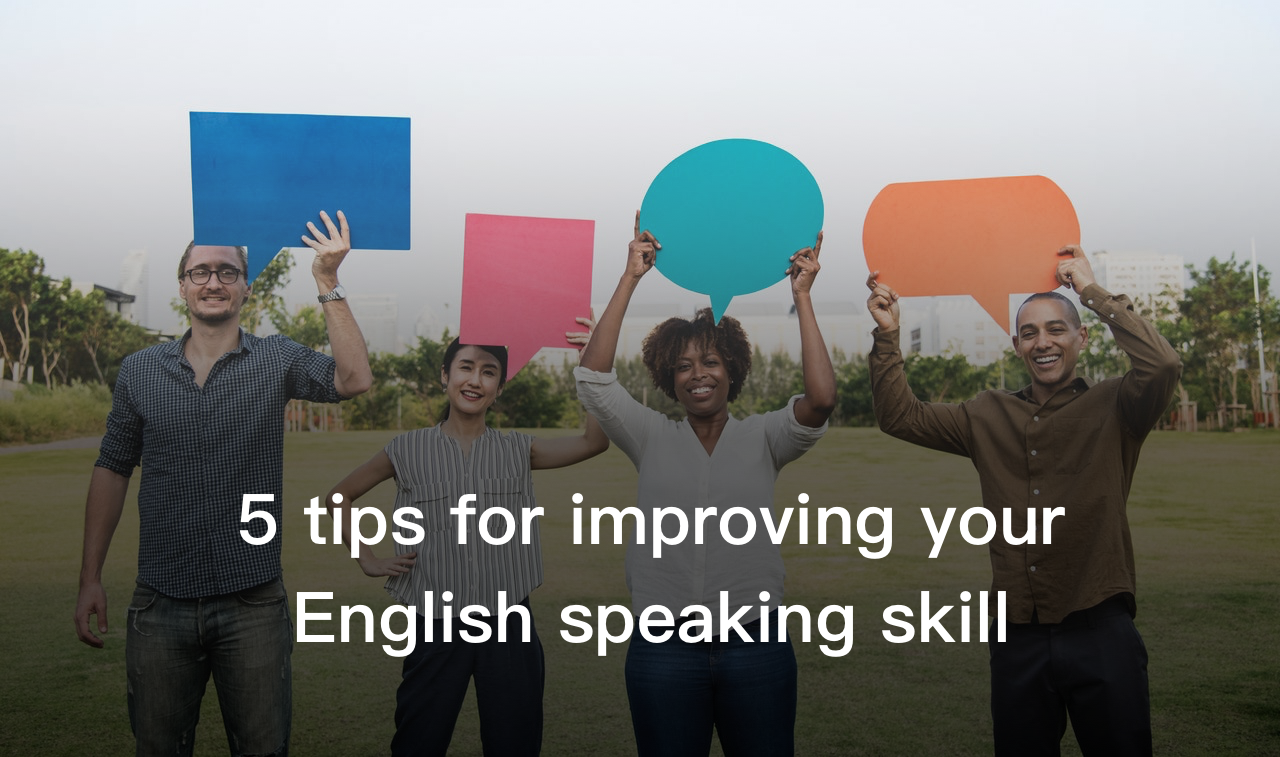
Many students master the fine points of English grammar but find themselves at a loss when it comes to actually having a conversation with native speakers. In reality, the only way to develop fluency in speaking is by huge amounts of listening, and then practicing. The following are a few tips for improving English speaking skills. Don’t forget that listening is the foundation for speaking! When you also want to practice speaking, here are some suggestions for how to improve English speaking skills.
Find An English-Speaking Conversation Partner
First of all, it’s important to find native speakers to practice with. Students who are living around many English speakers may be able to find informal opportunities to chat with neighbors and local business people. Joining a club or a volunteer organization can be a great way to get to know people informally. If that isn’t an option, consider hiring a private tutor. A lot of students find and meet with tutors online via tools like Skype or Google Hangouts.
Make Sure To Listen As Well As Speak
When practicing with a native speaker, try to balance your listening and speaking. It’s a good idea to prepare questions in advance so that the conversation will flow back and forth. If your conversation partner asks you a question and you answer at length, you can always turn the question back to your partner by asking, “What do you think?” or “What about you?”
Record Your Conversation Practice
Recording is a great way to get the maximum benefit from a conversation with a native speaker. When you listen again, you can evaluate your own pronunciation and notice areas where you need to improve. You can also review the content of the conversation, take notes on new vocabulary or misunderstandings, and prepare questions for the next meeting.
Surround Yourself With The English Language
Another way to improve your English speaking skills is to immerse yourself in English as much as possible. Watch movies or TV in English, with subtitles if you need them, and watch the same programs over and over. Most people find that they understand more each time. Listening helps you become familiar with the rhythms and intonations of English. Once the sounds are familiar, try imitating them.
Practice With Music and Movies
Listen to music in English and sing along. Music is one of the best tools for learning intonation pronunciation. Listening to and singing songs might also help you remember vocabulary and phrases (if the song is easy to understand), and it will help you learn to pronounce English rhythm in a more natural way. By unconsciously imitating the singer, you’ll learn to pronounce phrases the way native speakers do. One good song for ESL or EFL students is “Tom’s Diner” by Suzanne Vega because it uses simple language to describe everyday scenes and actions. Movies are a much better choice for learning English. You’ll learn vocabulary, idioms, slang, pronunciation, and listening by watching movies. Be sure to use my movie technique when you do this!
Read Aloud
Reading out loud is a great way to practice speaking when there are no conversation partners available. Reading aloud gives you a chance to focus on pronunciation and pacing without worrying about coming up with words. Make sure to practice with material that you can understand. Some students find videos online that have transcripts. Many TED talks, for example, include word-for word transcripts of the talk. By reading aloud from a transcript, you can check your pronunciation by listening to how the speaker says something.
Talk To Yourself
Saying your thoughts out loud or narrating your actions (“I am drinking coffee, and now I’m going to open my book”) can be a very effective way to practice spoken English. By talking to yourself, you can become more fluent in translating your thoughts into spoken words. Practicing alone is also a low-pressure way to practice, since no one will hear your mistakes.
Many students master the finer points of English grammar, but find themselves at a loss when it comes to actually having a conversation with native speakers. In reality, the only way to develop fluency in another language is through huge amounts of listening and speaking. The following are a few tips for improving your English speaking skills.
HOW TO IMPROVE ENGLISH SPEAKING SKILLS
1. Speak, speak, speak!
Be confident and speak as often as possible, to as many people as you possibly can! Don’t be shy to make mistakes! The more you practice, the better and more confident you will become in your pronunciation and vocabulary. Remember, speaking is a skill, like learning a musical instrument or new sport — the only way you can get good is to actually do it!
2. Read Aloud
Read the newspaper or a magazine out loud to yourself. You can even find a script from your favorite TV show and act it out! This is a great way to practice pronunciation, as you can concentrate on how your English sounds without worrying about sentence structure or grammar.
3. Record your practice conversations
After a conversation is over, take a moment to reflect: How did it go? How much do you think you understood? How comfortable did you feel with the subject matter? Did you encounter any unknown words? The mere act of thinking about it in this way will increase your confidence the next time you speak (and give you targeted things to work on, such as, vocabulary you didn’t understand).
4. Find an English-speaking conversation partner
It’s important to find a partner to practice with, ideally a native English speaker. If you live around English speakers try incorporating informal conversations into your daily life. If that isn’t an option, consider hiring a private tutor you can meet online via tools like Skype or Google Hangouts.
5. Don’t forget to use technology
A smartphone can be a powerful tool for learning languages. It can help you find reading material, converse with tutors, or even record yourself speaking!
There are some apps that can even help you to find a partner online:
We suggest you try the App “Lingo Blabla.” You can easily find a conversation partner with just one click. Call and start talking in English anytime, anywhere. And, it’s totally free!
Reverse Comparative Advertisements
Pandemic has led to “CHANGE”. Change in how people used to live their normal lives, communicate, attend function, travel places, meet people as well as their behaviour towards anything significant. Considering the business perspective, it has changed the way brands used to advertise and strategize. It has somewhere led to an inclusive environment where brands are not focussing on “them” or “us” but are going with the specific keyword “we”. They want to depict the fact that we are in this together and the sense of accomplishment can also be done without being competitive, at least from outside.



The coronavirus has reached India some time back and the cases are increasing at a much higher rate. The novel coronavirus has inadvertently lent a premise to various brands to advertise their goods and services. Many brands are using this as an opportunity to establish their effectiveness and value over their counterparts with respect to the outbreak. Initially, when the virus was on the rise, Indians started looking for health care measures for preventing themselves from the virus and there was a surge in the sales of hand wash, face masks and sanitizers.
The best example for this is the “Lifebuoy Ad” where they didn’t use the concept of comparative advertisement where one brand is shown inferior to others. Instead, they chose the other strategy of inclusiveness to create awareness among the masses. In the advertisement, they asked people to use any liquid or any soap that they fight convenient and hence gained popularity by not attacking any rival brand.


In India, people are going for year-old traditional food, dishes and drinks to boost their immune systems. The use of “kaada”, a warm drink made up of various healthy ingredients to cure cold and cough has become a household entity and people are using it on a daily basis.
Businesses have to keep a level of competitiveness to increase their presence but sometimes it is also possible to keep aside the differences and come out together to fight a battle. Coronavirus has changed and is still changing the way we as a human think, believe, expect and follow up. Reimagining the core benefits and core values to the customers that combines usefulness and interactivity is needed. This can help in strengthening of a brand’s innate immunity through this crisis.
Brands need to change their focus that was traditionally aimed at increasing their ‘Share of Voice’ to increase ‘Share of Empathy.’ They will need to create few micro experiential campaigns on social media and other platforms where people will feel more inclusive towards the brands as well as human race as a whole. With social solidarity and a sense of community growing, consumers will naturally look to brands that embrace such values and stand for a higher purpose. Together, everyone is fighting their own battles and it is not the right time to focus on profit, though that will always be the first priority for any businesses but it is time to couple it with empathy and strategize accordingly.
Every brand should keep in mind that: “We are in this together”

What is your USP?

The competition is getting fiercer with every passing day as new things are introduced and the world population is on a rise. Living a good life isn’t as easy as it used to be years ago when unemployment wasn’t as high as it is now. Every man fights several men everyday to make his place in this highly competitive world and fights even more to safeguard his place from the new entrants and improved competitors. There’s no end to this struggle.
Unique Selling Proposition or USP in short, is a business term for a quality that sets your business apart in a market full of competitors that are more or less similar to you but they too cannot copy that quality of yours. It is what differentiates your business and makes the consumers want to try and buy what you are selling and choose your brand over competitor brands.
Tata Group is one of top Indian Companies and the USP of Tata Motors is that they are fuel efficient and easy to drive. An environmentally conscious customer might buy a Tata vehicle because oil is a nonrenewable resource and an economical person might buy it because of fluctuating prices of oil. Ease of driving will please any and everyone. This is what sets Tata motors apart from the other automobile companies of the country.
The business term ‘USP’ is not specific to just businesses anymore because every single person is competing against the world full of people for a seat, a job, a promotion, for power and a variety of other things. The fact is that there will never come a time when the competition will lower or become steady and ‘survival of the fittest’ is actually ‘survival of the best’ now. Every person who is fighting out there needs to have an eccentric weapon of some sort – a quality that is impossible or extremely difficult for other fighters to imitate – to have any chance at winning the everyday battle that the world is.
Read: Most Sought-after Skills at this very second
When you are trying to get into anything, be it an interview for a job or starting a new venture, ask yourself what sets you apart? It is possible to not find a unique skill or quality in yourself when you start looking but it is also not impossible to develop a few. Hard work can do wonders. Start with making a list of all the skills and qualities that you have and be honest to yourself. You can’t just say that something like overcoming challenges is one of your qualities without actually embodying that passion and zeal. There could be some skills in that list that you could work on further and master to make them your USP. You can also pick a skill randomly that you think you can master and others cannot but it should be consistent with the place you want to enter for it to differentiate you from other entrants.
I think it is possible for ordinary people to choose to be extraordinary.
Elon Musk
Strategies of Effective Interviewing
- The proper kind of preparation for the interview.
- Value of such procedures as having an outline of points to be covered and taking notes.
- Use (and misuse) of questions and questioning techniques.
- The kind and amount of control that the interviewer should exercise over the discussion.
- Analysis and evaluation of information obtained.

Planning & Preparation
In presenting information, a speaker allocates blocks of time to various items on his agenda. If no time limit is established, the presentation can continue indefinitely. Even worse, the truly important information may never be told. This process takes place by dint of the normal human trait of retaining the most significant bits of information for the end. Psychiatrists recognize this and are particularly attentive in the last ten minutes of the therapy session. Borrowing from this insight, the interviewer, although not able to set an hourly cycle as does the psychiatrist, should try discreetly to indicate a time scale. This allows the interviewee to plan and to include relevant information which otherwise might be withheld. If the interview is terminated too abruptly, the probability of losing valuable information is very high.
Guiding the conversation
Support given by nodding is most effective. Other nonverbal means of rendering assistance are equally significant. The use of semiverbal expressions of a meaningless nature—for instance, “Umm…”—can prove most useful. Because such utterances provide no direct interpretation, they are received as the interviewee wants to receive them. He then emphasizes or magnifies the point as he sees fit.
A succinct summary of information from time to time not only allows for clarity in the communication process but also gives the informant a mirror of just what has occurred. Alterations can be made easily by the interviewee once he hears what he has said. In the final stage, a precise statement of what was agreed on or of the general conclusions reached often allows for a reduction of confusion.
When details or figures have been discussed, the summary can often be in the form of a written memorandum. If the interviewer wants to be sure of what the interviewee communicated or to check on whether the interviewee really understood the data discussed, he can ask him to write the memorandum.
Developing Information
In a research project that concentrated on questioning techniques, I analyzed the recordings of about 100 interviews held for the purpose of selecting job applicants, appraising executive performance, or counseling employees in their careers. One of the conclusions from this study is this: successful interviewers (as evaluated by information obtained) utilize at the outset of the interview a pattern of broad, general questions. Apparently this allows the respondent to answer with information which he feels is important, as well as providing him the opportunity to expand into areas that he deems to be of vital concern. Once this information is released, the interviewer can sharpen the focus with specific questions eliciting short answers. For example, the “yes or no” kind of question should be reserved for the final exploration of a subject, while queries such as “How do you feel about working with Joe Smith’s group?” might well obtain results most useful at the beginning of a particular subject.
Fear of silence
During these periods of silence, the interviewer may profitably spend his time pondering the question: “What is he really trying to tell me?” Often the content of the interview makes an incomplete story when analyzed later on. Not only may the words fall far short of the desired goal, but also they may convey misunderstandings. Allowances for the ever-present failures in semantics must constantly be made, and further interrogation conducted, in order that a clear approximation of the true meaning be obtained.
Art of listening
The often posed maxim to the effect that we hear what we wish to hear does not appear at first glance to be a profound statement. Yet it summarizes the mechanics that lie behind poor listening techniques. Individual biases and attitudes as well as role perceptions and stereotyping all contribute to the phenomenon of selective perception. Thus, in order to obtain the best possible information, it is necessary that one be aware of his own particular filters that tend to impede if not prevent clear and relatively undistorted reception of information.
One result is that he makes assumptions about the respondent and his information that are compatible not so much with the interviewee as with what the interviewer has already concluded about the interviewee. Suffice it to say that it is altogether more rewarding to spend this extra time in formulating hypotheses, which later can be confirmed or denied as more information is revealed, or in constructing a frame of reference for the on-going interview, which allows acquired information to be categorized easily as it is given.
Analyzing data
The information that is gathered should be approached and analyzed from two points of reference: the objective and the subjective.
Objective View.
The objective category can be broken down into content and form:
1. Content—This term refers, of course, to the factual presentation—what is actually being said and whether or not it is reliable. The overview of the interview or the pattern of the total situation must be firmly grasped and then noted. In addition, it would seem that the following items are valuable in evaluating information—
- A response that is overwhelmingly conventional is likely to be suspect, owing to the great possibility of its being less than valid. For instance, in an employment interview, the response, “My boss didn’t like me,” is suspect as a cliché. Similarly, the response, “I quit that job because the pay was too low,” could be merely a platitude to satisfy the interviewer.
- If the respondent is impervious to interruption during the interview, then a measure of doubt is cast as to the kind of information the interviewee is relating. Such behavior generally indicates a need to cover all points in a predetermined pattern with such compulsion that, if the interviewee were interrupted, he would never be able to reassemble all the parts. Weaknesses in the “pseudo armor” should be investigated.
- A constant shifting of the subject or an extremely short attention span often denotes a degree of suspicion.
- Should gaps or illogical sequences be prevalent, care should be exercised to augment or to complete the lapses. The voids should be completed by direct interrogation, preferably later in the interview, to check continuity and to arouse a minimum of suspicion by the informant. Later validation by telephone may help with these questions.
- Conflicting times or facts as well as gaps or illogical sequences may indicate areas for careful attention or further penetration.
- Useful visual barometers of an unduly high anxiety level are such things as—
a. color of face
b. erratic body movements
c. varying eye contact
d. dryness of the mouth
e. pitch of the voice
f. excessive perspiration
2. Form—By form I mean the “how, when, and why” of the information. Words take on different meanings when differentiated along these lines. Form can be subdivided into verbal (what is heard) and into nonverbal (what is observed) content. Nonverbal expressions are perhaps the purest kind of information transmitted, since they are the most difficult to mask or disguise. By developing an awareness of and a sensitivity to such signals as when a certain fact was mentioned, what prompted the mention, how it was presented, and so forth, the skilled interviewer takes a most useful if not an essential step. Indeed, this awareness might well be extended to include the nonverbal transmissions of the interviewer himself.
Subjective View.
In evaluating information from a subjective point of view, the interviewer is attempting primarily to assess feelings and attitudes. It is often argued that these intangibles have no obvious place in an interview that takes place in a business environment. Yet, even though it is impossible to determine exactly how feelings and attitudes do influence the information transmitted, it is nonetheless crucially necessary that one be fully aware of the fact that these intangibles are powerful, active agents in creating opinions.
Concluding the meeting
The final 10% of the interview is perhaps the most important, since the greatest amount of information per unit of time is generally exchanged during this time interval. In a series of taped interviews involving appliance sales and sales in which travel arrangements were a factor, it was found that the sales person often did not hear vital information offered toward the end of the interview or after the sale. This overlooked information brought about frequent misinterpretations, which, in turn, accounted for many later cancellations and unsettled complaints. All of this could have been avoided if a moderate amount of attention had been exercised so as to prevent a premature termination of the interview.
Part of the conclusion usually consists of a plan of action—something to be done or achieved by either or both parties. A clear, concise summary of this plan, as mentioned earlier, is a most useful technique for achieving good results. The summary is helpful to both parties because it enables them to realize exactly what has been accomplished as well as to focus on a final concordance.
How to crack a job interview like a PRO!

We all know that interviews can be very stressful. All sorts of thoughts come to our minds while sitting for one. But it is a known fact that the hiring process cannot be completed without it. Therefore, it is necessary to be prepared beforehand, as it will only bring you one step closer to land the dream job. While some nervousness is ok, but make sure that it doesn’t overpower your confidence. Always put your game up!
So, to be successful in your interview here are some tips, you surely don’t want to miss out.
Research about the organization – Before attending any interview, thoroughly research about the organization. You won’t want to make a fool out of yourself, in front of the panel. Do know about the job role, company profile, core member, competitors, etc. This will help you in answering questions with much ease.
On-time – Being punctual is something one should keep in to practice. Always arrive 15 minutes before the interview. This leaves a remarkable impression. Also, it will help you settle down and relax. Avoid being in rush by any means.
Grooming – The concept of ” The First impression is the last impression” may not apply in all aspects of life. But here, it surely does! You must dress right. Wear formal ironed clothes for this day. One may go for plain colored shirts and trousers. Comb your hair neatly and be hygienic.
Study your CV – Break out your CV and do an analysis of what you have done so far, how your skills can help the organization, previous experiences, and skills. Prepare questions and decide how will you answer them. Practice them every day.
Prepare a portfolio – Invest in a good quality portfolio. This should carry all your important documents, achievements, certificates, and all the work is done until now. Although in most cases the employer does have a copy of it, this will show them that you’re an organized individual.
Project confidence – Deep down no matter how nervous you are, showcase as if you have all confidence in the world. When you’re called inside the interview room, walk with a smile on your face. Greet the interviewer. Make eye contact while you answer the questions. Don’t look down, at the wall or the clock. This can give them a bad sign.
Ask for feedback at the end – There are chances that interviewers have made their decisions about you. You may go ahead and ask them. By asking you to show interest. They might not answer your question, but they will appreciate you for asking it. The organization feels that the candidate has a positive attitude and is open to feedback.
Salary Negotiations – Never! Never do this! Don’t ask for unrealistic salary hikes as it will make them think, that you are not serious about the job and it is just about money. The normal range of hike is from 25% to 40%. If you want to, do your homework before any negotiations.
Now that all points have been covered, use them to stand out among other candidates and seem more professional. Good Luck!
Decoding the Indian Programmer

In India, the new millennium began to fundamentally change every aspect of the country with much media frenzy around the prospect of information technology. As a result, most college-going student’s ‘well-meaning’ parents compelled their children to undertake computer science and related study fields, independent of their interest.
With technological advancement foraying into our economic, political and social lives, demand for such graduates is substantial around the world. An estimated half a million jobs will be developed in this field over the coming decade, and by 2024, nearly three-quarters of the science, technology, engineering and math (STEM) positions will be over computer-related occupations, predict reports. More than half of the world’s STEM graduates are produced by China, India, the United States and Russia and so most computer science students are coming from those countries.

There has also been a significant rise in student enrolment in computer science graduate programs in recent years, tripling in some of these countries. Do these growing numbers, however, also turn at the end of the program into quality graduates?
Talent shortages are extreme in India’s IT and data science environment with a survey reporting that 95 per cent of the country’s engineers are not qualified to take on software development jobs. According to a report by Aspiring Minds employability Survey Company, only 4.77 percent of applicants can write the required logic for a program — a minimum criteria for any programming work.

More than 36,000 engineering students from IT-related divisions of over 500 colleges took Automata — a software development skills examination focused on Machine Learning — as well as more than two-thirds could not even write a piece of code that compiles. The study further noted that while more than 60% of candidates can’t even write compiling code, only 1.4% can write technically correct and usable code.
The disparity in employability can be due to alternating learning-based methods rather than designing programs for different problems on a computer. There is also a shortage of good programming teachers, as most good programmers are getting jobs at good salaries in industry, the study reported.
Furthermore, programming skills for Tier III colleges are five times lower than those of Tier 1 colleges. According to a report, Sixty-nine per cent of the top 100 university candidates are able to write a compilable code versus the rest of the colleges where only 31 per cent can write a compilable code, the report said.
Debate about the standard of Indian student programmers is a never-ending one. Most developers worldwide are said to start coding at a shockingly young age. However, many will be surprised to know that in India only one in ten begins coding before age 15. Elsewhere the number is three out of ten.
When too many books are offered to a student to read but not enough time to engage in practical practice, then what will he learn?
In addition, students are often required to take assessments demonstrating only their memory skills and not their real skill or information. The amount of new technical data is said to be doubling every 2 years. But most educational institutions are still teaching Java, Turbo C++, and C++ pre-standardized. So, for students starting a 4-year engineering degree, their third year of college outdates half of what they learn in their first year.
What can be done to resolve the problem?
Social networking site LinkedIn recently said that in the coming years, skills such as web creation and user experience design will be highly in demand. It is therefore necessary to design an academic curriculum tailored to meet the needs of the generation to come and to make them IT fluent.
To this end, educators use different techniques to combine education with technology, and programming can be considered as one of the finest ways of doing this.
Early technology exposure has reshaped how children interact, socialize, develop, and know. Such digital natives think and process knowledge differently, due to increased engagement with technology. Today it is extremely important that every child transitions from engaging with technology to being an active co-creator.
Computational learning incorporates mathematics, logic, and algorithms, and introduces innovative solutions to problems for youngsters. Computational reasoning shows us how to deal with big problems by splitting us into a series of smaller, more manageable issues. This approach’s applications go beyond composing code and structured programming. The analytical method is used in areas as diverse as biology, archaeology and music.
Hence, it has become extremely crucial to instill knowledge about Computer Programming from a very young age in the children of our country. Because, only then we can dream of leaving the mark of our nation in renowned global competitions like The ACM-ICPC (International Collegiate Programming Contest).
Eduindex News

Eduindex News is a next-generation global news publishing company that helps scholars get the free access to educational contents and news at one place. Our digital products, services, and engineering are built on years of innovation, with a world-renowned management philosophy, a strong culture of invention and risk-taking, and a relentless focus on customer relationships.
EDUindex News is a division subsidiary company of Edupedia Publications Pvt Ltd created with a vision to provide educational contents & educational news at one place. With our brands like IJR, EduPub, Pen2Print and Eduindex, we are serving the humanity and helping scholars around the world.
Joining the Eduindex News team give you an opportunity to work on different fields of content writing, editorial works, digital marketing, publishing, audio visual communication and public relation building aspects of the media publication work.
 Track2Training
You must be logged in to post a comment.