
As the saying of B.B.King goes like, “The beautiful thing about learning is that no one can take it away from you” education is the most important wealth one can hold in this universe. Education is the only thing that moulds a person into a human. Proper education is very important to every human being. One can be educated anytime despite of one’s age, gender, colour and creed. Education is the process of achieving knowledge, values, skills and moral habits. It determines the quality of an individual’s life because it helps people become better citizens of the society, it lends one a better job and a good lifestyle and most importantly it helps one to know the difference between good and bad. Education provides the stability for life and it makes you self-dependent. Education is important for each and everyone as it improves knowledge, way of living, social and economic status as well to prove Benjamin Franklin’s quote “An investment in knowledge pays the best interest”. Getting good education is one of the basic rights to every human because education is the only solution for social and personal problems. Education transforms a person completely by changing one’s mind and personality. Education connects you with stories and cultures of one’s everyday life. Education is the first step for people to gain knowledge, critical thinking and empowerment and skills they need to make this world a better place. “Education is the most powerful weapon which you can use to change the world” – Nelson Mandela.
RESPONSIBILITY TOWARDS ENVIRONMENT
The most common topic, about which each and every one has heard. Each and every person in the world is responsible for the degradation about our mother earth, smaller or in greater way.
Most of you have much aware, about the current condition of our earth. The degradation is reduced, during Covid times. As the industries as shut down. Work from home has increased. As, a result the travelling. The use of petrol and diesel is reduced. As a result, our mother earth is atomically improved.
Have you noticed, that, it’s the human only and only responsible for the degradation? It’s good to be happy after seeing the improvement. But this happiness is temporary. Industries, are going to start again. We will start again to travel and pollute.
So, now it’s our duty to maintain the same improved condition. Not to degrade, it to the worst.
All the citizen are well aware about this. But, we all have only one mindset. We can’t do. This should be done by the government. How we can make a change. We just an individual.
In reality, that doesn’t make any sense.
We can blame the system or the world. We can blame all the people who messed up the world if we want. However, nothing will change, even if we don’t try so hard to blame everything. If we really want to win, be a person who can serve. Stop blaming them and pay then back with your capability.
Let’s start at the individual level. People are going to join. Its are always the duty of government or NGOs or social workers or any group of community. Its our duty. And we should feel the responsibility. It’s our mother earth.
This is the least thing we can do for our earth. Every One, thinks I want this, I want that.
Let’s just stop this, and start thinking. What have I done for mother earth? Instead of polluting, disrespecting. Anything, that I am proud of? What is the purpose of life? is it to become the most selfish person you can be, or a person, who is respected n community. How is responsible for development. Development, doesn’t only mean industrialization or the number of bike and four wheelers you have.
Development of our earth. Development about mindset. Making a batter place not for yourself, but for you children and grandchildren. This type of development is called Sustainable development.
For more read about the sustainable development refer:
Have anyone wonder, what’s the most difficult thing for completion of any task? It is to make a start. The Start takes 99% of our efforts. And to never give up. Let’s do it, for ourselves. Considering our responsibility.
#protectmotherearth#Development#sustainabledevelopment
THANK YOU
Silent Process of HOPE
The setting sun hides the light behind the night
The stars never sleep and scatter the darkness
The moon is among them
The night sky always shines
Whatever happens before the dusk
It just takes to reach tomorrow
Evolving Education of india
The Evolution in Educational System of India
“Education is the most powerful weapon which you can use to change the world.” – Nelson Mandela

It is said that education is the key to freedom, a power to change the world and make world a better place to live. Education is a continuous process which enriches our mind with the light of knowledge and provides us the ability to distinguish between right and wrong. There was a time when India had a high illiteracy rate, but slowly with the time things are changing for the better. The Education System of India has developed gradually.

Education during British Rule
The British East India Company planned to educate a small portion of Indians for their own benefit. They wanted some educated Indians who could assist them in their work and also wanted to know the customs and laws better. Various Universities were established by Britishers to follow their purpose. Calcutta Madarsa was established by Warren Hastings for study and teaching of Muslim Law. Jonathan Duncan set up the Sanskrit College for study of Hindu Law and philosophy at Varanasi. Slowly, English was being used as the medium of teaching and learning.

Changes after Independence
Pre-Independence the education was only available for the elites, this scenery was changed Post Independence. Now Education was accessible to large number of society. After Independence India was in a very poor condition, Under-Developed India was the biggest challenge that came forth. A large number of people were illiterate ,though from 18% of literacy rate in 1951 has raised up to 73 % as of 2011.Today, India has very strong and widespread education system which is successfully competing with the world.
Committees set up
- University Education Committee (1948) : The Commission was inspired under the leadership of Sarvapalli Radha Krishnan, this committee aimed upon setting up Universities to provide education for the development of overall personality. This Commission also stressed over the purpose of “Women should get good education as men get”.
- Secondary Education Commission (1952-1953) : It is also known as Mudaliar Commission.The main recommendations of this commission was to provide seperate schools for girls to the places it was needed. It also focused over providing special facility to study of Home Science. Target of this Commission was to the need of training Indians in a democratic way of life.
- Kothari Committee (1964-1966) :
Kothari Commission is also known as the Indian Education Commission .Daulat Singh Kothari was the chairman of this committee, it was set up to formulate the general principles and guidelines which was very much needed for the development of the education system. It stressed at providing free and compulsory education to all till the age 14. It focused over the development of languages specially by implementing ‘three-language formula’ , and keeping in check with the quality of education being provided.

Educational policies of India
National Policy Education (1968)
This was first such kind of policy that came up in 1968.It focused over the culture based curriculum and strengtening the structure of resource support, compulsory education for all children till the age of 14. It also aimed at better training and qualification of teachers. To promote the standardisation of language Hindi was adopted as national language and elementary to higher education was made an integral part of urban and rural India.

Education in Pandemic
Covid-19 has changed the whole chalk and duster dynamic of conventional education system. Lockdown made everything to shut down including schools, colleges and coachings. where everything came to pause and when there was no light found at the end of the tunnel, E-learning came up and reshaped the educational system of India. Distinctive hike in e-learning have taken place due to pandemic. But to standardise education the government of India should reach out to the students who are unable to afford such technologies and devices for education and learning.
THE DEADLY CORONA VIRUS AND ITS MECHANISM OF INFECTION

The word coronavirus and the virus itself has been hovering around each one of us since 2020. Its been more than a year and the human race, which is regarded as the owner of the most intelligent brain has been unsuccessful in finding a permanent solution to the ongoing global pandemic situation. But, do you know what is this tiny, invisible organism which has proven “deadly” to the most advanced and the most evolved body system on the earth? Yes, you are right, it’s a ‘virus’! So, today let us initiate a step forward to understand the mechanism of infection of the Covid-19 virus.
MECHANISM OF MULTIPLICATION OF COVID-19
As soon as the virus comes in contact with a human cell, the receptors present on the surface of the human cell attach to the virus. ( These Receptors have an affinity towards a specific kind of molecule or a virus). The coronavirus binds to these receptors following the introduction of the viral RNA into the normal human cell. The viral RNA thus undergoes reverse transcription (the process of formation of DNA from RNA) which leads to the incorporation of the viral DNA into the host genome( human cell). The infected human cell undergoes its normal processes and along with its own RNA, it also produces a new viral RNA which finally leads to the further multiplication of the virus which in turn are ready to infect other cells .
This is the complex mechanism of the multiplication of the Covid-19 virus. The virus directly attacks your lung cells and makes the respiratory system completely dysfunctional.
Therefore, it is very crucial to block the entry of the virus itself using masks and avoiding touch of infected surfaces. Remember, the number of people getting infected or the number of deaths are not just numbers, they are the families who spend each minute of their lives in tears with burning hearts. Save yourself, save your family.
SEVEN ISSUES Affecting women and girls during cOvid-19 pandemic
- Higher rates of Job losses.
- Reduced financial independence and future prospects.
- Greater burden of domestic and care work.
- Increased risk for front-line health workforce.
- Reduced access to vital health services and exclusion from potential Covid-19 treatments.
- Spikes in sexual, physical,and domestic violence and exploitation.
- Increased risk of pregnancy related deaths and teen pregnancies.
Most of the Women and Girls are facing financial dependency, and the main reason for this is the loss of Job during Covid-19 pandemic.
They are also facing lots of burdens of domestic and care work, because all schools and colleges are not operational in offline mode, that’s why all members from young to old are staying in 24*7 in the specified limited area. Caring of all enhance the domestic loads on women and Girls.
Mostly girls are playing the role of nurse in hospitals, so during Covid-19 pandemic , there is a very high risk for them as front-line health workforce.
During Covid-19 pandemic, Women and Girls are not getting all the required health facilities that they need. So there is a reduction to the vital health services for Women and Girls.
According to the reports registered and the survey from lot of Ajencies, Sexual and physical violence increases rapidly during Covid-19 pandemic and also there is a risk in pregnancy related deaths in lack of health facilities .
ONLINE LEARNING
- The COVID-19 has resulted in schools shut all across the world. Globally, over 1.2 billion children are out of the classroom.
- As a result, education has changed dramatically, with the distinctive rise of e-learning, whereby teaching is undertaken remotely and on digital platforms.
- Research suggests that online learning has been shown to increase retention of information, and take less time, meaning the changes coronavirus have caused might be here to stay.
With this sudden shift away from the classroom in many parts of the globe, some are wondering whether the adoption of online learning will continue to persist post-pandemic, and how such a shift would impact the worldwide education market.
Even before COVID-19, there was already high growth and adoption in education technology, with global edtech platform investments reach more billion2019 and the overall market for online education projected to reach the unexpected result. Whether it may be conferencing, meeting, classes there has been a significant surge in usage since COVID-19.
Online classroom, meanwhile, has been used extensively since mid-February after the Chinese government instructed a online full-time students to resume their studies through online platforms. This resulted in the largest “online movement” in the history of education with approximately 81% of K-12 students, attending classes via K-12 Online School in Wuhan.
Other companies are bolstering capabilities to provide a one-stop shop for teachers and students. For example a Singapore-based collaboration suite initially developed by ByteDance as an internal tool to meet its own exponential growth, began offering teachers and students unlimited video conferencing time, auto-translation capabilities, real-time co-editing of project work, and smart calendar scheduling, amongst other features. To do so quickly and in a time of crisis, Lark ramped up its global server infrastructure and engineering capabilities to ensure reliable connectivity.
Some school districts are forming unique partnerships, to offer local educational broadcasts, with separate channels focused on different ages, and a range of digital options. Media organizations such as the BBC are also powering virtual learning; Bitesize Daily, launched on 20 April, is offering 14 weeks of curriculum-based learning for kids across the UK with celebrities like Manchester City footballer Sergio Aguero teaching some of the content.
There have already been successful transitions amongst many universities. For example, they managed to get more than 5,000 courses online just two weeks into the transition using “DingTalk ZJU”. The Imperial College London started offering a course on the science of coronavirus, which is now the most enrolled class launched in 2020 on Coursera.

Most popular coding language in 2021
We are leaving in the 21st century (The world of technology).Machines are there to help us in our work.Computers are the need of the time and without computers our future may be scary in development terms.Like we men on the earth speak a particular language to express our thoughts to others.Similarly computers have their own language to function.These are called computer languages.A wide number of computer languages is present today but Python is the most popular coding language of the year 2021.
Let’s have a look why Python is the most popular coding language:-
Python is one of the languages that is witnessing incredible growth and popularity year by year. It has become the fastest-growing programming language in the world.
It is also the most popular language for machine learning-https://www.upgrad.com/blog/best-programming-languages-for-machine-learning/
Simplicity:- Python language is incredibly easy to use and learn for new beginners and newcomers. The python language is one of the most accessible programming languages available because it has simplified syntax and not complicated, which gives more emphasis on natural language. Due to its ease of learning and usage, python codes can be easily written and executed much faster than other programming languages.When Guido van Rossum was creating python in the 1980s, he made sure to design it to be a general-purpose language. One of the main reasons for the popularity of python would be its simplicity in syntax so that it could be easily read and understood even by amateur developers also.One can also quickly experiment by changing the code base of python because it is an interpreted language which makes it even more popular among all kinds of developers.
Sources:- Python was created more than 30 years ago, which is a lot of time for any community of programming language to grow and mature adequately to support developers ranging from beginner to expert levels. There are plenty of documentation, guides and Video Tutorials for Python language are available that learner and developer of any skill level or ages can use and receive the support required to enhance their knowledge in python programming language.Many students get introduced to computer science only through Python language, which is the same language used for in-depth research projects.If any programming language lacks developer support or documentation, then they don’t grow much. But python has no such kind of problems because it has been here for a very long time. The python developer community is one of the most incredibly active programming language communities.This means that if somebody has an issue with python language, they can get instant support from developers of all levels ranging from beginner to expert in the community. Getting help on time plays a vital role in the development of the project, which otherwise might cause delays.
Corporate support:- Programming languages grows faster when a corporate sponsor backs it. For example, PHP is backed by Facebook, Java by Oracle and Sun, Visual Basic & C# by Microsoft. Python Programming language is heavily backed by Facebook, Amazon Web Services, and especially Google.Google adopted python language way back in 2006 and have used it for many applications and platforms since then. Lots of Institutional effort and money have been devoted to the training and success of the python language by Google. They have even created a dedicated portal only for python. The list of support tools and documentation keeps on growing for python language in the developers’ world.
Due to its corporate sponsorship and big supportive community of python, python has excellent libraries that you can use to select and save your time and effort on the initial cycle of development. There are also lots of cloud media services that offer cross-platform support through library-like tools, which can be extremely beneficial.Libraries with specific focus are also available like nltk for natural language processing or scikit-learn for machine learning applications.
First choice:- Python language is the first choice for many programmers and students due to the main reason for python being in high demand in the development market. Students and developers always look forward to learning a language that is in high demand. Python is undoubtedly the hottest cake in the market now.Many programmers and data science students are using python language for their development projects. Learning python is one of the important section in data science certification courses. In this way, the python language can provide plenty of fantastic career opportunities for students. Due to the variety of applications of python, one can pursue different career options and will not remain stuck to one.
Flexible:- Python language is so flexible that it gives the developer the chance to try something new. The person who is an expert in python language is not just limited to build similar kinds of things but can also go on to try to make something different than before.Python doesn’t restrict developers from developing any sort of application. This kind of freedom and flexibility by just learning one language is not available in other programming languages
TIPS TO HAVE A POSITIVE ATTITUDE, DURING COVID
Positive attitude. Roughly, everyone knows about what is a positive attitude.
But, let’s see. What it exactly means. A Positive attitude means being hopeful. Able to tackle any situation, no matter how difficult it may be. And most important believe in yourself. Because, the moment we gave up in believing oneself. At that right moment. We lost the battle. This is the time when the persons are tested. And if you have positive attitude, you will win the battle. And that’s what will make you different from others.
By having a positive attitude, you become able to fight and win any types of situation.
Even a 100-year-old can fight and win. And youngster sometimes fail.
And if your Decision is to Give up and call it done, nobody’s goanna blame you. But, if you do so, you will look back on that moment for the rest of your life.
COVID-19 followed by the lockdown is a challenging phase for all of us. But there are residents in the city who know how to keep themselves occupied. While some have started pursuing their hobbies, many see this an opportunity to spend quality time with their family.
Meanwhile, as for the students are confused, depressed how was I going to cover the topics. Will I be able to understand? Or should I just in the light of passing 12th prepare it. What should I do?
Whatever it is, impact of lockdown will remain with us for my entire life. It doesn’t affect me only the way it seems, as we were locked up in our homes. Of course, we were. but more to our mind set.
And, the most difficult task is to have a positive attitude or to motivate myself, despite of having a negative atmosphere.
To become strong not only physically but also mentally. This lockdown, was not just for a period of time, it builds our entire lifestyle. We started to understand the healthy eating. Importance of yoga. Started writing diary. Distracting ourself.
The change in mindset, change in viewing the world, the life goals, the opinions. Values for life has been increased forever.
As all are at home, sometimes you would surlily had thoughts, like why I am existing? What is my purpose of life? many many questions. But it’s just natural. And This is the best time to find the answers for these questions.
But you know what, I finally find out the purpose of life is to help others. Make a better place to live. And the happiness you get in return after helping is the best happiness one can ever wish for. Its your time. Utilize it for the things you wanted to do. The thoughts you neglect it. This what build positive attitude.
Change our daily routine, take this time to get an extra hour in bed. Learn a new language. Or cooking. Start meditation, it really helps our body and mind, for having positive attitude. Exercise. Make a time table. Stay touch with the family and friends digitally.
Feel too been lucky enough to have a family that continues to support you during these uncertain times, helps to motivate you, play with you when I you bored. You can have discussion about many life issues, which you always had though, but never take it seriously, in between the busy schedule.
Covid situations is although very difficult times, for the entire globe, but the best way to tackle is by having a Positive attitude, and build yourself strong.
#bepositive#bestrong#win#staysafe#stayStrong.
thankyou
Project for Beginners in Computer Vision and Medical Imaging
(AI) and computer science that empowers mechanized frameworks to see, for example to deal with pictures and video in a human-like way to distinguish and recognize articles or districts of significance, anticipate a result or even adjust the picture to an ideal arrangement. Most popular use cases in the CV domain incorporate computerized discernment for autonomous drive, augmented and virtual realities (AR,VR) for reenactments, games, glasses, realty and style or excellence arranged online business. Clinical picture (MI) preparation then again includes substantially more detailed examination of clinical pictures that are regularly grayscale, for example, MRI, CT or X-beam pictures for computerized pathology discovery, an errand that requires a trained expert’s eye for identification. Most popular use cases in the MI domain incorporate mechanized pathology naming, confinement, relationship with treatment or prognostics and customized medicine.
Preceding the approach of deep learning methods, 2D signal handling arrangements, for example, picture sifting, wavelet changes, picture enlistment, trailed by grouping models were intensely applied for arrangement systems. Signal preparing arrangements actually keep on being the top decision for model baselining inferable from their low inertness and high generalizability across informational indexes. Notwithstanding, deep learning arrangements and structures have arisen as another most loved inferable from the start to finish nature that wipes out the requirement for include designing, highlight choice and yield thresholding by and large. In this instructional exercise, we will survey “Top 10” project decisions for fledglings in the fields of CV and MI and furnish models with information and starter code to help independent learning.
CV and MI arrangement structures can be broken down in three fragments: Data, Process and Outcomes. It is essential to consistently imagine the information needed for such arrangement systems to have the organization “{X,Y}”, where X addresses the picture/video information and Y addresses the information target or marks. While normally happening unlabelled pictures and video arrangements (X) can be copious, getting exact names (Y) can be a costly cycle. With the coming of a few information comment stages, for example, , pictures and recordings can be named for each utilization case.
Since profound learning models regularly depend on huge volumes of clarified data to naturally learn highlights for ensuing identification undertakings, the CV and MI spaces frequently experience the ill effects of the “small data challenge”, wherein the quantity of tests accessible for preparing an AI model is a few orders lesser than the quantity of model boundaries.
The “small data challenge” if unaddressed can prompt overfit or underfit models that may not sum up to new concealed test data sets. Accordingly, the way toward planning an answer system for CV and MI areas should consistently incorporate model intricacy requirements, wherein models with less boundaries are commonly liked to forestall model underfitting. At last, the arrangement structure results are examined both subjectively through representation arrangements and quantitatively as far as notable measurements like exactness, review, precision, and F1 or Dice coefficients.
Project : MNIST and Fashion MNIST for Image Classification (Level: Easy)
Objective: To deal with pictures (X) of size [28×28] pixels and order them into one of the 10 yield classifications (Y). For the MNIST informational index, the information pictures are written by hand digits in the reach 0 to 9 [10]. The preparation and test informational indexes contain 60,000 and 10,000 named pictures, separately. Motivated by the manually written digit acknowledgment issue, another informational collection called the Fashion MNIST informational collection was dispatched where the objective is to group pictures (of size [28×28]) into garments classes as appeared.

Techniques: When the information picture is little ([28×28] pixels) and pictures are grayscale, convolutional neural organization (CNN) models, where the quantity of convolutional layers can shift from single to a few layers are reasonable order models. An illustration of MNIST characterization model form utilizing Keras is introduced in the colab record:
MNIST colab file
Illustration of characterization on the Fashion MNIST information:
In the two occurrences, the critical boundaries to tune incorporate a number of layers, dropout, enhancer (Adaptive analyzers liked), learning rate and portion size as found in the code underneath. Since this is a multi-class issue, the ‘softmax’ enactment work is utilized in the last layer to guarantee just 1 yield neuron gets weighted more than the others.
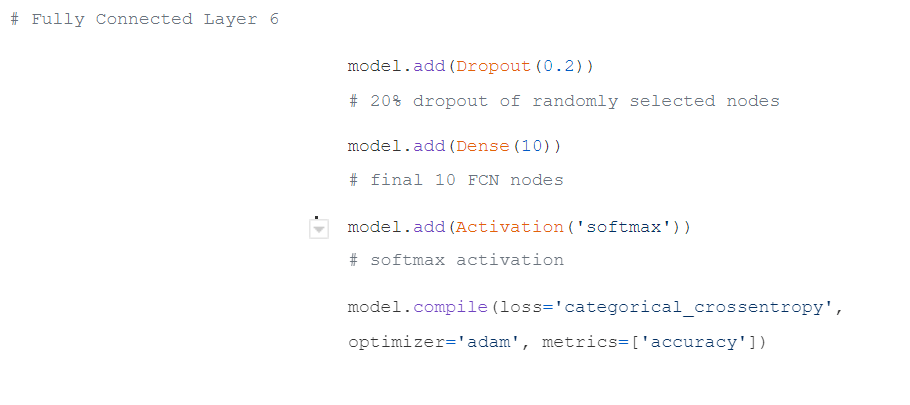
Results: As the quantity of convolutional layers increments from 1–10, the arrangement precision is found to increment too. The MNIST informational index is all concentrated in writing with test correctness in the scope of 96–99%. For the Fashion MNIST informational index, test correctness are commonly in the reach 90–96%.
top 3 programming languages to learn during pandemic
We have all experienced an unprecedented time in the years 2020 and 2021 seems to be pretty similar to the previous year. Covid -19 has hit all of us and all of us are getting used to it. I just hope all the readers are safe and sound and are paying adherence to Covid-19 norms. As a human, this pandemic has offered us an opportunity to learn new skills. And especially people who are looking for recruitment as software engineers have gotten a chance to learn new programming languages.
There are few languages the company is demanding in the current scenario. The top three programming language one should put interest are:
#1 JavaScript
JavaScript is one of the most commonly used out of all programming languages. Almost every frontend application is built by using JavaScript. It is a beginner-friendly language and developers seem to love it. The global market has a high demand for JavaScript developers. Companies such as Google Facebook, Uber, and many more are hiring JavaScript developers. JavaScript is a dominating language it’s unavoidable. If you want to get a good package get your hands-on JavaScript.
#2 Python
Python is liked by developers and beginners due to its simplicity. It is by far the simplest language to learn and write. Python is used in research in the field of Artificial intelligence and Machine learning. Python is widely preferred by Data scientists. Python is used by top companies such as Instagram, Shopify, etc to build their back end. Python is widely used in almost every field. Learning Python can help you be hired by big companies.
#3 Java
Java stands as one of the most widely used languages still in 2021. Every second technology has Java involved in it. Companies like Uber, Twitter, etc used Java as their tech stack. So knowing Java programming can secure you jobs in big companies.
LET’S ALL WALK ALONE YET TOGETHER!
In the valley noted for its echoes, silence talks. Our northern kin has been living in the shadows of the military and a political power struggle that will end in bloodshed regardless of who wins. Kashmiris have become inmates in their own homes, with the majestic peaks serving as a jail. Who are they pleading with? How can they get their message across?
While the mainland watches the programme, they protest, fight, and plead for their rights and freedom. They were alone, as were the Jews, the Blacks, and that one child in the diner with his parents on their phones, despite a population of 1.25 crore.
Like the Black Death in Europe, stories of social alienation abound in our history textbooks. Even so, we can feel its claws tightening around our necks now more than ever. We have a lot of connections. We have the whole planet at our fingertips. Calls and texts have relieved the sweet doves of their duties, allowing us to converse with strangers as well as friends.
In our pockets, we bear a piece of our loved ones. We are surrounded by more than 7 billion people and 8.7 million other animals. And yet, as we sit on our sofa, pizza in one hand and phone in the other, the knowledge slowly sinks in that we are both very lonely, like a slow poison.
In the United States alone, over 60 million people reported feeling lonely (Kaiser Family Foundation, 2018). Globally, youth are becoming increasingly withdrawn and absent-minded, preferring to curl up in a comfortable corner rather than face the harsh realities of life. The Loneliness Epidemic is one of many aspects that have characterised this period. People are becoming more agitated, despondent, inactive, and withdrawn. We rest isolated, unaffected, and unmoved in the midst of the whirlwind of likes and followers.
If the Loneliness Epidemic is not handled, we will be hollowed out. It drives people insane and turns them into savages. It encourages them to engage in drug abuse. As they sit trying to fit bits of garbage into the gaping hole inside, one loses all sense of reason. Loneliness is a wolf in sheep’s clothing, or a black pit, swallowing all life and leaving nothing but death and decay behind. It’s a shame the internet doesn’t bind people’s souls.
Wuhan was put on lockdown when the Coronavirus struck, with all residents being rounded up and placed in isolation or quarantine. China constructed a wall around itself when the Mongols threatened, and an alienation zone when the Chernobyl disaster occurred. Our reaction to the possibility of a global war was to create memes. We conveniently chuckled and japed instead of recognising the ramifications of such a brutal global phenomenon, refusing to be scared into a frenzy. When wars arrive at our doorstep, we slam the door in their faces. But what about the conflict that exists inside you? It is futile to demand caution from those who have never known peace.
Ironically, Mahatma Gandhi, Anne Frank, Martin Luther King Jr, Nelson Mandela, William Shakespeare, Vincent Van Gogh, and Albert Einstein all came from this species. Guess what, visionaries, poets, freedom fighters, scientists, painters, and one teen girl who turned the world upside down? They began on their own. They began in seclusion. They were triumphant in the internal war that was raging. The world was awestruck, inspired, and speechless as a result of their valiant struggle. They were given meaning by a little trust in themselves and a greater love for others. We are, in reality, lonely. We’ve always been that way. And we’ve been battling it for a long time. Sure, it’s a sorry state of affairs for our species. But we’re fighting back, and we’re stronger than ever. We’re in this together. Despite stumbling and fumbling, we persist.
Whistling Wind
Oh Whisting wind
You are the friend of the blue sky
Don’t you hear the song of the night
Oh wind you have touched the rainbow
Won’t you see the magical spring
Oh whistling wind
Let go off your worries
For you could fly aimlessly
Let’s go to see the moonlight, sunshine and snow twilight
And the hill side covered of flowers
Look how moments glide by
See how time flows by
Like water slipping through our fingers
Flowers sway in the wind and fade away
Like the smile on time’s face
Let go off all the worries
Let go off them
Let’s fly fluttering our small wings
Let’s love our lives
Elegy Written in a Country Churchyard
Elegy Written in a Country Churchyard was published in 1751. Thomas Gray began writing this poem in 1742 shortly after the death of his close friend Richard West. This Elegy is noteworthy that it mourns the death not of great or famous people but of common men. It’s Gray’s masterpiece and it’s emotional and philosophical at the same time. The beauty of the poem lies in simplicity. Poet brings out the ultimate truth about life and death.
THEMES OF ELEGY WRITTEN IN A COUNTRY CHURCHYARD
UNIVERSALITY OF DEATH: The central focus of Gray’s elegy is the inevitability of death and how people from different social class are remembered. In this elegy Gray meditates on death as it relates to the rustic commoners who populate the village and the country churchyard. Gray’s opening salvo in this contrast between two vast social classes emphasizes death’s universality; just as the poor and the common people are subjected to death, the paths of the rich and glory lead to grave as well. Death is the ultimate which is blind to mankind’s social class and destruction.
SOCIAL CLASS AND VALUE: Gray’s meditation on how the wealth and the poor are remembered allows him to explore social class and value. The poem suggests that an individual’s value should not be tied to social class. The poem asks whether the rich and the powerful can be brought back to life by “storied urn” or “animated bust” any more effectively than the poor whose graves are marked by “no trophies”.
IMPORTANCE OF LOVE: Despite their humble lives the dead enjoyed simple pleasures in life. One of these is the love of their families and friends. A clear image of children greeting his father when he came home from the fields is shown. The lively picture of family is full of joy. Gray identifies family and friends both simple pleasures as the greatest joy in life
THE QUALITY OF MORTALITY: Within the odes and elegies of gray we find him questioning towards the very concept of morality and what it really means to say when one exists.
Media propaganda
“A rumour is a social cancer: it is difficult to contain and it rots the brains of the masses. However, the real danger is that so many people find rumours enjoyable. That part causes the infection. And in such cases when a rumour is only partially made of truth, it is difficult to pinpoint exactly where the information may have gone wrong. It is passed on and on until some brave soul questions its validity; that brave soul refuses to bite the apple and let the apple eat him. Forced to start from scratch for the sake of purity and truth, that brave soul, figuratively speaking, fully amputates the information in order to protect his personal judgment. In other words, his ignorance is to be valued more than the lie believed to be true.”
― Criss Jami, Killosophy
Propaganda is a common thing occurring in today’s media. Propaganda is used in order to promote or publicize a point so that in can reach millions and millions of people through media. The main objective of propaganda is to provide false information and thereby manipulate the audience into believing something different from the reality. Propaganda in media commonly occurs in several different flavours.
One of the most popular forms of propaganda is known as bandwagon. It is the power of persuading the customer by showing them what others are doing. This type of propaganda sort of sets an attribution to performing a particular activity to be enjoyable or common to others, making others inadvertently do the same. This kind of manipulation is often done in advertisements for example when people are shown to enjoy a particular kind of chocolate, the viewers of that advertisement tend to buy the same the following day at the supermarket.
“The President in particular is very much a figurehead — he wields no real power whatsoever. He is apparently chosen by the government, but the qualities he is required to display are not those of leadership but those of finely judged outrage. For this reason the President is always a controversial choice, always an infuriating but fascinating character. His job is not to wield power but to draw attention away from it. On those criteria Zaphod Beeblebrox is one of the most successful Presidents the Galaxy has ever had — he has already spent two of his ten presidential years in prison for fraud.”
― Douglas Adams, The Hitchhiker’s Guide to the Galaxy
There exist several benefits to propaganda in any subject. One of the core benefits as well as objectives of spreading propaganda is the ability to control the response of people in a particular situation. It is also thought of to be a kind of sublte brainwashing done to people in order to make them believe that they are acting upon their own free will, while they dictate what they should do from behind. Such propaganda in media can manipulate the views of millions of the viewing audience and thus can impact the lives of several negatively. In modern times, the Government has limited the use of propaganda in certain advertisements in order to protect the views of the public. They have imposed a limit upon the amount of propaganda allowed to be used in different kinds of advertisement, marking how much may prove to have a bad impact on people’s views. Such has not occurred in media, and thus, even today, much of the information which we receive from media continue to offer to us biased views. People should work to bring about a change and also be wary of such kinds of practises.
INDIA’S CRIPPLING TROPICAL FORESTS EPITOMIZE CARBON SINKS

By the year 2050, the world’s tropical forest supply may be severely depleted. Scientists expect that by 2050, sea levels will have risen to the point where most major cities will be flooded. In the last two decades, neglecting our biodiversity has resulted in four disease outbreaks. Can the human race afford another global epidemic that makes it impossible to breathe?
Carbon sinks are natural processes that absorb and store carbon dioxide from the atmosphere; the oceans and forests are the two largest carbon sinks on the planet. Oceans are the world’s main carbon sinks. Plants and soil are the two carbon sinks found in forests. Plants absorb carbon dioxide from the atmosphere for photosynthesis, and some carbon dioxide is released by the soil as plants die and decompose. In the event of a forest fire, forests will change from carbon sink to carbon source. If forests remain intact, with no leakages such as erosion and deforestation, this trade-off between sink and source can be balanced. Forests’ ability to function as a carbon sink or source is dependent on the balance of photosynthesis and respiration. If you believe it or not, forest soil has sequestered a significant amount of carbon.
When a tree dies and the microbes finish the decomposition process, some of the accumulated carbon is released back into the atmosphere. This method does not result in the complete loss of carbon. A sizable portion of it has remained in the soil. A large area of forest is an excellent example of a carbon sink. “Basically half of the carbon dioxide emissions are consumed by the Earth’s land and ocean,” says Paul Fraser of the Commonwealth Scientific and Research Organization.
The titan Amazon basin, which predominantly serves as the largest carbon sink of all of the forests, and benefits us by generating over 20% of the total oxygen production for the earth, is an example of the world’s largest tropical forest, holding up to 40 thousand plant species, 2.5 million insect species, and a myriad variety of wildlife. The Amazon is used to demonstrate how tropical forests can function as a carbon sink. “We have already lost 20% of the Amazon in 2019, and scientists worry that if we lose yet another 5%, the Amazon will hit its tipping point,” says Mike Barrett, WWF Director of Science and Conservation.
India is ranked 9th among the world’s megadiverse countries, with nearly 40,000 plant species and 90,000 animal species living through diverse geographical environments in all four directions. The Northeast (NE), once one of India’s greenest areas, has been slowly losing forest cover for the past 20 years.
According to data mapped by the Global Forest Watch, a repository for global forest data, the rate has doubled. According to a report published by the Deccan Herald in 2018, over 70 percent of the forest cover in the Northeastern states was lost due to deforestation between 2001 and 2018. Infrastructure is essential for the economy, but not at the expense of our aid recipients. The Northeast has been facing a significant threat to its forests for the past two decades as a result of deforestation for coal mining, cement manufacturing, and illegal logging. Deforestation has already wreaked havoc on the Garo Hills of Meghalaya and the Karbi Anglong Hills of Assam. As a result of the Etalin Hydroelectricity Project, the Dibang valley in Arunachal Pradesh is on the verge of losing 2.7 lakh trees. The Northeast is already feeling the heat of forest depletion, with some states experiencing the highest temperature increase in the last two decades. In Karnataka, a similar incident occurred when the long-delayed Hubballi-Ankola railway line was finally approved. This 164-kilometer railway line would cut through the Kali Tiger Reserve and the Bedti Conservation Reserve, destroying more than 80% of the forest cover in the Western Ghats, one of India’s most ecologically sensitive areas. There are fears that the Bannerghatta National Park, which is located in the ESZ (eco-sensitive zone), Bangalore’s only remaining lung space, would lose about 100 square kilometres. The loss of trees would increase carbon emissions, and these forests are home to more than 250 species of plants, birds, animals, and insects that are listed on the IUCN Red List of Threatened Species and protected by the Wildlife Protection Act of 197.
Mining and various agricultural and commercial growth projects in India generate at least 1,000 million tonnes of carbon. With the pace at which trees are being cut down, India will experience many stages of ecological cancer. India’s average reported temperature has already increased. Even Antarctica experienced the hottest temperature increase in 141 years, not to mention the July 2019 Heat Wave. According to the World Bank, nearly 1.3 million sq/km of land cover was destroyed between 1990 and 2016, an area greater than South Africa. What are the warning signs if these aren’t them? Tropical woods, unlike the Notre Dame Cathedral, cannot be rebuilt.
As a result, I implore everyone to take responsibility for raising consciousness about these issues and not allowing them to go unnoticed. Begin to shoulder some of the world’s responsibilities. It has been far too long since we have felt a sense of awe for the natural world. In this sense, President John F. Kennedy said, “If not us, who?” When, if not now, would it be?”
MACHINE LEARNING
Machine learning is doing analysis using machine. Data is the most important part of all Data Analytics, Machine Learning, Artificial Intelligence. Without data, we can’t train any model and all modern research and automation will go vain. Big Enterprises are spending lots of money just to gather as much certain data as possible. Machine learning algorithms have been around for a long time, the ability to automatically apply complex mathematical calculations to big data – over and over, faster and faster – is a recent development.
DATA : It can be any unprocessed fact, value, text, sound or picture that is not being interpreted and analyzed. Data is the most important part of all Data Analytics, Machine Learning, Artificial Intelligence. Without data, we can’t train any model and all modern research and automation will go vain. Big Enterprises are spending lots of money just to gather as much certain data as possible.
INFORMATION : Data that has been interpreted and manipulated and has now some meaningful inference for the users.
KNOWLEDGE : Combination of inferred information, experiences, learning and insights. Results in awareness or concept building for an individual or organization.
How we split data in Machine Learning?
- Training Data: The part of data we use to train our model. This is the data which your model actually sees and learn from.
- Validation Data: The part of data which is used to do a frequent evaluation of model, fit on training dataset along with improving involved hyper parameters (initially set parameters before the model begins learning). This data plays it’s part when the model is actually training.
- Testing Data: Once our model is completely trained, testing data provides the unbiased evaluation. When we feed in the inputs of testing data, our model will predict some values (without seeing actual output). After prediction, we evaluate our model by comparing it with actual output present in the testing data. This is how we evaluate and see how much our model has learned from the experiences feed in as training data, set at the time of training.
Properties of Data –
- Volume : Scale of Data. With growing world population and technology at exposure, huge data is being generated each and every millisecond.
- Variety : Different forms of data – healthcare, images, videos, audio clippings.
- Velocity : Rate of data streaming and generation.
- Value : Meaningfulness of data in terms of information which researchers can infer from it.
- Veracity : Certainty and correctness in data we are working on.
Top 5 Data Center Switch Companies
In the present IT world, networks have gotten the base, the key permitting of contemporary registering; crucial to networks are switches which are the” traffic cops” for data streams, all things considered.
Following is an assemblage of the greatest switch dealers in piece of the pie (in no particular request); this rundown was made with data in Gartner Research, Forrester, IDC, Dell’Oro Group alongside different assets.
1. Juniper Networks
Juniper Networks has effectively been on a securing gorge as of late, including Apstra, 128 Tech, and Netrounds at the past a half year. This follows the acquisition of Mist Systems in April 2019. Despite the fact that most of the traditional press merchants have some variation of an IBN elective now, Apstra set up this class and is the one in particular that works across numerous dealers.
Apstra upholds most of the traditional press sellers, like Juniper, Arista, and Cisco Systems, yet furthermore, it upholds a few elective merchants like SONiC, Cumulus, NVIDIA, and VMware. This permits Apstra clients to see the value in the benefits of IBN less the uneasiness of being secured in one merchant.
In perceiving that ensured medical procedures need regardless of plan aim, Apstra gives the total force of its shut circle framework utilizing one wellspring of accuracy, consistent approval, expectation based investigation, and underlying driver recognizable proof.
Additionally, Apstra gets the ideal parts for rushing Juniper’s motivation of bringing AI-driven medical procedures into the data community for experience-driven medical procedures, and it tends to be a basic component of the association’s vision of customer-to-cloud AIOps and self-driving networks.
By and large, Juniper incorporates a changing setup that runs from the data place, across the grounds and division, and to the cloud. Its QFX and PTX set of high thickness and execution frameworks working the Junos OS are made for the two server farms and media communications environmental factors and become a tremendous assortment of organizations, like top-of-rack and end-of-column notwithstanding availability and foliage, lean spine, and center and-spine. The EX framework is focused on for the most part at branch and grounds access environmental factors.
2. Aruba, A Hewlett Packard Enterprise Company
Aruba is helping associations to develop their unnecessarily confounded, manual-measure driven, and blunder inclined on-premises information focuses, changing their designs into a”centers-of-information” model.
This is more agile, programmed, and uses programming characterized innovation to supply stockpiling, workers, and furthermore their connected administration and activities groups utilizing a steady arrangement of arrangements, from boundary to data focus. It supplies total unwavering quality, smoothed out tasks, and program consistency for all associated venture instruments, for example, branch workplaces and grounds areas.
3. Huawei Technologies
The gigantic Chinese innovation business is seeing energy inside its own server farm organizing venture. Gartner has it put determinedly in the” challenger” class — edging near the line that could carry it to the” pioneer” locale — additionally IDC saw that in the following quarter 2018, Huawei’s Ethernet switch income developed 21.3 percent, alongside its piece of the pie struck 8.6 percent. Yet, the administrator stresses concerning the association’s expected close connections to the Chinese specialists — that some view it as representing a public safety danger — has made it difficult for Huawei to make advances in the United States and different business sectors. In any case, Huawei gives the CloudEngine 12800 arrangement place switches, the CloudEngine 5800, 6800, 7800, and 8800 fixed passage catches, just as likewise the CloudEngine 1800V virtual change. Also, it sells a wide Selection of ground switches.
4. Dell EMC
Dell Technologies has considered itself to be an all inclusive resource for everything business IT, and furthermore the data community organizing business under Dell EMC isn’t any extraordinary. The business gives various prominent server farm catches in its S-and — Z-Series alongside additionally the N-Series on account of its controlled grounds openness and conglomeration switches. In any case, the media foundation isn’t the Organization’s №1 organization, since It’s among the world chiefs in hyper-joined and met server farm gear Aside from media.
5. Cisco Systems
Cisco Systems has been the primary business to expect the internet and its own framework needs once more into the mid 1990s, and thus, has set a stake in the ground that no other firm has had the option to obscure. Any discussion about anything media should start with Cisco. The business keeps on being at the pinnacle of the commercial center throughout the previous 25 decades, and even all through its proceeding with change to a crate producer and considerably more of a product and arrangements supplier, Cisco has kept on turning into the prevailing part around there. Its arrangement of switches bears that out.
Population
“The world has a very serious problem, my friend’ Shiva went on. ‘Poor children still die by their millions. Westerners and the global rich — like me — live in post-scarcity society, while a billion people struggle to get enough to eat. And we’re pushing the planet towards a tipping point, where the corals die and the forests burn and life becomes much, much harder. We have the resources to solve those problems, even now, but politics and economics and nationalism all get in the way. If we could access all those minds, though…”
― Ramez Naam, Crux
Population defines the total number of human beings living in an area. Population helps us perform a variety of tasks such as estimate the amount of resources that may be consumed in a certain area. Population is a very important factor in today’s world because it effects not only unemployment and the medical industry, but also effects the agriculture as well as food industry. When the population of a country increases then all the crisis factors arises. Coming up to the food and agriculture crisis, we get to see that people do not get sufficient amount of food because the portion of land cultivable in a certain country is limited. There comes the issue of food shortage in a country and also the available food is given to the common people at a much higher rate than what the normal rate is. Coming to the medical industry we see that there are crisis of beds, medicines and other medical facilities. This is because any country with high population cannot cope up with any kind of disease on a large scale. Coming to COVID-19 we see that India faces a lack of beds, medicine and vaccination. It is not the fault of the Government, but the fault of India’s population. There are a limited number of hospitals as well as hospital rooms. A single room can only afford to place a particular number of beds. We also get to see that many doctors have stepped out from this fatal situation of patients. We also get to see that many patients who are in deadly conditions do not get sufficient amount of treatment which any citizen should get.
“The Civilized… murder their children by producing too many of them without being able to provide for their well-being. Morality or theories of false virtue stimulate them to manufacture cannon fodder, anthills of conscripts who are forced to sell themselves out of poverty. This improvident paternity is a false virtue, the selfishness of pleasure.”
― Charles Fourier
Even the employment sector is highly effected by the huge population of any country because we get to see that the number of seats in any company is limited. But if the applicants are huge, no company can give jobs to all of the large number of capable graduates. Even we get to see that after a particular age, some people lose their jobs. This is because companies try to hire freshers who have newly graduated from their respected colleges and they tend to remove their old employees and higher the new ones. This is due to high population, since otherwise there would be enough seats for a fresher to join even when there were seniors at the same job. Thus we see that in almost every sector of a human’s daily life large population can make a huge impact in a negative manner. The best step a Government can take is to ban the number of children in a particular family.
Physical exercise
“Typically, people who exercise, start eating better and becoming more productive at work. They smoke less and show more patience with colleagues and family. They use their credit cards less frequently and say they feel less stressed. Exercise is a keystone habit that triggers widespread change.”
― Charles Duhigg, The Power of Habit: Why We Do What We Do in Life and Business
There is an old saying – “health is wealth”. Achieving good health is not possible without the aid of regular exercise. Most exercise can cure several common diseases that plague young children. People of different age groups prefer to perform different types of categories, mostly according to their stamina. Most elderly people prefer to go on morning and evening walks instead of going to the gym. However, free hand exercises are meant for people of all age groups. Educational institutions such as schools and colleges have included a fixed time period so that children can perform physical exercise. Sports teachers equipped with the knowledge of various kinds of outdoor games are recruited in such educational institutions. This helps them obtain a much needed gap in between their regular study time. In regard to exercise, good practices are followed in regard to sports. These sports include kho-kho, kabadi, monkey-dance on trees etc. Young boys climb on trees to fetch fruits to eat. Children living in cities are quite used to play popular sports such as football, hockey and cricket. Many schools have inter-school competitions regarding these sports, creating a much-needed competitive atmosphere.
“At present, in this vicinity, the best part of the land is not private property; the landscape is not owned, and the walker enjoys comparative freedom. But possibly the day will come when it will be partitioned off into so-called pleasure-grounds, in which a few will take a narrow and exclusive pleasure only,—when fences shall be multiplied, and man-traps and other engines invented to confine men to the public road, and walking over the surface of God’s earth shall be construed to mean trespassing on some gentleman’s grounds. To enjoy a thing exclusively is commonly to exclude yourself from the true enjoyment of it. Let us improve our opportunities, then, before the evil days come.”
― Henry David Thoreau, Walking
With increasing stress on the people of today’s generation, proper recreation should be supplemented with regular physical exercise in order to keep one’s body healthy. An unhealthy body can be a target of a myriad of physical illnesses. It decreases the immunity of one’s body. There are several free options that one can avail in order to have some exercise instead of paying the hefty fees in order to enrol in some physical education class. This includes thing such as going out to play with friends, regular morning walks, performing free hand exercises and other activities such as swimming and boating. The Internet has enabled us to gain the knowledge of various things for free – physical exercise is just one such thing. Good health is a combination of a healthy body and mind. Physical exercise is just the best way to be healthy in life. There are other means of being healthy such as the intake of nutritious food, intake of proper medicines, taking enough rest and spending time in proper living conditions. But neither of these can surpass the benefits of physical exercise which is a boon to both the body and mind at the same time.
The Modern Age Of Activism

With the advancement of technology and the passage of time, the field of “Social Media” and its influence has expanded and flourished. What began as a place for people to express themselves, share their experiences, and meet new people from all over the world has evolved into an increasingly important forum for addressing socially and politically relevant issues that affect the lives of people all over the world. The claws of social media are so powerful that it is now thought that, because of its inherent strength, it has helped bring the world closer to us, right at our fingertips. Contrary to common opinion, and in light of current events, we must increasingly doubt the influence of social media.
The growth of social media has been measured not only in terms of the number of users worldwide, but also in terms of the number of channels and features available. It has also become a forum through which millions of people can access and obtain information about social and political issues and movements as a result of its development. As a result, the form of contemporary political movements and demonstrations has been formed. The #BlackLivesMatter and #MeToo movements are archetypal examples of how modern-day protests are organized on social media, demonstrating the amount of political participation and interest that can be generated on the platform. Given that thousands of people post their social and political views every day, such a knowledge overload creates a great deal of uncertainty, which in turn influences the perceptions of millions of people who read these posts. Hence, a query arises, ‘Can you blindly accept any news that is shared on social media? ‘Because what we think of as facts or news could just be a piece of someone else’s opinion on a given topic.’
The terms “momentarily” and “fad” can be used interchangeably to describe modern-day social media movements. While it is simple to raise awareness about a significant social issue, both of these movements follow the ‘bell curve.’ When the ‘Black Lives Matter’ (BLM) campaign erupted on social media, for example, it caused an instant uproar and drew everyone’s attention. People were not only vocal about their views on racism, but they were also supportive of the campaign. But, after #BlackoutTuesday, what happened? People resumed posting memes and other standard material. Within a few days, the movement that had gotten so much coverage overnight had faded from users’ feeds. When Black Lives Matter became popular, people began using it as a motif for photoshoots, makeup inspiration, and creating ‘Tiktoks.’ The movement’s objective was totally changed, and it was relegated to being a “feature of the month.” When these factors are considered, the feasibility and viability of using social media to raise political and social problems is called into question. Although it empowers millions of citizens and highlights sensitive issues, we now see that it often disempowers people and reduces the sensitivity of the issues it represents.
When it comes to demographics, ‘Millennials’ and ‘Generation-Z’ are the most active users of social media. It has become a hotspot for them to express themselves without filters. The only issue with this culture’s promotion is that it has started to incite a lot of hatred among people. Previously, we had incidents where social media saved the lives of people who needed saving, and now we have incidents where it takes the lives of people due to the amount of hatred it can generate in a split second. While there is no mention of a second chance on social media, there are plenty of unsolicited opinions. Let’s take the case of someone who hasn’t been exposed to bigotry and has an uninformed view about it. On a social media website, the person posts something about his personal opinion. After receiving criticism from others, the same person chooses to reflect and reconsider his position. The individual recognizes their lack of sensitivity and re-posts. People on social media will call it hypocrisy outright, and there would be no space for a normalized response to a shift of perception that may occur as a result of new facts and realizations. This same scenario plays out on different social media sites on a daily basis, and it can have a significant impact on an individual’s mental health.
While social media has many advantages, such as bringing the world closer together in multiple ways, we cannot overlook the differences it has generated among communities and people. The term “socializing” has taken on a new meaning in today’s world, and the days of people meeting up and interacting are long gone. Social media has rapidly transformed activism into ‘slacktivism,’ and this fact makes us doubt its viability as a forum for discussing social or political movements, because, while we may think we are making a difference, we are ultimately supporting the ‘clickbait’ mentality, in which anything is viewed as a passing fad.
Math Foundations to Start Learning Machine Learning
Linear Algebra
This is a part of mathematics that worries the investigation of the vectors and certain standards to control the vector. At the point when we are formalizing natural ideas, the normal methodology is to develop a bunch of items (images) and a bunch of rules to control these articles. This is the thing that we knew as algebra.
On the off chance that we talk about Linear Algebra in AI, it is characterized as the piece of science that utilizes vector space and networks to address linear conditions.
The vector is a grid of matrices with just 1 section, which is known as a segment vector. All in all, we can consider a grid a gathering of section vectors or column vectors. In synopsis, vectors are unique articles that can be added together and increased by scalars to create another object of a similar kind. We might have different articles called vectors.
Linear algebra itself is a methodical portrayal of information that PCs can comprehend, and every one of the tasks in linear algebra are precise guidelines. That is the reason in present day time machine learning, Linear algebra is significant.
Analytic Geometry (Coordinate Geometry)
Insightful math is an examination where we gain proficiency with the information (point) position utilizing an arranged pair of directions. This investigation is worried about characterizing and addressing mathematical shapes mathematically and removing mathematical data from the shapes mathematical definitions and portrayals. We project the information into the plane in a less difficult term, and we get mathematical data from that point.
i)Distance Function
A distance function is a function that provides numerical information for the distance between the elements of a set. If the distance is zero, then elements are equivalent. Else, they are different from each other.
ii)Inner Product
The inner product is an idea that presents instinctive mathematical ideas, like the length of a vector and the point or distance between two vectors.
Matrix Decomposition
Matrix Decomposition is an investigation that unsettles the best approach to lessening a matrix into its constituent parts. Matrix Decomposition means to work on more perplexing matrix procedure on the decayed matrix instead of on its unique matrix.
A typical similarity for grid deterioration resembles figuring numbers, like considering 8 into 2 x 4. This is the reason grid disintegration is synonymical to network factorization. There are numerous approaches to disintegrate a grid, so there is a scope of various lattice decay methods.
Vector Calculus
Calculus is a numerical report that deals with nonstop change, which fundamentally comprises capacities and cutoff points. Vector calculus itself is worried about the separation and reconciliation of the vector fields. Vector Calculus is regularly called multivariate calculus, despite the fact that it has a marginally unique investigation case. Multivariate calculus manages calculus application elements of the numerous autonomous factors.
Probability and Distribution
Probability is an investigation of vulnerability (freely terms). The probability here can be considered as a period where the occasion happens or the level of conviction about an occasion’s event. The probability circulation is a capacity that actions the probability of a specific result (or probability set of results) that would happen related with the arbitrary variable.
PROBLEM SOLVING
Problem solving refers to how effectively we are able to solve our problem more quickly and efficiently. There are many different strategies that good problem solvers use to solve a problem. Before using a strategy, you must remember a few things. First, take your own time to understand the problem. Few good problem solvers solve problems fast and some may be slow, but they are correct in their problem solving approach. Second, don’t give up. You will never solve a problem if you don’t try. Last, be flexible. If in a first try, if you don’t succeed, try another way. And if the second way doesn’t work, try a third way.
Here are a few steps to solving a problem that you should follow. First, read the problem very carefully. Try to understand every word and make sure you know what the problem is asking. If you don’t know the meaning of a word, look it up in a dictionary and get to know about the word. Second, Trial and error is a problem solving strategy that everybody uses at one time or another. In trial and error, you try an answer. If the answer is an error, you try something else. You keep trying until you get the correct answer. This is a good strategy to use if the problem only has a few possible answers.
Another good problem solving strategy is to make a table. Another problem solving strategies is to use a special case. A special case is an instance of a pattern used for some definite purpose. Special cases help to test whether a property or generalization is true. The only thing wrong with this strategy is that even if several special cases of a pattern are true, the pattern may not always be true times it helps a lot to make one. A table is just an arrangement of rows with columns.
It’s important that you are able to recognise the common synonyms, words and phrases used in problem solution questions. Here are the key words and their synonyms used in the questions above.
- Problem – issues, resulting, situation
- Cause – reasons, why
- Solution – deal with, addressed, tackled, remedied, improved, measures taken, solved, prevent
Problem refers to the situation as how did the problem arise. What chances has happened for the problem to has occured. Cause refers to why did the problem arise. What events caused the problem to be arise. Solution refers to how affectively we are solving the problem. The strategies adopted by us in solving the issue or problem.

The Best Gift
I’m sleeping peacefully. My sister pinched me and covered my eyes. I was still drowsy and the warmth of her cupped hands invigorated my flickering eyes. She guided me to the pooja room and took off her hands as I saw the magnificent idol of Lord Krishna festooned by the freshest of all laburnums and a long garland made of state of the art marigolds from which water was still dripping over the yellow mask kept below. Oh? Wait.. what? A mask? I turned back and saw her scintillating face and before I could ask something, she held my hands and dragged me to my grandfather who was sitting in his wooden armchair, distributing kaineetam to my fellow cousins. I was tossing and turning to find how much I’d get and I’ve already kept my piggy bank out of the heavily stuffed cupboard yesterday night itself. It was my turn. He asked me to close my eyes. From his stockpile, he took something and held it tightly between my fingers. My fingers couldn’t trace its whereabouts. It was something obscure. I opened my eyes and saw a sanitiser along with a yellow mask in my hands. I was transfixed in stupefaction for a while. Soon, my sister held my arms as if she wanted to take me somewhere. Everything disappeared with a glitch. Now, I could see my brother beside me in my bed with a pillow over his stomach. What? Was it a dream? How sweet it was… a new gift: a mask and a sanitiser; quite exotic and out of the blue no? Indeed, the best of all gifts one could get in this corona season. However, this dream pinpoints a very familiar reality: now, the mask and sanitiser is indeed part of our day to day life and is as common to our lifestyle as a toothbrush and paste.
Oh… yes. Toothbrush and paste. I haven’t brushed yet. Kissing my sleeping brother on his forehead, I went towards the wash-basin. While I was engrossed in brushing, contemplating on the dream, I heard my father talking on the phone, “sure. I’ll come. It’s at 12 no?”. I could very well extrapolate from his conversation that he was talking about going out. I was delighted as it has been over a month since I’ve stepped out from the four walls of my house. It seems to be nothing less than an open prison. I was craving to breathe the open air outside. Intending to coax him to take me with him; I asked, “acha.. where you going at 12? He answered while he turned on the TV, “It’s Mr S’s daughter’s birthday today” (he’s our neighbour). Taking a long breath, he continued, “his daughter would turn a year old today. He was planning to throw a grand party and now..” He choked. I didn’t allow him to complete and I interceded, “so there’s no party?” I was in melancholy of losing a grand feast. He replied, “yes, there is. But, on a small scale at his own house. He has invited only around ten from the neighbourhood and there are no many celebrations”. I presumed that it was not appropriate for me to accompany him and I turned back to shave.
It’s 11.50 now. My father dressed up in his brand new embroidered brown shirt and stepped out to wear his shoes. My mother was standing at the door and I was watching TV in the hall. He asked my mother, “but..but.. what’ll I buy her? I can’t go empty-handed no?” thinking for a while, she answered, “you can’t buy any sort of gift from closed fancy stores. Better but some oranges and go”. While he was about to nod in consent, I called aloud, “acha.. buy her a sanitiser”
Spot Light Or An Illusion?

Most of you have experienced awkward moments, whether it was giving incorrect answers in class or cracking a lame joke in front of your friends. You can also recall your faux pas and believe that those around you do as well. Is this, however, the case?
People are egocentrically biased when deciding how obvious their faux pas is to others, according to researchers. They have a tendency to exaggerate the number of people who may have heard their blunder. However, no one talks about or remembers their faux pas as much as they do. The “Spotlight Effect” is the name given to this phenomenon. Thomas Gilovich, Victoria Medvec, and Kenneth Savitsky invented the word “Spotlight Effect” in 1999 and published it in the Journal of Personality and Social Psychology. The Spotlight Effect is described as an overestimation of how often other people notice and remember your appearance and actions. It’s a cognitive bias that makes you feel like everyone is looking at you, particularly if you’ve made a mistake. For example, if you have a cold, you might believe that everyone around you is listening and counting every time you cough. But, in fact, the vast majority of them are completely unaware, and those who do hear you are likely unconcerned.
One of the most common reasons why people avoid going to social activities alone is that they are unable to do what they want without being socially uncomfortable or awkward.
How can I get rid of the Spotlight Effect?
Distract yourself with these activities: Get out of your own mind and take a look around. You’ll notice that everybody is engrossed in their own worlds, and no one is paying attention to you as much as you think they are. Put yourself in the shoes of others: Try to see yourself from the eyes of someone who have a different viewpoint than you. It will assist you in moving from an egocentric to a neutral point of view.
When you’re anxious in your mind, for example, you may believe that your thoughts and feelings are clear to others and that they can tell you’re nervous, which isn’t always the case. No one can tell how you’re feeling just by looking at you. So when you make a faux pas and believe that someone can see right through you, it’s just a trick of the light.
Examine the reasons for your embarrassment: Tell yourself, “So what?” if you’re nervous at a social gathering and keep imagining the worst-case scenarios. After you’ve answered that, ask yourself, “So what?” and keep answering until you no longer care what others think of you. For instance, if you’re at a party and you feel like everyone is staring at you because of your outfit, ask yourself ” “What if they don’t like the clothes I’m wearing?” They would pass judgement on me. “What if they pass judgement on me?” There will be rumors about me. “So what if they whisper about me?” and so on, until you are no longer bothered by other people’s views.
Furthermore, other people’s negative views should not be used against you because it reveals more about them than it does about you. So, instead of doing what others want you to do, keep doing what you want. Change your focus away from yourself: Shift the concentration away from yourself and toward the objects and people around you, as well as the agenda for that social event or meeting.
During social events, it is normal to feel the Spotlight Effect. It is not, however, worth putting off what you want to do because of what others can think.
So, whatever you do, make sure you do it!
The best free data visualization tools
Visualizing your data is quite possibly the main thing you can do to acquire important understanding, fortunately, there are a great deal of approaches to picture your data with free devices! Here’s a rundown of a portion of instruments accessible free of charge for data perceptions!
Google Data Studio
I accept the best free alternative for data visualizations right currently is Google Data Studio, this is Google’s free contribution of data visualizations. For one thing, in contrast to the greater part of different alternatives on this rundown, Google Data Studio doesn’t need any downloads, everything is inside your program.
Presently, this can be a detriment for a few, for the most part in case you’re taking care of characterized organization data, yet in the event that you’re creating reports for some other case (unclassified data), this is an extremely valuable choice.
There are a ton of inherent capacities, you can create outlines, geo maps, charts, data tables, turn tables thus substantially more. Since this is from Google, you will actually want to get your data from Google Sheets too, this can be an immense benefit for some who house their data inside Google Sheets, yet that is by all accounts not the only spot you can get your data from.
You have your commonplace Excel sheets and CSV’s that you can get, yet you can associate with various databases also, these are the databases Google Data Studio presently upholds: BigQuery, and PostgresQL, this is a monstrous element to have on a free apparatus that is accessible to anybody on the web. Out of these apparatuses that I list in this article, this is by a long shot my number one.
Tableau Public
Next up we have Tableau Public, the free form of the hugely well known Tableau data visualization tool. This tool initially turned out in 2003 and was at last offered to Salesforce in 2019. Presently, Tableau has a huge load of usefulness which makes it quite possibly the main tools any data architect, researcher or expert could learn, pretty much every data work requires insight for this product.
Tableau has a huge load of capacity, ostensibly more than Google Data Studio, however it is a piece of programming you need to download and introduce so remember that. Tableau Public has a similar usefulness as the paid form of Tableau, aside from the capacity to download your real Tableau exercise manuals, so you can utilize this product with the entirety of its highlights however you can’t save it on your PC.
Something else, the usefulness from this product is insane, in the event that you plan on making charts or reports and plan on introducing it, or in the event that you need to screen capture the diagrams, this product is an astounding data visualization tool.
Power BI
Next up we have Power BI, the principle advantage is that this program is free, the burden is that it’s just accessible for Windows, iOS or Android, no MacOS support yet. Power BI is one of the more up to date information representation devices on this rundown, however don’t let that prevent you from utilizing this product, Microsoft (who assembled this product) is spending a huge load of cash on creating this product.
Power BI offers practically a similar sort of design as Excel, yet this is an undeniable information perception apparatus, there are a couple of paid highlights that you can utilize, however the real highlights are totally free. As I referenced previously, Power BI has a huge load of financing at this moment, so there are huge loads of highlights being added constantly.
On top of this, since it is a Microsoft item, you realize it will have a huge local area behind this device too. The most ideal way I can summarize this instrument is it’s a Microsoft form of Tableau, in spite of the fact that I actually like Tableau a bit more, Power BI is a wonderful choice thinking of it as’ free ‘.
Crimes and the justice system
“Death Penalty’ in rarest of rare cases, should adorn criminal justice system in India, which would operate as a deterrent mechanism. Abrogation of capital punishment and it’s obliteration from the law, would be a great folly. In the human rights perspective, concretising the human rights of the criminal (perpetrator of a particular offense attracting Capital punishment) by negating Human Rights of the victim is again a murder of justice.”
― Henrietta Newton Martin
In the modern society, the criminal justice system put into place by the Government is quite important in order to control anti-social behaviour. However, it isn’t an easy task to punish criminals. This is because there is a process of finding out who is actually guilty, before the process of punishing the person. History has been lined with such cases of innocents being punished due to no reason of their own, while the guilty gets away.
A majority of crime is more often than not, not reported to the police. This may be due to fear of getting punished by the perpetrators before the police can intervene. They may also think that the crime committed against them was too minor for it to be reported or be taken by anyone seriously. The prior is often common among victims of abuse. Most teenagers don’t report being bullied to their teachers or parents due to embarrassment or lack of courage to face up against them. This is quite a similar case to when most crime is not reported.
“There are some human rights that are so deep that we can’t negotiate them away. I mean people do heinous, terrible things. But there are basic human rights I believe that every human being has. The Universal Declaration of Human Rights in the United Nations says it for me. And it says there are two basic rights that can’t be negotiated that government doesn’t give for good behaviour and doesn’t take away for bad behaviour. And it’s the right not to be tortured and not to be killed. Because the flip side of this is that then when you say OK we’re going to turn over — they truly have done heinous things, so now we will turn over to the government now the right to take their life. It involves other people in doing essentially the same kind of act.
(PBS Frontline: Angel on Death Row)”
― Sister Helen Prejean
The criminal justice system consists of several police departments, courts and corrections. Each and every part of it plays an important role in punishing the guilty. Often we find multiple agencies collaborating with each other in order to find the culprit of a crime. Law is said to be a set of regulations, rules and principals by which a society is run while crime is said to be committing an act forbidden by the law, to which a punishment has been attached. The science of psychology believes that people commit crimes due to abnormal mental conditions. Crime may be influenced by a myriad of factors which includes cultural issues such as education, politics and law-enforcement, as well as economic conditions. There has been several theories in regard to the reason as to why an individual may commit a crime. Some of them are psychological, sociological, economic, cultural and anthropological. Crime statistics are used to measure the rate of crime in a society. Thorough research over the years has indicated how these values may be quite conflicting, due to the very nature of various types of crime and their tendency to be unreported.
EMOTIONAL INTELLIGENCE
Emotional intelligence is the capability and the ability to understand and manage your own emotions in a positive manner. Emotional intelligence is how we understand our emotions. It is a positive way to release stress and communicate effectively. It helps to make relations stronger. It is as important as intellectual ability. It helps to connect with feelings and turns intentions into actions. It is a helping hand in achieving personal goals.
Emotional intelligence is one of the essential components of leadership and an inbuilt ability of an individual to perceive the emotions and feelings of other people. It is also known as emotional quotient or EQ. It is defined as the capability of individuals to identify their own emotions. To discern between different feelings and to use the appropriate emotional guide to label each feeling and emotion in the correct way forms a part of emotional intelligence.
Empathy is an emotion that is somewhat related to emotional intelligence because it relates to an individual who connects their personal experiences with those of others. Emotional intelligence is commonly divided into four attributes which include self attributes in which a person can control his impulsive feelings and behaviour and manage his or her emotions in healthy ways. The second attribute is self-awareness, where the person gets to recognize his emotions and the thoughts that affect his behavior.
The third attribute of emotional intelligence is social awareness. The person has empathy and can understand emotions, needs and concerns of other people. The person who has empathy can pick up on emotional and is able to recognize the power of dynamics in a group. The last attribute is the aspect of relationship management. If you are able to handle with your emotional intelligence, our relationship with others would be in a good way. This attribute helps to develop and maintain good relationships and to communicate early and manage a conflict.
High emotional intelligence helps to navigate the social complexities of the workplace or place of education and helps to motivate others and excel in a career too. Emotional intelligence helps to managing our emotions in a correct way. If the emotions are not handled properly, then the stress will not be handled ideally. Being in proper tune with emotions, a social purpose can be served. It helps to connecting with the people all around the world quickly and easily
The skills that make up emotional intelligence can be learned at any time. There lies a difference between learning emotional intelligence and applying it in your daily life activities. In order to permanently change behaviour to stand up to pressure, one needs to learn how to overcome stress to be emotionally aware.
Self-awareness is an essential feature of emotional intelligence. It helps an individual to know their own strengths and use them wisely. In today’s scenario, emotional intelligence is one of the most significant aspects to reach the goal and succeed in life. Emotional intelligence leads to general happiness. Emotional intelligence is an important aspects in today’s life for each and every individual.
High emotional intelligence helps to deal with low self-esteem and helps a person to upgrade his life and have a better living scenario
Basic human rights
“Everyone is so locked into the current way of doing things, they never see the larger picture or other, more responsible and efficient possibilities. A REAL economy is always wanting to limit consumption/manufacturing as much as possible by assuring the strategically “best” and “adaptable” productions at all times, while keeping balance with human needs and public health.
It is a total shift in intent than what we have today.”
― Peter Joseph
The Maslow’s Hierarchy of Needs are as follows:
• Physiological needs – The first level of Maslow’s Hierarchy of Needs is know as Physiological needs. The things which are necessary for human survival consist of things such as food, water, sufficient rest, clothing, shelter, overall health and reproduction. This is really necessary to move on to the next level of the hierarchy.
• Safety needs – The next lower level after physiological level is known as safety needs. This group includes protection from violence and theft, emotional stability and well-being, health security as well as financial security.
• Love and belonging needs – The next lower level after the safety needs level is known as love and belonging needs. This level includes friendships and family bonds – both with a person’s own family and extended family such as spouses and partners.
• Esteem needs – The next lower level after the love and belonging needs level is the esteem needs level. The primary elements of this level are self respect and self esteem. The author of these levels tells us that self-esteem can be divided into two types – on the basis of respect and acknowledgement for others and esteem based on our own self assessment. Self confidence and independence issue from this self assessment, which is also a type of self-esteem.
• Self – actualization needs – The next lower level after the esteem needs level is known as self – actualization needs. It describes the fulfilment of a person’s full potential.
“If the steam engine freed human beings from feudal bondage to pursue material self-interest in the capitalist marketplace, the Internet of Things frees human beings from the market economy to pursue nonmaterial shared interests on the Collaborative Commons. Many—but not all—of our basic material needs will be met for nearly free in a near zero marginal cost society. Intelligent technology will do most of the heavy lifting in an economy centered on abundance rather than scarcity. A half century from now, our grandchildren are likely to look back at the era of mass employment in the market with the same sense of utter disbelief as we look upon slavery and serfdom in former times. The very idea that a human being’s worth was measured almost exclusively by his or her productive output of goods and services and material wealth will seem primitive, even barbaric, and be regarded as a terrible loss of human value to our progeny living in a highly automated world where much of life is lived on the Collaborative Commons.”
― Jeremy Rifkin, The Zero Marginal Cost Society: The Internet of Things, the Collaborative Commons, and the Eclipse of Capitalism
India is already in a very critical situation in providing employment to every citizen of the country who actually needs the employment. It is not only because of the Government, but also because of the lack of seats in jobs. This is because of the growing population of our country. Population also leads to a shortage of food in the country which contributes to a higher price of food. Maintaining such a huge population for the Government is quite a herculean task. This is because it isn’t possible for the Government to reach out to each and every citizen of the country.
Cryptocurrency
Cryptocurrencies are frameworks that consider secure installments online which are named regarding virtual “tokens,” which are addressed by record passages inward to the framework. “Crypto” alludes to the different encryption calculations and cryptographic strategies that defend these passages, like circular bend encryption, public-private key combines, and hashing capacities.
The first blockchain-based digital money was Bitcoin, which actually stays the most famous and generally important. Today, there are a great many substitute cryptocurrencies with different capacities and particulars. A portion of these are clones or forks of Bitcoin, while others are new monetary standards that were worked without any preparation.
Bitcoin was dispatched in 2009 by an individual or gathering known by the alias “Nakamoto.”1 As of March 2021, there were over 18.6 million bitcoins available for use with an all out market cap of around $900 billion.
Cryptocurrencies hold the guarantee of making it simpler to move reserves straightforwardly between two gatherings, without the requirement for a believed outsider like a bank or Mastercard organization. These exchanges are rather gotten by the utilization of public keys and private keys and various types of impetus frameworks, similar to Proof of Work or Proof of Stake.
In current digital money frameworks, a client’s “wallet,” or record address, has a public key, while the private key is known uniquely to the proprietor and is utilized to sign exchanges. Asset moves are finished with insignificant preparing expenses, permitting clients to stay away from the lofty charges charged by banks and monetary organizations for wire moves.
The semi-mysterious nature of digital currency exchanges makes them appropriate for a large group of criminal operations, for example, illegal tax avoidance and tax avoidance. Be that as it may, cryptographic money advocates frequently profoundly esteem their obscurity, referring to advantages of security like insurance for informants or activists living under harsh governments. Some cryptocurrencies are more private than others
Bitcoin, for example, is a moderately helpless decision for leading illicit business on the web, since the scientific investigation of the Bitcoin blockchain has assisted specialists with capturing and arraign hoodlums. More protection situated coins do exist, in any case, like Dash, ZCash, which are undeniably more hard to follow
Vital to the allure and usefulness of Bitcoin and other cryptocurrencies is blockchain innovation, which is utilized to keep an online record of the multitude of exchanges that have at any point been directed, subsequently giving an information design to this record that is very secure and is shared and settled upon by the whole organization of an individual hub, or PC keeping a duplicate of the record. Each new square created should be checked by every hub prior to being affirmed, making it practically difficult to manufacture exchange accounts.
Numerous specialists see blockchain innovation as having genuine potential for utilizes like web based democratic and crowdfunding, and major monetary foundations like JPMorgan Chase (JPM) see the possibility to bring down exchange costs by smoothing out installment processing.4 However, on the grounds that cryptocurrencies are virtual and are not put away on a focal information base, a computerized digital currency equilibrium can be cleared out by the misfortune or obliteration of a hard drive if a reinforcement duplicate of the private key doesn’t exist. Simultaneously, there is no focal position, government, or enterprise that approaches your assets or your own data.
ROBOTICS
Robots are taking over the world. OK, not really. Not yet. But they are becoming increasingly prevalent in almost every industry, from healthcare and manufacturing to defense and education.
Robotics is the intersection of science, engineering and technology that produces machines, called robots, that substitute for (or replicate) human actions. Pop culture has always been fascinated with robots. R2-D2. Optimus Prime. WALL-E. These over-exaggerated, humanoid concepts of robots usually seem like a caricature of the real thing…or are they more forward thinking than we realize? Robots are gaining intellectual and mechanical capabilities that don’t put the possibility of a R2-D2-like machine out of reach in the future.
As technology progresses, so too does the scope of what is considered robotics. These robots consist mainly of mechanical arms tasked with welding or screwing on certain parts of a car.
While the overall world of robotics is expanding, a robot has some consistent characteristics:
- Robots all consist of some sort of mechanical construction. The mechanical aspect of a robot helps it complete tasks in the environment for which it’s designed.
- Robots need electrical components that control and power the machinery. Essentially, an electric current (a battery, for example) is needed to power a large majority of robots.
- Robots contain at least some level of computer programming. Without a set of code telling it what to do, a robot would just be another piece of simple machinery. Inserting a program into a robot gives it the ability to know when and how to carry out a task.
- They’ll also continue to be a main focal point in smart factories, where they’ll take on more difficult challenges and help to secure global supply chains.
Though relatively young, the robotics industry is filled with an admirable promise of progress that science fiction could once only dream about. From the deepest depths of our oceans to thousands of miles in outer space, robots will be found performing tasks that humans couldn’t dream of achieving alone.

INEQUITY UNMASKED

The Indian education system is based on elitism, with educational accessibility serving as a major dividing line between various socioeconomic groups of a culture. The hierarchical organization of society based on caste or ‘varna’ – the caste system (‘varna vyavastha’) ascribed a rank to the person that marked virtually every aspect of Hindu social life – was one way in which this inequality manifested itself in ancient society. The caste status of a person dictated their privileges (or lack thereof). Many social, religious, and economic advantages were conferred on the upper-caste ‘brahmins,’ including education, while the lower castes were denied entry. The government of the post-colonial Indian state attempted to resolve and abolish such disparities by enacting the Right to Education Act, which required all children under the age of 14 to attend school, as well as the Reservation Policy. In today’s coronavirus-shaped world, inequality is once again exposed: access to the internet and mobile devices, rather than one’s social status, has become the deciding factor.
The repercussions for the general population were immediate and serious when the Indian government declared a full lockdown on the 24th of March 2020 in the hopes of controlling a COVID-19 outbreak. The lockdown, in addition to triggering its own set of issues, revealed the education system’s existing flaws and deteriorating structure. This population did not include families living in poverty who could barely afford regular meals, let alone technological devices, emphasizing the ever-widening divide between the wealthy and the poor.
Online learning has had a positive effect on the education sector; it has sparked a desire for Open and Distance Learning (ODL), as the curriculum promotes self-learning and customization of the syllabus to the students’ needs. However, since the latter is only reaped by a small percentage of the population, the negative consequences greatly outweigh the positive.
Another effect of the curfew on Indian education has been a dramatic rise in the number of students dropping out. For most poor families, the economic fallout from the lockdown resulted in unemployment and a decline in earning power. Children were forced to drop out of school as a result, forcing them into the job market.
The Mid-Day Meal (MDM) programme, which aimed to provide food for students in government schools, was also lost as a result of the lockdown and subsequent school closure.
Ramesh Nishank, the Union Minister of Human Resource Development, announced an increased allocation of funds of Rs. 1700 crores to ensure the provision of MDMs to students even during the lockdown. During the lockout, however, it was discovered that 40% of the qualifying children did not receive MDMs. On the 1st of February 2021, Finance Minister Nirmala Sitharaman introduced the Union Budget 2021, which outlined the allocation of funds to various sectors. The budgetary allocation for the government’s flagship education programme, Samagra Shiksha Abhyaan, has been reduced from Rs. 38,751 crores to Rs. 31,050 crores for the coming fiscal year. If the government fails to place a high priority on public education, the detrimental consequences will last for generations and decades. Unemployment would eventually rise, affecting almost every part of society and the economy.
Thanks to the lockdown, schooling took on a new structure overnight, requiring students and teachers to navigate a novel system of adjusting to an online education forum. Humans are social animals that rely on face-to-face communication for successful communication, and the educational field is no exception. In the absence of this face-to-face learning, ground-level proficiency is broken, especially for students studying fundamental concepts and skills that they will need during their lives at the elementary level. Furthermore, students’ practical effectiveness in the field of STEM, where conceptual comprehension and practical applications are at the center of learning, has decreased.
The curfew has forever changed the face of Indian education. The advantages of the blended learning system are only available to those in the upper echelons of society, making the rest unprotected. The issue of quality education accessibility has always existed in the Indian system; it is only now that it has been exacerbated in the face of the pandemic and revealed for all to see.
Robotics Basics

The simplest definition of a robot is any matter that has at least one degree of freedom and the robots which take the shape of a human are called humanoid. Robotics is the study of robots, making robots playing with them. Robots make our tasks easy, they can do repetitive tasks without getting bored.
They don’t need rest, they never get sick. At the best part they never complain moving on to the
fundamental blocks of a robot mechanical system, power supply systems, sensors, signal processing system and the control system.
Mechanical system comprises the chassis wheels and their placement. This system decides the locomotion of the robot. By this we can move our robot in any direction. The devices which convert electrical energy to mechanical energy and such devices are called actuators.
The most popular actuator is the DC motor. For a robot to work properly we need power supply which acts as fuel to the robot. Unless we feed the robot, it can’t work .We supply DC power which is given by a battery.
For the robot to be independent, we need a totally independent or autonomous system. Most of you will agree that it needs intelligence. This intelligence is imparted by us humans.
The robot will work with that yet it will be completely confined from the rest of the world.. For it to be interactive, implant sensors. A sensor is a device which is capable of sensing physical parameters like temperature, pressure, heat, magnetic fields, radio waves, IR waves etc.
Ascend to process the data from the sensors and allow electrical and digital signals to be processed so that the robot analyzes the situation and makes its move. For this, we introduce
electronic components to process the signal.
Every system that is present inside a robot and function can be represented in the form of a control system. Based on control robots are classified as manual semi autonomous and autonomous. Manuals are wired and wireless.
Autonomous are pre-programmed and self learning pre-programmed the example can be given as a line follower which one’s given a task to move on a black line. It keeps following a black line: self-learning is the obstacle detection robot.
Which move on their path when they detect an obstacle they move backwards and turn the position again.
Everything has advantages and disadvantages. One advantage of robots is they are faster than humans. They are automatic and we can use them where we can go like you know we can explore space we can explore minds.
We can explore volcanoes and see it’s so dangerous, but we can do that with the help of robots. The disadvantages of robots are that people can lose jobs in factories. We need more supply and need maintenance of the robots which becomes very costly.
Entrepreneurs hoping to introduce robots in their production lines/tasks face huge forthright expenses. All things considered, robots aren’t modest particularly when they’re innovative, first in class and required for a particular undertaking.
They can squeeze an association. Because of the power and labor needed to maintain robots in working control, the running costs included are high too. You need to trust that the expanded yield legitimizes the underlying speculation.
Homelessness
“Bleak, dark, and piercing cold, it was a night for the well-housed and fed to draw round the bright fire, and thank God they were at home; and for the homeless starving wretch to lay him down and die. Many hunger-worn outcasts close their eyes in our bare streets at such times, who, let their crimes have been what they may, can hardly open them in a more bitter world.”
― Charles Dickens, Oliver Twist
Homelessness is the state of living without any permanent home or residence. It is a very difficult ordeal to go through. The homeless person is usually devoid of any place to sit down, fall asleep or store their belongings. Such occurrences are pretty scary when it occurs to us once in a while, but it takes quite a heavy toll on these homeless people who have to endure it day after day. The prime cause of such vast majority of people being homeless are the sky – rocketing prices of houses these days. Other factors such as single parenting, high poverty rates, decreased mental health and trauma and also the lack of education and training influence homelessness. Several facilities now exist in today’s day and age in order to fight homelessness. However, these facilities lack the resources necessary to aid the homeless people. It is one such issue that can plague people of all age groups. Not only are the people who live on the streets homeless, some who even rent temporary accommodation throughout the year are also homeless. The story of a person becoming homeless varies widely from person to person. Research hasn’t yet been able to pinpoint it to a single solid reason. However, statistics from various homelessness centres show that most of the teenagers who seek such help are known to be victims of abuse, eviction or family breakdown. Some of the young also become homeless due to the loss of a loved one such as their guardian. This deals a heavy blow on them and their suffering becomes twice fold. Before they can obtain help, most of such people have to sleep rough on the streets or wherever they can find a place to spend the night. A majority of these people are uneducated and thus cannot get a job. Almost all of them cannot financially support themselves, let alone others who are homeless along with them. They do not even have enough money or receive enough financial support so that they can join an educational institution in order to pursue a degree.
“The homeless people’s suffering belongs to amusement of our political order under a game over the right of marginalised group being transformed into citizens for merely punishment and humiliation. The Public Space Protection Orders is a penalty over one’s condition suffering – it is a fine over the disempowered for being disempowered. This act allows power to fragment the homeless into sub-humans punishable for the state of utter misery.”
― Bruno De Oliveira
Most homeless people fall victim to drugs at an early state. This almost guarantees that they will never be able to get off the street. In case of such addicts, even the money that they earn from begging is spent on drugs instead of the food that they desperately need. Homelessness is also a trait very common in places struck by natural disasters. Thousands of people who were financially well – off before, now lose the shed above their heads and have no other choice than to live on the streets. The high prices of commodities in such areas also contribute to the fact that it is almost impossible for them to recover in the absence of external help.
DIGITAL PAYMENTS
Digital payments are the payments which are made digitally. The payments which are done in digital form are known as digital payments. Now-a-days digital payments are made useful by almost everyone. The payments made digitally saves time of the people. The digital payments are made simple for the people. The usage is also very simple and easy. Government of India has started adopting digital payments in implementation of Bhim UPI and many more projects, digital payments are considered to be modern age technology saviors.
The Government of India has been taking several measures to promote and encourage digital payments in the country. To put it in, simple words, a digital payment occurs when goods or services are purchased through the use of various electronic measures. Digital payment is the payment which is made digitally which the help of technology. There is no use of cash or cheques in this type of payment method, a cashless economy wherein all transactions are carried out using different types of payment method and does not involve the physical use of money for the purchase of various goods and services. As part of ‘Digital India’ campaign, the government aims to create a ‘digitally empowered’ economy that is paperless, cashless.
Please note that digital payments can take place on the internet as well as on physical premises. For example, if you buy something from Amazon and pay for it via UPI, it qualifies as a digital payment. Similarly, if you purchase something from your local Kirana store and choose to pay via UPI instead of handing over cash, that also is a digital payment.
What are the different methods of digital payments?
After the launch of Cashless India, we currently have ten methods of digital payment available in India. Some methods have been in use for more than a decade, some have become recently popular, and others are relatively new.
- Banking Cards
Indians widely use Banking cards, or debit/credit cards, or prepaid cards, as an alternative to cash payments. Andhra Bank launched the first credit card in India in 1981.
Cards are preferred because of multiple reasons, including, but not limited to, convenience, portability, safety, and security. This is the only mode of digital payment that is popular in online transactions and physical transactions alike. Nowadays, many apps are being launched with the sole purpose of managing card transactions like Cred, Square, etc.
2. Unstructured Supplementary Service Data (USSD)
USSD was launched for those sections of India’s population which don’t have access to proper banking and internet facilities. Under USSD, mobile banking transactions are possible without an internet connection by simply dialing *99# on any essential feature phone.
This number is operational across all Telecom Service Providers (TSPs) and allows customers to avail of services including interbank account to account fund transfer, balance inquiry, and availing mini statements. Around 51 leading banks offer USSD service in 12 different languages, including Hindi & English.
3: Aadhaar Enabled Payment System (AEPS)
AEPS is a bank-led model for digital payments that was initiated to leverage the presence and reach of Aadhar. Under this system, customers can use their Aadhar-linked accounts to transfer money between two Aadhar linked Bank Accounts. As of February 2020, AEPS had crossed more than 205 million as per NPCI data.

The sonic boom problem

People have been entranced with speed for a very long time. The historical backdrop of human advancement is one of steadily expanding speed, and perhaps the main accomplishments. In this recorded race was the breaking of the sound barrier. Not long after the main fruitful airplane flights, pilots were anxious to push their planes to accelerate.
Yet, as they did as such, expanded choppiness and enormous powers on the plane kept them from speeding up further. Some attempted to evade the issue through unsafe plunges, regularly with grievous outcomes.
At long last, in 1947, plan enhancements, like a portable even stabilizer, the all-moving tail, permitted an American military pilot named Chuck Yeager to fly the Bell X-1 airplane at 1127 km/h, turning into the principal individual to break the sound barrier and travel quicker than the speed of sound.
The Bell X-1 was the first of numerous supersonic airplanes to follow, with later plans arriving at speeds over Mach 3. Airplanes going at supersonic speed make a stun wave with a thunder-like commotion known as a sonic blast, which can make trouble individuals and creatures underneath or even harm structures.
Thus, researchers all throughout the planet have been taking a gander at sonic blasts, attempting to anticipate their way in the air, where they will land, and how noisy they will be.
Basics of sound
Envision tossing a little stone in a still lake. The stone makes waves travel in the water at a similar speed toward each path. These circles that continue to fill in range are called wave fronts. Essentially, despite the fact that we can’t see it, a fixed sound source, similar to a home sound system, makes sound waves voyaging outward.
The speed of the waves relies upon factors like the elevation and temperature of the air they travel through. Adrift level, sound goes at around 1225 km/h. Yet, rather than circles on a two-dimensional surface, the wave fronts are currently concentric circles, with the sound making a trip along beams opposite to these waves.
Presently envision a moving sound source, for example, a train whistle. As the source continues to move a specific way, the progressive waves before it will get bundled nearer together. This more prominent wave recurrence is the reason for the popular Doppler impact, where moving toward objects sounds more shrill.
In any case, as long as the source is moving more slowly than the sound waves themselves, they will remain settled inside one another. It’s the point at which an article goes supersonic, moving quicker than the sound it makes, that the image changes significantly.
As it overwhelms sound waves it has produced, while creating new ones from its present position.
The waves are constrained together, framing a Mach cone. No sound is heard as it moves toward a spectator in light of the fact that the article is voyaging quicker than the sound it produces.
Solely after the article has passed will the onlooker hear the sonic boom. Where the Mach cone meets the ground, it frames a hyperbola, leaving a path referred to as the blast cover as it goes ahead. This makes it conceivable to decide the region influenced by a sonic boom.
How strong a sonic boom will be?
This involves solving the popular Navier-Stokes equations to find the variation of pressing factor noticeable all around because of the supersonic airplane flying through it. This outcomes in the pressing factor signature known as the N-wave.
This causes a twofold boom, yet it is generally heard as a solitary boom by human ears. By and by, PC models utilizing these standards can frequently anticipate the area and power of sonic booms for given air conditions and flight directions, and there is continuous exploration to alleviate their belongings. Meanwhile, supersonic trip over land stays precluded.
So, are sonic booms a recent creation?
Not by and large. While we attempt to discover approaches to quietness them, a couple of different creatures have been utilizing sonic booms for their potential benefit. The enormous Diplodocus may have been equipped for breaking its tail quicker than sound, at more than 1200 km/h, perhaps to hinder hunters.
A few kinds of shrimp can likewise make a comparative stun wave submerged, dazzling or in any event, executing prey a ways off with simply a snap of their curiously large hook. So while we people have gained incredible headway in our steady quest for speed, it turns out that nature was there first.
The COVID-19 Pandemic
“We have a chance to do something extraordinary. As we head out of this pandemic we can change the world. Create a world of love. A world where we are kind to each other. A world were we are kind no matter what class, race, sexual orientation, what religion or lack of or what job we have. A world we don’t judge those at the food bank because that may be us if things were just slightly different. Let love and kindness be our roadmap.”
― Johnny Corn
The COVID-19 pandemic has been a major influencer of our lives. The effect of the pandemic highlighted our various social and economic backgrounds, our status as people and citizens of India. While many people lost their jobs due to the pandemic, some were forced to work in the front lines forced to face the brunt of the disease while being exposed to it, while others slowly started adapting to web-based work. Thousands of jobs have been lost due to this pandemic. The number of infected as well as casualties to this disease has been massive. Recent statistics have shown that minorities were far more susceptible to be effected by this disease due to much lesser privileges available to them. Most people suffering from this disease are far more unlikely to get treatment in the absence of a pre – existing insurance plan. The cost for treatment of COVID-19 is so high that most of the middle class cannot afford it. Government hospitals do not possess enough beds for the treatment of patients. Moreover, their equipment is mostly poor or outdated.
“A reflective human mind would look at the COVID-19 pandemic and will be reminded that this life will end one day for him from one or the other material cause. But, it does not matter whether it will be due to any disease or accident. However, his life and life of others is not meaningless.”
― Salman Ahmed Shaikh, Reflections on the Origins in the Post COVID-19 World
Many people live far away from grocery and medical stores leading them to be far more susceptible to fail recovering from the disease. Proper care in case of COVID-19 patients is a necessity. The most used strategies of prevention of COVID-19 are social distancing and wearing of masks. People should always wear masks while going out and not to go out into crowded places unless absolutely necessary. The front-line workers should always use proper protection in order to protect themselves from COVID-19. Repeated sanitization should always be performed as it is a really good method to prevent COVID-19. The Government should be providing aid to those people who are unable to pay for the treatment of COVID-19. The number of victims of COVID-19 has far lessened over time. The CBSE board has taken a decision to cancel the class 10 board exams and postpone the class 12 board exams amidst the current situation due to the new strain of coronavirus. But it has been noticed around the country that class 10 students are celebrating on the occasion of cancellation of their board exams. This is not a good decision because the CBSE board has taken this decision just to prevent the gathering of students in this pandemic situation. This has been a brilliant decision on the part of the CBSE board. However, the students are misusing this opportunity by gathering in masses and partying in order to celebrate the cancellation of their board exams. They should dedicate this time to studying as they would have if they had their normally scheduled exams. Not studying will ultimately defeat the purpose of the CBSE board’s decision.
ARTIFICIAL INTELLIGENCE
Artificial Intelligence is commonly known as AI. If a machine, thinks like a human beings and works accordingly, then it is known as Artificial Intelligence. Some tasks that human intelligence is capable like learning, analyzing, problem-solving, etc. when done by machines is a noteworthy example of AI. All in all, the simulation of some human intelligence skills by machines is called Artificial Intelligence.
With the continuous development in science and technology, it is hard to estimate how far and what else we will be able to establish. According to experts, the future of the world seems to be dominated by Artificial Intelligence. And the time is assumed to be not far when almost every aspect of our life involves AI assistance in some way or the other.
The ability of a computer system or a machine to operate and process information like a human being is called Artificial Intelligence or simply AI. It can learn, analyse, copy, and adapt to new information and perform without much external optimization. With the help of a machine doing things like human, the chances of getting error is fairly reduced.
Experts believe that AI in future will be able to make human life much easier by providing a solution to almost all challenges. Humans will also be made aware of potential threats from beforehand by Artificial Intelligence use. One of the fastest-growing fields of technology and invention is that of AI.
AI has established its position in several marketing activities. And the automation of marketing processes has increased the demand for AI implementation in the industry recently as well. AI has also brought opportunities to marketers to expand their business and provided user interface insight.
Artificial Intelligence helps many organisation or the business to improve their business more vital. Many business are operating only with the help of Artificial Intelligence. The machine doing the similar things which are done by a human beings in all the ways.
Artificial Intelligence can be categorized into four categories, and this categorization was brought up by Arend Hintze.
- The first types of AI are those machines which can react to certain situations, but these machines don’t have any sort of memory and hence cannot learn or use past experience. Computer chess games are a simple example of this first type of AI.
- The second types of AI are those machines which are capable of using past memory to form future ones. An excellent example of this second type of AI is self-driving cars.
- The third type of AI at present only exists in theory, and as per the imagination, it will be able to have humane emotions like beliefs, desires, opinions, intentions, etc.
The most sophisticated form of AI if ever comes to exist would be this fourth type of AI. This fourth type of AI machine will be able to have a sense of self-awareness, emotions

Journey of the Magi
Journey of the Magi
Journey of the Magi is a poem by Thomas Stearns Eliot. This is an allegorical poem and it speaks more generally about pains of letting go of the one way of life, faith and acknowledging the birth of another. T. S Eliot is an American born British Poet known as the leader of modernist movement in poetry.
The Journey of the Magi is an allegorical dramatic monologue as it inhibits the voice of one of the Magi. The theme of this poem is Journey. It is a religious poem and also a mystic poem. The first stanza speaks about the types of trials difficulties faced by the travellers. It was freezing cold and they travelled at the worst time of the year, and it took ages. The path were difficult and the weather was horrible and it was a brutal winter. Camels were in pain and unwilling to go on. They lay down in the snow. The Magi missed their old days, the summer places on slopes, the terraces and the silken girls bringing drinks to them. The camel drivers were cursing and grumbling and some ran away wanting their liquor and women. The villages they went were filthy and lodging was expensive. They decided to travel throughout the night and sleep when they could.. They heard their voices saying all this was folly.
The second stanza is about The Recovery of Faith. One morning the Magi arrived at a pleasant valley. It was damp but not snowy and full of plant life. There was a stream and a watermill beating the darkness, and three trees on low sky. They saw a white house in a nearby medeow. Then they came there to a tavern with nine leaves over the lintel. Six hands at an open door were dicing for pieces of silver, none of them gave any useful information, so they continued along their way. That evening they finally got to Bethlehem. It was wellsatisfactory. The final stanza speaks about acknowledging the birth. Jesus’s birth didn’t feel like a positive development, but something full of pain like it represented their own death. After returning to their place they felt like they did not belong there anymore, in the old ways. Their people seemed foreign to them, with their false idols. He says that he would be happy to encounter another death..
IoT – Internet of Things
Iot is shaping the way we live our lives. It helps us get a better insight into the working of things around us. Iot is a system of interrelated devices connected to the internet to transfer and receive data from one to the other. A smart home is the best example of Iot. Home appliances like the ac, doorbell, thermostats, smoke detectors, water heaters and security alarms can be interconnected to share data with the user over a mobile application.
The user can now get detailed insight into the working of the devices around him. Think about it until recently the internet helped people connect and interact with each other but now inanimate objects or things have the ability to sense the surroundings to interact and collaborate with one another.
For example, in the morning when your alarm goes off. The Iot system can open the window blinds, turn on the coffee pot for you and even turn on the water heater. Although all of this is fascinating there is a lot that goes on in the background to ensure seamless functioning. From effective communication between devices to accurate processing of the data received.
A lot of components are involved in the context of Iot devices hardware can be classified into general devices and sensing devices. The general devices are the main components of the data hub and information exchange. They are connected either by wired or wireless interfaces.
Home appliances are a classic example of such devices, the sensing devices on the other hand include sensors and actuators. They measure the temperature, humidity, light intensity and other parameters. These Iot devices are connected to the network with the help of gateways.
These gateways or processing nodes process the information collected from the sensors and transfer it to the cloud. The cloud acts as both the storage and processing unit. Actions are performed on the collected data for further learning and inferences.
Wired and wireless interfaces like wi-fi, bluetooth, zigbee, gsms and so on are used to provide connectivity to ensure its ubiquity. Applications need to support a diverse set of devices and communication protocols from tiny sensors capable of sensing and reporting the desired factor to powerful back-end servers that are utilized for data analysis and knowledge extraction.
Let’s take a simple scenario, suppose you want to water your garden every time the moisture level in the soil drops. Instead of doing it manually you could automate it using Iot, the sensors and actuators installed gauge the soil for its moisture.
This information is sent to the Iot gateway with the help of communication protocols like mqtt or http the gateway significantly aggregates data and feeds it to the cloud with the help of wi-fi lan.
Once the moisture level drops, the system is immediately triggered and the sprinklers are turned on however. With the information stored in the cloud, a detailed analysis like the time of the day the sprinkler was turned on.
The rate at which the moisture in the soil reduces can be done and the report could be sent over to you on your smartphone over an app. The improved response monitoring and analytical capabilities.
Iot is being adopted in almost all industries and domains opening doors to endless applications.
Today Iot is being used extensively to lessen the burden on humans to name a few Iot is deployed for smart homes, wearables watches, bracelets, smart cars, smart farming, smart retail smart grids, smart city and smart healthcare etc.
Wide spectrum of applications and the future of it looks more promising than ever before. In 2018 there were about 23 billion connected devices which was more than double the world population.
According to experts there will be over 80 billion devices by 2025. Iot is a vision to connect all devices with the power of the internet always learning and always growing.
The integration of Iot with other technologies like cloud computing, machine learning and artificial intelligence is paving the way for many new and exciting innovations and that is the internet of things.
Junk food
“The food problem is a flavor problem. For half a century, we’ve been making the stuff people should eat–fruits, vegetables, whole grains, unprocessed meats–incrementally less delicious. Meanwhile, we’ve been making the food people shouldn’t eat–chips, fast food, soft drinks, crackers–taste ever more exciting. The result is exactly what you’d expect.”
– Mark Schatzker, The Dorito Effect: The Surprising New Truth About Food and Flavor
Junk food is extremely hurtful and is gradually destroying the immune systems of the current generation. Even the actual term “junk food” signifies how risky it actually is for our bodies. Nevertheless, most people consume it on a daily basis since it tastes so good. This is due to the fact that very little mindfulness is spread about the hurtful impacts of low quality nourishment. The consumption of junk food is thought to be the most straightforward method of gaining undesirable weight. The amount of fats and sugar in junk food makes the body put on unhealthy weight rapidly. This weight is actually not good weight, it is unhealthy weight due to the consumption of high percentages of fats and cholesterol which may have negative effects on the human body in the long run. In today’s day and age, junk food is thought to be the main reason for obesity.
“Animals’ taste systems are specialized for the niche they occupy in the environment. That includes us. As hunters and foragers of the dry savannah, our earliest forebears evolved a taste for important but scarce nutrients: salt and high-energy fats and sugars. That, in a nutshell, explains the widespread popularity of junk food.”
– Mary Roach
Although junk food looks and tastes great, these are due to certain reasons. Junk foods satisfy caloric needs of the body through high amounts of sugar and fat. Often, very harmful chemicals are used in junk food in order to make them look good. These chemicals when consumed in large quantities may have long term side effects. Regular consumption of junk food can cause various illnesses such as diabetes and hypertension. This may slowly lead upto kidney failure. Junk food also leads to fast spiking in energy levels. This leads to a feeling of pleasure but does not satisfy our daily vitamin and mineral requirements. It also contributes to frequent mood swings. Junk food increases body blood sugar and pressure levels. The risk of heart disease increases in such individuals. Junk food also causes damage to the liver. It also causes diabetes in children. Over a long period of time, lack of fibers in junk food causes damage to digestive system. This is a cause of constipation. Junk food should be replaced with healthy food. We should always consume a balanced diet. Junk food companies fool people by advertising with bright colours and over exaggerated pictures. Junk food is quick to get i.e easily accessible. Thus it easily appeals to their customers. In modern busy lives, people are too busy to prepare food for themselves. Thus they prefer to depend upon fast food joints to provide them with a quick and easy fix. Hygiene is often lacking in junk foods because fast food joints do not pay attention to cleanliness. Junk food also makes us crave more food due to the unbalanced nutrition that it provides.
NEW EDUCATIONAL POLICY
1. Ensuring Universal Access at all levels of school education: NEP 2020 emphasizes on ensuring universal access to school education at all levels- preschool to secondary.
Infrastructure support, innovative education centers to bring back dropouts into the mainstream, tracking of students and their learning levels, facilitating multiple pathways to learning involving both formal and non-formal education modes, an association of counselors or well-trained social workers with schools, open learning for classes 3,5 and 8 through NIOS and State Open Schools, secondary education programs equivalent to Grades 10 and 12, vocational courses, adult literacy, and life-enrichment programs are some of the proposed ways for achieving this.
About 2 crore out of school children will be brought back into main stream under NEP 2020.
2. Early Childhood Care, Education with new Curricular and Pedagogical Structure: With emphasis on Early Childhood Care and Education, the 10+2 structure of school curricula is to be replaced by a 5+3+3+4 curricular structure corresponding to ages 3-8, 8-11, 11-14, and 14-18 years respectively.
This will bring the hitherto uncovered age group of 3-6 years under school curriculum, which has been recognized globally as the crucial stage for development of mental faculties of a child. The new system will have 12 years of schooling with three years of Anganwadi/ pre schooling.
NCERT will develop a National Curricular and Pedagogical Framework for Early Childhood Care and Education (NCPFECCE) for children up to the age of 8.
ECCE will be delivered through a significantly expanded and strengthened system of institutions including Anganwadis and pre-schools that will have teachers and Anganwadi workers trained in the ECCE pedagogy and curriculum. The planning and implementation of ECCE will be carried out jointly by the Ministries of HRD, Women and Child Development (WCD), Health and Family Welfare (HFW), and Tribal Affairs.
3. Attaining Foundational Literacy and Numeracy: Recognizing Foundational Literacy and Numeracy as an urgent and necessary prerequisite to learning, NEP 2020 calls for setting up of a National Mission on Foundational Literacy and Numeracy by MHRD.
States will prepare an implementation plan for attaining universal foundational literacy and numeracy in all primary schools for all learners by grade 3 by 2025.A National Book Promotion Policy is to be formulated.
4. Reforms in school curricula and pedagogy: The school curricula and pedagogy will aim for holistic development of learners by equipping them with the key 21st century skills, reduction in curricular content to enhance essential learning and critical thinking and greater focus on experiential learning. Students will have increased flexibility and choice of subjects.
There will be no rigid separations between arts and sciences, between curricular and extra-curricular activities, between vocational and academic streams.
Vocational education will start in schools from the 6th grade, and will include internships.
A new and comprehensive National Curricular Framework for School Education, NCFSE 2020-21, will be developed by the NCERT.
5. Multilingualism and the power of language: The policy has emphasized mother tongue/local language/regional language as the medium of instruction at least till Grade 5, but preferably till Grade 8 and beyond.
Sanskrit to be offered at all levels of school and higher education as an option for students, including in the three-language formula. Other classical languages and literatures of India also to be available as options.
No language will be imposed on any student. Students to participate in a fun project/activity on ‘The Languages of India’, sometime in Grades 6-8, such as, under the ‘Ek Bharat Shrestha Bharat’ initiative. Several foreign languages will also be offered at the secondary level.
Indian Sign Language (ISL) will be standardized across the country, and National and State curriculum materials developed, for use by students with hearing impairment.
6. Assessment Reforms: NEP 2020 envisages a shift from summative assessment to regular and formative assessment, which is more competency-based, promotes learning and development, and tests higher-order skills, such as analysis, critical thinking, and conceptual clarity.

All students will take school examinations in grades 3, 5, and 8 which will be conducted by the appropriate authority. Board exams for Grades 10 and 12 will be continued, but redesigned with holistic development as the aim. A new National Assessment Centre, PARAKH (Performance Assessment, Review, and Analysis of Knowledge for Holistic Development), will be set up as a standard-setting body.
7. Equitable and Inclusive Education: NEP 2020 aims to ensure that no child loses any opportunity to learn and excel because of the circumstances of birth or background.
Special emphasis will be given on Socially and Economically Disadvantaged Groups(SEDGs) which include gender, socio-cultural, and geographical identities and disabilities. This includes setting up of Gender Inclusion Fund and also Special Education Zones for disadvantaged regions and groups.
Children with disabilities will be enabled to fully participate in the regular schooling process from the foundational stage to higher education, with support of educators with cross disability training, resource centers, accommodations, assistive devices, appropriate technology-based tools and other support mechanisms tailored to suit their needs.
Every state/district will be encouraged to establish “Bal Bhavans” as a special daytime boarding school, to participate in art-related, career-related, and play-related activities. Free school infrastructure can be used as Samajik Chetna Kendras
8. Robust Teacher Recruitment and Career Path: Teachers will be recruited through robust, transparent processes. Promotions will be merit-based, with a mechanism for multi-source periodic performance appraisals and available progression paths to become educational administrators or teacher educators.
A common National Professional Standards for Teachers (NPST) will be developed by the National Council for Teacher Education by 2022, in consultation with NCERT, SCERTs, teachers and expert organizations from across levels and regions.
9. School Governance: Schools can be organized into complexes or clusters which will be the basic unit of governance and ensure availability of all resources including infrastructure, academic libraries and a strong professional teacher community.
10. Standard-setting and Accreditation for School Education: NEP 2020 envisages clear, separate systems for policy making, regulation, operations and academic matters. States/UTs will set up independent State School Standards Authority (SSSA).
Transparent public self-disclosure of all the basic regulatory information, as laid down by the SSSA, will be used extensively for public oversight and accountability.
The SCERT will develop a School Quality Assessment and Accreditation Framework (SQAAF) through consultations with all stakeholders.
The Plan To Colonize Mars
The belief that NASA wasn’t doing more to get people to mars, but the fact that earth might eventually become an uninhabitable wasteland. Elon Musk founded Spacex the rocket company making raves today. Mars is one of the closest habitable planets to earth although it is some 140 million miles away.
It still endures a decent sunlight and cold which humans can warm up by the way easily by compressing the mars atmosphere. Humans can grow plants and mind you the atmosphere is primarily CO2 coupled with some nitrogen and argon and others. While the date is separated with the 24-hour limit on earth.
Mars is about 24 hours and 37 minutes and as a matter of fact the gravity is about 38% of what it is on earth. Facts have proven that humans can easily adapt and survive on mars, but Elon Musk mentioned in an interview that the first humans there would in fact die, but only after they have successfully satisfied their mars exploration and lived out their life.
Apart from the fact that the journey to mars will take around 6 months. It will take an amount of around 1 000 spaceships and a million tons of vitamin c to make life on mars verifiable. Elon Musk believes that life on mars can only be achievable if there is a self-sustaining city there.
One thing that has been a major obstacle to the mars occupation is the ships and their need to resupply for the time being the issue of ships coming down to earth from mars after landing there, is one that has been on the tables for long even with NASA confirming that their supplies for the planet will not be for tourist travels.
For the continuation of life there overtly the sustainability of life on mars depends on how much is needed for colonization. Judging from the fact that the planet is slightly different from our earth, those that find themselves on mars might experience a little bit of difficulty especially without enough supplies to last them for their intended time.
There interestingly Spacex hopes to send up a starship on the back of the super heavy booster. Which musk commonly refers to as the big effin rocket or bfr carrying nearly 13 tons into space.
Spacex claims ownership to the most powerful rocket booster in the world, the Falcon Heavy ,hence the need for the bfr which will be able to carry about a few hundred tons to space before the eventual 1000 tons.
As a matter of fact the bfr is planned to be 25 stories high with about 42 powerful raptor engines which can lift an entire boeing 747. In his plans to colonize the red planet, Elon Musk outlined that the bfr will push starship into space and that it will connect to a similar booster already put in place to provide support throughout the journey to mars.
The starship transportation system to mars is to enjoy each launch of Spacex’s reusable starship rockets about three times per day on average while carrying a 100 ton payload on each flight with more of about 1 000 flights per year carrying more than about 100 tons of cargo on each flight.
A total of 100000 tons of cargo will be in orbit ready for delivery on mars 1000 starships could send around 100000 people every 26 months from earth to mars because at that time the orbits are best aligned for interplanetary travel as a matter of interest.
Earth and mars align to get close to each other only once in a space of two years which creates the window for quick passage while most of the fuel will be consumed by each ship flying into orbit around earth several other tanker spaceships could launch and refill the carriers with more fuel to reach the destination.
Mars as the Spacex employees are working hard to build the starship system the landing on mars could be later in 2022 or 2023. Clearly Elon Musk stated that the human invasion of mars will not happen anytime soon. However he mentioned that compared to earth there will be lots of jobs including direct democracy where inhabitants will make decisions for themselves with fewer and much more lesser complicated laws.
Compared to earth as regards to food, it will be grown on solar-powered hydroponic farms located underground or in an enclosed structure as regards to the landing zone of the starship.
Studies have revealed that it will be near subsurface water and ice deposits.
This position is said to be located strategically to receive enough sunlight for the array of solar panels to power the colony. The refueling of the space ships will only be done easily enough with the resources found on the planet.
The Spacex ships use liquid methane and liquid oxygen as fuel and it can easily be recreated on mars using the sabotea process. In case you don’t know this type of fuel makes it easy to reuse rocket boosters for an amount of time because it burns cleanly.
The process makes use of nickel as the agent to synthesize methane from atmospheric carbon dioxide and it can easily be extracted from the water ice located on mars to generate a useful amount of fuel.
On mars it will roughly take 26 months and by the calculation of Spacex engineers the necessary power to make the Sabotea work will need about 56 600 square meters of ground based on solar panels which can be simply moved to mars in a single starship.
Child labour
“They began work at 5:30 and quit at 7 at night. Children six years old going home to lie on a straw pallet until time to resume work the next morning! I have seen the hair torn out of their heads by the machinery, their scalps torn off, and yet not a single tear was shed, while the poodle dogs were loved and caressed and carried to the seashore.”
― Mother Jones
The normal age for a youngster to be capable to work is estimated to be 15 years. These kinds of work takes away a child’s opportunity of having proper education as well as physical and mental growth. Although illegal in many countries, it is far from being eradicated. Child labour occurs for a myriad of reasons. Since most businesses want to save on money, they employ children for low amounts of payment for the same amount of work allotted for a grown up. Since most youngsters are far fitter and physically agile than most of the elderly, businesses often employ them in order to save on money. These conditions can be improved by educating parents about the benefit of going to school and educating oneself. In addition to this, making the children themselves aware of the negative effects of child labour is crucial. The number of members in a family should be controlled, so that there are less mouths to feed, and the work done by parents is sufficient. Job opportunities should be increased so that parents can earn enough so that they do not have to make their offsprings work in order to earn extra cash. The Government should make more laws discouraging child labour. Harsh penalties may be imposed on people employing children for labour. In most developing nations, child labour is a major problem. The future of millions of children are ignored in the process of earning some spare cash.
“Before child labor laws, there were businesses that treated their ten-year-old employees well. Society didn’t ban child labor because it’s impossible to imagine children working in a good environment, but because when you give that much power to businesses over powerless individuals, it’s corrupting. When we walk around thinking we have a greater right to eat an animal than the animal has a right to live without suffering, it’s corrupting.”
― Jonathan Safran Foer, Eating Animals
India is the leading country in child labour in comparison to other Asian countries, with a 33 million children undergoing various forms of child labour. According to the 2011 Census information, 10.13 of these workers are between the ages of 5 – 14. World Day against Child Labour is an ILO (International Labour Organisation) endorsed holiday previously dispatched in 2002 with the goal to bring issues to light and promote activism in order to prevent child labour. According to UNICEF (United Nations International Children’s Emergency Fund), around 150 million children are involved in child labour, when looked upon worldwide. 1 in every 11 kids works to earn a living, as per insights by ActionAid India. The five states which are the greatest contributers to child labour in India are – Bihar, Uttar Pradesh, Rajasthan, Madhya Pradesh and Maharashtra, according to information given out by Save the Children NGO. The national capital of India – Delhi, in itself, is liable for a portion of 1 million child labourers alone. A new investigation by CRY (Child Rights and You) of census data in the country shows that the diminishment in child labour per year is a mere 2.2 percent, throughout the last 10 years. Additionally, it has uncovered that child labour has grown by more than 50% in metropolitan regions.
Alauddin’s Cantonment: Siri
A century of Mongol invasions has paved the way for Delhi to be a colossal military camp. The Mongol raids of Balban’s era were the work of independent groupings based in and around Afghanistan. They were brought under Qaidu and Dua towards the end of the century that resulted in a significant boost in Mongol striking power. In 1299-1300, Dua’s son invaded India and moved directly to Delhi. Alauddin Kahlji’s reign witnessed an increase in the military establishment. Different sources attribute different value to the strength of the Sultanate militia. They are tabulated as follows:
| Sl.no | Sources/ Personalities | Attributed strength |
| 1 | Iranian Sources- Beginning of 14th century | 3,00,000 |
| 2 | Iranian Sources- 20 years later | 4,75,000 |
| 3 | Umari | 9,00,000 |
| 4 | Al-Safadi | 6,00,000 |
| 5 | Mufaddal | 7,00,000 |
| 6 | Barani | 4,70,000 |
Keeping a formidable standing army was not very easy. The requirements of soldiers needed to be met. For instance, Juzzani reported that Balban raided Hindu territories just to amass booty for the maintenance of a large army.

Alauddin Khalji was known for his economic intervention even though it was aimed at supporting his army. Firstly, the entire doab region was designated as the ‘State land’. Secondly, the revenue derived from the State land was exclusively devoted to the maintenance of the troops. Thirdly, the revenue was also collected in form of the produce of the peasants and it led to an increased capacity of the State granaries. This has led to deflation that resulted in lower prices of goods in the Capital. His economic measures abolished intermediaries between the government and the cultivators and this resulted in an increase of state revenue that would’ve been lost to the intermediaries, middlemen and agents.
The very first reference to Siri was made by Amir Khusraw who mentions Siri as a site that existed between Delhi-i-Kuhna (Old Delhi) and Khilokri.
The Mongol commander Dua dies in Delhi on his return march nonetheless, his lieutenant Taraghai subjected the outskirts of the city to a two-month-long investment. The exposed position of Delhi came to the limelight after this event and Alauddin moved his residence to Siri, towards the North-East and he built a new fortress there.
Ziauddin Barani suggests that albeit his investments and large-scale construction activities in Old Delhi, Alauddin Khalji didn’t like living there. Fed up with the resistance of the entrenched elites and chose to live outside the city.
Siri was critical in preserving Alauddin Kahlji’s authority. Firstly, the shifting of residence to Siri gave Alauddin Khalji a chance to escape from the entrenched political elites of the old city. Secondly, Siri was the best location for deploying a huge standing army that could counter the threat of Mongol invasions. Thirdly, the Sultan could monitor politics in the old Delhi from a safer distance.
The water requirements in the new cantonment city were met by the re-excavation of Iltumish’s Hauz-i-Shamsi by removing large amounts of sand and silt from the tank. Also, the alluvial soil in Siri made it easier to dig wells compared to the rocky terrain of old Delhi.
After the demise of Alauddin Khalji, Mubarak Shah Khalji consolidated his position after his potential competitors were erased after an intra-dispensational conflict. Mubarak Shah developed Siri as his capital and he gave Siri an urban splendour. Firstly, he commissioned a new congregational mosque in Siri. Secondly, he refurbished the fortifications of Siri and thirdly, Siri came to be known as the ‘residence of the Caliph’, owing to the grandiose title of ‘Khaifa’ assumed by Mubarak Shah.
Mubarak Shah Khalji was murdered in Siri by Khusraw Khan Bawari and Ghiyasuddin Tughlaq succeeded him to the throne of the Sultanate. Tughlaq kept his capital at Siri to emphasise continuity with the Khalji regime and to gain support from the erstwhile political elites and military commanders. Later, he shifted his capital to Tughlaqabad. Further, Muhammad Bin Tughlaq enclosed Siri along with Qutb Delhi (Old Delhi) and Tughlaqabad within a fortification wall and named it Jahanpanah.
Delhi’s Ancient Past: River Yamuna

Delhi’s ancient past is heavily dependant on River Yamuna. It is worth noting that Delhi’s history starts from the 11th century when Anangpala Tomara is credited to have populated the city. However, the 11th century or the early-medieval period is still considered to be a proto-historic phase that is characterized by bereft of enough archaeological evidence to prove its existence. However, the literary traditions point to settlements as old as 5000BC i.e. Indraprastha. Some scholars also argue that the present-day Purana Qila is the site of Indraprastha. Whatever be the settlements, either epic, palaeolithic or Harappan; the river Yamuna is of utmost significance to the study of Delhi’s ancient past.

On extensive excavations by the Archaeological Survey of India, remains of six palaeochannels of the river Yamuna were found. The river Yamuna is further known as a migrating river or temperamental river. The river changed its course owing to the tectonic movements and it’s believed that the river once flew into Saraswati that is mentioned in the Rigveda as the foremost of all rivers. Further, it abandoned Saraswati and started its eastward course and joined Ganga. Flowing through the hillocks to the South of Delhi, Yamuna started an eastward movement around 4,000 years ago.

Many ancient mounds located in the vicinity of the old and new channels of the river Yamuna mark the ancient settlements located there. Explorations on the IV and V palaeochannels of the river Yamuna has revealed thousands of stone tools. Further excavations also revealed finished artefacts, waste materials and some materials at various stages of production dating to the Harappan era.
The river Yamuna is known as Kalindi in a plethora of ancient texts and she is considered to be a goddess. The Samhita 10.10 of the Rigveda refers to Yami and Yama being twin children of the Sun God. Whereas Yama is recognized as the God of death, Yami is considered to be the river Yamuna.

In the Mahabharata, sage Lomaksha asks Yudhistira to take a dip in the river to be cleansed of all sins. Also, places along the river are described in the Mahabharata as sacred sites for performing various sacrifices.
The Vishnu Purana narrates the story of Balram, Krishna’s brother, commanding the river Yamuna to accompany him and she refused to and the infuriated Balram dragged the river closer to him with his ploughshare.
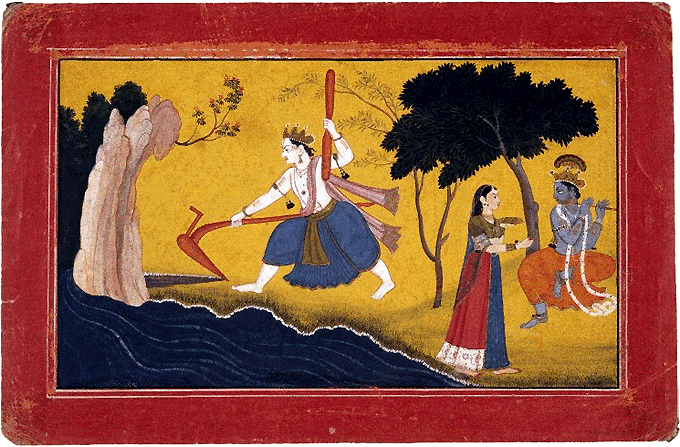
Various Puranas refer to Lord Shiva, in the form of Bhairava, being grief-stricken on the demise of Devi Sati, plunges on to the river Yamuna, making it black in complexion.
The entrances of many Hindu temples are sculpted with the images of Yamuna and Ganga where Ganga, considered to be white in complexion, stands on a fish or a crocodile while Yamuna, black in complexion, stands on a tortoise or a sea turtle.


In toto, the archaeological shreds of evidence mustered from the palaeochannels of the river Yamuna point to the early palaeolithic and Harappan settlements in the Delhi ridge. Also, the literary evidence from the Mahabharata, Vishnu Purana and the Rigveda, inter alia suggest the mythical significance of the river.
Dialectical Materialism
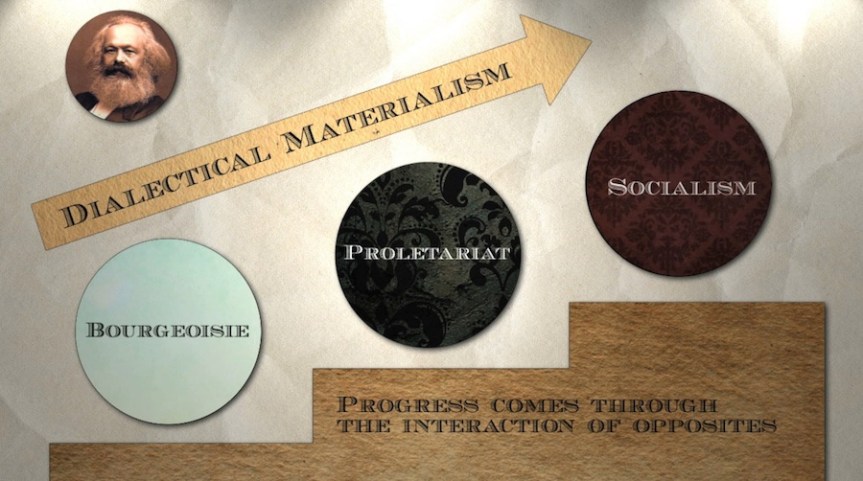
“The history of all hitherto existing societies is the history of class struggles”
Tracing its origin to the classical works of Marx and Engels, Marxism now stands stiff as a cardinal political ideology in the mainstream. Dialectical materialism or historical materialism, as Marx never used this term directly, points to the fact that society is determined by the material conditions of any particular time period. With respect to this theory, Marx suggested five successive stages of social evolution.

Firstly, the initial human societies were characterized by hunting and gathering with the absence of private property, in the Marxist sense, that is, no single person or a group holds the means of production that produce a profit. Marx further suggests that developments in technology and other equivalent sophistication paved the way for the second stage, i.e., slave society.
Marx refers to the stage of slave society as the beginning of class society. Slave owning class owns the slaves as well as the land where the former was the cardinal means of producing profit. In order to capture more and more slaves, large scale expeditions and expansion projects were initiated that resulted in the administrative inconvenience of a colossal territory. Also, slave uprising and revolutions for freedom replaced the slave society with the third stage of feudal society.
The feudal society was characterized by different social groups that were ranked in hierarchical order based on their ownership of land. Feudal Europe had three prominent classes at the primus locus: the clergy, nobility and the third estate. The third estate was constituted by landless labourers and others of its kind. Gradually, the rich profit-seeking merchants formed a capitalistic class and consequently, the feudal lords were unwilling to accept the technological revolution that the capitalists wanted. The profit-driven capitalists were restricted by the feudal society, subsequently preventing them from making more profits. ‘Then begin the epoch of social revolution’ since the social and political organizations were hampering the development of capitalistic forces. A bourgeoisie revolution replaced the feudal society with the fourth stage of capitalism or capitalist society.

The capitalist society is characterized by a free market along with a minimalist state. The capitalist class own the means of production and control and regulate them via commercial enterprises or corporates that aim at profit maximization. Workers are rewarded in accordance with the contract with the capitalists in the form of wages. These wages are, however, only a fraction of the value added by the workers and this unpaid labour of the workers translates as the profit of the capitalists. Workers are, hence, not paid the true value of their labour and are, in other words, exploited. The capitalist era is also characterized by capitalist control over the state in the form of the instrumental and structural model of the capitalist state as discussed by the Miliband-Poulantzas’ debate. It is also characterized by monopolistic tendencies. In line with Marx, workers are ‘gravediggers’ of capitalism. The capitalists aim to drive down the wages of the workers to secure more profit and hence, it leads to class conflict shaped by the class consciousness of workers who realize themselves to be alienated. The working class strive to establish their own collective control over means of production. This leads to the fifth stage, that is, communism.

The workers mount a successful revolution against the capitalists and if successful, communism will be attained. Marx refers to the existence of two phases of communism: the first phase or the lower phase and the higher phase. Lenin equates the first phase with socialism that is characterised by a decentralized planned economy directed by worker’s communes or councils. Workers govern themselves through democratically elected communes and plan production and distribution of benefits and burdens of collective action. Marx refers to the existence of labour vouchers, a certificate that awards credits to the workers based on their real contribution in the production process that can be exchanged for goods. Finally, this will lead to a perfect state of communism where classes are abolished and class society would cease. The state will ‘wither away’ and ideologies will perish. The communist stage will be characterized by statelessness, classlessness and money-less ness, ideology-less ness.
TIME MANAGEMENT
Time management is the process of planning and controlling how much time to spend on specific activities. Time management is about managing our time effectively and efficiently. Good time management enables an individual to complete more in a shorter period of time. Time management is very important for an individual in each and every part of their life. It may be for children, elderly or grown-ups. In each stage of life time is an essential element which needs to be followed.
Benefits of Time Management
The ability to manage your time effectively and efficiently is very important in one’s life. Good time management leads to improved efficiency and fetches more productivity, less stress, and leads to more success in life. The benefits of time management are;
- Stress relief
If were are managing our time correctly, we would be able to complete our task on the given time. If the task is completed on the given time, we would get an appreciation. If we get appreciation, we will be motivated. If we get motivated, we would work more for the organization and help in achieving the goal (or) the objective of an organization easily.
2. More time
Good time management gives you extra time to spend in your daily life. People who can time-manage effectively enjoy having more time to spend on hobbies or other personal pursuits. If we manage our time properly, there will be no question for stress, tired, unhealthy etc.
3. More opportunities
Managing time well leads to more opportunities and less time wasted on trivial activities. Good time management skills are key qualities that employers look for. The ability to prioritize and schedule work is extremely desirable and varies from every organization. If we manage our time efficiently, we will be able to look after many things and many opportunities that we are searching for.
Time management techniques:
- Keep a to-do list
To manage your time effectively, always keep a to-do list. A to-do list contains all the things you need to do in a certain time. In a to-do list, write the jobs or the works you want to do in a stipulated time.
2. Prioritize your task
Always prioritize you work accordingly. You should be able to prioritize your work. Prioritizing is nothing but, segregating the work into very much important, important and not important. When we segregate our task like this, we come to know which task to be completed first and the following task to be completed. By following this ways, our task can be completed and also we can manage our time easily.
3. Be focused
To manage our time efficiently and effectively, we should be always focused on the job that we are doing. Only when we are focused we would be able to complete the task in the given stipulated time. Our time can also be easily managed.
4. Track your time
Ultimately, you can’t improve how you use your time, without understanding how you actually use it in the first place. Tracking your time is elementary here – it provides the insight and self-awareness to make effective changes, surfacing hidden time drains, highlighting inefficient processes and laying out your productive patterns.

Corruption
“One of the saddest lessons of history is this: If we’ve been bamboozled long enough, we tend to reject any evidence of the bamboozle. We’re no longer interested in finding out the truth. The bamboozle has captured us. It’s simply too painful to acknowledge, even to ourselves, that we’ve been taken. Once you give a charlatan power over you, you almost never get it back.”
― Carl Sagan, The Demon-Haunted World: Science as a Candle in the Dark
Corruption is the criminal act of dishonesty. It is an evil act said by an individual or a group. Most importantly, people in positions of authority are the most susceptible to corruption. Corruption is a representation of greed and selfish behaviour. India is full of corruption in today’s day and age. The politicians and several leaders of our nation are quite corrupt and hence India’s economy has been suffering.
Some of the common methods of corruption are:
• Bribery – Bribery is the demonstration of offering someone money or something of significant value in order to convince them to accomplish something for oneself.
• Extortion – Extortion is the crime of acquiring something from someone, especially through force or threats.
• Fraud – Fraud is a purposeful deception intended to furnish the culprit with an unlawful gain.
• Embezzlement – Embezzlement alludes to a type of whie-collar crime in which an individual or element abuses the resources dependent on him or her.
• Collusion – Collusion is a non-competitive, secret, and sometimes illegal agreement between rivals which attempts to disrupt the market’s equilibrium. The act of collusion involves people or companies which would typically compete against one another, but who conspire to work together to gain an unfair market advantage.
• Abuse of discretion – Abuse of discretion is a norm by which appellate courts review certain decisions by lower courts.
• Favouritism, nepotism and clientism – Favouritism, nepotism and clientism include preferring of not the culprit of corruption, but rather somebody identified with them, such as a friend, relative or member of an affiliation.
• Cronyism – Cronyism is the arrangements of companions and partners to places of power, without proper regard to their capabilities
• Patronage – Patronage is the help, advantage, or moneytary guide that an association or individual gives on another
“You know, it’s pretty easy reading this book to see why I was angry and confused for all those years. I lived my life being told different stories: some true, some lies and I still don’t know which is which. Children are born innocent. At birth we are very much like a new hard drive – no viruses, no bad information, no crap that’s been downloaded into it yet. It’s what we feed into that hard drive, or in my case “head drive” that starts the corruption of the files.”
― Nikki Sixx, The Heroin Diaries: A Year in the Life of a Shattered Rock Star
The Government should take steps to do away with corruption. They should put up banners and hoardings throughout the city. Advertisements should be given. Hand outs should be distributed outside public buildings regarding these matters. Advertisements should be played on national television in order to spread this knowledge far and wide. The Government should include this in the curriculum for young children in order to educate them about corruption. Parents should encourage their children to fight against corruption. Children should be introduced to proper laws. The capacity to decide what is right and what is wrong should be instilled into them from a very young age. Going ahead, this will ensure a brighter future for India.
Top 8 Future Technology Trends For 2021
Technology is ever evolving regardless of the current market conditions. New technologies are emerging with groundbreaking innovations to tackle world issues. It must be strange that predictions are being made about the future of technology in these uncertain times.
In the coming years from systems that could predict the risk of a viral transmission to drones that could deliver essentials to your door their industry is transforming our lives.
1. Aerospace technologies
The aerospace sector has countless innovations that continue to increase over the coming years. Defense and other aerospace industries are looking forward to building zero fuel aircraft.
New aerospace technologies include advanced space propulsion systems, advances in material sciences, smart automation and blockchain with the help of 3D printing.
Many aerospace components are being developed given the global situation although innovation in this field may come at a calculated pace.
2. 5G networks
With an increase in video conferencing remote working and digital collaboration this year, reliable connectivity and better bandwidth are crucial. 5G deployment is preventing companies from going out of business as we continue to manage school and work from home 5g will play a key role in 2021.
Companies like Samsung, Apple and Xiaomi are readily rolling out 5g phones. Technology is helping make 5G affordable to as many smartphone users as possible next year. Reports say that the global 5G services market is estimated to reach 41.48 billion by 2020 and expanded an annual growth of 43.9 percent from 2021 to 2027.
3. Edge computing
Almost all technology in today’s world are applications of edge computing collaborations with artificial intelligence. 5g and mobile cloud edge will make data processing closer to the customers leading to faster and more efficient computing, even amidst the pandemic companies continue to consolidate and expand their offering of edge solutions from traditional rugged embedded computers to high performance edges for AI and other data intensive applications.
4. Extended reality
Extended reality includes augmented and virtual reality. This technology in conjunction with others will be used during the next year to tackle challenges posed by the current situation it will largely help in avoiding dangerous situations that could potentially cause a viral transmission.
Over the coming years this technology will revolutionize healthcare education and lifestyle among others. The AR and VR market revenue is expected to reach 55 billion usd by 2021.
5. Human augmentation
With the principles of exceeding replicating and supplementing human ability human augmentation changes. What it means to be human, the augmentation pipeline holds other great promises for the future. Like bionic human joints, embedded scanning, customizable contact lens augmented skull, feet, artificial windpipes for your throat etc.
The possibilities are endless the global human augmentation market is predicted to rise at a considerable rate during the forecast period between 2020 and 2026. Most of the innovations today are being facilitated by one vital technology.
6. Artificial Intelligence
Artificial intelligence or AI has proven to be one of today’s most transformative tech evolutions. However with the current world scenario artificial intelligence seems more promising than ever.
The volume of data collected on healthcare and infection rates can be used to prevent infection spread in the coming days machine learning algorithms will be increasingly sophisticated in the solutions.
They uncover in the coming year that AI will make predictions on demand from hospitals and other healthcare providers. According to experts global spending on cognitive and ai systems will reach 57.6 billion in 2021 and the ar market will grow to a 190 billion dollar industry by 2025.
7. Robotic Process Automation (RPA)
RPA is the utilization of programming to mechanize business cycles like deciphering applications, handling exchanges, managing information, and in any event, answering emails. RPA automates monotonous errands that individuals used to do.
In spite of the fact that Forrester Research gauges RPA mechanization will undermine the occupation of 230 million or more information laborers or roughly 9% of the worldwide labor force, RPA is likewise making new openings while changing existing positions. McKinsey tracks down that under 5% of occupations can be completely computerized, yet around 60% can be halfway mechanized.
8. Internet of Things (IoT)
The Internet of Things, or IoT, alludes to the billions of actual gadgets all throughout the planet that is currently associated with the web, all gathering and sharing information. On account of the appearance of super-modest central processors and the omnipresence of remote organizations, it’s feasible to turn anything, from something as little as a pill to something as large as a plane, into a piece of the IoT.
Interfacing up every one of these various articles and adding sensors to them adds a degree of advanced insight to gadgets that would be generally idiotic, empowering them to convey continuous information without including a person. The Internet of Things is making the texture of our general surroundings more astute and more responsive, consolidating the computerized and actual universes.
EMPLOYEE ENGAGEMENT
Employee engagement is a workplace approach resulting in their right conditions for all members of an organization to give to their best each day, committed to their organization’s, goals and values, motivated to contribute to organizational success, with an enhanced sense of their own well-being.
Employee engagement is based on trust, integrity, two way commitment and communication between an organization and its members. It is an approach that increases the chances of business success, contributing to organizational and individual performance, productivity and well-being. It can be measured. It varies from poor to great. It can be nurtured and dramatically increased; it can be lost and thrown away.
Employee engagement is getting up in the morning thinking, “Great, I’m going to work. I know what I’m going to do today. I’ve got some great ideas about how to do it really well. I’m looking forward to seeing the team and helping them work well today”.
Employee engagement is about understanding one’s role in an organisation, and being sighted and energised on where it fits in the organisation’s purpose and objectives.
Employee engagement is about having a clear understanding of how an organization is fulfilling its purpose and objectives, how it is changing to fulfil those better, and being given a voice in its journey to offer ideas and express views that are taken account of as decisions are made.
Employee engagement is about being conscious on what we are doing and have an eyesight of what is supposed to be done, whenever a task is assigned to him/her in an organization.
Employee engagement is about being included fully as a member of the team, focused on clear goals, trusted and empowered, receiving regular and constructive feedback, supported in developing new skills, thanked and recognized for achievement.
Engaged organizations have strong and authentic values, with clear evidence of trust and fairness based on mutual respect, where two-way promises and commitments – between employers and employees – are understood and fulfilled.
Employee engagement is about positive attitudes and behaviors leading to improved business outcomes, in a way that they trigger and reinforce one another.
Employee engagement is about our employees feeling pride and loyalty working for our organization, being a great advocate of the organization to our clients, users and customers, going the extra mile to finish a piece of work.
Employee engagement is about drawing on our employees’ knowledge and ideas to improve our products and services, and be innovative about how we work.
Employee engagement is about drawing out a deeper commitment from our employees so fewer leave, sick absence reduces, accident rates decline, conflicts and grievances go down, productivity increases. Employee engagement is about organization actions that are consistent with the organization’s values. It is about kept promises, or an explanation why they cannot be kept.
Employee engagement cannot be achieved by a mechanistic approach which tries to extract discretionary effort by manipulating employees’ commitment and emotions. Employees see through such attempts very quickly and can become cynical and disillusioned.

Deep Learning AI Image Recognition
It seems like everyone these days is implementing some form of image recognition such as google facebook and car companies etc. How exactly does a machine learn what a Siberian cat looks like? That is what we will look at today on the feed.
Now, with the help of artificial intelligence, we are able to do meaningful things with each of those squares and hexagons in order to boost our productivity and make our overall lives much easier today.
How an image recognition works
Machine learning is a subset of artificial intelligence that strives on completing specific tasks by prediction based on input and algorithms. If we go even deeper, we learn about deep learning. AI is a subset of machine learning, which attempts to mimic our own brain’s network of neurons to a machine.
Learn every day we’re getting image recognition more involved in order to help us with our personal daily lives. For example, if you see some strange-looking plant in the living room simply point google as its image and it will tell you what it is.
If your discord friend uploads a photo of their new cat and you want to know what breed it is. Just run a google image reverse search and you will find out what it is. Self-driving vehicles need to know where they can drive, which is a road, where are the lanes, where they can make a turn, what the difference is between a red light green light, etc.
Image recognition is a huge part of deep learning. The basic explanation is that in order for that car to know what a stop sign looks like it must be given an image of a stop sign the machine will read the stop sign. Through a variety of algorithms, it will then study the stop sign and analyze how the image is going to look by going section per section what color is the stop sign, what shape is it what’s written on it and where is it usually seen in a driver’s peripheral vision.
If there are any errors, scientists can simply correct them once the image has been completely red. It could be labeled and categorized but why stop with one image in our perspective we don’t really need to think for half a second about what a stop sign is and what we must do when we see it.
We have seen so many stop signs in our lives it is pretty much embedded in our brains. The machine must read many different stop signs for better accuracy. That way it doesn’t matter whether the stop sign is seen during foggy or rainy conditions, during the night, or during the day. The machine has seen a stop sign many times. It can know it’s a stop sign just by looking at its shape and color alone.
If you upload and backup your photos go check out your photos, if you haven’t sorted anything you will notice that Google has done it for you. There’s a category for places, things, videos, and animations. Google has sorted photos into albums based on where Google thinks they belong.
The photos labeled as food, beaches, trains, buses, and whatever else you may have photographed in the past. This is the work of Google’s image recognition analysis. It has analyzed over a million photos on the internet. It’s not just Google that uses image recognition as well if someone uploads a photo and Facebook recognizes it.
It will automatically tag them. It’s kind of creepy considering it’s a privacy concern but some people may appreciate the convenience anyways because it saves some time no matter how cool or scary it is. Image recognition plays a huge role in society and will continue to be in development many companies are continuing to implement image recognition and other AI technologies.
The more we can automate certain tasks with machines the more productive we can be as a society.
India gets its New Education Policy
After an interval of 34 years, finally New Education Policy (NEP) got approved on July 29, 2020. It would have been better if the wait for NEP was not so long. But now the strategies proposed for radical change in Education system seems worth waiting. This policy will indeed modernize and boost the Education system. In this policy, the Education system is designed according to the need of 21st century. Many drastic changes have been approved in school education, higher education, teacher education and research. The focus is on skill based learning and cognitive development instead of rote learning. Now the learning would be based on the interests of the children. Also the name of Human Resource Development (HRD) Ministry has been again renamed as Education Ministry. Previously in 1985, the name of this ministry was changed.
The New Education Policy has proposed the far- reaching changes in the Indian Education system. Through this, the youth of India will be shaped to cope with the global challenges as well as contribute well in shaping India to be a ‘Vishva-Guru’ again. The policy was being drawn up since 2015. In 2016, a committee lead by TRS Subramanian submitted its report with its recommendations. Then , in 2017, another committee was formed lead by former ISRO chief Dr. K. Kasturirangan, which submitted its report in 2019. The previous education policy was made in 1986, in which few amendments were made in 1992. The government is preparing for the implementation of NEP from this session.
There are five pillars of this New Education Policy i.e. Access, Equity, Quality , Affordability and Accountability. Based on these pillars the amendments are made in Education system. The government is also aiming to spend 6% of GDP on education sector which prior was only 4%. As we know, India is a multi- lingual country , so in this policy encouragement is given to for development and enrichment if the regional languages.
KEY POINTS IN NEW EDUCATION POLICY
- In New Education Policy, the structure of School System is changed. The structure of 10+2 is abolished. The new structure of schooling is centered as 5+3+3+4 i.e. in four levels. The first stage of five years include the pre-schooling or Anganwadi of three years and first two years of schooling i.e. grade one and two (Foundation level). Then, there are three more levels grade three to five (Primary level), grade six to eight (Middle level) and grade nine to twelve(Secondary level).
- Examinations will not be conducted every year, instead it will be conducted in Grade three, five and eight. The board exams of Grade ten and twelve will be continued. Students will get two attempts to appear in boards. These examinations will not be based on rote learning , but the application of knowledge in real life situations.
- PARAKH, National Assessment Centre, is proposed to be setup as a standard-setting body under MHRD that will set norms and guidelines for assessment of students, for national achievement survey (NAS) and will also update it accordingly.
- Upto Standard 5, the medium of instruction will be the regional language (preferably till Grade 8 and beyond). This is because students grasp quickly in their mother-tongue or home-language. It is clearly stated that ‘no language will be forced on any student.’
- Modern vocational training like CODING will be taught to students from Grade 6. Other vocational courses will be there in colleges. This will help youth in becoming self- dependent.
- National Curriculum Framework for School Education (NCFSE), 2020-21 is will be formulated by NCERT in a new and comprehensive way. Also it will be visited and updated once in every 5-10 years. According to the director of NCERT, revised curriculum books will be ready in around three years.
- In Secondary Education, now there is no rigid distribution of streams as there was formerly. Students can choose subjects according to their interest like Science stream students can also opt for Psychology or Music as per their interest.
- The unnecessary load of syllabus will also be pulled out. Only relevant topics will be there in the curriculum. The crucial focus of amendments is to provide holistic development to the students through integrated, engaging, interesting, multi-disciplinary and multi-linguistic learning.
- Higher Education‘s standard will be elevated. Students can opt for creative combination of subjects according to their interest. Also they can change their subjects in mid of their course. Academic Bank of Credit will be established in which credits earned from previous courses and attended Universities will be kept safe. These will be added in final.
- Now prestigious universities of world can establish their campuses in India. This will help in coping with the issue og ‘Brain Drain.’ It will also help in boosting the economy.
- To save student’s time and money, only one entrance exam will be conducted all over India for admission in all Universities. Also, uniform regulations and standards (including fee) will be established for private as well as government Universities by a single regulatory body.
- Higher Education Council of India (HECI) will be formed as a single regulator for Higher Education. Independent regulatory bodies like UGC and others will be dissolved into it.
- Multiple- entry and exit facility will now be available in education system. If one has to leave the degree course just after one year completion, he/she will not be empty-handed. After completion of one year a certificate will be provided , after two years a diploma and finally after three years a degree. This will surely help the dropout students in continuing their studies.
- In this radical transition of Education system by NEP, a new system is proposed for Research. M. Phil. has been terminated. There is a new four-year degree course for students interested in research. After this degree and M.A. of one year, one can directly go for PhD. National Research Foundation (NRF) will be established to strengthen and flourish the research culture in India.
- Teacher Education and their procedure of appointment has also thoroughly revised. There will three types of B.Ed. (minimum requirement to become a teacher), 4-year B.Ed. for 12th pass aspirants, 2-year B.Ed. for graduates and 1-year B.Ed. for those who have passed M.A. By 2030, 4-year integrated B.Ed. degree will be made compulsory.
- Government has aimed to improve the Gross Enrolment Ratio (GER) in Higher Education to 50% by 2035, keeping in mind vast population of youth in India. Currently, it is 26%.
- According to government’s roadmap, most of the provisions of NEP will come into effect by 2024. A monitoring committee will be formed for intact implementation of proposed policies.
It took a quite long time of 24 years to get a New Education Policy, so the government now should take long time for its implementation. Education which meets the global standards is a salient way to make our country a strong and independent nation. In addition, the target of government to spend 6% of GDP on Education will really bring a positive change, it will definitely help in building the fundamental structure of education at all levels. Finally , it must be kept into mind that any policy , does not matter how righteous it is, will only be productive when it comes into effect sincerely. Long and short, apt implementation of NEP will fulfil the needs and challenges of India in 21st century.
Protection of Western Ghats
Western Ghats are home to over 5000 species of flowering plants, 139 mammal species, 508 bird species and 179 amphibian species, many undiscovered species. It spreads in 6 states :kerala, karnataka, Tamil Nadu, Goa, Maharashtra and Gujarat.
Madhav Gadgil Panel Report, 2011
*Turn entire western ghats
TEAM BUILDING
Team building is nothing but, the people work in a team, rather than working as an individual. Team building always fetches everyone almost a comfortable zone. Without working as an individual, if rather we work in a team, especially in an organization, the goal of the organization can be easily achieved. When we are working in a team, their always exists a good relationship with each other.
Team building is always aimed at:
• creating an informal atmosphere.
• building closer relationships between each other in a team.
• improving team spirit and.
• identification of leaders.
• Development of team qualities, such as mutual support, compromise, motivation etc.
Also, team building can help in the presence of conflicts in the team, as informal dialogue and joint activities help to improve relations between employees, to remove misunderstandings. As a result of team-building, team members will know each other better and find a common language with everyone in a team. If there are conflicts in the team it is possible to recommend organizing outdoor sporting team games. When team members appear in unusual conditions, they more quickly build informal communication, find mutual language and identify opinion leaders, likes and dislikes in the team. At the same time, informal communication leads to a relaxation of each and every member in the team.
Teamwork is one of the most bare minimum requirements for any organization to function and achieve all its goals. All organizations are divided into many sections or teams which work to accomplish the tasks within the specified time limit.
All the parts of the organization do teamwork and complete the various tasks assigned to them. If there is no teamwork, the organization will fail to achieve the specified tasks. One of the most significant advantages of working in a team is that the work gets divided between all the group members more or less equally. When the work is shared, all the members are going too equal amounts of jobs. Hence, the team members will not have hard feelings that they are been overloaded with work, as they work equally in a team.
There are three levels of the team in every organization – Top Level, Middle Level, and Lower Level.
- Top Level: The Top Level is the highest level on the structure of an organization. It is the level that sets the goals of the organization. Top Level is the team that works towards maximizing profits and to minimize the risk of the organization. Understanding the different needs and wants of the consumers is one of its main objectives.
- Middle Level: The Middle Level is the second level on the structure of an organization. Managers or supervisors are on the Middle Level in an organization. The work of the middle level is to follow the instructions told from the top level. It allots work to the employees so that they can accomplish the goals that are set by the organization. The people working on the Middle Level, regularly check the work done by the employees and make sure that the employees meet all the deadlines which is made.
- Last Level: The last level in the structure of an organization is the Lower Level. It is the level which consists of all the employees of the company. Employees have to work towards completing all the work that is assigned to them by the managers. They always follow the work which is given to them.

Road accidents
“ There’s a difference between driving and texting. When your driving your eyes have to be open and on the road watching the cars around you, road signs, and traffic lights. Along with your mind on the road and destination. Which means you are multitasking. When your texting your eyes are on your cell phone screen and key pad. Along with your mind on what your going to say next. So how can you do both? Please stop! ”
― Jonathan Anthony Burkett, Neglected But Undefeated: The Life Of A Boy Who Never Knew A Mother’s Love
Road accidents refer to the collision of vehicles with another vehicle or person or some inanimate object. We see numerous road accidents everyday. This comes even after so much improvements in technology. The question arises as to why this is happening. In the case of India, there is one death in every four minutes due to road accidents. The main culprits to this problem are low awareness about roads and drunk driving. Automobile companies too need to take more safety precautions while manufacturing cars. We as the citizens of India should unitedly request for better equipped cars with more safety precautions. Improper visibility due to various bad weather conditions and rash driving further contribute to the death toll. The Government should station police officers at close intervals to monitor traffic speed and motion detecting cameras to take note of overspeeding vehicles. Also, speed caps can be introduced on vehicle manufacture in order to curb over speeding of vehicles. Road accidents can cause permanent injuries that include broken bones, concussions, haemorrhages and other injuries. That being said, with proper care, most road accidents are avoidable.
“Everything started to move in slow motion. A vehicle was coming up the hill in the opposite direction, facing us but in its own lane. With vehicles parked on both sides of the road, this meant that there was just a narrow passage area for both vehicles to pass through. However, he had yet to reduce his speed, and now I knew which car he was going to hit. I was frozen stiff with fear in the front passenger seat, as I helplessly watched him slam into the back of a parked car. I was not wearing a seat belt, so upon impact my head crashed into the windshield. I was then slammed back into my seat, but with such force that everything went black.”
― Drexel Deal, The Fight of My Life is Wrapped Up in My Father
The main reasons for road accidents that are due to equipment failure can be classified as due to failing of break, bursting of tyre, tread separations or problems in steering or suspension. Traffic rules have been created in order to mitigate the possibility of such road accidents. Every day’s morning newspaper is covered with the deaths of people who are dead or severely injured. Despite so many precautions, road accidents are surprisingly common in India. These accidents mostly occur to those who do not obey traffic rules. Many people think that the worst consequence of breaking a traffic rule is a fine, but they fail to see the bigger picture. Such people in the long run end up paying for this mistake with their life. People in vehicles must always remember to wear their seat belts. Driver should stay below the recommended speed limit. Cars should be driven in their own lanes. It must be taken utmost care of to wear a helmet before stepping out.
WORKPLACE ROMANCE
Workplace romance means that, a relationship that exists between the opposite gender of people in the workplace (or) the organization there are working with. Workplace romance has become common now-a-days as, people majority spend their time in their organization. By meeting and mingling with the people of the same gender and opposite gender. Majority of their time is spent with the people or friends in the organization who surrounds them most of the time
By meeting and spending most of their time with their colleagues in the organization, they get used to liked to their friends taste and preferences, likes and dislikes, their needs and their wants. These things leads to developing a good sort of chemistry with them. This sort of feeling is the starting of their workplace romance.
Relationships between employees often cause problems for businesses: favoritism, harassment lawsuits, conflicts of interest, gossip, toxic work environment, things can get ugly in a hurry when a relationship turns sour. Plus, office romance can land a company in the headlines for inappropriate relationships.
General relationship may lead to workplace romance when there is mutual desire and longing for each other.
Advantages of Workplace Romance:
- Energy level is increased:
Office romance definitely increases the energy level of both the gender. As they get to deal with the more or less, with same type of work. They may also engage in same projects as well. This may lead them to increase their energy level and make them to engage more closer. This also helps the organization (or) the workplace to attain their goals quicker and easier.
2. Leads to motivation:
When they are engaged in workplace romance, they easily get motivated. As they used to spend much of their time with their partner. Also they would work more, as they get motivated themselves, when they are working together as a partners/team. They will always prove up to their best, as they don’t want to feel less against each other.
3. Increase in productivity level:
When they are in relationship, they feel better in expressing their views and ideas. They feel easy in communicating with each other. Both of them would, be of same attitude, knowledge and also in their skill level. They always feel productive about themselves and therefore help in achieving the goal of the organization.
Disadvantages of Workplace Romance:
- Risk at workplace:
As every coin has both sides. This also may have some disadvantages. Relationship may be positive (or) sometimes negative. If negative sort of relationship exists, it may lead to changes in their behavior. They will not be productive. At last, they end up at risk in the workplace.
2. Workplace affected:
If the relationship is not good between each other, it also affects their work too. It may affect their performance in their work. Work dedication may also suffer even though you are a brilliant employee.
3. Conflicts:
If their relationship is negative, they always feel weird and wouldn’t concentrate in their work stronger. When two employees from a different department, in a relationship, might disclose important information or decisions that were expected to be a secret to each other.

Workplace romance
Training and Internship
Training and Internships are the most important thing one should take before applying for a job. Internships are the stepping stones to a good carrier and a better future. Taking training before a job helps in self confidence to work in a different environment. Internships are the most important thing for a person because you get to learn a lot about different skills like cooperation skills, management skills, communication skills and teamwork.
Internships and trainings are important to know the real you, it helps people the know their own self and taking an internship before going for a job makes you clear about how to work in a workplace?, how to respond to people?, and finishing the given work within the allotted time. Internships and trainings are indeed an important thing which helps people to lean more about the work. Taking an internship will also help one to believe in one self. It makes you work more efficiently without any hindrances. Taking an internship will help to be placed in good reputed organization. It makes people work more easily because when one is well trained he/she may excell in the world the do. To prove this there is a phrase called Practice makes a man perfect”. So Internships and trainings are the most important thing.

Complicated Understanding of the ‘Left’ and the ‘Right’

All might be pretty familiar with the political usage of the terms ‘left’ and the ‘right’ with hundreds of political parties being established in these lines. However, the concept of the left-right divide is pretty complex and controversial. The complexity is explained in terms of two graphs in this article. Moreover, the main differences between the two are also enumerated.
After the legendary landmark of the French Revolution, the first meeting of the Estates-General took place in 1789. In the meeting, the entrenched elites occupied the position right to that of the presiding officer whereas the common people occupied the position to the left of the same. This relative position of a set of people with opposing ideologies with respect to the presiding officer then came to mark the left-right divide.
The leftists were proponents of change. They attempted to produce a change in society. Also, they wanted the change to happen at a very fast pace and so, they were proponents of radical change. In addition to that, they were hardcore proponents of total change. Whereas some leftists support violent change with the use of controlled violence for social change, others were supporters of democratic change. The leftists believed in the social-contract theory that argued that society and State are anthropogenic products or human-made products and are answerable to them. They despised the divine origins of society and the State. Also, they believed that the power to rule wasn’t given by God and the power to rule flows from the below- from the working people.
On the other hand, the Rightists were a heterogeneous group that differed in terms of ideologies. Broadly, they can be divided into three groups. Firstly, the Status Quoists or conservatives believed that the present or the existing social order must continue. They believed that the social hierarchy is a natural product and any change to the existing order will destroy the naturally ordained equilibrium. They aspire for social stability and argue that any tinkering with the existing social hierarchy would result in social instability. Secondly, the Revivalists believed in reviving the grandeur of the past. They tend to glorify the past and they argue that social change will come from the revival of the ancient past. They believe that the pathetic present is the result of the abandoned past. They give examples of social construction and dynamism and technological advancements from mythologies. Nonetheless, they support democratic and non-violent changes. Thirdly, the Recationists or the Fascists were violent, frenetic and intolerant revivalists who justified violence as a medium of social change. Here, social change refers to reviving the lost cultural glory.
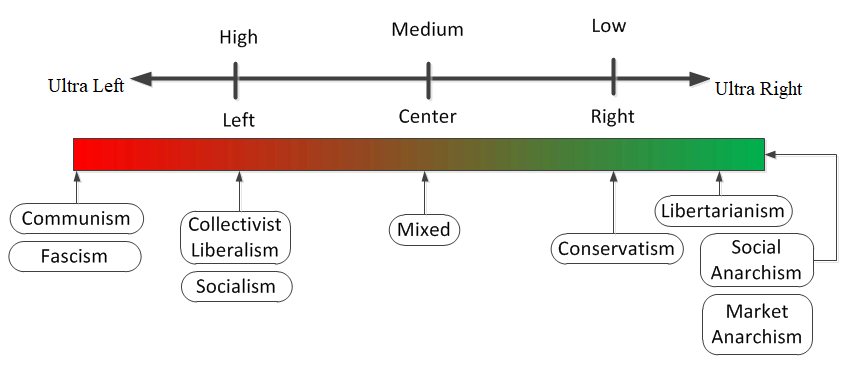

The following facts make this division complicated:
- Some group of Rightists are proponents of change
- Some groups of leftists and certain Rightists believe in change through democracy whereas others of the same ranks believe in change through violence.
- The Leftists are the proponents of liberty, equality and fraternity but supports economic intervention and fiscal regulations. On the other hand, the Rightists argue for hierarchy and social order but are proponents of free and unregulated markets.
The third point makes this division far more complicated. While liberty, equality, fraternity along with the free market economy are the cardinal principles of liberalism, it should be concluded that both the leftists and the rightists support liberal ideas. This makes liberalism more or less a neutral and central concept located in the middle of both the leftists and the rightists.
| Sl.no | Particulars | Leftists | Rightists |
| 1 | Values | Liberty, equality and fraternity | Social order, hierarchy and authority |
| 2 | Views on social progress through change | Optimistic | Pessimistic |
| 3 | Economy | Regulated economy | Free market economy |
| 4 | Nature of the State | Interventionist State | Restricted State |
| 5 | Origin of the State | Social contract | God/Nature |
Pollution Control Strategies
― Shashikant N Sharma
“ One hundred and fifty years ago, the monster began, this country had become a place of industry. Factories grew on the landscape like weeds. Trees fell, fields were up-ended, rivers blackened. The sky choked on smoke and ash, and the people did, too, spending their days coughing and itching, their eyes turned forever toward the ground. Villages grew into town, towns into cities. And people began to live on the earth rather than within it. ”
In today’s world, pollution is quite a relevant topic. Pollution has existed since the creation of the earth, and still continues to exist to this day. Pollution is the contamination of the natural environment that causes negative effects and long-lasting damage. Several types of pollution exist. Some of these are:
• Air pollution – Air pollution is the pollution of air due to harmful substances present in it. The contributors of air pollution are vehicle emission, dust and dirt, poisonous gases etc. Ozone gas (O3) is a major contributor of air pollution. When it combines with air, it is known as “smog”. Air pollution is caused by the increased levels of carbon dioxide (CO2) and methane (CH4). Frequent climatic changes can also cause air pollution.
• Water pollution – Water pollution is the contamination of water due to chemicals or microorganisms, often a body of water, degraded enough to render it toxic to humans consuming water from it. A few categories of this are groundwater, surface water, surface water, ocean water, point source, nonpoint source and transboundary. The effects of water pollution can be seen from the huge number of deaths that it has caused over the ages. Drinking contaminated water causes various illnesses in people every year. These diseases include cholera, giardia and typhoid. This type of pollution is prevalent even in well off nations.
• Soil pollution – Soil pollution is the degradation of a portion of land due to the presence of chemicals or other changes in natural soil. Such pollution is characteristically aused by industrial activity, improper use of fertilizers in agriculture and improper disposal of waste. Soil pollution has a plethora of effects. Short term effects include headaches, nausea, coughing, chest pain, irritation in eyes, fatigue and weakness. Long term effects due to prolonged exposure to soil pollution are permanent damage to nervous system, depression of CNS, damage to vital organs and a higher than average risk of developing cancer.
“Because, underneath all of this is the real truth we have been avoiding: climate change isn’t an “issue” to add to the list of things to worry about, next to health care and taxes. It is a civilizational wake-up call. A powerful message—spoken in the language of fires, floods, droughts, and extinctions—telling us that we need an entirely new economic model and a new way of sharing this planet. Telling us that we need to evolve.” Naomi Klein
Pollution can be reduced by raising awareness about it. This can be done by the Government. The Government can educate young children about pollution by including it as a compulsory part of school curriculum for them. Banners and hoardings can be put up on streets. Advertisements can be played on national television. The only way to fight pollution is to learn about its harmful effects and let everyone take steps to curb every kind of pollution. Use of plastic products should be used and replaced by sustainable and eco-friendly products. Ultimately, pollution only causes a negative effect on the environment and the life of man. Thus we must take action against pollution before it gets any worse.
References
Chang, J. S. (2001). Recent development of plasma pollution control technology: a critical review. Science and Technology of Advanced Materials, 2(3-4), 571.
Downing, P. B., & White, L. J. (1986). Innovation in pollution control. Journal of environmental economics and management, 13(1), 18-29.
Tietenberg, T. (1998). Disclosure strategies for pollution control. Environmental and resource Economics, 11, 587-602.
Van Der Ploeg, F., & De Zeeuw, A. J. (1992). International aspects of pollution control. Environmental and Resource Economics, 2, 117-139.
 Track2Training
You must be logged in to post a comment.