India announces $500 million infra project, $250 million financial aid for Maldives

With its eye on China, India on Thursday committed to Maldives a five-pronged package including infrastructure worth $500 million, a direct cargo ferry service, creation of an air travel bubble, uninterrupted supply of essential commodities and additional financial aid of $250 million to help the cash-strapped economy.

These were among the key takeaways as External Affairs Minister S Jaishankar held a detailed meeting with Maldives Foreign Minister Abdulla Shahid.

Former President of Maldives Mohamed Nasheed, who is currently Speaker of Majlis (Maldives’ parliament), took a dig at China for their debt-trap diplomacy. “The super low cost development assistance announced by @DrSJaishankar today is exactly what Maldives needs. Genuine help from a friend, to help us build critical infrastructure. Rather than eye-wateringly expensive commercial loans that leaves the nation mired in debt. @PMOIndia,” he tweeted, referring to Chinese loans to the previous Yameen government.

Maldives President Ibrahim Mohamed Solih called it a “landmark moment”, while Prime Minister Narendra Modi said, “Our special friendship is, and will always remain, as deep as the waters of the Indian Ocean.”

Responding to a request from the Maldives government, New Delhi decided to support the implementation of Greater Malé Connectivity Project (GMCP) through a financial package consisting of a grant of $100 million and a new line of credit of $400 million.

This will be the largest civilian infrastructure project in Maldives, connecting Malé (the capital) with three neighbouring islands — Villingili, Gulhifalhu (where a port is being built under Indian line of credit) and Thilafushi (new industrial zone) – by construction of a bridge-and-causeway link spanning 6.7 km.

“Once completed, this landmark project will streamline connectivity between the four islands, thereby boosting economic activity, generating employment and promoting holistic urban development in the Malé region,” a statement by the Ministry of External Affairs said.

On the direct cargo ferry service between India and Maldives, Jaishankar told his Maldivian counterpart that it will commence shortly. The service is expected to enhance sea connectivity and provide predictability in supplies for importers in Maldives and exporters in India. Shahid tweeted, “The cargo ferry service between Cochin-Kulhudhuffushi-Male will also bring immense development to the north of the Maldives.”

The air travel bubble between India and Maldives is expected to facilitate movement of people for employment, tourism and medical emergencies. Maldives is the first neighbouring country with which an air bubble is being operationalised.

“The air bubble symbolizes India’s support to shore up tourism arrivals and revenues in the Maldives. Health protocols in both countries will be strictly followed,” the MEA statement said. The first flight under the air bubble is expected on August 18.

Jaishankar also conveyed the decision to renew quotas for supply of essential commodities to Maldives for 2020-21. The commodities include food items as well as river sand and stone aggregates. “The quotas assure food security, and supply of essential construction items, and thereby provide certainty and price stability for such essential items in the Maldives,” the statement said.

Given the challenges faced by Maldives due to the Covid-19 situation and India’s commitment to assist Maldives in its economic recovery, Jaishankar told Shahid that New Delhi has decided to extend in-principle urgent financial assistance to the Government of Maldives by way of a soft loan arrangement.

Jaishankar tweeted, “Warm and fruitful discussion with FM @abdulla_shahid of #Maldives. Agreed that the #COVID19 pandemic has brought the two nations even closer. We will be reliable partners in meeting both aspirations and challenges.”

Shahid tweeted, “Connecting for Connectivity! A warm, fruitful, extremely productive meeting with EAM @DrSJaishankar today! The already robust and dynamic #MaldivesIndia-Partnership continues to strengthen, even during the pandemic! Agreement on several key initiatives moving forward.”

The interaction was part of regular high-level exchanges between India and Maldives.

According to MEA, Shahid conveyed gratitude for the financial assistance of $250 million being extended by India. He said this would help revive the Maldivian economy which is grappling with the impact of the pandemic.
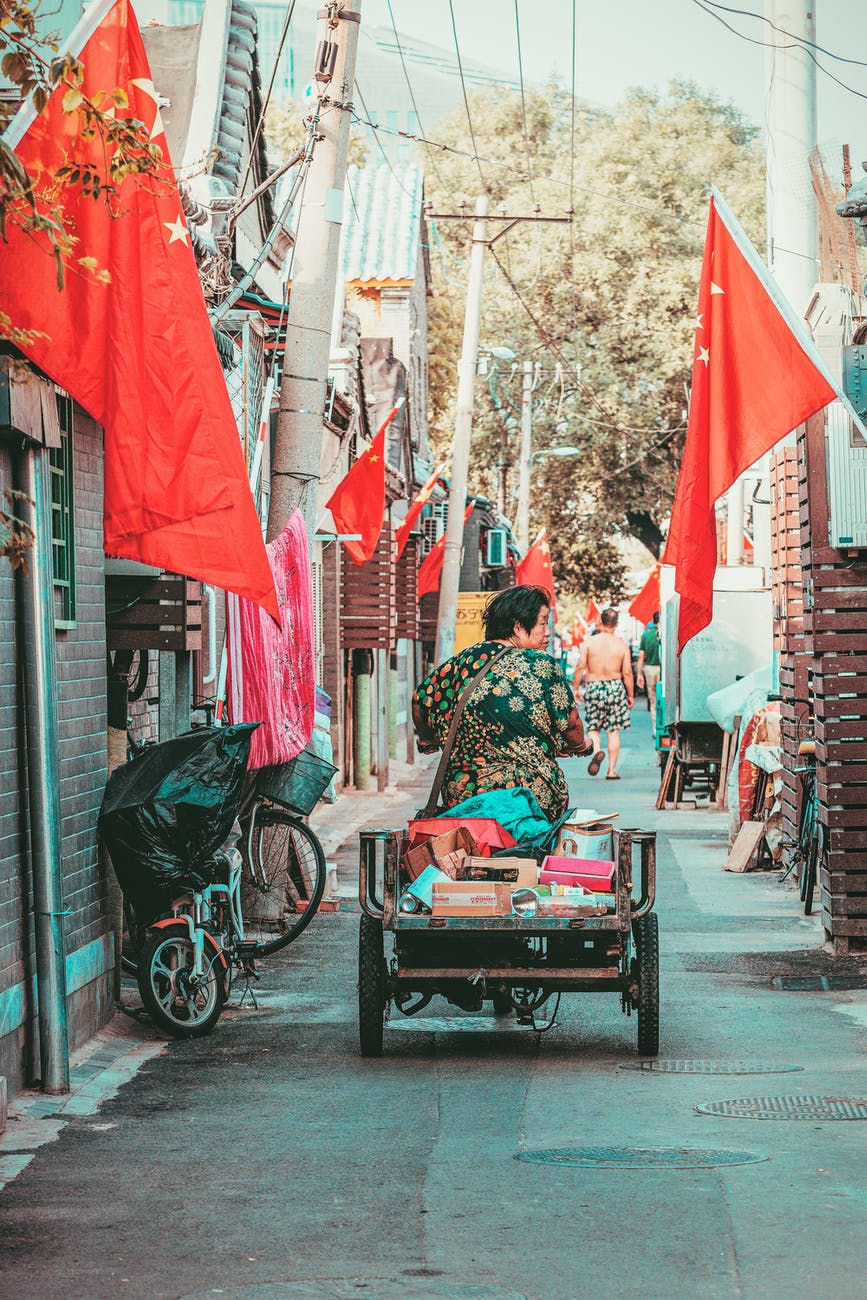
Bipartisan resolution introduced in US senate China on aggression against India

A bipartisan resolution was introduced in US Senate Thursday that seeks to condemn China’s use of military aggression to change the Line of Actual Control with India and calls for a diplomatic solution.

Senators John Cornyn (Republican) and Mark Warner (Democrat) moved the resolution that “condemns the People’s Republic of China’s use of military force to change the status quo at the Line of Actual Control, as well as its refusal to de- demarcate that Line in accordance with past bilateral agreements with India.”

And it calls for a “ diplomatic solution that rapidly restores the April 2020 status quo at the Line of Actual Control”.

Without specifically mentioning the Indian ban on Chinese apps, the resolution seeks to “commend India for taking steps to secure its telecommunications infrastructure from Chinese security threats and seeks a commitment to to “deepening defense, intelligence and economic ties” between the United States and India and supports bilateral and multilateral partnerships such as the Quadrilateral Security Dialogue, “to promote a rules-based order in the Indo-Pacific”.

“The June 15 conflict between China and India, resulting in the deaths of approximately 20 Indian soldiers, should set off alarm bells regarding the PRC’s provocative actions in disputed territory,” Warner said in a statement.

He added: “This resolution condemns PRC’s actions to change the Line of Actual Control, especially in the midst of diplomatic negotiations between the two countries; and encourages the two nations to find a diplomatic resolution that restores the April 2020 status quo at the LAC.”

“I commend India’s commitment to standing up to China and maintaining a free and open Indo-Pacific,” said Cornyn. “It is more important than ever that we support our Indian partners as they defend against Chinese aggression.”

History of Chocolate

Photo by Delphine Hourlay on Pexels.com

The first thought that comes to our mind when we hear the word chocolate is a candy or a dessert which tastes sweet. At present, Chocolate is one of the most famous food items in the world. It is consumed worldwide in different forms and is loved by foodies. At first thought we think of it as something to eat and not drink. Chocolate has a very different history and the story behind its popularity is quite an interesting one. The history of Chocolate dates back to about 450 B.C. when it was originally consumed as a bitter drink mixed with spices or corn puree. It originated in Mesoamerica where the Aztecs believed that the cocoa or cacao seeds were the gifts of the God of wisdom. It was used as an aphrodisiac which gave the drinker strength. The sweet pulp of the cacao fruit surrounding the beans was also fermented into an alcoholic beverage at that time. Today local folks of South Mexico are still known to make such drinks.

Photo by Pixabay on Pexels.com

The word chocolate came from the Aztec word “xocoatl” meaning a bitter drink brewed from cacao beans. The cacao tree has a Latin name “Theobroma cacao” meaning Food of the Gods. In pre-modern Latin America, the cacao seeds were considered so valuable that they were used as a currency. It was one of the essential items in rations of the United States soldiers during war. According to a 16th century Aztec document 100 cacao beans could be exchanged for a good turkey hen. 

The cacao tree is native to Mesoamerica where its cultivation, consumption and cultural use began. When pollinated, the seeds of the cacao tree form a sheath, within which 30 to 40 brownish-red almond shaped beans are embedded in a sweet viscous pulp. The beans are bitter, but the pulp is sweet which may have been consumed by humans at first. The cacao pods grow in a wide range of colors, like pale yellow, bright green, purple and crimson. The texture may vary from sculpted to completely smooth. The plantation of the cocoa trees is a tough process. When in the natural environment, the trees can grow up to 60 feet tall but in plantations they grow only up to 20 feet. 

Photo by Karolina Grabowska on Pexels.com

Chocolate was prepared as a sweet by the Europeans when it arrived there. It got popularized among the rich and eventually among the common masses. Christopher Columbus first came across Cacao on his fourth mission to America, when he and his crew seized a canoe full of native goods for trade. He took the beans back to Spain. After it got imported to Europe, it was used as a medicine for treating abdominal diseases because of its bitter taste. After getting sweetened with the addition of sugar or honey, it became a court favorite and chocolate established a foothold in Europe within the next hundred years.  

In 1828, a Dutch chemist found a way to make powdered chocolate and this product became known as the Dutch cocoa. This led to the creation of solid chocolate. The first modern chocolate bar was made by Joseph Fry in 1847 by making a moldable chocolate paste. By 1868, a small company called Cadbury was making chocolate candies in England. A few years later milk chocolate was made by Nestle. In the 20th century the word chocolate includes a variety of sweet treats. While modern-day chocolate might be a delicacy, it is said to have been made from the hardest and least flavorful cocoa beans, and oftentimes it has more sugar and additives than actual cocoa. 

Does Tech complicate or simplify life?

Tech frenzy. Would be an apt way of putting the world we live in as of now. From toddlers to the elderly. 

The folks down at the Research and Development departments of most leading consumer gadgets are so good at their craft, that we’d have often fallen short to realise about the latest tech advancements this week.

In the act of them pursuing the craft of their desire, we have found ourselves addicted to one thing or the other. People infected with consumerism ever greater than before. Some buy to impress, some buy to get more efficient, to get more work done; but with the corporates taking the win in the end.

 A quote in a birthday card I got some time back, went like, “ Today is the oldest you’ve ever been, and the youngest you’ll ever be again.” A subtle way of saying you’ve grown older and perhaps closer to the grave. Softening the blow couldn’t get easier than this. 

As much as it is relevant to ageing, it’s relevant to the tech we consume too.

That made me wonder when was the last time I received a card for my birthday, not anytime recently, obviously.

With the outbreak of everything turning digital, I believe the jobs of cards were taken over by a simple text, via whatsapp. 

Which intrigued me of how seldom we text people these days, the days of texting close acquaintances has long passed, spending almost a rupee for a text made us value texts more. It meant something. The rules of the nature are indeed best relevant to tech now, “survival of the fittest.”

With everything turning cheaper, smaller, quicker; we’ve seem to have lost the joy of the little things. Making every single thing less significant but yet complex.

Time does really fly, we went from a time where logging onto the internet was an escape from reality, but now the tables have turned. Being able to shut out everything and taking our eyes off them, screens has become an escape from our realities. As much as I would love to not sound Cliche, the truth cannot be set aside.

Social media platforms went from simple socialising mediums to tools for marketing and making political stands. With people getting unbelievable power to express and do things like never before. Which yet again drags us back to the question, ‘has it made our lives complicated than easier?

James Franco, the brilliant Hollywood actor once joked , “My wife asked me why I spoke ever so softly in the house. I said I was afraid Mark Zuckerberg was listening! She laughed. I laughed. Alexa laughed. Siri laughed.”

If this doesn’t make you break a sweat, I don’t know what will. Our quest to socialise has cost us our privacy. A grave price to pay

There was a time, when we could’ve bored ourselves to death while being confined to our homes this long due to the pandemic . But times have changed, we no longer have the liberty or need to get bored. Unless we get bored of not getting bored that often.

The movies from the past, portraying the future have undeniably done a great job in predicting the backdrops magnificently. Setting aside a few cliche depictions like ‘flying cars’, ‘teleporting’, which are not here yet, but does seem just around the corner. 

Our cars can now self-drive, earphones are wireless, we make calls from our watches, everyone’s a photographer these days, and we can get answers for everything just with a few clicks now, these are all just from the top of my head.

Lives have been made simpler, but the question that springs to my head is whether, ‘we’ll all forget how to live, in our pursuit to live better?’.

Bullying

Bullying is repeated aggressive behavior that can be physical, verbal, or relational, in-person or online. Bullies are often relentless, bullying over and over again for long periods of time. You may live in constant fear of where and when the bully will strike next, what they’ll do, and how far they’ll go.

Physical bullying – includes hitting, kicking, or pushing you (or even just threatening to do so), as well as stealing, hiding, or ruining your things, and hazing, harassment, or humiliation.

Verbal bullying – includes name-calling, teasing, taunting, insulting, or otherwise verbally abusing you.

Relationship bullying – includes refusing to talk to you, excluding you from groups or activities, spreading lies or rumors about you, making you do things you don’t want to do.

Boys frequently bully using physical threats and actions, while girls are more likely to engage in verbal or relationship bullying. But no type of bullying should ever be tolerated.

Cyber bullying:– Technology means that bullying is no longer limited to schoolyards or street corners. Cyberbullying can occur anywhere, even at home, via smartphones, emails, texts, and social media, 24 hours a day, with potentially hundreds of people involved. Cyberbullies use digital technology to harass, threaten, or humiliate you. Unlike traditional bullying, cyberbullying doesn’t require face-to-face contact and isn’t limited to just a handful of witnesses at a time. It also doesn’t require physical power or strength in numbers.

Cyberbullies come in all shapes and sizes—almost anyone with an Internet connection or mobile phone can cyberbully someone else, often without having to reveal their true identity.

Cyberbullies can torment you 24 hours a day, seven days a week, and the bullying can follow you anywhere so that no place, not even home, ever feels safe. And with a few clicks the humiliation can be witnessed by hundreds or even thousands of people online.

The methods kids and teens use to cyberbully can be as varied and imaginative as the technology they have access to. they might range from sending threatening or taunting messages via email, text, social media, or IM, to breaking into your email account or stealing your online identity to hurt and humiliate you. Some cyberbullies may even create a website or social media page to target you

Being bullied can leave you feeling helpless, humiliated, depressed, or even suicidal. But there are ways to protect yourself — at school and online—and deal with a bully.

While there are many reasons why bullies may be targeting you, bullies tend to pick on people who are “different” or don’t fit in with the mainstream. While your individualism is something that you will celebrate later in life, it can seem like a curse when you’re young and trying to fit in. Perhaps you dress or act differently, or maybe your race, religion, or sexual orientation sets you apart. It may simply be that you’re new to the school or neighborhood and haven’t made friends yet.

Other reasons why kids bully:

  • To make themselves popular or to gain attention.
  • Because they’re jealous of you.
  • To look tough or feel powerful.
  • Because they’re being bullied themselves.
  • To escape their own problems.

Whatever the reasons for you being targeted, it’s important to remember that you’re not alone. Many of us have been bullied at some point in our lives

There is no simple solution to bullying or cyberbullying, or a foolproof way to handle a bully. But since bullying or cyberbullying is rarely limited to one or two incidents—it’s far more likely to be a sustained attack over a period of time—like the bully, you may have to be relentless in reporting each and every bullying incident until it stops. Remember: there is no reason for you to ever put up with any kind of bullying.

Don’t blame yourself. It is not your fault. No matter what a bully says or does, you should not be ashamed of who you are or what you feel. The bully is the person with the problem, not you.

Try to view bullying from a different perspective. The bully is an unhappy, frustrated person who wants to have control over your feelings so that you feel as badly as they do. Don’t give them the satisfaction.

Don’t beat yourself up. Don’t make a bullying incident worse by dwelling on it or reading cyberbullying messages over and over. Instead, delete any messages and focus on the positive experiences in your life. There are many wonderful things about you so be proud of who you are.

Spend time doing things you enjoy. The more time you spend with activities that bring you pleasure—sports, hobbies, hanging out with friends who don’t participate in bullying, for example—the less significance bullying or cyberbullying will have on your life.

Learn to manage stress. Finding healthy ways to relive the stress generated by bullying can make you more resilient so you won’t feel overwhelmed by negative experiences. Exercise, meditation, positive self-talk, muscle relaxation, and breathing exercises are all good ways to cope with the stress of bullying.

When you’re being bullied, having trusted people you can turn to for encouragement and support will ease your stress and boost your self-esteem and resilience. Talk to a parent, teacher, counselor, or other trusted adult—it doesn’t mean that you’re weak or there’s something wrong with you. And reach out to connect with real friends (those who don’t participate in any kind of bullying). If you’re new to a school or neighborhood, or don’t feel that you have anyone to turn to, there are lots of ways to make new friends. It may not always seem like it, but there are plenty of people who will love and appreciate you for who you are.

Unplug from technology. taking a break from your smartphone, computer, tablet, and video games can open you up to meeting new people.

Find others who share your same values and interests. You may be able to make friends at a youth group, book club, or religious organization. Learn a new sport, join a team, or take up a new hobby such as chess, art, or music. Or volunteer your time –helping others is a great way to feel better about yourself and expand your social network.

Share your feelings about bullying.Talk to a parent, counselor, coach, religious leader, or trusted friend. Expressing what you’re going through can make a huge difference in the way you feel, even if it doesn’t change the situation.

Boost your confidence. Exercise is a great way to boost your self-esteem and reduce stress. Go for a run or take a kick boxing class to work off your anger in a healthy way

Tips for dealing with cyberbullying—-

Dealing with cyberbullying is rarely easy, but there are steps you can take to cope with the problem. To start, it may be a good time to reassess your technology use. Spending less time on social media, or checking texts and emails, for example, and more time interacting with real people, can help you distance yourself from online bullies. It can also help to reduce anxiety, depression, and feelings of loneliness.

As well as seeking support, managing stress, and spending time with people and activities that bring you pleasure, the following tips can help:

Don’t respond to any messages or posts written about you, no matter how hurtful or untrue. Responding will only make the situation worse and provoking a reaction from you is exactly what the cyberbullies want, so don’t give them the satisfaction.

Don’t seek revenge on a cyberbully by becoming a cyberbully yourself. Again, it will only make the problem worse and could result in serious legal consequences for you. If you wouldn’t say it in person, don’t say it online.

Save the evidence of the cyberbullying,keep abusive text messages or a screenshot of a webpage, for example, and then report them to a trusted adult. If you don’t report incidents, the cyberbully will often become more aggressive.

Report threats of harm and inappropriate sexual messages to the police. In many cases, the cyberbully’s actions can be prosecuted by law.

Prevent communication from the cyberbully, by blocking their email address, cell phone number, and deleting them from social media contacts. Report their activities to their Internet service provider (ISP) or to any social media or other websites they use to target you. The cyberbully’s actions may constitute a violation of the website’s terms of service or, depending on the laws in your area, may even warrant criminal charges

EXPECTATIONS FROM AN ONLINE PLATFORM TO STUDY

STUDY

IDEAL ONLINE PLATFORM-

Though it depends on who you prefer to learn from and what you want to learn from your online course. Some of the must have features your online platform should have been-

  1. Easy to use software
  2. More emphasis on live sessions rather than recorded classes to clear your doubts then and there.
  3. Instant messages and doubt clearing capability.
  4. Online quizzes.
  5. Professional instructors.
  6. Grading/generates reports and analytics
  7. Assignment submission.

ADDITIONAL FEATURES WHICH YOU CAN SEEK FOR-

  1. Discussion pages-you should be provided with all the discussion papers created by the tutor while explaining things, so that you can pick up the topic again in case you forgot.
  2. Chat rooms with students- student-student interaction including the presence of the teacher, can discuss doubts for more clarification to the topic.
  3. Self-paced courses- should not limit the duration of the course to a very limited time, should be given abundant time to the student to complete the course. Advantageous for both intelligent student and average or weak students.
  4. Enables mobile learning-so that can continue with the learning process anytime and anywhere.
  5. Live feedback-student’s satisfaction as well as motivation to the teachers. Also teachers can improve every day.
  6. Provides demo classes-easy for course selection and judgement by the students.

Emotional quotient

When we are young we live our lives to the fullest, every emotion we have, every feeling we feel, is in its utmost intensity. we are still trying to figure out the nature of our emotions . in this process we often seem to give more focus on happiness. when every other emotion is being envied upon and tried to be avoided, sadness in particular. We develop our personality over experiences and these experiences should be most be taken care by parents. As we grow up we realize that every emotion is very well important for the overall survival of being. we should let every emotion take over when time comes but we must also be careful that we do not give the complete authority of control of our actions to any emotion in particular. Complete domination of joy can make us escape reality, complete takeover of sadness may make us loose meaning in lives, complete charge of anger can make us take wrong decisions, complete charge of disgust may make us loose our self love, complete takeover of fear may make us loose confidence and so on. While making any action we must expand our controller setup and make every emotion to contribute to make a well balanced output.

 People say you shouldn’t be emotion driven and take actions based on your emotions, after this movie I can say that you can take actions driven by emotions only if you can control your emotion and let each emotion give their valuable suggestion to you so you can take calculated actions calculated risks minimize risk.

Emotions are very  difficult to understand but what is clearly understood is that  emotions are very complex, and its so much complex that it actually knows what needs to be done. Unconscious emotions can sometimes be better than hours of scrutinized thought. because biology had it all figured out even before we knew there was something like this existed.

              End conclusion derived can be that to lead  a happy life emotions must be understood when they arise, then they need to be anylised and then Actions can be taken on a mixture of all the emotions.

OTHER IMPORTANT POINTS- every memory has the power of manifesting various emotions an memory can be happy at some point and same can get sad at some point based on the perception we have these make various emotions take over, also each individual has the power to take an memory/thought/experience and make themselves set any mood as they want and take advantage of that mood to take further steps.

  • We must keep the curious imagineative part of ourselves alive because these areas of personality which has the power to bring joy to our lives. in various circumstances we see that part of our personality dying and choose to not to do anything about it. This happens when sadness takes over. We must recognise it and get a well mix of emotions to plan out and trake actions to fix it.

INSIDE OUT IS A FABULOUS MOVIE AND IT SHOULD BE SHOWN TO EVERY PARENT AS WELL AS EVERY KID.        IT UNLEASHES SOME OF THE DEEPEST SECRETS OF HUMAN BEHAVIOR AND GROWTH

Science

Science is the systematic study of observations in order to acquire knowledge and forming empirical methods about the physical and biological world. Earlier in pre-scientific times, people were more likely to believe in magical and supernatural explanations for natural phenomena like eclipses, earthquakes, thunderstorms, etc. By contrast, scientifically minded people looked out for reasons to figure out the natural world through testing and observation. But Skeptics often question, why science can’t explain all the natural phenomena happening around the world? But, we need to keep it in mind that science is not magic, it couldn’t solve humanity’s problems but sure is the most powerful method for acquiring knowledge about the observable universe. Some of the essential elements of science are-

  • Systematic observation- Scientists observe, record, and measure the data systematically. Recording the data is necessary so that our memory biases are not able to creep in.
  • Observations lead to hypothesis- Hypothesis and theories are such to be stated that they could be tested. Extraordinary claims require extraordinary pieces of evidence.
  • Democratic- Nowadays science has gone democratic, earlier people were willing to accept the views of their kings, pharaohs, or priests. But itis not so, nowadays it doesn’t matter how reputable one is if their theories do not conform to the data, it is invalid. Earlier scientists like Copernicus, Galileo faced discrimination, because of the autocracy of the priests of the church.
  • Cumulative- Science is cumulative. Today a physics student or chemistry would know more than Newton, Rutherford could ever know, despite being eminent scientists of their time. This is so because we learn from earlier advances, so as to build on them and move farther along the path of knowledge.
  • Relevant- It is related to reality rather than floating in space. 
  • Consistent- Science is consistent. It has consequences, answers relevant questions, and pursues promising leads.

There are many people who have made substantial positive contributions to humanity in modern times. Exempli Gratia, Dr. Edward Jenner, often considered the father of immunology since he was first to conceive of and test vaccines. His pioneering work led directly to the eradication of smallpox. Fritz Haber and Norman Borlaug created The Green revolution by producing hybrid agricultural crops and synthetic fertilizers due to which we are able to meet the needs of seven billion people on people. The starvation caused is due to the political and economic factors rather our collective ability to produce food. Earlier there were fewer cars, telephones, refrigeration or electricity but now tables have just turned. 80% of the population has televisions, 84% have access to electricity all thanks to the scientific community and their inventions. Average life expectancy has substantially increased from 47 years in the 90s to 75+ years in the contemporary world. Even average IQ has also been increased due to better schooling and nutrition. All these advances are going to continue, there would be no saturation in the foreseeable future. In a civilized society democracy is prevalent in every field, be it science or any other. Therefore people should be able to take criticism and not be ignorant and contribute most to the society rather than blindly following rituals that have been there for ages.

It won’t be tangible to talk about all the feats of science in such a short space and time. Science is vast than we could imagine, therefore we should introspect into our lives and look for ways in which we can contribute to it.

WHAT IS OUR PLACE IN UNIVERSE?

Humanity has always been fascinated by looking at the stars and thinking about their place in the universe throught history there have been many philosphers who gave their opinion to this answer. Initially humanity considered itself at the center of universe and thought everything revolved around them. Then some astronomers found out that isn’t the case and earth revolved around sun not other way around. Then People thought ‘ if we aren’t most superior there must be someone who is superior than us’ this gave birth to the concept of God and shaped most of the religions. Now when we have tools capable of retracing history we  see that there wasn’t a superior being as God who created us but actually we are products of evolution. When humanity got this answer instead of getting satisfied it became even more confused and asked more questions like “ so what is purpose of life?” “ why are we here in the first place”, “ is It that life inherently has no meaning and we are result of just a big coincidence?”

These questions are yet to be answered by science, hence here is where philosophy comes in. The fact that humanity don’t have any purpose gave rise to many ideologies, everybody triend to justify the statement in their on way.

Nihilism followers believe that with life there is only suffering and the best use of life will be to end it this philosophy has caused many suicides and has been cause of depression for many people. This philosophical thought is soo strong that popular apps like Instagram/ facebook actually give warning and counselling notifications to people reading these kind of ideologies.

Then there come existentialists who also believe that life inherently has no meaning but the people need to find their own purpose. They don’t believe in conventional thought of Good/bad, right/wrong, and think that one should chase happiness and die.

Both of these philosophies are beautiful and scary at the same time. For me I prefer mix and match of all of the thoughts. I don’t fear god at the same time I refuse to deny its existence. I love life but I am not afraid to die. I will conclude this essay by imbibing one thought in the mind of readers. “ I love life but I am not afraid to die because I have been dead for millions of years before I was born and all of my inconveniences arised after inception of ‘me’

Protected wetlands in Mauritius marred by oil spill boasts mangrove forests, coral species

The oil spill off the coast of Mauritius has imperilled protected wetlands that boast rare mangrove forests and scores of fish and coral species.

The bulk carrier MV Wakashio, which struck a reef on July 25, has spewed more than 1,000 tonnes of fuel near two of Mauritius’ three “Ramsar sites”, named after the international convention to preserve wetlands.

Thankfully, salvage crews on Wednesday finished removing all the fuel that was in the vessel’s tanks, though another 100 tonnes remained on board elsewhere.

Prime Minister Pravind Jugnauth has warned, however, of a high probability that the 300-metre (984-feet) vessel will break up.

a body of water surrounded by trees: Mangroves used to be distributed all over the island but deforestation for hotel construction has left narrow belts in the North and in the West and thicker zones of trees on the Eastern coast. By 2003, the mangrove cover in Mauritius was estimated at around 2000 ha. Image credit: Yo Nature

Blue Bay

Trace amounts of oil have been found at Blue Bay, a 353-hectare (872-acre) Ramsar site featuring 38 species of coral including spherical “brain coral” that is more than a century old.

That oil was “immediately contained” as part of clean-up operations, said Sunil Dowarkasing, a former Greenpeace strategist and environmental expert assisting in the clean-up.

But a larger intrusion could deliver a hefty blow to the site abutting tourist-friendly Blue Bay Beach, he said.

“If Blue Bay Marine Park is polluted then we are going to lose a jewel for Mauritius,” Dowarkasing said.

Blue Bay’s mangroves, seagrass meadows and macro algae provide a habitat “for about 72 fish species and the endangered green turtle, as well as a nursing ground for juvenile marine species”, the Ramsar Convention notes on its website.

Pointe d’Esny

The shallow, brackish waters of the 22-hectare Pointe d’Esny site feature a mangrove forest, mud flats, threatened plants and native butterflies.

The area is more protected than Blue Bay, with a coastal road separating the mangroves from the nearby lagoon.

But mangrove roots are prone to trap oil, Dowarkasing warned, rendering Pointe d’Esny especially vulnerable if there is extensive intrusion.

Mauritius’ third Ramsar site, the Rivulet Terre Rouge Estuary Bird Sanctuary, is located on the opposite side of the country’s main island and is not threatened by the spill.

Covid-19 latest updates: 3 Indian vaccines under trial, Russia to allow civilian use this week

Pharmaceutical companies in India and around the world are putting in great efforts to treat the coronavirus disease which has infected more than 20 million people so far.

Many scientific studies are also being done as part of efforts to find treatments and vaccines for Covid-19, the illness caused by the Sars-CoV-2 virus.

A total of 26 vaccine candidates are being developed, according to the World Health Organisation, as a process normally taking up to 15 years has been squeezed into a matter of months.

Here’s everything you need to know about the global efforts being made to find a vaccine fast for Covid-19:

• In India, an expert committee on vaccine administration will meet on Wednesday to consider “logistics and ethical aspects” of procurement and administration of vaccines against Covid-19, the Uniomn health ministry said today. The committee will be chaired by NITI Aayog’s Dr VK Paul. The coronavirus disease has infected more than 2.2 million people and killed over 44,000 in India.

• According to the Indian Council of Medical Research (ICMR), three Indian vaccines are in different phases of clinical testing at present. Two of these vaccines – Bharat Biotech vaccine and DNA vaccine of Zydus Cadila have completed phase 1 and will begin phase 2 clinical trials, said the ICMR.

• Oxford vaccine, being manufactured by Serum Institute of India (SII) got approval for phase 2 and 3 clinical trials, which are starting within a week at 17 sites, the institute said.

• Karnataka’s deputy chief minister Dr CN Ashwath Narayan said on Tuesday that the state government is very keen to establish an Immunology and Vaccine Research Centre in Bengaluru in collaboration with the Emory Vaccine Centre of Atlanta University.

• Serum Institute of India (SII) had said last week that it has entered into a new partnership with international vaccine alliance Gavi and Bill & Melinda Gates Foundation to accelerate manufacturing and delivery of up to 100 million doses of Covid-19 vaccines for India as well as other low and middle-income countries. SII CEO Adar Poonawalla told a TV channel that the company will start manufacturing the vaccines by end of August.

• Globally, Russia is racing ahead to allow civilian use of a potential coronavirus vaccine before clinical trials are complete. The government plans to give a vaccine developed by Moscow’s Gamaleya Institute conditional registration as early as this week, which would open the door to civilian use. This has led an industry body to call this rush dangerous for the common people. Yet less than 100 people had officially received the inoculation against the epidemic by early August and its widespread use could be dangerous, the Association of Clinical Trials Organizations said in a letter sent to Health Minister Mikhail Murashko on Monday.

• Meanwhile, Moderna has become the first company in the world to begin phase 3 testing of its coronavirus vaccine. The tests are being carried out at its facilities in the United States. The tests started on July 27 and the company plans to enroll 30,000 study subjects.

• Pfizer too started its combined phase 2 and 3 study on July 27 and hopes to enroll 30,000 volunteers by September. The company’s CEO Albert Bourla said they have vaccinated more than 2,000 people by first week of August.

Apple iPhone 12 likely to arrive in October: Here is everything you need to know

A few days after Apple confirmed that it won’t unveil the upcoming iPhone 12 series in September, a new report reveals that the smartphone would arrive in October. Noted tipster Jon Prosser has listed down the release dates of not only iPhone 12 but also the speculated iPad and Apple Watch. Although the dates leaked by the tipster are not confirmed by Apple, Prosser in his Twitter post has claimed that he had never gotten a product announcement date wrong.

As per Jon Prosser, the Apple iPhone 12 launch event would be held on October 12 while the pre-overs would take place later that week and the shipping would take place in another week. Prosser says that the iPhone 12 would be announced on October 12 while the shipping would start from October 12. Whereas the iPhone 12 Pro devices would go on sale somewhere in November, the exact dates of which is not known.

Not only iPhone 12, Prosser has also revealed that the Apple Watch Series 6 and the Apple iPad will be launched on September 12. The company would not hold any special launch event for the iPad and Apple Watch, the launch would be announced via press release. The leaker also claimed that he never gets product announcement dates wrong and also shared the list of Apple products that were launched on the dates leaked by him. As per Prosser, he got the launch dates of iPad Pro, iPhone SE, MacBook Pro and iMac right.

Last month, the company revealed that the iPhone 12 would not be unveiled in September as speculated. During a conference call, Apple’s Chief Financial Officer Luca Maestri confirmed that the release of the new iPhones have been delayed by a few weeks. He was quoted by TechCrunch as saying, “As you know, last year we started selling new iPhones in late September. This year, we project to supply to be available a few weeks later.” Chipmaker Qualcomm too had hinted at the delay of 5G Apple iPhones.

Without naming either the brand or the smartphone, Qualcomm revealed in its Q3 earnings report that “a partial impact from the delay of a global 5G flagship phone launch.” Notably, Apple and Qualcomm had entered into a $4.5 billion deal, Apple will use Qualcomm’s 5G modem for its upcoming devices and the delay in the release of the new iPhones would also impact Qualcomm’s business.

Apple is expected to launch Apple MacBook, Apple iPad, Apple Glass, Apple Power along with the iPhone 12 series this year.

Emergency Provisions

The provisions related to emergency are given in Part XVIII of the Indian Constitution. Article 352 to Article 360 deals with the emergency provisions. An emergency is imposed in the country or a state when law and order go out of control. To prevent the country’s unity, sovereignty, and brotherhood, an emergency may be imposed in difficult times.

There are three kinds of emergency:-

1. National emergency

2. State emergency

3. Financial emergency

HEADINGS:

1. What is National Emergency

2. What is State Emergency

3. What is Financial Emergency

What is National Emergency

National emergency is given under Article 352 of the Constitution of India. The President can declare a national emergency in a situation of war or if the country’s security is at stake and under threat, or armed rebellion. Indian President must be satisfied with the happening of these grounds to impose a national emergency. The President may impose national emergency in the whole of the territory of India or even in any particular territory or state as well. This power was given to the President by the 42nd amendment in 1976.

In India national emergency has been imposed three times:-

1. 1962 Indo-China war

2. 1971 Indo-Pak war

3. 1975 Internal disturbance

By the 44th amendment in 1978, the word ‘internal disturbance’ has been replaced by ‘armed rebellion.’

National Emergency Approval

Before imposing national emergency in the country, it must be approved by both the houses of parliament. After the 44th amendment 1978, The cabinet gives a proposal of emergency in writing to the President. The time duration given for approval is one month. If both the houses of parliament approve the proposal of an emergency, then it is imposed for a period of six months. And this time period can be extended observing the situation in the country. It can be extended after every six months. There is no maximum period or limitation prescribed for the continuation of national emergency. It can be continued for any period of time.

Effects of National Emergency

The emergency in a country affects people on a large scale. The sufferance can not be described in words. It affects the system as a whole.

Some effects of National Emergency are:-

  • The federal structure of the country shifts to the unitary structure. All the powers get vested in the union government.
  • States come under the direct control of centre.
  • The President can also make alterations in financial distribution and allocation.
  • Fundamental rights are suspended in the period of emergency. Article 19 automatically revokes. But Article 20 and 21 are never revoked.
  • During the period of emergency, no elections take place.

What is State Emergency

State emergency is also known as constitutional emergency or President’s rule. When the emergency is imposed in a particular state, it is said as a state emergency under Article 356 of the Constitution of India. When the constitutional machinery of a state fails, and it is seen that the government is unable to run a state constitutionally or the state is not obeying the directions given by the union government for law and order, then the President has to impose President’s rule.

State Emergency Approval

When the President proclaims national emergency in a state, both the houses of parliament have to give approval for it within two months from the date of the issue of the proclamation. The period of emergency continues for six months after the proclamation, and it may be extended up to three years and not beyond that. But the same 44th amendment 1978 laid down two conditions that need to be satisfied if the state emergency had to be continued or operated beyond one year:-

  • The national emergency must be in operation in India. It may be imposed in the whole of the territory of India or any part of the state.
  • If the report of election commission suggests that elections in that state assembly are not possible.

Sarkaria Commission Report on State Emergency

The report contained some suggestions in regard to the imposition of President’s rule in a state:-

  • The report opined that Article 356, which deals with state emergency, must be used as a weapon of last resort.
  • The President imposes the state emergency on the report of the governor.
  • In the breakdown of government, it is the role of the governor to make a healthy government. Every possibility must be looked out for majority support of the government in assembly elections.
  • Before imposing an emergency, an alert or warning must be given to the government to settle the matter amicably.
  • It was said that Article 356 must be used in rare situations and circumstances. It cannot be a handy tool to maintain peace and order.

Case Law

S. R. Bommai vs. Union of India, 1994

“In this case, the Supreme Court said that President’s rule under Article 356 is subject to judicial review. It is open to the court for enquiring about the grounds for imposing President’s rule. By putting state emergency under the eye of #judicial review, the court has tried to prevent arbitrariness and monotonous rule.”

Effects of President’s Rule

When the President’s rule is in operation in a state, it temporarily changes the structure of a state. The effects that take place are:-

1. All the powers of the state get vested in the President. He becomes a deciding authority in that state.

2. The parliament takes all the decisions instead of the state assembly and state council.

3. It does not affect the fundamental rights of a person.

4. The President of India makes all the laws for that state until the continuation of the emergency.

What is Financial Emergency

Financial emergency is given under Article 360 of the Indian Constitution. When the President feels that there is a threat or danger to the country’s financial stability, he can impose a financial emergency.

Approval of Financial Emergency

After the proclamation of the President, within the period of two months, both the houses of parliament must approve the emergency. There is no maximum limit for the operation of financial emergency in the country. It can be continued until the President desires it to be in operation, looking at the financial situation of the country.

Effects of Financial Emergency

The consequences of financial emergency are:-

  • All the finance matters come under the direct control of the central government.
  • The President of India may issue directions in the reduction of salaries of government employees.
  • All the bills related to finance shall be reserved for future consideration, like money bills, financial bills, etc.

In India, a financial emergency has never been imposed so far. Though there have been many phases when the economic situation of the country was not so good. But a financial emergency has never been imposed. 

Graphology

Graphology is the study of hand writing to assess the personality traits of a person. It is the evaluation of physical characteristics and patterns of a handwriting to identify personality characteristics. It is also used to identify the writer and their mental state during the time of writing. The word graphology has been derived from the Greek word grapho meaning writing and logos meaning study or discussion. Graphology has been used by European psychologists and counsellors. It says that there is a relationship between personality, conducts, intellectual level, temper and character in handwriting. Hand writing can be analysed according to pressure, size, slant, zones, layout (margins, spaces between letters, words and lines). At present there are also some AI tools and websites which can be used.

 Alfred Binet conducted a study on handwriting and called graphology “the science of the future”. In 1929, Milton Bunker founded The American Grapho Analysis Society. It made two different branches in the world of American graphology – graphoanalysis and holistic graphology.

Photo by Ketut Subiyanto on Pexels.com

Graphologists

The works of some graphologists are mentioned below:

Max Pulver had authored three graphology books (from 1931 to 1949) and several articles. He has worked on pressure, intelligence, and crime. He developed the theory of symbolism of space and founded the Schweizerische Graphologische Gesellschaft (Swiss Graphological Society) in 1950 and was its president until his death.

Camillo Baldi was an Italian philosopher who worked on a variety of subjects. His best known essay on graphology was the first detailed investigation of the discipline.

Robert Saudek was a Czech-born graphologist. He was also a writer of novels, stories, poems and plays. He had considerable influence on the content and standing of graphology worldwide and published numerous articles in many languages like The Listener, the Journal of Social Psychology. He founded the Professional graphology society in the Netherlands and started two academic periodicals: in Dutch and English. Many graphologists worldwide today refer to Saudek’s work without knowing the origin. He published Experimental Graphology in 1929. Saudek examined the speed in handwriting and quantified handwriting by using a microscope, caliper, pressure board, ruler, protractor and slow-motion pictures. He also dealt with graphological phenomena in terms of the experimental psychologists.

Sheila Lowe is a British-born novelist and graphologist. Her first book was published in 1999 and was a bestseller in the Complete Idiot’s Guides series. In 2007, the first edition of Poison Pen, the first of her Claudia Rose forensic mystery series came out, published by Capital Crime Press. She is at present the president of the American Handwriting Analysis Foundation.

Studies

There have been studies in the U.S. on handwriting and sex. According to the research sex could be determined through writing at a significant level. Studies on ethnicity, race, age, nationality, sexual orientation, weight have got mixed results. According to the Hungarian Parliamentary Commissioner for Data Protection and Freedom of Information, handwriting analysis without informed consent is considered to be a privacy violation.

Controversy

Graphology has been a controversial topic for about a century. Some suggest that empirical studies have failed to show its validity to perform personality evaluation. Although it has got support from the scientific community in the mid twentieth century, recent researches have rejected the validity of graphology as a tool for assessing personality and job performance.

Standardised Testing and the Coaching Class Culture

A better love story than Twilight.

Standardised testing. A serial dream killer. Hope undermining, man-made catastrophe.

The need for an absolute overhaul is inevitable for the sake of sanities of many. A change in the thought processes of the society would be the apt stepping stone for such a revolution.

As we approach the third decade of the twenty-first century, I guess it’s time to do away the standardised testing as a measure to test the overall capacity of an individual. Following such ancient methods of evaluating young minds in such a fast paced world is absolutely bonkers, we, should know better.

Experts across the fields have endorsed the need for knowledge based learning over memory based learning. But still many are capitalising on the status quo. With millions at the receiving end having it for the worse.

We all have at least appeared for one or the other such tests in our lives. There’s no denying that, the education system is wired in such a manner that there’s no other way around it. Best to succumb to it and make it out in one piece.

It’s saddening to the very least to admit to the fact that many of our dreams were often short-lived by courtesy of such devious measures. Figuring out one’s capacity to follow up his dreams and aspirations over memory based evaluations. Preposterous.

We all have friends and acquaintances who were not able to tread upon a path close to their hearts due to their inability to mug up and show up for standardised tests.

We might even know significant numbers of people, who could’ve been significant figures in their respective favourite fields if they haven’t had fallen prey to the societal norms and ambit of such tests to pursue mainstream degrees and careers.

If you’re somebody who has not been shot down by such a measure, count your blessings. You’re indeed one of the rarest of the rare.

With every passing year, millions of students are pushed into the rat race of such tests by the pressure implied by their guardians, mostly. The crazy obsession over a few courses and institutions in lieu of a trend that has long passed, but is still not accepted by the masses. People are suckers for a safe and secure career that is entirely overrated. 

With the passing of each year, new and newer coaching centres for prepping the kids for such exams are coming up in every nook and corner of our societies. Coaching centres are definitely and will be the black for a while. 

Another number synonymous with the pass numbers of such institutions are the suicide rates among the ones that go there. With the crammed up schedules to only learn and nothing else, millions of kids are traumatised by the agony inflicted upon them.

The only good, such institutions do are their unbridled role over building smaller economies. Pressured with the need to cater to the high numbers of students joining such institutions, they’re forced to establish bigger institutions to accommodate the same. 

Hence, they resort to remoter areas where land is cheap and set up shop there. With more and more families trying to put their kids through such a process, they move closer to such institutions and play their part in fuelling the growth of such rural economies.
A blessing in disguise for many.

We live in a country where the education policies are over three decades old. Since then we’ve liberalised the markets, had massive growth of population and numerous other socioeconomic changes, but this sector falls short to such changes.

With every passing year, education becomes more political than the year before. Higher passing percentages are a matter of concern for political parties to market false bravado. Unaware of the millions who fall prey to such a process.

Rewarding students based on their abilities to rot learn and awarding them with grace marks for selfish reasons might seem reasonable in the short term. But in the long run, bringing out generations of students proficient, theoretically, would just drag this great nation to the dirt. 

A stitch in time saves 9”, better act up before it’s too late.

Do express your views in the comments below.

Learn to Say No

We all have that kind of behaviour where we put others first than ourselves. Our priority changes with people who are more important to us. But don’t you think keeping oneself to backseat every time will not help in a long run process. We have to prioritise thing for our own self too. Sometimes the most empowering decision is also the most painful decision.

Pleasing people attitude is be rooted in us since childhood. We might have been raised to be a good girl or boy, praised for being “mummy’s little helper”, or we might not have been given enough attention, and so sought it by pleasing others, even at the expense of ourselves.

Sometimes we just get so used to it that we are not answerable to our own-self what we want? Let us thing why we can’t say a simple word ‘no’ is it so hard to express it is a word with only two alphabets easy and too simple to understand but then to we just can’t speak it as we have a fear of rejection, we have a feeling that they will be disappointed by us, angry, hurt their feeling, unkind to them or rude.

We have been to many coffee dates with a person which we are not that interested in but, we just said yes as we can’t say no keeping our time, money, feelings on stake.

Learning how to cure the ‘people pleasing’ urge is a day to day process. But it is important to do it, to put boundaries and set limits, so you don’t end up living in other’s terms, but in yours.

How to set boundaries step by step

  • Realize the importance of boundaries

The first step of this journey is to realize how having no-boundaries affects our daily life and personality. Pleasing people all the time, putting them before our health and our life is the main reason of our exhaustion, stress and lack of self-esteem.

  • Be prepared

You will meet people who will try to break your boundaries but you have to mentally, physically prepared for such situation. You will have to be strong and confident on your values.

  • No guilt or fear

We mostly forget that the first person’s feeling we have to take care for is our own self and that the fear of losing others will make us lose ourselves.

  • No justification

Justifying their negative attitude towards you, will keep you ‘under their spill’. Try to be rational about this. If a friend keeps putting you down, keep blaming you for their own failures, is he/she really a friend? We should draw the line between being a good friend, and letting toxic people run your life.

  • Change your behaviour

You cannot change others, but you can change your behaviour towards them to step on all your values, they continue to do so. But when you take charge and stop them from doing it, there’s not much choices for them.

  • Make your statement and a request

After you have come to the conclusion, make sure to calmly talk to the person that made you feel uncomfortable. Take this step when you are calm enough to be rational, not when you are filled with anger and pain.

  • State the consequences

If the other person is unable to meet your request the next step is to take care of your-self. You now let the other person know how you are going to deal with the situation. It’s important to plan how you are going to behave before you make your boundary request. That’s means that if they don’t accept your terms, you have thought of some consequences on their relationship with you.

  • Mean it

If there is no persistence then the boundary doesn’t even exist. Remind yourself of the importance of your physical, mental and emotional health and how putting these boundaries is helping you protect them.

Conclusion

Choosing yourself doesn’t always feel good yet you must learn to find the wisdom that lies within the ache. The ache is where you meet your power.

History of Psychology

Psychology is an exciting field because we have explored deep beneath the oceans, above the skies but we haven’t explored ourselves. Since every person is unique therefore this branch of science is challenging than any other. And knowing the history of the field helps to make sense from where it has grown and developed. History is very crucial for understanding something. Whether you are meeting someone for the first time seeing a physician, talking to a counselor, or applying for a job, everything starts with history. the history of psychology has no definite answer, some say it started with ancient Greece, some trace it back to the 19th century when psychology was formally proposed and instituted. Precursors to psychology could be found in philosophy and physiology. In the early 1800s, these principles were taught as courses on mental and moral philosophy that taught mind based on the faculties of intellect, wills, and senses. Philosophical questions about the nature of mind and knowledge were matched in the 19th century by physiological investigations of the sensory systems of the human observer. German physiologist Hermann von Helmholtz (1821–1894) measured the speed of the neural impulse and explored the physiology of hearing and vision which indicated that our senses can deceive us and are not a mirror of the external world. This showed that even though the human senses are fallible, the mind could be measured using the methods of science. An important implication of his work was that physical reality and psychological reality are distinctive. The question of the relationship between mental and material was investigated by several German Researchers called psychophysics, which would serve as the basis for the new science of psychology. But the formal development of modern psychology was credited to a German physician, psychologist, and philosopher Wilhem Wuhnt. The researches conducted by Wilhelm attracted students from across the globe to study experimental psychology. On such student, Edward Bradford Titchener brought this idea to America and named it “structuralism”. Structuralists were interested in the contents of the mind. While structuralists were expanding in America, others like William James inspired by Darwin’s evolutionary theory formed “functionalists” who were interested in activities of the mind. Opposed to the idea of Titchener, James believed consciousness is continuous and cannot be reduced to elements. Consciousness helps us to adapt to the environment, make decisions, and have personal responsibility for the choices.  Throughout the first half of the 20th century, psychology continued to grow and flourish, one good example was Gestalt psychology whose perspective is “the whole is greater than the sum of its parts”. Most of the practitioners of Gestalt psychology were Jewish and were forced to flee Germany during the Nazi Regime. They came to America where they demonstrated their new audience how Gestalt could be used to perception and learning and thus could be said as the precursor to the rise of cognitive psychology. Behaviorism emerged early in the 20th century Championed by psychologists such as John B. Watson and B. F. Skinner, it rejected any reference to mind and viewed overt and observable behavior as the proper subject matter of psychology. For decades behaviorism dominated American psychology. Modern intelligence tests were developed by the French psychologist Alfred Binet whose goal was to develop a test that would identify schoolchildren in need of educational support. His test, included tasks of reasoning and problem solving, was introduced in the United States by Henry Goddard and later standardized by Lewis Terman at Stanford University.  Clinical psychology was also an early application of experimental psychology in America. Lightner Whitmer, a Ph.D. in experimental psychology believed that because psychology dealt with the study of sensation and perception, it should be of value in treating children with learning and behavioral problems. He is credited as the founder of both clinical and school psychology.  Given that psychology deals with the human condition, it wouldn’t be surprising that psychologists would involve themselves in social issues  Helen Thompson Woolley and Leta S. Hollingworth were pioneers in research on the psychology of sex differences who proved that emotions didn’t influence women’s more than men nor menstruation. Among the first generation of African American psychologists, Mamie Phipps Clark and her husband Kenneth Clark studied the psychology of race and demonstrated how school segregation negatively impacted the self-esteem of African American children. 

It wouldn’t be possible to mention the rich history of psychology in such a short space, thus omissions and errors are plausible. This brief history provides some glimpse of the history of psychology, hoping for you to see connections and have an appreciation for both unity and diversity of the field of psychology.

Image by rawpixel.com

Glory or Suffering?

WAR is the fight or conflict between two countries ,religion ,caste ,greed ,power the list goes on
and on .The word WAR itself says the fight to get something or which can not be obtained by
normal means . In the 21st century the war is for water ,food and jammu kashmir.
I will elaborate the war which is normalised in society with the help of the past example of
American civil war. Everyone is little bit familiar with what is american civil war .The civil war is
the central event recorded in the american history .The revolution of 1776-1783 created the
United States civil war of 1861-1865 which will determine what kind of nation it would be. The
civil war was fought between northern united states and southern united states .The primary
reason for the war was long standing controversy over the enslavement of black people .The
main reason was the colour (black and white)which lead to the biggest in the american history.
War broke out in april 1861 when the american forces attacked fort sumter in south carolina
shortly after Abraham lincoin had inaugurated as the new president of the United states.
There was a great loss of about 620,000to 750,000 lives which is more than a u.s.military
deaths in all other wars .So the war leads the great loss to the environment ,family,extreme
destruction to the material and lives of the people.This is not only one war there had been lot of
wars for other reason also as which had took place in past as INDO PAKISTHAN WAR, SINO
INDIAN WAR,KARGIL WAR ,BATTLE OF PLASSEY,THIRD BATTLE OF PANIPAT etc.
If we go for the overview of all the war fought it shows that either the war was for land
,empire,money,strength,or revenge.War is not only between the two parties it is between the
societies ,it’s between the mentality. War is evil but not all the time as for example in speaking
about the war as the conflict of interest in certain situation war is necessary which turns out into
a thing to be proud of as the attack of indian force over the pakistan in november 2018 where
74 terrorist were killed by the Indian para commando ,yes it was a revenge of india but its good
in the sense that they entered in their land and destroyed the whole terrorist cell of about the
whole village it was all under the president’s order and all came back safely and had dinner
with the president that shows the strength and power id Indian army and forces to their enemies
.If i go with the socio economical sense point of view which states that war is motive power of
progress and effective method of keeping the situation stable.
Entering into the question of why it is normalised nowadays as ,recalling the past history we
come to this conclusion that when any country or the normal person has raised their voice
leading to war they have got it . So war is the best medium to get thing done or to take
something forcefully by the mean of shedding blood , money and great loss to the environment .

Trends in fashion among youth

Every individual on the planet is engulfed with fashion fad . In today’s world clothes the outer
look, defines the man status in the society . Fashion world has undergone many notable
changes with change of time . It is really hard to coping up with such furiously changing trends
and styles . Every fashion houses bring up their lines in each season with wide variety of styles ,
trends , colors , themes and patterns . although it is tough to copy up with changes but some
time it allows one to add all fresh and new fun to the wardrobe .
Fashion is a tyrant; no tyrant is greater than that of fashion. Everyone tries to imitate the latest
fashion trends . The youth specially are mad after this . Youth does not mind any expenditure to
be made in fashion . They must have their clothes cut according to the latest vogue;their hair
made up according to the latest style, even if these places a heavy burden on their parents .
Today youth knows that this particular fashion will soon pass ;than also they spend lots of
money over it . Costly articles of dress are often discarded,only because the fashion has passed
away. Educated girls are more mad behind the fashion ,dresses, cosmetics,hair
styles,makeup,footwear,jewelry,ornaments etc.
When it comes on the different cultures ,how youth is mad on the fashion trends now days.
Many different cultures have lot of different fashion styles, ways and senses. Every fashion
trends experiences different variations and changes.( English culture) Every body is aware of the
elegant style of English men and women. Heavy dress and complex suits are out of fashion now
days. But it does not stop English fashion incorporating some of the traditional pieces into
their every day wardrobe. Man still wears suits or add some classic touch such as vintage
cuff links or blower hats. Accessories are very important to women ,too much that it is not
surprising to see any women wearing stable jewelry, reminiscent of old times. This is all about
the common man and women but when it comes on the youth ,we can see sporty roll looks
females with high heck look top ,ripped jeans and stylish heels.
Whereas,the Indian culture,the inspiration of fashion world is Indian culture . It is the role
model of fashion world . Beautiful colors, fabric ,and their flowery texture became extremely
popular and Indian designers has outdone themselves in this matter.The colorful Indian sarees
started to represent some of the Indian re flexion as an art . The quality and fabric used in the
clothes is very fine and elegant . Indian culture is known for its jewelries and their perfection in
their work of art which gives the clear view of India . Youth of India is in trap of different cultures
as it wears western dresses and make Indian dresses more of it stylish and attractive . The glow
of Indian culture is increasing with more additional ways and looks , design etc.
The fashion trends in youth is getting more and more as they them selves make their own
design as cutting their jeans into shorts and normal jeans into ripped jeans .

WAR

“Separation from the wife, disgrace from one’s own people, an enemy saved in battle,
service to a wicked king, poverty, and a mismanaged assembly these six kinds of evils, if
afflicting a person, burn him even without fire.”—Chanakya.
Since the Dawn of humanity war has been an integral part in the lives of people. War simply
shows the greedy nature of human beings. The hunger for power, for richness overrules
morality. People are ready to kill each other for some metaphorical gain. Earlier the
common people used to fight wars for their survival and protection against unknown
communities. As time passed there arisen a separate segment of people designated just for
war. The soldiers. These people have been named different things such as Kshatriya or
Vikings or Roman fighters. They were glorified because they could kill and die.
But why did war originate in first place? In earlier times getting resources were not that
easy so people had to move around in search of resources.
Professor Hanson says, “Ultimately, war is a question of economics, in which the options of
all states are confined by their ability to produce goods and services; thus, every armed
force calibrates the greatest military power for the least cost. Armies in the Dark Ages and
medieval era, like their classical predecessors, were not immune from such constraints, and
so learned quickly that man for man, infantry could be provided for at a tenth of the
expense of mounted troops.” Victor Davis Hanson, Carnage and Culture at p.213 (Anchor
(New York, 2001).
That caused wars but nowadays when we are capable of supplying resources to every part
of the world and still survive, we still fight wars. From necessity War has become an egoistic
game for the ruling people. the kings used to fight wars to consider themselves more
powerful and now governments fight wars for display of power. And somehow, we as a
society have accepted these things. Majority of the people today support war and feel that
their country should fight was against the countries to show that they are powerful. very
often we can see people in India speaking that we should wage a war against Pakistan.
This is because most of the people don’t have active participation in war since they don’t
have to be on ground zero, they don’t get the situations that are there on battlefield. A
soldier dies protecting people He doesn’t even know for a idea called country. Dying in war
is glorified, people dying in words are called Martyrs. But what will be there as long as there
is difference between humans as long as there are different communities as long as there
are different types of people because difference always creates conflict. With the
advancement in technology people are coming together more than ever. And the gap
between communities are slowly getting narrow down I believe they will soon come a time
when what is no longer necessary and humanity will come as a whole to solve the new
enemies of humanity that day is a day which we should look forward to.

KAKOOS

The documentry is all about manual scavenging, which refers to the practice of manually
cleaning, carrying, disposing or handling in any manner, human excreta from dry latrines
and sewers. The people mostly involve here are from similar caste or basically lower caste
who don’t have any income source are engaged in such activity so that they can earn their
living the serve the family. Constitution of India has banned cleaning manual scavenging
,but it has several loopholes government has mostly outsourced the work to contractors
who give minimum wages and there is lesser job security and hygiene related to work
which is most important factor. Although the government has invested crores of ruppes
for toilets and sewer cleaning but the work given to contractors are not performed well ,
workers are given gloves and masks, but the quality of those products is so bad that they
get rashes, itches and affect their skin and health . there has been many of the cases where
the people involved in such work ( sewer cleaning) are affected by severe diseases which
causes death at last and government takes not responsibility for this . These deaths if
shown on TV are termed as Accident, Slipped and Fell and some were as ridiculous as a
person’s phone fell so he jumped in. No accountability of government or contractors. It is
shown that Government has promised to provide 10 Lakhs to the family of the deceased
worker. Even this amount is not a substitute for human life. There are Dalit Communities
that take a fee or commission out of it as a form of funding the Dalit Revolution.
Government will rather spend 10 Lakhs to give the dead instead of paying for equipment
or tools to make the work less hazardarous. Documentary has 27 cases of men who died
in cleaning privates and public enterprises the report says more then 1,370 people have
died in sewer holes in last four year .
MEASURES TO BE TAKEN
As Individuals, we should realise we are equally guilty and responsible:
 Never throw tampons, condoms and plastic in the drainage. They frequently stall
the drainage.
 Throw garbage only inside dustbin. Never in the street, septic tank or outside the
dustbin.
 Ensure your garbage to be thrown in dustbin is in a proper bag, doesn’t contain
glass, and human excreta.
 Do Not use the Train toilets while the train is halted in a station.
 If you come across any manual scavenger, at the very least check if he is wearing
protective gloves and other equipments.
 If the person isn’t wearing anything for safety, consider intervening and asking the
contractor. If he doesn’t comply, you may take a video and report to police.
Government:
 First and Foremost: The Government has to invest in buying machinery which can
clean ditches, septic tanks. Incase such a device is Not fully available, import them
or invest in engineers and startup to build.
 Ensure usable and quality protective gears are provided to sanitation workers.
 Provide Immunization for workers.
 Increase minimum wage of sanitation workers.
 Implementing rehabilitation schemes (law is already there) for transitioning manual
scavengers to other work.
 Implementing schemes (law is already there) for education to children of manual
scavengers to finish schools. Enable more people to get benefit of reservation and
come up

All divided

The policy of reservation has become very much biased now, but at the time is was
implemented it was good for SC/ST generation, for promotion and upliftment of their
generation, but afterward it was like it affected the general caste category so badly that people
till now create difference among themselves. We would have left the mindset of caste system
so long bhut because of these reservations that people have, if we talk little amount of
reservation that everyone think that there is some biased-ness’ prevails. When reservation
policy was implemented it was for upliftment for 10-15-year policy but now it is used as a
vote bank policy and being used to play politics so get the advantages of SC/ST and OBC
advantage. It differently was a fraudulent act by the politician and created Outrageous for
creamy layer the general category people in term of job and education sector because not all
general caste people are rich they also need to have equal opportunities in order to compete
with other people.

Now, foreign investors allowed to invest in ‘Alternative Investment Fund’ without PAN

In what has come as a relief to non-residents investing in category I and II alternate investment fund (AIF) located in International Financial Services Center (IFSC), the income tax department has amended rules to exempt such entities from obtaining permanent account number (PAN) on a mandatory basis.

The carve-out for such investors from section 139A of the Income Tax Act is contingent on non-residents not earning income other than from said funds. Additionally, these funds are also required to deduct TDS on such income.

Further, the exempted non-resident investors are also required to furnish declaration containing name, address, country of residence and tax identification number of the country or specified territory of their residence. Among other conditions, to avail the relaxation, the funds are required to furnish quarterly statement for non-resident investors in the newly notified format.

Sunil Gidwani, partner at Nangia Andersen LLP, said, “The demand for exemption has been based on the fact that the fund operating from IFSC would be withholding tax payable by the investors. This would go a long way in making it easy for the fund managers to attract foreign investors in a fund set up in IFSC and would give impetus to IFSC as a fund jurisdiction.”

Under section 139 of the Income Tax Act, any person who has earned taxable income in the previous financial year must apply for PAN.

Want to invest in government securities? Here is how you can do it!

If you want to buy government securities or G-secs, what better way to do it than buy it on NSE app! The NSE goBID is a mobile app and web platform for investing in government securities in primary market. It provides a facility for eligible retail investors to participate in auction of government securities on noncompetitive basis. Through this platform investors can invest in Treasury Bills (T-Bills) and GoI Dated Bonds.

 How to register on NSE goBID platform? 

Eligible retail investors are required to complete one time registration on NSE goBID platform. Investors can select from any two options available for registration: 

1. All eligible retail investors (individuals, firms, corporate, trusts etc as specified by RBI) who are clients of NSE trading members (stock brokers) can sign up by selecting their respective trading member. Trading members of NSE are permitted to offer their clients use of goBID platform for placing order. If a trading member is registered on goBID platform his name will be available for selection. 

Investors will be required to provide basic details like PAN, demat account details, mobile number and email at time of registration. The account is activated in one business day after e-verification of demat details and client account details with selected trading member. 

Portals to link job-seekers and employers a good idea, also offer reskilling opportunities

While the economy continues to grapple with the economic consequences of Covid-19, the worst affected are the youth, facing mass unemployment and loss of jobs. According to data compiled by CMIE, about 41% of people aged 15-29 were out of work in May; 27 million people aged 20-30 had lost their jobs in April. Even before the pandemic started, India’s economic growth was sluggish, and youth unemployment rates were record high. The job losses due to the pandemic have only exacerbated the situation, and this is going to have severe long-term implications unless there is immediate and effective policy intervention.

The recent launch of Rozgar Bazar portal by Delhi government and the upcoming Unnati portal of the NITI Aayog are welcome steps in this direction. These portals intend to make job opportunities available to the youth, who lost employment due to the lockdown. They allow employers to update job requirements and job-seekers to update qualifications and experience. While this can definitely serve as a great medium to bring job-seekers and employers on one platform, to ensure a better and improved matching of vacancies with the unemployed, it must be complemented with efforts to address skill mismatches in the labour market. As per the government estimates, less than 5% of India’s workforce is formally skilled. Workers in the manufacturing sector particularly have staggering levels of under-education.In 2011-12, in textile and clothing sector alone, around 54.5% people with no formal education, close to 66% with below primary education and 53.7% with primary education held jobs that require higher education levels. On the other hand, close to 82% with secondary education, 76.5% with higher secondary education, 47.8% graduates, and 45.2% postgraduates held jobs requiring lower education levels.

Skilling and education are central for enhancing the employability of the rising workforce, but they would become even more important following the pandemic. Many countries are ramping up their efforts to source and curate jobs through job-matching services in order to restore jobs lost due to lockdown. Workforce Singapore (WSG), a statutory board under the ministry of manpower, Singapore, through its career-matching services, managed to match 10,000 local residents with suitable jobs over the first half of this year, taking its number of placements to be similar to the same period last year, despite the labour market being hit badly due to Covid-19. WSG complemented its job-matching efforts with a range of programmes and resources to support the career development of the job seekers, at no cost. Infosys Ltd, in partnership with pymetrics-the leader in fair talent matching-recently launched the ‘Reskill and Restart’ solution to reskill the American workforce and fulfil employment needs. While these career/talent matching services, like India’s job-matching portals, bring job-seekers and employers on one platform, they also complement it with reskilling, career-coaching, workshops and networking events, supporting workers by familiarising them and upgrading their skills to meet the changing employment needs. This also enables employers to review the available talent pool for the right match effectively.

The world of work, post Covid, will transform, and so would the kind of jobs available for the youth. Recently, while addressing the Digital Skills Conclave on the World Youth Skills Day, the PM emphasised on the need to “Skill, Reskill and Upskill” for surviving in the rapidly changing business environment. Industry 4.0 had begun to transform the world of work even before the outbreak. The pandemic has only accelerated the process. From remote working becoming the new norm to a global reappraisal of the care economy and forced digitalisation and increasing automation, the change would have otherwise taken years. Employers globally are struggling to deploy people with the required skill set, whereas a huge number of displaced workers with limited skills are striving to regain livelihood. We, therefore, need to strengthen our skilling ecosystem today so as to enable workers to regain income and meet their career aspirations by securing quality jobs on the one hand and addressing the needs of employers and firms by providing them with the requisite talent for them to stay competitive on the other. While it is definitely important to provide a platform to the workers who have lost jobs to regain employment, it is equally important to address the persisting and ever-widening skill gaps in the labour market.

NEP 2020

An analysis of the National Educational Policy formulated by the Union Cabinet.

The pace at which the world is advancing is simply magnificent, promising a totally different way of human lifestyle within the next 30 odd years. Showing even promises of human life on a second planet, to cater to the present needs. 

This paves the need to adapt to such changes. To be a catalyst, rather than a fly on the windshield in the process.

The rapid advancements in most sectors aided by technology has only the human element slogging it in most developing and underdeveloped nations. But most developed nations showing promises of being able to provide to such changes, make them stand out as model nations.

It’s quite ironic, Us, humans, slowing down the process of advancements; the very reason behind such advancements and the very factor slowing it down.

Modern problems do require modern solutions. 

A brief analysis of the incompetency of ours, shows traces of troubleshooting in the education system. 

To quote the father of the nation would be the ideal solution to the current crisis. The Mahatma had signified the importance of education in the pre-independence era and post too; the relevance of it, in the present century shows evidence of where we’ve fell short in our rat race. His overviews require praise for looking out like a true father.

The importance of education in the thoughts of people and society is quite significant and needs no more emphasis. But still the turn over is indeed minimal.

It’s more of a necessity than a luxury, in the pursuit of overall development as an individual and the development of the nation. “A journey of a thousand miles begins with a single step.”

The Union Cabinet by the end of the last month announced a New policy governing the education system in India. Promising overhaul changes both in the school and higher education system, to cater to the needs  of the twenty first century. 

A change much needed to be precise.

It’s still a policy and not a law, as the Union has the mammoth task of passing it, as after all India is a federal state and education being a subject on the concurrent list, requires forward of all the states and Union Territories.

Rather than beating around the bush more, I’ll get to the point of emphasises on the highly ambitious New Education Policy, which was formulated only after a whopping gap of 34 years.

The National policy on education was last formulated in 1986 and modified in 1992. It took the nation more than a few decades to propose a change in one of the most important sectors.

The National Education Policy proposes radical changes to the educational system of India. The norms of the policy even makes it sound ‘too good to be true’, with the promise of implementing all the proposed, heavily criticised policy by 2040.

However, most proposed comprehensive changes like completely redefining the age-old school curriculum structure of 10+2 into a structure of 5+3+3+4 has been received well.

The new school structure puts emphasis on formative education via early childhood education with an overview to implement absolute literacy and numeracy education(ability to understand basic terms and do basic calculations) by the end of the second grade.

The reports of low literacy and numeracy rates among students of elementary schools had pushed the policy formulators towards universal implementation by 2025.

The need of ensuring proper nutrition and health of students have also been targeted, with the implementation of mandatory breakfasts and midday meals in schools.

With a strive to impart quality education, the pupil-teacher ratio has been set at 30:1 and a lesser ratio for socially backward areas with a view to eradicate the socio-economic differences.

As a step in the right direction, provisions for vocational education and internships from grade 6th with a restructuring of the curriculum to inculcate critical thinking and inquiry based, discovery based learning has also been put forward.

The need for education via mother tongue till grade five has received much friction from all sides. The often negligence of regional languages and mother tongue had made the Union consider it. 

Experts from the educational field has however resented such a decision hinting that in a Country like ours with high mobility, there’s a greater need for universal mediums in the education provided in schools. Making the students who’d have to travel for reasons outside their control adversely affected by the same.

The economically constrained sections of the society has also made their voice heard, stating the inadequacy of funds from their sides, would put their children at a disadvantage compared to the children of well off families, who could afford multiple tuitions to learn English.  (Sighting the universal application)

A crown jewel in the policy, is the widened scope of universal education from transforming the 6-14 years to 3-18 years of students, while incorporating further lifelong learning habits.

The policy of a multi-disciplinary approach in higher education is also mentioned, but a foolproof framework is what it lacks, as of now.

The policy also incorporates aspirational moves towards doing away with the need for coaching class trends for higher education and to reduce the hysteria towards private english medium schools by bridging the adversities faced by the public schools.

With regards to higher education, the union focuses on allowing prestigious foreign universities to set up shop in the country and to also to aid the setting up of glamorous Indian higher education institutions in other countries. But the policy fails to make promises to further expand the number of premium institutions like IIT’s on Indian soils.

Even though the experts have welcomed most policy reforms with both hands, they’ve also presented their fair share of doubts regarding the implementation of the nuances of the policy, sighting the lack of political will towards public education and fiscal burden upon the government.

The suggestion of educational expenditure to be bumped upto 6% of GDP has been doing the rounds and has been neglected by consecutive governments. The economic slowdown caused by the pandemic also raises further doubts of the finances, also considering the surge in health and defence sector expenditures in the following years.

The policy on paper encourages the need for critical thinking, holistic learning and increase of campus activities. However, the attacks on free and critical thinkers on campuses in the recent past, raises obvious red flags.

Sighting the surge in the number of educated unemployeds and the mishap regarding the imparting of appropriate skillsets to match the employment opportunities, overhaul have been suggested regarding the formulation of 4 year undergrads shows great promise and putting an end to MPhil programs. The union also aims to restrict the functions of the UGC.

Even though the overall policy has the potential to transform the nation into a status of a powerhouse of knowledge, subsequent formulation of clear and foolproof plans which wouldn’t aggrieve any promises of tomorrow would be the ideal path to tread upon.

The Voting…

Vote is the formal expression of the choice or opinion of a person. The voting is process to choose the a person in an election. Voting systemis set of rules or law that governs the conduct of the election. As humanneed oxygen to survive likewise voting is necessary to existence of theDemocracy. Democracy has given […]

The Voting…

New Covid-19 Cases in New Zealand

On Tuesday, New Zealand announced that Auckland, its largest city, would be shutting down since 4 new cases has been found in the city.  It is the first case of domestic transmission for the nation after remaining covid free for 102 days.

New Zealand’s fight against Covid was recognised across the world. Prime Minister Jacinda Ardern was congratulated for her effective method and governance. A vigorous and decisive response to the pandemic had effectively curbed down the rates of infection. The Pacific island nation of 5 million citizens was considered to be the safest place as it remained Covid free for 100 days at a stretch. It had made a record of zero new cases of community transmission of Covid-19. From a first case on Feb 26 to the last one recorded on May 1st, the whole process of elimination took about 65 days. The nation was placed under lockdown for weeks when the virus first broke out and it had achieved a milestone of 100 days. After the last case was recorded on May 1st, the government had warned from before as countries like Australia and Vietnam which were once free from the virus are now fighting a second battle.

The Director General of Health had said that the 4 new cases are from a single family in South Auckland. It is the first local case in 102 days. The patients had no international travel history and contact tracing has been started.

With the announcement of shutdown, media reports suggested that people have started panic buying. The Prime Minister has made a surprise news conference and announced that Auckland will have Level 3 restriction from Wednesday as a “precautionary approach”. According to it, people should be staying at home, away from work, school or any social gathering. Any gathering of more than 10 people will not be allowed. This restriction would be applicable for 3 days, until Friday. This was done to assess the situation and gain further information about contact tracing. Immediate steps have been taken to find the source of the infection and to prevent further spread. There is an added concern because the source of the virus is not known this time. Travelling to Auckland, on North Island, would be restricted for people other than the ones who live there. The rest of New Zealand would go into Level 2 restriction from Wednesday for 3 days. Social gatherings would be restricted and mass gatherings of over 100 people would not be allowed. Since sources are unknown for the new cases, it is expected that there could be a rise in numbers in the coming few days.

Auckland Mayor Phil Goff has said, “I am urging Aucklanders to come together like we did last time to stamp out community transmission. Please remain calm, please do not panic buy and please follow the lockdown rules.” People have been instructed to use masks and to avoid all kinds of social gathering. Jacinda Ardern has told reporters, “No other country in the world was free of community transmission as long as New Zealand. Together we have beaten the virus before. We can do so again.”

New Zealand elections are scheduled to happen on September 19. The break of new cases was unexpected. Till now, the government has fought against the situation and done quite well as a result Ardern’s Labour Party has got a lot of support before the elections.

World Photography Day

The term “Photography” goes hand-in-hand with ‘camera’ and ‘pictures’. Photography is actually an artistic form of work which demonstrates clicking pictures of any objects, place or thing with details. Capturing a picture is not as easy as it seems, being a good photographer is really a task as one has to keep in mind the angles, focus, light etc. Several cameras and phones support a good quality of photography i.e., a person who clicks pictures, August 19, every year is celebrated as the World Photography Day to cherish the custom of Photography as to cherish the craft and uniqueness around each and every photographs. Earlier, taking aa photograph was considered as a bigger issue as it was expensive. Photography was not a matter of Entertainment those days, it was made to hold the moment forever at look at it again and again in the long run. Not many people had so much access to it as the availability of cameras or smart phones were of a luxury those times. Most of the common people were not in a position to afford them. The concept of Photography was of Black and White format, and no shades of colors were being used. The first picture was taken by French inventor Joseph Nicephore Nicepe in 1826, 1827, taking a click of the view outside Window in Burgundy. Later on, The Concept of Photography evolved and after generations we are clicking pictures on ever possible minutes, frequently too. After colored photos came into being, we saw the ‘portraits’ and ‘landscapes’ formats of Photography. “Portrait” is taking human photograph, and “Landscape denotes scenery. It is a must for all of us to capture the beautiful mountain or sea when we go out for a journey, just to reminiscence regarding it, later on. Photographs are till only still memories of a person. We often scroll down the gallery of our smartphones to look at the picture to recollect the moments we have shared with our family, friends o the close ones. Pictures are reflections of us other than the mirrors. The images remind us of all the good nostalgia and gives us positive vibes. People take up Photography as a hobby as well, like they want to go on with this activity during free times which gives them the feelings of immense pride and satisfaction. We have renowned photographers across the world who are expert in clicking pictures of models and eminent celebrities. Also, some take up photography professionally, as a source of income. We actually love to click selfies, as a part of the latest trends for the popularity of social media, as we just want to upload them on these platforms, just to show a glimpse of our lifestyle and share them with our friends. Many bloggers who take pictures of their crafts to showcase their talent on social media platforms, making their job a lot more easier. “Practice makes a man perfect”, the more a person clicks nice pictures, the more he develops himself. We can tell a lot more about any person, by looking at the body language he represents in the pictures. There are several courses out there for a person too know this skill or learn more about Photography, if he wants to take that up later on as his profession. Newspapers have Photography as a very important part of their work, to let the readers know about an incident, showing the pictures helps anyone to understand the level of occurrence, of an incident. Pictures reveals a lot more than what we say or do. Pictures are a proof of everything real, as the Detectives or Police officers tend to keep pictures or use pictures for interrogation. Photography needs editing as well, which is also a different skill, and serves as a profession or hobby as well for many. Editing is basically much related o photography, as editing is done to make the photo look prominent removing any errors. Nowadays, many pictures can even be edited and made use of wrongfully, making it a criminal offence.

Cybersecurity

Cybersecurity is the practice of protecting yourself cyber-attacks, that are targeted to access, change, steal away your inestimable information. The information could be used to extort money, interrupt normal business, or intrude elections. It is challenging because now technology can reach out to the common people far easier than ever before, the amount of data transferring over the internet is unprecedented. Even governments, military, corporates organizations are collecting your precious data for your good as they say. A significant amount of this data is sensitive and if bad guys have access to it, this could be used in many malevolent ways. People are relying more and more upon the internet, for a business, a better lifestyle, but nothing is free. The lucidity comes with a cost. With the data getting bulkier getting every moment, leaks are always possible and you could not protect yourself against attacks due to leaks. The data transferred over the internet is encrypted with keys about which only the sender and receiver know about it. The fight is to secure the key either by increasing the length of key or introducing as much randomization as possible. Both these ways have their limitations. Longer key makes the transfer speed slow and also the CPU has to do more work making the system slow. While randomization because the ways to randomize are limited. Some ciphers used to encrypt are-

  • Substitution Cipher
  • Caesar cipher
  • Monoalphabetic cipher
  • Polyalphabetic cipher
  • Vigener cipher

But the limitations of many ciphers is that key size is small which makes them susceptible to brute force attack. Brute force attacks are attempts to create every possible key by trying each and every permutation. This is a last resort for the hackers since it is tedious and time taking.Some cybersecurity threats are- 

  • Phishing- The practice of sending fraudulent emails that seem authentic but are designed to steal away the login data or credit card information. The data entered is transferred to the fraud address rather than the authentic address.
  • Side-channel attacks- Side-channel attacks are determined to extract information that devices are leaking out. Everything around us is now digital, which relies on electricity, and we all know that magnetism is complementary to electricity. We send data packets over the internet that interferes with the magnetic fields of those appliances which in turn affects the electrical appliance, we are not sensitive to the changes that are caused due to this but other electronic appliances are. Types of equipment are engineered to read the variation caused which could be used to read inside the data packet or use it to read the keys. Also, the vibrations in the mechanical parts of the devices cause an acoustic noise called ‘coiled whine’ which is in sync with the computation going on. Since cryptoanalysts design secure pathways by making some assumptions, but hackers violate those assumptions to ease off their tasks of ramming into the gates of cryptography.
  • Malware- Softwares like viruses, trojans, or spyware designed to gain unauthorized access and cause damage to the system. 
  • Ransomware- Most notorious as it blocks access to the file or the system until the Ransom is paid. The main problem is, paying the ransom doesn’t guarantee access to the files or the system.
  • Social engineering- This attack relies on human interaction. The users are tricked to leak their personal and sensitive data themselves most common being romance scams. Where attackers disguised as users of chat rooms, dating sites trick the victim to leak their data.

The systems used are not secure since they are antiquated. With the advancements in technology, the attackers have enhanced themselves but not the systems used by institutions due to financial obstructions. In 2014, a blast furnace of the German steel plant was shut down remotely by hackers that led to massive damage. Authorities suggested hackers used phishing as well as social engineering to infiltrate the plant. Wannacry the most notorious of the ransom wares recently hit the world hard leaving many banks, health infrastructures aghast. A report published by Group-IB in February 2020 suggested that credit card details of 460,000 users were put on sale on the dark web. many of those details have been collected through bank portals. You can’t defend yourself from being attacked, all you can do is be vigil. Don’t open up spam emails, use credit cards and debit cards judiciously, and never try to leak your data. These steps won’t ensure you being protected from cyberthreats but sure could make you a less appetizing prey. 

The Kite Runner – A Book Review

Author – Khaled Hosseini

Publisher – Riverhead Books

Country – United States

Language – English

The Kite Runner by Khaled Hosseini is a historical fiction which is set in Afghanistan and America at the times of the Soviet Afghan War. It is one of the most loved books by readers across the world. The Times describe the book as “Heartbreaking”. It was a number one New York Times bestseller for over two years, with over seven million copies sold in the United States. It has also been made into a motion picture after being a best selling novel.

The book is a beautiful and endearing tale of two friends, Amir and Hassan who grew up together in ”a peaceful but prejudiced Kabul”. They share a beautiful bond of friendship but the surrounding social prejudice intervenes in it. During their childhood years, they spend their days flying kites along the streets of Wazir Akbar Khan district. Amir occupies a special place in Hassan’s heart and he expresses his love for Amir in a few words, ”for you, a thousand times over”. These words happen to be the book’s most iconic lines. Hassan who was the servant’s son was a Hazara and suffered tremendous social and cultural discrimination for that. During a kite flying event, an incident changes their relationship forever. Eventually Hassan and his father move out of their house.

Their lives change dramatically when the Taliban arrives in Kabul and the Soviet Afghan War changes the entire atmosphere of the country. After 5 years, Amir and his father escape the country and move to America to start a new life. Amir continues to suffer with guilt for the past. It is after he grows up to be a successful writer that he receives a call from a familiar voice of the past and goes back to Kabul. The story takes a different turn at the end when Amir discovers the truth that his relationship with Hassan was deeper than he realised.

Born in Kabul, the author draws inspiration from his own life as well but the plot and characters of the book however are fictional. The characters of the book are beautifully woven and the story is unforgettable. Several conflicts within the plot makes the readers fall in love with the characters. The book created some controversy within Afghan readers as it portrayed Pashtuns as prejudiced towards Hazara people. The racial and religious extremism is deeply saddening and the violence is frightening. The kite has been portrayed as an important symbol which represents Amir’s guilt for his betrayal towards Hassan and thus he does not fly a kite after that incident until the very end.

The book encourages its readers to look at the world in a new way and provides a different perspective for a country which has long been stigmatised. The message conveyed by the book towards the ending offers some hope for its characters and also for war torn Afghanistan as well. The book is highly recommended and it is sure to make a lasting impression on readers.

The Voting…

Vote is the formal expression of the choice or opinion of a person. The voting is process to choose the a person in an election. Voting system
is set of rules or law that governs the conduct of the election. As human
need oxygen to survive likewise voting is necessary to existence of the
Democracy. Democracy has given people a powerful right- that is to VOTE. Voting is the fundamental basis of democracy’s ‘Of the people, for the people, and by the people’ Therefore, rather than enjoying it as a holiday, one must vote if he truly wants to contribute to the nation-building process and bring about a change. A Citizen should actually not need to find any reason to Vote. It must be done as a compulsive duty although there is no legal obligation to vote. In India the Voting is a Constitutional right if one is a citizen over 18 years of age.  In India National Voters Day is celebrated on 25th day of January every year to spread awareness and to  To ensure that new voter or the 18+ who gets registered, finds a way to understand that ‘voting is an important responsibility, and at certain point of time, they have to go to vote.

  • It induces the Sense of Empowerment: Through voting, people have a sense of ‘ownership of government’.
  • To make government more responsible and accountable: Indian voters have brought revolutionary changes, in that regard, through voting e.g. in 1967, when Congress Government was not working as per the aspirations of the people, people brought the Congress Government to very thin majority at the center and almost half of the State Governments were given to non-congress parties.
  • By voting, people can decide the direction of change and development.

The Voting system widely classified into two categories ie. Plurality System and the Proportional Representative system. Plurality or Majoritarian System in which party win directly by getting only higher proportion of the seats than the proportion of vote they got in election. This increases the chances of a single party to gain parliamentary
majority. In Proportional System which guarantees an equal relationship between seat won by party and the votes gained in election. So there is low probability to making government of a single party, generally it has multi-party or the coalition government.

Even now, we have to more contribute towards the improvements in the Voting pattern because the Voting Percentage is not up to mark. These can be overcome by following ideas

  • Some challenges like financing of elections, unfair use of social media in elections and proxy voting for NRIs are yet to be addressed.
  • Something should be done to facilitate inter-migrants to vote in the place, where they are living.
  • Political class and ECI need to come together to find the ways and means to decriminalize the elections. Entry of the criminals into politics should be taken in more serious manner.
  • Examining the relevance of alternative kind of methods like Proportional Representation System in Indian Elections.
  • Electoral Reforms should be introduced to handle coalitions.

At last I request you to please vote for nation buildings and for strength of democratic values.

Thanks….

EIA 2020

The EIA draft 2020 have been doing the rounds on various online and social media platforms for a while now. People are doing everything in their hands to educate the rest and to put a stop to this draft from being implemented, which the national and most local medias have shut a blind eye towards.

This clearly depicts where their priorities are at, more on mainstream politics and other topics, putting the people who depend on such mediums in the dark. Unaware.

The very idea of people having to take to social media to get the word about such a devious plan is a clear depiction that we’re in the endgame now. It’s going to be every man for himself from now.

The EIA draft of 2020 is something we as the citizens of this great nation can’t afford to be a part in. It’s for a greater cause, for a better future. If neglected, the consequences coming generations will have to face will be a plenty. It’s now or never.

From elementary schools we are taught about the importance of conservation of mother nature and the dangers of pollution. We’re taught that the earth is our only home, yet and that we should do everything in our hands to protect it from such acts of fellow less concerned beings. 

Several movies and campaigns instituted by conservative environmentalists are more often that not given the spotlight to inform the masses of what we’re in store for. I for one, believe that an educated nation will be a better functioning nation.

The destructions of the Bhopal Gas tragedy needs no introduction. A grave tragedy. Post the Gas tragedy of ‘86, the Government of India brought into action the Environment Protection Act with a concern for the safety of the Public and the Nature.

The EIA under the aforementioned Act of 1986, constitutes a process which prevents the industrial and Infrastructural projects by Individuals and body corporates from being approved without proper oversight. It basically consists of a tool of environmental management forming a part of project approval and decision making.

It ensured that every project would go through the process for obtaining proper environmental clearance certificates , for a better, safer tomorrow.

The point of contention in the draft of  Environment Impact Assessment is post-facto clearance and less public participation of the affected communities. Making the voices of the already barely heard voices, totally mute.

The EIA (Environment Impact Assessment) draft 2020 by the Ministry of Environment, Forest and Climate Change under the Government of India has a counter regressive approach towards protecting the nature of the Largest democracy in the World. 

The EIA covers numerous projects like mining of various minerals, infrastructure development, industrial projects, thermal nuclear and hydropower projects. The projects for which clearance was sought was allotted clearance by a panel of experts based on its potential impact on the environment.

It involves prospective changes suggested against the EIA notification of 2006. By embodying norms to weaken environmental norms and outright silencing the affected communities. 

This draft basically allows the various Infrastructural and Industrial bodies to go ahead with various projects and seek the approval later ( post facto clearance), which would certify the starting of various projects without proper clearance certificates, afterwards when the destruction would’ve been already done.

The point of emphasis is that the principles embodied in the draft is against the various principles that shouldn’t exist in such a democratic nation. It not only possess a grave threat to the environment but also takes away the fundamental rights of citizens to raise their voices and deliver criticism regarding such concerns.

Rather than strengthening the norms under the Act and allowing the people to participate and raise their concerns, this draft focuses on restricting the Public’s voice over such environmentally degrading projects.

It also curtails the right of the communities by legalising projects that has already caused a great deal of harm and the ones which are already existing without proper approvals under the EIA. Making potential threats of mass destruction legal.

However, the Government has commented that the proposed draft would further bring transparency and expedite the process of development. Experts in the field have commented that the only process expedited by such a drastic change would be dragging the country to the ground and crippling the powers of the common man versus huge industrial organisations.

Foreseeable accidents of Vizag Gas leak and the Baghjan Oil fire are grave examples of the gravity of destruction that can be caused by projects that are not run under proper EIA guidelines.

Sighting the present troubles already upon the citizens, the drafts brought to life should be of those which corporates building a greener and more sustainable future where the nature would be the heart of all operations.

ONLINE LEARNING-PROS V/S CONS

The Majestic year 2020 is marked by two major events.One is the Onset of the worst pandemic that the entire world is reeling under and the other as the title suggests is Online learning!

The Use of Online Learning or E Learning has skyrocketed in the recent times as the only mode of education in a social distancing setup.Indeed it is a necessity as education cannot be put to rest halting the progress of millions of students.As a coin has two sides,similarly online form of education has it’s own perks and drawbacks.So lets find out more!

Online schooling is a popular alternative to attending a brick-and-mortar college or university. Though online students don’t get the face-to-face experiences of a typical on-campus student, there are many benefits and advantages to online learning, also known as distance learning or e-learning.

While not every program or school imaginable has an online option, a large number of them do, and many programs are nationally or regionally accredited. Students can learn through online lectures, projects and discussions. Online degree programs are available at every level, from certificates to doctorates.

Owing to the Covid situation,organisations that used to vouch for traditional methods of education are now radically shifting towards online education because there is no other alternative.Earlier online education used to be an alternative, now it is the only choice for those who want to desperately continue their education.

When Online Education is the new reality,it is very essential to keep in mind it’s advantages and disadvantages to take maximum benefits out of it and also minimize stress levels.

Advantages

-Convenient Learning:It can be undertaken anywhere ranging from a tiny corner in the living room to a study table in the bedroom and without a particular dress code(still modest dressing is expected).

-No Infrastructure:No physical infrastructure such as building,classrooms and benches are required for online education.

-Less Travelling: In Online classes there is no need to undertake strenuous travelling routines as students can attend the classes from the comfort of their homes.

-Recordings:Unlike the Traditional Systems,Online Education system provides an option of class recording and hence students can re watch the class recordings to make concepts clear.

-Virtual Reality(VR):Teachers in the online mode can make use of Virtual Reality Techniques to make students understand complex topics in an interesting way.

disadvantages

-Motivation:The laid back nature of the online classes do not provide much motivation to the students.Students do not take online classes to be as serious as classroom and thus do not pay attention.

-Lack of Concrete Assessments:Online mode of education has so far not been promising for people with theoretical subjects as it is difficult to conduct heavy exams here.

-No practicals:People Who study medicine,chemistry and physics an understand how bad this can be!There are certain subjects which cannot be simply taught,practicals and experiments have to be performed to further the understanding.Online education does not support this.

-Stress on health:The negative impacts of online mode of education on the health of the students is indisputable!Several students have complained of migraines,back aches,eye pain and so forth.Students psychologically too have not been able to cope up with the sudden shift and are suffering.

Thus,Online mode of education is a tricky one and should be suitable for certain conditions,Since it is the only alternative now, educationists and policy makers should study the pros and cons to make amends in the present online education structure to suit the demands of students.We have to always remember that Education is fruitful only when it reaches learners effectively!

If you liked the article,do give it a like.

Thankyou!

Stay Knowledgeable!

Psychological Impact of Covid-19

As a result of the emergence of coronavirus disease 2019 (COVID-19) outbreak caused by severe acute respiratory syndrome coronavirus 2 (SARS-CoV-2) infection in the Chinese city of Wuhan, a situation of socio-economic crisis and profound psychological distress rapidly occurred worldwide.

So this blog will look into various forms of psychological distress bought in by this pandemic due to educate and sensitize the readers about these issues.

Many psychological problems and important consequences in terms of mental health including stress, anxiety, depression, frustration, uncertainty during COVID-19 outbreak emerged progressively.Common psychological reactions related to the mass quarantine which was imposed in order to attenuate the COVID-19 spread are generalized fear and pervasive community anxiety which are typically associated with disease outbreaks, and increased with the escalation of new cases together with inadequate, anxiety-provoking information which was provided by media.The psychological reactions to COVID-19 pandemic may vary from a panic behavior or collective hysteria to pervasive feelings of hopelessness and desperation which are associated with negative outcomes including suicidal behavior.Importantly, other health measures may be compromised by abnormally elevated anxiety.

As the general population became increasingly exposed, anxiety-provoking topics related to this emergence of the health and socio-economic crisis need to be rapidly identified to early detect dysfunctional processes and maladaptive lifestyle changes potentially leading to the onset of psychiatric conditions.

So let us discuss the most important psychological impacts of COVID which are the root cause of other mental disorders :

-uncontrolled fears related to infection

This is commonly one of the most frequent psychological reaction to pandemics. Several existing studies demonstrated that those who have been exposed to the risk of infection may develop pervasive fears about their health, worries to infect others and fear infecting family members.

-Pervasive anxiety

Social isolation related to restrictions and lockdown measures are linked to feelings of uncertainty for the future, fear of new and unknown infective agents resulting in abnormally increased anxiety.Anxiety may be directly related to sensorial deprivation and pervasive loneliness.

-Frustration and boredom

Distress, boredom, social isolation and frustration are directly related to confinement, abnormally reduced social/physical contact with others, and loss of usual habits.

-LONELINESS

The final effect of social isolation is pervasive loneliness and boredom, which have potential dramatic effects on both physical and mental individual well-being. Pervasive loneliness may be significantly associated with increased depression and suicidal behavior.Unfortunately, the isolation is progressively enhanced by anxiety, panic or collective hysteria. Cognitive functions and decision making are firstly impaired by hyperarousal and anxiety and later by disabling feelings of loneliness.

After looking at these gruesome psychological impacts,it is crystal clear so as to how psychologically damaging this pandemic has been!The protective factors against these impacts include social support and psychological support.

Implementing community-based strategies to support resilience and psychologically vulnerable individuals during the COVID-19 crisis is fundamental for any community.The psychological impact of fear and anxiety due to the horrible spread of pandemic needs to be clearly recognized as a public health priority for both authorities and policy makers who should adopt clear behavioral and interventional strategies to reduce the burden of disease and the dramatic mental health consequences of this outbreak.

Sleep deprivation

Sleep, the most magical and vital activity of living creatures. It is like putting your body in energy-saving mode just as you do with your cell phone after hours of usage. The brain is convoluted, despite technological advancements no one has been able to unfurl the working of it. The rudimentary knowledge of the brain indicates that it needs a certain amount of sleep. This time is utilized by the body to build up the immune system, process information, resetting the body before a new day begins. Analogous to clearing the cache, you don’t forget/erase the memory but performance enhances due to the deletion of certain irrelevant data. Since all humans are unique therefore the demand for sleep is also variable. It is suggested to get 8 hours of sleep at night, but some get satisfied with 4-6 hours only. With the rush introduced in our lifestyle, many are forced to give up their sleep, consciously, or unconsciously. As said, nothing is free, Sleep deprivation also comes with its own costs. Sleep deprivation can lead to-

  • Skin issues- Visible wrinkles, fine lines, uneven skin tone, imbalanced moisture level, decreased pH levels, under-eye bags, dark circles. These are some of the most prevalent problems which could be resolved easily without buying those expensive creams.
  • Forgetfulness- Sleep resets the body, preserving the relevant information and dumping the irrelevant ones. Without sleep, the rearrangement is not possible, making a hodgepodge, reducing efficiency.
  • Respiratory issues- Sleep deprivation makes the body susceptible to flu and the common cold. These days this could lead you to in great problem.
  • Weight gain- The reduced level of leptin and an increase in ghrelin leads to a craving for pre-bedtime snacks.
  • Lower sex drive- Testosterone level in healthy young males can plunge by 10-15%. Women who are victims of sleep deprivation feel less aroused as compared to those who aren’t. 
  • Heart problems- Increased stress levels, decreased motivation to be physically active, the release of chemicals is alleged reasons behind inducing heart diseases in sleep-deprived. As the studies are still in the embryonic stage therefore nothing could be said for sure. 
  • Compromised Immune system- During sleep immune system releases cytokines that promote sleep as well as are required to fight off infection. But due to sleep deprivation, stress creeps along with adrenaline. This decreases the efficiency of the T-cells to fight off infection.
  • Diabetes- Insulin production dives down causing sugar levels to spike. Thereby increasing the chances of Type-2 Diabetes.
  • Mood swings- The restlessness, stress causes mood swings, irritability, paranoia, and in worst cases schizophrenia.

Some of the culprits include Insomnia, narcolepsy, restless leg syndrome, sleep apnea, circadian sleep rhythm disorder. The visible symptoms include fatigue, irritability, frequent yawning, excessive sleepiness. If left untreated psychological symptoms come into play like anxiety, impulsive behavior, depression, paranoia, in worst cases suicidal thoughts.The 8hour night sleep is termed as beauty sleep because of many reasons. Sleep keeps you sane, try to achieve it while possible. Keep away your smartphone, stop doomscrolling, limit your alcohol, tobacco intake.

National Handloom Day

Handloom is a type of Loom which is made manually, without the use of electricity. The products woven out of Handloom are especially known as Khadi. Handlooms are our country’s own property. It is a man-made process done using a spin wheel which was originally started by Mohandas Karam Chand Gandhi i.e., our beloved Bapuji. At the time of Civil Disobedience Movement, before India gained Independence, Bapuji wanted to flourish something very Indian, hence he gave this idea of spinning handlooms and so Indians strongly opposed to foreign goods. Hence, centuries later on Handloom industries came into being, providing several options like Textiles, Clothing, Handloom Decorative e t c. August 7th is the official National Handloom Day, the Concept was launched by the Prime Minister of India on 2015, and celebrated to inspire the wavers and workers to support their hard-work and creativity. This was done also to let everyone know about the exceptional talents we have around the Nation. Handloom is widely accepted and loved all over the world, leading to a lot of Exports. Thus, it is beneficiary for India. Handloom Industries are basically run by the Weavers and Workers who crafts the Handloom materials into proper outcome. The Legacy of Handlooms is to be continued for generations. Bapuji forecasted that we shall not take inspirations from foreign every time, but instead do something of our home. Handloom as an industry is tremendously popular inn village areas, as of the most families contribute to country by spinning Handlooms and selling them into markets. Though expensive, Handloom products ensures excellent qualities. A huge sections of village workers earns their livelihood through these Handloom industries. Not just the men, but the women also get to work for these Industries, so Handloom Industries serves as an employment for both men and women. Handloom industries are preferred by all those who wants something extraordinary yet unique and original. Over 4.3 million people are some way or the other engaged into Handloom Productions. Handloom industries are popular especially in the rural areas as not many people get access to proper education due to low rate of literacy, hence most of them prefers to work from an early age, to sustain their regular needs. The raw materials are initially process and made use of properly, before taking the work of production any further, then the Infrastructure comes which is basically the use of products or machinery or the hand-work. The better the infrastructure and working conditions, better will be the productions. Then the theory of wages comes which means the amount of salary provided to those who contribute to the successful making of Handloom items. It must be ensured that these people gets maximum benefits from productions. The next concept is of the budget which is the exact sum of expenditure which consists of all the money need for procurement at least the minimal budget should be stated. The next step is the Patent, which signifies who shall own and have authority over the outputs been made. This is the second largest employment provided for the rural populations. Exclusively, these markets tend to infuse modern design, creating a trend. This process is much loved by the youth, because of its texture or class. Handloom industries promotes diversity and prosperity of Indians. This industry is particularly known for its distinctiveness. According to the Integrated handloom Development Scheme, The Government of India has introduced a new scheme IHDS. here, following Four components are included with assistance will be provided to Handloom Coop. Society, APEX body and Corporations.

1) Clusters, having Handlooms in the range of 300-500 per cluster.

2) Group approach for development of Handlooms.

3) Assistance to Handloom organizations

a) Marketing incentive b) Strengthening of Handloom Organizations.

4) Others like innovative ideas and publicity, Monitoring, Supervision, Training and Evolution of the Scheme.

Bayern Munich v Barcelona: A Thriller on the Cards

The race for the Champions league title is heating up and upcoming week will see two of the giants of European football clash with each other. Yes, the quarter finals of this season’s champions league would see Barcelona face off against German champions Bayern Munich. Bayern Munich thrashed another London club, this time Chelsea in the Round of 16. Barcelona easily came past a determined Napoli side and booked their place in the quarter finals of the tournament. Now, it would be safe to say that this quarterfinal should be the game of the season considering the lineups of the two top class clubs. With both Robert Lewandoski and Lionel Messi in top form and both scoring in the round of 16 games. This game will be a treat to watch for all football fans.

Now, with these two teams in top form, the thing is who will qualify for the semis of the elite tournament. With this season’s Champions League slightly changed due to the Covid19 pandemic, the tournament is open for all with many upsets already happening in the tournament. With this year’s Spanish champions Real Madrid already out of the tournament and with Cristiano’s Juventus also bowing out in the Round of 16, the tournament is bound to give many more surprises. With all the matches post round of 16 matches to be played without any 2nd legs, upsets will be on the cards for all to see. With Barcelona relying too much on their talisman Lionel Messi, Barcelona could end up losing to a determined Bayern Munich who could clinch the treble this season. And when talking about Bayern, how can’t we not talk about the scoring machine Robert Lewandoski. The striker has scored an unbelievable 50+ goals this season and if Ballondor had been given this year also, no doubt that Lewandoski would have won it hands down.

I feel that Bayern Munich have a great chance to overcome Barcelona and go into the semifinals. But with no 2nd leg, Barcelona have an equal chance of winning the game against Bayern Munich. But for that, Barcelona need all their players to perform well on that particular day, knowing that they would not get any second chance this time because of the altered Champions League tournament due to the pandemic. Players need to make sure that they support their talismanic captain fully so that he doesn’t alone has to do all the things on the football pitch and in that pressure his game could also suffer. Players like Suarez, Pique need to step up big time when they face Bayern Munich in the quarterfinals.

In the end, I would like to say that the tournament is fully open and many surprises are still left to be seen. So, nobody to rule out, this match is going to be a thriller of a contest.  

Make in India Movement

Make in India is a major national programme of the Government of India designed to facilitate investment, foster innovation, enhance skill development, protect intellectual property and build best in class manufacturing infrastructure in the country. The primary objective of this initiative is to attract investments from across the globe and strengthen India’s manufacturing sector. It is being led by the Department for Promotion of Industry and Internal Trade (DPIIT), Ministry of Commerce and Industry, Government of India. The Make in India programme is very important for the economic growth of India as it aims at utilising the existing Indian talent base, creating additional employment opportunities and empowering secondary and tertiary sector. The programme also aims at improving India’s rank on the Ease of Doing Business index by eliminating the unnecessary laws and regulations, making bureaucratic processes easier, making the government more transparent, responsive and accountable.

It targets 25 sectors of the economy which range from automobile to Information Technology (IT) & Business Process Management (BPM)

It also seeks to facilitate job creation, foster innovation, enhance skill development and protect intellectual property. The logo of ‘Make in India’ – a lion made of gear wheels – itself reflects the integral role of manufacturing in government’s vision and national development. The initiative is built on four pillars which are as follows:

  1. New Processes: The government is introducing several reforms to create possibilities for getting Foreign Direct Investment (FDI) and foster business partnerships. Some initiatives have already been undertaken to alleviate the business environment from outdated policies and regulations. This reform is also aligned with parameters of World Bank’s ‘Ease of Doing Business’ index to improve India’s ranking on it.
  2. New Infrastructure: Infrastructure is integral to the growth of any industry. The government intends to develop industrial corridors and build smart cities with state-of-the-art technology and high-speed communication. Innovation and research activities are supported by a fast-paced registration system and improved infrastructure for Intellectual Property Rights (IPR) registrations. Along with the development of infrastructure, the training for the skilled workforce for the sectors is also being addressed.
  3. New Sectors: ‘Make in India’ has identified 25 sectors to promote with the detailed information being shared through an interactive web-portal.  The Government has allowed 100% FDI in Railway and removed restrictions in Construction. It has also recently increased the cap of FDI to 100% in Defense and Pharmaceutical.
  4. New Mindset: Government in India has always been seen as a regulator and not a facilitator. This initiative intends to change this by bringing a paradigm shift in the way Government interacts with various industries. It will focus on acting as a partner in the economic development of the country alongside the corporate sector.

Since the launch of Make in India in September 2014, FDI inflows of USD 77 billion including a equity inflows of USD 56 billion has been received for the period October 2014 to March 2016. This represents about a 44% increase in FDI Equity inflows over the same corresponding period.

‘Zero defect zero effect’ is a key phrase which has come to be associated with the Make in India campaign. In the words of Prime Minister Narendra Modi, “Let’s think about making our product which has ‘zero defect’… and ‘zero effect’ so that the manufacturing does not have an adverse effect on our environment”. Thus, sustainable development in the country is being made possible by imposing high-quality manufacturing standards while minimising environmental and ecological impact.

“Come make in India. Sell anywhere, [but] make in India.” Prime Minister Narendra Modi said while introducing his vision to the public. And it seems that the world is more than ready to embrace this vision, which is already set on a path to become a reality.

Former President Pranab Mukherjee Tests Positive For COVID-19

Coronavirus India Updates: In a tweet, Pranab Mukherjee, who was India’s president between 2012 and 2017, urged all those, who have come in contact with him in the last week, to isolate themselves as a precaution and get tested for COVID-19.

New Delhi: 

Former President Pranab Mukherjee this afternoon said that he has tested positive for coronavirus. In a tweet, Mr Mukherjee, who was India’s president between 2012 and 2017, urged all those, who have come in contact with him in the last week, to isolate themselves as a precaution and get tested for COVID-19. The outbreak has affected over 22 lakh people in the country.

“On a visit to the hospital for a separate procedure, I have tested positive for COVID19 today. I request the people who came in contact with me in the last week, to please self isolate and get tested for COVID-19. #CitizenMukherjee,” the 84-year-old Congress leader tweeted today.

India’s coronavirus tally crossed 22 lakh cases this morning with over 62,000 new patients recorded in the last 24 hours, the government said today, adding that more than 44 thousand deaths linked to the highly contagious illness have been recorded since the beginning of the pandemic.

Over 15.3 lakh Covid patients in the country have recovered so far, the Union Health Ministry said today. The recovery rate stood at 69.33 per cent this morning. 

This is the fourth consecutive day that India has recorded more than 60,000 fresh infections in a day. More than 2 lakh cases have been recorded since Thursday (August 6) when the country’s coronavirus cases passed 20 lakh, just three weeks after crossing the 10 lakh mark. 

W.C.C vs T.C.

The expression “office wrongdoing”, carefully, has no legitimate noteworthiness. Notwithstanding, it was authored and advocated by Edwin H. Sutherland, an American humanist, in his exemplary paper “White Collar Criminality” somewhere in the range of sixty five years back. In the paper he characterized this wrongdoing as “one submitted by an individual of decency and high economic wellbeing throughout his occupation”. By such definition Sutherland would have liked to bring up shortcomings in the regular wrongdoing hypothesis by bringing into sharp center the sociological contrasts that existed between customary violations, for example, murder, assault and burglary where the violations were characterized without reference to the economic wellbeing or control of the wrongdoer, and different violations, for example, misappropriation, misrepresentation, antitrust infringement, value fixing via cartels, abuse of open and corporate assets, personal tax avoidance, maltreatment of political and legitimate procedures and far reaching infringement of managerial guidelines, which were all almost continually, as per his investigations, submitted by those with power, high societal position and occupation, for example the decent resident. Sutherland noticed that the individuals who controlled equity saved the wealthy and persuasive by hypothesizing that huge numbers of such offenses were harmless or the casualties didn’t consider themselves to be survivors of wrongdoing; that guilty parties were not so much hoodlums or that the offenses were of a peaceful sort or that a unimportant ramifications of an individual of high status in an illicit demonstration was adequate discipline as such individual would lose his status or his expert permit or benefit. Burden of a prison sentence was uncommon. He additionally observed by and large average camouflage of offenses inside the hierarchical routine prompting challenges in distinguishing the offenses by the people in question and the police. A portion of the fault, he surrendered, most likely, lay in the condition of the law which had until the twentieth century delivered partnerships resistant from criminal obligation.

Sutherland, along these lines, in testing the worldview of customary

guiltiness which accused wrongdoing for the oppressed and the lower class

who were viewed as risky components of society, required that the

general hypothesis of wrongdoing clarify cushy wrongdoing with the goal that the establishment for

decency and equivalent equity for all could result.

Sutherland’s definition, however, had a shortcoming as it was predicated

on the status of the guilty party and not the qualities of the offense. A

rival school of sociologists clamored for another definition that could

underline this last part of the offense. This was important so that

professional wrongdoing would be better comprehended in the entirety of its implications and

endeavors made to control it. In 1970 Edelhertz , a humanist, offered a

redefinition of professional wrongdoing by not recognizing it with any social class.

His definition picked up favor with the US Justice Department and reshaped

thinking regarding the matter. Edelhertz’s definition stressed on “unlawful acts

submitted by non-physical methods and by disguise so as to acquire

cash or property or to acquire business or individual favorable position.”

Significance and helpfulness of this idea is significant as a device to show the persistent move of wrongdoing to the salaried sort among the informed and advantaged social classes on a much bigger scope than previously, particularly in the light of innovatively adroit culprits among these classes. It causes to notice the unmitigated results of such wrongdoing on general society.

Today, office wrongdoing is viewed significantly more as a wide umbrella that means ‘business wrongdoing’, ‘business wrongdoing’ or ‘monetary wrongdoing’, all terms that have increased incredible cash and use at both the national and global level. All things considered, whatever the clear terms that are utilized, the abrogating ideas basic to these offenses are extortion, cheating, deceptive nature and debasement submitted by specialists, conmen, political or open authorities by both complex and rough techniques.

For accommodation of conversation, professional wrongdoing portrayed by its different names has been extensively partitioned into two classes by the sociologists Appelbaurn and Chambliss , to be specific:

(a) word related wrongdoing

(b) corporate or hierarchical wrongdoing.

(an) Occupational wrongdoing is a greater amount of a ‘specially appointed’ nature and is submitted by a wrongdoer in his occupation or exploiting his occupation to advance his private, narrow minded interests. In such a wrongdoing, the guilty party rarely needs to confront his casualty and the normal offense would cover demonstrations of insider exchanging, debasement, changing of records by bookkeepers, cheating by proficient men, undermining charges, submitting Visa fakes and maltreatment of trust by the individuals who have authority over others’ properties.

(b) Corporate or authoritative wrongdoing is submitted by corporate work force to profit their organization as opposed to themselves and spreads a plenty of unlawful acts and bad behaviors, for example, value fixing, disregarding antitrust laws, creating poor or sub-par products, imperiling the earth through contamination and non-recognition of administrative industry guidelines, taking part in bogus and deceiving portrayals and the expressing of bogus loads. This class of wrongdoing has been depicted by Edelhertz as the “most irksome” everything being equal. These kinds of wrongdoing are about consistently challenged. Once more, the buyer showcase during the 1990s in the our nation has added new classes of wrongdoing to the above with the right now progressing divulgences of enormous scope trickery rehearses by business stock investigators and venture investors.

At last, there might be included a class of clerical wrongdoing that stands without anyone else, that is directed as a business by a full-time conman or a gathering of conmen covering a wide range of tricks and cheats.

The Scope of White Collar Crime

As it is critical to recognize two particular types of cushy offense. The primary kind of offense is, traditionally, misrepresentation by some other name. Business fakes absolutely vary in the subtleties of how they are executed, in the complexity of the individuals who execute them and, authentically, in the trouble that examiners have in unwinding them. In any case, at their center, business cheats are the same in kind as any misrepresentation happening in the city. They are called clerical offenses essentially as a result of the financial status of the entertainers and the methods they have decided for perpetrating their criminal offenses – not as a result of anything one of a kind or innately unique in the idea of their lead. Such a professional wrongdoing has been around for quite a while. Fake cubicle wrongdoing is no less genuine today. This sort of barefaced false cubicle wrongdoing is a channel on the economy and a noteworthy concern. At the point when it goes unpunished, regard for the standard of law is decreased.

The second kind of cushy offense is, nonetheless, very extraordinary. It includes arraignments for infringement of decides and guidelines that are a piece of a bigger legal structure. They include infringement of the guidelines of the Companies Act, MRTP Act and different sculptures. Three doctrinal improvements characterize this second sort of cushy offense and separate it from the great cheats First, this kind of cubicle offenses includes the criminalization of direct that, in many examples, isn’t characteristically unfair similarly that misrepresentation and pay off are. Or maybe there is a development in the class of “open government assistance offenses” – a classification originally made with unassuming punishments and now progressively felonized. Second, and of unique hugeness in gauging moral culpability, the rules include offenses where the psychological component (or mens rea prerequisite) is generously decreased, if not wiped out. For instance, we currently rebuff as exacting risk offenses like shame of debatable instruments-regardless of whether done totally coincidentally. Third, this kind of desk offense progressively includes criminal arraignments of administrative officials for, basically, vicarious risk. Subsequently, for this classification of office offenses, the criminal law is progressively being utilized conversely with common cures.

On the off chance that all fixings are same in conventional and clerical violations, at that point for what reason are two considered as various. Is there a dissimilarity in authorization and condemning for cubicle wrongdoings (of the two sorts) and “road” or manual violations in the lawful arrangement of the nation? As such, do judges disregard the rules and decrease the sentences in cushy offenses or are the rules sentences for clerical violations normally forced? The appropriate response is that the courts don’t seem to withdraw from the rules with any more prominent recurrence in office cases than in road wrongdoing cases.

On the off chance that we see the development of both customary and cubicle wrongdoings, at that point we locate that both owe their rise to custom-based law standards and are variation of standards of robbery, misrepresentation and so forth to current financial foundations.

In any case, in the event that we center around the distinctions in the two, at that point they are in particular :-

  1. In hands on wrongdoings casualty is promptly found and is himself mindful that a wrong has been perpetrated against him which isn’t so if there should be an occurrence of cushy violations. Casualties regularly don’t realize that what brought about unexpected accident of market or why that bank or organization shut down out of nowhere. Here the effect might be circuitous to the point that the casualty doesn’t understands the ramifications of a news and is uninformed until certain reveals to him that the connection in news and his misfortune.
  2. Second distinction is because of deciding of Mens rea in the two cases. If there should arise an occurrence of industrial wrongdoing It is seen that mens rea must be there basically though in the event of cubicle wrongdoing it has been that contentions of numerous sociologists that regardless of whether it is demonstrated that there was no mens rea in the event of any clerical violations it must be rebuffed harshly in order to give a sign to such lawbreakers that society has gotten mindful of such violations and harsh move would be made to hold back .

ANXIETY

Tension is an inclination of anxiety, disquiet, or stress that commonly happens without an up and coming danger. It varies from dread, which is the body’s regular reaction to impending peril. Anxiety is a piece of the body’s characteristic response to push, so it tends to be useful now and again, making you more ready and good to go. Uneasiness issues and ordinary sentiments of nervousness are two unique things. A considerable lot of us get restless when confronted with specific circumstances we find upsetting, yet in the event that those emotions don’t die down, the tension could be more interminable. At the point when sentiments of dread or apprehension become over the top, hard to control, or meddle with every day life, a tension issue might be available. Tension issues are among the most widely recognized mental issues in the United States. It’s not unexpected to consider tension in a manner that may obstruct our capacity to conquer it. “The greatest confusion about tension is that it’s to be dreaded and maintained a strategic distance from no matter what,” says Noah Clyman, an authorized clinical social specialist and the overseer of NYC Cognitive Therapy, a private psychotherapy practice in New York City.

Your heart thumps quick, and your breathing rates up. Your chest may feel tight, and you may begin to perspire. In the event that you’ve at any point felt it, you realize that uneasiness is the same amount of a physical state as a psychological state. That is on the grounds that there’s a solid organic chain response that happens when we experience an upsetting occasion or start to stress over likely stressors or threats later on. Other physical side effects incorporate cerebral pains and sleep deprivation. Mental side effects may incorporate inclination fretful or tense, having a sentiment of fear, or encountering ruminative or fanatical contemplations. Probably the most widely recognized indications of tension issues include: Sentiments of anxiety Envisioning the most noticeably terrible Crabbiness Quakes or jerks Visit pee or the runs Queasiness or steamed stomach.

At the point when the side effects of uneasiness and the related practices are detrimentally affecting your life and everyday working, it’s critical to find support. Suma Chand, PhD, the overseer of the psychological conduct treatment program in the branch of psychiatry and social neuroscience at St. Louis University School of Medicine in Missouri, says an individual who has alarm issue is “very avoidant of numerous circumstances that could trigger [their] alarm indications” and the frenzy issue is affecting their capacity to go to work routinely, go out to shop, go to chapel, and so forth. The capacity to work while in these circumstances is adversely affected also. In case you’re keeping away from circumstances that trigger your uneasiness or you experience huge distress and can’t work viably when you’re in those circumstances, it’s important to look for treatment.

Clothing Musings

A brief analysis of clothing and its relevance in society.

With the break of the corona virus across the world, people had to be confined to the safety of their homes. A month was fine, two was okay. But with the passing of each day, week and month, things have been going downhill. 

From schooling toddlers to people of old age are trying to stay sane and get their works finished whilst boredom strikes on and on.

Many a people have being resorting to different strategies but everything boils down to the thought of when will they be able to hit the streets again. Totally aware that there’s nothing like the old normal, but only a new normal.

However the gist of the moment would be figuring out the best way to pass time or to make the best of it.

Just like me, I guess most people would have taken to cleaning the house and carefully folding up the cupboards, multiple or numerous times by now.

During all this, it’s obvious that the human mind would hit people up with a series of rather intriguing questions, ones that never hit up prior to the covid chapter; one simple query could be,  ‘when will I ever be able to stop wearing my at home clothes and be able to slip into my outside clothes.’

I guess it’s quite obvious and safe to say that everyone has broadly two types of clothes: outside clothes and inside clothes. The latter being the yesteryear extremely used version of the former.

Breaking open the almirahs really does do a number; making people question the very idea of the need of such atrocious, rogue shopping perhaps, something that we were well off without. 

Could’ve made my very idle and almost empty wallet a lot heavier, if I didn’t go bonkers buying all these clothes, that I’ve seldom used.

‘Why do a person need so many clothes?’

 Most of my clothes have been collecting dust and just sitting there for the past 5 months or so. Apart from a couple of casual clothes I put on for the quintessential grocery run.

After a few minutes of grave mental musings it finally hit me, ‘wait it’s not the ideal time to freak out, Afterall we’re living through a pandemic.’

 Who would’ve thought the whole world was going to be at a standstill due to this pandemic a few months ago.

Sighting “events are the teachers of fools.” I took to google, like a rational being, to sort out and get a clear idea of what all do a guy like me would need in my early twenties.

The answer was clear, what I had already was more than the need. The supply or stock was well over the demand or need(in basic economic terms).

We as a species are quite complex. We sometimes go overboard and under-board. But seldom the actual level of strategy.

Scientists have concluded that humans started wearing clothes over a million years ago. Prior to that, human life was in the nude.

When the first men started to forage out for food into the unknown, there was still no need for clothing. Thanks to evolution, and hairlessness contributed by the outpour of sweat by intense physical activities, the need for it arose. 

From using leaves, grass, animal skins and other things to cover, drape or wrap themselves, the primitive men have come a long way now.

Necessity being the mother of all inventions.” Mankind slowly ventured on to the invention of sewing needles to expand the scope of their clothing line. There has been no turning back ever since.

The evolution of clothes seems more fascinating than that of mankind. There’s no denying that there’s more to it now, than just covering the modesty of man to fit into society.

The clothing industry is more than a trillion dollar business now. With brands starting from the alphabets A to Z. Prices ranging from a couple of hundreds to millions for a piece. A question, are we overdoing it, is something that can’t be easily settled upon.

The very objective to wear clothes have been changing from era to era, from person to person. What started off as a means of protection, went on to become a form of identification and now seen as a sense of adornment to expression. 

With the passing of each season, the trends keep on changing. With no promise of the trend of the previous season sticking around for any further time.

An object which has such a huge utility value means different for different people. The difference of dressing habits among people living just a couple of hundred kilometres apart itself is nothing short of thought provoking. 

After all the creator didn’t intend to create us all as unique beings, without a uniform image of how one should be. 

In this day and age when people dress to their own tastes, it’d be fairly arbitrary for an external force, be it a person or a body entity,  to restrict another being from choosing to wear the clothing of his likes. A violation of a person’s freedom to be precise.

Comment down below if there’s anything more to add or contradict.

Types of Cyber-bullying

Going ahead of my earlier post in this I will tell about the various types of Cyber-bullying. First I tell about different types of bullying:-

Physical bullying:-  includes hitting, kicking, or pushing you (or even just threatening to do so), as well as stealing, hiding, or ruining your things, and hazing, harassment, or humiliation.

Verbal bullying:- It includes name-calling, teasing, taunting, insulting, or otherwise verbally abusing you.

Relationship bullying:- It generally includes refusing to talk to you, excluding you from groups or activities, spreading lies or rumors about you, making you do things you don’t want to do. Boys frequently bully using physical threats and actions, while girls are more likely to engage in verbal or relationship bullying. But no type of bullying should ever be tolerated.

Now the Cyber Bullying is classified as

Harassment

It is most common to the way of online Bullying. It includes text wars, posting rumours or embarrassing message which cause emotional distress and public shaming.

Doxing

publishings revealing personal information about an individual online, for purposes of humiliating, defaming, or harassing the victim

Impersonation

It about creating fake accounts or gaining access to a person’s real social media accounts and posting things to damage the victim’s reputation.

Cyber stalking

Tracking and monitoring a person’s online activity, and using the internet to stalk or harass an individual.

These are common types of the Cyber Bullying. All students and teenager must be taught about the Cyber Bullying in its school education. Person must be aware about the Cyber Bullying.

Thanks

Different Kinds of Face Masks to Protect Yourself from Covid-19

Since the beginning of this year, “masks” have been one of the top searches across Google. One common query which everybody has is that whether masks are effective and  which is the most effective kind of mask.

Face masks are generally of 3 types: Cloth masks, Surgical masks & N95 Respirators

Photo by Polina Tankilevitch on Pexels.com

Cloth masks

When people are in public places, along with distancing and hygiene, it is advised that they wear a mask since it is not possible to maintain a 6 feet distance always. Cloth masks prevent the spread of the virus to a considerable extent. These masks are recommended for the public rather than N95 respirators which are needed for frontline health workers. Cloth masks can be easily made at home at a low cost. Take two rectangular pieces of cloth and place them together. Insert elastic or rubber bands in both the sides and stich the cloth on the sides. Remember to change a cloth mask once it gets wet. While wearing and removing them, make sure to not touch the area which covers the mouth and nose. Wash your hands before and after wearing them. Although they provide less protection than surgical or n95 masks, it is known that they reduce the risk of transmission by some degree. Cloth masks can also be used in combination with a face shield for better protection. The Centres for Disease Control & Prevention (CDC) has suggested any covering and advised everyone to wear cloth masks for protection from asymptomatic patients. So these are probably the most advisable for the public till now.

Surgical masks

Photo by Karolina Grabowska

Surgical masks are disposable ones which protect us from sprays, large particle droplets and prevent the transmission of potentially infectious respiratory secretions. Surgical masks vary in design but usually they are rectangular in shape and blue in colour. The masks have a metal strip to adjust over the nose and are tied to the face with elastics at both sides. Although they are useful in protecting from the virus, there is an environmental hazard attached to it because these are disposable single use masks. So they contribute to landfill medical waste.

N95 Respirators

N95 Respirators are found to be the most effective in protecting against the virus since it can prevent the transmission of small particles by 95 percent. This includes virus and bacteria. The masks are usually circular or oval in shape and fit to the face very tightly. They must have the right fit because if they do not fit properly they can’t give full protection. These do not fit properly on people with facial hair and children. In a recent study it has been found that the masks can be re used after heating them in a covered pot or rice cooker for 30 minutes at 65 degree Celsius. The use of N95 is usually not very advisable to the public because of some reasons. First of all its not very comfortable to wear for a longer period of time. Secondly it is required for medical and frontline workers. So its very important that they remain in stock. A recent factor which emerged is that the valves on these respirators can be a risk factor and may not prevent the transmission of droplets entirely.

Apart from masks one needs to follow basic hygiene rules. Washing hands with a soap for atleast 20 seconds in a correct manner is extremely important as suggested by the World Health Organization (WHO). The use of hand rubs and sanitizers with alcohol content is also advisable. Physical distancing of 6 foot is to be maintained. The most effective way to prevent oneself is to avoid any kind of gathering or crowds.

Toxic Relationships

Human beings like to be emotionally and physically close to each other. As said, “Sharing is caring” life seems better shared. Relationships like most of the things require continuous efforts, even the best of them. After all, nobody is perfect, not your close friends, not your significant other and not even your parents and they also do not see you as perfect. We have to learn to accommodate to the circumstances and adapt to their faults, moods as they do for us. Since we aren’t clones rather individuals, therefore, difficulties are faced in maintaining relationships due to disagreements. Some individuals have to face more difficulties while others do not. But since we value relationships we are determined to uphold it whatever it takes. But some relationships turn toxic, which is characterized by toxic partners who emotionally and not infrequently physically be damaging to their partner. A toxic relationship has the potential, if not corrected to be extremely harmful to the well-being of the individuals. As a healthy relationship contributes to self-esteem and emotional energy a toxic one damages self-esteem and drains the energy. But this doesn’t mean that every toxic relationship is hopeless, they just require substantial and convoluted work in order to be converted into something healthy. A healthy relationship involves mutual caring, respect, compassion, a shared desire for each other’s happiness. In a healthy relationship, one doesn’t fear to be who he/she is, a place to be comfortable and secure, a sanctity. On the other hand, a toxic relationship is demanding, craves insecurity, dominance. One risks losing the very essence of oneself by being in such a relationship. It takes two people for a relationship, so both of them should be examined. Initially, the behavior of toxic one is being noticed but the recipient of the behavior should also be studied. It should be questioned why an adult needs to stay in a relationship that could potentially harm them physically and emotionally? Even a good relationship could have times that could be marked as toxic after all no one is perfect. The toxic partner engages in inappropriate controlling and manipulation on an almost daily basis but paradoxically for the world, they would be exemplar. This behavior is observed in the toxic individual because they want supremacy, crave control, power in his/her relationship. Some types of toxic relationships are-

  • The belitter- Such type of toxic partner would always belittle you, even in front of your friends, family, and even after you confronting him/her that such behavior induces pain in you. They would mock all of your decisions, undermining your self-esteem making you weak emotionally. They would also tell you that you’re lucky to have them in your life, you are unworthy of anything good and should adore whatever you’ve got.
  • The splenetic- Such partners are eager to lose temper in order to feel the power. The recipient ultimately gives up arguing and bowing down to the needs of the partner. You would feel like walking on an eggshell if you have one of such partners. Your partner would blame such behavior on you. The constant vigilance and inability to find out the trigger drains the energy in you, wearing you mentally and emotionally.
  • The degrader- Such partners would induce guilt in you. They can make you feel guilty whenever they feel like or whenever you don’t live up to their expectations. But whenever you do something they like they temporarily remove the guilt which is addictive as a guilt-ridden person only wants the guilt to be removed. Unfortunately, such behavior is used by grownups to control their adult children.
  • The overreactor- It is said that pain reduces when shared but it is not so in case of having a partner who is overreactor. Whenever you try to reach your partner to tell them about your insecurities, problems, they would bring their own problem, and you end up consoling them instead of being consoled. Such behavior adversely impacts your mental well-being because you never get consoled.
  • The maverick- “Noone’s gonna control me” is their sole moto. They are spontaneous and never keep their promise. You can’t even be sure whether they are evasive or committed. This makes the recipient anxious which deteriorates their mental and emotional health.

Since no one is perfect therefore now could see such behavior at some point in the relationship, but this doesn’t mean that the toxicity has crept in. Some things need to work put to keep such behaviors at bay.

Kedarnath Floods: A dreadful night which no one can forget

Nature is furious and so is when we don’t respect nature. When nature’s fury arrives, nobody can fight that fury. That’s why it’s said that if we don’t respect and protect our environment or nature, nature will surely destroy us. That’s what nature did when the floods struck the hills of Uttarakhand, India in the year 2013. The devastating few days were one of the worst days in Indian history. The pilgrims who went on a pilgrimage in the hills of Uttarakhand in Kedarnath never thought they would face such a situation. Around 4000 people still after 7 years of that disaster are missing, all presumed dead by the authorities.

With nature’s fury hitting the holy place of Kedarnath, many people didn’t know what they were about to face. Some people who had gone for vacations with their families because of the summer breaks of their children never thought that he might have to face such a tragedy. The scenes their as described by the survivors weren’t at all great. The survivors claimed that the scenes at Kedarnath were really bad and horrific. Bodies were lying everywhere. Water had swept everyone away. The areas below the Kedarnath valley, where tourists usually would take rest with small hotels and lodges was fully washed away. If people before hadn’t seen that place, they wouldn’t have even known that the area contained shops and hotels. Everything was swept away, everything means everything.

The survivors claimed that water was so fierce and powerful that it even came up to the hills which they were climbing up for survival. Landslides were happening so frequently those 3 days that few people even lost their lives trying to climb up the hills and survive. The rescue operations started but with the area being at a very high altitude, helicopters as well as the whole operation was halted many times. Many rescue officers lost their lives while rescuing people. This level of devastation and destruction was never ever seen or the people who went to worship would have thought that they will face such a situation.

Eye witnesses claim how few priests as well as people went indoor in the Kedarnath temple when it started raining heavily and within a few minutes water thrashed into the temple sweeping away the door and many people inside the temple were swept away by the force of water. The destruction was for everyone to see. The damage in those 3 days was for everyone to see. But why did that destruction happen? Because of the fact how people have destroyed nature. We always destroy and play with nature as if it is for granted. But when nature takes matters in its own hands, then common people suffer.

In the end I would only suggest the people of not only this country, but the whole world that these disasters will keep on coming and destroying people and property unless we take a major step of protecting the nature. A major step to make sure that environment isn’t destroyed and is taken as a part of our human family. Don’t destroy mother nature, because when mother nature would strike, nobody would be able to survive, nobody means nobody.

Human rights begin with children rights

Human rights begin with children rights. There is no trust more sacred than the one the world holds with children. There is no duty more important than ensuring that their rights are respected, that their welfare is protected, that their lives are free from fear and want and that they grow up in peace. It is a call to all people to respect human rights of children and to reaffirm their commitment to children.

The United Nations Convention on the Rights of the Child, 1989 (CRC), represents a turning point in the international movement on behalf of child rights. This comprehensive document contains a set of universal legal standards or norms for the protection and well-being of children. Children have a right to be provided with certain services ranging from a name and nationality to health care and education. They have a right to be protected from certain acts, such as torture, exploitation, abuse, arbitrary detention and unwarranted removal from parental care, and children have the right to participate in the decisions affecting their lives.

India has the largest child population in the world. Children under the age of 18 years constitute 41 % of the total population of the country. India’s approach to protection and promotion of human rights of children derives from the Constitution of India, which provides for affirmative action in favour of children. It directs the state to ensure that children are not abused and are given opportunities and facilities to develop in a healthy manner in conditions of freedom and dignity. India ratified the CRC in 1992 and enacted various laws in conformity of the CRC for the protection of children. In this paper a sincere attempt is made to examine and assess the implementation of the CRC in Indian legal system.

Human rights

Human rights begin with children rights. There is no trust more sacred than the one the world holds with children. There is no duty more important than ensuring that their rights are respected, that their welfare is protected, that their lives are free from fear and want and that they grow up in peace. It is a call to all people to respect human rights of children and to reaffirm their commitment to children.

The United Nations Convention on the Rights of the Child, 1989 (CRC), represents a turning point in the international movement on behalf of child rights. This comprehensive document contains a set of universal legal standards or norms for the protection and well-being of children. Children have a right to be provided with certain services ranging from a name and nationality to health care and education. They have a right to be protected from certain acts, such as torture, exploitation, abuse, arbitrary detention and unwarranted removal from parental care, and children have the right to participate in the decisions affecting their lives. India has the largest child population in the world. Children under the age of 18 years constitute 41 % of the total population of the country. India’s approach to protection and promotion of human rights of children derives from the Constitution of India, which provides for affirmative action in favour of children. It directs the state to ensure that children are not abused and are given opportunities and facilities to develop in a healthy manner in conditions of freedom and dignity. India ratified the CRC in 1992 and enacted various laws in conformity of the CRC for the protection of children. In this paper a sincere attempt is made to examine and assess the implementation of the CRC in Indian legal system.

GST – Section 7 Definition of Supply

The economic sector includes many taxed supplies just as GST. There are numerous vulnerabilities and ambiguities emerging out of the definition of a “supply” in the A New Tax System (Goods and Services Tax) Regulations 1999. The definition of supply is given in GST, Section 7 Which states that the expression of supply includes all forms of supply of goods abd services, it also includes sale, transfer, barter, exchange, license, giving goods on rent, lease or demolition of anything or agreed to be mad for consideration by any individual who is in the process of business, section 7 (b) also includes that supply of import service in return of consideration whether or not in the course of the business is a legit supply.
Definition of GST- Section 7 in Brief Section 7: Defines the term Supply in GST act.  Section 7 (1) (a): The following clause and sub-clause Defines if anything such ad goods or services are transfer for consideration in the due process of the business.  Section 7 (1) (b): The following sub-clause means that any services which includes importing anything ay it be goods or services for consideration it will be defined as supply whether or not it is in the due process of the business.  Section 7 (1) (c): The following sub-clause means the pursuit stated in schedule 1 are defined as supplies if done or made without consideration.  Schedule 1: The Following pursuit are to be treated under Schedule 1 as supplies without consideration. 1. Permanent transfer or scrapping of business assets where input tax credit has been benefited on such assets, such assets with or without consideration are to listed as supplies under Schedule 1. 2. Supply of either goods or services or both between business men or any related individuals as defined in section 25, the whole due process of the same should in the process of business. 3. The gifts which do not exceed fifty thousand rupees in a single financial year by an employer to employee shall not be considered as supply. 4. The supply also includes principal agent relationship in two ways if agent on behalf of the principal receives some goods or the agent on behalf of principal send some goods.

  1. Import of administrations by an available individual from a related individual or from any of his different foundations outside India, in the course or on the other hand promotion of business.  Section 7 (2) (a): The clause 2 of the section 7 nevertheless is related to clause 1 of the section 7. The sub-clause a of the section 7 (2) states that pursuit mentioned in schedule 3 are neither supply of goods nor supply of services.  Schedule 3: the following schedule consist of services such as funeral assistance, employee working for employer and sale of land etc. Schedule 3 contains most of the activities which help our society to develop such as work done in parliament or courts.  Section 7 (2) (b): Pursuit listed in schedule 3 if done by central government or any statuary authority on the recommendation of the government council than the pursuit will be treated as neither supply of goods nor supply of services.  Section 7 (3): The allocation in sub section (1) and (2), the Government may, on the suggestions of the Council, determine, by notification, the exchanges that are to be dealt with shall be treated as:
    a- a supply of goods and not as a supply of services or vice-versa. References:
    http://gstcouncil.gov.in/sites/default/files/CGST.pdf
    http://northexcastudycircle.com/Image/dyks_ppt.pdf
    GST Bare Act

Chief Executive Officer, Zilla Parishad vs. State of Maharashtra and Ors. (22.04.2010 – SC) : MANU/SC/0294/2010

Case Note:

Service – Termination – Validity of – Present appeal filed against order whereby setting aside order of termination of respondent’s services – Held, record shows that pursuant to judgment of High Court, respondent no 2 has already been reinstated in service – Record would also show that respondent no 2 was in service when his services were terminated as his caste certificate was invalidated by Committee – Again he is in service after impugned judgment was rendered and therefore it would be harsh to direct termination of services of respondent no 2 – No post belonging to special backward class category is available with appellant – Therefore interest of justice would be served if Government is directed to create supernumerary post in appellant no 1 institution to accommodate respondent no 2 with liberty to get said caste certificate verified through Caste Scrutiny Committee – Hence, appeal partly allowed and appeal disposed of.

For the foregoing reasons the appeal partly succeeds. The respondent No. 1, i.e., State of Maharashtra, is directed to create a supernumerary post in the appellant No. 1 institution to accommodate the respondent No. 2 as early as possible and preferably within two months from the date of receipt of the writ from this Court. It would be open to the State of Maharashtra and the appellant to get the Caste Certificate dated June 12, 2002, submitted by the respondent No. 2, indicating that he belongs to Special Backward Class, verified from the Caste Scrutiny Committee. If the Caste Scrutiny Committee comes to the conclusion that the Caste Certificate submitted by the respondent No. 2 is valid, he would be continued in service and granted all benefits except back wages from February 6, 2002 to the date of his reinstatement in service pursuant to the impugned judgment. If the claim made by the respondent No. 2 that he belongs to Special Backward Class is not upheld by the Caste Scrutiny Committee, the appellant would be entitled to take appropriate action against him in accordance with law.

History of the Epidemic Diseases Act, 1897


The Epidemic Diseases Act, 1897 carries a colonial baggage. It was introduced during a time when Colonial India witnessed over 10 million deaths due to the disease that had its birth in Hong Kong.3 Western medicine proved to be largely inefficient against the Bubonic Plague of 1896. The neglect of the Colonial Government cost them hundreds of lives each day. The Plague’s mortality rate of 60 percent made it obligatory for the Government to not only find a cure, but also control the spread of the disease. Looking at the magnitude of damage, a Plague Committee was constituted under the chairmanship of Prof. T.R. Frasor, Professor of Materia Medica at the University of Edinburgh.4 They made a report that documented the effect of the disease and the means to curtail transmission. The report concluded that the disease was highly contagious and recognized human transmission as a means of spread. The commission recommended necessary preventive measures to disinfect and evacuate infected places, to put a control over mass transit, and to improve sanitary conditions. The commission also suggested strengthening of public health services and development of laboratories.5 It was John Woodburn who first introduced the Epidemic Diseases Bill to the Governor General and the Council. 6 The Governor and the Council hastily passed the bill in February 1897 to have better control over the situation. The executive of the presidency towns had discretion to adopt any measures that could aid in limiting the transmission. The extraordinary nature of the act was considered well suited to the extraordinary situation at hand. Various researches were conducted, Plague Research Committees were formed. Their findings showed that the chief cause of the spread was lack of hygiene and poor sanitation across the country. Plague Research Laboratory was also set up in Bombay, to find a vaccine for the plague.

What is a disaster according to the Disaster Management Act?


Section 2(d) of the Act defines “disaster” – means a catastrophe, mishap, calamity or grave occurrence in any area, arising from natural or man-made causes, or by accident or negligence which results in substantial loss of life or human suffering or damage to, and destruction of, property, or damage to, or degradation of, environment, and is of such a nature or magnitude as to be beyond the coping capacity of the community of the affected area;
3 S K Swami, presentation as ‘Organisation of Disaster Response in India at Central and State Government Levels’, Annual Conference of Relief Commissioners, 2001.
In the popular belief, a disaster is usually associated with a natural calamity such as a cyclone or an earthquake, the disaster management act, 2005 also defines it similarly. But unfortunately, it does not specifically describe an infectious disease like the plague of 1720, cholera outbreak of 1820, the Spanish flu of 1920 or the recent most, Corona virus pandemic of 2020. It’s an ambiguous situation for the officers and the executives as how to pursue it, and thus, to address the current epidemic outbreak, the Central government has stated the corona virus outbreak as “Notified Disaster” as a “critical medical condition or pandemic situation”.

An overview of the Disaster Management Act


This act constitutes, The National Disaster Management Authority, State Disaster Management Authority, and District Disaster Management Authority3. These authorities make policies, plans and guidelines for disaster management for ensuring timely and effective response to disaster. Examples of powers and function of NDMA are:

  1. Lay down guidelines to be followed by the different Ministries or Departments of the Government of India for the purpose of integrating the measures for prevention of disaster or the mitigation of its effects in their development plans and projects;
  2. Take such other measures for the prevention of disaster, or the mitigation, or preparedness and capacity building for dealing with the threatening disaster situation or disaster as it may consider necessary;
  3. Provide such support to other countries affected by major disasters as may be determined by the Central Government;
  4. Lay down policies on disaster management; and others
    According to the act, a National Disaster Management Authority will function under the immediate authority of the prime minister. The national authority would be the nodal body and lay down all the plans and policies assisted by the secretaries of various ministries and department heads. It speaks of a holistic approach through various departments of the government to ensure a prompt response to disasters. A chain of responsibilities and duties down to the local authorities has also been established. The act also specifies that experts in the field of disaster management shall be brought on board in an advisory capacity.

What can be done in a Pandemic?


A new word that can be heard from everyone is ‘social-distancing’. Everyone is talking about it, even the NDMA has suggested social distancing in its guidelines. The NDMA is working day and night and it is safe to say that social distancing is the need of the hour right now but is staying at home the only thing that will stop the spread of this virus. Other than this, the need of the hour is being aware of a threat of this kind and being prepared on it. If we look at the Budget 2020-21, approximately Rs. 30 lakh crores are being invested for the military development and in comparison, healthcare & research is just a mere Rs. 69 thousand crores8. Healthcare is being treated rather negligently. Covid-19 pandemic will be gone at its own time because history shows that every virus has a lifeline which we can see in the case of Swine-flu, Nipa virus, Ebola, etc. These viruses came and wreaked havoc and then left, it won’t be wrong to say that we are very lucky that the covid-19 virus is curable because of the patient’s strong immunity. Disaster Management does not mean that in the event of a disaster some steps should be taken after it has struck, it should also include preparation. We are well aware that all countries are prepared to fight back if there is a full-blown nuclear war then why is no one prepared for a flu-virus that can kill more people than a war? One may think that it will be impossible to prepare as one cannot foresee the kind of virus and its characteristics beforehand. This shouldn’t prevent us from working for the future because one thing is for sure that time is not in our favor. Some proposed improvements can be:

  1. Strong Health System – A strong health system is very favorable when it comes to tackling a health emergency, with some extra funding the health system can drastically improve and aid patients. This can be seen in the case of Turkey, whose strong health system has shown a positive clinical result in fighting the virus and the curve is flattening.
  1. Medical Research Corp. – Just like the army in the event of an outbreak experts can be deployed in the epicenter or the ground zero to start dealing with the situation and control it.
  2. Running Simulations – Another improvement that can be made to give a better insight in Disaster Management is running a simulation when there is an event of a disaster to get understanding of the intensity and to be prepared for it. It is also popularly known as “Germ-Games”. If a simulation such as this was made then the management technique could have been improved. All factors such as people’s reaction, behavior and attitude towards the virus could have been taken into consideration through this simulation method to improve management. At the moment the biggest threat that can increase the curve is people’s patience. A simulation using small pox was tested in USA in the year 2001 where the results showed that US was unable to tackle it and it led to a lot of deaths.
  3. Stronger Research & Development – A strong R&D can be favorable for disaster management which are fully equipped with necessary instruments that will contribute in researching for a cure and understanding the behavior of the virus.
    These are some of the suggestions that are being proposed worldwide and what should be done in India as well. We need to have a defense system when it comes to health emergencies for proper management. An outbreak is going to create much more risk to life than any war. The death toll of the Second World War was 75 million people9, on the other hand the 1918 pandemic, popularly known as the Spanish Flu, claimed 50 million lives10 worldwide where 12 million to 13 million deaths11 occurred in India. It is important to remember that a war can always be negotiated and settled whereas negotiating with an invisible virus is impossible.

Disaster Management Act, 2005: Are we prepared?

If someone is not worried about the Covid-19 Pandemic then they’re either living on an island or in space. The Covid-19 (or simply Novel Coronavirus) is a new virus that is bugging humanity since the past four months which started in a small (not so small anymore) market in the Chinese city of Wuhan. Who would have thought a Bat-soup would cause so much trouble that it will shut down entire cities, affect the world economy, reduce crude oil prices and also reduce pollution, well at least some good came out of it? After the virus hit other countries different models and strategies to tackle the virus started coming up which all seem to partially work out in the long run. India was among the countries who announced a lockdown in the early stages. The National Disaster Management Authority or NMDA issued some guidelines regarding the virus for the general mass. The NDMA is an authority which is established under Section 3 of the Disaster Management Act, 2005. The world is constantly changing an evolving for good but at the same time nature reacts to it differently and before we know it, we are tackling a new problem one after the other. This isn’t the first time that we’re dealing with a virus of such kind, the world is familiar with many such as The Black Death, The London Plague, The Spanish Flu, Ebola Virus, Swine Flu, etc. and now the Coronavirus. They have been responsible for so many uncountable deaths in the past, which begs the question that, are we prepared? Are we prepared to deal with it or are we just at the mercy of nature?
What is Disaster Management Act, 2005 about?
The Disaster Management Act or the DMA is an act that was established in 2005 for tackling disasters that are either natural or man-made. Until now, the DMA has worked in tackling problems such as floods, earthquakes, etc. this is the first time the Act has been entrusted to tackle a matter of public health which has such a high severity. According to Section 2(e), “disaster management” means a continuous and integrated process of planning, organising, coordinating and implementing measures which are necessary or expedient for— (i) prevention of danger or threat of any disaster; (ii) mitigation or reduction of risk of any disaster or its severity or consequences; (iii) capacity-building; (iv) preparedness to deal with any disaster; (v) prompt response to any threatening disaster situation or disaster; (vi) assessing the severity or magnitude of effects of any disaster; (vii) evacuation, rescue and relief; (viii) rehabilitation and reconstruction2. The objective of the act can be inferred from the sub-points given in the above section.

Are we prepared?
There used to be a time when the disasters we were most worried about was a Nuclear War or a catastrophic event that we all assumed would happen in 2012. If anything, that is going to kill over 10 million people in the next few decades it is going to be a highly infectious virus and not a war3. We are so engrossed in improving our instruments of warfare that we do not consider a flu-virus as a threat at all. A health emergency also deserves the same seriousness as other disasters. On a careful observation it can be found that the DMA is not completely ideal when it comes to tackling a health emergency such as this. The DMA has helped in controlling movement and issuing guidelines which are being followed religiously. To keep people in check the DMA also has punishments for rule-breakers (Section 514), people who spread false rumors (Section 545) and those who are taking an unfair advantage of the money or materials provided in relief (Section 536) with imprisonment or fine or both. The DMA is doing everything within its limits and powers to tackle the situation and as of now it is also working, but it still does not answer the question, Are we prepared? If we concentrate on the exact meaning of the word “prepared” it means “ready to deal with a situation”7. In this situation, we can deduce that it means having all the necessary protocols and infrastructure that is necessary to tackle this efficiently. Unfortunately, India as well as other countries in the world lack such preparedness when it comes to health emergencies specifically. In India we have the Epidemics Disease Act, 1897 but it is vague, ancient and does not talk about specific methods to tackle any such emergency, the size of this act itself shows the competency of the act towards health emergencies in India. The Covid-19 pandemic is not the only health emergency that has haunted India and also the world in recent times. All of them have been learning experiences to all of us, similarly the Covid-19 pandemic will also be a learning experience. Covid-19 has shown the true colors of human evolution when it comes to technology. No matter how much we develop there is always a chance that all of it will be pointless and nature will always find a way to emerge stronger. All of this may seem dystopian if we ponder on it but all is not lost, there is always room for change.

Documents in Arbitration

Notice of Arbitration

A notice of arbitration is where the whole process of arbitration starts, it sets out the claims of the party and also identifies the intention to initiate the arbitration. Unless any of the party does not show the interest to initiate arbitration the notices cannot be issued. The notice is the document where the parties show the interest to initiate Arbitration.

The opposition can reply the notice by denying the claims or make a counter claim or simply ignore the notice of arbitration.

If there is counter claim the other party can reply the defendant with the document called “The statement of defence” 

After the arbitrator is fixed the first step arbitrator takes is called “First procedural conference

The conference is about what should be the process of arbitration they can also fix how many pleadings they are going to have in the arbitration, Pleadings are simple documents which support the claim of the party.    

The parties or, if the parties fail to agree, the arbitral tribunal must determine the rules governing communications during the course of the proceedings between the parties, the arbitral tribunal and, where appropriate, the arbitral institution.

This entails specifying the addresses of the parties and their representatives, as well as those of the arbitrators, to whom documents can validly be sent. The permitted methods of communication (ordinary mail, courier delivery, telex or facsimile, for example) should also be specified, as should items such as when time limits for exchanges of evidence or memorials will be considered to have been met (on dispatch or receipt of the documents in question), the starting point for deadlines for the recipient’s response and any extension of deadlines falling on public holidays or weekends.

Discrimination

Discrimination is the unfair or prejudicial treatment of people and groups based on characteristics such as race, gender, age or sexual orientation. That’s the simple answer. But explaining why it happens is more complicated.

The human brain naturally puts things in categories to make sense of the world. Very young children quickly learn the difference between boys and girls, for instance. But the values we place on different categories are learned – from our parents, our peers and the observations we make about how the world works. Often, discrimination stems from fear and misunderstanding.

Laws are in place to protect people from discrimination in housing and employment.

  • The Fair Housing Act prohibits discrimination in the sale, rental and financing of dwellings on the basis of race, color, national origin, religion, sex, familial status and disability.
  • The Civil Rights Act, the Age Discrimination in Employment Act, and the Americans with Disabilities Act prohibit discrimination in employment on the basis of race, color, sex, ethnic origin, age and disabilities. But Unfortunately, discrimination still occurs. 

Dealing with discrimination Finding healthy ways to deal with discrimination is important, for your physical health and your mental well-being.

Focus on your strengths. Focusing on your core values, beliefs and perceived strengths can motivate people to succeed, and may even buffer the negative effects of bias. Overcoming hardship can also make people more resilient and better able to face future challenges.

Seek support systems. One problem with discrimination is that people can internalize others’ negative beliefs, even when they’re false. You may start to believe you’re not good enough. But family and friends can remind you of your worth and help you reframe those faulty beliefs.

Family and friends can also help counteract the toll that microagressions and other examples of daily discrimination can take. In a world that regularly invalidates your experiences and feelings, members of your support network can reassure you that you’re not imagining those experiences of discrimination. Still, it’s sometimes painful to talk about discrimination. It can be helpful to ask friends and family how they handle such events.

Get involved. Support doesn’t have to come from people in your family or circle of friends. You can get involved with like-minded groups and organizations, whether locally or online. It can help to know there are other people who have had similar experiences to yours. And connecting with those people might help you figure out how to address situations and respond to experiences of discrimination in ways you haven’t thought of.

Help yourself think clearly. Being the target of discrimination can stir up a lot of strong emotions including anger, sadness and embarrassment. Such experiences often trigger a physiological response, too; they can increase your blood pressure, heart rate and body temperature.

Try to check in with your body before reacting. Slow your breathing or use other relaxation exercises to calm your body’s stress response. Then you’ll be able to think more clearly about how you want to respond.

Don’t dwell. When you’ve experienced discrimination, it can be really hard to just shake it off. People often get stuck on episodes of discrimination, in part because they’re not sure how to handle those experiences. You might want to speak out or complain, but you’re not sure how to go about it, or are afraid of the backlash. So instead, you end up ruminating, or thinking over and over about what you should have done.

But rumination can make things worse. Researchers have found that while traumatic experiences are a significant cause of anxiety and depression, people who ruminate, or dwell on, those negative thoughts and experiences report more stress and anxiety.

In a calmer moment, it might be helpful to talk over the ways you can cope with similar experiences in the future. Try to come up with a plan for how you might respond or what you could do differently next time. Once you’ve determined how to respond, try to leave the incident behind you as you go on with your day.

Seek professional help.  Discrimination is difficult to deal with, and is often associated with symptoms of depression. Psychologists are experts in helping people manage symptoms of stress and depression, and can help you find healthy ways to cope.

Indian Army

Indian army is one of the outstanding armies in the world. Ensuring national security and national unity is the main focus of the Indian army. Our army is fighting against external aggression and internal threats, and maintain peace and security within Indian borders.

Except for war and battle against terror, it also conducts humanitarian rescue operations during natural calamities and other disturbances, like Operation Surya Hope. It is a major part of national power alongside the Indian Navy and the Indian Air Force. Indian army has also fought four big wars with neighboring Pakistan and one with China. Other important operations undertaken by the army include Operation Vijay, Operation Meghdoot and Operation Cactus.

The Indian army came into existence with independence. India army has also fought in both world war 1 and world war 2. The Indian Army is operationally and geographically divided into seven commands.comprises more than 80% of the country’s active defense personnel. Presently our army is 2nd largest standing army in the world, with active troops and 960,000 reserve troops.

At present, Manoj Mukund Naravane is an Indian Army Chief since 31 December 2019. Indian army is considered as the deadliest army on the plater earth.  Indian Army was established in 1895 but it got its current structure after independence

Love for our mother India creates the firm base of the Indian army. He sacrifices his life for the protection of the nation’s pride. Every soldier is a true patriot and is always ready to lay down his life in the service of motherland. Our nation’s protection and safety are totally dependent on our soldiers.

Indian Army not only fights in the war but also take care of the rescue operations when natural calamities occur like cyclones, earth-quakes. We must feel the pain of the great sacrifice which our Indian Army is doing every day to keeping our country, our people together and safe. Thus, we all salute our Indian heroes and pay homage to the supreme sacrifice which our army brothers are doing every day. At last i want to say this ” three Cheers for Indian Army Jang k maidan mein kabhi na haarte” I’m proud of my Indian Army who are always ready to protect our India and sacrifice their lives so that we can live peacefully and happily, there sacrifices can never be forgotten. Big Salute to Indian Army.

The Environmental Impact of Paint

Paint is one of the most broadly utilized materials on the planet. Simply consider all the vehicles, dividers and structures which are covered each day all up the world. Paint, in some structure, has been utilized for a huge number of years and has experienced noteworthy changes over that time. From the soonest utilizes where the ‘paint’ was only a shading produced using characteristic materials, right the route through to the 1940s where engineered colors and an assortment of synthetic compounds were utilized make a practically interminable range of hues, paint has been significant.

In 2019 alone it is evaluated that the paint and coatings industry in the UK delivered 703 million liters of paint. As paint has created and the utilization of synthetic concoctions has gotten more pervasive and essential to paint, the ecological effect has become unquestionably more huge. So is paint harming to nature and assuming this is the case, how?

There are a few hurtful substances found in paint which are harming to both nature and human wellbeing. The most notable of these are VOCs, or Volatile Organic Compounds, which are generally found in dissolvable based paints. VOCs are known to add to air contamination, both during the paint’s creation and afterward when it is being applied to a surface.

For human wellbeing VOCs can likewise be hurtful, this is the reason you should be amazingly cautious when painting inside with dissolvable based paint. VOC presentation can cause eye, nose and throat contaminations alongside cerebral pains. It can likewise prompt more major issues, for example, liver and kidney harm, and some VOCs can cause malignancy.