Covid 19 vaccinations cowin.gov.in: If you have got both the vaccines of covid 19 vaccine, then connect your certificate with passport.
Covid 19 vaccinations cowin.gov.in: By registering on the covin portal, crores of people have got the vaccine so far and with this the second wave of corona is also slowing down. If all goes well, soon international travel can also be relaxed, but before that people going abroad will have to update their passport information with the Covin vaccination.
Aarogya Setu’s official Twitter account has been tweeted about how this information will be updated. In this tweet, we have explained how to update passport related information. But before that, let us tell you that at the beginning of this month, new guidelines were issued regarding Covit 19 vaccination.
In the new guidelines, it was told that those participating in education, employment and Tokyo Olympics will have to link the certificate of Covid 19 vaccination with their passport . Under this decision, the government has asked for updating passport information on the Covin portal. While filling the passport details, take care that there is no mistake of any kind.
How to link cowin certificate with passport
To link the passport to the COVIN certificate, first of all, open the browser on your phone or laptop.
Go to cowin.gov.in and login even once with your registered number.
After this click on Raise an Issue, although this option will appear after getting the vaccine.
After that select the option of Passport and fill your details carefully.
After this the passport information will have to be filled, be careful while filling the information.
This time the information cannot be changed again after submitting the request.
After pressing the submit option, after some time the option to download a new certificate will come.
Technologically, the 20-year jump from 2015 to 2035 will be huge. During that time some elements of our world will change beyond recognition while others will stay reassuringly (or disappointingly) familiar. Consider the 20 years to 2015. Back in 1995 we were in the early days of the internet, we worked in cubicles and our computers were chunky and powered by Windows 95. There were no touch screen phones or flat screen TVs; people laughed at the idea of reading electronic books, and watching a home movie meant loading a clunky cassette into your VCR.
So, what will our world really be like in 2035? What does the future hold for the food we eat, the technology we use and the homes we live in? It would be tempting to roll out the clichés – food pills, flying cars and bases on the moon – but the reality will probably be less exciting. The world in 2035 will probably be much like it is today, but smarter and more automatic. Some innovations we might not notice, while others will knock us sideways, changing our lives forever.
The future of food
What it won’t be like: The scene in Willy Wonka & the Chocolate Factory (1971) where Violet Beauregarde has a three-course roast dinner in a stick of chewing gum.
What it could be like: In an article for Time[1], Google’s Ray Kurzweil says: ‘The next major food revolution will be vertical agriculture in which we grow food in AI-controlled vertical buildings rather than horizontal land: hydroponic plants for fruits and vegetables and in-vitro cloned meat.’ This change is already happening. Green Spirit Farms grows kale, spinach and other greens under LED lights in an old plastics factory near Chicago.
Vertical farming, genetically modified (GM) crops and synthetic meat will be responses to the growing need for greater food efficiency as populations continue to grow. But there will also be a reluctant realisation that we all need to eat a better diet, one that is more plant-based and less reliant on processed foods. Meatless Mondays are a start. If that doesn’t work, we could be eating insects in 2035. Already popular in parts of Asia, insects are protein-rich, low in fat and a good source of calcium. Hey, don’t knock a roasted grasshopper until you’ve tried one.
The future of love
What it won’t be like: The movie Her (2013), where Joaquin Phoenix falls in love with an artificial intelligence (AI) operating system that has Scarlett Johansson’s voice.
What it could be like: The internet has forever changed the way people meet and fall in love. Online dating and location-based services such as Vine, Snapchat and Grindr have opened up possibilities that allow people to look beyond their immediate friends, friends of friends, and co-workers.
We are becoming more independent and less constrained by the old social norms. This will have an impact on the relationships we form, with fewer people choosing traditional marriage, a rise in official (and unofficial) civil partnerships, and more people remaining single for longer, if not forever.
Dr Helen Fisher, a senior research fellow at The Kinsey Institute for research in sex, gender and reproduction and an adviser to dating website Match.com, shared where she thinks relationships are heading in an article for The Wall Street Journal[2].
‘Singles are ushering into vogue an extended pre-commitment stage of courtship,’ she wrote. ‘With hooking up, friends with benefits, and living together, they are getting to know a partner long before they tie the knot. Where marriage used to be the beginning of a partnership, it’s becoming the finale.
‘Any prediction of the future should take into account the unquenchable, adaptable and primordial human drive to love,’ she added. ‘To bond is human. This drive most likely evolved more than four million years ago, and email and computers won’t stamp it out.’
The future of work
What it won’t be like: The film Metropolis (1927), where battalions of sullen workers tend hulking machines in mind-numbing ten-hour shifts.
What it could be like: Rather than humans working with machines, automation is likely to make some jobs redundant: taxi drivers replaced by self-driving Uber cars; receptionists replaced by robots; doctors outclassed by algorithms that can plug into vast medical databases; and travel agents wiped out by trip-planning, flight-booking web services.
Even writers are threatened by companies such as Narrative Science, which currently uses AI to automate the creation of sports reports and financial updates.
Obviously, there will also be new jobs created: the computer engineer/mechanic who fixes the self-driving Uber taxis; programmers; genome mappers and bioengineers; space tour guides; and vertical farmers. Technology will continue to disrupt businesses and eliminate jobs, creating new professions we can’t yet envisage.
Those of us who work probably won’t do so in a traditional office either. We’re already seeing a shift in the definition of work: it’s now a task you perform, not a place you go to. Productivity is no longer measured by sitting at a desk. There’s no nine to five. No job for life.
In MYOB’s report The Future of Business – Australia 2040[3], chief technology officer Simon Raik-Allen suggests we will see a return to more vibrant local communities as people work within walking distance of their homes.
‘Rather than the office, or even the remote workspace, localised centres will emerge as the home of business – giant warehouses, which are used by employees from many different companies, spread around the globe… Within each will be rooms filled with giant wall-sized screens allowing us to work in a fully virtual, telepresence model. Banks of 3D printers would be continually churning out products ordered by the local community,’ Raik-Allen predicts.
The future of health
What it won’t be like: Any episode of Star Trek where Bones whips out a tricorder, diagnoses the illness and then cures it with a hypo-spray.
What it could be like: Hospitals are the costliest single element in Australia’s health system, representing up to 40 per cent of our annual health expenditure[4]. No wonder future healthcare strategies will try to keep people out of them.
Prevention is likely to become the focus as we gain greater control of our health information, using self-monitoring biosensors and smart watches to continuously gather fitness data; web apps will crunch the data, syncing to electronic health records. Using these numbers, companies will be able to build a model of your overall health that can predict future problems. Being forewarned, patients will be able to take action early, changing lifestyle habits or taking designer drugs tailored to their individual DNA.
Technology will be key. ‘Telehealth platforms will make in-home patient monitoring the norm for those who need it,’ Dr Sarah Dods, health services research theme leader at CSIRO, wrote for the CSIRO[5]. Doctors will be able to consult over the internet – the perfect solution for people living in remote towns across Australia.
Genome mapping will lead to personalised medicines and 3D-printed replacement organs. Meanwhile, unmanned aerial vehicle (UAV) technology will be used in driverless ambulance drones. The New Zealand-based Martin Jetpack company has already developed such a concept.
Of course, greater awareness of what we need to do to stay healthy will be equally important, as will avoiding passing health fads such as juicing, weight loss supplements and weird detoxification rituals like eating clay. And if we can stay away from futuristic cosmetic surgery procedures such as Jewel Eye (implanting platinum jewels into the whites of the eye to give that movie-style sparkle), so much the better.
The recent Coronavirus disease 2019 (COVID-19) pandemic outbreak has forced many countries to adopt specific austere “lockdown politics,” which had reduced the spreading of the infection in China, South Korea, Japan, Hong Kong, and Singapore, and have more recently started to slow down the infection rates in many European countries, severely hit by the epidemic (e.g., Italy and Spain). Considering the lack of vaccination, it is reasonable to think that, especially for children and older people, most of these lockdown measures will be prolonged for the next months, even if it is still too soon to precisely predict for how long.
In this context, many nations are experiencing an unprecedented distortion of social habits and medical assistance for people and patients of all ages, including children. Interruption of school, sport, and other social activities is forcing children to stay home for most of their time, in close contact with (often idle) parents. Moreover, lockdown has a direct effect in the reduction of activities in non-COVID emergency rooms and hospital wards caused by the shift of personnel towards COVID-units and by a diffuse “germaphobia” (fear of germs and infections, and as a consequence of hospitals). In most of the hospitals many “COVID-units” (as well as COVID-pediatric units) have been quickly created, and, at the same time, in the other units, activities have been focused more on patients affected by severe and acute conditions, reducing the care and assistance for patients affected by chronic or rare diseases.
This “motionless revolution” is taking to Health Care personnel and patients many disadvantages, with inestimable consequences, but also some opportunities that will be unique and reproducible with difficulty when the emergency will cease.
Disadvantages
Even if COVID-19 does not seem to affect children severely, many pediatrics wards have been focused more on the emergency of COVID-19-related issues. For this reason, attention on many other acute and chronic diseases, especially those rarer, may be lacking. This scarcity of interest may cause, particularly in childhood, severe problems or even death. Politicians and physicians may be distracted by COVID-19-related issues, but also parents or even the same young patients, as these last’s attention may be focused only on news and information related to COVID-19, misunderstanding some symptoms or paying less attention to their (chronic) diseases.
Neuropsychiatric and psychological issues related to lockdown are another significant issue. The house confinement for children can be easily practiced in the first weeks, as they can be particularly fascinated by unexpected and new habits, but a prolonged lack of routine school programs and housework, as well as sport and leisure activities, could increase the occurrence of psychological consequences and distress. More than other primates, Homo sapiens is a highly social species, and children develop in the first years of their life specific social abilities exclusively out of their houses. It is reasonable to think that we will face an underestimation of children needing school assistance for (missed) learning difficulties if schools will be closed until September 2020. Adolescents and older children are at high risk of cell phone, computer, and other internet devices overuse, which has been linked to obesity and its related issues. Moreover, spending more time in non-filtered social networks, they could be also invested by fake news and anti-scientific theories related to COVID-19, increasing their fears and phobias.
Lastly, the economic breakdown, expected in most of the countries, will probably involve the national health systems, especially pediatric departments and units not involved in emergency and infectious diseases, limiting the experience, progresses, and even the simple management of many genetic, congenital, and chronic disorders, with severe social effects, especially for children.
Opportunities
From the first reports from Eastern countries, we know that, in children, COVID-19 manifests with a milder course and a more favorable outcome, with only a minority of patients presenting with complications. Mortality under 18 years of age is exceptionally low, differently from other well-known “historical pandemics” (e.g., influenza, measles, polio, smallpox). Such favorable outcome in children is matter of debate, and many “causes” have been proposed, including the role of active immunization schedules for other viruses performed in the first years of life, the simultaneous presence of other viruses in the mucosa of lungs and airways, common in young children, which could limit the growth of severe acute respiratory syndrome coronavirus 2 (SARS-Cov2) by direct virus-to-virus interactions and competition; important factors seem to be the under-expression of angiotensin-converting enzyme 2 receptor necessary for SARS-Cov2 binding and infection, and a milder inflammatory cascade, as children usually do not manifest, in respiratory infections, the final hyperinflammatory phase that leads to severe acute respiratory distress syndrome, impaired cardiac function, and death. Studying pediatric patients will give the chance to investigate all these factors directly: key results could come evaluating the immune response of asymptomatic children compared to symptomatic, or comparing children and adults within the same families or ethnic groups.
Another opportunity will come—paradoxically—from the lockdown politics. In no other period of the recent history, children have been forcedly restricted to their houses, with closure of schools, and strong limitations of social and sport activities. A significant decrease of many (other than-COVID-19) infectious diseases has been observed in March in Italian children. In this setting, a reconsideration of many (common) problems of pediatric practice, from chronic cough to unexplained fever will be possible, withdrawing the bias of common infections (typically spreading in schools): many pediatricians could have the possibility to re-diagnose chronic cough as caused by gastro-esophageal reflux, in-house allergens, respiratory tract malformations, and other non-infective causes; others could have a higher chance of investigating recurrent febrile episodes as caused by genetic, autoimmune, or oncologic disorders.
The KTM 125 DUKE may be the entry-level bike of the range, but it isn’t here to play games. It’s built with the same attitude as the bigger bikes – and it shows. It’s no holds barred with this urban warrior. This 4-stroke single cylinder has fuel-injection and a 6-speed transmission to deliver class-leading performance with low fuel consumption to keep you riding longer.
The KTM 125 Duke is powered by 124.71cc BS6 engine which develops a power of 14.3 bhp and a torque of 12 Nm. With both front and rear disc brakes, KTM 125 Duke comes up with anti-locking braking system. This 125 Duke bike weighs 159 kg and has a fuel tank capacity of 13.5 liters.
The 125 Duke is the baby of the Duke lineup. It exists because of the licensing laws in markets like the European Union, which allow 125cc motorcycles to be ridden with a car driver’s licence.
It shares everything with its bigger siblings, which means great cycle parts. They include a trellis frame, upside-down front forks, a radially mounted front brake calliper with four opposed pistons, a six-speed gearbox, and an all-digital instrument cluster that shows a lot of information. The 125 Duke also gets a single-channel ABS system, which makes the first product in the country under 125cc to offer an ABS system instead of a linked braking system.
Mechanical specifications include a BS6-compliant, 199cc, single-cylinder engine that produces 14.3bhp and 12Nm of torque; same as the BS4 model. Apart from this, the motorcycle gets the same styling as the current-gen 200 Duke.
KTM is offering the 125 Duke in a choice of two dual-tone colors – white and black along with orange and white. In terms of competition, the KTM 125 Duke competes against the MT-15 in the country.
While the bike does feel light and easy, a lower weight figure would have helped performance. KTM has equipped the 125 with single-channel ABS on the same 300mm and 230mm discs as the 200 Duke. While the brake bite and lever pressure is good, it lacks the force we would have liked under hard braking.
What is Kali Linux, and what is a Penetration Testing Distribution?
What is a penetration testing distribution? As legend tells it, years ago there was a penetration test in an isolated environment where the assessment team was not able to bring in any computers or have network access in or out of the target environment. In order to do the work, the first penetration testing distribution was born. It was a bootable Live CD configured with various tools needed to do the work, and after the assessment was completed the Live CD was shared online and became very popular.
Kali Linux has a direct lineage from this original distribution, running on through Backtrack Linux, and now is Kali Linux.
What are the makings of a great penetration testing distribution? What a penetration testing distribution is judged on has changed over the years. Originally it was just how many tools did it hold. Then it was did it have package management, and how often were they updated? As we have matured, so has the features that we need to provide. The true indication of a great Penetration Testing distribution is the selection of useful and relevant features that it offers security professionals. What kind of features are we talking about? We’re happy you asked! We’ve made a short list of some of these Kali Linux features, and linked them to their respective sources.
Special Kali Linux Features of Note
Full customisation of Kali ISOs. With the use of meta packages optimized for specific need sets of a security professional and a highly accessible ISO customization process a optimized version of Kali for your specific needs is always easy to generate. Kali Linux is heavily integrated with live-build, allowing endless flexibility in customizing and tailoring every aspect of your Kali Linux ISO images. This can be shown with our basic example build recipes, to our Kali ISO of doom recipe, which shows the types and complexity of customizations possible – build a self installing, reverse VPN auto-connecting, network bridging Kali image – for the perfect hardware backdoor.
Live USB Boot. This allows you to place Kali onto a USB device, and boot without touching the host operating system (perfect also for any forensics work!). With optional persistence volume(s) you can have opt to pick what file system to use when Kali starts up allowing for files to be saved in between sessions, creating multiple profiles. Each persistence volume can be encrypted essential feature needed in our industry. If that is not enough, we also have LUKS nuke option, allowing you to quickly control the destruction of data.
Kali Undercover. Using Kali in an environment you don’t want to draw attention to yourself? Kali Undercover is perfect to not stand out in a crowd by blending to a familiar operating system that most people recognize to stop shoulder surfers.
Win-Kex. Using Kali on WSL? This provides a Kali Desktop Experience for Windows Subsystem for Linux, with seamless windows, clipboard sharing, audio support and more.
Kali NetHunter. Kali on your (Android) phone. This covers multiple items, such as a ROM overlay for multiple devices, NetHunter App, as well as NetHunter App Store. On top of this, you also boot into a “full desktop” using chroot & containers, as well as “Kali NetHunter Desktop Experience (Kex)”.
Kali Everywhere. A version of Kali is always close to you no matter where you need it. Let it be; ARM, Bare Metal, Cloud (AWS, Azure), Containers (Docker, LXD), Virtual Machines (VirtualBox, VMware), WSL, and so on – is all available.
Kali ARM. Supporting over a dozen different ARM devices and common hardware such as Raspberry Pi, Odroid, Beaglebone, and more. We offer pre-generated images, ready to be used as well as build-scripts to produce more. We’re very active in the ARM arena and constantly add new interesting hardware to our repertoire.
The industry standard. Kali Linux is the undisputed industry standard Open-source penetration testing platform.
For more features of Kali Linux, please see the following page: What is Kali Linux?.
Want to learn more about the Kali Linux Operating System?
Download Kali Linux. the most advanced penetration testing platform ever made. Available in 32-bit, 64-bit, and ARM flavors, as well as a number of specialized builds for many popular hardware platforms. Kali can always be updated to the newest version without the need for a new download.
Kali Documentation. Whether you are a seasoned veteran or a novice – our Kali Linux documentation site will have something you need to know about Kali Linux.
Kali Community. Kali Linux, with its Backtrack lineage, has a vibrant and active community. With active Kali forums, IRC Channel, Kali Tools listings, an open bug tracker system and community provided tool suggestions – there are many ways for you to get involved in Kali Linux today. Joining the community is easy – don’t hesitate; jump right in!
Jiang Jun is a girl who is allergic to tears and has a double degree in economics and psychology. She is unrestrained and idealistic due to her family’s superior background. After graduation, she worked in a philanthropy organization where she pursues her dreams. However, her father’s sudden accident leaves her in a dilemma. Eventually, she decides to work in a top investment company to fulfill her father’s dying wish. In MH, Jiang Jun meets her childhood playmate, Yuan Shuai. However, the current Yuan Shuai is no longer her gentle protector, but her rival. In MH, where the “culture of wolf instinct” is rampant, someone is plotting against Jiang Jun while someone sees her as an eyesore. However with her kind nature and attention to details, along with her high EQ and sense of judgment, Jiang Jun eventually attains success in both her career and love life.
TeamViewer is remote access and remote control computer software, allowing maintenance of computers and other devices. It was first released in 2005, and its functionality has expanded step by step. TeamViewer is proprietary software, but does not require registration and is free of charge for non-commercial use. It has been installed on more than two billion devices. TeamViewer is the core product of developer TeamViewer AG.
Rossmanith GmbH released the first version of TeamViewer software in 2005, at that time still based on the VNC project. The IT service provider wanted to avoid unnecessary trips to customers and perform tasks such as installing software remotely. The development was very successful and gave rise to TeamViewer GmbH, which today operates as TeamViewer Germany GmbH and is part of TeamViewer AG.
TeamViewer is available for all desktop computers with common operating systems, including Microsoft Windows and Windows Server, as well as Apple’s macOS. There are also packages for several Linux distributions and derivatives, for example, Debian, Ubuntu, Red Hat, and Fedora Linux. Besides, there is Raspberry Pi OS, a Debian variant for the Raspberry Pi.
TeamViewer is also available for smartphones and tablets running Android or Apple’s iOS/iPad OS operating system. Support for Windows Phone and Windows Mobile has been phased out after Microsoft discontinued support for the two operating systems.
The functionality of TeamViewer differs depending on the device and variant or version of the software. The core of TeamViewer is remote access to computers and other endpoints as well as their control and maintenance. After the connection is established, the remote screen is visible to the user at the other endpoint. Both endpoints can send and receive files as well as access a shared clipboard, for example. Besides, some functions facilitate team collaboration, such as audio and video transmissions via IP telephony.
In recent years, the functionality of the software has been optimized in particular for use in large companies. For this purpose, the enterprise variant TeamViewer Tensor was developed. With TeamViewer Pilot, TeamViewer sells software for remote support with augmented reality elements. TeamViewer offers interfaces to other applications and services, for example from Microsoft(Teams), Salesforce, and ServiceNow. The solution is available in nearly all countries and supports over 30 languages.
Incoming and outgoing connections are equally possible via the Internet or local networks. If desired, TeamViewer can run as a Windows system service, which allows unattended access via TeamViewer. There is also a portable version of the software that runs completely without installation, for example via a USB data carrier.
The connection is established using automatically generated unique IDs and passwords. Before each connection, the TeamViewer network servers check the validity of the IDs of both endpoints. Security is enhanced by the fingerprint, which allows users to provide additional proof of the remote device’s identity. Passwords are protected against brute force attacks, especially by increasing the waiting time between connection attempts exponentially. TeamViewer provides additional security features, such as two-factor authentication, block and allow lists.
Ashoka, also known as, Ashoka the Great (r. 268-232 BCE) was the third king of the Mauryan Empire (322-185 BCE) best known for his renunciation of war, development of the concept of dhamma (pious social conduct), and promotion of Buddhism as well as his effective reign of a nearly pan-Indian political entity. At its height, under Ashoka, the Mauryan Empire stretched from modern-day Iran through almost the entirety of the Indian subcontinent. Ashoka was able to rule this vast empire initially through the precepts of the political treatise known as the Arthashastra, attributed to the Prime Minister Chanakya (also known as Kautilya and Vishnugupta, l. c. 350-275 BCE) who served under Ashoka’s grandfather Chandragupta (r. c. 321-c.297 BCE) who founded the empire.
Ashoka means “without sorrow” which was most likely his given name. He is referred to in his edicts, carved in stone, as Devanampiya Piyadassi which, according to scholar John Keay (and agreed upon by scholarly consensus) means “Beloved of the Gods” and “gracious of mien” (89). He is said to have been particularly ruthless early in his reign until he launched a campaign against the Kingdom of Kalinga in c. 260 BCE which resulted in such carnage, destruction, and death that Ashoka renounced war and, in time, converted to Buddhism, devoting himself to peace as exemplified in his concept of dhamma. Most of what is known of him, outside of his edicts, comes from Buddhist texts which treat him as a model of conversion and virtuous behavior.
The empire he and his family built did not last even 50 years after his death. Although he was the greatest of the kings of one of the largest and most powerful empires in antiquity, his name was lost to history until he was identified by the British scholar and orientalist James Prinsep (l. 1799-1840 CE) in 1837 CE. Since then, Ashoka has come to be recognized as one of the most fascinating ancient monarchs for his decision to renounce war, his insistence on religious tolerance, and his peaceful efforts in establishing Buddhism as a major world religion.
Although Ashoka’s name appears in the Puranas (encyclopedic literature of India dealing with kings, heroes, legends, and gods), no information on his life is given there. The details of his youth, rise to power, and renunciation of violence following the Kalinga campaign come from Buddhist sources which are considered, in many respects, more legendary than historical.
The Great Work by Ashoka
The Lion Capital of Ashoka is a sculpture of four Asiatic lions standing back to back, on an elaborate base that includes other animals. A graphic representation of it was adopted as the official Emblem of India in 1950. It was originally placed on the top of the Ashoka pillar at the important Buddhist site of Sarnath by the Emperor Ashoka, in about 250 BCE during his rule over the Maurya Empire. The pillar, sometimes called the Aśoka Column, is still in its original location, but the Lion Capital is now in the Sarnath Museum, in the state of Uttar Pradesh, India. Standing 2.15 metres (7 feet) high including the base, it is more elaborate than the other very similar surviving capitals of the pillars of Ashoka bearing the Edicts of Ashoka that were placed throughout India several of which feature single animals at the top; one other damaged group of four lions survives, at Sanchi.
The Ashoka Chakra is a depiction of the Dharma Chakra; a wheel represented with 24 spokes in Buddhism. It is so called because it appears on a number of edicts of Ashoka, most prominent among which is the Lion Capital of Ashoka. The most visible use of the Ashoka Chakra today is at the centre of the Flag of India (adopted on 24 July 1947), where it is rendered in a navy blue colour on a white background, replacing the symbol of charkha (spinning wheel) of the pre-independence versions of the flag.
The Ashoka Pillars are among the earliest known stone sculptural remains from India. Only another pillar fragment, the Pataliputra capital, is possibly from a slightly earlier date. It is thought that before the 3rd century BCE, wood rather than stone was used as the main material for Indian architectural constructions, and that stone may have been adopted following interaction with the Persians and the Greeks. A graphic representation of the Lion Capital of Ashoka from the column there was adopted as the official Emblem of India in 1950. All the Ashoka Pillars were built at Buddhist monasteries, many important sites from the life of the Buddha and places of pilgrimage. Some of the columns carry inscriptions addressed to the monks and nuns. Some were erected to commemorate visits by Ashoka. Major pillars are present in the Indian States of Bihar, Uttar Pradesh, Madhya Pradesh and some parts of Haryana.
I know everyone has a different work style. Some people like their desks clean whereas, some others like their desks messy. But what if I tell you that having an organized desk makes you more efficient, productive, motivated and consistent.
Mark Zuckerberg, Steve Jobs, E.B White, Craig Newmark and much more eminent personalities had organized desks. And some way or the other their organized desks help them to achieve whatever they achieved in life.
Having an organized desk has its advantages-
Those who have an organized desk tend to be more focused than the ones who have a cluttered desk.
People having cluttered desks are more prone to get sick because of the lack of cleaning of the desk.
A study showed having a clean desk decreases the urge to leave the desk and take a break.
Consistency and Productivity are seen to increase in people who changed their cluttered desks to organized desks.
Also, people having organized desks make you sleep faster at night.
Adding on you will not misplace your things frequently if you have an organised desk.
How to make your desk organised?
Place a Junk box, this will help you segregate unwanted things from the important stuff.
Place boxes or storage units to store your stationery, notebooks and other essential things in a designated box.
Place a pen stand to keep your pens, sketch pens, highlighters in one place.
Place a table clock on the desk it will help you to keep track of the time.
Also do not keep everything on your desk, your desk is not a storage unit keep only the necessary things on the worktop.
Clean your desk daily.
A clean workspace will surely help you to be more productive, consistent, focused and disciplined.
When we can watch the movie, listen to the audiobook, or watch a YouTube video synopsis instead, it can be difficult to convince ourselves to read a 382-page book.
Am I correct?
You’re missing out if the majority of your daily reading consists of social media posts, text messages, and news headlines.So, what are some of the advantages of reading books?
Boosts your imagination and creativity.
Reading can help you extend your creative muscles if you’re ever stuck. Reading a book, particularly fiction, enhances your creativity. You become an active participant in the activity when your mind creates a picture of what you’re reading. At least one study backs up this claim. A questionnaire was given to 100 people after they read either a fictitious story or a nonfiction piece. The fiction readers’ responses were more imaginative than the essay readers’.
Enhances concentration
If you’re still not convinced or convinced that reading is necessary, or that it isn’t beneficial to you, it’s crucial to remember that reading actually improves focus. Reading may teach our minds to focus correctly, which is beneficial in practically everything we do on a daily basis from studying to working and maintaining personal relationships. We may all benefit from improving our ability to concentrate.
Reading helps us to break free from the constant state of ‘multitasking.’ It permits us to concentrate entirely on one task at a time and be fully present in it.
Improve vocabulary
Stanovich discovered that passionate readers have a 50 percent bigger vocabulary in the same studies. This is due to the fact that the more you read, the more unfamiliar words you encounter. You can learn the meanings through context or by looking them up, and your vocabulary will grow over time. Learning new phrases is beneficial to your mental health.
Increases your empathy
Empathy is the ability to comprehend and sympathize with others, even if we disagree with them on a particular issue. While some people are born with a lot of empathy, the majority of us could use a little more. Reading can be beneficial. Members of a group read a variety of genres in 2013, including literary fiction, popular fiction, and nonfiction. A control group did not get any information. Researchers discovered that participants who read literary fiction were better at recognizing facial expressions and estimating how the characters in their books would respond during the experiment. This is due to the fact that characters in literary literature are often multifaceted. Readers must be more attentive and empathic.
Create a Feeling of Belonging
A book might also be your best buddy if you are ever feeling lonely or lost. It may sound stupid, but it is absolutely true, and there is nothing to be ashamed about. We’ve all been there, and we could all use some comfort and a nice book.Reading can give us a sense of belonging, give us hope through difficult times, and remind us that we are not alone. Reading about people who have faced similar difficulties and overcame them may be a real source of motivation. If they can do it, you can do it, too! A good book can sometimes be just what we need to keep going.
Is a great Conversation starter
Reading is beneficial not only to the soul and mind, but it also serves as an excellent conversation starter. Reading exposes you to a wealth of new information and allows you to connect with people from all over the world.If two people have read the same book, it will always bring them together, regardless of where they are from. You never know when a book you’ve just finished will come in helpful in a conversation. Perhaps it will help you land the job in an interview, or perhaps it will help you get closer to a romantic partner you’ve been eyeing.
Enhances emotional well-being
Emotions abound in books. With each page turn, they will make you cry at times, and at other moments, they will make you smile. It can make you angry when the story’s opponent succeeds in his terrible scheme, but it can also make you happy when your hero accomplishes his aim. Books have the power to make us happy, sad, envious, loved, betrayed, and many other emotions! Books are thus a mash-up of various conflicting feelings that, in the end, help us grow emotionally!
Improves Communication Capabilities
A key life skill is the capacity to communicate effectively.According to one research, 69 percent of companies prefer to hire persons who have “soft” talents like excellent communication.What’s the good news? One of the most important advantages of reading is that it improves our communication skills.How? Reading every day can help us communicate better in a variety of ways. Reading, for example, can improve your writing skills and expand your vocabulary.
Assist You in De-Stressing
In our busy and chaotic lives, many of us have a lot of things that stress us out, and we’re often seeking for fresh, concrete ways to deal with these worries. Reading, believe it or not, can genuinely help you relax. It’s not always necessary to spend a lot of money on professionals and programs to create a sense of peace; sometimes a simple book can suffice. Reading is an excellent method to unwind and soothe those tense nerves that plague you at work.
In fact, a recent study indicated that just six minutes of reading was enough to reduce muscular tension and bring down readers’ heart rates.Overall, it resulted in a 68 percent reduction in stress levels.
Enhances your writing abilities
If you’re at all interested in the craft of writing, you’re aware that some of the best authors advise extensive reading. You grow more familiar with structure, character development, and literary styles as you read more. This is true for both fiction and nonfiction. Even if you don’t need to write much in your daily life, reading prepares you for any eventuality, whether it’s a Christmas card, an email, a personal blog, or a diary post.
Overall, reading every day increases your chances of retaining your mental faculties and living longer!
Unemployment, according to the OECD (Organisation for Economic Co-operation and Development), is persons above a specified age (usually 15)not being in paid employment or self-employment but currently available for work during the reference period.
Unemployment rate, 2017 Unemployment is measured by the unemployment rate, which is the number of people who are unemployed as a percentage of the labour force (the total number of people employed added to those unemployed).
Unemployment can have many sources, such as the following:
new technologies and inventions the status of the economy, which can be influenced by a recession competition caused by globalization and international trade policies of the government regulation and market Unemployment and the status of the economy can be influenced by a country through, for example, fiscal policy. Furthermore, the monetary authority of a country, such as the central bank, can influence the availability and cost for money through its monetary policy.
In addition to theories of unemployment, a few categorisations of unemployment are used for more precisely modelling the effects of unemployment within the economic system. Some of the main types of unemployment include structural unemployment, frictional unemployment, cyclical unemployment, involuntary unemployment and classical unemployment. Structural unemployment focuses on foundational problems in the economy and inefficiencies inherent in labor markets, including a mismatch between the supply and demand of laborers with necessary skill sets. Structural arguments emphasize causes and solutions related to disruptive technologies and globalization. Discussions of frictional unemployment focus on voluntary decisions to work based on individuals’ valuation of their own work and how that compares to current wage rates added to the time and effort required to find a job. Causes and solutions for frictional unemployment often address job entry threshold and wage rates.
According to the UN’s International Labour Organization (ILO), there were 172 million people worldwide (or 5% of the reported global workforce) without work in 2018.
Because of the difficulty in measuring the unemployment rate by, for example, using surveys (as in the United States) or through registered unemployed citizens (as in some European countries), statistical figures such as the employment-to-population ratio might be more suitable for evaluating the status of the workforce and the economy if they were based on people who are registered, for example, as taxpayers.
“There is a certain right by which we may deprive a man of life, but none by which we may deprive him of death; that is mere cruelty” -Anonymous Every person is entitled with the right to live with dignity. This is a fundamental right embedded in our Constitution itself. Everyone wants to live as many years as they can and meet death at a ripe old age. But sometimes the pain and suffering of a person is so prolonged that death seem an easier option to the patient and to the observer as well. The person seems to be living a facade of life.
Here arises a new concept of right to die or passive EUTHANASIA. Under this the person is granted the right to die to end his/her plight. If a person has been in a vegetative state for 40-50 years, it seems better to end his/her pain and transverse the respective person to the afterlife.
The government has always been in denial of this right until last year. The Supreme Court granted this right in the “Aruna Shanbaug” case. In 1973, while working as a junior nurse at a hospital in Mumbai, Aruna Shanbaug was sexually assaulted by a ward boy and remained in a vegetative state following the assault. On 24 January 2011, after she had been in this state for 37 years, the Supreme Court of India responded to the plea for euthanasia filed by journalist Pinki Virani. In its landmark judgement, The honourable SC allowed passive euthanasia in India. The judgement gave a robust interpretation of ‘Right to life’ including ‘Right to Die’ thereby bringing it within manifold of article 21 of constitution of India.
Under passive euthanasia or ‘mercy killing’ the life support system is withdrawn from the patient leading to peaceful death. It is carried out only after the consent of the patient or from the doctor/relatives if the former is not able to express his/her wishes. However, it should not be confused with murder as it is carried out only after the consent of the concerned authorities as well as after observing the plight of the patient.
In recent years ‘living will’ has emerged as a solution in cases when the authorities have been reluctant to grant this particular right. A living will is a written statement detailing a person’s desires in advance regarding future medical treatment in circumstances in which they are unable to give informed consent, especially an advanced directive. Unfortunately, only 27% of the population are aware of this and out of that surprisingly only 6% have a living will.
Euthanasia is a dilemma due to the presence of more than one course of conduct on various grounds. Some people describe it as cruel, irrational and harrowing for the person and the family. They say Euthanasia is not a valid treatment option but represents failure on the part of doctor involved in the person’s care. However, the other party says that right to life doesn’t simple exist as a right but also involves ‘right to live with dignity’. If a person is not able to maintain the basic standards of dignity due to reason of prolonged illness/ vegetative condition, he/she should be put out of his/her misery. In a nut shell it is still a subjective matter. Death is resented because it brings an end to the life of someone, we care about but what we must never forget that it also brings an end to the pain and suffering. As people have a right to life, they should also have the right to death.
Euthanasia is seen as a way to let people have a good death, at the time of their own choosing and will make them happier than the pain of their illness. But there is no way we can measure happiness objectively. The right to life gives a person the right not to be killed if they don’t want to be. Hence, I leave this as an open-ended piece and urge the readers to contemplate about what could be the right course of action.
Movements are part of changing society and changing holocaust. Social movements have a structure which makes them functional relative to their goals. Activism is action on behalf of a cause, action that goes beyond what is conventional or routine activity. The central theme is to resist authority. The kind of reformation that is taking place through movements is shaking the base root of patriarchy. The patriarchal belief system is constantly negotiating the need of revolution. The action might be door-to-door canvassing, alternative radio, public meetings, rallies, or fasting. The cause of the activism will vary according the type of protests. The cause might be women’s rights, gender equality, opposition to a factory, world peace and so forth. Activism has played a major role in ending slavery, challenging dictatorships, protecting workers from exploitation, protecting the environment, promoting equality for women, opposing racism, and many other important issues. Activism can also be used for aims such as attacking minorities or promoting war.The main purpose of movements is to raise a sought of awareness and to engage the people in deliberation. It makes the people politically aware of the situation and hitherto experiences. The perpetrators of activism are called ‘activists’.
A major protest that happened in India was the ‘Nirbhaya’ movement. In December 2012, New Delhi witnessed a horrific crime– a student was violently gang-raped on a moving bus and then dumped onto the highway, injured and unconscious. While she didn‟t survive the attack, Nirbhaya, as she was named by the media, sparked a revolution in India and its neighboring countries. Social movements always stand by the side of marginalized. The Naxalite movements in India exemplify this. The Naxalite movement helps the downtrodden indigenous people to acquire their needs. It is a small group devoted to the left liberal activism.
The Internet helps in coordinating and creating platforms of discussion inside movements. The internet has given rise to social media and the social media in turn gave rise to hashtags and mobilization is an essential part of the movement. Social mobilization is directed towards social change. The Kerala floods were not greatly acknowledged by the national media. But with the influence of Facebook and twitter it crossed the regional differences and help was provided by various people residing outside the state. It is the ordinary people who harnessed social media and their own resources to play a role in relief and rescue efforts. Hashtags such as #KeralaFloods #Verified became trending within hours and helped to grab the attention of the whole world.
Movements are context based and it is up to the people to decide whether it should sustain or not. In today’s world there are both online and offline movements and both of them have their own merits and demerits. A protest that begins in the internet transforms into an offline movement and vice versa.
The Easter Island lies in the Pacific Ocean and is around 4000 km away from the mainland. A Dutch explorer named Jacob Roggeveen rediscovered Easter Island in 1722 and it was nothing but a large wasteland.
The Island was destroyed and there was not much vegetation or other creatures present. Research excavations found that Polynesian people were the first ones to arrive at Easter Island and start their settlement there. When these Polynesian people arrived at Easter Island the natural resources and food were abundant. With an abundance of food and natural resources, their population started increasing. Soon there was a time when the population outgrew the food and natural resources availability.
On the island, large statues of moais were also seen. They built a lot of structural figures of their ancestors. Which also caused overutilization of the existing natural resources. They cut down almost all the trees present on that island and disrupted the whole ecosystem.
They exploited the existing ecosystem to that level that there came a time that they do not have anything to eat and the food scarcity was at its peak. There was no vegetation, fishes, animals, insects or birds for them to eat because of the large-scale man-made destruction which took place.
With population rising high they had no choice but to adopt cannibalism and the excavations which took place there prove that when there was no natural resource available at the Eater Islands the Polynesians adopted the cannibalism lifestyle which is eating their own species because there was no choice. In the end, the whole island was collapsed and when after so many years the Dutch explorers arrived, they found dead bodies and remains of human civilization.
Till today many theories have been stated about Easter Island but it is still a mystery what really happened at that place. But the most famous one is the destruction theory according to which the way they destroyed the environment over the years was the cause of their degradation and dying at the end.
The theory also suggests how we humans are destructing the environment and this destruction may get backfired on us in the end.
To a significant extent, the difficulties of same-sex love have been a matter of discussion. The horrors perpetrated against these people are numerous and terrible, ranging from bullying to harassment. Promiscuity (indiscriminate sexual partner selection) has been a fundamentally ethical education in and of itself. In so-called “ethical education,” being who you have no place. Even if there are numerous unsolved concerns, the law is unconcerned about them. In the eyes of the law, people’s particular identities are irrelevant. In the case of homosexuals, one partner is nothing more than a friend of the other in the eyes of the law. Following a flurry of rages and discussions, the Indian Supreme Court approved same-sex marriage. It is the culmination of two decades of unrelenting battles. Thousands of people gather every year in February to celebrate LGBTQ pride by rallying on the streets and hope for society to accept them in every state of India. The LGBTQ community is plagued by a slew of issues. The primary issue is getting people outside the community to accept you.
Lesbians, gays, bisexuals, transgender individuals, queers, intersex, and asexuals are all part of the LGBTQIA community. A lesbian is a woman who is attracted to another woman; a gay is a man who is attracted to another man; a bisexual is a person who is attracted to more than one gender; a transgender is a person whose gender identity differs from the sexual identity assigned to them at birth; Queers are gender minorities who are not heterosexual or cisgender. Intersex refers to a group of circumstances in which a person is born with reproductive or sexual anatomy that does not appear to fit the traditional classifications of female and male. Asexual refers to a person who has no sexual desires or sensations. Because the word “queer” denotes “weird,” “odd,” or “funny,” it relates to the degrading of that particular community. It reflects society’s obnoxious and patriarchal attitude toward the LGBT community. The LGBTQ community has been constantly scrutinized by the outside world. We live in a world where LGBTQ persons are reluctant to tell their parents about their sexual orientation. Every year, a large number of LGBT persons confront significant challenges such as assault, unemployment, prejudice, poverty, and a lack of access to health care. This is due to the discriminatory behavior of society, which instills the people’s mentality. Many people still have no idea what LGBTQ is or what it stands for. Even if a large number of people are educated, others remain illiterates in this subject, despite their acceptance. ‘Gay abandon’ is a relatively common occurrence.
Homosexuality was once considered a felony in India, thanks to Section 377 of the Indian Penal Code. Section 377 refers to ‘unnatural offenses,’ and states that anybody who voluntarily engages in sexual intercourse against the order of nature with any man, woman, or animal shall be punished with life imprisonment or imprisonment of either sort for a term up to ten years, as well as a fine. This exemplifies the morality enshrined in India’s constitution.
For this rundown, the topic of what considers a “creator” becomes the overwhelming focus. Both Stephen King and J.K. Rowling have composed under pen names (Bachman and Robert Galbraith, individually) and both were outed. While it appears to be sensible to check books composed under those aliases their particular writer’s aggregates, a few circumstances are not all that straightforward. The eighteenth-century work A General History of the Pyrates (a critical hotspot for data about the Golden Age of robbery), for instance, is credited to one Captain Charles Johnson. Nonetheless, antiquarians have always been unable to discover proof of a Captain Charles Johnson, so in 1932 one researcher concluded that it was composed by Daniel Defoe—and thus the book is currently much of the time recorded as one of his works. In the previous few decades, however, that attribution has been questioned for a writer named Nathaniel Mist. All in all, should this blockbuster’s numbers be credited to Defoe, Mist, or left off the rundown altogether?
Antiquarians are likewise progressively guessing that Shakespeare wasn’t the sole writer of large numbers of his plays—as per The New Oxford Shakespeare, “His last three plays were all co-composed with [John] Fletcher—who, in every one of the three, appears to have composed a greater amount of the enduring content than Shakespeare.” How at that point to manage Shakespeare? Should his works be divvied up? Or on the other hand, should an indicator be set on the record? These inquiries can get into a shockingly profound philosophical area.
With those admonitions far removed—and the further proviso that this rundown does exclude strict works, and is, with a couple of special cases, directing away from writers who showed up on the top-rated books show; it’s likewise not complete, thorough, or a “main ten” list—here are a few contenders for the top of the line writers ever.
DR. SEUSS // SOMEWHERE BETWEEN 100 AND 650 MILLION
In 2001, Publishers Weekly did an overview to decide the smash hit kids’ books. Theodor “Dr. Seuss” Geisel wouldn’t enter the rundown until number 4 with Green Eggs and Ham at 8 million, yet he had six of the best 20. These days, The Washington Post says that Dr. Seuss has sold 650 million duplicates in 95 nations, with Green Eggs Ham actually driving the path at 17.5 million duplicates sold.
CORÍN TELLADO // POSSIBLY AROUND 400 MILLION
As per her tribute in The Guardian, some mistakenly accept that Corín Tellado was a distributing house as opposed to an individual. Similar to Barbara Cartland, Tellado composed heartfelt books, yet much more—gauges put her all outnumber of books at somewhere in the range of 4000 to 5000 over a 63-year vocation; she is supposed to be the smash-hit writer throughout the entire existence of the Spanish language, and comparable to Miguel de Cervantes for readership. To act as an illustration of the number of books she could create, she worked a portion of her vocation during the fascism of Francisco Franco, when specialists would vigorously blue pencil her books and send them back; The Times of London reports, “In certain months upwards of four of her novellas may be dismissed by the system’s edits.”
BARBARA CARTLAND // POSSIBLY OVER 600 MILLION
Romance writer Barbara Cartland delineates the inborn contrast between smash hit writers and top-rated books. Sources vary, yet it’s, for the most part, concurred she composed around 723 books (more than 600 of which were books) with gauges for her all-out deals going from 600 million to a billion books. Doing some division shows that each book may have sold just a touch over 1,000,000 duplicates, however, her sheer yield—she’s said to have, on occasion, composed 20 books per year—makes her a smash hit writer.
AGATHA CHRISTIE // ESTIMATED 2 BILLION BOOKS SOLD
As per Guinness World Records, Agatha Christie has the title of “world’s best-selling fiction writer,” with assessed deals of more than 2 billion. UNESCO additionally records Christie as the most deciphered creator ever.
MAO ZEDONG // UNTOLD BILLIONS
Mao Zedong shows up on our smash hit books list for Quotations from Chairman Mao Zedong, yet he’d probably still be on the rundown even without Quotations. As indicated by social scientist Zhengyuan Fu, “The size of the creation and utilization of Mao’s symbols and images is extraordinary in mankind’s set of experiences. During the long time from March 1966 to August 1976, there were 1,820 … state-possessed printing industrial facilities that printed 6.5 billion volumes of Quotations from Chairman Mao (the little red book), 840 million arrangements of Selections of Mao Zedong’s Works (3.36 billion volumes), 400 million volumes of Chairman Mao’s Poems, and 2.2 billion sheets of Mao’s standard photograph representations, which came in five standard sizes.” As consistently when managing these sort of numbers, a few sources go more modest, yet the complete is unquestionably colossal.
Before getting into the topic, “how to become a full stack Java developer?” or “how to become a full stack Python developer?”, we learn what is Full Stack development. We are living in a virtual world. We are solving every problem in this virtual world with the help of softwares like some solution. This software contains multiple layers. We have Presentation layer, Business layer and Database layer. The presentation layer is something where the user interacts. For example, if we are going to hariyali.in, we are accessing the front page of the website. That is the presentation layer. We can also say app here instead of website. If we are going to WordPress app, the page that comes first is the presentation layer. Then we are writing an article/a blog and then publishing it or saving it as a draft. All these processing part runs in the server which contains the business logic. As our requirements change, the business logic will also change. And then we have a database layer where we will put our data. The data that we put in should be stored somewhere. That’s why we have a database layer. Now a question arises. If we want to build this application, what are the technologies should we learn?
If we talk about industry, for different layers we have different professionals to work with it. We have experts in presentation layer. We have experts in business layer. As well we have experts in database layer. A Java developer basically works with the business layer. Now a question may arise. Why not presentation layer? Presentation layer can be done by people who are creative. Because he/she must provide the users a good looking UI with a good UX and to build a good UI with good UX, he/she needs creativity. He/she must understand the users; and colour mapping as well. A presentation layer expert must know HTML, CSS, JavaScript. Those are the technologies used in front end. One can also use Angular, React. A business layer expert must know PHP, Java, C sharp, Python. Nowadays JavaScript is also used in business layer. For Database layer, we need experts with knowledge in Oracle, MySql and NoSql.
MongoDB, ExpressJS, AngularJS and nodeJS are the MEAN stack used. With the help of stack we can build the entire software. What is Stack? Stack simply means one over the other. We have the Presentation layer which communicates with the Business layer which communicates with the Database layer. All these can be done using Stack.
We have seen that there are experts working with every layer. But nowadays there are companies that position a full stack developer. From sta rt to end, everything will be done by him. The advantages of having a full stack developer:
There is no communication gap between teams.
The full stack developer is the Jack of all technologies.
But there is also a drawback of having a full stack developer. He is the Jack of all technologies but master of none. But that’s fine. Working on more projects and spending more time with technologies make him trained.
If you want to be a full stack developer, learn front end(Presentation layer) then get into technologies used in business layer and then into database layer. The thing that differs for a full stack Java developer and a full stack Python developer is the business layer. For a full stack Java developer, the business layer will be of Java. For a full stack Python developer, the business layer will be of Python. Just stick to one technology (language) and upgrade on that. You don’t need to learn every language. All the best.
Suffrage, political franchise, or simply franchise is the right to vote in public, political elections (although the term is sometimes used for any right to vote). In some languages, and occasionally in English, the right to vote is called active suffrage, as distinct from passive suffrage, which is the right to stand for election.
Suffrage universel dédié à Ledru-Rollin, Frédéric Sorrieu, 1850 Suffrage is often conceived in terms of elections for representatives. However, suffrage applies equally to referendums.
In most democracies, eligible voters can vote in elections of representatives. Voting on issues by referendum may also be available. For example, in Switzerland this is permitted at all levels of government. In the United States, some states such as California, Washington, and Wisconsin have exercised their shared sovereignty to offer citizens the opportunity to write, propose, and vote on referendums; other states and the federal government have not. Referendums in the United Kingdom are rare.
Suffrage is granted to qualifying citizens once they have reached the voting age. What constitutes a qualifying citizen depends on the government’s decision. Resident non-citizens can vote in some countries, which may be restricted to citizens of closely linked countries (e.g., Commonwealth citizens and European Union citizens) or to certain offices or questions.
Is it accurate to say that you are thinking about seeking after a degree in computer engineering? Or on the other hand maybe you’re now enlisted and need to know how fulfilling Computer Science occupations are. You’ve shown up to the right area! We are charmed by this issue also, which is the reason we directed exploration and recognized the most lucrative Computer Science occupations. We’ll likewise go over a couple of section level jobs just as a portion of the significant advantages and downsides of a profession in Computer engineering.
We got our work done and found an awesome information from PayScale that shows the most lucrative Computer Science occupations in the United States. We’ve included both the normal yearly compensation and the mid-vocation pay, which is the amount you’ll make following ten years at work.
Data scientist
The bosses of the Data Science space are Data Scientists. They are generally engaged with extricating esteem from a lot of information. Information researchers gather data from interior sources as well as from an assortment of outer sources (online media, sites, sites, and so forth) They clean, arrange, and measure this information to examine it further and discover covered up designs. This empowers them to grasp how the current information may be utilized to address the association’s present business troubles.
Data Scientists and Data Analysts collaborate together to go deep into the data in order to uncover significant insights that may be used to solve real-world business problems. In initiatives dealing with enormous volumes of sophisticated corporate data, Data Scientists frequently take the lead (much like a Project Manager). Data Scientists are typically well-versed in Data Science, Computer Science, Engineering, Mathematics, and Statistics.
Data analytics
Data analysts execute data munging, processing, and visualization tasks using their technical expertise. Another important component of their everyday work is to optimize and ensure the quality and accuracy of the data. They not only build algorithms, but they also alter them in order to extract data from enormous databases without corrupting the data.
Application Developer
The world has expanded at a breakneck speed. People are more likely to use hand-held portable computers, such as laptops, tablets, smartwatches, and smartphones, to do their day-to-day chores than they are to utilize desktop computers. As a result, the demand for computer workers with application development expertise has risen. High pay packages, access to cutting-edge technology, job satisfaction, and a reputable profile are just a few of the benefits of working as an app developer.
Professional in Cybersecurity
The digital age altered our interactions, as well as the types of threats we confront. Hackers with advanced skills access computer systems in order to steal personal information, install viruses, or even breach security measures, making them vulnerable to larger attacks.This threat affects corporations, non-profits, small enterprises, and even entire countries. Hiring information security specialists or cybersecurity consultants is one option for businesses and governments to combat this threat.These computer scientists have been specially trained to deal with the hazards that hackers and Internet spies pose to the world’s information systems.
Game developer
People play games on Facebook, on their tablets and phones, on their gaming consoles, and on their PCs thanks to game developers. People who want to work as game developers in the video game industry should have a strong background in computer science and programming languages. It’s also beneficial for students to learn about the visual components of video game development.If you want to work in the video game industry, you need make a demo or a portfolio to offer to potential employers. Working as a game tester or launching a video game blog are two ways that some video game professionals get their start.
Software Developer
A software developer converts his or her computer science skills into a job as a software engineer. Software developers produce the programs and apps that we use to run our computers and mobile devices. They gain a broad understanding of computer languages, allowing them to write the code that runs websites, video games, software programs, and other applications.
Architect for Computer Networks
Professionals who design, develop, implement, and maintain networking and data transmission systems are known as computer network architects. Local area networks, wide area networks, extranets, and intranets are all examples of this. Additionally, they are in charge of both software (such as network drivers) and hardware upgrades (like adapters and routers). Computer Network Architects typically collaborate with the company’s CTO (Chief Technology Officer) to forecast where new networks are most needed.
Developer (Full Stack)
Programming and coding are the primary responsibilities of Full Stack Developers. They design and build websites according to client specifications and requests while sticking to conventional HTML/CSS techniques. They must also keep track of the necessary software documentation. Full Stack Developers must be skilled in both graphic design and computer programming, as this profession focuses on both user experience and functionality.
Administrator of a database
Database Administrators play an important role in the industry because they are largely responsible for the day-to-day operation of the firm database. They are responsible for maintaining the database, monitoring and tracking database software purchases, managing database access, implementing security measures, and overseeing improvements to existing software products.Database administrators are also in charge of quality control and database performance in order to preserve and maintain the confidentiality and integrity of confidential data.Database administrators must have strong organizational and analytical abilities.
IT project managers
IT project managers are in charge of overseeing every aspect of a project’s development from start to finish. They are in charge of keeping staff on track from the start to finish of an IT project, ensuring that it is finished within budget limitations and on time. When requirements change or project components become overdue, they also update the timeline or deadline.
Conclusion
So, there you have it: the top 10 career options after Computer Engineering! All of these career choices are in high demand in the sector, and as a result, pay ranges from reasonable to very high on a yearly basis.
The best melodies of the year so far have come from rookies and veterans the same. They start from one side of the planet to the other: South Africa, Puerto Rico, Los Angeles. One is intended to be pretty much as short as could be expected; another stretches on for almost eight minutes. From Arooj Aftab’s joyful and wrapping “Mohabbat” to a melody that could fill in as Lana Del Rey’s statement of purpose, here are the tracks we will have on rehash for quite a long time to come.
“Up”, Cardi B
There’s not a lot on “Up” that we haven’t heard from Cardi B previously, and that totally doesn’t make any difference. The no. 1 single—Cardi’s fifth such diagram clincher—plays to every last bit of her qualities: tongue-contorting similar sounding word usage; a brief beat that will wreck your subwoofer; shamelessly lustful symbolism bound to soundtrack innumerable TikTok recordings of smoldering mothers. (The melody has been sent in more than 3 million TikTok recordings as of now—and furthermore brought about quite possibly the most superb image difficulties this year.) “Large pack bussin’ out the Bentley Bentayga/Man, Balenciaga Bardi back and this load of bitches f-cked,” Cardi barks. Simply one more day at the workplace for hip-bounce’s top provocateur. — Andrew R. Chow.
“Good 4 U”, Olivia Rodrigo
Olivia Rodrigo began her rising to fame tenderly, with the nostalgic heart-pull of “Drivers License” and the pungent bitterness of “History repeating itself.” But “Great 4 U,” the third delivery off of the existing apart from everything else Disney entertainer’s presentation collection Sour, shows that she’s no saccharine pop princess. Ladylike displeasure has an unpredictable spot in music; frantic ladies aren’t constantly offered space to communicate the expansiveness of their feelings. Fortunately, Rodrigo isn’t stressed over that. With pop-punk power, she sing-talks her direction through a tune that is proudly severe and angry, with a guitar-driven theme that simply requests a soothing singalong. It may not be the tune that pushes her vocation higher than ever—she’s as of now got “Drivers License” for that—however, it may very well be the one to which an age goes to vent some dissatisfaction. — Raisa Bruner.
“Mohabbat”, Arooj Aftab
The Pakistan-conceived, Brooklyn-based author has acquired basic praise for her scrutinizing collection Vulture Prince, which pulls from melodic practices from across the world. The undertaking’s champion is “Mohabbat,” which was adjusted from a nineteenth-century Urdu tune sonnet while additionally flawlessly using vocal jazz methods and a delicate guitar drone suggestive of Led Zeppelin’s “Going to California.” Despite the tune’s 7:42 runtime, nary an expression feels over the top or unnecessary; Aftab’s trembling vocals make and resolve a tightrope strain, offering a euphoric and encompassing break from the year’s tumult. — A.R.C.
“Montero (Call Me By Your Name)”, Lil Nas X
The solitary issue with Lil Nas X’s most recent contribution to the graph divine beings? It’s basically excessively short. “Montero” is determined and unyielding, a far-fetched hand-applaud beat, licks of Spanish guitar, and a repeating murmured tune flicking at both flamenco and Gregorian serenades. That is purposeful; in its contention teasing music video, Lil Nas X uses strict iconography to follow a background marked by LGBTQ abuse. In any case, “Montero,” simply as a melody, is an irresistible festival of want: “Call me when you need, call me when you need, call me out by your name, I’ll be coming.” It’s an incredible, freed message from a youthful star who rose to stratospheric statures with “Old Town Road,” and is currently deciding to demonstrate he has considerably more to say as a craftsman. — R.B.
“Pin Pin”, Myke Towers
Like the megahits “Hips Don’t Lie” and “I Like It” before it, “Pin” vigorously depends on an immaculate example from the salsa containers. This time, it’s Tommy Olivencia y Su Orquesta’s cheerful “Periquito Pin.” Towers give a lot of space for the example to inhale—in any event, yelling out Olivencia in the subsequent section—while deftly adding his luxurious blast bap rap rhythms. The tune—just as the general collection Lyke Myke—offers undeniable confirmation concerning why Towers is one of the quickest rising stars to emerge from Puerto Rico and Latin America on the loose. — A.R.C.
“Not All Who Wander Are Lost” Lana Del Rey
At the point when she made her standard introduction in 2011 with “Computer games,” Lana Del Rey set forward an unmistakable craftsman persona: the lost princess of West Coast Americana, a longshot character following the breeze starting with one low-lease town then onto the next, one dangerous man to another. More than six collections, she has not veered a long way from this course, even as she’s tried different things with pop components and idyllic suggestions. “Not All Who Wander Are Lost,” a mid-collection track of her most recent contribution Chemtrails Over the Country Club, could fill in as a sort of statement of purpose of her unique imaginative undertaking. “I’ve been wearing similar damn garments for three damn days/Lincoln, Nebraska has me in a murkiness/The thing about men like you is you have a ton to say, yet will you stay?” It’s a prosecution and a romanticization of the existence of hunger for new experiences she has encapsulated in her verses throughout the long term; it’s likewise, with the celestial falsetto tune, a request to be left to do what she prefers. — R.B.
“Ke Star Remix” Focalistic, Davido, Vigro Deep
Amapiano, a South African house subgenre that regularly weds seizing basslines with fragile piano or synth lines, has detonated in fame throughout the most recent couple of years. On this tune, two South African stars who have been turbocharging dancefloors across their country—the DJ and maker Virgo Deep and the rapper Focalistic—are joined by Nigerian Afrobeats lord Davido for a ranting intercontinental crush. One YouTube client summarized it very well in the video’s remarks segment: “I’m turning into a cycle self-centered with this tune with rehashed plays, basically to hear the Surrounds frameworks inside my vehicle respond. It is frantic.” — A.R.C.
is an iconic show/ sitcom which aired on NBC in 1994 to 2004. Despite of the fact the show is a 90s production, it has never replaced its place from people’s heart. People of any age group can watch it and will surely love it and make it a part of their daily routine. It shows the story of six friends in the 10 years of their lifespan. This is the show, that people should watch at least once, there are a plenty of reasons for it. First of all it is a evergreen mood refreshing show, the comedy, the timings, the way they all speak are at their best and just make your day. As told above, it is a story of six friends – Ross Geller, Rachel Green, Joey Tribbiani, Monica Geller, Chandler Bing and Phoebe Buffay. Unlike other shows, where the main cast is the hero of the show, these people are shown as normal people, like me and you, who are imperfect in their lives, who don’t know what is going on but want to achieve something in the life. The most important thing is, when you heard of friends, you have a image of friends in school or college but here you’ll see these people are in mid 20s who had completed studies, doing job, or some getting divorced. Once you start watching it, you can totally relate to it. Here we can see such little- little thing that we should learn, like the way they solve their problems, the way the handle break- ups, the way they accept their mistakes, the way they are always available for each other, all are just splendid which we must apply in our lives.
Rachel Green, a sheltered but friendly woman, flees her wedding day and wealthy yet unfulfilling life and finds childhood friend Monica Geller, a tightly wound but caring chef. Rachel becomes a waitress at West Village coffee house Central Perk after she moves into Monica’s apartment above Central Perk and joins Monica’s group of single friends in their mid-20s: previous roommate Phoebe Buffay, an eccentric masseuse and musician; neighbor Joey Tribbiani, a dim-witted yet loyal struggling actor and womanizer; Joey’s roommate Chandler Bing, a sarcastic, self-deprecating IT manager; and Monica’s older brother and Chandler’s college roommate Ross Geller, a sweet-natured but insecure paleontologist.
The show was created by David Crane and Marta Kauffman, with an ensemble cast starring Jennifer Aniston, Courteney Cox, Lisa Kudrow, Matt LeBlanc, Matthew Perry and David Schwimmer. The series was produced by Bright/Kauffman/Crane Productions, in association with Warner Bros. Television. The original executive producers were Kevin S. Bright, Kauffman, and Crane. Kauffman and Crane began developing Friends under the working title Insomnia Cafe between November and December 1993. They presented the idea to Bright, and together they pitched a seven-page treatment of the show to NBC. After several script rewrites and changes, including title changes to Six of One and Friends Like Us, the series was finally named Friends.
Filming took place at Warner Bros. Studios in Burbank, California. All ten seasons of Friends ranked within the top ten of the final television season ratings; it ultimately reached the number-one spot in its eighth season. The series finale aired on May 6, 2004, and was watched by around 52.5 million American viewers, making it the fifth most-watched series finale in television history, and the most-watched television episode of the 2000s. Friends received acclaim throughout its run, becoming one of the most popular television shows of all time.
I bet we all love listening music. But do we know how music affects our brain physiologically.
We all know our brain is divided into left and right hemispheres. Our left brain deals with logics and facts in contrast, our right brain deals with creativity and art.
Various researches showed that our right brain is responsible to process music. Also, if the right side of the brain gets damaged it directly leads to the impairment of rhythm and pitch and thus, the ability to comprehend music is destroyed.
Also, another interesting study showed that when we think about a song or when we are recalling the rhythm and lyrics of a song without humming or singing it at that particular time our right brain was more activated than the left brain.
So, does it mean that left side of our brain does not play any role in understanding music or else?
The answer is no.
Actually, for processing music both hemispheres of brain and hippocampus plays a vital role.
Scientists have proved that how
Minor chords when played makes a person sad and when Major chords are played that makes the person happy.
And, musicians use this concept to make music accordingly.
Also, even hospitals appoint music therapists to treat patients.
And it is clinically proven that music therapy helps Parkinson’s patients, children with autism, improve sleeping patterns and reduces the effects of dementia in older people.
Researchers have also found how listening to music releases dopamine which is a happy hormone.
So, everybody keep listening to music and be happy.
Computer technologies are integral to modern life, so you’re likely to find your computer science skills in high demand across many different industries. These include financial organizations, management consultancy firms, software houses, communications companies, data warehouses, multinational companies, governmental agencies, universities and hospitals.
As always, it’s extremely beneficial to have completed relevant work experience. You should also consider compiling a portfolio of your own independent projects outside of your degree, which could be in the form of programming, moderating online or even building an app. This will demonstrate to employers your interest in the subject and your problem-solving skills, creativity and initiative.
IT consultant
Working in partnership with clients, an IT consultant advises clients on the planning, design, installation and usage of information technology systems to meet their business objectives, overcome problems or improve the structure and efficiency of their IT systems. As you represent a broad role in IT, your job will be similar to that of systems analysts, systems designers and applications programmers, whose roles are more specialized but nonetheless work on a consultancy basis.
Cybersecurity consultant
Depending on what computer science specializations you studied during your degree, you may wish to specialize as a cybersecurity consultant or an information security specialist. Maintaining cyber security has become increasingly important, so in this role you will focus on understanding the risks to the security of information or data.
You’ll analyze where security breaches may occur or have occurred, and restore or reinforce systems against such breaches, to ensure that confidential data is protected. This role could include ‘ethical hacking’, meaning deliberately attempting to hack into your employer’s network to expose any weaknesses. Alternatively, you could work as a computer forensics analyst or investigator to combat the increasing phenomenon of cyber-crime.
Information systems manager
A similar role to an IT consultant, an information systems manager is usually a full-time member of staff, responsible for the secure and effective operation of computer systems within their company. You’ll be responsible (perhaps with the help of a team of IT staff) for the entire upkeep of the ICT infrastructure within your organization, with typical tasks involving the overseeing of system installation; ensuring systems are backed-up and that the back-up systems are operating effectively; purchasing hardware and software; setting up secure access for all users; ensuring security of data from internal and external attack; and providing IT support and advice for users.
You’ll need to make sure the ICT facilities meet the needs of your company and are current, while remaining within a set budget, and within all relevant software licensing laws. You may also need an understanding of business and management principles in order to contribute to organizational policy regarding quality standards and strategic planning in relation to IT.
Database administrator
A database administrator (DBA) is responsible for accurately and securely using, developing and maintaining the performance, integrity and security of a computerized database. The specific role is always determined by the organization in question but is likely to mean being involved purely in database maintenance or specialized in database development.
The role is also dependent on the type of database and processes and capabilities of the database management systems (DBMS) in use in your particular organization.
Typically, this role includes ensuring data remains consistent, is clearly defined, easily accessible, is secure and can be recovered in an emergency. You’ll also be required to troubleshoot should any problems arise; liaise with programmers, operational staff, IT project managers and technical staff; provide user training, support and feedback; and write reports, documentation and operating manuals.
brawlhalla is a free-to-play 2D Platformer fighting game developed by Blue Mammoth Games and Ubisoft for Nintendo Switch, Xbox Series X|S, Xbox One, PS5, PS4, Steam, iOS, and Android, with full cross-play across all platforms. The game was shown at PAX East in April 2014, and went into alpha later that month. An open beta became available in November 2015, followed by the game’s release in October 2017. As of May 2021, the game features 53 playable characters called “Legends”, each with their own unique stats, loadout, and available cosmetic skins.
On March 5, 2018, Brawlhalla developer-publisher Blue Mammoth Games was acquired by video game publisher Ubisoft. As a result of this, Rayman, alongside two other characters from the franchise, were added into the game on November 6, 2018. Brawlhalla was released for Nintendo Switch and Xbox One on the same day.
On July 6, 2018, Ars Technica released an article detailing precise player counts for Steam games obtained through a leak as a result of a “hole” in its API. This leak showed Brawlhalla to be ranked 24th in player count on Steam with a total of 8,646,824 players, out of all games featuring the Steam Achievements system. Ubisoft reported more than 20 million players by February 2019. As of March 2021, Brawlhalla boasts more than 50 million players.
In most of Brawlhalla’s game modes, the goal is to knock one’s opponent off the stage, (cross the game’s borders which are the four dimensions of the screen) comparable to Super Smash Bros. This can be done by damaging them repeatedly. Damage can be seen on the color display around the opponent’s character icon, which goes from white to red to black as the player continues to get hit. The closer the color is to red, the farther the player will be knocked back, until they eventually get knocked out. Getting knocked off the stage will result in the player losing a life. Either the last player standing (the one who still has at least one life) or the player with the most points wins the match.
The game supports both local and online play. Competitive players can compete 1-on-1 to climb through the rankings. They can also find a partner to play against other duos to increase their collaborative rank in either the standard stock gamemode queue or a rotating queue that features a different gamemode each season. Brawlhalla also has several casual modes: Free-For-All, 1v1 Strikeout, Experimental 1v1, and a different featured mode every week. Free-For-All is a chaotic mode where 4 players knock each other out to gain points. In 1v1 Strikeout, players pick 3 characters which they play for 1 stock each. Experimental 1v1 allows players to test out upcoming features against each other. Custom games can be hosted online and locally, and they support up to 8 players per match, experimental maps, and region changing. You may join groups of your friends to create a clan, with multiple ranks within the clans. Clans are only available on PC. Clans gain experience from all members.
Brawlhalla features simple controls and one-button special moves. This allows new players to pick up the game quickly. Controls include movement keys and buttons for attacking, performing special moves, picking up or throwing weapons, and dodging. Keys can be rebound for keyboard and a large variety of controllers.
Players can move by running left and right and jumping. Players can perform quick dashes sideways while on the ground, and dodges while in the air or on the ground, either sideways or vertically. It is also possible to dodge right after an attack to keep pressure on the opponent. Once in the air, the player has the option to perform any combination of: three jumps, a directional air-dodge, a grounded move in the air by using a “gravity-cancel”, and “fast-falling”. It is also possible to hold on to the sides of stages, similar to the style in Mega Man X.
During a match, gadgets (which can be switched off in the ranked gamemodes) and weapon drops fall from the sky semi-randomly and can be picked up by the players. Although the weapon drop sprite has the appearance of a sword it turns into a corresponding weapon for the legend that picks it up. All of Brawlhalla’s characters can use 2 weapons out of 13 to fight each other. Weapons include blasters, katars, rocket lances, swords, spears, cannons, axes, gauntlets, grapple hammers, bows, scythes, magic orbs, and greatswords. Blasters, lances, bows, and spears perform well at a distance from the opponent, while katars and gauntlets are more effective up close. Rocket lance allows for quick traversal of the stage. Axes, cannons, greatswords, and hammers all do large amounts of damage. Swords, orbs, and scythes are fast and low damaging. All characters have unarmed attacks, should they be disarmed. Gadgets like bombs, mines, and spike balls are also used. Weapons can also be thrown to interrupt the enemy’s moves or to make it difficult for them to get back to the stage. Each character has 3 special or “signature” moves per weapon, for a total of 6 per character.
Four stats are assigned to each character: Strength, Dexterity, Defense and Speed. The combination of these stats determines the strengths and weaknesses of a character and affects how they’re played, and can be slightly modified using stances- which move a point from one stat to another.
One-Punch Man (Japanese: ワンパンマン, Hepburn: Wanpanman) is a Japanese superhero franchise created by the artist ONE. It tells the story of Saitama, a superhero who can defeat any opponent with a single punch but seeks to find a worthy opponent after growing bored by a lack of challenge due to his overwhelming strength. ONE wrote the original webcomic version in early 2009.
A digital manga remake began publication on Shueisha’s Tonari no Young Jump website in June 2012. The manga is illustrated by Yusuke Murata, and its chapters are periodically compiled and published into individual tankōbon volumes. As of January 2021, 23 volumes have been released. In North America, Viz Media has licensed the remake manga for English language release and was serialized in its Weekly Shonen Jump digital magazine.
An anime adaptation of the manga, produced by Madhouse, was broadcast in Japan from October to December 2015. A second season, produced by J.C.Staff, was broadcast from April to July 2019. The anime series is licensed in North America by Viz Media, and premiered in the United States on Adult Swim’s Toonami programming block in July 2016. The second season premiered in October 2019.
As of June 2012, the original webcomic surpassed 7.9 million hits. As of April 2020, the manga remake had sold over 30 million copies.
On a supercontinent Earth, powerful monsters and villains have been wreaking havoc in the cities. In response, the millionaire Agoni creates the Hero Association, which employs superheroes to fight evil. Saitama, an unassociated hero, hails from City Z and performs heroic deeds as a hobby. He has trained himself to the point of being able to defeat any enemy with a single punch, but his unmatched strength has left him with an overwhelming sense of boredom. Saitama eventually becomes a reluctant mentor to Genos, a cyborg seeking revenge against another cyborg who killed his family and destroyed his hometown. Saitama and Genos join the Hero Association, but due to scoring low on the written entry exam, Saitama is placed at a low-entry rank, and his feats remain unnoticed and unappreciated by the public.
The Hero Association calls all the top heroes to a meeting, informing them that the seer Shibabawa had a vision that the world is in danger before dying. Immediately after, an alien named Boros invades the planet. The heroes fight the invaders outside Boros’s ship, while Saitama boards the ship and fights Boros, who notoriously survives more than one punch from Saitama before being defeated. Saitama meets other heroes, such as the martial artist Bang, the esper Blizzard, and King, a hero considered the strongest man on Earth. Monsters also begin to appear at a rising rate. Another growing threat is the rogue martial artist Garo, Bang’s former apprentice and self-dubbed “Hero Hunter” Garo, who fights and defeats heroes to grow stronger and become a “monster”.
The monster influx is revealed to be the doing of the Monster Association, an organization composed of monsters intent on destroying the Hero Association. They attack various cities, kidnap a Hero Association executive’s child, and recruit fighters by offering them “monster cells”, which cause humans to mutate into monsters with extraordinary abilities. Throughout all this, Garo bonds with a child who idolizes heroes, seeks out heroes to battle, and greatly improves his fighting abilities. The Monster Association attempts to recruit him, and kidnaps the child when Garo refuses. Garo enters the Monster Association headquarters in City Z to rescue the child, but is captured. The Hero Association also breaches the headquarters to rescue the executives’ child and a chaotic battle ensues, in which City Z is destroyed. The majority of the Monster Association’s leaders are slain, but many of the heroes, overconfident in their abilities, are defeated. Garo, having achieved tremendous power, defeats the remaining heroes, before Saitama in turn arrives and defeats him. Despite the objections of the other heroes, Saitama spares Garo’s life and lets him flee.
In the aftermath of the battle, the Hero Association’s poor performance leads to public opinion of them plummeting. Several heroes and officials decide to retire or defect to the Neo Heroes, a burgeoning rival group that appears to be more effective in handling the growing monster threats with its larger membership and the leadership of the hero Blue, who claims to be the son of the long-missing Blast.
After being struck by lightning, Barry Allen wakes up from his coma to discover he’s been given the power of super speed, becoming the next Flash, fighting crime in Central City.
Barry Allen is a Central City police forensic scientist with a reasonably happy life, despite the childhood trauma of a mysterious red and yellow lightning killing his mother and framing his father. All that changes when a massive particle accelerator accident leads to Barry being struck by lightning in his lab. Coming out of coma nine months later, Barry and his new friends at S.T.A.R labs find that he now has the ability to move at superhuman speed. Furthermore, Barry learns that he is but one of many affected by that event, most of whom are using their powers for evil. Determined to make a difference, Barry dedicates his life to fighting such threats, as The Flash. While he gains allies he never expected, there are also secret forces determined to aid and manipulate him for their own agenda.—Kenneth Chisholm (kchishol@rogers.com)
Nine months after “The Particle Accelerator” explosion, Barry Allen wakes up from his coma and discovers that the explosion gave him the power of super speed. Others were affected and gained new abilities as well. However, not all of them use it for good. With Barry’s new powers and team of scientists, he becomes “The Flash” and helps fight crime and protects Central City.
Barry Allen was struck by lightning and got in a coma for 9 months. After he awoke from his coma 9 months later, Barry met Cisco Ramon, Harrison Wells and Caitlin Snow. He later on realized that he has powers and how it had been caused by the explosion of the particle accelerator.
Barry Allen is a forensic scientist and crime scene investigator at The Central City Police Department with a reasonable happy life, despite the childhood trauma of a man in a red and yellow bizarre killing his mother and framing his father for it. All that changes when a massive particle accelerator created by visionary physicist Dr. Harrison Wells and his team at S.T.A.R Labs causes a malfunction creating a freak storm, killing many people and Barry being struck by lightning in his lab. He wakes up after a coma nine months later. He and his new friends at S.T.A.R Labs discover that he has superhuman speed and can run on both land and water. He can move, think and react at light speeds. He can also vibrate so fast that he can pass through walls, travel through time and lend or borrow speed. He heals more quickly than an average human. Later, he learns that he is but one of the many affected by the incident, most of them who are using their powers for evil. Determined to make a difference, Barry dedicates his life to fighting such threats as The Flash.—Ron Shaju
After being struck by lightning and being affected by particle excelerator explosion, Barry Allen wakes up with incredible speed. He calls himself the flash. Now he is desperate to find the person that killed his mother when he was a child. Barry travels back in time on multiple occasions and screws everything up several times and ruins his friends lives but he’s a funny guy. He is also a superhero and has saved hundreds of people’s lives so he’s a good guy. The flash continually gets help from other superheroes like the arrow and Supergirl
After being struck by lightning, Barry Allen (Grant Gustin) is reborn. Now having super speed, he has a new name. The Flash. With the help of his friends, he fights crime and find other metahumans like him. And he will do anything to stop them. He is the Flash.
After a particle accelerator causes a freak storm, CSI Investigator Barry Allen is struck by lightning and falls into a coma. Months later he awakens with the power of super speed, granting him the ability to move through Central City like an unseen guardian angel. Though initially excited by his newfound powers, Barry is shocked to discover he is not the only “meta-human” who was created in the wake of the accelerator explosion — and not everyone is using their new powers for good. Barry partners with S.T.A.R. Labs and dedicates his life to protect the innocent. For now, only a few close friends and associates know that Barry is literally the fastest man alive, but it won’t be long before the world learns what Barry Allen has become…The Flash.
Public administration is the implementation of government policy and also an academic discipline that studies this implementation and prepares civil employees for working in the public service. As a “field of inquiry with a diverse scope” whose fundamental goal is to “advance management and policies so that government can function.” Some of the various definitions which have been offered for the term are: “the management of public programs”; the “translation of politics into the reality that citizens see every day”; and “the study of government decision making, the analysis of the policies themselves, the various inputs that have produced them, and the inputs necessary to produce alternative policies.” The word public administration is the combination of two words—public and administration. In every sphere of social, economic and political life there is administration which means that for the proper functioning of the organization or institution it must be properly ruled or managed and from this concept emerges the idea of administration.
Public administration is “centrally concerned with the organization of government policies and programs as well as the behavior of officials (usually non-elected) formally responsible for their conduct”. Many non-elected public employees can be considered to be public administrators, including heads of city, county, regional, state and federal departments such as municipal budget directors, human resources (HR) administrators, city managers, census managers, state mental health directors, and cabinet secretaries. Public administrators are public employees working in public departments and agencies, at all levels of government.
In the United States, civil employees and academics such as Woodrow Wilson promoted civil service reform in the 1880s, moving public administration into academia. However, “until the mid-20th century and the dissemination of the German sociologist Max Weber’s theory of bureaucracy” there was not “much interest in a theory of public administration”. The field is multidisciplinary in character; one of the various proposals for public administration’s sub-fields sets out six pillars, including human resources, organizational theory, policy analysis, statistics, budgeting, and ethics.
In 1947 Paul H. Appleby defined public administration as “public leadership of public affairs directly responsible for executive action”. In a democracy, it has to do with such leadership and executive action in terms that respect and contribute to the dignity, the worth, and the potentials of the citizen. One year later, Gordon Clapp, then Chairman of the Tennessee Valley Authority defined public administration “as a public instrument whereby democratic society may be more completely realized.” This implies that it must “relate itself to concepts of justice, liberty, and fuller economic opportunity for human beings” and is thus “concerned with “people, with ideas, and with things”. According to James D. Carroll & Alfred M. Zuck, the publication by “Woodrow Wilson of his essay, “The Study of Administration” in 1887 is generally regarded as the beginning of public administration as a specific field of study”.
Drawing on the democracy theme and discarding the link to the executive branch, Patricia M. Shields asserts that public administration “deals with the stewardship and implementation of the products of a living democracy”. The key term “product” refers to “those items that are constructed or produced” such as prisons, roads, laws, schools, and security. “As implementers, public managers engage these products.” They participate in the doing and making of the “living” democracy. A living democracy is “an environment that is changing, organic”, imperfect, inconsistent and teaming with values. “Stewardship is emphasized because public administration is concerned “with accountability and effective use of scarce resources and ultimately making the connection between the doing, the making and democratic values”.
History
India in the 600 BCE
Such neat and prosperous civilizations as Harappa and Mohenjo-daaro must have had a disciplined, benevolent and uncorrupt cadre of public servants. In support of this, there are many references to Brihaspati’s works on laws and governance. An interesting extract from Aaine-Akbari [vol.III, tr. by H. S. Barrett, pp217–218] written by Abul Fazl, the famous historian of Akbar’s court, mentions a symposium of philosophers of all faiths held in 1578 at Akbar’s instance. This sounds credible in the context of Akbar’s restless desire to find truth, reflected in his launching a new religion called Din-e-elaahi. The account under advisement is given by the well-known historian Vincent Smith, in his article titled “The Jain Teachers of Akbar”. Some Charvaka thinkers are said to have participated in the symposium. Under the heading “Naastika” Abul Fazl has referred to the good work, judicious administration and welfare schemes that were emphasized by the Charvaka law-makers. Somadeva has also mentioned the Charvaka method of defeating the enemies of the nation. He has referred to thirteen enemies who remain disguised in the kingdom for their selfish interests. They may contain a few relatives of the king and subsidiary rulers, but they should not be spared. They should be rigorously punished like any other such opponent. Kautilya, as already mentioned, has given a detailed scheme to remove the enemies in the garb of friends. The Charvaka stalwart, Brihaspati, is so much more ancient than Kautilya and Somadeva. He appears to be contemporaneous with the Harappa and Mohenjo-daaro culture.
The central point of traditional religious ritual is to earn ready money for its perpetrators. All unproductive, barren rites designed for various moments in human life starting from several months prior to birth and extending over several years beyond death in the form of the annual sraddha, many of which are current even today, are but channels to feed the priests. They are unreal, imagined and wasteful. While they are unreal, imagined and wasteful; the feeding is real.
This cunning paradox was realized by the Charvaka for its real worth. They wanted financial causes to produce financial results. Imagined causes only produced imagined results not real ones.
Gathering, creating, preparation and distribution of reports of current events based on facts and information is journalism. The term journalism is used for the profession whereas a journalist is a person who is responsible for collecting and presenting the news.
Journalism is mainly classified into two sections – Print Journalism and Electronic (Audio/Visual) Journalism. Print Journalism involves newspapers, magazines and journals. Different work profiles in Print Journalism includes reporters, editors, correspondents, columnists and many more. Meanwhile, Electronic Journalism is dissemination of news or information through electronic media like radio, television and web. Prominent work profiles in electronic media include anchor, reporter, editor, correspondent etc.
Journalism Courses:
Here is a list of mainstream journalism courses:
Bachelor of Mass Media and Journalism (UG, 3 years)
Bachelor of Communication and Journalism (UG, 3 years)
B.Sc. in Journalism and Mass Communication (UG, 3 years)
BA in Media and Communication (UG, 3 years)
BA in Journalism (UG, 3 years)
BBA in Mass Communication and Journalism (UG, 3 years)
MA in Journalism and Mass Communication (PG, 2 years)
M.Sc. in Mass Communication (PG, 2 years)
The Scope in Journalism
In the recent years, the communication channels have widened from radio, television to digital and social mediums. India has one of the biggest media industries in the world providing ample number of job opportunities to the suitable candidates. Currently, Journalism has become one of the most prestigious careers in India. Candidates can avail job as a journalist in English, Hindi and many other vernacular languages. Candidates can also avail jobs in different types in different types of journalism mentioned below:
Types of Journalism
Broadcast Journalism
Communications
Fashion Journalism
Foreign Correspondent
Freelance Writing
Investigative Journalism
Newspaper Reporter
Photojournalism
Social Media
Sports Journalism
Print Media
Below are some important job profiles and their roles in print media.
Reporter: The role of a reporter is to gather news and report with accuracy. News sense, objectivity and timeliness are few important qualities, which a reporter should possess.
Correspondent: Correspondents are also known as special reporters who are assigned for a particular purpose. Correspondents can be of any beat like politics, sports, crime etc.
Feature Writer: The responsibility of a feature writer is to write soft stories with deep research and observations on particular subject.
Proof Reader: The role of a proof reader is to assess the edited copy. A proof reader must have good grammatical and punctuation skills.
Leader Writer: The role of a leader writer is to write their views on the current topics through editorials.
Editor: Editor’s responsibility is to maintain a journal’s reputation. He also ensures that article corresponds with the media in-house style guides.
Columnist: The role of a columnist is to write for a specific column in detail in the newspaper or magazine. The column can be related to any topic highlighting his viewpoint on any subject like politics, fashion or films.
Photo Journalists, Cartoonists are some other profiles.
Electronic Media
Here are various job profiles included in electronic media.
Researchers: The role of researchers involves deep research on a particular topic. Significant qualities required for this job profile are creativity and excellent research skills.
Electronic Media Reporters: An electronic media or broadcast reporter should have good verbal and presentation skills. He should have a news sense.
Presenters/Anchors: A presenter should be confident. He must have excellent communication skills, ability to remain balanced in stressful conditions.
Freelancers: Apart from the above-mentioned job profiles, freelancers are informal employees who are assigned particular task and are paid according to it.
Areas of work for a journalist
Below are few areas where a journalist can work at different profiles.
Journalists and Their Work Areas
News Agencies
Press Information Bureau
Legal Affairs Department
Television Industry
Newspapers
Circulation and Public Relations
All India Radio
Journals
Blogs
Websites
Pay Scale in Journalism:
Most of the aspirants chose journalism due to interest and passion. Check out how well journalists are paid in India.
According to a report in Glassdoor, the annual salary of a journalist at The Times of India ranges from Rs 2.33-9.58 lakh. Meanwhile, the annual salary of a reporter at The Hindu is Rs7.30 lakh.
The pay-scale of a journalist in print, television and radio with similar experiences differ. For example, a senior journalist in electronic media is paid more than a journalist in radio and newspaper with similar experiences. The major difference is because of the higher advertising revenue in television.
Pros and Cons of Journalism:
Journalism is a profession for curious people and like every other profession; journalism too has both pros and cons.
The Indian education system has made significant progress in recent years to ensure that educational opportunities are available to all segments of society. According to the 2009 Right to Education Act, schooling is free and compulsory for all children from the ages of 6 to 14. However, improvements are slow being implemented and disadvantaged groups may still not have adequate access to education. A high value is placed on education, as it ensures a stable future. All parents want their children to attend the best private English schools, but places are limited. The admission process is therefore highly competitive. Most Indian schools have a strong focus on academic subjects, with little scope for creativity and few or no extra-curricular activities. Traditional schooling methods tend to emphasize rote learning and memorization, rather than encouraging independent or creative thinking. There is a strong focus on examinations from an early age. This makes the atmosphere at Indian schools competitive. Many expats prefer to send their children to international schools. Others choose a more progressive Indian school that is less traditional in its teaching style.
The Education System
The Indian education system is structured as follows:
Pre-school: Education at this level is not compulsory. The Montessori system is especially popular at the pre-school level
Private playschools: Catering for children between the ages of 18 months and three
Kindergarten: This is divided into lower kindergarten (for three- to four-year-olds) and upper kindergarten (for four- to five-year-olds)
Primary school: First to fifth standard/class/grade (for six- to ten-year-olds)
Middle school: Fifth to eighth standard/class/grade (for 11- to 14-year-olds)
Secondary school: Ninth and tenth standard/class/grade (for 14- to 16-year-olds)
Higher secondary or pre-university: 11th and 12th standard/class/grade (for 16- to 17-year-olds). This is when students choose an academic area on which to focus
Undergraduate: A BA is a three-year degree. Specialised courses such as medicine and engineering can be longer
Postgraduate: A one-year course
Types of Schools
Public/government schools: Most schools in India are funded and run by the government. However, the public education system faces serious challenges including a lack of adequate infrastructure, insufficient funding, a shortage of staff and scarce facilities
Private schools: Since many government schools do not provide adequate education, Indian parents aspire to send their children to a private school. Some expats choose to send their children to private Indian schools
International schools: There are international schools in all major cities. They are attended by expat and Indian children
National open schools: Provide education up to the higher secondary level for children whose schooling has been interrupted and have been unable to complete formal education
Special-needs schools: Provide non-formal education and vocational training to children with disabilities
Curricula Systems
There are different systems depending on which level of government or academic organization sets the curriculum and standards for examinations. Schools are affiliated to one of these “boards”.
State government boards: Each state government has a board that sets the syllabus and key examinations
Central Board of Secondary Education (CBSE): This is the most common curriculum in secondary schools. Standards are set by the national government for the syllabus and examinations for classes 9 to 12. There is a strong emphasis on math’s and science under this system
Council of Indian School Certificate Examination (CISCE): This is more commonly known as the Indian Certificate of Secondary Education (ICSE). The syllabus and exams are set by the CISCE, which is a private body. The subjects are more diverse and equal importance is given to arts, languages and sciences.
International Baccalaureate (IB): The curriculum is set by this non-profit educational foundation, which is recognized all over the world. It features a more innovative syllabus that focuses on all-round development rather than just academic subjects. Many international schools follow this curriculum. To find schools offering the International Baccalaureate curriculum.
Cambridge IGCSE: Many international schools also offer the international Cambridge curriculum for 14- to 16-year-olds. The focus is on developing students’ skills in creative thinking and problem solving. For a list of schools in India following the Cambridge curriculum
For more background information, The British Council have published a detailed overview of the Indian School Education System
Fees and Enrolling at a School
As competition for places in good schools is high, parents must start the admission process at least six months prior to the start of the school year in June. An admission interview and/or exam is often required, even at the pre-school level. In addition, some schools admit students based on a list of preferential criteria such as place of residence, a sibling who is already enrolled at the school or a parent who is an alumnus. The documents required for admission include:
Application form and fee
The child’s birth certificate
Proof of residence (utility bill)
Report cards of previous school years (if applicable)
Annual fees can vary from Rs25,000 to Rs200,000 at the elite private schools. In addition to fees, a donation to the school is also usually expected, which can range from Rs50,000 to Rs100,000.
The poverty rate of Bangladesh fell from 38.8 per cent to 14.3 per cent over a span of forty years. And Bangladesh has been performing better than India and Pakistan recently in various social indicators like fertility rate and infant mortality rate. This has been possible with consistent efforts towards development.
Since the year 1975 Bangladesh has been classified as a ‘Least Developed’ country by the United Nations and it will likely graduate from this classification by the year 2024. But it was least expected at the time of Bangladesh’s independence. U. Alexis Johnson, Under Secretary of State of United Nations said Bangladesh was an “international basket case” while New York Times reported the country as a ‘Failure’. On the contrary Bangladesh outperformed many expectations.
Bangladesh gained independence in the year 1971 with the help of Mukti Bahini and support from India. Since the country was established in prevailing conditions of violence, even the basic needs of the citizens could be barely met by the government of Bangladesh. In addition, the country the country faced a severe drought in 1975 which killed approximately 1500000 people. Political instability also contributed to make situations worse. Around 10000000 Bangladeshis immigrated to India because of the violent situations there. Due to several such reasons the country depended majorly on foreign aids.
But the situations improved due to these reasons:
Manufacturing(textile industry): Bangladesh is world’s second largest exporter of textiles. According to garment associations of Bangladesh, the textile industry constitutes almost 10 per cent of the their national GDP. Textile industries of the country employ around 4 million people directly and 10 million indirectly.
Women empowerment: Around 80 per cent of employees of the textile industries of Bangladesh are women. This hasn’t just helped women of the typical conservative society to get financial independence and better lives but has actually changed the future of the nation. An economic research paper showed that in the families where women were employed at garment factories witnessed a decline in fertility rate, the age of marriage increased and there was a rapid increase in girls’ educational attainment. The possible reason behind the improvements may be to take advantage of jobs and due to increased family income. The garment industry helped improve the lives of all women of the nation as World Bank showed a decrease in female-male wage gap due to increased employment of women in garment factories.
NGO’s: Many NGO’s like ‘brac’ played a significant role in national development. These NGO’s fulfilled people’s financial and medical requirements, constructed schools and also conducted several public health campaigns. Arvind Subramanian, India’s ex-Chief Economic advisor says the development of Bangladesh in collaboration with NGO’s is no less than a miracle. As in democratic countries the governments tend to avoid much dependence on non-governmental organizations for public works as this leads to defamation of the governments and the chances of corruption are also lowered. But Bangladesh overcame this to which he explains reasons like the low tax to GDP ratio of the country and the poverty and violence at the time of establishment of democracy. Due to all such reasons NGO’s voluntarily took the responsibilities and have done well.
Foreign relations: Pre-independence of Bangladesh, the geopolitical conditions were complex but still in the challenging situations Bangladesh has managed to have a good foreign policy. For example USA provided Bangladesh a good amount as foreign aid even though it was against Bangladesh’s independence. The second major factor is remittances. These remittances, or the earnings sent home by those working abroad constitute around 6 per cent of the national GDP. And the foreign policies of Bangladesh helped them export garments easily to several developed countries through which they avoided ‘aid curse’, or a situation where a country’s individual economic development is crippled due to excessive dependence on foreign aids.
Challenges ahead:
End of duty free access: As Bangladesh is classified as ‘Least developed country’ by the UN, it enjoys duty free access to exports in several developed countries but as it will graduate from the classification in the coming years export duties would be imposed and specifically garments exports would get badly affected.
Automation: The country’s GDP is largely depended on the textile industry but automation in the textile industry in the years ahead may replace a chunk of the employees leaving a worse impact on the economy as a whole. Thus the industries must be diversified making the economy less depended on the garment industry.
Lack of political freedom: There have been several cases of threatening and even murders of journalists, political activists and media workers. This kind of governmental control and censorship might allow short term development but the long term impacts and overall developments get endangered.
Climate change: This is probably the biggest challenge in the face of Bangladesh. It was the seventh on the list of countries under long term climate change risks. Floods and cyclones are common in the country now and the poor rural people are amongst the worst affected.
But besides everything Bangladesh’s development is worth learning while it outperformed all the expectations.
The manner a musician moves is thought to reveal a lot about him or her. Music is a way of life for successful musicians. These ten lifestyle habits are some of the keys that the great ones have in common.
Exercise Daily
Keeping your body in good form is essential for having a creative mind. The health of some of the most successful artists is credited with their musicianship. Many people feel that jogging, going to the gym, yoga, and other activities are beneficial to their musical careers. Make sure the workout you pick will have no detrimental consequences on your chosen instrument (i.e. making your hands or throat sore).
Eat Healthy
A healthy diet can help you have a clear mind and a responsive body. Make sure you’re eating a well-balanced diet rich in nutritious foods to ensure you’re performing at your best. Wherever possible, minimize your intake of processed foods. Above all, find out what works for you. No additional sugar is a motto for some individuals. For some, avoiding salt is the way to go. Practice with eliminating specific foods from your diet for a day or two to find what works best for you.
Practice Daily
This is self-evident to any musician who has reached a high degree of proficiency. On a hectic day, even 15 minutes of practice time may be incredibly beneficial. Prioritize quality above quantity, and ensure that you enter your practice space with a clean mind.
Seek Out A Teacher
While it’s tempting to absorb everything you can from YouTube videos, studying with an expert teacher provides essential knowledge. Find an instructor with whom you have a strong relationship and whose playing you like. A competent instructor will undoubtedly provide you with resources that will continually push your playing to a higher level and at a faster rate than you could achieve on your own.
Develop Your Sense Of Rhythm
Every musician is able to keep the band running instead of having to halt every time a misstep was heard by learning to stay with the flow and not falter because of playing the incorrect note. Keeping the band together is a crucial skill, and honing your sense of rhythm can help you achieve that. Using a metronome can also be beneficial.
Work On A Solo Performance Piece
One of the most important ways to improve your musicality, according to virtuoso vocalist Bobby McFerrin, is to select a challenging composition and study it well. This will expand your repertoire and provide you with a variety of techniques that you may use in improvisation.
Learn The Rudiments
Scales, arpeggios, paradiddles, voice scans, and other foundational exercises are essential for all artists. Each instrument has its own set of fundamental exercises that you should learn. You’ll be well prepared to handle music provided to you by composers once you’ve learned all of your major and minor scales and arpeggios, which may take some time. You can quit practicing these exercises once you’ve spent enough time with them since they’ll be imprinted in your musical vocab.
Study Musical Style
The majority of musicians do not confine their skills to a single style. It’s crucial to listen to and study music from other civilizations in order to achieve a synthesis in your performance. Ray Charles regarded himself as a cross between traditional gospel and modern R&B. Every artist is a culmination of all they’ve ever heard and practiced.
Apply Knowledge From Other Instruments
If you’re a trumpet player, listening to and learning anything played by a violinist is a fantastic idea. Learn a piece from the guitar canon if you’re a pianist. This will allow you to view music in a new light.
If You Are An Instrumentalist Sing! If You Are A Singer Play An INstrument!
Make it a point to sing along with whatever you play. This is how you may hone your hearing and learn to hear things before playing them. Many good improvisers have a large repertoire of licks and phrases that they can remember instantly from memory. This is a skill that may be learned via singing and practise. The piano or guitar is used by the majority of western composers and singer/songwriters. These chordal instruments serve as a foundation for learning how to read music. No matter what instrument you play, using your voice and playing chordal instruments are two of the most useful musical growth tools.
You’re in a meeting and the inquiry “Are you hitched?” or “Do you plan on having kids?” is tossed at you. You’re likely considering how your own arrangements identify with the capacities you can bring to the association. Regardless of whether the enlisting chief just needs to become acquainted with you on an individual level, the meeting isn’t the perfect spot to do as such. Likewise, for what reason aren’t folks asked exactly the same thing? Individual plans ought not be talked about on the grounds that they may imperil your shots at handling your fantasy profession.
Individual plans ought not be examined on the grounds that they may risk your shots at handling your fantasy vocation. Luckily, a few social government assistance associations, like the United Nations, are bringing issues to light about this issue all throughout the planet and vowing to kill sexual orientation predisposition in the work environment.
Social and Cultural factor.
Despite the fact that we’ve come a long way in history by gaining the right to work and vote, there is still gender bias in the workplace – whether it’s a man benefiting more from small talk than women, the office temperature being set to the average male comfort level, or a strong woman being labeled as “a b*tch.”
Men are dynamically sharing more neglected work in the “second shift,” yet ladies keep on enduring the worst part of home tasks and face substantially more breaks from family requests during their generally compelled working hours.
Being a human female and being a-lady are two exceptionally unmistakable things. The second is a social term. Ladies have muddled social, social, and individual narratives, not just organic creatures with actual highlights that vary from guys of similar species. Ladies’ and men’s lives, work, and bodies are not at all like such an extent that it’s protected to say we live in two universes. It’s useful to consider human social orders partitioned into two societies: his and hers. Ladies are bicultural along these lines. This implies that ladies are naturally introduced to a general public that couple of guys know about. Ladies comprehend the principles of our own portion of the world just as the guidelines of the other portion of the world since we are more in touch with one another.
Hidden Challenges
With regards to progressing in the working environment and in numerous different parts of society ladies keep on going up against deterrents. This is the reason, in the wake of the Women’s March on Washington (seriously! ), We’ve additionally incorporated a couple of activities that pioneers who are ready to be innovative and make room at the table for ladies to prevail at work should take.
Gender Pay Gap.
The gender pay gap is a hot topic in today’s workplace, with figures indicating that “women receive 76 cents on the dollar when compared to men.” Is it because we, as women, are more accommodating and less likely to speak up? Or the fact that men are still considered to be the breadwinners (how antiquated! )? Whatever the cause, being a woman will almost always result in a lower wage than a guy seeking for the same job.
Woman MBA graduates were paid $4,600 not as much as men in their first occupation after graduation, even subsequent to representing related knowledge, time since graduation, work level, industry, and topographical region.
Ascending the corporate ladder.
Young female experts face more noteworthy difficulties in propelling their professions, as they should work more enthusiastically than their male partners to acquire consideration or praise. Take a look at the top chiefs of the most notable associations, and you’ll see a typical topic: they’re all folks! The reason for this is obscure, yet there is a far and wide insight in many businesses that guys advance quicker and ladies are respected ‘inept,’ in any event, whenever they haven’t been allowed the opportunity to substantiate themselves.
Sexual Harassment.
Sexual Harassment is as yet an inescapable issue, with no less than one-fourth of ladies detailing some type of work environment badgering. Managers experience the ill effects of expanded non-attendance, high occupation turnover, and low usefulness and commitment because of this deceptive conduct. Separately, ladies feel troubled, restless, or surrender their positions with expectations of forestalling further badgering.
Appearance
For what reason is a lady’s appearance evaluated more brutally than a man’s? ‘ Whether it’s about clothing, body type, or cosmetics… Ladies are once in a while chastised for not looking cleaned enough, with the far and wide presumption that on the off chance that they aren’t wearing beautifying agents or high heels, they couldn’t care less about their positions.
Others may accept a woman is making a decent attempt on the off chance that she dresses her best and gives close consideration to the complexities of her appearance.’ It’s hard to find some kind of harmony between looking clean and expert while yet not showing up excessively cleaned or unkempt.
Pregnancy Discrimination.
Segregation can take the state of rude comments about an individual’s physical or ailment made by senior authorities, customers, friends, or clients. Bosses may diminish a female worker’s functioning hours, pay, or advantages, decline to advance her, or power her to get some much needed rest, in addition to other things (paid or neglected).
Ego conflict
Women in places of force are as often as possible stood up to by a boastful person who will not follow a lady’s orders — seems like stone age men gibberish, isn’t that so? Tragically, imbalance like this actually wins in the present work environment. A few guys would disparage a lady or address her like she is uneducated (when, truly, we presumably know more than them, yet we let them brag in their magnificence thinking they have the high ground). The best way to battle this is to disregard the downer and attempt to convince them to adjust their psyches so they can believe the solid woman and quit battling with her.
When on period
Women everywhere on the world have essentially once in their life have been liable to bias when on their periods. At the point when they show feelings like displeasure or bothering, they are ridiculed by remarks like, “quit objecting. Is it true that you are on your periods? ” Ladies go through overwhelming actual torment while on their periods. An exemplary illustration of ordinary sexism is male representatives considering ladies taking leaves while bleeding as a pardon not to come to work.
Favoritism in the workplace
Do you work in a male-dominated business and believe your boss favors one of your male coworkers? They’re usually joking around about the current football craze or debating the latest technical breakthrough, but you only talk to your boss about work-related subjects. If you want to see if you’re being treated unfairly, start a conversation about something you both care about. You can bet that your gut hunch was true if it was soon dismissed.
Inconsistent work-life
A work-life balance is another notable problem that today’s working women encounter. Work demands often take a toll on their personal lives, and vice versa. After countless nights of going late at the workplace to finish a crucial project, family members often feel neglected. On the other hand, because they have to leave work on time to pick up their children from their after-school activities, mothers find themselves in the same dead-end situation years later.
Shockingly, this is now and again self-delivered; to break out of it, we need to more readily sort out our time and focus on our destinations.
Conclusion
Individuals the whole way across the world are discussing progress and building a climate where everybody is dealt with decently. In any case, for what reason does it’s anything but a stop with ladies? Can any anyone explain why women are relied upon to find some kind of harmony among work and home while guys are required to accommodate the family? While a few men have ventured up to help ladies in their goals, for what reason is the expression “feminists” related with such aggression and hatred? It’s previous opportunity to expose harmful manliness and teach individuals about women’s liberation’s objective of shutting sexual orientation abberations and accomplishing political, monetary, individual, and social correspondence.
What is the need of Deep-Bar and Double-Cage Rotor?
Conventional Squirrel Cage motors suffer from the disadvantages of low starting torque because of low rotor resistance. The starting torque can be increased by using the bar material of higher resistivity. However high rotor resistance reduces the full-load speed, increases rotor ohmic loss and lower efficiency. Therefore in order to achieve high starting torque without effecting the efficiency, the rotor resistance is made higher at the time of starting & low under normal operating conditions. In wound rotor induction motors these conditions are met by connecting external resistance in rotor circuit at the time of starting & resistances are cut out in steps as the motor attains its normal speed. In squirrel cage motor this is not feasible as the conductors are short-circuited by end rings. In order to attain the above desired conditions following types of rotors are used:
Deep bar rotor
Double cage rotor.
Deep Bar Rotor:
Figure below shows a cage rotor with deep and narrow bars. A bar may be assumed to be made up of number of narrow layers connected in parallel. It is seen that the top most layer element ‘A’ is linked with minimum leakage flux and therefore its leakage inductance is minimum. On the other hand, the bottom layer ‘C’ links maximum flux, therefore its leakage inductance is maximum.
Deep Cage Rotor
At starting the rotor frequency is equal to the supply frequency. The bottom layer element ‘C’ offers more impedance to the current flow then upper layer ‘A’. Therefore the maximum current flows through the top layer and minimum through bottom layer. This unequal current distribution causes the effective rotor resistance to increase. With a high rotor resistance at starting condition, the starting torque is relatively high & starting current is low as desired. Now under normal operating conditions, the slip and the rotor frequency are very small. The reactance of all the layers are small compared to their resistances. The impedances of all the layers are nearly equal, so current flows through all the parts of the bar equally. The resulting large cross-section area makes rotor resistance small, resulting in good efficiency at low slips.
Double Cage Rotor:
An induction motor with two rotor windings or cages is used forn obtaining high starting torque at low current. The stator of a double cage induction motor is similar to that of ordinary induction motor. In double cage rotor there are two layers of bars as shown. The outer cage bars have a smaller cross-sectional area than the inner bars and are made of high resistivity materials like brass etc.
Double Cage Rotor
The inner cage bars are made up of low resistance material like copper. Thus the resistance of outer cage is greater than that of inner cage. There is a slit between the top and bottom slot. Thus the leakage flux linking the inner cage winding is much larger than that of outer cage. The inner cage winding, therefore has a greater self inductance. At starting voltage induced in the rotor is same as the supply frequency. Hence the leakage reactance of the inner cage winding is much larger than of the outer cage. Therefore most of the starting current is flowing in the outer cage winding which offer low impedance to current flow. The high resistance outer cage winding, therefore develops high starting torque. As the rotor speed increases, the frequency of rotor emf decreases.
At normal speed, the leakage reactance of both the winding becomes negligibly small. The rotor current division between the two cages is governed mainly by their resistances. Since the resistance of the outer cage is about 5 to 6 times that of inner cage, most of the rotor current flows through the inner cage. Hence under normal operating speed, torque developed mainly by low resistance inner cage.
Is it really worth watching 900+ episodes ? Is it really worth giving my time? These type of question may come in your mind before starting One piece which is absolutely natural.
I am going to be really frank and clear to you all, I myself dropped this series just because it has 600+ episodes, and when I started there were many series with much better graphics and animation that I could not hold on to one piece for long, but that cannot be blamed just because the show started in 1999 and we have to bear it for certain episodes (in starting for graphics) but when story took control over your mind there is no going back , you will be attached with the character to the fullest.
Story Starts with a boy named Monkey D. Luffy or a.k.a The Straw Hat Pirate(title came from his worn-out straw hat that he always have on). he sets off to find Shanks, his pirate idol to return his straw hat as promise and find One Piece to be able to earn the title of Pirate King. Along the way he gathers all kinds of oddballs for his crew, The Straw Hat Pirates . It’s not just the story of pirates and navy , but it’s much more than that , it will carry you on roller coaster of emotions where you will laugh, cry, feel almost all the emotions .
One Piece arcs can be surprisingly amazing. There were times when I rolled over my bed because of some plot twist. It has a very interesting setting as well, from starting it grabs your attention and don’t get loose , in the end of every season it gives you such an arc that you’ll stick to it again because one piece always left some unanswered question for the viewers which make us stick to it. One of the biggest reason for its success is that the shadow of protagonist never overlaps with another character and this enables other characters to put their light on the viewers and we did not get bored seeing the protagonist only . Story also depicts some harsh realities of the world like , how badly humans are treated or how badly humans behave with others which is distressing to watch but we cannot turn our back from the truth and this makes it more exciting for the audience to watch. From taking you to the green land to rough desert from high mountain to deep sea, the creation of another world is smoothly choreographed that you will see yourself floating into it. And that my friend, is what an adventure anime should really be.
This Series have some of the best backstories in the anime world which will not even make you cry but also put so much anger into you that you want to go and punch the villain. Backstories is one the strength of this anime/manga, you may get attracted towards the villains too with some of the backstories and you will be able to justify their deeds to a some point as well.
Wealth-Fame-Power (yes, we know these words from the introduction of One piece, right ?), you will come across these three words from the starting of the series but behind these 3 words you will find Trust-Friendship-Promise which soak emotions deep into our heart . One Piece knows exactly when to do comedy and when to get emotional they have able to maintain the balance till now and we can hope it will not disappoint us . In search of comedy they never deviate from there 3 unspoken root of Trust-Friendship-Promise and these 3 forces puts so much adrenaline in the viewers that it is coming from past 20 years and can go for 10 more years.
And that’s where the negative starts of this anime, after so much year when you see closely story has gone only about 60%, they have wasted so many episodes just for the sake world building which can be expected by shonen (it gives priority to setting the new world) and when they have so much episodes in their bag and story is so long then there is no need for filler episodes in my opinion. It has a slow start no doubt about it, some may take 8 episodes and some may take around 280 episodes to get attracted towards it and that is why people complains about it so much.
So back to our original question Is one piece worth watching?
Obviously it is, once you have watched it surely it’s going to be in your top 5 anime list. If you’re new to this anime world and want to see something unique then this is your anime go for eye, and anime lovers if you’re fan of shonen then how can you miss its one of the best. Don’t get worried about 900+ episodes we all know how it feels when an anime gets over so, what better than never getting finished so watch 2 episodes a day, no need to watch it continuously or wrap 900 episodes in a single blow watch it in your free time, this anime will not leave you/or finishing soon if you start today it will be with you for years. You are not going to regret the time you will give to one piece.
It is an action adventure comedy drama superpower anime One Piece has had a total estimated circulation of approximately 3.1 billion copies in Weekly Shōnen Jump magazine ,you may understand by the number only it’s not worth missing.. Thank you for reading.
Water is one of the most essential natural resources for life on Earth. About 97% of the earth is surrounded by water with only 3% of this being fresh water, which can be used for consumption, agriculture and other usages. Water scarcity situation occurs when high rate of aggregate demand from all water-using sectors exceeds available supply, under the prevailing infrastructural conditions. From Cape Town to sub-Saharan Africa to Asia’s teeming megacities, there’s a global water crisis affecting millions of people. Water scarcity affects every continent and was listed in 2019 by the World Economic Forum as one of the largest global risks in terms of potential impact over the next decade.
India’s water problem
India, the second most populous country in the world, has a diverse population that is three times the size of the United States but lives in one-third the physical area. The usage of water across various sectors in India is on the rise, driven by a combination of population growth, socio-economic development and changing consumption patterns.
Geographically also, there is considerable variation within the country with respect to water availability. About 71 per cent of India’s water resources are available to only 36 per cent of the area while the remaining 64 per cent has to make do with 29 per cent of available water (India’s Water Future 2050; Verma & Phansalkar report). Irrigation perhaps the most important input in the agriculture production compared to all other key inputs like seed, fertiliser, etc. In fact, these inputs cease to realise their full benefit unless combined with irrigation. As with all countries with large agricultural output, excess water consumption for food production depletes the overall water table.
India has made massive improvements to both the availability and quality of municipal drinking water systems, however, due to increase in population and rapid growth in India’s urban areas, water scarcity is a looming problem in most major cities across the country. India’s water demand is expected to continue increasing at a similar rate until 2050, accounting for an increase of 20 to 30% above the current level of water use. This can be attributed mainly due to rising demand in the industrial and domestic sectors. Moreover, as the overall population is expected to reach 1.6 billion during the same time period, water scarcity situation, similarly, will further worsen in times to come. Therefore, sustainable management is essential to protect the water environment and to meet the increasing water demand in the future.
Countering India’s water problem
Many areas of India are fortunate to have a relatively wet climate, even in the most arid regions. In these areas, rainwater harvesting could be one solution for water collection. In India, rainwater harvesting has been in practice for more than 4000 years. It is basically a simple process of accumulating and storing of rainwater for drinking, irrigation, and water for livestock.
Rainwater harvesting and management hold tremendous potential for reducing rainwater runoff and reducing groundwater consumption, particularly in urban areas. These systems are acting as incredible support systems in many Indian cities by providing a superb alternative to the main water supply, especially during dry seasons. Widespread installation of these systems is also revitalizing the natural properties of land, helping to improve the quality of groundwater, raising its level, and preventing wells and tube wells from drying up. Additionally, efficient deployment of rainwater harvesting systems is limiting surface runoff of water, which is reducing soil erosion, and increasing its fertility.
More or less all states in India, have made rainwater harvesting mandatory in government institutions, commercial complexes, and residential high-rises. Some of these laws have already come into effect, and others are soon to follow. The Central Ministry for Drinking Water and Sanitation, in association with the Central Ground Water Board has prepared a conceptual document called the ‘Master Plan for Artificial Recharge to Ground Water in India’. The master plan envisages the construction of about 23 lakh rainwater harvesting structures in rural areas, and close to 88 lakh artificial recharge and rainwater harvesting installations in urban centres.
Conservation of water in the agricultural sector is essential since water is necessary for the growth of plants and crops. Only a part of the rainfall or irrigation water is taken up by plants, the rest percolates into the deep groundwater, or is lost by evaporation from the surface. In India’s arid and semi-arid areas, the ‘Tank System’ is traditionally the backbone of agricultural production. ‘Tank System’ refers to large tanks are constructed either by bunding or by excavating the ground to collect rainwater, check water flow and accumulate the run-off. Simple techniques like these can be used to reduce demand of ground water for irrigation. Therefore, by improving the efficiency of water use, and by reducing its loss due to evaporation, agricultural water demand can be reduced.
Fashion models’ ways of life are loaded up with fervor and challenge. Fashion models’ ways of life are “lived in the fast track” with photograph shoots, hairdressers, high style attire and design photographic artists. Everything sounds incredible and it’s anything but, a model should function like she is maintaining a business and she is the item that others need.
Most supermodels began their professions by being enlisted by demonstrating scouts who wander around the country in an eager quest for new faces. Different models have sent a couple of basic photos of themselves with a characteristic face, tight pants and basic top with medium heels. Others have been joined at offices’ open castings. Some supermodel’s have additionally been fortunate: Kate Moss and Gisele Bundchen were found by Mario Testino, perhaps the most regarded names in the realm of style photography.
Fashion Week- New York, Paris, London, Milan
Karlie Kloss, Martha Hunt, Irina Shayk, and Miranda Kerr are fashion models who have walked the runways in big apple, Paris, London, and Milan. A glimpse behind the curtain in their way of life is continually charming. Fashion week in those cities is filled with glamour and excitement of that world, but there also are instances of tedium and exhaustion that go hand-in-hand with journeying on planes and sitting forever and ever in makeup chairs. All enjoy the massive pay-checks and free garments that for them balances out the troubling realities of an industry that prizes youngsters and thinness. For these women, being a mode version isn’t a dehumanizing manner to form a dwelling a voiceless model. They enjoy their job and skill assembly other humans within the fashion industry whether dress designers, photographers, editors, agents, different models, and experts within the enterprise.
Typical Lifestyle
The common lifestyle of an ordinary operating model isn’t quite as glamorous on an everyday foundation. A version has to attend to herself and maintain a tremendous and professional attitude. A standard day inside the lifestyles of a version starts early with a trip to the gymnasium and schooling for a minimum of thirty mins before a calorie-controlled breakfast which includes meat and an egg for protein to present her energy. At 9 am she may additionally have her first casting of the day. This is wherein she has an appointment to look if she can win the job in the time allotted. She shows her model portfolio and leaves a comp card and her business card with the casting agent.
Traveling to any other casting takes money and time. If the model has a style fitting, the agents will need to ensure the garment will appearance good, sit down nicely, and can walk the runway to perfection.
Lunch is every other high-protein meal to provide lots of power without including fat. The shoot is for not less than three hours. Hair is executed by way of the stylist and then make-up, which may take an hour or greater.
The photoshoot finishes in the late afternoon and she calls her agent. Her agent tells her that she has won one task from the day gone by and it went properly this morning, however without an answer on casting as but.
She ends her day having made just over $500 for the day after charges. Her night meal is a salad as she wishes to maintain her weight low. The evening is spent on the internet catching up with the present-day shoe and undies styles. Her underwear remains on fashion, however she orders a pair of shoes to preserve beforehand of the style scene. She orders online because she doesn’t need to buy a shop selling closing seasons style. She desires seven hours of sleep to allow her body to relax and rejuvenate, prepared to copy the casting technique inside the wish she can be picked for another position, because of this she is in mattress with the aid of 11 pm. That is the way of life of a style model.
It’s true: Windows 11 is coming. At a virtual occasion on June 24, Microsoft uncovered “the up and coming to age of Windows,” for certain large changes to the long-standing working framework, including its first-name change in quite a while. The update comes soon after Microsoft carried out the most recent form of Windows 10, the Windows 10 May 2021 update (otherwise called variant 21H1).
Windows 11 incorporates a lot of new highlights, including the capacity to download and run Android applications on your Windows PC and updates to Microsoft Groups, the Beginning menu and the general look of the product, which is all the more perfect and Windows like in plan. (Here are the entirety of our #1 new Windows 11 highlights and how to utilize them.)
WHAT NEW FEATURES DOES WINDOWS 11 INCLUDE?
i. A new, more mac-like interface. windows 11 features a clean design with rounded corners, pastel shades, and a centered start menu and taskbar. ii. Integrated android apps. android apps will be coming to Windows 11 and installable from within the new Microsoft store via the amazon AppStore. (there were a couple of ways to access android apps on windows 10, including if you had a Samsung Galaxy phone, but this will make it native.) iii. Widgets. while they’ve been around for a while (remember desktop gadgets on windows vista?), including in a recent windows 10 update, you can now access widgets directly from the taskbar and personalize them to see whatever you’d like. iv. Microsoft teams integration. Teams are getting a face-lift and will be integrated directly into the Windows 11 taskbar, making it easier to access (and a bit more like apple’s facetime). you’ll be able to access teams from windows, mac, android, or ios. v. Xbox tech for better gaming. windows 11 will get certain features found in Xbox consoles, like auto hdr and direct storage, to improve gaming on your windows pc. vi. Better virtual desktop support. Windows 11 will let you set up virtual desktops in a way that’s more similar to macOS, toggling between multiple desktops for personal, work, school, or gaming use. vii. Easier transition from monitor to the laptop, and better multitasking. the new os includes features called snap groups and snap layouts — collections of the apps you’re using at once that sit in the taskbar and can come up or be minimized at the same time for easier task switching. they also let you plug and unplug from a monitor more easily without losing where your open windows are located.
When is the Windows 11 release date?
Windows 11 is now available as an insider preview build download for those in the windows insider program and will be available as a public beta in July. it will begin rolling out to all compatible pcs and new pcs around the 2021 holiday season, according to Microsoft, and will continue rolling out into 2022. however, several hints suggest that windows 11 could arrive as early as October.
Will my computer be compatible with Windows 11?
To see if your current windows 10 pc is eligible for the free upgrade to Windows 11, go to Microsoft’s website for a list of requirements.
Originally, Microsoft was directing people to download the pc health check app to check if their machines were compatible. however, many users reported that it did not give adequate amounts of detail as to why a device was not compatible. on June 28, a Microsoft blog post said the company was “temporarily removing the app” to address this issue, and that the tool would return before the fall windows 11 release. (when it does return, we have step-by-step instructions for how to use the pc health check app, and what information it will give you. in the meanwhile, here’s how to check some hardware compatibility with Windows 11 without that tool.)
If you buy a new pc between now and the general release, that computer will also be eligible for the free upgrade.
Will it be free to download Windows 11?
If you’re already a Windows 10 user, Windows 11 will appear as a free upgrade for your machine.
For more, check out every feature we wanted in Windows 11 but didn’t get, everything to know about the most recent Windows 10 may 2021 update, the best Windows 10 hidden features we’ve found, and six simple security changes all Windows 10 users need to make.
Hi there! Myself Bhavya upadhay i.e. fresher at Dr. Harisingh gour university sagar (MP). I am a 1st year student and the course persued my me is BBA hons. I have completed my intermediate from St. Joseph’s convent sr. sec. school sagar (MP). Now moving onn to my carrier if i say, I want to […]
The first thing that caught my eye about The Mindful World is just how beautiful their site design is. This is one good looking mindfulness blog.
It takes more than just good looks to be included in this list of the best spiritual blogs, though. And, indeed, The Mindful World has a lot of depth behind that pretty exterior.
The Mindful World is a group of individuals who are passionate about spreading mindfulness around the world. Their articles are very in-depth and some of the most professionally written pieces on any spiritual website.
Excerpt from CONFRONTING REALITY: The lie of Evidence-Based Treatment and how it affects psychological therapy for abused children
“The scientific process is supposed to be the golden standard for the pursuit of knowledge and truth. When asked to think of a scientist, many people will imagine a somewhat “nerdish” individual who’s often more comfortable with numbers than people.
We imagine these scientists as being wholly dedicated to their research and unwavering in their pursuit of the truth. The idea that many published scientists are heavily influenced by politics, that scientific journals often compromise their standards for publications, and that many universities look the other way to secure federal funding, often comes as a shock to most people.”
Change Your Energy
Change Your Energy is a spiritual healing blog. It reads like a self improvement blog, packed full of excellent advice on articles on all manner of self development topics. Every article is full of spiritual guidance and offers inspiration for developing your spiritual life. Change Your Energy is is also one of the most professionally presented spiritual blogs.
My favourite excerpt : From the article “Sing As If Speaking, Dance As If Walking”
“Do you pick up your smartphone, look for people to chat with, or go to the TV or Internet because time alone is lonely, strange, or difficult? You can be a wonderful friend to yourself, incomparably better than any person or any machine.
Here is a suggestion for enjoying spending time with yourself: Sing and dance for 30 minutes every day. Try to sing as if speaking and to dance as if walking.
Enjoy being immersed in yourself, regardless of what other people think. The time you enjoy spending with yourself is time for changing your energy and for accumulating energy. You can encounter your soul as you sing and dance.”
Mom On A Spiritual Journey: Mom on a Spiritual Journey is the blog of Sarah Lawrence Hinson. Sarah gives spiritual coaching sessions and writes articles about both her personal life and about spiritual energy. My favourite excerpt: From “6 tips for driving your car as a spiritual practice” “MAKE YOUR CAR A NO PHONE ZONE LIKE OPRAH SAYS. I’ll be the first to admit that I am useless at using a phone and driving, in fact I’m a downright danger so don’t do it at all. Just because you might be better than me doesn’t mean you should do it too though. If the phone rings and I am alone, I pull over if I know I’m waiting for an important call. If you work a lot on your phone, get hands free…it’s not the greatest idea but it could save your life. If I have the girls in the car then they answer the phone for me. When it’s their turn to learn to drive, texting and driving will not be acceptable because I DON’T DO IT
Spiritual Awakening Process:
Spiritual Awakening Process discusses many aspects of spirituality and offers practical advice to improve your spiritual life. The best part of Spiritual Awakening Process is the one hour sessions that can be booked and which offer help for you on your spiritual journey. Definitely a great spiritual blog.
“Life inside the awakening is a whole other beast. Many people focus on the singular point of awakening, that amazing “Ah-ha!” moment. However, while that is a critical piece of the awakening process, so is the transition from sleep-mode to every moment awakeness. The awakening ushers in a time of transition that is unsettled, unstable, and unique. It is a time of embracing new and amazing parts of you and then trying to crawl right back into bed. It is a time of expansion and contraction as you grow and then shrink back to the core issues that are still unresolved and holding you back.”
Spiritual Awakening Process:
Spiritual Awakening Process discusses many aspects of spirituality and offers practical advice to improve your spiritual life. The best part of Spiritual Awakening Process is the one hour sessions that can be booked and which offer help for you on your spiritual journey. Definitely a great spiritual blog.
“Life inside the awakening is a whole other beast. Many people focus on the singular point of awakening, that amazing “Ah-ha!” moment. However, while that is a critical piece of the awakening process, so is the transition from sleep-mode to every moment awakeness. The awakening ushers in a time of transition that is unsettled, unstable, and unique. It is a time of embracing new and amazing parts of you and then trying to crawl right back into bed. It is a time of expansion and contraction as you grow and then shrink back to the core issues that are still unresolved and holding you back.”
Tiny Buddha
Tiny Buddha is an absolutely wonderful spiritual blog that is mostly a mindfulness blog. It matches cuteness and fun with insight and wisdom. It’s also got more Facebook followers than anyone else on this list, partly because it was a pioneer of the whole spiritual blogging movement.
“Do you ever feel as though you would be happy if only things were a little different?
You know that happiness is important, but you keep putting it on the backburner because there simply isn’t enough time to prioritize your own inner joy.
And at the same time, you know that meditation would help, but you can’t even imagine where you’re going to get the spare time you need to sit still and meditate.
In an ideal world, we would schedule moments every day in which to cater to our health needs, because health and well-being are paramount. Yet despite our best efforts we will inevitably face those times when we’re busy every minute of the day. I know I’ve been there.”
What is age discrimination? This is when you are treated differently because of your age in one of the situations that are covered by the Equality Act.
The Equality Act has some exceptions. For example, students are not protected from age discrimination at school.
The treatment could be a one-off action or as a result of a rule or policy based on age. It doesn’t have to be intentional to be unlawful.
There are some circumstances when being treated differently due to age is lawful, explained below.
What the Equality Act says about age discrimination The Equality Act 2010 says that you must not be discriminated against because:
you are (or are not) a certain age or in a certain age group someone thinks you are (or are not) a specific age or age group, this is known as discrimination by perception you are connected to someone of a specific age or age group, this is known as discrimination by association Age groups can be quite wide (for example, ‘people under 50’ or ‘under 18s’). They can also be quite specific (for example, ‘people in their mid-40s’). Terms such as ‘young person’ and ‘youthful’ or ‘elderly’ and ‘pensioner’ can also indicate an age group.
Different types of age discrimination There are four main types of age discrimination.
Direct discrimination This happens when someone treats you worse than another person in a similar situation because of your age. For example:
your employer refuses to allow you to do a training course because she thinks you are ‘too old’, but allows younger colleagues to do the training. Direct age discrimination is permitted provided that the organisation or employer can show that there is a good reason for the discrimination.
This is known as objective justification. For example:
you are 17 and apply for a job on a construction site. The building company refuses to employ under-18s on that site because accident statistics show that it can be dangerous for them. The company’s treatment of you is probably justified a guest house owner charges twice her normal rates for people under 21. She hopes it will deter young people from booking because a few have caused damage recently. A more appropriate alternative would be to ask for a deposit. It is unlikely that the guest house can justify charging the increased rates Indirect discrimination Indirect discrimination happens when an organisation has a particular policy or way of working that applies to everyone but which puts people of your age group at a disadvantage. For example:
you are 22 and you find you are not eligible to be promoted because your employer has a policy that only workers with a post graduate qualification (such as a Masters) can be promoted. Although this applies to everyone it disadvantages people of your age because they are less likely to have that qualification an optician allows customers to pay for their glasses by instalments, provided they are in employment. This could indirectly discriminate against older people, who are less likely to be working Like direct age discrimination, indirect age discrimination can be permitted if the organisation or employer is able to show that there is a good reason for the policy. This is known as objective justification.
Harassment Harassment occurs when someone makes you feel humiliated, offended or degraded. For example:
during a training session at work, the trainer keeps commenting how slow an older employee is at learning how to use a new software package because of his age. The employee finds this distressing. This could be considered harassment related to age Harassment can never be justified. However, if an organisation or employer can show it did everything it could to prevent people who work for it from behaving like that, you will not be able to make a claim for harassment against it, although you could make a claim against the harasser.
Victimisation This is when you are treated badly because you have made a complaint of age discrimination under the Equality Act. It can also occur if you are supporting someone who has made a complaint of age discrimination. For example:
your colleague complains of being called a ‘wrinkly’ at work. You help them complain to your manager. Your manager treats you badly as a result of getting involved
National Doctor’s Day is celebrated on 1 July in India. Doctor’s are highly respected in the world, in which they are worshipped in India. By the way, man is not capable of comparing him to the God, but the doctor has achieved this status through his work. By the way, life is not human, but death is in the hands of God, but now God has given the right to give experience to a person by making him a doctor. We call this life donor a doctor, who gives birth to us, as well as sometimes saves us from death. In the field of medicine, doctor have progressed day by day. Today, a doctor can cure the most significant diseases. With the help of the wonders of science, doctors are able to reach here today. Celebrations are made to honour and salute the doctor’s dedication, work, loyalty and honesty.
HISTORY
Since it is celebrated on different days in different countries, the history of celebrating this day is also our own. Doctor’s Day in India was started in 1991 by the then Government of India. Since then every year, the first date of July is established to be recognized and celebrating as National Doctor’s Day. This day was ensured to honour and pay tribute to the legendary doctor and other Chief Minister of West Bengal, Dr. Bidhan Chandra Roy, across India. He was born on July 1, 1882, A.D in Patna city, Bihar, and died on this day 80 years later. He was a noted physician and renowned educationist of the country as well as a freedom fighter because he participated in the movements made by Mahatma Gandhi, and also took care of him in his fast. After Independence, he became the leader of the Indian National Congress Party and then later became the Chief Minister of West Bengal. He was awarded the Bharat Ratna Award in February 1961. Apart from this, Dr. BC Roy National Award was instituted in 1976 to remember him. The award was to pay him respect and tribute. Therefore, to honour and remember such a great personality National Doctor’s Day was started.
OBJECTIVE
Be a person; a doctor plays a vital role in everyone’s life. On one hand, doctor play an essential role for the people, and on the other, doctor’s also fulfill their responsibilities towards their patients. In such a situation, his honour should be a matter of pride of us. For this purpose, the Government of India has started it as an awareness campaign, which is an annual festival and it helps the familiar people to become aware of the role, importance and precious care of doctors. This annual festival of doctor’s is a day of encouragement for all the doctors. This day is an eye opening day for those doctor’s who are not honest about their profession. By celebrating this day, he has awakened from his failed career due to a lack of commitment towards his job.
HOW TO CELEBRATE THIS DAY?
People celebrate this day in their way. But some organizations celebrate it in the following way-
On this day, health care organizations organize some medical checkup camps for the general public in many health centers and free public places.
In addition, general screening test camps are also organized between poor and senior citizens to assess health status, health counselling, talks on health nutrition and awareness of chronic diseases.
Free blood test, random sugar test, ECG, EEG, blood pressure checkup, etc. activities are organized to make aware of the critical roles of doctor’s in everyone’s life.
To encourage more young students toward the dedicated medical profession; some activities are organized at the level of schools and colleges, which discuss medical topics, quiz competitions, sports activities, new to make the medical profession more reliable and more responsible.
On July 1, most of the patients thank doctor’s and give them greeting cards, appreciation cards, bouquets, greeting messages through mail,etc. Special meetings, parties, and dinners are organized at health centers, hospitals, nursing homes or homes by doctor’s to remember the days of doctors and the importance of their contribution to the medical profession.
Spirituality is a broad concept with room for many perspectives. In general, it includes a sense of connection to something bigger than ourselves, and it typically involves a search for meaning in life. As such, it is a universal human experience—something that touches us all. People may describe a spiritual experience as sacred or transcendent or simply a deep sense of aliveness and interconnectedness.
Some may find that their spiritual life is intricately linked to their association with a church, temple, mosque, or synagogue. Others may pray or find comfort in a personal relationship with God or a higher power. Still others seek meaning through their connections to nature or art. Like your sense of purpose, your personal definition of spirituality may change throughout your life, adapting to your own experiences and relationships.
You will notice as you read on that many practices recommended for cultivating spirituality are similar to those recommended for improving emotional wellbeing. This is because there is a connection between the two—emotional and spiritual wellbeing influence one another and overlap, as do all aspects of wellbeing.
Spirituality is the broad concept of a belief in something beyond the self. It may involve religious traditions centering on the belief in a higher power, but it can also involve a holistic belief in an individual connection to others and to the world as a whole.
Instead, it suggests that there is something greater that connects all beings to each other and to the universe itself. It also proposes that there is ongoing existence after death and strives to answer questions about the meaning of life, how people are connected to each other, truths about the universe, and other mysteries of human existence.
Spirituality and religious activity have been a source of comfort and relief from stress for multitudes of people. While people use many different religions and paths to find God or to express their spirituality, research has shown that those who are more religious or spiritual and use their spirituality to cope with challenges in life experience many benefits to their health and well-being.
Whether you are rediscovering a forgotten spiritual path, reinforcing your commitment to an already well-established one, or seeking a new source of spiritual fulfillment, exploring your spiritual side may help improve your well-being.
Spirituality is a very personal experience, and everyone’s spiritual path may be unique. Research shows, however, that some spiritual stress relief strategies have been helpful to many, regardless of faith.
Could it actually be that one person loves and hates another person in the same time? Today he says ‘’I love you’’ but tomorrow he says ‘’I hate the day I met you’’.
Could it be that even if a person loves someone with whole heart, he hates him for a couple of minutes? Of course it does and we all have experienced that in our lives.
Think about a person you love more than God, have you loved him every single minute of your life? Have you never said ‘’ I hate you, stay away from me! Don’t come! Never, never again’’ to a person you love more that God? Of course you did, that’s not weird at all, we are all humans. When a person loves another person, regardless on what that person means to him, there is always one piece of his heart that loves that person so much that no one can explain amount of it and one part that can easily be affected by frustration and anger.
Love is not only loving someone, love is not only to be with someone you love, love is much more than that, love is when a person is worried about another person, when a person starts being angry because he is disappointed on the person he loves, when a person doesn’t think about words coming out of his mouth because love and everything that person has fought for has been hurt. If a person loves another person and in the meanwhile person has been hurt or disappointed from a person he loves, the only thing a person can get is huge and unstoppable wind which comes so fast and blows over person heart so that nothing can stop it, no one can think at something else but frustration, hate, anger and disappointment. That doesn’t happen because a person doesn’t love another person, it happens exactly because he actually loves that person, otherwise he wouldn’t care about that or be disappointed or angry.
One relationship between two persons can’t be successful without mixed feelings. You know why? Because that relationship wouldn’t be between two persons, not between humans. We are not created to have only one feeling in our heart, we are created to have mixed feelings, otherwise we wouldn’t exist, right? To have mixed feelings doesn’t always have to mean something bad, sometimes it can help in understanding of each other feelings. One human is not created to be robot, human is not created to be programmed, not to repeat same thing over and over without quitting or changing something. Of course that mixed feelings can lead to some bad stuff, like being disappointed or being angry, frustrated, but it cannot lead to an catastrophe, because if a person truly loves someone else, then relationship between them is unbreakable, then there is no problem that cant be solved for them, then there is no trap that cant be avoided, then everything is possible, even the things whole world thinks are not.
Its not possible for love to work if everything is peace and joy, love must be wounded, disappointed, cursed, hated, but still loved.
Ever experienced smelling that calm and earthy fragrance coming from the dry ground when it is raining? I bet all of us are attracted to that pleasant odour.
Matter of fact there is a term used for that particular smell it is called Petrichor.
But why are we all are such a fan of petrichor and where does petrichor arises from?
Scientists detected that the earth smell or petrichor come from the organic compound called Geosmin, which is actually produced by microbes of the genus Streptomyces. Also, the interesting fact is Streptomyces produces Geosmin when they are dying.
So, the question arises what makes the produce Geosmin when it starts raining? And are we the only species who love the smell of petrichor?
An insect called Springtails like humans also loves the smell of petrichor. Springtails have antennae and they can sense the Geosmin produced by the Streptomyces and this helps Springtails to find the Streptomyces and later consuming them as their food.
But why would any creature produce a smell so that it could get eaten by another creature?
The thing is Streptomyces wants to be eaten by the Springtail so that after they are eaten and Springtails defecates. The spores of Streptomyces can proliferate further via the faecal pellet of Springtails. So, here we can understand how the Streptomyces are reproducing asexually.
All of this is actually a part of the lifecycle of Streptomyces.
Isn’t it amazing how nature works?
Next time when you smell petrichor remember there is a whole feast happening for the Springtails in that ground below you also the circle of rebirth for Streptomyces is also circling.
Essentially the entirety of the important genre of well-known music somewhat recently has come from the USA. This is the place where African and European melodic practices met up, and it’s this combination of customs that brought forth famous music.
BLUES
At the point when a huge number of Africans were shipped to America as slaves in the eighteenth and nineteenth hundreds years, their tunes and rhythms went with them. They realized that singing together made working simpler, and it was in these work tunes that African rhythms and songs were safeguarded until subjugation finished in 1865. Numerous African Americans became Christians and sang psalms in the chapel. Others figured out how to play well-known melodies and dance tunes for cash. Be that as it may, at whatever point they sang and played, the African rhythms of the old work tunes could be heard. Also, when they communicated their sentiments by making new tunes, African songs could be heard in the tunes.
It was this new blend of African and Western music that prompted the class we currently call “blues”. A few blues tunes recounted accounts of grievousness and torment, and these were regularly sluggish and tragic. Be that as it may, others were tied in with being infatuated, or having a great time, and these were up-rhythm and great to move to. Different blues styles created throughout the long term, some in humble communities of the American south and others in urban areas like Chicago and New Orleans. Yet, any place the music was played, audience members heard a sound that planned to impact essentially every kind of mainstream music to come, from jazz and soul to hip bounce. In the event that you’d prefer to hear some early blues, have a go at looking for the chronicles of Blind Willie McTell, Bukka White, and Lightnin’ Hopkins. For later blues, attempt Billie Holiday, Muddy Waters, Howlin’ Wolf, and John Lee Hooker.
JAZZ
Most African American performers just played blues, yet some played traditional music too and learned European amicability. Some even blended European amicability in with the rhythms and sizes of blues, and it was from this combination that “jazz” was conceived. Perhaps the best artist was the trumpet player Louis Armstrong, who assisted with creating numerous styles of jazz. He was in New Orleans, his old neighborhood, during the 1910s when the walking band style of New Orleans jazz (or “dixieland”) was being conceived. During the 1920s he was in Chicago creating better approaches for making do with Joe “Ruler” Oliver and his band. Then, at that point, he was in New York City during the 1930s when enormous band jazz and swing were creating. These recent trends were played by jazz symphonies with a cadence area (drums, twofold bass, piano, and guitar), metal and woodwind segments, and now and again strings and at least one artist. Swing was immensely mainstream in the 1940 s, turning into the music that almost everybody moved to. Probably the best jazz symphonies were those driven by Duke Ellington, Count Basie, and Fletcher Henderson, with whom Louis Armstrong played. Every one of the most mainstream vocalists of the day, such as Bing Crosby, Frank Sinatra, and Nat King Cole, sang with jazz symphonies.
Yet, by the 1950s numerous youthful artists not, at this point needed to play in jazz ensembles. They needed the opportunity to make do and started testing in their own groups. After a short time, they were playing energizing recent fads like bebop and modular jazz. These recent fads weren’t as simple to move to as swing, so they weren’t as famous, yet they tracked down another crowd of genuine audience members for whom present-day jazz was craftsmanship music instead of mainstream music. The best of these performers included Charlie Parker, Thelonious Monk, John Coltrane, Miles Davis, and Charles Mingus.
RHYTHMS AND BLUES
As jazz was getting increasingly more famous during the 1930s and 1940 s, another new type was beginning to create. Numerous African Americans were proficient blues artists, however bringing in cash wasn’t simple. They framed little groups and searched for work in modest bars and clubs. However, to get work, they needed to draw in crowds. Most youngsters who went to these spots thought blues was antiquated, so the groups needed to foster a recent trend, and what they made was “cadence and blues” (or R&B*).
The early types of R&B were uproarious and enthusiastic and generally played on drums, twofold bass, and electric guitar. Artists were men or ladies with large voices, and crowds adored it. The style immediately spread all through the country, with bigger groups adding piano, trumpet, and saxophone. R&B was incredibly fun and ideal for moving, and by the mid-1940s numerous groups were selling records. Two of the greatest dealers were T-Bone Walker and Louis Jordan’s “Tympany Five”, who had the main hit in 1944 with G.I. Jive. Later R&B specialists incorporate Ruth Brown, Bo Diddley, Muddy Waters, and Ray Charles.
*The term “R&B” is currently used to depict heartfelt soul melodies and numbers, a totally different style to the first R&B.
ROCK AND ROLL
By the mid-1950 s, another new sort called “rock and roll” (or “rock’n’roll”) was being made by performers who could play both R&B and Western Swing, a well-known style of nation-dance music. This new music was played on a similar arrangement of instruments as R&B – electric guitar, twofold bass, and drums – with the guitarist regularly singing also. It’s anything but solid blues beat and a R&B feel, however the songs resembled those of down home music. It was incredible to move to, and rowdy dance styles before long created also. The verses were enjoyable to pay attention to, and it immediately got famous, particularly when youngsters heard rowdy records on the radio.
One of the primary groups to record was “Bill Hayley and His Comets\” who had a hit single with Rock nonstop in 1954. They were enormously impacted by R&B specialists like Louis Jordan and Large Joe Turner, as were numerous others like Little Richard and Toss Berry, whose 1956 single Turn Over Beethoven turned into a gigantic hit. Jerry Lee Lewis, who stunned crowds with his wild piano playing, additionally turned out to be well known.
Be that as it may, rock and roll appeared to be wild and hazardous to numerous guardians, particularly when they saw the attractive moving of an attractive youthful vocalist named Elvis Presley. There was no way to prevent their children from cherishing rock and roll and being devotees of Elvis, nonetheless. He turned out to be colossally fruitful and made rowdy quite possibly the most famous styles of music in America, however across the world. Elvis had many hit singles, including Dog Canine, Catastrophe Inn, and Prison Rock, and he before long got known as “the ruler of rock and roll” or essentially “the king”.
THE 1960s
In the mid-60s another classification called Awesome Music started to foster when youthful performers consolidated the rock and roll of craftsmen like Elvis with components of R&B. Recent trends of Country Music likewise got well known during the 60s, as did a recent fad of melodic R&B called Soul Music. Later during 60’s 60’s soul craftsmen like James Earthy colored fostered a more cadenced style called funk, and funk prompted numerous recent trends of Dance Music during the 70s, the 80s and the past. In the last part of the 70s another kind called Hip Jump likewise created. Hip bounce is currently quite possibly the most famous styles of music on the planet, and like all significant classes of well-known music it’s created many hit singles on the Popular Music graphs.












 is an iconic show/ sitcom which aired on NBC in 1994 to 2004. Despite of the fact the show is a 90s production, it has never replaced its place from people’s heart. People of any age group can watch it and will surely love it and
 make it a part of their daily routine. It shows the story of six friends in the 10 years of their lifespan. This is the show, that people should watch at least once, there are a plenty of reasons for it. First of all it is a evergreen mood refreshing show, the comedy, the timings, the way they all speak are at their best and just make your day. As told above, it is a story of six friends – Ross Geller, Rachel Green, Joey Tribbiani, Monica Geller, Chandler Bing and Phoebe Buffay. Unlike other shows, where the main cast is the hero of the show, these people are shown as normal people, like me and you, who are imperfect in their lives, who don’t know what is going on but want to achieve something in the life. The most important thing is, when you heard of friends, you have a image of friends in school or college but here you’ll see these people are in mid 20s who had completed studies, doing job, or some getting divorced. Once you start watching it, you can totally relate to it. Here we can see such little- little thing that we should learn, like the way they solve their problems, the way the handle break- ups, the way they accept their mistakes, the way they are always available for each other, all are just splendid which we must apply in our lives.







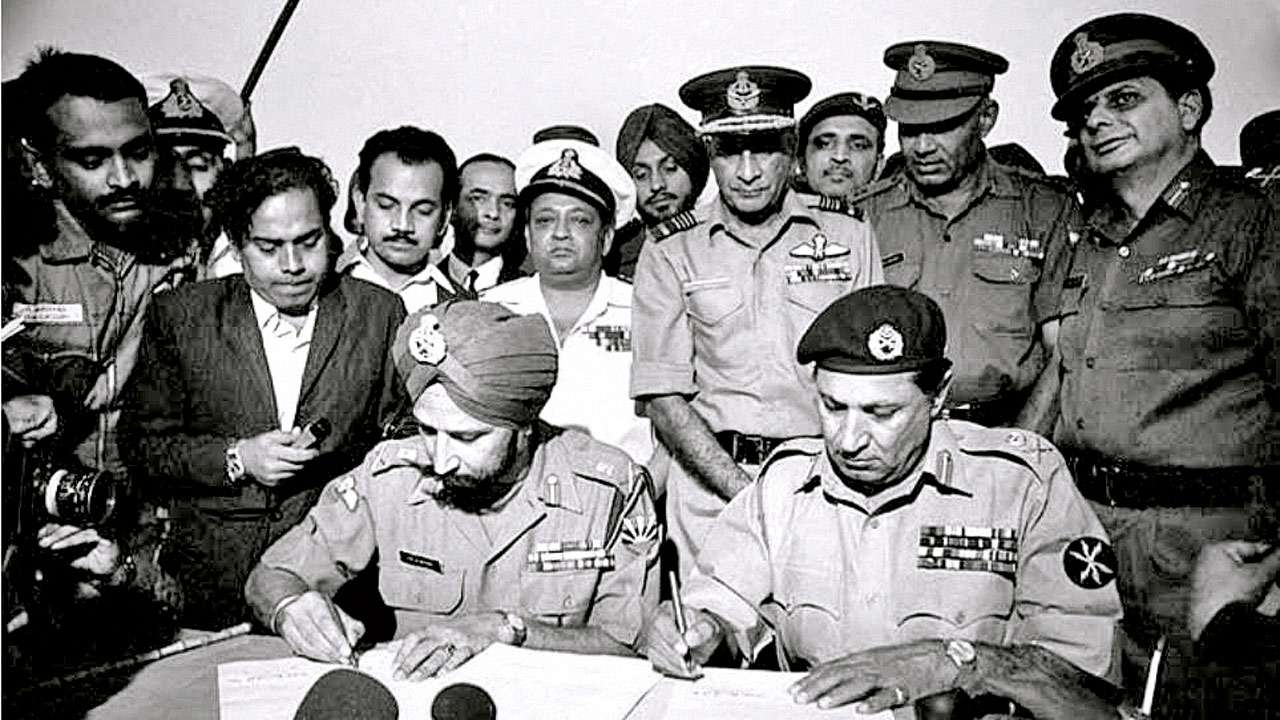


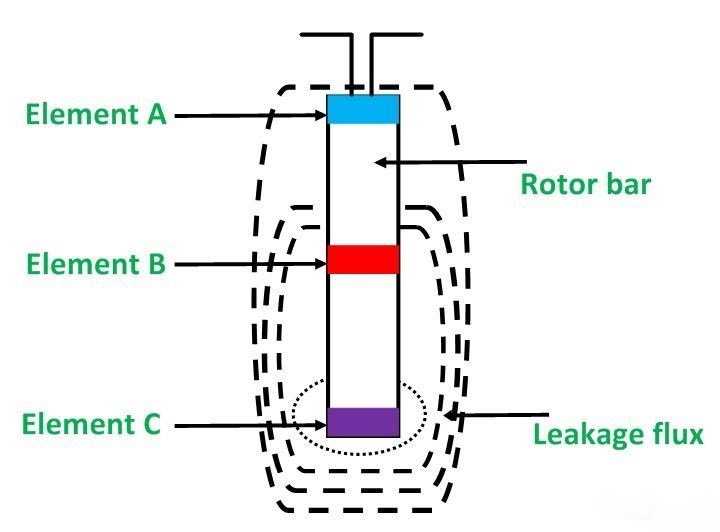
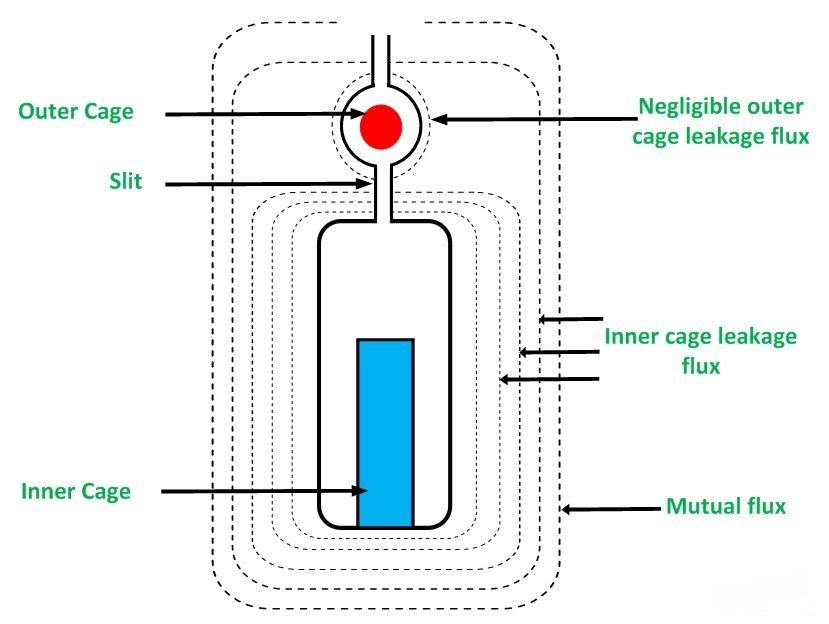





 Track2Training
You must be logged in to post a comment.