
Decroly method is a program which is based on centers of interest and educative games. This method is named after Oride Decroly a Belgian pioneer in the education of physically disabled children. He was aphysician and then became involved in school for disabled children and in consequence became interested in education. Decroly contributed home like atmosphere in schools which helped the students to achieve better and compatible educational output than able students in regular schools. Decroly method of teaching was based on three processes, (1) observation (2) expression and (3) association of space and time. Unlike Montesorri’s children, Decroly children worked with real things drawn from everyday life. According to Decroly the universal needs of a child are: food, protection against danger, endurance for frustrations of life, work, play, self-evaluation and self-discipline. Environment is an important aspect to Decroly’s teaching method and children should be encouraged to pursue activities based on observation, association and expression.
Category: Education
Education is the process of facilitating learning, or the acquisition of knowledge, skills, values, beliefs, and habits. Educational methods include teaching, training, storytelling, discussion and directed research
Words

Words are the most powerful weapons used to stab and to heal. Words are like double edged sword. People say think before you speak because words once spit out can never be taken back. It takes a fraction of second to hurt someone by words, but its takes a longer period to heal. The phrase of Longfellow goes like this, “A torn jacket is soon mended; but hard words bruise the heart of a child”. There are people who longs for some kind words and there are people who waits for a chance to hurt others. It’s easy to treat a wound in body but a wound in heart takes its own time to heal. Words are our strength and our weakness. Your words can inspire and influence people, and it can also entertain others. Words can evoke people’s emotions either it is good or bad. Words are the means of communication and it differs from people based on their understanding level of what you speak. We live in a world where with people from different situations. Neither a child nor old man can get hurt when one hears harsh words. Irrespective of age people get hurt. Think twice before you speak. Let’s stay united and heal this world. The greatest feeling one can receive is the power of being loved and this can be done only with kind words. Spread love wherever you go, be kind with your words. Let’s be the change that we need in this world. Let us not kill with words let’s heal.
Death
Death is something which is unbearable and unacceptable. The truth about death is the suffering is not for the person who dies but for the people who loved the person dearly. The very word death skips a heartbeat. Losing someone whom we love the most is the most painful thing in this life. One will never know which moment the heart beat stops. Life holds many twists and turns and one such thing in life is death. The situation is really pathetic and the hardest part is holding on to their memories. You can neither remember nor forget, all those moments you laughed will be replaced with tears, all those unfulfilled promises still breaks you more and a part of your heart really longs for the person to return back with some magic elements. Sometimes all that you hold might be only memories and even after years pass the feelings never fade away. People might say time heals and memories fade, but neither time heals nor memories fade. Even after decades the pain will be fresh and new as if everything happened the day before. Heart will be filled with void when you look at that special person from your heart is resting beneath. Sometimes we may feel “like rise up and say that you made a drama” but then when reality strikes it’s even more painful. This is the only problem that has no solution and a wound that can never be healed. The life that was lived by the person will be praised in the funeral and burial sermons but still all that we want is the person to return back. Most of the times R.I.P doesn’t mean Rest in Peace but it mean Return if Possible, the impossible wish made by the loved ones. Some believe in next life and some believe in eternity but nothing can bring them back in this life is the miserable truth that is hard to accept but a mandatory fate for every life. Every person in this world knows that each of us should die someday, but none knew which day it is and that is the boon and bane of life.
The Personal is The Political

‘The Personal is the Political’ was a rallying cry of the second-wave feminist movement. The idea was first reflected in an essay by Carol Hanisch titled the same. The radical feminists used this slogan and spearheaded the movement. They believed that women’s oppression occurred everywhere even in areas that hitherto have not been subjected to scrutiny. The slogan was a potential threat and a considerable critique of traditional liberal separation between the political and the personal sphere.

Susan Moller Okin, in her celebrated magnum opus, “Justice, Gender and Family” argues that ‘the personal is the political’ consists of four seperate yet interrelated claims.

Firstly, she claims that the private sphere is the ‘sphere of power’. It simply means that power and advantage also characterize the areas of life that are excluded from the political sphere like the family life and personal relationships. For instance, the subjugation of women, domestic violence and subservient position of children in family are best examples of the same.
Secondly, she claims that the political sphere infiltrates into the personal. That is, institutions like family that are considered to be highly personal are not immune from interference from the State. For instance, the State decides the form of marriage, i.e. if it is to be homosexual or hetrosexual; the State decides the requirements for marriage like the marriage age, number of spouse permitted, legal rights and duties applicable to married couples, incentives and tax benefits, ownership of property, conditions for divorce, etc. Therefore, Okin claims that there exist no private sphere absolutely free from any form of State interference.

Thirdly, she argues that the private sphere or family life creates psychological conditions to govern the public life. Family is an arena of social construction and social construction is deeply gendered in patriarchal societies. For instance, in patriarchal societies, there will be certain standard norms that govern clothing style, make-up and beauty concepts. Family or personal sphere is an arena where we, as individuals, develop our attitude towards these norms. That is, if children grow up in a household that is characterized by gendered division of labour, they will feel that these are ‘right’, ‘good’ and ‘natural’. They will internalize these differences and apply them in their lives in ways that will undermine gender equality. They will internalize the idea that women are nurturers and nourishers and should have ultimate responsibility for childcare as opposed to male role of breadwinning. This makes the gender differences instill in the next generation and gets perpetuated in the society. And hence, the personal sphere conditions our attitude and values that govern the political or public sphere.

Lastly, the private sphere is characterized by gendered division of labour and creates barriers for women in all other spheres of life. That is, women’s material and mental resources are exhausted or diminished by the need to take over all the domestic work in the household. Women have to work in their house as well as in their workplace. These days where childcare is expensive and holidays that are not in sync with the children’s school holidays, women are forced to take unpaid leave and sometimes resign from their job to take care of their children.
COVID-19 TREATMENT AT HOME

With the increasing number of cases day by day, India witnessed a high demand of ventilators, oxygen cylinders, injections, medicines and beds. People are struggling for even a breath due to lack of oxygen supply. The corona virus pandemic has challenged the health care system of India and has seriously disturbed the mental balance of the front-line workers. People who reach out to the hospitals for better care and medical assistance are being sent back at their respective homes in home isolation in order to save those who are critically affected by the disease.
Here are some tips suggested by doctors which could improve the quality of care which you can offer to your family/friends/relatives who have tested positive for covid.
The first and the foremost thing to do under such a scenario is to isolate the patient, followed by sincere monitoring of the patient’s health for which some monitoring equipments are required such as a pulse oximeter to keep a regular check on the patient’s oxygen saturation level, thermometer for monitoring body temperature, gloves, mask , garbage disposal bag and hand sanitizers to avoid infection from the patient, and a separate washroom if possible. Proper ventilation in the isolation room is equally important. Keep the windows open and the fans on. Thermometer and pulse oximeter are the most important monitoring devices. Always wipe them before use to ensure correct readings. In every six hours, the following things should be monitored:
- Pulse
- Oxygen Saturation
- Body temperature
Take two readings of oxygen saturation level. (1) While sitting (2) After exercising for 1 minute (sit and stand for 1 minute). If the oxygen saturation is above 94%, continue to monitor the same, no need of hospitalization. If oxygen saturation is between 92 to 94%, continue monitoring after every four hours (in rest position only). If oxygen saturation level is below 92%, immediately contact your doctor. Fever is also to be monitored after every six hours. If the body temperature is high than normal, the patient can be given 1gm paracetamol in every 6-8 hours depending upon the body temperature.
Ensure sufficient hydration of the patient. Inhaled Steroids like BUDESONIDE can help the patient in such a situation. The prescribed dosage of BUDESONIDE is 800 MCG twice daily through the spacer. These steroids usually come in aerosol packages.
If the oxygen saturation of the patient continues to decline from 92%, the patient should immediately arrange for hospitalization. But if the beds are unavailable and hospitalization is not possible, the patient could be given any ONE of the following medicines- (1) Dexamethasone 6mg/day or equivalent steroid (2) Prednisone 40mg (3) Methylprednisolone 30mg (4) Hydrocortisone 150 mg.
It is highly recommended and scientifically proven to lie down in prone position. This position increases oxygen saturation level in the body. In severe conditions, an oxygen cylinder or nasal canula would also be required to increase declining oxygen levels.
Signs of improvement include oxygen levels higher that 92%, respiratory rate less than 24 breaths per minute and the patient experience no breathlessness.
The following are the drugs which are NOT recommended/useful by doctors:
Azithromycin, hydroxychloroquine, doxycycline, favipravir, ivermectin, remdesivir (can only be used upon doctor’s prescription)
The above tips are derived directly from highly reputed doctors but it is advisable to kindly consult your doctor before following the above tips. Stay home, save lives.
Online Learning

ONLINE LEARNING
Lockdown is not meant to countdown days. Staying indoors can never stop someone from learning what they need. Learning a skill can help an individual to achieve his/her dreams. There are too many online platforms that can help one to master a skill of their choice. Owning a skill which can help you in taking higher levels in career is better than wasting time and making minds idle. As the proverb goes “an idle mind is a devils workshop”, it’s better to learn something which can build you stronger than what you are now. Online classes are now more interesting and interactive. In this rapid advancement of technology, online learning is a part of many institutions.it also offers the perks of attending classes from one’s dream university in abroad. One can even socialize with even in this social distancing and curfew through online mode. Live face to face interactive sessions are really interesting that it helps an individual to be more attentive in the class than the lecture hours. Taking an online learning program one will be an officially registered student in the institution and have access to the same resources such as an on-campus student like digital library and student union membership etc. As a ship without a captain is like a bird without wings, there are captains and mentors to guide students in online learning. An essential way observing a large amount of information in a relatively short amount of time, lectures are a staple of online and computer based learning, one can attend lecture from any place. As online student one can choose to access any course information and complete the assignments anytime. This allows a student to fit study time in and around his/ her work, family and other commitments. This also helps students who wish to work while continue studying need mot put their careers on hold and get the best of both student and employee worlds.
A Day to love and Hate
It’s just a day after a long wait
And I love it for what I had
But I hate it too
For what it took with itself
It’s a day of parting
I wish Let dis day to last long
And it will, in my hrt♡!!

Life is something that is really unpredictable. Sometimes in life there will be a moment that will heal you and simultaneously break you. Happiness and Sadness at the same time. Most probably that will be the day of giving up what you loved the most for the person whom you love the most. Giving up something you love the most can never be easy and it takes an immense amount of courage to make such decisions in life. Sometimes you have to give up something, to receive something else. Each and every single day in our life, life itself is being a great teacher teaching millions of lessons for life. It breaks and melts at the same time it fills and moulds. But behind all of these when you have someone to understand you is the most beautiful thing in life. Life cost’s much more than anything else in this world. No matter how much you earn or what you own, all that matters is how happy you are at present. The moment you own is yours, make that moment happier than before to lead a peaceful life.. Don’t just exist LiVe!!
HOW TO STUDY AMIDST PANDEMIC

“Victory comes from finding
opportunities in problems.”
Do you prefer to study at home? We millennials have an inherent ability to sneakily use social media during classes, whether in the classroom or online. During our lectures, we know how to eat, sleep, and chat, and that tradition will continue online as well.
But, by the end of the day, don’t we get to do anything useful? It may be navigating congested roads in the rain, maintaining positive social relationships, or engaging in practical learning. During this online process, we will miss out on all of that. So, in such a situation, how does one become productive? It all comes down to self-control, in my opinion. Nobody is pressuring us to read, study, or do something productive; there is no pressure, and we have complete control of how we spend our time.
Which is better: online or in a classroom? Since it is much more receptive and engrossing, the solution is a classroom environment. Learning online, on the other hand, has its advantages. With more spare time on our side, we become more productive time managers. Having said that, I am aware that most of us fall victim to the vicious cycle of procrastination, and to combat this, I have begun to use the Pomodoro technique, which appears to be successful. It divides work into 25-minute chunks, with a 5-minute leisure break in between and a 20-minute reward break after 2 hours or so. It assists me in maintaining a healthy work-life balance. Nobody knows how our educational environment can shift in the coming months, so we must make the most of the time we have and learn some useful skills while we’re at it.
Importance of Education
As the saying of B.B.King goes like, “The beautiful thing about learning is that no one can take it away from you” education is the most important wealth one can hold in this universe. Education is the only thing that moulds a person into a human. Proper education is very important to every human being. One can be educated anytime despite of one’s age, gender, colour and creed. Education is the process of achieving knowledge, values, skills and moral habits. It determines the quality of an individual’s life because it helps people become better citizens of the society, it lends one a better job and a good lifestyle and most importantly it helps one to know the difference between good and bad. Education provides the stability for life and it makes you self-dependent. Education is important for each and everyone as it improves knowledge, way of living, social and economic status as well to prove Benjamin Franklin’s quote “An investment in knowledge pays the best interest”. Getting good education is one of the basic rights to every human because education is the only solution for social and personal problems. Education transforms a person completely by changing one’s mind and personality. Education connects you with stories and cultures of one’s everyday life. Education is the first step for people to gain knowledge, critical thinking and empowerment and skills they need to make this world a better place. “Education is the most powerful weapon which you can use to change the world” – Nelson Mandela.
The Best Gift
I’m sleeping peacefully. My sister pinched me and covered my eyes. I was still drowsy and the warmth of her cupped hands invigorated my flickering eyes. She guided me to the pooja room and took off her hands as I saw the magnificent idol of Lord Krishna festooned by the freshest of all laburnums and a long garland made of state of the art marigolds from which water was still dripping over the yellow mask kept below. Oh? Wait.. what? A mask? I turned back and saw her scintillating face and before I could ask something, she held my hands and dragged me to my grandfather who was sitting in his wooden armchair, distributing kaineetam to my fellow cousins. I was tossing and turning to find how much I’d get and I’ve already kept my piggy bank out of the heavily stuffed cupboard yesterday night itself. It was my turn. He asked me to close my eyes. From his stockpile, he took something and held it tightly between my fingers. My fingers couldn’t trace its whereabouts. It was something obscure. I opened my eyes and saw a sanitiser along with a yellow mask in my hands. I was transfixed in stupefaction for a while. Soon, my sister held my arms as if she wanted to take me somewhere. Everything disappeared with a glitch. Now, I could see my brother beside me in my bed with a pillow over his stomach. What? Was it a dream? How sweet it was… a new gift: a mask and a sanitiser; quite exotic and out of the blue no? Indeed, the best of all gifts one could get in this corona season. However, this dream pinpoints a very familiar reality: now, the mask and sanitiser is indeed part of our day to day life and is as common to our lifestyle as a toothbrush and paste.
Oh… yes. Toothbrush and paste. I haven’t brushed yet. Kissing my sleeping brother on his forehead, I went towards the wash-basin. While I was engrossed in brushing, contemplating on the dream, I heard my father talking on the phone, “sure. I’ll come. It’s at 12 no?”. I could very well extrapolate from his conversation that he was talking about going out. I was delighted as it has been over a month since I’ve stepped out from the four walls of my house. It seems to be nothing less than an open prison. I was craving to breathe the open air outside. Intending to coax him to take me with him; I asked, “acha.. where you going at 12? He answered while he turned on the TV, “It’s Mr S’s daughter’s birthday today” (he’s our neighbour). Taking a long breath, he continued, “his daughter would turn a year old today. He was planning to throw a grand party and now..” He choked. I didn’t allow him to complete and I interceded, “so there’s no party?” I was in melancholy of losing a grand feast. He replied, “yes, there is. But, on a small scale at his own house. He has invited only around ten from the neighbourhood and there are no many celebrations”. I presumed that it was not appropriate for me to accompany him and I turned back to shave.
It’s 11.50 now. My father dressed up in his brand new embroidered brown shirt and stepped out to wear his shoes. My mother was standing at the door and I was watching TV in the hall. He asked my mother, “but..but.. what’ll I buy her? I can’t go empty-handed no?” thinking for a while, she answered, “you can’t buy any sort of gift from closed fancy stores. Better but some oranges and go”. While he was about to nod in consent, I called aloud, “acha.. buy her a sanitiser”
INEQUITY UNMASKED

The Indian education system is based on elitism, with educational accessibility serving as a major dividing line between various socioeconomic groups of a culture. The hierarchical organization of society based on caste or ‘varna’ – the caste system (‘varna vyavastha’) ascribed a rank to the person that marked virtually every aspect of Hindu social life – was one way in which this inequality manifested itself in ancient society. The caste status of a person dictated their privileges (or lack thereof). Many social, religious, and economic advantages were conferred on the upper-caste ‘brahmins,’ including education, while the lower castes were denied entry. The government of the post-colonial Indian state attempted to resolve and abolish such disparities by enacting the Right to Education Act, which required all children under the age of 14 to attend school, as well as the Reservation Policy. In today’s coronavirus-shaped world, inequality is once again exposed: access to the internet and mobile devices, rather than one’s social status, has become the deciding factor.
The repercussions for the general population were immediate and serious when the Indian government declared a full lockdown on the 24th of March 2020 in the hopes of controlling a COVID-19 outbreak. The lockdown, in addition to triggering its own set of issues, revealed the education system’s existing flaws and deteriorating structure. This population did not include families living in poverty who could barely afford regular meals, let alone technological devices, emphasizing the ever-widening divide between the wealthy and the poor.
Online learning has had a positive effect on the education sector; it has sparked a desire for Open and Distance Learning (ODL), as the curriculum promotes self-learning and customization of the syllabus to the students’ needs. However, since the latter is only reaped by a small percentage of the population, the negative consequences greatly outweigh the positive.
Another effect of the curfew on Indian education has been a dramatic rise in the number of students dropping out. For most poor families, the economic fallout from the lockdown resulted in unemployment and a decline in earning power. Children were forced to drop out of school as a result, forcing them into the job market.
The Mid-Day Meal (MDM) programme, which aimed to provide food for students in government schools, was also lost as a result of the lockdown and subsequent school closure.
Ramesh Nishank, the Union Minister of Human Resource Development, announced an increased allocation of funds of Rs. 1700 crores to ensure the provision of MDMs to students even during the lockdown. During the lockout, however, it was discovered that 40% of the qualifying children did not receive MDMs. On the 1st of February 2021, Finance Minister Nirmala Sitharaman introduced the Union Budget 2021, which outlined the allocation of funds to various sectors. The budgetary allocation for the government’s flagship education programme, Samagra Shiksha Abhyaan, has been reduced from Rs. 38,751 crores to Rs. 31,050 crores for the coming fiscal year. If the government fails to place a high priority on public education, the detrimental consequences will last for generations and decades. Unemployment would eventually rise, affecting almost every part of society and the economy.
Thanks to the lockdown, schooling took on a new structure overnight, requiring students and teachers to navigate a novel system of adjusting to an online education forum. Humans are social animals that rely on face-to-face communication for successful communication, and the educational field is no exception. In the absence of this face-to-face learning, ground-level proficiency is broken, especially for students studying fundamental concepts and skills that they will need during their lives at the elementary level. Furthermore, students’ practical effectiveness in the field of STEM, where conceptual comprehension and practical applications are at the center of learning, has decreased.
The curfew has forever changed the face of Indian education. The advantages of the blended learning system are only available to those in the upper echelons of society, making the rest unprotected. The issue of quality education accessibility has always existed in the Indian system; it is only now that it has been exacerbated in the face of the pandemic and revealed for all to see.
Alauddin’s Cantonment: Siri
A century of Mongol invasions has paved the way for Delhi to be a colossal military camp. The Mongol raids of Balban’s era were the work of independent groupings based in and around Afghanistan. They were brought under Qaidu and Dua towards the end of the century that resulted in a significant boost in Mongol striking power. In 1299-1300, Dua’s son invaded India and moved directly to Delhi. Alauddin Kahlji’s reign witnessed an increase in the military establishment. Different sources attribute different value to the strength of the Sultanate militia. They are tabulated as follows:
| Sl.no | Sources/ Personalities | Attributed strength |
| 1 | Iranian Sources- Beginning of 14th century | 3,00,000 |
| 2 | Iranian Sources- 20 years later | 4,75,000 |
| 3 | Umari | 9,00,000 |
| 4 | Al-Safadi | 6,00,000 |
| 5 | Mufaddal | 7,00,000 |
| 6 | Barani | 4,70,000 |
Keeping a formidable standing army was not very easy. The requirements of soldiers needed to be met. For instance, Juzzani reported that Balban raided Hindu territories just to amass booty for the maintenance of a large army.

Alauddin Khalji was known for his economic intervention even though it was aimed at supporting his army. Firstly, the entire doab region was designated as the ‘State land’. Secondly, the revenue derived from the State land was exclusively devoted to the maintenance of the troops. Thirdly, the revenue was also collected in form of the produce of the peasants and it led to an increased capacity of the State granaries. This has led to deflation that resulted in lower prices of goods in the Capital. His economic measures abolished intermediaries between the government and the cultivators and this resulted in an increase of state revenue that would’ve been lost to the intermediaries, middlemen and agents.
The very first reference to Siri was made by Amir Khusraw who mentions Siri as a site that existed between Delhi-i-Kuhna (Old Delhi) and Khilokri.
The Mongol commander Dua dies in Delhi on his return march nonetheless, his lieutenant Taraghai subjected the outskirts of the city to a two-month-long investment. The exposed position of Delhi came to the limelight after this event and Alauddin moved his residence to Siri, towards the North-East and he built a new fortress there.
Ziauddin Barani suggests that albeit his investments and large-scale construction activities in Old Delhi, Alauddin Khalji didn’t like living there. Fed up with the resistance of the entrenched elites and chose to live outside the city.
Siri was critical in preserving Alauddin Kahlji’s authority. Firstly, the shifting of residence to Siri gave Alauddin Khalji a chance to escape from the entrenched political elites of the old city. Secondly, Siri was the best location for deploying a huge standing army that could counter the threat of Mongol invasions. Thirdly, the Sultan could monitor politics in the old Delhi from a safer distance.
The water requirements in the new cantonment city were met by the re-excavation of Iltumish’s Hauz-i-Shamsi by removing large amounts of sand and silt from the tank. Also, the alluvial soil in Siri made it easier to dig wells compared to the rocky terrain of old Delhi.
After the demise of Alauddin Khalji, Mubarak Shah Khalji consolidated his position after his potential competitors were erased after an intra-dispensational conflict. Mubarak Shah developed Siri as his capital and he gave Siri an urban splendour. Firstly, he commissioned a new congregational mosque in Siri. Secondly, he refurbished the fortifications of Siri and thirdly, Siri came to be known as the ‘residence of the Caliph’, owing to the grandiose title of ‘Khaifa’ assumed by Mubarak Shah.
Mubarak Shah Khalji was murdered in Siri by Khusraw Khan Bawari and Ghiyasuddin Tughlaq succeeded him to the throne of the Sultanate. Tughlaq kept his capital at Siri to emphasise continuity with the Khalji regime and to gain support from the erstwhile political elites and military commanders. Later, he shifted his capital to Tughlaqabad. Further, Muhammad Bin Tughlaq enclosed Siri along with Qutb Delhi (Old Delhi) and Tughlaqabad within a fortification wall and named it Jahanpanah.
Delhi’s Ancient Past: River Yamuna
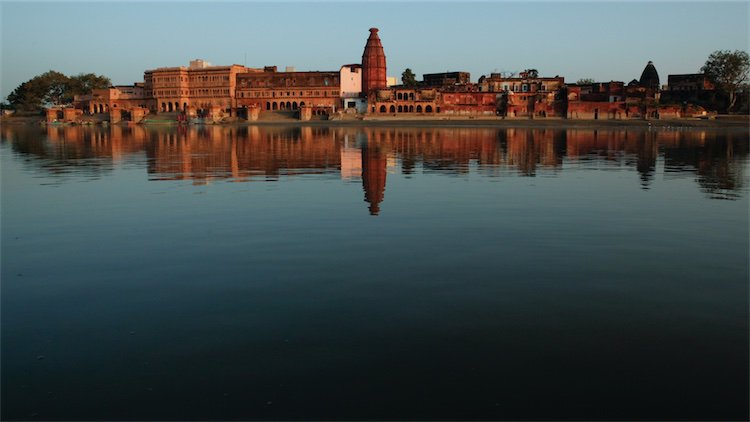
Delhi’s ancient past is heavily dependant on River Yamuna. It is worth noting that Delhi’s history starts from the 11th century when Anangpala Tomara is credited to have populated the city. However, the 11th century or the early-medieval period is still considered to be a proto-historic phase that is characterized by bereft of enough archaeological evidence to prove its existence. However, the literary traditions point to settlements as old as 5000BC i.e. Indraprastha. Some scholars also argue that the present-day Purana Qila is the site of Indraprastha. Whatever be the settlements, either epic, palaeolithic or Harappan; the river Yamuna is of utmost significance to the study of Delhi’s ancient past.
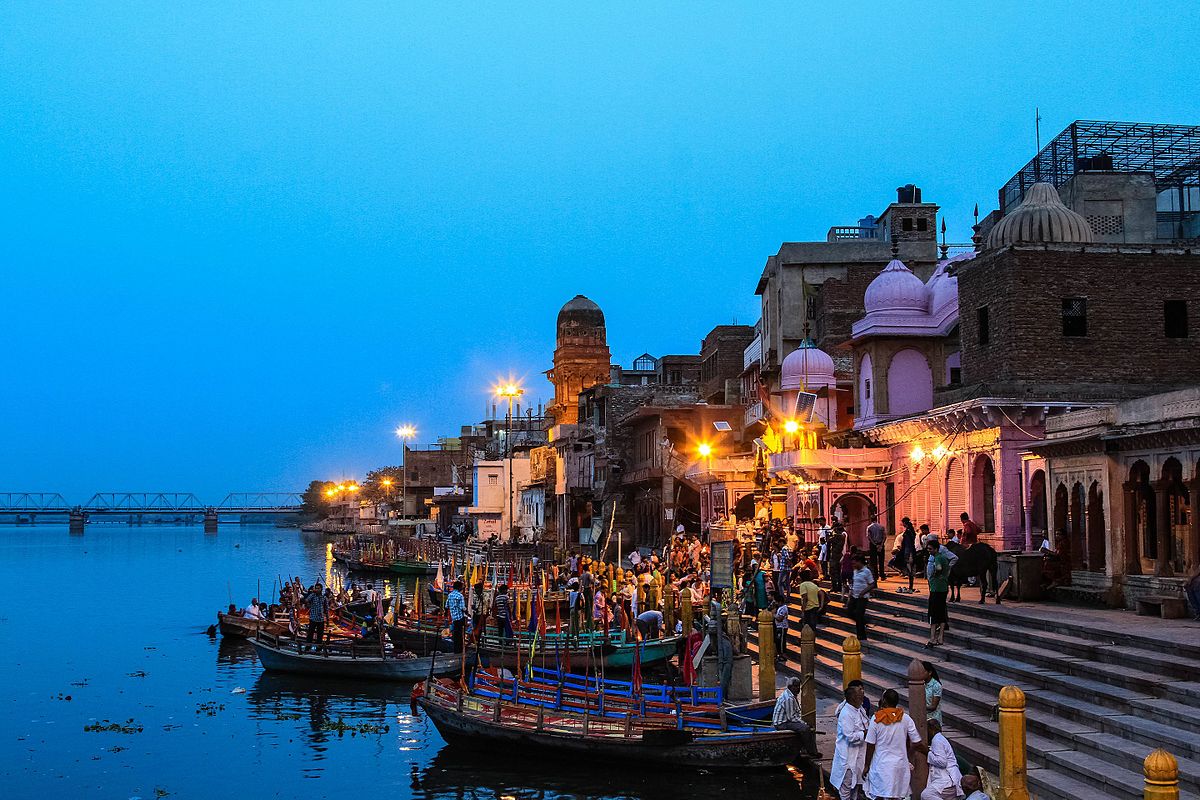
On extensive excavations by the Archaeological Survey of India, remains of six palaeochannels of the river Yamuna were found. The river Yamuna is further known as a migrating river or temperamental river. The river changed its course owing to the tectonic movements and it’s believed that the river once flew into Saraswati that is mentioned in the Rigveda as the foremost of all rivers. Further, it abandoned Saraswati and started its eastward course and joined Ganga. Flowing through the hillocks to the South of Delhi, Yamuna started an eastward movement around 4,000 years ago.
Many ancient mounds located in the vicinity of the old and new channels of the river Yamuna mark the ancient settlements located there. Explorations on the IV and V palaeochannels of the river Yamuna has revealed thousands of stone tools. Further excavations also revealed finished artefacts, waste materials and some materials at various stages of production dating to the Harappan era.
The river Yamuna is known as Kalindi in a plethora of ancient texts and she is considered to be a goddess. The Samhita 10.10 of the Rigveda refers to Yami and Yama being twin children of the Sun God. Whereas Yama is recognized as the God of death, Yami is considered to be the river Yamuna.

In the Mahabharata, sage Lomaksha asks Yudhistira to take a dip in the river to be cleansed of all sins. Also, places along the river are described in the Mahabharata as sacred sites for performing various sacrifices.
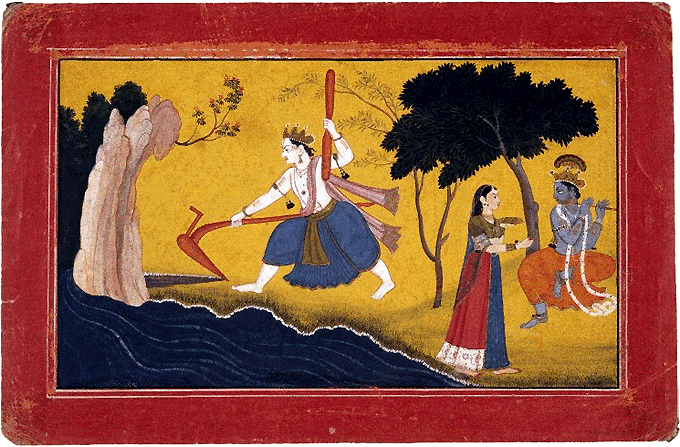
The Vishnu Purana narrates the story of Balram, Krishna’s brother, commanding the river Yamuna to accompany him and she refused to and the infuriated Balram dragged the river closer to him with his ploughshare.
Various Puranas refer to Lord Shiva, in the form of Bhairava, being grief-stricken on the demise of Devi Sati, plunges on to the river Yamuna, making it black in complexion.
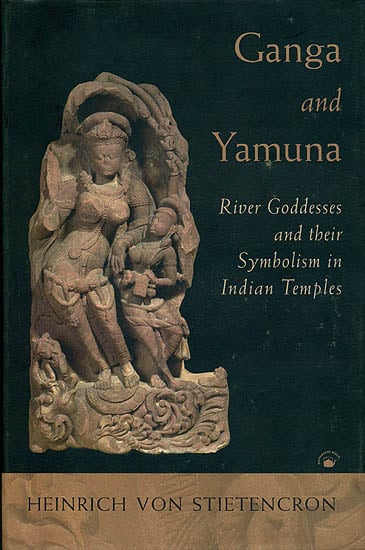
The entrances of many Hindu temples are sculpted with the images of Yamuna and Ganga where Ganga, considered to be white in complexion, stands on a fish or a crocodile while Yamuna, black in complexion, stands on a tortoise or a sea turtle.

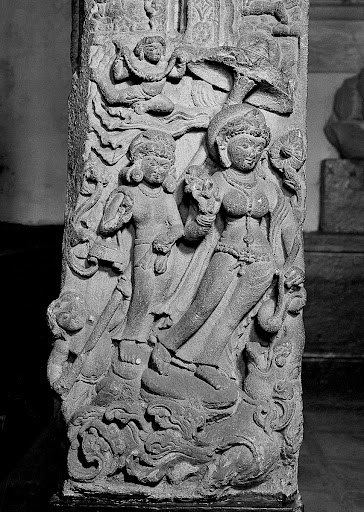
In toto, the archaeological shreds of evidence mustered from the palaeochannels of the river Yamuna point to the early palaeolithic and Harappan settlements in the Delhi ridge. Also, the literary evidence from the Mahabharata, Vishnu Purana and the Rigveda, inter alia suggest the mythical significance of the river.
Dialectical Materialism
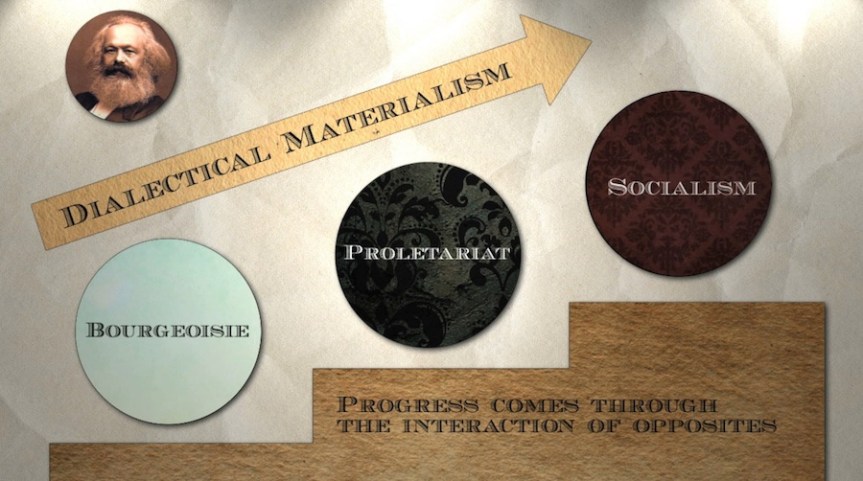
“The history of all hitherto existing societies is the history of class struggles”
Tracing its origin to the classical works of Marx and Engels, Marxism now stands stiff as a cardinal political ideology in the mainstream. Dialectical materialism or historical materialism, as Marx never used this term directly, points to the fact that society is determined by the material conditions of any particular time period. With respect to this theory, Marx suggested five successive stages of social evolution.

Firstly, the initial human societies were characterized by hunting and gathering with the absence of private property, in the Marxist sense, that is, no single person or a group holds the means of production that produce a profit. Marx further suggests that developments in technology and other equivalent sophistication paved the way for the second stage, i.e., slave society.
Marx refers to the stage of slave society as the beginning of class society. Slave owning class owns the slaves as well as the land where the former was the cardinal means of producing profit. In order to capture more and more slaves, large scale expeditions and expansion projects were initiated that resulted in the administrative inconvenience of a colossal territory. Also, slave uprising and revolutions for freedom replaced the slave society with the third stage of feudal society.
The feudal society was characterized by different social groups that were ranked in hierarchical order based on their ownership of land. Feudal Europe had three prominent classes at the primus locus: the clergy, nobility and the third estate. The third estate was constituted by landless labourers and others of its kind. Gradually, the rich profit-seeking merchants formed a capitalistic class and consequently, the feudal lords were unwilling to accept the technological revolution that the capitalists wanted. The profit-driven capitalists were restricted by the feudal society, subsequently preventing them from making more profits. ‘Then begin the epoch of social revolution’ since the social and political organizations were hampering the development of capitalistic forces. A bourgeoisie revolution replaced the feudal society with the fourth stage of capitalism or capitalist society.

The capitalist society is characterized by a free market along with a minimalist state. The capitalist class own the means of production and control and regulate them via commercial enterprises or corporates that aim at profit maximization. Workers are rewarded in accordance with the contract with the capitalists in the form of wages. These wages are, however, only a fraction of the value added by the workers and this unpaid labour of the workers translates as the profit of the capitalists. Workers are, hence, not paid the true value of their labour and are, in other words, exploited. The capitalist era is also characterized by capitalist control over the state in the form of the instrumental and structural model of the capitalist state as discussed by the Miliband-Poulantzas’ debate. It is also characterized by monopolistic tendencies. In line with Marx, workers are ‘gravediggers’ of capitalism. The capitalists aim to drive down the wages of the workers to secure more profit and hence, it leads to class conflict shaped by the class consciousness of workers who realize themselves to be alienated. The working class strive to establish their own collective control over means of production. This leads to the fifth stage, that is, communism.
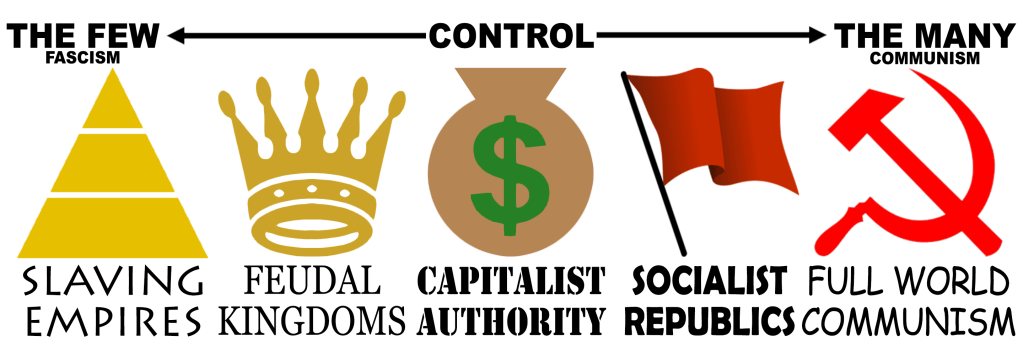
The workers mount a successful revolution against the capitalists and if successful, communism will be attained. Marx refers to the existence of two phases of communism: the first phase or the lower phase and the higher phase. Lenin equates the first phase with socialism that is characterised by a decentralized planned economy directed by worker’s communes or councils. Workers govern themselves through democratically elected communes and plan production and distribution of benefits and burdens of collective action. Marx refers to the existence of labour vouchers, a certificate that awards credits to the workers based on their real contribution in the production process that can be exchanged for goods. Finally, this will lead to a perfect state of communism where classes are abolished and class society would cease. The state will ‘wither away’ and ideologies will perish. The communist stage will be characterized by statelessness, classlessness and money-less ness, ideology-less ness.
India gets its New Education Policy
After an interval of 34 years, finally New Education Policy (NEP) got approved on July 29, 2020. It would have been better if the wait for NEP was not so long. But now the strategies proposed for radical change in Education system seems worth waiting. This policy will indeed modernize and boost the Education system. In this policy, the Education system is designed according to the need of 21st century. Many drastic changes have been approved in school education, higher education, teacher education and research. The focus is on skill based learning and cognitive development instead of rote learning. Now the learning would be based on the interests of the children. Also the name of Human Resource Development (HRD) Ministry has been again renamed as Education Ministry. Previously in 1985, the name of this ministry was changed.
The New Education Policy has proposed the far- reaching changes in the Indian Education system. Through this, the youth of India will be shaped to cope with the global challenges as well as contribute well in shaping India to be a ‘Vishva-Guru’ again. The policy was being drawn up since 2015. In 2016, a committee lead by TRS Subramanian submitted its report with its recommendations. Then , in 2017, another committee was formed lead by former ISRO chief Dr. K. Kasturirangan, which submitted its report in 2019. The previous education policy was made in 1986, in which few amendments were made in 1992. The government is preparing for the implementation of NEP from this session.
There are five pillars of this New Education Policy i.e. Access, Equity, Quality , Affordability and Accountability. Based on these pillars the amendments are made in Education system. The government is also aiming to spend 6% of GDP on education sector which prior was only 4%. As we know, India is a multi- lingual country , so in this policy encouragement is given to for development and enrichment if the regional languages.
KEY POINTS IN NEW EDUCATION POLICY
- In New Education Policy, the structure of School System is changed. The structure of 10+2 is abolished. The new structure of schooling is centered as 5+3+3+4 i.e. in four levels. The first stage of five years include the pre-schooling or Anganwadi of three years and first two years of schooling i.e. grade one and two (Foundation level). Then, there are three more levels grade three to five (Primary level), grade six to eight (Middle level) and grade nine to twelve(Secondary level).
- Examinations will not be conducted every year, instead it will be conducted in Grade three, five and eight. The board exams of Grade ten and twelve will be continued. Students will get two attempts to appear in boards. These examinations will not be based on rote learning , but the application of knowledge in real life situations.
- PARAKH, National Assessment Centre, is proposed to be setup as a standard-setting body under MHRD that will set norms and guidelines for assessment of students, for national achievement survey (NAS) and will also update it accordingly.
- Upto Standard 5, the medium of instruction will be the regional language (preferably till Grade 8 and beyond). This is because students grasp quickly in their mother-tongue or home-language. It is clearly stated that ‘no language will be forced on any student.’
- Modern vocational training like CODING will be taught to students from Grade 6. Other vocational courses will be there in colleges. This will help youth in becoming self- dependent.
- National Curriculum Framework for School Education (NCFSE), 2020-21 is will be formulated by NCERT in a new and comprehensive way. Also it will be visited and updated once in every 5-10 years. According to the director of NCERT, revised curriculum books will be ready in around three years.
- In Secondary Education, now there is no rigid distribution of streams as there was formerly. Students can choose subjects according to their interest like Science stream students can also opt for Psychology or Music as per their interest.
- The unnecessary load of syllabus will also be pulled out. Only relevant topics will be there in the curriculum. The crucial focus of amendments is to provide holistic development to the students through integrated, engaging, interesting, multi-disciplinary and multi-linguistic learning.
- Higher Education‘s standard will be elevated. Students can opt for creative combination of subjects according to their interest. Also they can change their subjects in mid of their course. Academic Bank of Credit will be established in which credits earned from previous courses and attended Universities will be kept safe. These will be added in final.
- Now prestigious universities of world can establish their campuses in India. This will help in coping with the issue og ‘Brain Drain.’ It will also help in boosting the economy.
- To save student’s time and money, only one entrance exam will be conducted all over India for admission in all Universities. Also, uniform regulations and standards (including fee) will be established for private as well as government Universities by a single regulatory body.
- Higher Education Council of India (HECI) will be formed as a single regulator for Higher Education. Independent regulatory bodies like UGC and others will be dissolved into it.
- Multiple- entry and exit facility will now be available in education system. If one has to leave the degree course just after one year completion, he/she will not be empty-handed. After completion of one year a certificate will be provided , after two years a diploma and finally after three years a degree. This will surely help the dropout students in continuing their studies.
- In this radical transition of Education system by NEP, a new system is proposed for Research. M. Phil. has been terminated. There is a new four-year degree course for students interested in research. After this degree and M.A. of one year, one can directly go for PhD. National Research Foundation (NRF) will be established to strengthen and flourish the research culture in India.
- Teacher Education and their procedure of appointment has also thoroughly revised. There will three types of B.Ed. (minimum requirement to become a teacher), 4-year B.Ed. for 12th pass aspirants, 2-year B.Ed. for graduates and 1-year B.Ed. for those who have passed M.A. By 2030, 4-year integrated B.Ed. degree will be made compulsory.
- Government has aimed to improve the Gross Enrolment Ratio (GER) in Higher Education to 50% by 2035, keeping in mind vast population of youth in India. Currently, it is 26%.
- According to government’s roadmap, most of the provisions of NEP will come into effect by 2024. A monitoring committee will be formed for intact implementation of proposed policies.
It took a quite long time of 24 years to get a New Education Policy, so the government now should take long time for its implementation. Education which meets the global standards is a salient way to make our country a strong and independent nation. In addition, the target of government to spend 6% of GDP on Education will really bring a positive change, it will definitely help in building the fundamental structure of education at all levels. Finally , it must be kept into mind that any policy , does not matter how righteous it is, will only be productive when it comes into effect sincerely. Long and short, apt implementation of NEP will fulfil the needs and challenges of India in 21st century.
Complicated Understanding of the ‘Left’ and the ‘Right’

All might be pretty familiar with the political usage of the terms ‘left’ and the ‘right’ with hundreds of political parties being established in these lines. However, the concept of the left-right divide is pretty complex and controversial. The complexity is explained in terms of two graphs in this article. Moreover, the main differences between the two are also enumerated.
After the legendary landmark of the French Revolution, the first meeting of the Estates-General took place in 1789. In the meeting, the entrenched elites occupied the position right to that of the presiding officer whereas the common people occupied the position to the left of the same. This relative position of a set of people with opposing ideologies with respect to the presiding officer then came to mark the left-right divide.
The leftists were proponents of change. They attempted to produce a change in society. Also, they wanted the change to happen at a very fast pace and so, they were proponents of radical change. In addition to that, they were hardcore proponents of total change. Whereas some leftists support violent change with the use of controlled violence for social change, others were supporters of democratic change. The leftists believed in the social-contract theory that argued that society and State are anthropogenic products or human-made products and are answerable to them. They despised the divine origins of society and the State. Also, they believed that the power to rule wasn’t given by God and the power to rule flows from the below- from the working people.
On the other hand, the Rightists were a heterogeneous group that differed in terms of ideologies. Broadly, they can be divided into three groups. Firstly, the Status Quoists or conservatives believed that the present or the existing social order must continue. They believed that the social hierarchy is a natural product and any change to the existing order will destroy the naturally ordained equilibrium. They aspire for social stability and argue that any tinkering with the existing social hierarchy would result in social instability. Secondly, the Revivalists believed in reviving the grandeur of the past. They tend to glorify the past and they argue that social change will come from the revival of the ancient past. They believe that the pathetic present is the result of the abandoned past. They give examples of social construction and dynamism and technological advancements from mythologies. Nonetheless, they support democratic and non-violent changes. Thirdly, the Recationists or the Fascists were violent, frenetic and intolerant revivalists who justified violence as a medium of social change. Here, social change refers to reviving the lost cultural glory.
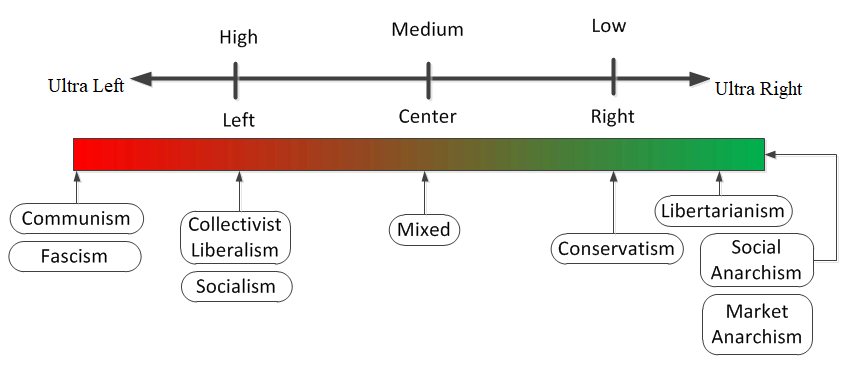

The following facts make this division complicated:
- Some group of Rightists are proponents of change
- Some groups of leftists and certain Rightists believe in change through democracy whereas others of the same ranks believe in change through violence.
- The Leftists are the proponents of liberty, equality and fraternity but supports economic intervention and fiscal regulations. On the other hand, the Rightists argue for hierarchy and social order but are proponents of free and unregulated markets.
The third point makes this division far more complicated. While liberty, equality, fraternity along with the free market economy are the cardinal principles of liberalism, it should be concluded that both the leftists and the rightists support liberal ideas. This makes liberalism more or less a neutral and central concept located in the middle of both the leftists and the rightists.
| Sl.no | Particulars | Leftists | Rightists |
| 1 | Values | Liberty, equality and fraternity | Social order, hierarchy and authority |
| 2 | Views on social progress through change | Optimistic | Pessimistic |
| 3 | Economy | Regulated economy | Free market economy |
| 4 | Nature of the State | Interventionist State | Restricted State |
| 5 | Origin of the State | Social contract | God/Nature |
The Ambivalence of Indian Primeministership
-Shashikant Nishant Sharma
The Indian Prime Minister is considered to be one of the most powerful Prime Ministers in the world. The Indian system of governance spirals upon the Westminster style of British governance, conferring a wide range of sprawling prerogatives to the Prime Minister. As far as India is concerned, the Prime Minister remains as the avowed symbol of the principle of democratic representation. The Cabinet system of government draws its institutional validity from the Prime Minister’s constitutional primacy. Irrespective of the nature of the government, the cabinet depends on the Prime Minister for its collective dynamism. The centrality of the role of the Prime Minister is pre-eminent on the dominant role that the constitution confers on the Prime Minister. Articles 74 and 75 of the Constitution of India makes the Prime Minister a very powerful head of the Government. Being the leader of the majority party in the Lok Sabha, the Prime Minister is also the leader of the Lok Sabha. The Prime Minister has the prerogative to choose her Cabinet colleagues and she can literally hire and fire them at will. She chairs the cabinet meeting and heads all major sub-committees of the Cabinet. She can advise the President to dissolve the Lok Sabha. Also, she’s the venerated head of the Cabinet secretariat and as the Minister for Personnel, she can control the Indian Administration Service. Also, she’s the head of the Administrative Appointments Committee of the Cabinet and has the last say in appointing the Governors. Also, she’s a grand federal overseer owing to the natural centripetal bias of the constitution. Also, the NITI Aayog is overtly inclined to her office. The Special Protection Act of 1985 virtually elevates the Indian Prime Minister to the status of a semi-God whose physical safety takes precedence over everything else.
With such a plethora of powers confined to a single person, it’s not surprising to see the Indian State becoming a centralized, centripetal and unitary one during the national emergency of 1975. Prime Ministers such as Nehru, Indira Gandhi and Rajiv Gandhi successfully asserted their position as an ‘elected monarch’. During the Prime Ministership of Indira Gandhi, it was said that ‘India is Indira and Indira is India’. Even the preamble of the constitution was amended in her tenure. It was mockingly said that ‘the only man in the cabinet of Indira Gandhi was herself’. The Cabinet system of government was reduced to a prime ministerial form of government where the office of the Prime Minister was nothing less than the edifice of an ‘elected monarch’. However, these events appear pretty normal considering the scope of powers vested in the Prime Minister.
The era of coalitions remains a cardinal peripeteia of Indian Politics. Gone are the days when the Cabinet was used synonymously with the Prime Minister. With the advent of coalition politics, governments became weak and unstable and so as the Prime Minister. The structure of a weak Prime Minister dilutes the rigour of the Parliamentary control over the executive. This era witnessed a systematic erosion in the authority of the Prime Minister.
The United Front government was led by the then Prime Minister H D Deve Gowda. During his prime ministership, he just casually surrendered his prerogative of choosing his own Cabinet as the United Front bosses nominated the Cabinet members. Gowda was replaced by I K Gujral and like Gowda, he was stripped from his constitutional prerogative of choosing his ministers. His inactiveness and weakness are evident in the following lines:
“The Prime Minister-designate I K Gujral was sleeping in the Andhra Pradesh Bhavan whereas the United Front bosses were haggling over the ministerial portfolios in the next room”
Mr Sharad Yadav, a minister as well as the President of the ruling Janata Dal opposed his own Prime Minister who wanted to introduce the women’s reservation bill. He commented:
“He’s only a Prime Minister, not God”.
In 1998, Mrs Jayalalitha named the cabinet members from Tamil Nadu. Mrs Jayalalitha was at loggerheads with the Prime Minister as she demanded the dismissal of Mr Ramamurthy from the Petroleum portfolio supported by an argument that he was in the cabinet as part of the ‘Jayalalitha quota’ and it’s her right to reshuffle the composition of her quota anytime. After the 1999 ‘Vajpayee vote’, the Prime Minister had no other choice but to give quotas to all the twenty-six parties that constituted the National Democratic Alliance in various ministerial portfolios. There was an NDA coordinating committee constituting of leaders from all the twenty-six parties that formed the alliance and it was chaired by the then Prime Minister Vajpayee but was convened by George Fernandez. It is worth noting that:
“A Prime Minister in a coalition government has even less of an elbow room”
Mr Suresh Prabhu was the minister for Power in the Vajpayee government and was asked to step down by the Shiv Sena Boss (and not the Prime Minister) and his successor was also announced by the Shiv Sena. The Prime Minister had no control over this melee and the changes in the cabinet were done to the satisfaction of the Shiv Sena boss. It was obvious that:
“The Shiv Sena quota in the cabinet was for the Shiv Sena bosses to fill and juggle with the Prime Minister being a mute spectator”
The appointment of LK Advani as the Deputy Prime Minister in 2002 was at the expense of a crumbling Prime Ministerial prerogative. The erosion of the Prime Ministerial authority can be well-understood by the following lines about this appointment:
“It was nothing more than a de facto situation being converted to a de jure reality”
In toto, the Indian Prime Minister, once venerated as an ‘elected monarch’ is reduced to the status of Lord Morley’s primus inter pares during the coalition era. The present Prime Minister, Mr Modi is also one of the strongest Prime Ministers India or even the whole world had ever seen. With enormous powers conferred to the office of the Prime Minister by the Constitution, the concept becomes ambivalent on witnessing weak and incapacitated Prime Ministers of the coalition governments. Hence, a coalition government, ipso facto, creates a weak and wobbly chair for the Prime Minister. Also, the coalition governments may even make a strong Prime Minister behave in a weak manner. It is to be noted that the Prime Ministerial supremacy is closely linked with parliamentary accountability and the erosion of the former will naturally result in the erosion of the latter. The very perception, objective and concept of the Westminster model get diluted in a coalition arrangement.

References:
- M.R. Madhavan (2017), ‘Parliament’, in D. Kapur, P.B. Mehta and M Vaishnav (eds.) Rethinking Public Institutions in India, New Delhi: Oxford University Press, pp. 67-103.
- A. Thiruvengadam, (2017), The Constitution of India, A Contextual Analysis, Oxford: Bloomsbury [Ch.2 Parliament and the Executive, pp.39-70]
- Sharma SN, editor. New perspectives in sociology and allied fields. EduPedia Publications (P) Ltd; 2016 Jun 3.
- S.K. Chaube (2009), The Making and Working of the Indian Constitution, Delhi: National Book Trust [Ch. VIII: The Union Government I: The Executive, pp.100-131].
- J. Manor (1994), ‘The Prime Minister and the President’, in B. Dua and J. Manor (eds.) Nehru to the Nineties: The Changing Office of the Prime Minister in India, Vancouver: University of British Columbia Press, pp. 20-47.
- H. Khare (2003), ‘Prime Minister and the Parliament: Redefining Accountability in the Age of Coalition Government’, in A. Mehra and G. Kueck (eds.) The Indian Parliament: A Comparative Perspective, New Delhi: Konark, pp. 350-368.
Role of the Legislature in Upholding the Directive Principles
Albeit held non-justiciable, the Government of India was enthusiastic to implement the goals mentioned in part IV of the Constitution. Recurring judicial rulings supplemented by conflicts with Fundamental Rights led to a plethora of Constitutional amendments from time to time. Also, the harmony between the Fundamental Rights and the Directive Principles find its place in the Basic Structure Doctrine.
After the Champakam Dorairajan case (1951), the first amendment (1951) inserted clause 4 to Article 15 of the Constitution that empowered the parliament to make any special provision for the advancement of the socially and economically backward classes or the Scheduled Castes or the Scheduled Tribes. This amendment is complementary to article 46, a Directive Principle that asks the state to promote the educational and economic interests of the weaker sections of the society, especially the SCs and the STs. In 2005, clause 5 to the same article was inserted that provided special provisions for the backward classes, especially in educational institutions.

In 1976, the State decided to allot some vacant lands for the slum dwellers. A special census was conducted to populate a list of slum dwellers and some were given identity cards by the State.
Several Zamindari abolition acts were passed in Bihar, Uttar Pradesh and Madhya Pradesh and the Zamindars filed petitions in the High Courts and the apex court on the ground that it violated their fundamental right to property. To thwart unfavourable decisions from the court and to ensure social justice, the first amendment inserted articles 31A, 31B and the 9th schedule to the Constitution of India. Article 31A protected estate laws passed by the legislatures of any State or the Parliament from the attack on the ground that it violated the Fundamental Rights. Also, Article 31B held that any law placed in the 9th schedule of the Constitution would be immune from any such attack on the ground that it violated the Fundamental Rights. The Fourth Amendment Act of 1955 extended the protection of Art. 31A to other types of social welfare regulations and inserted seven more acts in the 9th schedule. The 17th Amendment Act of 1964 inserted as many as 44 acts in the 9th schedule.
The 25th Amendment Act of 1972 added Article 31C to the Constitution of India lent further clearance to the primacy of the Directive Principles under Article 39(b) and 39(c). The 29th Amendment added Kerala Land Reforms (Amendment) Act into the 9th schedule. The 42nd Amendment Act of 1976 amended article 31C by protecting all the laws intended to implement any of the Directive Principles from any attack based on the violation of Fundamental Rights. Also, 14 commercial banks were nationalized in 1969 followed by six more private banks in 1980. The 26th Amendment Act of 1971 abolished the privy purse system. The 39th Amendment incorporated the Sick Textiles Undertakings (Nationalization) Act of 1974 in the 9th schedule. The Act empowered the National Textile Corporation to take over the management of sick mills. It was followed by the 44th Amendment that finally removed the Right to Property from Fundamental Rights and placed it under Article 300A.
Section 304 of the CrPC, 1973 recognizes the right to free legal aid that is placed under Article 39A as a Directive Principle. The 73rd and 74th Amendments to the Constitution realized the implementation of Article 40 that encouraged the Government to organize Panchayats. The 86th Amendment Act of 2002 transferred Article 45 from the Directive Principles to the Fundamental Rights under Article 21(A) [Right to Education].
Various environment protection acts were passed by the Government of India in support of Article 48A of the Constitution of India, which is a Directive Principle. Some important laws of this genre, inter alia, are:
- Wildlife Protection Act, 1972
- Water (Prevention and Control of Pollution) Act, 1977
- Forest (Conservation) Act, 1980
- Environment (Protection) Act, 1986
- Wildlife Protection (Amendment) Act, 1991
- National Environmental Tribunal Act, 1995
20 out of 28 states in India had passed anti-cow slaughter regulations in sync with Article 48 of the Directive Principles. The consumption of liquor is banned in the states of Gujrat (1960), Nagaland (1989), Bihar (2016) and Mizoram (2019) to give effect to Article 47 of the Directive Principles.
Equal Remuneration Act was passed in 1976 to give effect to Article 39(d) followed by the implementation of the National Rural Employment Guarantee Act, 2005 to give effect to Article 41 of the Directive Principles.
The measures adopted by the Government to promote Skill Development, enhance Public Distribution Systems, family healthcare and general health schemes including the AYUSH, ICDS, INDRADHANUSH, AAYUSHMAN BHARAT, NHM, etc. comes under the ambit of protecting social goals.
Means or Ends?

The liberal approach of the Constitution of India enumerated certain inviolable rights in part III of the same. Further, the communitarian spirit of the Constitution enshrined certain goals in part IV of the same. Part III, reflecting the liberal ideology is identified as the ‘fundamental rights’ whereas part IV is adjudged as the ‘Directive Principles of State Policy’. In line with the means and ends theory, fundamental rights are the means which paves the way to the ends. Some distinctions between the two are as follows:
| Sl.no | Fundamental Rights | Directive Principles |
| 1 | Part III | Part IV |
| 2 | Articles 12 to 35 | Articles 36 to 51 |
| 3 | Negative rights | Positive rights |
| 4 | Restricts the state from doing something | Enables the state to do something |
| 5 | Justiciable and enforcible | Non-justiciable and cannot be enforced |
| 6 | Means | Goals/ends |
Even though the Directive Principles are thought to be non-justiciable and non-enforcible, the State was keen on taking measures to implement the same. However, being communitarian in spirit, such implementations began to be challenged in the court for violating the individual rights that are held sacrosanct by the liberals. The Supreme Court of India, which initially took the non-justiciable feature of the Directive Principles as the indicator of their significance, prioritized Fundamental Rights over the Directive Principles. The Supreme Court of India initially held that the Directive Principles were subordinate in nature and any conflict between the two would lead to the supremacy of the Fundamental Rights. Eventually, the Supreme Court observed that Fundamental Rights are to be understood in light of the Directive Principles and they both were complimentary and supplementary to one another and enjoyed equal importance.
Eventually, the courts started to interpret fundamental rights with reference to the Directive Principles. The use of Directive Principles as guidance for interpreting Fundamental Rights paved the way for adjugating social rights. For instance, the Right to life under Article 21 guaranteed rights such as health, livelihood, education and shelter. In the Olga Tellis case of 1985, the Supreme Court held that the Right to Life would be meaningless unless it guaranteed the means through which life could be lived. The Supreme court also held in the Mirzapur Moti Kureshi Kassab Jamaat (2005) that the complete ban on slaughter of a certain class of cattle was a reasonable restriction on the right to perform one’s occupation, trade and business.
The Supreme Court further pronounced that the harmony between Fundamental Rights and the Directive Principles form the Basic Structure of the Constitution that cannot be altered. In the Grihakalyan vs. Union of India (1991), the court observed that the Directive Principles and Fundamental Rights are ‘harmoniously constructed’. In the FCI Union vs. FCI (1990), the court held that a writ can enforce the principle of equal pay for equal work. In Subash vs. the State of Bihar, the court observed that articles 14, 21 and 51A (g) are to be read together.
Fundamental Rights are to be, therefore, understood with respect to the Directive Principles. Social Rights and Civil-Political Rights are inextricably linked and mere protection of the latter will be of a limited value. Without fulfilment of certain Directive Principles, many Fundamental Rights can be rendered meaningless. The true interpretation of Fundamental Rights can be only achieved by studying it with reference to some of the Directive Principles. It’s worth noting that the Constitution of India was founded on a bedrock of balance between Fundamental Rights and the Directive Principles and to give absolute primacy to one over the other is to disturb the harmony of the Constitution.
KR Narayan: Assertive but Not Aggressive
“A President who chooses to play politics can make himself a formidable power because the only restraint which the parliament can exercise upon him is impeachment which requires a 3/4th majority and a President who has played his political game with skill can never fail to obtain such sufficient support in the Parliament to thwart (this)”
The Indian Republic is an advocate of the Westminster style of governance. This style of governance, adapted from the British version, elevates the Prime Minister to the status of a de facto elected monarch with the President, being a de jure executive, acts as a ‘rubber stamp’ of the Cabinet. However, due to certain unique trends in Indian Politics, this Westminster system can elevate the de jure authority into a de facto ruler with sprawling powers.
The Indian Constitution confers three discretionary powers to the President of India. Firstly, she can ask the Council of Ministers headed by the Prime Minister to reconsider a piece of advice rendered to her. However, she is bound to sign the bill if it is resubmitted with or without considering her suggestions. Nonetheless, the Constitution of India doesn’t specify any time limit for the President to give assent to a bill, hence, she has the prerogative to withhold assent to the same. This is known as the pocket veto. Secondly, the President of India acts as a referee in the formation of the government. It is in her discretion to decide whether she should call the leader of the largest coalition or the leader of the largest party to form the government. Thirdly, it is in her jurisdiction to decide whether to grant or deny the dissolution request of the Prime Minister.
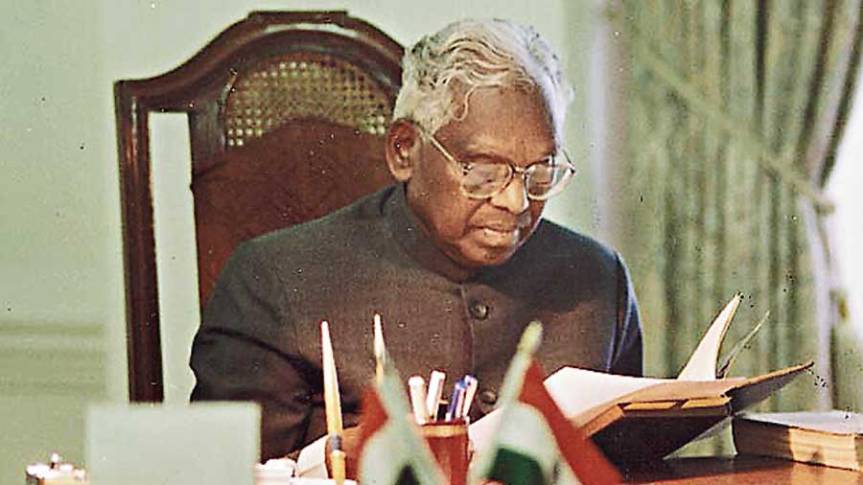
The presidential activism had witnessed a substantive rise during the era of hung parliaments and coalition governments. While KR Narayan assumed the role of the primum civis in 1997, he announced that he intends to be a ‘working President’. He began to assert himself from the very next year when the Janata government led by IK Gujral asked him to impose Art. 356 (President’s rule) in the state of Uttar Pradesh. He sent the proposal back with a request to reconsider the same. Furthermore, he publicly announced that he ‘was not a rubber stamp’.
In India, the President of the Republic of India traditionally addresses the nation on 14th August. By convention, she sends her text to the government for vetting. In 1998, KR Narayan chose not to make such an address and substituted it with an interview as it cannot be vetted in advance by the government. During the interview, he publicly proclaimed his discomfort with the Hindu nationalist ideology of the ruling party. The next day, at a meeting in the Central Hall of the Parliament to mark the end of India’s 50 years of Independent existence, he gave an address that was not vetted by the government. He criticized the people holding the public office (indirectly referring to the then government) who saw it as ‘an opportunity to strike gold’. Also, in 1999, KR Narayan asked the Prime Minister to establish through a vote in the Lok Sabha that he still had majority support.
In March 2000, President Clinton visited India. Narayan not only departed from the text prepared by the Ministry of External Affairs but after a series of positive references to the US, he remarked that:
“Globalization was fast reducing the world into a global village but one that did not need a headman”.
The speech stirred up a storm of anxiety in India’s External Affairs Ministry and the proclamation provoked rebukes from newspapers that had supported his earlier outspokenness.
James Manor identifies three reasons behind the extra-constitutional assertiveness of KR Narayan. Firstly, he believed that the legitimacy of the government is in some doubt and it was his responsibility to raise moral concerns. Secondly, he comes from a disadvantaged community and he might’ve thought that he had a special responsibility to support the disadvantaged. Thirdly, he believed that he had been elected by a wider constituency- even though he was indirectly elected. He believed that a large number of MP’s and state legislators in his support constituted a larger political base than the BJP in power possessed.
In toto, Presidential assertiveness is a reality in Indian Politics. With the weakening Prime Ministerial authority supplemented by a hung parliament where no majority would be easily obtainable, an ambitious President may play politics and can use his discretion to assist someone in becoming the Prime Minister on the understanding that the latter would permit the head of the State to wield greater influence in the matters of the government than the constitution intends. Such a President may even seize effective control over the government and its day-to-day affairs, surpassing the Council of Ministers. As mentioned in the beginning quotation, the only way to exercise restraint on the President of India is to impeach him and a President who knows to play politics can easily muster support in the Parliament, necessary to thwart the resolution. Also, it’s nearly impossible to obtain a 3/4th majority in a hung parliament led by a coalition government. Political uncertainty and instability at the national level, therefore, can produce assertive and strong Presidents, compromising the hitherto unrivalled authority of Prime Ministers, reducing the latter into the status of primus inter pares.
References:
- S.K. Chaube (2009), The Making and Working of the Indian Constitution, Delhi: National Book Trust [Ch. VIII: The Union Government I: The Executive, pp.100-131].
- J. Manor, (2017), ‘The Presidency’, in D. Kapur, P.B. Mehta and M Vaishnav (eds.) Rethinking Public Institutions in India, New Delhi: Oxford University Press, pp. 33-66.
- J. Manor (1994), ‘The Prime Minister and the President’, in B. Dua and J. Manor (eds.) Nehru to the Nineties: The Changing Office of the Prime Minister in India, Vancouver: University of British Columbia Press, pp. 20-47.
- H. Khare (2003), ‘Prime Minister and the Parliament: Redefining Accountability in the Age of Coalition Government’, in A. Mehra and G. Kueck (eds.) The Indian Parliament: A Comparative Perspective, New Delhi: Konark, pp. 350-368.
Growth and Evolution of the Panchayati Raj Institutions in India
Panchayati Raj system is, mostly or maybe a refined and accommodated version of the self-rule that existed years ago. The very first evidence of the same comes from the Rigveda dating around 1,700 BC that confirms the existence of sabhas or self-governing village bodies. In 1870, the Mayo Resolution aimed at decentralization of power owing to the Company’s burden to deal with the activities at the lowest rungs and the increasing demands of a division of power from the subjects. The Rippon Resolution of 1882 aimed at enhancing administrative efficiency and political literacy. After the revolt of 1857, due to intense financial pressure and takeover of the Indian administration by the British Crown, the road and public works of other kind were devolved to local bodies or city councils. In 1907, a royal commission on decentralization was initiated on strengthening the local bodies. However, the Montague-Chelmsford reforms followed by the Government of India act of 1935 placed the subject of local bodies under the jurisdiction to be exercised by the provinces and then, different provinces had their own measures in preserving or destroying the same.
In the interim period, Mahatma Gandhi envisioned a highly decentralized polity with extensive political and economic autonomy to the villages. He used the term ‘Gram Swaraj’, envisaging a string of self-sufficient village republics. According to him, the village republics were the only way to meet the basic needs of the people. He envisioned a hierarchy-less and anti-pyramidal structure where life becomes an oceanic circle with the individual at the centre who’s ready to perish for the village. In addition to that, Mahatma Gandhi urged for production activities based on the available local resources.

Gandhian views were considered outside the realm of practical politics and were discarded while framing the constitution. As a concession to the advocates of the village Republics, the Panchayati Raj system was incorporated in part IV of the Constitution of India that dealt with the Directive Principles of State Policy. The state governments were, hence encouraged (and not mandated) to organize Panchayats within the proposed federal structure. The critics of the Village Republics argued that the weakening of the centre would result in unleashing of centrifugal forces that could threaten the very foundation of the new nation that formed after an unprecedented partition and ongoing attempts to integrate the princely states into the Union of India. One such critic was Dr B R Ambedkar who insisted that village republics were the cause of India’s ruin and empowering them would perpetuate the dominance by the upper class. He discarded villages as a ‘sink of localism, den of ignorance and narrow-mindedness’. The Inclusion of Panchayati Raj into the Directive Principles, therefore, can be seen as a compromising attempt among Ambedkarites and Gandhians.
The first phase of the post-independence era witnessed the implementation of various community development programmes (1952) that was reviewed by the Balwant Rai Metha Committee of the Planning Commission of India. The prime reason behind instituting a committee to review the performance of the Community Development Programmes was the lagging in performance of the same owing to its bureaucratic organization. The report remarked:
Community development can only be real when the community understands its problems, realizes its responsibilities, exercises necessary powers through its chosen representatives and maintains constant and intelligent vigilance on local administration.
The committee report further argues that the programmes thus initiated would be effective only if there’s an agency at the village level representing the entire community, assume certain responsibilities and offer leadership for implementing developmental programmes. The study team led by Balwant Rai Metha also recommended the three-tier structure of the Panchayati Raj system.
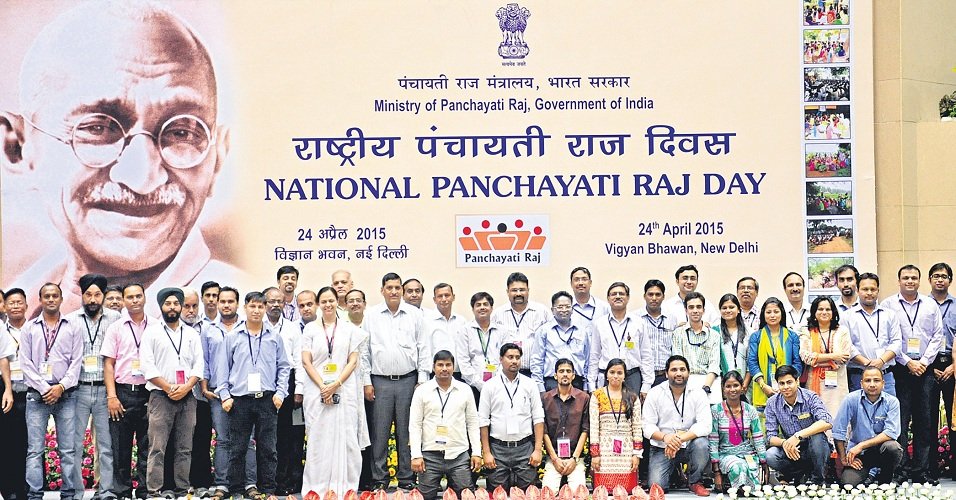
In 1957, Panchayati Raj was inaugurated by Nehru in a district in Rajasthan that declined after five years. The Rajasthan experiment mirrored the fact that the Panchayats were riddled with group rivalry and factionalism and ensured that the entrenched elite groups remain in power. Also, attention was diverted to the most urgent problems from droughts and food crisis to the Indi-China war. From 1962, the Panchayats declined further. The failure of Community Development Programmes joined hands with a sharp cut in financial supply for meeting the needs of food security and war. The period from 1964 to 1980 also witnessed neglect to the Panchayats. Elections were postponed and the local leaders linked themselves with the state parties for providing vote banks. The Panchayats were left with little responsibility for planning and few powers to raise resources. On the other hand, the Government used its bureaucratic machinery to carry out various Centrally Sponsored Schemes (Small Farmers Development Agency, Drought Prone Area Programme and Tribal Development Programmes are some examples of Centrally Sponsored Schemes) and poverty alleviation programmes. The poverty alleviation programmes that gained considerable momentum during the fifth five year plan period were implemented at the local level by the state and the district administration.
The second phase of the post-independent era started with the end of one-party dominance at the centre. The Janata party rule of 1977 witnessed political coalitions represented by regional parties. The five-year plan of 1978-83 aimed at progressive decentralization supplemented by the creation of full-time planning machinery at block and district levels. In 1978, Ashok Metha Committee was instituted for further recommendations for decentralization. The committee proposed a system with districts as the unit of administration and planning. They modified the three-tier system by removing the intermediate tier. Also, they urged for the functioning of political parties at the district level. The then governments of West Bengal, Karnataka and Andhra Pradesh responded politically to the decentralization attempts made at the centre. They started organizing panchayat samitis and started resuming the elections that were put off. Also, they devolved some powers to the Panchayats. The over-enthusiasm exhibited by West Bengal and Andhra Pradesh were politically motivated owing to the constant threat from the centre. The congress governments of both the states feared dismissal by the Janata government at the centre. On the other hand, Karnataka attempted to make the district level the third tier of the federal system but this idea was short-lived as the party which proposed the same lost the subsequent elections. The 1977 coalition, ipso facto stopped at demands for decentralization at the district level and was reluctant to decentralize further.
In 1982, the Planning Commission released a Working Group Report on District Planning followed by the institution of the GVK Rao committee. The committee recommended that the Panchayati Raj institutions shall be re-activated and supported supplemented by a Block development office that was to be central to rural development. In 1986, the L M Shingvi committee was instituted that recommended the constitutional recognition of the Panchayati Raj Institutions.
The third phase of the post-independent era witnessed the beginning of coalition politics. In 1989, the 64th Amendment Bill to the Constitution of India was drafted. The bill accepted the proposed three-tier structure and attempted to confer constitutional recognition to the Panchayati Raj Institutions. However, the proposed amendment was defeated in the Rajya Sabha that saw the bill as the centre’s attempt to directly intervene at the local level, bypassing the states, through the Centrally Sponsored Schemes. They perceived it as an encroachment on the rights of the State to legislate on the matters of the Panchayats.
Finally, the 73rd and 74th amendment of 1993 awarded constitutional status to the Panchayati Raj institution. The Act made it mandatory for each state to constitute local bodies according to the three-tier structure. The 11th and the 12th schedule of the Constitution of India enumerated the subjects of responsibilities to be devolved to the Panchayati Raj institutions as legislated by the states. Furthermore, in 1996, the Panchayati Extension to Scheduled Areas Act of 1996 was passed to institute Panchayati Raj Institutions in the areas covered in the 5th schedule.
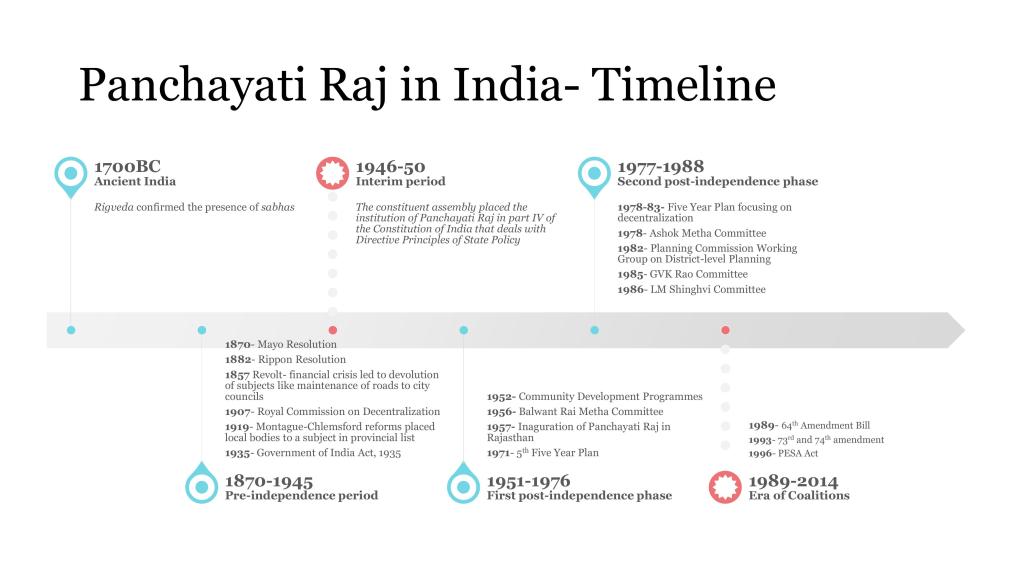
A Glimpse of The Liberal and Marxist View of Politics
Liberalism and Marxism are two cardinal and polar concepts in Political Science. Both have their own views of Politics. Both these ideologies perceive politics in a different manner. Whereas liberalism evolved after the breakdown of feudalism and nurtured by the Renaissance era, it gives primacy to the ‘individual’. Liberalism views individuals as the macrocosm of political activities. Classical liberalists believe in the concept of ‘abstract individualism’ where individuals are thought to be autonomous, atomic, asocial, self-reliant and self-sufficient beings.

On the other hand, developed through the writings of Marx and Engels, Marxism view class as the basic unit of the socio-political community. Marxism prioritizes class/community over individuals and is critical to the liberal concept of abstract individualism./ Marxists are of a view that the prevailing political ideology, the institution of State and individual notions, emotion and intellection are controlled and nourished by the economic base formed by the nature and mode of production. They believe that individuals live under a ‘false conscience’ where the means of production influence human behaviour, thoughts and actions, thus refuting the claim of autonomous individuality. They believe that there exists no autonomous individual and the substructure or the economic base force them to make choices. This idea further developed into the concept of ideological hegemony by Gramsci and the concept of ‘soft power’ by Joseph Nye.
Whereas liberals view politics as an instrument of reconciliation and conflict settlement, Marxists use politics to politicize conflicts. According to liberals, self-interested individuals constitute the society and are prone to conflict of opinion and choices. On the other hand, Marxists view conflicts as the beginning of social change. According to them, conflicts mirror the fact that the oppressed, suppressed and the depressed became free from the ‘false consciousness’ by gaining ‘class consciousness’ of themselves being exploited by the elites. They become aware of their exploitation and reverts to revolution. The revolution alters the economic base and consequently, changes the superstructure.
Moreover, Liberals view the institution of State as an anthropogenic product or created by human beings similar to roads, buildings and billboards. They believe that a balanced and free society will never develop as the individuals are self-interested and a sovereign state is required to protect them and their rights. John Locke once remarked that ‘where there’s no law, there’s no freedom’. Hobbes, Locke and Rousseau further developed this concept of State and devised a social contract theory explaining the origin and function of the State constituted by the people. Thomas Paine calls State a ‘necessary evil’. While classical liberals or hardcore libertarians argue for a non-interventionist state confined to maintaining law and order and defence saying that the government that governs the least is the best, the welfare liberals are in favour of affirmative actions and welfare State empowered to and obliged to ensure social good by protecting individual rights. Hobbes is of the view that the State is required to prevent a state of war between self-interested, crooked and violent individuals. Locke argues for a State that protects three basic rights of its citizens: life, liberty and property. Rousseau is of the view that a sovereign State is necessary to bring social harmony.
On the other hand, the Marxists have a dual opinion on the role of a capitalist State. It is well-reflected in the legendary Miliband-Poulantza’s debate. Marxist view the capitalist State as the oppressor of the proletariat. While Miliband proposed an instrumentalist view of the capital State arguing that the State functions to serve the capitalist class owing to the social origins of the members of the government and their personal and familial ties with the capitalist bourgeoisie. Poulantzas proposes a structural model of the Capitalist State where it is argued that the State is an objectively capitalistic entity that will serve the interests of the capitalists irrespective of the personal ties or familial relations with the bourgeoisie. It’s further argued that the institution of State strives to protect capitalism. In addition to that, Poulantzas are of the view that if the members of the Government coincide with the bourgeoisie, it’s nothing but sheer coincidence.
The fifth stage in dialectical materialism as proposed by Marx is called ‘communism’. Whereas he gives two stages of communism- the first phase or lower communism and the second phase or higher communism. The lower communism is characterised by workers governing themselves through democratically elected communes. Marx considers this as a temporary stage that will be replaced by higher communism. Lower communism is associated with socialism by Lenin and the communes took the form of the Communist party. Although the Communist party was supposed to be a temporary one in the original view of Marx and even Lenin, it became a permanent, totalitarian and repressive police state under Stalin. However, Marx claimed that the communes are temporary bodies and will cease to exist when higher communism is achieved. According to Marx, the State will ‘wither away’ and he envisages a classless, stateless, moneyless and ideology less society. Hence, Marx views the State as an ‘unnecessary evil’.
While liberals argue for a capitalist economy with private ownership in line with the famous aphorism, ‘laissez-faire is the only fair’, Marxists envisages a socialist economy with collective ownership of the means of production. Also, the higher communism urges for a money-less society.
| Sl.no | Marxism | Liberalism |
| 1 | Class as the lowest unit of political community | Individual as the lowest and the cardinal unit of political community |
| 2 | Individuals are constrained and conditioned by the economic base | Abstract individualism |
| 3 | The politicization of conflict leading to a revolution that alters the economic base | Reconciliation of conflicts through discussions, deliberations, debates, arguments and compromise |
| 4 | State as a capitalist entity | State as a product of social contract |
| 5 | State as an unnecessary evil that will wither away when higher communism is achieved | State as a necessary evil |
| 6 | Socialist means of production | laissez-faire is the only fair |
| 7 | common property resources | Private property |
Developing Cityscape of Delhi in the 13th and 14th Centuries
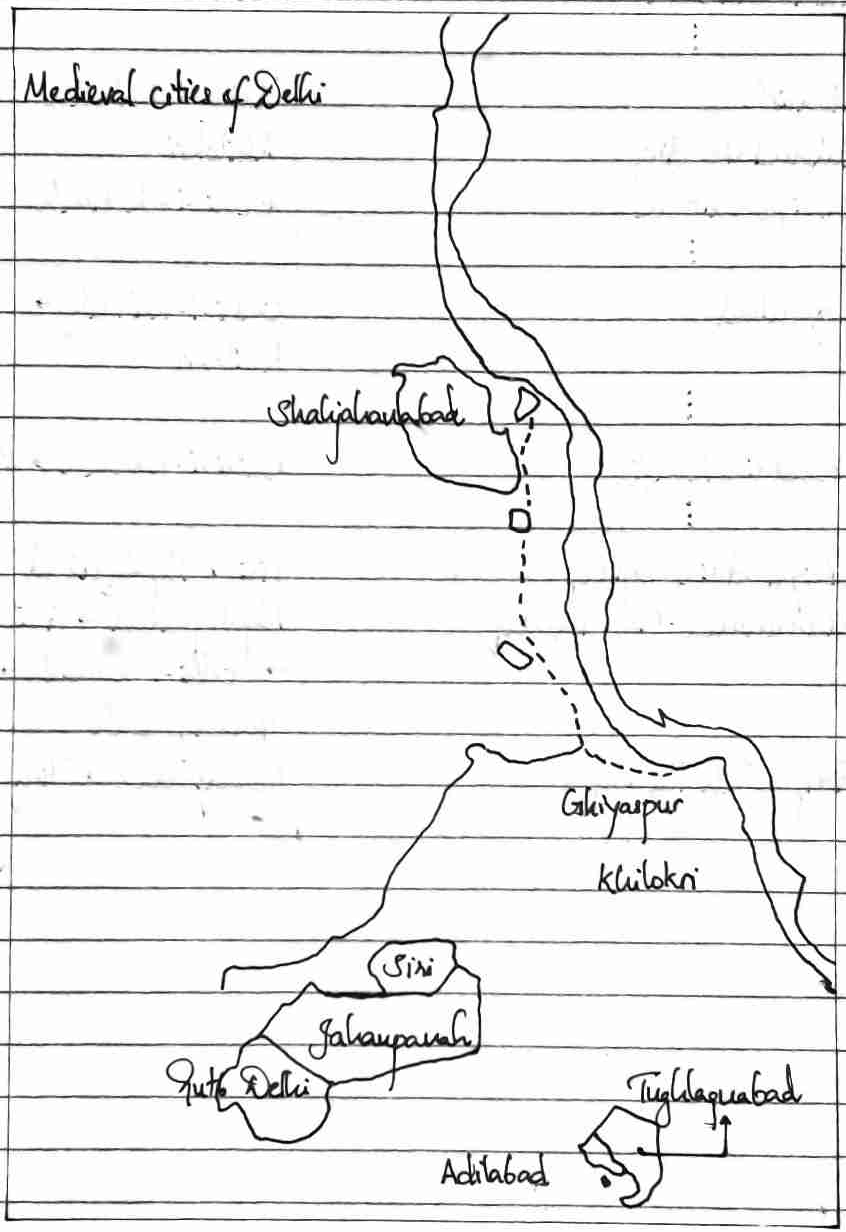
“Oh, Allah! Possessor of Kingdom, You give the Kingdom to whom you will and take the kingdom from whom you will”
                                                                                                                                                                  - Isami
The diverse natural wealth in Delhi has attracted a diverse body of settlers and rich archaeological excavations in the areas such as Indrapat and confirmed the continued existence of settlements in the area for centuries. The excavations in Delhi revealed remnants of an unusual rubble fortification, dating to Tomaras and Chauhans of the pre-Sultanate period. The pre-Sultanate records of the 12th and 13th centuries discuss Delhi as a city located in the south-western ridge of the Aravallis. The Tomara capital of Lalkot and Qila Rai Pithora of the Chauhans emerged as the Delhi-i-Kuhna of the 13th century.
This article emphasises major shifts in the transformation of the cityscape of Delhi in the thirteenth and fourteenth centuries. The reasons attributed to the same are many beginning with the thick forest lands and large resources that acted as a natural defence. Juzzani described these forests as natural agents ‘separating the path of the invading army’. The 1883-84 Gazzetter of Delhi described the importance of the bhangar and the khadar lands known for sustaining agriculture and produce for the city residents. The settlement along the Indrapat region might’ve especially profited from its association with the Mahabharata epic. Moreover, the settling of Khwaja Nizamuddin Auliya in Ghiyaspur contributed to the development of the city. Political turmoil, factional warfare and the quest for independence of the new Sultans from the entrenched elites and orthodox power-groups of the earlier Sultans gave rise to frequent shifting of residence/capitals. Consequently, the cyclical rise and fall of dynasties. Overpopulation also contributed to the same. As Narayani Gupta famously remarked, the city of Delhi has many gates to come in and not even a single gate to move out. Moreover, the large-scale construction activities, as dictated by Sunil Kumar, was a necessity dictated by the ways in which society and politics were structured at that time. The threat of invasion from the Mongols also contributed to the development of suburbs and cantonment towns adjacent to or in the city of Delhi. One of the cardinal aspects for the evolution of the cityscape was the scarcity of water, owing to which the settlements were shifting towards the East nearer to the river Yamuna. The cityscape got new ease of life with developing trade, commerce and technology. Also, changing population composition with new groups coming to power and subsequent change in culture and traditions also contributed to the same.

Delhi-i-Kuhna was a prosperous city with a currency called Dhilliwala that had a wide circulation. It was a strategically located area with forests offering natural security. Prithviraj Chauhan was defeated in 1192 at Terrain and Qutubuddin Aibak occupied Qila Rai Pithora and developed Delhi-i-Kuhna with Jami Masjid, Qutb Minar and a new fort. Adjacent to the fort were madrasas and there were markets for cloth merchants outside its gates.
To gain independence from the entrenched elite groups, Rukunuddin Firoz shifted his capital to Khilokri. The Shamsi commanders executed him and placed Razzia Sultana on the throne followed by three more Shamsi puppets. Shamsi manipulation ended with Balban and his son, Kaiqubad shifted to Khilokri. Juzzani described the city as sher-i-nau or the new city. After Kaiqubad, Jalaluddin Khalji assumed the throne and chose to live in Khilokri. Also, Sheikh Nizamuddin Auliya built his hospice at Ghiyaspur which became a suburb of Khilokri with its northward extension.
Delhi-i-Kuhna witnessed a large-scale construction activity at the time of Alauddin Khalji. Barani mentions that he didn’t like to stay in Qutb Delhi, exasperated by the resistance of the entrenched elites, he chose to reside in the garrison town, Siri. Siri was critical in preserving his authority and served as a cantonment to deploy a standing army to counter Mongol invasions under Qaidu. Mubarak Shah Khalji succeeded Alauddin Kahlji and developed Siri further. Siri was then known as the ‘residence of the Caliph’ as Mubarak Shah assumed the grandiose title of ‘Khalifa’. Furthermore, Khusraw Khan Bawari and his successor, Ghiyasuddin Tughlaq continued to reside in Siri.
The increasing population in Delhi and Siri made Ghiyasuddin Tughlaq build Tughlaqabad. The advantage of this site was in the stone quarries present that translate as a valuable building material. Muhammad Bin Tughlaq constructed the fort of Adilabad and Qutb Delhi with Siri and Tughlaqabad were enclosed by a fortification and the region was named as Jahanpanah. A reservoir for ensuring hassle-free water supply was also built. Owing to the population explosion in Delhi, Tughlaq moved to Daulatabad in Deccan. Firuz Shah Tughlaq built Ferozabad upon the banks of the river Yamuna to shift his capital to an economically prudent location that would reduce the cost of water supply.
“The waters of Euphrates and Nile would’ve been insufficient to meet the needs of the increasing population of Qutb Delhi”.
To respond to this evergreen problem of water supply, Iltumish laid out a large tank known as Hauz-i-Shamsi or Hauz-i-Sultani that eventually dried up. Firuz Shah Tughlaq revived this tank while he built Ferozabad. In Siri, the alluvial soil made it easier to dig wells. To supplement well-water, Alauddin Khalji built Hauz-i-Alai or Hauz-i-Khas, a square tank about two miles to the North of Qutb Delhi. Muhammad Bin Tughlaq further built the Satpula dam to the Southern wall of Jahanpanah. The problem of water supply also had shifted settlements to the North, nearer to the river Yamuna.
By the 1220s and 1230s, Muslim urban civilization from Khurasan, Transoxiana, Sistan, Afghanistan, etc. sought refuge in Delhi. However, by the 1240s and 1250s, the major share of them was replaced by Mongols and their auxiliaries. The changing population composition had also resulted in the diffusion of cultures and the creation of a composite culture.
Coming to the economy, Alauddin Khalji attempted to remove the intermediaries and to establish a direct relationship with the producers. Peter Jackson suggests that these attempts were to create a cantonment city that depended on the taxes and supplies from the producers. The period of the 13th and the 14th centuries witnessed the growth in size and population of the towns. Also, there was a significant expansion in craft production and commerce. Ibn Battuta described Delhi as the largest city of the Islamic East. The arrival of the spinning wheel from Iran in the 13th century and the use of the carder’s bow and weaver’s treadles pointed to the larger use of clothes by the ordinary people. Sericulture and manufacture of silk clothes were boosted and carpet weaving on vertical loom and paper manufacture developed. By the 14th century, sweet sellers of Delhi could pack their preparations in papers. Architecture gained considerable momentum with the use of cementing lime, vaulted roofing with the use of the true arch and dome. Also, immigration and enslavement made the growth of urban crafts possible. The growth of commerce at this time can be explained with the larger coinage.
The residence of some Delhi Sultans are as follows:
| Monarch | Capital/ Residence of the Monarch |
| Qutubuddin Aibak: | Lahore |
| Iltumish | Delhi-i-Kuhna |
| Ruknuddin Firoz | Khilokri |
| Razzia Sultana: | Delhi-i-Kuhna |
| Kaiqubad: | Delhi-i-Kuhna → Khilokri |
| Alauddin Khalji: | Delhi-i-Kuhna → Siri |
| Ghiyasuddin Tughlaq | Siri → Tughlaqabad |
| Muhammad Bin Tughlaq: | Tughlaqabad → Adilabad → Delhi-i-Kuhna → Jahanpanah |
| Firuz Shah Tughlaq | Jahanpanah → Firuzabad |
References:
References:
- Ali, Athar. (1985). “Capital of the Sultans: Delhi through the 13th and 14th Centuries”, in R.E. Frykenberg, ed., Delhi Through the Age: Essays in Urban History, Culture and Society, Delhi: Oxford University Press, pp. 34-44
- Habib, Irfan. (1978). ‘Economic History of the Delhi Sultanate — an Essay in Interpretation’, Indian Historical Review vol. 4, pp. 287-303.
- Kumar, Sunil. (2011). “Courts, Capitals and Kingship: Delhi and its Sultans in the Thirteenth and Fourteenth Centuries CE” in Albrecht Fuess and Jan Peter Hartung. (eds.).Court Cultures in the Muslim World: Seventh to Nineteenth Centuries, London: Routledge, pp. 123-148
- Kumar, Sunil. (2019) ”The Tyranny of Meta-Narratives; Re-reading a History of Sultanate Delhi”, in Kumkum Roy and NainaDayal.(Ed.).Questioning Paradigms, Constructing Histories: A Festschrift for Romila Thapar, Aleph Book Company, pp 222-235.
- Jackson, Peter. (1986). ‘Delhi: The Problem of a Vast Military Encampment’, in R.E. Frykenberg (ed.). Delhi Through the Ages: Essays in Urban History, Culture, and Society, New Delhi: Oxford University Press, 1986), pp.18-33.
- Haidar, Najaf. (2014). ‘Persian Histories and a Lost City of Delhi’, Studies in People’s History, vol. 1, pp. 163–171
- Welch, Anthony and Howard Crane. (1983). “The Tughluqs: Master Builders of the Delhi Sultanate“: Muqarnas, vol. 1 pp. 123-166.
Khilokri- A lost city
“Oh, King! You’ve built such a wall around Sher-i-nau
That stone can reach the moon from the pinnacle (of its towers)”
– Amir Khusraw
Delhi is known for its proverbial seven cities albeit it lacks precision. The ruins of the city of Khilokri, however, have not survived the wrath of time. However, the city has significantly helped in the socio-cultural development of the Sultanate capital of Delhi. The city came to the limelight when it was favoured for residence by Sultan Kaiqubad.
The early settlements in Khilokri are, however, not insignificant. Qutubuddin Bhaktiyar Kaki was staying in Multan with his preceptor, Bahauddin Zakariya when the city was besieged by the Mongols. Consequently, he set off for Delhi and settled at Khilokri. Two leading theologians of Iltumish’s court visited him frequently but were troubled by the distance. With Iltumish’s help, they brought Kaki to Qutb Delhi (The present-day Old Delhi or Shahjahanabad) and got a house for him next to the Izzuddin’s mosque. Firishta writes that Kaki had settled in Khilokri due to ‘proximity to water’ and was unwilling to move to Old Delhi but he eventually gave in and settled there.
Ruknuddin Firoz succeeded Iltumish as the Sultan of Delhi. A conspiracy against his rule was held in Khilokri by several officials of the old sect/dispensation. Khilokri was no longer a Sufi city and had shed all the vestiges of Kaki. Now, the city was a cantonment-like town. To suppress the rebellion, the Sultan marched with a multitude of armed men to Khilokri only to be executed. Razzia Sultana, the first and the only woman claimant of the Delhi Sultanate festooned the throne. However, she was sacked for showing signs of rebellion against the entrenched Iltumish’s military commanders or Shamsi sect and three more Shamsi puppets were placed in quick succession.
When the emissaries of the Mongol conqueror of Iran and Iraq arrived at Delhi to meet Sultan Nasiruddin Mahmud, the entire route from Old Delhi to Khilokri was embellished with an array of soldiers and civilian militia. Juzzani twice mentioned the city as the ‘sher-i-nau’ or the ‘new city’. The riparian plains of Khilokri was indeed an excellent location far from the hustle-bustle of the overpopulated Qutb Delhi.
The fresh founding of the city comes from the accounts of Ziyauddin Barani in his magnum opus, Tarikh-i-Firuz Shahi. He credits Sultan Kaiqubad as the founding father of Khilokri. He describes him as a ‘handsome young man of excellent qualities with a heart filled with the desire to enjoy the pleasures of life’. On the banks of river Yamuna, Kaiqubad laid foundations of a large palace and a splendid garden. He moved there and started living with his auxiliaries. The nobilities started building palaces in the quarters they occupied and the heads of each profession moved from Delhi–i-Kuhna or the Old Delhi to Khilokri, making it populous and flourishing. Eventually, singers, jesters and performers started migrating to the city. In the due course of time, wine houses became full and recreational places came up in the city. Sources suggest that the price of wine increased ten-fold. Everybody was busy seeking the sensual pleasure of the materialistic world supplemented by an enormous demand for wine and perfume.
However, there’s no evidence suggesting that Qutb Delhi ceased to be the capital of the Sultanate. The imperial mint continued to be located in Qutb Delhi and the coins mentioning the name of Sultan Kaiqubad were found from Qutb Delhi.
Nau Roz is celebrated to mark the beginning of the Iranian Solar year. A long poem by Amir Khusraw describes the celebration of the same in Khilokri.
Eventually, Kaiqubad was murdered and the intra-dispensational conflict placed Jalaluddin Khalji on the throne of Delhi Sultanate. Barani mentions that fearing the hostilities of the city residents to the new ruler, Jalaluddin Khalji chose to reside in Khilokri. The nobles of Qutb Delhi travelled to Khilokri to offer allegiance to the newly enthroned emperor. The reign of Jalaluddin Khalji witnessed a new round of construction activities in Khilokri. Firstly, he ordered the completion of the palace commissioned by Kaiqubad. Secondly, he commissioned a splendid garden in front of the palace by the banks of the river Yamuna. Thirdly, a fort was built inlaid with stone walls and watchtowers each of which were placed under the control of a noble. In consequence of the imperial favour conferred to Khilokri, markets began to be built on all sides of the city. Another layer of houses was built by the nobles and officers of the new Khalji dispensation. Merchants started to migrate to Khilokri and started building markets. The population of Khilokri was increasing to an extent that a new mosque was built especially for the Friday congregational prayers. It is further evident that the term ‘sehr-i-nau’ for Khilokri reclined the Qutb Delhi to the status of Delhi-i-Kuhna or Old Delhi.
Furthermore, Sheikh Nizammudin Auliya built his hospice in Ghiyaspur guided by a ‘divine voice’. After the founding of Khilokri by Sultan Kaiqubad, the population of Ghiyaspur started rising substantially. The distance from Ghiyaspur to Khilokri was close to half a kuroh or 1.458 kilometres. Sources suggest that Sheikh Nizammudin Auliya would walk from Ghiyaspur to Khilokri for the Friday prayers. It is also found that Sheikh Nizammudin Auliya got a house in front of the Friday Mosque at Khilokri. Finally, Ghiyaspur became a suburb of Khilokri on its northward extension.
References
- Ali, Athar. (1985). “Capital of the Sultans: Delhi through the 13th and 14th Centuries”, in R.E. Frykenberg, ed., Delhi Through the Age: Essays in Urban History, Culture and Society, Delhi: Oxford University Press, pp. 34-44
- Kumar, Sunil. (2011). “Courts, Capitals and Kingship: Delhi and its Sultans in the Thirteenth and Fourteenth Centuries CE” in Albrecht Fuess and Jan Peter Hartung. (eds.).Court Cultures in the Muslim World: Seventh to Nineteenth Centuries, London: Routledge, pp. 123-148
- Kumar, Sunil. (2019) ”The Tyranny of Meta-Narratives; Re-reading a History of Sultanate Delhi”, in Kumkum Roy and NainaDayal.(Ed.).Questioning Paradigms, Constructing Histories: A Festschrift for Romila Thapar, Aleph Book Company, pp 222-235.
- Haidar, Najaf. (2014). ‘Persian Histories and a Lost City of Delhi’, Studies in People’s History, vol. 1, pp. 163–171
Indraprastha: Between Myth and History
Indraprastha is believed to be the very first evidence of power politics in Delhi. Sir Syed Ahmed Khan, in his magnum opus Asar-al-Sanadid, believed that Yudhishtira founded the city on the banks of River Yamuna in 1450 BCE. [ref; End of ‘Adi Parva’, Mahabharata (400BCE-400CE)]. The Mahabharata describes Indraprastha as a city as beautiful as heaven blessed by the presence of a fort surrounded by an ocean-like moat. Festooned by massive walls, the city’s architectural splendor is raised with huge double-hung gates with imposing towers, festooned with spears and javelins. Magnificent white buildings find their place at the sides of the well-planned streets and the city is further embellished by pavilions, pleasure hillocks, ponds, lakes and tanks and beautiful gardens with peacocks and cuckoos. According to the Mahabharata, the city was built after the episode of Khandavadahana, the burning of Khandava forest. This episode finds its place at the end of Adi Parva. The forest was burnt with the help of Agni, the God of fire; Arjuna and Lord Krishna. And this episode is venerated as the first evidence of mass deforestation- clearing forest land for settlement with deadly conflagrations engulfing the entire forest and systematic destruction of all animals, birds and fish. Lord Indra attempted to end the massacre. And finally, six creatures survived the fire: Ashvasena (The son of the serpent king Takshaka), Maya (A demon, the architect of Indraprastha) and four Sharngaka birds. Sabha Parva of the Mahabharata continues with the subsequent melee where Maya wants to thank Arjuna for helping him escape the fire. Maya was a talented architect and Krishna suggested him to build a magnificent assembly hall in Indraprastha, A golden pillared hall and a lotus pond inside the royal hall filled with lotus, turtle, fish and aquatic fowl.
B.B. Lal conducted a trial excavation in Purana Qila, the contested site of Indraprastha to identify the age of the site and whether it could be related with the Mahabharata or not. The oldest piece of the artefact unearthed was a Painted Grey Ware dating around 1,000 BCE. The 1969-70 excavations revealed Northern Black Polished Ware dating 4th/3rd century BCE. However, no structural remains of the Mahabharata, in sync with the description of Indraprastha, were unearthed.
One can find a series of literary evidence pertaining to the existence of this Mythical city. Firstly, the celebrated Ain-i-Akbari by Abul Fazl suggests that Delhi was first known by the name, ‘Indrapat’. He further suggests that Humayun restored the citadel of Indrapat and renamed it as ‘Din Panah’. Secondly, Shams Siraj Afif in Tarikh-i-Firuz-Shahi suggests that Indraprastha was a Head Quarters of a Pargana. Thirdly, a 14th Century inscription recovered from Naraina village in West Delhi speaks of the village being situated at the West of Indraprastha. Fourthly, Nigambodh, a site situated at the Yamuna banks is identified as the site where Yudhishtira poured the oblations into the sacrificial fire after performing the Asvamedha. Fifthly, Nili Chattri Temple in Delhi is identified to have been commissioned by Yudhishtira. Sixthly, Indraprastha is mentioned in Buddhist Jataka tales as belonging to Yudhishtira Gotra, the Gotra or clan of Yudhishtira. Seventhly, Small scale excavations by B.B. Lal in Tilpat, one of the five villages demanded by the Pandavas, reported the discovery of PGW and NBPW levels confirming the antiquity of the site. And finally, Alexander Cunningham identified Indraprastha with ‘Indrapat’ mentioned in Ptolemy’s Geography.
Two assertions (1847-1950’s) regarding the origin of Delhi turned the myth of Indraprastha into History. The very first assertion was made by experts, historians and archaeologists and by non-experts, authors and tour-guides. Both of these groups suggested that Delhi’s origin was based on Indraprastha. The second assertion was that the 16th-century fort of Purana Qila was constructed over the ancient but invisible Indraprastha. The claims by a plethora of biographies of Humayun’s contemporaries that Humayun knowingly built his fort over the ruins of Indraprastha gained considerable momentum in the late 18th and early 19th centuries. The earliest evidence of the same comes from the celebrated Ain-i-Akbari, the magnum opus of Abul Fazl. Their points were backed by Indologists such as William Jones. 18th Century presentation made by William Jones in the Asiatic Society of Bengal insinuated that Iran has a powerful Hindu monarchy who migrated to India and they established the ancient cities of Ayodhya and Indraprastha. It’s worth noting that he just mentioned the cities but he skips the identification of their location.
Asar-us-Sanadid (The Legacy of Heroes, 1854) by Syed Ahmed Khan confirms the existence of Indraprastha within the frontiers of present-day Delhi. He suggests that Yudhishtira established Indraprastha in 1450 BCE but he preferred to rule from Hastinapura. He further adds that the capital of Kurus was shifted from Hastinapur to Indraprastha on 1212 BCE by Dushtavana owing to the rising water level in the Ganges. He further identifies Lalkot, built by Anangpala Tomara to be the site of Indraprastha. Syed Ahmed Khan claims that his findings are based on the shreds of evidence mustered from the Mahabharata, Shahjahannama, Ain-i-Akbari, the Old Testament, inter alia. He further claims to have recovered a brick from Pandu Age from Hastinapura and remarked that similar blocks were identified from different sites in and around Delhi. The most unbelievable and out of the blue fact is that he dated the recovered block as belonging to 2,607 BCE but the technology available at that time was not in sync with such precise dating. However, in the following days, it was identified that 2,607 BCE falls in the time-frame attributed to the Harappan civilization and not the epic period. The claims of Syed Ahmed Khan, therefore, can be considered as an attempt to impress the European audience with his scholarship and knowledge about the Indian texts. Also, he must have aspired to find a position in the archaeological society and wanted to come to the public eye. However, the claims of Syed Ahmed Khan was the first step in bringing the rhetoric of Indraprastha into a quasi-historical, quasi-scientific realm. Syed Ahmed Khan lent further clearance to the division of Indian History into Hindu and Buddhist age for the Ancient past, the age of Muslim intervention for the Medieval past and the arrival of British as the beginning of modernity.
In toto, the urban cock-a-doodle-doo of Indraprastha being ancient Delhi is being introduced to the historical arena by a series of textual repetitions. Mention in bureaucratic spaces like history books, archaeological reports and museums conferred a specific gravitas to the existence of Indraprastha. Being backed by a series of literary and inscriptional evidence and being brought up by celebrated historians, authors, tour guides, bloggers and even the common folk, Indraprastha maintains its status as Ancient Delhi even without proper archaeological backing. Series of repetitions facilitated the translocation of this myth and chain of affective longings into the arena of history and archival truths. As it is said, a lie often repeated, becomes a truth. The myth of Indraprastha is the most plausible example of this illusion of truth.
Online Classes are Only for the Connected
Waking up after an evening nap at 4.30, I went and sat in the hall near my father, hoping to conquer the TV remote while he was waiting for the Chief Minister’s press meet to start. Three days ago, at the same time, my pockets were vibrating with a WhatsApp notification: I had an examination (online) three days later (I.e. the present day) as I was subscribed to an entrance crash course. It was my second test, whereas I confronted with the first one weeks ago. I’d slept in the melancholy of my sheer failure in the same. Even though I wear a strong armor, impenetrable to the repercussions of an anticipated failure; outside, at the end of the day, every saint will become a sinner no? If not, circumstances will make him. I got an utter 44% against my 84% record last time. You could imagine how miserable I was, how tragic my thoughts were. Time is indeed ‘jealous’. It targets everything that is dearest to us. For instance, think of a situation when a person proud of his hair, visiting uncountable parlors and even sleep with shampoo and oil; witness his head being shaved like a mute spectator, a caged parrot. And ultimately, I’m illuminated here in a standalone manner as a living, breathing, broken-hearted illustration of the same.
Enough of all the fuss. Let’s come to the topic. 20 more minutes for the press meet. My father was sitting in front of the turned-on TV with his frameless spectacles (In which he looked more pretty) at the rim of his Roman nose. His attention was nowhere on the TV. He was engrossed in some accounting. I wanted to catch hold of the remote and was intending to coax him before I could take it. As obvious it is, the only point that attracted the attention of my mind was his unwonted accounting. With no interest in his motive, I asked, “Acha.. have you resigned your job and started accounting?” he started his epic as though he was eagerly waiting for someone to ask. My face was scintillating and my eyes were shimmering. My right arm slowly crawled towards the remote in the sofa beside him. “No”, he replied in a heavy tone. I asked, “Then what are you accounting for? You haven’t bought the reserve bank at least no?” he replied, “It’s for a new project of our office undertaking”. He took a long breath and continued, “we’ve planned to distribute 25 tablets with four-month internet connectivity to those children who couldn’t afford them at XYZ”. After hearing this, my first emotion was true, disdain. Now, my fingers were on the remote. He added, “one of our officer’s residence is in XYZ.His neighbour, ABC is a student of class 12th. He’s preparing for some law entrance examination. His poor parents had managed to remit Rs. 12,000, a heavenly incarnation of their sweat and blood; to a nearby coaching centre for his vacation classes. They were really on cloud nine. And now, in this lockdown season, classes were virtualized”. I had no time for his stories. All my sacred attention was on the remote. Still I remembered amma’s lecture and I thought, “here people are dying of hunger. Leave it. At least they’re poor. But now, those who are born with a silver spoon are forging their bucket list in hospital beds and is it the time to think about tablets? Jobless labourers are yearning for a day’s grain and here….” before I could complete, I asked him,
“Then? Then what’s the problem? You’re having everything at your fingertips” I pulled out my phone from my right pant pocket, “in this smartphone?” He gave me a close look. I suddenly lifted off my hands from the remote. A practical experience of reflex action maybe. I was out of my wits for a moment. A deadlock. Breaking the silence, he muttered, “that’s exactly the problem. He doesn’t even have a smartphone. Their family can’t afford even that.” These words were a thunderclap for me. I was shocked. I was thinking, “can anyone in this world live without a smartphone?” I continued my ‘thoughts’ as if I’d spoken, I’d have had a hibiscus-cheek before I could’ve completed. “people can live without food for a week, water for a day and not a single second without a smartphone and mobile data and here he’s talking about not having a smartphone?” suddenly, I forgot about the remote. I muttered, “and?” inspecting my abrupt and fortuitous fervour, he replied, “and what? ABC would borrow his laptop for an hour every evening.” He paused awhile and continued, “he only suggested this idea. Our officer’s association held a meeting last week and we all contributed to the cause. We selected 25 children like ABC from that locality and…” He choked.
I was lost in deep thought. I don’t know if he had completed his broken statement or not. I was entirely lost, “with these 25 tablets, the query of 25 boys in XYZ could be solved. XYZ is not India no? If XYZ has 25 such students, then how many will be there in this magnanimous country with an ever-so-expanding populace striking 1,300 million?” this thought sprouted off an unsung problem in my mind. My conscience was busy traversing this off the beaten track I forgot about the remote. All I recalled was a famous aphorism, “all are equal but some are more equal”. Instead of quacking “digital learning” and “virtual classes”, has anyone thought about a section that is deprived of the key to access these? Indeed Byju’s and Vedantu are doing great with unwavering devotion. It’s unquestioned and undoubtedly true. But, apps won’t work in open-air no? It needs a medium: a laptop, a tablet or a smartphone at least. What is the significance of a bottle of ink without a pen to fill it? Amidst this lockdown season, when our people Gasconade with a hashtag of ‘#India learns’ and ‘#India continues learning”, has anyone ever bothered about those who are deprived of a medium to access them? And this lockdown season added insult to injury by shutting the internet cafes. Where will they go now? It’s not their fault that they’re born poor. If it’s not their fault, then whose? Who has time to think about them? We can only advertise in the name of virtual learning and so. Their learning is now subjected to an indefinite quarantine.
A plate fell off from the platter stand and I came back to sane. I started thinking again, “how lucky I’m with everything below the sun at my fingertips at ease while others are painstakingly pushing the wheel-less chariot of e-learning and I’m lamenting on my lost marks like a couch potato on the sofa?” It’s 5. The press meet started. My father closed his register with a pen in the middle as a bookmark. The news highlight was about an ordinance approved by the Governor enabling the State Government to hold 25% of its official’s salary after a High Court stay on the same. The reporter exclaimed, “Government officials consists of only 1.5% of the total population of the State. But, 45% of the State revenue is the disguised form of their salaries, pensions and perks”. While I was lamenting on my inability to take the remote, my mind was lost in its world of thoughts again. “Is it that only their children should be allowed to learn? What about the children of the poorest 1.5% of the populace? What sin did they do that……” My thoughts broke.
Now, I’m happy. Indeed I’ve worn brand new pink spectacles. It’s 6. Now, I’m waiting for my phone to ring again with another notification and am mentally prepared to embrace the candied harvest of my next examination. Because, I realized that I’m one I the luckiest who’s getting a chance to learn from my home, my comfort zone. Shouldn’t our education department seriously introspect about this rather than being engrossed in their routine cock a doodle doo? Ah.. whatever Maybe.. one day like others of its kind, this will also become a story to read on, lullabies to feed babies and status to share in WhatsApp. What next? I shouted, “Amma.. coffee”.
Glimpses of Corona in 2020
By mid-February 2020, dragging him out of our home, my father went to stand in long queues in front of XYZ ltd., a spoken-English centre in our locality. He was dead keen to make that poor boy’s tongue flexible to the relatively unknown phrases in English. The boy, my brother, was just about to have his debut, his first step from the world of dreams and magic to the world of reason and cold logic, stepping out from the beautiful world of innocents to the cunning world of hypocrites; like you, like me, like everyone.
How could his little brain forsee his near future: after barely two months, he’ll be well-familiar with the reasoning ability problems related to “clock and time”, that I do in my Quantitative Ability papers, as he’ll be spending long hours, glancing at a clock in faint hope and ultimate melancholy, in an A/C room, anxiously waiting to escape from the taxing English ‘training’: training in the literal sense, like animals being forced into the loop of fire in a circus ring.
By the beginning of March, the novel SARS CoV-2, lovingly labelled as “Covid 19” shook the foundations of the world- to which even the so-called developed world couldn’t stand a chance. On one hand, it drowned the whole world into an air of desolation: witnessing uncontrollable death rates and armed burial grounds; but on the other hand, it incarnated as a saviour of the children: who brought them blissful memories of an unforgettable holiday season, giving a different, unfamiliar interpretation of the term ‘vacation’; that they might never experience in their entire life again. ‘Vacation’, in an actual sense, free from long, despondent, boring hours of ABCD classes and drawing lessons, granting our children their ‘lost spring’: swinging to and fro from the branches of the old mango tree and making cakes out of the mud- interacting with the forgotten spirit of mother nature. As it’s said, vacation per se is blissful.
For the first time, I saw him with my cousins, all below the age of 10, experiencing the beau ideal of mother nature. Thanks to the pandemic that our children, who would’ve been stuffed into the A/C halls with keyboards, drumsticks, brushes or books of different colours open with a costly pen in their hands; are now free, experiencing the joy of carte blanche, lashing out in the open air amidst the half-acre compound of our village home, playing under the blissful shade of the old forgotten mango tree: that witnessed my childhood as well as my mother’s and maybe, my grandma’s too. Their hands, which got numb holding computer mouses and pens of all standards, are now enjoying the pulpy juice of the golden mangoes tracing its path through their arms while stuffing it into their mouths.
Edit: However, thanks to the growing technology that after some time, some sort of digital revolution took place that witnessed mass digitization of education from the lowest rungs where nearly everyone is now attending classes, one or the other, via their phones, tabs or laptops.
Five Examinations that a Humanities Student Cannot Miss
If you’re a student of Humanities/Arts stream and completed/ going to complete your +2 from any recognized Board and you are aspiring to kickstart your career from a reputed University, give this article a read and you’ll be familiarized with five All-India competitive examinations you can attempt to secure Higher Education from reputed Central Universities in Arts stream.
Firstly, let me familiarize you with IIT-HSEE. IIT-HSEE is an annual entrance exam conducted by the Humanities and Social Science Department of IIT Madras. On clearing this examination, you’ll be selected on a merit basis for pursuing a five-year integrated program in Developmental Studies or English. However, what makes it competitive is that thousands of students attempt it every year and only 58 aspirants can clear the same. One has to attempt two papers, the first being subjective and the second, objective. Paper one consists of thirty-six questions from English and comprehension skill, thirty-six questions from analytical and quantitative ability and eighteen questions each from Economy, Society, World Affairs and Ecology. Paper two will require you to write an essay for thirty marks on a general topic within thirty minutes. Hence, the total time for completing the examination of 174 marks is 180 minutes.
Secondly, one of the most sought-after examinations after class 12th for any candidate aspiring to pursue higher studies in Social Sciences is DUET-NTA. Clearing DUET will land you up at the University of Delhi. The examination is conducted primarily for two courses: Humanities and Social Sciences and Economics. This exam will be of two-hour duration with a hundred objective questions that carry four marks each. One mark will be deducted for each incorrect answer. The questions will be primarily from General Awareness, Current Affairs, Communication Skills, Logical Reasoning and Analytical Ability.
Thirdly, I’ll introduce you to TISS-BAT. This examination is similar to IIT-HSEE but the examination will be for 100 marks. Similar to IIT-HSEE, the examination will be conducted in two parts- the first part carrying 60 objective-type questions of one mark each that has to be completed within an hour. The second part is subjective comprising two descriptive questions carrying twenty marks each that has to be answered in forty minutes. On qualifying the same, you’ll be granted admission to BA Social Sciences or BA Social Work at Tata Institute of Social Sciences.
Fourthly, I’ll introduce you to CUCET or Central Universities Common Entrance Test that is conducted annually for admission into various courses in eighteen central universities. The question paper will consist of a hundred objective type questions carrying one mark each where 0.25 marks will be deducted for each incorrect answer. The questions will be divided into three categories with Part A being General Awareness of 25 marks followed by Part B comprising questions from Teaching Aptitude. Part C shall consist of four sub-parts from which the candidate can attempt any one from Social sciences, Language, Physical Sciences and Mathematics and Life Sciences.
Finally, I’ll introduce you to the SET or Symbiosis University Entrance Test. There will be three categories of this test: Symbiosis Law, Symbiosis General and Symbiosis Engineering. Here, I’m interested in Symbiosis General. The test will have seventy-five objective questions with a written ability test. The former will be of seventy-five marks with four sections viz. English, Quantitative Aptitude, General Awareness and Logical Reasoning. The latter shall be of twenty-five marks. The entire examination shall be of 105 minutes duration.
Free Courses with Free International Certificates
Tired of sitting at home without doing any productive work amidst the lockdown? Wanna convert your free time into valuable certificates? If so, give this article a read and at the end, you’ll be able to collect at least five certificates from a plethora of reputed institutions that you cannot even dream of! The most interesting fact is that these courses are absolutely free. So, what about the certificates? Yes. You’ll get them on successful completion of your course absolutely free of cost! So, doesn’t this article deserve a read?
To begin with, I’ll suggest bewildering courses from Amnesty International. Being a substantial International Organization working for Human Rights, Amnesty International will offer you a myriad of online courses with certificates that can be claimed free of cost provided you meet the requirements for the same. What are you waiting for? Just click here and navigate!
Secondly, I’d like to suggest the didactic yet interactive courses offered by the US Institute of Peace. They offer around forty courses in English and around ten in Arabic. After completing their courses, you’ll be offered a verified certificate free of cost. Also, the timings of each course may vary from three hours to eighteen hours depending on the course you opt for. Liked it? Just click here and start learning and start earning!
Thirdly, let me suggest you the courses offered by Agora, the global learning platform of UNICEF. This platform will offer you hundreds of courses in different fields and you can choose what suits you the best. The most glamorous feature of this platform is the presence of enthusiastic discussion forums where you can interact with other learners supplemented by beauteously crafted blogs, interactive and interesting assignments and informative wikis. Also, most of the courses include progress tracking systems and graded assignments based on which you’ll be evaluated for being certified. The digital badges or certificates of completion offered by the same can be a prime-mover in advancing your career. Click here to visit the Agora platform.
Fourthly, I’m suggesting the free courses offered by the United Nations Institute For Training and Research (UNITAR). It offers you various courses on different topics including Human Rights, Climate Change, Gender, Sustainable Development, inter alia. Also, you’ll receive verified certificates for free if you complete the courses in sync with the directions provided by the same. Some courses are accompanied by graded assignments and multiple-choice tests based on which you’ll be certified. Click here to visit the UNITAR platform
Last but not the least, I’m suggesting Academy Europe. Academy Europe or European Open University has around 15,000 plus courses to offer you in various categories such as Technology, Arts, Computer, Business, Economy, Life Science, Politics, Medicine, Profession, Quality Standards, Science, Social Science among others. All courses are accredited and free of cost. It’s open for anyone anytime from anywhere. In addition to that, Academy Europe also offers online Academic Diploma course in various categories and after completion, you’ll be provided with an official Diploma Certificate. What are you waiting for? Just click here and earn a certificate!
Understanding Approaches to Political Power
It’s not very difficult to conclude that the understanding of power is central to understanding politics. The following paragraphs shall aim to enumerate various approaches to power and relate them with a hypothetical political example i.e. a child complaining to his father because he got fewer chocolates in number than his brother.
Coming back to the two children, say, X and Y, where X is younger than Y. Now, suppose the father legitimized the situation by claiming that X got more chocolate pieces because he is younger than Y. Since the decision is not in the favour of Y, Y starts to express his displeasure over the same and consequently the father settles Y by the use of force. Implementation of the decision hence made through the coercive form of power exercised by the father explains the first approach to power, i.e. decision-making. This approach overlaps with the concept of Dahl where he defines power as the ability of A (father) to make Y do a task T (abiding by his decision) that he/she otherwise won’t do.
This approach is known as the one-dimensional or pluralist approach to the understanding of power. It’s worth noting that this approach measures power as an exercise provided the exercise of power is visible, transparent and easily noticeable by the recipients of power. Here, the force exercised by the father is easily noticeable. This approach helps in understanding the visible exercise of power and the transparent use of coercion in the current political ecosystem.
Now, consider a modified version of the same situation. The father just proclaimed that X got more chocolates just because he gave them to him and it’s unquestionable. Here, the father fails to give a plausible backing or a reason for his decision. This is explained by Carl Schmitt as the divine power of the decisive where the decision/law is legitimized by the lawmaker. I.e. it’s the decision-maker that matters and not the decision. Here, the event where X got fewer chocolates than Y is deemed to be legal and justifiable only because it was the decision of the father. This is known as decisionism.
Now, let’s attribute a specific gender to both X and Y. Consider X and Y as identical twins where X is a boy and Y is a girl. Now, assume that the father gave more chocolate pieces to X only because he’s a boy. And, for the time being, assume that Y accepted his decision and no conflict was triggered. This is what Bachrach and Baratz claim to be the two-dimensional form of power, i.e. power as non-decision making. Here, we cannot notice the exercise of power with ease as it requires precise observation.
The above example could be easily comprehended by explaining the father’s action to be his contribution to ensuring the future existence of patriarchy. As it’s said, the subjugation of women is central to the existence of patriarchy. The exerciser(s) of power (the father) attempts to keep potential issues (gender equality) out of the political arena. Such potential issues are excluded from the current political scenario as they conflict with the current, dominant, perpetuating norms (patriarchy) and most importantly, these are in favour of the powerful (the father, men in general).
Considering a larger political environment, this approach helps us to identify the issues that are intentionally kept out of the purview of the public or the opposition. For instance, consider a speech on ‘merits of capitalism’ proposed to be delivered in the erstwhile USSR. The Government will never give consent to the same as it’s against the socialist interests of the Government. It aspires to keep this issue away from the purview of decision-making to avoid any future conflict with their interests. This is also known as the neo-elitist approach to power.
Again consider the two children, X and Y, where X is younger than Y. Now, suppose they are born in a family that has been inculcating the social value of brotherhood since their birth. Now, consider that the father gave them a full chocolate piece and they’re supposed to divide them amongst themselves. In this case, Y divided the chocolate pieces in such a manner that X gets more pieces than Y. This is what Lukes claimed to be the three-dimensional approach to power, i.e. ideological power or radical approach to power. On analysing this situation, we cannot see a visible exercise of power and it’s noteworthy that even the recipients of power aren’t aware of the fact that some form of power is exercised over them.
In such cases, the exerciser of power attempts to shape the preferences and mould the thoughts of the recipients of power, ensuring acceptance of certain decisions in the existing order. This can be explained by a simple example- a rustic woman, born in a conservative household will consider the concepts of female literacy, love marriage and wearing the dress of their choice as illegal and unsanctioned. They may not realize the exercise of social power over them that impedes even their basic fundamental rights. On growing up, they will be accustomed to the aspirations of the society that are reinforced on them. As it’s said, one is not born as a woman. It’s the society that attributes womanly characters and thought-process to them.
Similarly, consider the two children X and Y asking their father chocolate of brand Z. In this case, large scale advertising and glorification of brand Z has created an impression in their mind and successfully shaped their preferences. Therefore, the concept of radical power overlaps with the concept of soft power and ideological hegemony.
On considering a larger political arena, this helps us in understanding the widespread concept of “McDonaldization” and the cultural impacts of Globalization. It’s also the main element in understanding the concept of Joseph Nye’s ‘soft power’ concerning the US Hegemony.
Finally, we can derive three more approaches to power from the above three approaches. They’re:
- Power as control over resources: The father is considered to be ‘powerful’ because he has money and can buy chocolates (resources) for the children, X and Y.
During the cold-war era, the USA and USSR were considered to be ‘superpowers’ as they owned vast resources (oil, minerals, water, money, maritime routes, satellites, technology, etc) that were necessary for human survival. Moreover, they owned nuclear warheads and weapons of mass destruction.
- Power as control over actors: The father is powerful as his decisions are binding on both the children. i.e. he has control over their children.
- Power as control over outcomes/events: In the case of X being a boy and Y a girl, the father gives fewer chocolates to Y as he aspires for the continuity of patriarchy. The desirable outcomes are always defined in terms of the more powerful actor.
Throughout this article, every concept mentioned was explained using a seemingly apolitical situation- the division of chocolate between two children. This alone implies the inseparability of politics from human lives and how even a microscopic issue can be conferred with infinite political dimensions.
What is Politics?
Beginning with an attempt to attribute a precise definition to “politics”, this article moves forward to contradict the prevalent notions of ‘the political’ being confined to the public life of an individual, the State and its institutions. Politics is not only intertwined with the day-to-day events of one’s life but also it’s present in its private sphere. The first part of this article is concluded by attributing a political dimension to the concept of Nature.
The entire article defines politics and approaches to power with the help of a simple issue of distributing a piece of chocolate among two children, which is considered to be purely apolitical prima facie. The dynamic dimensions of politics being prevalent in every aspect of human life, however, cautions us from an attempt to generalize the term and attribute a single definition to this undefinable, abstract entity.
Politics is something concerning the polis. While polis stands for a city-state, it’d be much better if it means ‘a a community’ as city-states can be adjudged as a higher level of social interaction. If so, politics acquires a new definition of ‘something concerning the community’. Whatever concerning the community shall be in sync with the aspirations of the common folk and shall ultimately result in social well-being. Therefore, politics is an act of decision-making keeping in mind the hankerings of the community and formulating policies for the common good. However, this decision-making is not only confined to the term ‘community’ or ‘society’ but it’s also about decisions made by a family or an individual. If politics is about decision making in a society, then it’s also about decision-making in a family because family is the lowest unit of social interaction.
For instance, consider a child complaining to his father because he got fewer chocolates in number than his brother. This situation can be called political because:
- The child is making a ‘claim’ and aspires to ‘equal treatment’.
- The father is considered to be a ‘decision-making authority’ who is supposed to take ‘just decisions’.
- The decisions are ‘binding’ on both the children.
On considering the first point, the child made a ‘claim’ because he was free and he has the right to do so. Hence, politics is also about freedom and rights. Freedom comes from self-realization and thus, politics is a path to achieve self-realization. The child made a ‘claim’ because he aspires to equality. Hence, isn’t politics also about aspirations for a better living?
Coming to the second point, the father is entitled to take decisions on behalf of the two children. Here, the father becomes an authority. Considering a larger unit of social interaction, decisions can be made by an individual or by a group of people. Where it’s impractical for the entire population to make decisions, a group of people make decisions on behalf of the entire population. However, in any of these forms: may it be individual, group or representative; the decision-maker is expected to make just and fair decisions, in sync with the aspirations of the people that make the ideas of justice and fairness intrinsic to politics.
However, the father is a decision-maker because he is vested with the power to make decisions. Therefore, power is a prerequisite for decision making and so, power and politics are inseparable. This power is a typical form of ‘power over’ someone, in this case, his children. When the concept of ‘power over’ is exercised by a narrow personal interest, it leads to a personality cult and the authority becomes authoritarian. In this case, the decisions taken will be serving the exerciser’s interest and not the interest of the community as a whole. This is similar to the case of ‘bourgeoisie oppression of the proletarian’ and it can be resolved via a proletarian revolution. Hence, politics can also mean political actions like a revolution, protest, demonstration, civil disobedience, or any form of collective action that aspires for the public good.
It’s already mentioned above that politics is also about aspirations for a better living. If that’s so, politics is also about actions to realize this aspiration. However, power doesn’t necessarily mean ‘power over’. It’s also defined in terms of ‘power to’. However, the concept of ‘power to’ overlaps with freedom as freedom is the power to do something and similar reflections are made with respect to the first point.
Finally, the third point paves the way for defining politics in terms of an obligation. Whatever decision the father makes is morally binding on the children. In a larger sense, the decisions made by an authority is morally binding on the community. If so, what if such decisions are contradictory to the aspirations of the people? What if the decisions are authoritarian? What if the authority exercises his power for his interest? The Communist Manifesto considers power to be all about subjugation and oppression where one class is seen oppressing the other. As mentioned earlier, this issue can be resolved only through political actions. So, when authority becomes authoritarian, power becomes a means of subjugation and oppression and hence, politics also becomes oppression and subjugation.
Politics is interesting because people disagree. In the above example, the two children disagreed based on which chocolates were divided among them. This makes politics a struggle over scarce resources. It is to be noted that disagreement is intrinsic to a community and if politics, as defined above, is something concerning the community; then politics is also about disagreement and conflicts in opinion. Disagreement makes social interaction political and for the smooth functioning of the community, there shall be co-operation and consensus and disagreement is an obstacle to the same. These disagreements shall be resolved through discussion and deliberation. Therefore, if politics is about disagreement, then politics is also about resolving it. Politics is hence, also about discussions and deliberations. Politics is the phenomenon of conflict and cooperation.
However, as mentioned in the earlier paragraphs, disagreements are also resolved through the exercise of coercive power and if it’s incongruent with the concept of the public good, political actions serve as an antidote. People protest because they feel that they can be much better off if they’re granted political attention. Hence, they imagine an alternate world where they are lucky enough to receive the aspired attention and where they can lead a more sophisticated living. Hence, politics is an arena of imagination and aspiration for a better livelihood.
As time progressed, the exercise of power by the authority was confined to the public domain of an individual’s life. This led to the separation of social from ‘political’ and led to the framing of the concept of the state. In the due course of time, ‘political’ came to define the power of the state and its institutions. If so, politics is also about public agencies with power or authority to make decisions that have an impact on every member of society. Chancellor Bismarck declared politics as an art and here, he refers to the art of governance. However, ‘political’ here is only confined to the state and its agencies. It is to be noted that politics also exists in society as deliberated in the earlier paragraphs. Separation of the private and the political doesn’t imply that the private sphere is apolitical. For instance, the conflict among two children in a family, that’s seen as totally private and out of the purview of the state, has a political connotation. For instance, parents have to get their child educated and it’s the inalienable right of the dependent members of a family to be treated with respect. What if a woman in a family becomes a victim of domestic violence? The State cannot merely be a lotus-eater in this case simply because it concerns the private life of an individual. The exploited has to be legally backed by the State and hence, it justifies the legal intervention of the State in private affairs. In line with the famous radical feminist slogan, ‘the personal is the political’. Therefore, politics is not only about the State but also it’s intertwined with the day-to-day lives of every individual.
Coming back to the chocolate conflict, on the face of it, the two children who are considered to be ‘apolitical’ get involved in political action. They make claims and consider their father as an authority to make a fair decision. The chocolate they are fighting for is manufactured by a company that is bound by the Companies Act and the Income Tax Act. GST and SGST are appropriated from the price of the chocolate. Moreover, the children have the right to education and are going to schools either funded by the government or run by private institutions bound by the laws made by the State. The children use public roads and public transport to go to school and their father may be a taxpayer and so on and so forth. This is how a conflict between two children that appears to be apolitical prima facie is being made thronged by political ideas and perhaps this made Aristotle declare Political Science as a Master Science.
From the above discussion, it’s undeniable that politics is similar to a leaf in the bud of one’s life. However, more than being related to the concept of power, authority, society, conflict, justice, protest, governance, privacy etc. Politics is also present in nature. Politics becomes resource geopolitics or politics of resources. Politics is subjected to translocation from ‘political’ to ‘cosmopolitical’. Whereas politics aspires for the betterment of the community, cosmopolitics widens the scope of the ‘community’ to include plants, animals and other living beings. This makes the air we breathe and the water we drink, political. The State intervenes in framing laws to prevent air pollution to an extent that the right to clean air and safe drinking water has been brought under the purview of basic fundamental rights. The State is committed to ensuring that the people are provided with safe drinking water. The State frames laws for waste disposal and stubble burning and gets involved in mining activities and search for natural resources. This makes even nature a political entity.
Delhi: an indomitable city – Cultural role played by the city in the fifty years of 1675-1725
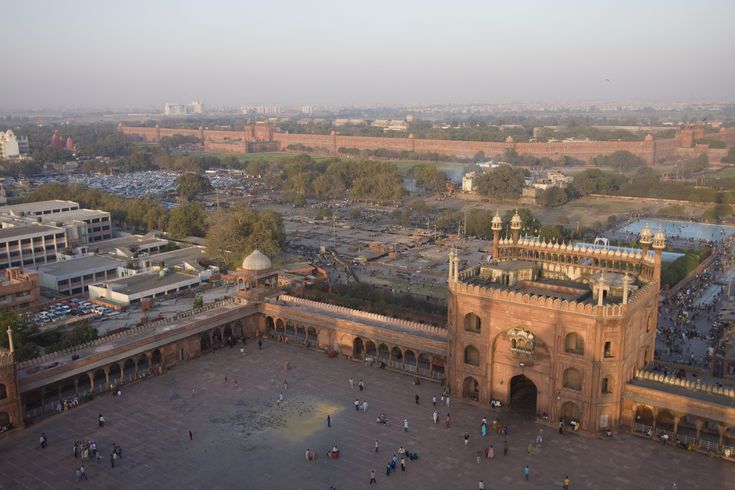
Being a city with a soul, the grandeur of unshakable cultural ethos of Delhi had been reverberating in the air across centuries from the inception of Indraprastha to the present. Even though she was lacerated by incessant plunders, devastating wars, shifting capitals and changing rulers, the cultural vibe of Delhi remained fit as a fiddle, radiating the grandeur of a thousand suns rising in all its splendor. Delhi is, therefore, a city with unparalleled cultural eminence, unsurpassable glory and more importantly, an indomitable spirit.
Owing to the colossal historical backdrop of Delhi, this article attempts to spotlight the indomitable cultural grandeur of the city confined to a brief timeframe of fifty years from 1675 to 1725. However, one may note that this particular time frame is purely abstract and open-ended. None of the limits coincides with any major historical event nor the reigning period of any emperor and hence necessitates the need of referring to some period before or after the pre-designated timeframe.
The designated timeframe witnesses the rule of Aurangazeb, Bahadur Shah I, Jalandhar Shah, Farrukhsiyar, Akbar II and Muhammad Shah. Nonetheless, the timeframe fails to incorporate the entire reign of Aurangazeb and Muhammad Shah and therefore, this article tends to briefly mention those periods even though it’s beyond the scope of the predetermined timeframe.
On a brief analysis of Aurangazeb’s reign, one may conclude that his regnal period witnessed mass cultural genocide prima facie. Firstly, he banned music from the court for the want of time for festivity amidst his surging devotion for duty. Secondly, being a hardcore proponent of shari’a, he believed that the content of poetry was immobilized by Sufi mysticism and considered them hawkers of duplicity. Finally, he believed that paintings were un-Islamic and banned it and withdrew all forms of royal patronage offered to artists. One may note that Islamic law forbids the depiction of living creatures in art as it believes that the power of creation safely vests with God.
However, on careful analysis of the period, Delhi emerged as an exquisite centre for thriving Indo-Mughal culture braving the ravages of Aurangazeb’s antics. Even though Aurangazeb banned music from the court, ceremonial music (naubat) continued to exist. Literateurs and artists now looked upon the members of the harem and the leading nobles for patronage. To illustrate, Prince Azam extended his patronage to a plethora of poets and artists.
Soon after Aurangazeb withdrew royal patronage for art, music and poetry, many artists left Delhi in search of patronage and imperial attention. Nonetheless, one may note that many of them were hesitant to leave the premises of the city which had honed their skills and supported their livelihood. One of the many poets who were unwilling to leave Delhi was Bedil, a close associate of Aqil Khan ‘Razi’, the venerated Governor of Delhi. He spent thirty-six years of his life in the city and was deeply influenced by Sufi mystic poetry. Moreover, he trained a school of poets in Delhi and he was deeply revered to an extent that an annual urs to his grave began after his death in 1720 where the poets were expected to read out their recent compositions.
Jahanara with her handsome allowance fixed by Aurangazeb continued extending patronage to a school of poets, musicians and artists. Even after her death, her legacy was inherited by Zeb-un-Nisa and Aqil Khan ‘Razi’ and they emerged as cultural patrons of Delhi, supporting the baluster slackened by Aurangazeb.
However, Aurangazeb imprisoned Zeb-un-Nisa for supporting rebellious Akbar nonetheless she was granted great sort of freedom and a handsome allowance in confinement and at the later phase of her life, she set up an academy that aimed at incubating and honing the skills of artists.
In addition to that, the celebrated Chishti order was revived by Sheikh Kalimullah and Jahanara contributed to the growth and revival of the same towards the later stages of her life. Delhi now came to be known as the ‘metropolis of liberalism’ and towards the end of the seventeenth century, two rival centres emerged for the development and propagation of cultural values- Aurangabad that stood for Orthodoxy, theology and Islamic studies and Delhi that resonated with Liberalism and Sufism.
One may note that Delhi was deprived of the imperatorial presence for about thirty-three years from 1679 when Aurangazeb left for Aurangabad. Bahadur Shah I was in power till 1712 but he never entered Delhi in his capacity as the Emperor. However, this never meant a depreciating political legacy of the city. Firstly, Asad Khan, the ex-Wazir of Aurangazeb was elevated to the position of the Governor of Delhi and this appointment of the most senior officer as the Governor of Delhi exemplifies the political legacy of the city. Secondly, Bahadur Shah ordered that none shall leave Delhi or none shall visit Delhi without his permission. Thirdly, the Red Fort continued to be a formidable macrocosm of legitimate power which can be comprehended by the fact that the newly appointed Governor of Lahore sought permission to visit the Red Fort before assuming his office.
Even though Delhi was deprived of the imperial presence, it thrived as an important centre for trade, commerce, manufacture and culture. Vestiges of Shah Jahan’s artistic inclination failed to meet a sudden death. Patronage continued to be extended to artists, poets and scholars, both Hindus and Muslims by Dara Shikoh and by the mid-seventeenth century, Delhi emerged as a significant cultural centre. Delhi reclaimed its political importance with the advent of Jalandhar Shah in 1712. However, from 1712 to 1759 Delhi guarded the gates of a rapidly diminishing empire. With declining monarchial prestige and dislodged nobility supplemented by food insecurity, inflation, epidemics and famines with necessary provisions being confined to imperial coffers, Delhi witnessed an era of surging turmoil and insecurity. Merciless executions, imprisonment and dispossession of nobles who had supported a rival prince laid the foundations of catastrophic factional warfare in Delhi.
Declining monarchical prestige was amplified by the act of Jalandhar Shah as he elevated Lal Kunwar coming from a family of musicians to the status of a queen and such elevations were considered undesirable for nobility. The emperor spent his time with her and even got drunk in public. The emperor seemed to be reduced to the position of a King in the game of Chess being manipulated by the entire clan of musicians. This paved the way towards social instability where the emperor lost the support of the nobles, landlords and theologians. Farrkukhsiyar also failed to restore the lost prestige of Mughal nobility and he was widely despised for his association with a low-born homosexual.
However, amid such adverse insecurities and catastrophic conflagrations, Delhi remained to be a city with an indomitable spirit. Firstly, even though the Emperor was reduced to the status of a restricted monarch figurehead, the subjects considered him as the guardian of social order and justice. Even the Sayyid Brothers couldn’t attempt a direct consolidation of political power and had to support Farrukhsiyar to the throne. Secondly, albeit the political power of the Mughals were rapidly diminishing with the snowballing Maratha power and semi-independent principalities like Awadh, Bengal and Hyderabad, the Mughal Emperor was seen as a nominal head and a legitimate authority to an extent to which the Marathas and even the British had to approach them at a later stage for political legitimacy.
Despite the social instability of the period under consideration, the emergence of a small elite class with both means and desire to offer patronage ensured the evergreen perpetuity of cultural activities. Delhi remained to be the favourite halt of nobles and money-lenders who had invested in building markets, lending money for interest or trade aspiring for a supplementary income and this made Delhi one of the mammoth financial centres in India. In consequence of the same, many businessmen, manufacturers, scholars, religious leaders and elites settled in Delhi and offered patronage to cultural activities and thus, Delhi remained to be culturally bouncy even though it faced adverse calamities. Delhi was, is and will be a city with an indomitable spirit and unsurpassable glory.
One of the biggest loot in the history of India that handicapped Delhi was the invasion of Nadir Shah in 1739. On one hand, the inexpensive Peacock Throne and the Kohinoor were looted and on the other, the repercussions of this loot incarnated as anarchy and insecurity among both the rich and the poor alike for a period of twenty years from 1740-1760. However, this event was also easily overcome within no time as the looted wealth was mostly hoarded ones, not in circulation and by and large it just accounted for a very small part of gold and silver in circulation. Supplemented by a favourable foreign trade, the indomitable spirit of the city overcame the backlash of the loot with ease and cultural life was restored.
The period under consideration is undoubtedly venerated for flourishing music and literature. Whereas Persian was used by the upper class, Urdu continued to be the language of the masses. The Urdu poetry incorporated Persian and Hindi styles and represented an integrated culture.
Even though she was wounded by adverse calamities in the period under consideration, Delhi remained to be culturally vibrant, alive and breathing. In the fifty years from 1675 to 1725, she was left without an Emperor for thirty-three years and after the advent of Jalandhar Shah, she witnessed social instability supplemented by inflation, epidemics, famine and factional warfare. She was much better off in the absence of the monarch as the later monarchs were downgraded to the status of a restricted monarch figurehead backed by a myriad of misfortunes.
Delhi surpassed all her misfortunes with her indomitable spirit. Banning of cultural activities, absence of the emperor, incapable rulers, social unrest, epidemics and famines, inflation, diminishing moral values, factional warfare and plunder miserably failed to amend the cultural landscape of the city. Although Delhi was overshadowed in size, economy and cultural activities by Lahore and Agra as far as the predetermined timeframe is concerned, Delhi was an unparalleled metropolis in the eyes of its people and it remains to be so and it will remain so for the times to come.
Social media and academia are often seen as contradictory pulls in the life of a college student

To keep pace with technological advancement, the Hon’ble Supreme Court of India has cited the right to Internet access as a fundamental right under Article 19(1)(a) of the Constitution of India. Since Social media in itself is a potential medium for large-scale dissemination of information, it is pretty obvious that it is necessary to keep abreast of the latest developments and to communicate with an extensively larger populace that makes it fall under the purview of the right to freedom of speech and expression. In 2017, Kerala became the first state to recognize the internet as a basic human right. Keeping this in mind, won’t it be a clear violation of fundamental right if a college student, an individual citizen of India who has attained the age of eighteen, being barred from access to social media?
Starting from addiction, the use of social media has a wide range of repercussions on the human body and mind. Addiction becomes a very incarnation of digital neo-colonialism where the physical body, the emotion and the intellection of an individual are being feloniously glued to the cobweb fabricated by social media. However, there are only twelve notches in a regular clock. Spending hours on Facebook and WhatsApp becomes an opportunity cost that has incurred as a result of compromising the time that could’ve been devoted to academic activities. Burning the midnight oil sitting in front of a mobile phone indisputably interrupts the sleeping time of a student that in turn will have adverse implications over his biological self. In addition to that, adolescent fantasizing has emerged as a recent issue that challenges the emotional self of a student, most probably caused due to devoting undue hours on social media and ‘sitting in an armchair with a mobile-phone dreaming up Utopias’, as suggested in a recent study report published by the University of Leeds. This is a situation where an individual fails to differentiate between fantasy and reality. It won’t be a surprise if the life of such individuals ends up in a lunatic asylum.
Similar to the statutory warning printed over a pack of cigarettes, the ill effects of social media are being selectively ignored by college students. This selective amnesia has been legitimized by the digitalization of the education system amidst the pandemic. Every college now has its own social media pages and WhatsApp groups have been legitimized as the “official” medium of dispensing college-related and academic-related information. Classes are being taken through WhatsApp, Facebook, Hangouts, Zoom, inter alia and on one fine day if the phone of a college student goes haywire, his day is irretrievably lost. The suggested books, often published by International universities may not be available in public libraries and in most cases, buying them from the open market would be nothing less than a daylight robbery. This makes college students depend on the digitized version of such books, often made available free of cost, making social media like WhatsApp intrinsic to the education system. Social media, therefore, becomes a potential platform for sharing notes, suggested readings, dissemination of urgent information and repeated timetable alterations and it will continue to be so even after the pandemic. It’s simply similar to the concept of a mixed economy where features of both capitalism and socialism exist side-by-side. This relation with academics makes social media an unfathomable part of college life.
In toto, social media has now become an indispensable part of any college student’s daily life, serving as a virtual encyclopedia and as a potential stress-buster. Aside from the health concerns posed by it, it has been adopted by the current education system and now, debates are even made to make social media an intrinsic part of the right to life and personal liberty. “Social Media: A Boon or a Bane” is one of the evergreen topics that are hotly debated for decades. Be it an English question paper of a 6th Grade student, this topic finds its place even in the UPSC interviews and columns of The Hindu. Whether it is a boon or a bane solely depends on your attitude towards the same. For instance, silkworms were given a boon to form a protective shield around them and it strives for its entire lifetime to create one and once it’s created, it loses its life by dint of its boon. A boon can easily be a bane and a bane can be metamorphosed into a charming boon. Therefore, social media can be a boon to some and bane to others depending on how they use the same. Utilizing social media in adherence to a systematic schedule and demarcating the boundary that separates academia and social media so that none of them hampers the time frame devoted to each other will make one a lucid, levelheaded college student.
Towards the Fourth Phase of Indian Federalism: ‘Modi’fication of Centre-State Relations from 2014 to the Present
“We require a strong and united Centre, much stronger than the Centre we had created under the Government of India Act of 1935”
-Dr B.R. Ambedkar
Devised from the principles scooped out from the Government of India Act of 1935, the Indian Federalism attempted a successful translocation from a tax and law-and-order based governance to governance committed to the welfare ideas of planning and development. However, one may witness three phases of this system, prima facie viz. benign centralism of Nehru (1950-’64) and excessive centralization of Indira Gandhi (1965-’89) followed by co-operative federalism of the era of coalitions (1989-2014). However, on a brief analysis of the contemporary political ecosystem, on the face of it, one may put the finger on the fourth phase of the Indian federal exercise of Modi from 2014 to the present characterized by a series of attempt towards centripetal governance.
The General Elections of 2014 and 2019 has paved the way for the restoration of the de facto one-party dominance at the centre. Being a landmark in the history of Indian Politics, these twin electoral events conferred a hegemonic position to the BJP at the centre. Albeit the fact that the election manifesto of the BJP (2014) attempts to constitute a ‘Team India’ stressing on more sophisticated centre-state relationship supplemented by the creation of regional councils of states that aid the Centre in planning and development, nonetheless, can be despised as BJP’s cock-a-doodle-doo of competitive, co-operative federalism. There can be two possible grounds for the same. Firstly, the party in the majority no longer relied on the endorsement from regional parties. Secondly, intra-party centralization is strengthened with its say in the nomination of candidates to pivotal positions complemented by the participation of Central leaders in regional election campaigns.
To begin with, the office of the Governors who’re being criticized as the political agent of the centre in the guise of the formal head of the State; is accorded a political dimension with the appointment of partisan Governors. In 2014, the BJP Government dismissed nine Governors who were appointed by the previous Government. One of the consequential nitpick of Indian federalism is Art.156 owing to which the office of the Governor is made immensely insecure as she shall be in harness during the pleasure of the President and can be removed from office anytime with the ease of knocking a chesspiece out.
The celebrated Bommai Judgement (1994) serves as a lodestar of the principles of Indian Federalism that brings the cold-blooded use of Art.356 under the purview of Judicial Review. The provision was invoked twice in 2016 over the Congress ministries of Arunachal Pradesh and Uttarakhand. As far as the former is concerned, the partisan Governor advanced the session of the legislative assembly by a month (Art.174) owing to a factional warfare within the Congress, paving the way for BJP-led Government in Arunachal Pradesh. Concerning the latter, nine Congress MLA’s broke-out from the party and consequently, the Congress ministry was asked to prove their majority. However, the President of India was advised to suspend the Government a day before the floor test was conducted, inviting colossal political outrage. In both cases, the Supreme Court restored the former Governments in her capacity of the Guardian of Indian Federalism or an institutional veto player.
Moreover, the Demonetization melee of 2016 has attracted large-scale opprobrium. Then Congress Chief Minister of Uttar Pradesh pummeled this act as being politically motivated, aiming to destroy political rivals and ensuring a slackened propaganda before the 2017 election campaigns of Uttar Pradesh and the incapacitated campaigning activities and the Election results favouring the BJP seemed to prove his argument valid.
In addition to that, even though the overtly centralized planning commission was replaced by NITI-Aayog, the latter tends to be inclined to the office of the Prime Minister. The Aayog constitutes of a CEO, a Vice-Chairperson, some full-time members, few ex-Officio members who’re Cabinet Ministers and special invitees of which none of them so far were State officeholders. Even though the NDC was replaced by a Governing Council, it is highly looked down upon as being a mere formulator of Union policies- like a caged parrot. For instance, the council met thrice between 2015-17 and the ‘15 meeting was devoted to policy formulation related to the proposed amendment to the Land Acquisition (Rehabilitation and Resettlement) act of 2013. Also, the Regional Councils comprise of a school of Chief-Minister’s nonetheless, the Central Executive determines the composition as well as the themes to focus on. They aren’t empowered to work on a theme of their choice, in sync with their aspirations. In 2015, three councils on Skill Development, Swachchh Bharat and Implementation of Centrally Sponsored Schemes were formed. Albeit the fact that these councils were heterogeneous in party-based compositions, they were chaired by then BJP Chief-Ministers of Andhra Pradesh, Punjab and Madhya Pradesh respectively.
The abolition of Art.370 brings to the limelight one of the excessive powers of the Union to alter the territorial boundaries and status of the constituent units with a simple majority, with minimal and exceedingly formal consultation with the affected (Art.3). Notwithstanding the Puducherry crisis, the ex-CM accused the former Lieutenant Governor and the Union of their (successful) attempt to topple the government. The Calcutta High Court’s direction to remove the anti-CAA advertisements sponsored by the West Bengal Government validates Art.256 that requires the State Governments to implement a parliamentary law. Further, Art.257 enables the Union to give directions to the States ensuring the same. En réalité, refusal to adhere to such lawful directions may invite discharge of Art.356 according to Art.365 and the Constitutional validity of the latter was upheld by the Bommai verdict.
In toto, the Parliament which is supposed to be the asseverate temple of democracy is being confined to an edifice of constitutional formalities. The constitution with a natural inclination towards the centre joins hands with the de facto one-party dominance paving the way for a centripetal centre-state relation.
U.S. criticizes brutal killing of people by security forces in Myanmar
The United States has criticized the brutal killing of people by security forces in Myanmar. US Secretary of State Antony Blinken has said that Washington is horrified by yesterday’s deaths in Myanmar. He said the killings, reportedly of more than 100 people, show that the junta will sacrifice the lives of the people to serve the few. He said the courageous people of Myanmar reject the military’s reign of terror.
UN Secretary-General Antonio Guterres said he is deeply shocked.
The lethal crackdown against civilians came as protesters defied warnings and took to the streets in towns and cities. The Assistance Association for Political Prisoners (AAPP) monitoring group confirmed at least 91 deaths while local media put the figure higher.
The latest violence took the number killed in the suppression of protests in Myanmar since the 1 February coup to more than 400.
India crosses milestone of administering over 6 cr COVID19 Vaccine doses
India has crossed the milestone of administering over 6 crore COVID-19 Vaccine doses. Continuing with its largest vaccination drive in the world, the nation administered over 15 lakh doses yesterday till late evening. India is one of the fastest countries in the world to achieve the 6 crore mark in a short span of only 71 days. The nation commenced the largest vaccination drive in the world on 16th January this year with vaccination of healthcare workers.
Vaccination of front line workers began from 2nd February whereas the most recent phase began from 1st of this month encompassing vaccination of everyone aged above 60 years and above 45 years with specified co-morbidities. The Health Ministry has informed that in just 27 days of the current phase nearly 2 crore 73 lakh senior citizens above 60 years and over 64 lakh people above 45 years with co-morbidities have been administered the first shot of the COVID-19 Vaccine.
Negative RT-PCR report must to enter Gujarat from April 1
Gujarat government has made a negative RT-PCR report must to enter the state from April 1. The test report should not be older than 72 hours. The decision was taken in view of a surge in Covid-19 cases in recent time. AIR correspondent reports that the state recorded 2,276 cases yesterday. This is the highest daily count so far. A total of 1,534 people were discharged from hospitals during the day.
The number of active cases in the state has risen to 10,871. At 760, Surat recorded the highest number of new cases in the state yesterday, followed by Ahmedabad with 612 cases, Vododara with 326 and Rajkot with 172 cases., The new wave of Covid 19 in the state has also hit two of the country’s premier educational institutions such as IIM Ahmedabad and IIT Gandhinagar. According to official sources, the IIM Ahmedabad currently has 40 active cases of Covid 19, while IIT-G has 25 active cases. Meanwhile, more than 2 lakhs 98 thousand people were vaccinated in the state during the day.
Two terrorists killed in encounter in J&K’s Shopian
In Jammu and Kashmir, two terrorists were killed in an encounter with security forces at Wangam area of Shopian district yesterday evening. Police said a joint team of security forces launched a cordon and search operation (CASO) in Wangam following the intelligence inputs about the presence of terrorists in the village. As the joint team approached towards the suspected spot, the terrorists fired upon them and in retaliation, two terrorists were gunned down. The identity of the slain terrorists is being ascertained. Arms and ammunition have also been recovered from their possession.
One Army soldier also attained martyrdom in the encounter while another injured soldier was evacuated to Army’s 92 Base Hospital in Srinagar.
West Bengal records over 82 percent voter turnout; Assam over 77 percent in 1st phase of assembly polls
West Bengal has recorded more than 82 percent voter turnout and Assam registered over 77 percent polling in the first phase of assembly elections.
The voting was held in forty-seven constituencies across twelve districts of Assam and for 30 constituencies across 5 districts in West Bengal.
The Election Commission has said, the first phase of Assembly Elections in the two states was conducted successfully yesterday across 21 thousand 825 Polling Stations spread over 77 Assembly Constituencies.
In Assam, the fate of 264 candidates has been sealed in the first of the three-phase elections. Among the prominent candidates in this phase include, Chief Minister Sarbananda Sonowal from Majuli, State Congress President Ripun Bora from Gohpur and Asom Gana Parishad President Atul Bora from Boka khat.
In West Bengal, barring a few stray incidents, polling was by and large peaceful. State Chief Electoral Officer Ariz Aftab said, 10 persons were arrested in three separate incidents yesterday.
191 candidates including 21 women were in the fray during the initial phase.
The state is witnessing eight-phase elections this time.
Webcasting arrangements were put in place for 5 thousand 392 Polling Stations in West Bengal and 5 thousand 39 Polling Stations in Assam. The Poll Body said, all the Polling Stations were directed to follow COVID-19 Safety protocols. A total of 167 cases of Model Code of Conduct violations were reported through the cVIGIL app from West Bengal out of which 111 were disposed off till 4.30 pm yesterday. Similarly 582 cases were reported from Assam with 423 disposed till 4.30 pm.
India, Bangladesh say, partnership between two countries evolved as a model for bilateral relations for entire region
India and Bangladesh have said that the partnership between the two countries has evolved as a model for bilateral relations for the entire region. A joint statement, issued after the talks between Prime Minister Narendra Modi and his Bangladeshi counterpart Shiekh Hasina in Dhaka, said that Mr Modi’s visit symbolised the partnership of half-a-century between the two countries. The statement said, this partnership has strengthened, matured and evolved as a model for bilateral relations for the entire region.
The talks between the two leaders were marked by great warmth and cordiality. The two leaders expressed satisfaction at the excellent state of bilateral relations, based on deep historical and fraternal ties, which reflect an all-encompassing bilateral partnership based on equality, trust and understanding. Recognizing that terrorism remains a threat to global peace and security, both sides reiterated their strong commitment to eliminating terrorism in all its forms and manifestations.
India and Bangladesh yesterday signed MoUs in key sectors including trade and technology to foster bilateral ties after talks between the two leaders.
Mr Modi and Ms Hasina virtually inaugurated several projects during Prime Minister Modi’s visit to Bangladesh.
The two leaders unveiled the foundation stone for the construction of a memorial at Ashuganj honoring the martyrs of Indian armed forces in the 1971 Liberation War of Bangladesh.
Prime Minister Modi and his Bangladesh counterpart jointly inaugurated a new passenger train, ‘Mitali Express’, between Dhaka and New Jalpaiguri in West Bengal. The train will run between Dhaka Cantonment and New Jalpaiguri via Chilahati, a border railway station in Bangladesh.
The train will run from New Jalpaiguri to Dhaka Cantonment on Sunday and Wednesday and Dhaka Cantonment to New Jalpaiguri on Monday and Thursday. It is expected to give a boost to tourism in both the countries.
This is the third passenger train after Maitree Express (Dhaka-Kolkata) and Bandhan Express (Khulna-Kolkata) running between the two neighbouring countries.
Briefing the media about Prime Minister Modi’s Bangladesh visit, Foreign Secretary Harsh Vardhan Shringla said, the service will start when normalcy is restored. Both countries had suspended railway services after the COVID-19 pandemic broke out.
Mr Shringla said, the two countries agreed to start a new era of cooperation in the Civil nuclear and space sectors. The Prime Minister also laid the foundation stone for infrastructure development for power evacuation facilities from the Rooppur Nuclear power plant.
The Foreign Secretary informed that India also gifted 109 life support ambulances to Bangladesh and also Covid-19 vaccine doses.
Three border haats were also opened along the India-Bangladesh border.
Earlier, on the concluding day of his two-day visit to Bangladesh yesterday, the Prime Minister visited places of historical importance and temples in Bangladesh. Addressing the Matua community at Orakandi, Mr Modi said, both India and Bangladesh want to see stability, love, and peace in the world instead of instability, terror, and unrest.
Mr Modi offered prayers at the centuries-old Jeshoreshwari Kali temple at Ishwaripur village in Shatkhira district of Bangladesh yesterday.
This was Prime Minister Modi’s first visit to a foreign country after the outbreak of COVID-19. The visit coincided with epochal events – celebrations of the Golden Jubilee of the Independence of Bangladesh, the birth centenary of the Father of the Nation Bangabandhu Sheikh Mujibur Rahman and 50 years of establishment of diplomatic relations between India and Bangladesh.
PM Modi to share his thoughts in Mann Ki Baat today
Prime Minister Narendra Modi will share his thoughts with the people in the country and abroad in Mann Ki Baat programme on All India Radio at 11 AM today. It will be the 75th episode of the monthly radio programme.
The programme will be broadcast on the entire network of AIR and Doordarshan and also on AIR News website www.newsonair.com and newsonair Mobile App. It will also be streamed live on the YouTube channels of AIR, DD News, PMO and Information and Broadcasting Ministry.
AIR will broadcast the programme in regional languages immediately after the Hindi broadcast. The regional language versions will be repeated at eight in the evening.
Managing Cities and Towns, Urban Governance, Local Government, and Planning & Development Agencies/Organizations
1. Introduction
Cities and towns are complex systems that require effective management to ensure orderly development, efficient infrastructure, and improved quality of life for residents. Rapid urbanization in many countries, particularly in developing nations like India, has increased the demand for effective urban management and governance. Managing urban areas involves coordinating land use, infrastructure development, transportation systems, housing, environmental protection, and public services.
Urban governance refers to the processes, institutions, and mechanisms through which cities and towns are planned, managed, and administered. It involves collaboration between government authorities, private organizations, and community stakeholders to achieve sustainable urban development.
2. Managing Cities and Towns
Managing cities and towns involves the administration and regulation of urban areas to ensure efficient functioning and development. Urban management includes activities such as planning land use, providing infrastructure, maintaining public services, and enforcing development regulations.
Key Functions of Urban Management
Urban management generally involves the following activities:
- Land-use planning and regulation
- Infrastructure development and maintenance
- Transportation management
- Housing and urban development
- Environmental protection and waste management
- Public health and sanitation services
- Disaster management and resilience planning
Effective urban management requires coordination among multiple agencies and institutions.
3. Urban Governance
Urban governance refers to the system of decision-making and administrative processes used to manage urban areas. It involves the interaction between government institutions, private sector organizations, and citizens.
Urban governance focuses on ensuring transparency, accountability, participation, and efficiency in managing cities.
Principles of Urban Governance
Good urban governance is based on several key principles:
- Participation: Involving citizens and stakeholders in decision-making processes.
- Transparency: Ensuring openness in government activities and policies.
- Accountability: Holding authorities responsible for their actions and decisions.
- Efficiency: Delivering public services effectively and efficiently.
- Equity: Ensuring fair distribution of resources and services among all communities.
Urban governance helps create democratic and responsive urban management systems.
4. Role of Local Government in Urban Development
Local governments play a central role in managing cities and towns. They are responsible for implementing development policies, providing basic services, and regulating urban growth.
Urban Local Bodies (ULBs)
Urban local bodies are the main institutions responsible for urban governance in cities and towns. They operate at the local level and address the specific needs of urban communities.
Examples include:
- Municipal corporations (large cities)
- Municipal councils or municipalities (medium-sized towns)
- Nagar panchayats (smaller urban areas)
These institutions function under the framework of decentralization established by the 74th Constitutional Amendment Act of 1992 in India.
Functions of Urban Local Governments
Urban local governments perform several important functions, including:
- Preparation and implementation of development plans
- Provision of water supply and sanitation services
- Solid waste management
- Maintenance of roads and public spaces
- Regulation of building construction and land use
- Public health and environmental management
These functions help ensure the smooth functioning of urban areas.
5. Planning and Development Agencies
Urban planning and development often require specialized agencies and organizations that assist governments in preparing plans, implementing projects, and managing infrastructure.
Town and Country Planning Organizations
These organizations provide technical expertise in land-use planning, urban design, and regional planning.
Their responsibilities include:
- Preparation of master plans and development plans
- Conducting urban surveys and research
- Advising governments on planning policies
Development Authorities
Development authorities are specialized agencies established to manage large urban development projects.
Their functions include:
- Preparation of master plans
- Development of housing and infrastructure projects
- Regulation of land development
- Acquisition and development of land for urban expansion
Examples include urban development authorities established in major cities.
Metropolitan Planning Authorities
In large metropolitan regions, specialized authorities coordinate development across multiple municipalities and administrative areas.
Their responsibilities include:
- Regional transportation planning
- Infrastructure development
- Environmental management
- Coordination between local governments
Housing Boards
Housing boards are responsible for planning and developing housing projects, particularly for low-income and middle-income groups.
They work to address housing shortages and improve urban living conditions.
6. Role of Other Stakeholders
Urban governance involves not only government institutions but also various other stakeholders.
Private Sector
Private developers and investors play an important role in infrastructure development, housing projects, and commercial development.
Non-Governmental Organizations (NGOs)
NGOs contribute to urban development through community participation, social programs, and environmental initiatives.
Community Participation
Local communities and residents are important participants in urban governance. Public consultations and participatory planning processes help ensure that development projects address local needs.
7. Challenges in Urban Governance
Despite the importance of urban governance, several challenges affect the effective management of cities and towns.
Rapid Urbanization
Fast population growth in cities increases the demand for housing, infrastructure, and services.
Institutional Fragmentation
Multiple agencies may have overlapping responsibilities, leading to coordination problems.
Financial Constraints
Urban local bodies often face limited financial resources to implement development projects.
Infrastructure Deficits
Many cities struggle to provide adequate infrastructure and services to growing populations.
Addressing these challenges requires improved institutional coordination, stronger governance frameworks, and innovative planning strategies.
8. Importance of Effective Urban Governance
Effective urban governance contributes to:
- Improved infrastructure and public services
- Sustainable urban development
- Better environmental management
- Economic growth and investment
- Improved quality of life for urban residents
Good governance ensures that cities remain livable, resilient, and inclusive.
9. Conclusion
Managing cities and towns requires coordinated efforts from urban governance institutions, local governments, and planning agencies. Urban governance provides the framework through which cities are administered, policies are implemented, and development is guided.
Local governments play a central role in providing services and managing urban growth, while planning and development agencies assist in preparing plans and implementing infrastructure projects. Collaboration between government institutions, private sector organizations, and communities is essential for effective urban management.
As urbanization continues to increase, strengthening urban governance systems and improving institutional capacity will be crucial for achieving sustainable and inclusive urban development.


Feminism
What is feminism?
Who are called as a feminist?
What does a feminist do?
Why feminism arrived?
Before saying about feminism let me clear one thing feminism is not only about women getting equal rights and opportunities rather feminism is a belief that every individual should be given equal rights, powers and opportunities. If you stand for equality then you are a feminist. Basically feminist are those individuals who takes care no one is treated unfairly.
Feminism started in the 19th and early 20th centuries addressing issues of women’s suffrage (the right of women to vote in elections). The second-wave feminism started in 1960s broadened debate to include cultural inequalities, gender norms, and the role of women in society.
During the 17th and 18th centuries in Europe many Enlightenment philosophers defended the rights of women, including Jeremy Bentham (1781), Marquis de Condorcet (1790), and Mary Wollstonecraft (1792). Other important writers of the time also expressed the views of the feminist.
Unlike the Western feminist movement, India’s movement was initiated by men, and later joined by women. The first phase of feminism in India was initiated by men to uproot the social evils of sati (widow immolation), to allow widow remarriage, to forbid child marriage, and to reduce illiteracy, as well as to regulate the age of consent and to ensure property rights through legal intervention.
But feminism as an initiative by women started independently a little later in Maharashtra by pioneering advocates of women’s rights and education: Savitribai Phule, who started the first school for girls in India (1848).
Tarabai Shinde, who wrote India’s first feminist text Stri Purush Tulana (A Comparison Between Women and Men) in 1882; and Pandita Ramabai, who criticized patriarchy and caste-system in Hinduism, married outside her caste and converted to Christianity (1880s).
The Bengali reformers included abolishing sati, which was a widow’s death by burning on her husband’s funeral pyre, abolishing the custom of child marriage, abolishing the disfiguring of widows, introducing the marriage of upper caste Hindu widows, promoting women’s education, obtaining legal rights for women to own property, and requiring the law to acknowledge women’s status by granting them basic rights in matters such as adoption.
The second phase started when Mahatma Gandhi expanded Indian women’s public activities by initiating them into the non-violent civil disobedience movement against the British. Many women organisations formed. Women-only organisations like All India Women’s Conference (AIWC) and the National Federation of Indian Women (NFIW) emerged. Women started looking for their scope in leadership roles in political parties, women’s franchise and communal awards. In 1954 the Indian Communist Party formed its own women’s wing known as the National Federation of Indian Women.
By the 19th century and 20th century more women issues came to spotlight. More amount of women became active and started protesting for their rights. Feminists in the 1970s challenged the inequalities that had been established and fought to reverse them. These inequalities included the unequal wages for women. The aim was to abolish the free service of women.
Struggle of feminist are still going on. Many women are still fighting for their freedom. We need to change this view that women don’t need permission they have their voice and they can make their own choice.
Let’s find out about some Indian feminists and their contributions. They are :
- Savitribai Phule – She is one of the earliest Indian feminists. She started the first school for girls in India in the year 1848.
- Tarabai Shinde – The writer of India’s first feminist text Stri Purush Tulana (A Comparison Between Women and Men) in 1882.
- Kamini Roy – She is a poet and suffragette. She became the first woman Honors Graduate in India in 1886.
- Saroj Nalini Dutt – She is the early social reformer who pioneered the formation of educational Women’s Institutes in Bengal.
- Mira Datta Gupta – Activist for women’s issues and one of the founding members of the All India Women’s Conference.
- Sarala Devi Chaudhurani – Founder of the Bharat Stree Mahamandal, one of the first women’s organisations in India.
Novak Djokovic enters semifinals of Men’s Singles in Australian Open Tennis
In Tennis, Serena Williams will meet Naomi Osaka in the Australian Open women’s semifinals tomorrow. Serena defeated Simona Halep, 6-3, 6-3, and Osaka triumphed over Chinese Taipei’s Hsieh Su-Wei 6-2, 6-2 in the Australian Open quarterfinals yesterday.
On the men’s side, Novak Djokovic edged Alexander Zverev 6-7(6), 6-2, 6-4, 7-6(6) to book his last-four berth, as Russian qualifier Aslan Karatsev continued his dream run with a win over an injured Grigor Dimitrov. It was was Djokovic’s 300th Grand Slam match victory. This is the ninth time Djokovic has made the Australian Open semifinal. He has gone on to win the title on all eight previous occasions.
COVID-19 recovery rate in country reaches 97.33 per cent
The COVID-19 recovery rate in the country has touched 97.33 per cent. Health Ministry said, in the last 24 hours, 11 thousand 833 people were discharged. Till now, one crore six lakh 44 thousand 858 people have recovered from the COVID-19 infection. In the last 24 hours, 11 thousand 610 new cases were reported.
With this, total number of cases have reached one crore nine lakh 37 thousand 320. The Ministry said, 100 deaths were reported in the last 24 hours. With this, the death toll has gone up to one lakh 55 thousand 913. Active cases are now at one lakh 36 thousand 549. So far, 89 lakh 99 thousand 230 beneficiaries have been vaccinated.
Karnataka govt makes RT-PCR negative certificate mandatory for all passengers arriving from UK, Brazil and South Africa
The Karnataka state Government has issued a new protocol for those arriving from the UK, Brazil and South Africa. This measure is taken after four cases of South Africa variant and one case of Brazilian variant was found in India. The state Government has also issued new directions for those coming into the state from Kerala following the detection of 40 Covid positive cases in a nursing college in Bengaluru.
AIR correspondent reports that the state Government has made it mandatory for passengers arriving into the state from the UK, Brazil and South Africa to produce RT PCR negative test report at the airport and undergo home quarantine for 14 days. They need to take the RT PCR test again on the seventh day. Those found positive will be taken to institutional quarantine facilities with their samples sent for genomic sequencing.
Similarly passengers from Kerala with RT PCR negative test results not older than 72 hours are made mandatory. Those who have come from Kerala in the last two weeks are asked to undergo the Covid tests.
Kiran Bedi removed as Puducherry LG; Telangana Governor Tamilisai Soundararajan given additional charge
Dr. Kiran Bedi has been removed from the post of Puducherry Lieutenant Governor. In a press communiqué, Rashtrapati Bhawan said, Telangana Governor Dr. Tamilisai Soundararajan has been given additional charge as Lieutenant Governor of Puducherry.
Meanwhile, the V. Narayanasamy led Congress government has been reduced to minority with the resignation of a Congress MLA. Mr. John Kumar elected from Kamaraj Nagar constituency resigned yesterday.
PM Modi to launch several key projects of oil & gas sector in Tamil Nadu today
Prime Minister Narendra Modi will dedicate to the nation and lay the foundation of key projects of the oil and gas sector in Tamil Nadu this evening through video conferencing.
Mr Modi will dedicate to the nation the Ramanathapuram -Thoothukudi natural gas pipeline and the Gasoline Desulphurisation Unit at Chennai Petroleum Corporation Limited, Manali. He will also lay the foundation stone of Cauvery Basin Refinery at Nagapattinam. These projects will bring in substantial socio-economic benefits and will boost the country’s march towards Urja Aatmanirbharta.
Governor of Tamil Nadu Banwarilal Purohit, Chief Minister of Tamil Nadu Edappadi K Palaniswamy and Petroleum Minister Dharmendra Pradhan will be present on the occasion. AIR correspondent reports that the 700 crore rupees pipeline project extends to a distance of 143 kilometer and begins at Ennore and passes through – Thiruvallur- Bengaluru- Puducherry- Nagapattinam- Madurai- Tuticorin Natural Gas Pipeline. It will also help utilise gas from ONGC Gas fields and deliver natural gas as feedstock to industries and other commercial customers.
The Gasoline Desulphurisation Unit at Chennai Petroleum Corporation Limited (CPCL), Manali has been constructed at a cost of about 500 crore rupees. It will produce low, less than 8 ppm sulphur, environment-friendly gasoline, which will help reduce emission considerably and contribute towards a cleaner environment. The Cauvery Basin Refinery project to be set up at Nagapattinam will have a capacity of 9 million metric tonnes per annum. It will be set up through a Joint Venture of IOCL and CPCL at an estimated cost of 31 thousand 500 crore rupees. It will produce Motor Spirit and Diesel meeting BS-VI specifications, and Polypropylene as a value-added product.
Planning Techniques for Village Development: A Case Study of Sanawadiya, Indore
By Maitri Singhai
This article explains how various planning techniques can be applied in practice, with examples drawn from case study of Sanawadiya, a peri-urban village near Indore. The objective was to demonstrate how these techniques contribute to prepare a comprehensive Village Development Plan.
1. Base Map Preparation
A base map serves as the foundation of any planning project. Using GIS, we georeferenced raster data, identified the village boundary, and imported layers from OSM (OpenStreetMap). Key elements such as roads, building footprints, natural features, and landmarks were digitized to create an accurate spatial framework for further analysis.

2. Land Use and Building Use Maps
Prepare a land use maps by overlapping existing records (like Khasra) with the proposed Master Plan. This helps to identify residential, commercial, industrial, and mixed-use zones. In addition, building height and building use maps provided insights into the settlement’s density and structural profile.

3. Questionnaire & Sampling
To capture the social and economic dimensions of Sanawadiya, designe household surveys and focus group discussions. A sample size of 100 households was selected using the simple random sampling method to ensure representativeness.

4. Data Collection
Combined primary data (surveys, interviews, observations) with secondary data (census reports, government records). The process included:
- Household surveys (socio-economic and demographic data)
- Visual surveys (land use, infrastructure, public spaces)
- Transportation surveys (traffic patterns, pedestrian behavior, parking availability)
- Focus group discussions to capture community perspectives


5. Data Representation
Collected data was analyzed and represented through maps, charts, and projections. This included:
- Demographic trends and population projections
- Economic sector distribution over time
- Road network proposals (Town Planning Scheme vs Master Plan)
- Social infrastructure mapping to highlight gaps and opportunities


Conclusion
The Sanawadiya study showcased the importance of integrating spatial analysis with socio-economic surveys to create a holistic development plan. Planning techniques like GIS-based mapping, sampling, and focused data collection and more proved essential for generating actionable insights. By applying these methods, we not only documented the existing conditions of Sanawadiya but also outlined strategies for sustainable village development in the context of Indore’s urban expansion.
References
Chen, J., Wang, C., Dai, R., Xu, S., Shen, Y., & Ji, M. (2021). Practical village planning strategy of different types of villages—a case study of 38 villages in shapingba district, chongqing. Land, 10(11), 1143.
Hao, S. (2021, June). Research on the application of GIS technology in the preparation of village planning–Take Feng Sheng Village as an example. In IOP Conference Series: Earth and Environmental Science (Vol. 791, No. 1, p. 012150). IOP Publishing.
Sharma, S. N. (2014). Participatory Planning in Plan Preparation. BookCountry.
Yen, N. T. K., & Van Luong, P. (2008). Participatory village and commune development planning (VDP/CDP) and its contribution to local community development in Vietnam. Community Development Journal, 43(3), 329-340.
School Projects and Paper Wastage
Do you ever wonder what happens to your handwritten project file or your exam sheets after an academic year? Well, they are thrown away. I always feel bad, after all this hard work and research my projects are being thrown away.
The best medium of writing down information is paper. Paper is easily available, it is cheap, and it can be stored anywhere. From a student to a teacher everyone uses paper in their day to day lives. Paper is produced from trees. Throughout the world, about 900 million trees are cut down annually. This equates to about 2.47 million trees cut down every day. It is estimated that 24 trees are required to make 1 ton of standard office paper.
In schools, paper is generally used for writing notes, exams, and projects. Projects are important for grading the students and they present the creativity and content writing skills of the students. Writing down the points taught in class gives the children a quick revision. The students solve various problems and equations in a notebook. During exams, everybody writes in an answer sheet provided by the school. Not only in schools but paper is used in offices, shops, banks, colleges, etc.
With so much paper in use it is obvious that many pages get wasted. Students tear many papers from their notebooks, many other students play (make aeroplanes and balls) with a clean and unused sheet/sheets of paper. After correction of a test, the test papers and answer sheets are thrown away without even recycling. The old paperwork in many offices is discarded even if only one side of the paper is printed.
The school projects and assignments also contribute to paper wastage. Unlike notes, notebooks and question paper sets these cannot be handed over to other students and serve no purpose after the assignment is graded by the teacher. Our projects with our best handwriting and best decorations are just kept in a school cupboard until the mass cleaning of all cupboards in the schools.
I feel that these projects should be made as a digital documentor as a presentation. This will not only save paper but also improve a student’s skill in Microsoft Word and Powerpoint. Due to this ongoing pandemic most of our school projects were to be made in a presentation format. I learned to use many presentation making tools and also saved paper.
How else can we save paper in schools?
- Re-Use Single-Sided Paper
- Do Away with Towel Dispensers in Wash Rooms
- Settings on All Printers Should be Double-Sided
- Use computers whenever possible.
- Make two-sided copies
- Re-use printer paper
- Ask your school to buy recycled or alternative paper products.
- Write smaller and avoid leaving a lot of white space on the page.
- Use an erasable board for note taking
- Reuse notebooks by writing on the unused pages
- Email assignments rather than printing them out
- Promote recycling, and have bins in classrooms, libraries, and any areas with copiers and/or printers for easy use.
Cyberbullying and Students
In today’s world, cyberbullying cases are common. Many students are negatively affected by it. Let us learn about it and know to stop it.

What is Cyberbullying?
Cyberbullying is bullying with the use of digital technologies. It can take place on social media, messaging platforms, gaming platforms and mobile phones. It is repeated behaviour, aimed at scaring, angering or shaming those who are targeted. Unlike the normal face-to-face bullying, cyberbullying leaves a digital footprint – a record that can prove useful and provide evidence to help stop the abuse.
Cyberstalking is a form of online harassment in which the perpetrator uses electronic communications to stalk a victim. This is considered more dangerous than other forms of cyberbullying because it generally involves a credible threat to the victim’s safety.
Internet trolls intentionally try to provoke or offend others in order to elicit a reaction. Trolls and cyberbullies do not always have the same goals: while some trolls engage in cyberbullying, others may be engaged in comparatively harmless mischief.
Effects of cyberbullying
When bullying happens online it can feel as if you’re being attacked everywhere, even inside your own home. It can seem like there’s no escape. The effects can last a long time and affect a person in many ways:
- Mentally — feeling upset, embarrassed, stupid, even angry
- Emotionally — feeling ashamed or losing interest in the things you love
- Physically — tired (loss of sleep), or experiencing symptoms like stomach aches and headaches
The feeling of being laughed at or harassed by others, can prevent people from speaking up or trying to deal with the problem. In extreme cases, cyberbullying can even lead to people taking their own lives.
Fighting cyberbullying
If you think you’re being bullied, the first step is to seek help from someone you trust such as your parents, a close family member or another trusted adult. In your school you can reach out to a counsellor or your favourite teacher. And if you are not comfortable talking to someone you know, search for a helpline in your country to talk to a professional counsellor.
For bullying to stop, it needs to be identified and reporting it is key. It can also help to show the bully that their behaviour is unacceptable. If you experience cyberbullying, you may want to delete certain apps or stay offline for a while to give yourself time to recover. But getting off the Internet is not a long-term solution.
- Think twice before posting or sharing anything online – it may stay online forever and could be used to harm you later.
- Don’t give out personal details such as your address, telephone number or the name of your school.
- You can decide who can see your social media profile, send you direct messages or comment on your posts by adjusting your account privacy settings.
- Besides ‘unfriending’, you can completely block people to stop them from seeing your profile or contacting you.
- You can also choose to have comments by certain people to appear only to them without completely blocking them.
- You can delete posts on your profile or hide them from specific people.
VOCATIONAL EDUCATION

What is vocational education?
Vocational Education and Training (VET) is a job-oriented technical training course for students who want to focus on a specific career opportunity. In this, the main focus is on a specific career opportunity. Students are provided training, instructions on a specific course. At the end of the course, they are given a certificate which ensures they are well-trained in their work. This type of education is a great asset to our country. Nowadays vocational schools are opened in which students are provided training according to their courses. Students can join such training in high school or even after their graduation. Here is a small list of vocational training:-
- Architecture
- Science
- Art and craft
- Business administration
- Project management
- Law
- Media studies
- Leadership and management
- Computer science and IT
- Humanities
- Hospitality and travel
There are several other courses available too. After this course, you will have excellent job offers in your field. Several colleges provide vocational training:-
- Jai Hind College
- SNDT Women’s University
- GGSIPU
- Meera Bai Institute of Technology
- IIFA Lancaster Degree College
- Pondicherry University
- ST.Pauls Institute of Communication
- Tata Institute of Social Science
- Frameboxx 2.O Animation and Visual Effects
- George College
- Ambedkar University
- Amity University
Like these, various number of colleges are there with vocational courses.
Top-rated courses which are available in vocational education :
- Integrated B.A+B.Ed
- Bachelor of Physical Education and Sports
- Post Graduate Diploma in Counselling and family therapy
- Bachelor of Education(B.Ed)
- Nursery Teacher Training(NTT)
- Early Childhood care and education
Benefits of vocational education
The most important benefit of vocational education is specialisation. After you complete your course you will walk out as an expert in your field.
You will perform better as you would have excellent knowledge of your work.
As you will be specialized in your work, you will have better chances of employment as compared to other people and also vocational courses may help you in getting higher-paid jobs.
It helps you a lot in your personal development.
vocational courses may help you in getting jobs in foreign countries also.
This is a very good source of earning for school dropouts or for the people who couldn’t attend college.
In vocational courses, a better learning environment is provided to the students. They provide thorough learning of the courses.
In agriculture, the vocational course gives you solid help. Technical training and knowledge of pesticides, seeds, irrigation are very much important. And in the vocational course, you get to know everything in detail about everything related to agriculture.
Historically vocational courses were done in the classrooms only. But in recent years the study has been shifted online also. Professionals provide education through online mode which helps students in remote areas to study at their homes. This became easy too because now anyone can attend their classes anywhere.
This type of education has helped a lot for young people. More people can be employed. More people can become independent. Their confidence builds a lot. Their lifestyle becomes better.
How does Diet Affect your Body?
Your Diet directly affects your body. You must have heard the phrase – What you eat is what you become. Let us see how a healthy diet influences your body.

Did you know a healthy diet can lead to healthier-looking skin? Many people these days are going in for fast foods or rather junk foods. These are not good for health. They contain a lot of fat and carbohydrates and one can put on weight. Also, oily foods are not good for the skin.
It prevents pimple breakouts, sun damage, fine lines and wrinkles
It makes your skin glowing and young.
Diet that lacks nutrients such as calcium, niacin, folic acid, copper can affect one’s skin tone. The skin will start looking pale.
A diet that consistently delivers a high load of refined carbohydrates has been linked to various health issues, including skin problems like pimples and acne. Antioxidants—compounds that are abundant in colorful fruits and vegetables—help to fight free radical formation. And there is a clear connection between the levels of antioxidants found in the skin and the texture of the skin itself. People who have low levels of antioxidants in the skin tend to have a rougher skin texture. Those with higher levels of antioxidants in the skin have a smoother textured skin.
Diet has the greatest (and potentially the most permanent) effects on height when a child is still growing, but can significantly affect adults whose skeletons have fully formed/reached their growth peak and the elderly. Diets poor in essential proteins, lipids, fats, carbohydrates, vitamins, minerals, trace minerals, enzymes, etc. can adversely affect development and height.
Some high boosting foods are – (non veg) egg, chicken, fish, (veg) Tomato juice,banana, spinach, turnip, milk, yogurt, whey water (Whey is the liquid remaining after milk has been curdled and strained), soya products such as soya chunks, soya beans, soy milk, tofu, etc.
Being selective in what you eat is one of the most important lifestyle factors. Weight loss comes down to simple math. You have to eat fewer calories than you burn.Certain foods can help you shed body weight because they help you feel full longer and help curb cravings. Some even kick up your metabolism.
Whole eggs, green leafy vegetables, salmon, broccoli, cauliflower, cabbage, lean beef, chicken breast, boiled potatoes, tuna, lentils, black beans, kidney beans, cottage cheese, avocados, nuts, whole grains, chia seeds, yogurt and chilli peppers are some foods that can help in weight loss.
Feeding your body certain foods may help keep your immune system strong. If you’re looking for ways to prevent colds, the flu, and other infections, the easiest way is to eat the right kind of food. It is a proven fact that a good diet increases a person’s immunity.
Some immunity boosters are:
Spices – cinnamon, ajwain, ginger, garlic
Herbs – tulsi, coriander, mint
Superfoods like nachini, coconut oil
Probiotics foods such as curd, chia seeds
Immunity powders – almond powder, kali mirch, khus khus, haldi powder
Your diet affects the skin
Did you know a healthy diet can lead to healthier-looking skin? Many people these days are going in for fast foods or rather junk foods. These are not good for health. They contain a lot of fat and carbohydrates and one can put on weight. Also, oily foods are not good for the skin.
It prevents pimple breakouts, sun damage, fine lines and wrinkles
It makes your skin glowing and young.
Diet that lacks nutrients such as calcium, niacin, folic acid, copper can affect one’s skin tone. The skin will start looking pale.
A diet that consistently delivers a high load of refined carbohydrates has been linked to various health issues, including skin problems like pimples and acne. Antioxidants—compounds that are abundant in colorful fruits and vegetables—help to fight free radical formation. And there is a clear connection between the levels of antioxidants found in the skin and the texture of the skin itself. People who have low levels of antioxidants in the skin tend to have a rougher skin texture. Those with higher levels of antioxidants in the skin have a smoother textured skin.
It affects your height
Diet has the greatest (and potentially the most permanent) effects on height when a child is still growing, but can significantly affect adults whose skeletons have fully formed/reached their growth peak and the elderly. Diets poor in essential proteins, lipids, fats, carbohydrates, vitamins, minerals, trace minerals, enzymes, etc. can adversely affect development and height.
Some high boosting foods are – (non veg) egg, chicken, fish, (veg) Tomato juice,banana, spinach, turnip, milk, yogurt, whey water (Whey is the liquid remaining after milk has been curdled and strained), soya products such as soya chunks, soya beans, soy milk, tofu, etc.
It affects your weight
Being selective in what you eat is one of the most important lifestyle factors. Weight loss comes down to simple math. You have to eat fewer calories than you burn.Certain foods can help you shed body weight because they help you feel full longer and help curb cravings. Some even kick up your metabolism.
Whole eggs, green leafy vegetables, salmon, broccoli, cauliflower, cabbage, lean beef, chicken breast, boiled potatoes, tuna, lentils, black beans, kidney beans, cottage cheese, avocados, nuts, whole grains, chia seeds, yogurt and chilli peppers are some foods that can help in weight loss.
It affects your immunity
Feeding your body certain foods may help keep your immune system strong. If you’re looking for ways to prevent colds, the flu, and other infections, the easiest way is to eat the right kind of food. It is a proven fact that a good diet increases a person’s immunity.
Some immunity boosters are:
Spices – cinnamon, ajwain, ginger, garlic
Herbs – tulsi, coriander, mint
Superfoods like nachini, coconut oil
Probiotics foods such as curd, chia seeds
Immunity powders – almond powder, kali mirch, khus khus, haldi powder
Nutrition for teenagers
The diet plays an important role for the wellbeing of everyone. Taking proper care of your diet in the adolescent period will help you to remain healthy in older age.

A healthy diet is a healthy life. Everyone should consume a good diet in order to stay healthy. Eating the right kind of food is very important for adolescents because this is the most important growing stage of the body. There are many changes taking place in the body, these include mental changes, emotional changes and physical changes. At this age there is a sudden increase in the height of an individual and there is a gain in muscle mass. A right diet will help the body to develop these changes easily. It can help you maintain a healthy weight—and is better for your heart and body in general. A balanced diet for good health by definition consists of different varieties of food that offer all the essential carbohydrates, protein, fats, vitamins and minerals that our body requires for healthy functioning.
The most important nutrients
Iron – Iron is a mineral, and its main purpose is to carry oxygen in the hemoglobin of red blood cells throughout the body so cells can produce energy. Consuming vitamin C along with iron helps in more absorption of Iron by the body. Meat, seafood, poultry, spinach or other green leafy vegetables, beans and some fortified breakfast cereals are good sources of iron. Avoid eating highly processed food as it can decrease the absorption of Iron.
Calcium – Is mainly needed in our body to keep our teeth and bones strong. It also helps to perform many other activities in the body. To increase the absorption of calcium, vitamin D is needed by the body. Too much intake of sugar decreases the absorption. Dairy products like – milk, cheese paneer, chia seeds, almonds are a good source of calcium.
Vitamins
Vitamin A – Good sources of vitamin A are milk, eggs, darkly coloured orange, green vegetables such as carrots, sweet potatoes, pumpkin, kale, orange fruits such as peaches, papayas and mangoes. This is a fat soluble vitamin.
Vitamin E – Vitamin E is found in corn, nuts, olives, green leafy vegetables, vegetable oils and wheat germ, but food alone cannot provide a beneficial amount of Vitamin E, and supplements may be helpful.
Vitamin C – Citrus fruits, bell peppers, strawberries, tomatoes, broccoli and sweet and white potatoes are excellent food sources of Vitamin C. this is also a fat soluble vitamin. The greatest source of vitamin C is amla.
Antioxidants
Antioxidants are compounds that are found in one’s body as well as in many fruits and vegetables. Their chief functions include protecting our body’s cells from free radical damage. This, in turn, prevents premature aging and various chronic diseases. Vitamins A, E, K, and C, copper, zinc, iodine, and manganese are rich sources of antioxidants. Certain proteins like glutathione and alpha lipoic acid also contain them.
Do try to include the following foods in your daily diets to obtain the goodness of antioxidants.
What is Financial Literacy? Why is it important?

Financial literacy is knowing how to handle your money and use it productively in more than one way. Often we spend our money carelessly and regret it later. Utilising your money in a way that proves useful in the present or sometime in future is why financial literacy is important. This is just a brief description of it. In a real sense, it is a very vast subject.
Financial literacy involves things like budgeting, saving, investing and loans and interest. This skill is developed when one gets involved in financial transactions.
What is financial literacy?
It is the ability to understand and effectively use financial skills. Financial skills include:
- Budgeting
- Saving
- Investing
- Credit management
- Financial management
You might deal with these in your day to life. But to acquire these skills one needs to understand the basic financial concepts. These financial concepts include the time value of money, compound interest, annualised returns and opportunity cost.
Why is financial literacy important?
The answer is very simple. You are financially literate, you can manage your money more effectively. It increases your confidence to manage your money and allocates it towards your goals.
- Distributing your income in a way that your expenses get paid without disturbing your budget. Note how much income is coming in and distribute it accordingly. And make sure to keep a track of your expenses and make changes in your spending plan now and then.
- If you are financially literate, you know that while seeking a loan you look at for the one with the lowest rate of interest. Comparing different loan plans is very important. You also are well aware that paying credit card bills on time is for your good. Because after a certain time you get charged with interest. This will only increase your expenses. time
- Emergency funds are very essential in today’s uncertain time. Start saving little by little separately for emergencies. If you are already a financial literate you know that saving money equivalent to your three or six-month income is a must. Use it when you are in dire need of money.
- Everyone has to stop working after a certain age. Maybe because of health issues or because of retirement. Thus, you need to have a retirement plan. You should be well aware of which accounts will help you secure a good life after retirement.
How to improve financial literacy skills?
- Manage your bills properly. Use the auto-debit option for recurring bills. Don’t postpone paying bills for late as it may affect the entire budget.
- Maintain a good credit score. If you have a good credit score you can secure low-interest rates on loans and credit cards.
- Manage your debts properly. Stop spending lavishly and start saving and increase repayments. This will reduce your liability and pay off loans with high interests first.
- Start saving and investing more. Investments are a good way to increase your saving. Invest where the rate of return is high. Also, don’t spend needlessly and save that money for something better and use it effectively.
Lack of financial literacy will lead to budget mismatch, higher expenses, accumulation of debt, poor credit score and financial frauds.
Acquiring financial skills will help you make major financial decisions. It ensures that you have a stable present as well as a future. It is a necessity.
5 PART-TIME JOBS FOR COLLEGE STUDENTS

Education is very important but experience holds equal importance in life. It is not important that you complete your studies and then gain work experience. You can study and earn not only experience but also money. In your free time, there are many jobs that college students can do. Some can be done from home whereas you might need to step out for some.
It has three benefits:
- You gain work experience,
- You earn and therefore learn what financial independence is.
- You learn how the real world works and how you can survive it.
Here’s a list of 5 simple jobs that college students can do. These are easy to do and do not require many skills or any prior experience.
- Baby-sitting:
Babysitting is the most flexible job for students because you can work when you have free time. It’s even better if you love kids. The tasks you need to do in this job may include.
- Homework help for school going kids
- Basic household work
- Meal preparation
- Attending to the child’s health
- School pick up and drop
It is one of the easiest jobs. There’s no set income for this job and depends on the parents of the kid and you.
- Call centre representatives:
Call centres require a large workforce. There are a variety of people working at call centres. Students also happen to be in large numbers. You need to have good command over language and must be well-spoken. The salary may vary company to company and time dedicated towards the job. The work of a call centre representative includes:
- Managing calls
- Reading pre-determined script
- Selling products or asking for donations
- Input customer data
- Researching customer data
- Pet-sitter:
This is probably the most fun job on the list especially for people who love pets. You can search for this job yourselves or use apps like Rover. They connect you to the pet owner who needs a sitter. The income through this job also depends on the employer.
You might need to perform the following tasks:
- Dog walking
- Cleaning the pet
- Taking care of medications
- Vet visits
- Pet transport
- Online tutor:
If you are academically strong and can teach other students. Online tutoring is the best job. You can hold classes yourselves or can join an institute as a teacher. This job will pay you good money.
As an educator, you will have to do the following things:
- Prepare study material
- Clear doubts of the students
- Check academic progress
- Dedicate at least an hour to teach
- Social media manager:
This is one of the most rapidly growing jobs in today’s time. Social media has become a part of our lives. Businesses use it to promote their business. For this, they hire social media managers. This job is also well-paying and you can work according to your schedule. But make sure to meet the deadlines.
Your job as a social media manager will include:
- Promoting business through social media
- Handling social media accounts
- Posting regularly
- Increasing engagement
- Holding online events
There are jobs as well which you can do as a college student. Some of them are:
- Sales associates
- Content writers
- Translator
- Web designer
All these jobs mostly require very basic skills. But if you specialize in something then it’s even better. Like not everyone can do web designing. Only people you have learned it can do it.
You can search for these jobs locally where you live or can surf the internet. There are many apps as well that connect students to employers who are looking to hire people.
In the end, all you need is the determination to do something and keep learning.
TOUCAN
ABOUT TOUCAN:
The Ramphastidae are most closely related to the American barbets. Toucans are members of the Neotropical near passerine bird family Ramphastidae. They are brightly marked and have large, often colorful bills. Though the bill appears unwieldy, even heavy, it is composed of extremely lightweight bone covered with keratin—the same material as human fingernails. The family includes five genera and over forty different species. A baby toucan is actually called a chick. Toucans are known for their huge beaks, which can grow larger than their bodies. They use their beaks for reaching over and plucking fruit from branches of trees. The bright colors (usually orange) on the beak may help the toucans to recognize each other, and to scare off other birds. Toco toucans feed either individually or in small flocks in the canopy. They tend to hop more than they fly. These toucans nest in tree cavities and usually lay two to four eggs, which both parents take turns incubating.
TYPES OF TOUCANS:
There are different types of toucans. Some of them are,
KEEL-BILLED TOUCAN: Keel-billed toucan is a species of a toucan with a huge, rainbow-colored bill. It is the national bird of Belize. The species is found in tropical jungles from southern Mexico to Colombia. Their feet are drawn up forward in flight. The flight distances are typically short. They live together in groups, often sharing cramped living quarters of holes in trees. Despite its large size and bright colors, can be difficult to see in the leafy canopy, where it moves deliberately in search of food.
- GREEN-BILLED TOUCAN:
The beak is mostly pale greenish-horn, leading to its common name. The Green–billed Toucan, also known as the Red-breasted Toucan. The Red-breasted Toucan’s name is derived from the large area of red feathers found on its belly, while its chest is orangy-yellow with yellow sides.
- WHITE-THROATED TOUCAN:
Like other toucans, the white-throated toucan is brightly marked and has a huge bill. It has black plumage with a white throat and breast bordered below with a narrow red line. The rump is bright yellow and the crissum (the area around the cloaca) is red. The bare skin around the eye is blue. The bill has a yellow tip, upper ridge, and base of the upper mandible, and the base of the lower mandible is blue.
- CHANNEL-BILLED TOUCAN:
Mostly black with a dark bill (although some populations have a yellow ridge on top of the bill). Significant plumage variation across range: throat color varies from white to orange; bare skin around eye varies from blue to red. In the western part of its range, appearance is very similar to White-throated Toucan, but note voice: a grating croak, not a clear yelp
- CHESTNUT-MANDIBILLED TOUCAN:
The chestnut-mandibled toucan or Swainson’s toucan is a subspecies of the yellow-throated toucan which breeds from eastern Honduras to northern Colombia to western Ecuador. Small flocks, usually consisting of 3–12 birds, move through the forest with an undulating flight, rarely traveling more than 100 m at a time. The chestnut-mandibled toucan is a resident breeder in moist lowland forest.
- BLACK MANDIBILLED TOUCAN:
The Black-mandibled Toucan (Ramphastos ambiguus) can be found in the north of South America. Toucans have distinctive coloration, markings, and are particularly noted for their large colorful bills. They occur at altitudes of 100-2400 m – in humid montane forests, with a preference for the canopy and edge. The Black-mandibled Toucan’s bill measures 47 to 61 cm in length. Its bill is about 18 cm long.
TORTOISE
ABOUT TORTOISE:
Tortoise is a reptile with a hard shell that moves very slowly. A tortoise can pull its head and legs into its shell to protect them. Tortoises live on land. They cannot swim in water while turtles can swim and even float in water. Tortoises can vary in size from just an inch or two to more than 6 feet. Tortoise is placid and very slow-moving, with an average walking speed of 0.2-0.5 km/h. Tortoises generally have one of the longest lifespans of any animal, and some individuals are known to have lived longer than 150 years. Most are quite small, but island tortoises have several times evolved to a large size.
TYPES OF TORTOISE:
There are different types of tortoise. Some of them are,
INDIAN STAR TORTOISE: Indian Star Tortoises belong to the Kingdom Animalia. The Indian star tortoise is a threatened species of tortoise found in dry areas and scrubs forest in India, Pakistan, and Sri Lanka. This species is quite popular in the exotic pet trade, which is the main reason it is endangered. The Indian star tortoise can grow to 10 inches long.
- LEOPARD TORTOISE:
The leopard tortoise is large and attractively marked. Leopard tortoises can also climb and can float and swim slowly as their large, domed shell has a sizeable lung space that allows buoyancy. Their eyes are well developed and they have good eyesight.
- RED FOOTED TORTOISE:
The red-footed tortoise is a species of tortoise from northern South America. Red-footed tortoises have many common names: red-leg, red-legged, or red-foot tortoise (often without the hyphen) and the savanna tortoise. Their skin is mostly black with shells being typically black, gray, or brown. These long-lived tortoises have bright red, yellow, or orange patches on their legs, tail, and head.
- GREEK TORTOISE:
The Greek tortoise’s geographic range includes North Africa, Southern Europe, and Southwest Asia. The Greek tortoise, also known commonly as the spur-thighed tortoise, is a species of tortoise in the family Testudinidae. The Greek tortoise is one of the five species of tortoise from the Mediterranean. It can be a range of colors, including black, dark yellow, gold, and brown.
- MARGINATED TORTOISE:
The marginated tortoise is one of the beautiful species of tortoise. The marginated tortoise is herbivorous and hibernates for the winter. Its shell is oblong and has a notable thickness around the middle of the body. The posterior end of the shell has a saw-like formation, flanged outward like a bell.
- ELONGATED TORTOISE:
The elongated tortoise is a species of tortoise found in Southeast Asia and parts of the Indian Subcontinent, particularly Nepal. Females tend to be wider than males and more rounded. Males also have a tail that is much larger than that of the female. Coloration and pattern vary, and specimens can be found from a pale yellowish-tan overall to almost solid black.
- ASIAN FOREST TORTOISE:
The Asian forest tortoise, also known commonly as the Asian brown tortoise, is a species of tortoise in the family Testudinidae. Adults are dark brown or blackish. The Asian forest tortoise is the largest in mainland Asia.
- ALDABRA GIANT TORTOISE:
Aldabra giant tortoise is one of the largest tortoises in the world. The carapace is a brown or tan color with a high, domed shape. They are most active in the mornings when they spend time browsing for food. They have long necks, which helps with food gathering. The hind legs are cylindrical and columnar like those of an elephant; thick, often bony scales cover them. The toes are short and two-jointed. The head is relatively small, pointed, and covered by scales.
How to Deal with Peer Pressure
In the last article we saw that peer pressure has both positive and negative effects on a teenager. Now, we will look upon the ways to deal with peer pressure.

If you feel pressured by people to do things you’re uncomfortable doing, there are lots of ways to respond. Be prepared to deal with peer pressure by having a response ready. Dealing with the pressure is important to prevent yourself from becoming an addict. Identify negative and positive pressures from peers and plan to overcome negative peer pressures in different ways.
Dealing with Peer Pressure
Skills necessary in dealing with Peer Pressure are –
• Self-awareness about the consequences and the effects of the pressure. You should be aware that you are facing this and respond accordingly.
• In this difficult situation, you should know to cope up with stress and emotions. If everyone is doing it then it is not necessary that you should also follow them.
• Quick decision-making ability is a must while dealing with peer pressure. You should be prepared to face these kinds of situations.
• If you want to deal with peer pressure, then problem-solving skills are also required. Dealing with peer pressure boosts your problem solving skills which are very important in life.
• You should know to select the correct kind of friends and know to break friendships with wrong kinds of friends who put a lot of pressure on you.
Responding to Peer Pressure in the Moment
- The most basic way to deal with peer pressure is saying ‘no’ like you mean it. Say no confidently and make eye contact while saying it. This will make the message loud and clear and they will never ask you about the same thing again because they know your answer to it. Be careful not to get baited into doing something by being called “scared.” Stay firm in your own decision.
- Change the subject or make an excuse to leave the conversation. Avoiding the question might send the message that you’re still interested but don’t want to respond. While coming up with excuses is a great option if you’re feeling shy or intimidated, or if you don’t want to come off as being rude. Make sure that your excuse is believable.
Anticipating Peer Pressure
- Make your own decisions. Do things that make you happy and make those decisions on your own. While some people might ask you to do something that pushes you outside your comfort zone in a good way, be mindful of any negative consequences that could occur.
- Plan a response. Whether you haven’t experienced peer pressure yet or you want to respond better for next time, think of a response you can use if you’re ever asked something you don’t want to do.
- Choose positive friends. When dealing with peer pressure, start by choosing friends who won’t pressure you do things. Your friends should accept you for who you are without wanting to change you.
In a nutshell: You can resist peer pressure by thinking things through for yourself, and figuring where you stand on the risks of the situation.
Essential Medical Check-ups

We’ve always been told that health is wealth. Even then we forget to take care of bodies the way it deserves. We delay doctor’s appointments and eat whatever pleases not only our taste buds but also our eyes. We ignore the harmful effects it can have on our body. This ignorance does not pay off well as we grow old.
When we reach a certain age, doctors advice everyone to undergo some health check-ups according to different age groups at regular intervals.
They help in the early detection and treatment of diseases if any. Some of these tests are given below for your convenience and awareness. They may depend on the age group you fall in.
- Weigh yourself:
Knowing your body weight is very important. You should not be more than the required body weight nor less. You might hate getting on the scale but it is a must. You don’t need to visit a doctor for this and it can be done at home.
- Blood Test:
A blood test will reveal several things about your body. You may fear a needle but a blood test will only benefit you. It is not very expensive and very quick. It will help you keep a track of your haemoglobin levels, RBCs, WBCs and will also tell you if you have any blood-related issues.
- Cholesterol profile:
Now you will need to go through the painful process of withdrawing blood but keeping a cholesterol check is very important. According to physicians, screening once for the age group of 9-11 years, once between the age of 17-21 years and every 4-6 years after that. If you have a family history of cholesterol or suffer from obesity, cholesterol tests become even more essential.
- Pap and Pelvic Exam for women:
Pap smears, pelvic exam and breast examination are very important for women after the age of 21 years. They might cause discomfort but help in detecting cancer cells and diseases that may result in infertility. Pap tests should begin at the age of 21 years and should be done every 3 years till the age of 65 years. Women who have normal results of the pap test can get the test done every five years after the age of 30. Women who are sexually active and are under 24 years and below should also get gonorrhoea, chlamydia and HIV screening. Women at average risk of breast cancer should get a clinical test every 1-3 years if they fall under the age group of 25-39 years. If they are 40 and above they should get it done every year.
- Eye test:
You might not have expected this test on the list and think that you only need to get an eye test when your vision becomes blurry. But no, eye test not only involves tests for eyesight but other eye-related problems as well. So it is recommended that before turning 40 you visit an eye doctor and get a detailed eye test once. If you have vision problems, you should go more often.
- Blood Sugar Test:
Usually, this test is recommended for people who are in their 30s. This test is done after 12 hours of fasting and helps in detecting diabetes. If your test results are <90, your sugar levels are normal. If the results say 100-110, it is pre-diabetes. But if the test is more than 110, the person is suffering from diabetes. If your reading is normal you can get the test done once in a year.
- ECG test:
This test is recommended for people who are 35 years and above. It is done to check if there are any heart diseases. It is advisable to get it done annually if the results are normal.
- Immunizations:
Make sure to visit your doctor and see if you need any immunizations. This can be done annually. Ask your doctor to update you regularly about the same.
All the above-mentioned tests are to give you a general idea about the tests that are essential to keep your health in check. This article is research-based and for more accurate information you should always visit a doctor.
 Track2Training
You must be logged in to post a comment.