Travel in 2020

The struggle was real. The itch to travel was as strong as it has ever been. From avid travellers to amateurs, taking a lesson of the nature of human life, on a thesis that life gives no certainties.

Also to be reminded that you don’t always get what you want. The average one went during the pandemic was surely to the kitchen and back, mostly till the front yard and rarely to the grocery nearby.

Standing by the gates and wondering what’s in store for us. The uncertainties raising a brow to two.

The joy of travelling is something that’s unparalleled, it brushes away all the worries of the past and halts the thoughts of the future, often making us live in the present. Just thoughtful about the moment and nothing else.

To Embrace the absolute joy of being alive. Teaching us a lesson on how to live. More Wandering, Less Wondering. Carefree & Ecstatic.

Now sadly the tables have turned; More Wondering, Less Wandering. Careful & Miserable.

To be among a crowd unknown, to munch on cuisines alien, trying to speak in their lingual, failing desperately but still having a laugh over it later on, and most importantly capturing all the beauties of this world.

Take that deep breath, we’ll definitely get to do it all over again.

The earliest fondest memories on being on the move for many, would definitely be the field trips we were taken on in elementary school. It was just a day away from the normal schooling routine and probably to a park quite nearby. But the time with the mates will always be cherished. These moments will live on forever, if it’s not for moments like these, what is life all about then.

A true testament that it’s never about the destination but the very moments, that’ll fill our hearts than anything else.

The masters of different trades and industries have always had common ground, when it came down to advocating the need for it. To get a firsthand experience of all the places we’ve seen through the books we read and the places that flashed across the screens, mostly in songs of Bollywood movies.

The wisest of people are the ones that travel, to be a part of history and to marvel the marvellous world and to be humbled by reminded how small we’re in the vastness of the universe.

People who have got a taste of it has never been able to digest a life otherwise. It’s amazing how one such activity of mankind strikes a cord with many.

If all the terrorists of the world got a taste of this fine taste of travelling life, then the only bombing they’d be doing would be ‘photobombing’. (Pun intended)

We say people are different, we stand divided on different grounds, but the thirst to travel unites us.

All these musings about travel, brings to mind a saying I heard vaguely, somewhere, which went like: “if the creator wanted us to stay someplace throughout life, we’d have been grounded with roots running deep into the ground.”

Does Tech complicate or simplify life?

Tech frenzy. Would be an apt way of putting the world we live in as of now. From toddlers to the elderly. 

The folks down at the Research and Development departments of most leading consumer gadgets are so good at their craft, that we’d have often fallen short to realise about the latest tech advancements this week.

In the act of them pursuing the craft of their desire, we have found ourselves addicted to one thing or the other. People infected with consumerism ever greater than before. Some buy to impress, some buy to get more efficient, to get more work done; but with the corporates taking the win in the end.

 A quote in a birthday card I got some time back, went like, “ Today is the oldest you’ve ever been, and the youngest you’ll ever be again.” A subtle way of saying you’ve grown older and perhaps closer to the grave. Softening the blow couldn’t get easier than this. 

As much as it is relevant to ageing, it’s relevant to the tech we consume too.

That made me wonder when was the last time I received a card for my birthday, not anytime recently, obviously.

With the outbreak of everything turning digital, I believe the jobs of cards were taken over by a simple text, via whatsapp. 

Which intrigued me of how seldom we text people these days, the days of texting close acquaintances has long passed, spending almost a rupee for a text made us value texts more. It meant something. The rules of the nature are indeed best relevant to tech now, “survival of the fittest.”

With everything turning cheaper, smaller, quicker; we’ve seem to have lost the joy of the little things. Making every single thing less significant but yet complex.

Time does really fly, we went from a time where logging onto the internet was an escape from reality, but now the tables have turned. Being able to shut out everything and taking our eyes off them, screens has become an escape from our realities. As much as I would love to not sound Cliche, the truth cannot be set aside.

Social media platforms went from simple socialising mediums to tools for marketing and making political stands. With people getting unbelievable power to express and do things like never before. Which yet again drags us back to the question, ‘has it made our lives complicated than easier?

James Franco, the brilliant Hollywood actor once joked , “My wife asked me why I spoke ever so softly in the house. I said I was afraid Mark Zuckerberg was listening! She laughed. I laughed. Alexa laughed. Siri laughed.”

If this doesn’t make you break a sweat, I don’t know what will. Our quest to socialise has cost us our privacy. A grave price to pay

There was a time, when we could’ve bored ourselves to death while being confined to our homes this long due to the pandemic . But times have changed, we no longer have the liberty or need to get bored. Unless we get bored of not getting bored that often.

The movies from the past, portraying the future have undeniably done a great job in predicting the backdrops magnificently. Setting aside a few cliche depictions like ‘flying cars’, ‘teleporting’, which are not here yet, but does seem just around the corner. 

Our cars can now self-drive, earphones are wireless, we make calls from our watches, everyone’s a photographer these days, and we can get answers for everything just with a few clicks now, these are all just from the top of my head.

Lives have been made simpler, but the question that springs to my head is whether, ‘we’ll all forget how to live, in our pursuit to live better?’.

NEP 2020

An analysis of the National Educational Policy formulated by the Union Cabinet.

The pace at which the world is advancing is simply magnificent, promising a totally different way of human lifestyle within the next 30 odd years. Showing even promises of human life on a second planet, to cater to the present needs. 

This paves the need to adapt to such changes. To be a catalyst, rather than a fly on the windshield in the process.

The rapid advancements in most sectors aided by technology has only the human element slogging it in most developing and underdeveloped nations. But most developed nations showing promises of being able to provide to such changes, make them stand out as model nations.

It’s quite ironic, Us, humans, slowing down the process of advancements; the very reason behind such advancements and the very factor slowing it down.

Modern problems do require modern solutions. 

A brief analysis of the incompetency of ours, shows traces of troubleshooting in the education system. 

To quote the father of the nation would be the ideal solution to the current crisis. The Mahatma had signified the importance of education in the pre-independence era and post too; the relevance of it, in the present century shows evidence of where we’ve fell short in our rat race. His overviews require praise for looking out like a true father.

The importance of education in the thoughts of people and society is quite significant and needs no more emphasis. But still the turn over is indeed minimal.

It’s more of a necessity than a luxury, in the pursuit of overall development as an individual and the development of the nation. “A journey of a thousand miles begins with a single step.”

The Union Cabinet by the end of the last month announced a New policy governing the education system in India. Promising overhaul changes both in the school and higher education system, to cater to the needs  of the twenty first century. 

A change much needed to be precise.

It’s still a policy and not a law, as the Union has the mammoth task of passing it, as after all India is a federal state and education being a subject on the concurrent list, requires forward of all the states and Union Territories.

Rather than beating around the bush more, I’ll get to the point of emphasises on the highly ambitious New Education Policy, which was formulated only after a whopping gap of 34 years.

The National policy on education was last formulated in 1986 and modified in 1992. It took the nation more than a few decades to propose a change in one of the most important sectors.

The National Education Policy proposes radical changes to the educational system of India. The norms of the policy even makes it sound ‘too good to be true’, with the promise of implementing all the proposed, heavily criticised policy by 2040.

However, most proposed comprehensive changes like completely redefining the age-old school curriculum structure of 10+2 into a structure of 5+3+3+4 has been received well.

The new school structure puts emphasis on formative education via early childhood education with an overview to implement absolute literacy and numeracy education(ability to understand basic terms and do basic calculations) by the end of the second grade.

The reports of low literacy and numeracy rates among students of elementary schools had pushed the policy formulators towards universal implementation by 2025.

The need of ensuring proper nutrition and health of students have also been targeted, with the implementation of mandatory breakfasts and midday meals in schools.

With a strive to impart quality education, the pupil-teacher ratio has been set at 30:1 and a lesser ratio for socially backward areas with a view to eradicate the socio-economic differences.

As a step in the right direction, provisions for vocational education and internships from grade 6th with a restructuring of the curriculum to inculcate critical thinking and inquiry based, discovery based learning has also been put forward.

The need for education via mother tongue till grade five has received much friction from all sides. The often negligence of regional languages and mother tongue had made the Union consider it. 

Experts from the educational field has however resented such a decision hinting that in a Country like ours with high mobility, there’s a greater need for universal mediums in the education provided in schools. Making the students who’d have to travel for reasons outside their control adversely affected by the same.

The economically constrained sections of the society has also made their voice heard, stating the inadequacy of funds from their sides, would put their children at a disadvantage compared to the children of well off families, who could afford multiple tuitions to learn English.  (Sighting the universal application)

A crown jewel in the policy, is the widened scope of universal education from transforming the 6-14 years to 3-18 years of students, while incorporating further lifelong learning habits.

The policy of a multi-disciplinary approach in higher education is also mentioned, but a foolproof framework is what it lacks, as of now.

The policy also incorporates aspirational moves towards doing away with the need for coaching class trends for higher education and to reduce the hysteria towards private english medium schools by bridging the adversities faced by the public schools.

With regards to higher education, the union focuses on allowing prestigious foreign universities to set up shop in the country and to also to aid the setting up of glamorous Indian higher education institutions in other countries. But the policy fails to make promises to further expand the number of premium institutions like IIT’s on Indian soils.

Even though the experts have welcomed most policy reforms with both hands, they’ve also presented their fair share of doubts regarding the implementation of the nuances of the policy, sighting the lack of political will towards public education and fiscal burden upon the government.

The suggestion of educational expenditure to be bumped upto 6% of GDP has been doing the rounds and has been neglected by consecutive governments. The economic slowdown caused by the pandemic also raises further doubts of the finances, also considering the surge in health and defence sector expenditures in the following years.

The policy on paper encourages the need for critical thinking, holistic learning and increase of campus activities. However, the attacks on free and critical thinkers on campuses in the recent past, raises obvious red flags.

Sighting the surge in the number of educated unemployeds and the mishap regarding the imparting of appropriate skillsets to match the employment opportunities, overhaul have been suggested regarding the formulation of 4 year undergrads shows great promise and putting an end to MPhil programs. The union also aims to restrict the functions of the UGC.

Even though the overall policy has the potential to transform the nation into a status of a powerhouse of knowledge, subsequent formulation of clear and foolproof plans which wouldn’t aggrieve any promises of tomorrow would be the ideal path to tread upon.

New Covid-19 Cases in New Zealand

On Tuesday, New Zealand announced that Auckland, its largest city, would be shutting down since 4 new cases has been found in the city.  It is the first case of domestic transmission for the nation after remaining covid free for 102 days.

New Zealand’s fight against Covid was recognised across the world. Prime Minister Jacinda Ardern was congratulated for her effective method and governance. A vigorous and decisive response to the pandemic had effectively curbed down the rates of infection. The Pacific island nation of 5 million citizens was considered to be the safest place as it remained Covid free for 100 days at a stretch. It had made a record of zero new cases of community transmission of Covid-19. From a first case on Feb 26 to the last one recorded on May 1st, the whole process of elimination took about 65 days. The nation was placed under lockdown for weeks when the virus first broke out and it had achieved a milestone of 100 days. After the last case was recorded on May 1st, the government had warned from before as countries like Australia and Vietnam which were once free from the virus are now fighting a second battle.

The Director General of Health had said that the 4 new cases are from a single family in South Auckland. It is the first local case in 102 days. The patients had no international travel history and contact tracing has been started.

With the announcement of shutdown, media reports suggested that people have started panic buying. The Prime Minister has made a surprise news conference and announced that Auckland will have Level 3 restriction from Wednesday as a “precautionary approach”. According to it, people should be staying at home, away from work, school or any social gathering. Any gathering of more than 10 people will not be allowed. This restriction would be applicable for 3 days, until Friday. This was done to assess the situation and gain further information about contact tracing. Immediate steps have been taken to find the source of the infection and to prevent further spread. There is an added concern because the source of the virus is not known this time. Travelling to Auckland, on North Island, would be restricted for people other than the ones who live there. The rest of New Zealand would go into Level 2 restriction from Wednesday for 3 days. Social gatherings would be restricted and mass gatherings of over 100 people would not be allowed. Since sources are unknown for the new cases, it is expected that there could be a rise in numbers in the coming few days.

Auckland Mayor Phil Goff has said, “I am urging Aucklanders to come together like we did last time to stamp out community transmission. Please remain calm, please do not panic buy and please follow the lockdown rules.” People have been instructed to use masks and to avoid all kinds of social gathering. Jacinda Ardern has told reporters, “No other country in the world was free of community transmission as long as New Zealand. Together we have beaten the virus before. We can do so again.”

New Zealand elections are scheduled to happen on September 19. The break of new cases was unexpected. Till now, the government has fought against the situation and done quite well as a result Ardern’s Labour Party has got a lot of support before the elections.

The Kite Runner – A Book Review

Author – Khaled Hosseini

Publisher – Riverhead Books

Country – United States

Language – English

The Kite Runner by Khaled Hosseini is a historical fiction which is set in Afghanistan and America at the times of the Soviet Afghan War. It is one of the most loved books by readers across the world. The Times describe the book as “Heartbreaking”. It was a number one New York Times bestseller for over two years, with over seven million copies sold in the United States. It has also been made into a motion picture after being a best selling novel.

The book is a beautiful and endearing tale of two friends, Amir and Hassan who grew up together in ”a peaceful but prejudiced Kabul”. They share a beautiful bond of friendship but the surrounding social prejudice intervenes in it. During their childhood years, they spend their days flying kites along the streets of Wazir Akbar Khan district. Amir occupies a special place in Hassan’s heart and he expresses his love for Amir in a few words, ”for you, a thousand times over”. These words happen to be the book’s most iconic lines. Hassan who was the servant’s son was a Hazara and suffered tremendous social and cultural discrimination for that. During a kite flying event, an incident changes their relationship forever. Eventually Hassan and his father move out of their house.

Their lives change dramatically when the Taliban arrives in Kabul and the Soviet Afghan War changes the entire atmosphere of the country. After 5 years, Amir and his father escape the country and move to America to start a new life. Amir continues to suffer with guilt for the past. It is after he grows up to be a successful writer that he receives a call from a familiar voice of the past and goes back to Kabul. The story takes a different turn at the end when Amir discovers the truth that his relationship with Hassan was deeper than he realised.

Born in Kabul, the author draws inspiration from his own life as well but the plot and characters of the book however are fictional. The characters of the book are beautifully woven and the story is unforgettable. Several conflicts within the plot makes the readers fall in love with the characters. The book created some controversy within Afghan readers as it portrayed Pashtuns as prejudiced towards Hazara people. The racial and religious extremism is deeply saddening and the violence is frightening. The kite has been portrayed as an important symbol which represents Amir’s guilt for his betrayal towards Hassan and thus he does not fly a kite after that incident until the very end.

The book encourages its readers to look at the world in a new way and provides a different perspective for a country which has long been stigmatised. The message conveyed by the book towards the ending offers some hope for its characters and also for war torn Afghanistan as well. The book is highly recommended and it is sure to make a lasting impression on readers.

EIA 2020

The EIA draft 2020 have been doing the rounds on various online and social media platforms for a while now. People are doing everything in their hands to educate the rest and to put a stop to this draft from being implemented, which the national and most local medias have shut a blind eye towards.

This clearly depicts where their priorities are at, more on mainstream politics and other topics, putting the people who depend on such mediums in the dark. Unaware.

The very idea of people having to take to social media to get the word about such a devious plan is a clear depiction that we’re in the endgame now. It’s going to be every man for himself from now.

The EIA draft of 2020 is something we as the citizens of this great nation can’t afford to be a part in. It’s for a greater cause, for a better future. If neglected, the consequences coming generations will have to face will be a plenty. It’s now or never.

From elementary schools we are taught about the importance of conservation of mother nature and the dangers of pollution. We’re taught that the earth is our only home, yet and that we should do everything in our hands to protect it from such acts of fellow less concerned beings. 

Several movies and campaigns instituted by conservative environmentalists are more often that not given the spotlight to inform the masses of what we’re in store for. I for one, believe that an educated nation will be a better functioning nation.

The destructions of the Bhopal Gas tragedy needs no introduction. A grave tragedy. Post the Gas tragedy of ‘86, the Government of India brought into action the Environment Protection Act with a concern for the safety of the Public and the Nature.

The EIA under the aforementioned Act of 1986, constitutes a process which prevents the industrial and Infrastructural projects by Individuals and body corporates from being approved without proper oversight. It basically consists of a tool of environmental management forming a part of project approval and decision making.

It ensured that every project would go through the process for obtaining proper environmental clearance certificates , for a better, safer tomorrow.

The point of contention in the draft of  Environment Impact Assessment is post-facto clearance and less public participation of the affected communities. Making the voices of the already barely heard voices, totally mute.

The EIA (Environment Impact Assessment) draft 2020 by the Ministry of Environment, Forest and Climate Change under the Government of India has a counter regressive approach towards protecting the nature of the Largest democracy in the World. 

The EIA covers numerous projects like mining of various minerals, infrastructure development, industrial projects, thermal nuclear and hydropower projects. The projects for which clearance was sought was allotted clearance by a panel of experts based on its potential impact on the environment.

It involves prospective changes suggested against the EIA notification of 2006. By embodying norms to weaken environmental norms and outright silencing the affected communities. 

This draft basically allows the various Infrastructural and Industrial bodies to go ahead with various projects and seek the approval later ( post facto clearance), which would certify the starting of various projects without proper clearance certificates, afterwards when the destruction would’ve been already done.

The point of emphasis is that the principles embodied in the draft is against the various principles that shouldn’t exist in such a democratic nation. It not only possess a grave threat to the environment but also takes away the fundamental rights of citizens to raise their voices and deliver criticism regarding such concerns.

Rather than strengthening the norms under the Act and allowing the people to participate and raise their concerns, this draft focuses on restricting the Public’s voice over such environmentally degrading projects.

It also curtails the right of the communities by legalising projects that has already caused a great deal of harm and the ones which are already existing without proper approvals under the EIA. Making potential threats of mass destruction legal.

However, the Government has commented that the proposed draft would further bring transparency and expedite the process of development. Experts in the field have commented that the only process expedited by such a drastic change would be dragging the country to the ground and crippling the powers of the common man versus huge industrial organisations.

Foreseeable accidents of Vizag Gas leak and the Baghjan Oil fire are grave examples of the gravity of destruction that can be caused by projects that are not run under proper EIA guidelines.

Sighting the present troubles already upon the citizens, the drafts brought to life should be of those which corporates building a greener and more sustainable future where the nature would be the heart of all operations.

Clothing Musings

A brief analysis of clothing and its relevance in society.

With the break of the corona virus across the world, people had to be confined to the safety of their homes. A month was fine, two was okay. But with the passing of each day, week and month, things have been going downhill. 

From schooling toddlers to people of old age are trying to stay sane and get their works finished whilst boredom strikes on and on.

Many a people have being resorting to different strategies but everything boils down to the thought of when will they be able to hit the streets again. Totally aware that there’s nothing like the old normal, but only a new normal.

However the gist of the moment would be figuring out the best way to pass time or to make the best of it.

Just like me, I guess most people would have taken to cleaning the house and carefully folding up the cupboards, multiple or numerous times by now.

During all this, it’s obvious that the human mind would hit people up with a series of rather intriguing questions, ones that never hit up prior to the covid chapter; one simple query could be,  ‘when will I ever be able to stop wearing my at home clothes and be able to slip into my outside clothes.’

I guess it’s quite obvious and safe to say that everyone has broadly two types of clothes: outside clothes and inside clothes. The latter being the yesteryear extremely used version of the former.

Breaking open the almirahs really does do a number; making people question the very idea of the need of such atrocious, rogue shopping perhaps, something that we were well off without. 

Could’ve made my very idle and almost empty wallet a lot heavier, if I didn’t go bonkers buying all these clothes, that I’ve seldom used.

‘Why do a person need so many clothes?’

 Most of my clothes have been collecting dust and just sitting there for the past 5 months or so. Apart from a couple of casual clothes I put on for the quintessential grocery run.

After a few minutes of grave mental musings it finally hit me, ‘wait it’s not the ideal time to freak out, Afterall we’re living through a pandemic.’

 Who would’ve thought the whole world was going to be at a standstill due to this pandemic a few months ago.

Sighting “events are the teachers of fools.” I took to google, like a rational being, to sort out and get a clear idea of what all do a guy like me would need in my early twenties.

The answer was clear, what I had already was more than the need. The supply or stock was well over the demand or need(in basic economic terms).

We as a species are quite complex. We sometimes go overboard and under-board. But seldom the actual level of strategy.

Scientists have concluded that humans started wearing clothes over a million years ago. Prior to that, human life was in the nude.

When the first men started to forage out for food into the unknown, there was still no need for clothing. Thanks to evolution, and hairlessness contributed by the outpour of sweat by intense physical activities, the need for it arose. 

From using leaves, grass, animal skins and other things to cover, drape or wrap themselves, the primitive men have come a long way now.

Necessity being the mother of all inventions.” Mankind slowly ventured on to the invention of sewing needles to expand the scope of their clothing line. There has been no turning back ever since.

The evolution of clothes seems more fascinating than that of mankind. There’s no denying that there’s more to it now, than just covering the modesty of man to fit into society.

The clothing industry is more than a trillion dollar business now. With brands starting from the alphabets A to Z. Prices ranging from a couple of hundreds to millions for a piece. A question, are we overdoing it, is something that can’t be easily settled upon.

The very objective to wear clothes have been changing from era to era, from person to person. What started off as a means of protection, went on to become a form of identification and now seen as a sense of adornment to expression. 

With the passing of each season, the trends keep on changing. With no promise of the trend of the previous season sticking around for any further time.

An object which has such a huge utility value means different for different people. The difference of dressing habits among people living just a couple of hundred kilometres apart itself is nothing short of thought provoking. 

After all the creator didn’t intend to create us all as unique beings, without a uniform image of how one should be. 

In this day and age when people dress to their own tastes, it’d be fairly arbitrary for an external force, be it a person or a body entity,  to restrict another being from choosing to wear the clothing of his likes. A violation of a person’s freedom to be precise.

Comment down below if there’s anything more to add or contradict.

Different Kinds of Face Masks to Protect Yourself from Covid-19

Since the beginning of this year, “masks” have been one of the top searches across Google. One common query which everybody has is that whether masks are effective and  which is the most effective kind of mask.

Face masks are generally of 3 types: Cloth masks, Surgical masks & N95 Respirators

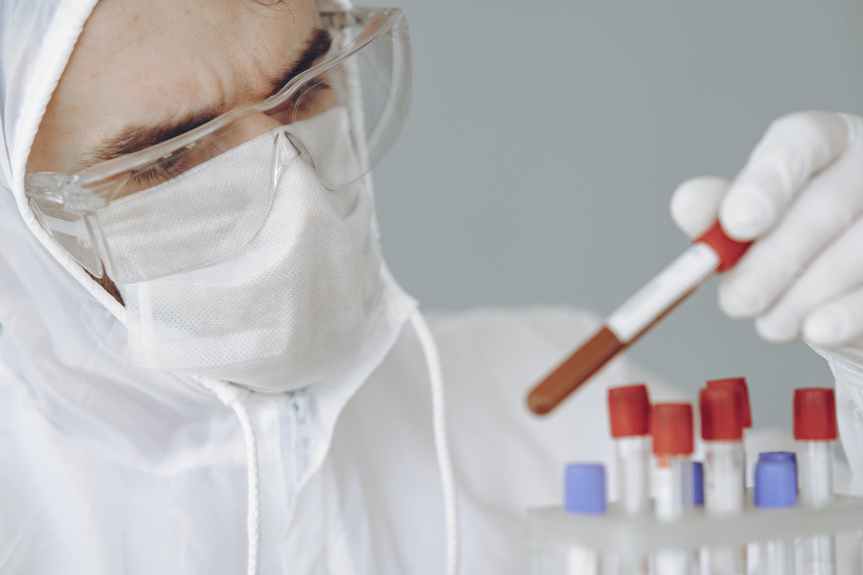
Photo by Polina Tankilevitch on Pexels.com

Cloth masks

When people are in public places, along with distancing and hygiene, it is advised that they wear a mask since it is not possible to maintain a 6 feet distance always. Cloth masks prevent the spread of the virus to a considerable extent. These masks are recommended for the public rather than N95 respirators which are needed for frontline health workers. Cloth masks can be easily made at home at a low cost. Take two rectangular pieces of cloth and place them together. Insert elastic or rubber bands in both the sides and stich the cloth on the sides. Remember to change a cloth mask once it gets wet. While wearing and removing them, make sure to not touch the area which covers the mouth and nose. Wash your hands before and after wearing them. Although they provide less protection than surgical or n95 masks, it is known that they reduce the risk of transmission by some degree. Cloth masks can also be used in combination with a face shield for better protection. The Centres for Disease Control & Prevention (CDC) has suggested any covering and advised everyone to wear cloth masks for protection from asymptomatic patients. So these are probably the most advisable for the public till now.

Surgical masks

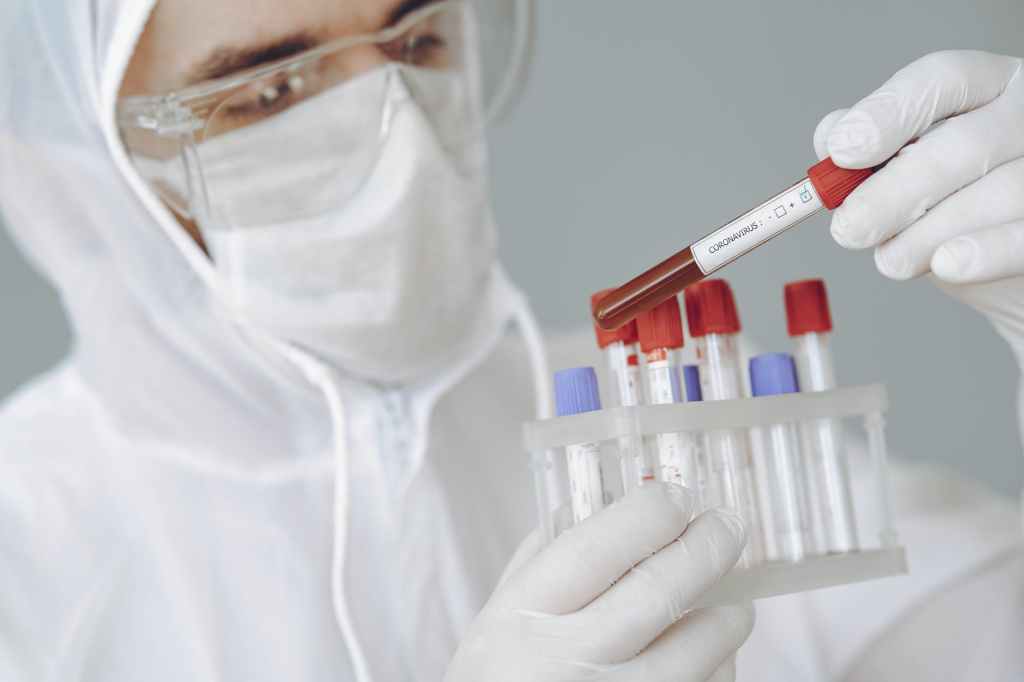
Photo by Karolina Grabowska

Surgical masks are disposable ones which protect us from sprays, large particle droplets and prevent the transmission of potentially infectious respiratory secretions. Surgical masks vary in design but usually they are rectangular in shape and blue in colour. The masks have a metal strip to adjust over the nose and are tied to the face with elastics at both sides. Although they are useful in protecting from the virus, there is an environmental hazard attached to it because these are disposable single use masks. So they contribute to landfill medical waste.

N95 Respirators

N95 Respirators are found to be the most effective in protecting against the virus since it can prevent the transmission of small particles by 95 percent. This includes virus and bacteria. The masks are usually circular or oval in shape and fit to the face very tightly. They must have the right fit because if they do not fit properly they can’t give full protection. These do not fit properly on people with facial hair and children. In a recent study it has been found that the masks can be re used after heating them in a covered pot or rice cooker for 30 minutes at 65 degree Celsius. The use of N95 is usually not very advisable to the public because of some reasons. First of all its not very comfortable to wear for a longer period of time. Secondly it is required for medical and frontline workers. So its very important that they remain in stock. A recent factor which emerged is that the valves on these respirators can be a risk factor and may not prevent the transmission of droplets entirely.

Apart from masks one needs to follow basic hygiene rules. Washing hands with a soap for atleast 20 seconds in a correct manner is extremely important as suggested by the World Health Organization (WHO). The use of hand rubs and sanitizers with alcohol content is also advisable. Physical distancing of 6 foot is to be maintained. The most effective way to prevent oneself is to avoid any kind of gathering or crowds.

Transgender

Transgender is the Third Gender basically, who is not a male type or a female type. Transgender is defined as denoting or relating to a person whose sense of personal. Identity and gender do not correspond with their birth sex. A Transgender is a person who is unable to fit himself in any of the two categories specified beforehand, a Transgender right also comes under the concept of Gender Equality. They very much belong to our society, to our lifestyle, but the fact here is they are not widely accepted yet. People literally hate them or harass them for choosing their own likings over the “society norms” created. They also are human beings, just like us, nothing inferior. It is just that they practically loves themselves just the way they are, they shall be strong enough to be proud of their own skin. It is our duty to stand by their virtue, no matter what. It has been seen that they face a lot of social difficulties everyday. They do not get to live by common people, they are isolated from their residence and they had to form a separate community of their own for survival, especially known as LGBT Community. Right from birth, they are not treated as “Normal” and are repetitively pressurized to choose one amongst the two genders. People yet, in this generation aren’t ready to believe that there can be a third gender as well. But fitting into somewhat stereotyped categories is a must for the people, especially in India. They were not allowed to have proper sanitization, worst thing is that they do not have a separate washroom. They aren’t being taught in schools on colleges, hence education for them is a luxury. They do not even get proper food to sustain themselves. We can see the “transgender” begging for food, it is so heartbreaking to see that how much sorrows they face, yet holds smile on their face. No person has control over their choices, earlier as well several paintings has depicted the onset of “transgender” people. Sadly, they haven’t got their recognition yet and fighting day and night for their freedom. They just seek a life where they won’t be judged, or questioned or made fun of being a transgender. But we, the educated class of people disagree and contest against their liberty. Their privilege are snatched away by the ‘commoners’ around them. They do not get enough opportunities to pursue their talents. The most traumatic experience they face is regarding work places. It is rare that a transgender is working as an official even if that person is competent enough. Transgender community should not be deprived of their own equity or justice. It is so difficult for third-gender child to confess his inner feelings to his family of that sort because the family isn’t in a position to realize his situation, moreover try to brainwash the child for worse. The parents do not remain as a support system to them anymore, they just feel upset and betrayed of the “choice” the child has made. Secondly, choosing aa partner for one self is really difficult, because taking about this on the society is treated almost as a ‘crime’. That person is basically termed as “spoiled” and suffers a lot from loneliness and depressions. It is no way his “Fault”.

Sec 377 in IPC states that, whoever voluntarily has carnel intercourse against the order of nature with any man, woman or animal shall be punished with imprisonment for life, or with imprisonment of either description for a term which may extend to ten years or with a death penalty, and shall also be liable to fine.According to The Times of India, The Supreme Court of India on September 6, 2018 decriminalized Section 377 making Gay Sex legal. The SC in its verdict mentioned that consensual sex between adults in private places which is not harmful to women or children, cannot be denied as it is a matter of individual choice. The apex court partially strikes down Section 377. “Section 377 results in discrimination and is violative of constitutional principles. Consensual Sex between Adult homosexuals in private is not an offence”, said by Supreme Court in its verdict.

Doomscrolling

Doomscrolling is the act of endless scrolling of one’s news apps or social media apps and reading bad news. Although a problem existing since pre-COVID times, but the pandemic has exacerbated the problem. According to a new research conducted by the Pew Research Centre survey, 53% of adults say that the Internet has become “essential” during the pandemic. Twitter’s daily use numbers are up by 24% and Facebook’s numbers by 27% as shown by data analysis. With an emphasis on work from home, government updates, and making sure our loved ones are alive, mandates the use of the internet more than ever. With the advent of cheap internet and in an effort to make information accessible to all, many news sources are providing information on COVID for free. This ensures fewer barriers to being informed but simultaneously bolsters the abundance of doomsday headlines. Doomsday headlines inflict panic, anxiety in the reader, which in turn forces more screen time in the hope of finding some good news and finding solace. Thus the internet dictates what’s important rather the other way round. Checking the news feed for extra hours won’t hold the apocalypse but surely would make you psychologically weaker to face it. Already social media was being questioned about its net benefits in pre-COVID times as it was shown that social media bolsters the advent of anxiety and depression in its users,  global-pandemic and civil unrest have just exacerbated the situations. Feeling informed in such a volatile environment may be good, but being overwhelmed by tragedy serves no purpose. Many people think that staying updated on the situation would keep them safer but they don’t realize the fact that the consumption of bad news only leads to greater fear, anxiety, and stress. Instead one could try some habits in order to get rid of this malicious and vicious ‘unsatisfying addiction’.

  • Finding your voice in niche communities could help you a lot in overcoming the stress and reinforcing your emotional well-being. And these communities do not include social media communities. But remember if in the group if your voice feels another comment in-crowd, that might be not your place.
  • Sticking to sites that help you feel creative and empowered are good places to be. The Internet proves to be a space for expressing versions of ourselves. So why not do it while also enjoying instead of following the crowd.
  • Need social media? Use desktop versions of them, bookmarking the pages, groups or accounts so as to avoid falling in the trap of scrolling.
  • Dedicate some time for the do-good feel-good. Reviewing the businesses out there providing essential services could be a great way to make the most of your time. Restaurant owners, authors, small-business owners love your reviews, especially good ones.
  • Acquire a new skill, be it learning another language, drawing, coding, cooking, or whatever you feel like. This not only boosts our mental health but also distracts you from the bad news thereby providing serenity.
  • Cut back and create boundaries for social media use. Get to know the limit of your body and brain. If you are feeling agitated, anxious or stressed, put away your phone as your body is signaling you to stop.

National Youth Day

United Nations celebrates International Youth Day as on 12th August every year. Youth – this term signifies the blooming faces, ongoing adolescence who are capable for bringing a change for any particular country. A country is actually based on the power of the Youth. It has been said that, if you can educate the youth and the women, you are educating the country. A man goes through the younger stage of his life, this is the time when he holds supreme power to revolutionize. If the younger generations of a country aren’t sorted enough, the country cannot develop. The “youth” sectioned are actually the ages between 15-24. According to the definitions of United Nations – “Youth is best understood as a period of transition from the dependence of childhood to adulthood’s independence. That is why, as a category youth is more fluid than other fixed age groups. Yet, age is the easiest way to define this group, particularly in relations to education and employment, because “youth” is often referred to a person, between the age of leaving compulsory education, and finding their first job.” “The Secretory General first referred to the current definition of youth in 1981 in his report to General Assembly on International Youth Year (A/36/215,para.8 of the annex) and endorsing it in ensuring reports it in ensuing reports (A/40/256,para.19 of the annex). However, in both the reports, the Secretory- General also recognized that apart from statistical definition, the meaning of the term “youth” varies in different societies around the world. When The General Assembly, by its resolution 50/81 in 1995, adopted World Programme Of Action for the Youth to the year 2000 and beyond, it reiterated that the U.N defined youth as the age cohort of 15-24. The General Assembly resolution A/RES/56/117 in 2001, The Commission for Social Development resolution E/2007/26 and E/CN.5/2007/8 n 2007 and the General Assembly resolution A/RES/62/126 in 2008 also reinforce the same age-group for Youth.” The Youth is stepping stone for a Country. They has the authority to form latest policies, they are the voices of tomorrow. The difference of youth from childhood is that, they are not qualified enough to take their own decisions for themselves, rather they had to depend on someone whereas the old-aged, though a lot more experienced, lacks physical and mental power. If the Youth section do not approve or appreciate any particular rule, they would protest leading to the downfall of the entire country. It depends on this section to educate themselves and lift up the conditions of the country. As in youth age, a person can always choose his carrier and work on it, as fresh talents are always welcomed by any aspects of the Country. They would contribute more for the benefits of a country, and has immense understanding of pointing out the flaws and drawbacks. Particularly, the young age is lucid and devoid of being influenced easily. They cannot be manipulated as they behold intelligence. The youth section has the privilege to mend himself up, till he reaches the middle age. This age group is not at all rigid to the dynamic changes happening around anyway. They can quickly adopt themselves according to the needs and requirements of the country. The Youth serves the country, the burden lies on their shoulders to level up the conditions of the society. Various activities are to be taken up by them, supporting the cause. The more a youth age involves themselves to hard work, the more a country upgrades. The perfect ‘youth’ not only draws himself close to perfection, but also embraces the inconsistency of working of the country and corrects them. This is obvious and needless to say, that youth is the Generation next and would find regular faults in the surroundings, and would also criticize. “Youth” can bring out a huge amendment or the modifications, for advancement of the Country.

After Beirut, alert out for ammonium nitrate, TN stockpile on radar

A 740-tonne consignment of ammonium nitrate lying at a Chennai port Customs warehouse since September 2015 has set alarm bells ringing after Tuesday’s catastrophic Beirut blast. An estimated 2,750-tonne stockpile of ammonium nitrate, stored reportedly for six years in a port warehouse, blew up killing over 100, injured over 5,000 and ravaged the Lebanese capital city.

Referring to this blast in a note, the Central Board of Indirect Taxes and Customs (CBIC) has “urgently directed” Customs and its field formations to “immediately verify and confirm within 48 hours that any hazardous and explosive material lying in warehouses and ports across the country meets all safety and fire standards and presents no danger to life and property.” After the Beirut blast, the Chennai stockpile, sources said, was the red flag for the alert. A senior Customs official said that “ways to shift out the ammonium nitrate at the earliest” are being explored.

“There’s some difficulty in taking action keeping safety regulations in mind. We are going through details. The e-auction will be conducted as per law…like for any other confiscated or seized goods or goods which are lying for a long time,” the official told The Indian Express.

The stockpile at Chennai port relates to a case involving the seizure of an import consignment of Karur-based Sri Amman Chemicals five years ago. The company had, in September 2015, filed for Customs clearance for the chemical packed in 37 containers, with the declared assessable value of Rs 1.80 crore claiming for use as fertiliser inputs.

The company claimed it had the required licence for the import while Customs authorities alleged misclassification and resultant evasion of duty after which the Madras High Court, in November 2019, ruled in favour of Customs authorities.

Result: the ammonium nitrate consignment continues to be stocked with Customs.

In a tweet Thursday PMK leader S .Ramadoss flagged this: “There is a risk of a similar explosion due to ammonium nitrate in the Chennai warehouse. To prevent this, the ammonium nitrate explosive substance in the warehouse should be safely disposed of and used for other purposes such as composting.”

In a statement Thursday evening, Chennai Customs said that the seized cargo is at a container freight station at Manali, 20 km from the city with no residential locality within 2 km. “The seized cargo is securely stored and safety of the cargo and the public is ensured considering the hazardous nature of the cargo…the disposal of the said cargo will be done within a short period, following all safety measures,” it said.

The Central government had, in July 2011, declared ammonium nitrate as an explosive under the Explosive Act, 1884, after which the CBIC issued Ammonium Nitrate Rules, 2012, for its import/export.

AMMONIUM NITRATE:

Import of ammonium nitrate — or any combination containing more than 45 per cent of ammonium nitrate by weight — including emulsions, suspensions, melts or gels (with or without inorganic nitrates), and classified under Explosives Act, 1884, is subject to license from Chief Controller of Explosives.

In the Chennai case, Customs said the company had just a P-3 licence for possession and sale of 1000 tonnes of the chemical but not the P-5 licence it needed for its import. Customs authorities also alleged that some actual users/firms to whom Sri Amman Chemicals sold ammonium nitrate were explosive dealers.

Queries e-mailed to Sri Amman Chemicals did not elicit a response.

In its petition in the Madras High Court, the company said that it had applied to the Chief Controller of Explosives, Petroleum & Explosives Safety Organisation (PESO) for a P3 licence which it got in December 2014.

It applied to PESO for a P5 licence in August 5, 2015. The company claimed that PESO, without putting it on notice or hearing its view, passed an order on August 19, 2015 rejecting its application but by then, the 740 metric tonnes of ammonium nitrate had already arrived at Chennai.

In its order, the court referred to explosions in various parts of the country in which ammonium nitrate was a common ingredient. It noted that as per the police, over four years since 2013, nearly 16,000 tonnes of ammonium nitrate went missing. The Court ruled that accumulating smaller quantities of ammonium nitrate would result in gathering larger quantities in the hands of “unknown and unidentifiable” persons and such trade would not be in interest of national security, adding that the authorities rightly rejected the claim of the company for a P5 licence.

Ammonium Nitrate is not an explosive by itself but is one of the ingredients used for manufacture of explosives. It is classified as an oxidizer as per UN classification for Dangerous Goods. Other ingredients like fuel, etc., have to be added to make it an explosive and for such explosive mixtures to explode, initiators like detonators are required.

National Handloom Day to be celebrated on August 7th

National Handloom Day is celebrated on the 7th of August annually in India. It is observed to create awareness about the importance of the textile industry in the economy. It began as an initiative to honour and provide work to handloom weavers and artisans. 7th August was declared as National Handloom Day by the Union Government in 2015 to generate awareness about the industry and its social importance. The day is celebrated through different functions and events across the country. Workshops are conducted to spread information about work opportunities among weavers and their families. Handloom fairs, exhibitions, parades, panels take place during various events.Through the celebrations of this day, handloom products get a wide recognition.

Handlooms have gradually emerged as the largest cottage industry. Almost 95% of the world’s handicrafts are from India. Weavers create from different natural fibres like cotton, silk and wool.While we celebrate the diversity of India’s art and crafts, its also important to address the problems and needs of the artisans. They should be provided with the knowledge of techniques, prices, and modern technology.

Photo by Skitterphoto on Pexels.com

Different schemes like Reservation of Articles for Production Act of 1985 and Handloom Census have been introduced so that artisans can benefit from them. Social media campaigns like #iwearhandloom have popularized the craft in recent times to an extent. These crafts should be included in contemporary industries so that younger generations can know about them and start supporting the cottage industries.

Historical Significance

Photo by Wallace Chuck on Pexels.com

August 7 was declared as the Handloom day in 2015 to revive the roots of handloom and to commemorate the Swadeshi Movement which began on the same day 115 years back. The first National Handloom Day was inaugurated on 7 August 2015 at the Centenary Hall of Madras University in Chennai. The movement was launched in Calcutta Town Hall on August 7, 1905 as a protest against the Bengal Partition by the British Government. The movement was started to facilitate the use of domestic products and production of goods within the country for boycotting British goods. There were also instances of burning British goods. When Lord Curzon announced the partition of Bengal in July 1905, the Indian National Congress started the movement. It led to the spread of revolutionary anti colonial and anti British movements across the country. Further movements like the Non Cooperation movement and the Satyagraha movement developed from the Swadeshi movement.

In recent times, the day is celebrated to spread awareness and develop consciousness of the public regarding textiles and the handloom industry which is extremely important for the socio economic development of the country. Handlooms and crafts empower artisans and represent the diverse cultural identities present in the country. They are eco-friendly and sustainable crafts which also function as the livelihood of so many people.

Celebrations this year

This year is the 6th National Handloom Day and the day will be celebrated through a virtual programme which will be conducted by the Union Ministry of Textiles. The textile minister Smriti Irani will be the chief guest for the event. The event will be observed with all the handloom clusters across India, 16 NIFT (National Institute of Fashion Technology) campuses, 24 Weaver Service Centres of different states and National Handloom Development Corporation.

Politics and Life

Educating the promises of tomorrow regarding politics in the society.

Human beings are social beings. Being a social being, I strongly believe one’s life has to indulge with politics or politics will definitely cross paths with theirs.

No one is born with full fledged  knowledge about the politics of the world. Knowledge in these matters arise from social interactions, which could and should be nurtured at a young age through healthy mediums.

Hindering the promises of tomorrow in this aspect is no different than digging an immaculate grave for all of us. In all honesty, I’d rather be informed than ignorant!

The very generation that is bound to take over in a decade’s time are often found ignorant and ill- informed about what’s what in this ever evolving world. I don’t advocate upon political affairs being sternly exposed  to such individuals. But rather the mere essence of it will equip them of the basic knowledge required to sustain their life in a society.

Without an apt source for educating them about the order and history of politics and its relevance, these young minds wouldn’t have an authentic source for learning much about it; and will grow up as idealists. 

Easily influenced by the ideals of their acquaintances and their families making them unable to have an identity of their own. 

Being an individual, the need for having a personal understanding and stand has been outright frowned upon at times.

The world is indeed a cruel place, more often than not such unnecessary restrictions  leaves them unaware of the harsh realities of life in a society. Catering to such needs will not only save them from making a laughingstock of themselves but would rather provide for a better tomorrow to one and all. 

With the forward pouncing of most aspects of society- socially, politically and economically; more and more younger individuals are growing unaware of the nuances of the world. Making the need for educating about the same more perennial than ever.

It’ll also aid an individual blossom into a being, fully aware of the concepts of the society and might even strike an interest towards it. Making them the much needed change amongst around the ones who lead a society.

A generation sound with a strong foundation of the workings of the public domain.

Change is the only constant and those who dare to stand in the way shall not prosper. For revolution is impersonal.

Lebanon Explosion: Massive explosion kills more than 100, thousands injured

There was a massive explosion in the port of Beirut on Tuesday, 4th August 2020. The explosion have resulted in the deaths of more than 100 people and 4000 injured. Much of the cities ports have been affected and buildings have been damaged. Hospitals have been filled beyond capacity and hospital authorities are pleading for blood supplies and generators. The injured had to be taken to hospitals outside Beirut. Streets are filled with ambulances and vehicles carrying the wounded and injured. The explosion has devastated the country, which was already in the middle of a financial crisis along with the corona virus pandemic. The economic condition was terrible with about half of the people living below poverty line.

Witnesses reported a massive mushroom cloud going into the sky and red fumes coming out of the site. At first people saw white dense fumes being emitted, after few seconds the big explosion happened sending a big white mushroom cloud and brownish red fumes into the sky. Residents said that they were thrown off their feet onto the ground by the tremors of the explosion. Windows and doors of building have been shattered across the capital. Local media have shown people being stuck inside rubble, damaged cars on the road and broken buildings. The port of Beirut has been heavily damaged. According to Germany’s geo-sciences centre, tremors of about 3.5 magnitude earthquake were reported to be felt and it reached as far as Cyprus, which is about 200 kilometres across the Mediterranean.

President Michel Aoun and Lebanon officials have blamed a warehouse, storing 2750 tons of Ammonium nitrate unsafely, close to the port for the blast. The Ammonium nitrate, which is used as a fertilizer and as an explosive, was stored in the site for about 6 years and there was a lot of negligence regarding the removal of it all these years. It was brought in by a ship which arrived at Beirut in 2013 and it was not allowed to leave due to some dispute. Since then the confiscated Ammonium nitrate was stored in the warehouse. It has been reported that a fire had started in one of the warehouses and then it spread to the warehouse containing the Ammonium nitrate. The explosion site is close to the place where a car bombing happened in 2005 which killed the former Prime Minister Rafik Hariri.

Army helicopters have helped in extinguishing the fires at the port. Emergency teams had started working. Red Cross has said that a search operation is working for finding over 100 missing people. Residents of Lebanon have reached the site and hospital and have started helping the injured. In a statement released by Unicef, it has been mentioned that their staff and their families have also been affected, some have been injured, others have had their homes damaged as a result of the explosion. Their child protection partners are providing psycho-social support to affected children and their families. Officials have informed that an investigation is being done to find out the exact reason behind the explosion and to know what had triggered the Ammonium nitrate. A number of port officials have also been kept under house arrest for the investigation. The future of the port is in danger as thousands of people have been left homeless in the middle of crisis. The President has declared 3 days of mourning and the government has declared 3 weeks of state emergency in the capital of Beirut. The Lebanon Prime Minister has requested for international assistance because there has been mass casualties and nearly half of the city has been damaged enormously.

FORGOTTEN VICTIMS……..COMFORT WOMEN

Around 150,000 to 200,000 women during the Second World War were coerced, abducted and forced into being sex slaves for the Imperial Japanese Army. These women were lured in with promises of nurse jobs, waitresses, to work in an office or to work as an entertainer but there taken to military bases and kept in comfort stations. The reason for this brutal and inhumane legally sanctioned rape was to mitigate or to reduce the rape crime by the Japanese Imperial Army due to rising anti-Japanese sentiment. The rising anti-Japanese sentiment was due to incidents like the rape of Nanking. By forming comfort stations where women were ready to service the Japanese army men then they could confine rapes and abuse to the military stations and such atrocities would not reach international news.
The first Comfort station was formed in Shanghai in 1932. The women working there were voluntary Japanese prostitutes or kidnapped Japanese women but later when the resources dried up in Japan, the army started to look beyond its country. Women from Japanese concessions and Japanese colonies were recruited. Women were falsely misled into thinking that they were about to get a job as a nurse or waitress or a simple office worker but were taken to Japanese military stations where they were made to learn a routine and were coerced into having sex multiple times with different people. Because of such inhumane conditions, most of the comfort women would contract sexually transmitted diseases. But the Japanese military doctors would carefully and regularly monitor comfort women to detect STDs and to stop it from reaching the troops.


The women were 80 per cent Koreans and the rest were Chinese / Filipina /Dutch/women who were abducted. Many such women were taken in and were raped 30 -40 times every day. Those who refused were beaten severely. Girls who were virgins while entering the stations were broken in or raped. So Tetsuo who was a medical physician in the Imperial Japanese Army wrote that comfort was referred to as female ammunition and was seen as things to be used rather than human beings. Comfort women were also forced to donate blood to save wounded soldiers. When a soldier would enter a comfort station, where photographs of comfort women were displayed and soldiers could choose from there. Women who got pregnant were forced to get abortions. Any human being with a little shred of humanity would know that this is wrong but this issue went unnoticed. Most comfort women were told and the theory that white men were cannibals were indoctrinated into them. When the Allied forces came close to capturing Japanese military stations, most of these women were forced to commit suicide or were killed by the soldiers. Many comfort women killed themselves as they didn’t want to be eaten by white men as this fact that white men were cannibals were drilled into them.


The Japanese military used the drug called salvarsan which was used to sterilize women; many condoms were given out for free to prevent the spread of sexually transmitted diseases. Japan has issued apologies to the countries where it had forcefully taken women from. Prime Minister Shinto Abe stated in a newspaper interview that there was zero evidence that the Japanese army had used sex slaves but the fact that the Japanese government had admitted that they used brothels in a statement issued in 1993. But the country had issued an apology for the inhumane treatment of women and the deep psychological trauma that it had inflicted on the countries citizens.

Police encounters

Police encounters, are they to be celebrated, are they an act of bravery or just oppression of weak? It is a question that needs an answer. We all know that encounters are an act of bravery, but we forget that the one encountered also had their rights, as humans. People have now forgotten that “An eye for an eye leaves the world blind.” Many are times are there arguments that those are criminals who have done heinous crimes, but if those have done crimes, then it is the duty of the judiciary to adjudicate. Encounters just bypass the system, legal procedures to provide them with instant justice. As responsible citizens, we should demand a fair inquiry about the encounter but the public nowadays endorse encounters without differentiation, it doesn’t matter to people if the encounter was fake or real. A major role is played by the film industry in making such a mindset of people, many movies picture vigilantes instead of police. Vigilantes surely could be heroes for some, but in the dress of police, they won’t be less than monsters. Because police are there to ensure law not to break them, at least publicly. They are role models, if they act as vigilantes, the day won’t be far when we would be living in a society of vigilantes that won’t do any good. Encounters violate the Indian constitution’s Article 21, which deliberately states that,  “No person will be deprived of his life or personal liberty except in accordance with the procedure established by law “. If the guards of the constitution violate it, how can society be trusted to uphold it? Often arguments are provided by police is that these were dreaded criminals against whom no one would dare to provide evidence, but this philosophy is too flawed to be accepted as true. As we all know, India is one of the countries that are awarded the honor of most corrupt countries. So to get rid of a rival, such philosophies are present corruption scenarios could be used. Even the Supreme court of India acknowledged the cold-blooded murders enshrouded behind the encounters. In Prakash Kadam vs Ramprasad Vishwanath Gupta paragraph 26 of the judgment, says, “ Trigger happy policemen who think they can kill people in the name of ‘encounter’ and get away with it should know that the gallows await them”. Whether it is the encounter of ferocious Vikas Dubey, Kanpur, or the Hyderabad encounter where the police were garlanded, the scripting of the encounters couldn’t hide, because of the fact that the script was not at all as they know, no one would raise questions except for a small group which could be silenced through the “Anti-National” ammunition. These are people who have been charged for heinous crimes but, they didn’t get a fair chance to counsel, to prove their point, to raise the shroud from the officials who helped them reach such heights. Vikas Duby had 60 criminal cases against him, no ordinary person could even dare to have even 1 case against him. He murdered 8 police personnel, no commoner could even dare to get in a verbal feud with an official. This could have been possible only if he also had a godfather to look after his deeds. But due to the encounter, the nexus behind couldn’t come in limelight and is still functioning. This encounter did more harm than good to the society and similarly, several other encounters, undermine the foundation of the society without even the societal members noticing it, instead garlanding them, endorsing them. The celebration of such extra-judicial killings, endorsement by the pop culture and politicians should be questioned by the society, else it won’t be far when a near and dear to you could be having the same fate.

Image by rawpixel.com

India- post Corona

The world has felt a devastating shockwave of the coronavirus, COVID19 a mild and heavily contagious disease has been spreading out in the world and humans have faced their first pandemic. COVID19 is a mild disease for all except for people with comorbidities and the elderly. Therefore to prevent the spread of the disease, nationwide lockdowns had been imposed across the globe, but the poor is like Jon Snow, who knows nothing except for hunger. They have been deprived of their daily bread and not only that, but the nation’s GDP has also registered a steep decline. The developing nations have been affected devastatingly, the pandemic coupled with already present crippling health infrastructure has left nations with no other options than lockdown. Amid pandemic huge numbers of jobs were lost with many shops closed, many economies sank has left a deep emotional impact on the minds. A 10% negative growth for any developing or underdeveloped country like Benin is far worse than a 10% negative growth for any developed country like the USA or UK. But yet as the saying goes “It may be stormy now, but rain doesn’t last forever”, many western countries and China have started their daily chores trying to keep afloat the economy. India also has an opportunity to re-imagine and re-architect the archaic systems. The volatile geopolitics of today’s world could prove to be a golden opportunity for India. This pandemic has caused a lot of troubles for China and it means a golden opportunity for India to bag. With the US playing US and allies vs China and allies, India needs to have a long term strategy that determines its long term goals. Being a gofer for any of the power would not prove conducive for strong stature. Also as the recession is being predicted for 2020, a steep recovery follows it. Statisticians believe that projected growth would be much higher than that of 2019 for any country if policy taken around the world are effective. Work from home has become the new normal and therefore it would irrefutably continue post-pandemic. With most office spaces left empty could be used to settle in the growing population. But as digital technology advances many can cope up with the advancements but many are left behind. A new inequality has come into existence, technically it has not come into existence, it was there since the start of the digital age but now it is more telling, as more and more people have to rely on digital sources. Also, the aviation and tourism industries being among the worst affected would travel back in time to 2011-12, with little chance s of revival because of the skepticism within the population. Pandemic has boosted the demand for online streaming platforms and thus most multiplexes, cinema halls are going to say goodbye. As the construction sector has taken a huge toll, the revival of the industry could be bolstered through green constructions. Governments should incentivize more and more green buildings, as during the lockdown world has seen a cleaner and eco-friendly environment. COVID-19 has provided a moment to pause and introspect, it has shown the advantage of living harmoniously with nature. We need to adapt to the situation as COVID-19 is going to stay with us for some time. During this time altruist in most of the people has come into existence, thus it could be said that human relations will increase. Also, people now know how little they need to survive, the importance of familial relations, hygiene. Although not sure of human relations, since humans are way unpredictable, but just hope for the best. Above all most of the international organizations that have failed us in the pandemic would be restructured. Woodrow Wilson emerged as the first world leader after WWI, afterward Franklin D Roosevelt and post-pandemic would be the time to choose another world leader. Whether India would emerge as one is a question that still needs an answer. Till you find it out, stay safe, use sanitizers and masks.

SOUTH CHINA SEA DISPUTE

Recently America and Australia have rejected most of china’s claim over the South China Sea as well are its territorial claims over certain islands. So what is this dispute about? The South China Sea is a marginal sea from Karinata and Malacca Straits to the Strait of Taiwan. The sea is the south of China, east of Vietnam, the west of the Philippines and the east of the Malay Peninsula and Sumatra up to the Strait of Singapore. One-third of the world’s shipping passes through it. About 5.3 trillion worth of goods pass through the South China Sea. 1.2 trillion Of trade is with the US.
Because the sea is surrounded by various countries, the various parts of the sea are also claimed by different countries.But China claims most parts of the sea and Vietnam, Brunei, Philippines, Malaysia and Taiwan have contested the Chinese claim.All the claims of all the countries overlap at some point; all these claims are mostly geological claims and historical claim. China claims 80 per cent of the sea and Taiwan claims the islands of Paracel and Spratly. The Philippines claims the Spratly Islands and the Scarborough Shoal comes under Philippine sovereignty Brunei and Malaysia claimed the southern parts of the sea was under their sovereignty. Vietnam in 2009 began reclaiming the 48 islands they had occupied from before. In retaliation, China reclaimed larger portions of the sea it had occupied since the 1980s. China formed the nine-dash line which extends 2000 km from the Chinese mainland. This line almost touches the Indonesian and Malaysian international waters. In July 2016, an arbitration tribunal was formed under the United Nations Convention on the Law of the Sea in Hague. The tribunal ruled against china’s claims over the South China Sea, the case was brought by the Philippines. The People’s Republic of China and the Republic of China; the countries also did not recognize the tribunal. Disregarded the judgment of the tribunal and dismissed the judgment saying that this matter should be solved by negotiating with other claimants.


According to the international laws and the United Nations Convention on the Law of the Sea, every nation in the South China Sea have the right to claim 200 nautical miles of the sea as an exclusive economic zone where they can mine for oil or minerals or exploit the sea and sea bed. When the boundaries overlap usually countries negotiate to agree. But this hasn’t happened in the South China Sea. All countries have historical claim over the sea. China claims most of the sea due to ancient claims of trade, Japan occupied islands of the South China Sea, and the country later recognized Taiwan thus giving Taiwan historical claim over the land. Also, the nine-dash line is not recognized by international law. Taiwan isn’t recognized as a sovereign state, the country isn’t a signatory to the Convention on the Law of the Sea. In international law, for a country to claim part of the sea, the island must be habitable for humans, there was no such island found on Spratly islands.
This sea is important as it houses one-third of the world’s sea trade and the sea is also a huge source of oils and natural gas. The sea also has 80 per cent of China’s sea trade. The situation hasn’t evolved and there is no resolution as no two countries are open to bilateral negotiations as of now.

8 Amazing places to visit in India

India – a land of diverse landscape, language and culture, offers a variety of destinations for travellers to add to their bucket list. Whether its heavenly mountains, historical forts or peaceful beaches, every nook and corner has something beautiful to offer. These exotic places will surely take your breath away.

Dal Lake, Kashmir

Being one of the most prominent lakes in India, Dal Lake is also known as Srinagar’s Jewel. Pristine clear water with the backdrop of heavenly hills and mountains is sure to take your breath away. A Shikara ride in the Dal Lake is a must to explore in Kashmir. Shikaras are beautiful houseboats which are used to travel across the lake. The lake also has a travelling market. With an old world charm, the lake gives you a breathtaking experience.

The Rann of Kutch, gujarat

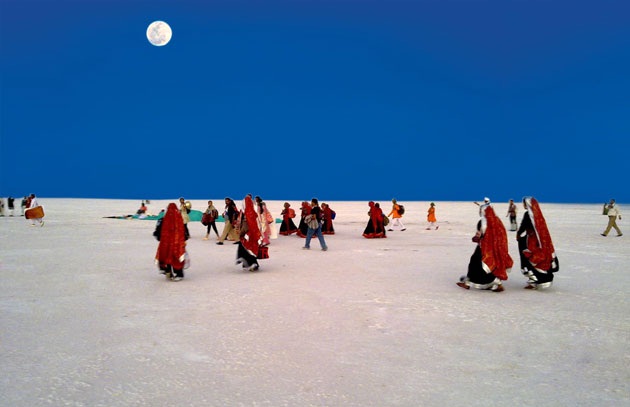
The Rann of Kutch is a salt marsh in the Thar desert located in the border between India and Pakistan. It is one of the largest salt deserts in the world. It is a really popular exotic travel location. The Rann festival is the best time to visit when the region celebrates with crafts, handwork, cultural and musical performances. It is famous for its colourful and intricate crafts. On a full moon night, the sparkling salt desert looks spectacular and is a treat to the eyes.

Andaman and Nicobar Islands

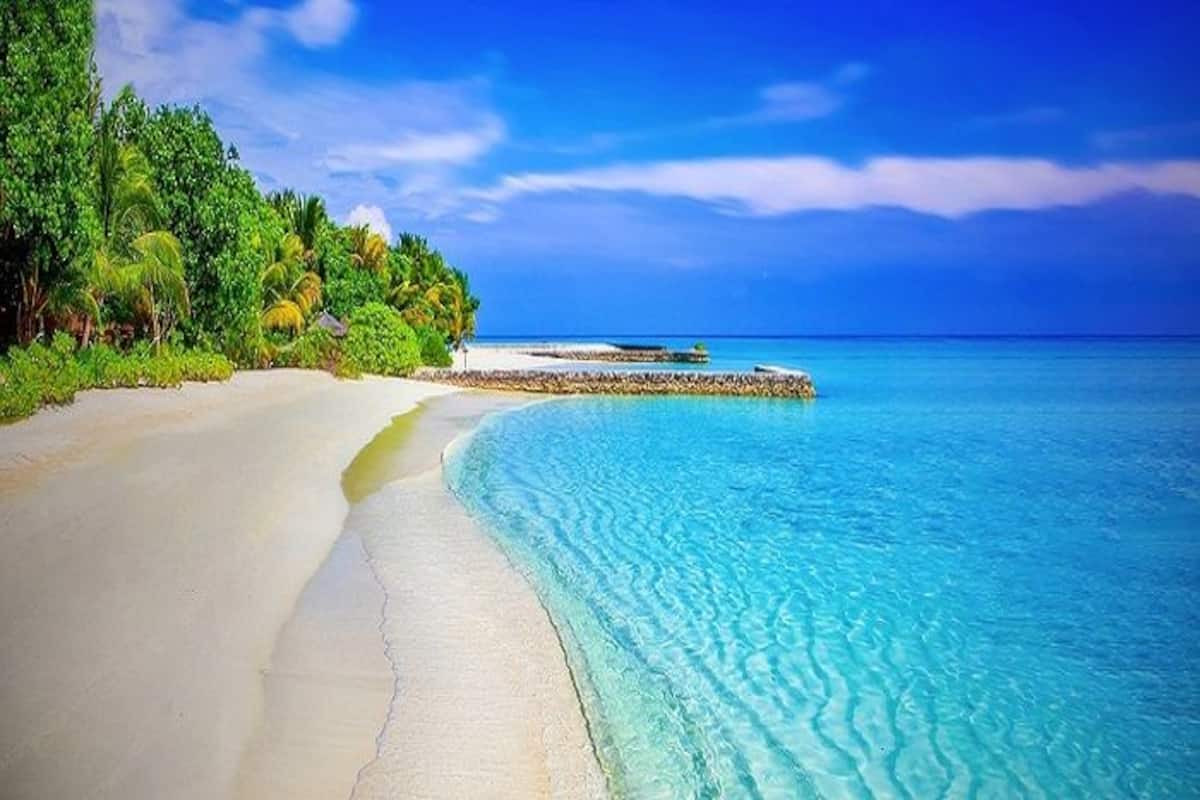
The Andaman Islands is an Indian archipelago of about 300 islands scattered in the Bay of Bengal. Its palm lined beaches and coral reefs is sure to give you a wonderful experience. The islands are known for its popular tourist sights like Havelock Island, Neill Island, and Wilson Island. You can also enjoy exotic sports like Parasailing, Snorkeling, and Scuba Diving.

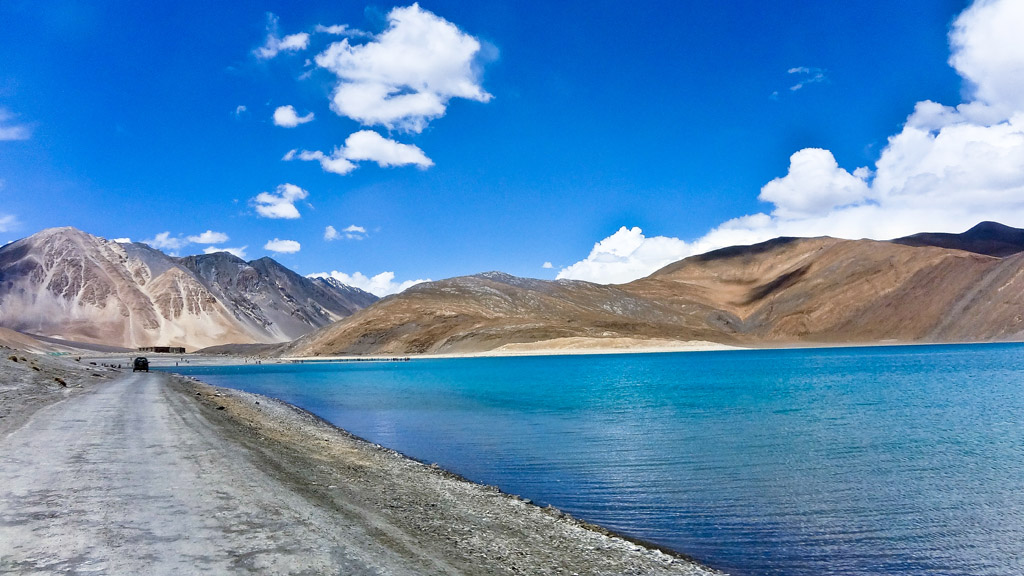
Pangong Lake, Ladakh

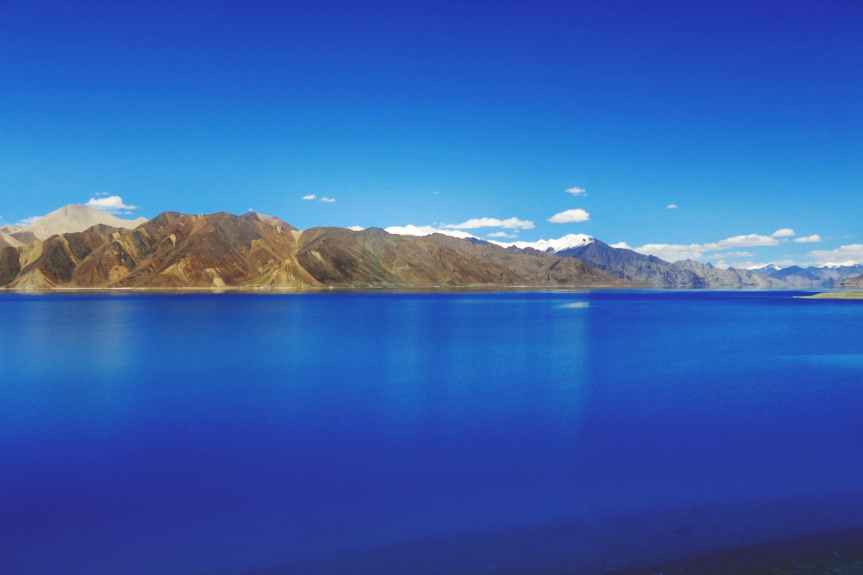
Also known as Pangong Tso, it is a beautiful lake situated in the Himalayas. The beautiful lake situated on a height of 4350 m, attracts tourists from all over the world. The alluring blue waters is a sight to soothe sore eyes. The best time to visit the lake is summer because in winter the whole lake freezes into ice. It is also a great place for bird lovers as it is home to different birds like cranes, seagulls and rodents.

Backwaters, Kerala

The Kerala backwaters are a network of lagoons and lakes on the Arabian sea coast. With its rivers and inlets it is connected with almost 900 kilometres of waterways. The picturesque site with its lush green landscapes and diverse wildlife is a popular tourist attraction of South India. You can visit the backwaters by boat or shikara from Alleppey. Watching the sunset from a shikara in the midst of green landscapes and serene waters will give an experience of a lifetime.

Valley of flowers, Uttarakhand

Valley of Flowers is an Indian national park, located in North Chamoli and Pithoragarh in Uttarakhand. With rare and exotic Himalayan flora it is located in the dense forests close to the Pushpawati river. The beautiful meadows with blossoms of Alpine flowers is a treat to any nature lover. The best time to go on a trek to the Valley of Flowers is March to October as during this time the valley is also known to change colours due to its colourful blossoms.

Loktak Lake, Manipur

Loktak is the largest freshwater lake in Northeastern India. It is mostly known for the unique sight of floating phumdis which are heterogeneous mass of soil and organic matter at various stages of decomposition. It is the most popular tourist attraction around Imphal. Being almost like a miniature inland sea, the lake mesmerises all visitors.

Living root bridge, Meghalaya

Located in the Khasi and Jaintia hills, the suspended root bridge is made up of a species of the Indian rubber tree with a very strong root system. These are estimated to be around 500 years old and attract tourists all around the year. There are dozens of these root bridges near Cherrapunjee. Since they are located in very remote places you may need a guide to reach there. The spectacular bridges in the Meghalayan villages will be a treat to any traveller.

So happy travelling!

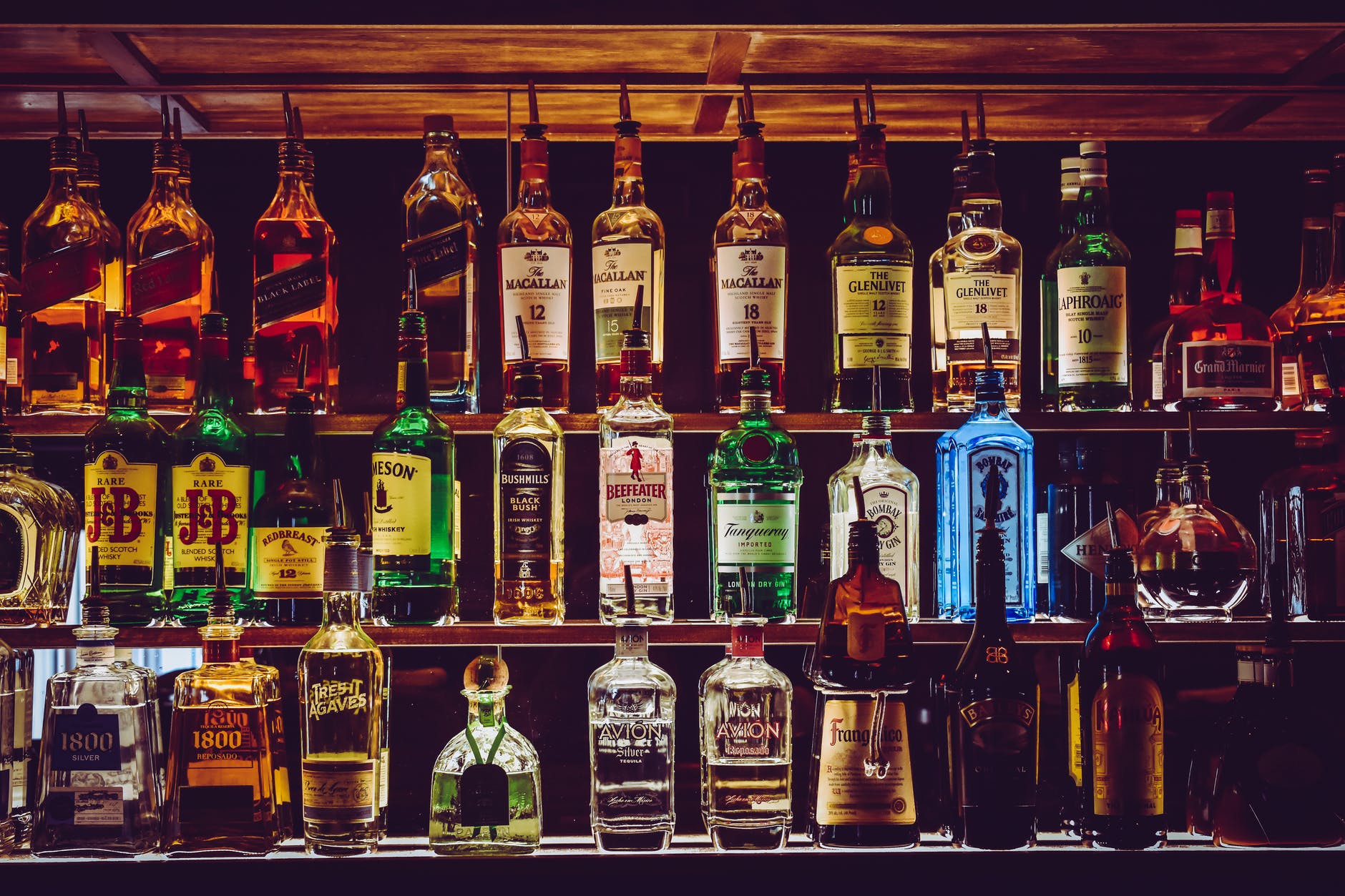
Bars are becoming the increasingly common places for coronavirus outbreak

Another day, another Covid-19 outbreak traced back to a bar. In what seems to be a daily occurrence now as more countries and cities re-open their social drinking establishments, bars are increasingly solidifying their reputation as prime coronavirus transmission hot spots.

Bar outbreaks have since happened in France, where one 19 year old with Covid-19 managed to infect 72 of his friends by partying at a bar in the small town of Quiberon. Just in the last few days, 16 people were diagnosed with Covid-19 after hundreds rushed into the pub in Stone in England. Hundreds more who were at the pub had to be tested with many results still pending and the outbreak triggered a rush of closures of other business in the small town. Numerous other countries have reported bar outbreaks, including the United states, Spain and  South korea.

In many places, mask mandates are in place to require face coverings in inside public environments such as grocery stores, public transport and other retail environments. The aim is to reduce droplets exhaled by a person being passed on to someone else. Yet bars and restaurants have been excluded from this for rather obvious reasons – you can’t eat or drink through a mask and if you can, your mask is probably not doing very much to prevent transmission of the coronavirus to others. So we mandate masks in places where people typically spend less time in than they do in bars, but they open the bars anyway and just hope for the best.

MIXED FARMING, A VIABLE AGRICULTURAL SYSTEM

Mixed farming is a type of agriculture in which crop production is combined with the rearing of livestock. The livestock enterprises are complementary to crop production, so as to provide a balance and productive system of farming. Mixed farming may be treated as a special case of diversified farming. This particular combination of enterprises, support each other and add to the farmer’s profitability.

Farming is very intensive and sometimes highly specialized with one portion of the farm being devoted entirely to arable farming and the other portion entirely to livestock.

This system of farming predominates in regions with a dense and highly urbanized population. Mixed farming encompasses much of the eastern USA, Canada, Western Europe, northwestern USA, Central Mexico, southern Brazil, parts of pampas, Central Chile, and South Africa. From Western Europe, a belt of mixed farming extends eastward into the Asiatic Russia through the central part of the European Russia.

Even though this type of farming was first developed in Europe and later spread to Americas, it is gaining importance in the less developed countries of Asia and Africa as a viable agricultural system.

A variety of crops are grown in the mixed farming region. Cereals dominate the crop land use, the leading grain vary with climate and soil. In the temperate regions wheat, maze and oats are the major crops with dairy cattle, sheep or pigs as animals. In tropical regions rice dominates in the humid regions with cattle and goats. Aquaculture and poultry is also integrated to it. In the drier parts jowar, bajra and ragi is integrated with cattle and goats.

Covid-19 Rapid antigen tests across India

With the increase in Covid-19 cases, many state governments across the country have started conducting rapid antigen tests to speed up the process of testing.

Photo by Gustavo Fring on Pexels.com

The Indian Council of Medical Research (ICMR) had previously approved the use of Rapid Antigen Tests (RAT) kits for the detection of Covid 19. The test uses nasal swab samples for detection and can be performed outside laboratory settings. The kit can give quick results in about 30 minutes so it will be possible to conduct a large number of tests. The Rapid Antigen Tests (RAT) will be conducted in both Covid-19 hospitals and containment zones. According to ICMR guidelines the test needs to be conducted under strict medical supervision and the kit temperature needs to be maintained between 2 to 30 degrees Celsius. Also, after the collection of the sample, the test needs to be conducted within an hour for a correct and effective result.

The test can be used on different categories of patients – patients with influenza-like symptoms and suspected of being infected with covid 19; asymptomatic patients who are hospitalized belonging to high-risk groups with other comorbidities; and asymptomatic patients undergoing surgical/non-surgical procedures like dental surgery, dialysis etc.

It has been pointed out that the rapid tests are very specific to the virus but not as sensitive as RT-PCR (Reverse Transcription Polymerase Chain Reaction) tests. ICMR guidelines suggest that patients getting positive results can be considered a true positive while patients getting negative results should be tested following an RT-PCR method for reconfirmation. SD Biosensor, the company which has been allowed by the ICMR to manufacture the test kits suggests that a negative result may be possible due to either a poor-quality specimen or if the concentration level of the antigen in the specimen is lower than the sensitivity of the test. There is also the possibility of differences in sensitivity between individuals of different age groups.

Many states including Madhya Pradesh, West Bengal, Andhra Pradesh and Delhi have started with these tests. The Madhya Pradesh government has planned to increase the number of tests to 2500 per day with the introduction of the rapid tests in the state capital Bhopal. Once the tests give good results they will be implemented in other districts as well. Previously RT-PCR test method was being used to conduct tests which required a laboratory setting and was more time-consuming. Using the more simplified rapid antigen testing method and as a part of the ‘Kill Corona’ campaign the government has decided to reach out to larger sections of the society. The West Bengal government has also started using rapid antigen test kits. State minister Firhad Hakim has introduced rapid antigen testing in parts of South Kolkata where about 50 people underwent the test. According to him, these kits will help in detecting the infection in a speedy manner. According to Kolkata Municipal Corporation (KMC) officials, the tests will be conducted across 16 boroughs of the civic body. From the results, the positive reports were also sent to the health department. Rapid tests were also conducted across Delhi, but the Arvind Kejriwal government had been pulled up by the Delhi High Court for over-dependence on the tests. This is because the Delhi government had asked all healthcare facilities to conduct RAT testing on individuals having a ‘high risk’. It has been said that the Rapid tests are quicker but not as reliable as the RT-PCR tests. The RAT tests have a possibility of giving false negative reports. If the test results are positive, one can be sure of the result but in case of negative results there is a possibility of the results being false, so one cannot entirely rely on them. All patients getting negative reports need to be examined once more with the RT-PCR method.

While the RAT testing has led to a high number of tests, the issue of false negatives is something to be concerned about. As a result of the mixed reactions on the RAT tests it is yet to be known whether they can be used as a reliable method of testing in future.

Coronavirus Family vs Humans

Corona virus or Covid 19 has conferred all of us at homes. Words such as ‘Lockdown’, Shutdown’, ‘Isolation’ we have cam across in History Books, is a harsh reality for the world today indeed. Corona Virus has created a havoc worldwide, Especially for the old aged community of people. It is not allowed to shake hands or give a warm hug when you meet or greet someone. Covid 19 has made our lives much more difficult and less happening. A situation of Pandemic has been created by this disease named as Covid 19, as declared by World Health Organization. The symptoms for this disease are cough, sore throat, feeling lethargic, fever just common symptoms for a normal flu, but the strangest part is that it can cause even a loss of life. While it has been strictly declared by the Government that going out and making an crowd isn’t safe but some reckless and desperate people won’t care to follow them. They should know that many rules has been made not just for their own safety, but also to ensure the safety of their loved ones. It should be realized that these steps are taken for our awareness on safety. We are human being, superior to all other creatures so we don’t easily until something really dangerous happens to us. We shall abide by the rules and regulations of the Government and make stuffs like marks, hand gloves, sanitizers the most crucial part of our lives. We shall maintain proper hygiene while travelling by public transport till reaching to a public place and should ensure social distancing. Social distancing means maintaining at least 6feet distance from on other to avoid physical contact. We should also use masks to protect ourselves from the dust and be less prone to viruses outside our homes. Sanitizers are a must have before touching any stuffs also, sprays are also available. Wearing a mask won’t harm anyone but not wearing a mask would surely do. Hands should be sanitized well before eating or drinking anything. Sanitization in all the public places are mandatory. Maintaining personal stuff and washing them properly after every uses shall keep us away from any viruses. Self Quarantining is absolutely essential for a Covid positive Patient for lowering the chance of spreading. We should take proper vitamins and minerals to create that hard immunity which is deliberately needed and must have to fight with the corona family to keep the human race intact. A person having progressive mindset should understand the urgency of the situation and hence act accordingly. He should not go out without having any important reason. It is our duty to give mental support to corona positive patients and treat them with utmost care sot they get the motivation to fight back this deadly disease. If possible, more companies shall take up the initiative to make the employees work from home, to avoid gatherings or official meetings shall be conducted on video calls. Technology should be used more often in this condition and manual works shall be excluded. We should be careful enough not to sneeze or cough openly. We should also refrain ourselves from talking to others or touching anyone without a mask or proper sanitization. Spending a lot more time at home with the family will normalize the situation lot more and would relieve stress and cut down the negative feelings. We all need the constant support of family in this crucial times. The best part we all can do is to educate or acknowledge others about the seriousness of this matter and so they will stop taking human lives as a practical joke. Carelessness is the main drawback of struggling with a pandemic situation as thousands of people are dying everyday because of being not aware enough. Corona virus family will surely leave us someday, if we follow the principles prescribed by the doctors. We should not gather together like we used to do, just to combat the disease. If each and every people starts having this self consciousness we can get rid of Corona virus very soon.

MALNUTRITION IN INDIA

Nutrition plays an important role in determining a person’s health. Foundation of a good life is laid down in childhood where the food we eat plays an important role. Proper nutrition sets us up a good immune system and proper growth in us. This is the ideal condition but not the reality in most parts in India More than half of the deaths of children under the age of 5 in India are due to malnutrition. India has more than 46.6 million stunted children according to the Global Nutrition Report 2018. More than one-third of the world’s malnourished children live in India. Malnutrition is a poor condition of health of a person caused due to lack of food or a restrictive diet, it includes deficiencies, excess and imbalance intake of a person’s diet.
Malnutrition is divided into two broad classifications, undernutrition and over nutrition. Undernutrition is the lack or deficiency of nutrients or calories. Undernutrition comprises of stunting, wasting, underweight and deficiencies. Overnutrition is a condition where there is higher than needed uptake of nutrition. It includes overweight, obesity and chronic non-communicable diseases. Malnutrition affects people of all age group but malnourished children are at higher risk because these children do not have the adequate nutrition to build a strong immune system which exposes them to a wide array of diseases such as diarrhoea, measles. Chronic malnutrition can damage a child’s mental and physical development it also could affect the child’s growth and development. Malnutrition may result in decreased productivity and poor performance. Malnutrition puts pregnant women as the risk of pregnancy-related complications. Overnutrition causes obesity which leads to heart problems at the very least. India’s main reason for malnutrition is economic inequality. There is food production but people can’t afford them. Most of India’s population still lives below the national poverty line. 25 per cent of the world’s hungry call India their home. According to the data provided by UNICEF, one in three malnourished children in the world is Indian. Globally over 146 million children are malnourished and 46.6 million children reside in India.
Most of India’s population depends upon rains to grow their crops and with climate change and irregularities in rains force the family into poverty where there is no solid way of providing children with a healthy diet. Undernutrition is more prevalent in rural areas where much of the population depends on agriculture as its main force of income. Providing accessible healthy food to a population of a country is always a big problem. India has taken steps to overtake the problem. India has introduced the Mid Day meal scheme where free food is provided to government schools aided by government funds and donations given by individuals and corporations. India also launched the Intergraded Child Development Scheme where children and mothers are provided with through health and nutrition education, free or subsidized health services and supplementary food by the government, the program has reached over 70 million young children and 16 million pregnant women. Considering all factors India does have a high rate of malnutrition in the country but it has taken steps towards solving the problem.

History behind Raksha Bandhan


The significance of the festival can be gauged from the fact that it strengthens the relationship between a brother and sister, a defining character of Indian society. Raksha Bandhan is a festival marked since ancient times and there are several mythological stories that revolve around this custom. Indian history has several stories when brothers are said to have stepped up to protect their sisters during times of adversity. It is said that in the ancient times, queens used to send Rakhi to their neighbours symbolising brotherhood.


It is said that the festival gained popularity after Rani Karnavati, the widowed queen of Chittor, sent a Rakhi to Mughal emperor Humayun when she was in need of his help. It is also believed that Draupadi tied Rakhi to Lord Krishna.


One of the most popular stories of Raksha Bandhan in India is linked to the Mughal period when there was a struggle between Rajputs and the Mughals. Folklore has it that when the widowed Empress of Chittor, Karnavati, saw crisis in her state, she sent a Rakhi to Mughal emperor Humayun and sought help to protect her state against the attack of Bahadur Shah of Gujarat. According due respect to the thread that Karnavati had sent, Humayun immediately sent his army to Chittor to protect her.

India – today

The world has taken a huge toll on the pandemic. COVID19 has left the nations crippling, whether it be their health infrastructure, economic sectors, or manpower. The global lockdown imposed has irrefutably slowed the spread of the disease but had a humongous cost paid by the common people. The health infrastructure has been overwhelmed by the sheer amount of victims and at the same time, the global economy has shown an unprecedented plunge. Developing nations are on the frontline of facing the wrath of the pandemic. Already lass with feeble health infrastructure, slow growth of the GDP, and a colossal amount of informal sector workers, India is one of them. All of its sectors have been devastatingly hit by the pandemic except for the medical industry (in terms of capital gains). At the beginning of the year IMF already projected a truncated growth for India and now due to the lockdown imposed the situation seems to worsen than being reported. A report published by the  National Restaurant Association of India’s (NRAI) Food Services in 2019, hospitality was one of the most promising sectors but still, in a recent press release, they called the recent crisis as  “a battle to retain our mere existence.” Restaurants are already a high-risk business because the landlords demand a fixed rent which along with manpower consumes 40-45% of the restaurant’s revenue. Another problem is due to the foodservice aggregators since they charge as high as 20-30% of the commission and thus can be termed as digital landlords. Foodservice aggregators pose a threat not only to the restaurant owners but also to the delivery boys. Already they were crushed down by the targets provided by the companies and now in such volatile situations, they are doing a hard time to make ends meet. Already many restaurants are shut down because of their inability to pay rent and their workers due to the loss of confidence of customers. People are more skeptical than ever of the hygiene standards practiced by the shop. Moreover now restaurants have to focus more on the implementation of hygiene and physical distancing protocols and rebuilding confidence at the same time. Practicing social distancing in coffee shops, restaurants is implausible because going out to such places is itself a social exercise. To enjoy solitude, one would go to the most crowded coffee shop because humans are social animals, we enjoy the company of people. The night life, pubs and bars have also being affected indiscriminately, the restaurants have been provided with a slight relaxation by opening up but the pubs still don’t have the permission to operate thus heavily impacting the industry. 2 months of permanent lockdown and intermittent lockdowns have hugely impacted the day time industries but the night time is still at its lowest, they are unable to operate even after 4 months into the pandemic. The construction structure was also one of the most promising sectors employing 49.5million people and this figure is the one which is registered (formal workers). Most of the job data is missing because of the informal workers so whatever figures you can see here, the real data is much higher and thus plight also is unseen and much devastating. As seen in the lockdown how these lifelines of the cities were left on their own. Due to the lockdown, most of the migrant workers returned home while walking on a path of thorns (literally) and they would like to stay at their homes rather than coming back to the cities  The real estate sector has also taken a great hit, already the sector was facing a crisis due to project delays, regulatory changes, and low sales in the last few years. And now due to the ongoing pandemic, most companies and organizations have proceeded to implement policies of zero contact meetings and no visitors which poses a great threat to the sector as no one wants to invest in an unsurveyed area. Many of the jobs are already lost and it is being predicted that the situation is going to worsen. People now believe that in tough times, home is a place where the safest environment is available Due to the unavailability of labor, the costs of building homes are going to shoot up, bringing more uncertainty with it. The manufacturing sector also saw a staggering loss, already the automobile sector was facing tremendous losses and now with the lockdown imposed the manufacturing units had to shut down. Some units that opened up after unlock, had to cut down their workforce to make their ends meet. Many of the employees have been credited with truncated salaries or no salaries at all for the months of lockdown. Many in the sector have been pressurized to ask for unpaid leaves and forced termination.We are living in a world of uncertainties more than ever, the volatile situation needs to be handled carefully and innovatively. Innovative measures, lessons from other countries who have revitalized their economy, ethics are required along with huge investments to get back on track if not grow. Doing all this with fingers crossed is the best we can do post-pandemic.

Image by rawpixel.com

EUTHANASIA IN INDIA

Aruna Shanbaug died on 18th May 2015 after spending 42 years in a persistent vegetative state in KEM hospital. She was brutally assaulted, sodomized and choked with a dog chain which cut of oxygen supply to her brain thus putting her in a persistent vegetative state. She was the women who prompted India’s discussion on euthanasia in India. Euthanasia is a procedure of intentionally ending a person’s life to relive a life of pain and suffering. There are different types of euthanasia -Voluntary, Non-voluntary , Non-voluntary, Involuntary, Passive and Active. Voluntary euthanasia means that the process of euthanasia is done with the consent of the patient. It is legal in Belgium, Luxembourg, The Netherlands and Switzerland. Non Voluntary euthanasia is done when the patient is unable to give his/her consent. The consent is given by a person’s close relative or legal guardian. Involuntary euthanasia is done without the consent of the patient or his/her legal guardian. This amounts up to the murder. Passive euthanasia is where a person’s intake of food or treatment is stopped which would eventually lead to a person’s death. Active euthanasia is where a person is given lethal doses of a substance which end a person’s life.
There is a difference between euthanasia and suicide. In suicide, a man purposely ends his own life due to depression or his reasons being failure whereas euthanasia is where a third person ends about a person’s life with the patient’s consent. Euthanasia is complicated with different views form an ethical, moral, law and religion point of view. In India, euthanasia is considered as an illegal practice. In India, there are no laws regarding euthanasia in the IPC. It is considered as suicide, every act which is seen as an act as abetting the act of suicide is punishable under section 306 of IPC. Any physician who has the intention to cause death to a patient can be charged under section 300 of IPC, when there is consent from the legal guardian is present, the physician is charged with homicide not amounting up to murder under part 1 of section 300. Even if euthanasia is done under mercy killing is considered as homicide and any abettors will be charged.
The case of Aruna Shanbaug was a landmark case. Aruna Shanbaug was left in a persistent vegetative state after she was sexually assaulted and sodomized by ward boy Sohanlal Walmiki. She was taken care of by the KEM Hospital nurses. Her next friend which legally means that person who speaks on behalf of someone who is incapacitated. her next of friend Pinki Virani filed a plea to the SC with a plea to stop KEM hospital from force-feeding Aruna Shanbaug. The SC admitted the plea filed by Pinki Virani. the court set up a medical panel to examine. The panel examined and concluded that she met with most of the conditions of being in a persistent vegetative state. But it did not allow mercy killing plea on 7th March 2011. The court in its landmark decision allowed passive euthanasia in India. The court laid down guidelines for passive euthanasia. While India still has to figure out the ethical debate of euthanasia, it had made a stride in its attempt to understand the issue. The Aruna Shanbaug case stands as a landmark judgment for euthanasia.

THE RAFALE JET AND ITS CONTROVERSY

We all have heard about the Rafale jet controversy, but not so much about the jet itself.We all have heard about the controversy regarding Rafale jets. But what are these jets? The fighter jets are developed by the French aviation company Dassault aviation. They are twin-engine, canard delta wing and multi-role fighter jets. To a simple man, these jets have two engines which are useful when one engine fails and they have much better fuel efficiency compared to single-engine jets. The jet allows faster speed and better pick up than single-engine jets. They also have canard delta wing, canard means the arrangement of the wings which mean that the brewing to the jet is placed forward to the main wing of a fixed-wing aircraft, this arrangement reduces the weight of the main wing loading, this allows much better control of the airflow to the main wing thus is easier to manoeuvre the jet at high angles; delta wing is the shape of the wing which is in the shape of a triangle. It is fighter jet is an aircraft designed specifically for air-air combat. Rafale has three variations the Rafale C single-seat land-based variation, Rafale B twin seat-based variation and the Rafale M single-seat carrier-based variation. The aircraft has the capacity of fire short-range and long-range missiles with high accuracy. The jet can carry 9 – 14 hardpoint which is its external weight. The Indian military has ordered 36 Rafale jets that were delivered today for 58,000 crores.

The jets are the newest edition to India’s air force. The Indian government made a contract in 2015 for 36 Rafale aircraft. The deal is worth 8 billion and was signed for purchase in September 2016. The aircraft was selected in the Indian MRCA competition for a contract to supply 126 multi-role fighter aircraft to the Indian Air Force in 2011. The final contenders were the euro fighter typhoon and the Dassault Rafale. Dassault Rafale won and a contract was made to supply 126 combat aircraft. But due to delay in negotiations overproduction of Rafale jets in HAL India. Dassault would then review the two productions by the two companies. Dassault refused to take responsibility for the 108 jets manufactured by HAL. Later, after several reviews and contentions on July 2015, India withdrew the tender on the M-MRCA agreement. Then by a joint statement by French President Francois Hollande and Narendra Modi, it was announced that India will purchase 36 Rafale jets which would be delivered in flying conditions and the contract would add up to 8 billion dollars and 30 per cent of the deal’s value France would reinvest it in India’s defence sector.

The Rafale jets controversy was centred that the procurement process for the combat jets where there was price escalation and promoting private sectors over public sectors. The Indian government was also accused of price escalation. The manufacturing companies in the first contract was Hindustan Aeronautics Limited but in the final contract was obtained by Reliance Naval and Engineering Limited.
The INC spoke that the company chosen had no experience over HAL. A Public Interest Litigation was filed in the Supreme Court was filed to probe the procurement deal of the Rafale deal. Later in September 2018, the PIL was accepted by the Supreme Court and in December 2018, the Supreme Court verdict was given that the government had done nothing wrong regarding the Rafale deal. It reviewed the procurement process and found that there were no flaws in the decisions making process, the pricing of the jets was fair and that there was no foul play in the selection of Indian partner. Thus the case was closed and 5 five French-built and combat-ready aircraft landed in Ambala on July 27, 2020.

Domestic Violence

Firstly, we have to understand that Parents are not Gods, they are also human beings, we all are flawed in various aspects. Just because the fact that they are “parents” or “older than us”, does not justify everything. It is wrong on their parts as well if they go violent on one another. Maturity depends on the kinds of work you do or your mental stability in life, not anything else. No man is perfect on the earth, whether being the father or the mother. There is absolutely no concept like Perfection. If they do not care of the feelings or unable to guess the traumatic experience the child goes through, the whole idea of worshipping Parents and accepting their unnecessarily rude behavior isn’t correct on the child’s parts as well. Parents are not free from all sorts of punishment if they commit Domestic Violence. Parents can be undignified or lack morality in certain cases if they aren’t having a normal mindset. A person reaching the age of adulthood doesn’t mean he holds values, a literate and educated person shall also be involved into domestic violence, without any concrete cause or basics. Home is a sweet place where harmony and peace shall prevail. Domestic violence is a punishable offence. The Protection of Woman from Domestic Violence Act, 2005, this is a civil Law which includes Physical, Emotional, Sexual, Verbal, Economic abuse as Domestic Violence. is enacted by the Parliament of India. It was bought into force by Indian Government from 26th October, 2006. Domestic Violence is toxic and impacts the mind of children a lot. Violence is basically the practice of abusing or torturing a family member member especially the companion either physically or mentally. This is so distractive for all the members of the family and surroundings also. Domestic violence can be for various reasons. When a person attacks on his family members, it is against the Law and disrupts the whole healthy atmosphere. This violence especially happens for a longer span of time and is mostly incurable. This person can be very jovial and happy person on the outside, but at home he fights or beats his family creating harassments. He certainly has no control over his anger, emotions and is desperate in nature. Maybe he has experienced the same in family which he is practicing now. He even tends to hurt his wife or kids by brutally beating them up. This person can also be alcoholic by nature. The person who is going through all the hate or harassment find it difficult to lodge a complaint by fear of society. It is easier said than done. The toxic person keeps on screaming or shouting, also using filthy languages at the top of his voice. this not only toxics the family but the surroundings as well which is embarrassing. A child who grows up in such a family has a hard time coping up with the situation as this is not a normalized behavior. He thinks he isn’t privileged enough like his friend’s happy family is. He grows up to be arrogant and short tempered. His reckless and selfish nature is basically the result of the domestic violence faced by him. The child can also choose to change the whole circumstances by preparing himself for the best and making himself capable of taking the charge of his family. This is the only way he can adopt to change his present situation. Not by repeating the same mistakes his parents did whereas focusing in achieving a lot more and better. Mostly, the Women are victims of Domestic Violence. There has been several cases on torturing on wives after marriage due to money, even killing them which is a heinous crime. A lot of women dies every year in the hands of Husbands or in Laws unfairly.

According to a National Family and Health Survey in 2005, total lifetime prevalence of Domestic Violence was 33.5 percent and 8.5 percent for sexual violence amongst women aged 15-49. A 2014 study in Lancet reports that although the reported sexual violence rate in India is among the lowest in the world, the large population of India means violence affects 27.5 million women over their lifetimes. a Survey carried out by Thomson Reuters Foundation ranked India as most dangerous country in the world for Woman.

Facing the Future: Lessons to be Learnt From the Pandemic

“The outbreak of novel coronavirus pneumonia will inevitably have a relatively big impact on the economy and society … For us, this is a crisis and is also a big test.”

With the whole Coronavirus pandemic engulfing the whole world in its clutches, there’s a thing or two humanity had to learn the hard way. Firstly, all strings are attached. If your neighbour’s house is on fire, then it is not the time to judge his doings, his karma, even shielding your own house isn’t advisable. Run for him, save his house put off the fire first. Secondly, invisible thing mess us up better, whether it is your so called almighty or a deadly virus. Third, public are the second priority for any government, obviously, first is their party. Lastly, home isn’t sweet home but a jail if you live locked in it for months. It eats you, it’s door is like mouth and you’ve walked into it yourself, and can’t find an escape route.

We, as people, have started craving human connection. What happened to conversations? We are all stuck in this same catastrophe, feeling like there’s nothing left to say. We focus on the weather, pretend its something new. There’s an elephant in the room that keeps us standing six feet apart. We all miss human touch. We now feel like an empty shell, once fuelled by love, now left to rot. It’s hard to speak these days. Respirators and cloth masks return our warm breath and words against our lips and cheeks. Many of us haven’t seen a smile in weeks. Even if our mouths weren’t covered, I’m not sure I would see a smile in these conditions. These are dark times. There’s a glimpse of light at the end of the tunnel. I’m so afraid we’ll all forget these lessons, as we open back up, and cause greater destruction. It’s really sad that coronavirus is creating a point of shared experience between the chronically ill and disabled and generally healthy people all forced to stay at home. And while it will be handy going forward to explain to people who think me being home on disability must be nice, I can now say “remember coronavirus?” But at the same time, people have died and are dying just so ablest get a taste of what disability living is like.

The pandemic has also taught us a few valuable lessons that can’t be ignored in the future.

• Foundational research may be expensive, but it is necessary.
• No country can deal with a crisis like this on its own.
• A strictly for profit health care system is not prepared to deal with a pandemic in any way, shape or form.
• Instead of equating wealth to success, as we have done until today, we will need to start equating positive contribution to society with success.

We can see some signs of such a motion during the pandemic in the praise that health-care workers receive for their efforts to help the often-unmanageable amount of coronavirus cases. However, we need to further internalize this redefinition of success, as our social connections, life engagements, work and social values all stem from it: There is nothing successful in being individually successful and wealthy at the expense of others. Success lies in creating a positively-connected society, where its members take responsibility and care for each other, contribute to each other’s well-being, and promote to each other the need for centering everyone’s focus on benefiting others instead of benefiting our individual selves.

The world is learning about the need to be more considerate of everyone, as we all depend on each other. However, I think that an extra “push” on our behalf to further implant this understanding will serve to better balance us with the tighter interdependence and interconnectedness that the coronavirus era has revealed to us.

Whatever silver lining we can find in this crisis will, however, always be tainted by travesties we had to endure, because we had the knowledge and tools to do a lot better and save more lives.

Screenshot_20200731-114044_Chrome

A key way to fight a pandemic is with positive chaos, to sew kindness and love into the fabric of society at every opportunity possible.

THE PERSECUTION ON ROHINGYA MUSLIMS

900,000 Rohingya Muslims were driven out of Myanmar. The refugees fled the country due to persecution of Myanmar’s military. The refugees fled to neighbouring countries of Bangladesh, India, Thailand and other south-east countries. The Buddhist nationalist majority in the country, they consider the Rohingya Muslim minority as illegal immigrants from Bangladesh and refer the immigrants as Bengalis. They are considered as illegal immigrants as the Burmese nationality law effectively denied them citizenship. Because they are denied citizenship, they can’t pursue higher education. The citizenship act of 1982 banned them from getting citizenship; they are the biggest stateless population. They are the most persecuted minorities in the world. The Myanmar government and its military have been accused of ethnic cleansing.

The genocide had two waves, the first phase of persecution was from October 2016 – 2017, and the second phase was 2017. The genocide started in December 2016, where the military in northern Rakhine where more than 1,250 villages were burned down by the military. The crackdown caused arbitrary arrests, sexual assaults, gang rapes and violence against civilians. All of this violence was sanctioned by the government. According to a police document that was procured by the Reuters said that the Myanmar police that 423 Rohingya Muslims were detained and among the 423, 13 were children. From the interviews done by the office of the United Nation High Commission of Human Rights women said that sexual assaults and gang rapes were systematic and planned. Rape has been used as a weapon in the genocide and women are forced to watch their children, husbands and family members die in front of them. In January 2017, an online video surfaced in which the armed forces were violently beating Rohingya Muslims, the Myanmar government then detained 4 officers over the video. All these crimes amount up to war crimes. There have also been reports of using child soldiers in the ongoing persecution. Satellite images show that Rohingya Muslim villages were ransacked and burned to the ground.
The military-led government hasn’t taken any actions against the genocide but are a part of it. The first free elections were held in 1990 but it was annulled. The free elections held in 2016 elected Aung San Suu Kyi as its leader but the military still holds all the power behind this democratic facade. When cyclone Nargis hit the country, the government intentionally blocked attempts to aid the minority population, thousands died as a result. Despite, the international condemnation, the government has declined to stop or comment on the issue. It’s largely Buddhist population believes that the Rohingya Muslims are illegal immigrants thus it justified the actions of the government. This genocide has led to the world’s biggest stateless population and a huge refugee crisis. Most of the Rohingya Muslims flee the country and go to Bangladesh. Due to this Bangladesh has a high influx of refugee who then migrates to India, Nepal, Bhutan, Thailand, Malaysia and other Southeast Asian countries looking for refuge. Because most of these countries have a huge population they are reluctant to take it, refugees. Because no country is willing to take them in they must live in refugee camps till the issue gets resolved. The ongoing genocide has been a huge blow to human rights in Myanmar, the government refusal of acknowledgement and its participation in the genocide has garnered international criticism. Many reports of rape, assault, attack on the civilian population have made it very clear that there is a rampant violation of human rights. The crisis is currently ongoing with little efforts from the government to control it.

“Importance of persistence in one’s life”

Well, everyone could answer what’s the exact meaning of persistence? it’s nothing but the continued or prolonged existence of something, or have a clearly defined goal stick to it assign yourself with a meaningful tasks to complete the goal with the given specific period of time. But, this little word has got a lot of thing to add in one’s life.

Persistence means being a leader in your own successful life, not a follower. Don’t follow trails, blaze them. Of course, that means you must know where you’re going. having persistence in any area of life can take you to greater heights but persistence without a plan is not worth it, a right planning, a good schedule, a learning mind, along with a good peer group are the factors responsible for your productivity with a good persistence.

The one step rule:

The secret to maintain persistence is to follow one step rule i.e one step at a time. If you meet an obstacle or a problem along the way, tackle it, solve it, then move on to the next. The way problems don’t become overwhelming. And, in clearing up one you may find that when you come to the next one it has already solved itself, Time solves an awful lot of problems. But, the best way to tell yourself that once is not enough, to get off the mat and come back for more, to develop the endurance you need to go to the distance on your feet, is go by that “one step a time” rule.

Persistence payoff:

Yes, practicing persistence payoff, we come across many real life inspirations where they devoted their entire life to contribute something to our society, to bring a change, many of our scientists, freedom fighters, and many more who persistently strived hard to bring about the changes in our society, and many who have made our lives easier by inventing new things and lot more. A persistence of hardwork in a student’s life can get them good academic grades, a persistence in a life of athelete can make them win olympic medals representing their country.

yet last but not least, for all the readers here remember, Ambition is the path to success, persistence is the vehicle you’re in, and Energy and persistence can conquer all things.

Thank you.

persistence is the key that unlocks potential.

Serum Institute asked to revise protocol for Covid-19 vaccine clinical trial

A  Central Drugs Standard Control Organisation (CDSCO) expert panel has sought clarifications from Serum Institute of India (SII) over its application to the Drugs Controller General of India (DCGI) seeking permission for conducting phase 2 and 3 human clinical trials of the Oxford vaccine candidate for COVID-19, official sources said on Wednesday. The CDSCO has advised the Serum Institute of India (SII) to submit a revised protocol to perform the clinical trials in India for potential Covid-19 vaccine.

176752-ceo-web

The move comes when the Subject Expert Committee evaluated the submitted protocol by SII. The Subject Expert Committee (SEC) on COVID-19 which held its meeting on Tuesday deliberated on the application by SII and asked the Pune-based firm to revise its protocol for the phase 2 and 3 clinical trials, besides seeking some additional information. On Wednesday evening, SII submitted a revised protocol for conducting the trials to the DCGI. The firm plans to start phase 2 and 3 human trials in India in August. The domestic pharma giant has partnered with AstraZeneca for manufacturing the Oxford vaccine candidate for highly infectious disease Covid-19.

“The company on Tuesday was asked to clearly define phase 2 and phase 3 part of the protocol and resubmit their application for evaluation by the SEC,” an official source said. The panel also recommended that the proposed clinical trial sites be distributed across India, the source said. “They also have not given justification for the proposed enrolment of 1,600 subjects during the trial,” the source added. Additional Director, Government Affairs, SII, Prakash Kumar Singh said, “We have submitted our revised protocol to DCGI office today evening for further action by SEC and DCGI.”

The SII which has partnered with AstraZeneca for manufacturing the Oxford vaccine candidate for COVID-19 had submitted its application to the DCGI on Friday, seeking permission for conducting the phase 2 and 3 trials of the potential vaccine ‘Covidshield’.”According to the application, it would conduct an observer-blind, randomized controlled study to determine the safety and immunogenicity of ‘Covishield’ in healthy Indian adults. The firm said that around 1,600 participants of more than 18 years would be enrolled in the study,” a source had said.  A Lancet medical journal report has stated that a vaccine candidate developed at the University of Oxford has shown encouraging results and it appears to be “safe, well-tolerated, and immunogenic. Initial results of the first two-phase trials of the vaccine conducted in five trial sites in the UK showed it has an acceptable safety profile and homologous boosting increased antibody responses, the source said.

To introduce the vaccine, SII, the world’s largest vaccine maker by the number of doses produced and sold, has signed an agreement to manufacture the potential vaccine developed by the Jenner Institute (Oxford University) in collaboration with British-Swedish pharma company AstraZeneca. On the partnership with AstraZeneca, Serum Institute of India CEO Adar Poonawalla had said, “Serum Institute of India has entered a manufacturing partnership with AstraZeneca to produce and supply 1 billion doses of the COVID-19 vaccine being developed by Oxford University.”

SerumInstitute-696x391

These vaccines will be for India and middle and low-income countries across the world (GAVI countries), he had said. Last week, Oxford University announced the satisfactory progress with the vaccine, making it one of the leading ones among the dozens of vaccine candidates being developed around the world. The clinical trials of a potential Covid-19 vaccine on humans began in April. There was no immediate response from SII when ANI contacted them to make their version.

National Education Policy after 2020

The Union Cabinet on Wednesday approved the new National Education Policy (NEP) with an aim to introduce several changes in the Indian education system – from the school to college level. A single regulator for higher education institutions, multiple entries and exit options in degree courses, discontinuation of MPhil programs, low stakes board exams, common entrance exams for universities are among the highlights of the policy.  Speaking to reporters, Union minister Prakash Javadekar said the changes are important as the policy, which was framed in 1986 and revised in 1992, had not been revised since then.

thequint_2020-07_31e799a0-8295-47a7-a8eb-2f70f2753373_nep

The NEP 2020 aims at making “India a global knowledge superpower”.The new academic session will begin in September-October – the delay is due to the unprecedented coronavirus disease (Covid-19) outbreak – and the government aims to introduce the policy before the new session kicks in. The committee — which suggested changes in the education system under the NEP — was headed by former ISRO chief K Kasturirangan. The NEP was drafted in 1986 and updated in 1992. The NEP was part of the election manifesto of the ruling Bhartiya Janta Party (BJP) ahead of the 2014 elections.

Either one of the mother tongue or the local/regional language will be the medium of instruction up to Class 5 in all schools, the government said Wednesday while launching the National Education Policy 2020. Among other changes in the revision of the NEP, last done over three decades ago, is the extension of the right to education to cover all children between three and 18 years of age. The policy also proposes vocational education, with internships, for students from Class 6, a change to the 10+2 schooling structure, and a four-year bachelor’s program. NEP 2020 will bring two crores, out-of-school children, back into the mainstream, the government has claimed. Prime Minister Narendra Modi tweeted saying he “wholeheartedly welcomed” the policy, which he called a “long due and much-awaited reform in the education sector”.

In a bid to ramp up digital learning, a National Educational Technology Forum (NETF) would be created. “E-courses will be developed in eight regional languages initially and virtual labs will be developed,” Amit Khare, Higher Education Secretary, said. Top 100 foreign colleges will be allowed to set-up campuses in India. According to the HRD Ministry document, listing salient features of policy, “such (foreign) universities will be given special dispensation regarding regulatory, governance, and content norms on par with other autonomous institutions of India.” Standalone Higher Education Institutes and professional education institutes will be evolved into multi-disciplinary education. “There are over 45,000 affiliated colleges in our country. Under Graded Autonomy, Academic, Administrative and Financial Autonomy will be given to colleges, on the basis of the status of their accreditation,” he further said.

download (1)

Here are the important points in the National Education Policy 2020:

  1. The mother tongue or local or regional language is to be the medium of instruction in all schools up to Class 5 (preferably till Class 8 and beyond), according to the policy. Under the NEP 2020, Sanskrit will be offered at all levels and foreign languages from the secondary school level.
  2. The 10+2 structure has been replaced with 5+3+3+4, consisting of 12 years of school and three of Anganwadi or pre-school. This will be split as follows: a foundational stage (ages three and eight), three years of pre-primary (ages eight to 11), a preparatory stage (ages 11 to 14), and a secondary stage (ages 14 to 18). According to the government, the revised structure will “bring hitherto uncovered age group of three to six years, recognized globally as a crucial stage for the development of mental faculties, under school curriculum”.
  3. Instead of exams being held every year, school students will sit only for three – at Classes 3, 5, and 8. Assessment in other years will shift to a “regular and formative” style that is more “competency-based, promotes learning and development, and tests higher-order skills, such as analysis, critical thinking and conceptual clarity”.
  4. Board exams will continue to be held for Classes 10 and 12 but even these will be re-designed with “holistic development” as the aim. Standards for this will be established by a new national assessment center – PARAKH (Performance Assessment, Review, and Analysis of Knowledge for Holistic Development).
  5. The policy, the government has said, aims at reducing the curriculum load of students and allowing them to become more “multi-disciplinary” and “multi-lingual”. There will be no rigid separation between arts and sciences, between curricular and extra-curricular activities and between vocational and academic stream, the government said.
  6. To that end, the policy also proposes that higher education institutions like the IITs (Indian Institute of Technology) move towards “holistic education” by 2040 with greater inclusion of arts and humanities subjects for students studying science subjects, and vice versa.
  7. The NEP 2020 proposes a four-year undergraduate program with multiple exit options to give students flexibility. A multi-disciplinary bachelor’s degree will be awarded after completing four years of study. Students exiting after two years will get a diploma and those leaving after 12 months will have studied a vocational/professional course. MPhil (Master of Philosophy) courses are to be discontinued.
  8. A Higher Education Council of India (HECI) will be set up to regulate higher education; the focus will be on institutions that have 3,000 or more students. Among the council’s goals is to increase the gross enrolment ratio from 26.3 percent (2018) to 50 percent by 2035. The HECI will not, however, have jurisdiction over legal and medical colleges.

The Cabinet also approved changing the name of the HRD ministry to the education ministry.

INTERNATIONAL HUMAN RIGHTS

Human nature has proven to be chaotic and even in most civilized times, there have been conflicts and where there is conflict there is a violation of human rights. Human rights are a collection of basic rights that everyone is entitled to. International human rights are a branch of international law that strives to safeguard and to advance human rights at all times. International rights are made up of treaties signed by sovereign states, customary international law. States that ratify it are compelled to agree, protect and empower human rights in their state. Other sources include declarations, conventions which are made by an international organization. The universal declaration of human rights is an authoritative instrument used as a base framework for international human rights. it was proclaimed and adopted by the United Nations general assembly. It is not a legally binding document. Global treaties like the International Covenant of Economic, Social and Cultural Rights and the International Covenant on Civil and Political Rights. All the documents are aimed to prevent violation of human rights. The treaties also prevent torture, degradation of humans, discrimination based on gender, colour or race. it prohibits violation against women and children.
States have to respect the basic rules of both International Humanitarian Law and International Human rights. International Humanitarian Law is applied in times of conflict whereas international human rights are applied at all times regardless of the situation. The states that have ratified the treaties are bound to follow the international human rights as they assume obligations to respect, safeguard human rights The states have to make domestic laws or measures to help combat human rights violation with legislations. Include the right to life, right to religion, right to freedom of speech, right to freedom from degrading treatment, freedom of thought, and right to freedom to opinion and expression, right to freedom of discrimination on basis of race, colour or gender. Right to education is also included in human rights. No human is born racist or unequal but is made. This makes education an important tool to help people understand the importance of human rights.
The threat of terrorism has made a more dangerous society where there is a rampant violation of human rights. Recent wars and violence in the world have made it pretty susceptible to the human rights violation. Human rights are based on basic principles that make society a more civilized place. It revolves around rights and equality between men and women and everything that humanity stands for. Human Rights Council keeps a look for human rights violations. The laws are designed to safeguard human rights and to enforce and empower it. Human rights are spoken in all religions. Governments must take domestic laws to protect their citizens and others. The importance of human rights is incomparable in this world. Human rights are fundamental to human growth and are essential. to make a better society, we need education of human rights. An important part of a civilized society thus making the concept of human rights has to be of universally applicable.

Traditional Television vs OTT

Electronic television was originally invented Sir Philo Farnsworth, on September 7th, 1927, who was an American. On earlier days, having a Television was of a great deal. It was considered as a luxury because of its High cost. If one person had a television set, others gathered his home to watch news or sports. Televisions came after radio which became hugely popular worldwide as it provided audio also as well as videos. Television is a media where we ought to find and surf across a lot of channels, films and television shows in various languages, by paying off a fixed price. Shows such as Ramayana, Mahabharata on Cable television broke all the records and attracted a lot more viewers. Traditional television mandatorily needs Cable connectivity. There are several dealers all over India who provides these facilities to people regularly. This media works by sending transmission signals and transmits them through antennas, also Satellite televisions are also available which takes the help of Satellites for communications . Televisions basically confers people to their homes and it is a favorite time pass for many. Various shows all over the world are made specifically for this platforms. The Target audience for media platform is all the age group from children to old age. A person can choose any show according to his preference and watch the same. Televisions created a vast impact on people as because people from all over the world can enjoy these shows if it is live telecasted. Cartoons, Music, games also can be relished on. Televisions serves a great bundle of entertainment for those elders or the housewives who watch particular serials on their free times. T.V. can be used for a student’s purpose as well as it can help as a means of knowledge to children, in a funny way, without going anywhere else, when special classes are provided. Television is probably the best platform for Broadcasting International News.

OTT stands for Over the Top which is in fact a relatively new Technical concept. This is an online media platform which provides content entertainments like Films, Television shows e t c. OTT do not requires a cable connectivity. the best part here is that several latest films are being launched here, or directed and made for this platform only, hence this created an immense trend across the world, and is also adopted by our country. OTT mostly refers to such media field via high speed Internet connections rather than the Cable connections, as used by televisions. By charging appropriate data, these contents can also be passed through smartphones supporting the same. Television was more of an offline Platform whereas OTT is an online platforms. Here you can make your own time to watch a series or even download that to see it afterwards. OTT is so much well-liked and approved by the youngsters because they have a busy study schedule for which they do not have time to watch regularly. OTT cuts off a lot of costs as you get to see only what you pay for, not extras. Also you don’t have to sit and watch unnecessary advertisements in between. You do not have to go to Cinema Halls, just have to download the movie and watch it for free. OTT has encouraged raw talents to show their creativity and gave new life to dynamic entertainment shows. Televisions basically has single handedly controlled the market and distribution o such creations till this day before onset of OTT platforms. OTT holds the copyright of the shows to and is the sole supplier. OTT is also known as Online or Media TV.

According to KPMG Media and Entertainment report 2018, the Indian OTT market is expected to grow 45 per cent to reach R.s. 138 billions by end of Fiscal year, 2023. Reports by Ernst and Young states that number of OTT users in country will reach 500 million by 2020, making India 2nd biggest market after US. 5 most subscribed OTT platforms are Disnep + Hotstar, Amazon Prime, Sony LIV, Netflix and Voot.

Sushant Singh Rajput’s father files FIR against actor’s friend for abetting suicide

A major development in the Sushant Singh Rajput’s suicide case, the late actor’s father has filed an FIR against Rhea Chakraborty and five other people for abetment of suicide and a string of other charges. Bihar Police has reached Mumbai and has sought Mumbai Police’s help in investigating the case.

According to sources, Rhea Chakraborty, who was reportedly Sushant’s girlfriend, used his credit cards on a Europe tour, sacked one of his bodyguards, and even has stakes in the late Bollywood actor’s company.  According to the latest reports, a four-member team has reached Mumbai and is discussing Sushant’s case with Mumbai Police. Bihar Police have asked for women constables from Mumbai Police for help in the investigation. Interestingly, this development has come weeks after Rhea Chakraborty had called for a CBI investigation into Sushant’s death, tagging Union Home Minister Amit Shah in a post on Instagram. Before claiming that she had received rape and death threats on social media over Sushant’s death, the Bollywood actress explained that she “only wanted to understand what prompted him to take the step”.

sushant-singh-rajput-suicide-july-28th-update-actors-father-files-fir-against-ex-girlfriend-rhea-chakraborty-in-patna-920x518

“My son was at the peak of his acting career till May 2019. During that period, Rhea and her relatives developed an acquaintance with my son, under a deliberate conspiracy, so that Rhea could establish herself in the film industry and with an eye on Sushant’s wealth… He was later made to rent a house that was haunted, and that had an impact on my son,” Rajput’s father, K K Singh, has said in the FIR. The FIR has been filed under IPC Sections 306 (abetment of suicide), 341 (wrongful restraint), 342 (wrongful confinement), 380 (theft in dwelling house), 406 (criminal breach of trust) and 420 (cheating). The Patna Police are enquiring about the statements of 38 persons, including Bollywood directors Mahesh Bhatt, Sanjay Leela Bhansali, and Aditya Chopra, which were recorded by the Mumbai Police.

Quoting the lawyer ANI shared, “FIR registered now as a family was in shock & Mumbai Police wasn’t registering FIR, but forcing them to give names of big production houses & get them involved. Sushant’s father has expressed his inability to go to Mumbai to fight the case due to his health issues. Therefore, the case was filed in Patna.

Rhea had earlier requested home minister Amit Shah to initiate a CBI investigation in Sushant’s death case. The Chehre actor addressed Sushant as her boyfriend for the first time in her post.

Sushant passed away on June 14 and till now close to 40 people have been interrogated as part of the ongoing investigation. Meanwhile, Maharashtra chief minister Uddhav Thackeray has said that the state government will initiate a CBI probe in Sushant Singh Rajput’s death case if needed. Lok Janshakti Party president Chirag Paswan talked to Thackeray over the phone on the matter. Earlier, Rhea Chakraborty had requested Home Minister Amit Shah for a CBI inquiry into Sushant’s untimely demise. “Respected @amitshahofficial sir, I’m Sushant Singh Rajputs girlfriend Rhea Chakraborty, it is now over a month since his sudden demise. I have complete faith in the government, however, in the interest of justice, I request you with folded hands to initiate a CBI inquiry into this matter. I only want to understand what pressures prompted Sushant to take this step.” Apoorva Mehta heads Karan Johar’s production house and was called in by the police to record his statement. Karan Johar is also reportedly likely to be called in by the Mumbai police to record his statement in the case related to the investigation of Sushant Singh Rajput’s death. Kangan Ranaut, who has expressed her willingness to co-operate during the investigation, will also be recording her statement soon.

The actor’s death has also made waves in political circles with Lok Janshakti Party chief Chirag Paswan writing to Maharashtra Chief Minister Uddhav Thackeray, saying “On behalf of every Bihari, I urge you to conduct a fair inquiry into the matter so that no talented person is victimized in future due to factionalism and nepotism in Bollywood.” Sushant Singh Rajput made his Bollywood debut in 2013 with the movie – “Kai Po Che”. He was appreciated for his performance in the 2015 movie “Detective Byomkesh Bakshy!”, “MS Dhoni: The Untold Story”, “Sonchiriya” and “Chhichhore”.His death led to a deluge of tribute and recriminations on social media involving the Hindi film industry, which has been battling allegations of nepotism and cliques. “Dil Bechara”, his last movie that was released online on Friday on Disney+ Hotstar, has drawn praise from critics.

S-400 missile to China

The S-400 Triumf, previously known as the S-300PMU-3, is an anti-aircraft weapon system developed in the 1990s by Russia’s Almaz Central Design Bureau as an upgrade of the S-300 family. It has been in service with the Russian Armed Forces since 2007. Considered to be the most advanced missile defense system in the world, the S-400 ‘Triumf’ system is capable of destroying targets at a distance of up to 400 kilometers and a height of up to 30 kilometers.

download

In 2017, the S-400 was described by The Economist as “one of the best air-defense systems currently made”, and Siemon Wezeman of Stockholm International Peace Research Institute (SIPRI) said it “is among the most advanced air defense systems available.” China, Saudi Arabia, Turkey, India, and Qatar expressed their appreciation for the S-400 system, and China was the first foreign buyer to make a government-to-government deal with Russia in 2014.

Amid a global uproar against China – coronavirus, a military standoff with India, Hong Kong, Taiwan, and the South China Sea, US – in just the past six months, Moscow has now announced the suspension of S-400 surface-to-air missile systems to Beijing, with the resumption of deliveries yet to be ascertained.

Russia has announced the suspension of S-400 surface-to-air missile systems to China and said the resumption of further deliveries is yet to be ascertained. Citing Chinese newspaper Sohu, UAWire reported, “This time, Russia announced the postponement of the delivery of missiles for the Chinese S-400 system. To a certain extent, we can say that it is for the sake of China. Getting a gun is not as easy as signing an invoice after receiving a weapon.” “They say that the work on delivering these weapons is quite complicated. While China has to send personnel for training, Russia also needs to send a lot of technical personnel to put the weapons into service,” Sohu said.

download (1)

Post-Russia’s announcement, China has reportedly said that Moscow was forced to make such a decision as it “is worried that the delivery of S-400 missiles at this time will affect the anti-pandemic actions of the People’s Liberation Army and does not want to cause trouble to China.” In 2018, China received the first batch of S-400 missile, a military-diplomatic source told Russia`s TASS news agency. Meanwhile, it should be noted that the suspension comes merely days after Russia had accused China of espionage, despite the two nations sharing considerably good relations over the years. This assertion had come up after Russian authorities had found the president of its St Petersburg Arctic Social Sciences Academy, Valery Mitko handing over classified material to the Chinese intelligence.

International Tiger Day

“Let us keep the tigers in jungles & not in history, save tigers”

Global Tiger Day, often called International Tiger Day, is an annual celebration to raise awareness for tiger conservation, held annually on 29 July. It was created in 2010 at the Saint Petersburg Tiger Summit. In the summit, governments of tiger-populated countries vowed to double the tiger population by 2022. Almost a decade has passed since then. The goal of the day is to promote a global system for protecting the natural habitats of tigers and to raise public awareness and support for tiger conservation issues. According to the WWF experts Darren Grover,  the world had lost around 97 percent of wild tigers in the last 100 years. Currently, only 3,000 tigers are left alive compared to around 100,000 Tiger a century ago.  Many international organizations, including the World Wildlife Fund (WWF), the International Fund for Animal Welfare (IFAW), and Smithsonian Conservation Biology Institute (SCBI), are also involved in the conservation of the wild tigers.

“The roar is rare.”

unnamed

The awe-inspiring tiger is one of the most iconic animals on Earth. The tiger population across the world dropped sharply since the beginning of the 20th century but now for the first time in conservation history, their numbers are on the rise. Union Minister for Environment, Forests and Climate Change, Prakash Javadekar, on Tuesday, released the detailed Status of Tigers Report 2018. According to the report, released on the eve of Global Tiger Day, tigers were observed to be increasing at a rate of 6 percent per annum in India from 2006 to 2018. In good news for India, Environment Minister, Prakash Javadekar on Tuesday said, the country “has 70 percent of world’s tiger population”, after releasing a report on tiger census ahead of International Tiger Day on July 29.

There are a number of different issues that tigers all around the world face. There are a number of threats that are driving tigers close to extinction, and we can do our bit to make sure that we do not lose these incredible creatures. Some of the threats that tigers face include poaching, conflict with humans, and habitat loss.  Poaching and the illegal trade industry is a very worrying one. This is the biggest threat that wild tigers face. Demand for tiger bone, skin, and other body parts is leading to poaching and trafficking. This is having a monumental impact on the sub-populations of tigers, resulting in localized extinctions. We often see tiger skins being used in home decor. Moreover, bones are used for medicines and tonics. This has seen illegal criminal syndicates get involved in the tiger trade in order to make huge profits. It really is a worrying industry. In fact, it is thought to be worth 10 billion dollars per annum in the United States alone. This is why we need to support charities and work hard to put an end to poaching and the illegal trade of tiger parts. While this represents the biggest threats to tigers, there are a number of other threats as well. This includes habitat loss. Throughout the world, tiger habitats have reduced because of access routes, human settlements, timber logging, plantations, and agriculture. In fact, only around seven percent of the historical range of a tiger is still intact today. That is an incredibly small and worrying amount. This can increase the number of conflicts between tigers, as they roman about and try to locate new habitats. Not only this, but genetic diversity can reduce because it can cause there to be inbreeding in small populations.

Since the tiger is an “umbrella species”, its conservation enables the conservation of their entire ecosystems. Several studies have shown that Tiger reserves harbor new species, which are found practically every year. Tiger reserves have also improved the water regimes in regions where they are located, improving groundwater tables and other water bodies, thus contributing favorably to the climate. This year marks the tenth International Tiger Day. On International Tiger Day, several countries discuss issues related to tiger conservation and also try to amass funds for wildlife preservation. Moreover, many celebrities also pitch in for International Tiger Day and try to spread awareness about the conditions of tigers using their massive social media presence. India is especially important for International Tiger Day 2020 as the country currently has 75% of all tigers on the planet. A lot of people are not aware of these threats, and so spreading the knowledge can help to make sure that we all do our bit to ensure that the tiger’s future is a fruitful one. There will be a lot of videos, infographics, and interesting pieces of content going around that you can share with others.

Male_Tiger_Ranthambhore

“Tiger is a symbol of Beauty, Bravery, Strength and Nationality. So Save the Tiger, Save the Nation’s Pride.”

INDIAN EPIDEMIC ACT

The novel coronavirus has focused all attention to our countries public healthcare and how our country is handling this crisis. The Indian legal system already has an act called the Indian epidemic act, an act in the constitution that states how a country will handle the crisis and foreseeable public health care needs. First India has two acts that prepare our country to face disasters. The first act is the disaster management act of 2005 and the Indian epidemic act 1897. These two acts were enacted when the COVID-19 outbreak hit India.


The Indian epidemic act was first made in the British rule when the bubonic plague hit the town of Mandvi in the Bombay presidency. The disease spread at a higher pace because Mandvi was a densely populated place and kept on increasing due to the inflow of people to the city. Seeing this, the queen and the British government enacted the Indian Epidemic act of 1897. It aimed to curb to spread of the infection in the city. The act has 4 parts where it explains the provision of the act which has been amended from time to time. This act gives the central and the state government power amidst an outbreak of a dangerous disease to enact laws because the ordinary law isn’t equipped to deal with the outbreak disease. The government is allowed to make temporary regulations that can prevent further increase of infection of the disease and punish those who violate the regulations. The act permits the government state and central to inspect citizens who are travelling and to distinguish and separate or segregate those who may have been infected. It also powers the government to inspect and hold ships that are leaving and coming to India. The section 2 and 2A of the Act also prescribes the punishment which is the same as sec 188 of the Indian penal code, the persons who are charged with violating the act can spend up to 6 months in jail and a 1000 rupee fine. Section 4 of the act protects government officials from any prosecution on good faith.
The Central government passed another ordinance which is called as The Indian Epidemic Ordinance which allowed the act to be amended and provisions added to punish those who attack or harm doctors or health care professionals. Those guilty can spend up to 7 years in jail and all cases must be resolved within a year. The offence is non-bailable.

State governments formulated its ordinances specific to tackle state-specific problems. The outbreak also brought out problems of its own, medical health care workers were attacked, migrant workers were stranded without proper provisions for food or shelter. The sudden lockdown affected everyone. The already poor conditions of the workers are aggravated by the lockdown. India needs to update the act. This act is 123 years old. The act itself has colonial baggage. It needs to be amended to fit contemporary India. It also needs to be more stringent and tough. With a fragile and underfunded public healthcare system and a complex and old legal system, we must stay vigilant to get through this pandemic.

INTERNATIONAL HUMANITARIAN LAW

International humanitarian law is a set of legal laws that regulate the conduct of war. It seeks to protect the people who do not participate in the war and to limit the methods and the repercussions of war. International humanitarian law is a part of public international law. It is made up of a set of treaties, rules, principles and regulations. It also follows the customary war laws that regulate the conduct of participants of the war. Its main purpose is the proportionality between the military necessities of humanity and its humanitarian cause. The sources of international law are international agreements such as the Geneva Convention 1, 2, 3 & 4, protocol 1 and 2, and the Hague regulations. All these agreements aim to protect civilians, non-combatants and medical professionals who are not participants of war but are victims of war.


International law divides conflict into international armed conflict and non-international armed conflict. International armed conflict is strictly between two states only as stated in the article two of all Geneva Convention. The rules regarding combatant status, conduct regulations and methods of war are more conditioned for international armed conflict. Non-international armed conflict is defined in article 3 in all Geneva Convention. Any inclusion of a non-state actor makes the war a non-international conflict. IHL follows some basic rules that every country that had signed or ratified has to agree to. Non-combatants or the civilian population who are not participants of the war shall and must be protected at all times. Any prisoner of war must be protected from violence. It prohibits perfidy. Treatment of the wounded and the sick is done by medical groups or the Red Cross, any attack on medical personnel is considered as a war crime. There must be a clear difference between non-combatants and combatants. There should be special protection given to women, children and medical professionals. International humanitarian law also speaks about the prohibition on certain kind of weapons such as cluster weapons which harms all combatants and non-combatants. It also forbids the conscription of children under the age of 15 into armed forces. The use of protective emblems to attack other parties who are participants of the war is considered illegal.


Crimes such as genocide, attacking civilian population, ethnic cleansing and using child soldiers in war are considered as grave war crimes. Present trends in wars are likely to continue. International human rights bodies should make more stringent laws. Given that most human rights laws are governed by the state and its behaviour. The state must take strict actions against it. International humanitarian laws serve the purpose of keeping a balance of the necessity of war and humanitarian laws. It aims for war to occur without the loss of any non-combatants. Combatants who knowingly break the law are subjected to go under a tribunal for their crimes and these individuals are held accountable for the war crimes that they have committed. It is rightly said that only in total abandonment of human conflict will human rights prevail. The human capacity and to inflict suffering to one and other is inevitable in the history of mankind but when we can’t prevent it then we must regulate it and reduce the amount of suffering.

World Hepatitis Day

On World Hepatitis Day, let us put an end to all forms of discrimination that is meted out to people suffereing from hepatitis.


World Hepatitis Day, observed on July 28 every year, aims to raise global awareness of hepatitis — a group of infectious diseases known as Hepatitis A, B, C, D, and E — and encourage prevention, diagnosis, and treatment. Hepatitis affects hundreds of millions of people worldwide, causing acute and chronic disease and killing close to 1.34 million people every year. Hepatitis causes liver diseases and can also kill a person. World Hepatitis Day is one of eight official global public health campaigns marked by the World Health Organization (WHO).

shutterstock_443761078-Converted

WHO keeps this year’s theme is “Hepatitis-free future,” with a strong focus on preventing hepatitis B among mothers and newborns. On 28 July, WHO will publish new recommendations on the prevention of mother-to-child transmission of the virus. HBV can be prevented among newborns through the use of a safe and effective vaccine. WHO is calling on all countries to work together to eliminate viral hepatitis as a public health threat by 2030.

Significance of the theme

WHO says, “A hepatitis-free future is achievable with a united effort.”

With 2020’s theme for World Hepatitis Day being “Hepatitis-free future”, it becomes all the more crucial to know about the nature, prevention, and treatment of these viral illnesses. Hepatitis A and E are usually self-limited infections and comparatively not as severe as the other types. Hepatitis B and C are the leading causes of hepatitis-related deaths and can lead to serious conditions and cause long-term liver damage like liver cirrhosis, acute on chronic liver failure, liver cancer, or even death. Hepatitis D usually occurs in conjunction with Hepatitis B. Hepatitis B and C especially pose a serious threat to India as suggested by the numbers.

Once diagnosed, the course of treatment is based on whether the infection is acute or chronic. In the current scenario, it is vital to get a test and have the medications started, as those with pre-existing health conditions are at a higher risk of contracting the COVID-19 virus. Increased awareness through campaigns, initiatives, and discussions will help spread information as well as reduce the stigma about the disease. Awareness will also enable access to testing, ultimately resulting in early diagnosis.

WHO mentions the following points in dealing with the situation:

  1. PREVENT infection among newborns.  All newborns should be vaccinated against hepatitis B at birth, followed by at least 2 additional doses.
  2. STOP TRANSMISSION from MOTHER to CHILD. All pregnant women should be routinely tested for hepatitis B, HIV, and syphilis and receive treatment if needed.
  3. LEAVE NO ONE BEHIND. Everyone should have access to hepatitis prevention, testing, and treatment services, including people who inject drugs, people in prisons, migrants, and other highly-affected populations.
  4. EXPAND access to testing and treatment. Timely testing and treatment of viral hepatitis can prevent liver cancer and other severe liver diseases.
  5. MAINTAIN essential hepatitis services during COVID-19. Prevention and care services for hepatitis – such as infant immunization, harm reduction services, and continuous treatment of chronic hepatitis B – are essential even during the pandemic.

Education of the masses is the way forward to find these missing millions and ensuring that they receive proper treatment and care. Only then, it is possible to drastically reduce the number of patients who would suffer from these diseases and eliminate the risk of the virus and achieve the dream of “Hepatitis-free” India.

2017-7-31--11-44-28-887_gvk-mialworld-hepatitis-day-2017free-camp4

Let us learn to protect ourselves from Hepatitis diseases on World Hepatitis Day.


Rafael aircraft coming to India from France

The Dassault Rafale is a French twin-engine, canard delta wing, multirole fighter aircraft designed and built by Dassault Aviation. Equipped with a wide range of weapons, the Rafale is intended to perform air supremacy, interdiction, aerial reconnaissance, ground support, in-depth strike, anti-ship strike, and nuclear deterrence missions. Many of the aircraft’s avionics and features, such as direct voice input, the RBE2 AA active electronically scanned array (AESA) radar, were domestically developed and produced for the Rafale program. Originally scheduled to enter service in 1996, the Rafale suffered significant delays due to post-Cold War budget cuts and changes in priorities. The aircraft is available in three main variants: Rafale C single-seat land-based version, Rafale B twin-seat land-based version, and Rafale M single-seat carrier-based version.

Rafel-piuja-390x220

The Rafale is being produced for both the French Air Force and for carrier-based operations in the French Navy. The Rafale has been marketed for export to several countries and was selected for purchase by the Indian Air Force, the Egyptian Air Force, and the Qatar Air Force.  Due to its great capabilities, the first batch of 5 raflaes arrives in India in two days.

On the one hand, when there are neighbors like China and on the other hand, when there are neighboring countries like Pakistan, India needs to work on both its army and the Indian Air Force. In such a situation, 5 Rafale aircraft was given to the Indian Army yesterday. These Rafale aircraft flew from France yesterday and reached the UAE airbase Al Dhafra today. Here their maintenance and refueling work will be done. After this, these fighter aircraft will fly and arrive at Ambala Air Force Base tomorrow. With this aircraft joining the Indian Air Force, the morale of the Indian Army will be greatly elevated. However, the condition of the Airforce is not good right now because there is a shortage of squadron. This thing has been told in many reports. But with Rafael joining the Indian Army, it can play a decisive role in winning a war.

1gd_5ecb8a1e88067

“You can call them (Rafale) both beauty and the beast,” said Indian Ambassador to France Jawed Ashraf after interacting with the IAF pilots at the airbase before they set off for India. “Delivery of 10 aircraft has been completed on schedule. Five will stay back in France for a training mission. The delivery of all 36 aircraft will be completed on schedule by the end of 2021,” the Indian embassy in Paris said in a statement. India and France signed a Euro 7.87-billion ( 59,000 crores approximately) deal on September 23, 2016, for 36 Rafale jets. The IAF official said the air-to-air refueling of the aircraft will be undertaken with dedicated tanker support from the French Air Force. “Our air force pilots tell us that these are extremely swift, nimble, versatile, and very deadly aircraft,” said Ashraf while congratulating the IAF pilots on becoming the first ones to fly one of the world’s most advanced fighter aircraft. The envoy thanked Dassault Aviation, the manufacturer of the aircraft, for delivering the fleet on time, the French government and the French Air Force for extending all required support.

ETHNIC CLEANSING

Ethnic cleansing is a premeditated attack done to drive out a specific community of people from a particular area. This means that a place will no longer have any signs of existence of the specific community; the area will no longer have the cultural or physical remains of the community thus effectively ethnically cleansing the area of traces of the specific community. It differs from genocide as the only intention of ethnic cleansing is to push a particular community from the area where genocide aims to completely kill an ethnic community in the area. Ethnic cleansing or forcibly pushing out a community is considered as a crime against humanity and condemned by the International Criminal Court and the International Criminal Tribunal for the Former Yugoslavia. Ethnic cleansing is done using a wide range of inhuman methods such as rape, executions, assaults or unlawful detention or forceful displacement, threatening civilians and attacking civilian population all these crimes are classified as crimes against humanity.


Ethnic cleansing is ideas that rise when nationalist movements with racist ideologies. The term ethnic cleansing was first used during the war in Yugoslavia where Bosnian Muslims were driven out of the country by Bosnian Serbs who claimed the land as their own. There are many examples of ethnic cleansing; the most radical and extreme is the displacement of Jews with culminated in the mass killing of the Jews. The ethnic cleansing of Jews was tied to the final solution proposed by Hitler which says that the true and real solution to the problems faced by the people of Germany was the Jews and the only way to end it was to deport them or kill them in concentration camps. The Tutsi community in the country of Rwanda was also first raped, its civilian population attacked and unlawful detention this later progressed to a genocide where the Tutsis in the country were violently killed. The most recent example is the Rohingya persecution in Myanmar where Rohingya Muslims were forcefully deported from Rakhine State by Myanmar’s military government. The Rohingya Muslims were denied from getting citizenships thus were considered as illegal immigrants and were driven out of the country to Bangladesh.


Ethnic cleansing occurs during a war which later escalates into genocide. At least this is the usual trend. The reason could be a community’s religion, race or colour which is discriminated in an area. It is accompanied by assault, unlawful deportation and attack on civilian population which is against the Geneva Convention and a war crime. The very idea of ethnic cleansing debases a value of human life and disregards every human right which every person regardless of their nationality is entitled to. The entire idea of ethnic cleansing is inhuman and a disgusting taint on humanity. Political parties tend to take advantage over nationalism to create a common enemy where the majority of the population can relate to it. Ethnic cleansing divides an already fragmented population of a country leading to more problems. There should be more stringent rules from the international laws laid down that condemn ethnic cleansing. Monitoring bodies such as the UN must make ethnic cleansing which occurs in various forms must be recognized.

What is the issue between Israel and Palestine?

Israel- Palestinian conflict is a currently ongoing conflict between the Jewish Israelis and Arab Palestinians to gain control of the land. The conflict has been a long one. It started when after the British mandate, the country that was occupied by the British was divided into two countries a Jewish country of Israel and an Arab nation of Palestine. During the First World War, the British government has agreed to respect Arab independence but later with the Balfour Declaration which stated that the British government would support a state for the jews. This was the first legal friction between the two self-determined communities. In 1947- 1948, the British forces withdrew from the Mandate Palestine and war broke out, on one side were the Israeli forces and on the other side was the Arab Palestinians and the surrounding Arab countries who supported the Arab Palestinians. The war broke out when the United Nations decided and voted to split region of Palestine into two states, a Jewish state and an Arab state. But the Arab community and the surrounding Arab countries did not accept the plan and the two communities started fighting using guerilla techniques. In the early march of 1948, Israelis had fought and won against the Palestinians in battles.


Later, when the British left the country a fully-fledged war broke out when the Jewish community residing in Palestine declared the formation and initiation of the state of Israel. The Arab nations and the Arab Liberation Army in retaliation attacked Israel. Egypt attacks the southern cost, Syria and Lebanon fought with Israelis in the north. The war had 15,000 casualties and Israel held on to most of the Mandate Palestine, Jordon had occupied west bank region and Egypt takes over the Gaza strip. In the 6 day war of 1967, Israeli toke control of the west bank from Jordan and the Gaza strip from Egypt. This seriously affected the Palestinian nationalism.
Peace efforts were made in the Oslo Accords in 1993, where Arab Palestinians were allowed to come back to Israel to Gaza strip and west bank but these decisions weren’t taken well by both communities. The peace initiatives were opposed and prime minister of Israel Rabin was murdered by a fanatical Israelis man, thus ending the peace talks. Later in 2000, the war of the second Intifada where there was a prolonged conflict between the Israeli and Palestinian sides which ended in 2004-2005. Later, the Israeli government removed itself from the Gaza strip and ended the Israeli occupation in the Gaza strip. The militant group Hamas gained electoral majority as the Palestinian parliamentary elections and Israel issued a notice that the group must follow the Israeli agreements, Hamas rejected the notions. This agreement and military tensions culminated in the battle of Gaza. Hamas took control of the entire Gaza strip . in 2008, Israel government planned an operation called cast lead which leads to many civilians deaths and damage.
This has been the fight for territory by the Israelis and the Palestinians

. Over 7 million Palestinians refugees were and are displaced from their home. Israel refuses to take in the refugees. these refugees seek refuge in Jordan, Lebanon and other neighbouring states. The main reason is the different religions of the two community one being Jewish and the other being Muslim. One of the core problems is its negotiation as both parties are reluctant to conclude this seemingly constant state of violence.

REFUGEES

There are over 79.5 million people who are forcefully displaced from their homes due to persecution, violence, the outbreak of wars or oppressive regimes to find stability, safety or refuge. The united nations describe a refugee as a person who flees their country and is unable to return due to conflict or ongoing persecution. Refugees are divided into internally displaced persons and refugees. Internally displaced persons are much difficult to help as they don’t come under international law and are much difficult to assist. Refugees seek asylum in different countries where are recognized legally as a refugee and they receive legal and material protection.
The 1951 refugee convention is the main legal instrument for refugee law. The 1967 protocol is also used as one of the documents for refugee law. The convention for the first time gave us the definition of a refugee, its legal protection, material assistance and those displaced persons who don’t classify as refugees. The 1967 protocol expanded the range of the definition and legal assistance. The 1989 convention on rights of the child which isn’t particularly for children but was used while dealing with minor refugees, the convention elucidated the rights of children in a country. The African countries follow the organization of African Unity of Convention Governing the Specific Aspect of refugees. In 1984, the Latin American countries signed the convention to follow the Cartagena Declaration of Refugees.
The process of recognition of displaced persons into refugees depends upon the state. Where the country is unwilling to do the process, UNHRC does the process. Refugees entitled to basic human rights where they have right to freedom from degrading treatment, freedom of rights of freedom of opinion and expression, freedom of thought, religion, right to life and liberty, the right to freedom from discrimination on basis of race, colour or gender and more importantly right to asylum. International law also forbids the countries to resettle the refugees in their own country where they may seemingly be persecuted for their race, religion or by a political group. Refugees are required to keep with them all the time a refugee identity certificate which is either issued by the UNHRC or by the state where they are seeking asylum, this is their legal document for identification. All states that have signed the 1951 refugee convention have to provide refugees with the freedom to the process of an identification certificate. Refugees are also issued with a refugee travel document which substitutes as a passport for international travel because they cannot get a passport for their country. According to the convention of 1951 chapter 3, all refugees are allowed to gain legal employment. But the main goal of a refugee is to return home . as most of them leave their own homes in a hurry to escape wars or violence but they can’t due to the rampant violence in their countries. Refugees either stay in camps with little hope of going back to their countries or they move to different camps in different countries trying to gain asylum.
In conclusion, refugees are the world’s most harrowing humanitarian crisis. There are strides taken to protect the rights of the refugees but it has proven to be difficult. Countries who have used to receive refugees have now at their limit. The efforts made by the international bodies and states are recognized but need more innovative methods to deal with it. The influx of refugees have over the years have increased which only means that violence and war in the world have increased with no signs of slowing down.

NMC Horizon Report Summary

I was re-reading the Horizon Report the other day when it occurred to me that it could be easily summarised. This has helped me consolidate the main elements of the article in my own mind. It is always interesting to reflect on where your school or region is at in this whole process. I hope this is helpful for you too. Please feel free to use and share.

Education :the biggest tool for progress

Education is very important tool for everyone to succeed in life and get something different.

help a lot in lessening the challenges of life. Knowledge gained through out the education periods enables each and every individual confident about their life. It opens various door to the opportunities of achieving better prospects in life so promote career growth. Many awareness programmes has been run by the government has been run enhance the value of education is in rural areas. It brings feelings of equality among all people in the society and promotes growth and development of the country.

Education plays a role in the modern technology world. Now a days there are many ways to enhance the educational level. The whole criteria of education have been changed now. We can study through the distance learning programs after 12 standard together with the job. Education is not so costly anyone with less money may study continuously. We can get admission in the big and popular universities with fewer fees the distance of learning. Other small training institutes are providing education to enhance the skill level in particular field education is must for both men and women equally as both together make a healthy educated society. It is an essential tool for getting bright future as well as plays a most important role in the development and progress of the country. Citizen of the country became responsible for the better future and development of the country. Highly educated people become the base of the developed country so proper education makes the bright future of both the individual and the country. So, proper education makes the bright future of both the individual and the country it is only educated leaders who build the nation and lead it to the height of success and progress. Education makes people as perfect and noble as possible.

Good education give many purpose to the life such as enhancement of the personal advancement increase social status increased social health economical progress success to the nation set goals of Life make us a way to work towards many social issues and give solution to solve environmental problem and other related issue. Now a days education has become very simple and easy because of the implementation of distance learning program. Modern education system is fully capable to remove the social issues of illiteracy and inequality among people of different religion and caste.

Education developed the people’s mind to great level and help in removing all the differences in the society. It makes us able to become a good learner and understand very aspect on life. It provides ability to understand all the human rights social rights duties and responsibilities towards the country.

How To build a better mental health

UNDERSTANDING GOOD MENTAL HEALTH

Your mental health includes what you think, feel and behave in your daily lifestyle. It also affects your capability to deal with stress, how you deal or overcome challenges, how you build relationships, and how you recover from your life problems.

Strong mental health not just the absence of mental health problems. Strong mental health is just being mentally or emotionally healthy is much more than being free of depression, anxiety or other phychological issues.

Gym or no Gym….?

As we all know in this modern scenario of the year 2020 which is a really mean one to be honest,we all come across that dilemma as a student,a working class person ,a house wife or a stay at home dad,octogenarians and anybody cross the fifty part as her or his age as should we go to the gymnasium or not well I don’ now about other countries but I’m sure about the Indian pat that lot of people have a lot of misconception about going to the gymnasiums. Well we all can agree that teenagers or adults till their mid thirties are not so worried about these misconceptions except a few who do it on purpose, but trust me okay if not me then facts,science and psychology to help your body get that maximum concern and sculpting which it always asked for

6 yards of history

saree is a women’s garment from the India that consists of an unstitched drape varying from 4.5 to 9 metres (15 to 30 feet) in length and 600 to 1,200 millimetres (24 to 47 inches) in breadth which is typically wrapped around the waist, with one end draped over the shoulder, covering a larger portion of the midriff. There are various styles of sari manufacture and draping, the most common being the Nivi style, which originated in the Deccan region. The sari is worn with a fitted bodicecbodice called a choli (ravike in southern India, and cholo in Nepal) and a petticoat called ghagra, parkar or ul-pavadai. In the modern Indian subcontinent, the sari is considered a cultural icon.

History of sari-like drapery is traced back to the Indus valley civilization flourished during 2800–1800 BCE around the northwestern part of the Indian subcontinentCotton was first cultivated and woven in Indian subcontinent around 5th millennium BCE. Dyes used during this period are still in use, particularly indigolacred madder and turmeric. Silk was woven around 2450 BCE and 2000 BCE.

The word ‘sari’ evolved from ‘saatikaa’ (sanskrit: शाटिका) mentioned in earliest Hindu literature as women’s attire. The Sari or Sattika evolved from a three-piece ensemble comprising the Antriya, the lower garment; the Uttariya; a veil worn over the shoulder or the head; and the Stanapatta, a chestband. This ensemble is mentioned in Sanskrit literature and Buddhist Pali literature during the 6th century BCE. This complete three-piece dress was known as Poshak, generic term for costume. Ancient Antriya closely resembled dothi wrap in the “fishtail” version which was passed through legs, covered the legs loosely and then flowed into a long, decorative pleats at front of the legs. It further evolved into Bhairnivasani skirt, today known as ghagri and lehenga. Uttariya was a shawl-like veil worn over the shoulder or head, it evolved into what is known today known as dupatta and ghoonghat. Likewise, Stanapatta evolved into choli by 1st century CE.

The ancient Sanskrit work, Kadambari by Banabhatta and ancient Tamil poetry, such as the Silappadhikaram, describes women in exquisite drapery or sari. In ancient India, although women wore saris that bared the midriff, the Dharmasastra writers stated that women should be dressed such that the navel would never become visible. By which for some time the navel exposure became a taboo and the navel was concealed. In ancient Indian tradition and the Natya Shastra (an ancient Indian treatise describing ancient dance and costumes), the navel of the Supreme Being is considered to be the source of life and creativity, hence the midriff is to be left bare by the sari.

It is generally accepted that wrapped sari-like garments for lower body and sometimes shawls or scarf like garment called ‘uttariya’ for upper body, have been worn by Indian women for a long time, and that they have been worn in their current form for hundreds of years. In ancient couture the lower garment was called ‘nivi’ or ‘nivi bandha’, while the upper body was mostly left bare. The works of Kalidasa mentions ‘Kurpasika’ a form of tight fitting breast band that simply covered the breasts. It was also sometimes referred to as ‘Uttarasanga’ or ‘Stanapatta’.

Poetic references from works like Silappadikaram indicate that during the Sangam period in ancient Tamil Nadu in southern India, a single piece of clothing served as both lower garment and head covering, leaving the midriff completely uncovered. Similar styles of the sari are recorded paintings by Raja Ravi Varma in Kerala. Numerous sources say that everyday costume in ancient India and till recent times in Kerala consisted of a pleated dhoti or (sarong) wrap, combined with a breast band called ‘Kurpasika’ or ‘Stanapatta’ and occasionally a wrap called ‘Uttariya’ that could at times be used to cover the upper body or head. The two-piece Kerala mundum neryathum (mundu, a dhoti or sarong, neryath, a shawl, in Malayalam) is a survival of ancient clothing styles. The one-piece sari in Kerala is derived from neighboring Tamil Nadu or Deccan during medieval period based on its appearance on various temple murals in medieval Kerala.

Early Sanskrit literature has a wide vocabulary of terms for the veiling used by women, such as Avagunthana (oguntheti/oguṇthikā), meaning cloak-veil, Uttariya meaning shoulder-veil, Mukha-pata meaning face-veil and Sirovas-tra meaning head-veil. In the Pratimānātaka, a play by Bhāsa describes in context of Avagunthana veil that “ladies may be seen without any blame (for the parties concerned) in a religious session, in marriage festivities, during a calamity and in a forest”. The same sentiment is more generically expressed in later Sanskrit literature. Śūdraka, the author of Mṛcchakatika set in fifth century BCE says that the Avagaunthaha was not used by women everyday and at every time. He says that a married lady was expected to put on a veil while moving in the public.This may indicate that it was not necessary for unmarried females to put on a veil. This form of veiling by married women is still prevalent in Hindi-speaking areas, and is known as ghoonghat where the loose end of a sari is pulled over the head to act as a facial veil.

Based on sculptures and paintings, tight bodices or cholis are believed have evolved between 2nd century BCE to 6th century CE in various regional styles. Early cholis were front covering tied at the back; this style was more common in parts of ancient northern India. This ancient form of bodice or choli are still common in the state of Rajasthan today. Varies styles of decorative traditional embroidery like gota patti, mochi, pakko, kharak, suf, kathi, phulkari and gamthi are done on cholis. In Southern parts of India, choli is known as ravikie which is tied at the front instead of back, kasuti is traditional form of embroidery used for cholis in this region. In Nepal, choli is known as cholo or chaubandi cholo and is traditionally tied at the front.

Red is most favored colour for wedding saris and are traditional garment choice for brides in Indian culture. Women traditionally wore various types of regional fabrics-ikkat, block-print, embroidery and tie-dye textiles. Most sought after brocade silk saris are Banasari, Kanchipuram, Gadwal, Paithani, Mysore, Uppada, Bagalpuri, Balchuri, Maheshwari, Chanderi, Mekhela, Ghicha, Narayan pet and Eri etc. are traditionally worn for festive and formal occasions. Silk Ikat and cotton saris known as Patola, Pochampally, Bomkai, Khandua, Sambalpuri, Gadwal, Berhampuri, Bargarh, Jamdani, Tant, Mangalagiri, Guntur, Narayan pet, Chanderi, Maheshwari, Nuapatn, Tussar, Ilkal, Kotpad and Manipuri were worn for both festive and everyday attire. Tie-dyed and block-print saris known as Bandhani, Leheria/Leheriya, Bagru, Ajrakh, Sungudi, Kota Dabu/Dabu print, Bagh and Kalamkari were traditionally worn during monsoon season. Gota Patti is popular form of traditional embroidery used on saris for formal occasions, various other types of traditional folk embroidery such mochi, pakko, kharak, suf, kathi, phulkari and gamthi are also commonly used for both informal and formal occasion.Today, modern fabrics like polyester, georgette and charmeuse are also commonly used.

An interesting piece of History: The Abduction of Art

The entire world has been a witness to the tyranny and totalitarian nature of Kim dynasty in North Korea which prevails to this date. The insanely toxic obsession to become the most dangerous nuclear power at the cost of letting its own people die due to poverty and hunger is what makes the Kim leaders so diabolical. But did you know that Kim Jong-il, the second supreme leader of North Korea, planned and executed the abduction of a South Korean film producer and director along with his wife to fetch worldwide recognition for North Korea’s filmmaking?

Shin Sang-ok (1926-2006) is a highly celebrated South Korean film producer and director who worked prolifically to adorn the “Golden Age of South Korean Cinema” with some of the best jewels like The Evil Night (1952), A Flower in Hell (1958), Prince Yeonsan (1961) and 3 Ninjas Knuckle Up (1995) to name a few. Shin Sang-ok is often called “The Prince of South Korean Cinema” for his contribution in the 1950s and 1960s. But little did he know that his own life would become the most incredible story that none of his movies could ever tell.

In 1966, Kim Jong-il, North Korea’s future dictator, became director of the Motion Picture and Arts Division. He was a big fan of films and is known to have a dedicated library of approximately 15,000 movies at his disposal. He produced and directed films that were specifically designed to put his father, Kim Il-sung, as the ultimate messiah of the subjects of North Korea. But he was frustrated with his films in the 1970s. He felt they were lifeless and stiff as compared to the global counterparts. This was the point where it all began. The desperation to gain global appreciation in showbiz led him to kidnap South Korean actress Choi Eun-hee in 1978 from Hong Kong. According to a proposition Choi Eun-hee was in Hong Kong to direct a film. She arrived in Nampo Harbour, North Korea on 22 January 1978. She was housed in a luxurious villa and several tours were arranged for her to visit important spots of the city. Kim Jong-il took her to various movie shows, theatres, operas, and musicals for her perspective on the

Is Our Earth Sustainable?

One of the most familiar word we hear in our day to day life and many within and beyond academia and in the more developed and developing parts of the world is “SUSTAINABLE DEVELOPMENT”. It is another principle that emerged after the development of UNCLOS.The Sustainable Development resources refers to the mutual promotion of Economy, Ecology and Society to develop Sustainable Development. It is a development model that consider the Environment when achieving balanced growth with efficiency and fairness. What is Sustainable Development? The development that meets the needs of the present without Compromising the ability of Future Generations to meet their own needs. Achieving Sustainable Development in the 21th Century is not an option but am Imperative.

The journey of four World Summits from “Stockholm to Johannesburg ” they have decided that Sustainable Development is an Imperative. During the year 1972 UN conference in Stockholm highlighted the “concerns for preserving and enhancing the environmentand its biodiversity to ensure Human Rights to a healthy and Productive world”,In 1982 the United Nations commission on Environment and Development was created .During the period 1972-1992 over 200 Regional and International Agreements and Conventions for Environment Protection were Adopted. Non Government Organizations from around the world also collaborates and Deliberated Strategies for Sustainable Development. In 2012 the United Nations conference met to discuss and develop a set of goals to work towards on Sustainable Development. This Sustainable Development came up with a list of 17 items. The 1st Sustainable Development Emphasizes the coordinate development between Resource Utilization and Economic growth and The 2nd Sustainable Development Emphasizes moderate development taking into account the Environment carrying Capacity while using Natural Resources,Finally the main Goal of the Sustainable Development theory is to improve the quality of Human life i.e In which people can live and work in Peace and Contentment and have a high quality of Life. Sustainable Development Characterised by three P’s People, Planet and Profit. At the core of Idea of Sustainable is the matter of meeting people needs for the home,job etc,.If we dont take care of Environment in which we live now,we wont have anything to leave behind us for Future Generations. ” IS OUR EARTH SUSTAINABLE FOR FUTURE GENERATIONS?”.

‘Untouchables’

‘Untouchables’

Our economy is being ruined between inefficient government and sluggish opposition, if the situation does not improve then we will become the new ‘untouchables’

Untouchability has been a stigma for our country for centuries. Ambedkar, who fought for his whole life, claimed that there is enough evidence to suggest that it has been going on since 400 BC and it has always been the way of Indians to live.
This is the reason why devout Hindus on one hand and committed inclusionist Gandhi, on the other hand, believed that it is good for us to end this deadly practice. And Nehru, who relied on social justice, had said that India will never reach its true height until we end the caste system and ensure equality for all Indians.

This is the motive that our constitution made untouchability illicit and considered it a punishable offence.
But is it over? No.
Untouchability is deeply ingrained in our thinking and is seen openly. Its ugliness has recently increased, which has been promoted by some political parties, who want to keep it alive to achieve ruthless majoritarianism.

Now only the lower castes, Dalits are not suffering from it. In some parts of India, poor people belonging to a particular community have become new untouchables. So in some parts, some tribes are the new untouchables, who have been left marginalized by governments to grab land, forest and mineral wealth from them.

And now, after this pandemic in the country, we see a new class of untouchables is emerging. These are sick, migrant labourers, unemployed and extremely impoverished people. Their connection with the cities is broken and their villages do not want to take them back because they are unemployed and miserable and additionally there is a risk of health issues.

Today the suffering/affected people are being boycotted openly. Their wives and children are not allowed to be home quarantined as per the regulations. People are getting them out of the village, throwing them along with their family members from trains, refusing to burn in the crematorium when one dies. Dead bodies are being collected in hospital corridors. Nobody wants to accept them, not even own family. The corpses are placed next to the patients being treated. It is like a return to the fierce plague.

But, today who is the frustrated-indigent?
No, not the farmers who commit suicide every year due to poverty. Now, these dispirited poor are those who were working in our factories, offices and our homes till back in the days. It also includes small traders, food carts, autorickshaw drivers, small restaurant workers, multiplexes and security guards standing outside malls.

Viruses and lockdowns left them unemployed, homeless and nearly devastated. And now about 14 crores middle-class families have also been associated with them. According to research, their savings will end by the end of July. That is, they will be poverty-stricken.

A recent survey shows that 84 per cent of the households have suffered severe loss of income after lockdown. They are living on their savings right now. By the end of this month, with the increase in rains, many middle-class families will fall into the category of destitute.

They will also be unable to spend on treatment or meet basic family needs. They will have to leave the rented house, sell their goods and borrow money at such a rate, which will become impossible for them to repay later. They are also worried pensioners who relied on interest from the bank, as banks have reduced interest rates.

Those who counted on their children working abroad are also trapped because their children have lost their jobs or lost wages. Meanwhile, the prices of petrol and diesel are continuously increasing, while the prices should have been reduced based on the global trend. This is going to make everything expensive.

Overall, the pace of the wave is not stopping and more and more people will continue to drown. The government is refusing to provide cash in their hands, as some other countries are doing. These are the new untouchables. Nobody has time for these and the government has the least interest in their future or prospect. Instead, govt is making hefty policies of millions for billions, which will never reach out to these people.

An economy that was ready for a better future, is being wrecked.

Demand Forecasting

Demand in simple words can be defined as the want of something plus the ability to pay, that is, purchasing power of the customer. The law of demand which is extensively used in microeconomics  states that price and demand are inversely proportional to each other.

Forecasting is used in various circumstances to get more insights about data. It is one of the important tool used for predicting future demand based on demand information.

Forecasting is used for:

  • Strategic Planning (long range planning)
  • Finance and Accounting (Budget and Control Costs)
  • Marketing (Future sales, new product launches, campaigns designs)
  • Production
  • Operation (Supply chain Management)

Demand Forecasting is the process in which historical sales data is used to develop an estimate of an expected forecast of customer demand. To businesses, Demand Forecasting provides an estimate of the amount of goods and services that its customers will purchase in the foreseeable future. There are various factors that are involved in demand forecasting such as data required, time period, purpose, nature of commodity, nature of competition etc.

How to choose the right college for you

Chosing the perfect college for you can be a daunting task but with these few tips that I’m about to share with you, the process of picking the right college will become a lot simplier.

1. You have to list your priorities- This will help you eliminate the schools that don’t fit you’re requirements. So, I would sit down and do some research as soon as you’re done listing you’re priorities down.

2. Figure what you want to do once you’re done with your college program. You have to think whether going to this college will help you achieve that goal if it won’t then that’s not the school for you. For example if you want to work at a big tech firm then you should go to a college near Silicon Valley. Do some self searching and figure out what you want to do once your out of college.

3. College Ranking- This could help you figure out whether the college is well known by other people and it could help you figure out whether the major you want to do is good at that particular college. The most reputable college ranking and the most accurate is the QS world university ranking system. Rankings help students compare different colleges in a more effective and accurate way.

4. Amount of financial aid i

IITs and NITs dropped 12th percentage as admission criteria

IIT seats: Good news for girl students

The corona virus pandemic has affected almost every sector and community in India and World wide. Due to the pandemic schools failed to organize exams at right time since the country was forced to impose lockdown for the safety of the people. The lockdown not only forced the schools to close but the center also had to cancel the remaining exams of class 10th and 12th. Initially the center postponed the dates for the exams and directed state govertments to postpone the state board exams as well for the betterment of students.

But as the corona cases elevated in the country, parents got more concerned for their children. The CBSE then decided to conduct exams between july 1 to july 15 but concerned parents filed a plea in the supreme court amid the increase in the number of corona cases across the country. CBSE while considering the parents concern decided to declare the results on the basis of exam already conducted and to calculate it on an average basis with internal assessment marks of the remaining subjects.

students especially 12th pass outs were most concerned for their next step, but now they have some good news. IIT have relaxed the admission criteria for 2020 batch. Earlier students required atleast 75% to get eligible for IIT but now this criteria has been scrapped out by the the premier institute IIT.

According to new rule any student with any percentage is eligible for IIT. A student only needs to qualify the JEE MAINS since IITs will accept JEE rank holders irrespective of their 12th percentage. Followed by this NIT also scrapped the same the criteria, this premier institute will also only ask for 12th passing certificate and JEE rank for admissions. This news is a great relief for the students who were preparing for such premiere institutes but due to the current situation couldn’t do well in boards.

Consumer Protection Act-2019

Consumer Protection Act to be implemented from July 20; here's how ...

Consumer protection act, 2019 – an act of the parliament of India comes into force. This new act came into force on 20th july 2020, by replacing a 34 years old Consumer Protection Act 1986. This Act will be very helpful for the consumers as the act will empower consumers and will help them exercise their rights. To check the rights of the consumers various notified rules and provisions were developed.

This new law was announced by the Consumer Affairs Minister Shri Ram vilas Paswan, he said that consumer protection act will promote, protect and enforce the rights of consumers and released a set of rules that comes under the act . The law will not only protect the interest of consumers but will also prevent unfair trade practices, buying and selling of unsafe goods and will take care of misleading advertisements. also anybody following such practices will be imposed with penalties and punishments.

So basically this law gives more powers to consumers through various rules related to consumer protection council, product liability, penalty for unsafe goods, penalty for unfair trade practices and consumer disputes redressal commissions. Also the this time this law has few rules for the prevention of unfair trade practice by E-commerce such as every E-commerce should provide proper information of the product, information related to return, refund and also they are bound to include the country of origin of the product.

Consumer Protection Act, 2019: Meaning and Key Features

To check if all these regulations are rightly exercised or not, the central goverment has established an organisation known as CCPA. CCPA which stands for central consumer protection authority is established to conduct investigations on unsafe goods, unfair trade practices,misleading advertisements and they also have the right to impose penalties.

Apart from this some new provisions are also developed such as dispute resolution process are simplified as state and district commissions can review their own orders and also simplified the process to approach the consumer commission through e-filing of complaints and hearings through video conferencing. Hence these new rules are developed totally in the favour of consumers so that they can easily exercise their rights.

CHILD RIGHTS

CHILD – The insignificant sound of this word can assist us with conjuring a picture of a fun loving minimal person who can easily look for bliss by blending with his/her relatives or companion gathering. A youngster is somebody whose psychological and physical advancement is to a great extent subject to the social and familial condition they live in. Youth is a weak stage wherein scholastic interest, great physical movement (read playing with companions) and sufficient social collaboration in a safe domain can add to the child’s physical and mental well – being. After each of the, a glad adolescence can guarantee a brilliant future. In this way, the word youngster work is an unmistakable logical inconsistency of everything that make for a perfect youth. To put it clearly, it’s the work of youngsters in any work that denies offspring of their adolescence, meddles with their capacity to go to customary school, and that is intellectually, truly, socially or ethically perilous and destructive. An exploitative practice however in any case widespread in the Indian Mechanical space.

India’s 2011 statistics demonstrated that there were more than 10.2 million “monetarily dynamic” kids in the age gathering of five to 14 years – 5.6 million young men and 4.5 million young ladies, 8 million kids were working in provincial territories, and 2 million in urban zones. Despite the fact that in provincial settings the quantity of kid laborers diminished from 11 million to 8 million between the 2001 and 2011 censuses, over a similar period, the quantity of youngsters working in urban settings rose from 1.3 million to 2 million. 1 in each 11 kids in India attempts to procure a living, as indicated by insights by Activity Help India. Absence of training, destitution and lacking mindfulness are a portion of the variables that have added to this wretched development of kid work in India. A few examiners accept that a comprehensive training framework and a severe law against this misbehavior can shorten the development of youngster work in our nation.

Despite the fact that these measures can introduce positive outcomes, history has instructed us that kid work laws/approaches have stayed insufficient in battling this hazard. The need of great importance is to address the financial states of our general public which forces a kid to work at a weak age, regularly in regrettable conditions. Ventures particularly exploit this small workforce as they are not in a situation to contend for better wages or favorable work conditions. Frequently guardians of these children push them to work because of miserable neediness. For a creating nation like India, it’s fairly disgraceful to have an equal economy of incompetent and unregulated workforce of kids who are continually being misused by their representatives, in this way impeding their turn of events and the fate of our nation. Is there a light toward the finish of this dim passage? one may ponder.

There unquestionably is.

Other than comprehensive training, tough utilization of kid work laws/administrative structures, social reviews can assume a significant job in checking kid work across different businesses. Be it a little scope industry or an enormous one, each association should give a record of its corporate social presentation as far as giving word related well being and security, work to minorities, ecological contamination and so on. In the expressions of some prominent scholars’ “social inspecting is characterized as a methodical endeavor to distinguish, investigate, measure (if conceivable), assess, and screen the impact of an association’s procedure on society (that is, explicit social gatherings) and on the open prosperity.” Social Review, in this manner, isn’t simply a stock of social projects completed by the organization yet a successful technique to recognize and decide the social obligations that ought to have been released.

As we have learnt, there are numerous pernicious elements that have added to the development of youngster work in our nation. Be that as it may, the opportunity has arrived to change the monetary texture of our general public for a superior and more promising time to come. A small advance towards this objective can presumably be social reviews alongside settling on educated choices and spreading mindfulness.

These are worldwide principles which request to not control lone youngster work yet in addition to give not too bad living to all representatives of the associations. These principles help the makers to keep up great workplace in the production lines. It gives the certainty to the general public that the producers regard the privileges of the workers.