9 Profitable Skills that you can Learn Online

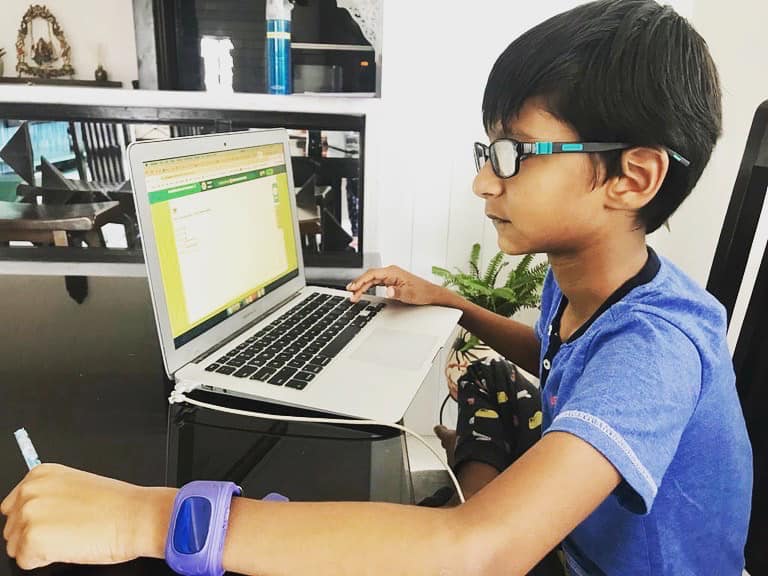
The pandemic has made us stay at home and we all know that staying at home is boring. We can kill this time productively by learning new skills online. 

 Coding

Technology is vast and there are plenty of job opportunities available if you know how to code. Programmers are high in demand all over the world. Learning and doing programming is an exercise for your brain that eventually improves your problem solving and logical ability. There are many apps and websites which teach coding for free.

 SEO 

SEO stands for Search Engine Optimization, which is the practice of increasing the quantity and quality of traffic to your website through organic search engine results. SEO is the best way to market and it can boost your public visibility. If you are a Freelancer or a business owner then you really can’t conduct online business without knowing about SEO.

 Microsoft Excel

Microsoft Excel is a software program included in the Microsoft Office suite. It is used to create spreadsheets, which are documents in which data is laid out in rows and columns like a big table. Excel training just doesn’t help you get things done quicker and more efficiently it also increases the effectiveness of the reports and analysis that you do.

 Languages

Learning a foreign language, even as little as a handful of phrases, will make your travel experiences better. It also boosts the confidence of an individual and improves the probability of getting employed in a company. Learning a new language helps us to discover a new culture and this is an immensely enriching experience for us. 

 Photography

You can capture a beautiful moment by learning photography. It also increases your creativity. Moreover, photography provides an enjoyable hobby. Earning a certificate online shows that you’ve had formal training, practical experience and critical assessments. This can open doors to a broader range of job opportunities where a degree is a minimum requirement.

 PhotoShop

Adobe Photoshop is one of the most famous and all-round image editing software existing in the market today. Photoshop skills are often listed in a lot of job descriptions these days. Learning Photoshop gives you an added advantage over other applicants who are not skilled in Photoshop. Using Photoshop one can transform pictures to unimaginable heights of creativity. 

 Public Speaking

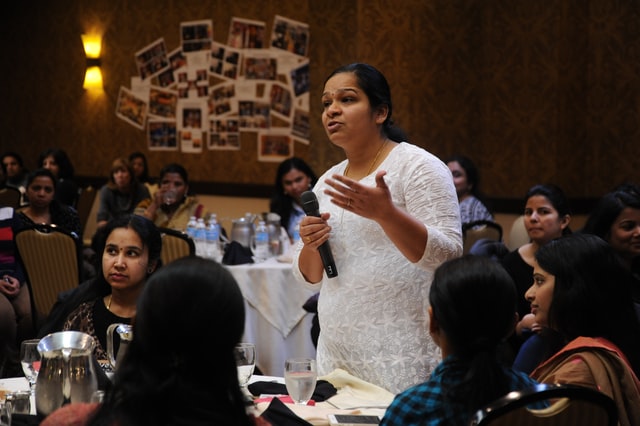
Public speaking is not just standing on a stage and speaking into a microphone to an audience. Public speaking includes speaking at meetings, with potential clients, colleagues, and customers. Mastery of public speaking will empower numerous other skills, abilities and personal enhancements will be the result.

 Video Editing

Video is the best marketing and promotional tool ever in the modern market. Videos attract the people to watch. They stop for a movement and see the video.  In this technological age, people watch videos as they are easily accessible. So if you want something across, pushing out your message or promotion to the people, make videos.  

 Digital Marketing

Digital marketing is the promotion of products or brands using electronic devices or the internet. It also includes text messaging, instant messaging, video, apps, podcasts, electronic billboards, digital television and radio channels, etc. Digital marketing gives a huge scope and multitude of job options. Digital marketing will also help you to promote your startup at very low cost.

5 Best Websites for Online Courses

Everything is available online nowadays, be it food, clothes or furniture. Everything is just one click away, even education.

We’ve all wished to gain education from the top universities but were unable to do so for unforeseeable reasons. Some found interest in a subject they were completely unaware of. While others just want to gain some extra skills and learn something new.

With the availability of online education, your dream to acquire a degree from top universities has come true.
Thousands of courses are available on these websites to choose from and they have flexible hours. So you can complete the course according to your own pace.

Here’s a list of top 5 websites for online courses:

  1. Khan Academy:

Started in 2006 by an educator named Salman Khan, Khan Academy is a non-profit academy. It aims to provide free education to everyone and all around the world. 

It is free for both teachers and students. It provides education from the root level, i.e., kindergarten to early college level. 

All the subjects are available on Khan Academy. Be it maths, grammar, history, science and even SAT exam preparation. 

The lectures are not very long and do not make studying boring or monotonous. 

It has some of the most famous partners as its founding partner. Namely, Google, Bill and Melinda Gates Foundation and Reed Hastings.

  1. Coursera:

Coursera is one of the most famous and loved websites by students. It has over 35 million learners and has partnered with 150 top universities from around the world. To name some, Yale, Stanford and the University of Michigan.
Talking about the courses available, Coursera has 2700 courses, 250 specializations and four degrees. Some courses also provide certificates on completion. 

It is the leading provider of massive open online courses.
Some of the courses are free and the paid courses mostly range between $29-$99. But the specializations and degrees have high prices. 

  1. Udemy:

Udemy has around 30 million students and 100,000 courses for you to choose from. Courses are taught in over 50 languages.
It has some of the most expert faculties. With 42,000 instructors and 22 million minutes of video instruction, Udemy is a widely loved website for online education. 

Courses on Udemy are not free but don’t cost much. The price ranges between $9 to $500 depending on the type of course. 

It does not partner with universities but it allows independent creators and educators to create courses and teach online in the subject of their specialization. 

  1. edX:

A non-profit education platform, established by Harvard and MIT, edX aims to break the three barriers in education: cost, location and access.

It has 20 million learners from all around the world. And provide 2400 courses, the majority of which are provided by top-ranked universities in the world.
Some of the courses are free while you may need to pay for some. One of the best things about using edX is that on completion of your course you are rewarded with an official certificate as proof.

  1. Stanford Online:

It offers free online as well as professional certificate, advanced degrees and executive education. Currently, Stanford Online is imparting education to millions of teachers and students. 

It offers courses from Stanford Law School, Stanford Business School and Stanford medical school and many others. 

Many other websites provide online courses that are free or paid. These were some of the most loved and preferred ones. 

Education should be accessible to all and everywhere around the world and that’s exactly what these websites aim for. 

They are simple to use websites and accessible to people of all ages because learning has no age. 

It will not only help you learn something new but will also add skill to your professional career. 

Happy learning!

HOW TO GET OUT OF YOUR COMFORT ZONE

We’ve all felt comfortable in one surrounding and uncomfortable in some. The surrounding you feel comfortable is your comfort zone. You can be yourself, talk freely and express your heart out when in your comfort zone.
But we can’t always stay there. Some situations require us to step out of it and deal with the real world, the one that would not be so comfortable. 

Of course, everyone enjoys being their comfort zone but that might hinder our growth somewhere in life.

The fear we feel when we encounter such a situation limits us from grabbing some wonderful opportunities. We fear being mocked or rejected and as a result, we stop taking action. 

Now, this may seem like a one-time thing but if this continues to happen for a long period of time, it may turn into an anxiety disorder.
As cosy as your comfort zone may seem, it is not deniable that it keeps you from life experiences, professional opportunities and personal growth.

It is very essential to explore the unfamiliar. Be it professionally or personally. Getting out of your comfort zone can be difficult but it is not impossible.

Some of the steps you can follow to get out of your comfort zone are:

  1. Identify your fears:

First, you need to evaluate what makes you the most afraid? When was the last time you felt afraid or uncomfortable? How did your body react to your fear?
Once you know what makes you uncomfortable and what effect it has on your body, it will be easy for you to identify what makes you uncomfortable. It allows you to open up in a situation that makes you uncomfortable. 

  1. Reminding yourself that you are fearless:

Everybody needs a little push sometimes to move ahead. And sometimes you are the only one who can give yourself that push. Every time you face a situation where you feel uncomfortable all you need is a reminder that you are fearless and can achieve anything you set your mind to. You can overcome all the uncomfortable situations and seize all the opportunities that come your way. Next time you do something out of your comfort zone whisper to yourself “I am fearless”.

  1. Recall your accomplishments:

You must have been in an awkward situation in the past and somehow nailed it perfectly. Recall that moment and every other such moment where you thought you couldn’t do it but did it anyway. These accomplishments may be small but they make a huge difference. Remember them and never give up.

  1. Find a valid reason:

If you are stepping out of your comfort zone there must be some solid reason for it. Find that reason and always keep that in mind. You may or may not succeed but you’ll learn something for sure. 

  1. Don’t chose the safe option:

Imagine you are standing on a diverging road, you know one road by heart and are completely unfamiliar about the other. Don’t choose the first road because that is your comfort zone. To your surprise the second road may be unfamiliar but may be prettier than the first road. Even if it’s not, you’ll experience something new. So, always choose the option which does not seem safe or comfortable to you.

  1. Set small challenges:

You are your biggest competitor. Setting small challenges and outdoing yourself is a great way to get out of your comfort zone. After successfully completing these challenges, you will feel accomplished and more confident. This will help you to not give up just yet.

These were some of the simple and most common ways to get out of your comfort zone.
Personally, I’ve been afraid of stepping out of my comfort zone but these steps have helped me a lot. And speaking from experience stepping out of your comfort zone is totally worth it.

WHAT IS MINDFULNESS AND HOW TO PRACTICE IT?

We all have heard the term “mindfulness” a lot of times. But many of us despite being aware of the term don’t know what mindfulness actually is. Some confuse it with meditation. But to your surprise, these two terms are pretty different.
So, what exactly is mindfulness?
Mindfulness is a way of living which is achievable with a lot of practice. It is a process of connecting to your surroundings and being completely aware of them. Mindfulness is a practice which enables you to focus on being intensely aware of what you’re seeing and what you’re feeling, without interpretation and judgment.
In a sense, it lets you completely focus on “the now”. It is the acceptance of your thoughts and yourself.

Photo by Daniel Torobekov on Pexels.com

This might seem like a trivial thing and think to ourselves, “I’m completely aware of my surroundings. Maybe I was born mindful.” But no. The human mind tends to get distracted even by the smallest of things. We worry about the future so much that we forget to live in the present. Obsessive thoughts take us over and we leave our present and hop on to an imaginary time machine to travel back and forth in life. 

But one can’t go on travelling back and forth in time and feeling anxious. Here, mindfulness comes in as our saviour.

Now the question is how is mindfulness achieved and how to practice it? I’ve got you covered on this.
Mindfulness needs no equipment like candles, oils or mantras. Find a comfortable and peaceful place and meditate. Not your usual meditation where you may get distracted. But sit with a judgment-free mind, focus on your breathing and let the energy flow within you naturally. 

While sitting down, notice how your legs and arms move. Let your body loose, unclench your teeth, relax your muscles and let your gaze fall onto the ground.
While practising mindfulness, your mind may try to wander off in some distant land. Don’t panic and let it go for some but make sure to come back and focus on your breath. Notice how the air comes into your body and how it leaves. This wandering off may happen a few times but keep guiding your mind back to your breath. Remember this is a judgment-free zone. Give yourself a break and forget about all the worries and anxieties of the day for some time. Slowly, your body will start to feel light. Sit there for at least 10-15 minutes. When you think you are done lift your gaze and go on with your day but with more attentiveness.

Photo by Karolina Grabowska on Pexels.com

There are several other ways by which mindfulness can be achieved. The simplest one being, trying to stay attentive throughout the day. Noticing your actions, surroundings and movement of your body. Types of mindfulness practices include:

  • You can practice it while seating, walking, driving or even lying down.
  • Short breaks on our daily routines.
  • Combining it with physical activities like yoga.

Mindful meditation may look easy but it takes a lot of practice to be mindful in real sense. Keep practising and you will see the results soo. If you find it difficult to fit it into your schedule, you can download an app or can fix a particular time of the day. 

Something practised by thousands of people must come with a lot of benefits. And, it does. Mindfulness has several benefits which are visible in a short period of time. 

Photo by Elly Fairytale on Pexels.com

Practising it for 8 weeks has been said to be transformative in many forms. 

  • It helps reduce stress, anxiety, pain, depression, insomnia and high blood pressure. 
  • It is also good for our hearts and improves the immune system. 
  • It also increases your attention span, improves sleep and controls diabetes (can only be controlled to a certain level and not cured). 
  • It has also shown a positive impact on relationships and eating disorders.
  • Makes your mind judgment-free and makes us kinder and warmer.

You don’t need to practice it every day, it said that practising it for even 4 times a week can prove to be useful. 
Mindfulness is not just a practice but it is a way of living. It is not toxic, harmful or obscure. And I don’t say it based on faith. It has scientifically and by experienced demonstrators proven that mindfulness does bring a change in the way you live.
In this chaotic and uncertain world, it helps you deal with your problems innovatively. Another plus point? It requires no change in yourself, it brings out the best in us as human beings.
Mindfulness is a great way to collide two different worlds, i.e., our mind and the world into one.

Importance of Vocational Skills

The new Education Policy of India also focuses on vocational training of the students. But what are vocational skills? And why are they important? Let us find out.

What are Vocational skills?

Vocational skills are empirical skills that individuals acquire in a specific area of interest. These are the practical skills that one requires to learn in order to choose a career option. Vocational skills are more practical than theoretical skills and are equally important for a student. Individuals learn vocational skills from hands-on experience.The training takes place outside the traditional classroom setting. Students are placed in manual labor intern positions that coincide with their vocational career choice. It trains a student in training for his career and it is related to the theory part. Vocational skills are those which allow a person to master a particular subject or procedure that is applicable to a career. Vocational skills are also known as content skills.

Importance of Vocational training

When a student receives vocational education in college or an educational institution, they are not getting prepared just to study and pass the college. But they are also being prepared to get a job in the future.

Vocational training is very important. It develops many skills. Here are the types of skills that are developed by it-

  1.  Domain knowledge in fields such as carpentry, plumbing, electrical works, automobile service
  2.  Mechanical aptitude 
  3.  Problem solving skills
  4.  Creative skills

These skills are acquired by the students and help them immensely. Skills create various job opportunities. In today’s world, almost every job providing company or organization wants people to work for them who have proper skills that will benefit their company and organization. And these skills can not be obtained by only theoretical training.

Skill is the most valuable asset in an individual’s life. Vocational education gives people a new learning experience. It increases your level of expertise in a particular field. This makes it easier to choose a career in future.

Learning a skill takes less time than a traditional four-year university, and can be learned in a few months.. Due to its short period of learning it is very flexible and cost-effective for the students. The students even get time to do their other important work by training  part time from the teacher.

After learning, they do not become dependent on machines or someone else because it is their skills which are helping them to work. They become more efficient and self dependent. Also, they realise their capabilities and use their potential to achieve heights of success. 

Career options from vocational skills

We are exposed to various job opportunities by vocational training. Some career options are listed below –

Car mechanic, Car body repair technician, Car electrician, Quality test engineer, Firefighter, Paramedic, Police officer, Search and rescue officer, CPR and first-aid responder, Coastguard officer, Vocational nurse, Surgical prep technician, Medical technician, Dental hygienist, Dental assistant, Phlebotomist, Sonographer, Radiologist, Pharmacy technician, Mammographer, Laboratory technician, Veterinary assistant, Veterinary technician, Chef, Caterer, Food service manager, Bartender, Mixologist, Quality assurance specialist, Welder, Electrician, Plumber, Web designer, Carpenter, Construction manager, Pipe-fitter, Machining, Computer-aided drafting, Network administration, Civil engineering technician, Court reporter, Hair stylist. 

By choosing a subject that interests you, you can shape your career and create your own success.

A BRIEF ABOUT YOGA AND ITS BENEFITS

The word “YOGA” gets derived from the Sanskrit word Yuj, meaning “union”. It is a group of physical, mental and spiritual practices or disciplines. The origin of yoga goes back to ancient India. It dates back to pre-Vedic Indian tradition. Its traces can be found in the record of the Indus Valley Civilization around 3000 BCE. The first mention of the word “yoga” was seen in the Katha Upanishads.


Yoga is an ancient practice that brings together the mind and the soul. Yoga consists of breathing exercises, meditation and poses designed to relax and reduce stress.

According to the traditional approach of yoga, its ultimate goal is to achieve “moksha” (liberation). The first Hindu teacher of yoga who actively advocated yoga in the western world was Swami Vivekanand. He travelled to Europe and the United States and encouraged people to learn about the benefits of yoga and practice it.

Photo by Elly Fairytale on Pexels.com


Yoga largely consists of asanas connected by flowing sequences known as vinyasas, accompanied by breathing exercises of pranayama. It usually ends with a period of relaxation and meditation.


Yoga has proven to be very beneficial for the entire body. People who practice yoga daily have noticed an immense change in their body and their lifestyle. It also helps in delaying ageing if the body parts, keeps you healthy and keeps unnecessary diseases away
Some of the benefits of yoga are:

  1. Helps relax:

Yoga relaxes your body and decreases stress. Studies have shown that it decreases the secretion of cortisol, the hormone responsible for stress. A three-month yoga program can lower the levels of stress, anxiety and depression. It helps you slow down breathing and focus your shift on the present. Yoga shifts your balance from the sympathetic nervous system to parasympathetic nervous system. The parasympathetic nervous system is calming and restorative.


2. Improves flexibility:


Most people practice yoga to improve their flexibility and balance. If you practice yoga regularly, you will notice an increase in your flexibility. You’ll be able to bend your body more easily. You’ll also notice that the pains and aches in joints start to disappear. Your body becomes muscles become loose. This enhances your flexibility, balance and posture


3. Improves heart health:


Yoga helps lower blood pressure. High blood pressure is the main reason behind heart attacks and stroke. It also helps slow the progression of heart diseases. Yoga lowers the resting heart rate, increases endurance and improve oxygen intake.


4. Improves sleep:


Practising yoga helps improve sleep quality. It relieves you from the hustle and chaos of life and sleeps soundly. You’ll be less tired, less stressed and less likely to have accidents. Studies have shown that yoga increases the secretion of melatonin. It is a hormone that regulates sleep and wakefulness.

Photo by Prasanth Inturi on Pexels.com


5. Promotes a healthy lifestyle:


It is advisable to move more and eat less. Yoga helps you do both. It helps you burn calories and the spiritual dimension helps you focus and become a conscious eater. It helps induce mindfulness which further helps in encouraging healthy eating behaviours.


6. Gives peace of mind:


With today’s lifestyle, many people suffer from stress. Stress can also cause many other health problems. Like migraines, insomnia, high blood pressure and heart attack. Yoga helps you quiet your mind. It will reduce your stress and also keep you safe from all the other diseases related to stress.

Photo by Chevanon Photography on Pexels.com


There are several other benefits of yoga. It has both mental and physical benefits. Some of the benefits are scientifically proven but some are.
Some other benefits of yoga are:
Encourages self-care
Improves immune system
Reduces inflammation
Builds awareness for transformation.


Inculcating the habit of practising yoga for one hour daily can significantly change the way you live. You’ll be happier, less stressed and peaceful.
But don’t do more than your body can accept. You’ll improve slowly but don’t rush into learning everything in one go. It can be risky and cause injury. Your body will learn and adapt with time.

How can the youth make an impact?

Youth can bring a great change, they can change this world. Indian teenagers are yet to realize their full potential. They think that they can make an impact only after getting a job.

How can a teen make an impact?

The very first thing that we as youth can do is to know our rights. Know about your right to information, right to equality, right to freedom and other rights. These are important because this will assist you to determine those people whose rights are being suppressed. You can even make people aware of their rights.

To change the world you need to understand the world and its complex systems. For being capable of this understanding, education is very important. Every youth must be educated. Education increases a family’s standard of living and promotes economic development. More educated people will mean more economic growth. Education also helps to eradicate poverty.

Gender and race based stereotypes have always existed in our society. We can make an impact by even stopping one small stereotypic comment. We should even educate the people that every person deserves equal respect in this world. Education also helps in breaking this stereotypic perspective and teaches that each individual is unique in his/her own way.

We should always be aware about local and state issues. We can discuss these issues with our friends, families and teachers and find the solutions to it. When we learn about some issues, we can share our views on more similar issues. We also ponder upon the reasons because of which this problem became such a big issue. Knowing more about our locality urges us to be a responsible resident.

Just learning about various issues is not enough. We should speak up whenever we see anything wrong happening. We should speak up when we want to ask something. We should speak up even for others. We should speak up when we don’t feel well. Suppressing thought and feelings will make us unhappy. Speak your views and opinions confidently. 

We can join many organisations and groups as volunteers to share our views to others. Organizations influence many people and society. As a volunteer you can visit the households and make the issues/concerns be heard by all the people and also gather direct feedback from them. These groups generally take actions faster. You will not feel alone while protesting and campaigning.

You can even join many campaigns to protest against gender inequality, climate change, racism and any other issues. By campaigning against any wrong decision or thing, governments will have to review its decision and also stop any action that is not right according to the constitution. A peaceful rally is also a good means of protest but you have to make sure that it does not turn violent.

We all are aware of climate change. We can together combat and reverse it by organising rallies. We can even take digital actions like storming twitter, sharing posts on a single hashtag. Online campaigning is the new trend.

We should volunteer whenever we get a chance. Volunteering helps various people and organizations. We meet many people while volunteering. Each of our experiences are very special and they teach us something new.

And together we can change the world.

Never Stop Learning- How and Why

My life mantra is simple: live as if you were to die tomorrow. Learn as if you were to live forever – Mahatma Gandhi. Learning is not  only bound to schools and colleges; it is a lifelong activity. 

Why?

Learning should never stop. We learn from everything that we hear and see. Many people share the perspective that learning stops after college or an age, this is wrong. We acquire new skills due to continuous knowledge and more skills deliver us various experiences. Experiences are the viable part of our lives and we even learn from them! In recent years, distinct skills are required to be qualified in a job interview. Many multinational companies hire only the people who have creative thinking. All this can be earned only through learning. The brain gets regular exercise, this prevents our mind from being left idle and also improves our memory. Individuals who keep learning are less likely to feel depressed and unenthusiastic. This way we can prevent many mental health diseases. Regular exercise of the brain keeps us mentally fit and active. The knowledge gained never goes to waste, it can always be shared so that more people can start learning. During these difficult and challenging times we can spend our time learning and teaching about various topics. We can also earn some money by taking tuitions/coaching classes. Learning about new topics and subjects increases our self confidence. We believe more in ourselves when we try new things. If an individual never tries new things, then he will never know his capabilities, he will surely avoid learning. It also boosts self esteem and makes us happy. Learning plays a key role in improving our mental health and providing peace of mind. It also builds a strong and charismatic personality.

How to keep learning?

Learning is not limited to only a particular place and a specific time. We can learn anywhere and anytime. From a role model to a child, anybody can be our teacher. It is often seen that students correct the teachers or parents and they learn great lessons from children. We also have to understand that all skills have their own importance. We should create a list of topics that are interesting to us and try to grasp as much as possible information for these topics. We should not restrict ourselves only to bookish knowledge. Our everyday lives also offer us a great opportunity to learn new things. E.g. a scientist should also learn how to change tyres along with his core subjects and work.

We can learn more by trying out different things. If you experience something first hand then you will remember it for a long time. Learning a guitar, a piano and a dance form are some examples. This can be a very good and productive use of our free time. You will feel more energetic and enthusiastic. These skills will come handy in the future. Knowledge can be also expanded by reading books, newspapers and journals on different subjects and issues. Our general knowledge will increase rapidly and reading will keep us occupied for several hours. Facing various challenges will also help us in learning. It will teach us the value of hardwork and time in our life. Always ask questions whenever you are curious, if your questions get answered then you will learn something new and if they don’t get answered, they will make somebody else curious. Learning is a part of the journey on earth and it should never stop. 

Happy learning.

Important Steps in Writing Research Paper

Writing a research paper is the most essential part of our research process. research publication will explain to the world about our research work, our contributions, and impact of the work. It also helps other researchers to understand the benefits and research gaps from the research area. In this article, we are going to find out the 8 important steps in writing a research paper.“The first draft is just you telling yourself the story.”
1. Title
Selecting a perfect title to our work is the first important step which also defines what our paper is all about. The title should be more informative and included all our major keywords in it.
2. Abstract
Statistics say, more than 90% of researchers read the abstract next to the title. It is a very important step defines writing a research paper. abstract is a summary of our research work it usually was written 100-150 words, this should be very crisp and clear about the research, what the whole paper is going to talk about.
3. Introduction
The introduction sets the first stage of our analysis and also predicts the tone and direction of our research paper. It helps readers to understand the paper even they don’t have any prior domain knowledge.
4. Methodology
The methodology describes our research paper’s goals and the procedures that what we carried out in the research work. a proper research methodology helps journal reviewer and readers to understand the entire concept of our research.
5. Conclusion
The fifth most important step to writing a research paper is the conclusion. it is a final summary of the results that we managed to achieve through our research. this also should explain why and how we arrived to this particular conclusion.
6. Review of Related Studies
Review of Related Studies places our research to define existing data and information about the previous research papers. It is very important to clearly explain our existing research experiment carried out in the same area that we used as a reference or base.
7. Recommendations
In the recommendation, carefully explain what needs to be done next and enumerate the possible steps that are needed to be taken. a proper recommendation will help readers and other researchers to carry out their own research.
8. Bibliography
The last and eighth important step in writing a research paper is a bibliography. In this, we have to list the source materials we used or consulted in making our research paper.
Whenever you start to write a new research paper make sure these 8 important steps in order to help the readers to be more comfortable and easy understanding.

The Joys of Volunteering

Volunteering is a voluntary act of an individual of doing some work for the society as community service. It may include different forms of work. Some volunteers are specially trained in a particular field while some offer to help and join hands for a good cause freely. Volunteering has different sectors like medical, disaster management, education and upliftment of community. There are several NGOs and organisations which offer volunteering opportunities.

Photo by Matthias Zomer on Pexels.com

It can help you to make new friends, advance your career, and feel better. Taking some time out of our busy schedules and finding time for volunteering can be difficult for some of us. But you can start small for the sake of trying it out. Volunteering lets you help and reach out to people from different backgrounds and create social change in your own little way. It provides vital help to individuals and gives you a chance to make lives better. Surely it makes people’s lives better but it gives you greater benefits. Give a little time to volunteering and you will get a lot in return!

It helps you feel happier and healthier. Once you start volunteering, you will meet a lot of new people from different communities. Working with underprivileged communities makes us more aware of our surroundings and feel grateful about our own lives. Also, when you start doing something new it gives you a fresh start and brightens your mood. Most of us love doing new things. Volunteering will also help you spend some quality time outside of work. It will bring both fun and fulfillment to your life. It will help you combat better with issues of mental health like depression and anxiety. It will also improve your mood and give you immense joy. Seeing the smile on the face of a child will surely brighten your day.

You will meet a lot of new people. Your fellow volunteers will either be from similar fields as yours, which will definitely be a positive side or they will be from completely different walks of life giving you a chance to know about a lot of new things. If you are a person who struggles with making new friends, it is a great opportunity for you to start new friendships. Once you start working as a team with others, you will share your ideas and share responsibilities for carrying out a task. While working and planning together it is most likely that you will become great friends. This will also make you a more social person and increase your communication skills. Volunteering helps you to network with a lot of people. Especially if your career path values societal issues, it will be really helpful for you to meet important people and make connections.

Lastly it will help you enhance your career prospects. Almost all companies or educational institutions value a volunteering experience. They will be glad to know that you have been a part of something so meaningful. Volunteering increases your chances of getting selected and helps you improve your resume. It will also give you experience of working with a team and make you a more empathetic and responsible person.

Standardised Testing and the Coaching Class Culture

A better love story than Twilight.

Standardised testing. A serial dream killer. Hope undermining, man-made catastrophe.

The need for an absolute overhaul is inevitable for the sake of sanities of many. A change in the thought processes of the society would be the apt stepping stone for such a revolution.

As we approach the third decade of the twenty-first century, I guess it’s time to do away the standardised testing as a measure to test the overall capacity of an individual. Following such ancient methods of evaluating young minds in such a fast paced world is absolutely bonkers, we, should know better.

Experts across the fields have endorsed the need for knowledge based learning over memory based learning. But still many are capitalising on the status quo. With millions at the receiving end having it for the worse.

We all have at least appeared for one or the other such tests in our lives. There’s no denying that, the education system is wired in such a manner that there’s no other way around it. Best to succumb to it and make it out in one piece.

It’s saddening to the very least to admit to the fact that many of our dreams were often short-lived by courtesy of such devious measures. Figuring out one’s capacity to follow up his dreams and aspirations over memory based evaluations. Preposterous.

We all have friends and acquaintances who were not able to tread upon a path close to their hearts due to their inability to mug up and show up for standardised tests.

We might even know significant numbers of people, who could’ve been significant figures in their respective favourite fields if they haven’t had fallen prey to the societal norms and ambit of such tests to pursue mainstream degrees and careers.

If you’re somebody who has not been shot down by such a measure, count your blessings. You’re indeed one of the rarest of the rare.

With every passing year, millions of students are pushed into the rat race of such tests by the pressure implied by their guardians, mostly. The crazy obsession over a few courses and institutions in lieu of a trend that has long passed, but is still not accepted by the masses. People are suckers for a safe and secure career that is entirely overrated. 

With the passing of each year, new and newer coaching centres for prepping the kids for such exams are coming up in every nook and corner of our societies. Coaching centres are definitely and will be the black for a while. 

Another number synonymous with the pass numbers of such institutions are the suicide rates among the ones that go there. With the crammed up schedules to only learn and nothing else, millions of kids are traumatised by the agony inflicted upon them.

The only good, such institutions do are their unbridled role over building smaller economies. Pressured with the need to cater to the high numbers of students joining such institutions, they’re forced to establish bigger institutions to accommodate the same. 

Hence, they resort to remoter areas where land is cheap and set up shop there. With more and more families trying to put their kids through such a process, they move closer to such institutions and play their part in fuelling the growth of such rural economies.
A blessing in disguise for many.

We live in a country where the education policies are over three decades old. Since then we’ve liberalised the markets, had massive growth of population and numerous other socioeconomic changes, but this sector falls short to such changes.

With every passing year, education becomes more political than the year before. Higher passing percentages are a matter of concern for political parties to market false bravado. Unaware of the millions who fall prey to such a process.

Rewarding students based on their abilities to rot learn and awarding them with grace marks for selfish reasons might seem reasonable in the short term. But in the long run, bringing out generations of students proficient, theoretically, would just drag this great nation to the dirt. 

A stitch in time saves 9”, better act up before it’s too late.

Do express your views in the comments below.

Multilingualism

Multilingualism a skill set exhibited by two-third of the population still is seriously misunderstood. It is a common belief that learning another language is just a waste of time, children should focus more on cramming books rather than exploring. It is also said that learning another language is of no use if the child/person speaks the language of the majority as this skill would not help to reap financial rewards. Many people also believe that being multilingual could confuse the child and lower their cognitive abilities. Such claims are false as learning another not only helps to flex our mind muscles but also increases our cognitive capabilities, better problem-solving skills, and also improves learning capabilities. Just like exercise is important for toning the body and enhancing its capabilities, similarly learning a language is the exercise which the brain requires in order to tone itself. Empirical studies have shown that multilingualism has great positive impacts on the gray matter of the brain. Language carries cultures, traditions, and thus able to speak more than one language enables one to take multiple sensibilities, tastes, and possibly even identities. Studies were carried out on bilingual women who could speak Japanese and English by psycholinguist Ervin-Tripp who found out that when given the same opening statements in different languages had different endings. This concluded that thought occurs in language, therefore knowledge of more languages refines the thought process too. Bilinguals tend to make more rational decisions because language contains nuance and subtle implications that influence your judgment subconsciously. Multilingualism is not a new skill rather it has been there for ages, aboriginal hunter-gatherers survived because they could understand and convey through their as well as other’s community, to know about the possible dangers lurking around. The rule used to be that one mustn’t marry anyone in the same tribe or clan to have a child. Marrying within one’s clan used to be taboo. The part of the brain that manages the cognitive skills is the ACC ( anterior cingulate cortex)  or the executive system. ACC is located on the frontal lobe that enables us to concentrate on one task while blocking out competing information. Learning languages developed this part, therefore, enhancing cognitive skills. Multilingualism also delays mental decline in old age, slows down the onset of dementia and Alzheimer’s. Bilinguals who tend to develop Alzheimer’s tend to display less decay in cognitive abilities than monolinguals patients. It is also assumed that multilingual speak each of their languages equally. This is amusing as well as tragic because no matter how long you have been studying a language if you don’t use it around you might forget it. Learning language is as fun as it is useful therefore everyone should give it a shot. Find ways to learn languages, there is an ample amount of sources to learn languages online, and with the world connected better than ever, it has gone too lucid. 

до свидания 

Image by rawpixel.com

Indoor plants

We all know, how plants are helpful to us, why are they vital. With the rise in carbon emissions, greenhouse gases, the only way to tackle it is by, either reducing the emissions which seem implausible due to industrialization, or the other is by planting more trees, which comes with its problem of land use. But plants can also be planted indoors, which is a pretty efficient way to keep pollution outside the boundary walls of the home. Not only the pollution from outside but, several VOCs like formaldehyde from furnishings, carpets, paints, etc.  With so many people coming to cities for better jobs, a better lifestyle, lands for trees have become sparse. Indoor plants don’t only help in relating pollution inside the house, but also helps to boost the members of the house emotionally and mentally. Plants promote mindfulness, calmness, serenity because plants tend to make you care for the moment instead of the rest of the world. Plants also remind us to keep moving, as different plants have different needs, and caring for them requires learning about their different peculiarities.  Also, they provide “low expectation” companionship, reaching friends or family can’t be feasible all times so a partner whom you can talk whenever you like to, is not bad, they never sound judgy or tell whatever you are feeling is true or not. In totality, indoor plants can’t do any possible harm except for occupying some space of your room and some time, but it could be worth it. The positive outcomes vanquish the negatives by a large difference. Some of the indoor plants that everyone should try on are listed below.

Snake plant (Sansevieria)- Also known as the mother-in-law’s tongue, this gorgeous multi-hued leaved plant is a great health booster and can thrive in low light too and prefers drier conditions. It absorbs carbon dioxide and release oxygen even at night and is also helpful in absorbing toxins like formaldehyde and benzene.

Chinese evergreen (Aglaonema)- Its beautiful two-toned leaves are hard to miss and comes in different varieties. This beauty needs a warm and moist climate to prosper, and a moderate temperature year-round.

Lucky bamboo (Dracena Sanderiana)- Popular in Feng shui, can survive in soil or water alone and prefer a moderate amount of indirect sunlight. Good for decorative purposes but its leaves are slightly toxic, thus should be kept away from children and pets.

Monstera (Monstera deliciosa)- Also called the Swiss Cheese plant because of its glossy tropical holed leaves. Due to its enormous size, it requires slightly large spaces to thrive. But provided with moderate temperature and low light ensures content plant. The beauty comes with a cost as it is poisonous so it is advised to keep pets and youngsters away.

Arrowhead plant (Syngonium podophyllum)- The leaves change shape as they grow and thus provides with great varieties. The vines are often used for indoor hanging baskets but could be trained to grow on poles. Isn’t picky about light but of water, remember never to overwater else you would be left with an unhappy plant.

Boston Fern (Nephrolepis exaltata)- They prefer to clean the air with high humidity and indirect sunlight, easy to grow and needs watering once a month.

Aloe Vera- The multitasker. While planted helps to clean the environment by absorbing toxins. Also, it’s leaves contain a gel full of vitamins, enzymes, Amino Acids that have anti-inflammatory, anti-bacterial properties.

Music Therapy

Did you ever feel that therapy involves talk by a psychologist and nothing else could come under the domain of therapy?If your answer is yes,Then you are wrong!!Well times have changed my reader~

Therapies have come a long way to incorporate other clinically approved methods such as animal assisted therapy,food therapy,aroma therapy etc.Music Therapy is one clinically developed program by psychologists to assist speedy healing of their clients.In this blog,the readers would be introduced to the world of Music therapy.So lets get started!

WHAT IS MUSIC THERAPY?

Music Therapy is the clinical and evidence-based use of music interventions to accomplish individualized goals within a therapeutic relationship by a credentialed professional who has completed an approved music therapy program.It is is an established health profession in which music is used within a therapeutic relationship to address physical, emotional, cognitive, and social needs of individuals. After assessing the strengths and needs of each client, the qualified music therapist provides the indicated treatment including creating, singing, moving to, and/or listening to music.

Through musical involvement in the therapeutic context, clients’ abilities are strengthened and transferred to other areas of their lives.This therapy also provides avenues for communication that can be helpful to those who find it difficult to express themselves in words. Research in music therapy supports its effectiveness in many areas especially emotional rehabilitation.

history

You all will be shocked to know that both world wars were the trigger that initiated the development of this therapy.During and after both World Wars, doctors and clinicians began to realize the powerful effects that music has on the healing process and requested that professional musicians be hired by the hospitals.This therapy first got officially recognized in the Michigan state university of the United States of America.Ultimately,The American Music Therapy Association (AMTA) was formed which focuses on creating more awareness about this wonderful therapy.

BENEFITS

Music therapy can benefit many individuals. The diverse nature of music means it can be applied in the treatment of concerns both physical and psychological.Since music can evoke positive emotions and improve brain health,Music therapy is said to manage and alleviate symptoms of mental health concern such as Depression, Mood issues,Anxiety,Schizophrenia,Substance abuse,Autism,Personality issues,Insomnia,Dementia etc.

In addition,Music therapy can improve the social,cognitive,emotional and motor functioning.This therapy was also effective in controlling patient’s situation in Alzheimer’s,Cancer and Hypertension.

Music therapy is frequently administered to reduce stress levels and pain perception of females in labor.This novel therapy has also been linked with improvements in self-esteem, self-concept, verbal communication, prosocial behavior, socialization skills, group cohesion, and coping skills.

Limitations

Even the most beautiful things have flaws,and so has music therapy.One of the major drawback is that this therapy cannot be used as a stand-alone therapy.The music therapy is also known as music assisted therapy implying it’s sole purpose is to assist the main therapy applied by the clinician on the client to produce fast results and relief.

Also,the music therapy like all other therapies is individualized.This is not a major drawback but should be kept in mind before going in for this option.All individuals are unique and so is their taste in music.Thus the therapist has to do additional tests to see which type of music and musical instrument works better for the client.

ALWAYS REMEMBER,WHERE WORDS FAIL,MUSIC SPEAKS…..

Thus in short we need to know that music therapy is a wonderful form of therapy which strengthens an individual and increases his/her quality of life.Choose Music for a better Life!

Do give a like,if you all found this article to be Interesting!

Thankyou!

Stay Knowledgeable!

BOULEVARD OF BROKEN DREAMS

A world that nurtures minds rather than butchers them still seems like a distant dream. A world which nurtures minds and teaches them how to dream seems like a wicked fantasy compared to the reality!

Growing up, people have this very false apprehension that kids have it easy, maybe they do know how it’s like, for they’ve also been young! Maybe they’ve been amended by the harsh reality; which our soul more often than not tries to run away from. Seeking refuge in some surreal vision.

Rather than striving to bring about a change, we the people often approach ripe minds with queries which should be not more than questions of sheer enlightenment but rather we do the complete opposite, a far more severe manifestation of the same, which is more or less like a violent blow to the gut. 

The promises of tomorrow are often bombarded by bizarre questions like, “ what will you do in some years down the line?”, “what are your dreams?”, “Don’t you have any dreams boy?” and many more such obscene verbal inquires, without paying much heed into the aftermath.

The careless wandering souls would care less about the whole essence of such moments and will carry on with their endeavor, but the poor innocent ones are the ones that often fall prey to such thoughtless stunts, crippling their innocent little minds till they get redemption on their own. Setting their tiny minds into a frenzy, making them hesitant to settle about and making them flying into the unknown like a broken kite without direction. 

What people often fail to realise is the simplicity of the reality, that a nudge or two by such people to young minds could do wonders, unaware and unwilling to accept the bitter truth and shying away from doing the needful.

To err is to human but to forgive is divine” , but yet people have been consistently failing to bring about changes in this aspect of life. Frowning upon the ones learning from their mishaps and setting forth doing the same errors over and again.

We are who we are, our actions speaks for itself, we are the end-stories of our endeavors. We as a people, rather than setting forth to blame the rest have to realize that blaming one or the other ain’t the need of the hour. We indubitably own it to ourselves to seize the day and bring about the change much needed.

We owe it to them, then ones who have brought upon a change. The ones who have paved the way for generations and more untiringly erecting a different world. A world that brings hope and one which promises us a better dawn to look forward to. These alleged misfits who trembled upon the road less taken to pave the way for the rest, clearly depicts a key lesson, that Change is inevitable and that change is necessary. For Revolution is impersonal!

A world which nurtures minds rather than butchers them may seem like a distant dream. A world which nurtures minds and teaches them how to dream can be our wicked reality!

MAINSTREAMING OF VOCATIONAL TRAINING

The rise of unemployment rates in India during this time of crisis has wrecked havoc in the social, economical and political state in the country. A havoc which could’ve been avoided.

It clearly depicts an urgent need to restructure both the workforce and the education system. The rapid advancements in most sectors has deemed necessary for the need for various skills which an abundance of our workforce lacks.

This also points out the need for imparting skill and knowledge based education in the society. Making the present unemployed youths dumbstruck with the needs and wants of the market and how to best cater to it.

The pandemic has also outright made clear the need of various skilled workers among most civil societies. The jobs which were often neglected as quite trivial and unnecessary to the naked eyes of many.

The mainstreaming of vocational training among students in schools would provide the students an opportunity to pick up necessary life skills and would further nurture the process of self discovering various personal preferences.

Imparting vocational training at a tender age can also aid children receive technical and practical knowledge which will aid them to acquire practical knowledge regarding the operations of various mechanisms.

It will also make the young adults employment ready and would boost the country’s workforce competitiveness compared to the rest.

Through such training various life and need based education will be imparted to people which will further facilitate the transition of unskilled people into human resources which the formal education, due to its rigid chronological grading structure and inflexible nature excludes the poor students from its advantages.

In this circumstance as the alternative of formal-education it is very much necessary to evaluate vocational education so that we can determine the extent of its success and weakness at any stage of poverty reduction as it is considered the best way to bring about longer lasting socio- economic change and self development.

It will also serve as an alternative to traditional academic courses and makes them understand the pace of an actual working environment.

No people are the same, different people have different perspectives and abilities.

Making wider courses for students to learn while inculcating vocational courses would benefit both the individuals and the world at large.

The actual workforce is not in accordance with the need of the employers.

Many a gaps between the available workforce and employment seekers can be abridged by imparting proper skills and knowledge between the available workforce.

The rigid structures of the  education system and the often viewing of the vocational jobs as a taboo in the society has made such an downward impact. Making the task at hand even more complicated.

The disrupted employability rates could be brought down with the mainstreaming of vocational education. The awarding of skill based education will further smoothen the structure of the various industries by facilitating proper delivery of workers to job opportunities.

Studies have shown that the training of young individuals for vocational courses have been seen as an added advantage to the job-seekers. With the hands-on training followed under such courses, the candidates will be better equipped with regards to the skills to meet the job requirements compared to the ones educated under the formal courses.

Rakshabandhan in 2020: How it is going to be different…

“There’s no other love like the love for a brother. There’s no other love like the love from a brother.” –Astrid Alauda

Rakshabandhan is popular, traditionally Hindu, annual rite, or ceremony, which is central to a festival of the same name, celebrated in India, Nepal, and other parts of the Indian subcontinent, and among people around the world influenced by Hindu culture. The festival is a festival of love, care, and happiness. It symbolizes the existing love between brother and sister. On this day, sisters of all ages tie a talisman, or amulet, called the rakhi, around the wrists of their brothers, symbolically protecting them, receiving a gift in return, and traditionally investing the brothers with a share of the responsibility of their potential care.

Rakshabandhan

Despite being a part of Hindu culture, due to its moral values, the festival is celebrated by other cultures as well. Among women and men who are not blood relatives, there is also a transformed tradition of voluntary kin relations, achieved through the tying of rakhi amulets, which have cut across caste and class lines, and Hindu and Muslim divisions. In some communities or contexts, other figures, such as a matriarch, or a person in authority, can be included in the ceremony in ritual acknowledgment of their benefaction.

Every year, this festival has been awaited by all of us. It gives a chance for the celebration of a selfless and beautiful relation. For some families, this is the occasion where sisters get a chance (out of their busy schedule) to finally visit their brother and celebrate their love. The occasion begins from the previous day itself, with sisters buying beautiful rakhis and sweets for their brothers and applying Mehendi on their hands. Next early morning, both sisters and brothers dress up in new clothes. The sister ties Rakhi on brother’s hand offers him sweet and sings love songs for him depicting brother-sister relation. The brother then gives her sister a gift and along with that a promise of “protection against any problem in her life.”

Every year, this is the time when families travel to each others’ houses to celebrate the festival. But this time, the festival falls amid these harsh times when the whole world is standing against a pandemic, COVID-19. Rakshabandhan is the first major festival of Hindus after the beginning of the pandemic. Therefore, it is a challenge for all of us to get along with the charm of the festival by taking all the precautions and by maintaining social distancing. This year, it is difficult for sisters to visit their brothers if they live in a different city or state. Each year, we can easily have a get-together and celebrate the festival. But, every year, we have our soldiers, policemen, doctors, workers who are away from their home, on their duty even during festivals for the service of their country. This time, we have got a very golden chance to serve our country and fight against the pandemic by staying at our homes. We can spread happiness and celebrate the festival with our police brothers, doctors, and nurses who are truly working as our safeguard for our protection. We can tie Rakhi out of respect to them, making them realize that they are true heroes and fulfilling the responsibilities of a brother.

images

Apart from this, in this time of the internet, even though we are staying far, we are always connected through the internet. We are never apart. We can celebrate the festival over a video call. It will a new experience and it will be great fun. One more thing we need to remember that though some sisters are not able to go to their brother, due to pandemic, colleges and schools are closed. This brings young brothers and sisters together who usually don’t get holidays on Rakshabandhan when colleges run regularly. They must be together after a long time and enjoying the togetherness.

“As we grew up, my brothers acted like they didn’t care, but I always knew they looked out for me and were there!” – Catherine Pulsifer

Thinking through Act

“Acting is behaving truthfully under imaginary circumstances.”

Acting is basically an art of imitation or reflection or representation. It is the quality of utilizing your own spirit body and mind in being someone else. Actors on the stage do not show themselves up there, but they show the character they get into to people.”  Acting is equivalent to forgetting the original self.

actor-on-stage

Acting is not about being someone different. It’s finding the similarity in what is apparently different, then finding myself in there.

Benefits of acting

There are many benefits of acting :

  1.  It is a self-cleansing art.
  2. It helps us to forget ourselves, our worries, or goals, our life pressure, etc for the same time.
  3. It helps us to “be present”. Through acting, we enjoy “the moment”. We are at “the moment”.
  4. It helps us to understand the small little worlds as well as the big worlds of various people around us.
  5. Every act gives us a different perception that adds to build our character.

Methods of acting

  1. Stanislavski/Strasberg/Method: It uses affective memory considering our past. We need to relate to our past events. It draws situations from real life and there is an “emotional recall” as we get in touch with your emotional self.
  2. Meisner Method: It is the method based on the usage of imagination only. We need to enforce us to ask questions to ourselves. We ask the questions “what if”. We need time to contemplate under what situation will I be like this and considers the hypothetical future.

Voice Acting

Our emotions come out of our voices. Talking to a person over a voice call, we can immediately interpret if he is happy, sad, angry, guilty, lonely, or anything else. The Voice of a person gives a strong sense of the feelings of a person. Therefore, in addition to bringing the character by our body movements, we also need to bring out the character through our voice. Indeed, the voice acting is so powerful that it has opened up a separate domain for artists. Voice acting by podcasts are becoming popular day by day. It is easy to access and very interesting helping listeners to create a world of their own by listening to the voice artists. In addition, in these difficult times of pandemic, where shooting is difficult due to the rules of social distancing, podcasts are the way for artists.

1_zyAUE9v6UjHAmF8XA5nKfg

Irrespective of the form of acting, the main trick is to make your character your best friend. We need to study up on character traits; read testimonials, interviews, or watch videos. Then, we need to try to bring the traits through voice. Traits, in general, depending on age, geographical location, any distinct characteristic, or disability. There is a need to develops a culture of responsive acting. It is also important to tackles self-consciousness. It is an effective way of creating the world around us. An actor is an energy bank, always excited about his character and his story.

“Acting is a sport. On stage you must be ready to move like a tennis player on his toes. Your concentration must be keen, your reflexes sharp; your body and mind are in top gear, the chase is on. Acting is energy. In the theatre people pay to see energy.”

The power of “Now”

Life, a very adventurous journey has three divisions, present past and future. We all have only one life and we want to live it to the fullest and make the best out of it. In our life, we have to deal with the present, past, and future. Thus, we are often confused about which moment of life is more important and should be given maximum attention. Let us try to figure this out.

Looking into the past and future

We all tend to be far-sighted, thinking of future plans, future goals, etc. We work for our future, we save for our future, and we plan for our good future. We work hard to achieve our future goals. But, we are uncertain of our future. Yup, are you sure your future will come? No one knows. Thinking of the future and making plans according to is also important, but getting lost in these plans is not the correct way. Working in a way that misses out today and seems promising of a good future is where we are getting ditched because we will be investing in something that does not exist.

Past, on the other hand, is what we already created. It is impossible to change now what we have done 10 years ago. We can only learn from the past to improve our present and future. So, there is no point in living in the past. If we live in the past, we are stuck.

Live in present. But, why?

“If you want to conquer the anxiety of life, live in the moment, live in the breath.”

Think deeply and question again. Are there three divisions of time or is it only one? Are there past, present, and future or is it only present? Confused? It will be clear.

Our present makes our past and our future. How? What we have today will become our past tomorrow. So, by living in the present, we create our past. By making our present beautiful, we create memories and by doing mistakes now, we create lessons to learn. Basically, it is possible to add what we want to add in our past. It is possible to create our past by designing our present in the way we want. We can also make our future in a similar manner. Whatever we do today will be reflected in our future. Whatever we want in the future, wherever we dream to stand in the future, it begins from the present. We have to work today only to reach where we want to be in the future. Our performance today decides what we will get in the future. If we want to get the best out of our life, we need to live in the present and give the best today, there is no other option.

“The present moment is the only moment available to us, and it is the door to all moments.”

“Now” is the happiness

The best and most important moment is now. It is not possible to grab it or hold it. What is possible is to enjoy it, make it the best by giving it the best and staying in that moment. Neither our past is bad, nor our future may be. It’s just certain instances of past that are bad or according to us and an imagined situation of future that may be overwhelming or fearful. But, the most precious moment is now. We enjoy it to the fullest. If we merge with the present we are truly living or we are dead. Living the present is happiness, it is the true pleasure. Make your each second beautiful. Embrace it.

present moment - large


The practice of gratitude

“Acknowledging the good that you already have in your life is the foundation for all abundance.” – Ekhart Tolle

Gratitude, thankfulness, or gratefulness, is a feeling of appreciation felt by or similar positive response shown by the recipient of kindness, gifts, help, favors, or other types of generosity, towards the giver of such gifts. Gratitude turns what we already have into enough. It gives us a feeling of satisfaction and eternal peace. Gratitude is the best medicine, it heals one’s mind, body, and spirit, and it attracts more things to be grateful for.

gratitudeisg

Why do we need to practice gratitude?

“The struggle ends where gratitude begins”.

We all are surrounded by beautiful nature, we have our favorite people around us and we have enough food, clothes, and facilities. But, it is quite common that we take these things for granted. When we take things for granted, we are not satisfied with what we have and we strive to get something else, if we get it, then again we want something else, and we are never satisfied. Consider the present situation where we all are sitting at our respective houses. Earlier we could freely roam around, walk-in streets and parks, visit beautiful places, enjoy the fresh air and beauty of nature. But, we used to take all these for granted. We were really not grateful for the places around us, the beauty around us. But, now we realize its importance. The reality is that we always have enough of the resources around us for our survival. But, sadness drives in when we don’t appreciate what we have and take that for granted. Each one of us is living a life that is actually a dream life for a second person. So, just embrace it.

Imagine your life without the people around you, who are always there with you and support you. If you remove them from your life and think deeply, you will realize that they have a big role to play in your life which you never really thought about. The people around you are precious, value them, and be grateful to them that they are with you. Imagine a day without food, clothes, shoes, or air. If you do this exercise, you realize that you have enough of these things. Your desire to eat in a restaurant and to wear stylish clothes was really not that important. You get your food every day, you have clothes and shoes to wear. So, be thankful for what you have. Each and everything we get in our life, each and everything happening to us is very valuable to build us, to build our personality. Everything happens for a good reason. Being thankful for everything we get and for every event we come across gives us a satisfactory feeling, it eliminates negativity and makes our life more pleasurable. Saying thank you to another person pleases them and us too.

What do we get out of it?

A grateful heart is a magnet for miracles. The day you start practicing gratitude, it never ends. The more you express your gratitude for what you have, the more things you will have to express gratitude for. It gives you immense peace, happiness, and satisfaction. It rewires our brain and reduces stress. It boosts our immunity, improves relationships, and makes each day more beautiful. It makes sense of our past, brings peace for today, and creates a vision for tomorrow. Gratitude is the most wonderful feeling. Once you start practicing it, there is no way back.

“Thank You ” is the best prayer anyone could say.

1_OgKHyU5VMu9tBE5uEbCi1g


Maybe we all were ‘the same’

We have often heard the saying, “Everyone is unique”. But let’s try to question this. Is this really true? Okay, very much debatable! But, let’s proceed with it slowly.

50268045._SY475_

We grow up in a society where we face comparison knowingly or unknowingly. No one can escape the trap of comparison. Comparison with a second person for grades, for projects, for skills, for the job, for salary, and whatnot. But, then we decide, or let’s say realize that this is not the correct way we are seeing things. We now understand that each of us is unique. Yes, it is true to some extent. We are unique in the way we think, in the way we perceive a situation, the talent we have, the skills we acquire, and the level of our creativity. But, this uniqueness is not out of birth, it is developed.

When we say each of us is different, we start imagining a situation, where we all have everything different. We think that the kind of situations we are in is less likely to be experienced by others or maybe, at least not at that point in time. Sometimes, we come across some difficult situations and we are stuck, we might feel low and might feel that we are the one who is stuck here, there are people out there with a very smooth and happy life with no difficult situation arising in their life. But, the thing is that life offers the same set of problems in each one’s life and the no. of problems with the same difficulty level is also the same. We all experience ‘the same‘. We all come across similar situations in our lives and then label them as “good” or “bad” according to our personal opinion. Now, we call them, good or bad experiences and then count the number of bad experiences we had, to classify our lives as a ‘happy life’ or ‘struggling life’.

To better understand, think of life as a game. We all are players of the same game. Initially, we don’t know whether we will find the game interesting or not but, we all need to start playing. Then, we proceed with playing the game. We all come across different levels of the game in order of increasing difficulty. Some are playing the game with great enthusiasm and interest, collecting a lot of gems, health/lives, and rewards, which will be helpful for them in coming levels. While some are going at the same pace with quite low enthusiasm, hardly collecting gems and lives, or they are stuck at a particular level. Those who have collected rewards and lives can now use these in the difficult levels of the game too, to easily clear that level. But, those who were not able to collect rewards are stuck there watching their fellow reaching higher levels. Some of those in the lower levels of the game can again try the previous levels and collect gems, learn the strategy, and move forward, while some of them are tired and can’t play the game more and they quit. This is how the game goes on.

GettyImages-employeeexperience700-700x450

So, we all are playing the same game. We all come across the same situations and the same difficulties. The thought that we are the one coming across the difficulties of life arises because we don’t have enough knowledge of others’ lives. We only see their lives from outside. We can say we know the points of each player in the game (it is there on the scoreboard), but what we actually don’t is the details, i.e. how much gems, lives, and rewards each of them have collected. We all started from the same point and proceeded along the same direction but eventually end up getting different results. The gems, lives, and rewards that we collected on our way and the attempt we made for it kept us making different from each other. So, if you look at those who reached the final level, they may have different skills and talents because of the way in which they proceeded but they have similar perceptions.

Balance life with balance

‘Balance’, a word, simple and easy to understand but yet difficult to put in reality. The most crucial thing for the smooth running of life is ‘to maintain balance’, balance in everything, the balance of emotions, the balance of relations, the balance of food, the balance of thoughts, the balance of exertions, and whatnot. As we grow, we discover that a mistake we did earlier in life was due to a lack of balance of certain things at that point in time. Any problem that we face can be solved if we are able to identify what all things need to be balanced to manage this problem.

how-to-improve-work-life-balance-for-your-employees

Life is all about maintaining a balance between various factors/parameters that govern our life. And this balance is unique for each individual, in the sense that the importance of various elements of one’s life is different for different people. No one can decide it for us that how much importance to give to certain things that to others to maintain a balance. The balance of various things of our life that we make depends on our priorities, our comfort, our boundaries, and our mind and heart. The balance of things for a perfect life for two different people can often be very different.

We can understand it in this manner: whenever we cook food, we add all the spices in some specified amount according to our taste depending on the level of spicy food we prefer. Also, we add salt according to taste. If we try to add more of any particular spices, let’s say red chili, then it may ruin the taste of food for us as we can’t eat that spicy. However, the same food can still be found yummy by some other person who loves to eat spicy and is comfortable with eating spicy food. The same is the case with adding more or less salt. Here salt and various spices are similar to the various important elements of our life.

A perfect balance is a solution to every problem. But the reality is, it is quite difficult to figure out what is a perfect balance for us, what will work for us. It is a process of self-learning and self-realization. We can learn this only after making some mistakes as we move forward in life.

images

Let’s discuss some of these balance that we need in brief:

  • The balance between various relations – We humans hold tons of relations in our entire life. It starts from the day we are born and it keeps on increasing as we grow. Each relation is important and can be maintained through proper balance.
  • The balance of thoughts – We need to balance between positive and negative thoughts. Though it is said always to be positive and always think positively, it is not true. It is also important to have some negative thoughts. It helps us to make back-up plans, it makes us aware, it can also boost us sometimes. But, again, a balance between the two is important.
  • The balance of emotions – We are humans and emotions are the gift we got that make us different from other creatures. Each human gets all types of experience. Even if you are a saint, you will find yourself getting angry. The thing is how you took your emotion and how you are managing it to bring the best out of you.
  • The balance of food – We need a balanced diet to maintain good health. A balance of various nutrients namely, protein, carbohydrates, proteins, fibers, etc is important for a healthy lifestyle.
  • The balance between work and home – Another important balance is the balance between work and home. Our work helps us to improve and grow and it keeps us focused, our home is our strength, it is our backbone and provides us emotional support. It is important to have a balance between the two.

So, the trick is to figure out the balance which will work for us in life and work with it. We should also understand that what might be a perfect balance for us today may not be a perfect balance for us tomorrow. So, it needs to be a bit flexible. We must realize that the small word ‘balance’ has a big importance for the smooth functioning of our lives.

Photonics in fruit grading

Fruit commercialization is adopting the scientific method and detecting, grading,
packaging the fruits on the basis of comprehending the physiology metabolism law,
protecting and improving the quality, and achieving the change from the elementary
raw material to high added-value commodity. Nowadays, reducing the consumption
of post-harvest fruit is the most concerned question for the world agricultural trade. It
was reported that the consumption of post-harvest fruit in developed countries accounted for the 15-20% of the total amount. China is the world’s largest fruits and vegetable production country. The breeding, culturing, and pest control was paid
much attention, however, the post-harvest processing technology was neglected, the
question of detecting, grading, transporting, preservation was not solved, so the lost of
post-harvest fruits and vegetables in circulation was huge, the loss ratio was
30%~40% every year.

Spectroscopy_Spectrometers

With the rapid development of science and technology and computer vision technique
to the development of agricultural field, new methods of non-destructive detection for
fruit quality were provided. The main methods included optical properties, sonic vibration, nuclear magnetic resonance (NMR), machine vision technique, electrical properties detection, computed tomography and electronic noses technique and so on.

In recent years, fruits (of any variety) has become one of the most dependable organic product produced by farmers across the world; this lived much to its expectation as it serves not only for direct consumption, but also as a raw material for other products. Organic products grading and sorting is a vital procedure for producers, which influences the natural products quality assessment and export market. Despite the fact that the grading and sorting can be and has always been done by human, it is slow, tedious and prone to error, hence the need to evolve a smart fruit grading and sorting machine system. Researchers, at various level had come up with various designs with different algorithms for fruit grading by utilizing textural and morphological elements to distinguish the healthy fruits from the defected ones. Subsequently, these features, otherwise known as optical sorting, is the automated process of sorting solid products using sensors. Such sensors utilize product driven knowledge of the picture preparing system, by detecting the colour of fruits, shape and other auxiliary properties. The sensor (sorter) compares fruits based on client’s characterized acknowledgment to distinguish, sort and expel defected fruits and other foreign material from the creation line or to isolate result of various evaluations.

Financial Literacy for girls

We all are aware that education is a very important tool for all of us, to build our personality, to shape our future. It really does not matter whether we get this education from school, or from outside school, education has a key role to play behind the success of any person. But now, from school time, we are told about that education that will help us earn money by working for it. Hard-work, dedication, and skill in a particular field are told to be the requirements to be a good employee, focusing on which can help us earn money and grow. Schools and society hardly teach teenagers about the importance of financial literacy in one’s life. There is no school where students are made aware of financial literacy and its importance. But, indeed, it is a very important skill needed to get out of the ‘rat-race’.

financial-education

If we want to become financially literate, surely we won’t be spoonfed. We need to be alert, aware, curious, as well as creative enough to gather the knowledge. One needs to understand that hard work and dedication can’t get us to everything in life. Studying hard, getting a government job, with a secure future can sound peaceful, but once people get to it, people often complain about their work, problems like not getting promotions, lack of holidays, and a lot more. Employers are often blamed. But it is not employers’ fault, it is our fault that we lack financial education to get out of this “trap”. Yes, but, smart work and the desire to constantly learn and grow is what that can help us get out of the ‘rat-race’. The trick is to “stop working for money and make money work for us”.

A very major issue is financial literacy is lacking too much in girls. Yes, there are girls who are financially literate but the fraction is too low. The general mindset that society has is that there exist a father and husband in a girl’s life and they can very well take care of the finance part for them. It is common that things like fashion, cooking skills, etc are discussed with and among girls but it is quite uncommon to find them discuss stocks, investment, and finance. Apart from these, being financially literate comes with the power to overcome fear and take risks. But, it is quite difficult for a girl to take risks as a society often don’t recognize their potential. We need to overcome this mindset that keeps girls dependent on others. It is the need of the girl as well as the need of the society that they stand out strong and work for their own financial goals. Girls need to be aware and they need to become financially literate. It is also known that girls can better handle finance than boys. So, why one should not use this potential. Financial literacy for girls is also a very important and crucial step towards women empowerment. They also need to understand finance and work for their financial independence.

Happy Woman Holding Piggybank

Financial literacy is very important for the progress of any individual or society. It helps you get out of the trap where you start working for money and can never get out of the trap. It prevents us from becoming slaves to money and become master of it.

Video Games: The Good Side

The State of Online Video Games throughout the World in 2019 ...

A new trend in our society is the issue of how frequent mass shootings are becoming. These events are awful and atrocious, but the ones that truly shock us are the ones that affect our youth. School is the one place where our youth should be allowed to learn in safety and without fear. However, these events are happening more frequently and without a proper solution and our society has started to place blame on things that are not related to the real issue. One main scapegoat for the issue is video games, many sources claiming that they are making younger people unsensitized and violent. However, this claim is simply based on fear and in reality, the use of video games is seen to play a highly positive role in the lives of children and adolescents. Video games can be a learning tool to improve essential skills in children, they can help improve intergroup relationships especially in struggling groups of youth, and they can also help improve grades for students. Video games are an engaging and interactive tool that should be used and integrated into the lives of children and adolescents so that they can gain the skills associated with them.

The use of technology such as video games has been increasing in the last few years as access to technology and electronics also increases. One main fear that people have with this increased use is that children and adolescents are going to become increasingly violent as they age. This is an understandable fear as school shootings are becoming more frequent in our current society. Articles have even been published, appealing to the fear that everyday citizens have. Katherine Kealty, a researcher who conducted a study into the connection between violence and video games, said that “In 2005, the APA issued a statement called the Resolution on Violence in Video Games and Interactive Media that stated that violent media was linked with feelings of aggression and feelings of hostility” (Kealty, 2013). However, in her article she told us that this idea was very misleading, especially for those who did not have the background knowledge on the topic. The same study by Katherine Kealty discovered that “video games caused no increase in aggressive behaviour and in children with ADHD, the video games actually had a decrease in aggressive behaviour” (Kealty, 2013). This study displayed that this fear of children and adolescents becoming violent because of video games was simply a myth and an idea that was appealing to the fear of those who do not have the background knowledge on the topic. Therefore, we should look past the false idea that video games make youth violent and instead focus on the proven results that cause positive change in youth.

Society has also become more and more competitive and the younger generations are needing to become more educated in order to succeed. As the world’s demand for skills and talents become greater, it is important that we change the way we look at learning tools. One main way to engage younger students in their learning process is by including the use of video games. A study completed by Ru-Lan Hsieh, Wen-Chung Lee, Jui-Hsiang L was completed over a four-week period where children with developmental delays played video games. This study showed that the brain released a chemical called endogenous dopamine which is involved in “learning, attention, sensory-motor integration, and behaviour reinforcement” (Hsieh, Lee & Lin, 2016, p. 10). The use of video games in this study showed increases in skills that help boost the abilities that are needed in order to learn new things in the classroom. Therefore, if video games are used with traditional methods of teaching then it could help children and adolescents succeed in school, especially those who struggle with the current educational system.

Overall, video games have been proven to have many positive benefits. They are shown not to increase aggression in younger individuals but to actually decrease aggression in children who have behaviours that tend to be more aggressive than the average child of their age. Video games have also been proven to release chemicals in the brain that promote learning, attention, sensory-motor integration, and behaviour reinforcement within adolescents. Both of these points show exactly how the use of video games in schools and younger individuals could have a major positive impact on the development of skills for children and adolescents. 

References:

Adachi, P.J.C., & Willoughby, T. (2017). The Link Between Playing Video Games and Positive Youth Outcomes. Children Development Perspectives, 11(3), 202-206. doi: https://doi-org.library.sheridanc.on.ca/10.1111/cdep.12232

Gonzalez-Bueso, V., Santamaría, J. J., Fernandez, D., Merino, L., Montero, E., & Ribas, J. (2018). Association between internet gaming disorder or pathological video-game use and comorbid psychopathology: A comprehensive review.International Journal of Environmental Research and Public Health, 15(4), 668. doi:http://dx.doi.org.library.sheridanc.on.ca/10.3390/ijerph15040668

Hsieh, R.L., Lee, W.C., & Lin, J.H. (2016). The Impact of Short-Term Video Games on Performance among Children with Developmental Delays: A Randomized Controlled Trial. PLoS ONE 11(3), 1-16. doi: 10.1371/journal.pone.0149714

Kealty, K. (2013, October 16). Study: Video games, gun violence not related. University Wire.  Retrieved from Sheridan Library Database


Page, Z. E., Barrington, S., Edwards, J., & Barnett, L. M. (2017). Do active video games benefit the motor skill development of non-typically developing children and adolescents: A systematic review. Journal of Science and Medicine in Sport, 20(12), 1087-1100. doi:http://dx.doi.org.library.sheridanc.on.ca/10.1016/j.jsams.2017.05.001

How NGOs can help in improving the lives of Poor

Introduction:

While a country’s government can advance economically by improving the infrastructure and industrial development, accomplishing socio-economic development warrants Civil Society active engagement. Non-governmental organizations play a significant role in filling the void in the various government-executed socio-economic development schemes. Moving right in the centre of communities and through informative research, NGOs will ensure that India ‘s poorest people experience sustained growth and access to education and employment and critical services. This helps to ensure that economic growth benefits reach the tiniest denominator.

10 NGOs rejuvenating education in India - GiveIndia's Blog

Non-governmental organizations or NGOs have now become an increasingly relevant motif in countries of the third world as well as in the social business world. India denotes no exception. The NGOs have popped up as the messiah of countless people without food, clothing, education and basic facilities for health care. India is one of the top 13 least-favoured countries. With history of being the most heavily populated nation on earth and poor expertise in manpower, India faces a monumental task in meeting her ever-increasing population ‘s demand. Consequently, NGOs in India can continue to play the role of precursor in achieving sustainable growth and development provided that there is a lasting, comfortable and reliable relationship between the government and NGOs where both work for the benefit of people with different activities. Their main responsibilities are to organize these people, to raise public awareness within them and to make them oriented towards development. These organizations work on the basis of the needs and demand adjudicated by the farmers and women at the grass root level.

NGOs can help in ensuring that India sees poverty eradication, sustained development and the downtrodden empowerment in several ways.

  1. Leading the Fight for Sustainable Development

NGOs continuously campaigned for sustainable development. They provide government organizations with data-driven support, and they also empower local communities to move towards a sustainable way of living. The aim is to help the present communities evolve and succeed, without compromising the growth opportunities of future generations. By donating to NGOs you empower them to take up the cause of the Indian society’s most marginalized sections. Civil society leverages the support earned to push social movements and place pressure on businesses and governments and work sustainably.

  • Poverty Attenuation:

While the country has experienced substantial economic progression over the past two and a half decades, access to clean drinking water, sanitation , quality education , health care, housing, and nutrition are essential to allow India’s 260 million people to leave a life of poverty behind. To end the factors that cause poverty, NGOs run major research, awareness-raising, and growth programmes. Beyond that, they carry out projects on-ground to empower societies. Many children centric NGOs such as Child Rights and You, Teach for India, Save the Children etc. for example, works to provide education for the most vulnerable children in India with the goal of helping them to march forward in life. Similarly, poor toddlers are undergoing health and nutrition projects so they can lead a happy and healthy childhood.

  • Empowering children:

In any nation, children are the future. Healthy and peaceful children of today have grown up to become tomorrow’s mature, held accountable and educated adults, and can contribute much better to the process of nation building. Prominent Children centric NGOs carries out campaigns and projects across India to ensure for the safety, and health of the poorest and most deprived children and make provisions for them to get quality and holistic education.

Organizations such as CRY,TFI etc. are also doing some cutting-edge grassroots research in slums, tribal areas and remote villages when they go to help children in the midst of India’s most marginalized communities. It is absolutely essential that our society gives children their share, respects their rights and supports them and gives them a satisfying childhood. This will go a long way towards achieving genuine development.

Conclusion:

Scholars now think of NGOs as non-state actors in the field of international relations (a category that may also include multinational corporations). This concept reflects the growing presence of NGOs in the foreign policy arena where only States had previously played a significant role. The former Secretary-General of the United Nations, Mr. Kofi Annan, has called them “the conscience of humanity” and the World Bank and other UN agencies have consulted professional NGOs on related issues before adopting policies and drafting treaties. Its role will surely expand as global governance becomes more multicultural and less confined to state-based structures. It will continue to be a beacon enlightening the way forward as the world emerges to confront fresh problems.

NGOs can play a significant role in shaping the society for future generations. They may be the force that directs the political discussion to achieving equity and sustainable growth. Over the past 2 decades. NGOs can help bring about a systemic shift in India’s socioeconomic landscape with their rich knowledge in bringing about a change in the lives of backward communities and an experience in campaigning for their (backward communities’) cause. Donate today to charity to play your part in India’s development.

To Travel Is To Live


THE WORLD IS A BOOK AND THOSE WHO DO NOT TRAVEL READ ONLY A PAGE”

It sucks to be stuck in a rut. Travel helps us to comprehend the importance of life and it helps us become better individuals. Each time we travel, we see the world with new eyes. The best thing about traveling is that it gives you plenty of stories to talk about. I would rather share stories about my travels than telling people what is going on in my day to day life.

Drinking your morning coffee at the same office cubicle and staring at your screen at your nine-to-five every day is not the way one should be living. Travel at least to the point where you can say that you have finally found yourself and sipping your coffee at h same place, in front of the same screen seems meaningful.

Travel is full of moments of joy and challenges. Overcoming the challenges gives you some of the greatest joys of all. Explore yourself, explore this world, face the challenges, you never thought you could face, overcome your fears, and see how beautiful the world is.

Travel is not just a vacation or getting away thing, it helped us find our purpose and put the focus on our lives. The more we got lost in our travels, the richer our lives became.

Turning your Hobby into a Career

Hobbies are very essential for personal development and relaxation, but the last thing you want to do is turn a means of relaxation from daily life’s hustle, commotion and grind into something exhausting and pressurized. So, in what group do you fall within? Hopefully, after following these tips, you’ll have a better idea. Well, it depends what type of hobby you have and whether the full-time career version of it is the right person. For many of us, it’s a dream-to splurge your working day doing what you love. However, sadly, for most people, it’s not the case. Then, there’s typically a difference between your professional career and the interests you’re doing outside working hours. But what if you could pair the two together? Here are a few tips on how to make the dream come true:

8 Things to Consider Before Turning Your Hobby into Your Career ...

Speak to somebody in the area to which your hobby relates. A good place to start is to speak to someone who already works in the field to which your hobby relates. As a fellow enthusiast, approach them – use your mutual interest as an opening to start a conversation. Ask them about the trajectory they have taken to get to the position they are now in. What was it they were studying? What were the concessions they had to make? Are they satisfied in their current role?

Consider even farther study. You may want to consider examining some additional study that closely correlates to your hobby. You can spend hours dedicated to your hobby, but the odds are that you will still be completely self-educated.

Short courses can be searched online; you might find something in your local area. Even TAFE courses are another perfect choice if you want to get the additional training you may need to turn your passion into a profession. Be patient, and devote your hobby more time. It doesn’t matter how well you’re at your hobby, there’s always room for improvement, says Farrow Jamieson’s Managing Director. Take a plan to dedicate more resources to your hobby. Make a list of all the contexts you want to improve and put together a strategy on how to do it. Allocate your hobby extra time per week and stick to your schedule.

Place yourself versatile. Things don’t necessarily go according to schedule, so be prepared for any setbacks. What is crucial is that you remain focused on your overall objective of transforming your passion into a profession. Tackle them as rationally as possible when you’re faced with certain challenges. Re-assess and see if that negative can be turned into a positive. Ask yourself: What do I need to do to get back on the right track with my vision?

Do not be afraid to start tiny when you embark on your quest to turn your passion into a profession. Start applying some of the suggestions above when you’re still in your present position. Understand the marketplace you want to enter, and start taking steps to position yourself for any future opportunities.

Marketing Keywords

Hey Readers! Hope you are doing well. Here are some terms related to the field of “Marketing” that are not much popular but everyone should be aware of them. Let’s try to know about them in a simplified manner.

3510fde9ffb75ed4c651ee5e26988614

  • Bottom of the funnel

The funnel approach determines the customer journey with the company. It begins from awareness when customers start knowing about the product or service and then move to other stages and finally making a purchase. At the bottom stage, the leads are finally ready to try the product/service.

How the Marketing Funnel Works From Top to Bottom

  • Business-to-Business (B2B)

B2B is a transaction between businesses where both parties are involved in some agreement for benefiting each other and fuel the business growth of their company with the deal.

  • Business-to-Customer (B2C)

B2C, as the name suggest, involves transaction and communications that take place between a company and an individual (customer).

  • Churn Rate

Sometimes, individuals leave the usage of product or service in the middle and churn rate measures the number of such individuals who stop subscribing to a service or a product in a specific time duration.

  • Cold Calling

This term is quite common and used a lot when it comes to sales department. The main objective if any business is that their product or service should reach out to the masses and for that the concept of cold calling comes into picture. It means reaching out to potential customers who have never been contacted before and telling them about the product or service.

Cold Calling Techniques: Are you doing these 10 things to improve ...

  • Comparative Advertising

Some days before, I wrote a blog on “reverse comparative marketing”. Comparative Advertising is one of the advertising method where companies make direct comparison with their competitors.

  • Corporate Identity

Just like your identity is defined by various parameters, a company has its own logo, vision, mission, symbols etc. that form the “corporate identity”.

  • Dark

Well, now that “Dark” has taken the internet by storm and people are loving the series, “dark” in case of marketing refers to the person who is not more responding to notifications and has left probably due to his/her own reasons.

  • Demographics

This term is also used in various circumstances to get the basic information about the person such as their age, gender, occupation, income, family class etc. In the field of marketing, demographics help in segmenting people into various groups that can be used for strategizing and implementing innovative campaigns.

  • Discovery Call

This refers to the first call that the person makes to any prospect in order to get information about the person, “to discover about them”.

  • Engagement

After people have joined the service, it is very important to design campaigns to maintain their interest and keep them “engaged”. Social media is a boon and helps in customer engagement with various activities such as comments, asking questions, creating a poll, live streaming about something, resharing the content, viral marketing and real time advertisements etc.

What is digital engagement? | The Digital Engagement Guide

  • Forecasting

It refers to the process of predicting the future with past data and other analyses and help in getting more insights of marketing and sales trends.


I am now making a prediction that you will have gone through these keywords and must have learnt something new. Don’t go in the “dark” as there will be more articles coming with more such interesting keywords.


Till then, keep reading, liking and sharing.


Don’t let self-criticism curtail your self-esteem.

Humans keep looking at their own flaws and keep condemning them. We spend a large part of our energy on this. But, is it appropriate? Every human has its own limitations.

We totally agree with the insight that comparing ourselves to others is not a reasonable thing to do. We know that every human being and its excellence differs. Similarly, we know that we are unique and extraordinary in ourselves. Everything is known to us. But despite this, why do we evaluate and compare ourselves to others?
Why do we get submerged in the thoughts like -why I’m not like him/her?
Why do we think of ourselves as inadequate and start sinking in the blues?

Why do we start questioning our own validity?  Why do we feel that we are not capable of being loved?
Why do so many people get entangled in the cords of such thoughts?

The biggest struggle of a man is with himself.  Constantly struggling with the distress that arises within oneself becomes part of his lot. We discover new flaws within ourselves by making excuses. Like – ‘Why I’m alone? I earn very little.  Why my life isn’t jovial and sociable?
Why does it make a difference in my behaviour in front of others?’
As you go deeper into such thoughts, this list gets longer and longer. And this undue pressure leaves us completely bereft of life. We do not get time to look at our specialities.

Our attention gets stuck to a fixed notch. Self-critic within us outwears our self-esteem. We start to feel hostility towards ourselves.
Currently, for the whole day either we like to eat, binge-watch tv shows, scroll down to the posts on social media or sleep. But, is it a valid existence?  Self-analysis is effective and to improve it over time is even fairer. Self-criticism isn’t that bad either but to let it take precedence over oneself is completely unacceptable.

Accept the fact that at the end of the day you are a human being and you have some limitations. And it’s not irrational.
Yes, we must strive every day to increase our potentials. But, whenever your flaws begin to dominate your existence, this mere fact should be remembered.

We compare ourselves to others. But the problem begins when you look at someone with enviousness and judgmental impressions. The need is to be neutral. With this, you might be able to appreciate and end up getting to know the person better. You will notice that as you compare yourself to someone, they are doing the same. To say that the sense of imperfection is within everyone and everyone is struggling with it.

Everyone has good and bad characteristics. You are no exception, which has some flaws.
Founder of the Centre for Mindfulness at the University of Massachusetts Medical School, Jon Kabat-Zinn says, “Look at other people and ask yourself if you are really seeing them or just your thoughts about them….Without knowing it, we are colouring everything, putting our spin on it all.”
He adds, “When people talk about my shortcomings, then I start feeling my strengths and affection. I realize how many things I love about myself. I like that I am alive and also trying to explore new dimensions of life.”
“Maybe the fear is that we are less than we think we are when the actuality of it is that we are much much more.”

At the moment when you are feeling weak, love yourself the most. You must have realized that when you are a sufferer of anger, anxiety or depression, the attitude of people towards you becomes different. Expecting warmth and compassion from someone at such times becomes a bit challenging. But, by changing your perspective, you can accept this change. You need to learn to cherish yourself. Learn to appreciate yourself. Sometimes this isolation gives you the opportunity for self-realization. At this time you need yourself the most.

Progress should be emphasized, not perfection

Nobody is perfect. You should focus on the quest for an evolved personality. It is more important to know how far you have come than to assess how far you have to go further. We are often worried about the journey ahead, but it is also necessary to stop and see how far we have come. And if our progress is not satisfactory, then we should reconsider our ways. It does not mean that we need to get stuck in the past, it means that we need to learn from our past experiences and prepare to enrich the journey ahead.

We know that the easier it is to say, the more difficult it is to do. But what on earth is easy to find or do? To keep making an effort is a part of the human tendency. Keep appreciating yourself and keep lifting yourself to move forward. Take a step ahead!

Minimalism and You

“Minimalism” has become the new buzzword with YouTube, podcasts encouraging people to adopt a minimalist life style. But what exactly is minimalism? Would you call yourself a minimalist based on your everyday habits? If yes, then what type of minimalist would you classify yourself into? Let’s try to understand the philosophy of minimalism in the simplest ways.

Origin of Minimalism

Minimalism became popular back in 1950s when artist Frank Stella’s “Black paintings” were displayed at the Museum of Modern art in New York. It started a new movement altogether breaking the conventional notions of arts. Later, many artists came to the forefront producing minimalist art.

The main themes of minimalist art were simplicity, harmony and purity. Aesthetically, the minimalist art is all about being real (Nothing more or nothing less).

Black painting at the gallery

Who is a minimalist?

Now, minimalism isn’t about living in all white houses with bare minimum objects (you could, if you’d like to). But don’t unnecessarily push yourself. To put it simply, minimalism is the art of appreciating thing in their simplest forms. It’s about making a conscious choice of spending money on experiences rather than things.

Now, I’m not implying you get live life of a monk from Himalayas and get rid of you possessions. Minimalism is about getting rid of things but rather eliminating the unnecessary and shifting focus to what matters the most.

Essence of minimalism could be summed up in “less is more”. For example, the lesser you spend on that luxury watch for the sake of showing off, the more you can spend on worthy holiday experience. The lesser you attend superficial parties; you’d be rewarded with extra time for self investment.

Now there’s no “one size fits all”. Minimalists come in all shades .It’s more of an umbrella term. So you better figure out for yourself “what type of minimalist are you?” No worries! Even if you don’t fall into any of these categories. There are lots of takeaways from each type.

The Essentialist

Are you someone who focuses on quality over quantity? You own few things but they are the finest collection. Like instead of buying dozens of clothes from that online sale you’d rather invest in that superior quality dress and wear it often.  You would any day choose owning fewer things over piling and wasting them.

The Experientialist

Do you prefer collecting experiences over things or swear by the philosophy of making maximum memories.

If your bucket list is larger than your ‘Things to own list’, pat yourself at the back for being an experientialist.

The Enoughist

Are you contended with what you have despite not having it all? If you find peace in voluntarily using enough; also deliberately choose not to get into the rat race for materialistic pursuits. Go ahead; call yourself an Enoughist if those new launches every week in the market doesn’t crave you enough.Are you contended with what you have despite not having it all? If you find peace in voluntarily using enough; also deliberately choose not to get into the rat race for materialistic pursuits. Go ahead; call yourself an Enoughist if those new launches every week in the market doesn’t make you crave for more.

The Eco-Minimalist

Are you someone who is highly environment conscious? You fill your house with plants and plant based products. You prefer buying environmentally sustainable products even though they cost you extra bucks. Ditching plastic all the way and embracing natural products. If that sounds like you, kudos! Mother nature loves you.

 The Soul Minimalist 

Soul Minimalist is someone who prefers in cleansing of soul, eliminating negativity and practicing mindfulness.A soul minimalist is someone who gives importance to healthy relationships, investing in emotional well being and cutting toxicity. Having a peaceful world on the inside cultivates happier surroundings.

 In the end, being a minimalist is about making a conscious choice. Putting efforts in enhancing the quality of your life. You don’t have to fit yourself into any of these so called labels. You can be everything you want to as long as you’re progressing in the direction of self growth.

Remember, it’s your journey. Don’t compare and confine yourself. Take charge of your life’s story and invest in what matters.

Job is lost, not the mastership!

Get the ‘tasks’ of your own!

You’ve lost your job but you are still in the possession of your skills.

“Unemployed, what to do now?”
“From where to start?”
“I can’t find anything else to do!”
It’s better to ponder over the strategies to get a job instead of spoiling the mood following such qualms.
Stop worrying, start learning something new. Because it’s just the scepticisms talking!

Many fundamental tasks at home must have been hung back, caused by unemployment. But it does not mean that all the portals are closed.
You have got time to think something raw, something fresh and to do something new as well. Then why not to do the enhancement of your skills?
First and foremost, start making a plan to control the expenditures and start executing it at your earliest convenience.
You can do anything you want to do. Just think ahead about what to do.

Think of ahead, what do you want to do


It happens many times that we stay in a job despite the fact that it is bearing no interest. Or say that we never really wanted to do.

Co-founder of a career assessment – ‘Map My Talent’, Rohit Sehgal says, “About 80% of employees believe that they are stuck in their jobs which actually is not for them.”


So you seek such a job that interests you.
For that, if you need to do any course or get enrolled in any program of two or three months, just go for it.
Can do work from home or would like to start something of your own, considering all these aspects, search for a new job.

“Don’t Worry About Job Burn-Out. Worry About Job Boredom.” -Darius Foroux

Learn something new

HR consultant, Nirmala Menon says, “You’ve to remember one thing that whether the company has fired you or you’ve left the job, no matter what’s the case with you, your skills are still lodging in there!”
Instead of being disappointed, think about the ways in which you can reinforce your skills.
Due to lockdown, you’ve got enough time to train yourself to be a multitasker. If you want to learn something new, then choose the hi-tech way! Choose your desired online course from a list of choices and join online programs. (‘Modern problems require modern solutions!’)

Don’t flatten the graph of evolution

Networking is constructive


A survey of Yale University claims that 70% of jobs are available through the networks only.
So you need to find a new networking strategy.
You need to be active on social media platforms. Keep your revamped profile on job providers or search engines, particularly for jobs like LinkedIn and other job sites.
If you are looking for a job in marketing, then you can join the space of global marketing and communication professionals on LinkedIn.
Stay connected to your seniors and ex-colleagues. Discuss and swap viewpoints, seek pieces of advice.
Thrive the flexibility of decision-making as per the requirement of time.
Don’t think twice about challenging yourself otherwise you’d stop evolving.

The 8 Types of Intelligence

What is artificial general intelligence (general AI/AGI)? – TechTalks

There is a boy who is good at math and science. He can play with numbers and understand  technical concepts with ease so he scores well and is the topper of the class. He is not good at sports whatsoever and spends most of his time studying. There is another boy who is the sports captain and he plays a variety of sports. He takes pride in the trophies and medals that he has won in several sports fests. Now there is a third boy who plays piano so well his concerts are attended by famous people. Out of all three boys, you might say that the first boy is the intelligent one but Mr. Gardner will disagree with you.

Howard Gardner authored a book called ‘Frames of the Mind: The Theory of Multiple Intelligences’ in 1983 in which he has pointed out that the intellect and cognitive abilities are not the only qualities that should make a person get called intelligent and that there are 8 different types of smarts a person can exhibit. This theory is useful as people can now work on their intelligences and understand their capabilities better now. Educators can segregate children according to their smarts and direct them towards complementary careers.

Following are the eight types of intelligences defined by Howard Gardner are explained briefly-

  1. Visual-Spatial Intelligence “Picture Smart”

The individuals that have an exceptional vision and their capabilities include memorising what they have seen and making a visual in their head when something is described to them. This type of intelligence can be seen in graphic designers, architects, artists and map readers.

  1. Musical Intelligence “Music Smart”

Like the name, the music smart are sensitive to tunes and rhythm in nature and oftentimes these people learn how to play an instrument with ease. Music attracts them and they learn it by heart just from hearing it once. People who play an instrument or make music show this type of intelligence.

  1. Bodily-Kinesthetic Intelligence “Body Smart”

These people have a very strong control on the movements of their body and they can easily use their body to communicate like when a dancer’s moves express the message that he tries to convey or simply the gestures that serve as non verbal cues. Dancers, athletes, mimicry artists and doctors are body smart.

  1. Interpersonal Intelligence “People Smart”

The individuals that are people smart always have their way around with people and this intelligence is also called social intelligence. They are efficient in conveying their message and understanding the other person and their message so they are excellent communicators with empathising capabilities. People like politicians, managers and psychologists have this intelligence.

Read about Emotional Intelligence here.

  1. Verbal-Linguistic Intelligence “Word Smart”

The word smarts are good at playing with words and they have a deep understanding of whatever is read by them. The can even read between the lines. They make a great use of words to convey their thoughts and are good at writing composition and oral communication. Writers, poets and anyone who is good with words have good verbal intelligence.

  1. Logical-Mathematical Intelligence “Number Smart”

Finally, the people who are good at math and logical reasoning are number smart. These people also exhibit analytical thinking, deduction skills, making strategies and reasoning capability. This intelligence can be seen in anyone who effectively deals with numbers on a regular basis.

  1. Naturalistic Intelligence “Nature Smart”

Nature attracts the people who are eager to understand all the living organisms present in their environment, be it a plant or an animal, and their interpretation is accurate. Being out there, in the greens, energises them and they enjoy learning the workings of mother nature. Botanists and people who are passionate about gardening show this intelligence.

  1. Intrapersonal Intelligence “Self Smart”

The individuals that know their own self inside out exhibit intrapersonal intelligence. They know their strengths and weaknesses and can predict the results of whatever happens to them. Whatever they want to do, they know if they can do it or not deep inside so they take calculated steps and achieve success.

Most Sought-after Skills at this very second

Article: Is Skill Development the Right Choice? — People Matters

There was a time when the only choice the Indian teenagers had when it came down to an engineer or a doctor. Anything else was looked down on. The parents picked one of two options right when a child was born and made sure that he or she got into the field of their choice at any cost. It was a difficult time, no doubts but the good news is that time is over now. Most teenagers pick their own fields and profession and what they want to learn is their choice. 

There is a huge variety of fields that can be picked by an individual and having a government job isn’t the basic necessity anymore. People join corporates, do freelancing and start their own businesses everyday. Everything starts on a small scale and everything has the potential to shoot up and become a global success. The stories of self made people become an inspiration to many who are yet to enter the field of their choice.

New technologies are introduced that make our lives better and these technologies also bring with them an array of new skills that need to be learnt to support the new technology. Learning these skills can fetch you a good job and you can also make your place as a popular freelancer. These skills could also become your USP and make you stand out from the crowd.

Read about Personal USP here.

Given below is a list of skills that have high demand in the market as of now.

  • Project Management

It is time to hone your leadership skills. Courses in project management can last from a year to six months and once you become certified, you can lead a team of people through a project. The main challenge of a project manager is to achieve the goals in specific time.

Read about Virtual Teams here.

  • Coding

New and more efficient computers are getting developed everyday and the demand of people who can speak the language of computers is ever so high. The job of a coder is to tell a computer what task it needs to perform. Coders also play an important role in the development of beautiful websites and interesting apps that we come across in daily life.

  • Copywriting

All the advertising and the marketing efforts that makes you buy a product or service has been done by a copywriter. He is the creative mastermind and can make or break a brand. As long as there will be selling, there will also be a requirement of a copywriter.

  • Public Speaking

You have to have the skill of public speaking, regardless of your profession, in order to rise to heights. This skill is tested when you are a speaker in a conference, you have to present your work in front of your bosses or when you want to convince a group of investors into funding your startup. 

  • SEO and Google Analytics

Search Engine Optimization or SEO is important because what is the point of having a beautiful website if it doesn’t get viewed by potential customers. SEO makes your site more visible when a person looks up keywords that are relevant to your sites, on search engines like Google. With the knowledge of Google Analytics, one can use the data about the audience of the site and make important decisions accordingly.

Read about IoT and Big Data here.

  • Digital Marketing

Social media has become the new playground for businesses to aggressively advertise their offerings at. Most people use Facebook and Instagram, instant messaging apps like Whatsapp, email and browse through internet pages for both work and fun. Using these mediums for selling has become very important.

  • Excel Knowledge

Excel is something that almost all of us have already come across in school when we learnt its basic functions. With exceptional Excel skills one can get hired as financial analyst, sales manager, accountant and information clerk. Even things like data entry in spreadsheets require people with knowledge of Excel.

  • Web Development

Almost all organisations, from government to private, have a web page that has been developed by a professional web developer but that’s not his only job. A web developer makes all kinds of sites like social networking and e-commerce sites for both the internet or the intranet.

What is your USP?

Sameness or Uniqueness? Designing effective brand experiences ...

The competition is getting fiercer with every passing day as new things are introduced and the world population is on a rise. Living a good life isn’t as easy as it used to be years ago when unemployment wasn’t as high as it is now. Every man fights several men everyday to make his place in this highly competitive world and fights even more to safeguard his place from the new entrants and improved competitors. There’s no end to this struggle. 

Unique Selling Proposition or USP in short, is a business term for a quality that sets your business apart in a market full of competitors that are more or less similar to you but they too cannot copy that quality of yours. It is what differentiates your business and makes the consumers want to try and buy what you are selling and choose your brand over competitor brands. 

Tata Group is one of top Indian Companies and the USP of Tata Motors is that they are fuel efficient and easy to drive. An environmentally conscious customer might buy a Tata vehicle because oil is a nonrenewable resource and an economical person might buy it because of fluctuating prices of oil. Ease of driving will please any and everyone. This is what sets Tata motors apart from the other automobile companies of the country.

The business term ‘USP’ is not specific to just businesses anymore because every single person is competing against the world full of people for a seat, a job, a promotion, for power and a variety of other things. The fact is that there will never come a time when the competition will lower or become steady and ‘survival of the fittest’ is actually ‘survival of the best’ now. Every person who is fighting out there needs to have an eccentric weapon of some sort – a quality that is impossible or extremely difficult for other fighters to imitate – to have any chance at winning the everyday battle that the world is. 

Read: Most Sought-after Skills at this very second

When you are trying to get into anything, be it an interview for a job or starting a new venture, ask yourself what sets you apart? It is possible to not find a unique skill or quality in yourself when you start looking but it is also not impossible to develop a few. Hard work can do wonders. Start with making a list of all the skills and qualities that you have and be honest to yourself. You can’t just say that something like overcoming challenges is one of your qualities without actually embodying that passion and zeal. There could be some skills in that list that you could work on further and master to make them your USP. You can also pick a skill randomly that you think you can master and others cannot but it should be consistent with the place you want to enter for it to differentiate you from other entrants. 

I think it is possible for ordinary people to choose to be extraordinary.

Elon Musk

How to develop your skill set to advance your Career

A skill set is a combination of abilities, qualities and experiences you can apply to perform tasks well. These can include soft skills such as interpersonal skills, organization and leadership as well as technical skills such as research, computer programming, accounting writing and more.

Spending time on improving your ki skills can help you achieve personal career goals such as earning a promotion or becoming an expert on a certain topic. Your skill set can be applied to progress in your current career or expanded to earn a job in a different field or industry.

What is a skill set?

A skill set is a collection of skills and abilities. Each person has a different skill set depending on their interests, natural abilities, personal qualities and technical skills. Skills can expand your professional competency and allow you to perform your job well.

You can gain and improve skills with education and experience. The more advanced you are in performing certain skills, the more likely you are to get or progress in a job.

Types of skill sets

There are two main types of skills that make up your skill set—soft skills and hard skills.

Soft skills generally pertain to interpersonal skills and other personality traits that allow you to communicate and work with others. Soft skills are also transferable, which means they are valuable for any job no matter the industry.

Examples of soft skills

Adaptability
Communication
Conflict resolution
Creativity
Decision making
Leadership
Motivation
Teamwork
Time management
Hard skills, also known as technical skills, are capabilities you use to perform a task related to a specific job. You can gain or improve these skills through training, tutorials and practice.

Examples of hard skills

Accounting
Copywriting
Data analysis
Event planning
Foreign language fluency
Graphic design
Information technology
Mathematics
SEO/SEM marketing
Read more: Hard Skills vs. Soft Skills

One considerable difference between hard skills and soft skills during the hiring process is that you can list and verify hard skills, while soft skills are typically displayed during in-person interviews. If certain soft skills are relevant and required for a certain job, you might consider listing these on your resume alongside your technical skills.

Hard and soft skills can be further broken down into the following groups:

Hybrid skills are a combination of hard and soft skills—many employers expect individuals to have both to succeed. A good example of a hybrid skill is customer service. While you need to have exceptional soft skills such as communication and conflict resolution, you might also be expected to be proficient with spreadsheets or a specific customer service management system.
Transferable skills are skills that apply to any job, no matter the level or industry. Transferable skills are typically soft skills such as problem-solving and communication, and sometimes hard skills, such as mathematics and writing.
Job-specific skills are the capabilities required for a certain position including both hard and soft skills. You usually gain these through education or on-the-job experience. Pay attention to the job description when searching for jobs to understand what job-specific skills the employer expects from their ideal candidate.

How to determine your skills

When searching for a job, displaying your most advanced, relevant skills on your resume will help employers understand why you are a good fit for the job. If you are not sure what skills you have, consider spending time answering the following questions:

What do you enjoy? The tasks that come easily to you or that you enjoy often translate into useful skills. For example, teaching people or those around you solve problems can translate to strong communication, active listening and problem-solving skills.
Do you receive praise or compliments on certain abilities? Consider the skills your managers or colleagues have noticed or complimented in the past. For example, you may have received high scores for teamwork on a performance review. You should also take note of what people come to you for help on.
What previous accomplishments do you have? Consider the times when you accomplished something at work, big or small. You might have won an award or simply completed a project that had better-than-expected results. What skills helped you to do those things?

How to develop new skills

If you want a job in an industry that requires different skills than those you currently have, there are many ways to expand your skill set or to develop your current skills for a better chance at promotions or raises.

Here are several ways you can develop professional skills:

Set goals for yourself. Setting specific goals to improve your career helps you stay on track with your development. Make sure your goals are measurable, achievable and relevant to your profession or your goals. Then, consider organizing a timeline to achieve your goal by setting a beginning and end date, as well as smaller goals to achieve along the way.
Find a mentor. A professional mentor is typically a superior you respect and trust. Once you find your mentor, you can reach out for informal meetings, which can then naturally develop into a professional relationship.
Seek feedback about strengths and weaknesses. You can ask superiors, colleagues or even friends or family about your strengths and areas for improvement. It is important to seek feedback from people who will give you honest critiques rather than automatic praise. Once you identify your weaknesses, you can focus on developing those skills.
Review job descriptions for positions you want. These job descriptions will give you an idea of the transferable skills you have, as well as the job-specific skills you will need. Once you identify the skills you need, you can research job shadowing or education programs that can provide you with the necessary skill set to transition into that position.
Enroll in an online degree program. Companies often encourage employees to further their education with a degree, and some offer tuition assistance or reimbursement. If you are advancing your career with a related program, such as accounting and finance, you may also find that many of your credits are transferable.
Take continuing education courses in career-related fields. These courses are often taught by professionals with experience in their field. For some professions, continuing education courses are required to stay current in the industry. Many colleges and universities offer continuing education courses in a variety of fields.
Take advantage of company training. Many companies use independent training departments with experts in different fields that train on specialized skill sets. Check in with your supervisor about what your company has to offer and which courses would be especially beneficial for your professional growth.
Participate in job shadowing. Job shadowing is a great way to learn more about the day-to-day responsibilities of another profession and to learn new skills. Generally, it is best to choose individuals who are experienced or perform well in their positions. Job shadowing usually involves following a professional while they perform their job duties and learning about different skills.
Join a professional association in your field. In a group setting, you have the opportunity to converse with colleagues about your industry and to discover skills you may want to develop. These professional associations are usually available on local, state, national and international levels.

Which skills to include on your resume

To determine which skills to list on your resume, carefully review the job description. This will include both the technical and soft skills the employer is looking for in their ideal candidate. It is important that you include the technical skills they list if they align with your own personal skill set. Technical skills show your potential employer that you have the necessary training or education for a particular role. Depending on the role, you might also list relevant soft skills on your resume.

You should also include any skills that you feel set you apart from other candidates. For example, you might include that you have strong relationship-building skills. While this skill might not necessarily be required for an IT job, for example, IT administrators can be even more successful with strong interpersonal skills.

Your resume should only include the most relevant skill sets for the job role you seek. Remember to consider your skills in each of the following categories:

Job posting skills: Skills, qualities and traits listed in the job description. Include accomplishments that verify these skills in your professional history section.
Transferable skills: These are the key skills that can be used in multiple jobs, such as basic computer programs or team building.
Job-related skills: These are the skills that are required for you to perform a certain job, such as accounting or computer programming.
Adaptive skills: These are the personal traits or skills you use in daily life, such as patience or confidence. Example of adaptive skills includes relationship building, the ability to learn quickly, flexibility, coachability, responsibility and more.
Skills from others in the industry: Find more skills by looking at examples of other professionals who are in the same field. This will give you an idea of what skills and abilities are valued by employers.
Universal skills: These may include skills like critical thinking or punctuality. It is typically good to add a few of these, but do not oversell yourself. Only a few universal skills are needed. If you have more technical skills relevant to the position, put those down instead.


Importance of Critical Thinking

Education had for some decades been more focused on pointless mechanical learning and only the ability to repeat and remember knowledge provided in the books. Problem-solving abilities were limited to mathematics and only a few experiments were carried out in the science labs. Today, however, as time is changing learning, more emphasis is given to improving essential skills and thinking that will prepare students for real-world navigation after school.

In past several years, rote memorization and the helps to sustain and repeat information have been the aim of education. Problem-solving was constrained to mathematics, and experimental research occurred in the scientific laboratory. Today, learning is progressing towards building skills that will prepare young people to experience in and beyond the real world.

Critical Thinking in ELT | ETp

Expert in critical thinking: G. Randy Kasten claims that lifelong learners can benefit from the opportunity to think critically. It is one skill that separates innovators and followers. The interpretation of critical thinking is not unanimously understood, but Kasten says It’s just the capacity to recognize why things are the way they are, and the possible repercussions of actions. Today’s students have been under a consistent onslaught of information , especially from sources on the internet, friends, parents, and mainstream press, and it quickly becomes clear that they need to learn how to analyse what they see and hear every day, so that they can recognise false ideas and look further than superficial appearances.

According to Lee Watanabe-Crockett on the Global Digital Citizen Foundation blog, critical thinking isn’t always about thinking clearly or coherently — it’s about thinking independently. He says Critical thinking about something implies trying to formulate your own viewpoints and sketching your own inferences, irrespective of outside influence. It’s about analytical discipline, and seeing the links between concepts. For teachers a methodology recommended by Watanabe-Crockett is plainly to start with a question. The problem has to be one that promotes brainstorming and discussion. The solution would include analysis and problem-solving, all of which are closely related to critical thinking.

Knowing what additional data to discard and what to pursue involves mastering the correct use of information, or fluency in information. That is not enough to acquire knowledge. Students must evaluate it to help decide whether or not it is valid, and then apply the data to the question or issue. Another approach Watanabe-Crockett advocates is the use of peer groups. Colleagues can be a great source of knowledge and students can learn problem-solving strategies while working in conjunction. Role play is a technique that can be used by students to practice analytical thinking. Watanabe-Crockett says, Pair students and make them investigate a historical controversy. Ideally, it will include an encounter between two prominent historical figures, and then direct them to determine which character they will want to play. In this dispute, they should each have opposing viewpoints. Their hardest task will be to each propose a solution. Having to study carefully to consider the point of view of both their adversary and their own helps them understand and justify their decisions.

Getting students to think critically particularly considering them set goals. Dividing the process into three parts can be helpful: planning a task, monitoring and reviewing the task, and doing a post-task assessment and reflection.

5 FREE Ways to Develop Your Skills!

The internet is a vast place and is an excellent provider of opportunities and knowledge. If you have an internet connection and plenty of time on your hands (which I suppose a lot of people do because of the lock down), now is the time to maximize your benefit from the internet.

There are a loads and loads of online sources and websites which contain loads of valuable information and that too, for free! I have listed a few of them below :

  1. DUOLINGO

Learning languages is very essential because it gives you a competitive advantage over the others in the job market. Learning new languages is also like exercising your brain and it increases your learning and grasping abilities.

Duolingo is a completely free app which lets an user learn various languages. The number of languages being offered are numerous and some of the available options are – Spanish, French, German, Italian, Japanese, English, Arabic, Greek and so many more. It starts giving lessons from the very basics which is highly advantageous for new learners. The app gives you points for every exercise completed which is another motivating factor. It also lets an user add friends and compete with them. Friends and learning together? No better combination on Earth.

2. KHAN ACADEMY

How fun would it be if you could just sit at home and learn as if you were in school. Well now, you can do that exact same thing with Khan Academy.

Khan Academy posts videos for all classes starting from Class 1 – College level. There are several subjects available like Mathematics, Physics, Chemistry, History, Economics, Computing and so many more. There is also an option where you can prepare for competitive exams like IIT-JEE, GMAT, and so on.

You first watch a video about a topic of your choice and it is then followed by exercise questions which helps you to really understand the topics.

Their videos are available on both their website and on YouTube.

3. INTERNSHALA

Internships are integral stepping blocks in one’s career. They give you a taste of what working in a particular environment is like along with loads of experience and contacts. It gives you a chance to observe your superiors, hone your skills and then ultimately decide whether it is a career that you want to go into.

With Internshala, you don’t have to ask your rich businessman relative for an internship in their company. You can now simply log into Internshala’s website, create a profile and apply to an internship of your choice. There are several internships that you can choose from. The stipend which is offered by a few internships is just the cherry on the top.

4. COURSERA

In compliment to your education in college, it is always useful to have a set of extra skills. You need not look elsewhere to learn them. All the possible skills you could ever want to learn can be found in Coursera.

There are free courses being offered by the top universities and companies of the world. You can learn skills in a diverse range of subjects like – Arts and Humanities, Business, Computer Science, Data Science, Life Science, Math and Logic, Personal Development, Physical Science and Engineering, Social Sciences and Language Learning.

While the entire course itself is free, you will have to pay a nominal fee to receive certification.

5. YOUTUBE

Now, who hasn’t heard of YouTube. You should know that not only does it have entertaining videos which can keep you up at night, but it also has a lot of educative content. It is an excellent platform to increase your knowledge in regards to any topic.

There are several tutors of course, but there are courses being uploaded by top Universities of the world like MIT, Princeton University and so on.

There are also channels like The Infographics Show, Ted-Ed, Science Channel and many more which have a lot of interesting information in their videos.

***

These are just a few ways through which you can learn online. There is information and knowledge EVERYWHERE. You just need to look a little harder. Time is precious and there is no time like the present. Utilize this time to gain knowledge because you know what they all say, “Knowledge is Power.”

Decision Making 101: Opportunity Cost

How we make choices | TED Talks

Wherever we are and whatever we are doing currently, is the result of the decisions we have made in the past. You have chosen to read this article and not scroll past it or do something else like watching TV or taking a nap. You have consciously made a choice from an array of options that were in front of you. Opportunity cost is the loss of benefits that could be derived from the next best alternative once a choice has been made. By reading this article, you have forgone the pleasure that could have been derived from watching TV or energy that you’d have got from taking a nap.

Opportunity cost is a term in economics but it can be applied to almost every aspect of life and not just the things that can be measured in monetary terms. When an investor chooses to invest his money in a particular stock, the opportunity cost is the return on investment that he could have enjoyed if invested in a different stock. If that investor had an excess amount of funds, he could have invested in both the stocks but that sets things like money, time and even opportunities apart – they are limited. This elucidates the importance of making well thought out decisions.

People who are doing 9 to 5, 5-days a week jobs face difficulty in realising their opportunity costs because they have a fixed schedule and only do what they are told to. They barely make any decisions on their own and just do what their boss tells them to on a regular basis so when they finally see an opportunity to relax on weekend, they don’t look for alternatives and just go with the flow. In case of freelancers or businessmen, however, these people are much more conscious of what they lose when they decide to spend their limited resources in a particular activity. A tailor can easily sacrifice the amount of business he is sacrificing when he decides to go on a week long vacation.

Opportunity cost is everywhere and in everything we do. When a person with a job decides to party on saturday night and sleep in because it’s sunday, he gives up on the time that he could have spent with his family. When you decide to get an MBA from a named university and pay a hefty tuition fee for the same, you sacrifice not just the money but the time, 2 years in this case, that could have been spent in doing a job or learning a different skill. You still chose to go for an MBA and the reason could be because you can get a much better job that pays better than the one without an MBA. Basically, It is all about weighing your alternatives correctly and carefully.

Decision making process isn’t complicated but two of the most crucial steps are identification of alternatives, followed by thorough examination of each alternative. All the benefits that are derived from all the alternatives need to be compared and the one that seems the most satisfactory should be chosen. One can also weigh his options on the basis of what he would regret sacrificing the most.

Are You Emotionally Intelligent?

When a person is described with the word ‘intelligent’, what usually comes to our mind is high IQ, ‘he must do well in his subjects’ or ‘he must be good at math. What if I told you that having just a high IQ isn’t enough to become successful? Most people think that people who are good at studies or those who get good grades will do well in life but not every topper has an exceptional career – shining stars of a workplace could be average scoring students. The concept of emotional intelligence or emotional quotient (EQ) is relatively new but very effective for one’s career if he or she is able to master it. 

Daniel Goleman popularized the term ‘emotional intelligence’ by authoring a book with the same name in 1996, defined it as ‘the ability to perceive emotions, to access and generate emotions so as to assist thought, to understand emotions and emotional knowledge, and to reflectively regulate emotions so as to promote emotional and intellectual growth.’ The five components of emotional intelligence that an individual should familiarise himself with are self-awareness, self-regulation, motivation, empathy and social skills.

The ability to identify your emotions towards a particular person or a situation is called self-awareness and it forms the basis for the other higher level components. If one can accurately assess what he is feeling, it can be said that he knows himself from inside-out. Such an individual would also know his strengths and weaknesses and his emotional sensitivity towards different topics. Just knowing what you are feeling can help you control your expressions and actions to some extent. For an instance, if you don’t get a promotion you have been waiting for, as an emotionally unaware individual, you could be angry and make an impulsive decision of quitting the job. However, you could have a more positive outlook and try to improve yourself and work on what you are lacking. The latter would certainly be more beneficial for you.

Motivation is the drive that keeps one going and makes efforts to achieve his goals. To remain self-motivated, one must have a burning urge to reach the level of excellence and it should not be driven by mere external rewards like pay rise or promotion but own satisfaction. The goals that one is working towards should not intersect with organisational goals to avoid conflict of interest and inefficiency in turn. To cease every opportunity that one comes across and overcome any obstacle or setback with an optimistic approach are also qualities of self-motivated individuals.

Empathising with someone is the awareness of someone else’s feelings. To understand people and what makes them do what they do, recognizing their emotions is one of the most important and basic things and it even helps a person in regulating his behaviour towards the people that he is trying to understand. It is not easy and it cannot surely be accurate but it is something worth trying. A person can only fulfill the needs of customers and exceed the expectations of people if he is empathetic enough to recognise them.

Social skills, like the name suggests, are the ways in which a person interacts with the people that are surrounding him in both his work and personal life. The kind of relationships that he has with people is only a result of his social skills. Social skills make a person influential and good at communicating his ideas such that an individual can both lead and work as a member of a team effectively. The person is not only able to initiate and drive change if he wants to but also resolve conflict or disagreement that arises due to the change.

Education as a Human Right

Education has for the past seven decades been a globally acknowledged fundamental human right, thanks to the Universal Declaration of Human Rights asserted by the General Assembly of the United Nations on 10 December 1948.

While this resolution does not mean that every citizen in the world was immediately granted overnight access to a quality education, it has profoundly changed our society for the better. The right to education has since been enshrined in numerous international treaties, national constitutions, development plans and others.

An Introduction to Human Rights | Australian Human Rights Commission

It has become increasingly evident that education is the most effective tool to foster prosperity and equality. Education offers considerable advantages not only to the individuals that receive it — these educated and empowered individuals continue to create ripples of constructive change in their communities, societies, and ultimately the entire world.

Helps in coming out of Poverty:

Quality education is the prime element that inspires people to rise out of poverty as they are empowered with essential skills that are required to find employment. According to the UNESCO Global Education Monitoring Report, every additional school year increases the taxable income of a person by about 10%. In addition, it has been shown that median wage increase by $5 in low-income countries and $2.50 in low-middle – income countries for each $1 invested in additional education. This shows that the most successful way for someone to increase their income and rise above deprivation is to get an education.

As more citizens become educated, national and global economic development is also undergoing a sharp increase. Education increases the labour force’s intellectual resources which allows for increased productivity of labour. The end result is a national economy more comprehensive and prosperous. Quality education has also allowed the exponential rise of new innovations in technology, products and processes. It is no accident that the planet is more educated than ever before, and it also happens that we are progressing exponentially in research and technology in unparalleled ways, which also helps move forward the world economy.

Makes the World a safer place:

Without proper education, many people wind up turning to crime just for getting by. Another research conducted by the Economic Opportunity Institute revealed that missing just one extra year of early childhood education made children 70 per cent more likely to be prosecuted for a crime when they were 18 years old.

Education teaches people right from wrong and helps them to find out how to become a contributing member of society. Therefore, education aims to minimise crime levels in places which focus on providing quality education to the children of their country.

Helps in bringing gender equality:

There is still a long way to go until women in every nation on earth experience equal rights but education is the most sure path to achieve this goal. Education was gradually but steadily narrowing the gap in gender inequality worldwide. Getting more girls to school and having equal access to education leads to countless benefits for the girls as well as their family members, community and nations as a whole.

The beneficial effects catalysed by just educating girls are truly profound. According to statistics collected by Global Partnership for Education (GPE), educating girls ended up avoiding more than 30 million infant deaths under the age of five, and 100 million deaths of adults aged 15 to 60. Providing universal higher schooling could virtually end child marriage practices. If a standard 12-year education was given to every female worldwide, the global lifetime earnings for women will rise by a whopping $15 trillion to $30 trillion USD.

It is plainly obvious that trying to educate girls saves lives, provides economic development, reduces instances of forced marriage, plus countless other great social benefits. At the moment our planet is undergoing a huge challenge with global growth. The number of people has risen sharply and substantially and is causing excessive pressure on the planet

Education is a powerful instrument for moderating the growth of the population. For women, an additional school year reduces the likelihood of motherhood by 7.3 percent. A perfect example can be seen in Bangladesh that demonstrates the impact of schooling in raising the population. Through increasing awareness and support among married women on contraception, fertility declined from an average of 6 children per woman in 1975 to about 3 children today.

Conclusion:

Training is a vital part of the puzzle from empowering women to minimizing violence, to fighting climate change, ensuring our environment continues to grow better and better every day. The beneficial effects of educating the community end up cascading in countless ways across the entire earth.

5 WAYS TO STAY FIT DURING QUARANTINE

You don’t need to give up your workouts just because the coronavirus has you spending more time at home. In fact, with fewer school or work functions, now is the perfect time to get fit. People who exercise regularly are less likely to get sick and more likely to recover faster if they do.

MOTIVATION IS ALWAYS NECESSARY

Your schedule has probably shifted due to work-from-home requirements. Many people have suddenly become homeschooling parents. To save your sanity, map out your days. For example:

  • Wake up and go to sleep at the same time each day
  • Set meal times
  • Dedicate work and homeschooling hours

After you prioritize these necessary tasks, find a block of time to set aside for a home workout, and add it to your daily schedule. You might find it’s helpful to add alarms to your calendar, so you don’t miss a workout. If you find it hard to exercise alone, find a friend and workout together on a video call.

MAKE YOUR WORKOUT SPACE

Ideally, some of your workouts can take place outside, so have your shoes ready and waiting. But on wet or rainy days — or if you’re working out at night — you’ll want to assemble a makeshift gym indoors. Before your first workout, get your space ready:

  • Move furniture that might be in the way
  • Gather weights (or items you can use as weights), so they are ready and waiting
  • Collect other items you might need, such as a towel or a yoga mat

WORKOUT FOR THE BODY

You don’t need weights to do an at-home workout. Search for bodyweight workouts that use the weight of your body to help build lean muscle and decrease body fat. Examples of bodyweight exercises are pushups, burpees and pistol squats.

Yoga AND BREATHING

Yoga routines are easy to do at home, with or without a mat. There are different yoga styles, but all feature breathing, stretching, movement and postures that build muscle using only body weight. If you’re feeling stressed during this pandemic, yoga offers a way to notice and reflect on your emotions. If you aren’t familiar with yoga poses, check out apps and video streaming sites.

REFER VARIOUS APPS

Working out at home has never been easier, thanks to streaming services. Many online providers are offering free or reduced-fee classes to help people stay fit during isolation. A simple web search can bring up a plethora of workout videos and apps to help you find a routine. Search by time or style (cardio vs. weight training) to get results that make it easy and fun to workout at home.

PREFER BALCONY AND SPACE WITHIN APARTMENT

Whenever possible, do your cardio outside if you can keep a healthy distance from others. Walking or running outdoors exposes you to sunshine, which increases the feel-good brain chemical called serotonin. Other benefits of outdoor workouts are:

  • Longer workouts: People tend to spend more time exercising outdoors because it feels less like a chore.
  • Greater challenge: An ever-changing terrain can be more challenging for your body and mind.
  • More enjoyable: Many people find they enjoy outdoor workouts more because of fresh air and shifting scenery and are therefore more eager to get their workout in.
  • Vitamin D exposure: The sunshine vitamin (vitamin D) may help boost your immunity.

7 STRATEGIES TO BUILD A SUCCESSFUL CAREER

In order to build a successful career, you have to plan first. It’s not a one time thing that you do in your school and college and then leave it, and move onward towards your job and career. In fact, Planning must be done on a daily basis, no matter “What platform you are at”; and at “What position”.

Before structuring a successful career for yourself, the utmost thing is to evaluate yourself and have a clear focused mind; stating “What’s your Goal in life?” ‘Or’ “Which career path do you want to choose?” A positive methodology towards your goal will make your life better in all phases, as it offers you a feeling of sanctuary and triumph.

The following SEVEN Approaches will give you enough boosts to improve your career and be successful:-

*) Know your Goal – “What’s your Ultimate Goal?” This is an imperative question to ask yourself before you start your journey. You must know your goal in life. Many people today, are just drifting with the trend. They do not follow their dreams; even if they don’t like what they are doing. Hence, it is imperative that you set your priorities and act accordingly.

*) Update your resume – Your resume speaks for you. It tells who you are, what have you done, and how useful can you be for the company. That’s why you should create a professional and neat resume, and be ready when the next opportunity knocks at your door.

*) Develop your skills – There is no doubt that skilled candidates are being searched, and hired by all organizations. Hence it is important to give equal importance to both Soft and Technical skills. Its best to keep updating your knowledge, attend seminars, conferences and read books.

*) Increase your Network – Networking is all about making connections. When you meet new people, you fundamentally get a chance to learn, interact and enhance your skills. Successful people always make networks and create long lasting relationships.

*) Be Socially Active – Create your social media profiles on LinkedIn, Twitter, and Facebook. These three networks will be your best bet; and you will get lots of opportunities and career choices along the way. Be sure to be updated on them.

*) Believe in Yourself – Your objective in an interview is to go in there, and convince the assessors that you’re more than capable of doing the job, and that you’re the top candidate for the position. Be Confident!

*) Stay positive always – Whatever may be the situation , always stay positive and wait for your time to come and when it comes you’ll succeed.

CONCLUSION:

Take your time and decide your career because it will not only gives you money but also job satisfaction also. So decide well.

Brain Drain

Together under traditional human capital paradigm, the movement of highly trained or highly skilled professionals is considered a zero-sum game as host countries attract an inflow of human capital from home countries , increasing the competitiveness of developed countries generally referred to as “brain gain” at the cost of home countries called brain drain. Brain drain affects the regions concerned socioeconomically. Flight of human capital, more widely known as brain drain, is a challenge that many parts of Europe face. It is characterized by the emigration to other countries of highly skilled factory workers

Brain Drain -- Reasons and Repercussions

The phenomenon of brain drain is particularly noticed in EU countries such as Romania, Poland, Italy and Portugal, while other countries such as Sweden, Ireland, Estonia and Denmark notice the opposite effect, namely brain gain. The principal effect is brain waste. This happens when highly skilled workers migrate to a region with insufficient or one-sided labour / skill demand information and end up unemployed or working in a job that does not need their high skills. However, a burgeoning approach claims that brain drain is actually creating an opportunity for brain circulation and brain linkage in a global market economy.

First, the movement of highly skilled professionals from developing countries promotes opportunities to build transnational social capital that links members from various countries and leads to the transfer of expertise from developed countries (“expertise remittances”). Furthermore, it helps create ties with the development centre and facilitates convergence with benefits such as increased exports, capital flows, and transfer of technology into the global value chains. With these kind of benefits, economic and social ties can create a win-win, positive-sum situation for both home and host countries among trained professionals.

Fears associated with Brain Drain:

The development community has stepped up its emphasis on higher education over the last two decades, realizing that it can improve a country’s capacity to compete in an increasingly knowledge-based global economy and stimulate economic growth. Organization for Economic Co-operation and Development (OECD) countries’ official development assistance towards higher education has more than doubled, from $1.7 billion in 2002 to $3.9 billion in 2016.The added value to economies expected from higher education includes advances in technology, innovation research and innovation, enhanced entrepreneurial spirit, job growth, and greater productivity among others. However, specialists and decision makers are concerned that investing in higher education in less developed countries may lead to a “brain drain” where highly educated students and professionals leave their homelands and never return home.

Kauffman’s 2016 report on international science, technology, engineering, and math students in the US showed that 48 percent of a representative sample of 2,322 foreign doctoral students surveyed preferred to stay in the US after graduating from college while only 12 percent intended to leave and 40 percent were indecisive. Because students usually move to study from developing countries to developed ones, brain drain is more troublesome for developing countries. The negative effect of brain drain could be further exacerbated given the increased flows of talent across the world and the growing incorporation of less developed countries into global value chains.

Brain Drain Scenario in India:

India has witnessed a brain drain over the past several decades, as there has been a substantial growth in the number of students studying internationally, particularly in the USA. In 2015–2016, after the People’s Republic of China, India was the second-largest provider of overseas students to the US. More than one million professionals born in India started working in the US, mostly in information technology, management, business and finance. By the late 1990s, Indians made up 28 percent of the software and engineering talent of Silicon Valley and were originators of iconic firms such as Sun Microsystems, Cirrus Logic, and Hotmail.

As the Indian economy began to expand, policy initiatives such as the development of India’s Software and Technology Parks (e.g., in Bangalore) and waves of economic liberalization helped foster brain migration. Many studies have documented Indian returnees’ significant role in building the IT industry that has started since the 1990s. Many from the US have returned to India to start IT research and innovation laboratories, oversee U.S. investment and outsourcing contracts, and recruit and monitor Indian professionals to U.S. efficiency and standards. Many American-educated Indian engineers with Silicon Valley companies even moved part of their operations to Bangalore or started software services businesses in Bangalore.

Conclusion:

Certainly developed nations are at risk of brain loss as their skills go abroad. Yet developing countries have been found not to be afraid to lose their talent. Keeping talent back from studying or working abroad may lead to developing nations isolating themselves from the international economy. More developed countries frequently lack not only human resources but links to the centre of global economic activity as well. The crucial question for developing countries is how to translate a potential brain drain into brain circulation and brain connection.

It can be achieved by developing programs of temporarily or permanently return, along with financial and other opportunities, to make the journey home enticing and worthwhile. Another choice is through diaspora engagement policies, particularly in a global context where skills mobility is growing.

Decoding the Indian Programmer

In India, the new millennium began to fundamentally change every aspect of the country with much media frenzy around the prospect of information technology. As a result, most college-going student’s ‘well-meaning’ parents compelled their children to undertake computer science and related study fields, independent of their interest.

 With technological advancement foraying into our economic, political and social lives, demand for such graduates is substantial around the world. An estimated half a million jobs will be developed in this field over the coming decade, and by 2024, nearly three-quarters of the science, technology, engineering and math (STEM) positions will be over computer-related occupations, predict reports. More than half of the world’s STEM graduates are produced by China, India, the United States and Russia and so most computer science students are coming from those countries.

Portrait Of Confident Indian Programmer At His Workplace Stock Photo,  Picture And Royalty Free Image. Image 74810023.

There has also been a significant rise in student enrolment in computer science graduate programs in recent years, tripling in some of these countries. Do these growing numbers, however, also turn at the end of the program into quality graduates?

Talent shortages are extreme in India’s IT and data science environment with a survey reporting that 95 per cent of the country’s engineers are not qualified to take on software development jobs. According to a report by Aspiring Minds employability Survey Company, only 4.77 percent of applicants can write the required logic for a program — a minimum criteria for any programming work.

Indian IT companies need to fire incompetent programmers

More than 36,000 engineering students from IT-related divisions of over 500 colleges took Automata — a software development skills examination focused on Machine Learning — as well as more than two-thirds could not even write a piece of code that compiles. The study further noted that while more than 60% of candidates can’t even write compiling code, only 1.4% can write technically correct and usable code.

The disparity in employability can be due to alternating learning-based methods rather than designing programs for different problems on a computer. There is also a shortage of good programming teachers, as most good programmers are getting jobs at good salaries in industry, the study reported.

Furthermore, programming skills for Tier III colleges are five times lower than those of Tier 1 colleges. According to a report, Sixty-nine per cent of the top 100 university candidates are able to write a compilable code versus the rest of the colleges where only 31 per cent can write a compilable code, the report said.

Debate about the standard of Indian student programmers is a never-ending one. Most developers worldwide are said to start coding at a shockingly young age. However, many will be surprised to know that in India only one in ten begins coding before age 15. Elsewhere the number is three out of ten.

When too many books are offered to a student to read but not enough time to engage in practical practice, then what will he learn?

In addition, students are often required to take assessments demonstrating only their memory skills and not their real skill or information. The amount of new technical data is said to be doubling every 2 years. But most educational institutions are still teaching Java, Turbo C++, and C++ pre-standardized. So, for students starting a 4-year engineering degree, their third year of college outdates half of what they learn in their first year.

What can be done to resolve the problem?

Social networking site LinkedIn recently said that in the coming years, skills such as web creation and user experience design will be highly in demand. It is therefore necessary to design an academic curriculum tailored to meet the needs of the generation to come and to make them IT fluent.

To this end, educators use different techniques to combine education with technology, and programming can be considered as one of the finest ways of doing this.

Early technology exposure has reshaped how children interact, socialize, develop, and know. Such digital natives think and process knowledge differently, due to increased engagement with technology. Today it is extremely important that every child transitions from engaging with technology to being an active co-creator.   

Computational learning incorporates mathematics, logic, and algorithms, and introduces innovative solutions to problems for youngsters. Computational reasoning shows us how to deal with big problems by splitting us into a series of smaller, more manageable issues. This approach’s applications go beyond composing code and structured programming. The analytical method is used in areas as diverse as biology, archaeology and music.

Hence, it has become extremely crucial to instill knowledge about Computer Programming from a very young age in the children of our country. Because, only then we can dream of leaving the mark of our nation in renowned global competitions like The ACM-ICPC (International Collegiate Programming Contest).

“Playfulness, creativity and many other aspects can never be transferred through online learning”, says the former ISRO Chief

Implementation of the techniques to teach is lacking important facets.

The theory of procuring online education for school children does not seem favourable to the eminent scientist K Kasturirangan, who says that candid physical and cognitive association is essential to bring out the meaningful characteristics such as playfulness and ideation.

The National Education Policy, 2019, draft committee chairperson intensified the necessity for face-to-face communications, interactions, exchange of ideas and beliefs as he braced the traditional mode, amid a debate on online classes for children due to COVID-19 resulted in the closure of schools.

“Fundamentally, the physical and mental connection with children directly is extremely important. Playfulness, creativity and many other aspects can never be transferred through online learning”, Kasturirangan, who was Chairman of Indian Space Research Organisation between 1994 and 2003, told news agency PTI.

He stated 86 percent of the brain develops by the age of eight, expanding that issues associated with the initial stage of children need to be scrutinized and evaluated carefully and any sort of new strategy prefers a scientific footing.

Development of a brain is a continuous process within these eight years, and if you don’t stimulate the brain properly by continuous interactions, then obviously you are missing a chance of really getting the best out of youngsters in terms of brain boat and performance, the recipient of Padma Shri, Padma Bhushan and Padma Vibhushan said.

There are issues of these which need to be analysed very carefully. Just the kind of solutions that we talk of for higher education like online and so on may not be the way to deal when it comes to dealing with the early phase of children, the former Rajya Sabha member said.

The issue of online education for school children needs to be looked into very carefully and one should not jump into any kind of approach without any scientific basis.


“There is much to be evaluated, and it has to be assessed”, underlined Kasturirangan, who had also served as a Member of the now-defunct Planning Commission of India.

Another renowned scientist, Prof. C N R Rao, who was awarded ‘Bharat Ratna’ in 2014, also spoke out lately against inducting online classes for children, giving prominence to the importance of human interface for useful communication and motivating young minds.

The Honorary President of the Jawaharlal Nehru Centre for Advanced Scientific Research and the Linus Pauling Research Professor said online classes for young children such as KG, first and second grade should be terminated.

I am not an enthusiast about online teaching. We need a human interface with students for good communication. That is how young minds can be inspired, Prof. Rao, who was Chairman of the Science Advisory Council to the Prime Minister from 1985-1989, and from 2004-2014, told PTI.

Eduindex News

Eduindex News is a next-generation global news publishing company that helps scholars get the free access to educational contents and news at one place. Our digital products, services, and engineering are built on years of innovation, with a world-renowned management philosophy, a strong culture of invention and risk-taking, and a relentless focus on customer relationships. 

EDUindex News is a division subsidiary company of Edupedia Publications Pvt Ltd created with a vision to provide educational contents & educational news at one place. With our brands like IJREduPubPen2Print and Eduindex, we are serving the humanity and helping scholars around the world. 

Joining the Eduindex News team give you an opportunity to work on different fields of content writing, editorial works, digital marketing, publishing, audio visual communication and public relation building aspects of the media publication work.