Some of the hackers, who cheat people and earn money always try to find ways to use the internet and social media platforms for their benefit. The earlier such hacks have been through online games, phishing, malware, smishing, insecure networks, physical security threats, etc. We all are aware of the very famous Ransom virus which affected a very large population. Over time, hackers change their ways to attack people and steal money.
The recent news is the twitter hack in the US of some billionaires. The Twitter accounts of Joe Biden, Elon Musk, Jeff Bezos, Kanye West were among the tens of high-profile accounts that were hijacked last night. These accounts were then used to spread bitcoin scams and fool people into donating money through a link. Billionaires Elon Musk, Jeff Bezos and Bill Gates are among many prominent US figures targeted by hackers on Twitter in an apparent Bitcoin scam. The official accounts of Barack Obama, Joe Biden, and Kanye West also requested donations in the cryptocurrency. “Everyone is asking me to give back,” a tweet from Mr. Gates’ account said. “You send $1,000, I send you back $2,000.”
“We’re looking into what other malicious activity they may have conducted or information they may have accessed and will share more here as we have it,” the company tweeted. Twitter said that once they became aware of what happened, they “immediately locked down” hacked accounts and removed the tweets sent on their behalf. Twitter also limited functionality for all verified accounts, including those that showed no evidence of being compromised, while they investigated the issue. “We have locked accounts that were compromised and will restore access to the original account owner only when we are certain we can do so securely,” Twitter said. “Internally, we’ve taken significant steps to limit access to internal systems and tools while our investigation is ongoing. More updates to come as our investigation continues.”
Twitter also acknowledged that the hacks were a coordinated social engineering attack by people who successfully “targeted some of our employees with access to internal systems and tools.” Screenshots of the panel being posted by users are being taken down as a violation of Twitter policies. “As per our rules, we’re taking action on any private, personal information shared in Tweets,” said a Twitter spokesperson.
Some leading cryptocurrency sites were also compromised on Wednesday. Cryptocurrency platforms like Coinbase and Gemini falsely “announced” they had partnered up with an organization called CryptoForHealth, through their Twitter accounts. They claimed that the organization was going to provide people with bitcoin as long as they sent some to an address first. Other prominent Twitter accounts that were hacked were that of President Barack Obama, Kim Kardashian West, Warren Buffett, Jeff Bezos, and Mike Bloomberg. Official accounts of Uber and Apple tweeted out a post that was a spam message. The spam message directed readers to invest bitcoin in the wallet address that was provided in the tweets and claimed that they would get double the money they spend.
Building up an inspirational mentality can help in a bigger number of ways than we may understand. At the point when you think positive musings, we don’t permit our brain (cognizant or subliminal) to engage any negative contemplation or questions.
After figuring out how to think positive, we will see astounding changes surrounding us. The mind will really start to work in a condition of free-streaming feel-great hormones called endorphins, which will cause to feel lighter and more joyful. We’ll additionally see a significant lift in certainty and will feel increasingly equipped for taking on new tasks and difficulties that may have recently been outside your customary range of familiarity.
By lessening self-constraining convictions, we will adequately discharge your brakes and experience development like never envisioned. Basically, we can change as long as you can remember essentially by bridling the intensity of positive reasoning.
Much thanks for perusing my blog about the intensity of positive reasoning and building up an inspirational disposition. I trust , it will motivate you to see the positive qualities in others and help you to improve your life.
If there’s one thing which will be said about happiness, it’s that it’s wholly and utterly subjective. What makes one person happy — picking flowers on a sunny day, perhaps — may make another person decidedly unhappy. John Locke, however, believed that happiness is the wild of humanity. As Locke wrote on the topic, humans “are drawn by the forces of delight and repulsed by pain” Exactly what gives that pleasure, again, varies widely. Researchers believe that the buildup of wealth may be a major source of delight. Material gain within the sorts of money, property, and private possessions is not the only way most people pursue happiness, however.
In the same poll, people that were married — regardless of what their income level was — were happier than single people. Although we may sometimes neglect to cultivate our happiness, feeling happy is intrinsically important. If we are happy it’s added play effects and benefits. These include us becoming more compassionate and feeling healthier both physically and emotionally. We become more creative, witty, energetic, and fun to be around and it also can lead us to become more financially successful. Very few folks live our lives in complete isolation. We will have partners, families, friends, and work colleagues with whom we interact on a day to day so if we’re happy, then it’s likely to mean that they’ll feel happier too. Therefore, through our happiness, we are giving something to people too, and enabling them to feel happy also.
For happiness to be attained, it’s important to be open and willing to the concept that it is often attained. For us to try to do this, we’d like to rid ourselves of the negative energies which occur in our lives daily and which cause us to feel unhappy or at the best, make us feel as if we are simply existing or drifting through life. Remember, it’s a natural state to feel happy. We are all programmed to feel happy because of the norm. It’s what we let get within the way that alters our programming for the worst. Therefore, by ridding ourselves of negative thoughts, self-doubts, rationalizing problems and seeing them as challenges to be overcome, we get obviate feelings like depression, fear, worry, dissatisfaction, boredom, and grief then, by ridding ourselves of those, all that’s left is happiness, contentment, and peace of mind.
Some will wonder how we will do that when numerous negative things happen to us. In answer thereto, it’s because we LET this stuff. After all, us to possess negative reactions. For example, we’ll have all gone to figure and had a nasty day and are available away carping to a colleague, “The boss got my copy today”. However, he only did that because YOU let him have that effect on you.
In truth, nobody can ever make someone feel anything. Outside behaviors and influences have the facility to trigger negative thoughts but which will only happen if you permit it to. Change the way you answer those triggers and consequently they will haven’t any effect on inflicting any quite misery upon you. This won’t encounter as being a simple thing to try to but if you consciously make the trouble and tell yourself that you simply are getting to be happy and that no-one has the proper to form you are feeling unhappy or can take those feelings away, then you’re in sole control of your feelings of happiness and it’s an incontrovertible fact that by placing happiness at the cornerstone of your very existence, then you’ll be far more effective at creating the type of world you would like.
“Science” and “God”, the two words which are often seen as separate entities. These words seem conflicting to most of us and are often a topic of debate. Science seems to question the existence of God and believers of God often question why we are unable to explain the entire universe completely by science to date, a question on the success of science. We can often come across debates on televisions, radio, magazines, etc where people try to prove one as superior over the other. But, are they really two different things? Are they conflicting terms? Or are they same?
A deeper thought over it can clear our confusion. If we deep dig, we find that indeed both are the same. We really don’t need to choose between them. Science and God, are superior powers. The differences arise when we start associating God with some particular religion and Science with the only education. In reality, science is the process of thinking God’s thought after him. “An equation is really nothing unless it expresses a thought of God”, according to Ramanujan. They both actually merge at the spiritual level.
When we talk of science, it is the theories, the fundamental laws that very well explains the nature around us. It offers an explanation of all the natural phenomena in a very beautiful way and at a very basic level. It helped us understand how to converse in the language of nature, i.e in mathematics. It gives human power. The more we as humans understand science, the more powerful we become. Visit the days when humans started to understand science to get to know about the secrets of nature, the things they imagined then are now a reality. The gadgets they considered as their dreams are now in our hands. The technology we imagine today will also become a reality pretty soon. Science gave a power to humans to achieve the impossible.
God, on the other hand, is another superiority. There has been no proper evidence of someone seeing a God. We have not seen God, but we all believe in a “power” that is superior to all of us and many refer to this superior power as “God”. God gives humans the strength and power by making us understand the language of love and humanity. Spirituality is the heart of a human being and through God, we reach here. God helps us understand our potential and make us believe in our strengths. It changes our perception and makes the world a very beautiful and peaceful place for us. The world is incomplete without God.
We can thus conclude, that both Science and God are a source of immense power to human beings and both are tied together. Both speak the same language. The more faith we develop in God, the more we get close to science, the more we understand science, our belief in the existence of God becomes stronger. Louis Pasteur rightly said that “a bit of science can distance us from God, but more of it nears one to him”, and that is for sure. Diving deep into them will give us immense power and peace.
According to the assessment conducted by the United nations development programme and according to the study published at Lancet -the popular science journal India’s population is set to peak in the year 2047. At its peak India is to arise its population around 1.61 Billion and after hitting this peak population is set to decline .By the end of this century (Around 2100) India’s population is expected to fall and become around 1.03 Billion. The study also goes on to say that if India manages to achieve all its sustainable Development goal Targets , then its population could fall to as low as 929 Million But still India would have worlds largest population by the end of this century.
As per various population estimates India is set to overtake china very soon and it is expected to hit its peak by 2047 and here onward its population is set to decline and it will set to settle around 1 Billion at the end of this century.These estimates are based on the assumption that all woman will have access to contraception and sex education which will directly have an impact on reducing the current fertility rate .Total fertility rate is a Key metric indicator that is used in Human geography in order to project a countries population growth .TFR by definition means average number of children that a woman will have over her lifetime .If the TFR rate stands at 2.1 , the a country is set to witness a decline in population because a TFR of 2.1 helps in replenishing the population and hence this fertility level is referred as replacement level fertility .At TFR level of 2.1 the population stabilizes and its provides the replacing the deaths with newer births. So a TFR below 2.1 the population is set to decline whereas at TFR above 2.1 population is set to expand. Countries like North America,Europe and South east Asia TFR stands just at 1.75 which is way below the replacement level fertility so this regions are witnessing a decline in population.
A countries TFR is a factor of its development status , In developed countries where there is better access to contraception ,sex education and socio-economic factors is above average we find that TFR factor is always below 2.1 .Whereas in under developed and developing countries with a weak economic profile we always find that TFR rate is always above 2.1 .Same concept is applied within a county as well , TFR exposes the regional development divide .If you look within India the developed states that are located in the south and the west such as Maharashtra, Gujrat ,Tamil nadu and Karnataka, they register a lower TFR as compared to the states in North and east such as UP, Bihar , orissa etc .The study has also suggested that the global population will hit its peak in 2061 at around 9.73 Billion and from this peak the global population is set to fall around 8.79 Billion at the end of century.At the end of this century India is set to be the most populous country.
The purpose of this type is to evaluate the pattern of fertilizer consumption, production trend in India and suggest the sustainable fertilizer based on requirement of various crop, aggro climate zones, soil, and climate. The data for major for fertilizer consuming based on zones and state helps us to understand consumption pattern in our country. During the period of 2007-2011 it was observed the west zone consumption 31,116,73 kiloton’s of fertilizer which was the highest among the four one and was also having highest total annual compound growth rate percentage of 9.68 Among major consuming state of the india Uttar Pradesh was found to be consuming maximum fertilizer, that are 16,621,29 kiloton’s Rice and wheat are the major crops which are consuming 37% and 24% of the fertilizer consumed in india among various crops Climate factor, like rainfall pattern have a very crucial role in this the consumption of fertilizer of as demand increase area of the irrigated.
Agriculture is one of the most important economic activities in almost all the developing countries and also in India. Fertile soil is important for increasing agricultural production. Excess usage of chemical fertilizers is one of the reasons for decline in soil fertility. Public policy plays an important role in influencing the behavior of the farmers. The present chapter reviews the research studies relating to public policy and its impact on agricultural sector. Several researchers have made attempts to evaluate the impact of Agricultural policy on the Soil Fertility Management Practices (SFM). Agricultural policy has been analyzed focusing on its impact on production, prices, exports etc. Similarly, studies on SFM are focused on the documentation of SFM practices under different agronomic conditions and factors influencing SFM.
EMPIRICAL STUDIES
Empirical literature on impact of agricultural policies has been classified into three sections focusing on the following issues:
1. The studies related to Agriculture, Agricultural policy and Cropping Pattern.
2. The studies on Fertilizer policy and Fertilizer consumption.
3. The studies about Soil fertility management practices.
Various data mining techniques are implemented on the input data to assess the best performance yielding method. The present work used data mining techniques PAM, CLARA and DBSCAN to obtain the optimal climate requirement of wheat like optimal range of best temperature, worst temperature and rain fall to achieve higher production of wheat crop. Clustering methods are compared using quality metrics. According to the analyses of clustering quality metrics, DBSCAN gives the better clustering quality than PAM and CLARA, CLARA gives the better clustering quality than the PAM. The proposed work can also be extended to analyze the soil and other factors for the crop and to increase the crop production under the different climatic conditions.
The paper also aims to recommend that fertilizers should be used in a balanced manner through integrated management of nutrient involving the use of chemical fertilizers, bio fertilizers, compost and vermicompost. Balanced use of fertilizers will reduce harmful effects of chemical fertilizers on the environment and will help in making our agriculture sustainable. It also increases water and nutrients use efficiency, improve grain quality, soil health and give better economic returns to farmers and helps in sustainability. So, for sustainable growth in agriculture sector, it is imperative to reduce demand of chemical fertilizers without hampering food production.
Spirituality can be defined broadly as a sense of connection to something higher than ourselves. Many people search for meaning in their lives in the realization phase . The seeking of answer to the questions – “Who am I ?” ,” The meaning and purpose of my life”. Ofcourse , spirituality gives a convincing answer to these questions. It definitely helps us to find the means and purpose in a rapidly changing world.The spirituality guides you on the way towards enlightenment. In simple terms , it is a journey to our personal awareness using our sixth sense. Spirituality can be considered as a sacred dimension and to be more precise , the “inner dimension”. It is really the “deepest values and meanings by which people live” , such as a belief in a supernatural (beyond the known and observable) realm religious experience etc. It is the quality or the feeling of being concerned with the human spirit or soul as opposed to material or physical things. This implies , that spirituality has to do with the spirit, as in the essence of being human — your soul or your inner life. Religions usually have defined beliefs, rituals etc; spirituality is more specific at an individual level.
Seeking a meaningful connection with something bigger than yourself can result in increased positive emotions. Transcendent moments are filled with peace, awe, and contentment—fusion of emotional and spiritual wellbeing , like most aspects of wellbeing. Other emotions related to transcendent moments are compassion , gratitude ,appreciation ,inspiration ,admiration, elevation and love. These emotions have a particular capability of bonding individuals together and are linked gradually with the higher levels of spirituality. Spirituality is universally connective in the realization that suffering is a part of human existence. Religion also promotes human virtues such as honesty, forgiveness, gratefulness, patience, and dependability, which help to maintain and enhance social relationships. The practice of these human virtues may also directly increase positive emotions and neutralize negative ones.
SPIRITUALITY Benefits : It reaps many benefits for stress relief and overall mental health. It provides you with a • Feeling of a sense of purpose : Cultivating your spirituality may help uncover what’s most meaningful in your life. By clarifying what’s most important, you can focus less on the unimportant things and eliminate stress. • Connection to the world : The more you feel you have a purpose in the world, the less solitary you may feel — even when you’re alone. This can lead to a valuable inner peace during difficult times. • Release of authority : When you feel part of a greater whole, you may realize that you aren’t responsible for everything that happens in life and become stress-free. • Higher levels of psychological resilience, positive emotions, and improved immune response have all been linked with spirituality. • It enables us to have the most productive days of your life! Also , it increases the motivation and live every day with joy, passion and excitement. • It provides us with the long lasting energy that keeps us moving even , when faced with setbacks. The final words… This global pandemic cause more uncertainties and fear among us and we all turn to religion and spirituality for support. Humans all over the world are desperate to make sense of the tragedy and psychological pain that is being experienced. Many of our religious and spiritual traditions have been poised to respond to times of crisis since time immemorial. Staying connected to your inner spirit and the lives of those around you can enhance your quality of life, both mentally and physically. The complete wisdom of spirituality is attained depending on the maturity level , age and life experiences . Spirituality forms the basis of your well-being, helps you cope up with stressors and affirms your purpose in life.With appreciation, love, self-compassion, gratitude, and kindness, we might have a chance to shift into a state of improved wellbeing. We ought to be responsible with your thoughts and your emotions. Also , we need to be responsible in the way you treat others and to find ways to limit your intake of things that can disturb your peace.
Please check the following Wiki link to know further about the spiritual practices and other web sources
Communication is the medium through which people convey their opinions, feelings and emotions. It is the key to build a relationship but sometimes ineffective communication ways may create more barriers. That is why it becomes necessary to possess good communication skills.
Effective communication is more than just relaying the message to the listener. The one on the receiving end should be able to comprehend the message as well as the speaker’s intentions clearly with the said words. If not done correctly, this can create misunderstandings and spoil relationships. For some, communication may come easily while others may have to struggle with their words. Nevertheless, one can improve their communication skills by practicing or adopting certain tactics:
Being an active listener:
Good communication involves the active participants of both the speaker and the listener. Keep focus on what the person is saying and trying to tell you. If you will be able to understand the message clearly, you will also be able to respond appropriately. Not only pay attention to the words but also on the non-verbal clues. A person’s body language tells a lot and may make it easier to understand the tone as well as the nature of the conversation.
Avoid interrupting:
Try not to interrupt the speaker and wait for your turn.
Show genuine interest:
If you are disinterested, it will show on your face and the speaker may notice it. Try to encourage the speaker by saying short verbal comments in between.
Try not to be biased:
One doesn’t have to agree with every idea or opinion of the person but it is necessary to keep aside the criticism and try to understand from the other person’s perspective.
Pay attention to your own non-verbal clues:
Your non-verbal signals should align with what you are speaking. Otherwise, the other person may feel confused. Refrain from spreading around any kind of negative body energy. Be assertive with your speech and try to set the tone of the conversation as neutral. All the parties involved should get the chance to voice their opinions and not feel threatened to do so. Direct and clear dialogue should be maintained for an effective communication.
Communication can be an effective medium to build relationships, both personal as well as professional. If done effectively, it builds mutual trust and can deepen the connections.
Unemployment is a very serious issue not only in India but in the whole world. There are hundreds and thousands of people out there who do not have employment. Besides, the problems of unemployment are very severe in India because of the growing population and demand for jobs. Moreover, if we neglect this problem then it will be going to become the reason for the doom of the nation.
Unemployment refers to a situation in which a skilled and talented people wanted to do a job. But cannot find a proper job due to several reasons.
Now we know what is unemployment but unemployment does not only mean that the person does not have a job. Likewise, unemployment also includes people working in areas out of their expertise.
The various types of unemployment include disguised unemployment, seasonal unemployment, open unemployment, technological unemployment, structural unemployment. Besides, some other unemployment is cyclic unemployment, educated unemployment, underemployment, frictional unemployment, chronic unemployment, and casual unemployment. Above all, seasonal unemployment, under unemployment, and disguised unemployment are the most common unemployment that is found in India.
Above all, seasonal unemployment, under unemployment, and disguised unemployment are the most common unemployment that is found in India.
In a country like India, there is much reason for a large section of the population for being unemployed. Some of these factors are population growth, slow economic growth. seasonal occupation, slow growth of the economic sector, and fall in the cottage industry.
Moreover, these are the major reason for unemployment in India. Also, the situation has become so drastic that highly educated people are ready to do the job of a sweeper. Besides, the government is not doing his work seriously.
Apart from all these, a large portion of the population is engaged in the agricultural sector and the sector only provides employment in harvest or plantation time.
In addition, the biggest reason of unemployment in India is its vast population which demands a large number of jobs every year which the government and authorities are unable to provide.
If things will go on like the current scenario then unemployment will become a major issue. Apart from this, the following things happen in an economy which is an increase in poverty, an increase in crime rate, exploitation of labor, political instability, mental health, and loss of skills. As a result, all this will eventually lead to the demise of the nation.
Initiative by Government
The government has taken the problem very seriously and have taken measures to slowly reduce unemployment. Some of these schemes includes IRDP (Integrated Rural Development Programme), DPAP (Drought Prone Area Programme), Jawahar Rozgar Yojana, Employment Assurance Scheme, NRY (Nehru Rozgar Yojana), Training for self-Employment, PMIUPEP (Prime Minister’s Integrated Urban Poverty Eradication Program), employment exchange, Employment Guarantee Scheme, development of organized sector, small and cottage industries, employment in forging countries, and Jawahar Gram Samridhi Yojana and few more.
Besides, these schemes the government also make some rules flexible, so that employment can be created in the private sector also.
To conclude, we can say that the problem of unemployment in India has reached a critical stage. But, now the government and local authorities have taken the problem seriously and working on it to reduce unemployment. Also, to completely solve the issue of unemployment we have to tackle the main issue of unemployment that is the vast population of India.
There are moments in many people’s life where out of nowhere we suddenly feel negative and sad, and emotionally vulnerable. We think that this is just momentary and as a result ignore these signs. When in fact we should really pay attention to small details as this could be a sign of something deeper. Some unresolved issues or a trauma which we have not had a closure with yet.
Now one might wonder what these signs are. Generally they would go unnoticed by others. We ourselves ignore them many a times. Let’s now see what are these mental illness signs are. They may be subtle, but they are important.
Before we proceed though, keep in mind that this article might be triggering. Please be careful.
1. Feelings of sadness or depression for more than 2 weeks. People generally causally use the term ‘depression’ to express their mood for the day. It is usually recommended not to do so. But if you feel sad, or worthless and helpless for more than two weeks this might be alarming. This means that the activities that once brought joy to your heart aren’t doing so anymore.
2. Extreme mood swings. When you randomly go from one extreme behaviour say, sadness to another extreme behaviour say, excitement for no reason in a very short time, that is when we say it’s a mood swing. When the frequency of this happening increases at an alarming high rate, one should pay attention and think about consulting a professional as it can be sign of bipolar disorder.
3. You worry and anxiety is out of control. Some times even though we have written in our examination well we feel extremely anxiousabout the results. So much so that even our body reacts by sweating too much or having a digestive issues or even catching the flu. This is can be a sign of an anxiety disorder. Some people feel anxious and are worried for literally no reason. This is also a sign of a mental illness. We face trouble sleeping, can’t relax easily and overthink all the time.
4. Self isolation. All of us need a little ‘me’ time. Time where we are alone and don’t have any social obligation to follow. But when someone suddenly takes a lot of this ‘me’ time, to the extent that they totally avoid talking to people, it is an alarming sign of mental illness. It is actually important to spend some time alone but when you start totally withdrawing yourself from everyone one must think of approaching a mental health professional.
5. Delusions and/or hallucinations. Delusions refer to false beliefs or perception that we hold about a particular thing or a person. Now this usually goes unnoticed by the person suffering from delusions. But it is noticeable by people around them. For example, one might think that someone tried to sabotage their school project by throwing it off the table when in reality they themselves by mistake pushed it over the table. It is important for the people around them to take this seriously if it happens more than once.
6. Difficulty in dealing with normal life situation. Most of the time people are capable enough of dealing with their normal lives. But when you are unable to deal with the most normal situation like driving (assuming you have been driving for a long time) this gets serious. This maybe a sign of a mental illness and one must consult a mental health professional.
7. Disturbed sleeping pattern. This means you are either sleeping too much or too little. We know that on an average a person should sleep for about 7 hours. Considering that you generally sleep this much, when you are suddenly not able to sleep at all or you are sleeping too much it can be a sign of depression or an anxiety disorder. This maybe a sign of bipolar disorder too. In such a case try to meditate and have a healthy balanced meal. But if this doesn’t help either, it’s best you reach out to a mental health professional.
8. Anger issues. You maybe a calm and peaceful person. But when you suddenly start losing our patience or are ticked off quicker than usual this can be a sign of mental illness. When someone suddenly start feeling angry for no reason and feel like it is practically impossible to control it is most probably warning you about your stress level and unresolved grief or trauma.
There are many more signs that we can look out for but these are the primary ones which are generally most noticeable in someone. If you know someone who has any similarity to the signs mentioned above, they must seek professional help. Remember, your mental health is most important and social stigma regarding mental health must be removed at all costs. Never shy away from asking for help and their is always a out of this. Self harm is not a solution. It is really much easier than that.
Right to Education is the Fundamental Right given by our Indian Constitution. Is this right is effectively used in our society? No, many of the children are deprived of education. The ratio of girls are more as compared to boys. As per our Indian mentality what is the need to educate girls? They should learn doing household works and be at home. In earlier days, it was a story of every other family. But some stories are different so their stories become an inspiration for others. One such story is of The First Lady Judge of Supreme Court she is Fathima Beevi. She was also the first Muslim woman in Higher Judiciary and the first woman to become a Supreme Court Justice in an Asian country. Fathima Beevi was born to Annaveettil Meerasahib and mother Khadeeja Beevi. They had six daughters and two sons. Out of the eight children, Fathima was the eldest. In a society where women were not given access to education, her parents encouraged the kids to pursue their education and career.
Initially, she completed her graduation in Bachelor of Science, later she completed her Law Degree from the prestigious Govt. Law College in Trivandrum, Kerala. She was inspired by Ms. Anna Chandy, who was the First Female Judge in India who happened to be from her hometown. She passed her law with a gold medal being one of the five women students in a class, upholding values taught by her parents. In 1950, she enrolled as an advocate in a district court at Kollam, the same year Honourable Supreme Court was established.
After eight years of legal practice at Kollam District Court, she cleared the public exam to become a Munsif. In the year 1972, she rose to the rank of Chief Judicial Magistrate, later in 1974 got promoted as District Sessions Judge. In 1983 she was appointed as the High Court Judge of Kerala. Finally, in 1989 she was inducted as the First Female Judge in the Supreme Court, owing to her excellent caliber and expertise in the legal profession. After her retirement, she served as a member of the National Human Rights Commission for four years.
On the 25th of January 1997, she was appointed as the Governor of Tamil Nadu by the then President of India, Shankar Dayal Sharma. A major decision she took as the governor was rejecting the mercy petitions filed by the four condemned prisoners in the Rajiv Gandhi assassination case. In 2001 she invited AIADMK General Secretary J Jayalalitha to take oath as the chief minister, a decision that was criticised because even though Jayalalitha’s party had received the simple majority Jaylalitha had been barred from contesting in the elections because of her conviction in a corruption case. However, Fatima Beevi maintains that it was not a spontaneous decision, she had consulted the then sitting judges of the Supreme Court, including the Chief Justice of India. Jaylalitha had been acquitted and had no conviction when appointed by Justice Beevi. Following this, the Union Cabinet decided to recommend the President to recall the Governor for having failed to discharge her constitutional obligation. Justice Fatima Beevi decided to resign, thus her eventful term as the Governor of Tamil Nadu came to a controversial end in 2001. Eventually, the Supreme Court of India overturned Fatima Beevi’s decision to appoint Jayalalithaa as the Chief Minister of Tamil Nadu.
After her retirement from the Supreme Court in 1992 Beevi served as a member of the National Human Rights Commission (1993) and the Chairman of Kerala Commission for Backward Classes(1993). She received Hon. D Litt and Mahila Shiromani Award in 1990. She was also awarded the Bharat Jyoti Award and the US-India Business Council (USIBC) Life Time Achievement Award. As the Governor of Tami Nadu, she also served as the Chancellor of Madras University. In 2002, the left parties discussed the nomination of Fathima Beevi as the President of India, however, the NDA Government proposed the name of Dr. A P J Abdul Kalam.
Representation of women in higher Judiciary is quite nominal even till date. The country has only a little over 10% of women in the judicial field at that time when women were not given an equal chance to be part of the Judiciary. She is an advocate of gender equality and has mentioned that there was a need to elevate the representation of women to judgeships. She has always been vocal about the unequal treatment women have to face in the Judiciary. Fathima Beevi continues to be a role model for every woman aspiring to enter the historically male dominated space of the courtroom, and let us hope to see a significant increase in women’s representation in higher judiciary in future.
Each and every individual of the world is entitled to education yet there are many children who can’t access this basic amenity. This is mainly caused due to financial and economic issues. If the accessibility can be improved, a huge global impact can be created.
The most common cause for missing out on educational opportunities is poverty. People from economically backward backgrounds find it hard to get a proper education. Many remote villages don’t even have the facility of schools. This is mainly due to lack of funding. Even if there are schools established, some children have to walk to school for as much as three hours, which is very inconvenient. Most of their time is spent travelling on foot which is just tiring. Another issue that comes up is the availability of teachers and professors, either there are no teachers or they are untrained.
After establishing a school and even hiring professionals for teaching, there are lack of resources. Students aren’t provided with learning materials and often have to end up working out with outdated text-books. Some children suffering with certain abilities are denied access. There are not enough institutions that are ready to accommodate them. This makes them feel left out and ultimately, they are not able to complete their education.
Some minorities may also be deprived of education. Bias on the basis of gender can also be one of the barriers to education. Due to poverty, only a selected few can afford to go to school and generally, parents may prefer that their boys go to school rather than girls. Incidents of natural disasters also put a halt on education for many as it leads to a lot of destruction and brings about economic crisis.
Many children end up being the targets of many of the reasons above, having no fault of their own. Certain organizations and volunteer groups are trying hard to make education accessible to all. Through donations and local funding, the situation is progressing towards betterment and hopefully, with the collective efforts of all, the goal will be finally achieved.
As we are seeing the current scenario in which the covid -19 has made a very big impact either it is on business/industry or lives everyone and everything has affected by it, not a single person is there who has not yet get disturbed in this pandemic.
The Covid-19 pandemic has affected over 150 countries, and has disrupted international trade, its economies as well as the lives of its citizens. The governments have been quick to respond to deal with this unprecedented crisis by. Closing down its borders, imposing nationwide lock downs, ramping up testing and healthcare infrastructure and announcing fiscal stimulus/relief packages which are of unimaginable proportions. The response from the Indian Government was no different. India is under a strict nation-wide lock down for more than 70 days, followed by a relief package to the tune of 10 per cent of the country’s GDP, that is, Rs 20 lakh crore to kick start economic activity.
As we have heard that that a pandemic occurs once in 100 years and we are the generation who have faced it and also fighting with this.
Our frontiers fighters are our doctors and nurses in this pandemic …..This pandemic has changed everything …like every religious place was closed and still on today’s date some of the religious places are close because of physical distancing… In this whole process have you noticed one thing? I tell you… every one is saying that DOCTORS ARE THE REAL GOD in current ongoing situation….everyone is believing that THE HEALTH IS THE BIGGEST WEALTH……
Now the question is this pandemic is a tragedy or an opportunity!!!! so for this discussion let’s look forward….
In this pandemic if someone got huge loss in his business then the owner can start with a new vision as we see that during lock down when there was not working like regular basis then everyone had time to think that,
Where they stand,
Where they have come,
What they have achieved,
What they really want,
What literally matters to them….
This pandemic has changed-
The view of thinking,
The view of observing the things,
The view of understanding,
The view of looking towards the things….
But if we see that EVERY ENDING HAS A NEW BEGINNING….. As our honorable prime minister Mr. Narendra Modi said in his speech that we should make an ATAMNIRBHAR BHARAT.
If we don’t have opportunity then we have to create them by our own;
There are various fields where we can start a new venture; some of them are as follows –
STARTUPS- We are seeing that happen across the ecosystem—many start-ups have created Covid-related products by innovating for the emerging needs: ventilators, sanitizers ,PPEs, etc. They have become front runners in the fight against Covid-19 and are also in the race to grab market share, and also there are a lot of opportunities which just require a creative mind for starting a business.
TECHNOLOGY- The lock down and social distancing have shown that technology not only saved the day for many businesses during the Covid tunnel, it is also the driver of the future. The world has not only gone digital and virtual, it is fast enabling the new world. Tech has now become completely horizontal: It is enabling innovation across all sectors, be it manufacturing, textiles, agriculture, healthcare, retail, fashion, water or clean energy. And India, with its huge tech talent, is extremely well placed to grab the leadership spot and build not world-class products, but state-of-the-products of top quality, and at competitive prices. This is atmanirbhar at its best. And this positions ‘Made in India’ products extremely well for global markets.
MSMEs- The Government e-Marketplace (GeM) has already been set up to boost MSMEs’ share in government procurement of goods and services. The MSMEs have benefited with orders worth Rs 20,000 crore since the inception of GeM. Along with the PM’s call for ‘self-reliant India’, the current face-off between Indian and China has led to an increased demand for locally manufactured goods, unleashing new opportunities for Indian MSMEs. We believe MSME businesses which are willing to re imagine their businesses and evolve with the changing times will be poised to leapfrog on the back of this unique opportunity.
MSMEs can also foster product as well as process innovations by partnering with knowledge partners, that is, academic institutions, tech startups, and students.
Technology adoption is another factor that can help MSMEs to improve process efficiency, reduce cost, information visibility, and enhance worker safety. With the advent of cloud and cloud-based technologies, they can easily create elastic and flexible IT infrastructure compared to its large enterprise counterparts to support digitization.
CYBER SECURITY- A recent study reveals that 86 percent of CIOs consider security to be their #1 priority. With ‘remote working’ becoming the norm post-COVID, company data is even more at risk. With people relying more on personal or less secure Wi-Fi networks, the threat levels have increased. As cyber security becomes more critical, we will see a much greater demand for security architects and ethical hackers.
DIGITAL MARKETING- With more people consuming information online, digital marketing has become a lifeline for CMOs as they seek to reduce marketing spends, drive greater ROI from their marketing dollars, and follow their customers online. In turn, this will result in greater demand for PPC practitioners, digital brand managers, content & SEO experts, CRM, and email marketing specialists.
DATA ANALYST- In today’s scenario data is the very important part of everyone’s life either it is of a student, employee, company, government. As we know that every country wants to provide best service to its customers for this they have to know about the customer’ priorities, choices…. for collecting this data and to manage this data and providing it when need data analysts play a vital role.
Therefore, if we see, we find that we got a chance to REBUILD, REFORM….. We should see positive side of everything… Start with something new, if it is small in starting then it is ok because if we want to reach on the top then we have to take up stairs and go step by step through it and if we skip any step then we can fell down..…there is no lift in hard work…so KEEP DREAMING, KEEP WORKING AND KEEP SHINING……..
“A Performance Appraisal that is conducted effectively leads to greater employee morale, higher productivity, creating a positive culture and improved overall performance and effectiveness of an organisation.”
– Kumar Parakala
As we are human beings we love to get recognition, rewards and appreciation. Everyone loves appreciation and want to get appreciated from someone. This is what we call as Performance Appraisal in Human Resource Management. Performance Appraisal is a method of evaluating the behaviour and performance of employees and to understand the present job capabilities, abilities and potential of a person for further growth and development. Performance Appraisal is also known as performance evaluation or performance review. Performance Appraisal is a systematic process. The performance of an employee can be observed by immediate supervisor, subordinate, self-appraisal and customers served. Performance Appraisal is an evaluating process as it tries to find out that how well the employee is performing the job. It is a periodic process as it is carried out periodically according to a set definite plan. Performance Appraisal is a future – oriented activity and not a past- oriented. It helps in determining the employees potentialities which refers to that how well an employee is doing his task which is assigned to him. It helps in development of employees as it forces the managers to become coach of employee rather than judges. Performance Appraisal can be formal or informal depending on the organisation. Informal evaluation is more subjective while formal evaluation is likely to be more fair and objective, as it is done in a systematic manner. Formal performance appraisal reduces the chances of biasedness but it is based to yield better results. The Performance Appraisal system should be simple and understandable so that the employees don’t find any complications in understanding the system. If it has any complication, the organisation should take some measure inorder to avoid this. It helps to create the atmosphere of mutual understanding and confidence. Performance Appraisal system should be fair and equitable justice should be provided to all employees. The main purpose of performance appraisal is to fulfill their desired goals by providing promotion, placement, increment and transfer to employees according to their performance. Special training should be provided to all the employees inorder to win their trust and to motivate them to achieve the goals. Performance Appraisal also helps in identifying the weakness and strength of employees, providing them training according to needs and aspirations, making them feel that everyone is there to support them and helping them in their career planning. Some of the objective of performance appraisal are –
Feedback – Providing feedback to the employee regarding their work and performance is the most important justification for an organisation to have a performance appraisal system. As this shows that whether they have met the expectation of their boss or superior or not.
Encouraging Coaching and Mentoring – Managers are expected to be good coaches to their employees rather than judges. They should mentor there employees.
Setting and Measuring Goals – Performance Appraisal helps in ensuring that every member or employee of the organisation set and achieve their goals effectively and efficiently.
Improving Performance – It is the most important reason for any organisation to have a performance appraisal system as this system only helps in achieving the overall organisational goals and performance of an organisation. This system helps the organisation to communicate the expectation and goals to each and every employee and to ensure that they do the same to achieve it.
Promotion and Motivation – Performance Appraisal helps an employee to get a promotion if he do the assigned work according to the expectation of his superiors. And if an employee gets a promotion definitely he will get motivated to do such task again.
Last But Not the Least
So, Performance Appraisal is very important and crucial for both employer and employee as it helps in achieving goals of both the parties.
Merger refers to two or more companies come together and form a new company. Merger is the corporate restructuring strategy to increase the profitability by reducing the cost, Mergers will help the companies to reduce the operating cost. In merger new entity will come in to existence.Merger may be of similar operating industry or from different industry according to the benefit companies will do the merger.By merging many companies supplychain will be utilized properly for the both the companies so the coat will be reduced.
Types of merger:
Horizontal merger: in this type Both the companies are from the similar operating industry.this type of merger will help in reducing the cost of production. Synergy will be high.
Verticle merger: Inthis type of merger companies are merged are from the different level of same industry.both companies are working in same industry but they are working in different level. One companies out put may be input for another company.
Conglamarate merger: In this type of merger companies which are working in different industry will come together and form new business. This will help in increase the brand value.
Benifits
Merger will help the companies to get Synergy,where cost of production will comedown. Cost of supply will be reduced.by merger company can enter in to other industry also.it will help companies to increase the market share.
Mergers are aimed to reduce the cost of production and cost of supply chain. Also to increase the market share of the company.
According to UNICEF records, 26% of the world’s female population is in the reproductive age yet menstruation or any other topic related to it is shamed and ostracized in many parts of the world. In India, only 12% of menstruators have any access to proper menstruation products and 88 % have zero to little access to any proper menstruation products. This is the most practical explanation of the term period of poverty. Period poverty is the lack of access to menstrual products and menstrual hygiene education due to financial constraints or cultural misconceptions about menstruation. Period poverty doesn’t stop at menstruation products but it also includes the safe waste disposal of menstrual products and clean washing facilities. In India, there is clear discrimination on menstruating women due to religious myths and taboos about periods. While talking about period poverty it is also important to acknowledge that all women do not menstruate and not all menstruators are women. Many women suffer from medical conditions which renders them unable to menstruate. Menstruation continues to be one of the main reasons why girls drop out of school in India. Lack of proper toilet facilities, lack of menstrual products, and the absence of education or awareness of menstruation and its hygiene practices are stated as the reasons as to why girls drop out of schools. India has exempted menstrual products is a good move but seeing that only 12% of the menstruating population has access to them.
LACK OF AWARENESS – The absence of logical awareness of periods is a major problem in India. A study by NGO Dasra in 2014 stated that 70 percent of mothers consider that menstruation as dirty and 71 of the girls had no awareness about menstruation before they experience it themselves. With no knowledge about periods or proper products to use, women and young girls resort to using rag clothes and old clothes which are unhygienic and have many physical health risks and UTIs. Schools were also not very helpful in raising awareness about periods because it is still considered as a taboo to speak about it. Schools usually refrain from talking about menstrual hygiene to their students. An average of 40 percent of girls misses out on school on account of menstruation due to no proper period products or washing facilities. Because talks about menstruation are shunned by society due to religious myths and taboos many girls refrain from talking about it or educating themselves about it.
LACK OF SANITARY PRODUCTS – Out of 355 million female populations in India, only 12 percent have access to menstrual products. Since in rural areas the concept of menstruation is hardly talked about, sanitary pads or tampons are not found easily. Because menstruation products are not considered essential products and the social stigma which causes the lack of demand shops in rural India do not have period products. Due to the lack of sanitary pads or napkins women use old cloths or rags or old socks and other methods to absorb period blood which is unhygienic and could put a women’s health at risk. Many problems related to unhygienic menstruation include cervical cancer, UTIs and anemia could be avoided with the use of proper period products.
GOVERNMENT SCHEMES FOR MENSTRUAL– The first such measure taken by the government of India was-Freeday Pad Scheme in 2010 to provide sanitary pads at low rates (RS.6 per pack) for rural girls, it was launched in 20 states. In 2011 the government launched the SABLA scheme which along with pads at subsidized rates it also provided girls education of menstrual health. In 2014, Rashtriya Kishor Swasthya Karyakram was launched as a sanitation program for 243 million students and menstrual hygiene was a main part of the program. The Swachh Bharat Abhiyan allocated funds to improve menstrual hygiene and raising awareness in rural India.
Conditions for menstruating women can only increase when menstruation is commonly conversed about and its social stigma is banished. India’s first option is to spread awareness about menstrual hygiene and its importance. Many of the problems that women face during menstruation can be avoided by using period products. Simultaneously with awareness, sanitary napkins must be made available to women in rural areas that encompass over 300 million women. By normalizing menstruation and by educating women and men about it will bring down the stigma about periods and will help reducing period poverty
To become an IAS, IPS officer is the dream of every indian student, but to grab this opportunity students have to work harder more than his ability.
The Civil Services Examination (CSE) is a nationwide competitive examination in India conducted by the union public service commission for recruitment to various civil services of the government of India, including the Indian administrative services (IAS), Indian foreign services (IFS), and Indian police services (IPS). Also simply referred to as the UPSC examination, it is conducted in three phases – a preliminary examination consisting of two objective-type papers (General Studies Paper I and General Studies Paper II also popularly known as Civil Service Aptitude Test or CSAT), and a main examination consisting of nine papers of conventional (essay) type, in which two papers are qualifying and only marks of seven are counted followed by a personality test (interview).
Nationality
For the Indian Administrative Service and the Indian Police Service, the candidate must be a citizen of India.
For other services, the candidate must be one of the following:
A citizen of India.
A citizen of Nepal or a subject of Bhutan.
A Tibetan refugee who settled permanently in India before 1 January 1962.
Educational qualification
All candidates must have as a minimum one of the following educational qualifications:
A degree from a Central, State or a Deemed university
A degree received through correspondence or distance education
A degree from an open university
A qualification recognized by the Government of India as being equivalent to one of the above
The following candidates are also eligible, but must submit proof of their eligibility from a competent authority at their institute/university at the time of the main examination, failing which they will not be allowed to attend the exam.
Candidates who have appeared in an examination the passing of which would render them educationally qualified enough to satisfy one of the above points.
Candidates who have passed the final exam of the mbbs degree but have not yet completed an internship.
Candidates who have passed the final exam of ICAI, ICSI and ICWAI.
A degree from a private university.
A degree from any foreign university recognized by the association of Indian universities.
Age
The candidate must have attained the age of 21 years and must not have attained the age of 32 years (for the General category candidate) on 1 August of the year of examination. Prescribed age limits vary with respect to caste reservations.
Number of attempts
The number of times a candidate can appear for the exam are given below.
General category candidates – 6
OBC category candidates – 9
SC/ST candidates – unlimited attempts till 37 years of age.
Appearing to attempt one of the papers in the preliminary examination is counted as an attempt, including disqualification/ cancellation of candidature. However, applying to sit the exam but failing to attend is not counted as an attempt.
After ,accomplishing all this eligibility criteria students have to ready for preparing the entrances, as all we know this exam conduct in three variations,
First: preliminary exams
Second: mains exam
Third: interview –personality test
Students have to clear all this rounds, after completing all this rounds students have to go for eleven months physical training in Hyderabad.
Hope if you are dreaming to become an IAS, IPS officer so you will accomplish it, this services just need your hardwork and smart work.
Startup India is an employment programme of India, this program is the opportunity for new entrepreneur In India. Startup India was a campaign which was first addressed by the PM Narendra Modi on 15th August 2015 at Red Fort, New Delhi. This campaign was introduced under the Government of India as an initiative to develop over 75 startup support hubs in the country.
Startup India scheme is an important government scheme which was launched on 16th January 2016 with an aim to promote and support the start-ups in India by providing bank finances. It was inaugurated by the former finance minister, Arun jaitley.
Organized by the Department for promotion of industry and internal trade, the major objective of Startup India is to discard some of the restrictive States Government policies which include:
License Raj
Land Permissions
Foreign Investment Proposals
Environmental Clearance
Startup India is a Government of India flagship initiative to build Startups and nurture innovation. Through this initiative, the Government plans to empower Startup ventures to boost entrepreneurship, economic growth and employment across India.
The Government’s Action Plan will help accelerate the growth of Startups throughout India, across all important sectors – in Tier 1, 2 and 3 cities, including semi-urban and rural areas – and includes promoting entrepreneurship among SCs/STs and women communities.
Definition of a Startup (for the purpose of Government Schemes only)
A Startup means an entity:
incorporated or registered in India not prior to five years
with an annual turnover not exceeding INR 25 crore in any preceding financial year
working towards innovation, development, deployment or commercialization of new products, processes or services driven by technology or intellectual property
The entity shall cease to be a Startup if:
it is formed by splitting up, or reconstruction, of a business already in existence
its turnover for the previous financial years has exceeded INR 25 crore
it has completed 5 years from the date of incorporation/registration
Further, the Startup shall be eligible for tax benefits only after it has obtained certification from the Inter-Ministerial Board, set up for such purpose.
Eligibility Criteria for Startup India Scheme
The start-up must be registered as a Private Company, LLP or Partnership Firm: …
The start-up must not be a product of restructuring: …
The Startup must not be older than 5 years: …
Annual turnover of the start-up must not be more Rest. …
The business must be involved in a new product or service.
Four major steps to register a company/ startup in India:
Step 1: Acquire Digital Signature Certificate (DSC)
Step 2: Acquire Director Identification Number (DIN)
Step 3: Create an account on MCA portal- New user registration @ mca.gov.in.
Step 4: Incorporate or Apply for the company to be registered.
Under the Startup India programmed, startups were defined and redefined. For instance, the startups’ age was also increased from 5 to 7 years (10 in the case of biotech). The government has taken various initiatives to boost the growing startup culture in the country such as fast-tracking of startup patent applications, income tax exemption, and self-certification.
This is the plan which is released by the government of India to enhance the employment and encouragement for Indian people.
Is it the education system to be blamed or the examination system? The blame will go on and on. But who’s suffering? It’s the students and their careers. The student life in India mostly revolves around the number of marks or percentages they get in their exams, especially in their higher classes exams. But seeing the capability of a student on the basis of marks they receive or percentages they receive is right? I think its partially right and partially wrong. Exams are the way through which students understanding capability can be checked, but not their intelligence. According to me, there are many factors which influence one’s performance in exams. It clearly doesn’t mean that the person hasn’t studied and that’s why they didn’t perform well in the exams. Yes, obviously there are few students who don’t do well in exams because they themselves don’t study, but their ratio is very less.
What I want to focus on in this article is the fact that exams shouldn’t be the only criteria for which the students should be made ready. What if a person scoring 99% marks doesn’t know the basics but just through cramming got those marks. The education system should focus on skill development rather than cramming development. Look, yes exams are key and nobody should run away from them, but they can’t be the only criteria. Maybe a person would’ve been unwell before an exam and couldn’t perform well, or maybe due to any emergency, he/she wasn’t able to write the exams properly, that doesn’t mean they performed below par or aren’t good in studies. Situational causes are very much there when students write exams, but nothing of this sort is mentioned in the report cards, when provided to the students. Why don’t the educational institutes in India understands that students shouldn’t be pressurised to score well in exams and if they don’t, don’t provide them with opportunities.
We’ve seen many a times that major educational institutes like colleges and universities provide admissions to students while keeping a base percentage as one of the selection criteria. But what about those individuals or students having less percentage? Why can’t they sit for the selection process for admissions in these so-called big colleges or educational institutes. In my view great colleges or universities are those which can convert a below average student into a great student. Why colleges call themselves top colleges if they only want students with high percentages and marks, so that they don’t have to teach them very hard, just make them know the concept and they would understand easily. My point only is why not give all the students opportunity rather than fixing a percentage criteria? Is only percentage and marks that matter? I think that shouldn’t be, as I’ve explained earlier, percentages are affected by a multiplicity of causes, not just preparation and intelligence.
The thing I want to state is that education system in India needs a change, a change very quickly. Why can’t educational institutes evaluate or judge students on the basis of other criteria’s. It could be some kind of educational projects, live projects, which not only provides students with marks but also knowledge. Now let’s assume, students study a subject of marketing. Now, rather than taking their written or viva exam, tell students to build a project by giving them a live situation. Give them some product and tell them to use all their knowledge they gained from this subject to market that product. Isn’t it a great way to evaluate a student’s understanding of the concept.
Through this article in the end I want to urge the government to look at the education system in our country and change for the betterment of the students. No always are grades and marks based on written examination a true evaluation of a student’s capability. The future generations of India shouldn’t be deprived of quality education just because they don’t do well in their written examinations. Change is needed and its high time change is implemented.
Education should be limitless, it should not be limited by various restrictions. It should be available to people coming from all walks of life. The government tried out various different methods, to educate the underprivileged and deserving candidates in our country. Open University is a university which opts for an open door academic policy. This policy has no or very minimal requirements for their entry. The university offers a distance mode of studying , so students will not have to travel to a particular location of the university. The important aspect of this mode of studying , is that it offers everyone an equal opportunity to study, and improve their abilities to the maximum.
History and development of open universities in India
Earlier the education system in India was very formal and rigid. The only way of teaching and learning was the “Gurukul” system , in this system the students stayed in the teachers home and studied, the drawback of this system was that it only permitted the Brahmins and Kshatriyas to study. Later open learning was introduced and Eklavya was its first learner. The advent of Buddhism and Jainism brought about a new wave in our education system. J.C Stobart , a historian and Educationist advocated the “Wireless University” and the first ever open University was opened in the year 1969 in UK, and India was one of the first countries to follow UK and on 26th August 1982, the government of Andhra Pradesh opened India’s very first open University called the Andhra Pradesh Open University . This University was later renamed as Dr. B. R Ambedkar Open University. There are at present 13 open universities in our country. This University provides equal opportunity to all the students who were not able to pursue regular courses provided. The government of India had started a national open University in the year 1985 and was called as ‘ Indira Gandhi National Open University’.
Advantages of distance learning:
The admission requirements are zero to minimum, previous academic marks are not required. This is because they follow open door academic policy.
They do not follow classroom mode of teaching so it’s a lot more affordable and easy.
Their fee is very affordable, so people who are rich, poor , working or non-working will be able to avail this opportunity.
There is no age limit in these universities, so people from all walks of life can pursue their education.
Open Universities come under UGC, so all their certificates and degrees are approved by UGC.
The study centres act as storehouses of knowledge, and are located at a location convenient to the student.
The students can also use radios, TVs and computers in addition to books.
Conclusion:
Open University is like a blessing, to students who haven’t been able to attend regular classes due to various reasons, to students who have scored less marks in their previous academic year, to students who find travelling difficult, due to the location of the university, and to students who would like to pick up from where they left. These universities are very flexible when it comes to their academic matters. Students who have been to Open universities in our country, have fared very well and have raised their intellectual tone in today’s society. Open Universities have become an important instrument, in fulfilling the desires and wishes of the less fortunate.
Coco Chanel once said, “I don’t do fashion. I am fashion.” as defined by the Cambridge dictionary fashion is a style that is popular at a particular time, especially in clothes, hair, make-up, etc. Fashion has greatly changed over the years, when in the olden times clothes were all about providing warmth and covering your body, now it’s much more, there are trends and series of pattern in each generation and every year is a mark of new fashion styles. Fashion is now a self-expression of who you are and the reflection of your self-image. Everyone has their own unique attire and their different style Fashion trend, alters at a very dynamic rate and have a great impact on the society and the individual. Fashion thus is an Armour that helps us survive in this judgmental universe.
The youth of today are a crazy worshiper of the fashion industry. These are the people who have taken this area to a new horizon and have revolutionized the traditional ideologies. The younger s fashion taste has been influenced by the environment, they try to imitate their role models and celebrities in their clothing, peer group, society or media. From the traditional straight ‘A-line’ jeans to the new ‘ripped baggy boyfriend’ jeans everything has been transformed and modified. As the patterns and trend in fashion keeps on changing, people try to keep up with it, and as far as it may sound interesting, it’s a crazy idea as they mostly spend too much of money and energy in it, there is a huge amount of wastage of resources and time. Therefore, fashion is such a beautiful way of taking out the artist in you, but not in the cost of losing your own identity.
In India, there are people of different creed and caste, being a very diversified area, every part of this region is different and unique not only in their culture but also in the way they look or dress up. The north-eastern is a home to a whole bunch of people, it is a small diverse region in itself. Being in the outskirts of the Indian mainland their clothing is mostly influenced by the other western lands. They try to imitate the look of the foreigner’s as; they are a major hub for tourism. They wear shirts with a wrapper along shawl, with light makeup. Being in the temperate region, climate also play a huge role in their way of clothing and mostly changes over seasons.
Whereas, the people of north are simple dressed, as most of their time is focused on work and duty. They have a very sharp traditional attire and they like to dress up heavy in the period of puja’s and festival. Being in the tropic region, hot weather prevails and they mostly wear light summer clothes. In this area people are more resistant to change.
Thus, we can see how the fashion industry has evolved in India with increase in fashion designers and job offers in this industry, no doubt India will occupy a new horizon in this area. Fashion should take out the artist in you and should help you grow, because as Edith Head said, “You can have anything you want in life if you dress for it.”
n the United States, the Supplemental Nutrition Assistance Program (SNAP), formerly yet still commonly known as the Food Stamp Program, is a federal program that provides food-purchasing assistance for low- and no-income people. It is a federal aid program, administered by the United States Department of Agriculture under the Food and Nutrition Service (FNS), though benefits are distributed by specific departments of U.S. states (e.g. Division of Social Services, Department of Health and Human Services, etc.).
SNAP benefits supplied roughly 40 million Americans in 2018, at an expenditure of $57.1 billion. Approximately 9.2% of American households obtained SNAP benefits at some point during 2017, with approximately 16.7% of all children living in households with SNAP benefits. Beneficiaries and costs increased sharply with the Great Recession, peaked in 2013 and have declined through 2017 as the economy recovered. It is the largest nutrition program of the 15 administered by FNS and is a key component of the social safety net for low-income Americans.
The amount of SNAP benefits received by a household depends on the household’s size, income, and expenses. For most of its history, the program used paper-denominated “stamps” or coupons – worth $1 (brown), $5 (blue), and $10 (green) – bound into booklets of various denominations, to be torn out individually and used in single-use exchange. Because of their 1:1 value ratio with actual currency, the coupons were printed by the Bureau of Engraving and Printing. Their rectangular shape resembled a U.S. dollar bill (although about one-half the size), including intaglio printing on high-quality paper with watermarks. In the late 1990s, the Food Stamp Program was revamped, with some states phasing out actual stamps in favor of a specialized debit card system known as Electronic Benefit Transfer (EBT), provided by private contractors. EBT has been implemented in all states since June 2004. Each month, SNAP benefits are directly deposited into the household’s EBT card account. Households may use EBT to pay for food at supermarkets, convenience stores, and other food retailers, including certain farmers’ markets.
Eligibility
SNAP is a means-tested program, recipients must meet all eligibility criteria in order to receive benefits. There are income and resource requirements for SNAP, as well as specific requirements for immigrants, elderly persons and persons with disabilities.
Applying for SNAP benefits
To apply for SNAP benefits, an applicant must first fill out a program application and return it to the state or local SNAP office. Each state has a different application, which is usually available online. There is more information about various state applications processes, including locations of SNAP offices in various state, displayed on an interactive Outreach Map found on the FNS website.Individuals who believe they may be eligible for P.O.SNAP benefits may use the Food and Nutrition Services’ SNAP Screening Tool, which can help gauge eligibility.
Eligible food items under SNAP
As per USDA rules, households can use SNAP benefits to purchase:
Foods for the household to eat, such as:
fruits and vegetables;
breads and cereals;
dairy products;
meats, fish and;
poultry
Plants and seeds which are fit for household consumption.
Additionally, restaurants operating in certain areas may be permitted to accept SNAP benefits from eligible candidates like elderly, homeless or disabled people in return for affordable meals.
However, the USDA is clear that households cannot use SNAP benefits to purchase the following:
Wine, beer, liquor, cigarettes or tobacco
Certain nonfood items like:
hygiene (soaps, deodorant, menstrual care)
paper products, household supplies, and
pet foods
Hot foods
Food items that are consumable in the store
Vitamins and medicines
Soft drinks, candy, cookies, snack crackers, and ice cream are classified as food items and are therefore eligible items. Seafood, steak, and bakery cakes are also food items and are therefore eligible items.
Energy drinks which have a nutrition facts label are eligible foods, but energy drinks which have a supplement facts label are classified by the FDA as supplements, and are therefore not eligible.
Live animals and birds may not be purchased; but live fish and shellfish are eligible foods. Pumpkins are eligible, but inedible gourds and solely ornamental pumpkins are not.
Gift baskets containing both food and non-food items “are not eligible for purchase with SNAP benefits if the value of the non-food items exceeds 50 percent of the purchase price. Items such as birthday and other special occasion cakes are eligible as long as the value of non-edible decorations does not exceed 50 percent of the price
Multiculturalism has been happening for countless centuries, however the amount of it has drastically increased in volume since the post-war era, mainly as a result of refugee’s and issues that came along with the cold war. Since the first Iraq war, and general the modern period after the cold war, many minorities from non-European backgrounds have been moving slowly west in an attempt to get away from extremist beliefs and collapsed cities which have now become warzones. This is especially true in nations previously in conflict with Russia, such as Afghanistan. This essay aims to look at the reasons why there is a clash between ethnic minorities across western civilizations.
That acknowledgment can take the forms of recognition of contributions to the cultural life of the political community as a whole, a demand for special protection under the law for certain cultural groups, or autonomous rights of governance for certain cultures. Multiculturalism is both a response to the fact of cultural pluralism in modern democracies and a way of compensating cultural groups for past exclusion, discrimination, and oppression. Most modern democracies comprise members with diverse cultural viewpoints, practices, and contributions. Many minority cultural groups have experienced exclusion or the denigration of their contributions and identities in the past. Multiculturalism seeks the inclusion of the views and contributions of diverse members of society while maintaining respect for their differences and withholding the demand for their assimilation into the dominant culture.
Multiculturalism’s Impact On Education
Some examples of how multiculturalism has affected the social and political spheres are found in revisions of curricula, particularly in Europe and North America, and the expansion of the Western literary and other canons that began during the last quarter of the 20th century. Curricula from the elementary to the university levels were revised and expanded to include the contributions of minority and neglected cultural groups. That revision was designed to correct what is perceived to be a falsely Eurocentric perspective that overemphasizes the contributions of white European colonial powers and underemphasizes the contributions made by indigenous people and people of colour. In addition to that correction, the contributions that cultural groups have made in a variety of fields have been added to curricula to give special recognition for contributions that were previously ignored. The establishment of African American HistoryMonth and National Hispanic Heritage Month in the United States is an example of the movement. The addition of works by members of minority cultural groups to the canons of literary, historical, philosophical, and artistic works further reflects the desire to recognize and include multicultural contributions to the broader culture as a whole.
Ahistorical example of multiculturalism was the Habsburg monarchy, which had broken up in 1918 and under whose roof many different ethnic, linguistic and religious groups lived together.
Cultural diversity has been present in societies for a very long time. In Ancient Greece, there were various small regions with different costumes, traditions, dialects and identities, for example, those from Aetolia, Locris, Doris and Epirus. In the Ottoman Empire, Muslims were the majority, but there were also Christians, Jews, pagan Arabs, and other religious groups. In the 21st century, societies remain culturally diverse, with most countries having a mixture of individuals from different races, linguistic backgrounds, religious affiliations, and so forth. Contemporary political theorists have labeled this phenomenon of the coexistence of different cultures in the same geographical space multiculturalism. That is, one of the meanings of multiculturalism is the coexistence of different cultures.
The term ‘multiculturalism’, however, has not been used only to describe a culturally diverse society, but also to refer to a kind of policy that aims at protecting cultural diversity. Although multiculturalism is a phenomenon with a long history and there have been countries historically that did adopt multicultural policies, like the Ottoman Empire, the systematic study of multiculturalism in philosophy has only flourished in the late twentieth century, when it began to receive special attention, especially from liberal philosophers. The philosophers who initially dedicated more time to the topic were mainly Canadian, but in the 21st century it is a widespread topic in contemporary political philosophy. Before multiculturalism became a topic in political philosophy, most literature in this area focused on topics related to the fair redistribution of resources; conversely, the topic of multiculturalism in the realm of political philosophy highlights the idea that cultural identities are also normatively relevant and that policies ought to take these identities into consideration.
Accidents do happen almost daily in one part of the country or the other just because we don’t care or just start worrying about it only after the inevitable has overtaken us. It may be a boat tragedy in Bihar, or a collision between a speeding train and a bus at an unmanned level crossing, or hundreds of road accidents happening in cities or the countryside, or the occasional train accidents, or air crashes, or the deluge triggered when a check dam gives way sweeping away habitations, or infernos in schools, cinema halls, marriage pandals, or fire in high rise buildings. The list of such accidents could be endless. When such things happen, we blame everything else except ourselves.
Take road accidents. A rough estimate long ago put the number of deaths on the roads in India at around a lakh every year. It must be more now with lakhs of vehicles of different descriptions entering our highways, city streets and village roads. None knows the number of injured and those incapacitated for life. Speed kills, especially, when the man behind the wheel goes beyond the legally permissible limits in certain zones of the city. You court disaster when you lose your sense of judgment and start driving after fully drunk at a dinner in a part or a hotel. Often you come across the hoarding. “Don’t mix driving with drinking”.
On Highways between Delhi and Jaipur or other cities like Chandigarh and Ludhiana or Chennai and Trichy, one would daily notice a goods carrier overturned with the voluminous contents of the vehicle scattered on the road. Here are drivers who work for prolonged hours for their living and they wouldn’t know when they fall asleep. Fatigue and overwork take their toll. A brake failure or a mechanical defect, all caused by failure by the vehicle owners to get their vehicles checked up or serviced periodically.
In several instances of road accidents, the government turns out to be the number one villain. Speed breakers or humps are not properly marked with the result riders of two wheelers coming at high speeds, can easily be thrown off their seats and can cause fatal accidents. Roads are in bad shape in many cities in several States. Different departments – the Electricity Department, the Telephone Department, Sewerage Wing and the Water Department – working with the least coordination among themselves, dig up the sideways of the roads or across the road by turn and leave them in awful condition creating the right conditions for accidents. And nobody takes any responsibility if any mishap happens.
Boat accidents create small news inside cover pages. Road accidents are routine even though they kill 1,00,000 people in the country every year. A rail accident or air crash is a good subject for banner headlines or for the channels to “break news”. But wherever an enquiry is conducted, one would find human error as the underlying factor. Accidents are bound to happen when a boat carries more than the capacity it is supposed to take. Vehicles collide with a speeding train at an unmanned rail crossing as the driver of the vehicle commits a fatal mistake and has to pay a dear price because of his error of judgement.
Now the situation has been changed due to Covid 19 pandemic. The accidents has decreased.There is no traffic jam. People are not busy with their work so the main streets are clean without waste and noise. An invisible virus is now able to control humanity which restricts the movement and actions where the law failed.
Unless and until our society recognizes cyberbullying for what it is, the suffering of thousands of silent victims will continue.
Facebook, Instagram and Twitter may be the main social networks used to keep in touch with friends, but, worryingly, they are also the main sites used for cyberbullying and internet trolling.
Cyberbullying has been emerging as a growing concern for quite some years now. With the power of anonymity, people can verbally attack others over social networking sites, most often going after students with low self-esteem or a low circle of friends. These are not exclusive targets, but there’s a general consensus that these are the groups that are most affected by cyberbullying. Anybody can be a victim- although it’s the young teens that are most vulnerable.
Cyberbullying can affect its victims in more ways than you can imagine. Besides bringing down self esteem, it alienates you from social crowds, and in some cases, it may push people to severe depression and suicide. And, no it’s not as simple as ‘just turning the computer off’ or ‘simply looking away’. Think of it this way: if someone hurts your feelings on the phone, is stepping away from the phone going to magically fix it? No, because the issue lies with the person and the interaction, not the phone itself. Similarly, cyberbullying doesn’t end when you turn off the computer. Our real lives are so intertwined with social networks now that if you poison someone’s network, it will poison his or her real life. Besides, asking the bullied victim to not use the computer or advising them to refrain from going online is a rather harsh demand for obvious reasons. The focus should be on fixing the bully issue, not putting the onus on the victims. It’s even worse when the bullies wear the shroud of anonymity. After all, how do you deal with a bully when you don’t even know who he or she is. Cyberbullying is visceral too. Bullies can go out of their way to post unflattering pictures of you or paint you in a negative light in ways that they can’t do face-to-face.
What’s worse it that there’s not much that can be done about it. Cyberbullying is still protected by freedom of speech, and as long as a bully isn’t crossing over into obvious libel territory, they can’t really be touched. Even then, if you had a libel case, it is costly, expensive, and hard to prove.
So, why do people cyberbully? Is it out of jealousy or hatred? Or is it just the law of the jungle that the strong bullies the weak?
It is a myth that the strong bully the weak. It is those who cannot handle their stress with grace, who attack the gentle natured. The most clear, and psychological aspect is that they feel tough behind a computer screen, and believe that anything they say won’t affect them negatively in the grand scheme. It is a sort of thought process that most people employ when cyberbullying. Think of it this way. How much more likely are you to argue or even insult someone online than you are to do in person? You would probably feel “safer” attacking someone online as opposed to in-person, and understandably so. They could do it to feel better about themselves. A lot of bullying cases, IRL or online are usually fed by insecurity or hatred towards oneself. Again, most bullies have some underlying problem which they believe can be quelled by being aggressive online. It’s also much easier since they don’t have to worry about other factors and feel they are safe from consequence. Lastly, they could just be looking for attention. It is evident that most cyberbullies attack others for the sake of attention, and the ability to instigate a response out of a victim.
So, if you ever encounter a cyberbully, Know that it’s not your fault and Don’t respond or retaliate. Sometimes a reaction is exactly what aggressors are looking for because they think it gives them power over you, and you don’t want to empower a bully. Further, you should save the evidence and Use available tech tools to either block the person and/or report the person to the service.
Lets never forget that words impact people emotionally, and how you feel emotionally affects how you are physically. Pulling someone down will never help you reach the top.
Our planet is currently facing grave dangers in the form of climate change and global warming. Resources are depleting at a rapid rate and mass extinctions of species are on the rise. This is one among the, if not the foremost global issue of our times. We cannot underestimate its importance since what we do now about this crisis will decide the fate of our future generations and the existence of life itself on our planet.
It is in this context that sustainable development is propounded as a measure that can greatly better the quality of all human life as well as ensures better protection for the planet. Sustainable development refers to principles for development that we can follow to ensure that our current needs are met without us compromising the ability of future generations to meet their needs. It places great importance on healthy sustenance of the natural systems and ecological conditions that we have which ensures the prosperity of humankind as well. Without them, our societies would not be able to survive as they currently are.
This is absolutely essential because we have come dangerously close to irreversibly depleting the resources that we take from nature. With the industrial revolution and Capitalism taking a stronghold of our cultures in the last century, our focus was generally bent on mass production and profit. Materialism and consumer culture greatly encouraged and solidified this move. The need for progress, the development of cities that were built without proper planning, the rise of the use-and-throw culture, the large scale production of materials that do not naturally decompose, and poor waste management plans all led to a situation where nature was suffering from being indiscriminately exploited. Large scale mining, unprecedented deforestation that clears up entire woodlands, using up of non-renewable resources that cannot be replaced in the same quantity simultaneously at the rate of consumption are all situations where human intervention is disrupting the natural equilibrium. These states of harmony and equilibrium are vital for sustenance of all kinds of life and man cannot hope to progress as a species at the cost of using up every resource available. This will only lead to his extinction as well.
The United Nations Development Programme announced 17 Sustainable Development Goals (SDGs) in 2015. This includes goals such as eradication of poverty and hunger, gender equality, good health, and gender equality, while also aiming at better protection of natural resources on land and in water, climate action, clean water, responsible consumption and production, sustainable communities, etc. This was done to create a better environment and living conditions for all of humanity by 2030, fast-tracking progress for the communities who were behind. SDGs are for all the countries in the world.
A developmental method by which man and nature can co-exist well is the need of the hour, and sustainable development moves ahead with these goals. It seeks to redeem much of what has been lost and protect what we have now so that our existence will not be threatened, but also for the sake of the flora, fauna and the resources and ecosystems surrounding us. If we are to have a future where we do not need to pay for water and buy air, where lives can be led in ways not threatening to nature, we are to work towards more sustainable modes of progress and development.
Hijras are a sexual minority that’s very visible, and yet they are treated by the society as if they’re invisible.
When Lord Rama was exiled from Ayodhya and his entire kingdom began to follow him into the forest, he told his disciples: “Men and women, please wipe your tears and go away.” So they left. Still, a group of people stayed behind, at the edge of the forest, because they were neither men nor women. They were hijras, which in Urdu means something like eunuchs. Those people waited in the woods for 14 years until Lord Rama returned, which won them a special place in Hindu mythology.
At a traffic signal on a busy day, the slight tapping on my car’s window by a transgender would often unnerve me. They are persistent, and there is a common notion that they will cause you embarrassment if you don’t hand them money. At other times, one might find them in the trains badgering the passengers for money, often to point that even the bystanders feel uncomfortable.But is that all there is to their identity? What is it like to be a hijra in India?
I can only guess. One must be fighting a constant battle with the rest of one’s nation to be taken seriously, to be accepted, to be respected, to be spared a laugh, to feel secure about their sexuality and to be understood, among so many other things. We can only guess.However, we can at the very least attempt to understand their plight. Imagine you’re thrown out of your house. What would you do? You’d go to your friend’s place? Or you’d go find some work and make your living? Imagine you don’t have any friends. And even if you did have any, they wouldn’t let you anywhere near their houses. What would you do now? Obviously you’d get some petty job and start earning for your own expenses. Now, imagine this. People aren’t even willing to give you a job. Everywhere you go, they just shoo you away, wanting to get rid of you from those places as quickly as possible. What’s next? You can’t go back home since your family has deserted you. You might want to try to talk to someone. Then, imagine no one even wants to lift their eyes and look at you when you approach them. You’re someone most people don’t even want to see. That’s the daily life of a transgender or a hijra.
Today hijras, who include transgender and intersex people are really hard to miss. Dressed in glittering saris, their faces heavily coated in cheap makeup, they sashay through crowded intersections and crash fancy weddings and birth ceremonies, singing bawdy songs and leaving with fistfuls of rupees. Behind the theatrics, however, are often sad stories — of the sex trade and exploitation, cruel and dangerous castrations, being cast out and constantly humiliated. Within India’s L.G.B.T. community, the hijras maintain their own somewhat secretive subculture.
Hijra communities face several sexual health issues including HIV, and since most hijras are from lower socioeconomic status and have low literacy levels, there are several barriers stand in their way of seeking health care. Mental health needs of hijras too are barely addressed in the current HIV programs. Some of
the mental health issues reported in these communities include depression and suicidal tendencies, possibly secondary to societal stigma, lack of social support, HIV status. There’s also the need to address alcohol and substance use among the hijra communities, a significant proportion of which consume alcohol possibly to forget stress and depression that they face in their daily life.
One might argue that since they’re able-bodied, they should just get a job job and provide for themselves. Yes, they absolutely should. Except for two words – social stigma. Most people would know the Kochi Metro recruited many transwomen when it started operations. Almost all of them have since quit. Why? Because while the job paid them 9–10,000 rupees a month, nobody would rent them accommodation, so they had to end up in lodges which cost hundreds daily. Ergo, they spent more than what they earned. In that instance, the government tried, and so did they. But society didn’t. The media also outed some women who were living secretly, away from family. The result? Threats of death if they came back home. In India, lakhs of male engineers are struggling to find gainful employment. What chance do these uneducated transwomen stand? They are not eunuchs by choice, they were born like that. We fail to create an environment for them in which they feel equal to us (which they are), in which they can lead a respectful and decent life by earning a living and not by begging, the least we can do is to help them by giving them these small amount of money, which hardly makes any difference to us.
Thus, the next time you meet a transgender, be polite, behave in a humble manner because what we see is the reflection of what we as a society have done to them. Tackle them with empathy and kindness, and be eternally grateful that you are not struggling with your gender, thrust on you by society. It could’ve easily been any one of us in their place. Even if you don’t give them money, at least don’t look at them with disgust.
At the end of the day, they’re normal people but it’s the world that makes them feel different.
If You really want to help someone believe me you don’t need to help them ,yes this is a fact that if you help someone or you can help someone then don’t do so please! Don’t do so because it’s worthless but if you help someone in a different way like :you can encourage them to work on there on so that they can earn their livelihood so if you can help in this manner then it would be great full for all , what was tge motive arround it? The main motive is to make our youth more worthy and not only youth it’s all about our whole indian population and it’s totally up on us …., So would you like to help ?
Nestle’s Maggi is one of the most loved food brands in India. Maggi has to turn into the beloved and utmost enjoyed food of all ages. Perceiving the enthusiasm, Nestle in 2011 presented the “Guess the Taste” scheme. They requested supporters to estimate the taste of new, unidentified taste of veggie noodles and name the noodles for the company in India. Theses mystery-flavored noodles are being vended across India in package striking with a unique question mark. In the process, Nestle received more than 45000 consumers entries with their recommended names for the taste. “Guess the taste” scheme follows other fruitful endeavors by Nestle’s Maggi brand to identify and advance its long and prosperous relationship with consumers in India. This example summaries the usage of crowdsourcing for market concepts and resolutions, comprising a name for a freshly improved taste.When industries crowdsource, they request the community for opinions, knowledge, and views to aid them to produce improved products and services. By crowdsourcing, businesses can tap into a vast group of people’s knowledge and expertise, guaranteeing a variety of concepts, advanced creation, and cost-cutting, from the time when they don’t require to hire new, in-house employees. Companies who crowdsource generally decode gigantic missions into individual errands, which permits them to assign hundreds of thousands of people small jobs that they can work on by themselves. In publicizing, companies use crowdsourcing to create marketing materials such as a logo, jingle, or ad. Furthermore, crowdsourced marketing campaigns frequently include the customers submitting and voting on materials. When the UK labor party developed its first Advertisement for the general election campaign in April 2010, they used the talents of their supporters to design the advertisement. The party’s advertising agency, Saatchi invited supporters to respond to an online brief to design their first election billboard poster and received around 1000 responses.
On 31st December 2019, Wuhan reported a number of pneumonia cases that eventually lead to the identification of the novel Coronavirus. In no time, this disease found its way to different parts of the world. It was responsible for a record number of positive cases and multiple deaths. The lack of a vaccine, resulted in a huge impact on a global level, World Health Organization (WHO) declared it as a Public Health Emergency of International Concern (PHEIC). Coronavirus was officially declared as a pandemic worldwide. India remained untouched from the virus in spite it being a close neighbor of China until the students who had just returned from Wuhan were tested positive. It started testing passengers flying in from different parts of the world only after fourteen Italians in Jaipur were tested positive. Most reported cases were of people who had returned from foreign travel. A couple of positive cases resulted in a domino effect. The situation became much worse, such, that a traditional colonial legislation was brought to the limelight. Its application highlighted the defects of the act. In this article, I’ll throw light on the many defects the act has and amendments that need to be incorporated. India was completely unprepared for its fight with coronavirus. Many states have enforced the Epidemic Diseases Act, 1897 to contain the spread of the virus. History of the Epidemic Diseases Act, 1897 The Epidemic Diseases Act, 1897 carries a colonial baggage. It was introduced during a time when Colonial India witnessed over 10 million deaths due to the disease that had its birth in Hong Kong.3 Western medicine proved to be largely inefficient against the Bubonic Plague of 1896. The neglect of the Colonial Government cost them hundreds of lives each day. The Plague’s mortality rate of 60 percent made it obligatory for the Government to not only find a cure, but also control the spread of the disease.
Looking at the magnitude of damage, a Plague Committee was constituted under the chairmanship of Prof. T.R. Frasor, Professor of Materia Medica at the University of Edinburgh.4 They made a report that documented the effect of the disease and the means to curtail transmission. The report concluded that the disease was highly contagious and recognized human transmission as a means of spread. The commission recommended necessary preventive measures to disinfect and evacuate infected places, to put a control over mass transit, and to improve sanitary conditions. The commission also suggested strengthening of public health services and development of laboratories. It was John Woodburn who first introduced the Epidemic Diseases Bill to the Governor General and the Council. The Governor and the Council hastily passed the bill in February 1897 to have better control over the situation. The executive of the presidency towns had discretion to adopt any measures that could aid in limiting the transmission. The extraordinary nature of the act was considered well suited to the extraordinary situation at hand. Various researches were conducted, Plague Research Committees were formed. Their findings showed that the chief cause of the spread was lack of hygiene and poor sanitation across the country. Plague Research Laboratory was also set up in Bombay, to find a vaccine for the plague. The Present Scenario According to the Epidemic Diseases Act, 1897, the act is enforced to control and prevent an epidemic. The silence of the Epidemic Diseases Act, 1897 speaks volumes about its defects. The most basic defect is that there is no definition of the word ’epidemic’. What constitutes as an epidemic? A definition is essential to show exactly when the act is applicable. For example, the Disaster Management Act, 2005 includes the provisions for how and when the act will be applicable. Further, an epidemic and a pandemic have different meanings. An epidemic is defined as “an outbreak of a disease that occurs over a wide geographic area and affects an exceptionally high proportion of the population.” The term pandemic relates to geographic spread and is used
to describe a disease that affects a whole country or the entire world. This difference must be highlighted in the definition. WHO does recognize several diseases as epidemic or pandemic prone, such as Ebola, Yellow Fever, Plague, Spanish Flu, Cholera, Influenza, SARS, Dengue Fever, Chikungunya etc. However, a developing tropical country like India, can have many diseases that are prone to its geographical nature and the name of such a disease might not find its way on the WHO outbreak website. Thus, a definition cut out for our country is a necessity. The act gives discretionary powers to the government, what if the lack of a definition is misused by our power hungry representatives. The haste of the Colonial Government is very evident in this poorly drafted act because a legislation that is supposed to control epidemic or pandemic having a global impact, only has four sections. Currently, the act is giving both general and specific power to the government to take discretionary measures when the law is insufficient. One such power is segregation of infected people from the healthy. Colonial Government misused this vast power to arrest freedom fighters. What if history repeats itself? There is a never ending political and religious feud going on in the country. Who is to say that the government might not take a page from the books of the Colonial Government? Every act requires a legal framework that specifies the duties of the government and the rights of the people. An epidemic may be an emergency in its true sense but it’s not an emergency as per the constitution. What happens to the basic rights of the people? Can they be suspended without a declaration of an emergency? The act makes no mention of the people’s rights because it was created by a government that had no regard for the rights of the people. It is a policing act rather than a safeguard. The exact duties of the authorities, the extent of rights available or suspended, modes to enforce or infringed rights ought to be mentioned. Further, the exact method of how and when the act applies needs to be jotted down. The act is very outdated for this day and age. It has completely neglected the scientific aspect. Smallpox, once an epidemic, is now completely eradicated because of science. Prevention Ibid. of diseases umbrellas scientific methods to help fight the disease. The act should provide for scientific advancement for disease at hand by setting up special laboratories and form research groups of doctors eager to find a cure. If a disease, prone to a pandemic or an epidemic is communicable, it should be made obligatory for the medical practitioners to notify the government whether it’s a public hospital or a private hospital. A notification benefits in surveillance of the diseased and the potential harm they can cause to ones close to them. All the hospitals in an area might not be equipped to treat a disease, the government must make it their duty to provide aid to as many hospitals as possible so more number of hospitals can provide their expertise and care. The Supreme Court believes that private laboratories must be philanthropic. While hearing a PIL (Shashank Deo Sudhi v. Union of India & Ors.), a Bench of Justices Ashok Bhushan and Ravindra Bhat of the Supreme Court passed an interim order requiring that all private laboratories conducting COVID-19 tests do so free of cost, similar to the government laboratories.11 This interim order raises the question of the roles played by the court system, how they work and what decision making powers they have during such times. This too remains unexplained. It’s a great decision that India has taken at the cost of its economy in order to protect the health of its citizens. As good as a step it is, the unorganized sector suffers a lot from such an economic setback. The government should create transparent relief funds that aim to benefit the economically challenged. Currently, the government is allegedly helping the unorganized sector with money and ration but the news coming from these sectors speaks otherwise.Thus, transparency in allocation of such resources should be mandatory especially when the government asks the people to contribute. They have a right to know how their money is being utilized. National Heath Bill was introduced in 2009. This bill voices the need of a better act with respect to the health of the citizens. It incorporates everything that has been missing in the Epidemic Diseases Act, 1897. The bill recognizes health as a fundamental human right and states that every citizen has a right to the highest attainable standard of health and well-being.12 It lays Avani Bansal, “Free COVID-19 Testing: Does the Supreme Court’s view on ‘Philanthropy’ have a legal basis?” down the obligations of the government authorities, it calls for respect of the rights of health care providers, and for the establishment of National level and State level Public Health Boards, it provides for a mechanism to monitor the government and many other provisions that are entirely absent in the colonial legislation. Conclusion Health is a very important aspect in a man’s life and it shouldn’t be compromised just because the legislature couldn’t create an act for the same. COVID-19 is a wakeup call that illustrates the desperate need for a new and a better legislation. Epidemic Diseases Act doesn’t make a huge difference and thus, I believe that it should be repealed. The amendments and additions that need to be made in the act are all provided in the National Health Bill. Instead of amending the Epidemic Diseases Act and providing for similar provisions in the bill, the act should be repealed and National Health Bill should be passed to form a legislation. What amounts to a pandemic or an epidemic should be well defined. Provisions for proper rights of the people should be mentioned. Rights of the people and those of health care providers must be respected. It should be more of a safeguard for the people than a policing act. The government has taken commendable measures to tackle the problem and such measures should be itemized as duties of the government. I hope to see a tomorrow where India is better equipped with a law that can battle any disease that comes forth. I hope that the government stresses on the National Health Bill and its importance especially after the experience it has with the current disease.
According to Frank Jeffkins- Public Relation Is a planned, deliberate, and sustained effort, to build and promote mutual understanding between an organization and its public to bridge the communication gap.
The basic purpose of Public Relation is more or less the same in every sector. It is an art and science of developing reciprocal understanding and goodwill. Effective public relations can win people to a certain cause or a program. It can also motivate people to buy a certain product or service. It can encourage investment from the public. Therefore, the need for public relations is obvious.
There is a success if some ground rules are followed. Therefore, some essential for good Public Relations are-
PR man should have a thorough knowledge of an organization
Well versed in PR techniques
Alert to the public mood and new trends
Creative and knowledgeable
Broad public relations experience is extremely necessary for success.
Public Relations includes a host of things- press relations, advertising, publication, audio-visual and outdoor media, community relations, organization of conferences and seminars, hospitability and entertainment, financial relations, relations with the government, internal communications, etc. More important than all these activities is the projection of the image of the organization in different media-press, radio, and TV.
It is both art and science, has the beauty of art and technique of science. The substance of public relations is to develop understanding among different constituents that deal with the organization. The PR dealings should stress on accuracy, integrity, performance and providing of newsy, timely information, and other material. In any case, the PR man should avoid begging or trying to get pressure publicity through news columns and newscasts by using pressure publicity through news columns and newscasts by using advertising as a weapon. The PR man has to keep all these aspects in mind.
Increasing confirmed cases in India of Coronavirus had caused a drastic disruption in the lives of people. The economy is hit, and a slowdown has been expected. The lockdown has put the life in India to a standstill, and every industry is putting recruitment on hold or laying off workers and making decisions regarding pay cuts. The automotive and IT sectors are suffering the most, as there was a significant dependence on exports and imports. The economy is also being affected by the same, i.e., the supply irregularities due to modifications in international trade policies. We can look for a silver lining in this situation as the Indian industries might emerge as the major suppliers in the areas of pharmaceuticals and textiles. The significant impact is on the people running all these industries. The country is not only facing economic losses but also human resource losses. These are both physical and psychological. This is discussed further by dividing the workforce into three types – a) Daily wage workers, b) Normal Employees, c) Managers/Head of Departments/Companies.
The needs of different workers have been explained using Maslow’s Need Hierarchy theory in this article it is assumed that the conditions stated in his theory hold true.
Daily wage workers and urban poor include the people working in the agricultural sector, construction sites, car washers in a typical scenario. But with progress in technologies and companies like Uber, Ola, Zomato, etc. coming up, the delivery boys, cab drivers etc. are also people who might earn a monthly income but are still in a job with little assurance of income. Then there are mechanics, vegetable vendors, etc. with no fixed payment as well. All of the above mentioned and many others have been left with no means to earn a livelihood after the lockdown was imposed to contain COVID-19’s spread in India. The closing hotels and restaurants and little movement on the streets have left many people devoid of income.
For these people, the main aim is to earn a livelihood and secure their income for tomorrow. Their needs can be related to the first and second need defined in the Malow’s need hierarchy, i.e., physiological and safety needs. These people have not moved up and do not crave recognition in the organization as such. Most of them are not even a part of any organization as well. These people will be affected the most since there can be three possible scenarios. First being that they might become too dependent on the government aid being provided to them during the lockdown period. Second, if their locus of control is external, they might end up being depressed and let the suffering take a toll on them. Third, if their locus of control is internal, they might strive to make their situation better after the lockdown period and prepare in advance for any future pandemic.
The people who will breed on government’s aid might become lethargic and lack the motivation to do work again. They will be forced to do work after the conditions normalize, and this will cause them to be dissatisfied because of their mindset of receiving without working. The people who have an external locus of control, which encompasses most of this population because poor people might not always give priority to mindset development, will suffer the most. They will keep blaming the authorities and the external conditions and will let the pandemic disrupt their lives. The people who have an internal locus of control might try to make the best of their current situation while planning for the future.
The normal workers are the ones working in the corporate world and are related to certain organizations and are financially stable. These workers are facing layoff and pay – cut tensions as almost every organization is trying to manage finances with the economy coming
down. Some organizations have decided to not take this path such as DLF limited, which did not take a pay – cut and is not even retrenching the workforce.
Companies outside India like Tesla has decided to do the opposite. It laid off all the non- essential workers till May 4 and even took a pay cut of 10%. Around 3,000 workers were also laid off by Sephora. In India, most of the companies and start-ups are following the same path. Techolution laid off 20 workers in Telangana. Acko, an online insurance firm, laid off 50 employees. Fareportal, a travel firm based in the US, cut off on 500 workers in India.
Bounce, a transportation network company, has decided to take 20-60% pay cuts. All these measures are being taken to ensure that the organizations have finances to run their business when the conditions normalize. Some companies are taking initiatives not to lay off workers and continue working from home, but it is also a challenge only around 5% of their employees have Wi-Fi at their homes.
The people working in these organizations can be classified into three types based on their needs. First are those who still are struggling to fulfil their safety needs in the Maslow need hierarchy. Second, are those who have affiliation and esteem needs that are to be satisfied, and the third category is of those people whose self-actualization needs are too satisfied.
A relation between locus of control and motivation level can be established as people who tend to struggle in fulfilling their safety needs are usually stuck at the external locus of control. Thus, such people will feel unmotivated and distressed during the period of lockdown as their need for security won’t be fulfilled due to the retrenchment process going on in many organizations.
People who require the feeling of belongingness and are out to fulfil their esteem needs might make use of this lockdown period if they have access to the required resources. There can be two categories in these people as well. Some might spend their time leisurely, but the ones with an internal locus of control will try to improve their skillset and use the time productively.
This is also a great opportunity for people who want to satisfy their need for self-actualization as now they can serve the community and do something helpful for society. Some professionals are doing it be it situational or be it out of their sense of duty, for example, the doctors, policeman, etc.
The people who are at managing positions in the organizations have different problems altogether. That set of the workforce is influenced by their type of commitment towards their organization. The people who have an affective commitment towards the firm they work with will be the people who will help these firms to recover after the lockdown. They will be forced to think creatively so that they can sustain their finances and help the company grow. A few examples of such people are Deep Kalra and Rajesh Magow the founders of MakeMyTrip have decided to take 100% pay cut and not affect the salaries of their employees.
Then some people have a normative or continuance commitment towards the organization and might not be willing to put in efforts to contribute to the organization. They would probably plan for their secure future and their savings.
Thus, COVID-19 won’t only be impacting the population physically, but it also has left so many people psychological affected. The organizations like Sephora, are also trying to help their workers by assuring that once the conditions normalize, they might consider taking the laid-off workers back. Bridged is also taking initiatives to help employees during this time of self-isolation by making a service available so that people can talk to someone and share their problems.
There is a strong need to balance out the focus on running the organizations and taking care of the employees. Similar initiatives are required to focus and develop the workforce in India because of it one of the things the country will rely on reviving the economy after the pandemic ends.
Some measures that the organizations can take are that they can host free webinars for their employees and even for the laid-off workers to give an insight into the skills that would be required in the coming times.
There can also be awareness spread about how to take care of their mental health along with physical health. Also, there is a need to let the population staying at home right now know how essential it is to develop their skills. The silver lining in this tough situation is that we might end up with a more skilled workforce. This is because people might choose not to get into jobs for some time and pursue higher education.
The main crux of the situation is that it is necessary to address their needs keeping in mind the feasibility aspect as well because that is the essence of organizational behaviour. Human resource cannot be ignored totally to sustain organizations because even if the companies manage to use finances wisely, there would still be a need for employees to ensure future success.
Many states have declared their results for this year. Similarly, ICSE and CBSE also declared their results recently. Many of them have secured good marks and some of them have not secured what they have expected it’s a same story every year where many students had achieved their dream and some of them failed to achieve it. In India June-July-August is known for its results season. I would say it’s also neighbours and relatives judgement season in which they judge the calibre of the appeared students with the marks they score in their exams and forecast their future. Yes, results matter in many ways if the students’ scores good marks the students will get himself admitted in his dream college he will be living his dream life thereafter. Students with good marks can fulfil eligibility criteria of many companies who hire students with good marks only. Student with good result have a different queue in many places, we all have experience it in some stage of our life let us take a simple example of interviews of toppers in all news channel interviewing about their success story, their hardships, their routine time-table and the list goes on. In our childhood when we take small small steps and put our leg forward watching a smiling face of our parents stand at a distance and encouraging us so that we can reach towards them but in between of our path we fall down our parents will reach out to help and then start blaming the tiles, ground who make us fall. We have a habit of blaming someone for the cause of action performed by us be the tiles, ground or let’s say the tuition teacher, the education system, the environment or maybe God.
Exam results cannot decide what future holds for us. Exam results are just numbers written on a paper but sometimes we emphasis on them a lot than they deserve. No doubt exam results are important but it was just one opportunity from the plenty others which are waiting for us with open arms in future. We have many alternative paths to choose our career from. As the main aim is to have a career which can help us to yield. India’s education system runs on the principal of mugging if the students can mug the book and puke it on answer sheet he will get a tag of an intelligent students. In real world this principal doesn’t work they are more interested in the knowledge the students has and how that knowledge can be useful for their company’s day-to-day activities. Parents of the students play a vital role in these times they should talk about the brighter side which the future holds. Parents are more interested in comparing the marks of their child with other child this builds a pressure on the child which have their own side effects. Nowadays, depression is the most common phenomena in teenagers once the child start thinking no one accepts him, everyone judges him, he has no purpose in life etc. are the common symptoms of depression.
In my opinion I think the students should really ask themselves the question what he/she was doing during 4-5 months prior to the exam this will give a clear idea to the student what he/she has done in past. Keeping that thing in mind the students should act accordingly in future. Parents should also keep their child motivated, teach them that they had only missed an opportunity, prepare them for future hurdles and unfold other opportunities which will come in their way. The students should believe in themselves they should know the importance of education and how education can change once life in so many better ways.
WHY TRADEMARKS GET OBJECTED AND HOW TO OVERCOME TRADEMARK OBJECTIONS
So, the topic here has two parts in consideration, first one is the meaning of the term ‘TRADEMARKS’ and ‘OBJECTION’. So, ‘TRADEMARKS’ means a linear representation which can be in any forms like word, phrases, logo, brand, heading, name, signature, combination of colors, letter, numeral, device, label, etc. which are printed on different products by the company and make it a brand, which makes it more clear and specific. On the other hand, ‘OBJECTION’ means there is an examination of a trademark application and a report is generated. So, the reports include the objections obtained against the registrability of the mark.
So, the reasons behind the objections of the trademarks are as follows;Use of incorrect trademark form- If the application is not made on the correct form or structure, then an objection will be raised by the trademark examiner very easily.
Incorrect trademark applicant name- The application must be filled in the name of a partnership firm and also the name mentioned in the application should contain the names of all the partners.
Flawed differentiation- If any trademark creates confusion in the eyes of a consumer and not helping them to identify the goods or services, then an objection can be raised against it.
Presence of an identical trademark- When a trademark is matching to a registered trademark, then an objection can be raised. So, the owner must look after the trademark database before finalizing any trademark so that it can form a unique or a specific trademark.
A nasty word used in the trademark- A trademark examiner may reject any trademark containing offensive words, images, as it may hurt the sentiments of a particular religion, community and individuality too. Affidavit not attached- User affidavit is a very important document. The trademark applicant requires submitting this document to the trademark registry. This document helps the applicant to claim any foregoing date of the usage to their respective trademark. There will be a process of furnishing if the applicant uses the trademark precedent to filing an application. So, if the applicant doesn’t submit the affidavit, then the objection can be raised.
How to overcome or manage the trademark objection are as follows;The applicant needs to stay updated of the trademark application; he/she must check the status of the trademark application every fortnight.
So, the trademark before getting registered goes through various stages that checks its registrability. So, if there is an objection to it, will be easily found and can be rectified.
Section 44 of the trademark act 1995 deals with the conflict raised already filed with the office, assignability and transmissibility of associated trademarks also taken into consideration.
For avoiding the objection make sure with the rules that a trademark remains registered for a period of 10 years from the date it was filed. Then it is due for renewal in 10 yearly periods. Online renewal must be conducted in the six months preceding or the six months following the date of expiry.
A fact that two businesses can own same trademark with no objection- If the two businesses are providing different goods/services. For example Penguin Accountants can operate alongside penguin Fruit Traders as long as there is no overlap. This states that how important it is to register your trade mark in the right classes. Trademark Eagle allows undertaking the entire process online, but then checks applications to ensure that no classes are missed.
Developments in 5G, artificial intelligence (AI) and IoT technologies are leading towards what is being hyped as the era of intelligent connectivity. Rapidly advancing new technologies like mobile, cloud computing, big data or the Internet of Things (IoT) are drivers of this environment of high digital density. Intelligent connectivity vision Intelligent connectivity is the combination of high-speed, low-latency 5G networks, cutting-edge artificial intelligence (AI), and the linking of billions of devices through the Internet of Things (IoT). When these three revolutionary technologies combine , this hyperconnectivity will enable the undisturbed mobile broadband and the number of connected devices communicating with one other to be virtually limitless. This is the prime enabler of intelligent connectivity to bring in a structural change to improve performance and efficiency and provide a personalised experience. The digital information is collected by the machines, devices and sensors that make up the Internet of Things(IoT) network. It is analysed and brought into suitable context by Artificial Intelligence (AI) technologies . They can be used to automate existing processes by removing manual steps to achieve cost reductions, for prediction or recommendation purposes, and to customize the preferences for a given customer.This would both improve decision-making and allow delivery of personalised services to the users, resulting in a more fulfilling or effective interaction between people and the environment surrounding them. This gives it a clearer path to have a higher rate of productivity too. The ultra-fast and ultra-low latency connectivity provided by 5G networks, combined with IoT and AI technologies will enable new transformational capabilities in virtually almost every industry sector and the way we live and work. Today, personalised experience is the key to any business and every company is working towards it. It is supposed to have a significant and positive impact on individuals, industries, society and government to transform the way we live and work.
Getting Intelligently connected – Different sectors: The smart digital possibilities that the industry is working on are as follows: Transportation & Logistics Connected Transport Sector : AI driven connected navigation facilitates smoother traffic flow, increased level of road safety and efficiency. While in the logistics sector, intelligent connectivity has the potential to improve efficiency and flexibility in the delivery of goods, making: logistics faster and cheaper. Deliveries by unmanned vehicles : 5G networks will be able to support high volumes of unmanned delivery robots and drones, and allow operators to precisely coordinate their movements, avoiding collisions with other unmanned vehicles, buildings or other static obstacles along their path. Drones, for example, are already a very promising means of delivering goods in a fast and secure way. Drones are particularly convenient when the end location is characterised by challenging terrain or congested roads, and they have a lower cost than current human-based delivery systems.With the ongoing development of unmanned connected delivery, you will be increasingly able to order shopping from your mobile device and receive it swiftly and securely. Entertainment Live streaming : Intelligent connectivity will bring the possibility to deliver 4K and 8K ultra high-definition videos, 3D videos, holograms, augmented reality and virtual reality applications for gaming and immersive TV for the entertainment industry. This means live sports coverage could be broadcasted with a 360- degree view from your favourite players’ perspective. You can be a part of a live music concert without being at the concert physically. This combination of augmented reality and virtual reality will change the way we perceive entertainment in the future. Advertising : They will become more personalised. Sensor embedded cameras will detect the user’s age and gender to display appropriate product recommendations. The individual’s buying patterns will help companies to analyse and deliver customised purchasing options. Each customer will be treated personally to improve the relevance of advertising.
Workplace productivity The Internet has made the world a small place today. Intelligent Connectivity will make it smaller and more real. 5G video conferencing can bring together people from anywhere and everywhere – in meetings from home, regional offices, head offices or even remote locations. Factory automation and remote control of industrial robots : 5G’s high data-rates, ultra-low latency and high reliability can expedite the automation of industrial processes and the remote control of machines and robots. For example, machine learning algorithms can use data collected from sensors and cameras along a supply line to immediately alert an operator of any inconsistencies in the process so that the system could automatically correct the mistake in real-time. 5G would also enable human operators to monitor and adjust the actions of industrial robots from a remote location and interact with them in real time using visual feedback enabled by connected tools such as touch-sensitive gloves and virtual or augmented reality (VR/AR) headsets. Remote inspections and maintenance, and worker’s training is also possible .
Healthcare : Intelligent connectivity can facilitate surgeons to perform remote diagnosis and remote surgery using specialized robots, potentially revolutionizing access to medical care that today is limited to the geographical location of medical experts. Smart living : Driverless cars: Intelligent Connectivity can help every person and every vehicle to communicate with everything else in the vicinity to make road transport safer, efficient, and without collision. Smart cities: Governments are trying to incorporate sustainability in the form of smart cities where every factor can be monitored, controlled, and conserved. Street lights, traffic signals, electricity, and water can be effectively handled to avoid wastage. Even crime can be handled digitally where sensors-enabled CCTV cameras can analyze behaviors and immediately alert the nearest police station and further assist with the criminal’s facial recognition, digital marking, and electronic tagging of the criminals to keep their activities under control. Intelligent education: The Internet has broadened the horizons of education from textbooks to global knowledge. Intelligent Connectivity can do more by bringing in a holistic way of learning with augmented reality in classrooms. On a broader level, in areas such as healthcare, engineering, and the armed forces, people can learn hands-on skills from anywhere across the world. Smart Home applications: Washing machines operating on voice command, homes readjusting itself to your preferred temperature before you step in, or refrigerators that stop cooling – these too we already know of. But the future of smart living can enable home and entertainment appliances and devices to operate beyond imagination by amalgamating with 5G connectivity and IoT. And these will see an unprecedented rise with the inception of 5G of some form of smart devices and energy controls appliance such as thermostats, lighting, or smart home access device like smart door locks, etc. The final words…. Intelligent connectivity can bring in a structural change to improve performance and efficiency and provide a personalized experience. While this fusion of technologies has the potential to change the way we live and work, there are still uncertainties and challenges that need to be addressed before the benefits can be realized.
Kindly check the below link for the further reference about this article.
If PSY’s viral hit Gangnam Style is the extent of your knowledge of Korean pop music, chances are you’re completely unfamiliar with the entire Korean wave. The Korean wave, also known as ‘Hallyu’, includes the domination of Korean skincare products in the cosmetics market, the spread of Korean dramas on Netflix, and finally – the surge of K-pop in the global music industry. K-pop has been a major phenomenon in most East Asian countries for decades now but how did it manage to break through the almost impenetrable Southeast Asian(especially India) and Western music market?
Among all the K-pop bands BTS(Bangtan sonyeondan) became more famous all over the world. The younger generation in India especially girls seems interested in their vocals, dancing talent, how they dress up, etc. BTS won ‘The Top Social Artist’ Award twice at the Billboard Music Awards, right after they released a replacement album called ‘Love Yourself: Tear’, surprisingly India showed high voting rates statistically for the award. Since their legions of fans, known most easily as A.R.M.Y. (‘Adorable Representative M.C. for Youth’), propelled them to snatch Best Social Act from under the nose of Justin Bieber at the Billboard Awards in May.
K-pop group BTS
The seven members of South Korean group BTS – rappers Rap Monster, J-Hope, and Suga; vocalists Jimin,Jin, Jungkook, and V – have been covered slavishly by publications from Vogue to Allure, Forbes to People, making them easily the foremost prominent Korean act within the west and cracked into the Billboard Top 10. With these achievements at hand, the Indian ‘A.R.M.Y’ is closely following the success of BTS and cheering them on.
The craze and love for BTS and K-pop are rising and rising among the Indian youth, the Korean Culture Centre of India located in New Delhi regularly houses such self-organized gatherings, to share their love for BTS. The Indian team from Mizoram won a prize at the K-Pop’s Changwon World Festival last year.
Indian fans of BTS in mid-2019 got #BTSTourInIndia trending on twitter in less than 20 minutes and it ended up being on the trending list for 24 hours. This was done to grab the attention of BTS’s management and letting them know of the rising popularity of BTS in India, several petitions were signed and but unfortunately, BTS hasn’t toured India yet but Indian A.R.M.Y is still hopeful that their beloved BTS boys will tour and perform in India soon.
The Fire Alarm system is designed to alert us to an the emergency then that we can take action to protect like ourselves. Fire Alarm are found in the offices, Factories, and the public, building, They are to our everyday routine but are often overlook until is an a emergency at which point, they might just our lives.
Whatever the method are of the detection is, it the alarm is triggered, sounders will operate to warn people in the building that they are make be are fire and to evacuated. The fire alarm system may be also the incorporate a remote a single system which is could be then alert the fire brigade via a center station.
Fire detection system? In this article, we will have at a look the structure and the type of the” Fire Alarm system”. The brain is a fire detector system is the fire alarm control panel. It is the central hub all of the unit can be set up to simulate an alarm for use to be routine and fire evacuated drills, all the staff knows what was to take this event of a real fire.
DIFFERENT TYPES OF FIRE ALARM DETECTOR: At the core of a alarm system the device, from sophisticated smoke detectors to simple manually operate break glass unit. there are a wide array of different types, but we are divide them into include.
At core fire alarm system are the detection devices, from sophisticated intelligent smoke detectors to smile manually operate break glass units, as a wide array to different types, we can divide them into group include. Head Detectors. Smoke Detectors. Carbon Monoxide detectors. Multi- sensor detectors.
HOW TO FIRE ALARM SYSTEM WORK
Contemporary fire alarm system use automatic functions to detect the occurrence of that they may result in a fire. They receive a single from the fire sensor and automatically transmit it to fore the alarm panel.
In the wireless system, the detector to the control panel is with radio frequency. Heat detector usually have build in the sense of heat. Carbon monoxide detectors use integrated chemical, opto- chemical or biochemical cells to trace the gas. Smoke detector use photo electrical or ionization to detect smoke or combustion particles. Combination detector use a mechanisms.
The fire alarm panel activities the flashers the sonders, turns on sprinklers or makes a call to authorities to the occupants. If the alarm is adressable, the occurrence will be on the control panel.
As the Covid -19 shutdown schools and colleges and disrupted learning ,Most of the schools and colleges shifted to online learning through digital education.But this sudden shift to online learning raised a number of concerns such as the issues of accessibility ,Health impact on students due to their prolonged exposure of screens of their computer and Laptops ,smartphones etc. Inorder to address this concern and establish a set of guidelines for digital education the ministry of Human resources has come out with Pragyata guidelines for digital education.This guidelines have been framed by NCERT for the schools and colleges.
But since education and learning falls under the domain of the state government ,they have been given the flexibility to customize the rules and built upon the guidelines prescribed by the NCERT based upon Local needs and demands. Accessing the digital resources requires two key resources communication device and high speed internet ,But every student may not have access to the resources thus creates unequal access to the technology and therefore inequality in education .This major concern has been pointed by the NCERT and MHRD ministry and has been covered under the pragyata guidelines.It recognizes that student with same class have different access to technology for example a few students have access to smart phones/computer along with 4G internet connections while a few students might have communication device but their access to internet is limited , some have access to TV/radio and dish cable and finally some don’t have any communication device and they might be completely cutoff from the internet .This unequal access is the result of their family economic status and their remote locations,But this factors should never be allowed to create inequality and hindrance in education.
The guidelines states that every school should conduct the survey to address the kind of digital infra accessed by its students and teachers and then decide upon the mode of teaching based on the survey. The guidelines presume that synchronous communication (face to face learning) is not the only mode of communication because in such case both the teacher and the student should have access to communication device with high speed internet.So the guidelines has recommended synchronous as well as the asynchronous mode of learning based upon the survey conducted. Asynchronous mode includes the availability of recorded videos for readily downloaded ,Radio shows and TV programs ,self learning activities carrying out creative projects .Such activities can be promoted by schools by sending messages via text based messages or whatsapp .So overall a mix of Synchronous learning and Asynchronous learning will help in reducing the impact of the unequal access to technology
Liverpool has won the most amount of silverware in the entire premier league with that being said the last time they won the Premier League was 30 years ago. Jurgen Klopp’s team have managed to end that drought even before the season officially ended this is because mathematically Man City cannot catch up to them anymore because Liverpool have too big of a lead. The ex Dortmund manager Jurgen Klopp has been a blessing for Liverpool because he has managed to make a mediocre team great once again within 5 years of him being with the english club.
Liverpool’s German manager Jurgen Klopp looks on during the English Premier League football match between Aston Villa and Liverpool at Villa Park in Birmingham, central England on November 2, 2019.
The club had come very close last year to winning the premier league and because of that they had been very gutted. However, they took their revenge this year on the ex-champions Man city and they stole the trophy away from them. The captain, Virgil Van Dijk was incredibly proud of himself and the team “This journey from when I joined the club. I’m very proud to call myself a Premier League winner…”
A Cephalopod is any member of the molluscan class cephalopoda such as Octopus, Squid and Nautilus. These exclusively marine animals are characterized by bilateral body symmetry, a prominent head, and a set of arms or tentacles. Cephalopods, namely octopus, squid and cuttlefish form a subclass referred to as coleoids. The coleoids are invertebrates but may possess some of the most intelligent species among all of invertebrates.
Octopus vulgaris, widely referred to as the common octopus is one such organism. Apart from the fact that octopus has a complex nervous system and sophisticated behavior, arms capable of a wide range of movement, developed eyes, chemoreceptors located in epidermis, suckers, mouth, etc., the recent discovery of high level of RNA editing makes the organism more competent than its companions. This mechanism of RNA editing gives it a way to face environmental changes. It also turns out that this may cause them and their cephalopod brethren to evolve differently from any other organism on the planet. Their great adaptability can be linked to their ability to edit some of their genes, changing RNA that encodes proteins.
In most organisms, the genetic information is transmitted relatively faithfully from DNA to RNA, and on into proteins but studies have shown that octopus along with squids and cuttlefish deviate from this trend and use their own enzymes to edit their RNA, producing proteins that differ from those encoded by DNA.
In 2015, the researchers discovered that the common squid has edited more than 60% of RNA in its nervous system. This brought about a change in its brain physiology and is assumed to confer an ability to adapt to various temperature conditions in the ocean. In 2017, the same team returned with new findings that revealed that at least two species of octopus and one cuttlefish do the same thing. Joshua Rosenthal and his team’s work involved analysis of not only thousands of different squids but also of other molluscan organisms like gastropod slug and nautilus. But unlike the coleoids, the aforementioned didn’t give any hints of straying away from the conventional mechanism. This led to a conclusion that RNA editing couldn’t be generalized for the entire molluscan phylum and was rather limited tot he coleoid subclass. In exchange of this remarkable adaptation, these alien like creatures have given up the ability to evolve relatively quickly. These coleoids don’t evolve like other organisms and this may one day lead them to become useful for humans. During transcription in an animal cell, duplication of the A,T,C and G nucleotides into RNA strands of A,T,C and U takes place. After transcription, introns are spliced out and the remaining sequence is read in a designated fashion. But sometimes, a special sequence in the RNA lets it hook up with an enzyme that edits a single spot in the RNA, turning an A into an I, which the ribosome interprets as a G. It may seem like a minor change but it changes the entire function of a protein. An animal could use RNA editing to change how its proteins work if its environmental changes.
The natural selection seems to have favored RNA editing in coleoids even though it slows down the DNA-based evolution, the reason is wrapped in some double-stranded clover-leaves that form alongside editing sites in the RNA. That information is like a tag for RNA editing. According to Rosenthal studies, RNA editing provides a faster mechanism to try out slightly different protein shapes and sizes and functions. This provides a way for the genome to evolve more slowly than those of other organisms. Eisenberg lists other possible advantages of RNA editing rather than mutations in the DNA. Some of the important contents of the list include- (1)Editing could occur selectively at specific conditions. (2)Editing could be partial, with only a fraction of the reads edited, resulting in coexistence of both edited and non-edited forms of proteins.
In order to maintain flexibility of editing RNA, these coleoids have had to give up on the ability to evolve in their surrounding regions which may have been worth it for them. Rosenthal hypothesizes that development of a complex brain was worth the price of having to evolve slowly. Many of the edited proteins were found in the brain tissue, creating the elaborate dendrites and axons of the neurons turning the shape of the electrical signals that neurons pass. It may also be possible that RNA editing (means of creating a more sophisticated brain) allowed these species to use tools, camouflage themselves, and communicate.
Further objective of Rosenthal’s study is to develop ways of genetically manipulating cephalopods. If he succeeds, he could disable the enzymes responsible for RNA editing and then see what happens.
REFERENCES:
Liscovitch-Brauer N et al. Trade off between transcriptome plasticity and genome evolution in cehalopods. Cell (2017)
Albertin et al. (2012) Cephalopod genomics : A plan of strategy and organization
Doubleday Z A et al(2016) Global proliferation of cephalopods. Curr Biol.
Garrett s, Rosenthal JJC (2012) RNA editing underlies temperature adaptation in K(+) channels from polar octopus. Science
Caroline B Albertin et al. (2015). The octopus genome and the evolution of cephalopod neural and morphological novelties. Nature
Alon S., Eisenberg E. (2015). The majority of transcripts in the squid nervous system are extensively recorded by A- to I- RNA editing.
What is a American Visa? A citizen of a foreign country who seeks to enter the United States generally must first obtain a U.S. visa, which is placed in the traveler’s passport, a travel document issued by the traveler’s country of citizenship.
USA the 3rd most populated country with the largest economy has always been the educational hub for the students all over the world. The USA has the 2nd largest higher education in the world and hence has world’s largest international student population. Students prefer to study in USA because the country has some of the top universities in the world which provides ample of career opportunities. But unfortunately this year the international students in the USA might face problems and might be forced to leave the country.
Corona virus pandemic has already affected many countries by killing more than 5 lac people and USA being the country with highest number of deaths. Apart from this it has also affected the economy of the country. For the first time the economy of the United States has gone into recession since global financial crises of 2008-09. Due to the slowdown in economy the country has lost 20.6 million jobs since mid march. So during this pandemic USA has temporarily banned several visa holders to preserve the interest of Americans.
One such visa is F-1 VISA, it is a type of visa that allows a person to enter the United States as a full time student to attend an academic program or English language program at a US college or University. F-1 visas are not designed as work visas so it does not permit students to work in the United States. But students are allowed to work on campus up to 20 hours per week during regular semesters.
Since USA is planning to withdraw F-1 visas students holding this visa or who were planning to apply for this visa will be affected by this move. This withdrawal can only take place when all the classes goes online. This move will force international or F-1 visa holders to leave the country. But that doesn’t mean they have to leave their courses, they can continue their course through online classes from their home countries . But in case if the university starts offering hybrid method of teaching which is a combination of both offline and online classes , then students can stay back in the country and continue their studies. Students who are not interested to leave the country can also transfer their course to another university that offers both online and offline classes.
This move will also impact around 2 lac Indian students who are are currently pursuing higher education in the USA. India and USA has different time zones which will create problem for Indian students to cope up with the USA time for online classes, also access to consistent internet connectivity is another problem for students . Students are now in a state of confusion as the rules are not well defined as nobody knows for how long F-1 visas are banned and for how long they will have to stay away from the USA.
Also if student fails to return back to their home countries then they might face future bans, on entry into the USA. Though India has raised this issue to US , The country decided to consider the issue by maintaining the best interest of the students.
Apart from F-1 visa many other visas are banned by the Trump administration. Such as H-1B visas for workers in specialty occupations , H-4 visas for spouses , l-1 visas for intra company transfers and H-2B visas for temporary non agricultural workers.
shakesphere once said “what’s there in a name” , well this famous saying is not applicable in the case of marketing. In the world of marketing a name which i mean as brand is often used to increase sales , attract and retain customers. So basically in simple words, brand is an identity or a recognition of a product or a service. A brand can be a logo, a picture, or even just a word which distinguishes itself from other competitors. Hence this practice of creating a name or an image for a product or service is known as branding.
Companies and marketers are well aware of the power of branding, which is why they always end up in brand awareness. They know that in order to capture the mind of their target customers all they need to do is just advertise their brands instead of their products. But not every company focuses on their branding awareness some newly developed company can not depend upon their brand name just to increase their sales. But yes such small companies can simultaneously aware about their product and their new brand which can be useful for the companies to slowly improve their brand image.
More or less we somehow know why branding is important, because most of us while buying our daily essentials, we prefer to choose the brand, which we are well aware of . We might not be aware of the ingredients of a particular brand but if we know the brand then we do not think of anything else , and that’s the power of branding. hence, a powerful brand creates trust in the mind of it’s customers and within the market place.
So basically branding is a strategy which generates new customers and increases the value of the product. Let’s understand this in a very easy manner. Tell me what comes to your mind when you think of noodles ? ………Is it maggie ? , now think of a toothpaste ?…. Is it colgate ? okay last one , if you are asked to buy a branded notebook which notebook will you buy ? ….. wait, is it classmate ? I am sure most your answers were same as mine, probably we would have given the same answers in our subconscious state too, and that’s the power of these brands.
So far we came to know about the power of branding, but as there are two side of a coin, this strategy too has some disadvantages. A brand can also be the reason for the decline in the growth of a product. Let’s understand this with an example. Suppose their is company called ‘XYZ’ , this company’s name itself is a brand and it has got different product lines like XYZ-soaps , XYZ-drinks , XYZ- cosmetics. Some researchers found that this company is using harsh chemicals in it’s cosmetics but their other two product line has no flaws. But since their is a flaw in one of it’s product line people will start assuming that this brand uses harsh chemicals in all of it’s products and hence will stop buying the product which will eventually affect the company’s financial position.
That’s how simple is the concept of branding. As long as there will be competition in the market, companies will try hard to keep permanent impression of their product in their customer’s mind by improving their branding strategies.
When one hears of Bollywood, they think it’s all about dance, music, romance, comedy, and drama. But Bollywood has more to offer. Whatever we learn comes from the movies we watch. In today’s time, it triggers the minds of Indian youth. It allows them to set a thought process. Films are not just a source of entertainment anymore. Below is a list of few movies that give us real-life lessons.
– Zindagi Na Milegi Dobara: This movie taught us to push yourself out of the comfort zone and face your fears. It makes you want to pause and thank your life realizing how good it is despite all the hardships. It shows you how to appreciate true friends.
– Ye Jawani hai Deewani: Bunny teaches Naina that she is good just the way she is. There is no need to change herself just to fit in. We must have met a people pleaser like this at some point in our life or even we are at times. Maybe we should also embrace ourselves and live life unapologetically. Naina teaches us- no matter where we go in our lives, we will always miss out on something. So appreciate where you are at a point in time.
– Baar Baar Dekho: This movie has taught us to live in the present moment and appreciate the people we have in our lives. We can never get the time back, so we should always spend it wisely. In the age of gadgets, it’s a great wake-up call to disconnect from the phone every once in a while and experience life fully.
– Kal ho Na ho: As the title says “Kal ho na ho” meaning ‘There may or may not be a tomorrow,’ totally defines what the movie is all about. Aman teaches Naina to open up and be vulnerable, which allows her to express her emotions which she repressed for so long. Sometimes we need that confidence from someone, that yes we too can share our feelings. The biggest lesson to take away from this movie is to remember that every day we are alive is a gift. Life should never be taken for granted.
– Dangal: This movie is a must-watch! It shows two women breaking stereotypes and gender roles in the best possible way. It teaches us not to be full of ourselves when we become successful. It shows women can do anything that men can do.
Apart from these, many other Bollywood movies have meaningful lessons for us. So sit back, relax, and binge-watch a few Bollywood movies. I am sure you won’t regret it.
Reliance Industries Chairman, Mukesh Ambani announced that the new operating system is aimed at developing new affordable smartphones
Google and Jio and coming together to launch a new Android-based operating system which will be used to build affordable smartphones.
Reliance Industries Chairman, Mukesh Ambani announced that the new operating system is aimed at developing new smartphones that will be accessible to massive Indian population that still uses 2G. The chairman claimed the Jio plans to make India ‘2G mukt’ by using this new operating system.
Jio Platforms and Google have entered into the commercial agreement to jointly develop an entry level affordable smartphone with optimizations to the Android operating system and the Play Store.
The company claims they will rethink the enitre process from the ground up. The new initiative aims at making majority people in India owners of smartphones.
Mr. Mukesh Ambani, Chairman and Managing Director of Reliance Industries, said, “Google has empowered millions of Indians to access helpful information and, like Jio, is a force for change and innovation. We welcome Google onboard and are excited about our partnership for what it can deliver to Indians, from universalising Internet usage to deepening the new digital economy and providing a prime mover to India’s economic growth. Together, we hope to play a strong facilitative role in the transformative journey of building a new, Digital India.”
Google CEO Sundar Pichai also spoke at the Reliance AGM, confirming the tech company’s strategic partnership in India with Jio Platforms.
Mr. Sundar Pichai, CEO of Google and Alphabet, said, “Reliance Industries, and Jio Platforms in particular, deserve a good deal of credit for India’s digital transformation. The pace and scale of digital transformation in India is hugely inspiring for us and reinforces our view that building products for India first helps us build better products for users everywhere. Google is proud to invest ₹ 33,737 crore into Jio. I am excited that our joint collaboration will focus on increasing access for hundreds of millions of Indians who don’t currently own a smartphone while improving the mobile experience for all.”
Women empowerment refers to making women powerful to make them capable of deciding for themselves. Women have suffered a lot through the years at the hands of men. In earlier centuries, they were treated as almost non-existent. As if all the rights belonged to men even something as basic as voting. As the times evolved, women realized their power. There on began the revolution for women empowerment. As women were not allowed to make decisions for them, women empowerment came in like a breath of fresh air. It made them aware of their rights and how they must make their own place in society rather than depending on a man. It recognized the fact that things cannot simply work in someone’s favor because of their gender. However, we still have a long way to go when we talk about the reasons why we need it.
Almost every country, no matter how progressive has a history of ill-treating women. In other words, women from all over the world have been rebellious to reach the status they have today. While the western countries are still making progress, third world countries like India still lack behind in Women Empowerment.
In India, womenempowerment is needed more than ever. India is amongst the countries which are not safe for women. There are various reasons for this. Firstly, women in India are in danger of honor killings. Their family thinks its right to take their lives if they bring shame to the reputation of their legacy.
the education and freedom scenario is very regressive here. Women are not allowed to pursue higher education, they are married off early. The men are still dominating women in some regions like it’s the woman’s duty to work for him endlessly. They do not let them go out or have freedom of any kind.
In addition, domesticviolence is a major problem in India. The men beat up their wife and abuse them as they think women are their property. More so, because women are afraid to speak up. Similarly, the women who do actually work get paid less than their male counterparts. It is downright unfair and sexist to pay someone less for the same work because of their gender. Thus, we see how women empowerment is the need of the hour. We need to empower these women to speak up for themselves and never be a victim ofinjustice.
There are various ways in how one can empower women. The individuals and government must both come together to make it happen. Education for girls must be made compulsory so that women can become illiterate to make a life for themselves.
Women must be given equal opportunities in every field, irrespective of gender. Moreover, they must also be given equal pay. We can empower women by abolishing child marriage. Various programs must be held where they can be taught skills to fend for themselves in case they face financial crisis.
Most importantly, the shame of divorce and abuse must be thrown out of the window. Many women stay in abusive relationships because of the fear of society. Parents must teach their daughters it is okay to come home divorced rather than in a coffin.
MASH stands for multi-agency safeguarding hub, which aspires to provide safety and security to the more vulnerable children and young people. They bring professional health care support, social services, police, local authorities to meet their objectives. Different agencies under MASH come together to design a collective approach and this collective approach is dispatched to all in a clear and concise manner so that every individual can resonate with the ultimate goal.
According to the London safeguarding children board, following agencies should be involved in MASH: Children’s social care, Health, Police, Education, Probation, Housing and Youth offending service.
Core features of multi-agency safeguarding hub:
1.Working together approach: It is an agreement between all the agencies involved that nothing can be achieved if only one agency or authority works towards their respective aims. They manifest this working together approach so that everyone learns to take responsibility on their parts to get the work done sincerely.
2.More accurate assessment of risks and needs: The working together approach has improved the ability to gather sources form wide areas. These sources have been clubbed together to give a better output. Since the data contains in-detail information, it becomes easier to paint a bigger picture of the case, the circumstances and the consequences.
3.Better management of cases: Multi-agency hubs are expected to keep a better track record of the cases and ensures that no case is missed or lost in the system. Multiple agencies going through the same data removes the chances of discrepancies.
4.Professional support: Professionals from diverse sectors have a better understanding of the situation and raises the standard of efficiency.
5.More confidence in the system: People generally tend to be a bit apprehensive towards authorities, but multiagency hubs have been able to build a strong foundation and confidence due to the team of professionals they hire.
6.Good leadership and clear governance: Responsibility for the actions is shared by the managers of all the different agencies, which creates a better understanding, induces work ethics and also lead to better team work.
7.Facilitates early intervention: Multiple teams working together can determine the risks involved considerably quicker and also brainstorm to resolve them.
Practitioners often struggle to develop trusting relationships in order to form the bigger picture of needs of vulnerable family but this can be overcome following proper procedures. The eventual aim of the MASH initiative is to develop a process that enables partners to effectively and securely share information to safeguard both children and young people. Safeguarding process in the multi-agency arena is a complex matter, and it is considered that unnecessary risks will be introduced if it is extended too quickly into adult safeguarding. However, once the merits of establishing MASH are proven, they can and should extend their services to adults as well.
Already building a startup was not an easy task, COVID-19 has made the situation even more difficult. But not to worry, here are a few steps one can look up to launch the startup in 2020.
Develop an idea: This was expected isn’t it? Without an idea, there can be no startup. The development of an idea is the most laborious task. For an effective startup, many things are needed to be taken into account like the vision of the startup, needs of people. Check for the problem area that people are facing, that’s the place from where the best ideas generate. The main criteria for a successful idea are trustworthiness, durability, and sustainability.
Explore the market: Understand the market, do thorough research, that is the key to success. Half knowledge is dangerous, if you don’t know particular features of the business you chose, all efforts will go in vain. Make sure to stay within the area you’re familiar with. Don’t start anything that you don’t have an idea about. Figure out the consumer’s needs.
Be fast: React fast to the changing market needs. This is crucial for a successful startup. All great businessmen have done so, whether it is Mark Zuckerberg, Marc Andreessen, or Thoman Gensemer.
Always be determined: Never lose hope! Be determined and always have a willingness to continue until your startup becomes profitable. Cope with the challenges and difficulties that come your way creatively.
Be creative: Don’t be scared to go beyond the usually accepted business schemes. It’s your startup and you can mold it in whatever way you want.
Decide about the team: For the start, the number of people in the team should not be big. Find these three kinds of people: one who knows how to build technological systems to solve problems; one who understands the human factors hid by problems and can solve them; and one who knows how to reach people whose problems are to be solved.
Even if your first try of creating a successful startup fails, don’t be disappointed. It’s not necessary is that it will be rewarding always. Keep trying, don’t give up the difficulties.
An early-career researcher typically refers to an individual who is in the early stages of their research career, often shortly after completing their doctoral studies or obtaining their terminal degree. This phase of a researcher’s career is characterized by a focus on building expertise, establishing an independent research agenda, and gaining recognition within their field. The term may be used somewhat differently in various academic and research contexts, but generally, an early-career researcher is someone who is in the early years of their professional research journey.
Key characteristics of early-career researchers include:
Ph.D. or Terminal Degree:
Early-career researchers typically hold a Ph.D. or other terminal degree relevant to their field of study.
Limited Research Experience:
They are in the early stages of their research career and may have limited post-doctoral or professional research experience.
Establishing Independence:
Early-career researchers are often in the process of establishing their independence as scholars. They may transition from being part of a research team to leading their own projects.
Building a Research Agenda:
They are actively working on defining and building their own research agenda, which includes identifying research questions, securing funding, and conducting original investigations.
Securing Funding:
Early-career researchers may be in the process of applying for and securing research grants or funding to support their projects.
Publishing Research:
Publishing in peer-reviewed journals is a significant aspect of an early-career researcher’s work, as it helps disseminate their findings and establish their reputation within the academic community.
Networking and Collaboration:
Building professional networks and collaborations is crucial for early-career researchers. Collaborating with established researchers can provide mentorship and opportunities for growth.
Navigating Career Pathways:
Early-career researchers are often exploring different career pathways within academia or related research fields. This may involve balancing teaching, research, and administrative responsibilities.
Career Development:
They are engaged in ongoing professional development, attending conferences, workshops, and other events to stay current in their field and enhance their skills.
Early-career researchers play a vital role in advancing knowledge within their disciplines, and they contribute fresh perspectives and ideas to the academic community. Institutions and funding agencies often provide support and resources specifically targeted at early-career researchers to help them navigate the early stages of their research careers.
References
References
Dehalwar, K., & Sharma, S. N. (2023). Fundamentals of Research Writing and Uses of Research Methodologies. Edupedia Publications Pvt Ltd.
Outcome based education (OBE) is student-centered instruction model that focuses on measuring student performance through outcomes. Outcomes include knowledge, skills and attitudes. Its focus remains on evaluation of outcomes of the program by stating the knowledge, skill and behavior a graduate is expected to attain upon completion of a program and after 4 – 5 years of graduation. In the OBE model, the required knowledge and skill sets for a particular engineering degree is predetermined and the students are evaluated for all the required parameters (Outcomes) during the course of the program.
The induction of India in the Washington Accord in 2014 with the permanent signatory status of The National Board of Accreditation (NBA) is considered a big leap forward for the higher-eduction system in India. It means that an Engineering graduate from India can be employed in any one of the other countries who have signed the accord. For Indian Engineering Institutions to get accredited by NBA according to the pacts of the accord, it is compulsory that engineering institutions follow the Outcome Based Education (OBE) model. So, for an Engineering Institution to be accredited by NBA it should compulsorily follow the OBE model.
The method of assessment of the candidates during the program is left for the institution to decide. The various assessment tools for measuring Course Outcomes include Mid -Semester and End Semester Examinations, Tutorials, Assignments, Project work, Labs, Presentations, Employer/Alumni Feedback etc,. These course outcomes are mapped to Graduate attributes and Program outcomes based on relevance. This evaluation pattern helps Institutions to measure the Program Outcome. The Program Educational Objective is measure through Employer satisfaction survey (Yearly), Alumni survey (Yearly), Placement records and higher education records.
The adoption of OBE at engineering institutions is considered to be a great step forward for higher education in India but the actual success lies in the effective adoption and stringent accreditation process to ensure the quality of education is maintained.
Benefits of OBE
Clarity
The focus on outcomes creates a clear expectation of what needs to be accomplished by the end of the course. Students will understand what is expected of them and teachers will know what they need to teach during the course. Clarity is important over years of schooling and when team teaching is involved. Each team member, or year in school, will have a clear understanding of what needs to be accomplished in each class, or at each level, allowing students to progress. Those designing and planning the curriculum are expected to work backwards once an outcome has been decided upon; they must determine what knowledge and skills will be required to reach the outcome.
Flexibility
With a clear sense of what needs to be accomplished, instructors will be able to structure their lessons around the student’s needs. OBE does not specify a specific method of instruction, leaving instructors free to teach their students using any method. Instructors will also be able to recognise diversity among students by using various teaching and assessment techniques during their class. OBE is meant to be a student-centered learning model. Teachers are meant to guide and help the students understand the material in any way necessary, study guides, and group work are some of the methods instructors can use to facilitate students learning.
Comparison
OBE can be compared across different institutions. On an individual level, institutions can look at what outcomes a student has achieved to decide what level the student would be at within a new institution. On an institutional level, institutions can compare themselves, by checking to see what outcomes they have in common, and find places where they may need improvement, based on the achievement of outcomes at other institutions. The ability to compare easily across institutions allows students to move between institutions with relative ease. The institutions can compare outcomes to determine what credits to award the student. The clearly articulated outcomes should allow institutions to assess the student’s achievements rapidly, leading to increased movement of students. These outcomes also work for school to work transitions. A potential employer can look at records of the potential employee to determine what outcomes they have achieved. They can then determine if the potential employee has the skills necessary for the job.
Involvement
Student involvement in the classroom is a key part of OBE. Students are expected to do their own learning, so that they gain a full understanding of the material. Increased student involvement allows students to feel responsible for their own learning, and they should learn more through this individual learning. Other aspects of involvement are parental and community, through developing curriculum, or making changes to it. OBE outcomes are meant to be decided upon within a school system, or at a local level. Parents and community members are asked to give input in order to uphold the standards of education within a community and to ensure that students will be prepared for life after school.
Drawbacks of OBE
Definition
The definitions of the outcomes decided upon are subject to interpretation by those implementing them. Across different programs or even different instructors outcomes could be interpreted differently, leading to a difference in education, even though the same outcomes were said to be achieved. By outlining specific outcomes, a holistic approach to learning is lost. Learning can find itself reduced to something that is specific, measurable, and observable. As a result, outcomes are not yet widely recognized as a valid way of conceptualizing what learning is about.
Assessment problems
When determining if an outcome has been achieved, assessments may become too mechanical, looking only to see if the student has acquired the knowledge. The ability to use and apply the knowledge in different ways may not be the focus of the assessment. The focus on determining if the outcome has been achieved leads to a loss of understanding and learning for students, who may never be shown how to use the knowledge they have gained. Instructors are faced with a challenge: they must learn to manage an environment that can become fundamentally different from what they are accustomed to. In regards to giving assessments, they must be willing to put in the time required to create a valid, reliable assessment that ideally would allow students to demonstrate their understanding of the information, while remaining objective.
Generality
Education outcomes can lead to a constrained nature of teaching and assessment. Assessing liberal outcomes such as creativity, respect for self and others, responsibility, and self-sufficiency, can become problematic. There is not a measurable, observable, or specific way to determine if a student has achieved these outcomes. Due to the nature of specific outcomes, OBE may actually work against its ideals of serving and creating individuals that have achieved many outcomes.
Involvement
Parental involvement, as discussed in the benefits section can also be a drawback, if parents and community members are not willing to express their opinions on the quality of the education system, the system may not see a need for improvement, and not change to meet student’s needs. Parents may also become too involved, requesting too many changes, so that important improvements get lost with other changes that are being suggested. Instructors will also find that their work is increased; they must work to first understand the outcome, then build a curriculum around each outcome they are required to meet. Instructors have found that implementing multiple outcomes is difficult to do equally, especially in primary school. Instructors will also find their work load increased if they chose to use an assessment method that evaluates students holistically.
In this meticulously researched work from acclaimed Professor Dan Ariely, the author dives into the chasm of human psyche and carefully articulates even the most trivial archetypal decisions that we consciously and unconsciously make in our lives. The book starts off with the author describing a personal tragedy where an explosion left 70 percent of his body with third degree burns that left him immobilized. The victim was then subjected to an excruciating three-year period of hospitalisation and excessive dependency on nurses. The trivial yet significant observation of the methods that were used to remove burn bandages in a way that minimises the amount of misery inflicted upon the victims, led the author to further his research on psychology and behavioural economics.
In each chapter, the author describes the general decision making rigamarole that our psyche seems to follow and then he backs these claims with ground-breaking experiments and logic. The first part of the book concentrates on how we have a comparison bias while we evaluate, judge or make decisions. As an ambitious college student- I, unfortunately, can relate to this. An 8.5 CGPA seems trivial if it’s surrounded by a dozen 9 CGPA’s. This phenomenon of viewing things relatively has been analysed and understood by the market forces. Salesmen and prominent websites prey on this psychological bias to make profits.
I have always wondered how economists arrive at accurate supply and demand statistics and about the factors that should be taken into consideration. The author does a marvellous job in explaining how psychological factors play a major role in the economic decisions made by us and why apart from external factors (price, income etc), psychological factors should be also taken into consideration while predicting market fluctuations or any data of that sort. One of the most interesting and shocking part of the book was the “cost of zero cost” experiment. Apparently, people would rather receive a 10$ gift card for free than paying 7$ for a 20$ gift card. The author personally conducts this experiment at a mall in Boston. The explanation for this irrational phenomenon is conveyed coherently.
The author then shifts focus to some intricate and personal areas of decision making. He addresses questions such as “Why we can’t we make ourselves do what we want to do?” and “why we overvalue what we have?” and then presents the observations of his experiments.
Throughout the book, the reader is asked perplexing questions about various decisions they make which forces them to scratch their heads, following which the rational and irrational answers (observations) are conveyed in a sound and profound manner. I felt that one of the most interesting and perspective-changing parts of the book was when the author accentuates the effects of cost on the psychological and physiological forces of our body. The knowledge of the cost of a commodity shapes our psychological perception towards it- which results in a manipulative physiological response. The author elegantly unravels the reason why a 50-Cent Aspirin can do what a penny’s worth of Aspirin can’t in an experiment he conducts.
In the last part of the book, the author attempts to undertake the courageous journey of deciphering the context of the human character. He tries to analyse the human quality of honesty- What is honesty? Why are people dishonest? What can we do about it? – These are some of the questions he attempts to address. The relevance of these questions and its importance is underestimated in the financial sector. 600 Billion dollars’ worth of thefts and frauds are committed every year in various organisations, claims the author. Furthermore, the reader is clued in about the ever interesting and mind-boggling realm of behavioural economics- The hidden forces that shape our decisions are acutely outlined.
Overall the book is an amalgamation of rigorous research, profound wisdom, intricate questions, ground-breaking experiments, astounding observations and a tinge of humour as only Professor Ariely can provide. It is a must read for anyone who is interested in human psychology and behavioural sciences.
Language being the primary means of human communication has become increasingly important with the advent of globalization. With more mobility between continents and cultures, effective communication is crucial for better understanding and for working together. Being able to speak the same language or being able to understand another’s language is a great asset here. Indians by virtue of living in a land of multiple languages and dialects will have some experience of hearing and maybe even learning another language. Our educational system usually insists on learning a minimum of two, and most often three languages. However, learning languages of other countries are also on the rise as well.
There are various benefits to learning other languages. Some of them are given below:
Learning another language betters our faculties of cognition. When we acquaint ourselves with a new system of signs and meanings, our brain gets better at processing information and solving problems. It is proven to enhance our memory power as well. Other benefits include becoming better listeners, ability to grasp ideas well, and ability to multi-task to mention a few. It sharpens our minds and even increases our capacity for concentration.
All the above-mentioned benefits contribute to making the person better at academics and other cognition-oriented activities. The ability to be more focused and more attentive to nuances and meanings will enhance our comprehension. Their performance will be influenced by this skill which can lead them to score better in exams and competitive tests.
It allows us to engage better with other cultures and their histories. Language is reflective of a culture’s ideals and tenets. It is the means through which we express our sense of identity and belonging. Many cultures have words in their languages that cannot be translated into other languages simply because the word does not exist in another language. It also makes us better understand and appreciate their arts as well as their ways of living.
It is a good career option and enhances our networks which thereby increases our opportunities. Being multilingual is a good skill to have on a resume or CV since it implies an individual who is good at learning and used to switching between tasks. But it can even be a career option and a rewarding one at that. Many choose to learn foreign languages now and go on to work in multi-national corporations that have global presences. They work as translators and interpreters in multiple instances, becoming an irreplaceable part of the global market and trade. It is also a sought-after skill for positions in the government and for global platforms like the United Nations.
Proficiency in other languages allows us to engage with other contexts and spaces in ways that are productive and more meaningful. Now that we have technology and access to almost anything over the internet, it is not too difficult to learn new languages. Websites like Babbel and Duolingo, as well as lessons on YouTube, are very popular among learners. It is one of the most important skills that we can have in this age when the whole world is more interdependent than ever before. So go on, have some fun, and find yourself a language to learn!
We used to watch the news and feel bad for people in China regarding COVID-19, little did we know that in a month it will hit us. Things changed drastically. The way we used to interact with people, work, shop, eat, or travel outside; it all underwent a major transformation. Due to this, we have realized what needs to be valued that we took for granted earlier.
We can no longer exploit nature ruthlessly. Oceans are other water bodies that have cleaned up. There has been a return of wildlife as seen by the residents. The quality of air has improved. The ozone layer which depleting rapidly has started repairing itself. We can easily save our environment just like we during the lockdown. Only we need to be cognizant of this important factor once we completely resume our lives.
Now we have started valuing our loved ones more. Not able to interact like we used to, no meetings, no parties, no concerts; all of it was a part of our mundane lives has become so important in the last few months. We still don’t know when we will be able to socialize like earlier. Hopefully, we don’t take this for granted once we are back at it again.
We realized how fragile the economy is. There immense employees lay-off, salary cuts, migrant laborers were thrown out of factories or other workplaces leaving them without money. This crisis made us realize one should save enough that if anything like this happens again, one can tackle them with little ease.
We realized how important water it, and lack of it can be troublesome. As asked by the Government to wash our hands 20 seconds at a time has revealed the weak water infrastructure. This simple act has wasted a lot of water during this time. Not just this, there were millions of people who still don’t have access to water facilities in the country. They don’t receive clean water to wash their hands in the middle of the pandemic. The bells are loud and clear. Immediate action needs to be taken. Also, people should educate themselves about water conservation and try adopting it.
It has taught us about the importance of preparation- Preparation of everything! Whether it is money, food, healthcare anything.
At last, the virus has taught us how to be patient and the benefits of silence and solitude. We could look into ourselves and explore our consciousness. Otherwise, our busy lives would never have given us this chance. We were so involved in superficial activities and never got time for ourselves. Now that we have this opportunity, use it to the fullest. This will not only uplift each individual but society at large.
Job Analysis is the heart of the entire human resource practice. It forms the basis for other Human Resource activity. It plays a very important role in every organisation. Before moving further we should know that what is job analysis? Job Analysis refers to the process of collecting detailed information pertaining to a job. It is the process through which we determine the duties, responsibility and nature of the job. Job Analysis helps us to finally decide educational qualifications, skills and knowledge that an organisation requires in an employee to perform a particular job. Job Analysis also provides the basis for determining what types of information should be obtained from the applicant, from previous employers and from other sources. It also helps in finding which kind of person should be hired for a particular position. It is a process of studying, collecting and analysing information or data related to a job. Job Analysis comprises of Job Description and Job Specification and these are utilised in recruitment and selection, compensation, performance appraisal and training. Job Analysis mainly includes reviewing job responsibilities, doing research, analysing duties, task and responsibilities and reaching the most important outcome. The main feature of Job Analysis is that it is a systematic way of gathering and analysing information about a job as we know that it is the most basic building block of Human Resource Management. Job Analysis is linked to all human resource activities like recruitment and selection, compensation, training and performance appraisal. Job Analysis plays a key role in employee or labour relation issue. It also helps in re-designing of jobs. There are many purpose and uses of Job Analysis they are –
Recruitment and Selection – Job Analysis is used to find out how and when to hire people, it also helps in determining what kind of person is required for a particular job position. It helps in pointing out the educational qualifications, experience and skills required for the position. The main objective is to hire a right person at a right position.
Placement and Orientation – After selecting people, we have to place them at a right place according to their knowledge, skills and abilities. And after that we have to teach our new employees that how to handle a job and for that we have to clearly define the job which is possible only through effective job orientation.
Training – After we have placed and oriented our new employees we have to see that, is there any confusion about the job and if it is there we have to provide them a proper training. Whether they require additional training or not is determined and identified through a job analysis.
Employee Safety – A detailed and systematic job analysis reveals unsafe and hazardous condition if any associated with the job. This helps in building a good image in front of applicants regarding the organisation. This helps in rectifying things easily.
Job Evaluation – Job Analysis helps in finding the worth of the job. This also helps in assisting in designing proper wage policies.
Labour Relation – Job Analysis helps in improving the labour-management relation. It can also be used to resolve disputes and grievances between employee and management relating to work load, wages, etc.
Discipline – Job Analysis helps in studying the reason behind the failure of the workers to meet the required standard of performance and to take corrective measures in correct time. In this way, it helps in maintaining discipline in the organisation.
Last But Not the Least
Job Analysis is an important function of Human Resource Management. It helps in increasing the productivity of employee as well as the organisation.
When we see someone who is always happy we think “Wow, he/she is a mentally strong person.” Or when we come across a person who always looks consistently calm we think “Yeah, she/he can control his emotions which means they are mentally strong.”
But these are not the traits on the basis of which we can understand who is truly mentally strong. There are a number of small things that give away a person who is truly mentally strong. Let’s look at these traits now.
1. Acknowledge all emotions (including negative). This means that people who are actually mentally strong, allow themselves to feel all emotions without controlling them. This is because they somewhere in their mind know that bottling up their emotions is only going to harm them in future. If they are sad, they will look sad. If they are ecstatic, they will look ecstatic. If they are confused, they will show that they are confused.
2. Don’t live in the past. They like to live in the present and get ready for there future. Yes, they might have regrets. But they don’t dwell in their past mistakes or critical moments. In fact, they learn from their past and think, “Yes, I was like this. Yes, I did this. It was wrong.” As they say this, they also look into ways through which they can change that particular behavior that cause them the regret.
3. Not easily influenced by others. They stand by their morals in a way, that it becomes sufficient anyone to influence them. A simple example can be peer pressure. For example, a girl knows and believes that smoking and drinking is bad for health. When she enters college her friends might pressurize her into trying to smoke or drink. Now if she is mentally strong she will stand by her morals by saying ‘no’ to them. Not only will she say ‘no’, she will also try to make her friends quit.
3. Don’t let others overstep their boundaries. Mentally strong people are always aware of their boundaries. It maybe social, personal or professional. They set their own boundaries. It is a good thing for their well being. They know where the line is and make sure they don’t cross it. Neither do they allow others to cross it. Setting boundaries doesn’t make them dismissive or cold. By setting up boundaries they actually form healthier relationships. This in a way makes them more caring and supportive. As they know their boundaries, they don’t overstep them and as a result don’t feel emotionally drained.
5. Not rigid with their own perspective. We know that mentally strong people have a strong sense of self. But it doesn’t mean that they are not open to new perspective. They even re-evaluate their perspective from time to time just to make sure they are not on the wrong path. And if they think that they are, they are always ready to accept new ideas and beliefs which they feel can help them grow. They like to listen other people’s perspective as they know that this helps them grow.
6. Don’t blame others for their mistakes. When they know that they are in the wrong, they don’t shy away from accepting them. They don’t blame others for their mistakes. By doing this, they acknowledge that they were in the wrong and show their willingness to correct their mistake in any way possible. They also don’t blame themselves for self pity. They know that they are mentally strong and don’t desire anyone to be sympathetic towards them. They don’t like special treatment by indirectly asking for pity from others.
7. They are not perfectionists. They don’t stick to doing a particular thing until it’s perfect. They like a little space for improvement in whatever they are doing. They view failures in a healthy way and continuously work on themselves to correct their mistakes. They don’t want to be perfect. They want to be the ‘better version’ of themselves everyday. This, again shows that they wake up every morning with the thought of bettering themselves at something instead of becoming perfect.
8. Not scared of being in their own company. Many people don’t like to stay alone with their thoughts because they are afraid of their mind bringing up stuff from the past and ultimately leading them to overthink. Mentally strong people not only not dread their own company but they also even enjoy it. They view this time period as a way to self reflect. They have honest conversations with themselves and develop good habits. In this time, they read books that make them feel good and motivated. They pick up a hobby and stay positive. In short, they embrace themselves and are not scared of being alone.
Are there any such traits that match with yours? If yes, you are a step ahead of becoming mentally strong! If you feel like you can’t relate to these traits at all, although you have a long way to go, you are going to achieve this state of mind if you truly believe that you can! Mention in the comments section what was your ‘oh! This is me!’ moment!
Freedom of Press is when one is free to express their thoughts and opinions through the medium of press. Press is a set of news industries which deliver information about what’s happening in the world in the from of news to the general or targeted public. In India there has not been any specific legislation about the freedom of press, it has been enshrines under the article 19(1)(a) in the Indian Constitution which is the fundamental right to freedom of speech and expression. It is a way where the government is promoting the public to know what the elected representatives are doing for the well being of the society, anyway it is meant to serve a wider purpose than that. The freedom of press also indirectly promotes the right to information. The press in general is a very strong way to deliver the news, as it plays a major role in shaping the society, hence the freedom of press is of vital importance. Therefore, the 16th of November is celebrated as the National Press Day as symbol of free and responsible press in India
The freedom of press in India has evolved with a series of cases, it took a lot of efforts to achieve the current state of freedom. In the cases of Brij bhushan V. State of Delhi and Romesh Thappar V. State of Madras, it has been stated that the Freedom of Speech and Expression does give the freedom of press ,however there have been reasonable restrictions put on this which has been clearly stated in the article 19(2) , which states that freedom of speech and expression can be invoked if the information is affecting the sovereignty and integrity of the State, security of the State, friendly relations with foreign countries, public order, decency and morality, contempt of court, defamation, incitement to an offence. Sedition is also considered a crime, with a maximum sentence of life imprisonment. When information is published which brings hatred towards the government, inciting them to go against the present government due to disaffection towards it is called sedition. Sedition has been given under S.124A of the Indian Penal Code, 1860, it is considered as one of the reasonable restrictions. However there have been debates and still goin on that sedition as a crime is violating the fundamental right of Freedom to speech and expression. In the Indian express newspaper V. Union Of India case they have given further information on what freedom of press can include, it has been states that the combination of freedom of publication, circulation, and access to all sorts of information is the freedom of press.
Freedom of press acts as a perfect mediator between the government and its people. Press is considered to be the watchdog of the executive judiciary and legislature, it gives information about all the daily events happening in all the three organs, to the general public. Currently the freedom if press is in operation in India, however there are some difficulties it has faced in certain situations and cases there has been a suppression of this right. Despite of all the difficulties it is has been proved to be successful in the present, as it is giving information about the Covid-19 situation, and what is happening all over the world. Personally I feel that in the recent times this right is being misused, nowadays the press is involving into people’s personal matters, and there has been a total commercialization of the media, they are operating only to increase the so called TRP rates. They are operating solely for the purpose for profit making, and not genuinely to give the right information to it’s public. It is the responsibility of the media, to not make the public lose hopes on it, and to operate efficiently and effectively. There have been cases where the media has given final verdicts, and has framed someone as a murderer even before the court heard the matter, does anyone think that there was being defamation to the person who was framed as a murder, and what if he has been decided innocent in the court. Therefore, the media has to look into the after effects of their news, and must operate safely without affecting anyone, and they should self monitor their own actions.
Once Mahatma Gandhi said that “The sole aim of journalism should be service. The newspaper press is a great power, but just as an unchained torrent of water submerges whole country sides and devastates crops, even so an uncontrolled pen serves but to destroy“. Press plays a very important role in the nation, and only if they fulfill their duties in the right way, without exploiting the right, it will lead to the development of the nation. Press is the most powerful weapon in the nation, which can bring change in the society, hence it should be in good hands, and it’s importance and trust which the public kept on it must not be deteriorated. The right information has to be informed to the public in the right way.
The word “adultery” derives its origin from the French word “avoutre”, which has evolved from the Latin verb “adulterium” which means “to corrupt”. The dictionary meaning of adultery is when a married man has sexual intercourse with a woman with whom he has not entered into wedlock. Adultery means having voluntary sexual intercourse between a married person and a person who is not their spouse, it is considered objectionable on social, religious, moral, or legal grounds. This concept has different perspectives in different nations, some places where it is a crime, whereas in some places they act as a ground for divorce. Some may think that there is nothing wrong in doing it as they may have the opinion that the sanctity in their marriage is already lost, hence they wouldn’t bind by it, but on the other hand there are many out there who value the vows of marriage and fully respect it by following it. In this case men and women are equally wrong for this but there have been some cases especially in that of India where the man was charged for adultery as the wife was considered as a property of the man, but things have changed and this situation has also changed in India, but in some places adultery is still considered not an offence, the degree of treating this as an offence varies from state to state, and culture to culture. It is also considered that adultery violates women’s right on an international level i.e. violating the human rights, but when we see it from a worldwide angle it is clearly indicating that very few nations continue to treat adultery as a crime, while most nations consider it to be a grounds for divorce.
Now let’s look at adultery form India’s perspective , the sections 497 IPC and 198(2) CrPC deal with the procedure for filing a complaint in relation to the offence of adultery and the punishment for the offence, S.497 defines adultery as “Whoever has sexual intercourse with a person who is and whom he knows or has reason to believe to be the wife of another man, without the consent or connivance of that man, such sexual intercourse not amounting to the offence of rape, is guilty of the offence of adultery, and shall be punished with imprisonment of either description for a term which may extend to five years, or with fine, or with both (2) For the purposes of sub-section (1), no person other than the husband of the woman shall be deemed to be aggrieved by any offence punishable under S.497 or S. 498 of IPC (Indian Penal Code, 1860) They have been regarded as violative of Articles 14, 15(1) and 21 (since sexual privacy is important and it comes within “righ to privacy”’) of the Constitution, and are therefore struck down as being invalid, through the Joseph Shine v. Union of India case . It violates Art 14 of the constitution as it deprives women of the right to prosecute an adulterous husband. Section 497 IPC does not bring within its purview an extra marital relationship with an unmarried woman, a widow or a divorced woman, and the purpose why this section 497 was framed in history does no longer apply in the present- day modern society. This provision was challenged before this Hon’ble Court on three occasions, firstly in Yusuf Abdul Aziz v. State of Bombay and Another , secondly in Sowmithri Vishnu v. Union of India and finally, in V. Revathi v. Union of India. However in all the three occasions adultery was till considered a crime and the court justified it by giving various reasons. These were very significant cases where efforts were put to decriminalise adultery, this issue has existed since a long time but only after 70 years of fighting the result has been attained. Therefore, in India there was indirect discrimination as men and women were not considered equal in the case of adultery and onlt the man was considered to be the offender.
Therefore by the above sections and cases we can come to a conclusion they treat the husband as the person aggrieved and never considers the wife as the adulterer, they are considered as the property of the husband, hence they were charged for adultery. This more likely acts as a indirect discrimination against women, as they aren’t equally treated even in a crime put them in an advantaged position. Discrimination means not treating them equally, and hence the rights of women are being violated in regards with adultery, not only that but there are no provisions where the women can file a case against the husband who has committed adultery, but nothing of such sort for a man, but things have changed and a series of cases brought up this issue and finally decriminalisation of adultery has been done, but is still acts as a ground for divorce, the only change brought was that from now on men will not be punished or charged for adultery.
The Citizenship Act, 1955 was amended several times and the Citizenship Amendment Bill was the latest amendment which was done to the act, before we go any further it is is important to understand the objective of the Citizenship act, 1955, this act was brought into operation to give title or confer a person the citizenship in India. A person is said to be a citizen of India if they were a resident of india during the commencement of the constitution, however due to further amendments there were extra clauses that were being introduced. This process of conferring the citizenship is governed by part II of the Indian Constitution. This act gives the conditions that one has to fulfill to become a citizen of India, i.e, by birth, by registration or by naturalization (it is the process where a foreign citizen attains national citizenship through a particular process). Therefore according to the present law citizenship is given to those people who are either born in India or have resided in India for a minimum of 11 years.
The Citizenship Amendment Bill 2019 , was passed by the parliament of India on December 11, 2019. This bill amended the Citizenship Act, 1955 by not giving citizenship to illegal immigrants who are Sikhs, Jains ,Buddhists ,Hindus ,Parsis and Christians from Afghanistan, Bangladesh and Pakistan who have entered India after December 31, 2014 , and it exempts tribal areas in Assam, Mizoram, Tripura and Meghalaya stated under the sixth schedule of the Constitution from the above stated clause. This Bill further reduces the period six to five years from the attaining citizenship through naturalization. This legislation applies to the people who were “forced or compelled to seek shelter in India due to persecution on the ground of religion”. The objective of this Bill is to protect such people from legal proceedings of illegal migration. This Bill has been highly criticised for some of its clauses which were termed as discriminatory which has been discussed further. Many people confuse it with the NRC (National Register of Citizen) in Assam where they had to prove that their ancestors were staying in India on or before March 24, 1971, otherwise they were considered as illegal immigrants, however this amendment aimed to protect them.
The consequences of the Citizenship Amendment Bill, 2019 are stated as follows:
The bill states that migrants who fulfill four conditions will not be termed as illegal migrants, and the conditions which were laid were on the basis of caste and religion which is clearly violating Article 14 of the Constitution by denying them the Right to Equality. It is clearly stated in Article 14 that it guarantees equality to all persons, including citizens and foreigners, but on the other side it is discriminating them by providing differential treatment on the basis of their country of origin, religion, date of entry into India, and place of residence in India.
There is alot of criticism when discrimination is being done on the basis of date of entry into India. Why is there discriminatory treatment whether they entered into India before 31 december , 2014 or not.
It doesn’t take into consideration, that what if the there were illegal migrants in the areas that have been excluded as stated in the sixth schedule of the Constitution, It is highly unclear why the Inner Line areas have also been excluded, if there is an illegal migrant in the above excluded areas wouldn’t he be subjected to the same restrictions as others?.
The fourth consequence is that it does not take into account all religious minorities that have faces religious persecution and have illegally migrated to India. It is doubtful why illegal migrants from only six specified religious minorities have been included in the Bill.
In India the parliament has the supreme power to make laws, but the legislations made with respect to citizenship were highly considered to be discriminatory, but also benefited some on the other side. In my opinion there is a loophole to everything, nothing is perfect, but if we start making the imperfections perfect it can lead to societal well-being and happiness. Therefore, the parliament thought it was doing good to the nation with the above amendment but more bad (discrimination and chaos) has been done than good. Hence it is still not too late to make a change.
Morality is universally considered as one of the foundational aspects of our human existence. We make countless moral judgments every day and all our cries for justice are found in the knowledge that something is wrong and that it needs to be addressed. With the rise of Modernism and Post-Modernism in the mid-twentieth century, man who had disposed of hitherto frames of reference and found himself lost, placed greater emphasis on morality as being constructed and something he could change if he had the need to. However, the roots of this theory can be traced back to ancient Greece. It challenges the claims of moral objectivism which posits an objective moral standard from which we derive our notions of right and wrong. Relativists oppose this considering that nothing can exist so objectively, and the possibility of an overarching deity is not considered. Therefore, it is inconceivable to relativists that objectivism is tenable. However, one can only reject or approve the validity of an idea by looking at the other options available, and if they explain reality better.
While moral relativism was considered as a given in the absence of a God, it is being challenged by many philosophers in current scholarship. This includes many eminent scholars and even pop atheistic philosophers like Sam Harris who tries to posit an objective standard even though he fails to justify why it should exist. There are different kinds of moral relativisms such as subjectivism or perhaps the most popular of all, cultural relativism. The reason for the challenge is simple. The notion runs into multiple fundamental philosophical problems. We will discuss a few of those here.
Firstly, morals being relative to culture does not let us arbitrate between cultural conflicts without someone pointing out how it is immoral to impose one culture’s morality on another. This also assumes that cultures have morals that are vastly different but when one looks into this assumption, we do see a pattern of universality in many fundamental moral principles we hold to. The differences are mostly superficial and not fundamental. Rape is never considered as ever being objectively okay, neither is genocide or murder or any kind of harm. So, one is forced to say that this can only mean that there is an objective standard that everyone knows and is universal which is why it shows up in all cultures, but that our ways of knowing it and how we interpret it is different. This will explain why there have been cannibalistic cultures and regimes that have killed many of its own people. It was not because they thought murder was okay since they wouldn’t allow any of their kin to be murdered, but that they considered the murder of another who is not part of their community as necessary for the survival of the community, which leads us to power struggle and hierarchy rather than relativistic morals. We condemn slave owners and the Nazis even though we say that at that time, what they indulged in was not considered wrong by the morality of that time. We don’t however use that to justify their actions since we say they should have known better.
This leads us to another problem with relativism: it cannot make any sense of moral progress. If everything was relative, why do we consider some practices better than others and try to change what is right? Should not we just accept it as our culture? And attributing such standards to culture is also problematic since culture doesn’t exist apart from humans. If the answer is that we oppose certain practices because all people should be treated equally, we would have to answer why we are equal at all. Our definition of ‘equal’, as well as our idea of all people being equal, will also be only mere opinions if everything is relativistic. Particularly today, we hear about “progress” being made and us being “better” than our ancestors morally. But we can only use the term “better” when we know we are moving towards the best. Without a standard, how do we even know where on the scale of progress we are?
Philosophers opine that objective morality can be known just as physical reality is known, that is through experience. The feeling that we are wronged when someone hurts us or oppresses us testifies to our inner reality of being moral creatures. In fact, we are unable as humans to think outside this framework. The most common objection is that moral relativism can be used to legitimize almost anything. This article barely scratches the surface of the complexity of the issue. While philosophers are trying to salvage the idea of relativism by offering arguments and with constant engagement, there is still a need for proper justification of this notion. One has to wait and see how this debate turns out, but in the meantime try to learn for oneself, understand both sides of the argument and come to decide what is more rational and can be believed with reasonable surety.
In the modern world, the target audience captivated by the introduction of web series in my opinion is nothing but stupendous.
The indulgement has reached a point where people expect more from the storyline and climaxes than they do from the government or what’s happening around the world which sure sounds vague but is the harsh reality and I would on no uncertain terms deny my participation in it.
On the contrary, web series do provide us with an array of genres to learn and get entertained from and are a glorious source of information if one wishes to perceive it that way. In the present day with the spread of the pandemic and the concept of “social distancing” , which sure is a blessing in disguise for our worthy couch potatoes and the busy youth.
It is giving them the time they need to catch up, relax and binge watch their favourite web series leading to off the charts increase in the indulgence of the same but now enough of the intellectual aspects of it and let’s get to the part we all enjoy.
So embrace yourselves while I take you on a ride with me exploring the top 5 web series that in my perception will keep you on the edge of your seats and will not disappoint. Being a web series fanatic myself, the series I would like to inaugurate this journey with is none other than the classic,
SHERLOCK
“I’m not a psychopath, I’m a highly functioning sociopath”
One of the most beloved lines of the British crime series which is based on Sir Arthur Conan Doyle’s books comprising of detective stories named as “Sherlock Holmes” originally .The series is based around Sherlock, a man with extraordinary observatory skills which is played by Benedict Cumberbatch who is then accompanied by his roommate Dr. John H. Watson who recently moved in at 221 B Baker Street played by Martin Freeman.
They work as a team to solve twisted crimes as “consulting detectives” in modern day London. Although most people were suspicious of Holmes at first, but over time his exceptional intellect and bold powers of observation as mentioned above persuade them of his value.
Dr. Watson who used to blog about the adventures and cases they have been to and witnessed, lead to Holmes becoming a reluctant celebrity with the media reporting on his cases and eccentric personal life. Both the ordinary civilians and the British Government including his sibling Mycroft Holmes would ask for his help.
The series depicts variety of crimes and perpetrators, conflict with nemesis Jim Moriarty who is another intellectually supreme fellow is recurring feature.
Now coming to my opinion and why I would like to suggest this to you, the readers, is because the genre being crime, it keeps you on your feet the entire turn with the suspense and the plot twists which I personally enjoy making the episode “The Abominable Bride” my favourite so I recommend this show to each and every one of you out there hope you enjoy.
Black Mirror
“So many choices, you end up not knowing which one you want”
Once again we have with us a series that will leave you flabbergasted with its jaw dropping premise and unusual yet true discoveries and logics.
It is a British Sci-Fi anthology series created by Charlie Brooker. It examines modern society, particularly with regard to the unanticipated consequences of the newly discovered technologies .The episodes are usually set in an alternative present or the past or the coming future and sure does demand your maximum indulgence.
The thing that intrigues me the most and keeps me occupied is the phenomenal representation of the things that we face in daily life but with a totally different perception and is a show worth your time and brains.
Agents of S.H.I.E.L.D
“Strategic Homeland Intervention, Enforcement and Logistics Division.”
One of the finest picks for MCU enthusiasts as it reveals and answers most of the questions that organically arise in an individual’s mind after watching the movies and reading the comics and yet feeling like they have not been answered.
S.H.I.E.L.D ,a peacekeeping and spy organisation in a world of superheroes is led by none other than Phil Collins who is dead as we know from the previous movies making it more interesting on how is he still the leader ?Well to answer that you have to be a part of this show.
The entire series is dedicated to how a small bunch of trained agents fight injustice opposed by alien terrorist organisations such as Hydra, I’m sure the MCU fans know what I’m talking about and witness way too many hurdles in their way yet come out victorious with their team work and the training that they behold.
All I can say is it is a must watch for you Marvel fanatics out there trust me you will not be disappointed instead feel like all your questions have been answered.
Marlon
“If you are going to black up, they are going to back up”
An ultimate test for your tickle bones as I can bet money on the fact that you will crack up at every joke made not because it’s just funny but because it’s really smart and witty along with being funny.
It’s a story of a divorced couple who have two kids and are still more like best friends than ex husband and wife while the ex husband being a very established comedian in real life, Marlon Wayne is a youtuber and has an elite sense of humour and the entire series revolve around them being there for their kids incorporated with fun little feuds with one another and the other characters in the show.
In totality it is a light hearted yet superiorly funny show and I give it a solid 10/10 in the genre of comedy.
The Mentalist
“My memory is a mighty fortress, Lisbon, from which no fact ever escapes once committed”
Another American drama thriller series which will leave you in a state of shock once the story starts taking its turns.
Patrick Jane, an independent consultant for the CBI formerly considered as a “psychic” uses his extra ordinary skill sets of observation and contemplation of the body language and the minute details to help the CBI solve numerous cases and is doing that in return to gain help from the CBI to catch his forever nemesis who goes by the name of Red John as he killed his daughter and wife in bright daylight and Patrick is out for seeking revenge.
Again a show I highly suggest if you are in the search of getting yourself amazed. With that we come to the end of the journey and I hope the suggestions made by me suit you and help you pass time in the current scenario of social distancing.
A game that creates legacies, Football is much more than that. A game loved by millions around the world, football is like a heartbeat for its lovers. Football has seen many clubs from different countries dominate the world football, be it Real Madrid from Spain or Bayern Munich from Germany. But as is very well said by someone that Success doesn’t last for long, and that has been the story of one of the most prolific and greatest club in football history, i.e., Manchester United. The England based football was established in 1878 and was named Newton Health LYR F.C, later changed to Manchester United. The past decade saw Manchester United slip from being one of the best teams of the world to now competing for a Champions League spot.
How I see it, the difference between the Manchester United from the 2012/13 season (Last time when they won the League Title) to now, is the wrong managerial transition they had from that season. The 2012/13 was the last for the legend, Sir Alex Ferguson. When the legend left, the board replaced him with David Moyes, a veteran who managed Everton for 11 long years before joining Manchester United. The term of David Moyes didn’t last long as his 6-year long contract ended just after not even completing a full season as he was sacked in the 2013/14 season. The veteran manager didn’t settle at all in Manchester United and the team finished 7th in the Premier League, meaning no European Football action straightaway after Sir Alex Ferguson left. Moyes majorly struggled with the transfers that season as he signed Marouane Fellaini for a whooping 27.5 million Euros. But the move didn’t work well as he didn’t get any goals in the 21 matches he played that season.
The search for a manager which could recreate the legacy of Manchester United as Sir Alex Ferguson did continued as the board brought in the Dutch manager Louis van Gaal. The Dutch manager steadied the ship but couldn’t help Manchester United win the premier league. The surge for a premier league title continued on as the club legend Wayne Rooney’s form saw a dip and worsened the case for Manchester United winning the Premier League title before he moved back to his boyhood club Everton in the 2017/18 season. The dip in his form can be seen in the graph below:
The above graph clearly shows how the graph of Wayne Rooney’s goals dropped down drastically leaving Manchester United in a somewhat of hopeless position to challenge for the premier league title. After the arrival of Jose Mourinho as a manager, Wayne Rooney found that the new manager had no special interest in the legend and wanted to rebuild the team and then he went onto his boyhood club Everton. Jose brought in Romelu Lukaku as a preferred striker for the red devils and formed a new striking partnership for Manchester united by pairing Romelu Lukaku with Alexis Sanchez. The result was a very effective one for the Reds as they finished the 2017-18 season at the 2nd spot in the premier league, behind the rivals Manchester City who were way ahead of them securing 100 points that season. That season was a glimpse of what world class manager like Jose Mourinho could do at Manchester United but the 2018-19 season didn’t went as planned as Jose was sacked mid-way into the season.
According to me, the sacking was way too early and harsh by the Manchester United board as Jose was the one who brought Manchester United closet to the premier league title after the retirement of Sir Alex Ferguson. The main reason for his sacking were the media reports about rising conflicts between him and the star midfielder Paul Pogba. The rumours were right as on many occasions Mourinho even benched Paul Pogba and that didn’t result well for him as well as the team. The sacking of Jose Mourinho was more of a player-based sacking rather than the board sacking him. This decision by the board didn’t help the cause as he was the one who could have helped Manchester United recreate those glory days back. Currently the situation has definitely improved under Ole Gunnar Solskjaer who has brought in loads of young talent in the squad and has given the academy players to shine, be it Marcus Rashford or Daniel James or the new signings like Aaron Wan Bissaka or the latest signing of Bruno Fernandes which has completely changed the outlook of the team. The team can challenge for even the European Title if the youngsters are properly groomed by Ole and can bring those old glory days back at the Old Trafford.





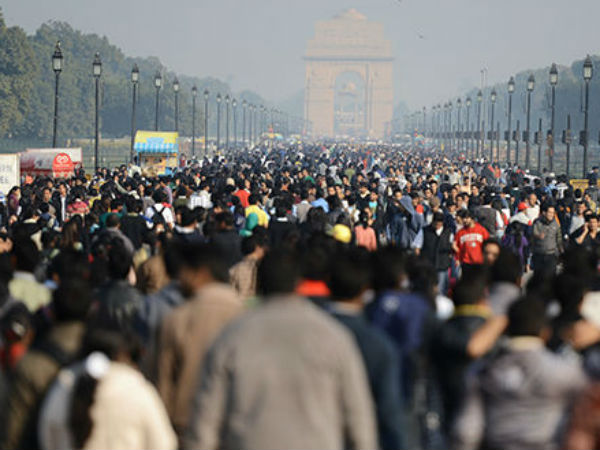


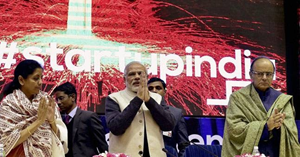
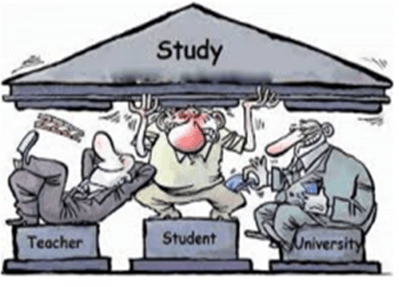





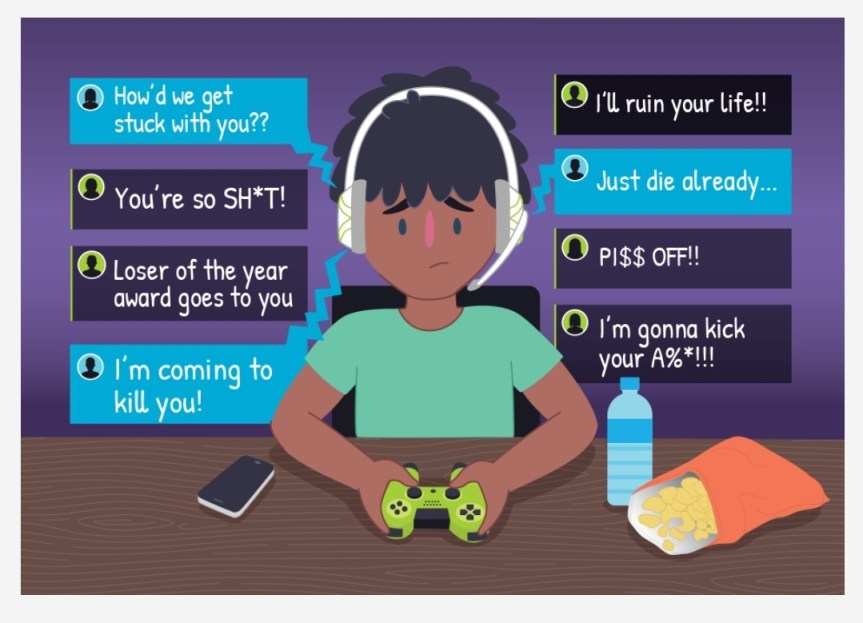
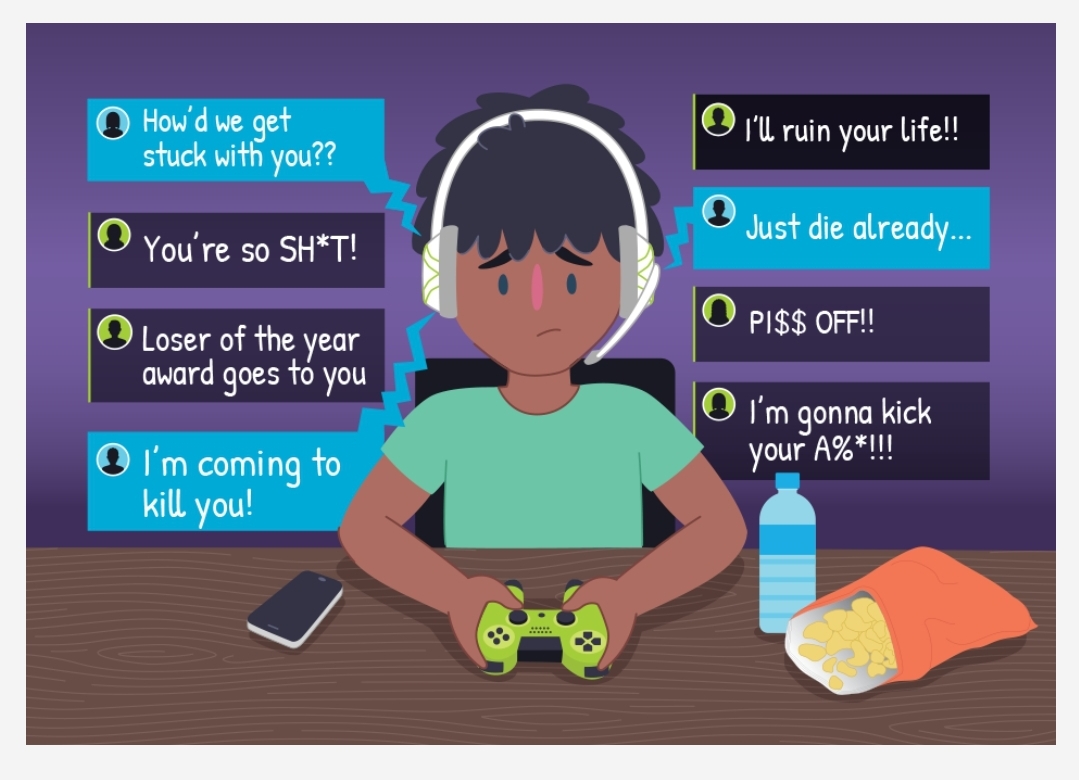


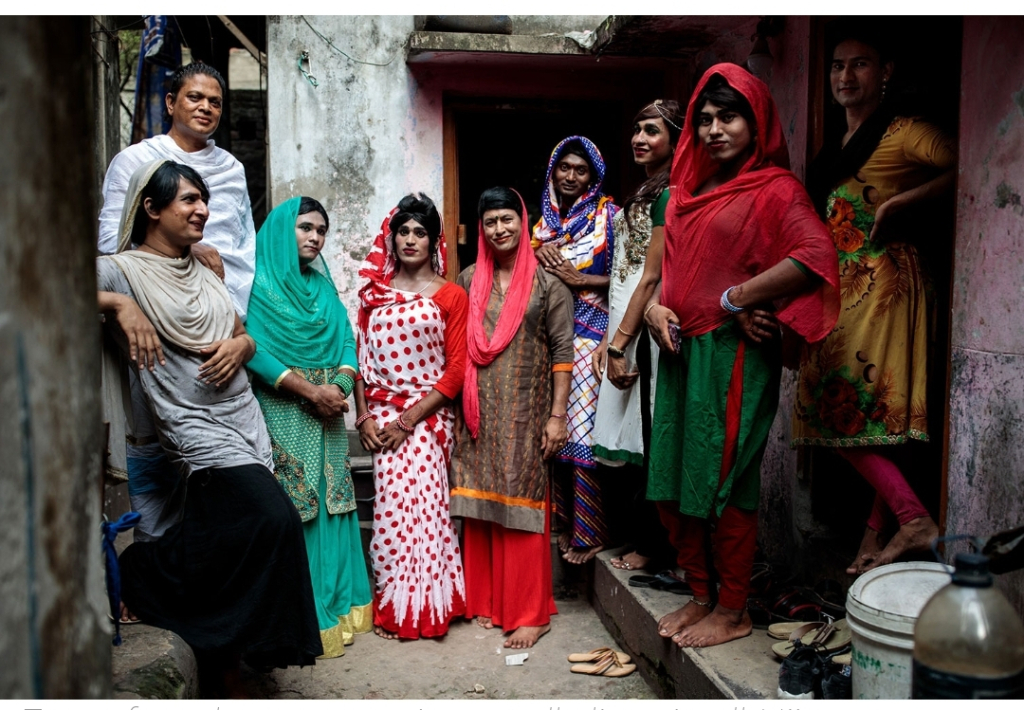





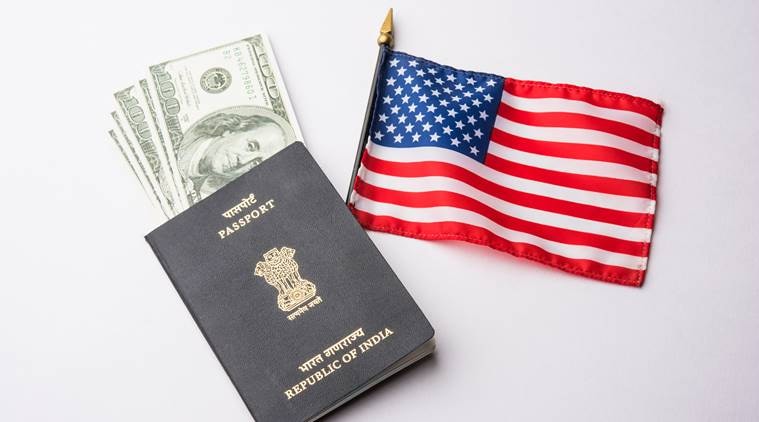









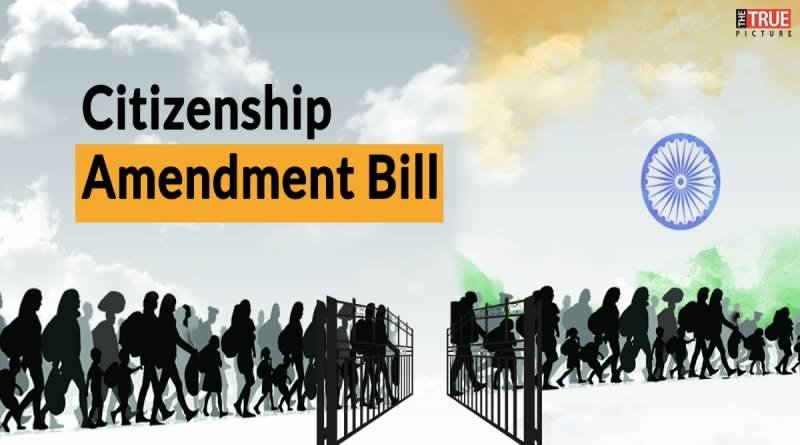







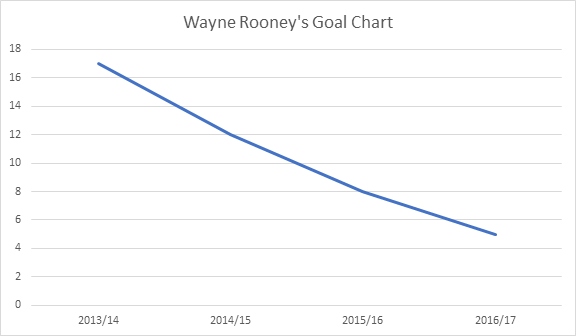
 Track2Training
You must be logged in to post a comment.