
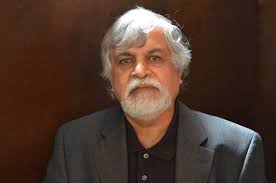
M.G. Vassanji is a diasporic Canadian writer who depicts the double migration of his South Asian Characters. Vassanji comes in the second category of diaspora who inhabit a liminal position that defines their experience of migrancy. The larger themes he deals with are community values, individual identity, history, effect of colonialism and multiculturalism. Vassanji’s novels are the most authentic and detailed elaboration on African life which was not dealt with in earlier novels. His novels are a vehicle of self-discovery which define African identity and make the Indians re-discover their cultural roots. Vassanji seems to suggest that when one exists in between several cultures, it is necessary for him to have a distinguishing identity, in this case an in-between sense of being.Vassanji highlights in his novels a new type of culture which forms when different communities interact. Vassanji’s works represent the convergence of cultures that characterizes both East Africa and Asia. The particular history of immigrant communities once or twice removed from Asia inspires his portrayal of conflicting relationships between individuals and the communities to which they belong. Vassanji’s works represent the convergence of cultures that characterizes both East Africa and Asia. The particular history of immigrant communities once or twice removed from Asia inspires his portrayal of conflicting relationships between individuals and the communities to which they belong.
Month: July 2021
Success is equally proportionate to Pain
Let’s begin by asking ourselves “what is success? Money? Power? Position? Maybe not necessarily. But, technically “Success is the state or condition of meeting a defined range of expectations.” It may be viewed as the opposite of failure. This is quite abstract to put into simplified emotions.
The criteria for success depend on context, and may be relative to a particular observer or belief system. What is considered as success from one person’s perspective can be considered as failure from a different point of view. In the end, it’s all about the parameters and the priorities which can be as distinct as it is possible.
No matter what the goal is big or small, classic or adventurous there is one thing in common “PAIN”.
“KEEP YOUR DREAMS IN PROPORTION TO THE PAIN YOU CAN TOLERATE.

There is an irrefutable relationship between pain and success . Often, when we talk about motivation we leave out the concept of pain , why? because we feel the pain without any effort. Or, why would we need motivation for?
Still there are certain things we can remember or keep reminding ourselves of-
- YOU WILL FEEL PAIN
No matter where you choose to go, alone or with company , “pain will never fail to accompany you”. It will guide you, motivate you, break you, and more often than not crush you . Well, it’s not all that bad if you can handle it , you’ll come out as a polished rock!! Sounds nice right.
Nothing about success comes easy, but every painful story has the potential to have a successful ending. You may as well accept suffering as a traveling companion, rather than resist it and create more struggle. Uncertainty and stress are inevitable. Both prompt you to make adjustments to mitigate their effects, mentoring you toward further success. A little stress can push you in a positive direction. You never know until you try.

- YOU WILL WANT TO GIVE UP
As you wonder through your more directionless times, you will experience intense moments of feeling lost and hopeless. It is during these times you must hold tight to your vision and take back control of your thoughts. The quickest way to derail your dreams is to quit when things look bleak. Quitting, when you are on the front lines of these critical moments, keeps you living amongst the average. The successful persevere and rise.
Discipline the most crucial tool you can use to naviage through any difficulty that arises in your journey. It helps you to do things when you refuse to.
- PEOPLE WILL DISCOURAGE YOU
There is a popular thought that you should keep your dreams close to your chest because if you share them you may pillage them to dream-stealers and naysayers. The human mind is programmed to believe the negative. Negative thoughts are extremely contagious and when you set out on the “Road Less Traveled”, you will have an audience full of small-minded people trying to scare you and discourage you from chasing your dreams. These are the people who want to instill so much fear in you that you shrink. You have to make yourself immune to these influences when you set out on your quest for success.
“Work quietly and let your success do the talking.”

Reality is, people don’t tend to like other successful people. There is a jealousy that comes along with being different, standing out and humbly chasing your dreams. Small people hate those who have or do everything they lack. Dealing with jealousy can be difficult, especially if you want to maintain your relationships. Learn to let your haters make you greater.
- YOU WILL HAVE SELF-DOUBT
Nine times out of ten, when you start a new venture you will go in and out of feeling utterly paralyzed. It’s because you doubt yourself. Sometimes you may doubt your knowledge, decisions you have already made and you may doubt your instincts. All of this doubt creates an internal conflict over what you need to do to move forward.
You doubt because you don’t want to make the wrong decisions and end up in an unrecoverable mistake. Keep in mind there are no unrecoverable mistakes, there are only new directions. You must push through your self-doubt and not allow it to partner up with delay. Doubt and delay, when paired, derail success.
On your journey, trust there is no such thing as wrong. The only wrong choice is not making one. You will likely always feel some level of self-doubt, but you can choose not to doubt your choice to stretch yourself and grow. Doubts are an inevitable part of succeeding. The important thing is that you act in spite of them.

Don’t let go – because it’s worth the fight
With the right idea, attitude, and thoughts a struggle really is nothing but another essential component of your success. It all starts with you.
The vision is the prize, not the money or the end results. That is what you are really here for, isn’t it? To have an impact, to make a difference? You can only know your significance through the impact you have upon others. When you see that your success improves and positively influences the lives of others, it will all be worth it.
SOURCES
V. T. Bhattathiripad
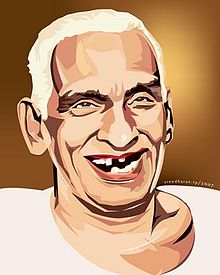
V. T. Bhattathiripad was an Indian social reformer, dramatist and an Indian independence activist. He was best known for his contributions in the reformation of the casteism and conservatism that existed in the Namboothiri community. He wrote a number of books which include a play, Adukkalayail Ninnu Arangathekku. Indian independence movement was gaining popularity and Bhattathiripad participated in the Allahabad session of the Indian National Congress due to which he was expelled from his community. This prompted him to fight against casteism and he started campaigning for Brahmin widow remarriage, which was a taboo during those times.Bhattathiripad utilised his writing skills as a tool for social reforms and his writings contrasted the social changes that followed the Indian independence movement against the dormant state of Namboothiri community. The staging of his play, Adukkalayilninnu Arangathekku (From the Kitchen to the Stage), in 1929 was an important event in the social reform calendar of Kerala; the play highlighted the discriminatory rituals and practices prevalent in the Namboothiri community, especially the plight of Namboothiti women. The drama also marked a deviation in Malayalam theatre from historical plays to social dramas.We do not find any literary work having introduced such a basic change in the minds of people capable of bringing about a revolutionary impact.
Despite marriage reform being the central theme of the work, with swajathivivaham ( marriage within cast) and love marriage as the focal points, the drama subjected other important concerns of the time such as the re-alignment of inter-caste relationships, the approach towards the nationalist movement, the need of English education, the emancipation of Antarjanams etc. It clearly aimed at a refashioning of the community along with
modern ideals and a realignment of community relationships in the light of changing social equilibrium and ongoing criticism against the Nambiitiris on account of their orthodoxy. It is no wonder that VT, who considered social reform as his mission, upheld these issues in a situation when the Namboothiris, who ought to have led the society and the country, suppressed other communities by arresting their progress. The drama says that young men of namboodiri community, who dared to question the futility of Vedic education is presenting a live picture of the beast-like life to the women in their house. The drama in fact tore the hearts of the orthodox.
Contemporary reviews applauded the drama for the revolutionary changes. It brought about within the community and compared it with a bombshell. The reviews treat it as an ‘absolute farce’ dealing with worldly matters alone. The drama got appreciated for its character formation, stage arrangement, sarcasm and the skill in portraying the harem of an illam. This farce is capable of transforming the very foundations of the Nambootiri community.
It is generally treated as the first ‘social farce’ and as the pioneering venture in the progressive theatre movement in Kerala. It also came to be accepted as the first propagandist drama. In relation to both the theme and presentation, it utilized the methods of realism and was in fact an attempt at an in-depth analysis of the community through self-criticism. VT himself wrote that it aimed at burning down what was created by, and what had been imposed on,
the Nambootiris in the process of the formation of a communitarian divide in the society.
It also suffered many drawbacks if looked at from a literary point of view. It failed to stand the test of time because it was highly propaganda-oriented and hence came to have a low level of artistic value. As it focused on the contemporary and strictly communitarian issues, it could not last as a literary piece in the post-reform age. But all these defects do not detract the value of this play. The strength of the play lies in its revolutionary side and the changes that it was able to introduce in the community. Today, however, it has only historical value than as a piece of literature.
VT dedicated the work to the Antarjanams with a note “In the tender hands of the virgins”. It has been observed that the drama was created with the purpose of conversing with women. The main narrative revolves around the love affair of Madhavan and Thethi. Madhavan departs to Madras for studies and in the meanwhile Thethi’s marriage is fixed with an aged Nambootiri. Though Thethi’s father had great regard for Madhavan, the fear of committing the sin of Parivedanam discouraged him from giving his daughter in marriage to him. Madhavan completed his course of study and with the help of his friends decided to foil the marriage through a court injunction. Finally Thethi was married to Madhavan and in a meeting of the Nambzitiri Yuvajana Sangham, which is arranged to congratulate the couples, Madhavan tore out her ghosa to liberate her from seclusion.
The Color Purple

Alice Walker’s ‘The Color Purple’ is a feminist as well as a post colonial text. The oppression faced by the women characters- based on their gender and race clearly states the toxicity and victimization of that period. Walker highlights the theme of inequality between the sexes by detailing about the physical abuse, psychological trauma and the colonial objectification of the oppressed.
Novelist gives voice to many voiceless by picturing Celie’s life. She is forced to an unhappy marriage life by her father, who treated her as a sex toy. She faces more trouble from her husband and his ‘the other’ approach towards her indicates, the white norm under the system of patriarchy. The position of coloured women in this novel also has significance. They are dominant by race and inferior by gender, but tortures darker skins.
‘The Color Purple’ also portrays how the idea of societal gender construction affects the women characters and how the traps set by colonial and traditional ideologies provokes her to fit into the layer of double oppression. A post colonial feminist reading of the text questions the aspects of gender relation, gender oppression, identity crisis and colonial subordination from the perspective of a woman or the ‘doubly’ colonized. The letters can be considered as a form of response from the side of a marginalized group. Walker tries to transform a submissive homemaker- who lacks identity, to a person who can speak for herself. She creates a character named Shug Avery for helping Celie to find and to love her own self. This creates a feminine voice in her to see what is right and what is wrong.
Colonialism treated women as half human beings and as a result, the ages of suppression has been increased. This text is also a study of the representation of the victimized using post colonial feministic ideas.
Afghanistan-India-Taliban
India-Afghanistan relation:

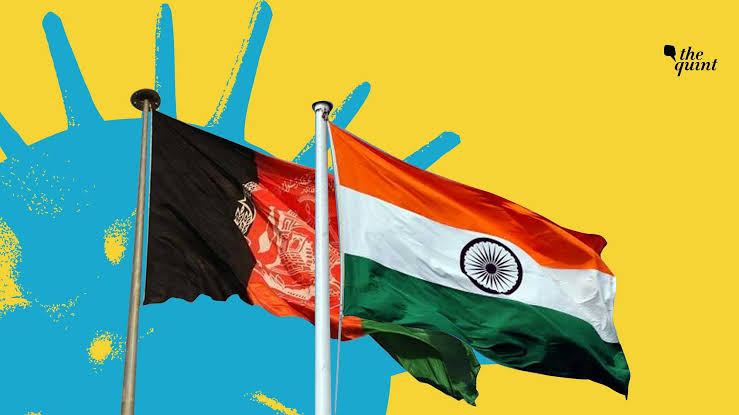
The relation between India and Afghanistan dates back to the post independence period. Both Government of India and Royal government of Afghanistan have happily signed the Treaty of Friendship in 1950.
India-Taliban relation:

In 1996, the capture of Kabul by Taliban have posed serious threat to the Indian interests and influence in Afghanistan. Hijacking of IC flight 814 and followed landings in Kandahar, Afghanistan added fuel to the existing disturbances between India and Taliban regime in Afghanistan. The U.S have shown it’s heroic characteristics in it’s invasion of Afghanistan in 2001 when it ousted Taliban from Afghanistan. The situation is saved for India. This gave vaccum for the India to regain its influence in Afghanistan and made investments worth over $3 billon. From then onwards economic and defense ties have cemented between India and Afghanistan.
Current situation in Afghanistan:
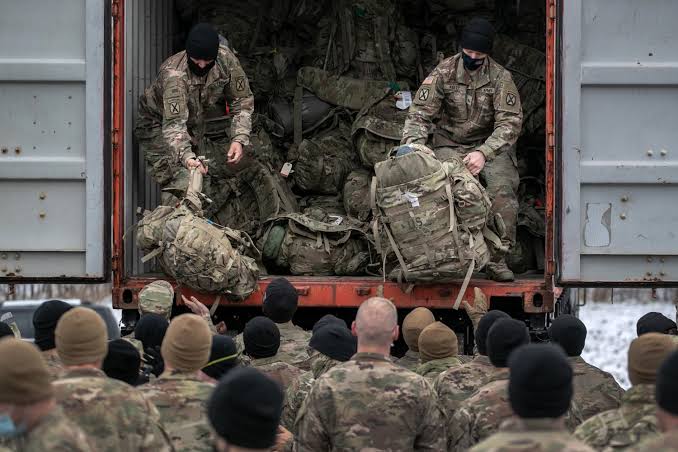
The withdrawal of U.S troops from Afghanistan base gave an opportunity for Taliban to bag more territories under its control. Over third of Afghanistan which tantamount to more than 400 districts have came under Taliban control.
Is this gonna be headache to India?
Yes of course it is. As India made huge investments in Afghanistan, there is a need for India to be concerned about the political situation in Afghanistan.
About the talk-to-the-Taliban option:
Considering the investments made in Afghan, it is necessary for India to count all it’s stakeholders. As Taliban powers have accentuated with the withdrawal of U.S troops, India should think about the talks with Taliban in order to safeguard it’s interests.
India should develop stronger ties with Taliban as anything less than that would give more space to occupy for Pakistan which pose threat to India’s internal security.
Taliban was also in desperate need of recognition in international community. So the chances for Taliban welcoming India’s partnership are more likely.
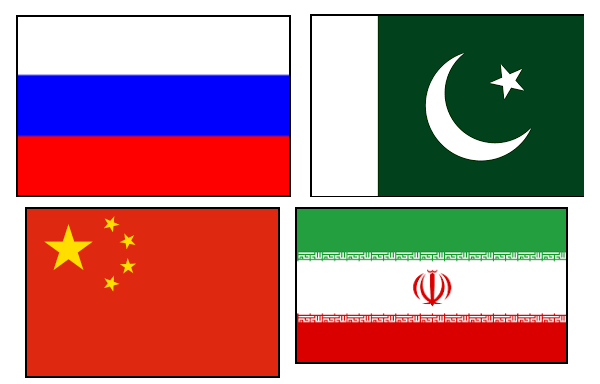
As Russia, China, Iran and Pakistan are competing to portray themselves as shapers of Afghanistan’s political and geopolitical destiny, India cannot be the odd one out in this regard.
The proactive approach would aid India open up the congested north-western frontier,proceed for back channel talks with Pakistan, to give way for India’s continental strategy.
Recommendations:
India talks with Taliban shouldn’t dilute the existing cordial relationship between India and Afghanistan.
India should shed it’s inhibitions and replace the hesitant and indulge in open talks with Taliban instead of doing backchannel talks.
Taliban even in a desperate need for recognition in international community so it is obvious that Taliban would be intrigued to have more global partners.
India should adopt a layered approach in dealing with the issues in Afghanistan. Safeguarding India’s interests should be short term goal while finding a solution for political situation in Afghanistan being the long term goal.
India should be the part of unfolding great game in and around Afghanistan.
Conclusion:

Non-engagement with Taliban would do more harm than good. The talk-to-the-Taliban is indeed the best of the many less than perfect options available to India. Any step taken in the direction of developing talks with Taliban is welcoming in both strategic and economic sense.
Kerala Move against Dowry
Societies have a long history of male domination, which can be witnessed from ancient rituals and customs.
Men are traditionally bread earners whereas their counterparts females are homemakers.With time few things have changed but the major picture remains quite constant.
Dowry is an unethical practice in our society, hidden behind the name of gifts or blessings by elders.

Many strategies and steps are taken by the government, but still, it’s prevalent. A new development took place in the string of events as now Kerala government directs employees to give affidavits that no dowry is taken by them.
This circular was issued by the Department of Women & Child Development.Under its new rules, all-male married employees are directed to submit a declaration stating that no dowry is taken from the bride’s family.
It comes after several cases of deaths due to dowry-related crimes reported in the state.
The declaration is to be submitted to the concerned department within 30 days of marriage, signed by the employee’s wife and inlaws. In case of a fake affidavit, legal action will be taken against the official.
Moreover giving or taking of the dowry will be punished by the imprisonment of a term not less than 5 years and a fine of Rs 15,000.
SELF-IM PROVEMENT.
Self-improvement is a process of development of oneself, which is mainly focused on the inner process or the attitude towards the world and getting rid of all the harmful habits and behavior which also creates happiness, gives us the satisfaction of one true self, changing oneself into a better person, It improves us to cope the various situations and flaws which we encounter in life, and it mainly focused on the improvement of positive mindset rather having the negative one. Self-improvement is a very time consuming process because improvement doesn’t come to you overnight, it can take a year or more. It is important to prioritize your life for self-improvement, it needs the dedication to work upon yourself. There are some ways for improving like reading books, meditating, try something new each day whether it is painting, cooking or something different. These are the easiest effective way of improving.

There are 5 areas of personal development.
1. Mental personal development is all about growing your mind, how does your mind works, and how to remove all the negativity. Because everything depends on what is actually in your mind. Some examples, from which it can help in development are reading books, news, watching different YouTube videos, watching motivational videos, and maybe can do some interesting course as an extracurricular like for a month or 2, by setting time for this each week, month and year will help you improve your mental skills which will lead to the first step of self-improvement.
2. Social personal development is all about how you communicate with others. Sometimes, some people are likely introverts, they hesitate about how to start and to end, which also leads them to think they are of no use, why is this difficult for me? But all these thing’s need improvement, skills can be pursued if you try things out. Being social is an important activity to go with. Learning new languages, practicing public speaking skills, and last not least active listening is a must.
3. Spiritual personal development is about being religious or spending time with yourself, which is different for each person, some are atheists and some do believe in it. But it is not only about praying, it is about learning about the particular religion more by reading like Bible, sometimes this helps us meet our inner true self.
4. Emotional personal development can be healthy and unhealthy, it depends on how your emotions are. One can take out their inner thoughts by sharing them with their friends, or by journaling. Because keeping and holding up to your emotion will just make it worse when it comes out.
5. Physical personal development is all about taking care of physical health. It includes eating habits, sleeping habits, working out, regular check-ups, etc. By keeping healthier habits, will keep your physical development intact.

It is important to know that you can’t do everything at once, the whole process needs its own time so that you can improve stepwise and in an appropriate manner. Remember that as we grow and develop our self in life we tend to learn more flaws and list of weakness and strength which will change in every mode of life. It will become better by time but then you will realise other faults, which will seem to be important to improve. So, keep focusing on yourself and keep noticing your flaws so that you can handle it with care and time.
Top 5 Well Paying Part-time Jobs in 2021

When you’re keen on doing part time jobs, there comes an idea “What amount will I procure from the low maintenance occupations? All things considered, indeed, you can acquire well from low maintenance occupations as well. For jobseekers meaning to find low maintenance administration, the positions extended beneath compensate fairly and give employment opportunity dauntlessness and development down the way.
5 Part-time Jobs you can look for:
1. Copy Writer:
These days, there are numerous organizations who are looking forward to recruit independent marketing specialists to standpoint their work undertakings. Regardless of whether you want to produce site point of arrival content, compose sites for organizations, or something tantamount, you could make great compensation while doing it as low maintenance work.
Pay Scale: Part-time publicist begins with 5-10k month to month. With experience and better customers, can make up to 50-70k/month.
2. Graphic Designer:
Assume you’re keen on planning and delineations. All things considered, this low maintenance occupation will be ideal for you as Graphic creators are the ones who work in programs like Adobe Illustrator or Adobe Photoshop to produce designs for a variety of purposes.
Pay Scale: It is one of those jobs where your creativity decides your income. For part-time graphic designers, the income ranges between 10k to 1 lacs.
3. Data Entry
In the event that you like composing and your composing speed is acceptable, this work choice is ideal. This sort of occupation should be possible either on location or on the web. For certain positions, you’ll require explicit abilities like information on clinical phrasing or lawful.
Pay Scale: The salary ranges between 5k-20k month.
4. Translator Job:
These days, you can see different sorts of dialects accessible, and individuals are anticipating learning. In case you’re the person who realizes a subsequent language like (German, French, Chinese, Sanskrit, English), then, at that point it’s a lucrative work. You’d go through your days making an interpretation of one language into another, either verbally or recorded as a hard copy.
Pay Scale: The language is the key for the amount of money one can make. While local Indian language translators can make up to 10-20k per month, for foreign language translators it can go upwards of 50k.
5. Application developer:
In the event that you understand the advances and skill to foster an application. Then, at that point this work can be a solid match as low maintenance work. Numerous organizations are anticipating employing low maintenance application designers to make, keep up with, and update applications.
A part-time app developer can initially make 10-20k/month, but with experience, it can up to 3-5 lacs (yes, it’s true)
The Fall of Berlin Wall

After the end of World War II, the city of Berlin had become a peculiar situation. It was transformed into an island-like city, which was occupied by four countries. Each country divided Berlin into its own sectors. These four countries were the Soviet Union, America, Britain and France. In 1948, efforts began to bring into existence a separate country, West Germany, and Stalin had objections to it. Stalin cut off the parts of West Berlin adjoining his sector from West Germany in revenge.

Things became such that West Berlin became a permanent neck bone for the surrounding areas of East Germany, and things changed dramatically in the blink of an eye on August 13, 1961.
The Wall of Berlin:
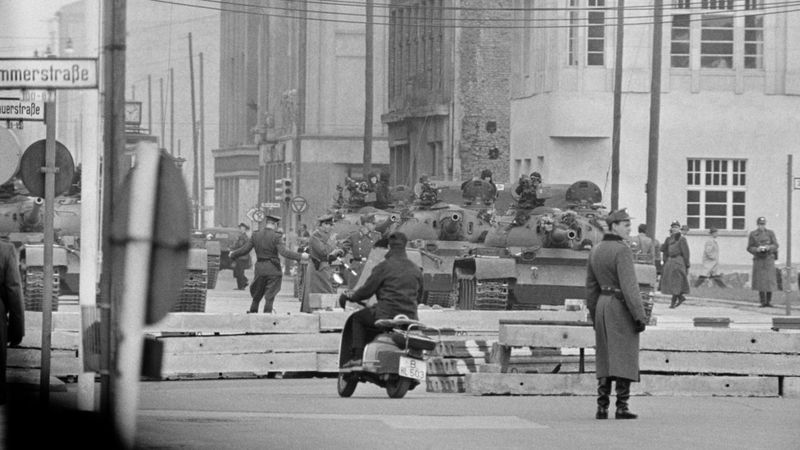
It was one o’clock in the morning, when the border police and armed forces of East Germany were deployed along the borders of the Soviet sector. On the other side in front of them were the police of America, Britain, France and West Berlin. Large-scale barbed wire installation began on the East German side, concrete poles erected in a hurry. Even the pre-existing lampposts were also being used for siege.
Four days later, regardless of West Germany, construction of a more permanent concrete structure was started in East Germany. This was the Berlin Wall. One issue was also the exodus from East Germany to the West. Every sixth person from East Germany went to West Germany and this exodus took place via Berlin.
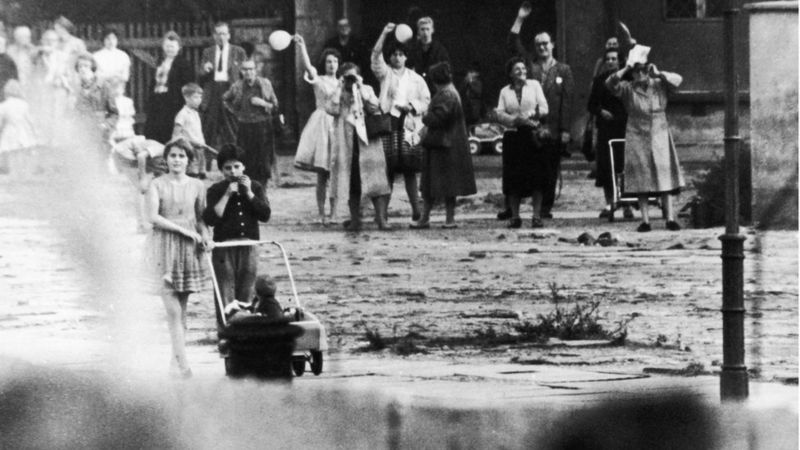
Escape from East Germany:
After 1958, the years of the communist administration began to rise in view of the way doctors, professors and engineers were leaving East Germany and going west. A policy of strictness and leniency at the same time had failed to deter people from leaving East Germany. It was also agreed between the four countries running Berlin that the borders of the areas under their control in the city would be kept open.
But this condition was only facilitating the exodus from East Germany. In May 1960, East Germany’s notorious intelligence police was formed, but this too was able to catch only one in five people who fled.

Siege of Berlin:
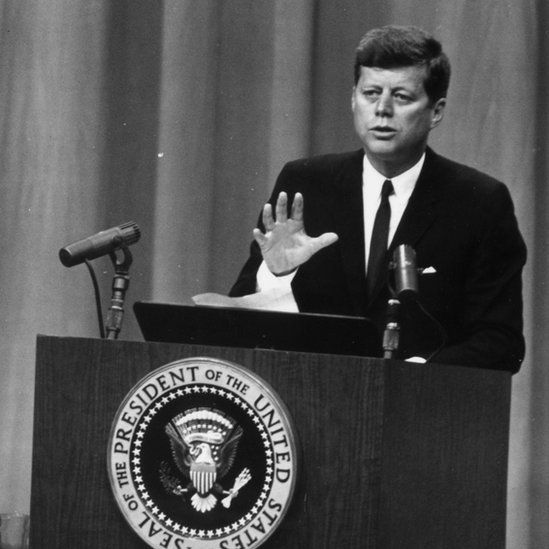
The result of the meeting was that in late July, the Soviet Union approved plans to build the Berlin Wall. The plan to build the wall was kept secret so as not to cause a stampede among those who wanted to leave East Germany. The Soviet Union made the decision just a day after President Kennedy’s speech on July 26, 1961. Khrushchev, through the Soviet Union’s ambassador to East Germany, sent Walter Ulbricht a message of siege through the barbed fence of Berlin.
The message was clear, this work must in any case be completed before the end of the peace agreement. In reality, the leaders of the Soviet Union were rekindling the same diplomatic crisis that they had laid in November 1958.
What happened in 1958:
The Soviet Union at that time told the Western powers to agree to a peace deal or to evacuate West Berlin. Then the Western powers were forced to recognize East Germany as an independent country under this peace agreement and the German Democratic Republic came into existence. It had all three roads, railways and air traffic.
Kennedy made it clear in his speech that he was ready to go to the extent of war to save West Berlin, but he remained silent on the issue of East Berlin. And that’s what happened as expected. The communists got complete freedom in their area. However, the world saw East Germany as a puppet country of the Soviet Union. Upon gaining sovereignty, East Germany gained control of the routes connecting West Berlin to West Germany.
It had all three roads, railways and air traffic. Kennedy made it clear in his speech that he was ready to go to the extent of war to save West Berlin, but he remained silent on the issue of East Berlin. And that’s what happened as expected. The communists got complete freedom in their area.
Implementing the plan:
After this ‘Operation Pink’ started. Work began on the plan for the siege of West Berlin in a very secret way. Many top government officials were kept unaware of this plan. It is said that only 60 people in East Germany knew that something like this was going to happen. Erik Honecker, who held the number two position in the East Germany Communist Party, was also one of them. A decade later, he became the leader of East Germany.
This work was to start on Saturday night and be completed by Sunday morning. The Communist Party had bitter memories of the June 17, 1953 attack. On 24 July, the party’s security department calculated that 27,000 people would need to be employed and 500 tons of barbed wire would be required.
An uncertain choice:
Iron barbed wire was gradually transported from the border areas to the capital. Tanks were deployed in the name of security arrangements to carry out the siege work with barbed fences. The secrecy was maintained in such a way that the western powers did not even notice it. Although the CIA and the British intelligence agency had expressed its possibility in the past.
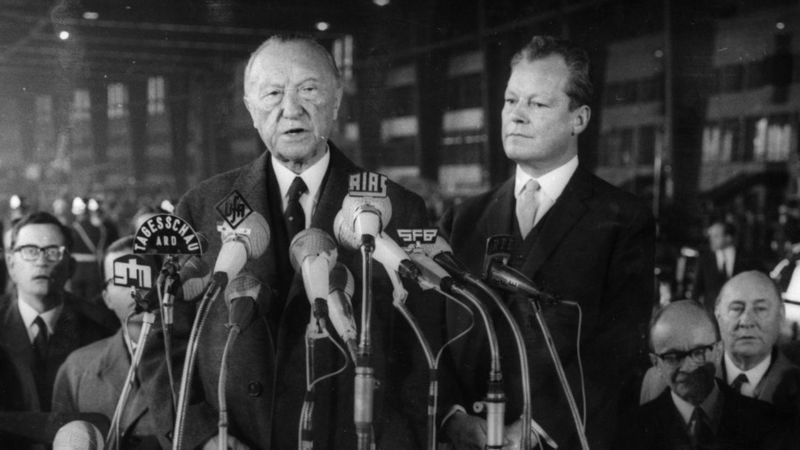
The West German intelligence organization had informed Chancellor Konrad Adenauer about this plan. So much was certain that the Western countries knew that the siege of West Berlin was an option and East Germany was working on this plan. But they were not sure about its date.
‘Operation Pink’ :
According to a document from the East German intelligence agency Stasi, “The most important lesson of the successful operation of August 13 is to keep an operation undercover. It is as effective as a successful attack on the enemy at the right place at the right time.” .
On August 1, Khrushchev and Walter had a lengthy phone conversation that Moscow had released a few years earlier. After some light talk in the beginning, the two talked about the security issue of West Berlin and the plan for the wall.
On August 12, Walter ordered the implementation of this plan. Work on ‘Operation Pink’ had started. John F. Kennedy later said, “A wall is not a great thing, but a better alternative than a battle.”
How to overcome DEPRESSION

If you feel depressed, it’s best to do something about it — depression doesn’t just go away on its own. In addition to getting help from a doctor or therapist, here are 5 things you can do to feel better.
Depression makes you cynical and is deeply self-damaging. Depressed people only hurt themselves more.
Ways to overcome Depression:
1. Exercise regularly
Exercising regularly is one of the best things you can do for your mental health. According to me exercise can help in the treatment and prevention of depression in several key ways:
- It increases your body temperature, which can have a calming effect on the central nervous system.
- It releases chemicals like endorphins, which can boost mood.
- It reduces immune system chemicals that may worsen depression.
2. Get plenty of sleep
Getting plenty of high-quality sleep is necessary for both mental and physical health. According to the National Sleep Foundation, people with insomnia have a tenfold risk of developing depression compared to those who sleep well.
To get better sleep, you can:
- not look at any screens for two hours before bed (including your phone!)
- meditate before bed
- have a comfortable mattress
3. Stay away from toxic people
We’ve all met that person who just makes us feel bad about ourselves. Sometimes they’re an outright bully, and other times they subtly put us down to make themselves feel better. They may even be someone who takes advantage of us. Regardless of the specific situation, toxic people should be avoided at all costs. They can lower our self-esteem.
To avoid toxic people, you should:
- Stay away from anyone who makes you feel worse about yourself.
- Cut people out of your life who take advantage of you.
- Know the signs. If someone spreads rumors or talks badly about someone as soon as they leave the room, they’re likely to do the same for you.
4. Nurture yourself with good nutrition
Depression can affect appetite. One person may not feel like eating at all, but another might overeat. If depression has affected your eating, you’ll need to be extra mindful of getting the right nourishment. Proper nutrition can influence a person’s mood and energy. So eat plenty of fruits and vegetables and get regular meals.
To prevent depression with your diet, you should:
- Eat balanced meals with lean protein, and lots of fruits and vegetables.
- Reduce high-sugar and high-fat foods.
5. Try to notice good things
Depression affects a person’s thoughts, making everything seem dismal, negative, and hopeless. If depression has you noticing only the negative, make an effort to notice the good things in life. Try to notice one thing, then try to think of one more. Consider your strengths, gifts, or blessings. Most of all, don’t forget to be patient with yourself. Depression takes time to heal.
Conclusion:
Depression can make you feel like you’re living in a black hole that you’ll never escape. Fortunately, that’s not true, and you can learn how to stop being sad. One day, you’ll make it out and find that your life has a lot of greatness to offer you.
Keep in mind that although the above suggestions can be effective, depression that perseveres should be investigated further, and seeing a doctor to talk about any symptoms and get medical advice is a step in the right direction.
Sources:
https://kidshealth.org/en/teens/depression-tips.html
https://www.lifehack.org/articles/lifestyle/fifteen-simple-ways-overcome-depression-and-sadness.html
STUDENT LIFE ,ANXIETY AND HOW TO DEAL WITH IT.
Being a student is not a cake walk. There is immense pressure that we students are under 24X7. Amidst getting a good cgpa , maintaining a social life ,participating in college fests , exams,building a resume and planning our future we are consumed with anxiety. But here are a few tips to keep the anxiety level under control and in check.

- MAKE A TO DO LIST – Its easy to be overwhelmed when things are not organised and planned which can be the root cause of anxiety. So make a to do list of the things you want to accomplish on a particular day the night before , and watch your anxiety mitigate.
- STAY HEALTHY AND HYDRATED – Our physical health can have an impact on our mental health as well . Going out to get some fresh air everyday , or engaging in any physical activity like swimming , cycling etc and drinking tons of water can boost the levels of serotonin in your body an help you stay fit and relaxed .
- GET ENOUGH SLEEP – Not getting enough sleep has negative health benefits and can aggravate anxiety . So make sure to get a minimum of 7-8 hours of sleep .
- STUDY REGULARLY – Studying the night before the exam can cause a lot of stress and anxiety . So it’s best to go through your study notes regularly and not leave it for the end moment.
- JUST BREATHE – College can be difficult at times , but remember you are not alone , this too shall pass. Don’t forget to enjoy your college life .
Hope this helps .
30 JOURNAL PROMTS FOR SELF-ESTEEM
Ever thought about your self-esteem level. Follow these journal prompts & write up to find yours! This is going to help you improve your self-esteem and discover yourself.

Answer these questions honestly <3…..
1.Best compliment you’ve been given.
2.What is a unique talent you have?
3.Write about a time you were recognized for your accomplishments.
4. Five things you did right today.
5.Three reasons you deserved to be loved
6.A time you regretted your decision.
7.Describe a mistake you made in the past week.
8.Write about the word confidence.
9.List of goals to accomplish in the next year.
10.Devise a plan for your three priority goals.
11.Talk about your favorite role model.
12.Your best personality trait.
13.Five things you are grateful for in your life.
14.What is the most negative thought in your mind right now?
15.What does the word ‘courage’ mean to you?
16.A past fear you were able to overcome.
17.Thank you letter to your body or mind.
18.Something you want to change or improve to feel better about yourself.
19.Ten things you are thankful for right now.
20.Favorite self-esteem or confidence quotes.
21.Something you need to tell someone negatively affecting your life.
22.Discuss your support system.
23.Playlist of mind-boosting songs.
24.How could you make your life positive?
25.Do you compare yourself with others?
26.What unique traits do your friend envy?
27.One thing you can do right now, your future self love you for.
28.What does the word ‘brave’ mean to you?
29.Five things you have done for others that made you feel good.
30.What does it mean to have High self-esteem?

I hope this helped you guys to figure out something about you, you’ve never seen for yourself. All I need to tell you is, you are not low or high, you are just yourself what you think about more.
Theoretical vs. Practical Education
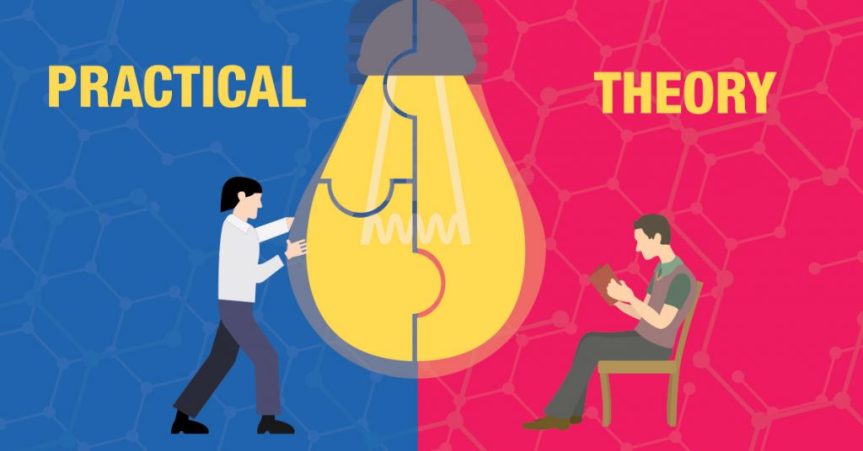
Education is important and should be obtained by everyone in order to gain information and abilities. It is the only way to raise a generation of responsible human beings capable of absorbing good teachings and passing them on to others. It teaches us many topics and opens up a wide range of professional alternatives for us that we would not be able to pursue if we were ignorant. Education can be delivered in two ways: theoretically or practically. However, which of these two is more beneficial to the learner, and which should we value more?
- It does not necessitate the use of a cup.Some people have the uncanny ability to recall everything they read, even if they have only read it once. Others, on the other hand, must cram it in order to remember it. And theoretical knowledge can necessitate a lot of memorization. If you don’t want your child to become a bookworm who is always immersed in a stack of books, you must balance practical education with theoretical instruction. We don’t need to cram information from a book when we’re looking at things and experiencing them in the real world.
- When we cram a lesson for a test, our brain tends to retain it for a short period of time, which may be smaller than the duration of the test, and so does not serve that goal because our brain forgets it quickly. You make an effort to memorize a theorem or explanation word for word, yet you constantly forget something. While putting it into practice, whether through experiments, real-life projects, or educational excursions, the knowledge and the whole learning experience stay with us for a long time.
- Could you have ever grasped the concept of light reflection if you hadn’t seen a mirror? Even if you read about a phenomenon or a lesson in the greatest possible way, it will not be able to penetrate your mind. You had to watch it happen in front of your eyes rather than hear it through someone else’s words. Because everything is available, practical knowledge can be quite beneficial. Whether it’s comprehending scientific phenomena or immersing oneself in literature.
- Reading a lesson over and again isn’t always helpful. However, carrying out exercises or investigations based on it necessitates practice, and as the saying goes, “practice makes perfect.” You will make no progress if you continue to read a guide book for a new language without speaking it. But if you start utilizing that language and conversing with other people, you’ll notice a difference. You’ll notice a difference. So, until the theoretical training is turned into practical activity, simply sitting in a corner with a book or listening to a lecture does not constitute practice.
- Learning facts and ideas is useless unless you are aware of how they are used in real-life situations. I spent the most of my middle school years wondering why knowing Sine theta square plus cosine theta square equals one is useful. However, after learning about its applications, I realized how important trigonometry is in architecture and related professions. So, until you apply your theoretical knowledge to real-life situations through practical experiments, theory won’t help you much, and you’ll keep asking why you’re studying that particular topic in the first place.
- Don’t you prefer field excursions, projects, and experiments than books, assignments, and lectures? I’m sure they do because they’re far more intriguing and engrossing than reading your typical book.
- While most activities involve team projects or programs where students are required to work in a group or as a team while imparting practical knowledge to students, the majority of activities involve team projects or programs where students are required to work in a group or as a team while imparting practical knowledge to students. For one thing, it increases a student’s capacity to engage with his or her peers and encourages everyone to work together. Furthermore, learning in a group makes the process more enjoyable because pupils are able to grasp more information. They enjoy each other’s company, and the entire teaching process becomes less tedious and more enjoyable. You also learn more while having a good time.
- Theoretical education is far less engaging than practical education. It entails more than just lecturing and educating, regardless of whether the student understands the principles or not. Teachers who teach in a straightforward manner or publications that may or may not include interactive tasks are commonly used in theoretical education. In contrast, student contributions are not only welcomed but often required in practical projects. Interactive sessions, experiments, and interactive exercises are all vital aspects of practical education that assure student engagement and help them learn and understand more. And since learning is the primary goal of school, it is necessary to raise one’s degree of learning.
Green Computing – The Future of Computing
WHAT IS GREEN COMPUTING ?
It is a study and practice of environmentally sustainable computing. In other words, minimizing the environmental impact of computer system and its resources effectively and eco-friendly. We on a daily basis uses computers and other components which has a huge impact on environment while manufacturing and disposal so to minimize the impact we practice green computing techniques.
Many materials that are used for building PC’s are hazardous and difficult to recycle. The goal is to manage improper use of power consumption and reduce the use of hazardous material and maximize the lifespan of the product. Now-a-days many IT manufacturers are investing in designing and implementing green efficient computer devices, reducing the use of hazardous materials and efficient disposal of electronic waste.

HISTORY OF GREEN COMPUTING
In 1992, the US Enviromental Protection Agency launched Energy star. It was a voluntary labelling program which was designed to promote and recognize energy-efficient in monitors, climate control equipment, and other technologies. “Green Computing” was coined shortly after the “Energy Star” program began. This result in the widespread adoption of sleep mode in computers and electronics popular among consumer electronics.
WHY IS GREEN COMPUTING REQUIRED ?
Now a day’s computer is very basic need of all individuals. It makes our life easier and saves our time and efforts but it also has a downside. As computer devices are used in a larger scale (in large sector) which increases the power consumption and also generate a large amount of heat which increases the emission of greenhouse gases like carbon dioxide (CO2) which has adverse impact on our environment. To decrease their impact the green computing comes into existence.
Reasons of using Green Computing –
- We are producing PCs on a larger scale and manufacturing of electronic devices uses hazardous substances such as lead.
- Old computers and electronic devices produces a lot of heat which causes the emission of greenhouse gas (CO2) which is one of the gases that are responsible global warming.
- Improper disposal of electronic devices can produce hazardous waste.
- We consume most of the natural resources to get the electricity that have adverse impact on the environment.

Advantages of Green Computing –
- It saves power consumption and reduces the amount of heat produced from the electronic devices.
- Encourages the use of renewable resources.
- Reduces the energy cost. Cloud computing can be used to reduce the energy cost and reduces the amount of greenhouse gases emitted from the data centers.
- Encourages recycling and proper disposal of unwanted electronic devices.
- Minimizing waste during manufacturing of computers and its resources.
- Green Disposal – Reuse, Refurbish, Recycle
Disadvantages of Green Computing –
- Green computing is quite costly.
- Some computers that are green are considered underpowered and inefficient.
- Maintenance and adaptation of a green computing system is considered to be highly difficult.
- Rapid technology change.
Conclusion
People don’t care about ecological impact when buying computers. Currently, they are not much efficient but it is the near future. Green computing can lead to energy consumption, reducing enviromental impact of technology and promote sustainability.
Advantages of Speaking English – Reason Why?

There are more than 6,500 languages around the world spoken by billions of people. Why close yourself off from the rest of the world by only sticking with your native language? If you don’t know which language to start with, you can’t go wrong with English. Spoken in many countries across the globe, English allows you to communicate with a large number of people.
One of the most useful languages to learn is English. 1.5 billion people are speaking English today. Across the world, English is the default choice of countries and major industries. You might even be surprised some of the countries that become more accessible to you just for learning the language. The benefits of learning English are immense and vast.
Today, we’ll explore some of the fantastic benefits you could acquire from learning English. Some might even surprise you!
English makes travel easier
English is the most generally communicated in language from one side of the planet to the other. That’s a big advantage unless your goal in life is to remain within 40 kilometers of where you were born throughout your life.
English skills get more respect
It is weird but true. We in India give more respect to those who speak in English. I don’t know the reason and I don’t like this but that’s not important. Judge people on their inner worth, not the language they speak. But, till the time everyone begins doing it, learn English so that you are not judged unfairly.

Biggest movies and books are in English
Hollywood is the biggest movie industry. Almost all prominent books in the world are either written or translated into English. English language music is huge.
Why would you want to miss out on such a huge body of fun and mind expanding stuff?
English helps the world know our culture
This is important. The world today is not about forcing people, it’s about convincing them. It’s called soft power. With our 5,000 year old culture, why should we be defensive and behave like frogs in a well? Why not study the culture and present it in front of the world in the best possible way? Didn’t Vivekanand do that? Didn’t he do it in English? Isn’t he one of the brightest torch bearers of our glorious culture?
English skills are our national advantage
Yes, and that’s no exaggeration. One of the very few areas where India beats China is the number of English speaking people. Major advantage and we don’t want to surrender it to our friends from Shaolin.
English communication gives power & influence
Knowledge is in English, knowledge is power and you need power to fight for yourself. Most of the modern day knowledge and communication tools work in English:
- Courts, law books, websites – most of them work in English.
- Social media works in English.
- Mainstream media has a majorly influential English segment.
If you don’t know the language, you are denying yourself more than half the weapons.
I was trying to learn English and I was very worried about my accent. I’m sure I’ll always have it but I remember Tom Hanks said to me, “Don’t lose the accent. If you do, you’re lost.”
Antonio Banderas
Being able to speak English as a second language is a very positive addition to a person’s skill set as many careers are opened up to people who know another language, in particular, English.
Save Trees

Trees are the backbone of all ecosystems on which mankind and other living and non-living being rely. Tress help in maintaining the ecological balance of the earth by emission of oxygen, absorption of carbon dioxide. Most important benefits of trees are, it helps the environment to provide an enormous amount of energy and reduce the toxic carbon dioxide, nitrogen dioxide, sulphur dioxide and pollutants by absorbing. Helps in improving water quality, prevent soil erosion, helps in saving energy. According to U.S Department of Agriculture, 1 acre of forest absorbs six tons of carbon dioxide which is enough to meet the annual needs of 18 people. Consumption and the demand of paper is the most important factor in the depletion of forest trees as to produce 3000 sheets of paper 1 tree ha to be cut.

Beneficial reasons to plant a tress in your yard
Trees are a vital part of our world, and our crucial to our survival. They provide us with the oxygen we need to breathe, shelter for wildlife, and food to eat. But, there’s so much more. Here are the reasons why trees should be a staple in your landscaping.
- Trees increase property values-Everyone wants their home to have the highest possible property value. Landscaping with trees and plants can increase your property value by as much as 20 percent, according to some estimates. That is a great return on investment in terms of the small amount of upkeep they require.
- Trees clean the air-A tree can absorb as much as 48 pounds of carbon dioxide each year and can sequester 1 tone of carbon dioxide by the time it reaches 40 years old. In addition, trees absorb odors and pollutant gases such as nitrogen oxides, ammonia, sulphur dioxide and ozone, and filter particulars out of the air by trapping them on their leaves and bark.
- Trees slow water runoff-Flash flooding can be significantly reduced by plating tress. According to Colorado Blue Spruce, either planted or growing wild, can intercept more than 1000 gallons of water annually when fully grown, which helps recharge underground aquifers.
- Trees prevent soil erosion-A trees root system binds the soil and its leaves provide a barrier to wind and rain thus preventing soil erosion.
- Tress help buffer noise pollution-Trees that are planted at strategic points in a neighborhood or around your house can abate major noises. This is especially nice if you live near a freeway or airport.
- Trees cool our homes, streets, and cities-Trees can cool a city by up to 10 Fahrenheit by shading homes and streets, breaking up urban “heat islands” and releasing water vapor into the sir through their leaves.
- Trees can save you money on energy costs-Building off the previous point, strategically placed trees can save homeowners up to 25 percent on energy bills by provided shade in the summer and windbreaks in the winter.
- Trees are beautiful-This is non-brainer. Trees are stunning parts of our natural landscape. From the first buds of spring to the colorful leaves in the fall, trees are gorgeous. They make a great decoration indoors or outdoors.
- Trees are sacred-Trees were sacred to many ancient worlds, and still hold special meaning in many cultures today. The Druids believed a number of trees to be sacred, including the Ash tree from which healing wands were made. Today,many people in Madagascar worship them because they believe their ancestor’s spirits live in the forests.
- Medicines are derived from trees-While many drugs that come from plants and tress have been replaced by synthetics, there is no denying how important they are when it comes to modern medicine and research.
Advantages of planting trees in reducing global warming. planting trees can cut air-conditioning or electricity costs up to 50 percent. Planting trees for the environment is good as they are renewable, bio-gradable and recyclable, if we plant 20 million trees, the earth will get with 260 million more tons of oxygen.
Climate change has caused an increase in wildfires all around the world. Planting trees incorrectly or even ignoring them during their first few years of growth, can aid in the spread of forests. This will burn down more tress and further contribute to the amount of carbon dioxide in the atmosphere.
Urgent need for climate action
Nature has given us a bounty of resources for survival and we have time and again moulded the rules of nature according to our needs and wants . As a result , humanity today is facing serious problems such as global warming , forest fires , soil erosion , pollution etc. Some recent events such as forest fires in California , Nevada , Amazon forests and Spain , floods in China , Japan and India , Earthquakes in Northwest Asia have had very disastrous consequences .
The Corona virus pandemic very clearly states that when nature takes control , even human beings , the superior species cannot stand in front of it too long . Nature has a self sufficient and self fulfilling system where things take place in a meticulous manner . When someone tries to disrupt the process , disasters are bound to happen .
Melting galciers , Rising temperatures , droughts , floods , rising sea levels and ozone layer depletion are all life threatning consequences of reckless use if resources. The posterity is going to condemn us for our actions . The need of the hour is to immediately amend our actions and mold our goals according to the rules of nature , ensuring sustainability of the surroundings.
DPSRU- India’s first pharmaceutical university
Delhi pharmaceutical science and research university is a prestigious institution and is the first pharmaceutical university in India established in 2005. It is an indispensable name when we talk about the field of pharmacy in India. This university aims to foster center skill in drug area and contribute in building pioneers, chairmen and faculty who can take up obligations as experts in pharmaceutical and allied health sciences suitable for local area, foundations and ventures.

The university campus is destined at Mehrauli – Badarpur Rd, Sector 3, Pushp Vihar, New Delhi, Delhi. It is a beautiful campus with the main attraction being at the entrance the rainbow fountain. Then there is a lovely auditorium which has witnessed many Significant events of the campus ,with a seating capacity of 450. It is a centrally air-conditioned auditorium. One can also find the sports Complex and the swimming pool inside the campus. The library of the University is well equipped with all modern facilities. It is fully air-conditioned. The library has almost 17000 books. And talking about the food court a very hygienic and clean food court is available for all staff, faculty, and students inside the university campus. It provides a very good quality of food.
Now discussing about the college’s
The university is a state University and comprises of two colleges both located in the same campus
Delhi Institute of pharmaceutical science and research (DIPSAR) ans school of pharmaceutical science (SPS)

What’s the difference between both college’s ?
These isn’t much difference between the two as both not only have the same campus but sometimes the same faculty teaches both students of both. The only difference is that DIPSAR Was shaped before SPS. DIPSAR was earlier a part of the Delhi University (DU) and was later shifted under DPSRU when the university was formed. Since SPS was constructed later it has Comparatively better infrastructure . SPS has 7 floors where’s DIPSAR has 3 floor’s. So, the number of Lab’s are more at SPS. Classrooms of both are air Conditioned and projectors are present in classrooms.

Now talking about the number of seats available for admission
Both DIPSAR and SPS have 60 seats each available as per the guidelines of PCI and 80% seats in both are reserved for the students of Delhi.
Admission to the university for under graduate courses are strictly based on class 12th board’s score.
The university offers many courses like Undergraduate, Postgraduate, Ph.D., Diploma courses, Certificate courses. It offers D. Pharm, B.Pharm (Regular+Lateral), BPT, M.Pharm, MHA, MHM, and MBA (Pharma). Other than these courses, the university also offers sports pharmacy and Management skill courses for the students. DPSRU also comprises of an innovation and incubation department for betterment of the students.

Discussing about placements
The university offers many marvelous placement and job opportunities to its students. Many leading corporate houses like R and D giant, Dabur, Novartis or Eli-Lilly, Zyl a, Abbott, Cipla, Fortis, IQVIA or WNS, etc. The salary package offered by these companies is INR 5.5 LPA to INR 7.7 LPA for M. Pharm and INR 3.5 LPA to INR 5.2 LPA for B. Pharm courses.
What is going to happen in Afghanistan ?
US president Joe biden has chosen 11 September , 2021 as the date when all the US troops would be completely out of Afghanistan ie he chose the anniversary of 9 /11 attacks as the troopers’ last day . The withdrawal is going to cause a vacuum in Afghanistan as Afghan military is not going to be sufficient to fight against Taliban alone. Taliban already claims to have 85 percent of the country under its control. Also their recent demand for women starting from age 15 for marraige to the commanders has been opposed and criticised a lot by afghans as well as other non Afghan entities . Thousands of people have lost their homes and have been relocated in refugee camps.
Where there is more instability , military presence can be seen easily whether we take example of Afghanistan or Myanmar . The vaccum created by the withdrawal of US troops would need to be filled or else Taliban is going to sweep accross whole of the country.
Taliban has stated that it will be their decision about what to do to any force or troops that remain in Afghanistan after 11 September. If Taliban do not take all Afghan interests in account , then there will be no peace and stability in the country. But observing the current situation one can say that there is a possibility of civil war as Taliban is not going to give way to any other entity.
After the events , Taliban has gained legitimacy which means India will have to engage directly with Taliban now. Recently we had to withdraw our diplomats and other offce bearers out of Kandhar and other provinces as there was a possibility of war seen at that time. India needs to be active and patient in order to see results in Afghanistan .
Green Buildings

The Need for Green Buildings
It is an often overlooked and uncommonly known fact that infrastructure like buildings also contribute to the environment strain. Both the construction of buildings as well as their maintenance require the consumption of a lot of electricity, water, energy, as well as raw materials and the like. They also contribute to emissions released into the environment. According to data from the year 2018, buildings and their related activities had a contribution of around 28 % of the world’s total CO2 emissions. Apart from the environmental aspect, there is the human aspect as well. Often construction workers develop respiratory diseases due to the inhalation of toxic fumes as well as particles let out by the materials used in construction. This situation can be improved by designing sustainable, green buildings.
The Concept of Green Buildings
Green buildings are sustainable infrastructure. They are planned in such a way that right from their design, to other steps such as construction and operation in order to minimize consumption of various resources like energy, water, materials, etc. and make them more efficient. It maintains and improves the quality of the environment in the surrounding area. The important factors to be considered during the planning of a green building are:
- To maintain a natural habitat in the surrounding areas. Often green buildings have greenery grown in them too
- To not build in any area which might be even slightly environmentally sensitive
- To reduce the consumption of natural resources
- To reduce the amount of water used during building construction
- To try and reduce the water footprint of the building
- To reduce energy consumption
- To use renewable energy
- To increase the energy efficiency of the building
- To use sustainable and non-toxic materials in the construction phase
- To implement and promote recycling technologies in the buildings
- To design the building in such a way, that it remains durable for as long as possible
- To create buildings which are adaptable and resilient to various climatic changes and conditions
Evaluation of Green Buildings
With an increase in interest and infrastructure in green buildings, there arose a need to have some sort of regulatory body to oversee the making of standards for the evaluation of green buildings. Both worldwide as well as domestically, regulatory bodies were created to evaluate activities related to green buildings and confer certificates. The granting of these certificates depends on the specific criteria declared by each respective authority.
In India, the Green Rating for Integrated Habitat Assessment (GRIHA) is the regulatory authority overseeing green buildings. It is a joint set-up by The Energy and Resources Institute (TERI) and the Government of India’s Ministry of New and Renewable Energy (MNRE). GRIHA has multiple types of rating standards for different conditions and building types and infrastructure. They can be viewed here: https://www.grihaindia.org/
Examples of Green Infrastructure
In India:
Suzlon One Earth, Pune

Rajiv Gandhi International Airport, Hyderabad

CII- Sohrabji Godrej Green Business Centre, Hyderabad

Internationally:
Olympic House (IOC Headquarters), Lausanne, Switzerland

One Central Park, Sydney, Australia

Amherst College Science Centre, Amherst, Massachusetts

Ramprasad Ki Tehrvi review: This Seema Pahwa directorial is poignant and thoughtful, but not preachy
Ramprasad Ki Tehrvi is a great attempt at bringing the issues of a dysfunctional family out in the open.
Seema Pahwa’s Ramprasad Ki Tehrvi unfolds during the 13-day mourning period post the death of the family’s patriarch, the eponymous, Ramprasad.

The film has striking similarities with Pagglait, which was also released on the same platform a few weeks ago. However, the treatments of the films are markedly different from each other. While Pagglait deals with the issue of empowering the wife after her husband’s death, Ramprasad Ki Tehrvi deals more into the psyche of a mom and how she feels left alone after the death of her husband, the father of the family. Will the herd of kids and grandkids stand up to the occasion? Or will these 13 days become just another occasion for a fun family get-together? While both stories deal with relatives coming in for the 13 days of mourning and forgetting the actual cause of being there and talking about varied other family issues, somehow Ramprasad Ki Tehrvi ends up being a notch higher than Pagglait.
The story by Seema Pahwa is slightly predictable as it’s something that every one of us has seen in our personal lives. But stories like these tend to get into the zone of high-pitched Baghbanesque melodrama, but Pahwa keeps a stern grip on the narrative, safely steering clear of that and brings the film home.
The best part about Ramprasad Ki Tehrvi is the flawless acting by the cast that includes stellar performers like Naseeruddin Shah, Supriya Pathak, Manoj Pahwa, Vinay Pathak, Ninad Kamat, Parambrata Chattopadhyay, Vikrant Massey, Konkona Sensharma, Divya Jagdale among others. These ace actors make the whole experience seem as if you’re sitting right in the middle of it all. However, the treatment of the film is more like a theatre play (it is adapted from Pahwa’s own play, Pind Daan); in fact, the problem is that it neither looks entirely like a film and nor does it look entirely like a play. So, that dichotomy is something that pulls the project down. Also, one tends to be left a tad disappointed as actors like Vikrant Massey, Vinay Pathak, Konkona Sensharma and others are hardly allocated adequate screen time and one is left wanting more. However, even in that limited duration and often with sparse dialogues, they manage to make their presence felt with their nuanced performances.

Sagar Desai’s music is poignant and makes you feel for the family on display. Songs like Ek Adhoora Kaam and Bulawa Aaya Hai remain with you after you’re done with the movie. Sudip Sengupta’s cinematography is raw and shows things exactly how they should be. The constant repeating shots of an electrician trying to fix the intertwined wires on an electric pole are symbolic of the complicated relationship that the members of the family have. Lastly, the editing by Dipika Kalra is crisp and the movie doesn’t seem to drag at any instant.
Ramprasad Ki Tehrvi is a great attempt at bringing the issues of a dysfunctional family out in the open. Whatever it is worth, it is indeed a great ONE-TIME WATCH. Although I watched it two times for the subtle Lucknow jokes that people from there would love it.
THINGS YOU CAN DO IN YOUR SPARE TIME
Time is a precious resource that we should not waste . But we should also enjoy ourselves . Only working or studying , will not make our life any meaningful . When we have extra we can do something to enjoy it or to learn something different .
5 THINGS YOU CAN DO IN YOUR SPARE TIME
1. PLAY GAMES – Playing games makes our mind to work creatively and helps to reduce stress. It is one of the best way of enjoying your time alone or with your friends .Many people find it exciting playing different games on mobile or in there computers . It not only makes you relax it also makes your mind relax . You don’t have to think much.
2. WATCH SERIES – Nowadays there are lots of new platform to watch series of different countries in different languages . It is fun to watch shows of different countries as it teaches you the culture of that country .
3.LISTEN MUSIC – Listening music is one of the best way that you can do to spend your free time . There are lots of genres of music present nowadays .Also in many platforms or application you can listen music. Music reduces stress makes your body and mind free of unwanted things .
4. READING – Some people find book reading the most fascinating activity . Book reading increases your creativity , your knowledge and your thinking process . When we read a book , we imagine things and thus it makes your brain work out of the context .
5. SLEEPING – Sleeping is loved by most , it’s not a joke . Sleeping reduces most of the problems that we don’t know . If you get less than 7hr sleep in a day , your mind will start shrinking and that’s a fact . Taking proper sleep and naps may increase your life span.
First Olympic Gold Medal for Bermuda
Olympics is a leading international sports event held every four years. With more than 200 participant nations.

Each year hundreds of athletes from all over the world gather at the host country and rival each other for first place in different events. This year Bermuda, a British island territory in North Atlantic which first participated in the games in the year 1936. Witnessed a major development as Flora Duffy wins first-ever gold for the country in triathlon.

Who is Flora Duffy?Duffy, a 33-year-old female athlete who was diagnosed with anemia in 2013. But still, she managed to bounce back. She is also a two-time former world triathlon series champion.

What is Triathlon?Triathlon is a grueling race made up of a one-mile open water swim, 25 miles of biking, and a run of 4.6 miles.
The 33-year-old finished with a time of 1hour55:36 minutes. Her opponent, Georgia Taylor-Brown ended in second place took a minute more than her. Third place was secured by the Katie Zaferes of the United States.
FINGER-LICKING BOMBAY.
Mumbai: a place of dreams they say but a place to please your tongue they never say.
Mumbai is one of the rear cities in India where one can enjoy all types of cuisines be it south India, north Indian, Chinese or Italian. Khaogali is the hotspot for the Mumbaikars to fill their cravings at pocket-friendly prices. With a diverse culture, people enjoy all sorts of cuisine at any hour. There are hundreds of places hundreds of restaurants to look in and hog but I’ve managed to shortlist 6 places out of it.

1. Khaogali (Kalbadevi) Situated in the proper Bombay city midst the busiest market in the entire country Zaverii Bazar (the gold market) khaogali gives a lot of options to never get bored. Masala khichdi is recommended which is a type of marwadi snack for just under 50 bucks, it is a must-try.
2. Guru Kripa restaurant (Sion) :
Very near to the sion station guru, Kripa provides a great option for fast food chats. Don’t even call yourself a Mumbaikar if you haven’t had guru Krupa’s chole samosa’s, Gadbad is a unique dish that has diff variety of flavors. In front of Guru Krupa, there’s this place called A-1 samosa, they provide 25 varieties of samosa including pasta samosa, Chinese samosa, and much more.
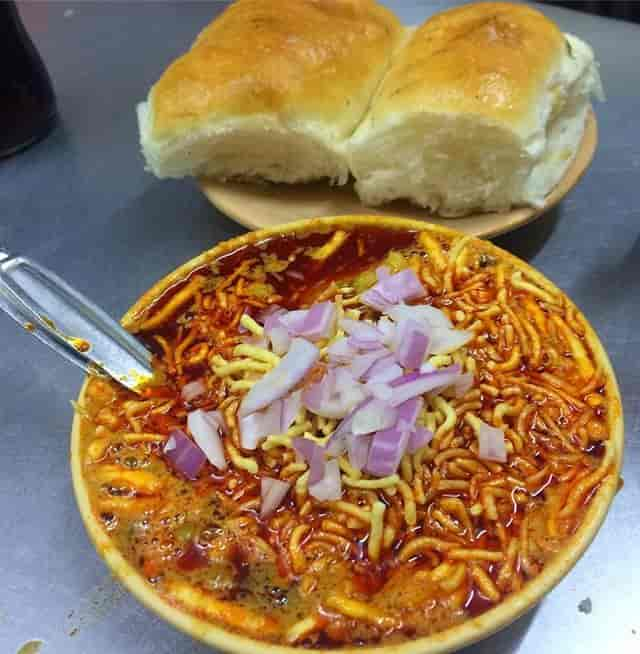
3. Mamledar misal ( Thane ): Amid thane market calendar serves finger-licking misals like kolhapuri misal, puneri misal is quite famous and along with talk ( buttermilk in Marathi ) which is the meal for thousands. Misal is a Maharashtrian dish with pav and sabzi with namkeen over it.
4. The breeze ( Powai )
Powai being the center of nightlife in Mumbai, there are a lot of clubs and pubs to spend a quality night. Breeze being one of them situated at the rooftop of 22 floors tower gives an astonishing view of the city where there are separate sections for dining, enjoying the view, and partying and dancing.
5. Sukh Sagar ( Mumbai ): Situated near the queen’s necklace Sukh Sagar owns 4-5 restaurants in the same lane for different cuisines and served you at any hour The ice paan there is a specialty. Pizza and pav bhaji is famous too.
6. Khaogali (Ghatkopar)
The khaogali in Ghatkopar is completely different from that of Mumbai and has modernized creative options to try It has WTC for pasta, Achija is famous for pav bhaji blossom famous for Chinese but the one that stands out for me is malai gola and rolling ice cream. The concept of rolling ice cream is so creative and mind-blowing. There is a machine which is covered by ice and as the name suggests it keeps rolling where the fruit is smashed and some sweetener ingredients are added and we are ready to go, ice cream made by fresh fruits.

Most importantly, Mumbai doesn’t disappoint anyone whether it’s the foodie or the one who sells for Thousands of people in Mumbai make living by the food industry. It may be by selling mum fail ( peanuts ) on a train, or having a panipuri, or owning the Sukh Sagar restaurants. It is a city where dreams come true.
What is Self-esteem in humans
In psychology, the term self-esteem is used to describe a person’s overall subjective sense of personal worth or value. In other words, self-esteem may be defined as how much you appreciate and like yourself regardless of the circumstances.
:max_bytes(150000):strip_icc():format(webp)/what-is-self-esteem-2795868_FINAL-1d12e4b54f20465ab8dfd7350b614fee.png)
Having healthy self-esteem can influence your motivation, your mental well-being, and your overall quality of life. However, having self-esteem that is either too high or too low can be problematic. Better understanding what your unique level of self-esteem is can help you strike a balance that is just right for you.
Self-esteem is a very abstract form of human belief is oneself, but it is pretty crucial in everyone’s life compared to how rarely we focus on this side of ourselves.
- WHY IT’S SO IMPORTANT
Self-esteem impacts your decision-making process, your relationships, your emotional health, and your overall well-being. It also influences motivation, as people with a healthy, positive view of themselves understand their potential and may feel inspired to take on new challenges. People with healthy self-esteem:
- Have a firm understanding of their skills
- Are able to maintain healthy relationships with others because they have a healthy relationship with themselves
- Have realistic and appropriate expectations of themselves and their abilities
- Understand their needs and are able to express them
THEY ARE BROADLY CLASSIFIED IN THREE WAYS
- CONFIDENT
Beliving in oneself and constantly not questioning one’s ability to do the things. Taking challenges head on, and not letting other’s opinion cloud our own, is the very key factor which proves our confidence/high self-esteem.
Having healthy self-esteem can help motivate you to reach your goals, because you are able to navigate life knowing that you are capable of accomplishing what you set your mind to. Additionally, when you have healthy self-esteem, you are able to set appropriate boundaries in relationships and maintain a healthy relationship with yourself and others.
- NOT SO CONFIDENT
Low self-esteem may identified in many ways such as,
- You may believe that others are better than you.
- You may focus on your weaknesses.
- You may have a negative outlook on life and feel a lack of control.
- You may have an intense fear of failure.
- You may have trouble accepting positive feedback.
- You may put other people’s needs before your own.
- You may struggle with confidence.
Low self-esteem has the potential to lead to a variety of mental health disorders, including anxiety disorders and depressive disorders. You may also find it difficult to pursue your goals and maintain healthy relationships. Having low self-esteem can seriously impact your quality of life and increases your risk for experiencing suicidal thoughts.
The worst part is you losing all your freedom and succumb to the fear and living inside a cage that you built for yourself. In simple terms making yourself a slave to your demons.
- OVER-CONFIDENT
“EVERYTHING IS GOOD BUT IN LIMITS, UNLIMITED OF ANYTHING NEVER BENEFITS ANYONE.”
Overly high self-esteem is often mislabeled as narcissism, however there are some distinct traits that differentiate these terms. Individuals with narcissistic traits may appear to have high self-esteem, but their self-esteem may be high or low and is unstable, constantly shifting depending on the given situation.
When self-esteem is too high, it can result in relationship problems, difficulty with social situations, and an inability to accept criticism.

Though some of the causes of low self-esteem can’t be changed, such as genetic factors, early childhood experiences, and personality traits, there are steps you can take to feel more secure and valued. Remember that no one person is less worthy than the next. Keeping this in mind may help you maintain a healthy sense of self-esteem.
SOURCES
The Revolt of 1857
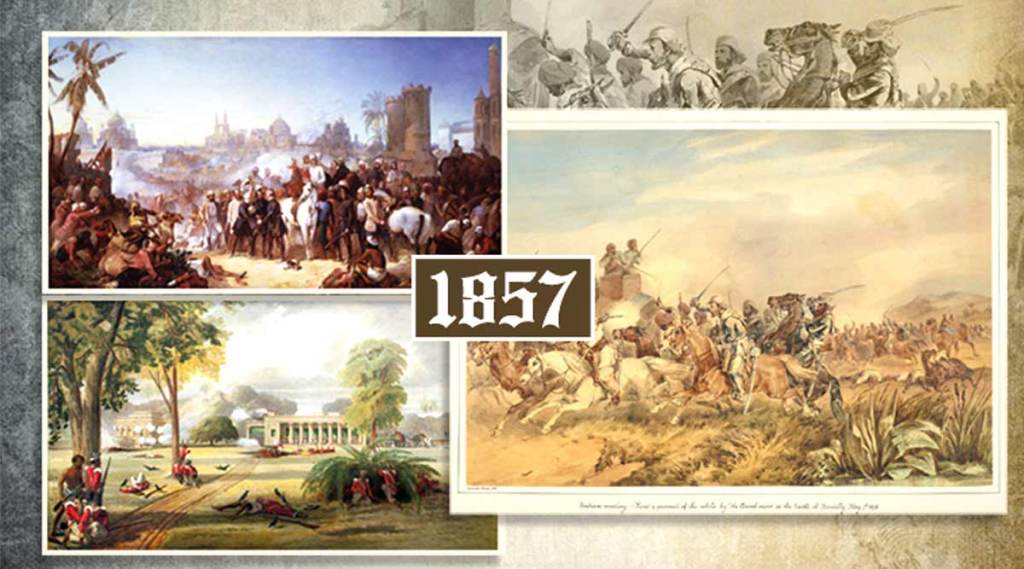
New Delhi:
The revolt of 1857 was a major and important event against the British rule. This revolution started from Meerut on May 10, 1857, which gradually spread to places like Kanpur, Bareilly, Jhansi, Delhi, Awadh etc. The revolution started as a military rebellion, but over time its form changed into a mass rebellion against the British power, which was called India’s first war of independence. come on
On this anniversary of the first war of independence, let’s know the special things related to it…
During the first half of the 19th century, the East India Company had occupied large parts of India. As the influence of British rule on India increased, discontent against British rule spread among the Indian people. One hundred years after the Battle of Plassey, discontent against the oppressive and unjust rule of the British Raj began to flare up in the form of rebellion which shook the foundations of British rule in India. Talking about the freedom struggle of 1857, before that many incidents had happened in different parts of the country. For example, towards the end of the 18th century, there had been the Sanyasi movement in North Bengal and the Chunar movement in Bihar and Bengal. The mid-19th century saw a number of peasant movements, notably the Moplah peasants of Malabar and the Faraizi movement by the Muslim farmers of Bengal.
The first five decades of the 19th century saw several tribal revolts such as the Bhils in Madhya Pradesh, the Santhals in Bihar and the Gonds and Khonds tribes in Odisha. But the sphere of influence of all these movements was very limited i.e. they were local in nature. The first organized rebellion that broke out against the British was in 1857. Initially it flared up as a revolt of the sepoys but later it became a mass revolution.
Causes of Rebellion:
Political Reasons: The main political reason for the revolt of 1857 was the ‘prohibition of adoption’ or ‘grab policy’ of the British government. It was the expansionist policy of the British which was the brainchild of the Governor General of British India, Lord Dalhousie. The Governor Generals of the Company made many rules for the purpose of annexing the Indian states to the British Empire. For example, when a king was childless, his kingdom became a part of the British Empire.
Social and Religious Reasons: There was resentment among a large section of the society about the rapidly spreading western civilization in India. In 1850 the British Government changed the Hindu Succession Law and now only a Hindu who adopted the Christian religion could be entitled to the property of his ancestors. Apart from this, missionaries were given the freedom to convert all over India. People felt that the British government wanted to make the Indian people Christian. Dissatisfaction arose in the minds of the people in the Indian society on abolishing some of the practices which had been going on for centuries, such as the practice of Sati.
Economic Reasons: There was discontent among the peasant and landlord classes due to heavy taxes and strict rules for collection of revenue. Many of these were unable to meet the tax demand of the British government and were unable to repay the loans of the moneylenders, which ultimately led to the loss of their ancestral land. A large number of sepoys were related to these farmers and hence they were also affected by the sufferings of the farmers.
After the Industrial Revolution in England, the Indian market was flooded with products made in Britain. India’s local textile industry was particularly devastated by this. The handicrafts industry of India could not compete with the cheap machine made goods of Britain. India became a supplier of raw materials and a consumer of goods made in Britain. Those who depended on royal patronage for their livelihood, all became unemployed. So there was a lot of anger in them against the British.
Military Reasons: The British army in India had more than 87% Indian soldiers. They were considered inferior in comparison to the British soldiers. Indian soldiers of the same rank were paid less than the European soldiers. Apart from this, Indian soldier could not get promotion above the rank of Subedar. Apart from this, the condition of Indian soldiers was badly affected after the expansion of British rule in India. They had to serve far away from their homes.
The upper community of Awadh was recruited in the Bengal Army. According to their religious beliefs, it was forbidden for them to cross the ocean (Kalapani). They suspected from Lord Canning’s rule that the British government was bent on making them kitchens. The Nawab’s army was disbanded after the annexation of Awadh. His soldiers became unemployed and became the staunch enemy of the British rule.
Immediate Causes: One of the immediate causes of the Revolt of 1857 was the rumor that the cartridge shell of the 1853 rifle was coated with the fat of pigs and cows. This rumor was hurting the sentiments of people of both Hindu and Muslim religions. These rifles were part of the 1853 rifle arsenal.
Mangal Pandey and his contribution:
I know you all have been waiting to see this name as many of us from the early classes associate the Revolt of 1857 with the name Mangal Pandey. On March 29, 1857 AD, a soldier named Mangal Pandey revolted against his officers in ‘Barrackpore Cantonment’, but British military officers easily controlled this military rebellion and along with his battalion ’34 N. I.’ disbanded. 3 L.C. on 24th April In Parade Meerut, 85 out of 90 cavalrymen refused to take fresh cartridges. These 85 horsemen were given 5 years imprisonment by court martial for disobeying orders. The ‘open rebellion’ began between 5 and 6 pm on Sunday, May 10. First foot detachment ’20 NI.’ The rebellion started in AD, followed by ‘3 L.C.’ The rebellion also spread in These rebels opened fire on their officers. ‘Hearse’ was shot by Mangal Pandey, while ‘Afsar Bagh’ was murdered. Mangal Pandey was hanged on 8 April. On 9 May, 85 soldiers in Meerut who refused to use the new rifle were sentenced to nine years in prison.
Spread of Rebellion:
After this incident, the fire of rebellion broke out in Meerut Cantonment. The Meerut Rebellion on 9 May marked the beginning of the War of 1857. In Meerut, Indian soldiers killed British officers and ransacked the prison. On 10 May they proceeded for Delhi. Reaching Delhi on 11 May, the revolutionary soldiers of Meerut occupied Delhi on 12 May. These soldiers declared the Mughal emperor Bahadur Shah II as the emperor of Delhi. Soon the rebellion spread to Lucknow, Allahabad, Kanpur, Bareilly, Banaras, Bihar and Jhansi also. The British first captured Delhi by calling an army from Punjab. On September 21, 1857 AD, the British recaptured Delhi, but ‘John Nicholson’ was killed in the struggle and Lieutenant ‘Hudson’ deceived Bahadur Shah II’s two sons ‘Mirj Mughal’ and ‘Mirz Khwaja Sultan’ and a The grandson ‘Mirza Abu Bakr’ was shot. The rebellion started in Lucknow on June 4, 1857. The British Resident ‘Henry Lawrence’ died after the siege of the British residency by the revolutionary soldiers here. Havelock and Outram tried hard to suppress Lucknow, but they were unsuccessful. Finally, Colin Campwell, with the support of the Gurkha regiment, captured the city in March, 1858 AD. By the way, the effect of the revolution here lasted till September.
Crushing the Rebellion:
The war of 1857 lasted for more than a year. It was crushed in the middle of 1858. On July 8, 1858, fourteen months after the rebellion broke out in Meerut, Canning finally announced that the rebellion had been completely suppressed.
Reasons for the failure of Rebellion:
- Limited Movement: However, in a short span of time the movement reached many parts of the country but it did not have any effect on a large part of the country. This was especially true in the Doab region. The provinces of the south took no part in it. Important rulers like Scindia, Holkar, Rana of Jodhpur and others did not support the rebellion.
- Lack of Effective leadership: There was lack of effective leadership for the rebellion. There is no doubt about the bravery of Nana Saheb, Tantya Tope and Rani Lakshmi Bai but they could not give effective leadership to the movement. Apart from this, the rebels lacked experience, organization ability and the power to work together. The rebel revolutionaries lacked concrete goals and clear plans. He was also not sure what to do and what not to do in the next moment. They were moving forward only out of emotion and circumstance. Bahadur Shah Zafar and Nana Saheb were a skilled organizer, but they lacked the ability of military leadership, while the English army had skilled generals like Lawrence Brothers, Nicholson, Havelock, Outram and Edward.
- Limited resources: The rebels had neither numbers nor money. On the contrary, the British army had a large number of soldiers, money and weapons, on the basis of which they were successful in suppressing the rebellion.
- Was not the part of middle class: The ‘educated class’ remained completely indifferent to this revolt of 1857. The merchants and the educated class had also prayed for the success of the British by holding meetings in Calcutta and Bombay. If this class had infused enthusiasm among the people through its writings and speeches, then undoubtedly the result of this rebellion of revolution would have been different.
Consequences of Rebellion:
After the rebellion ended, in 1858 AD, the British Parliament passed a law ending the existence of the East India Company, and now the full right of rule over India came in the hands of Queen Victoria. In England, under the Act of 1858, an ‘Indian Secretary of State’ was arranged, for whose assistance a ‘consultation council’ of 15 members was formed. Of these 15 members, arrangements were made to appoint 8 by the government and 7 by the ‘Court of High Courts’.
The Role of Textbooks in Education

Presentation of a selection of items of knowledge about a specific subject and on a specific theme, taking into account that knowledge acquisition should be progressive and sequenced according to succeeding years of scholarity and curricula must not be overloaded.
The textbook provides information and knowledge, but it does so from an ideological standpoint: the relative value of science and technology, a historical viewpoint, and established linguistic conventions, to name a few.
- To assist the student in perceiving and comprehending the world around him, in putting knowledge acquired from sources other than the curriculum together, and in mastering what he has learned.
- The textbook proposes a learning path that is arranged into successive blocks of teaching modules. It provides a number of options for learning organization.
- A textbook can be viewed as a working instrument for both the teacher and the student. The nature of the textbook as a communication tool will be determined by the language employed, the quantity and level of information, the text, and the relationships between the latter two aspects. In general, textbooks for students are prioritized in the least developed countries. A teacher’s handbook, which differs from school textbooks in nature, is an option for teachers.
- Furthermore, the option of collective usage of certain parts in the textbook, such as drawings, maps, and diagrams, for example in a class, can be explored; this lowers production costs.
- Learning does not happen in a vacuum. We must steer our students toward specified learning objectives and ensure that these objectives are met. In this way, textbooks assist both teachers and students. They are extremely important in the teaching-learning process. They provide the basic framework within which much of the classroom activity takes place, as well as providing each child with the best available learning opportunity.
Farm Loan Waiver
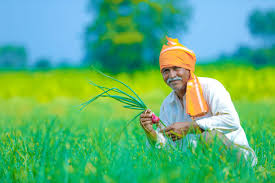
Before diving to the details about loan waiver let’s all get an idea about what actually is loan waiver.

Farm loan waiver: To assist the farmers who are in distress, the Government came up with the process called Loan waiver. In accordance with this, the government will pay defaulted loans taken by the farmers. There is a timeline vis-a-vis when this process took it’s birth but acknowledging those details are meant to eat your time. But dont worry I will fill you about the details in gist/crisp manner.
2016-18: States too have followed the footsteps of Union Government and adopted loan waiver. Ex. Madhyapradesh, Jammu and Kashmir, Tamilnadu, Telangana, Andhrapradesh etc.
Budget -2008: Agriculture Debt Waiver and Debt Relief Scheme (ADWDRS) promised to pay loans taken by the small&marginal farmers and other farmers offering waiving percentage 100% and 25% respectively.
2017- Considering the problems faced by farmers during demonetization, the Budget (17) announced 60 days of interest waivers to farmers.
Arguments in favor:
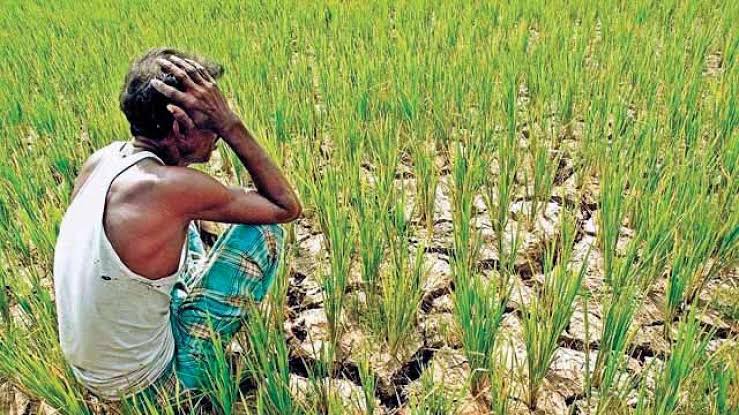
=>Few people opine that the situation of farmers since a decade(2008-18) have became worse with post-subpime crisis (2008), global financial crisis (2008) ,droughts (2017, 18), and demonetization (2016). These have raised issues like dropping down prices and demand for the products example being textile industry in international market and are forced to sell them in domestic market at cheaper rates
=>In addition to this, the government have came up with the plans of restructuring for loans by corporate borrowers which reinforced support-farmer people to demand for same as debt waiver.
=>Violent agrarian agitations in Maharashtra, Uttarpradesh and Madhyapradesh also made it visible the pathetic plight of the farmers.
=>Farmers are being more prone to Debt Overhang (where all the income earned so far was used to repay accumulated debts) and are forced to use savings/income in buying farm inputs(seeds, fertilizers, pesticides)
Challenges associated with loan waiver:
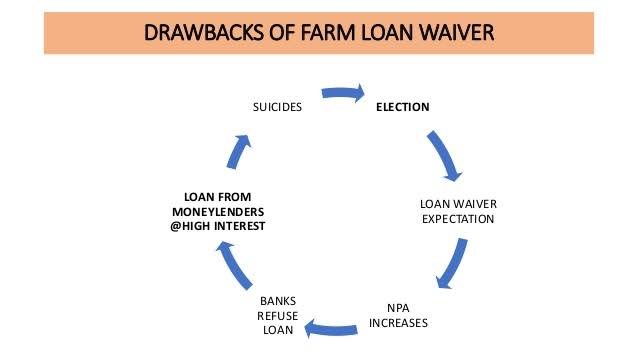
” Loan waivers undermine credit culture. NPA problem will get aggravated ” __ ex-RBI Governor Urjit Patel
“Farm loan waiver should not form part of election poll promises”__ Former RBI Governor Raghuram Rajan
These are only individual opinions but serious measures are yet to be taken and implemented.
=>Impact on behavior: Loan waiver reduces the hard working capacity and chances for developing negligent behavior/lack of discipline in farmers are more likely.
=>Partial Coverage: Out of 100% loans borrowed by farmers only 60% are from formal sector(banks,NBFCs) and rest of the borrowings are from informal sector (Marwadi, Shroff). So even though government announced loan waiver significant percentage of farmers deprived of benefit.
=>Feedback: Comptroller and Audit General (CAG) commented on ADWDRS which implemented in 2008 ,as it is prone to serious exclusion and inclusive errors. Also Economic Survey-2017 pointed out that loan waivers haven’t contributed neither in accentuating GDP contribution nor in development of farmers.
=>Multiplier Effect: WHO recommended 5% of GDP to health sector whereas the actual allocation was less than 2%.The amount allotted for waiving tantamount to 1.5% of GDP. So it would be justifiable for the government to invest money in the schemes which promotes welfare for majority of populace than in the schemes which have serious implications on other developmental expenditure.
=>Fiscal Deficit: It would be burdensome on state governments implementing the waiver process and there are also chances that a particular state would end up in inflation too. Ex: Report in 2017 by RBI quoted that ₹88000 crores used as loan waiver by 7 States ( Uttarpradesh. Maharashtra etc) notified as a states with inflation.
=>No recognition: Loan waiver focussed mainly on cultivators and the truth that agricultural workers are also being impacted was neglected.
Farmers distress is a real and pressing problem.But the government intervention has hurt more than it has helped.Loan waiver is not a magic wand that could solve the long-standing problems, it could only be used as a temporary relief (like a bandage to serious wound).There are certain issues to be considered in this regard to get ushered in right direction. Like proper identification of vulnerable farmers, enhancing non-farm works, improving technology , expansion of irrigation cover ,focussing on long-term solutions etc.
Hope you have enjoyed the article. Happy reading!
Why do girls hate boys?
Find out the secret reason!
Not all girls are the same
Okay, Not all girls are the same also not everyone is the same. Only some girls find boys annoying. Generally, Girls growing in a male dominant family hate every boy. This is because they can’t do anything they wish and they were supposed to obey every order of their male dominant in their family.

Why?
Generally, girls love to share their emotions with their family but they are prohibited to show their feelings. This is because of some rude male in their family. They lose love for their family because their family failed to show they believe their girl.
There’s also a chance because of their toxic relationship or the worst experience they had with their believable male friends. Maybe the wrong guidance of understanding the male community. All this is because an important male in their life failed to believe, show love, give freedom and teach about the good male community.
What happens next?
This leads girls to hate all men in the world. They stop believing that one day a man can change their life. They believe all men are born to submissive women in their life. They hate speaking with men. They believe there’s no good man on this planet.
No, these girls are not feminists. They just want freedom from the male-dominant male dominant in their life.

A Man’s duty
When it comes to understanding only men can educate clearly about their community. It comes like a dad to daughter, brother to sister, husband to wife, duty to teach them. They have to explain clearly the difference between good boys and bad boys, good relationships and toxic relationships.
This can only be done by a man raised by a good mother. So, it’s not only a man’s duty also a women’s.
Conclusion
Remember when a girl hates boys, she needs the right education about the world, men’s community, and true love. She needs to socialize with everyone to overcome her hate.
Hey Guys, I tried my best to help you. If you ever come across a girl like this, Try to help them out.
FORBIDDEN ISLAND : THE NORTH SENTINEL ISLAND

Deep in the Indian Ocean, you’ll come across North Sentinel Island, supposedly the most dangerous and hardest place to visit on the planet. The place is so dangerous in fact that the Indian government has banned its peoples from going anywhere near it
The Andaman and Nicobar Islands Protection of Aboriginal Tribes Act of 1956[9] prohibits travel to the island and any approach closer than five nautical miles (9.26 km) in order to prevent the resident tribes people ( The Sentinelese) from contracting diseases to which they have no immunity
Who Are The Sentinelese?

The Sentinelese are the most isolated tribe in the world, and have captured the imagination of millions. They live on their own small forested island called North Sentinel, which is approximately the size of Manhattan. They continue to resist all contact with outsiders, attacking anyone who comes near.
they are incredibly hostile to outsiders and are extremely unwilling to communicate with people who aren’t their own. They are so adverse to any outside contact that they actually attacked and murdered two fishermen who washed up on shore back in 2006.
Exactly how many people live on the island is unknown, but estimates range from anywhere between 50 and 400 dwellers.
Contact with Sentinelese
In the late 1800s, India was considered one of Britain’s major colonial outposts. British officers regulated different communities in the region — often violently.
A British naval officer, Maurice Vidal Portman, oversaw the Andaman and Nicobar Islands and documented the Andamanese tribes in the late 1800s.
Portman and his team — which included trackers from other Andamanese tribes he’d already made contact with — ventured to North Sentinel in 1880. They came upon an elderly couple and four children, who they took back to Port Blair, the capital of the Andaman and Nicobar Islands. The elderly couple “sickened rapidly” and died, possibly from lack of immunity to diseases the British carried, and the children were sent back to the island with gifts, according to Portman’s account of his trip.

Since the 1800s, there have been a number of recorded contacts with the tribe, and anthropologists have made regular visits since the 1960s.
After several expeditions trying to establish contact, their first real breakthrough came in 1991 when the tribe came out to peacefully approach them in the ocean
The first peaceful contact with the Sentinelese was made by Triloknath Pandit, a director of the Anthropological Survey of India, and his colleagues on 4 January 1991.


However thereafter had been lot of contacts with the Sentinelese which were not so friendly and rather violent.
That’s why the island is forbidden and The Sentinelese are kept isolated.
How to get Healthy and Glowing Skin

Glowing skin means different things to people. Many people use the term to refer to skin that looks healthy and “awake” rather than dry, dull, or unevenly textured. For some, healthy skin results in a natural glow.
Healthy skin is something that most people can work towards. Typically, healthy skin will appear:
- smooth, with few breaks or blemishes
- adequately hydrated, being neither too dry nor too oily
- fairly even in color, rather than red or inflamed
It is important to note that healthy skin does not mean perfect skin. Perfect skin is not attainable. Skin can be healthy and glowing, while also having normal characteristics, such as:
- visible pores
- fine lines and wrinkles
- birth marks
- occasional blemishes
Skin Care:
Cleansing

Cleansing products help remove dirt, makeup, and excess oil from the skin. When choosing a cleanser, it is important to look for one that is gentle, pH-balanced, and does not include harsh chemicals or soap.
Cleanse the skin upon waking up, before going to sleep, and after sweating. Use warm water rather than cold or hot, and pat the skin dry with a clean towel.
Moisturizing

Moisturizers add water to the skin. For best results, recommends applying moisturizer immediately after cleansing in order to to trap moisture in the skin.
People with oily skin may prefer an oil-free moisturizer, while those with dry skin may prefer something heavier that contains oils or butters.
Sun protection

Sunlight contains UV light, which can cause burning, sun damage, and visible signs of aging. Applying an SPF product before going outside is an easy way to reduce the risk.
Apply sunscreen to all areas of exposed skin, including around the eyes and neck. When the sun is at its strongest, stay in the shade or wear lightweight clothing and a hat to cover the scalp.
Diet For Glowing Skin
A) Best Fruits For Glowing Skin

- Papaya
- Oranges
- Banana
- Guava
- Mangoes
- Kiwi
B) Best Vegetables For Glowing Skin

- Carrots
- Spinach and other green leafy vegetables
- Broccoli
- Tomatoes
- Bell peppers
C) Dry Fruits

- Almonds
- Walnuts
D) Green Juice For Glowing Skin

This green juice contains a plethora of essential vitamins and minerals that will maintain the health of your skin from the inside and make it glowing and soft.
E) Drink More Water

If you’re exercising regularly, it’s essential to replace the fluids that your body loses through sweat. Drinking the recommended daily amount of water (approximately 8 glasses or 2 litres) keeps your skin hydrated and can help prevent it from feeling dry, tight and losing its natural, healthy-looking glow.
Conclusion:
Naturally glowing skin is typically skin that is healthy and hydrated. People can work towards this by gradually implementing a skin care routine, as well as by making changes to their diet or lifestyle where necessary.
Sources:
https://www.thebodyshop.in/how-to-get-glowing-skin
https://www.stylecraze.com/articles/simple-home-remedies-for-glowing-skin/
The Kargil War
Here’s what happened between India and Pakistan!
The Genesis:
Twenty-two years ago, on JULY 26, the Indian Army with armed forces recaptured all posts in Kargil, Jammu and Kashmir which were captured by Pakistan’s Army. Since then it is a day to commemorate the victory of the Indian Army over Pakistan’s Army. This is called the ‘Kargil war’ or ‘Kargil conflict’. The Kargil war became the first ‘live’ war in South Asia and it was given such detailed media coverage all over the world.

The War
It was an armed conflict fought between India and Pakistan from May to July 1999 in the Kargil district of Kashmir(now Ladakh). In India, they referred to it as “Operation Vijay”. The war took place between 3 May -26 July 1999 which was exactly two months, three weeks, and two days.
Cause of War
It began with the infiltration of both regular Pakistani troops and terrorists into Indian territory. The intruders positioned themselves in key locations that gave them a strategic advantage during the start of the conflict. They disguised themselves as Kashmiri militants on the Indian side of LOC.
The Indian Army
The Indian Army was lead by Gen.Ved Prakash Malik of Indian ground troop and ACM Anil Yashwant Tipnis of Indian Air Force. In India, the operation was given the codename “Operation Safed Sagar”.
The Indian Army, supported by The Indian Air Force recaptured the majority of the positions in the Indian side of the LOC. The Indian Army had a strength of about 30,000 which was strong enough to win Pakistan Troops.
The Cost of War
The victory came at a high price. The official death toll on the Indian side was 527 and 1623 wounded, while that on the Pakistani side was between 357-453 and 1000+ wounded. But also for India, it created a good impact on the stock hike by 30% from the end of the Kargil war to February 2000.

Kargil Vijay Diwas
The Indian Army declared the mission successful on July 26, 1999. Since then the day has been celebrated annually as Kargil Vijay Diwas.
Yoga
The word yoga first appeared in the oldest sacred texts, the Rig Veda( one of the oldest Veda) and is derived from the Sanskrit word ‘yug’ which means ‘to unite or integrate’. Yoga is all about uniting body, mind and spirit.

There are many paths to divine and so there are many types of yoga.
Four main paths of yoga
1. Karma Yoga – Path of Action
It is a service that you do selflessly and enjoy while doing it without worrying about the consequences. We learn kindness and forgiveness in this process of serving people knowing the fact of gaining nothing but filling your heart with love and letting go of our ego.
Karma yoga is the spiritual practice of “selfless action performed for the benefit of others”. It is the path to reach moksh through work.
– Lord Krishna in Bhagavad Gita
Some of the great people who have chosen this path are Mahatma Gandhi, Mother Teresa and Swami Vivekananda.
2. Bhakti Yoga – Path of Devotion
The term Bhakti originates from the Sanskrit word “Bhag” which means love, faith, devotion and attachment.
It focuses on devoting yourself to worship of the divine through singing, dancing , chanting, and celebrating. It is selfless love that you feel when you are devoted to god , to your parent or nation. It is always something higher. It takes our mind, emotion and heart to get back to the soul and unite as one. It’s the universal love that is making us feel the sense of gratitude of what we have received from the moment of birth to death.
Four types of men begin to render devotional service unto me (God) — the distressed, the inquisitive, the seeker of material wealth, and the one who has already realized knowledge of the Absolute
– Bhagwat Gita
3. Jnana Yoga – Path of Knowledge and Wisdom
The term Jnana means knowledge in Sanskrit. It’s a path which encourages people to study observation and personal spiritual experience, intuition, self realization , service to God, and ancient scriptures such as The Upanishad.
Steps that will help to know when the knowledge you have acquired is transferred into your experience –
- Sharvana – To read and study the Upanishads and achieve a deep understanding of the concepts of Atman and Brahman.
- Madana – Thinking and apply it in your life.
- Ninidhyasana – Through focus and repeating Sharvana and Madana you can achieve wisdom.
Jnana Yoga, or the science of the Self, is not a subject that can be understood and realized through mere intellectual study, reasoning, discussion or arguments. It is the most difficult of all sciences.
– Swami Sivananda
4. Raja Yoga –
In Sanskrit, raja means ‘king” or ‘royal,” referring to the status of Raja yoga as a “royal path”’ or principal form of yoga.
Raja yoga involves an individuals physical, mental and spiritual state and enables practitioners to achieve balance and harmony on all of these levels.
Raja Yoga is the yoga of mind and body and focuses on cultivating self discipline. It is also known as Ashtanga Yoga (Eight steps of yoga)
The eight limbs of Raja yoga are :
- Yama – Self-control
- Asana – Yoga postures.
- Niyamas – Discipline
- Pranayama – Breathing techniques as a means of controlling prana.
- Pratyahara – Withdrawal of the senses.
- Dharana – Concentration.
- Dhyana – Meditation.
- Samadhi – Enlightenment or bliss.
LOSS OF BIODIVERSITY
-Aastha Joshi
The last 50 years have seen rapid growth in population, urbanization and human Consumption resulting in usage of most of the earth’s resources to an extreme level. A recent report by WWF states that the population size of mammals, reptiles, fishes, birds and amphibians have decreased by 68 percent on a average from 1970 to 2016, which makes us astonished about the biodiversity we have lost. The report pinpoint’s this biodiversity loss to a variety of factors, but mainly land-use change,particularly the conversion of habitats, like forests, grasslands and mangroves, into agricultural systems. Animals like sharks and seahorses are significantly affected by the illegal wildlife trade, and pangolins are critically endangered because of it. It has been found that the sixth mass extinction of wildlife on Earth is accelerating. More than 500 species of land animals are on the brink of extinction and are likely to be lost within 20 years. The species that are endangered will go extinct whereas the species that are readily available will fall into endangered category. Without such harsh actions of humans on the environment this loss of biodiversity would have taken thousands of years. The living planet report 2020 shows that population sizes in Latin America and the Caribbean have experienced the highest decline, at 94%, while globally, freshwater species have been disproportionately impacted, declining 84% of average. Humans have been openly criticised for using up the earths resources and not giving them time to replenish. Since the industrial revolution, human activities have increasingly destroyed and degraded forests, grasslands, wetlands and other important ecosystems. local varieties and breeds of domesticated plants and animals are disappearing. The best example to it is crows and pigeons, early generations have seen the being on their rooftops but now days we can hardly find some around us. Several wildlife conservation techniques have now been adapted by the mankind to tackle this loss of biodiversity and maintain an ecological balance. Many wildlife centuries and biosphere reserves have been made to provide a natural habitat to these endangered species as the loss of natural habitat has been reported one of the major reasons for the loss of these species. The alarming ratios of decrease in the species has made the people around globe a little more concerned. Several projects have been initiated by the counties and also at the global level to converse these species and stop them from getting extinct. Harsh treatment to animals have strongly been prohibited, also hunting has now came in the negative light and strict actions are taken upon people practicing it without the permission of government. All on the world Biosphere reserves have been created to promote the well being of these animals and providing them a secured environment as well as a habitat that is originally meant for them. Humans have created a ruckus all over the earth disturbing the balance around and lifestyle of the species. If optimal measures are not taken at the right time these acts of humans can have a disastrous impact on them itself.
A.J.P Abdul Kalam-The Missile Man of India

Avul Pakir Jainulabdeen Abdul Kalam was born on 15 October 1931 to a Tamil Muslim family in the pilgrimage center of Rameswaram on Pamban Island, then in the Madras Presidency and now in the state of Tamil Nadu. His father Jainulabdeen Marakayar was a boat owner and Imam of a local mosque. His mother Ashiamma was a home-maker. Kalam was the youngest of four brothers and one sister in his family. In school years, Kalam had average grades but was described a s bright and hardworking student who had a strong desire to learn. He spent hours on his studies, especially mathematics. After completing his education at the Schwartz Higher Secondary School, Ramanathapuram, Kalam went on to attend Saint Joseph’s College Thiruchirapalli, then affiliated with the University of Madras, from he graduated in physics in 1954. He moved to Madras in 1955 to study aerospace engineering in Madras Institute of Technology. While Kalam working on a senior class project, the Dean was dissatisfied with his lack of progress and threatened to revoke his scholarship unless the project was finished within next three days, Kalam met the deadline, impressing the Dean, who later said to him “I was putting you under stress and asking you to meet a difficult deadline”. He narrowly missed achieving his dream of becoming a fighter pilot, as he placed ninth in qualifiers, and only eight positions were available in the IAF (Indian Air Force).\

Career
After graduating from the Madras Institue of Technology in 1960. Kalam joined the Aeronautical Development Establishment of the Defence Research and Development Organisation, as a scientist after becoming a member of the Defense Research and Development Service. He started his career by designing a small hovercraft, but remained unconvinced by his choice of a job at DRDO. In 1969, Kalam was transferred to the Indian Space Research Organisation where he was the project director of India’s first Satellite Launch Vehicle (SLV-III), which successfully deployed the Rohini satellite in near-earth orbit in July 1980. Kalam project independently at DRDO in 1965. In 1969, Kalam received the government’s approval and expanded the programme to include more engineers. Kalam played a major part in developing many missile under the mission and Prithvi, the tactical surface-to-surface missile, although the projects have been criticized for mismanagement and cost and time overruns. Kalam served as the Chief Scientific Adviser to the Prime Minister and Secretary of the Defence Research and Development Organisation from July 1992 to December 1999. The Pokhran-II nuclear tests were conducted during this period in which he played and intensive political and technological role. Kalam served as the Cheif Project Coordinator, along with Rajagopala Chidambaram, during the testing phase. Media coverage of Kalam during this period made him the country’s best known nuclear scientist. However, the director of the site test K.Santhanam, said that the thermonuclear bomb had been a fizzle and criticized Kalam for issuing an incorrect report. Both Kalam and Chidambaram dismissed the cliams.
This is my first stage in which I learnt leadership from three great teachers-Dr.Vikram Sarabhai, Prof Sathish Dhawan and Dr.Brahm Prakash. This was the time of learning and acquisition of knowledge for me.-A.P.J Abdul Kalam
Presidency
Kalam served as the 11th President of India, succeeding K.R. Narayan. He won the 2002 presidential election with an electoral vote, surpassing the votes won by Lakshmi Sahgal. His team lasted from July 25 2002 to July 25 2007. During his term as president, he was affectionately known as the People’s President saying that signing the Office of Profit Bill was the toughest decision he had taken during his tenure.
Awards
- 1981-Padma Bhushan-Government of India
- 1990-Padma Vibhushan-Government of India
- 1997-Bharat Ratna-Government of India
- 1997-Indira Gandhi Award for National Integration-Government of India
- 1998-Veer Savarkar Award-Government of India
- 2000-SASTRA Ramanujan Prize-Shanmugha Arts, Science, Technology and Research Academy, India
- 2013-Von Braun Award-National Space Society.
Death
On 27 July 2915, Kalam travelled to Shilliong to deliver a lecture on Creating a Livable Planet Earth at the Indian Institute of Management Shilliong. While climbling a flight of stairs, he experienced some discomfort, but was able to enter the auditorium after a brief rest. At around 6.35 p.m, only five minutes into his lectures, he collapsed. He was rushed to the nearly Bethany Hospital in a critical condition, upon arrival, he lacked a pulse or any other signs of life. Despite being placed in the intensive care unit, Kalam was confirmed dead of a sudden cardiac arrest at 7.45 p.m IST. His last words, to his aide Srijan Pal Singh, were reportedly ‘Funny guy” are you doing well.
Inspirational words
Don’t take rest after your victory because if you fail in second, more lips are waiting to say that your first victory was just luck.
Never give up your dreams no matter how old you are no matter where you are today. Do not give up dreaming for a better tomorrow.
5 Reasons Why Freshers Should Do Internships

The work market today is extremely cutthroat and in the present changing world perfect measure of involvement. Cleaned abilities and gifts can help you land up the perfect work.
An Internship is the way to get acquainted with the vocation way the understudies need to seek after.
REASONS WHY INTERNSHIPS ARE NECESSARY
Helps students work on their career goals
An Internship assists the understudies with working and completely acquire information in the ideal field and settle on up the choice assuming they need to assemble their vocations in it.
It goes about as a preliminary for understudies, as it assists them with choosing the ideal vocation choice out of numerous accessible to them.
Likewise, it furnishes them with a chance to draw a stage nearer to their vocation objectives, as they will apply the hypothetical information on the study hall into this present reality.
Give them the ideal Industry Exposure
For a fresher to support in the business. They work before they land into everyday positions should make some genuine memories experience of working in the business in a genuine climate and on genuine ventures.
Entry level positions help understudies acquire important openness to how business capacities continuously settings. It likewise empowers understudies to work under tutors, who screen their presentation, guide them on the deficiencies and help them work on their abilities.
Make an Impressive CV
To find up with the perfect work, you need to land up in a meeting with the HR group of the association and to land up with a meeting one requirements to have an extremely amazing CV, with extraordinary work insight.
In the present time, even section level positions require some industry experience. Internships are the most ideal way for working to upgrade their CV with applicable encounters.
Develop a professional network
Internships are significant on the grounds that it empowers fresher to build up associations with industry experts and driving figures. It fabricates a stage for the understudies to assemble between close to home associations, take in and acquire information from individuals working and dominating in their professions.
Manage their finances
Entry level positions can be paid just as neglected. Paid temporary positions furnish understudies with a chance to bring in a decent measure of cash to support themselves on their while acquiring abilities that may be imperative for their future professions.
Quarantine Boredom
It’s been almost two years surviving in lockdown and still there is no escape from the boredom which comes along every now and then. Its either scrolling through Instagram, snapping on snapchat, binge watching on Netflix or napping. At this point no one tries to find a way that isn’t entertainment related.
Today we’ll discuss things to do instead of social media.
Staying away from social media will be hard at first, but it may cause you to try new things and have brand new experiences. You may find yourself trying things you never expected, and many things you’ve always wanted to do more of.

What to do instead of scrolling?
Firstly if you want to scroll then let’s try it with a different way.
- Try scrolling with a productive aim along with a time schedule. Aimlessly scrolling for hours is just going to damage you physically and will just fuel your boredom. Target an hour in the afternoon and scroll through the posts you’d actually want to look at like recipes, restaurants, celebrity’s account, etc. This will actually serve the satisfaction of looking at the posts of your own interest.
- Listen to a podcast. There are variety of podcasts from educational to comedies. Go with one that interests you.
- Learn a new language. There are countless of apps that provide you with studying material along with being able to talk to natives of that language. This can help you even in future.
- Write in a journal. Many of the people think how childish it is to write in a diary about your life but it actually benefits you. Jotting down your thoughts can be good for you mind.
When you cut out or lower the amount of time that you spend on social media, you may find time for things in life that you wouldn’t normally have time to do.
- Organize your room or closet.
- Clear out the useless subscriptions from your mail.
- Clear out the trash your phone to increase your storage.
- Donate the items that aren’t of your use but could benefit others like books you don’t read anymore, clothes, notebooks, stationary etc.
If you’re looking for things to do instead of social media, making money, improving your financial situation can help you now and well into the future.
- Answer surveys. There are many sites that pay you for answering and testing products for free.
- Edit content. Many websites or companies are always looking for aspiring editors and if you have the talent then you should go for it.
- Find internships. Many many companies are open for work from home internships and you can find the ones that interest you the most.
Now the point here isn’t deleting or removing social media from your life completely but rather decreasing the amount of time you spend on it.
HEPATITIS- be aware
The lethargic lifestyles we live are the root cause of the various health issues we face. The current pandemic situation has made us realise how important it is to look after ourselves. The current population has to encounter many diseases and few of them prove to be fatal.
One of such is hepatitis. As per national centre for disease Control India has “intermediate to high endemicity” for Hepatitis B surface antigen and an estimated 40 million chronic HBV infected people, constituting approximately 11% of the estimated global burden. Population prevalence of chronic HBV infection in India is around 3-4 %.
So let us discuss about it in detail.

What is hepatitis?
Hepatitis alludes to an incendiary state of the liver. It’s regularly brought about by a viral disease, yet there are other potential reasons for hepatitis. These incorporate immune system hepatitis and hepatitis that happens as an optional consequence of meds, medications, poisons, and liquor.
Hepatitis can be acute (present moment) contamination or a chronic (long haul) disease. A few sorts of hepatitis cause just intense infection. Different sorts can cause both intense and persistent diseases
Next question that arises is, how do we know whether we are infected with hepatitis Or not ?
Some people with hepatitis do not show any symptoms and might not even be aware of that they are infected. But, here are some symptoms that are observed in hepatitis patients
•Fever
•Fatigue
•Loss of appetite
•Nausea and/or vomiting
•Abdominal pain
•Dark urine
•Clay-colored bowel movements
•Joint pain
•Jaundice, yellowing of your skin and eyes
Patients with acute infections , their symptoms can commence anywhere between 2 weeks to 6 months after being infected. And those with chronic illness may not even show any symptoms upto some years.
Since now we are aware of what actually is this disease and what symptoms the patient might show we need to discuss about how can one come in grip with this infection.
Hepatitis can either be caused by viral infections or non Infectious causes
The non infectious causes includes :-
1) Immune system hepatitis is an illness that happens when your body makes antibodies against your liver tissue.
2) Excessive alcohol consumption can cause liver damage and lead to inflammation. This is sometimes also termed as alcoholic hepatitis
3) Other poisonous reasons for hepatitis incorporate abuse or excess of meds and openness to harms.
Now if we talk about the Viral infections of the liver that are classified as hepatitis include hepatitis A, B, C, D, and E.
Hepatitis A is always an acute disease while hepatitis B, C, and D are most likely to result into chronic infection. Hepatitis E is usually acute but can be particularly dangerous in pregnant women.
1) Hepatitis A is most commonly transmitted by consuming food or water contaminated by feces from a person previously infected with hepatitis A
.2) Hepatitis B is spread through contact with infectious body fluids, such as blood, vaginal secretions, or semen, containing the hepatitis B virus.
3) Hepatitis C is transmitted through direct contact with infected body fluids, typically through injection drug use and sexual contact with previously infected person.
4) Hepatitis Doing is transmitted through direct contact with infected blood.
5) Hepatitis E is a water borne disease is mainly found in areas with poor sanitation and typically results from ingesting fecal matter that contaminates the water supply.
As, it’s well said prevention is better than cure so here are some points you must keep in mind to avoid being infected with this disease.
•Practicing good hygiene is one key way to avoid contracting hepatitis A and E.
•avoid having unsafe sex
•get your child vaccinated on time for hepatitis
And at last stay safe.
How to be motivate yourself everyday!!!
” A man who has no imagination has no wings ” said by famous and the best American professional boxer Muhammed Ali. We all live in the world of imagination, we all are the heroes of our own life. Each and everyone has a dream, a dream to become something great. A dream to achieve something very good in life, a dream to be successful.

But you know having a dream is not enough. Dreams are good, it makes you ambitious and thats awesome but what drives you everyday is Motivation. The people who dream big are the most ambitious ones, and the people who have the biggest ambition are the one who give every single ounce of the sweat, pain, tears and everything in the field.
So that’s the thing, the more you are motivated the more you work for your dream. But everytime its not the dream, its the journey. The process that guides you and makes you awake in the whole journey is motivation. Now many of you who are reading this will be bored by reading this. So let’s quickly get to the ways that makes you motivated everyday..
1. Follow yourself
I see many people think that following successful people makes you successful. I agree with this but i disagree as well. It won’t make you successful by copying. People think that if this guy is waking up at 4am and he is successful, then i should also start waking up at 4. You should admire successful people but don’t copy them. Follow yourself, make a schedule that suites you, that you can follow.
2. Healthy apetite and hydration
The more you eat healthy the more you work. As we all know eating plays a keen role in life so one must ensure that we are eating healthy. Avoid eating junk food as much as you can, eat healthy work out at least 5 times a week and drink water. These things help in freshen up and activates brain.
3. Make yourself out of comfort zone
The only thing that separates the people is the execution. The hardworking person is the one who keeps himself out of the comfort zone. Have this mentality to work no matter how much its important, even if its less important still beat it up. Give your best everytime.
4. Spend maximum time in nature
Nature is a very attractive. When you are in a space full of greenery and fresh air it increases your creativity. It enhances the way you think, it motivates you physically as well as mentally. It gives positivity to work hard. It energize you, you can think baeutifully and see the problems with diffrent perspective..
5. Respect your decision
Things You Should Definitely Look When Choosing A Career

Picking a profession may be quite possibly the most troublesome choices you at any point take and one which will affect your life the most, therefore you want to make sure that you will be happy with your decision, while also making a good living.
Probably the greatest misstep that youngsters do is follow others’ fantasies while picking a career.
Be it guardians, companions, icons, and so on, they follow a way that may not really fit their arrangement of abilities or character.
Top 5 Things To Consider

- Your Happiness
It might sound banality, yet the main thing that you ought to think about while picking a vocation is your joy. Don’t be pressured into becoming an accountant if you hate numbers because you think it’s the right thing to do. Instead, pursue something you’re interested in! There are many paths that could make you happy so try exploring what does.
- Marketability
Obviously, while bliss ought to be focused on, you likewise need to zero in on sensible and reasonable profession choices. By seeking after an expertise that is attractive, and that you’re acceptable at, you’ll have a chance to work later on.
- Your Work Style
Every individual has their own one of a kind work style. Some appreciate cutoff times and construction, while others flourish with little direction or the board. Ensure the profession way that you pick is helpful for the climate wherein you work best. In the realm of excellence, you can cause your work to line up with your particular style. Regardless of whether you need to work for somebody or go into business, it’s not difficult to make it pleasant!
- Skills
While passion is one of the most important factors when choosing a career, skills come second, as skills can be taught. Someone, who is passionate about something but doesn’t have the skills, can become so much better than someone who does have the skills, however, lacks passion. It is important though, to be realistic. Let’s continue with the cooking example. If you are passionate about cooking, however, you can’t create any edible dish you can take a cooking course and try again. Maybe you don’t have the basic knowledge of cooking time for different ingredients or no knowledge about how to mix them. Again, if you are really passionate about this, you can learn the skills.
- Your Priorities
As you consider your future profession you should make a rundown of your main concerns. How might you accomplish a balance between serious and fun activities? What’s generally imperative to you? It is safe to say that you are driven by vocation achievement and industry? Prior to seeking after a lifelong way, sort out what your needs are – it could save you a ton of time and cash later on!
Dear Readers, I hope you will enjoy reading and applying the things that I am teaching through my articles.
Why Indian women experience the pressure to get married
You’ve probably rejected your mother’s pleas a million times when it comes to ‘looking for rishtas’ aka marriage. Countless WhatsApp photos of guys, or a sudden, surprised meeting of the guy and his family, coordinated with your parents are not really common. Feeling pressurised to marry is one of the most common feelings that Indian women have to endure.
Of course, it’s not the law but the society’s will.
It is believed that it doesn’t matter if you are successful or not, getting married should be one of your main priorities. Countless women in India feel pressurised to marry and relate it to their self-worth. Society has proclaimed that women have to get married and carry on a family’s legacy because it’s all part of the culture. Generations of women have followed this principle of getting married early and have avoided their preferences and likes in many ways possible. However, if any women dared to follow their heart and decided to marry later, the overtowering personality of the society looked down on these women, enough to make their confidence crumble.
Society’s deep-rooted issues with women’s superiority have been there for centuries. Even if women were successful, they had to get married before it got difficult to produce babies. “Get married quickly, your biological clock is ticking,” is what all women hear when they reach their late 20s. As a result, after some time, dedicate themselves to finding a suitable groom to escape society’s judgemental clutches. They not only feel pressurised but also unknowingly develop wishes to get married. They feel that their self-worth is not measured by themselves or their success but by their marriage.
What is the right time to get married?
For Indian women, as per societal judgements and scriptures, the right time to get married is after you turn 25. Even if you fight off saying you have your life to live a little more, your parents are determined to get you married at least by 29. If you reach 30, there are constant worries how others will react!
If you chose your career over your marriage, chances are that you’ll be forever labelled as a rebel. To escape from this, women restrain themselves and their wishes.
But, no matter what, it’s really important to realise that the only right time to get married is when you want to. No pressure, no judgements, but only your decision. Marriage is a lifetime commitment and you should have a say in when or who you marry. There are countless duties and responsibilities that can seem suffocating and tiresome. Relentless pressure and crying from parents shouldn’t nudge you to get married as soon as you turn 25 or near your 30s. Parents and relatives fear that with time, men wouldn’t want to marry a woman who isn’t young.
“You’ll be past your prime years.”
You family may pursue you with the intention of living a lavish and materialistic life, but if you don’t agree, you’ll be termed as a spoiled brat for not wanting lavishness in a marriage. You want someone with the same taste, comforting, familiar or someone who likes pineapple pizza as much as you like.
The goal is to get married when you feel like it. With many social media stories and campaigns promoting women’s choices to be as equal to others, it’s still not too late to defy society and seek your heart out.
Natural survival instincts in Yann Martel’s Life of Pi and Ernest Hemingway’s Old man and the Sea.

This essay is an attempt to shed light upon the natural survival instincts in Yann Martel’s Life of Pi and Ernest Hemingway’s Old man and the Sea. Sea is the major setting in both the novels and most of the actions take place from the sea. One of the aspects of the sea is that readers could connect it’s characteristics with human emotions and the realms of unconscious. Martel and Hemingway have used this method in their novels throughout, to show physical and psychological features of the characters.
In Old Man and The Sea, Santiago’s mental suffering is more emotional and private. Related to his age, his physical struggles are more. In the case of Marlin, he suffers physically until his death. In Life of Pi, Pi suffers mentally because of two reasons. One is, he was not sure about the existence of his parents who loved and nurtured him and the other one is, he couldn’t say a proper goodbye to Richard Parker, the tiger. He was physically tormented- like he suffered from dehydration, his taste in the mouth was unbearable, and he feels like his blood is thickening of lack of water. The tiger also suffers from lack of food and water along with Pi.
Santiago’s words ” everything kills everything else in some way ” is applicable in Life of Pi. Pi was a vegetarian and for the sake of living, he kills and eats fish. Similarly Hyena kills Zebra and Monkey, and the Tiger kills Hyena.
The Isolated stage in Old man’s life defines who he really is and also shows the uniqueness of his character. He constantly wishes Manolin’s presence there, so that he will be able to show his capabilities infront of the other folks by the greatest catch of his life. Readers can understand how he is viewing himself with reference to nature. In the case of Pi, his journey on the boat and isolation from the world taught him that having faith is not that easy. In chapter 37, he says “Something in me did not want to give up on life, was unwilling to let go, wanted to fight to the very end”.
Both the protagonist’s aim is to have a better life. They are stuck in the sea, that is, they are trapped in between normal and better lives. Nature is always treated with feminine traits.
One of the oldest binaries that we can find in literature is nature versus culture, nature is feminine and culture is masculine. So the image of two men who couldn’t reach their aim because of the sea, which has female notion is unveiling the layers of eco feminization’s. Also, Hemingway holds a very traditional perspective of manhood and masculinity in The Old Man and the Sea. A man is expected to be strong, fearless and tough, and to continue working in the presence of defeat, which Santiago does despite his age and the pain he struggles with. He also avoided female characters. The thoughts and dialogues of the characters indirectly states that nature and women are always the victims of exploitation or the domination of men.
Violation of nature’s law is evident in these two novels. According to the rule of nature, humans are considered as terrestrial beings. Both Santiago and Pi indirectly violates this rule, which results an instability in their life environment. The mega – risky events of the life of the protagonists, happened from the ocean and they could overcome the death crisis- implies that they are the fittest ones as survivors, even from an unfamiliar surrounding.
The presence of the ocean makes the men’s life unstable. In both the novels, struggle with animals is occurring in this uncertain condition. Santiago was a failure in this struggle ; but later he was able to built a brotherly affection with the fish. With the help of nature philosophies, he tried to console himself for his act of killing Marlin. In Pi’s case, during the first part, he struggled with Richard Parker for his existence. He was afraid that whether the tiger would kill him for it’s own survival. But, within days, he befriended the tiger, which gives readers, a picture of a domesticated wild animal. The idea of domesticating is not relevant in nature.
When Pi reached back on the land, the tiger abandoned him and entered into a forest- which is wild in nature. Here, Pi again struggles of their emotional bonding. He tried to overcome this crisis in order to survive completely. ‘ The Others’ were not ready to grasp Santiago’s and Pi’s experiences. They consider it as mere stories or some elements of fantacy and they treated their struggles as dreams rather than reality- like a process of dream revising.
We can consider Richard Parker and Marlin as the alter egos of Pi and Santiago respectively. Ocean is treated as the unconscious realm, which is known as id. My partner has mentioned, how ocean is connected with human mind. We can trace their pre-conscious through their activities from the ocean.
Both of the characters were alone in the sea or they were stranded. The struggles they faced over the course of the novels, develop their characters and they also teach them important life lessons. The similarities in the names of the fish and the boy, Marlin and Manolin, itself shows the connection between nature and humans. Manolin was the old man’s shadow-like friend from the land, and the man feels a brotherly affection towards the fish when he was suffering from the sea. There exists a fundamental interconnection between human and natural life forms. Moreover their thoughts and actions are indulged in eco critic dimensions. Anthropocentrism comes when they are removed from the sea to the land. That is, they got alienated from the natural resources
Audio-visual aids in language teaching

Audio-visual aids in language teaching help the teachers to bring a positive change in the class environment . Verbal and visual communication will help the learners to pay more attention in the class. The main purpose of the use of audio-visual aids is to enable the teacher to make lessons effective and interesting. There are some abstract things in language which cannot be explained verbally. So the teacher can use audios and visual images as a way to support their verbal teaching. Use of such aids enhance discussions and interactions, which is important in language classes and forms an active group of learners. These devices give a clear image of the ideas by increasing understanding and retention of the learners. LSRW skills of the students can also be developed by this Instructional method.
Even teachers can improve their language skills by providing a variety of experiences to the students. This method is useful for a group of people who doesn’t know a particular language; Audio-Visual Aids make learning easier. They are also time saving because they explain the idea easily and precisely. As a result, the use of audio-visual aids seems to be benefited for both the teachers and the learners.
Audio visual aids are those devices which are used in classrooms to encourage teaching – learning process and make it easier and interesting. Students are always benefited by this method. They can learn the concepts clearly through a better environment. It provides a direct experience for the students and it removes monotonous aspects. It improves the vocabulary and knowledge of the students by providing a concrete base for conceptual thinking. Audio and visual aids like radio, television, ppt etc will give more information about a specific topic and they can connect with their teachers easily. Also students can store the study materials for so long. It helps students to improve their reading, writing, listening and speaking skills. Different audio visual materials are available for providing the learners with native language exposure also. By gaining an interest in learning, students can enhance energetic interactions also. This method is a provider of positive transfer of learning.
Butterfingers!!

The popular Butterfingers series, published by Puffin, began with the novel, Howzzat Butterfingers! , In 2010.This humorous cricket-based book was followed in 2012 by Goal, Butterfingers!, a football-based adventure novel which also includes a socially relevant environmental theme. A prize-winning author of children’s fiction, Khairunnisa A, created the popular comic character Butterfingers for the children’s magazine, Tinkle. Her Butterfingers stories are a regular feature of that magazine. Her stories appear regularly in Tinkle, Dimdima and other children’s magazines and she freelances for other publications too. A book of short stories, Lost in Ooty and Other Adventure Stories, was published by Unisun Publications in 2010. Some of her other stories have been published in various anthologies by Puffin, Children’s Book Trust and Unisun Publications.
Goal, Butterfingers! is the second book in the butterfingers series. It is basically football based. The main character Amar Kishen is a thirteen year old boy, who is clumsy and accident prone but very well intentioned. He is studying in Green Park Higher Secondary School and the name of the town or the city where it is located is not mentioned by the author. He is the one who got the name butterfingers. Amar’s short and stocky friend Kiran always says that ‘ he is designed to catch whatever Amar drops’. Kishore, his other friend loves English and likes to correct everybody’s English. Arjun, another boy got only music in his head. He has long hair and one earing but absent minded and often in his own world. These boys are studying in 8-A. The most important thing in butterfingers is the boys are not growing. The author is not ready to change their age.
Amar wants to have a football tournament in school. These boys are involved in other activities also. When there is an issue, they really wanted to help. There is a news that a pesticide factory is going to come up in their place. Their peon Shekhar stands to lose his house, because of that there are going to be lot of problems. So the boys’ mission becomes how to erase the pesticide factory from their place. The story moves through their actions.
The author says that her book is meant for ten plus but grown ups are also interested in her stories. It is funny through out and some series are in comic strip form also. Sense of fun, mischief, adventure and love for sports are the main elements in Khyrunnisa’s Butterfingers.
The relevance of Wordsworth in the contemporary world.
Poet William Wordsworth was born on April 7, 1770, in Cockermouth, Cumberland, England. In 1795, Wordsworth received an inheritance that allowed him to live with his younger sister, Dorothy. That same year, Wordsworth met Samuel Taylor Coleridge. They became friends, and together worked on Lyrical Ballads (1798). The volume contained poems such as Coleridge’s “Rime of the Ancient Mariner” and Wordsworth’s “Tintern Abbey”. Their writing helped Romanticism take hold in English poetry. Wordsworth began writing ‘The Prelude’ 1798 itself. He produced other poetry, “Lucy” and wrote a preface for the second edition of “Lyrical Ballads”. Indirectly the work describes the principles of Romanticism.
Before Wordsworth started writing, poetry had a different strata of theme and language. The genre was believed to belong to the aristocratic class, the themes were didactic and the language used was ornate and elevating. French Revolution gave voice to commoners and the work Lyrical Ballads brought a radical change in English Poetry, by making the world of common man ,the subject or theme of the poem and using common English as its medium.
This work, Lyrical Ballads was the beginning of Romantic Age in England. This age was marked by spontaneity of emotions, free verse, freedom of expression, beauty in the minutest things, significance of Nature as the creator of the world, imagination etc. It won’t be wrong to say that Wordsworth was the pioneer who was influenced by French Revolution and brought Romance into English Literature and his contributions has relevance in today’s context also.
Appreciating Teachers Virtually On Their Special Day
Across the world, Teachers Day is the mark of appreciation in the world among everybody. It is one of the most memorable days in the life of a teacher and a student
It stands a greatly respectable job with significant honour and several responsibilities.
God made a profession like a teacher who can play multiple roles in their career as he knows he can’t be everywhere
From google
Like a Candle, they burn throughout to lighten our lives with their knowledge and leaves us with their knowledge and wisdom.
From google
Teachers are like magicians who use their magic wands to help us make our lives easier and more fruitful. They push us to attain our motivation and understands our problems without the need to tell them.
In Independent India, the first man teacher is known as Dr Sarvepalli Radhakrishnan who was an Indian academic, professor, philosopher and politician and who served as the first Vice President of India (1952-1962) and the second President of India (1962-1967).
His famous quote is-
Instead of celebrating my birthday, it would be my proud privilege if 5 September is observed as Teacher’s Day
From google
And on the other side, Savitribai Phule is regarded as the first female teacher of India(1848). she was a trailblazer in providing education for girls and ostracised portions of society. she opened a school for girls with her husband, Jyotirao Phule.

Her famous quote is-
Awake, arise and educate. smash traditions. liberate.
From google
To celebrate this occasion, students perform songs and plays, affirming the contribution of their teachers. Students also show their devotion to their favourite teachers in the form of cards, speeches, flowers, and chocolates.
In this pandemic time of COVID, teachers have shown that learning never stops, they have made an effort very hard to discover solutions and establish different learning surrounding for their students to permit education to go on with.

So, We also should not hold back from appreciating them. we all have seen how much they do and how their devotion help students to learn and grow even in this challenging time.
But now the question is How do we thank our teachers for their immense work?
There are various ways to celebrate this day virtually-
1.Students can make a short video to praise the teacher. they can dedicate poetry or some Thankyoulines.
This idea is ensured to bring tears to a teacher’s eye
2.Make a beautiful card, virtual stickers, or certificate or many more just to say #Thankyou
3.Make a lovely sketch to appreciate your teacher
4.Send your teacher a virtual gift card to thank them for all they do
5.Sing a Thankyou Song and post it to celebrate teacher’s day
6.And many more.
Just show your emotions towards your teachers and made them realize how valuable they are for the whole nation because teachers are the Nation builder
They have been our guiding spirits and role models and we are grateful to them.
Thank you!
Your guide on how to become a self learner
The world of self learning is quiet difficult to enter and unstructured. But it is the most sought after skill a person can possess in the 21st century. It is critical to achieving out aspirations and ambitions.
I, personally believe in the art of self learning, and we all should nurture out habit to become self learners. The time where we used to be dependent on some external presence to teach us something is a thing of the past. Re-wire your brains and trick yourself to teach yourself everything you want to learn and say, “Oh, what should I learn today!!”.

The art of self study is for everyone regardless of age, gender, color, nationality……..you name it. Although, it’s supremely beneficial for the students, as it is their “learning period”.
- DO NOT PUT A LIMIT ON YOURSELF
In an economy and society that innovates faster than ever in human history, challenges also crop up that require just as swift resolution. Facing a future that we cannot foresee, the ability to adapt and learn is key.
What was recent tomorrow is old today. If you cannot keep up with the pace of the changes in the world you wil be left behind because nobody is waiting for anyone. In the age of AI, technology adaptation is the basic survival necessity, including the social and environmental phenomena. The best given example, COVID-19 – a change so drastic beyond our imagination, even then humans have to adapt socially, mentally and technically as well. So, be the free bird you wished to become without limits.
- SET LEARNING GOALS
Goal setting is extremely important because it helps you increase productivity and also improves your focus. Having clear objectives means you are more likely to create a specific plan and take action to achieve your goals.
Find your interest, in subjects which are non-traditional, traditional, out of the syllabus. It’s fine as long as you develop a fascination towards it.
- ACCESS RESOURCES AND TOOLS
Whatever subject you want to learn about, the resources on the Internet are endless. Now don’t get me wrong, it’s not as linear as a course or curriculum, but there are opportunities in that. Even if there is no classroom, no teacher, no structure or system there can still be a student.
“Nobody can stop a person from learning is he is willing to, similarly no body can teach a person if he doesn’t want to.”
Knowledge in pursuit of an interest, based on curiosity and life-long learning is collected in a more sporadic fashion. The nature of learning in a curious manner leads to serendipitous discoveries (information and people) and takes you down paths you may never of been exposed to. The only downfall of this path is you are your own parameters, no one else is coming to see if your did what you did or if you didn’t.
- PUT YOUR KNOWLEDGE TO TEST
How will you know what you have learned? Or, even if you learned or not? Simple put it test. Create something that proves that you have the skill to create it. There can be two approaches, top-down and the bottom-up. What you choose to follow depends on what you prefer. Either you can learn something and then create something, or you can begin by creating something you want to but don’t know how to and learn along the way.
From, my personal experience I can tell that it’s rewarding in a strange yet cool way. It improves you confidence in yourself. You can showcase what you learned to the world, who’s knows maybe inspire some along the way. Find admirers, stumble upon something unexpectedly good, which opens a whole new world. The opportunities are never ending.

Learning is an never ending journey. It will go on with every breath of yours. So, let’s embrace it and internalize it. It’s not about numbers as most of have learned in our growing years, but it’s about discovering things and inventing things. Making changes to the present things and all the things in the future.
Always remember it doesn’t matter where you started and how far you came, but it’s all about the hurdles you overcame, and the value you added your journey as a whole. So Set goals-Achieve them and repeat.
SOURCES
https://uwaterloo.ca/centre-for-teaching-excellence/teaching-resources/teaching-tips/tips-students/self-directed-learning/self-directed-learning-four-step-process
https://medium.com/wondr-blogs/self-learning-why-its-essential-for-us-in-the-21st-century
https://offbeat.works/article/self-directed-learning-uipath/
Things That Will Make You More Productive
Don’t worry, here are few productivity tips that will help you work more efficiently.
- Learn to say NO
Say no when it comes to things that doesn’t align with your goals . Say no to that friend who don’t want you to become successful. Start hanging out with people which helps you to see your goal more clearly.
- Read Daily
Build a habit to read daily whatever you like. It can be anything a book, an article, a movie review etc. This will help you think outside the box. One should be aware about things that are happening around the world, catch up with new technologies.
- Listen Podcast
If you are a college student then the right thing to do to make your college life productive by to listen from the experts and people who have achieved their dreams. There you will find many topics that might interest you or you can find what excites you more. It is more of a conversation between two or more people talking about various aspects of the fields. You can listen podcast anywhere without any distraction even when you are multitasking. Just plugin your earphone and listen the conversation that feels more natural as if they are infront of you.
- Make TO-DO List Before Going To Bed
Before going to bed analyse what you have done today and what are things that needs to be given more attention. This helps you keep track of your performance. Making to-do list a day before will help you prioritize your work and relieve stress. Now you don’t have to waste your morning time just to figure out what you have to do. You just have to check your to-do list and start your day.
- Writing Down Your Thoughts
One of the things that I have learned is that write down whatever thoughts and opinions crosses your mind. This is the best way as you can forget things. Later when you are free you can always continue from where you left or restructure your opinion and maybe this will help you to control your emotions and can figure out what are the things that needs to be taken care of. You can always keep a journal that will make you keep track of your progress.
- Meditation
One way to channelizes your energy is by doing meditation. It reduces physical and mental stress, control anxiety level, increase positive feelings toward every individual and makes your mind calmer which helps you to take right decisions even at difficult situations. This also creates a positive vibe around yourself which makes other people to have faith and confidence in you.
INDEPENDENCE DAY, BIRTH OF NEW INDIA
The Independence Day is celebrated on August 15 every year to commemorate India’s freedom from the British rule in 1947.
15 August is a day of her re-birth, a new start. At the midnight of 15 August 1947, the British rulers handed the country back to its Indian leaders, ending a remarkable struggle that lasted years. It was 15 August 1947, the historic date, on which sovereign India’s first Prime Minister Pandit Jawaharlal Nehru unfolded the tricolour flag of the nation on the glorious Red Fort. The day is significant in the history of India as bringing an end to the British colonial rule in India.
But do you know the struggle of independence started long before you might know.
India’s struggle for independence started in 1857 with the Sepoy Mutiny in Meerut and it gained momentum after the First World War. In 20th century, under the leadership of Mahatma Gandhi, the Indian National Congress (INC) and other political organisations launched a countrywide independence movement and revolt against the oppressive British rule.
During the Second World War in 1942, the Indian Congress launched the Quit India Movement demanding an end to the British rule which prompted colonial rulers detaining many campaigners, nationalists, and ministers including Gandhi.
Our first Prime Minister, Jawaharlal Nehru, gave a beautifully worded speech starting with the words, “At the stroke of the midnight hour, when the world sleeps, India will awake to life and freedom.”
Unfortunately as India got independence, it was divided into two countries, India and Pakistan. Pakistan celebrates it’s Independence Day on 14th August rather than 15th August though.
And that led to the birth of new INDIA .
ISIS – The Egyptian Goddess
-Aastha Joshi
Isis is an Egyptian goddess who lacked her own dedicated temples but grew as one of the most important deities of ancient Egypt. Her cult subsequently spread throughout the Roman Empire, and Isis was worshipped from England to Afghanistan. She is still revered by pagans today. she was most often represented as a beautiful woman wearing a sheath dress and either the hieroglyphic sign of the throne or a solar disk and cow’s horns on her head. she was a principal deity in rites connected with the dead; as magical healer, she cured the sick and brought the deceased to life; and as mother, she was a role model for all women. Occasionally she was represented as a scorpion, a bird, a sow, or a cow. she is mentioned many times in the Pyramid Text, in which she offers assistance to the dead king. The priests of Heliopolis, followers of the son god re, developed the myth of Isis. This told that Isis was the daughter of the earth god Geb and the sky goddess Nut and the sister of the deities Osiris, Seth, and Nephthys. Married to Osiris, king of Egypt, Isis was a good queen who supported her husband and taught the women of Egypt how to weave, bake, and brew beer. But Seth was jealous, and he hatched a plot to kill his brother. Seth trapped Osiris in a decorated wooden chest, which he coated in lead and threw into the Nile. With his brother vanished, Seth became king of Egypt. But Isis could not forget her husband, and she searched everywhere for him until she eventually discovered Osiris, still trapped in his chest. She brought his body back to Egypt, where Seth discovered the chest and hacked his brother into pieces, which he scattered far and wide. Transforming into a bird, and helped by her sister, Nephthys, Isis was able to discover and reunite the parts of her dead husband’s body-only his penis was missing. Using her magical powers, she was able to make Osiris whole; bandaged, neither living nor dead, Osiris had become a mummy. Nine months later Isis bore him a son, Horus. Osiris was then forced to retreat to the underworld, where he became king of the dead. Using her magical powers, she was able to make Osiris whole; bandaged, neither living nor dead, Osiris had become a mummy. Using her magical powers, she was able to make Osiris whole; bandaged, neither living nor dead, Osiris had become a mummy. Nine months later Isis bore him a son,Horus, Osiris was then forced to retreat to the underworld, where he became king of the dead. Isis hid with Horus in the marshes of the Nile delta until her son was fully grown and could avenge his father and claim his throne. She defended the child against attacks from snakes and scorpions. But because Isis was also Seth’s sister, she wavered during the eventual battle between Horus and Seth. In one episode Isis took pity on Seth and was in consequence beheaded by Horus. Eventually she and Horus were reconciled, and Horus was able to take the throne of Egypt. Isis was the perfect traditional Egyptian wife and mother-content to stay in the background while things went well, but able to use her wits to guard her husband and son should the need arise. The shelter she afforded her child gave her the character of a goddess of protection. Several narratives tell of her magical process, far stronger than the powers of Osiris and Re. Isis became associated with various other goddesses, including Bastet, Nut, and Hathor, and thus her nature and her powers became increasingly diverse. Isis became known, like other fierce goddesses in the Egyptian pantheon, as the “Eye of Re” and was equated with the Dog Star, Sothis. The first major temple dedicated to Isis was built by the Late Period king Nectanebo II at Behbeit el-Hagar, in the central Nile delta. Other important temples, including the island temple of Philae, were built during Greco-Roman times when Isis was dominant among Egyptian goddesses. Several temples were dedicated to her in Alexandria, where she became the patroness of seafarers. From Alexandria her cult spread to Greece and Rome. Images of Isis nursing the baby Horus may have influenced the early Christian artists who depicted the Virgin Mary with the baby Jesus. In many spells in the Pyramid Texts, Isis and Nephthys help the deceased king reach the afterlife. In the Coffin Texts from the Middle Kingdom, Isis appears still more frequently, though in these texts Osiris is credited with reviving the dead more often than she is. New Kingdom sources such as the Book of the Dead describe Isis as protecting deceased souls as they face the dangers in the Duat. They also describe Isis as a member of the divine councils that judge souls’ moral righteousness before admitting them into the afterlife, and she appears in vignettes standing beside Osiris as he presides over this tribunal. Late funerary texts prominently featured her mourning for Osiris, and one such text, one of the Books of Breathing, was said to have been written by her for Osiris’s benefit. [117] In Nubian funerary religion, Isis was regarded as more significant than her husband, because she was the active partner while he only passivelyreceived the offerings she made to sustain him in the afterlife. Isis continues to appear in modern esoteric and pagan belief systems. The concept of a single goddess incarnating all feminine divine powers, partly inspired by Apuleius, became a widespread theme in literature of the nineteenth and early twentieth centuries. Influential groups and figures in esotericism, such as the Hermetic Order of the Golden Dawn in the late nineteenth century and Dion Fortune in the 1930s, adopted this all-encompassing goddess into their belief systems and called her Isis. This conception of Isis influenced the Great Goddess found in many forms of contemporary witchcraft. Today, reconstructions of ancient Egyptian religion, such as Kemetic Orthodoxy or the Church of the Eternal Source, include Isis among the deities they revere.
ISIS – The Egyptian Goddess
Isis is an Egyptian goddess who lacked her own dedicated temples but grew as one of the most important deities of ancient Egypt. Her cult subsequently spread throughout the Roman Empire, and Isis was worshipped from England to Afghanistan. She is still revered by pagans today. she was most often represented as a beautiful woman wearing a sheath dress and either the hieroglyphic sign of the throne or a solar disk and cow’s horns on her head. she was a principal deity in rites connected with the dead; as magical healer, she cured the sick and brought the deceased to life; and as mother, she was a role model for all women. Occasionally she was represented as a scorpion, a bird, a sow, or a cow. she is mentioned many times in the Pyramid Text, in which she offers assistance to the dead king. The priests of Heliopolis, followers of the son god re, developed the myth of Isis. This told that Isis was the daughter of the earth god Geb and the sky goddess Nut and the sister of the deities Osiris, Seth, and Nephthys. Married to Osiris, king of Egypt, Isis was a good queen who supported her husband and taught the women of Egypt how to weave, bake, and brew beer. But Seth was jealous, and he hatched a plot to kill his brother. Seth trapped Osiris in a decorated wooden chest, which he coated in lead and threw into the Nile. With his brother vanished, Seth became king of Egypt. But Isis could not forget her husband, and she searched everywhere for him until she eventually discovered Osiris, still trapped in his chest. She brought his body back to Egypt, where Seth discovered the chest and hacked his brother into pieces, which he scattered far and wide. Transforming into a bird, and helped by her sister, Nephthys, Isis was able to discover and reunite the parts of her dead husband’s body-only his penis was missing. Using her magical powers, she was able to make Osiris whole; bandaged, neither living nor dead, Osiris had become a mummy. Nine months later Isis bore him a son, Horus. Osiris was then forced to retreat to the underworld, where he became king of the dead. Using her magical powers, she was able to make Osiris whole; bandaged, neither living nor dead, Osiris had become a mummy. Using her magical powers, she was able to make Osiris whole; bandaged, neither living nor dead, Osiris had become a mummy. Nine months later Isis bore him a son,
Isis is an Egyptian goddess who lacked her own dedicated temples but grew as one of the most important deities of ancient Egypt. Her cult subsequently spread throughout the Roman Empire, and Isis was worshipped from England to Afghanistan. She is still revered by pagans today. she was most often represented as a beautiful woman wearing a sheath dress and either the hieroglyphic sign of the throne or a solar disk and cow’s horns on her head. she was a principal deity in rites connected with the dead; as magical healer, she cured the sick and brought the deceased to life; and as mother, she was a role model for all women. Occasionally she was represented as a scorpion, a bird, a sow, or a cow. she is mentioned many times in the Pyramid Text, in which she offers assistance to the dead king. The priests of Heliopolis, followers of the son god re, developed the myth of Isis. This told that Isis was the daughter of the earth god Geb and the sky goddess Nut and the sister of the deities Osiris, Seth, and Nephthys. Married to Osiris, king of Egypt, Isis was a good queen who supported her husband and taught the women of Egypt how to weave, bake, and brew beer. But Seth was jealous, and he hatched a plot to kill his brother. Seth trapped Osiris in a decorated wooden chest, which he coated in lead and threw into the Nile. With his brother vanished, Seth became king of Egypt. But Isis could not forget her husband, and she searched everywhere for him until she eventually discovered Osiris, still trapped in his chest. She brought his body back to Egypt, where Seth discovered the chest and hacked his brother into pieces, which he scattered far and wide. Transforming into a bird, and helped by her sister, Nephthys, Isis was able to discover and reunite the parts of her dead husband’s body-only his penis was missing. Using her magical powers, she was able to make Osiris whole; bandaged, neither living nor dead, Osiris had become a mummy. Nine months later Isis bore him a son, Horus. Osiris was then forced to retreat to the underworld, where he became king of the dead. Using her magical powers, she was able to make Osiris whole; bandaged, neither living nor dead, Osiris had become a mummy. Using her magical powers, she was able to make Osiris whole; bandaged, neither living nor dead, Osiris had become a mummy. Nine months later Isis bore him a son,
IS DIVORCE RATE INCREASING?
Divorce in India was always seen as taboo. In India, there’s a long process of litigation and a complicated process of hearing and filing which is very unethical and undesirable, so which ways divorce are avoided here. Last year, Despite lockdown and family courts remaining shut for about 6 months or more due to covid-19 average number of 19-20 divorce cases were filed per day. So, the question here is that “is divorce cases in India are on the verge of decreasing or increasing?” well the statics says that in 2011, the total number of cases was something around 7500 and which remain constant to an extent of nine years. In 2019, up to 7,800 divorce cases were filed before the family court. Last year, during covid around 5,000 cases were filed before the family court but rates have increased from 1,280 to 3,480 after covid-19. Thus, there’s an increase in divorce rates. The highest divorces cases are in Mumbai, Delhi on the second number, continues with Bangalore and then Kolkata.
Research says that divorce petitions are most likely filed by men rather than women, the core reasons for getting a divorce are more of modernization, compatibility issues, rising standard of expectations, lack of communication and understanding between the couple. Because both of them are busy pacing their professional life, a career that leads to all these conflicts. Nowadays, women are getting more career orientated and secondly, they have to be at home handling all the domestic chores at home. Some of them either don’t want to get married or some of them want to marry late at the age of 28-30 or more, after building a powerful career and being independent. Earlier girls used to get married around 20-22 and this education doesn’t matter and at this age young mind can be moulded.

Statics shows that lockdown has changed the life of married couples.
1. In Indian culture, marriage is all about adjustments and compromises, apparently, with the lockdown, the lifestyle and expectations of married life have been changed. Because people are being self-reliant as they are educated and are not independent of others. The journey of ego starts between both husband and wife.
2. Some of them have an extramarital affair whether is it a husband or a wife. Having affairs can ruin the whole marriage and trust.
3. Not giving equal rights or suppressing each other can lead to conflicts.
4. Family conflicts of a family can affect the relationship of husband and wife, which tends to spoil their relationship. 5. Ego is hazardous for the maintenance of every relationship. Ego is good for one those who deserve it but not good for any sort of relationship. In fights, ego is the only thing that comes in between.
There’s this example from the series ‘The Family Men’, where Priyamani (Suchitra Tiwari) is Manoj Bajpayee ( Srikant Tiwari) wife goes for counseling because Manoj Bajpayee was a very busy person, doesn’t use to give enough time to his family, although he tries his best to make it perfect for their family. The personal spaces got refined and squeezed up. Many couples compromised a little bit more than usual with made it more tricky. There’s an increase in couple counseling by 20% as compared to before. Divorce also leads to the separation of a happy family and kids which may sometimes affect their future.
Importance of an Internship

Individuals from different sections of the society often see to get confused with their present career interest or worry about their career goals or want to give shape to their career after a gap. For them, internship exposure can be one of the ways to structure their career.

- A recent college graduate who could not get a job through college placement and whose resume lacks professional experience can start their career with internship.
- A mother who took a break from her career to take care of her child and want to start her career again, can join any organisation as an intern to update herself about the market.
- Internship can be a good strategy for an individual who in his late 30s is planning to switch careers to convert his interest as his profession.
4 ways college students benefit from internships
- 1. Students can apply their classroom learning in professional environments
- Students can gain exposure to their chosen field
- Students can establish critical networking connections
- Students can gain coveted work experience
“Whenever you are asked if you can do a job, tell ‘em, ‘Certainly I can!’ Then get busy and find out how to do it.”
Shah Rukh Khan

Internships are not limited to college students. Anyone seeking a career change will find that internships introduce them to a new career, help them to explore different skills, and prepare them for new experiences. For college students, summertime is an ideal opportunity to explore career interests while still in school but not actively involved with classroom and homework requirements.
Reasons Why An Internship is Important to All Students
- Application of education and career exploration. Internships are a great way to apply the knowledge from the classroom to real-world experience. Learning is one thing, but taking those skills into the workforce and applying them is a great way to explore different career paths and specializations that suit individual interests.
- Gain experience and increase marketability. Having an internship gives you experience in the career field you want to pursue. Not only does this give individuals an edge over other candidates when applying for jobs, it also prepares them for what to expect in their field and increases confidence in their work.
- Learn how a professional workplace operates. Depending on your major, you may read about how organizations thrive and function in textbooks, hear from guest speakers who talk about organizational structures, or dive into case studies about workplace culture, but nothing compares to living the actual experience.
- Professionalism. Internships can provide students with the soft skills needed in the workplace and in leadership positions. In a LinkedIn Skills Report (2018), 57% of people rated soft skills as being more important than technical skills. Skills, such as communication, leadership, problem-solving, and teamwork can all be learned through an internship and utilized beyond that experience.
- Build your resume. Most organizations and jobs that you apply to following graduation want employees to have some sort of professional experience, even for entry-level jobs. In the event that you are a finalist for a position and haven’t had an internship experience but the other finalist has, you may lose out on a job opportunity, so make sure you at least have one internship on your resume before leaving college to give you a leg up on the competition.
- Figure out what you like and don’t like. While everyone probably wants to walk away from an internship feeling excited and passionate about the experience, there’s a silver-lining to be found if you didn’t enjoy the job: you’ll know what you don’t like. According to an article from monster.com, “figuring out what type of job you don’t want while you’re interning can help prevent you from accepting an ill-fitting job when you graduate.”
Stock Market
Money plays a crucial role in our lives. Every person has a desire to be rich for which people search different paths. One such path is the stock market.A stock market is a place where buying and selling of ownership of a company take place. These units of ownership are termed shares, which collectively are known as stocks.

Many regard it as a Gamble & state it’s an easy fortune for some, for others, it is a road to doom.
There is some element of risk in this investment but majorly success depends on the person and their analysis of the stocks.
Some key things to consider while buying a share:-
• Face value(FV) of the share– Dividend is paid on the face value of the share.For example, if a share is traded for Rs 1000 with a face value of Rs 2. 100% dividend it would mean a sum of Rs 20 is paid.


•Past performance of the company- A company with a good performance record. Have a growth potential and the chances of price rise are more.
• Any major Change in government policy -Change may have an impact on the business environment. For instance, a policy that bars or regulates new competitors from entry will be a good indicator for the existing players.• ROI– ROI or Return on Investment tries to measure the amount of return a particular investment, relative to the investment’s costs.
Distinct Types of Writing Tone you should have known

The tone of a piece of writing is critical, but what exactly is it? To put it simply, tone refers to how a writer employs a given set of words in a specific way to convey their non-verbal judgments about a particular subject. The writer’s tone is crucial because it allows them to communicate facts with an attitude, personal perspective, and emotion. Tone and the author’s own voice might be utilized interchangeably at times.
However, the two should not be confused; the writer’s voice is just a reflection of their own personality, but the aim of the writer’s tone is to convey a specific attitude toward the subject of their writing.
When tone and voice are blended, a distinct writing style emerges that can be linked to a specific author.Any point of view, attitude, or emotion can be used to establish the intended tone in writing. If you can come up with an adjective, that adjective can be used to describe a tone. To put it another way, if you decide to perceive tone with specificity, you’ll find that you have an infinite amount of options.These endless tones in writing, on the other hand, have been classified into different categories, which include:
Formal:
This tone is frequently associated with academic writing since it necessitates greater reading abilities, disciplined language, and emphasizes facts over the writer’s ideas.
Informal:
The purpose of this tone is to be conversational while expressing the writer’s knowledge of the subject matter.
Optimistic:
There are a lot of terrible things going on in our world right now. However, there is also the notion that our world can and will improve in the future if we all work together to achieve this goal. That is an excellent example of a positive tone in writing.
Serious:
This tone seeks to elicit a sense of dread in the reader. Because the concepts you’re being presented with by a writer are essential, it can help you focus.
Joyful:
This tone emphasizes all of the wonderful feelings that one feels at the time of the deed. When you eat your favorite food, for example, you are happy. You feel delighted when you are shown affection and it is returned. This tone is used by a writer to develop relationships between the reader and the characters he or she has created.
Humorous:
It takes a lot more than just making you laugh to be hilarious. It can also encourage you to consider a range of tough issues in a safe environment.
Pessimistic:
When the world appears to be a dreadful place, it may appear that things will only grow worse and that nothing will ever improve. That kind of tone is an example of pessimism.
Horror:
This tone can be menacing in nature because it speaks to people’s basic, universal anxieties, requiring them to confront them.
It’s crucial to note that just because there are fundamental forms of tone in writing doesn’t mean the writer has to employ only one tone while writing something.
In particular situations, the writer can use all tones in a certain way. So keep these tones in mind, as well as how each tone relates to the voice you’re using.
It’s even more vital to remember this information if you’re a writer; it’ll help you choose the proper style and explain the key points you want to convey to your audience.
How YOGA is an essential part of our life
Yoga is a systematic practice of physical exercise, breath control, relaxation, diet control, and positive thinking and meditation aimed at developing harmony in the body, mind, and environment. The practice entails low-impact physical activity, postures (called asanas), breathing techniques (pranayama), relaxation, and meditation. Most people are familiar with the physical poses or yoga positions but don’t know that yoga involves so much more.
BENEFITS OF YOGA :
1. Yoga benefits in weight loss
Sun Salutation and Kapal Bhati pranayama are highly useful for losing weight. Moreover, with regular practice of yoga, we tend to become more sensitive to our body and its needs. This, in turn, helps keep a check on our food intake and body weight.
2. Yoga Gives you Better Flexibility and Posture

Yoga must become a part of your daily routine to get a body that is strong, supple, and flexible. Regular yoga practice stretches and tones the body muscles and also makes them strong. It also helps improve your body posture when you stand, sit, sleep or walk. This would, in turn, help relieve you of body ache due to incorrect posture.
3. Yoga Improves Immunity
Our system is a seamless blend of the body, mind, and spirit. An irregularity in the body affects the mind and similarly, unpleasantness or restlessness in the mind can manifest as an ailment in the body. Yoga poses help massage organs and strengthens muscles while breathing techniques and meditation release stress and improve immunity.
4. Boosts Your Self-Confidence
As yoga aims towards improving your mind-body connection, your self-esteem increases. It teaches you to accept yourself and your body without any judgment. This helps in increasing your self-confidence.
5. Brings Positivity in Life
When you perform yoga on a regular basis, there are many hormones in your nervous system that get stabilized and help you calm down. Yoga helps you connect with your inner self, which brings clarity and encourages you to focus on your life goals. You begin to look at your life with a renewed zeal and energy.
6. Yoga helps for inner peace
We all love to visit peaceful, serene spots that are rich in natural beauty. Little do we realize that peace can be found right within us and we can take a mini vacation to experience this any time of the day. Yoga is also one of the best ways to calm a disturbed mind.
7. Improved Concentration

Practicing even basic yoga exercises can help relax the mind and senses. A calm and healthy mind helps focus better. The ability to focus on one thing at a time is imperative to improved concentration. While there are emotional exercises prescribed by psychologists to develop laser-like focus and concentration, science is witness to the finding that nothing works better than an hour devoted to yoga every day.
8. Improves Your Sleep
As yoga relaxes your mind and helps reduce stress, it facilitates better sleep. It also improves your sleep patterns. Once you start a regular daily practice of Yoga and meditation you will see your circadian rhythm stabilize.
9. Helps in Anger Management
You can control your anger issues by performing yoga on a regular basis. The meditation and breathing exercises calm your nervous system, which decreases your anger and irritability. This results in reduced blood pressure and helps you lead a healthy and stress-free life.
10. Builds Muscle Strength and Tone
For the health-conscious, adding yoga to a daily exercise routine can increase strength and build muscle. Though many people practice yoga as an essential weight loss measure, specific yoga poses are designed to enhance body strength and sufferance.
Balancing yourself on one leg or your arms and holding these poses for a specified time helps increase your muscle strength and tone. Also, practicing a series of sun salutation cycles every day shapes muscles in your arms, legs, abdomen and back, and increases your core strength.
Conclusion:
Thus, it can be said that yoga is a miracle and if it is done then it will guide you throughout your life. 20-30 minutes per day Yoga can change your life forever by promoting the balance between your physical, mental and spiritual health.
Sources:
https://www.fastread.in/explore?infoID=1003
https://www.hopkinsmedicine.org/health/wellness-and-prevention/9-benefits-of-yoga
10 Good communication skills

Being able to communicate effectively is an essential skill. Whether it’s in our business life or our personal relationships, effective communication is the key to our success.
Life coaching for effective communication is a fantastic way to learn and attain this skill. Through a number of communication models, I’ll show you how to get ahead and stay ahead.
Here are my top ten essential skills for effective communication. Master these skills now, and they’ll serve you well for a long time to come!
1. Listening
One of the most important aspects of effective communication is being a good listener.
People do not like communicating with others who are only interested in telling you what they want to tell you, and don’t listen to what you have to say. Effective communication requires active listening, so practice active listening until it becomes second nature to you.
So what is active listening? Active listening involves hearing and understanding what a person is saying to you. Unless you understand clearly what a person is telling you, you can’t respond appropriately. Gain clarification by asking questions or rephrase what you’re being told, so that you’re sure you fully understand the message that’s being conveyed to you. For example, you could say “So, what you’re saying is…”
2. Non-Verbal Communication
The words we choose make up just 7% of the message being conveyed, which makes non-verbal communication all the more important. Body language is an important communication tool. Your body language should help convey your words. Other factors you should consider are things like the tone of your voice, your hand gestures, and ensuring eye contact.
A person is going to be encouraged to speak openly with you if you are relaxed and have a friendly tone. Adopt an open stance position, with relaxed legs and open arms. It is important that you make eye contact with the person you are communicating with, but be careful that you do not stare at them, as this is just uncomfortable. It is just as important that you recognise the non-verbal signals being displayed by the other person. These signals will give you an insight into how that person is feeling.
3. Be Clear and Be Concise
Convey your message using as few words as possible. Whether in person, via telephone, or email, convey your message clearly, concise and direct. If you are excessive with your words, the listener will either lose focus or just be unsure as to what it is that you want. Before speaking give some thought as to the message you want to convey. This will prevent you rambling and causing confusion.
4. Be Personable
When communicating face to face with someone, use a friendly tone with a simple smile, and ask a personal question. These things encourage the other person to engage in honest, open communication. When using written communication (e.g. email), you can achieve this by adding a simple personal message, for example, “How was your weekend?”.
5. Be Confident
Confidence underpins all effective communication. Other people will believe you will do as you say if you sound confident. Making eye contact, using a firm but friendly tone (never aggressive), are all ways you can exude confidence. Remember to always be listening to the other person and looking out for those nonverbal clues.
6. Empathy
Empathy is the skill of being able to understand and share the feelings of another person.
Even if don’t agree with the person you’re communicating with, it’s very important that you understand and respect their view. Simply saying to that person “I understand what you’re saying”, will let them know that you have been listening to them, and that you respect their point of view.
7. Always Have An Open Mind
Being an effective communicator requires that every conversation is approached with a flexible, open mind. This isn’t always easy to achieve, but is very important to communicating effectively. Always engage in active listening, and be sure to demonstrate empathy by acknowledging you understand what the other person’s point of view is. Adopting this approach will always ensure honest, productive communication.
8. Convey Respect
Other people will be more likely to engage in communication with you if you respect them and their ideas. Simply addressing another person using their name, will make them feel appreciated. If communicating via telephone, always keep focused on the conversation and avoid being distracted in any way. When communicating through email, take time to construct and edit your message, taking care to address the recipient by name.
9. Give and Receive Feedback
Giving and receiving appropriate feedback is an essential communication skill, particularly for those of us whose roles include managing other people. Providing constructive feedback, as well as giving someone praise, can greatly increase motivation and build morale.
It is just as important that you accept and encourage feedback from others. Always listen to feedback and act positively on it. If you’re unsure about any aspect of the feedback, simply ask a question to gain clarification from the other person.
10. Consider The Best Medium for The Job!
The final item on my list is knowing what the best form of communication is to use. Being mindful of using the best form of communication will result in your response being a positive one. Consider things such as, who it is you’re trying to communicate with, how important the topic is, and how busy that person might be. For example, asking your boss for a raise is never going to be taken seriously if you do it by text – so consider what’s appropriate!

Law of Attraction
Friends, you must have heard this dialogue from the movie “Om Shanti Om”, “अगर किसी चीज़ को दिल से चाहो तो सारी कायनात उसे तुमसे मिलाने में लग जाती है”. This is called the Law of Attraction as a principle. This principle states that your thoughts become reality, thoughts become things. For example: If you think that you have a lot of money, if you work hard to earn it through a right way, then you will really have a lot of money, if you think that I will always live in poverty, then this also becomes true.
I sincerely hope that you want to try the Law of Attraction and so are interested to know in detail. I believe that nothing in life happens by chance, every little thing is related to each other. So, if you are reading this, then surely some good change is going to happen in your life.
Believe me, if you take information about it with full faith and try to implement it in life, then everything in your life will be meaningful whose dreams you have been dreaming till now.
What is the Law of Attraction:
Law of Attraction Definition– From each of your thoughts an energy flows through which meets the cosmic energy spread in the universe. When both the frequencies meet together, then your idea becomes true in front of you.
This Law of Attraction dictates every person, event, situation and success in your life that you always think about and believe that it will happen.
What is the psychology behind this law?
The Law of Attraction It is a collection of our beliefs and our mental perceptions. Based on this, you can attract more of what you want in your life.
People who believe in the Law of Attraction tend to be highly focused in their lives. Because they know that every single thought of theirs is shaping their future.
Although some people do not agree with this. But the principle of the Law of Attraction is that it works so much for the one who believes in it.
Let me explain it to you by giving an example. Has it ever happened that even before doing any work, you felt that it would not be successful? Tried a lot to make that work successful but failed. Your mind is the most magnetic force in this world.
If something is not feeling right in the depths of your mind, then it will be exactly like that. As our conscience believes, it attracts the same circumstances or things.

History of Law of attraction:
If you look in the pages of history, you will find that Indian sages have been using it for centuries.
Nevertheless, the principles of attraction were first mentioned in a book by writer Helena Blavatsky in 1877. In 1886, author Prentice Mulford first clarified the principles of the Laws of Attraction.
However, many scholars, psychologists and spiritual masters believe that it has existed since the beginning of the world. That’s what I believe too.
If you study all the religious texts or history deeply in search of evidence, you will find that all the great kings, saints or religious gurus used the Law of Attraction in their lives to achieve their goals. had achieved.
Books on the Law of Attraction:
By the way, there are many books in the market which have been written on the topic of Law of Attraction. But the most popular book is Rahasya [The Secret].
The author of this book has met great people of the world and based on their experiences [law of attraction] has been written in a very simple and detailed manner.
He also has a movie called Rahasya [The Secret] which you can watch on YouTube.
How to use the Law of Attraction:
As soon as the frequency of the radio goes to the right channel, its voice starts to be heard clearly, similarly if the frequency of our thoughts and feelings is found, then that thought of yours can change your life.
To match these two frequencies, you should keep repeating these thoughts in your mind. Try not to just repeat the thoughts in your mind, but try to feel how you will feel when that idea of yours becomes true. Things comes out better when you write it on an notebook whether be it rough or fair ideas should come out on paper as clear as possible.
For example, if you want to buy a car, then you should not have such feelings with that car that you do not know whether it will happen or not. Such negative thoughts are harmful.
So, you should have complete faith in your thoughts and feelings. Because faith and unbelief cannot work together. You must have complete faith in yourself. If you have faith and belief in yourself and your dream also you are working for it day and night then I suppose that nothing in this world or in the other worlds could stop you in pursuing them. So, good luck to those fellas who are going to try this concept in their real lives and someday they will achieve their dream.
Covid -19 vaccine
©
Equitable access to safe and effective vaccines is critical to ending the COVID-19 pandemic, so it is hugely encouraging to see so many vaccines proving and going into development. WHO is working tirelessly with partners to develop, manufacture and deploy safe and effective vaccines.
Safe and effective vaccines are a game-changing tool: but for the foreseeable future we must continue wearing masks, cleaning our hands, ensuring good ventilation indoors, physically distancing and avoiding crowds.
Being vaccinated does not mean that we can throw caution to the wind and put ourselves and others at risk, particularly because research is still ongoing into how much vaccines protect not only against disease but also against infection and transmission.
See WHO’s landscape of COVID-19 vaccine candidates for the latest information on vaccines in clinical and pre-clinical development, generally updated twice a week. WHO’s COVID-19 dashboard, updated daily, also features the number of vaccine doses administered globally.
But it’s not vaccines that will stop the pandemic, it’s vaccination. We must ensure fair and equitable access to vaccines, and ensure every country receives them and can roll them out to protect their people, starting with the most vulnerable.

 Track2Training


You must be logged in to post a comment.