Eduindex News is a news aggregator app developed by Google. It presents a continuous flow of articles organized from thousands of publishers and magazines.
India is known as the agri-based economy. It is too much depended on agriculture. Agriculture is done by the farmers which feed crops to the entire country with their hardwork. They are known as the backbone of our nation.
Farmers are faced by many problems in our country. The news in papers are all about suicides. Everyday the farmers are committing suicides. Some drink pesticides, while some hang themselves in their houses. Why? Poverty is major issue for the farmers. They do not get the enough minimum support price that they should get by the government. They are not getting the right price for their crops. They cannot maintain the needs required for their living. In order to meet their needs, the farmers take loans that they are incapable to repay. Due to this, they are caught into indebtness.
Farmers are also dependent on seasons. If there are no rains, the entire crops get wasted. Drought also yield to crop like wheat, corn failure.
Recently, the farmers protest for the farm laws passed by the government. The protests took place in punjab, Haryana and uttar pradesh. But sadly to get attention from media and government, they had to face very unfortunate acts. The police tried to stop these farmers by using water cannons. Farmers suffered from cold and the food was not sufficient for enough days.
To avoid the issues regarding the farmers, we should help and educate them which will reduce their suicidal issues. The panchayats of the village should help them by canceling all their debts and prevent them from getting loan. The Indian government has to do more to support the farmers. They should improve storage facilities. Research said that to abandon support price and provide them income support. Create more farmers market because this will reduce their transport and storage costs.
Snake is a family tree of Reptails all reptails will move slowly and it can survive in both water and land but snake hos no leg now but 150 Million years ago the snakes which had a legs and it used leg to survive .
The above image is decayed snake bone research says around 150M years before all the snakes lived with leg by due to earth evolution it lost its legs and survived in the land without leg and it try to move in zig-zag manner to move one place to another . Snakes are reptiles with no legs. They move by using their muscles to push their scales against the ground or other objects.
HOW SNAKE LOST
How it lost? , we didn’t get clear idea because bone of the snake is rare. We didn’t get snakes bone between 150M -100Million years so we didn’t get clear idea about how it lost its leg it is mistry.
Researchers found two type of snake that has leg and they lived in different locations one is under water another is on the ground and due to earths evaluation the answer for this question is mistry. We doesn’t have exact answer for it.
TRY TO GIVE LEGS TO SNAKE BY ARTIFICIAL
By the research for growing leg and hand the gene called “SONIC HEDGEHOG” is shortly called as SSH it plays a role to grow legs and hand not only snake for all living organism including human also. And HOXD13 enzymes is used to grow fingers for all living organism .
The snake has it both SSH and HOXD13 but it can’t promote (enhancer) is less so it is growing but not visible it is tiny and not growing large and lost it now a days living snake .
HOXD13 and SSH
The scientist try to give enhancer and retrive the snakes leg the research is going on . They try to introduce in rats egg and now research is doing on.
They found that python have small leg while laying eggs, but it doesn’t have enhancer to develop the legs and finger to the snakes.
ALSO LOST EAR
Though it lost legs and it can’t stand so it is always on touch body with ground so it can here every vibration on earth so need of ear is not nessasary for it so it lost its earing power and finaly lost its ear.
Though it does not have ear to hear it feel the vibration on earth and survives.
FACT’S ABOUT SNAKE
Snakes are carnivores (meat eaters).
Snakes don’t have eyelids.
Snakes can’t bite food so have to swallow it whole
Snakes are found on every continent of the world except Antarctica.
Python is an easy to learn, powerful programming language. It has efficient high-level data structures and a simple but effective approach to object-oriented programming. Python’s elegant syntax and dynamic typing, together with its interpreted nature, make it an ideal language for scripting and rapid application development in many areas on most platforms.
The Python interpreter and the extensive standard library are freely available in source or binary form for all major platforms from the Python Web site, and may be freely distributed. The same site also contains distributions of and pointers to many free third party Python modules, programs and tools, and additional documentation.
Prime minister Narendra Modi urged the people of the nation to make a New Year resolution to substitute foreign-made products for local goods in 2021, in his last Mann ki Baat.
Mr. Narendra Modi mentioned that manufacturers have to make sure that Indian-made products are up to global standards, as a part of the government’s Atmanirbhar Bharat (self-reliant India) push and the Vocal for Local campaign.
He asked Indians to make a list of daily used products and identify which ones are made abroad and look for Indian substitutes.
“The abroad made things are unknowingly putting us down, let us find out the Indian substitutes for them and replace them, let us use the products which are made with the hard work and sweat of the Indian people, we make resolutions every year so, this year let us make a New Year resolution for the sake of our country”, Mr.Modi said.
“ Getting rid of India of single-use plastic should be another resolution for 2021. Due to the pandemic, the topic of single-use was discussed much this year. Later he said our country had learned a lesson with every challenge we faced this year due to the whole COVID-19 pandemic. “ he said.
Amid the ongoing agitation by farmers from Punjab against the farm laws, Prime Minister spoke of the sacrifices of Guru Teg Bahadur, Mata Gujari, Guru Gobind Singh, and his sons, remembered as the four Sahibzade, and Zorawar Singh and Fateh Singh, adding that it was this kind of sacrifices that kept the fabric of India intact.
He also mentioned the increase in the leopard population from 7,900 in 2014 to 12,852 in 2020. The Prime minister reminded the listeners that it was Geeta Jayanti two days ago by referring to the “uniqueness” of the Bhagavat Geeta.
The Congress on Sunday accused Prime Minister Narendra Modi of “showing insensitivity” towards farmers. The party said while Mr. Modi spoke on everything from “garbage to animals” in his last Mann ki Baat broadcast of the year, he did not mention the farmers’ agitation.
Congress MP from Punjab Ranveet Singh Bittu said the Union government, before its next meeting with farmers, should withdraw the clause of penalty for stubble burning in the farm laws and the Electricity (Amendment) Bill 2020 in its entirety.
“Prime Minister Narendra Modi spoke on garbage to animals in his last Mann ki Baat but did not speak a word about the farmers’ agitation. Surely, a Prime Minister who as a tea-seller has spent time on railway platforms should understand the pains of the farmers”, Mr.Bittu said at a press conference here.
Mr.Bittu said many soldiers posted at the borders with Pakistan and China too had requested the government to intervene at the earliest so that their parents can return home.
“We don’t understand what the government wants? The farmers have been sitting on protest for 32 days now, many have died due to the biting cold. Does the government want their blood,” he asked.
For a few years now we have witness number of banks and other financial institution crumbled to dust. Apart from PMC (Punjab and Maharashtra Co-Operative) Bank and Yes Bank crisis there are several small banks crisis that have barely been reported and recently RBI have red flagged as many as 11 bank. So how come most important financial institution of our country are falling apart one by one?
Well the failure of several financial institutions and more importantly banking are mainly due to these reasons. Firstly, Indian banks mainly public sector banks(PSB) are loaded with non performing assets (NPA). This implies that they find it difficult to lend more money to industries and other business out of fear which leads to fall in capital formation which in turn leads to reduction in growth of an economy. Secondly, Public Sector Banks are not professional enough that is government still controls the appointment to their boards and their management are short of talents. Thirdly, Banks are made to do too much and take too much risk. They are made to bear the burden of loan waiver and direct lending. All banks suffer miserably due to lack of well develop financial system that could take some risk.
The banking system in India is overwhelmed by bad loans ( loans which bank fails to recover along with interest). Much of the blame is put on the poor performance of public sector bank but recent crisis in YES BANK shows that problem of poor governance, lack of transparency, government interference is same across all banks in both public and private through direct or indirect channel. And how small solution like privatisation is not a solution to any problems.
Any banking reform should address 2 important areas:
Cleaning up banks
Improve governance and management in Public sector banks
Cleaning up Banks
Under IBFC law, National Company Law Tribunal (NCLT) helps to restructure the loans for the largest firms but it’ll be overwhelmed if every stressed firms files before it. So, we need to find a way for out of court restructuring process so the many cases are restructure out of bankruptcy and NCLT acting as a last resort. Out of case settlement process should be transparent, speedy and it should protect the interest of bankers and harass them using central agency of CBI, CVC, ED on the other hand NCLT should be more transparent and speedy.
Improving Governance
Public sector has still not adequately professionalized since government rather than a independent body appoint boards member which inevitably leads to government interference. Every public sectors bank should independent body which have a power and authority to appoint CEO and hold him responsible for performance. Productivity of employees should also increased through imparting new skills and knowledge as PSBs has a huge talent deficit. Lateral entry should also be promoted at the top most. Banking system should not made to bear risk of the government electoral promises of loan waiver and direct benefit transfer targets because these are often achieved by abandoning appropriate procedure and create environment for future NPA and these measure constraint state and central government budget spending.
Over the there have been many debate and discussion over solution to fix the flaws of about the great Indian Banking crisis. All these debate and discussion often leads two common answers: Privatization of PSBs and Merger of Small and non performing PSBs to good performing and well managed PSBs.
Privatization of Banks
Privatization of Public Sector Banks (PSB) means to process in which government transfer the ownership and control to private entity by selling of its shares. Much of the discussion and debate over privatization are based on the ideology one believes in. Definitely, if the PSBs are given more independence in decision making, policy making and especially in recruitment of high skilled workers it’ll lead to some better result. However believing privatization is the solution to all the problems are short sightedness and foolish. The crisis of YES BANK only brought the biggest vulnerability in Indian banking system, the interference of government across all the bank both private and public is a big reality and lack of proper management and governance across all sector is also a reality which cannot be ignored.
Merger of Banks
Merger of banks often prescribed as solution to address the problem of poor goverance. In this process the poor manage banks are merged with good managed and governed banks. It is uncertain whether this process will result in a good result for collective performance of both banks but it’ll depends on ability of good bank management to impose its policy and will without alienating the employees of poor managed banks. Recently India government merge 10 PSBs and India is left with 12 Public sector banks. Whether this move is a success or not only time will tell.
Bank and other financial institution plays an important role in growth of any economy. It accepts deposit from an individual and lends that any people or business. It gives interest to people who deposit their savings and charges interest on loans, the difference between the two is its profit. Through process of accepting deposit and lending money (loans) leads to capital formation which is very important component of growth of an economy. So the government and all the stakeholder should pay a serious attention on the fragility of Indian banking system.
Procrastination is an art and the perfect example of ignorance is a bliss. We ignore those piling assignments and reports that are due on Monday, we ignore the fact that a test is on it’s way and we haven’t even started yet. We keep on ignoring the important things that need to be done because of various reasons and live blissfully even if that bliss is followed by a hellish nightmare and then we wonder where did all the time go? Why didn’t we do it before? We regret and regret and the cycle continues. SO, how do we break it?
YOU WILL NEVER FEEL LIKE IT, THERE IS NO IDEAL TIME– Before even beginning to sit down and do the work the first thing that we need to instill in our brains is that “feelings don’t matter”. If you always listen to the voice that tells you “i don’t feel like doing it right now” , you will never get anything done. Period. The ideal time starts when you make up your mind to change the situation rather than waiting for the situation to change.That is the no.1 difference between the person that you want to be and the person that you are.
SIT DOWN AND MAKE A LIST – Get off from your bed sit on a table and a chair and write down all the things you need to get done, big and small. Making a list will bring your ignorant mind back to the reality by showing how much stuff is pending. A shock is needed to get your mind started. Turn off the WiFi, clean your room, drink a glass of water and begin.
START WITH THE EASY THINGS– Too often we procrastinate the things that we either don’t like or are too long and boring. Starting out with the small and easy things will not only get some stuff out of the way but also give us a bit of confidence to move on ahead with the list. Try to do the things that have close deadlines first.
SET A TIMER AND TAKE BREAKS – Set a timer for 30 minutes and then take a 10 minute break. Then set a timer for 45 minutes and take a 15 minute break. Then set a timer for an hour and take a 20 minute break and then repeat the cycle and make sure that working time is for work only and break time is for fun only. NO MIXING!
BREAK DOWN THE BIG THINGS – Now that we are done with all the small things we needed to get done it’s time to begin with that big ass assignment waiting for us that we have been putting away for God knows how long. Instead of trying to do it all in one go,break it off. Suppose it has 60 questions and you need to get it done in 3 days, do 20 questions everyday instead of trying to do all 60 do little by little. Breaking down the big things not only makes it much less daunting but also helps us gain confidence.
FOCUS ONLY ON ONE THING– Instead of having 120 books on your table keep only those things that you’re currently trying to finish. If you’re studying math then your table should only have math books nothing else. This is because too many books and stuff to do on our table not only makes it very stressful but it also chips away our concentration. Similarly keep away from your to do list and try not to read it over and over again as it will only make you panic more and work less.
CONCENTRATE– Now that you have finally gotten to doing what you are supposed to be doing you might as well learn from it. The art of concentration is difficult but once you’re in the zone make sure nothing breaks the zone. Doing things halfheartedly will only make it much more difficult. Some people like listening to songs while studying which is all good till you see that you’re searching for your favorite song in the playlist rather than doing your work. When you’re truly concentrating nothing else matters no noise will reach your ears so if you’re fidgeting every 15 minutes to change the song, you’re getting distracted.
Launched on September 5, 1977, sixteen days after Voyager 2 which lifted off on August 20, Voyager 1 is now the furthest manufactured object from Earth,From a distance of 140 AU away (as on September 22, 2017), Voyager 1 is still in regular contact with the Deep Space Network, and receiving control inputs and return data.
It is still going away from solar system and capture what are all it seeing in it’s path and it going in target to reach Intersteller place and deep place
TRAVEL TO JUPITER
It traveled from Earth and reach the next next planet of Earth called as “Jupiter” there it started to capture a lot of pictures, including Jupiter’s moons and we can seen the small ring of jupiter. Below image 👇taken by Voyager 1 of an erupting volcano on Jupiter’s moon came as a major surprise. Voyager also discovered that material ejected from volcanoes .since sulphur, oxygen, and sodium was detected by Voyager 1 right at the outer limits of Jupiter’s magnetosphere
On moving gradually the very next to Jupiter is Satern it has large ring around planet , the planet’s upper atmosphere contains only about 7% helium. its helium abundance was expected to be about 11%, or the value for both the Sun and Jupiter.
Investigators are surmising that the heavier helium is sinking downward through the less-dense hydrogen in the planets’ atmosphere creating heat, which might explain why Saturn radiates more heat than it receives from the Sun.
It only found Titan which is called as the Satern’s moon and it go away from solar system by crossed Uranus, Neptune and pluto .
SECRET CARRYING VOYAGER
In VOYAGER 1 they fixed a “Golden CD” and have a camera in VOYAGER which is used to take picture and store in that CD and also they have attached human normal activity like 55 languages shown in above image👆 , 115+ images in earth, beautiful place in earth, 95 songs ext.. Are stored in that Golden CD and put it to fly also capture as video rought to earth from flying place.
These are sent along with VOYAGER to any other species in universe like Aliens to know about our self and to come to earth,. If they found it they may come but till we didn’t get such image like from VOYAGER 1 .
END OF VOYAGER 1
When Voyager 1’s power supply gets too low, the probe’s handlers will switch back to the attitude-control thrusters, NASA officials said. (Voyager 1 is powered by a radioisotope thermoelectric generator, or RTG.
Voyager 1 is expected to keep its current touch with science instruments on through 2021. Voyager 2 is expected to keep its current touch with science instruments on through 2020. … Even if science data won’t likely be collected after 2025, engineering data could continue to be returned for several more years.
CONCLUSION
Here, when crossing the solar system it take whole solar system as single photo. There to see we are live in single dot, 👇
Graphic design is the process of visual communication through the use of typography, photography, iconography and illustration. The field is considered a subset of visual communication and communication design. Graphic designs create and combine symbols, images and text to form visual representations of ideas and messages.
SKILLS
The graphic design requires exceptional creativity and innovation with excellent time management and organisational skills. It requires accuracy and attention towards detail and an understanding of the latest trends. Elements can be incorporated in both traditional and digital forms, which involves the use of visual arts, typography, and page layout techniques.
TYPOGRAPHY- It is the art and technique of arranging type to make written language legible, readable and appealing when displayed. The term typography is also applied to the style, arrangement, and appearance of the letters, numbers, and symbols created by the process. Type design is a closely related craft, sometimes considered part of typography. Typography also may be used as an ornamental and decorative device, unrelated to communication of information.
PHOTOGRAPHY- It is the art, application, and practice of creating durable images by recording light, chemically by means of a light-sensitive material such as photographic film. It is employed in many fields of science, manufacturing, and business, as well as its more direct uses for art, film and video production, hobby and mass communication.
ICONOGRAPHY- It is a branch of art history which studies the identification, description, and the interpretation of the content of images: the subjects depicted, the particular compositions and details used to do so, and the other elements which are distinct from artistic style.
ILLUSTRATION- It is a decoration, interpretation or visual explanation of a text, concept or process, designed for integration in published media, such as posters, flyers, magazines, books, teaching materials, animations, video games and films. An illustration is typically created by an illustrator. It also means providing an example either in writing or in picture form.
APPLICATIONS
Graphic design is applied to everything visual. Design can lead in selling a product or a idea. It is applied to products and elements of company identity such as logos, colors, packaging and text as part of advertising. Branding and advertising has become very important in the range of services offered by graphic designers. They often form a part of branding team. Graphic design is applied in the entertainment industry in decoration, scenery and visual story telling. From scientific journals to news reporting, the presentation of opinion and facts is improved with graphics and thoughtful compositions of visual information known as information design.
OCCUPATIONS
The graphic design career path is a great way to enjoy yourself, feel fulfilled by your work, and get paid well. It’s also a career that is very much in demand. The scope of graphic designing is that in IT firms Developers can design Web page/mobile apps mockups to get Client Approval before proceeding to code part. Graphic Designing can help Marketing Professional to present ideas visually in their presentation. Also, it will help them to fetch new ideas.
You know that feeling when you’ve prepared for a test very well when you have worked very hard to achieve something and for some reason or other it doesn’t pan out, you fail,blew the interview of your dream job , got rejected/dumped or that girl or boy you chased for so long just went up and got committed with someone else and you’re just like “WHAT?!!!”. In all of these cases somewhere we lose our hearts. We lose the spine to try again. All we really know is the taste of failure and rejection and things just not working out. The sweet old world tells us to “Dream and dream big” but how can we dream big? How can we bring ourselves to dream again when life has been hell when the dreams and aspirations that we had just went and blew up on our face. The expectations that we had from life, from ourselves just completely got destroyed and suddenly we don’t know anymore we feel lost and stranded and heart broken not knowing how to recuperate.
WRITE IT DOWN– sometimes we don’t really need to talk to anyone or take other’s advice all we really need is to let it out, to cry to properly accept our defeat and come at terms with it. You don’t have to write it down on a piece of paper, just begin and don’t stop it doesn’t matter that you’ve gotten some spellings wrong because who cares right? it’s for you it’s your therapy and as you start writing down you’ll see flashbacks of every single time you’ve failed in your life like that math test when you were five or that drawing competition when you were three or that high school break up or you’ll remember a really sad story that you read or saw somewhere and it will just make it worse but KEEP WRITING OK? Be brave to confront your own self. Crying or feeling bad and feeling down and depressed aren’t all that bad because once you’re over it you’ll feel “God anything is better than this?” and it really helps us differentiate between our good days and our bad days and once you’re done whining and crying melodramatically at the corner of your bed post all alone , now this may sound very sad but “HUG YOURSELF” and say “it’s okay, you’re not alone you’ve got me”.
MOVE ON– The reason so many of us take defeats and rejection in such a negative way is because we feel embarrassed we feel like we can’t do anything because we keep on failing. But, the problem isn’t that is it? Maybe we have been asking ourselves the wrong questions maybe we have been feeding ourselves lies and sometimes you know you just can’t help it bad luck comes to us all. Maybe he wasn’t the right guy fro you that’s why it didn’t work out, maybe the job wasn’t right for you and maybe you need to work harder than you did before. Rather than looking back again and again at our defeat shouldn’t we take notes? shouldn’t we promise ourselves that we won’t procrastinate anymore, we won’t let that kind of guy/girl come close to us anymore or that opportunities and the chances that we missed or let go we won’t let that happen anymore. The bitter truth is what’s done is done you can’t expect to get back up in a day and feel okay everything is alright, it’s not obviously but time heals everything and little by little after a week, a month, a year it will hurt less. Till it vanishes in the sands of time.
TAKE CONTROL OF YOUR ACTIONS – So now in the process of moving on you can’t just sit idly right? You have to take control of your life now, see all the pros and cons and instead of crying and whining begin looking forward to forthcoming opportunities. Start preparing for the next test , start that internship you’ve been wanting to do for so long , so you didn’t get that job? Look for another. So he/she dumped you let him/her go and now recognize the kind of things you don’t want in a person and in a relationship in fact you’ll be more cautious of any red flags and will be much more experienced. The fact of the matter is life is so dynamic life is so mysterious how can you expect that only bad things will happen to you? That’s crazy. How can you say that you’ll never get the job or you’ll never meet the person etc etc. Are you an astronomer? Are you God? Or an Alien? that you know everything? NO so, shut up! Shut that voice that tells you that you can’t achieve anything because it’s stupid and you know it.
LEARN & EXECUTE -Now you’re a veteran you’ve seen more failures than anyone else no one expects you to be successful so, much less burden right? It is when the world underestimates us too much that we really get the time to shine. Learn what went wrong & make a list of the things that you should have done or you could do to improve like not procrastinating , having better communication skills , asking questions in class and to be a good listener to be more patient with your partner and not jump to conclusions etc. The fact that we failed proves that he have room to grow instead of looking back in life with despair look back like you’re reading a chapter of an old book and trying to learn from it and then make sure that you don’t do the same things like the protagonist of that story did.
NEVER COMPARE – Don’t compare your failure with someone else’s success. Your time will come, wait for it and instead of being sad try to be happy for others even if you sometimes might have to force that smile down your throat. It’s not easy, but it is life.
WORK HARD WITH ZERO EXPECTATIONS – The only expectations we should have is from ourselves. Expecting too much of others in a relationship is like a ticking time bomb it won’t happen and you will be disappointed.Same goes for everything almost, i feel that the harder you work for something the more expectations turn into a reality (in exams) but sometimes even while working hard there are things out of control. That promotion that you worked so hard for went to someone else, that relationship you tried to hold on too so much went down the drain so, what are we supposed to do? Remember “HARD WORK NEVER GOES TO WASTE” hardworking people who put 100% in their actions will one day achieve the things they strive for it might not be today, it might not be tomorrow but, it will for sure happen one day. Instead of expecting that day to come, forget about it and just keep doing what you’re doing try to improve and let life open the door of opportunities for you let life surprise you instead of waiting and wishing and hoping just bury your head down in your work and let things unfold and NEVER MISS A CHANCE TO HAVE A BIT OF FUN!
DRESS UP– dressing properly and looking presentable puts more confidence in you than most of the things and it especially helps on the days we are feeling low. Who doesn’t want to go out on the days when they’re looking gorgeous and picture perfect?
ASK THE RIGHT QUESTIONS – The thing that you’re working so hard for do you even like it? Are you doing it to earn respect of others or are you doing it because you actually like it? Do you want that job because you’re interested in that field or because you like the pay? Can you actually see a happy future with him/her or is it because you’re too scared to let go because you’re used to them?Don’t get me wrong we don’t always do the things that we like but we do those things anyways since they’re a stepping stone on our way to something that we actually like. Iggy Azalea scrubbed floors as a part timer to get a ticket to Miami and start her career I don’t think scrubbing floors sounds like a very enticing job but the outcome from it definitely was. So ask yourself are you doing things that will lead to a life of your dreams or are you just suffering for something that you don’t even care about that much?Or suffering with someone or because of someone who otherwise don’t really deserve it.
HAPPINESS – You’ll never be able to really achieve anything if you’re not mentally happy and we often associate our happiness with success we think “once i’m successful i’ll be happy” but in really shouldn’t be that way . The no.1 way to be happy is to spread happiness, try to cheer up your friend try to do something nice for someone try to donate some clothes or talk to old people try to make others laugh and try to stock up on good karma , try to grow a plant or a tree or play with some kids and try to make them laugh because happiness is what happiness gives. If you try to uplift others you’ll be in a way uplifting yourself and if your inner mind is turbulent try to keep it calm by not focusing on it too much. Fake it till you make! Works really well when you’re trying to cheer yourself up.
India shares borders with several sovereign countries; it shares land borders with China, Bhutan, Nepal, Pakistan, and Afghanistan in the north or north-west, and with Bangladesh and Myanmar in the east. India also shares water borders with Sri Lanka, Maldives, and Indonesia. They are more like our neighbors.
India faced major challenges in its neighborhood from China: the whole COVID-19 pandemic, the growing competition for influence in South Asia, and aggressive action at the Line of Actual Control (LAC) by China’s People’s Liberation Army (PLA).
The Line of Actual Control (LAC): The Line of Actual Control (LAC) is a notional demarcation line that separates Indian-controlled territory from Chinese-controlled territory in the Sino-Indian border dispute. It subsequently referred to the line formed after the 1962 Sino-Indian War and is part of the Sino-Indian border dispute.
China’s People’s Liberation Army (PLA): The People’s Liberation Army (PLA) is the regular armed forces of the People’s Republic of China (PRC) and the PRC’s founding and ruling political party, the Chinese Communist Party (CCP). Besides the Central Military Commission and several minor units directly under it, the PLA has five major service branches: the Ground Force, Navy, Air Force, Rocket Force, and the Strategic Support Force. A majority of military units around the country are assigned to one of five theater commands by geographical location. The PLA is the world’s largest military force and constitutes the second-largest defense budget in the world.
How India is dealing with the COVID-19 Challenge:
The COVID-19 pandemic that originated in China has led to one of the biggest health challenges, causing heavy economic damage in South Asia. India stands second after the United States in terms of the number of cases, and the worst-hit economy among G20 nations. But India is also one of the best-poised nations to aid recovery efforts in the region, given its status as one of the world’s leading producers of pharmaceutical drugs and vaccines. In March, Prime Minister Narendra Modi held a special virtual summit of eight SAARC nations and proposed a COVID-19 package, for which India provided about half of the $20 million funding for relief. India’s military ran a series of missions to SAARC countries and the Indian Ocean Region (IOR) with supplies of food and medicines, and India’s ‘Vande Bharat’ mission flew home nationals from neighboring countries, along with lakhs of Indians who had been stranded during the lockdown.
India was not the only country in the region providing help. China, too, stepped up efforts to extend its influence in the South Asian region through COVID-19 relief.
What is the matter with Line of Actual Control (LAC) and China’s People’s Liberation Army (PLA)?
China doubled down on territorial claims and its transgressions along its borders with South Asia: from Ladakh to Arunachal Pradesh, PLA soldiers amassed along various sectors of the LAC, leading to violent clashes. The deaths of 20 Indian soldiers at the Galwan valley was the first such casualty in 45 years. China also laid claim to Bhutan’s Sakteng natural reserves and pushed along the boundary lines with Nepal, all of which changed India’s strategic calculations along its Himalayan frontiers. That India and Nepal saw their worst tensions in decades over the construction of a road to Lipulekh, leading to Nepal amending its construction and map to claim Indian territory, added to the already fraught situation. Meanwhile, a new defense pact this year between China and Pakistan vis-à-vis a sharp rise in ceasefire violations along the Line of Control (LOC) with Pakistan to the highest levels since 2003, has made it clear that India must factor in among its military challenges at the LAC the possibility of a two-front war.
The growth of MediaTek also means that it somewhere hampered Qualcomm’s market that dropped from 31% share in Q2 to 29% in Q3.
When we talk about the biggest processor makers in the smartphone world, usually Qualcomm and Samsung brands come to all mind. However, both of these were not the biggest smartphone chipset supplier in third quarter of the 2020. According to a new report from smartphone industry, MediaTek was the one that to get the lead position then Qualcomm
As per the report, the Taiwanese chipset maker performed well in $100 to 250 In India( ₹7000 – ₹18,000) price . India and China were two of the most important markets for MediaTek in Q3. One of the reasons for MediaTek’s growth is also said to be the inactive growth of Huawei due to these US sanctions.
MediaTek chipsets were in some 100 million smartphones that were sold globally in the third quarter. All this helped the company to expand its market share from 26% in second quarter to 31%.
The growth of MediaTek also means that it somewhere hampered Qualcomm’s market that dropped from 31% share in Q2 to 29% in
However, Qualcomm even now is still leading when it comes to market for 5G chipsets. It had a share of 39% in the third quarter. As per report, the demand for 5G phones increased in Q3 with 17% of all handsets supporting 5G network. And this helped Qualcomm expand its market share.
The research by smartphone world says that this 5G trend is likely to continue with 1/3rd of all smartphones that will be shipped in the fourth quarter of 2020. While Qualcomm has brought some new 5G supporting chipsets including the Snapdragon 690, Snapdragon 750G and Snapdragon 865 Plus, MediaTek on the other hand, has also expanded its lineup across different series using its DIMENSITY range of 5G chipsets.
Any how, 5G chipset is not nessasary for all country even in India we are going to get 5G in Q2 2021 via JIO telecommunications company and they are told that we are going to launch we wait and see how long it take to provide 5G to people.
In India only Mediatech Dimensity 800U only launched and which smart phone brand going to launch whth this chipset don’t know, where it is Mi or Realme. My preference is Realme going to launch first
Get ready India, we are going to get better network communication in 2021-2022. It may go longer than 2022 because of COVID -19 pandamic,when Indian government give spectrum auction we get 5G better network in India
CONCLUSION
Though Mediatech come from low level it achive by its performance ie… By the engineer who are all designing this chipset great aplast, any suggestion or Idea put it in comment..
“The object of education is to prepare the young to educate themselves throughout their lives.”
Following a long 34-year era, On July 28, 2020, the Union Cabinet of India approved the National Education Policy (NEP), implementing drastic reforms in schooling and higher education. Through more than 50 months of consultations and seminars, the Indian government consolidated input from 2.5 lakh village-level stakeholders to two national parliamentary level committees. Let’s have a glance at how these alterations will impact the learners and learning institutions:
Sketch of What the NEP Covers
The four-part National Education Policy covers school education in addition to higher education. Other primary areas of focus’ are adult education, the promotion of Indian languages and online education; and ‘Making it happen‘, which addresses the implementation of the policy. The policy focuses on the revision of the curriculum in school education, a decrease in the syllabus to maintain “core fundamentals” and a focus on “experiential learning and critical reasoning. For example, for different kinds of enrichment events involving arts, sports, and vocational crafts, bag less days will be promoted during the year.
Digital and Comprehensive, Futuristic and Indigenous
Under NEP 2020, there will be no rigid separations between arts and sciences, between curricular and extra-curricular activities, between vocational and academic streams. Students can select subjects of their liking across the streams. Vocational education will start in schools from the 6th grade and will include internships. NRF will be set up soon and will look after the support, mentoring and building of ‘research quality’ in India.
The NRF seeks to support researchers in India who work across streams. NRF will finance research projects across four major disciplines: science; technology; social sciences; and arts and humanities, in order to incorporate non-scientific research disciplines into its area.
How Different it is from The Past?
Some of the NEP 2020’s main highlights are a single authority for institutions of higher education, various entrances and exits choices for degree courses, cessation of M.Phil courses, low-stakes board exams, general university entrance exams. The New Education Policy would bring a range of significant changes, including the establishment of campuses in India by top international universities, a higher percentage of students receiving vocational education and a step towards institutions such as IITs turning multi-disciplinary This policy represents a breakthrough for India’s education system, which will undoubtedly make India an enticing higher education destination worldwide.
Subtle Misfires
A long-term idea of far-reaching effect is spelt out by the Current Education Policy (NEP) and will turn potential problems into opportunities by developing a quality education system. Of-courses, with changes, there come a few hits and misses. For instance, the formation of Academic Bank of Credit to store academic credits received from various HEIs digitally so that they can be counted for the final degree earned is welcomed but how will it bridge the current glaring digital divide prior? Furthermore, funding linked to states’ performance will result in low-income and low-performing states being strapped for potential central funding, resulting in more stratification.
Call for Efficient Execution
In view of the current educational regime, the NEP is a significant and progressive shift in the growth of India’s educational landscape. The NEP is more student-centred, allowing students the freedom to follow their passion and developing their skills so that they can become more employable. All in all, for its efficient and time-bound implementation, a holistic approach is needed from all stakeholders.
Childhood without Cartoons is like bird without wings. We all loved watching Cartoons during our childhood all the time without any disturbance and wished having all of them in our real life so that we can play with them. Some of us still love watching Cartoons a lot. After watching them all our childhood memories are refreshed. They were the reason behind our smiles or tears sometimes.
From watching cartoons to watching Netflix and Prime Video, we all grew up. So, let’s bring back our memories by talking about some famous Cartoons which we all loved to watch.
Tom and Jerry
Tom and Jerry is an American animated franchise and series of comedy short films created in 1940 by William Hanna and Joseph Barbera. It is mainly based on the rivalry between a cat named TOM and a mouse named JERRY. It features comic fights between the iconic pair. The episodes were of a very short duration about 6-10 minutes in which both of them fight a lot. Tom makes strategies against Jerry to catch him and luminously Jerry doesn’t fall for any of them.
Music plays a very important role in the shorts, emphasizing the actions and lending emotions to the scene.
2. Scooby-Doo
Scooby-Doo is an American animated franchise comprising many animated television series produced from 1969 to the present, as well as their derivative media. This Saturday-morning cartoon series featured teenagers Fred Jones, Daphne Blake, Velma Dinkley, and Norville “Shaggy” Rogers, and their talking brown Great Dane named Scooby-Doo, who solve mysteries involving supernatural creatures through a series of antics and mis-steps.
3. Popeye: The Sailor Man
Popeye: The Sailor Man is an American animated television series produced for King Features Syndicate TV that was released between 1960 and 1963 with 220 episodes produced. Popeye was the sailor who got super strength from eating spinach. He arrives in an awkward seaside village called Sweethaven Village to find his father. The series follows him, his girlfriend Olive Oyl and his arch-enemy Bluto in their day-to-day eccentricities.
4. Pokemon
Pokemon abbreviated from the Japanese title of Pocket Monsters and currently advertised in English as Pokemon: The Series is a Japanese anime television series. It was premiered in Japan on April 1, 1997, on TV Tokyo. The series made popular the fictional animals called “Pokemon”, which are trained to fight against each other. It follows the journey of 10-year-old aspiring Pokemon trainer Ash Ketchum and his friends.
5. Mickey Mouse
Mickey Mouse is a series of American animated short films produced by Walt Disney Productions. The series started in 1928 with Steamboat Willie and ended in 1953 with The Simple Things. Four additional shorts were released between 1983 and 2013. Mickey, Minnie, Pluto, Goofy, Daisy and Donald, along with the help of a transportable device called Toodles, helped children in learning early math skills and identify shapes, patterns and numbers.
The word “aspiration” is defined as a hope or ambition of becoming or achieving something. Everyone of us have a dream or a vague idea of how we want our lives to be but only some of us really know how to achieve the life truly worth living.
” We are reborn the day we find our true purpose in life” but is finding our purpose the all and end all? No,of course not! Knowing what we want to do and then actually accomplishing it are two very different concepts. then how do we it then? how to make our dreams turn into a reality? should we,like proper idealists wait for our destiny and fate to knock on our doors and just go with the flow? no, our destiny is what we make of it and even if there is something out there with our name on it which is solely meant for us we still have to walk over there and grab it right? you can’t just go aimlessly in life wishing and hoping that you’ll reach the destination you’re meant to without even looking at the map. COMMON SENSE
THEN HOW DO WE DO IT?
PLAN -Let’s say you want to be an astronaut. the first thing that will pop into your head is HOW? what should i do to become one? how much marks should i score? what colleges do i need to look out for? are there any entrance exams and if there are how to get started with the prep?
WITHOUT A PLAN YOU’RE LIKE A PILOT WHO DOESN’T KNOW WHERE HE IS GOING
A lot of us are tempted so say “Plans never work” and things never go the way we want them to and a lot of you are right,life in unpredictable but a plan gives us an idea of how much we need to work and in what direction we need to work on, what books we need to study from & how much time it will take . A plan prepares us for the worst case scenarios and even if things don’t go our way we can always change it.
If the plan doesn’t work change the plan not the goal
going with the flow may seem tempting but don’t be surprised if you end up somewhere dissapointing.
SELF CONFIDENCE : if you do not believe in yourself who else will? before starting out anything you must have the confidence and the courage and full belief in your own capabilities that you can do it that no matter what happens you have what it takes to do it. Self confidence is like a fuel it will light up the fire inside you that the whole world is trying to dim. So chin up and have faith in yourself ok?
Too many people overvalue what they are not and undervalue what they are
HARD WORK – this one is pretty obvious but you can’t expect to be a topper in your school and college by doing absolutely nothing. It is the prerequisite for almost everything. Let us be honest those who don’t work hard for their dreams and those who are not willing to execute their plans will find it really hard to achieve anything and their aspirations will just stay mere aspirations. planning is important but a plan without proper execution and hard work will never fulfill it’s purpose.
You get what you work for not what you wish for
NO COMPARISON – too often we get entangled in the web of comparing our lives with others, we see someone faring better than us and automatically our self worth and confidence takes a dip and we lose our motivation. We think ” we can never be as good as her/him, it’s impossible” well my advice for all those who like to see others and judge their self worth by what others say and feel about them is to STOP RIGHT NOW ! just stop it. A wise man once said, “life is like a race” and indeed it is if you keep focusing on what others are doing rather than focusing on yourself you will not only lose the race but also divert from your tracks. You should never compare yourself with anyone else except the person looking back at you in the mirror. Strive to be a better person than you were yesterday,strive to score better than you did yesterday, try to improve your skills try to grow yourself and compare yourself only with the person who you were yesterday because it’s only YOU and YOU ONLY who can change your life and other’s failure and success shouldn’t bother you because their lives have nothing to do with yours.
COMPARISON WITH YOUR OWN SELF BRINGS IMPROVEMENT AND WITH OTHERS IT BRINGS DISCONTENT
KEEP THINGS TO YOURSELF – This isn’t just a superstition it’s reality although telling others does brings a sense of credibility in us but in reality our plans should be our own and before saying a lot of big words from a small mouth we should just sit back and let things unfold. Instead of prophesying your success let life prove it. Someone important’s disapproval like friends and family can shave away your self confidence faster than a blade so instead of telling your plans you should execute them silently
STAY AWAY FROM NEGATIVITY AND NEGATIVE PEOPLE – when we are embarking on a journey to achieve our goals the last thing we need is someone’s negative opinion and attitude weighing us down. The journey of achieving our dreams is often hard and long and filled with obstacles and we will be facing enough negativity and challenges as it is and the last thing you want is for someones to come and throw their bad vibes at you. People who don’t make you feel good about yourself people who are not goal oriented and are callous with their lives people with habits that you don’t want to ever rub off on you should be the ones you need to stay away from. They can be your friends, your neighbors , your family but the bottom line is that our mind and our personality cannot ever thrive with negative and unproductive people who never change themselves and keep on complaining instead of going out and doing something about it. Be with the kind of people who inspire you to work hard, people with admirable qualities that you wish to develop in your own self. People who light the fire inside of you and give you strength when you need it.
Apart from the enormous consequence of coronavirus on the human life which claimed more than 1.75 million lives worldwide and infected more than 75 million people, COVID 19 also demolished economies around the globe. Amongst the most badly affected nation was India, which recorded more than 1 crore case and a lakhs deaths and counting. While this sounds bad, visuals of lakh and lakh of migrant workers waking back thousands and thousand of kilometers on foot made the situation worse. If this was not the end of misery Indian economy shrinks by 23.9 percentage point in the first quarter of FY 2020-21 lowest since independence. Every sector of economy from manufacturing to industries and even services tanked except one : Agriculture and allied services which recorded growth 3.4 percentage point at constant prices. Agriculture and allied services contributes nearly 16 % to country GDP while providing employment to 42 % of the workforces.
Several economical and agriculture expert had the views that had there been slummed in agriculture and allied services, things would have been much worse. Agriculture provided employment to the migrated worker who returned to there home and provided them with some earning in these apocalyptic times. Such was its importance and necessity that it was the first sectors to get relaxation from nationwide lockdown for manufacturing and transportation of agriculture input, seeds, machine, etc. Supply chains related to agriculture goods and services were allowed to function with protective measures in place. Efforts paid the dividend a sharp increase of 5.7% in area coverage of Kharif crops was registered as on September 2020. Amid good monsoon and adequate water storage in the winter reservoir for Rabi crops the Government of India set an all time high record for food production target of 301 million tons for 2020-21.
When the prime minister Modi announced nationwide lockdown, the immediate consequence was the mass exodus of migrant labourer from virtually every part of country to there rural household and faces an immediate risk of hunger and livelihood. So government announced a number of schemes for them. Government released an advance installment of Rs. 2000 from PM- KISAN scheme, wage rate of worker were increased and number of days of guarantee work was increased to 150 days under NAREGA. Under the economic stimulus package, credit support for small farmer were announce through various institution like NABARD was extending additional support of Rs. 30,000 crore for crop loan through RRB(Region Rural Bank) and other institutions. Nearly 25 lakhs new Kisan credit cards were sanctioned with a loan limit of Rs. 25000 at a minimal rate of interest were provided to not just farmer but also to one belonging fisheries, animal husbandries and agriculture allied services. The timely credit stimulus helped thousand of farmers and laborer to sustain themselves during such a tough times. A new scheme under the name of Pradhan Mantri Garib Kalyan Yojana was launched to take care poor and vulnerable section of society. In order to boost the rural economy, Indian Railways launched Krishi Rail scheme for transportation and building a seamless supply chain of perishable product like milk, fruits, fish etc. It is benefitting farmer from all around the country as they will be able to sell there product all around the country.
In addition to the schemes and relaxation, good monsoon season and tremendous efforts of our farmers and workers help agriculture to stay afloat at a most delicate point in our economic history. These schemes and announcement might seems be rewarding but not a solution for a sector which is on a downward trend for quiet a few years and the news of suicides of farmer reported daily. There is a need for a comprehensive long term vision and policy with huge investment not just on agriculture and its subsidiaries but also on the farmer. When agriculture and its allied sector will grow at a great pace so will rural economies of our countries and in process increasing the income of farmers and laborer which in turn will increase the growth of our overall GDP.
Menstruation marks the onset of adolescence in girls. A girl’s body undergoes several changes during this phase. Menarche or the first menstruation usually begins between the age of 11-15 years. It also embarks the beginning of maturity of the female reproductive organs. It is the phenomenon in which the lining of the uterus, resulting in bleeding from the vagina. Menstruation is a beautiful natural process in a woman’s life. Yet, many taboos still revolve around it. These are because of inaccurate, inadequate or incomplete knowledge about menstruation. It is always surrounded by secrecy and myths in many societies. Will we ever get over these taboos? Let us take a glance at the situation in India.
MYTHS RELATED TO MENSTRUATION
In India, taboos related to menstruation still prevail at a large scale. Even in 2020, girls aren’t allowed to talk about periods. They cannot mention it not only in front of males but in front of anyone. Most of the students get introduced to the phenomena of menstruation in class 8. The silence in the class and the disgust on the faces of students tells us a lot about the situation in our country.
Menstruation is still considered as dirty and impure. Cultural norms, parental influence, personal- preference and socio-economic pressures affect menstrual hygiene practices.
This social stigma is especially prominent in rural areas. Women are not permitted to engage in household works and not allowed to enter the kitchen. They are not allowed to pray and enter temples when on periods. In Hindu belief, it is always believed that a woman must be “purified” before returning to her daily chores. Some believe, consuming curd, tamarind and pickles will disturb the menstrual flow. Some even view it as a disease and isolate those undergoing it. Some girls even to believe that exercising during periods may result in excess bleeding. There seems to be no logic and scientific reasoning behind the same. In reality, doctors say that exercising may relieve bloating and cramps. It also releases serotonin, making one feel happy. These taboos have led girls to associate their bodies with a curse and impure.
IMPACT OF MENSTRUATION MYTHS ON A WOMAN’S LIFE
The prevalence of these taboos have affected women’s emotional and mental state. Not only this but it also affects their lifestyle and health. Over 23% of girls drop out of school when they begin menstruating, in India. The main reason behind this is lack of clean toilets in school and access to sanitary products. 71% are unaware of periods until they get it themselves. Parents rarely prepare their daughters for something is set to happen. This unpreparedness leads to anxiety and fear. According to a study, only 35% of women use sanitary pads in India. The rest are dependent on old rags, ash, mud, soil and leaves. From an early stage in life, girls learn to tolerate mental and physical pain. This makes it difficult for them to reach out to others for help during periods. These unhealthy menstruation practices have a direct impact on reproductive health. Further deteriorating their health in the long run.
POSSIBLE STRATEGIES TO COMBAT THESE MYTHS
First and foremost, educating the girls from the very beginning is very important. These taboos still exist mainly because of lack of education. Awareness needs to be raised not only among girls but each human being. Sanitary products are sold at prices that are not affordable to everyone. Low-cost sanitary pads can be made and sold locally, especially in rural and slum areas. The National Rural Health Mission aims to provide low-cost sanitary pads to 1.5 crore adolescent girls. This scheme is yet in its pilot phase and needs more implementation. Men also need to be made aware of menstruation. They need to be sensitive about these issues and help to combat the disbeliefs. It is important for them to understand it and support all the women in their lives. Health workers and Anganwadi workers should be sensitised and involved in spreading awareness. Arunachalam Muruganantham, the real Padman of India is one such person who challenged the stereotypes. He not only gave women the opportunity to become entrepreneurs but also helped change the social outlook. Women and girls need to understand that they have the power to procreate because of this virtue.
No girl or women should feel ashamed of bleeding every month. In the 21st century, where women are reaching new heights, they should not be pulled down because of this natural phenomenon. Today we talk about women empowerment but make women feel insecure about their bodies. Social media is accessible to almost everyone. This platform can help in raising awareness and showing support. It’s high time we stop judging and discriminating and start engaging in meaningful conversations about periods. Next time you hear the word “period”, don’t feel uncomfortable and talk about it openly. Starting to bring a change now will only help the generations to come.
India reported 22,272 new Covid-19 infections, the previous day, taking the total count to 10,169,118. The death toll mounted to 147,343 with 251 new fatalities.
Total discharged cases stand at 9,740,108.
The union government is planning a dry run for administering the Covid-19 vaccine in Andhra Pradesh, Assam, Gujarat and Punjab next week as a prep before the actual inoculation. The exercise will enable linkages between planning, implementation and reporting mechanisms and guide the way forward prior to actual implementation, including improvements that may be required in the envisaged process.
The AIIMS director, however, stated that the UK strain was more infectious, and following this the authorities red-flagged it solely.
Earlier, VK Paul, a top COVID-19 adviser to Prime Minister Narendra Modi, had said that the new more transmissible strain of the coronavirus detected in Britain has not yet been found in India.
Less than 24 hours after the announcement, several countries, including India banned flights to and fro from the United Kingdom.
Last week, the new strain of the coronavirus was firstly detected in the United Kingdom. As per the experts, this type of infection is more transmissible than other SARS-CoV-2 variants. Following the arrival of the new strain, several countries introduced new travel restrictions.
The WHO on March 11 had declared the novel coronavirus (COVID-19) outbreak a global pandemic.
According to Johns Hopkins University, 79,712,010 cases and 1,747,790 deaths have been reported globally. The United States continues to the worst affected country by the pandemic, followed by India and Brazil.
Chandrayaan-2 which means “moon craft” in Sanskrit is India’s second mission to the moon. It was developed by the Indian Space Research Organisation (ISRO) and was launched on July 22, 2019, from the Satish Dhawan Space Centre at Sriharikota in Andhra Pradesh. The Chandraayan-2 mission was India’s first attempt to land on the lunar surface, it consists of a lunar orbiter, and also included the Vikram lander and the Pragyan lunar rover. However, the lander deviated from its intended trajectory while attempting to land on 6 September 2019, which caused a ‘hard landing’. According to the failure analysis report submitted to ISRO, the crash was caused by a software glitch.
The primary objectives of Chandrayaan-2:
The primary objectives of Chandrayaan to demonstrate the ability to soft-land and operate a robotic rover on the lunar surface.
The scientific objectives of Chandrayaan-2:
To map the lunar surface and help to prepare 3D maps of it.
To study the water ice in the south polar and thickness regolith on the surface.
To study lunar topography, mineralogy, element abundance, the lunar exosphere and the signature of hydroxyl and ice water.
ISRO on Thursday i.e, December 24, 2020, said it had released the first set of data from Chandrayaan-2 for the general public. The orbiter which was injected into a lunar orbit on September 2, 2019, carries eight experiments to answer many open questions on lunar science. ISRO stated that all experiments have been performing well and the data received suggest excellent capability to deliver on the pre-launch promises.
The Indian Space Science Data Centre (ISSDC) is the nodal centre of planetary data archive for the planetary missions of the ISRO. The public release data archived at the Indian Space Science Data Centre (ISSDC) in Bylalu, are prepared in the standard, globally followed Planetary Data System 4 (PDS4) format for public release, the Chandrayaan-2 data are required to be in the Planetary Data System-4 (PDS4) standard, and required to be peer-reviewed technically and scientifically before acceptance as PDS archives and declared ready for sharing with the global scientific community and the general public, the ISRO added.
Now, This activity has been completed and hence the first set of data from the Chandraayan-2 mission is now being released through PRADAN portal hosted by the IISDC. Data sets from the Imaging Infra-Red Spectrometer (IIRS) payload will be added to this shortly, it said, adding that this release has Level-0 to Level-1 basic data sets prepared using Planetary Data System (PDS) version 4 standards.
The third mission to the moon:
The ISRO had planned the landing on the South pole of the lunar surface. The Chairman of ISRO K.Shivan said that the government has approved a third lunar mission and work is in progress. The mission named Chandrayaan-3 which includes a new propulsion module, moon lander and rover. “We have not yet fixed the schedule for the Chandrayaan-3 launch” added the Chairman. If successful, India will become the fourth country to make a soft landing on the moon. The new equipment costs around $35 million with its launcher costing a further $51 million.
It was started in the year 2019 end but no one knows who is first person and where it started officialy. Probably all the countries and telling about China has orginated but no one have solid evidence about origin of covid now it took peeks in some country.
UK SUFFERING TERIBLY
In United Kingdom (UK) , they have less population around 60 million population as for 2020,in that they submitted highest peek of around 40,000 people, it seems that they are facing another generation of covid -19 already they said we are in second wave in September 2020 and now the UK research council said that we are only research about covid by checking human RNA and most of the country . They have sperated their country as zone as India seperated 3 different zone as cases reported.
SEPERATION OF UK
UK has seperated in 3 zone and they are in strict lockdown ZONE 1 : Should not go to any where including near store what ever, guess they are can’t celebrate the Christmas itself it was their bad time how ever thay have to manage if they have to live. ZONE 2 : They can move with in their street or among 3 neighboring houses obviously they are also indange they should be very careful. ZONE 3 : They have slight relax compared to other zones
UK RESEARCH PERORT
UK research council said that they have many research centre to check human RNA function and they were caution about it. They said it was seems to it affecting like South African affected like. What they are going to do? No one knows.
COVID 19 IN SOUTH AFRICA
Even in South Africa people also affecting next generation of virus. around 14,000 people affected in one day. The curve again goes up.
It reported last week that scientists have found a new genetic mutation which might be responsible for the recent surge in Covid-19 cases in South Africa
This South African variant is more transmissible than the UK variant, British health secretary has said, as this variant has mutated further than the UK variant. South African Health Minister Zweli Mkhize tweeted on Twitter
Britain, Germany, Switzerland, Turkey, Israel and Mauritius have banned flights from South Africa.The new variant ie…Spreading in South Africa has been named as 501.V2.
Britain, Germany, Switzerland, Turkey, Israel and Mauritius have banned flights from South Africa.The new variant ie…Spreading in South Africa has been named as 501.V2.
People suffering a lot but till we didn’t get any proper vaccine till now how much month or year to get vaccine and people will go as their wish, the answer for it is “? ” When it end..
IS IT COME TO INDIA?
May be , it ha possible because people are migrated from UK to India particularly states like Maharastra, Karnataka, Thelungana, Tamil Nadu, Goa, Gujarat, West Bengal, Punjab. Totaly 9 states so be aware and take precautions now it is snow or winter⛄ season . Be careful But India does not afffect much compare to other country, but be careful.
“VIRUS PLAYING VITAL ROLE”
Conclusion
What a crazy game God we are suffering a lot it was affecting for both poor and rich without any partiality, it slows but again it gets up where it going to end or get perfect vaccine in suitable for all climate in different countries
We come across some students who are focused, determined, and know what exactly they want to do in their lives. These people end up with a satisfying career and life. But some students choose their careers either because it is the only option available to them, or get influenced by family and friends. They don’t put much effort into choosing their career. Some also get carried away by few career options because of their alluring pay scale but later end up remaining unsatisfied and unhappy in the long run.
Therefore, students need to follow what their hearts say. They should figure out what their interests are and choose the career accordingly. For choosing a career, it requires planning. Planning includes skills, interests, values, and preferences before making any decision. This process should be continuous and should keep going in the mind of a child until the final career is decided.
Following tips can be taken into consideration which may help in the selection:
1. A student should be encouraged to analyze their present state, i.e where they are and where they want to be. And what all needs to be done to reach that place. Does he possess the required skills for the career she has in her mind? 2. Before choosing a career the student should keep in mind her personal preferences. 3. A child does have multiple preferences. So they should pen down their choices and then narrow down as per the option which is best suited. What to avoid while selecting a career? First and foremost, don’t choose a wrong career – a career which is not by choice but by chance, why to even go ahead with it. Try and avoid the following: If someone believes they have a say in your career choice they don’t. The decision will barely affect their life but it will drastically affect your life. So don’t get dragged away. We all have our ideals or role models but don’t follow their footsteps blindly. Maybe something that worked for them won’t work for you too. Go for that field only because it interested you not because your ideal chose it. Don’t tend to avoid the future aspects of the career. See what is its growth prospects? Will it give you a satisfactory lifestyle? These questions have a major relevance, therefore find the answers beforehand only.
Ending on a note, it solely depends on what kind of career and lifestyle the student wants. They have to understand whether they want to be happy in their career or remain unsatisfied their whole life. This decision will depend on their now – NOW or NEVER. One decision can make or break your life. So always go for the right option. Try to choose a career by choice not by chance!!!
In India,the National ConsumerDay is observed every year on December 24 to spread awareness about importance of consumer,their rights and responsibilities.
Mahatma Gandhi said”A customer is the most important visitor on our premises.He is not dependent on us,we are dependent on him.He is not an interrruption in our work,he is the purpose of it.”
On Dec 24,1986,the Consumer Protection Act 1986 received the approval of the President of India and came into force.It was enforced so that consumers can be more aware of their entitled rights.
The rights recognized under the Consumer Protection Act,1986,provided in the UN Charter are Right to protection,Right of Information, Right of Choice,Right of Hearing,Right of Redressal and Right of Education.
The theme of National Consumer Day 2020 is “The Sustainable Consumer”.Acknowleding the sustainability of the customer in these critical times is the most important thing to do to sustain Indian economy.
The consumer movement will highlight the changes in lifestyles of consumers so that it gets easy for the government and businesses to make sustainability the easy choice for consumers.
How to Select a Right Journal to Publish your Research Paper?
1. Use Journal Finder
Most of the leading publishers provide a free tool called ‘Journal Finder’, which helps to identify the right suitable journal for research area with relevant keyword to publish the manuscript. some of the journal finding tools are given below.
Before going to submit your manuscript verify the types of articles accepted by the journal(Review, Case study, or Theorem). Ensuring the journal’s publication policy will reduce more time by selecting the right journal.
3. Get expert recommendations
Getting a view about the journal from senior scholars or professors is a good idea to select the journal. If they already published their article in that journal then they would have enough knowledge about the journal procedures.
4. Analysis Journal Metrics
Analysis journal’s Impact Factor(IF) is one measure of its reputation, but not always the most important. You should consider the prestige of the authors that publish in the journal and whether your research is of a similar level.
The different journal has a different timeline of the review process, always verify the frequency of the publication (Monthly, Quarterly, or Twice a yearly) before submitting your manuscript.
6. Published Articles in the Literature
Analyse the published articles in your field that are similar in scope and impact on the field, and see where they were published. It is an easy way of selecting the journal by checking your literature review paper’s publication.
Always select two or three choices of a suitable journal from your research area. if your paper is rejected from your first-choice journal, you can quickly submit to your second-choice journal.
Important tips before choosing a journal
Read or download Guide for Authors.
Verify the journal topics match your area of research.
Check if the journal is invitation-only as some journals will only accept articles after inviting the author.
Submit your paper to only one journal at the time.
Read the aims and scope of the journal.
If you need to publish open access know that most Elsevier journals have open access options explained on the journal homepage.
Check the journal performance for the review and publication timelines.
Vaccines are dummies that work by tricking your immune system into thinking that it’s being attacked by a virus. The immune system then churns out antibodies that are honed to that virus. That way, if someone is exposed to that virus in the future, the body can quickly squash it out before it makes them sick. Triggering such immune response takes two main components: a bit of the virus so the body knows what it’s looking for and some kind of irritant to stir the immune system into action against that viral bit. If someone just put purified protein under your skin, nothing would happen. You have to get the immune system kicked up that’s where irritants come into play. Some basic approaches scientists are throwing at the virus are:
GENE-BASED VACCINES- Gene-based vaccines are the much-hyped underdog in the race to create a coronavirus vaccine. Most of the vaccine candidates that grabbed headlines or sent the stock market soaring are gene-based. Gene-based vaccines instead of directly delivering bits of the virus to the immune system for target practice, give the body tools to make them on its own. The vaccines are made up of pieces of genetic material, either mRNA or DNA, that encode the instructions for making the protein which when enters cells, read the instructions and churn out copies of the protein for the immune system to rally against. These types of vaccines are relatively easy for companies to make once they know the genetic sequence they’re targeting But despite their simplicity and decades of work, gene-based viruses are still largely experimental, at least for people. Moderna and Pfizer have gene based vaccine.
INACTIVATED VIRUS- Scientists take a virus and kill it with heat or radiation thereby rendering it harmless, but still recognizable by the immune system. A handful of Chinese companies are developing coronavirus vaccines using this method. One company, Sinovac, showed that its vaccine could protect monkeys from COVID-19. Human trials are ongoing. Because these types of vaccines have been around for decades, therefore scientists understand them well. Because these vaccines contain the whole (but non-replicating) virus, they’re good irritants for the immune system. Unlike gene-based vaccines, though, inactivated virus vaccines are hard to make. Manufacturers have experience with them, but they have to grow and then zap massive amounts of virus. Therefore it’s a slow process.
ADENOVIRUS VECTOR VACCINES- A whole, live vaccine is one of the best ways to create long-lasting immunity. That’s the strategy used to make vaccines for the measles and the chickenpox. They’re made from live but heavily weakened versions of the viruses. The viruses are so weak that they don’t make you sick, but they still make your body think it’s infected and set off the immune system. But it takes a long time to alter a virus so that it becomes weak and safe enough to be used as a vaccine, therefore to speed things up, vaccine developers aren’t even attempting to do that with the entire coronavirus. Instead, some teams are inserting sections of the coronavirus gene into weakened, live versions of other viruses. These viruses are called adenoviruses, Because this vaccine is based on a weakened, but a living virus, the immune system mounts a strong response against it. Even though live virus vaccines are regularly used, the adenovirus platforms are still experimental. Also, some people might have seen the adenovirus before so the vaccine wouldn’t work for them. University of Oxford is working on Adenovirus vector.
PROTEIN SUBUNIT VACCINES- Protein subunit vaccines directly deliver the specific bit of the virus scientists want people to develop antibodies against (rather than the gene for the protein). For the coronavirus, in most cases, that’s the spike protein. These vaccines contain copies of the spike protein and a bit of something to stimulate the immune system. Scientists are familiar with this approach, and it’s worked well for other diseases. Because these vaccines only use a piece of a virus, they sometimes aren’t able to push the body to generate a strong enough immune response, even with a good irritant built-in. Therefore people often need multiple shots to build up enough immunity to the disease which is a challenge during this pandemic. Because creating enough vaccines to give each person one-shot is already a challenge.
There’s a long history in vaccinology of trying multiple approaches to the same end goal because no one knows which strategy or which vaccine candidate will work best. You can’t speed that the process of testing vaccines. Because tests have to be conducted on a large group of people and researchers have to wait to see if someone actually develops immunity to disease after they’re given a trial vaccine They also have to watch for any safety concerns, either short-term side effects or long term. Speeding up the authorization process of a vaccine is a dangerous task because there are no guinea pigs to experiment on. It is a gamble with too much on stake. Rather we should cross our fingers and hope for the best.
With the rise of the pandemic and the extended lockdown, educational institutions have been prompted to shift towards online teaching. While initially digital classrooms seem to be a great alternative, whether it can successfully replace traditional classroom teaching is a question yet to be answered. Online teaching has also posed a threat to students belonging to the economically backward sections of the society. In a country like India, a great percentage of students do not have the access to such means or find it difficult to avail those options.
According to survey findings there is a noticeable change in behavior and habits following the forced lockdown among the school goers. The sleep cycle and sleeping pattern of nearly 50 per cent children have been disturbed. It also indicates that 13 per cent of children have no regular pattern of sleeping. As a result, 67 per cent of parents think that their child’s screen time has gone up by at least 50 per cent during the lockdown. Increased screen time is known to severely affect concentration levels and leading to insomnia and other sleep disorders. The fear of pandemic has affected children in the worst way, nearly 40 per cent of the children who were surveyed, have been known to have mental health and unaddressed anxiety issues.
Schools and Colleges have set timetable in such a way so that there are breaks in between classes but because of network connectivity issues, students have started logging in earlier, which have lessened the break times. A teacher said in an interview, “In the first month, things were fine but with time students are losing interest and a kind of boredom is setting in even for the bright kids. For students in senior classes or those who will appear for board exams there is pressure from teachers and parents which is taxing.” After attending classes online, many students are also sitting for online tuition or extracurricular activity classes.
Teachers of many schools have reported that students have become “more subdued” in class and their energy levels have decreased than before. According to psychiatrists and teachers, months of being inside and attending classes from within the screen has made students “fatigued” and “demotivated.” Even students who are academically strong have not been responding in class like before, teachers said. They have observed that the “naughty and mischievous” ones who would always be up to some mischief in classrooms have become “quiet and subdued” during online classes.
Psychiatrist Jai Ranjan Ram said to a newspaper, “Teachers are trying but online classes are not the same as what school was for children. No wonder they are feeling demotivated and fatigued. They have to attend continuous classes on the screen, at times not on laptops but on phones. All this while there is monotony of the same environment. It’s difficult to maintain a sense of well-being. In an online class the nuances of non-verbal communication are completely lost.”
Sneha Priya S, Co-Founder & CEO of SP Robotic Works, has said, “Covid has proven to be the turnstile for education in India. The current situation has unearthed the immense potential of platforms with experiential and interactive learning which engage children in practical tasks and logical reasoning.”
In a physical classroom, students and teachers would even discuss things not related to academics and eagerly share their experiences. While there are downsides, there are also some positive aspects to it. Educational institutions have been closed for months at a stretch. With online classes there is the possibility to catch up with studies. Many students feel that at least in an online mode there is some form of interaction which helps them in these trying times. Online classes have made possible for students and teachers to get back to their routines within safe conditions. They also provide students with something to look forward to everyday. But amidst the current social conditions, students long to go back to their campuses. As we adjust to the ‘new normal’ many young people who are at the beginning of their career are also uncertain of what challenges they might face in the future.
The Government of India had announced a lockdown over the last few months due to the Coronavirus pandemic. A lockdown was imposed on the whole country from the month of April. The lockdowns were imposed as a preventive measure for the pandemic. Since rates of infection have still not gone down, these measures are being continued. Recently there has been a change in the guidelines and a new system of “Unlock” is being introduced in the country. Today, a new set of guidelines were announced regarding the unlock. The Ministry of Home Affairs has issued a new guideline about the opening up of more institutions and activities. Metro train services and open air theatres are to be allowed in areas other than Containment Zones. A new set of lockdowns is being extended in the country and the rules will apply to zones where there are active cases and places labelled as containment zones. Other zones will have less strict Unlock rules. These guidelines will be extended in the country till 30 September.
The Centre has said,”The new guidelines, issued today, are based on feedback received from States and UTs, and extensive consultations held with related Central Ministries and Departments.” After issuing the guidelines, the Home ministry also announced opening up of more activities, like the resumption of Metro train services and open air theatres. Closed theatres have not been permitted to be kept open. Until further notice they will be closed. The re-opening of activities rule will only be applicable in areas outside the Containment Zones, said the Ministry. The Centre has allowed the states and Union Territories to permit up to 50 per cent of its teaching and non-teaching staff to be allowed to go to the schools for online teaching and other official and related work. States will also be allowed to permit students of classes 9 to 12 to visit their schools, but only in areas which are not included under the containment zones, said the government order. The Centre, however, has allowed reopening of higher education institutions. But this is only for research scholars and post-graduate students of technical and professional programmes which require necessary laboratory or experimental works in labs or other institutions. The previous Unlock 3 guidelines which were issued on July 29 had allowed the opening up of yoga institutes and gymnasiums. It had also removed restrictions on movement of individuals during night curfew.
School, colleges and other educational institutions will continue to remain closed for students, said the Centre on Saturday as it issued guidelines for the fourth phase of easing down the COVID-19 restrictions – “Unlock 4” – beginning September 1. This will be continuing for a month. The Home Ministry, issuing the guidelines, announced opening up of more activities, such as restarting of Metro train services and open air theatres. According to the Ministry, the re-opening of activities will only be allowed in areas outside the Containment Zones.
The Unlock3 guidelines issued on July 29 had allowed opening of yoga institutes and gymnasiums and removed restrictions on movement of individuals during night curfew. In its latest order, the States have also been asked not to impose any local lockdown restrictions in places outside Containment Zones. According to the government data, India’s COVID-19 numbers rose to 34,63,972 with a single-day spike of 76,472 new infections, while the death count climbed to 62,550 in 24 hours.
Democracy is a system of the government in which the people of the state or the citizens have the power to directly select their representatives amongst themselves and form a governing body such as a parliament, senate, or a body that can be called by other names. It is a system where eligible members of the state elect the government. Although it is flawed still it is the most preferred form of government because it assures that government caters to every person’s need unlike autocracy and if the government fails to do so, it can be changed after completing its tenure or even before if people would like to. India, the world’s largest democracy adopted it in 1947 after gaining independence from the British regime. Like every other thing, democracy lies on some foundation namely, legislative, executive, judiciary, and most importantly media. But media is independent unlike the rest of the three pillars. It functions outside the government ensuring the ruling body has no control over it. Because the Press is the voice of people, it is considered to be the voice of the voiceless. The Press existed even before independence and it certainly proves that any sort of media or press is by the people of the state not by the ruling body. Democracy may be very powerful in its own terms and conditions but is not fully efficient in working without media, especially the free press. The media acts as a bridge between the government and the people as it tends to inform people about the functions performed by the government. It also informs the government officials about the problems faced by people in their respective constituencies. Hence, the democratic system is only fully efficient when the state enjoys a free press. It stands for the civic rights, political rights, and religious rights of the people. Media plays a vital role in forming opinions and influencing decision making by the people, comparing present and past experiences, actions, works, etc. done by different governing bodies. It also helps in giving feedback, exposure, and conduit mechanisms by the people to the government, so that the representatives can work according to their needs and requirements. Citizens receive the information about the new policies, projects, schemes, laws, amendments, etc. through media, by which they can assess the working of the government and analyze if the deeds are beneficial for them or not. The Press also acts as a crucial instrument for accounting. A person can forget the promises made by their leaders but a printed newspaper, video, or audio recording will act as a piece of reminding evidence for both citizens and the government after all the elected government is accountable to the citizens of the state. The people who work in the press must be unafraid. Some brave journalists do perform string operations, do investigations, and find out the reality. It tends to fight against corruption, unfulfilled promises, disloyal behavior, or misuse of power in public or private life. But due to its immense power several times it was hindered from functioning. History tells about many circumstances when the press was not allowed to function smoothly. Indira Gandhi during emergency choked the print media by not giving them advertisements cutting off their revenue. Also, electronic media was controlled by the government and therefore it easily hid that emergency has been declared. Even the British did not spare the Indian media. Press worked so vigorously during the regime in promoting the idea of freedom that they had to bring the Indian Press Act 1910. Today Indian Press has been ranked 140 out of 180 countries which participated in the index. This is extremely saddening and frightening since India being the world’s largest “democracy” is now trying to undermine its own foundation. The audacity with which many Indian news channels spread hate is deeply terrifying, people should gain consciousness because a lie told a hundred times becomes the truth. We should ask ourselves, “Is our Press really free?”
Consumption of diesel in the first 26 days of August was 14.2% lower than the levels recorded in the same period in July, signaling that there – imposition of lockdown curbs in many areas has slowed industrial and commercial consumption.
While rural agricultural demand is now mainly driving diesel consumption, floods in Bihar and the northeastern states has moderated the speed of demand recovery. Muted sales of commercial vehicles is also not letting diesel sales rise.
On a year-on-year basis, diesel consumption fell 22.4% to 4 million tonne (mt) in the 26 days of August. Diesel sales alone contribute to around 40% of total consumption of petroleum products in India. The sales data for August is from retail outlets of state-run oil marketing companies, which run about 90% petrol pumps in India.
According to provisional data by the government’s Petroleum Planning and Analysis Cell (PPAC), consumption of petroleum products fell 22.5% y-o-y to 56.4 mt in the April-July period. Sales of LPG was the only major product to register growth in the lockdown period, due to a government scheme of free cylinder refills for poor households. But sources said LPG sales dipped 3% y-o-y during August 1-26.
His life is indeed the desi version of the ‘American Dream’ or it’d be apter to call it the ‘Indian Dream.’ Growing up in a cricket fanatic country like ours, almost every other person would’ve wanted to be a cricketer. The ones that get there are not by luck, but by sheer sacrifice, hard-work and belief in one’s abilities.
Against all odds!
In the coming years the future of the Indian cricket is uncertain, But what’s certain is that there will never be a replacement for this Wk batsman from Ranchi.
His stand apart from others, is what dragged him closest to us. From his hairstyles over the years to his strategies, for a well orchestrated win. Putting the luck factor on the back seat.
This fierce finisher’s batting pattern made him land milestones, like over 10,000 runs in the limited overs format. Being the explosivebatsman he is, Dhoni valued singles and doubles more; rotatingthestrike and making the scoreboard ticking. His humongous shots are often preyed upon weaker balls from the opposition.
A lesson that smaller steps can conquer mammoth scores. Teaches us that consistency is key.
MSD’s focus for the game will never be paralleled.
He stood by his principles and never let anything shake him. He did the unthinkable, and the success was certain.
He was a visionary above all, which explains how coolly he shook the wrath of the fans when he benched the legends, to pave the way for the youngsters.
This helped the lad to bag all the golds for the nation. From winning the ‘07 T20 WC within a few years after being assigned captain, to bagging the’13 WC and the champions trophy and also bagging the World number 1 rankings in the tests.
“He’s my hero,” said Kapil Dev. One WC winning captain, legend, to another, what better credentials does Dhoni need to be the best.
Dhoni broke into the side because of his perseverance and grit.
Dhoni is a natural leader. He leads by example and has inspired people on the field and beyond it. His calmness and composure singing multitudes of life lessons to adhere to.
Most younger players look upto him for his in-depth knowledge and ability to read the game like a wizard.
Virat even after taking over the captaincy stated that ‘Dhoni will always be his captain.’
It’s no new news that Dhoni has a great eye for things, if put on the right chair, captain cool might end up making Indian cricket a force to reckon with.
As people bust their knuckles claiming that Dhoni should play a farewell match or coach India, no one really knows what will play out in the end. Surprise factor is what had made Captain cool, the king of cool.
this sheer unpredictability had set Mahendra Singh Dhoni a level apart. The whole world cheers on, as the captain walks off.
Above his game, the gentleman’s attitude has played a grave job in robbing the hearts of many. He served the side with utmost respect and professionalism.
Win or loss, champions or at the bottom of the table, nothing shook him.
Now the wait continues, to see thala put on the jersey in ‘Yellow,’ to take this IPL season by storm.
University Grants Commission’s (UGC) had passed on a circular on July 6, regarding the conduction of the final term university examinations during the novel covid 19 pandemic. The Supreme Court will pronounce its verdict on the pleas challenging the UGC circular.
UGC had earlier approached universities to view and get the status about the exams. It received responses from about 818 universities (121 deemed universities, 291 private universities, 51 central universities, and 355 state universities). Out of the 818 universities, 603 have either conducted the examination or are planning to conduct it in some time. While 209 others have already conducted examination on either on-line or off-line mode and 394 are planning to conduct examination in on-line or off-line or in a blended hybrid mode towards August or September.
A bench headed by Justice Ashok Bhushan, R Subshash Reddy and MR Shah, had reserved its judgment for the matter on August 18. They will be pronouncing their judgement after a detailed hearing continuing for 2 days.
Last week, four states and Union territories – Maharashtra, Delhi, West Bengal and Odisha – had urged the apex court to give directions to the UGC to not impose examinations on lakhs of final year university students during the present condition. The court had concluded the hearing but deferred a judgement on the issue. Some states said they were not consulted before taking the decision regarding examinations and selecting the UGC guidelines. They have also said that the state governments have the power to take health related decisions in the interest of the people. The UGC Guidelines did not make sure of this and the opinion of the states were not taken into consideration while the guidelines were constructed.
A group of as many as 31 students from different universities across the country had approached the Supreme court and opposed the UGC circular dated 6 July. In that plea, the students have opposed the direction given to all universities in the country to finish taking the final year examinations before 30 September. The students have made a petition and requested for the examinations to be cancelled. They have suggested that the results of students could be calculated on the basis of their internal assessment or mid-term exams and past performance in previous years/semesters. In the petition it was requested that mark sheets of students should be issued before July 31. The petition was filed by students from across 13 states and one union territory. One of the students, among the 31 petitioners, who had tested positive for coronavirus have asked for directions from the UGC about the examinations. He has asked the UGC to adopt the CBSE model and conduct an examination at a later date. This is specially for the students who are not satisfied with their marks and the assessment of the papers. The plea suggested that previously planned examinations should be cancelled, keeping in mind the interests and health of the students in such a situation of the country, when the number of cases were rising every day. All educational educations across India were closed for the past few months due to the pandemic situation and the lockdowns. Most institutions have however started taking classes for intermediate students in the form of online classes/ lectures.
The Supreme Court will give its judgement and provide a verdict for the students, in a batch of petitions submitted for challenging the revised guidelines of the University Grants Commission (UGC) to conduct final year exams by September 30 of this year.
“Dhoni finishes off in style! A magnificent strike into the crowd. India lift the world Cup after 28 years. The party has started in the dressing room and it’s an Indian captain who has played an amazinginnings on the night of the final,” this commentary by Ravi Shastri is bound to never leave us, even on our deathbeds; MSD winning us the WC with a six. One of the best moments that captured the finesse of our former Indian Captain.
It’s Saddening to say former, There was more to Mahi, than just being an Indian captain. He was the human embodiment of the hopes, aspirations and dreams of many. An emotion to the masses across the world.
‘Whistle podu,’ to the superstar. Thaliva, indeed!
The news of Dhoni’s retirement from the International level was a shocker. Throwing many a fans and even cricket enthusiasts in different parts of the world into an emotional dilemma.
The only words that one could gather was ‘did he have to hang his boots this early?’ A testament of the perception, that people had of Dhoni wearing the jersey in blue at least for the next few years.
Like always, he left us all awestruck and taken aback. Accustomed to putting us by the end of our seats, Mysterious like always, Dhoni bowed out from the major leagues. For old times sake right?
What could be adding to the trauma would be the fact that it marks the end of an era. The end of the dream team of India. Dhoni was the last one to leave, after legends like Viru, Zak, Yuvi, Bhaji and many more.
He was the man, the myth, the legend. Finding someone with true hate towards him would be something unattainable. He was committed to the game and nothing else, truegentleman who excelled in all his cricketing spectrums.
His on-field focus was impeccable.
He was the best finisher, wk and captain India has ever produced. The man’s focus to his is impeccable. He always looked deep in thought, always a coupleofsteps ahead the rest.
Captain cool was mostly a man of few words, if you think about it now, we never got much glimpses of him talking away on the telly.
Just like his words, he kept his emotions to himself too. Never letting them clouding over his judgements. Those piercing glances from within the helmet and charging down the 22 yards will never be forgotten.
Dhoni’s methods were unorthodox, but super efficient. From his batting style to just wearingoneglove in tense situations to game changing bowler spell choices. A playmaker who steered the game of 22.
The story of a small time boy making upto the big leagues was beautifully portrayed in his biopic by the late star Sushant (RIP). I believe the movie just thickened our relationship with the man.
Rs. 2000 notes were introduced by the Government of India after the announcement of the demonetization of 500 and 1000 rupees notes in November, 2016. Currently, it is the highest denomination currency note of the country. According to the annual report of the RBI, the Rs 2000 denomination note was not printed at all during 2019-2020.
These notes were introduced after the government announced demonetisation of old Rs 500 and Rs 1,000 notes 4 years back. At that time, those two denominations had accounted for 86% of the then total currency in circulation.
The number of Rs 2,000 denomination notes had peaked at 3.36 billion units in 2017-18. This number had dropped to 3.29 billion in the years 2018-19. It has again fallen to 2.73 billion in 2019-20. The currency note presses of the Reserve Bank of India (RBI) did not print even one Rs 2,000 note in the last year. This happened because the presses did not receive any order for printing those. This seems to indicate a conscious decision for starting the trend of decreasing the number of notes which are circulated. The 2000 notes under circulation was 50% in 2016-17 and it has come down to almost 22% in 2019-20. These figures are based on RBI’s Annual Report for 2019-20, which was released on August 25 2020.
It is also known that RBI has also disposed a disproportionate share of Rs 2,000 notes in the soiled category. This has raised many questions on the government’s plan about the 2000 denomination note. In January, 2019 the was an indication that the Rs. 2000 notes were not being printed any further because there was adequate supply.
A total of 176.8 million pieces, which is quite a high number, of Rs 2,000 notes under the category of soiled notes were disposed of in 2019-20 by the RBI. While in 2018-19, just 1 million Rs 2,000 notes were disposed of and in 2016-17 or 2017-18, no Rs 2,000 notes were disposed of. Both the 2000 and 500 denomination notes were introduced after demonetisation. In 2019-20, the share of Rs 2000 notes which were disposed of was 6.5% while that of Rs.500 notes was 0.6%. Out of the 22 billion currency notes printed in 2019-20, more than 50% of those were of the Rs 500 denomination. Due to these changes in currency composition, the Rs 500 notes has reached a very high share in the total currency under circulation.
The Minister of State for Finance Anurag Singh Thakur had told the Lok Sabha on March 16, 2020 that, “Printing of bank notes of particular denomination is decided by the government in consultation with RBI to maintain the desired denomination mix for facilitating transactional demand of public. No indent was placed with the presses for printing of Rs 2,000 denomination notes for 2019-20. However, there is no decision to discontinue the printing of Rs 2,000 bank notes.”
A government official said that, “The Rs 2,000 notes were introduced in 2016 to quickly fill the gap created by demonetisation of Rs 500 and Rs 1,000 notes. It was the need of the hour. Gradually, with increased supply of smaller notes, including new notes of Rs 100 and Rs 200, and with growing popularity of digital transactions, the urgency to issue new Rs 2,000 notes is no longer there. But this does not mean that there is any move to discontinue Rs 2,000 notes. Increasingly, commercial banks are also using more and more smaller notes because their customers often find difficulties in getting change for Rs 2,000 notes.”
For many of us, the coronavirus has been the most significant, and perhaps the most traumatic, experience of our lives. It will have a huge impact on us as individuals, as a society, and as a workforce. It might be hard to imagine right now, but the coronavirus crisis will end, and things will get back to normal. Well, some things will go back to the way as they were. For others, there will be a new normal. History has shown that whenever a major event happens that poses an existential threat, many of the norms of life change, some in the short term and some for the long term. In the future, entire treatises may be written on how the COVID-19 pandemic transformed the nature of work. Millions of people have already relocated to the living rooms and kitchen tables, pundits are already touting the death of the office, a new era of flexible timetables and mass exoduses from industrial cities. Whether these sweeping predictions prove true remains to be seen. Take those staples of modern office routine: meetings, emails, and time spent at work. According to a recent study by researchers at Harvard Business School, employees have been attending more meetings by video conference, rather than in-person sending more emails and putting in more hours since the widespread shift to work from home in March. Compared with pre-lockdown levels, the number of meetings an average worker attends has risen by 13%. The number of people in the average meeting has risen too, by 13.5%, perhaps because video conferences, unlike office-bound ones, are not constrained by space. One ray of hope is that meetings are shorter, by about 20%, or 12 minutes, on average. Surely, the lack of a commute at least should mean workers have more time to themselves? Alas, no, the researchers find. In a modern variant of Parkinson’s Law, working hours have expanded to soak up the extra minutes, and more. On average, people have clocked up an extra 48.5 minutes a day, more than the average commuting time. This is mainly because of a rise of 8% in the number of emails sent after normal business hours. Internal emailing during normal hours has risen too, along with the average number of recipients, presumably as a substitute for talking face to face. Although WFH could boost employee satisfaction, but only if a balance between work lives and personal lives could be found. With kids at home, people often find it difficult to manage both lives. Therefore employees need to be trained for work for home, Also man people like to work within the office campus. Since working from home needs a lot of discipline which is hard to find at home. Some employees operate better in a structured environment. Despite studies which show that work from home employees perform better, are more productive. but it doesn’t necessarily mean that all employees perform better. Also, office environment is structured to boost a sense of comradery with co-workers can be extremely difficult for full-time work from home employees.remote workers can make it difficult for management to monitor overtime. With the flexibility, many problems also arise due to WFH. We’ve have to make sure that we can get out most out of what is available. With such unprecedented and uncertain times, things ought to change and we should accept the change with positive attitude.
Jacob Blake, a 29-year-old Black man was shot in the back by the Wisconsin police in the city of Kenosha. The incident happened on Sunday, while he was walking towards his car and was shot several times in the back. His three young sons witnessed the shooting from the car and were screaming after seeing their father being shot. Video footage of the shooting was shared on social media, which was taken from across the street, it shows the father-of-three leaning into the car. An officer is seen grabbing his shirt after which seven shots were heard. It is unclear what had happened before the video recording begun. He survived the shooting and had a surgery. His father had told the newspapers that his son is paralyzed but the doctors do not know whether its permanent.
At night, groups of protesters defying a dusk-to-dawn curfew gathered outside the courthouse. They confronted law enforcement officers in riot gear outside the county courthouse which was blocks away from where Jacob Blake was shot. They were shouting and tossing water bottles after which they were responded with tear gas and pepper balls.
Despite the curfew, demonstrations erupted on Sunday night, which lead the authorities to close public buildings. Governor Tony Evers have ordered National Guard troops to be deployed in the city to maintain order. He has condemned the incident and “the excessive use of force” and called for a special legislative session next week in order to reconsider police reforms. Protestors marched on the streets from Monday night into Tuesday morning. Many commercial and government buildings and vehicles were set ablaze. The disturbances and protests had slowed down by early morning. According to a protestor, the police used tear gas, rubber bullets and smoke bombs to disperse the crowd. Protestors were marching peacefully but a small group suddenly got violent and started setting fires and breaking glass. The instigators who were seen were reported to be white. After the demonstrations ended, the police and demonstrators had worked together to clean the debris.
The incident occurred three months after the death of George Floyd on May 25. The Black man was pinned to the street under the knee of a white police officer in Minneapolis. The incident sparked protests, against police brutality and racism within the U.S. criminal justice system, across the country and abroad.
Black Lives Matter activists have demanded the arrest of the officers involved in it. Attorney Crump, who also has also represented Floyd’s family, said in a statement, “Blake had been trying to de-escalate a domestic incident when the officers first shot him with a stun gun. As he was walking away to check on his children, police fired their weapons several times into his back at point-blank range.”
Sunday’s shooting had been termed a “domestic incident’ which the police responded to. According to a police statement, they had immediately taken him to the hospital. Authorities have given no further explanation of the details of the incident or what had led to the shooting. The officers who were involved in the shooting have been placed on administrative leave. The Wisconsin Department of Justice said on Monday that the investigation is underway.
Testosterone… the holy grail of hormones for men. It is the reason why men are men. Often referred to as “male sex hormone” testosterone has a variety of functions to perform. It helps in a gain in muscle mass, bone density, body hair, and the change of voice during puberty. It also drives sex drive, muscle mass, fat distribution, red blood cell production, and development of male reproductive tissues like testes and prostate. It is biosynthesized in several steps from cholesterol and is converted in the liver to inactive metabolites. In humans and most other vertebrates, testosterone is secreted primarily by the testicles of males and, to a lesser extent, the ovaries of females. On average, in adult males, levels of testosterone are about seven to eight times as great as in adult females. In addition to its role as a natural hormone, testosterone is used as a medication in the treatment of low testosterone levels in men, transgender hormone therapy for transgender men, and breast cancer in women. Since testosterone levels decrease as men age, testosterone is sometimes used in older men to counteract this deficiency. It is also used illicitly to enhance physique and performance, for instance in athletes since athletes who crave for better performance and bodybuilders are constantly on the hunt to find easy ways to boost testosterone. Testosterone can lead to serious problems with the heart, brain, liver, endocrine, and mental health systems. Stopping testosterone may also lead to unpleasant withdrawal symptoms. Testosterone injections have also been linked to a condition called Pulmonary Oil Microembolism (POME), or a blood clot in the lung that can be fatal. Misuse of testosterone can cause dangerous or irreversible effects, such as enlarged breasts, small testicles, infertility, high blood pressure, heart attack, stroke, liver disease, bone growth problems, addiction, and mental effects such as aggression and violence. But besides taking potentially dangerous drugs or getting a prescription to inject testosterone to build up flagging levels, the only foolproof techniques to increase and maintain healthy levels are lifting weights and eating the right foods.
There are several exercises also that can help maintain your T-levels some are enumerated below:
squat
deadlift
bench press
row
pullups/ chinups
overhead press
pushup
These help to increase T-levels since they recruit a significant amount of muscle mass and the amount of muscle mass recruited during an exercise has been shown to be an important factor in the release of testosterone. Maintaining a healthy and balanced diet has been proven to increase T-levels. Constant dieting or overeating may disrupt your testosterone levels. Eating enough protein can help maintain healthy levels and aid in fat loss, which is also associated with your testosterone.
Carb intake also plays a role, with research showing carbs can help optimize testosterone levels during resistance training. However, research demonstrates that sufficient healthy fats are also beneficial for testosterone and health. Research has always highlighted the dangers of long-term stress, which can elevate levels of the hormone cortisol. Unnatural elevations in cortisol can quickly reduce testosterone. These hormones work in a seesaw-like manner: as one goes up, the other comes down. Research has shown Vitamin D has various health benefits, and may also work as a natural testosterone booster. A 12-month study found that supplementing with around 3,000 IU of vitamin D3 per day increased testosterone levels by around 25%.
Getting good sleep is just as important for your health as diet and exercise. It may also have major effects on your testosterone levels.
A man known for his humungous sixes and stepping down the pitch for taking charge at the bowlers, one after the other. It’d have been a far bigger injustice if the ‘hitman’ was not named ‘hitman’.
His cricketing career was reincarnated at the ‘13 ICC Champions trophy, when the middle order batsman was asked to open alongside his long time, still standing opening partner Shikhar Dhawan. This time he didn’t need much time to prove his salt; marked off his return by scoring an amazing Ton.
A cricketing genius, in whose capable hands lies the powers to get the nation of the mark. One guy for the aspirations of 136 crores. Setting the blood pressure levels at pleasant levels when he strolls off to the 22 yards to give the bowling side a beating. His story is one which draws similarities with that of the ‘God of Cricket.’
This Mumbaikar’s journey from humblebeginnings teaches us a grave lesson, that if we put our heart to it, anything under the sky is doable, period.
Rohit was called upto the National team in ‘07 as a middle order batsman who also knew his way around at the bowler’s end.
After debuting for the Nation, the first few years of his career went under a bit of turbulence.
With 4 IPL titles’ and a champions trophy under his belt for Mi, is superfluous accolades to prove his capabilities to adorn the Captain’s cap. Proving that luck without execution is just a whopping ‘duck’. (in cricketing terms.)
The Hitman being awarded the Rajiv Gandhi Khel Retna award on 22nd August came no shock to the rest of the countrymen. His stats in all 3 formats brought home the prestigious award as the 4th Cricketer after The God, Captain cool and VK47.
He’s the only cricketer in the world to have 3 double tons in limited over cricket against his name. With the mammoth (264 vs SL) being the highest runs scored by a batsman in an ODI innings. The hitman is also the Second Indian cricketer to score centuries in all three formats and also bagged ‘19 ICC WC ‘Golden Bat’ award for hitting 5 centuries in that WC. These are just a few feathers of his colourful blue cap.
Rohit Sharma attained a hat-trick of the most number of sixes internationally for 3 consecutive years, across 3 formats, which aided him to cross the milestone of 400 sixes last year. Making him the first Indian and fastest to cross the milestone.
He’s one of the best players of the Modern cricketing world and plays the game effortlessly, making it seem like child’s play.
A wholesome mixture of calmness and aggressiveness; composed like Captain cool and an angry young man with the bat like none other than Viru.
Rohit Sharma once got into trouble with the cops, while hitting one of his huge sixes in gully cricket, which ended up smashing the neighbor’s window. A couple of decades later, the very folks, who taunted him back then might be sitting in some corner, reciting his tales and cheering him on to hit one of those world class ‘sixes.’
Indian History has been the theme for many books. Whether its fiction or non-fiction, there are plenty of books which deserve to be on the list of must-read books written on the topic of history. These books give one a detailed understanding of India’s history.
Be it comprehensive historical books or fictional accounts of a historical incident, there are many options for you to choose from. If you are a person who loves both reading and history then the following 5 books are just the right choice for you.
The Argumentative Indian by Amartya Sen
Amartya Sen is an Indian Economist and writer who had won the Nobel Prize in 1998. This book is a collection of essays and it will help one understand the Indian polity. It focusses on the importance of public debate, argument and intellectual diversity in the Indian civilization of the past. Sen writes about his view on how and what will lead to the success of democracy in India.
India After Gandhi by Ramachandra Guha
Ramachandra Guha is an Indian writer and researcher whose areas of interest include society, politics and history. India After Gandhi is a book describing the journey of modern India, from post-independence from the British in 1947 until the 1990s. The book will provide one with a thorough understanding of India’s social and economic spheres. It covers the country’s political history over the later part of the 20th century.
The Last Mughal by William Dalrymple
William Dalrymple is a Scottish historian, writer, critic, art historian and curator. He has won several awards and prizes for his writings. The book is a comprehensive description of the time period when the Mughal empire started declining in India. It will be a treat for people who love reading history. It is about the last Mughal ruler, Bahadur Shah Zafar II, and it provides an account of 19th century India with the tale of the emergence of the British Raj.
Another famous book by him is White Mughals which is his fifth major book, it tells the story of the love affair between James Achilles Kirkpatrick and Khair-un-Nissa Begum at the backdrop of nineteenth century Hyderabad.
The Discovery of India by Jawaharlal Nehru
Jawaharlal Nehru was India’s first prime minister and he wrote this from 1942 – 1946. This book was written by Nehru when he was imprisoned by the British. It is a tribute to the rich cultural heritage and legacy of the country. It provides an account of all major developments in the subcontinent from the period of Indus Valley Civilization to the last years of the British rule.
The Palace of Illusions by Chitra Banerjee Divakaruni
Chitra Banerjee Divakaruni is an award-winning writer, novelist and poet. The book is about the tale of the epic Mahabharata, written from the perspective of Draupadi (Panchaali). It tells the story of the woman who fights, endures a lot living in a patriarchal world. It is a historical fiction which traces the historical tale and the life of Panchaali.
The founders of IT company Mindtree are returning in a venture capitalist avatar, with their early-stage fund Mela Ventures making its first close of Rs 130 crore. The overall size of the fund is targeted at Rs 200 crore.
Former Mindtree chairman KK Natarajan, NS Parthasarthy are the managing partners of the fund. Former Mindtree CEO Rostow Ravanan will be on the investment committee.
The founders let go of executive responsibilities at Mindtree soon after a hostile takeover by L&T last year.
Six of the ten MindTree founders, including the three mentioned above, along with Subroto Bagchi, Janakiraman Srinivasan and Kalyan Banerjee have invested in the venture fund, while also raising funds from external investors.
“We will look to invest in the B2B and the tech space, since that is where our expertise lies,” said Natarajan.
The fund has already made makes first commitment to a startup in AR-VR space, he said.
Mela Ventures is a SEBI-approved Category-2 AIF fund for early stage companies.
The fund is backed by institutional investors, global technology leaders and startup investors.
“We are on a mission to build next-generation entrepreneurs out of India. Towards this mission, Mela Ventures will support early-stage companies using cutting edge technologies to build B2B solutions targeted at global enterprises,” Krishnakumar Natarajan, Managing Partner, Mela Ventures, said.
“We are extremely excited to get such an overwhelming response from investors even during challenging times. This gives us confidence that we have a right mission and are here with the right strategy,” he added.
Parthasarathy N.S, Managing Partner, Mela Ventures, said: “Many of our investors are technology professionals, who share the same passion as much as we do, for meaningful technology, startup community and building Indian entrepreneurs. We look forward to this new and exciting journey.”
The fund will focus on building a portfolio in areas, such as AI/ML, AR/VR, IoT, cloud migration and deep learning technologies.
New Delhi: The students’ names were called out and they walked on to the stage, where the director stood waiting to hand them their degrees. The director delivered his traditional address too. The ceremony had all the trappings of a regular convocation, but it was actually just the closest-possible alternative IITs could organise for students inspite of pandemic.
Final-year IIT students in Bombay and Gandhinagar — robbed of their precious last few months in college, like thousands of others, but covid 19 lockdown — found some measure of solace Sunday as they were “handed out” their degrees in a live animation ceremony.
The participants were 3D avatars of the actual students and the ceremony was beamed live to their computers. And it created quite a buzz among students, who took to social media to post glimpses from the ceremony.
“Even in online mode, the institute made sure to retain the feeling of the graduation ceremony for its students, right from the academic procession by the faculty members to invocation, Convocation addresses by the director and the chief guest, award of degrees and medals to their digital self, and convocation pledge followed by individual congratulatory messages from the IIT faculty and staff in various Indian languages,” a statement from IIT-Gandhinagar said. “The entire event was streamed online on IIT’s YouTube channel and Facebook page.”
Mining giant Rio Tinto has decided to cut the bonuses of three executives over the destruction of 46,000-year-old sacred indigenous sites in Australia.
Rio Tinto’s chief executive Jean-Sebastien Jacques will be losing a total of £2.7 million. Chris Salisbury, chief executive of iron ore, and Simone Niven, group executive of corporate relations, will also lose payouts of more than half a million pounds each.
These executives will remain in their roles.
“It is clear that no single individual or error was responsible for the destruction of the Juukan rockshelters,” said Rio Tinto chairman Simon Thompson.
“But there were numerous missed opportunities over almost a decade and the company failed to uphold one of Rio Tinto’s core values – respect for local communities and for their heritage.”
In May, Mining company Rio Tinto issued an apology after blowing up a 46,000-year-old sacred indigenous site with dynamites to expand Australia’s iron ore mine.
This mining company is one of the largest with vast operations in Australia. The iron ore mines account for more than half of its total revenue, and these ancient sites were above about eight million tonnes of high-grade iron ore, with an estimated value at the time of £75 million.
The site they blew up was situated in Juukan Gorge, in Western Australia state’s resource-rich Pilbara region. It had two cave systems which consisted of artefacts indicating tens of thousands of years of continuous human occupation.
According to CNN, grinding stones, a bone sharpened into a tool and 4,000-year-old braided hair were among almost 7,000 relics that had been discovered at the site.
The site was demolished despite a seven-year legal battle by the local custodians of the land, the Puutu Kunti Kurama and Pinikura People, to protect the site.
The CEO of Rio Tinto Iron Ore, Chris Salisbury issued a statement on Sunday, which read: “We pay our respects to the Puutu Kunti Kurama and Pinikura People (PKKP).”
“We are sorry for the distress we have caused. Our relationship with the PKKP matters a lot to Rio Tinto, having worked together for many years,” the statement said.
“We will continue to work with the PKKP to learn from what has taken place and strengthen our partnership. As a matter of urgency, we are reviewing the plans of all other sites in the Juukan Gorge area.”
“At Juukan, in partnership with the PKKP, we followed a heritage approval process for more than 10 years. In 2014 we performed a large-scale exercise in the Juukan area to preserve significant cultural heritage artifacts, recovering approximately 7,000 objects,” it added.
Australia’s Federal Indigenous Affairs Minister Ken Wyatt condemned the “destruction” and said that it should not have occurred and ensure that it does not happen again.
He said: “The West Australian State Government needs to ensure that their legislation and approvals processes protect our Indigenous cultural heritage. It seems quite clear, that in this instance, the legislation has failed.”
While the outbreak of the Covid 19 pandemic prompted lockdowns in many countries all over the world, the resultant decrease in emissions may have improved the health of our planet. Incidents where endangered animals have been spotted in certain areas were all around social media.
The worldwide disruption caused by this has resulted in great impacts on the environment and the climate. Also, the considerable decline in travel has caused many regions to experience a large drop in air pollution. Carbon emission rates have reduced across countries significantly. There have been many instances where considerable changes in environmental conditions were observed. In China, lockdowns and similar measures have resulted in a 25 percent reduction in carbon emissions and 50 per cent reduction in nitrogen oxides emissions. One scientist estimated that this may have saved at least 77,000 lives over the course of two months. When compared with indexes of last year, pollution levels in New York have decreased almost by 50% this year. Satellite images have shown that Nitrogen dioxide emissions have started to decrease in Northern Italy, Spain and United Kingdom.
As most people had to stay at home due to lockdown and travel restrictions, many animals have been spotted in several cities. Sea turtles were spotted laying eggs on beaches they once avoided. This was found in coasts of the Bay of Bengal due to the lowered levels of pollution and human intervention. In the United States, dangerous vehicle collisions with animals such as deer, elk, moose, bears, mountain lions were very common. These incidents have reduced greatly and the rates fell by 58% during March and April. Endangered animals were visible in urban cities. A group of Nilgai deer were spotted on the roads of Noida near New Delhi. Dolphins which were seen in the Ganges many years ago, were also spotted in the river during the lockdowns. Several migratory birds were spotted across cities.
Gabon, an African country, had decided to ban the human consumption of certain animals like, bats and pangolins. This was done to reduce the spread of zoonotic diseases because the novel coronavirus is thought to have transmitted to humans through these animals.
According to a study published in May 2020, it was found that the rate of daily global carbon emissions during the lockdown in early April fell by 17%. This could possibly lead to an annual carbon emissions decline of up to 7%, which would be the biggest drop in emissions since World War II according to the study. Researchers suggest that these decreases are mainly due to the reduction of transportation usage and industrial activities. It is true that rebounding and returning to our previous routine and lives could diminish these reductions due to the more limited industrial activities. Due to the reduction in flights, air pollution levels have also dropped significantly.
Temporary changes have affected the environmental conditions. However, whether this pandemic will have a lasting impact on the environment is yet to be known. None of us would have wanted to lower emissions in this way, but it has shown us what we can do together in times of need. Covid-19 has shown us the importance of lives, health services, jobs and mental health. It has also shown us the difference that people and communities can make when they work together – this has given us hope that we can show the same zeal while dealing with climate change and saving our planet.
Black holes… sounds pretty cool, and scary. They have baffled scientists for long. But there are many places beneath the ocean that are still baffling scientists and researchers since we have not explored even 5% of the oceans. One of these places is the “blue hole”. Sounds descriptive and uncreative as well but they got this same because apparently, they are blue. Blue holes are basically sinkholes or caverns in the ocean. They are a geological phenomenon that occurs when carbonate bedrock is composed of limestone erodes and collapses below the level of surrounding rock. Many researchers believe that blue holes are formed when water floods a previously cavernous region. At the end of the Ice Age, for instance, rising sea levels flooded caves that had been carved out by environmental factors like acidic rain, Discovery reports. The process can take more than 100,000 years. And since the water in the hole is so much deeper than the surrounding water, it looks like a much deeper blue. Hence the descriptive if a bit uncreative name. Blue holes take the mysteries of the deep sea even deeper. The massive holes can be hundreds of feet deep, which causes them to appear a darker blue, compared to more shallow surroundings. A blue hole is an oasis in an otherwise barren seafloor. The natural phenomena are biodiversity hotspots teeming with plants and animals, including sea turtles, sharks, corals, mollusks, and sponges. Analyses of water samples taken during the Amberjack Hole exploration have shown that isotopes of radium and radon are present in the water. Their water circulation is poor, and they are commonly anoxic below a certain depth; this environment is unfavorable for most sea life, but nonetheless can support large numbers of bacteria. Most blue holes contain freshwater and saltwater. The halocline is the point in these blue holes where the freshwater meets the saltwater and where a corrosive reaction takes place that eats away at the rock. Over time this can create side passages, or horizontal “arms”, that extend from the vertical cave. These side passages can be quite long e.g., over 600 meters (2,000 ft) in the case of the Sawmill Sink in the Bahamas. Well-known examples can be found in the South China Sea (Dragon Hole), Belize (Great Blue Hole), the Bahamas (Dean’s Blue Hole), Guam, Australia (in the Great Barrier Reef), Egypt (in the Red Sea), and Florida (Green Banana). Exploring blue holes requires an extremely high level of expertise in the diving field, hence the fact that very few divers have ever attempted it. In 2009, however, a team of scientists set out to study seven of these blue holes in the Bahamas. Through over 150 dives, the scientists, led by Keith Tinker, investigated bacteria able to live in anoxic environments. This allowed them to make connections to fields such as astrobiology where organisms thrive without oxygen or sunlight. In 2018, another group of scientists set out to explore the Great Blue Hole of Belize using two submarines of the latest technology. One of the major scientific contributions to the result of this expedition was the first 3-D map of its interior. The researchers captured features such as stalactites, the hydrogen sulfide layer, and other details that cannot usually be seen by the naked human eye. Nature is filled with surprises, but we must be careful with what we play. Last time someone ate a bat, and the whole world is now repaying now.
Sushant Singh Rajput had a list of 150 dreams and hired a special PRO team to achieve them. His flatmate, Samuel Haokip, was a part of this team and also used to help Sushant with his legal matters as well as handling finances. Sushant Singh Rajput wanted 5-6 people who could help him achieve his list of dreams
Following were the members of Sushant Singh Rajput’s PRO team:
Samuel Haokip
Samuel Haokip met Sushant Singh Rajput through common friends. Sushant was looking for someone who has knowledge of law, which is why Haokip, who is a lawyer, became a part of his team.
Samuel Haokip lived with Sushant Singh Rajput for almost a year and left his house in July 2019, since he got a job in a law firm. It was Sushant Singh Rajput’s sister, Priyanka and her husband, Siddharth, who helped Samuel in finding the job. He left Mumbai and shifted to Delhi in order to continue with his law practice. He used to majorly focus on the actor’s film contracts, negotiating with producers, drafting contracts for house helps,and used to manage other people who used to work for Sushant.
Kushal Zaveri
He was with Sushant Singh Rajput since the actor’s television days. In a telephonic interview with Aaj Tak, he had shared that he was with the late actor during the shooting of Dil Bechara as well. However, he went to Goa for a personal project in 2018 and his contact with the actor decreased.
Siddharth Gupta
He is Vikas Gupta’s brother and was also Sushant Singh Rajput’s roommate for some time.
Abbas
He worked as the editor in the PRO team.
Gradually, all members got busy with their work and left Sushant Singh Rajput’s PRO team. Samuel Haokip was the last one left.
Sushant then reached out to one of his friends as he wanted to hire more people. It was here that Siddharth Pithani entered the picture, upon a friend’s recommendation. Samuel Haokip trained Siddharth Pithani and it was in April 2019 that Rhea Chakraborty entered the actor’s life.
Earlier, only Samuel Haokip and Sushant Singh Rajput were staying together along with the house helps, the cook, Keshav and housekeeper, Neeraj. Gradually, Rhea, as well as Siddharth Pithani, also started living there. Sushant had also called Dipesh Sawant, a friend of Abbas, to stay with him.
South Korea ramped up coronavirus restrictions on Sunday to try to contain a growing outbreak, as many countries around the world battled worrying surges in infections.
The pandemic has killed more than 800,000 people globally, and continues to unleash destruction with areas such as Western Europe detecting spikes in infections not seen for many months.
Infections have soared past 23 million globally, and some countries are still facing their first waves — such as India, which crossed three million cases on Sunday.
South Korea, which had largely brought its outbreak under control, tightened curbs to try to contain a new, growing cluster of cases.
“The situation is very grave and serious as we are on the brink of a nationwide pandemic,” warned Jung Eun-kyeong, chief of the Korea Centers for Disease Control and Prevention.
Nightclubs, karaoke bars and beaches have been closed, with tight restrictions on large gatherings and religious services, after hundreds of infections were linked to Protestant churches.
Face masks will be mandatory in the capital Seoul’s public areas from midnight.
Lockdowns, social distancing and face masks are among the few options available to governments with no effective treatment or vaccine available yet.
India, which imposed one of the world’s strictest lockdowns, has relaxed it over recent weeks to help ease the pressure on its reeling economy.
But that has also led to a sharp rise in cases, taking its total past three million.
“We are seeing the virus spread across India,” said K Srinath Reddy from the NGO Public Health Foundation of India.
The World Health Organization, however, said Friday that the world should be able to rein in the disease in less than two years.
‘Don’t feel invincible’
Italy — once the European epicentre of the virus — said Saturday it had registered more than 1,000 new infections in the past 24 hours, the highest level since the end of a punishing lockdown in May.
The story is similar across Spain, Germany and France.
The Rome region also said it had recorded a record number of cases in the past 24 hours, a rise health officials blamed on people returning from holiday.
Most of those infected are young people who are not showing symptoms, the Italian capital’s health official Alessio D’Amato said, warning them to stay at home.
“Don’t feel invincible,” he urged them.
The virus lockdowns and social distancing measures have unleashed vast economic destruction and impacted all types of social activities, including sports games and concerts.
In Germany, a university has launched a series of pop concerts under coronavirus conditions, hoping the mass experiment with 2,000 people can determine whether large events can safely resume.
But with no vaccine yet, economies in hard-hit regions like Latin America are struggling to contain the staggering costs of the pandemic — with a rise not only in poverty but political turmoil and crime too.
US election crisis
The United States remains the worst-hit country in the world, with nearly 5.7 million infections and deaths approaching 180,000.
The run-up to the presidential election has been dominated by the coronavirus, with President Donald Trump facing intense criticism for his handling of the crisis.
The pandemic is set to impact the electoral exercise itself, with Americans expected to vote by mail in massive numbers instead of visiting polling centres.
But that has caused another political standoff, with the postal service warning most states it could not guarantee on-time delivery of mail-in ballots.
Trump — trailing his challenger Joe Biden in polls — has opposed more funding for the cash-strapped US Postal Service, acknowledging it would be used to help process ballots.
He has repeatedly and baselessly linked mail-in voting to election fraud.
Biden’s fellow Democrats in the US House of Representatives approved a $25 billion infusion for the USPS on Saturday, but it is likely to die in the Senate — which is controlled by the Republicans.
The claim by certain media houses that Oxford-AstraZeneca coronavirus vaccine candidate COVISHIELD will be available in India in the next 73 days are “completely false and conjectural”, the Serum Institute of India (SII), the Indian partner of the AstraZeneca clarified on Sunday.
“The current claims over COVISHIELD’s availability in the media are completely false and conjectural. Presently, the government has granted us permission to only manufacture the vaccine and stockpile it for future use,” a statement from the Serum Institute of India shared by news agency ANI read.
The statement further stated that the phase-3 trials for Oxford-AstraZeneca vaccine candidate are currently underway and the vaccine will be commercialised in India only after successful trials and necessary regulatory approvals.
“COVISHIELD will be commercialized once trials are proven successful & requisite regulatory approvals are in place. Phase-3 trials for Oxford-AstraZeneca vaccine are underway. Only once the vaccine is proven immunogenic & efficacious, SII will confirm its availability officially,” it said.
The clarification from the SII came after a report published by Business Today claimed that the Oxford University-Astra-Zeneca vaccine candidate will be commercialised in 73 days. The website cited a top official from the SII as there source of information.
“The government has given us a ‘special manufacturing priority license’ and fast-tracked the trial protocol processes to get the trials completed in 58 days. By this, the first dosing is happening from today in the final phase (Phase III) and the second dosing will happen after 29 days.
“The final trial data will be out in another 15 days from the second dosing. By that time, we are planning to commercialise Covishield,” an SII official was quoted as saying by the website in its report.
Students are very worried about their careers as all admission procedures have been delayed due to the Coronavirus pandemic. Many have expressed concerns over the delay and cancellation of exams for they might lose an academic year. Final year students are suffering the worst. Many students of intermediate years in have started their classes in online mode for now.
Delhi University has scheduled its entrance tests for admission to 10 undergraduate and 86 masters and MPhil/PhD programmes from the 6th of September. The exams will be computer based and will be conducted by the National Testing Agency. They will take place from September 6 to 11 in three slots from 8 am. There will be 24 centers across the country. 1.47 lakh students have applied to the masters courses, and 21,699 students have applied for MPhil and PhD programmes. The undergraduate course entrance tests will be held for 3 management courses, journalism, education and a few specialised disciplines.
Students are also worried about sitting for exams in this condition. There is the issue of social distancing and also wearing a mask, gloves and shield for 2 hours while appearing for an exam is quite taxing. The centres are located in specific cities so there is also an issue about travel restrictions and hotel accomodation. Some exam dates have also coincided with others as DU’s joint admission test for management courses and Common Law Admission Test (CLAT) is supposed to take place on the same day that is September 7. There is another problem about the masters aspirants as most of them have still not finished with their final year exams and yet to receive the degree. Students are waiting for the University to make an announcement and provide some clarification regarding the issue. JNUSU president Aishee Ghosh has expressed concern over the issue of students who are badly affected by floods and the pandemic. Many of them might not be in a position to appear for these exams in a specific centre.
Jamia Milia Islamia has extended the dates of application for admission. The last date to fill the online application form has been extended to September 14. Students seeking admissions in any undergraduate course at the university can apply at the official website, jmi.ac.in or jmicoe.in.
The applications for admissions under the sports category will end on September 16. This is applicable for students who play aports at the national, state, regional or university levels. Under the sports quota, students will be enrolled in both undergraduate and postgraduate courses. Sports including boxing, badminton, athletics, cricket, hockey, shooting, football, tennis, table tennis, volleyball, and wrestling will be accepted for the courses.
The Jamia Milia Islamia University has been ranked amonf the top universities across india. Over 21,000 students are enrolled across 270 programmes in Jamia. This year, it has introduced 19 new courses including two MTech programmes, two MSc, and one MLib course. Among the undergraduate courses BSc aeronautics, four BVov courses, diploma in hospitality management, and three postgraduate diploma courses including entrepreneurship, innovation and design thinking.
New sessions across colleges and universities have all been postponed due to the pandemic. The application deadline has been extended for almost all courses including free UPSC tutoring classes that are made to support candidates belonging to minorities, SC, ST community, and women as well as NRI admissions.
Happy World’s Overshoot day!! Today we’ve exhausted all the natural resources generated by Mother Earth last year and as economists say, we are in a deficit, although not financial, but ecological. This could be quite shocking news to many, but interestingly this year World’s Overshoot day has been pushed by 3 weeks. In 2019, World’s Overshoot day was marked on July 29 as opposed to August 22 in 2020. In fact, this day has never been pushed so far since 2005. So, is it an achievement worth celebrating? Apparently not, cause it is not done by design, rather by the disaster. The World’s Overshoot day is calculated by GFN (Global footprint network), an independent think tank established in 2003 with its headquarters located in California, United States. Overshoot is calculated by ecological footprint, which is a measure of how much area of biologically productive land and water an individual, population or activity requires to produce all the resources it consumes and to absorb the waste it generates, using prevailing technology and resource management practices. Researchers estimate that the planet equivalent has grown from 1.5 in 2008 to 1.6 in 2020, i.e. now humans require 1.6 planet Earth to sustain themselves and this doesn’t account for all other species in the world. However, this doesn’t mean that all countries contribute equally to the spectrum. Overshoot day varies from country to country due to the prevailing technologies in different countries. For e.g. a world would be enough for Indonesians to survive, but it would require approximately two worlds to sustain ourselves if we were to live like Qataris. The worst country to perform in this index is Luxembourg, which consumed all its resources by February 16. Even Australia, the biocapacity giant is seeing deficit for the first time in its history due to the devastating fires of 2019-20. This shows how fragile biocapacity can be. But this year is not an achievement, all though the COVID lockdowns brought down the Ecological Footprint by 9.3% reduction as compared to the same period last year and put a remarkable dent on the global economy. Since this pushed date is a reflection of a lot of sufferings and the reflection of imposed changes to our lives. The irony is that these vast reductions that scientists had always been craving but through sustainable developments rather than sufferings. Now it would be foolish to presume that in order to reduce our carbon footprints and planet equivalent we require such sufferings since such reductions are discriminatory, they disproportionately affect people of color and caste economically. Climate skeptics have used the situation to say that lockdown is what “green campaigners want” and they cannot enjoy things like international travel and economic growth in the future. But it is foolish to fall for such beliefs. The goal should be having better economies and social outcomes with lower emissions. Researchers reiterate that balance of humanities consumption and Earth”s produce needs to be restored. It would be wise to make such balance intentionally rather than facing such disasters that comes at such high and terrible human cost.
“85% of MSME units operate from households and as their exposure to formal banking is almost zero, they are not able to take the benefit of the Centre’s liquidity package, which is linked to outstanding bank credit. The government should come out with a separate fund or fast-track MUDRA [Micro Units Development & Refinance Agency Ltd] loan for these people. For bigger MSMEs, e-marketing should be strengthened and a special fund for technology upgradation is required as many MSMEs want to invest heavily in technology,” said Tamal Sarkar, executive director of Foundation for MSME Cluster.
And as of August 6, four million MSMEs had been sanctioned around ~140,000 crore under the Emergency Credit Line Guarantee Scheme announced as part of the government’s ~20 lakh crore relief package, of which around ~95,000 crore had been disbursed.
The numbers highlight the toll the pandemic and the lockdown imposed to slow its spread (while the national lockdown ended on May 31, localised lockdowns continue across many parts of India as cases continue to rise) has taken on what is popularly described as the backbone of Indian industry — MSMEs.
The numbers are part of a presentation made by the ministry of MSMEs this week, and based on a survey conducted by National Small Industries Corporation.
India’s small businesses employ around 110 million people and accounted for almost half of India’s exports in 2019-20. According to the presentation, they also account for around 30% of GDP.
“If the MSME can’t produce, big industries would not be able to survive in India. To give just one example, India is the world’s largest producer of bicycles and 98% of bicycle parts are made by MSMEs. They are also a cost-effective way of production as one MSME’s scrap is raw material for another. The government must do everything to turn it around to revive the Indian industry,” said Gurmeet Singh Kular, president of Federation of Industrial & Commercial Organization (FICO).
The phenomenon of rising temperatures of the Earth resulting in change of climate, seasons, rainfall patterns etc. is called Global warming. Global warming and its effects are together referred to as Climate Change. While these changes have been seen before but the rate of change has increased rapidly from the middle of the 20th century. Findings from different recognized scientific organizations support these claims. According to the Intergovernmental Panel on Climate Change (IPCC), “human influence on climate has been the dominant cause of observed warming since the mid-20th century”. The emission of greenhouse gases as a result of human activities have been one of the largest causes for this. Fossil fuels, Chloro-fluro carbons (CFCs), deforestation, rise in different forms of pollution are all behind this.
Temperature change is also accompanied by loss of snow cover, melting permafrost, frequent natural disasters like cyclones. Land surfaces heat more quickly which have resulted in heat waves, forest fires, increase in desert area. These temperature changes are the highest in the Arctic region. Changes in environmental conditions have led to extinction of several wildlife species in forests, coral reefs etc. Rising carbon dioxide emissions lead to rising sea levels, ocean temperatures and ocean acidification. These changes bring in frequent droughts, extreme weather conditions affecting the equilibrium and natural balance.
Almost all countries have come together for climate change under the umbrella of the United Nations Framework Convention on Climate Change (UNFCCC). The convention aims to “prevent dangerous anthropogenic interference with the climate system”. It has instructed policy makers that there is much greater risk to human and natural systems if the warming goes above 1.5 °C compared to pre-industrial levels. Under the Paris Agreement, nations have made climate pledges to reduce greenhouse gas (GHG) emissions, but even after following those, global warming would still reach about 2.8 °C by 2100. To prevent this from happening and limit the warming to 1.5 °C, methane emissions need to decrease to near-zero levels and carbon dioxide emissions should reach net-zero by the year 2050.
Governments should act immediately and policies should be constructed to reduce fossil fuel emissions, increase reforestation, forest prevention, use of low carbon energy technologies, food preservation. All societies should work together towards dealing with future global warming problems in a scientific way. Development of more resistant crops, better disaster management should also be considered.
Several international movements have taken place like Fridays For Future where school students take time off from school to aware people and demand climate change action from governments. They demand action from political leaders of the world for the fossil fuel industry to convert to renewable energy and take immediate measures for climate change. This movement was publicised after Greta Thunberg started a protest outside the Swedish parliament with a poster saying “School strike for climate”. She is an environmental activist who has spoken at several internationally recognised platforms. She started her journey as an activist from the time when she had convinced her parents to change their lifestyle for reducing their carbon footprint. She is known for her straight forward manner of speaking at public platforms and criticizing world leaders for their failure to address climate change. She has participated in the United Nations Climate Change Conference (2018) and UN Climate Action Summit (2019). She has also got several awards and made it into the Forbes list of The World’s 100 Most Powerful Women (2019). Though her popularity at such a young age has made her a target of critics, but she continues to work and struggle towards her goal with indomitable spirit.
The Buddhist majority countries in South-East Asia, namely Cambodia, Laos, Myanmar, Thailand, and Vietnam, saw rather small-scale outbreaks during this coronavirus pandemic. Despite these countries sharing borders with the origin of the deadly virus, China and India, country with most number of daily cases how have these neighboring countries managed to contain the spread of the coronavirus? The wonder case in this region has to be Vietnam. A country with a population of approximately 97 million people, the authorities claim no deaths from Covid-19. Thailand, with 70 million people, has seen just 58 deaths and no cases of local transmission have been reported in over 40 days. Myanmar claims just six fatalities from 317 cases. Cambodia reported 141 cases and the tiny country Laos only saw 19 cases. Both these countries claimed no deaths and no local transmission since April. Geographically speaking, they have it far better than their other neighbors such as Indonesia with some 68,100 cases and 3,400 deaths, and the Philippines with 50,400 cases and 1,300 deaths, India with some 2.91million cases and 54,849 deaths. It is almost as if the pandemic has spared these Buddhist majority nations. But does it have anything to do with religion though? It would not seem so, because, Vietnam’s communist dictatorship is an atheist. Meanwhile, China, the original epicenter of the virus, also has a majority Buddhist population although it is also a communist state. Vietnam’s handling of the crisis so far is commendable. Centuries of mistrust in its great northern neighbor, China, prepared Vietnam to be extra cautious of all the information China gave about the virus at the beginning of this year. Vietnam even initiated cyber-attacks to get more knowledge about the path of the outbreak. The country closed its borders and used repressive forces to keep the population locked. They monitored and separated any affected patients. That is kind of similar to what China’s communist regime was doing. In terms of having a powerful government that can make the people follow protocols, as well as having a strong medical sector, Thailand also makes the list. The country led by generals in the name of democracy has an incredible healthcare system which makes Thailand a popular medical tourist destination. Besides, the government was swift to create a robust task force for fighting Covid-19. Initially, more contact with the Chinese people must have been a prerequisite for transmission. Yet this didn’t happen in Laos, which is too low to withstand the flattery of China, Myanmar, which is awash with Chinese traders and traffickers, or Cambodia, whose strongman, Hun Sen, is China’s greatest supporter in the region. Such countries are being reshaped by Chinese development thanks to BRI, and all came under pressure not to close borders with China as the pandemic spread. In February, at the height of the Chinese outbreak, Hun Sen traveled to Beijing. Thailand is also quite closely knit to China, it seems, as the country welcomed Chinese tourists even in March. And Myanmar’s China border seriously lacks guard. Then, why did all these visitors from China not cause a bigger outbreak in South-East Asia? Many suspects that they have done so, but these have not been revealed. Tests in Cambodia, Laos, and Myanmar are extremely restricted. But, Frank Smithuis of Medical Action Myanmar, a charity with many clinics around the country, says that his organization would have found out if there had been a large-scale transmission since a COVID-19 epidemic cannot be covered especially in Myanmar, the ” number one gossip country” in the world. Also, researchers in Cambodia, Thailand, and Vietnam do not see signs of large transmission, like people rushing to the hospitals with symptoms. Even the poorest countries have taken steps which may have helped to control coronavirus spread. Researchers in Bangkok said that migrant workers coming back from Thailand to their Myanmar villages had to quarantine in a shack outside their village for 14 days. According to health experts, many factors may have come in helpful, like large numbers of people living in the countryside rather than cities; the region’s relative youth; and a pre-existing tendency to wear masks in public which could have been trivial in pre-COVID times. Many of these countries are third world countries, non-industrialized thus people live in rooms with open windows rather than relying on air conditioning. Also, there could have been a religious element to it too. Since the Buddhist way of greeting is called the wai, where they press their palms together, unlike the handshake or hugs or cheek kisses in other parts of the world, the wai is a way of physical distancing. The question now is whether the Buddhist achievements in South-East Asia will survive second or third waves. Researchers say, perhaps low transmission from China wasn’t quite a miraculous blessing. After all, the giant neighbor soon got on top of its outbreak. Now, China is not the only problem anymore, the whole world is. The outbreak has changed its course and is still changing. Infections from across the world are being introduced across Asia, seeding local transmission, most recently in Hong Kong.
It all started a few months back, spending time on my phone was making me feel sick to my stomach. The strive to remain connected was making me feel annoyed, distracted and detached than ever.
Ever since data charges got cheaper and cheaper, using social media platforms one after the other became a part of our day. A routine to be exact.
It started off with taking over our lives when we felt bored at first, time does fly when you’re having fun. The transition to a time when we grew bored of it often. We’re certainly overdoing it.
However it never felt like an addiction to me, but on contemplation it became rather obvious that the struggle was inflicted by the content I consumed. The connectivity was paying a one hefty fee.
As faith would have it, one day it finally hit me. A solution to my problem lies in plain sight. Simple but genius. ‘Why do I have to do it, if it’s not healthy for me?’
A grave moment of epiphany.
The pandemic has fuelled people to spend long hours on their phones. The amount of content consumption should be a reason for concern.
We fancy all that our brothers from the West preach. We try to dress like them, eat like them and when they went onto to discovering social media platforms, we accepted it wholeheartedly.
Now as more and more such brothers preach the need for digital detoxes, this can’t be more true. They more or less do have an elder sibling effect on us.
The solution was ever apparent, for the taking to the ones that seek. We’re all stressed, tensed and severely pumped up than ever before. We all do find it hard to manage time too, and our attention span is just a little more than that of a goldfish.
Above all, the lack of sleep has also been found to have it’s toll on a few. The trends seemed to have circulated a few years back, around the time when the data charges were dragged to the ground.
The very essence of us passing time, being the very reason behind the matter of concern. They say, “the best days are the ones that doesn’t make you check your phone,” so why not do it? Make it a reality.
Social media has helped us out immensely, letting us to be connected to our loved ones around the world. Helping relationships to sustain itself over geographical and time barriers.
However we fell short to draw the boundaries. Boundaries are necessary. Knowing where to draw the line can absolutely do wonders.
The idea of a digital detox seemed a bit paradoxical to me at first. Cutting out the use of any device that is electric, seems far too barbaric, now. Our lives are so entangled that getting rid of it is not an option. However, Striking a balance seems apter by leaps and bounds.
I believe radical changes can cause more bane than boon. Whereas baby steps can take you places. Rather than completely throwing it out the window, imposing restrictions can be the first step.
Reducing the screen time to a smaller periods and then slowly stepping up a notch every now and then.
If it gets better and better, do more of it. After all life’s more about doing things that sets One’s soul on fire right.
Why should one bicker from doing more of what makes you feel better.
I believe in preaching what I believe in, A couple of months down the line, following the following has made me feel so much better lately. I’m connected but disconnected. Life got so much better.
Prashant Bhushan, a public interest lawyer in The Supreme court of India. He is one of the founding members of ‘Swaraj Abhiyan’ and ‘Sambhavna’ founded in 2015 after dissenting from the Aam Aadmi Party, where he played a key role in implementing the ‘Jan Lokpal’ bill alongside Anna Hazare, Arvind Kejriwal, and many others. He has been tirelessly working in the field of human rights, environmental protection, and accountability of the public servants. He is associated with various organizations including the Centre for Public Interest Litigation (CPIL), People’s Union for Civil Liberties (PUCL), and Transparency International (India). Due to his family background, he is able to take cases pro-bono and for paid cases, he charges only 5% of what other lawyers charge. He also claims that he does not take cases until he feels his client is “morally right”. Being “morally right” is objective but looking into his past activities one can feel he is being moral. He represented the petition which became the first one in which an IAS(Indian Administrative Service) officer was convicted of corruption charges. He criticized governments for waging wars against Naxals and is of the idea is that the hidden agenda behind “Operation Green Hunt” was to clear the tribal lands for mining and industrialization. In order to de-escalate the situation in the Red Corridor government should suspend arms in the /Naxals region and instead focus on providing foods and infra to the tribals. He assisted Narmada Bachao Andolan activists opposing the Sardar Sarovar Dam. Bhushan advocated revoking the Armed Forces Special Powers Act in Jammu and Kashmir and is of the opinion that the government should try to persuade people of the valley to align with India but should be allowed to separate if one wishes.
Recently he has been found guilty by the Supreme Court of India on contempt for derogatory tweets against the judiciary. Why? How one can find a tweet so offensive that in the midst of a pandemic the Supreme court of India arranges a bench to hear for a case so trivial when so many questions persist of state’s response to the pandemic, when crucial cases have continued to drag on for years like-
Challenges to Article 370
Electoral bonds
Citizenship Amendment Act
Habeaus corpus petitions
Fundamental rights of people of Kashmir
Acts like these reflect the growing intolerance in the top authorities. Even 1500 lawyers from across the country have spoken against the decision and urged the top court to “take corrective steps to prevent miscarriage of justice”. Even the Supreme court itself has said that “The ignition of contempt should be substantial and mala fide interference wit fearless judicial actions, not fair comment or trivial reflections on judicial process and personnel”. Fair comment has not been defined but could be implied by various judgments of the court that fair criticism is criticism by a person who is competent enough to speak on the topic, has a good record, and doesn’t has the intention of demean the office of CJI or judiciary. Top authorities should remember that criticism is the basis of democracy, anyone can stand against them, not to hinder the judicial process but to have their opinion. If people are to be punished for their tweets and comments over social media, then it is a warning alarm for a democratic country. People should realize the severity of the situation and try to bolster the democratic institutions and protect them from those who are trying to undermine its sanctity. Its high time to realize how our institutions are getting biased, for making derogatory and hateful remarks regarding a particular community the responsible have not been tried, but a person with so clear record is been found guilty within 12 days of making a tweet.
Early on Monday morning, the Kerala government took control of Marthoman Jacobite Syrian Cathedral Church at Mulanthuruthy in Ernakulam district, which has been in the focus of a dispute between Jacobite and Orthodox factions of the Malankara Church, a prominent non-Catholic Christian community.
Take over triggered by SC verdict
The takeover has brought to the forefront a decade-long dispute between Jacobite and Orthodox factions of Malankara Church. The Church at Mulanthuruthy, built in AD 1200, has been managed by Jacobite faction, but as per a Supreme Court verdict of July3, 2017, its ownership should go to the rival Orthodox Church.
The Supreme Court had upheld the validity of the 1934 constitution of the Malankara Orthodox Syrian Church to govern the parishes under the Church. Although the court verdict came on dispute over the ownership of two churches, it impacted over 1000-odd churches. The court verdict had given a clear upper hand for the Orthodox faction, which has been governed by the constitution of 1934.
Since the SC verdict, several churches under dispute have already been handed over to the Orthodox group despite stiff resistance from the bishops and laymen from the Jacobite Church. As the government delayed implementing the SC order due to political compulsions, the Orthodox Church moved various courts against the non-compliance of the order of the apex court.
Mulanthuruthy church
Established in AD 1200, the Marthoman Jacobite Syrian Cathedral Church at Mulanthuruthy is one of the ancient Churches in Kerala. The church is a fine example of Gothic architecture. The carvings, sculptures, symbolic icons and wall paintings, are a blend of Indian, West-Asian and European architecture. Most of the parishioners belong to the Jacobite faction.
Why a takeover now
In the case of the church at Mulanthuruthy, the Orthodox faction had moved a contempt of court petition, telling the Kerala High Court that their laity have been denied access to the church. The government cited the Covid-19 scenario and the monsoon havoc in the district as reasons not to take over the church as an action would demand mobilisation of force, now burdened by lockdown duties. After the single bench favoured the government stand, the Orthodox group moved a larger bench.
Rejecting the government contention, the division bench on August 12 issued an ultimatum to the Ernakulam District Collector that the church should be taken over within five days and submit a compliance report to the court. Hence, the takeover of the church in the early morning of Monday, when only a few hours have been left for executing the high court directive.
The district officials have to deploy police to remove the protesting bishops, priests and faithful of the Jacobite Church, who have been camping at the church premises since Sunday to resist the takeover. The church was locked from inside by the Jacobites, but police broke open the gates and evicted the protesting people.
As the country went into lockdown mode by the end of march, there were hopes that the country would beat the virus in a matter of few weeks. Almost 6 months down the line, we’re yet awaiting the silver lining; with the ever limbing economy, crippled.
Indefinitely blurring, the promise of a better tomorrow. Like a picture by an amateur photographer.
It is difficult times we’re living through, our tales would be recited someday, on how the world lived through a pandemic in the first quarter of the twenty first century.
As always, US leading from the front, with the highest toll of covid casualties. A testament that no superpower is indeed that ‘super’ a power. Uncle Sam bowing to a virus with Communist roots.
India on the third spot on the chart, showing little hope on cutting down the numbers whilst reviving from a stringent lockdown.
Following the trend of lockdowns to curb the novel coronavirus by the end of march, slowed down the pandemic by a few months rather than preventing.
Prevention would have been ideal.
As the end of the day, millions hope that the the worst has passed, with reviving the economy being a priority and curbing the pandemic being the top priority.
The lack of health infrastructure ever apparent. ‘Events being the greatest teachers of fools,’ hoping the future game-plan would be proficient in this aspect.
The sudden surge of covid clusters in certain localities, pushes the authorities to impose further lockdowns, affecting such local economies evidently. Throwing the business owners into a frenzy.
I believe it goes without saying that the worse hit by the lockdown was the daily wage earners and the poorer households. About 50,00,000 people have lost their jobs till date.
The loss of jobs would constrain the purchasing power and consumption for good. Further derailing the economy.
Basic economics I learned in grade 11th taught me that, ‘Production’, ‘Consumption’ and ‘Investment’ constitutes the major economic activities in an economy.
With the former two limited, economy revival any time soon seems like a far fetched dream. Investment fell to the lowest in the last two decades during the past year. With the new highly criticised policy reforms promised by the Union with regards to Investments and education; makes one wonder whether covid is really at the heart of all our problems. Strange.
Don’t get me wrong, ‘Recovery does require reforms.’ Provided it addresses all the socioeconomic factors. Equality and freedom requested by popular demand.
The relief package of ₹20,00,000 crores promised by the Central Government fed the hopeless hope. But closer introspection made clear that such a generous financial aid can do nothing to crank up the economy. The relief sought after, delayed for the time being.
The current trends have shown us that the union does redress grievances; Mostly of industrialists and the people of a certain religion.
As the country is heading into the worst recession post independence, with the ones in power tolerating zero accountability and on the verge of striking down ‘the freedom of expression’. A ‘happily ever after’ seems like a far fetched dream than the reality
Facebook, the most prominent and prevalent social media platform in India, with 346 million active users in India alone. But, Facebook who has previously been accused of meddling with the 2016 US elections, now has been accused of actively working with political parties of Brazil, the U.K, and India, allegedly using troll armies to spread misinformation and extremists ideologies. Under Katie Harbath, a former Republican digital strategist, Facebook helped politicians across the world harness their digital tools to establish an online presence. Narendra Modi, the world’s most-followed leader on Facebook and Instagram, was one of the most famous politicians all thanks to social media. The Bloomberg report that revealed these details also alleged that after Modi’s social media reach grew, his followers began using Facebook and WhatsApp to harass political rivals. WhatsApp, which has approximately 400 million users in India, has been an influential tool in BJP’s election campaign, as admitted by union minister Amit Shah in his 2018 speech. This all came to limelight after on 14th August an investigation made by WSJ revealed that a top public policy executive at Facebook was allegedly ignoring controversial, often communal, content posted on the platform by politicians from India’s ruling Bharatiya Janata Party (BJP). WSJ spoke to current and former employees at Facebook and found that the social media platform’s Public Policy Director for India and Central and South Asia, Ankhi Das, was against “applying hate-speech rules” to at least four politicians from the BJP, despite them being “flagged internally for promoting or participating in violence”. These include BJP leaders T. Raja Singh, who made communal statements on Rohingya Muslims and threatened to raze mosques, and legislator Anantkumar Hegde, who accused Muslims of intentionally spreading the novel corona virus as part of a conspiracy so called “Corona Jihad”. Now, this has led to a political beef in the country. According to what anonymous Facebook employees told WSJ, the social media giant showed a “broader pattern of favouritism” towards the BJP, and felt that punishing violations by their politicians “would damage the company’s business prospects in the country”. Andy Stone, a Facebook spokesperson, admitted to WSJ that Das, who is also the public policy director for South and Central Asia, was worried about the political fallout of restricting BJP leader Singh. Facebook employees had flagged Singh’s statements on social media under the “Dangerous Individuals and Organisations” policy, which is meant to ban any content that praises or supports “organized hate”, “mass murder”, “hate crimes”, or “terrorist attacks”. But the WSJ allegations add weight to the findings of past reports by international and local media. Congress Member of Parliament (MP) Shashi Tharoor, who also heads the Parliamentary Standing Committee on Information Technology, promised that the committee would look into the allegations made by the report. When the committee called for a probe into the matter, union minister of Information Technology Ravi Shankar Prasad hit out at Congress through a tweet, calling Gandhi a “loser”. He also brought up an old accusation from 2018, claiming that Congress had colluded with Cambridge Analytica and Facebook to influence the electorate during the 2014 elections. Also, Privilege motion was moved against Rahul Gandhi and Shashi Tharoor alleging that Rahul Gandhi had “surpassed all limits of decency” while Shashi Tharoor is responsible for spreading “Fake News and hatred”. This is the usual blame game that BJP uses to play while facing allegations. In spite of answering the questions directly, BJP uses malicious ways to get around the question and indulge the proponent in trivial tasks. Whereas Cambridge Analytica’s website declared that the company provided its services during the Bihar election in 2010 to a political party in India. Ovleno Business Intelligence (OBI), Cambridge Analytica’s Indian affiliate, named the BJP, Congress and the Janata Dal (United) of Nitish Kumar as clients. Claims are many but we must be responsible for what we see and how we react to the contents of social media. One should act responsibly and instead of spewing hate in the comment section, one should introspect and try to make judicious decisions. There is no tool that can counter fake news only us, we are the ones who spread fake news and can counter it.
5 Easy Lifestyle Changes That Can Improve Your Health at Any Age
As you get older, it can feel more difficult to adopt new habits or break longstanding old ones—especially when it comes to your health. You tell yourself that you’re too old to take up jogging or that you missed the boat on yoga. There’s often a tendency to stick to what you know, doing the things you’re used to whether they are good for your health or not. But while age can play a factor in your ability to engage in some activities, making healthy lifestyle choices isn’t one of them. In fact, there may not be a better time than right now to start changing your ways. It could even mean adding years to your life.
For example, the researchers at the Johns Hopkins Multi-Ethnic Study of Atherosclerosis observed the behaviors of more than 6,000 men and women between the ages of 44 and 84 over a period of seven years. In less than a decade, the team found overwhelming evidence that making healthy choices later in life had enormous benefits. Doing things like quitting smoking, following a Mediterranean diet, and getting regular exercise actually decreased an individual’s risk of death during the course of the study by 80 percent, the researchers said. With that motivation in mind, it’s time to cut out the excuses and get to work on these five healthy lifestyle choices you can make at any age. And for more things you can do to improve your health, check out 50 Important Habits Linked to a Longer Life.
1. Get some sleep.
Getting a healthy amount of sleep is essential at every age. That’s because, according to a 2020 research article from the National Sleep Foundation (NSF), sleeping restores and “fortifies virtually every system in the body.” And failure to get consistent and sufficient sleep has been proven to weaken the body’s immune system—and can even make some vaccines less effective, the NSF says. In other words, not exactly a risk you want to take during a pandemic. So, make sure you are getting the recommend seven to nine hours of sleep a night and talk to your doctor if you are having trouble. And for how your ability to rest changes as you age, check out 20 Ways Your Sleep Changes After 40.
2. Be more active.
While physical activity may feel like more of an uphill climb than it used to be in your younger years, it’s highly important that you don’t let your age prevent you from keeping active.
3. Keep your mind sharp.
It’s not only your body you have to keep in good shape, but your brain as well. And just like your body, your mind needs regular workouts. According to Harvard Medical School: “Challenging your brain with mental exercise is believed to activate processes that help maintain individual brain cells and stimulate communication among them.”
4. Quit smoking.
When it comes to the dangers of smoking—and the life-saving benefits of quitting—the stats speak for themselves. As soon as 24 hours after you stop smoking, Johns Hopkins doctors say you start to decrease your risk of having a heart attack. What’s more, quitting decreased middle-aged smokers’ risk of dying early by almost 50 percent. And for more helpful heart habits, check out 20 Ways to Reduce Your Risk of Heart Disease This Summer.
5. Eat better.
According to Hillis, one of the best things you can do to help prevent dementia and lower several other health risks is to eat a Mediterranean diet. What does that mean exactly? Load up on fruits, vegetables, whole grains, olive oil, and fish, while keeping red meat, sugar, and processed foods to an absolute minimum. And for more helpful information, sign up for our daily newsletter.
Democratic Party on Tuesday officially nominated Joe Biden as candidate for US Presidential Elections 2020. Confirming the news, Biden tweeted, “It is the honor of my life to accept the Democratic Party’s nomination for President of the United States of America.”
Former Vice President Biden appeared on camera after he officially succeeded in garnering enough delegates to be declared the Democratic presidential nominee. “Well, thank you very, very much, from the bottom of my heart. Thank you all. It means the world to me and my family, and I’ll see you on Thursday. Thank you, thank you, thank you,” Biden said in his address to his supporters.
Biden ended the roll call with a total of 3,558 delegates, compared to 1,151 which went in Bernie Sanders’ favour. Notably, Biden and Sanders were the only two candidates nominated on the ballot. During the roll call, delegations from 57 states and territories exercised their franchise to nominate candidates based on the results of the presidential primaries.
According to the News, this year, the roll call includes delegates, parents, teachers, small business owners, essential workers, activists and elected leaders inside businesses, living rooms and in front of iconic landmarks.
Before the roll call, former Presidents Jimmy Carter and Bill Clinton offered their support for Biden.
“When I ran for president in 1976, Joe Biden was my first and most effective supporter in the Senate. For decades, he has been my loyal and dedicated friend,” Carter said. “Joe has the experience, character, and decency to bring us together and restore America’s greatness. We deserve a person with integrity and judgment, someone who is honest and fair, someone who is committed to what is best for the American people.”
Militarization is at its heart a problem-solving ideology, using violence to solve problems in front of you, using military-type weapons, and using the threat of that violence. Over the last decade, the number of CAPFs (Central Armed Police Forces) has almost doubled despite the major ministries, and departments of the central government have witnessed a decline in their personnel.The foremost function of a state is to ensure the safety of its citizens. And it is discharged through two principal instruments- The Army, to protect from external aggression and police, to ensure the safety of citizens’ properties. In federal systems, the former is controlled by the center while, latter by the states. While this has been the case with India that the army performing its tasks substantially better than the police. India is rare in having a third paramilitary instrument controlled at the federal level, not by the armed forces but rather by the Ministry of Home Affairs. While the CAPFs perform a range of functions, from riot control to VIP duties, overseas deployments, and disaster relief, they have two principal functions: guarding the country’s borders, and internal security. The largest CAPF, the Central Reserve Police Force (CRPF), has been deployed principally in the two most vexing internal security challenges facing India — the strife in Jammu and Kashmir, and Left-wing extremism in central and eastern India. About 118 battalions of the CAPFs have been deployed to combat the Maoists using the Indian state’s “elephant” approach on dealing with insurgencies – throw tens of thousands of men (and now women as well) at the problem, and the sheer weight gradually crushes the opponent. More worryingly, this expansion has proceeded much more rapidly than that of the other security-providing instruments of the state, the army, and the police. In 1998, CAPFs were less than 58 percent of the size of the army and by 2015, this had increased to 82 percent and the number is climbing. The size of CAPFs relative to the civil police has increased by nearly 15 percent over the last two decades, which means that basic law and order which is the first line of defense and is already under severe stress is being neglected at the cost of a more militarized approach to policing. Organisationally, there are hard questions regarding the overall effectiveness of these forces, stemming from weaknesses in training, poor equipment, and ineffective leadership. Rapid expansion has meant that recent inductees have not gone through as much rigorous training as needed. But perhaps the biggest lacuna is leadership. The political leadership incessantly misuses them in activities like “VIP duty”. Also the officer: soldier casualty is too low as compared to the army.The results have been all too painful in the severity of casualties of the rank-and-file of the CAPFs. Suicide rates in the CRPF are at least as high as among Indian farmers, but there is little anguish in the media about that. Data indicates that far more perish from malaria and stress-related heart attacks than combat. Feeble leadership also underlies a weak esprit de corps in the units, with bodies not always recovered after ambushes, and weapons of dead soldiers looted by the Maoists, which would not happen to army units.There are fiscal implications, not just of relative priorities of public spending, but even for the CAPFs themselves, as pension and healthcare bills will sharply rise in due course and cut into much-needed spending on better equipment and facilities. This is happening to the army, where one can see the crowding-out effects of rising pensions bills on military modernization. But there might be an even more disturbing implication. The use of lethal force by organs of the state against its citizens requires utmost vigilance. The state needs to be extremely careful that the rapid growth of the CAPFs does not end up creating more problems than what it is trying to solve through this expansion.
We humans are the masters of our domain. At times, us, the masters go berserk by certain pursuits. We do go overboard with things, from petty tasks to pursuits complex.
I believe the quote, “Nothing to extremes, everything in moderations”, from the remarkable book ‘The monk who sold his Ferrari’, by writer Robin Sharma is something we all should adhere to. In all aspects of life.
We humans are masters of passing time. It doesn’t matter where we’re, or what we have, we’ll inevitably find ways to destress or to chill.
We’re the lords who have mastered the art of passing time. Everyone’s a Picasso or your own ‘unique being’ for this matter.
But when the phenomenon of ‘fomo’ (fear of missing out) kicks in, beings scramble to ‘fit in’. To find a firm ground to socialise with fellow beings. Gradually paving the way for losing bits and pieces of oneself.
The recent trends of passingtime – Bingewatching has proven the point well.
It has united the world, that was once divided. Surveys have shown that almost all the generations; especially ‘generation z’ and ‘millennials’, have been ‘swept off their feet’ by a plethora of content to stream and chill.
For the ones that were living under a rock, the ones unaware, binge-watching refers watching far too many episodes of a tv series at one go. It’s funny I guess tv series’ are a thing of the past now. Web series’ being the new black.
Netflix was the catalyst for such a mammoth change in the lives of many. By releasing the entire season of a series to watch all at once. Doing away with the process of having to wait out a new episode every week.
This fast paced life has made such anticipation seem surreal or nerve wrecking to be aptly put. Killing the beauty of waiting.
I guess sometimes you do have to give it time. If not, you lose sight of the whatever’s beautiful in this world in the process.
A true testament that change is part of nature’s way. Embrace the change and go with the flow, or get drowned in the process.
The struggle was real earlier. A few years back, privileged were the ones that had umpteen storage facilities and a high speed internet connection. But the transmission of life into digital has made the struggles fade.
The struggle now is settling on what to watch and finish it before any spoilers. With traditional cable tvs’, cinemas and movies taking the hit in the process. Transforming the entertainment world by a few hundred steps stcsdym a time. The changes are abysmal.
The ‘work from home’ culture just fuelling the way for major streaming platforms to sow millions in this times of crisis. With too much time in hand, people going frenzy to fit in something or the other into their lives to pass time.
Like I mentioned earlier, not adhering to moderations has its own antagonising effects. The binge watching culture has made several beings vulnerable to numerous health conditions.
Having a toll on the body and the mind. Two spectrums of well-being, taking severe hits by the 4G and 5G spectrums, causing many a imbalances in the lives of mankind, as a whole.
Experts have commented that the new culture of bingeing has adverse impacts on health, as the excessive indulgence has thrown the dopamine levels of the body off the charts.
Dopamine being a chemical produced naturally in the body, is a neurotransmitter, which regulates many a actions of our bodies.
The health problems involving both physical and mental. Ranging from severe medical conditions like insomnia, chronic boredom, apathy to depression. The physical effects ranging from cardiovascular diseases, thrombosis and other vision related diseases.
The excessive snacking whilst bingeing also affecting the tummy areas too. Transforming generously the packs into a vast ‘single pack’ in the process.
All this rambling might make me sound like a boomer trying to bully the younger generations. But in all honesty, if you don’t care to stop and analyse what’s happening, then whole of life will slip away before you take notice.
Periodic reality checks should be squeezed into the equation of life. For a better and beautiful tomorrow.
For “Tomorrow has no reality, since every day is experienced as today”, excessive indulgence today might fade out all our realities amidst a global pandemic.
I for one, got sceptical about the internet, when I was signing up for a newsletter for some website. The ones that end up being unread in the spam folder of the inbox.
As I was about to type in my details, an option popped up on my device, offering to type out the my details for me. The moment I clicked ‘ok’, it entered all my details, which even I, myself got wrong at times. Alarmed was not the word for it.
Being a law student, a paper in the current semester brought me up close with the nuances of cyber security and its relevance in this new age world.
Prior to that, me, being a victim of a cyber attack, never crossed my mind. It felt as the fort of the ‘big body corporates’ and hackers as we’ve seen in the movies.
The scene starting of with a shot of the outside of a high rise building and then the scene progressing into the interiors filled with people in expensive suits hustling and bustling. Then we were shown a guy Sitting in a shady corner, mostly, in a far away place, with blood shot eyes behind the specs, with the hoody on and staring onto the screen with the concentration of a heart surgeon conducting bypass surgery, not concerned about the realities of the world.
The power of what all a person can accomplish with a gadget connected to the internet is old news for us, but the intensity of the troubles are worth pondering about.
The need for educating people of all walks of life about the dangers of the internet and how to steer clear is indeed the need of the hour.
If systems of international banks can be compromised over the web, why not a person like you and me, who are unaware of the pool we’ve our legs dipped in.
Surely, it has made our lives easier, closer and more colourful, but don’t forget that there are two sides to every coin. We go about living our lives believing that the ‘common man’ will never be vulnerable to cyber attacks.
In the quest of becoming more social, we often get carried away on a few things. A couple of decades back and even now at times, the society as a whole gets sceptical of exposing sensitive datas like addresses, contact details and other stuff to a complete stranger.
But now, to fit in, we’ve all details from our DOB to mail ids and everything and anything on the web for people to access. What if it goes into the hands of the wrong kind?
Completely forgetting that everything about them is just a few taps away on some site.
Most importantly I believe conversations in the past were restricted due to the fear of getting punched in the face. But now the power of the internet has made anybody a ‘somebody’, a ‘keyboard warrior’; people, hiding away behind a screen, doing anything, feeling assured against not getting punched, at all.
Sure, we can justify all these, that we’ve progressed and become free thinking but people are still people.
We were taught not to step into the cars of a stranger but now we book and share cabs with people who we’ve never met.
Whole of my life I was asked to live by the rules and I believe that’s the best way to live. When all my peers started downloading movies and songs, from random sites, I’ve never felt the need; because I’ve always been certain that there’s nothing like a ‘free lunch’ in this world. People play it smart, by downloading pirated stuff, believing that they pulled a fast one, unaware of the threats posed by such sites.
Cyber security experts have time and again conferred that such articles are often kept out as baits for snatching the weak ones. You may never know when your luck runs out.
Everything comes with a cost.
The very websites that may host such pirated content may contain malware that might end up compromising your system.
Taking everything from basic details to bank info along with it. Enough to make you lose everything you own to your name in a matter of seconds. Losing everything you’ve had to strive for your entire life, gone, in just a matter of minutes, to download a movie or two, is something we can surely live without, right?
Most websites know us like the back of their hands with the algorithms they use. Next time when you see an ad for something you were searching for a little while back, coincidence, I think not.
Digital footprint is something that’s not talked about. It’s the track of what all we’ve done across the Internet. The track would itself suffice to tell a tale or two about us.
They say energy can’t be destroyed, same applies to data, once created it can never be destroyed. Every single time we send a doc or text to the Recycle bin and get it erased from there, we feel we’ve got it out of the system. But apparently what happens is that the data gets taken out from the view but will continue to be stored on the hard disk. The tech is so advanced that, nowadays anyone can buy a software and retrieve all kinds of data from your device.
The vastness of the internet has made us ever so negligent of what all we do. .
Every time we hear somebody being a victim of a cyber attack, we judge them, that very moment, that ‘they should’ve been more careful.’ But how safe do you think you’re? It might be somebody today, and you tomorrow. Think twice before your next type/leap.
It’s better to be safe than sorry.
As the internet gets more and more entangled with our day to day lives, going the extra mile to ensure that no data is unnecessarily shared can make all the difference in all the world.
The internet is nothing more than a large network connecting and abridging the gaps between networks. It grants us access to everything and anything.
But always remember a bridge has two ends, what may connect us to everything, connects us to them too.

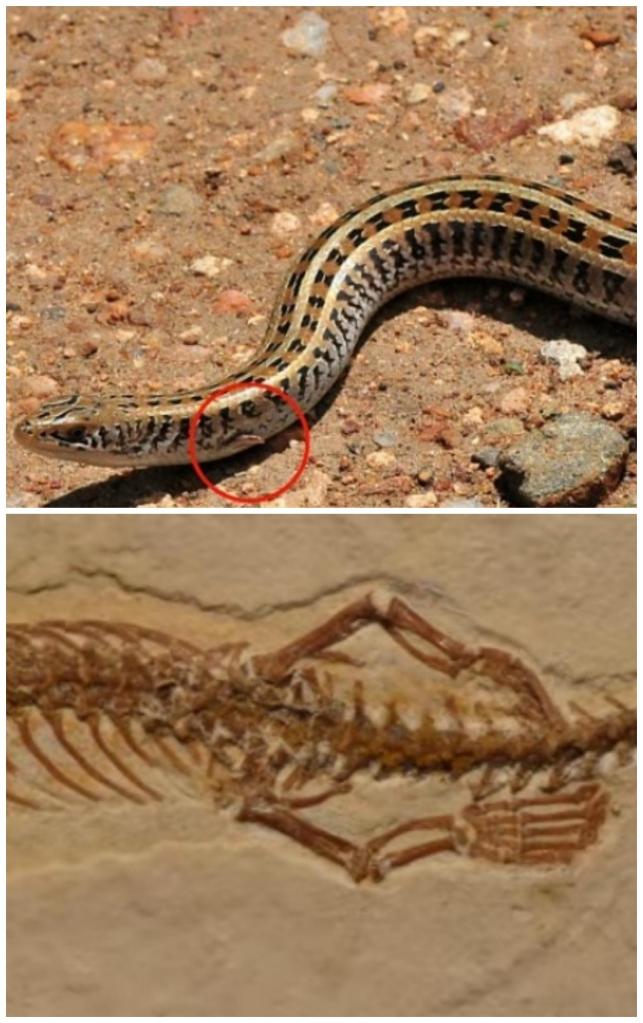
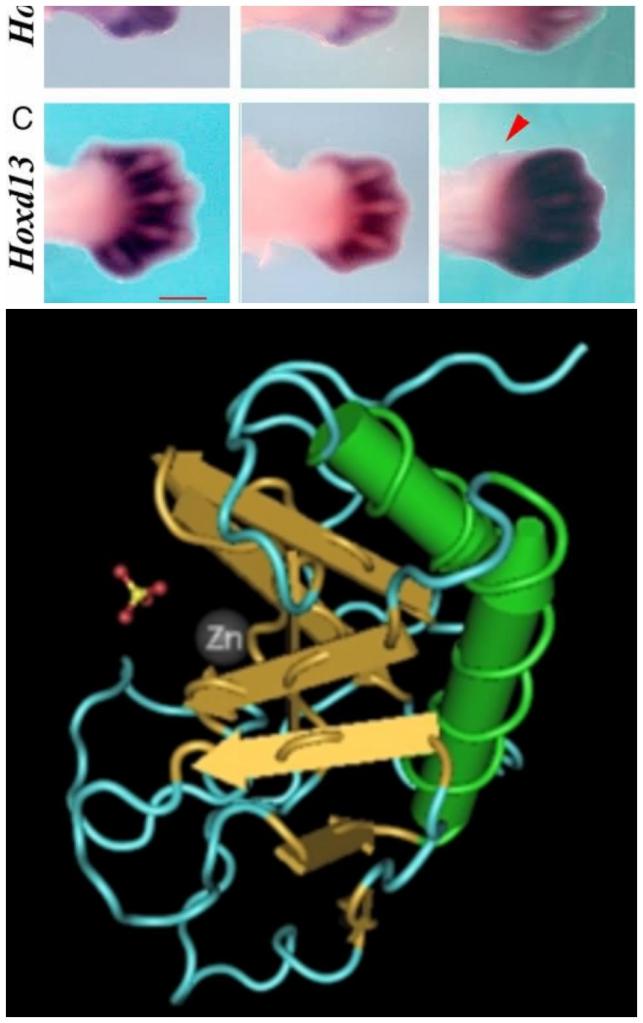

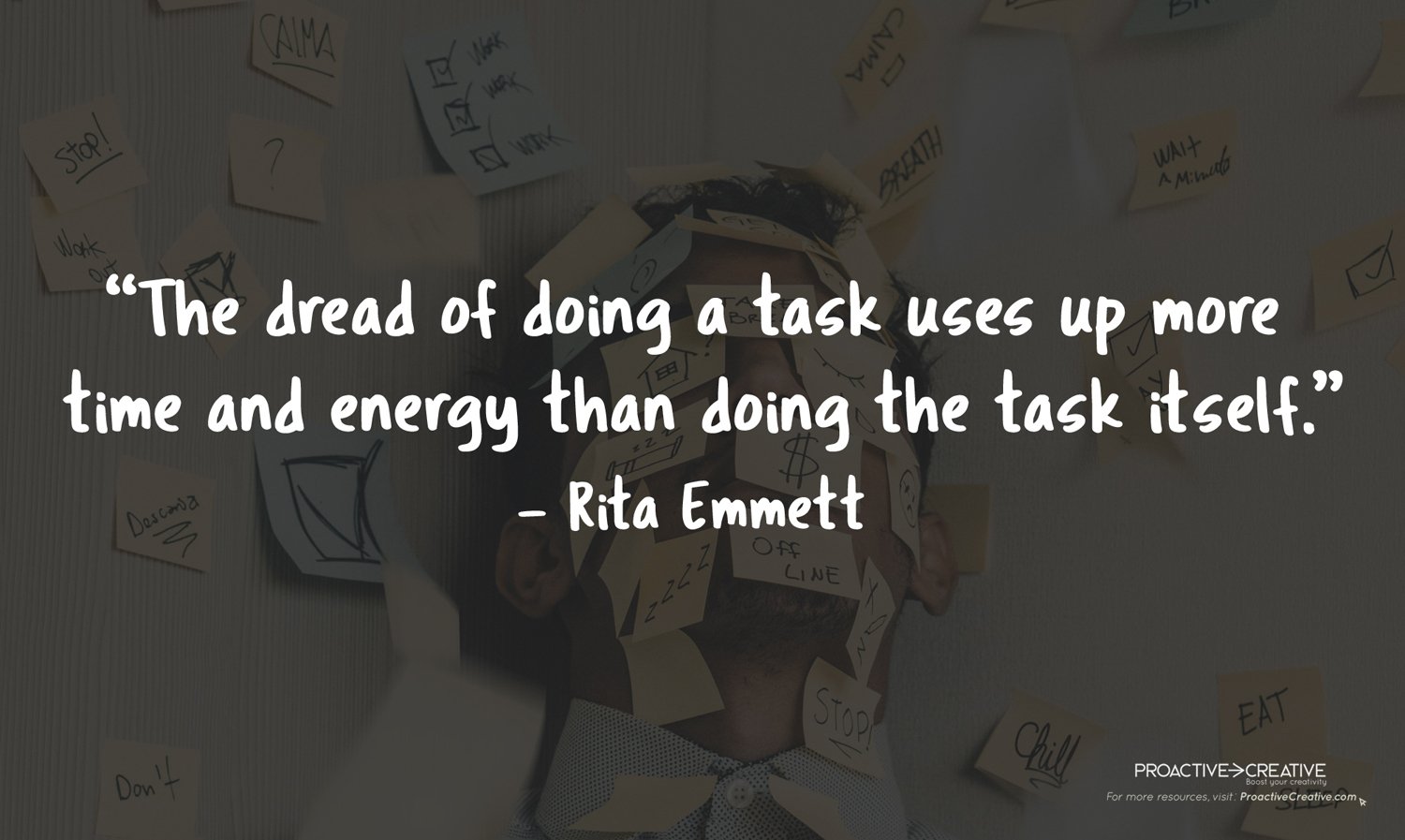


![CONCENTRATION QUOTES [PAGE - 3] | A-Z Quotes](https://www.azquotes.com/picture-quotes/quote-if-you-can-keep-playing-tennis-when-somebody-is-shooting-a-gun-down-the-street-that-serena-williams-31-61-66.jpg)
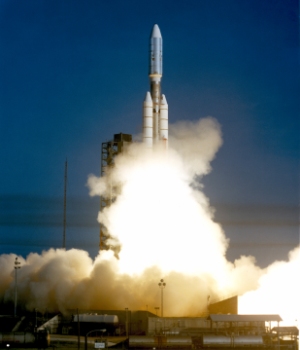











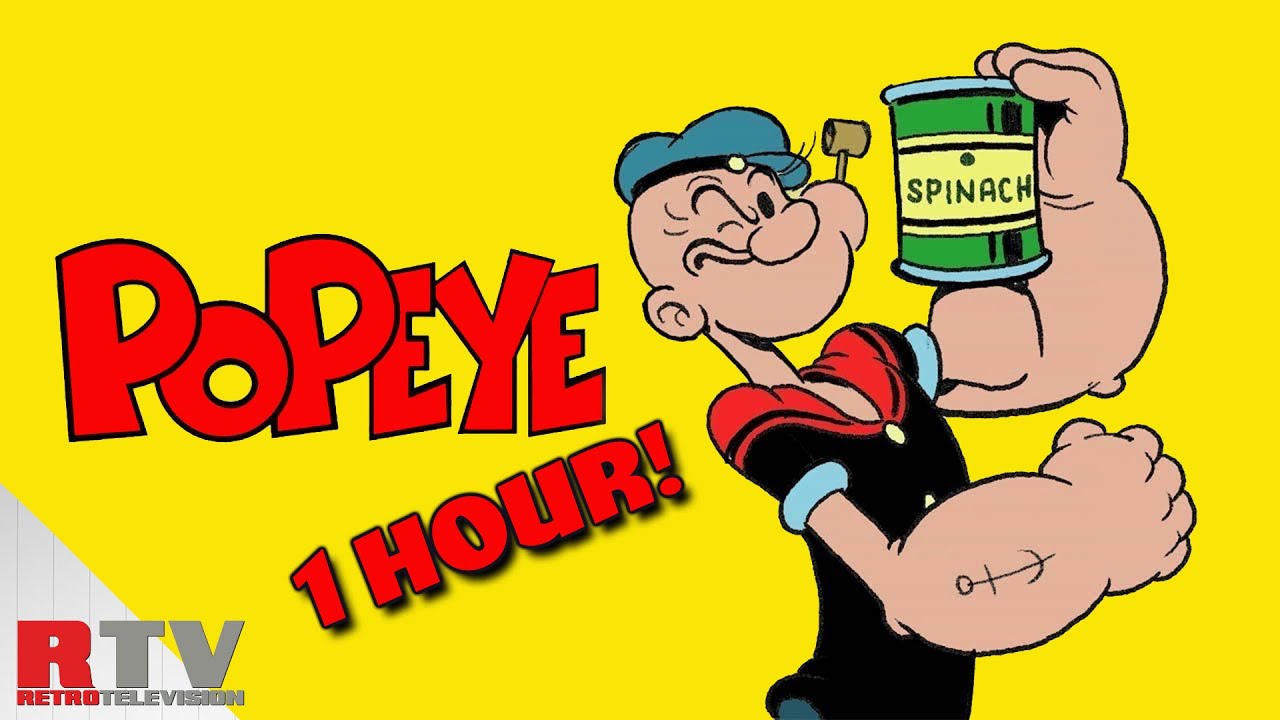
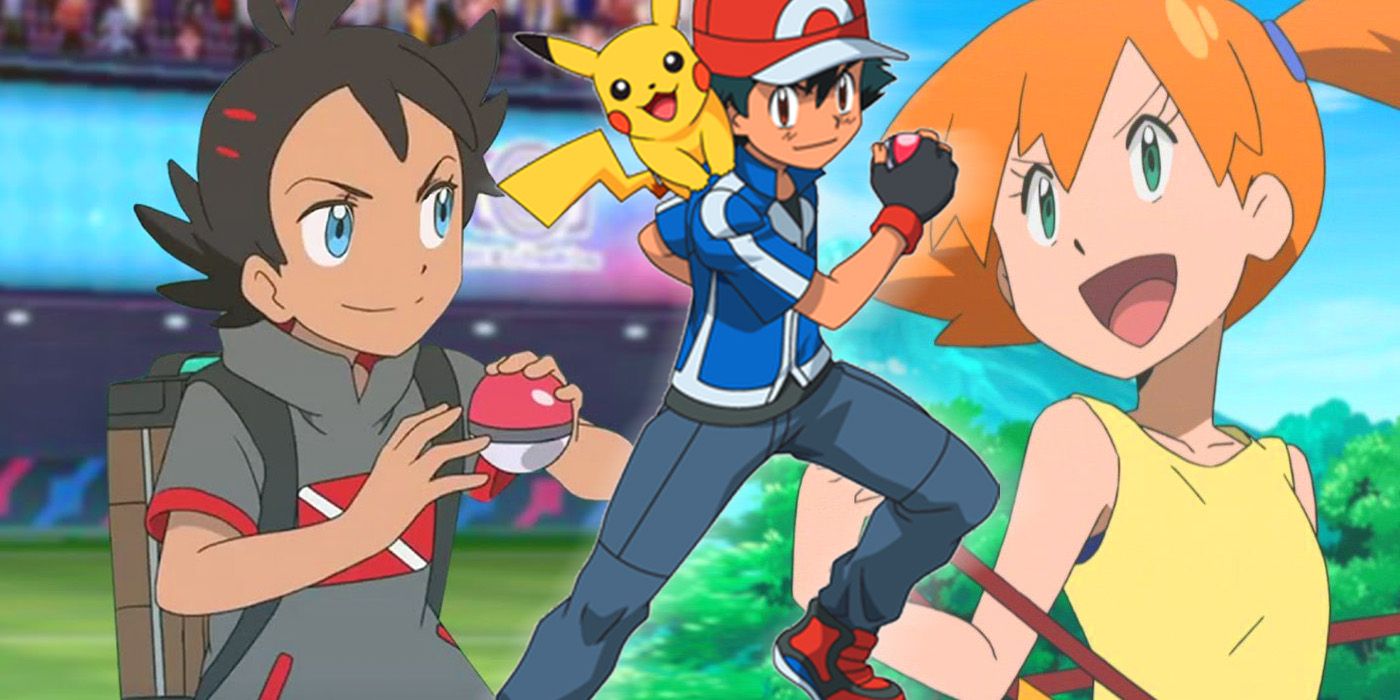














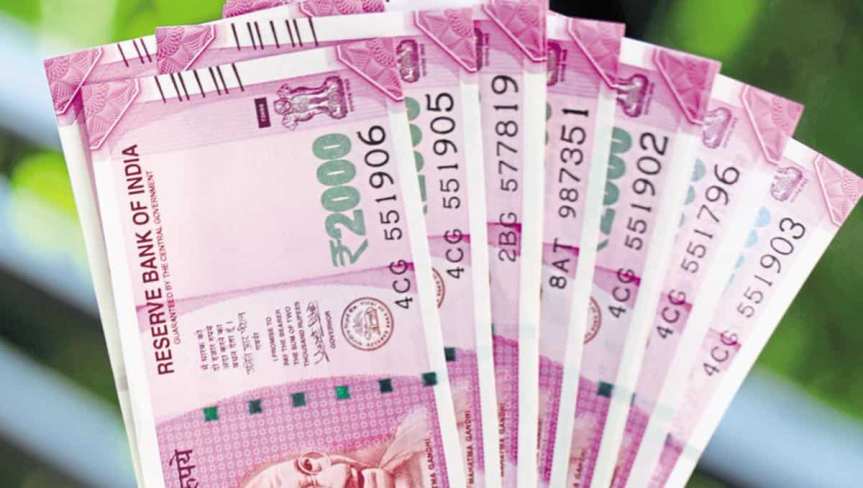


/cdn.vox-cdn.com/uploads/chorus_image/image/67290882/AFP_1WQ3EA.0.jpg)







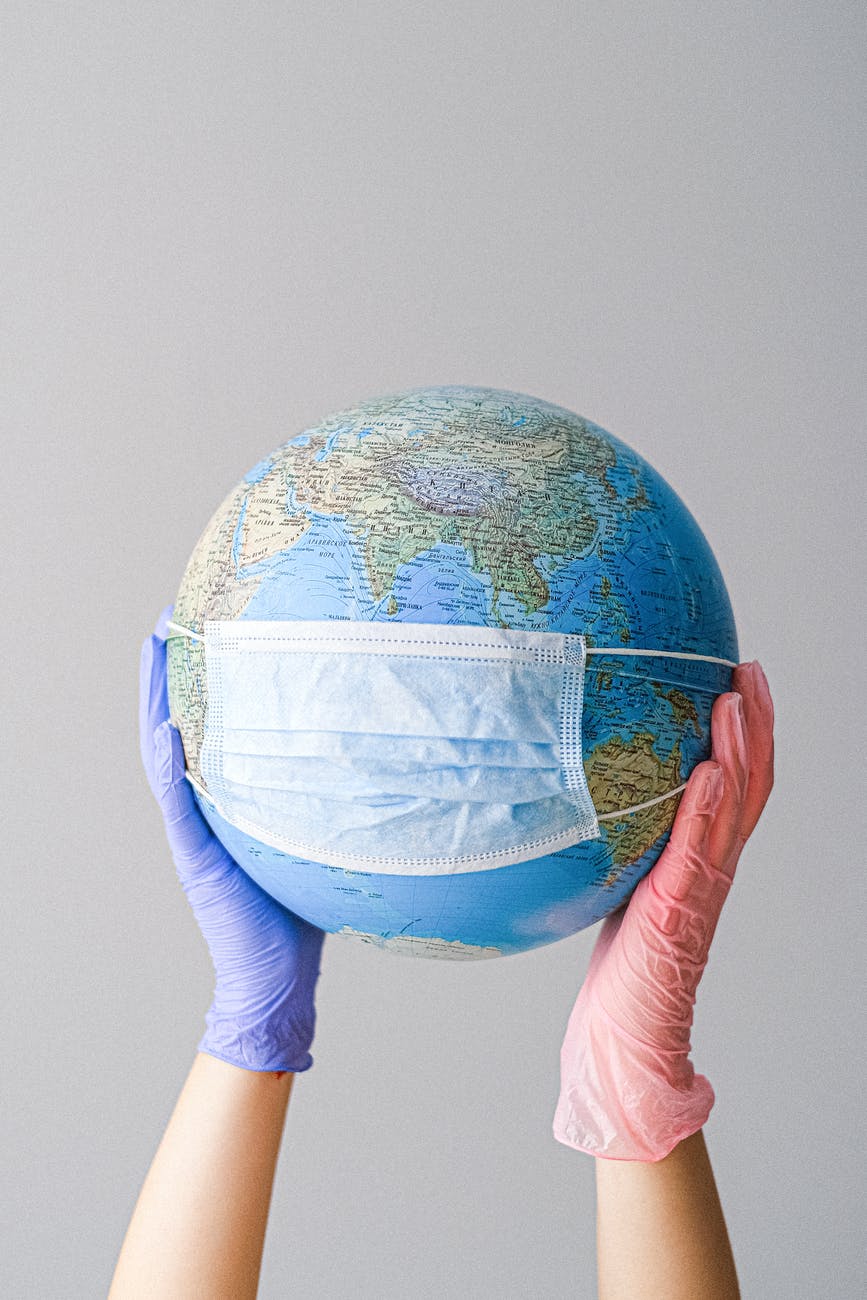
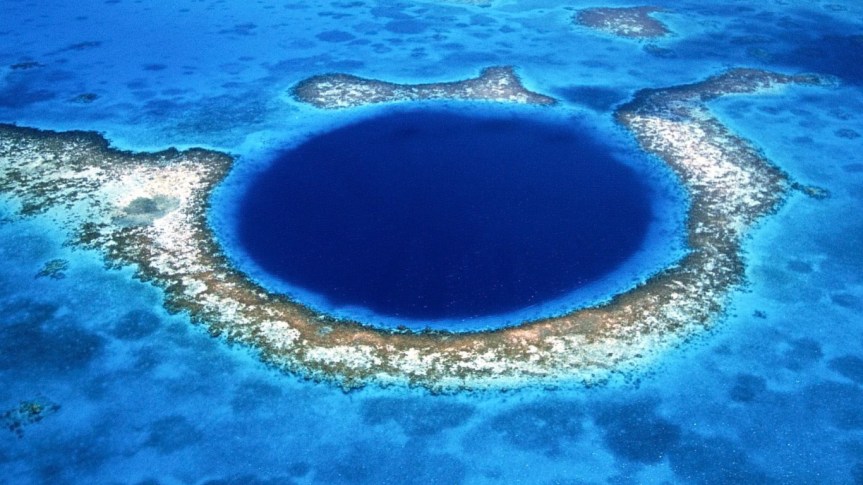


 © Provided by Jagran EnglishThe SII said that the official confirmation on COVISHIELD’s availability in India will be confirmed only after the vaccine is proven immunogenic and efficacious in human trials which are currently underway across the country.

 © Hindustan Times Workers sit on cotton bales being transported to a factory on a truck during an extended nationwide lockdown to slow the spreading of the coronavirus disease (Covid-19) on the outskirts of Ahmedabad. (Reuters)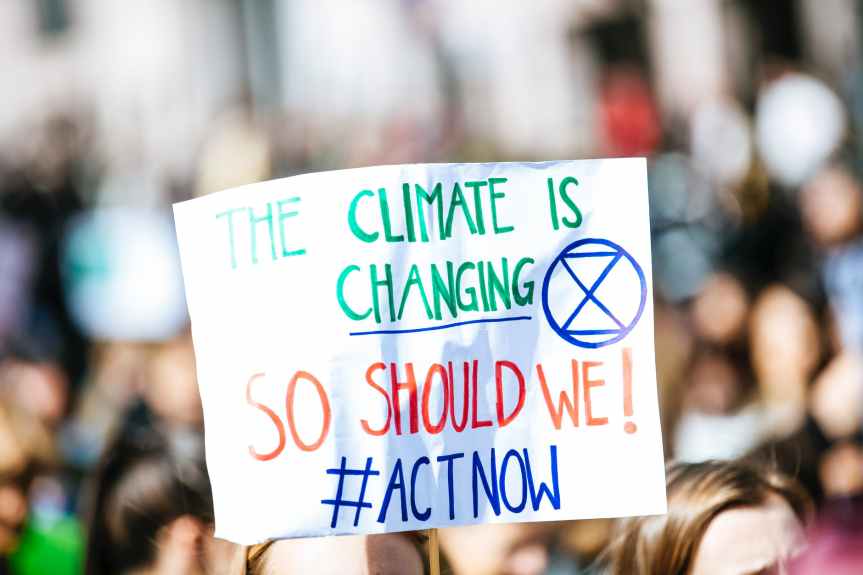
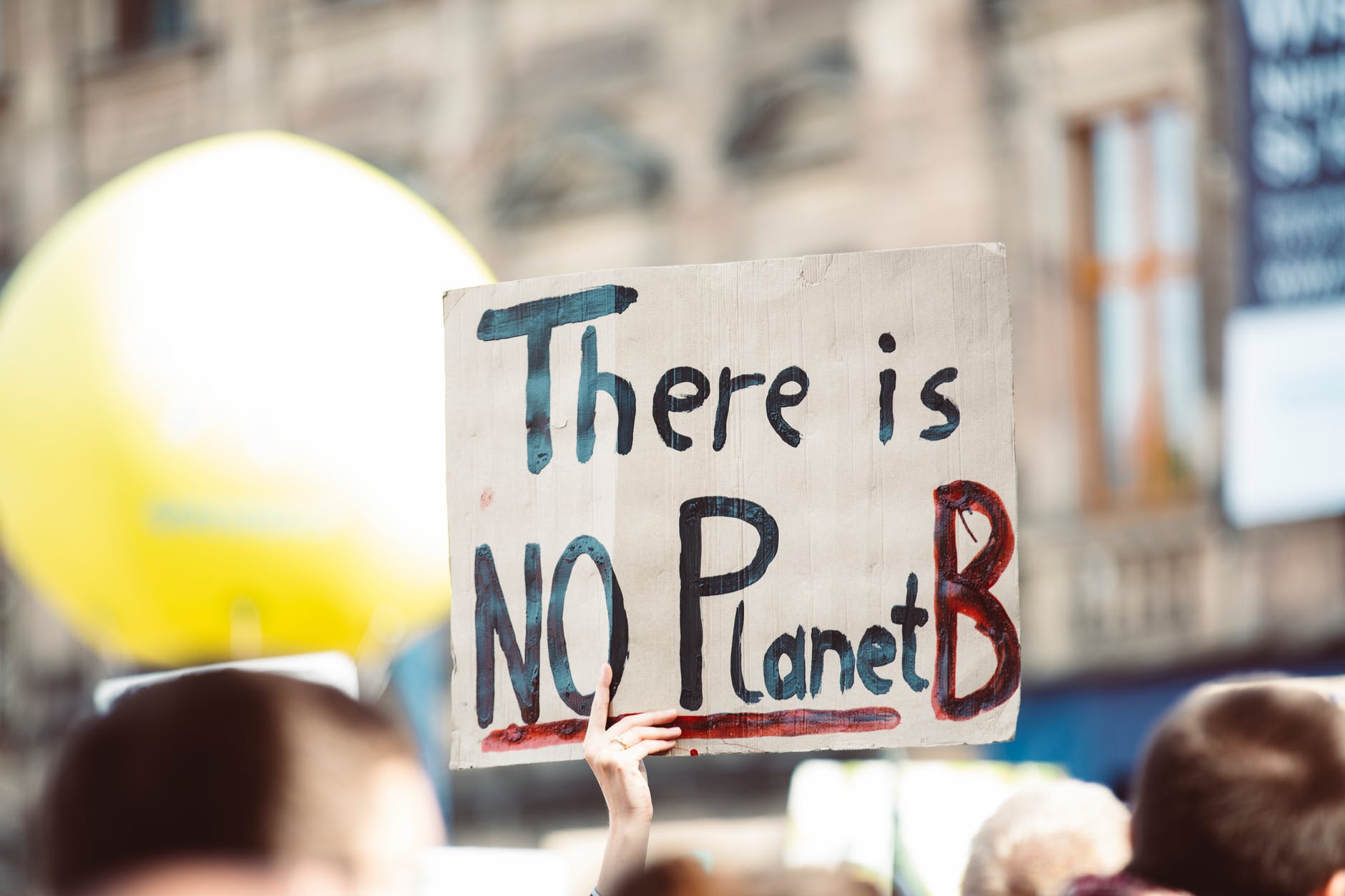
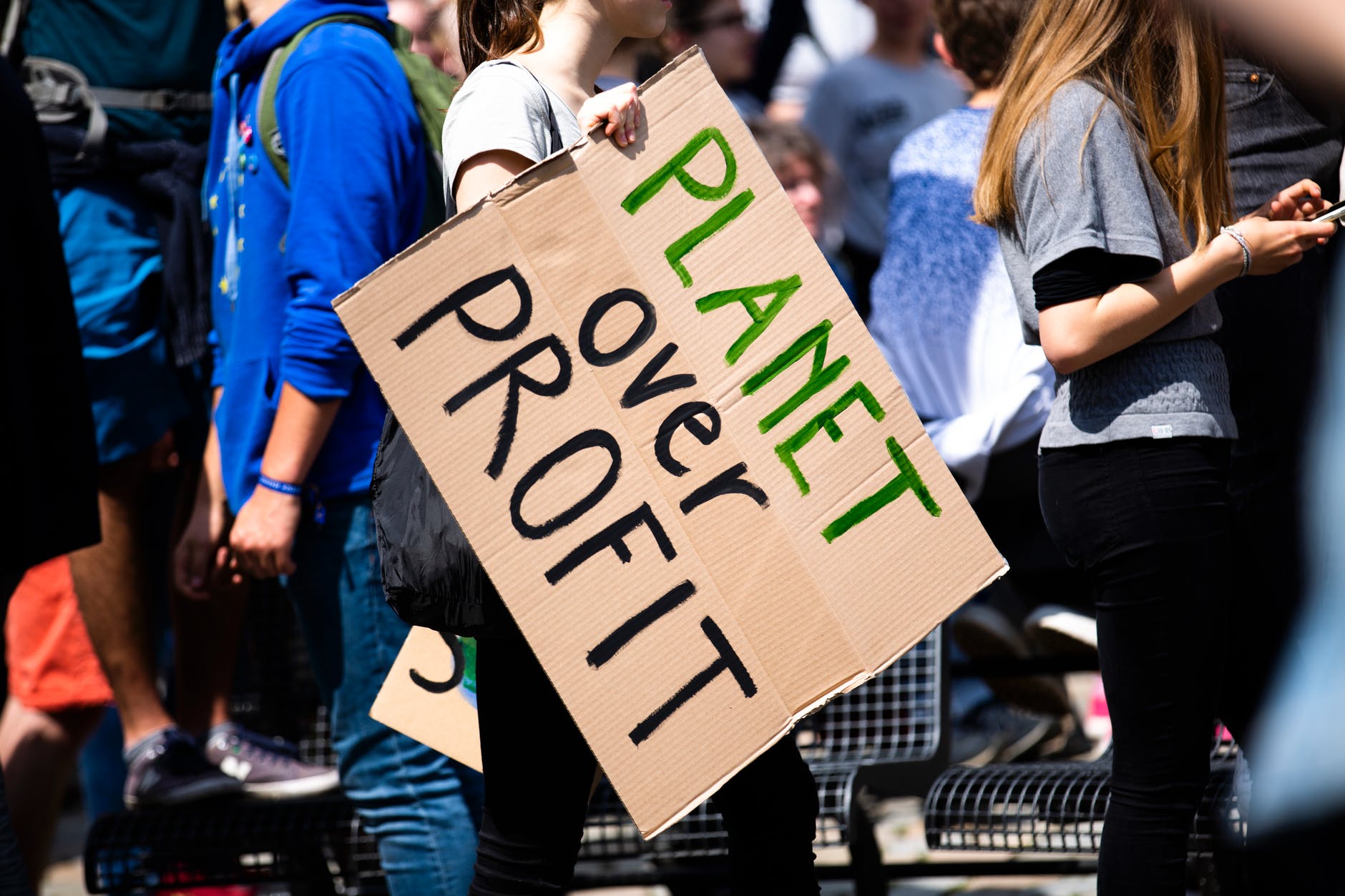

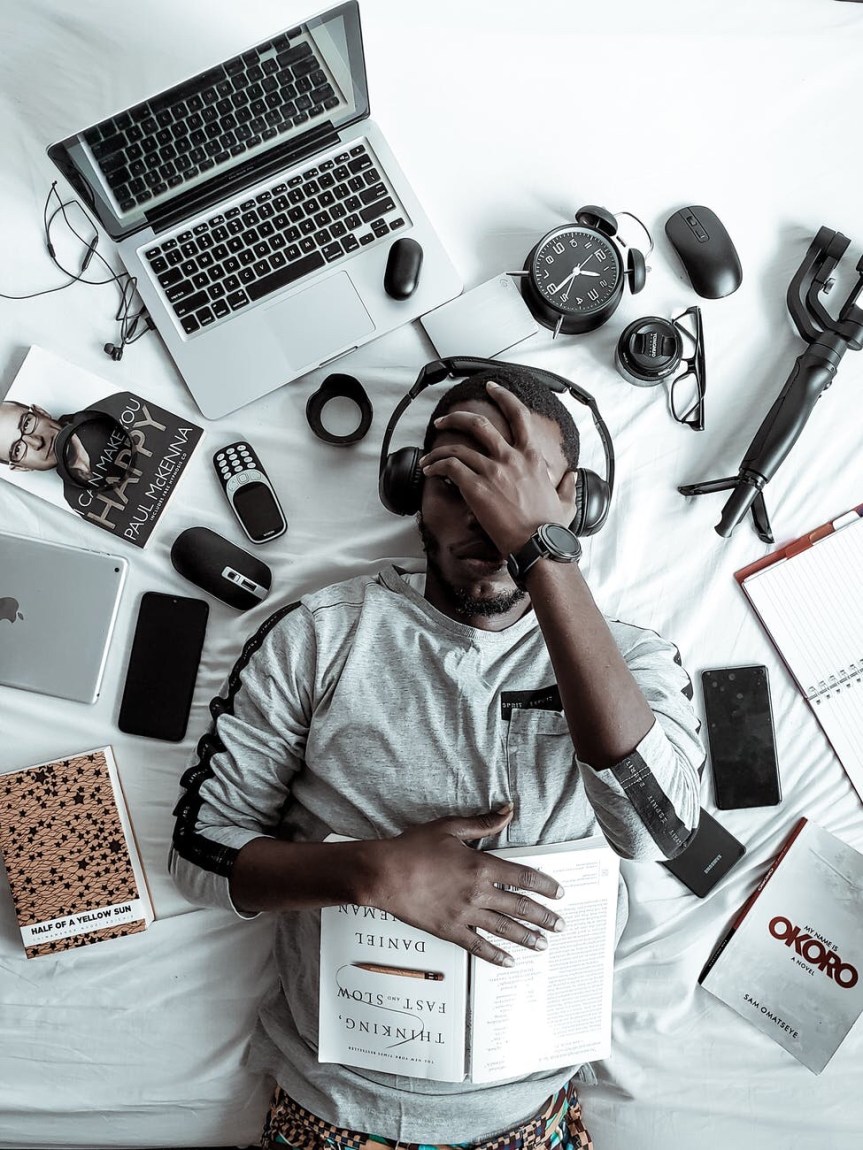






 Track2Training
You must be logged in to post a comment.