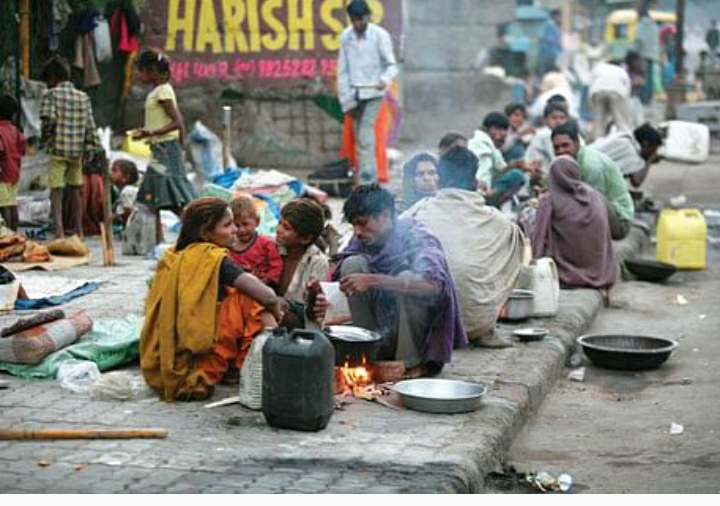
Inaccessible or Untouchables?

There is more to this existence than meets the eye!

Our economy is being ruined between inefficient government and sluggish opposition, if the situation does not improve then we will become the new ‘Untouchables.’


Untouchability has been a stigma for our country for centuries. Ambedkar, who fought for his whole life, claimed that there is enough evidence to suggest that it has been going on since 400 BC and it has always been the way of Indians to live.
This is the reason why devout Hindus on one hand and committed inclusionist Gandhi, on the other hand, believed that it is good for us to end this deadly practice. And Nehru, who relied on social justice, had said that India will never reach its true height until we end the caste system and ensure equality for all Indians.

This is the motive that our constitution made untouchability illicit and considered it a punishable offence.
But is it over? No.
Untouchability is deeply ingrained in our thinking and is seen openly. Its ugliness has recently increased, which has been promoted by some political parties, who want to keep it alive to achieve ruthless majoritarianism.

Now only the lower castes, Dalits, are not suffering. In some parts of India, indigent people belonging to a particular community have become new untouchables. So in some parts, some tribes are the new untouchables, who have been left marginalized by governments to grab their land, forest and mineral wealth.

And now, after this pandemic in the country, we see a new class of untouchables is emerging. These are sick, migrant labourers, unemployed and extremely impoverished people. Their connection with the cities is broken and their villages do not want to take them back because they are unemployed and miserable and additionally there is a risk of health issues.
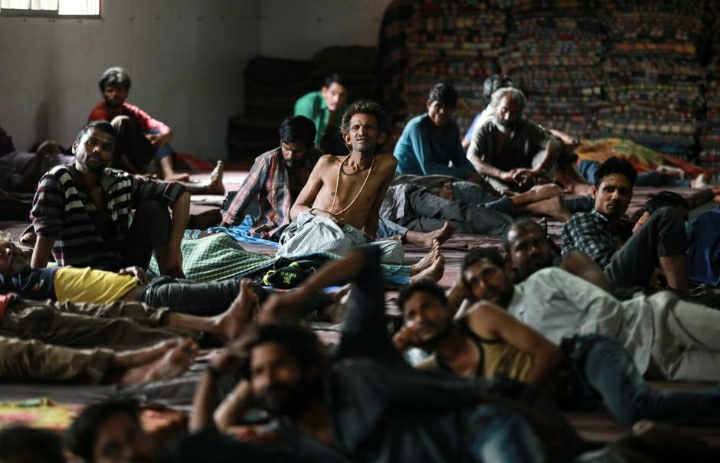
Today the suffering/affected people are being boycotted openly. Their wives and children are not allowed to be home quarantined as per the regulations. People are getting them out of the village, throwing them along with their family members from trains, refusing to burn in the crematorium when one dies. Dead bodies are being collected in hospital corridors. Nobody wants to accept them, not even own family. The corpses are placed next to the patients being treated. It is like a return to the fierce plague.

But, today who is the frustrated-indigent?
No, not the farmers who commit suicide every year due to poverty. Now, these dispirited poor are those who were working in our factories, offices and our homes till back in the days. It also includes small traders, food carts, autorickshaw drivers, small restaurant workers, multiplexes and security guards standing outside malls.

Viruses and lockdowns left them unemployed, homeless and nearly devastated. And now about 14 crores middle-class families have also been associated with them. According to research, their savings will end by the end of July. That is, they will be poverty-stricken.

A recent survey shows that 84 per cent of the households have suffered severe loss of income after lockdown. They are living on their savings right now. By the end of this month, with the increase in rains, many middle-class families will fall into the category of destitute.

They will also be unable to spend on treatment or meet basic family needs. They will have to leave the rented house, sell their goods and borrow money at such a rate, which will become impossible for them to repay later. They are also worried pensioners who relied on interest from the bank, as banks have reduced interest rates.
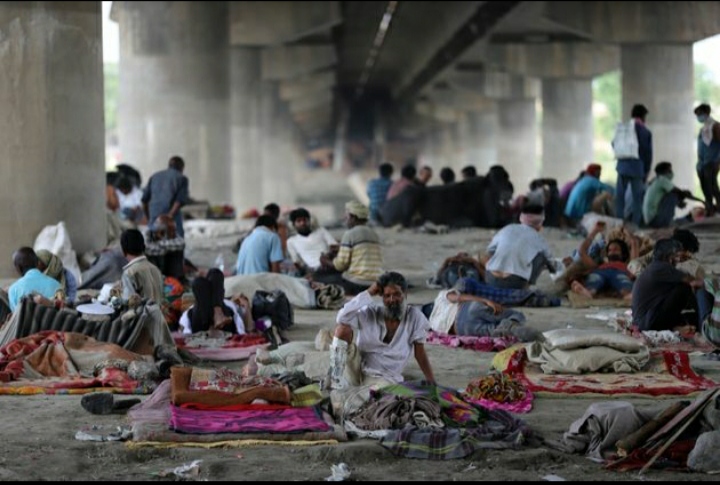
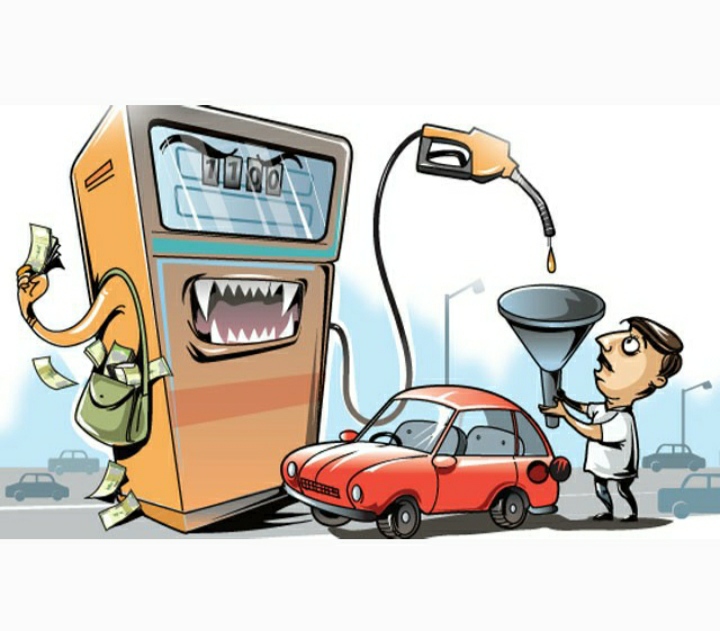
Those who counted on their children working abroad are also trapped because their children have lost their jobs or lost wages. Meanwhile, the prices of petrol and diesel are continuously increasing, while the prices should have been reduced based on the global trend. This is going to make everything expensive.

Overall, the pace of the wave is not stopping and more and more people will continue to drown.  The government is refusing to provide cash in their hands, as some other countries are doing. These are the new untouchables. Nobody has time for these and the government has the least interest in their future or prospect. Instead, govt is making hefty policies of millions for billions, which will never reach out to these people.

An economy that was ready for a better future, is being wrecked.
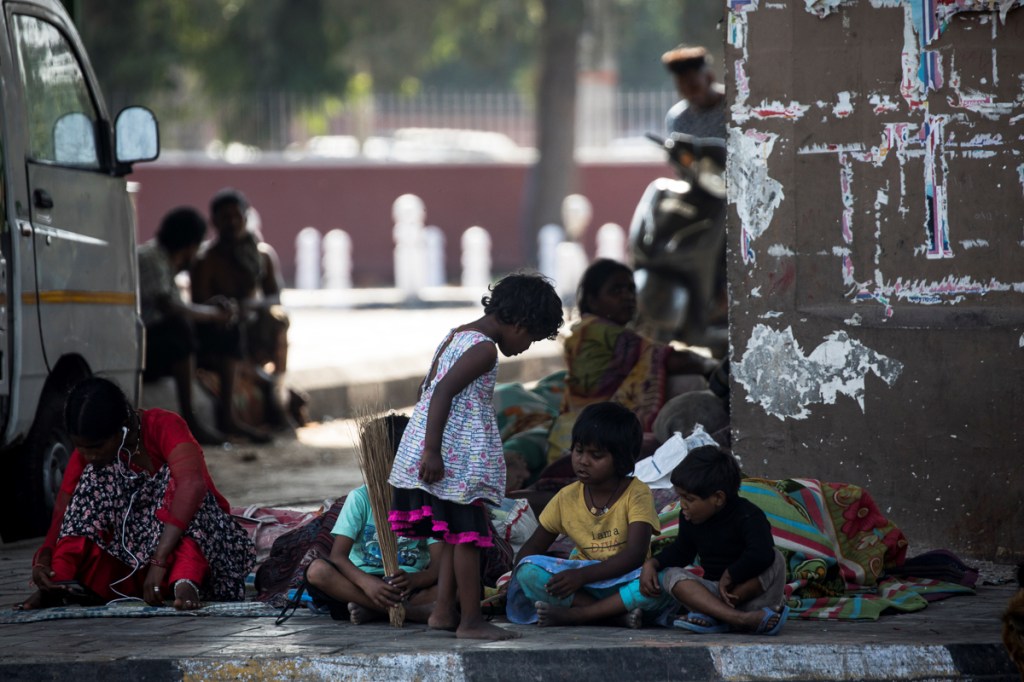
COVID-19 pandemic may lead to rise in child trafficking

The nationwide lockdown which was imposed in the nation to stop the spread of novel coronavirus can lead to a spike in child trafficking cases because of pandemic induced economic crisis.

The increased insecurity, financial constraints, and marginalization induced by COVID-19 are key drivers for families grasping onto straws of survival for pushing children into trafficking.ย  From states: Assam, Bihar, Chhattisgarh, Delhi, Maharashtra, Telangana, West Bengal, and Jharkhand cases have come up.

Since poignant reality has hit the migrant laborers, that poverty and hunger await them, many will be forced into a vicious debt cycle at predatory interest rates because of their dire financial situations, which will prove to be a fertile ground for child traffickers.

Children are trafficked first and then placed in labor, either forced or for a sub-minimal wage. However, the most unfortunate ones especially young girls are forced into sexual exploitation.

Ever since the lockdown has come into place, the traffickers have become active and have started approaching potential victims and families and even handling out advanced payments for their children. Not just this, once lockdown is lifted and normal manufacturing activity resumes. Factory owners will look to cover their losses by employing cheap labor and the easiest way of doing this is by employing child labor.

For this, policing alone would not be the solution and the problem of child trafficking persists because there is a ready market for child labor. The contractor who is engaged in supplying labor should be kept under strict vigilance in a bid to prevent child trafficking and child labor.

The apex court has contemplated setting up an expert committee to address this issue.

The business of commercial sexual exploitation which took a downturn due to lockdown restrictions would look for innovative ways to be back in the business and overcome the losses by engaging younger girls as they fetch more money. Underage girls will be sold into prostitution and the number of street children will be pushed into begging will also give up.

With the transportation be resumed, child laborers will be sent back home by their employers armed with fake id and documents. Children working in hazardous occupations are at a higher risk now since no employee will reveal their identities and numbers as employing them is a criminal offense.

There are reports that 136 minor girls have been married in Bengal as the agricultural class in the state had only lost the livelihood due to lockdown but was hit by Cyclone Amphan.

It has been found that in 115 districts of Bengal, Bihar, Jharkhand, Rajasthan, Assam, Chhattisgarh, Maharashtra, and Delhi where many families were rendered jobless, child trafficking and middlemen have become active. Middlemen have started making advance payments to poor families without livelihood for taking their children in the promise of providing employment or getting them married.
Over 39 crore โ€“ of unorganized and migrant workers on the fringes or outside the socio-economic security umbrella, are the most vulnerable. This makes them the easiest target for the organized crime network. Hundreds of thousands of children will be enslaved. A large number of these laborers will be children, forced out of school, bearing the burden of sustaining their families. Thousands of children will likely be trafficked across the country to work in manufacturing units where they will be paid meagre to no wages and will most likely face extreme physical, mental, and sexual violence.
Pornhub, the largest pornography platform in the world, has seen a 20-time jump in India, from 0.9% on February 24 to 18.1% as on March 16. A large segment of this ‘content’ includes trafficked children who are exploited to create pornographic material. Adults and children who consume this content are likely to ‘normalize and fetishize’ child rape and sexual violence, which may translate into offline sexual violence.

As the central and state governments struggle to contain the immediate health and economic challenges, a great amount of planning must go into dealing with the imminent impact of this crisis, especially in terms of the safety of the most vulnerable children.

Taking Care Of Your Mental Health In The Times Of COVID-19

Breathe In. Breathe Out.

Hey, Itโ€™s normal to feel stressed, nervous, anxious, drained or worried right now.

COVID-19 has most likely changed every aspect of your life- your family dynamics, your eqaution with your friends, your social life, your schooling, your career, your interests, your habits and even you. As you deal with uncertainity and all the emotions that tag along, itโ€™s crucial that along with your physical health, you take care of your mental health as well. Here are some things that I religiously follow and have worked for me. I hope they work for you as well!

You deserve patience, so be patient with yourself

  • Allow others to help you when you’re struggling. Don’t be shy to ask for help from those you trust and the ones who care about you. Asking for help is not a sign of weakness, it’s a sign of strength, strength in acknowledging that you need help and that you’re willing to work towards a better self.
  • Remind yourself that โ€œIt will passโ€. Like any other moment, any other journey, any other hurdle in life, this too shall pass, for better. We can’t control what’s happening around us, and with the lack of control and constant bugging of how uncertain the times are, it’s important to remind ourselves we are doing what we can and that’s enough for today.
  • Self-reflect and see what you feel is important to you right now.

Reach out

  • Call your close friends and share your feelings with each other. As simple as it sounds, it is therapeutic, and will leave you in a better state than before. This will help lift off the weight from your chest.
  • Arrange a video call with friends, seeing their faces is as close to physical proximity as you can get right now.
  • Text a friend you haven’t spoken to in a long time, rekindle with them. Maybe reminiscence the times you spent together, memorable moments that you shared, tell them something that remind you of them, go where the conversation takes you.

Take care of your body

  • Since there is very less to no physical activity. Make an active effort to do any form of exercise that you like: walking, jogging, skipping rope, dancing, Zumba, weights, yoga.
  • Get your quota of fresh air during the day. Inhale as much oxygen as you can.
  • Stick to a sleeping routine. In times that are so uncertain and unstable, having a routine can make you feel in control and calm about your surroundings. If you’re having trouble with sleeping, check my article- What should you do if youโ€™re struggling to sleep in quarantine?
  • Practice deep breathing. Try 4-7-8 breathing if you feel anxious or stressed.

Eat your meals

  • Since most of us have erratic sleep schedules it’s no secret that we’re skipping out on meals. Try and eat three small meals each day.
  • Don’t starve yourself. It’s normal to not want to have full meals sometimes. Choose a trusted snack and rely on it whenever you feel hungry but not enough to have a meal.
  • Stay hydrated. Drink 4-6 cups of water daily to avoid dehydration. Warning signs of dehydration can include dizziness, weakness, low blood pressure, or urine that’s dark in color. (source: Harvard Medical School)

Why it’s okay to not be productive right now

Pandemic or not, your self worth is not proportional to your productivity

Like me, if social media has become your only out to boredom, you may have noticed conversations about the notions of โ€˜productivityโ€™ rocketing. Whether it is your twitter mate updating you with their daily baking sessions or an Instagram friend showing off the pages and pages of work that they finished, or your family groups bombarding you with motivational posts about how to spend your free time, if you have any. Thereโ€™s so much pressure right now to make the most of this ‘free’ time. Itโ€™s exhausting to even try to keep up. The rhetoric around productivity is so romanticised, glamorised and even glorified. However, every time I come across a reminder to be productive, I find myself thinking whether is it really a practical thing or can being productive everyday be a damaging to oneself?

As a university student doing her under graduation, the increase of workload, since the onset of Coronavirus in India, hasnโ€™t gone unnoticed- being given a task after task, a deadline after deadline took a toll on all students. At the start of lockdown, I had internals, I was constantly pulling all nighters revising for the tests, completing assignments and keeping up with the daily workload of the online lessons. In this sense, it felt like nothing even while being locked up in our homes. There was always something that had to be submitted, something that needed to be revised or something that I needed to start working on. I was trying, as was everyone, but oftentimes, it felt like all the efforts amounted to nothing in the end. The workload didn’t end with the end of the semester, having to take-up internships in the middle of a pandemic caused immeasurable pressure and paranoia. My work plans are disrupted by distractions, I find myself unknowingly overextending and the balance between work & free time has become invisible. Not to mention the stress is unavoidable, and I constantly find myself waking up wishing for the day to end.

Is there anything that can be done?

Last year, if someone told us that we would be trapped inside our homes in a state of quarantine due to a deadly pandemic, we would have laughed it off. So, at the time our worst and unimaginable fears are coming true, being plunged into uncertainty does not mean that we have to function effectively alongside it. And therefore, being productive is no longer as important as it was before.

It is of utmost importance to acknowledge that not everyone is fortunate enough to be able to use this situation to hone their skills, try new hobbies, explore new passions or build something unforgettable. In the midst of rapid unemployment, losing your loved ones, anxiety caused by separation from friends and family, isolation and loneliness, bad mental health is inevitable- and that’s okay. It’s okay not to be okay, it’s okay needingย to take time off. It’s okay to listen to your body. Donโ€™t be mad at yourself for not being able to deal with the situation as efficiently as your friend or your parent or your Instagram mutual. Getting out of the bed at a reasonable time is a task enough. Not putting off taking care of yourself and your needs is a task enough. Keeping up with your friends and checking up on them is a task enough. Spending time with your family is a task enough. Doing these tasks is no where near the perfect productive day I imagined – and it wonโ€™t be for a long while. I was meant to be getting excited about interning opportunities and travelling more and capturing more. Now when everything has gone south, the task of prioritising yourself is a rebellious act.

How can we change this mindset?

If youโ€™re anything like me, university and work mean that I can not entirely ignore all my responsibilities in favour of self-care. Prioritising what you have to do is a good start to make sure you can do what needs to be done. Practice different methods or working. For me, sitting at my desk for more than 7 hours, staring at the laptop screen is quite overwhelming, mentally exhausting and doesnโ€™t leave me feeling fulfilled. Taking breaks to perhaps watch an episode from a show that I’m currently hooked to or to mindlessly scroll on twitter ensures that I feel the balance.

This unsettling environment can be taxing. Forgive yourself for making mistakes.

What should you do if you’re struggling to sleep in quarantine?

For many of us, quarantine has disrupted our daily routines which have in turn affected our sleep patterns. Sleep is essential for the well being of our mental health, so if like me, you’re too struggling to sleep during this challenging time, Iโ€™ve picked out three things that have personally helped me to relax and fall asleep.

Avoid checking the news before sleeping

Iโ€™ve noticed that if I watch or read the news before I go to sleep, it leaves me with anxiety, feelings of uncertainty, and even stress which then keeps me awake thinking about what’s to come next. Getting your news updates in the morning is so much easier for me as it gives me the whole day to process whatโ€™s happening in the world around me instead of trying to process all the heavy information at night.

Create a routine for yourself

For a person who has not believed in maintaining strict routines, I discovered that creating a routine for yourself can help you by providing a structure and offer feelings of normality, which for me now has taken away a lot of the stress. In the time that is so uncertain and unstable, having a routine can make you feel in control and calm about your surroundings. Try and stick to the same sleep schedule at night so that you can follow your daily routine without any trouble.

have a relaxing bath before sleeping

Taking time out of your schedule to have a relaxing bath or shower can help you fall asleep faster and also improves the overall quality of sleep. The cooling down of your body helps build a strong urge to sleep which can send you into a deeper sleep. This is something that has undoubtedly helped with my sleep struggles over the past month.

acknowledge and accept the change

At this time it is very difficult to not feel anxious about what the future holds and whatโ€™s to come. Itโ€™s human to feel worried about yourself and the ones you love and care about and it is also normal for there to be a change in the sleeping and eating patterns to feel more comfortable. But if you feel like you’re losing control of things around you, take a deep breath in and remember that this will not last forever.

4 Productive Things To Do During Quarantine

REMINDER: IT’S OKAY TO NOT BE PRODUCTIVE EVERYDAY. YOUR WORTH IS INDEPENDENT OF YOUR PRODUCTIVITY

PART 1

Here are 4 productive things to do during quarantine:

1. Learn to play an instrument

Playing an instrument is a great skill, you could start with an instrument that you have always thought of playing- a guitar, a ukulele, a tabla or an instrument that is fascinating to you. Though it will take some time to get used to the habit of following YouTube tutorials or online lessons, but once you get a hang of it, youโ€™ll realise just how rewarding it is. With so much time on your hands youโ€™ll not be under any pressure to reschedule your day and make time out of you busy schedule, instead youโ€™ll be able to take it at your pace and pay more attention to details. 

Hereโ€™s a list of easy to learn instruments: Top 15 musical instruments you can easily learn & play

2. Read more books

There are hundreds of thousands of authors and an even bigger amount of books you could read. Books are an essential item for improving your language as well as your vocabulary. They develop your knowledge – and like instruments, they help sharpen your memory. If you donโ€™t want to shell out money from your pocket and/or are sceptical to order paperbacks online from stores like Amazon or Flipkart, the easier way out is free e-book websites. 

You can try and give EPDF or PDF Drive a shot. 

3. Bake

Baking is incredible and extremely fulfilling: mix a few ingredients, put it in the oven – and bingo! You have a tasty treat for yourself. Baking can also be advantageous for mental health as it is very therapeutic and calming for the brain. Research show that it is a great stress reliever and can leave you feeling happier and more positive.  

Here are some YouTube channels that will make you want to run to you kitchen to get your supplies

  1. Bake With Shivesh
  2. The Terrace Kitchen
  3. Spice Bangla

4. Learn a new language

If you want to level up and attempt a more challenging activity, which will benefit you exceedingly- learn a new language. It is scientifically proven that learning a new language makes you smarter and helps in developing cognitive abilities. Learning a new language help strengthen your listening and multitasking skills. Research also suggests that it helps prevent the onset of Alzheimers. 

There are plenty apps and e-learning wesbites that can help you learn a language. These include: Affordable yet excellent language courses on Udemy and Coursera also offers such free and paid courses by prestigious universities from all over the globe. 

What are the alternatives to Employees layoff?

Due to the sudden economic crisis resulting from the COVID-19 pandemic, organizations are seeking out ways to cut costs. Out of which, employee layoff has also become one option. But before doing this, companies should consider how it will affect them in the long run. Instead, companies should find creative alternatives to layoffs to keep the business afloat.

Here are some alternatives that businesses can consider:

  • Ask employees for ideas: Ask for suggestions from staff about how to cut costs and improve the productivity of the organization. Getting employees involved can ease insecurity and promote solidarity, even if what you save doesnโ€™t meet your shortfall expectations. By this, employees will also feel valued as their suggestions will be heard.

ย 

  • Hiring freeze: Some companies deploy mass lay-offs but are still placing job postings at the same time. This way, they are getting rid of valuable human capital to save money while bringing new employees at low salaries. It should be avoided, as retaining employees cost less than to replace them. Consider a hiring freeze as an alternative to layoffs.

ย 

  • Slight salary cuts: Explain everyone across the board that salary cut is the need of the hour. The reduction should be such, that it won’t completely shatter employees’ finances, but also give the business a bit of a financial break.

ย 

  • Work from home programs: Keeping employees at the workspace costs money. People consume water, electricity, office supplies, and other facilities. Sending workers home can cut costs to a large extent without dumping them.

ย 

  • Cut part-time staff and contractors: If crises are bigger, it’s legally easier and cheaper to end the employment of contractors and part-time workers. One can always rehire if necessary. Instead of using costly temps, consider rehiring retired employees that already know your business, to fill gaps.

ย 

  • Reduce employee benefits: Cut employee benefit plans and policies like medical or dental, 401(k) plans, insurance plans, leaves, and other fringe benefit policies.

ย 

  • Offer extra days of unpaid leave: On this most of the employees will agree, as it would be like a vacation time although unpaid.

ย 

  • Institute shorter workweeks: Reduce the number of working hours of the employees and proportionally decrease pay. This can be considered as a seasonal arrangement for slow periods. Shorter workweeks can cut costs by a significant margin.

ย 

  • Focus on Efficiency:ย Find out ways on how things can be done faster, less expensively, and more productively? Where can cash be saved? How to encourage staff to become more efficient in their jobs?

Are layoffs necessary sometimes? Yes, but they should be a last resort instead of a front-line option. Itโ€™s better to lay off some of the employees than to lose the business. But one should make sure, it is not the go-to solution when the business starts to slip into the red.


How Is Covid-19 Changing Prospective Studentsโ€™ Plans?

Everyone considers Covid-19 to derail the plans of possible future college students in this spring of jaw-clenching uncertainty. However, one major question is: How many people will be affected?

Multitudes of them, suggests the results of a new survey. One in six senior citizens in high school who anticipated full time attendance at a four-year college before the novel coronavirus outbreak now believe they will choose a different path this fall. Three out of five students are interested in the ability to attend their first-choice college although they still intend to enrol in a bachelor’s degree programme. These revelations come from a survey conducted by the Art & Science Group, a higher-education consulting company, of 487 prospective college students. The outcomes provide an early look at how the epidemic affects college expectations for teenagers and how their plans for the near future could change.

Universities Changing Tuition Fees in Response to Coronavirus ...

These results are very solid, said the Art & Science Group’s principal. And they might inadequately-represent the future impact of what Covid-19 would once and for all be said and done this fall. Sure, you have seen the recent footage of college students setting out on spring-break beaches, ignoring recommendations for social distance practice. You’ve heard the argument that adolescents and 20-somethings aren’t worried enough about the global pandemic.

But aspiring undergraduate students worry a lot about how their college options could be influenced by coronavirus, the survey indicates. Almost all respondents (90 percent) said they consume information about the ongoing pandemic at least once a day, with 10 percent of the survey takers doing so hourly. Most high school seniors are radically changing their immediate plans despite school delays and lockdowns, the survey showed. Of the 17% of participants who did not think they would end up enrolling full time at a four-year college, a majority expected either to take a gap year (35%) or to participate part time in a bachelor’s program (35%). Seven percent said they would attend a college in the city and 6 percent said they would work a full time job.

Only 20 per cent of students were convinced they would attend their college of first choice. Survey participants who said they weren’t optimistic of choosing the college at the top of their list (63 per cent) identified different concerns. The most prevalent was cost: Twenty-one percent of those students said that because of the coronavirus their first-choice school may no longer be cost effective to my family. And 12 percent said either they or a member of their family had health concerns which required them to change their plan.

The Art & Science Group found that many other coronavirus-related fluctuations had prompted students to reassess their college choices: “I was unable to stay overnight at my first-choice school” (15 percent).Visits to the campus play an important role in the college choices of many students. Those meetings are an important measurement for enrolment managers of who is likely to enrol. Yet the spread of coronavirus forced schools everywhere to cancel innumerable on-campus programs scheduled for March and April (58 percent of students surveyed said they had encountered these cancellations, or expected them to experience them). That means that a lot of players must do without valuable information in the process.

The Art & Science Group also asked students how Covid-19 could have affected their thinking on the qualities that they pursue in a college. Thirty-five per cent of students said that “closer to home” colleges are now a more practical alternative than their college of first choice. Some said they were contemplating a less costly organization (32%), with a more familiar social network (22%), more rural (12%), smaller (15%), or “localized in a safer region” (10%).

Impact of Covid-19 on Manufacturing & E-commerce

How the Coronavirus Pandemic Impacts Security Service Firms

The novel Coronavirus outbreak has led to complete shut down of many parts of the world in order to limit the spread of the contagion and ensure safety of lives from the pandemic. The nation-wide lockdowns have had a very adverse effect on the production and supply chain and it has many economic implications which will be further discussed in this article.

Manufacturing sector was severely affected due to two main supply problems. Firstly, a ripple of disruption in production originated from the East-Asian manufacturing giant and quickly reached the other industrial hubs like the USA and Germany, because of globalization of trade. Secondly, even the regions that are not as affected by the pandemic cannot produce smoothly because of disturbance in the supply of raw materials and inputs from hard-hit regions. The service sector isnโ€™t untouched either as restaurants and movie theatres go out of business due to lockdown as well.

One of the key elements of the supply chain that is most affected by the pandemic is the human resource. Humans are involved in everything, from logistics to doing actual work in manufacturing units. The social distancing norms limits the gathering of people and even the fear of catching the disease is making the industries lose labourers and workers. The currently operational industries that produce essential goods and e-commerce sites like Amazon and Flipkart are facing difficulty and/or not running as smoothly because they have to take stringent measures to ensure social distancing during their daily activities.

The lockdown may have pushed people towards online shopping but the things that they are buying are mainly the necessities so the other industries have been negatively impacted. Electronics industry has been affected the most as the main supplier of electronic parts and appliances is China. There has been a rise in sales of subscription services, whatsoever, and it is one of the positively impacted industries in the times of pandemic.

Indian economy is severely affected not just because of the lockdown but also because of its dependency on the epicentre of the pandemic itself – China. Many industries, especially the SMEs, heavily depend on China for supply of raw material so even if the lockdown was to be lifted at some time, these units will fail to operate. For India, one way to overcome this hurdle could be becoming more self-reliant.

Logistics can be made more efficient by eliminating the distributors between the supplier and the retailers and from suppliers to manufacturers. Not only does this ensure that less human resources are involved in the procurement and distribution process, but it also reduces the time duration, making the supply of goods and raw materials timelier. The human resource that is still involved needs to be taken care of and necessary precautions should be taken for their safety. 

The e-commerce deliveries can be made more efficient and effective by grouping up the deliveries of one locality together and doing them at once, even if it causes some delay. Inventory could be reduced and goods could be directly supplied to regions that are deficient.

Biotechnology is underrated!

33 Best Masters Biotechnology Programs for Commercialization and ...

Everyday, we see advances in almost everything around us. Not just technological advancements but even in living organisms as they continue to evolve with time. From the smallest microorganisms to more complex human beings, every living thing is upgrading just to survive as the living conditions become harsher. After the Covid-19 outbreak, it can be certainly said that new infectious organisms are also on the rise somewhere, waiting for their turn to enter the human world. Species are becoming extinct at a much faster rate due to human interference, lack of benevolence, and greed. With these developments, the role of biotechnology has become more significant than ever.

Biotechnology is the modification and usage of living organisms for various purposes like agricultural, industrial, and healthcare. We know that microorganisms like yeast help us in making bread and Lactobacillus leads to curdling of milk and they have been there for a long time now but now we know that there are several other such living organisms that have the potential to make lives better. These organisms are capable of doing work that are more important than making a loaf of bread or a bowl of milk but the fact that they can save lives! Biotechnology isnโ€™t even about only these organisms but also human beings in which genetic manipulation is definitely complicated but not impossible.

In the field of agriculture and animal husbandry, biotechnology has made it possible for farms to raise both disease resistant plants and animals that are also more resilient to changing environmental conditions. The population is growing rapidly and food shortage is a major concern. With the aid of biotechnology, it is possible to ensure that no man, woman or child goes to bed hungry through enhanced productivity of crops and animals that take up less space and resources. The new farming methods also need to be environmentally sustainable so as they are not burdensome on mother earth and nature. The practices and manipulation must not take the dignity of species that canโ€™t even speak out their concerns, for granted and humanity and empathy must persist. 

The healthcare has also been benefited by introduction of more effective medications and drugs that are biotechnologically synthesised and pose lesser risks of contamination and side effects. Gene testing and manipulation has made it possible to diagnose, prevent and even cure diseases that are inheritable. Various substances like insulin that are synthesised by the body can also be synthesised using genetically modified organisms and can aid the people that are unable to synthesise them due to underlying medical conditions. Biotechnology can also be applied to industrial processes to manufacture products that are important for human beings. Not just that, renewable sources of energy can be generated using biotechnology and can replace fossil fuels in industries. The industrial waste can be treated using genetically modified organisms until the waste is not hazardous when it is released into the environment.

Biotechnology has innumerable applications and the fact that it is a comparatively new field, a lot of research still needs to be done and new techniques are yet to be discovered so a career in biotechnology is definitely a promising one.

3 Ways for Students to Make Money Online Without Getting a Job

USE Depop

Similar to eBay, Depop is a platform for those who want to sell their clothing, jewelry, artwork, and anything else under the sun. The app is well known for being populated by vintage lovers and those who want to reduce their carbon footprint by practicing sustainability. The app also includes item recommendations based on your taste, top sellers based on style, and world favourites. Users can decide to follow shops and sellers in order to keep track of the items they are selling.

Starting up on this app is very elementary. The user only needs to connect their Paypal account for transactions and other payments. In addition to payments, many sellers and users on the app also participate in trades where they trade items from either store of similar value. After this step, the only thing left is setting up an account with a profile photo, a biography, and social media links, if thatโ€™s what your heart desires. From here, you can post photos of whatever you want to sell and choose the price.

If your item is a clothing item, a jewellery piece, or an accessory of any sort, wearing it in a photo for reference is normally preferred by buyers so they can see how it may fit another individual. Always take as many photos of your product as possible. This usually increases the likelihood that someone will buy it because you show all the angles of the product as well as the flaws it may have. Include a bunch of tags related to your item under the post. These tags are used for when other users search an item through keywords.

Youtube

For creators from all walks of life, Youtube is one of Gen Zโ€™s golden media platforms. From compilations to make up tutorials to daily vlogs to art tutorials to photography tips, the platform is extremely versatile. And this is where you come in. Like the previous idea, take something you like and start a channel on it. If youโ€™re really religious, start a channel on things you have learned or practice. If you love makeup, become a practicing beauty guru. Or maybe even just do daily vlogs and stream your routine in quarantine. The possibilities of Youtube are endless, but that doesnโ€™t always promise you money. Many Youtubers correlate their large incomes from Youtube to brand deals, views and hard work But the message on success in the Youtube space is clear: you need to be patient. Success on Youtube doesnโ€™t just come with the click of the upload button, you need to work for it or do something that is worth remembering. 

SELL YOUR ART

This option is much more universal than you think. Whether you are a skilled artist or not, selling paintings or art on eBay is much more simple than one would expect. If you’re an amateur then start by making a small abstract piece. If you’ve mastered an art form then you have an upper hand, show your art skills, create more art pieces since you have more time on your hand.

Job is lost, not the mastership!

Get the ‘tasks’ of your own!

You’ve lost your job but you are still in the possession of your skills.

“Unemployed, what to do now?”
“From where to start?”
“I can’t find anything else to do!”
It’s better to ponder over the strategies to get a job instead of spoiling the mood following such qualms.
Stop worrying, start learning something new. Because it’s just the scepticisms talking!

Many fundamental tasks at home must have been hung back, caused by unemployment. But it does not mean that all the portals are closed.
You have got time to think something raw, something fresh and to do something new as well. Then why not to do the enhancement of your skills?
First and foremost, start making a plan to control the expenditures and start executing it at your earliest convenience.
You can do anything you want to do. Just think ahead about what to do.

Think of ahead, what do you want to do


It happens many times that we stay in a job despite the fact that it is bearing no interest. Or say that we never really wanted to do.

Co-founder of a career assessment – ‘Map My Talent’, Rohit Sehgal says, “About 80% of employees believe that they are stuck in their jobs which actually is not for them.”


So you seek such a job that interests you.
For that, if you need to do any course or get enrolled in any program of two or three months, just go for it.
Can do work from home or would like to start something of your own, considering all these aspects, search for a new job.

“Donโ€™t Worry About Job Burn-Out. Worry About Job Boredom.” -Darius Foroux

Learn something new

HR consultant, Nirmala Menon says, “You’ve to remember one thing that whether the company has fired you or you’ve left the job, no matter what’s the case with you, your skills are still lodging in there!”
Instead of being disappointed, think about the ways in which you can reinforce your skills.
Due to lockdown, you’ve got enough time to train yourself to be a multitasker. If you want to learn something new, then choose the hi-tech way! Choose your desired online course from a list of choices and join online programs. (‘Modern problems require modern solutions!’)

Don’t flatten the graph of evolution

Networking is constructive


A survey of Yale University claims that 70% of jobs are available through the networks only.
So you need to find a new networking strategy.
You need to be active on social media platforms. Keep your revamped profile on job providers or search engines, particularly for jobs like LinkedIn and other job sites.
If you are looking for a job in marketing, then you can join the space of global marketing and communication professionals on LinkedIn.
Stay connected to your seniors and ex-colleagues. Discuss and swap viewpoints, seek pieces of advice.
Thrive the flexibility of decision-making as per the requirement of time.
Don’t think twice about challenging yourself otherwise you’d stop evolving.

Effect of COVID-19 Pandemic on Indian Economy

To an economy which is already going through high unemployment, the lockdown will add more supply stress, accelerating the slowdown further and jeopardizing the economic well being of millions of people. A complete social and economic lockdown of India for 21 days has severely impacted the supply side of the economy, that is, production and distribution of goods and services, except for the essential items that are allowed. An economy that is already going through rising unemployment, demand depression and lowering of industrial output and profits, all of which is happening together for several quarters now, a supply-side constraint would deliver a big blow, affecting growth prospects and social and economic well being of a large number of people.

While it is not easy to estimate the magnitude of the impact of a complete social and economic shutdown, but it is likely to be far more severe than either the 2016 demonetization or the 2017 GST rollout. Nobody now disputes that those two events gave economic shocks from which the economy had not yet recovered when the coronavirus pandemic struck.

At current, it is a supply-side problem. Both production and distribution of non-essentials have come to a big time halt. This affects at least 55% of the economy. It can even be larger because of previous partial lockdowns by various state governments. It may take a some more months for the final production and the sales to resume.

The impact of lockdown will be felt through several channels, weakening domestic demand, disruption in the financial market, and disruption in the supply chain. All of this would result in declining production and reduction of employees.

Even though the country may not slip into a recession, unlike Europe, the US, or Asia-Pacific that have stronger trade ties to China, analysts believe the impact on Indiaโ€™s GDP growth will be significant. GDP growth in India, is already at a speedy low and any further dent in economy output will bring more pain to workers who have seen unemployment and their wages erode in recent times.

Moodyโ€™s Investors Service, sharply slashed its projection for Indiaโ€™s GDP growth in the for year 2020 from 5.3% to 2.5%. Whereas, Crisil warned that there are further risks if the pandemic is not contained by April-June 2020, or if it spreads rapidly in India, affecting domestic consumption, and investment.

Still in denials!

Art of discovering!

On Tuesday, within one day, the highest number of new cases of coronavirus was recorded in the U.S. The stretch of this pandemic has marked off over 100 days and during this period, 23 million people in America have got the infection, out of which about one lakh twenty thousand people have lost their lives. More than any other country in the world. The situation of the primary centres like New York and New Jersey is now under control. But in the meantime, multiple new hotspots have emerged such as Florida, Texas, and Arizona.

Here, the number of daily cases is increasing and the whole world is also taking cognizance of this. European Union is deeming such restrictions on travelling, which will obstruct the access of Americans in any country of the European Union because America has proven to be a failure to deal with the pandemic. But any of this chain of events, could not stop the denial of the White House.
White House is in this state from the very beginning.

Last week, in an article, written for the Wall Street Journal, vice president Mike Pence termed the second wave of the infection as ‘exaggerated’.
On Tuesday, Dr Anthony Fauci, a leading specialist in the contagious disorders told a House panel that America is yet to overcome its first wave and second is coming anytime sooner. It’s possible that we may not be able to deal with it.
We are still in the midst of the transition-explosion.

President Trump’s statements are no longer shocking. They spent weeks in underestimation and risked the virus, and said that it will fade away with the arrival of Spring!
But the facts and figures are in front of everyone now. Some companions of the President are also acknowledging reality. But Trump still appears to be in the mood for gags and jeering at the note to cut down on the testing of cases.
If the number of tests is lessened, the number of cases may be recorded less but the number of demises will undoubtedly increase.

Heads- I Stay, Tails- I go

Advice for making taxing decisions about friendships, and not by tossing a coin on google.

Most of us, at some point in our lives, have been in friendship limbo- a weird patch of uncertainty where we donโ€™t know whether to stay in or leave a friendship. There are several catalysts that can lead us to limbo land, and the tricky part is that the only way to get out of it is to make an ultimate decision. Like Marilla Cuthbert choosing whether to keep Anne or not, you may feel torn about the outcomes of two completely contrasting options. Unlike Marillaโ€™s initial quick judgement, I definitely recommend taking just enough time decide what you want to do. 

If youโ€™re unsure about your text move, donโ€™t stress about it. Take the time you need. Are friendship breakups terrible? yes, but so are unhealthy and toxic friendships. Whether your friendship limbo is a result of the ever changing dynamics, circumstances or conflicts, it is worth gaining some perspective on the friendship and checking in with yourself by asking questions like these: 

  1. Does this friendship bring joy to me? 
  2. Does this person make my life better by being in it? 
  3. Is this person treating me with love and respect?

For now, with these three questions in mind, letโ€™s get going.

Should I stay if the circumstances are bad?

Sometimes, the choice to end or continue a friendship only comes down to the current circumstances. Maybe your friend is moving to a different city. Maybe youโ€™re both in the same city but are attending different schools or colleges. Either way, most friendships begin only because the circumstances were favourable. You were both in the same class, shared the same interests, watched the same movie & shows or maybe you were neighbours since childhood. But, circumstances change, itโ€™s life as we know it.

To help you bring clarity to the situation, you can start by referring to the questions above. If this is friendship makes you feel valued and loved, you have your answer. However, there are more things to think about as well, like how much energy and time youโ€™re willing to spend on maintaining a long-distance friendship. Long-distance friendships are no doubt tough, but can also be insanely rewarding. 

Make an effort to call and text them at least once a week. Be understanding during the weeks where you donโ€™t talk to each other. From time zone differences to hectic schedules, remind yourself that you wonโ€™t be able to be in contact with each other every day. This can at times seem like a lot, if youโ€™re not cool with putting this much effort into maintaining your friendship, then that is completely alright. Similarly, if the friend hasnโ€™t been particularly a positive person in your life, think about the new circumstances as a sign to let go of the friendship. 

Weโ€™re growing apart, but should I stay?

When you realize that things just arenโ€™t the same. There, again, can be several catalysts behind this realization: the negative comments that they passed and later laughed them off but you canโ€™t stop thinking about, an unsatisfying meetup or stumbling upon something they said before that now deeply hurts you. The important part here is that you canโ€™t get this new information out of your head, you canโ€™t undercut the blatant incompatibility and are now left to decide which move to make next. Do you give the friendship a shot and try to save it, or do you let it slip away? How do you know that this isnโ€™t just a phase? 

Growing apart is distressing, perplexing and often destabilizing, which can often cause resentment and anger. However, feelings like these are negative, we want to avoid holding onto them and instead, advocate open and honest conversations with the friend. If, after referring to the above questions, you conclude that your friendship with your friend is worth recovering and working upon, here are some things to keep in mind:

  • Growth is usually a good thing, people changing usually means theyโ€™re growing into the person they want, like or are supposed to be.
  • This could just be a phase. Often in long friendships, there are periods you donโ€™t talk for days and days, even weeks, because your personalities were, point-blank, totally incompatible and contrasting. But only temporarily. 
  • Before you make the decision to cut off a close friend, consider openly communicating with them. Call them and say, โ€œHey, I feel like weโ€™re not on the same page right now. This friendship matters a lot to me and I want to maintain it, even if that means itโ€™s going to be different.โ€

When I think about changing relationships, I think about this quote that I found on tumblr- โ€œPeople change and forget to tell each other.โ€ Just like youโ€™re not trying to hurt anyone whenย youย change, no one else is intentionally trying to hurt you when they change. We have to let the people we love and care about do whatโ€™s best for them, and sometimes, that means letting them do their own thing while we do ours!

Living through a pandemic during the social media age

Wuhan Novel coronavirus (2019-nCoV), woman and man in suit with blue medical face mask. Concept of coronavirus quarantine

In the face of the coronavirus, social media is a great way for individuals and communities to stay connected even while physically separated. With the advent of social media in the 21st century, not only are we learning the latest news updates, but weโ€™re also using platforms like Facebook and Twitter to provide personal and business updates. For businesses, this means leveraging social media to support employees and customers like never before. For the government, it means doing its best to efficiently share factual and up-to-date information.

Taking a look at how individuals, businesses, and government agencies have been sharing information and interacting with others on social media in the past few weeks, here are two important roles that social platforms are playing during the COVID-19 outbreak:

An influence on public response to the outbreak

Billions of people are free to publicly share their opinions on COVID-19 across various social platforms. In the past few weeks, weโ€™ve seen individuals, organizations, and businesses use social media to spread awareness of COVID-19, as well as the public actions that can be taken. 

Here are a few of the most distinct ways social media has influenced the public since the virus reached epidemic and pandemic levels:

Social distancing and home quarantine are trending

Until a few weeks ago, many of us hadnโ€™t even heard of โ€œsocial distancing,โ€ which refers to staying at least 6 feet away from others to help prevent the spread of infection. Now, social media users, from friends and family to celebrities and governments, are regularly calling for social distancing.

Boasting and shaming panic buying 

Many people have been excessively purchasing household goods, sanitization products, and food in fear that necessities will no longer be accessible โ€” just like they do when there is a hurricane or some other natural disaster. This over-purchasing has become so commonplace that social media users have coined a phrase to describe it: panic buying. 

On social, panic buying is being discussed in two distinct ways: 1) people are posting about their own panic buying, showing images of carts filled with toilet paper, water bottles, and frozen meals; and 2) people are posting pictures of empty shelves or other peopleโ€™s carts as a way to shame supposed panic buyers.

A source of information as well as misinformation

Never have we had more realtime information available at our fingertips in the face of a worldwide event. Such information can help keep us safe, providing us with a better understanding of what is occurring and how it might impact us and those we love. Yet, social media can also spread falsehoods, including miracle preventative measures, false claims about the implementation of martial law, conspiracy theories, and more. 

Finding trusted sources of information regarding COVID-19 is extremely important.

Social media companies are working to combat misinformation on coronavirus

At a time where many of us are grappling for as much information as we can get our hands on, the public is especially susceptible to false and sometimes hazardous claims, which are then passed on to others.

untrustworthy sources on social media

The best rule of thumb for making sure information is accurate is to check original sources and make sure that (a) those sources are indeed trustworthy, and (b) the information was relayed accurately. Just because someone claims to have learned something from a reliable source doesnโ€™t mean theyโ€™re relaying that information accurately. 

If youโ€™re the one presenting information, whether on behalf of a business or your personal account, itโ€™s your responsibility to cite and fact-check your own sources. Be wary of using verbiage that is alarmist or absolute. There are still so many unknowns about the virus, and nobody is sure what the coming weeks and months hold. Itโ€™s always best to be cognisant of this and avoid unnecessary bold statements.

Diesel being costlier

Crack in the limping bone!

Prices of petrol and diesel have been increasing continuously for 18 days and it was drawing attention but what alarmed more was diesel’s price.

In Delhi and its nearby areas, diesel is now about 12 paise costlier than petrol. Why did this happen?

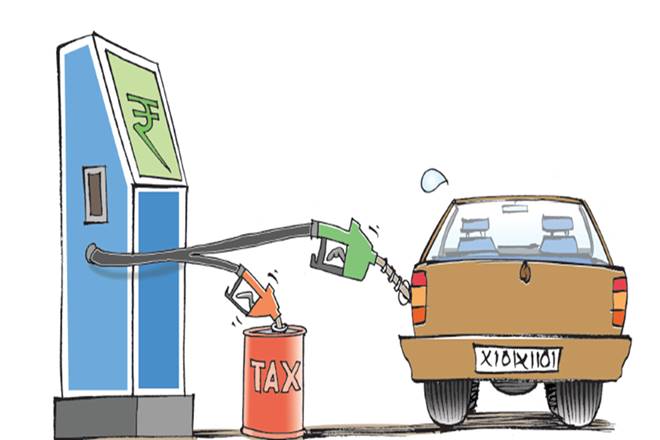
The biggest reason for this is the unevenness of the tax. Petrol is still expensive than diesel in the country but due to a higher toll on diesel in Delhi, the price has outpaced petrol. For now, we should endeavour so that the difference between petrol and diesel remains unchanged. We need to think back to the time when the price between diesel and petrol used to have a marginal gap between 20 to 30 rupees. The difference was because the use of diesel usually occurs in heavy vehicles for irrigation, riding or freight. The prices of diesel were handled by the governments because the price of diesel and the upshot of its hike was on the farmers and inflation. It is favourable for the economy to keep the gap between these two fuels.

It should be noted that private passenger vehicles that run on diesel also cost more than petrol vehicles, owing to the same reason the similarity between petrol and diesel’s price is even against our own vehicle policy.
By keeping the prices high in Delhi, customers can turn to states like Uttar Pradesh. In that case, Delhi itself will have to uplift the loss of revenue. Delhi and it’s neighbouring U.P has the difference by rupees 8.

So the effort should be to create a logical difference between the prices of petrol and diesel. It is also to be seen that there should not be much difference in the state-wise prices.
Seeing India as a whole economic unit is needed. In industrial sectors, even the difference between 10 and 20 paise counts. So the difference in state-wise prices should not exceed 50p or 1 rupee.

People do not understand the tax planning of governments but they definitely get upset to see that in Delhi if it is 79.76 rupees, so how is it for rupees 86.54 per litre in Mumbai?

The government should also notice oil companies. After keeping the prices stable for up to 82 days these companies are increasing the prices continuously from June 7, and there is a possibility of a hike in the coming days as well. International oil prices have already begun to rise.

It should be taken into consideration that in just 18 days, increment in the price which is approx rupees 10 is not good for the economy, hoping for improvement. The subsidy which is being given to the industrial world in this crucial time, it may so not happen that a large amount of economic support through petrol and diesel, gets snatched away from people.

At this time revenue is necessary for the government but that should be logical. Oil companies have been given the power to decide the price according to the cost but the increment should not happen in such a manner that everyday budget starts deteriorating.
It is important to take care of that selling oil for profit is not their only job, they will also have to think about the stability and strength of the economy of our country.

Care and COVID…..

I think Robert Frost once said that it doesn’t matter what happens but life goes on, which quite makes a lot of ripples in the recess of our conscious mind if we think about the present scenario so is it just me or everybody thinking that we should take COVID-19 a bit more seriously than the way we are considering it right now as by taking into account the amount of riots happening, people still doing all sort of careless things amidst the massively increasing numbers of corona virus cases with a cure or a vaccine nowhere to be seen. So yes this is a good optimistic mentality that we should live on no matter what but being this callous at a time when a virus is reaching it’s peak is not decisive and wise at all if you are wondering what I’m talking about I’m speaking about the raising number of cases this world is seeing because of covid but still people are not taking it serious enough as by roaming without masks, eating outdoors and also in places where hygienic condition are not even close to the mark which are set by govt for outdoor eateries. Well I’m not saying that to stop the riots which is supposed to eradicate an issue which is like a dark spot on the canvas of humanity but people should take care of themselves amidst the adrenaline and the patriotism in a riot for humanity.

To be frank I think there is not a single soul in this whole wide earth who is feeling good about this lock down even though everybody used to like holidays but this pandemic has shown us something more powerful than anything existent in this universe that’s our humanity and our conscious choices which we used to make, are making and let’s hope we will always make in the future not only for ones own betterment but for all people who we feel as our near and dears. This pandemic taught us that humanity can face anything if we fight it together with unity determination and a sense of patience and the most important thing that we learnt that our beloved mother nature can heal from any atrocities and damage as life will always find a way through any gospel walls of terror if you give it a chance to heal and recover. So after like three to four months of this drama I think we all need a break to restart what we left long ago as it doesn’t matter from where you belong to or who you live with we all have that routine which we used to follow before lock down which I’m pretty sure had some parts of outdoor and nature in it so the only thing which we can do right now is to look after ourselves and to protect ourselves because that is the only way how we can protect others too as in manner avoid public gatherings which are not made by respecting the social distancing norms, use a mask regularly as it helps a lot if you don’t have any then a clean handkerchief will also do the trick, use and carry a sanitizer at all times and when you come hope wash your hands for at least twenty seconds with any kind of soap or hand washes, if gymnasiums are open then take proper care of yourself and make sure the gym owners are following all of the safety norms for the safety of the gym goers as workout is necessary not only for leisure but for a good lifestyle so do go to the gyms, if you are eating outdoors then make sure social distancing is maintained and if delivery is your cue then order from restaurants who are maintaining a proper hygiene and if you wanna support local business then educate them about the govt’s norms and safety standards so that they can help themselves to help you to get really tasty street food and the rest like a place’s tourism industry and other entertainment industries and all have to wait for sometimes as of now every country’s economy is in smithereens so it will take some time to recover but we will get through this together as one big, bold and happy family.

PM launches employment scheme for migrant workers

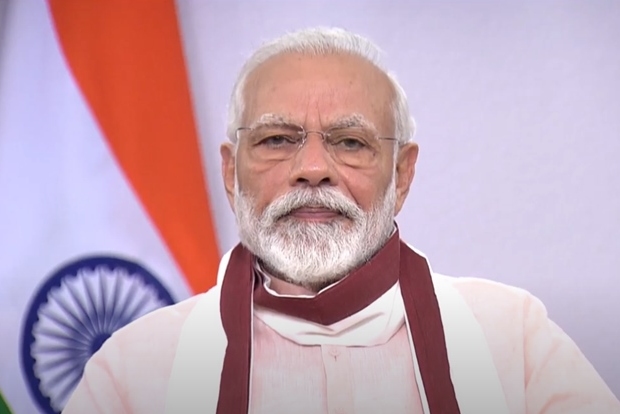
Prime Minister Narendra Modi launched an employment scheme for migrant workers, saying that during the coronavirus-induced lockdown the talent from cities returned to villages and it will now give a boost to development in rural areas.

Launching the ‘Garib Kalyan Rozgar Abhiyaan‘, Modi said there are some people who may not appreciate efforts of villagers in the fight against the novel coronavirus but he applauds them for their efforts. The way villages have fought coronavirus has taught a big lesson to the cities, he added.

Talent has returned from cities during the lockdown, those whose labour and skills were behind the rapid growth of cities will now boost development of villages with the help of this scheme, he said. Underlining that migrant workers were always in the Centre’s thoughts during the lockdown, the prime minister said it is an endeavour of his government that workers get jobs near their home and help in development of villages.

Talking about infrastructure development of villages with the help of this scheme, Modi said that for the first time the Internet was being used more in villages than in cities and now work to increase the speed of the Internet was being undertaken. This scheme will focus on durable rural infrastructure and providing modern facilities like Internet in the villages, he said.

The Garib Kalyan Rozgar Abhiyaan was launched by Modi via video conference in a village in Katihar district of Bihar in the presence of chief ministers of five states — Bihar, Madhya Pradesh, Uttar Pradesh, Rajasthan, Jharkhand — and a minister from Odisha. The scheme with an outlay of Rs 50,000 crore will be implemented on mission mode in 125 days in 116 districts of the six states to which the maximum number of the migrant workers have returned.

The mission will be a convergent effort between 12 different ministries/ departments such as Rural Development, Panchayati Raj, Road Transport and Highways, Mines, Drinking Water and Sanitation, Environment, Railways, Petroleum and Natural Gas, New and Renewable Energy, Border Roads, Telecom, and Agriculture. It will help expedite implementation of 25 public infrastructure works and those related to augmentation of livelihood opportunities.

These 25 works are related to rural housing for the poor, plantations, provision of drinking water through Jal Jeevan Mission, and construction of panchayat bhavans, community toilets, rural mandis, rural roads, cattle sheds and anganwadi bhavans, according to the Ministry of Rural Development, which is the nodal ministry for the project. The basket of a wide variety of works will ensure that each migrant worker is able to get an opportunity of employment according to his skill in the coming 125 days, it said, adding that the programme will also prepare for expansion and development of livelihoods over a longer term. Before launching the scheme, Modi spoke to several migrants and enquired their current state of employment and also whether the various welfare schemes launched during the lockdown period were available to them.

Modi expressed satisfaction and said that earlier, money used to be given in the name of beneficiaries but it never reached them but now things have changed. In the beginning of his speech, Modi paid homage to the soldiers of the Bihar Regiment who lost their lives in a violent clash with Chinese troops at LAC in eastern Ladakh. Officials said Garib Kalyan Rozgyar Abhiyan is separate from the MGNREGS.

The Mahatma Gandhi National Rural Employment Guarantee Scheme (MGNREGS) ensures 100 days of employment per household in an year. MGNREGS is applicable across the country and a large number of works are allowed under the scheme even working on own farms by small Scheduled Caste and Scheduled Tribe farmers is allowed and government pay wages to them. Whereas the Garib Kalyan Rozgar Yojana is a one-time scheme for providing employment to migrant workers who returned during the lockdown near their villages.

This scheme is only applicable to 116 districts with a selected list of works initially for 125 days. Later it could be extended, the officials said.

Source: PTI

The background of Pandemics

As humans have spread across the world, so have many infectious diseases. Even in this modern era, outbreaks are nearly constant, although not every outbreak has reached the level of a pandemic as the Corona virus did.

Disease and illnesses have been for ages. It was after the growth of agrarian communities that the spread of these diseases increased dramatically.

Widespread trade helped in creating new opportunities for human and animal interactions that increased the spread of ย such epidemics like Malaria, leprosy, tuberculosis, smallpox,ย  influenza, and others. More civilized the humans have become with trade routes, larger cities, and increased contact with different populations of people, animals, and ecosystems,ย  the more likely pandemics occurred.

Despite the persistence of disease and pandemics throughout history, there was a gradual reduction in the death rate. Healthcare improvements and understanding the factors that incubate pandemics have been powerful tools in reducing their impact.

During the 14th century, the practice of quarantine began in an effort to protect coastal cities from epidemics- plague. The port authorities asked ships arriving from infected ports to sit at anchor for 40 days straight before landing in Venice. The origin of the word quarantine from the Italian wordย  โ€œQuaranta Giorniโ€ which means 40 days.

While the interactions created through trade and urban life play a major role, it is also the virulent nature of particular diseases that lead to the trajectory of a pandemic.

With rise in global interactions and connections as a driving force behind pandemicsย  from small hunting and gathering tribes to the metropolis, humanityโ€™s reliance on one another has also lead opportunities for disease to spread.

Urbanization in the developing world is bringing more and more rural residents into denser neighborhoods, while population increases are deteriorating environment. Passenger air traffic has nearly doubled in the past decade. These macro trends have a profound impact on the spread of infectious diseases.

As Covid-19 reminds us, that infectious diseases havenโ€™t vanished. There are more new infectious diseases now than ever: HIV, Sars, and Covid-19 have increased by nearly fourfold over the past century. Since 1980, the number of outbreaks per year has been tripled

There are several reasons for this – Over the past 50 years, the population has increased to double. So more human beings get infected and in turn to infect others, especially in densely populated cities. We also have more livestock now than we did over the last 10,000 years of domestication up to 1960 combined, and viruses can pass from those animals to us. The ability to get to nearly any spot in the world in 20 hours or less, and pack a virus along with us, allows new diseases to emerge and to grow. For all the advances weโ€™ve made against infectious disease, our very growth has made us more vulnerable, not less, to microbes that evolve 40 million times faster than human beings do.

The Changing Landscape of Education During COVID-19

illustration by Sara Gironi Carnevale

Learn about the impact on children due to COVID-19 that has forced the schools to adapt with online education.

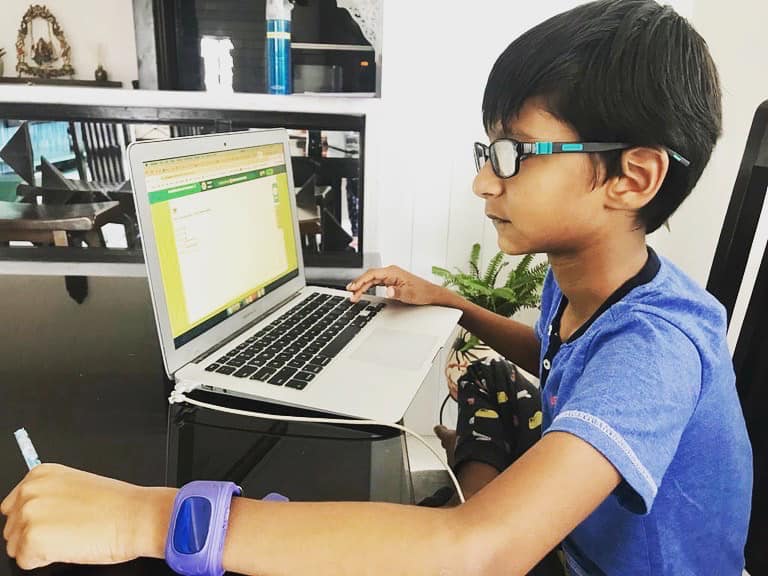
Imparting online education to children amid the COVID-19 crises has emerged as the go-to solution for schools looking to resume the classes amid the need to continue social distancing till a vaccine for the pandemic is found. Conducting online classes is helping education institutions across the world to beat the coronavirus lockdown and push ahead with the academic calendar. 

However, this trend has raised numerous concerns among the educational experts, at the United Nations Childrenโ€™s Emergency Funds (UNICEF) and the United Nations Educational, Scientific and Cultural Organisation (UNESCO). While some of them have expressed alarm about the potential dangers of internet exposure for young kids, others say they are scared that this digital shift may alienate the economically disadvantaged students who lack access to the technology needed to attend the digitally conducted classes. 

The internet exposure puts children at high risk of online sexual exploitation and grooming, as predators look to exploit the coronavirus pandemic. Online grooming is a worrying product of the internet and social media age, in which predatory adults builds online relationships with gullible children and trick or pressure them into sexual behaviour. 

Moreover, under the shadow of COVID-19, millions of childrenโ€™s lives have temporarily shrunk to just their homes and screens of devices. It is high time we should adapt ourselves with the current situation and help our children to navigate this new reality. 

According to a report issued by the UNESCO, โ€˜Half of the total number of learners, about 826 million students kept out of the classroom by the pandemic, donโ€™t have access to a household computer or a smartphone device. While 43 percent have no internet at home when the online based distance education is being opted by the schools and educational institutions to ensure continuity of academic year for students in different countries of the world.โ€™ 

Challenges of Online Education 

There are many challenges when it comes to imparting the online education: 

Students who reside in small towns and villages struggle to get a good internet connection speed and mostly are unable to attend the online classes. This will especially prove disadvantage during the exam time as half the students will fail for sure because they will not to connect due to bad internet connection. 

Many of the students donโ€™t have the devices, smartphones and laptops or money to keep the internet connection while also paying the school fees. These are the real challenges which hinder the process of the online learning. 

Not just students, some school teachers and educators are also struggling to get a hang of the technology. The school wants them to make PowerPoint Presentations (PPTs), record the video lectures, and take online classes through different apps and online platforms, but they arenโ€™t instructed clearly as to how this should be done. This is more common among adults of 60 years and above who find the online medium to impart education quite challenging due to lack of hands-on experience with the latest technology.

The lack of real-world interaction among the students and teachers is another challenging factor that could have a negative impact on their relationships compared to regular classes. 

A New Reality

 As the security concerns of the video conferencing apps such as Zoom emerged in the early days of lockdown with regards to conducting online lessons, meetings and private appointments, most schools have started searching for alternatives to keep the academic year 2020-21 going and not suffer much with disruption owing to coronavirus pandemic. 

The COVID-19 has spawned up an unprecedented dependence on technology that keep up the operations running across different sectors and its potential long-term impact on the economy and lives of people across the world. Studies are been conducted on the increasing dependency on the gadgets among the children and adults to monitor its impact on mental health. 

Now it is more vital to provide child protection services to ensure they remain open and active throughout the pandemic, by ensuring that the devices they use have the latest software updates and antivirus programs for precautions against cyber attacks and threats. 

Additionally, UNESCO has advised the use of television and radio broadcasts as an alternative to reduce the already existing inequalities among students seeking to continue their education with the online classes.

Bickering Bollywood.

So we all know that Indian film industry aka Bollywood is the second highest movie producing industry in the whole world after Hollywood per annum. Well to be honest yeah i agree that Bollywood is a gold mine of vibrant,diverse and really amazing movies. But the question remains at the point as why such an old, powerful movie industry with actors like Shahrukh Khan and Amitabh Bachchan who come in the list of top ten richest actors in the world, and with directors like Satyajit Ray are never producing movies which at least can be the bread and butter of the whole world. French and the German movie industry even the movie industry of Chile and the Korea is producing movies which garners massive popularity worldwide. In french we have Belle de Jour(1967) and ‘blue is the warmest color (2013), German’s having ‘The Marriage of Maria Braun(1978)’ and ‘Freier fall (2013)’, chile’s A fantstic woman (2017), the ripple maker Parasite(2019) and many more from many other countries as well. And then the question prevails why not Bollywood?

Movies like Satyajit Ray’s Pather Panchali (1955) and Mira Nair’s Salam Bombay (1988) in a manner defined Indian movie industry’s potential. But current scenario Bollywood is all about nepotism and love stories nowadays. As if we see that famous movie Slumdog Millionaire(2008) which bagged eight Oscars is not what india is?But the entire movie industry of the world is running after one thing that if India is represented it either poverty or god forbid it’s about curry, thanks to everywhere you see starting from movies like critically acclaimed Lion(2016) or Love Sonoa(2018) everything is about how indians are suffering,human trafficking, lack of sanitation and blah blah blah!!! If we talk about that’s what we see i the world. But people need to realize something that India the world’s second most populous country,sixth largest economy and seventh largest country is not all about trash and poverty. This scenario as explained above is what shows the failure of bollywood. but not everythings bad as we can’t say that Bollywood has gone down totally in these recent years as we made so many good movies too like Raazi(2018), Neerja(2016), Uri(2019), Barfi(2012) , Lust stories(2018) , Mary Kom(2014), three idiots(2009), Bajirao Mastani (2015), Jodha Akbar(2008), Dangal(2016), Devdas(2002), My name is Khan(2010), Swades(2004), English Vinglish(2012), Tumbaad(2018), lagaan(2001), Tare zameen par(2007), PK(2014) and many more which show case the value of the Indian movie industry and it’s potentials.

Now if we talk about problem which is wrecking us all starts with the lack of originality and the rejection of new talent in Indian film industry and how can we forget the grandad of all fiasco the one and only Nepotism. Nepotism is whats actually responsible for killing the Indian film industry in a really gruesome manner as due to this the new talents in indian film industry is getting choked as we speak. Another big problem is the lack of experimentation and really comical and absurd action movies as I’m literally starving for a good science fiction movie or a bone chilling horror fiction at least. But all we get is boring love stories with a lot of songs which are not even sung by the actors but they are just LIP SYNCING to it. No diversity at all as white washing of the whole cast is the forte of bollywood. Not even a single dusky or black actor or actress in a lead role you will find here(leaving the very few exceptions). That’s what i meant when i wrote bickering bollywood as if bollywood won’t up it’s ante there will soon be what we call a hot white mess left in the indian subcontinent for people to watch. Toodles!

Three Ways To Prevent Virtual Communication Fatigue While Successfully Working From Home

During the coronavirus-led lockdown, the concept of โ€˜workplace burnoutโ€™ has taken an all-new meaning, with employees having to deal with virtual communication fatigue. 

While working from home has been a sought-after perk for some employees, we have entered a new reality of frequent online meetings and an inability to disconnect from the job, which has created a new stressor, known as communication fatigue. With the coronavirus pandemic, companies across the globe opted for the work from home model to ensure the safety of their employees, and to follow the social distancing guidelines. 

As time went by, several organisations realised the benefits that work-from-home provides both for businesses as well as their employees. Many large organisations such as Facebook are considering permanent work from home policy for their employees. Twitter has already implemented work-from-home measures during the lockdown and declared it a success. 

In this context, the concept of โ€˜workplace burnoutโ€™ has taken an all-new meaning, with employees having to deal with virtual communication fatigue. Today, with the array of communication and conferencing platforms available, employees are continuously connected virtually with their colleagues, seniors, clients and more. 

This communication overload is resulting in employees feeling drained at the end of the day with virtual communication fatigue being one of the most talked-about topics today. With this perspective in mind, below are four ways to identify and prevent virtual communication fatigue: 

  1. Virtual time off 

As the work-from-home trend continues, many people within the workforce are noticing the blurred lines between work and home since they both are part of the same space today. It can be tempting for employees to schedule back-to-back meetings to get through the day quicker, but doing so can cause signs of fatigue to appear earlier than expected. While most of us take the support of caffeine to look and sound fresh, it can only do so much when up against consistent virtual meetings. To combat virtual communication fatigue that comes with a busy virtual meeting schedule, the cure is as simple as scheduling breaks during the day. Taking breaks at regular intervals will help you to recharge before the next call appointment and allow for extra planning so the next interaction goes as effortlessly as the last one. And your break doesnโ€™t have to involve sitting at your home workstation. An effective break should include moving around to get your blood flowing and introduce a change of scenery. Talk to your family members, quickly whip up a salad or just take a power nap. 

  • Set a deadline and create an itinerary for every video call 

Weโ€™ve all been there before: one co-worker begins the meeting by asking how everyone is doing, whatโ€™s their current favourite thing to do and before you know it, half an hour is gone by without any discussion of the true topic at hand. As much as everyone loves to hear all about each otherโ€™s lockdown life; too much talk can cause meetings to go longer than planned. To prevent this, create an itinerary ahead of time. By scheduling minutes and other talking points, your meetings will run effortlessly while also limiting everyoneโ€™s virtual time to prevent communication fatigue. 

  • Block your front camera view 

One of the biggest contributors to video call fatigue is keeping the self-view feature open during meetings โ€“ no matter how wonderful your look turned out. As humans, weโ€™re not used to staring at ourselves constantly. Regardless of how you feel about your quarantine look, self-view induces a feeling of anxiety; worried about how we look, sound, or whatโ€™s going on with the lighting and background. To prevent any sort of communication fatigue from view yourself, simply turn off the camera feature whenever youโ€™re not presenting or not expected to talk. If youโ€™re worried about how youโ€™ll look on camera, open up your camera app before a meeting to make any last-minute adjustments, test the lighting, or make a quick location change. If closing the self-view isnโ€™t possible on the platform youโ€™re using, you can block it off by taping a piece of paper.

Why US is failing as a Superpower in tackling Coronavirus?

Now that the US has reached the top with the highest corona cases, there is a question that arises. Despite being a superpower, does the country even know how to control the COVID-19 spread?

The US has become a new epicenter of coronavirus bypassing the total number of cases in Italy and China. The first case in the United States was reported on January 20, 2020, after three weeks when China reported several cases of unusual pneumonia in Wuhan to the WHO. Being aware of the threat that the coronavirus can pose, many states started taking measures for the pandemic. The US, however, failed to take appropriate actions.

Although Global Health Security Index, which is an assessment of 195 countries on their global health security capabilities, rated 83.5 to the US, the worldโ€™s highest and also that the US spends more than any other country on its health system, COVID-19 showed us how a superpower can fail when its government does not assess a threat effectively.
On January 31, 2020, President Donald Trump restricted entry into the United States of foreigners who had been present in China. However, the restriction did not apply to U.S. citizens who had traveled to China. Similar steps were followed for foreigners arriving from Iran, Europe, Italy, and South Korea. The mandatory screening was placed for people coming from these countries.

With the coming days, the measures taken by the Trump administration were very vague. When the cases were on a rise, then only people were asked to stay at home. Similarly, schools were closed in mid-March, roughly two months after the first COVID case in the nation.

Compared to many other countries, the actions taken by the U.S. are to date inadequate. The government has not able to project its authority and adequately ensure the safety of its population. Even citizens are not content with their governmentโ€™s efforts.
We all now know that in terms of the coronavirus every minute matters. But the steps taken by the US government came very late.

Many believe that Trump failed to assess properly the coronavirus threat and as a result, it became difficult to control the cases. The president himself has been very inconsistent in his announcements which resulted in confusion among Americans.
Only on March 31, did Trump accepted the gravity of the situation when approximately 4,000 Americans lost their lives as a result of COVID-19.

The U.S. needed to test as many people as possible, to trace the positive cases, and isolate them as soon as possible. The reason why the confirmed cases were at a low for approximately two months is not that the U.S. effectively controlled the situation but because enough tests were not conducted to track the infected individuals. This created a false sense of security among citizens which later hampered the country.
With all this, even hospitals found themselves unprepared with people who were ill. There was a lack of medical supplies such as masks, gloves, and medical gowns.

The US, as a superpower, praises itself as โ€œthe best, most technologically advanced society in the world, but Trump administration’s handling of the pandemic shows a different story. Meanwhile, many other smaller or weaker states seem to be handling the spread of the virus better. Seeing all this, US does need to buck up.

‘PROXY WAR’ Yemen crisis: What is happening in Yemen?

A vicious civil war storming in Yemen has claimed more than 16,000 lives and left 13million people on the threshold of famine.

Credit: Getty Image

The conflict has been given a name to “proxy war” among competing powers in the Middle East as a Saudi-led coalition battles rebels backed by Iran.

How many people have been killed in the crisis?
The UN had confirmed the deaths of at least 7,500 civilians with most caused by Saudi-led coalition airstrikes.

However, monitoring groups believe the death toll is far higher. In October last year, the US-based Armed Conflict Location and Event Data Project (ACLED) said it had registered more than 100,000 deaths, including 12,0000 civilians killed in direct attacks.

More than 23,000 fatalities were reported in 2019.

According to the Yemen Data Project, more than 17,500 civilians have been killed and injured since 2015 -with a quarter of all civilians killed in air raids said to be women and children.

Some 100,000 people are now thought to be dead because of the conflict, from direct involvement and knock-on effects such as mass starvation and inadequate sanitation.

This week, Yemen has recorded 208 coronavirus-related deaths pandemic.

The countryโ€™s national committee against the virus confirmed the total number of infections stands at 844, while the number of recoveries is around 80.

International health officials have said Yemen’s population could be extremely vulnerable to an outbreak.

It would be hard to scan the outbreak in the country as Yemen’s health infrastructure has been destroyed by years of civil war.

Aside from the threat of COVID-19, Yemen is also suffering an outbreak of the mosquito-transmitted Chikungunya virus.

There are also more than 100,000 known cholera cases across the nation.
Famine in Yemen
Yemen, the Gulf’s poorest nation, has been torn apart by the conflict.
Supplies of basic goods and humanitarian aid have been halted by forces battling control of the strategic port in Hodeidah.
Violence has forced farmers to abandon their crops, andย hospitals have been overwhelmed by sick, wounded and malnourished children.
Hadramout province has seen some of the worst pockets of malnutrition and disease in the war-torn country.

Many displaced people, returnees, refugees and asylum seekers are now reliant on regular humanitarian aid to survive, according to the UN.

Credit: TOI

Charity UNICEF says approximately 80% of Yemen’s population, or 24 million people, rely on aid, and 10 million are facing famine.
According to the charity Save the Children, 12.3 million children – 0r 93% -need humanitarian assistance and protection.
The charity says 1 in 5 of children have lost their homes, while 70% don’t have access to clean water and sanitation
A further 7.4 million children are in need of child protection assistance, while 2 million children are out of school.
The United Nations (UN) has put out an appeal for donations amidst growing fears regarding the situation in Yemen.

It comes as COVID-19 spreads rapidly throughout the country’s population, which has already been devastated by years of war.

A number of charities are running campaigns to raise money for the people affected by the war.
The civil war is considered one of the largest humanitarian crisis’ in the world right now, with millions affected.
International organisations such as The Red Cross, Save the Children, UNICEF and Oxfam are collecting donations to help Yemeni citizens and families.

5 FREE Ways to Develop Your Skills!

The internet is a vast place and is an excellent provider of opportunities and knowledge. If you have an internet connection and plenty of time on your hands (which I suppose a lot of people do because of the lock down), now is the time to maximize your benefit from the internet.

There are a loads and loads of online sources and websites which contain loads of valuable information and that too, for free! I have listed a few of them below :

  1. DUOLINGO

Learning languages is very essential because it gives you a competitive advantage over the others in the job market. Learning new languages is also like exercising your brain and it increases your learning and grasping abilities.

Duolingo is a completely free app which lets an user learn various languages. The number of languages being offered are numerous and some of the available options are – Spanish, French, German, Italian, Japanese, English, Arabic, Greek and so many more. It starts giving lessons from the very basics which is highly advantageous for new learners. The app gives you points for every exercise completed which is another motivating factor. It also lets an user add friends and compete with them. Friends and learning together? No better combination on Earth.

2. KHAN ACADEMY

How fun would it be if you could just sit at home and learn as if you were in school. Well now, you can do that exact same thing with Khan Academy.

Khan Academy posts videos for all classes starting from Class 1 – College level. There are several subjects available like Mathematics, Physics, Chemistry, History, Economics, Computing and so many more. There is also an option where you can prepare for competitive exams like IIT-JEE, GMAT, and so on.

You first watch a video about a topic of your choice and it is then followed by exercise questions which helps you to really understand the topics.

Their videos are available on both their website and on YouTube.

3. INTERNSHALA

Internships are integral stepping blocks in one’s career. They give you a taste of what working in a particular environment is like along with loads of experience and contacts. It gives you a chance to observe your superiors, hone your skills and then ultimately decide whether it is a career that you want to go into.

With Internshala, you don’t have to ask your rich businessman relative for an internship in their company. You can now simply log into Internshala’s website, create a profile and apply to an internship of your choice. There are several internships that you can choose from. The stipend which is offered by a few internships is just the cherry on the top.

4. COURSERA

In compliment to your education in college, it is always useful to have a set of extra skills. You need not look elsewhere to learn them. All the possible skills you could ever want to learn can be found in Coursera.

There are free courses being offered by the top universities and companies of the world. You can learn skills in a diverse range of subjects like – Arts and Humanities, Business, Computer Science, Data Science, Life Science, Math and Logic, Personal Development, Physical Science and Engineering, Social Sciences and Language Learning.

While the entire course itself is free, you will have to pay a nominal fee to receive certification.

5. YOUTUBE

Now, who hasn’t heard of YouTube. You should know that not only does it have entertaining videos which can keep you up at night, but it also has a lot of educative content. It is an excellent platform to increase your knowledge in regards to any topic.

There are several tutors of course, but there are courses being uploaded by top Universities of the world like MIT, Princeton University and so on.

There are also channels like The Infographics Show, Ted-Ed, Science Channel and many more which have a lot of interesting information in their videos.

***

These are just a few ways through which you can learn online. There is information and knowledge EVERYWHERE. You just need to look a little harder. Time is precious and there is no time like the present. Utilize this time to gain knowledge because you know what they all say, “Knowledge is Power.”

Coronavirus: How fashion and lifestyle influencers are rethinking their content strategy

Amidst the lockdown to curb coronavirus, fashion and lifestyle influencers are trying to creatively reform their content strategies to stay relevant.

The lockdown has had a range of implications, and all of us are trying to make through in the best way possible. It has altered how we go about our work and personal lives. Following suit, fashion and lifestyle influencers can be seen creatively reforming their content strategies.

These are people who give us a piece of the enviable, designer lives set behind perfect lighting and breathtaking locations. But, fashion and lifestyle content meets a slight amount of inconvenience when there is a nationwide lockdown.

Fashion and lifestyle influencers are now social distancing at home, dressing up for no one but themselves, spending their time not in exotic locations, but on their couches. This has pushed many of them to restructure their content during work from home.ย 

Fresh, alternate mediums for videography

Fashion influencers are deprived of professional photographers. Hence, fashion content is currently experiencing the epitome of creativity as far as content creation goes. One can see many of them brushing up their skills, trying to master video techniques. They can be seen making the most of their smartphones. Many influencers are now exploring non-conventional resources like Skype, Facetime, etc. This not only helps you to create Instagram-worthy content by themselves, but it also helps to create relatable content. How? Such content displayed in the format of everyday applications uses images in the content, which thus helps them to reach out to a bigger audience.

New genres of content

As technology and skill affect the glamour and finesse of fashion and lifestyle content, the lockdown has also reformed their content typology. Many influencer accounts can be seen creating relatable content at home. Since you cannot travel to exotic locations, or for that matter even the local cafe, during the lockdown, it might be a good idea to engage with your audience beyond your professional conduct. They are opening up online, bringing forward their informal side while they share their talents, hobbies, recipes etc.

Influencers are also extending their online presence to TikTok, which is now a growing trend. These are just a few of the ways to help your followers know the real you, which will again help you garner their trust and engage better with them.

Use your platform responsibly

It is refreshing to see how many lifestyle influencers are creating sensitive and responsible content that is helping people get through this time. As an influencer, you have a following, and the power of influencing them. Hence, there are a number of ways you can respond to this pandemic. Go all out by sharing the latest news and local resources that could help those affected harshly by the lockdown, or try to share the troubles and stress of your audience with a bit of humour.

A few examples can be light-hearted humour about having to stay at home, informative content to stay safe, etc. Many popular lifestyle bloggers can be seen occasionally opening up about stay-at-home struggles that all of us are facing while we try to stay safe.

Branded content with a twist

With the tsunami of sponsored, branded content, social media was flooded with similar-looking content, especially in the fashion content industry. But now each influencer is coming up with raw and creative ways to respond to branded content โ€“ live sessions, new video formats, and innovative photoshoots.

With the lockdown affecting the whole of the industry, many brands are now open to innovative, raw, and personal ways of content creation. Even the Vogue magazine had a work from home edition! Use your creative cells and create meaningful and fun branded content with whatever you have at hand.

Once the lockdown relaxes, maybe the raw and honest elements from influencer content will also go away. But, they are currently going deeper than they usually would, to engage with their followers. This might bring a shift towards betterment in influencer marketing trends, making it more curated and engaging.

5 Ways to Stay Fit During Quarantine

Now that you are spending less or no time outside your homes, itโ€™s more important than ever to prioritize your physical health. Staying active can boost your mood and even reduce stress. How can you stay on top of fitness game without going to your local gym, doing weights and following your fitness instructors? Online challenges and videos, home fitness apps, creative at home swaps and the use of the safe outdoors, if available, can help.

Here are some ways to stay active while also staying home: 

Switch up your running/walking routines

Whether youโ€™re a runner, jogger or a walker, try and keep your routine fun by setting a schedule and small goals. If youโ€™re a walker, map out a different route of your house for each week of exercise or just stay in one place. If youโ€™re a runner and have access to a terrace or a garden, select a goal such as run a 4 KM and set up a training schedule to achieve your goals, and with time you can increase up a notch and challenge yourself.

Check out this 1 Mile walk at home- https://www.youtube.com/watch?v=njeZ29umqVE

Try a bodyweight workout

You donโ€™t have to grab weights to achieve a good workout. You can still feel the burn if you do a low impact cardio, bodyweight strength or a high intensity interval training circuit. 

Check out this 30-minute body weight workout from Greatist- https://greatist.com/fitness/no-gym-bodyweight-workout-infographic#1

Try a fitness challenge on YouTube

Want to build core strength? Tone your abs? Tone your arms? Find a fitness challenge on YouTube that targets the zone you want to work on. Youโ€™ll be surprised by how much stronger you can become in a week or more.

Check out these videos out

7 day workout challenge by Carly Rowena: https://www.youtube.com/watch?v=6ixZnsKTErE
6 minute arm workout by The Uma Show: https://www.youtube.com/watch?v=qpLA1tPwjXA

20 Min Total Core Workout (Equipment Free Ab Workout): https://www.youtube.com/watch?v=-b2lNLq3EaA

Try a Fitness Website

Active.com offers 30-day fitness challenges including push-up challenges, ab challenges and more.

Greatist offers many detailed work out blogs- from workout plans for beginners to expert routines. For a start, check these out- 

https://greatist.com/health/back-workouts-at-home

https://greatist.com/health/calisthenics

https://greatist.com/fitness/chest-workout-at-home

Follow along with a studio

Many studios offer video easy to follow tutorials, try Zumba tutorials for high energy workouts or go with cardio dance workouts. You can also try free tutorials with simple, at-home equipment swaps like bags of flour or books instead of weights. Although these workouts will be different than the gym sessions that youโ€™re used to, itโ€™s an interesting way to break a sweat and re-connect with your own body.

Check out Keaira LaShaeโ€™s  dance workouts-

10 Minute Cardio Dance Abs Workout: https://www.youtube.com/watch?v=XTH5saFBDqA

Cardio Fitness Party Workout: https://www.youtube.com/watch?v=fhUP6FQj3t4

Check out the link to read more on at-home equipment swaps-

8 Household Items That Double as Workout Equipment for Your Makeshift Home Gym: https://www.realsimple.com/health/fitness-exercise/fitness-equipment-alternatives-home

TRYST WITH YOUR BRAIN

Strategies to help you stop spiralling this quarantine season

The COVID-19 pandemic can stressful and incredibly frightening for some people. It may involve fear and anxiety about the disease which can be overwhelming and cause strong emotions in both children and adults. This is why it is crucial to take care of your mental health now more than ever. 

The following four solutions can be enacted in different ways, depending on your surroundings.ย 

METHOD ONE: Writing

Writing about the problems you are facing is a good start to getting through them. Start maintaining a journal or if youโ€™re more electronically inclined even a new note on your phone would do. When youโ€™re faced with a problem, write how it makes you feel, its ideal outcome, even if that counts as the worst-case scenario, and then write the possible solutions.

Donโ€™t worry about maintaining grammar. When sentences start pouring out of you, your brain works to solve whateverโ€™s going on. Later you might want to read it over and see if any possible solutions jump out at you; or donโ€™t, if this act of writing was enough to make you feel better about the situation. 

PLAN OF ACTION:

When youโ€™re alone: You might find it helpful to write a letter about everything you are feeling about the situation addressed to the person who caused it. If the problem is caused by a situation or circumstance rather than a person, address it to your feelings, the Universe, some higher power you believe in or even to yourself. The11 simple act of writing can lend you an immense amount of clarity and/or relief.

With your family around: Since everyoneโ€™s at home and on their phones, all the time, pulling yours out and pretending to send a text wonโ€™t draw any extra attention. Breathe and vent in your notes. Nobody will be the wiser.

METHOD TWO: Making Art 

Maybe after you start writing you immediately start self-editing and judging your own feelings. You might even be worried that if you put your feelings down on paper, someone could find and read them, and you will have to suffer the consequences. Instead, how about you grab magazines, crayons, paints, brushes, a sketchbook, or whatever medium you want to go for, and start making something tangible? Art offers a safer means of expression for people concerned with invasions of privacy by parents or relatives.

 PLAN OF ACTION:

When youโ€™re alone: Go for it! Get every craft supply you own out of that cupboard and make a giant mess. You could start a long-term project that you can get back to whenever youโ€™re not feeling great. You donโ€™t have to be Van Gogh to benefit from this. The mere act of scribbling all over a piece of newspaper and going letting loose will make you feel a little better.

When you feel unsure of yourself, temporarily refocus your attention on making something that helps you resurface, like picking up a pen and scrawling aimless loops on a piece of paper. Your version doesnโ€™t have to revolve around drawing or painting: Try paper-machรฉ or do origami. 

With your family around: Acknowledging where you are and what youโ€™re doing can quickly recenter you if you start to panic or dissociate. Draw the street you live in; the person at the table next to you; the contents of your fridge. Focusing largely on the details of whatโ€™s physically real can take you away from intangible feelings and can bring you back into yourself. If your family is artsy too, try craft tutorials or paint some old jeans- anything that distracting enough and gets your creative juices moving.

METHOD THREE: Talk It Out

Sometimes spiralling makes you want to shut every thought youโ€™ve ever had away in a safe, never to be seen or heard from again. Sometimes when youโ€™re already doubting your judgment, sharing your thoughts with someone, even a trusted friend, can feel icky. But if youโ€™re capable of surpassing those feelings, even temporarily, sharing your thoughts and experiences with someone you trustโ€” whether thatโ€™s your someone in your girl gang, parent, sibling or a twitter palโ€”can result in having fresh set of themes to help you work on whatโ€™s bothering you.

If your problems involve experiencing violence at home or youโ€™ve been abused or assaulted, the legally mandated 

lockdown can present unprecedented challenges that are unfamiliar territory. If you are experiencing abuse, reaching out to the ones you trust is crucial. 

PLAN OF ACTION:

When youโ€™re alone: Just start talking out loud. Try and suspend your feelings- with just enough practice, you can become your companion this way. This act of speaking your problems instead of bottling them can give you some cognitive distance from the issues bothering you. When you spill whatโ€™s on your mind in a space where no one around is there to hear you, it can lead to major realizations. 

With your family around: The only thing harder than opening up is figuring out who you can trust. If I have a family member whom I love dearly but who makes sure to tell me everyone elseโ€™s gossip, maybe they arenโ€™t quite the right confidante when youโ€™re already feeling unstable. The kind of confidante youโ€™re looking for here is someone who will sit and listen, then ask the right questions-what have you tried so far? what do you need? how can I help?

If you arenโ€™t up for face-to-face contact with a family member nor a call to your trusted friend, but you still want to talk to someone about facing any mental health issue due to the ongoing lockdown, call one of the many helplines designed to support people experiencing unpleasant feelings. The government has launched a crisis hotline which can be reached at 08046110007

METHOD FOUR: Exercise

If you need a temporary distraction to process your thoughts and feelings but an art project and poetry just isnโ€™t doing it for you, try going for a long walk on your terrace, flailing around your bedroom wildly to โ€˜Starboyโ€™, giving Pilates a shot or even practicing headstands until your hair permanently stands on end?ย 

Physical activity will reduce stress and fatigue and eventually help you to feel more alert. It doesnโ€™t matter what kind of exercise you do- itโ€™s all about moving your body in ways that feel great and work for you. It doesnโ€™t have to be a giant commitment. Just set small goals.

PLAN OF ACTION:

When youโ€™re alone: This is a good time to experiment and find out what kind of physical activity works best for you. You could follow stress-reducing yoga videos, a zillion of which can be found on YouTube, If youโ€™re feeling something which is more high-energy, the internet is filled with amazing dance tutorials available as well. Working out with your confidante over video call can also be an effective alternative, youโ€™ll both get to blow off some steam and clear your heads, which is a great place to be in if you want to ask for advice or even spill your guts.

With your family around: Pick an activity that the family likes, yoga or hula hooping- the family favourites or any other and get going! High-energy activities like planks, push-ups, squats can be difficult, but rewarding, and doing it with another person makes it into a fun challenge

Union health ministry toll-free helpline for mental health issues: 08046110007 

Future of Electric Vehicles in India and Effect of Covid-19 on EV Industry

Introduction:

India’s emphasis on next-gen transportation has undoubtedly taken on legs under the incumbent administration, but the ‘Global Electric Mobility Project Plan (NEMMP) 2020’ was launched in 2013 in reality under the previous Congress-led administration. That further puts the concerted efforts for green mobility and electric cars across the aisle in perspective. The country has since been willing to embrace a 360-degree approach to transform into an EV nation.

Electric vehicles are changing the future of auto maintenance ...

In December 2019, India’s rank deteriorated from 14th position in 2017 to 5th in 2018 in the global vulnerability ladder in the Climate Risk Index 2020 published by the environmental think tank, Germanwatch. This provides it all the more rationale for India to make electric cars and buses a mission in countering fossil fuel dependence.

Although the initial movement was seen towards electrification of two-wheelers and three-wheelers, the greater need is for public electric transport and vehicles. Given the current difficulties and uncertainty inherent in the market, this largely untapped market is now being looked with hope by major automakers.

Will Electric Vehicles gain traction?

For many rationales, industry leaders view electric cars as a feasible strategy for Indian audience. According to Akhil Aryan, CEO and co-founder of ION Energy, quick and efficient adoption especially combined with the electrification of existing vehicles and the growth of charging infrastructure will lead to a shift whose significance will be felt in metropolitan cities, particularly since pollution has reached disastrous levels.

Moreover, Zoomcar founder Greg Moran added that the younger generation is motivated by creativity, sustainability and environmental protection with the median age of the Indians being 27 years. Around the same time, numerous existing conglomerates and start-ups ensure home-grown product availability by manufacturing cars, parts, and batteries together.

Challenges faced by Indian Auto industry in adopting Electric Cars:

Having broken away the old expectations and building up a modern customer culture is indeed a struggle. It is common to find users worried about velocity and range of EVs. In order to smash many myths and encourage EVs on the Indian market, a lot of sensitization and education is required. Aside from this, the introduction of electric vehicle vehicles in India in the immediate future poses a range of obstacles. Including:

  1. Lack of Charging Stations
  2. Battery performance
  3. Delivery-demand difference
  • Absence of battery cell development:

There is a complete lack of principal manufacturing of battery cells in India which postures the risk of our trade deficit increasing. Currently most manufacturers rely on imported batteries from Japan, China, Korea, and Europe. The Indian market therefore needs a push for indigenous technologies that are strategically and economically suitable for India, such as aluminium fuel cells.

  • Establishment of charging stations:

Of course, the big challenge is to set up a charging infrastructure that needs to be integrated with existing refuelling stations and at alternative locations closer to homes. According to Akhil Aryan, the installation of battery swapping stations would reduce waiting time for charging, allow better use of property, reduce the size of batteries in vehicles and offer an increased range available.

In addition, it will need to streamline the country’s charging system. Vendors of EV charging stations are currently perplexed on the standard to be followed for fast charging. While the existing standards require charging stations to install European CCS and Japanese CHAdeMO charging platforms, constructing both will increase the operating cost substantially.

ION’s Akhil Aryan figured out that if the generation is from thermal power plants functioning on coal, home charging could also be a concern, given the current electricity prices. A change in the entire electricity generation environment is what’s needed to encourage electric car production.According to Akshay Singhal, founder of Log 9 Materials, the service and maintenance options are also currently restricted given that Indian consumers prefer widespread brands with a countrywide service network.

  • Improving battery performance:

Given that it would take great deal of time to duplicate the electric charging system and the ubiquity of India’s fuelling network, it is important that batteries are much more efficient in order to compete better with the internal combustion engine automobiles. The Hyundai Kona electric currently has the highest range of 452 km available on a single charge among electric cars in India, which could shift in near future.

  • Bridging the divide in supply-demand:

Another great hurdle trying to prevent todayโ€™s wider adoption of EVs is the fact that the range is quite limited, thus limiting the use-cases for electric vehicles.

Effect of Covid-19 on EV Industry:

Despite the uncertainty arising from the coronavirus pandemic, electric car makers also have a flicker of hope in driving the development of the electric vehicle industry. But from a manufacturing point of view, this would entail a major change in the environment.

Currently, for certain parts, such as drivetrains and batteries, most businesses that manufacture electric vehicles on a global scale rely on imports from other countries (China, South Korea and Japan). Ironically, if one looks at the automakers producing internal combustion engine (ICE) cars, the industry’s major boost came from domestic manufacturing.

Sean Mitchell at All Things EV said electric auto makers need to decentralize their supply chain, particularly the raw materials that they can supply closer to the manufacturing sites or else it will significantly hinder the growth of electric vehicle manufacturers.

In other words, businesses need to concentrate on continuously acquiring raw materials and manufacturing battery cells locally. Similar to Teslaโ€™s Gigafactories, “The domestic production protects them as a manufacturer of electric vehicles just a little more if they can supply their raw materials from the same continent where the vehicles are manufactured,” Mitchell said

Conclusion:

The Covid-19 lockdowns have also delayed the Indian electric vehicle movement and restrictions on imports. The mobility market, which is a large client base for EV manufacturers, is heavily impacted. However, once the lockdown is over, many experts believe that players involved in electric vehicles need to speed up their business plans.

Audi India head Balbir Singh Dhillon also said the EVs are the way forward but the market will not grow overnight. He has said that the architecture has an important role to play, and tangible government policies towards e-mobility infrastructure and adequate support for electric vehicle imports would be a positive indicator.

Ketsu Zhang, BYD India’s executive director told that the company sees tremendous potential for the electric vehicle industry in India and as one of the biggest markets in the future. BYD, with its alliance with Olectra, has arisen as a pioneer in the electric bus market. The pair had a strong role in India, where it obtained 52 per cent market share of commercially operated electric buses in India. The first to launch pure electric buses in India were BYD and Olectra succeeded by Tata Motors, Ashok Leyland and JBM Group.

Impact of Covid-19 Lockdown on Students

Covid- 19 pandemic sparked widespread realization that our way of thinking is not working. It has shattered our understanding of what culture as we know it is natural and deconstructed. Education is one of those crucial fields, where the need for improvement has become apparent. The coronavirus’ consequences, and thus its preventive interventions, have turned the lives of students, parents, and teachers upside down. The clear imbalance in the ‘normal’ workings of education has put emphasis on many questions that were previously asked and left unanswered afterwards. So, what might the actual effects of this global pandemic mean for the education future?

While coronavirus keeps spreading throughout the entire planet, many countries have decided to close educational institutions as part of a policy of social distancing to slow transmission of the virus. However, this closure of schools, due to the coronavirus (COVID-19) pandemic, has affected the learning of more than 1.5 billion children and youth globally. It should be acknowledged that school closures are likely to widen the learning gap between the lower-income and higher-income families among children. Although many parents who have access to technology and the internet are gradually turning to online education technologies to keep their children studying at home while others may not be able to. In a survey conducted by India Welfare Trust, it has shed some light on how children endure the disproportionate burden of the astonishing outbreak According to the survey, 89 per cent of respondents believe that the delay in lifting the coronavirus lockdown will affect their children’s learning.

Coronavirus Will Change the World Permanently. Here's How. - POLITICO

Rapid Online Perception study investigates the impact of Covid-19 on Children. During the survey, 1,102 respondents from 23 states and territories of the Union were interviewed. โ€œWhile children have not been in the face of this pandemic as they have been mostly shielded from Covid-19โ€™s direct health effects so far, results from the study suggest that they have been among its biggest casualties with numerous side effects on their physical and psycho-social well-being,” said CRY chief executive Puja Marwaha.

“More than half of the parents reported their child became more flustered and apprehensive during the lockdown,” the report said, adding, and โ€œ37 percent of respondents confirmed that the childโ€™s mental well-being and happiness had been affected by the lockdown. In addition, 88 percent of respondents said that their children’s exposure to screens increased during the lockdown, with 45 percent reporting the increase “to a large extent” and only 43 percent of parents/primary caregivers said they were always supervising the child when it was online.

The things we can keep in mind while opening educational institutions post lockdown are:

Changing the way of Learning:

The teaching method and the way syllabuses are taught can change. Aspects once deemed fundamental to education can be revised to cater the life skills of the future in large measure. Not only careers but also future residents will need skills such as resilience, versatility, collaboration, communication, compassion and understanding, originality and emotional maturity. School learning will have a new purpose, and that will be a major departure from today’s details-focused education.

Implementing innovative methods in education system:

Aside from the upheaval faced by the novel coronavirus, there have been some major changes in schooling in our developing nations. Yet, even in the face of rapid innovation, the way we deliver education still needs to be shifted. Learning is knowledge acquisition, but it doesn’t have to occur primarily through age-old methods that don’t leverage the highest brain potential. Can students get an experience that shapes their learning, rather than being taught? Approaches such as integrated learning and experiential learning, with greater digital transformation, will fuel the future of school education.

Strengthening the bond with technology:

New technologies such as Zoom and Google Meet have been identified as a prominent life-saver in the face of a crippling pandemic. Communication is crucial to our interconnected existence, and the driving force that maintains our connections is technology. For education, that means creating content and delivery systems that make full use of and harness technology. Maybe education can become more flexible and accessible, giving up on its excessive-reliance on rigid structures that we consider necessary at the moment. They are generations identified by their use of technology; it has become an extension of their consciousness and without it, they don’t know a planet.

The future of education should find no room to ignore the use of technology as it can very well be the best platform for empowering learning in an age which integrates technology as a way of life. Such generations will have an effect on the evolution of education because they are the ones most impacted by the pandemic and are in the best place to learn from it and evolve from it.

REAL ESTATE SURVIVAL IN THE TIME OF PANDEMIC.

As we are surviving through a virus called COVID-19, not just the health but it has been affecting each and every aspect of the people’s life. In terms of health we atleast have some of the precautions for our defense from it but in terms of other aspects specially buisness, we don’t even have precautions, all we are left with is finding a cure. One among the badly affected businesses is the real estate business.

Impacts on the indian real estate business:
As the whole Indian economy is in crisis, the most anticipated result of it in real estate sector is delayed investment decisions, specially from the eastern countries. However, the actual possible impact is still uncertain as the COVID-19 situation remains volatile.
As per the researchers, the impacts that we may face are:

  1. If the COVID-19 stays longer than expected, the commercial real estate may face less investments as it is already a slow mover.
  2. In the current situation, investors are more likely to shift their investment into something more stable such as a bond market.
  3. According to UN, india is at risk of trade loss of about 2,500 crores as most of the real estate investment in India came from Singapore, China and Hongkong in 2019.
  4. As the export from China will be at pause, the cheaper supply will be hindered and this will affect the profit margin of the real estate developers.
  5. The recent crash in the stock market in India is another sign that suggests the reduce investment in the real estate sector.

Measure taken by Indian government to improve the situation:
In order to improve the economy and the stressed real estate sector the government has announced variety of financial packages, schemes and new ideas to formulate within the country.

  1. Under “Atmanirbhar Bharat”, government announced a financial package of โ‚น200 crores restricted to the local markets compulsorily.
  2. RBI has provided special fund of 30,000 crores for non-banking finance companies and Housing finance companies generating a wave of relief to the real estate sector.
  3. Extention of loan repayment period and reduced repo rate by RBI and extention if loan compliance for the current financial year has been a hope of light in the construction sector.
  4. Subordinate debt-based scheme, equity support, collateral free automatic loans and revised definition or classification are some measures for MSMEs which will provide a force to the infrastructure sector as MSMEs supplies various construction materials to them.

Conclusively, the real estate sector has to hold itself for even worse impact than assumed. As this pandemic is affecting the lives of people the real estate has already facing less investors and property buyers. But with the hope and positivity that as we have overcome many calamities previously we will overcome this too, we must continue our production and innovation and take the full opportunity in the bad times as well till the government finds a measure to stop the spread of this virus.

“Playfulness, creativity and many other aspects can never be transferred through online learning”, says the former ISRO Chief

Implementation of the techniques to teach is lacking important facets.

The theory of procuring online education for school children does not seem favourable to the eminent scientist K Kasturirangan, who says that candid physical and cognitive association is essential to bring out the meaningful characteristics such as playfulness and ideation.

The National Education Policy, 2019, draft committee chairperson intensified the necessity for face-to-face communications, interactions, exchange of ideas and beliefs as he braced the traditional mode, amid a debate on online classes for children due to COVID-19 resulted in the closure of schools.

“Fundamentally, the physical and mental connection with children directly is extremely important. Playfulness, creativity and many other aspects can never be transferred through online learning”, Kasturirangan, who was Chairman of Indian Space Research Organisation between 1994 and 2003, told news agency PTI.

He stated 86 percent of the brain develops by the age of eight, expanding that issues associated with the initial stage of children need to be scrutinized and evaluated carefully and any sort of new strategy prefers a scientific footing.

Development of a brain is a continuous process within these eight years, and if you don’t stimulate the brain properly by continuous interactions, then obviously you are missing a chance of really getting the best out of youngsters in terms of brain boat and performance, the recipient of Padma Shri, Padma Bhushan and Padma Vibhushan said.

There are issues of these which need to be analysed very carefully. Just the kind of solutions that we talk of for higher education like online and so on may not be the way to deal when it comes to dealing with the early phase of children, the former Rajya Sabha member said.

The issue of online education for school children needs to be looked into very carefully and one should not jump into any kind of approach without any scientific basis.


“There is much to be evaluated, and it has to be assessed”, underlined Kasturirangan, who had also served as a Member of the now-defunct Planning Commission of India.

Another renowned scientist, Prof. C N R Rao, who was awarded ‘Bharat Ratna’ in 2014, also spoke out lately against inducting online classes for children, giving prominence to the importance of human interface for useful communication and motivating young minds.

The Honorary President of the Jawaharlal Nehru Centre for Advanced Scientific Research and the Linus Pauling Research Professor said online classes for young children such as KG, first and second grade should be terminated.

I am not an enthusiast about online teaching. We need a human interface with students for good communication. That is how young minds can be inspired, Prof. Rao, who was Chairman of the Science Advisory Council to the Prime Minister from 1985-1989, and from 2004-2014, told PTI.