Culture of Arunachal Pradesh

Arunachal Pradesh, also known as the state of Rising Sun, is a state of India. It is located in the North-eastern region of the country and is one of the seven sister state. It shares borders with Assam and Nagaland to the south. The state also shares international borders with Bhutan in the west, Myanmar in the east and disrupted borders with China in the north.

The state has long been recognised as a region of Indian subcontinent and finds its mentions in ancient Hindu literature like in Kalika Purana and the epic poems of Mahabharata and Ramayana. The state was a part of Assam until it was made a Union Territory in 1972 and in 1987 it was made an Indian state.

The land of rising sun, Arunachal Pradesh, is characterized by mountainous ranges and sub mountainous ranges along the northern part. This state is truly diverse in terms of its culture. Arunachal Pradesh has 26 major tribes and multiple sub-tribes. People of Arunachal Pradesh speak over 50 dialects. Arunachal Pradesh is a green gold. Because of the variation in altitude and climatic condition, it has tropical, subtropical and temperate forest.

Tribes and Religion

Arunachal Pradesh has a truly varied culture with 26 major tribes and multiple sub-tribes. Each tribe is characterized by its own unique set of culture and traditions.
โ€ข The first group of people in Arunachal Pradesh is made of Monpas and Sherdukpens of Tawang and West Kamang district. The following Lamaistic tradition of Mahayana Buddhism.
โ€ข The second group are the worshipers of Sun and Moon God, and comprises of Adis, Akas, Apatanis, Bhagnis, Mijis, Mishmis, Nishis and Thongsas.
โ€ข The third group consist of Octes and Wanchos tribal communities of Tirap district. They are followers of Vaishnavism and maintain strict village society which is ruled by hereditary chief.

The people of the state mostly practices indigenous religion which is highly inclines towards nature. However Christianity too in practiced by 30% of the population. Certain amount of the state population practice Hinduism. Tibetan Buddhist is practiced in certain parts of the states which is adjacent to Tibet. The central faith along the Burmese border is Theravada Buddhism.

Art and Dance

The state of Arunachal Pradesh possesses great craftsmanship skills. From weaving to painting, carpet making to pottery, wood carving to ornament making, basketry to cane and bamboo work and many more, the local man are skilled for all. The women on the other hand expertise on handloom and handicraft making.

Dance and music are important part of life of Arunachal tribes. Various dance forms are seen in different part of Arunachal Pradesh. They can broadly be divided into four different categories, namely, festival dance, ritual dance, recreational dance and dance drama. Most of the dances are accompanied by chorus songs.

Festivals

The people of Arunachal Pradesh celebrate a string of festivals, and the reason ranges from religious to socio cultural to agricultural. Since agriculture is the main occupation, there are many festival celebrated for good harvest. Some predominant festival of the state include Losar, Solung, Boori- Boot, Mopin, Dree, Nyokum, Reh, Si-Donyi etc.

How can Emotional Responses to the Pandemic be addressed?

Spread of the Coronavirus Emoji

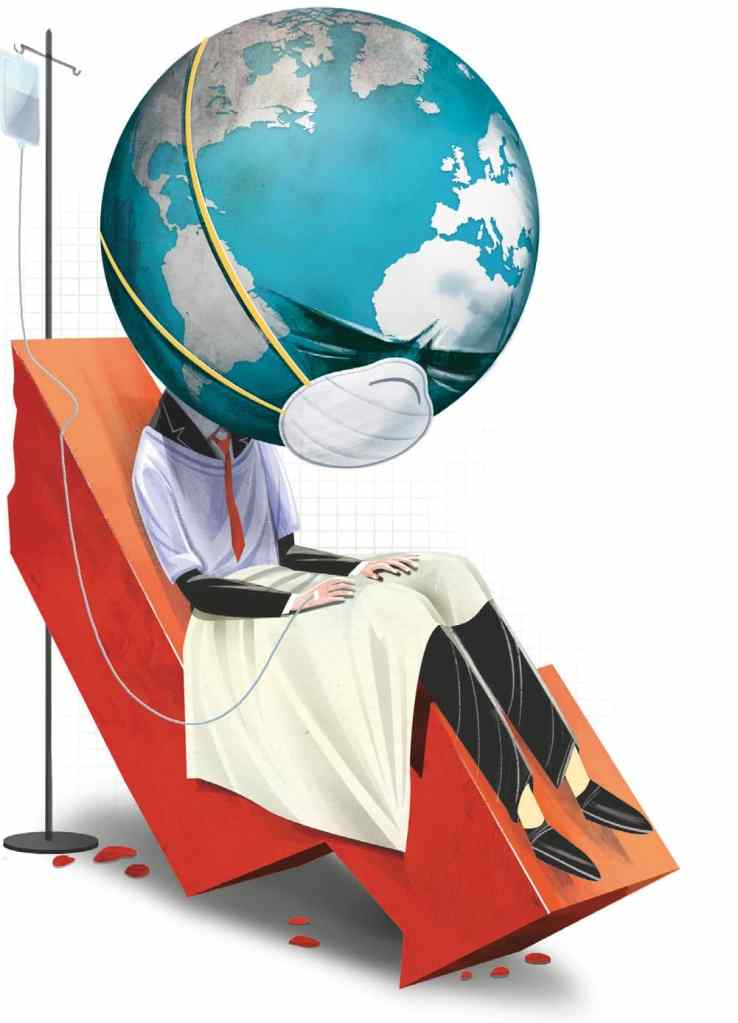
The outbreak of coronavirus disease (COVID-19) was a huge shock to governments, administrative agencies, businesses and ordinary people. In addition to the imminent threat to public health, the pandemic is causing tremendous economic and social stress. Following measures can slow the spread of flu:

Large rallies can be canceled, schools can be dismissed and business hours shortened. Workers may stay at home and continue their jobs using computers and telephones. People with flu can be told to stay home, along with their families. You may need to reorganize your life to provide for your loved ones or get treatment.

Several companies have introduced contingency plans. Employees can function online, or adapt to significant organizational changes. Systems are in place and the enterprise continues. You may have also provided advice to your workers on how to better adapt to work from home or on self-care ideas. However, we are seeing gradually one missing piece of the solution that can undo all the rest that has been achieved.

While there is plenty of information on how we can adapt and care for ourselves, there is much less information on how we can feel and think about changes. The key component in crisis psychology is called โ€œnormalization”. Whenever something occurs that’s distressing, unplanned or affects the people we ‘re close to, most individuals will develop an unpleasant, disturbing and potentially overwhelming reaction. When we feel that we are unable to control the outcome and our standard lifestyle is threatened or impeded, then that is particularly challenging.

The ongoing COVID-19 disease outbreak means that treatment for our mental health and wellness is just as important as our physical health. At the center of handling crisis emotional health, we ‘re learning the same stuff from people:

I feel restless constantly and can’t settle. I think sometimes that I’m not in charge of my brain.”

Normalization describes that this is how the body and brain respond. In terms, it would make sense for people to connect to. It should be providing advice on what people could do to help calm the reaction. It should encourage people to generate action plans that give them a sense of control, as they now have a clear idea of their reaction and action justification. Unless we normalize the emotional reaction, it is very unlikely that we will involve people in activities that will help them take good care of themselves and adapt to what is going on.

As part of the pandemic response, health care providers have a significant role to play in resolving such emotional outcomes. Emergencies in public health can affect the health, safety and well-being of both individuals causing, for example, feelings of inadequacy, confusion, emotional isolation and communities due to economic losses, closures of work and schools, inadequate medical response resources and poor distribution of necessities. These effects can transform into a range of emotional reactions, such as distress or mental illnesses, undesirable lifestyles, such as increased use of substances, and lack of compliance with public health directives like home restraint and vaccination in people contracting the disease and in the general population.

Health problems from natural causes such as life-threatening viral infection would not match the new trauma criteria required for PTSD (post-traumatic stress disorder) diagnosis, but other psychopathologies, such as mood and anxiety disorders, may try to emulate.

Many people are even more vulnerable to the psychosocial impact of pandemics than others. In specific, individuals who catch the virus, those at increased risk for it, including the elderly, people with weakened immune function, as well as people with medical history, mental health, or drug use issues, are at increased risk of adverse psychosocial consequences. Medical professionals are also especially prone to emotional distress in the current pandemic, considering their risk of virus transmission, worries about infecting and caring for their loved ones, scarcity of personal protective equipment (PPE), extended working hours, and participation in the allocation of resources that are emotionally and morally complicated.

 Besides the stresses inherent in the disease itself, guidelines on mass home containment, including residence-at-home orders, quarantine, and isolation, are unfamiliar to individuals and raise questions about how they may respond individually and collectively. A recent analysis of psychological impact in samples of quarantined individuals and health care providers could be instructive; it reported various emotional outcomes, including stress, depression, irritability, insomnia, anxiety, uncertainty, rage, annoyance, boredom and quarantine-related stigma, some of which remained after the quarantine was ended.

In the existing pandemic, huge areas of the population’s home confining for indefinite periods, differences between the stay-at-home orders issued by different states and countries, and mixed information from government and public health organizations will most probably amplify distress. COVID-19 will provide behavioral evaluation and tracking of associated stressors such as exposure to infected sites, infected family members, loss of loved ones, and physical distance, secondary adversities such as economic loss, psychosocial consequences such as depression, anxiety, insomnia, increased use of drugs, and domestic violence.

 Bearing in mind the worsening economic crisis and various uncertainties surrounding this virus outbreak, suicidal thoughts could arise and require urgent consultation with a mental health professional or referrals for potential psychiatric emergency hospital treatment. Medical professionals may give strategies for handling and dealing with stress, such as organizing and maintaining habits, connecting patients to social and mental health resources, and encourage patients to receive appropriate mental health treatment when required. Because media reports can be emotionally distressing, contact with news related to the pandemic should be regulated and reduced.

Since parents frequently ignore the distress of their children, open discussions should be urged to address the reactions and concerns of the children. Self-care for services, such as mental health care providers, includes being educated about the disease and risks, checking one’s own stress reactions, and seeking additional help with personal and professional commitments and concerns โ€” including, where indicated, professional mental health interventions. Health care facilities would need to tackle the burden on individual providers and overall operations by tracking reactions and results, changing assignments and schedules, adjusting priorities, and developing structures to provide supportive care where appropriate.

Separating from others could be stressful if a healthcare provider thinks you may have been exposed to COVID-19, even if you are not getting sick. After quarantine everyone feels different. Emotional responses to quarantine probably include:

  1. Mixed emotions like post quarantine relief.
  2. Fear and worry about your own health, and your loved ones’ health.
  3. Stress from the perspective of observing yourself or being watched by others about COVID-19 signs and symptoms.
  4. Sorrow, frustration, or disappointment, as friends or loved ones, have irrational fears of contracting the disease from contact with you, even though you were determined not to be infectious.
  5. Guilt over not being capable of performing normal duties of job or parenting throughout quarantine.
  6. Many improvements to the physical or mental wellness.

ย In view of the fact that most COVID-19 cases will be reported and handled by staff with almost no mental health experience in health care settings, it is important that psychosocial issues identification and treatment be implemented in those situations. Ideally, incorporation of mental health issues into COVID-19 treatment should be discussed at the organizational level by state and local planning; processes for recognizing, referring and managing serious psychosocial consequences; and the capacity to communicate with specialists will be assured. Health sector executives, emergency workers and health care providers should be provided with information and training on psychosocial issues. The sectors in mental health and emergency management will work together to identify, create and analyze evidence-based services regarding mental health crises and referrals in mental health and certain population’s needs. Risk-communication initiatives will predict the dynamics of evolving problems such as guidelines on prevention, accessibility and acceptability of vaccinations, and require pandemic-related evidence-based approaches and tackle a variety of psychosocial concerns. Healthcare professionals should assist in developing messages which respected leaders should deliver.

The Covid-19 pandemic has disturbing consequences for emotional and social functioning of a person and collective health. Beyond delivering medical services, already strained health care professionals have a significant role to play in tracking psychosocial needs and offering psychosocial support to their patients, health care professionals, and the public โ€” activities that should be incorporated into general pandemic health care. We see people affected from all walks of life, with especially big numbers among those working in the medical field or as first people on the scene along with other essential workers. Our hearts are going out to those heroes. Furthermore, residents of nursing homes and even prisoners are also at higher risk due to health factors and proximity to each other.

Crisis incidents can cause a lot of shock โ€“ and then emotional distress, which can take time to subside. Once we know our emotional responses and accept them, we are much more likely to take steps that can help.

corona virus vaccine

As expected in recent news , corona virus vaccination can be launched on 15 august 2020 but now the vaccine for COVID-19 can be expected only by early next year, a parliamentary panel was informed on Friday. The House panel of Parliamentary Standing Committee on Science and Technology, Environment and Climate heard presentations by the Department of Science and Technology, Department of Biotechnology, Council of Scientific and Industrial Research (CSIR) and the principal scientific adviser to the government on Centre’s preparedness for COVID-19.

Sources said that the panel was informed that a COVID-19 vaccine could be available only by early next year. The panel which is chaired by senior Congress leader Jairam Ramesh, saw six other members in attendence for the meeting.

This was the first meeting of the panel since the country wide lockdown to curb the novel coronavirus outbreak was imposed on March 25.

On July 2, the Indian Council of Medical Research (ICMR) in a statement had announced that it would partner with Bharat Biotech International Limited (BBIL) to fast-track clinical trials of the indigenous COVID-19 vaccine (BBV152 COVID Vaccine).

In an official statement, ICMR Director General Balram Bhargava stated that ICMR aims to launch the indigenous COVID-19 vaccine by August 15.

  • COVAXIN has become the first vaccine candidate developed in India to receive the DCGI nod to conduct phase 1 and 2 clinical trials
  • The ICMRโ€™s August 15 deadline for the Indiaโ€™s first indigenous coronavirus vaccine has created confusion among experts.
  •  A safe and effective vaccine is the best way to control and finally end the COVID-19 pandemic, caused by the novel coronavirus. With more than 200 candidates being developed across the world, vaccine development is moving at unprecedented speed. Joining the global race to create a safe vaccine against the SARS-CoV-2 virus, Indian researchers will soon start testing the countryโ€™s first indigenous coronavirus vaccine candidate, COVAXIN, on 1,100 people in two phases – phase 1 and 2 clinical trials. Developed by Bharat Biotech in partnership with Indian Council Medical Research (ICMR) – National Institute of Virology (NIV), the experimental inactivated vaccine is derived from a strain of SARS-COV-2 virus isolated by ICMR-NIV, Pune. COVAXIN has demonstrated safety and immune response in preclinical studies.
  • The world urgently needs a COVID-19 vaccine, which will help prevent and reduce the risk of infection, as well as resultant complications. However, thereโ€™s also a growing momentum of skeptics raising doubts about future vaccine programmes against other infectious diseases – with safety being a major concern. As COVID-19 continues to spread, pathways of vaccine development are changing in ways as researchers race against time to create a safe jab by shortening process time from the usual 15- to 20-year timeline to one that might be as short as one year. Perhaps, the ICMRโ€™s 40-day target to launch Bharat Biotechโ€™s COVID-19 vaccine by August 15 has caused alarm among scientists and some in the medical fraternity. While the research body has clarified that the date was โ€˜not a deadlineโ€™, several experts have warned against any hasty solution that may compromise standards of scientific rigour.
  •  Experts, familiar with vaccine trials, including the AIIMS Director, New Delhi, have already said that such deadlines may not be met, given the vaccine is yet to undergo the phase 2/ 3 trials and still there are a few more stages to go through before it could get FDA regulatory approval for production, which in itself is a time-consuming task.

So, even if clinical trials vaccine is in accelerated mode all the world ( multi-centric trials), the whole process of vaccine approval by FDA to vaccine production and coming to market for effective distribution will not be before August 2021.

  • Right now we are in a situation, where desperate time needs desperate measures – and at the fastest speed, it takes 12 to 18 months. Post-approval by the FDA, it should take around 1 – 1.5 years for the massive production of billions of vaccine doses.
  • Hence, on the safer side, it looks like August 2021 for a viable COVID vaccine to enter the market.

So, we should maintain the precautions, use of face mask, hand sanitizer and social distancing now is the only medicine of covid-19 till covid-19 vaccine launch.

skill india mission

 Skill India Mission is a government scheme launched in 2015. It is an umbrella scheme that has many skilling schemes and programmes under it. The chief objective is to empower the youth of the country with adequate skill sets that will enable their employment in relevant sectors and also improve productivity. 

Skill India Objectives

The chief objective of the Skill India Mission is to provide market-relevant skills training to more than 40 crore young people in the country by the year 2022.

  • The mission intends to create opportunities and space for the development of talents in Indian youth.
  • It aims to develop those sectors which have been put under skill development for the last many years, and also to recognize new sectors for skill development.

Other objectives are:

  1. Closing the gap between skill required by the industry and skills people possess for employment generation.
  2. Reducing poverty in the country.
  3. Increasing the competitiveness of Indian businesses.
  4. Ensuring that skill training imparted is relevant and of quality.
  5. Preparing Indians to take on the world manpower/resources market.
  6. Diversifying the existing skill development programmes to meet todayโ€™s challenges.
  7. Building actual competencies rather than giving people mere qualifications.
  8. Offering opportunities for lifelong learning for developing skills.
  9. Augmenting better and active engagement of social partners and building a strong public-private partnership in skill development.
  10. Mobilising adequate investments for financing skills development sustainable.

Features of Skill India

There are many features to the Skill India Mission that make it different from the previous skill development missions.

  • The focus is on improving the employability of the youth so that they get employment and also enhances entrepreneurship among them.
  • The mission offers training, guidance and support for all traditional types of employment like weavers, cobblers, carpenters, welders, masons, blacksmiths, nurses, etc.
  • New domains will also be emphasised on such as real estate, transportation, construction, gem industry, textiles, banking, jewellery designing, tourism and other sectors where the level of skill is inadequate.
  • Training imparted would be of international standards so that Indiaโ€™s youth get jobs not only in India but also abroad where there is demand.
  • An important feature is the creation of a new hallmark โ€˜Rural India Skillโ€™.
  • Customised need-based programmes would be started for specific age groups in communication, life and positive thinking skills, language skills, behavioural skills, management skills, etc.
  • The course methodology would also not be unconventional and would be innovative. It would involve games, brainstorming sessions, group discussions, case studies and so on.

Why does India need a skills development programme?

As of a 2014 report, Indiaโ€™s formally skilled workforce is just 2%. Additionally, there is a huge problem of employability among the educated workforce of the country. Lack of vocational or professional skills makes it difficult for the youth to adapt to changing demands and technologies of the marketplace. The high level of unemployment is due to the failure to get jobs and also due to a lack of competency and training.

  • A study by the Skill Development Council (NSDC) indicates that there will be a need for around 12 crores skilled manpower by 2022 across 24 key sectors.
  • Casual workers, who constitute about 90% of the labour force, are poorly skilled as they do not get adequate training. Current vocational training programmes do not meet their demands.
  • There is a problem of social acceptability when it comes to vocational education. Vocational courses are looked down upon and this needs to change.
  • Changing technology is a big challenge and opportunity for the labour force. Employees will have to constantly upgrade their skills if they are to remain relevant in the job market.
  • There is a problem with the lack of infrastructure in the current training institutes.
  • Another problem is the poor quality of trainers available. Students trained by such trainers are not employable in the industry.
  • There is a big issue with the standardisation of skills in the country. New schemes are designed to resolve this issue by having nationwide standards that also stand up to international benchmarks.

Skilling is important because of the following factors:

  1. Demographic dividend: Most major economies of the world have an ageing population. India, with a favourable demographic dividend, can grab this opportunity and serve the manpower market. But, for this adequate skilling is to be provided to up the employability. To capitalise on this, there is only a narrow demographic window, that of a few decades.
  2. The percentage of the workforce receiving skill training is only 10% in India which is very small compared to other countries โ€“ Germany (75%), Japan (80%), South Korea (96%).
  3. Sectoral mobilisation: As productivity improves in agriculture due to increased mechanisation, there will be fewer people required in the farming sector. There will thus be a shift from this sector to other secondary and tertiary activities.

National Policy for Skill Development and Entrepreneurship 2015

The chief objective of this policy is to match the challenge of skilling at scale with speed, standard (quality) and sustainability. It aims to offer an umbrella framework to all skilling activities carried out within India, to align them to common standards and connect skilling with demand centres. In addition to laying down the objectives and expected outcomes, the policy also identifies the overall institutional framework which will act as a means to achieve the expected results. 

Skill Loan Scheme

Under this scheme, loans ranging from Rs.5000 to Rs. 1.5 lakhs will be provided for those seeking to attend skill development programmes. The idea behind the scheme is to remove financial hurdles for people who want to upgrade their skills and learn new skills.

Conclusion

Though skill training in the country has improved in recent years, the absence of job linkages is only aggravating the problem of unemployment. The newly appointed Minister for Skill Development and Entrepreneurship, Dharmendra Pradhan has echoed a similar concern. โ€œWe have to think big way, a lot of technologies are coming, conventional jobs are squeezed, new verticals are emerging, what are they, they have to be informed to employable youths which all big jobs are there.โ€

Skill development starts with identifying future job prospects and segmenting it according to the need and feasibility of training candidates. The PPP model of operation of SSCs presents a great chance of bringing industry best practices in learning and development into such training modules. Private players can use technology to automate, improve and scale training and certification approach of skill-based training. By creating better linkages between the many stakeholders in the process and establishing key deliverables and a clear chain of accountability would help make such training programs more effective. Working towards increasing the accessibility of such training programs, in parallel, should also be looked at. A recently proposed move of making such training more district centric is a step towards that direction.

As India aims to have one of the strongest economic growth stories in the 21st century, it becomes vital for it ensure it growing workforce is capable to handle the incoming disruptions and find suitable jobs. And a core part of this is to tackle the problem of unskilled labor in India and fix its skilling initiatives, today rather than tomorrow.

Vikas Dubey Encounter

Someone said it right “Whatย you sow, so you reap”.ย This is very true when it comes to the latest encounter of criminal Vikas Dubey in Kanpur, Uttar Pradesh. He had a criminal record of killing 8 policemen recently who went to arrest him instead were killed. He also has a record of almost 60 criminal cases against him including murders. The most daring and high profile one was the one in which he killed a BJP MLA inside a police station 20 years ago and was acquitted for lack of evidence.


The world around us is surrounded by various criminals and sometimes people at top positions are involved in the domain directly or indirectly. The manipulate and monopolize the truth and hence elevate the culture of the wrong being. Since so many people are involved, the network of such criminals gets more power and they try to spread their wings by doing more criminal activities. The large network also allows them to be convicted and arrested. Many of the murderers and criminals in the past have been released due to a lack of evidence when the truth was known.

What can you do with a law degree? | Times Higher Education (THE)

In the case of Vikas Dubey, the person was doing wrongful activities for a long time but the killing of 8 policemen recently led to his encounter as the case became high profile and came to media. Some rumors and reports indicated that once he will be arrested, there are chances that he will be killed sooner. The law doesn’t take account of the killing of criminals at the point unless he/she has created harm and is trying to escape.ย 

Now, this encounter seems like a typical Bollywood movie scene where the vehicle in which criminal was taken was rammed and in the process, the criminal tried to escape and police had to kill him on the spot has led to debate whether what happened is correct or not. If police can kill a person in such encounters, won’t all rapists who have clear records of what they did was incorrect be killed at that time? Won’t terrorists be hanged at the moment? Won’t other criminals who have the record against them be killed similarly in nearby future taking the shortcut?ย 

There is no doubt in the fact that criminal and legal cases in India take time and the best advice anyone gives is to settle the case outside the court as it is more convenient and saves a lot of time of all the parties involved. To kill a criminal on the spot saves a lot of time and effort in keeping him alive. When Kasab, one of the terrorists was taken into custody, there was a lot of money spent each day to keep him alive. But sometimes, it is also needed to keep them alive to get more information about how they have managed to do all these activities in the past and to know more about who else was involved with them.

A lone wolf is dangerous but a pack of the wolf can certainly create more problems in the jungle. Similarly, it is important to follow the legal steps and guidelines so that along with one criminal, the network-attached is also exposed and punished by the law.ย 

Is Branding a recent phenomenon?

Letโ€™s get to our journey by knowing – what is brand? The notion behind brand and branding? What purpose does it accomplish?

Branding is the utmost central task for marketers and corporations, as itโ€™s vital for continued existence. Corporates term brand as a โ€œlens through which the consumer assesses their products and an image of a firmโ€. Brand associations epitomize the attribute of goods and services in the cognizance of customers. Numerous analyses confirm that brands are not anew created model. Itโ€™s historic.

If truth be told, branding has survived for ages and can be sketched to the time of Harrapan civilization. We all know language was developed for two things during that days- First, for religious communication and second, for business trade and practices (Barter system). In the trade and practices, people use to keep record by sketching symbols or signs or any icons. Many historians named it โ€œan early brandโ€. They are also called โ€œProto-Brandโ€.

In 2000 BC, Indus valley civilization was rising. They used seals and it was used as brand to differentiate the culture. The seals were used in trading by merchants. The seals were attached with goods before dispatching. The Greek market revolution round the 6th century BCE, has led an entrepreneurial culture. There the pottery industries give a visual of artistic designs and branding, which potters used in arts. It gives an image of value and power of Greece culture. What is brand? Brand is a name, sign, symbols, picture, etc. which helps in identifying the goods and services provided by different sellers. Any product become a brand when some dimensions are added to it to differentiate the product in some way from other similar products. The dimensions can be rational, functional, tangible, emotional, symbolic or, intangible. Anything can become a brand โ€“ A service (Life Insurance Corporation), A product (Samsung, Dell, Apple), A store (Big Bazaar, Shoppers stop). Brand has an attribute which help in maintaining- high quality level, associated feelings, is worth the price it commands, evoke the feeling of confidence and pride amongst the users.

THE ASSASSINATION OF A GREAT LADY

Through the centuries the world has seen many acts of hooliganism and inhuman acts. Men like Abraham Lincoln fell victims to the bullets of assassins. The twentieth century has also its quota of assassinations. Since the death of Mahatma Gandhi, the country never experienced such a tragedy as that which took place on October 31,1984. It was the assassination of the then Prime Minister Mrs. Indira Gandhi.

When Mrs. Indira Gandhi reeled and writhed on the ground riddled with bullets from the guns of her own security gaurds it marked the beginning of the end of a great era. An epoch making personality left the scene which she had dominated like a colossus. It was a tragedy beyond description. It was an end as sudden as it was tragic, an end to a glorious career, but the misery and pity of it was that such a life should come about in this way in Blood. The greater tragedy it was that she was gunned down by her own trusted security gaurds in her own house. The gardener had destroyed his own garden.undefined

Mrs. Indira Gandhi was assassinated by two of her security guards as she was leaving her residence to appear in a television documentary, then being produced by the world – famous actor and director, Mr. Peter Ustinov. She was rushed to the All India Institute of Medical Research where a team of a dozen doctors fought a vain battle with death to save her. On the next day her mortal remains were moved to Teen Murthi Bhavan to lie in State to enable people to pay their last homage to the departed leader. An unending stream of people, tears streaming down their cheeks, filed past the body. But for the tragedy in it, the proof of the people ‘s love for the loyalty to Mrs. Indira Gandhi would have been a marvellous spectacle. On November 3, 1984, Mrs. Indira Gandhi left her residence on her last trek along a route lined by lakhs of people among whom, four thousand and more Army personnel maintained order and discipline. At 16-30 hours the mortal remains of the immortal Mrs. Indira Gandhi, one of the greatest fighters for freedom and one of the greatest figures of the 20th century world was consigned to the sacred flames, the funeral pyre lit by her son, Mr. Rajiv Gandhi, the then Prime Minister.

No adjectives would do any justice to the greatness of Mrs. Indira Gandhi. Coming on the Indian Political scene even before her tenth year – when most children of her age would have been at their pranks- she had her political tutelage under her illustrious father, Pandit Jawaharlal Nehru. From that period till she shed her blood in her own house, gunned down by traitors there was no looking back for her. To list her achievements or to mention her many meritorious qualities would require volumes. But among her achievements could be mentioned a few like the bold step of nationalising banks, her heroic leadership and exhibition of indomitable will in the war with Pakistan when she was dubbed THE DURGA and her 20- point programme aiming at the amelioration of the poor and the downtrodden. More than all these, her personal approach to problems of men and matters and her secular outlook and attempts to carry the people with her irrespective of considerations of caste, creed or religion gave her the stature that she retained till the end. Her incessant mission of striving for international peace and understanding could find proof in her work as the Chairperson of the NAM. The only homage that the people of India can pay her are not mere tears, but their practical action in eschewing violence and in striving to complete the various tasks that she had been prevented from performing by the cruel hand of death.

Migraine Vs. Headache

When there is pressure or pain in the head, it can be difficult to tell whether the individual is experiencing a typical headache or a migraine. Differentiating a migraine headache from a traditional headache, and vice versa, is important.

What Is A Headache?
Headaches are unpleasant pains in your head that can cause pressure and aching. The pain can range from mild to severe, and they usually occur on both sides of your head. Some specific areas where headaches can occur include the forehead, temples, and back of the neck. A headache can last anywhere from 30 minutes to a week. Triggers for this headache type include stress, muscle strain, and anxiety.


What is migraine?
These headaches are intense or severe and often have other symptoms in addition to head pain. Symptoms associated with a migraine headache include:
โ€ข Nausea
โ€ข Pain behind one eye or ear
โ€ข Pain in the temples
โ€ข Seeing spots or flashing lights
โ€ข Sensitivity to light and/or sound
โ€ข Temporary vision loss
โ€ข Vomiting
When compared with tension or other headache types, migraine headache pain can be moderate to severe. Some people may experience headaches so severe they seek care at an emergency room. Migraine headaches will typically affect only one side of the head. However, it is possible to have a migraine headache that affects both sides of the head. Other differences include the painโ€™s quality: A migraine headache will cause intense pain that may be throbbing and will make performing daily tasks very difficult.
Migraine headaches are typically divided into two categories: migraine with aura and migraine without aura. An โ€œauraโ€ refers to sensations a person experiences before they get a migraine. The sensations typically occur anywhere from 10 to 30 minutes before an attack. These can include:
โ€ข feeling less mentally alert or having trouble thinking
โ€ข seeing flashing lights or unusual lines
โ€ข feeling tingling or numbness in the face or hands
โ€ข having an unusual sense of smell, taste, or touch
Some migraine sufferers may experience symptoms a day or two before the actual migraine occurs. Known as the โ€œprodromeโ€ phase, these subtler signs can include:
โ€ข Constipation
โ€ข Depression
โ€ข frequent yawning
โ€ข irritability
โ€ข Neck stiffness
โ€ข unusual food cravings

Treating Migraine

Prevention tips
Prevention is often the best treatment for migraine headaches. Examples of preventive methods your doctor may prescribe include:
โ€ข making changes to your diet, such as eliminating foods and substances known to cause headaches, like alcohol and caffeine
โ€ข taking prescription medications, such as antidepressants, blood pressure lowering medicines, antiseptic medicines, or CGRP antagonists
โ€ข taking steps to reduce stress

Importance of training for the employee

To get started with the any work as a employee the company or the employer will give the training to the employee. As employee has skills but training will helps make that skills sharpen and gives more new skills to the employee. Training may be inform of on the job training and off the job training. On the job means training will be given along with doing the work.off the job training means training will be given in the form of class room lecture,online training etc. Totally training is important to get started with any new work it will give new skills and makes the existing more sharpen.

New Media And Reporting Gender Based Violence

Trigger Warning: Mention of Rape and Sexual Assault

New Media has also changed the style of journalism, such as the rise of online journalism, where facts, information, and reports are produced and distributed through the internet. News in the New Media era is enabled to spread more widely and rapidly. News content is now enriched by lots of digital elements such as images, embed videos, comment box. These elements make the information presented becomes more attractive. One of the salient characters of online journalism is its dependency on speed in delivering information. When we talk about the emerging trends in media, we cannot afford to overlook the role of online media in changing the scenario in the context of women’s issues. The content that the online media produces reflects the pattern of value the society. The prevailing attitude of society gets revealed through the way subjects dealing with women are treated by the media (Arpita Sharma, 2012). 

Media has the choice of acting as both, a protagonist and as a perpetrator-it can either reinforce the gender-based discrimination by portraying sensational and stereotypical images of women or it can provide balanced reportage that empowers women and not degrades them while exposing acts of gender-based violence. Rape cases and sexual assault cases are not a recent trend in the society but sensitive reportage and wide coverage by media while also bringing these issues forefront are relatively very new. 

Gender-based violence or GBV is violence that is directed against a person because of their gender. Both women and men experience GBV but the majority of victims are women and girls. GBV and violence against women are terms that are synonymous as it is widely acknowledged that most gender-based violence is inflicted on women and girls, by men. The issue of GBV reaches every corner of the world. The numbers of women and girls affected by this problem are shocking. According to the World Health Organizationโ€™s data from 2013, one in every three women has been beaten, compelled into sex or are abused. One in five women is sexually abused as a child, according to a 2014 report.

In coverage of GVB, several stereotypes are often perpetuated by the new media. These include that rape is similar to sex, that the assailant is motivated by female lust, that the assailant is perverted, crazy or a monster, that the woman provokes rape or assault, and that only women are only victims. Scholars have found that these stereotypes and myths are pervasive in media coverage of rape and assault cases. Not only the language and the framing of the headlines but also the visuals used in the articles regarding GVB play an important role in the general perception of these issues.

In Gender-Sensitive Indicators for Media (UNESCO, 2012), under Category B- Gender Portrayal In Media Content, B1.5- Strategic Objective 5 states the indicators for the coverage of gender-based violence. Three of them are-

  1. Use of non-judgmental language, distinguishing between consensual sexual activity and criminal acts, and taking care not to blame the victim/survivor for the crime 

2. Use of the term โ€˜survivorโ€™ rather than โ€˜victimโ€™ unless the violence-affected person uses the latter term or has not survived 

3. Use of background information and statistics to present gender-based violence as a societal problem rather than as an individual, personal tragedy 

Terms such as โ€˜victimโ€™ or โ€˜survivorโ€™ are often used to describe individuals who undergo these experiences. The term โ€˜victimโ€™ reiterates feelings of helplessness and lack of female agency, while the term survivor connotes a sense of strength and resilience. However, the affected person should have a say in what to refer them as. The โ€˜victimโ€™ terminology limits individual self-agency and identity. It is important to note that experiences of violence do not define the individual, but rather are a piece of a larger self-identity. Such labels focus on experiences of violence and presuppose an individualโ€™s inability to change or undergo any personal development to transform their identity into a peaceful, empowered personality. 

Images of sexual violence in the media often depicts women as covering their face, being silenced by looming hands, teary faces, large shadows near the woman, are some of the visual examples. These images not only fuel the stereotypes of women as helpless and weak, but also these images are also extremely triggering for the survivors of sexual assault and rape. 

When media reports women who have been assaulted or raped as nothing but victims, society can disengage and fail to take the issue as a broader societal issue and fail to take responsibility for any individual or group action to change it. It is crucial then for journalists to report on GBV in an informed way and to have a good theoretical understanding of the roots of these gender based violenceโ€™s and what needs to change in society. Otherwise, they can do harm by perpetuating patriarchal stereotypes and falsehoods. 

IQ Versus EQ

IQ (Intelligence quotient or Cognitive intelligence)

IQ, or intelligence quotient, is an inborn ability and it measures the general intelligence. They can learn, understand and implement knowledge, perform logical reasoning and abstract thinking. IQ is the intellectual ability to manage ideas, knowledge and thoughts.IQ represents abilities such as: Visual and spatial processing , Knowledge of the world ,Working memory , Quantitative & logical reasoning.

EQ ( Emotional Intelligence)

EQ isโ€ฆ  Self Awareness ,  Self Confidence , Interpersonal Skills and  Social Competence

EQ is the ability to manage relationships with other people.EQ is centered on abilities such as:

  • Identifying emotions
  • Controlling one’s own emotions
  • Perceiving how others feel
  • Using emotions to facilitate social communication
  • Using Empathy โ€“ to relate to others

EQ refers to an individual’s level of emotional intelligence, which is represented by scores obtained in a standardized test. It is a learned and improved ability.

Measurement of EQ

Meanwhile, EQ assessments test different aspects of emotional intelligence: emotional literacy, empathy, intrinsic motivation and how we navigate emotions. Some school counsellors may suggest an EQ test for a child who is struggling socially, to determine which skills to work on.Just like with IQ scores, an EQ score of 100 is considered average; 115 is awesome, but 85 indicates there are some challenges.

There are a number of instruments that seek to โ€œmeasureโ€ emotional intelligence, including the Mayer, Salovey, Caruso Emotional Intelligence Test or MSCEIT.

Unlike IQ, which is static, EQ can increase. But to really develop and master those skills, a child may need explicit teaching and practice.


5 Components of Emotional Quotient

When considering emotional intelligence, we look both internally and externally. EQ considers how we think about ourselves and how we think about and act toward others.The three internal hallmarks of emotional intelligence pertinent to self are:

  • Self-awarenessย is theย the ability to identify your own emotions and their impact.
  • Self-regulationย is the ability to control or redirect disruptive impulses and moods to suspend judgement and think before acting. In practice, it is your ability to influence your emotional clarity.
  • Motivationย is to go beyond the external drive for knowledge to pursue goals with energy and persistence.

Externally, EQ is a measure of what goes on between you and others.

  • Social-awareness is the ability to recognize and understand the emotions of others and react appropriately Social-regulation is your ability to influence the emotional clarity of others through a proficiency in managing relationships and building networks. relationship management (the ability to influence and connect with others).

Emotional intelligence is measured using 5-major components and 15-subcomponents:1. Intrapersonal Skills (ability to understand and apply personal emotions) – Self Regard ,Emotional Self Awareness ,Assertiveness , Independence ,SelfActualization

ย 2. Interpersonal Skills (people skills) – ย Empathy ,Social Responsibility ,Interpersonal Relationships ,3. Stress Management (ability to handle challenges) – ย Stress Tolerance , Impulse Control

4. Adaptability (Ability to react quickly, appropriately, and efficiently to change) – Reality Testing , flexibility ,Problem Solving,5. General Mood – Optimism To a great extent, each of the five domains represents sets of habit and responses that are learned, and so can be improved with appropriate effort

Exemplary qualities of people with high EQ

They are called as โ€œpeople smartโ€ for their extra-ordinary interpersonal skills and are good communicators.The emotionally intelligent child is also one who can verbalise her own emotions accurately, regulate them and control reactions to them( think of ways to defuse her feelings rather than throw a book against the wall.) A child with a high EQ can also handle more complex social situations and build meaningful friendships, in part because of that ability to relate to or empathize with peers.

As a kid grows into a teen and then an adult, EQ becomes tied to internal motivation , governs how emotions impact decision making, to make her cope with stress, solve problems and pursue goals.

Many companies hire for entry-level positions based on IQ, then promote people based on EQ. You need to have a brilliant IQ to be a good engineer, but to be a leader of engineers, your EQ matters more than your IQ.People with high emotional intelligence are likely to be doing well, to be effective at work, to have strong relationships, good health and a high quality of life.

What matters is how youโ€™re able to โ€œconnect with, understand and inspire other peopleโ€. He believes emotional intelligence enables you to demonstrate humility, making people naturally inclined to help you succeed. It also fosters resilience and grit, which empower you to overcome fear of failure and take risks for future success.

When you have the IQ to make good intellectual decisions and the EQ to build relationships with those around you, the sky is the limit.Leaders, Captains, Managers and people with social challenges tend to be more emotionally intelligent. high-EQ students are more co-operative and make better leaders in the classroom. get along with people in progressively collaborative workplaces.

Raise your EQ?

 EQ can be raised by recognizing  and naming the emotions we feel , understand why you feel that way , and distinguish between feelings and actions . It can also done by motivating oneself when considering how to productively harness your feelings, practice some emotional self-control  ,recognizing emotions in others and sensitive to other peopleโ€™s feelings and listen well.

It is a good practice to manage emotions and accept your feelings, but find a balance between over-sensitivity or over-expression and emotional suppression .While handling relationships – Being perceptive, applying conflict management skills instead of ignoring conflict, and being considerate and cooperative . Lighten up the situation by learning to see the humor in difficult situations and use it to smooth over differences. It can be done by resolving conflict positively by choosing your arguments, staying focused in the present, and be prepared to forgive or end conflicts that canโ€™t be resolved.

Can Emotional Intelligence Be Learned?

Some strategies for teaching emotional intelligence include offering character education, modeling positive behaviors, encouraging people to think about how others are feeling, and finding ways to be more empathetic toward others.

Emotional literacy is the term used to describe the naming and managing feelings and learning to respond to othersโ€™ emotions appropriately.โ€œKids learn to understand the social world through storytellingโ€”it helps them relate to a situation and learn how to handle events and emotions,โ€ itโ€™s learning to be aware of their own feelings, to express those feelings, to be able to get along with other kids, ย to be responsibleโ€

Modelling EQ begins at home

Parents begin teaching emotional literacy to their kids from infancy. โ€œOne of the things thatโ€™s really important in the early years is for children to be able to understand how theyโ€™re feeling and to be able to put words to those feelings rather than acting out,โ€ says Chapman.

Emotional intelligence can be developed over time, free of age limit, with the condition that it is provided the necessary attention and effort to it. It is vital for overall success and is a flexible skill set that can be nurtured, it seems prudent for parents to teach emotional literacy to children from infancy.

The final words :

Researchers have shown that our success at work or in life depends on Emotional Intelligence 80% and only20% of intellect.IQ makes up only 20 percent of the factors that determine life success, while other forces, such as EQ, wealth, temperament, family education levels and pure luck make up the balance. That means cognitive skillsโ€”verbal comprehension, memory, reasoning and processing speedโ€”will help academically, but they will only get a person so far in life. To really go the distance, those IQ traits should be rounded out with social-emotional skills like motivation, perseverance, impulse control and coping mechanisms .

To gain extensive knowledge about this topic, please check the following link

https://en.wikipedia.org/wiki/Emotional_intelligence

cryptocurrency

What is cryptocurrency – the cryptocurrency is the digital assets based on a network that is the distributed across a large number of computers. This decentralization structure allows them to exists outside the control of government and central authorities. A cryptocurrency is a digital or virtual currency designed to work as a medium of exchange. Their are market ranking, and more. which in one of the-

1. Bitcoin is the crypto business take off the industries till waiting for regulation. Bitcoin rises during pandemic situation of 14% to performing assets of 2020 again.

The internet, when it rose to global consciousness and became an over get in amount of harbinger and industry, created enormous value in disrupting existing practices and building chapter, more accurate and efficient systems, Its advent promised much in term of decentralization and democratizing access to information, value service. It promised to remove barrier and middlemen, vastly reduce operational and logistic costs in so many ways.

In this article, i will explain the three main types of coins in cryptocurrency are the Bitcoin, Altcoins and Tokens. By the end of this guide and as well the before going to learning about the type of cryptocurrency. it’s important to understand what cryptocurrency is If you already feel too.

BITCOIN ECONOMY WORK – The bitcoin generate by the users transfer. The latest disruption, blockchain, and with it, the rise of cryptocurrencies show the way to the next stage , by creating decentralization computer or etc application.

2. RIPPLE(XRP) – Ripple was released in 2012 that acts as both cryptocurrency and digital payment network for financial transaction. It is a global set network that is designed to create a fast as well secure also.

3. LITECOIN – light coin was launched by 2011 as alternatively bitcoin. like other cryptocurrency litecoin is open source payment network that is completely not center authorities.

4. Ethereum – this is created by the in the 2015. Ethereum cryptocurrency that is an a open source based on a blockchain technology while tracking ownership of a digital currency transaction, the blockchain are also focus on the running by the programming codes on any decentralization applications.

5. Zcash – this was a digital currency and that was a build on the original bitcoin code and it was build a decentralization blockchain. A core chain feature and different of zcash is an emphasis on privacy. While not a function available to investors on equity Trusts. Zcash without the closing the sender, receiver the amount.

6. Stellar Lumen – steller lumen as an intermediate currency that was facilitates currency exchange. stellar a user allow a user send any currency they own to someone in different currency. Jed McCaleb founded the open source network steller creat the network native currency in 2014.

There was a time when you could the number and types of cryptocurrency on one hand. The today’s are their was no possible longer. The cryptocurrency market has grown, grown some more.

The available of over the internet of 19 August over by the $550 billion of the value wiped off cryptocurrency since their record just changes that’s why the cryptocurrency is used by more applications.

Toxic positivity

You must have heard people telling you to stay positive when you are going through hard times or maybe you must have heard yourself giving advice to others about how staying positive can help them. Being positive is essential to get through life but too much of it can sometimes do more damage than good. Excessive of anything can be harmful. As much as everyone believes in the undeniable power of positivity, it can take a toxic turn when we try to use it to hide the negative situations. It is a very normal human experience to face the hardships along with the good stuff but trying to negate your true feelings goes against any sort of development.

Over sweetening of positivity comes at a price of hiding one’s true emotions. Since it is always encouraged to stay positive and be happy all the time, we miss the fact that feeling sad is one of the most basic human emotions and should not be sidelined under false happiness. This only builds guilt towards one’s own emotions. Being on the receiving end of someone’s feel good quotes can be annoying at times. Sometimes you just want to and need to face the reality. This should also hold true when you are the one giving advice to someone. You telling someone to think positive doesn’t help anyone. It just creates resentment and feels as if you are minimizing someone’s experiences. Telling someone to look at the brighter side of the situation should also not be your first response when someone confides in you. Try to be emotionally supportive.

It is also apparently believed that there is some shame attached to feeling certain emotions or letting them out in the form of crying. The only reply we get is to man up and stop being a crybaby. In order to avoid this, we end up braving and portraying a false front. Suppressing or hiding these emotions lead to more stress and can erupt in a harmful manner. It makes one end up creating a fake persona for themselves. It creates pressure to be or act in a certain way around some particular people.

In order to lose this toxic positive attitude, try listening to people’s emotions and feelings rather than brushing them off. Tell them that even though you may not be able to provide solution for their problems, you will still be with them or even ask them what they need.

Being a healthy person requires being conscious of one’s emotions as well as others. Being overly positive can be harmful to you as well as to those around you. So cut the chain of toxic positivity but don’t dwell in sadness either. Set healthy boundaries for yourself and don’t let anyone, including yourself belittle your experiences.

Air Pollution and COVID-19

The nationwide LOCK-DOWN due to the pandemic has led to a drastic decline of NO2 emissions and reduced air pollution levels. Itโ€™s important that this is maintained even after the LOCK-DOWN lifts

In the middle of the devastating Covid-19 pandemic, an inimitable positive has been the significant global decrease in air pollution levels. Primarily, experts have measured nitrogen dioxide (NO2), one of the six major air pollutants (in addition to particulate matter, carbon monoxide, sulfur dioxide, ground-level ozone, and lead). NO2 has, like most other gases, natural and human sources.

Natural sources include lightning, oceans, and volcanoes. But, in urban regions, natural sources of NO2 account for a small fraction of the total NO2 levels; as per a 2005 report by Australiaโ€™s Department of the Environment and Heritage, natural sources of NO2 only account for 1 per cent of overall NO2 levels in cities. Human activity is almost entirely accountable for NO2 emissions in urban regions, with road transport being the chief cause. Planes, power plants and ships, all of which burn fossil fuels, are also notable human sources of NO2. Given this, itโ€™s unsurprising that during the stringent global lock-downs, NO2 levels have dropped significantly in urban areas, especially in Indiaโ€™s densely populated cities.

Satellite imagery from the European Space Agencyโ€™s Copernicus Sentinel 5P satellite measure NO2 levels globally. These measurements correctly reflect emissions sources, because unlike other gases that can travel a considerable distance from where theyโ€™re emitted, NO2 has a short lifespan and dies before it can move very far. In other words, if the Sentinel 5P satellite captures a hotspot of NO2 over Delhi, itโ€™s highly likely it was emitted from within Delhiโ€™s vicinity. Satellite imagery is, therefore, a highly authentic tool for measuring NO2 emissions, specially if data with high levels of cloud coverage is precluded.

The global decreases in NO2 levels were first seen in China, where levels plummeted dramatically following the strict quarantine measures enforced in late January. As countries in Europe and North America followed Chinaโ€™s lead in late February and March, akin trends have been observed globally. Indiaโ€™s nationwide lockdown, in particular, has had remarkable effects on air pollution levels. With citizens quarantined at home, road transportation and power plant operations have come to a grinding halt, and pollution levels across the country, especially in typically smoggy cities, have fallen to dramatic lows.

Dramatic decrease

In Delhiโ€™s metropolitan area, pollution levels have dropped most dramatically; NO2 levels from March 25 (the day quarantine began) to May 2 have averaged 90 ยตmol/m2 compared to 162 ยตmol/m2 from March 1 to March 24. In 2019, NO2 levels from March 25 to May 2 were also over this yearโ€™s levels, averaging 158 ยตmol/m2.

In Greater Mumbai and Navi Mumbai, akin trend has been observed as NO2 levels from March 25 to May 2 averaged 77 ยตmol/m2 compared to 117 ยตmol/m2 from March 1 to March 24.

In almost all other big Indian cities, similar drops in NO2 levels are evident, highlighting the national scale of Indiaโ€™s lockdown.

The country-wide drop in NO2 emissions during this lockdown has significant immediate consequences. Exposure to high levels of NO2 has substantial detrimental effects on human health. Short-term exposure to high levels of NO2 can result in worsened coughing, aggravation of existing respiratory diseases (asthma), and hospitalization, while longer-term exposure can lead to the development of asthma and increase oneโ€™s susceptibility to respiratory diseases.

Many researchers have hypothesized that the drop in air pollution levels may presently be saving a notable amount of lives, not only by reducing individualsโ€™ vulnerability to Covid-19, but also by averting some of the worldโ€™s seven million annual deaths due to air pollution exposure. Yet, the dangerously high levels of NO2 in many urban areas before Covid-19 has probably resulted in far more virus deaths compared to the lives saved by this current drop in emissions. The pandemic and the subsequent decreases in air pollution levels due to the quarantine have illuminated a severe issue regarding ongoing high levels of air pollution.

Going forward

The terrifying reality is that despite human activity essentially coming to a complete standstill, current estimates suggest that carbon dioxide (CO2) levels will only decrease by roughly 5.5 per cent in 2020 compared to 2019. To put this in perspective, to meet the goal of limiting the global increase in temperature to 1.5oC, which many experts agree would stave off the worst effects of climate change, global CO2 emissions would need to decrease by 7.6 per cent each year. Similarly, air pollution and NO2 levels are expected to rise to their normal unhealthy levels when quarantines are lifted.

Itโ€™s crucial that when Indiaโ€™s lockdown inevitably ends, and people return to their normal routines, they arenโ€™t forced to revert to their old behaviors. To make the current drops in air pollution levels long lasting, serious policy change needs to be passed. The reduction in road transport and the corresponding decrease in air pollution have illuminated that gas-powered cars are key drivers of air pollution. Electrifying transport, expanding public transportation, building more bike lanes, and finding other ways to incentivise people to ditch their cars would dramatically reduce Indiaโ€™s emissions from its primary human source of air pollution. Itโ€™s also important that these electric vehicles, and Indiaโ€™s cities more widely, are powered by clean sources of energy rather than fossil fuels.

Itโ€™s ironic that this devastating respiratory virus has illuminated another respiratory crisis.

Northeast: The unexplored beauty

Northeast is the collective name of the easternmost states of India. It comprises of 8 culturally and ecologically rich states. It comprises of Arunachal Pradesh, Assam, Manipur, Meghalaya, Mizoram, Nagaland, Sikkim and Tripura. These states are also know as ‘The seven sisters’ and Sikkim being the only brother.
If you are a travel geek, visit to the Northeast must top your bucket list. Each state is very different from each other, yet so similar. Each state can mesmerise you with its beauty. This part of India is so raw and pure, in comparison to the rest of the country and this makes it even more special.
Introduction to each state
โ€ข Arunachal Pradesh
The land of rising sun, Arunachal Pradesh, is characterized by mountainous ranges and sub mountainous ranges along the northern part. This state is truly diverse in terms of its culture. Arunachal Pradesh has 26 major tribes and multiple sub-tribes. People of Arunachal Pradesh speak over 50 dialects. Arunachal Pradesh is a green gold. Because of the variation in altitude and climatic condition, it has tropical, subtropical and temperate forest.

โ€ข Assam
Assam is a northeastern state popular for its wildlife, archaeological site and tea plantation. Assam is also known for its temples, especially the Kamakhya Temple. The worldโ€™s largest river island, Majuli, and the smallest river island, Umananda, are both located in this state. The culture of Assam is a rich and exotic tapestry. Natives of this state are known as Asomiya (Assamese) and it is also the state language of Assam. Weaving is an important part of Assamese culture. Gamocha is one of most easily recognisable cultural symbol, besides many.

โ€ข Manipur
Manipur is situated in the eastern frontier of India. Physically Manipur comprises of two parts, hills and valleys. The valley is centred surrounded by hills on all sides. The state has a forest canopy ranging from thickly dense forest to moderately dense forest to open forest. The cultural expression and art form of this state is famous worldwide. Manipuri dance whether folk or classical, is distinct from any other form.

โ€ข Meghalaya
Meghalaya is a hilly state in northeast India. This area is geographically rich, with mountains, stretches of valley and Highland plateau. Mawsynram, Cherrapunji in Meghalaya is the wettest place of earth. Shillong, the capital of Meghalaya is known as the rock capital of India. The forest in Meghalaya are among the richest botanical habitat in Asia. Meghalaya’s forest host 660 species of birds.

โ€ข Mizoram
The state with highest literacy rate in Northeast is Mizoram. Among the northeastern states, it is the southern most landlocked state. Mizoram is the state of rolling hills, valleys, rivers and lakes. Traditional festivals in this region revolve around jhum cultivation. This state has several dance forms, including, Cheraw, Khuallam, Chheihlam, Chai.

โ€ข Nagaland
Nagaland is largely a mountainous state. It is 16th state of India on 1st December 1963. The state has a monsoon climate with high humidity levels. Nagaland, just like all other northeastern state, is high in flora and fauna. Mithun is the state animal and has also adopted as the official seal of the Government of Nagaland. Music and dance is an intrinsic part of Naga life. The Hornbill festival celebrated in Kohima, capital of Nagaland, is famous worldwide.

โ€ข Sikkim
Sikkim is the only northeastern state which is not a part of ‘seven sisters’. It host Kanchenjunga, the highest peak of India and third highest in the world. Sikkim climate ranges from sub tropical in the south to tundra in the north. Sikkim is one of the few states of India to receive snow fall. The state is situated in the ecological hotspot of the Lower Himalayas, one of the only three ecoregions of India.

โ€ข Tripura
Tripura is the third most smallest state in the country. The state is characterized by hill ranges, valleys and plains. Tripura has a typical savanna climate. Unakoti in Tripura is popular worldwide. Multiple folklore are famous about Unakoti.

Latest Government Schemes

Hey Readers, let’s go through some of the schemes launched by the Government of India in the year 2020. The main purpose of these schemes is to address the social and economic welfare of the society.

  1. Atmanirbhar Bharat Abhiyanย 

The Atmanirbhar Bharat Abhiyan was announced in four tranches by the Union Finance Minister Nirmala Sitharaman in May 2020. It aims to take India in the position of becoming self-reliant. The economic stimulus relief package announced by the government is touted to be worth Rs.20 Lakh crores. This amount is almost 10% of India’s GDP. This includes the already announced Rs 1.70 lakh crore relief package, as the PMGKY, for the poor to overcome difficulties caused by the coronavirus pandemic and the lockdown imposed to check its spread.

This scheme was based on 5 pillars that included economy, infrastructure, demographics, technology and demand. The relief package emphasized on land, labour, laws and liquidity.

For more details about the relief package, you can go to: https://byjus.com/free-ias-prep/atmanirbhar-bharat-abhiyan/.

2.ย Pradhan Mantri Kisan Maan Dhan Yojana

This a Central Sector Scheme which is administered by the Cooperation & Farmers Welfare, Department of Agriculture, Ministry of Agriculture & Farmersโ€™ Welfare and Government of India in partnership with Life Insurance Corporation of India (LIC).

LIC is the Pension Fund Manager for PM Kisan Maan-Dhan Yojana that provides an assured monthly pension of Rs. 3000/- to all the farmers after the age of 60 years. This scheme was introduced with an aim to secure the lives of around 3 crores small and marginal farmers in India.

3. Pradhan Mantri Suraksha Bima Yojana (PMSBY)

The Scheme is available to people in the age group 18 to 70 years with a bank account who give their consent to join / enable auto-debit on or before 31st May for the coverage period 1st June to 31st May on an annual renewal basis. Aadhar would be the primary KYC for the bank account. The risk coverage under the scheme is Rs. 2 lakh for accidental death and full disability and Rs. 1 lakh for partial disability.

The premium of Rs.12 per annum is to be deducted from the account holderโ€™s bank account through โ€˜auto-debitโ€™ facility in one instalment. The scheme is being offered by Public Sector General Insurance Companies or any other General Insurance Company who are willing to offer the product on similar terms with necessary approvals and tie up with banks for this purpose. As on 31st March, 2019, cumulative gross enrolment reported by Banks subject to verification of eligibility, etc. is over 15.47 crore under PMSBY. A total of 40,749 Claims were registered under PMSBY of which 32,176 have been disbursed.

For more information, refer to: https://financialservices.gov.in/new-initiatives/schemes

4. Atal Pension Yojana (APY)

APY was launched on 9th May, 2015 by the Prime Minister. APY is open to all saving bank/post office saving bank account holders in the age group of 18 to 40 years and the contributions differ, based on pension amount chosen. ย Subscribers would receive the guaranteed minimum monthly pension of Rs. 1,000 or Rs. 2,000 or Rs. 3,000 or Rs. 4,000 or Rs. 5,000 at the age of 60 years. Under APY, the monthly pension would be available to the subscriber, and after him to his spouse and after their death, the pension corpus, as accumulated at age 60 of the subscriber, would be returned to the nominee of the subscriber.

‘Scotland of the East’

Situated in one of the Seven Sisters Of India (seven states), Shillong is the capital of Meghalaya state in countryโ€™s northeastern region. There are as a matter of fact numerous similarities between this place and Scotland, and this is reason why Shillong is called Scotland of the East. Moreover to prove that the naming is indeed done appropriately, here are a few points that justify it.

Though, each place has it’s own unique charm, but letโ€™s just have some fun wondering about the similarities for the time being.

1. FIRST, the striking similarity between landscapes is actually a major reason behind the naming

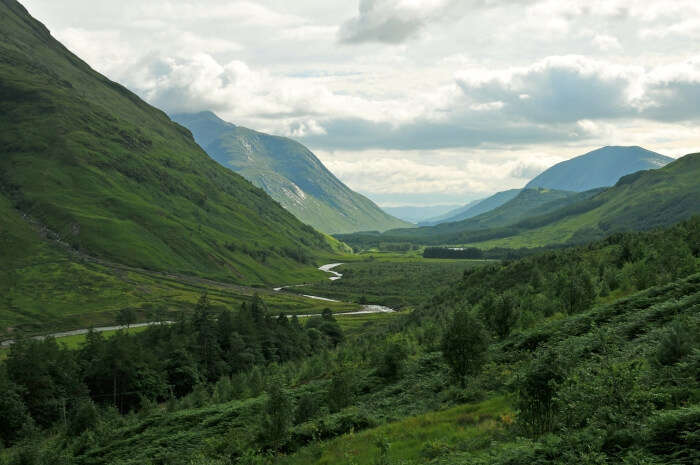
Glen etive in Scottish Highlands

Shillongโ€™s terrain is adorned with rolling and sky soaring hills bestowed with lush greenery. Most times, you can browse through pictures of both Scotland and Shillong, and you will actually get your mind baffled wondering which photograph is of which place! On a cloudy day the mist-laden pasturage look nothing less than a paradise.

2. The meandering roads amidst valleys make way for that ultimate road trip youโ€™ve been dreaming of

Shillong Pass

The road to Mawlynnong, Cherrapunji, and the curvaceous road of the Shillong Bypass surely do allure just experienced drivers. Youโ€™d anyway rather sit at the backseat, so you can keek out of the window, let your hair flutter with the breeze, as the Himalayas unfold mesmerizing panorama before you.

3. Everyday is fun with cultural extravaganza

Culture in Shillong

The rich, colorful culture of Shillong makes it stick out. Just like the Scottish people, the tribes feel delight in presenting folk performances, and itโ€™s fascinating to sit back and witness. You can also be a part of the act and join them as they are on it, but make sure youโ€™re not spoiling the fun for others too. If not performances, youโ€™ll be bewitched by handicrafts, tribal attires, and of course traditions. For a culture vulture, the perfect way to get an understanding of localsโ€™ lifestyle is by staying in homestays.

4. The Scottish Highlands and the hills of Shillong razzle-dazzle with roaring waterfalls

Waterfall in Shillong

When youโ€™re travelling through the valleys of Scotland and Shillong, be prepared to come upon random glistening waterfalls, especially if youโ€™re visiting in the monsoon season.

5. The lakes of Scotland and Shillong hold stunning resemblance

Lake in Shillong

Alongside roaring waterfalls, Shillong and Scotland are embellished with lakes that are encircled with rolling hills. You can sit by for some time, or espouse this beautiful moment by boating on the lake. Keep aside any electrical device for a little while and just inhale the enticement in front of your eyes.

6. Many regions are undisturbed by heavy tourist crowd

Mist in Shillong

Even though Shillong in Meghalaya is a major tourist attraction in Northeast India, but you will come across a commendable balance when it comes to crowded attractions. There are numerous places in this place where you can pitch in your tent and connect with nature. Such is the natural beauty of this place.

7. The music festival scenario in Shillong is equally spellbinding as the Scottish one!

Music festival in Shillong

Scotland might be hosting some stunning music festivals, but believe me, Shillong will have your jaws drop too! The NH7 Weekender is a music festival which is one of Indiaโ€™s most awaited events. Famed artists like A.R Rahman, Steven Wilson, Farhan Akhtar and Fear Factory have performed in the festival.

We can come up with many similarities between Scotland and Shillong to justify its naming, but we believe, that the beauty of this beautiful Indian hill-station is one-of-a-kind, and that it cannot be compared with any other place in the world.

Introduction to share market

Share market is the market place where the shares of different companies will be listed and purchased and sold among different buyers and sellers.companies will bring their shares to the stock market through the IPO which means Initial Public Offering where company will first time sells its shares to the open public. When company need additional capital or Fund required then company will go for the IPO so the share will be listed. If the companies share is listed then only public can purchase that particular companies share in share market. Share market has its own time and working days which is depend on different countries. In working days only one can purchase and sell the shares.

SUSTAINABLE DEVELOPMENT GOALS(SDG) OF INDIA

India, home to one-sixth of all humanity, holds the key to the success of the 2030 Agenda. India in its second VNR has made a paradigm shift to a โ€œwhole-of-societyโ€ approach with Government of India engaging sub-national and local governments, civil society organizations, local communities, people in vulnerable situations and the private sector.

Indiaโ€™s commitment to the SDGs is reflected in its convergence with the national development agenda as reflected in the motto of Sabka Saath Sabka Vikaas (Collective Efforts for Inclusive Growth). Based on the evidence from the SDG India Index, which measures progress at the subnational level, the country has developed a robust SDG localization model centered on adoption, implementation and monitoring at the State and district levels.

The following narrative further encapsulates Indiaโ€™s progress across the SDGs.

Sashakt Bharat – Sabal Bharat (Empowered and Resilient India): India has successfully lifted more than 271 million people out of multidimensional poverty through economic growth and empowerment. Enhanced access to nutrition, child health, education, sanitation, drinking water, electricity and housing, has led to reduced inequalities especially among people in vulnerable situations.

Swachh Bharat – Swasth Bharat (Clean and Healthy India): Through a nationwide initiative triggered by the Clean India Campaign and the National Nutrition Mission, India achieved 100% rural sanitation and sharp reduction in stunting and child and maternal mortality rates. Universal health coverage has been institutionalized through Ayushmaan Bharat, the worldโ€™s largest health protection scheme which provides an annual cover of USD 7,000 to 100 million families, covering nearly 500 million individuals.

India is at the forefront in the call for joint global action to address the COVID-19 pandemic. The country has extended medical assistance to several countries and has operationalized the SAARC COVID-19 Emergency Fund with an initial contribution of USD 10 million. Domestically, Indiaโ€™s response to the COVID-19 pandemic includes an initial USD 22.5 billion economic stimulus package, comprehensive health coverage for front-line workers and direct cash transfers for the most vulnerable.

Samagra Bharat – Saksham Bharat (Inclusive and Entrepreneurial India): Social inclusion is pursued through universalizing access to nutrition, health, education, social protection, and developing capabilities for entrepreneurship and employment. Financial inclusion through Jan Dhan-Aadhaar-Mobile (JAM) trinity โ€“ near universal access to bank accounts aided by the Jan Dhan Yojana (National Financial Inclusion Scheme); Aadhaar card (National unique identity number) for over 90% of the population; and expansive access to mobile phones, has propelled new avenues of credit, insurance, and Direct Benefit Transfers (DBT) to the poor, including to over 200 million women, thereby accelerating their economic empowerment.

Satat Bharat โ€“ Sanatan Bharat (Sustainable India): Indiaโ€™s climate action strategies call for clean and efficient energy systems, disaster resilient infrastructure, and planned eco-restoration. Acting on its nationally-determined contributions, India has electrified 100% of its villages, reduced 38 million tonnes of CO2 emissions annually through energy efficient appliances, provided clean cooking fuel to 80 million poor households, and set a target to install 450GW of renewable energy and restore 26 million hectares of degraded land by 2030. Globally, India stands third in renewable power, fourth in wind power, and fifth in solar power. India launched the Coalition for Disaster Resilient Infrastructure and the International Solar Alliance to leverage global partnerships for climate action and disaster resilience.

Sampanna Bharat- Samriddh Bharat (Prosperous and Vibrant India): India is one of the fastest growing emerging market economies with a young population and burgeoning innovation and business ecosystem. With a GDP of USD 2.72 trillion in 2018-19, India strives to become a USD 5 trillion economy by 2025, and pursue an inclusive and sustainable growth trajectory by stimulating manufacturing, building infrastructure, spurring investments, fostering technological innovation, and boosting entrepreneurship.

In the spirit of South-South Cooperation, for realizing the 2030 Agenda, India supports developing countries through the USD 150 million India-UN Development Partnership Fund. In this spirit of regional and global partnerships, and the countryโ€™s commitment to โ€˜leave no one behindโ€™, India steps into the Decade of Action, drawing confidence from its experience in addressing challenges. Government of India will continue to work collaboratively with all domestic and global stakeholders to accelerate efforts for a sustainable planet for future generations.

CORPORATE SOCIAL RESPONSIBILITY(CSR) IN INDIA

Now Corporate Social Responsibility (CSR) is well accepted among shareholders as well as with various other stakeholders of society in India. The term CSR is new normal for Indian organisations. CSR tends to focus on what is done with profits after they are made. Larger corporations understand that CSR is an integral part of business framework for sustainable development. Companies also consider that CSR is an approach towards sustainable development and focus on the triple bottom line of Economic, Environmental and Social performance.

In India, the term Corporate Social Responsibility (CSR) is widely being used even though related concepts and terms, such as business responsibility, sustainable development, philanthropy, sustainability, corporate citizenship, responsible business, triple bottom line, shared value, value creation, business ethics, socio-economic responsibility, bottom of pyramid, stakeholder management, corporate responsibility, and corporate social performance.

The CSR activities of Indian companies are in line with the provisions of Section 135 with Schedule VII to the Companies Act, 2013. The CSR initiatives of companies thrust on creating value in the lives of the communities around its areas of business and manufacturing operations.

CSR has become an effective tool to work in the line of Sustainable Development Goals (SDGs) with a strong focus on social performance indicated in the CSR projects of the organizations. The SDGs, otherwise known as the Global Goals, are a universal call to action to end poverty, protect the planet and ensure that all people enjoy peace and prosperity.

Most of the businesses consider community as one of its apex stakeholders and believes in inclusive growth. This year most of the organisations continued its CSR initiatives in the realm of Education, Health, Livelihood, Rural Development and Social Entrepreneurship.

Organisationโ€™s diverse projects and operations touch lives of people in many ways and create value by helping in overall and holistic development of communities within multiple geographies. Through its various initiatives, Companies endeavour to play a relevant role by serving communities and projects that address gaps in basic societal requirements.

Conscious business decisions by the Companies have directly and indirectly created value for multiple stakeholders and helped in improving lives of the people and species. Businesses in India believed in creating societal value by providing affordable products and services which have assisted in the growth of relevant and allied industries. Across all its areas of operations of Business, there are inherent linkages and interconnections with the immediate and long term societal impact.

Most of the business have a practice of reporting the CSR performance not only in Annual Report but also in dedicated Annual CSR Report and Sustainable Development Report. These reports are externally verified and are in accordance with the Global Reporting Initiative (GRI) guidelines and Business Responsibility Report, mandated by the law and competent authorities.

CSR initiatives are conceptualized and implemented through Corporate Foundations, Non-Government Organisation (NGOs) and Agencies and not-for-profit organisations. Most of the organisations worked on 4P model (Public-Private-People-Partnership) for empowering communities and stakeholders. Businesses have positively impacted lives particularly of several hundreds of thousand underprivileged people through various CSR activities and approaches.

It has been observed that for Indian Companies, Corporate Social Responsibility (CSR) is the commitment of businesses to contribute to sustainable economic development by working with the employees, their families, the local community, experts and the society at large to improve lives in ways that are good for business and for its development.

In the broad manner, CSR segment of the organisation is guided by the Board of Governance, Business DNA, CSR and Sustainability Mission of the Companies. In compliance with the provisions of Section 135 of the Companies Act, 2013 with the Companies (Corporate Social Responsibility Policy) Rules, 2014, Companies have taken measures and steps to ensure improvement and betterment.

Most of the businesses seek to continue its contribution to the society through its distinct value proposition that meets the needs of millions of people, enhancing their lives through education, healthcare, improving quality of living by providing attitude, means and enabling livelihoods by creating employment opportunities through and for the Business, By the Business and Beyond the Business.

For the Business, value is being created for the society through business including employment generation, market growth and opportunity creation. By the Business- value is also being created through Corporate Social Responsibility (CSR) interventions across different operating facilities with appropriate linkages to local communities in which businesses operate and Beyond Business- value is being created through interventions for the societies in diverse geographies across India through creation of demand and services.

At public sector business organisations in India, CSR has been also looked upon as closely linked with the principle of sustainable economic development, which demand that organisations should make decisions and act based not only on financial factors but also on immediate and long term social and environmental consequences of their operations and activities.

Businesses in India have been sensitive towards the concerns of society and is committed to operating its core business in a socially responsible way by taking into consideration the wider interests of the community and the environment.

Seven pillars of CSR strategy

1. Need of partnership in CSR

2. Cross learning

3. Supplementing and nurturing CSR

4. Per beneficiary cost reduction and maximizing the impact while reaching more people

5. Knowledge management and documentation

6. Use and reuse of resources for better CSR

7. Capacity building of the CSR workforce and re-skilling

Need of partnership in CSR

Business organisations now recognise Corporate Social Responsibility (CSR) as a great opportunity to significantly strengthen their businesses โ€“ while building, strengthening and renewing human, social and natural resources and wealth. Finding the right kind of partners is absolutely important to the success of a CSR strategy. We are in connected world.

All issues are connected to the other issues, perspective and environment. Working alone is good but working together is great. Working alone yields lesser benefits as compared to the working together always. CSR world should explore togetherness by partnering with other entities. Togetherness in addressing the social and environmental issues is good for all. CSR world should encourage partnership to execute the mega social projects.

To fulfil the corporate social responsibility (CSR) goals businesses have to realise and act in partnership. Formation of partnerships has played a very significant role in progress and prosperity across the world. Partnership brings companies, businesses, people and society together and then pool their resources together in order to achieve the set goals. Partnerships is CSR is need of hour. Partnership opens doors for cross learning of knowledge and experiences.

Cross learning in CSR

Cross learning is key to CSR strategies. Learning improves performance and minimise risks. Effective partnership among likeminded organisations for CSR execution ensures cross learning in Corporate Social Responsibility. CSR leaders from different organisations must visit specific CSR locations of other organisation where CSR projects are being implemented and meanwhile they should meet the beneficiaries to gain new insights. CSR leaders must build a deep understanding of the socio-economic issues and they must be open enough to understand issues both from a business and a societal perspective. Learning from others in CSR can save time and resources. Concentrate on your CSR efforts but same time CSR leaders must learn from variety of successful CSR programmes. The greatest opportunities will come from areas where the business significantly interacts with society. Cross learning in CSR is immensely helpful in supplementing and nurturing CSR programme and projects.

Supplementing and nurturing CSR

Good CSR strategy and projects must be encouraged and supplemented. Opportunities for complementing and supplementing ongoing social projects and initiatives, programmes must be explored. Supplementing CSR emphasises on the sustainability of projects and programmes to ensure they remain relevant and viable even upon disengagement at the end of the project period. Every organisation explore possibilities for collaborating and co-operating with other corporations in order to synergise its efforts and increase both financial and social resources as well as outcomes and impact. Businesses may consider in supplementing even in smaller well defined CSR projects. Supplementing the CSR projects by the smaller or larger organisations matter in order to ensure optimal utilisation of the CSR budget and resources.

Per beneficiary cost reduction in CSR

Per beneficiary cost reduction and maximizing the impact while reaching more beneficiaries in CSR is key to success. Business organisations have a variety of motives for being attentive to CSR and run a CSR projects. Leaders can increase impact and reduce costs when they understand the role of Corporate Social Performance (CSP) in driving CSR Performance (CP). Business should think of reaching more people by using less money and resources. Reduction in per beneficiary cost can be achieved by the partnership, collaboration, cross learning and reuse of resources.

Knowledge management and documentation

CSR reporting practices strengthen organizations. The process of documenting and communicating CSR practices provides benefits to corporations, including the ability to formalize their position on CSR, identify organisational strengths and weaknesses, and manage stakeholder relationships and expectations. In India, any shortfall in spending in CSR shall be explained in the financial statements and the Board of Directors shall state the amount unspent and reasons for not spending that amount. As per the CSR Law, the CSR Committee of organisation shall institute a transparent monitoring mechanism for implementation of the CSR projects or programs or activities undertaken by the company.

Documentation, reporting and communication of the CSR performance in crucial to the CSR strategy.  Documentation of the CSR must be organised and structured and should be accessible. Companies can explore the new way of documentation, reporting and communications.

Use and reuse of resources for better CSR

Effective use and reuse of resources can improve the CSR performance. Awareness on use and reuse of resources among across the stakeholders can help in achieving the desired goals of CSR sustainability. Sustainable CSR can be achieved through community and beneficiaries engagement. CSR is a process oriented task.

Recycling and reuse often are the easiest places to start. CSR leaders should take the essential steps to recycle the commonly recyclable materials, and look for easy opportunities to replace disposable or recyclable items with reusable ones. CSR leaders also should look for partners to help with more challenging to recycle or exotic materials, as well as for opportunities to introduce reusable packaging. And of course, look upstream to design new idea, services and programmes.

Capacity building of the CSR workforce and re-skilling

In the fast changing world, capacity building of CSR workforce and re-skilling them are always relevant and are key to CSR performance. Human resource are fundamental requirement. CSR leaders must empower their subordinates by providing them right attitude, knowledge, information and trainings. Same time, CSR managers also be open to learn new things. Developing soft skill, professional skill, project management skill and leadership skill among CSR workforce is continuous process. Rigorous training, development and re-skilling of the CSR manners can save time, efforts and resources.

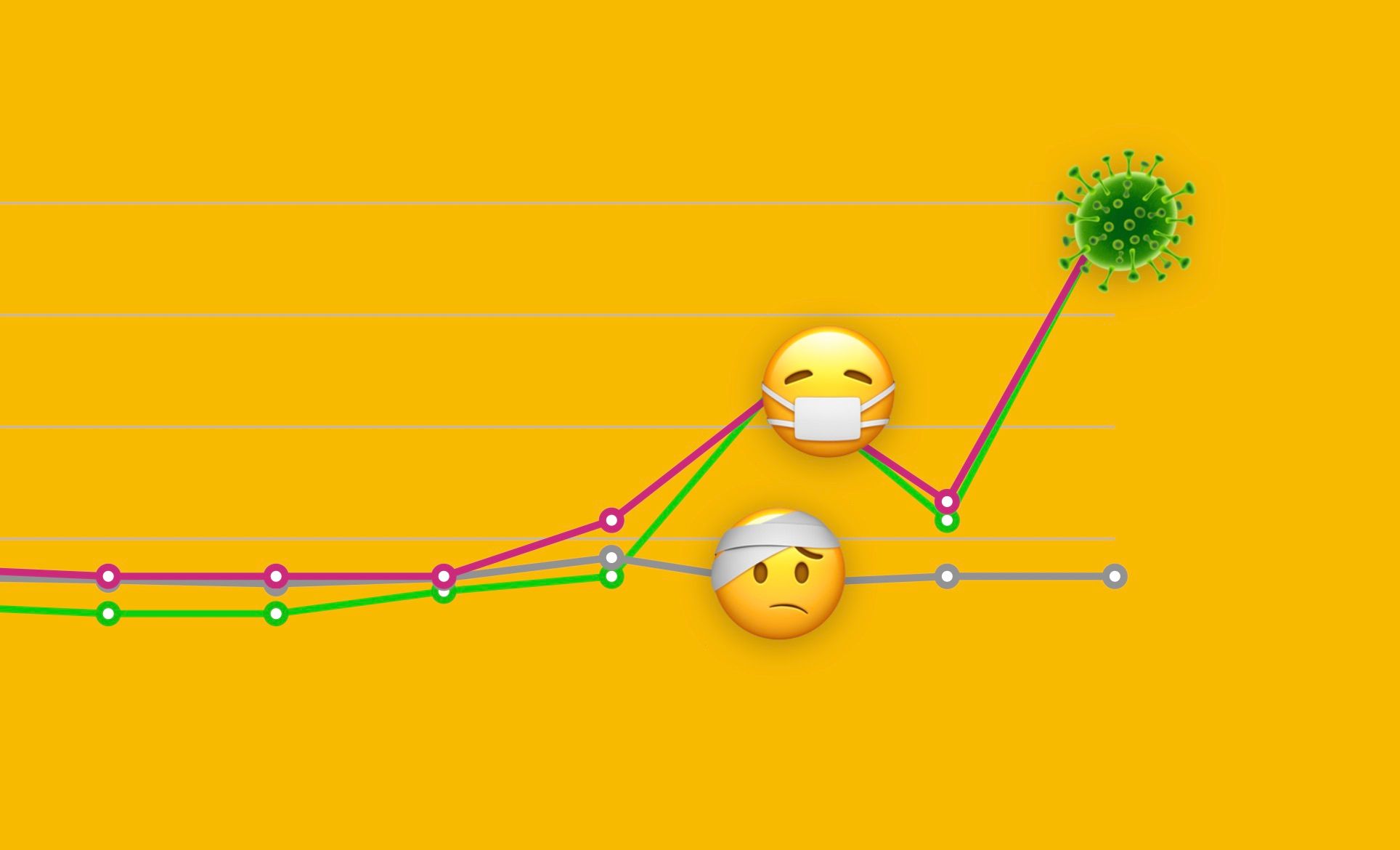
What Are the Effects of Water Pollution

Causes and consequences of water pollution

On human health

To put it bluntly: Water pollution kills. In fact, it caused 1.8 million deaths in 2015, according to a study published in The Lancet. Contaminated water can also make you ill. Every year, unsafe water sickens about 1 billion people. And low-income communities are disproportionately at risk because their homes are often closest to the most polluting industries.

Waterborne pathogens, in the form of disease-causing bacteria and viruses from human and animal waste, are a major cause of illness from contaminated drinking water. Diseases spread by unsafe water include cholera, giardia, and typhoid. Even in wealthy nations, accidental or illegal releases from sewage treatment facilities, as well as runoff from farms and urban areas, contribute harmful pathogens to waterways. Thousands of people across the United States are sickened every year by Legionnairesโ€™ disease (a severe form of pneumonia contracted from water sources like cooling towers and piped water), with cases cropping up from Californiaโ€™s Disneyland to Manhattanโ€™s Upper East Side.

A woman using bottled water to wash her three-week-old son at their home in Flint, MichiganTodd McInturf/The Detroit News/AP

Meanwhile, the plight of residents in Flint, Michiganโ€”where cost-cutting measures and aging water infrastructure created the recent lead contamination crisisโ€”offers a stark look at how dangerous chemical and other industrial pollutants in our water can be. The problem goes far beyond Flint and involves much more than lead, as a wide range of chemical pollutantsโ€”from heavy metals such as arsenic and mercury to pesticides and nitrate fertilizersโ€”are getting into our water supplies. Once theyโ€™re ingested, these toxins can cause a host of health issues, from cancer to hormone disruption to altered brain function. Children and pregnant women are particularly at risk.

Even swimming can pose a risk. Every year, 3.5 million Americans contract health issues such as skin rashes, pinkeye, respiratory infections, and hepatitis from sewage-laden coastal waters, according to EPA estimates.

On the environment

In order to thrive, healthy ecosystems rely on a complex web of animals, plants, bacteria, and fungiโ€”all of which interact, directly or indirectly, with each other. Harm to any of these organisms can create a chain effect, imperiling entire aquatic environments.

When water pollution causes an algal bloom in a lake or marine environment, the proliferation of newly introduced nutrients stimulates plant and algae growth, which in turn reduces oxygen levels in the water. This dearth of oxygen, known asย eutrophication, suffocates plants and animals and can create โ€œdead zones,โ€ where waters are essentially devoid of life. In certain cases, theseย harmful algal bloomsย can also produce neurotoxins that affect wildlife, from whales to sea turtles.

Chemicals and heavy metals from industrial and municipal wastewater contaminate waterways as well. These contaminants are toxic to aquatic lifeโ€”most often reducing an organismโ€™s life span and ability to reproduceโ€”and make their way up the food chain as predator eats prey. Thatโ€™s how tuna and other big fish accumulate high quantities of toxins, such as mercury.

Marine ecosystems are also threatened by marine debris, which can strangle, suffocate, and starve animals. Much of this solid debris, such as plastic bags and soda cans, gets swept into sewers and storm drains and eventually out to sea, turning our oceans into trash soup and sometimes consolidating to form floating garbage patches. Discarded fishing gear and other types of debris are responsible for harming more than 200 different species of marine life.

Meanwhile, ocean acidification is making it tougher for shellfish and coral to survive. Though they absorb about a quarter of the carbon pollution created each year by burning fossil fuels, oceans are becoming more acidic. This process makes it harder for shellfish and other species to build shells and may impact the nervous systems of sharks, clownfish, and other marine life.

What Can You Do to Prevent Water Pollution?

With your actions

Itโ€™s easy to tsk-tsk the oil company with a leaking tanker, but weโ€™re all accountable to some degree for todayโ€™s water pollution problem. Fortunately, there are some simple ways you can prevent water contamination or at least limit your contribution to it:

With your voice

One of the most effective ways to stand up for our waters is to speak out in support of the Clean Water Rule, which clarifies the Clean Water Actโ€™s scope and protects the drinking water of one in three Americans.

Tell the federal government, the U.S. Army Corps of Engineers, and your local elected officials that you support the Clean Water Rule. Also, learn how you and those around you can get involved in the policymaking process. Our public waterways serve every American. We should all have a say in how theyโ€™re protected.

Water Pollution

The worldโ€™s water resources are under increasing threat from the impacts of climate change, population growth, and pollution. As the global population grows, a persistent challenge is how to access enough water to meet humanityโ€™s needs while also preserving the integrity of aquatic ecosystems. The Pacific Institute works on water resource issues around the globe, collaborating with stakeholders to ensure communities and nature have the water they need to thrive now and in the future.

Internationally, the Institute promotes source water protection and โ€œgreen infrastructureโ€ solutions in order to increase the climate resiliency of water systems and improve ecosystem function. The Institute collects, catalogues, and shares good practice examples of nature-based solutions; catalyzes investment in green infrastructure projects; and connects stakeholders with a common interest in advancing nature-based solutions.

In California, the Institute has played an active role at the Salton Sea for more than two decades, emphasizing the importance of the sea and the negative consequences of failing to act on its behalf. The Institute has produced leading reports on the sea, developed restoration concepts, participated on the stateโ€™s Salton Sea Advisory Committee, and continues to work actively with state agencies and local stakeholders to get real habitat constructed on the ground to benefit at-risk species and to diminish the amount of dust blowing off of the seaโ€™s exposed lakebed.

The Institute has engaged inย Colorado Riverย research and decision-making for more than twenty years, from early reports on climate change impacts on the basin, to a 1996 report on sustainable use of the river, to policy proposals for surplus and shortage criteria and the ongoing Basin Study. We have developed pragmatic, feasible solutions to the problems that challenge the river, for the people, fish, and wildlife that depend upon it. Our Colorado River work has also included place-specific research and restoration proposals for the Salton Sea, the Laguna Reach, and the limitrophe reach of the River.

What Is Water Pollution?

Water pollution occurs when harmful substancesโ€”often chemicals or microorganismsโ€”contaminate a stream, river, lake, ocean, aquifer, or other body of water, degrading water quality and rendering it toxic to humans or the environment.

What Are the Causes of Water Pollution?

Water is uniquely vulnerable to pollution. Known as a โ€œuniversal solvent,โ€ water is able to dissolve more substances than any other liquid on earth. Itโ€™s the reason we have Kool-Aid and brilliant blue waterfalls. Itโ€™s also why water is so easily polluted. Toxic substances from farms, towns, and factories readily dissolve into and mix with it, causing water pollution.

Categories of Water Pollution

Groundwater

When rain falls and seeps deep into the earth, filling the cracks, crevices, and porous spaces of an aquifer (basically an underground storehouse of water), it becomes groundwaterโ€”one of our least visible but most important natural resources. Nearly 40 percent of Americans rely on groundwater, pumped to the earthโ€™s surface, for drinking water. For some folks in rural areas, itโ€™s their only freshwater source. Groundwater gets polluted when contaminantsโ€”from pesticides and fertilizers to waste leached from landfills and septic systemsโ€”make their way into an aquifer, rendering it unsafe for human use. Ridding groundwater of contaminants can be difficult to impossible, as well as costly. Once polluted, an aquifer may be unusable for decades, or even thousands of years. Groundwater can also spread contamination far from the original polluting source as it seeps into streams, lakes, and oceans.

Surface water

Covering aboutย 70 percent of the earth, surface water is what fills our oceans, lakes, rivers, and all those other blue bits on the world map. Surface water from freshwater sources (that is, from sources other than the ocean) accounts forย more than 60 percentย of the water delivered to American homes. But a significant pool of that water is in peril. According to the most recent surveys on national water quality from the U.S. Environmental Protection Agency,ย nearly half of our rivers and streamsย andย more than one-third of our lakesย are polluted and unfit for swimming, fishing, and drinking.ย Nutrient pollution, which includes nitrates and phosphates, is the leading type of contamination in these freshwater sources. While plants and animals need these nutrients to grow, they have become aย major pollutantย due to farm waste and fertilizer runoff. Municipal and industrial waste discharges contribute their fair share of toxins as well. Thereโ€™s also all the random junk that industry and individuals dump directly into waterways.

Ocean water

Eighty percent of ocean pollution (also called marine pollution) originates on landโ€”whether along the coast or far inland. Contaminants such as chemicals, nutrients, and heavy metals are carried from farms, factories, and cities by streams and rivers into our bays and estuaries; from there they travel out to sea. Meanwhile, marine debrisโ€”particularly plasticโ€”is blown in by the wind or washed in via storm drains and sewers. Our seas are also sometimes spoiled by oil spills and leaksโ€”big and smallโ€”and are consistently soaking up carbon pollution from the air. The ocean absorbs as much as a quarter of man-made carbon emissions.

Point source

When contamination originates from a single source, itโ€™s called point source pollution. Examples include wastewater (also called effluent) discharged legally or illegally by a manufacturer, oil refinery, or wastewater treatment facility, as well as contamination from leaking septic systems, chemical and oil spills, and illegal dumping. The EPA regulates point source pollution by establishing limits on what can be discharged by a facility directly into a body of water. While point source pollution originates from a specific place, it can affect miles of waterways and ocean.

Nonpoint source

Nonpoint source pollution is contamination derived from diffuse sources. These may include agricultural or stormwater runoff or debris blown into waterways from land. Nonpoint source pollution is the leading cause of water pollution in U.S. waters, but itโ€™s difficult to regulate, since thereโ€™s no single, identifiable culprit.

Transboundary

It goes without saying that water pollution canโ€™t be contained by a line on a map. Transboundary pollution is the result of contaminated water from one country spilling into the waters of another. Contamination can result from a disasterโ€”like an oil spillโ€”or the slow, downriver creep of industrial, agricultural, or municipal discharge.

The Most Common Types of Water Contamination

Agricultural

Toxic green algae in Copco Reservoir, northern CaliforniaAurora Photos/Alamy

Not only is the agricultural sector the biggest consumer of global freshwater resources, with farming and livestock production using about 70 percent of the earthโ€™s surface water supplies, but itโ€™s also a serious water polluter. Around the world, agriculture is the leading cause of water degradation. In the United States, agricultural pollution is the top source of contamination in rivers and streams, the second-biggest source in wetlands, and the third main source in lakes. Itโ€™s also a major contributor of contamination to estuaries and groundwater. Every time it rains, fertilizers, pesticides, and animal waste from farms and livestock operations wash nutrients and pathogensโ€”such bacteria and virusesโ€”into our waterways. Nutrient pollution, caused by excess nitrogen and phosphorus in water or air, is the number-one threat to water quality worldwide and can cause algal blooms, a toxic soup of blue-green algae that can be harmful to people and wildlife.

Sewage and wastewater

Used water is wastewater. It comes from our sinks, showers, and toilets (think sewage) and from commercial, industrial, and agricultural activities (think metals, solvents, and toxic sludge). The term also includes stormwater runoff, which occurs when rainfall carries road salts, oil, grease, chemicals, and debris from impermeable surfaces into our waterways

More than 80 percent of the worldโ€™s wastewater flows back into the environment without being treated or reused, according to the United Nations; in some least-developed countries, the figure tops 95 percent. In the United States, wastewater treatment facilities process about 34 billion gallons of wastewater per day. These facilities reduce the amount of pollutants such as pathogens, phosphorus, and nitrogen in sewage, as well as heavy metals and toxic chemicals in industrial waste, before discharging the treated waters back into waterways. Thatโ€™s when all goes well. But according to EPA estimates, our nationโ€™s aging and easily overwhelmed sewage treatment systems also release more than 850 billion gallons of untreated wastewater each year.

Oil pollution

Big spills may dominate headlines, but consumers account for the vast majority of oil pollution in our seas, including oil and gasoline that drips from millions of cars and trucks every day. Moreover, nearly half of the estimated 1 million tons of oil that makes its way into marine environments each year comes not from tanker spills but from land-based sources such as factories, farms, and cities. At sea, tanker spills account for about 10 percent of the oil in waters around the world, while regular operations of the shipping industryโ€”through both legal and illegal dischargesโ€”contribute about one-third. Oil is also naturally released from under the ocean floor through fractures known as seeps.

Radioactive substances

Radioactive waste is any pollution that emits radiation beyond what is naturally released by the environment. Itโ€™s generated by uranium mining, nuclear power plants, and the production and testing of military weapons, as well as by universities and hospitals that use radioactive materials for research and medicine. Radioactive waste can persist in the environment for thousands of years, making disposal a major challenge. Consider the decommissioned Hanford nuclear weapons production site in Washington, where the cleanup of 56 million gallons of radioactive waste is expected to cost more than $100 billion and last through 2060. Accidentally released or improperly disposed of contaminants threaten groundwater, surface water, and marine resources.
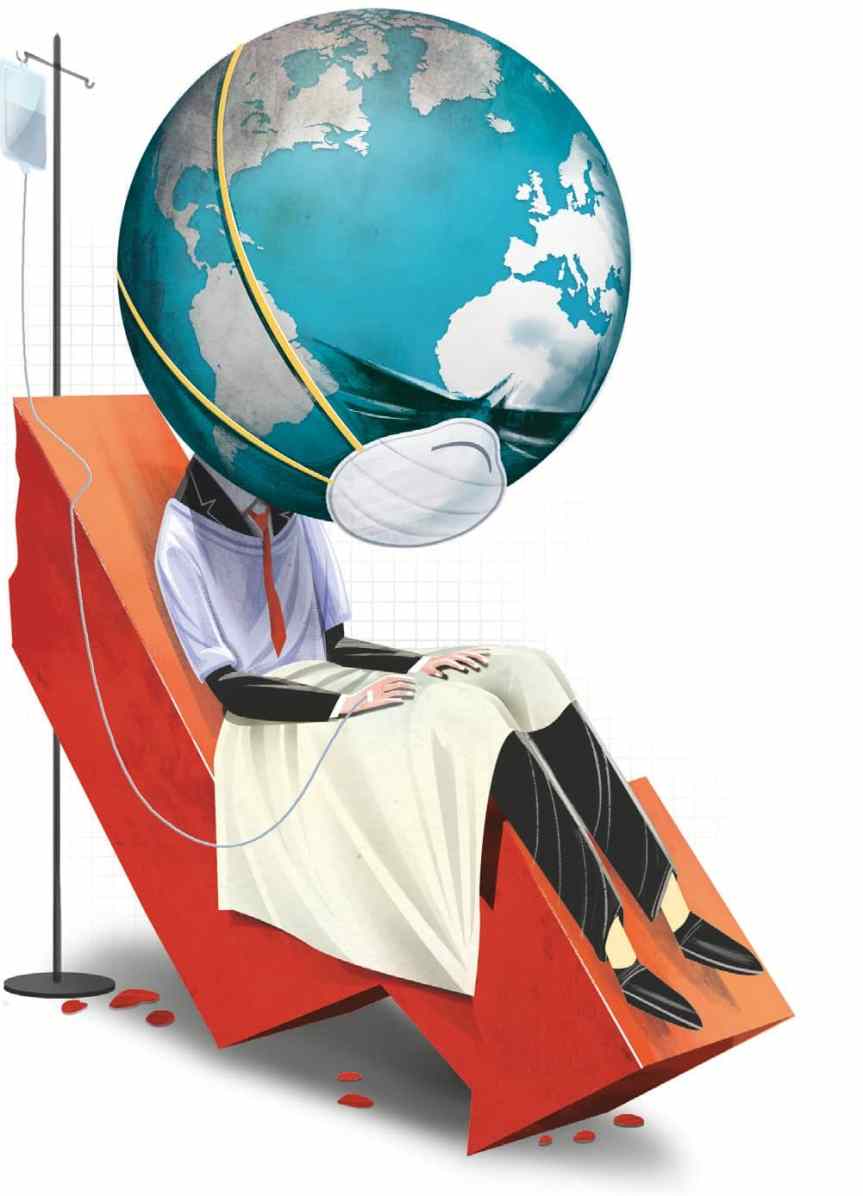
Delhi the city of pandavas

Delhi, the capital of India has a strong historical background. It was ruled by some of the most powerful emperors in Indian history.

The history of the city is as old as the epic Mahabharata. The town was known as Indraprastha, where Pandavas used to live. In due course eight more cities came alive adjacent to Indraprastha: Lal Kot, Siri, Dinpanah, Quila Rai Pithora, Ferozabad, Jahanpanah, Tughlakabad and Shahjahanabad.

History

indraprastha is not only known from the Mahabharata. It is also mentioned as “Indapatta” or “Indapattana” in Pali-language Buddhist texts, where it is described as the capital of the Kuru Kingdom, situated on the Yamuna River. The Buddhist literature also mentions Hatthinipura (Hastinapura) and several smaller towns and villages of the Kuru kingdom. Indraprastha may have been known to the Greco-Roman world as well: it is thought to be mentioned in Ptolemy‘s Geography dating from the 2nd century CE as the city “Indabara”, possibly derived from the Prakrit form “Indabatta”, and which was probably in the vicinity of Delhi.

Partition


After their Uncle King Dhritarashtra partitioned the Kingdom of Hastinapur (which was rightfully Yudhishtir’s) into two in order to stem the rivalry between the Pandava brothers and the Kauravas .

Mahabharata is about the Kauravas and the Pandavas, two groups of relatives engaged in a long conflict with each other. It refers to Indraprastha as a major city that was the capital of the Pandava Kingdom from about 1400 BC. Indraprastha is considered to have been the first significant settlement in the Delhi area, which has since hosted a succession of kingdoms and giant civilisations. At some point, Indraprastha fell from grace, either conquered or abandoned. The ASI believes that Purana Qila may have been built on top of these ruins.

How much years did pandavas ruled on indraprastha?

Indraprastha, The capital of the Pandavas (the Pandus) whence they ruled for 36 years.

It lay to the west of Yamuna river, in modern-day Delhi territory.

How did pandavas built the indraprastha?

 Pandavas cleared this forest to construct their capital city called Indraprastha. This forest was earlier inhabited by Naga tribes led by a king named Takshaka.

Arjuna and Krishna cleared this forest by setting up a fire. The inhabitants of this forest were Killed or displaced. This was the root cause of the enmity of the Naga Takshaka towards the Kuru kings who ruled from Indraprastha and Hastinapura.

The Mahabharata states that Indra was the protecting deity (deva) of Khandava forest, which is why the region was known as Indraprastha.

When the forest was being burned, Indra attacked Arjuna with his bolt (vajra), injuring him.

But Arjuna defeated all gods, Gandharvas and demons in that fierce battle and burnt entire forest.

chhapadeshwar Mahadev Mandir in Kharkhoda, Haryana was the part of Khandav Van.

Khanda village named after Khandava Forest.

Later Lord Indra sent Mayasur and Vishvakarman  to Build a Superlative City that would be so Beautiful and Magnificent that it would compete with Lord Indraโ€™s Heavenly abode – Hence it was called as โ€œMayanagariโ€ or a Magical city as Maya an Asur had built it with several Magical Tricks and Treats in Architecture and construction.

Who ruled on indraprastha after the defeat of kauravas and pandavas?

The death of several rulers and kings in the war resulted in several successions, of which two notable ones being the crowning of Yudhishthira as the king of Hastinapura and declaration of Yuyutsu as the subordinate king to Yudhishthira for the kingdom of Indraprastha. Evidently, the central power in the Gangetic plain had now shifted from the Kurus to the Panchalas. The states of Hastinapur and Indraprastha were reunified and were governed by the Pandavas.

Now, where the indraprastha situated in delhi and on what place?

ย It is often thought to have been located in the region of present-dayย New Delhi, particularly the Old Fort (Purana Qila), although this has not been conclusively confirmed. The city is sometimes also known asย Khandavaprasthaย orย Khandava Forest, the name of a forest region on the banks ofย Yamunaย river.

PARENTAL PRESSURE

undefined

One of the currently discussed topic in society is about parent children relationship. Family is the basis of all economic activities. Bonds can be a blessing and also a curse.

Parents always prefer their children to perform well. They often dream of their children attending the best of universities and then securing a most respectful job in society. They work hard to earn money to take care of their children. Now, students are experiencing tremendous pressure to keep their grades to a near-perfect level. The sources of pressure are both internal and external. This pressure sometimes lead them to commit suicides as a solution for every problems. Many awareness classes are organized in schools and colleges. But every year thousands are committing suicides. Literacy or illiteracy is not a matter of choice.

Parents tend to apply pressure because they are worried about whether or not their child will be successful and also if they are a good enough parent. Marks are always considered as a parameter for judging their children. So, they pressure children to get full marks. High parental aspiration led to increased academic achievement, but only when it did not overly exceed realistic expectation. When aspiration exceeded expectation the children ‘s achievement decreased proportionately.

Too much pressure damages a child’s self esteem and can lead to severe consequences,including depression. It can lead to stress causing headaches, stomachaches, neck aches, lack of sleep and even anxiety attacks.

Parental pressure creates a sense of worthlessness which was discovered to be one of the chief reasons why teenage suicide rates increased from the 1950’s, according to a study done at the University of St Thomas.

What parents can do?

undefined

  1. Managing children’s frequent tantrums – Not to react immediately to the situation, Calm oneself before reacting.
  2. Tackling disobedient children-Disobedient children do not want to stamp their autonomy on the household.Try to hear their side of the story and once they are done put across your opinions.
  3. Mediating in sibling rivalry – Understand the psychology of the children and discipline them separately without judging who is right and who is wrong.
  4. Stopping children from telling white lies – They often lie to their parents to turn adverse situation in their favour.
  5. Removing study related fears.
  6. Don’t criticize in each and every act.
  7. Avoid spending too much time talking about hardwork.
  8. Don’t focus on how they need to win or be the best.

Encouragement coming from parents can be a child’s stepping stone to success. They are key player in children ‘s life to learn confidence, hardwork and excellence. It is the responsibility of each parent to teach their child to accept failure withoutllosing heart. Failure is a cue to seek opportunity and not an occasion for mourning. Make sure that child is happy with what they are pursuing and don’t let them miss out on opportunities to learn from their own life experiences. Every person in the world are unique. Home is supposed to be a sanctuary for the whole family not a place where kids come to get probed, lectured and controlled. Create a restful home full of divergent opinions, healthy debates and spontaneous self expression.

Anxiety

Everyone has anxiety, but chronic anxiety can interfere with the quality of life. It can also cause severe damage to our physical health. Anxiety is a normal part of life. For example, feeling anxious before entering the exam centre or a job interview. In general terms, anxiety increases breathing and heartbeat, concentrating blood flow to our brain, where we need it. If it gets too intense, however, people might start to feel lightheaded or likely to be in a state of trance. An excessive or persistent state of anxiety can have a devastating impact both on our physical and mental health. Anxiety disorder can happen at any stage of life, but they usually begin by middle age. Women are more likely to have an anxiety disorder than men. Stressful life experiences may increase risk for an anxiety disorder, too. Symptoms may begin immediately or years later. Having a serious medical condition or a substance use disorder can also lead to an anxiety disorder.


There are several types of Anxiety Disorders. They include :


Generalized Anxiety Disorder (GAD)
Generalized anxiety disorder is marked by excessive anxiety for no logical reason. GAD is diagnosed when extreme worry about a variety of things lasts six months or longer. If you have a mild case, youโ€™re probably able to complete your normal day-to-day activities. More severe cases may have a profound impact on your life.

Social Anxiety Disorder
This disorder involves a paralyzing fear of social situations and of being judged or humiliated by others. This severe social phobia can leave one feeling ashamed and alone.



Post Traumatic Stress Disorder (PTSD)
This develops after witnessing or experiencing something traumatic. Symptoms can begin immediately or be delayed for years. Common causes include war, natural disasters, or a physical attack. PTSD episodes may be triggered without warning.

Obsessive – Compulsive Disorder (OCD)
People with OCD may feel overwhelmed with the desire to perform particular rituals (compulsions) over and over again, or experience intrusive and unwanted thoughts that can be distressing (obsessions).
Common compulsions include habitual hand-washing, counting, or checking something. Common obsessions include concerns about cleanliness, aggressive impulses, and need for symmetry.


Phobias
These include fear of tight spaces (claustrophobia), fear of heights (acrophobia), and many others. You may have a powerful urge to avoid the feared object or situation.


Panic Disorder
This causes panic attacks, spontaneous feelings of anxiety, terror, or impending doom. Physical symptoms include heart palpitations, chest pain, and shortness of breath.

Anxiety disorder can cause other symptoms, including:
โ€ข headaches
โ€ข muscle tension
โ€ข insomnia
โ€ข depression
โ€ข social isolation

‘The New Normal’

Lockdown In India: India has been in a complete lockdown system due to the global pandemic issue since March 2020. It was the only way of staying safe at our homes and maintaining social distancing. However, all essential services,essential commodities and medicines were available. Banks, ATMs, grocery shops, petrol pumps, hospitals were not included in the lockdown. The night curfew was initiated by the Government that no movement of people from 7pm to 7am shall take place except for essential items.

The global pandemic changed the daily lifestyles of people, the work scenarios, the Indian economy, the Entertainment Industry, and so on.

Nothing like this was expected that the world would be in such a dilemma.The entire world has been affected by the global pandemic issue. Be it the economy, the business and industry sectors, the health sectors, the agriculture and law sectors, small scale and large scale sectors,railways and metros,aviations,etc.

The poor and daily wages workers have been hit tremendously by this pandemic. They are the ones suffering a lot today. Even the unemployed are facing problems and a number of employees have lost their jobs already. The ones still working in their work spaces are constantly in fear of the safety of themselves and the others.

This pandemic has changed a lot of things over the past few months. Each and every person is suffering due to the sudden issue be it through mentally or financially.

Even after the complete lockdown system initiated by the Govt. of India for literally three months, the number of cases of covid-19 has been going on tremendously increasing day by day. There is no number of decrease in the cases till date.

The nation followed complete lockdown for more than two months except for essential items. Initially, the domestic flights were resumed from May 25th with guidelines that has to be followed for travelling. The Railways then decided to start to operate the Shramik Special trains from May 1st to transport the stranded migrant workers, students, pilgrims and tourists.

The centre then decided to start lifting few restrictions on things in lockdown as Unlock 1.0 phase from the 8th of June. The Prime Minister of India, Narendra Modi Ji however gave the authorities to the States and Union Territories to decide about what should be made opened and not in their respective states.

In the Unlock 1.0 phase malls, hotels and restaurants for takeaway and home delivery, and places of worship for the public were made opened. However, social distancing and proper safety measures had to be followed. The containment zones were in complete lockdown as earlier. People stepped out of the houses as soon as they heard about the Unlock 1.0 phase thus increasing the risk of themselves and others.

Amid the rise in the cases of the coronavirus after the Unlock 1.0 phase, the Government directed the State & Union Territories to ensure mandatory basis that no movement of people except for essential things would be allowed from 9pm to 5am throughout the whole nation. Indian Railways decided to operate 15 pairs of Special AC trains from 12th of May and 200 time-tabled trains from the 1st of June.

On July 1st, the nation entered into the Unlock 2.0 Phase with relaxations in night curfew, provision for more domestic flights and trains and clearance for more than five people in a shop. However, schools, colleges and other educational institutions are closed till July 31st. At present, offices are too opened with all the safety measures that has to be followed. Some offices still prefer work from home (wfh) for their safety. Works which can’t be done from wfh are resumed.

Shootings have also been resumed for daily soaps and TV Stars are practicing all the social distancing and are following safety measures while they are on the sets and all the reality shows would be getting back with new episodes from 13th of july.

Looking at the increasing number in the cases day by day, the nation would be entering in the Unlock 3.0 phase from July 31st.

The fact:

Currently, as we have entered unlock phases of lockdown people have accepted and are trying to make it a habit of wearing masks and scarfs before stepping out of their homes. Maintaining social distancing and using a hand sanitizer as and when required. All the precautions and safety measures have been followed by every person.

Markets have realised that masks are now an essentials things and also trendy and therefore, producing different brands and patterns of masks to the customers. This is an amazing business which is in actual demand and has already started making profits.

People are trying to accept ‘the new normal’ or you can say ‘the new usual.’ Earlier hand sanitizers were not in much demand the way it is now. Without masks, its impossible to think of going out right now today. And you think we have to follow this only for some months?

No, we have to follow and adapt this new normal not only till the number of cases gets reduced to ‘0’ which we all are hoping but also for some years for future prevention. It is true that we are not safe anymore. We can’t freely go out or hang out like earlier we used to do. We can’t do social gatherings or get together at some one’s home. We can’t chill with our friends or spend time with them at our homes. We can’t go to theatres for watching movies or go shopping with our friends. We can’t chill at the malls, or public places like earlier. This is the reality. We can’t touch anywhere or anyone without having the fear of risk right now or for few years till everything settles down completely.

I am just stating the facts. No one knows when exactly we all will be free and will be back to our normal life. Everyone is waiting for that one day when we hear the news that coronavirus (covid-19) is reduced and no more cases have been detected.

Hence, today looking at the current situation I do feel its not safe to step out of the houses without wearing our masks for coming years. This is the new normal that we have to abide by and just like we can’t leave our smartphones at homes, the same way we can’t leave our masks today before stepping out of our homes for anything.

Well, who imagined a world full of people wearing masks one day? But here we are today.

Masks are the new normal.

Brief Summary of Indo-China conflict and the role US has played over the years

Due to the clash between soldiers of both the countries โ€“ India and China around Pangong Lake in Ladakh, one thing is clear that nobody knows whatโ€™s coming up next. Once Indiaโ€™s friendship with China seemed natural as the country has put socialist principles in its national constitution and prided on taking a neutral stand during the cold war. Under its first prime minister, Jawaharlal Nehru, India was interested in broadening ties with other socialist nations, including Russia & China. But factors more powerful than the ideologies knocked off the relationship leading to tensions and war-like situations today.

At first, the relationship was all smiles based on five principles enunciated under the Panchsheel Agreement: mutual non-aggression, mutual respect for territorial integrity and sovereignty, mutual non-interference in internal affairs, peaceful coexistence and equality and mutual benefit. A slogan also went out,ย โ€œHindi Chini Bhai-Bhaiโ€– India and China are brothers.

But soon, India and China started to disagree on the border between the two nations. All thanks in part to the legacy of certain colonial boundaries. The Ardagh- Johnson Line was drawn by British India that showed Aksai Chin inside Jammu& Kashmir in India. This didnโ€™t go down well with China as they never accepted this border. Instead, they argued for Macartney-MacDonald Line, a later boundary that gave it more territory.

There were talks in India in 1960 between Nehru and Zhou Enlai, the Chinese Premier to address border issues but no solutions came up. Keen to maintain the strategic relationship between the two countries, India hosted Dalai Lama when he fled and kept funding resistance movements in Tibet.

The brotherhood died after the two nations went to war. The events of 1962 are broadly seen as humiliating domestically for India.

Even more critical to understand India- China relationship is an alliance between Pakistan & China. As both have border issues with India, a common goal emerged. In recent years, Pakistan Prime Minister Imran Khan and his predecessors have maintained deeper ties with China through initiatives such as Chinese funding for Gwadar port, China-Pakistan Economic Corridor, and other economic initiatives. Because of this, Pakistanโ€™s cooperation with the US has also crumbled up under pressure. If another Cold War happens, it already seems Pakistan has chosen its side.

This has helped India to strengthen its relationship with the US. India choosing free markets was a drastic change for the nation, and a shift to the Western economic sphere soon followed. As India started seeing high rates of growth, it started becoming Chinaโ€™s competitor. India also managed to tighten relations with American allies such as Vietnam and Japan.

Today, the United States plays a key role in the Indo-China relationship. In recent times, India has sought to strengthen ties with the US, powered by fear of Chinese political and economic influence in the region. Even since the Chinese have got more aggressive in the Indian Ocean, India is seeking an ally in the US to bolster deterrence.

All this clearly shows we are a long way in Hindi-Chini Bhai Bhai.


Should PTSD get more attention from the healthcare department?

PTSD or Post Traumatic Stress Disorder is a traumatic disorder that occurs in people who have experienced something horrifying in life or witnessed one. The reasons can be a road accident, natural calamity, personal assault, or death or disappearance of loved ones.

These days PTSD is affecting many lives. Other than emotional distress, it brings many other health problems like anxiety, depression, mood swings, etc. It affects a personโ€™s day to activities and may stop them from participating in it that they enjoyed once. The stress can sometimes hamper a person so much that they slowly start distancing themselves from their loved ones. It may eventually begin amassing suicidal thoughts. Hence, it is necessary to support people affected by PTSD.

One needs to be extra cautious with these people as sometimes symptoms of PTSD start showing within a few weeks of the tragic incident while at times it may take years too. Initially, it is very difficult to find the reason behind its cause, therefore it is always recommended to see a specialist in case one experiences any signs

Why PTSD must receive more attention in Healthcare?

In our society, mental issues are neglected most of the time. Most of the families do not bring the matter into the limelight as they consider it some kind of taboo or equate them to being possessed by evil spirits.

The National Mental Health(NMH) survey states that nearly 150 million people in our country need Mental Health care, but hardly 50% receive the treatment. We rush to hospitals even at the slightest bit of uneasiness, whether it is abdominal pain or severe sickness. But when it comes to mental health, why nobody talks about it? Why nobody is rushed to the doctor in this situation the same way? We limp!

It is high time that we let go of our conservative mindset and discuss mental health issues under broad daylight. To bring mental health issues under attention, this should not be neglected:

-Survivors should discuss their stories so that others learn from it

-Doctors should share their clinical knowledge and aware people about these issues

-Society must change the negative mind and take health care seriously


How Is COVID-19 Impacting The Environment?

A BRIEF ON COVID-19:

The coronavirus disease- COVID-19 is a highly transmittable and pathogenic viral infection caused by severe acute respiratory syndrome coronavirus 2 or SARS-CoV-2, which emerged in Wuhan, China and spread around the world. Analysis revealed that SARS-CoV-2 is phylogenetically related to severe acute respiratory syndrome-like bat viruses, therefore bats could be the possible primary reservoir. The intermediate source of origin and transfer to humans is not known, however, the rapid human to human transfer has been confirmed widely. There is no clinically approved antiviral drug or vaccine available to be used against COVID-19. However, few broad-spectrum antiviral drugs have been evaluated against COVID-19 in clinical trials, resulted in clinical recovery.

ORIGIN:

The first human infections were reported at the end of December 2019 in Wuhan, Hubei province in China when a cluster of 41 pneumonia cases was identified. Deeper analysis showed that it was a novel coronavirus. A third โ€“ 66% of the cases โ€“ had direct exposure to the Huanan Seafood market. Fish, shellfish, wildlife, snakes, birds and several different types of meat and carcasses were sold at this market. The market was closed immediately, and it has not reopened since. (source: ScienceDirect.com, https://www.sciencedirect.com/science/article/pii/S0140673620301835?via%3Dihub)

The strongest speculation of the origin has been that the virus is somehow linked to the market given two thirds of the first batch of people infected had had ties with it. But even this hasnโ€™t been proved yet. Nevertheless, Bats, in particular, have been studied closely because they are considered to be the natural host of coronaviruses.

this is not my image, credit to the artist

EFFECT of covid-19 on the environment:

The objective of this article is to analyse the positive and the negative environmental impact of this abhorrent pandemic, Covid-19.

The Positives-

  • Improved Air Quality: 

The coronavirus has temporarily slashed air pollution levels around the world (source: European Space Agency). Readings from ESAโ€™s Sentinel-5P satellite also show that over the past six weeks, the levels of nitrogen dioxide (NO2) over cities and industrial clusters in Asia and Europe were markedly lower than in the same period last year. Nitrogen dioxide is produced from car engines, power plants and other industrial processes and is thought to exacerbate respiratory illnesses such as asthma. While not a greenhouse gas itself, the pollutant originates from the same activities and industrial sectors that are responsible for a large share of the worldโ€™s carbon emissions and that drive global heating. Take transport, for example, which makes up 23% of global carbon emissions. Driving and aviation are key contributors to emissions from transport, contributing 72% and 11% of the transport sectorโ€™s greenhouse gas emissions respectively. (Source: http://www.ipcc.ch)

If we consider the case of Delhi, on 6th April, for the third week Delhi continued to breathe clean. The weekend before this saw the best air quality in the national capital region (NCR) in 2020, with an average AQI of 46. The weekend before that, it was at 159.  There was a remarked improvement in air quality in the NCR, as the harmful PM10 and PM2.5 levels were down by 35-40% in Delhi (source: The Economic Times).

The visible positive impacts whether through improved air quality or reduced greenhouse gas emissions โ€“ are but temporary. This is because they come on the back of an economic slowdown and human distress. During the pandemic, these emissions will stay lowered. But what will happen when the safety measures are eventually lifted?  The people will be back to regular.

  • Some Cut Downs on Wastage:

During the coronavirus outbreak, the habits that are coincidentally good for the climate might be travelling less, like cutting down on food waste as we experience shortages due to stockpiling.

  • Rethinking how we use energy:

A benefit of no travel and a lockdown is we will spend some time rethinking how we use energy.

The Negatives-

  • Increase In Use Of Single-Use Plastics:

With as many as 12,82,931 cases recorded in 211 countries ( as of 8 April 2020, 05:30 GMT, Source: WHO), the United Nationsโ€™ World Health Organization has recently declared the fast-spreading COVID-19 outbreak as a pandemic. It is natural then that citizens around the globe are hastening to take every possible measure to safeguard their health against the virus. The most widespread of these precautions is the extensive use of surgical face masks.

These masks are mainly made of non-woven fabric such as polypropylene, polystyrene, polycarbonate, polyethylene or polyester. While they keep out bacteria effectively, the masks are plastic-based, liquid-resistant products that have a long afterlife after they are discarded, ending up in landfill or oceans.  

Given that surgical masks are supposed to be worn for no longer than one day, their disposal- along with that of empty hand sanitizer bottles and soiled tissue papers- is leading to a massive trail of clinical waste in the environment.

Take the case of Wuhan, for example. The Chinese city which has been at the epicentre of the pandemic and which is home to over 11 million people, is reported to have generated 200 tons of clinical trash on a single day (24 February 2020), four times the amount the cityโ€™s only dedicated facility can incinerate per day. (source: scmp.com)

  • Mountain Of Waste:

With consumers stuck at home, thereโ€™s been a surge in the amount of household garbage as people increasingly shop online and order meals to be delivered, which come with a lot of packaging. (source: time.com)

Meanwhile, China is drowning under medical waste produced by hospitals including face masks and single-use tissues. If the waste is not handled properly, the garbage collectors are likely to catch and spread the infection

  • More Hand Wash, More Use Of Water:

Today, the only defence against the pandemic is that we wash our hands frequently โ€” 20 seconds each time. The fact is, clean water remains the most important preventive health measure in the world.

A proper hand wash involves lathering soap and scrubbing hands on both sides for at least 20 seconds, according to WHO guidelines. A 30 to 40 second hand wash would use up around four litres of water if the tap is on, or two litres with the tap closed, while scrubbing with soap. Around 20 to 40 litres of water is used up every day, with the assumption that every person cleans her hands at least 10 times a day, instead of a usual average of five times a day.

A family of five members would thus need 100 to 200 litres of water per day only to wash hands. This would result in the generation of around 200 litres of wastewater per day, a 20 to 25 per cent increase in water demand and generation of wastewater from human settlements. (source: downtoearth.org.in)

It is also important to note that a large numbers of people in India and vast parts of the still emerging world do not have access to water, forget its portability. 

  • Climate Issues Take a Backseat:

Before the coronavirus, momentum seemed to be building behind governments and businesses taking steps to address climate change. As 2020 began, wildfires were destroying vast swaths of Australia; and the climate activist Greta Thunberg had become a household name. But the spread of the coronavirus has thrown an even more urgent crisis at governments and business: how to save the lives of millions of people, prevent health care systems from collapsing, and shore up economies that must now enter something comparable to an induced coma. 

CONCLUSION:

In conclusion, the coronavirus crisis has been having short term positive environmental effects but long term negative effects on the environment. Production has decreased, thereโ€™s less pressure on energy resources, less fuel burnt in transportation, fewer carbon emissions, and less air pollution. However, all of this is temporary and in the long term, the environmental impacts of the coronavirus such as water shortage, increase in plastic production and waste and issues relating to correct waste disposable, to name a few, will pose as a greater problem.

Friendship And Physical Distancing

Introverts or extrovert, social interaction is a need for everyone. No one is liking the fact that physical distancing isnโ€™t taking place on their terms.

Self Isolation, physical distancing and โ€˜Real Friendsโ€™

To give you a breakup: Some of my friends aren’t taking self-isolation very well. Some donโ€™t seem to be minding it at all. And then there are those who, on the surface, seem to be taking it well, but in reality are carrying the heavy load of being โ€˜the strong friend’.

In April, a tweet by the handle @/tiamowry got viral, it read “During this pandemic, you’ll really see who your friends are. Who’s really checking up on you? Making sure you’re okay? Remember that when all this is over?”. It was deleted after the backlash, but the sheer number of likes, retweets and all the ‘yes omg, you’re right’ comments it received made it clear that a lot of us follow the same mentality that the tweet reflected. The mentality, in plain words, is being self-absorbed. Sure, all of us want to receive love and feel loved. We want constant reassurance from our friends and family that care about us.

However, to go ahead and suggest that a friend who is not constantly checking up on you isnโ€™t a ‘real’ friend is parochial. This mentality implies that the pandemic is only affecting you and your mental health. It fails to acknowledge that it is also affecting everyone else, which includes your ‘real’ friends.

The last thing you should do is measure the strength of your friendships based on how often a friend is checking up on you as if they donโ€™t have other things that could be worrying them or occupying their time during a pandemic.

Personally, I’ve been checking in on my friends, talking to them as much as I can. Doing as much listening as sharing. In no way am I doing this expecting everyone else to do the same for me. While saying this, it is also important that I mention the context- Iโ€™m in an extremely privileged position than most in this whole situation. For one, I have a roof over my head, three hot meals and not any financial burden to keep me worried about. I am someone who can be described as an ‘overly productive’ person during the pandemic. While on most day I like to be buried in work, but there are also days when everything starts to take a toll on me, on those days, sometimes I’m busy pretending to be strong for people even though I can hardly seem do anything for my own mental health. The other times I prioritise myself, something I learned the hard way.

Who SHOULD YOU CHECK UP ON?

There is no fixed answer to this question. It could be people with emotional/mental disorders, your current friends, old friends, new friends, family or even distant relatives. It is okay to do this as long as it doesn’t cost you your own peace of mind. You can not help anyone if you yourself are struggling. If you are over extending yourself it is okay to not check in with people you regularly check in with. You can keep yourself first without dissolving in guilt.

UNLEARNING

Like I mentioned before, I personally donโ€™t take offence to whether or not a friend drops me a text or randomly video calls me. The pandemic isnโ€™t just about me nor is it just about them. It is something that we are all collectively experiencing combined with our own personal struggles.

Take a quick moment to practice a more open and accommodating mindset.

Technology and the pandemic

Tech companies may not have developed a new technology due to COVID-19, but they started to implement the technologies with innovative studies, said an expert.

Academician Ilker Kose, head of Istanbul Medipol University Technology Transfer Office, said Tech companies now focused to curb coronavirus.

With the transformation of the COVID-19 outbreak into a pandemic, measures have been taken in many areas to prevent the effects of the epidemic worldwide.

Technological developments are among the most curious topics in these difficult days.

โ€œAmong these developments protecting social distance comes first, and also controlling mobilizations situations and tracing systems are other important developments,โ€ Kose said, in an exclusive interview with Anadolu Agency.

Meanwhile, tech giants Apple and Google had announced that they will make cooperation on COVID-19 contact tracing technology.

Turkish Health Ministry had also launched an application for smartphones that will enable people to detect and monitor the COVID-19 cases in their locations.

Another issue is technology companies focused on right after the first shock was the solutions that enable the things we do in daily life to be done remotely, said Kose and added:

โ€œDistance education and video conferencing solutions improved and increased rapidly, and similarly, solutions have been developing to provide health services remotely.โ€

People still in COVID-19 trauma

Applications for smartphones, which developed as a warning system when entering the intensively COVID-19 patients area, became popular.
Kose said tracing people with their cameras and phone signals was already possible but it was limited due to law restrictions.

He emphasized that the people still have not gotten over the social trauma caused by COVID-19 and once we overcome this situation we will make more rational decisions.

โ€œHowever, it is certain that relevant legislation will move forward to a point in which the publicโ€™s health becomes will be more important than individuals’ freedom. Therefore, many applications will be used for marking and following people, measuring the social distance which recent technology already enable to do so,โ€ he said.

Saying that doing it is possible with all kinds of traceable devices, said Kose and added that mobile phones, smart ID cards, wearable technology such as watches and bracelet will become widespread.

5G technology people’s demand

Although the world focuses its eyes on vaccine studies, there are also very important developments in the field of digital technology.

Kose stated that wireless communication has become essential in our lives and this system mostly has been using for voice, image, and data communications.

โ€œIf people use their smartphones as they do now, this current infrastructure would be enough for these developments, but peopleโ€™s demands are increasing. Furthermore, not only humans but devices also use the internet infrastructure,โ€ he said.

He also stressed that the world approached the technological limit in wireless communication, therefore using 5G and the following technologies are necessary.

โ€œ5G technology is a solution that arising from the demands of peopleโ€ he added.

Waiving freedom to prevent virus

Answering questions on personal data and individual freedoms Kose said people will prefer restriction instead of getting the virus from other people.

โ€œThis will certainly limit individual freedoms in the current sense. However, the same individuals will be willing to waive their freedom due to the risk of infection from anyone else. Therefore, when paradigms change, norms and rules will also change,โ€ he added.

Kose said in modern societies, individual freedoms are somewhat ahead of public health.

โ€œWe see this approach in mandatory vaccine applications, but people and states will have the same opinion even the most libertarian state after this trauma for more strict tracing system to protect public health,โ€ he said.

Western countries’ approach

China is known to have an enormous surveillance system that gives the ability to trace millions of people.

On the question of whether Western societies can establish a Chinese-style social surveillance system, Kose said: “Western societies will develop unique solutions different from China and similar countries.”

โ€œAuthoritarian countries will proceed by setting rules that the whole society will follow. But I donโ€™t think Western countries will put pressure on people on this issue. Instead, they will ask the public to decide for the transition to the surveillance system to prevent pandemics,โ€ he said.

Kose said that in a society where people accept such a surveillance system some people would disagree.

โ€œThose who donโ€™t accept it would be alienated from the people and the number of who disagree would decrease,โ€ he added.

He claimed that there would be an accumulation of anger against surveillance and tracing system, and would witness social riots.

The novel coronavirus has spread to 185 countries and regions since emerging in Wuhan, China last December, with the U.S. and Europe now the hardest-hit areas.

There are over 2.71 million coronavirus cases worldwide with more than 191,000 deaths. More than 745,000 people have recovered, according to data compiled by US-based Johns Hopkins University.

The electronic media greatly affects the reading habits of children


โ€œThere are many little ways to enlarge your childโ€™s world. Love of books is the best of all โ€œ. Also , another proverb says , โ€œThere is no better friend than a bookโ€. These proverbs insists on the significance of book reading habit. Book reading habit widens the readerโ€™s knowledge and of course, his world. At times of boredom , books can be our best friends .Ample reading enhances your imagination power. The detailing of โ€œthe characterโ€ or โ€œthe placeโ€ in your novel helps you to picture the whole scenario. This develops your creativity. It can also help you to develop your own innovative style, and hence your writing skills. It helps you to build your personality. This point demonstrates the phrase โ€˜you become what you readโ€™ perfectly. A good book can make you a better person. It can enhance your emotional well-being, social involvement and imparts knowledge.
We all know that reading books opens the door to a vivid imagination, expanded vocabulary and the ability to succeed academically. Reading a good book is the perfect way to reduce stress and have a quiet, peaceful time without leaving the comfort of your home. Reading makes our world big.For a child, reading books nurtures them to form their own ideas and help in brain development while when a grown-up reads they can calm their mind, instill focus and broaden their outlook with each book. Reading lets us contemplate which is essential to our lives and we must find time to read each day for our own betterment. After all, a book is a manโ€™s best friend!
โ€œReading maketh a full man; writing an exact man, and conference a ready man.โ€ Reading is an essential basic skill building activity. Oneโ€™s language fluency is determined by the quality of reading. Besides, vocabulary enrichment, different types of writing styles, speaking fluency, etc, all depend upon reading. Schools, colleges, and other academic institute use reading as a major tool in imparting education to students.

undefined

Evolution of Internet and related digital technologies
With the evolution of Internet and other digital technologies โ€“ electronic gadgets ( smartphones, tablets etc) , the everyday citizen get caught by it swiftly. And our affinity towards mobile devices grew, we started to walk down a path of new discovery which attracts us by giving more information , entertainment and pleasure. Slowly but surely we started to understand these technologies as they became an inseparable part of our lives. On their part โ€“ mobile and internet technology offer advanced leaps & bounds to the world in our palms.


The down side of Technologyโ€ฆ

Nowadays, children, youths and adults alike are inclined to use technology for getting faster , accurate information, entertainment and pleasure. The emergence of Internet has created an extraordinary change in the reading culture. Presently, because of the Internet revolution, reading sources have been transformed diversely into web sites, web pages, e-books, e-journals, instant messaging blogs and other multimedia documents. Nowadays, Internet surfing enables people to navigate a world full of interconnected information, to discover new sites, to get up-to-date information and to download things of interest. Consequently, modern people have accepted Internet browsing as their daily habit and surfing the Internet has become a kind of addiction to the new generation.

Hearing without paying attention, looking at screens while having conversations is commonplace now โ€“ we are not really โ€˜presentโ€™ in the present anymore.
They are thoughtlessly and uselessly wasting their precious time on Social media , Internet and networking sites. The youth of today is only and only wasting time on chatting, messaging, uploading photographs and modifying profiles. However, in the modern times, the reading activity is being ignored.

How parents can control the electronic media usage & encourage reading habit ?


Parents should ensure that the usage of Internet to search and retrieve information is limited . Otherwise , it may lead to long unwanted searches and waste of time.
Dictionary usage should be taught and encouraged at an early age to build the vocabulary of the language .
The benefits of reading habit must be stressed and reinforced from time to time. Since there are many distraction (entertainment media platforms โ€“ YouTube , display advertisements) in reading a book using an electronic media ( e-books etc) , the physical book is a good solution. The children can be encouraged to read bed time stories or at least 10 pages of a self-development book of their age.
Children should not be allowed to use social media ( Facebook,twitter) before entering the college level ( till they get the maturity to handle social contacts and networks).
They must be taught that the time spent for entertainment & pleasure using them is not productive and it is ineffective as it does not increase our intelligence.
After finishing the academic activities , Children may be allowed to play with the smartphones for a limited period , under their supervision ( by using password control).
Parents must formulate a strategy either to curb or completely stop its fast growing negative influence on the minds of our youth.


Summing upโ€ฆ..
Forms of readership had changed and not the habit. Digital books on the internet were popular and saved not only time, money but also environment. Conventional libraries may have gone out of fashion but the internet based reading material continued to be popular with the younger set. We must not allow the wonderfully beneficial activity of reading being killed by Internet , social media and other networking sites. We must preserve it at any cost!

The Origin of Rajputs

Rajput, (from Sanskrit raja-putra,”son of a king”), were known for their courage, loyalty and royalty. They were the warriors who fought in battles and took care of all the governing functions. The Rajputs originated from western, eastern, northern India and a few parts of Pakistan. Rajputs enjoyed their eminence from sixth century to twelfth century. until twentieth century Rajputs ruled in trounce majority in the princely states of Rajasthan and Surashtra.

During the sixth century India was divided into caste systems which consisted of The Brahmins, Kshatriyas, Vaishyas and shudras. The Brahmins were known as the upper class Hindus who were only responsible for the scared works. The Kshatriyas were the warriors who fought in the battles and took care of the governing functions. The Vaishyas were the agriculturalists, landowners, traders and money-lenders and the shudras kown as the lower class Hindus who had to serve the above three castes. The Rajputs fall in the category of Kshatriyas. Throughout their rule in the northern parts of India, they built remarkable shrines, castles and forts and were great supporters of art.

The Rajputs had a widespread population, almost the entire subcontinent especially in the north, west and central India. They were found in Rajasthan, Uttar Pradesh, Uttarakhand, Himachal Pradesh, Surashtra, Jammu, Haryana, Madhya Pradesh and Bihar. The origin of Rajputs is a topic of argument till date. Authors, such as V.P. Malik and M.S. Naravane, consider that the period was not given to any specific community till the sixth century A.D, as there is no reference of the period in the historical records. Leaders and aristocrats from the intruders were called as Kshatriya in the Hindu caste system, though others who trailed and helped them- such as the Jats, Ahirs and Gurjars- were ranked as Shudra. At the same time, few congenital communities were regarded as Rajput. A few examples of these are the Chandels, Rathors and Bundelas. Aydogdy Kurbanov says that the integration was precisely, between the Hepthalites, Gurjars, and folks from northwestern India. Although, some researchers, such as C.V. Vaidya and Gauri Shankar Ojha did not accept these integration philosophies.

Rajputs are divided into vansh and vamsha. The vansh is further divided into Suryavanshi which means ” House of Sun”, who are descendants of Lord Ram, Chandravanshi which means “House of Moon”, descendants of Lord Krishna and lastly Agnivanshi meaning “Family of Fire God.” Under the vansh category there further subcategories which are, kul or shakh (branch), khamp or khanp (twig) and nak (twig tip). Kul serves as the primary identity among Rajputs and each one of them worships and is protected by their family goddess known as kuldevi. The Suryavanshi clans are Bais, Chattar, Gaur, Kachwaha, Minhas, Pakhral, Patial, Pundir, Naru, Rathore and Sisodia. In Chandravanshi we have Bhati, Chandelas, Bhangalia, Chudasama, Jadauns, Jadeja, Jarral, Katoch, Pahore, Som and Tomaras. In Agnivanshi we have Bhaal, Chauhan, Dodiya, Chavda, Mori, Naga, Paramara and Solanki.

When the British arrived in India, the Rajput states became colonies which in turn ended the reign of Rajputs forever. After India’s independence (1947), most of the Rajput states were merged to form the state of Rajasthan within the Indian union.

Daily habits of self-made billionaires that can improve life

There are billions of people in the world but only a few are billionaires. Not everyone has created phenomenal businesses and changed the world in a significant manner. What makes them different from others? What gives them the energy to pursue their goals and what others can learn from them?

Despite billionaires being different in their approach, expertise, and come from different corners of the world, they have one thing in common- habits. Almost all of them share a certain set of habits that make them successful. These don’t come from one’s DNA but have been adapted with time to achieve massive success and wealth.

  • Rise early: Each and every billionaire’s success mantra has been to wake up on time. Most of them said that their day starts around 5:30 AM. It gives a person more time to think in silence, work without disturbance, and can plan the day well. Now waking up early doesn’t mean getting less sleep. It is always recommended to sleep for 6 to 8 hours to function properly.

ย 

  • Maintain health: Without good health, life can be terrible. No amount of success or money would able to make the difference. Whether billionaires are 40 or 80, all make sure to maintain their health by exercising regularly and eating a balanced diet. Some follow a strict workout regime, some also involve themselves in games. These sports help you teach about success and failure, which are essential skills for business and life.

ย 

  • Read: Warren Buffett, the CEO of Berkshire Hathaway reads 500 pages a day as he believes reading is the most valuable source of knowledge. Read books about how to do the right things, about how to behave well, how to be a good person, etc. To be updated on what’s going on in the world, read newspapers regularly.

ย 

  • Contemplate: Sit around and think! Daily at least for an hour give yourself alone time. In that either meditate or do some relaxing activity. Develop new ideas, organize your thoughts, and gain more clarity. It is best when done in the mornings.

ย 

  • Be disciplined: Set extremely high standards for yourself and the people around you. If you take an example of sports, you can’t win a game if you don’t have enough discipline to train yourself daily. Be a quick learner and don’t procrastinate. Limit all sorts of distractions that prevent you from attaining your goals. Always be eager to grow your skills.

ย 

  • Commit to routine: Whatever the routine you have set up, commit to it thoroughly. Typical elements of a billionaire’s routine include: waking up early, reading a lot, healthy diet, exercising regularly. Also doesn’t matter when you do your routine in a day, the most essential is that yes it is completed.

ย 

  • Do things differently: Many people simply follow the crowd. No matter how hard of truth this is, one can’t be a billionaire by copying others- doing what everyone else is doing. Go against the tide and make a path for your own self. If you find yourself stuck in the rat race, it may take time to get out of it but do so. Nothing comes easy and being a billionaire definitely doesn’t. Think about what you can do that will truly revolutionize your life.


ESP- Extra Sensory Perception


Telepathy- communication without communicating! Is it possible?


This is often regarded as unrealistic, and it may sound absurd as if someone is making these perceptions in its own head. But, recent researches suggest that it is possible and it’s effective in many ways. Many studies assert that one can read minds as we have neurons functioning as mechanical mirrors. It has also been said that telepathic connection is not only restricted to humans, animals and birds can also communicate via this. Considering the wheeling flock of birds as a representation, it is said that the thought of all the birds is parallel and it could possibly be because of their telepathic connection that we witness them darting and wheeling together through the sky.

Telepathy has been derived from two Greek words: Tele meaning distant and pathos meaning feeling, perception, experience, etc.
There is no adequate evidence to prove its existence but one cannot overlook it completely and that’s why telepathy falls under the category of pseudoscience. There are statements, shreds of evidence and hypotheses that claim telepathy to be both, scientific and factual but it’s inefficacious to pass the scientific protocol.

There is an infamous example of a magician and mentalist Washington Irving Bishop, who used to perform ‘thought reading’ which we now call telepathy. He was examined by a group of scientists including the psychologist Francis Galton. Bishop performed several feats diligently like identifying a spot on a table or locating a hidden object. For this he required physical contact with a subject who knew the correct answer, he would hold the hands of the helper and give his answers. Still, the scientists concluded that the Bishop was trained in skill to detect ideomotor movements (a psychological phenomenon in which a subject makes motions unconsciously) and was not a telepath.

There are certain examples as well where people tried to bluff others for having the psychic ability.
E.g: In the late 19th century the Creery Sisters (Mary, Alice, Maud, Kathleen and Emily) were tested by the Society of Psychical Research and believed to have some genuine psychic ability. But later during an experiment, they were found to be fraudulent and they confessed that they were using signal codes.

There have been hundreds of incidents and experiments throughout the ages which at first seemed to prove the existence of telepathy. But when reviewed or explored further they came out to be flawed or observational. Some showmen tricked their audience with the information received about them before their show began.

Some experiments were not approved because the subjects were husband and wife, so it was claimed that an intuitive wife would know how her husband thinks or reacts to a situation. This experiment was performed by an American writer Upton Beall Sinclair on his second wife Mary Craig Sinclair. She tried to replicate 290 pictures drawn by her husband. Mr Sinclair claimed that she successfully copied 65 of them, 155 were partially successful and 70 were failures.

Just like the existence of God which is controversial for Science, it believes in the presence of supernatural power, energy or entity but can’t depict its physical appearance hence doubts it; telepathy has always been a mystery and has become even more mysterious and exciting for the modern generation. As we have heard or read in many books written by philosophers like Vivekananda and many more that how ancient Gurus could communicate by clairvoyance, just by their thoughts and senses. Just like our modern communicating devices like computer and its medium, the internet. Today scientists are trying their best to understand and acquire this skill like we have understood hypnotism which is very resourceful in medical science now. But just like everything else telepathy has its vices and virtues too. By reading one’s mind and further controlling it we can use this skill to help a person to deal with difficult situations such as depression, mental illness, negative thoughts, etc. But if it becomes easy to access, people with criminal mentality can use it for the worst of things.

As per me, if it becomes attainable by mankind, people are either going to control their own sensitivities or to control everyone else as per their own discretion. And for the worst, we can end up being robots!

The same ‘piece’ of every puzzle!

How fair is it to say that cricket has strangled other sports?

Despite the numerous irregularities in cricket, the level of the game prevailed while the other sports which remained under the government, their irregularities rose up to such serious deck that the game itself went into the abyss.

Cricket’s popularity in India has long been cited as a threat to other sports. There is also a section which believes that the popularity of cricket is a product of corporate houses. Cricket is a game of corporate and power, and it is played to benefit them. Therefore, this game should be resisted and its popularity should not be allowed to become intoxicating, otherwise, the ‘silverware‘ of corporate and controlling people will be lost.

But if you consider, every game has turned into a corporate one. From football to hockey, badminton, wrestling, tennis, kabaddi, corporate houses interfere in all these sports.
Are the Premier Badminton League, Pro Kabaddi League, Pro Wrestling League being held without corporate intervention?
Then why to oppose corporate interference in cricket?

Various sports associations of the country which are under the government, all have the intervention of corporate bodies and leaders. In every union, they hold large positions. Allegations of economic rigging are going on in the courts within the sports association. Corruption in the Indian Olympic Association (IOA) is not hidden from anyone. It is said that the BCCI has got the disease of corruption, disease; that for several years till now, the Sports Ministry has not been able to implement the Sports Code in the sports associations which falls under it. Because the sports associations do not want to do, the vested interests of their officials are coming in the way. More than half of the sports associations of the country have been disbanded because of the same.

Consider the boxing federation, players enter the Olympics but not with the Indian flag, because our federation does not have the recognition of the International Boxing Association. It is just because there is corruption, there is government intervention, there is opacity.

Instead of making cricket evitable on account of the corporate interference in it, the need is to understand why this shift happened!
After all these, why the corporate houses were successful in getting entry into the games and the games rely on them? It went on because the government failed to encourage sports.

Football was supported by the government. The Indian football team played the Olympics, but where does India stand today? It has come a long way over five decades. After participating in the Olympics, we had to get up from the ground and reach the sky, but we reached Hades. Football has been gulped by the government machinery.

Basketball has become the wrestling arena of Congress-BJP in the country today. Players are searching for a future outside the country. The role of the Sports Ministry itself is questionable in the whole matter.

Weightlifting is under detention and the association itself is involved in it, according to a coach associated with weightlifting association himself. But what policy did the government make to prevent doping in weightlifting? If a coach made such serious allegations, then was it investigated?

A similar system ate hockey. The Sports Authority of India (SAI) also reveals irregularities. Who can even forget the Commonwealth scam!

We can say that when the government could not handle the games, the corporate bodies interfered. The Games needed them to raise their standards.  Today, almost every well-known athlete is playing under the mercy of some corporates. They are sponsoring them and earning through their popularity. That’s why not only cricket is the game of hegemony and corporate, all sports have become the same.

The only good thing with cricket is that despite the irregularities, the level of the game is retained.

An Apple A Day Keeps The Doctor Away – Fact Or Fiction


We likely are aware of the familiar expression โ€œAn Apple A Day Keeps The Doctor Away. โ€œ While the phrase was first coined in 1913, it was based on a Pembroke shire proverb that originated in 1866. Although research shows that eating more apples may not actually be associated with fewer visits to the doctor, adding apples to our diet can help improve several aspects of our health. Apples are highly nutritious, loaded with fiber, vitamins, minerals and anti oxidants. In particular, Vitamin C acts as an anti oxidant to neutralize harmful compounds produced in the body and protect against diseases. Studies show that eating more apples could be associated with lower risk of chronic health conditions, including heart disease. This may be due to the presence of flavonoids found in apples, which are compounds that have been shown to reduce inflammation and protect heart health. Apples are also loaded with soluble fiber, which may help reduce blood pressure and cholesterol levels, both of which are risk factors for heart disease. They also contain several compounds that may help prevent cancer formation, including antioxidants and flavonoids.


Other Health Benefits
Apples have also been linked to several other health benefits that could help keep the doctor away:
โ€ข Support weight loss. Due to their fiber content, apples have been shown to promote feelings of fullness, decrease calorie intake, and increase weight loss.


โ€ข Improve bone health. Human, animal, and test-tube studies have found that eating a higher amount of fruit could be associated with increased bone mineral density and a lower risk of osteoporosis.


โ€ข Promote brain function. Animal studies suggest that eating apples could help reduce oxidative stress, prevent mental decline, and slow signs of aging.


โ€ข Protect against asthma. Studies show that an increased intake of apples may be linked to a lower risk of asthma.


โ€ข Reduce the risk of diabetes. According to one large review, eating one apple per day was tied to a 28% lower risk of developing type 2 diabetes, compared with not eating any apples at all.
Although eating more apples may not literally be associated with fewer visits to the doctor, apples are rich in nutrients and offer several benefits for disease prevention and long-term health. In addition to apples, many other fruits and vegetables provide a similar set of nutrients and health benefits.

COVID-19 and Brain Damage

The novel Coronavirus, better known as Covid-19, has proved itself to be the biggest health crisis that mankind has seen in nearly a century. While the H1N1 influenza outbreak of 2009 was also a pandemic, it wasnโ€™t as all-pervasive and life-disrupting as Covid-19 is, atleast to many parts of the world. Covid-19 is a disease caused by the novel coronavirus (SARS CoV-2 virus) which primarily attacks the lungs. It is largely spread from infected persons and leads to situations of community transmissions which can cause uncontrolled spreading of the infection and cause a huge number of deaths. This is currently a global health crisis and may change every aspect of the world as we know it.

The symptoms of the infection include fever, dry cough, and breathing difficulties. The infection is not usually fatal, although extra care should be taken by those with underlying health conditions, and it can be treated using medications since we do not have a vaccine yet. Much vigilance and care are taken regarding this and recovery rates are encouraging. However, new studies are starting to show that the virus does more than just affect the lungs. Even when the patient has recovered and tests negative for the COVID-19 test, the disease seems to affect the individualโ€™s brain. It is not just the respiratory system that is attacked by the virus. The researchers at University College London (UCL) report that many COVID patients show conditions of a rare brain inflammatory condition usually only seen in children. Increase dizziness, weakness, and headaches among others are also now considered symptoms of the infection and they are all neurological. It can even cause delirium and long-lasting brain damage, studies say. The Hindu reports that UCL studies show โ€œ43 cases of patients with COVID-19 who suffered either temporary brain dysfunction, strokes, nerve damage or other serious brain effectsโ€.

This is a cause of great concern for neurologists, medical professionals, and the governments of the world since it indicates that there can be a whole wave of neurological disorders and problems arising from this damage. It can even lead to an unprecedented medical crisis wherein newer ways of treatment have to be devised. The increasing number of studies that show such concomitant complications caused by the novel coronavirus is a warning that this disease has far-reaching effects, the extent, and scale of which we might not have yet understood. This is to be taken seriously by the world governments seeing how this can escalate demands on healthcare as well at a time when it is already under high pressure. It should also serve as a warning to the citizens of the world to not take this disease lightly and to follow government regulations. While one can always say that it is easy to recover from the disease and thereby it is okay to risk it, we should keep in mind that such findings only serve to prove that this infection can cause complications in our body that will not be cured when the infection is. Utmost caution and care should be taken in this situation to ensure that we keep our own selves and those around us safe. It is our duty and responsibility to be wise, alert and cautious at this time.

Fast Food and their Impact on Health

The lifestyle are metamorphosed to accommodate the new jet age and habits too is no exception. healthy nutritious foods have been replaced by the new food have been replace by the food mantra for junk food. The available of junk food ad snacks at low prices and marketing strategies adapted by manufactures of such food has triggered an evolution wherein, consumption of foods that require neither the structure nor the preparation of a formal meal. It seems to have engulfed every age; every race and newest entrants on stage are children, school going in particular. hence, a systematic presentation has been made in this review from the article from various source highlight eating habits, nutritional aspects and quality of unhealthy food, their health impact on consumption and prevention measure and prevention measure to be undertaken. Through health education, a change towards good eating practices and adaption of healthy living is possible. The Obesity account for 300,00 death in the U.S alone.

Research into food and fast food restaurant have found that there is a direct relationship between the number of the fast food restaurant located within the local area and obesity rate. According to a survey by the Institute of Food technologists of american are eating their dinner at home, nearly half those meals are fast food, delivery, or taken out from restaurant or grocery delis.

India is no exception this changing fast food trend In India’s fast food industry is growing by 40 % a year. Statistical place India in 10th place in fast food per capital spending figures with 2.1% of expenditure of annual total spending. According to the national sample 2005 released by the Delhi government, people living in Delhi spend rs – 371, on an average, on process food and beverage per month. They spend Rs – 290, on vegetable and around one – third of it on fruit. the value of junk food consumed in india in 2003 was about Rs. 41000 crore; of which rural area accounted for a little over Rs 22,000 corer as published in an little article in news paper by sudhanshu Ranade in Business Line on July 13th 2005. Nature in 2007 state that preventable diseases caused mainly due to smoking, Poor diet food consumption and lack of exercise could kill million in developing world in the next 10 years.

The junk food means the calories is not include. An empty or high calories rich food which lacks in micro nutrients such as vitamins, minerals, amino acids and fibers but has high energy. These foods don’t contain the nutrients that your body needs to stay healthy Hence, these foods that has poor nutritional value is considered unhealthy and may be called as junk food. Junk food is an informal term applied to some foods which is the perceived to have little or no nutritional value, but which also have ingredients considered unhealthy when eaten regularly or those consideration unhealthy to consume at all. The term Junk food was coined as a slang in the public interest in 1972 by Michael Jacobson, Director of the center for Science.

Improving your Communication Skills

how-to-improve-english-speaking-skills

English is the worldโ€™s lingua franca, a common language that people with different native languages can use to communicate.

Thanks to English, people with completely different native languagesโ€”maybe Hindi, French and Japaneseโ€”can sit down and have a conversation together.

English now spans across countries and cultures, and the ability to speak it well will open many doors for your career and social life.

The more fluent you are in English, the more interesting, exciting and insightful conversations you can have.

It enables life-enriching experiences like traveling, studying and working abroad, not only in the US but also many other countries where English is widely spoken.

The world is your oyster (the world is yours).

The other good news is that you can improve English speaking skills without a classroom partner or stressful lessons. Itโ€™s totally possible to have fun and master speaking a language at the same time.

Pronouncing the words correctlyย is the key to eloquence, but it is not everything. This article will take you beyond the foundational aspects toย reach communicative competence.

Build a Strong Foundation

In order to express yourself eloquently in English, you need a wide variety of vocabulary and the correct pronunciation.

1. Expand your vocabulary

Learn New Words Every Day

Gleaning new words day in, day out is a good way to widen your vocabulary. Commit to a suitable target: it can be three daily words or it can be ten daily words.

Even if you only have time to learn one new word per day, it is still worth trying. By learning one word every day, after one year you will have learned 365 new English words.

Write the number down to remind yourself frequently. If you have a learning partner, share it with her so that she can check on your progress.

Some good resources for words are the news, songs and TV shows, depending on your daily habits. If you love listening to music, pay attention to the lyrics and take note of the words you do not know. Songs often contain a lot of useful vocabulary, phrases and expressions, therefore, they are great for learning English. You can do the same thing with FluentU videos.

Learn Words in Phrases and Chunks

It is important that you learn words in groups. For example, you refer to beverages as a glass of wine, a pint of beer, a cup of tea, a pot of coffee, etc. It is better to learn those phrases than merely winebeertea and so on.

You can also benefit from learning words that are related. The moon has four phases during a lunar month: crescent, gibbon, waxing and waning. It is more efficient to learn all four words at the same time.

2. Improve your pronunciation

You might know a lot of words, but if you fail to say them correctly, you will not be understood. That seems like a waste of the time spent on remembering words, right?

When using online dictionaries such as Macmillan and Merriam-Webster, make use of the little speaker symbol to check the pronunciation of any word that you are not sure about. There are English pronunciation tutorials on YouTube or podcasts like English Pronunciation Pod or American English Pronunciation to teach you the many aspects of American English pronunciation.

When you are ready for something more challenging, try out tongue twisters. Some examples are available here. Personally, I love the Fork handles sketch from the show โ€œThe Two Ronnies.โ€ It might not be a typical example of everyday conversation, but it shows you the richness of spoken English. Besides, you will have a good laugh.

3. Learn the natural flow of English

Being able to say individual words correctly is great, but the secret of speaking fluently lies in the flow of sentences. Whenever you read a piece of poetry, listen to a melodic song or watch a hilarious sitcom, pay attention to the following:

  • Linking. Notice how native speakers link words together: joining two sounds, making a sound to disappear or changing a sound for a better flow.
  • Contractions. Contractions are shortened forms of two words. For example:
    • I + am = Iโ€™m
    • he + will = heโ€™ll
    • they + have = theyโ€™ve
    • do + not = donโ€™t
  • Stress. There are stressed syllables in a word and stressed words in a sentence.
  • Rhythm. The rhythm is the overall result of stress, contractions and linking. It is the ups and downs, the musical feature of English.

Techniques to Improve English Speaking Skills

Now that you have a strong foundation, you can apply some techniques to hone (improve) your English speaking skills.

4. Speech shadowing

In a nutshell, this technique is about imitation. You listen to how a native speaker says something and try to copy it.

  • Pick your favorite video with subtitles. Make sure that it is something you enjoy watching because you willโ€ฆ
  • Listen to it many times. Listen to the video once and read the subtitles to get a good grasp of the general content and flow. While you are playing it again, complete the next step.
  • Imitate the narrator sentence by sentence. Play. Listen. Pause. Speak. Record (optional). Copy the speech pattern as best as you can. If you choose to record your practice, you can compare yours and the original. Or else, just listen to your own sound and be critical of the difference or similarity. Repeat this step until the end of the video.

5. Self-talk

Talk to yourself in English loudly. It can be anything from a suggestion like, โ€œShall we go get a glass of water?โ€ or a reminder, โ€œI need to do a load of laundry today.โ€

Alternatively, pick up a book and read a couple of pages out loud. This exercise might slow down your reading, but it will speed up your speaking skills.

You can also record yourself, listen to the recording and watch out for any wrong pronunciations. If it is possible, ask for feedback from a native speaker.

6. Think in English

If you already think in English, it takes less time to produce or respond in everyday conversations. No translation needed!

A good way to start rethinking is to keep a diary where you express your daily thoughts in English. It does not have to be perfect, it is more about getting out thoughts in English with less and less effort.

7. Retell a story in English

Take the challenge a step further by retelling a story. You retrace other peopleโ€™s line of thoughts in your own words.

I would start with a familiar story from your culture. Your translation needs to convey not only the meaning of words but all rhetorical and cultural nuances.

Alternatively, you can choose different words to retell a simple story in English. Start from the basics, reading something like a fairy tale or a fable. Either way will be beneficial to your English communication skills.

Frequently Practice to Improve Your English Speaking Skills

Practice makes perfect, so do speak English in plenty. Some people think that they do not have the opportunity to practice speaking because they do not live in the US or another English-speaking country. They might also be discouraged because English is not used at their workplace, or they do not know any native speakers.

There is some validity in those excuses, but do not let them hinder your learning. Thanks to the growth of globalization and technology, you have more chances than ever to practice speaking English. Youโ€™ll find many ideas below.

8. Participate in public speaking events

Big universities, theaters and culture societies organize events like open debates, spoken word readings and improvised storytelling gatherings. These are places where you can come and mingle with like-minded people and practice speaking English.

Many cities are now hosting TED or TEDx talks where you can register to participate and share your innovative ideas. Check the events page of your local university to see if there are any available. It might be a nerve-racking experience, but it would be great for your English!

9. Go to language cafes

If public speaking terrifies you (and I know it does for many), you can opt for language cafes. Those cafes create a friendly and relaxing atmosphere for people who want to practice and exchange languages.

You can find language cafes through local universities or the Meetup groups available in your cities.

10. Using apps

Another option is to use an app to talk to native speakers online, in the comfort of your own home. Some popular apps are HelloTalk and Tandem. Basically, you register for an account, introduce yourself, your native language and your hobbies. The app will find you some matchesโ€”the people who speak English and want to practice the language you know well. All you need to do is to press a few buttons and start talking.

11. Chat with Siri

I find chatting with Siri is a great way to force myself to speak more clearly. As Siri is a machine, you cannot rely on environmental clues and facial gestures to get your ideas across. Your words are the only tool you have to make yourself understood. Thus, you need to speak as clearly and precisely as you could.

Another plus point of using Siri is that she is always available (as long as your phone is charged and connected to a WiFi network). Just press the home button and start asking questions.

If you own an Android smartphone, you can practice speaking with Google Now.

So, off you go! Choose your preferred method to expand your vocabulary, correct your pronunciation, and boost your English speaking with the methods that are right for you. Do not forget to practice as much as possible.

7 Emerging Technology Industries for Startups

The Most Important Factors for Startup Success - Salesforce Canada ...

There are two types of entrepreneur – the ones that have an original idea and the ones who just want to start their own business. Either way, an entrepreneur tries to solve a problem and improve human lives as a whole. There are so many startups in the market and they cease to exist due to the fierce competition they face. The entrepreneurs can either differentiate their businesses with a very strong USP or enter a virgin territory. The former will make the business capable of fighting against existing competitors while the latter wonโ€™t have many competitors to begin with.

Learn about personal USP here.

For the people who want to start a business but donโ€™t have any unique ideas, hereโ€™s a list of industries that are the future of technology and are yet to be fully exploited:

  1. Electronic Sports

It is hard to believe that people would watch other people play video games just like they watch their favourite footballers and cricketers on the field and in a stadium but Esports is becoming a reality now. The evidence of the same can be seen on Youtube where there is a whole section of trending gaming videos.

  1. Financial Technology

Fintech is simply the use of technology in financial services and it is becoming very popular as the days go by. Nearly everyone heard of Bitcoin when it came into the news and Fintech is behind the development of cryptocurrency. With the use of computers and smartphones in our daily activities, money related matters are also being digitalised every day.

  1. Blockchain

Blockchain is related to Bitcoin and it is very complex technology. It is used for handling of Bitcoins. It helps in keeping records of transactions that are made using the cryptocurrency and ensures that the information is unchangeable through advanced programming. The word โ€˜blockโ€™ means digital information which is stored on โ€˜chainโ€™, that is a public database but the technology is yet very confidential at the same time

  1. Big Data Analytics

Big data is simply the large amount of data stored in different formats, at high speed and with high accuracy. Almost all the gadgets and instruments that we use transmit data about us that helps the manufacturers and developers in giving us better services but such useful data needs to obtained from the big data and this is where the big data analytics comes in play.

Read more about big data here.

  1. Robotics

Making use of robots for day to day activities is the future of technology. Computer science and engineering have given birth to robotics and Artificial Intelligence is its brain. Robots can perform almost all works that are done by humans and even the things that cannot be done by humans. Activities that are hazardous to human life can be easily performed by robots.

Learn about the different types of human intelligence here.

  1. Electric Cars

With rising environmental concerns, the world is moving towards sustainable solutions and offerings to problems and needs. The chances of running out of non-renewable fuels like coal and petroleum have driven the automobile companies to develop electric cars and even though we donโ€™t see as many electric cars on the road, a Bloomberg study has found that by 2040, electric cars will outsell gasoline and diesel-fueled cars.

  1. Online Education

With the onset of the pandemic, the need for online education has been felt worldwide as almost all students shift to online learning. As life becomes more hectic and new technologies and subjects come to reality, almost everyone would want to learn about what is new and trending. Even elderly, retired people try to stay updated nowadays so online education has a huge market base and great potential.

Learn about skills that are in high demand here.

Bulimia Nervosa

Bulimia Nervosa, also called as Bulimia, is characterized by simultaneous episodes of over eating and purge through techniques of vomiting, laxative abuse, extreme dieting or exercising, drug or alcohol abuse. People suffering from this eating disorder usually are unhappy with their size and shape. The binge and purge cycle is typically done in secret and is usually associated with a feeling of shame and guilt.

Bulimia usually develops late in childhood or early adulthood. It affects women more than men. Bulimia affect 1-3 percent of women and an increasing number of men. Bulimic often suffer from physiological issues such as gastrointestinal problems, severe dehydration and heart diseases.

Cause of Bulimia

Though the exact cause of Bulimia, or any other eating disorder, cannot be clearly dictated. However researches suggest it as a combination of certain psychological, biological and environmental factors can be responsible. Researches also suggest Bulimia Nervosa may arise due to dissatisfaction of individual’s body and extreme concern about body size and shape.

These factors causing Bulimia include:

Biological factors include:
โ€ข Hormonal imbalance
โ€ข Genetic makeup
โ€ข Nutritional deficiencies

Psychological factors include:
โ€ข Poor self esteem
โ€ข Poor body image issues

Environmental factors include:
โ€ข Childhood trauma
โ€ข Peer pressure
โ€ข Poor family dynamics
โ€ข Professional requirements

Signs and symptoms

Bulimia is a eating disorders. It is characterized by a large number of symptoms. The signs and symptoms include the following:
โ€ข Eating uncontrollably followed by purging
โ€ข Vomiting or laxative abuse in an attempt to lose weight
โ€ข Excessive exercising
โ€ข Frequent use of washroom after each meal
โ€ข Sore throat
โ€ข Dental problems
โ€ข Preoccupation with body weight
โ€ข Depression
โ€ข Mood swings
โ€ข Feeling out of control
โ€ข Irregular periods
โ€ข Indigestion, heartburn and bloating
โ€ข Weakness and exhaustion
โ€ข Swollen gland in neck and face

Treating Bulimia Nervosa

Dealing with Bulimia Nervosa, or any other eating disorder for that matter is extremely difficult. It is not a one day thing. Dealing with Bulimia Nervosa is a long process.
Below mentioned are some ways to treat eating disorders, including Bulimia Nervosa.

โ€ข Medical care and monitoring: Anyone suffering from eating disorder usually has some inbuilt causes for it. Dealing with the health issues caused due to eating disorder is of primary importance. Thus medical care and monitoring is of utmost importance.

โ€ข Nutritional intake: It involves restoring normal weight and stabilizing the same. Proper and balanced diet is of prime importance in this stage.

โ€ข Therapy: Therapeutic help can help the individual to know about the underlying cause of eating disorder. It not only help individual to overcome the disorder, by also help develop self confidence and self esteem.

โ€ข Medication: Medication is helpful in dealing with anxiety and mood disorder that is usually associated with eating disorder. However medication should only be consumed when prescribed by a health professional.The antidepressant fluoxetine (Prozac) is FDA- approved for the treatment of bulimia.

Though there is no hard and fast rule on which in the most effective way to deal with eating disorder. Every one differs and so does the proportion of effectiveness of each treatment on each individual. Most medical health professionals however suggest the different combination of all the four treatments depending on the physical, mental and emotional state of the individual. Consulting a mental health professionals is the key.

Build Self-Confidence

One of the things that held me back from pursuing my dreams for many years was fear of failure โ€ฆ and the lack of self-confidence that I needed to overcome that fear.

Itโ€™s something we all face, to some degree, I think. The key question: how do you overcome that fear?

By working on your self-confidence and self-esteem. Without really thinking of it in those terms, thatโ€™s what Iโ€™ve been doing over the years, and thatโ€™s what helped me finally overcome my fears, and finally pursue my dreams.

I still have those fears, undoubtedly. But now I know that I can beat them, that I can break through that wall of fear and come out on the other side. Iโ€™ve done it many times now, and that success will fuel further success.

Many of the things you propose make people feel better about themselves and actually help building self-confidence. However, I would be interested on reading your input in general on this topic. Taking time out for your own plans and dreams, doing things another way than most other people and generally not necessarily โ€œfitting inโ€ can be quite hard with a low self-confidence.

Truer words have never been spoken. Itโ€™s near impossible to make time for your dreams, to break free from the traditional mold, and to truly be yourself, if you have low self-esteem and self-confidence.

As an aside, I know that some people make a strong distinction between self-esteem and self-confidence. In this article, I use them interchangeably, even if there is a subtle but perhaps important difference โ€ฆ the difference being whether you believe youโ€™re worthy of respect from others (self-esteem) and whether you believe in yourself (self-confidence). In the end, both amount to the same thing, and in the end, the actions I mention below give a boost to both self-esteem and self-confidence.

Taking control of your self-confidence
If you are low in self-confidence, is it possible to do things that will change that? Is your self-confidence in your control?

While it may not seem so, if you are low in self-confidence, I strongly believe that you can do things to increase your self-confidence. It is not genetic, and you do not have to be reliant on others to increase your self-confidence. And if you believe that you are not very competent, not very smart, not very attractive, etc. โ€ฆ that can be changed.

You can become someone worthy of respect, and someone who can pursue what he wantsย despite the naysaying of others.

You can do this by taking control of your life, and taking control of your self-confidence. By taking concrete actions that improve your competence, your self-image, you can increase that self-confidence, without the help of anyone else.

Below, I outline 5 things that will help you do that. None of them is revolutionary, none of them will do it all by themselves. The list certainly isnโ€™t comprehensive. These are just some of my favorite things, stuff thatโ€™s worked for me.

And you donโ€™t need to do all of them, as if this were a recipe โ€ฆ pick and choose those that appeal to you, maybe just a couple at first, and give them a try. If they work, try others. If they donโ€™t, try others.

Here they are, in no particular order:

1. Groom yourself. This seems like such an obvious one, but itโ€™s amazing how much of a difference a shower and a shave can make in your feelings of self-confidence and for your self-image. There have been days when I turned my mood around completely with this one little thing.

2. Dress nicely. A corollary of the first item above โ€ฆ if you dress nicely, youโ€™ll feel good about yourself. Youโ€™ll feel successful and presentable and ready to tackle the world. Now, dressing nicely means something different for everyone โ€ฆ it doesnโ€™t necessarily mean wearing a zara outfit, but could mean casual clothes that are nice looking and presentable.

3. Photoshop your self-image. Our self-image means so much to us, more than we often realize. We have a mental picture of ourselves, and it determines how confident we are in ourselves. But this picture isnโ€™t fixed and immutable. You can change it. Use your mental Photoshopping skills, and work on your self-image. If itโ€™s not a very good one, change it. Figure out why you see yourself that way, and find a way to fix it.

4. Think positive. One of the things I learned when I started running, about two years ago, what how to replace negative thoughts (see next item) with positive ones. How I can actually change my thoughts, and by doing so make great things happened. With this tiny little skill, I was able to train for and run a marathon within a year. It sounds so trite but my goodness this works. Seriously. Try it if you havenโ€™t.

5. Kill negative thoughts. Goes hand-in-hand with the above item, but itโ€™s so important that I made it a separate item. You have to learn to be aware of your self-talk, the thoughts you have about yourself and what youโ€™re doing. When I was running, sometimes my mind would start to say, โ€œThis is too hard. I want to stop and go watch TV.โ€ Well, I soon learned to recognize this negative self-talk, and soon I learned a trick that changed everything in my life: I would imagine that a negative thought was a bug, and I would vigilantly be on the lookout for these bugs. When I caught one, I would stomp on it (mentally of course) and squash it. Kill it dead. Then replace it with a positive one.

Appreciating my life

I found myself growing irritated and discontented with my life recently. It felt as if i was not doing enough and my life was just passing by. I was living in this bubble that something amazing would happen one day, take a miraculous turn on my life and make everything better. How wrong I was!

During this quarantine period, I realized that I had previously attached all my happiness to materialistic stuff and now I couldn’t have them anymore and that made me sad. I forgot about the happiness of the littlest moments of my life or the memories I created with my friends. I couldn’t look beyond the things I was stuck with and cherish what life had to offer for me. But spending time in quarantine period made me realize that I can be happy with minimalism as well.

Appreciating life means being grateful for the things life has offered to us and how we get to cherish them depends on us. The bad things will keep on happening and we will have to learn to deal with them in our own ways but it doesn’t mean that we spend our entire energy on obsessing over them. Telling a person to remain happy in his or her hard times seems shallow because we can not understand what someone is going through . That is why try to seek for satisfaction. Don’t attach high importance and your feelings to something that you know is not going to last forever.

Firstly, we need to give up on the cynicism. Thinking the worst of every situation is not going to help anyone. As someone once said, expect the best and prepare for the worst. Since you can’t prevent bad things from happening, try to change your reaction or outlook to it. GRATEFULNESS can be achieved if one wants to be grateful towards his life. You can try keeping a grateful journal where you note down the things that you are grateful for whenever you think as if everything feels way too overwhelming. Spend time with your family and friends or the people who make you feel good about yourself so that you realize that there are people who are always going to want the best for you. Ask people out on walks whenever you feel that the weather is nice or curl up with a book and a cup of tea in your study room when you feel like it. Don’t restrict yourself from making mistakes. Failures are very normal. You win some, you lose some. Right?

Blue Ocean Strategy

Someone said it rightly “To find the pearls in life’s ocean, you have to venture out past the shore”.

Blue ocean strategy denotes all the industries “not” in existence today, that is, the unknown market space. This is the space that is free from the scope of competition as this is not yet discovered. It creates uncontested marketplace and make the competition irrelevant. Blue ocean also captures new demand for the market.

Blue Ocean Strategy: Learn To Create Unique Marketing Opportunitie

Majorly, blue ocean strategy can be created:

  • When companies can give rise to completely new industries. For instance: Ebay in online Auction Industry
  • It is also created from red ocean where a company alters a boundary of an existing company or an industry.

Blue ocean are not only about technology innovation, but is is very important to link tech to what buyer’s value. Incumbents often create blue ocean and usually within their core business. For example, General Motors (GM) was an established player when they created blue ocean in Auto Industry.

“Strategic move is main”.ย One must keep in mind that in case of designing blue ocean strategy, never use competition as benchmark as it is all about discovering a new industry.

One of the best thing about blue ocean strategy is that it has considerable economic and cognitive barriers to imitation. A blue ocean is an analogy to describe the wider, deeper potential to be found in unexplored market space. A blue ocean is vast, deep, and powerful in terms of profitable growth. Some of the tools of blue ocean strategy include value innovation, strategy canvas, four actions framework and buyer utility map.

Apple has clearly used this strategy to make huge profit. It ventured into digital music in 2003 with its product iTunes. Apple users can download legal and high quality music at a reasonable price from iTunes which was something new as people have been listening to free music and downloading the same. They somehow made traditional sources of distribution of music irrelevant. Earlier compact disks or CDs were used as a traditional medium to distribute and listen to music. Apple was successful in capturing the growing demand of music for users on the go. All the available Apple products have iTunes for users to download music.

Formulating Blue Ocean Strategy:

  • Reconstruct Market Boundaries
  • Try to focus on the big picture and not just on numbers to get insights,
  • Reach beyond existing demand
  • Get the sequence of strategies planned and rightly executed.
  • Overcome key organization hurdles
  • Finally, build execution into strategies .


Aatma nirbhar bharat abhiyaan

Prime minister narendra modi announced a special economic package of Rs 20 lakh crore (equivalent to 10% of Indiaโ€™s GDP) with the aim of making the country independent against the tough competition in the global supply chain and to help in empowering the poor, labourers, migrants who have been adversely affected by COVID On 12 may .

Atmanirbhar Bharat has been called by some as a re-packaged version of the Make in India movement using new taglines such as ‘Vocal for Local’.

As part of the Atmanirbhar Bharat package, numerous government decisions have taken place such as changing the definition of MSMEs, boosting scope for private participation in numerous sectors, increasing FDI in the defence sector; and the vision has found support in many sectors such as the solar manufacturers sector.

The growth of India’s personal protective equipment (PPE) sector from zero before March, to 1,50,000 pieces a day by the beginning of May, is considered as a fine example of a self-reliant India. The PPE industry in India has become a โ‚น7,000 crore (US$980 million) in two months, the second largest after China. The largest fund in the country worth โ‚น21,000 crore (US$2.9 billion) was setup by the IIT Alumni Council with the aim of supporting the mission towards self-reliance.

This self-reliant policy does not aim to be protectionist in nature and as the Finance Minister clarified, “self-reliant India does not mean cutting off from rest of the world”. The law and IT minister, Ravi Shankar Prasad, said that self-reliance does “not mean isolating away from the world. Foreign direct investment is welcome, technology is welcome , self-reliant India… translates to being a bigger and more important part of the global economy.

The Five pillars of Atmanirbhar Bharat focus on:

  • Economy
  • Infrastructure
  • System
  • Vibrant Demography and
  • Demand

The Five phases of Atma nirbhar Bharat are:

Some details about phases of aatma nirbhar bharat :

MSME Sector

Rs 3 lakh crore Collateral free Automatic Loans have been announced for businesses including MSMEs. Some welfare measures include:

  • 1)Rs 50,000 crore equity infusion through MSME Fund of Funds
  • 2)reduction of EPF contribution for businesses and workers for 3 months
  • 3)extension of due date of all income tax returns for FY 2019-20 till Nov 30, 2020
  • 4)Rs 45,000 crore Partial Credit Guarantee Scheme 2.0

Poor including farmers and migrant workers

  1. Free supply of food grains to migrants for 2 months
  2. Affordable Rental Housing Complexes for migrants/urban poor
  3. Rs 5000 crore Special Credit Facility for street vendors
  4. Rs 30,000 crore Additional Emergency Working Capital Funding for farmers through NABARD
  5. Rs 2 lakh crore Concessional Credit Boost to 2.5 crore farmers through Kisan Credit Cards

Agriculture, Animal Husbandry, Fisheries

  1. Rs 1 lakh crore Agri Infrastructure Fund for farm gate infrastructure for farmers
  2. Rs 20,000 crore for fishermen through Pradhan Mantri Matsya Sampada Yojana (PMMSY)
  3. Rs 15,000 crore for Animal Husbandry Infrastructure Development Fund
  4. Rs 500 crore for beekeeping initiatives
  5. Amendments to Essential Commodities Act to enable better price realisation for farmers
  6. Agriculture Marketing Reforms to provide marketing choices to farmers
  7. Agriculture produce price and quality assurance

New Horizons of Growth

 1.Policy reforms to fast track investment to pave way towards Aatma Nirbhar Bharat
2. Policy reforms in coal sector, mineral sector, defense production
3. Private participation in space activities
4. More world class airports through PPP

Government Reforms and Enablers

1.Rs 40,000 crore increase in allocation for MGNREGA to boost employment
2. Health reforms and initiatives to increase investment in public health and to prepare the nation for future pandemics
3. Technology driven education with equity post COVID
4. Enhancement of Ease of Doing Business through IBC related measures
5. Public Sector Enterprise Policy for a Self Reliant India

These all policies can be successful when, india  accept the โ€˜make in indiaโ€™ products .

After this successful completion India would definitely become the aatma nirbhar and self reliant india in all over the world.

Social media detox

The quarantine period has made everyone glued to their screens. Since going out is not an option, people have attached themselves with social media to keep up with what’s happening around the world. Social media can be informative as long as its use is limited, otherwise it can be overwhelming at times. Being overloaded with so much information and at the same time, having no idea of what is actually true can make people anxious. In this case, social media can do more damage than good. The amount of mental health and energy we spend on social media can be put to some other use. In this case, social media detox can do a great job.

Social media detox doesn’t mean that one needs to delete all their accounts and go incognito for the rest of their lives, rather it means that using the platform selectively for a set period of time. Many people may even resort to deleting all their social media apps from the mobile phones or disabling their accounts for few days. If someone feels that social media is affecting them negatively and has consumed their minds, then it’s best to take some time off. Social media mostly presents us a picture of fabricated lives. It is easy to get influenced by the people and want the same things for yourself. This also builds an immense dissatisfaction in life and we end up comparing ourselves to those captured photos. Spending time away from social media can declutter your mind. It will give you space to invest your time and energy somewhere else, even though it may not be productive. Being attentive of one’s mental health should be paramount, the rest of the things can come next. There is nothing weak in caring for your own self and needs to be done more.

The applications are designed in a way that people become obsessed and start using them compulsively. We always wait around for new notifications and comments because this makes us excited. This is what the creators want the people to do. If you even detach yourself from the platform for a few days, you start having this “feeling of missing out” (FOMO). You start feeling as if you will be out of the loop. In this case, depend on your friends to feed you with important news. Staying in touch with people is healthy but social media doesn’t have to serve as the platform every time.

You can start with limiting your time on the platform if you are finding it hard. Also, decide what you will be doing with the free time on your hands so that you do remain preoccupied but with something better than social media. Try out a social media detox if you are feeling overwhelmed to deal with things and get a grip on your digital experiences.

โ€œThe story of 2-minโ€

The story of two minutes is based on Maggi. It was for the first time launched by Nestle India in the year 1982.ย  Nestle is a well know brand hailing from Switzerland. This brand was so successful in India that in lesser days the hot bowl of Maggie replaced many Indian popular snacks. The category of the consumer who made this brand popular belongs to 12-30 age group. They used the famous tagline- Fast to cook, Good to eat Maggi 2 minutes noodles became an important part of groceries list. The masala flavor made its way into the heart of the consumers, and Maggi turned successful in establishing their territory.

The first time it was launched, the company focused on two important criteria- to promote the concept of noodles in India and establish the brand by educating the consumer. They took necessary steps like- distributing free samples in small towns and schools, many campaigns were run at the forefront. With time everybody started craving for this hot bowl and is still a good substitute for budgetary constraints.

In its successful career, Maggi like other brands also faced many competitions for survival. There was also a time in 1999 when the countdown of Maggiโ€™s failure started. When the substitutes like Top Ramen entered the Indian Market, people started having a second choice. To face this issue, Maggie played with many flavors but ultimately realized the importance of Original flavor. So, to heal the wound they again took a U-turn and re-introduced the same original flavors.

The Maggi dispute is still existent in the cognizance of consumers, and it left a momentous impression. In May 2015, food safety regulators from Barabanki, a district of Uttar Pradesh, India testified that trials of Maggi 2 Minute Noodles had surprisingly high levels of monosodium glutamate (MSG), as well as up to 17 times the permissible limit of lead. In all this, they lost more than 80% of market shares. Maggi never considered the time will come when they will be questioned at distance end to end in Mass media widespread. Maggi was banned in India and people was left empty-handed.

After one-two years, Maggi still never left hope and again stood on its feet to rule. But in all of this, many competitors entered the market and it was difficult for Maggie to grow. Consumers connect with the brand emotionally; it is very difficult to make them away from each other. Maggi was not just an integral part of Indian Households but also the necessity of satisfaction. They successfully break many barriers and again entered the Indian market with power. It is still loved by many and is holding the same place in our hearts.

Harmful effects of air conditioners.

Itโ€™s the dog days of July and not only is the temperature high, but the humidity may also make it difficult to breath outdoors. One of the saving graces that people have to combat the hot weather is air conditioning. Whether you are at work, in your home, in at shopping center or in your car, a cold air conditioner can be a very welcome relief for all in July and throughout the year. However, despite the fact that air conditioners can offer temporary relief from the hot and humid weather, it also can potentially be a source health concerns to people of all ages.

Dry Eyes

Dry eyes are irritating and can cause blurred vision, itchy eyes and a burning sensation. If you stay for long in an AC room, it can trigger dry eyes. If you tend to suffer from dry eyes, you should avoid staying long in AC-ventilated rooms as that would make the problem worse.

Dehydration


While cooling the room, ACs often suck out more moisture than necessary. If you set it to a low temperature, then the chances of the room going dry are quite high. Along with the room, ACs suck out humidity from the body as well. If you donโ€™t hydrate yourself enough, the chances of getting dehydrated are high.

Headache

The heat inside and outside the room is poles apart and on entering an AC room, you donโ€™t get enough time to acclimatise. The result โ€“ headache. It can also happen due to dehydration. Continuous exposure to AC can also trigger a headache in people who suffer from migraine.

Infections

This is another air conditioning health problem. Drying out of the nasal passage and the mucous membrane can trigger viral infections. Thatโ€™s because mucous casts a protective layer to keep the body away from infections. If it gets disturbed by the AC, infections would affect the body in no time.

Respiratory Problems


Constant exposure to AC can disturb the normal functioning of the nose and throat. It can lead to respiratory blockage and inflammation in the mucous membrane. ACs can also affect the lungs.

Dry Skin

ACโ€™s effect on the skin is startling. ACs may lead to dry and itchy skin and hair. By weakening the scalp, an AC can propel the hair damage rate.

Lethargy

People who stay for long in an AC room tend to become sluggish and lazy. Imagine how much this can affect workplace productivity! So, itโ€™s always better to have natural ventilation rather than an AC.

Asthma and Allergies

ACs can trigger an asthma attack if not cleaned properly. Timely removal of pollutants can help to prevent allergies.

Other Health Hazards

If there is leakage from the AC, the system can bring you in direct contact with harmful chemicals. This can cause health problems.

Book review : Anxiety & Depression Workbook FOR DUMmIES

Title of the Book : Anxiety & Depression Workbook FOR DUMmIES

Authors : Charles H.Elliott, Ph.D. and Laura L.Smith, PhD
Introduction
This book is uniquely comprehensive and thoroughly covers the scientifically validated treatments for depression, including behavior therapy, medications, interpersonal therapy, and cognitive therapy. The authors have also included promising ideas based on mindfulness and positive psychology. Research-based strategies and plenty of practice opportunities are given to help you defeat depression and overcome anxiety.
Youโ€™ll be well paid if you spend some good amount of time doing the โ€œworkโ€ part of the workbook in the form of increased life satisfaction and reduced emotional distress. And the work is actually rather interesting because you discover new ways to live your life and get what you want.


Summary of the Book
Part I: Analyzing Angst and Preparing a Plan This part is all about helping you identify your problem(with anxiety or depression) and take the ๏ฌrst small steps toward recovery. The quizzes (The negative thinking Quiz, The Distraught Behavior Quiz, Personal Style Questionnaire (Thinkers, Doers, Feelers, Relaters), etc)
help you see what they do to your thoughts, behaviors, feelings, and relationships.
Thinkers require Thought Therapy, Doers need Behavior Therapy, Feelers require Physical Feelings and Relater need Relationship Therapy.
The Emotional origins ( from blood relations) , Physical contributors (genetics, drugs, illness) , The stressors in my world are sorted out. Change sometimes makes people feel overwhelming. The Fear of Change Quiz, The Unfair, Unjust Belief Quiz, Change-blocking belief, etc addresses self-sabotage and helps you keep moving forward by becoming more aware of your thoughts. Self-sabotage describes the things you do to keep from addressing and correcting your problems. Some people self-sabotage by telling themselves that change is impossible. Others defeat themselves by ๏ฌnding reasons to put off working on their issues.
Part II: Thinking About Thinking: Thought Therapy helps you become a thought detective to examine your thoughts for distortions. It then tells to prosecute those distorted thoughts, find out all possible causes & the Percentage of your Responsibility.
Life-lenses are the broad themes or assumptions you live by. These themes directly in๏ฌ‚uence the kinds of thoughts you have and, in turn, how you feel about what happens to you.
Certain core beliefs darken and distort your view of yourself, your world, and your future. Tools are included for regrinding your life-lenses so you see things more clearly. Finally, you have the opportunity to practice mindfulness and acceptance โ€” more techniques for handling troubling thoughts and preparing the Action strategy. Thank You Mind Exercise, Embracing Present Moments, Eating Mindfully, etc are some of them.
Part III: Actions Against Angst: Behavior Therapy – how you take direct action against the natural tendency to avoid what makes you depressed or anxious. It helps you to face those feelings by avoiding avoidance. When youโ€™re depressed or anxious, few activities sound like fun, for reintroducing pleasure into your life. Finally, helps you tackle life problems that grow out of your emotional distress.
Essentially, obsessions are unwanted images, impulses, or thoughts that ๏ฌ‚ood the mind. These thoughts may take the form of excessive worry about contamination by germs, chemicals, radiation, etc. Other obsessions include concerns about whether doors were left unlocked or appliances were turned off.
Part IV: Phocus on Physical Pheelings Addressing the physical side of distress is as important as addressing the mental or emotional side. Excessive stress associated with anxiety and depression produces hormones that ravage the body by increasing blood pressure and contributing to stomach problems, weight gain, and heart disease. Therefore, relaxation techniques play an important role in alleviating anxiety and depression. You ๏ฌnd a variety of exercises for reducing tension and stress. Because the medication is an additional option for many people who are depressed or anxious, guides you through the decision of whether or not medications are the right choice for you. Compulsions are undesired actions that people ๏ฌnd themselves doing over and over in order to temporarily reduce anxiety. Common compulsions include excessive hand washing, overcleaning, arranging objects in a particularly rigid manner, checking and rechecking things (such as locks), etc.
Part V: Relationship Therapy Depression and anxiety can spill over and contaminate your relationships like sewage dumped into a river. Good relationships offer support in dealing with emotional distress. This therapy finds out if your relationships are suffering and guide you in improving the quality of your relationships. It lifts the Mood through Exercise and tells you to fight de-motivating thoughts. It facilitates identifying Pleasurable Activities, Poisonous Pleasures, Pleasure Busters, etc.
Relationship therapy โ€“ It enables you to reveal the Emotion-Relationship Connection, by enhancing it through delightful doings and to deal with relationship loss. It helps to smoothen Out Con๏ฌ‚ict by Overriding Defensiveness, Softening the blow through buffered and unbuffered concerns.

Part VI: Looking Beyond Anxiety and Depression – Unfortunately, like the ๏ฌ‚u, you can catch depression or anxiety more than once. It helps you develop positive habits that lead to a more joyful, meaningful, and connected life.
When people are emotionally distressed, many situations seem overwhelmingly dif๏ฌcult. They make even small problems appear insurmountable because emotional pain interferes with clear thinking.
We have a way of breaking problems down and ๏ฌguring out what to do with them. We call the plan S.O.C.C.E.R. so that itโ€™s easy to remember. Hereโ€™s what S.O.C.C.E.R. stands for:
S: Situation, meaning the nature and causes of the problem as well as your beliefs and feelings about the issue.
O: All possible options for addressing the problem.
C: The consequences or results most likely to occur with each option.
C: Choosing which option to go with.
E: The emotional plan for dealing with distress associated with the solution you choose.
R: Running and reviewing your plan. Afterward, sit back and evaluate how well it worked; you may be pleased with the outcome, or you may want to revise your plan.
Part VII: The Part of Tens recommends resources for getting help in dealing with your depression and anxiety.
Relaxing the Heart and Soul by Breathing Tension Away. You may not realize it, but the way you breathe can either increase or decrease your tension. It can mellow your Muscles. Sleep-Sabotaging Thoughts & Sleep-Inducing Thoughts are listed out. Medication Indication is given.
Promoting Positives – Focusing on Gratitude by maintaining a My Gratitude Diary . It improves your mood to Making the World a Bit Nicer โ€“ letting go & forgive.
The way to use this book :
This book is meant to be written in. Writing enhances skills and commits the readers to take action. It is strongly encouraged that the readers do the work required for improving their moods and recovery by writing out their answers in the forms and worksheets.
Conclusion :
Spending Time with Self-Help Books, Browsing Helpful Web Sites, Sharing with Psychiatrists, Leaning on Family and Friends, Mellow with Music – Sound in๏ฌ‚uences the mind and body. Pacify with Pets, Distract Your Distress When youโ€™re upset is usually the only best thing to do.

To read the full content of the book , please use the below website links.

https://www.pdfdrive.com/anxiety-depression-workbook-e33698922.html

‘God’s Own Country’

Kerala was historically known as Keralam and it is located in Southern part of India on the Malabar Coast. Kerala has been a major source of exporter in spice since the very beginning. This beautiful state has the lowest population growth in India. The culture here is very deeply seated and rich and also shows off Aryan and Dravidian cultures.  The coastline here extends up to around 600 Kilometres. Kerala is apparently one of those tourist destinations which everyone wants to visit at least once in their lifetime with the rich natural diversity, food and breath taking backwaters. Here are the five reasons why Kerala is known as Godโ€™s own country:

Religion and cultural values:

untitled-18

As per the Hindu Mythology, Lord Parsurama who was an avatar of Vishnu once threw his axe from Kanyakumari towards the north and as a result a land arose from the ocean which is now known as Kerala. This story exactly makes Kerala โ€œGodโ€™s own countryโ€. On top of that, till date Kerala has kept its religious values undefiled. People from varied religions and cultures reside here. One must visit the august religious places like Sabrimala, Kottayam, St.Francis church to appreciate the religious values of this land created by God.

Gift of nature:

untitled-13

Kerala is gifted with the some of the incomparable flora and fauna. It is a land with diverse landscapes. The serene beaches especially the Kovalam beach, dense forests of Nilambur and Periyar, picturesque Athirappilly Waterfalls, the royal backwaters of Allepey and the beautiful tea plantation of Munnar make this place gods too must love to reside. Moreover, there are varied species of lovely animals living here. With this present of Flora and Fauna, Kerala is certainly โ€œGodโ€™s own countryโ€.

Scrumptious food:

untitled-15

How can we forget the mouth-watering โ€œSouth Indian Food?โ€ Kerala is known for the Sadya. It is a customary feast with rice, sambar, Thoran, Olan and assortment of pickles and coconut chutneys. Not to forget the delicious Appam, Iddiappam that is served as breakfast throughout the state. Itโ€™s like a haven for any foodie. With so much to serve on one banana leaf, Kerala is certainly known as โ€œGodโ€™s own countryโ€.

Richness of the land:

untitled-17

The soil of Kerala is highly fertile and rich in minerals. There are various non-native species of plants that grow in the soil of Kerala. The chief vegetation that grows here is Paddy, Coconut, Rubber, Banana, Tea, Coffee and many more. The land here is extremely fertile that spices like Pepper, Cardamom, Clove, Ginger grow here.

Thrill of adventure:

untitled-14

Kerala is also renowned for some sports events. One of the most famed sports in Kerala is the Snake boat race. It is held in August or September every single year. It is so thrilling to see hundred rovers row a hundred and thirty feet long snake boat in synchronization.

God has painted this land with all sorts of colors and with all the diligent time and efforts. It is truly โ€œGodโ€™s Own Countryโ€.

How to become a successful Entrepreneur?

Whether youโ€™re starting as a pro or an amateur, who doesnโ€™t want to be a successful entrepreneur? Owning your own business gives you a sense of freedom. You become more creative, release your ideas, visions, and make decisions yourself.

So to be strong at this game, here are some tips you may need:

  • Challenge Yourself: Every day is a new beginning. Your biggest motivation should be to keep challenging yourself. No one else is going to push, it is you who has to take the charge. Learn every day. Read books, blogs, and articles on entrepreneurs. Doing this will not only increase your knowledge but also expand your creativity.


  • Take Risks: Successful entrepreneurs always take risks. Without this one can never figure out what is good for their business and what is not. It is dangerous but sometimes it presents opportunities that often outweigh the potential danger.

ย 

  • Know your goals: Rome was not built in a day! Who hasnโ€™t heard this famous quote? Just like that, a startup also cannot be successful in a few days. One needs to be patient in their way up. You should have a proper goal plan. Work on all your plans, make mistakes, and explore.


  • Be passionate: Nothing in this world fuels you better than your passion does. When youโ€™re passionate about what you do, long hours wonโ€™t even matter. But if you are not, you wonโ€™t have any motivation when you are sleepy or tired. Ever noticed entrepreneurs who get that gleam in their eyes when they talk about what they do?

ย 

  • Support System: Letโ€™s be honest, achieving things on your own, will only double the trouble in your journey. One needs a supportive network to lean on. Hire someone you have great character and whom you respect too.

ย 

  • Put everything on Calendar: Yes, you heard that right! Put everything on the calendar. From every important meeting to working hours, meeting friends, workouts, games, etc. The reason being this will always keep you on your toes and you will have no time to waste. โ€˜ Time is moneyโ€™ โ€“ Every famous entrepreneur abides by this rule. Follow it and no one can stop you from being successful.


Whatโ€™s your favourite success tip for entrepreneurs? Share it in the comment section.


Pink City

The very first planned city of India, Jaipur has a rich history of a clan of rulers who lived in magnificent forts and palaces. But, thatโ€™s not only what the capital of Rajasthan is famous for. The entire city of Jaipur is painted in the colour pink and thereโ€™s a really engrossing story behind this. Hereโ€™s all you need to know about the โ€˜Pink Paint Cultureโ€™ of one of the most convivial cities on the planet. The cause behind the terracotta-pink colour of the city was the influence of a king named Sawai Ram Singh. In 1876, Queen Victoriaโ€™s son, Albert Edward, Prince of Wales visited India and, since pink was considered the colour of conviviality at the time, Maharaja Ram Singh had the entire city painted pink to welcome the royal guests. Lord Albert was said to have portrayed Jaipur as the โ€˜pink cityโ€™, hence creating the name Jaipur is known by today. The Maharaja made sure that Lord Albert visited Jaipur by constructing a lavish concert hall and naming it The Albert Hall, in his honor. The concert hall still dignifies the grounds of Ram Niwas Public gardens in Jaipur today. At the time of his rule, the Maharaja Sawai Ram Singh was one of the richest and most powerful men in the nation. His true power was displayed by the law passed by him to maintain the pink colour for any future buildings in the city. The law was passed in 1877 because legend has it that the Queen of Jaipur was very much into the color terracotta pink . As the law stayed in effect, the buildings of Jaipur is still painted in the pink colour today. For all I know the decision hasnโ€™t been challenged as the residents of the city understand the heritage value of the law. Aside from a few buildings, the entire city is painted in the colour of hospitality, and welcomes visitors and guests with open arms.

Jaipur, the pink and splendid city of India , is home to royal palaces and historical forts, rich in tradition, famous for its Rajasthani food and host to one of the biggest literary festivals in the country. A few places that one should definitely visit during there trip to Jaipur are:

Jaipur City Palace

Present in the heart of the old city of Jaipur, the city palace proves the style and elegance of the Rajput royalties. To blend in the glorious city, the first place to stop by is this capital palace which is a sprawling complex with arresting buildings and collection of marvelous artifacts. Built by the Rajput king Maharaja Sawai Jai Singh, a portion of the structure has now been converted into a museum, and it also houses two huge sterling silver vessels that can store 4,000 liters of liquid, recorded as the largest in the Guinness Book of World Records. The Royal Family still inhabits the palace.

Hawa Mahal

Just 700 meters from the palace is the โ€˜Palace of the Winds,โ€™ Hawa Mahal. The five-story building is in the shape of a semi-octagonal structure, with 953 small windows (jharokhas), akin to the honeycomb of a beehive. It is considered that the structure was made for the royal ladies to observe the everyday bustling life in the streets without being seen under the obligation to โ€˜purdahโ€™ (face cover).

Amber Fort

This fort is located on the outskirts of Jaipur. The lake in the front provides an exquisite reflection of the fort, which has four parts, including a temple, the meeting halls and the famous Sheesh Mahal. It is the same mahal where the song โ€˜Jab pyaar kiya to darna kyaโ€™ of Mughal-e-azam was shot. The mahal is magnificent with infinite mirrors used over the walls.

1135 AD

After appreciating the empire which was once home to the Royals, visit 1135 AD restaurant when youโ€™re set to have some lunch. Hardly a kilometre away, the restaurant blesses visitors with an imperial elegant ambiance. Served in silver cutlery, one can enjoy the taste of Mughali, Rajasthani and North Indian cuisine and have the perfect royal experience.

Street Shopping

Rajasthan is famous for its traditional jootis, eye-catching ghagras and the pretty jholas with small mirrors stitched to it. Therefore to get the best of these, do shop in places like Johari Bazaar (Jewelry Market), Nehru Bazaar, and Bapu Bazaar. Johari Bazaar is famous for its fabulous collection of jewelry, with gems and other semi-precious stones. The colorful textiles and jootis (sandals) can be bought in this area too. While youโ€™re shopping in Bapu Bazaar, you will also have the chance to notice the โ€˜pinkโ€™ in this pink city.

Help!!

Is the central government again going to demand funds from RBI?
Corona crisis has a profound impact on revenue collection.


Amidst the ongoing Corona crisis in the country, the news is coming that the Central Government can once again demand funds (money) from the Reserve Bank of India (RBI) for its urgent expenses. In fact, the government can also do so because the Corona epidemic has had a profound impact on revenue collection and is facing difficulties in meeting its regular expenses. In such a situation, it can ask the RBI directly to buy government bonds or ask for financial help in the form of a dividend.

According to the news published in the Economic Times, the coronavirus epidemic has had a major impact on the revenue of the government. The government’s budget has increased to 7 per cent of GDP. According to one estimate, this is the highest in two decades. Quoting Sabyasachi Kar, a New Delhi-based professor of public finance and policy (RBI chair), the newspaper has written that taking measures to reduce losses would be the right step. If the government spends, only then demand will arise in the economy.
Sabyasachi Kar said that central banks from America to Japan are helping their governments in combating the corona epidemic. This is also seen in emerging markets. This week, the central bank in Indonesia has agreed to buy billions of dollars of bonds directly from the government. However, countries with emerging economies have their own risks. This can affect inflation, currency and central bank autonomy.

In India, RBI cannot buy bonds directly from the government in primary markets. There is a provision in the Fiscal Responsibility and Budget Management Act, but this law is allowed to do so under special conditions. This can be done in an atmosphere of national emergency or too much economic lethargy. Although the RBI has made some purchases of bonds in the secondary market so far, it has not said yet how it will implement the plan to raise Rs 12 lakh crore of borrowings for the government in this financial year.

RBI works for the central government to raise debt from the market. Right now banks are investing in government bonds with the hope that the central bank will buy these bonds later. Right now, banks have a lot of cash and on the other hand, loan demand is limited. Because of this situation, they have invested their money in government bonds.  Investors of banks in government bonds reached Rs 41.4 lakh crore on June 19. This is 13 per cent additional, compared to the end of March.

It is worth noting that due to the autonomy of the Reserve Bank and the demand of Rs 3.6 lakh crore from RBI’s Reserve Fund by the Government, there was a fierce battle in the month of October-November of 2018. As a result, on 10 December 2018, the then RBI Governor Urjit Patel had to resign his post. After his resignation, the government appointed Shaktikanta Das as the Governor of the Reserve Bank.

Actually, the pull of 2018 was not just between the government and the RBI. It was the same at the level of fiscal policy and monetary policy in the economy. Fiscal policy and monetary policy have different effects on the economy. The Reserve Bank was established under the Reserve Bank of India Act. The central bank runs its monetary system through this act. Under Section 7 of the same Act, the government issues an order to the RBI if it considers it necessary to discuss any important issue.

live life in your own terms

The life, do know about life? Who can explain clearly what is mean by life. Well the life in which we are watch everything like ups and downs, rejections, successes, broken, love, financially grow, may be down everything we can realized as well as experience on every single day with realize who care’s or not care’s for what you are doing or don’t just because of their are many different types of peoples for our surrounding.time you spend with yourself as much as the time you spend with others. It means having a purposeful career while also having the freedom and flexibility to pursue the passion and interests that add color to your life. A life lived on your own terms can include travel, volunteering, fitness or any other number of activities, tangible and intangible, real and imaged. When you are living your life on your own term, you get inspire to do more things can come easy and you do them well, because you are living aligned with your authentic self. The most beautiful kind of life there is with you.

Why important to live life on your own terms.

Just because of the you feel free for yourself. The idea is radically taking charge of your life can seem scary. After all we are live in society that encourage us to as little charges as possible. The problems with this, However is that when you go out though life without a purpose or a plan, you lose touch with what matter and you lose touch with your joy. Sometimes you will break some things you know or making radicals and dramatic changes to your personal and professional environment, However it’s being simple as being a little more mindful and little spending a little more time looking inward. Figuring out what you really want or what really matter isn’t always easy. It take a little drifting and it takes a little experiment to go the root of what you want; it’s not a process that can be rushes or worried over.

When you figure out principle or what it is that guide you, you’ll be able to stay on course and find a way to direct yourself joyfully through life. you have to ask yourself what really sums you up, however, and you have to make sure that you are one in control your through life. you have to ask yourself what really sums you up, however, and you have to make sure that you are one in control of your thoughts, will and emotions. Ask yourself what it is that light you up. Don’t assume you know yourself, but open up your heart and mind in a real and honest way. Reflect in a quiet space where you wont’s get disturbed and let your thoughts and emotions comes freely. you might be surprised and let your thoughts emotions come freely. you might be surprised by what you find waiting for you. More often than not, we fail to live life our own terms because we cannot keep our noses of other peoples business.

More often than not, we fail to live life on our own terms because we cannot keep our noses out of other peopleโ€™s business

Smart Cities Mission

National Smart Cities Missionย is an urban renewal andย retrofittingย program by theย Government of Indiaย with the mission to developย smart citiesย across the country, making them citizen friendly and sustainable.Theย Union Ministry of Urban Developmentย is responsible for implementing the mission in collaboration with the state governments of the respective cities. The mission initially included 100 cities, with the deadline for completion of the projects set between 2019 and 2023. On 7 September 2019, the 10,000-acreย Aurangabad Industrial Cityย (AURIC) inย Aurangabad,ย Maharashtraย was inaugurated as the firstย greenfieldย industrial smart city of India.

Cities accommodate nearly 31% of India’s current population and contribute 63% of GDP (Census 2011). Urban areas are expected to house 40% of India’s population and contribute 75% of India’s GDP by 2030. This requires comprehensive development of physical, institutional, social and economic infrastructure. All are important in improving the quality of life and attracting people and investment, setting in motion a virtuous cycle of growth and development. Development of Smart Cities is a step in that direction.

Theย Smart Cities Missionย is an innovative and new initiative by theย Government of Indiaย to drive economic growth and improve the quality of life of people by enabling local development and harnessing technology as a means to create smart outcomes for citizens.

Smart Cities focus on their most pressing needs and on the greatest opportunities to improve lives. They tap a range of approaches – digital and information technologies, urban planning best practices, public-private partnerships, and policy change – to make a difference. They always put people first.

In the approach to theย Smart Cities Mission, the objective is to promote cities that provide core infrastructure and give a decent quality of life to its citizens, a clean and sustainable environment and application of ‘Smart’ Solutions. The focus is on sustainable and inclusive development and the idea is to look at compact areas, create a replicable model which will act like a light house to other aspiring cities. Theย Smart Cities Missionย is meant to set examples that can be replicated both within and outside the Smart City, catalysing the creation of similar Smart Cities in various regions and parts of the country.

The total number of 100 Smart Cities have been distributed among the States and UTs on the basis of an equitable criteria. The formula gives equal weightage (50:50) to urban population of the State/UT and the number of statutory towns in the State/UT. Based on this formula, each State/UT will, therefore, have a certain number of potential Smart Cities, with each State/UT having at least one. The number of potential Smart Cities from each State/UT will be capped at the indicated number. This distribution formula has also been used for allocation of funds underย Atal Mission for Rejuvenation and Urban Transformation – AMRUT.

The distribution of Smart Cities will be reviewed after two years of the implementation of the Mission. Based on an assessment of the performance of States/ULBs in the Challenge, some re-allocation of the remaining potential Smart Cities among States may be required to be done by theย Ministry of Urban Development.

How Can You Avoid Getting Sucked Into Toxic Behaviour Online

A lot of us, without even realising, engage in toxic and unhealthy behaviours online. I’ll shares some tips that I follow for avoiding getting sucked into such behaviours.

RECOGNISING TOXIC BEHAVIOUR ONLINE

People today are always on some form of social media all the time, whether it’s Facebook, Instagram, Snapchat, TikTok, Twitter, the list is never ending. Though using social media has its own benefits, I feel as though a lot of people get trapped in unhealthy behaviour patterns online without even knowing, as it isn’t something we talk about often.

step 1: Unfollow the ones you compare yourself to

It is a drastic step, but I really do believe that this helps you to stop comparing yourself to others online. If you compare yourself to people online and if youโ€™ve been doing for a while, then it will be natural for you to compare yourself to the ones that you deem perfect. The best way to stop doing this, is to unfollow such accounts and fill your feed with accounts that are raw and make you feel good and real about yourself. After you have completed this step, you will begin to feel positive about yourself when you scroll your feed.

step 2: Make yourself Realise that it’s just one photo not their whole life

When you post a picture on any social media platform, do you tend to post when youโ€™re having a bad day, or do you post it when you know you look your best? Itโ€™s more likely that you post a picture when you feel good about yourself, when you’re enjoying yourself, when you’re having fun and you then post the highlight of your day. When we look a someone’s picture, we automatically assume that you know everything about their lives, and that everything in their life is as perfect at their post. When you realise that every single person tends to post only the bits of the day that they love or enjoy, the sooner you’ll be able to ditch the unhealthy pattern and it will instantly make you feel good and much happierWhen you realise that every single person tends to post only those bits of their day that they love or enjoy, the sooner you’ll be able to ditch this unhealthy pattern and it will instantly make you feel good and much happier about where you are in life.

step 3: Set aside time to scroll

But I seem to have even 5 free minutes to myself I will pick up my phone and scrolled through my social media feed as if it is my daily newspaper. But this is something that I am working on and that something that you should aim to change too. The more you endlessly scroll through your social media feed, be it any platform, the more you will be out of touch with reality. That is why it is important to set aside some time for scrolling. In a long run this would allow you to focus throughout the day on things that you actually need to do as you know whenThat is why it is important to set aside some time for scrolling. In a long run this would allow you to focus throughout the day on things that you actually need to do as you know when you have allotted time to scroll.

Social Media can be a positive and an empowering place, but when/if it starts to have a negative impact on your mental health then something needs to change. Start making these small CHANGES today โ€“ you can do it

Break Up Grief

Going through a break up can be traumatic. Similar to other traumas, like the death of a loved one , break up can cause immense and long-lasting grief. But how do we mourn these losses, especially when the person may still pop up on social media or be connected with friends or colleagues.


In what ways are breakups like grief?
Similar to death, we carry the grief and inescapable pain of breakups with us for months, even sometimes for years. When people talk about a breakup, they often use the same language as when someone dies. I think itโ€™s because we have a relatively limited range of words for communication when it comes to loss. Often, with a breakup and when someone dies, we look for closure because weโ€™re uncomfortable with sadness. In this way, the losses are similar.
Weโ€™re losing someone who was embedded in our life. We no longer wake up to see the personโ€™s face beside us in the morning. We can no longer call the person to chat for a few moments in a busy day. Anniversaries take on a new, potent significance. And you may never again visit the places you shared together.
But with a breakup, the suffering can be magnified in a particular way, because you know the other person is still out there somewhere. In turn, we can be drawn to dwell on how our lost love is living without us.


How does social media make it difficult for people to move forward after a break up?
Even, when a relationship ends, whether itโ€™s a distant friendship or an intimate partnership, the digital footprint remains. Our feeds become a representation of the person we lost. And yet, in reality, weโ€™re seeing only a curated glimpse of their life. From that glimpse we weave fantasies, believing that our narratives are true.


How to deal with the grieving process?
While grieving a loss is an inevitable part of life, there are ways to help cope with the pain, come to terms with your grief, and eventually, find a way to pick up the pieces and move on with your life.
โ€ข Acknowledge your pain.
โ€ข Accept that grief can trigger many different and unexpected emotions.
โ€ข Understand that your grieving process will be unique to you.
โ€ข Seek out face-to-face support from people who care about you.
โ€ข Support yourself emotionally by taking care of yourself physically.
โ€ข Recognize the difference between grief and depression.

Air Pollution

What Is Air Pollution?

Air pollution refers to the release of pollutants into the air that are detrimental to human health and the planet as a whole.

The Clean Air Act authorizes the U.S. Environmental Protection Agency (EPA) to protect public health by regulating the emissions of these harmful air pollutants. The NRDC has been a leading authority on this law since it was established in 1970.

What Causes Air Pollution?

โ€œMost air pollution comes from energy use and production,โ€ says John Walke, director of the Clean Air Project, part of the Climate and Clean Air program at NRDC. โ€œBurning fossil fuels releases gases and chemicals into the air.โ€ And in an especially destructive feedback loop, air pollution not only contributes to climate change but is also exacerbated by it. โ€œAir pollution in the form of carbon dioxide and methane raises the earthโ€™s temperature,โ€ Walke says. โ€œAnother type of air pollution is then worsened by that increased heat: Smog forms when the weather is warmer and thereโ€™s more ultraviolet radiation.โ€ Climate change also increases the production of allergenic air pollutants including mold (thanks to damp conditions caused by extreme weather and increased flooding) and pollen (due to a longer pollen season and more pollen production).

Effects of Air Pollution

โ€œWhile weโ€™ve made progress over the last 40-plus years improving air quality in the U.S. thanks to the Clean Air Act, climate change will make it harder in the future to meet pollution standards, which are designed to protect health,โ€ says Kim Knowlton, senior scientist and deputy director of the NRDC Science Center.

Smog and soot

These two are the most prevalent types of air pollution. Smog, or โ€œground-level ozone,โ€ as it is more wonkily called, occurs when emissions from combusting fossil fuels react with sunlight. Soot, or โ€œparticulate matter,โ€ is made up of tiny particles of chemicals, soil, smoke, dust, or allergens, in the form of gas or solids, that are carried in the air. The EPAโ€™s โ€œPlain English Guide to the Clean Air Actโ€ states, โ€œIn many parts of the United States, pollution has reduced the distance and clarity of what we see by 70 percent.โ€ The sources of smog and soot are similar. โ€œBoth come from cars and trucks, factories, power plants, incinerators, enginesโ€”anything that combusts fossil fuels such as coal, gas, or natural gas,โ€ Walke says. The tiniest airborne particles in sootโ€”whether theyโ€™re in the form of gas or solidsโ€”are especially dangerous because they can penetrate the lungs and bloodstream and worsen bronchitis, lead to heart attacks, and even hasten death.

Smog can irritate the eyes and throat and also damage the lungsโ€”especially of people who work or exercise outside, children, and senior citizens. Itโ€™s even worse for people who have asthma or allergiesโ€”these extra pollutants only intensify their symptoms and can trigger asthma attacks.

Hazardous air pollutants

These are either deadly or have severe health risks even in small amounts. Almost 200 are regulated by law; some of the most common are mercury, lead, dioxins, and benzene. โ€œThese are also most often emitted during gas or coal combustion, incinerating, or in the case of benzene, found in gasoline,โ€ Walke says. Benzene, classified as a carcinogen by the EPA, can cause eye, skin, and lung irritation in the short term and blood disorders in the long term. Dioxins, more typically found in food but also present in small amounts in the air, can affect the liver in the short term and harm the immune, nervous, and endocrine systems, as well as reproductive functions. Lead in large amounts can damage childrenโ€™s brains and kidneys, and even in small amounts it can affect childrenโ€™s IQ and ability to learn. Mercury affects the central nervous system.

Polycyclic aromatic hydrocarbons, or PAHs, are toxic components of traffic exhaust and wildfire smoke. In large amounts, they have been linked to eye and lung irritation, blood and liver issues, and even cancer. In one recent study, the children of mothers whoโ€™d had higher PAH exposure during pregnancy had slower brain processing speeds and worse symptoms of ADHD.

Greenhouse gases

By trapping the earthโ€™s heat in the atmosphere, greenhouse gases lead to warmer temperatures and all the hallmarks of climate change: rising sea levels, more extreme weather, heat-related deaths, and increasing transmission of infectious diseases like Lyme. According to a 2014 EPA study, carbon dioxide was responsible for 81 percent of the countryโ€™s total greenhouse gas emissions, and methane made up 11 percent. โ€œCarbon dioxide comes from combusting fossil fuels, and methane comes from natural and industrial sources, including the large amounts that are released during oil and gas drilling,โ€ Walke says. โ€œWe emit far larger amounts of carbon dioxide, but methane is significantly more potent, so itโ€™s also very destructive.โ€ Another class of greenhouse gases, hydrofluorocarbons (HFCs), are thousands of times more powerful than carbon dioxide in their ability to trap heat. In October 2016, more than 140 countries reached an agreement to reduce the use of these chemicalsโ€”which are used in air conditioners and refrigeratorsโ€”and find greener alternatives over time. David Doniger, director of NRDCโ€™s Climate and Clean Air program, writes, โ€œNRDC estimates that the agreed HFC phase-down will avoid the equivalent of more than 80 billion tons of CO2 over the next 35 years.โ€

Pollen and mold

Mold and allergens from trees, weeds, and grass are also carried in the air, are exacerbated by climate change, and can be hazardous to health. They are not regulated by the government and are less directly connected to human actions, but they can be considered air pollution. โ€œWhen homes, schools, or businesses get water damage, mold can grow and can produce allergenic airborne pollutants,โ€ Knowlton says. โ€œMold exposure can precipitate asthma attacks or an allergic response, and some molds can even produce toxins that would be dangerous for anyone to inhale.โ€

Pollen allergies are worsening because of climate change. โ€œLab and field studies are showing that the more carbon dioxide pollen-producing plantsโ€”especially ragweedโ€”are grown in, the bigger they grow and the more pollen they produce,โ€ Knowlton says. โ€œClimate change also extends the pollen production season, and some studies are beginning to suggest that ragweed pollen itself might be becoming a more potent allergen.โ€ That means more people will suffer runny noses, fevers, itchy eyes, and other symptoms.

How to Help Reduce Air Pollution

โ€œThe less gasoline we burn, the better weโ€™re doing to reduce air pollution and harmful effects of climate change,โ€ Walke says. โ€œMake good choices about transportation. When you can, walk, ride a bike, or take public transportation. For driving, choose cars that get better miles per gallon of gas or choose an electric car.โ€ You can also investigate your power provider optionsโ€”you may be able to request that your electricity be supplied by wind or solar. Buying your food locally cuts down on the fossil fuels burned in trucking or flying food in from across the country. And perhaps most important, โ€œSupport leaders who push for clean air and water and responsible steps on climate change,โ€ Walke says.

How to Protect Your Health

  • โ€œWhen you see in the newspaper or hear on the weather report that pollution levels are high, it may be useful to limit the time when children go outside or you go for a jog,โ€ Walke says. Generally, ozone levels tend to be lower in the morning.
  • When you do exercise outside, stay as far as you can from heavily trafficked roads. Then shower and wash your clothes to remove fine particles.
  • If the air quality is bad, stay inside with windows closed.
  • Wear sunscreen. When ultraviolet radiation comes through the weakened ozone layer, it can cause skin damage and skin cancer.