How to increase testosterone levels

Testosterone is the main male sex hormone, but females also have small amounts of it.

It is a steroid hormone, produced in men’s testicles and women’s ovaries.

The adrenal glands also produce small amounts.

During puberty in boys, testosterone is one of the main drivers of physical changes like increased muscle, deeper voice and hair growth.

However, having optimal levels is also important throughout adulthood and even during old age.

In adults, healthy levels are important for general health, disease risk, body composition, sexual function and just about everything else

Additionally, increasing your testosterone levels can cause rapid gains in muscle mass and vitality in only a matter.

The research is pretty conclusive: both genders should ensure they have healthy levels of testosterone, especially as they age.

Here are 8 evidence-based ways to increase testosterone levels naturally.

1. Exercise and Lift Weights

Exercise is one of the most effective ways to prevent many lifestyle-related diseases. Interestingly, it can also boost your testosterone.

A large review study found that people who exercised regularly had higher testosterone levels. In the elderly, exercise increases testosterone levels, fitness and reaction time.

2. Eat Protein, Fat and Carbs

What you eat has a major impact on testosterone as well as other hormone levels.

Therefore, you must pay attention to your long-term calorie intake and diet strategy.

Constant dieting or overeating may disrupt your testosterone levels.

3. Minimize Stress and Cortisol Levels

Research is always highlighting the dangers of long-term stress, which can elevate levels of the hormone cortisol.

Stress and high cortisol can also increase food intake, weight gain and the storage of harmful body fat around your organs. In turn, these changes may negatively impact your testosterone
levels

4. Get Some Sun or Take a Vitamin D Supplement

Vitamin D is quickly becoming one of the world’s most popular vitamins.

Research has shown that it has various health benefits, and may also work as a natural testosterone booster.

Despite its importance, nearly half of the US population is deficient in vitamin D, and an even higher percentage has sub-optimal levels.

A 12-month study found that supplementing with around 3,000 IU of vitamin D3 per day increased testosterone levels by around 25%

5. Take Vitamin and Mineral Supplements

Although the benefits of multivitamins are hotly debated, specific vitamins and minerals may be beneficial.

In one study, zinc and vitamin B supplements increased sperm quality by 74%. Zinc also boosts testosterone in athletes and those who are deficient in zinc.

6. Get Plenty of Restful, High-Quality Sleep

Getting good sleep is just as important for your health as diet and exercise.

It may also have major effects on your testosterone levels.

The ideal amount of sleep varies from person to person, but one study found that sleeping only 5 hours per night was linked to a 15% reduction in testosterone levels

7. Take Some of These Natural Testosterone Boosters

Only a few natural testosterone boosters are supported by scientific studies.

The herb with the most research behind it is called ashwagandha.

One study tested the effects of this herb on infertile men and found a 17% increase in testosterone levels and a 167% increase in sperm count.

In healthy men, ashwagandha increased levels by 15%. Another study found it lowered cortisol by around 25%, which may also aid testosterone .

Ginger extract may also boost your levels. It is a delicious herb that also provides various other health benefits 

5 third-world struggles that people from developed countries take for granted

It’s not until you no longer have something, that you start to miss it, but that’s a luxury many of us in developed countries can say about unimportant things.

What about if you never had it in the first place such as food or water – the basic needs we all have, yet many of us seldom give a second thought to? What if you no longer had the convenience of going to the local supermarket or ordering online? Not everyone in a developed country has this sort of opportunity.

Here, we share 5 third-world struggles that people from developed countries take for granted:

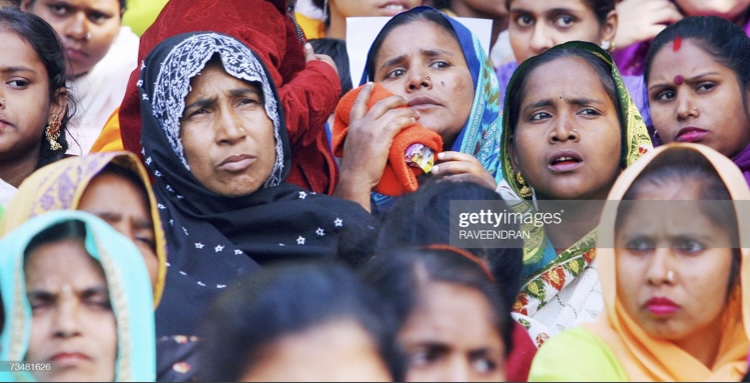
  • Water– it may come as a surprise that women of all ages still carry most of the world’s water which, over time, can lead to chronic neck and back pain as well as musculoskeletal disorders. In fact, it’s not uncommon to see women and children walking some 2 miles a day to collect water, carrying as much as 10kg buckets on their head. We’re tackling this problem head-on, offering a unique invention called The Water Wheel which carries 5x more water per trip without the need for heavy lifting.
  • Hunger – studies estimate that 1 in 9 people are affected by hunger worldwide. Factors that affect this are poverty, war, economy and even climate change. In developed countries, we are spoiled with nutritional facts on the labels, but in third-world countries, there are missing out on nutrition full stop.
  • Healthcare – from simple GP visits to hospital stays, developed nations have the best medical facilities available. Compare that to others less fortunate that don’t have the medical supplies, let alone not having the required medical staff to administer them.
  • War – war-torn areas aren’t safe for anybody to inhabit. Imagine fearing for your life each and every day in places with social unrest and lack of protection. For those who suffer these hostile environments daily will be affected not only with their physical well-being but also their mental health.
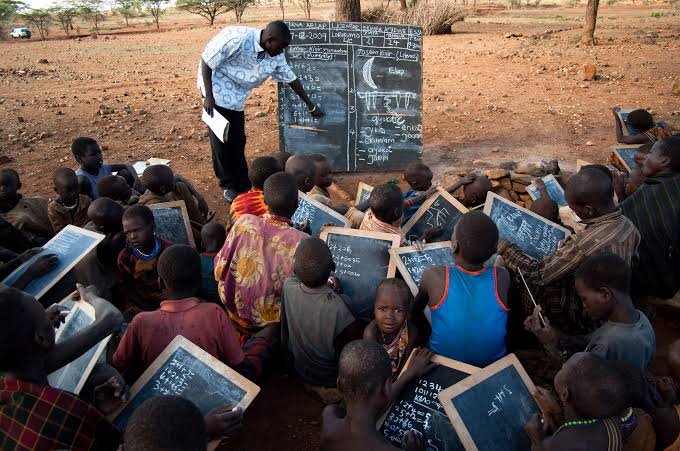
  • Education – without the right education, the path to progression is difficult. Adequate educators are needed in order for communities to reach their full potential. There are countless stats out there that show the incredible powers of education, but one of the most staggering is that each additional year of education can increase a person’s future income by an average of 10%. More income means more access to water, food, healthcare, and so on – so path toward socio-economic development starts here.

More on our mission

Although wells in rural India are now more accessible than they were 20 years ago, it’s still common to see women of all ages carrying water in a metal pail balanced on their heads for several miles.

Aiming to prevent the health burdens and cycle of poverty that water collection can create, we’re on a mission to supply The Water Wheel to families in need across India – a large drum fitted with handles which can be rolled along the ground with ease.

These round containers enable users to roll water from the wells rather than carry it on their heads and can transport up to 5x more water per trip compared to a standard bucket. This life-changing innovation is also allowing young girls to stay in school and receive education as they no longer need to be involved in water collection.

How the U.S. Dollar Became the World’s Reserve Currency

The first U.S. dollar (USD) is one of the world’s strongest currencies. It is the official currency of the United States as well as several other countries. Although it has a deep-rooted history in the United States, the dollar as we know it today was first printed in 1914.

Printing began a year after the establishment of the Federal Reserve as the nation’s central bank with the passing of the Federal Reserve Act. That’s when the Fed started issuing Federal Reserve notes in $10 denominations featuring Andrew Jackson’s portrait. Three decades later, the dollar officially became the world’s reserve currency. However, its ascendancy to the throne actually began not long after the ink was dry on that first printing in 1914.Keep reading to learn about how the dollar became the world’s reserve currency.

KEY TAKEAWAYS

  • The first U.S. dollar was printed in 1914 after the Federal Reserve Bank was created.
  • The Allies paid the U.S. for supplies in gold during World War I, propelling the U.S. to become the largest holder of gold.
  • Countries pegged their currencies to the dollar after the war, ending the gold standard.
  • The International Monetary Fund reported that 59% of all foreign bank reserves are denominated in U.S. dollars.
  • Despite its position in the global markets, the U.S. isn’t the strongest world currency, ranking 10th on the list.

The U.S. Dollar Becomes the World’s Reserve Currency

The U.S dollar was officially crowned the world’s reserve currency and was backed by the world’s largest gold reserves thanks to the Bretton Woods Agreement. Instead of gold reserves, other countries accumulated reserves of U.S. dollars Needing a place to store their dollars, countries began buying U.S. Treasury securities, which they considered to be a safe store of money.

The demand for Treasury securities, coupled with the deficit spending needed to finance the Vietnam War and the Great Society domestic programs, caused the United States to flood the market with paper money. With growing concerns over the stability of the dollar, the countries began to convert dollar reserves into gold.

The demand for gold was such that President Richard Nixon was forced to intervene and de-link the dollar from gold, which led to the floating exchange rates that exist today. Although there have been periods of stagflation, which is defined as high inflation and high unemployment, the U.S. dollar has remained the world’s reserve currency.

Benefits of working out

If you were to ask someone why they exercise, you may hear a series of reasons ranging from “I want to be healthier” to “I want to take up a new hobby.” No matter what your fitness goal actually is, most can agree exercise gives us all one thing we couldn’t do without: me-time.

Having time to yourself, even if it’s just an hour, can make the world of difference. So if you love to work out but don’t always want to spend it in a group class with someone instructing each move, we totally hear you. It’s that me-time and total control of your workout that makes the gym such a great option.

Gym newbie? No problem—while we get it can be intimidating to take your workout into your own hands (literally) for the first time, there’s a way to make a gym sesh work for everyone. Read up on the amazing benefits a little time at the gym can do for your fitness routine, and we promise you’ll be a regular soon enough.

Why go to the gym?

The best part about going to a gym is that you can do nearly every type of exercise. From getting in your cardio on the elliptical to building muscle with weightlifting, a gym offers the tools you need to create a workout that’s customized perfectly for your needs. Most gyms offer a range of machines for you to pick and choose from such as treadmills, ellipticals, bicycles, weights and mats for floor work, so you’ll never feel limited.

Is working out a hobby?

For many, working out is a hobby. For some, it is a professional venture, but the majority of us are working out because it’s fun and because of the health benefits.

Who does the gym work for?

Even the busiest person with the most packed, inflexible schedule can fit the gym into their fitness routine. But with a range of machines and equipment to choose from, it can be a little overwhelming. When you arrive for your first session, ask one of the staff to give you a tour. They’ll often go through where the machines are, what they are best used for and how to do them correctly. You won’t always get that one-on-one guidance that you would in a class, so utilize the staff and make sure you know how to use each machine correctly before trying it.

The benefits of working out

If you love to work out, you know variety is key. Without changing up your exercises, your body can become acclimated to the movements, slowly halting progress over time. One of the benefits of the gym is that, with so many types of exercises to choose from, your body will never get bored. Instead of taking an hour-long class focused solely on cardio, the gym lets you add flexibility to your workout. Maybe do some cardio on the treadmill, and then move on to strength building with weights. This variety keeps your body from becoming too used to a single workout, speeding up your metabolism and burning more fat. Whether you want to get stronger, increase your cardio or even spend time on the mat gaining flexibility, you can achieve your goals at the gym.

It’s easy to get swept up in the hustle and bustle of our own lives, and we know it isn’t always easy to make time for yourself. Giving yourself the opportunity to hit the gym, plug in your headphones and escape in the improvement on your own body can do wonders for your mental health. The simple act of slowing down for just an hour of your day can help de-stress, decrease anxiety and reduce irritability. The gym allows you to listen to your body and cater to its needs, whether that’s taking a walk and working with light weights or running and going hard.

The flaw in the education system

Grad Cap Diploma and Books Stacked

Image Credit

Shopify Partners

The book stack represents the amount of work that a student put in to graduation

Education is the very key to success. While less developed countries are struggling to deliver education to all of their people, developed countries still have a problem – a flaw in the system itself.

What’s this flaw, you may ask?  Have you ever asked yourself “Why am I learning Hamlet when I want to become a scientist?” or “Why am I taking algebra and do all of these complicated math problems when I want to become an artist?”

Well, most would answer that it is to meet the requirement for graduation. This is the reason why the education system is flawed: students are forced to learn things that are not in any way helpful in their future career. The current education system is unable to bring out the fullest potential in the student. School is basically wasting student time and efforts with all these unnecessary classes, when that time could go to strengthening their strongest points. Schools aren’t made to waste people’s time, they were created to teach students what is essential to their lives and how to be successful.

So, my suggestion would be to rework the education system. To allow you to choose whatever classes you want and still pass for graduation; to customize your class selection. I know that there are students who have a hard time deciding what their future career is going to be. We can make a recommendation based on these students’ interests, their likes and dislikes. Each individual is different, so there must be something that they like. It will take some time for these students to find out what their future career is, but that’s ok. Finding your own purpose in life is no easy task, it can make a sudden turn or there’s a big obstacle that suddenly pop up. What matters is for them to keep on moving forward, so it’s also a good idea to help and encourage these students to do so.

As for the students who have already found their future careers, make it so that they can have access to more advanced education of the particular career early. Some may find that their supposed future career is not what they really want, maybe because they just want to try it or it’s because of the pressure of everyone expecting them to be in that career. For whatever reason, the education system should also make a smooth and easy transition for students who want to switch careers.

It will surely take time to makes these changes, but taking steps one by one will help our future generation to realize the potential that they have at an early age. It’s also very costly to implement these changes, but the benefit will surely outweigh the cost. Education will lead you to success and humanity to its best, but it has to be done right in order to do so, and we can’t stop improving it.

Effects of smoking and use of tobacco products

Within 10 seconds of your first puff, the toxic chemicals in tobacco smoke reach your brain, heart and other organs. Smoking harms almost every part of your body and increases your risk of many diseases. Smoking also affects how you look and feel, your finances and the people close to you.

What happens in your body

When you smoke, harmful chemicals enter your lungs and spread through your body. They can:

  • reach your brain, heart and other organs within 10 seconds of your first puff
  • go everywhere your blood flows, harming every part of your body.

Even if you don’t inhale tobacco smoke, you still absorb harmful chemicals through the lining of your mouth.

How you become addicted

The nicotine in tobacco is highly addictive. It makes your brain release a chemical called dopamine. Dopamine is a ‘feel good’ chemical that:

  • makes you feel happy
  • helps you to concentrate
  • gives you more energy.

But this effect doesn’t last long.

As the nicotine levels in your body fade, your brain craves more dopamine. The longer you have been smoking, the more dopamine you need to feel good. You become dependent on nicotine.

Once you are dependent on nicotine, without it you will have withdrawal symptoms. You may find it difficult to concentrate or feel nervous, restless, irritable or anxious.

These two things — nicotine dependence and nicotine withdrawal — make you want to smoke more. You become addicted to tobacco.

How tobacco damages your body

The chemicals in tobacco smoke can damage your body in many ways. For example:

  • Nicotine narrows your veins and arteries. This can
    • damage your heart by forcing it to work faster and harder
    • slow your blood and reduce oxygen to your feet and hands.
  • Carbon monoxide deprives your heart of the oxygen it needs to pump blood around your body. Over time, your airways swell up and let less air into your lungs.
  • Tar is a sticky substance that coats your lungs like soot in a chimney.
  • Phenols paralyse and kill the hair-like cells in your airways. These cells sweep clean the lining of your airways and protect them against infections.
  • Tiny particles in tobacco smoke irritate your throat and lungs and cause ‘smoker’s cough’. This makes you produce more mucus and damages lung tissue.
  • Ammonia and formaldehyde irritate your eyes, nose and throat.
  • Cancer-causing chemicals make your cells grow too fast or abnormally. This can result in cancer cells.

How tobacco affects the way you look

Smoking tobacco can:

  • cause yellow-brown stains on your fingers, tongue and teeth
  • increase your risk of tooth loss and bad breath
  • make your skin saggy and give you early wrinkles
  • make your hair lose its natural shine.

Health effects

If you smoke, you:

  • reduce your life expectancy and your quality of life
  • increase your risk of many conditions and diseases as well as of dying prematurely.

It can be a long time before smokers get a smoking-related condition or disease. Because of this, some people believe it won’t happen to them.

In fact, up to ⅔ of long term smokers will:

  • die of a smoking-related disease
  • have their life cut short by about 10 years on average, compared to non-smokers.

There is also growing evidence to suggest that smoking has a negative impact on mental health. For example, some studies show that smoking is associated with increased rates of anxiety, panic attacks, depression, suicide attempts and schizophrenia.

Some of the conditions and diseases that can be caused by smoking

Did you know?

Tobacco use is the one risk factor shared by 4 of the main categories of non-communicable disease. These include cardiovascular disease, cancer, chronic lung disease and diabetes.

  • Cancer
  • Breathing problems and chronic respiratory conditions
  • Heart disease, stroke and blood circulation problems
  • Diabetes
  • Infections
  • Dental problems
  • Hearing loss
  • Vision loss
  • Fertility problems
  • Osteoporosis and menopause

Why Do People Get Addicted To Instagram?

There are basically four reasons why we get addicted to Instagram — and unsurprisingly, all of them are related to vanity.

1. We enjoy taking pictures.

s love for taking pictures can lead to an Instagram addiction
Works of art, filed under #photography.

The Instagram platform is designed specifically to appeal to our need to capture the beauty of life in photographs.

This is believed to be driven by the fact that, in a way, photographs allow us to preserve things and memories forever, exactly the way we saw or fell in love with them.

And with the rise of numerous devices with high-quality photography capabilities, taking pictures and sharing them with our friends has become easier than ever. 

2. We get a special kind of high from taking good photos.

There’s nothing quite like the feeling of knowing that your output is excellent. The great thing about Instagram is that it doesn’t just serve as a platform to show off your photography skills. It also has built-in tools that can significantly improve the quality of your photographs with just a few clicks.

From frivolous filters to fantastic fixes, you can make sure that every picture you post is Instagram-worthy.

And the idea of an Instagram-worthy post leads us to the third reason for Instagram addiction which is…

3. Shareability (a.k.a. “Will my followers like my new post?”) feeds our Instagram addiction.

Like other social media platforms, Instagram comes with the built-in functionality to leave comments or drop likes on any post you can access.

There’s a certain level of gratification we achieve from seeing people like or leave comments on our posts. It’s kind of like the digital image equivalent of telling a joke in a full room and eagerly anticipating laughter from your audience. If you can get the room roaring, your ego will be soaring. 

4. Instagram addiction is a way to escape the dreariness of everyday life 

The average Instagram feed is usually full of posts from people who aim to project that they’re living the good life.

It’s this fantasy that not only prompts us to monitor the posts of our friends, but also encourages us to edit and post similar content on a regular basis.

We humans often crave escape from our day-to-day existence. Truth is, there’s nothing quite like visual stimulation to help us get distracted.

Why is bodybuilding not an Olympic sport?

Bodybuilding was close to being recognised as a medal sport in the Olympics in the 1970s, thanks to the tireless efforts of Ben Weider, but the idea never materialised due to various reasons.

Why is Bodybuilding not an Olympic sport? Bodybuilding has been in existence for a long, long time. It is nothing but the usage of weight training to develop one’s body muscles the way one wants them to be. Over the years, there has been a lot of debates surrounding the inclusion of Bodybuilding, but none has been successful in pushing for the inclusion of Bodybuilding in the prestigious event. Bodybuilding was close to being recognised as a medal sport in the Olympics in the 1970s, thanks to the tireless efforts of Ben Weider, but the idea never materialised due to various reasons. So, what are the reasons behind Bodybuilding not being an Olympic sport? Well, the International Olympic Committee (IOC) and the Olympic Planning Committee (OPC) give the following three different reasons why they do not recognise Bodybuilding as an Olympic sport. Bodybuilders take in a lot of steroids The very first reason why the IOC does not recognise Bodybuilding is the use of steroids by bodybuilders. The core essence of the Olympics is drug-free and fair competition between athletes from all across the globe. Besides, the IOC has strict rules regarding doping wherein athletes who are found to have been in the use of any banned drug are banned or stripped of their medals. It is impossible to conduct a fair bodybuilding competition where the bodybuilders have not used steroids and hence cannot be included in the Olympics according to the IOC. Bodybuilding is not a sport The second argument which the IOC maintains is that they do not consider Bodybuilding to be a sport. They maintain that there is no athleticism maintained in Bodybuilding – the exact same reason why even Chess has not been able to make it to the Olympics. The bodybuilders certainly undergo immense physical training, but in the end, on the day of the competition, there is no athleticism involved, and it’s rather just based on how your body looks, and thus the IOC refrains from recognising it as an Olympic sport. Bodybuilding is subjective to judge Another argument put forward by the IOC is that Bodybuilding is subjective to judge. For example, the winner of a sport like 100m sprint or long jump can be easily decided objectively based on who completed the sprint fastest or who jumped the longest distance. The IOC considers this objectivity missing in Bodybuilding, as the final decision has to be taken just by judging the physique of the bodybuilders, and the decision here can be a lot subjective, i.e. every single person might have a different opinion regarding whose physique is better.

Why studying abroad has become a trend in 2022?

Studying in India or abroad? This predicament quite often puts Indian students in a quandary. Going abroad for an overseas degree has become quite common nowadays. Indian students who have embraced foreign degrees with open arms have been obsessed with overseas colleges and universities from the early 70s.

Studying in India has gone out of fashion for most of them since we do not have the required infrastructure and Ivy League colleges to compete with our western counterparts. Despite this, some students prefer Indian degrees due to a variety of reasons The foremost reason is the unaffordability of an overseas degree. Due to the higher cost of living and exorbitant fee structure in foreign universities, students from middle-class backgrounds prefer to study in India, whereas the rich and the affluent students choose to fly abroad instead due to their financial So why there is a craze among Indian students to study abroad? The reason is obvious. A foreign degree from a reputed university or college is revered highly in India and abroad. A student graduating from an Ivy League institution gets a placement offer from a reputed company in the country of study and India as well. Due to high teaching standards, immaculate infrastructure facilities, and qualified teaching faculty, the Ivy League institutes in western countries enjoy a cult following and mad rush from Indian students. There are lakhs of Indian students in foreign countries studying a variety of courses. They have been inspired by their seniors who have had a stint abroad earlier. Looking at the success stories of Indian graduates who have made it big in foreign shores, more and more students from India prefer to go abroad and achieve their goal of becoming successful Going abroad has become a status symbol for families across India. Since a foreign degree is held in high esteem, there has been no letup in Indian students opting to study abroad. Most of the Indian students who travel abroad for higher studies do not return and those who return get absorbed in reputed companies in our country due to the degrees they hold which have a higher value compared to Indian ones. So studying abroad has become a norm for Indian students. Every household has a person or two in foreign shores. Rich and affluent families often prefer their children to get an overseas degree which adds to their status and credibility in the society. The craze which started in the 80s will never fade away. This craze is already at its peak and is going to intensify manifold as years pass by. With the introduction of a new visa system for overseas students, the outbound traffic from India has resulted in the proliferation of Indian students in foreign Lastly, I would say that Indian students are a talented lot and they deserve to study abroad. Getting a foreign degree is one of the prerequisites for an Indian student. The trend of going abroad and settling in foreign shores is not going to subside in the foreseeable future.

Land Reforms in India

A Necessity for an Emerging Economy
Many people are not aware that a reform of land tenure is one of the steps in the economic policy of many countries to facilitate industrialization and promote agricultural growth. The problem with this is that it can lead to increased conflict between production and ownership rights. Yet, India’s Prime Minister Narendra Modi has made reforming the country’s outdated laws by going back to medieval-era customs a top priority for his government.

In May, he set up a five-member panel to recommend changes to the Hindu Succession Act, which is based on customary law and governs inheritance in India’s Hindu majority. The panel was created following the Bombay High Court’s decision that women could inherit ancestral property under the act. India has also rolled out land reform bills to facilitate transparency in transactions of agricultural land.
Under the tradition of a joint family system, or joint Hindu family system, one may wonder how land ownership and succession in India is regulated. This system has prevailed for centuries without outside interference or control. Joint families consists of males typically brothers and their wives who have to share property.
The main purpose of this system was to safeguard women’s rights to the property, in a country where the widow has been traditionally stigmatized and often impoverished by the death of her man.Land Reforms usually refers to redistribution of Land from rich to poor. Land reforms include Regulation of Ownership, Operation, Leasing, sale and Inheritance of Land. In an agrarian economy like India with massive inequalities of wealth and income, great scarcity and an unequal distribution of land, coupled with a large mass of people living below the poverty line, there are strong economic and political arguments for land reforms.

Land reform is the major step of government to assist people living under adverse conditions. It is basically redistribution of land from those who have excess of land to those who do not possess with the objective of increasing the income and bargaining power of the rural poor. The purpose of land reform is to help weaker section of society and do justice in land distribution.

The Indian Government was committed to land reforms and to ensure distributive justice as was promised during the freedom struggle. Consequently, laws were passed by all the State Governments during the Fifties with the avowed aim of abolishing landlordism, distributing land through imposition of ceilings, protection of tenants and consolidation of land- holdings.

Government land policies are implemented to make more rational use of the scarce land resources by affecting conditions of holdings, imposing ceilings and grounds on holdings so that cultivation can be done in the most economical manner.

Objectives of Land Reforms

From the beginning, land distribution has been a part of India’s state policy.
The abolition of the Zamindari system was perhaps the most revolutionary land policy of independent India (feudal landholding practices).

ZAMINDARI SYSTEM

Lord Cornwallis introduced the Permanent Settlement in 1793. Under this system, a class of landlords called Zamindars was created whose responsibility it was to pay a fixed rent to the government for the lands they owned. They gave out parcels of land to farmers who became their tenants. Their title to the land was hereditary. What was intended as a system beneficial for all parties concerned soon turned out to be exploitative? The State was only concerned with maximising revenue with minimum effort. The Zamindar too wanted maximum rent from his tenants irrespective of the land’s true potential. He could increase his own wealth by extracting most out of his farmer tenants since his due to the State was fixed. In addition, several layers of intermediaries were created between the Zamindar and the tenants adding to the burden. The landless farmers and labourers suffered greatly in poverty. Also, this led to the creation of a group of rich Indians whose loyalty lay largely with the British. As you can see the Permanent Settlement gave rise to the Zamindari system of tenancy in Bengal and soon was adopted in other regions.

RYOTWARI SYSTEM

Under this system, the proprietor of land gave the rent and taxes directly to the government in the absence of any middlemen. This started in Madras and was later adopted in Bombay as well.

MAHALWARI SYSTEM

This system was introduced by William Bentinck’s government under which landlords were responsible for the payment of revenue to the State. These landlords or Zamindars had a whole village or a group of villages under their control. The Mahalwari system prevailed in UP, the North Western Province, Punjab and parts of Central India.


India’s land reform policy had two specific goals:
The first is to remove any impediments to increasing agricultural production that arise from the agrarian structure that has been passed down from generation to generation.
The second goal, which is closely related to the first, is to “eliminate all elements of exploitation and social injustice from the agrarian system.
To provide security to the soil tiller, and to ensure equality of status and opportunity to all sections of the rural population.

Objectives of land reforms:

  • Redistribution of land across society so that land is not held in the hands of a few people.
  • Land ceiling to disburse surplus land amongst small and marginal farmers.
  • Removal of rural poverty.
  • Abolition of intermediaries.
  • Tenancy reforms.
  • Increasing agricultural productivity.
  • Consolidation of land holdings and prevention of land fragmentation.
  • Developing cooperative farming.
  • To ensure social equality through economic parity.
  • Tribal protection by ensuring their traditional land is not taken over by outsiders.
  • Land reforms were also for non-agricultural purposes like development and manufacturing.

Salient features of Indian Society, Diversity of India

Indian society is very unique and diverse. We have a lot of cultures, communities, religions, languages, etc

India is a plural society, characterized by its unity and diversity. A grand combination different cultures, religions and languages of the people belonging to different castes and communities has upheld its unity. This combination of different culture and ethnicities is what that has made India unique from other countries. Different events such as the foreign invasions, immigration from other parts of the world, and the existence of diverse languages, cultures and religions have made India’s culture open- minded , on the one hand, and a unique continuing and living culture, with its specificity and historicity, on the other. Not only we have diversity in racial compositions, religious and linguistic distinction but also in patterns of living, life styles, land tenure systems, occupational pursuits, inheritance and succession law, and practices and rites related to birth, marriage death etc. 

Post-Independent India is a nation united against several odds and obstacles. India is a secular state. It has one Constitution providing guarantees for people belonging to diverse regions, religions, cultures and languages. It covers people belonging to all socioeconomic strata. The Article 15 of the Indian Constitution talks about Prohibition of discrimination on grounds of religion, race, caste, sex or place of birth. Our Indian Constitution itself safeguards and protects the rights of every individual irrespective of their religion, race, caste sex or place of birth. It gives everyone opportunity and treats everyone equally.

DIFFERENT FEATURES OF INDIAN SOCIETY

MULTI RELIGIOUS SOCIETY

India consists of people from many different religions. Hinduism, Islam, Christianity, Buddhism, Jainism, Sikhism are some major religion in India, However there are other different religions as well. Hinduism is the most dominant religion in India.

As per the census 2021, there are approx. 110 crore people follow Hinduism in India. The Hindus are most numerous in 29 States/UTs except in Manipur, Arunachal Pradesh, Mizoram, Lakshadweep, Nagaland, Meghalaya, Jammu & Kashmir, and Punjab.

Approx.  20 crores of people are Muslims In India. The Muslims professing Islam are in majority in Lakshadweep and Jammu & Kashmir.

In 2021 approx. 3.20 Crores people are Christians in India. Christianity has emerged as the major religion in three North-eastern states, namely, Nagaland, Mizoram, and Meghalaya. 

In 2021 approx. 2.4 Crores people follow Sikhism in India.

In 2021 approx. 10 million or 1 Crore people are followers of Buddhism in India and In 2022 approx. 5 million or 50 Lakh people follow Jainism in India.

MULTI RACIAL SOCIETY

Race is a group of people with a set of distinctive physical features such as skin colour, type of nose, form of hair, etc. India is a country of people with different racial groups. The latest racial classification of the Indian people based on researches in this field has been given by B.S. Guha (1952). He has identified six racial types (1) the Negrito, (2) the Proto Australoid, (3) the Mongoloid, (4) the Mediterranean, (5) the Western Brachycephals, and (6) the Nordic.

MULTI LINGUAL SOCIETY

According to the latest analysis of a census more than 19,500 languages or dialects are spoken as mother tongue in India.

There are 121 languages which are spoken by 10,000 or more people in India, which has a population of 121 crore. Only 22 languages are listed in Schedule VIII of the Indian Constitution. The 96.71 per cent population in the country have one of the 22 scheduled languages as their mother tongue and the remaining 3.29 per cent is accounted for other languages. Not all these languages are, however, equally widespread. Many of them are tribal speeches and these are spoken by less than one percent of the total population so here we can clearly see see that in India there is a great deal of linguistic diversity as there are so many people of different languages and dialects.

MULTI CASTE SYSTEM

The term caste is generally used in two senses: sometimes in the sense of Varna and sometimes in the sense of Jati. In India, caste system is very much prevalent. The Varna system is basically a four fold system in the Hindu society based on their functional criteria, the four divisions are Brahmins, which is on the top of this system followed by kshatriya, Vaishyas and then shudra with their functions as learning or teaching, defense, trade and manual labour. We find castes among the Muslim, Christian, Sikh as well as other communities. One must have heard of the hierarchy of Shaikh, Saiyed, Mughal, Pathan among the Muslim. Similarly, caste consciousness among the Christian in India is not unknown. Since a vast majority of Christians in India are converted from Hindu fold, the converts have carried the caste system into Christianity. Among the Sikh again we have so many castes including Jat Sikh and Majahabi Sikh (lower castes).

In addition to the above described major forms of diversity, we have diversity of many other sorts like settlement patterns – tribal, rural, urban; marriage and kinship patterns along religious and regional lines; cultural patterns reflecting regional variations, and so on.

Some other of the salient features applicable to Indian Society are:

  1. Unity In Diversity
  2. Patriarchal Society
  3. Tribes
  4. Family
  5. Kinship System
  6. Balance between spiritualism and materialism
  7. Co-existence of traditionalism and modernity

India is a very diverse country and because of its unique feature it always attracts people from all parts of the world.

.

SUSTAINABLE DEVELOPMENT

Sustainable Development has been the buzzword for a while now. People are constantly asking what it looks like and how to implement it. There have been many differing opinions on what sustainable development actually is, however some key principles remain:

  • The concept of sustainable development is about making sure that you live in a world where people are able to stay self-sufficient and thrive indefinitely.
  • Sustainable development does not need to take the form of major changes, but rather building upon what we already have.
  • A major component of any successful Sustainable Development project is social-justice based thinking.

The Principles of a Sustainable Development Project:

A sustainable development project is one that will allow you to reach the following principles:
-Managing resources efficiently.
-Responsible consumption.
-Treating others with respect and dignity.
These four principles are what make up an overall healthy and productive society. The management of resources, responsible consumption, and treating others with respect and dignity can be applied to almost anything we do; whether it is being environmentally conscious, being respectful of your parents, or being a good soccer player. The real issue here is that these principles go hand in hand. If we constantly abuse a resource and consume in a way that hurts the environment, we are not being respectful of the Earth. If we are being very selfish in our consumption, then we are not being respectful of our fellow human beings. Lastly, if we do not treat people with respect and dignity, then they will not be treated with respect and dignity by their neighbors.

These four principles allow us to have a healthy society. This can be seen clearly in the following quote by E. F. Schumacher: “The great first commandment is to love the Earth and that means loving it enough to take care of it for the sake of future generations”.

The way we approach development affects everyone. The decisions that we make also impacts the society, and has very real consequences for people’s lives. Poor planning of communities, for example, reduces the quality of life for the people who live in them.

Sustainable development provides an approach to making better decisions on the issues that affect all of our lives. By incorporating health plans into the planning of new communities, for instance, we can ensure that residents have easy access to healthcare and other facilities.

Sustainable development should provide a solution in terms of meeting basic human
needs, integrating environmental development and protection, achieving equality,
ensuring social self-determination and cultural diversity, and maintaining ecological
integrity. Although the concept of sustainable development has undergone certain
changes during the past, its fundamental principles and goals have contributed to a
more conscious behaviour adapted to the limitations of the environment. This is the
reason of adopting the concept in different areas of human activities. Numerous international organizations have been involved in implementation of the concept, while
it has found positive implementation locally, but it did not produce significant results
on a global scale. This fact proves environmental problems which, 30 years after the
introduction of the concept, are still ongoing. Contemporary understanding of the
concept of sustainable development is considered through the United Nations Millennium Development Goals focused on a complex global situation, such as population
growth, hunger and poverty, wars and political instability, and further degradation
of the environment. There is a huge gap between developed and underdeveloped country and many of the countries are not even close to sustainable development. Fundamental constraints of the implementation of the concept of sustainable development are the degree of socio-economic development that many countries have not yet achieved, associated with a lack of financial resources and technology, but also the diversity of political and economic goals on a global scale.

Source: https://www.unesco.org/en/education/sustainable-development

Effective Journaling

Image courtesy: positivepsychology.com

We hear the word journaling very often. Almost every other day this term falls on our ears but we simply pay no heed to it. The reason is we humans have a tendency to think that the most ordinary or simplest things cannot bring us extraordinary greatness. Which is not true ofcourse.

When it comes to journaling, we sometimes underestimate how important it is to include this beneficial habit into our daily routines. Our lives can thrive from journaling in many different ways. From increased productivity overall to self-improvement and improved mental wellness, this habit is proven to be effective.

Writing down your thoughts, feelings, or anything else you want to in order to try to understand them better is what journaling is fundamentally all about. Every time we write down our thoughts in a journal, our mind starts to get more organised, making it simpler for us to prioritise our goals and every aspect of our lives that we want to work on. As a result, journaling helps us stay productive by allowing us to acknowledge what needs to be done after letting us self-assess ourselves in a way.

The ability to learn new things quickly, as well as your capacity for analytical and innovative thought, are more important indicators of productivity in today ’s digital economy than how much work you can get done in an hour. Journaling is therefore valuable spending a few minutes on, just like any practise that enables you to learn more acutely and think more effectively.

Outlining your goals in a journal enables you to think thoroughly about all aspects of it.
Journaling helps you keep motivated during the arduous process of actually achieving your goals by providing a track of the work you’ve made in that direction.
We refer to it as effective journaling for this reason.

Anyone who really wishes to deal with their emotions, possibly to prevent it from driving themselves in the realms of depression or anxiety, might benefit much from this mindful practice.

You can thoroughly examine your feelings, let out chaos, and mentally assimilate your experiences through writing.

Furthermore, it can support you in attaining a significant purpose or work with you to reduce certain sources of stress.
Creating and reflecting on the story of your life, including all of the decisions you have committed and the moments that have shaped who you are today, is something you may do by keeping a diary.

In a word, journaling’s healing effects are “enlightening.

You can’t change it all in your life instantly, and attempting to create healthy habits and break negative ones in a single day is probably not going to work. Legitimate, lasting change occurs when you only take on something that you can manage; frequently, altering one significant habit can have knock-on impacts that enhance your life and move you forward to your commitments in other aspects.

One such discipline is writing; it may help you stay focused, determine your capabilities and limitations, provide an outlet for awareness of self , but also much more. Merely keeping track of your ideas, emotions, and doings can change your life in unanticipated ways.

Source: positivepsychology.Com Courtney E. Ackerman, MA https://positivepsychology.com/benefits-of-journaling/

A trip to cherish!

Image credit: http://www.alamy.com

When my Nani and I were drinking chai and chatting about random topics a few days ago at her home in Surat, she began talking about her early years spent in Ahmedabad. She told me about her family, the people there, the delectable food, the holidays she celebrated with them, and the spots where she used to hang out with her friends. Her descriptions piqued my enthusiasm for travelling to Ahmedabad and exploring the city.

          So, the following morning, I was prepared with my bag and a train ticket in hand and departed for the station after bidding my family farewell. I travelled with one of my cousins because she had visited Ahmedabad previously and was familiar with the area’s landmarks. We left Surat station at eight in the morning and arrived at Ahmedabad station around noon after a four-hour journey. Later on arriving at my cousin’s home, we relaxed there for a while before starting our city tour. I still can remember how I couldn’t contain my excitement to explore the places.

                    We started our trip at Jama Masjid. 

            We learned that the mosque was constructed by Ahmad Shah in 1424. The mosque’s architecture was such that it gleamed beautifully in the sunlight. 

                   The tombs of the male and female members of Ahmad Shah’s royal family, Badshah no Hajiro and Rani no Hajiro, respectively, were the next stop on our tour. Since women couldn’t enter Badshah no Hajiro, we snapped some photos of the monument from the outside.

                  On arriving at the female tomb, we discovered that the street leading there had changed to serve as a neighbourhood women’s market. I was surprised to find an antique jewellery piece at the market that I could afford to buy for my Nani as a souvenir, given that antiques are typically pricey.

                  After a few hours of exploring these monuments, we went to Manek chowk’s hustling and bustling market. It was late in the evening so it was pretty crowded with people. The aroma of the delicious street food hit us and we decided to dive in. We tried some of the popular food items of the chowk which includes Ghugra sandwich, Gotala Dosa, Fafda Jalebi, Dhokla and Methi Gota. I can still remember how delicious they tasted. We wound up exploring for the day.

                On the second day of the tour,  we started with having breakfast at a well-known neighbourhood eatery and later travelled to the Sabarmati Ashram. We learnt about its history and spoke with the women who worked there, who gave us information about the Ashram and the city’s rich culture. The ashram was exquisitely constructed.

                 The Sabarmati Riverfront was our next stop, followed by the lakeside flower garden. From the riverfront, there was a breathtaking vista.

                 The third and final day of my journey to Ahmedabad, I made the decision to wrap it up by going to the Utkantheshwar Temple in Sarkhej. It made me feel divine and grateful for my decision to travel to Ahmedabad. This city is truly, incredibly extraordinary.

HOW TO WIN AN ARGUMENT

Arguments, whether they are interpersonal or professional, are essential. Be it a constructive or non-beneficial disagreement, we engage in it more frequently than we plan to in our regular lifestyle.

Nobody can win an argument against you unless you give the opportunity to.

Even if this isn’t your strongest suit, there are a few straightforward strategies you may use to quickly and easily win. To assist you, here are a few of them:

Image credit : pixaby.com https://images.app.goo.gl/dv31TkrJaxJ7cZRm9

1. Do your research – In a professional setting when you know you’re likely to have to get into an argument, prepare yourself beforehand with all the information and facts so that you have an upper hand in the discussion

2. When it’s unlikely – Sometimes you could encounter yourself in a heated argument in an unusual situation, caught off guard and unsure of what to say. It’s typically best to try to reason with the other person so that you can depart the argument quickly.

3. Calm down – The most important thing to remember when in an argument is to keep your composure and maintain decorum, especially if your parents are on the other side. However, this is true for practically all contentious discussions.

4. Don’t raise your voice – Being ear-splittingly loud won’t help you win, instead strengthen your case. Maintaining your mental fortitude will help you make your point to the opposing side as effectively as you can.

5. Decapitate them delicately – Be gentle and kind! Talk calm and pleasant until your generosity and encouraging words cause the opposition’s rage to subside. In between disputes, you must remind the other person of the good in you in case they have forgotten. This works!

6. Be reasonable Avoid making assumptions just to justify your assertions. Provide evidence to back up your claims so the opposite side won’t have a chance to refute the information.

7. Choose your next word carefully- Remember in an argument the point is not just winning but also successfully winning at it. So communicating the issue that you’re debating about is also vital because that is the reason it happened in the first place. In doing so,  be careful how you choose your words.

8. Don’t rush— Time may not always be to your advantage, so consider whether it is the appropriate time to protest before you start the conversation. Better to steer clear of it for a while if not. Additionally, it will offer both parties a chance to think things through.

9. Listen!- If you aren’t willing to listen and consider the opposing viewpoint, how can you expect others to? It’s crucial to hear what the opposing side has to say because a one-sided discussion is not an argument.

10. Make believe – when you really want to win and your case isn’t solid enough, make the opposition believe that your perspective is stronger and their claim needs to be reevaluated. Even if you’re wrong, trick them into thinking otherwise.

You’ll master the art of argumentation in no time, just follow these simple methods and the win is yours.

Panchayati Raj

The term “Panchayati Raj” in India signifies the system of rural local self-government. It has been established in all the systems of India by the Acts of the state legislative to build democracy at the grass root level. It is ensured with rural development. It was constitutional through 73rd Constitutional Amendment Act, 1992.

Ø A three-tier structure of Indian administration for rural development is called panchayati Raj. The aim of the panchayati Raj is to develop local self government in districts, zones and villages.

Ø Rural development is one of the main objectives of panchayati Raj and this has been established in all states of India except Nagaland, Meghalaya and Mizoram. In all union territories except Delhi and certain other areas. These areas include:-

a) The scheduled areas and the tribal areas in the states.

b) The hill area of Manipur for which a district council exists and

c) Darjeeling district of West Bengal for which Darjeeling Gorkha Hill council exists.

Evolution of Panchayati Raj

Ø The panchayati system in India is not purely a post-independence phenomenon. In fact, the dominant political institution in rural India has been the village panchayat for centuries. In ancient India, panchayat were usually elected councils with executive and judicial powers.

Ø The evolution of the Panchayati Raj system, however, got a trip after the attainment of independence after the drafting of the constitution. The constitution of India in Article 40 enjoined, The state shall take steps to organise village panchayats and endow them with such powers and authority as may be necessary to enable them to function as units of self-government.

Ø There were member of committees appointed by the government of India to study the implementation of self-government at the rural level and also recommend steps in achieving this goal.

Ø The committee appointed are as follows:-

a) Balwant Rai Mehta Committee

b) Ashok Mehta Committee

c) G V K Rao Committee

d) LM Singvi committee

A. Balwant Rai Mehta Committee and Panchayati Raj

The committee was appointed in 1957, to examine and suggest measures for better working of the community development programme and the national extensions services. The committee suggested the establishment of a democratic decentralised local government which came to be known as panchayati Raj.

Recommendations by the Committee

Ø Three tier panchayati raj system: Gram Panchayat, Panchayat Samiti and Zila Parishad.

Ø Directly elected representatives to constitute the gram panchayat and indirectly elected representative to constitute the panchyat samiti and zila parishad.

Ø Planning and development are the primary objectives of the panchayati raj system.

Ø Panchayat Samiti should be the executive body and zila parishad will act as the advisory and supervisory body.

Ø District collector to be made the chairman of the Zila Parishad

Ø It also requested for provisioning resources so as to help them discharge their duties and responsibilities.

v The Balwant Rai Mehta committee further revitalised the development of panchayati in the country, the report recommended that the panchayati raj institutions can play a substantial role in community development programmes throughout the country.

v The objectives of the panchyat, thus was the democratic decentralisation through the effective participation of locals with the help of well-planned programme. Even then prime minister of India, Pandit Jawaharlal Nehru, defended the panchyat system by saying, “authority and power to the panchayats”.

B. Ashok Mehta committee and Panchayati Raj

Ø The committee was appointed in 1977 to suggest measures to revive and strengthen the declining panchayati raj system in India.

The key recommendations are:-

Ø The three-tier system should be replaced with two-tier system: Zila parishad (District-level) and the mandal panchayat (a group of villages).

Ø District level as the first level of supervision after the state level.

Ø Zila Parishad should be the executive body and responsible for planning at district level.

Ø The institutions (zila parishad and the mandal panchayat) to have compulsory taxation powers to mobilise their own financial resources.

C. G V K Rao committee and Panchayati Raj

Ø The committee was appointed by the planning commission in 1985. It recognised that development was not seen at the grass root level due to bureaucratisation resulting in panchayat raj institutions being addressed as “grass without roots”. Hence, it made some key recommendations which were as follows:-

Ø Zila Parishad to be the most important body in the scheme of democratic decentralisation. Zila Parishad to be the principal body to manage the development programmes at the district level.

Ø The district and the lower levels of the panchayati raj system to be assigned with specific planning, implementation and monitoring of the rural development programmes.

Ø Post of district development commissioner to be created. He will be chief executive officer of the zila parishad.

Ø Elections to the levels of panchayati raj system should be held regularly.

D. L M Singhvi committee and panchayat raj

The committee was appointed by the government of India in 1986 with the main objective to recommend steps to revitalise the panchayati raj system for democracy and development. The following recommendations were made by the committee:-

1. The committee recommended that the panchayat raj system should be constitutionally recognised. It also recommends constitutional provisions to recognise free and fair election for the panchayati Raj system.

2. The committee recommended reorganization of villages to make the gram panchayat more viable.

3. It recommended that village panchayats should have more finances for their activities

4. Judicial tribunals to be set up in each state to adjudicate matters relating to the elections to the Panchayat Raj institutions and other matters relating to their functioning.

Ø All these things further the argument that panchayat can be very effective in identifying and solving local problems, involve the people in the villages in the development activities, improve the communication between different levels at which politics operate, develop leadership skills and in short help the basic development in the states without making too many structural changes. Rajasthan and Andhra Pradesh were the first to adopt panchayati raj in 1959, other states followed them later.

Ø  The act is a very significant step in creating democratic institutions at the grassroots level in the country. Art has transformed representative democracy into participating democracy.

Salient features of 73rd Constitutional Amendment Act , 1992

1. Gram sabha

2. Three-tier system

3. Election of members and chairperson

4. Reservation of seats :-

a) For SC and ST

b) For Women

c) The state legislatures are also given the provision to decide on the reservation of seats in any level of panchayat or office of chairperson in favour of backward classes.

5. Duration of panchayat

6. Disqualification

7. State election commission

8. Powers and functions

9. Finances

10. Finance commission

11. Audit of accounts

12. Application to union territories

13. Exempted state and areas

14. Continuance of existing law

15. Bar to interference by courts.

In India, the panchayati raj system is not a post-independence development. For decades, the village panchayat has been the most powerful political entity in rural India. Panchayats were elected councils in ancient India that had administrative and judicial authority. Panchayat Raj is a three-tiered administrative framework in India that focuses on rural development. The panchayati Raj is a system of local self-government that is used to build districts, zones and villages.

PCOS

PCOS or Polycystic Ovarian Syndrome. You might heard people saying it. It has become common among women these days. For every 5 women 1 woman is a PCOS fighter.

Causes

PCOS is a lifestyle disorder thus happens when your body is abused by your own self. Some of the ways are:

•weight gain

•stress

•disturbed sleep cycle

•not taking food on time

• unhealthy food intake

Treatment

Although Doctors give the medications and pills to reset your periodic cycle,it is still advisable to not be solely dependent on chemicals as they tend to have lifelong effects on your body.

Instead go for the long and tough route that is do exercise regularly, have enough sleep and maintain the cycle, eat healthy and eat whole meal foods , have cow ghee everyday a a bit .

If done properly and if the body is taken good care of without medications you will have your periodic cycle regulated .

Desserts Of India

India is one of the countries rich in its culture, variety of food, and diversity in all its perspectives. There is a different culture, and lifestyle in each 100 km of state. Be it spice or sweet India has got everything !!

Gulab Jamun, arguably India’s most well-liked dessert, is deliciously sweet, sticky, and impossible to resist! These fried and syrup-soaked soft, spongy balls are created with a dough comprising flour, milk powder, or condensed milk. Their name, which translates to “rose berry” in Hindi, comes from the fact that they are frequently flavored with cardamon and rose. Unni appam, a treat from Kerala in southern India, is a sweet treat comparable to gulab jamun. It is prepared with rice flour, coconut, banana, and jaggery (raw sugar).

Like Italy has gelato, India has got an Indian version of ice cream which is kulfi. it is significantly creamier and thicker than typical ice cream because it isn’t whipped before freezing. Simply boiling the milk will thicken and diminish its volume. Cardamon is the typical flavoring for kulfi. Mango, pistachio, saffron, vanilla, and rose are among the more tastes. With the inclusion of thin noodles and dried fruits, it is occasionally served as falooda kulfi.

The most popular version of this traditional Indian dessert is gajar ka halwa (carrot halwa). It originated in the imperial Mughal kitchens and is especially well-liked in the north of India during the winter. Grated carrots are the major component. It is prepared with milk, sugar, and a substantial amount of ghee.Similar to how gajar ka halwa is created and adored in the north of India, Rava Kesari (also known as Kesari halwa) is made in the south. Ghee is used to roast the Rava (semolina), which is then boiled with sugar and water. Additionally, saffron is added to give it color. And this is the most significant dessert and can be seen in prepared in next house. 

Jalebi is the most loved dessert in India .In essence, it consists of deep-fried loops of dough prepared with refined flour and sweetened with saffron. Jalebi isn’t only an Indian delicacy. Its origins can be found in the Middle East, and it is thought that Persian conquerors brought it to India. But there’s no denying that India has enthusiastically embraced the jalebi. It is available at local cuisine stands all around the country, deliciously breathtaking.

This ubiquitous celebratory treat in the shape of a ball is a staple at any special event in India and has a wide variety of variations. Yes,you would have guessed it right!! Its laddoo.However, each location has a unique specialization. It is frequently prepared with semolina, crushed coconut, or gram/chickpea flour. Other components include milk, sugar, ghee, and dried fruits. Since more than three centuries, worshipers at the Tirupati temple in Andhra Pradesh have received the most renowned laddoo in all of India. With an estimate of 3 million pieces sold each day, production is a huge endeavor!

Visiting Karnataka? Never miss out on Mysore Pak. This buttery, fluffy confection, frequently given during festivals, is thought to have been created in the royal Mysore Palace kitchen. It is produced with a lot of clarified butter, sugar syrup (pak), and chickpea flour (ghee). There is also a less popular hard, brittle kind of it. Definitely opt for the soft one!

According to popular mythology, Nobin Chandra Das, a confectioner from Kolkata, invented the rasgulla in 1868 after extensive testing Although it was originally served at the Jagannath temple in Puri, the Odisha government claims to have proof that the rasgulla (known as rasagola there) existed in the state before 1500. In July, Odisha has a celebration called Rasagola Dibasa to honor the confection.Cottage cheese, semolina, and sugar syrup are used to make the white, spongy rasgulla balls. In West Bengal and Odisha, where the dessert is revered, its provenance has been the subject of a heated discussion in recent years.

Furthermore, the list doesn’t stop here. There is a huge variety of different cuisines with desserts ahead from different states. 

China’s Presence in the Horn of Africa

In January 2022 , first “China-Horn of Africa Peace, Governance and Development Conference.” was held. During his 17th trip to Africa, China’s foreign minister and state councillor Wang Yi asserted China’s 3 main objectives in Africa : controlling the pandemic, implementing a Forum on China Africa Cooperation (FOCAC) outcomes, and upholding common interests while fighting hegemonic politics. He focused on increasing infrastructural investment in Africa. This is the first time China aims ‘to play a role in the area of security ‘.

What is Horn of Africa?

•The Horn of Africa is a peninsula in Northeast Africa.

•It is located on the easternmost part of the African mainland, it is the fourth largest peninsula in the world.

•It lies along the southern boundary of the Red Sea and extends hundreds of kilometres into the Guardafui Channel, Gulf of Aden, and Indian Ocean. The Horn of Africa is equidistant from the equator and the Tropic of Cancer.

•The Horn contains such diverse areas as the highlands of the Ethiopian Plateau, the Ogaden desert, and the Eritrean and Somalian coasts. The Horn of Africa denotes the region containing the countries of Djibouti, Eritrea, Ethiopia, and Somalia.

•The area has experienced imperialism, neo-colonialism, Cold War, ethnic strife, intra-African conflict, poverty, disease, famine and much else.

China’s recent project :

In the 2021 forum, the entire region of the Horn participated, and four resolutions were adopted :

• The Dakar Action Plan : The two sides commend the development of relations between China and Africa, and believe that over the past 21 years since its inception, the Forum has strongly promoted the development of relations between China and Africa, and become an important benchmark for international cooperation with Africa.

• China-Africa Cooperation Vision 2035 : It was formulated to determine the directions and objectives of mid- and long-term cooperation and promote a closer community with a shared future for China and Africa.

• Sino-African Declaration on Climate Change : It is aimed at enhancing coordination and cooperation in the multilateral process on climate, and jointly safeguard the legitimate rights and interests of China, Africa and other developing countries.

• Declaration of the Eighth Ministerial Conference of FOCAC : Under the theme ”Deepen China-Africa Partnership and Promote Sustainable Development to Build a China-Africa Community with a Shared Future in the New Era” and committed to the development of FOCAC and to the deepening of the China-Africa comprehensive strategic and cooperative partnership, both adopted by consensus the Dakar Declaration of the Eighth Ministerial Conference of FOCAC. The FOCAC promotes China’s role in the infrastructural and societal development of the Horn.

What are China’s Primary Interests in the Region?

1. Infrastructure :

• One of its landmark projects was fully funding the USD 200 million African Union headquarters in Addis Ababa.

• China has also invested in the Mombasa-Nairobi rail link in Kenya, and has already delivered on railway projects in Sudan.

• It also has a viable military hardware market in Ethiopia and has built over 80 infrastructural projects in Somalia, including hospitals, roads, schools and stadiums.

• In Djibouti, 14 infrastructural projects are funded by China.

2. Financial Assistance :

• Ethiopia, is one of the top five African recipients of Chinese investments, and also has a debt of almost USD 14 billion.

• China accounts for 67% of Kenya’s bilateral debt.

• In 2022, China promised to provide USD 15.7 million assistance to Eritrea.

3. Natural Resources (Oil and Coal) :

• China is also interested in minerals such as gold, iron-ore, precious stones, chemicals, oil and natural gas in Ethiopia.

• South Sudan, a source for petroleum products, has had continued Beijing investment in the industry since the latter’s initial entry in 1995.

4. Maritime Interests :

• China’s first and only military base outside its mainland is in Djibouti.

• In 2022, China hinted its willingness to develop Eritrea’s coast which would connect to China’s investments in land-locked Ethiopia.

• The U.S. has speculated that China wishes to build another military base in Kenya and Tanzania, thereby increasing its military presence in the region.

China shifts from its Principle of Non-Intervention :

• For Africa, Chinese investments could lead to stable environments which could help the countries achieve their peace and development objectives. For China, conflict in the region comes at a heavy cost.

• In Ethiopia. when the conflict broke out, over600 Chinese nationals, working on different projects, were evacuated, putting several investments at risk.

• From a trading perspective, the region plays a significant role in achieving the objectives of the China-Africa Cooperation Vision 2035.

• China’s move towards peace in Africa indicates a shift in its principle of non-intervention.

• It is China’s message that its presence in the continent has a larger objective and is not likely to be limited to the Horn of Africa.

• This includes an aim to project itself as a global leader and boost its international status.

• Further, the recent developments imply that China is focusing on a multifaceted growth in the continent for the long run.

• For Africa, China’s presence is an alternative to the European powers, many of whom are facing criticism from African governments.

• Further, African governments, which do not conform to Western standards of democracy, interact better with powers like China and Russia.

Significance of Horn of Africa for India :-

1. Africa has been a Growing Interest : Africa has been of growing interest to India for political, economic and security reasons, especially the sub-region – the Horn of Africa.

2. Proximity to Oil Producing Region : The Horn of Africa is strategically important since it is close to the oil-producing region of the Middle East. Approximately 40% of the oil produced in the Middle East crosses through the shipping lanes of Red Sea.

3. Shipping Routes : Djibouti is the choke point on this shipping route. It is due to this reason that countries like the United States, France, and China have a military base in Djibouti. With the new reliance on the sea lines of communication for India’s economic growth, Delhi declared that its national interests were no longer limited to the Subcontinent but stretched from the “Aden to Malacca”.

India’s Concern over China’s presence :-

• Dominance in the Indian Ocean : Situated on the north-western edge of the Indian Ocean, Djibouti could become another of China’s “string of pearls” of military alliances and assets ringing India, including Bangladesh, Myanmar and Sri Lanka.China has stepped up activity in the Indian Ocean, which India considers within its sphere of influence, in recent days, citing anti-piracy patrols and freedom of navigation. It has forced the Indian Navy to tighten surveillance of the strategic waters.

• China seeks to control over Vital Shipping Routes : The Indian Ocean shipping lanes carry 80% of the world’s oil and a third of the global bulk cargo. China is looking to secure its energy and trade transportation links along the vital shipping route.

• Influencing Indian Ocean Countries : The Indian Ocean is also emerging as the playground for countries eyeing a bigger role in world affairs. China is looking to generate goodwill and influence in the Indian Ocean countries by investing in projects such ports, roads and railways. China is looking to expand its presence in the Indian Ocean, and is building ports and other infrastructure in Sri Lanka, Bangladesh and Pakistan.

Way Forward :-

• What happens in the region has a direct bearing on India’s security and well-being and hence India should pay more attention to the prevailing conditions and power dynamics in the Horn of Africa.

• India would be well advised to become more active in examining and discussing the complex problem in-depth with the governments in Eastern Africa, the African Union and others concerned so as to be able to make a meaningful contribution to its resolution.

Sources : The Hindu and Dristi IAS.

Kids of Chris Hemsworth will appear in “Thor: Love and Thunder”

According to Hollywood actor Chris Hemsworth, two of his three children will appear in the next “Thor: Love & Thunder” movie.

Two of Hemsworth’s children will be featured in the most recent Marvel Cinematic Universe film, he said in a chat with a journalist, according to People magazine. With his wife Elsa Pataky, the The Extraction actor has two children: India, 10, and twin boys, Sasha and Tristan.

The actor confirmed that one of his twin boys will appear in the movie, along with his daughter India. The actor said that his daughter will portray “the character of Love” while his son would represent the younger version of Hemsworth’s character, Thor.

The actor also mentioned that Christian Bale and Natalie Portman’s children will appear in “Thor: Love & Thunder,” according to People magazine. The filmmaker Taika Waititi’s kids also make a surprise appearance. remembering the cast. Hemsworth said that it was a fun family Experience and that the kids had a “great time.”

On July 7 of this year, “Thor: Love and Thuder” is scheduled for release. In the movie, Nataile Portman will play the role of the mighty Thor alongside Hemsworth for the first time, giving fans the chance to see not one, but two Thors. Other notable actors in the movie include Chris Pratt, Tessa Thompson, and Christian Bale.

“It felt like a one-off fun family experience. I don’t want them to now go and be child stars and actors. It was just a special experience we all had, They loved it, they had a great time,”The actor revealed himself.

The wait is over! The second season of Masaba Masaba will premiere on July 29.

‘Masaba Masaba,’ one of the most loved Indian programmes on Netflix, is here! It will be exactly one month from today on July 29 before the second season of “Masaba Masaba” arrives on the OTT platform. In August 2020, the first season of “Masaba Masaba” was released.

Masaba herself posted the first preview for the programme on Instagram.

Neena Gupta and Masaba, a mother-daughter team, appear young and hopeful in the teaser as they tackle new professional routes, new and old love interests, loss, emotions, and rivalry. Season 2 follows the lives of these two women as they go over challenging terrain and difficult sections.

Season 2 will also have Neil Bhoopalam, Rytasha Rathore, Kusha Kapila, Kareema Berry, Barkha Singh, Ram Kapoor, and Armaan Khera in addition to being directed by sonam Nair and produced by Vinyard Films. Influencer Kusha Kapila is performing for the second time; her first was in Karan Johar’s Ghost Stories.

Director Sonam Nair expressed her excitement about the teaser’s release by saying, “When Masaba Masaba was first shown to me by Ashvini Yardi, it was an idea that I instantly fell in love with, and I knew it would bring a lot of positive emotions with it. I have the opportunity to explore and collaborate with excellent services like Netflix season 2 is moving into other territories but with the same level of love and I can’t wait for people to watch it “.

Idea of Pop culture

Based on who is defining it but the context in which it is used, the phrase “popular culture” has several connotations. It is commonly accepted that a society’s dominant culture at a given moment is the colloquial or people’s culture. In Persuasive Aspects of Popular Culture, it refers to the facets of social life that the general public participates in most actively. As the “cultural heritage,” popular culture is shaped by how people interact with each other in daily life. Examples of popular culture include clothing trends, slang usage, salutation customs, and cuisine preferences. The mass media also influences popular culture.

Popular culture is composed of a number of commonly acknowledged components. For instance, popular culture includes the components of our life that are most present-day and current. Particularly in today’s highly technology society where media is everywhere, these features are frequently vulnerable to quick change. Pop culture reflects certain norms and widely held opinions. Pop culture is prevalent, and as a result, it both reflects and has an impact on people’s daily lives . Additionally, businesses can become well-known cultural icons. Iconic brands may flourish and fall, much like other facets of pop culture.

Thus, pop culture might well be described as the creations and modes of identification and expression that are typical of a certain civilization at a particular moment, often experienced, or popularly accepted.

Large varied groups of individuals can connect socially due to popular culture. As it unites the majority behind principles of proper behavior, it plays an inclusive function in society. Consuming pop culture products frequently raises a person’s status among their peers in addition to helping them feel a sense of belonging that ties them to larger society. Furthermore, popular culture offers people the possibility to challenge the dominant beliefs and behavioral standards, in contrast to folk or high culture. People are drawn to popular culture because it offers opportunity for both personal fulfillment and social connection.

Origin of Bonsai Plant: Ancient Japan

Most of us at least once in a while have come across a bonsai plant during a visit to friends’ houses or close ones. It is treated as the best gift for the occasion. Many believe it helps in purifying air, helps to release stress, and makes one physically active. But what could be the story behind this plant?

In the Japanese art form of bonsai, tiny trees that resemble the size and shape of real trees are grown in pots using cultivation methods. The traditional Bonsai art represents wisdom and elegance. Japanese bonsai trees often reached heights of one to two feet and required years of specialized maintenance. The twisted look of the branches, trunks, and roots was achieved by retaining the proper form while the tree developed using bamboo and wire.

Additionally, painters frequently grafted new branches onto old ones to obtain a specific form. While some plants sprouted leaves and flowers, others even produced fruit. Bonsai trees were recognized as a highly revered form of art by the 14th century.

The coveted plants quickly found their way from the monks to the palaces. The trees developed into prestige and honor symbols, just like in China. Early in the 1600s, Japanese bonsai underwent another evolution. The adept artisans started trimming the plants, removing everything save what was absolutely necessary. Because of this, a minimalist appearance was produced, which symbolizes Japanese philosophy and the idea that “less is more.” All socioeconomic groups were able to purchase bonsai plants throughout the Middle Ages (1185 to 1603). More individuals had to learn the technique of bonsai due to the rising demand, and soon small trees could be found in practically every Japanese home.

MSME : Bulwark for Indian economy

Micro, Small, Medium Enterprises (MSME’s) are privately owned entities involved in production, manufacturing and processing of goods and commodities. It forms the core of Indian economy and has always acted as the bulwark for the Indian economy, providing it strength and resilience to tolerate global economic shocks and adversities. It requires less than ₹50 crore in investment in plant and machinery and has turnover below ₹250 crore. Thus, serving as a backbone of the Indian economy. The government of India has identified MSME’s as a top priority for achieving Atma Nirbhar Bharat.

Importance of MSMEs for Indian Economy :

• Employment: It is the second largest employment generating sector after agriculture. It provides employment to around 11.1 crore people or 45% of all the workers in India. It accounts for 99% of all the businesses.

• Contribution to GDP: With around 36.1 million units throughout the geographical expanse of the country, MSMEs contribute around 6.11% of the manufacturing GDP and 24.63% of the GDP from service activities. MSME ministry has set a target to up its contribution to GDP to 50% by 2025 as India becomes a $5 trillion economy.

• Exports: It contributes around 45% of the overall exports from India.

• Inclusive growth: MSMEs promote inclusive growth by providing employment opportunities in rural areas especially to people belonging to weaker sections of the society. For example: Khadi and Village industries require low per capita investment and employs a large number of women in rural areas.

• Financial inclusion: Small industries and retail businesses in tier-II and tier-III cities create opportunities for people to use banking services and products.

• Promote innovation: It provides opportunity for budding entrepreneurs to build creative products boosting business competition and fuels growth.

Issues and Challenges :

1. Access to credit :

• 90% of the MSMEs are dependent on informal sources for funding

• Lack of sufficient collateral and high working capital needs

2. Access to Markets :

• Low outreach and non availability of new markets.

• Lack of skilled manpower and ineffective marketing strategy.

• Difficult for MSMEs to sell products to government agencies.

• Competition from MNCs and other big industries

3. Technology Access :

• Limited human resources and weak financial standing.

• MSMEs, particularly in the unorganised sector, show lower adaptability of new technology and innovation.

4. Quality and Export Issues :

• Low quality products impact export competitiveness.

• Inadequate access to quality raw materials.

• Use of traditional machines causes low productivity

5. Ease of Doing Business :

• Cumbersome government procedures and rules for establishing new units.

• Bureaucratic delays in getting clearances.

• Poor litigation system in the country.

Steps to be taken to improve the condition of MSMEs :

• Launch of the 59 minute loan portal to enable easy access to credit for MSMEs.

• 2 percent interest subvention for all GST registered MSMEs, on fresh or incremental loans.

• Trade Receivables e-Discounting System (TReDS) to enable access to credit from banks, based on their upcoming trade receivables from corporate and other buyers.

• Union government announced to launch an e-commerce platform on the lines of “Amazon and Alibaba” to sell products from MSMEs and the Khadi and Village Industries Commission.

• Public sector companies now compulsorily procure 25%, instead of 20% of their total purchases, from MSMEs.

• More than 40,000 MSMEs registered on Government e-Marketplace (GeM) portal. It provides transparency in procurement and facilitates MSMEs to directly reach out to the buyers.

• 20 hubs and 100 spokes in the form of tool rooms will be established across the country. This will facilitate product design and easy access to latest technology to MSMEs.

• Financial assistance is provided for implementation of lean manufacturing techniques to enhance the manufacturing competitiveness of MSMEs.

• Financial support to MSMEs in ZED(Zero Defect Zero Effect) certification to improve quality of products.

• Government provides subsidy towards the expenditure incurred by enterprises to obtain the product certification licenses from national and international bodies.The return under 8 labour laws and 10 Union regulations must now be filed only once a year.

• Computerised random allotment for inspector visits to the establishment.

• Environmental Clearance under air pollution and water pollution laws, have been merged into one. Also, the return will be accepted through self-certification.

• For minor violations under the Companies Act, the entrepreneur will no longer have to approach the courts, but can correct them through simple procedures. This signifies simplification of government procedures and instilling confidence among entrepreneurs.

Government schemes to promote MSMEs :

• Udyami Mitra Portal : launched by SIDBI to improve accessibility of credit and handholding services to MSMEs.

• MSME Sambandh To monitor the implementation of the public procurement from MSMEs by Central Public Sector Enterprises.

• MSME Samadhaan -MSME Delayed Payment Portal –– will empower Micro and Small entrepreneurs across the country to directly register their cases relating to delayed payments by Central Ministries/Departments/CPSEs/State Governments.

• Digital MSME Scheme : It involves usage of Cloud Computing where MSMEs use the internet to access common as well as tailor-made IT infrastructure

• Prime Minister Employment Generation Programme : It is a credit linked subsidy program under Ministry of MSME.

• Revamped Scheme of Fund for Regeneration Of Traditional Industries (SFURTI) : organizes traditional industries and artisans into clusters and make them competitive by enhancing their marketability & equipping them with improved skills.

• A Scheme for Promoting Innovation, Rural Industry & Entrepreneurship (ASPIRE) : creates new jobs & reduce unemployment, promotes entrepreneurship culture, facilitates innovative business solution etc.

• National Manufacturing Competitiveness Programme (NMCP) : to develop global competitiveness among Indian MSMEs by improving their processes, designs, technology and market access.

• Micro & Small Enterprises Cluster Development Programme (MSE-CDP) – adopts cluster development approach for enhancing the productivity and competitiveness as well as capacity building of MSEs.

• Credit Linked Capital Subsidy Scheme (CLCSS) is operational for upgradation of technology for MSMEs.

Way Forward :

Today enterprises need to adopt best practises and follow international standards to go forward for offering innovative solutions. Focus should be on transfer of information and skill development to effectively use the transferred technology. There is an urgent need to upgrade infrastructure utilities (like water, power supply, road/rail) for any enterprise to run its operations successfully. Entrepreneurs need to develop quality conscious mindsets embedded in the organisational culture. Sensitisation and handholding of MSMEs at different and upgraded level of certification is the need of the hour. Policy makers and society at large need to recognize and support the central socio-economic role that MSMEs play in India.

Sources : The Hindu and Dristi IAS.

Anti-Defection Law

The anti-defection law punishes individual Members of Parliament (MPs)/MLAs for leaving one party for another. The anti-defection law was enacted to ensure that a party member does not violate the mandate of the party and in case he does so, he will lose his membership of the House. The law applies to both Parliament and state assemblies.It aims to prevent political defection brought about by the lure of the rewards or perks offered by the other parties. The Tenth Schedule or Anti-Defection law was added to the Constitution via the 52nd Amendment Act, 1985.

How did Anti-Defection Law comes into effect ?

In Haryana, in 1967, an MLA named Gaya Lal changed his party thrice in a day, after which the phrase “Aaya Ram Gaya Ram” became popular in Indian politics.

• Due to frequent defections of elected and nominated party members, good governance became elusive and an insecure environment was created for the functioning of the state and central governments.

• It was realized that there was a need for an anti-defection law that would seek to prevent such political defections.

• Rajiv Gandhi, the then Prime Minister of India(1984-1989), proposed a bill to remove the evils of defection.

• The 10th Schedule of the Indian Constitution popularly referred to as the ‘Anti-Defection Law’ was inserted by the 52nd Amendment of the Indian Constitution in 1985.

Grounds for disqualification:

A member can be disqualified if :

1. A member of a house belonging to a political party:
• Voluntarily gives up the membership of his political party, or
• Votes, or does not vote in the legislature, contrary to the directions of his political party (Whip). However, if the member has taken prior permission, or is condoned by the party within 15 days from such voting or abstention, the member shall not be disqualified.

2. An independent candidate joins a political party after the election.

3.A nominated member joins a party six months after he becomes a member of the legislature.

Power To Disqualify :

• The decision on disqualification questions on the ground of defection is referred to the Speaker or the Chairman of the House, whose decision is final, which can be subjected to Judicial review.

• If a complaint is received regarding the defection of the Chairman or the Speaker, a member of the House who must be elected within the House, shall take the decision.

• All proceedings in relation to disqualification under this Schedule are considered to be proceedings in Parliament or the Legislature of a state as is the case.

• The law does not provide a timeframe within which the presiding officer has to decide a defection case.

Advantages :

• It prevents the menace of political party members from shifting their allegiances.

• It ensures party loyalty among the elected members.

• It provides for a stable and secure Government at both national and state levels.

• It make members of parliaments more responsible and loyal to the parties with whom they were aligned at the time of their election.

• It strengthen democracy by bringing stability to politics.

• It strengthen democracy by bringing stability to politics, ensuring legislative programs of the Government are not jeopardized by a defecting parliamentarian.

Disadvantages :

• Undermining Representative & Parliamentary Democracy: After enactment of the Anti-defection law, the MP or MLA has to follow the party’s direction blindly and has no freedom to vote their judgment.

• Controversial Role of Speaker: In many instances, the Speaker (usually from the ruling party) has delayed deciding on the disqualification.

• No Recognition of Split: Due to the 91st amendment, the anti-defection law created an exception for anti-defection rulings.However, the amendment does not recognise a ‘split’ in a legislature party and instead recognises a ‘merger’.

• Subversion of Electoral Mandates: Defection is the subversion of electoral mandates by legislators who get elected on the ticket of one party but then find it convenient to shift to another, due to the lure of ministerial berths or financial gains.

• Affects the Normal Functioning of Government: The infamous “Aaya Ram, Gaya Ram” slogan was coined against the background of continuous defections by the legislators in the 1960s. The defection leads to instability in the government and affects the administration.

• Promote Horse-Trading: Defection also promotes horse-trading of legislators which clearly go against the mandate of a democratic setup.

Sources : The Hindu , Drishti IAS and Prepp

The idea of Sologamy

The practice of sologamy, or marrying oneself to oneself, is unusual but not unknown . Sologamy, also known as autogamy, is the union of one person with oneself. The practice’s proponents contend that it makes people happy and confirms their own worth. Sologamy is also known as self-marriage; however, this phrase may also refer to a self-uniting wedding, which is a union that takes place without the need for a facilitator.

It was Linda Baker, the first person to marry herself in 1993, who was the originator of sologamy. The NBA player Dennis Rodman married himself in 1996, which was the following wedding.

But is it legal in India?

Many nations, including India, do not permit “sologamy.” According to experts, Indian law prohibits self-marriage. Marriage requires two people to be present. It’s illegal to be single.” “The phrase “any of the spouse” is used in the Hindu Marriage Act, which just indicates that two people are required to consummate a marriage.

However, to benefit from serious reflection, live by your values, honor yourself, and dedicate yourself to self-love to receive benefits in your romantic life and far beyond, a self-marriage ceremony is advantageous.

India and Cyberbully.

Cyberbullying is a crime when it is carried out with the purpose of harassing or abusing somebody persistently. Cyberbullying typically targets individuals that are unable to effectively protect themself. Cyberbullying may take many different forms, such as posting someone else’s private information or images online, sending them lewd or sexual messages, stalking them, or even stealing their accounts. Cyberbullying may happen on a variety of platforms, including social media , text messages, e-mail, and instant messaging applications.

India is ranked third for cyberbullying offenses, and that’s no longer startling given the growing user base, the majority of which are bogus accounts. These are just a few of the primary forms of cyberbullying that Indians experience, and of those, half of the victims choose to not report or register a complaint because they believe the accused would harass them even more if they do. Additionally, cyberbullying may become nasty and become someone’s worst nightmare.

Furthermore, there are several acts and laws which are established against cyber bully in India

Love and Gelato: Critique

Most binge watchers would have guessed it right. Yes, it is the latest movie released on Netflix all about Lina a socially awkward and a control freak who travels to Italy all alone to fulfill her mother’s last wish as she wished her daughter to retrace her roman holiday.

Lina (Susanna Skaggs), the main character of the romantic drama “Love & Gelato,” recently lost her mother to cancer. She is required to carry out her mother’s final desire before enrolling in her first year of university at the Massachusetts Institute of Technology. Her mother’s journey to Italy in her childhood had a profound impact on her, and she asks Lina to do the same. Although conservative Lina is capable of worrying about everything. She graciously accepts to devote her summer in Rome.

Unavoidably, Lina is captivated by the city’s beauty—its cuisine, its landscapes, and—most importantly—its attractively enticing boys. Alessandro (Saul Nanni), a blue-eyed rich boy headed for a Boston fall, captures her attention. A kind and hospitable chef named Lorenzo (Tobia De Angelis) shows interest in her square peg in round hole and Alessandro turns out to be too worth a try. Lina discovers motivation in Italy with the help of her mother’s old friends and Lorenzo, even daring to look for her Italian father, the man her mother left behind.

The film is filmed in an unremarkable manner to match the story’s depiction of the actors’ uncreative naiveté courtship. Brandon Camp, the film’s writer and director, chooses brightly oversaturated colors, a humorous approach. It’s the type of movie that is more concerned with the allure of an excellent Italian dialect than it is with coming up with creative—or even very beautiful—ways to capture Rome on screen.

India-Vietnam Partnership

India and Vietnam are marking 50 years of the establishment of bilateral diplomatic relations. Rajnath Singh held bilateral talks with Vietnam’s Minister of National Defence, General Phan Van Giang, in Hanoi on June 8, 2022. A ‘Joint Vision Statement’ was signed between India and Vietnam to enhance defence partnership between the two countries.

Earlier, India and Vietnam signed a Letter of Intent (LOI) to collaborate in the field of digital media, paving the way for further strengthening the partnership between the two countries. It promoted sharing of information and experience, cooperation to implement projects in Human Resource Development and also promoted enhanced cooperation of postal designated operators and service providers of both the countries.

Key highlights of the visit :

• India-Vietnam Defence Partnership towards 2030: Both the Defence Ministers signed the ‘Joint Vision Statement on India-Vietnam Defence Partnership towards 2030’ to bolster bilateral defence cooperation.

• Defence Line of Credit: The two ministers agreed on the finalisation of the USD 500 million Defence Line of Credit extended to Vietnam with implementation of the projects under it adding substantially to Vietnam’s defence capabilities and furthering the government’s vision of ‘Make in India, Make for the World.’

• Mutual Logistics Support: Both inked a Memorandum of Understanding (MoU) on Mutual Logistics Support.This is a major step towards simplifying procedures for mutually beneficial logistic support and is the first such major agreement which Vietnam has signed with any country.

• Simulators and a Monetary Grant: India will gift two simulators and a monetary grant towards setting up of Language and IT (Information Technology) Lab at the Air Force Officers Training School for capacity building of the Vietnamese Armed Forces.

India-Vietnam relations :

India had established the Consul General’s office in Hanoi as early as 1956.Vietnam established its diplomatic mission in 1972.
• India had stood by Vietnam in opposing US intervention in that country at the cost of embittering Indo-US relations.
• The relationship was further strengthened when India, in the early 1990s, initiated its Look East Policy with the specific objective of economic integration and political cooperation with Southeast Asia and East Asia.
• India and Vietnam agreed to strengthen their strategic partnership in line with India’s Indo-Pacific Oceans Initiative (IPOI) and the ASEAN’s Outlook on Indo-Pacific to achieve shared security, prosperity and growth for all in the region.
• India realises that Vietnam is a potential regional power in South East Asia with great political stability and substantial economic growth.
• India is investing in development and capacity assistance for Vietnam through quick impact projects (QIP), proposals in the area of water resource management in Vietnam’s Mekong Delta regionSustainable Development Goals (SDGs)anddigital connectivity.
Vietnam is interested in India’s Akash surface-to-air systemsand Dhruv advanced light helicopters and Brahmos missiles.
Indian Naval Ship INS Kiltan undertook a visit to Ho Chi Minh City in 2020 to deliver flood relief materials for the people of Central Vietnam (Mission Sagar III).It also participated in the PASSEX Exercise with the Vietnam People’s Navy.
• The China factor also weighs heavily in the respective strategic calculus of India and Vietnam.Both countries had fought wars with China and both have border problems with that country. China aggressively continues to encroach in the territories of the two countries.Hence, it is natural for both the countries to come closer with a view to restrain China from its aggressive actions.
• India and Vietnam closely cooperate in various regional forums such as East Asia Summit, Mekong Ganga Cooperation, Asia Europe Meeting (ASEM).

In 2016, the first time in 15 years, an Indian Prime Minister visited Vietnam signaling India is no longer hesitant to expand its presence in China’s periphery. India’s foreign policy envisages India to play an anchor for peace, prosperity and stability in Asia and Africa, deepening ties with Vietnam will only strengthen this narrative. As India and Vietnam geographically lie at the heart of the emerging Indo-Pacific construct, both would play a major role in this strategic space which is becoming a core theatre for competition for power and influence amongst the major powers. Strengthening ties with Vietnam will eventually lead a step towards the realisation of SAGAR (Security and Growth all in the region) initiative as hailed by the Indian PM. India and Vietnam both can mutually benefit each other in the arena of Blue Economy and ocean security.

Sources : The Hindu, Drishti IAS and The Indian Express.

The Era Of Meme

Internet memes are viewed as a component of online culture. Social media platforms, blogs, personal emails, and news sources may all be used to transmit them from one person to another. Online instant messaging makes it easier for people to spread rumors, which causes trends and experiences to spread quickly.

Memes were formerly only considered to be the bizarre images that some internet users created for their own amusement. They are utilized, shared, and consumed every minute in modern social media interactions. Memes, an idea created from an unusual source, have become one of the most popular ways to communicate on the internet. Memes have entered the contemporary society in a somewhat meta way, if they’re being posted by your favorite artist, relative, or politician. Even humans can become memes, and if you’re extremely fortunate, being a meme may make you famous.

Did you know? The first ever meme was released in 1996 the release of the Swaying Baby, the first digital meme, set the bar high. It was a little unsettling and took hours to process.

Memes have a remarkable ability: they may affect how you see and react to the environment. However, occasionally the “facts” they present are untrue or deceptive. And it may be quite difficult to pinpoint the precise creator of a meme, let alone their motivation. It influences people’s opinion and their could be reg flags being observed so. Thus, consume and enjoy the content conscientiously.

Extinction of Newspapers

In before times it wasn’t unusual to go to a coffee shop or restaurant not too distant past and see customers engrossed in a newspaper story while enjoying their coffee or food. These days, it’s more common seeing the same customers glued to a smartphone, tablet, or other media device. The conventional newspaper has suffered as a result of the proliferation of digital gadgets with wi-fi capabilities and the overall rise in accessibility to computers. It is just a question of time until newspapers as we once knew them go extinct. With each successive year, the causes of this extinction become more and more clear.

The younger generations were raised in an age where they could use computers as well as other digital content tools. Almost every one of their knowledge and much of their enjoyment is now accessible to them at the press of a button or display. Younger generations have evolved to anticipate immediate news, which traditional newspapers do not provide.

Not just members of the younger age choose internet news sources for their news. As the majority of adults have greater access to devices with internet capabilities, they rapidly learn how convenient it is to read news stories as it occurs. By the time the regular newspaper arrives from the front door the following morning, several digital media sites have already reported the headlines online. Newspapers must go online if they want to contend with this pace.

Newspapers printed will probably go extinct and switch to digital format in the coming years. Publications can only make money by shifting their focus from news articles to authoritative essays and distinctive opinion pieces written in a magazine-style, barring unforeseeable changes in audience behaviour. Even then, more effort would be required to persuade the public that reading inkjet printing is still useful. Reviving a print newspaper would be a difficult endeavour given the competition, where known and reputable voices are now online bed partners with young, creative perspectives.

Furthermore, physical newspapers will inevitably last a long time, but they will never again be as prevalent as they used to be.

The scientific significance of Indian Jewelry.

Every piece of jewelry tells a story.

Gem Hunt

India has a rich culture with a variety of food, costumes, and not to miss the jewelry. For decades in most of the country, it symbolizes power, wealth, and status. Jewelry has such a prominent role especially on big occasions like weddings though it is seen just as an art as well. Yet the majority of the population just looks at it as something which is supposed to be shown off. But there is more into this beautiful carved gold. Let’s dive in.

Starting with toe rings often composed of silver metal, they are worn in pairs in the second toes of both feet. According to Ayurveda, the woman’s uterus is clearly linked to the nerve on her second toe. Therefore, it is known that a little pressure can control the menstrual cycle. According to Ayurveda, the woman’s uterus is directly related to the nerve on her second toe. Therefore, it is known that a little pressure can control the menstrual cycle.

The old phrases Bangri or Bangali, which in Sanskrit indicate “the jewelry that adorns the arm,” have given rise to the word bangle. There is historical proof that Indian ladies have been bangle-accessorizing their wrists since antiquity. As a result of regular friction between the wrists and the bracelets, the blood circulation level increases.Our energy levels are also maintained and recharged by bangles. The ring-shaped bangles cause the energy that escapes through the skin to return to our own body. Because bangles are round in design, there are no ends where the energy may be sent outside, causing it to be returned to the body.According to a study done on women wearing glass bracelets vs those made of other synthetic materials, glass bracelets vibrate, function as pacifiers, and moderate powerful emotions.

Ring is the accessory that both men and women wear the most frequently. Our bodies’ nerves are interconnected, and metal is thought to be healthy. A nerve in the ring finger runs from the brain to the heart. The nerves that link to the brain and then travel to the learning capacitor neurons are represented by the index finger. The nerves cross over the brain’s divider line when you wear the ring on your middle finger. Ring finger causes metallic fiction that was produced here is beneficial to health. The nerves and the heart are allegedly linked directly. Smallest finger’s ring regulates the brain, and if there is any fiction present, it can affect how one thinks.

Earring enables the nerves to connect to your eyes and reproductive systems are located in your ears, which also enhance the beauty of your face. The friction created by wearing gold earrings helps to enhance vision. Additionally, the body is affected by acupuncture when wearing earrings. Because of this, it is advised that both ladies and girls wear earrings. Menstrual issues can also be helped by pierced ears. The “Hunger Point” is also claimed to exist in the ears. By addressing these hunger areas, wearing earrings makes sure that both your weight and your food desires are under control.

Most of us have experienced wearing silver tinkle anklets in our childhood.One can re-vibrate their own body’s energy by wearing anklets. Anklets made of silver can help with leg discomfort and numbness. This explains why many grandmas who upheld Indian custom are still active today. It has been learned from several sources that wearing silver anklets would ease pain from painful cracked heels and swollen heels. They also assist in regulating blood circulation in the body.

Since ancient times, nose jewelry has played a crucial role in Indian women’s fashion. From place to region, nose rings have different meanings. Hindu traditions dictate that the bride wears the nose stud, or “nath,” on the day of her wedding. In the Hindu practice of nose piercing, nose rings are worn on either the left or right or both, sides of the nostril.Nose pins are associated with emotionally stable women. It has been proven that women wearing nose pins are challenging to mesmerize or cast spells on. Women who wear Hindu jewelry do so primarily to absorb positive energy and lessen the suffering caused by bad energies.

What is Disaster Management?

We have always seen disasters taking many shapes. Human-made disaster results from human mistakes and incorporates modern blasts or design disappointments. Catastrophic events result from actual peculiarities and include quakes and dry seasons. Calamities delegated complexes can contain pestilence or outfitted clashes.

In any structure, disaster disrupts communities and can negatively affect individuals, property, economies, and the climate. They frequently stretch a local area’s ability to adapt. Debacle the executives in the course of successfully for and answering to disaster. It includes decisively arranging assets to decrease the mischief that calamities cause. It likewise consists of an orderly way to deal with the obligations of the calamity: counteraction, readiness, reaction, and recovery.

Figuring Out Risks in Disaster Management

Frequently, issues, for example, an effectively kept up with levee framework or other carelessness, can demolish the result of a calamity. State-run administration and associations can endure disaster by tending to conceded framework upkeep and other casual elements. A few communities are more powerless than others. For instance, more unfortunate networks have fewer assets to set themselves up for a cyclone or return quickly from flood harm. Disaster management likewise includes breaking down openness to misfortune. For instance, homes worked underneath the ocean level might confront more apparent vulnerability to flooding if a storm hits them.

The Scope of Disaster Management

Disaster management has a vast degree. To comprehend disaster management, it is helpful to concentrate on counteraction, readiness, reaction, and recuperation.

Counteraction

Moderation and avoidance endeavours expect to lessen the possible harm and experiencing that calamity can cause. While calamity the executives can’t forrestal disaster, it can keep them from becoming compounded because of dismissing casual elements and sensible dangers. Moderation explicitly alludes to activities that can reduce the seriousness of a debacle’s effect. Putting resources into measures that breakpoint dangers can significantly lessen the weight of calamities.

Systems that Disaster management the executives’ experts carry out to safeguard weak networks and restrict risks incorporate the accompanying:

  1. Bringing issues to light about expected dangers and how to address them
  2. Teaching people in general about how to get ready for various kinds of calamity appropriately
  3. Introducing and fortifying forecast and cautioning frameworks

Overseeing perils and dangers implies wanting to limit a local area’s weakness to fiascos. This can include:

  1. Empowering people group individuals to purchase suitable protection to safeguard their properties and effects
  2. Teaching families and organisations the best way to make viable fiasco plans
  3. Advancing the utilisation of fire-retardant materials in the development
  4. Supporting capital works drives, like the development and upkeep of levees
  5. Building organisations among areas and offices at the government, state, and nearby levels to team up on relief projects

Disaster management executives’ experts working on relief endeavours likewise centre around the accompanying:

Land Use and Building Codes

Building schools, medical clinics, and neighbourhoods in flood-inclined regions expand their openness to fiascos. Disaster management highlights these dangers and presents thoughts to involve land in more secure ways.

For instance, instead of building homes in floodplains, local area organisers can assign those regions as spots for outside diversion, natural life attractions, or climbing trails. They can likewise encourage individuals to stay away from these areas during flood season. These actions make inhabitants and their homes less defenceless against hurt.

Moreover, alleviation endeavours can do the accompanying:

Address ways of designing scaffolds to support tremors
Authorise building regulations that protect structures during tropical storms

Basic Infrastructure

Safeguarding a basic foundation during a debacle can mean distinguishing between life and demise. Basic foundation, which contains the frameworks and resources indispensable to a local area’s economy, security, and general wellbeing, merits special consideration for catastrophe the board relief.

Drawing up defensive estimates that line harm to water and wastewater frameworks or atomic plants, for instance, can forestall serious repercussions.
For instance, Japan experienced wrecking physical and mental results after a 2011 seismic tremor set off a tidal wave. The immersion of water sliced off the power supply to the cooling framework for Fukushima Daiichi reactors, prompting an enormous atomic mishap.
Readiness
Very much organised reactions to fiascos expect earlier preparation. This guarantees quick, mighty reaction endeavours and cut-off points copied endeavours.

Disaster readiness plans:

  1. Distinguish hierarchical assets
  2. Assign jobs and obligations
  3. Make strategies and approaches
  4. Arrange exercises that further develop calamity preparation

Expecting the necessities of networks that catastrophes influence works on the nature of the reaction endeavours. Building the limits of workers, faculty, and calamity supervisory groups to answer fiascos also makes the reaction attempts more successful.

Plans might incorporate the accompanying:

  1. Crisis cover locales
  2. Departure courses
  3. Crisis energy and water sources

They may likewise address:

  1. Levels of leadership
  2. Preparing programs
  3. Correspondence strategies
  4. Crisis supply conveyance
  5. Reserve needs

Reconstructing
revamping their lives after injury. This includes longer-term endeavours to re-establish:

  1. Lodging
  2. Economies
  3. Foundation frameworks
  4. Individual and local area wellbeing

Government offices and supporting associations assist networks with critical thinking and finding assets as they redevelop and rejuvenate.

Recuperation help might incorporate the accompanying:

  1. Joblessness help
  2. Lodging help
  3. Legitimate administrations
  4. Emotional wellbeing directing
  5. Calamity case, the executives
    Assam witnesses an annual flood, and the 2022 flood has affected lakhs of people while 1.08 lakh hectares of crops have been destroyed. Though we cannot entirely avoid disasters, we can prepare for and address them.

Avoidance endeavours and facilitated responses to disasters save lives and decrease their effect on communities. Experts in disaster management play a critical part in forestalling enduring, safeguarding individuals’ jobs, and assisting networks with recuperating. Now the question arises about what is disaster management? To address the inquiry, you ought to inspect how these experts manage disaster previously, during, and after it strikes.

Safeguard Communities by Launching a Career in Disaster Management

What is Disaster Management? It is a far-reaching way to deal with forestalling, planning, answering, and supporting crisis recuperation endeavours. Whether leading crises or the executives for human-made or cataclysmic events, experts in the field assume priceless parts in saving lives and lessening languishing.

SOCIAL EMPOWERMENT

Process of developing a sense of autonomy and self-confidence among Individual ,that allows them to act individually and collectively to have a say in social relationships and the institutions and discourses that exclude them,

The principle of personal and social empowerment is described as a process in which individuals or social groups come to acquire the skills necessary for taking control of their own lives. It is important for supporting and reinforcing the personal empowerment of other members of their group or community as well.

Social empowerment is understood as the process of developing a sense of autonomy and self-confidence. It also involves acting individually and collectively to change social relationships and the institutions and discourses that exclude poor people and lead to an increase in poverty.

Individual empowerment is influenced by individual assets like land, house, and savings along with social factors like health and education. Also, concepts of choice, liberty, agency, capacity, contribution, self-sufficiency and increased resources are all crucial to societal empowerment.

Social empowerment has both individual and community aspects related to it. Individual factors like self-esteem. Self-confidence, imagination, and aspirations all influence social full-fillment. People’s collective assets and capabilities such as voice, organisation, representation and identity also sway the social responsibility.

It is important that socially and economically backward classes of people get involved in local associations and inter-community cooperation mechanisms can contribute to social empowerment by improving their skills, knowledge, and self-perception.

Social Empowerment means all the sections of society in India, have equal control over their lives, are able to take important decisions in their lives and have equal opportunities. Without empowering all sections of society equally, a nation can never have a good growth trajectory.The government has been trying to empower different sections of our society by adopting a multi pronged strategy.

Social Empowerment – Women Empowerment

In the words of the current Prime Minister “empowering women means empowering the entire family.” In a country like India, a girl child faces challenges right from the time of her birth or one

can say a girl child has to fight even for her birth. Hence the Government of India has given a big focus on empowering women through various government sponsored schemes. Some of the important schemes are mentioned below.

  • Beti Bachao Beti Padhao –

Beti Bachao, Beti Padhao (BBBP) scheme was launched on 22 January 2015 by Prime Minister Narendra Modi. It aims to address the issue of the declining child sex ratio image (CSR) and is a

national initiative jointly run by the Ministry of Women and Child Development, the Ministry of Health and Family Welfare and the Ministry of Human Resource Development. It initially focused multi-sector action in 100 districts throughout the country where there was a low CSR.

Pradhan Mantri Vandana Yojana

It is a maternity benefit program run by the Government of India. It was introduced in 2017 and is implemented by the Ministry of Women and Child Development. It is a conditional cash transfer scheme for pregnant and lactating women of 19 years of age or above for the first live birth. It provides a partial wage compensation to women for wage-loss during childbirth and childcare and to provide conditions for safe delivery and good nutrition and feeding practices.

Sukanya Samriddhi Yojana

It is a Government of India backed saving scheme targeted at the parents of girl children. The scheme encourages parents to build a fund for the future education and marriage expenses for

their female child. The scheme was launched by Prime Minister Narendra Modi on 22 January 2015 as a part of the Beti Bachao, Beti Padhao campaign. The scheme currently provides high interest rates and tax benefits. The account can be opened at any India Post office or branch of authorized commercial banks.

Social Empowerment – Poor and Marginalized Sections

Marginalised sections of society are people belonging to Scheduled Castes (SC), Scheduled Tribes (ST), and Other Backward Classes  (OBC). For poor and marginalised sections, empowerment means access to basic education, livelihood, and equal opportunities for growth. Some of the Government measures to address this section of society are mentioned below.

  • Pradhan Mantri Jan Dhan Yojana

It is a financial inclusion program of the Government of India open to Indian citizens (minors of age 10 and older can also open an account with a guardian to manage it), that aims to expand affordable access to financial services such as bank accounts, remittances, credit, insurance pensions. This financial inclusion campaign was launched on 28 August 2014. Under this scheme 15 million bank accounts were opened on inauguration day.

  • Pradhan Mantri MUDRA Yojana

Any Indian Citizen who has a business plan for a non-farm sector income generating activity such as manufacturing, processing, trading or service sector and whose credit need is less than Rs 10 lakh can approach either a Bank, MFI, or NBFC for availing of Micro Units Development & Refinance Agency Ltd. (MUDRA) loans under Pradhan Mantri Mudra Yojana (PMMY).

Skill India

Skill India campaign was launched by Prime Minister Narendra Modi on 15 July 2015 to train over 40 crore people in India in different skills by 2022.It is managed by the National Skills Development Corporation of India. United Kingdom (U.K), Japan, Oracle have collaborated with India for the Skill India Programme. One of the prominent initiatives under it is Pradhan Mantri Kaushal Vikas Yojana (PMKVY). The aim of the PMKVY scheme is to encourage aptitude towards employable skills and to increase working efficiency of probable and existing daily wage earners, by giving monetary awards and rewards and by providing quality training to them. The

The scheme has a target to train 1 crore Indian youth from 2016-20.

Scholarship Schemes for Education

To meet its goal of educational empowerment of the SC population, a large portion of the budget of the Department of Social Justice and Empowerment is directed to scholarships and there has been considerable success in its distribution within the target group. Post-Matric Scholarship (PMS – SC) for SC students has been in operation since 1944 and is the single largest intervention by the Government of India for the educational empowerment of scheduled caste students. It covers approximately 55 lakh students per year, studying at the post matriculation or post-secondary stage, right up to PhD. It has had positive outcomes on literacy level of the target groups, on dropout rates, participation in higher education, and finally in achievement of excellence and building human capital for the service of the nation. Other scholarship schemes for SC students are the Pre-Matric Scholarship, Top Class Education Scheme for studying in premier educational institutions and the National Fellowship Scheme run in conjunction with UGC.

It focuses on integrated development of SC majority villages. The programme is being taken up in villages which have more than 50% SC population.

Social Empowerment – Senior Citizens

Many senior citizens feel neglected and unwanted in the twilight years of their life. Government has taken measures to enable them to lead a respectable life with economic self-sufficiency. Some of the schemes for senior citizens are listed below.

Atal Pension Yojana

It is a government-backed pension scheme in India, primarily targeted at the unorganised sector. All subscribing workers below the age of 40 are eligible for pension of up to ₹5,000 per month on attainment of 60 years of age.

Rashtriya Vayoshri Yojana

It is a scheme for providing Physical Aids and Assisted-living Devices for Senior citizens belonging to BPL category. This is a Scheme, fully funded by the Central Government. The expenditure for implementation of the scheme will be met from the “Senior Citizens’ Welfare Fund”. The Scheme will be implemented through the sole implementing agency – Artificial Limbs Manufacturing Corporation (ALIMCO), a PSU under the Ministry of Social Justice and

Empowerment.

Pradhan Mantri Vaya Vandana Yojana

This is a pension scheme for senior citizens.This to enable old age income security and welfare of Senior Citizens.

Social Empowerment – Disabled Group

For the differently able, their disability often makes them feel that they are a burden on society. Their requirements for empowerment are very different thereby requiring programmes customised to suit their needs. Some of the schemes to help them lead quality life are

mentioned below.

1. Deendayal Disabled Rehabilitation schemes

2. Accessible India campaign

Social Empowerment – Scheduled Tribes

National mainstream policies and compulsions result in the tribal communities feeling either isolated from the mainstream or losing their identity. Government has taken initiatives to handle the issues faced by the Scheduled Tribes which are listed below.

1. Forest Rights Act

2. Minimum Support Price (MSP) for Minor Forest Produce.

3. Schemes for Vocational Training

Bengal and Food: A Better Love Story Than Twilight

West Bengal and food are a match made in heaven. Delicacies that form the image of this land can be found in the smallest of dhabas and on the menus of the most prestigious restaurants. Food is the wave that flows throughout the state; the song that unites every Bengali; the light that brightens up the City of Joy; and the love that never ends.

But what’s so special about the food of West Bengal? What is it that separates this state from the rest of the world? Is it the spice or the sweet? Is it the simplicity or the richness of the dishes?

Let’s take a look at some unique dishes:

Jhaal Muri – The quintessential

Jhaal Muri is the ultimate snack in a Bengali household. Its versatility is unmatchable as it can be eaten at any time of the day and can be combined with so many different food products. From the local trains to the Ganga ghats, from the streets to the shopping malls, from the snowy hills of Darjeeling to the beaches of Digha, the Jhaal Muri is present everywhere and, in a way, represents what a Bengali is-Jhaal (spicy) – fierce, competitive, revolutionary; on the other hand, friendly, simple, and humble, signified by ‘muri’.

Hilsa—A Bengali’s Beloved

Bengalis’ love for Hilsa dates back many centuries. Irrespective of any sort of boundary and border, every Bengali’s heart holds the same amount of unadulterated love for the national fish of Bangladesh and the state fish of West Bengal. Hilsa and the monsoons have better chemistry than Leonardo DiCaprio and Kate Winslet in “Titanic.” Through time, it has become a comprehensive part of Bengali culture, tradition, and lifestyle.

On Poila Boishakh (Bengali New Year), it is customary to relish a meal of Ilish (Hilsa) Maach with your loved ones. Despite it being very costly, sales never drop as it reaches its peak during the rainy season. Ilish bhaaja (fried Hilsa) along with Khichuri (fermented rice with vegetables) can fill the stomach as well as the heart of a Bengali on any given day.

Love for Hilsha has been reciprocated through art, literature, songs, movies, and eminent personalities of Bengal like Swami Vivekananda, Satyajit Ray, and Sunil Gangopadhyay, who have been vocal about it through their works. There are many multiferous varieties of Hilsa dishes like the Ilish Jhuro, Tetul Ilish, and newer innovations in the modern era like Anarosh Ilish, Ilish risotto, and baked illish. Recently, Bengal has conducted entire festivals dedicated to Hilsa, organised by hotels and the West Bengal State Tourism Department, such as the Ilish Utsav 2019, the 6th Sundarban Hilsa Festival 2019 and the Gongabokhe Ilish Utsab.

Pithe – The Sweet Beauty

The winter is witness to food items that balance out what the summer has to offer. Sweet vs. Spice. Pithe is a palm-sized winter-special sweet treat. It is a combination of fresh palm, date jaggery, scented rice flour, milk, and coconut. Mostly made indoors, a household isn’t Bengali if it doesn’t prepare pithe during the winter. It’s almost a tradition at this point as even guests are offered loads of pithe on their visit to a Bengali household. On the occasion of Poush Sankranti, the elder women of the house make pithe, which is enjoyed along with Rabindra Sangeet, poetry, and folklore.

Mishti Dhoi – A Sweet Tooth’s Paradise

It is impossible to talk about Bengal and not bring in Mishti Doi. It can be considered as the staple dessert of Bengal. The original brilliance of Mishti Doi can be found in the bhars (earthen pots) of the pandals during the Durga Puja. It is a wonderful dessert and is also very simple to make. Mishti Dhoi’s brilliance resonates all around the world. Bulgaria was the first European nation to introduce curd in Europe. The age-old, traditional techniques to make Mishti Doi never faded away, and hence, its originality was never compromised.

The Evolution of Feminism

If there is one thing I’ve learned in life, it is the power of using your voice.

Michelle Obama

Feminism is not a new term it is the most controversial topic when you can get across to. Many believe this label has been a while for now but the fact is it has been there for years. Isn’t that fascinating?
There have been distinguished waves that served different purposes each time. It starts with the first wave which begins from 1848 to 1920. First-wave feminism is not the term used to describe the earliest feminist thinkers in history. It alludes to the suffragettes of the late 19th and early 20th centuries, who led the first long-lasting political campaign in the West to bring about political justice for women. The first-wavers campaigned tenaciously for the right to vote for over 70 years, marching, lecturing, protesting, and being arrested, mocked, and subjected to violence. The Seneca Falls conference in 1848 serves as the primary starting point for the first wave. Nearly 200 women gathered at a went to the new church at that time to talk about “the social, civil, and religious position and privileges of women.” Following extensive discussion, the audience approved 12 resolutions advocating for particular equal rights, such as the opportunity to vote. The 19th Amendment was the first wave’s most significant piece of legislation. The movement as a whole started to fragment, despite specific groups continuing to struggle for abortion rights, equality in education and employment, and the right to vote for black women. It lost its unifying purpose and strong cultural impetus, and it wouldn’t find one again until the second wave started to gain speed in the 1960s.
The second wave from 1963 to 1980 started with Betty Friedan’s 1963 publication The Feminine Mystique. However, The Feminine Mystique was a trend. There were notable feminist theorists before Friedan who would later be linked to the second wave, most notably Simone de Beauvoir, whose Second Sex was published in France in 1949 and the US in 1953. In three years, 3 million copies were sold. The second wave aimed to provide women the ability to apply for mortgages and use their names to carry credit cards. It was successful in making marital rape illegal, raising awareness of domestic abuse, and constructing shelters for women escaping both rape and domestic violence. The legal efforts to define and prohibit workplace sexual harassment were successful.
The third wave has been existing since 1991 Third-wave feminism was completely different from second-wave feminism in terms of how it spoke and thought, but it also lacked the second-impressive wave’s cultural power. Since the third wave was a widespread movement without a clear objective, it lacks a single law or significant societal change comparable to the 19th wave.
The fourth wave is existing in the current period The third wave, unlike the 19th wave, did not result in single legislation or a fundamental shift in society since it was a broad movement without a specific goal. While most of the media’s coverage of #MeToo portrays it as a third-wave feminism-dominated movement, it appears to be based on a movement that lacks the third-wave’s distinctive dissemination. It has a distinct vibe. Even though the majority of media coverage of #MeToo portrays it as a third-wave feminism-dominated movement, it seems to be founded on a movement without the third-characteristic wave’s dispersion. It exudes a certain atmosphere. The most influential males in our culture are now being held responsible for their actions by the fourth wave. It has started a critical criticism of the power structures that enable predators to prey on women without consequence.

HUSTLE CULTURE A TREND OR TRENDING PROBLEM FOR THE YOUTH?

Image courtesy : thesolmag.com
http://thesolmag.com

The youth are more affected by this culture & it’s making their life miserable and the most important thing is they just don’t know how to stop worrying enough about it. 

The Orthodox or popular opinion of becoming successful and achieving it all very fast ; the ultimate respect status that comes with being the all achiever is Hustle culture, driven by the desire for more. 

We are compelled to believe that time is running out and that we must do more, achieve more in less time. The most essential goal in your life should be to prioritise achievement over anything else. It shouldn’t be a big deal to sacrifice your mental and physical health for your life satisfaction. As a consequence, the youth begins to believe. We are constantly seeking more from ourselves, others, and our life. Hustle culture arose from this constant desire for more. It’s also on the upswing.

Now wanting more isn’t necessarily a bad thing, but when it becomes excessive, it’s time to act.

Signs that you are a hustler :

1. You never stop overthinking –
Overanalyzing your life and ambitions lead you to constantly put self-limiting beliefs on yourself. Resulting in dread of the judgement, and assumption of the consequences which makes it worse.


2. You want to accomplish everything in one day – Being impatient with your goals and believing that completing more tasks more quickly than others will give you greater recognition and popularity.

3.You want to attain long-term goals in the short term- You focus on making the big leap instead of comprehending that it takes time, patience, and efforts to accomplish anything. Trying to skip the intermediate phases but fail and are left feeling unmotivated.


4. Trying to do all and more at once – You multitask all the time and put your work and aspirations before your needs for rest, sleep, and self-care.


5. Validation is what matters most to you – when people appreciate your achievements and proficiencies, your desire is stoked, but when it doesn’t, you spiral into self-doubt.

6.You are a materialistic life seeker – Quality of life and ideas don’t interest you & latest trends do. You are leading a typical life because you don’t know how to live otherwise

7.You feel guilty for not being productive enough– Often you feel terrible for putting comfort before your goals. Exhausting yourself completely is part of the process towards success.

8. Being ignorant about you mental health– As you pursue a career-oriented lifestyle, believing that this is the only way to gain respect and prestige, you start comparing yourself to others who are ahead of you and the seeds of self-doubt begin to grown in you.

9.You don’t put your health first – Your health is your most valuable asset and should always be prioritised above all else. Unfortunately, people frequently disregard this and endanger it in pursuit of mediocre accomplishments.

If you think you’re hustler, it’s time to take a moment and reflect. Hope you found this helpful.

Legalizing Abortion: A human right?

There has been a buzz going around all over the international news and social media since the Supreme Court of the USA ended the right to abortion.
By a decision of seven to two in the famous Roe v. Wade case of 1973, the Supreme Court determined that a woman has the right to end her pregnancy was guaranteed by the US constitution.
In the first three months of pregnancy (referred to as the “trimester”), the decision guaranteed American women the absolute right to an abortion; but, it also permitted limits in the second trimester and prohibitions in the third. However, throughout the years, access has been steadily reduced in more than a dozen states as a result of anti-abortion laws. Dobbs v. Jackson Women’s Health Organization, a lawsuit challenging Mississippi’s restriction on abortion beyond 15 weeks, was being considered by the High Court during its current term. The conservative-majority court effectively put an end to the legal right to an abortion by deciding in the government’s favor. It is believed that this has the power to transform life for women in America. Half of the country’s states will come under the effect of this law.
Furthermore, there have been mixed reactions against this law as some review it as abortion as murder because they believe life is sacred and a culture where life is expendable is promoted through legalized abortion but the majority of them have argued that women should have a right to her body and not be forced to keep the child.
Whatever the case maybe it only depends on the citizens and its voter if the majority is contented with the decision or not at the end of the day.

Henna and its medicinal benefits.

The art of medicine consists in amusing the patient while nature cures the dieseases .

In East Asia countries henna has a prominent role in any celebration or occasion. It shows the richness of an east Asian culture with beautiful designs on hand. It’s scientifically termed Lawsonia Inermis.
Its earliest known usage was in Egypt around 1200 BC, when pharaohs’ hair and nails were dyed, as well as when they were being mummified. It was even rumored that Cleopatra personally decorated her body with henna.
The natural cooling action of henna, which gives skin a pleasant tingling feeling, maybe its most well-known feature (similar to chewing spearmint gum and drinking cold water). When this virtue was found, desert dwellers began using henna to keep their bodies cool. They created an air-conditioning effect by creating a henna paste and applying it to oneself. For as long as the henna stain lingers on the skin, the feeling is felt all over the body. The henna streaks were quickly transformed into works of art by the desert inhabitants. As a result, the tradition of henna emerged.
Coming to its benefits it has long been used medicinally, including as a poultice to treat burns and dermatitis and as a coagulant for open wounds. Ringworm and other microbial or fungal skin problems can be treated topically using fresh herbs. Henna’s benefits for heart health are among the least recognized. You can experience a hypotensive impact from henna water or seeds, which reduces stress on the cardiovascular system and significantly decreases blood pressure. Limiting the accumulation of plaque and platelets in the artery and cardiovascular can help prevent heart disease.
Moreover, henna has long been associated with bringing affection, wealth, and protection from wealth. It is true when one says the best medicine is usually what nature provides.

CHALLENGES OF CORRUPTION

Corruption is a global phenomenon and it’s everywhere. Corruption has increased progressively and is now spreading more and more in our society. Corruption around the world is believed to be endemic and is universal and is a important contributor to slow economic growth, to restrain investment, to inhibit the provision of public services and to increase inequality to such an extent that international organisations like the World Bank have identified corruption as ‘The single greatest obstacle to economic and social development’. Theorists believe that ”corruption is most prevalent during the most intense phase of modernization of a country and tends to decline with institutionalisation of advanced democracy”. Basically, Corruption is offence on the part of an authority or powerful party through means that are not legitimate, immoral, or not compatible with ethical standards.

In a broader sense, Corruption is not just the bad behaviour of government officials stealing off money for their own benefit. It also includes cases where the systems do not work efficiently , and ordinary people are left in a dilemma, needing to give a bribe to get a work done. The economy of the state also plays an important role in increasing corruption. Inequality of wealth distribution, exploitation by employers, and low wages and salaries provide ideal breeding ground for corruption. Corruption also violates human rights, challenges the rule of law, distorts the development process, and dis-empowers the Indian state. Corruption is a hindrance in the process of fulfilling civil, political, economic, social and cultural rights.

FORMS OF CORRUPTION

  • Embezzlement: The theft of resources by people itself who are put to administer it. It happens When unfaithful employees steal from their employers. This is a serious offence where a public officials is misappropriating public resources, when a state official steals from the public institution in which he or she is employed and from resources he is supposed to administer on behalf of the public.
  • Nepotism: Nepotism is typical favouritism, in which an officer prefers his proper kinfolk and family members. Many unrestricted presidents have tried to secure their power position by nominating family members to key political, economic and military/security positions in the state apparatus.
  • Favouritism: Favouritism is a tool of power abuse implying “privatisation” and a highly improper distribution of state resources, no matter how these resources have been accumulated in the first place. Favouritism is the natural human tendency to favour friends, family. Favouritism is closely related to corruption so far as it implies a corrupted distribution of resources. It can be said that this is the other side of the coin where corruption is the accumulation of resources.
  • Fraud: Fraud is a financial crime that involves some kind of deception or deceit. Fraud involves a manipulation or distortion of information, facts and expertise, by public officials positioned between politicians and inhabitants, who seek to draw a private profit. Fraud is when a public official, who is responsible for carrying out the orders or tasks assigned by his superiors , manipulates the flow of information to his private profit.
  • Bribery: This form of corruption is the payment that is given or taken in a corrupt relationship. A bribe is a fixed sum, a certain percentage of a contract, or any other favour in money of kind, usually paid to a state official who can make contracts on behalf of the state or otherwise distribute benefits to companies or individuals, businessmen and clients.

Characteristics of Corruption

  1. It is a gap between group and their individual interest.
  2. It is between two or more parties since one can hardly be corrupt with one’s own self.
  3. Consenting adults that have a common understanding.
  4. It is Beneficial in future.
  5. The Existence of power that could be grabbed, entrusted or otherwise available.
  6. The misuse of the power that often drives a wedge between intended and stated positions, for benefits that is unintended.

Corruption in India is a consequence of the nexus between bureaucracy, politics and criminals. It has been observed that in cities and villages throughout India, there is “mafia raj” consisting of municipal and government officials, elected politicians, judicial officers, real estate developers and law enforcement officials, who acquire, develop and sell land in illegal ways. Many state-funded construction activities in India, such as constructing roads, flyovers, are dominated by the construction mafia, which are groupings of corrupt public works officials, materials suppliers, politicians and construction contractors.

It is now well recognized that the State is mainly responsible for both formulating and enforcing policies relating to good governance and human rights. Good governance is a key factor. The good governance agenda includes protection and promotion of human rights and rule of law. Both these functions will not be fully accomplished if corruption is widespread in government. Major challenge is that Corruption is a strong violator of human rights, particularly the economic and social rights of individuals as well as those of the State. It not only weakens development and growth, it also hinders efforts aimed at poverty eradication, socio-economic transformation and creation of an egalitarian society in accordance with the Directive Principles of the State Policy.

CAPITALISM

Capitalism is a political and economic system where a country’s trade and industry are controlled by private owners and not by the state. It is basically a system where there is private ownership of property. Capitalistic ownership means owners control the factors of production and derive their income from their ownership. That gives them the ability to operate their companies efficiently. It works for profit maximisation rather than public benefit. Capitalism needs a free market to work efficiently and succeed.   In a capitalist society, the distribution of goods and services is according to the laws of demand and supply. According to the law of demand, when the demand for a particular product increases then it also leads to an increase in its price. In a capitalist society there are a number of competitors. When these competitors realise that they can make a higher profit since the demand is high then, they increase production . The greater supply reduces prices to a level where only the best competitors remain.

EMERGENCE OF CAPITALISM

Capitalism emerged during the 16th century and expanded during the Industrial Revolution, pushed forward by colonialism, the nascent factory system, and the Atlantic Slave Trade. This system generated wealth and prestige for owners, but also exploited people who had very little or no power like the workers in the factory and people indigenous to Africa and the Americas. The expansion of Capitalism in America in the 19th-century relied on economic growth and was generated through the labour of enslaved people on land that were forcefully taken from Native Americans.

The United States is one example of capitalism. The other examples of capitalist countries are: Singapore, New Zealand, Australia, Switzerland, Ireland , United Kingdom, Canada, Denmark etc.

HOW CAPITALISM WORKS

In a capitalist society the owner of supply competes against each other to earn the highest profit by selling the goods at the highest possible price while keeping their costs as low as possible. Competition keeps prices moderate and production efficient, although it can also lead to worker exploitation and poor labour conditions. As there are a number of options for the consumer in the market due to competition then the consumer has a lot of choices.

Another component of capitalism is the free operation of the capital markets. The laws of supply and demand set fair prices for stocks, bonds, derivatives, currency, and commodities. Capital markets also  allow the companies to raise funds to expand.

According to the  economic theory Laissez- faire it argues that the government should take a hands-off approach to capitalism and should only intervene to maintain a level playing field. The government’s role is to protect the free market. It should prevent the unfair advantages obtained by monopolies or oligarchies. It ought to prevent the manipulation of information, making sure it is distributed equitably.

ADVANTAGES OF CAPITALISM

  • It creates healthy competition in the market.
  • Due to the number of companies and products in the market consumers have more choices.
  • Since the consumer’s demands are high and they will pay more for what they want, Capitalism results in the best products for the best prices.
  • It results in efficient production. In a capitalist system, firms have incentives to be productively efficient by cutting costs to improve competitiveness and productivity. If firms don’t remain productive and efficient they will run out of business.
  • Capitalism encourages trade between different nations and different people which is a mechanism for overcoming discrimination and bringing people together.
  • It raises the standard of living.
  • As the capitalist economy is dependent on the push factor of individuals, there is no limit to the level of wealth an individual can accumulate through progression within the economy.
  • Through capitalism, firms and companies are inclined to produce with greater efficiency, by cutting cost and improving efficiency. This is done with an aim to prevent losses in an industry where competition is high, bettering the economy as a whole.

DISADVANTAGES OF CAPITALISM

  • Private ownership of capital enables firms to gain a monopoly power in product and labour markets. Firms with monopoly power can exploit their position to charge higher prices.
  • Social benefit is ignored, as the owner cares about profit maximisation, public good is ignored, the poor people who cannot afford expensive products have no option.
  • A capitalist society argues it is good if people can earn more leading to income and wealth inequality. However, this ignores the diminishing marginal utility of wealth.
  • In a capitalist system where the means of production and distribution of goods and services are owned by just a few members of the society, the wealth of an entire nation could be controlled by just a few wealthy individuals and families and hence there is unequal distribution of wealth.
  • Due to the market being profit and demand driven, negative externalities such as pollution are generally ignored until they become a serious issue within the economy.
  • Socialists and communists are people who do not support capitalism. They say it hurts workers, because businesses make more money by selling things than they pay the workers who make the things. Business owners become rich while workers remain poor and exploited. 

Source: https://www.thebalance.com/capitalism-characteristics-examples

The Life Of Tribal In India

There is a different life existing, distinct from urban cities and villages mostly in the dense forests and hilly areas usually termed as a tribal community. Have you ever wondered what would their life look like? Let’s find out
In today’s culture, the term “tribal” is often used to describe a region’s indigenous population. Tribal people are the native inhabitants of the area and go by a variety of names on every continent. A fun fact is there are more than 550 Indian tribes present in this region that have lived there for a very long period. Every community is unique in some way that sets it apart from the other tribes. One thing unites all of these communities: they are cut off around the world.
Their major occupations are agriculture, food gathering, and hunting. They practice shift cultivation, clearing patches of forest and burning them to cultivate their crops like paddy, corn, etc.; though they cook their food and eat, as they are not accustomed to using species or oil in their cooking. Their diet also contains forest fruits, vegetables, roots, and tubers. These people have a distinctive dancing style, music, and theater in addition to a rich cultural legacy. Everyone in this culture is required to receive a tattoo on some region of their body at a specific age or a special event. Furthermore, they have separate traditions, cultures, lifestyles, beliefs, foods, dialects, customs, and a whole distinct outlook on life. They are both immensely dynamic and culturally rich. They illustrate the cultural diversity of Indian ancestry.

The history of bitcoin : The first cryptocurrency

What is Bitcoin?

A photo to accompany a story about what is Bitcoin


What Is Bitcoin?

Bitcoin was created in 2009 on the heels of the economic recession. Bitcoin was created to be an electronic peer-to-peer cash system, but has also attracted crypto-curious investors as a store-of-value currency, comparable to gold. 

History of Bitcoin

The concept of Bitcoin was published in a white paper written by an anonymous figure under the pseudonym Satoshi Nakamoto in 2008. No one knows the author’s true identity — or if it’s even a single person, rather than a group of people. The paper outlined how Bitcoin would work, and the currency officially launched on Jan. 3, 2009, according to Ollie Leech, learn editor at CoinDesk, a leading cryptocurrency news outlet.

How Bitcoin Works

Bitcoin’s maximum supply is 21 million — and that’s all there ever will be.  

When a cryptocurrency is released, the creator(s) can set its parameters (how much there is, rules for buying and selling, how new Bitcoins are added to the marketplace, etc.), which cannot be changed after the fact. Locked in from the start, these rules effectively make Bitcoin a truly scarce resource, with a ceiling on the total amount that will ever be available. 

“No one, not a government, not Satoshi themselves, can change that now that it’s been released,” says Leech. “You cannot duplicate Bitcoins, you cannot recreate them.”

That’s where the comparison to gold falls a little flat, because gold is constantly entering the market as new ores and pockets are discovered, making it only a relatively scarce resource. 

Bitcoin is also much more transferable and more easily stored compared to a resource like gold. If you want to move gold, it’ll cost a lot of money (armored transport, security, cost of storage in a secure facility, etc.). Bitcoin can essentially be stored on a USB stick — in something known as a cold or hard wallet.

Investment vs. Cash

Bitcoin was designed to be an electronic cash, as its white paper explains. But the currency’s volatility pretty much immediately scrapped this original intent, according to Leech. 

For example, no person “in their right mind” would want to buy coffee with Bitcoin, says Leech. That’s because you could buy a coffee worth $3 today with Bitcoin, and tomorrow that same Bitcoin is worth $30, and you’ve effectively spent $30 on a cup of coffee. 

Or take it from the merchant’s point of view — you use Bitcoin for your $3 coffee, and tomorrow that Bitcoin is worth 60 cents. Then the merchant lost out. “The price volatility kind of makes it completely useless as an electronic cash system,” says Leech. 

Similar to gold, people buy Bitcoin “not because they expect to be able to go to the store and spend it, but because they expect it to hold its value,” says Galen Moore, director of data and indexes at CoinDesk. “For the same reason people would have diamonds, or some $100 bills, or some gold coins in a safe,” they would keep a digital wallet with their Bitcoin on it. 

Why Is Bitcoin So Volatile?

Cryptocurrency volatility is mostly due to the “immature market,” says Leech. “Traders are very susceptible to emotion and fear and greed, and so you get these really extreme market reactions.”

There are also new regulations and policies that are constantly reshaping the market and causing drastic swings. And then there’s social media. 

“It’s this weird new thing where viral social trends, like Wall Street Bets or Elon Musk for example, have a huge influence over crypto,” says Leech. “If Elon Musk puts hashtag Bitcoin in his Twitter bio, it sends Bitcoin up 10%.” 

With so little historical context compared to more conventional investments, Bitcoin and other cryptocurrencies should still be considered riskier assets, Danial says. The potential reward comes with higher risk, so make sure any investment in Bitcoin is included in your broader portfolio’s riskier, more aggressive allocation.

Bitcoin Mining

With Bitcoin, there is a finite supply of 21 million coins — though not all them were released when Bitcoin launched in 2009. About 18 million of 21 million Bitcoin have been added to circulation since the “genesis block,” the first block of Bitcoin, was mined by Satoshi Nakamoto, says Leech. 

New gold enters the market from mining as well — though with gold it is impossible to know exactly how much there remains to be discovered and mined.

New Bitcoin is discovered and made available to buy and sell via a digital mining process, which involves discovering new blocks’ unique hash (a very long string of numbers and letters) using an algorithm. Blocks are just groupings of transactions occurring within a given time frame, and new blocks are constantly made available. 

Each block discovered via the mining process unlocks a set amount of Bitcoin. This reaps rewards for those who discover new blocks, and makes new Bitcoin available to buyers. There’s no rhyme or reason to each block’s hash, so miners set their computers to create many guesses per second to try and guess these random codes. 

Miners use powerful computers referred to as “nodes” to search for and discover new blocks. Anyone can be a Bitcoin miner using free software available on Bitcoin.org, but running a computer like this consumes lots of storage space and energy.

Whoever guesses the code first gets the right to create the next block — and pick up the transaction fees from it when its Bitcoin gets bought and sold. “Each new block has a treasure chest. And inside is a block reward which is free Bitcoin that enters the market,” says Leech. 

This mining process is another factor contributing to Bitcoin’s wild day-to-day swings. 

Today, about 900 Bitcoin enter circulation every day through mining, according to Leech. But there’s a cyclical trend called “halving” written into Bitcoin’s original code. Every four years, the amount of new Bitcoin entering circulation every day gets halved. 

The last halving was in 2020, so in April or May of 2024 the amount of Bitcoin entering circulation each day will be reduced again. The reduction will keep happening until the last Bitcoin is mined, which is predicted to happen in the year 2140, says Leech. 

This halving has happened three times since Bitcoin was introduced, with its adoption rising all the while. So the effects of halving on the price of Bitcoin are difficult to pinpoint. The first halving, in 2012, led to a rise in the value of Bitcoin, while the second halving in 2016 led to an initial drop before rising again. The third halving in May 2020 saw no drastic impacts to the price of Bitcoin, which has maintained record high prices since late 2020.

With each halving comes more market fluctuation to the price of Bitcoin. “It’s deflationary by design,” says Leech. 

All about Cryptocurrency you need to know

What is cryptocurrency?

Cryptocurrency is a digital payment system that doesn’t rely on banks to verify transactions. It’s a peer-to-peer system that can enable anyone anywhere to send and receive payments. Instead of being physical money carried around and exchanged in the real world, cryptocurrency payments exist purely as digital entries to an online database describing specific transactions. When you transfer cryptocurrency funds, the transactions are recorded in a public ledger. Cryptocurrency is stored in digital wallets.

The first cryptocurrency was Bitcoin, which was founded in 2009 and remains the best known today. Much of the interest in cryptocurrencies is to trade for profit, with speculators at times driving prices skyward.

How does cryptocurrency work?

Cryptocurrencies run on a distributed public ledger called blockchain, a record of all transactions updated and held by currency holders.

Units of cryptocurrency are created through a process called mining, which involves using computer power to solve complicated mathematical problems that generate coins. Users can also buy the currencies from brokers, then store and spend them using cryptographic wallets.

If you own cryptocurrency, you don’t own anything tangible. What you own is a key that allows you to move a record or a unit of measure from one person to another without a trusted third party.

Although Bitcoin has been around since 2009, cryptocurrencies and applications of blockchain technology are still emerging in financial terms, and more uses are expected in the future. Transactions including bonds, stocks, and other financial assets could eventually be traded using the technology.

Cryptocurrency examples

There are thousands of cryptocurrencies. Some of the best known include:

Bitcoin:

Founded in 2009, Bitcoin was the first cryptocurrency and is still the most commonly traded. The currency was developed by Satoshi Nakamoto – widely believed to be a pseudonym for an individual or group of people whose precise identity remains unknown.

Ethereum:

Developed in 2015, Ethereum is a blockchain platform with its own cryptocurrency, called Ether (ETH) or Ethereum. It is the most popular cryptocurrency after Bitcoin.

Litecoin:

This currency is most similar to bitcoin but has moved more quickly to develop new innovations, including faster payments and processes to allow more transactions.

Ripple:

Ripple is a distributed ledger system that was founded in 2012. Ripple can be used to track different kinds of transactions, not just cryptocurrency. The company behind it has worked with various banks and financial institutions.

Non-Bitcoin cryptocurrencies are collectively known as “altcoins” to distinguish them from the original.

How to buy cryptocurrency

You may be wondering how to buy cryptocurrency safely. There are typically three steps involved. These are:

Step 1: Choosing a platform

The first step is deciding which platform to use. Generally, you can choose between a traditional broker or dedicated cryptocurrency exchange:

  • Traditional brokers. These are online brokers who offer ways to buy and sell cryptocurrency, as well as other financial assets like stocks, bonds, and ETFs. These platforms tend to offer lower trading costs but fewer crypto features.
  • Cryptocurrency exchanges. There are many cryptocurrency exchanges to choose from, each offering different cryptocurrencies, wallet storage, interest-bearing account options, and more. Many exchanges charge asset-based fees.

When comparing different platforms, consider which cryptocurrencies are on offer, what fees they charge, their security features, storage and withdrawal options, and any educational resources.

Step 2: Funding your account

Once you have chosen your platform, the next step is to fund your account so you can begin trading. Most crypto exchanges allow users to purchase crypto using fiat (i.e., government-issued) currencies such as the US Dollar, the British Pound, or the Euro using their debit or credit cards – although this varies by platform.

Crypto purchases with credit cards are considered risky, and some exchanges don’t support them. Some credit card companies don’t allow crypto transactions either. This is because cryptocurrencies are highly volatile, and it is not advisable to risk going into debt — or potentially paying high credit card transaction fees — for certain assets.

Some platforms will also accept ACH transfers and wire transfers. The accepted payment methods and time taken for deposits or withdrawals differ per platform. Equally, the time taken for deposits to clear varies by payment method.

An important factor to consider is fees. These include potential deposit and withdrawal transaction fees plus trading fees. Fees will vary by payment method and platform, which is something to research at the outset.

Step 3: Placing an order

You can place an order via your broker’s or exchange’s web or mobile platform. If you are planning to buy cryptocurrencies, you can do so by selecting “buy,” choosing the order type, entering the amount of cryptocurrencies you want to purchase, and confirming the order. The same process applies to “sell” orders.

There are also other ways to invest in crypto. These include payment services like PayPal, Cash App, and Venmo, which allow users to buy, sell, or hold cryptocurrencies. In addition, there are the following investment vehicles:

  • Bitcoin trusts: You can buy shares of Bitcoin trusts with a regular brokerage account. These vehicles give retail investors exposure to crypto through the stock market. 
  • Bitcoin mutual funds: There are Bitcoin ETFs and Bitcoin mutual funds to choose from. 
  • Blockchain stocks or ETFs: You can also indirectly invest in crypto through blockchain companies that specialize in the technology behind crypto and crypto transactions. Alternatively, you can buy stocks or ETFs of companies that use blockchain technology.

The best option for you will depend on your investment goals and risk appetite.

Types of personalities

Personality is the combination of characteristics or qualities that form an individual’s distinctive character

Basically there are 3 types of personalities :-

  1. Introvert
  2. Extrovert
  3. Ambivert
  1. Introvert

Introverts are those people who are not very confident about themselves, they are not shy but they avoid interactions with others and are very emotional.

Phrases you could use to say you are an introvert –

I’m kind of reserved – This means you are a very private person; you share things with limited people.

I like to spend time with close friends – You restrict yourself from making many friends and are very choosy about making friends.

I usually listen more than I speak – You generally like to listen carefully and won’t share your opinion or ideas openly and socially.

2) Extrovert

Extroverts are those people who gain energy by being around people. They are extremely friendly and who love discussing their ideas with others or simply love spending time socially.

Phrases you could use to say you are an extrovert –

I’m really outgoing – Someone who is socially confident

I’m a gregarious person – Gregarious means you are sociable and you love being around people. Someone who love discussing ideas openly.

I’m a social butterfly – This means you are friendly and love being socially active and are easily approachable.

I’m very friendly – You could be friends with anyone, anytime.

3) Ambivert

Ambiverts are generally who have a balance of extroverts and introverts in their personality.

Phrases you could use to say you are an ambivert

I alter my personality based on the situation – You are able to adjust with extroverts and introverts based on the situations.

When a topic of interest comes up, I’m more than happy to talk about it – If it’s your subject of conversation you would display the qualities of an extrovert and vice-versa.

Spending too much time with other people can be exhausting – You like spending time with people but can’t hold on to it for long, you are social but not a social butterfly.

We hope you have liked this lesson and you would use the English phrases you just learned in your daily English speaking. Thanks for watching, come back for new lessons.

What does your zodiac sign says about you?

The zodiac is a diagram used by astrologers to represent the positions of the planets and stars. It is divided into twelve sections, each of which has its own name and symbol. The zodiac is used to try to calculate the influence of the planets, especially on someone’s life.

There are 12 zodiac signs in total :-

  • Aries (March 21 – April 19)
  • Taurus (April 20 – May 20)
  • Gemini (May 21 – June 20)
  • Cancer (June 21 – July 22)
  • Leo (July 23 – August 22)
  • Virgo (August 23 – September 22)
  • Libra (September 23 – October 22)
  • Scorpio (October 23 – November 21)
  • Sagittarius (November 22 – December 21)
  • Capricorn (December 22 – January 19)
  • Aquarius (January 20 – February 18)
  • Pisces (February 19 – March 20)
  1. ARIES

Aries loves to be number one, Bold and ambitious

2) TAURUS

 Enjoy relaxing in serene, bucolic environments surrounded by soft sounds, soothing aromas, and succulent flavors

3) GEMINI

 Playful, and adorably erratic, usually driven by its insatiable curiosity.

4) CANCER

 Ability to exist in both emotional and material realms.

5) LEO

Passionate, loyal, and infamously dramatic

6) VIRGO

logical, practical, and systematic in their approach to life

7) LIBRA

Balance, harmony, and justice define Libra energy.

8) SCORPIO

Elusive and mysterious

9) SAGITTARIUS

Chasing adventure, keen to know new things

10) CAPRICORN

Patient, preservance and dedicated

11) AQUARIUS

Innovative, progressive, and shamelessly revolutionary

12) PISCES

Intuitive, sensitive, and empathetic

ISSUES RELATING TO POVERTY AND HUNGER

India is a country which suffers a lot due to hunger and poverty. Hunger is very closely related to poverty as poverty is one of the main reasons for hunger. 

Indian economist and philosopher Amartya Sen said that lack of ability to pay for food is obviously caused by poverty.

POVERTY

Poverty is a condition caused due to lack of basic needs of life such as water, health care, food, unemployment etc. It is described as the low income level of people which leads them to poor standard of living. Poverty means that the income level from employment is so low that even the basic human needs are not fulfilled. The impact of poverty on children is substantial. Children who grow up in poverty typically suffer from severe and frequent health problems; infants born into poverty have an increased chance of low birth weight, which can lead to physical and mental disabilities. Poverty is a difficult cycle to break and often passes from one generation to the next. Typical consequences of poverty include alcohol and substance abuse, limited access to education, poor housing and living conditions, and increased levels of disease. 

Hunger and food insecurity are the most serious forms of extreme poverty. To eradicate these issues from society is the prime concern of international organizations.

HUNGER

Hunger is a global problem and a lot of countries are facing this problem. Hunger is a condition where both the adults as well as children do not have access to food and there is a constant decrease in food intake, nutrients, no proper diet is there and some days are even gone without food which eventually leads to their death.

Climate change is also one of the reasons for world hunger. The amount of rain determines the production of crops. Droughts also affects agricultural production and extreme rain also causes flooding that leads to destruction of crops . Use of outdated products, not using better quality seeds also leads to shortage of food and those who are capable and have money buys food even at higher prices, the ones who have to suffer are poor people. They do not have money to buy food and hence they remain hungry. Hunger has a lot of serious problems such as insufficient economic systems, climate changes, misinformation but the most serious problem of all is poverty. Many poor nations such as Kenya, Uganda etc. are in desperate need of food. The growing population is one of the major causes of rising hunger and poverty. In Indian scenario Hunger and malnutrition are closely related. The main outcome of poverty is hunger. India is a home to the largest undernourished population in the world, 14℅ of our population is undernourished, 20℅ of children under 5 are underweight, 34.7℅ of children are stunned, 51.4℅ of women in the in the reproductive age i.e. 15-49 are anemic.

DIFFERENT ISSUES RELATING TO HUNGER AND POVERTY

Overpopulation is a major issue of rising poverty. There are not enough resources to satisfy your need. Demand is more and resources are limited and this leads to no proper distribution of resources and a large amount of people are left with no food. India is a country with a large population, and hence everyone’s demand is not full and people remain hungry.

Poor health service– the health sector of India is not as efficient as compared to other developed Nations, which leads to less access to good health and sanitization and hence causes ill health and maintains poverty.

Malnutrition- It is a phenomena that occurs in a human body when it receives little or no nutrition as a result of it people easily get sick and it causes death. it is responsible for the death of people, especially young children.

Insufficient education and lack of training- due to Rising poverty children are not able to get basic education and again since they are not educated, they don’t get employed and this vicious cycle of poverty is continued. Lack of money is reason for them not attending proper School and they have to indulge in labour to provide for a minimal living also causes rise for child labour. Parents send their children to work at a very young age.

Inequality– different gender, ethnic, group and social classes face inequality due to poverty. Low rate of economic development, If a country is poor then its development is also very slow.

Rise in crime – Often due to poverty and hunger, people indulge in criminal activities. To fill their empty stomach many young children opt for wrong ways and indulge in theft and loot and its disturbance in the society.

Way Forward

To eradicate poverty and hunger from the society, there is a need for the government to implement schemes and methods. The government should spend more in health, nutrition, and education. The government should invest more in agriculture and provide the farmers with better quality seeds and advanced machineries and modern techniques for more agricultural production, Also it is necessary to decrease rural poverty. Subsidies address only short-term issues. There is a need to develop technologies, with the help of which farmers can practice all-weather agriculture. Government should focus on increasing employment opportunities creating jobs in modern sectors and promote labor-intensive industries. Reduction in corruption will lead to an overall development of the economy. A country with low poverty level will only develop in a better manner.

Sources: civilservicesindia.com

Gamma Ray Bursts

Gamma ray bursts are the most energetic and luminous electromagnetic events since the Big Bang. It can release more energy in 10 seconds than the Sun can emit in its entire 10 billion years of expected lifetime. They are the most powerful events in the universe, detectable across billions of light-years. They are high energy explosion that occurs in space atleast once everyday. They can last from milliseconds to a minute. It isn’t possible to predict the exact time and location of its occurrences.

What are Gamma Rays ?

Gamma rays are ionizing electromagnetic radiation, obtained by the decay of an atomic nucleus. Gamma rays are  penetrating form of electromagnetic radiations and can damage living cells to a great extent. They have the smallest wavelengths and the most energy of any wave in the EV spectrum. They are produced by the hottest and most energetic objects in the universe such as neutron stars and , supernova explosions and regions around black holes. On Earth , gamma rays are generated by nuclear explosions,lightning and the less dramatic activity of radioactive decay.

Gamma ray detectors :

Gamma rays can’t be captured and reflected by mirrors like optical light and x-rays. Its wavelength is too short to pass through the space.
Gamma ray detectors contain densely packed crystal blocks. As Gamma rays pass through,  they collide with electrons in the crystal.
This process is called Compton Scattering where a gamma ray strikes an electron and loses energy. These collisions create charged particles that can be detected by the sensor.

Type of Gamma Ray Bursts :

1. Long GRBs :
• They observe long bursts in association with the demise of massive stars.
• When a star much more massive than the Sun runs out of fuel, its core suddenly collapses and forms a black hole.
• Black hole refers to a point in space where matter is so compressed as to create a gravity field from which even light cannot escape.
• As matter swirls toward the black hole, some of it escapes in the form of two powerful jets that rush outward at almost the speed of light in opposite directions.
• Astronomers only detect a GRB when one of these jets happens to point almost directly toward Earth.
• Following the burst, the disrupted star then rapidly expands as a supernova.

2. Short GRBs :
• Short GRB forms when pairs of compact objects – such as neutron stars, which also form during stellar collapse – spiral inward over billions of years and collide.
• A Neutron star comprises one of the possible evolutionary end-points of high mass stars.

GRB 200826A :

• NASA’s Fermi spotted a very short, powerful Gamma-Ray Bursts (GRBs) that lasted for about a second. It was named GRB 200826A after the date it occurred, which is 26th August 2020. It was a sharp blast of high-energy emission lasting just 0.65 seconds.
• After traveling for a very long period of time through the expanding universe, the signal had stretched out to about one-second-long when it was detected by Fermi’s Gamma-ray Burst Monitor.
• It had been racing toward Earth for nearly half the present age of the universe.
• It is considered to be the the shortest GRB till now and it is caused by the death of a massive star.
• It emitted 14 million times the energy released by entire milky way galaxy over the same amount of time , making it one of  the most energetic short duration GRBs ever seen.

Significance of GRB 200826A :
It has helped to resolve the long-standing issues related to gamma-ray bursts. Also, this study triggers to re-analyse all such known events to constrain number densities better.

Sources : PIB and Dristi IAS

ROLE OF FAMILY,SOCIETY AND EDUCATIONAL INSTITUTIONS IN INCULCATIONG VALUES

Family, society, and educational institutions play a very major role in building one’s character or personality. These institutions impart value to an individual and help them become a better person in society. One learns what one listens. Young children very much learn what they see around them. If they see good they learn good and if they see bad they will learn that as well. The role of family is important because an individual lives there and learns from there, society influences an individual’s behaviour and educational institutions are where an individual learns. Now we’ll see how these factors help in inculcating values in an individual.

ROLE OF FAMILY

Family is a place where one grows, and learns the most. Just like the saying charity begins at home similarly an individual’s education starts from home. It is like a foundation where values are built. Values like respecting elders, honesty, justice, respect for both genders all taught at home. If within a family there are differences or if the home environment is not healthy then this also affects the individual. The values practised by the other members of the family also shapes the child’s attitude towards other people or towards the society. Values like love, care, protection all these start from family. If a child experiences love, care, comfort then he/she will have a positive attitude toward others and will behave the same with others and will inspire others as well. Family’s environment will help a child to socialise and progress in the society.

The system of joint family that is the presence of elder family members also has a great influence on an individual. It helps in developing social and moral values. They learn human values and respecting elders and this will help in eradicating negative mental tendencies when they are among elders. In a family an individual not only learns about values but also about their customs and culture and enhancing one’s culture proudly is also a very good value. The attitude of one family member towards another also affects individual behaviour. For example if child see his father not respecting his mother then he may feel that this is how it is supposed to be and he may also do the same thing with his wife but if he sees his father respecting her mother, giving her importance which she deserves the he will also treat his wife in respective manner so it is very important for a family to not just inculcate good values to the younger generation but they themselves should have good value so the future generation could learn from them.

The values that are taught in the family helps a child to learn, grow and progress in the society. Family values enhance a child’s personality and character and help them in becoming a better human being.

ROLE OF SOCIETY

When we grow older our social world also expands, now not only family but we become a part of society. Society also plays an important role in inculcating values. When a child grows it goes outside to make friends and share each other’s thoughts. Society also shapes an individual’s character. Societies follow certain traditions and customs and being a part of the society, we are also a part of these customs and traditions. These customs and traditions are being followed from generations and these are based on values such as loyalty, courage, love and brotherhood. We celebrate different festivals together which portray love and happiness and we not only celebrate festivals of one tradition or religion, but being part of such a diverse country we get to enjoy festivals and customs of different religions which shows mutual respect towards each other and toward different individuals in a society. Religion is a very important social institution in our Indian society and these religions are embedded with cultural values. Society creates social order, the diversity present in our society teaches mutual love, respect and inculcates a variety of values and holistic development of individuals. The social influence and the urge to become an inspiring personality in a society helps in developing good values in an individual. The great inspiring personalities, influencer leaders and celebrities also have a great influence in society. Young individuals learn and get inspired by them so it is also an important job for these powerful personalities to set a good example for the younger generation.

ROLE OF EDUCATIONAL INSTITUTIONS

Apart from home, a child spends most of his/her time at school. The first formal place of socialisation and the first and foremost important value that it teaches is discipline. The educational institutions have a proper disciplined environment. In an educational institution, the day starts with the prayer which teaches gratitude. Different school activities inculcate different values such as teamwork, sportsmanship spirit, competitiveness, etc. Different programs of Community work help in inculcating values like empathy, care, unity, etc. Peer groups also play an important role, students often get feedback about their behaviour from their fellow classmates or friends. Teachers also act as role models for the students, when a teacher asks students to behave in a certain manner then they tend to take it more seriously as compared to any family member or friend. The reward and punishment system also helps as children behave in a good manner for rewards and to protect their self esteem from getting punished. Every school or educational institution has their philosophy or motto and these help in inculcation of good values.

“Intelligence plus character, that is the true goal of education”. – Martin Luther King

Value is something that is not restricted to a certain age or gender or place. It is something which is lifelong, it can be learned at any age and be practiced throughout one’s life. Good values build one character and make an individual a better human being . A man with good values is respected everywhere in the society so it is very important to inculcate good values in life. There are different characters in an individual life that add to his/her character and personality. The influence of family, society and educational institutions have the strongest influence upon an individual and thus it affects in developing an individual personality whether positively or negatively.  

Sources: diyethics.forumias.com

AGNIPATH SCHEME

On 14 June 2022, the central government launched the Agnipath scheme which is a recruitment of soldiers below the rank of commissioned officers into the three services of the armed forces. With this scheme, the central government hopes to fulfill the dream of an individual to join the armed forces and serve the nation. Various other reasons for the government to start this scheme were to reduce salaries and defence pension bill, to increase employment opportunities and higher skilled work force and to provide a youthful profile to the armed forces. One of the important reasons was also to have a large number of military trained and disciplined people in the society. The soldiers recruited through this scheme will be known as ‘AGNIVEERS’.

Under this scheme 45,000 to 50,000 youth aged between 17.5 to 21 years will be recruited annually for 4 years in the Navy, Air force & Armed forces. Enrollment will be based on an ‘All India All Class’ basis. The enrolment of the Agniveers to all the three services will be through a centralized online system, with special rallies and campus interviews at recognized technical institutes such as the National skills Qualifications framework, Industrial Training Institutes. In each batch, 25% of Engineers will be chosen for the permanent cadre in the armed services. The remaining 75% of Agniveers will receive an amount of Rs. 11.71 lakh as Seva Nidhi Package.

The salary per month of the Agniveers is Rs. 30,000 in 1st year, Rs. 33,00 in 2nd year, Rs. 36,500 in 3rd year and Rs. 40,000 in 4th year but the Agniveers contribution to Seva Nidhi will be 30% which means 30% will be deducted from the initial salary which means in hand they will receive 21,000 in first year, 23,100 in second year, 25,580 in third year and 28,000 in fourth year.

The Agniveers will also receive a non-contributory insurance cover of Rs. 48 lakh during the period.

Every demolished AGNIVEER will have a 10% reservation in CAPFs, Assam Rifle recruitment. They are also provided with the Upper age relaxation beyond the prescribed age limit for AGNIVEERS in CAPF & Assam Rifles. Other benefits include:

  • Priority in bank loan schemes in case they want to be entrepreneurs.
  • Many other states including Uttar Pradesh and Madhya Pradesh have stated that agniveers will be given priority in the recruitment of state police officers.
  • Some major companies and sectors like IT, Engineering Security, etc. have also announced that they will prefer hiring skilled, trained, and disciplined Agniveers.
  • It also stated that all those wishing to study further class 12 equivalent certificate and Bridging Course of choice for further studies.

The Upper age limit for recruitment has also increased only for 2022 under the Agnipath scheme to 23 years from 21 years for the first year of the scheme for enrolment of soldiers into the Army, Navy and Air Force.

AIM OF THE SCHEME

  • One of the important aims of the scheme is to make the army a future-ready fighting force with the youth of the nation capable of meeting multiple challenges.
  • To strengthen the national security
  • To provide the youth of the nation to serve the country.
  • To cut down salary and pension bills.
  • To harness the youth potential and make them future ready soldiers.
  • They will be provided with certificates and bridge courses that will help in creating future entrepreneurs.

CRITICISM OF THE SCHEMES

After the announcement of this scheme, there were several protests held throughout the country in several states. Students from throughout the country held riots, burned trains, and caused severe damage to the public as well as private properties. This scheme is criticized on a number of basis such as:

  • The service period that is 4 years is very less and it will provide employment for just 4 years. T
  • he real skills cannot be acquired in such a short period and what about those who want to serve the nation for longer terms.
  • only 25% of the candidates will be taken permanently and the rest 75% will again be unemployed.
  • No pension will be given to these candidates that will be appointed during this scheme.
  • The candidates that will be selected will only be selected for non-commissioned ranks like Naik, Sepoy, and Lance Naik.
  • The recruitment is only for candidates of 17.5 – 23 years of age.
  • After 4 years is over, there will be no job security.
  • Unlike other governments’ jobs no extra basic benefits will be provided to the candidates.
  • The salary will also be deducted for the Seva Nidhi contribution.

With the provided advantages and disadvantages of this AGNIPATH scheme it is way forward for a reform in the Defence policy. This schemes aims to increase employment opportunities with skills and training, to give a better opportunity to the youth who choose to serve the nation and it hopes to have a positive impact on the human resouces management of armed forces and for the country’s development.

Sources: https://byjus.com/free-ias-prep/agnipath-defence-policy-reforms/

GOVERNMENT BUDGET

Government is required to undertake various economic, social, and other activities in every country. It is like to pursue various policies to achieve certain objectives like economic development, reduction of inequalities of income and wealth. The government has to incur expenditure in performing these activities and in pursuing its policies. For instance, the government has to incur expenditure in maintaining law and order and in undertaking various developmental activities. As such, government has to raise necessary revenue to finance these expenditures.

Accordingly, the government has to draw a financial plan corresponding to various activities it wants to undertake during the coming year . Such a financial plan is known as the budget of the government. “Budget of the government is an annual financial statement describing in detail the estimated receipts and proposed expenditures and disbursements of the government under various heads for the financial or fiscal year. The budget is the indicator of government functioning. It also gives the actual financial accounts for the previous year and the revised estimates for the current ye . In other democratic countries ,the government budget is a constitutional obligation in India. Under Article 112 of the constitution, a statement of estimated receipts and proposed expenditures of the Central Government has to be prepared for every financial or fiscal year and has to be placed before the parliament. It is titled Budget of the central government.

Government budget is a subject of immense importance for a variety of reasons.

  • Planned approach to government’s activities: The importance of government budget arises because of the fact that the activities of the government have increased tremendously. This calls for mobilization of large resources to meet the expenditure required to undertake these activities. There has to be a definite planning with regard to the estimated revenue and proposed expenditure for the proper conduct of the government activities.
  • Integrated Approach to Fiscal Operations: All these decisions and policies are interconnected and they must form a part of the overall set of objectives which the government wants to pursue. Government’s fiscal policy as reflected in the budget is an essential part of its overall economic and social policy.
  • Public Accountability: Budget proposals are discussed in the parliament. A popular debate also takes place in the media about the budget proposals. Parliament also exercises control over the government expenditure through various committees – Public Accounts Committee, the Estimates Committee and the Committee on Public Undertakings. Thus, Budget serves as a powerful weapon of financial control in respect of both collection of revenues and their disbursement.

STRUCTURE OF THE GOVERNMENT BUDGET

Constitution of the country demands that the budget must distinguish expenditure on revenue account from the expenditure on capital account. Revenue account covers those items which are recurring nature, while capital account covers those items which are of the nature of creating or reducing the capital assets. Budget is necessarily presented in two parts:

  • REVENUE BUDGET
  • CAPITAL BUDGET

Revenue budget shows revenue receipts of the government and the expenditures met from these revenue receipts. It consists of revenue receipts and revenue expenditure. Revenue receipts of the government are all those receipts which are non-redeemable. They create no liabilities or involve no sale or reduction in the assets of the government. Revenue expenditures relate to expenditures incurred by the government on day to day normal functioning of the government and interest payment on government debts. These expenditures neither create any physical or financial assets nor reduce any liability of the government .

Capital Budget comprises capital receipts and capital expenditure of the government. It shows capital requirements of the government and financing of these expenditures. Capital receipts are the receipts of the government which create liabilities or reduce assets of the government. The main component is to borrowing of all kinds from the public, RBI and repayment of loans to the central government by state government and public sector enterprises. Capital expenditures are those expenditures of the government which lead to creation of physical and financial assets or reduction of financial liabilities.

BUDGET DEFICITS

An important issue which is raked up every year during the budget in India is the issue of budget deficit. In the past two to three decades, government spending has increased more than its receipts. As a result , budget deficits and the government borrowings have increased sharply. Although politicians regularly make fine speeches about the need to reduce deficit, cutting down spending or raising taxes so as to reduce deficit are not politically popular. In every budget , the government has been setting the target of reducing the budget deficit, but reaching the target of reducing budget deficit has been rather difficult.

Budget deficit is financed by increasing the money supply and by borrowing from public and from other countries. This involves burden both on present as well as the future generations. The present generation has to shoulder the burden of budget deficits in terms of inflationary rise in prices. Higher debt also means that interest payments eat away a large part of government expenditure, which could otherwise be used for providing various economic and social services to the public. This deficit is a liability for future generations as well. Taxes will have to be increased in future to pay interest on the debt and to repay the debt. This is the burden of the debt on future generations.

SOME FACTS ABOUT INDIAN BUDGET OVER THE YEARS

  • The budget system was introduced in India on 7 April,1860.
  • James Wilson, the first Indian Finance member, delivered the budget speech
  • The first budget after independence was presented on 26 November, 1947 by R.K.S. Chetty.
  • Yashwant Sinha, the then finance minister, moved the budget to 11a.m. in 1999, instead of 5 P.M. as was the practice till then.
  • Arun Jaitley, the present Finance minister, has advanced the presentation of the budget to 1st February from the 2017-18 Budget. He has presented 4 regular budgets till date.
  • 24 people have presented budget in independent India.
  • Morarji Desai holds the record for the most budget presented in independent India with 8 full budgets and 2 interim budgets.
  • P Chidambaram has matched Morarji Desai’s record of presenting 8 full budgets.
  • All the three Prime Ministers from the Nehru family- Jawaharlal Nehru, Indira Gandhi and Rajiv Gandhi have presented one budget each.

Sources: Frank ISC Economics Class XII

EFFECTS OF GLOBALIZATION ON INDIAN SOCIETY

Globalization has many meaning depending on the circumstance and on the individual who is talking about. There is one of the term of Globalization is a process of the “reconfiguration of geography, so that social space is not entirely mapped in terms of territorial distance, territorial places and territorial borders.” The simple term of globalization refers to the integration of economies of the world through uninhibited trade and financial flows, as also through mutual exchange of technology and knowledge. Ideally, it also contains free inter country movement of labor.

Indian society drastically changes after urbanization and globalization. The economic policies has direct influence in forming the basic framework of the Indian economy. The government shaped administrative policies which aim to promote business opportunities in every country, generate employment and attract global investment. In which the Indian economy witnessed an impact on its culture and introduction to other societies and their norms brought various changes to the culture of this country as well. The developed countries have been trying to pursue developing countries to liberalize the trade and allow more flexibility in business policies to provide equal opportunities to multinational firms in their domestic market. The International Monetary Fund (IMF) and World Bank helped them in this endeavor. Liberalization began to hold its foot on barren lands of developing countries like India by means of reduction in excise duties on electronic goods in a fixed time Frame.

Globalization has several aspects and can be political, cultural, social, and economic, out of Financial integration is the most common aspect. India is one of the fastest-growing economies in the world and has been predicted to reach the top three in the next decade. India’s massive economic growth is largely due to globalization which was a transformation that didn’t occur until the 1990s. Since then, the country’s gross domestic product (GDP) has grown at an exponential rate.

Indian government did the same and liberalized the trade and investment due to the pressure from the World Trade Organization. Import duties were cut down phase-wise to allow MNC’s operate in India on an equal basis. As a result globalization has brought to India new technologies, new products and also the economic opportunities.

Despite bureaucracy, lack of infrastructure and an ambiguous policy framework that adversely impact MNCs operating in India, MNCs are looking at India in a big way, and are making huge investments to set up R&D centres in the country. India has made a lead over other growing economies for IT, business processing, and R&D investments. There have been both positive and negative impacts of globalisation on social and cultural values in India.

Economic Impact:

1. Greater Number of Jobs: The advent of foreign companies led to the growth in the economy which led to creating job opportunities. However, these jobs are concentrated in the various services sectors and led to rapid growth of the service sector creating problems for individuals with low levels of education. The last decade came to be known for its jobless growth as job creation was not proportionate to the level of economic growth.

2. More choice to consumers: Globalisation has led to having more choices in the consumer products market. There is a range of choices in selecting goods unlike the times where there were just a couple of manufacturers.

3. Higher Disposable Incomes: People in cities working in high paying jobs have greater income to spend on lifestyle goods. There’s been an increase in the demand for products like meat, egg, pulses, organic food as a result. It has also led to protein inflation.

Protein food inflation contributes a large part to the food inflation in India. It is evident from the rising prices of pulses and animal proteins in the form of eggs, milk and meat. With an improvement standard of living and rising income level, the food habits of people changed. People tend toward taking more protein intensive foods. This shift in dietary pattern, along with rising population results in an overwhelming demand for protein rich food, which the supply side could not meet. Thus resulting in a demand supply mismatch thereby, causing inflation.

In India, the Green Revolution and other technological advancements have primarily focused on enhancing cereals productivity and pulses and oilseeds have traditionally been neglected.

Shrinking Agricultural Sector: Agriculture now contributes only about 15% to GDP. The international norms imposed by WTO and other multilateral organizations have reduced government support for agriculture. Greater integration of global commodities markets leads to constant fluctuation in prices.

• This has increased the vulnerability of Indian farmers. Farmers are also increasingly dependent on seeds and fertilisers sold by the MNCs.

Globalization does not have any positive impact on agriculture. On the contrary, it has few detrimental effects as the government is always willing to import food grains, sugar etc. Whenever there is a price increase of these commodities.

• Government never thinks to pay more to farmers so that they produce more food grains but resorts to imports. On the other hand, subsidies are declining so the cost of production is increasing. Even farms producing fertilizers have to suffer due to imports. There are also threats like introduction of GM crops, herbicide resistant crops etc.

Increasing Health-Care costs: Greater interconnections of the world have also led to the increasing susceptibility to diseases. Whether it is the bird-flu virus or Ebola, the diseases have taken a global turn, spreading far and wide. This results in greater investment in the healthcare system to fight such diseases.

Child Labor: Despite prohibition of child labors by the Indian constitution, over 60 to a 115 million children in India work. While most rural child workers are agricultural laborer’s, urban children work in manufacturing, processing, servicing and repairs. Globalization most directly exploits an estimated 300,000 Indian children who work in India’s hand-knotted carpet industry, which exports over $300 million worth of goods a year. The many effects of globalization of Indian society and has immense multiple aspects on Indian trade, finance, and cultural system. Globalization is associated with rapid changes and significant human societies. The movement of people from rural to urban areas has accelerated, and the growth of cities in the developing world especially is linked to substandard living for many.

Sources: https://www.clearias.com/effects-globalization-indian-society/

The History Behind Laughing Buddha.

Many believe that keeping a statue of Buddha at work or home will radiate positive energy and bring out good luck. Yet has anyone wondered why it is given so much significance in individual life and what is the reason behind all of this? Let’s get into this.

Laughing Buddha was one of the many disciples of Gautam Buddha. The name of this supreme disciple of Gautam Buddha living in Japan was Hotei. Hotei started laughing as soon as he attained enlightenment. He laughed like this for the rest of his life.

Hotei used to go from village to village and keep making people laugh. The villagers enjoyed being with him. Although sometimes, they were also surprised to see his laughter which made people wonder if he was always laughing. What would be the reason behind this?

The biggest feature of Hotei was that he would start laughing anywhere. He used to laugh out loud even while standing in the middle of the market. People named him ‘Laughing Buddha’. Hotei never gave any sermons or discourses, but there was such a magnetic attraction in his personality that wherever he went, everyone surrounded him. Seeing Laughing Buddha, people also used to laugh and everyone laughed openly without any hesitation. Seeing the curiosity of the people behind his laughter, Hotei once said that, he has nothing to say now. He told the people “that you often cry unnecessarily. To make people laugh to the fullest, one needs a fool that everyone can laugh at.”

His only message is that a person’s crying or making noise is his personal problem. The world that God has created is laughing. Moon, stars, flowers, plants, and birds are all laughing and we are sitting and crying. Hotei just wanted to tell the world that, people wake up from this illusion and be a happy smile.

Hotei spent his life as a hermit. There was a time when he made everyone laugh by roaming around different regions of Japan. People started feeling peace in his company. So this was the real history of Laughing Buddha. Because of this, people keep their idols or pictures in their homes even today to attract positivity.

The Association Between Hinduism and Space.

There are suns in all directions, the night sky being full of them.

Rig Veda

Hindu Cosmology is simply a suggestion that Hindus have of the universe and how it operates. There is a formed opinion that the mystic and material world are distinguished from each other.

The text called “Rig Veda” consists of all those assumptions that Hindus have about the Universe. There is a mindset that there are innumerable universes moving around the space yet there are several opinions about how the world was established. However, the ideology they hold is especially about the time that it goes around in a cycle which is repetitively vanished and recreated and every cycle is named as yuga. It comprises of four yugas which sustains with a specific time period such as gold, silver, copper and iron, with its length of years . Presently, Hindus are in iron age and soon gold age would start. Another important belief that Hindus hold is that the world is formed with spirits and matter. Spirits are held at priority as matters get destroyed but spirits can’t. Tri-guna comprises of the ideology that matter will go through discrete stages with the opinion that each thing is created, has existence, and then vanishes.

This brings out the existence of the Lord in nature and the term Trimurti where Lords like Bramha is considered the creator, Vishnu is the preserver and Shiva is the destroyer. Hinduism developed as a result of the findings made by those who believed they had discovered the nature of reality via ascetic practices and prolonged meditation. Methodology science involves objective validation of quantitative hypotheses. However, both have put forth analogous hypotheses for the universe’s origin;Hindu cosmology as well as a look at Creation, Maya, the churning of the milky ocean, Shiva’s Cosmic Dance, and the Serpent of Infinity.

Furthermore, Hindu cosmology aligns with our current knowledge of the universe as one of the main justifications offered for that claim. The principal evidence used to support that claim is the Vishnu Purana’s figure of the age of the Earth as 4.32 billion years, which is quite close to the current estimate of 4.5 billion years. To mention the only way to fully assess if it is a more effective method to the nature of the cosmological explanation fundamentals than that of current science is by engaging in those activities on the basis of which the evidenced who push it and believe it to be so.

Black box : The flight data recorder

Black box first came into widespread use on commercial aircraft after World War 2. It was invented by Australian scientist Dr David Warren in 1958. In 1960, Australia was the 1st country to make Black box mandatory for all commercial aircraft. A black box, technically known as an Electronic Flight Data Recorder, is an orange-coloured heavily protected recording device placed in a flight. Any commercial aircraft is required to be equipped with a Cockpit Voice Recorder(CVR) and a Flight Data Recorder(FDR). It is these two items which we commonly refer to as a Black box. While they do nothing to help the plane when it’s in the air ,it is vitally important if the plane crashes as it helps crash investigators to find out crucial events that led to the crash. They are usually kept at the tail of an aircraft which is likely to survive a crash. It usually takes at least 10-15 days to analyse the data recovered from the black boxes. Black boxes are also used in vehicles other than planes like railways, cars etc.

Parts of the black box :
1. Flight Data Recorder – It keeps the track of every instruction made by the pilots and records things like airspeed, altitude, vertical acceleration and fuel flow.
2.  Cockpit Voice Recorder – It records the conversations in the cockpit and general noises in their vicinity such as audible warnings.

The federal Aviation Audio (FAA) requires them to be able to record 2 hours of audio. The previous requirement was 30 minutes but investigators found that they sometimes needed details from longer period before the crash.

Technology:

• Older black boxes used magnetic tape, a technology that was first introduced in the 1960s. Magnetic tape works like any tape recorder but is no longer in making as it leaves a bit of data on the tape and as airlines begin a full transition to solid-state technology.
• These days, black boxes use solid-state memory boards, which came along in the 1990s. Solid state memory boards are much more reliable than memory tapes as they use stacked arrays of memory chips so they don’t have moving parts. With no moving parts, there are fewer maintenance issues and a decreased chance of something breaking during a crash., and are stronger.
• Data from both the CVR and FDR is stored on stacked memory boards inside Crash-Survivable Memory Units (CSMUs) which are engineered to withstand extreme heat, jarring crashes and tons of pressure.
• To make black boxes discoverable in situations where they are under water, they are equipped with locator Beacons. These broadcast their location by sending out ultrasound signals for upto 30 days even when submerged as deep as 6,000 meters (20,000 feet).

Airplanes are equipped with sensors that gather data. There are sensors that detect acceleration, airspeed, altitude, flap settings, outside temperature, cabin temperature and pressure, engine performance and more. Magnetic-tape recorders can track about 100 parameters, while solid-state recorders can track more than 700 parameters in larger aircraft. All of the data collected by the airplane’s sensors is sent to the flight-data acquisition unit (FDAU) at the front of the aircraft. This device often is found in the electronic equipment bay under the cockpit. The flight-data acquisition unit is the middle manager of the entire data-recording process. It takes the information from the sensors and sends it on to the black boxes.

Black boxes are painted in a bright shade of orange. This coloring makes them far easier to locate amid the potentially considerable devastation of an aircraft’s crash site. It has reflective surfaces to increase their visibility. But their are certain cases like the Malaysian Airlines MH370 flight where they are not found. And they still lack video recording capabilities.

It is being tried to stream all of their essential data directly to a ground-based station in realtime which would eliminate the desperate search for a box that may have been destroyed in a crash, and will be more dependable.

Sources : http://www.iasa.com.au and Dristi IAS.

Our fellow living beings – Animals

Yes , Animals whom we don’t think as equals. Humans think they are the owners of this planet but they should know that are not the only one living here . Thousands of other creatures also live with us and they deserve a decent living space too. They are not below us , they just don’t talk our language or you can say we don’t talk their language.

Every now and then we see cruelly beaten animals, starving dogs, cut cows, burnt pigs and stil no one seem to be bothered because that didn’t happen to a human .

This kind of discrimination and behaviour needs to be eliminated. Every living being deserve a life and we humans don’t have any right to snatch it from them. They also have families. Eating their sons and daughters will not add to your health but will surely cause mental stress to that parent.

Its time that we all raise our voice and stand united for the welfare of animals and protect them . When the we talk of welfare for all it should not only include humans but other animals too.

Benefits of shifting to electric vehicles

Its been more than a century since humans are using petrol and diesel as a primary fuel. First petrol car was invented in January 29, 1886 by Carl Benz after the invention coming to 21st century such vehicles have constantly damaged the environment and since fossil fuels are not abundant and nature which have led to diminished quantity of them.

Tata nexon is the current best selling EV car of India

Electric vehicles are the next best alternate to standard vehicles as electric vehicles have numerous benefits that overlaps the use of such vehicles in the near future.

Some benefits include :-

  1. Cleaner environment
  2. No congestion charge
  3. Lower running costs
  4. Renewable electricity tariffs
  5. Better driving experience
  6. Government funding
  7. Free parking
  8. Reduced noise pollution
  9. Increased resale value

Automobile companies are constantly developing electric vehicles to make them way more cost efficient and effective as currently all the electric vehicles have almost 1/4 more price than normal vehicles and also the lack of charging stations and fuel pumps are the only drawbacks of the cars.

Now is the best time to make this shift happen otherwise all the fossil fuels will not be left for future generations as they are non renewable as well as not abundant in nature.

What are benefits of using Resume Templates

When it comes to writing and submitting resumes and cover letters to potential employers, most of us have two options. We can throw ourselves fully and exclusively into each individual open position we find, spending hours or days drafting a resume and cover letter that targets those specific employers. The second option is that we can create a basic resume and cover letter template that tells the world at large who we are, what we can do, and what we want. Cover letter and resume templates can then be altered in a minimal way for each individual submission. Between the two, the template option is usually a wiser move. If you’re wondering if you should use a resume template, here are a few reasons you might benefit from one. You can check out Google doc templates for your Resume at https://www.careerreload.com

If you’re creating a resume, you probably have a lot of ideas about the information you’d like to display. Even if you have great educational and field credentials, listing them in the appropriate manner is very important. Though some people may be well-versed in their field, designing a good-looking resume from scratch can be hard. Resume templates are a great solution to this problem. These resumes are pre-set with a theme and spaces for common information employers look for. You can take a lot of stress out of the creation process by starting with a solid template. You may also be able to speed things up significantly.

A Resume Template is Great for Professionals

If you’re like most professionals, you spend a lot of time looking over your resume to think about ways you can improve it. As you’re looking it over, you may notice small things that you don’t like. Uneven spacing, slight differences in font styles, and improper use of page space are all things that can be an eyesore for you – or the person looking the resume over. Templates come preloaded with styles and sections already in place. This means all you need to do is plug in your information. You may choose to edit templates slightly if you feel comfortable enough doing so, or you may call on the help of resume professionals. In either case, making slight tweaks to existing templates is a lot quicker than starting from a blank page.

Accelerate and Improve Your Career Search

A resume template makes it easier for you to get your resume fully prepared and sent out to hiring managers. It also makes it easier when you want to update or modify your resume. Some people have plenty of skills and a solid education, but find their resume issues are slowing down their career search. If you’ve experienced this problem, a resume template can be a great way to speed things along and take the stress out of the process. People who put a lot of time into their resumes do so because they’re passionate professionals who want to excel in their field of choice. A resume template can take a lot of stress out of the equation, making it easier to pursue a new career with confidence. Regardless of your field or the depth of your credentials, there are plenty of popular templates you can use to find success in the job search.

There are lots of benefits and advantages of using a resume template to build your resume. Read on for some of the most interesting benefits you should consider when deciding whether or not to use a resume template.

1. Organize Your Resume

It is very important that your resume is organized and filled out appropriately. A well-organized resume looks more professional than one that is not organized. Using a resume template helps you organize your thoughts and ensures that everything is filled in its appropriate place.[1] It helps you remember important details that should be on your resume, making sure that nothing important is left out.

2. No Experience Needed

You don’t need any experience to create your resume using a resume template. Templates are always very easy to fill out and if you are not satisfied with the arrangement, you can modify it to best suit your individual needs as the job-seeker. 

⌄ Scroll down to continue reading article ⌄

The Key to Succeeding in Life…

Do you know your mindset is the key to succeeding? Learn how to boost your mindset for success with Lifehack’s exclusive strategies!

Get FREE Guide

⌄ Scroll down to continue reading article ⌄

A lot of people don’t have a clue about how to start typing or building a resume from scratch. If you’re anything like me and you are one of those people, you can keep things simple by using a resume template and be assured that you have correctly filled in every critical detail you require for the job application.

3. Make a Great First Impression

Your resume is the first understanding and impression that an employer gets of you.[2] It sets out your skills, talent level(s), experience, and all the other information an employer would need to know in order to understand your potential as a candidate for the job in question. If your resume is not properly written or constructed, you might not even be considered or given a chance to prove yourself. Using a creative resume template would help you adequately showcase your skills and talents to an employer.

4. Save Time

Designing and building your own resume from scratch can be time-consuming and after spending lots of time and energy on it, you might not end up with a good final result, especially if you are not familiar with great resume building. Using creative resume templates would be a good way to save your time and show your potential employers that you have the necessary skills for the job. 

Using resume templates is also a time-saving advantage if you are applying for more than one job. Creating different types of resumes for the jobs you are applying for could take a lot of time because not every job requires the same resume format because you might need different skills for different jobs and clients.

With a resume template, you can easily modify the template and create several versions of your resume that suit other job industry standards if you are applying for several jobs at the same time. That way you would have the appropriate resume format for each desired position or job that you are applying for.