THE DREADFUL DISEASE FOR THE AGED- THE OSTEOARTHRITIS

Osteoarthritis is the most well-known type of joint pain, influencing a huge number of individuals in the world. It occurs as a result of the wearing down of the cartilage that cushions the ends of your bone over time. It is a complex disease that integrates biomechanics and biochemistry associated with the knee. This is the standard way of defining OA which will be difficult to understand. Hence let us try to understand what OA is. The best way is by splitting the word and analyzing it part by part

Osteo- bone

Arth- joint                        

It is- inflammation    

Knee, Old, Care, Injury, Pain, Knee Pain
x-ray of the osteoarthritic knee joint


As mentioned earlier, the unit of bone is called osteon and any word ending with itis refers to inflammation. Also, arthro term refers to joints in general. Hence the combination of the terms corresponds to inflammation of bones in the joint. This rather sounds simplified. The previous definition had complex terms like biomechanics and biochemistry. Biomechanics refers to the study of movement in living beings. Biochemistry refers to the study of the reactions occurring in living things. So in short, osteoarthritis is such a disease that results in inflammation of joints that occur due to wearing down of the bones surrounding the joint hence affecting the movement and chemical reactions which used to occur properly during normal conditions.

Osteoarthritis can occur in any joint in the human body like elbows, hips, knees, etc. Since our primary focus is on the knee, we will take a deep dive into it. In view of its expectancy and the tolerance that goes with sickness in the knee osteoarthritis represents more prevalence with daily activities like climbing steps and walking when compared to other diseases. Osteoarthritis is the most standardized reason for total knee replacement. As a result of the frequency of this disease especially in middle-aged people, osteoarthritis can act as an extensive barrier towards work and can lead to early retirement.

Coining of OA

Many say that the term osteoarthritis was coined by the British physician John Kent Spender but it was Richard Von Volkmann who tried to separate it from rheumatoid arthritis. The other names which were offered to this disease were ‘chronical rheumatism’

‘senile arthritis’

‘hypertrophic arthritis’

‘arthritis deformans’.

Effect of age

Osteoarthritis can affect people of any age group but it majorly affects old age people. National Library of Medicine suggests that people with an age greater than 70 have more risk to get osteoarthritis. The reason lies in the definition of osteoarthritis. The definition says that disease occurs due to the wearing down of bones. So the bones don’t get worn down the next instant a baby is born. Every process requires time to occur. A mother has to wait for a minimum of 9 months to give birth to a healthy baby. A student must wait for 4 years to get a degree from college. Similarly, it takes time for the bones in the knee to get worn down.

This disease has always troubled old aged people in their lives. Living with osteoarthritis is dreadful. Even climbing the stairs will be a difficult task for them. Hence it is worth knowing about the disease.

HAPPY READING!!

THE DREADFUL DISEASE FOR THE AGED- THE OSTEOARTHRITIS

Osteoarthritis is the most well-known type of joint pain, influencing a huge number of individuals in the world. It occurs as a result of the wearing down of the cartilage that cushions the ends of your bone over time. It is a complex disease that integrates biomechanics and biochemistry associated with the knee. This is the standard way of defining OA which will be difficult to understand. Hence let us try to understand what OA is. The best way is by splitting the word and analyzing it part by part

Osteo- bone

Arth- joint                        

It is- inflammation    

Knee, Old, Care, Injury, Pain, Knee Pain
x-ray of the osteoarthritic knee joint


As mentioned earlier, the unit of bone is called osteon and any word ending with itis refers to inflammation. Also, arthro term refers to joints in general. Hence the combination of the terms corresponds to inflammation of bones in the joint. This rather sounds simplified. The previous definition had complex terms like biomechanics and biochemistry. Biomechanics refers to the study of movement in living beings. Biochemistry refers to the study of the reactions occurring in living things. So in short, osteoarthritis is such a disease that results in inflammation of joints that occur due to wearing down of the bones surrounding the joint hence affecting the movement and chemical reactions which used to occur properly during normal conditions.

Osteoarthritis can occur in any joint in the human body like elbows, hips, knees, etc. Since our primary focus is on the knee, we will take a deep dive into it. In view of its expectancy and the tolerance that goes with sickness in the knee osteoarthritis represents more prevalence with daily activities like climbing steps and walking when compared to other diseases. Osteoarthritis is the most standardized reason for total knee replacement. As a result of the frequency of this disease especially in middle-aged people, osteoarthritis can act as an extensive barrier towards work and can lead to early retirement.

Coining of OA

Many say that the term osteoarthritis was coined by the British physician John Kent Spender but it was Richard Von Volkmann who tried to separate it from rheumatoid arthritis. The other names which were offered to this disease were ‘chronical rheumatism’

‘senile arthritis’

‘hypertrophic arthritis’

‘arthritis deformans’.

Effect of age

Osteoarthritis can affect people of any age group but it majorly affects old age people. National Library of Medicine suggests that people with an age greater than 70 have more risk to get osteoarthritis. The reason lies in the definition of osteoarthritis. The definition says that disease occurs due to the wearing down of bones. So the bones don’t get worn down the next instant a baby is born. Every process requires time to occur. A mother has to wait for a minimum of 9 months to give birth to a healthy baby. A student must wait for 4 years to get a degree from college. Similarly, it takes time for the bones in the knee to get worn down.

This disease has always troubled old aged people in their lives. Living with osteoarthritis is dreadful. Even climbing the stairs will be a difficult task for them. Hence it is worth knowing about the disease.

HAPPY READING!!

Introduction: Identity Politics and Political Correctness

Identity Politics

Identity politics is a term that describes a political approach wherein people of a particular religion, race, social background, class or other identifying factor develop political agendas and organize based upon the interlocking systems of oppression that may affect their lives and come from their various identities. Identity politics centers the lived experiences of those facing various systems of oppression to better understand the ways in which racial, economic, sex-based, gender-based, and other forms of oppression are linked and to ensure that political agendas and political actions arising out of identity politics leave no one behind.

There is a very positive element to identity politics, that identity politics can be a great source of strength and unity to minority communities: they help them feel psychologically safe and secure especially when coping with life in the West. Language, culture and religion are the ways in which people also cope with the psychological stress of trauma or rapid change — refugees and migrants will band together in ethnic communities in new countries in order to stay connected to what they have lost or left behind. More and more people join the social groups which results in more authority and power. And as it is said, power corrupts and absolute power corrupts absolutely. The social groups formed on the basis of their particular identity now starts to diminish, cancel and supress any valid argument made against them. Now that the majority of people are on the side of these social groups related to Feminism, Gay right activism, anti-racism etc, a person having an opposing but a valid strong argument can’t place it without being called as anti-feminist, homophobic, and racist. In most cases it leads to their career being destroyed.

This whole mob mentality which evolutionized from a primary cause to help the oppressed groups, class is because of the absolute power it gets on the later stages. They think that everything they do is correct and which is horribly wrong. This whole thing of identity politics has a bad effect on the society. Forget forgiveness, something said mistakenly isn’t tolerated at all and the criticism, hate and abuse the person has to suffer is immense and eventually leaves a mark for the rest of his life.

Political Correctness

Political correctness is a term used to describe language, policies, or measures that are intended to avoid offense or disadvantage to members of particular groups in society. The term has been used to describe a preference for inclusive language and avoidance of language or behaviour that can be seen as excluding, marginalizing, or insulting to groups of people disadvantaged or discriminated against, particularly groups defined by ethnicity, sex, or gender.

Political correctness makes sure we remain within societal boundaries that have been previously established. This helps us maintain the previous progress we have made regarding acceptance, equality and inclusivity. By directing people to be careful in their speech we help prevent negative polarisation and the acceptance of prejudices. This way we do not lose progress in tolerance and equality. The spread of hate crimes, extreme nationalism and prejudices can also be attributed to from lack of political correctness in politics. When people with a platform say bigoted things, the wider population sees these views as legitimate.

Political correctness restricts public debates and thinking in society and in mainstream media. This results in ‘touchy’ issues not being discussed efficiently. There is no flexibility with social boundaries. Political correctness is a form of social engineering used to silence people with ‘controversial’ ideas. Political correctness is not fixed, so what is unacceptable changes. But who gets to decide what qualifies as unacceptable? Politicians who condemn others citing political correctness (excluding ‘hate speech’ or clear examples of discrimination) are going against the principles of freedom of speech. They are silencing people according to their own standards. Some people think political correctness is a leftist plot that silences the right and removes ‘alternative politicians’ from mainstream media. Because much of the world’s views are not strictly ‘politically correct’, they are not represented. Others think that ‘The whole political correctness movement was invented by the Far Right to inhibit any meaningful discussion of diversity issues in order to keep racial, gender, and other barriers in place.

Everyday health foods

  1. Ginger- helps to over come cancer disease :

#. Ginger appears to be effective for treating gastrointestinal disturbance, especially in reliving diarrhea or nausea caused by morning sickness durning pregnancy and nausea and vomiting after surgery or after cancer patients chemotherapy treatment.

#. It is a herbaceous perennial which grows annual pseudostems about one meter tall bearing narrow leaf blades.

2. Cinnamon for stable blood sugar:

#. Cinnamon twig appears to have some antibiotics and anti-national inflammatory properties.

#. This healing food may also help treat gastrointestinal disturbance, including diarrhea and indigestion.

#. cinnamon seems to have antioxidant effects as well.

#. Glassman say that cinnamon is excellent for controlling blood sugar levels and has been shown to lower bad cholesterol level in people with type 2 diabetes.

3. Garlic for canner protection:

#. Garlic is most well-being known for the healing herb’s potential anti-cancer effect, Glassman says as well as it’s ability to slow other disease, including hypertension and even the common cold.

#. One of the most common place healing herbs, garlic is a great flavor enhance on stews and soup, such as this quick and easy Asian pork soup.

4. Coriander for bad cholesterol

#. “‘Coriander may aid in lowering’ bad’ cholesterol and increasing’ good ‘ cholesterol, ” Glassman says. ” It can help lower blood sugar levels as well “.

#. This healing food also appears to have anti-cancer bacterial and anti-cancer anti-cancer fungal properties.

5. Bay leaves for sinus relief:

#. There’s a reason why bay leaves are in so many cold soothing stews. ” Bay leaves contain an oil with the active ingredient cineole, which eases discomfort caused by sinusitis.

#. Says rovenia brock, phD, a nutrition expert and author.

Why is Starbucks so Successful? Here are 6 Reasons behind it…

Its success stems from the fact that it was able to deliver an experience that revolutionised the way the world views coffee shops and how many of us drink coffee outside of our homes. Starbucks has created a space in between home and work where people can unwind, enjoy a cup of coffee, and take in the appealing atmosphere. Starbucks competes not with other coffee companies, but with going to the movies.

Photo by Adrianna Calvo on Pexels.com

The following are the primary components of the company’s success formula:

1. Core Competence and Visions: The Company’s primary job or responsibility is to ensuring that the organisational culture is consistent with the types of individuals they want to attract and retain. Starbucks strives to instil a sense of belonging among its staff and consumers, as well as trust and faith in the company’s values. The quality of the coffee and the quality of the experience are what keep their consumers coming back, and the experience comes to life thanks to the personnel. Starbucks believes in a successful, competitive business approach aided by a strong commitment to the product. The Company’s good leadership and management strategy has resulted in the brand’s outstanding success and a clear vision of core competence. The company’s desire to create the most recognisable brand was fueled by a well-thought-out planning and positioning approach.

2. Promotional Patience: Starbucks has decided to avoid what would be considered standard marketing techniques, which is a departure from the norm. By depending on cafés to advertise themselves, a major reliance on a strong brand and word-of-mouth to spread a good reputation is unavoidable. Sutter (2003) also claims that effective positioning of the Starbucks environment uses powerful marketing techniques to create a setting that encourages individuals to study, hang out, and read.

3. Employee’s Approach: The Starbucks brand’s main retail success is defined by people’s interactions with the company’s experience, as well as the culture and values of how they connect with consumers. By investing in and cultivating a unique relationship with employees, and ensuring that they understand that the primary goal is to surpass the expectations of both employees and consumers. Starbucks employees are never treated as commodities, but rather as business partners.

4. Command of a Premium Brand: According to Hayes (1999), customers are prepared to pay higher costs for Starbucks coffee because they are not only purchasing a beverage, but also making a social statement. Consumers are purchasing an experience, a way of life, and a mindset. While these intangibles are notoriously difficult to quantify, Starbucks consumers are making it easy by flocking in massive numbers.

5. Experimentation and Innovation: Starbucks is a disciplined innovator, and one of the key reasons for the Company’s constant high levels of same-store sales is its effective management of its innovation timetable. In the store, customers can sample a variety of coffee brands. The Company’s capacity to quickly launch new activities and products is a significant competitive advantage. Customers are also becoming more interested in Starbucks’ music compilations, which are produced by Hear Music exclusively for the company. Starbucks aims to launch hi-tech cafés by the end of 2005, with bespoke music CDs in addition to high-speed Internet access (Ruggless,1997; Vishwanath and Harding, 2000; Donation, 2003).

6. Measured Expansion: While McDonald’s is known for its lightning-fast location evaluation and company setup, Starbucks has taken a more careful approach, particularly in international markets. Outlets in China have continuously risen from 8 in 1999 to just under 70 in 2004. Because of rising opportunities and its well-known global brand, the company is expanding into new markets.

Patience is one of the key to success:


There are many keys to success, and patience is one of them. But people want everything to happen in an instant. If we walk in a building and the Wi-Fi isn’t super fast, we get annoyed. If our text message or Snapchat takes longer than two seconds to send, we become frustrated and impatient. The point is that our culture expects results right away. And our surrounding gadgets, systems, and services are only moving quicker to meet our expectations. For example, restaurants like Chipotle, McDonald’s and Taco Bell are testing a delivery system, so the customer can get their food as quick and convenient as possible. Amazon is testing delivery drones to expedite transportation time. If attainable, we wish our order would arrive the nanosecond after we click purchase. While I’m all for convenience and efficiency, I believe this habit of expecting instant results is dangerous for our future. In wanting everything to happen instantly, we lose patience to hold out for more-fulfilling opportunities and dreams.

Why impatience is dangerous?

When we get instant results and convenience in some parts of our life, then we expect other areas of our life to work just as quick and easy. But, this mindset causes problems when something doesn’t happen as we plan it. It also is dangerous when we don’t take a task on because it seems too difficult, or appears too long to complete. First, if something happens outside of our control, then we commonly create unnecessary stress for ourselves and lose mental focus. For example, take the scenario where we plan on getting to work at 8:00am, but traffic is slow and causes us to arrive late. An impatient person may allow the negativity of traffic to carry over as they act rude to their co-workers and disrupt their concentration all morning. One external disruption and they can’t act or think straight.

Also, if a task appears to be too difficult or long to finish, then we usually choose not to do it because of our desire for instant results. So we regularly settle for the shorter and more convenient path. For example, many people don’t consider careers that require grad school because they don’t want to go through the extra years of schooling. I’m confident that thousands of people who would be excellent doctors, lawyers, dentists, and other professions miss out on a fulfilling and satisfying career because of a short-term mindset against more education. It’s a shame. For another example, many people say they want to be rich. But, they’re unwilling to take the necessary steps to obtain wealth, because they aren’t patient. These same people say investing in the stock market “takes too long.” They would rather spend their money shopping to feel the immediate happiness of buying something new (which goes away pretty soon after the purchase). Or their impatience gives them over to the get-rich-quick schemes that never work.

There’s a better solution to success in life, and it’s called being patient.

Patience Is Key To Satisfaction

Why Talent Is Overrated, the super successful people (in any field) push through the difficult work, and do it for 10-plus years. Meaning these excellent performers have the patience to get better each day, week, year, and decade. They wouldn’t achieve their success if they were too impatient to practice their craft. Also, controlling your psychological state for patience gives you more opportunities. A patient person will have more time to consider different solutions to the assignment, contact people who can possibly help, and put in a better effort for a higher-quality result.

In contrast, if you’re impatient, you’re more likely to do the least amount of work just to be finished. Or you might complete a project how it’s always been done, not spending anytime to consider more creative and efficient operations. From my experiences using patience, the end result is almost always better and more personally satisfying.

How To Practice Patience

Since impatience comes from being upset things aren’t going how you want or how quick you want them to, it’s all ‘I’ focused. Change your perspective to practice patience by thinking about the subjects around you. Consider the other people involved, or the moving parts that require time to come together. Back to our traffic example, think about how everyone else needs to get to work on time and they’re probably frustrated, too. By thinking of other people, you get away from only thinking about yourself and your lack of control.

Or for our grad school example, look at more schooling as the required step to enjoy the rest of your professional career. And for our get-rich example, have the perspective that you’re investing in your future and it takes time for your compound interest to add up. If it was easy and quick, everyone would be wealthy. Another great way to practice patience is to travel. From trying to understand a different language, culture, and worldview, you’re bound to be more humble and patient after spending time abroad. Lastly, practice patience by making yourself wait.

This may look like delaying dinner until you work out. Waiting to buy new shoes until you have $1,000 in an emergency fund. Or passing on your dream car at age 30 so you have something to look forward to when you’re older. Get creative with this and you’ll soon develop more opportunities to be patient than you thought possible. I’m confident practicing patience will improve your personal and professional life. Give it a try.

Importance of patience:

The importance of patience should be realized by every individual. Patience in life can make them reach out for the stars. With patience you can avoid making hasty decisions. Life is not about living in the future or in the past. Life is about accepting the present moment.

Whenever you are in any sort of trouble, people often advise you to have patience. Why, instead of advising you about the solution, do they ask you to stay calm and composed and be patient?

In this modern age, most of us have forgotten to be patient and get irritated very quickly over minor things like a traffic jam, stock market ups and downs, a baby crying and such things. In fact, patience is a virtue that everybody must possess. Patience makes us better people.

Patience helps acquire positive attitude


If things are not going the way you want them to, instead of getting frustrated, you must learn to be patient. You need to see things and situations in a positive light to make your life happier. And to get that positivity, you need to be patient. If you find any life situation challenging, or find it difficult to bear, try to re-frame that situation and try to see its positive side.

Patience makes you healthier


Anger and stress are two things that are enough to ruin a person’s health. And patience is the antidote to both these illnesses. Being patient, you can overcome any challenging situation with more flexibility and in a better way. Being stress-free and happy helps you stay you healthier. You can be patient if you have clear knowledge about your goal and if you are putting the desired effort in the right direction. There are many ways to achieve anything. The trick is to stick to your own plan when others around you seem to be getting ahead much faster than you. Yes, they may be enjoying more success than you, but you know nothing about where they are ultimately headed. Patience is an important tool in overcoming frustration. Patience allows us to suspend judgment long enough to make informed decisions, thus paving the path to a happy and peaceful life

” One moment of patience may ward off great disaster. One moment of impatience may ruin a whole life”

Does Formal Education imply a successful career?

Is CBSE better than SSC? A conflict going on for years now. Even while talking to a friend who’s studying from a different educational board we end up comparing and at times arguing over which teaching and learning technique is superior. Over the past years we have come across many such instances where a formal education is compared or considered necessary for a for a ‘successful career’. Many of us must have also heard statements like’ You need to have a formal learning to achieve your desired or well settled career’. But can any one exactly define what a formal education or formal learning is?

If we put it in simple words formal education is generally a structural well organized system of training wherein we have to follow a given fixed way of learning which was followed previous learners. So such type of learning focuses more on theoretical learning and minimal practical learning. Now a query may arise that there has to be a structure, a pattern for a disciplined and proper learning experience. In a formal learning the subjects and curriculum is fixed, whatever we learn is pre-decided and repeated monotonously. Those subjects might be of liking to one student but not the other, some may excel in one subject and have hard time coping with other subject. But in the end the overall performance is noted and not individual. This results in students not being able to understand what they are good at.

Each one of us has a certain field of liking, some talents and also a few pros and cons. We on our own are very much aware of our strengths and weaknesses. All we have to do is to know what our strengths are, improve them, nurture them and whatever our weaknesses are we need to learn how to tackle them. So when it comes to formal education exploring a specific field of interest is difficult as we are obliged to keep up with all the other subjects too. This may not be the case for everyone some may even find there scope through this type of learning, but the important thing is only some may not everyone.

Photo by NEOSiAM 2021 on Pexels.com

Now, let’s come to the the point of a ‘successful career’. I am sure every one out there has own perspective towards what exactly a successful career is. Our expectations from our ownself as well as our will and capacity to achieve them collectively would give us a successful career. For me it would me something I would achieve in coming years and would enjoy, learn and grow during the process. It goes like the famous saying ‘Success is about the journey and not the destination’.

But now if we compare A formal education with a successful career what similarities can you guess? Is it really necessary that a strict patterned learning guarantees us a career? A formal education is needed but it shouldn’t be considered as the only criteria to define our success or if we could achieve our goals. Ultimately success depends on individual’s capacity to use their talents and creativity in the most effective manner. May be now we could modify a very familiar proverb ‘Education is a key to success, but not the only key to success.’

Waka

Nowadays, the people all around the world are the most familiar with the Japanese poetry style known as the ‘Haiku’. Haiku is a 17-syllable poem and gained popularity in the 17th century. Whereas, on the other hand there is another type of poetic form that was developed thousands of years before the haiku, known as ‘Waka’. Waka (和歌) is a form of classical Japanese poetry and the word ‘Waka’ translates to ‘’Japanese Poem’’. Haiku was extracted from the Waka style of poetry.

Waka is a type of short poem with a specific structure, it has 31-syllables and is perfectly arranged in five lines in the form of 5-7-5-7-7 respective words in each line. Waka can be divided into two verses; it has an ‘upper verse’ that refers to the first three lines and then there is the ‘lower verse’ referring to the last two lines of the waka.  Waka is written to convey our heart’s feelings. Waka’s both form and influence differs from the form and influence that our own traditional poetry has. Waka is written to encapsulate a person’s emotions and feeling rather than elucidating or explicating their emotions.

There are different forms of waka namely, the major forms being ‘Tanka’ (the short poem) and the ‘Chouka’ (the long poem), the other types of waka also include ‘Bussokusekika’, ‘Sedouka and ‘Katauta’, but these other types of forms were discontinued at the very beginning of the Heian period, now only ‘Tanka’ is the only waka that has remained till this age and when someone mentions waka it refers to tanka only.

Photo by Evgeny Tchebotarev on Pexels.com

In the Heian period, waka was the most major or the most important form of communication among lovers. Not only that but a person’s ability or skills in poetry was a dominant basis for ascertaining a person’s social and political standing in the society.

During the Heian period a renowned poet, Ki no Tsurayuki wrote the following about Japanese poetry:

“The poetry of Japan has its roots in the human heart and flourishes in the countless leaves of words. Because human beings possess interests of so many kinds it is in poetry that they give expression to the meditations of their hearts in terms of the sights appearing before their eyes and the sounds coming to their ears. Hearing the warbler sing among the blossoms and the frog in his fresh waters — is there any living being not given to song!”

The ‘song’ he mentioned in the lines above is nothing but a ‘Waka’.

source: http://afe.easia.columbia.edu/special/japan_600ce_waka.htm

mikiso hane

ECONOMICS OF MONEY

HOW MONEY ORIGINATED?

            Money is neither invented nor discovered. It evolved over years. Several centuries ago, there existed a system named the barter system. The barter system is the system where the goods and services are exchanged with each other. For example, If a person says X sells vegetable to another person Y, then the person Y have to sell fruits to the person X. Thus they exchanged goods between them. As time evolves, yellow metal and paper currency was used by the people. The yellow metal is nothing but gold, silver. In this system, the people used gold and silver to buy goods and commodities. As time evolves, the government has said that no need to use gold metals and they will issue notes, i.e, currencies with the value written on them. The government has ordered everyone to use and accept this. As long as people trust the system introduced by the government, paper currency is available. This is how money evolved over a while. Today, there are multiple forms of money. They are credit cards, debit cards, mobile banking, electronic wallets.

HOW DO WE SPEND MONEY?

            There are five forms of spending. They are needs, wants necessities, comforts, and luxuries.

NEEDS: Needs are the things that you must require at that time. Some of the common needs of a man are food, clothing, shelter, transport, communication, education. For example, as a college student, you need to have a phone since many study materials have been sent to your devices.

WANTS: Wants are the thing that you desire to have. Unlike needs, wants have options to choose from. If you do not have those things, it will not affect you. For example, well-furnished home, time-saving home devices, AC rooms, etc.,

NECESSITIES: Necessities have been categorized into three types: 

  • Necessities for life: This includes the basic things you need to run life on earth. Example: Food, clothing, and shelter.
  • Necessities for efficiency: This includes the bike for college students, a car for a businessman.
  • Conventional necessities: It is a social habit of practicing some habits. For example, people spend more money on wedding receptions.

COMFORTS: Comforts are the things that make life more enjoyable. The examples include a Well-furnished home, AC bedrooms, etc.,

LUXURIES: Luxuries represents the higher strata of spending. For example: Having a BMW car, buying diamonds.

       The important point is that needs and wants change with time. For instance, when you are a college student, having a Macbook pro is want. But when you are in the corporate world, having a Macbook pro becomes the need. Necessities, comforts, and luxuries will also differ from time to time and people to people. In the 1990s having a phone is a luxury, in 2000 having a phone is comfort and now it is a necessity to have a phone.

TAX, SAVINGS, AND INVESTMENT:

TAX: The part of our earnings has to be paid to the government in a form of taxes. The reason why we have to pay the taxes is that the government sets up the environment for our earnings. Taxes enable the government to maintain the city infrastructure by providing good roads, hospitals, and transports. To be a good citizen, we must pay the taxes honestly. The tax rate will be increased if some of the people are not paying their taxes properly. Once we paid the tax, then that money will be the government’s money. There are two types of taxes namely direct tax (income tax) and indirect tax (GST).

SAVINGS: Savings is the money that remains after you spend the money from your earnings. You can put your money in a savings bank account. The money in your account will be safe. The ability to convert them into cash is high. The rate of risk is low in a savings account. If you need money within one year, then put the money in a savings account. The ideal equation is INCOME-SAVINGS=EXPENSE.

INVESTMENT: You can invest the money in bank deposits, mutual funds, equity shares, fixed deposits, gold. The return of the money will be higher or lower. The risk of losing money varies by the investment you made. It is a long-term process generally more than 2 years. The liquidity depends on the type of investment. If you want to need the money a few years later, then invest the money.

Tips for Share Market

The potential of large gains from share markets can entice you as an investor. To a novice, the stock market may appear to be a place where you may obtain quick returns on your investments or make millions in a flash. On the other hand, the reality is rather different. It’s difficult to make money in the stock market. You’ll need patience and a long-term investment horizon, as well as a deep understanding of the market. You should only employ share market advice from a professional financial advisor, and your investing ideas should correspond with your financial objectives and risk tolerance.

Different investors have different investment objectives when they enter the stock market. Some investors seek rapid and huge profits, while others seek long-term investments and a well-balanced portfolio. However, to prevent volatility, every investor should follow a few share market guidelines during their trading journey.

Best tips for Share Market

1. Prior to investing, set goals

Goal-based investing can assist you in accomplishing your financial objectives. Determine your financial needs and develop short- and long-term goals to meet them. This will assist you in determining the length of your investment, the amount you want to invest, and the best investment channel for your needs. Let’s say you have a short investing horizon. Then you might try to profit on short-term stock price swings. If you have a longer timeline, on the other hand, you may invest in blue-chip stocks, which are renowned to provide strong long-term returns.

2.  Recognize Your Risk Tolerance

Given the volatility of the stock market, it’s a good idea to figure out your risk tolerance before investing. Risk tolerance is an important part of the investment process, and it varies from investor to investor. It primarily refers to the ability to withstand market fluctuations and their impact on the investment’s value. An investor’s low-risk tolerance is determined by his or her hunger for loss or ability to cope with worry in a highly volatile market. Low-risk investors are more likely to sell their stocks in a panic at the wrong time.

3. Choosing a Stock Broker

One of the most important decisions you’ll have to make early in your trading career is which stockbroker to use. In India, there are a plethora of stock brokers to choose from, making it tough for newcomers to make an informed decision. Consider factors such as the broker’s reputation, trading portal or software, and brokerage while making a decision. Keep an eye on the brokerage because you’ll have to pay it whether you make a profit or a loss on a deal. Brokerage fees can be levied as a flat fee or as a percentage of the trade value. This is especially significant for stock traders because the brokerage fees for repeated trades can soon add up.

4. Learn the fundamentals of the stock market

Learn the fundamentals of the stock market before investing your hard-earned money. Learn how the stock market works, what drives it, how stock prices are influenced, trading and investing tactics, and more. To make informed investments, you’ll also need to get familiar with a variety of technical terms. Those who invest without first learning the basics risk losing their money. Learn about the market before you begin your stock market trip if you desire strong and regular results.

5. Choose companies that are fundamentally sound

Consider investing in companies that have solid fundamentals. These businesses not only deliver better long-term returns to investors but also provide more liquidity. Companies with good fundamentals can also withstand share market volatility and changes. As a result, they are a generally safe investment option. Large-cap mutual funds are another option for mutual fund investors.

Conclusion

The potential of big profits tempts many to invest in the stock market. Keep in mind that markets are volatile, and stock prices can swing dramatically. Experienced investors, on the other hand, do not let these dangers affect their decision-making. Instead, they concentrate on research and analysis to determine whether or not to invest, where to invest, and whether or not to buy, hold, or sell a stock. If you’re just getting started, the above share trading advice can help you get started. Use them to create a successful stock market investment strategy that yields consistent profits.

Emotions:

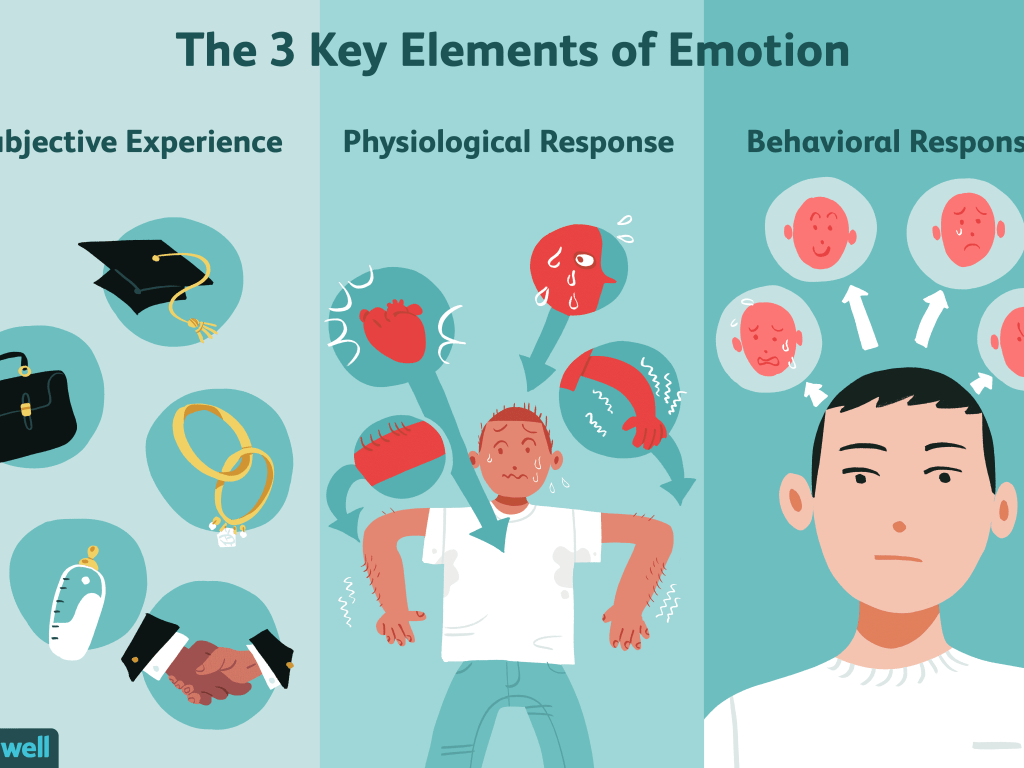
According to the book “Discovering Psychology” by Don Hockenbury and Sandra E. Hockenbury, an emotion is a complex psychological state that involves three distinct components: a subjective experience, a physiological response, and a behavioral or expressive response.

In addition to trying to define what emotions are, researchers have also tried to identify and classify the different types of emotions. The descriptions and insights have changed over time:

a. In 1972, psychologist Paul Eckman suggested that there are six basic emotions that are universal throughout human cultures: fear, disgust, anger, surprise, happiness, and sadness.
b. In the 1980s, Robert Plutchik introduced another emotion classification system known as the “wheel of emotions.” This model demonstrated how different emotions can be combined or mixed together, much the way an artist mixes primary colors to create other colors.
c. In 1999, Eckman expanded his list to include a number of other basic emotions, including embarrassment, excitement, contempt, shame, pride, satisfaction, and amusement.
Plutchik proposed eight primary emotional dimensions: happiness vs. sadness, anger vs. fear, trust vs. disgust, and surprise vs. anticipation. These emotions can then be combined to create others (such as happiness + anticipation = excitement).

Key Elements of Emotions
In order to better understand what emotions are, let’s focus on their three key elements, known as the subjective experience, the physiological response, and the behavioral response.


The Subjective Experience
While experts believe that there are a number of basic universal emotions that are experienced by people all over the world regardless of background or culture, researchers also believe that experiencing emotion can be highly subjective. Consider anger, for example. Is all anger the same? Your own experience might range from mild annoyance to blinding rage. While we have broad labels for emotions such as “angry,” “sad,” or “happy,” your own experience of these emotions may be much more multi-dimensional, hence subjective. We also don’t always experience pure forms of each emotion. Mixed emotions over different events or situations in our lives are common. When faced with starting a new job, you might feel both excited and nervous. Getting married or having a child might be marked by a wide variety of emotions ranging from joy to anxiety. These emotions might occur simultaneously, or you might feel them one after another.

The Physiological Response
If you’ve ever felt your stomach lurch from anxiety or your heart palpate with fear, then you realize that emotions also cause strong physiological reactions. (Or, as in the Cannon-Bard theory of emotion, we feel emotions and experience physiological reactions simultaneously.) Many of the physiological responses you experience during an emotion, such as sweaty palms or a racing heartbeat, are regulated by the sympathetic nervous system, a branch of the autonomic nervous system.

The autonomic nervous system controls involuntary body responses, such as blood flow and digestion. The sympathetic nervous system is charged with controlling the body’s fight-or-flight reactions. When facing a threat, these responses automatically prepare your body to flee from danger or face the threat head-on. While early studies of the physiology of emotion tended to focus on these autonomic responses, more recent research has targeted the brain’s role in emotions. Brain scans have shown that the amygdala, part of the limbic system, plays an important role in emotion and fear in particular.

The amygdala itself is a tiny, almond-shaped structure that has been linked to motivational states such as hunger and thirst as well as memory and emotion. Researchers have used brain imaging to show that when people are shown threatening images, the amygdala becomes activated. Damage to the amygdala has also been shown to impair the fear response.


The Behavioral Response
The final component is perhaps one that you are most familiar with—the actual expression of emotion. We spend a significant amount of time interpreting the emotional expressions of the people around us. Our ability to accurately understand these expressions is tied to what psychologists call emotional intelligence, and these expressions play a major part in our overall body language.

Research suggests that many expressions are universal, such as a smile to indicate happiness or a frown to indicate sadness. Sociocultural norms also play a role in how we express and interpret emotions. In Japan, for example, people tend to mask displays of fear or disgust when an authority figure is present. Similarly, Western cultures like the United States are more likely to express negative emotions both alone and in the presence of others, while eastern cultures like Japan are more likely to do so while alone.


Emotions vs. Moods
In everyday language, people often use the terms “emotions” and “moods” interchangeably, but psychologists actually make distinctions between the two. How do they differ? An emotion is normally quite short-lived, but intense. Emotions are also likely to have a definite and identifiable cause.

For example, after disagreeing with a friend over politics, you might feel angry for a short period of time. A mood, on the other hand, is usually much milder than an emotion, but longer-lasting. In many cases, it can be difficult to identify the specific cause of a mood. For example, you might find yourself feeling gloomy for several days without any clear, identifiable reason.

Geology

Geology is the study of the Earth, the materials of which it is made, the structure of those materials, and the processes acting upon them. It includes the study of organisms that have inhabited our planet. An important part of geology is the study of how Earth’s materials, structures, processes and organisms have changed over time.

The word was first used in 1778 in the work of Jean Andrea de Luc (a Swiss-born scientist who lived at Windsor for much of his life as adviser to Queen Charlotte) and at much the same time in the work of Swiss Chemist, S.B. Saucer.

Geology is a fascinating subject .

Geology feels the pulse of the earth.

Geologists contribute their part to the nation through the discovery of new deposits of rocks and minerals of economic value.A student should know what lies beneath the crust and how long back the earth came into existence.

Geology is a science of many facets and includes the study of:

1. Physical geology

It deals with the endogenous (internal) and exogenous (external) agencies and the processes that bring about changes on the earth’s surface. James Hutton is regarded as the father of physical geology.

2. Geo tectonic

It concerns with the movements of the earth’s crust and the deformations caused by them.

3. Structural geology

It deals with the configuration of the rocks in the earth’s crust produced due to a number of forces generated both exogenously and endogenously.

4. Gecmorphology

It deals with the study of landforms.

5. Crystallography

It is the study of the external forms and internal atomic structure of the crystalline minerals.

6. Mineralogy

It deals with the minerals, their composition, characteristics, modes of occurrence and origin.

7. Petrology

It deals with the origin, structure, texture, mineralogical composition etc. of the different types of rocks.

8. Stratigraphy

It deals with the strata of sedimentary rocks, their succession, thickness, age, variations and correlations, Thus it is the study of strata as a record of geological history.

9. Paleontology

(Greek-‘Palaios’ meaning ancient and ‘Ontos’ meaning being). It is the study of fossils of plants and animals that are found in the rocks of past geological periods. They indicate the climate, age and environment of deposition of the rock unit in which they are found.

10. Economic geology

It deals with the study of mineral deposits, their modes of formation, modes of occurrence, distribution etc.

Importance of Geology

i. Geology provides a systematic knowledge of construction materials, their structure and properties.

ii. The knowledge of Erosion, Transportation and Deposition (ETD) by surface water helps in soil conservation, river control, coastal and harbour works.

iii. The knowledge about the nature of the rocks is very necessary in tunneling, constructing roads and in determining the stability of cuts and slopes. Thus, geology helps in civil engineering.

iv. The foundation problems of dams, bridges and buildings are directly related with geology of the area where they are to be built.

v. The knowledge of ground water is necessary in connection with excavation works, water supply, irrigation and many other purposes.

vi. Geological maps and sections help considerably in planning many engineering projects.

vii. If the geological features like faults, joints, beds, folds, solution channels are found, they have to be suitably treated. Hence, the stability of the structure is greatly increased.

viii. Pre-geological survey of the area concerned reduces the cost of engineering.

VALUE EDUCATION- A REMEDY FOR SOCIAL EVILS

Education is provided everywhere in today’s world but the concept of value education is not provided. No one feels the need of providing value education to the students, no one teaches that. The institutions and schools only provide education to their students, how to learn and write, but no one gives the knowledge of values to them. There is no stress in the educational institutions to uplift the students morally, spiritually and physically. The need of the hour is to impart value based education. Morals, ethical values, performance of duty, regard and consideration for fellow human beings, sympathy and compassion seem to have gone with the wind in this modern, complex and fast competitive era. We should realise the real aim of education, which is to provide moral values, to follow the concept of value education in every small and large educational institution.

Modern education simply prepare students to acquire degrees or diplomas in general or specialized fields but value education helps for the all round development, inculcate moral values. It teaches a person to handle their responsibilities well, be compassionate and a decent human being. It makes a person sacrificing and empathetic in nature which can decrease the crime rate and all the social evils happening in our society. The students must be learned to keep values as top priority.

WHAT IS SOCIAL EVIL?

Social evil is any pain or suffering brought by the evil intentions or actions of many individuals. It harms a person and even toxics their life to death. Common social evils include- caste system, poverty, dowry system, domestic violence, no education for girls, illiteracy etc. These are happening from a very long time and if no value education is provided within a right time, these evils continue to happen.

ROLE OF EDUCATION IN PREVENTING SOCIAL EVILS-

Education enables people to distinguish good and bad and become a good person in the society. Value education provides the overall learning to the people. It makes them go through the various areas of knowledge, the individual becomes able to distinguish good from the evil and right from the wrong. It helps the students to become more sensible and responsible towards their work. It generates a feeling of compassion to other human beings and develop a sense of belongingness in them. It makes a person helping in nature and they try to help people and not to harm them in any way. It helps them to understand the perspective of life in a better way and lead a successful life. They become a responsible citizen of the country and make their country secure from any social evil. It also help students to develop a strong relationship with family and friends. Education also empowers women to fight for their rights and challenge inequality. It gives them learning about their various rights and duties and how should they exercise it. Value education can cure economic inequality and poverty, racism and sexism. It can make the life and future of a person better and act as backbone in society. It develops the character of a person and improves the inner personality. If it is rightly exercised in every institution, then the social evils will come to an end.

CONCLUSION-

Our education should lay stress on cultivating human values. A really educated person has the capacity of self-sacrifice. A dedicated individual is a boon to the society and the nation. In fact value education can help in removing all social and cultural evils. We need vigilant men and women to help India march forward. Thus, it is very important to include the concept of value education to remove all the social evils happening in our country.

” The aim of education is the knowledge not of facts but of values.”- William Ralph Inge

“Poverty is the worst form of violence”. – Mahatma Gandhi.

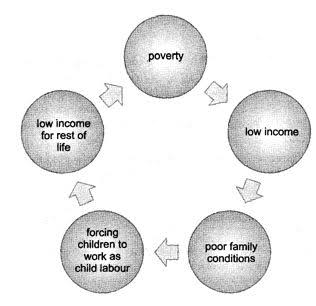
We can define poverty as the condition where the basic needs of a family, like food, shelter, clothing, and education are not fulfilled. It can lead to other problems like poor literacy, unemployment, malnutrition, etc. A poor person is not able to get education due to lack of money and therefore remains unemployed. An unemployed person is not able to buy enough & nutritious food for his family and their health decline. A weak person lacks the energy required for the job. A jobless person remains poor only. Thus we can say that poverty is the root cause of other problems.

How Poverty is Measured?

For measuring poverty United nations have devised two measures of poverty – Absolute & relative poverty. Absolute poverty is used to measure poverty in developing countries like India. Relative poverty is used to measure poverty in developed countries like the USA. In absolute poverty, a line based on the minimum level of income has been created & is called a poverty line. If per day income of a family is below this level, then it is poor or below the poverty line. If per day income of a family is above this level, then it is non-poor or above the poverty line. In India, the new poverty line is Rs 32 in rural areas and Rs 47 in urban areas.

Causes of Poverty

According to the Noble prize winner South African leader, Nelson Mandela – “Poverty is not natural, it is manmade”. The above statement is true as the causes of poverty are generally man-made. There are various causes of poverty but the most important is population. Rising population is putting the burden on the resources & budget of countries. Governments are finding difficult to provide food, shelter & employment to the rising population.

The other causes are- lack of education, war, natural disaster, lack of employment, lack of infrastructure, political instability, etc. For instance- lack of employment opportunities makes a person jobless & he is not able to earn enough to fulfill the basic necessities of his family & becomes poor. Lack of education compels a person for less paying jobs & it makes him poorer. Lack of infrastructure means there are no industries, banks, etc. in a country resulting in lack of employment opportunities. Natural disasters like flood, earthquake also contribute to poverty.

In some countries, especially African countries like Somalia, a long period of civil war has made poverty widespread. This is because all the resources & money is being spent in war instead of public welfare. Countries like India, Pakistan, Bangladesh, etc. are prone to natural disasters like cyclone, etc. These disasters occur every year causing poverty to rise.

Ill Effects of Poverty

Poverty affects the life of a poor family. A poor person is not able to take proper food & nutrition &his capacity to work reduces. Reduced capacity to work further reduces his income, making him poorer. Children from poor family never get proper schooling & proper nutrition. They have to work to support their family & this destroys their childhood. Some of them may also involve in crimes like theft, murder, robbery, etc. A poor person remains uneducated & is forced to live under unhygienic conditions in slums. There are no proper sanitation & drinking water facility in slums & he falls ill often & his health deteriorates. A poor person generally dies an early death. So, all social evils are related to poverty.

Government Schemes to Remove Poverty

The government of India also took several measures to eradicate poverty from India. Some of them are – creating employment opportunities, controlling population, etc. In India, about 60% of the population is still dependent on agriculture for its livelihood. Government has taken certain measures to promote agriculture in India. The government constructed certain dams & canals in our country to provide easy availability of water for irrigation. Government has also taken steps for the cheap availability of seeds & farming equipment to promote agriculture. Government is also promoting farming of cash crops like cotton, instead of food crops. In cities, the government is promoting industrialization to create more jobs. Government has also opened ‘Ration shops’. Other measures include providing free & compulsory education for children up to 14 years of age, scholarship to deserving students from a poor background, providing subsidized houses to poor people, etc.

Poverty is a social evil, we can also contribute to control it. For example- we can simply donate old clothes to poor people, we can also sponsor the education of a poor child or we can utilize our free time by teaching poor students. Remember before wasting food, somebody is still sleeping hungry.

Overcoming poverty is not a gesture of charity. It is an act of justice.

—nelsen mandela

BURJ KHALIFA: AMAZING FACTS

The Burj Khalifa height is a staggering 828 meters (2716.5 feet) tall, soaring over Dubai. It is three times as tall as the Eiffel Tower and nearly twice as tall as the Empire State Building. Laid end to end, its pieces stretch over a quarter of the way around the world. Its cloud-piercing height is one of the most impressive facts about Burj Khalifa.

Burj Khalifa
Burj Khalifa

The Burj Khalifa took six years to build. Foundational excavation work commenced in January 2004, and the tower was formally opened on January 4, 2010. However, the opening took place before the interior was completed. The Burj Khalifa was built by over 12000 workers, by the peak of construction.

Why famous?

It is famous because of:

  • Highest occupied floor in the world. 
  • The highest outdoor observation deck in the world. 
  • Elevator with the longest travel distance in the world. 
  • Tallest service elevator in the world.
View from the top of Burj Khalifa

The building has the longest single-running elevator, which is 140 floors. The Burj Khalifa elevator speed is 10 meters per second, making the elevators among the fastest in the world. The Burj Khalifa elevator time to reach the observation deck on the 124th floor is only one minute.

Flight attendant of Fly Emirates standing on the top of Burj Khalifa for their company advertisement

An advertisement shoot for the FLY EMIRATES recently took place in Burj Khalifa, where a flight attendant stood on the top, shuffling placards with different messages about the services of the airline. After the last placard, the camera zooms out and she is seen standing on top of 828-meter-high Burj Khalifa.

Watch the video here:

In the BTS video, The woman featured in the ad is heard saying ‘Hi mom, I’m on top of the world’. The video then shows a crew surrounding the model and attaching safety ropes. The video also shows how the ad was planned and executed.

Watch behind the scenes video here:

Unemployment

Unemployment is a serious issue. There are many factors which are responsible for this. Some of these include lack of proper education, lack of good skills and skills, inability to perform, lack of good employment opportunities and rapidly growing population. A look at unemployment stability, unemployment consequences and measures taken by the government to control it further.

Unemployment related statistics in India

The Ministry of Labor and Employment in India maintains unemployment records in the country. Unemployment figures are calculated based on the number of people who had no work for a substantial period of time during the 365 days prior to the date the figures were matched and are still seeking employment.

From 1983 to 2013, the unemployment rate in India was the highest at 9.40% with an average of 7.32 percent and in 2013 it was a record of 4.90%. In the year 2015-16, the unemployment rate was 8.7% for women and 4.3 percent for men.

Result of unemployment

There are serious socio-economic issues due to unemployment. This affects not only one person but the whole society. Some of the major consequences of unemployment are explained below:

  • Rise in poverty

This statement is absolutely true that the increase in the unemployment rate has increased the poverty rate in the country. Unemployment is mainly responsible for inhibiting the economic development of the country.

  • Crime rate increase

Unemployed unable to find a suitable job usually takes the path of crime as it is an easy way to make money. Unemployment is one of the main causes of the rapidly increasing cases of theft, robbery and other heinous crimes.

  • Exploitation of labour

Employees generally take advantage of the lack of jobs in the market by offering lower wages. People unable to find a job linked to their skills usually settle for a low-paid job. Employees are also forced to work for a specified number of hours each day.

  • political instability

Lack of employment opportunities results in a lack of trust in the government and this situation often leads to political instability.

  • mental health

The level of dissatisfaction increases among unemployed people, which gradually leads to anxiety, depression and other mental health problems.

  • Loss of skill

Staying out of a job for a long period of time leads to dull life and loss of skills. This reduces a person’s confidence to a great extent.

Government initiative to reduce unemployment

The Government of India has started several programs to reduce the problem of unemployment as well as to help the unemployed in the country. Some of these include Integrated Rural Development Program (IRDP), Jawahar Rozgar Yojana, Drought Prone Areas Program (DPAP), Training for Self-Employment, Nehru Rozgar Yojana (NRY), Employment Assurance Scheme, Prime Minister’s Integrated Urban Poverty Alleviation Program (PMIUPEP), employment offices, employment in foreign countries, development of small and cottage industries, employment guarantee scheme and Jawahar Gram Samridhi Yojana etc. Not.

Apart from providing employment opportunities through these programs, the government is also sensing the importance of education and providing skill training to unemployed people.

  • Self-employment training

The program, started in 1979, was called the National Scheme of Training of Rural Youth for Self Employment (TRYSEM). It aims to reduce unemployment among youth in rural areas.

  • Integrated Rural Development Program (IRDP)

To ensure full employment opportunities in rural areas in the year 1978-79, the Government of India launched the Integrated Rural Development Program. 312 crores were spent on this program and 182 lakh families benefited from it.

  • Employment in foreign countries

The government helps people in getting employment in foreign companies. Special agencies have been set up in other countries to hire people.

  • Small and cottage industries

In an effort to reduce the issue of unemployment, the government has also developed small and cottage industries. Many people are earning their living with this initiative.

  • Golden jubilee employment scheme

The program aims to provide self-employment and wage-employment opportunities to the urban population. It consists of two schemes:

  • Urban self-employment program
  • Urban wage employment program
  • Employment assurance scheme

This program was started in 1994 for 1752 backward classes in the country. Poor unemployed people living in rural areas were provided unskilled manual work for 100 days under this scheme.

  • Drought prone area program (DPAP)

The program was launched in 13 states and covered 70 drought-prone districts with the aim of eliminating seasonal unemployment. The government spent Rs 474 crore in its seventh plan.

  • Jawahar Rozgar Yojana

The program, launched in April 1989, was intended to provide at least one member in each poor rural family with the employment of fifty to one hundred days for a year. Employment opportunities are provided in the vicinity of the individual and 30% of these opportunities are reserved for women.

  • Nehru Rozgar Yojana (NRY)

There are a total of three schemes under this program. Under the first scheme, the urban poor is subsidized to set up micro-enterprises. Under the second scheme, wage-employment is arranged for labourers in cities with a population of less than 10 lakh. Under the third scheme, the urban poor in cities is given employment opportunities matching their skills.

  • Employment guarantee scheme

The unemployed people are provided financial assistance under this scheme. It has been started in many states including Kerala, Maharashtra, Rajasthan etc.

Apart from this, several other programs have been launched by the government to reduce unemployment.

Unemployment in India can be divided into several categories:

Hidden unemployment

When people more than required is hired for a job. This condition is called as the hidden unemployment as removing these people will not affect the work. 

sessional Unemployment

As the name suggests this type of Unemployment is only in a specific season of the year. Usually works related to agriculture, Ice factory, resorts and sports industries are affected by this.

Open Unemployment

This means when labour in large number is not able to get a job which provides them with regular income. This situation arises when physical labour increases more as compared to the economy

Technical Unemployment

This situation arises due to the increasing technical machines and instrument to replace human work.

Structural Unemployment

This type of unemployment occurs due to a major change in the economic structure of the country. It is the result of technological advancement and economic development.

cyclical unemployment

A decrease in the overall level of business activity leads to cyclical unemployment. However, this incident is only for a short time.

Educated unemployment

Inability to find a suitable job, lack of employable skills and faulty education system are some of the reasons that educated unemployed remain.

Contract unemployment

In this type of unemployment, people either work on a part-time basis or do the kind of work for which they are more qualified.

Preventive unemployment

This occurs when the demand for the labour force and its supply are not properly coordinated.

Long term unemployment

Long term unemployment is one that continues in the country due to rapid growth in population and low level of economic growth.

Sudden unemployment

Such unemployment occurs due to a sudden drop in demand, short term contracts or shortage of raw materials.

Factors that can increase unemployment in India

  • Increase in population

The rapid increase in the country’s population is one of the major causes of unemployment.

  • Manda Economic Development

The slow economic growth of the country results in fewer employment opportunities for people, leading to unemployment.

  • Seasonal business

A large part of the country’s population is involved in agriculture. Being a seasonal business it only provides work opportunities for a certain time of the year.

  • The slow growth of the industrial sector

The growth of the industrial sector in the country is very slow. Thus employment opportunities in this sector are limited.

  • The decline in cottage industry

Production in the cottage industry has fallen drastically and due to this many artisans have become unemployed.

Possible solutions to end unemployment

  • Population control

This is the right time when the Indian government takes drastic steps to control the population of the country.

  • Education system

The education system in India focuses on theoretical aspects rather than skill development. The system has to be improved to generate skilled manpower.

  • Industrialization

The government should take steps to promote the industrial sector to create more employment opportunities for people.

  • foreign companies

The government should encourage foreign companies to open their units in the country to create more employment opportunities.

  • Job opportunities

Employment opportunities should be created in rural areas for those who remain unemployed for the rest of the time by working at a certain time.

Conclusion

Unemployment is the root cause of various problems in society. Although the government has taken the initiative to reduce this problem, the measures taken are not effective enough. Due to this problem, various factors need to be studied thoroughly to see effective and integrated solutions. It is time that the government should recognize the sensitivity of the matter and take some serious steps to reduce it.

8 Emerging Plastic Alternatives We Need To Start Using

Plastics is currently one of the world’s most significant challenges. Consumers are becoming more aware of the thousands of tonnes of plastic that are polluting the ocean thanks to David Attenborough’s Blue Planet. Due of the widespread usage of plastic, particularly in packaging, firms will need to act quickly to identify plastic alternatives. In fact, 25% of customers are extremely concerned about plastic packaging, and 42% believe manufacturers should prioritise making packaging recyclable, while 21% believe the industry should move toward completely plastic-free packaging (Kantar). As plastic continues to be featured in the news on a regular basis, this figure will only climb. Brands must be seen to be taking a responsible approach; else, their hard-earned equity will be harmed.

Photo by mali maeder on Pexels.com

With so many plastic alternatives being produced, we’ve compiled a list of 13 of the most interesting plastic replacement technologies.

1. Plant Based Plastic: Bioplastics are created from a range of materials, including corn that has been broken down into PLA (polylactic acid). Because it’s manufactured from waste products from maize cultivation – which is also easy to grow – it’s highly sustainable to make. PLA can be used to produce beverage bottles, food-grade containers, and films. Innocent, the eco-heroes, are now using 15% PLA in their bottles.

2. Bagasse: Bagasse is a sugarcane manufacturing waste product. It may be easily moulded into packaging ideal for food delivery and food service, comparable to polystyrene, because to its malleability and stickiness. It’s guaranteed biodegradable and compostable, and because it’s a by-product, it’s considerably more environmentally friendly to make than polystyrene.

3. Seaweed Water Bubbles: Ooho, a British firm, has developed a seaweed-based edible (and, by default, biodegradable) water bubble. “To provide the convenience of plastic bottles while minimising environmental impact,” they say. They’ve devised manufacturing methods that are both more efficient and less expensive than creating plastic bottles. When compared to PET manufacture, the process emits 5 times less CO2 and consumes 9 times less energy.

4. Shower Friendly Paper: L’Oréal, the beauty juggernaut, has now introduced Seed Phytonutrients, an eco-beauty line. The products themselves sound wonderful (crafted with 93-100 percent natural ingredients, cruelty-free, paraben-free, etc. ), but it’s the packaging that stands out. The exterior card is made by Ecologic and is recyclable, compostable, glue-free, and water-resistant. The inner liner is composed of recyclable plastic and consumes 60% less material than standard plastic bottles.

5. Stone Paper and Plastic: You might be surprised to learn that stone can be used to make paper. It obviously had an effect on me. I have a stone paper notepad with a lovely smooth finish that feels almost chilly to the touch. This wonderful invention might be used in a variety of packaging applications. It can be used as a paper or plastic substitute because it is printable, recyclable, and water-resistant… and it also has good eco credentials. It’s created from calcium carbonate, one of the world’s most common minerals, and the manufacturing process consumes less water, has a lower carbon footprint, and is more energy efficient than traditional papermaking. FDA-approved food packaging can also be made with stone paper. Paper (supermarket singlet) bags, takeaway food cartons, greaseproof paper wraps, and Ziplock bags can all be made with this.

6. Palm Leaves: The oyster-like casings for Holy Lama’s handmade soaps are constructed from palm leaves from the areca palm. The areca palm’s leaves naturally fall to the ground, where they are collected and shaped into the required shape. They’re brilliantly environmentally friendly because they employ a natural areca palm waste product and the final packaging is biodegradable. Arekapak, a Berlin-based firm, is working on palm leaf packaging for foods like fresh fruit, vegetables, and nuts.

7. Mushroom Root: Packaging is physically grown with Mycelium (mushroom roots, which is also the same substance that Quorn is comprised of). Ecovative Design collects agricultural waste, mixes it with mycelium in moulds, and then watches as the packaging grows. You can see how it works here, but I’m not convinced it’s not magic.

8. Wood Pulp Cellophane: NatureFlex is the more environmentally friendly younger sibling of cellophane, created from FSC-approved wood pulp and certified biodegradable. It is available in three different types: uncoated, which is ideal for chocolate and confectionery as well as household items; semi-permeable, which is suitable for fresh produce and dairy; and barrier, which is suitable for bakery, snacks, coffee, tea, chocolate, confectionery, as well as home and personal care items.

Child Labour

Childhood is considered the most enjoyable period of life. The is period is free from any time worry or responsibility. 

This period is the formative period of life. Parents do everything to fulfill the needs of their children. 

They are brought up with the utmost care, love, and affection. But it is sad to see that the innocent have to work to earn money. This is known as child labour.

The system of child labour is also prevalent in India. It is the worst type of child exploitation. No child likes to work in the budding periods of life of his life. 

It is the poverty of their parents that forces them to do labour. Some parents cannot earn enough to feed their family members. So they compel their children to do some job and earn money.

What are the pros and cons of child labour?

Problems of Child Labour in India

The problem of child labour has become a serious problem. Children have to work in homes or shops or factories where they are paid very low wages. 

They have to do every type of dirty work without any rest or interval. Some children do not return home at night. 

They sleep at the bus stands or in the railway waiting hall or on the footpath. Even their parents have never felt worried about them.

The Indian law prevents the employment of children in factories but not in cottage industries, family households, dhabas, and restaurants, or in fields. 

Most of the children are school drop-outs. Our system of education and economic policies needs a rethinking. Children should be provided job-oriented education right from primary classes. 

Poor and illiterate parents should be made aware of the disadvantage of child labor. Population control is also very necessary.

Child Labour is in India and the world

Child labour is one of the biggest problems. It is not only prevalent in India but also a world problem. This problem is not a new problem. 

It was also present in ancient times. Children were required to do some work either at home or in the field with their parents.

The most important causes of child labor are poverty, large family, ignorance, and lack of education. 

In poor families, children have to work to support their families. The poor parents are ignorant about the value of education. 

They are concerned only with earning two square meals a day. In this job, their children have also to work. 

Thus poverty compels them to work to keep the wolf away from their doors. But in spite of child labor, the poor lead a miserable life.

Exploitation of children

Child labour is the worst type of child exploitation. The Indians look upon children as the gifts of God. But poverty snatches their childhood from them. 

Sometimes poverty forces the poor parents to take loans from the zamindars or their master. This loan is never paid by them and they become bonded laborers’. 

Sometimes they have to pawn or pledge their children to get money. Thus the vicious circle of bandha mazdoor’ goes on from one generation to the other. 

Munshi Prem Chand’s famous novel ‘Godan’ and a serial ‘Udaan’ on Colors channel beautifully present the condition of bonded labour and child labour.

The economic condition of Poor families

Economic condition is the main reason for child labour. The economically bad classes believe that more hands bring in more resources. 

Thus they go on producing children. They feel that their children will become their supporters when they are six or seven years old. 

They never think of sending them to schools. According to a report, child labour is employed mainly in 20 products. 

These products include bidis, bricks, fireworks, glass bangles, matches, and carpets, etc. Some children work in homes and tea-shops where they have to clean the utensils and do sweeping.

Indian Law for Child labour

In India, there is a law against child labour. The Indian Constitution provides that no child below the age of 14 years shall be employed to work in any workplace. 

The ban on child labor has been extended to the domestic and hospitality sectors. Because of this law, child labour is almost absent in the organized sector. 

But the situation is not good in the unorganized sector. There the anti-child labor law is thrown to the winds.

We can find a great number of child laborers in the rural areas, in farms, fisheries, and cottage industries. 

In England, when the Industrial Revolution took place, child labor was required to clean the factory chimneys. 

The miserable condition of the children has been presented in William Blake’s poem ‘Chimney Sweepers’. Child labour deprives children of attending school. 

Besides, working for long hours in unhygienic conditions, and eating unhealthy food, the health of the children is adversely affected. 

However, a great benefit to employers is that child labor does not form trade unions. Besides, it is available at low wages.

So far as the exploitation of child laborers is concerned, it is a naked truth.

A Survey report about Child labour

 According to a survey, children, for the same type of work, are paid less than the adult laborers. Poverty has an intimate relationship with child labor. 

Poor families need money to survive. and children are a source of additional income. Thus poverty and lack of social security are mainly responsible for child labour and bonded labour.

In The Tribune, the Chief Editor has expressed his views on child labour. He has said, “Make employers responsible.” 

According to him, a few months ago, hundreds of children were found working as labourers in one of the farms in Punjab. 

During the Prevention of Child Labor Week, 281 children were rescued from across the state. Of these, 116 were pursuing dangerous occupations. 

It is not that the country lacks legal protection to protect children from exploitation. Their numbers continue to grow. U.S. agencies estimate that the number of child laborers in India could be between four and six million.

The law stipulates only one-year imprisonment and a maximum of Rs. 20,000 fine; In fact, a small amount of Rs.200 is a penalty in most cases. 

The government has passed a number of laws

The government has passed a number of laws such as the Child and Adolescent Labor Prohibition Act, the Right to Education Act, 2010 and implemented schemes like Sarva Shiksha Abhiyan which encourage the enrollment of children in schools.

It also claims that the number of child laborers has come down from 1.25 crore (Census 2001) to the current figure of 49.6 lakh (National Sample Survey).

Not surprisingly, these figures were arrived at on the basis of a sample size of approximately 70,000 across the nation. 

The government needs to conduct a genuine survey to gauge the magnitude of the problem and make the enforcement machinery accountable. 

Unless employers are made accountable under stringent laws, child labour will continue to shame the nation.

It has become a challenging job to deal with the child labor problem. Efforts are being made to lessen some of the evils of child exploitation. 

The world has set an aim to eliminate the practice of child labour by 20

16. In fact, the problem of child labour has three faces-social, economic and political. The most important factor of the three is poverty. 

Child labour can be checked by reducing poverty in rural areas. If child labour is banned all of a sudden, it will not bear fruitful results. In many poor families, it is necessary for children to work.

To some extent, child labour contributes to development. Most of the children belong to those families where the family’s survival depends on their labor. 

A distinction must be made between forced labour and employment. Children should be allowed to work in their family-based cottage industry like pottery, poultry, or knitting and weaving. Here the children can work in their spare time after school.

Conclusion of child labour essay

On the whole, the issue is how to root out the problem of child labour from India. Besides removing poverty, vocational and technical education should be introduced from the primary stage.

 It is true that this problem cannot be eliminated overnight but in a phased manner. At least, anti-child labour law should be enforced with an iron hand and the defaulters are put behind the bars.

Communication technology

Information and communication Technologies (ICT) is a broader term for Information technology (IT), which refers to all communication technologies, including the internet, wireless networks, cell phones, computers, software, middleware , video-conferencing, social networking, and other media applications and services enabling users to access, retrieve, store, transmit, and manipulate information in a digital form. ICT are also used to refer to the convergence of media technology such as audio-visual and telephone networks with computer networks, by means of a unified system of cabling (including signal distribution and management) or link system. However, there is no universally accepted definition of ICT considering that the concepts, methods and tools involved in ICT are steadily evolving on an almost daily basis. To define professional skill levels for its ICT professional education products, the IEE computer society has adopted, for example, the Skills framework for the information age  (SFIA). The value of ICT strategies as a means of bridging the digital divide and as a powerful tool for economic and social development around the world should not be underestimated in agricultural and related sectors. Improving extension of ICT services to farmers would effectively improve the transmission of global open data for agriculture and nutrition for development of sensible solutions addressing food security nutrition and sustainable agriculture issue. By using ICTs, there have already “been diverse types of innovations taking place in the agriculture sector, which include commodity and stock market price information and analysis, meteorological data collection, advisory services to farmers for agricultural extension, early warning systems for disaster prevention and control, financial services, traceability of agricultural products, agricultural statistical data gathering, etc.

E-Agriculture refers to use of ICT in agriculture

In 2007, FAO and a group of founding partners launched the e culture community of practice- an online space to facilitate an exchange of knowledge and experiences of projects where ICT are used for agriculture and rural development.

To date, the e- agriculture community  has over 15,000 members from more than 170 countries and territories and about twenty international partners In 2016, the FAO and International Telecommunication Union (ITU)published the ‘E-Agriculture Strategy guide Piloted in Asia Pacific countries’. This toolkit provides countries with a framework to develop their national e-agriculture strategies, which should help rationalize both financial and human resources, as well as address ICT opportunities for the agricultural sector in a more efficient manner.On this page E- agriculture you will find all information related to the use of the ‘E-Agriculture Strategy Guide’, the related workshops organized, and the progress made in different countries. 

Types of communication technology

Technology has reinvented the way people communicate. Originally simple devices have evolved into Communication channels that create connections worldwide. There are four main types of communication technology that have contributed to the ease of sending messages: telephone, radio, television, and internet.

Telephone
The telephone revolutionized verbal communication. People can talk to each other from any place in the world, strengthening relationships and eliminating the worries of long-distance communication. Speaking with someone across the country can be done just as easily as speaking with someone down the street.

As technology advanced, the device upgraded from “telephone” to “mobile phone.” What used to be a heavy piece of equipment can now easily fit in your pocket. Not only is the modern telephone portable, but the features and capabilities are also advanced.

As the telephone progressed, it adopted new types of visual and written communication. Today, text messages and electronic versions of photos are regularly sent using mobile phones, increasing the possible amount of information being shared using phones.

The telephone introduced a brand new approach to verbal, written, and visual communication, and exciting new features continue to change the communication technology game.

Radio
About twenty years after the telephone, communicating using the radio came into play. Another innovation in the realm of verbal communication, radio is used to reach sizable audiences, as opposed to just one person on the other end of a phone.

The radio’s ability to reach a large audience at a low cost continues to motivate a lot of communicators to take full advantage of the tool. Information providers, such as advertisers and newscasters, spend substantial amounts of time communicating with their massive audiences using radio technology.

Radio technology transformed the way information is delivered to large audiences and continues to strengthen mass communication.

Television
Television is another way to reach extensive audiences, but it brought a new perk to the table: visual communication.

Some information is hard to describe using just words. Television provides audiences with the best of both worlds: information and visuals to accompany it. This advantage caused the television to replace the radio as the leading tool for mass communication.

Today, there are thousands of television channels that communicate information on almost any topic: history, sports, news, science, fiction, and so on. Whether it be for entertainment or cold hard facts, people are constantly turning to television for information.

Internet
The internet removes the need for communicators to have a separate device for each different type of communication technology. With the Internet, you can do it all in one place.

As the queen bee of interaction, the internet successfully combines all types of communication technology and houses them in one place. It provides the largest array of information and communication sources known to man.

The tools available on the internet make any type of communication effortless. Verbal and nonverbal communication can be accomplished with video conferencing software. Written messages can be sent through email. Electronic versions of pictures can be sent to and from any internet device.

Customer communication software is another example of one of these tools. While other gadgets help make communication between a business and their consumers easy, certain tools can often be considered hybrid – bringing together different types of communication.

Live chat is a rare hybrid tool that combines all types of communication – verbal, nonverbal, written, and rich media – through audio and video conferencing software, instant messaging, and file sharing capabilities.

Customers can place orders, ask questions, or troubleshoot issues through live chat, all on a single customer communication platform. This gives them access to a business and allows them to connect with an agent whenever they have a query. With live chat software, it’s never been easier to connect.

Information and communication technology

Information and communication technology refers to a connected system of interactive tools and technologies that are used to send and receive information. Whether it be an individual or an entire company, if a single entity is using multiple types of technology to communicate, they must be linked to ensure efficiency.

components of information and communication technology

These systems of interactive tools can include state-of-the-art innovations, such as artificial intelligence, and less advanced technology, like the corded telephone. The ability and newness of the device aren’t important. If multiple technology tools are being used by an individual or business, they should be connected.

Information and communication technology have changed the way people go about their days living, working, and communicating. These innovations have taken over certain duties that people never would have imagined a machine to do, such as answering phones and giving human-like responses or speaking into a device and having it write a message for you. Information and communication technology allows people to effectively communicate in the technological world.

Stay tuned : Information and communication technology is an expansive topic, and the ideas within it continue to evolve. You don’t have to be an expert, but understanding the basics and keeping up with new communication technology will help make you the best communicator possible.

Marie Salomea – most popular women scientist

Early life:

Born : 7 November 1867, Warsaw, poland

The youngest of five children, she had three oldest sister and brother. Her parents- father, wladislaw and mother- bronislava

Died : 4 July, passy, France

Spouse: Pierre cutie

discovered : radium, polonium

Awards: Nobel Prize in physics, novel prize in chemistry, John Scott legacy medal and premium.

QUOTES: 1. nothing In life is to be feared, it only to be understood. Now is the time to understand more, so that we may fear less.

2. Be less curious about people and mire curious about ideas

3. One never notices what has been done, one can only see what remain to be done.

Radioactive discoveries:

curie was intrigued by the report of German physicist Wilhelm Rontgen’ s Discovery of X-ray and by the French physicist henri becquerel’ s repot of similar ” Becquerel ray” Emitted by uranium salts.

According to Goldsmith, Curie coated one of the two metals plated with a thin layers of uranium salts.

then she measured the strength of the rays produced by the uranium using instrument designed the faint electrical current generated when the air between two metal plates was bombarded with uranium rays.

she found that uranium compound also emitted similar rays

In addition the strength of the rays remained the same, regardless of whether the compound were in solids or liquid state.

conclusion:

She worked extensively with radium throughout her lifetime, Characterizing it’s various properties and investigating it’s therapeutic potential.

However,her work with radioactive material was what ultimately killed her .she died of q blood disease.

5 Main Problems faced by Small Scale Industries

Just because of their nature and size, small-scale industries do not have many of the advantages that large-scale firms do. They have contributed significantly to economic development, but they have not reached their full potential. They have a lot of issues with how they operate, and a lot of small businesses are sick.

Certain commodities were set aside by the government for exclusive production by Small Scale Industries. Large-scale businesses were not permitted to create commodities reserved for the SSI sector. Many things have been successively De-reserved as the economy has opened up and followed the principles of liberalization and globalization. As a result, small-scale industries must now contend with the dual pressures of rivalry from both Indian large-scale firms and overseas competitors.

In this blog, we are going to learn about the problems faced by Small Scale Industries.

Problems of Small Scale Industries

1. Funding Shortage

When it comes to fundraising, small businesses confront numerous challenges. It is one of the most serious issues. Many of these businesses are unable to raise cash from the capital market due to a lack of creditworthiness. Banks are also wary of lending money to these businesses because many of them lack proper collateral security or guarantees.

A lack of cash can cause a small firm to fail before it even gets off the ground. Following nationalization, several banks make loans to these types of businesses. The situation is still deteriorating due to the sudden outbreak of covid-19, which resulted in a lockdown and a drop in the economy. Entrepreneurs are obliged to seek funds from money lenders at unreasonably high-interest rates, which throws their business calculations into disarray.

2. Idle Capacity 

In the case of small-scale industries, installed capacity is underutilized to the tune of 40 to 50 percent. Various factors contribute to this underutilization, including a lack of raw materials, a lack of cash, and even a lack of power. Small scale units, unlike their large-scale counterparts, are not completely able to deal with all of these issues.

3. Management abilities

A tiny business is started and run by a single person. As a result, that person may lack all of the managerial skills required to run a business. They cannot afford to hire competent managers or staff due to a lack of finances. This can cause minor disruptions in the business’s operations. Delays, errors, poor decision-making, and other factors can all contribute to the company’s demise. This could also be considered unprofessional behavior on the part of the client, which is bad for the company’s market reputation. All of these requirements are easily met in major corporations thanks to various specialized teams.

4. Sickness

It’s heartbreaking to see the majority of the small units succumb to illness. There is a lack of forethought. Another stumbling block is the lack of qualified and trained employees. They have no choice but to sell on credit. Their clients fail to pay them on schedule. There are a lot of terrible debts. As a result, they are unable to maintain the production process due to a lack of operating capital. This results in illness.

5. Unpredictable raw material supply

Small businesses have a difficult time obtaining raw materials, whether they use locally available or imported raw resources. The issues develop as a result of defective and irregular raw material delivery. Other obstacles for the small-scale sector include a lack of sufficient quantities of raw materials, occasionally poor quality of raw materials, rising raw material costs, foreign exchange crisis, and, most importantly, entrepreneurs’ lack of awareness of government policies.

Conclusion

Small-scale entrepreneurs face a slew of issues, including excessive reliance on institutional agencies for finances and consulting services, a lack of creditworthiness, a lack of education and training, reduced profitability, and a slew of marketing and other issues. The Indian government has launched a number of initiatives targeted at enhancing the overall performance of these institutions.

Said “I love you” more -Positive thinking

Positive thinking refers to a belief or mental attitude which makes us think that good things will happen eventually and our efforts will pay off sooner or later. It is the opposite of negative thinking which makes our mind full of stress and fear. Thus, an essay on positive thinking will show us how it reinforces thoughts like optimism and hope and works wonders.

Benefits of Positive Thinking

Let it be clear that positive thinking does not mean you do not notice the bad things in life. It means you try to find a solution in a productive way instead of whining about it. There are many benefits of positive thinking.

The first one is better health. Negative thinking gives rise to anxiety, stress, frustration and more. However, positive thinking helps you avoid all this and focus on staying healthy and doing better in life.

Further, it is essential for us to fight depression which positive thinking helps with. Similarly, it will also help us to relieve stress. Positive thinking overwhelms stress and it will allow you to get rid of stress.

As a result, positive thinking helps you live longer. It is because you will be free from diseases that form due to stress, anxiety and more. Moreover, it is also the key to success. Meaning to say, success becomes easier when you don’t bash yourself up.

Similarly, it also gives us more confidence. It boosts our self-esteem and helps in becoming more confident and self-assured. Therefore, we must certainly adopt positive thinking to make the most of our lives.

How to Build a Positive Thinking

There are many ways through which we can build positive thinking. To begin with, we must inculcate the habit of reading motivational and inspiring stories of people who are successful.

All this will help in motivating and inspiring you and showing you the right path. Moreover, it is important to never let negative thoughts thrive in your mind and work towards putting end to this habit.

You can do so by replacing your negative thoughts with constructive and positive reviews. Start to pay attention to your ideas and don’t pay heed to negative thoughts. Further, it is helpful to use affirmations.

These positive statements will truly sink into your subconscious mind and guide you to take better action. It will also help in visualising your dreams and getting the right means to achieve them fast.

Finally, always stay guard and gatekeep your mind to make important changes in life. In other words, do not be afraid to take actions. Keep yourself busy and do different things to avoid becoming cynical and remaining positive.

Conclusion of the Essay on Positive Thinking

To conclude, we must change our attitude and believe that we will succeed one day. Moreover, we also need to implement positive thinking techniques which will help us learn from our failures and stay focused. As positive thinking plays an essential role in our lives, we must make sure to adopt in our lives.

Positive thinking helps you stand back up again when you are knocked down by bad luck or negativity.

. —Tom Laurie

USAGE OF BOTTLED WATER

SHOULD WE AVOID IT?

For a long time now, bottled water has become a trend amongst people all around the world. Mostly, it is cheap and advertised as healthy. Unfortunately, the water is actually not always as healthy as it might seem. Many companies use tap water sealed into bottles, sometimes purified, sometimes not. Many people who buy water bottles never reuse them and the plastic ends up polluting the environment. The cost for transporting millions of empty bottles each month is huge, and ultimately pollutes the air. Therefore, harming the environment, polluting the air and wasting plastic and fuel are strong arguments that why should not sell bottle water.

“Drinking water is like washing out your insides. The water will cleanse the system, fill you up, decrease your caloric load and improve the function of all your tissues.” – Kevin R. Stone

Even though recycling is something everyone should be doing, many people still throw away their water bottles. Millions use plastic bottles each month, causing transport to waste lands costing great amounts of money for fuel. The wastelands pollute the air, and so does the fuel when used. If our school sells and uses these plastic bottles normally, that demonstrates that we are helping to pollute the environment.

I believe that bottled water should be banned, because of the environmental impact & the health effects they cause. Bottled water is obviously not a healthier or cleaner option to normal tap water. Also, bottled water is despicably expensive when you compare it to the cost per gallon of tap water.

Almost all bottled water sold is tap water, which is put in plastic bottles and sold at huge profits. So pretty much what you’re doing is buying the same water that you could drink at your house for FREE. Also, if a person is choosing between tap water and bottled water, tap water is clearly the more economical and the healthier option.

According to a 2001 report of the World-Wide Fund for Nature, approximately 1.5 million tons of plastic are used in the bottling of 89 billion liters of water each year. Other than the amount of plastic bottles produced each year, the energy essential to produce and transfer these bottles to the market uncontrollably drains limited fossil fuels.

Did you know that each year the making of the plastic water bottles takes sufficient oil and energy to fuel a million cars? Millions of gallons of fuel are wasted daily transporting filtered tap water around the world and across countries. All the energy to make the bottle, even more to ship it around the planet and then we drink it in about two minutes? And do you know what happens when you’re finished with that bottle?

Ninety percent of water bottles end up in landfills where they sit for thousands of years or in incinerators where they’re burned releasing toxic pollution. I don’t see this as being recycling; real recycling would be turning the bottles back into bottles, which happens to only ten percent of the water bottles.

Pretty much what the government is doing, is wasting so much money and energy to pollute our earth. Bottled water companies have made a momentous strain on the environment, due to their tolerant use of precious resources and their manufacturing of billions of plastic bottles.

Around the globe, a billion people don’t have access to clean water. However cities all over the world are spending millions of dollars to deal with all the plastic bottles thrown out. What if we spent that money improving our water systems or even better, developing better water systems in third world countries?

Just remember it could be the beginning of this change, but after cities would be banning water bottles and maybe even countries.

Literature in Heian period

In the Heian period a lot of importance was placed on art and literature. The aristocracy paid a lot of heed to developing a refined taste in literature and developed strong customs and behavioural conduct.  During this period the nobles of the court known as ‘kuge’ accentuated on appearance and decorum and dictated rules for every aspect of life. Art, literature and poetry were an essential part of the imperial court. All the people working in the imperial court were expected to have a good education in writing and poetry. One’s writing skills were the parameter for earning a good reputation and position within the court.

Heian period was very rich period in development of Japanese culture because Japan was heavily influenced by the Chinese society and their culture, but it was in this period that japan started to keep clear of the Chinese influence on their way of lifestyle and their own traditions and practices.

Photo by Henry & Co. on Pexels.com

In the Heian period, only men used to write works in kanji (the writing system that was borrowed by China) but they mostly or only wrote poems, and historical documents and not fiction. Whereas the women, although were not versed in kanji writing system but still wrote in kana. Men used to write in the Chinese script as it was believed that it was of higher social status. Ironically, the women of this period were the one who developed Japanese writing method and played a key role in the rise of Japanese vernacular literature. Female authors in Japan were more popular than the male because they wrote in an accessible language, the language of the common people, ‘kana’. The women wrote tales and fictional stories, the kinds that men usually shied away from. 

Photo by Ryutaro Tsukata on Pexels.com

The new writing system, Hiragana, was used by women to write their tales that gave them more freedom to express their emotions freely. Use of hiragana empowered women to be able to be able to write about their thought, feelings and their everyday hardships and lifestyle in the nation that they lived in. For the author Shounagon, she spent years in mastering kanji writing system so she could display her level of intelligence in the society dominated by men, and she often used kanjis in their writings. The most cardinal works of literature were written by women in the Heian period, the most notable work being ‘The Tale of Genji’ and ‘The Pillow Book’. Both books are considered to be masterpieces and very important work of literature of that time even today. Both books documented the important aspects of lifestyle of people during the Heian era.

source: Mikiso Hane

Plastic Ban: An Initiative Towards Better Results!

Reducing Millions of Tons of CO2: EU Single-Use Plastic Ban

Plastic bags are a major cause of environmental pollution. Plastic as a substance is non-biodegradable and thus plastic bags remain in the environment for hundreds of years polluting it immensely. It has become very essential to ban plastic bags before they ruin our planet completely. Many countries around the globe have either put a ban on the plastic bag or imposed tax on it. However, the problem hasn’t been solved completely because the implementation of these measures hasn’t been as successful as expected.

People are more aware of the fact that plastic is harmful to the environment and if we keep increasing the use of plastic it is possible that we are creating a more harmful environment sooner than later. In this aticle on should plastic be banned it is important to understand that plastic in itself is not harmful when used, or recycled and reused, it is rather the littering of plastic on the streets, on land and water bodies, and the single-use plastic bags which are disposed in the same manner and cannot be recycled. Plastic is a non-biodegradable matter and takes lots of efforts to get decomposed so it is only natural that when such matter is only increasing then the threat to nature also rises.

Many countries like Italy, Bangladesh, China, and Kenya have taken the initiative to ban the use of plastic and are not given any to the public at any check out counter. However, there are many countries that have not adopted this, as it is also difficult to find an alternative to plastic that is easily decomposable and safer for the environment. So, rather than completely banning the use of plastic, we must find ways of recycling and reusing the plastic so that the dumping of plastic does not deteriorate the natural environment.

Important Reasons to Ban Plastic Usage:-

  1. Plastic can endure every climate and when littered travels through wind or water and reaches ocean bodies or gets stuck on lands and trees and harms these environments as it is non-biodegradable since it is made of non-renewable materials.
  2. The energy required to drive a car for 1 kilometre is used to make 9 plastic bags and this ratio is irrational as the plastic bag used is rather useful for only 11 minutes to carry materials and then discarded.
  3. An Environment Health Perspective reports that the components of plastic mimic hormones like estrogen and this causes severe damage to our health as it disrupts the natural hormonal balance in our body.
  4. It is a threat to wildlife who in negligence sometimes consume plastic which is littered along with their food. Many aquatic animals like turtles suffer a great deal as their digestive system is entangled in plastic and die.
  5. Plastic bags are not easy to recycle as the recycling rate by the recycling facilities is only 5% so it is tedious work.

Some Major Problems caused due to Plastics:-

  1. They are Non-Biodegradable

Plastic bags are made up of elements that are extremely hard to be degraded by the microbes in the environment. They take hundreds of years to be completely decomposed, which essentially means that almost all of the plastic ever made still exists in the environment causing pollution! In fact, plastic bags are a major source of pollution of land and water presently across the world. 

2. Effect of Plastic on Human Health

Due to the excessive use of plastics, there are a number of ways in which plastic finds its way into our food chain. Accumulation of nano plastics over a long period of time can cause organ failure, intoxication and respiratory and gastrointestinal distress. Burning of plastics also produces harmful smoke that can cause poisoning in humans. 

3. Harmful for Animals

Animals, both terrestrial and aquatic, consume a lot of plastic wastes unknowingly. Consuming large chunks of plastic often cause blockage in their respiratory tract. This may result in respiratory failure due to choking. After consuming plastic bag, an animal is not able to digest it and it stays inside its intestine causing complications and ultimately, untimely death.

4. Clogged Sewage

Another major problem of plastic bags is that it accumulates in waterways and clogs drains and sewages. This can result in overflowing drains which can then breed various vectors of diseases. Afterwards, from this accumulation of plastic bags oxygen supply to the water is reduced and aquatic animals die due to the lack of oxygen as well.

Conclusion:-

Although plastic is becoming a big threat for all of us, still this problem has often been overlooked and underestimated. This is because people do not look at the long term effect of these small, easy to carry bags they use in their everyday life. Besides all of these people keep using bags due to their convenience. But now everyone has to completely stop using the plastic bag to save our environment and earth.

It is safe to say that like any global problems affecting the environment and the people all over it is not easy to find a particular solution so we can only trust time to see what works and what doesn’t and in the meantime find alternatives which are biodegradable and instead of dumping reuse and recycle and spread awareness about its importance, in this way you can contribute to maintaining nature’s sanctity.

Areas of gender discrimination:


(Gender discrimination refers to the discrimination against a person or group on the basis of his/ her sex or gender identity. In other words, it is the practice of granting or denying rights or privileges to a person based on his or her gender. Discrimination based on sex or gender can also be defined as adverse action against another person, which would not have occurred had the person been of another sex. This is considered a form of prejudice and is illegal in certain circumstances in most countries. Gender discrimination can arise in different contexts. For instance, an employee may be discriminated against by not being hired, promoted, or being wrongfully terminated based on his
or her gender. Socially, sexual differences have been used to justify different roles for men and women, in some cases giving rise to claims of primary and secondary roles. While there are alleged non-physical differences between men and women, major reviews of academic literature on gender difference find only a tiny minority of characteristics where there are consistent psychological differences between men and women, and these relate directly to experiences grounded in biological difference. However, there are also some psychological differences in regard to how problems are dealt with and emotional perceptions and reactions which may relate to hormones. Unfair discrimination usually follows gender stereotyping held by a society. Gender discrimination exists to different extents in all societies. Whether it occurs in a blatant or subtle way, gender discrimination has a negative impact on individuals
and the community.


Although gender discrimination is traditionally viewed by as problem normally encountered by women, it affects
men as well. For instance, job customarily and historically held mainly by women, like nurses, childcare providers and flight mainly are often denied to men based on social stigmas. In many countries while widows get bereavement benefit, there is no equivalent benefit for widowers. Paternity leave for men is quite no rare and is offered only in certain countries or sectors.


Family and Home:


Gender discrimination often begins at home, Son preference, as we know, is widespread in India. It is also
prevalent in China, North Korea and Pakistan. Female infants girls and women are prejudiced against when it comes to
nutrition, health care or education. Due to the advances in technology, determining the sex of
the foetus in the womb is now possible. Though sex determination tests are illegal in India, the practice of finding
out the sex of the foetus is quite common. This often leads t aborting fetuses if it is female (female foeticide). The killing of female infants (female infanticide) is also common widespread practice of female foeticide and infanticide has led to a skewed sex ratio in countries like India and China. Sex ratio is the ratio of females to males in a population
Sex ratio is an important social indicator to measure the extent of prevailing equity between males and females at a given point of time.


Sex Ratio is defined as the number of females perI000 the males. extent Sex of Ratio prevailing is an equity important between social males indicator and female measures a given point of time. It is mainly the outcome of the interplay of
sex differentials in mortality, sex selective migration, sex ratio at birth and at times the sex differential in population
enumeration, The average natural sex ratio for humans from birth is approximately 105:100. Scientists are not sure why there are 105 males born for every 100 females around the world.


Sex ratio (females per thousand males)


India 933 Rural 946 Urban 9000
State with Highest Female Sex Ratio Kerala 1,058
State with Lowest Female Sex Ratio Haryana 861
UT with Highest Female Sex Ratio
Pondicherry 1,001
UT with Lowest Female Sex Ratio
Daman & Diu 710
District with Highest Female Sex Ratio Mahe
(Pondicherry) 1,147
District with Lowest Female Sex Ratio Daman
(Daman& Diu) 591
Source: Census Data 2001

According to the 2001 census, the sex ratio of India stands at 933:1000 (there are 933 females for every 1000 males). It is heavily skewed in favor of males, showing that Indian society is still prejudiced against females. The population sex ratio for Tamil Nadu has increased from 974 females per 1,000 males in 1991 to 986 in 2001. This is true of most States. Only four States among those with a population exceeding 20 million in 2001 Haryana, Gujarat, Maharashtra and Punjab decline in population sex ratios between 1991 and 2001. However, Tamil Nadu’s child sex ratio – defined as the number of girls per 1,000 boys in the age group of 0-6 years shows a decline from 948 in 1991 to 939 in 2001. The decline in child sex ratios in some districts of the State is quite alarming report . The family can be seen as one of the main sites of gender a discrimination as most human behavioral patterns can be traced to what people learn at home. Women and men are often treated unequally in the family. In most households, the father or some other male member, is considered the head of the family, and hence, the center of authority.
Women, as we know, generally do most of the domestic chores like cooking and cleaning and are responsible for child
care. In most Indian households, domestic work is considered woman’s area of sphere, while work done outside the home is the man’s sphere. The distribution of work and roles in the family based on sex is called gender division of l

To understand the problems with gender division of labor one must understand the concept of social reproduction or simply ‘reproduction’. As opposed to production (which is work done in the market, for instance, work done in a factory manufacturing cars), reproduction refers to the whole range of activities that allow human beings to continue their lives household wort cooking, cleaning, washing, caring for children, ill, old socializing of the new generation. Without these things, it impossible for any production to happen.

IS RECONSTRUCTING OUR PAST MORE IMPORTANT THAN BUILDING OUR FUTURE?

“There are times in our lives when we have to realize our past is precisely what it is, and we cannot change it. But we can change the story we tell ourselves about it, and by doing that, we can change the future.”
― Eleanor Brown

We often hear that ‘the past is past, don’t bother about it’. But actually, the past is not only the past, but also it is the foundation of our future. Every moment is going to be past. It is the only reality that we can know. Future and present are related. Everything is being examined on the basis of past, future and present. Past is a set of experiences, events and beliefs that someone or something confronted with. Everything has a past and that past constitutes the essence of its present and future. It can be said that history is the collection of recorded past events in the form of written documents, monuments, oral discourses etc. But the past is beyond these historical remains.

The things and deeds we did in past are now to give us fruit in present and also in the future. And our present which is going to be our past will give us its fruit in the future. Some think it is essential to study history in order to make their future bright but some think past has no concern with the future. Other thinks that future is related to present, the things they have in present remain same as in future. Different people have different believe on the same the topic. Why is it so? Due to the different experiences, they have in their past life. In some way or another experience is second name of past.

What actually affect the future?

Experience affects the future. Future can never be predicted but we can strive to make it better by mean of the past experiences. Without knowing the past, we repeat mistakes made in the past, and destroy our future.

We can’t say that we are guessing future upon the past, but in some way, we can perk up our future by relating it to the events take place in past, and work to make it enhanced. No one knows what will happen in the future but the past lends us a hand and lead us to our destiny.

There must be some reasons why past contribute a lot in building future. It is vitally important to study history and keeping the past in mind to avoid repeating the mistakes of the past and understand why things are as they are!

We study history to learn where we were in the past and where we are now, to learn what worked for people in the past. We study history to know what is the right thing to do and what is wrong so that we can understand what to do in life and how the wrong things happen and how we can be prevented.

New thoughts and systems cannot be formed overnight. It is subject to change and reconstruction over the centuries and generations. We cannot say that the past is always constructive and beneficial. Progress is being made by identifying faulty systems. Many things that were once considered right and socially good are now considered as reactionary and unprogressively.

For example, once untouchability was a prevailing practice in our society which was considered as a normal thing. But later, the practice of untouchability is abolished and now we know how ridiculous it is. This realization is the product of reconstruction. This sort of change can be seen in all areas of life such as culture, cinema, environment, caste, religion, gender, language etc. What we firmly believe to be right and wrong today may not be like that tomorrow. Reconstruction aims at deconstruction also.

Future is created through rectifying the mistakes of our past by maintaining its positive aspects. It is determined by the realizations gained through the past experiences. Therefore, it is essential to have a proper sense of past and history.

Here lies the relevance of the reconstruction of the past. The future can only be built by a proper understanding of the past. We must be able to embrace what is progressive and reject what is irrational and biased. Thus, it would be better to say that reconstructing our past is the foundation for building our future instead of reconstructing our past is more important than building our future.

Yes, the past is past, but it continues.

THE HUNT- MOVIE REVIEW

I had a long backlog of movies that I needed to see this month, but when I read the premise of this movie I knew I needed to watch this movie immediately, and I am glad that I did. I must admit that I have seen other movies with a somewhat similar idea but, never have I seen it executed so meticulously as most of those films felt more like documentaries than movies. This movie on the other hand is extremely well-paced and feels very cohesive, despite some awkward time jumps. It’s definitely a very audacious movie and does not shy away from anything.

The movie manages to establish its world and main characters in a very impactful and concise manner. It utilizes clever dialogue throughout this period and we manage to learn a lot about our main character Lucas, played by Mads Mikkelsen, in just a few scenes. You learn that he was just recently divorced and has been fighting over the custody of his son for quite a while, and just when his life starts to fall in place, with him obtaining the custody of his son and finding a new love interest, his life takes the turn for the worst. And when it does fall apart you do feel bad for this character because the movie does do a great job in establishing the character. It does a great job in showcasing the rise and fall of this character

I have seen many movies over the years and have experienced a wide range of emotions, but this movie offers something unique: frustration. Within the first thirty minutes of the movie, you get to know everything there is to know about the case, there are no twists, no conveniently placed characters, and no real developments in terms of the actual case, it is exactly how it is presented at first. That is when you realize that this is not a thriller or a mystery but a drama. The characters in the movie act in a very pragmatic manner, nothing about this movie feels like a movie. It is very much reminiscent of real life and the way society treats you. The frustrating element of the movie is that there is no real antagonist in this movie and there is no one at fault here. It doesn’t play out in a one-sided manner instead it explains the reasoning behind each characters’ action and when you think about it from their perspective, the actions are justifiable. As a result of this Lucas in a sense has to acquiesce to the crime that he never committed.

All of the performances in this movie are nothing short of superb. This was really the first time I recognized Mads Mikkelson as an outstanding actor, portraying a wide variety of emotions as a contrast to the usual bad guy roles that I am acquainted with. Surprisingly, the child actors do a pretty amazing job at their role, largely due to the laconic nature of their characters.

WHAT INDIA CAN DO TO COMBAT THE CLIMATE CRISES

Countries all around the world are facing unprecedented climate conditions, ranging from heat waves to floods. It is now apparent that the dawn of the climate crises is now upon us. The UN unwitingly issue regular warnings about the impending extreme climatic conditions by 2030. But these warnings are almost vacuous since we don’t seem to care about the future. They should instead bring into light the extreme climatic conditions that we have already experienced last year. At of all the bush fires in Australia, heatwaves in Canada, and blizzards in America the UN declared that India has had the worst climatic conditions in 2020. If we do not put an end to this, it will only get worse. Here are some ways India could combat the climate crises.

Proper Infrastructure– With the alarming amount of deaths due to floods last year it is important that we address the problem if poor infrastructure in rural areas. The government needs to invest more on the infrastructure of roads and buildings to withstand floods. Houses must be made of cement and steel in order to withstands floods which are now eminent. States like Odisha have adapted well throughout the years by equipping themselves with flood management systems like alarms and cyclone shelters. The death toll in Odisha is now in the single digits.

Committing to net- zero emissions– India is the third largest producer of natural gas. Several of the top emission countries have already committed to a net- zero emissions plan by 2050, but unfortunately India is not one of these nations. Although it is the natural duty of the more developed countries to help in reducing the net emissions, no such help has been offered as yet. India in the meantime needs to develop a robust plan in order to not only reduce future emissions but to also clean up the green house gases already released.

Electric vehicles– Although the Government has expressed its intention in bringing only fully electric cars to the showroom by 2030, the pandemic has severely affected this plan with several productions grinding to a halt. But this still does not mean that all the hope is lost in bring electric cars to India. 8 years is still enough time to implement new policies to hasten the process of integrating EV in India. Retiring the combustion engine is a humungous endeavor and cannot be achieved by simply introducing tax subsidies or slowly building up the electric infrastructure. Bold steps need to be taken including reducing the cost of production of the the lithium battery’s. More main stream brands such as Maruti should take the frontline in innovation in the field of EV’s.

Interesting facts about our Planet Earth

Our planet Earth, which is also known as the Blue planet because 75% of this planet is covered in the ocean and also it has pleasant humanity surviving on this planet. As we know this is the only planet where we are aware of life existence since the very beginning and is currently the only place where we can live in this Universe. There are interesting facts about our mother earth that we dint know about, and that is:- 

Moon is probably a part of the Earth

According to the scientist, approximately 4 billion years ago earth dint has a moon at that point until a big space rock probably the size of Mars collided with our planet which resulted in a big part of the earth broke away and later formed into Moon which we see today in the night time.  

Our planet’s days are increasing 

When our planet was formed approximately 4.6 billion years ago, the day was roughly about 6 hours long buy by 620 million years ago it had increased to 21.9 hours long. Today, the average period of a day is 24 hours long but the time is increasing by 1.7 milliseconds every century. The reason may be the moon is slowing down the earth’s rotation through the tides. The spin of our planet results in a position of tidal ocean bulges to be pulled a little ahead of the Moon and earth axis, which makes a twisting force that slows down the Earth’s rotation.

Exploding lakes

Well on the border of the Democratic Republic of the Congo and Rwanda as well as in Cameroon there are three deadly explosive lakes Nyos, Lake Monoun and Lake Kivu are crater Lakes that are located over volcanic Earth this means that magma lurking below the surface emits carbon dioxide into the waters of the lake this carbon dioxide builds up in a thick layer at the bottom of the lakes until pressure gives way and it’s released in an explosion. It doesn’t happen often but if anyone is unlucky enough to be passing by at that moment they’ll be asphyxiated with the gas.

The Earth’s changing magnetic field 

Our planet has a very strong magnetic field because of two reasons first is Nickel – Iron core and a pretty fast axial rotation, the magnetic field is significant for earth since it protects the planet from the solar winds. We think about our plant’s magnetic field as something constant and stable but the fact is it’s changing. According to some researches, they say that since the 19th century the northern magnetic pole has shifted approximately 685 miles moving towards North West across the Canadian arctic. The southern magnetic pole is also continuously roaming, scientists have known about the migration of the poles for a long time. James Ross an explorer and British naval officer pinpointed the northern magnetic pole for the first time in 1831 he discovered it during his exhausting voyage to the Arctic where his ship got trapped in the ice forcing the crew to spend a harsh 4 years after that nobody went back to that place until the next century in 1904 Roald Amundsen a polar regions Explorer from Norway reached the North Magnetic Pole again and was surprised to find that it had shifted 31 miles since Ross’s discovery. 

Gravity is not the same everywhere

Despite our common belief, our planet isn’t perfectly round it’s more like a sphere, for example how a human head is shaped. So its mass is irregular and differs in various places which causes wobbles of gravity in different areas of the planet one of these gravitational anomalies is found in Canada’s Hudson Bay where the gravity is much weaker than anywhere else on the planet. A 2007 study found the reason for such a phenomenon is melted glaciers that area was once covered with a thick layer of ice when that ice later melted the imprint of this glacier partially pushed aside some of the Earth’s mass in that region is exactly this slight deformation of the crust that can explain the 25 to 45 per cent weaker gravity. Perhaps it’s somehow connected with the movement of magma in the planets mantle, what researchers have predicted in a science journal.

Earth may have a second moon

According to some scientists, they believe that our planet used to have an additional satellite. According to their research, a smaller celestial body about 750 miles wide orbited the earth just like a second moon it most likely crashed into our main satellite later on such a collision could explain why the two sides of the moon look so different from each other one being heavily cratered in ruff scientists also don’t rule out the probability that one day earth will get another satellite. Even today there are tons of celestial bodies that follow the planet they’re mostly temporary companions though but scientists believe that the gravitational field of our planet occasionally captures even quite big asteroids that spin around the earth for several months or about three rotations after that they move on in their journey across the expanses of the cosmos.

GREY ROT- BOTRYTIS CINEREA

BY- DAKSHITA NAITHANI

ABSTRACT

Botrytis cinerea is responsible for significant losses in more than two hundred crop species throughout the world. This fungus is very harmful to grapes. In most cases, it causes bunch rot, also known as grey rot. It also provides favourable circumstances for the growth of other organisms which support spoilage. 

It is most damaging on dicotyledonous hosts’ mature tissues, but it generally obtains access to such tissues much earlier in the plant development and remains latent for a long period of time before destroying tissues when the environment is favourable and the physiology of the host changes.

As a result, significant harm occurs after harvesting seemingly healthy crops and transporting them to distant markets, where the losses become apparent. On the other hand, it causes large losses in several field and greenhouse-grown crops prior to harvest, and in some hosts, even at the seedling stage.

 INTRODUCTION

Botrytis blight, is a disease which infects a variety of herbaceous annual and perennial plants. Blights can be caused by a number of different fungal species. Infections thrive in cold, wet spring and summer weather, with temperatures hovering around 15°C. It’s especially dangerous when the wet, dreary weather lasts for several days. It is capable of infecting a wide range of ornamental plants. Two more harmful blights have specific host preferences: B. paeoniae infects peonies, and B. tulipae infects tulips, producing tulip fire. Over thirty species of the genus have been discovered so far. Most of them have only been found to infect a few hosts, with others exclusively infecting certain hosts.

NOBLE ROT

Blights aren’t necessarily a bad thing. In viticulture, for example, when ripe grapes get diseased, the skin becomes more porous, allowing more water to escape from the crop. Noble rot enhances the sugar level of the wine and results in a more flavourful wine. To manufacture some of the greatest wine, the grapes are literally hand-picked one by one to ensure that only those grapes afflicted with the parasitic mould are chosen. Horticulturists may find it beneficial in various circumstances. Moulds are unquestionably beneficial in nature. It is also responsible for the effective tidying up of all the leaves that fall from the trees in October. As a result, the cycle of life can begin again. While noble rot may be quite beneficial in terms of concentrating sugars in the winemaker’s grapes, it all depends on the grape type.

SYMPTOMS AND SIGNS

 Grey mould’s most prevalent symptoms are grey-brown lesions, as the name implies. Lesions are found on various parts of the plant. Small spherical specks, known as ‘pocks,’ appear initially on flowers. These may develop into bigger ones. Symptoms on various sections of potted plants are sometimes only evident during and after storage in cold. Grey mould is a component of the foot rot complex in lettuce, which causes rotting of the foot and plant mortality.  These lesions can surround the stem, causing the plant to wilt and die. Grey mould wreaks havoc on produce. Carry-over infection from infected parent plants kills cuttings in potted plants. It can attack at any point throughout the growth of a plant. Early Botrytis Detection-While various plants will exhibit somewhat different symptoms, water-soaked patches on the leaves are one of the first indicators present. These might be off-white or white in appearance. These patches will eventually become brown. They’ll ultimately wilt the leaf because they’ll cover the majority of it.

LATER BOTRYTIS PROGRESSION

When leaves begin to brown, it’s easy to confuse the rot with other fungal infections. However, when the humidity level rises, spore patches that are greyish and rough in nature will develop. Botrytis cinerea is at its most hazardous at this point, as it can now easily distribute spores. Even a small wind, a spray of water or even trimming damaged leaves can spread spores to neighbouring plants. These spores are easily dispersed, and they may appear as a dust on severely diseased plant material. Sclerotia, or black resting formations, are formed by some species and can be seen on dead plant tissues in late summer. 

Fruit will decay while hanging long , and your blooms will turn grey. The plant will eventually wilt and perish, succumbing to the mould. Even after harvesting, the plants are susceptible to it. If the crop is stored in a place with suitable conditions, the spores can germinate and turn it into a watery mush, thus destroying it.

CONTROL METHODS

DURING CULTIVATION

It’s critical to remove any infected plant components as soon as possible. The contaminated pieces should be transferred in a plastic bag as soon as possible. If the entire plant needs to be removed, follow these steps: To begin, place a bag over the plant, next pull the entire plant, including the roots, out of the ground.

Remove both of them from the place after that. Wash your hands and change your clothes before returning to the same area the infected plant or portions of the plant should never be allowed to come into proximity with other plants, since even the tiniest contact will release clouds of grey spores into the air. The spores will then settle on healthy plants, infecting them. To keep the humidity surrounding the leaves and flowers at a lower level, good ventilation is required. When rain is predicted, it is best to cover outside crops with a plastic shelter such as a poly-tunnel.

 BIOLOGICAL CONTROL

Several microbes have been shown to be effective in preventing grey rot in a range of crops.  Because of its capacity to inhibit the development of spores, Clonostachys rosea is utilised to combat and prevent its assaults. It is not the only species that fights; various species of nematode have also been employed to effectively reduce grey mould.

 A few trains of Trichoderma harzianum have an antagonistic effect on the development of several  crops, and the genus Bacillus have been identified as being capable of producing compounds that inhibit its progress, which can be used to prevent damping off in infected flowers and fruits.

FUNGICIDES BASED ON NATURAL EXTRACTS

Plant extract treatments are sold particularly to prevent infection and development. Extracts of citrus seed, thyme, mint, garlic, and pepper, to mention a few, have shown satisfactory effects. The components may vary, but many of them work by blocking mycelium growth.

BIOTECHNOLOGICAL IMPROVEMENTS

In the lab, scientists have succeeded in creating transgenic plants that are unaffected by the introduction of a resistance gene. A kind of inhibitory protein is encoded by this resistance gene. Plants are more resistant to fungal assault when they are inhibited.

WHAT TO DO WHEN PREVENTION FAILS

One of the most challenging aspects is that it has a proclivity for adapting to various fungicidal treatments. It has the ability to build resistance to frequently utilised techniques. One will also need to change their treatment techniques from time to time to make it more difficult for the fungus to acquire that immunity. A smart approach to accomplish this is to alternate your treatments between organic and microbiological techniques. Foliar sprays can protect your plants and stop development before it starts. Adding soil microbial treatments adds additional safeguards to the soil, which are beneficial.

 ORGANIC TREATMENTS

If the plant is sprayed with Neem oil on a regular basis, it can help to prevent fungal development. It can also help to keep pests at bay. Liquid copper fungicides have been shown to help reduce spore infection in plants. To safeguard your plants, use this fungicide every seven to ten days from the start of blooming till harvest.

Potassium bicarbonate works well as well. Green Cure Fungicide is one type that is widely used in organic farming. Usually combined with water, this powdered solution may be sprayed on a daily basis to minimise fungal development. 

BACTERIAL TREATMENTS

Alternately employ a Bacillus subtilis-based solution to stop fungal disease growing resistant to other organic fungicides. This helps in preventing various types of fungal growth.

Foliar spraying – Infuse the soil with beneficial microbes to keep the soil and plants well-defended. It helps avoid infections, but they will also make it easier for the plant’s roots to absorb nutrients.

IS IT DANGEROUS TO HUMANS-

While the majority of people are unaffected, it can induce an allergic response. This is a kind of hypersensitive pneumonitis also known as “winegrower’s lung.” It is seldom fatal, but is quite painful and needs medical attention. They can cause lung inflammation if inhaled in large amounts.

While it can be caused by a number of factors such as different moulds it is best to avoid this by removing any mould before it spreads all over.

CONCLUSION

Botrytis cinerea is a grey fungal mould that costs billions in crop losses each year across the world. It’s also the most frequent microbe responsible for fruit and vegetable post-harvest deterioration, especially towards the conclusion of the blooming phase, and mostly in outdoor crops exposed to rain and humidity. In most cases, it’s a horrible situation. It wreaks havoc on many kinds of fruit crops, including strawberries, raspberries, tomatoes and various others. It can, however, be extremely beneficial to a limited number of people. Late season grapes have shown that this mould causes their grapes’ sugars to concentrate. This gives the finished wine a considerably more strong flavour, as well as honeysuckle-like flavour notes. The availability of the sequence has sparked the generation of high functional analysis to unravel the processes behind this species’ wide range.

The Life of John McAfee

shouldn’t your life goal be to have a meaningful life ? Unknown, mysterious and thrilling ?” John McAfee once asked.

His life which ended in a Spanish prison was all of those 3 things . 

McAfree grew up in Roanoke, Virginia ; his father was abusive and an alcoholic , and killed himself when McAfee was 15. McAfee started drinking while a student at Roanoke college.  After graduating, he began a phd in math , but was kicked out for sleeping with one of his students. 

Mcafee got fired from his next job for buying weed . Then , he settled into a position using computers to schedule trains. He would take LSD in the morning before work. One day , he tried a dose of DMT , considered the strongest psychedelic , but felt nothing. So he snorted a whole bag. 

“ within an hour my mind was shattered ,” McAfee said in an interview, and he never fully healed. For years part of him thought his life was a hallucination he’d eventually snap out of. He became an alcoholic and a drug addict; his wife left him. 

“ my life was total hell,” he said. 

In 1983, a therapist pointed him to Alcoholics Anonymous , and he claimed to have been sober ever since. He started working as a coder at Lockheed, a defense contractor. In 1986, while McAfee was at lockheed, 2 brothers in Pakistan launched the world’s first PC computer virus. 

McAfee launched McAfee associates to create software to protect computers from it. He was successful and decided to make the program available free online. By 1990, millions of computers were relying on it , with companies paying $5M+ annually to license it.

McAfee became a tech celebrity.In the years that followed, he became a fixture in the media , hyping up the threat of computer viruses. Demand for his product soared through the roof . McAfee associates IPO’d in 1992 ,and he was worth $80M.

Free from work , he became an adrenaline junkie and then a yogi , setting up a yoga institute in Colorado.Next he created an adventure sports resort in New Mexico.  He snapped up cars and properties around the world, living out his life as a tech mogul.Then abruptly ,in 2008, facing multiple lawsuits and claiming to have hit hard during recession , he sold everything. 

He decided to start again, away from America. In April , he moved to Belize , where the most mysterious part of his life was about to begin. 

In Belize, he set up cigar manufacturing, coffee distribution , and water taxi companies. He also launched a company with Harvard biologist he had met who was searching for rainforest plants to use as antibiotics , building her a lab in the jungle. 

Soon after , he fell in love with gun-toting 16 year old named Amy Emshviller.

Emshwiller told McAfee horror stories about crime and gangs in the village , which he came to call the “ most corrupt village on the planet .” Locals said the village was nothing like the drug trafficking center McAfee believed, but he became increasingly paranoid.

He thought the gangs and the police were hunting him; he thought pharna companies were spying on his antibiotic lab. So he hired security guards and acquired arsenal. The police started showing up at his house believing he was selling drugs.

McAfee fled to Mexico and eventually Guatemala, where a vice reporter accidentally shared his location, resulting in his arrest.McAfee was deported to Belize  but not charged , and then largely fell off the public’s radar. 

He was arrested in the US for a DUI in 2015 , then for high caliber weapon possession in the Dominican Republic. He made money promoting crypto currencies on Twitter and through speaking engagements.

In October, 2020, McAfee was arrested in Spain while boarding a flight to Turkey.The US charged him with a number of crimes including tax evasion. 

On 23rd June 2021 , Spain agreed to extradite him to the US. Within hours , he was found dead by an apparent suicide.  The life of John McAfee has ended , but it’s mystique has not. 

How to Work From Home: Tips for Working From Home Effectively

As you read this article, many of your employers have made it necessary for you to work from home and here at Society Mutter, we have come up with some tips on ‘how to do it better’. “Disruption isn’t about what happens to you, it’s about how you respond to what happens to you”, the quote by the renowned American author Jay Samit, is what I believe, sums up, the human-life. Since the past few weeks, the novel coronavirus has raised havoc leading to the disruptions in everyone’s’ life across the planet. While the idea of work from home has already appealed many, when it comes to adapt the option as a necessity rather than choice, we always seem to be double-minded about taking it up.

As the coronavirus has led to the global shutdown of the industries in all the fields, still some of the sectors need to function to keep the world accessible and convenient in this modern age of internet era. The real concept being nowhere close to the lyrics of the hit song by the Fifth Harmony, it can be made more structured, productive and relaxing.

While work for home is a need in today’s time, it can provoke different reactions. Some people might like it because it saves their time of commute and waking up early morning to prepare the meal. On the other hand, some people might not be fascinated with the idea as they thrive on socializing. But today, like the people on the front line dealing with corona, the work from homers contribution counts too to keep the world running virtually.

And hence we have come up with the tips below to make this space of assistance to you. We, humans, thrive on compartmentalization, which helps us to give a structure to our routine and make us adapted to the ongoing processes of life.

Time Management

As said by the innovator of the light bulb, Mr. Thomas Edison, “Time is the only capital that any human being has and the only thing he can’t afford to lose”, which I believe to only light up our brains more, is the lesson to cherish and abide by.

It is important to give ourselves a schedule and time mindedness which will help us to get a structure to work in. So, set yourselves an alarm, do that morning routine and set yourselves goals and this will provide you with the very important boost of motivation to start your day.

And keep in mind to stick to the schedule, it is not college anymore.

Get out of those Pyjamas

I know you want to save that suit and tie for the best day but this is work and every day got to be your best self. So, the pressure is on and get out of those pajamas and wear those formals and get ready to conquer the world of “vitality”.

Wearing the clothes meant for office work will only help you to be more prepared mentally to be in the work space-like environment.

Dedicate a Workspace

Since you are at home, you are in the cocoon of comfort, making your mind and body lazy and snobby. Hence, set up a corner only dedicated to your work at home, maybe as far from the tempting bed of yours as possible. Keep your files and documents handy, clean the desk and set the chair to get the posture right and start the job.

 Home is family and pets and noise but you have to formulate the environment for work and therefore explain to your family to give you space for work and some silence and lock that door.

Advertisements

Boundaries are important

When you go to the office, there is a clear-cut proportion of time dedicated to your work-life and your personal life. Staying at home for work can lead to the mingling of the two and this can be quite confusing and exhausting. And we will advise you to set clear boundaries.

Explain to your family and house partners to act as if you are off to work and hence you will no longer are in the distracting atmosphere.

Have that Coffee

One best thing about this style of work is that now you can take those much-needed breaks and have fresh coffee not from the vending machine of the office but your very fresh kitchen. Take this opportunity to get some fresh dose of caffeine and wake up your mind now and then.

Working from home also helps you to prepare that nutritious meal and get the much necessary dose of minerals and also saves a fortune spent on having lunch at restaurants. So, we will advise you to take that lunch break for a little bit longer than usual and cook a delicious le déjeuner.

Get back to the desk after a short nap and hit the table with much-enhanced yield.

The Power of TO-DO

How does it feel checking off the list of items on the grocery list while out and about in the supermarket? Yes! That satisfaction is nothing less than the motivation you need to complete today’s assignment.

Make a list of small subtasks to be achieved under the greater umbrella of the larger project and as you complete it, strike the agendas off the list and enjoy some much-needed approval.

Keep in touch

One of the best things about those office hours is colleagues. For social butterflies, interactions are the key to survival. So, don’t make your house a cave. This is the twenty-first century, so use those video calling apps and get in touch with your contemporaries and discuss it over a coffee cause the little conversation with the friends are nothing less than therapy.

This will help you to be on the same page and get some healthy competition on the desk, cause let’s not forget “We mean business” *wink wink*

These are difficult times and we get it, sometimes you are all alone and with all the negative news around, life can get difficult. So, don’t give up. Call your relatives and friends, read that book, take those hot showers, do the exercise and don’t forget “This too shall pass”.

Advertisements

Why do we yawn?

Everybody yawns – even unborn babies in the womb – and yet researchers are not quite sure why we do it.

Although humans yawn more often when we are tired or bored, scientists have ruled out sleepiness or lack of oxygen ( which would cause sleepiness) as causes. Instead, they suspect yawning might help us keep a cold head. As a supercomputer, the brain needs to stay cool to function properly. Each yawn pumps air into sinus activities in the head, cooling the brain in the process. And because the brain and body are slightly warmer just before bed, we tend to yawn when we are tired.

Why do we need to sleep?

Video games, track meets, chemistry class – you are waking hours are crammed with activities and tasks that give your noggin a real workout. All that processing causes chemicals to clutter your brain. A good night’s sleep clears your head – literally. While use snooze, your brain goes into housekeeping mode, flushing the toxins and preparing itself for a busy day of math classes, socializing, and beating your brother in basketball.

How much sleep do we need?

That depends on your age. Kids between 5 and 12 need about 11 hours of sleep. Older kids and adults can get by with 7 or 8.

Is yawning contagious?

Absolutely! In fact, yawning is contagious that even reading about yawning can make you yawn. (Go ahead and get it out of your system). Studies have shown again and again that people who see other people yawn – even in videos are more likely to yawn.

Why is yawning contagious?

Yawns thandon’t catch on among children younger than five or among people with emotionally dampening disorders. That leads researchers to believe contagious yawning is just another way humans reinforce social bonds between people. Humans are social and emotional animals. We tend to understand and feel emotions of friends and even strangers. Yawning falls into that category. When we see someone yawn, we yawn.

Is yawning contagious for other animals besides humans?

You bet, at least among higher primates such as chimpanzees and bonobos ( for the same reason as for humans, researchers suspect ). Even more surprising, experiments show dogs catch yawns from watching people.

Why do I get sleepy?

Whenever you try to defeat drowsiness to finish one more Harry Potter chapter, you’re actually locked in a losing battle over bedtime with your brain stem. This chunk of gray matter at the base of your brain regulates your sleep, along with other automatic bodily functions such as breathing and the ticking of your heart.

What happens if we don’t get enough sleep?

Doctors believe that a good night’s sleep comes with many benefits, including improved creativity and mental sharpness. Avoid going to bed and you will soon suffer the consequences : crankiness, clumsiness – even hallucinations if you miss a few days. Your brain will go on strike, and easy tasks will become supremely difficult until you turn in and switch off.

How can we get a good night’s sleep?

  • Keep to a sleep schedule. Set a bedtime and wake -up time and stick to them.
  • Relax with a book before bed, but don’t keep your smartphone within reach. It is a certified sleep stopper.
  • Don’t fall asleep with the television on.
  • Don’t eat any big meals or chug any large drinks within two hours of bedtime.
  • Getting plenty of sun exposure during the day helps you sleep at night, so spend some waking hours outside!

References :

WHY – Answers to everything, Image publications.

Indian Dance Forms

By Anshiki Jadia

India has many moves, coming from each state in the nation, despite the fact that there are just six types of the old style moves perceived by India on a public level. They are Bharatnatyam, Kathak, Kathakali, Manipuri, Kuchipudi, and Odissi. The society moves of India are significantly more than simple body developments, from the exceptionally antiquated occasions the traditional dance types of India is considered as a discipline and an approach to commit yourself to God through craftsmanship.

Bharatanatyam Generally famous in South India, Bharatanatyam is the most antiquated of all the traditional Indian dance structures. Beginning in the sanctuaries of Tamil Nadu, today it is the most mainstream and broadly performed of all the traditional Indian dance styles. Viewed as a fire-dance, the developments of the Bharatanatyam dance looks like a moving fire. Generally, this dance is a performance dance structure that can be performed by male or female artists and is portrayed by various elements—lasya for ladylike developments and tandava for the manly viewpoint. In more current occasions, this dance has been performed by gatherings.

Kathakali This dance structure comprises of a gathering of artists who depict different jobs with content dependent on Hindu folklore. This dance structure began in southwest India in Kerala. Described by its emotional cosmetics and elaborate ensembles, crowds are taken on a visual excursion in this dance structure. Shadings are utilized to depict character’s mind-sets and status. Furious and underhanded characters wear red cosmetics, ladies are enhanced with yellow appearances, and the artists wear enormous crowns to add to the emotional impact. The hands, looks, and body developments encapsulate and recount the tales in the Kathakali dance structure. Customarily, these moves would begin in the evening and last as the night progressed, yet presently Kathakali can be acted in three-hour introductions.

Manipuri Viewed as quite possibly the most significant of the moves, the Manipuri dance began in Northeast India. Absolutely a strict dance and its point is a profound encounter. This dance structure is related with customs and customary celebrations. Manipuri, as Bharatanatyam, joins the tandava and lasya developments. This dance is smooth and liquid with no sharp, jerky developments. A dance-dramatization, the cymbals, and drums are normally a piece of the visual presentation.

Kuchipudi Kuchipudi was generally an all-male dance however is presently performed by a greater number of ladies than men. This dance structure began in the Krishna area of Andhra Pradesh yet is mainstream all over south India. The Kuchipudi dance style recounts a story through liquid, effortless and energetic developments that are all around controlled and bring the piece alive. The moves depend on Hindu religion, otherworldliness and folklore.

Kathak A dance of northern India, Kathak is regularly a dance of adoration. It is performed by all kinds of people. The developments incorporate complicated footwork highlighted by chimes worn around the lower legs and adapted signals adjusted from typical non-verbal communication. It was begun by Kathakas, proficient narrators who utilized a combination of dance, melody, and show. Like other Indian moves it started as a sanctuary dance, yet before long moved into the courts of administering houses.

Odissi / Odisha Odissi dance structure arose out of the east Indian territory of Odisha and is chiefly gotten from the old Hindu sanctuaries in Odisha. The entire dance depends on signals and developments or mudras. The dance is performed to communicate the legendary accounts of the Hindu divine beings, like Lord Shiva and Surya. It is additionally considered as the most seasoned enduring dance types of India.

Is there a 3rd wave of Covid-19 on the way?

by Yogiraj Sadaphal

Don’t lose hope. When the sun goes down, the stars come out.

Officials and Health Authorities are now constantly alerting people about the likelihood of a third wave of Coronavirus infections, after failing to sufficiently prepare for the second wave whereas Principal Scientific Advisor K Vijay Raghavan calling the third wave “inevitable”.

What exactly is a wave?

There is no textbook definition of what comprises a wave. The phrase is used in a broad sense to describe the rising and falling variations in infection rates throughout time. The growth curve has the appearance of a wave. Historically, the term “wave” was used to describe the disease’s periodicity.

Covid-19 has been running nonstop for the past year and a half, but there have been periods of rise followed by a relative slowdown in every location. So far in India, there have been two different phases of growth, each separated by a long severe recession. For example, Delhi has been hit by four waves so far. Even before the current wave, its development curve featured three clear peaks, whereas growth curves other states like Rajasthan and Madhya Pradesh were considerably more diffused until February, without a sharp apex. In such a case, identifying different waves would be challenging.

So, if a 3rd  wave occurs, how would one recognize it?

The third wave, which is now being discussed, relates to a prospective increase in national cases. After peaking on May 6, the national curve presently appears to be on a downward trend. The daily case count has declined to around 2.6 lakh from a high of 4.14 lakh in the last two weeks, while the number of active cases has dropped to 32.25 lakh from a high of 37.45 lakh. If there is a huge influx after that, it will be considered as the third wave if it lasts for a few weeks or months.

Will the 3rd Wave be Stronger?

There has been rumors that the third wave will be even more powerful than the second. This, on the other hand, isn’t something that can be expected. Every new wave is typically predicted to be weaker than the previous one. This is because the virus has a relatively free run once it arises, given that the entire population is vulnerable. There would be significantly less vulnerable people in future instances since some of them would have developed immunity.

Only a small percentage of the population had been infected when the number of infections began to decline in India after mid-September last year. Given that such a high fraction of the population was still susceptible, there was no reason for the disease’s spread to have slowed. The causes for the five-month continuous decrease in occurrences in India are yet unknown.

Because the second wave was predicted to be weaker than the first, many people believed the pandemic was coming to an end. With the hard lessons learned, there are now predictions that the third wave will be even more powerful. That, however, may not be the case. During the second wave of infection, substantially more persons were infected than during the first wave. The unconfirmed illnesses — those who were never tested — are projected to be enormous, with the positivity rate nearly four times that of the first wave. Vaccination would also provide immunity to a substantial percentage of the population.

Is it Unavoidable?

The chance of a third wave exists. It will almost certainly happen, however neither the scope nor the date can be foreseen. However, it is not unavoidable. It’s also likely that the new wave will be significantly smaller than the previous one, causing less suffering and allowing for more efficient management.

THE LUCKY ONE – BOOK REVIEW

About the book

Author : Nicholas Sparks


Genre : Romance Drama


Publication date : 2008


Pages : 386

Story plot

The book starts from Keith Clayton’s perspective. Keith is a local police officer. He is at a location where local college students go for nude swimming. He is carrying a camera he borrowed from the Police Department and is taking pictures of three female college students. One of them leaves the beach and comes upon Keith who is supposed to be on duty. He hides the camera and talks with the girls about their breaking the law by nude bathing. He lets them go. He comes across a man whom Keith describes as looking like a hippie walking down a logging road by the beach with a dog. It is Logan Thibault and his dog, Zeus. Keith is concerned Logan saw everything that had happened and tries to find a way to take Logan in. However, after running a background check on Logan and Logan refusing to let him search his bags he lets Logan go. He asks Logan where he is going and states he is heading to Arden. Keith goes back to find the camera he hid, but it is gone and the tires on his squad car are slashed. Keith becomes concerned as his father is the local Sheriff and his grandfather is a local judge.

When the story changes to Logan’s perspective, he is in the car with the three college girls who picked him up when he indicated he wanted to hitch a ride. He gives the camera (from which he removed the memory disk) to the college girls. The story also back tracks to Logan witnessing Keith taking the pictures and Logan taking the camera, destroying the disk, and slashing the tires of Keith’s cruiser. The story then goes back further into Logan’s life as he reflects on his walking all the way from Colorado and even further back as to why he decided to join the Marines. It is explained how Logan began to play Poker while tensions were building in the Middle East and this was his outlet. He lost all of his money while doing this and eventually gave up joining in on the games. It is then mentioned that Logan liked to go for early morning runs while in the Middle East and one day he came upon a picture half buried in the sand. It turns out to be a picture of Beth who is wearing a shirt that says Lucky Lady. His luck then begins to change. It is first noticed when his friend in his squad, Victor, encourages him to join in a poker game that night. Victor also believes in omens and superstitions and is the one who slowly convinces Logan the picture and the girl in the picture are powerful to Logan and the picture may have a deeper meaning in Logan’s life.

Elizabeth (Beth) is next introduced in the story. It starts at a birthday party her son, Ben, is attending. It comes up that Beth’s grandmother, Nana, recently had a stroke and Beth has been helping her run the dog kennel/obedience school Nana owns. It is also mentioned that Nana raised Beth, because Beth’s parents died in a car accident when Beth was 3 years old. Beth is also a teacher at a local school. It slowly becomes known that Keith Clayton is the ex-husband of Beth, and the father of Ben. Beth expresses her frustration about Keith’s disappointment in Ben as Ben is not as athletically inclined as other boys of his age. It becomes apparent that Ben does not care for his father much and does not like spending every other weekend with Keith.

The story goes back to Logan and the beginning of his experience in the Middle East is mentioned. A story is told about how the two comrades in his fire team are killed by a RPG and Logan survives. Logan is staying at a local motel and first decides to find the fairgrounds where the picture he had of Beth was taken. He finds the exact location where the picture was taken and knows he is in the right place. He determines he is going to go to a pool hall/bar to ask the locals if anyone knows the girl in the picture.

Next, Keith reminisces about his day and having to explain the slashed tires to his father. It comes to light that his dad and grandfather are well known in the town and Keith is stuck between keeping out of trouble and his family being able to get him out of trouble due to their status in town. Keith also explains his dislike for his son’s (in Keith’s eyes) weaknesses. Instead of wanting to be with Ben, Keith wants to be out looking for Logan to make him pay for what he did. Keith receives a phone call from a co-worker, Tony, who says a stranger has a picture of Beth at a local pool hall and was asking about her. Keith asks if the guy looks like what Logan had looked like earlier, but the co-worker says that is not the description of the man at the pool hall. Keith is disappointed and decides to do nothing about man with the picture.

Logan’s version of the bar/pool hall encounter is described and he learns Beth’s full name. The next day Logan goes to the dog kennel and meets Beth for the first time. He applies for a position at the kennel and Beth becomes suspicious due to the half told story Logan tells her. (He leaves the part out about the picture as the reason why he came to Hampton). Beth is skeptical and decides to have Nana talk with Logan. Nana decides to hire Logan, but admits she feels he isn’t telling the whole truth about being in Hampton. Once hired, Logan finds a place to rent in town and begins working at the kennel. Over the next few weeks Logan (and Zeus) becomes closer with Nana, Beth and Ben.

Nana decides to go on a trip to visit her sister in Greensboro, leaving Beth and Logan to tend to the kennel. Beth and Logan get to know each other better, and this is one of the weekends when Ben spends time with his father. Logan and Beth make ice cream on the Saturday night Ben is gone when Keith brings him back to Beth. Ben has a bruise on his face and his glasses are broken. Keith tells Ben to tell Beth it wasn’t his fault, but it’s apparent Keith threw a baseball too hard and it hit Ben in the face. Keith does not notice Logan initially, but when he does he demands to know what Logan is doing there. Zeus becomes defensive and Logan tells Keith to leave. Keith does, but is upset about the incident, because he does not like being challenged and forced to back down. He also upset to have found out that Logan had never left town and is concerned Logan may still have the camera’s memory disk.

Beth and Logan go on a date and Logan opens up about Victor and Logan’s boating trip in Minnesota. Logan informs Beth that Victor died when another boat hit their boat. Logan and Beth continue to date, and eventually Keith breaks into Logan’s home to see if he could the photo disk. Logan suggests to Beth that Keith has been the reason why none of her relationships have lasted and tells her about the break-in he had had in his home. Nana implies she agrees with Logan. Beth goes to a former boyfriend’s home and he weakly admits Keith may have been involved in his breaking up with her. Beth (politely) confronts Keith about this. Keith during this conversation tries to convince Beth that she knows nothing about Logan and this could dangerous. Keith thinks he has begun to convince Beth and is in high spirits. However, Logan did research on Keith’s family and meets Keith at his Keith’s home. Logan tells Keith he knows it was Keith who broke into his home and bluffs that he has a video recording of the break in. Logan said he would take the information to Keith’s family if Keith did not stay out of Beth’s business. Keith realizes he no longer has the upper hand and begins to drink heavily.

Later, there is a storm that comes through Hampton and it rains for days/weeks and the area begins to flood. Ben convinces Logan to go to his tree house and Logan realizes it is no longer safe because of the flooding. They still enter the tree house and Logan gives Ben the picture because he feels it will keep Ben safe. Logan mentions his friend Victor’s belief in the luck of the photo. Logan also plays the piano in church for Nana and the town begins to admire Logan, and even Keith’s grandfather praises Ben, deepening Keith’s hatred of Logan.

Tony, the co-worker who called Keith from the pool hall when Logan first arrived in town, goes to Keith’s house and informs Keith that Logan was the guy who had had the picture of Beth which Keith had ignored. Keith goes to the school where Beth works and convinces Beth that Logan is a stalker. Beth doesn’t necessarily believe Keith at the time and confronts Logan who admits to having the photo. Beth becomes extremely upset and demands the picture. Logan informs Beth that he had given it to Ben.

Later, Beth asks Ben for the photo and asks him to tell her everything Logan had said when Logan had given it to Ben. Beth realizes Logan had been honest about how he felt the photo was a good luck charm. Beth goes to Logan’s home and he tells her everything. He also mentions the tree house being very unsafe to Beth. Keith spies on Beth and Logan and is enraged. When Beth leaves Logan’s house Keith follows her to her home. Keith tells her he was going to take her to court to obtain full custody of Ben if she doesn’t follow his rules. He wants her to stop seeing Logan and date him (Keith) again. Ben overhears Keith threatening to take full custody, and tells Keith he doesn’t want to live with him. Ben runs away to his tree house. Logan had seen the extra set of tire tracks and realizes Keith had been around when Beth was at his house. Logan runs to Beth’s house.

Beth finally realizes Ben had run to the tree house and both Keith and Beth struggle to get to the tree house through the flooding and rain. When they arrive at the tree house it has partially collapsed and Ben was in the creek running under the tree house clinging to the rope bridge. Keith tries to go to the tree house but falls through the rotten wood and breaks his ribs and clings to rope bridge as well. Beth broke her foot on the way to the tree house and only able to watch everything unfold. Logan and Zeus arrive and try to help, as well. Logan ends up closer to Keith and Keith clings to Logan dragging him under when the whole tree house collapses and Logan and Keith disappear into the abyss. Zeus saves Ben.

In the epilogue it becomes apparent that Keith died and Logan survives. Ben continues to carry the photo around for good luck.

Review

Over the past few years I have have come to realize that I am a hopeless romantic. I love reading stories about two people having a chance meeting and just knowing from that moment that they were meant to be together, no matter how much their relationship gets tested. That is why this week’s selection happens to be from the man that I like to call the King of Romance Novels, Nicholas Sparks.
“The Lucky One” tells the story of Logan Thibault, a U.S. Marine who finds a lost picture while in Iraq. When nobody claims the picture he decides to keep it, providing him with good luck in every situation he is put into. After coming home he decides to find the woman in the picture even though he knows nothing about her. When he meets Beth Clayton there is an instant attraction and a passionate love affair begins, but Logan has a secret that may tear them apart for good.

I liked this book. I have read two previous Nicholas Sparks novels -“A Walk To Remember” and “Dear John,” and enjoyed them, even though they both had sad endings. The ending to this novel is also sad but happy at the same time.
The book drags in certain spots because there is a lot of back story about each character that needs to be told, but there are also moments of action. Now, keep in mind because this is a romance novel the action scenes are few and far between, but the few that do exist leave an impact on the reader, especially the ending.

Sparks writes from the perspective of the main love triangle – Logan, Beth, and Beth’s ex-husband, Keith. As I’ve mentioned before, I am not the biggest fan of multiple points of view, but this method helps push the plot along. It also shows the readers how the characters are connected. This book is great for anyone, especially those who love a great love story every now and then. I enjoyed reading it and I hope you do too. Maybe someday we will have that chance meeting where we meet the right person.

Dowry system

In ancient time parents used to give some important things to his daughter at the time of marriage for their future use. At that time it is called as a gift. But after passing some years this gift system changes. At that time parents gave these thing with their own happiness but now the situation is completely changed. Now the groom’s father directly asked the girl’s father to gave the thing. This custom have turned into malpractices.

This system destroyed the whole society. Society in which the birth of girl called them that Laxmi is birth in our house but now when the girl birth the family started thinking about her marriage not only the family the whole society started talking about. If a girl born in poor family then our society started to talking that how they marriage their daughter they never thought that only few hours passed to get the birth of that child.

If the parents are not able to pay the money to groom’s family then the girl is harasses the whole life by the groom’s family. The girl’s parents saving the money from the birth of the girl. The reason behind them is that if they not full fill the condition of groom’s patients then her daughter never be happy. They do all this thing only for her daughter happiness. Even doing all these things their daughter not live happily in his law house. Sometimes if parents are not capable to complete the all conditions at the time of marriage then they get insulted between the whole society and their daughter is tauchered. Some times the girl take wrong decision or some times the groom’s family do wrong thing with the girl.

The boy who earned more money they are more cleaver. In our society boys are sailer. The boy is more educated her price is more.

Some laws are made against this system but none of them is followed by the people some action is taken against this and this is very useful. It save the life of girl not completely but around 25 % it save the life of girl.

Dowry is not a good thing because it take someone’s life.

TIME KNOWS THE VALUE OF LOVE.

Hi everyone,

Today I am gonna start my writing, with a story.

“Once upon a time, in an island there lived six feelings and emotions: Happiness, Knowledge, Love, Sadness, Richness, and Vanity. One day they discovered that the island began sinking! So all of them built boats and canoes and left, one by one. Except for Love. Love wanted to delay abandoning her beloved island as long as possible.

When the island had almost sunk, Love decided to ask for help.
Richness was passing by Love in a boat. Love asked, “Richness, can you take me with you?”

Richness answered, “Sorry, Love, I can’t. There is a lot of gold and silver in my boat, so there is no place here for you. With both of us in here, we will sink for sure.”

Love next asked Vanity who was also sailing by, but Vanity offered the same answer.
“I can’t help you, Love. You are all wet and might damage my boat,” Vanity answered.

Sadness was close by, so Love asked, “Sadness, take me along with you.”
“Oh . . . Love, I am so sad that I need to be by myself!”, sadness said in a gloomy voice.

Happiness passed by Love, too, but she was so preoccupied with her happiness that she did not even hear when Love called her.

Suddenly, there was a voice, “Come, Love, I will take you.”

It was an elder with a tattered head scarf. An overjoyed Love jumped into the boat. When they arrived at a dry land, the elder went her own way.
Love looked around and saw the Knowledge who was the first to have landed there a while ago.

“Who Helped me?” Love asked.
“It was Time,” Knowledge answered.
“Time? Why time?” Love was surprised.

“Because only Time is capable of understanding how valuable Love is.” The Knowledge smiled.”

Yes, time alone knows the value of love. ‘Many a times we used to take love and care for granted’. But when time comes we all are longing for love and care.. Never ever take love, care and trust of a person for granted because one day life will bring you to that point, where you will be longing for love, care and trust of a person.

Let us, stop to take anything for granted. Let us be sincere. Because we get what we give.
Think about it.

As usual decision is Yours “whether you gonna take it for granted or being sincere”. The choice is left to you. Choose wisely.

Have a wonderful day.

Keep smiling ❣️

The link for the above story: https://www-purposefairy-com.cdn.ampproject.org/v/s/www.purposefairy.com/68443/because-only-time-is-capable-of-understanding-how-valuable-love-is/amp/?amp_js_v=a6&amp_gsa=1&usqp=mq331AQKKAFQArABIIACAw%3D%3D#aoh=16288732677701&amp_ct=1628873301888&referrer=https%3A%2F%2Fwww.google.com&amp_tf=From%20%251%24s&ampshare=https%3A%2F%2Fwww.purposefairy.com%2F68443%2Fbecause-only-time-is-capable-of-understanding-how-valuable-love-is%2F

ITC

ITC | As part of its ‘ITC Next’ strategy, the business expects to invest $2 billion in the medium term to generate growth vectors. Chairman and managing director Sanjiv Puri announced at a news conference on August 12 that the company wants to invest across its FMCG, hotel, agriculture, education, and stationery divisions. Godrej Industries, Grasim Industries, NBCC (India), NHPC, Oil and Natural Gas Corporation, Hindustan Aeronautics, Indraprastha Gas, Inox Wind, Burger King India, Sun TV Network, Archies, D B Corp, Gayatri Projects, Glenmark Pharmaceuticals, Gujarat Mineral Development Corporation, GMR Infrastructure, Godfrey Phillips India, Indian Railway Finance Corporation, IL&FS Investment Mgmt, IL&FS Investment Mgmt.

HOW TO MAKE BETTER NOTES IN CLASS

“The more content you try to capture during a lecture or a meeting, the less you’re thinking about what’s being said. You burn through most of your attention parroting the source.”

Do you sometimes struggle to determine what to write down during lectures? Have you ever found yourself wishing you could take better or more effective notes? Whether you are sitting in a lecture hall or watching a lecture online, note-taking in class can be intimidating, but with a few strategic practices, anyone can take clear, effective notes. This handout will discuss the importance of note-taking, qualities of good notes, and tips for becoming a better note-taker.

In-class benefits

Taking good notes in class is an important part of academic success in college. Actively taking notes during class can help you focus and better understand main concepts. In many classes, you may be asked to watch an instructional video before a class discussion. Good note-taking will improve your active listening, comprehension of material, and retention. Taking notes on both synchronous and asynchronous material will help you better remember what you hear and see.

Post-class benefits

After class, good notes are crucial for reviewing and studying class material so that you better understand it and can prepare appropriately for exams. Efficient and concise notes can save you time, energy, and confusion that often results from trying to make sense of disorganized, overwhelming, insufficient, or wordy notes. When watching a video, taking good notes can save you from the hassle of pausing, rewinding, and re watching large chunks of a lecture. Good notes can provide a great resource for creating outlines and studying.

  1. Gather your note-taking materials. It may sound pretty basic, but it’s important to have all of your note-taking materials organized and ready to go before the start of any class, meeting or lecture.
  2. Come prepared. Before you come to a class, lecture, or meeting, make sure to review your notes from the last time round. This will bring you fully up to speed and ready to pick up where you left off.
  3. Be an active listener. When note-taking, many people make the mistake of mindlessly taking down every word, without really comprehending what is being said. Instead, make an effort to understand the topic while you’re in class. Focus on what’s really being said, then ask questions if you don’t understand
  4. Take notes by hand. Although taking notes on your laptop is convenient, research shows note takers actually retain information better when they take notes by hand. This may be because people typing on a laptop tend to transcribe every word without understanding the meaning, while people writing by hand are forced to pick out relevant information in order to keep up
  5. Don’t be afraid to ask questions. When you come across something you don’t understand, don’t just jot it down and tell yourself that you’ll worry about it later — ask the teacher/lecturer for clarification.

FINALLY

Follow up after class

Part of good note-taking includes revisiting your notes a day or so after class. During this time, check for clarity, fill in definitions of key terms, organize, and figure out any concepts you may have missed or not fully understood in class. Figure out what may be missing and what you may need to add or even ask about. If your lecture is recorded, you may be able to take advantage of the captions to review.

REFERENCES

https://learningcenter.unc.edu/tips-and-tools/effective-note-taking-in-classes

https://www.wikihow.com/Take-Better-Notes

Why are cats amazing…

Cats are awesome pets. Although some people disagree with this, I am not backing off with my opinion. I am very much eligible to talk about why cats are the best because I have come across and lived with 9 different cats throughout my life. Each cat had something to teach me and gave something for me to miss about. I have decided to not have cats anymore because of the abundant love I have for them and because I lost many precious ones. I don’t think I can bear that pain.

Cats love you

Cats can seem to be mean at times. Sometimes, they ARE mean and that is the most attractive trait in a cat. But they love their owners abundantly and they have different ways to show it. Only people who can understand cat language can feel their love. Cats are loyal too. Cats are lovable too.

They live in their world

If you have lived with cats, you will know that they live in their worlds. They sleep and eat when you feed them. Sits on your lap and purrs for hours. Their lives are very simple. They may seem like they don’t show as much attention to you as much as dogs do. But no matter where you are they will search for you just to sit on your lap and sleep.

They are the cutest

You can simply adore them for the way they are, physically as well as mentally. Like I said before, you can simply watch a cat roaming around or playing or sleeping or just living in their cute little world. You can watch that all day and never get bored.

As I write this I am getting tons of memories about my cats flashing before my eyes and filling my eyes with tears. Losing a cat is the worst thing that could happen to a cat lover.

Before you judge me based on this article that I have only encountered with sweet cute cats I would like to stop you. I have an experience with an evil cat, like Mr. kat. I still couldn’t figure out what the cat’s mentality was but he doesn’t want to be touched. When I did he would scratch me and leave me bleeding. Yet I could never stop loving him and tried showing how much I loved him. He will catch my leg and scratch it even if I just walk past him. Not all cats are cute and silent. They all have their personalities and I have learned that we should respect that. That cat needed a trained professional who could handle him. Sadly I couldn’t handle him that well. We gave him away.

Another encounter is the complete opposite. I had this cutest and the smartest cat. She was potty trained and she knows her name too. She was the best cat I would say. One day at night during a power cut she ran away and we couldn’t find her. She left a big scar on my heart. Losing her is the worst thing that happened in my life.

I still love cats. I am just not ready to raise another cat on my own. Cats are beautiful inside out if we can understand them well. If you ever get a chance to provide a home to a cat, please do 🙂

Dollar bahu

Hello readers.
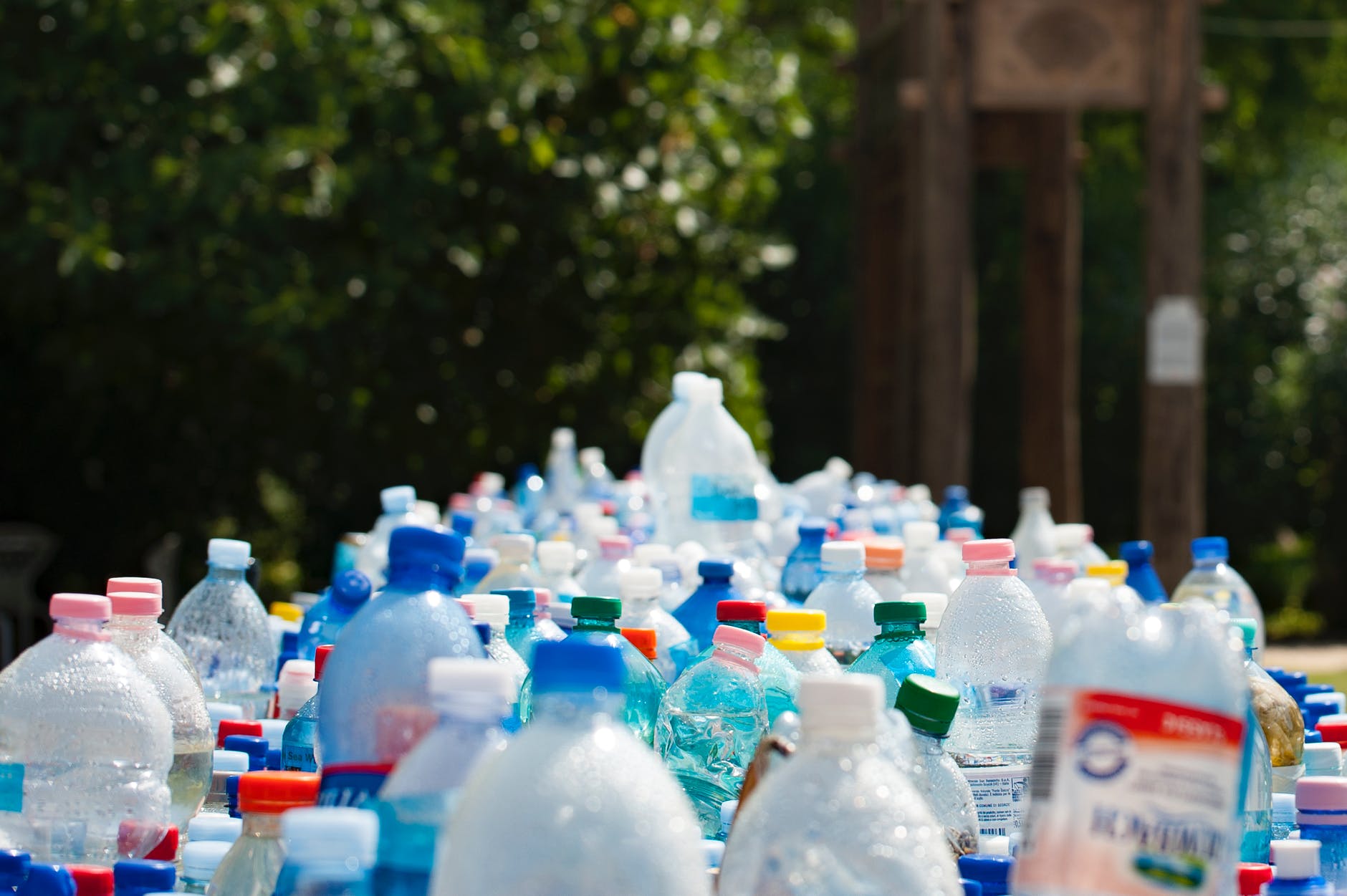
This book by Sudha Murthy is a fictional novel that revolves around a girl Vinuta. It is a regular novel with good narration. Even though the ending is quite predictable it is a good book to read for all those who likes family drama. The story is comparison between Indian lifestyle and American lifestyle.

The writing style is simple and very easy to follow. The story may not have big twists or interesting turning points, but still they keep you glued to the book till the end. If you like to go on with simple reading I would recommend it. But if you are looking for something good then this book may fall an inch short. These are words for those who are already familiar with Sudha Murthy’s work. But for those who are not, it is quite a wonderful book. I would rate it very good if I had too.

I am sorry if I hurt anyone’s sentiments. As I say in my book reviews: Reading books is magic, it makes you live hundreds of lives in a single one. Or atleast that’s what I believe. Hopefully this book will have an impact and magic you are/ were waiting for.
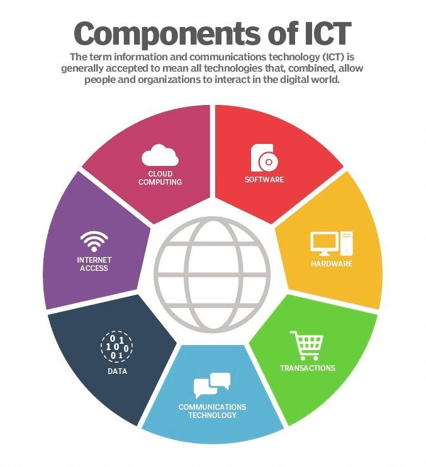
And Thanks. 😇

One Day

In the year 2010, The Stranger group planned for a vacation after their sixth semester of engineering. Each member of our group had a girlfriend except one guy. Our group had four members. All were eagerly waiting for when will go out of the college campus and enjoy our life without books and boring semesters. We decided that our girlfriends will not come on that trip due to our friend was single.

September 3, 2011, It was a chilled morning due to last night’s heavy rainfall. We four members brought the new car of that SAD SOUL guy of our group. Being the rich guy among us, we never respect and listen to his words, not even a single day, but our bonding was so strong. At about 4 am, we start our trip from Bhubaneswar. Lots of fun, lots of excitement, heavy music, we enjoyed every moment like never before. After 200km of traveling, we stopped near a big rock and clicking pictures of nature and the villagers. We stopped there to explore the villager’s social life and their behavior. It was so exciting for all of us. We stay there and had dinner with the villagers. At that time there was a famous festival going on. Coincidentally, our sad soul guy fell in love with a village girl that night. After dinner, we enjoyed chilled beer and went to sleep.

The next morning, we went a step ahead to our destination. We were happy that on the next trip we can come up with our girlfriends at least. It’s raining outside, no more vehicles on the road. It was a cloudy sky with little darkness. I saw my watch, it was 4:45 am. Suddenly, a big truck passed the left side of our car and hit with a two-wheeler and ran away. All this happened in front of us. We stopped our car, the road was full of red water. All of a sudden, a biker got up, start his bike, and went from there. We freaked out by seeing all those things. Rains start again. Immediately we were searching, where the blood comes from, we found a girl at the roadside with a burst stomach and injured head. She was shouting with unbearable pain. We had no idea what we will do? The road was silent, not a single person passing the road. We decided to rescue that girl and took that girl to the nearer hospital as soon as possible.

Seven Wonders Of The World

By Anshiki Jadia

The Taj Mahal It is situated in Agra, in the Indian territory of Uttar Pradesh. Mughal Emperor Shahjahan built it in 1631 as a tomb for his significant other Mumtaz Mahal. The development work started after the demise of Queen in 1632. It was finished in 1648. The landmark is considered as the best illustration of Mughal design. The white marble tomb is the most natural piece of the landmark. As an UNESCO World Heritage site, the landmark is cited as, The gem of Muslim workmanship in India’. It is one of the all around appreciated magnum opuses. It is an image of adoration and has represented hundreds of years to act as an illustration of most excellent human feeling.

THE STATUE OF CHRIST REDEEMER (BRAZIL) The Christ Redeemer is the sculpture of Jesus. It was initiated in 1931. It stands 125 feet tall on the Corcovado Mountain ignoring the Brazilian capital of Rio de Janerio. It was worked by the Brazilian architect Heitor da Silva Costa. It required five years to fabricate the sculpture. It is made of solid cement. Its external layers are produced using soapstone assisting it with opposing outrageous climate. This sculpture is one of world’s most popular landmarks, which is presently being remembered for the Seven Wonders of the World.

THE GREAT WALL OF (CHINA) The Great Wall of China was worked more than 2200 years prior by the principal Emperor of China, Qin Shi Huandi during the Qin administration in 220 BC. It is the biggest structure at any point built by man. It extends across the mountains of northern China, bending north and northwest of Beijing. It is developed of brick work shakes and stuffed earth. It is around 5,000 kilometers in length, with thickness going from 4.5 to 9 meters and stature up to 7.5 meters.

THE COLOSSEUM (ROME) The Colosseum is quite possibly the most renowned structures of Rome. Its development was started by the Emperor in around 72 AD. Later his child surrendered over its culmination.

THE RRUINS OF PETRA (JORDAN) Petra of Jordan is one more one of the Seven Wonders of the World. On the edge of Arabian Desert, Petra was the eminent capital of the Nabataea Empire. It is well known for having many stone designs cut into the stone. In 1812, the since a long time ago secret site was uncovered toward the western world by the Swiss wayfarer Johann Ludwig Burckhardt.

THE CHICHEN ITZA PYRAMID (MEXICO) It is situated in Maya, Mexico. This archeological site is appraised among the most significant of the Maya Culture shows. It covers a space of roughly 6 square miles where many structures once stood. Today, thirty of them might in any case be seen by sightseers.

The MACHU PICCHU (PERU) The vestiges of Machu Picchu, rediscovered in 1911 by classicist Hiram Bingham, bend the most wonderful and baffling old locales on the planet. It is said that Machu Picchu was saved as a consecrated spot from before times. One of its capacities was that of galactic observatory.

Napoleon Bonaparte – French General!

The Guardian..

Napoleon Bonaparte (b. Aug 15, 1769 Ajaccio, Corsica- d. May 5, 1821 St. Helena Island) French general and emperor (1804-1815) born to parents of Italian ancestry he was educated in France and became an army officer in 1785. He fought in the French revolutionary was and was promoted to brigadier general in 1793. After victories against the austrians in Northern Italy, he negotiated the Treaty of campo Formio (1797). Attempted to conquer Egypt (1798-99) but was defeated by the British under Horatio Nelson in the battle of the Nile.

The coup of 18-19 Brumaire brought him to power in 1799 and he installed a military dictatorship with himself as first consul. He introduced in numerous reforms in government including the napoleonic code and reconstructed the French education system. He negotiated the comcordate of 1801 with the Pope. After victory against the austrians at the battle of moringo (1800), he embarked on the napoleonic wars. The formation of coalitions of European countries against him led Napoleon to declare friends hereditary empire and to crown himself emperor in 1804. He won his greatest military victory at the battle of Austerlitz against Austria and Russia in 1805. He defeated Prussia at the battles of Jena and Auerstedt (1806) Russia at the battle of friedland (1807). He then imposed the Treaty of Tilsit on Russia, ending 4th coalition of countries against France.

Despite his loss to Britain at the Battle at the Battle of Trafalgar, he sought to weaken British commerce and established the Continental System of port blockades. He consolidated his European empire until 1810 but became embroiled in the peninsular war (1808-1814) . He led the French army into Austria and defeated the Austrians at the Battle of Wagram (1809), signing the Treaty of Vienna. To enforce the treaty of Tilsit, he led an army of about 6,00,000 into Russia in 1812 winning the battle of Borodino, but was forced to retreat from Moscow with disastrous losses. His army greatly weakened, he was met by a strong coalition of allied powers, who defeated him at the battle of leipzig ( 1813).

Did you know? In 1799, during Napoleon’s military campaign in Egypt, a French soldier named Pierre Francois Bouchard (1772-1832) discovered the Rosetta Stone. This artifact provided the key to cracking the code of Egyptian hieroglyphics, a written language that had been dead for almost 2,000 years.

After Paris was taken by the allied coalition, Napoleon was forced to abdicate in 1814 and was exiled to the island of Elba. 1815 hi mustard a force and returned to France to re-establish himself as emperor for the hundred days, but he was decisively defeated at the battle of Waterloo. He was sent into exile on the remote island of Saint Helena, where he died six years later. One of the most celebrated figures in history, Nepolean revolutionized military organisation and training and the bought about reforms that permanently influenced civil situations in France and throughout Europe.

Napoleonic wars (1799-1815)series of wars that ranged France against shifting alliances of European powers. Originally an attempt to maintain French strength established by the French revolutionary wars they become efforts by Napoleon to affirm his supremacy in the balance of European power. Napoleon’s successes resulted from a strategy of moving his army rapidly, attacking quickly and defeating each of the disconnected enemy units. His enemies responding strategy was to avoid engagement while withdrawing forcing Napoleon’s supply lines to be over extended. The strategy was successfully used against him by the Duke of Wellington in the peninsular war and by Mikhail Prince barclay De Tolly in Russia. With his second abdication the exile, the era of the napoleonic wars ended.

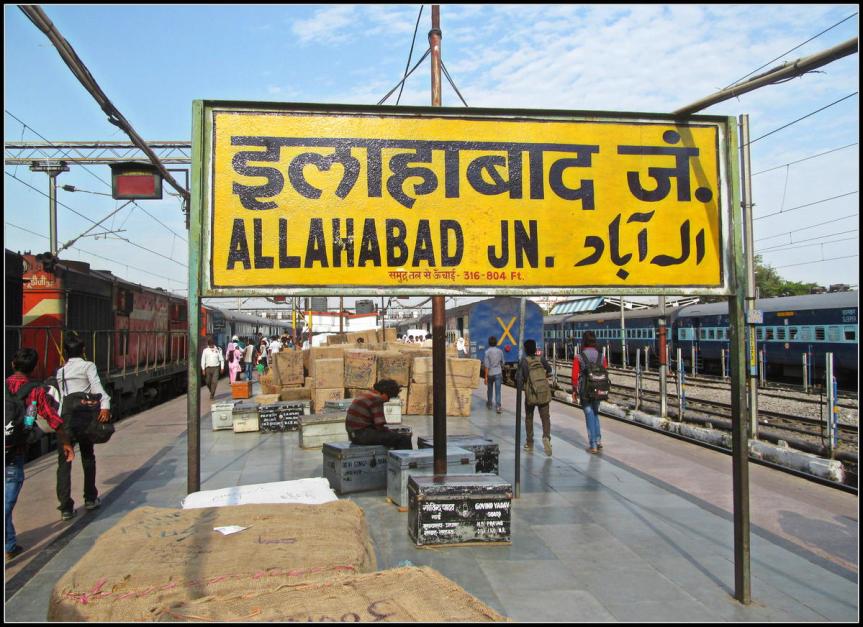
Soil less farming: Hydroponics System

World’s population is increasing day by day, consequently need of food is also increased. We have to apply modern technologies to the Agricultural sector for assured and high yield for fulfilling the need of food. Hydroponics system is one of the modern approach of farming.

What is Hydroponics:

Hydroponics is a system where instead of soil liquid nutrient mixture is used for cultivation. It is also known as soil less farming. It is one of the best way of smart farming.

Types of Hydroponics:

A. Standing aerated nutrient solution or Deep water culture system ( DWC)

B. Nutrient film techniques (NFT)

Benefits of Hydroponics System:

  • As there is no soil, so there is no chances of soil borne disease infection in the crop.
  • Water usage is also very lower than traditional method.
  • High productivity than traditional method.
  • In hydroponics system under controlled climate crops are grown, so there is no chance of any pest or disease attack.
  • Wastage of nutrient is very less in case of hydroponics system.
  • Through hydroponics system off seasonal crops can be cultivated all over the year.

Best plants that can be cultivated in hydroponics system:

1.VEGETABLES:
TomatoLettuce Radish
CucumberSpinachBeans

2.HERBS:
MintChivesBasil
3.Fruits:
StrawberryBlueberryPeppers

The Polar Nights

Photo by Frans Van Heerden on Pexels.com

You must have heard this phrase somewhere or might also have seen the movie based on the 30 Days of Night but what we all don’t know is that people of that particular place are afraid of facing the continuous period of Polar nights.

The night which doesn’t end and the day which always lasts, yes there are places on our earth giving meaning to something absurd phrases like this also.

Norway, Alaska, Finland, Sweden, Iceland, and many more add up to the list of this unique phenomenon of earth’s tilt.

But, you might not know what all this is about So let me get you through this interesting phenomenon of that visit the same marked places every year.

The Barrow

In the northernmost town of the United States, Alaska is also known as Barrow, which is widely talked about for its extended period of darkness and light as well each year.

The sunsets and rises just once a year in regions of high altitude and near the arctic circles because of the earth’s tilt.

These changes occur when the season changes from fall to spring with the visit of 2 months of darkness enveloped and the same for the summertime of never setting sunlight.

The Scar it has:

Now, imagine the terror of not witnessing the light for straight 66 or 60 days with the tease of sunlight below the horizon.

Yes, it is not as easy as just saying and thinking about it as for, getting immersed in the dark cold, and long night they do need to prepare themselves for any kinds of effects it will have on their physical as mental health.

As the sun is the source of vitamin D, the land for that duration of time also becomes D starved as they don’t witness the warmth of the sun till next year’s month of January.

The people also fear that this straight duration of the polar nights can also make their nightmare of blood-sucking creatures true and alive.

The Beauty it holds

The coin has two-phase so do the polar nights of Alaska, even though people might be getting stuck in the cold and long night for the whole 24hr a day till the next sunrise still the nature has many things to offer.

The amazing and dancing belt of polar light and the sky showering you with the light of millions and billions of stars altogether to celebrate in the only language they know, you can witness something much of worth for these polar nights every year.

In those frigid nights of cold one could see the dazzling ribbons of colored light of Red, Violet, Green, and many more unimaginable combinations.

The Aurora

Last but not least, places like Alaska also give us this dynamic and brilliant skylight stretched far away and yet so near and close that you might think you can touch them by extending your hand.

Nature has everything balanced out even though we might think that having half of the year in darkness and another half in light may be doing unfairness to the equation but it’s not.

Television and Video Games are Corrupting the Minds of Youngs.

Mankind has a great history of inventions, and one of it’s greatest inventions were ‘Television’. This word is well known to us. Entertainment was the major reason for the invention of television, but it’s said “Every coin has two sides” even television has its demerits.

Viewing television has become a popular culture and every one enjoys it. One of the most used technological commodity ,has become a threatening problem for the today’s youth. It is Corrupting the young minds and leading them to dark future. The young mind’s are not able to sense the negative impact of this entertainment gadget.

Watching television is waste of time. Youth’s are not able to distinguish between good and bad content for their minds. Most of the programmes casted on the television illustrates distruction, violence, sex , bullying and many other negative things. Young minds are brainstormed in such a way that they try to implement the depicted things in their real life.

Watching crime shows influence the young mind in a negative way as they are not able to pick up the positive aspects of it. Psychologically the wrongdoer is shown in a good light and this in turn encourages the youth to get inspired from them lead them to actually becoming a criminal.

Now days television shows comes with variations like drama, comedy, suspense and many other. The show producers are minting money out of the illogical shows and destroying the young minds imagination. They are detached from the reality and are made to believe and imagine what they show is correct, superstition are also encouraged. Gradually the people get addictive to this type of content and the imaginative power, IQ level is reduced to nothing. Hence Roald Dahl has rightly said,” It clots the child’s mind, it makes the mind as soft as cheese.”

Television are not the only component that corrupts the youth’s mind but video games are one of them. In this modern generation not only an adult but also children know how to used different electronic devices. Video games are basically a person’s imagination which they make them into reality through technology. These games make a person’s mind habitual to play it. Their minds are completely focused in this unreal world that they forget they have a real world, which in turn make them less social and creates a lonely environment. They lose their interest in other important things like studying, etc.

Author John Leo has explained that ” Children who are heavy viewers of television are more aggressive”. Watching television and playing video games makes a person prone to obesity and mental disorders and affects their personality. So we should take care before it’s too late , as they say “Prevention is better than cure.”

FALUN – DAFA

Falun Gong is a new religious movement. Falun Gong was founded by its leader Li Hongzhi in China in the early 1990s. Falun Gong has its global headquarters in Dragon Springs, a 400-acre (160 ha) compound around Cuddebackville  in Deerpark, New York, near the current residence of Li Hongzhi. Falun Gong’s performance arts extension, Shen Yun (“Divine Rhythm”) and two closely connected schools, Fei Tian (“Flying Sky-Being”) College and Fei Tian Academy of the Arts, also operate in and around Dragon Springs.

Falun Dafa/Falun Gong Practitioners

Central Teachings

Falun Gong aspires to enable the practitioner to ascend spiritually through moral rectitude and the practice of a set of exercises and meditation. The three stated tenets of the belief are Truthfulness (真, Zhēn), Compassion (善, Shàn), and Forbearance (忍, Rěn). These principles have been repeated by Falun Gong members to outsiders as a tactic for evading deeper inquiry, and followers have been instructed by Li to lie about the practice.Together these principles are regarded as the fundamental nature of the cosmos, the criteria for differentiating right from wrong, and are held to be the highest manifestations of the Tao, or Buddhist Dharma.

Falun Gong Practitioners in China

Demography

Most Falun Gong estimates in the same period placed the total number of practitioners in China at 70 to 80 million. Other sources have estimated the Falun Gong population in China to have peaked between 10 and 70 million practitioners. The number of Falun Gong practitioners still practicing in China today is difficult to confirm, though some sources estimate that tens of millions continue to practice privately.

Demographic surveys conducted in China in 1998 found a population that was mostly female and elderly. Of 34,351 Falun Gong practitioners surveyed, 27% were male and 73% female. Only 38% were under 50 years old. Falun Gong attracted a range of other individuals, from young college students to bureaucrats, intellectuals and Party officials. Surveys in China from the 1990s found that between 23 and 40% of practitioners held university degrees at the college or graduate level—several times higher than the general population.

Falun Gong is practiced by tens, and possibly hundreds of thousands outside China, with the largest communities found in Taiwan and North American cities with large Chinese populations, such as New York and Toronto.

Persecution in China

On 20 July 1999, security forces abducted and detained thousands of Falun Gong practitioners who they identified as leaders. Two days later, on 22 July, the PRC Ministry of Civil Affairs outlawed the Falun Dafa Research Society as an illegal organization that was “engaged in illegal activities, advocating superstition and spreading fallacies, hoodwinking people, inciting and creating disturbances, and jeopardizing social stability”. The same day, the Ministry of Public Security issued a circular forbidding citizens from practicing Falun Gong in groups, possessing Falun Gong’s teachings, displaying Falun Gong banners or symbols, or protesting against the ban.

The aim of the ensuing campaign was to “eradicate” the group through a combination of means which included the publication and distribution of propaganda which denounced it and the imprisonment and coercive thought reform of its practitioners, sometimes resulting in deaths. In October 1999, four months after the imposition of the ban, legislation was passed in order to outlaw “heterodox religions” and sentence Falun Gong devotees to prison terms.

Hundreds of thousands of Falun Gong practitioners are estimated to have been extrajudicially imprisoned, and practitioners who are currently in detention are reportedly subjected to forced labor, psychiatric abuse, torture, and other coercive methods of thought reform at the hands of Chinese authorities. The U.S. Department of State and Congressional-Executive Commission on China cite estimates that as much as half of China’s reeducation-through-labor camp population is made up of Falun Gong practitioners.  Researcher Ethan Gutmann estimates that Falun Gong practitioners represent an average of 15 to 20 percent of the total “laogai” population, a population which includes practitioners who are currently being held in re-education through labor camps as well as practitioners who are currently being held in prisons and other forms of administrative detention.  Former detainees of the labor camp system have reported that Falun Gong practitioners comprise one of the largest groups of prisoners; in some labor camp and prison facilities, they comprise the majority of the detainees, and they are often said to receive the longest sentences and the worst treatment.  A 2013 report on labor reeducation camps by Amnesty International found that in some cases, Falun Gong practitioners “constituted on average from one third to 100 per cent of the total population” of certain camps.

According to Johnson, the campaign against Falun Gong extends to many aspects of society, including the media apparatus, the police force, the military, the education system, and workplaces. An extra-constitutional body, the “610 Office” was created to “oversee” the effort. Human Rights Watch (2002) commented that families and workplace employees were urged to cooperate with the government.

Persecution of Chinese Falun Dafa In China

Causes

Observers have attempted to explain the Party’s rationale for banning Falun Gong as stemming from a variety of factors. Many of these explanations centre on institutional causes, such as Falun Gong’s size and popularity, its independence from the state, and internal politics within the Chinese Communist Party. Other scholars have noted that Chinese authorities were troubled by Falun Gong’s moral and spiritual content, which put it at odds with aspects of the official Marxist ideology. Still others have pointed to China’s history of bloody sectarian revolts as a possible factor leading to the crackdown.

SOURCES

https://en.wikipedia.org/wiki/Falun_Gong

Importance of newspaper

Importance of Newspaper in Life Essay - Let's Learn

Newspaper is quite a powerful tool that circulates information to people. It is one of the greatest means of communication between people and the world. In addition, they are also a great medium of knowledge. We get our daily dose of news from newspapers early in the morning. It is quite a reliable source which gives us information only after thoroughly investigating the information.

Newspapers are easily available in the most remote regions as well. They are also very economical which gives an abundance of information at really low cost. Most importantly, newspapers are published in various languages that make it easier for people of all regions to get news in their local language. thus, we see how newspapers have numerous advantages that help the common man stay informed of the worldly issue.

Significance of Newspaper

The newspaper has created a positive impact on society. It helps people become aware of current affairs and stay curious about them. When the public will question, it means they are aware. This is exactly what a newspaper does. It is also the finest link you can find between the government and its people. Newspapers provide people with every detail no matter how small.

Essay on the Importance of Newspaper and Press - Ilmi Hub

Furthermore, it helps us become informed citizens. Whenever there are any changes in the rules and regulations of the country, newspapers make us aware of them. Moreover, they are very informative for students. A student can learn all about general knowledge and current affairs from here. We stay updated with the technological advancements, government policies, research studies and more.

Other than that, newspapers also have incredible articles that tackle social issues, cultures, arts, and more. It conveys the public opinion to the people on important issues. This will, in turn, help people review the government and ministers well. Similarly, people get great employment opportunities from newspapers. Those seeking jobs look through newspapers to get reliable job opportunities.

In short, the newspaper carries a lot of significance for humans. If we read the newspaper daily, it can develop our reading habit and make us more fluent. It also has mind-brain exercise games like puzzles, Sudoku and more to sharpen people’s brains. Furthermore, you can also go through the comic strips and cartoons to keep yourself entertained.

A World Without Newspapers

As the world is advancing rapidly, everything is becoming digital. From our shopping to news, we can easily do it on our smartphones or computers. This digitization has also affected the newspaper scenario. As people are getting instant updates on their phones about the latest news, the sales of newspapers have gone down massively.

Importance of Newspaper Essay for Students | 500+ Words Essay

Does this mean the digital era will wipe out the newspapers? Looking at the present scenario, this possibility might soon become a reality. However, are we ready to have a world without newspapers? A world without newspapers is like having a home without mirrors. This means we won’t be able to see our own reflection.

Now, compare this situation to that of the world and newspaper. Imagine the world has lost its national mirror, resulting in you not being able to get an honest reflection of what is happening around. What’s even worse is the fact that instead of the national mirror we are getting a fun-house mirror which is distorting the information and making you see what’s not real.

In short, the world will become a free rein for politicians to propagate their advertising and agendas to the public. The information won’t be reliable and won’t even be scrutinized. We won’t have any journalists to decipher the PR spin of the governments and corporate firms robbing the common man of their money.

Top 5 Food To Stop Hair Fall

1.COCONUT WATER:

Coconut water is an excellent source of antioxidants which help to prevent hair fall and repair the damage. It is an amazing hair care ingredient that helps nourish and condition your hair. It helps to deal with severe hair loss and also to boost hair growth. It is rich in essential vitamins and minerals like vitamin B and potassium, which helps keep your scalp and hair nourished and healthy.

TO PREVENT HAIR LOSS:

Drink 1 glass of tender coconut water everyday to stop hair fall.

2. BEETROOT:

Beetroots have always been considered as a superfood for hair. It is high in antioxidants, vitamin A, vitamin C, Calcium, Iron and Potassium. With all its minerals and nutrients, it enhances new hair growth, prevents premature balding and hair loss. BEETROOT allows for better blood circulation in the scalp and nourishes the hair follicles from within.

TO PREVENT HAIR LOSS:

Drink 1 glass of beetroot juice every day or eat atleast 1 beetroot as salad everyday.

3. EGG:

Eggs are power-packed with proteins, minerals and vitamin B complex that are essential hair nutrients. These nutrients, especially biotin and other B-complex vitamins, helps to curb hair loss by strengthening the roots of your hair. The nutrients also helps to stimulate new hair growth, adding volume and thickening your hair. The proteins helps to strengthen your hair while the fats helps to condition it and improving hair texture.

TO PREVENT HAIR LOSS:

Eat atleast 2 egg whites and 1 whole boiled egg everyday.

4. SPINACH:

Spinach is rich in vitamins like K, A, C, B2, B6, B1, E, manganese, Zinc, Iron and Omega-3 fatty acids. These nutrients help nourish your scalp and hair, ensuring healthy hair growth. The green leafy vegetable has a high nutritional content and is extremely rich in antioxidants which helps avoid hair damage and boosts scalp health.

TO PREVENT HAIR LOSS:

You can have spinach smoothie every day or can apply spinach mask on hair 2-3 times in a week or can add spinach in your everyday diet or meal.

5. WALNUT:

Walnuts are known as hair food, because they contain omega-3 fatty acids and nutrients essential for healthy, long and lustrous hair. They also contain biotin, vitamin E, protein,and magnesium that strengthen the hair follicles and maintain scalp health.

TO PREVENT HAIR LOSS:

You can either eat 3-4 walnut pieces raw or soak them in water overnight and have them.

Interesting facts about colour

  1. Yellow and red together make you hungry:

Fast food chain figured this out year ago and use this color combination over and combination over and over in branding, advertising and restaurant decor.

2. World blue is the most common favorite color:

studies conducted by various global marketing firms show that blue is the most common favorite color world wide followed.

3. Pink soothes the nervous and is often used for anger management:

pink has been known to suppress anger and anxiety and have an overall calming effect.

It is often used in mental health care institutions and even prison to help create a sense of calm.

4. The color wheel was invented by Isaac Newton:

Around 16655 issac newton used a prism to turn white light into a rainbow and identified seven colors.

He felt the last color, indigo, was a recurrence of the first color, red and decided to arrange the color in a circle

5. Red is the first color a baby sees.

Red has the longest wavelength of the color and scientists speculate this makes it easier to process in developing receptors and nerves in a baby’s eye

6. Color has a big impact on a first impression:

62-90% if a first impression is based on how someone is Recognizing color in the situation.

For those who want to make a strong first impression avoid neutral heading out on a first date? Add a pop of bring color to be more memorable.

7. People are more likely to forget something when it’s in black and white:

A black and white movie, or photographs is often not as easy to recall as a color image scientists believe this may be because color has a stronger appeal to the sense and as a result makes a more lasting impression on the memory.

ENVIRONMENTAL DISASTERS

An environmental disaster  is defined as a catastrophic event regarding the natural environment that is due to human activity . This point distinguishes environmental disasters from other disturbances such as natural disasters and intentional acts of war such as nuclear bombings. Environmental disasters show how the impact of humans’ alteration of the land has led to widespread and/or long-lasting consequences.

These disasters have included deaths of wildlife, humans and plants, or severe disruption of human life or health, possibly requiring migration .Environmental disasters historically have affected agriculture, biodiversity  including wildlife, the economy and human health. The most common causes include pollution that seeps into groundwater or a body of water , emissions into the atmosphere and depletion of natural resources, industrial activity or agricultural practices.

Environmental disasters have a severely detrimental effect on ecosystems. These catastrophes are often short in duration, but have a lasting impact on the animals and plants that live in the affected habitat. Occasionally, environmental catastrophes change the physical environment so much that the damage to the ecosystem is irreversible. In other cases, environmental damage can be contained and the habitat rehabilitated.

Photo by Luciann Photography on Pexels.com

Environmental disasters fall into two general categories. Some disasters are caused by natural climate or weather events. These include wild fires, landslides, floods, earthquakes, droughts, tornadoes, tsunamis, and volcanic eruptions. Although the causes of these natural environmental disasters do not involve human activities, in some cases the effects are worsened by the influence of people. For example, the environments that suffered the most damage during the Indian Ocean tsunami of 2004 were those where urban development and construction had damaged coral reefs. In places where coral reefs were healthy, the reef acted like a buffer, deflecting the power of the giant wave.

A second category of environmental disasters includes those caused by human activities. Examples of human-induced environmental disasters include oil spills, chemical spills, and nuclear incidents. In addition, wars and terrorist activities can be disastrous to ecosystems. In many cases, environmental disasters caused by humans have longer lasting effects on the environment than catastrophes brought on by natural events. For example, the enormous oil spill that occurred when the Exxon Valdez supertanker ran aground in Prince William Sound in 1989 continues to have major environmental repercussions. Twelve years after the oil spill, significant deposits of oil, which is toxic to many species, persisted throughout the affected area. In 2002, the population size of at least eight species of fish and mammals was still severely impacted from the oil spill.

Although environmental disasters take a terrible toll on ecosystems, they can bring increased attention to threatened habitats. In some cases, the increased oversight by governmental, intergovernmental, and non-governmental agencies results in legislation, which reduces the impact of future environmental disasters. For example, the Exxon Valdez oil spill led to much stronger regulation of the oil shipping industry. Also, additional funds were allocated for cleaning up oil spills, should they occur again. In the wake of the 2004 tsunami, the United Nations began organizing an Indian Ocean Tsunami warning system to alert citizens when another gigantic wave is heading to shore.

Humans have long believed that their scientific creativity could meet the challenges of natural forces. However, as Earth’s resources continue to be eroded by the growing population and its demand for natural resources, it is ever more likely that environmental disasters will increase both in number and intensity. It delves into the effects that these catastrophes have taken on the environment and on the human communities involved.

ENVIRONMENTAL DISASTERS

An environmental disaster  is defined as a catastrophic event regarding the natural environment that is due to human activity . This point distinguishes environmental disasters from other disturbances such as natural disasters and intentional acts of war such as nuclear bombings. Environmental disasters show how the impact of humans’ alteration of the land has led to widespread and/or long-lasting consequences.

These disasters have included deaths of wildlife, humans and plants, or severe disruption of human life or health, possibly requiring migration .Environmental disasters historically have affected agriculture, biodiversity  including wildlife, the economy and human health. The most common causes include pollution that seeps into groundwater or a body of water , emissions into the atmosphere and depletion of natural resources, industrial activity or agricultural practices.

Environmental disasters have a severely detrimental effect on ecosystems. These catastrophes are often short in duration, but have a lasting impact on the animals and plants that live in the affected habitat. Occasionally, environmental catastrophes change the physical environment so much that the damage to the ecosystem is irreversible. In other cases, environmental damage can be contained and the habitat rehabilitated.

Photo by Luciann Photography on Pexels.com

Environmental disasters fall into two general categories. Some disasters are caused by natural climate or weather events. These include wild fires, landslides, floods, earthquakes, droughts, tornadoes, tsunamis, and volcanic eruptions. Although the causes of these natural environmental disasters do not involve human activities, in some cases the effects are worsened by the influence of people. For example, the environments that suffered the most damage during the Indian Ocean tsunami of 2004 were those where urban development and construction had damaged coral reefs. In places where coral reefs were healthy, the reef acted like a buffer, deflecting the power of the giant wave.

A second category of environmental disasters includes those caused by human activities. Examples of human-induced environmental disasters include oil spills, chemical spills, and nuclear incidents. In addition, wars and terrorist activities can be disastrous to ecosystems. In many cases, environmental disasters caused by humans have longer lasting effects on the environment than catastrophes brought on by natural events. For example, the enormous oil spill that occurred when the Exxon Valdez supertanker ran aground in Prince William Sound in 1989 continues to have major environmental repercussions. Twelve years after the oil spill, significant deposits of oil, which is toxic to many species, persisted throughout the affected area. In 2002, the population size of at least eight species of fish and mammals was still severely impacted from the oil spill.

Although environmental disasters take a terrible toll on ecosystems, they can bring increased attention to threatened habitats. In some cases, the increased oversight by governmental, intergovernmental, and non-governmental agencies results in legislation, which reduces the impact of future environmental disasters. For example, the Exxon Valdez oil spill led to much stronger regulation of the oil shipping industry. Also, additional funds were allocated for cleaning up oil spills, should they occur again. In the wake of the 2004 tsunami, the United Nations began organizing an Indian Ocean Tsunami warning system to alert citizens when another gigantic wave is heading to shore.

Humans have long believed that their scientific creativity could meet the challenges of natural forces. However, as Earth’s resources continue to be eroded by the growing population and its demand for natural resources, it is ever more likely that environmental disasters will increase both in number and intensity. It delves into the effects that these catastrophes have taken on the environment and on the human communities involved.

Best Places to visit in Prayagraj (Allahabad) – India

Allahabad is one of the oldest cities in India. It is also known as Prayagraj, Diversities glorify India. When you visit India, you get to explore different places. The glorious city is popular due to its cultural heritage. Not only this, you cannot ignore the friendly people of this place. Moreover, the world-famous Kumbh Mela takes place here. It has a deep connection with Indian history. Besides, this city holds great religious values and traditions. Thus, Allahabad offers many famous places to visit. As a result, many tourists from all over the world flock to the city every year.

Top 10 Famous Places, You can visit

Triveni Sangam

Outlook India Photo Gallery - Triveni Sangam Prayagraj

One of the holiest places in Central India, Triveni Sangam is located about 7 kilometres away from Civil Lines in Allahabad (Prayagraj). It is the meeting point of three rivers – Ganga, Yamuna, and Saraswati (which is a mythical river, supposed to have dried up more than 4,000 years ago). All three rivers Ganga, Yamuna, and Saraswati are highly revered rivers in Indian mythology, and hence the confluence point of these rivers hold tremendous religious importance. According to Hindu mythology, taking a bath in the holy Triveni Sangam is supposed to flush away all the sins and free you from the cycle of rebirth. Moreover, the Sangam itself is a beautiful and peaceful place to visit. The brownish Ganga meeting the slightly greenish Yamuna is indeed a sight to behold.

If you take a boat ride to the gently flowing waters of Ganga and Yamuna, you’ll be able to make out the difference in colours of water from the two rivers. There are also makeshift wooden banks made at the Sangam. Hence, devotees who want can take a bath right at the confluence point. The water is clean enough at the Triveni Sangam for a bath, especially during the winters; and also not very deep, so it is fun to take a dip in the water here.

Allahabad Fort

Allahabad Fort - Wikipedia

Allahabad Fort is a splendid work of architecture that was built during the reign of Akbar, the Mughal Emperor in 1583. The marvellous structure is located on the banks of the confluence of the Rivers Ganga and Yamuna and is well-known for being the largest fort ever built by Akbar. This famous attraction draws thousands of tourists from all over the world not only for its historical importance but also for its architectural magnificence. Tourists are allowed inside only during the Kumbh Mela, which is held once every 12 years. Nevertheless, the glorious architecture and the massive build of the monument as it stands strong on the banks of the confluence of the two rivers is a sight to behold!

The Allahabad Fort holds a huge significance and is managed by the Archaeological Survey of India. The fort is also quite well known for its Akshayavat Tree (Banyan Tree) which, according to a legend, was used by the locals to commit suicide to attain salvation. For those who wish to see the Akshayavat Tree, entry is allowed through a small gate to only the area that is occupied by the magnificent tree. Allahabad Fort is also home to the Patalpuri Temple, which is said to be home all the gates of hell.

Chandra Shekhar Azad Park (Alfred Park)

Alfred Park, Allahabad, Uttar Pradesh — Google Arts & Culture

Formerly Alfred Park, Chandrasekhar Azad Park is more a monument than a conventional garden. Famous Indian revolutionary Chandrasekhar Azad sacrificed his life here and the park was renamed after him in later years. Azad was no less than an enigma and mystery for the British government due to his mastery over disguise and combat skills. He was known for his vow to never get arrested and remain free for life. In fact the word Azad (free in Urdu) stuck to his name after due to his freedom clamour! In his brief life span of 24 years, he made his presence felt in such a manner that the British rulers wanted him behind the bars or dead at any cost. So when the police got information that the iconic rebel was in Allahabad and meeting fellow revolutionary Sukhdev in the then Alfred Park in 27th February, 1931, they surrounded the park with over 40 policemen. A gun battle followed where Azad killed three policemen with his pistol and facilitate the escape of Sukhdev. He fought the police force for over 30 minutes alone and when he was left with only one bullet, he decided to turn it on himself honouring his pledge not to get caught or killed by the British oppressors. Azad Park today is a tribute to that great man with a memorial in place.

The tree under which he sacrificed his life for his motherland is also preserved. Allahabad Museum, that is also in the park premises has Azad’s pistol in show. Be there and pay homage to a brave man who was unlike any other 24 year old!

Khusro Bagh

Khusro Bagh | District Prayagraj, Government of Uttar Pradesh | India

This is one of the major attractions in the city, even though the crowd here is much less compared to other places in Allahabad. It is a beautiful garden with high walls surrounding it and has four tombs inside.

The garden was built as a pleasure garden for Prince Salim, who was the son of the Mughal Emperor Akbar and rebelled against his father. Well, he grew up to become Emperor Jahangir. History repeated itself and there arose a discord between Jahangir and his eldest son Khusrau. Despaired by the sad turn of events, Shah Begum, Khusrau’s mother, committed suicide and was buried in the park. She was a Rajput princess and the first tomb here was built in memory of Shah Begum in 1606.

Jawahar Planetarium (Anand Bhawan)

jawahar planetarium allahabad - Maharajas Express Blog

Anand Bhawan, the home of the Nehru family in Allahabad, was handed over to the Fund by Shrimati Indira Gandhi in November 1970. This is in keeping with a similar gesture made by her illustrious grandfather when he donated Swaraj Bhawan to the nation. Anand Bhawan is intimately connected with India’s struggle for freedom. Some of the rooms in the building which are redolent with history have been either preserved or recreated. A comprehensive exhibition of the Nehru family’s role in the country’s struggle for freedom has also been arranged. The electrical wiring and fittings of Anand Bhawan building have been completely replaced and upgraded by German ERCO light fittings in 2014.

The Library at Anand Bhawan consisting of nearly 7500 books has been catalogued. The National Museum and the Allahabad Museum have rendered valuable assistance to the Fund in the preservation of books, records and relic articles in Anand Bhawan. Several lakhs of visitors from all over the country and abroad come and visit this ancestral home of Nehrus. Memorial functions and an annual lecture are also a part of the Anand Bhavan’s annual programme.

All Saints Cathedral

All Saints Cathedral, Prayagraj (Allahabad): How To Reach, Best Time &

Built in the late 19th century, All Saints Cathedral or Patthar Girja is a spectacular Anglican Christian Church on M G Marg, Allahabad. One of the beautiful churches in the state, it is thronged by tourists and pilgrims alike. All known as the “Church of Stone”, All Saints Cathedral was formerly founded in 1871 by Lady Muir Elizabeth Huntly Wemyss. Post its consecration in 1887, the church was further completed in 1891. Constructed in gothic-styled architecture, the church hosts carved glass panels and marble-finished sanctuaries. It is one of the significant remnants of colonial design in the country. This church also houses the iconic ‘jaali’ work expressed throughout its arched windows. The light sandalwood tinted walls of the All Saints Cathedral was built with Sandstone from Chunar in UP. 

Alopi Devi Temple

Alopi Devi Mandir, Allahabad - Tripadvisor

Located at Alopibagh, near the holy Sangam (confluence of Ganga, Yamuna and Saraswati) in Allahabad, Alopi Devi Mandir is an unconventional temple revered by Hindu faith. The Alopi Devi Mandir does not have any presiding deity but a wooden chariot called a doliê which is mostly worshipped by the devotees of Lord Shiva. Housing the last of Goddess Sati’s body parts, the Alopi Devi Mandir counts among the Shakti Peethas of the country. Tuesdays are a busy day at this temple. This holy site attracts vast crowds of devotees during the Hindu festival of Navratri.

New Yamuna Bridge

The New Yamuna Bridge | District Prayagraj, Government of Uttar Pradesh |  India

The New Yamuna Bridge is like a new feather in Prayagraj’s cap. The images speak about the stupendous architecture of the New Yamuna Bridge. The view of the bridge during dawn and dusk is mesmerizing. Also known as the Naini Bridge, the New Yamuna Bridge is among India’s longest cable-stayed bridges. It runs across the Yamuna River in the North-South direction, connecting Prayagraj to Naini. It was constructed in the year 2004 to minimize the traffic congestions over the old Naini Bridge. The construction of the bridge was a joint responsibility of the Hindustan Construction Company and Hyundai Engineering and Construction.

The New Yamuna Bridge is also the first six-lane bridge in India built with modern design and structure. It has two pylons, made up of concrete material, that provide support to the major part of the deck of the bridge held together by steel cables. The bridge also acts as a road link between Prayagraj and NH-27 stretching across for 370 meters. The modern technology combined with environmental compatibility and excellent quality make for some of the features of this bridge that offer great benefits. India has a stupendous network of bridges and this bridge is a fine example of the country’s tremendous growth in infrastructure.

Allahabad Museum

How Allahabad Museum got hold of gifts and artefacts from Nehru

The Allahabad Museum is centrally located in the Civil Lines area of the city in a lush green garden at Chandrashekhar Azad Park, popularly known as Company Bagh. In 1863, the Board of Revenue requested the Government of North- Western Provinces for the establishment of a public library and a museum. With donations from the provincial government, the famous Orientalist Sir William Muir and the Maharaja of Vijaynagaram, a superintendent of the library and museum was appointed and an ornate building was inaugurated in 1878 to house the collection. For unforeseen reasons or due to paucity of fund the museum was closed down in 1881. With the initiative of Pandit Jawaharlal Nehru, the President of the Allahabad Municipal Board and Pt. Brijmohan Vyas in the 1923-24 efforts were made to establish a new museum in the city. It was under the operational direction of Pandit Brij Mohan Vyas, the executive officer of the board, a museum was opened in the Municipal Building in 1931.

Bade Hunauman Temple

Allahabad High Court Big Decision World Famous Hanuman Temple Case - विश्व  प्रसिद्ध बड़े हनुमान मंदिर मामले में हाईकोर्ट का बड़ा फैसला ,महंत ने कहा  सुप्रीमकोर्ट में ...

This famous temple of Lord Hanuman, one of the most worshipped god of India is a must visit place in Allahabad or Prayagraj It is located very close to Sangam and so most of the devotees visiting Prayagraj will not consider their visit complete unless they have darshan of Hanumanji at this temple. Here Hanumanji is in lying position instead of being in sitting or standing form as is common in thousands of other Hanuman temples in India. There are a few sweet shops selling prasad and the whole temple complex is well maintained.

IMMUNITY – A WAY OF DEFENCE!

Our human body is continuously exposed to microorganisms that may or may not be infectious. Millions of microorganisms exist in our body that includes our mouth, eyes, ears, and the other various part of our body.
But in the same way, our body is also exposed to disease-causing microorganisms such as viruses, bacteria, fungi, protozoans, etc. So in order to keep us healthy, there is a certain process that our body undergoes in order to defend ourselves from such microorganisms, this is done by our immune system. The branch of science that deals with the components of the immune system are called Immunology.

NOW, WHAT EXACTLY IS IMMUNITY?

It is the ability of an organism to fight against disease-causing agents.
It is further divided into two categories :

  1. Innate immunity.
  2. Acquired immunity.

INNATE IMMUNITY :

It is a non-specific type of immunity that includes all the defense elements with which an individual is born. It is present at the time of birth and is genetic i.e, it is passed down genetically from parents to children.
This includes skin, mucous membranes, and blood cells along with the white blood cell which forms an important component of innate immunity.

The different types of barriers to innate immunity are :

1) Physical barrier: This includes skin and mucous membrane

2) Physiological barrier: This comprises hydrochloric acid, bile, cerum, lysozyme, and our body temperature.

3) Cellular barrier: Certain types of cells called leucocytes(WBC), neutrophils and monocytes, natural killer cells (lymphocyte) as well as macrophages constitutes this barrier.

4) Cytokine barrier: There are certain cells which once infected by a virus, release a glycoprotein called interferons (IFNs). This causes the nearby cell to get alert, as it is a signal which basically says pathogens have been entered and have infected it.

5) Inflammatory barrier: This is a type of barrier that causes redness, swelling, pain, and the production of heat from the infected tissue.

ACQUIRED IMMUNITY :

This type of immunity is found only in vertebrates. It is also called adaptive or specific immunity. It enhances the protection of the innate immunity as it is generated in response to the exposure of pathogens.

These are further divided into two groups:

1) Active immunity.

2) Passive immunity.

ACTIVE IMMUNITY :

It involves the active functioning of an individual’s own immune system, which leads to the synthesis of antibodies.

Types of active immunity:

1) Natural active immunity: Natural infection by a pathogen generates antibodies and specialized lymphocytes.

2) Artificial active immunity: Vaccines are administrated to the body which generates antibodies.

PASSIVE IMMUNITY :

In this case of immunity, the antibodies from one individual are passed into another individual. It also gives immediate protection. But this type of immunity is short-lived, generally lasts for only a few weeks.

Types of passive immunity:

1) Natural passive immunity: It is gained naturally, for example, antibodies from a mother can cross the placenta and enter her foetus.

2) Artificial passive immunity: Here the antibodies formed in one individual are extracted and are then injected into the blood of another individual.

CONCLUSION :


We have an immune system in our body that help us fight against the disease-causing microorganisms or pathogen. Some Immunity may be passed to us during our birth and can also be passed to our next generation, this type of immunity is called innate immunity. While the immunity that is acquired after birth that has the ability to recognize and selectively eliminate a certain specific type of pathogens is called Acquired immunity.

IMMUNITY – A WAY OF DEFENCE!

Our human body is continuously exposed to microorganisms that may or may not be infectious. Millions of microorganisms exist in our body that includes our mouth, eyes, ears, and the other various part of our body.
But in the same way, our body is also exposed to disease-causing microorganisms such as viruses, bacteria, fungi, protozoans, etc. So in order to keep us healthy, there is a certain process that our body undergoes in order to defend ourselves from such microorganisms, this is done by our immune system. The branch of science that deals with the components of the immune system are called Immunology.

NOW, WHAT EXACTLY IS IMMUNITY?

It is the ability of an organism to fight against disease-causing agents.
It is further divided into two categories.

  1. Innate immunity.
  2. Acquired immunity.

INNATE IMMUNITY:

It is a non-specific type of immunity that includes all the defense elements with which an individual is born. It is present at the time of birth and is genetic i.e, it is passed down genetically from parents to children.
This includes skin, mucous membranes, and blood cells along with the white blood cell which forms an important component of innate immunity.

The different types of barriers to innate immunity are:

  1. Physical barrier: This includes skin and mucous membrane
  2. Physiological barrier: This comprises hydrochloric acid, bile, cerum, lysozyme, and our body temperature.
  3. Cellular barrier: Certain types of cells called leucocytes(WBC), neutrophils and monocytes, natural killer cells (lymphocyte) as well as macrophages constitutes this barrier.
  4. Cytokine barrier: There are certain cells which once infected by a virus, release a glycoprotein called interferons (IFNs). This causes the nearby cell to get alert, as it is a signal which basically says pathogens have been entered and have infected it.
  5. Inflammatory barrier: This is a type of barrier that causes redness, swelling, pain, and the production of heat from the infected tissue.

ACQUIRED IMMUNITY :

It involves the active functioning of an individual’s own immune system, which leads to the synthesis of antibodies.

Types of active immunity :

  1. Natural active immunity: Natural infection by a pathogen generates antibodies and specialized lymphocytes.
  2. Artificial active immunity: Vaccines are administrated to the body which generates antibodies.

PASSIVE IMMUNITY :

In this case of immunity, the antibodies from one individual are passed into another individual. It also gives immediate protection. But this type of immunity is short-lived, generally lasts for only a few weeks.

Types of passive immunity:

  1. Natural passive immunity: It is gained naturally, for example, antibodies from a mother can cross the placenta and enter her fetus.
  2. Artificial passive immunity: Here the antibodies formed in one individual are extracted and are then injected into the blood of another individual.

CONCLUSION :

We have an immune system in our body that help us fight against the disease-causing microorganisms or pathogen. Some Immunity may be passed to us during our birth and can also be passed to our next generation, this type of immunity is called innate immunity. While the immunity that is acquired after birth that has the ability to recognize and selectively eliminate a certain specific type of pathogens is called Acquired immunity.

Benefits of Reading Books

Books play a very important role in everyone’s life, especially in a students’ life. They are our best friends because they inspire us to do great things in life and overcome our failures. We learn a lot of things from them. Books are our best companions as they provide us knowledge unconditionally without asking anything in return.

Friendship with good books makes you a good person. In case when there is no one for your help, only these will become your companion in life. Books will always be there for you in your adverse times and bring positive value to our life.

“A room without books is like a body without a soul.”

They have always benefit to the reader.

1. Tell us about the History

In modern times, books are the only medium through which we can know about History. These tell us what all happened in the past. Books like “A Brief History of Time” by Stephens Hawking and “The Sixth Extinction” by Elizabeth Kolbert, etc. are some of the major books that tell us about the natural History of pastime.

2. Teach Positive values, Spirituality and Love

Books bring a realization of the values contained in our hearts. With the help of good story books, one can learn moral values, ethics in life, and become a good human being. It is necessary to gain some positive values in life which reflect the individual character as well as spirituality.

3. Make us Intelligent

Reading good books like autobiographies of many prominent personalities, philosophers and authors inspire us to become or to achieve something great like them. It also makes us intelligent as we gain a lot of knowledge by reading books.

4. Increase Self Confidence, Boost Memory and Imagination Power

Reading books and novels can also improve our memory, reduce stress, and increase mental power as well as knowledge. They also help us to improve vocabulary, concentration power & make our thinking skills stronger.

5. These are also the library of information

Books are considered as a “store of information” using which we can gain information by reading at any time. Reading is something that will always increase knowledge. Whether we study or teach anyone, knowledge goes on increasing with time.

Conclusion

Books are amazing things that can be both entertaining and beneficial to your health. They are almost like tools to a healthy lifestyle. Those who don’t read can’t understand the love for reading, but those who read on a daily basis know the importance of diving into a good book. The books that you choose to read is your preference. Often, people will read magazine articles or even textbooks if that is what they enjoy reading. Whatever you choose to read, you can count on the multiple benefits of reading to help both your mind and body.

Teacher’s Day

Teachers are one of the most important pillars of society; they spend their entire lives enabling students to learn and explore. A teacher is a friend and a philosopher who guides us jn understanding the world around us. From academic knowledge to moral knowledge, a teacher is a treasure trove. A teacher’s contribution to the world is priceless because of the fact that they educate men and women of tomorrow.

Furthermore, teachers also help to increase literary rates in a country, thereby enabling opportunities and jobs that will help students to secure their lives. Almost every country in the world dedicates a day to celebrate and honour teachers. In India, teacher’s day is celebrated on 5th September, while the World Teacher’s Day is celebrated on 5th October, every year. However, various countries have their own specific dates for honoring their teachers.

Teacher’s Day is celebrated to honour teachers and celebrate their contribution to a particular field or the community in general. The idea of celebrating the profession of a teacher is not new, it can be traced back to the 19th century. During those times, a local teacher’s contribution is celebrated or a specific achievement in education. This is one of the reasons why the world celebrates Teacher’s Day on different dates. For instance, India celebrates Teacher’s Day on 5th September, commemorating the birth of the second president of India, Dr. Sarvepalli Radhakrishnan. While other countries celebrate World Teacher’s Day on 5th October, as established by UNESCO.

Teacher’s Day in India

Guru Purnima is an Indian festival dedicated to honouring academic and spiritual teachers. It historically marks the birth of Ved Vyasa, the author of the Mahabharata, Vedas and the Puranas. The festival traditionally celebrated by the Jains and Buddhists to honour teachers who enlighten others with no monetary expectation in return. It is traditionally celebrated during the full moon day of the Hindu calendar month of Ashada. This corresponds to June and July of the Gregorian calendar.

The birth of the Second President of India, Dr. Sarvepalli Radhakrishnan, on 5th September, is celebrated as Teacher’s Day. When he became President of India, some of his students and friends requested him to celebrate his birthday on 5th September. He had replied that he would be honoured if the contribution of all teachers would be observed on that particular date, instead of celebrating his birthday. And ever since, 5th September every year has been celebrated as Teacher’s Day.

In India, teachers and students report to class as usual on Teacher’s Day. However, classes and lectures are replaced by celebrations and remembrances. Students and teachers also take part in many activities and mini-games. It is also common for students and their parents to present gifts to the teachers. Many students also organize plays and dance performances on this particular day.

Conclusion

Teacher’s Day is celebrated to honour the contribution of teachers to the society. In India, Teacher’s Day is officially celebrated on 5th September, while most other countries celebrate it on 5th October. Regardless of the date, a teacher’s contribution is priceless, hence it is celebrated with zeal and great enthusiasm.