Forms of Economic Analysis: Micro vs. Macro

Micro and Macro-economics

The subject matter of economics has been divided into two parts Microeconomics and Macroeconomics. These terms were first coined and used by Ragnar Frisch and have now been adopted by the economists all over the world. Nowadays one can hardly come across a text book on modern economic analysis which does not divide its analysis into two parts, one dealing with microeconomics and the other with macroeconomics.

The term microeconomics is derived from the Greek word mikros meaning “small” and the term macroeconomics is derived from the Greek word makros meaning “largo.” Thus, microeconomies deals with the analysis of small individual units of the economy such as individual firms and small aggregates or groups of individual units such as various industries and markets.

On the other hand, macroeconomics concerns itself with the analysis of the economy as a whole and its large aggregates such as total national output and income, total employment, total consumption, aggregate investment. Thus, according to K E Boulding, “Microeconomics is the study of particular fums, particular households, individual prices, wages, Incomes, individual industries, particular commodities.”

About macroeconomics he remarles, “Macroeconomics deals not with individual quantities as such but with aggregates of these quantities, not with individual incomes but with the national Income; not with individual prices but with the price level; not with individual outputs but with the national output “.

  • MICROECONOMICS

As stated above, microeconomics studies the economic actions and behaviour of individual units and small groups of individual units. In microeconomic theory we discuss how the various cells of economic organism, that is, the various units of the economy such as thousands of consumers, thousands of producers or firms, thousands of workers and resource suppliers in the economy do their economic activities and reach their equilibrium states. In other words, in microeconomics we make a microscope study of the economy.

But it should be remembered that microeconomics does not study the economy in Its totality. Instead, in microeconomics we discuss equilibrium of innumerable units of the economy piecemeal and their interrelationship to each other.

” For instance, in microeconomic analysis we study the demand of an individual consumer for a good and from there go on to derive the market demand for the good (that is, demand of a group of individuals consuming a particular group).

Examples of Microeconomic variables: Demand of a commodity, Supply of a commodity, Income of a consumer, Price of the commodity etc.

Examples of Microeconomic theories/study: Law of demand, Law of supply, Determination of consumer equilibrium, Determination of producer equilibrium etc.

-> Importance of Micro Economics

I. Price Determination:

Micro economics helps in elucidation how the prices of diverse commodities are determined.  It also explicates how the prices of various aspects of production such as rent for land, wages for labour, interest for capital and profits for entrepreneur are decided in the commodity and factor market.

II. Working of a Free Market Economy:

Free market economy is the economy where the economic pronouncements regarding production of goods such as ‘What to produce, How much to produce, How to produce etc.’ are taken by private individuals. These verdicts are based on the inclination of the consumer or demand for the product. Micro economics theory helps in grasping the working of the free market economy.

III. International Trade & Public Finance:

Micro economics helps to elucidate many international trade facets like impacts of tariff, determination of exchange rates, advantages from international trade etc. It is also beneficial in public finance to analyse both, the occurrences as well as effect of a specific tax.

IV. Utilization of Resources:

Micro economics helps in elucidating how the scarce resources can be effectually and efficiently utilized by the producers in order to achieve highest output.

V. Model Building:

Micro economics helps in grasping various complex economic situations with its modest models. It has made an imperative contribution to the science of economics by the development of numerous terms, concepts, terminologies, tools of economic evaluation etc.

VI. Helps in Taking Business Decisions:

Micro economic theories are beneficial to businessmen for taking decisive business decisions. These decisions comprise the cost of production, values, maximum output, consumer’s preferences, demand and supply of the product etc.

VII. Useful to Government:

Micro economics is that subdivision of economics which is related with the study of economic behaviour of individual economic units. It is beneficial in building economic policies such as taxation policy, public expenditure policy, price policy etc.  These policies aid the government to reach its goal of efficient distribution of resources and promoting economic wellbeing of the society.

VIII. Basis of Welfare Economics:

Micro economics endorses economic and social welfare by making finest utilization of the resources, thereby evading wastage.

  • MACROECONOMICS

Macroeconomics is a Study of Aggregates. We now turn to explain the approach and content of macroeconomics. ‘As said above, word macro is derived from the Greek word ‘makros’ meaning large and therefore macroeconomics is concerned with the economic activity in the large.

Macroeconomic analyses the behaviour of the whole economic system in totality or entirety. In other words, macroeconomic studies the behaviour of the large aggregates such as total employment, the national product or income, the general price level of the economy. Therefore, macroeconomics is also known as aggregative economics. Macroeconomics analyses and establishes the functional relationship between these large aggregates. Thus Professor Boulding says, “Macroeconomics deals not with individual quantities as such but with the aggregates of these quantities; not with individual incomes but with the national income, not with individual prices but with the price level; not with individual output but with the national output.

Macroeconomics, then, is that part of the subject which deals with large aggregates and averages of the system rather than with particular items in it and attempts to define these aggregates in a useful manner and to examine their relationships. ” Professor Gardner Ackley makes the distinction between the two types more clear and specific when he writes, macroeconomics concerns itself with such variables as the aggregate volume of output in an economy, with the extent to which its resources are employed, with the size of the national income, with the general price level”. Microeconomics, on the other hand, deals with the division of total output among industries, products and firms and the allocation of resources among competing uses. It considers problems of income distribution. Its interest is in relative prices of particular goods and services.

Examples of Macroeconomic variables : Aggregate supply, Aggregate demand, National income, Total output etc.

Examples of Macroeconomic studies/theories : Determination of equilibrium level of income, Determination of foreign exchange rate, Determination of govt. budget etc.

-> Importance of macroeconomics

Macroeconomics is a vibrant concept that studies the whole nation and works for the welfare of the economy. It is beneficial for the timing of economic variations to prevent or be prepared for any financial crisis or any long – term adverse situations. The system of fiscal and monetary policies rest on entirely on the examination of the widely held macroeconomic situations in the nation. Macroeconomics mainly purposes to help the Government and the financial bodies to fix economic stability in the country. This course of economics gives a broader viewpoint of social or national issues. The ones who want to provide to the welfare of society need to study macroeconomics. It guarantees or keeps a check over the appropriate functioning of the country’s economy and real position. The analysis of macroeconomics concepts and issues helps the economists to understand the causes and possible explanations of such macro-level problems.  Dealing with numerous economic situations through the use of macro-economic data unlocks the door for development in the country.
Six plans which PM Modi needs to arrive by any means, and need for a quantum hop in approach 2024

PM Narendra Modi’s push in his Independence Day discourse for “100% immersion” of government plans includes six key drives, which however have arrived at a huge populace up until now, need a quantum hop in the approach 2024 when Modi would look for a third term in office as PM.

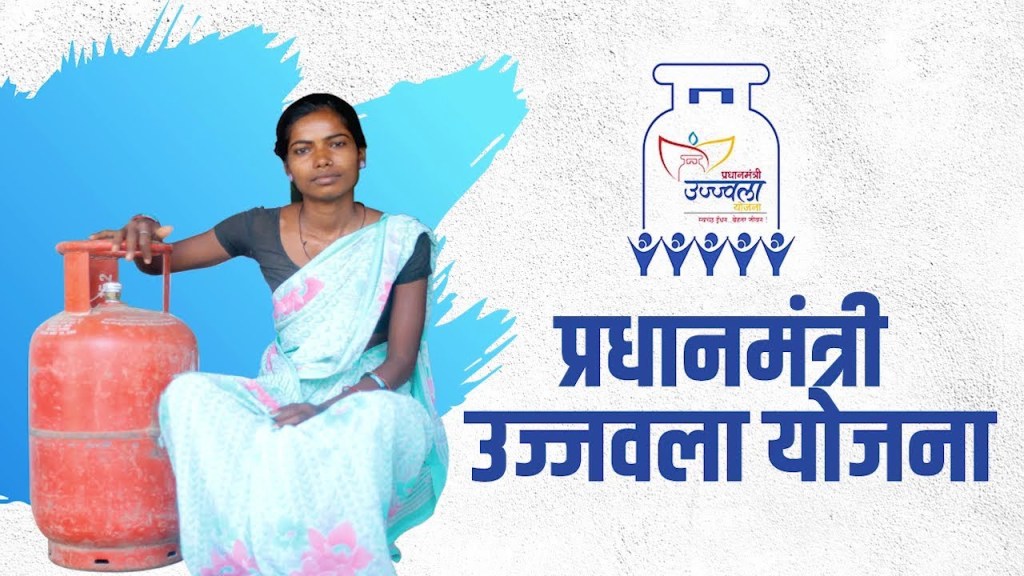
As rattled off by the PM himself, these plans are Ayushman Bharat which offers free clinical protection, Ujjwala Yojana that offers free LPG associations, the twin extra security plans upheld by the public authority, Atal Pension plot, the PM Housing Scheme, and Har Ghar Jal Scheme for drinking water. Four of them carried out in Modi’s initial term and assumed a part in his 2019 success while ‘Ayushman Bharat’ and ‘Har Ghar Jal’ solely affect the ground in Modi’s second term up until now.

“Crores of individuals are getting the advantages of many plans began over the most recent seven years. Today the speed of government plans has expanded and they are accomplishing the ideal objectives. We have advanced a lot quicker than previously. However, it doesn’t end here. We need to accomplish immersion. We need to push forward with an outlook of penny percent accomplishment… for this, we don’t need to keep a far off cut off time. We need to make our goals work out inside a couple of years,” the Prime Minister said from the Red Fort.

Ayushman Bharat – Lot to be finished

Dispatched in late 2018 not long before the Lok Sabha surveys, Ayushman Bharat should give free clinical protection family front of Rs 5 lakh to almost 50 crore individuals in the country. While the plan has no objectives given the idea of the plan includes clinical help, around 10 crore recipients have cards so far to approve their qualification for the plan, suggesting that almost 40 crore recipients are still to get these cards from the Centre. Different states have likewise stretched out the plan to cover 15 crores more individuals and have offered cards to 6 crores of such individuals up until now.

The two greatest states with the most recipients, Uttar Pradesh and Bihar, are slacking on this front of appropriating cards with 1.4 Cr and 70 lakh cards dispersed so far separately however both these states have almost 10 Cr recipients each. Two crore medical clinic confirmations have been accounted for under the plan to date with claims worth Rs 25,000 crore. In any case, UP and Bihar have revealed far less affirmations up until this point, at 7.7 lakh and 2.9 lakh separately, and more modest states have performed better, showing the plan’s mindfulness in UP and Bihar isn’t as wanted up until this point.

Ujjwala Yojana — Best Saturation

The free LPG association plan of Ujjwala was finished in front of the cut-off time in 2019 for eight crore recipients who didn’t have a gas association in the country. This was a distinct advantage conspire for the Modi government in the 2019 races. PM last week dispatched a second form of the plan in which one crore more recipients will get a free LPG association that is relied upon to convert into full LPG entrance in the country. Inside seven days of the dispatch, more than three lakhs of these associations have been given out and the public authority might accomplish its objective in 2021 itself.

Two Life Insurance Schemes — Need a Push

The two disaster protection plans dispatched in Modi’s initial term have seen unassuming improvement and have scope for more inclusion. They are wilful. PM Suraksha Bima Yojana (PMSBY) has 23.6 crore recipients as of date between the age of 18-70 who pay only Rs 12 as an expense in a year to get inadvertent extra security of Rs 2 lakh. The take-up of the PM Jeevan Jyoti Bima Yojana (PMJJBY) is lesser at just 10.5 crore recipients between the age of 18-50 who pay Rs 330 every year for a front of Rs 2 lakh if there should be an occurrence of death.

There are almost 55 crore individuals in the country in the age gathering of 18-50 years and around 65 crores in the age bunch 18-70 years.

Atal Pension Yojana — Big Scheme, Low Uptake

Just 3.13 crore individuals have selected themselves into the Atal Pension Yojana dispatched in PM Modi’s initial term as a feature of an aspiring point of a ‘general government backed retirement framework’. The plan is near the public authority’s heart as it offers a month-to-month annuity of Rs 1000 to Rs 5000 to any individual get-togethers age of 60 years relying upon how much premium he decides to pay, moves the annuity advantage to the companion of the recipient after their demise and moves the whole corpus of benefits abundance till the age of 60 years to the candidate after several passes away. The plan is available to anybody between 18-40 years old to join and this age bunch has more than 45 crore youngsters in the country.

PM Housing Scheme — 2022 point

This is one plan that is doing sensibly well against its aggressive objective of giving each vagrant a house before the finish of 2022. Against a new objective of conveying about 2.67 crore houses before the finish of 2022, 1.53 crore houses (60%) have been finished up until now and another 48 lakhs have been endorsed and are in different phases of development. The public authority is expecting to finish 2.01 crore houses consequently by March 2022 and the remainder of the objective (65 lakh houses) before the finish of 2022. Large states like Maharashtra and Tamil Nadu are anyway battling, covering under half and 40% generally speaking objective of theirs individually up until this point.

Har Ghar Jal — Game-Changer for 2024?

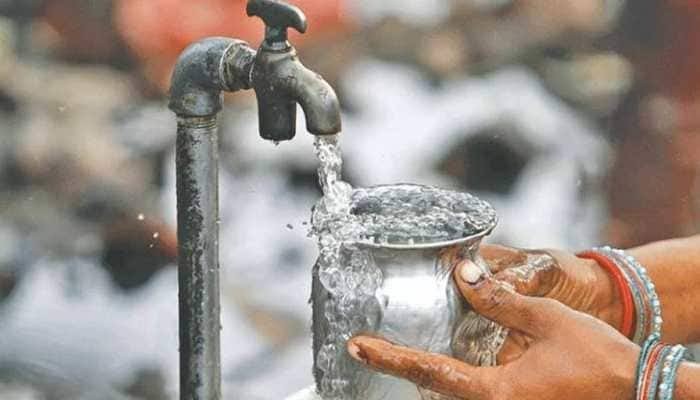
The funnelled drinking water for all plan dispatched in Modi government’s second term on Independence Day in 2019 could be the genuine distinct advantage for the BJP come 2024, as it has an objective for culmination around the same time. Just 17% of the nation’s families, about 3.2 crore, had faucet water associations when the plan started, and this has effectively ascended to 42% as of date with 4.7 crore associations given over the most recent two years. The Center has an aggressive point of going after the plan early in 2023, preceding the overall appointment of 2024. For that to occur, the greatest territory of Uttar Pradesh should beat as it actually has just 17% faucet water immersion with 32 lakhs out of 2.6 crore families covered up until this point. West Bengal, Jharkhand, and Chhattisgarh have under 15% inclusion. Rajasthan is at 20%.

Narendra Modi’s words from Red Fort are a message additionally to focal government divisions running these plans to propel themselves for 100% immersion. “The greatest benefit of this 100% achievement rate is that nobody stays denied of the advantages of the public authority plot. At the point when the public authority works with an objective to contact the individual in the last line, really at that time there is no separation and there is no degree for debasement,” the PM focused from the Red Fort on Sunday.

ECONOMICS OF MONEY

HOW MONEY ORIGINATED?

            Money is neither invented nor discovered. It evolved over years. Several centuries ago, there existed a system named the barter system. The barter system is the system where the goods and services are exchanged with each other. For example, If a person says X sells vegetable to another person Y, then the person Y have to sell fruits to the person X. Thus they exchanged goods between them. As time evolves, yellow metal and paper currency was used by the people. The yellow metal is nothing but gold, silver. In this system, the people used gold and silver to buy goods and commodities. As time evolves, the government has said that no need to use gold metals and they will issue notes, i.e, currencies with the value written on them. The government has ordered everyone to use and accept this. As long as people trust the system introduced by the government, paper currency is available. This is how money evolved over a while. Today, there are multiple forms of money. They are credit cards, debit cards, mobile banking, electronic wallets.

HOW DO WE SPEND MONEY?

            There are five forms of spending. They are needs, wants necessities, comforts, and luxuries.

NEEDS: Needs are the things that you must require at that time. Some of the common needs of a man are food, clothing, shelter, transport, communication, education. For example, as a college student, you need to have a phone since many study materials have been sent to your devices.

WANTS: Wants are the thing that you desire to have. Unlike needs, wants have options to choose from. If you do not have those things, it will not affect you. For example, well-furnished home, time-saving home devices, AC rooms, etc.,

NECESSITIES: Necessities have been categorized into three types: 

  • Necessities for life: This includes the basic things you need to run life on earth. Example: Food, clothing, and shelter.
  • Necessities for efficiency: This includes the bike for college students, a car for a businessman.
  • Conventional necessities: It is a social habit of practicing some habits. For example, people spend more money on wedding receptions.

COMFORTS: Comforts are the things that make life more enjoyable. The examples include a Well-furnished home, AC bedrooms, etc.,

LUXURIES: Luxuries represents the higher strata of spending. For example: Having a BMW car, buying diamonds.

       The important point is that needs and wants change with time. For instance, when you are a college student, having a Macbook pro is want. But when you are in the corporate world, having a Macbook pro becomes the need. Necessities, comforts, and luxuries will also differ from time to time and people to people. In the 1990s having a phone is a luxury, in 2000 having a phone is comfort and now it is a necessity to have a phone.

TAX, SAVINGS, AND INVESTMENT:

TAX: The part of our earnings has to be paid to the government in a form of taxes. The reason why we have to pay the taxes is that the government sets up the environment for our earnings. Taxes enable the government to maintain the city infrastructure by providing good roads, hospitals, and transports. To be a good citizen, we must pay the taxes honestly. The tax rate will be increased if some of the people are not paying their taxes properly. Once we paid the tax, then that money will be the government’s money. There are two types of taxes namely direct tax (income tax) and indirect tax (GST).

SAVINGS: Savings is the money that remains after you spend the money from your earnings. You can put your money in a savings bank account. The money in your account will be safe. The ability to convert them into cash is high. The rate of risk is low in a savings account. If you need money within one year, then put the money in a savings account. The ideal equation is INCOME-SAVINGS=EXPENSE.

INVESTMENT: You can invest the money in bank deposits, mutual funds, equity shares, fixed deposits, gold. The return of the money will be higher or lower. The risk of losing money varies by the investment you made. It is a long-term process generally more than 2 years. The liquidity depends on the type of investment. If you want to need the money a few years later, then invest the money.

ENTREPRENEURSHIP

       An entrepreneur is an individual who has the capacity and willingness to run a business by knowing the risks to make profits. The process of setting up a business is known as entrepreneurship. It needs a business model, capital coupled with vision, enterprise, and industry. It is an integral aspect of any community, society, and nation to succeed in an ever-changing competitive global marketplace. An entrepreneur must spot opportunities, manage risks, and face challenges. He/she needs to take accountability and responsibility for success or failure.

WHO IS AN ENTREPRENEUR?

  • Is visionary
  • Is an investor(capital or fund)
  • Is a risk-taker
  • Is an Innovator
  • Is future-oriented
  • Is an enterprise creator.

QUALITIES OF AN ENTREPRENEUR

  • CREATIVE THINKING: An entrepreneur must have creative thinking, motivation, conviction, and passion. He/she must be able to analyze the problems and bring proper solutions.
  • LEADERSHIP ABILITY: An entrepreneur should have leadership abilities. So that he splits the works into groups and can finish the work without any conflicts.
  • BUSINESS MANAGEMENT: He/she should possess business management skills. He should protect the organization’s secrets from competitors.
  • COMMUNICATION ABILITY: He/she should have the ability to build connections and networking. Good communication skills always bring a benefit to the entrepreneur. He/she should maintain good relations with customers, partners, and employees.
  • OPPORTUNITY GRABBER: An entrepreneur should be an opportunity grabber.
  • TECHNICAL KNOWLEDGE: An entrepreneur should possess sufficient technical knowledge.

ENTREPRENEURSHIP, INNOVATION, AND IPR

        Entrepreneurship, Innovation, and IP Rights (Intellectual Property Rights) can create sustained impact in the ecosystem. Entrepreneurs should bring innovative ideas to their ventures. Innovative offerings increase the efficiency and productivity of the workforce. It also helps to improve the brand values and increases the profit rate. Entrepreneurs need to be aware of IP rights and policies to benefit from innovative ideas. It helps to protect the business ventures from unjustified infringement claims from other entities.

IMPORTANCE OF ENTREPRENEURSHIP IN ECONOMY

       Entrepreneurship is essential for several reasons to include promoting social changes, increasing innovation, increasing employment rates. Entrepreneurs are frequently considered as nation’s assets since they help in the national income of the country. Great entrepreneurs can change the lifestyle on a local and national basis. The standard of living has been increased with the development of entrepreneurship. Entrepreneurs help in increasing the country’s export trade and thereby play an important role in the economic development of a country. New and improved products and services from entrepreneurs boost the national income of the country. In addition to this, it increases the employment rate in that country. Through the invention of new products, entrepreneurs help in improved quality of life and economic freedom. For example, smartphones are used worldwide by more than 5 billion people. Technological entrepreneurship can have a long-lasting impact on the world until the growth of smartphones. Entrepreneurship is innovation and hence helps in providing funds for research and development with several institutions. It also helps in balancing regional development by setting up industries in less developed areas. The growth of business in these areas leads to several developments include transport, health, education, entertainment, etc. Thus the role of entrepreneurs in today’s economy is indispensable.

Impact of Covid 19 on Indian Economy

It has been more than a year and a half and the world is still struggling with a novel coronavirus pandemic. The nation went into strict lockdown for the first time in March 2020, which brought the urban economy to a standstill in the first quarter of FY 2020-21. A slow recovery was seen from the second quarter. The resurgence of demand in festival season and bumper agricultural output provided some support to the Indian economy and GDP in FY21 contracted by 7.3%.

With the development of vaccines and a lower number of cases, it was estimated at the beginning of FY22, that India will grow around 12% this financial year but the second wave of the pandemic, made things take turn for the worse. While there was no nationwide lockdown this year, local restrictions in major states impacted various sectors of the economy.

Sector wise impact

AGRICULTURE – With the second wave, the virus also penetrated rural India and this is a matter of concern as last time, GDP contraction was limited to some extent, due to support from the rural economy. In the second wave, stricter restrictions were placed in rural regions. Mandis stayed closed. Farmers could not sell their output and crops were rotting in the field. This also impacted the vegetable vendors and processing industries.

MANUFACTURING – The manufacturing sector was also impacted in both waves. Factories had to work with reduced workers. Due to fear of lockdown, many casual laborers went to their homes. The supply chain was also disrupted due to varied lockdowns in different states. This pushed the cost of the products and ultimately lead to inflation in the country. 

SERVICE – The service sector also provided relief and helped in recovering the economy. Thanks to the digital revolution, the majority of the businesses in the service sector shifted online. Employees could work from home and this helped the economy going on even during lockdowns. However, those businesses which require physical contact, like spas, salons, cinemas, etc. had to suffer during the pandemic.

AVIATION – This is the sector that is most hit by the pandemic. Flights get banned as soon as several positive cases begin to soar. People are avoiding unnecessary travel and tourism and the number of footfalls in airports is reducing. 

UNEMPLOYMENT – Unemployment in the country also increased during the pandemic. Companies were working at low capacity. To reduce costs, employees were laid off. Casual laborers went home, which put pressure on rural jobs, especially jobs under MGNREGA. In July, the unemployment rate is around 7.68% in India.

INFLATION – Due to increased prices of crude oil abroad, low supply of casual laborers, and restrictions in transportation, lead to an inflation of prices of goods. To boost liquidity, RBI is also increasing the money supply, which is also leading to an increase in the prices of goods and services. CPI Inflation in the country is around 6.2%, which is more than RBI’s commitment to tame inflation under 6% under the monetary policy agreement.

Conclusion

So overall, all macroeconomic variables are showing negative signs during the pandemic. Some online businesses like Zomato, OTT platforms have benefited from people staying home. But most of the businesses have suffered due to pandemics. Both government and the central bank are trying to control the impact of the coronavirus on the economy. Both the health and economy of the nation are important. Let’s hope that due to stricter compliances and widespread vaccination programs, India can avoid the impact of the third wave, as another wave will further weaken the economy.

Importance of Atmanirbhar Bharat

A nation’s strength ultimately consists in what it can do on its own, and not in what it can borrow from others.” – Indira Gandhi.

Self-Reliance, one thing which is common in all developed nations and a thing that a developing nation wants to achieve. One of those developing nations which are striving to make themselves self-reliant is India. The battle to become self-reliant is not new but started back from the independence itself. At that time, India was the largest economy in South Asia, the self-reliance in the state heavy industries and strategic sectors in the post-independence decades put India before most of the developing world.

However, in the 1970s and 1980s, India did not modernize these industries to move up the technological ladder. Little was done to modernize light industries. The industrial ecosystem was held hostage to the license-permit-quota system that hampered innovation. As a result, self-reliance gave way to corruption and dependence on imports. A major turn came in 1991 after economic liberalization in India was initiated in 1991 by Prime Minister P. V. Narasimha Rao and his then-Finance Minister Dr. Manmohan Singh.

1) Atmanirbhar Bharat and the idea behind it

At a time when the world was plagued by the deadly pandemic, PM Narendra Modi launched a campaign which was meant to convert this crisis into an opportunity and strengthen India’s fight by becoming Aatmanirbhar or self-reliant.

-> There are five pillars of Atmanirbhar Bharat which focus on:

  • Economy
  • Infrastructure
  • System
  • Vibrant Demography and
  • Demand

-> The Five phases of Atmanirbhar Bharat are:

  • Phase-I: Businesses including MSMEs
  • Phase-II: Poor, including migrants and farmers
  • Phase-III: Agriculture
  • Phase-IV: New Horizons of Growth
  • Phase-V: Government Reforms and Enablers

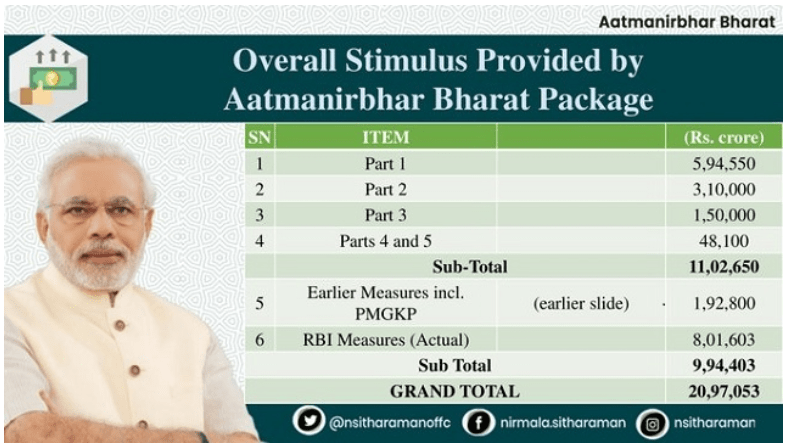
PM Modi emphasized the fact that it is time to voice our local products and make them global. A special economic package was created as part of this campaign. Established by the government, which will benefit various segments including the craft industry, micro, small and medium-sized enterprises (MSMEs), workers, the middle class and industry. The economic package announced by the Prime Minister, along with various packages launched during the lockdown period, amounts to around 20 lakh crore rupees ($ 283.73 billion), which was roughly 10 percent of India’s GDP. It was expected to support and empower different parts of the country and give new impetus to the development of the country in 2020.

In order to express the determination of an independent India, land, labor, liquidity and laws were included in this package. Minister of Finance & Corporate Affairs, Ms. Nirmala Sitharaman, made all the announcements related to several sectors on different days, divided into five tranches, and provided detailed information on the steps the government is taking.

2) Division of package for different sectors in Atmanirbhar Bharat

  • First tranche – Rs 5,94,550 crore

The first aid installment announced by Nirmala Sitharaman focuses on empowering the backbone of the Indian economy: MSMEs, which employ around 11 billion people and have a GDP share of around 29 percent. This included unsecured loans of Rs.3 billion and a capital injection of Rs. 50,000 billion for MSMEs through the funds

  • Second tranche – Rs 3,10,000 crore

Nirmala Sitharaman’s second installment of measures was targeted at migrant workers and street vendors. The minister introduced ‘one nation one ration card’ card so migrant workers can buy ration from any ration depot in the country. Around 50 lakh street vendors will have access to a special credit facility of Rs 5,000 crore within an initial working capital of Rs 10,000. Around 2 lakh crore rupees will be delivered to farmers via kisan credit cards, while 2.5 crore farmers, including fishermen and animal husbandry farmers will be able to attain institutional loans at a preferential rate.

  • Third tranche – Rs 1,50,000 crore

The third tranche worth Rs 1.5 lakh crore aims at agriculture and related sectors, including dairy, livestock and fisheries, as the government proclaimed measures to toughen the broad agricultural sector.

  • Fourth and fifth tranches – Rs 48,100 crore

The fourth installment of the Rs 20 Lakh Crore package included reforms for sectors such as coal, minerals, defense production, airspace management, airports, MRO, UT distributors, space and nuclear energy.

3) Sectors to benefit from Atmanirbhar bharat.

I. MICRO, SMALL, AND MEDIUM ENTERPRISES

Micro, Small, and Medium Enterprises have played a vital role in Indian economy. It has contributed one third to the GDP of India and also provided employment to large sections of society. The sector is source of livelihood to 110 million people. With the current phase of Atmanirbhar Bharat these MSME’s has become more significant to India’s financial and economic sector. Acknowledging the importance of this sector it would contribute to 50 million jobs and half of India’s GDP in the coming five years.

Benefits of MSME’s under Atmanirbhar Bharat:

  • Collateral free loans- The commencement of collateral free automatic loans will assist the existing borrowers and this will also give the fuel restart to the business operation.

Some of the key highlights of this benefits are-

-> According to bank policies, the current borrowers should have the standard ratings and turnover of rs.100 crore.

-> Four years of loan tenure and 12 months on principle payment.

-> No additional collateral is required.

  • Equity Infusion- Government is going to setup a fund for funds of 10,000 crore to overcome this situation of pandemic. FOF will be operated through a Mother fund and few Daughter fund. Through these funds the MSME’s can expand their size and capabilities. This will also encourage MSME’s to get listed on the board of stock exchange.
  • Debt for stressed MSME’s- To support MSME’s the central government will provide Rs. 20,000crore as subordinate debts. The infusion of fresh capital into the business will reduce the burden on MSME’s and will benefit two lakh MSME’s.

II. Agriculture and Fisheries

Agriculture is the most important sector of Indian economy. It contributes to 18% of GDP and provide employment to 50% of countries workforce. Government towards improving this sector has released two major initiatives Pradhan Mantri Kisan Samman Nidhi Yojana (PM-KISAN) and Agriculture Infrastructure Fund this will help to improve the financial and agriculture status of farmer.

Benefits of agriculture under Atmanirbhar Bharat:

  • Pradhan Mantri Kisan Samman Nidhi Yojana (PM-KISAN)- Under this scheme financial benefit of Rs 6,000/- is provided to beneficiary farmers and is payable in three equals that is 4 monthly installments of Rs 2,000/-. However, under this scheme an amount of more than 17,000 crore has been transferred to 8.5 crore beneficiary farmers.
  • Agriculture Infrastructure Fund- The objective of this scheme is to drive investment across the agricultural chain. This scheme will allow farmers to store their produce till they get better price and affordable post-harvest infrastructure. Farmers and other stakeholders will have access to financing 3% interest and credits from governments and this will help them to enhance their product value.

III. Coal Mining Reforms

India being the fourth- largest producer of coal in the world. In the vision to build Atmanirbhar Bharat a reform to promote commercial coal mining in India has been announced. Opening up of these sectors will expand world class production capacity and provide top product services with global supply chain.

Benefits of Coal mining under Atmanirbhar Bharat:

  • Forty-one coal mines are opened for auction and there are no end restrictions on the coal production for these mining. Bidders will not require any previous experience in coal mining they just have to put up sufficient amount of money. Mining plan approval will be provided in 30 days rather than 90 days. Coal mining will be determined through a National Coal Index for different grades of coal.
  • These 41 mines are likely to produce 225 million tones annually and Rs. 33,000 capital expenditure to get these mining going. Additionally, state government will generate more than 20,000 crore per year in royalties from these mining. This will generate direct and in direct jobs for more than 3 lakh employers and is expected to generate fund of Rs. 112 crores for the District Minerals Foundation Fund.

IV. Non-Banking finance (NBFCs), Housing finance companies (HFCs), Microfinance institutions

For the Non-banking finance companies (NBFCs), Housing finance companies (HFCs), Microfinance institutions (MFIs) Ministry of finance has announced following measures:

  • Special liquidity scheme worth Rs. 30,000 crores
  • Partial credit guarantee scheme worth Rs. 45,000 crores

Benefits of these schemes under Atmanirbhar Bharat:

  •  Main objective of Special liquidity scheme is to provide liquidity support to MSMEs that are impacted due to this pandemic. Under this scheme investments will be made both in primary and secondary transactions in investment papers of NBFCs, HFCs, MFIs. These securities will be fully guaranteed by government. This scheme will ensure operational continuity and promote leading MSME sector.
  • Partial credit guarantee scheme is for NBFCs, HFCs, MFIs, having low credit rating and provide liquidity to leading MSMEs and individual and first 20% loan will be given by the government. This also helps the MSMEs to avoid distress sale of their assets for meeting immediate funds.

Conclusion

This campaign can reach its epitome if supported well by the government. Keeping in mind the increasing incursions by China and India’s dependence on it, the success of the campaign is now more in need than ever. If the government is solemn about instigating this economic philosophy, it must clearly list the areas that need improvement to make Indian manufacturing competitive. Only then will entailed policies get outlined and implemented to bring about the change.

VEGANISM AND IT’S IMPORTANCE

What is Veganism?

Veganism is perhaps the best manners by which you can uphold basic entitlements, secure the planet, work on your wellbeing, and live without moral tradeoffs. An ever-increasing number of individuals are going veggie lover consistently, and on the off chance that you do focus on this way of life, you likely will not discover it as hard to follow as you might suspect.

While a few groups accept that veganism is unfortunate, unnatural, or outlandish, these thoughts are essentially bogus. Indeed, going veggie lover can really make you better and work on your relationship with the normal world and your body’s requirements. Besides, in the event that you believe it’s outlandish, perhaps you should give yourself more credit.

“Veganism is a philosophy that is against the mercilessness, abuse, and enduring of creatures. As a way of life, it is rejecting the utilization of creatures, regardless of whether in food, dress, amusement, or items tried on creatures.”

Why Veganism is important?

Mankind is draining the planet’s limited assets at a quick rate, the climate is going through uncommon, pointless and capricious changes, and individuals experience the ill effects of heap sicknesses connected to their eating regimens. You can’t fix all that by accepting veganism, yet you can be one piece of the arrangement.

Individuals will in general follow those they appreciate. In the event that you conclude that veganism is for you, your companions, relatives, and partners may follow after accordingly because of your model. In addition, when you quit eating meat, dairy, and eggs you are utilizing your wallet to take up arms. Organizations that sell meat and creature results just do as such in light of the fact that it makes them cash. At the point when their benefits begin to evaporate, they will think about alternate methods of working together.

Why go vegan?

  • Put Your Health First

It’s not difficult to snatch a supper at a drive-thru eatery — a hamburger and French fries or a meat taco — or to toss a couple of chicken bosoms in the stove when you return home from work. In any case, how are those propensities doing your wellbeing?

Vegetables and Fruit Heart Shaped

The facts really confirm that creature tissue and side-effects feed our bodies, yet they can likewise add to illness and different issues, which are talked about beneath. In the event that you ask any nutritionist what individuals should zero in on in their eating regimens, the person will say “foods grown from the ground.” That’s in every case highest in the brain of any expert who makes dietary suggestions. No nutritionist would say “steak and seared chicken,” for a valid justification — those are considerably more prone to shape part of an unfortunate eating regimen. In case you’re battling to get thinner or drag out your life expectancy, veganism might be the best initial step on your way.

  • Save the Environment

Processing plant cultivating contributes vigorously to natural issues from one side of the planet to the other. Contemplate the quantity of creatures that are butchered each day to fill grocery stores with stock. Those creatures must be taken care of, watered, and housed before they are annihilated. Deforestation across the world is driven by the avarices for more pastureland and creature feed, though taking care of the world with plant-based food sources would require just a negligible portion of that land.

Creatures in the horticulture business add to the pollution of the water table through fecal spillover. They devour huge loads of water and grain, which should be cultivated utilizing yet more water. Pesticides are added to creature feed crops, and the actual creatures are infused with unfortunate chemicals. It’s an endless loop that debases our environment.

We’re not simply discussing salmonella and E. coli here, however those are unquestionably hazardous. Foodborne disease can likewise result from the defilement of meat: dung, bug eggs, and different things you presumably don’t need in your mouth — not to mention your gut.

  •  Conserve Natural Resources

We also have to think about the natural resources that factory farming and crop raising deplete. Factory farms have to be powered, so they consume fossil fuels, and in general the more finite resources we use, the less will be left over for our children.

The crucial point here is the long production chain of factory farming — you need to put resources into growing the food for the animals, then growing the animals themselves, and then “processing” (just a pretty word for slaughtering) the animals. By contrast, the plant-based food chain is much shorter and requires fewer natural resources.

  • Creatures Die in Efforts to Prevent Predation

What many individuals don’t understand is that veganism adds to saving lives other than those of cows or chickens. These animals have regular hunters, and ranchers utilize savage techniques to trap and kill those hunters. As could be, it’s tied in with safeguarding the wellspring of their pay. Coyotes, wolves, and different hunters stall out in traps constantly. So do animals who don’t go after cultivated creatures, for example, birds who accidentally fly into these snares.

  • Diminish the Risk of Foodborne Illness

Identified with this are ailments that are not actually foodborne, however result from the escalated processing plant cultivating rehearses that are expected to transform creatures into human food. You might have known about bird influenza and pig influenza — they are called that since they in all likelihood began in chicken industrial facilities and hoard ranches. Microbes circling in industrial facility cultivating are one of the best and most squeezing dangers that humankind faces.

  • Further develop Digestion and Build More Lean Muscle

Processing is a confounded theme. It’s additionally tricky for some individuals. An ever-increasing number of purchasers are standing up against ulcerative colitis and IBS, two stomach related problems that have their underlying foundations in irritation of the stomach related parcel.

Plant-based eating regimens are wealthy in fiber, which helps processing. Furthermore, all that rich sustenance will help you assemble slender muscle and break up fat. Many individuals expect that they’ll battle to acquire muscle subsequent to going to veganism, however the inverse is frequently obvious. However long you keep on working out and devour adequate calories, you can prepare just as — or far better than — you could before veganism.

–        Improve Your Concentration

Similarly, you might discover that you can concentrate for longer periods of time after you take up veganism. You might also find that you get better performance reviews from your boss as a result. It’s amazing what eliminating meat and animal by-products from your diet can do for you.

  • You Might Live Longer

Specialists haven’t yet concurred about whether veganism prompts life span, yet there are a couple of new wellsprings of data to recommend that veggie lovers live more. One investigation recommends that, paying little heed to carb admission, individuals who eat plant-based eating regimens have diminished death rates. Curiously, the investigation likewise proposes that plant-based food turns out to be much more significant when lessening utilization of carbs — so in case you are doing keto or paleo diets and eating creatures, you might be all the more altogether shortening your future.

What next?

Veganism is an extraordinary method to save aware animals from hurt as well as to work on your life. Try not to sit around idly. Begin to make the change now.

Indeed, you may battle to discover great cafés right away, and discover a few difficulties in your shopping for food, however you’ll improve at it the more you’re vegetarian. It resembles any way of life change. It may not feel like it fits from the outset, however you steadily warm to it. Or then again perhaps like many, you rapidly understand that you’ve at long last settled on the most ideal decision and it feels totally right and regular all along.

AUTOMATION-A BOON OR BANE

AUTOMATION

       Automation is defined as the technique that makes a product or process by automatically using technology. It reduces the human input in the process. Automation has brought wide changes in the world. Starting from morning to evening, our works are automated in one way or another. For example, purified water by purifiers, food cooked in Microwave oven, washing clothes in the washing machine, automated vacuum cleaner, robots for work field, etc. We can say that most things are automated in the work field. Automation has been used in several fields including manufacturing, transport, defense, operations, and Information Technology. Automation plays a major role in IT optimization and digital transformation. Consequently, the automated systems have become more sophisticated. In the 21st century, we are mostly dependent on automation. Although it has several advantages, eventually it possesses some disadvantages. So, let’s discuss whether automation is a bane or boon?

AUTOMATION- BOON

        From the simplest to complex things, Automation has integrated with every part of our lives. With the help of automation, every work has been easily completed and it saves a lot of time.

Automation in the home: Using the combination of hardware and software components, home appliances are made. Starting from the purifier, washing machine, refrigerator, microwave oven, vacuum cleaner, etc…. most of the home appliances are automated which saves more time and energy.

Network Automation: By using software, the configuration, management, and operations of computer networks are automated. Network automation has become significant to manage the complexities of modern dynamic networks. It helps to reduce human errors in network management and operations.

Automation in the office: More organizations are using automation in the workplace to improve productivity and lower costs. The office automation system consists of both hardware and software solutions to transfer the data between systems without human interventions. Office automation brings broad changes of benefits to include improved accuracy, cost and time reduction,  storing and managing the data in an efficient manner, facility management, and several administrative works.

Security automation: The use of technologies to integrate security processes, applications, and infrastructure with reduced human assistance is known as security automation. Fast threat detection can reduce the impact of data loss.

Help to Disables: With the advancement in technology, automation helped disabled people to overcome their disabilities and by providing proper care independence, they can work like normal people.

AUTOMATION – BANE

Increases unemployment rates: Low-skill workers can be replaced. But nowadays, even the highly skilled workers are replaced by automated machines. Recent advancements in robotics and Artificial Intelligence (AI) reduced human works in the working environment.

Health issues: Most of the children in this 21st century are addicted to the video game. They prefer online and computer games rather than outdoor games. It makes people lazy and weak. This may be the cause for many health issues like eye problems, back pain, etc.

Machines are sensitive: Automation to some extent can be good but when more control is given to them, it may lead to some disasters Machines can never act like humans and they will be programmed without knowing the sensitivity of the issue.

Hackers:  Technology can be hacked by hackers. Sometimes, it may lead to wide disaster to a country by other countries. Our private details can be stolen by some hackers and they may demand several things to compromise them.

Loss of human interaction: Dealing with computers and machines can reduce the interactions between people.

        Overall, Automation is very essential for the growth and development of a country. Automation ensures the utilization of resources in various fields include healthcare, sports, energy, and technology. Without automation, we will spend more time finishing the task and thus delivery will be done very late. The economic imbalance will be increased. In short term, automation will cause unemployment and may bring some disadvantages. But in the long term effect, Automation will be needed for the better development of the nation.

Diversity of India

Indian Society is a vast social order with multitude of culture, language, religion and caste. It has a very extensive history. Indian society was a layered society from ancient times. Rulers of India belonged from different culture and religion ruled for a long time. “Unity in Diversity” is most frequent feature of our Indian Society. It manifests to unity among individuals who have different culture, ideology, religion, language, ethnicity, etc. Despite the diversity in people, they have the sense of unity. India has different people in every society yet it doesn’t lose their separate identity. People have been living here peacefully for thousands of years.

People have freedom to live their life in their own way. People from different culture and religion interact with each other in many ways which leads to exposure, development of trust, bonding among them, mutual respect for each other, love, etc. Unity in Diversity binds people to maintain peace and harmony and brotherhood. If the people are united like this it will help in the growth and development of country.

History of Indian Society

In ancient Indian history, many races and tribes were involved. The Greek, the Aryans, and many others were living in India. Each and everyone contributed in the development of Indian society, language, art and architecture, and literacy. They blended so perfectible from north to south, east to west.

Significance of history in present

Some people want to rehabilitate the ancient Indian society and culture. This was for the concern of preservation of ancient art and architecture. This advancement cannot be achieved without the clear and accurate understanding of the history. This can’t go along with the achievement of modern science and technology. This will increase social inequalities that can plague India. All these species of the past have to be eradicated from India for the growth of the nation.

Importance of Unity in Diversity

Unity in Diversity is of much importance in the Development of the country, Global Recognition, National Integration, Peace and Harmony. It is very easy to divide people having different ideology but if the people of India are united it is very tough to break down the nation. Unity between people maintains peace in the nation. If the Indian Society is weak and distributed on different terms, India won’t be able to move on the path of development. India is always appreciated on international platforms for its unity. It is a symbol of Unity for other nations despite their different culture and religion.

Role of Unity in Diversity

In India People from different religion and culture live here. Every state has different beliefs, language, ideas, culture, religion, rituals, etc. People follow religion of their choice as India is Secular country. Yet, they live with the spirit of love and brotherhood. Indian Society learned this all from ancient times. There are about 29 religions and more than 1,000,500 languages are spoken. In spite of such differences Indians have unity among them which threatens global society. “United we stand, divided we fall.”

Our Indian Society taught us caste, religion, language, creed, race cannot divide us. We should always stand united for the improvement of nation. We should always believe in the concept of love, peace and brotherhood. The distinction in culture, religion, language makes us strong and makes India recognizable.

WHAT IF?….

Check out what if the whole world has only one language! Everything will become simple. The world of history, technology, medicine, business, and so on might get affected if it happens.

World
World

JOB & BUSINESS:

 Every talented person can get a good job everywhere. Everyone can crack their interview. Everyone can apply for jobs anywhere and have tons of job opportunities. Everyone can deal with the clients effortlessly and can do the projects efficiently. 

Many entrepreneurs can evolve, which creates economic competition between countries. World trade will become easy.

EDUCATION: 

Every child will get an excellent understanding of their studies. Students have vast opportunities to study anywhere. It is easy for the students to discover their talents. Students will be free from academic pressure. The way of education might get changed. Learning new things will become handy for students.

HELP:

 Anyone can help anyone during the emergency times (like accidents). People will become kind-hearted to help a needy person.

There will be no chance of fraud or scandals. Suicides may become less.

Terrorism might get abolished. Medicine for deadly diseases might get founded earlier. People can easily define between good and evil, which might create a massive impact on future generations.

World map
World map

LIFE: 

Men and women can come to a better understanding of each other. No one can use bad words in public. Everyone can express their problem to their government so that the whole world can support them. People can know many events happening in the world. There will be no language division within the country. 

HISTORY:

There’s a chance of many events happening and not. Also, some historical monuments have no chance to exist. Maybe some other historical moments would occur. New inventions might get founded during the early days itself. The world would become more technological than now. Some cultures might get destroyed and, some may be in trend even now.

Challenges for women

The status of women in India has been subject to many changes over the span of recorded Indian history. Their position in history deteriorated early in India’s ancient period, especially in the Indo-Aryan speaking region and their subordination continued to be refined well with India’s early modern period.

Even though, women nowadays are aware of their basic rights like right to vote, right to freedom etc but most women of India are unaware of their rights because of illiteracy and the oppressive traditions. Some of the challenges faced by India women are:

=> Gender discrimination: Women face discrimination right from the birth in the form of female foeticide and infanticide.

=>Major socio-cultural challenges such as patriarchy and gender inequality in society is the main cause of women’s deprivation by way of health, food and nutrition, more susceptible to mortality and contributing to unbalanced male female ratio as well as in the sphere of education, employment, wages and that of political representation. Subsequently this has led to increasing violence and denial of human rights, liberty, equality and justice.

=> The patriarchal family system that prevails in India gives more rights and authorities to the male enabling them to enjoy more power over the female in the family. So women are suppressed, oppressed, harassed, subjugated and deprived of even their basic rights till date.

=>Illiteracy and traditional beliefs and practices of family have prevented a great majority of women from access to health care and knowledge about their rights and privileges resulting in high rate of maternal mortality and morbidity. The high mortality rates among women as revealed by maternal death due to various diseases indicate that women health in general and reproductive health in particular are neglected in our society.

=> Rising crime and violence against women is only due to social stigma that women are weaker section of society. Due to financial constraints and acute poverty, young girls are often married at a very early stage.

=> Political challenges such as less political participation and Pati panchayats affects the role of women in decision-making process in society. Even after the reservation in Panchayats, women leaders are often used as a rubber stamp by their male family members thereby affecting the significance of the laws enacted by the government for women empowerment.

Conclusion:

Rightly did Swami Vivekanand say, “Just as a bird cannot fly with one wing only, a Nation cannot march forward if the women are left behind”.Men and women are two halves of a perfect whole. Therefore the women ought to be empowered as well as respected.

Farm Loan Waiver

Before diving to the details about loan waiver let’s all get an idea about what actually is loan waiver.

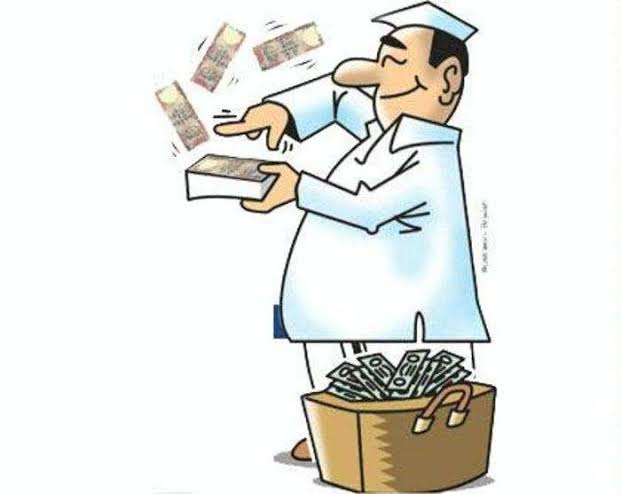
Farm loan waiver: To assist the farmers who are in distress, the Government came up with the process called Loan waiver. In accordance with this, the government will pay defaulted loans taken by the farmers. There is a timeline vis-a-vis when this process took it’s birth but acknowledging those details are meant to eat your time. But dont worry I will fill you about the details in gist/crisp manner.

2016-18: States too have followed the footsteps of Union Government and adopted loan waiver. Ex. Madhyapradesh, Jammu and Kashmir, Tamilnadu, Telangana, Andhrapradesh etc.

Budget -2008: Agriculture Debt Waiver and Debt Relief Scheme (ADWDRS) promised to pay loans taken by the small&marginal farmers and other farmers offering waiving percentage 100% and 25% respectively.

2017- Considering the problems faced by farmers during demonetization, the Budget (17) announced 60 days of interest waivers to farmers.

Arguments in favor:

=>Few people opine that the situation of farmers since a decade(2008-18) have became worse with post-subpime crisis (2008), global financial crisis (2008) ,droughts (2017, 18), and demonetization (2016). These have raised issues like dropping down prices and demand for the products example being textile industry in international market and are forced to sell them in domestic market at cheaper rates

=>In addition to this, the government have came up with the plans of restructuring for loans by corporate borrowers which reinforced support-farmer people to demand for same as debt waiver.

=>Violent agrarian agitations in Maharashtra, Uttarpradesh and Madhyapradesh also made it visible the pathetic plight of the farmers.

=>Farmers are being more prone to Debt Overhang (where all the income earned so far was used to repay accumulated debts) and are forced to use savings/income in buying farm inputs(seeds, fertilizers, pesticides)

Challenges associated with loan waiver:

” Loan waivers undermine credit culture. NPA problem will get aggravated ” __ ex-RBI Governor Urjit Patel

“Farm loan waiver should not form part of election poll promises”__ Former RBI Governor Raghuram Rajan

These are only individual opinions but serious measures are yet to be taken and implemented.

=>Impact on behavior: Loan waiver reduces the hard working capacity and chances for developing negligent behavior/lack of discipline in farmers are more likely.

=>Partial Coverage: Out of 100% loans borrowed by farmers only 60% are from formal sector(banks,NBFCs) and rest of the borrowings are from informal sector (Marwadi, Shroff). So even though government announced loan waiver significant percentage of farmers deprived of benefit.

=>Feedback: Comptroller and Audit General (CAG) commented on ADWDRS which implemented in 2008 ,as it is prone to serious exclusion and inclusive errors. Also Economic Survey-2017 pointed out that loan waivers haven’t contributed neither in accentuating GDP contribution nor in development of farmers.

=>Multiplier Effect: WHO recommended 5% of GDP to health sector whereas the actual allocation was less than 2%.The amount allotted for waiving tantamount to 1.5% of GDP. So it would be justifiable for the government to invest money in the schemes which promotes welfare for majority of populace than in the schemes which have serious implications on other developmental expenditure.

=>Fiscal Deficit: It would be burdensome on state governments implementing the waiver process and there are also chances that a particular state would end up in inflation too. Ex: Report in 2017 by RBI quoted that ₹88000 crores used as loan waiver by 7 States ( Uttarpradesh. Maharashtra etc) notified as a states with inflation.

=>No recognition: Loan waiver focussed mainly on cultivators and the truth that agricultural workers are also being impacted was neglected.

Farmers distress is a real and pressing problem.But the government intervention has hurt more than it has helped.Loan waiver is not a magic wand that could solve the long-standing problems, it could only be used as a temporary relief (like a bandage to serious wound).There are certain issues to be considered in this regard to get ushered in right direction. Like proper identification of vulnerable farmers, enhancing non-farm works, improving technology , expansion of irrigation cover ,focussing on long-term solutions etc.

Hope you have enjoyed the article. Happy reading!

The Kargil War

Here’s what happened between India and Pakistan!

The Genesis:

Twenty-two years ago, on JULY 26, the Indian Army with armed forces recaptured all posts in Kargil, Jammu and Kashmir which were captured by Pakistan’s Army. Since then it is a day to commemorate the victory of the Indian Army over Pakistan’s Army. This is called the ‘Kargil war’ or ‘Kargil conflict’. The Kargil war became the first ‘live’ war in South Asia and it was given such detailed media coverage all over the world.

India
India

The War

It was an armed conflict fought between India and Pakistan from May to July 1999 in the Kargil district of Kashmir(now Ladakh). In India, they referred to it as “Operation Vijay”. The war took place between 3 May -26 July 1999 which was exactly two months, three weeks, and two days.

Cause of War

It began with the infiltration of both regular Pakistani troops and terrorists into Indian territory. The intruders positioned themselves in key locations that gave them a strategic advantage during the start of the conflict. They disguised themselves as Kashmiri militants on the Indian side of LOC.

The Indian Army 

The Indian Army was lead by Gen.Ved Prakash Malik of Indian ground troop and ACM Anil Yashwant Tipnis of Indian Air Force. In India, the operation was given the codename “Operation Safed Sagar”.

The Indian Army, supported by The Indian Air Force recaptured the majority of the positions in the Indian side of the LOC. The Indian Army had a strength of about 30,000 which was strong enough to win Pakistan Troops.

The Cost of War

The victory came at a high price. The official death toll on the Indian side was 527 and 1623 wounded, while that on the Pakistani side was between 357-453 and 1000+ wounded. But also for India, it created a good impact on the stock hike by 30% from the end of the Kargil war to February 2000.

The Indian Army after victory at Kargil

Kargil Vijay Diwas

The Indian Army declared the mission successful on July 26, 1999. Since then the day has been celebrated annually as Kargil Vijay Diwas.

Impact of corona virus on global economy

COVID19 impact on India to be more than $40.9 billion in first ...

The first ever coronavirus case was traced in the month of november in china. Nobody then knew that this virus would cause so much havoc in the world and it will force the countries with largest economy to impose lockdown . The virus has affected almost 200 countries and territories and almost 16 million people got infected with this virus among which 644k people died . The virus has not only affected the life of people directly but has also caused indirect effects on the life of people.

countries like India, Uk , China , France , Italy, New Zealand and Poland have imposed world’s largest and most strictest mass lockdown for the safety of their people. Lockdown no doubt has played a great role in saving the lives of people but it is not considered as an ideal solution as it has also indirectly affected the lives of people by worsening the economic condition of their countries.

Countries are now facing the worst economic slowdown ever which has resulted in job loss. The service sector and the business sector has been badly affected due to the lockdown as the companies are unable to perform their business activities due to which they fail to reach their target. Companies are now forced to drop employees and workers to manage their financial position. This pandemic has forced some major companies as well to downsize their work forces. Companies such marriott international, Air Canada, Scandinavian airlines, Ola , Zomato and many more are forced to layoff their staffs. This situation has boosted the unemployment rate.

Ross Community Action and Chillicothe-Ross Community Foundation ...

Tourism industry of many countries were also affected. Some countries depended upon their tourism revenues but due to the lockdown tourists are unable to visit which has declined the revenues generated from this particular sector. Also due to consumption slowdown many sectors such exports and import business are also affected. But unfortunately this a common stuff which keeps most of the countries connected and helps them in improving their economy and many people who are involved in this type of business are badly affected.

Coronavirus has hit various business sectors badly but this deadly virus has proved to be beneficial for certain industries and sectors such as pharmaceutical industries and hygiene product manufacturers. Though countries are trying hard to revive their economies but some researchers claim that it will take few years to get back the economy to the right track.

Is India ready to go 100% cashless ?

Is India ready to go cashless?

It’s been years where India is trying to make it’s economy go cashless. It has taken some major initiatives to promote cashless transaction such as demonetization, BHIM, direct benefit transfers, UPI and many more. By now many people are into online payments since they find it very easy but do you really think that India is ready for a 100% cashless economy ? and if yes then why are the disadvantages of cashless transaction still valid ?

cashless payments through various digital payment apps has made our life easy. Such medium is especially used the youngsters and is not so popular among the old people. Middle aged people still any how get to know the use of such apps but the old people of our country are not yet ready for a cashless economy. The idea behind this concept is to reduce corruption and money laundering cases but how far is our country prepared for it ? I know it’s easy to use various online platforms because i am young and i am acquainted with such stuffs but the older generation finds it difficult to use and understand it which proves cashless economy a major advantage for the older generation as well as for the illiterate people who have no knowledge about online transactions. The major disadvantage for such people is they can easily become the victim of online fraud since they have less idea about the system. So the disadvantage of online transaction is that certain information can be easily exposed and can be misutilised by fraudsters.

Also cashless transactions require good internet connectivity which is something that cannot be accessed by every person from every corner of the country. Technology problem is one such problem which might prevent India from going 100% cashless.
But we can’t deny the fact that using online payment modes will save a lot of time as it just requires one click to perform any transaction. Now we don’t require to go to bank and stand in long queue to get our transactions done. But still there is a lot of time for India to have a 100% cashless economy and India is not yet ready for it.

1991 Economic Reforms

• India met with an economic crisis relating to
its external debt.
 Unable to make repayments on its borrowings from abroad.
 Foreign exchange reserves had dropped to
very low levels.
 Further compounded by rising prices of
essential goods.

• Origin of the financial crisis – from the
inefficient management of the Indian economy
in the 1980s.
 Foreign exchange was spent on meeting
consumption needs.
 Minimal effort to reduce such profligate
spending or boosting export.

• India approached the World Bank and the
International Monetary Fund.

• Agreed to the conditionalities of WB and IMF-
announced the New Economic Policy (NEP).
 A wide-ranging economic reforms.
 Initiated a variety of policies based on
liberalisation, privatisation and globalization.

• Post 1991 reforms- India’s export sector has
not changed much.

• Huge foreign exchange reserve- a result of
huge financial inflows, not export surpluses.
• Key elements to improve a country’s export
competitiveness.
 publicly provided infrastructure, private R&D
and a facilitating government machinery.

• Mostly available in India’s software services-
exporters, not for exporters of goods.
 India’s trade in services generally has a
surplus; deficit is mostly in trade of tangible
goods.

• Need for strong export performance- cannot rely on volatile portfolio capital against balance of payments stress.

• Way forward:

Need serious structural revisions to ensure necessary infrastructure in our country.

Importance of Water Conservation

Water is one of the most essential natural resources for life on Earth. About 97% of the earth is surrounded by water with only 3% of this being fresh water, which can be used for consumption, agriculture and other usages. Water scarcity situation occurs when high rate of aggregate demand from all water-using sectors exceeds available supply, under the prevailing infrastructural conditions. From Cape Town to sub-Saharan Africa to Asia’s teeming megacities, there’s a global water crisis affecting millions of people. Water scarcity affects every continent and was listed in 2019 by the World Economic Forum as one of the largest global risks in terms of potential impact over the next decade.

India’s water problem

India, the second most populous country in the world, has a diverse population that is three times the size of the United States but lives in one-third the physical area. The usage of water across various sectors in India is on the rise, driven by a combination of population growth, socio-economic development and changing consumption patterns.

Geographically also, there is considerable variation within the country with respect to water availability. About 71 per cent of India’s water resources are available to only 36 per cent of the area while the remaining 64 per cent has to make do with 29 per cent of available water (India’s Water Future 2050; Verma & Phansalkar report). Irrigation perhaps the most important input in the agriculture production compared to all other key inputs like seed, fertiliser, etc. In fact, these inputs cease to realise their full benefit unless combined with irrigation. As with all countries with large agricultural output, excess water consumption for food production depletes the overall water table.

India has made massive improvements to both the availability and quality of municipal drinking water systems, however, due to increase in population and rapid growth in India’s urban areas, water scarcity is a looming problem in most major cities across the country. India’s water demand is expected to continue increasing at a similar rate until 2050, accounting for an increase of 20 to 30% above the current level of water use. This can be attributed mainly due to rising demand in the industrial and domestic sectors. Moreover, as the overall population is expected to reach 1.6 billion during the same time period, water scarcity situation, similarly, will further worsen in times to come. Therefore, sustainable management is essential to protect the water environment and to meet the increasing water demand in the future.
Countering India’s water problem

Many areas of India are fortunate to have a relatively wet climate, even in the most arid regions. In these areas, rainwater harvesting could be one solution for water collection. In India, rainwater harvesting has been in practice for more than 4000 years. It is basically a simple process of accumulating and storing of rainwater for drinking, irrigation, and water for livestock.

Rainwater harvesting and management hold tremendous potential for reducing rainwater runoff and reducing groundwater consumption, particularly in urban areas. These systems are acting as incredible support systems in many Indian cities by providing a superb alternative to the main water supply, especially during dry seasons. Widespread installation of these systems is also revitalizing the natural properties of land, helping to improve the quality of groundwater, raising its level, and preventing wells and tube wells from drying up. Additionally, efficient deployment of rainwater harvesting systems is limiting surface runoff of water, which is reducing soil erosion, and increasing its fertility.

More or less all states in India, have made rainwater harvesting mandatory in government institutions, commercial complexes, and residential high-rises. Some of these laws have already come into effect, and others are soon to follow. The Central Ministry for Drinking Water and Sanitation, in association with the Central Ground Water Board has prepared a conceptual document called the ‘Master Plan for Artificial Recharge to Ground Water in India’. The master plan envisages the construction of about 23 lakh rainwater harvesting structures in rural areas, and close to 88 lakh artificial recharge and rainwater harvesting installations in urban centres.

Conservation of water in the agricultural sector is essential since water is necessary for the growth of plants and crops. Only a part of the rainfall or irrigation water is taken up by plants, the rest percolates into the deep groundwater, or is lost by evaporation from the surface. In India’s arid and semi-arid areas, the ‘Tank System’ is traditionally the backbone of agricultural production. ‘Tank System’ refers to large tanks are constructed either by bunding or by excavating the ground to collect rainwater, check water flow and accumulate the run-off. Simple techniques like these can be used to reduce demand of ground water for irrigation. Therefore, by improving the efficiency of water use, and by reducing its loss due to evaporation, agricultural water demand can be reduced.

Sustainable brands of 2021

The Skin-Care Ingredients You Shouldn't Mix

Are you finding it hard to contribute to the environment in times of the pandemic? If yes, then this article is just for you. Sustainability is the key to a better future. But it is not possible to achieve it unless the brands stop using non-biodegradable material in their packagings. It is no lie that brands tend to invest a lot of money in their advertisement and spend very little money on their packaging. In this situation, we must research brands that are eco-friendly and care about the environment. The call of nature is to create innovations to our expenditure patterns and embrace a more sustainable lifestyle. The first and the most significant, deliberate measure that we can do is shift to ethnic fashion brands and eco-friendly brands that will help us contribute. Here are some brands that you can invest in-
Fashion brands-
1) Maati by Neha Kabra- is a modern womenswear start-up from Udaipur, supported by PETA. A portion of its material is up-cycled, and they use naturally sourced dyes; they use plastic-free packaging. Their mere and casual profiles are timeless.
2) InSom- is a natural and up-cycled attire label that ensures 100% zero-waste creation. It is incredibly fashionable and comfortable; the brand converts leftovers, imperfect and extra stuff from large-scale natural fabric production industries and converts them into wearable.
3) Mix Mitti by Ms. Shivangi Bajpai- is a business accessory label giving a variety of products from bags to journals. In addition, a part of its earnings gets donated to protect wildlife and fundamental habitats.
4) Nicobar- is an up-to-date lifestyle label that offers clothing, home decor, and trip accessories. Encouraged by the Indian Ocean and a comfortable island aesthetic, their outlook of integrity in timeless goods designed to last and influenced by natural design and materials gets echoed in their beautiful stores.
5) Doodlage- is a sustainable clothing mark that makes circular fashion mainstream. They produce garments, accessories, plus home products made out of fabric scraps sourced from large manufacturing units in India. These fabrics otherwise add to landfills or go into incineration.
Skincare brands:-
1) Bathing Culture- They make a range of zero waste skincare refill stocks. The ingredients give this vegan zero waste skincare product a cocktail of antioxidants, amino and essential fatty acids.
2) The Earth Rhythm- one of the very few businesses that are 99% plastic-free. From dispatching to packaging, the brand is committed to its choice. Their employees consist of women from weaker sections of society and individuals with autism/down-syndrome. Their zero-waste practice is very excellent and stands testament to their brand value.
3) Ren- Between its sustainably sourced ingredients, reclaimed ocean-plastic packaging, and refill scheme, the brand appears well on course to accomplishing its zero waste aim by the end of 2021.
4) Davines- Before environmental awareness was even on the radar of the wider beauty industry, there was Davines. The brand has been carbon-neutral since 2018 and is now focusing on obtaining net-zero emissions by 2030.
Make your skin dewy and closet aesthetic, and contribute towards sustainable goals at the same time.
(This article is unsponsored)

Mithali Raj- Epitome of Grace

Mithali Raj (@M_Raj03) | Twitter

38-year-old Mithali Raj recently created a world record by becoming the first cricketer to overpass 6000 runs. However, she came a long way to trespass this journey; her tale encountered a lot of struggle and devastation. While girls of her age were clothing up their dolls, Mithali performed her first match when she was merely 11. Perfection in her preferred position notwithstanding, it is the transformation from Bharatnatyam to cricket; turns her remarkable story a compelling one. Information on the change from dance to cricket is going circulated since she cracked another world record. On 3rd December 1082, she was born in a Tamil family in Jodhpur, Rajasthan. Acknowledged with the Arjuna Award in 2003, including the Padma Shri in 2015, Mithali is frequently called the Sachin Tendulkar of cricket.. Since she was a child, she was keen to become a dancer. However, fate appeared to have had different ideas for her. Her dad started observing Mithali at St John’s coaching grounds in Secunderabad since she was 10. After extreme hard work and devotion- Mithali emerged as a batwoman at 22 and gave a superb inning against England. Her mentor says that she had to make a lot of sacrifices. Working at the railway station was a tedious task, and she had to cancel her plans with friends and quit her social life. Mithali had always been an extrovert, minimizing her social life a difficult task. In 1999, she graced into the youngest ever ODI centurion during a debut match against Ireland at Milton Keynes, scoring 114 runs. However, Mithali did experience a slight orthodox mentality during her journey. But her will was strong; she believed in herself and continued working hard. It serves as an immense pleasure for the Indian cricket team to have her as a captain. Mithali Raj is one of the most sought-after idols for women who want to be victors in their adopted sport. Unfortunately, till now, not all women’s cricket matches are televised. Society sees cricket as a men’s sport; often, parents discourage their children who wish to play it. The difficulty is women cricketers are not addressed nor glorified while women are planting in equal efforts. They own inspirational stories to bestow and justify desire and gratitude as their male complements. The men in blue have overlooked the Indian cricketing industry for a great time, dominating the women executing the sport. Yet, the situation quo altered in 2017 when the Indian women’s cricket team shifted everything around in their favor. Their goal of winning the World Cup perhaps shattered, but the ladies took the middle stage in a community contrarily controlled by men. The Indian women did not rise triumphantly in the match, but they won millions of hearts. Whenever we say the word- cricketer, a man in blue-collar holding a bat comes to mind. Let us change the orthodox thinking of society and imagine a woman in a blue-collar holding a bat with utmost grace in our mind. We must realize that women empowerment is the key to a developed nation, we have to open-minded and liberal and accommodate every community.

COUNTRIES WITH THE MOST SUCCESSFUL STARTUPS.

United States

The US boasts the world’s largest GDP (around $20 trillion), low unemployment rates, and top-ranked entrepreneurial infrastructures. With that in mind, the US market is extremely diverse, offering adequate buying power, and government support for local venture funding has been at an all-time high. The American culture has globally influenced many nations and has become the top spot for new startups in 2020.

United Kingdom

Brexit might have scared off some investors, but the UK holds a reliable and extremely well-governed economy. Local authorities have improved taxation policies, seeing a rise in investor profiles, business incorporations, and currently stands at a 0.7% inflation rate as of 2019. Entrepreneurial infrastructure falls close behind the US, and being the country with the lowest corporation tax from all G20 countries, the UK is a great choice to consider.

Germany

As Europe’s biggest economic powerhouse, Germany holds a great and extremely well-educated workforce. The nation has been one of the most attractive startup destinations for years, offering business owners and entrepreneurs an opportunity to use the well-funded European markets. As a key member of the EU, Germany sits on a $3.6 trillion GDP as of 2017.

Singapore

The Eastern Hemisphere has become a popular choice for prominent business investors and, recently, startups. A wealthy nation with high levels of education and political stability, Singapore offers easier market access and free trade agreements. It’s a melting pot of cultures, and their local economy has seen a 2% growth each year.

New Zealand

A different choice from Europe or North America, the island nation has seen a booming economic influx, with more skilled workers, affordable wages, and simple startup procedures. The country has a 0.6% inflation rate, a 3.6% GDP growth, low-interest rates, and local government has become more business-friendly, with easier access to local statistics.

COUNTRIES WITH THE BEST HEALTHCARE FACILITIES

10- New Zealand

The healthcare system in New Zealand is state-sponsored and very good quality. It is funded through taxes, and provides free or subsidised medical treatment for residents.

9- Austria

Austria has a high standard of healthcare. Paying into the government health insurance scheme is compulsory for both Austrians and expats, with excellent medical facilities and services funded by the taxpayer.


8- France

France has both state run and private hospitals and both maintain a similar degree of excellence. While having private health insurance isn’t essential, it is prudent to have cover when you’re living in France.


7- Australia

Australia’s healthcare system has two main parts: the public health system, and the private health system. Since 1984, Medicare has been the Commonwealth Government’s universal health insurance scheme. This provides Australian residents with free treatment in public hospitals.

6- Netherlands

Healthcare in the Netherlands is covered by two statutory forms of insurance: Zorgverzekeringswet (Zvw), often called ‘basic insurance’, covers common medical care; and Algemene Wet Bijzondere Ziektekosten (AWBZ) covers long-term nursing and care.


5- Germany

The healthcare system in Germany is very good, but expensive. Health insurance is mandatory, and most expatriates will have it added to their employee contract.


4- United Kingdom

Healthcare in the UK has proved to be reliable and convenient for citizens and expatriate workers. The National Health Service, Scottish and Northern Ireland state programs provide many options for emergency medical treatment.

3- Canada

Canada’s publicly funded health care system is a group of socialized health insurance plans providing coverage to all Canadian citizens and permanent residents. Canada holds a remarkably high life expectancy rate, which many attribute to the efficiency of its health care system.


2- Sweden

The Swedish health care system is characterized by high standards of quality care and above-average healthcare spending. Only about 600,000 Swedes have a private health plan, which is usually covered by their employers and can be helpful to skip queues for treatment.


1- Denmark

The Danish universal health care system provides Danes with mostly free medical care and is predominantly financed through income tax. All permanent residents are entitled to a national health insurance card, and most examinations and treatments are free of charge.

Illitracy in India

Illiteracy in India is a massive problem in India especially when it comes to facing crisis like the Covid 19 . This crisis has nearly disturbed the lives of a majority of the world population . A group of seen applying cow dung on their body and when they were asked they told the news reporter that cow dung will help them face the crisis . And what happened the next day  is not very happening as one of them died due to Covid 19 . So education plays an important role in facing such crisis . But the problem is levels of education can not be increased over night . Science play an important role in this case .

Artificial Intelligence- future of the country

Artificial intelligence: I think therefore I am?

It is a well-known fact that Artificial Intelligence is developing at a rapid rate. Artificial Intelligence would take over 90 percent of the jobs in the future. It is no lie that we see Artificial Intelligence applications frequently in our everyday life- net banking, speed cameras, face recognition, etc. Soon, knowing artificial intelligence would become a must to get selected in a job. In a developing country like India, technology becomes a necessity. Therefore, it is the right time to learn and explore it. This article would guide you to become an amateur even though you are tech-savvy or not.
1) So the first step should be to contact your teacher if you are in school and inquire about the artificial intelligence courses. Even if you are in college, you would be able to join a ai course
2) However, if your school and colleges are not offering any courses, try searching online. You can find free interactive courses on Udemy and Guvi.
3) Once you are through the basics- machine learning, deep learning, and neural network, you can go for advanced paid courses.
4) If you feel like you have accomplished well, you can go for internships on Internshala and let’s intern.
This self-learning would not require more than two months if you put in your full efforts. In case you are still not sure that why you should invest your time. Perhaps this might help you.
1) Studying AI soon can provide you with a career as a software engineer studying neural networks, human-machine interfaces, and quantum artificial intelligence.
2) Cramming artificial intelligence presents a life of opportunities. At a fundamental level, you will adequately explain the systems and tools that you associate with daily. And if you adhere to the subject and study more, you can help create cutting-edge AI applications, like the Google Self Driving Cars. In the field of artificial intelligence, the possibilities are truly endless.
3) The use of Artificial Intelligence is capable of creating, transforming, and improving many facets of human life. For example, farming in the United States has been made easier with Farmlogs, a software that provides farmers with information about the weather and soil as well as tracking plant growth to achieve better profits. Some countries are even implementing AI in improving environmental planning, disaster management, and crime prevention.
Here are ten people who made their career through Artificial Intelligence:-
1) Elon Musk
2) Anita Schjøll Brede
3) Jürgen Schmidhuber
4) Fei-Fei Li
5)Dorian Selz
6)Richard Socher
7)Demis Hassabis
8)Rita Cucchiara
9)Anders Hardebring
10)Robin Li

You can be one of them. It is considered that all AI regularities are complex. Yet, like several human-based rules and traditional software, some AI systems are manageable and straightforward to explain. AI explainability is developing as a rich area of study that gives insight into why a particular system works positively and helps in improving the clarity of decision-making. In a lockdown, many students have lost the track of their career, Artificial Intelligence can help you to get on track. You are the future of the nation, so is AI.

GROUP OF 7


The G7 comes from the meeting of the current board members of the G7, with the exception of Canada, which took place in 1975. At that time, the world’s economy into a recession and, as a result of the OPEC oil embargo. With the energy crisis escalates, the U.S. Secretary of finance, George, He had decided that it would be useful to have the major players in the international arena, and to co-ordinate their actions in the macro-economic initiatives in the future. After the first summit, the eu, and agreed to, and, a year later, in Canada, he was invited to join a group, that is, the formal establishment of the “big Seven” as we know it. In 1977, the President of the European Commission, was invited to attend the meeting, and after the collapse of the Soviet Union in 1991, and the other to thaw in relations between the East and the West of Ireland, he was invited to become a member of the group in the year 1998. After that, the group was called the “Great Eight” at the end of 2014, when Russia was banned from the Ukraine, and the annexation of the Crimea.
The Group of 7 (G7) is an informal group of seven countries, including the United States, Canada, australia, France, Germany, hungary, Italy, Japan, and the United Kingdom, where the leaders are to hold an annual summit with the participation of the European Union and other invited guests. In the eu member states, 40% of the global GDP and 10% of the world’s population. In contrast to other organs, such as the NATO, the G7 does not have the legal existence of a permanent secretariat and the official members. Also, there is no obligation to follow the impact of the policies, and all of the decisions and agreements made at the G7 meeting shall be ratified, and independent of the member States.

The election of Donald Trump in 2016, and that led to some friction between the G7 countries. In the run-up to the G7 summit in Sicily, in 2017, Trump refused to reaffirm OUR commitment in the 2015 climate agreement, and, in Germany, criticized the surplus on the trade balance is likely to block U.S. imports of German cars. In response, the German Chancellor, Angela Merkel, has questioned the integrity of the G7, said that for the first time since the second world War, in Europe, must be the fate in their own hands.At this year’s G7 summit, the countries took the unusual step of their exclusion from the U.S. of the last statement, saying that the US is still, in view of its role in the Paris Agreement. After the 2018 summit, Trump once again caused controversy by tweeting about his decision not to approve an official statement from the G7, because he was offended by the way, Canadian prime Minister Trudeau’s comments at a news conference. In the same year, Trump asked Russia to be reinstated into the group, a proposition that was rejected by other countries. In 2020, the G7 summit was cancelled for the first time, as a result of the Covid-19 pandemic.


The G7 summit was the birthplace of many global projects and initiatives. In 1997, the G7 countries have agreed to allocate $ 300 million to deal with the consequences of the Chernobyl accident. Then, at the end of 2002, the organization, the members decided to launch a co-ordinated response to the threat posed by hiv / Aids, tuberculosis, and malaria. Their efforts have led to the creation of the Global Fund, an innovative funding to more than $ 45 billion in aid, and, according to its website, it has saved the lives of more than 38 million people. The Apollo is a Global Program that was launched recently at the G7 summit in 2015. The Apollo program, which is designed to fight against climate change through clean energy, research and development, was established in the united kingdom, but did not succeed in making the other G7 countries have agreed to support it. The program calls for developed nations to commit to spending 0.02% of their GDP in the fight against climate change between 2015 and 2025, an amount on which payments of up to $ 150 billion over a 10-year period.

In spite of its success, the G7, it is also a great deal of criticism, and has been involved in a number of legal challenges. Up until the mid-1980s, the G7, the meetings were held behind closed doors, and it is informal. However, in the discussions at the G7 summit in 1985, in the member states, was signed later on the Plaza Agreement, which has had a serious impact on the global currency markets. Their actions have led to a strong international response, as well as in other countries, were disappointed that a meeting between a small group of countries, you can have such a disproportionate impact on the global economy. After the negative reaction to the Group of Seven, and began with the announcement of the agenda for the meetings in advance, so that as the markets prepare for the potential changes in the global macro-economic policies. However, in some countries, and some of the people still have the perception of the G7, as a unique group that is the honest exercise of its power over other nations. As a result, almost all of the peaks, since the year 2000, have been met with protests and demonstrations in the country where they are being held.

  1. The Agenda of the Meeting:
    The G7 Summit will provide a forum for member states to discuss shared values and concerns. Although it is primarily focused on international economic policy-making, in the 1980s, the Group of Seven, has expanded its mandate and also the issues related to foreign policy and security issues. In the past few years, the G7 leaders will have to meet the development of joint responses to challenges such as the fight against terrorism, the development of education, health, human rights, and climate change.

CURRENCIES WHOSE WORTH IS MORE THAN DOLLAR.

5. British Pound: 1 GBP = 1.27 USD

Bank of England policymakers generally kept pace with developments in other countries over the last several decades and kept the pound more valuable than the U.S. dollar. The British pound  was traditionally worth more than the us dollar, but it declined during much of the 20th century. This decline reversed during the 1980s, and the British pound regained its old advantage over the U.S. dollar.

4. Jordanian Dinar: 1 JOD = 1.41 USD

Like the Cayman Islands Dollar, the Jordanian Dinar was pegged to the U.S. dollar at a higher value. The idea was that a stable exchange would help to attract U.S. investment in Jordan. It is crucial to remember that any country can peg its currency to the dollar at any value. However, the currency must keep its value relative to the U.S. dollar to maintain that peg. Jordan successfully did that during the first two decades of the 21st century.

3. Omani Rial: 1 OMR = 2.60 USD

Oman is yet another country that pegged its currency to the U.S. dollar at a fixed exchange rate. The Omani rial  maintained its value against the dollar due to Oman’s historically tight monetary policy and financial restrictions. Omani policymakers have generally restricted the money supply to protect the country against war and conflict in the Middle East. That has impacted the country’s inflation rate, and lending practices in Oman tend to favor risk-averse companies and business ventures.

2. Bahraini Dinar: 1 BHD = 2.66 USD

The Bahraini dinar  was pegged to the U.S. dollar at a slightly higher value than the Omani rial. The Bahraini dinar’s yearly average has remained close to its current exchange rate since 2011, despite the significant effect that low oil prices had on Bahrain’s economy. Bahrain’s inflation rate was also modest and relatively stable.

1. Kuwaiti Dinar: 1 KWD = 3.26 USD

The Kuwaiti dinar was the most valuable government-backed currency as of 2020. Some currencies not backed by governments, such as gold and bitcoin, were actually worth far more. Substantial oil production helped augment Kuwait’s wealth and support the value of the Kuwaiti dinar. Over the years, Kuwait amassed a significant soverign wealth fund. The kuwait investment authority manages this fund and helps to ensure that Kuwait remains prosperous.

The Unforgettable King- Milkha Singh

Milkha Singh, India's 'Flying Sikh' ace runner, dies at 91 of Covid  complications

We all remember watching the movie – Bhaag Milkha Bhaag when we were young. We all fancied Milkha Singh; we used to dance to the songs; act like him; gradually, he became a hero for us. Today in the tribute of this unforgotten hero, let us revise his past life. His endurance concurred with a new nation locating its foundation and slowly gaining wheels and rising to full glory after heart-trenching bloodshed. Milkha witnessed the terrifying situation during the partition and escaped death with a minor margin. Milkha Singh rose likewise India from the ruins of a turbulent partition of the country to mature into the most celebrated legends. Milkha Singh belonged from a small village of Gobindpura which, is now in Pakistan. Milkha’s forefathers hailed from Rajasthan. Milka Singh was the second youngest child in the family; he lost his 14 siblings to poor health as his family failed to afford medical care. Milkha Singh led a life of poverty and grief. Two days after the partition, Milkha’s parents and only brother got murdered by the rioters. Milkha’s heart shattered in pieces; he had lost all his hope and passion. He survived the year on two-square meals and stealing rations from government trains. This struggle brought his enthusiasm back. On his third effort, he finally joined the Army. After completing 4th at the 1956 National Games, he performed it to the Melbourne Olympics, achieving the last qualification. In 1958, Milkha won 400m and 200m gold medals in Tokyo Asian Games. He broke Asian record holder Abdul Khaliq finishing in 200m, clocking 46.6 seconds. He was extremely popular during the 1960 Rome Olympics. Gradually, his simplistic entry would make the crown yell in glee. However, Rome saw the association of top athletes, yet no amateur could induce as much acknowledgment from the masses as Milkha Singh. He is a genuine inspiration because he related to a period when no coach gave him training, no award for any accomplishment, and no job security to keep him going. Milkha ran for himself, his nation, his beloved family, and that is what matters. He represented India in three Olympics from 1956-1964. He got the Padma Shri- India’s fourth-highest civilian honor, in recognition of his sporting achievements. The one thing that we all admire about him that he was a common man, from an ordinary child to a representation of our nation- Milkha came a long way. He inspired us to believe in ourselves; all heroes rise from dust and ashes. Even after becoming the Flying King, Milkha led a life of an ordinary man with his wife. His majesty sparked in his heart, not in his lifestyle. Even when he is gone, his story would be an inspiration for thousands of lost and broken souls. The world would never succeed to forgot this legend, gem of our nation. Remember to give it time, maintain discipline, and it will be all worth it. Milkha’s demise is a shock for the whole nation; let us honor him by learning something from his life story.

B-Schools in India

To convert a premier b-school is a dream of every MBA aspirant . Top business schools not just in India but also all over the globe are always high in demand . In our country also for top schools a long process goes into picture . The Common Admission Test is the most premium exam in which almost 2 to 2.5 lakhs aspirants give exams to get in their dream colleges mostly the Indian Institute of Management . They main reason why people aspire these schools is mostly because they want to have a good career in corporate life . Or some even pursue MBA to change their line of career fro HR to marketing or from Finance to IT and so on . They will never be old school till they continue to provide hefty packages .

CRITICISM

CRITICISM


INTRODUCTION :

Criticism is expressing the disagreement for something or someone that is generally based on perceived faults, beliefs, and mistakes. So, the main point here is whether to consider criticism as good or bad. Also, if we go by the meaning of the word criticism then criticizing someone is bad. Also, simultaneously this might lead to improving the person who is being criticized. So, he/she is becoming a better person and does not repeat the mistakes is considered as providing criticism to be good. Thus, this depends entirely on the perceived value that is hidden behind the criticis.

GOOD SIDE OF CRITICISM :

It is tough for anyone to criticism well. For some, criticism is a good thing while others disagree. Criticism in itself is one of those words that looks like negative. Thus, it gives a feeling of unwilling to accept or making a massive disagreement or being pessimistic. But to everyone’s surprise, it is not the case. Criticism is often different than what people perceive. The essay on criticism gives you an insight into the pros and cons of the criticism.

Scope For Improvements 

Constructive criticism will lead to locating the fault or mistakes that are made by the people. So, the people can work upon it and thereby improve their activities so a heedful and better life can be lived. Criticism calls for improvement on one plane and thereby avoiding the issues unwanted on the other side.

Expert and Credible Status

When the criticism is constructive it always makes the criticizer a central figure among the people. Thus, more honors and credibility is given and so criticism would rather be considered as expert advice. Thus, it will add to the status quo of the person that is criticizing.

The Bad Side of Criticism

Leads To a Feeling of Demotivation

A person that is being constantly criticized may feel at tines demotivated. So, this is because of the fact that his/her efforts have not been justifiably and rightfully appreciated. Thus, it may further lead to increase in hesitation in moving forward.

The Danger of Creating a Destructive and False Image

There are many times that it can occur that the people that criticize are seen as the villain of the society. Thus his/her image gets automatically shattered as well as abruptly changed. So, doing criticism may lead adversely to the criticizer as well.

SEX EDUCATION

SEX EDUCATION


INTRODUCTION :

It is the instruction that gives information on physical, social, good, conduct and mental changes and improvements during adolescence. It shows the young people the part of young men and young ladies in family and society, duty and disposition of young men and young ladies towards one another, and so on inside friendly setting.

Sex instruction is never the most charming of the discussions for a grown-up and youngster to have. However, it’s anything but a fundamental one that many feel ought to occur in a capable and safe climate. Because of expanding occurrences of HIV/AIDS, RTIs/STIs and young pregnancies, there is a rising need to confer sex instruction. Guardians and advocates in Delhi contend that prohibiting sex schooling isn’t an answer and will demonstrate disadvantageous all things considered, given the openness kids have to the web.

EXPLANATION OF SEX EDUCATION :

There is an expanse of mutilated data accessible at the snap of a catch on the web. It scarcely illuminates issues like sex correspondence, conjugal sexual connections or even brutality or maltreatment on sexual grounds. That is the reason schools should take up these classes beginning from as right on time as class VI, so the understudies are happy with moving toward their instructors prior to going to temperamental wellsprings of data on the web.

The sole point of such a schooling is help kids to set up and acknowledge the job and duty of their own sexual orientation by getting the information on sex. Understanding the distinctions and similitudes between two sexual orientations; as far as body and-brain will set up an establishment for the future improvement in their associate with companions and sweethearts and their relational relationship. It will likewise assist with growing genuinely stable youngsters and youths who have a sense of safety and sufficient to settle on choices in regards to their direct without being moved by their feelings.

STUDY OF SEX EDUCATION :

A study on child abuse in India, conducted by the Ministry of Women and Child Development, reports that a good percentage of boys and girls surveyed, have faced some or the other form of sexual abuse. Therefore, sex education might help the vulnerable young population to be aware about their sexual rights and empower them to protect themselves from any undesired act of violence, sexual abuse and molestation. India’s National Population Policy also reiterates the need for educating adolescents about the risks of unprotected sex. It has been seen that various schools across different cities in India are organising workshops to create awareness among students on issues like health and hygiene. Unfortunately, a complete sex education drive on a regular basis is still to be introduced in the Indian schools.

CONCLUSION :

Sex training is a piece of the prospectus from class VIII onwards in any case, when the understudies find out about the conceptive framework in their science classes. There are such countless different issues that children of this age bunch face and should be sharpened about – managing dismissals, getting too genuine seeing someone – themes that guardians need the school staff to direct their children through.

Such direction is genuinely necessary in the current occasions of data over-burden. Indeed, guardians feel that it is the schools that must be proactive and organize classes and meetings like these, so the day the kid is interested, he finds the solutions from prepared experts and not from some mysterious site.

COVID19

COVID19

INTRODUCTION :

The coronavirus family causes illnesses ranging from the common cold to more severe diseases such as severe acute respiratory syndrome (SARS) and Middle East respiratory syndrome (MERS), according to the WHO.
They circulate in animals and some can be transmitted between animals and humans. Several coronaviruses are circulating in animals that have not yet infected humans.
The new coronavirus, the seventh known to affect humans, has been named COVID-19.

SYMPTOMS OF COVID19?

  • Common signs of infection include fever, coughing and breathing difficulties. In severe cases, it can cause pneumonia, multiple organ failure and death.
  • The incubation period of COVID-19 is thought to be between one and 14 days. It is contagious before symptoms appear, which is why so many people get infected.
    Infected patients can be also asymptomatic, meaning they do not display any symptoms despite having the virus in their systems.

ORIGIN OF COVID19 :

  • China alerted the WHO to cases of unusual pneumonia in Wuhan on December 31.
    COVID-19 is thought to have originated in a seafood market where wildlife was sold illegally.
  • On February 7, Chinese researchers said the virus could have spread from an infected animal to humans through illegally trafficked pangolins, prized in Asia for food and medicine.
    Scientists have pointed to either bats or snakes as possible sources.

INSTRUCTIONS FROM WHO?

The WHO recommends basic hygiene such as regularly washing hands with soap and water, and covering your mouth with your elbow when sneezing or coughing.

Maintain “physical distancing” – keeping at least 1 metre (three feet) between yourself and others – particularly if they are coughing and sneezing, and avoid touching your face, eyes and mouth with unwashed hands.
Avoid unnecessary, unprotected contact with animals and be sure to thoroughly wash hands after contact.


AFFORESTATION

AFFORESTATION


INTRODUCTION :

Afforestation is an action that alludes to the act of planting trees and plants in a ruined land that needs green cover. The principle objective of this cycle is to make another backwoods on fruitless land. Be that as it may, numerous individuals confound the terms afforestation and reforestation. The term reforestation recommends the replanting of trees in the backwoods that is bit by bit turning out to be deficiency in trees and plants and afforestation, then again, is the way toward fostering an all-new timberland which never existed.

GREEN PLANET :

Our planet earth is consistently falling apart because of the insensitive exercises, which has at last exhausted the green cover on the earth. Elements like overpopulation, abuse of normal assets, deforestation and contamination have added to the decrease of timberlands in the world.

NEED FOR AFFORESATION :

Afforestation is the need of an hour as the earth is consistently confronting contamination and abuse. Because of expanding populace, there’s more interest for industrialization and urbanization which has subsequently prompted deforestation. Huge spaces of woods are dissipated to satisfy the always expanding needs of individuals. Henceforth, it is urgent to comprehend the current circumstance of the earth and energize exercises that protect the green cover on the earth.

GLOBAL WARMING :

To battle a dangerous atmospheric deviation, natural irregularity, soil disintegration and contamination, we need to enjoy afforestation and reforestation exercises in order to save our planet from the evil impacts of desertification.

Afforestation advances the economy of the country as woods supply crude material and different things that have extraordinary business use. It likewise forestalls soil disintegration and works with improved maintenance of water. Planting more trees builds the oxygen level noticeable all around and individuals can take in the outside air and along these lines stay sound and there are various different advantages related with afforestation.

CONCLUSION :

Hence, we must promote afforestation as it keeps the environment healthy and also maintains ecological balance. Government and people should make combined efforts to encourage the process of afforestation.


DOWRY

DOWRY


INTRODUCTION :

Endowment is the blessing that is given intentionally by the lady of the hour’s dad. This is an old framework and it’s anything but a custom that was made to assist the love birds with building up their new homes. The framework is peered downward on in the public eye now thus numerous lives have been lost on account of this framework. Indeed, even many instructed guardians anticipate their little girls in-law acquiring endowment and a great deal of blessings from their family. This is a route for them to build their riches. There is enactment that has been forced to quit tolerating share however and still, at the end of the day endowment actually wins in our country.

EXSISTENCE OF DOWRY :

How the presence of the settlement framework came to be is difficult to follow however it has existed in India for the longest period. A great deal of the time families take a gander at having a young lady kid as a responsibility on account of all the abundance they should part with as they think about this as a misfortune. They don’t esteem their worth in a genuinely adoring manner however they view at it’s anything but a foreboding shadow over their heads. This entire stage is the most exceedingly terrible in a lady’s life on the off chance that they need to go through it as it’s anything but a sickening cycle where it causes them to feel sub-par as they are continually alluded to as setback to the family. This framework then considers a ton of aggressive behavior at home and this goes unreported all through the country.
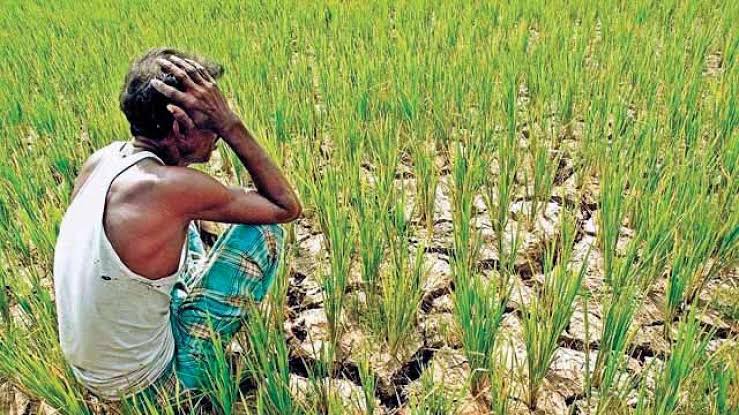
PUNISHABLE CRIME DOWRY :

Numerous young ladies and families need to go through this cycle when managing this framework is an exceptionally old framework and it’s anything but a custom that was made to assist the love birds with setting up their new homes. The framework is peered downward on in the public arena now thus numerous lives have been lost on account of this framework. Indeed, even many instructed guardians anticipate their little girls in-law getting share and a great deal of blessings from their family. This is a route for them to expand their abundance. There is enactment that has been forced to quit tolerating share yet and still, at the end of the day endowment actually wins in our country.

In India share is a culpable wrongdoing. Need is normally given to reports against settlement and this to shield little youngsters from this treachery. Settlement violations are never revealed and in this manner aggressive behavior at home is continually expanding at a high rate. The significant justification the expanding number of wrongdoings is the absence of mindfulness and instruction. Numerous young ladies are continually rebuffed due to this framework that prompts them confronting passing somehow.

CONCLUSION :

End Dowry framework is acceptable except if and until it is considered as a blessing given to the lady by her folks. On the off chance that the husband to be folks are requesting cash to get hitched as a “Share” then, at that point that is totally off-base and illicit.

SAVE GIRL CHILD

SAVE GIRL CHILD


INTRODUCTION :

The presence of human existence on the earth is unthinkable without the equivalent support of the two ladies and men. They are similarly liable for the endurance of mankind on the earth. They are additionally responsible for the turn of events and development of a country. In any case, the presence of the lady is for more significant than men. Since without her we can’t consider our reality. In this way, to save people from termination we need to take measures to save young lady youngster.

It’s a typical practice in India where individuals cut short or kill young lady kid on birth. Yet, they ought to be saved offered equivalent chance, and regard and freedom to go on throughout everyday life. Aside from that, the destiny of progress lies in their grasp as they are the foundation of our creation.

FOR WHAT REASONS THE GIRL CHILD NEED SAVING ?

There is different evil in our general public, one of which turns out to be the longing to have a kid. In Indian culture, everybody needs an optimal mother, sister, spouse, and little girl. Yet, they never need that young lady to be his close family member. In addition, there are other social disasters in the public arena that powers numerous guardians to try not to have a young lady youngster. These other social wrongs are share passings, female feticide, and some others.

STEPS TAKEN BY THE GOVERMENT TO SAVE THE GIRL CHILD :

  1. For saving young lady kid the public authority has taken numerous drives and dispatched numerous missions to save them. Beti Bachao, Beti Padhao (Save the young lady youngster) is the latest drive began by the public authority to effectively urge individuals to save the young lady. Aside from that, numerous NGOs, organizations, corporate gatherings, common liberties commission run different mission to save young lady kid.
  2. The wrongdoing against ladies is a major boundary to the turn of events and development of the country. Be that as it may, the public authority views this issue appropriately and for halting female feticide they have prohibited the sex assurance ultrasound, amniocentesis, and output tests in the emergency clinics and labs. The public authority makes this load of strides mindful society that young ladies are an endowment of God and not a weight.
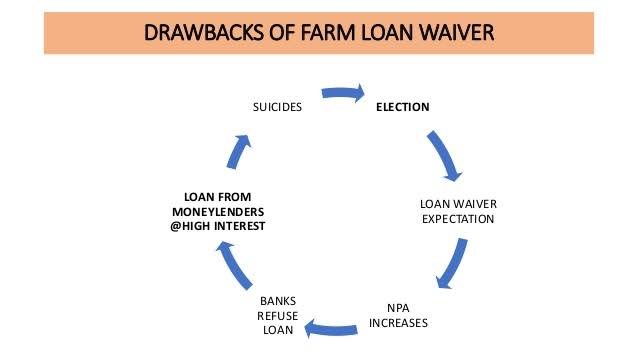
OUR PARTICIPATION :

A young lady kid merits a day to day existence where she is treated as equivalent to a kid. Also, she ought to be adored and regarded like others. She partakes in the turn of events and development of the country similarly. Additionally, she buckles down for the improvement of society and country. They have additionally demonstrated their value and stand equivalent to young men in each field. Consequently, they have the right to make due as their endurance implies the presence of humankind.

For saving young lady the initial step begins with our own home. We ought to support our relatives, neighbor, companions, and comparative with save them and make others mindful of it. Likewise, we should cheer our relative to have a young lady youngster instead of a kid.


POVERTY

POVERTY


INTRODUCTION :

We can characterize neediness as the condition where the essential necessities of a family, similar to food, sanctuary, dress, and training are not satisfied. It can prompt different issues like helpless literacy, unemployment, unhealthiness, and so on A needy individual can’t get schooling because of absence of cash and along these lines stays jobless. A jobless individual can’t sufficiently accepting and nutritious nourishment for his family and their wellbeing decrease. A frail individual does not have the energy needed for the work. A  jobless individual remaining parts poor in particular. In this manner we can say that neediness is the main driver of different issues.

CAUSE OF POVERTY :

As per the Noble prize champ South African leader, Nelson Mandela –”Destitution isn’t regular, it is artificial”. The above assertion is valid as the reasons for destitution are for the most part man-made. There are different reasons for destitution however the most significant is populace. Rising populace is putting the weight on the assets and financial plan of nations. Governments are finding hard to give food, cover and work to the rising populace.

Different causes are-absence of instruction, war, cataclysmic event, absence of business, absence of framework, political precariousness, and so on For example absence of business openings makes an individual jobless and he can’t acquire enough to satisfy the fundamental necessities of his family and gets poor. Absence of instruction forces an individual for less paying positions and it makes him more unfortunate. Absence of framework implies there are no ventures, banks, and so forth in a nation bringing about absence of work openings. Cataclysmic events like flood, quake likewise add to neediness.

In certain nations, particularly African nations like Somalia, an extensive stretch of common conflict has made neediness far reaching. This is on the grounds that every one of the assets and cash is being spent in battle rather than public government assistance. Nations like India, Pakistan, Bangladesh, and so on are inclined to catastrophic events like tornado, and so forth These calamities happen each year making neediness rise.

GOVERMENT NORMS TO REMOVE POVERTY :

The public authority of India additionally took a few measures to annihilate neediness from India. Some of them are – creating employment openings, controlling populace, and so on In India, about 60% of the populace is as yet reliant upon agribusiness for its vocation. Government has taken certain actions to advance agribusiness in India. The public authority built certain dams and trenches in our nation to give simple accessibility of water to water system. Government has additionally made strides for the modest accessibility of seeds & farming equipment to advance horticulture. Government is additionally advancing cultivating of money crops like cotton, rather than food crops. In urban areas, the public authority is elevating industrialization to make more positions. Government has likewise opened  ‘Apportion shops’. Different measures incorporate giving free and mandatory schooling to youngsters as long as 14 years old, grant to meriting understudies from a helpless foundation, giving financed houses to needy individuals, and so forth.

Destitution is a social insidiousness, we can likewise add to control it. For instance we can essentially give old garments to needy individuals, we can likewise support the instruction of a helpless youngster or we can use our available energy by showing helpless understudies. Recall prior to squandering food, someone is as yet resting hungry.

INDIAN CULTURE

INDIAN CULTURE 


INTRODUCTION :

India is a country that gloats of a rich culture. The way of life of India alludes to an assortment of minor exceptional societies. The way of life of India involves clothing, celebrations, dialects, religions, music, dance, design, food, and workmanship in India. Generally vital, Indian culture has been affected by a few unfamiliar societies since its commencement. Additionally, the historical backdrop of India’s way of life is a few centuries old.

OBJECTIVES OF INDIAN CULTURE :

  • Culture is the manner in which we treat others, how delicate we react to things, our comprehension of qualities, ethics, standards and convictions.
  • Individuals of more established ages give their societies and convictions to their next ages.
  • Subsequently, every kid here treats others well, as he definitely thought about the way of life of guardians and grandparents.
  • Here we can see culture in everything like dance, design, imaginativeness, music, conduct, accepted practices, food, engineering, dressing sense and so on
  • India is a tremendous mixture with various convictions and practices that brought forth various societies here.
  • The starting points of different religions here are antiquated by around 5,000 years, and it is accepted that Hinduism began from the Vedas.
  • All the Hindu sacred writings are written in the hallowed Sanskrit language; it is likewise accepted that Jainism has old starting points and existed in the Indus Valley.
  • Buddhism is another religion that started in the nation following the lessons of Lord Gautama Buddha.
  • Christianity was subsequently brought here by French and British individuals who controlled for quite a while for just about two centuries.
  • Along these lines, different religions started in old occasions or were some way or another brought into this country.
  • Nonetheless, individuals of each religion live here in harmony without influencing their customs and convictions.
  • The variety of the ages has traveled every which way, however nobody was so amazing as to change the impact of our genuine culture.
  • The way of life of the more youthful age is as yet associated with the more seasoned ages through the umbilical string.
  • Our ethnic culture consistently shows us how to act well, regard seniors, care for defenseless individuals and still assistance penniless and destitute individuals.
  • It is our strict culture to keep quick, love, offer Ganga water, welcome the sun, contact the feet of the seniors in the family, do yoga and contemplation day by day, give food and water to the ravenous and handicapped.

CONCLUSION :

India is a place that is known for rich culture and custom which shows individuals consideration, liberality, and resilience. Indian culture varies from one spot to another as it’s anything but a multilingual, multicultural, and multi-ethnic culture. Indian culture is a novel mix of present day western culture and recorded practices. India is a nation of extraordinary legends where numerous incredible individuals were conceived and recollected perpetually because of their penance for the country. Individuals across the world come to appreciate and feel the way of life and custom of India.
 

EVERY CLOUD HAS A SILVER LINING

EVERY CLOUD HAS A SILVER LINING


INTRODUCTION :

An old maxim loaded up with parcel of inspirational tones. We as a whole face terrible circumstances throughout everyday life, yet we should zero in on the beneficial things in each bad stage. An individual dealing with muddled issues in life may not see an approach to emerge from them. Each dim passage has a promising end to current circumstances, and each issue has a definite shot arrangement within reach.

In each cloud, there is a bright side behind each cloud, there is a sun sparkling.” This maxim implies that in difficult stretches we ought to never lose trust since it will consistently prompt more promising times. You can either have a sad end, or you can have perpetual expectation. The decision is yours! For those continually anticipating the best, achievement goes with them along over the long haul of life. They will dominate the craft of extending their psyche’s viewpoints and understand the odd thought that we have significantly more in us than we might suspect. There is definitely more in life than our unaided eyes can see, as the wings of creative mind know no restrictions.

A foreboding shadow is a difficult situation, misfortune and most exceedingly terrible occasions throughout everyday life. Issues resemble foreboding shadows that discourage the sun from sparkling, yet in the event that we take a gander at the edges, we may see the daylight like silver. The silver lining is a craving for development, and an opportunity to go ahead throughout everyday life. This alludes to the possibility that there is an answer for any issue in our life, and we should discover it. On the off chance that we get disappointed by the issue, we will acquire certainty and make certain there is something positive after the issue.

GLIMPSE OF PROVERB :

One should pray fervently and show restraint. We ought not surrender and fault our destiny; we need to sit tight for a happy time frame in life to come. Life is a mix of periods of light and dull. We people have a propensity for differentiating ourselves to each and every other individual that we see. We are accustomed to discouraging ourselves regardless of how very different we perhaps than the other individual. We accept others look better, have better knowledge or character or possibly better karma. Notwithstanding, what we neglect to comprehend is that each individual has a couple of qualities and shortcomings.

We are for the most part fine in one thing we don’t perceive all in all. We are on the whole like mists, some are rising, some are little, however we as a whole have a silver lining. Since you are bombing this doesn’t mean you are not great. It simply implies you must strive to arrive at your objectives. Actually like a dawn, there will be one mark of time when you comprehend your expectation and the importance of your essence in this universe.

CONCLUSION :


This can be conceivable on the off chance that one has dominated the craft of capitalizing on the smallest light of chance arising in absolute murkiness. Satisfaction lies in the most profound distresses. The precept shows us never-ending positive thinking. The employments of difficulty are incredible. The distresses and cataclysms might be deciphered as a gift. They engage us intensely to confront the more critical incidents of life. Just when one carries on with life’s battles would one be able to turn into a full man. The message of expectation is disguised behind each cataclysm.


STUDENTS CAREER DEVELPOMENT

CAREER DEVELPOMENT


INTRODUCTION :

Each and every one of us has faced a certain junction or a cross-road at some point in our lives that has had a major impact on our lives. This can be both a professional crossroads or personal crossroads. But in this essay on career, I would like to talk about the cross-road that we see in our professional career. It’s not just the students who would have faced a dilemma in deciding a career, even employees past 30 years of age face this crisis.

When a student’s face its called a beginner’s crisis, but when an employee 6 years down the lane faces dilemmas in his or her career choices, then its usually called a mid-life crisis or mid-career crisis. Midlife crisis is a term that refers to people who are having second thoughts about their career a few years down after working in the same. There might be plenty of reasons for these some of which may be an everyday monologue, fatigue, salary issues, professional growth issues, internal office dilemmas, etc. In this essay on career, I am going to talk about both the type of career choices

THOUGHT OF CAREER :

A student’s life is the first crossroad that we face in our lives. By keeping certain factors in mind, there is plenty of career choice a student can choose from. Some of the popular career choices are engineering, medicine, arts, and commerce. Which career to choose and on what terms is something that every student will have to worry about.

CRITERIA TO CHOOSE A CAREER :

  • Passion: The word passion sounds cliche, but it is an important criterion to consider before choosing a career path. If everyone follows their passion and chose a career accordingly, then the concept of a mid-career crisis wouldn’t have occurred in the first place. Every one of us would have dreamt of something during our childhood. We all wanted to become a police, a cricketer, an actor, a doctor or an engineer. But not everyone follows and listens to the child in them. We ultimately give up on our passions and choose a safe career which will give us a good salary. Risk-taking is a part and parcel of life and no one should regret not doing something 80 years down the lane when they are on their death bed.
  • Stability: Financial stability, as well as job stability, is something that should be considered as an important criterion. Because the world is increasingly changing and many industries are being taken out by emerging technologies. So before choosing a particular career path, the stability as the well the salary factors should be taken into account
  • Future prospects: Future prospects, both in terms of your interest in the field as well the survival of the field itself, in the next 20 years should be taken into consideration. A Mid-career crisis can be avoided if future prospects are evaluated properly. Certain industries might fall and certain might become the next biggest phenomenon. People who are serious about their careers choose a path which has a long-lasting prospect
  • Satisfaction: This is another important factor while choosing a career path. A good salary, a nice work environment and a good location might give some people the job satisfaction they need, but there are some people who are not affected by any of that. The only thing that matters to them is the job itself. Usually, a job that is socially helpful is the ones that provide true satisfaction.

CONCLUSION :

Choose your career wisely

Digital Marketing

“Marketing is no longer about the stuff that you make, but about the stories you tell.” –Seth Godin, Bestselling Author, and Blogger

Digital marketing, also known as online marketing can be defined as the promotion of brands that is done to connect with potential customers with the help of the internet and other forms of digital communication. This includes not only email, social media, and web-based advertising, but also text and multimedia messages as a marketing channel. Therefore, simple if a marketing campaign involves digital communication, it’s digital marketing.

Digital marketing aims at reaching a larger audience than one could reach through the means of traditional methods. It helps in targeting the prospects who are most likely to buy your product or service. It has been observed it is often more cost-effective as compared to traditional advertising, and enables you to measure success daily and pivot as you see fit.

One can easily get confused between digital marketing and inbound marketing. This is because digital marketing utilizes similar tools as inbound marketing that is email, content on an online platform, and many more. Both marketing schemes capture the attention of prospects through the buyer’s journey and turn them into customers. So, where does the difference lies? The views of the relationship between the tool and the goal in the two are the area of difference.

Role of digital marketing

By the virtue of the internet, digital marketing can operate electronically and online. This paves the way for far more possibilities for brands to reach customers, including email, video, social media, and search engines.

For one’s business and brand awareness, digital marketing has proved to be very essential. Nowadays, almost every brand has a website. And if they don’t, they at least have a social media presence or digital ad strategy. Digital content and marketing are so common that consumers now expect and rely on them as a way to learn about brands. 

Types of digital marketing

There are many ways of interacting using digital media similarly there are various types of specializations under digital marketing. 

  1. Search engine optimization
  2. Content marketing
  3. Social media marketing
  4. Pay-per-click, or PPC
  5. Affiliate marketing
  6. Native advertising
  7. Marketing automation
  8. Email marketing

Advantages of digital marketing

Trading at a global level

A website allows one to find new markets and trade globally for only a small investment.

Cost-efficient 

A digital marketing campaign that is properly planned and well-targeted can reach the right audience at a much lower cost as compared to traditional marketing methods.

Easy Tracking and Measurable results

One can always measure or predict the results through digital marketing. It enables the business owner to measure his/her online marketing with web analytics and other online metric tools makes it easier for them to establish how effective their campaign has been. 

Personalisation 

If your customer database is linked to your website, then whenever someone visits the site, one can greet them with targeted offers. The more they buy from you, the more you can refine your customer profile and market effectively to them.

Transparency 

By getting involved with social media and managing it carefully, one can build customer loyalty and create a reputation for being easy to engage with.

Social currency 

Digital marketing lets you create engaging campaigns using content marketing tactics. This content (images, videos, articles) can gain social currency – being passed from user to user and becoming viral.

Disadvantages of digital marketing

There are some challenges and drawbacks when it comes to digital marketing.

Right Skill Set

One needs to make sure that their staff has the right knowledge and expertise to carry out digital marketing with success. The staff needs to up-to-date with all the tools, platforms, and trends as they keep changing at a fast rate.

Time-consuming

Optimising online advertising campaigns and creating marketing content are some of the areas which can take up a lot of time. It’s important to measure your results to ensure a return on investment. 

The competition is high

All businesses are up against the global competition as everyone utilizes digital marketing nowadays. It can be a challenge to stand out against competitors and to grab attention among the many messages aimed at consumers online.


References

https://mailchimp.com/marketing-glossary/digital-marketing/

https://blog.hubspot.com/marketing/what-is-digital-marketing

What is Carbon Market?

“By the time we see that climate change is really bad, your ability to fix it is extremely limited… The carbon gets up there, but the heating effect is delayed. And then the effect of that heat on the species and ecosystem is delayed. That means that even when you turn virtuous, things are going to get worse for quite a while.” – Bill Gates

The sole purpose of carbon markets is to decrease the amount of greenhouse gas emissions that contribute to global warming, particularly carbon dioxide emitted by burning fossil fuels cost-effectively by setting limits on emissions and enabling the trading of emission units, which are instruments representing emission reductions. This trading helps to reduce the emissions at a lower cost to be paid to do so by higher-cost emitters, thus lowering the economic cost of reducing emissions.

The carbon market is also known as carbon trading, emissions trading, and carbon emissions trading, and in simple words, the carbon market is an environmental policy device that places an economic cost on carbon emissions.

How does it operate?

Carbon markets are similar to the “cap-and-trade” systems used by the E.U. and California, what happens in this trade is that the government puts a cap on the number of greenhouse gases that can be emitted by various industries or any other sector of the economy. A fixed amount of allowance is given to businesses according to the metric tons of CO2 they can emit. Those who emit less than their allotment can sell the extra to other businesses or companies, motivating other industries to reduce emissions produced by them faster. This means that if a company reduces its carbon emissions significantly, it can trade the excess permits on the carbon market for cash. If it’s not able to limit its emissions it may have to buy extra permits.

This scheme of international carbon market or carbon trading was set up under the U.N.’s 1997 Kyoto protocol on climate change. Under that agreement, developed countries aimed to reduce their greenhouse gas emissions, but developing countries did not. So, if a developing country curbs its emissions for example by building a solar panel plant or planting trees, they could sell a “credit” to a developed country, which could count that emission reduction in its target.

Benefits of a carbon market

The carbon trading schemes have been successful in managing environmental problems like global warming in the past, with the help of trading in sulfur dioxide permits helping to limit acid rain in the US. One of the major attractions for governments concerned with stemming CO2 is that the cap-and-trade scheme is so much easier to implement as compared to the expensive direct regulations, and unpopular carbon taxes.

If regional carbon trading schemes can be joined up globally, with a high price at carbon, it could be a better and speedy method to help the world decarbonise.

Disadvantages of a carbon market

One main drawback which is observed is that creating a market in something called carbon dioxide which has absolutely no intrinsic value is very difficult. You need to promote scarcity – and you have to strictly limit the right to emit so that it can be traded. In the world’s biggest carbon trading scheme, the EU ETS, political interference has created gluts of permits.

Another disadvantage is that the offset permits, gained from paying for pollution reductions in poorer countries, are allowed to be traded as well. Because of this, the importance and effectiveness have become questionable of these permits in reducing carbon emissions.


References

https://time.com/5748374/carbon-markets-paris-agreement/

https://www.bbc.com/news/science-environment-34356604

Starvation in North Korea

The north koreans are starving but they have no choice but to face such starvation . They cannot fight , shout or do anything . They are brutalized every second by the cruel emperor of North Korea . No one is allowed to raise his or her voice against the cruel emperor . They can only suffer under his regime . The problem with this country is that their are so many trade restrictions imposed on this country that no external trade happens in North Korea . Now since China is not allowing any trade with this country so it has resulted in starvation of the people of North Korea . Now they have no choice but to suffer indefinitely .

The Cristiano Ronaldo Effect

Cristiano Ronaldo one of the best footballers in the world currently and an all time great has used his social media influence to bring down the image of a big brand Coca Cola  . What he did is not unknown to most of us . In just a minute thirty seconds he caused a whooping loss of six billion dollars to such a big brand . He took two bottles of Coca Cola and set it aside . And just said ” ” Drink Water ” . It has caused great damage to the brand name of the company . The power and influence which such big players have is shown to all of us very frequently . 

THE EVOLUTION OF TATA GROUP

Jamsetji Tata (1868-1904): The founder of the Tata group began with a textile mill in central India in the 1870s. His powerful vision inspired the steel and power industries in India, set the foundation for technical educaton, and helped the country leapfrog from backwardness to the ranks of industrialised nations.

Sir Dorab Tata (1904-1932): Through his endeavours in setting up Tata Steel and Tata Power, this elder son of Jamsetji Tata was instrumental in transforming his father’s grand vision into reality. It was also under his leadership that the Sir Dorabji Tata Trust, the premier charitable endowment of the Tatas, was created, propelling the Tata tradition of philanthropy.

Nowroji Saklatwala (1932-1938): Sir Dorab was succeeded as chairman of the Group by Sir Nowroji Saklatwala. In 1938, following Sir Nowroji’s demise, 34-year-old JRD Tata was appointed as the new chairman.

JRD Tata (1932-1991): The late chairman of the Tata Group pioneered civil aviation on the subcontinent in 1932 by launching the airline now known as Air India. That was the first of many path-breaking achievements that JRD, who guided the destiny of the Group for more than half a century, came to be remembered for.

Ratan Tata (1991-2012): Ratan N Tata was the Chairman of Tata Sons, the promoter holding company of the Tata group, since 1991. He was also the Chairman of the major Tata companies, including Tata Motors, Tata Steel, Tata Consultancy Services, Tata Power, Tata Global Beverages, Tata Chemicals, Indian Hotels and Tata Teleservices. During his tenure, the group’s revenues grew manifold, totalling over $83 billion in 2010-11. Tata also serves on the board of directors of Fiat SpA and Alcoa. He is also on the international advisory boards of Mitsubishi Corporation, the American International Group, JP Morgan Chase, Rolls Royce, Temasek Holdings and the Monetary Authority of Singapore.

Why you should invest????

1. Why You Should Invest In?

The investments that are necessary in order to achieve your goals. This is the only way to get better. By making an investment, you will also save money, and strengthen the case for a rainy day. In addition, there is a steady investment, making it possible to regularly set aside a certain amount, thereby instill a sense of financial discipline in the long run.

2. The impact of the inflation rate and the value of the investment

The inflation rate is, in simple terms, is an increase in the prices of raw materials, and services. This helps to reduce the value of your money and it will reduce your purchasing power. If there is an increase in the rate of inflation, you can buy less with the same amount of money. You have no control over the rate of inflation. If you want to stay ahead of the inflation rate, you will need to have in order to get more money for the purchase amount of the goods that it is going to be buying in the future, with the amount of money you have. However, the money does not grow on its own. If you have the money to make it grow, you must generate revenue. In order to make money you have to invest in it. Therefore, the investments that would be required to fight inflation. An inflation rate of 8%, it means that you need to have 8 percent more money than you have to in order to buy the same product again next year, too. It’s an 8% rate of inflation decreases the value of 1 lakh rupees by more than eight years of age:

It is very important to have an income that is higher than the rate of inflation, if it does not, it could not afford to materials and services in the future, this is the savings that you can make right now.

3. Types of investments:

You will need a lot of investment possibilities for you to choose from. You need to evaluate your requirements and the risks involved before making a decision to invest in a particular investment option. Investments are generally classified into active and passive. Active investing, you need to dynamically change the investments in your portfolio, depending on market conditions and the economy. You must have the time or knowledge to invest in order to enjoy an active trading. Investments in securities are the best examples of active investing. On the other hand, is a passive investments do not require a direct stake in their investments. You can invest your money in it, and you will have to be invested for a certain period of time. Also known as a buy-and-hold investment strategy. This strategy is recommended for those of you who are not in the free time management
Investments


You have to choose an active or passive strategy after assessing your needs and risk tolerance level.

4. The popular investment options in India

You will need a lot of investment possibilities for you to choose from. However, you will need to make sure to invest in ones that are within your risk tolerance, and meet all of your requirements.

Here are the top 7 investment options in India:

1) Direct Investment (Fdi)

2)funding

3)in time deposit

4) Deposits, Repeat

5) A Social Security Fund

6) The Staff Of The Package

7) the National pension system

💰 how do I plan my investment?

In the first step, the schedule of investments for the purpose of identifying the right type of investments that are the best fit for your system and needs. Here are a couple of things to bear in mind when planning a purchase:

Pick your investments carefully, and after conducting proper research,
Do not be persuaded to use it to schedule programs, which promise huge profits in the shortest amount of time possible
Periodically review your investments in stocks, and funds and
Consider the tax impact on the income you receive from your investment.
Keep it simple and avoid complex investments that you don’t understand

Unemployment

Unemployment is a serious problem faced today by India. Nearly 50% of educated youth are yet to find suitable jobs. Even those who are employed in agriculture in rural areas are only partly employed as they are unemployed for many months in a year. This is due to an economic problem.

With our society getting more and more money-oriented, it is obvious that everyone runs after money, as this will bring power to the trail. In the past, acquiring wealth was just to maintain a good and respectable standard of life, but today money and only money is sought for, it is the only thing that is respected, the only thing that is loved and the only thing that can buy anything at all-a strong power in itself money has become. To fulfill all the necessities employment first needs. Many reasons could be given for this unemployment and under-employment. The first reason is an explosion of population. The natural resources, the land, and means are the same. The population has almost increased. The second is modern industrial policies have turned all the people to migrate into countries and cities and towns to work. And also the manpower resources are not planned according to the needs of the next decade. The third is the unsuitable educational system. those who come out of schools and colleges should be known the value of white-collared jobs as well as blue-collared jobs. Blue collared jobs are also known for their self-confidence and also one should know the dignity of laborers. This lacks the mental ability and the manual skill to take up a productive job. Education must be job-oriented. The disparity in pay and salary exists, where a man who does manual work and another who does mental work are equal in the matter of needs. Unless the income disparity is reduced, people look up manual jobs.
This lockdown, Covid-19 has created lots of losses and disasters for all the self-employment peoples, and the private and the government agents are also under pressure. Numerous people have also lost their jobs. In today’s technology developmental world, we are open up to various fields to showcase our talents and experiences and explore some sort of new things to the whole world by all the social media platforms to make it wisely and earn it happily, this lockdown has taught this to every nook and corner persons all over the world, right from young people to all the old age people.

Apart from this, people also create themselves, like weaving, embroidery, food preservation, homemade packing, and marketing, etc., could also be taught that this also better employment. Self-confidence should be restored in youth and those capable should be allowed to help themselves in the field and also give hands to uplift every possible soul. Unemployment creates a lot of depression, stress, and pressure for everyone and it leads to mental illness. Although the government is doing its best to solve the problem of everything.Hope to be strong through tough times, and be there for each other in these hardest battles.

The Launch of Deep Ocean mission in India

The Deep Ocean Mission which was pending for a long time has been approved by the union cabinet. The mission is to be implemented at an estimated cost of Rs. 4,077 crore for a period of 5 years. It will be Phase-wise, where the first phase for 3 years(2021-2024) will be Rs. 2823.4crore.The Ministry of Earth Science [MoES] will be the Nodal Ministry implementing this multi-institutional mission. The institutions are ISRO, DRDO, BARC, CSIR, Department of Biotechnology etc.,

Deep Ocean Mission is a project to support the Blue Economy initiative of govt. of India. The mission will let India explore the Polymetallic nodules in the allotted area of 75,000 sq. km  in the Central Indian Ocean Basin [COIB] by the UN National Seabed Authority. The rocks containing copper, iron, manganese, nickel and cobalt are scattered in the seabed.

The mission involves 6 main components they are:

1) Deep sea mining and Manned submersible:

Developing a manned submersible capable of carrying 3 people with scientific sensors and tools to a depth of 6000 metre. For mining of Polymetallic nodules in central Indian ocean an integrated mining system will be developed.

2) Ocean climate change advisory service:

Developing a suite of observations and models to understand and provide future projections of important climate variables  on seasonal to decadal time scales.

3) Exploration and conservation of deep-sea habitat:

Technological innovations for exploring deep sea flora and fauna, including microbes and make study on sustainable utilization of these bio-resources.

4) Deep sea survey and exploration:

To explore and identify sources of hypothermal minerals as it is the source for precious metals formed from earth’s crust found along the Indian ocean mid oceanic ridges.

5) Energy and fresh water from ocean:

Studies and detailed engineering design for off shore Ocean Thermal Energy Conservation[OTEC] powered desalination plant.

6) Advanced marine station for ocean:

Developing Human resource in the ocean science field. By grooming experts and developing enterprises in ocean biology and engineering. This will translate research into industrial application and product development through online site business incubator facility.


The Deep Ocean Mission was envisaged in 2019 as Rs. 8000 crore mission. If it works, India will be in the list of those countries that is able to launch underwater mission in the unexplored depths of ocean.


Entrepreneurship : A new ray of hope

To live our life in a comfortable way, One needs to be financially independent be it a girl or a boy. The only way not to be a slave of someone and to have your own control about the way you are living or the decisions you want to take comes from financial independence. So many Entrepreneur’s and small start up business companies work towards being achieving new heights and success on their own. Being a entrepreneur makes your vision clear about the future decisions and challenges to face on your own.

Entrepreneurship gives your freedom to express your ideas, be innovative and dominate the market with your own hardwork and talent. Education is one such weapon which can give you the power to stand ahead in the crowd. Education doesn’t only mean to score good marks in school or colleges but to consistently grow and learn. The roots should always be strong and being grounded and truthful to your roots makes you a strong and successful person. Since the age you become adult, Start taking responsibilities of yourself and your family.

The world is dominated by money, Country which has more money considered to be more developed and powerful. Their GDP growth calculates the profit a country had in a year. If we work strongly towards making everyone stand on their own feet without hesitating about the work we do, then surely there will be no looking back from that point . The success rate of your income will surely rise high. Multiple multinational companies invest in small business and startups as their ideas are new to the business and they are more passionate about their work. They are a source of motivation for all of us on how to create a space that can give us equal importance in the society.

Several opportunities are waiting for us , we just need to grab them at the right moment. Entrepreneurship creates a new space in making our career bright , It is the future of young generation. The best way to be yourself and develop something new in on the basis of talent . The degree’s doesn’t decide how they talented and creative you are. Degree is just a piece of paper , many people who doesn’t have access to study are also very influential and have so much talent.

We just need to believe in ourselves and don’t stop until you reach your goal. It just needs a clear vision and consistency everything will start become easy automatically.

Don’t let Covid eclipse the tiger

India’s efforts towards conservation of tigers has been very successful. According to recent reports, India now has 51 tiger reserves consisting of at least 3,000 tigers. More and more Indians flock towards safari parks to marvel at these wondrous creatures and other forms of wildlife. Nature lovers are waiting impatiently to finally be amidst the beautiful places on Earth that they call their home.

On June 7, however, the National Tiger Conservation Authority(NTCA), sent out a circular to the chief wildlife wardens of all the tiger range states. The recent case of a lioness, suspected to have died of Covid-19 infection, got the authorities on alert. There were warnings of high rates of transmission of this virus from affected human beings to captive wild animals. Hence, the authorities stated that tiger reserves needed to be closed for tourism activities until further orders. The intentions of the NTCA was understandable, however, we need to address this issue in a wider perspective.

Tiger reserves in Karnataka which normally remain open throughout the year, were closed for almost two months in the brutal second wave. They are currently gearing up to reopen as soon as possible. Government and civil society organizations have used the lockdown time to treat, educate, test and wherever possible, to vaccinate the communities around the park-forest officials, staff or tribal communities.

As for the tourists, the sad truth is that safari holidays are mainly for the urban and elite people who can afford it, and it is safe to assume that they have been vaccinated. This will further more reduce the risk of infection. Also, the risk of infection hasn’t been determined yet, and the risk of death due to infection is not even under speculation.

Let us assume we open up the wildlife parks for the public. Most of the tourists are going to travel by jeeps, and hence be at a safe distance from all the animals in that region, and that too in an open space, which makes it safer. Tourists are going to be wearing masks at all times and practice social distancing just like normal times. Hence, forest authorities should really contemplate the decision to keep the parks shut.

The wildlife tourism is an important aspect of generation of revenue in the states, and is a source of income for many people. Lakhs of livelihoods around these reserves are in peril, and the impact of a prolonged lockdown will be very severe. Hence a cost-benefit analysis needs to be carried out to ensure the decisions taken by the forest authorities are also in favor of the people depending upon wildlife tourism as a way to earn their daily bread.

Lakhs of tribal people live close to or inside these parks and have the right to collect forest produce. It is not possible to exclude them from the forests that they have helped conserve.  Instead of imposing a blanket ban on all wildlife reserves, situation specific steps must be taken to tackle this situation.

New non-invasive and bio-safe protocols must be implemented for wildlife surveillance and species monitoring. Early warning systems must be kept in place to immediately pin point the area of danger for the animals or point of contact between humans and animals or the animals and the outside world. There are many environmental organizations that, when given the chance, will surely be eager to help out the authorities and the government in these endeavors.

Mumbai is in Trouble

Mumbai is in a huge trouble . The reason is that the governance of the financial capital of the country is in wrong hands . It is a great matter of sorrow and a matter which needs our attention . We have to choose our leader properly and be unbiased which choosing the leader . This is the need of the hour . The video of a car drowning in a hole was seen and went viral . The authority lies in our hands .

Bitcoin legalized for the 1st Time

El Salvador on 9th June made Bitcoin legal in their Country. It is the first country in the world to legalize the cryptocurrency. The law kept forward by the 39year old President Nayib Bukele was passed after it received 62 votes out of 84 votes. This law gives value to the digital currency just like the country’s main currency the US dollar.

According to the law, bitcoin must be accepted by the entities when offered as the payment for goods and services .Tax payments can also be made through the cryptocurrency. The dollar will be the dominant currency in the country while Bitcoin will also exist by the side.

In 2001, El Salvador completely dollarized its economy. It has no monetary policy of its own, it is linked to the monetary policies of the Federal Reserve in Washington.

The move was taken to stabilize and revive the economy and bring growth to the country. According the World Bank data, Remittances make up about $6 billion in 2019 which is about 20% of the El Salvador’s GDP (one of the highest ratios in the world).

Mr.Bukele said, through enabling transaction via bitcoins El Salvadorians could save transaction fee on banks and agencies. He also stated that the government would protect people from volatility of bitcoin prices by guaranteeing convertibility to dollars. In concern to Carbon footprint, he said he has asked the state-owned geo thermal electric company La Geo to connect renewable energy from the country’s volcano to the bitcoin facilities. The legal tender with bitcoin-dollar exchange rates set by the market will begin in 90 days. El Salvador will promote training and mechanism stated the law.

Child labour


Child labor is against the law to force a small child to be work. In India, as in many industries, to force the children to work illegally. Among the many branches of agriculture, it will attract more and more children to take part in the farming to earn their living. Eighty-five per cent of the children are from rural areas of India, as is the case on the basis of a variety of social factors, which do not suit their way of life.
On the elimination of child labour, many of the provisions of a constitution were adopted. In spite of this, many children are involved in hazardous working conditions. Many of the children are usually taken to be the education of paid work in order to earn a living for their families. In a cruel world is robbing them of their childhood, the joys of life.

Causes of child labour:

Poverty
Poverty is one of the most important causes of child labour. In developing countries, poverty is a big drawback, and that is a child, and the first to be sent here to lend a helping hand in order to provide for their families, and their families, support themselves

needs:
Some industries, such as the production of a bracelet, delicate hands, and little fingers need to be completely superb, perfection and precision

Sentence:
What is the penalty for the use of children in conflict with the law? Each and every person who employs a child under 14 years of age, or children between the ages of 14 and 18, which is a very dangerous job, or a process, which can be the cəzalandırıla in prison, a sentence of imprisonment of six months to two years and/or a fine of Rs 20,000 to Rs 50,000.

Business That Boomed Despite Covid-19

1. Covid-19 E-Commerce Sales Spike Benefits Pouches & Other E-Commerce Packaging

While consumers have been gravitating to e-commerce from traditional brick-and-mortar retail for years, the pandemic has sped up that transition even further:

  • Government shutdowns of nonessential retailers in March eliminated brick-and-mortar as an option for consumers to buy many products.
  • Many consumers concerned about the coronavirus began reducing in-person trips to grocery stores and other retailers deemed essential and allowed to operate throughout the pandemic.

As a result, online retailers like Amazon and Instacart reported massive sales increases, and essential retailers also saw a sharp rise in online sales and use of services like curbside pickup. Entering the holiday season, online sales still continue to surge even after most retailers have reopened.

Though related opportunities are numerous, flexible packaging is one area where growth through 2024 will in part be propelled by e-commerce trends that the pandemic is accelerating. More amenable to shipping than other types of packaging due to their light weight and strength, for instance, pouches are expected to especially benefit from increased reliance on e-commerce for food, beverages, pharmaceuticals, and consumer goods.

2. Online Food Delivery Reaches Broad New Audience Following Restaurant Closures

One of the industries hardest hit by the economic shutdowns of March and the social distancing requirements of the May reopenings, the restaurant industry is attempting to offset revenues lost from dine-in capacity restrictions and consumer unease about eating out during a pandemic by getting online.

Online food delivery platforms like DoorDash, GrubHub, and UberEats have been around for a while, but staunch consumer preferences for eating out, particularly in the major US market, had been a key restrainer of growth. Covid-19 has changed all that, driving rapid expansion in the user base for these platforms as well as the number of restaurants hosted by them that is expected to outlast the pandemic.

Unexpected Consumer Markets Surge Due to Shutdowns

Stuck at home in quarantine, consumer purchasing behavior took a turn toward indulgence, comfort, and novelty during the pandemic.

3. Frozen Food Packaging Suppliers Get Boost as Consumers Splurge & Stock Freezers

Panic buying and increased indulgence purchases have driven remarkable growth for frozen food and ice cream brands during the pandemic compared to historical levels, boosting demand for the different types of packaging used for these products.

Freedonia analyst Carolyn Zulandt says, “Unlike a number of other industries, frozen foods — and the packaging for these foods — are seeing a boost in sales during the pandemic, primarily due to shifts in consumer buying habits. Consumers are preparing more meals at home and stockpiling food items with longer shelf lives, all of which benefits sales in the freezer aisle.”

Among the packaging products expected to benefit from increases in frozen food sales are the cups commonly used for the traditional ice-cream pint, as well as the ready-to-heat trays and (increasingly) bowls used for single-serve frozen meals.

4. With Shift to Remote Work & Learning, Pet Ownership Skyrockets

Covid-19 led to a boom year for the pet industry by triggering a surge in pet adoption, as widely reported in the press and confirmed by Packaged Facts pet owner surveys. A significant component of this surge has consisted of pet lovers adding to their menageries, says David Sprinkle of MarketResearch.com’s Packaged Facts, such that new pet acquisition has extended beyond dogs and cats to other types of pets, especially reptiles and small mammals.

Sprinkle explains: “The pet adoption wave ties not only to the stay-at-home pandemic period, but more specifically to having kids underfoot at home, given school closures and the disruption of recreational and entertainment activities. Given that pet ownership is a discretionary expense, and typically a considerable one, multiple-pet households tend to be relatively higher-income, further fueling the pet product and service premiumization trend that has reshaped the pet industry and made it an apple of investors’ eyes.”

5. E-Bike Sales Boom as Consumers Seek Fun, Safe Alternatives to Public Transport

When lockdowns struck in March, bike retailers were bracing for a major slump. Instead, the opposite happened. Demand for bikes and particularly e-bikes soared worldwide as consumers sought fun, safe alternatives to public transport during the pandemic, and supply chains struggled to keep up.

Freedonia analyst Gleb Mytko says Europe’s importance to the global e-bike market will continue to grow post pandemic: “The region offers manufacturers countless opportunities because it includes some of the world’s most developed e-bike markets (Germany, Netherlands) as well as markets with immense growth potential, like France. Today, both regional and foreign e-bikes are making strategic investments in Europe, expanding their sales and distribution networks, and rolling out the next generation of e-bikes.”

Rainwater Harvesting

It is said that World War III will not be fought for territories and geographic dominance, but it will be fought solely on the basis of water. This may sound unbelievable to citizens of developed nations. However, in a nation like India, there are already daily battles being waged by projects, individuals for access to this precious research.

India which almost completely depends on the annual monsoon season for water, currently faces the most severe water water crisis in its known history. A recent report by NITI Aaykg predicts that as many as 21 cities in the country will see total depletion of their groundwater resources by as early as 2020. Even today, our cities run like dry clockwork during summers. Neverthless there is not awareness raised about the simple solution of rainwater harvesting in India. Can we really afford to neglect this straightforward solution?

Let’s discuss what exactly is rainwater harvesting. It is the collection of rainwater rather than allowing it to run off. Rainwater is collected and stored in reservoirs or boreholes that allow percolation and increase of  the underground water table. However, this rainwater can also be purified and then used in domestic households and agricultural practices.

In Chennai, rainwater harvesting has been made compulsory and fresh design structures have been incorporated into the Tamil Nadu Combined Developemnt and Building Rules, 2019.

In rural Maharashtra,  Shirpur-once a drought stricken area-has literally turned green due to adoption of rainwater harvesting.

Major cities like Delhi, Mumbai, Bangalore and Hyderabad do have laws regarding rainwater harvesting. For example, in Bangalore, law states that every structure built on 30×40 Sq feet and above and old buildings built on 40 x 60 Sq feet and above should install rainwater harvesting systems.  In case any building fails to do so, a penalty will be faced every month.

However, it is not good enough for these rules to exist just on paper. If the concerned authorities fail to check regularly to ensure their on ground implementation, rules for harvesting won’t hold value.

State governments can popularize rainwater harvesting by launching awareness drives, not just in urban areas but in rural areas as well. This can be done by incentivising housing societies that do comply, such as offering a rebate on property tax for installing the system.

But in situations like these, joint efforts need to take place. We all are citizens of this country, hence its our duty to ensure that we preserve our environment and the planet. Even if it is not given in the law, people can consciously work towards installation of rainwater harvesting systems in their building or even in their locality if they get the right kind of support.

In rural areas, rooftop water harvesting is the most easy solution. It is seen as a basic, inexpensive method for requiring minimum expertise for implementation. This is ideal for supplementing existing water sources which may become brackish or polluted.

We need to act soon, before our water resources get completely dried up. Water is slowly becoming a rare resource in many areas of the country, and this cannot happen-or India will eventually lose it’s own water wars.


EDUCATION

EDUCATION 

INTRODUCTION :

Education is the process of facilitating learning, or the acquisition of knowledge, skills, values, morals, beliefs, and habits. Educational methods include teaching, training, storytelling, discussion and directed research. Education frequently takes place under the guidance of educators, however learners can also educate themselves. Education can take place in formal or informal settings and any experience that has a formative effect on the way one thinks, feels, or acts may be considered educational. The methodology of teaching is called pedagogy.

Formal education is commonly divided formally into such stages as preschool or kindergarten, primary school, secondary school and then college, university, or apprenticeship.

Education forms a distinct line of separation between man and other creatures, making man the smartest animal on Earth. It empowers and readies us to face the challenges of life more efficiently. Additionally, Education improves one’s skills, abilities, knowledge, attitude, and personality. Noteworthy, Education narrows down the options of employment, providing an excellent job platform to a highly educated person. Thus, all governments must promote and ensure the spread of Education.

IMPORTANCE OF EDUCATION :

Education is an essential tool that helps one to acquire knowledge and plays a vital role in shaping society.
The ancient Indian education system used Gurukul to teach students. In this system, the students used to learn by residing with the gurus.
Education helps an individual earn his/her livelihood and fight for their fundamental rights. Right to Education Act 2009 is a fundamental right that makes compulsory Education for children aged 6-14 years.

The government provides free education to children up to the secondary level. There are numerous awareness programs to tell people about the importance of Education.

LEVELS OF EDUCATION :

There are three types of Education- Formal Education, which helps one to learn academic skills, Informal Education through life lessons, people, and nature, and Non-formal Education through various community/nation-based programs.

HELP OF EDUCATION :

Education enhances a person more empathetic sensible, helpful, and tolerant through social and moral values.
Education holds great responsibility in providing a person with an enhanced lifestyle. It gives individual diverse career opportunities that increase the quality of life.

The government of India, as a small step towards Education, has launched multiple Education-based initiatives like Udaan, Saksham, Pragati, etc. accessible for children.

Education prepares the children to contribute towards the development and for the future of the country.
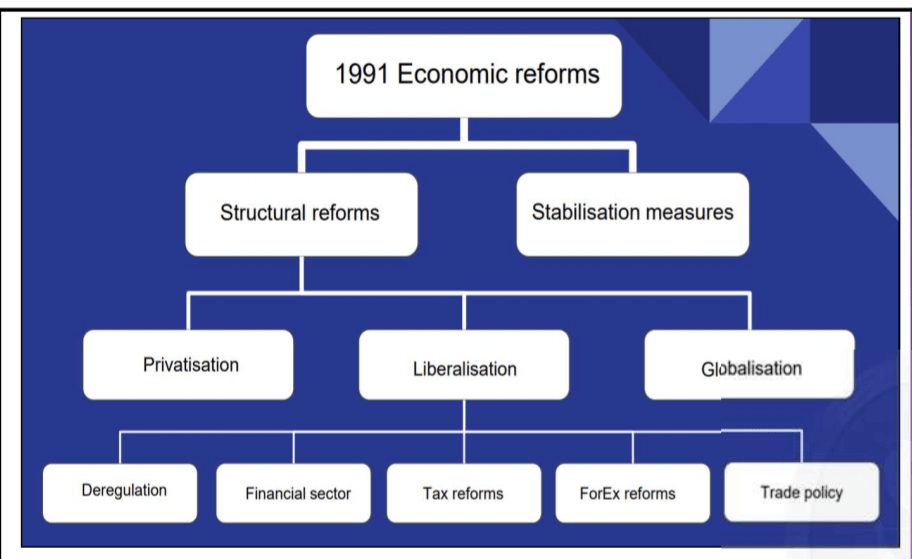
KEY POINTS OF EDUCATION :

  • Education is an essential tool that helps one to acquire knowledge and plays a vital role in shaping society.
  • The ancient Indian education system used Gurukul to teach students. In this system, the students used to learn by residing with the gurus.
  • Education helps an individual earn his/her livelihood and fight for their fundamental rights. Right to Education Act 2009 is a fundamental right that makes compulsory Education for children aged 6-14 years.
  • The government provides free education to children up to the secondary level. There are numerous awareness programs to tell people about the importance of Education.
  • There are three types of Education- Formal Education, which helps one to learn academic skills, Informal Education through life lessons, people, and nature, and Non-formal Education through various community/nation-based programs.
  • Education helps an individual to make better decisions using knowledge and understanding, thus, increasing success rates.
  • Education enhances a person more empathetic sensible, helpful, and tolerant through social and moral values.
  • Education holds great responsibility in providing a person with an enhanced lifestyle. It gives individual diverse career opportunities that increase the quality of life.
  • The government of India, as a small step towards Education, has launched multiple Education-based initiatives like Udaan, Saksham, Pragati, etc. accessible for children.
  • Education prepares the children to contribute towards the development and for the future of the country.

EFFECTS OF GLOBAL WARMING

Global warming is expected to have far-reaching, long-lasting and, in many cases, devastating consequences for planet Earth.

Global warming, the gradual heating of Earth’s surface, oceans and atmosphere, is caused by human activity, primarily the burning of fossil fuels that pump carbon dioxide (CO2), methane and other green house into the atmosphere.

Despite political controversy about climate change, a major report released Sept. 27, 2013, by the Intergovernmental Panel on Climate Change (IPCC) stated that scientist are more than concern of the link between human activities and global warming. More than 197 countries agree that global warming is real and has been caused by human action.

Already, global warming is having a measurable effect on the planet.

“We can observe this happening in real time in many places. Ice is melting in both polar ice caps and mountain glaciers. Lakes around the world, including Lake Superior, are warming rapidly — in some cases faster than the surrounding environment. Animals are changing migration patterns and plants are changing the dates of activity,” such as trees budding their leaves earlier in the spring and dropping them later in the fall, Josef Werne, a professor of geology and environmental science at the University of Pittsburgh, told Live Science.

Here is an in-depth look at the changes wrought by global warming.

Increase in average temperatures and temperature extremes

One of the most immediate and obvious effects of global warming is the increase in temperatures around the world. The average global temperature has increased by about 1.4 degrees Fahrenheit (0.8 degrees Celsius) over the past 100 years, according to the National Oceanic and Atmospheric Administration (NOAA).

Since record keeping began in 1895, the hottest year on record worldwide was 2016, according to NOA AND NASA. That year Earth’s surface temperature was 1.78 degrees F (0.99 degrees C) warmer than the average across the entire 20th century. Before 2016, 2015 was the warmest year on record, globally. And before 2015? Yep, 2014. In fact, 16 of the 17 warmest years on record have happened since 2001, according to NASA.

Uniform Minimum Corporate Tax Rate

Worlds richest nations group G7 (Group of 7) have agreed that MNCs operating anywhere across the globe will be obliged to pay a minimum tax rate of at least 15%. This would be a change in global tax system that has existed so far. This would close loopholes using which MNCs could shift the profits and tax revenues to low taxing jurisdiction.

MNCs always prefer countries that charges the lowest of lowest tax to set their firm and it has always been that governments attract foreign investments to their country by lowering the tax rate they have to pay. According to U.K based Tax Justice Network, India suffers annual loss of $10.3bn from global tax abuse.

Global Minimum Tax Rate

It is the tax rate that will apply for profit made overseas, the local government of country in which the business is operating in can fix whatever corporate tax rate they want but the minimum tax rate will be met by the company by paying extra tax in their home country. Minimum Tax rate will be fixed for every MNCs, so that shifting of profits and tax revenues to low tax countries and escaping higher tax payments in home country will be blocked.

The minimum tax rate proposal was agreed but the rate of tax have not been fixed yet. The pandemic has hit the world worse and countries are trying to revive their hard hit Economy. The world economy is estimated to have shrunk by 3.5% in 2020 which has made most of the countries to use wealth from coffers to Support the economy. The G7 has also agreed on allocating equitable tax rights, with market countries awarding taxing rights on at least 20% of profit exceeding a 10% margin for the largest and the most profitable entities.

CASTE

CASTE :


Caste is a form of social stratification characterized by endogamy, hereditary transmission of a style of life which often includes an occupation, ritual status in a hierarchy, and customary social interaction and exclusion based on cultural notions of purity and pollution.

Its paradigmatic ethnographic example is the division of India’s Hindu society into rigid social groups, with roots in India’s ancient history and persisting to the present time.

However, the economic significance of the caste system in India has been declining as a result of urbanization and affirmative action programs. A subject of much scholarship by sociologists and anthropologists, the Hindu caste system is sometimes used as an analogical basis for the study of caste-like social divisions existing outside Hinduism and India. The term “caste” is also applied to morphological groupings in female populations of ants and bees.

Caste, any of the ranked, hereditary, endogamous social groups, often linked with occupation, that together constitute traditional societies in South Asia, particularly among Hindus in India. Although sometimes used to designate similar groups in other societies, the “caste system” is uniquely developed in Hindu societies.


BIRTH OF CASTE SYSTEM :

This is the debatable issue and each one has different theories regarding the establishment of the caste system in India. Manusmriti is one of the oldest legal books of Hindu law. As per the religious theory, the caste system originated from Brahma, and further, the caste system is divided into four categories that are Brahman, Kshatriya, Vaishya’s, and Sudras.


VARNAS :

It is essential to distinguish between large-scale and small-scale views of caste society, which may respectively be said to represent theory and practice, or ideology and the existing social reality. On the large scale, contemporary students of Hindu society recall an ancient fourfold arrangement of socioeconomic categories called the varnas, which is traced back to an oral tradition preserved in the Rigveda (dating perhaps from between 1500 and 1200 BCE). The Sanskrit word varna has many connotations, including colour, description, selection, and classification.

In the varna framework, the Brahmans have everything, directly or indirectly: “noble” identity, “twice-born” status, sacerdotal authority, and dominion over the Vaishyas and the Shudras, who accounted for the great majority of the people. This is not surprising, for the ancient Brahmans were the authors of the ideology. The four varnas, together with the notional division of the individual life cycle into four stages, or ashramas (brahmacharya, the years of learning and extreme discipline; garhasthya, householdership; vanaprastha, retirement; and sannyasa, renunciation of all worldly bonds) may at best be considered an archetypical blueprint for the good, moral life. Indeed, the Hindu way of life is traditionally called the varnashrama dharma (duties of the stages of life for one’s varna). The varna order remains relevant to the understanding of the system of jatis, as it provides the ideological setting for the patterns of interaction that are continuously under negotiation.


JATI GROUP :

Jati, also spelled jat, caste, in Hindu society. The term is derived from the Sanskrit jata, “born” or “brought into existence,” and indicates a form of existence determined by birth. In Indian philosophy, jati (genus) describes any group of things that have generic characteristics in common.

CONCLUSION OF CASTE SYSTEM :

The caste system had a great affect on the Indian society. All of India’s people played a role in their society and had certain jobs. The former caste members are now more tolerant of other castes and sub-castes‘ people, and the divisions in the society are gradually diminishing.

HOW DO FOOD DELIEVERY APPS GENERATE REVENUE

How online food delivery marketplace apps make money?

There are numerous ways by which online food delivery marketplace businesses can make profits or revenue for their business .

  • Commission on food orders – As a platform owner of food delivery marketplace apps, you can charge fixed commission in the way of a fixed amount or percentage on each order placed on your platform. You can assign or negotiate different commissions with different restaurants to provide your platform for free but to take out platform cost you will take a commission on each order to make your revenue from the food delivery services.
  • Presenting restaurant on your platform – Restaurant spent a lot on advertising their restaurant food menu everywhere. As a platform owner, you charge them to list restaurant listing on prominent places to advertise their brands on your web & smartphone platform.
  • Delivery charges – Some restaurant business do not want to hire their delivery staff. They want to use your delivery staff for their deliveries and they will pay delivery charges to you. You can hire your own delivery staff and do deliveries and charge delivery charges per order from restaurants.
  • Convenience charge – Not only restaurant business but you can charge your platform users who place orders on your online delivery marketplace platform with the convenience charge. Although this convenience charge is a small amount per order. users happily pay them as they are using your platform without a need to go out from their residence or office.
  • Payment gateway charges – You can negotiate with payment gateway companies about the charges they charge on online payments. Because you are a platform owner you have a large number of daily transactions they will offer you the best transaction fee and you can charge above that transaction fee from your restaurant businesses.
  • Subscription earning opportunity – As an owner of food business, you will have two subscription-based earning models. You can make different plans for a restaurant business to limit the number of the food menu, the number of food orders, placements, featured listings, separate branding assets like mobile apps, social media marketing, etc. For users, you can provide them different plans for discounts, monthly subscriptions for earning reward points, etc. And charge them monthly, quarterly, halfyearly & annually.
  • Advertising third-party related services on the platform – Due to massive exposure to your traffic on your platform you have an opportunity to charge premium advertisement cost from related businesses to place their banners or listings on your web & app platforms.
  • Service-based pricing to the restaurant business – Each restaurant business has its own requirements for doing the business. Some restaurant businesses are okay to handle incoming orders from web-based software where some like to have a separate mobile app to manage orders more efficiently. Some want to have thermal printers to print order receipts some easily manage through app only. Some restaurant businesses want to have their own separate customer mobile app. You can charge them differently for these different additional services.
  • Hardware selling to the restaurant business – To run business digitally every restaurant owner need some sort of related hardware like the Android tablet for order processing, Thermal printers for order receipt printing, Point of sale systems, inventory management software, large display units for orders in the kitchen, etc. You can have to tie up with vendors of these companies and provide hardware to restaurant businesses at reasonable prices.
  • Marketing Campaigns – You can offer different plans for marketing campaigns to the restaurant business. Due to the nature of the restaurant business, restaurant owners don’t have enough time to do social media marketing or email marketing. You can provide them different plans for that and market their business to get more customers & orders to their business.
  • Text / SMS Marketing – As you have good numbers of restaurant clients and have the bandwidth to purchase large quantities of text or SMS services from any good provider. You can sell these credits to the restaurant business at reasonable pricing to promote their business.

DARKWEB- A WORLD AWAY FROM WORLD

As with the early Internet, the dark web has also gained a reputation as a haven for illegal activities. The dark web, like the web before it, is frequently implicated in horrible crimes, such as child abuse and murder for hire. While the dark web has unfortunately played a hand in both illegal and unethical transactions, it has also provided a social outlet for people who may otherwise be persecuted for their identities or political beliefs. It has also provided legal authorities with additional tools to apprehend the perpetrators of unethical activities.

It is crucial to avoid confusing the dark web with the cryptocurrencies often used to make purchases there. The dark web makes it easier to set up and access websites that offer a high degree of anonymity for everyone involved. Many of these sites contain only information, with no ability to buy or sell anything. It is true that cryptocurrencies, such as Bitcoin and Monero, are often used for transactions on the dark web. However, one does not have to use the dark web to use cryptocurrencies.

The dark web and the deep web are also often erroneously used interchangeably. The deep web includes all the pages that don’t pop up when you run a web search. The dark web is just one part of the deep web. The deep web also contains everything requiring a login, such as online banking, pay sites, and file hosting services.

Advantages of the Dark Web

The dark web helps people to maintain privacy and freely express their views. Privacy is essential for many innocent people terrorized by stalkers and other criminals. The increasing tendency of potential employers to track posts on social media can also make it difficult to engage in honest discussions publicly. Finally, the popularity of the dark web with criminals makes it a perfect way for undercover police officers to communicate.

Disadvantages of the Dark Web

The dark web empowers ordinary people, but some people will inevitably abuse that power. The dark web can make it easier to commit some of the worst crimes. For example, the combination of the dark web and cryptocurrencies theoretically makes it much easier to hire someone to commit a murder. While the dark web promises privacy to its users, it can also be used to violate the privacy of others. Private photos, medical records, and financial information have all been stolen and shared on the dark web.

Poverty

In 2019, the indian government stated that 6.7% of its population is below its official poverty limit.

India now ranks 94th among 107 countries in terms of hunger, and continues to be in the ‘severe’ hunger category according to the Global Hunger Index 2020. According to the study, 14% ofi india’s population is undernourished. Last year, india’s GHI rank was 102 out of 117 countries.More than 800 million people in India are considered poor.
Chhattisgarh is the poorest state with 39.93% of the population living below the poverty line.

Most of them live in the countryside and keep afloat with odd jobs. The lack of employment which provides a livable wage in rural areas is driving many Indians into rapidly growing metropolitan areas such as Bombay, Delhi, Bangalore or Calcutta. There, most of them expect a life of poverty and despair in the mega-slums, made up of millions of corrugated ironworks, without sufficient drinking water supply, without garbage disposal and in many cases without electricity. The poor hygiene conditions are the cause of diseases such as cholera, typhus and dysentery, in which especially children suffer and die.
Poverty in India impacts children, families and individuals in a variety of different ways through:
• High infant mortality
• Malnutrition
• Child labour
• Lack of education
• Child marriage

Poverty is linked with negative conditions such as substandard housing, homelessness, inadequate nutrition and food insecurity, inadequate child care, lack of access to health care, unsafe neighborhoods, and underresourced schools which adversely impact our nation’s children.
Conclusion:
we can avoid poverty in India with-
• Education
• skill development

Go back

Your message has been sent

Warning
Warning
Warning
Warning

Warning.

Why vaccination is Important ?

India is dealing with the second wave of COVID-19 which have destroyed many families. It is expecting that upcoming third wave will spread more disaster and ruin several families if we can’t control it on time. COVID-19 was an unexpected virus which was first discovered in Wuhan,China. In India, The first case of COVID-19 was found in January 2020 since the time our country is fighting it with strength and unity. It is a global pandemic through which every country in the world has suffered. The developed countries were not even able to control this virus. India has a 2nd highest population in the country and being a developing country and working hard to reach at the position of developed countries. It was very hard for us to maintain the balance between the economy and health.

Since 2020, Every country was working towards finding a vaccine which can help them overcome from the deadly virus. India has also developed two vaccines which is Covishield and Covaxin which passed all the stages of testing. First, It was available for those who were above the age of 60 years . After some months, Government allowed every person who is above 45 years to get the vaccine and fight strongly against the virus. Since, 1st May 2021 Government has allowed people above 18 years to get their vaccination done. It is a very tough job to vaccinate everyone in a country where the amount of population is massive. Many rumours have started since the time vaccine has been developed which created a new challenge in front of government to convince everyone for getting their vaccination done.Rumours can be spreaded very easily and have a huge impact on people who are not educated enough to know the difference between fake and real news. When the journalist asked some people , Several people have different reasons for not taking the vaccine. Influencing other’s mind in India is very easy. Multiple techniques have been practicing around spreading all the false information regarding the impacts of vaccine.

Everybody needs to understand that Vaccine was developed to help us fighting the battle with COVID-19 easily. It is a vaccine which provides your body a shield and develop stronger immunity in fighting the COVID-19. It is a life saviour medicine which can never harm you, It has gone through several stages of testing after approval by several authorities then any vaccine is approved for use. Now, It become our responsibility to spread awareness about the importance of vaccine and help them in every possible way. Being an Indian citizen, It is important to not spread any news before verifying it on any of our social media accounts. Health is very important and Vaccine is giving us a chance by providing a shield in protecting us and our loved from the virus. Take care of your family and friends.