How to be motivated for any goals!

We feel that comfort and convenience are the necessities of life, while all that we need to make ourselves happy is something to be proud of. ” – Albert Einstein

Dip

In all language courses, company building, and any type of creative project, there is immersion. Dip a long distance between beginner luck and real success.
Extraordinary benefits accumulate a handful of people who can push for longer than most.

Starting Before Immersion

In any goal to be achieved, there is a Beginning. It is often overlooked, as it always is.
Getting started is a big problem as you can only reach The Dip if you don’t finish Start, and many people dream of doing something rather than doing it and quitting.

Motivational management

The biggest problem we face in completing our projects is not production or time management, but motivational management. If you are motivated enough to accomplish something, you will move heaven and earth to do it.

Motivation Explained

Motivation is “the reason or reason for a person to do or behave in a certain way,” or to put it another way, “a common desire or determination.”

“If you stop doing what you want to do, then the reasons for quitting are more than just reasons to keep going. Thus, to maintain your motivation you can strengthen the reasons for continuing or weaken the reasons for quitting. Effective motivation often involves both. ” – Ericsson & Poole

Promotion to Start a Project
  • Increase your reason for starting a project, by increasing the importance of starting it.
  • Increase the time you are expected to succeed in the task.
  • Reduce your reasons for the delay, by increasing urgency, using deadlines.
Parkinson’s Law

It says “work grows to complete the available time for its completion.”

Commitment device

Many people use a dedicated device or play around them to find and stay motivated.
You can help your physical goal with things like throwing away your junk food, just bathing in the gym to get there, and similar activities aimed at focusing on your goal. People also use social responsibility in social media to keep themselves motivated by peer pressure.

Stay Motivated

Set small, climbing goals that are fun enough to motivate you and that you expect to achieve.

How to proceed
  • Keep your Expectancy feeling in the project using minimal winnings and achievements.
  • Reward yourself.
  • Maintain a sense of urgency by finding a way to remind yourself of the big picture of the small daily moments of effort.
  • Develop good habits.
  • Get flow.
  • Set clear goals to follow.
  • Save energy.
reference

https://www.nateliason.com/blog/motivation

Teach yourself anything

“It is better to know how to learn than to know.” – Dr Seuss

False Beliefs About Self-Education

Despite having easy access to information, few people take full advantage of the opportunity we have for self-directed learning.
We still believe that to learn something, we need to be formally educated on it, when in fact we’re able to educate ourselves.

Self-Education In The 21st Century

Self-education is the core skill for the 21st century.
Our ability to respond to changes in the landscape of work and technology will be dictated by how skilled self-educators we are, how well we can take full advantage of the information available to us to grow our skillset.

Learning In The Real World

For 12 years, you’ve been trained to apply information that’s pre-packaged for you.
But if you want to do anything independently (entrepreneurship, creative work, etc.) then you have to be able to figure things out without being handed the knowledge beforehand.

The Sandbox Method for Self-Education

This is an ongoing process of self-development and learning, that recognizes that we don’t need to memorize facts, formulas, instead, we need to develop an intuitive understanding of our skills, expose ourselves to different information about the skill, and constantly push ourselves to improve.

Steps of the Sandbox Method
  • Build an area where you can freely play around with the skill you’re trying to learn – Your Sandbox. It should be: low-cost or free, low stakes and public.
  • Research: Resources exist, you just have to figure out what’s worth reading, watching, or listening to (books, blogs, MOOCs etc).
  • Implement and practise purposefully.
  • Get feedback.
What Practicing the Sandbox Method Means
  • Honestly assessing your limits to figure out where you need to improve.
  • Setting a goal just beyond your current ability to motivate yourself to stretch beyond your comfort zone.
  • Practising with intense focus.
  • Get feedback, in whatever way you can, and incorporate that feedback into your practice.
reference

https://medium.com/the-mission/self-education-teach-yourself-anything-with-the-sandbox-method-a4edfc5e1f8e

Learning how to learn!

“Focused” and “Diffused” Modes

When learning, there are times in which you are focused and times in which you allow your mind to wander. Both modes are valuable to allow your brain to learn something.
Take regular breaks, meditate, think about other things, and give yourself plenty of time in both modes.

Chunking

This is the idea of breaking what you want to learn into concepts. The goal is to learn each concept in a way that they each become like a well-known puzzle piece. 
To master a concept, you not only need to know it but also to know how it fits into the bigger picture.

Beware of Illusions of Competence

There are many ways in which we can make ourselves feel like we have “learned” a concept. Instead of highlighting or underlining, rather take brief notes that summarize key concepts.

Recall

Take a couple of minutes to summarize or recall the material you are trying to learn. It goes a long way to taking something from short-term memory to long-term learning.

Bite-Sized Testing

To avoid breakthrough illusions of competence, you should test yourself as you’re encountering new material. The recall is a simple example of this mini-testing.

Over-Learning

Do not spend too much time in one sitting going over the same material over and over again. The law of diminishing returns certainly applies. Spread it out over many sessions and many different modes of learning.

Interleaving

Once you have a basic understanding of what you are trying to learn, practice jumping back and forth between problems that require different techniques. This will solidify your understanding of the concepts by learning how to choose to apply them in various situations. Knowing when to apply a particular concept is as important as knowing how.

Process over Product

When facing procrastination, think of the process over the product.
Instead of thinking that you have to get X done, rather think to spend an hour on X. It is then not overwhelming and doesn’t require a long breakdown of tasks.

Metaphors and Analogies

They are often talked about as helpful study techniques. 
Try to make a deliberate effort to teach what you learn to someone else and, in doing so, you will likely be forced to explain concepts with relatable metaphors and analogies.

Study Groups / Teamwork

This has proven to be most beneficial to maintain continued progress and hold each other accountable. Finding the right group is key.

Reference

https://medium.com/learn-love-code/learnings-from-learning-how-to-learn-19d149920dc4

Scientific ways to learn anything faster

Say it out loud

Learning and memory benefit from active involvement. When you add speaking to it, the content becomes more defined in long-term memory and more memorable.

Take notes by hand

Most of us can type very fast, but research shows writing your notes by hand will allow you to learn more.
Taking notes by hand enhances both comprehension and retention.

Chunk your study sessions

Studying over some time is more effective than waiting until the last minute.
The distributed practise works because each time you try to remember something, the memory becomes harder to forget.

Self-testing is highly effective

Regularly testing yourself will speed up learning. When you test yourself and answer incorrectly, you are more likely to recall the right answer after you look it up. You will also remember that you didn’t remember.

Change the way you practice

Repeating anything over and over might not be the best way to master that task. If you practice a slightly different version, you will learn more and faster. For example, if you want to master a new presentation:

  • Rehearse the basic skill. 
  • Wait at least six hours to allow your memory to consolidate.
  • Practice again, but speak a little faster. 
  • Practice next by speaking slower.
  • Break your presentation into smaller steps. Master each chunk, then put it back together.
  • Change the conditions. It will prepare you better for the unexpected.
Exercise regularly

According to research, regular exercise can improve memory recall.
Exercise also increases a protein (BDNF – brain-derived neurotrophic factor) that supports the function, growth, and survival of brain cells.

Sleep more, learn more

When you sleep, most of the consolidation process occurs.
In contrast, sleep deprivation can affect your ability to commit new data to memory and consolidate any short-term memories.

Concepts in parallel

Interleaving – studying related concepts or skills in parallel – improves your brain’s ability to differentiate between concepts or skills. It helps you to learn and gain an understanding at a deeper level.
Instead of focusing on one subject during a learning session, learn several subjects or skills in succession.

Teach someone else

Research shows that those who teach, speed up their learning and remember more.
Even just preparing to teach means that you will seek out key points and organize information into a coherent structure. 

Build on what you know

When you have to learn something new, try to associate it with something you are already familiar with. Then you only have to learn where it differs. You’ll also be able to apply greater context, which will help with memory storage and retrieval.

Reference

https://www.inc.com/jeff-haden/these-10-scientific-ways-to-learn-anything-faster-could-change-everything-you-know-about-dramatically-improving-your-memory.html

Five scientific steps to ace your next exam

1. When to Study

Studying time is more efficient if it is spread out over many sessions throughout the semester, with a little extra right before the exam.
Cover each piece of info five times from when you first learned it until your exam. It will enable you to retain the information with minimal effort.

2. What and How to Study

Testing yourself, so you have to retrieve the information from memory, works much better than repeatedly reviewing the information, or creating a concept map (mind map).
After the first time learning the material, spend the subsequent studying to recalling the information, solving a problem or explaining the idea without glancing at the source.

3. What Kinds of Practice to Do

For a particular exam, use the following:

  • Mock tests and exams that are identical in style and form.
  • Redo problems from assignments, textbook questions or quizzes.
  • Generate your questions or writing prompts based on the material.
4. Make Sure You Understand

Passing and failing rest on whether you understood some important ideas.
Your top priority should be to understand the core concepts. Identify the core concepts and make sure you can explain them without looking at the material.

5. Overcome Anxiety

Anxiety makes it difficult to remember things. To help overcome this, make some of your studying sessions like a mock exam, using the same seating posture, materials, and the same time constraints.

referEncE

https://www.scotthyoung.com/blog/2019/03/18/5-strategies-ace-exam/

Human skills for the future of work

“Becoming is better than being.” – Carol Dweck

Empathy Mindset
  • Listening: Ask questions to understand.
  • Appreciation: Show sincere appreciation and celebration of others’ contributions.
  • Self-Awareness: Part of feeling what others feel is also about understanding your own biases and limiting beliefs.
  • Judgment: When people seek advice or share a problem, they are not looking for your criticism. 
  • Presence: Time is one of our most valuable assets, so be there fully.
Emotional Intelligence

Being aware of how your behaviour affects others is at the heart of emotional intelligence.
This means building self-awareness, self-management, social awareness, and relationship management.

Effective Communication

Consider the following principles:

  • Intention: Know what you want to say and be clear about your objective. 
  • Organization: Take the time to organize your thoughts and straightforwardly deliver them.
  • Framing: “I think, I feel” is much more effective than starting with “you,” which puts people on the defensive.
  • Affirmation:  Asking if the information makes sense may reveal a potential problem. 
Curiosity + Instigation

Curiosity is a natural part of any creative cycle. It paves the way for “possibility thinking,” rather than business as usual. 
Instigation is an invitation to challenge quick fixes, lacklustre solutions and mediocrity. 

Strategic Analysis and Analytical Thinking

Strategic analysis helps to identify complex problems by providing a top-level view into the interconnected web of what can often seem like isolated issues.
Analytical thinking enables people to suspend emotional decision making and instead look logically at evidence-based research and tests.

Complex Problem Solving

To get into problem-solving mode, you need to understand the true problem at hand, identify challenges in the way, resist simple solutions, identify constraints and pathways to feasibility, and, above all, make sure you’re open to experimentation. 

Conflict Resolution

Among the most effective skills to learn to resolve conflict are mastering deep listening, mediation and facilitation. 
Giving people the benefit of the doubt and leading with curiosity are also powerful tools. 

Negotiation and Persuasion

They are not required just for the sales team. You need to be clear about what you want and what you’re willing to let go of to get it.

Leadership

A great leader will understand that it’s not enough to build a culture, it needs to be protected and maintained. 
A great leader also needs to make difficult decisions and hold everyone, including themselves, accountable.

Reference

https://creativecloud.adobe.com/discover/article/ten-human-skills-for-the-future-of-work

Distance learning and its usefulness

what is distance learning?

Distance learning can truly be defined as the way of getting an education without visiting a school or attending a class physically.

Adaptability and Freedom

One of the main advantages of distance learning can be the personalized approach to getting an education regardless of the channels or mediums you are using for this purpose. Whether you are getting study materials online or through posts you can learn only when a connection is developed between the material of the course and you. You get the freedom to deal with the study material in the distance learning process. You can plan your learning process at your convenience instead of sticking with a fixed schedule.

Self-inspiration

Distance learning encourages you to motivate yourself to learn due to the absence of a traditional teacher to guide you. You will have to create a learning environment and control it effectively so that a band of self-motivation develops in you to inspire you to learn for your personal growth. You can cultivate this band in you by engaging yourself in distance learning methods.

Flexibility to Choose

You will have to follow a set schedule of learning as per the curriculum of the school if you are following traditional ways of learning. But different types of distance learning allows you to set your learning schedule as per your convenience without following a regular schedule of learning. Even if you are out of touch with the learning process, a distance learning program offers you the flexibility to choose your course of learning.

Easy to Access

If you cannot attend regular classes due to various reasons like time constraints and distance etc. then distance learning can be the best option for you to access the benefits of your education. If you opt for a correspondence course for distance learning then you will have to make postal delivery as a connection between you and your distance learning centre. But if you have a computer and internet connection then you can opt for an online learning method by using some video conferencing software like ezTalks Cloud Meeting etc. It will allow you to interact with your teachers face-to-face to resolve your problems. Moreover, you can continue learning even without taking leave from your job.

Earn While You Learn

For those who want to improve their resume by getting a higher education and without breaking their existing job then distance learning can be the best option for them. You can go on earning your livelihood along with improving your qualification as distance learning will accommodate both, learning as well as earning.

Saves Money and Time Both

By joining a distance learning course you can save money and time spent travelling to a nearby educational institution. Distance learning allows you to access your learning centre online without any additional cost. Moreover, the course offered at distance learning centres is cheaper than the courses provided at traditional education centres.

Virtual Trips

Another important advantage for distance learning is to plan virtual trips if your budget does not allow you to go on trips from an actual school. Video conferencing allows the students of distance learning courses to visit the location important for them and experience the enjoyment even better than an actual trip. These virtual trips allow you to visit locations that you might have never thought of. Moreover, such trips can enable your teachers or lecturers to make your ordinary lessons more interesting than ever.

Reference

https://eztalks.com/elearning/benefits-of-distance-learning.html

Is Homework Good or Bad for students?

Why Homework Is Good

Here are 10 reasons why homework is good, especially for the sciences, such as chemistry:

  • Doing homework teaches you how to learn on your own and work independently. You’ll learn how to use resources such as texts, libraries, and the internet. No matter how well you thought you understood the material in class, there will be times when you’ll get stuck doing homework. When you face the challenge, you learn how to get help, how to deal with frustration, and how to persevere.
  • Homework helps you learn beyond the scope of the class. Example problems from teachers and textbooks show you how to do an assignment. The acid test is seeing whether you truly understand the material and can do the work on your own. In science classes, homework problems are critically important. You see concepts in a whole new light, so you’ll know how equations work in general, not just how they work for a particular example. In chemistry, physics, and math, homework is truly important and not just busywork.
  • It shows you what the teacher thinks is important to learn, so you’ll have a better idea of what to expect on a quiz or test.
  • It’s often a significant part of your grade. If you don’t do it, it could cost you, no matter how well you do on exams.
  • Homework is a good opportunity to connect parents, classmates, and siblings with your education. The better your support network, the more likely you are to succeed in class.
  • Homework, however tedious it might be, teaches responsibility and accountability. For some classes, homework is an essential part of learning the subject matter.
  • Homework nips procrastination in the bud. One reason teachers give homework and attach a big part of your grade to it is to motivate you to keep up. If you fall behind, you could fail.
  • How will you get all your work done before class? Homework teaches you time management and how to prioritize tasks.
  • Homework reinforces the concepts taught in class. The more you work with them, the more likely you are to learn them.
  • Homework can help boost self-esteem. Or, if it’s not going well, it helps you identify problems before they get out of control.
Sometimes Homework Is Bad

So, homework is good because it can boost your grades, help you learn the material, and prepare you for tests. It’s not always beneficial, however. Sometimes homework hurts more than it helps. Here are five ways homework can be bad:

  • You need a break from a subject so you don’t burn out or lose interest. Taking a break helps you learn.
  • Too much homework can lead to copying and cheating.
  • Homework that is pointless busywork can lead to a negative impression of a subject (not to mention a teacher).
  • It takes time away from families, friends, jobs, and other ways to spend your time.
  • Homework can hurt your grades. It forces you to make time management decisions, sometimes putting you in a no-win situation. Do you take the time to do the homework or spend it studying concepts or doing work for another subject? If you don’t have the time for the homework, you could hurt your grades even if you ace the tests and understand the subject.
Reference

https://www.thoughtco.com/why-homework-is-good-sometimes-bad-607848

Tips to get more marks in exams!

Just knowing the answers to the questions isn’t enough. Most of the time, it matters how you present your answer sheet. The person who will check your paper probably has about 50 – 100 other papers to go through. And that is a tedious job.

So, if he opens your answer sheet and finds all sorts of gibberish in there, well, you better be making sense. On the other hand, with neat paper, the checker might just go easy. So here are some tips on how to present your answers in a theory paper:

Starting with the topics you remember well

Start by answering those questions you can answer properly. The sequence of answering doesn’t matter as long as you write the correct question number to the answer. This way you will not only boost your confidence but also the person who checks your paper will get a good impression.

Draw diagrams wherever required

This will help you form your answers better and make your answer sheet more interesting. Teachers recommend drawing diagrams, especially in subjects like biology. Draw them neatly, label whatever is supposed to, and use a pencil(and preferably a scale) to draw.

Write answers in point form

Do not go on writing paragraphs after paragraphs after paragraphs. No one is going to sit and read every word of it. It’s always better to write the main point and elaborate it in minimum sentences. Underline the keywords in every answer. In the case of numerical- write the formulas used, show the final answer and always write the units wherever required.

Write as neatly as you can

Everyone appreciates good handwriting. So try to be neat. But, don’t let that slow down your speed.

Select the questions carefully

In case you have an option between which questions to solve. Once you get your question paper, spend the first five minutes analysing the questions. Don’t freak out after seeing the questions. Read the questions carefully and try to recall the answer points. You can write down the points in short at the back of your answer sheet (to help you recall later on). Select the questions that you are confident about and try to stick to them. You might not make the right choice later during the exam.

Recheck your paper at the end

Try reserving the last 10 minutes of your exam for rechecking your paper. You can come across silly errors that might’ve cost you your marks or there might be an instance where you forgot to write a particular answer. So, it’s always safe to go through your paper before submitting it.

REference

https://www.quora.com/How-do-I-write-answers-in-exams/answer/Ritija?ch=15&oid=173888791&share=a91c3689&srid=RDpYR&target_type=answer

Avoid sleeping in class

Bring a water bottle to class

Every time you get that tired feeling or you start to zone out, drink some water. Drinking cold water helps keep you hydrated to keep you focused. If you don’t drink enough water, your body doesn’t function as well as it could.

Sit at the front of the class

Being closer to the teacher is a great motivator to stay awake in class. Studies have also proven that sitting in the front of the classroom, leads students to receive higher grades on exams. Win-win, am I right?
Be active
Interact with your professor! Even if they don’t provide engaging activities, you can make them. Don’t be afraid to ask questions.

Chew gum/bring a snack

Chewing something activates specific regions of the brain meaning your brain become more active and you stay more awake!

Take deep breaths

By taking deeper breaths, you raise your oxygen levels, slowing your heart rate, lowering your blood pressure, and improving circulation.

Go to bed early

So you can wake up early and feel well-rested.

Get some exercise before class

The adrenaline from working out, taking a stroll, stretching, or doing some jumping jacks before class will help you stay awake.

Keep a good posture

If you focus on sitting straight up in your seat, you won’t be able to fall asleep. You rest your head and you will crash and burn.

Take notes (or doodle if it helps)

It keeps you active and it helps you focus on what you’re learning in class. Even if it’s random scribbles, it’s better than being asleep.

Walkabout in the back of the classroom

If you get tired, just find a spot in the classroom where you are not distracting anyone and walk about back and forth or take notes while standing.

Reference

https://jsom.utdallas.edu/blog/sleeping-in-class-dos-donts

Types of note taking

Outline note-taking method
Outline note-taking

The outline method of note-taking uses indentation to store information in a clear hierarchy. When applicable, the outline method is one of the most efficient note-taking formats as it creates meticulously well-organized notes. The method can also be used in both deductive and inductive order.

Outlined notes are some of the easiest to review, as it’s one of the few systems that allow you to see space relationships between topics. However, the method is not always suitable for taking notes during a live lecture and outlining requires a clear lesson structure to work.

Cornell note-taking method
Cornell note-taking

The Cornell method of note-taking, developed more than half a century ago, is a tried-and-true strategy for taking effective notes. It uses two top columns (the “cue” and “note” columns), together with a single bottom row (the summary section) to record notes.

The method is very versatile, usable for most subjects, and one of the simplest yet most effective note-taking methods out there. By mastering the Cornell system, you’ll always have at least one solid note-taking skill under your belt. The Cornell system is one of the most popular note-taking strategies in the world for good reason.

Box note-taking method
Box note-taking

The boxing method of note-taking uses boxes to visually separate topics within a page. While the boxing method was designed to be used for digital devices, it’s a technique that can be easily adapted to handwritten notes.

Using the boxing strategy results in notes that are visually pleasing and easy to review. The method also takes full advantage of digital-only features such as lassoing, resizing, and moving notes after writing. Together with mind mapping, it’s one of the most effective note-taking strategies for visual learners.

mappIng note-taking method
Mapping note-taking

The mapping method of note-taking connects different thoughts, ideas, concepts, and facts together through visualization. Both Leonardo Da Vinci’s and Albert Einstein notebooks reportedly contained mapping style notes that connected drawings to words and notes.

The mapping method starts with a main topic in the center of the page, before branching out into smaller subtopics, supporting topics, and smaller details. The method provides a one-of-a-kind graphical overview of lecture content that is irreplaceable for visual learners.

Mapping is best used in content-rich college classes where the information is structured. However, it’s very rarely possible to take notes of a live class with this method due to its time-consuming nature.

Reference

https://e-student.org/note-taking-methods/

How to take notes?

Preparing to take good notes in class


The first step to taking good notes in class is to come to class prepared. Here are some steps you can take to improve your note-taking before class even begins:

  • Preview your text or reading assignments before the lecture. Previewing allows you to identify the main ideas and concepts that will most likely be discussed during the lecture.
  • Look at your course syllabus so that you know the topic / focus of the class and what’s going to be important to focus on.
  • Briefly review notes from previous class sessions to help you situate the new ideas you’ll learn in this class.
  • Keep organized to help you find information more easily later. Title your page with the class name and date. Keep separate notebook sections or notebooks for each class and keep all notes for each class together in one space, in chronological order.

Note-taking during class

Now that you are prepared and organized, what can you do to take good notes while listening to a lecture in class? Here are some practical steps you can try to improve your in-class note-taking:

  • If you are seeking conceptual information, focus on the main points the professor makes, rather than copying down the entire presentation or every word the professor says. Remember, if you review your notes after class, you can always fill in any gaps or define words or concepts you didn’t catch in class.
  • If you are learning factual information, transcribing most of the lecture verbatim can help with recall for short-answer test questions, but only if you study these notes within 24 hours.
  • Record questions and thoughts you have or content that is confusing to you that you want to follow up on later or ask your professor about.
  • Jot down keywords, dates, names, etc. that you can then go back and define or explain later.
  • Take visually clear, concise, organized and structured notes so that they are easy to read and make sense to you later. See different formats of notes below for ideas.
  • If you want your notes to be concise and brief, use abbreviations and symbols. Write in bullets and phrases instead of complete sentences. This will help your mind and hand to stay fresh during class and will help you access things easier and quicker after class. It will also help you focus on the main concepts.
  • Be consistent with your structure. Pick a format that works for you and stick with it so that your notes are structured the same way each day.
  • For online lectures, follow the above steps to help you effectively manage your study time. Once you’ve watched the lecture in its entirety, use the rewind feature to plug in any major gaps in your notes. Take notes of the timestamps of any parts of the lecture you want to revisit later.

Determining what’s important enough to write down

You may be asking yourself how you can identify the main points of a lecture. Here are some tips for recognizing the most important points in a lecture:

  • Introductory remarks often include summaries of overviews of main points.
  • Listen for signal words / phrases like, “There are four main…” or “To sum up…” or “A major reason why…”
  • Repeated words or concepts are often important.
  • Non-verbal cues like pointing, gestures, or a vocal emphasis on certain words, etc. can indicate important points.
  • Final remarks often provide a summary of the important points of the lecture.
  • Consider watching online lectures in real-time. Watching the lecture for the first time without pausing or rewinding can help force you to focus on what’s important enough to write down.
Preference

https://learningcenter.unc.edu/tips-and-tools/effective-note-taking-in-class/

Career advice for university students

Seek internship opportunities

Internships are a great way to gain valuable, hands-on experience in your field. For your internship to be beneficial, it must apply to your career aspirations. For example, if you’re interested in becoming a veterinarian, it may be beneficial to work at a kennel or animal shelter where you can learn proper animal care and handling.

Grow your skills and knowledge

Employers want to hire candidates with a wide range of skills. Use your college years to expand your skills and overall knowledge. Consider elective courses relevant to your career aspirations. For example, if you’re a photographer, taking an art class can help you expand your creativity. If your school doesn’t offer classes in the skill you’re hoping to grow, consider investing in relevant software.

Get an early start

To ensure you get the most out of your career, start looking for opportunities before you graduate. Find jobs relevant to your major. For example, if you’re interested in becoming a graphic designer, consider working for a design agency. This opportunity can help you understand what daily life is like for fellow designers and help you better understand the industry. Similarly, if you’re an art major, consider working for a local gallery to gain knowledge about the art industry. The sooner you look for opportunities, the greater chance you have of getting a job.

Keep your skills up-to-date

When you apply for a job or internship, you’ll likely be competing with other candidates. Because of this, it’s important to keep your skills current regardless of your industry. This means staying up-to-date with various technology and industry trends to help you gain an advantage over other candidates and make you stand out to hiring managers. Stay current by doing online research, reading professional journals or visiting your school’s library.

Pursue your passion

The easiest way to find happiness in your career is to determine what you love doing. For example, if you enjoy woodworking or metalworking, consider becoming an engineer. This ensures you’re doing something that makes you happy every day and will help your job feel less like work and more like fun. Following your dreams can also help increase your productivity because you’ll likely be more excited about going back to work. This advice is crucial as you advance in your career because it ensures you stay encouraged and driven to be the best you can be in your industry.

Strive for excellence and stay motivated

Whether you’re in your first job or an internship, it’s important to aspire to be the best you can be. Identify your own mistakes and believe in yourself and your abilities. This can help you stay vigilant in pursuing your dreams and give you the ability to advance in your career. Ultimately, striving for excellence can help you find success.

Use your school’s career services

Before you graduate, take advantage of your school’s career services to help you jump-start your career. This campus resource can provide you with a wealth of information, from crafting a resume to getting a job. Your school’s career services can also put you in touch with alumni in your field. Your tuition also pays for these services.

Reference

https://www.indeed.com/career-advice/career-development/career-advice-for-college-students

Selection of our career after school

There are some major factors which influence the selection of our career

Selecting the right course and college is a very significant decision after 12th because the right selection will lead to a gratifying career as the wrong one is equal to ending up in studying a subject or a sphere that doesn’t really interest you. Moreover, the choice made after class 12 will be the one that will decide your future.

The contemporary and highly competitive world is giving the students a tough time to choose their career. Today, students are facing with plentiful options as there are several courses all of which look almost equally lucrative and interesting.

  1. Cultural background: The cultural background of an individual plays a massive role in influencing the career.
    • Example: if the parents are doctors the child may be very much inspired by their way of life or the respect that is being paid in the society. So the child may opt to become a doctor.
  2. Bad work experience:  A bad work experience of any family member in a particular field may also influence the teenage in a negative way. It may lead to loss of interest in that particular kind of job.
  3. Economic condition: It’s hard to believe that many dreams are killed every day as the economic condition of the family is one of the main reasons.
    • Example: A hefty amount is required to get admission in an architectural designing college.
  4. Potential: Different profession demand different kind of requirements.
    • Example: If you want to join the film industry and you don’t have the requirements such as height and various physical requirements than perusing a course on acting and dreaming to be actor may be a waste of time and money. Pursuing a career depending on the potential may lead to success.
  5. Parent’s dreams: Every parent has dreams and expectation for their child regarding their future. Sometimes children’s are being forced to fulfil their parent’s dream by killing their own dream.
  6. Social value of the job:  Some people get fascinated towards some jobs because of the respect and social value they carry.
    • Example: Being an IAS officer carries a lot of admiration in the society.
  7. Peer pressure: Peer also plays a very important role while choosing a career. Some people choose the same career as their friend to maintain the same level of status forgetting their own field of interest.
  8. Income: The future income of the job also plays a very important role while choosing a particular career. Some time running behind money kills the field that we are really interested in.
  9. Our tastes and interests: Career should be selected depending on our tastes and interest which will help to give 100% to the job.
Reference

https://www.thehighereducationreview.com/news/tips-to-choose-the-right-course-after-12th-nid-797.html

Innovative Schools in India

Photo by Agung Pandit Wiguna on Pexels.com

Kids are like clay; they take up any shape you mould them into. Schools play an important role in the lives of all students. For every kid, school is their first introduction to social interaction. We learn most of our morals and values in school and we cherish for them for the rest of our life.

Many of us reminisce about our school days with nostalgia, but we can all agree that school wasn’t the happiest place to be. There were heavy bags filled with books, hundreds of students wearing uniforms, every hour accounted for, punishments, us. As children, many of us definitely thought that there was no choice but to attend school no matter how much I disliked it. I pondered, then, whether I would feel any different about going to school if mine was in a train carriage or in an open garden?

Perhaps that would have been too much to wish for, but my feeling is that it would have been much more exciting. Let’s take a look at a few unique schools in India that will inspire you to return to school!

  1. Bihar’s Platform School

Many of us probably read the classic story of Toto Chan. Toto Chan studied in a very unique school where the classrooms were designed like old railway carriages. This school probably comes closest to the school model from that story. Inderjit Khurana started the platform school near Patna to educate poor orphaned kids who sold tea on railway platforms. About 100 kids joined shortly after he opened the school. Soon, however, he realized that merely teaching them lessons wouldn’t help much. Having basic life skills, such as medical aid, was of the utmost importance to these kids because they came from an underprivileged background. Counselling would also need to be provided, and the entire process would have to be fun and engaging for the students. The syllabus gradually began to incorporate these concepts. Trying to give the children a life of dignity is what I am trying to do as a teacher at the school, Ajith Kumar said. Unless they are educated, most of them will turn to criminal activity.”

  • SECMOL, Ladakh

Ladakh’s Students’ Educational and Cultural Movement (SECMOL), has gained appreciation from millions across the country. Among its main features are focus on practical instruction, eco-friendly living, and a complete departure from the traditional educational system. Following its success, Sonam Wangchuk, its founder, embarked on a variety of other programs.

  • School without books or tests- Ananya

Children who grow up in underprivileged homes and in abusive households face a variety of obstacles to attending school, including a lack of support from their parents. Dr. Shashi Rao found this deeply troubling. After seeing the need, Dr. Rao joined forces with other people who also thought it was important to impart education in a creative and unique way to these children. First, they interacted with the children at Dr. Rao’s home and in public parks, discussing everything from cricket to the weather. After covering everyday topics, they moved on to mathematics and geography. Over the years, Ananya Trust, the trust started by Dr. Rao, developed into a school of a unique kind. It offers education to children from underprivileged backgrounds. 

  • Karnataka’s Aurinko Academy

As a youngster, Vivek was less intrigued by formal education than by an offbeat trade – carpentry! In search of a school that would not only encourage skills but also polishes them, his parents came across the Aurinko Academy in Bengaluru, which defines itself as a progressive learning environment, and they decided that this was the school for their son. The change in him was evident to his mother almost immediately. Following just a few months at the institute, Vivek found himself intrigued by the subject of carpentry, which was one of the many genres offered in their unique curriculum.

My Academy is a good educational resource to learn new skills and get benefits.My Academy

Photo by Max Fischer on Pexels.com

Why is an Internship necessary ?

During school, vivid temporary positions in your field of study are fundamental for effective results after graduation. Homeroom conditions might include you with conversation, banter, peer collaboration, and shared learning encounters, yet look for promising circumstances for you to apply and foster the scholastic ideas you’re learning in an expert setting too.

Getting the hang of, developing, and in particular, planning forever and a vocation, is what’s really going on with school. Here are a couple of reasons why school entry level positions are so fundamental to help with your vocation status, like a temporary job at The Box Tiger Music!

Profession Development

For the most part, an entry level position is an undertaking explicit trade of administration for experience between an understudy and a business. Inside entry level positions, study hall ideas unexpectedly become genuine secrets to success as you interface and learn in an expert setting. Entry level position encounters are formal, developmental, and central to your profession.

Fostering your insight into working environment coordinated effort, business behaviour, and solid correspondence strategies are among the imperative “delicate abilities” that must be learned at work. Along these lines, temporary jobs in your space of study will construct your list of references and show you instrumental, profession creating characteristics.

Character Growth

In addition to the fact that internships help foster your polished skill, however they likewise empower character development. Numerous businesses even worth individual characteristics over proficient information with regards to work.

Attributes like respectability, responsibility, and self-inspiration are a few characteristics that are learned through an entry level position. In an article by Chris Myers, a contributing author for Forbes, he relates his own insight as an assistant just as the manners in which it formed his person. Throughout his experience, he discovered a guide who assisted him with figuring out how to be modest and crucial to his managers. These exercises stayed with him even as he developed and turned into an entrepreneur with his own understudies. At the point when you leave school, bosses will need school graduates with something other than information; they’ll need the people who have the singular characteristics expected to take care of business well.

Honing one’s capability is a significant advantage of a temporary position, however assembling character in the work environment is a similarly extraordinary benefit. Temporary positions are the

ideal spot to learn, test your abilities, and develop by and by, so you can venture out and apply what you know to this present reality.

A Door to Opportunity

Temporary jobs are primary in planning understudies for the labour force and giving freedoms after graduation. Most businesses look for profession prepared school graduates who have been furnished with related involvements and abilities in a given field.

As indicated by a new review by the National Association of Colleges and Employers, the beginning yearly compensation for school graduates who finished a paid temporary position and were utilized in a private, revenue driven organization was $53,521, while the people who didn’t finish a temporary position began with a normal of $38,572.

The examination additionally tracked down that 72.2% percent of school graduates with entry level position experience got a proposition for employment rather than just 36.5% for the people who didn’t finish one.

Genuine Application

At Grace College in Winona Lake, IN, understudies total 12 “field” credits as a feature of their “Applied Learning” prerequisite. These credits are procured through temporary jobs, work shadowing, research associations, understudy showing programs, and a lot more vocation creating positions—all of which advantage understudies as they extend their expert portfolios.

Here are what a few Grace understudies have said about the entry level position encounters they’ve been a piece of and how those work openings approved what they’ve realized in the study hall.

13 REASONS WHY?

As a student it is important to have a balanced lifestyle, for the better physical and mental well being. It’s important to find things that your enjoy and it’s possible only when we keep our body, mind and ot⁸her factors in control. We go through several changes at this age, socially and personally so, to be able to sustain a good life we need to check our overall lifestyle. We don’t have to go overboard for it simple habits can make a huge difference.


I have listed a few reasons as to why we should…

1 Wake up early

Photo by Acharaporn Kamornboonyarush on Pexels.com

Every parent has told their child to wake up early in the morning and we all have ignored it like we ignore assignments on holidays. There are ‘n’ no. of reasons to turn into an early bird. It gives us a lot of time for our work, helps in getting a good sleep, decreases stress and respiratory issues. It motivates us to get fresh air and meditate. Gives us enough time to eat our breakfast, most important meal of the day. Girls got a bonus reason for it as it gives a healthy, good skin to flaunt.

2 Drink water

Photo by Pixabay on Pexels.com

Although water is tasteless but only real drinkers know the taste of water. Water carries oxygen and nutrients to the cells of our body. Drink at least 3 L water daily to get the toxins out of our body, to get a healthy skin and a glow on the face. Helps in flushing bacteria from our bladder and helps indigestion. Water level affects energy and brain function of our body so, drinking a good amount of water is beneficial and it’s the best thing to prevent kidney stones. There are so many health benefits of water that the list can go on and on.

3 Read books

Photo by Mau00ebl BALLAND on Pexels.com

One of the most important habit in a person’s life is reading, from a very young age we are taught it’s importance as it helps in developing the mind. It reduces stres and helps us in escaping the stressful world for a moment. It gives power to our imagination, improves vocabulary and helps us learn new things. We should read everyday even if it’s for few mintues. Every night before sleeping ditch your phone and television with books. It will help you to develop reading habit.

4 Take a walk

Photo by Sebastian Voortman on Pexels.com

After a busy day of studying and scrolling memes on your phone it’s important to give your mind and body a break and what’s better than going out for a walk. A brisk walk for half an hour can be effective in burning a hell lot of calories. It will boost your mood and for your next session of studying you will be as fresh as a new rose bud. You can discover new things as you walk in your neighborhood. It also helps in lowering blood sugar level and will keep the weight in check.

5 Eat healthy

Photo by Jill Wellington on Pexels.com

Eating healthy food is important for students to keep their health as well as mind in proper state. Our mind will work properly only if our body is working properly and to get all the valuable nutrients one should eat vegetables, fruits and lentils in good quantity. Follow a balanced diet and eliminate the unhealthy food. Eating junk once in a while is okay but it should be avoided on a regular basis.

6 Write a journal

Photo by Bich Tran on Pexels.com

With the onset of digital world we have almost forgotten how to write. The only time we take up a pen is while writing our exams otherwise everything including notes are available on mobile phone. Writing has been included as one of the must to have skills. It helps you improve vocabulary and clarifies your thinking. Writing is a powerful skills that can help you get a wider perspective on thing and to influence other people. It gives you the power to frame your creativity and imagination on a piece of paper.

7 Do internships

Photo by Magnetme on Pexels.com

Internships play an important role whenever you apply for a job after all you need to have some experience and also it helps you learn new things related to the respective field. Big companies prefer students with a good number of internships over students with less or no experience in internships. So, take a Internship whenever you can.

8 Take a online course

Photo by Katerina Holmes on Pexels.com

Apart from school and college, there are so many online course available online, you can find and enroll yourself in any of them as per your interests. They will not only enhance your skills but they will provide you with a certificate as well that you can add in your resume. You can easily complete these courses while sitting in your home, you can turn your free time into a productive one.

9 Be socially active

Photo by Lisa on Pexels.com

Maintaining social relationships is equally vital as scoring good marks. You can’t excel in your life without relations. You need people to grow at times and being active socially helps you in a lot of ways like enhancing your communication skills, being up to date. If you are isolated from the outer world there are chances of you to feel depressed. So, for your mental, physical and social well being going out of the house once in a while is crucial.

10 Take up a hobby

Photo by Porapak Apichodilok on Pexels.com

Hobbies are always our best friends. They bring out the best in us, they give us way to express our creativity. They de-stress us and boost our mental health. Hobbies encourage us to have some ‘me-time’ and are like a mental escape from our daily routine. We don’t have to be perfect in something, we can always enjoy our hobbies as we like.

11 Watch series

Photo by John-Mark Smith on Pexels.com

Series or movies are not just for entertainment, many series are educational, motivational and good for mental health. They are a great stress relievers, and you can choose any genre from the heap of series like FRIENDS when you want to feel good, THE OFFICE when you want to laugh.They are also helpful in refining language skills. You can also connect with the characters and also you can write a review of the series it will upgrade your writing skills.

12 Listen music

Photo by Pixabay on Pexels.com

Music has proven to be mood uplifter. When we listen to our favorite music, our brain releases dopamine which promotes positive effects on mood. It reduces stress, anxiety and produces a positive effect on mind. You can even do you homework while listening to music on a low volume. Music is one the best way to kill boredom.

13 Take proper sleep

Photo by u0410u043bu0435u043au0441u0430u043du0434u0430u0440 u0426u0432u0435u0442u0430u043du043eu0432u0438u045b on Pexels.com

A full 8 hour sleep is as important as eating healthy and doing exercise. If the body doesn’t get proper rest all the above mentioned things will be in vain because improper sleeping schedule will affect your body and ultimately your studies. It will affect the brain function as well which will lower your concentration level. So, Keep all your electronics away at night and also eat light food to get a peaceful sleep.

LAST DAY OF MY SCHOOL

Have u ever felt anxious about starting a new phase of your life? Leaving the secure portals of your school where you have spent the years of your life? There were your parents, teachers, friends yo have your back , protect your and guide you to tackle your problems; but now you have to leave your comfort zone and venture out in this world to play your part and make a name out of yourself in a play called “LIFE”.

The last day of my school was the last chapter of my memeroable book of my student life, but this time flows away quickly. Let me dedicate a poem(not best, but written with heart) to my school life;

I still remember the last day of my school.

Walking down the memory lane;

My mind was flooded with the departing thoughts,

Constraining back the tear of emotions;

Asking a question why time has to fly?

There was abrupt ache in my heart,

For the longing of the friends I made here.

My ears will be free from this annoying bell!

My school uniform will be kept away,

But still I will miss those wonderful days.

Those days were precious!

The only problem was our homework;

The regular faces which our eyes perceive,

Will be lost in the mist of forthcoming future.

The joy will be gone away with my departing friends.

There will be no argument between the two groups,

My friends will not gather together for a single tiffin.

There will be no discussion at the Rialto.

This valuable moments will be taken away by time.

Cherishing this beautiful moments till my last breath;

The only last wish if I get to make!

To live that dusted away life again.

THE USE OF MOBILE PHONES.

The invention of mobile phones is one of the greatest achievement of humankind. The first mobile phone service was started in Japan in 1979 and within 42 years it has revolutionized the lives of people. Mobile phones usage is growing at a rapid rate, today the world is unimaginable without mobile phones.

Mobile phones is one of the quickest means of communication device. A person can communicate with their friends or family who lives miles apart. It has eradicated the olden system of letter delivery. In morden generation assess to internet has acted as miracle to many tech company to accumulate wealth for their companies. We can take phones in our pocket and roam anywhere. By use of mobile phones life has become more comfortable also phones now do the work of laptop’s; we can do NetBanking, send our important documents to the required place through email and many more.

Parent’s encourage their children to use mobile phones as it promotes learning. People can assess to google or youtube for educational purposes. In the current pandemic situation the world has shifted to virtual meating and imparting knowledge as socializing is prohibited in peron/groups. Parents also encourage their children to use mobile phones as it has GPS system so that they are assured of their child safety when they venture out in the world alone. Phones also serves as an entertainment purposes. People can assess to different apps for movies and shows to keep themselves busy. People can save their money due to introduction of eBooks. Many important date can be stored in our phone which out mind can’t remember. It’s helps a person to captured their sweetest memory for them to cherish.

Mobile phones has connected the world digitally through internet. People can know what is happening around the world through news. The current scenario has changed a lot now the world is leading itself to globalization. Branding and advertising are done through online platform it’s has made growth in many different industries. Different countries set their own cyber security so that there is no breach of people’s privacy. Many tech company hires professional hackers for their companies digital data so that no one can hack into their companies system.

“Mobile phones are neither good or bad it depends on the individual how they use “.

Internship & The Role of an Intern

What is an internship? An internship is a period of work experience offered by an organization for a limited period of time. They are typically undertaken by students and graduates looking to gain relevant skills and experience in a particular field. An internship consists of an exchange of services for experience between the intern and the organization. Internships are used to determine whether the intern still has an interest in that field after the real-life experience. Internships provide current college students with the ability to participate in a field of their choice to receive hands-on learning about a particular future career, preparing them for full-time work following graduation.

Internships are usually short-term. They’re smaller investments in time and energy than full-time jobs. But they are certainly without a doubt a great investment of your time. Consequently, they’re perfect opportunities to explore your options. You deserve work that’s fulfilling. If necessary, you can sign up for a different but related internship role elsewhere to see if you’re happier there.

Your internship is going to shape the course of your career. It’ll assist you in acquiring the skills you need to perform up-to-par when you’re hired full-time. It’s essential you use your internship as the training opportunity it represents.

You’re sure to have a bright future if you work hard, build positive relationships, and use the skills you develop in your internship to your advantage.

Who is an intern?

An intern is a trainee who has signed on with an organisation for a brief period. An intern’s goal is to gain work experience, occasionally some university credit, and always an overall feel for the industry they’re interning in.

An intern is primarily a support role at least in the beginning. When you join up, your main job will be to assist, learn, and grow. After you’ve settled in, you’ll be expected to pull your own weight.

What does an intern do?

So, what does an intern do exactly? That depends on the industry in question and the kind of internship you’ve signed up for.

Here’s a general overview of the work you can expect to do as an intern:    

1. Assist and contribute to the team

In the beginning of your internship, you may your time simply trying to learn how the company works. You may shadow an employee to get an understanding of their role. After few days of learning the ins-and-outs of the company, you’ll start to assist and contribute more to the team. 

Here are some day-to-day intern roles and their responsibilities :  

  • Performing clerical duties
  • Managing social media and emails
  • Event handling
  • Research

2. Learn and gain experience

You’ll be expected to learn as much as you possibly can while you work, regardless of the kind of internship you’ve signed up for.

What kind of learning will you be doing? It can be broken down into two main areas :

  • Picking up hard skills : Hard skills are the technical skills you need to carry out your intern responsibilities, and eventually job duties, successfully.
  • Brushing up on your soft skills : Soft skills are as important as hard skills. Soft skills are all about your ability to relate to people and building mutually-beneficial relationships.

3. Job shadow

Job shadowing has become the norm recently. As the name suggests, the practice involves “shadowing” someone as they perform their daily duties, observing their activities, and learning what the role entails via indirect experience.

How does this work exactly? When you join the organisation, you may be assigned a mentor. The first few weeks, you may be tasked with following them around. Once you’ve shadowed for a while, you may be asked to help your mentor on projects or eventually take over some of their tasks.

4. Take on an increasing amount of responsibility

As time goes by, expect to shoulder an increasing amount of responsibility. Initially, they’ll gauge your current skill set and reliability with your initial workload. As you prove yourself to your colleagues and bosses, you’ll be entrusted with more crucial tasks. The better you perform, the more the responsibilities you’ll be given. Employers prefer quality over quantity – don’t afraid to ask for help if you need it. 

5. Make a career call 

Finally, usually at the tail-end of your internship, you have to make a career-defining decision: continue in the field you interned in or try your hand at something else entirely. You got a taste of what working in your industry full-time would be like. That’s the beauty of an internship you can always go into another field you would like. 

Why internships are beneficial?

Here are some reasons that expand on why an internship is essential to your personal and professional development:

  • Tests industry knowledge
  • Helps you figure out your interests
  • Creates new interests
  • Connects you to industry professionals
  • Allows you to learn in a safe environment
  • allows you to get paid to learn
  • Provides possible credit for your college degree
  • Allows you to potentially gain more internship opportunities
  • Creates a unique travel experience
  • Inspires you to learn more about an industry
  • Teaches you about the importance of work-life balance
  • Introduces you to office politics

INTERNATIONAL YOUTH DAY

International Youth Day was enforced by united nation in 1999 with the adoption of resolution 54/120. Every year this day is commemorated on 12th of August. The day is celebrated to spread awareness about the cultural and legal issues surrounding youth and try to resolve it. Numerous workshops, cultural gathering, concerts and meeting involving national and local government officials and different organizations takes place around the globe.


Every year UN comes up with different ideas to celebrate , this year’s the theme is ‘TRANSFORMING
FOOD SYSTEM-YOUTH INNOVATION FOR HUMAN AND PLANETORY HEALTH’ , the main objective behind this theme is to highlight the hard work and efforts put by the young people in the transformation of food system and aim to collectively save our planet.


“YOUTHS ARE THE BUILDING BLOCKS OF COMING FURTURE”.
Coming future stands on a strong foundation of the budding youth’s creative and collective power. The youth should be well refined with education and global exposure . To stand in the society and face the wordly challenges bravely and efficiently. They are the treasure to be preserved and valued.

Online Classes : Boon or Bane?

Coronavirus is changing the world in unprecedented ways. COVID-19 has its impact on all segments of life. It has also strongly affected whole education system. The sudden impact of corona pandemic in our country not only affects the global economy but harshly damaged our physical, social and mental well-being. The whole education system has been suddenly shifted digitally which is a huge challenge for both the students and teachers. The education system has been turned upside down. Students tend to lose their interest in online learning and it’s very challenging for the engagement of students.  

Online education has also proven to be a boon for people who were craving for some ‘me time’ amidst this hustle of life. This could be a great time to work on getting regular sleep, regular exercise, healthy nutrition, and getting regular work hours. We can finally enjoy that hobby that we never got around to. Online classes can often be more cost-effective than traditional classes and can be done at a pace the student is comfortable with.

Advantages of Online Classes

  1.  Online classes are convenient.

The biggest advantage of an online classes is that your classroom and instructor (theoretically) are available 24 hours a day, seven days a week. Your only excuse for missing class is not getting online. Otherwise, everything is available to you. You can get announcements, access notes, review assignments, take practice quizzes, discuss questions, chat with fellow students and study any time you want. Other than certain due dates, you make your own schedule for completing the requirements of the course.

2. Online classes offer flexibility.

You can study any time you want. You can study with whomever you want. You can study wearing anything you want. Online courses give you the flexibility to spend time with work, family, friends, significant others or any other activity you like.

3. Online classes offer flexibility.

You can study any time you want. You can study with whomever you want. You can study wearing anything you want. Online courses give you the flexibility to spend time with work, family, friends, significant others or any other activity you like.

4. Online classes have financial benefits.

Although you may think that buying a computer and paying for Internet access is pretty expensive, consider what it would cost you to reach to the campus. Consider the costs of eating out versus eating at home. These are very tangible benefits of having access to education at home.

5. Online courses teach you to be self-disciplined.

Most of us put off the things we need to do until the very last moment. When it comes to education, the last moment is the worst possible moment to learn. Sometimes that lesson is learned the hard way in the form of poor performance on an exam or assignment. But ultimately, you succeed because you realize the importance of doing things on time or even ahead of time. That self-realization propels your success in an online course. No one is there looking over your shoulder to tell you to go online and study. No one is there to make you ask questions or post responses. The motivation to study in an online course comes from you. It’s something we call student-centered or active learning. The online student takes responsibility for their course of studies and matures into an individual for whom learning and accomplishment are highly valued. In short, your success depends on you.

Disadvantages of Online Classes

  1. Online classes make it easier to procrastinate.

Procrastination will chop you to bits in an online course. There is no one to tell you to get to class on time. There is no one reminding you that assignments are due or that exams are coming. It’s easy to put off reading and assignments in the online environment. Before you know it, weeks have gone by, you haven’t done any homework and its exam time.

2. Online classes require you to be responsible for your own learning.

Only you are responsible for your learning. No one can force it on you. No one can make you study. Teachers can share a little knowledge and experience, show you a few tools and hope you get it. The spark and desire to pursue your dreams must be yours. So, the real disadvantage is that you might not own up to it. You might not take responsibility for your studies and your goals. You might get way behind and never catch up.

3. Online classes require more time than on-campus classes.

Believe it or not, you will spend more time studying and completing assignments in the online environment than you will in an on-campus course. If you are sitting in a classroom, it’s likely that you’ll miss a good percentage of what the teacher says, no matter how focused you are. It’s human nature to zone out for brief periods of time. When you are reading, you will have a tendency to go back over the notes if you miss something and that takes more time. The point is that you will likely learn more in an online environment, but you will have to make a greater effort to accomplish that learning.

4. Online classes may create a sense of isolation.

In an online class, no one can hear you scream. And that causes discomfort for some online students. Studying alone with only the computer as your companion can be terrifying. There’s no whispering in the back of the room, no commanding presence at the front of the classroom pleading for everyone to listen. The online environment is a much different atmosphere that takes some getting used to.

5. Lack of communicational skill development in online students

E-Learning methods are proven to be highly effective at improving the academic knowledge of the students. However, developing the communicational skills of the students is an area often neglected during online lessons. Due to the lack of face-to-face communication between peers, students and teachers in an online setting, the students might find that they are unable to work effectively in a team setting. Neglecting the communicational skills of the students will inevitably lead to many graduates who excel in theoretical knowledge, but who fail to pass their knowledge on to others.

STUDENT LIFE ,ANXIETY AND HOW TO DEAL WITH IT.

Being a student is not a cake walk. There is immense pressure that we students are under 24X7. Amidst getting a good cgpa , maintaining a social life ,participating in college fests , exams,building a resume and planning our future we are consumed with anxiety. But here are a few tips to keep the anxiety level under control and in check.

Photo by Andrea Piacquadio on Pexels.com
  • MAKE A TO DO LIST – Its easy to be overwhelmed when things are not organised and planned which can be the root cause of anxiety. So make a to do list of the things you want to accomplish on a particular day the night before , and watch your anxiety mitigate.
  • STAY HEALTHY AND HYDRATED – Our physical health can have an impact on our mental health as well . Going out to get some fresh air everyday , or engaging in any physical activity like swimming , cycling etc and drinking tons of water can boost the levels of serotonin in your body an help you stay fit and relaxed .
  • GET ENOUGH SLEEP – Not getting enough sleep has negative health benefits and can aggravate anxiety . So make sure to get a minimum of 7-8 hours of sleep .
  • STUDY REGULARLY – Studying the night before the exam can cause a lot of stress and anxiety . So it’s best to go through your study notes regularly and not leave it for the end moment.
  • JUST BREATHE – College can be difficult at times , but remember you are not alone , this too shall pass. Don’t forget to enjoy your college life .

Hope this helps .

Importance of an Internship

Individuals from different sections of the society often see to get confused with their present career interest or worry about their career goals or want to give shape to their career after a gap. For them, internship exposure can be one of the ways to structure their career.

  • A recent college graduate who could not get a job through college placement and whose resume lacks professional experience can start their career with internship.
  • A mother who took a break from her career to take care of her child and want to start her career again, can join any organisation as an intern to update herself about the market.
  • Internship can be a good strategy for an individual who in his late 30s is planning to switch careers to convert his interest as his profession.

4 ways college students benefit from internships

  • 1. Students can apply their classroom learning in professional environments
  • Students can gain exposure to their chosen field
  • Students can establish critical networking connections
  • Students can gain coveted work experience

“Whenever you are asked if you can do a job, tell ‘em, ‘Certainly I can!’ Then get busy and find out how to do it.”

Shah Rukh Khan

Internships are not limited to college students. Anyone seeking a career change will find that internships introduce them to a new career, help them to explore different skills, and prepare them for new experiences. For college students, summertime is an ideal opportunity to explore career interests while still in school but not actively involved with classroom and homework requirements.

Reasons Why An Internship is Important to All Students

  • Application of education and career exploration. Internships are a great way to apply the knowledge from the classroom to real-world experience. Learning is one thing, but taking those skills into the workforce and applying them is a great way to explore different career paths and specializations that suit individual interests.
  • Gain experience and increase marketability. Having an internship gives you experience in the career field you want to pursue. Not only does this give individuals an edge over other candidates when applying for jobs, it also prepares them for what to expect in their field and increases confidence in their work.
  • Learn how a professional workplace operates. Depending on your major, you may read about how organizations thrive and function in textbooks, hear from guest speakers who talk about organizational structures, or dive into case studies about workplace culture, but nothing compares to living the actual experience.
  • Professionalism. Internships can provide students with the soft skills needed in the workplace and in leadership positions. In a LinkedIn Skills Report (2018), 57% of people rated soft skills as being more important than technical skills. Skills, such as communication, leadership, problem-solving, and teamwork can all be learned through an internship and utilized beyond that experience.
  • Build your resume. Most organizations and jobs that you apply to following graduation want employees to have some sort of professional experience, even for entry-level jobs. In the event that you are a finalist for a position and haven’t had an internship experience but the other finalist has, you may lose out on a job opportunity, so make sure you at least have one internship on your resume before leaving college to give you a leg up on the competition.
  • Figure out what you like and don’t like. While everyone probably wants to walk away from an internship feeling excited and passionate about the experience, there’s a silver-lining to be found if you didn’t enjoy the job: you’ll know what you don’t like. According to an article from monster.com, “figuring out what type of job you don’t want while you’re interning can help prevent you from accepting an ill-fitting job when you graduate.”

The ruthless approach of private institutes.

Right to education a right that is just on the paper. The pandemic situation makes access to education more challenging. The expensive fees of institutes, colleges, and tuition teachers along with the cost of digital gadgets. Make it a dream for the unprivileged child. Along with expensive gadgets, the additional cost of the internet is a matter of concern. This all thing make together cost of education very expensive. That is not affordable for all. The Pandemic hit makes our environment full of grief. Many lost their loved ones as well as earning hands. The question is in that situation how an innocent child pays for the education expenses. the answer is simple. The unprivileged child eventually drops out of school. People have to deal with financial pressure and subsequent anxiety. The pandemic has financially impacted the Indian middle and upper-middle class. Also many lost their jobs during the covid19 hit. The savings are diverted towards the needs. The reduction in earnings with the additional monthly cost of electricity, rent, and other bills make education cost impracticable.

Even during this time that certain private colleges are charging mercilessly an expensive amount of fees. This has put enormous pressure on families that sometimes have only one earning member per family. OR those who lost only earning members of the family. They have continued with their regular scheme of fees without issuing even the slightest bit of deduction. Even the government is not supporting the pitty family;
Even though government gives the judgment that Colleges should not charge more than the students’ tuition fees because they practically have online-only classes. Many students think it is not justified to charge students for the facilities they are no costs such as the library, sports grounds, canteen, etc. Some colleges have given ridiculous explanations about electricity bills, infrastructural cost and maintenance fees. But on the ground private institution didn’t care about this judgment and continue to charge whole fees from the students.
The colleges even ruthlessly pressuring the students and the parents to pay the semester fees on time, which would result in serious consequences if not paid. Private colleges are still looking at their profit margin even during a pandemic. The second wave hit more badly than the first wave. half of the population is covid positive. and admitted to the hospital looking for the medicine, oxygen cylinder, and ICU wards. The grief situation as well as the financial expense in the medical treatment. Given the scarcity of beds, private hospitals are charging a huge amount to the patients’ families. They have no option but to comply. The medical expenses are an additional burden that they have to bear. The bills keep adding and resulted in borrowing .and then never adding a circle of depth began. In such a sad situation how can a student pay his fees?

The students not only have to give compulsory examinations but they also have to pay with the financial expenses. Owing to this expense, students in the middle and lower strata of society are thinking to drop out the college. They are taking up whatever odd jobs they can get with little pay to support their family. Many of them had plans to pursue degrees post-graduation, but they have no option but to give up given the circumstances. In certain families with more than two children, it is becoming an increasing burden for the earning member to keep up with the rising expenses.

Lack of income source, lack of money, and diversion of savings towards basic needs as well as medical expenditures are some of the reasons stated by students facing such a crisis. Even authorities are not assisting the common people. Government is silent on this issue. That’s the reason many students give theatre life as being hopeless by committing suicide. Students want the college to either waive off the fees or provide them with some aid or assistance. The absolute lack of understanding for students has been reflected by these colleges. The mental fatigue and pain caused by this constant pressure are harmful to the well-being of students and parents as well.
It is unfair on the part of private colleges to seek their profits during the pandemic situation. Instead of charging such a high amount, they should either waive it off for students going through a financial crisis or charge them just the tuition fee. The students are already facing mental pressure and anxiety. There is a lack of accessibility to online education existing already. Some have had to purchase laptops, good mobile sets, and costly data packs to attend classes. To assume that everyone’s financial condition will remain unaffected because they belong to a privileged background is wrong and fallacious.
Some colleges are giving excuses that they have to pay to there teachers. Therefore they have to ask for money. But it is not convincing enough for the students who have time and again asked for a breakup of the fee structure. The students are helpless at this point. Even after approaching multiple authorities, they have not received a helpful solution. We can help these needy students through our small contribution. We common people should assist those who are in need.

The complex paradigm of streams.

“Now what?”This question every student encounter in life after completing school. A career plan is the most significant and difficult question of life. Our whole life depends on this small question. Sometimes we choose our path and sometimes our society decides for us. 

The question  “What do I want to do in life?” is hard to answer.

It is tough for a school student to find their path at such a young age, because of the complicated model of ‘streams’. Studying science means you are limited to the medical and the engineering line. Studying commerce means being captured in chartered accountancy, banking, and finance and learning humanities imply that I must choose to become a lawyer or journalist.

The problem is the high competition within society The tragic fact is that we can never come back from this model of education, studies, and streams. we don’t have the right to choose subjects that are a combination of different streams. The reason streams are a challenge for us is that they directly affect our careers. Choosing a career is choosing life. As a career is related to financial independence. The question became more significant. every parent expects from there child to pursue a career that has the reputation, high earning prospect, and quite popular in society. Boys, in particular, are supposed to choose a career that can support their families financially one day. Today passion and happiness don’t matter when it comes to a career. The thing that matters for society is the reputation of the career. For society, boys should not go for teaching jobs, fashion designing and cooking are something that society doesn’t consider ideal jobs. some jobs are called ‘feminine jobs’ not meant for boys. Like cooking is related to females. Some jobs get undermined like fashion designing is compared to tailoring.

Students’ choices are also impacted badly by the stereotypes and repercussions. and they have to choose paths unwillingly as per society’s concern. Even though we are heading towards an impartial society, such differences prevail in our society. The ‘pay scale’ affects the choice of career. Women are still paid less and the gender pay gap continues to widen. 

Lack of awareness of new opportunities is a major challenge that school students face. We are not aware of the options beyond the ‘visible careers’. Visible careers are those careers that we see in everyday life, such as doctors, teachers, engineers, journalists, politicians, and businessmen. We lack knowledge about other options we have. There is a world beyond these visible careers: such as being a therapist, an urban planner, a singer, a beautician, a blogger.

so many jobs are available now because of the internet. such jobs can provide a great opportunity to the newcomer. Like social media marketing, a YouTuber, a blogger, a digital marketer. But the problem is students don’t have access to and knowledge of this career.

 Your career should be based on your strengths. The best choice of career comes from one’s passions and hobbies. Your career should inspire you and be the reason for your existence. It is you who can decide your career, not others. and being yourself and the following passion makes you happier.

Traditional education system how much effective?

Covid Pandemic left many Indians unemployed. While unemployment has always been a cause of attention for India. But mandatory experience and training made it more worse and challenging. the lack of practical skills holds us back. The recent unemployment numbers among educated youth show the drawback of India’s faulty education system and the lack of the right learning opportunities for young professionals.

 The government of India wanted to create a workforce of skilled professionals but the coronavirus pandemic made the situation drastic and critical. There was a time when a degree could help a person getting a desired job. But with more competition., a degree is not sufficient itself. The biggest issue is practical knowledge with theoretical knowledge. Classroom learning is more focused on theory. When students step into the professional world, they find themselves not capable enough to handle the work because of the drawbacks of our education system. Our country has educated unemployed people. Shows the inadequacies in our education system.

companies want educated fellows with practical skills. That our education system is unable to give. Because it is limited to academics. Youth lack new-age skills that companies need from their employees. With limited online and offline courses for industry-specific training such as engineering, IT, etc., Most young professionals lack confidence while dealing with problems at their workplace. Moreover, since schools, colleges and universities are following the traditional system of education. it acts as a hurdle when professionals come to face real-life circumstances.

Students need to develop new skills. So that student can learn something above education and makes students ready to be professionals. India has the potential to be a preferred destination for global sourcing. Skill development can bring this to reality by instilling more confidence in young professionals. As their skill increases their employability will increase, and ultimately lead to the nation’s financial growth.

The government needs to assist India’s workforce informally trained. With immediate competition, we need to adopt better strategies too. we need to improve standards of education and adopt newer methods. The higher the standards of training and skill development, the better our workforce can be. The country National Skill Development Corporation (NSDC) can also contribute to solving the problem by creating more awareness and come up with suitable programs that can help professionals.

Transformation can only come with the government. The education system, industries, and students collectively understand and recognized the significance of skill improvement.

Media mere puppet for politicians and giant corporations.

Media, the fourth pillar of democracy act like a puppet in front of politicians lately. With many toolkits, cases highlight. Excessive paid news reporting during Election. Exhibits how media is governed by political parties. Today massive advertisement by the political parties shows the nexus between media and political parties. Showcase their close economic connections. Media also alleged for running agenda and propaganda for their allied politician during elections. Which hampered the credibility of the media. Many journalists appear to favor their alleged political parties openly in their text, report, and debate. Even the questions asked in interviews are biased one sustaining only one side or party. Its been observed during elections, this funding increase manifold. To dominate media investment partnership, toolkit, gifts, privileges are some tactics that political parties used without coming into suspicion. Such malpractice is performed by political parties to bribe the Media. To use it as a weapon during election campaigns. witnessed in the way media seems divided in their message. They showcase only the positive side of their party, their positive work shaping the idea and ideology of the common people. Media runs agenda and propaganda to deviate audience from the basic problem of the society and shift towards the direction their funders want. media propagates only those messages there supportive parties want. Maximum paid news reports are linked with political parties. Many politician leaders names are highlighted and summoned by the election campaign. But lack of proof and unwillingness lead to no fruitful result. And no severe action was taken place. Now media listen and write only what there investor wants. The incomplete, partial and biased information shared by the news channel became a hindrance for the sovereignty of the country. Severe actions and identification of the political parties became the necessity of time. the large number of manipulation on the part of the media shows that it has lost the credibility and trust that people have in them prior. Passive audience are consuming the biased or manufactured message that can hamper the autonomy and sovereignty of the country. Nowadays, Beside politicians many private institutions and cooperate giants seem to invest their large chunks in the media .For example, Mukesh Ambani, his family and friends owned INX Media recently. That show media became a puppet now.

5 PART-TIME JOBS FOR COLLEGE STUDENTS

Education is very important but experience holds equal importance in life. It is not important that you complete your studies and then gain work experience. You can study and earn not only experience but also money. In your free time, there are many jobs that college students can do. Some can be done from home whereas you might need to step out for some.

It has three benefits:

  • You gain work experience,
  • You earn and therefore learn what financial independence is.
  • You learn how the real world works and how you can survive it.

Here’s a list of 5 simple jobs that college students can do. These are easy to do and do not require many skills or any prior experience.

  1. Baby-sitting: 

Babysitting is the most flexible job for students because you can work when you have free time. It’s even better if you love kids. The tasks you need to do in this job may include.

  • Homework help for school going kids
  • Basic household work
  • Meal preparation
  • Attending to the child’s health
  • School pick up and drop

It is one of the easiest jobs. There’s no set income for this job and depends on the parents of the kid and you.

  1. Call centre representatives:

Call centres require a large workforce. There are a variety of people working at call centres. Students also happen to be in large numbers. You need to have good command over language and must be well-spoken. The salary may vary company to company and time dedicated towards the job. The work of a call centre representative includes:

  • Managing calls
  • Reading pre-determined script
  • Selling products or asking for donations
  • Input customer data
  • Researching customer data
  1. Pet-sitter:

This is probably the most fun job on the list especially for people who love pets. You can search for this job yourselves or use apps like Rover. They connect you to the pet owner who needs a sitter. The income through this job also depends on the employer. 

You might need to perform the following tasks:

  • Dog walking
  • Cleaning the pet
  • Taking care of medications
  • Vet visits 
  • Pet transport
  1. Online tutor:

If you are academically strong and can teach other students. Online tutoring is the best job. You can hold classes yourselves or can join an institute as a teacher. This job will pay you good money. 

As an educator, you will have to do the following things:

  • Prepare study material
  • Clear doubts of the students 
  • Check academic progress 
  • Dedicate at least an hour to teach
  1. Social media manager:

This is one of the most rapidly growing jobs in today’s time. Social media has become a part of our lives. Businesses use it to promote their business. For this, they hire social media managers. This job is also well-paying and you can work according to your schedule. But make sure to meet the deadlines. 

Your job as a social media manager will include:

  • Promoting business through social media 
  • Handling social media accounts
  • Posting regularly 
  • Increasing engagement 
  • Holding online events

There are jobs as well which you can do as a college student. Some of them are:

  • Sales associates 
  • Content writers 
  • Translator
  • Web designer 

All these jobs mostly require very basic skills. But if you specialize in something then it’s even better. Like not everyone can do web designing. Only people you have learned it can do it. 

You can search for these jobs locally where you live or can surf the internet. There are many apps as well that connect students to employers who are looking to hire people. 

In the end, all you need is the determination to do something and keep learning. 

How to Cope up with Stress? (for students)

Ashton Eaton’s key to dealing with stress is simple: just stay cool and stay focused. Stress can cause many ill-effects to our body and mental health. Therefore, we need to cope up with stress that is caused by the challenges in life. 

Stress can be caused in students by various factors like examinations, surprise tests, deadline of an unsubmitted assignment, noise pollution, etc. There are two types of stress – distress and eustress. Stress affects us mentally and physically. It causes various diseases. It decreases our confidence and makes us lonely. I have written about this in detail in my previous article. 

Steps for stress management

  1. Identify the cause of stress. You need to know what has caused the stress. The cause can be a presentation, a speech, a dance performance, etc. In students, the most common stressor is an examination or a stage performance at school. Some students get stressed during preparing for the examinations, they are a prey of self doubt and low self esteem. 
  1. Reaction to a stressful situation plays a key role in managing it. Identify how you are dealing with this situation emotionally. This is the second step and the easiest step to regulate stress quickly. You should know about the emotions that you are feeling, if you know this then you can share this with anyone or can deal with it faster.
  1. Seek solutions for avoiding stressors. Stressors are the challenges and the situations due to which we acquire/experience stress. However, avoiding stressors in every situation is not a good thing and this will eventually decrease your self confidence. If you feel stressed by delivering speeches in front of the public, then you can imagine that there are no people in the room. You can also focus on only one person in the room and then deliver the speech to them.
  1. Identifying symptoms of stress is as crucial as the reactions to it. For example, during a presentation to an audience, and you have blanks of memory, you are uncomfortable, and you are distracted. These are the symptoms of stress and they can derail your presentation in front of the audience.

Management techniques 

  • Exercise. It can help to improve your sleep. And better sleep means better stress management. Exercise also seems to help mood. Part of the reason may be that it stimulates your body to release a number of hormones like endorphins and endocannabinoids that help block pain, improve sleep, and sedate you. People who exercise also tend to feel less anxious and more positive about themselves. 
  •  A healthy diet can lessen the effects of stress, build up your immune system, level your mood, and lower your blood pressure. Lots of added sugar and fat can have the opposite effect. And junk food can seem even more appealing when you’re under a lot of stress.
  • Do Yoga. This is a form of exercise, but it can also be a meditation. There are many types of yoga. The ones that focus on slow movement, stretching, and deep breathing are best for lowering your anxiety and stress. Here are some asanas that can relieve stress – child pose, bridge pose, corpse pose, camel pose, cobra pose. Here are some pranayamas that students should practice – bhramari, nadi shodhan, shitali, and anulom- vilom.

In a nutshell – slow down, keep calm, be positive, take it easy, unplug, enjoy life, have fun, breathe, go outside, relax and meditate.

Students and Stress

In the exam hall or before the exams everybody feels the butterflies flying in the stomach. This is how we experience stress during examinations.

What is stress?

Stress is the physical and mental response of the body to demand made upon it. It is the result of our reaction to outside events. Stress is an outcome of:

  1. Examinations and surprise tests. We get stressed during our examinations. Most of the time we get nervous we don’t know the answer to some questions. Our hands start sweating and our mind blanks out at that time.
  2. When we don’t complete a particular assignment at the given time, we panic because of the little time left with us. We cannot give our best at this point of time.
  3. Returning to studies after a long break also is one reason for stress in students. We forget many topics that we had previously learned and read.
  4. Because of poor time management many students suffer from a great loss. Sometimes they study very much, sometimes they play too much or sometimes they spend most of their day on screens.
  5. Various problems at home also gives us a lot of stress. We cannot focus on studies or any other work. The fights between parents impacts a child in a negative manner.
  6. Noise pollution is also a cause of stress. Students are not able to relax while listening to continuous sounds coming from a party, construction site and neighbourhood.

Types of stress

  • Eustress – It is the positive cognitive response to stress that is healthy, or gives one a feeling of fulfillment or other positive feelings. The goal is not too far out of reach but is still slightly more than one can handle. This fosters challenge and motivation since the goal is in sight. The function of challenge is to motivate a person toward improvement and a goal.  Eustress is indicated by hope and active engagement.
  • Distress – A range of symptoms and experiences of a person’s internal life that are commonly held to be troubling, confusing or out of the ordinary. Mental distress can potentially lead to a change of behavior, affect a person’s emotions in a negative way, and affect their relationships with the people around them. Certain traumatic life experiences such as: stress, lack of sleep, use of drugs or alcohol, assault, abuse or accidents can induce mental distress. This type of stress is negative and can deplete or destroy the energy for life.

How does stress affect us?

It increases our heart rate and muscle tension and causes headache, jaw ache, insomnia. It causes many diseases like asthma, hyperactivity, etc and the digestion slows causing ‘butterflies’ in stomach effect. It mentally affects us more. We start thinking negatively. it slows decision making ability and stunts the problem solving skills. There is a decrease in our concentration and focus. We often start forgetting about many things. We experience loneliness and worry about the future or the past. Increase intake of alcohol, cigarettes and caffeine to relax. We tend to isolate ourselves from our family members, friends and neighbours. We feel utterly unmotivated and lose our sense of humor.

We should not let stress affect us immensely. We should cope up with stress. Talking to anyone about our mental health can help. There are many methods to prevent stress which I will discuss in the next article.  

Online Education

The meaning of schools has changed after the COVID-19 outbreak. Classes are being conducted in an online medium. This is the ‘new normal’ for the students of India.

How do the students learn?

When I was in 9th standard, we had a chapter in our English textbook about the education system in future. The students there studied through computers and did not go to school. At that time I often thought that I would never have to study and learn via computers and laptops. It has been almost ten months at home and I guess this has taught me that online education is possible but, I do miss going to school.

Online education is often called – distance learning, distance education, virtual learning, online learning, learning web-based training. Online education is electronically supported learning that relies on the Internet for teacher – student interaction and the distribution of class materials.

Some online educational programs are conducted exclusively through assigned lessons and assessments administered online. Others take the form of remote lectures where students join the class via the cameras on their laptops, and the instructor teaches or lectures from his own computer. Other courses are a combination of the two, requiring students to do a fair amount of independent research.

In my school, the classes are taken through Google Meet. The google meet link is shared in the class Whatsapp group. In my friend’s school the classes are conducted through Zoom. Teachers also present their screens in the meeting so that we can understand the concept clearly. After the class, the teachers assign us different assignments which we have to complete and submit in PDF form in a limited time. We also have exams online. First, the teachers share a Google Form for one mark questions; then they share the descriptive/writing part of the paper in Google Classroom. We are given half an hour to solve the one mark questions on Google Form and two and a half hours to solve and write the descriptive part. We have to write this part in our notebook, scan the pages and submit it in Google Classroom in PDF form within a fixed time period. These modern day learning applications are compatible with desktops/laptops as well as any smartphone.

Pros of online education

  1. Study from anywhere. There is no need to go to a particular place to study. We can study indoors as well as outdoors. Even if you are ill, you can attend the classes easily. 
  2. Flexible learning schedule is observed in online education. A lot of time is saved in learning online. You can also do a part time job and learn. 
  3. Students can control study time because of the flexibility in the timetable. They also get extra time for sports and hobbies.
  4. There is no transportation fee to reach the school that lowers the overall cost. (There is no need to buy shoes and socks!) 
  5. The minimum infrastructure required for online learning is a smartphone and internet connection. As the country is witnessing a digital boom, it is expected that the poor people can also afford and access these classes easily.
  6. Improves the student’s technical skills. To join the classes, a student needs to learn to operate computers and various other apps. 
  7. There is no bullying or ragging involved in this method of education. The students are also free from stress and anxiety. Hence, each student is physically and mentally healthy.
  8. Teachers can also share subject related videos to students to make the learning fun and interesting. In a traditional classroom environment, this would require projector and sound system setup.    

Due to the following reasons, many people choose online education over the traditional classroom interactional education.

Olympiad Examinations In India

Olympiad exams are different from regular school examinations. Every student should participate in Olympiads but most parents and students do not know the importance of these examinations.

What are Olympiad Exams?

Olympiad exams are competitive exams conducted by various organizations across India and abroad. These examinations are conducted on the basis of the school curriculum of CBSE, ICSE, and other major state boards. These exams help to compare student’s performance with their peers across the country and also around the world. The question paper for these exams is objective-type with multiple-choice questions. There may be negative marking for wrong answers. There may be 50 to 100 questions in an examination and a strict time limit. Olympiad exams focus on concept-based learning and logical thinking. This in turn enhances the abilities of the student which is an important tool to face the future competition coming in their lives.

What is the importance of Olympiad Exams?

Olympiad exams evaluate the conceptual learning and strengthen the reasoning, analytical and problem solving skills of a student from an early age. This way the student becomes ready for the upcoming challenges of the competitive world. Many people feel that competition at such an early age will not be beneficial for students, but these examinations build a strong base for students. Hence it is necessary for a student to take part in these examinations. 

Main benefits of Olympiad exams

  • They are perfect to test a student’s conceptual understanding of the subject.
  • Improves the student’s problem solving ability and challenges them to think analytically.
  • Prepares them for future competitive exams by testing a student’s aptitude as well as the knowledge of a particular subject. 
  • Provides exposure to students at the national as well as international platforms.
  • Instills the quality of hard work in the students by pushing them to prepare hard for the exam and improve their result.
  • Students’ performance in school is also improved as Olympiads sharpen their thinking and learning process which helps them to grasp the concepts taught in schools better.

Who conducts Olympiad exams?

There are independent private organizations who conduct the Olympiad Exams. Some of the major Olympiad Exam conducting bodies are as follows:

SOF (Science Olympiad Foundation), CREST Olympiads (Online Olympiad Exams), Unicus Olympiads (Summer Olympiad Exams), Educational Initiatives (ASSET), Indian Talent Olympiad, Humming Bird Education, Eduheal Foundation, Silver Zone Foundation, Unified Council

Almost all the Olympiads consider participation from school only. Only CREST Olympiads and NSTSE (organized by Unified Council) accept individual registrations.

Subjects 

Subjects in which these examinations are conducted:

Mathematics, Science, English, Cyber, General Knowledge, French, Reasoning and Spell Bee.

Preparation for Olympiad exams

Most of the Olympiad exams are conducted on the similar syllabus that is taught at school. No additional reference books are required for the preparation of these exams. But still, there are some special books and guides to prepare for Olympiads. Students are only required to be clear with all the concepts and basics. The questions asked in the Olympiad exams are quite different from what kids learn in the school. Questions are trickier and conceptual which require the students to have a wide thought process to solve the variety of problems based on logics and concepts. 

Are online classes being able to replace traditional classrooms?

With the rise of the pandemic and the extended lockdown, educational institutions have been prompted to shift towards online teaching. While initially digital classrooms seem to be a great alternative, whether it can successfully replace traditional classroom teaching is a question yet to be answered. Online teaching has also posed a threat to students belonging to the economically backward sections of the society. In a country like India, a great percentage of students do not have the access to such means or find it difficult to avail those options.

Photo by August de Richelieu on Pexels.com

According to survey findings there is a noticeable change in behavior and habits following the forced lockdown among the school goers. The sleep cycle and sleeping pattern of nearly 50 per cent children have been disturbed. It also indicates that 13 per cent of children have no regular pattern of sleeping. As a result, 67 per cent of parents think that their child’s screen time has gone up by at least 50 per cent during the lockdown. Increased screen time is known to severely affect concentration levels and leading to insomnia and other sleep disorders. The fear of pandemic has affected children in the worst way, nearly 40 per cent of the children who were surveyed, have been known to have mental health and unaddressed anxiety issues.

Schools and Colleges have set timetable in such a way so that there are breaks in between classes but because of network connectivity issues, students have started logging in earlier, which have lessened the break times. A teacher said in an interview, “In the first month, things were fine but with time students are losing interest and a kind of boredom is setting in even for the bright kids. For students in senior classes or those who will appear for board exams there is pressure from teachers and parents which is taxing.” After attending classes online, many students are also sitting for online tuition or extracurricular activity classes.

Photo by Andrea Piacquadio on Pexels.com

Teachers of many schools have reported that students have become “more subdued” in class and their energy levels have decreased than before. According to psychiatrists and teachers, months of being inside and attending classes from within the screen has made students “fatigued” and “demotivated.” Even students who are academically strong have not been responding in class like before, teachers said. They have observed that the “naughty and mischievous” ones who would always be up to some mischief in classrooms have become “quiet and subdued” during online classes.

Psychiatrist Jai Ranjan Ram said to a newspaper, “Teachers are trying but online classes are not the same as what school was for children. No wonder they are feeling demotivated and fatigued. They have to attend continuous classes on the screen, at times not on laptops but on phones. All this while there is monotony of the same environment. It’s difficult to maintain a sense of well-being. In an online class the nuances of non-verbal communication are completely lost.”

Photo by energepic.com on Pexels.com

Sneha Priya S, Co-Founder & CEO of SP Robotic Works, has said, “Covid has proven to be the turnstile for education in India. The current situation has unearthed the immense potential of platforms with experiential and interactive learning which engage children in practical tasks and logical reasoning.”

In a physical classroom, students and teachers would even discuss things not related to academics and eagerly share their experiences. While there are downsides, there are also some positive aspects to it. Educational institutions have been closed for months at a stretch. With online classes there is the possibility to catch up with studies. Many students feel that at least in an online mode there is some form of interaction which helps them in these trying times. Online classes have made possible for students and teachers to get back to their routines within safe conditions. They also provide students with something to look forward to everyday. But amidst the current social conditions, students long to go back to their campuses. As we adjust to the ‘new normal’ many young people who are at the beginning of their career are also uncertain of what challenges they might face in the future.

8 Good habits to develop

Habits are a necessary part of our life. Most of us develop many habits throughout our lives. Although it may seem small or trivial habits can influence a person’s life in many ways. Some can lead to drastic changes in life over a period of many years while some can lead to changes in a month. Good habits can make one transform their lives with time and help to achieve new heights. While bad habits may slowly lead to reduction in the quality of one’s life. The following list features some of the habits you can develop in order to become a better person and achieve success in life.

Photo by Rahul Shah on Pexels.com
  • Maintaining a journal – Writing a diary or a journal is a very helpful practice for self-growth. It also helps you to improve your writing skills. Jotting down your thoughts or even writing about your daily life can be a simple yet helpful practice. It helps you to form the habit of gathering your thoughts and expressing yourself. Years after when you go through that journal it makes you realise how far you’ve come and also revisiting the past and engaging with memories is something which we all like to do once in a while.
  • Setting up a routine – Humans like to go about their day in an orderly manner. No matter what profession you take maintaining routine and order is something which is necessary for all. Setting a routine beforehand also helps you to have a look at your tasks and helps you complete them. You can also try and make a to-do list which is extremely effective for completing tasks.
  • Reduce procrastinating – Procrastination is a habit most of us have. Leaving our work for the last minute is a very common practice. Reducing procrastination can lead you to slowly move away from it and make you more punctual.
  • Reading habit – Reading a book everyday for even as little as half an hour can work wonders for your life. Books help you build vocabulary and helps you gain knowledge. It also makes you a better writer and story teller. People who have a habit of reading books from a very early age are found to have better memorization capacity.
Photo by Dorothy Castillo on Pexels.com
  • Exercise – Exercising often is a very healthy habit and helps to maintain a healthy mind and body. Doing simple exercises or yoga will also secrete hormones or endorphins which will boost your mental outlook and help you have a good mood. Exercises will result in a better posture too.
  • Meditate – – Meditating for a while helps us to calm our minds. There is no fixed rule as to how one should meditate. One can just sit and close their eyes for some time or follow a meditation guideline. According to some studies, painting or colouring simple shapes can also act as a form of meditation.
Photo by Min An on Pexels.com
  • Gardening – You need not know a lot about gardening. A small cactus near your desk or a simple flower plant can do magic. Watering them and taking care of them will help you make some time for yourself in a hectic or busy schedule. Plants can help you exercise the idea of effort. It helps you build patience and improves your life.
  • Smile – Having a positive outlook towards everything is a secret to having a happy and better life. A smile can help you brighten your day and maintain a positive relationship with people around you.

Personality Theories

According to the American Psychological Association,Personality refers to an individual differences in characteristic patterns of thinking, feeling and behaving. The study of personality focuses on two broad areas: One is understanding individual differences in particular personality characteristics, such as sociability or irritability. The other is understanding how the various parts of a person come together as a whole.

So this blog will introduce the readers to some important theories used to describe personality.Let’s get started!

1) FREUD PSYCHOANALYTICAL PERSPECTIVE:

 According to Sigmund Freud Father of Psychoanalysis, an adult personality generally has three determinants: Id, Ego and Super Ego.The outcome of the combination of all the three determinants shapes an adult personality. Freud believed than an individual’s personality has three parts and thus is often called as tripartite personality.

  • Id:Irrational demands and urge.
  • Ego:Helps in fulfillment of Id after taking into consideration the reality.
  • Superego:Moral constraints of the individual.

Defense mechanisms play an important role in pushing unrealistic thoughts out of awareness. Stressful thoughts which are threatening to an individual’s survival should be pushed into unconscious mind to reduce anxiety through them.

2)ERIK ERIKSON:PSYCHOSOCIAL DEVELOPMENT THEORY:-

Erikson believes there are 8 stages in a person’s life and to enter into the next stage,a virtue has to be learnt from the previous stage and this leads to personality development.He focuses on different identity crisis in a person’s lifespan.As in

STAGE 1:Trust v/s Mistrust;Virtue:Hope

STAGE 2:Autonomy v/s Doubt;Virtue:Will

STAGE 3:Initiative v/s Guilt;Virtue:Sense of Purpose.

STAGE 4:Industriousness v/s Inferiorty;Virtue:Competence

STAGE 5:Identity cohesion v/s Role confusion;Virtue:Fidelity

STAGE 6:Intimacy v/s Isolation;Virtue:Love

STAGE 7:Generativity v/s Stagnation;Virtue:Care

STAGE 8:Ego Integrity v/s Despair;Virtue:Wisdom

3)CARL JUNG:INTOVERSION V/S EXTRAVERSION

Carl Jung established a theory, which saw universal types in human personality. The types categorized by Carl Jung are present in all of us. But, certain types are predominant over the normal mode of organizing our experience.Carl Jung also developed a theory of personality. His theory is one of the type theories of personality, as it involved typology of introversion and extraversion.There are 4 functions :Sensing,intuiting,thinking and feeling.

4)JULIAN ROTTER-LOCUS OF CONTROL

“Locus of Control.” For many people, their only exposure to the ideas of Julian B. Rotter is his concept of generalized expectancies for control of reinforcement, more commonly known as locus of control. Locus of control refers to people’s very general, cross-situational beliefs about what determines whether or not they get reinforced in life. People can be classified along a continuum from very internal to very external.
People with a strong internal locus of control believe that the responsibility for whether or not they get reinforced ultimately lies with themselves. Internals believe that success or failure is due to their own efforts. In contrast, externals believe that the reinforcers in life are controlled by luck, chance, or powerful others. Therefore, they see little impact of their own efforts on the amount of reinforcement they receive.
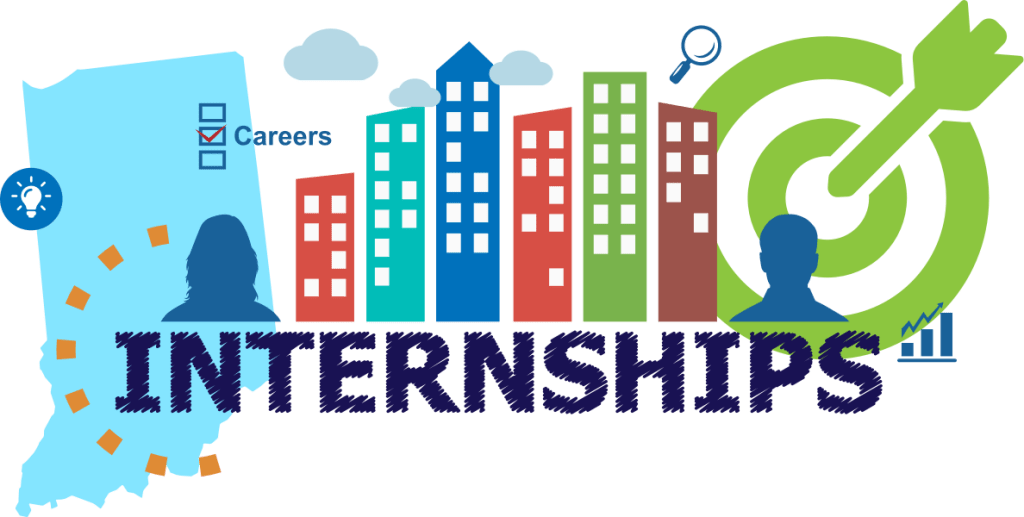
Thus we come to the end of the blog.This blog is aimed at introducing the readers to the world of personality analysis.However one must remember that human beings are complex and not one theory explains all the human behavior.The readers are requested to read more articles about the same and fill themselves with knowledge.

Give a like,if you all felt this article was informative and interesting.

Thankyou!

Email Etiquettes For Students

Simple rules to send a respectful email that won’t get you on your professor’s bad side. 

Rule 1 – Answer swiftly

 Anyone who sends you an email they’ll want quick responses. The golden rule for email is to reply within 24 hours, and preferably within the same day itself. If your response email is complicated, just send an email confirming receipt and letting them know that you will get back to them. This will ease the senders mind! 

Rule 2 – Use a meaningful subject line

 When filling the subject line, make sure that you mention what the email is for or in regards to. You don’t want it to seem like a randomly generated subject and end up in your professor’s spam folder. It also makes it easier to search for old emails when the subject line is relevant and specific to the content of the email. 

Rule 3 – Read your email before you send it 

Prior to sending your email, be sure that you proofread your message. You shouldn’t write your email as though you are texting your friend. Make sure it’s got full sentences, proper grammar, and real spelling. Look out for potential misunderstandings, the tone, and inappropriate comments. 

Rule 4 – Abbreviations & emoticons 

Be careful using email abbreviations such as BTW (by the way) and LOL (laugh out loud) in formal emails. Even today, some people still don’t know what they mean, so it’s better to drop them. 

Rule 5 – Be concise

 Be succinct and keep your message short and to the point. Your professor is going to have probably hundreds of email messages to wade through each day. Just get to the point and politely, respectfully, ask your request.  If it has to be long, consider including a synopsis at the top of the email. Make sure you are as clear as possible about what it is you need to ask of your professor without writing a novel. 

Rule 6 – Do not write in CAPITALS 

IF YOU WRITE IN CAPITALS IT SEEMS AS IF YOU ARE SHOUTING!! Therefore, try not to send email text in capitals. 

Rule 7 – Use a professional email address

 This marks the message as legitimate and not spam. You should always have an email address that conveys your name so that the professor an idea of who’s sending the message. Never use email addresses, perhaps remnants of your grade-school days, that are not appropriate for use in a formal setting, such as “supergirlrocks@…” or “pizzalover@…”.

Rule 8 – Use professional salutations 

Don’t use laid-back, colloquial expressions like, ‘Hi’ or ‘Yo’. Address your professor directly; don’t just launch straight into a request. Examples: ‘Respected Dr. Kapoor’, ‘Dear, Ms. Gupta’, ‘Dr. Sharma, I hope this email finds you well…’. 

Rule 9 – Be polite

Don’t make demands, don’t accuse, remember to write please and thank you. Close your email with something polite like ‘Thanks’, ‘Thanks for your time’, ‘See you in class Wednesday’, ‘regards’, etc. Then re-type your first name 

How to become a successful Entrepreneur?

Whether you’re starting as a pro or an amateur, who doesn’t want to be a successful entrepreneur? Owning your own business gives you a sense of freedom. You become more creative, release your ideas, visions, and make decisions yourself.

So to be strong at this game, here are some tips you may need:

  • Challenge Yourself: Every day is a new beginning. Your biggest motivation should be to keep challenging yourself. No one else is going to push, it is you who has to take the charge. Learn every day. Read books, blogs, and articles on entrepreneurs. Doing this will not only increase your knowledge but also expand your creativity.


  • Take Risks: Successful entrepreneurs always take risks. Without this one can never figure out what is good for their business and what is not. It is dangerous but sometimes it presents opportunities that often outweigh the potential danger.


  • Know your goals: Rome was not built in a day! Who hasn’t heard this famous quote? Just like that, a startup also cannot be successful in a few days. One needs to be patient in their way up. You should have a proper goal plan. Work on all your plans, make mistakes, and explore.


  • Be passionate: Nothing in this world fuels you better than your passion does. When you’re passionate about what you do, long hours won’t even matter. But if you are not, you won’t have any motivation when you are sleepy or tired. Ever noticed entrepreneurs who get that gleam in their eyes when they talk about what they do?


  • Support System: Let’s be honest, achieving things on your own, will only double the trouble in your journey. One needs a supportive network to lean on. Hire someone you have great character and whom you respect too.


  • Put everything on Calendar: Yes, you heard that right! Put everything on the calendar. From every important meeting to working hours, meeting friends, workouts, games, etc. The reason being this will always keep you on your toes and you will have no time to waste. ‘ Time is money’ – Every famous entrepreneur abides by this rule. Follow it and no one can stop you from being successful.


What’s your favourite success tip for entrepreneurs? Share it in the comment section.


Why it’s okay to not be productive right now

Pandemic or not, your self worth is not proportional to your productivity

Like me, if social media has become your only out to boredom, you may have noticed conversations about the notions of ‘productivity’ rocketing. Whether it is your twitter mate updating you with their daily baking sessions or an Instagram friend showing off the pages and pages of work that they finished, or your family groups bombarding you with motivational posts about how to spend your free time, if you have any. There’s so much pressure right now to make the most of this ‘free’ time. It’s exhausting to even try to keep up. The rhetoric around productivity is so romanticised, glamorised and even glorified. However, every time I come across a reminder to be productive, I find myself thinking whether is it really a practical thing or can being productive everyday be a damaging to oneself?

As a university student doing her under graduation, the increase of workload, since the onset of Coronavirus in India, hasn’t gone unnoticed- being given a task after task, a deadline after deadline took a toll on all students. At the start of lockdown, I had internals, I was constantly pulling all nighters revising for the tests, completing assignments and keeping up with the daily workload of the online lessons. In this sense, it felt like nothing even while being locked up in our homes. There was always something that had to be submitted, something that needed to be revised or something that I needed to start working on. I was trying, as was everyone, but oftentimes, it felt like all the efforts amounted to nothing in the end. The workload didn’t end with the end of the semester, having to take-up internships in the middle of a pandemic caused immeasurable pressure and paranoia. My work plans are disrupted by distractions, I find myself unknowingly overextending and the balance between work & free time has become invisible. Not to mention the stress is unavoidable, and I constantly find myself waking up wishing for the day to end.

Is there anything that can be done?

Last year, if someone told us that we would be trapped inside our homes in a state of quarantine due to a deadly pandemic, we would have laughed it off. So, at the time our worst and unimaginable fears are coming true, being plunged into uncertainty does not mean that we have to function effectively alongside it. And therefore, being productive is no longer as important as it was before.

It is of utmost importance to acknowledge that not everyone is fortunate enough to be able to use this situation to hone their skills, try new hobbies, explore new passions or build something unforgettable. In the midst of rapid unemployment, losing your loved ones, anxiety caused by separation from friends and family, isolation and loneliness, bad mental health is inevitable- and that’s okay. It’s okay not to be okay, it’s okay needing to take time off. It’s okay to listen to your body. Don’t be mad at yourself for not being able to deal with the situation as efficiently as your friend or your parent or your Instagram mutual. Getting out of the bed at a reasonable time is a task enough. Not putting off taking care of yourself and your needs is a task enough. Keeping up with your friends and checking up on them is a task enough. Spending time with your family is a task enough. Doing these tasks is no where near the perfect productive day I imagined – and it won’t be for a long while. I was meant to be getting excited about interning opportunities and travelling more and capturing more. Now when everything has gone south, the task of prioritising yourself is a rebellious act.

How can we change this mindset?

If you’re anything like me, university and work mean that I can not entirely ignore all my responsibilities in favour of self-care. Prioritising what you have to do is a good start to make sure you can do what needs to be done. Practice different methods or working. For me, sitting at my desk for more than 7 hours, staring at the laptop screen is quite overwhelming, mentally exhausting and doesn’t leave me feeling fulfilled. Taking breaks to perhaps watch an episode from a show that I’m currently hooked to or to mindlessly scroll on twitter ensures that I feel the balance.

This unsettling environment can be taxing. Forgive yourself for making mistakes.

Should schools switch to eBooks?

Having brought modern technologies to classrooms has had a positive impact on the quality of the delivered education. Universally the students and teachers agree on the benefits of using eBooks in education.

The aim of eBooks is to simplify and improve the overall learning experience. Digital Books make the learning process more interesting and engaging. Students can now regularly participate in the learning process rather than listening to one person talking constantly. The integration of eBooks into teaching in classrooms makes learning a fun and engaging experience. Gone are the days when students were expected to carry a bag full of books to classrooms and back home every day. With eBooks joining the educational domain one machine is sufficient to include the syllabus of the whole year. Students at a very early age will be exposed to these electronic books, right from kindergarten to university level, ensuring that learning never becomes routine.

80% of US schools use e-books or digital textbooks

A successful learning program must ensure that the learning process includes the students actively. The eBooks also launched an educational innovation that lets students learn better and faster. Some of the benefits of introducing eBooks into education are listed below:

1. Study anyplace anytime:

Simple to bring an eBook around. It’s easier to move a mobile device that supports eBooks, instead of carrying a bag full of books. Most of the students already carry a mobile device these days. It might be a smartphone, a tablet, a laptop.  An eBook’s portability allows students to refer whenever they want to their notes and course materials. The students will now have everything within one location instead of bringing several books.

2. Offline eBook Access:

More than 50 per cent of the world’s population has Internet connectivity. Yet we all have networking and network problems often in trouble. To ensure that the internet connection doesn’t hamper the mobile devices learning cycle, provides offline services these days. Students can now install and save any content they want on their device, and then go through it at their comfort later.

3. Interactive Multiple Functions:

Not only are eBooks basic reading materials, they also have all the required resources to help students make notes and illustrate content. EBook readers have many interactive features, such as annotations, pen tools, page zoom, and much more. Due to the ability to find words and topics in an instant, the search tool is the most favoured instrument.

The search tool tries to avoid the time-consuming process of turning pages after pages in order to find a specific topic or sentence. They can also bookmark chapters and pages. The Online Dictionary helps them find word definitions easily. Additionally, the user can also change the font size and style, and adjust the device’s brightness to suit their eyes. An eBook is an all-in-one device that gives students a wholesome learning experience.

They need to just point the image or object to their AR-enabled device, and a computer-generated visual will pop up on their screen. This 3D image helps provide a convincing and immersive learning experience for the students. Those improved visuals would be more interesting for students over flat diagrams. It may also have links to relevant external sites, where more information about the projected image can be found.

3 Ways for Students to Make Money Online Without Getting a Job

USE Depop

Similar to eBay, Depop is a platform for those who want to sell their clothing, jewelry, artwork, and anything else under the sun. The app is well known for being populated by vintage lovers and those who want to reduce their carbon footprint by practicing sustainability. The app also includes item recommendations based on your taste, top sellers based on style, and world favourites. Users can decide to follow shops and sellers in order to keep track of the items they are selling.

Starting up on this app is very elementary. The user only needs to connect their Paypal account for transactions and other payments. In addition to payments, many sellers and users on the app also participate in trades where they trade items from either store of similar value. After this step, the only thing left is setting up an account with a profile photo, a biography, and social media links, if that’s what your heart desires. From here, you can post photos of whatever you want to sell and choose the price.

If your item is a clothing item, a jewellery piece, or an accessory of any sort, wearing it in a photo for reference is normally preferred by buyers so they can see how it may fit another individual. Always take as many photos of your product as possible. This usually increases the likelihood that someone will buy it because you show all the angles of the product as well as the flaws it may have. Include a bunch of tags related to your item under the post. These tags are used for when other users search an item through keywords.

Youtube

For creators from all walks of life, Youtube is one of Gen Z’s golden media platforms. From compilations to make up tutorials to daily vlogs to art tutorials to photography tips, the platform is extremely versatile. And this is where you come in. Like the previous idea, take something you like and start a channel on it. If you’re really religious, start a channel on things you have learned or practice. If you love makeup, become a practicing beauty guru. Or maybe even just do daily vlogs and stream your routine in quarantine. The possibilities of Youtube are endless, but that doesn’t always promise you money. Many Youtubers correlate their large incomes from Youtube to brand deals, views and hard work But the message on success in the Youtube space is clear: you need to be patient. Success on Youtube doesn’t just come with the click of the upload button, you need to work for it or do something that is worth remembering. 

SELL YOUR ART

This option is much more universal than you think. Whether you are a skilled artist or not, selling paintings or art on eBay is much more simple than one would expect. If you’re an amateur then start by making a small abstract piece. If you’ve mastered an art form then you have an upper hand, show your art skills, create more art pieces since you have more time on your hand.

Tips and tricks to crack the competitive exams

India has an extremely competitive environment when it comes to cracking the toughest of examinations, especially at the undergraduate level. The step for your preparation should be to understand the pre-requisites for it. Besides that, one must always have access to the previous years’ question papers. It will give a fair idea about the exam pattern and how to plan the study.

With such a competition, students do need some direction. Here, are some tips on how to prepare for it:

Plan and Strategize – First and foremost, before you start to study, plan everything. Get yourself familiar with the difficulty level of the test. Evaluate where you stand and what needs to be done more. Try to collect all the study material and sample question papers. Ensure that the plan is not aggressive and you don’t overburden yourself.

Set a schedule – Now that you have strategized everything and got all the resources, the second step is to set a timetable. Divide your study hours according to the subjects. Try to make sure that you give enough time for the difficult subject. Also, have short breaks in between, this will relax the mind and help in better concentration.


Minimize the distractions – Get rid of anything and everything that can distract you from studying. Avoid watching shows on Netflix during this time. Not completely, but try to reduce the hours of being on social media or using the phone. All of them can waste your time and stop you from studying.

Focus on understanding concepts – To have a better hold on concepts, don’t mug up as you may forget it soon. Instead try to understand them, analyze, and how they are interlinked. You need to be thorough with the basics as well. Revise it, before you move on to the core syllabus.

Practice! Practice! Practice! – The best way to practice is by writing. The more you write, the more you’re able to grasp the information easily. Revise what all you learned,daily, before sleeping at night. Read it four times!

Test yourself – Now that you have memorized and practiced everything. Examine how prepared you are. Once you are done with the entire syllabus, take your mock tests. Solve all the question papers. This way you’ll know all your mistakes, what is needed to be done, and what to be avoided. It will help you in planning your overall exam strategy.

Be Positive – After all, this is done, stay positive. Believe in yourself and your efforts. Don’t be in any last-minute rush and stress. Avoid studying a night before the exam, just revise your notes. Sleep on time, so that you wake up fresh the next morning. Keep yourself healthy and fit by eating the right food.

All to say, competitive exams are a hard nut to crack but with the right mindset, anybody can excel. And remember, if you don’t, that’s best for you. Something amazing is waiting for you. Don’t kill the spirit. On that note, All the best!

Knock knock. Who’s there? Democracy. Democracy who?

Democracy in layman terms is the government of the people, by the people and for the people. Media is being considered as the fourth pillar of democratic society after executive, legislature, and judiciary. One of the crowning glories of the democratic system is the freedom of expression and the space that is provided to views from different sections of the society. The last few years witnessed an enhanced interface between the media and the common man, thanks to social media

The role of Social Networking Sites in Indian politics has risen tremendously in recent years. Different Indian political parties have their websites and some of them also use other social mediums to interact with people. With every party having its website and leaders being active on different media it makes the citizens feel that they are within their reach. It feels like the leaders are a touch away. Mr. Shashi Tharoor of Congress Party was one of the first politicians to start tweeting and has a separate fan base for his tweets now. Through social media, politicians now constantly display their message through endless campaigns, see direct responses to their actions via Facebook or Twitter, and connect with the public. One of the most recent example is Bharatiya Janata Party’s ‘Main Bhi Chowkidar’ campaign with Prime Minister Narendra Modi and other BJP leaders, where an auto-generated response was sent to all those who tweeted to the PM, giving the illusion that they were contributing to something large.

It is important to note that political engagement through social media is not limited to adults, but young potential voters increasingly use social media for online political participation. Especially younger people are using social networking platforms such as Twitter to develop an individualised form of activism that they connect to most. Unlike Mainstream media where narratives are indirectly controlled, influenced and favoured by the business houses and political parties that are funding the channel, Social media is comparatively a less regulated space.

Ravish Kumar on his Prime Time show on NDTV urged everyone to stop watching television back in March 2019. Why would someone who earns his living through mainstream television media tell you to do that? This shows how grave the situation was and still is. Public issues have disappeared from the channels, when Indian states were reeling under floods, the channels were still flooded by anti- Pakistan narratives, tukde-tukde gang narratives and the never-ending glorification of the honourable PM. Is TRP more important than highlighting important issues? Is selling news more important than upholding the fourth pillar? If we see the current media scenario then the answer to the latter question seems too easy.

Wouldn’t you agree if I said that the watchdog, or in other words the press and the media have a significant influence on society? Then is it fair to have corporate houses and political parties with vested interests invest in the media?

India News is owned by Karthikeya Sharma, son of a Congress leader. News 24 is controlled by Rajeev Shukla, a Congress leader and his wife Anuradha Prasad who is the sister of BJP leader, Ravi Shankar Prasad. Times Group is owned by Bennet & Coleman. The Italian, Robertio Mindo who has a share in the group is a close relative of Sonia Gandhi. CNN- News 18 is owned by Mukesh Ambani. Republic TV is owned by ARG Outlier Media Pvt Ltd and one of its biggest investors is Rajeev Chandrasekhar, a BJP leader- These are just a few examples out of the many news channels.

Editors are pulled up for putting their opinion, journalists are asked to toe the line, and media houses align themselves with different political ideologies and the interests of the owners and sponsors. Is it really possible to have a free and a fair media with this direct hold?

‘Freedom of the press is not just important to democracy, it is democracy.’

Walter Cronkite

India is the world’s largest democracy, and the media mustn’t be controlled by any political party, big corporate houses or any other sector. The Press and the media is the voice of the voiceless and should promote the rights of not just the majority but also the minority; it is the duty of the press of any country to ensure that the government is functioning properly and no section of the society is left behind.

Sources-

  1. Role of media in Indian democracy https://shodhganga.inflibnet.ac.in/bitstream/10603/203650/11/11_chapter5.pdf
  2. https://www.thenewsminute.com/article/critic-inside-ravish-kumar-speaks-tnm-state-indian-journalism-109378
  3. Participatory Politics: New Media and Youth Political Action- University of Chicago
  4. Who owns your media?- https://www.newslaundry.com/2014/02/05/who-owns-your-media-4https://cablequest.org/index.php/news/channels-owned-by-polticians