WHY ARE YOU SO QUIET?

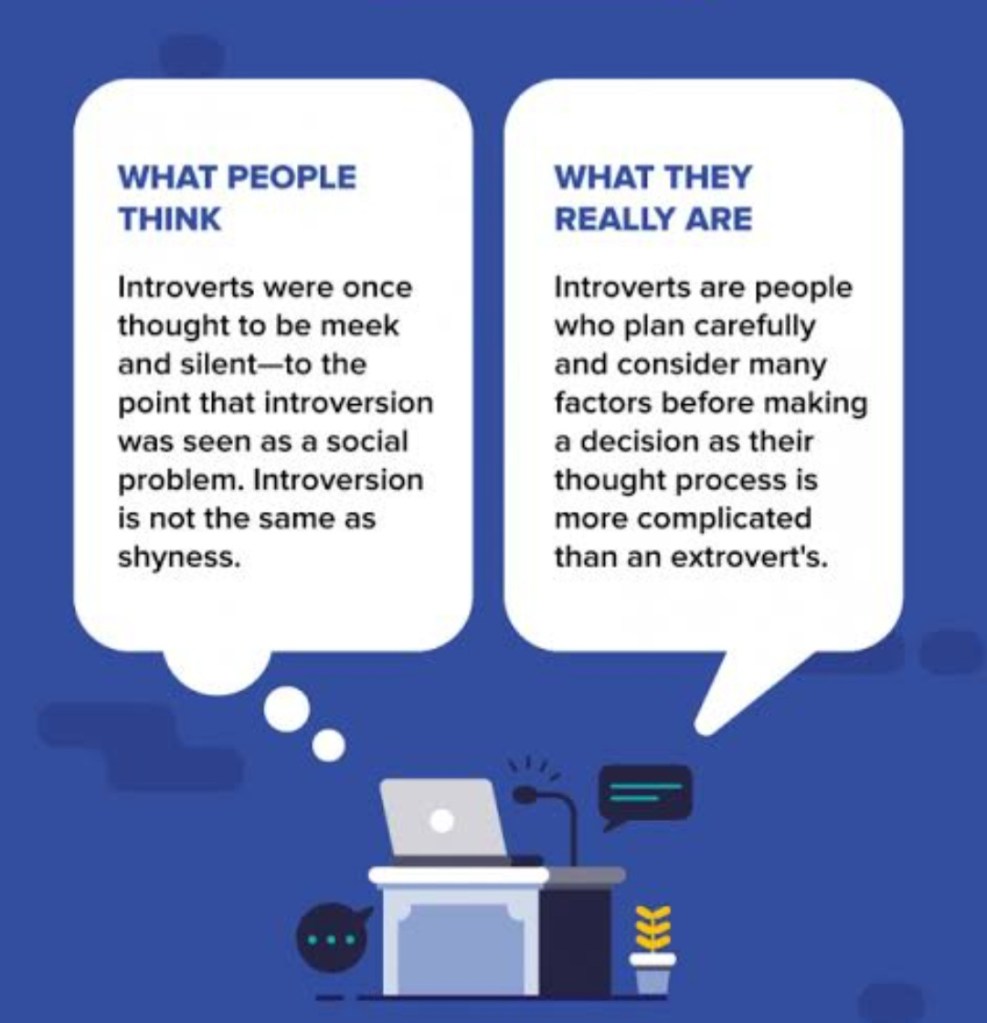
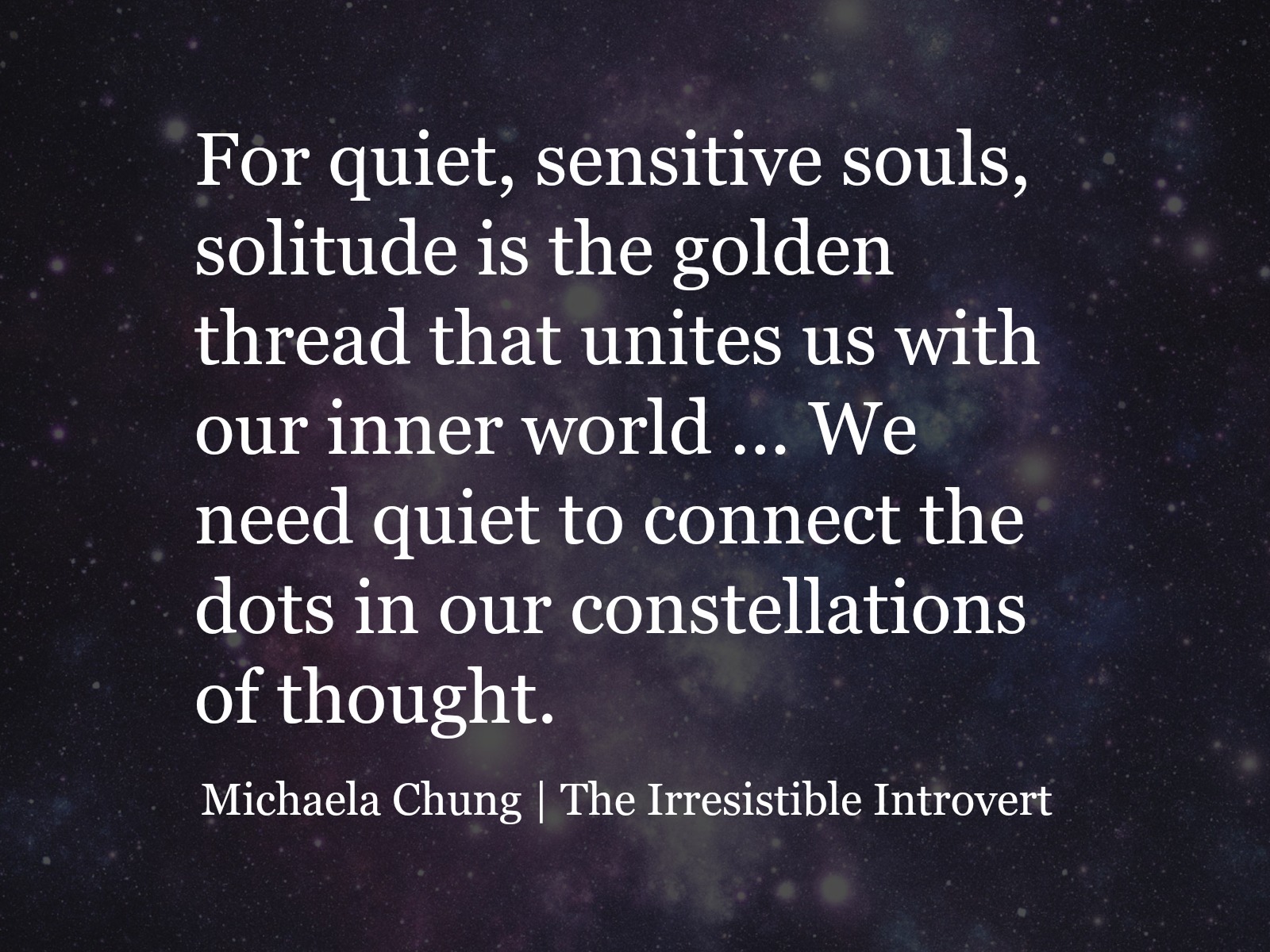
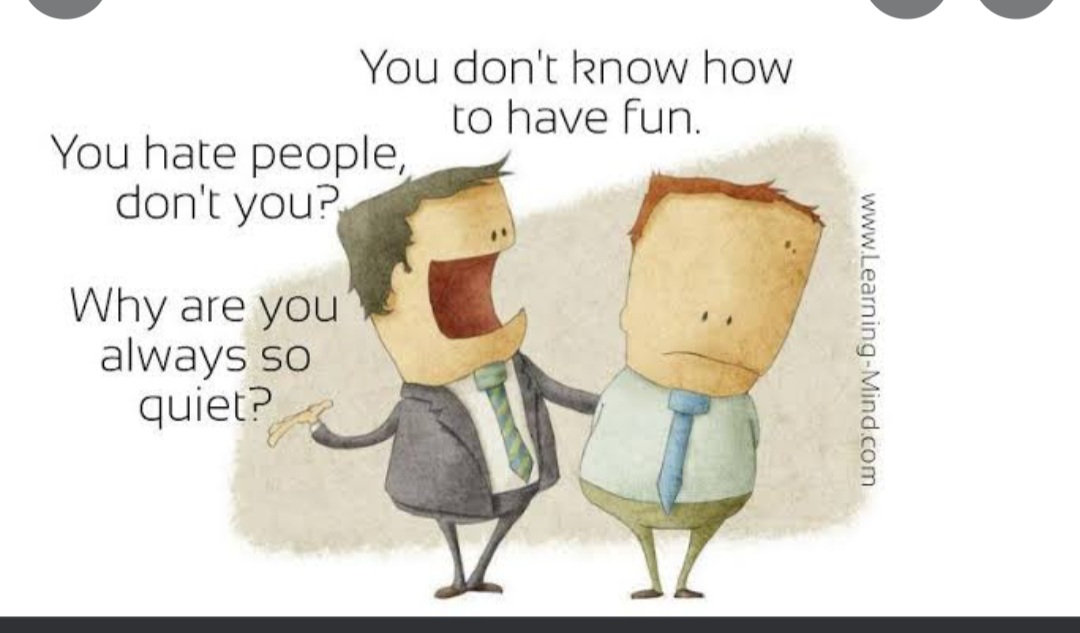
What happened? Why are you so quiet? Do you have any problem? Why are you always so serious? Why are you antisocial? Donโ€™t you know how to have fun? These are some of the common questions asked from introverts. If you are an introvert these questions make you feel horrendous. Introverts are often misunderstood as depressed, baffled, devastated.

Common Misconceptions

There are many myths framed by people about introverts. If you are an introvert, you might have heard of the following misconceptions

๏ถ POOR PUBLIC SPEAKERS
People often think that you lack confidence and you donโ€™t like to socialize so you canโ€™t be a good public speaker.
โœ”This is just a myth, it may not apply to every introvert. If a person has the particular traits required to be a public speaker then personality type hardly plays any role in this.
๏ถ INTROVERTS DONโ€™T HAVE ANY FUN
It is believed that introverts donโ€™t have any fun, they donโ€™t like to enjoy. They donโ€™t like to go out.
โœ”Everyone likes to enjoy. Everyone has different ways to have fun. Your way of enjoying yourself may be different.
๏ถ YOU ARE EITHER OBLIVIOUS OR DOPE
People assume that introverts are fools, they think that most of the time you are lost in your world, you are not aware of anything, you are not ready to face the world.
โœ”This canโ€™t be applied to all, you may be cognizant and you are a keen observer, you observe everything but just keep it yourself rather than conversing it with other people.
๏ถ YOU ARE SHY
This is the most common misconception about introverts.
โœ”Being shy and introverted is different
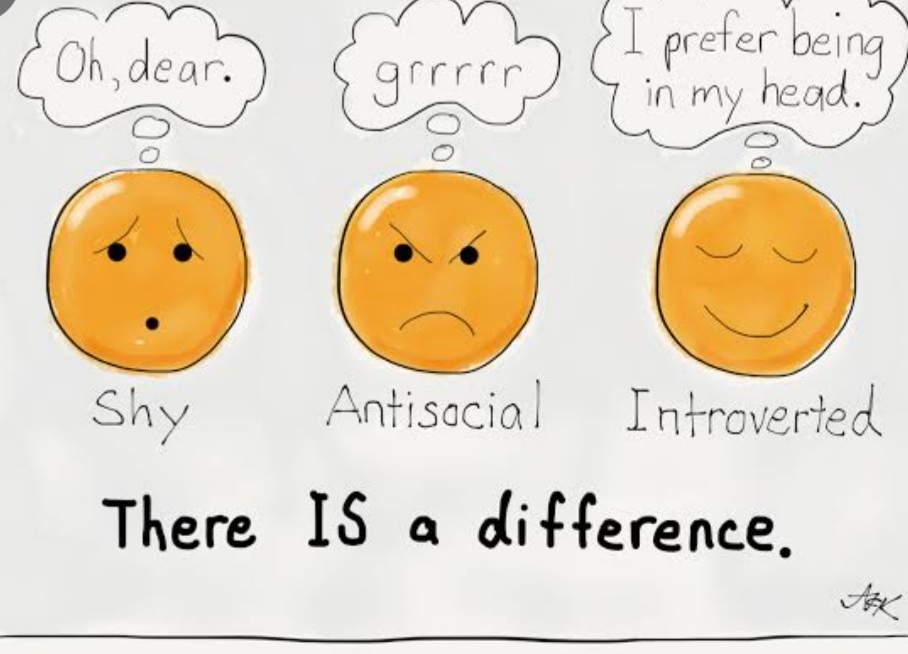
An introvert may not necessarily be shy. An introvert interacts with others only when necessary whereas a shy person is afraid to interact with anyone but this is not the case with introverts.

๏ถ YOU ARE DEPRESSED
People often think that you are depressed just because you donโ€™t speak much. โœ” You spend most of the time with yourself so you are often misunderstood.
A person is much more than being an introvert, extrovert, ambivert. A person is defined by the qualities not by these personality types, but people just try to underestimate you if you donโ€™t speak much, if you speak more then also people criticize you. Some people try to change themselves just by getting triggered by the particular questions or statements of people. My motive is not to depict any personality as inferior or superior, itโ€™s just that if you are an introvert then many people want you to change your personality.

Every personality type has some weaknesses and strengths, even if you are an extrovert then also people have problems with you and you are perceived as a wild, loud, overweening person. Now how to answer those repulsive questions, you can just ignore them or just become blunt and reply whatever you want to or just give a cunning smile to that person. These may sound weird but most of the time they do work.
The biggest mistake an introvert can make is trying to become an extrovert and vice versa. Introversion is not any fault which needs to be fixed. Just remember no one will ever know you entirely, people only know some aspects of your life and they judge you on that basis and they will keep on judging, so never doubt your capabilities or try to change your personality under the influence of these people.

SOUND OF METAL- MOVIE REVIEW

I was a bit apprehensive to watch this movie, in regards to its premise. I was under the influence that this would play out to be another musical drama, and while I have enjoyed a few of those I don’t particularly look forward to seeing them. But this turned out to be a whole new experience.

This movie is primarily about coping with the loss of hearing. The movie does an excellent job of portraying the actual emotional state of a person who lost their hearing. The first half of the movie is extremely emotional and I was always on the verge of tears during this time. The movie dives in deep with its characters, each scene being very purposeful and well thought out which helps its emotional tone. The movie is able to convey an immense amount of emotion with very little dialogue. I also thought the screenplay by Darius and Abraham Marder was a very solid one, though I usually prefer fast-paced movies this one benefits from its intentionally drawn-out scenes and I never really got bored throughout the movie.

The sound mixing in this movie is truly unique and audacious. Not only in the sense that it helps the audience to know what our protagonist is going through but just in general, everything just feels so raw and palpable. The editing also helps in telling a good cohesive story. Everyone in this movie is great, with Riz Ahmed especially giving a stand-out performance but even Olivia Cooke is able to stand her own.

WHAT DOES THE RBI DO?

One of the most important functions of central banks is formulation and execution of monetary policy. In the Indian context, the basic functions of the Reserve Bank of India as enunciated in the Preamble to the RBI Act, 1934 are: โ€œto regulate the issue of Bank notes and the keeping of reserves with a view to securing monetary stability in India and generally to operate the currency and credit system of the country to its advantage.โ€ Thus, the Reserve Bankโ€™s mandate for monetary policy flows from its monetary stability objective. Essentially, monetary policy deals with the use of various policy instruments for influencing the cost and availability of money in the economy.

Over time, the objectives of monetary policy in India have evolved to include maintaining price stability, ensuring adequate flow of credit to productive sectors of the economy for supporting economic growth, and achieving financial stability. Based on its assessment of macroeconomic and financial conditions, the Reserve Bank takes the call on the stance of monetary policy and monetary measures. Its monetary policy statements reflect the changing circumstances and priorities of the Reserve Bank and the thrust of policy measures for the future. Faced with multiple tasks and a complex mandate, the Reserve Bank emphasizes clear and structured communication for effective functioning of the monetary policy. Improving transparency in its decisions and actions is a constant endeavor at the Reserve Bank.

Qualitative instruments

Qualitative instruments are those instruments of credit control which focuses on the overall supply in the economy

  1. Bank rate– It refers to the rate of interest which the RBI lends money to the commercial banks. It relates with the immediate loan requirements of the commercial bank. There is a rise in bank rate when inflation needs to be corrected.
  2. Open market operations– It refer to the sale and purchase of securities in the open market by the RBI on behalf of the government. by selling the securities in the open market the RPI soaks liquidity from the economy. and by buying the securities the RBI releases liquidity. Inflation is corrected by sale of security.
  3. Repo Rate– The rate at which the RBI offers short term loans to the commercial bank by buying the government securities in the open market is called repo rate. There is a rise in Repo rate when inflation needs to be controlled.
  4. Reverse Rape Rate– The rate at which the RBI accepts deposits from the commercial banks is called Repo Rate. There is a fall in the reverse repo rate when inflation needs to be corrected.
  5. Cash Reserve Ratio– It refers to the minimum percentage if the bankโ€™s deposits that the RBI requires the commercial banks to keep with the RBI. To control inflation CRR is increased.
  6. Statutory Liquidity Ratio (SLR)– every bank is required to maintain a fixed percentage of its assets in the form of liquid assets called SLR. the liquid assets include cash gold an unencumbered approved security. the rate of SLR is fixed by the RBI and is varied from time to time. To decrease the supply of money the central bank increases the SLR.

Qualitative Instruments

Qualitative instruments are those instruments of credit control which focus on select sectors of the economy.

  1. Marginal RequirementsThe margin requirement refers to the difference between the current value of the security offered for loan and value of loan granted. The margin requirement is raised when the supply of money needs to be reduced.
  2.  Rationing of creditRationing of credit refers to fixation of credit quarters for different business activities. Rationing of credit is introduced when the supply of credit is to be checked particularly for speculative activities in the economy
  3. Moral suasion- It is like rendering advice to commercial banks the by the RBI to follow its directives. the banks are advised to restrict loan during inflation and be liberal in lending during inflation.

THE TIME TRAVELLER’S WIFE -BOOK SUMMARY

About the book

The Time Traveler’s Wifeย is theย debut novelย by the American authorย Audrey Niffengger, published in 2003. It is a love story about Henry, a man, with aย genetic disorderย that causes him toย time travelย unpredictably, and about Clare, his wife, an artist, who has to cope with his frequent absences and dangerous experiences of reappearing in odd places. Niffenegger, who was frustrated in love when she began the novel, wrote the story as aย metaphorย for her failed relationships. The tale’s central relationship came to Niffenegger suddenly and subsequently supplied the novel’s title. The novel, which has been classified as bothย science fictionย andย romance, examines the themes of love, loss, andย free will. In particular, the novel uses time travel to explore miscommunication and distance in relationships, while also investigating deeperย existentialย questions.

Summary

Using alternatingย first-person perspectives, the novel tells the stories of Henry DeTamble (born 1963), a librarian at theย Newberry Libraryย inย Chicago, and his wife, Clare Anne Abshire (born 1971), an artist who makes paper sculptures. Henry has a rare genetic disorder, which later comes to be known as Chrono-Impairment. This disorder causes Henry to involuntarily travel through time. When 20-year-old Clare meets 28-year-old Henry at the Newberry Library in 1991 at the beginning of the novel, he has never seen her before, although she has known him most of her life.

Henry begins time traveling at the age of five, jumping forward and backward relative to his own timeline. When he vanishes, where he goes, and how long his trips will last are beyond his control. However, his destinations are tied to his subconsciousโ€”he most often travels to places and times related to his own history. Certain stimuli such asย stressย can trigger Henry’s time traveling; he often goes jogging to keep calm and remain in the present. He searches out pharmaceuticals in the future that may be able to help control his time traveling. He also seeks the advice of a geneticist, Dr. Kendrick. Henry cannot take anything with him into the future or the past, which means that he always arrives naked and then struggles to find clothing, shelter, and food. He does amass a number of survival skills, including lock-picking, self-defense, andย pickpocketing. Much of this he learns from older versions of himself.

Once Henry and Clare’s timelines converge “naturally” at the libraryโ€”their first meeting in his chronologyโ€”Henry starts to travel to Clare’s childhood and adolescence inย South Haven, Michigan, beginning in 1977 when she is only six years old. On one of his early visits (from Clare’s perspective), Henry gives her a list of the dates he will appear and she writes them in a diary so she will remember to provide him with clothes and food when he arrives. During another visit, Henry inadvertently reveals that they will be married in the future. Over time they develop a close relationship. At one point, Henry helps Clare frighten and humiliate a boy who abused her. Clare is last visited in her youth by Henry in 1989, on her eighteenth birthday, during which they make love for the first time. They are then separated for two years until their meeting at the library.

Clare and Henry eventually marry. Soon after their marriage, Clare begins to have trouble bringing a pregnancy to term because of the genetic anomaly Henry is presumably passing on to the fetus. After sixย miscarriages, Henry wishes to save Clare further pain and has aย vasectomy. However a version of Henry from the past visits Clare one night and they make love; she subsequently gives birth to a daughter named Alba. Alba is diagnosed with Chrono-Impairment as well but, unlike Henry, she has some control over her destinations when she time travels. Before she is born, Henry travels to the future and meets his ten-year-old daughter on a school field trip. Unfortunately, during this trip, he learns that he dies when Alba is five years old.

When he is 43, during what is to be his last year of life, Henry time travels to a Chicago parking garage on a frigid winter night where he is unable to find shelter. As a result of theย hypothermiaย andย frostbiteย he suffers while sleeping in the parking garage, his feet are amputated when he returns to the present time. Both Henry and Clare know that without the ability to escape when he time travels, Henry will certainly die within his next few jumps. On New Year’s Eve 2006 Henry time travels into the middle of theย Michiganย woods in 1984 and is accidentally shot by Clare’s brother, a sceneย foreshadowedย earlier in the novel. Henry returns to the present and dies in Clare’s arms.

Clare is devastated by Henry’s death. She later finds a letter from Henry asking her to “stop waiting” for him, though it also describes a moment in her future when she will see him again. The couple does reunite when Clare is 82 years old and Henry is 43. The novel’s last scene shows a time when Clare, well into her old age, still waits for Henry, as she has done most of her life.


BOOK REVIEW- SIX OF CROWS(LEIGH BARDUGO)

BY DAKSHITA NAITHANI

People usually tend to avoid the sci-fi and fantasy genre, and honestly, I don’t blame them. Complicated worlds, entirely different from our own, magic and otherworldly creatures, characters tasked with saving the world. It’s standard fantasy fare from the time of Tolkien, and it seems everyone is tired of it.

Six of Crows by Leigh Bardugo came as a breath of fresh air then in the Young Adult category. What is it about, you ask? I’ll give you three words:

Morally grey characters.

The first point in its favour was marked the moment it presented our chosen leads: a thief, a spy, a sharpshooter, a runaway scientist, a soldier girl trying to survive in the city with her powers, and a child soldier and ex-convict with a thirst for revenge.

Bardugo’s story is set in a world different from our own, with different nations, but same political machinations. Beings called Grisha wield powers of the elements. In some nations, they are revered and have a high standing in the armies (Ravka). In others, ingrained prejudice makes humans hunt them like dogs going for a kill (Fjerda). Unlike her previous trilogy, Shadow and Bone, this story takes place in Ketterdam, the capital of a small island called Kerch, filled with thieves and con artists and ruthless businessmen looking to make a coin.

The story is based on a heist, and our criminal mastermind, Kaz Brekker, is tasked with freeing a valuable Grisha prisoner from the Ice Courtโ€”the world’s most impenetrable fortress. To venture there means signing your death warrant, but Kaz accepts anyway. Why?

He is promised thirty million kruge.

Like I said, this story does not feature any selfless Chosen Ones.

With his mission given, Kaz gathers his crew: Inej Ghafa, a brown girl and one of the best spies on the Ketterdam rooftops; Jesper Fahey, a biracial boy with an excellent aim and the most charismatic smile; Wylan van Eck, a runaway scientist who also happens to be the son of a rich businessman; Matthias Helvar, former prisoner who is torn between assisting with the heist and the ingrained prejudices and loyalty to his country.

As the blurb of the book says, “Six dangerous outcasts. One impossible heist. Together they might just be unstoppableโ€”if they don’t kill each other first.”

What made this book even more amazing, in addition to the fast-paced plot and action, were the characters themselves. With five point-of-views, I got a clear picture of their past traumas and motivations, their quirks and flaws, and that just made me fall in love with all of them even more. The way they all slowly developed friendships and became each other’s family against impossible odds was heartwarming to see, especially for Kaz, who is used to operating alone as the mastermind.

Another great thing about this book has to be the representation. The author suffers from a disability herself which requires her a cane. It is no surprise then that Kaz too suffers from a permanent leg injury and chronic pain. This is never made fun of, and actually explains why he relies on his cunning and smarts so much.

While most white authors resort to stereotypical representation of brown people, Bardugo instead makes Inej a strong female character. She is kind even in the face of adversity and tries her best to embrace her religion and heritage. Despite her brutal past and obvious mental scars, she is talented with her knives and spying and as another brown girl, this was inspiring to read. Through her, Bardugo also elaborates on human trafficking and sex slavery of children: important topics of discussion that most people shy away from.

Nina Zenik, the Grisha Heartrender, is fat. No stereotypes. No jokes. She loves food. She loves her body, and she is a powerful magician and fighter. She is also incredibly street-smart (speaks at least seven languages) and a great actress. Her spunk, charisma and energy were infectious, even in the face of her past as a child soldier.

Jesper Fahey is biracialโ€”half Black. Like Nina, he is energetic and extroverted, coded as having ADHD, however addicted to gambling. He is an expert with guns and sharpshooting, Kaz’s right-hand man in any physical confrontation. His bisexuality is a normal thing in the world. No biphobia. His friends gladly accept him. His character arc and internal prejudices are elaborated upon in a very believable way, and I cannot wait to see his development in the sequel.

Also, the romances in the book were very well-written! Most books rush into the relationship too fast, but every couple in Six of Crows had proper development and slow build-up. Each couple became a well-functioning team first. This is especially true for Kaz and Inej, who each suffer from a form of touch aversion due to trauma. Both vow to become better people first before pursuing any sort of relationship, even though they work extremely well as a team.

Overall, this book deserves a full five-star rating! The world-building and magic system is a bit complicated to get into in the first few chapters, but the characters and their lovely friendships eventually get you hooked. If you love magic, want to have a different kind of adventure than the standard fantasy one, and like seeing heist movies, then this book is for you!

Green Tea- Key to Increase the Immunity

As we are looking forward to a healthy future after the present health calamity of COVID-19 subsides, now is when is the best time to drink green tea with many options such as Lipton and Patanjali green tea price well available in the Indian market.

In these days of modernization, humans have maligned the environment and our resources with chemicals and dirt. These substances have found their way into the food chain and, now, are acting as poisons to the overall well being of all the components of natureโ€™s complex food network. Health refers to the physical, mental and emotional well being of an individual that leads to a well-formed bodily structured and this is endangered in present times.

With overall levels of exercise reduced in the body due to the rapid involvement and fascination of the youth with office desk jobs, this has only been proven to lead to lethal results in the near future. We have also started consuming processed food full of preservatives and sugars which is debasing the health condition in general.  This has led to an increased number of lifestyle diseases such as diabetes, hyper cholesterol and obesity in todayโ€™s community.

Nutrition and Health

Nutrition plays a key role in maintaining a healthy lifestyle for an individual along with exercise. Hence it is important that we indulge ourselves into healthy eating habits and adopt the ergonomic pieces of advice by the professionals who suggest to cut down on sugars, unhealthy fats, and to drink plenty of water and eat fibre.

Green Tea โ€“ the modern-day โ€˜Amrutโ€™

Today, on social media we see that people are giving up the consumption of back tea and replacing it with green tea. Green tea is sometimes referred to as โ€œamrutโ€ or โ€˜the drink of longevityโ€™ by some nutritionist.

Green tea is made from the leaves of plant Camelia senesis. The same plant is used to make oolong tea and black tea when it is harvested in a different season that causes it to undergo  (or not) a different level of oxidation. Green teaโ€™s origin dates back to 618-907 A.D. in China. It was popularized during the rule of the Emperor Shennong.

How to make Green Tea?

If not brewed to perfection, green tea can taste too bitter to drink when is the best time to drink green tea is. Therefore, it is important that you make the perfect cup using Green Tea Bags, Loose-leaf Green Tea or Matcha Green Tea.

Green Tea Bags

Boil around 250 ml of water and let it cool down to around 79หšC  as using boiling water can burn the tea bag and make green tea bitter. Place the teabag in the cup. Use 1 teabag per cup and pour hot water over it.  Let the tea brew for 2 to 3 minutes and then remove the teabag. Donโ€™t squeeze the teabag.

Advertisements

Loose Leaf Green Tea

Heat the water to around 77หšC to 80หšC. Put 1 teaspoon of loose-leaf green tea leaves in a teapot and add around a three-fourth cup or 180ml water to it. Leave it covered for 1 to 2 minutes and then serve using a strainer.

Matcha or powdered Green Tea

Bring one cup of water to boil around 82หš to 88หšC. Place a strainer over the cup and add one teaspoon of green tea powder to it and push the powder into the cup using the back of a spoon. Add the boiled water to the cup and stir it well.

Green tea Caffeine content

ย Even though it is difficult to measure the exact green tea caffeine content, it depends upon the type of green tea used, its brand and serving size. On average green tea caffeine content can range from 12mg to 75mg of caffeine. Matcha or other types of powdered Green tea caffeine content is even higher.

Benefits of Green Tea

Green tea has high antioxidant content which makes it extremely beneficial for our health.ย  Some of the green tea benefits are listed below.

Improves brain function

Since it is a caffeinated beverage, it acts as a stimulant to the brain and makes us active mentally.  This improves various brain functions thus keeping our mood lifted and memory improved.

Improved immunity

Due to the presence of potent plant antioxidants or polyphenols, green tea benefits us by improving our immune system. It is found to kill influenza virus if consumed without milk.

Increased fat burning

Green tea is known to improve the metabolism rate of our system, thus, aiding in the fat-burning process.

Lowered Cancer Risk

Oxidative damage to the cells has been linked to cancer. Due to the high antioxidant content, green tea benefits us with cancer prevention.

Gives you fresh breath

New studies show that green tea benefits our oral hygiene by suppressing the growth of bacteria in our oral cavity and prevents bad breath.

Lower risk of Cardiovascular Diseases

Due to its high antioxidant content, green tea prevents the oxidation of bad cholesterol in our body, which is one of the reasons for various heart conditions.

When to Have Green Tea?

The best answer to when is the best time to drink green tea lies in your schedule and activities throughout the day. Following are some of the best times of the day to have green tea to give you its full green tea benefits.

Not too early in the morning

Having green tea on an empty stomach can have ill effects on the liver due to its high catechin content.

In between meals

Having green tea two hours prior to or after the meal can help in better digestion and iron absorption.

Before Bedtime

Having green tea two hours before bedtime can increase the metabolism post-dinner.

Before exercise

This aids in burning fat better and faster.

Best Green Tea options in Indian Market

Organic India   

Price INR 400

LaPlant Green Tea

Price INR 130

Himalaya Green Tea

Price INR 110

Lipton (available in multiple flavours)

Price INR120

Patanjali Green tea Price

INR 50

India is one of the nations at the top of the list of lifestyle diseases. So letโ€™s do our best and take care of our health.

Advertisements
Advertisements

MUSIC HEALS EVERYTHING

The idea of music as a healing modality dates back to the beginnings of history. Mythology is full of stories suggesting that music is balm for the soul. The Bible talks of how David played the harp to help ease his despair against King Saulโ€™s tyrannies. In Greek mythology, there is the story of Orpheusโ€”the musician who could soothe savage beasts and move rocks with his lyre.

Music therapists in India derive a lot of their knowledge from the science of yoga. Physicians of the ancient Muslim world treated mental illness with music therapy. Special choirs and live music bands entertained patients and there were comic performers as well.

Some of the earliest notable mentions are found in the writings of ancient Greek philosophers. Robert Burton wrote in his 17th century classic, The Anatomy of Melancholy, that music and dance were critical in treating mental illness, especially melancholia.

Backed by research

Contemporary research seems to suggest that music therapy benefits patients with stress, psychological and psychiatric problems because it brings about a sense of well-being.

Researchers at the University of Sydney found that singing in groups for at least 30 minutes a day helped people cope better with low moods caused by chronic pain.

Another study by researchers at Cleveland Clinic in the US found that music helps ease unrelenting, non-malignant pain in adults who โ€œhurt” for at least six months.

Music has also been found effective in managing pain caused by cancerous conditions in the body and procedural pain.

Studies have also shown that music reduces pain during dental procedures. Playing soft music in the background while working at oneโ€™s desk has also been found to reduce stress. Reduced heart rates and higher body temperatures are said to indicate the onset of relaxation.

Positive experiences

T.V. Sairam, a New Delhi-based music therapist, says that music could help him cope better with lifeโ€™s stresses. โ€œRight from childhood, I was interested in music. I then discovered that listening to music or singing could help me overcome difficult situations in life,” he says. Based on these experiences, he became interested in studying the therapeutic aspects of music in a more serious way. Having benefited from music therapy, Sairam has become an active proponent.

A Mumbai-based psychiatrist, Rajan Bhonsle, claims music has helped to cure many stress-related illnesses in his patients, including one who had a bad case of psoriasis, a skin condition. The patient had consulted several specialists but nothing had worked. โ€œI told him that he should listen to his favourite music every day. Sure enough, over a period of time, the psoriasis was cured,” he claims.

A sexual-health expert, Dr Bhonsle says: โ€œMusic relaxes the mind and the body so it works very well in conditions that are anxiety related, such as performance anxiety.” He believes that music can even help counter other marital problems that may have their genesis in work-related stress. โ€œJust helping the body produce some of the feel-good hormones, such as serotonin, can alleviate many stress-related illnesses, and can also go a long way in improving a personโ€™s relationship with his family,” he says.

It starts in the womb

Snehalata Deshmukh, a paediatric surgeon and former vice-chancellor of the University of Mumbai, says she has done several studies on the subject. In one study, she compared two groups of premature infants, both of which were given all the necessary care in terms of nutrition and medication. Music was played to infants in one group, but not to the other. โ€œWe saw that infants in the group that heard music every day gained weight faster than the ones that did not,” she says.

The same study was then extended to pregnant women, and the results were positive. โ€œIn ultra-sounds, we have seen that babies make a happy face when they listen to certain kinds of music, especially in the last trimester of pregnancy,” she says. According to Dr Deshmukh, babies even seem to have preferences in their choice of music. โ€œWe have observed that most of them like Beethovenโ€™s symphonies, or Omkar, or raga Yaman, or Shivkumarโ€™s santoor, because some of these rhythms are similar to the motherโ€™s heartbeat,” she says.

A PRESCRIPTION THAT WORKED

When Jamuna Balamuruganโ€™s sister recommended music therapy to help her cope with stress during her first pregnancy, she was a bit sceptical. โ€œI wasnโ€™t exactly sure how it would help, but I was also beginning to worry about how work pressures would affect my baby,” says this Chennai-based homemaker. Signing up for a music therapy programme conducted by T. Mythily at Chennaiโ€™s Apollo hospital, she was initially โ€œprescribed” some instrumental music which, she says, made her relax almost immediately. The bigger benefits, however, were evident in her baby. Balamurugan claims her daughter is much ahead of her age in analytical and communication skills, and even in creative thinking.

Dr Mythily, head of the music therapy department at Apollo Hospital in Chennai and Balamuruganโ€™s therapist, says: โ€œMusic is being tried in many areas, sometimes as a supportive element to conventional therapy and at other times, as an alternative therapy in itself.”

According to Dr Mythily, music therapy is of two types. One is passive, which involves only listening, and the other one is active, which involves participation. โ€œThe passive form is beneficial in enhancing concentration and memory, reducing stress, heart problems and hypertension,” she says. โ€œThe active form is of immense help in treating neurological problems, such as neurological aphasia, receptive aphasia, expressive aphasiaโ€”speech problemsโ€”and it enhances speech fluency, especially in hyperactive children,” she adds.

For some time now, Balamurugan has been recommending music therapy to scores of expectant mothers. In fact, about two years ago, when she was expecting her second baby, she signed up for the programme again. And as she sees her baby thrive, she is once again happy to give the credit to music therapy.

Sporadic efforts

There are more than 5,000 music therapists registered with the American Music Therapy Association and more than 300 registered music therapists in the UK. In India, there appear to be a handful , who are self-trained. Much of the work in this area is driven either

by doctors who have a penchant for music or by musicians.

Across India, efforts to include music therapy in mainstream medicine have been very limited and sporadic. Notable exceptions are a few health care institutions such as Apollo Hospitals, Northern Railway Central Hospital in New Delhi and Hamidia Hospital in Bhopal, Madhya Pradesh.

In recent years, a few centres of training for music therapists have been set up. Apollo Hospital in Chennai is training psychology postgraduates and doctors in music therapy. The Indian Music Therapy Research and Development Foundation and the Swathi Thirunal Music Therapy Research Centre, both in Kerala, offer short-term courses in music therapy.

CURATIVE AND REHABILITATIVE POWERS

Vivek Joshi, a sarod player who has been performing at various hospitals, vouches for the calming effect of music.

Because the concert was beneficial to so many, the hospital started playing piped music in all its wards a few months ago. This was to determine if music would help accelerate the rehabilitation process of patients with mental illnesses, says Sanjay Kumawat, member secretary, State Mental Health Authority, government of Maharashtra. โ€œWe have a variety of patients with different mental illnessesโ€”so we were keen to assess the impact of using music as therapy. We found that patients respond well. It helps to soothe their minds,” claims Dr Kumawat.

The hospital authorities are so enthused by the success of their programme that they are planning some more sessions of live classical music for patients. In addition, they are proposing similar programmes at other government-run mental institutions in Pune, Ratnagiri and Nagpur.

CONCLUSION

Music has the Power to Heal. It helps us to get rid of the anxiety and stress of our everyday life. Music is undoubtedly a great way of healing the pain. It makes us forget about unpleasant and disturbing thoughts by taking us in the world of melody. Music can bring the back old memories in our present time.

How to separate our personal and professional life

After passing some years of our life we come in professional life. Now every one who are in professional life they think about how to manage their life. Because for a new person which newly joined their professional life they are not able to maintain their personal life as well as their professional life. Sometimes it is seen that the person who are doing job they are busy in her work they does not have time for their personal life.

We are humans beings nothing is impossible for us. If we try to manage then it can be. But now the question is arising that how to managed these two things. For my point of view –

We can to that when we are in office or at the work place at that time we think only about our professional life and if we are at home then we think only about the personal life. Don’t should be mixed them. In your home also you do your work. If we have lots of office work and you are not able to complete it during office time then you do the rest of work at night if it is very important then only do it and otherwise do the next day.

The most important thing the person who are working outside or lives away from their house they take vacation and own vacation time they will gave all his/her time to their parents or family.

Another important thing that if you have stress related to their profession or their personal try to don’t express their stress to any one of them. It is found that if a person have some issues regarding to their work they started to express their stress. For this reason relation started breaking down. It is also found that a person who are in meeting and they think about her personal life. So always try to not do this.

Always try to give time both in equally. Separate them and try to solve the problem of office in office time or personal issues in their house only don’t mix up it. Because both of them are important for any person.

Strings attached: A new concept

The day I started getting far away from all the strings was the day I found myself caught among those strings. 

These strings were nothing but the relationships I was in, I am friend to few, daughter to two, and sister to one. Sometimes I think if our life was just about us, then why our story isn’t, our story contains all characters which were role-played by thousands of people who led our way to complete our story. These people are like beads on a string some fall off, some stays but everyone had a role.

With time passing by, and we growing up through different age groups have witnessed cutting off of strings leaving behind memories and pain and strings attached from who have decided to stay and support.

Strings hold us both in negative and positive ways. They will be there to share victory with, tears to shed down with and shoulder to lean on and few strings which might weaken you. You have to be cautious while you sort out the various strings. When we were child , our world felt small yet sufficient and our dreams came with no expiry date. Teenage and adulthood are the age of being a rebel. The strings which were shielding us, start feeling like a boundary which is taking away our independence. How are we so sure that are independence lies away from those strings?

We cover miles, all of us travel in our life journey but at the end of day we all come back to our home i.e;to that string in whose embrace we can grow. We all are weird , just in different ways, we want things to get dispatched but are also waiting for a parcel to come up saying “P.S. I love you.” We ain’t sure about the doorway to our life shall be left open to let people walk in or door shall be closed to keep away toxicity. It feels like a lot to decide on, but keeping decisions wait listed has surrounded us with pile around.

When I ponder upon this concept , the string which is connected to me from far away, seems to be more strong as compared to the one who is close by me. Maybe things which are far away are much easier to handle as compared to those we have to come across daily.

What is ‘No strings attached ‘ ? I think whoever have been a part of our life has also got their strings attached but then , it’s there will if they want to be attached or just walk away. Walking away different ways is called ‘ no strings attached .’

Life is too short to mess it up, instead find a way out to strings which will strengthen you more.

Important Landmarks of Indian Freedom Struggle

A freedom movement is any organized effort within a society to promote, or attain, liberation or independence, based on social, political, economic, religious, or other ideological grounds. The Indian independence movement was a series of historic events with the ultimate aim of ending the British rule in India. The movement spanned from 1857 to 1947. The first nationalistic revolutionary movement for Indian Independence emerged from Bengal.

In ancient times, people from all over the world were keen to come to India. The Persians followed by the Iranians and Parsis immigrated to India. Lastly, the Britishers came and ruled over India for nearly 200 years. After the battle of Plassey in 1757, the British achieved political power in India.

Revolt of 1857

The Revolt of 1857 is also known as The Great Revolt of 1857 or the Sepoy mutiny of 1857. The sepoys of India who were oppressed by the British for a long time revolted. The 1st initiative was taken by sepoy Mangal Pandey . He had shot a British general. The British had ordered to arrest Mangal Pandey but the Indian sepoys did not follow his instructions. Under the leadership of Mangal Pandey on 29 March 1857 the Indian sepoys marched to Delhi and made the nawab of Delhi the emperor of India. After that many revolts broke out in India. But the British had been successful In suppressing all of them. The Bengali middle class people were however apathetic to the revolt of 1857. Even they did not want the revolt to be successful. This was because they feared that if the British would go back then India would return to Its age of darkness again .the little money and status that they had acquired during the British rule would be lost. Although the Revolt of 1857 was unsuccessful It is in some cases identified as the First War of Independence.

Indian National Congress Formed 1885

The Indian National Congress is a broadly based political party in India . Founded in 1885, it was the first modern nationalist movement to emerge in the British Empire in Asia and Africa . From the late 19th century, and especially after 1920, under the leadership of Mahatma Gandhi, Congress became the principal leader of the Indian independence movement. After India’s independence in 1947, Congress formed the central government of India, and many regional state governments. Congress became India’s dominant political party; as of 2015, in the 15 general elections since Independence, it has won an outright majority on six occasions and has led the ruling coalition a further four times, heading the central government for 49 years. There have been seven Congress Prime Ministers, the first being Jawaharlal Nehru (1947โ€“1964), and the most recent Manmohan Singh (2004โ€“2014). Although It did not fare well in the last general elections in India in 2014, it remains one of two major, nationwide, political parties In India, along with the right-wing, Hindu nationalist, Bhartiya Janata Party (BJP).

Partition Of Bengal 1905

Bengal was partitioned in 1905 by Lord Curzon, based on the Riley Report of 1904 which stayed that ‘ Bengal United is a power : Bengal divided will pull in several different ways.’ East Bengal was given to the Muslims and West Bengal to the Hindus. The reason given to the people was that the partition was necessary for administrative convenience. But the real reason was because Bengal was the center of all Revolutionary activity. The Partition of Bengal created widespread education among the people of Bengal. Hindus and Muslims came out Into the street singing Vande Mataram. The movement soon spread to other parts of India. People decided to Boycott foreign goods and Institutions and use Indian goods. Thus the movement came to be called the Swadeshi Movement. The success of the movement led some National leads to advocate ‘revolutionary terrorism’ as a means to end British rule. Bengal was reunited In 1911.

Formation Of Muslim League 1906

After the Revolt of 1857, the British government followed a policy of ‘divide and rule’. In the beginning, Muslims were discriminated against. They were kept out of the army and the services. However, when the nationalist movement started, the policy of the government underwent a change. The government branded the Congress as a Hindu dominated Party and encouraged the upper class Muslims to start their own organization against the Congress. The partition of Bengal led to a united protest movement. At the Calcutta session of the congress in 1906, a large number of Muslim delegates participated. Mohammad Ali Jinnah moved an amendment opposing reservation of seats, which was accepted. Any-how the Influence of the communal elements among Muslims became strong. The Muslim leadership feared that, by opposing the British government, the Muslim middle and upper class’s economic interests would suffer. The encouragement given to upper class’s Muslims led to the formation of the Muslim League. On 30th December 1906, the Muslim League was formed.


The main objects of the Muslim League were :
(I) To create feeling of loyalty to the British government.
(ii) To protect and advance the political rights and interests of the Muslims of India.
(Iii) To prevent the rise among Muslims of India of any feelings of hostility towards other communities.

Split of Congress 1907

The Indian National Congress (INC), which was established in 1885 by A.O Hume, was divided into two groups(in the year 1907) mainly by extremists and moderates at the Surat Session of the Congress. The period of 1885-1905 was known as the period of the moderates as moderates dominated the Indian National Congress. These Moderates used petition, prayers, meetings, leaflets and pamphlets memorandum and delegations to present their demands in front of the British government. Moderates were not able to achieve notable goals other than the expansion of the legislative council by the Indian Council Act of 1892. This created dis-satisfaction among the people. In 1907 the INC meeting was to be held In Nagpur and the extremists wanted Lala Lajpat Rai and Bal Gangadhar Tilak as president. But moderates wanted Rash Bihari Ghosh to be president. Gopal Krishna Gokhale changed the meeting place from Nagpur to Surat fearing that If Nagpur was to be held as meeting place then Bal Gangadhar Tilak would become President. The partition of Bengal became the rise of extremism In INC.

Indiaโ€™s Capital shifted From Kolkata to Delhi  1911

Calcutta (now Kolkata) was the capital of India during the British Raj until December 1911. Calcutta had become the epicenter of the nationalist movements since the late nineteenth century led to the Partition of Bengal by then Viceroy of British India Lord Curzon. This created massive political and religious upsurge Including political assassinations of British officials in Calcutta. The anti-colonial sentiments amongst public leading to complete boycott of British goods forced the colonial government to reunite the Bengal partition and Immediate shift of the capital to New Delhi. 

Delhi-Lahore Conspiracy 1912

The Delhi Conspiracy case, also known as the Delhi-Lahore Conspiracy, refers to a conspiracy in 1912 to assassinate the then Viceroy of India, Lord Hardinge, on the occasion of transferring the capital of British India from Calcutta to New Delhi. Hatched by the Indian revolutionary underground in Bengal and Punjab and headed by Rash Behari Bose, the conspiracy culminated on the attempted assassination on 23 December 1912 when a homemade bomb was thrown into the Viceroy’s Howdah when the ceremonial procession moved through the Chandni Chowk suburb of Delhi. Although injured in the attempt, the Viceroy escaped with flesh wounds, but his Mahout was killed In the attack. Lady Harding was unscathed. Lord Harding himself was injured all over the back, legs, and head by fragments of the bomb, the flesh on his shoulders being torn in strips. In the aftermath of the event, efforts were made to destroy the Bengali and Punjabi revolutionary underground, which came under Intense pressure for some time. Rash Behari successfully evaded capture for nearly three years, becoming Involved in the Ghadir conspiracy before it was uncovered, and fleeing to Japan In 1916.

Formation of Ghadir Party 1913

The Ghadir Movement was an important episode in Indiaโ€™s freedom struggle. A ship named Komagata Maru, filled with Indian immigrants was turned back from Canada. As the ship returned to India several of its passengers were killed or arrested in a clash with the British police. This incident made the Ghadir Party proclaim war and inspired thousands of Indian immigrants to come back and organize an armed rebellion against British Imperialism. However, this movement was crushed. This article deals with the important events of Ghadir Movement. Original name of Ghadir Party was Pacific Coast Hindustan Association. The founding president of Ghadir Party was Sohan Singh Bhakna and Lala Hardayal was the co-founder of this party. Headquarters of the movement were set up at Yugantar Ashram In San Francisco.

Hindu-German Conspiracy 1914-1917

The Hinduโ€“German Conspiracy was a series of plans between 1914 and 1917 by Indian nationalist groups to attempt Pan-Indian rebellion against the British Raj during World War I, formulated between the Indian revolutionary underground and exiled or self-exiled nationalists who formed, in the United States, the Ghadir Party, and in Germany, the Indian independence committee, in the decade preceding the Great War. The conspiracy was drawn up at the beginning of the war, with extensive support from the German Foreign Office, the German consulate in San Francisco, as well as some support from Ottoman Turkey and the Irish republican movement. The most prominent plan attempted to foment unrest and trigger a Pan-Indian mutiny In the British Indian Army from Punjab to Singapore. This plot was planned to be executed in February 1915 with the aim of overthrowing British rule over the Indian subcontinent. The February mutiny was ultimately thwarted when British Intelligence infiltrated the Ghadarite movement and arrested key figures. Mutinies In smaller units and garrisons within India were also crushed.

Rowlett Satyagraha  1919

Rowlett Acts, (February 1919), legislation passed by the Imperial Legislative Council, the legislature of British India. The acts allowed certain political cases to be tried without juries and permitted internment of suspects without trial.
Sedition Act 1870. The Sedition Act, allowed the government to arrest or detain any person without a fair trial In the court who was seen protesting or criticizing the British authority. In 1919 Gandhiji gave a call for a Satyagraha against the Rowlett Act, passed by the British. The Act restricted the freedom of expression and strengthened police powers. Mahatma Gandhi, Mohammad Ali Jinnah and others strongly opposed this Act.

Jallianwala Bagh Massacre 1919

The Jallianwalah Bagh Massacre, also known as the Amritsar Massacre was a massacre that happened in Amritsar, in 1919. It is named after the Jallianwala Bagh [Temple] in the northern Indian city of Amritsar. On April 13, 1919, British Indian Army soldiers started shooting at an unarmed gathering of men, women and children. The person in charge was Brigadier-General Reginald Dyer, the military commander of Amritsar. The shooting lasted about ten minutes. According to official British Raj sources, 379 people were killed. According to other sources, there were over 1,000 deaths, with more than 2,000 wounded, and Civil Surgeon Dr. Smith said that there were 1,526 casualties.

The Khilafat Movement 1919-1924

The Khilafat Movement was organized by the Ali brothers – Mohammed Ali and Shaukat Ali in protest against the injustices done to Turkey (which had fought against Britain) after the First World War. Turkey was important to the Indian Muslims as the Sultan of Turkey was also the โ€˜Caliphโ€™ (or Khalifa) and was the head of the Muslims throughout the world. The Khilafat leaders put pressure upon the British government to give better treatment to Turkey. Through this demand, Muslims were drawn Into the national movement in large numbers. The movement become a part of the national movement. The Congress leaders joined In the agitation and helped in organizing It throughout the country.

Non-cooperation Movement 1920-1922

In the year 1921 M.K. Gandhi launched the non-cooperation Movement in India. He made an appeal to the Indian people that since the rule of Britishers in India came with the cooperation of Indians, thus, the only way to end the British rule in India is non-cooperation. This movement was launched in different phases. In the first phase, the Indian people who were awarded by the British government In their field began surrendering their titles of honors. The second stage included the boycott of civil services,  congressional assemblies, courts, foreign goods and schools. In the third stage, It was believed that if the administration practiced suppression, a complete civil disobedience drive would be launched by the nationalist leaders.

Chauri Chauri Killing 1922

The Chauri Chauri incident occurred at Chauri Chauri in the Gorakhpur district of the United Province, British India on 4 February 1922, when a large group of protesters, participating in the Non-cooperation movement, clashed with police, who opened fire. In retaliation the demonstrators attacked and set fire to a police station, killing all of Its occupants. The incident led to the deaths of three civilians and 22 or 23 policemen. the Indian National Congress halted the Non-cooperation Movement on the national level as a direct result of this Incident.

Rastriya Swayamsevak Sangh (RSS) was founded 1925

Rastriya Swayamsevak Sangh, abbreviated as RSS “National Volunteer Organisation” or “National Patriotic Organisation”, is an Indian right-wing, Hindu nationalist, paramilitary volunteer organisation that is widely regarded as the parent organisation of the ruling party of India, the Bhartiya Janata Party. The RSS is one of the principal organizations of the Sangh Parivar group. Founded on 27 September 1925, and claiming a commitment to selfless service to India. The organisation Is the world’s largest voluntary missionary organization. The initial impetus was to provide character training through Hindu discipline and to unite the Hindu community to form a Hindu Rashtra (Hindu nation). The organisation promotes the Ideals of upholding Indian culture and the values of a civil society and propagates the ideology of Hindutva, to “strengthen” the majority Hindu community.

Simon Commission 1927

Simon commission is one of the factors leading to the civil disobedience movement. This commission was appointed in November, 1927. It is named after Sir John Simon, who was the chairman of the commission. It was appointed by the British Government to investigate the need for further constitutional reforms. The commission had seven British members but no Indian members. This was seen as a deliberate move to insult the self-respect of Indians โ—ฆIn 1927, the Congress decides to boycott the commission ‘at every stage and In every form’. Even the Muslim League agreed to boycott the commission. Next year, an ‘All India Hartal’ was organized by the people. When the commission reached Mumbai, people greeted the commission with slogan “Simon Go Back”. During these protests and hartals. Lala Lajpat Rai was arrested and beaten up. Finally, the commission was sent back with some suggestions and recommendations. 

Declaration of Poorna Swaraj 1929

The Purna Swaraj declaration ( or Declaration of the Independence of India, was promulgated by the Indian National Congress on 19 December 1929, resolving the Congress and Indian nationalists to fight for Purna Swaraj, or complete self-rule independent of the British Empire. โ—ฆThe flag of India was hoisted by Jawaharlal Nehru on 31 December 1929 on the banks of Ravi river, In Lahore, modern-day Pakistan. The Congress asked the people of India to observe 26th of January as Independence Day(see Legacy). The flag of India was hoisted publicly across India by Congress volunteers, nationalists and the public. But Bhagat Singh was the first person who gave call to purna swaraj (total Independence).

Beginning of Civil Disobedience Movement 1930

Launched on April 6, 1930, the Civil Disobedience Movement was the most significant movement in the freedom struggle of India. The formation of the Simon Commission, Demand for Dominion Status and Protests against the arrest of social revolutionaries was the three most important causes of this movement. Moreover, the newly introduced salt laws played an important role in launching the Civil Disobedience Movement. According to the new laws the Indian people were required to buy the vital mineral salt, on which the British government was practicing a monopoly. As salt was the basic need for all the sections of the society people under the leadership of M.K. Gandhi launched a March known as the “Dandi March” against the unjust laws of the British government.
This march was joined by thousands of Indians. Therefore, on April 6, 1930, Gandhi formally launched the Civil Disobedience Movement. The main objective of the Civil Disobedience movement Is that the people wanted to break the unjust laws such as the salt tax law. In support of this movement, Indian people continued the production of salt and boycotted foreign clothes and goods. Farmers of India denied paying revenue and Chowkidari taxes. Indian administrators quit their jobs and In many states, tribal people violated forest laws.

The First Round Table Conference was held in London 1930

First Round Table Conference was first among the three such conferences organized between 1930 and 1932 by British government towards constitutional reforms in India. These conferences were conducted as per 1930 report of Simon Commission. First Round Table Conference was held between November 1930and January 1931. It was officially inaugurated on November 12, 1930 at House of Lords at London by the British King (George V) and was chaired by then British Prime Minister, Ramsay MacDonald.

Participants The participants of the First Round Table conference Included :

  1. Total 16 delegates from three British Political Parties
  2. Total 74 delegate from India comprising 3.58 delegates from political parties In India 4.16 delegates from princely states

Second Round Table Conference was held 1931

The second round table conference was held in London (September 1931 โ€“ December 1931). Gandhiji represented the Indian National Congress. Gandhiji said that congress alone represented the political India. The untouchable of India are Hindus and does not need label of minorities and there is no need for spate electorate or special safeguard for Muslims or other minorities. This was rejected by other Indian participants. Gandhiji returned back empty handed, disappointed from the proceedings. However, the discussions lead to the passing of Government of India Act, 1935.

The Gandhi-Irwin Pact 1931

After the failure of First Round Table Conference efforts were made by the Government to make an agreement that  the congress  would attend the next Round Table Conference. The Viceroy, Lord Irwin, was authorised to hold talks with Mahatma Gandhi. Finally, Gandhi and Irwin made an agreement on 5 March 1931. The agreement is called Gandhi-Irwin pact. By this pact Government agreed to release most of the civil disobedience volunteers, against whom there was no allegation of violence. The Congress suspended the Civil Disobedience Movement and agreed to participate In the second Round Table Conference.

Poona Pact 1932

The Poona Pact refers to an agreement between B. R. Ambedkar and Mahatma Gandhi on behalf of depressed classes and caste Hindu leaders on the reservation of electoral seats for the depressed classes in the legislature of British India government. Contrary to popular belief, Mahatma Gandhi was not involved in signing the pact. It was made on 24 September 1932 at Yerwada Central Jail in Pune, India. It was signed by B.R Ambedkar on behalf of the depressed classes and Madan Mohan Malviya on behalf of the Caste Hindus as a means to end the fast that Gandhi was undertaking In jail as a protest against the decision by British prime minister Ramsay MacDonald to give separate electorates to depressed classes for the election of members of provincial legislative assemblies In British India. They finally agreed upon 148 electoral seats.

Government of India Act was passed 1935

In August 1935, the British gove3rnment announced the Government of India Act.

The main provisions of this act were :

  1. India was to become a federation if more than 50 per cent of the Princely States decide to join it.
  2. Provincial autonomy was granted. The ministers of provincial government s were to be responsible to the legislature. The power of the legislature was also increased. But the right to vote remained limited (only 14 per cent people had voting rights).
  3. Diarchy was abolished at the provincial level but Introduced at the Centre. The Viceroy became more powerful and was not to be responsible to the legislature.

The Act was rejected by the Congress. It, however, decided to contest the elections of the provincial legislative assemblies In AD 1937. The Muslim League also contested these elections.

Quit India Movement 1942

In August 1942, Gandhiji launched the Quit India Movement (โ€œBharat Chhodo Andolanโ€).
A resolution was passed on 8 August 1942 in Bombay by the All India Congress Committee, declaring its demand for an immediate end of British rule. The Congress decided to organize a mass struggle on non-violent lines on the widest possible scale. Gandhijiโ€™s slogan of โ€˜Do or Dieโ€™ (โ€˜Karo ya Maroโ€™) inspired the nation. Every man, women and child began dreaming of a free India. The governmentโ€™s response to the movement was quick. The Congress was banned and most of its leaders were arrested before they could start mobilizing the people. The people, however, were unstoppable. There were hartals and demonstrations all over the country. The people attacked all symbols of the British government such as railway stations, law courts and police stations. Railway lines were damaged and telegraph lines were cut. In some places, people even set up their Independent government. The movement was most widespread in Uttar Pradesh, Bihar, Bengal, Bombay, Odisha and Andhra Pradesh. Places such as Ballia, Tamluk, Satara, Dharwar, Balasore and Talcher were freed from British rule and the people there formed their own governments. The British responded with terrible brutality. The army was called out to assist the police. There were lathi-charges and firing at the unarmed demonstrators.

Cripps Mission 1942

The Cripps Mission was a failed attempt in late March 1942 by the British government to secure full Indian cooperation and support for their efforts in World War II. The mission was headed by a senior minister Sir Stafford Cripps, Lord Privy Seal and leader of the House of Commons. Cripps belonged to the left-wing Labour Party, traditionally sympathetic to Indian self-rule, but was also a member of the coalition War Cabinet led by the Prime Minister Winston Churchill, who had long been the leader of the movement to block Indian independence. Cripps was sent to negotiate an agreement with the nationalist Congress leaders, who spoke for the majority Indians, and Muhammad Ali Jinnah and the Muslim League, who spoke for the minority Muslim population comprising 35% of the total population. Cripps worked to keep India loyal to the British war effort In exchange for a promise of elections and full self-government (Dominion status) once the war was over. Cripps discussed the proposals, which he had drafted himself, with the Indian leaders and published them. Both the major parties rejected his proposals, and they were also unacceptable to Churchill; no middle way was found and the mission failed. Congress moved towards the Quit India movement whereby it refused to cooperate In the war effort; in response, the British imprisoned practically the entire Congress leadership for the duration of the war. Jinnah and the Muslims, to whom Cripps had offered the right to opt out of a future Union, supported the war effort and gained In status in British eyes. He was surprised to see that the right to opt out of a future Union was Included.

The great Bengal Famine 1943

The Bengal famine of 1943 was a major famine in the Bengal province in British India during World War II. An estimated 2.1โ€“3 million, out of a population of 60.3 million, died of starvation, malaria and other diseases aggravated by malnutrition, population displacement, unsanitary conditions and lack of health care. Millions were Impoverished as the crisis overwhelmed large segments of the economy and social fabric. Historians have frequently characterised the famine as “man-made”, asserting that wartime colonial policies created and then exacerbated the crisis. A minority view holds that the famine arose from natural causes.

India gained its freedom from British rule  1947

India got its freedom from the British Rule on 15th August, 1947. Hence, we celebrate our Independence Day on 15th of August every year. There is national holiday on Independence Day. We all know that Freedom is not free. It took years of efforts, non-violence and other movement by our national freedom fighter to attain Freedom. On 15th of August, 1947, Pandit Jawaharlal Nehru raised the tri-color national flag of India at Red Fort, Delhi. There the National Flag Is hoisted and the National anthem is sung in chorus. Everybody takes a new oath to serve the country and to do everything to uplift her glory. The elders remember the martyrs who sacrificed their lives in the struggle for independence. They pay homage to the great leaders who suffered a lot to win our freedom. This day also Inspires us to follow the teaching of peace and non-violence that was preached by Mahatma Gandhi, the father of our nation.

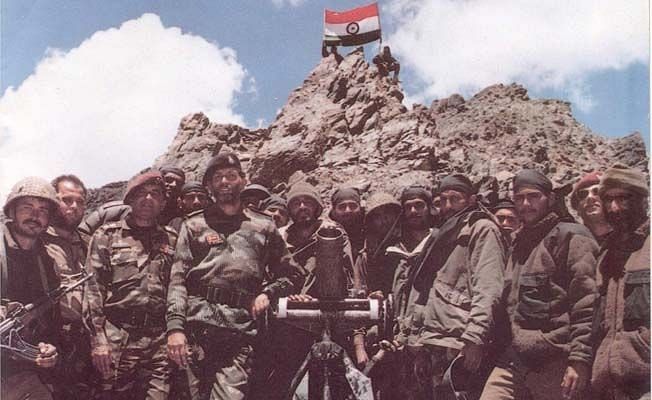
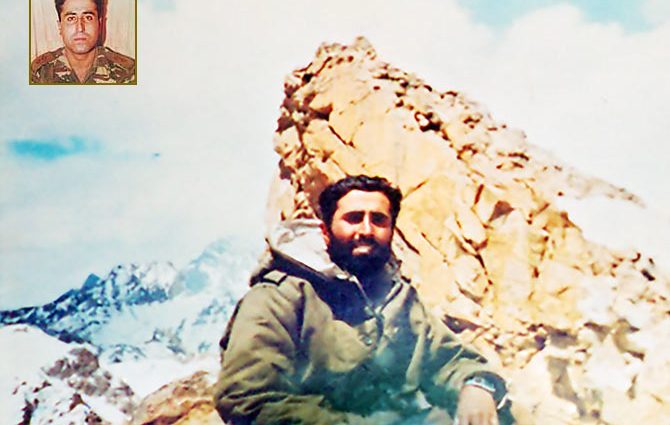
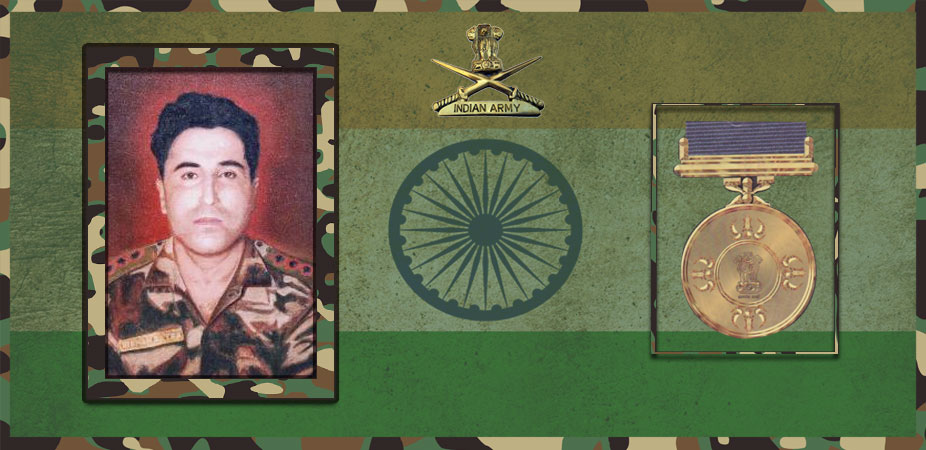
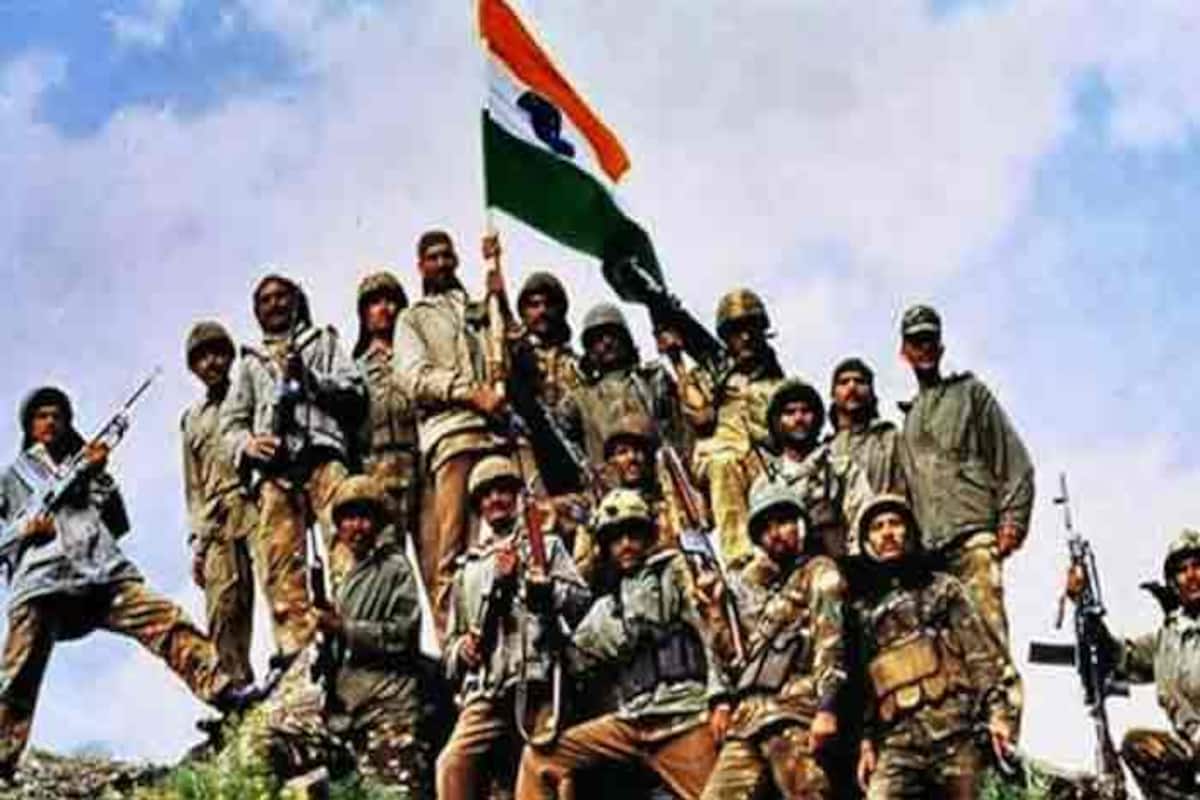
Vikram Batra-Ye Dil Mange More

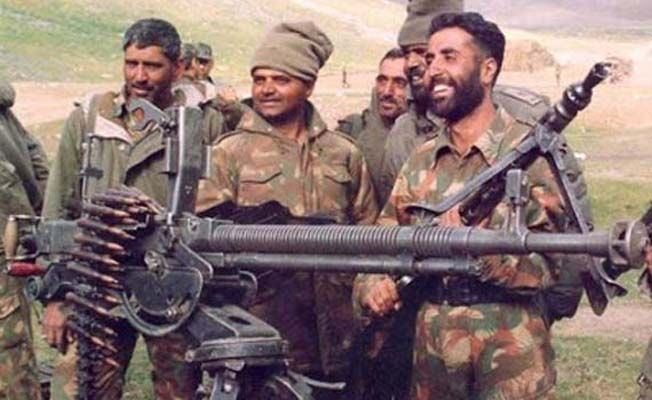
Vikram Batra belongs to a Hindu family in Palampur, Himachal Pradesh. He was a son of a government school principal. He joined the Air Wing of the National Cadet Corps in his college. From his college life, he was interested in serving the nation. He cleared the exam of NCC, get the C certificate. After participating in the Republic day parade, he shared his thought with their parents that he wants to join the Indian Army.

1n 1995, he pursuing MA at Punjab University and start the preparation for Combined Defense Service Exam. In 1996, he joined Indian Military Academy(IMA). In 1997, after concluding training in IMA, he was commissioned as a lieutenant into the 13 JAK RIF. 

In 1998, after undergoing many training and postings, he finally posted to Sopore, Baramulla District, J&K .He had many encounters with militants over there. In one operation, Batra was leading the platoon and had killed all the militants before the morning. In 1999, Batra completed his commando course at Belgaum, Karnataka.

In 1999, it was Holi time. Vikram Batra enjoying his vacation with his fiancรฉe Dimple Cheema. In a conversation, Dimple said to Vikram Batra that he has to be careful about war. Then Batra smiled and replied-“I’ll either come back after raising the Indian flag in victory or return wrapped in it. But I’ll come back for sure.”

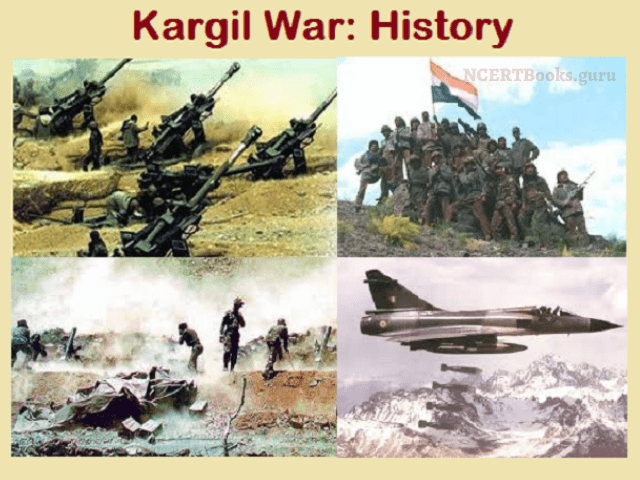
He returned to his troop from his hometown. After few days,13 JAK RIF reached Dras on  6 June 1999. The 18 Grenadiers failed to capture the peak of Tololing. But 2 RAJ RIF  captured the peak on June 13, 1999. After the success of that mission, Vikaram Batra and his platoon were ordered to march from Dras to Tooling. Another mission was planned to capture point 5140, which was assigned to the 13 JAK RIF. Under the command of Lt. Col. Yogesh Kumar Joshi,13 JAK RIF found that the enemy covered some major areas from top to bottom of point 5140. Joshi decided to attack from the east and south sides by two teams, lead by Lt. Sanjeev Singh Jamwal, and Lt. Vikram Batra. Both choose their winning signal, Jamwal chooses “Oh! Yeah, yeah, yeah!” and Batra chooses “Ye Dil Mange More!”.

Artillery fire was used for covering support of these two assault companies while climbing point 5140. Both the companies reached their destination on 20 June. Jamwals company had first captured their objective. It was difficult for Batra to covered the enemy from the rear side of the hill, but Batra did that impossible task with his 5 team members and killed 3 enemies single-handedly in close combat. He was injured but never stopped there, rather lead his troops and captured their objective by sharing his slogan”Ye Dil Mange More!”.

He was promoted as Captain after capturing point 5140. After the great success of 13 JAK RIF, the troop moved to Mushkoh Valley under the command of 79 Mountain Bridge. The next task was to captured point 4875 in the Mushkoh Valley. It was the dangerous mission ever for 13 JAK RIF till now. They had to protect around 30-40km of the National Highway from Dras to Malayan. The Pakistani soldiers easily observed the moment and position of our soldiers, saw the gun positions, army camps from that peak.  

On 4 July, the war began. The A and C Coys started their operation of capturing point 4875. But in the meanwhile, Batra was suffered from fatigue and fever.  Although its day time, these two troops were consolidated their hold on point 4875 after heavy bombarding and machine-gun attacks, and artillery fire. On 5 July, Pakistani enemies attacked with heavy fire and accuracy from their position in north point 4875. Area Flat was captured by 13 JAK RIF on 5 July, that was the key objective of that mission, without that point Indian Army never succeed in their mission. Unfortunately within a few hours Pakistani enemies counter-attacked our soldiers and climbed faster to capture the peak. Captain N.A.Nagappa was lead a troop to fight against those enemies to acquire the peak. But suddenly he was badly injured. Pakistani soldiers were climbing faster as Nagappa was injured.

Batra observing all those things lying on the bed went to Mr.Joshi and insisted to let him go. As the team of Nagappa needed reinforcement, Vikram Batra and his team were ready to capture the peak 4875 and determined for this in any situation and circumstances. All the members of 13 JAK RIF wanted to join Batra for the honor of their battalion despite the orders of their seniors.

Batra began to climb with 25 members of D Coy at night. When the troop neared the top, they had to climb vertically, where the visibility was almost zero due to heavy fog. Batra found a machine gun of Pakistani soldiers and destroyed it with a grenade. Batra finally located the machine gun post of enemies, but unfortunately, no option was left without a direct frontal assault in daylight. Under heavy fire from enemies’ machine guns and grenade launchers, Batra killed 5 Pakistani soldiers with his AK-47. Batra saw one of his men was shot in this process. With heavy firing, Batra said his teammate Sub. Raghunath Singh evacuates that injured soldier. He also said to Singh, “You have a family and children to go back to, I am not even married”.Batra had continuously given his maximum effort to drag the soldier to a safe place, suddenly a bullet hit his chest from a very close distance, and after few seconds another on his head from an RPG. Batra lies down on that battleground.

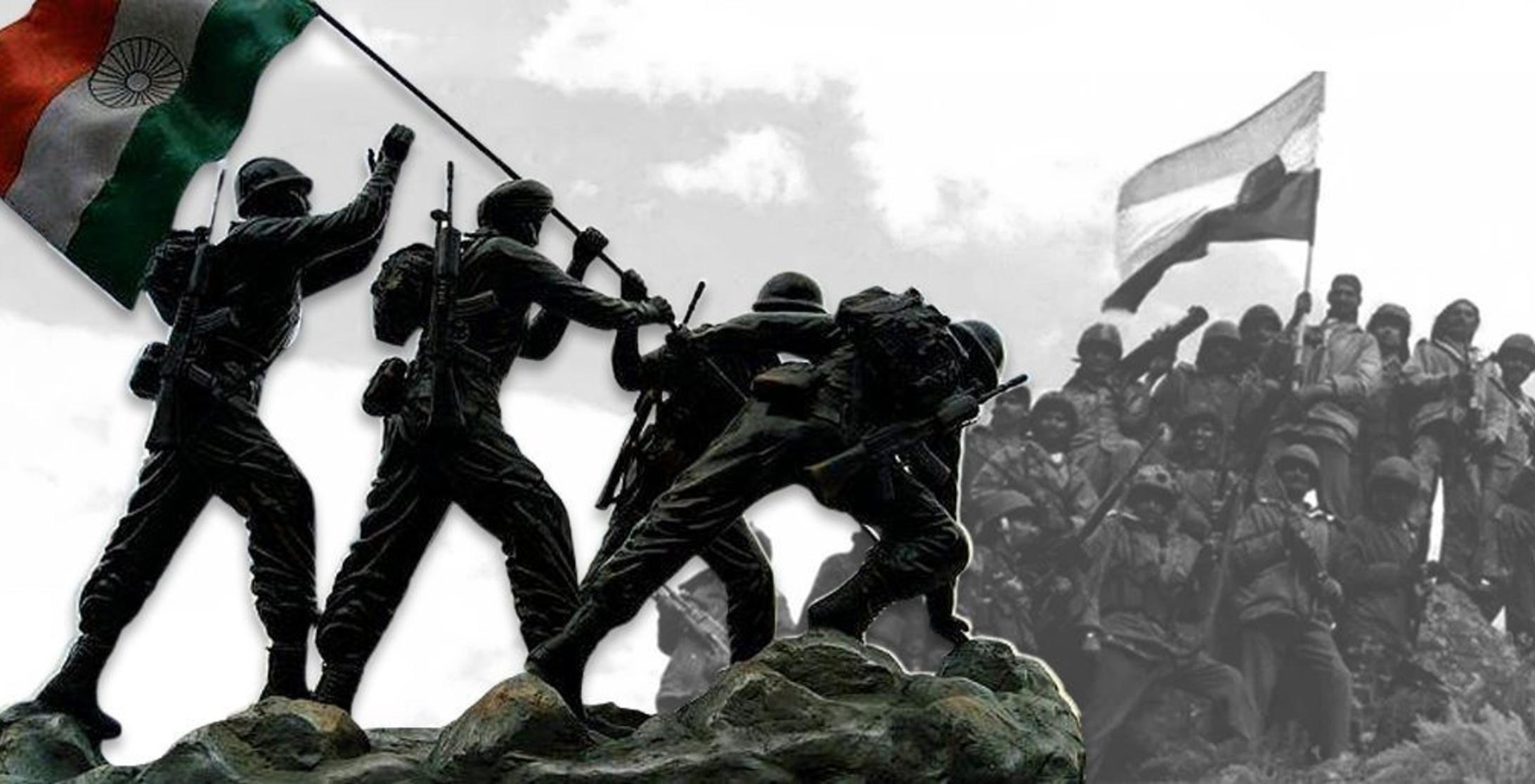
He was aware of the great danger of his mission, but instead of all those things, he was never afraid of death. Vikram Batra was awarded Indian’s highest military honor, the Param Vir Chakra. His supreme sacrifices for his country will always be memorable.

Drug Addiction

Drug addiction, also known as substanceโ€“use disorder, refers to the dangerous and excessive intake of legal and illegal drugs. This leads to many behavioral changes in the person as well as affects brain functions. Drug addiction includes abusing alcohol, cocaine, heroin, opioid, painkillers, and nicotine, among others. Drugs like these help the person feel good about themselves and induce โ€˜dopamineโ€™ or the happiness hormone. As they continue to use the drug, the brain starts to increase dopamine levels, and the person demands more.

Drug addiction has severe consequences. Some of the signs include anxiety, paranoia, increased heart rate, and red eyes. They are intoxicated and unable to display proper coordination and have difficulty in remembering things. A person who is addicted cannot resist using them and unable to function correctly without ingesting them. It causes damage to the brain, their personal and professional relationships. It affects mental cognition; they are unable to make proper decisions, cannot retain information, and make poor judgments. They tend to engage in reckless activities such as stealing or driving under the influence. They also make sure that there is a constant supply and are willing to pay a lot of money even if they are unable to afford it and tend to have erratic sleep patterns.

Drug addiction also causes a person to isolate themselves and have either intense or no food cravings. They stop taking care of their hygiene. Drug addiction affects a personโ€™s speech and experience hallucinations. They are unable to converse and communicate properly; they speak fast and are hyperactive. Those addicted have extreme mood swings. They can go from feeling happy to feeling sad quickly and are incredibly secretive. They begin to lose interest in activities they once loved. Substance abusers also undergo withdrawal symptoms. Withdrawal symptoms refer to the symptoms that occur when they stop taking the drug. Some withdrawal symptoms include nausea, fatigue, and tremors. They stop and starting using again, an endless cycle that could be life-threatening. Drug addiction can be fatal if not treated timely. It can cause brain damage and seizures as well as overdose, heart diseases, respiratory problems, damage to the liver and kidneys, vomiting, lung diseases, and much more.

Though chronic, treatment is available for drug addiction. Many techniques are used, such as behavioral counseling, medication to treat the addiction, and providing treatment not just for substance abuse but also for many factors that accompany addiction such as stress, anxiety, and depression. Many devices have developed to overcome addiction. There are rehabilitation centers to help people. After treatment, there are numerous follow-ups to ensure that the cycle does not come back. The most important is having family and friends to support the effect. It will help them build confidence and come over their addiction.

The United Nations celebrates International Day against Drug Abuse and Illicit Trafficking on the 26th of June. Drug addiction impacts millions and needs to be treated carefully to prevent further harm to the individual and letting them live a better life.

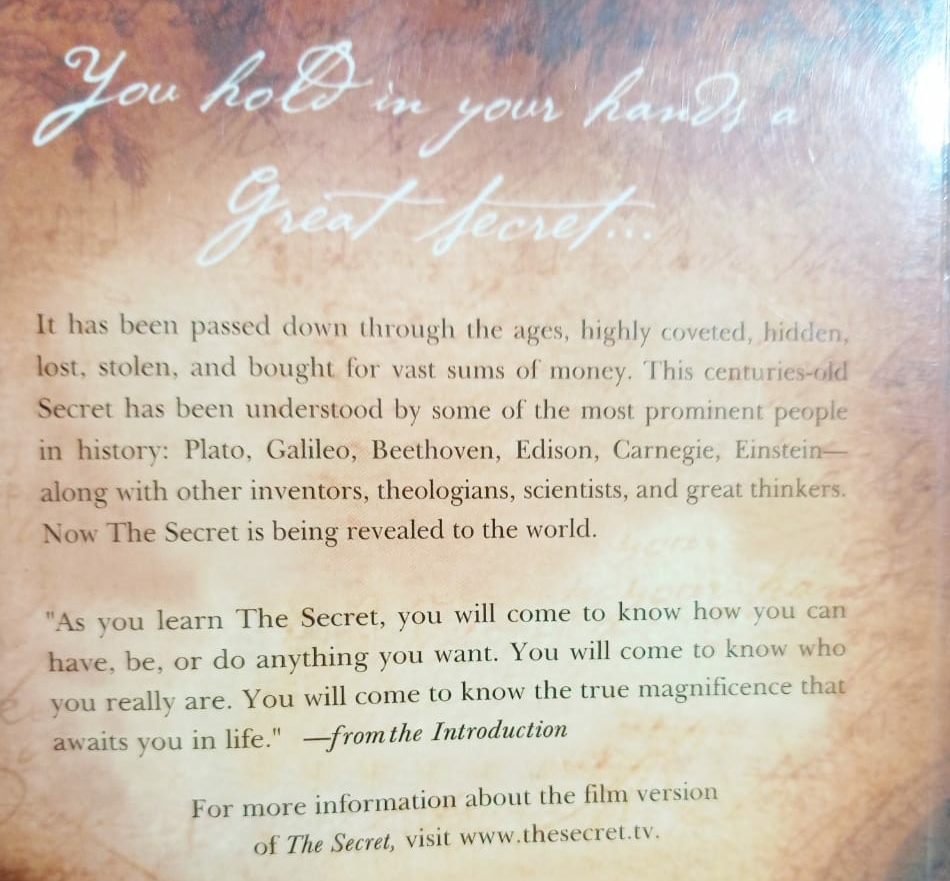
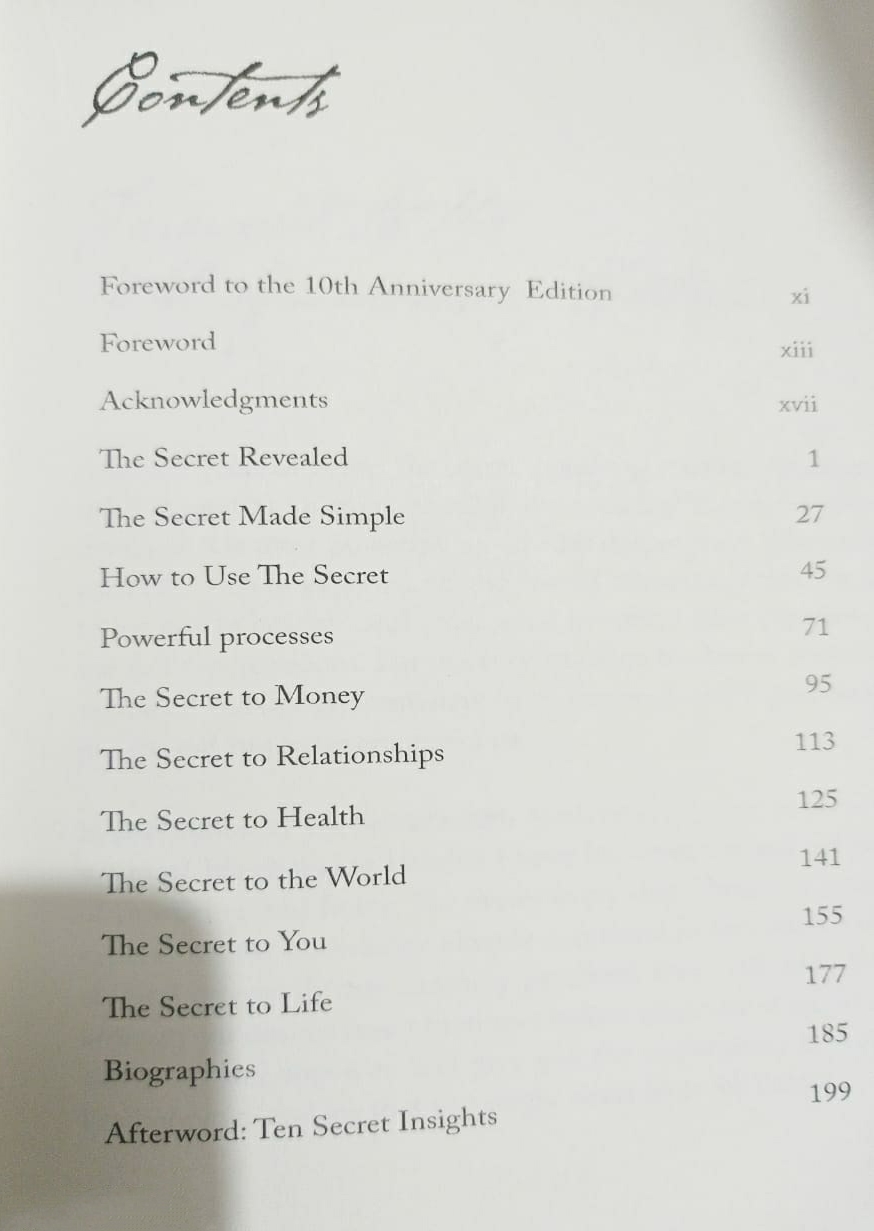
The Secret

By : Rhonda Byrne

Hello readers.

The Secret, there is a movie (specifically documentry) that goes by this name. The movie is based on this book. As the title says, it spills the secrets. All that we are is the result of what have thought. We are made of our thoughts; we are moulded by our thoughts.Change your life by changing your thoughts. It is as simple and as complicated. Because our thoughts become our words, words become actions, actions become habits, habits led you to your destiny.

This book, is a bit complicated for beginners. This book awakens the positivity in you. The hope on the goodness of universe will become more stronger than usual. It speaks about the law of attraction. The title itself attracts readers. At few movements you may feel you know those but by reading those facts from The Secret, will make your will to follow them stronger.

In the era of finger taps, following the tricks and methods mentioned may seem a difficult task. But it is worth every difficult step you take. You will find the new you a lot more happier and energetic than usual. A wonderful recommendation for all those who are not afraid of changing themselves.

Like I say : Reading books is magic, it makes you live hundreds of lives in a single one. Or atleast thatโ€™s what I believe. Hopefully this book will have an impact and magic you are/ were waiting for. Iโ€™ll take a leave.

And Thanks.๐Ÿ˜‡

A Street Hawker

A street hawker goes from one street to another and from one locality to another selling his ware. A street hawker is a common sight in all the Indian towns and villages.

A street hawker usually comes with a cart or a basketful of goods, placed on his head. He carries a variety of things and eatables. Usually, in the morning, street hawkers come with vegetables and fruits in their baskets. They sell fresh fruits and vegetables and earn their livelihood.

Those people, who live in villages and towns, hear the call of the street hawkers early in the morning. He brings plenty of fruits and vegetables with him. Upon hearing his voice, people flock around him to buy fruits and vegetables. Sometimes street hawkers have to face very odd customers who go on arguing (bargaining) about the prices of various commodities. Sometimes. they have to bow to the wishes of the customers by reducing their rates.

There are other Street hawkers who come on bicycles, loaded with clothes, utensils and other articles of daily need and consumption.

All these are, no doubt, tough jobs. A street hawker has to labour a lot in order to earn his living. His profits are very meagre. He is generally a poor man. With this small income, he tries to make both ends meet. Normally, a street hawker has a cart with three or four wheels. Poor street hawkers have to carry their goods on their heads.

The street hawkers mostly carry inexpensive things. By selling their complete stock, they earn a very small amount of money.

On the whole, a street hawkerโ€™s condition is pitiable because he wanders all day to earn his meagre living. But, at least he tries to make an honest living and not begging or stealing. We should give due respect to the dignity of labour which a street hawker does.

Fixing Homemakers’ Notional Income Will Recognize Their Work and Sacrifice.

by Yogiraj Sadaphal

” The Homemaker has the ultimate career. All other careers exist for one purpose only and that is to support the ultimate career.”

– C.S Lewis.

In Indian society, homemakers’ contributions to the growth of their homes but unfortunately they are being underestimated economically. Many in this patriarchal system argue that women “fit” the job of housewife and that it is therefore unnecessary to recognize their contributions. However, times have changed, and several laws and judgments in favor of treating persons of different sexes equally have been passed. However, the contribution provided by different groups of people on both the micro- and macro-economic scales was not recognized.

Surprisingly, it took an entirely different statute to recognize a homemaker’s economic contribution to society. This isn’t the first time a notional income has been calculated, but the accuracy with which the instant conclusion was reached deserves praise.

The Supreme Court of India recently recognized the importance of estimating a homemaker’s notional income for granting compensation under the Motor Vehicles Act, 1988 in Kirti and Anr. v. Oriental Insurance Company case. When determining compensation, a variety of criteria are considered, including the recipient’s age and income, the number of surviving dependents, future earning possibilities, and so on. Three children were left behind by the deceased couple in this case. The Motor Accident Claims Tribunal had given a compensation of Rs 46 lakh, which was challenged in the Delhi High Court, and the amount was reduced by almost 50% and fixed at Rs 22 lakh. The judgement was then appealed all the way to the Supreme Court. The courts have often concluded that the compensation awarded must always be just, fair, and reasonable, and that it must be controlled by equity principles, with the family’s quality of living taken into account.

In a separate concurrent ruling, Justice N V Ramana delivered a well-reasoned decision on the issue of the housewife’s notional income and the computation of future prospects. It is undoubtedly difficult to arrive at a fair pay based on the fictitious income. However, the court is faced with such challenges, particularly in circumstances when the victim is considered non-working. For example, in M R Krishna Murthi v. New India Assurance Co. Ltd., the court considered a student’s academic ability, course of study, and family background when determining his or her notional income.

It was previously held in Arun Kumar Agrawal v. National Insurance Co. Ltd that โ€œIn India, the courts have recognized that the contribution provided by the woman to the house is precious and cannot be quantified in terms of money, the wife’s selfless services of sincere love and affection to her children and husband, as well as managing the household matters, cannot be compared to those provided by others. It is impossible to place a monetary value on the services provided by the wife/mother to the family. However, some monetary estimate of the services of the housewife/mother must be provided for the purpose of awarding compensation to the dependents.โ€ According to the statistical analysis presented in the current judgement, the majority of women spend the majority of their time doing unpaid home chores, and the verdict also highlights the gender disparity in this regard.

The most important point is the fact that such work is “accepted.” This will lead to a broader shift in people’s mindsets in order to reinforce what social equality really means, which is an important aspect of a civilized society with a legal framework in place .Obviously, the amount of compensation based on fictitious income varies from case to case, and there is no method for calculating it. However, recognizing efforts not just within the household, but also on a broader level of contribution to GDP, is a step in the right direction.

Reference:-

https://www.newindianexpress.com/opinions/2021/jan/19/the-economic-value-of-a-homemakers-contribution-2252034.html

WHAT!! FACTS????

. PANDORA’S BOX

According to Greek mythology, Pandora was the first ever women created by Zeus as a punishment for humankind after Prometheus stole fire for human use. Zeus then asked all the other gods and goddesses to shower gifts on her. She was also presented with a jar which contained all the evils & illness which she was not suppose to open. However she couldn’t resist the urge to open the container which resulted in unleashing evils into the world. Then onwards Pandora box signifies as the origin of troubles or complications. Morden generation criticised the myth an example of misogyny.

. HAPLODIPLOID SEX DETERMINATION

What does halpodiploid sex determination means? This type of sex determination is scene in honey bees. I’m this the sex of an individual is determined by the number of set of chromosomes received. An offspring formed from the the union of sperm and an egg developed into a female (queen or worker) and the unfertilized egg is developed into a male by parthenogenesis, which implies males have half the number of chromosomes that of a female. The female gets differentiated on the basis of food they consume during the development. The female that consumes royal jelly grows into a queen bee and others developes into a worker bees(sterile). The males produces sperms by mitosis so they do not have father and thus cannot have son’s but have a grandfather and can have grandsons.

. LIFE WITHOUT STOMACH?

Do you know that it’s possible to live without stomach? Let’s understand how; suppose a person is having a stomach cancer the recommended treatment would be partial or total removal of stomach termed as gastrectomy. When a person’s stomach is removed completely the esophagus is directly connected to intestine. A person is advised to consume a lot of calories in small bites/meals more times a day to prevent weight loss. A person may experience Dumping Syndrome (experience of nausea, diarrhoea, vomiting, sweats) as the the work of stomach is transfer to intestine, so a person is suggested to sit upright after having their food for sometime. It is difficult to adjust to changes but this is how a human tendency to survive.

Disaster & Disaster Management

A disaster is a sudden, calamitous event that seriously disrupts the functioning of a community or society and causes human, material, and economic or environmental losses that exceed the community’s or society’s ability to cope using its own resources. Though often caused by nature, disasters can have human origins.

The word disaster implies a sudden overwhelming and unforeseen event. At the household level, a disaster could result in a major illness, death, a substantial economic or social misfortune. At the community level, it could be a flood, a fire, a collapse of buildings in an earthquake, the destruction of livelihoods, an epidemic or displacement through conflict. When occurring at district or provincial level, a large number of people can be affected. Most disasters result in the inability of those affected to cope with outside assistance. At the household level, this could mean dealing with the help from neighbours. At the national level, it could mean assistance from organizations, various non-governmental organizations (NGOs) and government agencies themselves. As the limiting factor in disaster response is often the coping capacity of those affected, improving their resilience when responding to disasters is a key approach to lessening the consequence of a disaster.

There is no single measure of a disaster that can capture the full scope of a disaster. A common measure is the number of people killed or affected. The individual will consider the impact on his or her family and livelihood. Disaster managers will assess the speed and success of the disaster response. Economists will measure physical loss to houses and buildings and loss of production. Politicians will assess political damage from a poor response by state agencies. Health workers will consider the resources required to contain an outbreak of Ebola or Coronavirus. Others may focus on the nature of the hazard, the social consequences and the impact to specific elements of the infrastructure. To think seriously about a disaster means we must consider all affected and their losses both in the immediate and the longer term.

A disaster may occur with or without a warning phase. A response is made following a disaster. The response may be helped substantially by any preparedness actions which were made before the disaster occurred. Relief activities occur during the emergency phase, which follows the impact of the disaster.

General Effects of Disasters

 The typical effects of disasters may be one or more of the following :

  • Loss of life
  • Injury
  • Destruction of property, plantations and crops
  • Disruption of production, lifestyle & transport
  • Loss of livelihood and occupation to people
  • Disruption to essential services like electricity, water supply and gas supply
  • Damage to national infrastructure
  • Disruption of communication and other networks
  • Disruption to government systems and schemes
  • Shortage of food resources
  • Spreading of diseases
  • National economic loss
  • Sociological effects
  • Psychological after effects.

Types of Disasters

There are 2 major types of disasters :

1. Natural Disasters

A natural disaster can be defined as a major event brought about by the natural processes of the Earth that causes widespread destruction to the environment and loss of life. The list of natural disasters include weather phenomena such as tropical storms, extreme heat or extreme cold, winds, floods, earthquakes, landslides and volcanic eruptions.

Management of Natural Disasters

  • Early warning systems can alert costal populations of approaching tsunamis and they can give populations time to be evacuated from danger areas.
  • Responsible land use can reduce the risk of landslips caused by unchecked felling of trees. For other events classified as natural disasters, risks can be dramatically reduced through careful planning.
  • Construction codes when enforced can reduce loss from earthquakes. Governments can institute measures to assist in extreme cold and extreme heat.
  • Food security programmes can protect a population against food crisis arising from pests and failed crops.
  • Surveillance systems and high coverage by routine immunization programmes can help prevent outbreaks of disease.
  • Social programmes can reduce vulnerability to disasters which otherwise could not be controlled.

Types of natural disaster

Natural disasters may be broadly grouped into major and minor types depending upon their potential to cause damage to human life and property. The disasters like earthquakes, volcanic eruptions, droughts, floods and cyclones could be regarded as major types. The disasters like hailstorms, avalanches, landslides, fire accidents, etc. whose impact is localised and the intensity of the damage is much less than the others may be categorized as minor disasters.

Natural disasters can be categorised into 4 parts :

  • Geophysical (e.g., Earthquakes, Landslides, Tsunamis and Volcanic Activity)
  • Hydrological (e.g., Avalanches and Floods)
  • Climatological (e.g., Extreme Temperatures, Drought and Wildfires)
  • Meteorological (e.g., Cyclones and Storms/Wave Surges)

2. Man-Made Disasters

Man-made disasters are extreme hazardous events that are caused by human beings. Some examples of man-made disaster emergencies include chemical spills, hazardous material spills, explosions, chemical or biological attacks, nuclear blast, train accidents, plane crashes, or groundwater contamination.

Man-made disasters have an element of human intent, negligence, or error involving a failure of a man-made system, as opposed to natural disasters resulting from natural hazards. Such man-made disasters are crime, arson, civil disorder, terrorism, war, biological/chemical threat, cyber-attacks, etc.

Man-made disasters can be caused by :

  • Environmental Degradation
  • Pollution
  • Accidents (e.g., Industrial, Technological and Transport usually involving the production, use or transport of hazardous materials)

Though weather and geologically related disasters are considered to have generated the greatest number of deaths and economic loss, disasters generated by humans are increasing in importance. As society has become more complex, it is evident that people are increasingly responsible, directly or indirectly, for the consequences of events previously ascribed to forces beyond their control. Globalization is now carrying industrial production to previously agrarian societies. The risk from the unintended release of hazardous materials is becoming ever more widespread. Potentially hazardous products are now available in communities and populations which do not have adequate regulations governing their use and, in fact, may not even be aware of their presence or health risks. Rapidly increasing transport of people and commodities across continents means that transportation disasters pose increasing threats to millions.

Disaster Management

Disaster Management can be defined as the organization and management of resources and responsibilities for dealing with all humanitarian aspects of emergencies, in particular preparedness, response and recovery in order to lessen the impact of disasters.

Disaster management conveys the important idea that protecting populations and property also involves the estimation of risks, preparation, activities which will mitigate the consequences of predictable hazards and post-disaster reconstruction in a way that will decrease vulnerabilities. An important goal is building a culture of awareness that preparation is not only possible, but also will greatly reduce the consequences from disasters in terms of human and economic loss.

An effective response to disaster begins with effective planning, but must include many other steps. Each of these steps depends on the strength of other links in the disaster management chain. While no one organization or group โ€˜ownsโ€™ a disaster, the ultimate responsibility rests with governments to protect its people against disaster. No government can carry out these responsibilities without cooperating with many other groups in a country. Disaster management planning is often seen as a separate activity from the main functions of governments and organizations.

Conclusion :

Disaster management is the only way to mitigate the effects of all these hazards. Advance planning is always needed to keep the items of emergency for any disaster. Guidelines are also to be prepared in the form of booklets and circulated to the educated individuals. Awareness camps are to be organised for public. Training is yet another initiative. Training involves the duties and responsibilities, efforts to sustain, role of employees/NGOs, risks, errors, behavioural patterns, recovery techniques, communication channels, safety rules, priorities and security measures. Knowledge of water quality, sanitation, first aid, emergency medicines, electricity controls and gas usage are needed. Evacuation, reporting and alert procedures, are the other major initiatives. Proper insurance policies, alterations to existing buildings, changes in business locations and other resources are to be planned, for future disaster mitigation.

Easy start-up(ice cream parlor)

Is rolled ice cream a good business?

Wherever you are in the world, ice cream rolls with ice cream pro are a fantastic and fun business opportunity. With small investment to start your business, you can make a profit in just a few weeks.

How much do ice cream shop owner make a year?

management salaries run between 25000to 38000 a year. These are costs you will have to factor earning potential.

(*)How to start up an ice cream parlor in India:

INDIA is a land of tropical weather, with summer being the longest weather in the country. Thus, in niche food businesses in the cream business seems to be the most lucrative.

  1. Deciding The format:

In the present time there are a lot of ice cream parlor formats from cold stone, ice cream rolls, ice cream cake, nitrogen ice cream, live ice cream counters, and pre- packed ice cream counters there are endless.

so, the first step is choosing in starting with your ice cream business plan is to decide which type of ice cream parlor you want to open.

2. Investment & area required to open an ice cream parlor:

Pn average an ice cream business requires a 400-500spt carpet area shop or a small food truck which has the necessary arrangements for refrigerator.

3. Deciding the location of the ice cream parlor:

Eating ice cream is not necessity unlike another form of food but it is more fun and fashion in the crowd.

So, proper market research should be done before choosing the location.

4. Procurement of store type of equipment for the menu:

Once the format and location are Finalized, list down the number of items you want to sell at your store.

Then compare it with competition around and keep the pricing the low initially to penetrate the market and distribute free sample.

5. List of equipment required to open an ice cream parlor:

For a cold stone ice cream parlor, the list of equipment

  1. Cold stone refrigerator (2-2.5laks)
  2. Chest refrigerator with a capacity of 500L (40, 000rs)
  3. Storage cupboard and utensils (30000rs)
  4. Raw materials including packaging (rs. 1-1.5L)
  5. Miscellaneous (rs 50000)

6. staff required for an ice cream business in India:

In particular format the number of employees required us very less as you need three people including cashier to serve or to make specific flavor of the ice cream.

7. Maintaining consistency in ice cream parlor business

one thing you must ensure when you open an ice cream business is maintaining consistency in taste.

Standardization of recipe is a must in ice cream parlor.

8. Licensing & paperwork needed to open an ice cream parlor:

Since ice cream comes under the food category, so all licenses required are quite similar to that of a QSR- shop establishment license, FSSAI license, local municipal authority license and fire license.

Book review: A novel: It ends with us

BOOK:- It ends with us

AUTHOR:- Colleen Hoover

GENRES:- It is a standalone contemporary romance novel, fiction.

RELEASE DATE:- 2nd August, 2016.

ADAPTATIONS:- It ends with us (play) and It ends with us (movie).

MAIN CHARACTERS:- Lily Bloom ( female protagonist), Ryle Kincaid ( Lily’s husband, a surgeon) & Atlas Corrigan ( Lily’s teenage love interest, a homeless boy later owner of a restraunt). And many supporting characters like Lily’s father, her mother, ryle’s sister, his sister’s husband, ryle’s mother.

Fifteen seconds, That’s all it takes to completely change everything about a person. Fifteen seconds that we’ll never get back.”

– Line said by the protagonist Lily in the book.

SUMMARY:-

The book starts with introducing the female protagonist Lily Bloom. Lily is a twenty-three year old business graduate. She has grown up in an abusive family where her father was usually abusive towards her mother. At the age of fifteen she fell in love with Atlas, a eighteen year old homeless boy from her neighbourhood. She cares for Atlas. She loved him so much. But he left her promising to come to her when he will join military. She was all alone at this time but she didn’t loose hope. She left her past life and started her own flower business in Boston.

In Boston, she met Ryle, a neurosurgeon and soon fall in love with him. But he was not ready to be in a relationship and they parted their ways. After six months, Lily hired an employee named Allysa, who was Ryle’s sister. After many encounters Ryle finally realised that he can’t live without Lily so decided to marry her. Everything was perfect, the romance between Ryle and Lily was increasing day by day. One day Ryle decided to meet Lily and her mother, there she encounters Atlas, and was not able to control her feelings, which was not loves by Ryle for sure. Slowly he started to abuse her,Whenever he can. Lily always told herself that she was not like her mother and Ryle was not like her father.

She started to live with Ryle and she found a deep dark past of Ryle and was shocked. His behaviour towards Lily was being more and more abusive day by day until one day when he can’t control himself and almost raped her. She asked Atlas help in that situation and found that she was pregnant. She doesn’t know whether to love Ryle or hate him for his behaviour. After two months she witnessed a knock on her door and she was sacred to find that he was none other than Ryle. He told her that he just came to talk to her and he did so, but she wasn’t happy with it. She missed him. But also she cannot forget what he did to her. And the story continues how ryle’s sister and Lily’s mother help her, how she allowed Ryle to be with her in her pregnancy dates, how she told Ryle what she felt about him.

BOOK REVIEW:-

Overall the book is just beyond fabulous The characters, the narration and everything seems to be perfect. I personally loved the character of Lily and Atlas. Lily’s strong decision and ability to do justice to herself and her daughter was remarkable. The narration was so strong that you will personally think of yourself in the characters place.

Firstly while reading the book I thought it will be just an average but as soon the book started every single page hooked me to read more and more. Especially I loved the narration it was just awesome. The character of Lily was so very incredible. Atlas has great chemistry with Lily like after so long they had the same feelings for each other.

This is the must read book though sometimes the story didn’t bother me but it was such a great piece of writing that can’t be expressed in words. I hadn’t given the spoiler because it would be far better to read and enjoy it at the same time.

Benefits of Self Learning

Students are beautifully made by nature, to self-direct their own learning. For almost all students, learning is innate, which is why they prefer learning on their own by exploring, observing, questioning, and participating. The learning instinct in them would work best if they are provided with opportunities to flourish

The benefits of self-learning can be different in terms of the types of leaner it develops. However in common, here are some of the importance and benefits of self-learning.

1. Learning at their own pace

During self-study, students learn at their own pace, focusing more on areas that interest them the most or that which they understand better. This helps reduce feelings of frustration, anxiety, or boredom that students may struggle with within a classroom setting.

2. Develops ownership of learning

This act of children taking up complete ownership of their learning can result in a sweep of knowledge for themselves.

They become their own masters. Students define what to do, how to when to, and how long to study or whether to re-study. By self-learning, students build an immense sense of self-confidence that helps them deal with all possibilities of their life.

They only get thirst to learn more and more but delve into deeper research to expand their knowledge. Such is the effectiveness of self-learning, which helps them to prepare for the futureโ€™s goal with resilience and complete immunity.
ย 

3. Better insights into learning

Students who self-learn have more opportunities to control their learning with better data insights. Learning Management System (LMS) these days come with adequate tools that let students be vigilant of their assessment performance with insightful data presentations and instant notifications about test scores.

Some software even details the number of time students spends learning with weblog analytics.

4. Freedom to use various models of learning

Students have a variety of learning modes to choose from. It could be from YouTube tutorials, books, podcasts, webinars, discussions, polls, activity walls, as they wish. Online learning software has most of these including self-learning through quizzes, PDFs, assignments, etc.
All that the students need to do is to choose the one that suits them the most that they find the most engaging and move on.

5. Most engaging learning experience through Mobile

Mobile learning is quite in now. Mobile tools as learning aids have become a part of higher educational institutions now.

Students use mobile phones to self-learn across multiple contexts, through social and content interactions. This sort of learning with their most favorite devices peps them up the most.

6. Learners demonstrate greater awareness

You know, self-directed learners demonstrate greater awareness while dealing with commitments. They are more focused when it comes to handling duties and responsibilities.
They even become ambassadors and try to generate awareness to their peers, and sometimes even to the broader community of learners.

7. Willingness to try out new things and learn new skills

Studentsโ€™ curiosity to learn new things is triggered by self-paced learning. They nurture a willingness to try things out, view and handle problems from different perspectives, long for change, while they take pleasure in learning.

Students develop deep interest and enthusiasm while augmenting creative skills in the fields of sports, physical activities, singing, dancing, cooking, artworks, etc.

They also learn time management, how to set up goals, and move forward to achieving them. Students even bring forth strong problem-solving skills that give them the ability to identify problems and work on an effective solution to overcome them.

8. Students become an expert

Self-directed students become an epitome of perfection and exhibit characteristics that let their peers become motivated, persistent, self-disciplined, self-oriented, and target-oriented.
They develop a sense of accountability to comply with rules and become efficient and ingenuine.

9. Prompts more effective learning in students

Self-learners experience effective learning as they actively engage with whatever they learn. This has got more to do with an inner conscience that propels them to show more responsibility by moving from one topic to another.

Students start making connections to real life, which makes the learning remain fresh in their minds for the rest of their lives. In short, self-learners have a strong commitment to tasks, as they learn how to stick to a plan until they achieve their goals.

10. Boosts self-esteem and self-reflection of students

By self-learning, students become more confident learners. Being independent learners, they are well enough to try and master new things, all by themselves, which can be a major booster to the students.

Organ Donation Live Life.Give Life.

Organ donation is a process in which a person willingly donates an organ of his body to another person. Furthermore, it is the process of allowing the removal of oneโ€™s organ for its transplanting in another person. Moreover, organ donation can legally take place by the consent of the donor when he is alive. Also, organ donation can also take place by the assent of the next of kin of a dead person. There has been a significant increase in organ donations due to the advancement of medical science.

Organ Donation in Different Countries

First of all, India follows the opt-in system regarding organ donation. Furthermore, any person wishing to donate an organ must fill a compulsory form. Most noteworthy, this form is available on the website of the Ministry of Health and Family Welfare Government of India. Also, The Transplantation of Human Organs Act 1994, controls organ donation in India.

The need for organ donation in the United States is growing at a considerable rate. Furthermore, there has also been a significant rise in the number of organ donors in the United States. Most noteworthy, organ donation in the United States takes place only by the consent of the donor or their family. Nevertheless, plenty of organizations are pushing for opt-out organ donation.

Within the European Union, the regulation of organ donation takes place by the member states. Furthermore, many European countries have some form of an opt-out system. Moreover, the most prominent opt-out systems are in Austria, Spain, and Belgium. In England, no consent is presumed and organ donation is a voluntary process.

Argentina is a country that has plenty of awareness regarding organ donation. Most noteworthy, the congress of Argentina introduced an opt-out organ donation policy. Moreover, this means that every person over 18 years of age will be a donor unless they or their family state their negative. However, in 2018, another law was passed by congress. Under the new law, the family requirement was removed. Consequently, this means that the organ donor is the only person who can state their negative.

Benefits of Organ Donation

First of all, organ donation is very helpful for the grieving process. Furthermore, many donor families take relief and consolation due to organ donation. This is because they understand that their loved one has helped save the life of other people. Most noteworthy, a single donor can save up to eight lives.

Organ donation can also improve the quality of life of many people. An eye transplant could mean the ability to see again for a blind person. Similarly, donating organs could mean removing the depression and pain of others. Most noteworthy, organ donation could also remove the dependency on costly routine treatments.

Organ donation is significantly beneficial for medical science research. Donated organs offer an excellent tool for conducting scientific researches and experiments. Furthermore, many medical students can greatly benefit from these organs. Most noteworthy, beneficial medical discoveries could result due to organ donation. Organ donation would also contribute to the field of Biotechnology.

To sum it up, organ donation is a noble deed. Furthermore, it shows the contribution of an individual even after death. Most noteworthy, organ donation can save plenty of lives. Extensive awareness regarding organ donation must certainly be spread among the people.

“THE GIFT THAT HAS BEEN GIVEN TO ME SAYS MUCH ABOUT OUR CAPACITY FOR GREAT COMPASSION AND GENEROSITY, AND I HOPE IT SENDS AN INSPIRING MESSAGE TO OTHERS ABOUT THE IMPORTANCE OF ORGAN DONATION.”

. —STEVEN COJOCARU

THANJAVUR TEMPLE

Brihadishvara temple, also called Rajarajeswaram or peruvudaiyar kovil, is an Hindu temple dedicated to Shiva located in south Bank of cauvery River in Thajore,Tamil Nadu,India. The closest airport are Thiruchirappalli and Madurai and closest seaport is the karaikal port.

How was Thanjavur Temple built?

Built on the banks of the river cauvery, where the water was diverted to the moat,this temple is made entirely to granite,and it stands tall amidst fortified walls .

5000 elephants were used for this temple construction. It took 30 years for the completion of the construction and all the worker’s name,the prime sculptor to water boy,are carved on the stones. It took five years to take an 80000 kg stone from the floor to the top of the temple.

This temple is fully constructed with the balance to the gravity of the earth. Only one stone is used to make the Nandi of the temple and it is the second largest in India. Another interesting fact about its architecture is that the vimana (tower above the sanctum sanctorum) of the temple does not cast a shadow at noon.

Speciality of Thanjavur Temple

The temple has massive colonnaded prankara (corridor) and one of the largest Shiva lingas in India. It is also farmed for the quality of sculpture as well as being the location that commissioned the brass nataraja -shiva as the lord of Dance,in 11th century.

Thanjavur Temple related to Tamil letters

The height of the lingam in the sanctum of the temple is 12 feet which is equal to the number of Tamil vowels. The height of the linga pedestal is 18 feet which is equal to the number of Tamil consonants. The height of the temple gopuram is 216 feet which is equal to the number of consonant-vowels. The distance between the lingam in the sanctum of the temple and the Nandi (Bull) is 247 feet which is equal to the total number of Tamil characters.

Things to buy in Thanjavur

โ—‹ Silk weaves.

โ—‹ Thanjavur paintings.

โ—‹ Dancing dolls .

โ—‹ Traditional crafts.

Dancing Dolls

Thanjavur is also well known for thalaiyatti bommai nodding dolls made of clay. They come in different colors and shapes and slightest brush of breeze makes their heads go up and down. These dancing dolls not only make for a great souvenir but also give you a sneak-peek into Thanjavur artistic talents.

DISASTER – AN UNPREDICTABLE EVENT

Preparation through education is less costly than learning through tragedy

ย ย ย ย ย ย ย ย ย ย ย ย ย ย ย ย ย ย ย ย ย ย ย ย ย ย ย ย ย ย ย ย ย ย ย ย ย ย ย ย ย ย ย ย ย ย ย ย ย ย ย ย ย ย ย ย ย ย ย ย ย ย ย ย ย ย ย ย ย ย ย ย ย ย ย ย ย ย ย ย  ~ Max Mayfield

When a person dies because of a disaster, the whole family behind him is left helpless and in a state of sorrowful environment. Recently, during a landslide in Manali a young girl lost her life due to disastrous landslide and many other people suffered too. A harsh reality of life where we see that how life is so unpredictable that anytime anywhere someone or the other becomes victim of such disasters without realising that his/her end is near. People who are saved from such disasters when stuck in such a situation find themselves fortunate that they were not the one. So, we must be accept the fact that life is not predictable so in order to deal with such a situation we must take active part in dealing with the disaster. As no one knows when a disaster would occur andย  we may lose thousands of lives.ย 

What is a disaster?

A disaster is basically a sudden event where there is a lot of destruction of life and property.Earthquakes, tsunamis; floods are few examples of disaster which occur in different areas and regions at anytime.

How can the disasters be managed?

In order to deal with the situation of disaster, people must keep themselves prepared for all the situation which may occur in future .They must learn that how each disaster must be dealt for example in an earthquake, we must cover our head with a book or some sought of stuff that could protect us from unforeseen contingencies that may happen.

We must be prepared at home, at our workplace and know about the community vulnerability that how much are location may get affected from the disaster that may occur.There are certain tips that we must keep in mind while a disaster is known to affect our destination:

Tsunamis

  • We must listen to a radio/TV to remain updated regarding disaster
  • We must stay away from floods and damaged areas until it is safe

Floods

  • Stay clear of bridges over fast-moving water.
  • We must keep an eye out for evacuation alerts.
  • We must try to move to higher ground.

Earthquakes

  • Stay away from glass, windows, outside doors and walls, and anything that could fall, such as lighting fixtures or furniture.
  • Stay inside until the shaking stops, and it is safe to go outside. Most injuries occur to people trying to move a different location inside the building or try to leave.
  • Do not use the elevators.

We must remain alert everyday and everywhere and keep ourselves trained for the upcoming calamities. It is well said:

ย  โ€œTraining proves to be the key ingredient for handling any disasterโ€

Comparison of the two Authors: Murasaki Shikibu and Sei Shounagon

Murasaki Shikibu who wrote ‘The tale of Genji’ and Sei Shounagon who wrote ‘The Pillow Book.

It is not easy or possible to compare the two books because they are both of two completely different genres. The Tale of Genji is a psychological work of fiction that captures the climate in the court during the Heian period, whereas in the Pillow Book, the author writes about her own real-life experiences in the form of narratives, poems and essays. Both the books have shown two completely different background of the Heian period. But the aspects of the Heian court depicted by the author, Sei Shounagon in her book โ€˜The Pillow Bookโ€™ showed the reality of the Heian era. In the Pillow Book, the author showed us the court and her experiences while working in the court through the perception of a gentlewoman, whereas the author of โ€˜The Tale of Genjiโ€™ majorly focused on nothing but nobility.

Their books may be world apart, but both these authors had a lot in common. They both served in the imperial court; they were both ladies-in-waiting. Both showed their love for nature and very highly intelligent and witty. They were very knowledgeable, and both had learnt the kanji writhing system but hid it well. But Murasaki Shikibuโ€™s view of the world was completely different from how Sei Shounagon viewed the world.

From her novel โ€˜The Pillow Bookโ€™, the author, Sei Shounagon appears to be a very outgoing and witty person with a powerful personality and a good sense of humour. She can be mean, prideful but is an utterly compassionate person.

On the other hand, Murasaki Shikibu appears to be very sensitive person who thinks about things very deeply and in all seriousness. She added a few funny scenes as well in her novel but on the overall scale the tone of her book, The Tale of Genji, was dejected and dark.

source: http://thelittlewhiteattic.blogspot.com/2020/07/the-pillow-book-heian-literature-and.html

Zerodha – 0 to 1 Billion Dollar Company

In just 10 years, Zerodha went from 0 to 1 billion dollars in valuation.ย 

But how and what is Zerodha?

Zerodha is a financial service company founded by two brothers Nithin Kamath and Nikhil Kamath in the year 2010 to make trading barrier-free in the Stock Market. The name Zerodha comprises two terms, โ€˜Zeroโ€™ and โ€˜Rodhaโ€™. The latter term has been taken from Sanskrit, combining it with zero gives the meaning โ€˜barrier freeโ€™.ย 

All of this was done with zero funding and zero marketing. That means Zerodha went from 0 to 1 billion dollars in valuation with zero marketing and zero funding. In todayโ€™s competitive world where companies are pouring millions of money for advertisement just to be in the market here, Zerodha built his empire with zero funding and zero marketing.

Nithin and Nikhil Kamath

The Idea Behind Zerodha

In 2016, Kunal Shah โ€“ one of the most legendary entrepreneurs in the Indian startup ecosystem, deliberated an ink talk where he proposed a very interesting theory which more or less explains the root cause of the success of some of the biggest startups in the world.

According to Kunal Shah, โ€œin this world, there are terms of system which have a term of inefficiencies and hurdles which often prevent ordinary people like you and me from moving into a more efficient system but we human beings once we find an efficient system, we have this innate ability to move on from where we never ever come back.โ€

Before Zerodha, Nikhil Kamath observed that three hurdles were troubling the investors and were also preventing the common people of India from investing in the stock market.

These hurdles were โ€“ 

  • Lack of knowledge and awareness โ€“ People in India make decisions based on myths rather than knowledge and strategy.

  • Exorbitant brokerage fees – As the conventional brokerage forms for charging percentage commission, all the amount of investment that in investing was made which results in exorbitant brokerage fees.

  • The entire process of investment was very tedious and complex for a common man to understand.

“The problem we are trying to solve with this is how to grow the capital market ecosystem in India. It can only happen through educating people on a platform which has content and engagement both,” Nithin said.

That is why they came up with three unique solutions which turned Zerodha into billion-dollar company

  • Tackle the lack of knowledge and awareness โ€“ To educate the Indian population about investment in stocks, they came up with something called Zerodha Varsity, which is an investor education platform wherein customers can enhance their knowledge and skills on trading and investments.

  • Discount the brokerage fees to such a large extent that it results in it into revolution. They came up with a super affordable price of 20 rupees or 0.03% which is even less for all intraday trades and they charge 0 fees for all equity and direct mutual fund investments.

  • To resolve the tedious process of investment, they came up with a website with a simple user interface which any common man can get familiar with the entire process of investment.ย  ย 

Now Zerodha is Indiaโ€™s first discount brokerage firm with over 8.5 lakh active clients.ย 

Do you want to spend a year on Mars? Nasa has started the application process.

Nasa is looking for anyone who want to pretend to live on Mars for a year. The United States Space Agency has began accepting applications for four people who would spend a year living in a 3-D built module that simulates life on Mars.

Limited supplies, communication delays, and equipment breakdowns will be among the challenges the team will confront on Mars. Nasa has built a 1,700-square-foot Martian home inside a building at Johnson Space Center in Houston, using a 3D printer. The module is about the size of a tennis court.

Limited resources, communication delays, and equipment malfunctions will be among the challenges that paid volunteers will confront on Mars. They will also conduct scientific studies and mimic spacewalks. NASA intends to conduct three of these experiments, the first of which will begin in the fall of next year. There will be no windows and all of the food will be ready-to-eat space food.

The application process for a NASA Mars mission is as follows:

This will be a ‘physically and mentally taxing’ expedition, according to Nasa, with similarly high application standards.
A Master’s degree in a science, engineering, or math subject, as well as pilot experience, is required.
He or she should be in good physical condition, have no dietary restrictions, and be immune to motion sickness.
Only citizens of the United States or permanent residents of the United States are eligible.
A person must also have at least 1,000 hours as a jet pilot or two years of professional experience in their area.
Nasa claims that its research will aid in the preparation of a human mission to Mars, which might start in the 2030s.

Pillow Book (Makura no Soushi)

โ€˜Makura no Soushiโ€™ or โ€˜The Pillow Bookโ€™ is a book written by Sei Shounagon in the year 1002 while she was serving the empress consort Teishi. The book comprised of poems, essays anecdotes and her personal thoughts and experiences while working in the court during the Heian period. The passages she wrote had very miniscule relation with one another, they were basically her ideas and the experiences she had in her daily life. It consisted all her personal thoughts her opinions on her fellows, poetry and all the interesting things that happened in the court. Although what she wrote were just her personal experiences and her feelings, the book turned out to be an important piece of literature of the Heian era. The book โ€˜The Pillow Bookโ€™ was originally meant for her eyes only, it was accidently revealed in the court. She wrote the book for her own amusement and enjoyment for herself, it was like her personal diary wherein she wrote her thoughts and feelings, a place where she could express her thoughts and emotions that she could not share with anyone, or the things she couldnโ€™t say out loud in the open due her lower status in the court.

The work that was meant for her eyes only and not for an audience was revealed by accident is now one of the national gems for the nation, a great piece of literature.

In โ€˜The Pillow Bookโ€™ the author Sei Shounagan also wrote how she had to turn the courtier away due to his lack of writing skills.

The Pillow Bookโ€™s genre is called โ€˜Zuihitsuโ€™; this genre writing consists of oneโ€™s personal essays and ideas and not tales or loreโ€™s, therefore, The Pillow Book comprises of three different types of writings: the events that she experienced while her time in the court, her thoughts on various subjects going on in the court or in general regarding any issue, and the things that made her upset happy; she wrote all her emotions in one book.

source: https://en.wikipedia.org/wiki/The_Pillow_Book

https://www.britannica.com/topic/Pillow-Book

Kargil war

Kargil Vijay Diwas 2020: Brief Rundown of 1999 Kargil War And How India  Emerged Victorious | All You Need to Know

Kargil war was a very difficult time that our country went through. Furthermore, it was a crisis situation that ensued a feeling ofย nationalism, patriotism, and unity among every Indian. This essay on Kargil War will throw light on the various developments of the war and its after-effects.

Background of the War

Kashmir is a beautiful region that resides in an extremely mountainous area, containing some of the highest peaks in the world. Unfortunately, this amazing land has remained a constant battleground between the two countries of India and Pakistan.

The dispute began from the First Kargil War in 1947-1948 which led to the establishment of the LOC, line of control. The LOC still divides the land of Kashmir between India and Pakistan.

As part of the Simla Agreement in 1972, there was an agreement that neither India nor Pakistan would contest the border by making use of military means.ย Since the agreement, both countries began guarding the border heavily for the majority of the year. During the exceedingly cold winter months, both the Indian and Pakistani guards abandon their posts, only to return back in the spring.

All About Kargil War | When was Kargil Vijay Diwas? Who Win the Conflict?

However, during the winter of 1998-1999, a surprise attack took place from the Pakistan army and it became successful in crossing the LOC and into Indiaโ€™s portion of Kashmir.ย Moreover, slowly and gradually, they went on capturing one Indian outpost after another and held their position in Kargil.

In February 1999, at the same time as the winter invasion, the Lahore Declaration was being signed between India and Pakistan which was based on peace. After a few months, the Kargil war began between the two countries. Furthermore, a series of bloody battles were fought between the two nations of India and Pakistan.

The battles posed a huge challenge for the Indian forces as they had to fight on difficult mountainous terrain.ย  In spite of this challenge, the Indian soldiers showed amazing bravery. After a long struggle, theย Indian armyย became successful in pushing back the Pakistani forces across the line of control.

Rise of Nationalism

By July 14, 1999, there were heavy causalities on both sides. However, the sacrifice of Indian soldiers was not in vain. This great struggle of the Indian army has carved a place in the heart of every Indian.

The entire Kargil war was a time of tension and nervousness for the Indian people. It infused the spirit of national pride in every Indian. Most noteworthy, it served as an opportunity of unifying all the Indians together irrespective of caste, colour, religion, language etc.

Kargil Diwas 2021: Here Are 20 Kargil War Heroes You Should Know About

Conclusion of the Kargil Warย 

The Kargil war has become an unforgettable event in the history of India. Nevertheless, this was an event that brought about feelings ofย patriotismย in the hearts of every Indian like never before. The brave struggle of the Indian soldiers will continue to be an inspiration for all the citizens of this country.

Some Golden Thought and Why?

Don’t Promise , When you are happy . Don’t Reply , When you are angry. Don’t decide , When you are sad.

It is said that time and dicision are the two most important factor in life and should be taken care of .They not only determine the quality of our lives but also help in bettering them and teach us valuable lessons in life . Life is nothing but an assembly of uneven spaces , events and lessons.

We should not promise someone in a hurry and in excitement because it can let you in trouble .For instance whenever are so happy there won’t be any balance of emotion to ensure our decision and anger is never good in any situation,and we should also avoid being angry.This will not only ruin the situation but also make things worse for us in the future.Similarly, we should not decide anything when we are sad or created a sad mindset for something.

Concludes that balance of emotion is quite essential to ensure dicision making in every sphere of life.

Everything will workout in the end , you don’t need to know how , you just have to trust that it will,Never let a bad situation bring out the worst in you .Be strong and choose to be positive.

Things always have a way of working out because your problems are temporary and don’t judge your life based on your current circumstances since, this is one facet of it .Instead of dwelling on unfortune conditions see them as obstacles that provide inner wisdom and personal growth.

Mistakes are very painful ,when they happen , but years later a collection of mistake is what is called experience.

As we all know that mistakes give us immense pain but we doesn’t realise that these mistakes are going to help us in future .The experience which we will get from mistake will always help us to choose right path for us as well as we can give advice to others on the basis of experience .So, we can say that mistakes gives us experience and that will help us to lead success in future.

Instead of worrying about what you cannot control, shift your energy to what you can create.

It is habit of humans that instead of working on our strengh ,we generally worry about its result but we should not do this .Instead of thinking about result we should shift our energy towards our work.

Enjoy the little things, in life for one day you will look back and realise they were the big things.

Once you take a moment to appreciate an act of kindness coming from someone you love or a person you don’t even know , you’ll become more aware of your belonging to a community of people who care about each other. This type of positive emotion has been linked to physical health as well . These emotions simply help people to cope with difficult situations.

Decoding Indian ways of Eating

Food is a very complex subject to understand. The world is experimenting new types of food, new recipes, new combination and new styles of consuming it to make it more aesthetically beautiful. But they are breaking the age-old science of healthy eating.

How we eat is equally important to what we eat. Our ancestors have passed on to us the right recipes, the right way to eat, and the right way to make it. We should start acknowledging the science and it’s significance. Food depends many variables:-

  • Season
  • Geography
  • Local availability
  • Attitude
  • Body type

Right Medium of Food Consumption

1. Eating with hands

People are getting used to eating with spoons and they consider eating with hands as unhygienic and unpleasant. According to Ayurveda, eating food should involve all senses. The touch of food to your fingers and feeling the texture can really trigger the nerve endings of your fingers which are connected to your digestion. These nerves stimulations are know to activate and stimulate your digestive juices. Also according to Ayurveda the five fingers represent the five elements:-

  • Thumb represents Fire (agni)
  • Index finger represents Air (wayu)
  • Middle finger represents Sky (Akash)
  • Ring finger represents Earth (Prithvi)
  • Little finger represents Water (jal)

Holding food with all five finger symbolises the union of all elements, which are essential for the normal functioning of our body.

2. Sitting on the floor

In India, sitting on the floor and eating is a family activity. It involves many muscles, the sitting position presses our lower spine and relaxes the whole body. The back and forth movement while eating gives a nice compression to your abdomen. Compression is maximum in sitting position and this also stimulates the digestive juices. It also has an effect on your mind. When the individual sits on the floor, the nervous systems performances better and transmission of signals happens very effectively. As a result sitting on the floor and eating has a huge weight reduction advantage.

Sitting on chair brings more pressure on your heart. When you’re sitting on chair your heart has to pump blood from toe to upwards against gravity and that is a strain. If you sit on a chair with folded legs that will reduce the gravity force that would help your heart and general health conditions so that more blood will be facilitated for digestion.

3. Food containing vessels

Vessels have an important effect on food, it can be positive as well as negative. In Indian tradition, every vessel has its own advantage in cooking or storing food.

For example, copper as has a strong intoxication property over water. That’s why copper vessels was used to store water in India. Another example, Ghee, if stored in a bronze vessel can become toxic. That is why ghee is stored in a metal vessel like steel.

In old times, food used to be kept in the leaves covered with leaves and it always remains healthy. Stones which were used for crushing, grinding is said to be more superior than done in mixers. So make sure to put right food in the right container.

Even the healthiest of food can become toxic if not consumed in right way. The ways of eating food is always been highlighted in all the cultures because it is the cultural identity of every community. Indian have always tried to introduce every healthy aspects into the food. So let’s follow these food habits and acknowledge deep science in the ancestral way of eating. We should not forget the valuable lessons which are passed down to us and understand that food once consumed can become medicine or junk. Your way of consuming it will decide what it will turn to – healthy or junk. So eat food in a right way, the Indian way.

Right to Information in India

All you need to know about filing an RTI - iPleaders

The right to information, as enshrined in the Right to Information (RTI) Act of 2005, marks the end of a phase in human civilisation. It is the personification of one of the most mature faces of the country’s thriving democracy. This right is also a barometer of the expansion of human rights and liberties in their vital aspects, which naturally stem from the country’s democratic credentials. With the expansion of science, technology, and industry, a greater awareness of human rights and liberties prepared the path for democratic government. Almost every living being has an innate need for freedom. As a result of the growing awareness of diverse liberties, revolutions against autocracies and monarchs occurred in many areas of the world, and the political scene was visited by democracy, which grew and flourished in many countries. One of democracy’s key goals was to promote the advancement of human liberties and dignity.

People had high hopes and dreams for the new structure because our independence was the outcome of decades of struggle and sacrifice. As a result, the Indian Constitution established appropriate provisions in the form of fundamental rights and state policy direction principles.

What exactly does the term “information” imply?
Under the Act, the idea of information has been given a broad definition. The many modes and formats of information that can be accessed under the right to information have been specified in detail. Because it is the Act’s central theme, it has been included in all of its connotations, forms, and dimensions.

Any material in any form, including records, documents, manuscripts, files, memos, e-mails, opinions, advices, press releases, circulars, orders, logbooks, contracts, reports, papers, samples, models, data material held in any electronic form, and information relating to any private body that can be accessed by a public authority under any other law currently in force, is referred to as “information.”

What does the term “Right to Information” mean?
โ€œRight to Informationโ€ refers to the right to inspect work, documents, and records held by or under the control of any public authority, as well as the right to take notes, extracts, or certified copies of documents or records, and to take certified samples of material; and to obtain information on diskettes, floppies, tapes, or video cassettes.

It is the right to access information from a public authority that the authority owns or controls. This right applies to every item of information with a public purpose. For example:

Inspection refers to looking over a work document or record closely, carefully, and for a specific purpose.
Taking notes: this could entail jotting down specific details from the documents being examined.
Certified samples of material: in order to promote transparency and prevent corruption, it allows citizens to take samples from the material acquired or utilised by the government.

What method do you use to gather information?
Citizens who wish to acquire information under the RTI Act should submit a written request to the Public Authority’s Public Information Officer in English, Hindi, or the official language of the area in which the request is made. The application must be detailed and precise. He must pay the application fee as specified in the Fee Rules at the time of submission of the application. The applicant has the option of sending the application via mail, email, or personally delivering it to the public authority’s office. An Assistant Public Information Officer can also submit the application.

This application may be written or electronic, and it may be written or printed, or it may be sent electronically, such as via e-mail or fax. Any mode may be chosen by the applicant depending on the circumstances and his convenience. The choice of the language would be that of the applicant and the SPIO and ASPIO concerned cannot force the applicant to use a particular language. However, the SPIO may decide the mode of supply of information as per availability of the resources.

Summary of the Tale of Genji

In โ€˜The Tale of Genjiโ€™ our hero or the main character of the story, Genji, is the son of the emperor and his most beloved concubine of his, Kiritsubo. Genjiโ€™s future was predicted to be brilliant but his mother died after suffering the envy of her rivals in court, which led to her sickness and then eventually she died. The emperor then finds himself another concubine, Fujitsubo, who reminds him of his erstwhile lover. After his motherโ€™s death, as Genji did not have much of a standing in the court the emperor reduces his status to a commoner and designate him to the membership of the non-royal Genji clan. After reducing his status to that of a mere commoner the eldest son of the emperor with lady Kokiden was that announced as the crown prince of the nation.
Genji was a very striking young man with inept skills who was loved by all but was also dreaded by none other than lady Kokiden and her family.
At the very beginning of the story, the author talks about Genjiโ€™s ardent adventures with diverse group of women and talks about his friendship with To No Chujo. The author then talks about his marriage to To No Chujoโ€™s sister, Aoi and the birth of their son. After that the author talks about his blooming relation with Murasaki, his wife later in the story.
During this time, while Genji got married and had a son, the old emperor died and was then superseded by his and lady Kokidenโ€™s son. Meanwhile, Genjiโ€™s amorous trysts started to cause troubles in the court, and he was exacted to leave the capital and forced to stay in Suma for the years to come, until the time period of his sentence was up.
In the next chapter of his tale, Genji met with the Ex- governor along with his daughter โ€˜The Akashi Ladyโ€™. After this as his time away from the capital is up, he returns the then emperor renounces his throne in favor of Fujitauboโ€™s and Genjiโ€™s son. This makes Genji to reinstate his position at the court while he and the Akashi Lady welcomed a daughter. After he returned to the capital, he settles down with Murasaki and several other women of his in his Rokujo mansion. As he was reinstated in his position at the court his authority in the court increases with many of his children and grandchildren were started to be appointed in the court. He then visits the Sumiyoshi Shrine to give his utmost
respect to the deity for his protection while he was stuck in a storm at Suma. Later, Genji is convinced to marry the third princess who then gives birth to a young boy but soon after renounces herself becoming a Buddhist nun.
In the last chapters of his story, the author then shows the adventures of Genjiโ€™s son and grandson in the background of the mountain area of Uji, Kaoru and Niou, who are best of friends but are also vying the attention of the same lady. This intriguing plot circles around the daughters of the eighth prince and Genjiโ€™ half-brother and the impulsive Ukifune.

source: http://www.taleofgenji.org/

PATH TO FINANCIAL FREEDOM

Financial independence can be defined in a number of ways. However, when most think of financial independence they dream of a time in their lives when they are generating enough income to cover the essential expenses so that they never have to work again. For some, financial independence is far off into the distance, for others it’s within close reach. Wherever you fall on the spectrum, here are 10 financial rules to never break if you want to achieve full financial independence someday:

Financial Freedom

Earn More Money Than You Spend

You obey this principle by always living below your means. Follow this simple rule, no matter what your income and everything else will fall into place. As your income goes up, so will the extra money for savings and investment.

Make a Budget and Stick to It

You cannot live within or below your means without knowing what your expenses are and where you can start cutting. The path to that higher knowledge is a budget. There are dozens of free budget templates online. Fill in the template blanks and youโ€™ll learn some rather eye-opening facts about where your money is going. Follow that budget and see how spending discipline give you an immediate leg up on financial independence.

Eliminate Unnecessary Living Expenses

Take a critical look at your budget. Are you spending over $100 for cable TV, for example? Cut the cable and save an extra $1,200 a year. Look everywhere and be ruthless.

Get Into Daily Financial Awareness Habits That Result in Wealth Accumulation

If your daily habits include a stop at Starbucks for that $5 latte, you are spending $100 a month โ€” another $1,200 a year. Make your own frothy caffeinated beverage from the mixes on sale at your grocery store. Look for ways to save costs and expenses through coupons and sales. Keep track of your monthly bills and look for ways to cut down on energy expenses, for example.

Avoid Money-Making Schemes and Scams

No matter what the slick infomercials and bombastic websites shout out, there is no shortcut to wealth. Anyone who advertises that buying their plan or paying to attend their seminar is manly only interested in making money from you. That meets their financial goals, but detracts from yours.

Pay off Your Debts

If you are bogged down in heavy debt and your monthly expenditures are beginning to leapfrog your income, it may be time to consolidate your debts. There are many pathways to debt consolidation. Check around on the web. There is help out there.

Pay Your Monthly Credit Card Bill on Time

If youโ€™re carrying a monthly balance on your credit card, youโ€™re swimming upstream in your quest to get out of debt. Consider instead using a bank debit card, or at least get into the habit of paying off your monthly credit card balance.

Begin a Savings and Investment Plan

Start slow if you must, but save something each month. Youโ€™re in this for the long term and your goal is to be debt-free and to accumulate real wealth (i.e., to be financially independent).ย The savings and investment plan that is best for you depends on your age, situation and how much you need for a comfortable retirement. Again, look around. There are financial experts and expertise out there ready to help.

SOURCES

https://archstonefinancial.net/blog/10-rules-for-financial-freedom

Safety Travel Precautions To Be Followed During COVID- 19 Outbreak

According to the World Health Organization (WHO), you need to follow certain rules and precautions to keep yourself safe if you travel during the COVID-19 outbreak. Traveling is riskier during the coronavirus outbreak, especially in light of the delta variant. But these tips can help keep your trip as safe as possible.

1.Wash your hands habitually:

The main thing that you can do to try not to get contaminated by COVID is routinely washing your hands. Make sure that itโ€™s not simply a speedy flush with cleanser and water. You need to wash your hands for in any event twenty to thirty seconds at whatever point you get an opportunity, particularly subsequent to getting to public spaces specially after accessing public spaces or if you have taken a mode of public transport. If you took the flight to a place, wash your hands after leaving the airport. Always keep a hand sanitiser gel with you. In case you donโ€™t get access to soap and water, you put a few drops of the sanitiser gel and rub it on your hands and wrists.

2. Keep your safe distance:ย 

The symptoms of coronavirus disease are similar to that of common flu or cold. So, if you see someone is coughing, sneezing or has any common signs of flu, try to stay at least three feet away from that person. Itโ€™s possible to contract the virus through respiratory droplets by cough or sneeze.

3. Make sure to try not to contact your face with unwashed hands:ย 

Avoid contacting your face except if you havenโ€™t altogether cleaned your hands and particularly when you have been in a public spot. It can undoubtedly spread to somebody who interacts with the item through their mouth, nose, and eyes.ย 

4. Always wear a mask:

If you develop the symptoms of the COVID-19, wear a mask so that you donโ€™t further spread the virus and infect other people. Isolate yourself and seek medical help immediately.

5. Stay away from swarms:

Crowds are the most noticeably awful spot to be during the Covid episode. In case youโ€™re venturing out to a spot with countless Coronavirus cases, avoid any spot with many individuals.

6. Do Your Research:

Before you decide to travel and pack your bags, do your research. Are cases rising where youโ€™re going? What about where you live? If the answer is yes to one or both questions, youโ€™re at a higher risk for getting or spreading the virus. Also, keep in mind that states and countries have varying travel restrictions. Some may not allow travel or may require proof that you’ve recently tested negative and/or been vaccinated before visiting. For more information, check your destinationโ€™s official tourism site.

7. Preparing for Travel:

A little preparation can go a long way. Use applications to check into your flight online and scan for touchless boarding. Bring a mask, hand sanitizer and wipes to clean your phone, ID and any other items you may need to exchange at security checkpoints.

8. Notice Your Surroundings:

Whether on a bus, train or plane, check your surroundings before boarding or take off. Is everyone wearing masks? Does the bus or train have good ventilation? Do the people closest to you, seem sick or rundown? If so, itโ€™s not worth the risk. Exit the plane, bus or train and catch the next one.

9. Safe Bathroom visits:

Wash your hands thoroughly and bring your own paper towels. Hand dryers can blast dead skin cells and germs into the air. Use a towel to open the door and toss disposable masks after exiting.

Love yourself.

Love yourself means accept yourself as what you are. Love plays different roles in everybody’s life. When you love yourself you may feel something special which no one can’t give you. No matter how you are and what you are, all going to be end one day so why you making yourself in trouble by thinking about your stuff.

People who are biting about you and criticizing about you won’t stop. Unless and until when you stop hearing them. So don’t take other people words, just be yourself for that first love yourself.

Many people stuck towards depression, anxiety, grief, loneliness, displeasure and Unsatisfactory. Do you people think when and how all these begun. It’s initially starts when you trust somebody very deeply. So ask yourself why are you like that. And also ask yourself, I may know how to love other one, why not myself?

yes, instead of trusting others, why you are not trusting yourself ? If somebody come and says you are not capable of doing that or this. You may feel worried and incapable of yourself. Right! Don’t carry negative words which make you down. You know yourself and how you capable so honestly trust you with your own confidence.

Have a look :

  • Talking to and about yourself with love.
  • Prioritising yourself
  • Giving yourself a break from self-judgement.
  • Trusting yourself.
  • Being true to yourself.
  • Being nice to yourself.
  • Setting healthy boundaries.
  • Forgiving yourself when you aren’t being true or nice to yourself.

Love yourself – BTS

The message is clear. A love that’s based on changing or hiding your true self can never be fulfilling and will ultimately tear apart. This builds on the underlying theme of the Love Yourself series: before you can truly love someone else, you must first be able to love yourself.

True self-love

True self-love involves showing up for yourself even when you feel unlovable, or shameful. It involves taking the steps to listen to yourself, identify what caused you to not respect or identify your needs or boundaries.

Loving yourself means loving every aspect of yourself โ€“ even the not so good parts. It’s letting go of your past in hope of your future. It’s trusting that everything happens for a reason and your mistakes are merely lessons learned. Life is too short to spend time regretting the things who made you who you are.

An example of self love is when you have a positive view of yourself and are confident in yourself and your place in the world. The instinct or desire to promote one’s own well-being; regard for or love of one’s self. Regard for oneself and one’s own interests.

The Tale of Genji (Genji Monogatari)

The Genji Monogatari or the Tale of Genji, a masterpiece of Japanese literature and is also contemplated as the worldโ€™s first novel and the first psychological novel ever written. It was one of the most popular stories written in the Heian period. It was written at the beginning of the 11th century by a great author of that time Murasaki Shikibu, as the many women in the Heian period the real name of the author is unknown. This story written around a thousand years back in history, serves as the kind of a travel guide helping us to make our way through the Heian period and the world of Genji, seeing his journey and story through our own eyes.

The book puts light on the culture of aristocracy in the early Heian period- like the dressing practices, what kind of entertainment did people enjoy, the daily lifestyle of the people and its moral codes and customs being followed. The author introduces us to Genji, whose character is portrayed as handsome, friendly and sensitive, a consummate courtier, a trusted friend and an excellent lover. The major portion of the story revolves around the lovers of Genji, and how each and every lover of his is evocatively depicted. The story is a beautiful journey of human emotions and displays the nature in its glory, but as the story progresses it take is a dark U-turn and starts to reflect the Buddhist persuasion of the worldโ€™s impermanence.

Murasaki Shikibu, wrote The Tale of Genji, while she was working as a lady in the Japanese court. At the time Japanese literary works mostly consisted the collections of poems written in the language of Tang, the kanji script that was appropriated from China. Therefore, during her time in the court, the courtโ€™s official and scholarly works were written in Chinese rather that in Japanese, as the literary works written in prose, usually by the women of court, were taken not so seriously and were not viewed as the literary work as equal of poetry. Proses written during the Heian period were restricted to fairy tales and only very few chronicles were written in the new phonetic language, Kana. Murasaki Shikibu was the first lady to write a complete convoluted novel, along with lots of plot twists and turns though out the narration of the tale. However as for The Tale of Genji, it was perceived as a refined work of imagination with a comprehensive knowledge of both Japanese and Chinese poetry. It constitutes of about 800 wakas, which tells the story of that one character and his legacy through a whole of 54 chapters.

Background of the Tale of Genji

In the Heian period, the community that is delineated is that of the cream of the society or so to say the aristocrats, who are unconcerned with anything but themselves, their own amusement and entertainment, and the emperor is at the center of their universe. These people are preoccupied with the ranks and the rearing. But the find grace in nature and enjoy the raptures of music, calligraphy, poetry and the way of dressing in fine clothes. The courtiers in the Heian period were more or less unaware of the outside world and could care less about it, they did not travel and considered people lower than the as less human. The highest three ranks were the high court nobles known as the โ€˜Kugyoโ€™ and the ranks below that, meaning the fourth and the fifth ranks were the provincial governor class that was frequently looked down upon because of its low rank. Our author, Murasaki Shikibu, herself was the daughter of the governor of Echizen, a Fujiwara.

During the Heian period the women of the family were to stay hidden from any man who was not her father or husband, so these women mostly spent their time indoors hidden behind screen doors, the only escape for these house- bound ladies were these tales. And โ€˜The Tale of Genjiโ€™ provided them with all of it- Romance, drama, the supernatural and the perfect hero. The women who entered the courts as lady-in-waiting to become an empress or a royal concubine were free to seek associations with the gentlemen in the court, this also provided a background for the setting of the first part of the novel.

The men were more interested in women of good breeding who had an interest in poetry and calligraphy. The sense of style and fashion of a woman was what attracted the men to them. The men in the Heian period were unable to see womenโ€™s physical beauty so the only physical attribute they were attracted to in a woman were her hair. The thicker and longer a womenโ€™s hair were the more beautiful she was. This was also the reason why our main character Genji, did not let his wife in the story to have a tonsure whilst she was sick.

During the Heian period Buddhism had already started to affect the way of thinking for the aristocratic class, it was only obvious that it will also have an influence on the literary works of the writers of the era. Buddhist concepts ran deep in the literary works of this period, and the concepts of Buddhism and the practices that were followed in it found its way into the novel, the Tale of Genji, as well as it was shown by the author that all the characters in the story had the concept of Karma was always evidently present in the minds of all the central characters.

In the early adventures of our hero, Genji, he was rather hard- headed and egocentric, but after the development of his character in the story he was later portrayed as a gallant man who took care of women even after he lost interest in them. He mostly spent time boating on lakes while listening to flute and Koto music.

source: http://www.taleofgenji.org/

https://www.britannica.com/topic/The-Tale-of-Genji

India Of My Dreams.

The India of my dream would be a country where women are safe and walk freely on road. Also, it will be a place where there is freedom of equality to all and everyone can enjoy it in their true sense. Furthermore, it would be a place where there is no discrimination of caste, color, gender, creed, social or economic status, and race. In addition, I see it as a place that sees an abundance of development and growth.

Women Empowerment

There is a lot of discrimination against women. But, still, the women are stepping out of their houses and making a mark on different fields and on society. In addition, there are a lot of areas that need to be worked upon whether it is female feticide or restricting them to the household task. Besides, many NGO and social groups have come forward to promote women empowerment.

However, we have to work hard to change the mindset of society. I dream India as a country that sees women as its assets, not as liabilities. Also, I want to place women on an equal level as men.

Education.

Though there are many initiatives by the government to promote education. But there are many people who do not realize its true importance. The India of my dream will be a place where education will be mandatory for all.

Employment Opportunities.

Although there are many educated people in India. But, due to corruption and many other reasons they are unable to get a decent job. Besides, there are many employment opportunities in the country but they are either limited or donโ€™t pay well enough. One of the reasons for this is weak industrial growth in the country.

In addition, reservation is a hindrance in this path as most of the deserving candidates lose their good opportunity because of it. Many of these deserving candidates go abroad and work for the economic growth of other countries. The Indian of My dream will be a place where the deserving candidate will get the job first rather than reserved candidates.

Caste Discrimination

Though India got independence in 1947, still we are not able to get complete independence from the caste, religion, and creed discrimination. It is shameful to see how in certain parts of the country the people of the lower section of the society are denied the basic rights.

However, there are various social groups that speak for their rights and help them to oppose this oppression. Besides, I dream of an India where there is no discrimination of any kind.

Corruption.

Corruption is one of the major reasons that are hindering the growth of the nation. Instead of making an effort to serve the growth of the country the officials and politicians are busy filling their own pockets. So, I dream of an India where the minister and official are dedicated to their work and wholly for the development of the country.

In conclusion, the India of my dream will be an ideal country where every citizen will be equal. Also, there is no discrimination of any type. In addition, it will be a place where women are seen as equals to men and respected equally.

India of my dreams……… Where the bell of happiness rings,where the birds in harmony sings.

. —“Shumayla Mallick”………

JUST A MINUTE.

Hi hello,
Today what should I write.
A story, a trending news, a joke. Whatever, it’s my choice. Isn’t it!! .
Yes, in life everything is our choice.

Let me share a beautiful story,
Once a man got lost in a desert. The water in his flask had run out two days ago, and he was on his last legs. He knew that if he didn’t get some water soon, he would surely die. The man saw a small hut ahead of him. He thought it would be a mirage or maybe a hallucination, but having no other option, he moved toward it. As he got closer, he realized it was quite real. So he dragged his tired body to the door with the last of his strength.

The hut was not occupied and seemed like it had been abandoned for quite some time. The man entered into it, hoping against hope that he might find water inside.
His heart skipped a beat when he saw what was in the hut – a water hand pump…… It had a pipe going down through the floor, perhaps tapping a source of water deep under-ground.

He began working the hand pump, but no water came out. He kept at it and still nothing happened. Finally he gave up from exhaustion and frustration. He threw up his hands in despair. It looked as if he was going to die after all.

Then the man noticed a bottle in one corner of the hut. It was filled with water and corked up to prevent evaporation.

He uncorked the bottle and was about to gulp down the sweet life-giving water, when he noticed a piece of paper attached to it. Handwriting on the paper read : “Use this water to start the pump. Don’t forget to fill the bottle when you’re done.”

He had a dilemma. He could follow the instruction and pour the water into the pump, or he could ignore it and just drink the water.
What to do? If he let the water go into the pump, what assurance did he have that it would work? What if the pump malfunctioned? What if the pipe had a leak? What if the underground reservoir had long dried up?

But then… maybe the instruction was correct. Should he risk it? If it turned out to be false, he would be throwing away the last water he would ever see.

Hands trembling, he poured the water into the pump. Then he closed his eyes, said a prayer, and started working the pump.

He heard a gurgling sound, and then water came gushing out, more than he could possibly use. He luxuriated in the cool and refreshing stream. He was going to live!!
After drinking his fill and feeling much better, he looked around the hut. He found a pencil and a map of the region. The map showed that he was still far away from civilization, but at least now he knew where he was and which direction to go.


He filled his flask for the journey ahead. He also filled the bottle and put the cork back in. Before leaving the hut, he added his own writing below the instruction: “Believe me, it works!”

In the above story, it was the man’s choice, whether to use the water to start the pump or to drink that.
Though he was in a dilemma state, still he chose to use the water to start the pump, which helped him to get enough water.
Like this, in your life, everything is your choice.
Whether,
To love, or not love someone.
– To care, or not to care someone.
– To work, or not to work
– To have faith, or not to have faith.
– To stay positive, or to be negative.
– To help anyone, or not to help anyone.
– To quit, or not to quit.
– To take revenge, or not to take revenge.
– To forget, or not to forget (bad memories)
– To move on, or not to move on. And so on.

Everything is your choice.
One of my friends once told me
“Every individual’s life, is all about the choice he/she gets, and the decision of that choice he/she makes”.
So, make a choice in such a way, so that in future, you will not regret for anything..

Have a good day.

Keep smiling โฃ๏ธ

Link for the above story; http://www.dailytenminutes.com/2018/06/inspirational-story-water-in-desert.html?m=1

Isaipuyal A.R RAHMAN

you can’t be without passion .passion means that possessiveness to be the best”

A.R.Rahman quotes | life s quotes | quotes of life | music quotes love

A.R. Rahman, in fullย Allah Rakha Rahman, original nameย A.S. Dileep Kumar, (born January 6, 1966,ย Madrasย [now Chennai], India), Indian composer whose extensive body of work forย filmย and stage earned him the nickname โ€œtheย Mozartย of Madras.โ€

Rahmanโ€™s father, R.K. Sekhar, was a prominentย Tamilย musician who composed scores for the Malayalam film industry, and Rahman began studyingย pianoย at age four. The boyโ€™s interests lay inย electronicsย andย computers, and his fatherโ€™s serendipitous purchase of a synthesizer allowed him to pursue his passion and to learn to loveย musicย at the same time. Sekhar died when Rahman was 9 years old, and by age 11 he was playing piano professionally to help support his family. He dropped out of school, but his professional experience led to a scholarship to study at Trinity College,ย Oxford, where he received a degree in Western classical music.

In 1988 his family converted toย Islamย following a sisterโ€™s recovery from a serious illness, and he then took the nameย Allah Rakhaย Rahman. He grew bored with playing in bands and eventually turned his talents toward creating advertising jingles. He wrote more than 300 jingles and would later say that the experience taught himย disciplineย because jingle writing required delivery of a powerful message or mood in a short time. In 1991, while at a ceremony to receive an award for his work on a coffee advertisement, Rahman metย Bollywoodย film directorย Mani Ratnam, who persuaded him to write music for motion pictures. Their first project wasย Rojaย (1992), which resulted in Rahmanโ€™s first film soundtrack hit. More than 100 movie scores followed, including the music forย Lagaanย (2001), the first Bollywood film nominated for anย Academy Award. Rahmanโ€™s albums sold more than 100 million copies.

Music is something that takes you away from negative emotions - A R Rahman  Live Show Motivational Quotes Wall Poster Photographic Paper - Abstract,  Animals, Animation & Cartoons, Architecture, Art & Paintings,

be original and find your inner voice.the rest will follow”A R RAHMAN

British composerย Andrew Lloyd Webberย heard some of Rahmanโ€™s soundtracks and asked the composer if he would be interested in writing a stageย musical. Working with lyricist Don Black, Rahman composed the score forย Bombay Dreams, a colourful satire of Bollywood films, and the show opened in Londonโ€™sย West Endย in 2002 without much fanfare. Rahman was already well known among Londonโ€™s large Indian population, however, and ticket sales were strong, which prompted the launch of the Broadway version of the show in 2004. Rahmanโ€™s next stage project, a musical version ofย The Lord of the Rings, premiered in Toronto in 2006. Budgeted at $25 million, the production teamed Rahman with the Finnish folk ensemble Vรคrttinรค to compose a musical score that captured the otherworldliness ofย J.R.R. Tolkienโ€™s creations. While the play met with harsh reviews in both Toronto and London (where it opened in 2007), it proved to be a moderate success with audiences.

Rahman continued his work for the screen, scoring films for Bollywood and, increasingly, Hollywood. He contributed a song to the soundtrack ofย Spike Leeโ€™sย Inside Manย (2006) and cowrote the score forย Elizabeth: The Golden Ageย (2007). However, his true breakthrough to Western audiences came withย Danny Boyleโ€™sย rags-to-riches sagaย Slumdog Millionaireย (2008). Rahmanโ€™s score, which captured the frenzied pace of life in Mumbaiโ€™s underclass, dominated the awards circuit in 2009. He collected a British Academy of Film and Television Arts (BAFTA) Award for best music as well as aย Golden Globeย and an Academy Award for best score. He also won the Academy Award for best song for โ€œJai Ho,โ€ a Latin-infused dance track that accompanied the filmโ€™s closing Bollywood-style dance number. Rahmanโ€™s streak continued at theย Grammy Awardsย in 2010, where he collected the prize for best soundtrack and โ€œJai Hoโ€ was again honoured as best song appearing on a soundtrack.

Pin by Christina on A.R.Rahman Quotes | A r rahman, Facts, A & r

Rahmanโ€™s later notable scores included those for the filmsย 127 Hoursย (2010)โ€”for which he received another Academy Award nominationโ€”and the Hindi-language moviesย Rockstarย (2011),ย Raanjhanaaย (2013),ย Highwayย (2014), andย Beyond the Cloudsย (2017). In addition, he scored the biopicย Pelรฉ: Birth of a Legendย (2016). He later wrote the music for the British filmย Blinded by the Lightย (2019), about a British-Pakistani student who is inspired by the music ofย Bruce Springsteen, as well as the Tamil-language filmsย 2.0ย (2018),ย Sarvam thaala mayamย (2019;ย Madras Beats), and the popularย Bigilย (2019; โ€œWhistleโ€). In 2020 he scored the Hindi-language filmsย Shikaraย andย Dil becharaย (โ€œThe Helpless Heartโ€), the latter based on the 2014 American filmย The Fault in Our Stars.

music is all about transporting people; speaking a language which languages fail to express”

IS LIFE ALL ABOUT SECOND CHANCE?

Life is a gift offered by god which needs to be used in the most efficient way possible. Life revolves around experimenting, experiencing, creating wonderful memories. When you have been given this chance, why should you let it go? Life teaches you many lessons. It helps you cope up with difficulties, face many challenges, enjoy fortunate times. Every morning you wake up with a motto. You plan how your day has to proceed. To do justice to the LIFE offered to you, have aims in life, work hard to achieve them. It’s totally okay to think about yourself. A person shouldn’t be in a dilemma thinking, what if people entitle him/her selfish.

It’sย importantย to haveย plansย inย life.ย Whenย youย properly plan,ย goย accordingย to it,ย striveย hardย to workย onย it, andย achieveย yourย goal.ย 

Ifย youย planย whatย youย areย goingย toย doย inย life, where willย youย beย in theย forthcomingย years, thenย youย have surely fulfilled theย purposeย of yourย life.

That is what life is about. We do not get redos, but we do get second chances.

The key feature to focus on is, Does life provide you a second chance? 

By all means, you have all the chances to claim it if you are really worthy enough. That doesn’t refer to you to be carefree at the first go assuming you have a second chance. If you totally have the ability to gain a chance then no one can restrain you from grabbing the opportunity. A person obtaining a second chance bears extra pressure to prove that he/she is worthy of it and has succeeded. Offering a second chance in life isn’t wrong at all. What if that person extremely does great and yields benefits to others? A second chance is often given when a person commits a mistake and has a chance to correct it and prove others wrong who are having a bad impression on him/her.

Let’s consider certain examples to check if a person really deserves a second chance.

In a company, an employee violates the norms of the company or commits some mistakes unknowingly. What is going to happen?

  • FIRST POSSIBILITY:- If the mistakes committed by that person are really big and have brought a great loss to the company, then for sure giving a second chance is impossible. Many kinds of thoughts emerge like-
  1. What if he makes the same mistake again?
  2. Is he/she really worthy to have it?

If we consider the example of a second chance in friendship, how would it be? 

Imagine a friend lying to his/her friend, may it be anything. How would the other one think? Does he/she feel betrayed? The trust developed, the love for each other is all put at stake. A ray of hope of a second chance can be provided considering how close is that person. If he/she desperately wants to save the friendship, all barriers can be broken. A promise of trust, love, laughter should be rebuilt. Assurance should be offered to state that such a mistake wouldn’t be repeated again. In this world, finding true friendship is rare. Therefore, when you possess it, respect the trust and love built in it.

Life is lead by experimenting. So don’t lose hope if you commit mistakes. Learn from your mistakes, work on them. When life offers you a second chance, grab that opportunity and make the most of it and prove the right choice was made by offering you SECOND CHANCE.

Surgical Strike

We sleep because our soldiers wake. We live in peace because they guard and protect us. What army does is always and only for the country. Surgical strike is a well planned militant affair of crossing the borders of their nation and destroying the camps, and arms and kill terrorists. In a surgical strike, the forces do no harm to the innocent people and to the public property. The army performs it with proper guidance and instructions of Defence Ministry and Army authorities. That surgical strike was held by Indian Army against Pakistan on 28th and 29th September 2016.

Surgical Strike of 2016

Since 1947, the Indo-Pak cold war is one of the most talked-about rivalries in the world. After that Pakistan has always sought ways to attack our nation. The events leading to surgical strike can be dated back to 18th September 2016 when four Pakistani attacked Indian army at Uri-base in Jammu and Kashmir. It was Jaish-e-Mohammad Fidayeen group of Pakistan who planned the attack.

On 21st September India gave a protest letter to Pakistan High Commissioner Abdul Basit regarding the involvement of Pakistan in those attacks. It, in turn, back-fired India as Pakistani Defence minister blamed us of carrying Uri attack to grab the attention from protestors group in Jammu and Kashmir. These events offended India and consequently led to its outbreak in the form of surgical strike.

On 28th September 2016, at 12.30 am, the commandos of Indian Army were dropped at Line of Control (LoC) in the region of Pakistan. The surgical operation was conducted in Bhimber, Hotspring, Kel and Lipa sectors. India claims that during the surgical strike 7 military launch pads with 38 terrorists and 2 Pakistani soldiers were killed and destroyed.

Before the attack was held the army forces walked for 1-3 km destroying terrorist bases. This kind of operation or strike always requires coordination among the government, intelligence agencies and the security forces for the success.

After Effect of Surgical Strike

After the surgical strike, there was a heated discussion on the political grounds. Pakistan claimed that there had been no surgical strike conducted by India. The formation of allied groups in Pakistan was also seen and they feared another attack by India on a larger scale.

The Modi government got support from the neighboring countries like Japan and Germany whereas Pakistan tried to improve their relationship with China. In todayโ€™s political scenario every country is trying to strengthen its powers.

Conclusion.

A nation with no terrorism, extortion, black money and murders is a dream of every citizen. Whereas peace and harmony is yet the ultimate desire of every being. No matter how we justify the cause of destruction which these attacks create on either side of the border, can never be reasonable. At the end of the day what anyone aspires from life is immense happiness, peace, and satisfaction. If every civilian adheres to it the world would be a happy and peaceful place to live in.

The phrase surgical strike might be more acceptable if it were common practice to perform surgery with high explosives.

—Gesnge Carlin

Historical mysteries unlikely to be answered

There are a lot of unexplained things in the world. A lot of questions about history which needs to be answered but due to lack of evidence they might always be left unexplained.

Below is the list of few of those incidents.

Where is Cleopatraโ€™s tomb?

Historians believe that Cleopatra and her lover Mark were buried together in the same tomb after their deaths. It was believed that the tomb was located near the temple of Egyptian goddess; Isis. It was also said that the monument was filled with treasures like ruby, gold etc. Except this no other information was found on the tomb. An excavation was done in 2010 near Alexandria which revealed the tombs dated back to the era in which Cleopatra ruled but her tomb was not among them.

Who was Jack the ripper?

Jack the Ripper, was the name given to the famous serial killer of London in 1888 who mutilated five woman in the same pattern. Following those incidents a number of letters were send to the police taunting their failed efforts at finding him. The letter was written by Jack the ripper and hence the origin of that name. Some experts even believed that it might not even be Jack who sent those letters. Needless to say the authorities could never find the real Jack. Dozen of arrests were made but none of them held enough evidence to conduct a trial. A book even stated that it was actually a woman named Lizzie Williams who was behind those murders but there was no proof for that. Over a century later and yet this remains one of the biggest mysteries of the world. Our infamous killer however inspired a lot of media works to write books or feature the similar incident in series.

Does the city of Atlantis exist?

Greek philosopher Plato talked about a land named Atlantis which supposedly was situated in Atlantic Ocean. It was even stated to be larger than Asia. In the texts it is stated that the Athenians attacked Atlantis causing it to sink deep in the ocean. Most scholar believe that this was a myth invented by Plato but some speculate that it could be inspired by the events of the Greek history. One such event talks of Minoan civilization which was on an island in Mediterranean and was destroyed during the eruption of a volcano. It seems that this particular city will remain a myth as nothing has been found about it. This doesnโ€™t deter the people from drawing their own theories and conspiracies about it.

Where is the Ark of Covenant?

After the attack of Babylonian army on Jerusalem, first temple; building used by Jews to worship God was destroyed. Ark of Covenant with tablets recording ten commandments was kept here and disappeared. Some say that it was taken by Babylon, others think it was hidden before the city was captured. Many stories came out after it. Some saying that it found its way to Ethiopia, while some even think that divine powers hid it and it will only be revealed at the arrival of messiah however this question is unlikely to be answered anytime soon.

How To Become A YouTuber

Photo by Terje Sollie on Pexels.com

YouTubeโ€™s popularity continues to grow, the reputation of its content creators grows with it. In August 2018, the status of its top stars reached a new high when KSI and Logan Paul faced off in a boxing match that generated around $13 million in pay-per-view revenue. Starting your own channelย from scratch and growing it into something special isnโ€™t just a pipe dream. Many YouTubers have done it and more will do it again in the future. One of those YouTubers could be you.

Make A Plan: How often do I want to upload videos? This is also very important because the more videos you want to upload, the harder it will be to create fresh content and keep up with your schedule. As a kid, you probably have school to take into consideration and other after school activities.]

Follow your passion: It is almost impossible to create a really engaging video without having a genuine passion for what youโ€™re doing. If you pretend to be interested, it wonโ€™t be long before you get called out in the comments section! Passion is infectious. Thatโ€™s why even potentially boring topics can prove to be extremely successful on YouTube.

Make Your Content: Once youโ€™ve decided what you want to create videos about, start thinking of how you canย develop personal brandingย around that. Look for a unique selling point thatโ€™s related to the niche youโ€™ve chosen and start owning it.

Choose your target audience: Just like you would if you were running an ad campaign, consider which demographic group your content would be most suited to. Think about factors like age, gender, and occupation when making your decision. Itโ€™s often best to target an audience thatโ€™s the same age and gender as you, as itโ€™s easier to relate to them. Ask your friends what theyโ€™d be interested in watching and their answers could give you an insight into what your peers would like.

A โ€˜YouTube Influencerโ€™ makes their money through sponsorships and ad revenue from other companies and brands as well as YouTube itself (if you become a โ€˜bigโ€™ YouTube influencer).

To monetize off of your YouTube channel you have to have at least 1,000 genuine (not bought or spam) subscribers and 4,000 watch hours in a year.

SEO: SEO is something that not everyone on YouTube will be doing, so it could be the secret weapon in your quest to become a top YouTuber. If youโ€™re not familiar with it, it stands for search engine optimization and refers to the methods by which content is optimized to rank higher when someone searches for it. If you optimize your channels, videos, and playlists correctly, youโ€™ll have a much better chance of being found on YouTube. The search ranking algorithm on YouTube will take into account how well your content, titles and video description matches the search intent of a viewer. If your content isnโ€™t relevant, it wonโ€™t rank.

Once youโ€™ve made it in, you can start making money from ads. The types of ads are: display ads, overlay ads, sponsored cards, skippable video ads and non-skippable video ads. Display ads appear to the right of your video, above suggestions, while overlay ads are semi-transparent and appear on the lower part of your video. The other ads appear at various points before, during, and after your video.

Tourist Places in Mumbai

Photo by Darshak Pandya on Pexels.com

Mumbai, which is the capital of Maharashtra, is known as โ€˜the city of dreamsโ€™. Many tourist attractions will appeal you to visit the place again and again. From the common street food taste to the gleaming Bollywood, the city is just going to leave you open-mouthed.

Gateway of India: The Gateway of India is a landmark that denotes India’s main ports and is a noteworthy vacation destination for guests who touch base in India surprisingly. At a certain point in time, this landmark spoke to the greatness of the British Raj in India. A most loved spot for visitors, these days, and this landmark pulls in vendors, food stalls and also the photography buffs. The passing of the First Battalion of the Somerset Light Infantry; was recorded as the primary headliner that occurred at the Gateway of India.

Marine Drive: Are you a person who wants to sit back and relax from your busy day in a city that never sleeps? This is one of the most breath-taking places which calm your soul with the silence and beauty of the Arabian sea is the Marine Drive.ย It is a 4 km long promenade that lights up at night and looks like Queens Necklace. Because of the streetlights that make the road look like a pearl necklace.

Colaba Causeway Market- Colaba Causeway is also known as Shahid Bhagat Singh Road. If you are a shopping kind of person then this place is for you. Along with the small shops of garments, shoes and other materials to big boutiques all available in this market. You should know how to bargain and get some good stuff home.

Elephanta Caves- The perfect place to indicate the Indian Culture and architecture is the Elephanta Caves. It is built with solid rocks and delicately sculptured idols. There are seven caves present. The first big cave is made up of rock-cut stone sculptures dedicated to Lord Shiva. Further, there are six small caves with rock-cut sculptures representing Buddhism.ย 

Haji Ali: The structure of Haji Ali was on an arrangement of high rising rocks and was given its present day shape in the mid-nineteenth century after the Trust was lawfully framed as an element in 1916. Haji Ali Dargah is the complex that holds the tomb of the Muslim Saint Pir Haji Ali Shah Bukhari (R.A.). Alongside the tomb, there is likewise a Masjid at Haji Ali. This landmark has been the sentinel to the shores of Mumbai for quite a while. The structure has white vaults and minarets reminiscent of the Mughal architecture of the period and is a prominentย historical monument of Mumbai

Elephanta Caves: Towards the northern end of Marine Drive lies one of the most seasoned seafronts called Chowpatty Beach, which is acclaimed for its bazaars and dinners. ย Here one can find hundreds of salesmen are seen walking over the shoreline to sell various items of things, particularly on Sunday nighttimes. One can see stalls highlighting fast food and snacks, like Bhel Puri, Pav Bhaji, and so forth are set up in the territory each and every day. Going further down the path, is Walkeshwar, an exceptionally well-off and elegant range that gets its name from the popular and very loved Walkeshwar Temple.

Waka during the Heian period

In the Nara and early Heian period, the Chinese style poetry known as โ€˜Kanshiโ€™ and the waka poetry form ran out of favour officially in courts. But then in the 9th century the official representatives that were being sent to China were no longer being sent, worsening ties with the Tang dynasty and leading to the isolation of the country from the rest of the world. But this led to the court to encourage and foster new and native talent and harmonize Chinese poetic style and technique as per the local traditions. This was the time when the waka form of poetry started to gain popularity during the rule of emperor Daigo, who arranged for compiling the waka of poets into an anthology which came to be known as โ€˜Kokin Wakashuuโ€™ meaning โ€˜โ€™collection of ancient and modern Japanese poemsโ€™โ€™. It was the first anthology that was issued by the imperial court to be issued, after that the tradition to issue these anthologies under the imperial court continued till Muromachi period.

The first three anthologies issued by the imperial court were Kokin Wakashuu, Gosen Wakashuu and Shuui Wakashuu. Kokin Wakashuu was compiled by Ki no Tsurayuki, Ki no Tomonori, Mibu no Tadamine and Oushikouchi no Mitsune on command of emperor Daigo in the year 905.

Gosen Wakashuu was commanded by emperor Murakami in 951 and Shuui Wakashuu was commanded by emperor Ichijou in 1005.

After these three anthologies another five anthologies known as the โ€˜Collection of Eight Agesโ€™ or โ€˜Hachidai shuuโ€™ was compiled during the Heian era.

Waka can be first traced back to the 8th century in the โ€˜Kojikiโ€™ and โ€˜Manyoushuuโ€™ but as time passed it came under the influence of other types of poetry and stories such as โ€˜The Tale of Genjiโ€™ it broadened its view and expressions.

source: https://en.wikipedia.org/wiki/Waka_(poetry)

Benefits of Regular Exercise

Exercise is defined as any movement that makes your muscles work and requires your body to burn calories.

There are many types of physical activity, including swimming, running, jogging, walking, and dancing, to name a few.

Here are the fews ways regular exercise benefits your body and brain.

It can make you feel happier

Exercise has been shown to improve your mood and decrease feelings of depression, anxiety, and stress.

It produces changes in the parts of the brain that regulate stress and anxiety. It can also increase brain sensitivity for the hormones serotonin and norepinephrine, which relieve feelings of depression.

Additionally, exercise can increase the production of endorphins, which are known to help produce positive feelings and reduce the perception of pain.

It can help with weight loss

Some studies have shown that inactivity is a major factor in weight gain and obesity.

To understand the effect of exercise on weight reduction, it is important to understand the relationship between exercise and energy expenditure.

Your body spends energy in three ways:

๐Ÿ‘‰digesting food
๐Ÿ‘‰exercising
๐Ÿ‘‰maintaining body functions like your heartbeat and breathing
While dieting, a reduced calorie intake will lower your metabolic rate, which can delay weight loss. On the contrary, regular exercise has been shown to increase your metabolic rate, which can burn more calories to help you lose weight.

It can help skin health

Your skin can be affected by the amount of oxidative stress in your body.

Oxidative stress occurs when the bodyโ€™s antioxidant defenses cannot completely repair the cell damage caused by compounds known as free radicals. This can damage the structure of the cells and negatively impact your skin.

Even though intense and exhaustive physical activity can contribute to oxidative damage, regular moderate exercise can actually increase your bodyโ€™s production of natural antioxidants, which help protect cells.

โ€œGood things come to those who sweat.โ€

Top 6 Websites to Find Data Science Freelance Jobs

Freelancing is a great choice, especially today

Photo by Bram Naus on Unsplash

As professional or aspiring data scientists today, we face so many challenges: Learning new skills, improving existing skills, building a strong professional network, job hunting, and landing a role. Data science is one of the glamorous tech fields at the moment, from being an analyst to deep learning professional. The resources to learn are many, the interested candidates are there, but the job availability is not always a match.

To move on in your career, especially in data science, you need to build more projects, hone your skillset, and prove your value as a data scientist. But, how are you going to do that if you canโ€™t find a job or if you werenโ€™t given a chance to put your knowledge to use and prove you can use it correctly?

One of the great options to improve your skills, gain experience, strengthen your portfolio, and have an income is freelancing. Personally, I am a big fan of freelancing; although I am fully aware that succeeding as a freelancer is not easy, itโ€™s very doable. As a freelance data scientist, you can choose the projects that you find interesting and really want to work on. You can also set your hourly pay, and most importantly, you get to be your own boss.

Perhaps my favorite thing about being a freelancer is the freedom of time. You get to choose when to work and when to take some time off, which is not always an option in regular 9-to-5 jobs. So now, you probably have a few questions, like, how do I get started with freelancing? Where do I find a freelance role (a gig)? What kinds of gigs exist out there?

I answered the latter question in another article, and I will write one answering the first question later this month. But today, letโ€™s focus on the middle question, โ€œwhere can I find and browse available data science freelance gigs?โ€ So I will focus today on the top 6 websites you can use to find freelance data science roles.

โ„–1: LinkedIn Job Finder

I will start with a great website that is often ignored, especially when looking for LinkedIn freelance gigs. Of course, we all know the professional networking website, and some of us have found our full-time job on LinkedIn. But, LinkedIn wonโ€™t probably come to mind if youโ€™re looking for a freelance project.

LinkedIn can be used to look for freelance jobs; the trick is to filter the role type to โ€œcontractโ€ or โ€œtemporaryโ€ only to see the freelance roles. Another good thing about using LinkedIn to find freelance roles is that you can set your experience level only to see jobs that match your skillset.

โ„–2: AngelList

Next up on the list is a website very popular with startups, AngelList. AngelList is one of the top websites to find freelance tech roles in general and data science ones in particular. So, all you need to do is build a potent profile and start browsing available roles.

On AngelList, you can find roles for every experience level. Whether you are a fresh graduate, a self-learner, or a professional, you find well-paying roles for your experience. The website has many roles, both remote and in specific locations, with the possibility of being remote.9 Free Quality Resources to Learn and Expand Your Python SkillsLearn Python regardless of your technical background.towardsdatascience.com

โ„–3: Lemon.io

My next website is not your typical freelance website; itโ€™s a community of developers and startups, Lemon.io. We all understand the importance of community, of belonging especially in the freelance world. However, being a freelancer may feel lonely; Lemon tries to overcome that by building an exclusive community.

In Lemon, you can find different freelance roles for all tech specialties, from pure Python to web dev to data science, with hourly pay anywhere from $35~ to $55. To ensure quality, you will need to pass a simple English test and technical interview with one of Lemonโ€™s developers to join Lemon.

โ„–4: Toptal

When you ask an experienced freelance data scientist to recommend you a website to find roles, one of the websites that you will hear often is Toptal. Toptal is a remote talent company that aims to match skilled people with projects that match their skillset.

Toptal is more than a hiring website; it offers many resources and events to improve your skills and learn more about the future of work. Once you pass the initial screening and based on your experience and skill level, you can have an hourly rate ranging from $20 to $100+.6 Lesser-Known Data Science Blogs That Are Worth Followingtowardsdatascience.com

โ„–5: Upwork

Next on todayโ€™s list is a website famous for being the freelance holy grail, not just tech freelance, but any freelance out there, Upwork. Create a profile, pass the screening, start browsing available roles, or just wait for clients to contact you.

In Upwork, you can mainly find two types of jobs based on payment: fixed payment and flexible roles. The fixed price has a fixed price to a specific amount of hours, while the flexible ones have average hourly pay starting from $20 and up.

โ„–6: Kolabtree

Last but not least is a freelance platform with over 20,000 scientists and experts on board, Kolabtree. Kolabtree connects freelancers of all levels of experiance to businesses of all sizes from all over the world, with hundreds of projects are posted every month, and you can filter it by the exact topic you want to work on, like data science or a more specific subject areas.

Kolabtree is free to signup for and starts applying for projects with an hourly rate starting from $30 on data analysis, machine learning, and statistical analysis projects.

Final thoughts

As a data scientist myself and a computer science instructor, I fully understand the frustration of applying to tens of jobs and sometimes not hearing back from any. I know what it is like to feel unworthy and not enough, skilled enough, smart enough, and good enough. Unfortunately, the current way job hunting work tends to strengthen this feeling of unworthiness and leave the applicant mentally tired.

But, one of the ways I was able to overcome that feeling of being unemployable is freelancing. So, I decided to get out of the job-hunting world and make my own path to prove myself, to myself first, and to employers out there. I made a profile and started doing freelance projects. I started small, and the size of my projects and my skills grew with time.5 Python Books to Transfer Your Code to The Next Leveltowardsdatascience.com

So, if you reached a good point in your learning journey or got tired of your company and looking for something new, something challenging and rewarding, I suggest you give freelancing a try. Check the websites I proposed in this article out, and maybe you will find a gig that matches your skills and that you will feel excited about.

After all, you build your own path to success.

Zero Waste During Lockdown.

The Corona virus pandemic has swept over the planet and with it has brought about concepts like quarantine and social distancing which were earlier seen only in films. The lockdown that is widely being followed all over the world has not been the easiest time for people. With no provision to step out of the house, markets arenโ€™t functioning and economies are crashing. A common man would wonder, โ€˜How am I supposed to help out, when I am locked inside my own house?โ€™

Your miniscule contributions to the society, can massively assist the authorities and the paramedical staff in this time of need. A major step you can take during this quarantine period is to ensure that the waste produced in your home is minimized. In India alone, 21 million tonnes of food is wasted every year. This wasted food is often treated with plastic waste leading to emission of methane gas in a large quantity. While a life-threatening disease is upon the earth, one must not forget another crisis that is underway, that of global warming. Dealing with the COVID-19 gives us no excuse to forget caring for nature. The small roles we play at our house can make a huge impact outside.

How has Pandemic increased Waste Production?

The Corona Virus has forced the government to take some drastic measures. The shutting up of all non-essential shops across the country was the first of many shocks. People were advised to reduce their trips to the market in order to encourage social-distancing. Lots of families misunderstood this message and hoarded up on supplies to minimize their trips to the market. This uncalculated decision made by the people has led to the wastage of food on a large scale. The pandemic has led to the limitation of a few commodities and we cannot afford to waste even the slightest of food.

1.ย Buying Smart

The first step in moving towards a zero-waste lifestyle is to by only the amount of food you will require. Hoarding should be thoroughly discouraged as it is the main cause of waste production. The limited number of supplies means that the food you waste could have actually filled the stomach of a person in need.

2.ย Proper Storage

Advertisements

In these testing times, you never know, when even a single loaf of bread could be useful. Hopefully, the situation wonโ€™t get to such an extremity but storing items should still be a priority. Keep food items in cool and covered places to ensure that they are not spoiled. This could immensely reduce the amount of waste being produced at your place.

3. Use Items before they Expire

About 40% of the food produced in the country is thrown into the trash, uneaten. During the lockdown period, try and have a basic idea of the expiry dates all food items in your home. It is essential to make sure that no sort of canned or packaged food is kept win your house past its expiry date. Make sure that you have completely finished an item before going out to buy more. An interesting fact about packaged food is that some of it is safe to consume even after its โ€˜best beforeโ€™ date. Check on the internet to find out if the can in your store room is still safe to consume. If not make sure it is disposed off correctly. Separate the food item from its packaging before throwing it away in two separate bins.

4. Utilize the Leftovers

The most important aspect of living a zero-waste life is to ensure that your leftovers are put to good use. Segregation into two different bins is an ideal way to dispose off leftover food. The only problem lying with this situation is that many garbage trucks and cleaners just pile all the garbage into one huge bag regardless of its recycling and ecological properties. The perfect way to deal with this problem would be to use the leftover food as compost.

People often avoid using compost as it is a long and slightly difficult process. The quarantine makes it a perfect time to finally do something good for the environment. Before creating compost make sure that you are doing it right. There are a lot of factors that need to be considered before generating a manure in your kitchen. Use proper tips and techniques from professionals for optimal results.

5.ย Mini Farming

Now that you have composed manure just from your wasted food, it is time to put that compost to good use. Indoor farming is not easy and it requires care and time but it is not necessary for you to own a huge balcony or a garden. You can grow vegetables even in the small terrace of your house. There are families around India who have become completely self-sufficient. Shilpa and Nitin, a couple based in the traffic heavy Bengaluru, grow more than 50 vegetables in their small balcony. Just one small pot for each type of vegetable is enough to sustain a family of four. The food they consume is from their own balcony and the waste produced in their home is used as manure to grow more vegetables. This ecological cycle can have a huge positive impact on the environment.

6. Eat Healthy

Perhaps the most underestimated way to reduce food wastage is to eat healthy. Junk food, has a much faster rate of decay when compared to fresh vegetables and fruits. Having a balanced and planned diet can help you minimize the amount of waste you generate. If you do not have the provision to create compost and farm in your balcony, you can start by eating healthy.

The COVID-19 pandemic has not been an easy time of us. Para medical staff and nurses are working overtime to ensure that we are safe the least we can do is reduce the burden on the planet. Correct utilization of leftovers and controlled generation of waste will make sure that the country has ample supply of food for the poor and needy. Play your part in the quarantine by changing to a zero-waste lifestyle.

Advertisements

August 14 will be observed as Partition Horrors Remembrance Day: Says Modi

A day before 74th Independence Day our prime minister Narendra Modi made a big announcement through his twitter channel, he announced a new day on 14th August , Prime minister Modi said segment and the savagery that followed it was an awful piece of history. Dislodging of millions, killing and assaults during the segment are as yet clear and noticing this day is an acknowledgment of their penances.

A day before he tends to the country from the defenses of the Red Fort on India’s Independence Day, Prime Minister Narendra Modi pronounced that August 14 will be seen as Partition Horrors Remembrance Day. Pakistan observes August 14 as its Independence Day.

“Partition’s torments can never be neglected. A huge number of our sisters and siblings were uprooted and many lost their lives because of careless disdain and viciousness. In memory of the battles and forfeits of our kin, fourteenth August will be seen as Partition Horrors Remembrance Day,” Modi tweeted.

In a resulting tweet, he said exercises ought to be drawn from the savagery that ejected during Partition to additional improve amicability and human strengthening. “May the #PartitionHorrorsRemembranceDay continue to help us to remember the need to eliminate the toxin of social divisions, disharmony and further fortify the soul of unity, social agreement and human strengthening.”

Commenting on the choice to notice August 14 as Partition Horrors Remembrance Day, Vijay Chauthaiwale, accountable for the international concerns branch of the decision Bharatiya Janata Party (BJP), said the time has come to recognize the revulsions of Partition and the savagery that followed after India and Pakistan were cut out as two nations in 1947.

“This is a long-late acknowledgment that Partition brought about viciousness, dislodging of millions of individuals, episodes of killing and assault of the individuals who came from the present-day Pakistan. The narratives are as yet distinctive and noticing this day is an acknowledgment of their penances. Segment was a heart-breaking piece of history and the brutality that followed it too. PM Modi has shown gigantic fortitude by recognizing something very similar,” Chauthaiwale said.

The Rashtriya Swayamsevak Sangh, the philosophical tutor of the BJP, has been noticing August 14 as the Akhand Bharat Divas or Unified India Day. On a few events, its top chiefs have presented a defense for the reunification of Akhand Bharat, including parts that got isolated from India, for example, Afghanistan and Pakistan yet not through intimidation.
IS LIFE ALL ABOUT SECOND CHANCE?

Life is a gift offered by god which needs to be used in the most efficient way possible. Life revolves around experimenting, experiencing, creating wonderful memories. When you have been given this chance, why should you let it go? Life teaches you many lessons. It helps you cope up with difficulties, face many challenges, enjoy fortunate times. Every morning you wake up with a motto. You plan how your day has to proceed. To do justice to the LIFE offered to you, have aims in life, work hard to achieve them. It’s totally okay to think about yourself. A person shouldn’t be in a dilemma thinking, what if people entitle him/her selfish.

It’s important to have plans in life. When you properly plan, go according to it, strive hard to work on it, and achieve your goal. If you plan what you are going to do in life, where will you be in the forthcoming years, then you have surely fulfilled the purpose of your life.

That is what life is about. We do not get redos, but we do get second chances.

The key feature to focus on is, Does life provide you a second chance? 

By all means, you have all the chances to claim it if you are really worthy enough. That doesn’t refer to you to be carefree at the first go assuming you have a second chance. If you totally have the ability to gain a chance then no one can restrain you from grabbing the opportunity. A person obtaining a second chance bears extra pressure to prove that he/she is worthy of it and has succeeded. Offering a second chance in life isn’t wrong at all. What if that person extremely does great and yields benefits to others? A second chance is often given when a person commits a mistake and has a chance to correct it and prove others wrong who are having a bad impression on him/her.

Let’s consider certain examples to check if a person really deserves a second chance.

In a company, an employee violates the norms of the company or commits some mistakes unknowingly. What is going to happen?

  • FIRST POSSIBILITY:- If the mistakes committed by that person are really big and have brought a great loss to the company, then for sure giving a second chance is impossible. Many kinds of thoughts emerge like-
  1. What if he makes the same mistake again?
  2. Is he/she really worthy to have it?
  • SECOND POSSIBILITY:- If he/she is very hardworking and has yielded outstanding success to the company, then a second chance can be given. What if he brings more glory to the company? Hence, to be on the safer side, offering a second chance isn’t wrong.

If we consider the example of a second chance in friendship, how would it be? 

Imagineย aย friendย lyingย toย his/herย friend, may itย beย anything.ย How would the other one think?ย Doesย he/she feelย betrayed?ย The trust developed, the love for each other is all put at stake.ย A ray of hope of a second chance can be provided considering how close is that person.ย If he/she desperately wants to save the friendship, all barriers can be broken.ย Aย promiseย ofย trust, love,ย laughterย should be rebuilt.ย Assuranceย should beย offeredย to stateย that such aย mistakeย wouldn’t beย repeatedย again.ย In thisย world, finding true friendship is rare.ย Therefore, when youย possessย it,ย respectย theย trustย and love built inย it.

Lifeย isย leadย by experimenting.ย So don’t lose hope ifย youย commitย mistakes.ย Learn from your mistakes, work on them.ย When life offers you a second chance, grab that opportunity and make the most of it and prove the right choice was made by offering you SECOND CHANCE.


12 Indian Snacks You Must Try

If you’re throwing a party, these party snacks recipes will come in handy while preparing your menu. Snacks and appetizers are a must-have at every party or celebration.

Vegetarian snacks are prepared in India in a number of ways. Some snacks have different recipes and methods depending on the locale. While some delicacies are extremely popular across India. There are various delicacies that are only popular in certain parts of India.

Photo by Chan Walrus on Pexels.com

Here are 12 Indian snacks that are easy to make and you can serve them to your guests at the party or get-together.

1. Paneer Tikka: Paneer (Indian cottage cheese cubes) are marinated in a spiced yogurt-based marinade, skewered, and cooked in the oven in this Restaurant Style Tandoori Paneer Tikka.

2. Aloo Tikki: A crispy, crusty, and delicious Aloo Tikki recipe. In Hindi, aloo refers to potatoes, while tikki refers to patties. So these are spicy, herby, and tasty potato patties in the Indian way.

3. Onion Pakoda: Onion fritters prepared with gramme flour are a popular street snack in India. It’s a snack that’s simple to make and tastes great. Serve them with green chutney or sweet chutney and fried salted green chilies. This entire meal can be accompanied by Indian chai.

4. Dahi Bhalla: Lentil dumplings are dipped in a creamy whipped yoghurt and topped with spicy and sweet chutneys in this popular North Indian street food snack. Dahi bhalla differs slightly from dahi vada. Papdis, boiling potato cubes, and cooked chickpeas are all added to dahi bhalla, giving it a variety of textures, tastes, and flavours.

5. Pani Puri: Crisp fried dough balls (puri) are packed with potatoes, sprouts, spicy acidic water, or sweet chutney in this popular Indian street snack. You just cannot eat just one pani puri with so many bursts of flavours and flavours in your mouth.

6. Kaman Dhokla: Gujarati cuisine has a nutritious, tasty, and wonderful vegan snack. It’s light and fluffy, with a mildly tangy-sweet flavour that’s perfect at any time of day. This is also a recipe for instant khaman dhokla.

7. Veg Cutlet: Crispy and flavorful vegetable patties cooked with a variety of vegetables. These vegan patties are best served hot with tomato ketchup and green chutney as a late-night snack. They’re a tasty teatime snack that can also be cooked during the rainy season.

8. Bhel Puri: It is a well-known Mumbai street food. Puffed rice is blended with onions, tomatoes, and other chutneys to make bhel puri. This bhel puri is simple to prepare and contains quick recipes for the three chutneys commonly used in bhel puris.

9. Dal Vada: chana dal, onions, and spices-herbs are used to make this renowned crispy and crunchy fried snack. These are crispy and crunchy, and they make a wonderful tea time snack.

10. Bread Pakora: Bread is dipped in a spicy gramme flour batter and packed with potato stuffing before being fried shallow or deep. In most Punjabi households, these bread pakoras are made for breakfast on Saturdays or Sundays.

11. Hara Bhara Kabab: These delightful and nutritious kababs are made with spinach, peas, and potatoes. It’s both nutritious and delicious, and it goes well with any chutney or sauce. They’re frequently fried in a pan. However, you may either bake or air fried them if you like.

12. Samosas: These samosas have a wonderful potato and peas mixture and are flaky and crispy on the outside. This recipe is a true winner, with a beautiful crust and a soothing filling. Give it a shot and you’ll be surprised at how easy and enjoyable it is to cook samosa at home.

Ideas and Advice for How To Live a Joyful and Empowered Life.

From this moment on, choose not to let your past dictate your future. What is gone is gone โ€“ forever. Now is the time to move on, to do and become what you want: to be the best in any area that you choose, so you may design your own destiny.

Here are a few helpful suggestions that you may take on board, and below you will find a couple of simple tips that can quickly move you in the direction of manifesting your destiny to accomplish many great things in your life.

To join ranks with the most successful people in the field of your choice, or merely to achieve your dreams quietly, for yourself, you will need to take the journey toward a better more enlightened future; toward a more empowered and motivated you, toward a life that you will design and achieve. You will live your life as you want it. And you will become that person you have been dreaming of becoming.

Invest in life โ€“ in your life. No more wavering dreams, staring out the window and wishing and hoping. No more sleepless nights worrying about your future as you only see where you are now.

This time it is for real. What you are dreaming of will happen, and in abundance. From today, you will move forward in your life in a dramatic way. You will do what is required of you to accomplish your daily goals, big and small, and you will always expect to succeed at everything you do.

Embrace your unlimited power and build a life of excellence. Success is your one and only option. Fill all of your days with accomplishments, no matter how small you may think they are. It is important, at this point, to realise that most successes stem from your ability to feel certain that you can set out to achieve what it is that you desire โ€“ to accomplish great things in your life. And for you to feel certain, you need to become confident.
One of the principle prerequisites to achieving almost anything in life is confidence. Confidence is an indispensable requirement to your success and further development or betterment, be it for your personal or professional needs. Confidence is the doorway to success and fulfilment. With confidence you will have the courage, strength and motivation to tackle and overcome all lifeโ€™s setbacks and challenges.

The great news is that confidence is a learned skill, and anyone can learn the skills to having awesome and unstoppable confidence.

As promised, here are just a couple of confidence tips that I believe are easy to do and are extremely effective. By repeating the simple tips daily, they will retrain your thinking and become an automatic part of your new successful and confident habit. They will become your new way of life.

Challenge your thoughts that have been holding you back and stretch your mind to raise your limits to unlimited heights.

At the end of each day, put yourself into a confident and resourceful state of mind by jotting down in your diary or daily journal, all of the dayโ€™s achievements, no matter how small.

Benefit: The mere act of writing them down reinforces the idea of success and confidence. It is extremely beneficial and motivating for you to feel the successes from deep within so your mind acknowledges them as confident achievements.

Just before going to bed, conceive and initiate your ideal day. Once you have gone through your diary and planned your next day, sit back and take a few minutes to imagine and visualise the entire day, from beginning to end. See it unfolding exactly how you would want it to be, in every situation. Feel the confident emotions that come from success, with the feeling that you have accomplished all that you wanted.
Benefit: When you go to sleep, your unconscious mind will work all night on ways to bring about that which you have just visualised.

Truly make it your destiny to accomplish many great things in your lifetime by adopting a vital ingredient to success, and that is confidence. With confidence you discard worry, hesitation and fear. With confidence you rise above challenges and failures. With confidence you have unlimited motivation and unrelenting persistence.

Do not underestimate the immense power of confidence. Go ahead, reap the rewards and accomplish many great things in your lifetime.

A Guide to Introverts

Do you know people who are too shy to interact or speak up, who prefer their own company and actually enjoy it? It often leaves people with personality traits different than that of introverts, befuddled to see introverts having the time of their lives- alone!

Here is a write up to help you understand more about introverted people.

See the source image

โ€œTelling an introvert to go to a party is like telling a saint to go to Hell.โ€

-Criss Jami, Killosophy

Introduction to Introverts

Merriam Webster defines introversion as the state of or tendency toward being predominantly concerned with and obtaining gratification from one’s own mental life.

See the source image

Introvert is one of the, basic personality types according to the theories of the 20th-century Swiss psychiatrist Carl Jung. According to these theories, an introvert is a person whose interest is generally directed inward toward his own feelings and thoughts.

See the source image

The typical introvert is shy, contemplative, and reserved and tends to have difficulty adjusting to social situations. Excessive daydreaming and introspection, careful balancing of considerations before reaching decisions, and withdrawal under stress are also typical of the introverted personality.

Takeaway:

  • In simpler words, introversion is the state of being shy and quiet, and preferring to be alone than in company of people.
  • Introverts are people whose character traits are marked by signs of introversion. These are the quiet, observant wallflowers who stick to the corners than the limelight.

See the source image

Fun Fact:

Scientifically, introverts are highly sensitive to dopamine (feel good hormone) and large quantities of it can make them overstimulated as opposed to extraverts.

Signs of Introversion

  • They prefer to be alone than seek company.
See the source image
  • Too much socializing often drains them of their energy.
See the source image
  • They may prefer writing over vocalising things. They are often not great talkers.

โ€œWriting is something you do alone. Its a profession for introverts who want to tell you a story but don’t want to make eye contact while doing it.”

John Green
  • They may fear social confrontations and speaking in large groups due to a fear of humiliation.
See the source image
  • They usually have a public and private self.
See the source image
  • They tend have impeccable ability of concentration and can concentrate for long periods of time.
See the source image
  • They usually have a small circle of friends.
See the source image
  • They tend to need time for decision making and are likely to struggle with overthinking.
See the source image
  • They mentally rehearse before speaking.
See the source image
  • They are in constant need of privacy
  • They tend to be observant and pick up things by observing them.
  • Vulnerable to bouts of anxiousness or social anxiety.
See the source image

Conclusion:

Some people enjoy their own company, some people are apprehensive in sharing everything about themselves, some people prefer solicitude, some people prefer to speak less, some people don’t open up to others or take time.

Prodding people to come out of a place that you deem lonely might not always be the brightest idea. Don’t become energy vampires, draining people of their energy.

See the source image

Give introverts the berth they need to thrive and grow.

See the source image

citation: https://www.britannica.com/science/introvert

Smoking Problem

One of the most common problems we are facing in todayโ€™s world which is killing people is smoking. A lot of people pick up this habit because of stress, personal issues and more. In fact, some even begin showing it off. When someone smokes a cigarette, they not only hurt themselves but everyone around them. It has many ill-effects on the human body.
Ill-Effects of Smoking
Tobacco can have a disastrous impact on our health. Nonetheless, people consume it daily for a long period of time till itโ€™s too late. Nearly one billion people in the whole world smoke. It is a shocking figure as that 1 billion puts millions of people at risk along with themselves.
Cigarettes have a major impact on the lungs. Around a third of all cancer cases happen due to smoking. For instance, it can affect breathing and causes shortness of breath and coughing. Further, it also increases the risk of respiratory tract infection which ultimately reduces the quality of life.
In addition to these serious health consequences, smoking impacts the well-being of a person as well. It alters the sense of smell and taste. Further, it also reduces the ability to perform physical exercises.
It also hampers your physical appearances like giving yellow teeth and aged skin. You also get a greater risk of depression or anxiety. Smoking also affects our relationship with our family, friends and colleagues.
Most importantly, it is also an expensive habit. In other words, it entails heavy financial costs. Even though some people donโ€™t have money to get by, they waste it on cigarettes because of their addiction.

How to Quit Smoking?
There are many ways through which one can quit smoking. The first one is preparing for the day when you will quit. It is not easy to quit a habit abruptly, so set a date to give yourself time to prepare mentally.
Further, you can also use NRTs for your nicotine dependence. They can reduce your craving and withdrawal symptoms. NRTs like skin patches, chewing gums, lozenges, nasal spray and inhalers can help greatly.
Moreover, you can also consider non-nicotine medications. They require a prescription so it is essential to talk to your doctor to get access to it. Most importantly, seek behavioral support. To tackle your dependence on nicotine, it is essential to get counselling services, self-materials or more to get through this phase.
One can also try alternative therapies if they want to try them. There is no harm in trying as long as you are determined to quit smoking. For instance, filters, smoking deterrents, e-cigarettes, acupuncture, cold laser therapy, yoga and more can work for some people.
Always remember that you cannot quit smoking instantly as it will be bad for you as well. Try cutting down on it and then slowly and steadily give it up altogether.
Thus, if anyone is a slave to cigarettes, it is essential for them to understand that it is never too late to stop smoking. With the help and a good action plan, anyone can quit it for good. Moreover, the benefits will be evident within a few days of quitting.

Don’t smoke there are cooler ways to die. Don’t smoke you will choke! Don’t smoke, it’s not a joke. Don’t burn your life with cigarettes.

10 Greatest Movie Adaptations From Books That You Should Definitely Watch

The adaptation is the ultimate high-wire act in Hollywood. And adapting everything from classic literature to modern pop hits has resulted in the unfortunate debate of โ€œwhich is better, the movie or the book?โ€ when, more often than not, both the source material and the adaptation are worth the time because they tend to enhance rather than detract from one another.

Photo by Anastasia Shuraeva on Pexels.com

1. The Godfather: The novel by Mario Puzo is an engrossing, dark thriller that fascinates, horrifies, and entertains readers. The first two films adapted from the novel by Francis Ford Coppola elevate the tragic storey into operatic successes that are widely regarded as two of the best pictures ever produced. Both films were nominated for Academy Awards for Best Picture and Best Adapted Screenplay (Part II being the first sequel to do so).

2. Little Women: Regardless of Greta Gerwig’s shocking lack of Oscar nominations this year, there’s no denying that her adaptation of Louisa May Alcott’s classic novel (spoilers ahead!) was outstanding. Gerwig gives the story a simple twist by envisioning Jo as the author of the classic Little Women. This changes the story into one of creative desire and achievement, and it breathes new life into a classic without diluting its essence.

3. The Color Purple:  Steven Spielberg directed a fantastic adaptation of Alice Walker’s novel, one that is both storyline and character accurate to the book. This is a significant accomplishment because Spielberg relies heavily on his actors to express most of the emotional material through their performances, whereas in the novel, we are privy to Celie’s inner thoughts and feelings. This film is a must-see due to the outstanding performances by the actors.

4. Harry Potter: Despite being eight films lengthy, the Harry Potter film series has four directors and two credited screenwriters, and it had to cut J.K. Rowling’s plot down by a bit. The films, on the other hand, remain fairly accurate to both the plot and the character development that is Rowling’s actual genius, following the same progression from a frivolous children’s tale to the darker, more ethically complicated storey found in the later books. They’re perfect adaptations for fans who can’t wait to see the amazing things they’ve just read about.

5. Great Expectations: Charles Dickens’ writings are large, contain a lot of information, and are generally structured in a serial format, so adapting them to the screen is always a challenge. But, even after all these years, David Lean’s 1946 version of Great Expectations remains highly praised; Lean’s script manages to condense the plot and characters into two fast hours without losing anything. The picture feels current and genuine to the text while being more than seven decades old.

6. The Lord of the Rings: In a broad sense, Peter Jackson’s trilogy of films are fairly loyal to J.R.R. Tolkien’s classic epic fantasy novels โ€” Jackson condensed the tale a lot, but few people complained that there wasn’t enough Tom Bombadil in there. With the use of breakthrough CGI, Jackson was able to show the most famous fantasy universe ever conceived in a realistic, plausible manner while maintaining the primary themes of hope, heroism, and despair.

7. The Devil Wears Prada: Miranda Priestly is one of cinema’s greatest villains, and despite Lauren Weisberger’s novel’s success, the picture is a step forward. The novel, which was optioned before it was even finished, finishes on a totally different emotional note, but the film sharpens Miranda’s character to a coal-black point and provides a more satisfying conclusion to the storey.

8. The Social Network: The Accidental Billionaires, a nonfiction book by Ben Mezrich, is a strong, engaging, and well-researched account of Facebook’s birth and the various characters involved, as well as a sharp, critical look at the world of privilege around Harvard University. The screenplay by Aaron Sorkin and the director by David Fincher expand on that great foundation to create an outstanding character study โ€” a film that easily blends remarkable visual flair with modern technology (some people still believe Armie Hammer has a twin) and razor-sharp storytelling.

9. Crazy Rich Asians: Kevin Kwan’s delightful, sarcastic love comedy was released in 2013, and it was transformed into a sizzling motion film directed by Jon M. Chu just five years later. The film was an instant smash, depicting the inner workings, intimacies, and complex demands of Singaporean high society. It was nominated for multiple Golden Globe Awards and received excellent accolades from critics, which piqued people’s interest in the novel.

10. Breakfast At Tiffanyโ€™s: Truman Capote’s darker, more brutal novella remains a cultural classic because to the legendary adaptation. Capote’s moving, tragic, and finally beautiful narrative of a woman striving to manufacture glamour out of the ruins of her life is a heart-warming, tragic, and ultimately beautiful story. Despite the fact that the film toned down the sadness, prostitution, and LGBT undertones, it ends on a hopeful note of romance, each scene is dramatic, unforgettable, and kind of genius.

What Is Stress-Eating or Emotional-Eating? How To Avoid It?

Stress-Eating or Emotional eating is a type of eating that involves people using food to cope with stressful events. Emotional eating affects many people at some point in their lives. It could manifest as boredom eating a bag of chips or a chocolate bar after a stressful day at work. When emotional eating occurs regularly or becomes the primary means of coping with emotions, a person’s life, health, happiness, and weight can all be significantly impacted.

Photo by cottonbro on Pexels.com

Stress and Emotional Eating Triggers

Emotional eating is triggered by a variety of factors, including stress. Other common causes mentioned by people are:

1. Boredom: A typical emotional eating trigger is boredom or a lack of things to do. Many people have very active and stimulating lives, and when they are bored, they turn to eating to fill the void.

2. Habits: These are frequently fueled by nostalgia or events from a person’s youth. Having ice cream after a good report card or baking cookies with a grandma are two examples.

3. Fatigue: When you’re weary, it’s simpler to overeat or eat mindlessly, especially if you’re tired of doing something unpleasant. Food may appear to be the solution to a desire to no longer engage in a particular activity.

4. Social influences: Everyone has that one friend that encourages them to order pizza after a night out, go out for dinner or drinks after a stressful day, or treat themselves for a successful day. When dining with friends or family, it’s easy to overeat.

How to avoid the triggers

1. Recognise the triggers:  The first step in overcoming emotional eating is to recognise the triggers and scenarios that occur in one’s life.

2. Journal or Food Diary: Keeping a food diary or notebook might help you spot circumstances where you’re more inclined to eat for emotional reasons rather than real hunger.

3. Track Your Eating Behaviour: Another technique to obtain insight into one’s eating habits is to track their behaviour. The following are examples of the kind of conduct they may observe:

– Patterns of hunger, perhaps on a scale of 1โ€“10.

– what they’re doing, and whether or not it’s boring and unpleasant.

– what they’re thinking, whether they’re bored or upset.

4. Trying other activities to avoid triggers: – Someone who eats while bored might wish to start reading a new book that seems interesting or take up a new hobby that will provide a challenge.

– To cope with their emotions, someone who eats due to stress could try yoga, meditation, or going for a walk.

– To cope with their negative sentiments, someone who eats while unhappy can call a friend, go for a run with the dog, or arrange an outing.

5. Professional Help: – Talking to a therapist or psychologist about different strategies to disrupt the pattern of emotional eating can also be beneficial.

– A nutritionist or doctor may also be able to refer you to an expert or give you with extra information on how to develop healthy eating habits and improve your relationship with food.

Emotional eating isn’t just about a person’s lack of self-control or a desire to eat less. People who eat to cope with stress, on the other hand, don’t only lack self-control.

How to become A Leader

Photo by Rebrand Cities on Pexels.com

Transformational leaders are positive, empowering, and inspiring. They value followers and inspire them to perform better. So what can you do to embrace these valued leadership qualities and become a stronger and more effective leader?

Understand Your Leadership Style: Understanding your currentย leadership styleย is essential. What are your strengths? Which areas need some improvement? One way to start assessing your skills is to take thisย leadership style quizย to get a general idea of how you lead.

Once you have completed the quiz, read about the major characteristics of your dominant style. Are these qualities helping or hindering your leadership? Once you’ve determined which areas need some work, you can begin looking for ways to improve your leadership abilities.

Encourage Creativity: One way to foster creativity is to offer challenges to group members, making sure that the goals are within the grasp of their abilities. The purpose of this type of exercise is to get people to stretch their limits but not become discouraged by barriers to success.

Show Passion: You can develop this leadership quality by thinking of different ways that you can express your zeal. Let people know that you care about their progress. When one person shares something with the rest of the group, be sure to tell them how much you appreciate such contributions.

Communicate Effectively: Another important quality of transformational leadership involves a focus on providing one-on-one communication with group members. Transformational leadership is effective when leaders are able to communicate their vision to followers, who then feel inspired and motivated by this vision.

Part of the trust-building process is creating an environment where itโ€™s safe to take risks and allows you and your employees to comfortably exchangeย candid, honest and direct feedbackย without the fear of being punished.

Itโ€™s important you provide ample channels for two-way communication between employees and managers, and also solicit and reward them for their ideas and contributions. This facilitates progress toward reaching organizational goals. As a leader, you should foster trust and cooperation. Leaders can paint a vision of the future that inspires the team to do whatever it takes to get there.

And as a coach, you have to inspire action that will help execute that goal. Reinforce an honest and candid environment without taking information personally. Equally treat everyone like you would want to be treated.

Give credit where credit is due. Say โ€œthank you,โ€ be encouraging, and try to put yourself in their shoes to better understand their everyday challenges.

You have to support and assist your team. Give them the confidence to take risks and speak up without being punished.

When the mistake is yours, take ownership. Donโ€™t try to blame someone else, the situation or a circumstance.

Be credible โ€“ people want to follow an honest leader. Be candid about why things didnโ€™t work out, learn from the mistake and move on. People will trust someone who actively displays honesty. As you work toward developing some of these leadership qualities, don’t forget to look to your followers for feedback and inspiration. Pay attention to the things that have been effective in the past and always be on the lookout for new ways to inspire, motivate, and reward group members.

20 Things: A parent should tell their child

As a parent ,dealing with their child becomes difficult sometimes. Tell this to your child everyday to have a strong bond with them.

Good Parenting
Good Parenting
  • I love you unconditionally, even when you fail, quit, or got lost.

Tell this to your child daily. It helps to improve their confidence and self-love.

  • What can I do to support you?

Ask this to help them when they’re in trouble. It helps to improve their problem-solving ability and builds their trust.

  • You are safe.

Yes, tell this to them to make them feel safe.

  • You’re good enough.

Tell this daily to make them feel light and improve their focus on their career.

  • I’m sorry.

Yes, If you did something that hurt them, you should tell them sorry. It helps them to distinguish between right and wrong.

Teach them right
Teach them right
  • I will protect and listen to you.

Protect your child from toxic people and listen to them at times.

  • Dysfunction isn’t an act of love.

Yes, teach them this to learn, to work properly as part to show their love.

  • Why are you hurting, and how can I help you?

If they are hurt, help them to figure out what hurts them and ask if they need help.  

  • Yes, I will read your poetry.

Reading their poetry helps you to know them. 

  • You are not a bother.

Tell them that they are not a bother even when you’re busy.

  • You’re allowed to be a kid.

Yes, allow them to be a kid for some time. They will eventually learn to grow.

  • I am not too busy for you.

Tell them that you’re not busy when it comes to them.

  • Did someone hurt you?

When your child is upset, ask this first to know their situation.

  • You have a choice, and your voice matters.

Tell them that they are part of the family to make a choice and their voice matters. It helps them to make the right decisions.

  • Love Yourself.

Teaching them self-love is the most important as they grow.

Teach them right
Listen to them
  • I may not understand, but I will try.

Try to understand them or support them.

  • Flaws and all, you are beautiful.

Telling this helps them to improve their self-love.

  • I see and accept you.

Yes, Your act should show make them feel this.

  • You are wanted and welcomed.

They need to know this by your actions towards them.

  • Do you need a hug?

Ask it! No, You should give them a hug whenever they need you. It shows that you are there for them always.

It is not only for your child also for your younger self to hear as part of your healing. It helps your relationship strong with your child, they will feel at ease to tell you everything that happened to them. 

“MENTAL HEALTH IS NOT A JOKE”

How to Reduce Stress

Photo by Nathan Cowley on Pexels.com

If we get stressed often and quickly, it means that we are harboring many internal conflicts and are not conscious of them. This makes it impossible to get rid of stress quickly. First, we must learn what causes mental stress. The information we receive from the outside (which we dislike), creates a feeling that evolves into a negative emotion (negative mental energy). For example, the inability to understand or accept other peopleโ€™s point of view can cause mental stress.

In my late twenties, I struggled consistently with mental stress. I was happy to work in a global corporation and also excited to be responsible for many projects at once. Despite the work load I had, I was a victim of mobbing because of my keen engagement towards my tasks. I was physically and mentally exhausted because of the many complex purchase orders I had to place for the projects assigned to me. On top of that, there were certain people in the organization giving me hard time because of my desire to strive to improve.

There was an immediate disharmony between me and these people that generated a feeling of intolerance and non-acceptance. This grew into feelings of disappointment and frustration, which ended up creating emotion of anger and anxiety over not performing well or losing my job.

Day in, and day out, I was stressed. I understood that the people and the circumstances causing my mental stress wouldnโ€™t change, so I had to understand that, accept it, and find a way to approach my stress and conflicts efficiently. I saw it as a challenge and was grateful for it. I not only reduced my mental stress but found a way to never let it develop again.

A technique is applied successfully when its essence is really understood and absorbed. If a technique is to be applied quickly, there must be extensive knowledge of the situation in which the technique is required.

In the context of mental stress, for example, we get scared and anxious in (sometimes normal) situations because we donโ€™t know what is happening or what is going to happen. The uncertainty of the result causes tension and mental stress. The longer we move in that uncertainty, the greater and heavier our mental stress becomes.

Meditationย brings short-term stress relief as well as lasting stress management benefits. There are many different forms of meditation to tryโ€“each one is unique and brings its own appeal.2

You might develop a mantra that you repeat in your mind as you take slow deep breaths. Or, you might take a few minutes to practice mindfulness, which involves being in the moment. Simply pay attention to what you see, hear, taste, touch, and smell.

Yogaย combines physical movement, meditation, light exercise, and controlled breathingโ€”all of which provide excellent stress relief.13

And while you’re likely to reap immediate benefits from a single yoga session, you’re likely to receive long-term benefits if you incorporate it into your life in a consistent way.ย 

eisure activities can be a wonderful way to relieve stress.12 Yet, many people feel as though their lives are too busy for hobbies, games, or extra fun.

But building time for leisure into your schedule could be key to helping you feel your best. And when you feel better, you’ll perform better, which means leisure time may make your work time more efficient.

OSTEOARTHRITIS GRADING SYSTEM

Osteoarthritis can be mainly classified into two. They are primary and secondary. The criterion for this classification is based on the different types of risk factors. Primary OA is mainly due to age where the reason for cartilage breakdown is not known or maybe due to genetics. Secondary OA is due to direct injury through sports or trauma, stress, inflammation, or other metabolic diseases. In this case, the cause may localize.

OA grading

Grading is the process of classifying the disease based on its extent or severity. OA has been graded into 5 from grade 0 to grade 4

Stage numberCondition
 0Normal
1Minor
2Mild
3Moderate
4Severe

This was proposed by Kellgren and Lawrence and it is known as KL grading. The five grades have been proposed based on radiographic analysis of subjects. This was accepted as a standard measure by WHO in 1961. The grading has been done based on the narrowing of joint space and the formation of osteophytes.

  • grade 0 (normal): no changes in knee x-ray
  • grade 1 (minor): minimalistic joint space narrowing with possible osteophyte lipping
  • grade 2 (mild): definite osteophytes and  joint space narrowing
  • grade 3 (moderate): multiple osteophytes, definite narrowing of joint space and some sclerosis and possible deformity of bone ends
  • grade 4 (severe): large osteophytes, marked narrowing of joint space, severe sclerosis and definite deformity of bone ends

Grade 0

Grade 0 is considered normal. The subject will not exhibit any features for OA. The x-ray image from this grade is taken as a standard and the other grades are compared with this grade.

Credit:- Hรคggstrรถm, M (2014). “Medical gallery of Mikael Hรคggstrรถm 2014“. WikiJournal of Medicine 1 (2). doi:10.15347/wjm/2014.008. ISSN 2002-4436. Creative Commons CC0 1.0 Universal Public Domain Dedication
X-ray of a healthy knee 
Credit:- Hรคggstrรถm, M (2014). “Medical gallery of Mikael Hรคggstrรถm 2014“. WikiJournal of Medicine 1 (2). doi:10.15347/wjm/2014.008. ISSN 2002-4436. Creative Commons CC0 1.0 Universal Public Domain Dedication
This is the joint space which is observed in healthy patients.

Grade 1

Grade 1 is known as the minor. It can be considered as the initial grade. The joint space has just started to decrease. Osteophyte refers to excess bone growth. It is also known as bone spurs since spur refers to kind to sharp material. This bone growth can be observed as sharp spikes. Here there is very minimal growth of excess bone. Bone spurs occur only at the bones adjacent to the joint. There will be very minor loss of cartilage but this does not contribute to the narrowing of the joint space. Subject in this stage is not confirmed with osteoarthritis. However, subjects having any of the risk factors become more prone to the disease

Grade 2

Grade 2 is known as mild. In this grade, the narrowing of the joint space is more and is visible through the x-ray. There will be also more formation of osteophytes. This grade can be considered as the precursor to many complications like bone dislocation and rubbing. None of these complications are seen in this grade but these complications are soon to occur. The subject in this grade is confirmed with osteoarthritis. Special care has to be taken by those in this grade and through proper medications, they can prevent those further complications.

Grade 3

Grade 3 is known as moderate. Obvious damage occurs to the cartilage and the joint space narrows even at a faster rate. Swelling of the joints starts to occur in this stage. Erosion of cartilage becomes prominent in this stage. The joints become rougher due to spurs leading to stiffness. Inflammation occurs at regular intervals. Subjects can experience popping sounds from the knee.

Grade 4

Grade 4 is known as severe. It is the worst and highest grade of all. The changes become prominent and occur at larger scales. There will be no gap literally meaning the joint is absent. The bones start to rub over each other causing pain. The joint becomes stiff like a rock. The cartilage wears down and maximum growth of osteophyte is seen. Various cytokines are released at cartilage resulting in further death. Life would be dreadful for those in this grade. The arrow in the given X-ray indicates the bones are touching each other and there is no gap in between them.

Grade 4 osteoarthritis
Courtesy: – James Heilman, MD Osteoarthritis of the left knee. Note the osteophytes, narrowing of
 the joint space (arrow), and increased subchondral bone density (arrow). the joint space (arrow), and increased subchondral bone density (arrow). Creative Commons Attribution-Share Alike 3.0

HAPPY READING!!