Depression is classified as a mood disorder. It may be described as feelings of sadness, loss, or anger that interfere with a person’s everyday activities. People experience depression in different ways. It may interfere with your daily work, resulting in lost time and lower productivity. It can also influence relationships and some chronic health conditions. feeling down at times is a normal part of life. Sad and upsetting events happen to everyone. But, if you’re feeling down or hopeless on a regular basis, you could be dealing with depression. Depression is considered a serious medical condition that can get worse without proper treatment. There are a lot of stigma about mental health and depression. There are various symptoms of depression example anger, aggressiveness, irritability, anxiousness, restlessness, feeling empty, sad, hopeless, loss of interest, no longer finding pleasure in favourite activities, feeling tired easily, thoughts of suicide, drinking excessively, using drugs, engaging in high-risk activities, reduced sexual desire, lack of sexual performance. Physical symptoms like fatigue, pains, headache, digestive problems, insomnia, restless sleep, excessive sleepiness, not sleeping through the night. Depression can be faced in any phase and any age of life. Depression can be caused by a lot of reasons like Family history, if you one have a family history of depression or another mood disorder they are prone to depression Early childhood trauma, Brain structure, there’s a greater risk for depression if the frontal lobe of your brain is less active. Medical conditions like chronic illness, insomnia, chronic pain, or attention-deficit hyperactivity disorder can also lead to depression. A history of drug or alcohol misuse can trigger depression. About 21 percent of people who have a substance use problem also experience depression. low self-esteem or being self-critical and stressful events, such as loss of a loved one, economic problems, or a divorce can also make a person fall for depression. weight gain or loss, physical pain and panic attacks are evidently visible in a person suffering from depression. There are many types of depression. Major depressive disorder is the more severe form of depression. It’s characterized by persistent feelings of sadness, hopelessness, and worthlessness that don’t go away on their own. Persistent depressive disorder (PDD) used to be called dysthymia. It’s a milder, but chronic, form of depression. Some ways to treatand cure depression is medical treatment, therapy, exercise, avoid the use of alcohol or drugs, meditation.
The Shrimad Bhagavad Gita (/ˌbʌɡəvəd ˈɡiːtɑː, -tə/; Sanskrit: श्रीमद्भगवद्गीता, lit. ’The Song by God’;[a] IAST: bhagavadgītā),[1] often referred to as the Gita (IAST: gītā), is a 700-verse Hindu scripture that is part of the epic Mahabharata (chapters 23–40 of Bhishma Parva), dated to the second half of the first millennium BCE and exemplary for the emerging Hindu synthesis. It is considered to be one of the holy scriptures for Hinduism.
Information
Religion Hinduism
Author Traditionally attributed to Vyasa
Language Sanskrit
Period 1st-millennium BCE
Chapters 18
Sutras Yoga Sutras
Verses 700 (approx.)
The Gita is set in a narrative framework of a dialogue between Pandava prince Arjuna and his guide and charioteer Krishna, an avatar of Lord Vishnu. At the start of the Dharma Yuddha (righteous war) between Pandavas and Kauravas, Arjuna is filled with moral dilemma and despair about the violence and death the war will cause in the battle against his own kin.He wonders if he should renounce and seeks Krishna’s counsel, whose answers and discourse constitute the Bhagavad Gita. Krishna counsels Arjuna to “fulfill his Kshatriya (warrior) duty to uphold the Dharma” through “selfless action”.The Krishna–Arjuna dialogues cover a broad range of spiritual topics, touching upon ethical dilemmas and philosophical issues that go far beyond the war Arjuna faces.
CONTENT
Structure
The Bhagavad Gita is a poem written in the Sanskrit language.Its 700 verses are structured into several ancient Indian poetic meters, with the principal being the shloka (Anushtubh chanda). It has 18 chapters in total. Each shloka consists of a couplet, thus the entire text consists of 1,400 lines. Each shloka line has two quarter verses with exactly eight syllables. Each of these quarters is further arranged into “two metrical feet of four syllables each”, state Flood and Martin.The metered verse does not rhyme.While the shloka is the principal meter in the Gita, it does deploy other elements of Sanskrit prosody.At dramatic moments, it uses the tristubh meter found in the Vedas, where each line of the couplet has two quarter verses with exactly eleven syllables.
Narrative
The Gita is a dialogue between Krishna and Arjuna right before the start of the climactic Kurukshetra War in the Hindu epic Mahabharata.Two massive armies have gathered to destroy the other. The Pandava prince Arjuna asks his charioteer Krishna to drive to the center of the battlefield so that he can get a good look at both the armies and all those “so eager for war”.He sees that some among his enemies are his own relatives, beloved friends, and revered teachers. He does not want to fight to kill them and is thus filled with doubt and despair on the battlefield.He drops his bow, wonders if he should renounce and just leave the battlefield.He turns to his charioteer and guide Krishna, for advice on the rationale for war, his choices and the right thing to do. The Bhagavad Gita is the compilation of Arjuna’s questions and moral dilemma, Krishna’s answers and insights that elaborate on a variety of philosophical concepts. The compiled dialogue goes far beyond the “a rationale for war”; it touches on many human ethical dilemmas, philosophical issues and life’s choices.According to Flood and Martin, although the Gita is set in the context of a war epic, the narrative is structured to apply to all situations; it wrestles with questions about “who we are, how we should live our lives, and how should we act in the world”.According to Sargeant, it delves into questions about the “purpose of life, crisis of self-identity, human Self, human temperaments, and ways for spiritual quest”.
Characters
The thematic story of Arjuna and Krishna at the Kurukshetra War became popular in southeast Asia as Hinduism spread there in the 1st-millennium CE.Above, an Arjuna-Krishna chariot scene in Jakarta center, Indonesia.
* Arjuna, one of the five Pandavas * Krishna, Arjuna’s charioteer and guru who was actually an incarnation of Vishnu * Sanjaya, counselor of the Kuru king Dhritarashtra (secondary narrator) * Dhritarashtra, Kuru king (Sanjaya’s audience) and father of the Kauravas
Chapters
Bhagavad Gita comprises 18 chapters (section 23 to 40)in the Bhishma Parva of the epic Mahabharata. Because of differences in recensions, the verses of the Gita may be numbered in the full text of the Mahabharata as chapters 6.25–42 or as chapters 6.23–40. The number of verses in each chapter vary in some manuscripts of the Gita discovered on the Indian subcontinent. However, variant readings are relatively few in contrast to the numerous versions of the Mahabharata it is found embedded in, and the meaning is the same.
The original Bhagavad Gita has no chapter titles. Some Sanskrit editions that separate the Gita from the epic as an independent text, as well as translators, however, add chapter titles such as each chapter being a particular form of yoga.For example, Swami Chidbhavananda describes each of the eighteen chapters as a separate yoga because each chapter, like yoga, “trains the body and the mind”. He labels the first chapter “Arjuna Vishada Yogam” or the “Yoga of Arjuna’s Dejection”. Sir Edwin Arnold titled this chapter in his 1885 translation as “The Distress of Arjuna”.
Chapter 1 (46 verses)
Some translators have variously titled the first chapter as Arjuna vishada yoga, Prathama Adhyaya, The Distress of Arjuna, The War Within, or Arjuna’s Sorrow.The Bhagavad Gita is opened by setting the stage of the Kurukshetra battlefield. Two massive armies representing different loyalties and ideologies face a catastrophic war. With Arjuna is Krishna, not as a participant in the war, but only as his charioteer and counsel. Arjuna requests Krishna to move the chariot between the two armies so he can see those “eager for this war”. He sees family and friends on the enemy side. Arjuna is distressed and in sorrow.The issue is, states Arvind Sharma, “is it morally proper to kill?” This and other moral dilemmas in the first chapter are set in a context where the Hindu epic and Krishna have already extolled ahimsa (non-violence) to be the highest and divine virtue of a human being.The war feels evil to Arjuna and he questions the morality of war. He wonders if it is noble to renounce and leave before the violence starts, or should he fight, and why.
Chapter 2 (72 verses)
Some translators title the chapter as Sankhya Yoga, The Book of Doctrines, Self-Realization, or The Yoga of Knowledge (and Philosophy).[The second chapter begins the philosophical discussions and teachings found in Gita. The warrior Arjuna whose past had focused on learning the skills of his profession now faces a war he has doubts about. Filled with introspection and questions about the meaning and purpose of life, he asks Krishna about the nature of life, Self, death, afterlife and whether there is a deeper meaning and reality. Krishna answers. The chapter summarizes the Hindu idea of rebirth, samsara, eternal Self in each person (Self), universal Self present in everyone, various types of yoga, divinity within, the nature of Self-knowledge and other concepts.The ideas and concepts in the second chapter reflect the framework of the Samkhya and Yoga schools of Hindu philosophy. This chapter is an overview for the remaining sixteen chapters of the Bhagavad Gita. Mahatma Gandhi memorized the last 19 verses of the second chapter, considering them as his companion in his non-violent movement for social justice during the colonial rule.
Chapter 3 (43 verses)
Some translators title the chapter as Karma yoga, Virtue in Work, Selfless Service, or The Yoga of Action.Arjuna, after listening to Krishna’s spiritual teachings in Chapter 2, gets more confounded and returns to the predicament he faces. He wonders if fighting the war is “not so important after all” given Krishna’s overview on the pursuit of spiritual wisdom. Krishna replies that there is no way to avoid action (karma), since abstention from work is also an action. Krishna states that Arjuna has an obligation to understand and perform his duty (dharma), because everything is connected by the law of cause and effect. Every man or woman is bound by activity. Those who act selfishly create the karmic cause and are thereby bound to the effect which may be good or bad.Those who act selflessly for the right cause and strive to do their dharmic duty do God’s work.Those who act without craving for fruits are free from the karmic effects, because the results never motivated them. Whatever the result, it does not affect them. Their happiness comes from within, and the external world does not bother them. According to Flood and Martin, chapter 3 and onwards develops “a theological response to Arjuna’s dilemma”.
Chapter 4 (42 verses)
Some translators title the fourth chapter as Jñāna–Karma-Sanyasa yoga, The Religion of Knowledge, Wisdom in Action, or The Yoga of Renunciation of Action through Knowledge.Krishna reveals that he has taught this yoga to the Vedic sages. Arjuna questions how Krishna could do this, when those sages lived so long ago, and Krishna was born more recently. Krishna reminds him that everyone is in the cycle of rebirths, and while Arjuna does not remember his previous births, he does. Whenever dharma declines and the purpose of life is forgotten by men, says Krishna, he returns to re-establish dharma.Every time he returns, he teaches about inner Self in all beings. The later verses of the chapter return to the discussion of motiveless action and the need to determine the right action, performing it as one’s dharma (duty) while renouncing the results, rewards, fruits. The simultaneous outer action with inner renunciation, states Krishna, is the secret to the life of freedom. Action leads to knowledge, while selfless action leads to spiritual awareness, state the last verses of this chapter.The 4th chapter is the first time where Krishna begins to reveal his divine nature to Arjuna.
Chapter 5 (29 verses)
Some translators title this chapter as Karma–Sanyasa yoga, Religion by Renouncing Fruits of Works, Renounce and Rejoice, or The Yoga of Renunciation. The chapter starts by presenting the tension in the Indian tradition between the life of sannyasa (monks who have renounced their household and worldly attachments) and the life of grihastha (householder). Arjuna asks Krishna which path is better. Krishna answers that both are paths to the same goal, but the path of “selfless action and service” with inner renunciation is better. The different paths, says Krishna, aim for—and if properly pursued, lead to—Self-knowledge. This knowledge leads to the universal, transcendent Godhead, the divine essence in all beings, to Brahman – the Krishna himself. The final verses of the chapter state that the self-aware who have reached self-realization live without fear, anger, or desire. They are free within, always. Chapter 5 shows signs of interpolations and internal contradictions. For example, states Arthur Basham, verses 5.23–28 state that a sage’s spiritual goal is to realize the impersonal Brahman, yet the next verse 5.29 states that the goal is to realize the personal God who is Krishna.
Chapter 6 (47 verses)
Some translators title the sixth chapter as Dhyana yoga, Religion by Self-Restraint, The Practice of Meditation, or The Yoga of Meditation.The chapter opens as a continuation of Krishna’s teachings about selfless work and the personality of someone who has renounced the fruits that are found in chapter 5. Krishna says that such self-realized people are impartial to friends and enemies, are beyond good and evil, equally disposed to those who support them or oppose them because they have reached the summit of consciousness. The verses 6.10 and after proceed to summarize the principles of Yoga and meditation in the format similar to but simpler than Patanjali’s Yogasutra. It discusses who is a true yogi, and what it takes to reach the state where one harbors no malice towards anyone.
Chapter 7 (30 verses)
Some translators title this chapter as Jnana–Vijnana yoga, Religion by Discernment, Wisdom from Realization, or The Yoga of Knowledge and Judgment. The chapter 7 once again opens with Krishna continuing his discourse. He discusses jnana (knowledge) and vijnana (realization, understanding) using the Prakriti-Purusha (matter-Self) framework of the Samkhya school of Hindu philosophy, and the Maya-Brahman framework of its Vedanta school. The chapter states that evil is the consequence of ignorance and the attachment to the impermanent, delusive Maya. It equates self-knowledge and the union with Purusha (Krishna) as the Self to be the highest goal of any spiritual pursuit.
Chapter 8 (28 verses)
Some translators title the chapter as Aksara–Brahma yoga, Religion by Devotion to the One Supreme God, The Eternal Godhead, or The Yoga of the Imperishable Brahman. The chapter opens with Arjuna asking questions such as what is Brahman and what is the nature of karma. Krishna states that his own highest nature is the imperishable Brahman, and that he lives in every creature as the adhyatman. Every being has an impermanent body and an eternal Self, and that “Krishna as Lord” lives within every creature. The chapter discusses cosmology, the nature of death and rebirth.This chapter contains eschatology of the Bhagavad Gita. Importance of the last thought before death, differences between material and spiritual worlds, and light and dark paths that a Self takes after death are described
Chapter 9 (34 verses)
Some translators title the ninth chapter as Raja–Vidya–Raja–Guhya yoga, Religion by the Kingly Knowledge and the Kingly Mystery, The Royal Path, or The Yoga of Sovereign Science and Sovereign Secret. Chapter 9 opens with Krishna continuing his discourse as Arjuna listens. Krishna states that he is everywhere and in everything in an unmanifested form, yet he is not in any way limited by them. Eons end, everything dissolves and then he recreates another eon subjecting them to the laws of Prakriti (nature).He equates himself to being the father and the mother of the universe, to being the Om, to the three Vedas, to the seed, the goal of life, the refuge and abode of all. The chapter recommends devotional worship of Krishna.According to theologian Christopher Southgate, verses of this chapter of the Gita are panentheistic,while German physicist and philos opher Max Bernhard Weinstein deems the work pandeistic. It may, in fact, be neither of them, and its contents may have no definition with previously-developed Western terms.
Chapter 10 (42 verses)
Some translators title the chapter as Vibhuti–Vistara–yoga, Religion by the Heavenly Perfections, Divine Splendor, or The Yoga of Divine Manifestations. Krishna reveals his divine being in greater detail, as the ultimate cause of all material and spiritual existence, one who transcends all opposites and who is beyond any duality. Krishna says he is the atman in all beings, Arjuna’s innermost Self, also compassionate Vishnu, the Surya (sun god), Indra, Shiva-Rudra, Ananta, Yama, as well as the Om, Vedic sages, time, Gayatri mantra, and the science of Self-knowledge. Arjuna accepts Krishna as the purushottama (Supreme Being).
Chapter 11 (55 verses)
Main article: Vishvarupa Some translators title the chapter as Vishvarupa–Darshana yoga, The Manifesting of the One and Manifold, The Cosmic Vision, or The Yoga of the Vision of the Cosmic Form. On Arjuna’s request, Krishna displays his “universal form” (Viśvarūpa).This is an idea found in the Rigveda and many later Hindu texts, where it is a symbolism for atman (Self) and Brahman (Absolute Reality) eternally pervading all beings and all existence. Chapter 11, states Eknath Eswaran, describes Arjuna entering first into savikalpa samadhi (a particular), and then nirvikalpa samadhi (a universal) as he gets an understanding of Krishna. A part of the verse from this chapter was recited by Robert Oppenheimer as he witnessed the first atomic bomb explosion.
Chapter 12 (20 verses)
Some translators title the chapter as Bhakti yoga, The Religion of Faith, The Way of Love, or The Yoga of Devotion.In this chapter, Krishna glorifies the path of love and devotion to God. Krishna describes the process of devotional service (Bhakti yoga). This chapter of the Gita, states Easwaran, offers a “vastly easier” path to most human beings to identify and love God in an anthropomorphic representation, in any form. He can be projected as “a merciful father, a divine mother, a wise friend, a passionate beloved, or even a mischievous child”, according to Easwaran. The text states that combining “action with inner renunciation” with the love of Krishna as a personal God leads to peace. In the last eight verses of this chapter, Krishna states that he loves those who have compassion for all living beings, are content with whatever comes their way, who live a detached life that is impartial and selfless, unaffected by fleeting pleasure or pain, neither craving for praise nor depressed by criticism.
Chapter 13 (34 verses)
Sanskrit, Kannada script (Karnataka) Bhagavad Gita and related commentary literature exists in numerous Indian languages.
Some translators title this chapter as Ksetra–Ksetrajna Vibhaga yoga, Religion by Separation of Matter and Spirit, The Field and the Knower, or The Yoga of Difference between the Field and Field-Knower.The chapter opens with Krishna continuing his discourse from the previous chapter. He describes the difference between transient perishable physical body (kshetra) and the immutable eternal Self (kshetrajna). The presentation explains the difference between ahamkara (ego) and atman (Self), from there between individual consciousness and universal consciousness. The knowledge of one’s true self is linked to the realization of the Self. The 13th chapter of the Gita offers the clearest enunciation of the Samkhya philosophy, states Basham, by explaining the difference between field (material world) and the knower (Self), prakriti and purusha.According to Miller, this is the chapter which “redefines the battlefield as the human body, the material realm in which one struggles to know oneself” where human dilemmas are presented as a “symbolic field of interior warfare”.
Chapter 14 (27 verses)
Some translators title the fourteenth chapter as Gunatraya–Vibhaga yoga, Religion by Separation from the Qualities, The Forces of Evolution, or The Yoga of the Division of Three Gunas.The chapter once again opens with Krishna continuing his discourse from the previous chapter. Krishna explains the difference between purusha and prakriti, by mapping human experiences to three Guṇas (tendencies, qualities).These are listed as sattva, rajas and tamas. All phenomena and individual personalities are a combination of all three gunas in varying and ever-changing proportions. The gunas affect the ego, but not the Self, according to the text.This chapter also relies on the Samkhya theories.
Chapter 15 (20 verses)
Some translators title the chapter as Purushottama yoga, Religion by Attaining the Supreme Krishna, The Supreme Self, or The Yoga of the Supreme Purusha.The fifteenth chapter expounds on Krishna theology, in the Vaishnava Bhakti tradition of Hinduism. Krishna discusses the nature of God, according to Easwaran, wherein Krishna not only transcends impermanent body (matter), he also transcends the atman (Self) in every being.According to Franklin Edgerton, the verses in this chapter in association with select verses in other chapters make the metaphysics of the Gita to be dualistic. Its overall thesis is, states Edgerton, more complex however, because other verses teach the Upanishadic doctrines and “through its God the Gita seems after all to arrive at an ultimate monism; the essential part, the fundamental element, in every thing, is after all One — is God.”
Chapter 16 (24 verses)
Some translators title the chapter as Daivasura–Sampad–Vibhaga yoga, The Separateness of the Divine and Undivine, Two Paths, or The Yoga of the Division between the Divine and the Demonic.According to Easwaran, this is an unusual chapter where two types of human nature are expounded, one leading to happiness and the other to suffering. Krishna identifies these human traits to be divine and demonic respectively. He states that truthfulness, self-restraint, sincerity, love for others, desire to serve others, being detached, avoiding anger, avoiding harm to all living creatures, fairness, compassion and patience are marks of the divine nature. The opposite of these are demonic, such as cruelty, conceit, hypocrisy and being inhumane, states Krishna.Some of the verses in Chapter 16 may be polemics directed against competing Indian religions, according to Basham The competing tradition may be the materialists (Charvaka), states Fowler.
Chapter 17 (28 verses)
Some translators title the chapter as Shraddhatraya-Vibhaga yoga, Religion by the Threefold Kinds of Faith, The Power of Faith, or The Yoga of the Threefold Faith. Krishna qualifies the three divisions of faith, thoughts, deeds, and even eating habits corresponding to the three modes (gunas)
Chapter 18 (78 verses)
Some translators title the chapter as Moksha–Sanyasa yoga, Religion by Deliverance and Renunciation, Freedom and Renunciation, or The Yoga of Liberation and Renunciation.In the final and long chapter, the Gita offers a final summary of its teachings in the previous chapters.It covers many topics, states Easwaran.It begins with discussion of spiritual pursuits through sannyasa (renunciation, monastic life) and spiritual pursuits while living in the world as a householder. It re-emphasizes the karma-phala-tyaga teaching, or “act while renouncing the fruits of your action”
India got independence on 15th August of 1947 assured in a new era in the history of the country but philatelist had to wait another 98 days for the release of India’s most commemorate stamp on 21st of November 1947.
First stamp
The Postal Telegraph Department however came out with a large Kashi postmarked with the slogan “Jai hind” for the occasion and letters mailed that the major post offices of the country were cancelled with this post mark.
The India’s first commemorative stamp features the Lion capital of Ashoka which had one set on the top of a column of Sarnath near Varanasi. The lion capital has since been around at the state emblem of India the denomination of the stamp was one and a half annas and an inspiration of “Jai hind” in Hindi was also depicted in the stamps.
Other stamps
Actually three stamps were planned to release at the time of Independence. The rest two stamps were released in the 15th of December 1947 with the three and a half annas stamp with portray of the national flag in tricolor Saffron on the top, white in the middle and green in the bottom.
The twelve annas stamp depicts an aircraft a symbol of the modern age. These stamps also have inscription “Jai hind” in hindi, they are also known are Jai Hind stamps.
The stamps were printed offset lithography. As the three and a half annas stamp was printed in three colors in three steps because difference in inking at different stages, because specimens having the top of the flag in deep orange or pale orange and the lower part in pale green and deep green were coming across.
Magical realism portrays fantastical events in an otherwise realistic tone. It brings fables, folk tales, and myths into contemporary social relevance. It is a Latin-American narrative strategy that is the inclusion of mythical elements into realistic fiction.
The term Magical Realism was introduced by Franz Roh, a German art critic. He is said to be the father of the term as he coined it.
CHARACTERISTICS OF MAGICAL REALISM
Real-world setting.
Fantasy element.
Metafiction.
Shifting POVs.
Political critique.
Authorial reticence.
Magical realism is all about mixing fantasy with mundane life.
BOOKS WITH MAGICAL REALISM
MIDNIGHT’S CHILDREN BY SALMAN RUSHDIE
Midnight’s Children is a historical fiction novel which deals with magic realism. Saleem Sinai was born at midnight, the midnight of India’s independence, and found himself mysteriously “handcuffed to history” by the coincidence. He is one of 1,001 children born at the midnight hour, each of them endowed with an extraordinary talent and whose privilege and curse it is to be both master and victims of their times.
Rushdie fuses magic and reality in this book. BUT NOW
ONE HUNDRED YEARS OF SOLITUDE BY GABRIEL GARCIA MARQUEZ
One Hundred Years of Solitude tells the multi-generational story of the Buendía family, whose patriarch, José Arcadio Buendía, founded the town of Macondo. The novel is often cited as one of the supreme achievements in literature. Magic realism is the mystical village of Macondo. BUY NOW
THE HOUSE OF THE SPIRITS BY ISABEL ALLENDE
Class struggle is the major theme in The House of the Spirits. It supports the view of peasants. One of the most important novels of the twentieth century, it is an enthralling epic that spans decades and lives, weaving the personal and the political into a universal story of love, magic, and fate.
LOVE IN THE TIME OF CHOLERA BY GABRIEL GARCIA MARQUEZ
In Love in the Time of Cholera, for example, Fermina might sense the flesh and blood presence of her dead husband – and then go about her day. This is magical realism, it fuses along with everyday lives.
“The only regret I will have in dying is if it is not for love.” BUY NOW
THE NIGHT CIRCUS BY ERIN MORGENSTERN
The Night Circus is a terrific example of magical realism. The story takes place in an ahistorical Victorian London and follows the lives of two young magical proteges. These magicians can perform actual magic and not just feats of illusion.
Magical realism authors deliberately leave magic realism unexplained to normalize and reinforce that it is part of everyday life. Critique. Authors often use magical realism to offer a tacit judgment of society, most notably politics and the society.
A most common question is, is Harry Potter a magical realism novel? The Harry Potter novels comprise elements of magical realism although is not commonly called a creation of the magic realism genre.
Banned books are a printed work, essay, poem, novel, or novella prohibited by law. A form of censorship occurs when private individuals, government officials, or organizations remove books from libraries, school reading lists, or bookstore shelves because they object to their content, ideas, or themes.
WHY BOOKS GET BANNED?
There are various reasons for banning a book however the most common are racial issues, encouraging racism, violence and damaging lifestyle.Books with content that include violence are often banned or censored. Some books have also been deemed too negative or depressing and have been banned or censored as well.
In some cases children’s books are viewed to have “inappropriate” themes for the age level at which they are written for. Many books that have been banned or censored later were dropped from banned books lists and were no longer considered controversial.
WHO DECIDES TO BAN BOOKS?
The process of banning a book begins with the individual who is issuing the challenge. Once a challenge is made, the institution in question can either ban the book from the premises, or deny the challenge. Bans are done on an institutional basis, which means if a book is banned in one library, it is not banned in all others
BANNED BOOKS AND REASONS
TO KILL A MOCKINGBIRD BY HARPER LEE
To kill a mockingbird was banned and challenged for racial slurs. It’s perception on the colored experience, featuring a white survivor, it had negative effects on students. The major conflict is it exposes the evil side of human nature.
Of Mice and Men usually is on the banned list put out by American Library Association. It has been banned because of the vulgarity, and its treatment of women. Even in the twenty-first century, the book is still being challenged. Challenges include profanity, morbid and saddening themes.
The reason is cited as sexually explicit material. Not just that, complained as a bad book, it was said to have graphic descriptions and lots of disturbing languages. It depicts child sexual abuse.
Ah! This book is really disturbing. It was adapted as a Netflix series and many viewers claim that the series based on the novel glamorizes teen suicide. The relationship between counsellors and students, adults and teens have been portrayed unrealistically. Yet the book is a bestseller.
Few schools and libraries have banned The Hunger Games for being anti-ethnic, offensive language, and violent. In 2014, the novel was also banned for reasons of inserted religious perspective.
Harry Potter!? I was shocked to know it was banned. Few Christian schools banned it deals with witchcraft and satanic. Apart from that, Harry is a terrible student, he often skips classes and it creates a bad example. More detailed reasons for Harry Potter is banned in few countries.
But it’s a fantasy novel! The whole Hogwarts is imaginary. There are few reasons for banned books that makes absolutely no sense. A book banned in a place might not be banned in another. It is not illegal if it’s not banned in your country. Few books are out of the banned list, whereas the others are still in the list.
Environment studies is all about learning the way we should live and how we can develop sustainable strategies to protect the environment. It helps individuals to develop an understanding of living and physical environment and how to resolve challenging environmental issues affecting nature. In addition to studying the physical aspects of the environment, it also emphasizes the need to conserve biodiversity and adopt a more sustainable lifestyle and utilize resources in a responsible way. To create awareness among today’s generation on pressing environmental problems, the University Grants Commission (UGC) has made it mandatory for the universities to introduce a course in environmental studies and teach students about the eco-system, pollution and problems concerned with the environment. Let us discuss the dire need to include environmental studies in the course curriculum.
Learn how to use resources sustainably: With natural resources such as air, water, oil, minerals are getting depleted rapidly, the environmental studies course can help students understand the importance of these resources and how we can improve the situation by taking appropriate actions in our regular lives to preserve these resources.
Create awareness about preserving the environment: Whether it is spreading awareness against plastic use or air pollution, universities can conduct various beyond-the-classroom activities as a part of this course to make students understand the significance of protecting the environment. Activities such as conducting awareness programs and rallies can prevent the degradation of the environment.
Participate in the mass movement to protect nature: While pursuing a course in environmental studies, students can be a part of mass public awareness movements and encourage their fellow batchmates to participate. Whether it is taking an initiative by planting trees in the campus, conducting workshops on various pressing issues or joining an NGO that supports environmental conservation, students can learn about various ways of protecting and conserving the environment.
Foster a healthy learning environment:Such important non-academic courses empower students to take a lead in creating a healthier, greener and sustainable learning environment where students understand the importance of saving the environment and take necessary steps to conserve the natural resources. Environment studies also help them develop the knowledge and skills required to address challenging environmental issues.
Pursue a full-time career in environment studies: Career opportunities in environmental studies are thriving with multiple options in the energy industry, animal conservation and more. You can prepare yourself for a fulfilling career that will include everything from conducting research, protecting the environment, crunching statistics, analyzing data, working in the field, interviewing people about disaster management and drafting policies with lawmakers to conserve the planet.To sum up the importance of introducing environment studies in course curriculum, the objectives are mainly to help students realize the significance of natural resources and learn to develop solutions to pressing environmental problems. The aim should be developing a world where every individual is aware of and concerned about environmental issues and work towards creating sustainable strategies for the current situation and preventing future problems.
You probably have a jar of Vaseline somewhere in your house. Millions of people swear by it as a remedy for clapped lips, congestions, diaper rash and dry skin. Unfortunately the popular product is more harmful than many realise.
What is Petroleum Jelly?
Petroleum jelly, commonly known by the brand name Vaseline, is a byproduct of the oil refining process. It was originally found coating the bottom of oil rigs in the mid 1800s. As a byproduct of the oil industry, it’s an unsustainable resource and far from eco-friendly.
How does it work?
Used in everything from lotions to baby products, petroleum jelly works by creating a protective barrier on the skin to hold in moisture. The waterproof barrier it created on the skin blocks pores and can lock in residue and bacteria.
When used on a burn or a sunburn area, it locks in heat and can block the body’s ability to heal. You need to stop using Vaseline for these four reasons:
It contains harmful Hydrocarbon. The skin is unable to metabolize petroleum jelly, so it sits as a barrier on the skin untill it wears off. This blocks the body from gaining any benefit from the substance. A 2011 study found strong evidence that the mineral oil hydrocarbon Vaseline contains are “the greatest contaminant of the human body”
It Promotes Collagen Breakdown. Due to the barrier that petroleum jelly creates on skin, it blocks the skin ability to breathe and absorb nutrients. This can cause the skin to pull the moisture and nutrients it needs from within, leading to collagen breakdown.
It can leads to Estrogen dominance. Estrogen dominance occurs when the body has high levels of estrogen and low levels of progesterone. It has linked to infertility, menstrual problems, allergies and autoimmune problems. Petroleum jelly contains chemicals called xenoestrogens which are believed to increase estrogen problems.
It can cause pneumonia. Although rare, a condition known as lipid pneumonia can occur when small amounts of petroleum jelly is inhaled and build up in the lungs. Because the body can’t metabolize or breakdown the substance, a severe inflammation in the lungs can occur.
Natural Alternatives
There are several natural alternatives to petroleum jelly that you can use without worrying about health risks. If you’re looking for a simple alternative, try one of these options:-
Shea butter – High is vitamin A, E and F, shea butter works to nourish the skin through the beneficial fatty acids it contains. It can also help reduce inflammation and increase collagen productions.
Beeswax – a great alternative to petroleum jelly is Beeswax. It can be blended into homemade beauty products to protect the skin. Add it to a homemade lip balm and body cream.
Coconut oil – this oil loaded with health benefits. It works to nourish the skin through the fatty acids, lauric acids and anti-inflammatory compounds.
Coco butter – it contains antioxidants and benefits fatty acids. It may even reduce the signs of ageing.
You have an extraordinary thought and the desire — what’s going on? As you go into business, there are a few things each business visionary has to know to endure that basic first year effectively. In my over 30 years as a tech chief, business person and C-level corporate leader openly and privately owned businesses, here are three of the greatest exercises I’ve learned.
1. DISREGARD PERFECTION AND FOCUS ON FINDING MORE CUSTOMERS
The main explanation business people fizzle is that they don’t have clients who need to purchase their item or administration. In light of that, your first year ought to be tied in with discovering networks of individuals who need to purchase what you’re selling — or even portion of what you’re selling.
As you do, don’t expect that you need to make the ideal item or administration before you find your client base. That will just thwart your energy. Exile negative speculation as per, “On the off chance that I simply get this piece right… ” and rather remain laser-zeroed in on the greater inquiry: “Am I ready to discover or produce sufficient interest to continue to push ahead with my thought?”
One of the most mind-blowing approaches to distinguish your base can be through paid channels like Google that expand your openness to shoppers. Consider how organizations would open in shopping centres since that is the place where the people strolling through was, yet today, the entirety of that traffic is on the web. When you find your clients, you are in a solid beginning position and you can divert to tweaking from that point.
2. CONTROL YOUR CASH
The other fundamental explanation that organizations flop from the get-go is that they run out of cash, so dealing with your month-to-month income and costs is urgent during this window. Obviously, the two-go connected at the hip: You need to have the option to endure sufficiently long to find clients.
To set yourself up for practicality, embrace a profoundly traditionalist methodology. Start by carrying out a decent income the board framework to follow the cash going in and out and have sure you comprehend the effect between income and benefit. For instance, regardless of whether you offer loads of your item to clients, that doesn’t really mean you can cover your bills. In the event that you sell, say, $50,000 worth of items on layaway with 60-day terms, yet you requested $35,000 worth of provisions to cause those items and you to need to pay your providers inside 30 days — on top of lease and finance — the math rapidly becomes muddled, and you will be unable to keep the lights on.
Part of being moderate is likewise settling on determined choices — which means, don’t over enlist ability until you decide how you will find your client base, bring in cash and be alluring to financial backers. Watching out for the entirety of this is vital for opening up development openings.
3. STAY CALM AND TAKE NEXT RIGHT STEP
During the primary year of establishing another organization, there is in every case some motivation to freeze or have an existential emergency. Possibly your new item turns out not to have the take rate you expected, or somebody who you feel is basic to the group stops, or you miss your income numbers in light of a startling cost, or unexpected rivalry enters the market — the rundown can feel perpetual.
These situations are not kidding, yet have confidence that they are common and can be explored effortlessly. The arrangement is frequently to remain quiet (I for one find that reflection assists me with trying not to become twisted up and stay sensitive to what exactly going on around me), pay attention to your impulses and do the following right thing. In the event that you do that, the way ahead will begin to uncover itself.
By conveying these strategies, business people can explore a portion of the more normal difficulties that will definitely emerge during the first — and seemingly the hardest — year while keeping fixed on what is important most for progress.
Typing is a necessary skill for today’s students. In today’s ever-evolving world, a student’s ability to type fluently enables them to focus on what they’re typing vs. how to type. Being able to quickly share thoughts and send them to their teacher from any location is much more efficient than using paper and pencil.
Why is it important for a medical assistant to document properly?
A medical assistant will still need to become familiar with important paper documents and their uses. The medical assistant is responsible for accurate documentation and maintenance of patient medical records. Without accurate and complete patient medical records, the patient can receive inadequate treatment.
How has typing helped you perform better?
If a lot of your time sitting at your desk is spent typing, you might be able to improve your posture and your health by increasing your typing speed. This will mean less time spent typing at your desk, and that will lead to more time spent standing up and stretching so as not to hurt your back, neck, and shoulders.
What is the importance of typing rhythm?
At any time while learning typing it is very important to keep a pace or rhythm in typing. This enables to achieve speed in considerable time. Pushing your limits for speed but at the same time keeping a pace in the speed you have achieved in typing is a real must.
What is the best typing method?
Sit straight and remember to keep your back straight.Keep your elbows bent at the right angle.Face the screen with your head slightly tilted forward.Keep at least 45 – 70 cm of distance between your eyes and the screen.Еxpose the shoulder, arm, and wrist muscles to the least possible strain.
What is the use of typing?
Typing is the process of writing or inputting text by pressing keys on a typewriter, computer keyboard, cell phone, or calculator. It can be distinguished from other means of text input, such as handwriting and speech recognition. Text can be in the form of letters, numbers and other symbols.
What jobs can you get with typing skills?
5 Jobs requiring typing. skillsData Entry. Freelance Transcription. Assistant and Secretarial Work. Journalism and Content-Creation. Copy-editing.
What are the 4 benefits of using touch typing?
Speed. This is going to be the first and most obvious benefit of learning to touch type.
Accuracy. One of the most important things to learn no matter how hard you type is to type accurately.
Time.
Fatigue.
Health.
Job Prospects.
Focus.
Editing.
Is touch typing a skill?
Why Touch-Typing Is Important Touch-typing is a skill that everyone should have. It allows you to work faster and spend less time doing your homework, project, work items, and more. Plus, you do not have to think about the keys.
How touch typing is helpful to new learners?
Your fingers learn where each key is placed and are able to find them without assistance from your eyes. Once you can find each key without looking at the keyboard, you’ll find your typing speed increases exponentially, and the more you practice, the faster you will get. Reward yourself!
What are the rules for typing?
Computer Tutoring suggests 7 Rules for Touch Typing:
1 Never look at the keyboard. Even with those awkward symbols and especially with UPPER and lower case letters.
2 Focus on Accuracy.
3 Find the Index Keys.
4 Practise, practise and practise some more.
5 Sit Straight.
6 Look Straight.
7 Take a Break.
What are the typing techniques?
Touch Typing. It is the most common and most efficient method to type.Hunt & Peck. Hunt & Peck is a typing technique where the person types each key one after another.Hybrid. This technique is a mix of Touch Typing and Hunt & Peck method.Buffering.Thumbing.
What is the most important part of keyboarding?
Although not classified as a true keyboarding technique, the student’s striking of each keyboard key with the correct finger is the basis of a productive touch keying skill–and thus the most important objective of keyboarding instruction.
How does typing help students?
It frees up cognitive energy so you focus on the ideas instead of just the language required to articulate them. Moreover, learning keyboarding improves accuracy and can help with decoding and sight-reading skills for children and adults who struggle with specific learning difficulties. Learn more about the benefits.
What is the goal of keyboarding?
The goal of teaching keyboarding is to help students become more comfortable using the computer to gather information, solve problems, and communicate their knowledge. Students are encouraged to practice keyboarding at home as well as in school.
What is data entry and keyboarding skills?
DATA ENTRY AND KEYBOARDING SKILLS. Typing and deleting text. For typing text in a document you should • click on the letters on the keyboard. For deleting text in a document you should • use the backspace key or the delete key. The backspace key will remove text from behind (to the left of) your cursor position.
What kind of job can I get with typing skills?
Transcriptionist. Transcriptionists translate audio recordings into typed documents.
Journalism. Regardless of what sort of journalistic endeavors you pursue, fast typing is a must for a few reasons.
Home Main navigation Jobs Career advice Recruiting Work for us About Contact Job match Search Job interview tips Aptitude test: What you can expect in an interview process An aptitude test is a way for employers to assess a candidate’s abilities through a variety of different testing formats. Aptitude tests will test your ability to perform tasks and react to situations at work. This includes problem-solving, prioritisation and numerical skills, amongst other things. The psychometric tests are multiple-choice and there is only ever one correct answer, your score is then marked and your level is compared against other candidates who have taken the same test as you. There are free tests online that you can take to gauge what sort of questions to expect when taking an aptitude test.Our recruitment consultants are here to help you to prepare for every stage of the interview process, including the aptitude test. In the world of work today, organisations typically run multiple interview stages to make sure that the candidate they hire is the perfect person for the role.
Why and how do you take an aptitude test?
Aptitude tests are a great way for a hiring manager to gauge a candidate’s suitability to a role. They are a tool used to see how candidates might deal with the challenges of the role they are interviewing for.
Aptitude tests are usually done via an online platform, however, businesses may invite you into the office to take these tests too. This depends on their recruitment processes.
Types of aptitude tests:
There are a number of aptitude tests that a business can administer to candidates.
Diagrammatic Reasoning – Tests your ability of logical reasoning, using diagrams and flowcharts.
Numerical Reasoning – Tests your mathematical ability through percentages, averages and the like.
Verbal Reasoning – Assesses you on your ability to assess verbal logic.
Inductive Reasoning – Tests your ability to see patterns and analyse data, in a pressurised environment.
Situational Judgement – Tests your problem-solving ability.
Logical Reasoning – Tests your ability to recognise patterns, sequences or relationships between shapes and imagery.
Abstract Reasoning – These are similar to IQ tests and assess general knowledge, and ability to utilise your knowledge in new situations.
Aptitude test questions :
The questions that you will be asked in an aptitude test will vary based on the type of role you are applying for. They may ask you to identify a missing number, shape or image at the end of a series, or they might give you a written scenario that you will answer questions from. Verbal aptitude tests are formatted with ‘true’, ‘false’ and ‘can’t say’ as the answers.Whether the questions are mathematical or problem-solving based, they are designed to test your ability to process information quickly. This can be useful for hiring managers who are looking for data analysts across all levels.
Preparing for an aptitude test:
The best advice we can give you if you know that you will be required to take an aptitude test is to practice beforehand. Ask your recruitment consultant or the organisation you are interviewing for what type of aptitude test it is you will be taking, then practice these online. It is never certain what questions you will be asked throughout the testing process, however, if you become familiar with the types of questions you will be presented with alongside the time constraints, we believe you will be best prepared to ace your aptitude test and land your dream job.
If you are preparing for an interview yourself, why not browse the job interview tips section of our website, our recruitment consultants have provided expert advice from experience, to help you in your job search. Alternatively, get in touch with one of our specialist recruitment consultants today.
Advantages of Aptitude Tests:
1. Standardization:
Aptitude tests are standardized and are great for the reliability and validity of results. Hence, it is difficult to challenge the results of an aptitude test, making it practical to use during the recruitment process.
2. Cost-effective:
it is easy to administer aptitude tests, as they are outsourced and carried out on laptops and computers. It also accelerates the grading process and expedites the recruitment process for a company.
3. Analysis of the individual:
An aptitude test will determine an individual’s weaknesses, which will help a company and a school to determine the training programs needed to implement for individuals to improve those specific skills.
Importance of Aptitude Test in Career Decisions:
Choosing a career is one of the most important decisions of our life and it is natural to feel confused or even stressed about it. We are constantly bugged by relatives, parents and friends firing the same question day after day, “What after 10th class?” or “What after 12th class?” or even the famous “Which stream will you be selecting after 10th?” This blog talks about the importance of aptitude test in making career decisions.
It is one of those decisions that stick with us throughout our lives and has a really huge impact on our outlook towards life itself. It helps in shaping up the life that we want to create. Considering the heavy weightage attached to this decision, it becomes rather imperative that deciding on a career option is not something that can be done half-heartedly or under the influence of friends and family. It is something that requires thought and planning.
To understand the importance of aptitude test, it is crucial to understand that choosing a career does not simply mean deciding upon the ultimate career profile which will guide you through the gates of success and fame; rather it means that a person should have the potential to grow with that career and achieve success through his/her decision.
That is why it is very important for every student to understand what is embodied within the word Aptitude and why an Aptitude Test for career selection is important when tracing your path towards success and growth. Every career option requires a particular aptitude combination that should match with the individual’s potential ability to grow with that career.
Personality development is about building your capacities, nurturing your talent, enhancing new skill sets, working on your weaknesses, and transforming them into strengths.You, as an individual, have unique skill sets. Your potential is multi-faceted, and investing in personality development enables you to harness your strengths. Focusing on individual personality development adds to your capabilities and helps your dreams and aspirations turn into a reality.To be a more charismatic person, you have to develop your inner self as well as your outer self. The importance of personality development is undisputed in personal and professional life.Take Rajesh, a lawyer who had a meteoric rise to the top of his firm. His colleagues always wondered how he managed to climb the success ladder so fast. But only his boss knew how hard he had worked to better himself. He had stepped out of his comfort zone to become a better version of himself. Rajesh had understood the importance of personality development.There is no substitute for hard work when it comes to personality development. The sooner you understand it, the better for you. Think about how to develop personality, chalk out a plan, set a goal, and work towards it every day.
IMPORTANCE OF PERSONALITY DEVELOPMENT:
Let’s look at the reasons why it is important to develop one’s personality:Personality development enables you to discover your qualitiesIt empowers you to make the right decisions and to choose wiselyIt builds that one winning quality in you- confidence. Confident people are more equipped to succeed in the long runIt assists you in communicating clearly, convincingly, and precisely Once you know how to develop personality, you will be seen as a leader by your peers and colleagues.
PERSONALITY DEVELOPMENT TIPS:
Your personality is not static and unchangeable. You can develop it for the better. Play to your strengths and work on your weaknesses.So are you ready to start creating a roadmap to becoming your best version? Here are some tips for personality development.
LEAVE YOUR COMFORT ZONE :
Come out of your shell and explore the world. A comfort zone is limiting. Staying in the comfort zone will make one miss out on the opportunity to try new things and discover themselves. The next time you meet a group of people, try engaging with them more. Introduce yourself to someone and have a conversation with them. Don’t stay in the corner or play with your phone. Interact with people.
MAKE EVERY DAY COUNT:
Plan your time management strategy and make it stronger day by day. Begin your days right. Every morning take time out to read something inspirational. Chalk out what you are going to do that day. Keep in mind your larger goal and select activities accordingly.Challenge yourself from time to time. Learn something new. Be creative. Do what you are passionate about. Take risks. Do not fear failure.Remember the words of performance coach Dale Carnegie: “Today is life-the only life you are sure of. Make the most of today. Get interested in something. Shake yourself awake. Develop a hobby. Let the winds of enthusiasm sweep through you. Live today with gusto.”
DEFINE YOUR AREA OF EXCELLENCE:
Define what you want to excel in and develop relevant skill sets. Maximize your time, energy, and resources to achieve the desired result. Say you want to be a video jockey. Seek personality development tips from a successful VJ and work on your communication skills.
Define what you want to excel in and develop relevant skill sets. Maximize your time, energy, and resources to achieve the desired result. Say you want to be a video jockey. Seek personality development tips from a successful VJ and work on your communication skills.
BE OPTIMISTIC:
Learn to look at the future with positivity. Being optimistic will help you identify opportunities and work towards them. Optimistic people know how to see failures as setbacks. Even when there are challenges and setbacks, optimistic people work on finding a solution.
EVALUATE YOURSELF:
Some people are extremely popular at work. You may wonder what their magic formula is for being constantly appreciated by their superiors. It’s not magic. They simply focus on following tips for personality development such as seeking feedback, correcting mistakes, helping people, and solving problems.Self-evaluation at regular intervals helps improve one’s personality. Evaluate your skills and areas of improvement by asking yourself: Is your public speaking effective? Are your confidence levels high? Is your behavior pleasant and co-operative? Start observing yourself, make notes, and identify the qualities you need to acquire.
NETWORK:
One of the best tips for personality development is to network. Networking has been made much easier by interactive and intelligent social media. So go ahead, create a network of dependable people who trust you, inspire you, lead you.Meeting new people is helpful in many ways. It widens your horizons. You get a chance to observe the good qualities of several dynamic personalities and learn different ways to behave and interact.
READ A LOT:
Have you read The Alchemist by Paulo Coelho? Regarded as a classic personal development novel, it takes you on an enchanting journey of self-discovery with a young shepherd who undertakes a heroic journey to find a treasure he’s been dreaming about.Books such as The Power of Now by Eckhart Tolle, The 7 Habits of Highly Effective People by Stephen Covey, Jonathan Livingston Seagull by Richard Bach, Inspiring Thoughts by Dr. A P J Abdul Kalam, contain time-tested personality development tips and lessons.
IMPROVE YOUR BODY LANGUAGE:
you in a better light. Ensure that your standing and sitting position is upright. Make eye contact while speaking.It is true that factors such as heredity, family upbringing, peer group influencers, societal culture do play a role in shaping your personality. But with proper tips for personality development and sincere efforts, you can bring a holistic change in your personality.Finding your signature voice is important. This process of self-grooming almost always turns out to be the most rewarding enterprise and enriching experience of your life. Harappa’s Building Presence course teaches you to use nonverbal cues. They are the body language techniques that help you exude confidence at work.Building your personal brand and giving your brand a vision is also important for personal growth and professional success. Learn how to do this from our experts. Now that you have read some personality development tips are you ready for the journey? We bet it will be delightful.
“There once was a blind woman who hated herself purely because she could not see. The only person she loved was her boyfriend, as he was always there for her. She said that if she could only see the world, then she would marry him.
One day, someone donated a pair of eyes to her – now she could see everything, including her boyfriend. Her loving boyfriend asked her, ‘Now that you can see the world, will you marry me?’
The woman was shocked when she saw that her boyfriend was blind too, and refused to marry him. Her boyfriend walked away in tears, and wrote a short note to her saying: ‘Just take care of my eyes, dear.’”
“Every Sunday morning I take a light jog around a park near my home. There’s a lake located in one corner of the park. Each time I jog by this lake, I see the same elderly woman sitting at the water’s edge with a small metal cage sitting beside her.
This past Sunday my curiosity got the best of me, so I stopped jogging and walked over to her. As I got closer, I realized that the metal cage was in fact a small trap. There were three turtles, unharmed, slowly walking around the base of the trap. She had a fourth turtle in her lap that she was carefully scrubbing with a spongy brush.
‘Hello,’ I said. ‘I see you here every Sunday morning. If you don’t mind my nosiness, I’d love to know what you’re doing with these turtles.’
She smiled. ‘I’m cleaning off their shells,” she replied. “Anything on a turtle’s shell, like algae or scum, reduces the turtle’s ability to absorb heat and impedes its ability to swim. It can also corrode and weaken the shell over time.’
‘Wow! That’s really nice of you!’ I exclaimed.
She went on: ‘I spend a couple of hours each Sunday morning, relaxing by this lake and helping these little guys out. It’s my own strange way of making a difference.’
‘But don’t most freshwater turtles live their whole lives with algae and scum hanging from their shells?’ I asked.
‘Yep, sadly, they do,’ she replied.
I scratched my head. ‘Well then, don’t you think your time could be better spent? I mean, I think your efforts are kind and all, but there are fresh water turtles living in lakes all around the world. And 99% of these turtles don’t have kind people like you to help them clean off their shells. So, no offense… but how exactly are your localized efforts here truly making a difference?’
The woman giggled aloud. She then looked down at the turtle in her lap, scrubbed off the last piece of algae from its shell, and said, ‘Sweetie, if this little guy could talk, he’d tell you I just made all the difference in the world.’
“Once, there was a farmer who regularly sold butter to a baker. One day, the baker decided to weigh the butter to see if he was getting the exact amount that he asked for. He found out that he wasn’t, so he took the farmer to court.
The judge asked the farmer if he uses any measure to weigh the butter. The farmer replied, ‘Your Honor, I’m primitive. I don’t have a proper measure, but I do have a scale.’
The judge replied, “Then how do you weigh the butter?”
The farmer replied; “Your Honor, long before the baker started buying butter from me, I have been buying a pound loaf of bread from him. Every day, when the baker brings the bread, I put it on the scale and give him the same weight in butter. If anyone is to be blamed, it’s the baker.’
Moral of the story:In life, you get what you give. Don’t try to cheat others.
“During a research experiment a marine biologist placed a shark into a large holding tank and then released several small bait fish into the tank.
As you would expect, the shark quickly swam around the tank, attacked and ate the smaller fish.
The marine biologist then inserted a strong piece of clear fiberglass into the tank, creating two separate partitions. She then put the shark on one side of the fiberglass and a new set of bait fish on the other.
Again, the shark quickly attacked. This time, however, the shark slammed into the fiberglass divider and bounced off. Undeterred, the shark kept repeating this behavior every few minutes to no avail. Meanwhile, the bait fish swam around unharmed in the second partition. Eventually, about an hour into the experiment, the shark gave up.
This experiment was repeated several dozen times over the next few weeks. Each time, the shark got less aggressive and made fewer attempts to attack the bait fish, until eventually the shark got tired of hitting the fiberglass divider and simply stopped attacking altogether.
The marine biologist then removed the fiberglass divider, but the shark didn’t attack. The shark was trained to believe a barrier existed between it and the bait fish, so the bait fish swam wherever they wished, free from harm.”
“After spending nearly every waking minute with Angel for eight straight days, I knew that I had to tell her just one thing. So late at night, just before she fell asleep, I whispered it in her ear. She smiled – the kind of smile that makes me smile back –and she said, ‘When I’m seventy-five and I think about my life and what it was like to be young, I hope that I can remember this very moment.’
A few seconds later she closed her eyes and fell asleep. The room was peaceful – almost silent. All I could hear was the soft purr of her breathing. I stayed awake thinking about the time we’d spent together and all the choices in our lives that made this moment possible. And at some point, I realized that it didn’t matter what we’d done or where we’d gone. Nor did the future hold any significance.
The world has been stuck hard with corona virus at an extreme level taking lots and lots of lives globally. Coronavirus disease 2019 is a contagious disease caused by severe acute respiratory syndrome.coronavirus 2. The first known case was identified in Wuhan, China, in December 2019. The disease has since spread worldwide, leading to an ongoing pandemic. Symptoms of COVID-19 are variable, but often include fever, cough, headache, fatigue, breathing difficulties, and loss of smell and taste. Symptoms may begin one to fourteen days after exposure to the virus. COVID-19 transmits when people breathe in air contaminated by droplets and small airborne particles containing the virus. The risk of breathing these in is highest when people are in close proximity, but they can be inhaled over longer distances, particularly indoors. Transmission can also occur if splashed or sprayed with contaminated fluids in the eyes, nose or mouth, and, rarely, via contaminated surfaces. Preventive measures include physical.or social distancing, quarantining, ventilation of indoor spaces, covering coughs and sneezes, hand washing, and keeping unwashed hands away from the face. The use of face masks or coverings has been recommended in public settings to minimize the risk of transmissions. The Covid-19 disease, caused by the infection of SARS Cov-2, was first reported in Wuhan, China in December 2019. The extremely communicable disease spread to other countries in a very short span of time. Professor Gautam Menon expert epidemiologist, Ashoka had an early warning of the pandemic On March 11, 2020 the WHO declared covid-19 as a pandemic. The outbreaks of covid-19 also posed other challenges, particularly supply of food and lifesaving medicines and other essential needs from within and between countries. These advances helped to design strategies to test, isolate and quarantine. to make people aware why masks and hand sanitisation are essential and planning days, if not weeks, in advance on how to increase our preparedness. Within 6 months, many vaccines and drugs entered clinical trials. The sharp drop in GDP is the largest witnessed by the countries in the history. From April to June 2020, India’s GDP dropped by a massive 24.4% According to the latest national income estimates, in the second quarter of the 2020/21 financial year of economy contracted by a further 7.4%. Where as the recovery was not very spectacular in the third and fourth quarter. In the post independence period, India’s national income has declined only four times before 2020. This means that 2020/21 is the worst year in terms of economic contraction in the country’s history, and much worse than theoverall contraction in the world. The unemployment has been suffered by a lot of people in the pandemic phase. Many small scale industries have been severely effected and were forced to shut down in the hard times of covid. The economic and social disruption caused by the pandemic is devastating tens of millions of people are at risk of falling into extreme poverty, while the number of undernourished people, currently estimated at nearly 690 million, could increase by up to 132 million by the end of the year. The pandemic has been affecting the entire food system and has laid bare its fragility. With low and irregular incomes and a lack of social support, many of them are spurred to continue working, often in unsafe conditions, thus exposing themselves and their families to additional risks. Some people are experiencing a range of new or ongoing symptoms that can last weeks or months after first being infected with the virus that causes COVID-19. Difficulty breathing or shortness of breath, Tiredness or fatigue, Symptoms that get worse after physical or mental activities, Difficulty thinking or concentrating, Cough, Rash, Mood changes, Change in smell or taste, Changes in period cycles. The world has been dealing with it from last 2 years. Lately the world has been fighting with it together and certainly the covid is getting in control and the death rates and cases has seen a sharp at a global level.
“A popular speaker started off a seminar by holding up a $20 bill. A crowd of 200 had gathered to hear him speak. He asked, ‘Who would like this $20 bill?’
200 hands went up.
He said, ‘I am going to give this $20 to one of you but first, let me do this.’ He crumpled the bill up.
He then asked, ‘Who still wants it?’
All 200 hands were still raised.
‘Well,’ he replied, ‘What if I do this?’ Then he dropped the bill on the ground and stomped on it with his shoes.
He picked it up, and showed it to the crowd. The bill was all crumpled and dirty.
‘Now who still wants it?’
All the hands still went up.
‘My friends, I have just showed you a very important lesson. No matter what I did to the money, you still wanted it because it did not decrease in value. It was still worth $20. Many times in our lives, life crumples us and grinds us into the dirt. We make bad decisions or deal with poor circumstances. We feel worthless. But no matter what has happened or what will happen, you will never lose your value. You are special – Don’t ever forget it!’
“Once upon a time, a man found a butterfly that was starting to hatch from its cocoon. He sat down and watched the butterfly for hours as it struggled to force itself through a tiny hole. Then, it suddenly stopped making progress and looked like it was stuck.
Therefore, the man decided to help the butterfly out. He took a pair of scissors and cut off the remaining bit of the cocoon. The butterfly then emerged easily, although it had a swollen body and small, shriveled wings.
The man thought nothing of it, and he sat there waiting for the wings to enlarge to support the butterfly. However, that never happened. The butterfly spent the rest of its life unable to fly, crawling around with small wings and a swollen body.
Despite the man’s kind heart, he didn’t understand that the restricting cocoon and the struggle needed by the butterfly to get itself through the small hole were God’s way of forcing fluid from the body of the butterfly into its wings to prepare itself for flying once it was free.”
“As a man was passing the elephants, he suddenly stopped, confused by the fact that these huge creatures were being held by only a small rope tied to their front leg. No chains, no cages. It was obvious that the elephants could, at anytime, break away from their bonds but for some reason, they did not.
He saw a trainer nearby and asked why these animals just stood there and made no attempt to get away. ‘Well,’ trainer said, ‘when they are very young and much smaller we use the same size rope to tie them and, at that age, it’s enough to hold them. As they grow up, they are conditioned to believe they cannot break away. They believe the rope can still hold them, so they never try to break free.’
The man was amazed. These animals could at any time break free from their bonds but because they believed they couldn’t, they were stuck right where they were.”
“A shop owner placed a sign above his door that said: ‘Puppies For Sale.’
Signs like this always have a way of attracting young children, and to no surprise, a boy saw the sign and approached the owner; ‘How much are you going to sell the puppies for?’ he asked.
The store owner replied, ‘Anywhere from $30 to $50.’
The little boy pulled out some change from his pocket. ‘I have $2.37,’ he said. ‘Can I please look at them?’
The shop owner smiled and whistled. Out of the kennel came Lady, who ran down the aisle of his shop followed by five teeny, tiny balls of fur.
One puppy was lagging considerably behind. Immediately the little boy singled out the lagging, limping puppy and said, ‘What’s wrong with that little dog?’
The shop owner explained that the veterinarian had examined the little puppy and had discovered it didn’t have a hip socket. It would always limp. It would always be lame.
The little boy became excited. ‘That is the puppy that I want to buy.’
The shop owner said, ‘No, you don’t want to buy that little dog. If you really want him, I’ll just give him to you.’
The little boy got quite upset. He looked straight into the store owner’s eyes, pointing his finger, and said;
‘I don’t want you to give him to me. That little dog is worth every bit as much as all the other dogs and I’ll pay full price. In fact, I’ll give you $2.37 now, and 50 cents a month until I have him paid for.’
The shop owner countered, ‘You really don’t want to buy this little dog. He is never going to be able to run and jump and play with you like the other puppies.’
To his surprise, the little boy reached down and rolled up his pant leg to reveal a badly twisted, crippled left leg supported by a big metal brace. He looked up at the shop owner and softly replied, ‘Well, I don’t run so well myself, and the little puppy will need someone who understands!’”
“There once was a little boy who had a very bad temper. His father decided to hand him a bag of nails and said that every time the boy lost his temper, he had to hammer a nail into the fence.
On the first day, the boy hammered 37 nails into that fence.
The boy gradually began to control his temper over the next few weeks, and the number of nails he was hammering into the fence slowly decreased. He discovered it was easier to control his temper than to hammer those nails into the fence.
Finally, the day came when the boy didn’t lose his temper at all. He told his father the news and the father suggested that the boy should now pull out a nail every day he kept his temper under control.
The days passed and the young boy was finally able to tell his father that all the nails were gone. The father took his son by the hand and led him to the fence.
‘You have done well, my son, but look at the holes in the fence. The fence will never be the same. When you say things in anger, they leave a scar just like this one. You can put a knife in a man and draw it out. It won’t matter how many times you say I’m sorry, the wound is still there.’”
The Afghan women, maybe more than anybody else, have dreaded the Taliban’s return. There have been many advances in women’s rights over the last 20 years, which appear to be set to erase nearly overnight.
A quick lesson from history…
The Taliban, a political and military force, is said to have started in Islamic schools in Northern Pakistan in the early 1990s. Its aim was to restore order in Afghanistan following the withdrawal of Soviet troops in 1989, as well as to impose a harsh form of Sharia law. By 1998, the organisation had seized 90% of Afghanistan’s territory.
Once in control, the organisation garnered worldwide condemnation for a slew of human-rights violations. The ban on female education above the age of ten as well as harsh limitations on day-to-day liberties, were among the stringent mores imposed on women and its influence has frequently threatened to expand beyond, to places like Pakistan, where the organisation memorably shot teenager Malala Yousafzai in 2012. Women were treated worse than at any previous period or by any other culture throughout its rule (1996–2001). They were prohibited from working, leaving the house without a male escort, seeking medical assistance from a male doctor, and being compelled to cover themselves from head to toe, including their eyes. Women who had previously worked as physicians and teachers were compelled to become beggars or even prostitutes in order to feed their families during the Taliban’s rule.
Following the 9/11 attacks, it was thought that the Taliban were harbouring Al-Qaeda soldiers, thus an US-led international operation was started against Afghanistan. As a consequence, the Taliban were deposed from power, an Afghan government was established, and soldiers occupied the country for 20 years. It destabilised several regions of the nation due to battles with US and UK forces on a regular basis, and Afghan people were continued to be assaulted. Many would agree that the political and cultural status of Afghan women had improved significantly since the Taliban’s collapse in late 2001.
The Bush administration’s acceptance of women’s rights and empowerment as rationale for its assault on the Taliban is long gone. So it was under the Barack Obama administration, when then-Secretary of State Hillary Clinton stated that the Taliban’s repudiation of al-Qaida and promise to support the Afghan constitution and safeguard women’s rights were preconditions for US discussions with them. The rejection of al-Qaida has yet to be declared openly and publicly less than 10 years later; the constitutional order and women’s rights are still subject to intra-Afghan talks and will be influenced by the changing balance of military power.
In February 2020, US-Taliban peace talks were concluded, with the US pledging a quiet departure in exchange for an end to hostilities. Afghan leaders and top military generals have warned that the government will collapse without foreign assistance. It looks like the worst has transpired only weeks before Biden’s deadline of September 11th.
The Taliban rule wreaked havoc on the institutions and the economy, which had already been ravaged by decades of conflict and the Soviet scorched-earth counterinsurgency policy.
The post-Taliban constitution of 2004 granted Afghan women a wide range of rights, and the political epoch brought social and economic progress, which greatly improved the socioeconomic situation. From a crumbling health-care system with almost no healthcare available to women during the Taliban years, the post regime built 3,135 functional facilities by 2018, giving more than 80 percent of Afghans access to a medical facility within two hours’ drive.
Less than 10% of females were enrolled in elementary schools in 2003; by 2017, that figure had risen to 33%, while female secondary school attendance increased from 6% to 39%. As a result, 3.5 million Afghan females were enrolled in education, with 100,000 of them enrolled in academic institutions. Women’s life expectancy increased from 56 to 66 years in 2017 and maternal mortality fell from 1,100 per 100,000 live births in 2000 to 396 per 100,000 in 2015. By 2020, women made up 21% of Afghan public workers, including 16% of top management positions, and 27% of Afghan parliamentarians.
These benefits for women have been dispersed inequitably, with women in metropolitan areas benefiting considerably more than women in rural regions. Despite formal legal empowerment, life for many rural women has not improved much since the Taliban era, notably in Pashtun regions but also among other rural minority groups. Many Afghan males are staunch conservatives. Families often let their daughters to complete a primary or secondary education before proceeding with planned marriages. The burqa is worn by the majority of Afghan women in rural regions without any pushing from the Taliban.
What is the situation for women in Afghanistan now?
Women’s rights in Afghan had arguably maintained pace with many other Western countries prior to the 1970s. Women were granted the right to vote in 1919, one year after women in the United Kingdom. In the 1950s, gender segregation was eliminated, and in the 1960s, a constitution was enacted that included women in political life. As the region became more unstable in the 1970s, these rights were steadily eroded.
Only 38% of the international humanitarian response plan for Afghanistan is financed as of August 2021. This gap might result in the loss of specialised protection services for 1.2 million children, putting them at risk of abuse, recruitment, child labour, early and forced marriages, and sex abuse. About 1.4 million females, many of whom are survivors of domestic abuse, would be left without access to safe spaces where they may receive full care.
Females, who have experienced life with rights and freedoms, are among the most exposed as a result of the Taliban’s fast progress in Afghanistan. As the Taliban capture control of Kabul, they risk losing their hard-won achievements.
Those cries for aid may be too late as the capital city falls into the clutches of Islamist rebels. There have been several stories of the Taliban going door-to-door and compiling a list of women and girls aged 12 to 45 who are then compelled to marry Taliban warriors. Women are told that they cannot leave the house without a male escort, that they cannot work or study, and that they cannot wear anything they want. Schools are also being shuttered.
There is a lot to lose for a whole generation of Afghan women who entered public life – legislators, journalists, local governors, physicians, nurses, teachers, and public administrators. While they worked alongside male colleagues and in communities that were unfamiliar with people in positions of power to help establish a truly democratic civil society, they also wanted to pave the way for future generations to follow in their footsteps.
The Taliban offers itself a broad range of possibilities by claiming that they will “protect” women’s rights under sharia but refusing to explain how women’s rights and life in Afghanistan will alter if they achieve their goals. Even if the government did not openly adopt as cruel a system for women as in the 1990s, the Taliban’s dispositions are quite likely to undermine women’s rights, impose cultural prohibitions on women, and reduce socio-economic possibilities for them.
In summary, even with this change in behaviour, the Taliban in power would almost certainly strive to curtail Afghan women’s legal rights, exacerbating their social, economic, and political circumstances. How much and in what manner, is the question.
The Quadrilateral Dialogue was established in 2007 when four countries—the United States, India, Japan, and Australia—joined forces. However, it did not take off at first due to a variety of factors, and it was resurrected in 2017 after almost a decade due to factors such as growing country convergence, the expanding importance of the Indo-Pacific area, and rising threat sentiments toward China, among others.
Since then it has evolved into a platform for diplomatic discussion and coordination among participating countries, who meet on a regular basis at the working- and ministerial levels to discuss shared interests like ensuring a rules-based international order.
SIGNIFICANCE FOR INDIA
The Quad, ASEAN, and the Western Indian Ocean are the three groupings in which India participates as a partner in the Indo-Pacific area.
India as a Net Security provider
In the region of Indian Ocean India must be a Net Security Provider. Its supremacy in the IOR must be maintained and sustained if it is to claim this position as a Region. QUAD offers India with a platform to strengthen regional security through collaboration while also emphasising that the Indo-Pacific concept stands for a free, open, and inclusive area.( Inclusive here refers to a geographical notion that encompasses all countries inside it as well as those having a stake outside of it)
Countering China
The Quad offers India with a forum to seek collaboration with like-minded countries on a variety of problems, including maintaining territorial integrity and sovereignty, as well as peaceful dispute settlement. It also shows a united front against China’s unceremonious and aggressive actions towards the nation which is especially important now, since ties between India and China have deteriorated as a result of border intrusions along the Tibet-India boundary in many locations. The Chinese policy of encircling India with the String of Pearls poses a direct threat to India’s maritime sovereignty, which must be addressed.
Framing post-COVID-19 international order
QUAD can assist India in not just recovering from the pandemic’s impacts through a series of integrated measures, but also in securing a part in the modern international order. Enhancing such cooperation was one of the first actions made in 2021. The vaccination initiative will serve as a good litmus test for the QUAD administrations’ ability to work together.
Convergence on other issues
On a range of topics, India shares common interests with other Quad members, including connectivity and infrastructure development, security, especially counter-terrorism; cyber and maritime security; multilateral institutions reform, and so on. Assistance from members on these problems might help India achieve its strategic and economic objectives.
Supplementing India’s defence capabilities
Assistance in the sphere of defence among Quad countries, such as joint patrols, strategic information exchange, and so on, can help India overcome its disadvantages in terms of naval capabilities, military reconnaissance, technology, and surveillance systems.
Ensuring a free Indo Pacific
The Indo-Pacific region must be accessible and vibrant, regulated by international norms and bedrock values such as freedom of navigation and peaceful resolution of conflicts, and the nations involved must have the right to make decisions, free of coercion.
Counter-terrorism Table top Exercise for QUAD nations to improve collaboration and common capabilities in dealing with potential terrorist threats, as well as examine CT response systems.
INDIA’S ROLE IN THE INDO-PACIFIC
In the Indo-Pacific, India’s geographic and geopolitical importance provides a counterbalance to China’s rising influence in the Indian Ocean. India’s security concerns, centred primarily on China’s encirclement policy through port facilities in India’s neighbourhood mainly Gwadar and Hambantota and the desire to maintain and protect open and free sea lanes of information exchange against concerns about China’s chokepoint in the South China Sea and increasing maritime presence in the ocean
India’s critical significance in the Indo-Pacific may be seen as a multiple framework. First, unlike the Asia-Pacific architecture, the Indo-Pacific architecture allows New Delhi to move above its long-held standing as a middle-power. This is bolstered by India’s admission to the League of big powers especially the United States and Japan and the development of tight strategic ties with Washington and its regional allies. This promotes India’s great-power ambitions and force projection capability inside the Indo-Pacific and beyond.
Second, India’s Act East Policy and Extended Neighbourhood Policy benefit from New Delhi’s strong participation in the Indo-Pacific. New Delhi’s stronger relations with ASEAN members have also bolstered this boost.
Third, the development of India-US strategic relations, particularly in military, works as a significant counterweight to India’s adversaries. Increased engagements between New Delhi and Washington are exemplified by the four foundational contracts signed between the two countries, which include the General Security of Military Information Agreement, Logistics Exchange Memorandum of Agreement, Communications Compatibility and Security Agreement, and Basic Exchange and Cooperation Agreement—all of which promote in-depth partnership Most significantly, the improved partnership boosts India’s military capacity, particularly when it comes to striking targets with precise accuracy.
Fourth, under India-Australia ties, which were elevated to a Comprehensive Strategic Partnership in 2020, India’s strategic position is bolstered yet further. In fact, Canberra and New Delhi inked nine agreements, the most important of which are the Australia-India Mutual Logistics Support Arrangement and the Defence Science and Technology Implementing Arrangement, both of which provide a framework for the two nations’ security cooperation.
Fifth, and most significantly, during COVID-19, India demonstrated its ability to be a first responder to a regional disaster by giving medical assistance to its near neighbours, including the Maldives, Sri Lanka, and Seychelles. In addition, India sent medical quick response teams to Comoros and Kuwait to help them prepare for the epidemic. In addition, nine Maldivians were evacuated from Wuhan, China, the site of the pandemic.
In addition, India pushed for virtual summits like the South Asian Association for Regional Cooperation web conference on March 2020 and the “Extraordinary Digital G20 Leaders’ Summit” to help develop a worldwide reaction to the epidemic on 26 March 2020. In addition, New Delhi established a SAARC Emergency Response Fund for Coronavirus, with India contributing an initial 10 million USD.
In addition, as countries attempt to move manufacturing away from China, India is viewed as one of the world’s new “favoured” investment destinations. The enormous scale of India’s marketplace as well as the low labour costs, make it a desirable destination. Apple, for example, created a production facility in India in partnership with Foxconn, while Samsung, of South Korea, ceased operations in China and moved manufacturing units to India.
There is little dispute about India’s rising position in the Indo-Pacific, not just as a significant participant but also as a responsible actor. As a result, India’s manoeuvring room in the post-COVID international order is anticipated to expand, as India is seen as one of the major movers in guiding policy and protecting allied interests in the Indo-Pacific. COVID-19 has, in fact, expanded the Quad framework, allowing important parties to play a more active role in addressing critical conventional and unconventional regional issues.
In the days when an ice cream sundae cost much less, a 10 year old boy entered a hotel coffee shop and sat at a table. A waitress put a glass of water in front of him.
“How much is an ice cream sundae?”
“50 cents,” replied the waitress.
The little boy pulled his hand out of his pocket and studied a number of coins in it.
“How much is a dish of plain ice cream?” he inquired. Some people were now waiting for a table and the waitress was a bit impatient.
“35 cents,” she said brusquely.
The little boy again counted the coins. “I’ll have the plain ice cream,” he said.
The waitress brought the ice cream, put the bill on the table and walked away. The boy finished the ice cream, paid the cashier and departed.
When the waitress came back, she began wiping down the table and then swallowed hard at what she saw.
There, placed neatly beside the empty dish, were 15 cents – her tip.
Motivation is the process that initiates, guides, and maintains goal-oriented behaviors. It is what causes you to act, whether it is getting a glass of water to reduce thirst or reading a book to gain knowledge
Motivation involves the biological, emotional, social, and cognitive forces that activate behavior. In everyday usage, the term “motivation” is frequently used to describe why a person does something. It is the driving force behind human actions.Motivation doesn’t just refer to the factors that activate behaviors; it also involves the factors that direct and maintain these goal-directed actions (though such motives are rarely directly observable). As a result, we often have to infer the reasons why people do the things that they do based on observable behaviors.1What exactly lies behind the motivations for why we act? Psychologists have proposed different theories of motivation, including drive theory, instinct theory, and humanistic theory (such as Maslow’s hierarchy of needs). The reality is that there are many different forces that guide and direct our motivations.
Types of Motivation:
Different types of motivation are frequently described as being either extrinsic or intrinsic:
Extrinsic motivations are those that arise from outside of the individual and often involve rewards such as trophies, money, social recognition, or praise.
Intrinsic motivations are those that arise from within the individual, such as doing a complicated crossword puzzle purely for the personal gratification of solving a problem.
Uses:
There are many different uses for motivation. It serves as a guiding force for all human behavior, but understanding how it works and the factors that may impact it can be important in a number of ways.Understanding motivation can:
Help improve the efficiency of people as they work toward goals. Help people take action. Encourage people to engage in health-oriented behaviors. Help people avoid unhealthy or maladaptive behaviors such as risk-taking and addiction. Help people feel more in control of their lives.Improve overall well-being and happiness.
Impact:
Anyone who has ever had a goal (like wanting to lose 20 pounds or run a marathon) probably immediately realizes that simply having the desire to accomplish something is not enough. Achieving such a goal requires the ability to persist through obstacles and endurance to keep going in spite of difficulties.There are three major components of motivation: activation, persistence, and intensity.
Activation involves the decision to initiate a behavior, such as enrolling in a psychology class.
Persistence is the continued effort toward a goal even though obstacles may exist. An example of persistence would be taking more psychology courses in order to earn a degree although it requires a significant investment of time, energy, and resources.
Intensity can be seen in the concentration and vigor that goes into pursuing a goal.4 For example, one student might coast by without much effort, while another student will study regularly, participate in discussions, and take advantage of research opportunities outside of class. The first student lacks intensity, while the second pursues their educational goals with greater intensity.
The degree of each of these components of motivation can impact whether or not you achieve your goal. Strong activation, for example, means that you are more likely to start pursuing a goal. Persistence and intensity will determine if you keep working toward that goal and how much effort you devote to reaching it.
Tips:
All people experience fluctuations in their motivation and willpower. Sometimes you might feel fired up and highly driven to reach your goals, while at other times you might feel listless or unsure of what you want or how to achieve it.
Even if you’re feeling low on motivation, there are steps you can take that will keep you moving forward. Some things you can do include:Adjust your goals to focus on things that really matter to youIf you’re tackling something that is just too big or too overwhelming, break it up into smaller steps and try setting your sights on achieving that first step toward progress.Improve your confidence.Remind yourself about what you achieved in the past and what where your strengths lie.If there are things you feel insecure about, try working on making improvements in those areas so that you feel more skilled and capable.
History of Motivation:
Instincts:
The instinct theory of motivation suggests that behaviors are motivated by instincts, which are fixed and inborn patterns of behavior.5 Psychologists including William James, Sigmund Freud, and William McDougal have proposed a number of basic human drives that motivate behavior. Such instincts might include biological instincts that are important for an organism’s survival such as fear, cleanliness, and love.
Drives and Needs:
Many of your behaviors such as eating, drinking, and sleeping are motivated by biology. You have a biological need for food, water, and sleep. Therefore, you are motivated to eat, drink, and sleep. Drive theory suggests that people have basic biological drives and that behaviors are motivated by the need to fulfill these drives.
Arousal Levels:
The arousal theory of motivation suggests that people are motivated to engage in behaviors that help them maintain their optimal level of arousal.3 A person with low arousal needs might pursue relaxing activities such as reading a book, while those with high arousal needs might be motivated to engage in exciting, thrill-seeking behaviors, such as motorcycle racing.
A gentleman was walking through an elephant camp, and he spotted that the elephants weren’t being kept in cages or held by the use of chains.
All that was holding them back from escaping the camp, was a small piece of rope tied to one of their legs.
As the man gazed upon the elephants, he was completely confused as to why the elephants didn’t just use their strength to break the rope and escape the camp. They could easily have done so, but instead, they didn’t try to at all.
Curious and wanting to know the answer, he asked a trainer nearby why the elephants were just standing there and never tried to escape.
The trainer replied;
“when they are very young and much smaller we use the same size rope to tie them and, at that age, it’s enough to hold them. As they grow up, they are conditioned to believe they cannot break away. They believe the rope can still hold them, so they never try to break free.”
The only reason that the elephants weren’t breaking free and escaping from the camp was that over time they adopted the belief that it just wasn’t possible.
Moral of the story: No matter how much the world tries to hold you back, always continue with the belief that what you want to achieve is possible. Believing you can become successful is the most important step in actually achieving it
None of us here can say that I don’t know about Helen Keller. And yes today my topic is About “Helen Keller”
Helen Keller (1880–1968) was an American author, political activist and lecturer. At 19 months old, Keller contracted an unknown illness described by doctors as “an acute congestion of the stomach and the brain”, which is now thought to have been scarlet fever or meningitis. The illness left her both deaf and blind, completely shaping the way Keller would live her life.
Living in Tuscumbia, Alabama, by the age of seven Keller had already developed more than 60 home signs (self-developed gestures created in order to communicate) that she could use with her family. She also learned how to tell which person was walking into a room from the vibrations of their footsteps.
Despite being blind and deaf, her family were determined she have the same opportunities as everyone else and so in 1886, inspired by an account in Charles Dickens’ American Notes of the successful education of a deaf and blind woman, they sent Keller and her father Arthur H. Keller to find physician J. Julian Chisolm (an eye, ear, nose and throat specialist) for advice. After being told to get in touch with the Perkins Institute for the Blind, the school’s director Michael Anagnos asked 20-year-old former student Anne Sullivan, herself visually impaired, to become Keller’s instructor. It was the beginning of a 49-year-long relationship, where Sullivan grew from governess to companion. It was 1887 by the time Sullivan and Keller first met at the girl’s house and teaching began with showing Keller to communicate by spelling words into her hand. The first word was “doll” for the doll Sullivan had bought Keller as a present.
At first it was difficult because Keller didn’t realize that every object had a word uniquely identifying it. A breakthrough moment came when Keller realized the motions Sullivan made on her one palm, while cool water ran over her other palm, symbolized the idea of water. She quickly demanded to know the names of all the other familiar objects in her world.
From that point on Keller flourished in her education. In 1894, Keller and Sullivan moved to New York to attend the Wright-Humason School for the Deaf, and then to Boston two years later to be taught by Sarah Fuller at the Horace Mann School for the Deaf. Soon after, Keller entered the Cambridge School for Young Ladies and then in 1900 gained admittance to Radcliffe College, Harvard University. Keller’s education was paid for by Standard Oil magnate Henry Huttleston Rogers and his wife, who she was introduced to via her friend American author Mark Twain. Keller and Twain were firm friends for around 16 years and she was able to recognize Twain in a room from the smell of his cigars.
Those who didn’t know Keller well viewed her as isolated, but she was very in touch with the outside world. She was able to enjoy music by feeling the vibrations of the beat and she was able to have a strong connection with animals through touch. She was delayed at picking up language, but that did not stop her from having a voice.
In 1904, at the age of 24, Keller was the first deaf-blind person to earn a Bachelor of Arts degree and throughout her education she had learnt to speak, leading her to give speeches and lectures on aspects of her life. Keller also learnt to “hear” other people’s speeches, by reading their lips with her hands. She also became proficient at using braille and reading sign language with her hands. After studying, Keller used her experiences and channelled them into becoming a speaker and author, and she became an advocate for people with disabilities. She was also politically active and considered herself a suffragette, pacifist and radical socialist, as well as a supporter of birth control.
As a member of the Socialist Party, Keller actively campaigned and wrote in support of the working class from 1909 to 1921. Many of her speeches and writings were about women’s right to vote and the impacts of war. Always trying to improve, she had speech therapy in order to have her voice heard better by the public. With her radical views, the Rockefeller press refused to print her articles, but she protested until her work was finally published.
Keller also sought to make even more of a difference and in 1915 age 35, she and George A Kessler founded the Helen Keller International Organization, which is devoted to research in vision, health and nutrition. Five years later, Keller went on to help found the American Civil Liberties Union (ACLU)—a nonprofit organization whose stated mission is “to defend and preserve the individual rights and liberties guaranteed to every person in this country by the Constitution and laws of the United States.” In the years and decades following, Keller continued to make her voice heard through various books (she published 12 in total) and the talks she held. In total she travelled to over 40 countries, mostly accompanied by her lifelong companion Sullivan, who had remained a huge part of Keller’s life up until her death in 1936, when Keller held her hand in her final moments.
Keller devoted much of her later life to raising funds for the American Foundation for the Blind, but after suffering a series of strokes in 1961 had to spend her remaining years at home. In 1964, President Lyndon B Johnson awarded Keller the Presidential Medal of Freedom, one of the United States’ two highest civilian honors. The following year she was elected to the National Women’s Hall of Fame and the New York World’s Fair. Keller died in her sleep on June 1, 1968 at her home Arcan Ridge in Connecticut, a few weeks short of her 88th birthday. A service was held in her honor at the National Cathedral in Washington DC and after cremation her ashes were placed next to her companion Sullivan.
Keller’s lasting impact can be felt in the legacy of works she published, the speeches she made and the organisations she founded. Keller was a role model and proved to the world that deaf people are able to communicate just like everyone else and showed people they are just as capable given the right tools to do so.
Despite of all her struggles she found herself. And now our trun to find our own self in the midst of difficulties.
Self-confidence is an attitude about your skills and abilities. It means you accept and trust yourself and have a sense of control in your life. You know your strengths and weakness well, and have a positive view of yourself. You set realistic expectations and goals, communicate assertively, and can handle criticism.On the other hand, low self-confidence might make you feel full of self-doubt, be passive or submissive, or have difficulty trusting others. You may feel inferior, unloved, or be sensitive to criticism. Feeling confident in yourself might depend on the situation. For instance, you can feel very confident in some areas, such as academics, but lack confidence in others, like relationships.Having high or low self-confidence is rarely related to your actual abilities, and mostly based on your perceptions. Perceptions are the way your think about yourself and these thoughts can be flawed.Low self-confidence might stem from different experiences, such as growing up in an unsupportive and critical environment, being separated from your friends or family for the first time, judging yourself too harshly, or being afraid of failure. People with low self-confidence often have errors in their thinking.
How To Increase Your Self-Confidence:
Recognize and emphasize your strengths. Reward and praise yourself for your efforts and progress.When you stumble on an obstacle, treat yourself with kindness and compassion. Don’t dwell on failure.Set realistic and achievable goals. Do not expect perfection; it is impossible to be perfect in every aspect of life.Slow down when you are feeling intense emotions and think logically about the situation.Challenge making assumptions about yourself, people and situations.Recognize that past negative life experiences do not dictate your future.Express your feelings, beliefs and needs directly and respectfullyLearn to say no to unreasonable requests.
6 Ways to Build Your Self-Confidence:
Stop Comparing Yourself to Others:
Whether you compare how you look to your friends on Facebook or you compare your salary to your friend’s income, comparisons aren’t healthy. In fact, a 2018 study published in Personality and Individual Differences found a direct link between envy and the way you feel about yourself.3Researchers found that people who compared themselves to others experienced envy. And the more envy they experienced, the worse they felt about themselves.If you’re feeling envious of someone else’s life, remind yourself of your own strengths and successes. Consider keeping an ongoing gratitude journal to help you focus on your own life and not the lives of others.When you notice you are drawing comparisons, remind yourself that doing so isn’t helpful. Everyone is running their own race and life isn’t a competition.
Surround Yourself With Positive People:
Pay attention to how your friends make you feel. Do your friends lift you up or bring you down? Are they constantly judging you or do they accept you for who you are? The people you spend time with influence your thoughts and attitudes about yourself more than you think. If you feel bad about yourself after hanging out with a particular person, it may be time to say goodbye.
Take Care of Your Body:
It’s hard to feel good about yourself if you’re abusing your body. On the other hand, if you practice self-care, you know you’re doing something positive for your mind, body, and spirit, and you’ll naturally feel more confident.Here are a few self-care practices linked to higher levels of self-confidence:Diet: Eating well comes with many benefits, including higher levels of self-confidence and self-esteem. When you fuel your body with the right foods, you feel healthier, stronger, and more energized, which can result in feeling better about yourself.Exercise: Studies consistently show physical activity boosts confidence. A 2016 study published in Neuropsychiatric Disease and Treatment found that regular physical activity improved participants’ body image. And when their body image improved, they felt more confident.4Meditation: More than just a relaxation practice, meditation can help boost self-confidence in several ways. For one, it helps you to recognize and accept yourself. Meditation also teaches you to stop negative self-talk and disconnect from any mental chatter interfering with your self-confidence.Sleep: Skimping on sleep can take a toll on your emotions, whereas good, quality sleep has been linked with positive personality traits, including optimism and self-esteem.
Be Kind To Yourself:
Self-compassion involves treating yourself with kindness when you make a mistake, fail, or experience a setback. It’s a way of relating to yourself that allows you to become more emotionally flexible and better able to navigate challenging emotions, and enhances your connection to self and others. Researchers have linked the ability to relate to ourselves in a compassionate way to self-confidence.A 2009 study published in the Journal of Personality found that self-compassion contributes to more consistent confidence.6 So the next time you’re in a challenging situation, recognize that being imperfect or falling short at times is a part of living. Do your best to navigate these experiences with self-compassion.
Practice Positive Self-Talk:
Using self-talk that is optimistic can help you foster self-compassion, overcome self-doubt, and take on new challenges. On the other hand, negative self-talk can limit your abilities and lessen your confidence by convincing your subconscious that you “can’t handle it” or that something is “too hard” and you “shouldn’t even try.”7The next time you begin to think that you have no business speaking up in a meeting or that you are too out of shape to work out, remind yourself that your thoughts aren’t always accurate.Here are a few examples of how to challenge pessimistic self-talk and reframe your thoughts into a more positive way of thinking:Instead of telling yourself “I can’t handle this,” or “This is impossible,” try reminding yourself that “You can do it,” or “all I have to do is try.”Instead of telling yourself “I can do nothing right” when you make a mistake, remind yourself “I can do better next time,” or “at least I learned something.”Instead of saying you “hate” public speaking, use a milder word like “don’t like,” and remind yourself that “everyone has strengths and weaknesses.”
Face Your Fears:
Stop putting things off (like asking someone on a date or applying for a promotion) until you feel more confident. The best way to build your confidence is by facing your fears head-on.Practice facing some of your fears that stem from a lack of self-confidence.8 If you’re afraid you’ll embarrass yourself or you think that you’re going to mess up, try it anyway. Tell yourself it’s just an experiment and see what happens.You might learn that being a little anxious or making a few mistakes isn’t as bad as you thought. And each time you move forward, you can gain more confidence in yourself, which in the end, will help prevent you from taking any risks that will result in any major negative consequences.
ONLINE SHOPPING which means purchasing of commodities or services over online internet] by using the sellers websites directly, which is provided in an application way Now a days online shopping or purchasing has become a growing trend Online shopping ensures displaying of same product at different prices, as each seller fixes different prices accordingly As it makes the work of purchasing much easies everybody started to use it.
As of 2016, people can make their online shopping by using desktop computers, laptop, tables computers, and smart phones The concept online shopping was developed by MICHAEL ALDRICH’ an English inventor, innovator and entrepreneur, in the year 1979. Though it was developed in 90’s it was not that much familiar and not much used by the people. But now at seems the number of digital buyers in Asia pacific is projected to pass the 1 billion mark for the first in 2018, which account 60% of all internet users in the region.
HOW CUSTOMERS ARE TEMPT TO GO FOR ONLINE SHOPPING
1. SHOPPING TIME
People are mostly attracted towards online shopping because it saves much of their time. If they go for shopping, through sedentary shops it will consume much of their time. Now a days people just want to do everything in casiest way, so online shopping attracted them most
2. PROMOS/ADVERTISEMENT
Usually people are much attracted by promos and advertisements, it is rather a psychological mechanism that is responsible for these feelings. Constantly advertising for something tempts customers very much, which makes them to go for it, in this way online websites advertises their website/application and its products constantly in televisions, in you tube (while playing a video, in-between advertisement will be coming without the option of skipping), in newspapers, in social medias etc Hence, constant advertisement made people to go for online shopping.
3. ATTRACTING OFFERS
Offers, discounts, free delivery, lucky coupons etc.which lunes customers predominantly Especially women are much fascinated by such offers and discounts. It’s women nature off going to cheapest product. So online sellers provides offers in such way. that people will be unable to avoid shopping online. For eg 50% off, free shipping etc.
4. ENLISTING PRODUCTS AS PER CUSTOMERS TASTES, PREFERENCE AND TRENDS
Tastes, preference and trends varies from customer to customer, and from place to place Online sellers will be analysing the current trends and preferences of the market/people, therefore they will be enlisting those things first in their websites/application Scrolling the lists provided by online sellers, makes people enthusiastic and thrilling Availability of vast choice to select, people constantly goes for online shopping.
5. AVAILABILITY OF ALL NECESSARY DETAILS
Usually people will buy any product only after getting necessary details Lack of information or details about the product will ensure ‘no purchasing Hence online sellers will be likely to provide sufficient information’s as per the customers requirement. Usually people will be looking for the following details
.Price of the product.
. Its features (in details)
. Availability of offers or discounts, if any.
. Ratings for the particular product.
. Additional benefits attached to the product, if any.
. Price of the similar product of different brands etc.
These are the very common things which a customer will be seeking for any products As all these details are made available in online shopping people are lured by it
Finally it becomes a habit of the person. Once a person felt comfortable with online shopping automatically he/she will be going for online shopping, irrespective of price. As it becomes habit of an individual, price of the product does not affect their purchasing According to APRIL LANE BENSON, a psychologist specializing in compulsive buying disorder said “All of these are triggers for people who are compulsive buyers”
HOW FAR ONLINE SHOPPING AFFECTED DIRECT (SEDENTARY) SHOPPING
Direct (sedentary) shopping means nothing but a traditional way of buying goods. It is away of going to shops/stores directly and making purchase. In olden days direct shopping were in habit. In recent days only the online shopping habit emerged. It’s due to the growing technology and laziness of the people. Online shopping has a great impact on direct(sedentary) shopping. The following are the impacts of online shopping on direct(sedentary) shopping
1. AFFECTED SALES OF SEDENTARY SHOPS/STORES
Online shopping affected direct shopping very much. Not all the shop sellers will be able to sell their product through online, as it is expensive. Constant purchasing of products through online affected sales of sedentary shops where they used to sell their products from being in one place, because people changed their purchasing habits. They totally moved from the habit of going to a shop directly and purchasing ed products.
2. AFFECTED SELLER- BUYER INTERACTION
In direct shopping there exists seller- buyer interaction, which is an important essence of trading. In direct shopping it allows buyer to negotiate price and allow them to touch and see the product, but in online shopping it does not provides negotiating facility and touching facility. While having seller- buyer interaction it gives more knowledge to seller about buyer buying behaviour and expectations But online shopping lacks all these essence.
3. CONCENTRATION OF BRANDED PRODUCTS
Online shopping gives more attention branded products. If a new brand wants to enter into an online selling it has to spare more amounts In a stores/shops there exist both branded and unbranded products, low income and wealthy people will be purchasing accordingly as per their financial status. Online selling keeps on promoting branded products like, Jockey, Levis, Prisma, etc online shopping affects the sale of unbranded products which may have a good quality and fair price then brand
4. UNEMPLOYMENT
Online shopping resulted in unemployment How means, in stores/ shop there works more people like in selling department, supervising department, billing section etc. But emergent of online shopping resulted in reduction of employing more people in shops, because as there is reduction in sales level, a stores earnings level went down, which affects payment of salary to employees, So automatically shop owners remove employees from their shops. In online shopping there is no requirement of more employees, as one person will be delivering 2-3 yrs at a time.
5. EXTINCTION OF SOME PRODUCTS
Online shopping will result in extinction of some products. If a person goes for direct shopping he/she will be purchasing the products of both small scale industries and handicrafts products Persisting increase in online shopping brings extinction to the products of small scale industries, handicrafts product and also brings extinction to some of our ancestor’s commodities.
CONCLUSION
As discussed above, online shopping has a greater level of impact over direct (sedentary) shopping. Constant increase in online shopping will result in the fall off direct shopping habit, which is a traditional form of buying and selling of goods/products. Online shopping affects the growth of sedentary shops/stores, as people are being addicted to online shopping they ignore to go purchase things in sedentary shops This results in the decrease in their earnings level, it affects their trade, it affects their standard of living. It also results, in the decrease in the level of their contribution to nation’s GDP. Growth need to be in a balanced level. It should not affect any part of the society.
As an upcoming generation it is each and every one of ours duty and responsibility to contribute our part towards our nation’s GDP. To do that we as younger generation should not encourage online shopping quiet often.
A boy named John was upset. His father found him crying. When his father asked John why he was crying, he said that he had a lot of problems in his life.
His father simply smiled and asked him to get a potato, an egg, and some coffee beans. He placed them in three bowls.
He then asked John to feel their texture and then fill each bowl with water.
John did as he had been told. His father then boiled all three bowls.
Once the bowls had cooled down, John’s father asked him to feel the texture of the different food items again.
John noticed that the potato had become soft and its skin was peeling off easily; the egg had become harder and tougher; the coffee beans had completely changed and filled the bowl of water with aroma and flavour.
Moral of the story
Life will always have problems and pressures, like the boiling water in the story. It’s how you respond and react to these problems that counts the most!
1)Who was educated in real sense? Ancient Days: It is safe to assume that the city people were more educated than the rural areas. Majority of the boys attended the group schools. Few girls did learn to read but did not attend schools. If they wanted to study, tutors were called home. Modern Day: Both Boys and girls are legally expected to attend school. If they do not, it could lead to legal prosecution of parents.
2)Who were the educators/ Tutors/ Teachers? Ancient Days: Someone who taught on the logical understanding of the existence of God, spiritual education, Hindu religion and Vedas etc, so that the society was built without corruption and chaos. This gave immense happiness to the life of humanity. Modern Day: Someone who teaches about the skills required for science and technology, computer knowledge, how to compete etc.
3)What was the mode of communication? Ancient Days: The entire education was imparted in Sanskrit. Culture, customs and traditions of the society they live in were taught with discipline. Modern Days: The mode of communication for mostly every School becomes English or Hindi. And in most of the schools in metro cities, English is the preferred language.Also read Why it is Necessary to Balance Studies and Play?
4)Was there a specific dress code? Ancient Days: The Gurukul was fairly strict. The students had to follow the rules and regulations. The dress code was generally dhoti pants and kurta. But there was no specific dress code as such. Modern days: The children have to wear a well-ironed uniform with belt, badges and I.D card compulsorily.
5)What was society’s attitude about education? Ancient Days: Education was considered valuable, but there wasn’t a trend of not possessing book learning. Though there was a need for reading and writing activities such as voting, this did not embarrass the citizens or bring shame at any point of life. Modern Days: Education is considered prestigious and economically valuable. Parents from all walks of life want their children to attend school, and do well in school. Being poor at school work is a problematic source of social shame for many.
Summing Up! Well the differences are countless, but what matters is the right kind of education. The Gurukul and modern school both have some merits and demerits. Both the schools have equal importance to the life of the student
Air pollution refers to the release of pollutants into the air—pollutants which are detrimental to human health and the planet as a whole. According to the World Health Organization (WHO), each year air pollution is responsible for nearly seven million deaths around the globe. Nine out of ten human beings currently breathe air that exceeds the WHO’s guideline limits for pollutants, with those living in low- and middle-income countries suffering the most. In the United States, the Clean Air Act, established in 1970, authorizes the U.S. Environmental Protection Agency (EPA) to safeguard public health by regulating the emissions of these harmful air pollutants.
What Causes Air Pollution?
“Most air pollution comes from energy use and production,” says John Walke, director of the Clean Air Project, part of the Climate and Clean Energy program at NRDC. “Burning fossil fuels releases gases and chemicals into the air.” And in an especially destructive feedback loop, air pollution not only contributes to climate change but is also exacerbated by it. “Air pollution in the form of carbon dioxide and methane raises the earth’s temperature,” Walke says. “Another type of air pollution, smog, is then worsened by that increased heat, forming when the weather is warmer and there’s more ultraviolet radiation.” Climate change also increases the production of allergenic air pollutants, including mold (thanks to damp conditions caused by extreme weather and increased flooding) and pollen (due to a longer pollen season).“We’ve made progress over the last 50 years improving air quality in the United States thanks to the Clean Air Act,” says Kim Knowlton, senior scientist and deputy director of the NRDC Science Center. “But climate change will make it harder in the future to meet pollution standards, which are designed to protect health.”
Effects of Air Pollution:
The effects of air pollution on the human body vary depending on the type of pollutant and the length and level of exposure—as well as other factors, including a person’s individual health risks and the cumulative impacts of multiple pollutants or stressors
Smog and soot:
These are the two most prevalent types of air pollution. Smog (sometimes referred to as ground-level ozone) occurs when emissions from combusting fossil fuels react with sunlight. Soot (also known as particulate matter) is made up of tiny particles of chemicals, soil, smoke, dust, or allergens—in the form of either gas or solids—that are carried in the air. The sources of smog and soot are similar. “Both come from cars and trucks, factories, power plants, incinerators, engines, generally anything that combusts fossil fuels such as coal, gas, or natural gas,” Walke says.Smog can irritate the eyes and throat and also damage the lungs, especially those of children, senior citizens, and people who work or exercise outdoors. It’s even worse for people who have asthma or allergies: these extra pollutants can intensify their symptoms and trigger asthma attacks. The tiniest airborne particles in soot, whether gaseous or solid, are especially dangerous because they can penetrate the lungs and bloodstream and worsen bronchitis, lead to heart attacks, and even hasten death. In 2020 a report from Harvard’s T. H. Chan School of Public Health showed COVID-19 mortality rates in areas with more soot pollution were higher than in areas with even slightly less, showing a correlation between the virus’s deadliness and long-term exposure to fine particulate matter and illuminating an environmental justice issue.Because highways and polluting facilities have historically been sited in or next to low-income neighborhoods and communities of color, the negative effects of this pollution have been disproportionately experienced by the people who live in these communities. In 2019 the Union of Concerned Scientists found that soot exposure was 34 percent higher for Asian Americans, on average, than for other Americans. For Black people, the exposure rate was 24 percent higher; for Latinos, 23 percent higher.
Hazardous air pollutants:
A number of air pollutants pose severe health risks and can sometimes be fatal even in small amounts. Almost 200 of them are regulated by law; some of the most common are mercury, lead, dioxins, and benzenes.
Traffic-Related Air Pollution (TRAP), from motor vehicle emissions, may be the most recognizable form of air pollution. It contains most of the elements of human-made air pollution: ground-level ozone, various forms of carbon, nitrogen oxides, sulfur oxides, volatile organic compounds, polycyclic aromatic hydrocarbons, and fine particulate matter.
Ozone, an atmospheric gas, is often called smog when at ground level. It is created when pollutants emitted by cars, power plants, industrial boilers, refineries, and other sources chemically react in the presence of sunlight.
Noxious gases, which include carbon dioxide, carbon monoxide, nitrogen oxides (NOx), and sulfur oxides (SOx), are components of motor vehicle emissions and byproducts of industrial processes.
Particulate matter (PM) is composed of chemicals such as sulfates, nitrates, carbon, or mineral dusts. Vehicle and industrial emissions from fossil fuel combustion, cigarette smoke, and burning organic matter, such as wildfires, all contain PM.
PM 2.5) is 30 times thinner than a human hair. It can be inhaled deeply into lung tissue and contribute to serious health problems. PM 2.5 accounts for most health effects due to air pollution in the U.S.
Volatile organic compounds (VOC) vaporize at or near room temperature—hence, the designation volatile. They are called organic because they contain carbon. VOCs are given off by paints, cleaning supplies, pesticides, some furnishings, and even craft materials like glue. Gasoline and natural gas are major sources of VOCs, which are released during combustion.
Polycyclic aromatic hydrocarbons (PAH) are organic compounds containing carbon and hydrogen. Of more than 100 PAHs known to be widespread in the environment, 15 are listed in the Report on Carcinogens. In addition to combustion, many industrial processes, such as iron, steel, and rubber product manufacturing, as well as power generation, also produce PAHs as a by-product. PAHs are also found in particulate matter.
Whom does air pollution affect the most?
ChildrenThe NIEHS-funded Children’s Health Study at the University of Southern California is one of the largest studies of the long-term effects of air pollution on children’s respiratory health. Among its findings:Higher air pollution levels increase short-term respiratory infections, which lead to more school absences.Children who play several outdoor sports and live in high ozone communities are more likely to develop asthma.Children living near busy roads are at increased risk for asthma.Children with asthma who were exposed to high levels of air pollutants were more likely to develop bronchitis symptoms.Living in communities with higher pollution levels can cause lung damage.
Other studies on women and children:
NIEHS-funded researchers from the University of California, Davis, Environmental Health Sciences Center are conducting the Bio-Specimen and Fire Effects (B-SAFE) Study. This ongoing project seeks to discover if and how recent wildfires and their smoke affected pregnant women and their babies. Begun in 2017, study participants are pregnant women who were living in Northern California when the 2018, 2019, or 2020 wildfires occurred there.Breathing PM 2.5, even at relatively low levels, may alter the size of a child’s developing brain, which may ultimately increase the risk for cognitive and emotional problems later in adolescence.Prenatal exposure to PAHs was associated with brain development effects, slower processing speed, attention-deficit and hyperactivity disorder (ADHD) symptoms, and other neurobehavioral problems in urban youth.In New York City, prenatal exposure to air pollution may play a role in childhood ADHD-related behavior problems.Prenatal exposure to particulate matter was associated with low birth weight.Women exposed to high levels of fine particulate matter during pregnancy, particularly in the third trimester, may have up to twice the risk of having a child with autism.Second and third trimester exposure to PM 2.5 might increase the chance of those children having high blood pressure in early life.In California’s agricultural San Joaquin Valley, women who were exposed to high levels of carbon monoxide, nitrogen oxide, or nitrogen dioxide during their first 8 weeks of pregnancy were more likely to have a baby with neural tube defects.In Marietta, Ohio, home to a ferromanganese refinery, manganese concentrations in blood and hair, a biomarker of air pollution exposure, were associated with lower child IQ scores.
Older adults:
Alzheimer’s disease and related dementias are a public health challenge for aging populations. NIEHS-funded researchers at the University of Washington identified a link between air pollution and dementias. This well-conducted study adds considerable evidence that ambient air fine particles increase risk of dementias.Air pollution was linked to a greater chance of developing several neurological disorders, including Parkinson’s disease, Alzheimer’s disease, and other dementias. Hospital admissions data from 63 million older adults in the U.S., obtained over 17 years (2000-2016), was analyzed along with estimated PM 2.5 concentrations by zip code to conduct the study.In older adults, long-term exposure to TRAP may significantly hasten physical disabilities. The risk is more pronounced among racial minorities and lower-income people.PM 2.5 air pollution is also associated with accelerated memory problems and Alzheimer’s-like brain declines, which was seen among women 65 years of age and older.Nutrients may counter some harmful effects from air pollution. A 2020 study found omega-3 fatty acids, obtained by eating certain fish, may protect against PM 2.5-associated brain shrinkage in older women.
Rural dwellers:
An NIEHS-funded study found that concentrations of PM 2.5 in rural Washington State were comparable to urban Seattle. In this study, as regional PM 2.5 increased, there were increased asthma symptoms, such as limitation of activities, more wheezing, and more nighttime waking, in rural children.In the rural U.S., large-scale animal feeding operations might compromise regional air quality through emission of pollutants, such as ammonia gas. A study found acute lung function problems in children with asthma in such areas.
Different genes:
Your genes play a role in respiratory health. NIEHS-funded research discovered that people with specific gene variants, which made them more likely to have lung inflammation, had a greater chance of suffering from asthma if they lived close to major roadways.
Why improving air quality matters:
Among children in Southern California, decreases in ambient nitrogen dioxide and PM 2.5 were associated with fewer cases of asthma.An NIEHS-funded study found that a mixture of several B vitamins may protect DNA from changes attributable to PM 2.5 air pollution.Bronchitis symptoms declined as pollution levels dropped in the Los Angeles region.Improving air quality may improve cognitive function and reduce dementia risk, according to studies supported in part by NIH and the Alzheimer’s Association.When fossil-fuel power plants close, nearby air pollution is reduced. A study found the incidence of preterm births went down within 5 kilometers of retired coal and oil-powered plant locations.
In the kingdom of Vijayanagara lived a man named Ramaya. He was regarded inauspicious by the people of the town. They believed that if they saw him the first thing in the morning, their entire day would be cursed and they would not be able to eat anything throughout the day.
This story reached the king’s ears too. He invited Ramaya to his palace to know the truth. He ordered his attendants to make everything available for Ramaya’s stay in the room just next to his room. The next morning, the king without meeting anyone, went to Ramaya’s room first to see his face.
In the afternoon, the king sat down for lunch, but could not eat anything since there was a fly sitting in his plate. He ordered the cook to prepare lunch for him again. By the time, lunch was prepared, Krishnadevaraya did not feel like eating anymore. Since he had not eaten anything, he could not concentrate on his work. He realised that whatever the people said was indeed true. Thus he decided that a jinxed man like Ramaya should not live and ordered his soldiers to hang him. The soldiers didn’t want to hang him, but they could not disobey their king.
After coming to know about her husband’s punishment, Ramaya’s wife rushed to seek Tenali’s help. With a lot of grief and tears streaming down her eyes, she told Tenali Raman everything.
The next morning, when the soldiers were taking Ramaya to hang him, they met Tenali Raman on the way. Tenali whispered something in Ramaya’s ears and went. When the guards asked Ramaya for his last wish before being hanged, he said that he wanted to send a note to the king.
The guard handed over the note to the king. The king read the note in which it was written that if seeing my face, one loses his appetite all day, then a person seeing king’s face, first thing in the morning is destined to lose his life. So then who was more cursed – he or the king? The King understood what Ramaya meant and set him free.
Having knowledge and skills above and beyond the basics of your field can give you a professional advantage. Here are eight ways to keep your job skills and knowledge up-to-date.
1. Take Professional Development Courses:
Professional development courses can help you expand your professional skill set, learn something new, or even earn academic credit to put towards a degree. Online training courses are particularly convenient because they are affordable and flexible. Just be careful to do your homework—evaluate instructor bios, read reviews, and check the syllabus carefully before putting down your credit card. You can also find professional development courses through vendor-taught classes, traditional universities, and training institutions.
2. Use Online Resources:
The Internet is a limitless source of free information and educational resources. Attend educational webinars, follow the blogs or social media accounts of industry experts, or bookmark and regularly check industry news sites and online forums to stay current on the latest trends. If you haven’t already, sign up for news alerts for your inbox (Google Alerts works well) or set up an RSS feed like Feedly.com to easily put all of your industry news in one place.
3. Attend Professional Events:
Professional events are valuable ways to learn about growth and development in your industry. Local companies, business associations, and professional groups often host seminars, forums, or workshops that can give you direct access and insight to experts in your profession. Treat these events as constructive networking opportunities to brainstorm and share ideas with colleagues who can provide fresh insight and perspective.
4. Network Online:
As an independent consultant, you know the importance of building and maintaining a list of contacts to ensure a steady flow of work. Use LinkedIn to connect with high-ranking people at companies you’re interested in working with. Employ social media platforms to promote your own service or brand, network with industry experts, and keep in touch with former and current clients.Start by finding which social site works best for you—connect with fans and followers on Facebook, creatively network and share news on Twitter, or utilize blogging to boost your online credibility, and connect with potential clients.
5. Invest in Continuing Education and Certifications:
While continuing education and certification programs typically require a more intensive time and financial obligation, they can help boost reliability, and demonstrate a commitment to your profession. Becoming proficient in a new software platform before it becomes mainstream, committing to upholding industry standards through a certification program, or staying on top of market trends by taking a class can increase your income and position you competitively within your line of business.
6. Follow Thought Leaders on Social Media:
Social media platforms have given thought leaders a new outlet for sharing valuable information, insights, and practical advice. Seek out and follow both industry leaders in verticals you specialize in and those who specialize in skill areas you have or want to build. By reading regular posts, you can not only gain additional knowledge, but you can also build relationships by commenting and reacting to posts and increase visibility of your business and skills by sharing their content.
7. Read White Papers and Case Studies:
Top companies, consulting organizations, agencies, and think tanks regularly publish white papers and case studies on industry trends and often offer them for download at no cost. Stay up to date on industry and business trends by taking advantage of these resources.
8. Determine Hard and Soft Skills to Develop:
Conducting a self-assessment to determine your hard and soft skills and target those you want to develop should be a core activity in your professional development. A self-assessment test such as CliftonStrengths Assessment will measure your natural ways of thinking, feeling, and behaving, and you’ll get access to personalized reports that help you better understand what makes you unique and how to use your strengths to reach your full potential.Maintaining enhanced knowledge and skills in your field shows clients you are well informed and dedicated. Set yourself up for success by investing in your job skills and knowledge today.
Friends… All of us have them, but sometimes we don’t realize how essential friends are and take them for granted. However, don’t forget best friends improve our lives. They make our lives better and provide a lot of benefits. Do you know the true value of your best friend? If you don’t, read this post carefully until the end.
1. A best friend makes you smile for any reason, or even without a reason
According to recent studies, having a close friend around can lift your mood very quickly. You actually know what it’s like to feel stomach aches because your pal is making you laugh so hard! Besides, it means that every time your friend makes you smile, he/she makes your thoughts more positive and makes you a happier person.
2. A best friend makes you stress-free
Scientists showed that your true friend can reduce stress and make you feel better if you’re tense. You feel comfortable when your friend is around. This person creates your comfort zone and, thus, spending quality time with him/her helps you decrease stress levels.
3. A best friend allows you to be yourself
When you’re close to your friend, you know you can be yourself. Your best friend knows everything about you – everything bad and everything good. So, it doesn’t really make sense for you to pretend.
4. A best friend gives you effective constructive criticism
Who else will be totally honest with you if not your best friend? The person who knows you best. He/she knows your strengths and weaknesses and can find suitable words to tell it like it is. Sometimes your close friend is the person who knows you even better than you do yourself and he/she isn’t afraid to tell you things you don’t want to tell yourself.
5. A best friend helps you grow
Your true friend boosts your personal growth because you both share experiences. It can be very useful for you as when you’re stuck in a rut, it’s cool to hear what other people are doing. Therefore, your close friend is a powerful stimulus to your development.
6. A best friend is always ready to listen to you at any hour of the day or night
When you’ve got a best friend, you’ve got a person who can always listen to you if you want to talk about something. Moreover, you realize that you can share anything with your close pal because everything stays just between you.
7. A best friend shows you the right direction
Having a real friend to share things with helps you learn new things about yourself. The things and thoughts your friend shares can not only open your eyes to new ideas but also can show you the right direction you have to move on.
8. A best friend gives you a sense of confidence
The person you consider your best friend recognizes the value you contribute to the world and helps you understand how great you are! In such a way, you become more confident… as well as more self-confident.
9. A best friend reduces your risk of illnesses
Your best friend is the person who also has a positive effect on your health (mental and physical). Your close pal helps you fight your diseases and when you feel his/her support it’s easier for you to handle any illness.
10. A best friend extends you a helping hand in every situation
A best friend is always ready to share not only your good times but also help you in tough times. Your real friend stands by your side no matter what. This is the person who wipes your tears when you cry, supports you when you fall, generally offers the shoulder to cry on and encourages you if you’re down.
My today’s topic is about “Unity is strength” and today I am going to share a story which will help us to Understand, being United what we can achieve.
story time:
The Farmer and his Four Sons… Once an old farmer lived in a village. He had four sons. They were always quarreling with each other. The farmer tried hard to bring unity among them but they would never listen to his advice. He was very worried about their future.
One day, the old farmer fell sick and decided he should bring unity among his sons. He called his sons and asked them to bring few sticks. They brought the sticks. The farmer asked the eldest son to tie them in a bundle. He then asked them to try their strength to break it.Each of the sons tried to break the bundle but failed. Then the farmer untied the bundle and gave one stick to each and asked them to break it. Each of them was able to do it easily.The farmer said, “Now you understand. If you are united nobody can get better of you. But you keep quarreling, you will be broken by anyone.”
And yes when we stand together we can achieve many things . So let us stand for each other.
The lungs are a pair of spongy, air-filled organs located on either side of the chest (thorax). The trachea (windpipe) conducts inhaled air into the lungs through its tubular branches, called bronchi. The bronchi then divide into smaller and smaller branches (bronchioles), finally becoming microscopic.
The bronchioles eventually end in clusters of microscopic air sacs called alveoli. In the alveoli, oxygen from the air is absorbed into the blood. Carbon dioxide, a waste product of metabolism, travels from the blood to the alveoli, where it can be exhaled. Between the alveoli is a thin layer of cells called the interstitium, which contains blood vessels and cells that help support the alveoli.The lungs are covered by a thin tissue layer called the pleura. The same kind of thin tissue lines the inside of the chest cavity — also called pleura. A thin layer of fluid acts as a lubricant allowing the lungs to slip smoothly as they expand and contract with each breath.
Lung Conditions:
Chronic obstructive pulmonary disease (COPD): Damage to the lungs results in difficulty blowing air out, causing shortness of breath. Smoking is by far the most common cause of COPD.
Emphysema: A form of COPD usually caused by smoking. The fragile walls between the lungs’ air sacs (alveoli) are damaged, trapping air in the lungs and making breathing difficult.Chronic bronchitis: Repeated, frequent episodes of productive cough, usually caused by smoking. Breathing also becomes difficult in this form of COPD.
Pneumonia: Infection in one or both lungs. Bacteria, especially Streptococcus pneumoniae, are the most common cause, but pneumonia may also be caused by a virus.
Asthma: The lungs’ airways (bronchi) become inflamed and can spasm, causing shortness of breath and wheezing. Allergies, viral infections, or air pollution often trigger asthma symptoms.Acute bronchitis: An infection of the lungs’ large airways (bronchi), usually caused by a virus. Cough is the main symptom of acute bronchitis.Pulmonary fibrosis: A form of interstitial lung disease. The interstitium (walls between air sacs) become scarred, making the lungs stiff and causing shortness of breath.
Pulmonary fibrosis: A form of interstitial lung disease. The interstitium (walls between air sacs) become scarred, making the lungs stiff and causing shortness of breath.Sarcoidosis: Tiny areas of inflammation can affect all organs in the body, with the lungs involved most of the time. The symptoms are usually mild; sarcoidosis is usually found when X-rays are done for other reasons.Obesity hypoventilation syndrome: Extra weight makes it difficult to expand the chest when breathing. This can lead to long-term breathing problems.Pleural effusion: Fluid builds up in the normally tiny space between the lung and the inside of the chest wall (the pleural space). If large, pleural effusions can cause problems with breathing.
Pleurisy: Inflammation of the lining of the lung (pleura), which often causes pain when breathing in. Autoimmune conditions, infections, or a pulmonary embolism may cause pleurisy.Bronchiectasis: The airways (bronchi) become inflamed and expand abnormally, usually after repeated infections. Coughing, with large amounts of mucus, is the main symptom of bronchiectasis.Lymphangioleiomyomatosis (LAM): A rare condition in which cysts form throughout the lungs, causing breathing problems similar to emphysema. LAM occurs almost exclusively in women of childbearing age.
Cystic fibrosis: A genetic condition in which mucus does not clear easily from the airways. The excess mucus causes repeated episodes of bronchitis and pneumonia throughout life.Interstitial lung disease: A collection of conditions in which the interstitium (lining between the air sacs) becomes diseased. Fibrosis (scarring) of the interstitium eventually results, if the process can’t be stopped.Lung cancer: Cancer may affect almost any part of the lung. Most lung cancer is caused by smoking.Tuberculosis: A slowly progressive pneumonia caused by the bacteria Mycobacterium tuberculosis. Chronic cough, fever, weight loss, and night sweats are common symptoms of tuberculosis.
Lung cancer: Cancer may affect almost any part of the lung. Most lung cancer is caused by smoking.Tuberculosis: A slowly progressive pneumonia caused by the bacteria Mycobacterium tuberculosis. Chronic cough, fever, weight loss, and night sweats are common symptoms of tuberculosis.Acute respiratory distress syndrome (ARDS): Severe, sudden injury to the lungs caused by a serious illness. Life support with mechanical ventilation is usually needed to survive until the lungs recover.Coccidioidomycosis: A pneumonia caused by Coccidioides, a fungus found in the soil in the southwestern U.S. Most people experience no symptoms, or a flu-like illness with complete recovery.Histoplasmosis: An infection caused by inhaling Histoplasma capsulatum, a fungus found in the soil in the eastern and central U.S. Most Histoplasma pneumonias are mild, causing only a short-lived cough and flu-like symptoms.
Hypersensitivity pneumonitis (allergic alveolitis): Inhaled dust and other substances cause an allergic reaction in the lungs. Usually this occurs in farmers or others who work with dried, dusty plant material.Influenza (flu): An infection by one or more flu viruses causes fever, body aches, and coughing lasting a week or more. Influenza can progress to life-threatening pneumonia, especially in older people with medical problems.Mesothelioma: A rare form of cancer that forms from the cells lining various organs of the body with the lungs being the most common. Mesothelioma tends to emerge several decades after asbestos exposure.Pertussis (whooping cough): A highly contagious infection of the airways (bronchi) by Bordetella pertussis, causing persistent cough. A booster vaccine (Tdap) is recommended for adolescents and adults to prevent pertussis.Pulmonary hypertension: Many conditions can lead to high blood pressure in the arteries leading from the heart to the lungs. If no cause can be identified, the condition is called idiopathic pulmonary arterial hypertension.Pulmonary embolism: A blood clot (usually from a vein in the leg) may break off and travel to the heart, which pumps the clot (embolus) into the lungs. Sudden shortness of breath is the most common symptom of a pulmonary embolism.Severe acute respiratory syndrome (SARS): A severe pneumonia caused by a specific virus first discovered in Asia in 2002. Worldwide prevention measures seem to have controlled SARS, which has caused no deaths in the U.S.SARS-CoV-2/COVID-19: The coronavirus that led to a worldwide pandemic beginning in 2019 can lead to pneumonia that affects both lungs, filling them with fluid and making it difficult to breathe. COVID-19 can lead to long-term lung damage and other respiratory conditions such as acute respiratory distress syndrome. Pneumothorax: Air in the chest; it occurs when air enters the area around the lung (the pleural space) abnormally. Pneumothorax can be caused by an injury or may happen spontaneously.
Lung Tests:
Chest X-ray: An X-ray is the most common first test for lung problems. It can identify air or fluid in the chest, fluid in the lung, pneumonia, masses, foreign bodies, and other problems.Computed tomography (CT scan): A CT scan uses X-rays and a computer to make detailed pictures of the lungs and nearby structures.Pulmonary function tests (PFTs): A series of tests to evaluate how well the lungs work. Lung capacity, the ability to exhale forcefully, and the ability to transfer air between the lungs and blood are usually tested.
Spirometry: Part of PFTs measures how fast and how much air you can breathe out.Sputum culture: Culturing mucus coughed up from the lungs can sometimes identify the organism responsible for a pneumonia or bronchitis.Sputum cytology: Viewing sputum under a microscope for abnormal cells can help diagnose lung cancer and other conditions.Lung biopsy: A small piece of tissue is taken from the lungs, either through bronchoscopy or surgery. Examining the biopsied tissue under a microscope can help diagnose lung conditions.Flexible bronchoscopy: An endoscope (flexible tube with a lighted camera on its end) is passed through the nose or mouth into the airways (bronchi). A doctor can take biopsies or samples for culture during bronchoscopy.
Rigid bronchoscopy: A rigid metal tube is introduced through the mouth into the lungs’ airways. Rigid bronchoscopy is often more effective than flexible bronchoscopy, but it requires general (total) anesthesia.Magnetic resonance imaging (MRI scan): An MRI scanner uses radio waves in a magnetic field to create high-resolution images of structures inside the chest.
Lung Treatments:
Lung TreatmentsThoracotomy: A surgery that enters the chest wall (thorax). Thoracotomy may be done to treat some serious lung conditions or to obtain a lung biopsy.Video-assisted thorascopic surgery (VATS): Less-invasive chest wall surgery using an endoscope (flexible tube with a camera on its end). VATS may be used to treat or diagnose various lung conditions.Chest tube (thoracostomy): A tube is inserted through an incision in the chest wall in order to drain fluid or air from around the lung.Pleurocentesis: A needle is placed into the chest cavity to drain fluid that’s around the lung. A sample is usually examined to identify the cause.Antibiotics: Medicines that kill bacteria are used to treat most cases of pneumonia. Antibiotics are not effective against viruses.Antiviral drugs: When used soon after flu symptoms start, antiviral medicines can reduce the severity of influenza. Antiviral drugs are not effective against viral bronchitis.Bronchodilators: Inhaled medicines can help expand the airways (bronchi). This can reduce wheezing and shortness of breath in people with asthma or COPD.Corticosteroids: Inhaled or oral steroids can reduce inflammation and improve symptoms in asthma or COPD. Steroids can also be used to treat less common lung conditions caused by inflammation.Mechanical ventilation: People with severe attacks of lung disease may require a machine called a ventilator to assist breathing. The ventilator pumps in air through a tube inserted into the mouth or the neck.Continuous positive airway pressure (CPAP): Air pressure applied by a machine through a mask keeps the airways open. It is used at night to treat sleep apnea, but it is also helpful for some people with COPD.Lung transplant: Surgical removal of diseased lungs and replacement with organ donor lungs. Severe COPD, pulmonary hypertension, and pulmonary fibrosis are sometimes treated with lung transplant.Lung resection: A diseased portion of the lung is removed through surgery. Most often, lung resection is used to treat lung cancer.Vasodilators: People with some forms of pulmonary hypertension may require long-term medicines to lower the pressure in their lungs. Often, these must be taken through a continuous infusion into the veins.Chemotherapy and radiation therapy: Lung cancer is often not curable with surgery. Chemotherapy and radiation therapy can help improve symptoms and sometimes extend life with lung cancer.
What do life hack means? A life hack (or life hacking) is any trick, shortcut, skill, or novelty method that increases productivity and efficiency, in all walks of life. The term was primarily used by computer experts who suffer from information overload or those with a playful curiosity in the ways they can accelerate their workflow in ways other than programming.
Popularization- The term life hack was coined in 2004 during the O’Reilly Emerging Technology Conference in San Diego, California by technology journalist Danny O’Brien to describe the “embarrassing” scripts and shortcuts productive IT professionals use to get their work done. O’Brien and blogger Merlin Mann later co-presented a session called “Life Hacks Live” at the 2005 O’Reilly Emerging Technology conference.The two also co-author a column entitled “Life Hacks” for O’Reilly’s Make magazine which debuted in February 2005. The American Dialect Society voted lifehack (one word) as the runner-up for “most useful word of 2005” behind podcast. The word was also added to the Oxford Dictionaries Online in June 2011.
Some Life Hacks–
Pen Spring Protection Adding a pen spring around your cords will keep the ends from fraying. Just what you need to protect all of those phone and laptop cords!
Apply Eyeliner With A Spoon Placing a spoon on the top of your lid will help guide you so that you get a perfect line each and every time.
Mark The End Of Tape With A Paper Clip Your days of hunting to find the edge of the tape are over if you use this simple trick. It marks the spot, every time.
Clean the shower head To clean your shower head or bathroom faucets, fill a plastic bag with white vinegar and secure it to the shower head with a rubber band. Allow it to soak in the vinegar overnight, and remove the bag. It will be as good as new!
Body odor If you forgot to put on deodorant and you don’t want to smell like you’ve been at the gym, cut a fresh lemon or orange into two halves and just rub it onto your skin. The body odor will disappear.
The heart is a muscular organ about the size of a fist, located just behind and slightly left of the breastbone. The heart pumps blood through the network of arteries and veins called the cardiovascular system.
The heart has four chambers:
The right atrium receives blood from the veins and pumps it to the right ventricle.
The right ventricle receives blood from the right atrium and pumps it to the lungs, where it is loaded with oxygen.
The left atrium receives oxygenated blood from the lungs and pumps it to the left ventricle.
The left ventricle (the strongest chamber) pumps oxygen-rich blood to the rest of the body. The left ventricle’s vigorous contractions create our blood pressure.
The coronary arteries run along the surface of the heart and provide oxygen-rich blood to the heart muscle. A web of nerve tissue also runs through the heart, conducting the complex signals that govern contraction and relaxation. Surrounding the heart is a sac called the pericardium.
Heart Conditions:
Coronary artery disease: Over the years, cholesterol plaques can narrow the arteries supplying blood to the heart. The narrowed arteries are at higher risk for complete blockage from a sudden blood clot (this blockage is called a heart attack).
Stable angina pectoris: Narrowed coronary arteries cause predictable chest pain or discomfort with exertion. The blockages prevent the heart from receiving the extra oxygen needed for strenuous activity. Symptoms typically get better with rest.
Unstable angina pectoris: Chest pain or discomfort that is new, worsening, or occurs at rest. This is an emergency situation as it can precede a heart attack, serious abnormal heart rhythm, or cardiac arrest.
Myocardial infarction (heart attack): A coronary artery is suddenly blocked. Starved of oxygen, part of the heart muscle dies.
Arrhythmia (dysrhythmia): An abnormal heart rhythm due to changes in the conduction of electrical impulses through the heart. Some arrhythmias are benign, but others are life-threatening.
Congestive heart failure: The heart is either too weak or too stiff to effectively pump blood through the body. Shortness of breath and leg swelling are common symptoms.Cardiomyopathy: A disease of heart muscle in which the heart is abnormally enlarged, thickened, and/or stiffened. As a result, the heart’s ability to pump blood is weakened.Myocarditis: Inflammation of the heart muscle, most often due to a viral infection.Pericarditis: Inflammation of the lining of the heart (pericardium). Viral infections, kidney failure, and autoimmune conditions are common causes.Pericardial effusion: Fluid between the lining of the heart (pericardium) and the heart itself. Often, this is due to pericarditis.Atrial fibrillation: Abnormal electrical impulses in the atria cause an irregular heartbeat. Atrial fibrillation is one of the most common arrhythmias.Pulmonary embolism: Typically a blood clot travels through the heart to the lungs. Heart valve disease: There are four heart valves, and each can develop problems. If severe, valve disease can cause congestive heart failure.Heart murmur: An abnormal sound heard when listening to the heart with a stethoscope. Some heart murmurs are benign; others suggest heart disease.Endocarditis: Inflammation of the inner lining or heart valves of the heart. Usually, endocarditis is due to a serious infection of the heart valves.Mitral valve prolapse: The mitral valve is forced backward slightly after blood has passed through the valve. Sudden cardiac death: Death caused by a sudden loss of heart function (cardiac arrest).Cardiac arrest: Sudden loss of heart function.
Heart Tests:
Electrocardiogram (ECG or EKG): A tracing of the heart’s electrical activity. Electrocardiograms can help diagnose many heart conditions.Echocardiogram: An ultrasound of the heart. An echocardiogram provides direct viewing of any problems with the heart muscle’s pumping ability and heart valves.Cardiac stress test: By using a treadmill or medicines, the heart is stimulated to pump to near-maximum capacity. This may identify people with coronary artery disease.
Cardiac catheterization: A catheter is inserted into the femoral artery in the groin and threaded into the coronary arteries. A doctor can then view X-ray images of the coronary arteries or any blockages and perform stenting or other procedures.Holter monitor: If a doctor suspects an arrhythmia, a portable heart monitor can be worn. Called a Holter monitor, it records the heart’s rhythm continuously for a 24 hour period.Event monitor: If a doctor suspects an infrequent arrhythmia, a portable heart monitor called an event monitor can be worn. When you develop symptoms, you can push a button to record the heart’s electrical rhythm.
Heart Treatments:
Exercise: Regular exercise is important for heart health and most heart conditions. Talk to your doctor before starting an exercise program if you have heart problems.Angioplasty: During cardiac catheterization, a doctor inflates a balloon inside a narrowed or blocked coronary artery to widen the artery. A stent is often then placed to keep the artery open.Percutaneous coronary intervention (PCI): Angioplasty is sometimes called a PCI or PTCA (percutaneous transluminal coronary angioplasty) by doctors.Coronary artery stenting: During cardiac catheterization, a doctor expands a wire metal stent inside a narrowed or blocked coronary artery to open up the area. This lets blood flow better and can abort a heart attack or relieve angina (chest pain).Thrombolysis: “Clot-busting” drugs injected into the veins can dissolve a blood clot causing a heart attack. Thrombolysis is generally only done if stenting is not possible.Lipid-lowering agents: Statins and other cholesterol (lipid) lowering drugs reduce the risk for heart attack in high-risk people.Diuretics: Commonly called water pills, diuretics increase urination and fluid loss. This reduces blood volume, improving symptoms of heart failure.Beta-blockers: These medicines reduce strain on the heart and lower heart rate. Beta-blockers are prescribed for many heart conditions, including heart failure and arrhythmias.Angiotensin-converting enzyme inhibitors (ACE inhibitors): These blood pressure medicines also help the heart after some heart attacks or in congestive heart failure.Aspirin: This powerful medicine helps prevent blood clots (the cause of heart attacks). Most people who have had heart attacks should take aspirin.Clopidogrel (Plavix): A clot-preventing medicine that prevents platelets from sticking together to form clots. Clopidogrel is especially important for many people who have had stents placed.Antiarrhythmic medications: Numerous medicines help control the heart’s rate and electrical rhythm. These help prevent or control arrhythmias.AED (automated external defibrillator): If someone has sudden cardiac arrest, an AED can be used to assess the heart rhythm and send an electrical shock to the heart if necessary.ICD (Implantable cardioverter defibrillator): If a doctor suspects you are at risk for a life-threatening arrhythmia, an implantable cardioverter defibrillator may be surgically implanted to monitor your heart rhythm and send an electrical shock to the heart if necessary.Pacemaker: To maintain a stable heart rate, a pacemaker can be implanted. A pacemaker sends electrical signals to the heart when necessary to help it beat properly.
Today I am going to share a way to turn the negative vibes into a positive vibes.
Story time:
Once there lived a deaf frog. This frog was really obsessed with climbing trees but because he was too young, he thought he couldn’t do it. But one day, his bursting enthusiasm got the better of him and he decided to climb a tree anyway.
So he went to the jungle to make his dream come true. But when the other frogs saw him going to the jungle, they followed him too. They were concerned he would try to climb a tree and injure himself, therefore they would try to stop him. However, when they reached there, he had already started climbing a tree.
Once they saw him climbing a pretty tall tree, they started shouting and jumping in order to stop him. This caught our frog’s attention and he looked down to see all these other frogs jumping. However, because he was deaf, he wasn’t able to listen to their warnings. He got excited and thought they were there to support him, to cheer for him. He then starting climbing even faster.
Each new branch that he reached, the frog below panicked more and started to shout and jump even more than before. But by now, the frog was so sure of their support that he kept climbing like the tree like a pro. Each new branch, they shouted ‘you can’t do it, come back down’, while interpreted that ‘you can keep going’, and thus, he climbed all the way up.And once he was there, at the top of the tree, living his dream, the frogs below were ashamed of their negative beliefs and therefore, were silent. But they started shouting and jumping again, but this to appreciate what our deaf frog had achieved!”
Moral:
Have a deaf ear to the obstacles and negative comments, rather use them as motivation to achieve your goals.
Your relationship with yourself is just like any other relationship: It requires commitment, time, and effort. It’s important not to neglect your relationship with yourself. If nurturing yourself doesn’t come naturally, try these five ways you can practice self-care and give yourself some love.
Replace criticism and comparison with acceptance and appreciation.
Try to be aware of when you begin to criticize or compare yourself to others. When those thoughts come, stop and think of something you like about yourself, or simply repeat a self-love mantra such as, “I am enough. I love and respect myself.”
Communicate with yourself in kind and positive ways.
Self-talk has a big impact on how you feel about yourself. Ask yourself how you would communicate with someone you love, care about, and admire, and then try to incorporate that communication style into your internal dialogue.
Show respect for yourself by setting boundaries and prioritizing your needs.
While helping others is a good thing, the demands of family, work, school, friends, and others can become overwhelming. Practice saying no sometimes so you can avoid putting yourself under too much pressure. And try not to feel guilty about it: you can’t take care of others unless you also take care of yourself.
Spend quality time with yourself.
Every relationship benefits from quality time. Learn to appreciate your own company by taking time to do things that feel good and make you happy. Whether it’s pursuing a hobby, meditating, going for a hike, or taking yourself out to the movies, spend time with yourself doing the things you enjoy.
Develop trust in yourself by honoring your commitments.
How would you feel if someone consistently broke their word to you or downplayed your needs? Doing this damages relationships—including your relationship with yourself. Whatever commitments you make to show self-love, make sure you honor them and make them a priority. These five ways to show self-love can help you to develop greater confidence and self-esteem, help you to be happier, and even improve your relationships with others. Remember, there’s only one of you, so treat yourself right.
Listen to what the universe has to say to you, it can reveal a lot about where you need to be and what steps to take towards reaching your goals and happiness. How many of you feel lost, unhappy and dissatisfied with what you are doing and where you are in the present? How many of you feel — ‘This is not what I am meant to do in life’ or ‘my marriage has no spark’ or ‘my health is suffering’? And are waiting for a miracle to happen. The truth is whatever is happening in your life is for a reason and there are no coincidences. You might have to endure hardships in life before you find the job you desire, or face financial crisis before you learn how to respect money, or be in an abusive relationship before you realise self-worth, or go through a painful heartbreak before you find your better half and so on. The universe is constantly sending you messages but are you really paying attention or are you just caught up in a rat race? If you are unhappy, it’s a sign that you aren’t on the right path and need to make changes. You have a choice — the change can either be internal or external. For example, if you are unhappy, you can either make an external change by quitting or internally by changing your perception and how you react to it.
A group of frogs was traveling through the woods and two of them fell into a deep pit. When the other frogs saw how deep the pit was, they told the two frogs that they were as good as dead. The two frogs ignored the comments and tried to jump up out of the pit with all their might. The other frogs kept telling them to stop, that they were as good as dead. Finally, one of the frogs took heed to what the other frogs were saying and gave up. He fell down and died. The other frog continued to jump as hard as he could. Once again, the crowd of frogs yelled at him to stop the pain and just die. He jumped even harder and finally made it out. When he got out, the other frogs said, “Did you not hear us?” The frog explained to them that he was deaf. He thought they were encouraging him the entire time.
Moral: There is power of life and death in the tongue. An encouraging word to someone who is down can lift them up and help them make it through the day. So be careful of what you say. Speak life to those who cross your path. The power of words… it is sometimes hard to understand that an encouraging word can go such a long way.
The brain is a complex organ that controls thought, memory, emotion, touch, motor skills, vision, breathing, temperature, hunger and every process that regulates our body. Together, the brain and spinal cord that extends from it make up the central nervous system, or CNS.
What is the brain made of?
Weighing about 3 pounds in the average adult, the brain is about 60% fat. The remaining 40% is a combination of water, protein, carbohydrates and salts. The brain itself is a not a muscle. It contains blood vessels and nerves, including neurons and glial cells.
What is the gray matter and white matter?
Gray and white matter are two different regions of the central nervous system. In the brain, gray matter refers to the darker, outer portion, while white matter describes the lighter, inner section underneath. In the spinal cord, this order is reversed: The white matter is on the outside, and the gray matter sits within.
Gray matter is primarily composed of neuron somas (the round central cell bodies), and white matter is mostly made of axons (the long stems that connects neurons together) wrapped in myelin (a protective coating). The different composition of neuron parts is why the two appear as separate shades on certain scans.Each region serves a different role. Gray matter is primarily responsible for processing and interpreting information, while white matter transmits that information to other parts of the nervous system.
How does the brain work?
The brain sends and receives chemical and electrical signals throughout the body. Different signals control different processes, and your brain interprets each. Some make you feel tired, for example, while others make you feel pain.Some messages are kept within the brain, while others are relayed through the spine and across the body’s vast network of nerves to distant extremities. To do this, the central nervous system relies on billions of neurons (nerve cells).
Main Parts of the Brain and Their Functions:
At a high level, the brain can be divided into the cerebrum, brainstem and cerebellum.
Cerebrum:
The cerebrum (front of brain) comprises gray matter (the cerebral cortex) and white matter at its center. The largest part of the brain, the cerebrum initiates and coordinates movement and regulates temperature. Other areas of the cerebrum enable speech, judgment, thinking and reasoning, problem-solving, emotions and learning. Other functions relate to vision, hearing, touch and other senses.
Cerebral Cortex:
Cortex is Latin for “bark,” and describes the outer gray matter covering of the cerebrum. The cortex has a large surface area due to its folds, and comprises about half of the brain’s weight.The cerebral cortex is divided into two halves, or hemispheres. It is covered with ridges (gyri) and folds (sulci). The two halves join at a large, deep sulcus (the interhemispheric fissure, AKA the medial longitudinal fissure) that runs from the front of the head to the back. The right hemisphere controls the left side of the body, and the left half controls the right side of the body. The two halves communicate with one another through a large, C-shaped structure of white matter and nerve pathways called the corpus callosum. The corpus callosum is in the center of the cerebrum.
Brainstem:
The brainstem (middle of brain) connects the cerebrum with the spinal cord. The brainstem includes the midbrain, the pons and the medulla.
Midbrain. The midbrain (or mesencephalon) is a very complex structure with a range of different neuron clusters (nuclei and colliculi), neural pathways and other structures. These features facilitate various functions, from hearing and movement to calculating responses and environmental changes. The midbrain also contains the substantia nigra, an area affected by Parkinson’s disease that is rich in dopamine neurons and part of the basal ganglia, which enables movement and coordination.
Pons. The pons is the origin for four of the 12 cranial nerves, which enable a range of activities such as tear production, chewing, blinking, focusing vision, balance, hearing and facial expression. Named for the Latin word for “bridge,” the pons is the connection between the midbrain and the medulla.
Medulla. At the bottom of the brainstem, the medulla is where the brain meets the spinal cord. The medulla is essential to survival. Functions of the medulla regulate many bodily activities, including heart rhythm, breathing, blood flow, and oxygen and carbon dioxide levels. The medulla produces reflexive activities such as sneezing, vomiting, coughing and swallowing.
The spinal cord extends from the bottom of the medulla and through a large opening in the bottom of the skull. Supported by the vertebrae, the spinal cord carries messages to and from the brain and the rest of the body.
Cerebellum:
The cerebellum (“little brain”) is a fist-sized portion of the brain located at the back of the head, below the temporal and occipital lobes and above the brainstem. Like the cerebral cortex, it has two hemispheres. The outer portion contains neurons, and the inner area communicates with the cerebral cortex. Its function is to coordinate voluntary muscle movements and to maintain posture, balance and equilibrium. New studies are exploring the cerebellum’s roles in thought, emotions and social behavior, as well as its possible involvement in addiction, autism and schizophrenia.
Brain Coverings:
The outermost layer, the dura mater, is thick and tough. It includes two layers: The periosteal layer of the dura mater lines the inner dome of the skull (cranium) and the meningeal layer is below that. Spaces between the layers allow for the passage of veins and arteries that supply blood flow to the brain.The arachnoid mater is a thin, weblike layer of connective tissue that does not contain nerves or blood vessels. Below the arachnoid mater is the cerebrospinal fluid, or CSF. This fluid cushions the entire central nervous system (brain and spinal cord) and continually circulates around these structures to remove impurities.The pia mater is a thin membrane that hugs the surface of the brain and follows its contours. The pia mater is rich with veins and arteries.
Lobes of the Brain and What They Control:
Frontal lobe. The largest lobe of the brain, located in the front of the head, the frontal lobe is involved in personality characteristics, decision-making and movement. Recognition of smell usually involves parts of the frontal lobe. The frontal lobe contains Broca’s area, which is associated with speech ability.
Parietal lobe. The middle part of the brain, the parietal lobe helps a person identify objects and understand spatial relationships (where one’s body is compared with objects around the person). The parietal lobe is also involved in interpreting pain and touch in the body. The parietal lobe houses Wernicke’s area, which helps the brain understand spoken language.
Occipital lobe. The occipital lobe is the back part of the brain that is involved with vision.Temporal lobe. The sides of the brain, temporal lobes are involved in short-term memory, speech, musical rhythm and some degree of smell recognition.
Deeper Structures Within the Brain:
Pituitary Gland:
Sometimes called the “master gland,” the pituitary gland is a pea-sized structure found deep in the brain behind the bridge of the nose. The pituitary gland governs the function of other glands in the body, regulating the flow of hormones from the thyroid, adrenals, ovaries and testicles. It receives chemical signals from the hypothalamus through its stalk and blood supply.
Hypothalamus: The hypothalamus is located above the pituitary gland and sends it chemical messages that control its function. It regulates body temperature, synchronizes sleep patterns, controls hunger and thirst and also plays a role in some aspects of memory and emotion.
AmygdalaSmall: almond-shaped structures, an amygdala is located under each half (hemisphere) of the brain. Included in the limbic system, the amygdalae regulate emotion and memory and are associated with the brain’s reward system, stress, and the “fight or flight” response when someone perceives a threat.
Hippocampus: A curved seahorse-shaped organ on the underside of each temporal lobe, the hippocampus is part of a larger structure called the hippocampal formation. It supports memory, learning, navigation and perception of space. It receives information from the cerebral cortex and may play a role in Alzheimer’s disease.
Pineal Gland :
The pineal gland is located deep in the brain and attached by a stalk to the top of the third ventricle. The pineal gland responds to light and dark and secretes melatonin, which regulates circadian rhythms and the sleep-wake cycle.
Ventricles and Cerebrospinal Fluid Deep: in the brain are four open areas with passageways between them. They also open into the central spinal canal and the area beneath arachnoid layer of the meninges.The ventricles manufacture cerebrospinal fluid, or CSF, a watery fluid that circulates in and around the ventricles and the spinal cord, and between the meninges. CSF surrounds and cushions the spinal cord and brain, washes out waste and impurities, and delivers nutrients.
Blood Supply to the Brain:
Two sets of blood vessels supply blood and oxygen to the brain: the vertebral arteries and the carotid arteries.The external carotid arteries extend up the sides of your neck, and are where you can feel your pulse when you touch the area with your fingertips. The internal carotid arteries branch into the skull and circulate blood to the front part of the brain.The vertebral arteries follow the spinal column into the skull, where they join together at the brainstem and form the basilar artery, which supplies blood to the rear portions of the brain.The circle of Willis, a loop of blood vessels near the bottom of the brain that connects major arteries, circulates blood from the front of the brain to the back and helps the arterial systems communicate with one another.
Cranial Nerves:
Inside the cranium (the dome of the skull), there are 12 nerves, called cranial nerves:Cranial nerve 1: The first is the olfactory nerve, which allows for your sense of smell.Cranial nerve 2: The optic nerve governs eyesight.Cranial nerve 3: The oculomotor nerve controls pupil response and other motions of the eye, and branches out from the area in the brainstem where the midbrain meets the pons.Cranial nerve 4: The trochlear nerve controls muscles in the eye. It emerges from the back of the midbrain part of the brainstem.Cranial nerve 5: The trigeminal nerve is the largest and most complex of the cranial nerves, with both sensory and motor function. It originates from the pons and conveys sensation from the scalp, teeth, jaw, sinuses, parts of the mouth and face to the brain, allows the function of chewing muscles, and much more.Cranial nerve 6: The abducens nerve innervates some of the muscles in the eye.Cranial nerve 7: The facial nerve supports face movement, taste, glandular and other functions.Cranial nerve 8: The vestibulocochlear nerve facilitates balance and hearing.Cranial nerve 9: The glossopharyngeal nerve allows taste, ear and throat movement, and has many more functions.Cranial nerve 10: The vagus nerve allows sensation around the ear and the digestive system and controls motor activity in the heart, throat and digestive system.Cranial nerve 11: The accessory nerve innervates specific muscles in the head, neck and shoulder.Cranial nerve 12: The hypoglossal nerve supplies motor activity to the tongue.The first two nerves originate in the cerebrum, and the remaining 10 cranial nerves emerge from the brainstem, which has three parts: the midbrain, the pons and the medulla.
Self-discipline delays short-term gratification for long-term reward
Having self-discipline helps us to overcome laziness and procrastination and prevents us from taking things for granted. It directs us to choose what we want now and what we want for the future. Maxwell Maltz, author of a self-help book called “Psycho-Cybernetics: A New Way to Get More Living out of Life”, said, “The ability to discipline yourself to delay gratification in the short term in order to enjoy greater rewards in the long term is the indispensable prerequisite for success”. Self-discipline makes you re-evaluate what you need to do now in order to achieve success in the future. As the saying goes, what you sow now is what you will reap in the future.
solar energy, radiation from the Sun capable of producing heat, causing chemical reactions, or generating electricity. The total amount of solar energy incident on Earth is vastly in excess of the world’s current and anticipated energy requirements. If suitably harnessed, this highly diffused source has the potential to satisfy all future energy needs. In the 21st century solar energy is expected to become increasingly attractive as a renewable energy source because of its inexhaustible supply and its nonpolluting character, in stark contrast to the finite fossil fuels coal, petroleum, and natural gas.
SOLAR ENERGYHomeScienceAstronomysolar energy BY S. Ashok View Edit HistoryFULL ARTICLEsolar energy, radiation from the Sun capable of producing heat, causing chemical reactions, or generating electricity. The total amount of solar energy incident on Earth is vastly in excess of the world’s current and anticipated energy requirements. If suitably harnessed, this highly diffused source has the potential to satisfy all future energy needs. In the 21st century solar energy is expected to become increasingly attractive as a renewable energy source because of its inexhaustible supply and its nonpolluting character, in stark contrast to the finite fossil fuels coal, petroleum, and natural gas.solar panelsSolar PanelsSee all mediaKey People: Paul Beattie MacCready Mária TelkesRelated Topics: Smart grid Solar wind power satellite Solar constant Solar radiation Wind energyThe Sun is an extremely powerful energy source, and sunlight is by far the largest source of energy received by Earth, but its intensity at Earth’s surface is actually quite low. This is essentially because of the enormous radial spreading of radiation from the distant Sun. A relatively minor additional loss is due to Earth’s atmosphere and clouds, which absorb or scatter as much as 54 percent of the incoming sunlight. The sunlight that reaches the ground consists of nearly 50 percent visible light, 45 percent infrared radiation, and smaller amounts of ultraviolet and other forms of electromagnetic radiation.
The potential for solar energy is enormous, since about 200,000 times the world’s total daily electric-generating capacity is received by Earth every day in the form of solar energy. Unfortunately, though solar energy itself is free, the high cost of its collection, conversion, and storage still limits its exploitation in many places. Solar radiation can be converted either into thermal energy (heat) or into electrical energy, though the former is easier to accomplish.
Thermal energy:
Among the most common devices used to capture solar energy and convert it to thermal energy are flat-plate collectors, which are used for solar heating applications. Because the intensity of solar radiation at Earth’s surface is so low, these collectors must be large in area. Even in sunny parts of the world’s temperate regions, for instance, a collector must have a surface area of about 40 square metres (430 square feet) to gather enough energy to serve the energy needs of one person.
The most widely used flat-plate collectors consist of a blackened metal plate, covered with one or two sheets of glass, that is heated by the sunlight falling on it. This heat is then transferred to air or water, called carrier fluids, that flow past the back of the plate. The heat may be used directly, or it may be transferred to another medium for storage. Flat-plate collectors are commonly used for solar water heaters and house heating.The storage of heat for use at night or on cloudy days is commonly accomplished by using insulated tanks to store the water heated during sunny periods. Such a system can supply a home with hot water drawn from the storage tank, or, with the warmed water flowing through tubes in floors and ceilings, it can provide space heating. Flat-plate collectors typically heat carrier fluids to temperatures ranging from 66 to 93 °C (150 to 200 °F).The efficiency of such collectors (i.e., the proportion of the energy received that they convert into usable energy) ranges from 20 to 80 percent, depending on the design of the collector.
Another method of thermal energy conversion is found in solar ponds, which are bodies of salt water designed to collect and store solar energy. The heat extracted from such ponds enables the production of chemicals, food, textiles, and other industrial products and can also be used to warm greenhouses, swimming pools, and livestock buildings. Solar ponds aresometimes used to produce electricity through the use of the organic Rankine cycle engine, a relatively efficient and economical means of solar energy conversion, which is especially useful in remote locations. Solar ponds are fairly expensive to install and maintain and are generally limited to warm rural areas.
On a smaller scale, the Sun’s energy can also be harnessed to cook food in specially designed solar ovens. Solar ovens typically concentrate sunlight from over a wide area to a central point, where a black-surfaced vessel converts the sunlight into heat. The ovens are typically portable and require no other fuel inputs.
Electricity generation:
Solar radiation may be converted directly into electricity by solar cells (photovoltaic cells). In such cells, a small electric voltage is generated when light strikes the junction between a metal and a semiconductor (such as silicon) or the junction between two different semiconductors. (See photovoltaic effect.) The power generated by a single photovoltaic cell is typically only about two watts. By connectinglarge numbers of individual cells together, however, as in solar-panel arrays, hundreds or even thousands of kilowatts of electric power can be generated in a solar electric plant or in a large household array. The energy efficiency of most present-day photovoltaic cells is only about 15 to 20 percent, and, since the intensity of solar radiation is low to begin with, large and costly assemblies of such cells are required to produce even moderate amounts of power.
Small photovoltaic cells that operate on sunlight or artificial light have found major use in low-power applications—as power sources for calculators and watches, for example. Larger units have been used to provide power for water pumps and communications systems in remote areas and for weather and communications satellites. Classic crystalline silicon panels and emerging technologies using thin-film solar cells, including building-integrated photovoltaics, can be installed by homeowners and businesses on their rooftops to replace or augment the conventional electric supply.
Concentrated solar power plants employ concentrating, or focusing, collectors to concentrate sunlight received from a wide area onto a small blackened receiver, thereby considerably increasing the light’s intensity in order to produce high temperatures. The arrays of carefully aligned mirrors or lenses can focus enough sunlight to heat a target to temperatures of 2,000 °C(3,600 °F) or more. This heat can then be used to operate a boiler, which in turn generates steam for a steam turbine electric generator power plant. For producing steam directly, the movable mirrors can be arranged so as to concentrate large amounts of solar radiation upon blackened pipes through which water is circulated and thereby heated.
Solar energy is also used on a small scale for purposes other than those described above. In some countries, for instance, solar energy is used to produce salt from seawater by evaporation. Similarly, solar-powered desalination units transform salt water into drinking water by converting the Sun’s energy to heat, directly or indirectly, to drive the desalination process.
Solar technology has also emerged for the clean and renewable production of hydrogen as an alternative energy source. Mimicking the process of photosynthesis, artificial leaves are silicon-based devices that use solar energy to split water into hydrogen and oxygen, leaving virtually no pollutants. Further work is needed to improve the efficiency and cost-effectiveness of these devices for industrial use.
A computer is an electronic device that manipulates information, or data. It has the ability to store, retrieve, and process data. You may already know that you can use a computer to type documents, send email, play games, and browse the Web. You can also use it to edit or create spreadsheets, presentations, and even videos.
Hardware vs. software:
Before we talk about different types of computers, let’s talk about two things all computers have in common: hardware and software.
Hardware is any part of your computer that has a physical structure, such as the keyboard or mouse. It also includes all of the computer’s internal parts.
Software is any set of instructions that tells the hardware what to do and how to do it. Examples of software include web browsers, games, and word processors.
Everything you do on your computer will rely on both hardware and software. For example, right now you may be viewing this lesson in a web browser (software) and using your mouse (hardware) to click from page to page. As you learn about different types of computers, ask yourself about the differences in their hardware. As you progress through this tutorial, you’ll see that different types of computers also often use different types of software.
What are the different types of computers?
Desktop computers:
Many people use desktop computers at work, home, and school. Desktop computers are designed to be placed on a desk, and they’re typically made up of a few different parts, including the computer case, monitor, keyboard, and mouse.
Laptop computers:
The second type of computer you may be familiar with is a laptop computer, commonly called a laptop. Laptops are battery-powered computers that are more portable than desktops, allowing you to use them almost anywhere.
Tablet computers:
Tablet computers—or tablets—are handheld computers that are even more portable than laptops. Instead of a keyboard and mouse, tablets use a touch-sensitive screen for typing and navigation. The iPad is an example of a tablet.
Servers:
A server is a computer that serves up information to other computers on a network. For example, whenever you use the Internet, you’re looking at something that’s stored on a server. Many businesses also use local file servers to store and share files internally.
Other types of computers:
Many of today’s electronics are basically specialized computers, though we don’t always think of them that way. Here are a few common examples.
Smartphones: Many cell phones can do a lot of things computers can do, including browsing the Internet and playing games. They are often called smartphones.
Wearables: Wearable technology is a general term for a group of devices—including fitness trackers and smartwatches—that are designed to be worn throughout the day. These devices are often called wearables for short.
Game consoles: A game console is a specialized type of computer that is used for playing video games on your TV.
TVs: Many TVs now include applications—or apps—that let you access various types of online content. For example, you can stream video from the Internet directly onto your TV.
PCs and Macs:
Personal computers come in two main styles: PC and Mac. Both are fully functional, but they have a different look and feel, and many people prefer one or the other.
PCs:
This type of computer began with the original IBM PC that was introduced in 1981. Other companies began creating similar computers, which were called IBM PC Compatible (often shortened to PC). Today, this is the most common type of personal computer, and it typically includes the Microsoft Windows operating system.
Macs:
The Macintosh computer was introduced in 1984, and it was the first widely sold personal computer with a graphical user interface, or GUI (pronounced gooey). All Macs are made by one company (Apple), and they almost always use the Mac OS X operating system.
Reduce any dark circles and under eye bags you’ve accumulated from years of having fun.
Us human beings are imperfect creatures. We know we’d like to get in better shape, but that chocolate cookie looks mighty tasty. We know we have to wake up early, but there’s only one episode left on the Netflix show we’re binging on. We know we should apply sunblock religiously, but we forget to bring the bottle with us to the beach.
That’s life. But that doesn’t mean we can’t form some habits and best practices for mitigating the inevitable effects of a life well-lived. For every late night chatting over drinks, for every day out in the sun and for every bed time we didn’t have the energy to apply eye cream, there are as many tips and tricks we can use to fight signs of aging.Nobody’s perfect.
Why Do We Get Eye Circles?
To be honest, even if you’ve spent your life diligently treating your skin as carefully as you possibly can, we’re all going to show signs of aging sooner or later – and that includes under-eye bags and dark circles.
Over time, skin naturally loses collagen and grows thinner, so regardless of what kind of skin you have or what good habits you maintain, veins will inevitably start to show through the thin skin around your eyes. As we already know, exposure to the sun speeds up the process of collagen breaking down, so your best weapon against under-eye circles are disciplined and consistent sunblock application habits from a young age. (Wearing sunglasses while out in the sun helps, too – less squinting = fewer crows feet!)
The best habits, however, can’t change your genes! Genetics are the biggest determinant of what kind of skin we will have and what we’ll look like as we age. Those of us that have inherited fair or thin skin tend to show under circles more easily than others due to the fact that when our blood pools in the capillaries under our eyes, it’s simply more obvious through lighter skin.
Unfortunately, as more and more blood accumulates there, your delicate capillaries begin to stretch and strain under the weight, leading to more leaking and blood pooling – and ultimately even darker under eye circles.
Yet for others, dark under eye circles and under eye bags aren’t caused by either aging, sun bathing or genetics. Sometimes it’s a simple matter of allergies. Year-round allergies like those to dust or mold, or seasonal allergies many of us experience in the spring trigger the release of histamines, which cause an inflammatory response. That means our blood vessels become inflamed and swell – including those under our eyes.
Okay, so That Explains Why I Have Dark Under Eye Circles. but How Do I Get Rid of Under Eye Bags?
Experiment with the following routines to see which one works the most effectively for you. Remember to use patience and consistency when trying out a new routine. Follow the routine every day for 4 to 6 weeks. If after that period of time, you still don’t see the results you want, move on to the next practice and see if that works better for reducing your dark under eye bags and circles.
The Best Routines for Getting Rid of Dark Circles and Under Eye Bags
1. Cold Compress
In the morning or evening – or better yet, in the morning AND the evening – apply a cold compress for about 10 minutes. If you have a mask you can keep in your fridge and pull out twice a day, that’s the easiest way to try this dark circle reducing method. Just make sure to keep it clean and give it a good soapy scrub a few times a week!
2. Cucumbers
We’ve all seen cucumbers used as cold compresses on television and in films – but do they really work?
In fact, cucumbers have skin-lightening and mild astringent properties, so you can use cucumber slices to fix raccoon eyes naturally.
To try this method twice a day, chop a fresh cucumber into thick slices and then refrigerate for 30 minutes. Then, leave the slices on your eyes for 10 minutes. Rinse your eye area with warm (but not hot) water after using.
3.Cucumber Juice + Lemon Juice
If cucumber slices don’t work for you, try mixing equal parts cucumber and lemon juice and then use a cotton ball to apply to your under-eye circles. (DO NOT get lemon juice in your eye!) Leave the solution on your skin for 15 minutes and then rinse with warm water.
4. Rose Water
Rose water doesn’t just smell fantastic – it can also soothe and rejuvenate tired skin. Like cucumber, it’s a mild astringent, so it can work as a skin toner. Just soak cotton makeup remover pads in rose water for a few minutes, and then let the soaked makeup pads sit on your CLOSED eyelids. Leave them for about 15 minutes twice daily.
5. Tomatoes
Tomatoes are high in lycopene, a substance that’s excellent for your cardiovascular health, vision and your skin. Lycopene can help create softer, more supple skin, as well as decrease the appearance of dark under eye circles.
To gain the medical benefits of the lycopene found in tomatoes, mix equal parts tomato juice with lemon juice and then use a cotton ball or makeup remover pad to apply it to your under eye area. (Again, PLEASE do not get lemon juice in your eyes.) Leave the solution for 10 minutes and then rinse with warm water, twice daily.
A tasty concoction of tomato juice, lemon juice and mint leaves to drink daily will also help improve your overall health as well as your skin.
6. Cold tea bags
If you don’t have a cold compress or mask to use, substitute with tea bags. Many teas like green tea have the added benefit of antioxidants, which have anti-inflammatory properties that help soothe strained capillaries in your under eye area.
To use cold tea bags as a compress, soak a tea bag in clean water and then place in the refrigerator for 30 minutes. Then, place the tea bags on your eyes. Leave for 10 minutes or so twice daily before removing and rinsing the area with warm water.
7. Potatoes
Potatoes are a surprising source of lots of vitamin C, which among other things is great for the synthesis of collagen to promote healthier, younger-looking skin.
To harness the power of vitamin C to treat your under eye bags, grate some potatoes. Extract the juice from the potato and soak some cotton makeup remover pads in the juice. Place the pads on your eyes for about 10 minutes and then rinse with warm water.
8. Cold Milk
Dairy products like milk are a great source of vitamin A, which contains retinoids that are great for keeping skin looking bright and young.
To gain the benefits of milk’s vitamin A, soak a cotton makeup remover pad in a bowl of cold milk for a while. Use the pad to apply the milk to your under eye bags and let it sit for about 10 minutes, twice daily. Rinse with warm water.
9. Orange Juice
Since orange juice is high in both vitamin A and C content, it can help remove dark circles from under your eyes. Add a few drops of glycerin to orange juice and then soak a cotton makeup remover pad to apply to your under-eye skin. You’ll reap the benefits of orange’s vitamins as well as the natural glow glycerin gives to your skin.
10. Vitamin E Oil
Vitamin E helps fight the effect of free radicals that cause signs of aging like wrinkles. Before bed at night, apply a drop of oil (a little goes a long way) to your dark under eye circles, gently massaging it into the skin. Leave this on your skin overnight and in the morning, rinse with warm water.

































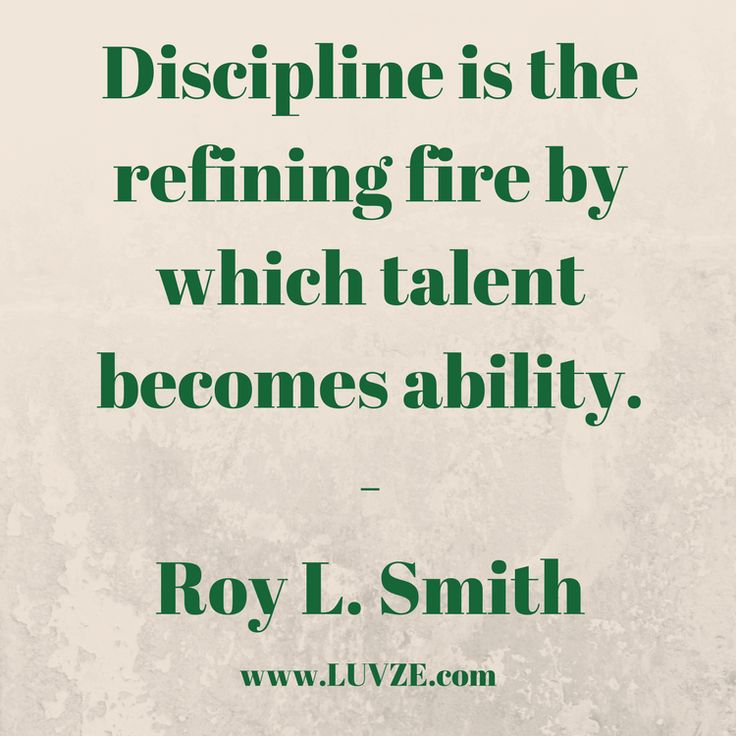




 Track2Training
You must be logged in to post a comment.