THE ASSASSINATION OF A GREAT LADY

Through the centuries the world has seen many acts of hooliganism and inhuman acts. Men like Abraham Lincoln fell victims to the bullets of assassins. The twentieth century has also its quota of assassinations. Since the death of Mahatma Gandhi, the country never experienced such a tragedy as that which took place on October 31,1984. It was the assassination of the then Prime Minister Mrs. Indira Gandhi.

When Mrs. Indira Gandhi reeled and writhed on the ground riddled with bullets from the guns of her own security gaurds it marked the beginning of the end of a great era. An epoch making personality left the scene which she had dominated like a colossus. It was a tragedy beyond description. It was an end as sudden as it was tragic, an end to a glorious career, but the misery and pity of it was that such a life should come about in this way in Blood. The greater tragedy it was that she was gunned down by her own trusted security gaurds in her own house. The gardener had destroyed his own garden.undefined

Mrs. Indira Gandhi was assassinated by two of her security guards as she was leaving her residence to appear in a television documentary, then being produced by the world – famous actor and director, Mr. Peter Ustinov. She was rushed to the All India Institute of Medical Research where a team of a dozen doctors fought a vain battle with death to save her. On the next day her mortal remains were moved to Teen Murthi Bhavan to lie in State to enable people to pay their last homage to the departed leader. An unending stream of people, tears streaming down their cheeks, filed past the body. But for the tragedy in it, the proof of the people ‘s love for the loyalty to Mrs. Indira Gandhi would have been a marvellous spectacle. On November 3, 1984, Mrs. Indira Gandhi left her residence on her last trek along a route lined by lakhs of people among whom, four thousand and more Army personnel maintained order and discipline. At 16-30 hours the mortal remains of the immortal Mrs. Indira Gandhi, one of the greatest fighters for freedom and one of the greatest figures of the 20th century world was consigned to the sacred flames, the funeral pyre lit by her son, Mr. Rajiv Gandhi, the then Prime Minister.

No adjectives would do any justice to the greatness of Mrs. Indira Gandhi. Coming on the Indian Political scene even before her tenth year – when most children of her age would have been at their pranks- she had her political tutelage under her illustrious father, Pandit Jawaharlal Nehru. From that period till she shed her blood in her own house, gunned down by traitors there was no looking back for her. To list her achievements or to mention her many meritorious qualities would require volumes. But among her achievements could be mentioned a few like the bold step of nationalising banks, her heroic leadership and exhibition of indomitable will in the war with Pakistan when she was dubbed THE DURGA and her 20- point programme aiming at the amelioration of the poor and the downtrodden. More than all these, her personal approach to problems of men and matters and her secular outlook and attempts to carry the people with her irrespective of considerations of caste, creed or religion gave her the stature that she retained till the end. Her incessant mission of striving for international peace and understanding could find proof in her work as the Chairperson of the NAM. The only homage that the people of India can pay her are not mere tears, but their practical action in eschewing violence and in striving to complete the various tasks that she had been prevented from performing by the cruel hand of death.

Migraine Vs. Headache

When there is pressure or pain in the head, it can be difficult to tell whether the individual is experiencing a typical headache or a migraine. Differentiating a migraine headache from a traditional headache, and vice versa, is important.

What Is A Headache?
Headaches are unpleasant pains in your head that can cause pressure and aching. The pain can range from mild to severe, and they usually occur on both sides of your head. Some specific areas where headaches can occur include the forehead, temples, and back of the neck. A headache can last anywhere from 30 minutes to a week. Triggers for this headache type include stress, muscle strain, and anxiety.


What is migraine?
These headaches are intense or severe and often have other symptoms in addition to head pain. Symptoms associated with a migraine headache include:
โ€ข Nausea
โ€ข Pain behind one eye or ear
โ€ข Pain in the temples
โ€ข Seeing spots or flashing lights
โ€ข Sensitivity to light and/or sound
โ€ข Temporary vision loss
โ€ข Vomiting
When compared with tension or other headache types, migraine headache pain can be moderate to severe. Some people may experience headaches so severe they seek care at an emergency room. Migraine headaches will typically affect only one side of the head. However, it is possible to have a migraine headache that affects both sides of the head. Other differences include the painโ€™s quality: A migraine headache will cause intense pain that may be throbbing and will make performing daily tasks very difficult.
Migraine headaches are typically divided into two categories: migraine with aura and migraine without aura. An โ€œauraโ€ refers to sensations a person experiences before they get a migraine. The sensations typically occur anywhere from 10 to 30 minutes before an attack. These can include:
โ€ข feeling less mentally alert or having trouble thinking
โ€ข seeing flashing lights or unusual lines
โ€ข feeling tingling or numbness in the face or hands
โ€ข having an unusual sense of smell, taste, or touch
Some migraine sufferers may experience symptoms a day or two before the actual migraine occurs. Known as the โ€œprodromeโ€ phase, these subtler signs can include:
โ€ข Constipation
โ€ข Depression
โ€ข frequent yawning
โ€ข irritability
โ€ข Neck stiffness
โ€ข unusual food cravings

Treating Migraine

Prevention tips
Prevention is often the best treatment for migraine headaches. Examples of preventive methods your doctor may prescribe include:
โ€ข making changes to your diet, such as eliminating foods and substances known to cause headaches, like alcohol and caffeine
โ€ข taking prescription medications, such as antidepressants, blood pressure lowering medicines, antiseptic medicines, or CGRP antagonists
โ€ข taking steps to reduce stress

Importance of training for the employee

To get started with the any work as a employee the company or the employer will give the training to the employee. As employee has skills but training will helps make that skills sharpen and gives more new skills to the employee. Training may be inform of on the job training and off the job training. On the job means training will be given along with doing the work.off the job training means training will be given in the form of class room lecture,online training etc. Totally training is important to get started with any new work it will give new skills and makes the existing more sharpen.

New Media And Reporting Gender Based Violence

Trigger Warning: Mention of Rape and Sexual Assault

New Media has also changed the style of journalism, such as the rise of online journalism, where facts, information, and reports are produced and distributed through the internet. News in the New Media era is enabled to spread more widely and rapidly. News content is now enriched by lots of digital elements such as images, embed videos, comment box. These elements make the information presented becomes more attractive. One of the salient characters of online journalism is its dependency on speed in delivering information. When we talk about the emerging trends in media, we cannot afford to overlook the role of online media in changing the scenario in the context of women’s issues. The content that the online media produces reflects the pattern of value the society. The prevailing attitude of society gets revealed through the way subjects dealing with women are treated by the media (Arpita Sharma, 2012). 

Media has the choice of acting as both, a protagonist and as a perpetrator-it can either reinforce the gender-based discrimination by portraying sensational and stereotypical images of women or it can provide balanced reportage that empowers women and not degrades them while exposing acts of gender-based violence. Rape cases and sexual assault cases are not a recent trend in the society but sensitive reportage and wide coverage by media while also bringing these issues forefront are relatively very new. 

Gender-based violence or GBV is violence that is directed against a person because of their gender. Both women and men experience GBV but the majority of victims are women and girls. GBV and violence against women are terms that are synonymous as it is widely acknowledged that most gender-based violence is inflicted on women and girls, by men. The issue of GBV reaches every corner of the world. The numbers of women and girls affected by this problem are shocking. According to the World Health Organizationโ€™s data from 2013, one in every three women has been beaten, compelled into sex or are abused. One in five women is sexually abused as a child, according to a 2014 report.

In coverage of GVB, several stereotypes are often perpetuated by the new media. These include that rape is similar to sex, that the assailant is motivated by female lust, that the assailant is perverted, crazy or a monster, that the woman provokes rape or assault, and that only women are only victims. Scholars have found that these stereotypes and myths are pervasive in media coverage of rape and assault cases. Not only the language and the framing of the headlines but also the visuals used in the articles regarding GVB play an important role in the general perception of these issues.

In Gender-Sensitive Indicators for Media (UNESCO, 2012), under Category B- Gender Portrayal In Media Content, B1.5- Strategic Objective 5 states the indicators for the coverage of gender-based violence. Three of them are-

  1. Use of non-judgmental language, distinguishing between consensual sexual activity and criminal acts, and taking care not to blame the victim/survivor for the crime 

2. Use of the term โ€˜survivorโ€™ rather than โ€˜victimโ€™ unless the violence-affected person uses the latter term or has not survived 

3. Use of background information and statistics to present gender-based violence as a societal problem rather than as an individual, personal tragedy 

Terms such as โ€˜victimโ€™ or โ€˜survivorโ€™ are often used to describe individuals who undergo these experiences. The term โ€˜victimโ€™ reiterates feelings of helplessness and lack of female agency, while the term survivor connotes a sense of strength and resilience. However, the affected person should have a say in what to refer them as. The โ€˜victimโ€™ terminology limits individual self-agency and identity. It is important to note that experiences of violence do not define the individual, but rather are a piece of a larger self-identity. Such labels focus on experiences of violence and presuppose an individualโ€™s inability to change or undergo any personal development to transform their identity into a peaceful, empowered personality. 

Images of sexual violence in the media often depicts women as covering their face, being silenced by looming hands, teary faces, large shadows near the woman, are some of the visual examples. These images not only fuel the stereotypes of women as helpless and weak, but also these images are also extremely triggering for the survivors of sexual assault and rape. 

When media reports women who have been assaulted or raped as nothing but victims, society can disengage and fail to take the issue as a broader societal issue and fail to take responsibility for any individual or group action to change it. It is crucial then for journalists to report on GBV in an informed way and to have a good theoretical understanding of the roots of these gender based violenceโ€™s and what needs to change in society. Otherwise, they can do harm by perpetuating patriarchal stereotypes and falsehoods. 

Different Job Expectations for different jobs

The mentality that ‘ a job is for life ‘no longer exists in professional world. Many people today consider the chance of changing jobs, while others prefer not to. Changing employer also means a duration of uncertainty, where one may have to worry about moving back home, or temporarily lose a stable source of income. Staying in one position means these challenges are avoided.

6 Skills Needed for All Jobs

Another advantage of not changing occupation is that one is able to acquire a great deal of experience and knowledge in one’s specific career, thus increasing job security. The corporation of one may recognize their loyalty and reward their service. On the other hand, those who regularly change jobs may be interpreted as unreliable, sorely missing experience and business owners may be reluctant to hire and invest in training.

Nevertheless, there are reasons in favour of changing work regularly. One is because the employment prospects of an employee are enhanced. Working in several different jobs often indicates that the person has more skill sets. These workers are seen as more diverse and resilient. The advantage of constantly moving work is that you rarely get caught in a rut. One can also think employers generally don’t tend to reward loyalty or commitment very much. Increased salaries and promotion are often easier to achieve through changing jobs.

Employees demand bonuses and pay hikes if they believe they warrant them. Many people tend to constantly shift employers in order to achieve this while others stay in one job in the same business. Nowadays that is a typical question. One firmly believes both situations have both advantages and disadvantages.

Second, if people have the same job with the same business, then they accumulate a lot of experience that is eventually counted for promoting and this contributes to a pay hike. In addition, it provides security and also shows loyalty to a company for increasing responsibility for this scenario. Therefore, the employer acknowledges the employee as a trustworthy individual and provides other incentives including bonuses for international jobs. On the other hand, it is a slow process of career growth to continue a job in the same company for a longer time. A lot of people also get tedious about the same work throughout the career.

Second, switching from one job to another will bring challenging surroundings, whether or not they continue in the same company. We get chances of getting new social connections when doing so, learning various skills in the work.

New pictures come to the screen through continuous adjustments. So, the individual will eventually be fresher into the new career. But if the transition takes place between different firms with the same job leads to a fast career development. More people generally become interested in following this process. The one major downside is that there’ll be more wage hikes.

Lastly, It is strongly believed that continuous job change brings rapid career growth. While remaining in a single job in the same organization prevents personal concerns such as changing home, increasing children’s schooling, transitioning to new world etc.

Longer Working Hours and Increase in Stress Levels

The ever-increasing work overload, the burden of relentless deadlines, the technical dependency on employment, and the desire of people to succeed in the workplace have changed the concept of professional life, and most workers need higher and longer hours of work every day. We will examine the reasons behind this work pressure and long working hours in this essay, and suggest some ways employers can help improve the condition.

9 Simple Ways to Deal With Stress at Work

It is a reality that work days are getting longer and that the strain at work these days is becoming more extreme. There are different reasons that escalated the mess and there are certain things that employers can do to help their staff. Those are explored in depth in the accompanying article.

Competitive rivalry on the job market is one of the reasons why work these days has become so stressful. Employers still have chances to recruit new hires to replace someone, which is why somebody who has already been employed needs to work hard to keep his career. This instinctively has cognitive negative effects on the employees. Employees have to work longer hours to meet their specific goals as the invisible threat of firing is there. Another reason to make the workplace so stressful is to increasing competition caused by globalisation.

Many small and medium-sized enterprises in developing countries need to compete with other multinationals and firms where the labour price is cheaper. The consequence of this on staff is that if the company they work for fails they realize they will be made redundant. This compel the employees not only to work longer hours but also endure from work-related stress and unpredictability. Many days, managers are setting expectations for the workers of most companies and most of the expectations are hard to accomplish. Employees are often expected to work over 10 hours a day, often even on days off. Ultimately, the aspirations of the employees from the workplaces have hit a higher level and people are able to risk their personal life for the sake of promotions. This change in mind configuration has also been due to the rising burden on the job.

Despite the higher competition in business, employers should maintain a better working environment that supports their workers socially and financially in order to sustain in the long run. Without interactions and committed workers and company cannot thrive and the fear of change cannot guarantee a safe workforce. Employers should only allow workers to work the normal hours and work overtime where necessary. Employers should also motivate better performing people and give them awards for their performance. The workers should be permitted to take breaks and should not suffer from anxiety of losing jobs. Finally, employers should be friendly to the employees and have meetings to listen to their problem. If the employer can convince the workers that they are able to support each other and protect their jobs, so they can expect stronger production from the workers.

To sum up, it’s a fact that these days, work is more stressful and it takes longer hours. There are several steps employers might do to fix the issue, and one of them is supplying workers with gym facilities to reduce their anxiety levels. Another thing is that employers could also recruit unpaid internships to assist employees, as the working hours would be reduced.

IQ Versus EQ

IQ (Intelligence quotient or Cognitive intelligence)

IQ, or intelligence quotient, is an inborn ability and it measures the general intelligence. They can learn, understand and implement knowledge, perform logical reasoning and abstract thinking. IQ is the intellectual ability to manage ideas, knowledge and thoughts.IQ represents abilities such as: Visual and spatial processing , Knowledge of the world ,Working memory , Quantitative & logical reasoning.

EQ ( Emotional Intelligence)

EQ isโ€ฆ  Self Awareness ,  Self Confidence , Interpersonal Skills and  Social Competence

EQ is the ability to manage relationships with other people.EQ is centered on abilities such as:

  • Identifying emotions
  • Controlling one’s own emotions
  • Perceiving how others feel
  • Using emotions to facilitate social communication
  • Using Empathy โ€“ to relate to others

EQ refers to an individual’s level of emotional intelligence, which is represented by scores obtained in a standardized test. It is a learned and improved ability.

Measurement of EQ

Meanwhile, EQ assessments test different aspects of emotional intelligence: emotional literacy, empathy, intrinsic motivation and how we navigate emotions. Some school counsellors may suggest an EQ test for a child who is struggling socially, to determine which skills to work on.Just like with IQ scores, an EQ score of 100 is considered average; 115 is awesome, but 85 indicates there are some challenges.

There are a number of instruments that seek to โ€œmeasureโ€ emotional intelligence, including the Mayer, Salovey, Caruso Emotional Intelligence Test or MSCEIT.

Unlike IQ, which is static, EQ can increase. But to really develop and master those skills, a child may need explicit teaching and practice.


5 Components of Emotional Quotient

When considering emotional intelligence, we look both internally and externally. EQ considers how we think about ourselves and how we think about and act toward others.The three internal hallmarks of emotional intelligence pertinent to self are:

  • Self-awarenessย is theย the ability to identify your own emotions and their impact.
  • Self-regulationย is the ability to control or redirect disruptive impulses and moods to suspend judgement and think before acting. In practice, it is your ability to influence your emotional clarity.
  • Motivationย is to go beyond the external drive for knowledge to pursue goals with energy and persistence.

Externally, EQ is a measure of what goes on between you and others.

  • Social-awareness is the ability to recognize and understand the emotions of others and react appropriately Social-regulation is your ability to influence the emotional clarity of others through a proficiency in managing relationships and building networks. relationship management (the ability to influence and connect with others).

Emotional intelligence is measured using 5-major components and 15-subcomponents:1. Intrapersonal Skills (ability to understand and apply personal emotions) – Self Regard ,Emotional Self Awareness ,Assertiveness , Independence ,SelfActualization

ย 2. Interpersonal Skills (people skills) – ย Empathy ,Social Responsibility ,Interpersonal Relationships ,3. Stress Management (ability to handle challenges) – ย Stress Tolerance , Impulse Control

4. Adaptability (Ability to react quickly, appropriately, and efficiently to change) – Reality Testing , flexibility ,Problem Solving,5. General Mood – Optimism To a great extent, each of the five domains represents sets of habit and responses that are learned, and so can be improved with appropriate effort

Exemplary qualities of people with high EQ

They are called as โ€œpeople smartโ€ for their extra-ordinary interpersonal skills and are good communicators.The emotionally intelligent child is also one who can verbalise her own emotions accurately, regulate them and control reactions to them( think of ways to defuse her feelings rather than throw a book against the wall.) A child with a high EQ can also handle more complex social situations and build meaningful friendships, in part because of that ability to relate to or empathize with peers.

As a kid grows into a teen and then an adult, EQ becomes tied to internal motivation , governs how emotions impact decision making, to make her cope with stress, solve problems and pursue goals.

Many companies hire for entry-level positions based on IQ, then promote people based on EQ. You need to have a brilliant IQ to be a good engineer, but to be a leader of engineers, your EQ matters more than your IQ.People with high emotional intelligence are likely to be doing well, to be effective at work, to have strong relationships, good health and a high quality of life.

What matters is how youโ€™re able to โ€œconnect with, understand and inspire other peopleโ€. He believes emotional intelligence enables you to demonstrate humility, making people naturally inclined to help you succeed. It also fosters resilience and grit, which empower you to overcome fear of failure and take risks for future success.

When you have the IQ to make good intellectual decisions and the EQ to build relationships with those around you, the sky is the limit.Leaders, Captains, Managers and people with social challenges tend to be more emotionally intelligent. high-EQ students are more co-operative and make better leaders in the classroom. get along with people in progressively collaborative workplaces.

Raise your EQ?

 EQ can be raised by recognizing  and naming the emotions we feel , understand why you feel that way , and distinguish between feelings and actions . It can also done by motivating oneself when considering how to productively harness your feelings, practice some emotional self-control  ,recognizing emotions in others and sensitive to other peopleโ€™s feelings and listen well.

It is a good practice to manage emotions and accept your feelings, but find a balance between over-sensitivity or over-expression and emotional suppression .While handling relationships – Being perceptive, applying conflict management skills instead of ignoring conflict, and being considerate and cooperative . Lighten up the situation by learning to see the humor in difficult situations and use it to smooth over differences. It can be done by resolving conflict positively by choosing your arguments, staying focused in the present, and be prepared to forgive or end conflicts that canโ€™t be resolved.

Can Emotional Intelligence Be Learned?

Some strategies for teaching emotional intelligence include offering character education, modeling positive behaviors, encouraging people to think about how others are feeling, and finding ways to be more empathetic toward others.

Emotional literacy is the term used to describe the naming and managing feelings and learning to respond to othersโ€™ emotions appropriately.โ€œKids learn to understand the social world through storytellingโ€”it helps them relate to a situation and learn how to handle events and emotions,โ€ itโ€™s learning to be aware of their own feelings, to express those feelings, to be able to get along with other kids, ย to be responsibleโ€

Modelling EQ begins at home

Parents begin teaching emotional literacy to their kids from infancy. โ€œOne of the things thatโ€™s really important in the early years is for children to be able to understand how theyโ€™re feeling and to be able to put words to those feelings rather than acting out,โ€ says Chapman.

Emotional intelligence can be developed over time, free of age limit, with the condition that it is provided the necessary attention and effort to it. It is vital for overall success and is a flexible skill set that can be nurtured, it seems prudent for parents to teach emotional literacy to children from infancy.

The final words :

Researchers have shown that our success at work or in life depends on Emotional Intelligence 80% and only20% of intellect.IQ makes up only 20 percent of the factors that determine life success, while other forces, such as EQ, wealth, temperament, family education levels and pure luck make up the balance. That means cognitive skillsโ€”verbal comprehension, memory, reasoning and processing speedโ€”will help academically, but they will only get a person so far in life. To really go the distance, those IQ traits should be rounded out with social-emotional skills like motivation, perseverance, impulse control and coping mechanisms .

To gain extensive knowledge about this topic, please check the following link

https://en.wikipedia.org/wiki/Emotional_intelligence

cryptocurrency

What is cryptocurrency – the cryptocurrency is the digital assets based on a network that is the distributed across a large number of computers. This decentralization structure allows them to exists outside the control of government and central authorities. A cryptocurrency is a digital or virtual currency designed to work as a medium of exchange. Their are market ranking, and more. which in one of the-

1. Bitcoin is the crypto business take off the industries till waiting for regulation. Bitcoin rises during pandemic situation of 14% to performing assets of 2020 again.

The internet, when it rose to global consciousness and became an over get in amount of harbinger and industry, created enormous value in disrupting existing practices and building chapter, more accurate and efficient systems, Its advent promised much in term of decentralization and democratizing access to information, value service. It promised to remove barrier and middlemen, vastly reduce operational and logistic costs in so many ways.

In this article, i will explain the three main types of coins in cryptocurrency are the Bitcoin, Altcoins and Tokens. By the end of this guide and as well the before going to learning about the type of cryptocurrency. it’s important to understand what cryptocurrency is If you already feel too.

BITCOIN ECONOMY WORK – The bitcoin generate by the users transfer. The latest disruption, blockchain, and with it, the rise of cryptocurrencies show the way to the next stage , by creating decentralization computer or etc application.

2. RIPPLE(XRP) – Ripple was released in 2012 that acts as both cryptocurrency and digital payment network for financial transaction. It is a global set network that is designed to create a fast as well secure also.

3. LITECOIN – light coin was launched by 2011 as alternatively bitcoin. like other cryptocurrency litecoin is open source payment network that is completely not center authorities.

4. Ethereum – this is created by the in the 2015. Ethereum cryptocurrency that is an a open source based on a blockchain technology while tracking ownership of a digital currency transaction, the blockchain are also focus on the running by the programming codes on any decentralization applications.

5. Zcash – this was a digital currency and that was a build on the original bitcoin code and it was build a decentralization blockchain. A core chain feature and different of zcash is an emphasis on privacy. While not a function available to investors on equity Trusts. Zcash without the closing the sender, receiver the amount.

6. Stellar Lumen – steller lumen as an intermediate currency that was facilitates currency exchange. stellar a user allow a user send any currency they own to someone in different currency. Jed McCaleb founded the open source network steller creat the network native currency in 2014.

There was a time when you could the number and types of cryptocurrency on one hand. The today’s are their was no possible longer. The cryptocurrency market has grown, grown some more.

The available of over the internet of 19 August over by the $550 billion of the value wiped off cryptocurrency since their record just changes that’s why the cryptocurrency is used by more applications.

Free Spine for those who don’t have one!

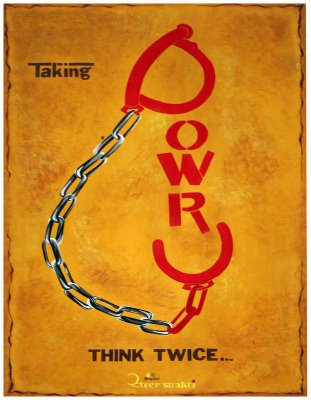
DOWRY: A CURSE FOR SOCIETY

CHRISTIAN 26/175, Born again, Fair, Good looking, Software, Tamil, Chennai. Now in the USA. Seeking fair, good looking, working girl, Contact 98XXXXXXXX.

On Prima facie, this matrimonial advertisement published in a daily national newspaper bears testimony to the fact that marriage in Indian society has undergone a transformation. But while going deep into the root of the matter, we find out that no matter how marriage proposals have undergone a transformation, from arranged one to advertisement to the online matrimonial application, dowry system which is not seen in any of the forms but is still under the practice of ‘give and take.’ In many societies, the union of souls is not the sole criterion for marriage, rather dowry plays the role of ‘requisite criteria.’

So what is dowry? Dowry is the money, goods or estate that a woman brings to a marriage. In a court judgement โ€œThe Dowry Prohibition Act 1961โ€™โ€™ legal definition of dowry is defined as:-
“Dowry” in the sense of the expression contemplated by Dowry Prohibition Act is a demand for property or valuable security having an inextricable nexus with the marriage, i.e., it is a consideration from the side of the bride’s parents or relatives to the groom or his parents and/or guardian for the agreement to wed the bride-to-be.

Although Dowry is illegal in India by the Dowry Prevention Act 1961, it is still prevalent and widely practised in many societies.
Pertaining to the history of the dowry system in India different scholars claim different things based on interpretation of ancient Sanskrit fiction and inconsistent smritis from India. The Shastras, the reservoirs of Indian culture and heritage is replete with references to the practices of dowry. The marriage hymns of Rigveda and Atharveda are its instances. The Smritis have recognized the right forms of marriage. It was only in Brahmin marriage and the gifts to be given in dowry were left entirely at the discretion by the brideโ€™s father.
Al-Biruni further claims that a daughter, in 11th century India had legal right to inherit from her father, but only a fourth part of her brother. The daughter took this inheritance amount with her when she is married, claimed Al-Biruni, and she had no rights to take income from her parents after her marriage or to any additional inheritance after her father’s death. If her father died before her marriage, her guardian would first pay off her father’s debt, then allocate a fourth of the remaining wealth to her upkeep till she is ready to wed, and then give the rest to her to take along with herself after her marriage. (source: Wikipedia)

The idea behind the dowry system was very clear. Bridesโ€™ parents used to give money, land, assets, to the bride as a gift or blessing. But when British Rule came into the picture, they restricted women to own any property. Women were not allowed to buy any property, land, or assets. This leaves women dependent upon their husbands and in-laws, who keep the dowry when she marries. In 1956, India gave equal legal status to daughters and sons among Hindu, Sikh and Jain families, under the Hindu Succession Act (India grants its Muslim population the Sharia derived personal status laws). Despite the new inheritance law, dowry has continued as a process whereby parental property is distributed to a daughter at her marriage.

CURRENT SCENARIO
The magnitude of the problem of dowry today is to be assessed not only on the basis of money/goods, land etc given by brides family but also on grounds of reported cases of different forms of violence on a bride. These outbreaks of violence vary from burning of brides, cruelty, domestic violence against women, abetment to suicide, dowry murder, female infanticide and many more.
Although there are laws and acts which makes practising dowry illegal.


THE DOWRY PROTECTION ACT 1961
This legislation came into force from 1 July 1961. This act prohibits the practice, request, payment or acceptance of a dowry by either party to a marriage. This law also punishes demanding and advertising dowry. Any violation of the act leads to imprisonment up to 5 years plus fine of up to Rs 15000 or the value of the dowry given, whichever is true.

There are also sections in IPC that deal with dowry like:-
Section 304B
It is related to dowry deaths
Stipulates that death of a woman within 7 years of her marriage by burns or bodily injury with evidence of cruelty or harassment by her husband or his relatives in connection with dowry demand is โ€˜dowry deathโ€™ and punishable with imprisonment for not less than 7 years.

Section 406
Related to the recovery of streedhan (It is what a woman claim as her own property within a marital household. It may include jewellery, gifts, and dowry articles.)
It is Non-bailable and cognizable offence.

Section 498A
For any act of cruelty, imprisonment of husband or his relative for up to 3 years plus fine.
It is also Non-bailable and Non-compoundable(once a case is lodged there canโ€™t be a compromise)

Protection of Women from Domestic Violence Act,2005
It was passed in order to provide a civil law remedy for the protection of women from domestic violence in India.
It encompasses all forms of physical, verbal, emotional, economic and sexual abuse and forms a subset of the anti-dowry laws to the extent it is one of the reasons for domestic violence.

Despite such stringent laws and acts which are in force, Dowry practice is prevailing. In 2019, 913 cases pertaining to dowry deaths have been reported. And this is the number of reported cases. In Bengaluru, only the number of cases filed under the Dowry Prohibition Act witnessed a rise from 690 in 2018 to 739 in 2019.

Consequences of the dowry system
This system of dowry has solidified its root in our society that it is seen as a form of prestige in Indian marriages. The more dowry means more respect to the grooms family. Dowry or the amount of money given as dowry is proportional to the groomโ€™s income. It is very clear that dowry is creating violence. Apart from this, sometimes bridesโ€™ parents have to lend money to give a huge amount of money demanded as dowry by the groom’s side. There are other ill consequences also like:-
Low Women Literacy:- In many cases girls are not allowed to pursue higher education after 12th or graduation because of the ill mentality that they have to take care of the family after marriage and from where the capital is going to be arranged for her marriage if all savings will be invested in her education.
Female Foeticide:- In the avarice of dowry, and because our society gives more preference to the boys, female foeticide takes place. Although Pre-Conception and Pre-Natal gender screening or testing are illegal in India by Pre-Conception and Pre-Natal Diagnostic Techniques Act, 1994.
Gender Discrimination:- Dowry coupled with female foeticide is the leading reason to gender discrimination and low sex ratio in India.
Violence against women:- Domestic violence, marital rape, physical and verbal abuse, torturing of women etc. There are many forms of violence which took place and still unreported either due to lack of knowledge or suppressed voices because few women try to save the sanctity of marriage which never really existed.

It should also be noted here that there are also false cases of harassments reported and these laws and acts are being misused as it happened in case of Nisha Sharma Dowry case in which IPC 498A was misused. But this does not show that every case or violence pertaining to dowry is false or fabricated.

So, Dowry is the tool of harassment and inhuman expression out of the coalescence of processes and relationship which are degrading women turning them into commodities. The central message of the Universal Declaration of Human Rights which states that โ€œall human beings are born free and equal in dignity and honourโ€ only echoes a hollow concern. Be it in democracy or dictatorship, war or peace, womenโ€™s rights have been violated daily, systematically. Their freedom, dignity and parity are persistently compromised by law and customs.

WAY FORWARD
The dowry system developed from Indiaโ€™s inheritance laws in which it is the mentality of people that Dowry is a form of inheritance which the bride brings along with her to the groom family. Law and acts should be made enforceable on the ground, not on paper only.
All groom need to take a step up and say โ€œNOโ€ to dowry as they can be a milestone in abolishing this dowry system. Boys need to convince their parents that they will not take dowry. They should have the confidence to earn for their living.
Parents must educate their daughters so that they can have dignity and become self-dependent or start earning which will make them financially stable and courageous. A well-educated girl will also be able to compete against any turmoil or raise her voice against the mishaps.
All the expenses of marriage must be shared by both families according to their own capability.
People must give encouragement to simple marriages without taking/giving dowry.
Dowry is a social stigma that can be removed with all our contributions and awareness. It will take time to abolish but it can happen if preferred.

There is a very well known quote- โ€œThere is no chance for the welfare of the world unless the condition of a woman is improved. It is not possible for a bird to fly on only one wing.
There is no hope for that family or country where there is no estimation of women, where they live in sadness. For this reason, they have to be raised first.โ€
โ€“ Swami Vivekanand.

Toxic positivity

You must have heard people telling you to stay positive when you are going through hard times or maybe you must have heard yourself giving advice to others about how staying positive can help them. Being positive is essential to get through life but too much of it can sometimes do more damage than good. Excessive of anything can be harmful. As much as everyone believes in the undeniable power of positivity, it can take a toxic turn when we try to use it to hide the negative situations. It is a very normal human experience to face the hardships along with the good stuff but trying to negate your true feelings goes against any sort of development.

Over sweetening of positivity comes at a price of hiding one’s true emotions. Since it is always encouraged to stay positive and be happy all the time, we miss the fact that feeling sad is one of the most basic human emotions and should not be sidelined under false happiness. This only builds guilt towards one’s own emotions. Being on the receiving end of someone’s feel good quotes can be annoying at times. Sometimes you just want to and need to face the reality. This should also hold true when you are the one giving advice to someone. You telling someone to think positive doesn’t help anyone. It just creates resentment and feels as if you are minimizing someone’s experiences. Telling someone to look at the brighter side of the situation should also not be your first response when someone confides in you. Try to be emotionally supportive.

It is also apparently believed that there is some shame attached to feeling certain emotions or letting them out in the form of crying. The only reply we get is to man up and stop being a crybaby. In order to avoid this, we end up braving and portraying a false front. Suppressing or hiding these emotions lead to more stress and can erupt in a harmful manner. It makes one end up creating a fake persona for themselves. It creates pressure to be or act in a certain way around some particular people.

In order to lose this toxic positive attitude, try listening to people’s emotions and feelings rather than brushing them off. Tell them that even though you may not be able to provide solution for their problems, you will still be with them or even ask them what they need.

Being a healthy person requires being conscious of one’s emotions as well as others. Being overly positive can be harmful to you as well as to those around you. So cut the chain of toxic positivity but don’t dwell in sadness either. Set healthy boundaries for yourself and don’t let anyone, including yourself belittle your experiences.

Air Pollution and COVID-19

The nationwide LOCK-DOWN due to the pandemic has led to a drastic decline of NO2 emissions and reduced air pollution levels. Itโ€™s important that this is maintained even after the LOCK-DOWN lifts

In the middle of the devastating Covid-19 pandemic, an inimitable positive has been the significant global decrease in air pollution levels. Primarily, experts have measured nitrogen dioxide (NO2), one of the six major air pollutants (in addition to particulate matter, carbon monoxide, sulfur dioxide, ground-level ozone, and lead). NO2 has, like most other gases, natural and human sources.

Natural sources include lightning, oceans, and volcanoes. But, in urban regions, natural sources of NO2 account for a small fraction of the total NO2 levels; as per a 2005 report by Australiaโ€™s Department of the Environment and Heritage, natural sources of NO2 only account for 1 per cent of overall NO2 levels in cities. Human activity is almost entirely accountable for NO2 emissions in urban regions, with road transport being the chief cause. Planes, power plants and ships, all of which burn fossil fuels, are also notable human sources of NO2. Given this, itโ€™s unsurprising that during the stringent global lock-downs, NO2 levels have dropped significantly in urban areas, especially in Indiaโ€™s densely populated cities.

Satellite imagery from the European Space Agencyโ€™s Copernicus Sentinel 5P satellite measure NO2 levels globally. These measurements correctly reflect emissions sources, because unlike other gases that can travel a considerable distance from where theyโ€™re emitted, NO2 has a short lifespan and dies before it can move very far. In other words, if the Sentinel 5P satellite captures a hotspot of NO2 over Delhi, itโ€™s highly likely it was emitted from within Delhiโ€™s vicinity. Satellite imagery is, therefore, a highly authentic tool for measuring NO2 emissions, specially if data with high levels of cloud coverage is precluded.

The global decreases in NO2 levels were first seen in China, where levels plummeted dramatically following the strict quarantine measures enforced in late January. As countries in Europe and North America followed Chinaโ€™s lead in late February and March, akin trends have been observed globally. Indiaโ€™s nationwide lockdown, in particular, has had remarkable effects on air pollution levels. With citizens quarantined at home, road transportation and power plant operations have come to a grinding halt, and pollution levels across the country, especially in typically smoggy cities, have fallen to dramatic lows.

Dramatic decrease

In Delhiโ€™s metropolitan area, pollution levels have dropped most dramatically; NO2 levels from March 25 (the day quarantine began) to May 2 have averaged 90 ยตmol/m2 compared to 162 ยตmol/m2 from March 1 to March 24. In 2019, NO2 levels from March 25 to May 2 were also over this yearโ€™s levels, averaging 158 ยตmol/m2.

In Greater Mumbai and Navi Mumbai, akin trend has been observed as NO2 levels from March 25 to May 2 averaged 77 ยตmol/m2 compared to 117 ยตmol/m2 from March 1 to March 24.

In almost all other big Indian cities, similar drops in NO2 levels are evident, highlighting the national scale of Indiaโ€™s lockdown.

The country-wide drop in NO2 emissions during this lockdown has significant immediate consequences. Exposure to high levels of NO2 has substantial detrimental effects on human health. Short-term exposure to high levels of NO2 can result in worsened coughing, aggravation of existing respiratory diseases (asthma), and hospitalization, while longer-term exposure can lead to the development of asthma and increase oneโ€™s susceptibility to respiratory diseases.

Many researchers have hypothesized that the drop in air pollution levels may presently be saving a notable amount of lives, not only by reducing individualsโ€™ vulnerability to Covid-19, but also by averting some of the worldโ€™s seven million annual deaths due to air pollution exposure. Yet, the dangerously high levels of NO2 in many urban areas before Covid-19 has probably resulted in far more virus deaths compared to the lives saved by this current drop in emissions. The pandemic and the subsequent decreases in air pollution levels due to the quarantine have illuminated a severe issue regarding ongoing high levels of air pollution.

Going forward

The terrifying reality is that despite human activity essentially coming to a complete standstill, current estimates suggest that carbon dioxide (CO2) levels will only decrease by roughly 5.5 per cent in 2020 compared to 2019. To put this in perspective, to meet the goal of limiting the global increase in temperature to 1.5oC, which many experts agree would stave off the worst effects of climate change, global CO2 emissions would need to decrease by 7.6 per cent each year. Similarly, air pollution and NO2 levels are expected to rise to their normal unhealthy levels when quarantines are lifted.

Itโ€™s crucial that when Indiaโ€™s lockdown inevitably ends, and people return to their normal routines, they arenโ€™t forced to revert to their old behaviors. To make the current drops in air pollution levels long lasting, serious policy change needs to be passed. The reduction in road transport and the corresponding decrease in air pollution have illuminated that gas-powered cars are key drivers of air pollution. Electrifying transport, expanding public transportation, building more bike lanes, and finding other ways to incentivise people to ditch their cars would dramatically reduce Indiaโ€™s emissions from its primary human source of air pollution. Itโ€™s also important that these electric vehicles, and Indiaโ€™s cities more widely, are powered by clean sources of energy rather than fossil fuels.

Itโ€™s ironic that this devastating respiratory virus has illuminated another respiratory crisis.

Northeast: The unexplored beauty

Northeast is the collective name of the easternmost states of India. It comprises of 8 culturally and ecologically rich states. It comprises of Arunachal Pradesh, Assam, Manipur, Meghalaya, Mizoram, Nagaland, Sikkim and Tripura. These states are also know as ‘The seven sisters’ and Sikkim being the only brother.
If you are a travel geek, visit to the Northeast must top your bucket list. Each state is very different from each other, yet so similar. Each state can mesmerise you with its beauty. This part of India is so raw and pure, in comparison to the rest of the country and this makes it even more special.
Introduction to each state
โ€ข Arunachal Pradesh
The land of rising sun, Arunachal Pradesh, is characterized by mountainous ranges and sub mountainous ranges along the northern part. This state is truly diverse in terms of its culture. Arunachal Pradesh has 26 major tribes and multiple sub-tribes. People of Arunachal Pradesh speak over 50 dialects. Arunachal Pradesh is a green gold. Because of the variation in altitude and climatic condition, it has tropical, subtropical and temperate forest.

โ€ข Assam
Assam is a northeastern state popular for its wildlife, archaeological site and tea plantation. Assam is also known for its temples, especially the Kamakhya Temple. The worldโ€™s largest river island, Majuli, and the smallest river island, Umananda, are both located in this state. The culture of Assam is a rich and exotic tapestry. Natives of this state are known as Asomiya (Assamese) and it is also the state language of Assam. Weaving is an important part of Assamese culture. Gamocha is one of most easily recognisable cultural symbol, besides many.

โ€ข Manipur
Manipur is situated in the eastern frontier of India. Physically Manipur comprises of two parts, hills and valleys. The valley is centred surrounded by hills on all sides. The state has a forest canopy ranging from thickly dense forest to moderately dense forest to open forest. The cultural expression and art form of this state is famous worldwide. Manipuri dance whether folk or classical, is distinct from any other form.

โ€ข Meghalaya
Meghalaya is a hilly state in northeast India. This area is geographically rich, with mountains, stretches of valley and Highland plateau. Mawsynram, Cherrapunji in Meghalaya is the wettest place of earth. Shillong, the capital of Meghalaya is known as the rock capital of India. The forest in Meghalaya are among the richest botanical habitat in Asia. Meghalaya’s forest host 660 species of birds.

โ€ข Mizoram
The state with highest literacy rate in Northeast is Mizoram. Among the northeastern states, it is the southern most landlocked state. Mizoram is the state of rolling hills, valleys, rivers and lakes. Traditional festivals in this region revolve around jhum cultivation. This state has several dance forms, including, Cheraw, Khuallam, Chheihlam, Chai.

โ€ข Nagaland
Nagaland is largely a mountainous state. It is 16th state of India on 1st December 1963. The state has a monsoon climate with high humidity levels. Nagaland, just like all other northeastern state, is high in flora and fauna. Mithun is the state animal and has also adopted as the official seal of the Government of Nagaland. Music and dance is an intrinsic part of Naga life. The Hornbill festival celebrated in Kohima, capital of Nagaland, is famous worldwide.

โ€ข Sikkim
Sikkim is the only northeastern state which is not a part of ‘seven sisters’. It host Kanchenjunga, the highest peak of India and third highest in the world. Sikkim climate ranges from sub tropical in the south to tundra in the north. Sikkim is one of the few states of India to receive snow fall. The state is situated in the ecological hotspot of the Lower Himalayas, one of the only three ecoregions of India.

โ€ข Tripura
Tripura is the third most smallest state in the country. The state is characterized by hill ranges, valleys and plains. Tripura has a typical savanna climate. Unakoti in Tripura is popular worldwide. Multiple folklore are famous about Unakoti.

Latest Government Schemes

Hey Readers, let’s go through some of the schemes launched by the Government of India in the year 2020. The main purpose of these schemes is to address the social and economic welfare of the society.

  1. Atmanirbhar Bharat Abhiyanย 

The Atmanirbhar Bharat Abhiyan was announced in four tranches by the Union Finance Minister Nirmala Sitharaman in May 2020. It aims to take India in the position of becoming self-reliant. The economic stimulus relief package announced by the government is touted to be worth Rs.20 Lakh crores. This amount is almost 10% of India’s GDP. This includes the already announced Rs 1.70 lakh crore relief package, as the PMGKY, for the poor to overcome difficulties caused by the coronavirus pandemic and the lockdown imposed to check its spread.

This scheme was based on 5 pillars that included economy, infrastructure, demographics, technology and demand. The relief package emphasized on land, labour, laws and liquidity.

For more details about the relief package, you can go to: https://byjus.com/free-ias-prep/atmanirbhar-bharat-abhiyan/.

2.ย Pradhan Mantri Kisan Maan Dhan Yojana

This a Central Sector Scheme which is administered by the Cooperation & Farmers Welfare, Department of Agriculture, Ministry of Agriculture & Farmersโ€™ Welfare and Government of India in partnership with Life Insurance Corporation of India (LIC).

LIC is the Pension Fund Manager for PM Kisan Maan-Dhan Yojana that provides an assured monthly pension of Rs. 3000/- to all the farmers after the age of 60 years. This scheme was introduced with an aim to secure the lives of around 3 crores small and marginal farmers in India.

3. Pradhan Mantri Suraksha Bima Yojana (PMSBY)

The Scheme is available to people in the age group 18 to 70 years with a bank account who give their consent to join / enable auto-debit on or before 31st May for the coverage period 1st June to 31st May on an annual renewal basis. Aadhar would be the primary KYC for the bank account. The risk coverage under the scheme is Rs. 2 lakh for accidental death and full disability and Rs. 1 lakh for partial disability.

The premium of Rs.12 per annum is to be deducted from the account holderโ€™s bank account through โ€˜auto-debitโ€™ facility in one instalment. The scheme is being offered by Public Sector General Insurance Companies or any other General Insurance Company who are willing to offer the product on similar terms with necessary approvals and tie up with banks for this purpose. As on 31st March, 2019, cumulative gross enrolment reported by Banks subject to verification of eligibility, etc. is over 15.47 crore under PMSBY. A total of 40,749 Claims were registered under PMSBY of which 32,176 have been disbursed.

For more information, refer to: https://financialservices.gov.in/new-initiatives/schemes

4. Atal Pension Yojana (APY)

APY was launched on 9th May, 2015 by the Prime Minister. APY is open to all saving bank/post office saving bank account holders in the age group of 18 to 40 years and the contributions differ, based on pension amount chosen. ย Subscribers would receive the guaranteed minimum monthly pension of Rs. 1,000 or Rs. 2,000 or Rs. 3,000 or Rs. 4,000 or Rs. 5,000 at the age of 60 years. Under APY, the monthly pension would be available to the subscriber, and after him to his spouse and after their death, the pension corpus, as accumulated at age 60 of the subscriber, would be returned to the nominee of the subscriber.

Vitriolage

Kitna achha hota agar acid bikta hi nai, bikta hi nai to phir fikta bhi nai!!” – Chhapak


This famous dialogue from a Bollywood movie clearly depicts the pain and hopelessness of a victim when she was being attacked for nothing but denial. It clearly shows how insensitive and callous we have become as a society.

Acid attack is one of the most gruesome and brutal crime. Most of the acid attack victims are women. Men have also been the preys, but they’re minimal in numbers compared to the women. Section 326A & 326B in the Indian Penal Code (IPC) lays down the punishment for acid attacks. The minimum punishment is 10 years’ imprisonment which can be extended up to life imprisonment along with a penalty. But this punishment is not enough for such criminal minds who think it is okay to distribute, torture or kill an innocent person if she is refusing his so-called lusty love, or they can’t digest a marriage refusal. Conflicts regarding property or land disputes have also been reported as reasons for acid attacks. Attacks against individuals are also based on their religion and religious beliefs or socio-political activities.

The crime data for 2018 from the National Crime Bureau (NCRB) exhibits, the cases of acid attacks are constantly being transferred and delayed even though there are fast-track courts to handle these cases but unfortunately they do not seem fast enough!

Why do they take months and years to pronounce a decision?
Why can’t they declare the verdict in such cases as soon as possible? So that the attackers at least fear the law before committing such heinous crime.

If nearly 90% of cases in a year are being transferred for trial to the following year, how can a survivor get justice or can even hope for it?
This is shown by the data; in Indian courts, 523 cases were slated for trial in 2018 which are adding to the 407 cases in 2016 and 442 in 2017. Many such cases of acid attacks occur but never get filed because in multiple cases, settlements are done outside the courts or several other factors come into play like class, caste, power, religion, etc.

The percentage of cases that the courts cleared out of the cases that went for the trial, was 6.6% (27 cases out of 407) in 2016; 9.9% (44 cases out of 442) in 2017 and 6.11% (32 cases out of 523) in 2018 respectively.
The total number of cases of acid attacks that police investigated dropped consistently- 196 cases in 2016, 182 in 2017 and 150 in 2018.
While the attempt to commit such sin has increased in the last three years. The growth of the conviction rate is almost negligible. 2.45 per cent cases in 2016, 3.39 per cent in 2017 and 3.36 per cent in 2018 respectively.
Uttar Pradesh and West Bengal have been reporting the most number of acid attack cases in between 2016 and 2018 as per the NCRB data.

India, the country with the most number of acid attacks has the least number of convictions, even less than 5%. At least one case of acid attack takes place daily in India.
Supreme Court has ordered all the state governments to regulate the sale of acid in an attempt to stop or at least reduce these crimes. The court said that acid should not be sold to anyone below the age of 18, and that too only to the person who shows a valid identity card. And if anyone doesn’t follow the rules it will be a non-bailable offence. But all these rules and regulations are found to be just in paper. Anyone can still walk into a store and purchases a bottle of acid. The non-bailable charges also have loopholes through which the attackers get through easily and roam around freely while the victims undergo reconstructive surgeries and are bound to visit hospitals after hospitals.
The pathetic thing is that with a bottle of liquid that would cost a demon just Rs.10, he can degrade anyone’s life within seconds.

‘Scotland of the East’

Situated in one of the Seven Sisters Of India (seven states), Shillong is the capital of Meghalaya state in countryโ€™s northeastern region. There are as a matter of fact numerous similarities between this place and Scotland, and this is reason why Shillong is called Scotland of the East. Moreover to prove that the naming is indeed done appropriately, here are a few points that justify it.

Though, each place has it’s own unique charm, but letโ€™s just have some fun wondering about the similarities for the time being.

1. FIRST, the striking similarity between landscapes is actually a major reason behind the naming

Glen etive in Scottish Highlands

Shillongโ€™s terrain is adorned with rolling and sky soaring hills bestowed with lush greenery. Most times, you can browse through pictures of both Scotland and Shillong, and you will actually get your mind baffled wondering which photograph is of which place! On a cloudy day the mist-laden pasturage look nothing less than a paradise.

2. The meandering roads amidst valleys make way for that ultimate road trip youโ€™ve been dreaming of

Shillong Pass

The road to Mawlynnong, Cherrapunji, and the curvaceous road of the Shillong Bypass surely do allure just experienced drivers. Youโ€™d anyway rather sit at the backseat, so you can keek out of the window, let your hair flutter with the breeze, as the Himalayas unfold mesmerizing panorama before you.

3. Everyday is fun with cultural extravaganza

Culture in Shillong

The rich, colorful culture of Shillong makes it stick out. Just like the Scottish people, the tribes feel delight in presenting folk performances, and itโ€™s fascinating to sit back and witness. You can also be a part of the act and join them as they are on it, but make sure youโ€™re not spoiling the fun for others too. If not performances, youโ€™ll be bewitched by handicrafts, tribal attires, and of course traditions. For a culture vulture, the perfect way to get an understanding of localsโ€™ lifestyle is by staying in homestays.

4. The Scottish Highlands and the hills of Shillong razzle-dazzle with roaring waterfalls

Waterfall in Shillong

When youโ€™re travelling through the valleys of Scotland and Shillong, be prepared to come upon random glistening waterfalls, especially if youโ€™re visiting in the monsoon season.

5. The lakes of Scotland and Shillong hold stunning resemblance

Lake in Shillong

Alongside roaring waterfalls, Shillong and Scotland are embellished with lakes that are encircled with rolling hills. You can sit by for some time, or espouse this beautiful moment by boating on the lake. Keep aside any electrical device for a little while and just inhale the enticement in front of your eyes.

6. Many regions are undisturbed by heavy tourist crowd

Mist in Shillong

Even though Shillong in Meghalaya is a major tourist attraction in Northeast India, but you will come across a commendable balance when it comes to crowded attractions. There are numerous places in this place where you can pitch in your tent and connect with nature. Such is the natural beauty of this place.

7. The music festival scenario in Shillong is equally spellbinding as the Scottish one!

Music festival in Shillong

Scotland might be hosting some stunning music festivals, but believe me, Shillong will have your jaws drop too! The NH7 Weekender is a music festival which is one of Indiaโ€™s most awaited events. Famed artists like A.R Rahman, Steven Wilson, Farhan Akhtar and Fear Factory have performed in the festival.

We can come up with many similarities between Scotland and Shillong to justify its naming, but we believe, that the beauty of this beautiful Indian hill-station is one-of-a-kind, and that it cannot be compared with any other place in the world.

Introduction to share market

Share market is the market place where the shares of different companies will be listed and purchased and sold among different buyers and sellers.companies will bring their shares to the stock market through the IPO which means Initial Public Offering where company will first time sells its shares to the open public. When company need additional capital or Fund required then company will go for the IPO so the share will be listed. If the companies share is listed then only public can purchase that particular companies share in share market. Share market has its own time and working days which is depend on different countries. In working days only one can purchase and sell the shares.

SUSTAINABLE DEVELOPMENT GOALS(SDG) OF INDIA

India, home to one-sixth of all humanity, holds the key to the success of the 2030 Agenda. India in its second VNR has made a paradigm shift to a โ€œwhole-of-societyโ€ approach with Government of India engaging sub-national and local governments, civil society organizations, local communities, people in vulnerable situations and the private sector.

Indiaโ€™s commitment to the SDGs is reflected in its convergence with the national development agenda as reflected in the motto of Sabka Saath Sabka Vikaas (Collective Efforts for Inclusive Growth). Based on the evidence from the SDG India Index, which measures progress at the subnational level, the country has developed a robust SDG localization model centered on adoption, implementation and monitoring at the State and district levels.

The following narrative further encapsulates Indiaโ€™s progress across the SDGs.

Sashakt Bharat – Sabal Bharat (Empowered and Resilient India): India has successfully lifted more than 271 million people out of multidimensional poverty through economic growth and empowerment. Enhanced access to nutrition, child health, education, sanitation, drinking water, electricity and housing, has led to reduced inequalities especially among people in vulnerable situations.

Swachh Bharat – Swasth Bharat (Clean and Healthy India): Through a nationwide initiative triggered by the Clean India Campaign and the National Nutrition Mission, India achieved 100% rural sanitation and sharp reduction in stunting and child and maternal mortality rates. Universal health coverage has been institutionalized through Ayushmaan Bharat, the worldโ€™s largest health protection scheme which provides an annual cover of USD 7,000 to 100 million families, covering nearly 500 million individuals.

India is at the forefront in the call for joint global action to address the COVID-19 pandemic. The country has extended medical assistance to several countries and has operationalized the SAARC COVID-19 Emergency Fund with an initial contribution of USD 10 million. Domestically, Indiaโ€™s response to the COVID-19 pandemic includes an initial USD 22.5 billion economic stimulus package, comprehensive health coverage for front-line workers and direct cash transfers for the most vulnerable.

Samagra Bharat – Saksham Bharat (Inclusive and Entrepreneurial India): Social inclusion is pursued through universalizing access to nutrition, health, education, social protection, and developing capabilities for entrepreneurship and employment. Financial inclusion through Jan Dhan-Aadhaar-Mobile (JAM) trinity โ€“ near universal access to bank accounts aided by the Jan Dhan Yojana (National Financial Inclusion Scheme); Aadhaar card (National unique identity number) for over 90% of the population; and expansive access to mobile phones, has propelled new avenues of credit, insurance, and Direct Benefit Transfers (DBT) to the poor, including to over 200 million women, thereby accelerating their economic empowerment.

Satat Bharat โ€“ Sanatan Bharat (Sustainable India): Indiaโ€™s climate action strategies call for clean and efficient energy systems, disaster resilient infrastructure, and planned eco-restoration. Acting on its nationally-determined contributions, India has electrified 100% of its villages, reduced 38 million tonnes of CO2 emissions annually through energy efficient appliances, provided clean cooking fuel to 80 million poor households, and set a target to install 450GW of renewable energy and restore 26 million hectares of degraded land by 2030. Globally, India stands third in renewable power, fourth in wind power, and fifth in solar power. India launched the Coalition for Disaster Resilient Infrastructure and the International Solar Alliance to leverage global partnerships for climate action and disaster resilience.

Sampanna Bharat- Samriddh Bharat (Prosperous and Vibrant India): India is one of the fastest growing emerging market economies with a young population and burgeoning innovation and business ecosystem. With a GDP of USD 2.72 trillion in 2018-19, India strives to become a USD 5 trillion economy by 2025, and pursue an inclusive and sustainable growth trajectory by stimulating manufacturing, building infrastructure, spurring investments, fostering technological innovation, and boosting entrepreneurship.

In the spirit of South-South Cooperation, for realizing the 2030 Agenda, India supports developing countries through the USD 150 million India-UN Development Partnership Fund. In this spirit of regional and global partnerships, and the countryโ€™s commitment to โ€˜leave no one behindโ€™, India steps into the Decade of Action, drawing confidence from its experience in addressing challenges. Government of India will continue to work collaboratively with all domestic and global stakeholders to accelerate efforts for a sustainable planet for future generations.

Anorexia Nervosa

‘Hey, you have lost a lot of weight suddenly. Are you alright?’ You might have seen someone saying this to a girl/boy who really did lose a lot of weight suddenly. They look weak and skinny and often come across as short tempered. This is a common symptom of a disorder named anorexia nervosa.

It is an eating disorder causing people to obsess about weight and what they eat. Anorexia is characterised by a distorted body image, with an unwarranted fear of being overweight. Basically such people constantly obsess over their weight. This usually happens during adolescence. This is because during this time period, teenagers go through puberty. This means they feel the need of constantly looking pretty. This also usually happens to girls as the social norm is set as such that the skinnier you are, the prettier you look. No doubt this social norm is now dramatically rejected as people are more accepting of all kinds of body types.

Anorexia nervosa is a dangerous disorder. It’s like having a voice in your head constantly telling you that you look fat and should lose more weight. This is dangerous because people suffering from anorexia nervous are repulsed by the idea of eating. They literally don’t like eating. To the point they isolate themselves from their friends and family so that they don’t have to eat.

They not only despise eating, they exercise aggressively and push their limits to the store extent that they endanger their own lives. They constantly work out and drink water when they feel hungry. Whenever they do eat, they feel guilty and put off all the calories by working out more than ever.

Other symptoms of this disorder includes dizziness, dehydration and feeling cold all the time. Girls often miss their menstrual cycle. People often become short tempered or moody. They also become more anxious and apprehensive about basically everything.

They are often constipated and force themselves to vomit from time to time. Their nails become brittle and hair become dry, thin and fall out occasionally. Most dangerous of all is that they become malnourished and their heart beats slower than usual. They refuse getting treated because they constantly feel that they will become ‘fat’ or overweight. They might also suffer from depression.

Now that we know about this disorder, one must look out for all of these symptoms as we might just be able to help them. People suffering from anorexia nervosa need their family and friends even though they might avoid them. It is important for their family and friends to make them realize that life is more than just body types and weight. If they are not happy even after losing all that weight, losing weight is not the true path of becoming happy. They need to realize that their family and friends love them for who they are. Yes, it will be very hard for everyone around them. Especially the parents. But this is the time we must remember that we are the only ones who can bring their child back. Proper professional help should be taken and apart from that through therapy and proper healthy diet, they can always come back to their real home.

The only way to gain true happiness is through self care and self love. They need to realize no matter how skinny they become, if they don’t love themselves for who they are, all this trouble can never be worth it! Loving yourself is more important than anything. Accepting your body type is one step of becoming happy.

CORPORATE SOCIAL RESPONSIBILITY(CSR) IN INDIA

Now Corporate Social Responsibility (CSR) is well accepted among shareholders as well as with various other stakeholders of society in India. The term CSR is new normal for Indian organisations. CSR tends to focus on what is done with profits after they are made. Larger corporations understand that CSR is an integral part of business framework for sustainable development. Companies also consider that CSR is an approach towards sustainable development and focus on the triple bottom line of Economic, Environmental and Social performance.

In India, the term Corporate Social Responsibility (CSR) is widely being used even though related concepts and terms, such as business responsibility, sustainable development, philanthropy, sustainability, corporate citizenship, responsible business, triple bottom line, shared value, value creation, business ethics, socio-economic responsibility, bottom of pyramid, stakeholder management, corporate responsibility, and corporate social performance.

The CSR activities of Indian companies are in line with the provisions of Section 135 with Schedule VII to the Companies Act, 2013. The CSR initiatives of companies thrust on creating value in the lives of the communities around its areas of business and manufacturing operations.

CSR has become an effective tool to work in the line of Sustainable Development Goals (SDGs) with a strong focus on social performance indicated in the CSR projects of the organizations. The SDGs, otherwise known as the Global Goals, are a universal call to action to end poverty, protect the planet and ensure that all people enjoy peace and prosperity.

Most of the businesses consider community as one of its apex stakeholders and believes in inclusive growth. This year most of the organisations continued its CSR initiatives in the realm of Education, Health, Livelihood, Rural Development and Social Entrepreneurship.

Organisationโ€™s diverse projects and operations touch lives of people in many ways and create value by helping in overall and holistic development of communities within multiple geographies. Through its various initiatives, Companies endeavour to play a relevant role by serving communities and projects that address gaps in basic societal requirements.

Conscious business decisions by the Companies have directly and indirectly created value for multiple stakeholders and helped in improving lives of the people and species. Businesses in India believed in creating societal value by providing affordable products and services which have assisted in the growth of relevant and allied industries. Across all its areas of operations of Business, there are inherent linkages and interconnections with the immediate and long term societal impact.

Most of the business have a practice of reporting the CSR performance not only in Annual Report but also in dedicated Annual CSR Report and Sustainable Development Report. These reports are externally verified and are in accordance with the Global Reporting Initiative (GRI) guidelines and Business Responsibility Report, mandated by the law and competent authorities.

CSR initiatives are conceptualized and implemented through Corporate Foundations, Non-Government Organisation (NGOs) and Agencies and not-for-profit organisations. Most of the organisations worked on 4P model (Public-Private-People-Partnership) for empowering communities and stakeholders. Businesses have positively impacted lives particularly of several hundreds of thousand underprivileged people through various CSR activities and approaches.

It has been observed that for Indian Companies, Corporate Social Responsibility (CSR) is the commitment of businesses to contribute to sustainable economic development by working with the employees, their families, the local community, experts and the society at large to improve lives in ways that are good for business and for its development.

In the broad manner, CSR segment of the organisation is guided by the Board of Governance, Business DNA, CSR and Sustainability Mission of the Companies. In compliance with the provisions of Section 135 of the Companies Act, 2013 with the Companies (Corporate Social Responsibility Policy) Rules, 2014, Companies have taken measures and steps to ensure improvement and betterment.

Most of the businesses seek to continue its contribution to the society through its distinct value proposition that meets the needs of millions of people, enhancing their lives through education, healthcare, improving quality of living by providing attitude, means and enabling livelihoods by creating employment opportunities through and for the Business, By the Business and Beyond the Business.

For the Business, value is being created for the society through business including employment generation, market growth and opportunity creation. By the Business- value is also being created through Corporate Social Responsibility (CSR) interventions across different operating facilities with appropriate linkages to local communities in which businesses operate and Beyond Business- value is being created through interventions for the societies in diverse geographies across India through creation of demand and services.

At public sector business organisations in India, CSR has been also looked upon as closely linked with the principle of sustainable economic development, which demand that organisations should make decisions and act based not only on financial factors but also on immediate and long term social and environmental consequences of their operations and activities.

Businesses in India have been sensitive towards the concerns of society and is committed to operating its core business in a socially responsible way by taking into consideration the wider interests of the community and the environment.

Seven pillars of CSR strategy

1. Need of partnership in CSR

2. Cross learning

3. Supplementing and nurturing CSR

4. Per beneficiary cost reduction and maximizing the impact while reaching more people

5. Knowledge management and documentation

6. Use and reuse of resources for better CSR

7. Capacity building of the CSR workforce and re-skilling

Need of partnership in CSR

Business organisations now recognise Corporate Social Responsibility (CSR) as a great opportunity to significantly strengthen their businesses โ€“ while building, strengthening and renewing human, social and natural resources and wealth. Finding the right kind of partners is absolutely important to the success of a CSR strategy. We are in connected world.

All issues are connected to the other issues, perspective and environment. Working alone is good but working together is great. Working alone yields lesser benefits as compared to the working together always. CSR world should explore togetherness by partnering with other entities. Togetherness in addressing the social and environmental issues is good for all. CSR world should encourage partnership to execute the mega social projects.

To fulfil the corporate social responsibility (CSR) goals businesses have to realise and act in partnership. Formation of partnerships has played a very significant role in progress and prosperity across the world. Partnership brings companies, businesses, people and society together and then pool their resources together in order to achieve the set goals. Partnerships is CSR is need of hour. Partnership opens doors for cross learning of knowledge and experiences.

Cross learning in CSR

Cross learning is key to CSR strategies. Learning improves performance and minimise risks. Effective partnership among likeminded organisations for CSR execution ensures cross learning in Corporate Social Responsibility. CSR leaders from different organisations must visit specific CSR locations of other organisation where CSR projects are being implemented and meanwhile they should meet the beneficiaries to gain new insights. CSR leaders must build a deep understanding of the socio-economic issues and they must be open enough to understand issues both from a business and a societal perspective. Learning from others in CSR can save time and resources. Concentrate on your CSR efforts but same time CSR leaders must learn from variety of successful CSR programmes. The greatest opportunities will come from areas where the business significantly interacts with society. Cross learning in CSR is immensely helpful in supplementing and nurturing CSR programme and projects.

Supplementing and nurturing CSR

Good CSR strategy and projects must be encouraged and supplemented. Opportunities for complementing and supplementing ongoing social projects and initiatives, programmes must be explored. Supplementing CSR emphasises on the sustainability of projects and programmes to ensure they remain relevant and viable even upon disengagement at the end of the project period. Every organisation explore possibilities for collaborating and co-operating with other corporations in order to synergise its efforts and increase both financial and social resources as well as outcomes and impact. Businesses may consider in supplementing even in smaller well defined CSR projects. Supplementing the CSR projects by the smaller or larger organisations matter in order to ensure optimal utilisation of the CSR budget and resources.

Per beneficiary cost reduction in CSR

Per beneficiary cost reduction and maximizing the impact while reaching more beneficiaries in CSR is key to success. Business organisations have a variety of motives for being attentive to CSR and run a CSR projects. Leaders can increase impact and reduce costs when they understand the role of Corporate Social Performance (CSP) in driving CSR Performance (CP). Business should think of reaching more people by using less money and resources. Reduction in per beneficiary cost can be achieved by the partnership, collaboration, cross learning and reuse of resources.

Knowledge management and documentation

CSR reporting practices strengthen organizations. The process of documenting and communicating CSR practices provides benefits to corporations, including the ability to formalize their position on CSR, identify organisational strengths and weaknesses, and manage stakeholder relationships and expectations. In India, any shortfall in spending in CSR shall be explained in the financial statements and the Board of Directors shall state the amount unspent and reasons for not spending that amount. As per the CSR Law, the CSR Committee of organisation shall institute a transparent monitoring mechanism for implementation of the CSR projects or programs or activities undertaken by the company.

Documentation, reporting and communication of the CSR performance in crucial to the CSR strategy.  Documentation of the CSR must be organised and structured and should be accessible. Companies can explore the new way of documentation, reporting and communications.

Use and reuse of resources for better CSR

Effective use and reuse of resources can improve the CSR performance. Awareness on use and reuse of resources among across the stakeholders can help in achieving the desired goals of CSR sustainability. Sustainable CSR can be achieved through community and beneficiaries engagement. CSR is a process oriented task.

Recycling and reuse often are the easiest places to start. CSR leaders should take the essential steps to recycle the commonly recyclable materials, and look for easy opportunities to replace disposable or recyclable items with reusable ones. CSR leaders also should look for partners to help with more challenging to recycle or exotic materials, as well as for opportunities to introduce reusable packaging. And of course, look upstream to design new idea, services and programmes.

Capacity building of the CSR workforce and re-skilling

In the fast changing world, capacity building of CSR workforce and re-skilling them are always relevant and are key to CSR performance. Human resource are fundamental requirement. CSR leaders must empower their subordinates by providing them right attitude, knowledge, information and trainings. Same time, CSR managers also be open to learn new things. Developing soft skill, professional skill, project management skill and leadership skill among CSR workforce is continuous process. Rigorous training, development and re-skilling of the CSR manners can save time, efforts and resources.

What Are the Effects of Water Pollution

Causes and consequences of water pollution

On human health

To put it bluntly: Water pollution kills. In fact, it caused 1.8 million deaths in 2015, according to a study published in The Lancet. Contaminated water can also make you ill. Every year, unsafe water sickens about 1 billion people. And low-income communities are disproportionately at risk because their homes are often closest to the most polluting industries.

Waterborne pathogens, in the form of disease-causing bacteria and viruses from human and animal waste, are a major cause of illness from contaminated drinking water. Diseases spread by unsafe water include cholera, giardia, and typhoid. Even in wealthy nations, accidental or illegal releases from sewage treatment facilities, as well as runoff from farms and urban areas, contribute harmful pathogens to waterways. Thousands of people across the United States are sickened every year by Legionnairesโ€™ disease (a severe form of pneumonia contracted from water sources like cooling towers and piped water), with cases cropping up from Californiaโ€™s Disneyland to Manhattanโ€™s Upper East Side.

A woman using bottled water to wash her three-week-old son at their home in Flint, MichiganTodd McInturf/The Detroit News/AP

Meanwhile, the plight of residents in Flint, Michiganโ€”where cost-cutting measures and aging water infrastructure created the recent lead contamination crisisโ€”offers a stark look at how dangerous chemical and other industrial pollutants in our water can be. The problem goes far beyond Flint and involves much more than lead, as a wide range of chemical pollutantsโ€”from heavy metals such as arsenic and mercury to pesticides and nitrate fertilizersโ€”are getting into our water supplies. Once theyโ€™re ingested, these toxins can cause a host of health issues, from cancer to hormone disruption to altered brain function. Children and pregnant women are particularly at risk.

Even swimming can pose a risk. Every year, 3.5 million Americans contract health issues such as skin rashes, pinkeye, respiratory infections, and hepatitis from sewage-laden coastal waters, according to EPA estimates.

On the environment

In order to thrive, healthy ecosystems rely on a complex web of animals, plants, bacteria, and fungiโ€”all of which interact, directly or indirectly, with each other. Harm to any of these organisms can create a chain effect, imperiling entire aquatic environments.

When water pollution causes an algal bloom in a lake or marine environment, the proliferation of newly introduced nutrients stimulates plant and algae growth, which in turn reduces oxygen levels in the water. This dearth of oxygen, known asย eutrophication, suffocates plants and animals and can create โ€œdead zones,โ€ where waters are essentially devoid of life. In certain cases, theseย harmful algal bloomsย can also produce neurotoxins that affect wildlife, from whales to sea turtles.

Chemicals and heavy metals from industrial and municipal wastewater contaminate waterways as well. These contaminants are toxic to aquatic lifeโ€”most often reducing an organismโ€™s life span and ability to reproduceโ€”and make their way up the food chain as predator eats prey. Thatโ€™s how tuna and other big fish accumulate high quantities of toxins, such as mercury.

Marine ecosystems are also threatened by marine debris, which can strangle, suffocate, and starve animals. Much of this solid debris, such as plastic bags and soda cans, gets swept into sewers and storm drains and eventually out to sea, turning our oceans into trash soup and sometimes consolidating to form floating garbage patches. Discarded fishing gear and other types of debris are responsible for harming more than 200 different species of marine life.

Meanwhile, ocean acidification is making it tougher for shellfish and coral to survive. Though they absorb about a quarter of the carbon pollution created each year by burning fossil fuels, oceans are becoming more acidic. This process makes it harder for shellfish and other species to build shells and may impact the nervous systems of sharks, clownfish, and other marine life.

What Can You Do to Prevent Water Pollution?

With your actions

Itโ€™s easy to tsk-tsk the oil company with a leaking tanker, but weโ€™re all accountable to some degree for todayโ€™s water pollution problem. Fortunately, there are some simple ways you can prevent water contamination or at least limit your contribution to it:

With your voice

One of the most effective ways to stand up for our waters is to speak out in support of the Clean Water Rule, which clarifies the Clean Water Actโ€™s scope and protects the drinking water of one in three Americans.

Tell the federal government, the U.S. Army Corps of Engineers, and your local elected officials that you support the Clean Water Rule. Also, learn how you and those around you can get involved in the policymaking process. Our public waterways serve every American. We should all have a say in how theyโ€™re protected.

Water Pollution

The worldโ€™s water resources are under increasing threat from the impacts of climate change, population growth, and pollution. As the global population grows, a persistent challenge is how to access enough water to meet humanityโ€™s needs while also preserving the integrity of aquatic ecosystems. The Pacific Institute works on water resource issues around the globe, collaborating with stakeholders to ensure communities and nature have the water they need to thrive now and in the future.

Internationally, the Institute promotes source water protection and โ€œgreen infrastructureโ€ solutions in order to increase the climate resiliency of water systems and improve ecosystem function. The Institute collects, catalogues, and shares good practice examples of nature-based solutions; catalyzes investment in green infrastructure projects; and connects stakeholders with a common interest in advancing nature-based solutions.

In California, the Institute has played an active role at the Salton Sea for more than two decades, emphasizing the importance of the sea and the negative consequences of failing to act on its behalf. The Institute has produced leading reports on the sea, developed restoration concepts, participated on the stateโ€™s Salton Sea Advisory Committee, and continues to work actively with state agencies and local stakeholders to get real habitat constructed on the ground to benefit at-risk species and to diminish the amount of dust blowing off of the seaโ€™s exposed lakebed.

The Institute has engaged inย Colorado Riverย research and decision-making for more than twenty years, from early reports on climate change impacts on the basin, to a 1996 report on sustainable use of the river, to policy proposals for surplus and shortage criteria and the ongoing Basin Study. We have developed pragmatic, feasible solutions to the problems that challenge the river, for the people, fish, and wildlife that depend upon it. Our Colorado River work has also included place-specific research and restoration proposals for the Salton Sea, the Laguna Reach, and the limitrophe reach of the River.

What Is Water Pollution?

Water pollution occurs when harmful substancesโ€”often chemicals or microorganismsโ€”contaminate a stream, river, lake, ocean, aquifer, or other body of water, degrading water quality and rendering it toxic to humans or the environment.

What Are the Causes of Water Pollution?

Water is uniquely vulnerable to pollution. Known as a โ€œuniversal solvent,โ€ water is able to dissolve more substances than any other liquid on earth. Itโ€™s the reason we have Kool-Aid and brilliant blue waterfalls. Itโ€™s also why water is so easily polluted. Toxic substances from farms, towns, and factories readily dissolve into and mix with it, causing water pollution.

Categories of Water Pollution

Groundwater

When rain falls and seeps deep into the earth, filling the cracks, crevices, and porous spaces of an aquifer (basically an underground storehouse of water), it becomes groundwaterโ€”one of our least visible but most important natural resources. Nearly 40 percent of Americans rely on groundwater, pumped to the earthโ€™s surface, for drinking water. For some folks in rural areas, itโ€™s their only freshwater source. Groundwater gets polluted when contaminantsโ€”from pesticides and fertilizers to waste leached from landfills and septic systemsโ€”make their way into an aquifer, rendering it unsafe for human use. Ridding groundwater of contaminants can be difficult to impossible, as well as costly. Once polluted, an aquifer may be unusable for decades, or even thousands of years. Groundwater can also spread contamination far from the original polluting source as it seeps into streams, lakes, and oceans.

Surface water

Covering aboutย 70 percent of the earth, surface water is what fills our oceans, lakes, rivers, and all those other blue bits on the world map. Surface water from freshwater sources (that is, from sources other than the ocean) accounts forย more than 60 percentย of the water delivered to American homes. But a significant pool of that water is in peril. According to the most recent surveys on national water quality from the U.S. Environmental Protection Agency,ย nearly half of our rivers and streamsย andย more than one-third of our lakesย are polluted and unfit for swimming, fishing, and drinking.ย Nutrient pollution, which includes nitrates and phosphates, is the leading type of contamination in these freshwater sources. While plants and animals need these nutrients to grow, they have become aย major pollutantย due to farm waste and fertilizer runoff. Municipal and industrial waste discharges contribute their fair share of toxins as well. Thereโ€™s also all the random junk that industry and individuals dump directly into waterways.

Ocean water

Eighty percent of ocean pollution (also called marine pollution) originates on landโ€”whether along the coast or far inland. Contaminants such as chemicals, nutrients, and heavy metals are carried from farms, factories, and cities by streams and rivers into our bays and estuaries; from there they travel out to sea. Meanwhile, marine debrisโ€”particularly plasticโ€”is blown in by the wind or washed in via storm drains and sewers. Our seas are also sometimes spoiled by oil spills and leaksโ€”big and smallโ€”and are consistently soaking up carbon pollution from the air. The ocean absorbs as much as a quarter of man-made carbon emissions.

Point source

When contamination originates from a single source, itโ€™s called point source pollution. Examples include wastewater (also called effluent) discharged legally or illegally by a manufacturer, oil refinery, or wastewater treatment facility, as well as contamination from leaking septic systems, chemical and oil spills, and illegal dumping. The EPA regulates point source pollution by establishing limits on what can be discharged by a facility directly into a body of water. While point source pollution originates from a specific place, it can affect miles of waterways and ocean.

Nonpoint source

Nonpoint source pollution is contamination derived from diffuse sources. These may include agricultural or stormwater runoff or debris blown into waterways from land. Nonpoint source pollution is the leading cause of water pollution in U.S. waters, but itโ€™s difficult to regulate, since thereโ€™s no single, identifiable culprit.

Transboundary

It goes without saying that water pollution canโ€™t be contained by a line on a map. Transboundary pollution is the result of contaminated water from one country spilling into the waters of another. Contamination can result from a disasterโ€”like an oil spillโ€”or the slow, downriver creep of industrial, agricultural, or municipal discharge.

The Most Common Types of Water Contamination

Agricultural

Toxic green algae in Copco Reservoir, northern CaliforniaAurora Photos/Alamy

Not only is the agricultural sector the biggest consumer of global freshwater resources, with farming and livestock production using about 70 percent of the earthโ€™s surface water supplies, but itโ€™s also a serious water polluter. Around the world, agriculture is the leading cause of water degradation. In the United States, agricultural pollution is the top source of contamination in rivers and streams, the second-biggest source in wetlands, and the third main source in lakes. Itโ€™s also a major contributor of contamination to estuaries and groundwater. Every time it rains, fertilizers, pesticides, and animal waste from farms and livestock operations wash nutrients and pathogensโ€”such bacteria and virusesโ€”into our waterways. Nutrient pollution, caused by excess nitrogen and phosphorus in water or air, is the number-one threat to water quality worldwide and can cause algal blooms, a toxic soup of blue-green algae that can be harmful to people and wildlife.

Sewage and wastewater

Used water is wastewater. It comes from our sinks, showers, and toilets (think sewage) and from commercial, industrial, and agricultural activities (think metals, solvents, and toxic sludge). The term also includes stormwater runoff, which occurs when rainfall carries road salts, oil, grease, chemicals, and debris from impermeable surfaces into our waterways

More than 80 percent of the worldโ€™s wastewater flows back into the environment without being treated or reused, according to the United Nations; in some least-developed countries, the figure tops 95 percent. In the United States, wastewater treatment facilities process about 34 billion gallons of wastewater per day. These facilities reduce the amount of pollutants such as pathogens, phosphorus, and nitrogen in sewage, as well as heavy metals and toxic chemicals in industrial waste, before discharging the treated waters back into waterways. Thatโ€™s when all goes well. But according to EPA estimates, our nationโ€™s aging and easily overwhelmed sewage treatment systems also release more than 850 billion gallons of untreated wastewater each year.

Oil pollution

Big spills may dominate headlines, but consumers account for the vast majority of oil pollution in our seas, including oil and gasoline that drips from millions of cars and trucks every day. Moreover, nearly half of the estimated 1 million tons of oil that makes its way into marine environments each year comes not from tanker spills but from land-based sources such as factories, farms, and cities. At sea, tanker spills account for about 10 percent of the oil in waters around the world, while regular operations of the shipping industryโ€”through both legal and illegal dischargesโ€”contribute about one-third. Oil is also naturally released from under the ocean floor through fractures known as seeps.

Radioactive substances

Radioactive waste is any pollution that emits radiation beyond what is naturally released by the environment. Itโ€™s generated by uranium mining, nuclear power plants, and the production and testing of military weapons, as well as by universities and hospitals that use radioactive materials for research and medicine. Radioactive waste can persist in the environment for thousands of years, making disposal a major challenge. Consider the decommissioned Hanford nuclear weapons production site in Washington, where the cleanup of 56 million gallons of radioactive waste is expected to cost more than $100 billion and last through 2060. Accidentally released or improperly disposed of contaminants threaten groundwater, surface water, and marine resources.

Training

“Training helps teach the vision and mission, but employees must put the training into action for it to have meaning.” – Shep Hyken

The above quote really has a deep meaning as it is an important element for an employee and his organisation. It constitutes a basic concept in human resource development. Before starting further first we should know what is training? According to Edwin Filippo- ” Training is the act of increasing the skills of an employee for doing a particular job.” In layman terms training is a learning process which gives an opportunity to the employees to develop their skills, knowledge and competency as per their job requirements. It is a very useful tool as it brings an employee into a position where they can perform their jobs correctly, efficiently and confidently.

Generally training is not a continuous process, it is periodical and given in specified time. Training is given by an expert or professional in related field or job. Training helps an employee to keep themselves updated in this dynamic environment. Training programs is generally provided to the employees so that they can improve their quality of work. Training bridges the gap between job need and employees skills. Training is a task oriented activity as it helps in improving the performance of an employee. Training is about acquiring competencies to cope with the variety of complex and difficult situation. It is a journey of self-awareness and self-discovery as it leads to growth and development. It helps your employees to explore and realise their potential and talent. Through this training program one is able to identify his strength and weaknesses and it also helps in clearing there doubts and misconception which will help them to know their hidden abilities. It helps in establishing relationship between theory and practice as it develops the ability to translate acquired concepts, principles, knowledge and skills into action and through this way we can build a relationship between the two. Training is very important in an employee’s life as through training he or she will be able to know and learn so many new things like it will develop new skills in an employee, it helps in improving employee’s performance, it increases engagement as we know that an engaged employee has an increased level of productivity, it improves employee retention and growth as the process of training involves cost and thus it motivates the employee who undergoes training, consistency in training- as creating consistency within an organisation is difficult but training helps reduce a disparity between your teams, it helps in tracking employee skills, training is necessary when the existing employee is promoted to the higher level in the organisation as it requires some new skills and knowledge according to job requirements and so on the list of importance of training is never ending. As good things has never ending positive results. Training also helps in motivating the employee and helps in gaining organisational excellence. It also helps in preventing employee attrition as training program provides them a sense of satisfaction as they think that there organisation invest in them by this training session.

Last But Not the Least

“Our strength comes from our people.” Training is a very important HR function as it helps in the growth of an employee as well as the organisation.

ENVIRONMENT

Environment is the surrounding in which an organization operates ,including air,water,land,natural resources flaura ,fauna,human beings and there interrelation .

the natural environment encompasses all living and non-living things occurring naturally ,meaning in this case not artificial .the term is not often applied to the earth or some parts of earth.

Components of environment. Environment mainly consists of atmosphere ,hydrosphere ,lithosphere and biosphere .but it can be roughly divided into 2 parts such as micro environments and macro environments. It can be divided into two types such as physical and biotic environments.

Some important components of environment. Atmosphere. The atmosphere is the protective blanket of gases which is surrounded the earth .it protect the earth from the hostile environment of outer space .

Hydrosphere the hydrosphere is a collective term given to all different forms of water.it includes all type of water resources such as oceans ,sea ,river,lakes ,streams,and groundwater .

Biosphere the biosphere refers to the realms of living organisms and there interactions with the environment .the biosphere is very large and complex and is divided into smaller units is called ecosystems.

Environment is a place where different things are such a swampy or hot environment it can be living or non living things. It includes physical, chemical and other natural forces ………..since everything is a part of of environment of something else .the word environment is used to talk about many things.

human impact on the environment .human impacts of physical environment in many way .overpollution,pollution, burning fossil fuels ,and deforestation .changes like these have triggered climate change,soil erosion, poor air quality, and undrinkable water.

How do our activities affect the environment human activities contribute to climate change by causing changes in earth’s atmosphere in the amount of greenhouse gases aerosols and cloudiness .the largest known contribution comes from the burning fossil fuels ,which realised carbon dioxide gas at the atmosphere.

the simple things you can do to help protect the earth . Reduce,reuse,and recycle volunteer conserve water plant a tree use long lasting lights bulbs etc.

The Problem with Online Education in India

With Covid-19 disrupting all the hitherto establish modes of living, studying, and working in our society, more activities are being moved online. This is aimed at continuing our stream of activities but in a different mode so as to ensure that no business or endeavour is fatally suffering from this pandemic. While this might not be fully possible for every aspect of existence, it is a method to try and maintain a semblance of normalcy in our everyday activities. Most IT companies have moved completely online and allow all their workers to work from home. Restaurants and hotels rely highly on apps that deliver food to continue their business, and even education is now gearing to completely move online. This seems well and good at first glance but the question of whether this can ever be successful in a country like India is a serious one.

woman working at home using her laptop
Photo by Vlada Karpovich on Pexels.com

Our country is a developing one, where the majority of the population still lives in rural areas and the internet is not a luxury that everyone can afford nor have access to. While the need to continue education is important, one might ask at what cost this is being done. Even when we talk about work from home, we are all aware that a very narrow part of the population has this privilege. Daily wage workers do not get to work from home and they have no option but to risk their lives in the midst of the pandemic if the government itself fails to take care of them. Small scale industries and shops all close down. We have a massive economic crisis on our hands but alongside this, we need to understand that there will be a widening of the educational gap, a crisis whose effects we will start to fully comprehend in a couple of months.

Most middle-class and upper-class households are able to comply with the needs of online learning since they own laptops and smartphones. They also have enough money for data and internet connections. However, it is still a stark reality that education in rural India and amongst lower-class households is extremely limited owing to factors of economy and access, as well as gender and caste. India supposedly houses 430 million persons below the age of 18 many of whom come from rural settings. Only 47% of households in India have electricity for more than 12 hours a day according to a survey that the Ministry of Rural Development conducted in 2017-18. It is an eye-opener to the urban citizen that only 24% of Indians own a smartphone. And one must remember that in a household with more than one child, there has to be multiple gadgets for all of them to receive their education.

66% of Indiaโ€™s population lives in villages and an extremely minuscule portion of them will even be able to attend classes of any sort. The development of our country and much of its economy is reliant on these villages but if we forget them in this hour of need, the consequences will be hazardous for the whole country. If we do not take aggressive measures to tackle these problems and provide materials resources to those in need so that their children can access classes, the current online education system will create a massive digital divide that will cause a majority of the Indian population to suffer. It will impair their access to a better life and opportunity, any attempt to get on par with their privileged peers would largely result in failure and this will drive many to lives of low economic value, toil, suffering, and access. This will be carried forward into their coming generations. Unless addressed, it will lead to a systemic denial of the fundamental right to education and opportunity, and hence, while attending our own online lectures, we should take this very seriously and implement measures to better this situation in every possible way. This is not the only problem that online education creates but it is by far the most important.

Delhi the city of pandavas

Delhi, the capital of India has a strong historical background. It was ruled by some of the most powerful emperors in Indian history.

The history of the city is as old as the epic Mahabharata. The town was known as Indraprastha, where Pandavas used to live. In due course eight more cities came alive adjacent to Indraprastha: Lal Kot, Siri, Dinpanah, Quila Rai Pithora, Ferozabad, Jahanpanah, Tughlakabad and Shahjahanabad.

History

indraprastha is not only known from the Mahabharata. It is also mentioned as “Indapatta” or “Indapattana” in Pali-language Buddhist texts, where it is described as the capital of the Kuru Kingdom, situated on the Yamuna River. The Buddhist literature also mentions Hatthinipura (Hastinapura) and several smaller towns and villages of the Kuru kingdom. Indraprastha may have been known to the Greco-Roman world as well: it is thought to be mentioned in Ptolemy‘s Geography dating from the 2nd century CE as the city “Indabara”, possibly derived from the Prakrit form “Indabatta”, and which was probably in the vicinity of Delhi.

Partition


After their Uncle King Dhritarashtra partitioned the Kingdom of Hastinapur (which was rightfully Yudhishtir’s) into two in order to stem the rivalry between the Pandava brothers and the Kauravas .

Mahabharata is about the Kauravas and the Pandavas, two groups of relatives engaged in a long conflict with each other. It refers to Indraprastha as a major city that was the capital of the Pandava Kingdom from about 1400 BC. Indraprastha is considered to have been the first significant settlement in the Delhi area, which has since hosted a succession of kingdoms and giant civilisations. At some point, Indraprastha fell from grace, either conquered or abandoned. The ASI believes that Purana Qila may have been built on top of these ruins.

How much years did pandavas ruled on indraprastha?

Indraprastha, The capital of the Pandavas (the Pandus) whence they ruled for 36 years.

It lay to the west of Yamuna river, in modern-day Delhi territory.

How did pandavas built the indraprastha?

 Pandavas cleared this forest to construct their capital city called Indraprastha. This forest was earlier inhabited by Naga tribes led by a king named Takshaka.

Arjuna and Krishna cleared this forest by setting up a fire. The inhabitants of this forest were Killed or displaced. This was the root cause of the enmity of the Naga Takshaka towards the Kuru kings who ruled from Indraprastha and Hastinapura.

The Mahabharata states that Indra was the protecting deity (deva) of Khandava forest, which is why the region was known as Indraprastha.

When the forest was being burned, Indra attacked Arjuna with his bolt (vajra), injuring him.

But Arjuna defeated all gods, Gandharvas and demons in that fierce battle and burnt entire forest.

chhapadeshwar Mahadev Mandir in Kharkhoda, Haryana was the part of Khandav Van.

Khanda village named after Khandava Forest.

Later Lord Indra sent Mayasur and Vishvakarman  to Build a Superlative City that would be so Beautiful and Magnificent that it would compete with Lord Indraโ€™s Heavenly abode – Hence it was called as โ€œMayanagariโ€ or a Magical city as Maya an Asur had built it with several Magical Tricks and Treats in Architecture and construction.

Who ruled on indraprastha after the defeat of kauravas and pandavas?

The death of several rulers and kings in the war resulted in several successions, of which two notable ones being the crowning of Yudhishthira as the king of Hastinapura and declaration of Yuyutsu as the subordinate king to Yudhishthira for the kingdom of Indraprastha. Evidently, the central power in the Gangetic plain had now shifted from the Kurus to the Panchalas. The states of Hastinapur and Indraprastha were reunified and were governed by the Pandavas.

Now, where the indraprastha situated in delhi and on what place?

ย It is often thought to have been located in the region of present-dayย New Delhi, particularly the Old Fort (Purana Qila), although this has not been conclusively confirmed. The city is sometimes also known asย Khandavaprasthaย orย Khandava Forest, the name of a forest region on the banks ofย Yamunaย river.

PARENTAL PRESSURE

undefined

One of the currently discussed topic in society is about parent children relationship. Family is the basis of all economic activities. Bonds can be a blessing and also a curse.

Parents always prefer their children to perform well. They often dream of their children attending the best of universities and then securing a most respectful job in society. They work hard to earn money to take care of their children. Now, students are experiencing tremendous pressure to keep their grades to a near-perfect level. The sources of pressure are both internal and external. This pressure sometimes lead them to commit suicides as a solution for every problems. Many awareness classes are organized in schools and colleges. But every year thousands are committing suicides. Literacy or illiteracy is not a matter of choice.

Parents tend to apply pressure because they are worried about whether or not their child will be successful and also if they are a good enough parent. Marks are always considered as a parameter for judging their children. So, they pressure children to get full marks. High parental aspiration led to increased academic achievement, but only when it did not overly exceed realistic expectation. When aspiration exceeded expectation the children ‘s achievement decreased proportionately.

Too much pressure damages a child’s self esteem and can lead to severe consequences,including depression. It can lead to stress causing headaches, stomachaches, neck aches, lack of sleep and even anxiety attacks.

Parental pressure creates a sense of worthlessness which was discovered to be one of the chief reasons why teenage suicide rates increased from the 1950’s, according to a study done at the University of St Thomas.

What parents can do?

undefined

  1. Managing children’s frequent tantrums – Not to react immediately to the situation, Calm oneself before reacting.
  2. Tackling disobedient children-Disobedient children do not want to stamp their autonomy on the household.Try to hear their side of the story and once they are done put across your opinions.
  3. Mediating in sibling rivalry – Understand the psychology of the children and discipline them separately without judging who is right and who is wrong.
  4. Stopping children from telling white lies – They often lie to their parents to turn adverse situation in their favour.
  5. Removing study related fears.
  6. Don’t criticize in each and every act.
  7. Avoid spending too much time talking about hardwork.
  8. Don’t focus on how they need to win or be the best.

Encouragement coming from parents can be a child’s stepping stone to success. They are key player in children ‘s life to learn confidence, hardwork and excellence. It is the responsibility of each parent to teach their child to accept failure withoutllosing heart. Failure is a cue to seek opportunity and not an occasion for mourning. Make sure that child is happy with what they are pursuing and don’t let them miss out on opportunities to learn from their own life experiences. Every person in the world are unique. Home is supposed to be a sanctuary for the whole family not a place where kids come to get probed, lectured and controlled. Create a restful home full of divergent opinions, healthy debates and spontaneous self expression.

Anxiety

Everyone has anxiety, but chronic anxiety can interfere with the quality of life. It can also cause severe damage to our physical health. Anxiety is a normal part of life. For example, feeling anxious before entering the exam centre or a job interview. In general terms, anxiety increases breathing and heartbeat, concentrating blood flow to our brain, where we need it. If it gets too intense, however, people might start to feel lightheaded or likely to be in a state of trance. An excessive or persistent state of anxiety can have a devastating impact both on our physical and mental health. Anxiety disorder can happen at any stage of life, but they usually begin by middle age. Women are more likely to have an anxiety disorder than men. Stressful life experiences may increase risk for an anxiety disorder, too. Symptoms may begin immediately or years later. Having a serious medical condition or a substance use disorder can also lead to an anxiety disorder.


There are several types of Anxiety Disorders. They include :


Generalized Anxiety Disorder (GAD)
Generalized anxiety disorder is marked by excessive anxiety for no logical reason. GAD is diagnosed when extreme worry about a variety of things lasts six months or longer. If you have a mild case, youโ€™re probably able to complete your normal day-to-day activities. More severe cases may have a profound impact on your life.

Social Anxiety Disorder
This disorder involves a paralyzing fear of social situations and of being judged or humiliated by others. This severe social phobia can leave one feeling ashamed and alone.


Post Traumatic Stress Disorder (PTSD)
This develops after witnessing or experiencing something traumatic. Symptoms can begin immediately or be delayed for years. Common causes include war, natural disasters, or a physical attack. PTSD episodes may be triggered without warning.

Obsessive – Compulsive Disorder (OCD)
People with OCD may feel overwhelmed with the desire to perform particular rituals (compulsions) over and over again, or experience intrusive and unwanted thoughts that can be distressing (obsessions).
Common compulsions include habitual hand-washing, counting, or checking something. Common obsessions include concerns about cleanliness, aggressive impulses, and need for symmetry.


Phobias
These include fear of tight spaces (claustrophobia), fear of heights (acrophobia), and many others. You may have a powerful urge to avoid the feared object or situation.


Panic Disorder
This causes panic attacks, spontaneous feelings of anxiety, terror, or impending doom. Physical symptoms include heart palpitations, chest pain, and shortness of breath.

Anxiety disorder can cause other symptoms, including:
โ€ข headaches
โ€ข muscle tension
โ€ข insomnia
โ€ข depression
โ€ข social isolation

‘The New Normal’

Lockdown In India: India has been in a complete lockdown system due to the global pandemic issue since March 2020. It was the only way of staying safe at our homes and maintaining social distancing. However, all essential services,essential commodities and medicines were available. Banks, ATMs, grocery shops, petrol pumps, hospitals were not included in the lockdown. The night curfew was initiated by the Government that no movement of people from 7pm to 7am shall take place except for essential items.

The global pandemic changed the daily lifestyles of people, the work scenarios, the Indian economy, the Entertainment Industry, and so on.

Nothing like this was expected that the world would be in such a dilemma.The entire world has been affected by the global pandemic issue. Be it the economy, the business and industry sectors, the health sectors, the agriculture and law sectors, small scale and large scale sectors,railways and metros,aviations,etc.

The poor and daily wages workers have been hit tremendously by this pandemic. They are the ones suffering a lot today. Even the unemployed are facing problems and a number of employees have lost their jobs already. The ones still working in their work spaces are constantly in fear of the safety of themselves and the others.

This pandemic has changed a lot of things over the past few months. Each and every person is suffering due to the sudden issue be it through mentally or financially.

Even after the complete lockdown system initiated by the Govt. of India for literally three months, the number of cases of covid-19 has been going on tremendously increasing day by day. There is no number of decrease in the cases till date.

The nation followed complete lockdown for more than two months except for essential items. Initially, the domestic flights were resumed from May 25th with guidelines that has to be followed for travelling. The Railways then decided to start to operate the Shramik Special trains from May 1st to transport the stranded migrant workers, students, pilgrims and tourists.

The centre then decided to start lifting few restrictions on things in lockdown as Unlock 1.0 phase from the 8th of June. The Prime Minister of India, Narendra Modi Ji however gave the authorities to the States and Union Territories to decide about what should be made opened and not in their respective states.

In the Unlock 1.0 phase malls, hotels and restaurants for takeaway and home delivery, and places of worship for the public were made opened. However, social distancing and proper safety measures had to be followed. The containment zones were in complete lockdown as earlier. People stepped out of the houses as soon as they heard about the Unlock 1.0 phase thus increasing the risk of themselves and others.

Amid the rise in the cases of the coronavirus after the Unlock 1.0 phase, the Government directed the State & Union Territories to ensure mandatory basis that no movement of people except for essential things would be allowed from 9pm to 5am throughout the whole nation. Indian Railways decided to operate 15 pairs of Special AC trains from 12th of May and 200 time-tabled trains from the 1st of June.

On July 1st, the nation entered into the Unlock 2.0 Phase with relaxations in night curfew, provision for more domestic flights and trains and clearance for more than five people in a shop. However, schools, colleges and other educational institutions are closed till July 31st. At present, offices are too opened with all the safety measures that has to be followed. Some offices still prefer work from home (wfh) for their safety. Works which can’t be done from wfh are resumed.

Shootings have also been resumed for daily soaps and TV Stars are practicing all the social distancing and are following safety measures while they are on the sets and all the reality shows would be getting back with new episodes from 13th of july.

Looking at the increasing number in the cases day by day, the nation would be entering in the Unlock 3.0 phase from July 31st.

The fact:

Currently, as we have entered unlock phases of lockdown people have accepted and are trying to make it a habit of wearing masks and scarfs before stepping out of their homes. Maintaining social distancing and using a hand sanitizer as and when required. All the precautions and safety measures have been followed by every person.

Markets have realised that masks are now an essentials things and also trendy and therefore, producing different brands and patterns of masks to the customers. This is an amazing business which is in actual demand and has already started making profits.

People are trying to accept ‘the new normal’ or you can say ‘the new usual.’ Earlier hand sanitizers were not in much demand the way it is now. Without masks, its impossible to think of going out right now today. And you think we have to follow this only for some months?

No, we have to follow and adapt this new normal not only till the number of cases gets reduced to ‘0’ which we all are hoping but also for some years for future prevention. It is true that we are not safe anymore. We can’t freely go out or hang out like earlier we used to do. We can’t do social gatherings or get together at some one’s home. We can’t chill with our friends or spend time with them at our homes. We can’t go to theatres for watching movies or go shopping with our friends. We can’t chill at the malls, or public places like earlier. This is the reality. We can’t touch anywhere or anyone without having the fear of risk right now or for few years till everything settles down completely.

I am just stating the facts. No one knows when exactly we all will be free and will be back to our normal life. Everyone is waiting for that one day when we hear the news that coronavirus (covid-19) is reduced and no more cases have been detected.

Hence, today looking at the current situation I do feel its not safe to step out of the houses without wearing our masks for coming years. This is the new normal that we have to abide by and just like we can’t leave our smartphones at homes, the same way we can’t leave our masks today before stepping out of our homes for anything.

Well, who imagined a world full of people wearing masks one day? But here we are today.

Masks are the new normal.

Brief Summary of Indo-China conflict and the role US has played over the years

Due to the clash between soldiers of both the countries โ€“ India and China around Pangong Lake in Ladakh, one thing is clear that nobody knows whatโ€™s coming up next. Once Indiaโ€™s friendship with China seemed natural as the country has put socialist principles in its national constitution and prided on taking a neutral stand during the cold war. Under its first prime minister, Jawaharlal Nehru, India was interested in broadening ties with other socialist nations, including Russia & China. But factors more powerful than the ideologies knocked off the relationship leading to tensions and war-like situations today.

At first, the relationship was all smiles based on five principles enunciated under the Panchsheel Agreement: mutual non-aggression, mutual respect for territorial integrity and sovereignty, mutual non-interference in internal affairs, peaceful coexistence and equality and mutual benefit. A slogan also went out,ย โ€œHindi Chini Bhai-Bhaiโ€– India and China are brothers.

But soon, India and China started to disagree on the border between the two nations. All thanks in part to the legacy of certain colonial boundaries. The Ardagh- Johnson Line was drawn by British India that showed Aksai Chin inside Jammu& Kashmir in India. This didnโ€™t go down well with China as they never accepted this border. Instead, they argued for Macartney-MacDonald Line, a later boundary that gave it more territory.

There were talks in India in 1960 between Nehru and Zhou Enlai, the Chinese Premier to address border issues but no solutions came up. Keen to maintain the strategic relationship between the two countries, India hosted Dalai Lama when he fled and kept funding resistance movements in Tibet.

The brotherhood died after the two nations went to war. The events of 1962 are broadly seen as humiliating domestically for India.

Even more critical to understand India- China relationship is an alliance between Pakistan & China. As both have border issues with India, a common goal emerged. In recent years, Pakistan Prime Minister Imran Khan and his predecessors have maintained deeper ties with China through initiatives such as Chinese funding for Gwadar port, China-Pakistan Economic Corridor, and other economic initiatives. Because of this, Pakistanโ€™s cooperation with the US has also crumbled up under pressure. If another Cold War happens, it already seems Pakistan has chosen its side.

This has helped India to strengthen its relationship with the US. India choosing free markets was a drastic change for the nation, and a shift to the Western economic sphere soon followed. As India started seeing high rates of growth, it started becoming Chinaโ€™s competitor. India also managed to tighten relations with American allies such as Vietnam and Japan.

Today, the United States plays a key role in the Indo-China relationship. In recent times, India has sought to strengthen ties with the US, powered by fear of Chinese political and economic influence in the region. Even since the Chinese have got more aggressive in the Indian Ocean, India is seeking an ally in the US to bolster deterrence.

All this clearly shows we are a long way in Hindi-Chini Bhai Bhai.


Should PTSD get more attention from the healthcare department?

PTSD or Post Traumatic Stress Disorder is a traumatic disorder that occurs in people who have experienced something horrifying in life or witnessed one. The reasons can be a road accident, natural calamity, personal assault, or death or disappearance of loved ones.

These days PTSD is affecting many lives. Other than emotional distress, it brings many other health problems like anxiety, depression, mood swings, etc. It affects a personโ€™s day to activities and may stop them from participating in it that they enjoyed once. The stress can sometimes hamper a person so much that they slowly start distancing themselves from their loved ones. It may eventually begin amassing suicidal thoughts. Hence, it is necessary to support people affected by PTSD.

One needs to be extra cautious with these people as sometimes symptoms of PTSD start showing within a few weeks of the tragic incident while at times it may take years too. Initially, it is very difficult to find the reason behind its cause, therefore it is always recommended to see a specialist in case one experiences any signs

Why PTSD must receive more attention in Healthcare?

In our society, mental issues are neglected most of the time. Most of the families do not bring the matter into the limelight as they consider it some kind of taboo or equate them to being possessed by evil spirits.

The National Mental Health(NMH) survey states that nearly 150 million people in our country need Mental Health care, but hardly 50% receive the treatment. We rush to hospitals even at the slightest bit of uneasiness, whether it is abdominal pain or severe sickness. But when it comes to mental health, why nobody talks about it? Why nobody is rushed to the doctor in this situation the same way? We limp!

It is high time that we let go of our conservative mindset and discuss mental health issues under broad daylight. To bring mental health issues under attention, this should not be neglected:

-Survivors should discuss their stories so that others learn from it

-Doctors should share their clinical knowledge and aware people about these issues

-Society must change the negative mind and take health care seriously


How Is COVID-19 Impacting The Environment?

A BRIEF ON COVID-19:

The coronavirus disease- COVID-19 is a highly transmittable and pathogenic viral infection caused by severe acute respiratory syndrome coronavirus 2 or SARS-CoV-2, which emerged in Wuhan, China and spread around the world. Analysis revealed that SARS-CoV-2 is phylogenetically related to severe acute respiratory syndrome-like bat viruses, therefore bats could be the possible primary reservoir. The intermediate source of origin and transfer to humans is not known, however, the rapid human to human transfer has been confirmed widely. There is no clinically approved antiviral drug or vaccine available to be used against COVID-19. However, few broad-spectrum antiviral drugs have been evaluated against COVID-19 in clinical trials, resulted in clinical recovery.

ORIGIN:

The first human infections were reported at the end of December 2019 in Wuhan, Hubei province in China when a cluster of 41 pneumonia cases was identified. Deeper analysis showed that it was a novel coronavirus. A third โ€“ 66% of the cases โ€“ had direct exposure to the Huanan Seafood market. Fish, shellfish, wildlife, snakes, birds and several different types of meat and carcasses were sold at this market. The market was closed immediately, and it has not reopened since. (source: ScienceDirect.com, https://www.sciencedirect.com/science/article/pii/S0140673620301835?via%3Dihub)

The strongest speculation of the origin has been that the virus is somehow linked to the market given two thirds of the first batch of people infected had had ties with it. But even this hasnโ€™t been proved yet. Nevertheless, Bats, in particular, have been studied closely because they are considered to be the natural host of coronaviruses.

this is not my image, credit to the artist

EFFECT of covid-19 on the environment:

The objective of this article is to analyse the positive and the negative environmental impact of this abhorrent pandemic, Covid-19.

The Positives-

  • Improved Air Quality: 

The coronavirus has temporarily slashed air pollution levels around the world (source: European Space Agency). Readings from ESAโ€™s Sentinel-5P satellite also show that over the past six weeks, the levels of nitrogen dioxide (NO2) over cities and industrial clusters in Asia and Europe were markedly lower than in the same period last year. Nitrogen dioxide is produced from car engines, power plants and other industrial processes and is thought to exacerbate respiratory illnesses such as asthma. While not a greenhouse gas itself, the pollutant originates from the same activities and industrial sectors that are responsible for a large share of the worldโ€™s carbon emissions and that drive global heating. Take transport, for example, which makes up 23% of global carbon emissions. Driving and aviation are key contributors to emissions from transport, contributing 72% and 11% of the transport sectorโ€™s greenhouse gas emissions respectively. (Source: http://www.ipcc.ch)

If we consider the case of Delhi, on 6th April, for the third week Delhi continued to breathe clean. The weekend before this saw the best air quality in the national capital region (NCR) in 2020, with an average AQI of 46. The weekend before that, it was at 159.  There was a remarked improvement in air quality in the NCR, as the harmful PM10 and PM2.5 levels were down by 35-40% in Delhi (source: The Economic Times).

The visible positive impacts whether through improved air quality or reduced greenhouse gas emissions โ€“ are but temporary. This is because they come on the back of an economic slowdown and human distress. During the pandemic, these emissions will stay lowered. But what will happen when the safety measures are eventually lifted?  The people will be back to regular.

  • Some Cut Downs on Wastage:

During the coronavirus outbreak, the habits that are coincidentally good for the climate might be travelling less, like cutting down on food waste as we experience shortages due to stockpiling.

  • Rethinking how we use energy:

A benefit of no travel and a lockdown is we will spend some time rethinking how we use energy.

The Negatives-

  • Increase In Use Of Single-Use Plastics:

With as many as 12,82,931 cases recorded in 211 countries ( as of 8 April 2020, 05:30 GMT, Source: WHO), the United Nationsโ€™ World Health Organization has recently declared the fast-spreading COVID-19 outbreak as a pandemic. It is natural then that citizens around the globe are hastening to take every possible measure to safeguard their health against the virus. The most widespread of these precautions is the extensive use of surgical face masks.

These masks are mainly made of non-woven fabric such as polypropylene, polystyrene, polycarbonate, polyethylene or polyester. While they keep out bacteria effectively, the masks are plastic-based, liquid-resistant products that have a long afterlife after they are discarded, ending up in landfill or oceans.  

Given that surgical masks are supposed to be worn for no longer than one day, their disposal- along with that of empty hand sanitizer bottles and soiled tissue papers- is leading to a massive trail of clinical waste in the environment.

Take the case of Wuhan, for example. The Chinese city which has been at the epicentre of the pandemic and which is home to over 11 million people, is reported to have generated 200 tons of clinical trash on a single day (24 February 2020), four times the amount the cityโ€™s only dedicated facility can incinerate per day. (source: scmp.com)

  • Mountain Of Waste:

With consumers stuck at home, thereโ€™s been a surge in the amount of household garbage as people increasingly shop online and order meals to be delivered, which come with a lot of packaging. (source: time.com)

Meanwhile, China is drowning under medical waste produced by hospitals including face masks and single-use tissues. If the waste is not handled properly, the garbage collectors are likely to catch and spread the infection

  • More Hand Wash, More Use Of Water:

Today, the only defence against the pandemic is that we wash our hands frequently โ€” 20 seconds each time. The fact is, clean water remains the most important preventive health measure in the world.

A proper hand wash involves lathering soap and scrubbing hands on both sides for at least 20 seconds, according to WHO guidelines. A 30 to 40 second hand wash would use up around four litres of water if the tap is on, or two litres with the tap closed, while scrubbing with soap. Around 20 to 40 litres of water is used up every day, with the assumption that every person cleans her hands at least 10 times a day, instead of a usual average of five times a day.

A family of five members would thus need 100 to 200 litres of water per day only to wash hands. This would result in the generation of around 200 litres of wastewater per day, a 20 to 25 per cent increase in water demand and generation of wastewater from human settlements. (source: downtoearth.org.in)

It is also important to note that a large numbers of people in India and vast parts of the still emerging world do not have access to water, forget its portability. 

  • Climate Issues Take a Backseat:

Before the coronavirus, momentum seemed to be building behind governments and businesses taking steps to address climate change. As 2020 began, wildfires were destroying vast swaths of Australia; and the climate activist Greta Thunberg had become a household name. But the spread of the coronavirus has thrown an even more urgent crisis at governments and business: how to save the lives of millions of people, prevent health care systems from collapsing, and shore up economies that must now enter something comparable to an induced coma. 

CONCLUSION:

In conclusion, the coronavirus crisis has been having short term positive environmental effects but long term negative effects on the environment. Production has decreased, thereโ€™s less pressure on energy resources, less fuel burnt in transportation, fewer carbon emissions, and less air pollution. However, all of this is temporary and in the long term, the environmental impacts of the coronavirus such as water shortage, increase in plastic production and waste and issues relating to correct waste disposable, to name a few, will pose as a greater problem.

Self-love Culture: Is it Healthy?

Importance to the individual and the self is a phenomenon that came by as a product of modernity. With more emphasis on self-accomplishment and success becoming often defined as what you are able to make of yourself, talks about what is important to the self and how to understand our own personalities have increased. Nowadays we see a large number of people who propagate what is known as the โ€˜self-loveโ€™ culture. The self-love essentially prioritizes the well-being of the self and calls for the acceptance by each person of their own individuality.

woman in black shirt holding white flowers
Photo by Masha Raymers on Pexels.com

This movement which is increasingly seen in online spaces and urban settings have its benefits as well as adverse effects. We can say that it is extremely necessary, especially when we have a society that is constantly finding fault with us and setting standards that very few are able to stick to. Everyone who does not meet those standards, whether it be about success or beauty or relationships, are considered as failures. Many companies are designed in such a way that they prey on insecure individuals and make a profit by offering them products that supposedly will make them โ€˜enoughโ€™. However, this is a false hope. in this situation, it is absolutely crucial that we have counter-narratives that dispel these myths of success and encourage people to understand their own uniqueness. We should not buy into the ideas that are marketed for the sake of money nor give into traditions that place unwarranted emphasis on appearances and performances. This idea can even cause serious mental health issues when one is constantly seeking the approval of others to be worthy of love.

The problem with this self-love culture, however, is when it goes out of hand and becomes almost narcissistic. People tend to get obsessed with their own selves and will do anything they have to in order to secure what they think will bring them fulfillment. This is dangerous because such an individualistic outlook might lead them to take advantage of others and even cause them harm. It also makes them egoistical and unwilling to accept any criticism. They forget that loving oneself does not mean loving everything about oneโ€™s own self and being against all kinds of change or betterment. In fact, if one is loving, one should be willing to change or work towards bettering aspects of their personality which might be potentially hurting themselves or others. Anger issues is an example of an aspect like this.

Self-love is healthy as long as it doesnโ€™t lapse into the other extreme of being obsessed and infatuated with everything about ourselves. Man being a social animal has to live in relationship with others and anything that hinders that will potentially hurt him as well. It is a tightrope walk of loving oneself and accepting our personalities, flaws and all, and being cocksure of our supremacy and infallibility as an individual. We should love ourselves enough to identify things that could potentially be hindering our growth as a person while also keeping in mind that it is not our performance in the world out there that defines our worth. If we are able to be secure in our identity thus, evolving and changing, and embracing it, then we will also be willing to take constructive criticism as well as discern between what should be taken seriously and what should not be.

Friendship And Physical Distancing

Introverts or extrovert, social interaction is a need for everyone. No one is liking the fact that physical distancing isnโ€™t taking place on their terms.

Self Isolation, physical distancing and โ€˜Real Friendsโ€™

To give you a breakup: Some of my friends aren’t taking self-isolation very well. Some donโ€™t seem to be minding it at all. And then there are those who, on the surface, seem to be taking it well, but in reality are carrying the heavy load of being โ€˜the strong friend’.

In April, a tweet by the handle @/tiamowry got viral, it read “During this pandemic, you’ll really see who your friends are. Who’s really checking up on you? Making sure you’re okay? Remember that when all this is over?”. It was deleted after the backlash, but the sheer number of likes, retweets and all the ‘yes omg, you’re right’ comments it received made it clear that a lot of us follow the same mentality that the tweet reflected. The mentality, in plain words, is being self-absorbed. Sure, all of us want to receive love and feel loved. We want constant reassurance from our friends and family that care about us.

However, to go ahead and suggest that a friend who is not constantly checking up on you isnโ€™t a ‘real’ friend is parochial. This mentality implies that the pandemic is only affecting you and your mental health. It fails to acknowledge that it is also affecting everyone else, which includes your ‘real’ friends.

The last thing you should do is measure the strength of your friendships based on how often a friend is checking up on you as if they donโ€™t have other things that could be worrying them or occupying their time during a pandemic.

Personally, I’ve been checking in on my friends, talking to them as much as I can. Doing as much listening as sharing. In no way am I doing this expecting everyone else to do the same for me. While saying this, it is also important that I mention the context- Iโ€™m in an extremely privileged position than most in this whole situation. For one, I have a roof over my head, three hot meals and not any financial burden to keep me worried about. I am someone who can be described as an ‘overly productive’ person during the pandemic. While on most day I like to be buried in work, but there are also days when everything starts to take a toll on me, on those days, sometimes I’m busy pretending to be strong for people even though I can hardly seem do anything for my own mental health. The other times I prioritise myself, something I learned the hard way.

Who SHOULD YOU CHECK UP ON?

There is no fixed answer to this question. It could be people with emotional/mental disorders, your current friends, old friends, new friends, family or even distant relatives. It is okay to do this as long as it doesn’t cost you your own peace of mind. You can not help anyone if you yourself are struggling. If you are over extending yourself it is okay to not check in with people you regularly check in with. You can keep yourself first without dissolving in guilt.

UNLEARNING

Like I mentioned before, I personally donโ€™t take offence to whether or not a friend drops me a text or randomly video calls me. The pandemic isnโ€™t just about me nor is it just about them. It is something that we are all collectively experiencing combined with our own personal struggles.

Take a quick moment to practice a more open and accommodating mindset.

High Salary Vs Job Satisfaction

There is not one individual that doesn’t need more cash and want more. Whether for a holiday or a fancy vehicle, everyone is going to enjoy some extra bucks. Nevertheless, does he have a job that pays well but does not really offer the secret to happiness?

While the term “happiness” varies from person to person, one would say there’s more significance to job satisfaction. Yes, good wages can lead to job satisfaction and it’s important to earn enough just to make a living, but they’re not the sole reason that employees find fulfilment in their jobs. Pursuing a field that gives your personal happiness is important, because if you can get a good pay, but you are not happy, then there’s really no point.

Salary vs. Job Satisfaction: Which is More Important? | BrighterMonday

While income is a satisfaction factor in a job that should not be the only factor that will drive individuals to pursue a particular career. Nonetheless, it’s not to say that a high pay check isn’t important because it’s extremely important for some people because they have a parents to support after or pay many other bills.

Essentially, if earnings are the only incentive for doing a task, then it’s not a good fit for you or your talents, which may lead to bad results ultimately. Furthermore, job fulfilment is actually more critical than a high wage because if workers are satisfied at work, they would put their best foot forward, which is less likely to happen if one continues to pursue a career that does not please them.

During the college application process, I often heard classmates say they were planning to focus on a specific subject in order to get a job in the industry with a massive salary. It is important to pursue a career that keeps you happy, because it is a part of your life forever.

Job happiness not only applies to the job environment, but it also allows you to be happy both individually and professionally. We are trying to live our life happily at the end of the day. It can be argued that in order to be happy one should fly abroad or purchase many luxury things with a high pay work.

However, if you continue pursuing a field or job that you enjoy, then you don’t need money to satisfy your desires and needs because you are already happy.

While it’s clear that a high pay check is appealing, we couldn’t imagine commuting to a job we didn’t love doing every single morning. A renowned writer actually said, Earning more money doesn’t always mean youโ€™re going to be satisfied with the job.In addition, as per a study conducted by two University of Basel economists and published in the Journal of Economic Behaviour and Organization, it was disclosed that rising wages have no continual effect on job satisfaction.

It was found that wage raises positively affected job satisfaction but it was only temporary, typically lasting 4 years. This was due to people adapting over time to their new wage level, and ending up wanting more money.

Another side to this is that at the beginning, rewarding jobs may not always pay off well. While the passion and determination of the worker can, over time, contribute to future rewards, which may potentially make the job a profitable profession.

Overall, there is more significance and sense of career fulfilment than to seek a company that provides a high salary. It is crucial to be happy in your private life when thinking about the longer term, and that should never be based on a quantity or sum of cash. After all, salary usually comes once a month but every minute of the day, job satisfaction remains with you.

Effect of Automation on Jobs

During a period when India is concerned with the lack of satisfactory work, it is only natural that expectations would be raised on technologies that appear to accomplish a task of humans. This is analogous to our previous suspicions of computers taking over workers upon widespread adoption.

Today in every sphere we regard computers and laptops as indispensable goods. In fact, they performed miracles โ€” from helping to control missiles to tracing water under dry soil.

Intro to AI for Policymakers: Understanding the shift โ€“ Brookfield ...

Because of machines, the latest collection of buzz terms that have entered our lexicon include industrial automation, artificial intelligence (AI), robotisation, virtual help and block chain technology. The Google Assistant can now actually remember your schedules reasonably, search nearest coffee shops and plan for your health check-up with a single command. The Aristotle, Mattel’s configurable computer, can read the children’s bedtime books, and teach the babies foreign vocabulary. A security robot, the Steve, can walk around a spot and detect possible fires. The nanny-robots will track a chickenโ€™s wellbeing. The list continues to widen by the day. By 2025, robotics is forecasted to be a sector of $67 billion. The assertions about the impact of the aforementioned technologies are rather much further-fetched, coming back to the question of jobs.

Let’s look at the employment share of different sectors in India, for starters. According to the report of the Reserve Bank of India, of a total of 48 crore jobs in 2015-16, 42 per cent were in agriculture, 14 per cent were in construction, 12 per cent were in retail, bars and restaurants, another 12 per cent were in manufacturing, 11 per cent were in government, social and personal services and the rest were in other sectors. In agriculture, 27 per cent were farmers, and 15 per cent were farm labourers.

But much of the new jobs that were developed in the past were confined to very few industries. Roughly 1.5 crore new employees joined the workforce around the country between 2010-11 and 2015-16, totalling approximately 70 lakh new jobs per year. Business services absorbed most of these entrants (23 per cent) , followed by engineering (17 per cent), education (12 per cent), commerce (11 per cent) and transportation and storage (11 per cent). It is interesting to notice that about 2, 7 crore employees left agriculture, including growers, throughout these five years. About equivalent in number, about 2.5 crore new jobs have been reported in the construction industry, reflecting the fact that many of the farm workers have now become construction workers.

Instead, moving towards these innovations will open up opportunities for new employment, especially in information and communication technology and data sciences. To unlock talent, we need institutional capacity building to prepare the youth workers for those sectors. There is a huge demand for the building of skills, not only in these emerging technologies but also in existing industries. Only 10 per cent have earned some sort of training today, also in the manufacturing sector. It’s only five per cent in agriculture, construction and commerce, and it’s six per cent in finance. Overall, in India, no more than six per cent of the workers are given training. While there are definite margins for skilled staff, the ongoing effort to deliver skills development could generate substantial employment itself.

Finally, when there is sufficient institutional capacity to train the workforce for future jobs and give skills to the existing force, the threat to job loss could be a lesser threat. Yet job formation for the underemployed could also be a difficult thing to contend with. Bumpy roads to go.

Technology and the pandemic

Tech companies may not have developed a new technology due to COVID-19, but they started to implement the technologies with innovative studies, said an expert.

Academician Ilker Kose, head of Istanbul Medipol University Technology Transfer Office, said Tech companies now focused to curb coronavirus.

With the transformation of the COVID-19 outbreak into a pandemic, measures have been taken in many areas to prevent the effects of the epidemic worldwide.

Technological developments are among the most curious topics in these difficult days.

โ€œAmong these developments protecting social distance comes first, and also controlling mobilizations situations and tracing systems are other important developments,โ€ Kose said, in an exclusive interview with Anadolu Agency.

Meanwhile, tech giants Apple and Google had announced that they will make cooperation on COVID-19 contact tracing technology.

Turkish Health Ministry had also launched an application for smartphones that will enable people to detect and monitor the COVID-19 cases in their locations.

Another issue is technology companies focused on right after the first shock was the solutions that enable the things we do in daily life to be done remotely, said Kose and added:

โ€œDistance education and video conferencing solutions improved and increased rapidly, and similarly, solutions have been developing to provide health services remotely.โ€

People still in COVID-19 trauma

Applications for smartphones, which developed as a warning system when entering the intensively COVID-19 patients area, became popular.
Kose said tracing people with their cameras and phone signals was already possible but it was limited due to law restrictions.

He emphasized that the people still have not gotten over the social trauma caused by COVID-19 and once we overcome this situation we will make more rational decisions.

โ€œHowever, it is certain that relevant legislation will move forward to a point in which the publicโ€™s health becomes will be more important than individuals’ freedom. Therefore, many applications will be used for marking and following people, measuring the social distance which recent technology already enable to do so,โ€ he said.

Saying that doing it is possible with all kinds of traceable devices, said Kose and added that mobile phones, smart ID cards, wearable technology such as watches and bracelet will become widespread.

5G technology people’s demand

Although the world focuses its eyes on vaccine studies, there are also very important developments in the field of digital technology.

Kose stated that wireless communication has become essential in our lives and this system mostly has been using for voice, image, and data communications.

โ€œIf people use their smartphones as they do now, this current infrastructure would be enough for these developments, but peopleโ€™s demands are increasing. Furthermore, not only humans but devices also use the internet infrastructure,โ€ he said.

He also stressed that the world approached the technological limit in wireless communication, therefore using 5G and the following technologies are necessary.

โ€œ5G technology is a solution that arising from the demands of peopleโ€ he added.

Waiving freedom to prevent virus

Answering questions on personal data and individual freedoms Kose said people will prefer restriction instead of getting the virus from other people.

โ€œThis will certainly limit individual freedoms in the current sense. However, the same individuals will be willing to waive their freedom due to the risk of infection from anyone else. Therefore, when paradigms change, norms and rules will also change,โ€ he added.

Kose said in modern societies, individual freedoms are somewhat ahead of public health.

โ€œWe see this approach in mandatory vaccine applications, but people and states will have the same opinion even the most libertarian state after this trauma for more strict tracing system to protect public health,โ€ he said.

Western countries’ approach

China is known to have an enormous surveillance system that gives the ability to trace millions of people.

On the question of whether Western societies can establish a Chinese-style social surveillance system, Kose said: “Western societies will develop unique solutions different from China and similar countries.”

โ€œAuthoritarian countries will proceed by setting rules that the whole society will follow. But I donโ€™t think Western countries will put pressure on people on this issue. Instead, they will ask the public to decide for the transition to the surveillance system to prevent pandemics,โ€ he said.

Kose said that in a society where people accept such a surveillance system some people would disagree.

โ€œThose who donโ€™t accept it would be alienated from the people and the number of who disagree would decrease,โ€ he added.

He claimed that there would be an accumulation of anger against surveillance and tracing system, and would witness social riots.

The novel coronavirus has spread to 185 countries and regions since emerging in Wuhan, China last December, with the U.S. and Europe now the hardest-hit areas.

There are over 2.71 million coronavirus cases worldwide with more than 191,000 deaths. More than 745,000 people have recovered, according to data compiled by US-based Johns Hopkins University.

ADHD: Attention-Deficit/Hyperactivity Disorder

ADHD - Unique Mindcare

An ADHD patient behaves a certain way because they feel like they lack peopleโ€™s attention, right? Wrong. Actually, People who have ADHD are impulsive and/or unable to pay their full attention to anything. The mental disorder is very common in children and even after therapy and medication, it can still persist in childhood. With increased awareness now, it is easier to detect but earlier, it wasnโ€™t so as so many people discovered their condition in late adulthood, only after getting tested. Detection becomes crucial as it is the first step that an ADHD patient could take towards learning to deal with it as it is not completely curable.

There are three types of ADHD – inattentive, hyperactive and a combination of the two. If a person has the inattentive type of ADHD, they might show symptoms like inability to be attentive during a conversation or lecture and get distracted easily, forgetfulness and losing their things often. These people are also unable to stick to a routine and meet deadlines because they lack organizational skills. If they remain unaware of their state, they might start feeling that they are just inferior to their peer and become depressed. People who have the impulsive type of ADHD get agitated quickly, so much that they become impatient when they have to wait for their turn and they interrupt a conversation often in order to get their point across. 

Imagine having a constant urge to move that you are unable to sit quietly in one place. People who have ADHD are so hyperactive, they often get up from their seat and start to move around in the middle of a lecture. Their energy is evident from the way they can talk nonstop. They also try to multitask or switch from a task to another without completing the first one and switch to something else later. All of these episodes of lack of attentiveness and impulsivity can lead to distress in both personal and professional lives. People surrounding the ADHD patients may try to help them without knowing that they have ADHD, but their advice can make the patient feel even more helpless as an ADHD brain is very different from neurotypical or normal brain. After detection. however, a patient can find their own strengths and ways in which they can deal with their weaknesses.

There are also good sides of ADHD. It brings out some very special personality traits like generosity, fairness, compassion and persistence. Individuals with ADHD tend to be more humorous with exceptional conversational skills. They can also have the ability to hyperfocus which could serve as a great advantage in almost all professional fields. With so many years making trials and errors in just getting on with life, their level of resilience becomes very high. They would also make great entrepreneurs, owing to their spontaneity, risk-taking behaviour and ingenuity. Present a problem to them and they would come up with the most creative, out-of-the-box solutions to them because like Jessica McCabe said, in her Ted Talk, โ€œWe not only think outside the box; weโ€™re often not even aware that there is a box.โ€

Check out Jessica McCabe’s Tedx Talk.

The electronic media greatly affects the reading habits of children


โ€œThere are many little ways to enlarge your childโ€™s world. Love of books is the best of all โ€œ. Also , another proverb says , โ€œThere is no better friend than a bookโ€. These proverbs insists on the significance of book reading habit. Book reading habit widens the readerโ€™s knowledge and of course, his world. At times of boredom , books can be our best friends .Ample reading enhances your imagination power. The detailing of โ€œthe characterโ€ or โ€œthe placeโ€ in your novel helps you to picture the whole scenario. This develops your creativity. It can also help you to develop your own innovative style, and hence your writing skills. It helps you to build your personality. This point demonstrates the phrase โ€˜you become what you readโ€™ perfectly. A good book can make you a better person. It can enhance your emotional well-being, social involvement and imparts knowledge.
We all know that reading books opens the door to a vivid imagination, expanded vocabulary and the ability to succeed academically. Reading a good book is the perfect way to reduce stress and have a quiet, peaceful time without leaving the comfort of your home. Reading makes our world big.For a child, reading books nurtures them to form their own ideas and help in brain development while when a grown-up reads they can calm their mind, instill focus and broaden their outlook with each book. Reading lets us contemplate which is essential to our lives and we must find time to read each day for our own betterment. After all, a book is a manโ€™s best friend!
โ€œReading maketh a full man; writing an exact man, and conference a ready man.โ€ Reading is an essential basic skill building activity. Oneโ€™s language fluency is determined by the quality of reading. Besides, vocabulary enrichment, different types of writing styles, speaking fluency, etc, all depend upon reading. Schools, colleges, and other academic institute use reading as a major tool in imparting education to students.

undefined

Evolution of Internet and related digital technologies
With the evolution of Internet and other digital technologies โ€“ electronic gadgets ( smartphones, tablets etc) , the everyday citizen get caught by it swiftly. And our affinity towards mobile devices grew, we started to walk down a path of new discovery which attracts us by giving more information , entertainment and pleasure. Slowly but surely we started to understand these technologies as they became an inseparable part of our lives. On their part โ€“ mobile and internet technology offer advanced leaps & bounds to the world in our palms.


The down side of Technologyโ€ฆ

Nowadays, children, youths and adults alike are inclined to use technology for getting faster , accurate information, entertainment and pleasure. The emergence of Internet has created an extraordinary change in the reading culture. Presently, because of the Internet revolution, reading sources have been transformed diversely into web sites, web pages, e-books, e-journals, instant messaging blogs and other multimedia documents. Nowadays, Internet surfing enables people to navigate a world full of interconnected information, to discover new sites, to get up-to-date information and to download things of interest. Consequently, modern people have accepted Internet browsing as their daily habit and surfing the Internet has become a kind of addiction to the new generation.

Hearing without paying attention, looking at screens while having conversations is commonplace now โ€“ we are not really โ€˜presentโ€™ in the present anymore.
They are thoughtlessly and uselessly wasting their precious time on Social media , Internet and networking sites. The youth of today is only and only wasting time on chatting, messaging, uploading photographs and modifying profiles. However, in the modern times, the reading activity is being ignored.

How parents can control the electronic media usage & encourage reading habit ?


Parents should ensure that the usage of Internet to search and retrieve information is limited . Otherwise , it may lead to long unwanted searches and waste of time.
Dictionary usage should be taught and encouraged at an early age to build the vocabulary of the language .
The benefits of reading habit must be stressed and reinforced from time to time. Since there are many distraction (entertainment media platforms โ€“ YouTube , display advertisements) in reading a book using an electronic media ( e-books etc) , the physical book is a good solution. The children can be encouraged to read bed time stories or at least 10 pages of a self-development book of their age.
Children should not be allowed to use social media ( Facebook,twitter) before entering the college level ( till they get the maturity to handle social contacts and networks).
They must be taught that the time spent for entertainment & pleasure using them is not productive and it is ineffective as it does not increase our intelligence.
After finishing the academic activities , Children may be allowed to play with the smartphones for a limited period , under their supervision ( by using password control).
Parents must formulate a strategy either to curb or completely stop its fast growing negative influence on the minds of our youth.


Summing upโ€ฆ..
Forms of readership had changed and not the habit. Digital books on the internet were popular and saved not only time, money but also environment. Conventional libraries may have gone out of fashion but the internet based reading material continued to be popular with the younger set. We must not allow the wonderfully beneficial activity of reading being killed by Internet , social media and other networking sites. We must preserve it at any cost!

The Origin of Rajputs

Rajput, (from Sanskrit raja-putra,”son of a king”), were known for their courage, loyalty and royalty. They were the warriors who fought in battles and took care of all the governing functions. The Rajputs originated from western, eastern, northern India and a few parts of Pakistan. Rajputs enjoyed their eminence from sixth century to twelfth century. until twentieth century Rajputs ruled in trounce majority in the princely states of Rajasthan and Surashtra.

During the sixth century India was divided into caste systems which consisted of The Brahmins, Kshatriyas, Vaishyas and shudras. The Brahmins were known as the upper class Hindus who were only responsible for the scared works. The Kshatriyas were the warriors who fought in the battles and took care of the governing functions. The Vaishyas were the agriculturalists, landowners, traders and money-lenders and the shudras kown as the lower class Hindus who had to serve the above three castes. The Rajputs fall in the category of Kshatriyas. Throughout their rule in the northern parts of India, they built remarkable shrines, castles and forts and were great supporters of art.

The Rajputs had a widespread population, almost the entire subcontinent especially in the north, west and central India. They were found in Rajasthan, Uttar Pradesh, Uttarakhand, Himachal Pradesh, Surashtra, Jammu, Haryana, Madhya Pradesh and Bihar. The origin of Rajputs is a topic of argument till date. Authors, such as V.P. Malik and M.S. Naravane, consider that the period was not given to any specific community till the sixth century A.D, as there is no reference of the period in the historical records. Leaders and aristocrats from the intruders were called as Kshatriya in the Hindu caste system, though others who trailed and helped them- such as the Jats, Ahirs and Gurjars- were ranked as Shudra. At the same time, few congenital communities were regarded as Rajput. A few examples of these are the Chandels, Rathors and Bundelas. Aydogdy Kurbanov says that the integration was precisely, between the Hepthalites, Gurjars, and folks from northwestern India. Although, some researchers, such as C.V. Vaidya and Gauri Shankar Ojha did not accept these integration philosophies.

Rajputs are divided into vansh and vamsha. The vansh is further divided into Suryavanshi which means ” House of Sun”, who are descendants of Lord Ram, Chandravanshi which means “House of Moon”, descendants of Lord Krishna and lastly Agnivanshi meaning “Family of Fire God.” Under the vansh category there further subcategories which are, kul or shakh (branch), khamp or khanp (twig) and nak (twig tip). Kul serves as the primary identity among Rajputs and each one of them worships and is protected by their family goddess known as kuldevi. The Suryavanshi clans are Bais, Chattar, Gaur, Kachwaha, Minhas, Pakhral, Patial, Pundir, Naru, Rathore and Sisodia. In Chandravanshi we have Bhati, Chandelas, Bhangalia, Chudasama, Jadauns, Jadeja, Jarral, Katoch, Pahore, Som and Tomaras. In Agnivanshi we have Bhaal, Chauhan, Dodiya, Chavda, Mori, Naga, Paramara and Solanki.

When the British arrived in India, the Rajput states became colonies which in turn ended the reign of Rajputs forever. After India’s independence (1947), most of the Rajput states were merged to form the state of Rajasthan within the Indian union.

Daily habits of self-made billionaires that can improve life

There are billions of people in the world but only a few are billionaires. Not everyone has created phenomenal businesses and changed the world in a significant manner. What makes them different from others? What gives them the energy to pursue their goals and what others can learn from them?

Despite billionaires being different in their approach, expertise, and come from different corners of the world, they have one thing in common- habits. Almost all of them share a certain set of habits that make them successful. These don’t come from one’s DNA but have been adapted with time to achieve massive success and wealth.

  • Rise early: Each and every billionaire’s success mantra has been to wake up on time. Most of them said that their day starts around 5:30 AM. It gives a person more time to think in silence, work without disturbance, and can plan the day well. Now waking up early doesn’t mean getting less sleep. It is always recommended to sleep for 6 to 8 hours to function properly.

ย 

  • Maintain health: Without good health, life can be terrible. No amount of success or money would able to make the difference. Whether billionaires are 40 or 80, all make sure to maintain their health by exercising regularly and eating a balanced diet. Some follow a strict workout regime, some also involve themselves in games. These sports help you teach about success and failure, which are essential skills for business and life.

ย 

  • Read: Warren Buffett, the CEO of Berkshire Hathaway reads 500 pages a day as he believes reading is the most valuable source of knowledge. Read books about how to do the right things, about how to behave well, how to be a good person, etc. To be updated on what’s going on in the world, read newspapers regularly.

ย 

  • Contemplate: Sit around and think! Daily at least for an hour give yourself alone time. In that either meditate or do some relaxing activity. Develop new ideas, organize your thoughts, and gain more clarity. It is best when done in the mornings.

ย 

  • Be disciplined: Set extremely high standards for yourself and the people around you. If you take an example of sports, you can’t win a game if you don’t have enough discipline to train yourself daily. Be a quick learner and don’t procrastinate. Limit all sorts of distractions that prevent you from attaining your goals. Always be eager to grow your skills.

ย 

  • Commit to routine: Whatever the routine you have set up, commit to it thoroughly. Typical elements of a billionaire’s routine include: waking up early, reading a lot, healthy diet, exercising regularly. Also doesn’t matter when you do your routine in a day, the most essential is that yes it is completed.

ย 

  • Do things differently: Many people simply follow the crowd. No matter how hard of truth this is, one can’t be a billionaire by copying others- doing what everyone else is doing. Go against the tide and make a path for your own self. If you find yourself stuck in the rat race, it may take time to get out of it but do so. Nothing comes easy and being a billionaire definitely doesn’t. Think about what you can do that will truly revolutionize your life.


ESP- Extra Sensory Perception


Telepathy- communication without communicating! Is it possible?


This is often regarded as unrealistic, and it may sound absurd as if someone is making these perceptions in its own head. But, recent researches suggest that it is possible and it’s effective in many ways. Many studies assert that one can read minds as we have neurons functioning as mechanical mirrors. It has also been said that telepathic connection is not only restricted to humans, animals and birds can also communicate via this. Considering the wheeling flock of birds as a representation, it is said that the thought of all the birds is parallel and it could possibly be because of their telepathic connection that we witness them darting and wheeling together through the sky.

Telepathy has been derived from two Greek words: Tele meaning distant and pathos meaning feeling, perception, experience, etc.
There is no adequate evidence to prove its existence but one cannot overlook it completely and that’s why telepathy falls under the category of pseudoscience. There are statements, shreds of evidence and hypotheses that claim telepathy to be both, scientific and factual but it’s inefficacious to pass the scientific protocol.

There is an infamous example of a magician and mentalist Washington Irving Bishop, who used to perform ‘thought reading’ which we now call telepathy. He was examined by a group of scientists including the psychologist Francis Galton. Bishop performed several feats diligently like identifying a spot on a table or locating a hidden object. For this he required physical contact with a subject who knew the correct answer, he would hold the hands of the helper and give his answers. Still, the scientists concluded that the Bishop was trained in skill to detect ideomotor movements (a psychological phenomenon in which a subject makes motions unconsciously) and was not a telepath.

There are certain examples as well where people tried to bluff others for having the psychic ability.
E.g: In the late 19th century the Creery Sisters (Mary, Alice, Maud, Kathleen and Emily) were tested by the Society of Psychical Research and believed to have some genuine psychic ability. But later during an experiment, they were found to be fraudulent and they confessed that they were using signal codes.

There have been hundreds of incidents and experiments throughout the ages which at first seemed to prove the existence of telepathy. But when reviewed or explored further they came out to be flawed or observational. Some showmen tricked their audience with the information received about them before their show began.

Some experiments were not approved because the subjects were husband and wife, so it was claimed that an intuitive wife would know how her husband thinks or reacts to a situation. This experiment was performed by an American writer Upton Beall Sinclair on his second wife Mary Craig Sinclair. She tried to replicate 290 pictures drawn by her husband. Mr Sinclair claimed that she successfully copied 65 of them, 155 were partially successful and 70 were failures.

Just like the existence of God which is controversial for Science, it believes in the presence of supernatural power, energy or entity but can’t depict its physical appearance hence doubts it; telepathy has always been a mystery and has become even more mysterious and exciting for the modern generation. As we have heard or read in many books written by philosophers like Vivekananda and many more that how ancient Gurus could communicate by clairvoyance, just by their thoughts and senses. Just like our modern communicating devices like computer and its medium, the internet. Today scientists are trying their best to understand and acquire this skill like we have understood hypnotism which is very resourceful in medical science now. But just like everything else telepathy has its vices and virtues too. By reading one’s mind and further controlling it we can use this skill to help a person to deal with difficult situations such as depression, mental illness, negative thoughts, etc. But if it becomes easy to access, people with criminal mentality can use it for the worst of things.

As per me, if it becomes attainable by mankind, people are either going to control their own sensitivities or to control everyone else as per their own discretion. And for the worst, we can end up being robots!

The same ‘piece’ of every puzzle!

How fair is it to say that cricket has strangled other sports?

Despite the numerous irregularities in cricket, the level of the game prevailed while the other sports which remained under the government, their irregularities rose up to such serious deck that the game itself went into the abyss.

Cricket’s popularity in India has long been cited as a threat to other sports. There is also a section which believes that the popularity of cricket is a product of corporate houses. Cricket is a game of corporate and power, and it is played to benefit them. Therefore, this game should be resisted and its popularity should not be allowed to become intoxicating, otherwise, the ‘silverware‘ of corporate and controlling people will be lost.

But if you consider, every game has turned into a corporate one. From football to hockey, badminton, wrestling, tennis, kabaddi, corporate houses interfere in all these sports.
Are the Premier Badminton League, Pro Kabaddi League, Pro Wrestling League being held without corporate intervention?
Then why to oppose corporate interference in cricket?

Various sports associations of the country which are under the government, all have the intervention of corporate bodies and leaders. In every union, they hold large positions. Allegations of economic rigging are going on in the courts within the sports association. Corruption in the Indian Olympic Association (IOA) is not hidden from anyone. It is said that the BCCI has got the disease of corruption, disease; that for several years till now, the Sports Ministry has not been able to implement the Sports Code in the sports associations which falls under it. Because the sports associations do not want to do, the vested interests of their officials are coming in the way. More than half of the sports associations of the country have been disbanded because of the same.

Consider the boxing federation, players enter the Olympics but not with the Indian flag, because our federation does not have the recognition of the International Boxing Association. It is just because there is corruption, there is government intervention, there is opacity.

Instead of making cricket evitable on account of the corporate interference in it, the need is to understand why this shift happened!
After all these, why the corporate houses were successful in getting entry into the games and the games rely on them? It went on because the government failed to encourage sports.

Football was supported by the government. The Indian football team played the Olympics, but where does India stand today? It has come a long way over five decades. After participating in the Olympics, we had to get up from the ground and reach the sky, but we reached Hades. Football has been gulped by the government machinery.

Basketball has become the wrestling arena of Congress-BJP in the country today. Players are searching for a future outside the country. The role of the Sports Ministry itself is questionable in the whole matter.

Weightlifting is under detention and the association itself is involved in it, according to a coach associated with weightlifting association himself. But what policy did the government make to prevent doping in weightlifting? If a coach made such serious allegations, then was it investigated?

A similar system ate hockey. The Sports Authority of India (SAI) also reveals irregularities. Who can even forget the Commonwealth scam!

We can say that when the government could not handle the games, the corporate bodies interfered. The Games needed them to raise their standards.  Today, almost every well-known athlete is playing under the mercy of some corporates. They are sponsoring them and earning through their popularity. That’s why not only cricket is the game of hegemony and corporate, all sports have become the same.

The only good thing with cricket is that despite the irregularities, the level of the game is retained.

An Apple A Day Keeps The Doctor Away – Fact Or Fiction


We likely are aware of the familiar expression โ€œAn Apple A Day Keeps The Doctor Away. โ€œ While the phrase was first coined in 1913, it was based on a Pembroke shire proverb that originated in 1866. Although research shows that eating more apples may not actually be associated with fewer visits to the doctor, adding apples to our diet can help improve several aspects of our health. Apples are highly nutritious, loaded with fiber, vitamins, minerals and anti oxidants. In particular, Vitamin C acts as an anti oxidant to neutralize harmful compounds produced in the body and protect against diseases. Studies show that eating more apples could be associated with lower risk of chronic health conditions, including heart disease. This may be due to the presence of flavonoids found in apples, which are compounds that have been shown to reduce inflammation and protect heart health. Apples are also loaded with soluble fiber, which may help reduce blood pressure and cholesterol levels, both of which are risk factors for heart disease. They also contain several compounds that may help prevent cancer formation, including antioxidants and flavonoids.


Other Health Benefits
Apples have also been linked to several other health benefits that could help keep the doctor away:
โ€ข Support weight loss. Due to their fiber content, apples have been shown to promote feelings of fullness, decrease calorie intake, and increase weight loss.


โ€ข Improve bone health. Human, animal, and test-tube studies have found that eating a higher amount of fruit could be associated with increased bone mineral density and a lower risk of osteoporosis.


โ€ข Promote brain function. Animal studies suggest that eating apples could help reduce oxidative stress, prevent mental decline, and slow signs of aging.


โ€ข Protect against asthma. Studies show that an increased intake of apples may be linked to a lower risk of asthma.


โ€ข Reduce the risk of diabetes. According to one large review, eating one apple per day was tied to a 28% lower risk of developing type 2 diabetes, compared with not eating any apples at all.
Although eating more apples may not literally be associated with fewer visits to the doctor, apples are rich in nutrients and offer several benefits for disease prevention and long-term health. In addition to apples, many other fruits and vegetables provide a similar set of nutrients and health benefits.

Effects Of Bullying On Self-Esteem

Remember the days when you’d go to school, make memories with your friends and enjoy your lunch with everyone? Those days are golden. Eating from each other’s lunch boxes was personally my favourite thing about school. These memories from school stay with us for about a lifetime. People say that school days were the best of their lives. But remember that shy and introverted kid who you made fun of for bringing the same food everyday? Or the kid who you passive aggressively forced to do your homework? What about them? What are their happy memories?

Self esteem is an individual’s subjective evaluation of their own worth. In order to have a truly healthy mental health, it’s important that your self esteem levels are high. This means that you are overall confident about yourself and feel good about being you. We all have our moments of embarrassment in our lives. Most of us get over it. But when we already have a low self esteem and something embarrassing happens to us, we forever build walls around ourselves and fail at developing healthy bonds with a lot of people.

These problems generally develop when we are in schools because our bodies have still not completely developed. Some girl who alfeady feels self conscious about her body will further get scarred if we are not welcoming and accepting her for who she is.

This brings me to the topic of effects of bullying on self esteem. Now, we know that bullying is not a good trait for a person. But why exactly?

It is because it’s effects on the child’s last for a long time. It not only makes the child feel less confident about themselves but they also start believing the things they are told. For example, if someone constantly makes fun of a girl’s weight in a passive aggressive manner, after sometime she will start believing these things. She will believe that she is fat.

She might start exercising and dieting tithe point she loses her consciousness and becomes anorexic. Or she might binge eat so much that she will jeopardize her health. And it will ultimately affect her mental health. We may not even realise it, but our small actions have a lasting effect on someone else.

Not just schools, bullying is a common occurrence not only in colleges but also in work places. In a research it was seen that people who were bullied at their work place had a lower self esteem than those who were not bullied. This was also noticed that people who were bullied quit their jobs at a higher rate than those who were not bullied.

In schools even the teachers are harsh on kids who are not doing well academically. Why do we not think that they might just be suffering at home because of a family dispute? Or maybe they have an intellectual disability? Instead of helping these kids, why does EVERYONE push them to the edge by calling out their weakness in a way that would make them lose their will to live!?! Why is it that their are so many kids who commit suicides so early in their lives!

We.. We are responsible for that. We are the ones who do this to them. We may not be ‘the bullies’ but even our snide remarks about their looks, or their grades or their work, make them feel like dying is better than going through all this. This says a lot about as a society. Is there no way we can change this disturbing tradition ?

Yes, there is a way. The change will come only if we are willing to change. The next time you see your fellow peer not doing well academically, ask them if they are going through something. Offer them your help. Talk to them. The next time you see your subordinate or a coworker making a mistake, teach them the right way of doing things instead of calling their mistakes out in a disrespectful way. They are humans too. And impart the same morals in your at an early age. Acceptance is the only way we can correct this situation. Accepting the people around you as they are. Accepting that you can be wrong too. And mainly, don’t let some bully bring your self esteem down. Even if they are your best friends. You deserve respect too. Wouldn’t the world be beautiful if everyone was looking out for everyone?

COVID-19 and Brain Damage

The novel Coronavirus, better known as Covid-19, has proved itself to be the biggest health crisis that mankind has seen in nearly a century. While the H1N1 influenza outbreak of 2009 was also a pandemic, it wasnโ€™t as all-pervasive and life-disrupting as Covid-19 is, atleast to many parts of the world. Covid-19 is a disease caused by the novel coronavirus (SARS CoV-2 virus) which primarily attacks the lungs. It is largely spread from infected persons and leads to situations of community transmissions which can cause uncontrolled spreading of the infection and cause a huge number of deaths. This is currently a global health crisis and may change every aspect of the world as we know it.

The symptoms of the infection include fever, dry cough, and breathing difficulties. The infection is not usually fatal, although extra care should be taken by those with underlying health conditions, and it can be treated using medications since we do not have a vaccine yet. Much vigilance and care are taken regarding this and recovery rates are encouraging. However, new studies are starting to show that the virus does more than just affect the lungs. Even when the patient has recovered and tests negative for the COVID-19 test, the disease seems to affect the individualโ€™s brain. It is not just the respiratory system that is attacked by the virus. The researchers at University College London (UCL) report that many COVID patients show conditions of a rare brain inflammatory condition usually only seen in children. Increase dizziness, weakness, and headaches among others are also now considered symptoms of the infection and they are all neurological. It can even cause delirium and long-lasting brain damage, studies say. The Hindu reports that UCL studies show โ€œ43 cases of patients with COVID-19 who suffered either temporary brain dysfunction, strokes, nerve damage or other serious brain effectsโ€.

This is a cause of great concern for neurologists, medical professionals, and the governments of the world since it indicates that there can be a whole wave of neurological disorders and problems arising from this damage. It can even lead to an unprecedented medical crisis wherein newer ways of treatment have to be devised. The increasing number of studies that show such concomitant complications caused by the novel coronavirus is a warning that this disease has far-reaching effects, the extent, and scale of which we might not have yet understood. This is to be taken seriously by the world governments seeing how this can escalate demands on healthcare as well at a time when it is already under high pressure. It should also serve as a warning to the citizens of the world to not take this disease lightly and to follow government regulations. While one can always say that it is easy to recover from the disease and thereby it is okay to risk it, we should keep in mind that such findings only serve to prove that this infection can cause complications in our body that will not be cured when the infection is. Utmost caution and care should be taken in this situation to ensure that we keep our own selves and those around us safe. It is our duty and responsibility to be wise, alert and cautious at this time.

Blogging for Beginners

What is a blog?

A is a type of website that focuses mainly on written content, also known as blog posts. In popular culture we most often hear about news blogs or celebrity blog sites, but as youโ€™ll see in this guide, you can start a successful blog on just about any topic imaginable.

Bloggers often write from a personal perspective that allows them to connect directly with their readers. In addition, most blogs also have a โ€œcommentsโ€ section where readers can correspond with the blogger. Interacting with your readers in the comments section helps to further the connection between the blogger and the reader.

This direct connection to the reader is one of the main benefits of starting a blog. This connection allows you to interact and share ideas with other like-minded people. It also allows you to build trust with your readers. Having the trust and loyalty of your readers also opens up the door to making money from your blog, which is something I discuss later in this guide.

To be successful as a blogger there is really just one requirement: a passion for your topic.

At its heart, blogging is about sharing your knowledge with the world. Choosing a topic that you are passionate about makes the process of starting a successful blog so much easier. Writing about more than one topic is totally fine too. As long as you are writing about things that you are genuinely interested in, your passion will shine through and keep your readers interested.

So why would you go to the trouble of blogging? There are a few reasons:

  • Make money from home. Blogging can be quite lucrative if done correctly. The top bloggers in the world obviously earn quite a bit, but even a part-time blogger can expect to make a nice profit if things are done correctly. The best part about it is that blogging is a form of passive income, since you can spend just a few hours a week writing a blog post and then continue to make money from it long after the blog post is written. I go into much more detail on how to blog for money later in this guide.
  • Share your story. A blog allows you to have a voice and be heard. You can share your story with the entire world if you so choose. One of the most common ways blogs are used are as a diary where the blogger writes about their daily experiences so that friends, family, and others can all be a part of their lives.
  • Recognition for yourself or your business. No, you probably wonโ€™t have paparazzi following you around because of your latest blog post. But a successful blog makes your idea into a reality, and can gain you a ton of recognition in your respective field. Many bloggers are known as experts just because of their blogs, and some have even gotten book and movie deals based on their blogs.
  • Find a community. Blogging at its heart is interactive. You write a blog post and people comment on it. This is a great way to connect with people who are interested in the same things as you are. Blogging allows you to teach these people based on your experience, and it gives you the opportunity to learn from your readers as well.

How to start a blog?

The good news is that the internet is exploding with growth right now. More people than ever are online. This explosion in growth means more potential readers for your blog. In short, if you are thinking about starting a blog then there is no better time than right now.

How to Start a Blog in 6 Steps

Learn how to create a blog in about 20 minutes following these steps:

  1. Pick a blog name. Choose something descriptive.
  2. Get your blog online. Register your blog and get hosting.
  3. Customize your blog. Choose a free template and tweak it.
  4. Write & publish your first post. The fun part!
  5. Promote your blog. Get more people to read your blog.
  6. Make money blogging. Choose from several options to monetize your blog.

Letโ€™s start your blog!

Step 1: Pick a blog name

The first step to finding a good blog name is choosing your topic.

If youโ€™re not sure what to blog about, there are a few ways to find a good blog topic:

  • Hobbies & passions. Hobbies or other interests you are passionate about are a great place to start. Cooking, travel, fashion, sports, and cars are all classic examples. But even blogs about more obscure hobbies can be successful, since the your audience is literally anyone in the world with the internet.
  • Life experiences. Everyone has lessons they have learned through life experience. Sharing this knowledge can be incredibly helpful to others in similar situations. For example, I recently helped a woman start her blog about being a firemanโ€™s wife. She has a lot of experience and knowledge to share with others about this topic, and it has helped her connect with others in similar situations.Think about the things you have experienced in life. This could be related to your family (example: a blog about being a stay at home mom), work (a blog about experiences dealing with clients), or other life experiences (a blog about dealing with a troubling time such as a disease or divorce, or about a happy time such as preparing for a wedding or a birth of a child).
  • A personal blog. A personal blog is a blog all about you. This will include a variety of topics, from things you do on a daily basis, to random thoughts and musings. This is a great way to share you thoughts with the world without having to stick to just one topic.

How To Start A Blog In 2020An Easy Free Step-By-Step Beginnerโ€™s
Guide To Create A Blog In 20 Minutes

Updated July 5, 2020

Are you looking for a free, easy, step-by-step guide on how to start a blog?

My free guide on this page will show you how to create a blog that is beautiful and functional, all in an easy step-by-step tutorial (with pictures).

The Blog Starter's tutorial on how to start a blog for beginners

Ready to start the simple step-by-step tutorial? Click here to go to Step #1

My name is Scott Chow, and I am going to show you how to start blogging. I have been building blogs and websites since 2002. In that time I have launched several of my own blogs, and helped hundreds of others do the same.

I know that starting a blog can seem overwhelming and intimidating. This free guide is all about blogging for beginners, and will teach you how to be a blogger with just the most basic computer skills. So whether youโ€™re 8 or 88, you can create your own blog in less than 20 minutes.

I am not ashamed to admit that when I was first learning how to build a blog I made a ton of mistakes. You can benefit from more than a decade of my experience so that you donโ€™t repeat these same mistakes when you make your own blog. I created this free guide so that anyone can learn how to blog quickly and easily. And if you get stuck at any point, please send me a message and I will do my best to help you!

Skip the rest of this introduction and start building your blog!

What is a blog anyway?

In short, a blog is a type of website that focuses mainly on written content, also known as blog posts. In popular culture we most often hear about news blogs or celebrity blog sites, but as youโ€™ll see in this guide, you can start a successful blog on just about any topic imaginable.

Bloggers often write from a personal perspective that allows them to connect directly with their readers. In addition, most blogs also have a โ€œcommentsโ€ section where readers can correspond with the blogger. Interacting with your readers in the comments section helps to further the connection between the blogger and the reader.

This direct connection to the reader is one of the main benefits of starting a blog. This connection allows you to interact and share ideas with other like-minded people. It also allows you to build trust with your readers. Having the trust and loyalty of your readers also opens up the door to making money from your blog, which is something I discuss later in this guide.

Should you start a blog?

Simple steps to help you create a blog easily


One of the misconceptions about starting a blog is that you need to be a great writer to be successful. Nothing could be further from the truth. People read blog sites to get a personal perspective on things, so most bloggers write in a very informal and conversational style.

In addition, you donโ€™t need to be an expert on your topic in order to have a successful blog. For example, readers of a cooking blog donโ€™t want to read a textbook from a food scientist, they want to hear the experiences of someone who has actually cooked some real meals, mistakes and all.

To be successful as a blogger there is really just one requirement: a passion for your topic.

At its heart, blogging is about sharing your knowledge with the world. Choosing a topic that you are passionate about makes the process of starting a successful blog so much easier. Writing about more than one topic is totally fine too. As long as you are writing about things that you are genuinely interested in, your passion will shine through and keep your readers interested.

So why would you go to the trouble of blogging? There are a few reasons:

  • Make money from home. Blogging can be quite lucrative if done correctly. The top bloggers in the world obviously earn quite a bit, but even a part-time blogger can expect to make a nice profit if things are done correctly. The best part about it is that blogging is a form of passive income, since you can spend just a few hours a week writing a blog post and then continue to make money from it long after the blog post is written. I go into much more detail on how to blog for money later in this guide.
  • Share your story. A blog allows you to have a voice and be heard. You can share your story with the entire world if you so choose. One of the most common ways blogs are used are as a diary where the blogger writes about their daily experiences so that friends, family, and others can all be a part of their lives.
  • Recognition for yourself or your business. No, you probably wonโ€™t have paparazzi following you around because of your latest blog post. But a successful blog makes your idea into a reality, and can gain you a ton of recognition in your respective field. Many bloggers are known as experts just because of their blogs, and some have even gotten book and movie deals based on their blogs.
  • Find a community. Blogging at its heart is interactive. You write a blog post and people comment on it. This is a great way to connect with people who are interested in the same things as you are. Blogging allows you to teach these people based on your experience, and it gives you the opportunity to learn from your readers as well.

The good news is that the internet is exploding with growth right now. More people than ever are online. This explosion in growth means more potential readers for your blog. In short, if you are thinking about starting a blog then there is no better time than right now.

So, just how do you start a blog?

How to Start a Blog in 6 Steps

Learn how to create a blog in about 20 minutes following these steps:

  1. Pick a blog name. Choose something descriptive.
  2. Get your blog online. Register your blog and get hosting.
  3. Customize your blog. Choose a free template and tweak it.
  4. Write & publish your first post. The fun part!
  5. Promote your blog. Get more people to read your blog.
  6. Make money blogging. Choose from several options to monetize your blog.

Letโ€™s start your blog!

Step 1: Pick a blog name

The first step to finding a good blog name is choosing your topic.

If youโ€™re not sure what to blog about, there are a few ways to find a good blog topic:

  • Hobbies & passions. Hobbies or other interests you are passionate about are a great place to start. Cooking, travel, fashion, sports, and cars are all classic examples. But even blogs about more obscure hobbies can be successful, since the your audience is literally anyone in the world with the internet.
  • Life experiences. Everyone has lessons they have learned through life experience. Sharing this knowledge can be incredibly helpful to others in similar situations. For example, I recently helped a woman start her blog about being a firemanโ€™s wife. She has a lot of experience and knowledge to share with others about this topic, and it has helped her connect with others in similar situations.Think about the things you have experienced in life. This could be related to your family (example: a blog about being a stay at home mom), work (a blog about experiences dealing with clients), or other life experiences (a blog about dealing with a troubling time such as a disease or divorce, or about a happy time such as preparing for a wedding or a birth of a child).
  • A personal blog. A personal blog is a blog all about you. This will include a variety of topics, from things you do on a daily basis, to random thoughts and musings. This is a great way to share you thoughts with the world without having to stick to just one topic.

Once you have a topic itโ€™s time to choose your blog name.

A good blog name should be descriptive so that potential readers can instantly tell what your blog is about just from the name.

If you are blogging about one specific topic then you will definitely want to include that in some way in your blog name. Try not to get hung-up on just one word though. For example, a cooking blog doesnโ€™t necessarily have to have the word โ€œcookingโ€ in it. The words โ€œfoodโ€, โ€œrecipesโ€, and โ€œmealsโ€ would also let people know that your blog is about cooking.

If you are planning to create a personal blog where you discuss a variety of topics then I recommend using your name, or some variation of it, since your blog is all about you. For example, I own the blog scottchow.com. You can also add your middle name or middle initial if you find your name is already taken. Or you could use a variation like โ€œScott Chow Blogโ€ or โ€œBlogging with Scottโ€.

Canโ€™t decide on a good name for your blog? Contact me and I will help you personally (for free)!

Once you have some blog name ideas you will need to choose a domain extension.
A .com domain extension is the most preferred, but .net or .org work as well. It is also important to note that for the purposes of a blog domain you cannot have any spaces between words. So โ€œBlogging with Scottโ€ becomes bloggingwithscott.com

Now that youโ€™ve got your name and have picked an extension itโ€™s time to make sure that no one else has already registered the same name:

                      See if your blog name is available

Note: You cannot use any spaces or punctuation other than dashes in a domain name.

If you find that the name you wanted is already taken there are a few things you can do:

  • Try a different domain extension. If the .com version is already registered you may still be able to get the .net or .org version of your blog name.
  • Add small words. Words like โ€œaโ€, โ€œmyโ€, or โ€œtheโ€. For example, this site is called TheBlogStarter.com instead of BlogStarter.com.
  • Add dashes between words. For example, scott-chow.com

Step 2: Get your blog online

Now that youโ€™ve got a name picked out itโ€™s time to get your blog online. This might sound hard or technical, but the steps below will walk you right through and make the process easy.

To get your blog up and running you need two things: blog hosting and blogging software. The good news is that these typically come packaged together.

A blog host is a company that stores all of the files for your blog and delivers them to the user when they type in your blog name. You must have a blog host in order to have a blog.

Step 3: Customize your blog

In WordPress, blog layouts are known as โ€œThemesโ€. What is a blog theme? Themes control the entire design of your blog. To change your theme you are going to click on the โ€œAppearanceโ€ tab on the left menu.

You will see several themes are already installed on your blog: Twenty Seventeen, Twenty Sixteen, etc. These are well-designed, clean-looking themes that can work for just about any type of blog. In fact, many of the worldโ€™s top bloggers use one of these themes.

Unless you have a very specific design in mind for your blog, I suggest you use one of these themes to start with. For our example, letโ€™s use the โ€œTwenty Sixteenโ€ theme. In order to activate the theme on your blog, hover over the theme and click the โ€œActivateโ€ button. Thatโ€™s it! You have changed the entire design of your blog with just one click!

How To Start A Blog In 2020An Easy Free Step-By-Step Beginnerโ€™s
Guide To Create A Blog In 20 Minutes

Updated July 5, 2020

Are you looking for a free, easy, step-by-step guide on how to start a blog?

My free guide on this page will show you how to create a blog that is beautiful and functional, all in an easy step-by-step tutorial (with pictures).

The Blog Starter's tutorial on how to start a blog for beginners

Ready to start the simple step-by-step tutorial? Click here to go to Step #1

My name is Scott Chow, and I am going to show you how to start blogging. I have been building blogs and websites since 2002. In that time I have launched several of my own blogs, and helped hundreds of others do the same.

I know that starting a blog can seem overwhelming and intimidating. This free guide is all about blogging for beginners, and will teach you how to be a blogger with just the most basic computer skills. So whether youโ€™re 8 or 88, you can create your own blog in less than 20 minutes.

I am not ashamed to admit that when I was first learning how to build a blog I made a ton of mistakes. You can benefit from more than a decade of my experience so that you donโ€™t repeat these same mistakes when you make your own blog. I created this free guide so that anyone can learn how to blog quickly and easily. And if you get stuck at any point, please send me a message and I will do my best to help you!

Skip the rest of this introduction and start building your blog!

What is a blog anyway?

In short, a blog is a type of website that focuses mainly on written content, also known as blog posts. In popular culture we most often hear about news blogs or celebrity blog sites, but as youโ€™ll see in this guide, you can start a successful blog on just about any topic imaginable.

Bloggers often write from a personal perspective that allows them to connect directly with their readers. In addition, most blogs also have a โ€œcommentsโ€ section where readers can correspond with the blogger. Interacting with your readers in the comments section helps to further the connection between the blogger and the reader.

This direct connection to the reader is one of the main benefits of starting a blog. This connection allows you to interact and share ideas with other like-minded people. It also allows you to build trust with your readers. Having the trust and loyalty of your readers also opens up the door to making money from your blog, which is something I discuss later in this guide.

Should you start a blog?

Simple steps to help you create a blog easily


One of the misconceptions about starting a blog is that you need to be a great writer to be successful. Nothing could be further from the truth. People read blog sites to get a personal perspective on things, so most bloggers write in a very informal and conversational style.

In addition, you donโ€™t need to be an expert on your topic in order to have a successful blog. For example, readers of a cooking blog donโ€™t want to read a textbook from a food scientist, they want to hear the experiences of someone who has actually cooked some real meals, mistakes and all.

To be successful as a blogger there is really just one requirement: a passion for your topic.

At its heart, blogging is about sharing your knowledge with the world. Choosing a topic that you are passionate about makes the process of starting a successful blog so much easier. Writing about more than one topic is totally fine too. As long as you are writing about things that you are genuinely interested in, your passion will shine through and keep your readers interested.

So why would you go to the trouble of blogging? There are a few reasons:

  • Make money from home. Blogging can be quite lucrative if done correctly. The top bloggers in the world obviously earn quite a bit, but even a part-time blogger can expect to make a nice profit if things are done correctly. The best part about it is that blogging is a form of passive income, since you can spend just a few hours a week writing a blog post and then continue to make money from it long after the blog post is written. I go into much more detail on how to blog for money later in this guide.
  • Share your story. A blog allows you to have a voice and be heard. You can share your story with the entire world if you so choose. One of the most common ways blogs are used are as a diary where the blogger writes about their daily experiences so that friends, family, and others can all be a part of their lives.
  • Recognition for yourself or your business. No, you probably wonโ€™t have paparazzi following you around because of your latest blog post. But a successful blog makes your idea into a reality, and can gain you a ton of recognition in your respective field. Many bloggers are known as experts just because of their blogs, and some have even gotten book and movie deals based on their blogs.
  • Find a community. Blogging at its heart is interactive. You write a blog post and people comment on it. This is a great way to connect with people who are interested in the same things as you are. Blogging allows you to teach these people based on your experience, and it gives you the opportunity to learn from your readers as well.

The good news is that the internet is exploding with growth right now. More people than ever are online. This explosion in growth means more potential readers for your blog. In short, if you are thinking about starting a blog then there is no better time than right now.

So, just how do you start a blog?

How to Start a Blog in 6 Steps

Learn how to create a blog in about 20 minutes following these steps:

  1. Pick a blog name. Choose something descriptive.
  2. Get your blog online. Register your blog and get hosting.
  3. Customize your blog. Choose a free template and tweak it.
  4. Write & publish your first post. The fun part!
  5. Promote your blog. Get more people to read your blog.
  6. Make money blogging. Choose from several options to monetize your blog.

Letโ€™s start your blog!

Step 1: Pick a blog name

The first step to finding a good blog name is choosing your topic.

If youโ€™re not sure what to blog about, there are a few ways to find a good blog topic:

  • Hobbies & passions. Hobbies or other interests you are passionate about are a great place to start. Cooking, travel, fashion, sports, and cars are all classic examples. But even blogs about more obscure hobbies can be successful, since the your audience is literally anyone in the world with the internet.
  • Life experiences. Everyone has lessons they have learned through life experience. Sharing this knowledge can be incredibly helpful to others in similar situations. For example, I recently helped a woman start her blog about being a firemanโ€™s wife. She has a lot of experience and knowledge to share with others about this topic, and it has helped her connect with others in similar situations.Think about the things you have experienced in life. This could be related to your family (example: a blog about being a stay at home mom), work (a blog about experiences dealing with clients), or other life experiences (a blog about dealing with a troubling time such as a disease or divorce, or about a happy time such as preparing for a wedding or a birth of a child).
  • A personal blog. A personal blog is a blog all about you. This will include a variety of topics, from things you do on a daily basis, to random thoughts and musings. This is a great way to share you thoughts with the world without having to stick to just one topic.

Once you have a topic itโ€™s time to choose your blog name.

A good blog name should be descriptive so that potential readers can instantly tell what your blog is about just from the name.

If you are blogging about one specific topic then you will definitely want to include that in some way in your blog name. Try not to get hung-up on just one word though. For example, a cooking blog doesnโ€™t necessarily have to have the word โ€œcookingโ€ in it. The words โ€œfoodโ€, โ€œrecipesโ€, and โ€œmealsโ€ would also let people know that your blog is about cooking.

If you are planning to create a personal blog where you discuss a variety of topics then I recommend using your name, or some variation of it, since your blog is all about you. For example, I own the blog scottchow.com. You can also add your middle name or middle initial if you find your name is already taken. Or you could use a variation like โ€œScott Chow Blogโ€ or โ€œBlogging with Scottโ€.

Canโ€™t decide on a good name for your blog? Contact me and I will help you personally (for free)!

Once you have some blog name ideas you will need to choose a domain extension.
A .com domain extension is the most preferred, but .net or .org work as well. It is also important to note that for the purposes of a blog domain you cannot have any spaces between words. So โ€œBlogging with Scottโ€ becomes bloggingwithscott.com

Now that youโ€™ve got your name and have picked an extension itโ€™s time to make sure that no one else has already registered the same name:

                      See if your blog name is available

Note: You cannot use any spaces or punctuation other than dashes in a domain name.

If you find that the name you wanted is already taken there are a few things you can do:

  • Try a different domain extension. If the .com version is already registered you may still be able to get the .net or .org version of your blog name.
  • Add small words. Words like โ€œaโ€, โ€œmyโ€, or โ€œtheโ€. For example, this site is called TheBlogStarter.com instead of BlogStarter.com.
  • Add dashes between words. For example, scott-chow.com

Step 2: Get your blog online

Now that youโ€™ve got a name picked out itโ€™s time to get your blog online. This might sound hard or technical, but the steps below will walk you right through and make the process easy.

To get your blog up and running you need two things: blog hosting and blogging software. The good news is that these typically come packaged together.

A blog host is a company that stores all of the files for your blog and delivers them to the user when they type in your blog name. You must have a blog host in order to have a blog.

Step 3: Customize your blog

Logging in

If you are not already logged-in from the previous step, go to Bluehost.com and click โ€œLoginโ€ on the top right to bring up the login screen.  You can then login using your domain name and the password you set in the previous step.  If you have misplaced your password you can reset it by clicking the โ€œForgot Passwordโ€ link.

Once you log-in you will be taken to your BlueHost Portal.  From the portal you can click the blue โ€œWordPressโ€ button to be logged-in automatically to your blog.

Changing your blog design

Once you login you will be in the WordPress administrator area. This is where you can make any changes you want to your blog.

Everyone has a different idea of how they want their blog to look. One of the great things about a WordPress blog is that you can change your entire layout and design with just a few clicks.

In WordPress, blog layouts are known as โ€œThemesโ€. What is a blog theme? Themes control the entire design of your blog. To change your theme you are going to click on the โ€œAppearanceโ€ tab on the left menu.

You will see several themes are already installed on your blog: Twenty Seventeen, Twenty Sixteen, etc. These are well-designed, clean-looking themes that can work for just about any type of blog. In fact, many of the worldโ€™s top bloggers use one of these themes.

Unless you have a very specific design in mind for your blog, I suggest you use one of these themes to start with. For our example, letโ€™s use the โ€œTwenty Sixteenโ€ theme. In order to activate the theme on your blog, hover over the theme and click the โ€œActivateโ€ button. Thatโ€™s it! You have changed the entire design of your blog with just one click!

If you donโ€™t like any of the themes that are already installed you can easily choose from thousands of other free themes. To install a new theme, click on the โ€œAppearanceโ€ tab on the left menu and then click โ€œAdd New Themeโ€.

This is the theme search screen.  There are thousands of themes to choose from.  You can change your entire design at anytime simply by activating a new theme.  To find a theme you like, I suggest you click on the โ€œPopularโ€ tab and start browsing. When you find one that you like click the blue โ€œInstallโ€ button.

Once the theme is installed click โ€œActivateโ€ to activate the theme on your blog. To see your new theme in action, go to your blog and take a look!

Changing your theme is the simplest way to customize your blog, but there are lots of other customizations you can do. Check out my full post on customizing your blog for an in-depth step-by-step guide. You can also watch the video at the end of this guide to see me completely customize a blog from scratch.

Step 4: How to write a blog post & publish it

Now that your blog is up and running itโ€™s time to actually do some blogging!

Go to the left menu and click on โ€œPostsโ€.

You will see there is already a post there. This is a default post on every new WordPress blog, and we donโ€™t need it. To delete it click โ€œTrashโ€ just under the post.

Step 5: Promote your blog

Creating a well-designed blog and writing great content is just the start. In order to get readers for your blog you will need spend some time promoting it, especially when you first start. Click on the strategies below for more info. 

How To Start A Blog In 2020An Easy Free Step-By-Step Beginnerโ€™s
Guide To Create A Blog In 20 Minutes

Updated July 5, 2020

Are you looking for a free, easy, step-by-step guide on how to start a blog?

My free guide on this page will show you how to create a blog that is beautiful and functional, all in an easy step-by-step tutorial (with pictures).

The Blog Starter's tutorial on how to start a blog for beginners

Ready to start the simple step-by-step tutorial? Click here to go to Step #1

My name is Scott Chow, and I am going to show you how to start blogging. I have been building blogs and websites since 2002. In that time I have launched several of my own blogs, and helped hundreds of others do the same.

I know that starting a blog can seem overwhelming and intimidating. This free guide is all about blogging for beginners, and will teach you how to be a blogger with just the most basic computer skills. So whether youโ€™re 8 or 88, you can create your own blog in less than 20 minutes.

I am not ashamed to admit that when I was first learning how to build a blog I made a ton of mistakes. You can benefit from more than a decade of my experience so that you donโ€™t repeat these same mistakes when you make your own blog. I created this free guide so that anyone can learn how to blog quickly and easily. And if you get stuck at any point, please send me a message and I will do my best to help you!

Skip the rest of this introduction and start building your blog!

What is a blog anyway?

In short, a blog is a type of website that focuses mainly on written content, also known as blog posts. In popular culture we most often hear about news blogs or celebrity blog sites, but as youโ€™ll see in this guide, you can start a successful blog on just about any topic imaginable.

Bloggers often write from a personal perspective that allows them to connect directly with their readers. In addition, most blogs also have a โ€œcommentsโ€ section where readers can correspond with the blogger. Interacting with your readers in the comments section helps to further the connection between the blogger and the reader.

This direct connection to the reader is one of the main benefits of starting a blog. This connection allows you to interact and share ideas with other like-minded people. It also allows you to build trust with your readers. Having the trust and loyalty of your readers also opens up the door to making money from your blog, which is something I discuss later in this guide.

Should you start a blog?

Simple steps to help you create a blog easily


One of the misconceptions about starting a blog is that you need to be a great writer to be successful. Nothing could be further from the truth. People read blog sites to get a personal perspective on things, so most bloggers write in a very informal and conversational style.

In addition, you donโ€™t need to be an expert on your topic in order to have a successful blog. For example, readers of a cooking blog donโ€™t want to read a textbook from a food scientist, they want to hear the experiences of someone who has actually cooked some real meals, mistakes and all.

To be successful as a blogger there is really just one requirement: a passion for your topic.

At its heart, blogging is about sharing your knowledge with the world. Choosing a topic that you are passionate about makes the process of starting a successful blog so much easier. Writing about more than one topic is totally fine too. As long as you are writing about things that you are genuinely interested in, your passion will shine through and keep your readers interested.

So why would you go to the trouble of blogging? There are a few reasons:

  • Make money from home. Blogging can be quite lucrative if done correctly. The top bloggers in the world obviously earn quite a bit, but even a part-time blogger can expect to make a nice profit if things are done correctly. The best part about it is that blogging is a form of passive income, since you can spend just a few hours a week writing a blog post and then continue to make money from it long after the blog post is written. I go into much more detail on how to blog for money later in this guide.
  • Share your story. A blog allows you to have a voice and be heard. You can share your story with the entire world if you so choose. One of the most common ways blogs are used are as a diary where the blogger writes about their daily experiences so that friends, family, and others can all be a part of their lives.
  • Recognition for yourself or your business. No, you probably wonโ€™t have paparazzi following you around because of your latest blog post. But a successful blog makes your idea into a reality, and can gain you a ton of recognition in your respective field. Many bloggers are known as experts just because of their blogs, and some have even gotten book and movie deals based on their blogs.
  • Find a community. Blogging at its heart is interactive. You write a blog post and people comment on it. This is a great way to connect with people who are interested in the same things as you are. Blogging allows you to teach these people based on your experience, and it gives you the opportunity to learn from your readers as well.

The good news is that the internet is exploding with growth right now. More people than ever are online. This explosion in growth means more potential readers for your blog. In short, if you are thinking about starting a blog then there is no better time than right now.

So, just how do you start a blog?

How to Start a Blog in 6 Steps

Learn how to create a blog in about 20 minutes following these steps:

  1. Pick a blog name. Choose something descriptive.
  2. Get your blog online. Register your blog and get hosting.
  3. Customize your blog. Choose a free template and tweak it.
  4. Write & publish your first post. The fun part!
  5. Promote your blog. Get more people to read your blog.
  6. Make money blogging. Choose from several options to monetize your blog.

Letโ€™s start your blog!

Step 1: Pick a blog name

The first step to finding a good blog name is choosing your topic.

If youโ€™re not sure what to blog about, there are a few ways to find a good blog topic:

  • Hobbies & passions. Hobbies or other interests you are passionate about are a great place to start. Cooking, travel, fashion, sports, and cars are all classic examples. But even blogs about more obscure hobbies can be successful, since the your audience is literally anyone in the world with the internet.
  • Life experiences. Everyone has lessons they have learned through life experience. Sharing this knowledge can be incredibly helpful to others in similar situations. For example, I recently helped a woman start her blog about being a firemanโ€™s wife. She has a lot of experience and knowledge to share with others about this topic, and it has helped her connect with others in similar situations.Think about the things you have experienced in life. This could be related to your family (example: a blog about being a stay at home mom), work (a blog about experiences dealing with clients), or other life experiences (a blog about dealing with a troubling time such as a disease or divorce, or about a happy time such as preparing for a wedding or a birth of a child).
  • A personal blog. A personal blog is a blog all about you. This will include a variety of topics, from things you do on a daily basis, to random thoughts and musings. This is a great way to share you thoughts with the world without having to stick to just one topic.

Once you have a topic itโ€™s time to choose your blog name.

A good blog name should be descriptive so that potential readers can instantly tell what your blog is about just from the name.

If you are blogging about one specific topic then you will definitely want to include that in some way in your blog name. Try not to get hung-up on just one word though. For example, a cooking blog doesnโ€™t necessarily have to have the word โ€œcookingโ€ in it. The words โ€œfoodโ€, โ€œrecipesโ€, and โ€œmealsโ€ would also let people know that your blog is about cooking.

If you are planning to create a personal blog where you discuss a variety of topics then I recommend using your name, or some variation of it, since your blog is all about you. For example, I own the blog scottchow.com. You can also add your middle name or middle initial if you find your name is already taken. Or you could use a variation like โ€œScott Chow Blogโ€ or โ€œBlogging with Scottโ€.

Canโ€™t decide on a good name for your blog? Contact me and I will help you personally (for free)!

Once you have some blog name ideas you will need to choose a domain extension.
A .com domain extension is the most preferred, but .net or .org work as well. It is also important to note that for the purposes of a blog domain you cannot have any spaces between words. So โ€œBlogging with Scottโ€ becomes bloggingwithscott.com

Now that youโ€™ve got your name and have picked an extension itโ€™s time to make sure that no one else has already registered the same name:

                      See if your blog name is available

Note: You cannot use any spaces or punctuation other than dashes in a domain name.

If you find that the name you wanted is already taken there are a few things you can do:

  • Try a different domain extension. If the .com version is already registered you may still be able to get the .net or .org version of your blog name.
  • Add small words. Words like โ€œaโ€, โ€œmyโ€, or โ€œtheโ€. For example, this site is called TheBlogStarter.com instead of BlogStarter.com.
  • Add dashes between words. For example, scott-chow.com

Step 2: Get your blog online

Now that youโ€™ve got a name picked out itโ€™s time to get your blog online. This might sound hard or technical, but the steps below will walk you right through and make the process easy.

To get your blog up and running you need two things: blog hosting and blogging software. The good news is that these typically come packaged together.

A blog host is a company that stores all of the files for your blog and delivers them to the user when they type in your blog name. You must have a blog host in order to have a blog.

You also need to have the software to build your blog. In this guide I will be showing you how to build a blog using the WordPress blogging software, because it is the most popular, customizable, and easiest to use.

post-it

The blog host I recommend, and the one I show you how to use in this guide, is BlueHost. I personally use BlueHost and I recommend them for all new bloggers because:

  • They will register your blog name for you for free, making sure no one else can take it.
  • They offer a free, simple installation of the WordPress blogging software (which I show you how to use in this guide).
  • They have been recommended by WordPress since 2005 and currently host over 2 million blogs and websites.
  • They have helpful 24/7 customer service via phone or web chat.
  • They have a 30 day money-back guarantee if you are unsatisfied for any reason.

Use any BlueHost link on this site to make sure you get the special discount price of $2.75 per month.

Disclosure: BlueHost compensates The Blog Starter when you purchase through this link, so my services are free of charge to you! In fact, if you have any trouble at all setting up a blog with this tutorial, just contact me and I will do it for you (free!).

1. Click here for the special $2.75 per month rate on BlueHost and then click โ€œget started nowโ€.

2. Select your plan. I recommend that new bloggers get the basic plan. Click โ€œSelectโ€ to choose your plan.

3. Type in your domain name in the left box and then click โ€œnextโ€ to start the registration process.

  • If you already own a domain name and want to use it for your blog, type your existing domain in the right box and then click โ€œnextโ€. Only use the right box if you have previously paid to register a domain!

4. Fill out your billing details on the registration page.

5. You will also need to choose your hosting package and options.

  • All packages have everything you need to get your blog up and running, including a free domain name, easy WordPress blog installation, web hosting, and branded email accounts (e.g. yourname@yourdomain.com).
  • The 36 month package gets you the lowest monthly rate, while the 12 month package has a lower up-front cost.
  • uncheck the boxes next to the other products when I sign-up. You can always get these products later if you decide you need them.

6. You will then need to create your account and password.

Once you do that you will be taken to an installation helper.  Since you are following this tutorial you can just click โ€œSkip this stepโ€ on the next few pages to be taken directly to the dashboard.

Now your blog software (WordPress) will be installed. Once the install is complete click the blue โ€œWordPressโ€ button to be logged-in to the administrator area of your blog.

Having trouble installing your blog? Get help here.

Step 3: Customize your blog

Logging in

If you are not already logged-in from the previous step, go to Bluehost.com and click โ€œLoginโ€ on the top right to bring up the login screen.  You can then login using your domain name and the password you set in the previous step.  If you have misplaced your password you can reset it by clicking the โ€œForgot Passwordโ€ link.

Once you log-in you will be taken to your BlueHost Portal.  From the portal you can click the blue โ€œWordPressโ€ button to be logged-in automatically to your blog.

Changing your blog design

Once you login you will be in the WordPress administrator area. This is where you can make any changes you want to your blog.

Everyone has a different idea of how they want their blog to look. One of the great things about a WordPress blog is that you can change your entire layout and design with just a few clicks.

In WordPress, blog layouts are known as โ€œThemesโ€. What is a blog theme? Themes control the entire design of your blog. To change your theme you are going to click on the โ€œAppearanceโ€ tab on the left menu.

You will see several themes are already installed on your blog: Twenty Seventeen, Twenty Sixteen, etc. These are well-designed, clean-looking themes that can work for just about any type of blog. In fact, many of the worldโ€™s top bloggers use one of these themes.

Unless you have a very specific design in mind for your blog, I suggest you use one of these themes to start with. For our example, letโ€™s use the โ€œTwenty Sixteenโ€ theme. In order to activate the theme on your blog, hover over the theme and click the โ€œActivateโ€ button. Thatโ€™s it! You have changed the entire design of your blog with just one click!

If you donโ€™t like any of the themes that are already installed you can easily choose from thousands of other free themes. To install a new theme, click on the โ€œAppearanceโ€ tab on the left menu and then click โ€œAdd New Themeโ€.

This is the theme search screen.  There are thousands of themes to choose from.  You can change your entire design at anytime simply by activating a new theme.  To find a theme you like, I suggest you click on the โ€œPopularโ€ tab and start browsing. When you find one that you like click the blue โ€œInstallโ€ button.

Once the theme is installed click โ€œActivateโ€ to activate the theme on your blog. To see your new theme in action, go to your blog and take a look!

Changing your theme is the simplest way to customize your blog, but there are lots of other customizations you can do. Check out my full post on customizing your blog for an in-depth step-by-step guide. You can also watch the video at the end of this guide to see me completely customize a blog from scratch.

Step 4: How to write a blog post & publish it

Now that your blog is up and running itโ€™s time to actually do some blogging!

Go to the left menu and click on โ€œPostsโ€.

You will see there is already a post there. This is a default post on every new WordPress blog, and we donโ€™t need it. To delete it click โ€œTrashโ€ just under the post.

To begin writing a new post, click the โ€œAdd Newโ€ link.

You are now on the post editor screen. Enter the title of your post in the top box and then begin writing your post in the lower box.

If you would like to add a picture to your post, click on the โ€œAdd Imageโ€ icon and click โ€œUploadโ€ to upload a picture from your computer. You can make adjustments to the picture size on the next screen. When you are ready click โ€œInsert into postโ€ to add the picture.

Once you have finished your post just click the โ€œPublishโ€ button on the top right side of the screen to publish it.

Publishing Your Blog

Even after you have written a post your blog may still be showing a โ€œComing Soonโ€ page.

When you are ready to make your blog public just click the โ€œBlueHostโ€ menu at the top left of the menu in your administrator area then click the blue โ€œLaunchโ€ button to remove the โ€œComing Soonโ€ page.

Congratulations! You now know how to start your own blog and publish content!

For more info on blog content guidelines, click the tabs below:

Content That Should be on Your Blog

How to write a great blog post

Step 5: Promote your blog

Creating a well-designed blog and writing great content is just the start. In order to get readers for your blog you will need spend some time promoting it, especially when you first start. Click on the strategies below for more info. For more tips on promoting your blog make sure to check out my in-depth guide to blog promotion.

Alert Your Inner Circle

Use Social Media

Comment on Other Blogs

Engage with Your Readers

Collaborate

Create an Email List

Submit to Search Engines

SEO

Step 6: Make money blogging

Once you have put in the effort of creating great blog content and promoting your blog, making money from your blog is actually the easy part.

Blogs have the potential to be extremely lucrative, but donโ€™t assume that youโ€™re going to start making money in the first week, or even in the first month. It could take six months to a year to start seeing a steady stream of income. Blogging takes work and dedication, but once you develop a large enough audience, there are several methods you can employ to monetize your blog. 

Fast Food and their Impact on Health

The lifestyle are metamorphosed to accommodate the new jet age and habits too is no exception. healthy nutritious foods have been replaced by the new food have been replace by the food mantra for junk food. The available of junk food ad snacks at low prices and marketing strategies adapted by manufactures of such food has triggered an evolution wherein, consumption of foods that require neither the structure nor the preparation of a formal meal. It seems to have engulfed every age; every race and newest entrants on stage are children, school going in particular. hence, a systematic presentation has been made in this review from the article from various source highlight eating habits, nutritional aspects and quality of unhealthy food, their health impact on consumption and prevention measure and prevention measure to be undertaken. Through health education, a change towards good eating practices and adaption of healthy living is possible. The Obesity account for 300,00 death in the U.S alone.

Research into food and fast food restaurant have found that there is a direct relationship between the number of the fast food restaurant located within the local area and obesity rate. According to a survey by the Institute of Food technologists of american are eating their dinner at home, nearly half those meals are fast food, delivery, or taken out from restaurant or grocery delis.

India is no exception this changing fast food trend In India’s fast food industry is growing by 40 % a year. Statistical place India in 10th place in fast food per capital spending figures with 2.1% of expenditure of annual total spending. According to the national sample 2005 released by the Delhi government, people living in Delhi spend rs – 371, on an average, on process food and beverage per month. They spend Rs – 290, on vegetable and around one – third of it on fruit. the value of junk food consumed in india in 2003 was about Rs. 41000 crore; of which rural area accounted for a little over Rs 22,000 corer as published in an little article in news paper by sudhanshu Ranade in Business Line on July 13th 2005. Nature in 2007 state that preventable diseases caused mainly due to smoking, Poor diet food consumption and lack of exercise could kill million in developing world in the next 10 years.

The junk food means the calories is not include. An empty or high calories rich food which lacks in micro nutrients such as vitamins, minerals, amino acids and fibers but has high energy. These foods don’t contain the nutrients that your body needs to stay healthy Hence, these foods that has poor nutritional value is considered unhealthy and may be called as junk food. Junk food is an informal term applied to some foods which is the perceived to have little or no nutritional value, but which also have ingredients considered unhealthy when eaten regularly or those consideration unhealthy to consume at all. The term Junk food was coined as a slang in the public interest in 1972 by Michael Jacobson, Director of the center for Science.

Improving your Communication Skills

how-to-improve-english-speaking-skills

English is the worldโ€™s lingua franca, a common language that people with different native languages can use to communicate.

Thanks to English, people with completely different native languagesโ€”maybe Hindi, French and Japaneseโ€”can sit down and have a conversation together.

English now spans across countries and cultures, and the ability to speak it well will open many doors for your career and social life.

The more fluent you are in English, the more interesting, exciting and insightful conversations you can have.

It enables life-enriching experiences like traveling, studying and working abroad, not only in the US but also many other countries where English is widely spoken.

The world is your oyster (the world is yours).

The other good news is that you can improve English speaking skills without a classroom partner or stressful lessons. Itโ€™s totally possible to have fun and master speaking a language at the same time.

Pronouncing the words correctlyย is the key to eloquence, but it is not everything. This article will take you beyond the foundational aspects toย reach communicative competence.

Build a Strong Foundation

In order to express yourself eloquently in English, you need a wide variety of vocabulary and the correct pronunciation.

1. Expand your vocabulary

Learn New Words Every Day

Gleaning new words day in, day out is a good way to widen your vocabulary. Commit to a suitable target: it can be three daily words or it can be ten daily words.

Even if you only have time to learn one new word per day, it is still worth trying. By learning one word every day, after one year you will have learned 365 new English words.

Write the number down to remind yourself frequently. If you have a learning partner, share it with her so that she can check on your progress.

Some good resources for words are the news, songs and TV shows, depending on your daily habits. If you love listening to music, pay attention to the lyrics and take note of the words you do not know. Songs often contain a lot of useful vocabulary, phrases and expressions, therefore, they are great for learning English. You can do the same thing with FluentU videos.

Learn Words in Phrases and Chunks

It is important that you learn words in groups. For example, you refer to beverages as a glass of wine, a pint of beer, a cup of tea, a pot of coffee, etc. It is better to learn those phrases than merely winebeertea and so on.

You can also benefit from learning words that are related. The moon has four phases during a lunar month: crescent, gibbon, waxing and waning. It is more efficient to learn all four words at the same time.

2. Improve your pronunciation

You might know a lot of words, but if you fail to say them correctly, you will not be understood. That seems like a waste of the time spent on remembering words, right?

When using online dictionaries such as Macmillan and Merriam-Webster, make use of the little speaker symbol to check the pronunciation of any word that you are not sure about. There are English pronunciation tutorials on YouTube or podcasts like English Pronunciation Pod or American English Pronunciation to teach you the many aspects of American English pronunciation.

When you are ready for something more challenging, try out tongue twisters. Some examples are available here. Personally, I love the Fork handles sketch from the show โ€œThe Two Ronnies.โ€ It might not be a typical example of everyday conversation, but it shows you the richness of spoken English. Besides, you will have a good laugh.

3. Learn the natural flow of English

Being able to say individual words correctly is great, but the secret of speaking fluently lies in the flow of sentences. Whenever you read a piece of poetry, listen to a melodic song or watch a hilarious sitcom, pay attention to the following:

  • Linking. Notice how native speakers link words together: joining two sounds, making a sound to disappear or changing a sound for a better flow.
  • Contractions. Contractions are shortened forms of two words. For example:
    • I + am = Iโ€™m
    • he + will = heโ€™ll
    • they + have = theyโ€™ve
    • do + not = donโ€™t
  • Stress. There are stressed syllables in a word and stressed words in a sentence.
  • Rhythm. The rhythm is the overall result of stress, contractions and linking. It is the ups and downs, the musical feature of English.

Techniques to Improve English Speaking Skills

Now that you have a strong foundation, you can apply some techniques to hone (improve) your English speaking skills.

4. Speech shadowing

In a nutshell, this technique is about imitation. You listen to how a native speaker says something and try to copy it.

  • Pick your favorite video with subtitles. Make sure that it is something you enjoy watching because you willโ€ฆ
  • Listen to it many times. Listen to the video once and read the subtitles to get a good grasp of the general content and flow. While you are playing it again, complete the next step.
  • Imitate the narrator sentence by sentence. Play. Listen. Pause. Speak. Record (optional). Copy the speech pattern as best as you can. If you choose to record your practice, you can compare yours and the original. Or else, just listen to your own sound and be critical of the difference or similarity. Repeat this step until the end of the video.

5. Self-talk

Talk to yourself in English loudly. It can be anything from a suggestion like, โ€œShall we go get a glass of water?โ€ or a reminder, โ€œI need to do a load of laundry today.โ€

Alternatively, pick up a book and read a couple of pages out loud. This exercise might slow down your reading, but it will speed up your speaking skills.

You can also record yourself, listen to the recording and watch out for any wrong pronunciations. If it is possible, ask for feedback from a native speaker.

6. Think in English

If you already think in English, it takes less time to produce or respond in everyday conversations. No translation needed!

A good way to start rethinking is to keep a diary where you express your daily thoughts in English. It does not have to be perfect, it is more about getting out thoughts in English with less and less effort.

7. Retell a story in English

Take the challenge a step further by retelling a story. You retrace other peopleโ€™s line of thoughts in your own words.

I would start with a familiar story from your culture. Your translation needs to convey not only the meaning of words but all rhetorical and cultural nuances.

Alternatively, you can choose different words to retell a simple story in English. Start from the basics, reading something like a fairy tale or a fable. Either way will be beneficial to your English communication skills.

Frequently Practice to Improve Your English Speaking Skills

Practice makes perfect, so do speak English in plenty. Some people think that they do not have the opportunity to practice speaking because they do not live in the US or another English-speaking country. They might also be discouraged because English is not used at their workplace, or they do not know any native speakers.

There is some validity in those excuses, but do not let them hinder your learning. Thanks to the growth of globalization and technology, you have more chances than ever to practice speaking English. Youโ€™ll find many ideas below.

8. Participate in public speaking events

Big universities, theaters and culture societies organize events like open debates, spoken word readings and improvised storytelling gatherings. These are places where you can come and mingle with like-minded people and practice speaking English.

Many cities are now hosting TED or TEDx talks where you can register to participate and share your innovative ideas. Check the events page of your local university to see if there are any available. It might be a nerve-racking experience, but it would be great for your English!

9. Go to language cafes

If public speaking terrifies you (and I know it does for many), you can opt for language cafes. Those cafes create a friendly and relaxing atmosphere for people who want to practice and exchange languages.

You can find language cafes through local universities or the Meetup groups available in your cities.

10. Using apps

Another option is to use an app to talk to native speakers online, in the comfort of your own home. Some popular apps are HelloTalk and Tandem. Basically, you register for an account, introduce yourself, your native language and your hobbies. The app will find you some matchesโ€”the people who speak English and want to practice the language you know well. All you need to do is to press a few buttons and start talking.

11. Chat with Siri

I find chatting with Siri is a great way to force myself to speak more clearly. As Siri is a machine, you cannot rely on environmental clues and facial gestures to get your ideas across. Your words are the only tool you have to make yourself understood. Thus, you need to speak as clearly and precisely as you could.

Another plus point of using Siri is that she is always available (as long as your phone is charged and connected to a WiFi network). Just press the home button and start asking questions.

If you own an Android smartphone, you can practice speaking with Google Now.

So, off you go! Choose your preferred method to expand your vocabulary, correct your pronunciation, and boost your English speaking with the methods that are right for you. Do not forget to practice as much as possible.

CORPORATE GOVERNANCE IN INDIA

Corporate Governance in India is a set on internal controls, policy and procedures which form the framework of a companyโ€™s operations and its dealings with various stakeholders such as customers, management, employees, government and industry bodies. The framework of such policies should be such as to uphold the principles of transparency, integrity, ethics and honesty. Corporate Governance is the soul of an organisation and must be adhered to while indulging in any business practices

It is indeed a proud moment for the Indian corporate sector. Around 12 Indian companies have featured in the Forbes list of the worldโ€™s 2,000 best regarded firms. Infosys. TCS, Tata Motors secured the 31st, 35th and 70th ranks, respectively.

Other Indian biggies like Tata Steel, L&T, Grasim, GIC, Mahindra & Mahindra, Asian Paints, SAIL and ITC are some of the other companies who have made it to this prestigious list. HDFC is the only company from the banking and financial sector to have attained a position in this list.

Forbes partnered with Statista, which surveyed 15,000 people from 60 countries regarding their opinion on top 2000 companies across the globe. Companies were evaluated on parameters such as trustworthiness, social conduct, performance of the companyโ€™s product or service and the company as an employer.

When bank scams, financial frauds, and cybercrimes become the order of the day, news like these reinstate our belief in the importance of sound Corporate Governance in India.

Why is Corporate Governance so important?

  • Risk Mitigation and compliance

There is a direct relationship between governance, risk mitigation and compliance. If a company is governed on the basis of sound principles, it will naturally work efficiently and ensure compliance with every statutory law and guideline. Being on track with the policies and law ensures that the company is braced well for any uncertainty and thus has risk mitigation mechanisms in place. More disciplined a company is in its operations, the better it is placed to face any risk or disruption arising out of political, technological and economic events.

  • Enhances shareholder value

While there is no established relation between corporate governance and market value of a company, it does enhance shareholder satisfaction. Corporate Governance in India plays a key role in protecting valuations of a company because the ultimate goal of good governance is to maximise the interest of all stakeholders. The value accumulated by the company over the years can be wiped away by a single unlawful incident, thus internal controls at the right place is mandatory.

  • Better image during economic downturns

During the last few months, we have heard many stories of banking frauds and financial malpractices. It is but natural for people to believe that all banks and financial institutions are involved in all these, which is not true. It is only when an organisation can ensure people about their inherent governance practises that people will believe them. Trustworthiness that has been established over ages plays a strong role in upholding the companyโ€™s image even during tough situations.

  • Improved organisational efficiency

Corporate Governance is an important determinant of industrial competitiveness. Nowadays there are many questions raised on the way a company is governed. Better governance ensures enhanced corporate performance and better economic results. Corporate Governance lays the foundation for behaviour of the company, the utilization of resources, product/service innovation and overall corporate strategies.

  • Crucial during mergers & acquisitions

Corporate Governance in India plays a critical role during restructuring events such as mergers and acquisitions. Not only does corporate governance of a company helps to differentiate between good deals from bad ones, but M&A activity by a company with good corporate governance is better received by stakeholders in the market. Another aspect to be mentioned is that mergers and acquisitions also has the power to improve the quality of corporate governance of the organisation.

Corporate Governance in India: The unseen force behind an organisation

A company is not all about just profits, market valuations, P/E multiples and turnovers, there is a lot that goes into building its position and image. Corporate Governance is one such hidden force. After numerous scandals, maligned reputations and economic downturns, companies are now realising that few concrete steps towards better governance could have saved years of their labour.

Most companies chase only monetary gains and take corporate governance for granted. Due to lack of trust on governance, investor sentiments go awry resulting in mass outflow of FII funds, sale by majority shareholders, reduced market value and so on.

Designing the framework of corporate governance in India is no mean task in itself. The requirement and fundamentals vary across sectors, industries as well as nationalities. Profound corporate governance is a must for banks and healthcare in particular.

Other sectors, such as FMCG, IT and Retail need to prioritize good governance, but this may not help them in enhancing their market value. The influence of governance on value also varies. It gains more importance during tough times rather than smooth sailing periods.

Nevertheless, corporate governance in India will continue to be crucial no matter what. The approach must be a perfect balance between excessive stringency and too much flexibility. Only the framework must be holistic and take the interests of all the stakeholders into account.

PERFORMANCE MANAGEMENT SYSTEM(PMS)

What Is Performance Management?

Performance management is the process of continuous feedback and communication between managers and their employees to ensure the achievement of the strategic objectives of the organization.

The definition of performance management has evolved since it first appeared as a concept. What was once an annual process is now transitioning to continuous performance management. The goal is to ensure that employees are performing efficiently throughout the year, and in the process, address any issues that may arise along the way that affect employee performance.

“Most workers perceive their organization’s performance management approach as confusing, subjective, and infrequent,” said Kathi Enderes (vice president, Talent, and Workforce Research Leader) and Matthew Shannon (senior research analyst) at Bersin, Deloitte Consulting LLP, in an exclusive with HR Technologist.

This is the current state of performance management. However, it doesn’t have to be that way. Automation now plays a significant role in performance management, and many of the processes involved can be streamlined so that employee performance can be strategically managed. This is the age of continuous performance management, and hereโ€™s everything you need to know about it.

Performance management differs from talent management in that the latter is a set of initiatives taken to engage employees to retain them. Performance management, on the other hand, is an initiative that guides employees towards establishing and achieving their goals in alignment with the organization’s immediate and overarching goals.

Why is performance management important?

1. Performance management supplements the annual performance review. This prepares both employees and managers about what to expect during the annual appraisal. It keeps both the manager and the employee in the loop about ongoing changes to the performance management process, what both can do to streamline it, and how performance overall can be improved.

2. To employees, continuous performance management indicates that managers value them. Employees believe that their managers are interested in their work and care about their goals and any issues they may face in the course of their job. They also become more open to receiving constructive feedback.

The Performance Management Cycle

The performance management process or cycle is a series of five key steps. These steps are imperative, regardless of how often you review employee performance.

1. Planning

This stage entails setting employees’ goals and communicating these goals with them. While these goals should be disclosed in the job description to attract quality candidates, they should be communicated once again when the candidate becomes a new hire. Depending on the performance management process in your organization, you may want to assign a percentage to each of these goals to be able to evaluate their achievement.

2. Monitoring

In this phase, managers are required to monitor the employeesโ€™ performance on the goal. This is where continuous performance management comes into the picture. With the right performance management software, you can track your teamโ€™s performance in real-time and modify and correct course whenever required.

3. Developing

This phase includes using the data obtained during the monitoring phase to improve the performance of employees. It may require suggesting refresher courses, providing an assignment that helps them improve their knowledge and performance on the job, or altering the course of employee development to enhance performance or sustain excellence.

4. Rating

Each employeeโ€™s performance must be rated periodically and then at the time of the performance appraisal. Ratings are essential to identify the state of employee performance and implement changes accordingly. Both peers and managers can provide these ratings for 360-degree feedback.

5. Rewarding

Recognizing and rewarding good performance is essential to the performance management process, as well as an important part of employee engagement. You can do this with a simple thank you, social recognition, or a full-scale employee rewards program that regularly recognizes and rewards excellent performance in the organization.

HOW TO IMPROVE ENGLISH SPEAKING SKILLS

Image for post

Many students master the fine points of English grammar but find themselves at a loss when it comes to actually having a conversation with native speakers. In reality, the only way to develop fluency in speaking is by huge amounts of listening, and then practicing. The following are a few tips for improving English speaking skills. Donโ€™t forget that listening is the foundation for speaking! When you also want to practice speaking, here are some suggestions for how to improve English speaking skills. 

Find An English-Speaking Conversation Partner

First of all, itโ€™s important to find native speakers to practice with. Students who are living around many English speakers may be able to find informal opportunities to chat with neighbors and local business people. Joining a club or a volunteer organization can be a great way to get to know people informally. If that isnโ€™t an option, consider hiring a private tutor. A lot of students find and meet with tutors online via tools like Skype or Google Hangouts.

Make Sure To Listen As Well As Speak

When practicing with a native speaker, try to balance your listening and speaking. Itโ€™s a good idea to prepare questions in advance so that the conversation will flow back and forth. If your conversation partner asks you a question and you answer at length, you can always turn the question back to your partner by asking, โ€œWhat do  you think?โ€ or โ€œWhat about you?โ€

Record Your Conversation Practice

Recording is a great way to get the maximum benefit from a conversation with a native speaker. When you listen again, you can evaluate your own pronunciation and notice areas where you need to improve. You can also review the content of the conversation, take notes on new vocabulary or misunderstandings, and prepare questions for the next meeting.

Surround Yourself With The English Language

Another way to improve your English speaking skills is to immerse yourself in English as much as possible. Watch movies or TV in English, with subtitles if you need them, and watch the same programs over and over. Most people find that they understand more each time. Listening helps you become familiar with the rhythms and intonations of English. Once the sounds are familiar, try imitating them.

Practice With Music and Movies

Listen to music in English and sing along. Music is one of the best tools for learning intonation pronunciation. Listening to and singing songs might also help you remember vocabulary and phrases (if the song is easy to understand), and it will help you learn to pronounce English rhythm in a more natural way. By unconsciously imitating the singer, youโ€™ll learn to pronounce phrases the way native speakers do. One good song for ESL or EFL students is โ€œTomโ€™s Dinerโ€ by Suzanne Vega because it uses simple language to describe everyday scenes and actions.  Movies are a much better choice for learning English.  Youโ€™ll learn vocabulary, idioms, slang, pronunciation, and listening by watching movies.  Be sure to use my movie technique when you do this!

Read Aloud

Reading out loud is a great way to practice speaking when there are no conversation partners available. Reading aloud gives you a chance to focus on pronunciation and pacing without worrying about coming up with words. Make sure to practice with material that you can understand. Some students find videos online that have transcripts. Many TED talks, for example, include word-for word transcripts of the talk. By reading aloud from a transcript, you can check your pronunciation by listening to how the speaker says something.

Talk To Yourself

Saying your thoughts out loud or narrating your actions (โ€œI am drinking coffee, and now Iโ€™m going to open my bookโ€) can be a very effective way to practice spoken English. By talking to yourself, you can become more fluent in translating your thoughts into spoken words. Practicing alone is also a low-pressure way to practice, since no one will hear your mistakes.

Many students master the finer points of English grammar, but find themselves at a loss when it comes to actually having a conversation with native speakers. In reality, the only way to develop fluency in another language is through huge amounts of listening and speaking. The following are a few tips for improving your English speaking skills.

HOW TO IMPROVE ENGLISH SPEAKING SKILLS

1. Speak, speak, speak!

Be confident and speak as often as possible, to as many people as you possibly can! Donโ€™t be shy to make mistakes! The more you practice, the better and more confident you will become in your pronunciation and vocabulary. Remember, speaking is a skill, like learning a musical instrument or new sport โ€” the only way you can get good is to actually do it!

2. Read Aloud

Read the newspaper or a magazine out loud to yourself. You can even find a script from your favorite TV show and act it out! This is a great way to practice pronunciation, as you can concentrate on how your English sounds without worrying about sentence structure or grammar.

3. Record your practice conversations

After a conversation is over, take a moment to reflect: How did it go? How much do you think you understood? How comfortable did you feel with the subject matter? Did you encounter any unknown words? The mere act of thinking about it in this way will increase your confidence the next time you speak (and give you targeted things to work on, such as, vocabulary you didnโ€™t understand).

4. Find an English-speaking conversation partner

Itโ€™s important to find a partner to practice with, ideally a native English speaker. If you live around English speakers try incorporating informal conversations into your daily life. If that isnโ€™t an option, consider hiring a private tutor you can meet online via tools like Skype or Google Hangouts.

5. Donโ€™t forget to use technology

A smartphone can be a powerful tool for learning languages. It can help you find reading material, converse with tutors, or even record yourself speaking!

There are some apps that can even help you to find a partner online:
We suggest you try the App โ€œLingo Blabla.โ€ You can easily find a conversation partner with just one click. Call and start talking in English anytime, anywhere. And, itโ€™s totally free!

How NGO can help in improving the lives of poor

“You will discover that you have two hands. One is for helping yourself and the other is for helping others.”

By Audrey Hepburn

This quote is only for NGOs and their volunteers who work selflessly and priceless for others. They are next to God for the one who get benefited from there services. Actually NGO’s help people for doing some worthy or deserving things in there life. These NGO’s are working so nicely because of the people who are associated with them and give their heart and soul for betterment of people, culture and environment.

NGO’s plays a significant role in providing services, relief and other amenities to individuals or community who are suffering from various problems like poverty, certain type of disease, child labour, etc. The main problem in our country is poverty as our country’s population is second largest in the world but these NGO’s are really doing great work by providing various opportunities to the people like employment opportunity, providing them training on various courses like plumbing, tailoring and beautician course and by forming self-help groups. These NGO’s are providing consistent benefits to many families both in rural and urban areas. NGO’s contribute in several ways to ensure that India sees poverty eradication, sustainable growth and empowerment of underprivileged section of our society. And these all can be achieved through following these points:

  • Sustainable Development- This idea is to help the present day community to grow and advance without affecting the resources of future generation as we have to pass these valuable resources to our coming generations. And this can be done with the help of our NGOs.
  • Poverty Alleviation- As our country has shifted towards developing nation and is showing tremendous economic advancement and is now access to clean water, sanitation, housing, quality education, healthcare and nutrition. But then also some sections of our country are deprived of these valuable resources and that’s why NGOs provide these information by spreading awareness, sensitisation and development programmes.
  • Children Empowerment- As they are considered as the future of our country and a well educated, happy and prosperous child will turn to be a responsible adult in future so providing them the essential services they deserve should be our priority and support is given by our NGOs. Some examples of well known NGOs are Goonj, Child in Need Institute, Katha, Help India, CRY, Lepra Society, Smile Foundation, Rural Health Care Foundation, etc.

But these NGOs face some challenges too they are lack of credibility, getting the right people on board, getting people to support an NGO, lack of funds and resources, absence of strategic planning, poor governance and networking, limited capacity, etc. So as these challenges are coming as a hurdle in front of the NGOs which we have to erradicate by taking some steps like spreading awareness, tracing the one who can donate, establishing network, etc.

Finally, with every passing day new NGOs are coming into existence but only a few of them are able to survive and are becoming successful as they are seriously doing their work as it is ultimately reflected from there work. Everybody should actively participate in these NGOs as they are also one of the part of our society. NGOs have bought a holistic change in socio-economic landscape of India. So lastly,

” No one has ever becoming poor by giving.”- By Anne Frank

Continue reading “How NGO can help in improving the lives of poor”

7 Emerging Technology Industries for Startups

The Most Important Factors for Startup Success - Salesforce Canada ...

There are two types of entrepreneur – the ones that have an original idea and the ones who just want to start their own business. Either way, an entrepreneur tries to solve a problem and improve human lives as a whole. There are so many startups in the market and they cease to exist due to the fierce competition they face. The entrepreneurs can either differentiate their businesses with a very strong USP or enter a virgin territory. The former will make the business capable of fighting against existing competitors while the latter wonโ€™t have many competitors to begin with.

Learn about personal USP here.

For the people who want to start a business but donโ€™t have any unique ideas, hereโ€™s a list of industries that are the future of technology and are yet to be fully exploited:

  1. Electronic Sports

It is hard to believe that people would watch other people play video games just like they watch their favourite footballers and cricketers on the field and in a stadium but Esports is becoming a reality now. The evidence of the same can be seen on Youtube where there is a whole section of trending gaming videos.

  1. Financial Technology

Fintech is simply the use of technology in financial services and it is becoming very popular as the days go by. Nearly everyone heard of Bitcoin when it came into the news and Fintech is behind the development of cryptocurrency. With the use of computers and smartphones in our daily activities, money related matters are also being digitalised every day.

  1. Blockchain

Blockchain is related to Bitcoin and it is very complex technology. It is used for handling of Bitcoins. It helps in keeping records of transactions that are made using the cryptocurrency and ensures that the information is unchangeable through advanced programming. The word โ€˜blockโ€™ means digital information which is stored on โ€˜chainโ€™, that is a public database but the technology is yet very confidential at the same time

  1. Big Data Analytics

Big data is simply the large amount of data stored in different formats, at high speed and with high accuracy. Almost all the gadgets and instruments that we use transmit data about us that helps the manufacturers and developers in giving us better services but such useful data needs to obtained from the big data and this is where the big data analytics comes in play.

Read more about big data here.

  1. Robotics

Making use of robots for day to day activities is the future of technology. Computer science and engineering have given birth to robotics and Artificial Intelligence is its brain. Robots can perform almost all works that are done by humans and even the things that cannot be done by humans. Activities that are hazardous to human life can be easily performed by robots.

Learn about the different types of human intelligence here.

  1. Electric Cars

With rising environmental concerns, the world is moving towards sustainable solutions and offerings to problems and needs. The chances of running out of non-renewable fuels like coal and petroleum have driven the automobile companies to develop electric cars and even though we donโ€™t see as many electric cars on the road, a Bloomberg study has found that by 2040, electric cars will outsell gasoline and diesel-fueled cars.

  1. Online Education

With the onset of the pandemic, the need for online education has been felt worldwide as almost all students shift to online learning. As life becomes more hectic and new technologies and subjects come to reality, almost everyone would want to learn about what is new and trending. Even elderly, retired people try to stay updated nowadays so online education has a huge market base and great potential.

Learn about skills that are in high demand here.

WATER

Water is a colorless and odorless substance found all over the earth.water is made up of billions of molecules……..water on our planet flows as liquid in river,steams and oceans ,.is solid as ice at the north and south poles .and is gas (vapor )in the atmosphere .water is also underground and inside plants and animals. Water is very very important for every .Because without water we cannot survive. Everyone wants water.

Importance of water.,water carries nutrients to all cellS in our body and oxygen to our brain .water allows the body to absorb and assimilate minerals, vitamins, amino acid .glucose and other substances .water flushes out toxins and waste.water helps to regulate body temperature.

Water,a substance composed of the chemical elements hydrogen and oxygen and existing in gaseous ,liquid, and solid states .it is one of the most plentiful and essential compounds .A testless and odourless liquid at room temperature. It has the important ability to dissolve many other substances .

68.7% of the fresh water on earth is trapped in glaciers .30% of fresh water is in the ground.1.7% of the world’s water is frozen and there fore unusable .approximately 400 billion gallons of water are used in the United state per day ……….nearly one-half of the water used by Americans is used for thermoelectric power generation.

The world water resources

Water resources are natural resources of water.that are potentially useful. Uses of water include agriculture, industrial, household, recreational and environmental activities .all living things require water to grow and reproduce .

97%of water on the earth is salt water and only 3% is fresh water. Slightly over two third of this is frozen in glicers and polar ice caps .this remaining unfrozen fresh water is found mainly as ground water ,with only a small fraction percent above ground or in the air

The world water

there’s a whole lot of water on Earth!something like (326 million trillion gallons )found in our earth

water is one of the most important substances on earth.All plant and animals must have water to survive. If there was no water .there would be no life on earth.

Bulimia Nervosa

Bulimia Nervosa, also called as Bulimia, is characterized by simultaneous episodes of over eating and purge through techniques of vomiting, laxative abuse, extreme dieting or exercising, drug or alcohol abuse. People suffering from this eating disorder usually are unhappy with their size and shape. The binge and purge cycle is typically done in secret and is usually associated with a feeling of shame and guilt.

Bulimia usually develops late in childhood or early adulthood. It affects women more than men. Bulimia affect 1-3 percent of women and an increasing number of men. Bulimic often suffer from physiological issues such as gastrointestinal problems, severe dehydration and heart diseases.

Cause of Bulimia

Though the exact cause of Bulimia, or any other eating disorder, cannot be clearly dictated. However researches suggest it as a combination of certain psychological, biological and environmental factors can be responsible. Researches also suggest Bulimia Nervosa may arise due to dissatisfaction of individual’s body and extreme concern about body size and shape.

These factors causing Bulimia include:

Biological factors include:
โ€ข Hormonal imbalance
โ€ข Genetic makeup
โ€ข Nutritional deficiencies

Psychological factors include:
โ€ข Poor self esteem
โ€ข Poor body image issues

Environmental factors include:
โ€ข Childhood trauma
โ€ข Peer pressure
โ€ข Poor family dynamics
โ€ข Professional requirements

Signs and symptoms

Bulimia is a eating disorders. It is characterized by a large number of symptoms. The signs and symptoms include the following:
โ€ข Eating uncontrollably followed by purging
โ€ข Vomiting or laxative abuse in an attempt to lose weight
โ€ข Excessive exercising
โ€ข Frequent use of washroom after each meal
โ€ข Sore throat
โ€ข Dental problems
โ€ข Preoccupation with body weight
โ€ข Depression
โ€ข Mood swings
โ€ข Feeling out of control
โ€ข Irregular periods
โ€ข Indigestion, heartburn and bloating
โ€ข Weakness and exhaustion
โ€ข Swollen gland in neck and face

Treating Bulimia Nervosa

Dealing with Bulimia Nervosa, or any other eating disorder for that matter is extremely difficult. It is not a one day thing. Dealing with Bulimia Nervosa is a long process.
Below mentioned are some ways to treat eating disorders, including Bulimia Nervosa.

โ€ข Medical care and monitoring: Anyone suffering from eating disorder usually has some inbuilt causes for it. Dealing with the health issues caused due to eating disorder is of primary importance. Thus medical care and monitoring is of utmost importance.

โ€ข Nutritional intake: It involves restoring normal weight and stabilizing the same. Proper and balanced diet is of prime importance in this stage.

โ€ข Therapy: Therapeutic help can help the individual to know about the underlying cause of eating disorder. It not only help individual to overcome the disorder, by also help develop self confidence and self esteem.

โ€ข Medication: Medication is helpful in dealing with anxiety and mood disorder that is usually associated with eating disorder. However medication should only be consumed when prescribed by a health professional.The antidepressant fluoxetine (Prozac) is FDA- approved for the treatment of bulimia.

Though there is no hard and fast rule on which in the most effective way to deal with eating disorder. Every one differs and so does the proportion of effectiveness of each treatment on each individual. Most medical health professionals however suggest the different combination of all the four treatments depending on the physical, mental and emotional state of the individual. Consulting a mental health professionals is the key.

Build Self-Confidence

One of the things that held me back from pursuing my dreams for many years was fear of failure โ€ฆ and the lack of self-confidence that I needed to overcome that fear.

Itโ€™s something we all face, to some degree, I think. The key question: how do you overcome that fear?

By working on your self-confidence and self-esteem. Without really thinking of it in those terms, thatโ€™s what Iโ€™ve been doing over the years, and thatโ€™s what helped me finally overcome my fears, and finally pursue my dreams.

I still have those fears, undoubtedly. But now I know that I can beat them, that I can break through that wall of fear and come out on the other side. Iโ€™ve done it many times now, and that success will fuel further success.

Many of the things you propose make people feel better about themselves and actually help building self-confidence. However, I would be interested on reading your input in general on this topic. Taking time out for your own plans and dreams, doing things another way than most other people and generally not necessarily โ€œfitting inโ€ can be quite hard with a low self-confidence.

Truer words have never been spoken. Itโ€™s near impossible to make time for your dreams, to break free from the traditional mold, and to truly be yourself, if you have low self-esteem and self-confidence.

As an aside, I know that some people make a strong distinction between self-esteem and self-confidence. In this article, I use them interchangeably, even if there is a subtle but perhaps important difference โ€ฆ the difference being whether you believe youโ€™re worthy of respect from others (self-esteem) and whether you believe in yourself (self-confidence). In the end, both amount to the same thing, and in the end, the actions I mention below give a boost to both self-esteem and self-confidence.

Taking control of your self-confidence
If you are low in self-confidence, is it possible to do things that will change that? Is your self-confidence in your control?

While it may not seem so, if you are low in self-confidence, I strongly believe that you can do things to increase your self-confidence. It is not genetic, and you do not have to be reliant on others to increase your self-confidence. And if you believe that you are not very competent, not very smart, not very attractive, etc. โ€ฆ that can be changed.

You can become someone worthy of respect, and someone who can pursue what he wantsย despite the naysaying of others.

You can do this by taking control of your life, and taking control of your self-confidence. By taking concrete actions that improve your competence, your self-image, you can increase that self-confidence, without the help of anyone else.

Below, I outline 5 things that will help you do that. None of them is revolutionary, none of them will do it all by themselves. The list certainly isnโ€™t comprehensive. These are just some of my favorite things, stuff thatโ€™s worked for me.

And you donโ€™t need to do all of them, as if this were a recipe โ€ฆ pick and choose those that appeal to you, maybe just a couple at first, and give them a try. If they work, try others. If they donโ€™t, try others.

Here they are, in no particular order:

1. Groom yourself. This seems like such an obvious one, but itโ€™s amazing how much of a difference a shower and a shave can make in your feelings of self-confidence and for your self-image. There have been days when I turned my mood around completely with this one little thing.

2. Dress nicely. A corollary of the first item above โ€ฆ if you dress nicely, youโ€™ll feel good about yourself. Youโ€™ll feel successful and presentable and ready to tackle the world. Now, dressing nicely means something different for everyone โ€ฆ it doesnโ€™t necessarily mean wearing a zara outfit, but could mean casual clothes that are nice looking and presentable.

3. Photoshop your self-image. Our self-image means so much to us, more than we often realize. We have a mental picture of ourselves, and it determines how confident we are in ourselves. But this picture isnโ€™t fixed and immutable. You can change it. Use your mental Photoshopping skills, and work on your self-image. If itโ€™s not a very good one, change it. Figure out why you see yourself that way, and find a way to fix it.

4. Think positive. One of the things I learned when I started running, about two years ago, what how to replace negative thoughts (see next item) with positive ones. How I can actually change my thoughts, and by doing so make great things happened. With this tiny little skill, I was able to train for and run a marathon within a year. It sounds so trite but my goodness this works. Seriously. Try it if you havenโ€™t.

5. Kill negative thoughts. Goes hand-in-hand with the above item, but itโ€™s so important that I made it a separate item. You have to learn to be aware of your self-talk, the thoughts you have about yourself and what youโ€™re doing. When I was running, sometimes my mind would start to say, โ€œThis is too hard. I want to stop and go watch TV.โ€ Well, I soon learned to recognize this negative self-talk, and soon I learned a trick that changed everything in my life: I would imagine that a negative thought was a bug, and I would vigilantly be on the lookout for these bugs. When I caught one, I would stomp on it (mentally of course) and squash it. Kill it dead. Then replace it with a positive one.

Appreciating my life

I found myself growing irritated and discontented with my life recently. It felt as if i was not doing enough and my life was just passing by. I was living in this bubble that something amazing would happen one day, take a miraculous turn on my life and make everything better. How wrong I was!

During this quarantine period, I realized that I had previously attached all my happiness to materialistic stuff and now I couldn’t have them anymore and that made me sad. I forgot about the happiness of the littlest moments of my life or the memories I created with my friends. I couldn’t look beyond the things I was stuck with and cherish what life had to offer for me. But spending time in quarantine period made me realize that I can be happy with minimalism as well.

Appreciating life means being grateful for the things life has offered to us and how we get to cherish them depends on us. The bad things will keep on happening and we will have to learn to deal with them in our own ways but it doesn’t mean that we spend our entire energy on obsessing over them. Telling a person to remain happy in his or her hard times seems shallow because we can not understand what someone is going through . That is why try to seek for satisfaction. Don’t attach high importance and your feelings to something that you know is not going to last forever.

Firstly, we need to give up on the cynicism. Thinking the worst of every situation is not going to help anyone. As someone once said, expect the best and prepare for the worst. Since you can’t prevent bad things from happening, try to change your reaction or outlook to it. GRATEFULNESS can be achieved if one wants to be grateful towards his life. You can try keeping a grateful journal where you note down the things that you are grateful for whenever you think as if everything feels way too overwhelming. Spend time with your family and friends or the people who make you feel good about yourself so that you realize that there are people who are always going to want the best for you. Ask people out on walks whenever you feel that the weather is nice or curl up with a book and a cup of tea in your study room when you feel like it. Don’t restrict yourself from making mistakes. Failures are very normal. You win some, you lose some. Right?

Why should we care about light pollution?

Among the various kinds of pollutions that we discuss about and find measures to deal with in the contemporary world , light pollution is probably the one least known and consequently least discussed. This is particularly a problem in developed countries and the metropolitan cities of the world owing to the increased commercial activity. Lights are always on and roads are always illuminated. People work longer into the night and many go to sleep late as a routine. This phenomenon is increasingly seen in different parts of the world as we move towards greater urbanization and longer days of work.

aerial photo of cityscape at night

Light pollution is also known as luminous pollution. It refers to the excessive use of artificial light to such an extent that it is obtrusive and starts harming the environment. This is a direct result of our modern and industrial lifestyle. Light pollution is important because it is also a way through which humans leave their carbon imprint on the planet. It is seen that increased light pollution can create health issues as well as be harmful to wildlife and the natural environment. It affects nocturnal animals more and can even have an effect on the physiology of plants. It can disrupt normal migration patterns and the biochemical rhythmic cycles of nature which rely on the variations of light and dark during the day. In humans, it can cause stress, headaches, fatigue, sleeplessness, and many lifestyle disorders. It can even cause depression or cardiovascular diseases. Light pollution makes it extremely difficult to see the night sky as it is without the extraneous lights that tend to get in our eyes thereby dimming our view of the sky. The peace of the night sky and the view it offers has become difficult to find. Increased light pollution also interferes with research related to astronomy and can lead to calculation errors as well. This interference is the reason even astro-photographers search for places where there are no extra lights to click pictures of the night sky. These dark spaces where only natural illumination is present are decreasing at a rapid rate. Many researchers opine that the darkness of the night is essential for us and have to be reclaimed. The excessive light used causes a massive waste of energy also which directly increased the carbon footprint that humans leave on the planet.

We can do much to reduce light pollution if we are thoughtful and take some simple measures. Making sure that we do not use an unnecessary amount of illumination in our homes and streets is an effective method that can help. Turn off lights that are unnecessary. Wastage of light energy has to be reduced as well. So, we can use light bulbs that are energy efficient and use light shields to reduce glares. LED lights if used well can be an answer here. We can also work towards policies that seek better strategies of utilizing light energy and is eco-friendly. Spread awareness about this issue and help others to use their lights efficiently. All these will aid us in protecting our planet better and being responsible guardians of it.

Blue Ocean Strategy

Someone said it rightly “To find the pearls in life’s ocean, you have to venture out past the shore”.

Blue ocean strategy denotes all the industries “not” in existence today, that is, the unknown market space. This is the space that is free from the scope of competition as this is not yet discovered. It creates uncontested marketplace and make the competition irrelevant. Blue ocean also captures new demand for the market.

Blue Ocean Strategy: Learn To Create Unique Marketing Opportunitie

Majorly, blue ocean strategy can be created:

  • When companies can give rise to completely new industries. For instance: Ebay in online Auction Industry
  • It is also created from red ocean where a company alters a boundary of an existing company or an industry.

Blue ocean are not only about technology innovation, but is is very important to link tech to what buyer’s value. Incumbents often create blue ocean and usually within their core business. For example, General Motors (GM) was an established player when they created blue ocean in Auto Industry.

“Strategic move is main”.ย One must keep in mind that in case of designing blue ocean strategy, never use competition as benchmark as it is all about discovering a new industry.

One of the best thing about blue ocean strategy is that it has considerable economic and cognitive barriers to imitation. A blue ocean is an analogy to describe the wider, deeper potential to be found in unexplored market space. A blue ocean is vast, deep, and powerful in terms of profitable growth. Some of the tools of blue ocean strategy include value innovation, strategy canvas, four actions framework and buyer utility map.

Apple has clearly used this strategy to make huge profit. It ventured into digital music in 2003 with its product iTunes. Apple users can download legal and high quality music at a reasonable price from iTunes which was something new as people have been listening to free music and downloading the same. They somehow made traditional sources of distribution of music irrelevant. Earlier compact disks or CDs were used as a traditional medium to distribute and listen to music. Apple was successful in capturing the growing demand of music for users on the go. All the available Apple products have iTunes for users to download music.

Formulating Blue Ocean Strategy:

  • Reconstruct Market Boundaries
  • Try to focus on the big picture and not just on numbers to get insights,
  • Reach beyond existing demand
  • Get the sequence of strategies planned and rightly executed.
  • Overcome key organization hurdles
  • Finally, build execution into strategies .