Starfish (or sea stars) are beautiful marine animals found in a variety of colors, shapes, and sizes. All starfish resemble stars, and though the most common have only five arms, some of these animals can grow up to 40 arms. The amazing sea creatures—part of a group of animals known as echinoderms—travel using their tube feet. They can regenerate lost limbs and swallow large prey using their unusual stomachs.
Sea Stars Are Not Fish
Although sea stars live underwater and are commonly called “starfish,” they are not true fish. They do not have gills, scales, or fins like fish do.
Sea stars also move quite differently from fish. While fish propel themselves with their tails, sea stars have tiny tube feet to help them move along.
Because they are not classified as fish, scientists prefer to call starfish “sea stars.”
Sea Stars Are Echinoderms
Sea stars belong to the phylum Echinodermata. That means they are related to sand dollars, sea urchins, sea cucumbers, and sea lilies. Overall, this phylum contains approximately 7,000 species.
Many echinoderms exhibit radial symmetry, meaning their body parts are arranged around a central axis. Many sea stars have five-point radial symmetry because their body has five sections. This means that they do not have an obvious left and right half, only a top side and a bottom side. Echinoderms also usually have spines, which are less pronounced in sea stars than they are in other organisms such as sea urchins.
There Are Thousands of Sea Star Species
There are about 2,000 species of sea stars. Some live in the intertidal zone, while others live in the deep water of the ocean. While many species live in tropical areas, sea stars can also be found in cold areas—even the polar regions.
Not All Sea Stars Have Five Arms
While many people are most familiar with the five-armed species of sea stars, not all sea stars have just five arms. Some species have many more, such as the sun star, which can have up to 40 arms.
Sea Stars Can Regenerate Arms
Amazingly, sea stars can regenerate lost arms, which is useful if a sea star is injured by a predator. It can lose an arm, escape, and grow a new arm later.
Sea stars house most of their vital organs in their arms. This means that some species can even regenerate an entirely new sea star from just one arm and a portion of the star’s central disc. This won’t happen too quickly, though; it takes about a year for an arm to grow back.
Sea Stars Are Protected by Armor
Depending on the species, a sea star’s skin may feel leathery or slightly prickly. Sea stars have a tough covering on their upper side, which is made up of plates of calcium carbonate with tiny spines on their surface.
A sea star’s spines are used for protection from predators, which include birds, fish, and sea otters. One very spiny sea star is the aptly named crown-of-thorns starfish.
Sea Stars Do Not Have Blood
Instead of blood, sea stars have a circulatory system made up primarily of seawater.
Seawater is pumped into the animal’s water vascular system through its sieve plate. This is a sort of trap door called a madreporite, often visible as a light-colored spot on the top of the starfish.
From the madreporite, seawater moves into the sea star’s tube feet, causing the arm to extend. Muscles within the tube feet are used to retract the limb.
Sea Stars Move Using Their Tube Feet
Sea stars move using hundreds of tube feet located on their underside. The tube feet are filled with seawater, which the sea star brings in through the madreporite on its top side.
Sea stars can move quicker than you might expect. If you get a chance, visit a tide pool or aquarium and take a moment to watch a sea star moving around. It is one of the most amazing sights in the ocean.
Tube feet also help the sea star hold its prey, including clams and mussels.
Sea Stars Eat With Their Stomachs Inside-Out
Sea stars prey on bivalves like mussels and clams as well as small fish, snails, and barnacles. If you’ve ever tried to pry the shell of a clam or mussel open, you know how difficult it is. However, sea stars have a unique way of eating these creatures.
A sea star’s mouth is on its underside. When it catches its food, the sea star will wrap its arms around the animal’s shell and pull it open just slightly. Then it does something amazing: the sea star pushes its stomach through its mouth and into the bivalve’s shell. It then digests the animal and slides its stomach back into its own body.
This unique feeding mechanism allows the sea star to eat larger prey than it would otherwise be able to fit into its tiny mouth.
Sea Stars Have Eyes
Many people are surprised to learn that starfish have eyes. It’s true. The eyes are there—just not in the place you would expect.
Sea stars have an eye spot at the end of each arm. This means that a five-armed sea star has five eyes, while the 40-armed sun star has 40 eyes.
Each sea star eye is very simple and looks like a red spot. It doesn’t see much detail but it can sense light and dark, which is just enough for the environments the animals live in.
All True Starfish Are in the Class Asteroidea
Starfish belong to the animal class Asteroidea. These echinoderms all have several arms arranged around a central disk.
Asteroidea is the classification for “true stars.” These animals are in a separate class from brittle stars and basket stars, which have a more defined separation between their arms and their central disk.
Sea Stars Have Two Ways to Reproduce
Male and female sea stars are hard to tell apart because they look identical. While many animal species reproduce using only one method, sea stars are a little different.
Sea stars can reproduce sexually. They do this by releasing sperm and eggs (called gametes) into the water. The sperm fertilizes the gametes and produces swimming larvae, which eventually settle on the ocean floor, growing into adult sea stars.
Sea stars can also reproduce asexually through regeneration, which is what happens when the animals lose an arm.
One of the four main families of reptiles, turtles and tortoises have been objects of human fascination for thousands of years. But how much do you really know about these vaguely comical reptiles? Here are 10 facts about turtles and tortoises, ranging from how these vertebrates evolved to why it’s unwise to keep them as pets.
1.Turtle vs Tortoise Linguistics
* Few things in the animal kingdom are more confusing than the difference between turtles and tortoises, for linguistic (rather than anatomical) reasons.
Terrestrial (non-swimming) species should technically be referred to as tortoises, but residents of North America are just as likely to use the word “turtle” across the board.
* Further complicating matters, in Great Britain “turtle” refers exclusively to marine species, and never to land-based tortoises.
* To avoid misunderstandings, most scientists and conservationists refer to turtles, tortoises, and terrapins under the blanket name “chelonians” or “Testudines.” Naturalists and biologists specializing in the study of these reptiles are known as “Testudinologists.”
2.They Are Divided Into Two Major Families
* The vast majority of the 350 or so species of turtles and tortoises are “cryptodires,” meaning these reptiles retract their heads straight back into their shells when threatened.
* The rest are “pleurodires,” or side-necked turtles, which fold their necks to one side when retracting their heads. There are other, more subtle anatomical differences between these two Testudine suborders. For example, the shells of cryptodires are composed of 12 bony plates, while pleurodires have 13, and also have narrower vertebrae in their necks.
* Pleurodire turtles are restricted to the southern hemisphere, including Africa, South America, and Australia. Cryptodires have a worldwide distribution and account for most familiar turtle and tortoise species.
3.The Shells Are Securely Attached to Their Bodies
* You can forget all those cartoons you saw as a kid where a turtle jumps naked out of its shell, then dives back in when threatened.
* The fact is that the shell, or carapace, is securely attached to its body. The inner layer of the shell is connected to the rest of the turtle’s skeleton by various ribs and vertebrae.
* The shells of most turtles and tortoises are composed of “scutes,” or hard layers of keratin. The same protein as in human fingernails.
* The exceptions are soft-shelled turtles and leatherbacks, the carapaces of which are covered with thick skin. Why did turtles and tortoises evolve shells in the first place? Clearly, shells developed as a means of defense against predators.
* Even a starving shark would think twice about breaking its teeth on the carapace of a Galapagos tortoise!
4.They Have Bird-Like Beaks, No Teeth
* You might think turtles and birds are as different as any two animals can be, but in fact, these two vertebrate families share an important common trait: they’re equipped with beaks, and they completely lack teeth.
* The beaks of meat-eating turtles are sharp and ridged. They can do serious damage to the hand of an unwary human, while the beaks of herbivorous turtles and tortoises have serrated edges ideal for cutting fibrous plants.
* Compared to other reptiles, the bites of turtles and tortoises are relatively weak. Still, the alligator snapping turtle can chomp down on its prey with a force of over 300 pounds per square inch, about the same as an adult human male.
* Let’s keep things in perspective, however: the bite force of a saltwater crocodile measures over 4,000 pounds per square inch!
5.Some Live for Over 100 Years
* As a rule, slow-moving reptiles with cold-blooded metabolisms have longer life spans than comparably-sized mammals or birds.
* Even a relatively small box turtle can live for 30 or 40 years, and a Galapagos tortoise can easily hit the 200-year mark.
* If it manages to survive into adulthood (and most turtle babies never get the chance, since they’re gobbled up by predators immediately after hatching), a turtle will be invulnerable to most predators thanks to its shell.
* There are hints that the DNA of these reptiles undergoes more frequent repair and that their stem cells are more easily regenerated.
* It should come as no surprise that turtles and tortoises are avidly studied by gerontologists, who hope to isolate “miracle proteins” that can help extend the human life span.
6.Most Don’t Have Very Good Hearing
* Because their shells provide such a high degree of protection, turtles and tortoises haven’t evolved the advanced auditory capabilities of, for example, herd animals like wildebeest and antelopes.
* Most Testudines, while on land, can only hear sounds above 60 decibels. For perspective, a human whisper registers at 20 decibels.
* This figure is much better in the water, where sound conducts differently. The vision of turtles isn’t much to brag about, either, but it gets the job done, allowing carnivorous Testudines to track prey.
* Also, some turtles are especially well-adapted to seeing at night. Overall, the general intelligence level of Testudines is low, though some species can be taught to navigate simple mazes and others have been shown to possess long-term memories.
7.They Lay Their Eggs in the Sand
* Depending on species, turtles and tortoises lay anywhere from 20 to 200 eggs at a time. One outlier is the eastern box tortoise, which lays only three to eight eggs at once.
* The female digs a hole in a patch of sand and soil deposits her clutch of soft, leathery eggs, and then promptly ambles away.
* What happens next is the kind of thing producers tend to leave out of TV nature documentaries: nearby carnivores raid the turtle nests and devour most of the eggs before they’ve had a chance to hatch.
* For example, crows and raccoons eat about 90 percent of the eggs laid by snapping turtles. Once the eggs have hatched, the odds aren’t much better, as immature turtles unprotected by hard shells are gobbled up like scaly hors-d’oeuvres.
* It only takes one or two hatchlings per clutch to survive in order to propagate the species; the others wind up being part of the food chain.
8.Their Ultimate Ancestor Lived During the Permian Period
* Turtles have a deep evolutionary history that extends to a few million years before the Mesozoic Era, better known as the Age of Dinosaurs.
* The earliest identified Testudine ancestor is a foot-long lizard called Eunotosaurus, which lived in the swamps of Africa 260 million years ago. It had wide, elongated ribs curving along its back, an early version of the shells of later turtles and tortoises.
* Other important links in Testudine evolution include the late Triassic Pappochelys and the early Jurassic Odontochelys, a soft-shelled marine turtle that sported a full set of teeth.
* Over the ensuing tens of millions of years, Earth was home to a series of truly monstrous prehistoric turtles, including Archelon and Protostega, each of which weighed almost two tons.
9.They Don’t Make Ideal Pets
* Turtles and tortoises may seem like the ideal “training pets” for kids (or for adults who don’t have a lot of energy), but there are some very strong arguments against their adoption. First, given their unusually long lifespans, Testudines can be a long-term commitment.
* Second, turtles need very specialized (and sometimes very expensive) care, especially in regard to their cages and food and water supplies.
* Third, turtles are carriers of salmonella, serious cases of which can land you in the hospital and even endanger your life. You don’t necessarily have to handle a turtle to contract salmonella, as these bacteria can thrive on the surfaces of your home.
* The general view of conservation organizations is that turtles and tortoises belong in the wild, not in your kid’s bedroom.
10.The Soviet Union Once Shot Two Tortoises Into Space
* It sounds like a science-fiction TV series, but Zond 5 was actually a spacecraft launched by the Soviet Union in 1968. It was carrying a payload of flies, worms, plants, and two presumably very disoriented tortoises.
* Zond 5 circled the moon once and returned to Earth, where it was discovered that the tortoises had lost 10 percent of their body weight, but were otherwise healthy and active.
* What happened to the tortoises after their triumphant return isn’t known and given the long life spans of their breed, it’s possible that they’re still alive today.
* One likes to imagine them mutated by gamma rays, blown up to monster sizes, and spending their dotage in a post-Soviet research facility on the fringes of Vladivostok.
Anyone can get stress from any situation. Dealing with stress does not have to be a boring routine. Stress-reducing activities are simple, relaxing, and you can do them anywhere.Find out why Stress, Anxiety, and Depression in students increased since COVID-19, and ways to stop them!!
Stress is your body’s response to the physical, mental, and emotional pressure beyond your coping ability. Stress is a silent killer which is responsible for 60% of health issues in your body. Students are more prone to stress since the pandemic.
Let’s see the severity of mental health issues on students.
Onset of Covid-19 Pandemic: Surge in Mental Health Issues
Covid-19 has brought stern changes in our lives. People avoid areas of heavy public congestion to stay safe from any contagious virus.
If you are a student you will know the effects pandemic has brought in your life. You are expected to change your mode of education and take online classes to continue your semester. Many students have seen the demise of their loved ones in the pandemic.
Because of these sudden changes, students have faced extreme mental and emotional pressure.
Lee, Jeong, and Kimshows in their research show that in the US alone, the early stage of Covid-19 pandemic has marked increased stress in undergraduate students.
The research concluded that about two-third of students never used any mental health services. Moreover,
88% students had moderate to severe stress
44% students had moderate to severe anxiety
36% students had moderate to severe depression
The students that were most vulnerable to these mental health issues were female, rural, low-income(below 22K), and academically underperforming students(cgpa<2.0).
The infographic shows the the need for mental health education in students and 10 Stress-management strategies for students to relax.
<a href="https://edupub.org/2021/09/01/10-stress-reducing-activities-for-students-to-chill-out/"><img style="width:100%;" src="https://track2training.com/wp-content/uploads/2024/03/9cd81-10-stress-reducing-activities-infographic-joysi-1.png"></a><br>Made by : Joysi7 from <a href="https://edupub.org/">EDUPUB</a>
Infographic:10 Stress-Reducing Activities For Students To Chill Out!
Coping with Stress
Stress is called a silent killer. Why??
Because stress affects your hormones, blood pressure, memory, sleep pattern, appetite, immune system, and cholesterol. That’s a lot of damage to your health.
But you don’t have to worry about it. Managing stress at the initial level is FREE, EASY, and you can do it ANYWHERE. Stress management at the initial level is done by altering your physical, mental, and emotional status, even without taking any medications. Yay!!
Managing stress in the initial level is your best health investment.
Reduce Your Stress with 10 Easy Activities
1. Take a deep breath
This is a simple breathing exercise. Sit still, relax your body, and try to forget your anxieties. Now, take a deep breath count till 5. Exhale and repeat.
This exercise relaxes you in minutes. When you breathe slowly your heart slows down, signaling your nervous system – it’s time to calm down man.
2. Write yourself a motivational letter
You think no one understands you? Why not write a letter to yourself?
Make an inspiring note. You may add affirmations of your choice, and end the letter with motivation you want.
Just add your name here if you don’t have any clue:
Dear (Your/Name)
I know you are going through a lot. But I know you will be great(insert what you want to be) some day. Keep it up and never give up.
Keep a bunch of self motivating notes somewhere. Whenever you are stressed out, pop one out and read it. You will feel calm and composed.
This is a self motivation technique to calm you. It is your words pushing you to get up on your feet and face that day!
3. Brush up dance moves
If you feel no interest in doing any paperwork then this step is for you. Gen Zs are blessed with all the viral(and cringey) dance moves.
Take 5 minutes to practice a crazy step. Take up a viral challenge(safe, ofcourse). This might sound goofy, but it works brilliantly.
Dancing helps your body release endorphins and finishing a challenge motivates you. The result is positive energy and good vibes!
4. Snacks to help
Certain foods are mood boosters. Your empty stomach makes stress worse. So grab a healthy snack, sip your tea and see magic happen.
Try out variations in your snack including dark chocolate, bananas, oats, and berries. These foods release stress-reducing hormones that will elevate your mood. Stress managing activity sounds delicious.
5. IMAGINATION
Find out which visuals make you happy. Feeling calm starts with your mind. Here check the following steps to reach your calm space:
Plug in your favorite soundtrack
Get into a comfortable position
Close your eyes
Visualize your happy place
Enjoy
This step will manage your stress in an hour, and you’ll end up sleeping like a baby. Visualizing is a guided imagery technique that helps to shift your focus from stress to something peaceful.
6. Keep a Happy Face
You have been told to keep a stiff upper lip to compose your emotions. Many, like me, feel an outburst of emotions that are difficult to control. What is needed is a big laugh. Do you need to force it? Yes you do.
Force smiling releases a stress-reducing hormone that boosts your happiness level, and it’s also free.
7. Clean rooms
Your room mirrors your personality. A cluttered room shows a cluttered personality.
Start by arranging your desk, flipping bits of paper in bins, and re-ordering your books from frequently read to least. Then move to the other areas of your room.
This stress-reducing technique releases endorphins, burns your calories, cleans your room and leaves you with a calm mind.
8. Nature’s touch
A study on the impact of plant’s touch on our body shows:
that active interaction with indoor plants can reduce physiological and psychological stress compared with mental work. This is accomplished through suppression of sympathetic nervous system activity and diastolic blood pressure and promotion of comfortable, soothed, and natural feelings.
doi: 10.1186/s40101-015-0060-8
So bring in the greens in your house, keep a small sapling on your desk. Touching leaves is a great stress buster to gently reduce your blood pressure. Go green thumb.
9. Coloring
People find a variety of activities calming. There are many adult coloring resources available in the market. Coloring is a stress-reducing technique that is a fun and fantastic pre-bed time ritual.
Creativity makes you happier and relaxed.
10. Nap time
Your health is related to your sleep pattern. Sleeping makes your mind to rejuneivate all the lost strength. Loss of sleep can cause altered blood pressure, fatigue, low concentration, and dull skin.
And we haven’t even started talking about chaos when you are sleep deprived.
But taking midday sleep, even for 15 minutes, will change your mood game. Mid-day sleep or power naps is a stress reducing activity you can do at your station. You will feel fresh and stress free.
Final thoughts
Your health is the outcome of all the positive efforts you make.
Pro Tip: Tired doing all the activities?
If you have done all you can to feel better, and still find no change in your mood. Do seek help from your Psychologist. You can also take help from your friends, family or Minister. Frequent mood changes signal an underlying problem. Stress can be more deadly if hidden for a long time.
Stay safe. Eliminate stress for a better life!!
References:
Jungmin . Hyun Ju . Sujin Kim, “Stress, Anxiety, and Depression Among Undergraduate Students during the COVID-19 Pandemic and their Use of Mental Health Services“, Innovative Higher Education, Springer, 2021. doi: 10.1007/s10755-021-09552-y
Min-sun . Juyoung . Bum-Jin . Miyazaki, “Interaction with indoor plants may reduce psychological and physiological stress by suppressing autonomic nervous system activity in young adults: a randomized crossover study” J Physiol Anthropol. 2015; 34(1): 21.doi: 10.1186/s40101-015-0060-8
The drive of willpower can let us achieve many heights which we just think is impossible from afar and to prove that everything is just the sheer force of our will we can’t take more suitable study than National Sports Day to celebrate the power of one’s will regardless of any hurdle and stepping stones.
Many legends have been born in India and have overcome many of the basic issues that every one of us has to go through if we are not born with silver spoons.
The power that drives their will to fight the same fight every day despite the situation and condition that is never constant tells us that it indeed is one of the fields, where there is will there, is the way.
So, to know more about the importance of will and significance of the Sports day altogether let’s get with our history journey.
The Hetrick of Gold Medals
The importance and significance of the National Sports Day can be measured when it is celebrated exactly on the birth anniversary of the hockey legend Late Major Dhyan Chand on the 29th of August every year.
Major Dhyan Chand was one of the finest examples of the saying that if you want to do something then it’s never about the shortage of time to do your duty as well as achieve your dreams as well.
Major Dhyan Chand used to practice Hockey at night after doing and serving his whole day duty and that is how he got his name as Chand.
Not just Major Dhyan Chand but this day is also celebrated to recognize all the efforts and sacrifice of every sportsman out there when they win over the forces that keep us locked in the dilemma that we can’t do things.
Sir Dhyan Chand’s contribution to winning a steak of gold medals, was one of the main reasons we tribute this day to him, even being under the rule of Britishers he achieved some moments of pride for us for his own family.
Many awards are being given this day like the Rajiv Gandhi Khel Ratna, Arjuna Award, Dhyan Chand Award, and the Dronacharya Award are conferred to sporting heroes to honor their contribution to sports.
As a tribute to him, the National Stadium of Delhi has been renamed Major Dhyan Chand Stadium, Delhi.
Some Famous Quotations
Mary Kom- “People used to say that boxing is for men and not for women and I thought I will show them someday. I promised myself and I proved myself.”
Harmeet Desai- “Sports teaches you to overcome failure, make you humble, keeps you fit and so many more things in life. It is very important for every human being to make sports an integral part of his/her life.”
Sania Mirza- “I don’t play to prove a point to anyone. I play for my country and myself. If I feel I have the ability to achieve something, I’ll keep trying to succeed.”
Although the cause of dandruff is not completely understood, it is currently theorized that one of the main causes is a breakdown of the scalps natural lipid barrier, leaving it more exposed to infection by the microscopic yeast that is commonly found in the scalp. When the yeast overgrows, it leads to an inflammatory response that kills off scalp cells at a high rate, which in turn slough off in sticky patches and flakes.
The condition is identified by:
– White or clear flakes on the scalp, through the hair, and on clothing.
– Itchy scalp which may be red and inflamed.
Some young teens find they develop dandruff when they hit puberty because their hygiene habits haven’t changed to meet the challenges of newly accelerated sebum production.
Stress, poor hygiene and poor diet can make the scalp more susceptible to dandruff. High sugar foods in particular are known to exacerbate yeast infections.
The hair should be brushed regularly to loosen flakes and stimulate blood supply to the scalp, which will accelerate the natural immune response to infection.
TREATING DANDRUFF
There are few habits you can develop and natural treatments you can use to treat dandruff.
Nutrition: An excess of sugar in the diet can exacerbate any yeast infection. Try reducing your intake of all sugars and refined starches while treating for dandruff.
Cleansing: Massage your scalp thoroughly with your fingertips when shampooing. This will help loosen and remove any dead skin flakes and help prevent the infection from continuing. Wash your hair daily until the infection is cleared up.
Conditioning: Use a protective hair condition on the ends of hair only. Avoid getting conditioner on your scalp where it can clog pores and interfere with healing of the skin.
Other Treatments:
– Massage: Massaging your scalp several times a day with the pads of the fingers only will stimulate blood supply to the hair follicles and help loosen the dead skin flakes.
– Brushing: Brushing your hair thoroughly on a daily basis will help loosen and remove dead skin flakes, increase the smooth flow of sebum along the hair shaft, and increase blood supply to the hair follicles.
– Wash Hands After Brushing and Grooming Hair: Fungal infections of the skin are highly contagious, and it is easy to reinfect and spread to other areas of the body. This is why it’s important to wash your hair daily and to brush out any loose dandruff flakes – so that healthy areas of the scalp will not be infected. Washing your hands after brushing, massaging and grooming your hair will also help prevent reinfection or cross infection.
The following herbs and nutrients have been shown to reduce dandruff infections:
Natural Internal Treatments for Dandruff
Alpha-Lipoic Acid, Vanadyl Sulfate, Gynema Sylvestre and Chromium are all natural regulators of blood sugar levels. The can help prevent feeding the infection by keeping blood sugar levels normalized.
Olive Leaf and Oregano Leaf are both natural systemic antifungal agents.
Natural External Treatments for Dandruff
The following herbs can be used as a tonic for reducing fungal infections on a topical basis. Extracts of these herbs or a several drops of their essential oils dissolved in aloe vera gel or witch hazel can greatly relieve the symptoms of itching and flaking in dandruff. Tea tree oil is particularly effective against fungal and bacterial infections.
The colonial influence in Indian architecture can be seen in office buildings. The British people from the 16th century have constructed several churches and other buildings. Basilica Bom Jesus and the church of Saint Francis are the most famous churches built by the Portuguese in Goa. Many administrative and residential buildings are built by the British in India. We can also see the influence of Greek and Roman in the colonnades and pillared buildings. Rashtrapati Bhavan, formerly the Viceroy’s residence was designed by the architect Lutyens. Writers’ Building in Calcutta, where several governmental officers worked in the British period is still the administrative center of Bengal after independence. The church buildings like St. Paul’s Cathedral in Calcutta are another design in the British period. They also left their impressions by building the railway terminals like Victoria Terminus in Mumbai. The French architect Corbusier had designed several buildings that are built on Chandigarh. The India International Centre in Delhi where conferences are held by leading intellectuals from all over the world is designed by the Austrian architect, Stein. In the past few decades, several Indian architects have emerged. Charles Correa and Raj Rewal are the architects of this generation.
CHENNAI:
Chennai, formerly known as Madras is one of the four metropolitan cities of India. The city has become the seat of Madras Presidency, the southern division of British Imperial India by the 19th century. The city had become the capital of Madras state in 1947. Later, the madras state was replaced by Tamil Nadu in 1968. Various cathedrals, buildings, and wide tree-lined avenues at Chennai influence the colonial period. The High Court Building, built in 1892, during the British period was said to be the largest judicial building in the world after the Courts of London. To store enormous blocks of ice cut from the Great Lakes in the northern USA in India, Icehouse was built during the colonial period. The Church of St. John that had wide Gothic arches and beautiful stained-glass windows is the beautiful structure of that period. The General post office in Chennai is built-in 1872. The General Post Office has a vast central hall with a high dome. The first English fortress in India, Fort St George is found in the coastal city of madras.
MUMBAI:
Mumbai, the capital of Maharashtra is located on the west coast of India. The city of Mumbai has come to light by the arrival of the British in the 17th century. It was known as Bombay. It is the first city in India to have railways. Also, it was the city where the newspaper came into existence. During the end of the 19th century, many buildings were constructed in Bombay in Victorian Gothic Style. The Secretariat, the Council Hall, and Elphinstone College were built in the above-mentioned style. The most impressive style was the massive railway construction in 1887, Victoria Terminus (modern Chhatrapati Shivaji Terminus). It looks more like a cathedral than a railway station. To honor the visit of King George V and Queen Mary to India, the famous Gateway of India was built. Since independence, Mumbai has continued to be India’s leading commercial and industrial city. The stock exchange, business centers, film industry named Bollywood, and anything that comes under modernization and westernization is all started in Bombay.
DELHI:
Delhi was founded by Raju Dhilu and Ptolemy, the geographer who marked Delhi in his map as Daidala. Today, Delhi is one of the largest cities not only in India but in the whole world. After the period of Tomars, Chauhans built the city named Qila Rai Pithora in Lal Kot, Mehrauli. The famous Qutub Minar is finished by Iltutmish which was started by Qutb-ud-din. The Siri fort exists in Delhi and currently, this area in Delhi is known as Shahpur Jat. After some years, Sultan Ghiyasuddin Tughlaq constructed the city called Tughlaqabad. After the death of Ghiyasuddin, the earlier cities of Delhi into a single unit and were named Jahanpanah by Mohammed Bin Tughlaq. Firoz Shah constructed Firozabad, located near Firoz Shah Kotla. The Mughal ruler Humayun built the Dinpanah on the mound of ancient Indraprastha. Shah Jehan, the grandson of Humayun started building the Red Fort in 1639 and finished it in 1648. Nearly for 24 Sufis, Delhi is the hometown. After the Mughal rule in Delhi, the British occupied Delhi after defeating the Marathas in 1803. The Parliament House and the North and South Blocks, the India Gate, and the Viceroy house were all made to impress the Indian subjects of the British rule. Delhi has become an important commercial, cultural, and political center of India. Museums, beautiful parks, flyovers, the Metro, a beautiful airport, educational centers, massive buildings, big wholesale markets, large malls, major industries, etc. all contribute to male Delhi as an outstanding city.
This Tuesday (31 st September 2021) was a noteworthy day for the Supreme Court as a record nine new Supreme Court judges made vow, the nation moved towards getting its first lady Chief justice of India, and among those sworn in were three future chief justice of India and three ladies’ judges.
In an eye-ball snatching occasion held in the 900-seater hall with severe consistence of Covid convention, the emphasis was on 58-year-old Justice Bangalore Venkataramiah Nagarathna. On making vow, she not just continued in her dad E S Vankataramiah’s strides to the Supreme court , however like him will proceed to turn into the Chief justice of India in September 2027. She would be India’s first lady Chief Justice since the SC appeared 77 years prior. It is one sort of a glad second for us as this drive will energize ladies strengthening, set a model for different ladies to try sincerely and accomplish achievements which none idea you might at any point accomplish. Aside from this it involves motivation for ladies in the country.
Credit for making such countless records on a solitary day goes to CJI N V Ramana and other collegium individuals Justices U Lalit, A M Khanwilkar, D Y Chandrachud and L N Rao. They chose the nine consistently on August 17 and the Union government endorsed the suggestions inside a record 10 days.
Justice Nagarathna talked a couple of impactful words to TOI. “I, as an appointed authority, should practice limitation and assimilate integrity”. She comprehends that she will be under the consistent examining look of residents up and down her six-year long excursion coming full circle with the top post in legal executive.
First among the ladies judges to make vow was Justice Hima Kohli, who started her vocation as a promoter rehearsing in the Delhi HC and in 2006 turned into an appointed authority there. This year, she was designated boss equity of Telangana High court.
The third lady judge to make vow was Justice Bela Madhyurya Trivedi. She was designated Gujarat HC judge in 2011 and was moved that very year to Rajasthan High court. She was moved back to Gujarat HC in 2016 and had as of late berated the Gujarat government for laxity in controlling the pandemic.
With these three, the SC would have a record four ladies decided simultaneously, including Justice Indira Banerjee, who was selected as Supreme court judge in 2018. The primary lady judge in Supreme court was Justice Fathima Beevi. She too had navigated the long twisting way of beginning her profession as a preliminary adjudicator and getting designated as SC judge in 1989. The nation so far has delegated just 11 ladies’ judges, including the three who made vow on Tuesday.
From among the nine new Supreme court judges, three — Justices Vikram Nath, Nagarathna and Pamidighantam Sri Narasimha — would proceed to become Chief justice of India in a specific order. Other new adjudicators are Justices Jitendra Kumar Maheshwari, Chudalayil Thevan Ravikumar and M Sundresh.
India is a huge country with the second largest population on earth. It is a hub of various religious and the very nature of culture is diversified and composite. We gained independence in 1947 and keeping the diverse nature of our country, our fore fathers prepared our constitution and dreamed of a secular country where every religion will be respected and given equal weightage. They realised very early that unless we had ’unity in diversity’ there will be no development for the Indian society. India is a emerging economy where the small businesses and agriculture are the two main providers to the job industry. Unfortunately during communal violence the shopkeepers and various other small scale industry entrepreneurs and daily wagers are the ones who are the most hit and are prone to loss and damages. Violence usually resulting in loss of income and property are not recovered in any sorts of insurances and people are left to face the economic burdens afterwards.
In most of the typical Indian homes where the male is the sole earner for the family and females are designated to the household chores are amongst the worst sufferers which leads to disintegration of homes as well as community as a whole. Many children as a result of these broken homes usually end up missing a good education and a hope of good growth in life which in turn nullifies their future contribution to the society and economic growth of the country.
Communal violence leads to generations of suffering and spoiling the economic prospect of a country
The very famous Godhra riots which is also known as 2002 Gujarat riots was a three-day period of inter-communal violence in the western Indian state of Gujarat. Following the initial incident, there were further outbreaks of violence in Ahmedabad for three months; statewide, there were further outbreaks of violence against the minority Muslim population for the next year. The burning of a train in Godhra on 27 February 2002, which caused the deaths of 58 Hindu pilgrims karsevaks returning from Ayodhya, is cited as having instigated the violence.
According to official figures, the riots ended with 1,044 dead, 223 missing, and 2,500 injured. Of the dead, 790 were Muslim and 254 Hindu. The Concerned Citizens Tribunal Report, estimated that as many as 1,926 may have been killed. Other sources estimated death tolls in excess of 2,000. Many brutal killings and rapes were reported on as well as widespread looting and destruction of property. There was widespread destruction of property. 273 dargahs, 241 mosques, 19 temples, and 3 churches were either destroyed or damaged. It is estimated that Muslim property losses were “100,000 houses, 1,100 hotels, 15,000 businesses, 3,000 handcarts and 5,000 vehicles.” Overall, 27,780 people were arrested. Of them, 11,167 were arrested for criminal behavior (3,269 Muslim, 7,896 Hindu) and 16,615 were arrested as a preventive measure (2,811 Muslim, 13,804 Hindu). Thus destroying many lives and causing fear amongst people from one another On 23 May 2008, the Union Government announced a 3.2 billion rupee (US$80 million) relief package for the victims of the riots. In contrast, Amnesty International’s annual report on India in 2003 claimed the “Gujarat government did not actively fulfill its duty to provide appropriate relief and rehabilitation to the survivors”. The Gujarat government initially offered compensation payments of 200,000 rupees to the families of those who died in the Godhra train fire and 100,000 rupees to the families of those who died in the subsequent riots, which local Muslims took to be discriminatory.Thus creating more hate between the two community
The recent riots in Delhi’s Chand Bagh Bhajanpiura and surrounding areas were one such example the violence led to huge losses both emotional as well economic . Around 42 people lost their lives. About 92 houses, 57 shops, 500 vehicles, 6 godowns , 2 schools,4factories and 4 religious places were burnt and taken down . The riots led to property and business losses of over 1000 cr. However long term economic loss, production loss, employment losses as well emotional losses cannot be quantified. These riots led to large scale migration of people to other states thus uprooting people who have been flourishing there for decades successful businesses were destroyed and demolished overnight dreams were shattered and the already stressed farm and agriculture was further stressed to support and feed the additional mouths.
The Delhi government was forced to announce compensation and financial support to the people who were affected running into crores of rupees. The precious funds which could have been used for development of schools, hospitals, betterment of the NCT and upliftment of the poor and needy were exhausted to support the riot victims. The immeasurable loss to the image of country and subsequent losses in share markets due to foreign funds pulling out their funds were a huge blow to India’s economic progress leaving it behind others. India is now being looked upon as an unsafe destination for Investments and travel. The travel tourism industry of India which provides employment to over 42 million people in India suffered huge losses in cancelled bookings. The Industry which was projected to grow at the rate of 4 per cent in 2020 is now looking at a bleak future.
India is a developing country and the vision of our leaders to make India a developed nation and an economic powerhouse cannot materialize unless the internal security of the nation, particularly communal harmony is intact. Maintenance of communal peace and tranquillity occupies a lot of government energy and valuable resources which could be used in nation building.
In case peace prevails, an ambience of trust will develop between various communities, leading the nation on the path of development and economic advancements.
Penicillin, which is now an essential element of our antibacterial arsenal had a huge influence on the twentieth century’s second half. Deep-fermentation techniques, which were established largely for the synthesis of Penicillin during WWII, paved the way for the creation of medications and aided the emergence of the young biotechnology sector in the 1970s. In the presence of blood, pus, and bodily fluids, it is effective against some gram-positive bacteria. It is soluble in water, acetone, ethyl alcohol, and ether, but less so in benzene, chloroform, and other organic solvents.
It is a secondary metabolite, like other antimicrobials, and is only generated in the stationary phase. The industrial manufacturing may be divided into two processes: upstream and downstream.
When the development of the fungus is hindered by stress, it produces certain species of Penicillium. Penicillin production is likewise restricted by feedback in the synthesis process.
Because the by-product L-lysine hinders homocitrate synthesis, exogenous lysine should be avoided in its manufacture.
The cells are cultivated using a process known as fed-batch culture, in which the cells are continually exposed to strain, which is necessary for inducing its synthesis. It’s also crucial to consider the carbon sources available: glucose inhibits its synthesis, but lactose does not. The pH of the phases, as well as the amounts of nitrogen, lysine, phosphate, and oxygen, must all be monitored closely.
THE FERMENTATION PROCESS
INOCULUM: The source of inoculum is master stock (spores). They are cultivated working samples are immersed in water and mixed with wheat bran and nutrition solution in a flask. A four-day-old shaking flask culture is inoculated into a seed tank for three days.
THE MEDIUM: In 1958, Jackson created a medium for the manufacture of penicillin. Fermentable carbohydrate (corn steep liquor (3.5%), organic nitrogen source, lactose (3.5%), glucose (1%), potassium di-hydrogen phosphate (0.4%), calcium carbonate (as a buffer) (1%), phenyl acetic acid precursor, edible oil (0.25%), pH near 6.
As temperature is very important aspect during its production it should be around 280 degree Celsius and the supply of oxygen in the bioreactor acts as a limiting factor in its production the aeration speed should be between 3.0-1.5.
Fermentation is the method through which Penicillin is commercially produced. It’s a fed-batch technique performed in aseptic conditions in stainless steel tank reactors with capacities ranging from 30 to 100 thousand gallons. The fermentation process consists of two to three seed development phases, followed by a fermentation production phase that lasts 120 to 200 hours. For this procedure, a variety of carbon sources have been used. During the active Penicillin synthesis phase, sugar is also utilised to regulate the pH value.
During fermentation, mini-harvest techniques are commonly used. They entail removing 20-40 percent of the overall of the fermenter’s contents and replacing it with new sterile medium. This method can be done multiple times during the process without lowering the overall Penicillin yield per fermenter; in fact, it can increase it.
Penicillin is discharged into the fermentation medium and collected at the end. With a 2-5 percent increase in total extraction efficiency, whole broth extraction is best conducted at an acidic pH. Amyl, butyl, or isobutyl acetate is used to extract cooled acidified broth from a solvent.
These fermentations are extremely mechanised and computerised in today’s world. For optimum antibiotic synthesis, all essential precursors, such as ammonia, sugar, carbon dioxide, and oxygen, are carefully monitored, along with temperature and pH. During the active manufacturing phase, the pH should be between 6.4-6.8.
PURSUIT FOR A BETTER YIELD
Penicillin was first produced using the fungus Penicillium notatum toward the conclusion of World War II, yielding one milligramme per cubic decimeter. Today’s yield is 50 grammes per cubic decimeter, thanks to the use of a new species (Penicillium chrysogenum) and better extraction techniques.
These yields can be increased further by improving the medium’s composition, isolating the above- mentioned Penicillium chrysogenum, which grows better in large deep fermentation tanks, and developing a submerged culture technique for mould cultivation in large volumes of liquid medium through which sterile air is forced.
Its manufacturing has remained mostly reliant on traditional strain improvement. The most important occurrences in high-yielding Penicillium chrysogenum strains are the expansion of the Penicillin biosynthetic gene cluster between tandem repeats. There have also been created molecular methods that are not based on increasing biosynthetic gene dosages.
THE EARLY PRODUCTION OF PENICILLIN
The consortium of British and American experts came together to enhance manufacturing processes and their initial objective was to find the strains of Penicillium chrysogenum that generated the most penicillin. They quickly discovered that a Penicillium chrysogenum strain acquired from a mouldy cantaloupe at a Peoria local farmers market produced greater amounts of Penicillin than those recently tested. Scientists utilised x-rays and ultraviolet light to produce even more mutants from the farmer’s market strain.
Following those experiments, it was discovered that growing Penicillium in immersed culture media rather than on a plate surface enhanced growing efficiency, and that changing the nutrient base from sucrose to lactose or corn-steep liquor (a nutrient-rich by-product of corn processing) also increased yield.
MODERN PRODUCTION METHODS
Major advances in contemporary manufacturing processes have improved output while lowering costs. Nowadays, commercial generating strains of Penicillium chrysogenum are produced utilising submerged culture in 50,000-gallon stainless steel tanks that are continually agitated and aerated. With a 90 percent recovery rate, these commercial strains can now produce 40-50 gram of Penicillin per litre of culture. This is a huge leap forward over the first Peoria farmer’s market strain, which only produced 0.15 grams per litre and had extremely low recovery rates.
Amplification of the biosynthesis gene cluster, an increasing amount of peroxisomes, and increased levels of transporter proteins that secrete newly production out of the peroxisomes and the cell are among the genetic and cellular modifications that result in increased production in modern Penicillium strains.
Penicillin related antibiotics now generate more than $15 billion in annual sales worldwide. Despite the fact that costs are at an all-time minimum, these sales figures exist. Penicillin currently costs $10 per kilogramme, compared to $300 in 1953. Though Europe is the world’s largest manufacturer of beta-lactam antibiotics, newer production facilities are moving to China and other Asian countries with reduced labour and energy prices.
There is so much more to a glow up than just physical transformations and alterations. While physical changes do play a significant role in bringing about that sublime transformation, a positive change in one’s personality and thought process can play a vital role in adding incredible results and it absolutely shows.
An overall change for overall development is better than just striving to change your body. An overall effort on one’s part can help one become the best possible version of themselves.
Glow up is a process that one should luxuriate in order to feel amazing and be amazing.
As mentioned, a glow up entails so much more than just dressing pretty, it is a kind of recuperation process that helps one improve their wellness and become the absolute best for themselves.
Here are certain things that you should start doing, if you are thinking of an epic glow up!
1. Drink lots of water
This might just be the game changer in your quest for a heathy glow up. Drinking the right amount of water every day is absolutely imperative. Drinking water has so many positive effects on the body, that it is a therapy on its own. Water detoxes the body, helps with sunken eyes and dark circles, gives the skin a fresh, soft and plump finish. Since water helps flush out major toxins from the body, it makes you feel energized and well in general.
You can use other detoxes such as cucumber, lemon , mint with water to reap all those benefits and more.
If you are thinking of a glow up proper intake of water is an absolute must. Period.
2. Eat Healthy
Your body is what you eat. Eating healthy is vitally important to bring about any positive transformation in your life. Healthy eating is a habit that is a must for every person, more so for people looking to go further in terms of their health and wellness. Healthy eating has innumerable benefits; it can help you lose weight, increase productivity, help handle stress better, help you get beautiful and healthy skin, help get better rest and sleep, it enhances the overall fitness.
Inculcating a healthy eating regime in your life doesn’t have to be complicated, you do not go on to fancy or extreme diets, cutting off all the harmful sugar and soda would be the perfect first step towards a dazzling glow up.
3. Work out and Meditate
Exercise and meditation always go in tandem for the body and soul. Exercising leads to great results in terms of health and meditating is an amazing time out for one’s mental health, daily. Exercising has so many health benefits that include; stress and anxiety relief, improved mobility, better sleep and energy levels, good health and higher self-esteem. Meditation helps physically, mentally and even spiritually. It helps feel a sense of tranquillity, peace and balance and sort through thoughts and emotions.
Working out and meditating is a leap towards overall fitness and that imminent glow up.
4. Set up a skin and hair care routine
Skin care and hair care are important aspects of pampering oneself. Skin care modified according to your skin type will help enhance your beauty and reflect upon your self-care and wellness. Our skin needs nourishment which often times we have to provide via external sources, skin care therefore becomes a necessary step in a healthy glow up.
Hair care is important, as hair contributes to your personality greatly. A proper routine will not only ensure proper hair growth and give you luscious and beautiful hair, it may help you get more comfortable and confident and help you strive towards your glow up goal.
Again, you do not need to set in an extremely complicated routine for your hair and skin, cleansing, toning, moisturising would do for the skin and proper conditioning for hair along with hydrating masks for both face and hair would be perfect.
So my another article is about a well known evil practice of society, dowry system. It the most common problem in every family whether it’s the poor, middle or rich class of the society. The marriage is considered as business and terms and conditions are mentioned. It sounds like a contract, the better the boy and family is, the higher is the price.
The history of dowry system is old. At the time of marriage of a daughter, the presents are given as dowry to her husband and family so that she can live happily there with all the luxuries and comforts. But unfortunately it has turned into an ugly and unfair practice.
One of the worst part of this practice is that if a girl brings less dowry she is harassed by her husband and in laws of the family. No one supports her at that time and the girl takes major steps which can risk her life. Most of the girls try to hide this from their parents so that they don’t get tense about the situation and handle everything alone. Parents are even pressurised to fulfill the demands from time to time.
The custom of dowry has crossed every barrier and has got it’s roots in the society. Although there are strict laws which have been made and imposed on the culprits too but people are not taking it as a lesson in their lives. Many ngo and women organization are also working for the enforcement of these laws strictly and encouraging the women to speak up.
We as the citizens, marching towards the new millennium, should also strive for the discontinuation of this evil practice. The boys should try to change the mindset of the families that marriage can’t be done as business and girls should try to make understand their parents that dowry is an unfair practice, not a tradition.
Geography as a university discipline got recognition in the early decades of the 19th century in the German universities and subsequently in the French and British universities.
During the period of evolution, geography, like all other sister social science disciplines, faced many philosophical and methodological problems. Geography did not develop as a well-regulated
It followed a process of varying tensions in which tranquil periods, characterized by steady accretion of knowledge, are followed by crisis which can lead to upheaval within subject discipline and breaks in continuity. In each phase of tranquillity and crisis, geographical literature was and has been written with changing philosophies and methodologies; the philosophy and methodology being largely governed by the individual beliefs of the author, the political system, the social requirements of the people of the region and its economic institutions.
The last twenty-five years can be regarded as a period in which enormous geographical literature has been produced. This literature in the shape of books, research papers and monographs pertains to teaching, research, professional employment and pragmatic plans for the public and private bodies. Geography up to the Second World War, however, was regarded as a discipline providing general information about topography, relief features, weather, climate, mountains, rivers, routes, towns, cities and seaports.
Geography for most of the people was nothing but general knowledge. In the recent past, geographers have, however, adopted a new strategy in the restructuring of their courses and designed the syllabi around the theme of social welfare, making the subject the principal source of awareness of local surroundings, regional milieu, environmental pollution and world environment.
Geographers are venturing into the areas of environmental management and problems of pollution to make the social environment conducive for the proper development of individuals and societies. In order to achieve the welfare target, geographers are attacking social problems and exploring the causes of socio-economic backwardness, environmental pollution, and uneven levels of development in a given physical setting. Now, the main objective of geographical teaching and research is to train students in the analysis of phenomena, so that they can take up subsequently the problems of society as the fields of their research and investigation, thereby helping the local, state and national administration to overcome the regional and intra-regional problems.
The social problems are being tackled with approaches ranging from positive to normative, from radicalism to humanism, and from idealism to realism. In brief, geographers are increasingly concerning themselves with the problems of society, conditions of mankind, economic inequalities, social justice, and environmental pollution.
For the reduction of regional inequalities and for the improvement of the quality of life, the main concern of geographers is with what should be the spatial distribution of phenomena instead of with what it is. It is in this context that the spatial inequality in social amenities and living standards is investigated by geographers to trace the origin of disparity rather than to condemn injustice.
Historically, in the initial phases of its development, the main area of employment of geography students in the developed countries was teaching. In the Third World countries, geographers even today are not much actively involved in the process of planning and development. Regrettably, research had less important place in the geographical profession than in many of the social and physical sciences.
Moreover, the research done by individuals mainly remained confined to the libraries and has hardly been utilized for the purpose of planning. Unfortunately, the policy-makers in developing countries like India do not seem to be aware of the spatial dimensions of their problems of policies. Another reason is widespread ignorance of and even prejudice against geography particularly among the present generation of decision-makers whose opinions have been shaped by the experience of the previous generation school geography—when geography occupied a low place and was, as a subject, considered to be nothing more than general knowledge.
In fact, in most of the social fields, very little contribution had been made by geographers, and in the past they could not significantly suggest alternative strategies for the spatial organization of space. The last three decades have, however, seen some particularly important changes in the subject-matter, philosophy and methodology of geography. The major issues on which the geographers are concentrating include poverty, hunger, pollution, racial discrimination, social inequality or injustice, environmental pollution, and use and misuse of resources.
Some of the leading works which have been useful in the public policy making are: Geography of Crimes, Black-Ghetto, and Geography of Social Well-being. The quantitative revolution of the 1960s in geography gave to it some kind of intellectual vigour so essential for the rigorous analysis required in any public context and in the formulation of proposals for public policy.
It is an encouraging fact that now geographers all over the world are envisaging research on social problems with a welfare theme. They are working with a pragmatic approach to overcome the problems of inequalities. In fact, the objective of welfare geography is the evolution of the social desirability of alternative geographical state.
Scientific revolution entered in geography in the early 1970s. The pragmatists advocated the use of scientific methods (positivism) for finding solutions to human problems. It is with this intention that scholars like David M. Smith has adopted the welfare approach while discussing the problems and prospects of human geography.
The welfare geography has been defined differently by different scholars of geography. In the words of Mishan, “theoretical welfare geography is that branch of study which endeavours to formulate positions by which we may rank, on the scale of better or worse, alternative geographical situation open to society”. While Nath expressed ‘welfare geography’ is that part of geography where we study the possible effects of various geographical policies on the welfare of society. In the spatial context, Smith defined welfare geography as the study of “who gets what, where and how”.
The geographical ‘state’ or situation, in the sense used above, may refer to any aspect of the spatial arrangement of human existence. It may relate to the spatial allocation of resources, income, or any other source of human well-being. It may concern with the spatial incidence of poverty or any other social problem. The expression may also be used in desirable industrial location pattern, the distribution and concentration of population, the location of social services facilities
transportation network, patterns of movement of people or goods and any other spatial arrangement which has a bearing on the quality of life as a geographically variable condition. And beneath them all, in the type of society—the economic, social, political structures that generate the pattern.
The welfare approach, nevertheless, has had different meanings in the different periods of human history. The humanist endeavours in various periods of different nations and societies like Jewish, Christians, Muslims, Confucians, Hellenistic, Scientific, Realists, Marxist and Existentialists, and many other forms of humanism appeared on the map of intellectual history.
The geographers who are mainly concerned with the problems of society and trying to formulate pragmatic proposals for public policy clarify the description and explanation of the phenomena. On the basis of such analysis they evaluate their plans and prescribe suitable strategies for balanced development.
Description involves the empirical identification of territorial levels of human well-being—the human condition. This is a major and immediate research area in which surprisingly little work has been done in India and in other developing countries. Explanation covers the how…It involves identifying the cause and effect links among the various activities undertaken in society, as they contribute to determining who gets what and where. This is where the analysis of the kind of economic, demographic and social patterns mentioned above logically fits into the welfare structure.
Evaluation involves making judgement on the desirability of alternative geographical states and the societal structure from which they arise. To say that one spatial pattern of human well-being is preferable to another is to say that a higher level of welfare is attached to it. Such judgements must be made with reference to equity as well as the efficiency criteria with which the geographer is more familiar. Geographical patterns of all kinds can be judged with respect to their profit maximizing and cost minimizing criteria.
Prescription requires the specifications of alternative geographical state, and alternative societal structures designed to produce them. Prescription involves answering the ethical question: who should get what, where? Implementations is the final process replacing as a state deemed undesirable by something superior. It covers the question of how, once it has been decided who should get what, where. Just what role should be adopted by geographer qua geographer in a changing world.
In the contemporary world, there is a growing awareness among geographers that all physical development has a potential income redistributive impact. Any development proposed at any time in space has the capacity to benefit some people in some places more than others. It would be very difficult to construct anything anywhere which would be of equal benefit to every citizen. This is because of this situation that the benefits of government developmental policies in developing societies do not percolate down to the lowest strata of these societies.
Geographical distance and accessibility mean that some people will be better placed to enjoy the advantages or disadvantages, whether the structure is hospital, school, road, railway, community hall, cinema, theatre, park, recreational place or sewage works. Therefore, location decisions and plans for spatial allocation of resources must be made with utmost care, if the benefits and penalties are to be proportional among the population in a predictable and equitable manner. In such public policy decisions, geographers’ role becomes imperative as they have the basic training in the spatial and temporal analysis of phenomena.
Spatial allocation problems are associated with identification of priority areas, planning routes, location of factories or other sources of employment, spatial arrangement of facilities providing medical care, housing complexes, shopping centres and allocation of land for different urban and recreational uses. Each of these decisions can be made in a number of ways, and each decision can have a different impact. Geographers by their training can build up more sophisticated knowledge of the process of development. This involves disentangling complex networks of economic, social and cultural relationships and also the ecological relationships in a balance, so easily disturbed by ill-conceived ‘development’ projects. Geographers by allocation, analysis and synthesis of space can contribute, successfully, meaningfully and effectively to the formation of public policy.
In developing countries like India there is a high degree of internal inequality. In the Third World nations wealth and power are still largely in the hands of a small urban elite or big landlords. The most obvious example is South Africa. In India also, more than 50 per cent of the population is below the poverty line while over 50 per cent of the total national assets are in the hands of only two dozen families. Moreover, in India, most of the economic activity is concentrated in metropolitan cores, though still over 70 per cent of the total population is residing in the rural areas. The urban biased industrial and social infrastructural policy adopted by planners is widening the gap between the rich and the poor on the one hand and rural and urban population on the other.
The highly advanced countries like U.S.A., Canada and Australia also have spatial variations in levels of human well-being. In the United States, the general material standard of living is higher than anywhere else in the world. Yet, millions of Americans, especially Negroes, live in poverty and social deprivation in ghettos—city slums. In parts of the rural south of U.S.A. (Texas, Georgia, etc.) people can be found living in conditions as bad as anywhere in South Africa. In these urban slums, the rate of crimes and drug addiction is fairly high.
The persistence of widespread poverty in American slums—the most affluent society in the world—is a contradiction which underlines the failure of economic growth under a capitalist system to uplift the lives of all people to current standard of decency. In 1976, according to the U.S. Census Bureau, about 12 per cent (26 million) Americans have income below the officially recognized poverty line.
One of the arguments put forward by the capitalist for the existing regional and intra-regional inequalities is that peoples are not born equal and they cannot be equal in their societies owing to the unequal distribution of the means of production. In fact, the chance of birth into a particular family or group in a particular locality, immediately constrains a child’s opportunity.
This situation gets further aggravated if the socio-political and economic organization is planned with an urban-biased or rich people-oriented policy. The planners in consultation with geographers can construct general social amenities which can benefit all sections of the society. Geographers, however, cannot be a panacea to all the ills, inequalities and socio-economic imbalances.
They know it much better than any other experts that they cannot make all deserts fertile, eliminate drought and create mineral resources where none exist in nature. There are physical limitations in the development of societies living in harsh environment. Such people, however, can have better chances of development if their resource base and needs of society will help to highlight fundamental issues of choice, efficiency and equity. Moreover, it would be useful in the provision of public services and other aspects of local life quality.
Geographers have the ability to analyze the spatial dimension of environmental problems and more particularly, to handle, analyze and interpret spatially distributed data. This awareness of and facility of handling the spatial dimension, which is a major ingredient of all problems of environmental and resource management, is something not generally provided by those in other disciplines and tends to be overlooked if a geographer does not provide it.
A welfare society needs better allocation of commodities, better distribution of commodities and better allocation of means of production among individuals (groups or classes) and among places. All these things are more easily achievable if geographers who deal with the man-environment interaction and examine the spatial distribution of phenomena are actively involved in the process of planning and formulation of public policies at the local, regional, national and international levels.
In countries like Sweden, Norway, the Netherlands, Israel, Denmark, U.S.S.R., France, New Zealand and Australia where geographers in collaboration with other scientists design public policies the use and beneficial effects of resources are reaching all sections of the societies. Geographers in India can provide pragmatic proposals for solving the various socio-economic and employment problems facing the rapidly increasing population.
By their efforts geographers can consider the causal relationships between inequity, the spatial organization of society and social structure. Public policies about reorganization and redistribution can be designed through planning by the experts who have expertise in man-environment interaction and spatial analysis of phenomena. For this purpose, geographers have to assert themselves through their applied and utilitarian researches.
This article is about green revolution and the use of HYV seeds. The green revolution in India began in the mid 1960’s marking a transition from traditional agriculture in India and the introduction of high yielding varieties of seeds and the associated agricultural techniques . The need for introducing the Green Revolution in India arose due to a shortage of food-grains in India in part due to the legacy of colonial regime.
Need of green revolution – The government of India post – Independence wanted to make India self dependent on terms of food grain production and these efforts coincided with the development of high yielding varieties of seeds of wheat developed by Norman Borlaug and his associates in Mexico.
Food shortage – The situation in terms of fulfilling nutritional needs of Indians was worse before the green revolution in India. In the British colonial period the grain supply was dependent on British trade and high trade price led to affordability issues for Indian people in accessing food.
Impact of green revolution – The green revolution did effectively solve India’s problem of food grain shortage after it was introduced, it was a boon to India’s agricultural production. The green revolution in India started with great promise and made immense contributions in boosting agricultural productivity with HYV seeds, and the introduction of new methods of agriculture.
Endnote – There can be no guaranteed assurance that using high yielding seeds will increase yields exponentially, which also can be dependent on agricultural practices and environmental elements. A balance must also be found between traditional techniques and modern farming science as also with natural growth. Hope you will like it.
The first step to start saving money is to figure out how much you spend. Keep track of all your expenses—that means every coffee, household item and cash tip.Once you have your data, organize the numbers by categories, such as gas, groceries and mortgage, and total each amount. Use your credit card and bank statements to make sure you’re accurate—and don’t forget any.
The first step to start saving money is to figure out how much you spend.
Once you have an idea of what you spend in a month, you can begin to organize your recorded expenses into a workable budget. Your budget should outline how your expenses measure up to your income—so you can plan your spending and limit overspending. Be sure to factor in expenses that occur regularly but not every month, such as car maintenance.
Budget for savings.
as much as you’d like, it might be time to cut back. Identify non essentials that you can spend less on, such as entertainment and dining out. Look for ways to save on your fixed monthly expenses like television and your cell phone, too.Here are some ideas for trimming everyday expenses:Use resources such as community event listings to find free or low-cost events to reduce entertainment spending.Cancel subscriptions and memberships you don’t use—especially if they renew automatically.
Find ways you can cut your spending.
Commit to eating out only once a month and trying places that fall into the “cheap eats” category.Give yourself a “cooling off period”: When tempted by a nonessential purchase, wait a few days. You may be glad you passed—or ready to save up for it.
Decide on your priorities.
One of the best ways to save money is to set a goal. Start by thinking of what you might want to save for—perhaps you’re getting married, planning a vacation or saving for retirement. Then figure out how much money you’ll need and how long it might take you to save it.
Pick the right tools.
After your expenses and income, your goals are likely to have the biggest impact on how you allocate your savings. Be sure to remember long-term goals—it’s important that planning for retirement doesn’t take a back seat to shorter-term needs.
Politics in any country involves the ruling party and the opposition. Usually and ideally, political parties are formed based on the same line of thinking and ideology. The left and the right are the two terms usually used by media and political commentators to define the group of people with the same ideological bend of mind. The lefts are usually considered liberal, secular and pro-government ideologies while the right is considered majoritarian, pro-poor and rebellious in nature.
These definitions are not defined anywhere in the constitutions. of any governmental organisations, but are the terms coined by journalists, authors and commentators. For example, in the USA, the democrats are known to be left-leaning while the republicans are known to be right-leaning, in UK Labour party is seen to be right-leaning ideology and the conservative party having a left-leaning ideology. The case is similar in India as well, with Congress having left-leaning ideologies while BJP having right-leaning ideologies.
And for a perfect democracy to work, both the ideologies are necessary. A mature democracy is one where there is a fine demarcation between the two ideologies, but in countries like India, these demarcations are blurry and the left and right ideologies superimpose on each other often number of times.
The political system is built in such a way that, irrespective of what ideologies, policies, processes, institutions, strategy, behaviours, classes or diplomacy that a political party follows, the core vision and objective lie in the development of the country.
But, like always, not everything that glitters is gold, is it not?
Politics is called a dirty game and rightly so, especially in a country like India. Greed, corruption, injustice, bigotry and hatred are some of the very few terms that are usually associated with Indian politics. In this essay on Indian politics, we will not be able to talk about it all, but we will try to touch upon each of the issues.
Politicians usually choose their parties, not because they believe in the ideologies of the party, but because of the winnability quotient in the elections. Elections, unfortunately, is all about money power and muscle power. The ideologies and promises are just the sugar coating that politician do to get votes from people. But even if they follow the ideology of a party, the ideologies itself is flawed and broken from its core. Divide and rule policy followed by the British to rule India is followed by today’s politicians to get votes. Political parties, across the spectrum, try to divide people of India on the basis of religions and class. This is usually called by the term communal polarisation. The gullible voters play into the hands of these political parties and belive the fancy promises they show in the name of development. In a good democratic system, a common man should also be well aware of their rights and responsibilities as a law-abiding citizen.
A good politics consists of the government and its opposition, with both of them working for the development of the country, in their capacities. The opposition parties questions criticise and demands accountability from the ruling party so that the ruling regime is kept in check. The system works fine in its idealistic form. But political parties, with their greed for power, forget their true responsibilities and indulge in dirty games to grab power at any cost. That cost is borne by the common man of the country.
According to our Constitution, India is a “sovereign secular socialist democratic republic.” It has 28 states and seven Union Territories. With a population of approximately 112 crore, India happens to be the largest democracy in the world. Indian polity is a multi-party democracy, based on the adult franchise system of voting. That is any Indian citizen of 18 and above, who is not debarred by law, can vote in the Indian elections, at national, state and local levels.
India is a parliamentary democracy and a federal parliamentary representative democratic republic, where the Prime Minister is the head of government. He or she should be chosen by the MPs (Member of Parliaments) of the ruling party or the coalition that comes to power. The Vice President has to temporarily assume the role of President in the event of the death, resignation, or removal of the President, until a new President is chosen by the electoral college. The Vice President of India may also act temporarily as President, during the absence or illness of the President. The Vice President of India is also the Ex-officio Chairman of the Rajya Sabha. Mohammad Hamid Ansari is the present Vice President of India.
Executive, Legislature and Judiciary
With the Union Government and State Governments wrest the executive power, while the legislative power is vested on the Union Government and the two houses of Indian Parliament- the Lok Sabha and Rajya Sabha- and also the State Government and two state legislatures-Vidhan Sabha and Vidhan Parishad. However, here it deserves a mention that only five of India’s 28 states have Vidhan Parishad or Legislative Council, which is also known as the upper house of state legislatures, along with the Vidhan Sabha. The rest of the states don’t have bicameral legislatures, and only have Vidhan Sabha or Legislative Assembly. Each state also has a Governor, who is formally appointed by the President of India. The role of the Governor is somewhat similar to that of President in the national level; he is a titular head of the state in normal circumstances, but can exercise some powers when directed by the Union Government.
Besides the concept of the Constitution, there is also the all-important concept of ‘Constitutionalism’. Modern political thought draws a distinction between ‘Constitutionalism’ and ‘Constitution’. A country may have the ‘Constitution’ but not necessarily ‘Constitutionalism’. For example, a country with a dictatorship, where the dictator’s word is law, can be said to have a ‘Constitution’ but not ‘Constitutionalism’. The underlying difference between the two concepts is that a Constitution ought not merely to confer powers on the various organs of the government, but also seek to restrain those powers. Constitutionalism recognizes the need for the government but insists upon limitations being placed upon governmental powers. Constitutionalism envisages checks and balances and putting the powers of the legislature and the executive under some restraints and not making them uncontrolled and arbitrary.
Unlimited powers jeopardize the freedom of the people. As has been well said: power corrupts and absolute power corrupts absolutely. If the Constitution confers unrestrained power on either the legislature or the executive, it might lead to an authoritarian, oppressive government. Therefore, to preserve the basic freedoms of the individual, and to maintain his dignity and personality, the Constitution should be permeated with ‘Constitutionalism’; it should have some in-built restrictions on the powers conferred by it on governmental organs. ‘Constitutionalism’ connotes in essence limited government or a limitation on government. Constitutionalism is the antithesis of arbitrary powers. ‘Constitutionalism’ recognizes the need for a government with powers but at the same time insists that limitations be placed on those powers. The antithesis of Constitutionalism is despotism. Unlimited power may lead to an authoritarian, oppressive, government that jeopardizes the freedoms of the people. Only when the Constitution of a country seeks to decentralize power instead of concentrating it at one point, and also imposes other restraints and limitations thereon, does a country have not only ‘constitution’ but also ‘constitutionalism’. ‘Constitutions spring from a belief in limited government. According to SCHWARTZ, in the U.S.A., the word Constitution means “a written organic instrument, under which governmental powers are both conferred and circumscribed”. He emphasizes that “this stress upon grant and limitation of authority is fundamental”. As PROFESSOR VILE has remarked: “Western institutional theorists have concerned themselves with the problems of ensuring that the exercise of governmental power, which is essential to the realization of the values of their societies should be controlled in order that it should not itself be destructive of the values it was intended to promote.” The idea of Constitutionalism is not new. It is embedded deeply in human thought. Many natural law philosophers have promoted this idea through their writings.
Some of these philosophers are: ACQUINAS, PAINE, LOCKE, GROTIUS AND ROUSSEAU. The Magna Carta (1215) strengthened the traditional view that law is supreme. As observed by ARTHUR SUTHERLAND, “The Great Charter was obviously a cherished standard, a welcome assurance that people could set some limitation on the arbitrary power of the king.” A written Constitution, an independent judiciary with powers of judicial review, the doctrine of rule of law and separation of powers, free elections to legislature, accountable and transparent democratic government, Fundamental Rights of the people, federalism, decentralization of power are some of the principles and norms which promote Constitutionalism in a country.
Today psychology has evolved to much higher level, it’s an important science in modern day. Now a days more than 50 branches of psychology are existing to study human behaviour from various points. Let’s know few of them;
1) CHILD PSYCHOLOGY
Child psychology is the study of subconscious and conscious childhood development. It deals with the biological, psychological and emotional changes that occur during childhood. A child psychologist uses standardized psychological test to measure intelligence, etc. They perform researches on effective child practice, etc.
2) COGNITIVE PSYCHOLOGY
Cognitive psychology is the scientific study of the mind as an information processor. It focuses on higher mental processes like thinking, reasoning and decision making. It concern about the study of attention, perception, language development, thinking, memory and problem solving.
3) CLINICAL PSYCHOLOGY
Clinical psychology looks into the area of diagnosis and treatment of emotional and behavioural problems like mental illness, alcoholism, etc. To do the diagnosisa psychologist takes the detailed information of the patient by different test and interview. They use proper psychotherapy to help the patient to deal with the problem.
4) CRIMINAL PSYCHOLOGY
Criminal psychology deals with the study of criminal mind and their personality and the causes of this behaviour and suggesting effective methods to prevent this criminal behaviour and implementing it. A criminal psychiatrist plays an important role in forensic department to understand and detect the scene of crime place and interpreting clues for investigation. They generally work with law enforcement department or in a criminal rehabilitation centre or other departments of this field.
Hi! For quite sometime, I wanted to discuss about homeschooling as one of my relative asked me whether homeschooling and online schooling are the same. No, they are not same, here’s how.
WHAT IS HOMESCHOOLING?
Homeschooling is Elective home education (EHE) is the education of school-aged children at their homes. It is teaching school subjects to one’s children at their own home instead of sending them to public and private schools. It is legal in a lot of countries.
Traditional school is the custom that our society follows. A student would be enrolled in a public or private school. The teachers allocated are the ones who take responsibility for teaching the syllabus.
REASON BEHIND HOMESCHOOLING
There are various reasons for the parents to consider homeschooling. It can be because they are not satisfied with the educational options available, children are not progressing in the traditional schooling, their belief, and they also might want their children to include religious texts.
It would be effective to teach them lessons that are not being taught in traditional schools. Not just that, homeschooling can strengthen the family, it would mean more family time. Homeschoolers have the advantage of blending lessons and values. It is a lot to consider and plan but at the end of the day, it is about education for your child. The efforts from you can take them a long way.
HOMESCHOOLING REQUIREMENTS
In most states, it is required that a child’s parent oversee homeschooling, which includes providing an equivalent education for their child. Check with your state law to know the requirements.
The parent should be taking full responsibility when it comes to homeschooling. Make sure your schedule and priorities are sorted. An understanding of your child’s learning pace, style and interest is vital for effective homeschooling.
Parents must decide on the homeschooling curriculum. Homeschooling space is a must! Create a space for your child to study. Get the space organized with a study table, lamp, calendar, clock and stationery items. The goals have to be set. A goal to accomplish can help us have a clear vision.
Don’t start without a plan, it need not be perfect buy it should be achievable and organized. A schedule is a must for homeschooling. The timetable has to be organized and neat. Engage your child with field trips, museum visits, take them to the library and such engaging activities. Try not to forget about sports and extracurricular activities.
PROS OF HOMESCHOOLING
Lack of peer pressure.
Emotional freedom.
Flexible schedule.
Learn at their own pace.
Special needs are taken care.
Happier at their own space.
Independent.
Educational freedom.
Parent’s satisfaction.
CONS OF HOMESCHOOLING
Huge responsibility as a teacher and a parent.
Dedicating time means loss of income and reduce in your work.
In few states, it is not allowed.
Smaller circle of friends for the children.
Spend time reviewing the curriculum.
Spending lot for home school supplies.
Homeschooling will not ruin your child. If done right, it won’t affect the social life of them.
There’s an app for everything nowadays, from tracking steps to tracking calories. A good app offers some level of added utility to your day-to-day life without intruding in on your real-world responsibilities. When looking to get the most use out of your smartphone, look for apps that can enhance your work, hobbies, and relaxation. Apps can help you to take charge of three of the most important aspects of your day-to-day life: your family, your health, and your time.
Technology is a godsend. From the idea of communicating a thought to another person within seconds to freezing a moment in time—technology has made life more memorable, productive, and helpful. One search can result in a multitude of pasta recipes and life advice. One swipe could you find you a potential partner. A few movements and you’ve reminded your sister to feed the dog.
As easy as technology is, my life experiences have driven me to always be in the pursuit of more and more life altering apps to step up my act in being spiritual, healthy, productive, and social. Below are just a few.
1.Inshorts:
Free
iOS and Android
The Inshorts app, developed by Ada News InShorts Pvt. Ltd, is designed to summarize every news piece in 60 words—yes, exact 60 words. The idea is to deliver the news at speed, complete with facts and what you really need to know. Laborious analysis is kept aside, so as to not slow you down while in the process of catching up with the happenings of the day. The app covers a wide range of genres. All stories are condensed manually by the in-house editorial team, and each news article also includes links to the larger story on the source website. This app was previously known as News In Shorts.
2.UrbanClap:
Free
iOS and Android
The UrbanClap app is perhaps the biggest indicator of a new trend of hiring professionals for executing various tasks and services. This includes repairs and maintenance tasks, including AC repairs, managing home care, plan events such as weddings and birthday parties as well as signing up for services such as tutors and for hobbies, among other things. Once a user puts in a specific request in the app, UrbanClap matches it with the registered professionals and assigns accordingly. UrbanClap says that they have more than 50,000 professionals registered to work on the platform and have more than 1 million users.
3.Swiggy:
Free
iOS and Android
The idea of opening an app on the smartphone, and depending on what catches your fancy that day, ordering food has caught on quite quickly. Indian app Swiggy is currently available in eight cities—Delhi, Gurgaon, Bengaluru, Hyderabad, Mumbai, Pune, Kolkata and Chennai. Users, depending on the city and the precise location, can order from restaurants in the vicinity. Swiggy currently does not have any minimum order criteria for delivery of the order.
4.Hike Messenger:
Free
iOS, Android, Windows Phone
Instant messenger apps are by far the most popular smartphone apps, simply because they have made communication with friends a lot faster and a lot less cluttered. The made-in-India Hike Messenger has 100 million users and the platform is used for exchanging as many as 40 billion messages every month. Over time, Hike Messenger has become more polished to use, and has added some rather cool features as well. The latest version of the app includes optimization for better connectivity when the 2G/3G/4G connection falters as well as a Hidden Mode for keeping chats private. Hike Messenger includes a Direct feature which lets you share files with friends, who are in close physical proximity at that time, without using the mobile data or Wi-Fi connection.
5.Fitso:
Free (in-app purchases)
iOS and Android
Once you are done with the food that you ordered using a food delivery app on your smartphone, it may be time to count the calories and pull out the fitness app on your phone. And the Fitso app for Apple iPhone and Android smartphones does just what is expected from it. Users can track their activities, set goals, manage workouts and also chat with a coach to get tips on how to improve your fitness routine.
6.Sleep cycle:
Free (in-app purchases)
iOS and Android
Sleep is one of the most often-overlooked aspects of a person’s health. The Sleep Cycle app helps users achieve optimal sleeping habits by waking them up at the best possible time each morning. Intelligent graphs and insights help the user to understand their sleeping habits and how to achieve a more restful sleep cycle.
7. Wattpad:
Free (in-app purchases)
iOS and Android
Make the most out of your free time. Wattpad is a popular app for reading enthusiasts as it provides a diverse library of materials that don’t require downloading huge PDFs or connecting to the internet. Liven up your commute or make better use of your downtime with a book, article, or short story.
8. Insight timer:
Free (in-app purchases)
iOS and Android
Mental health is every bit as important as physical health, and Insight Timer helps to improve your mental health through mindfulness and meditation. Give your mind a chance to relax from the stresses of a busy day at work.
As a student it is important to have a balanced lifestyle, for the better physical and mental well being. It’s important to find things that your enjoy and it’s possible only when we keep our body, mind and ot⁸her factors in control. We go through several changes at this age, socially and personally so, to be able to sustain a good life we need to check our overall lifestyle. We don’t have to go overboard for it simple habits can make a huge difference.
I have listed a few reasons as to why we should…
1 Wake up early
Photo by Acharaporn Kamornboonyarush on Pexels.com
Every parent has told their child to wake up early in the morning and we all have ignored it like we ignore assignments on holidays. There are ‘n’ no. of reasons to turn into an early bird. It gives us a lot of time for our work, helps in getting a good sleep, decreases stress and respiratory issues. It motivates us to get fresh air and meditate. Gives us enough time to eat our breakfast, most important meal of the day. Girls got a bonus reason for it as it gives a healthy, good skin to flaunt.
Although water is tasteless but only real drinkers know the taste of water. Water carries oxygen and nutrients to the cells of our body. Drink at least 3 L water daily to get the toxins out of our body, to get a healthy skin and a glow on the face. Helps in flushing bacteria from our bladder and helps indigestion. Water level affects energy and brain function of our body so, drinking a good amount of water is beneficial and it’s the best thing to prevent kidney stones. There are so many health benefits of water that the list can go on and on.
One of the most important habit in a person’s life is reading, from a very young age we are taught it’s importance as it helps in developing the mind. It reduces stres and helps us in escaping the stressful world for a moment. It gives power to our imagination, improves vocabulary and helps us learn new things. We should read everyday even if it’s for few mintues. Every night before sleeping ditch your phone and television with books. It will help you to develop reading habit.
After a busy day of studying and scrolling memes on your phone it’s important to give your mind and body a break and what’s better than going out for a walk. A brisk walk for half an hour can be effective in burning a hell lot of calories. It will boost your mood and for your next session of studying you will be as fresh as a new rose bud. You can discover new things as you walk in your neighborhood. It also helps in lowering blood sugar level and will keep the weight in check.
Eating healthy food is important for students to keep their health as well as mind in proper state. Our mind will work properly only if our body is working properly and to get all the valuable nutrients one should eat vegetables, fruits and lentils in good quantity. Follow a balanced diet and eliminate the unhealthy food. Eating junk once in a while is okay but it should be avoided on a regular basis.
With the onset of digital world we have almost forgotten how to write. The only time we take up a pen is while writing our exams otherwise everything including notes are available on mobile phone. Writing has been included as one of the must to have skills. It helps you improve vocabulary and clarifies your thinking. Writing is a powerful skills that can help you get a wider perspective on thing and to influence other people. It gives you the power to frame your creativity and imagination on a piece of paper.
Internships play an important role whenever you apply for a job after all you need to have some experience and also it helps you learn new things related to the respective field. Big companies prefer students with a good number of internships over students with less or no experience in internships. So, take a Internship whenever you can.
Apart from school and college, there are so many online course available online, you can find and enroll yourself in any of them as per your interests. They will not only enhance your skills but they will provide you with a certificate as well that you can add in your resume. You can easily complete these courses while sitting in your home, you can turn your free time into a productive one.
Maintaining social relationships is equally vital as scoring good marks. You can’t excel in your life without relations. You need people to grow at times and being active socially helps you in a lot of ways like enhancing your communication skills, being up to date. If you are isolated from the outer world there are chances of you to feel depressed. So, for your mental, physical and social well being going out of the house once in a while is crucial.
Hobbies are always our best friends. They bring out the best in us, they give us way to express our creativity. They de-stress us and boost our mental health. Hobbies encourage us to have some ‘me-time’ and are like a mental escape from our daily routine. We don’t have to be perfect in something, we can always enjoy our hobbies as we like.
Series or movies are not just for entertainment, many series are educational, motivational and good for mental health. They are a great stress relievers, and you can choose any genre from the heap of series like FRIENDS when you want to feel good, THE OFFICE when you want to laugh.They are also helpful in refining language skills. You can also connect with the characters and also you can write a review of the series it will upgrade your writing skills.
Music has proven to be mood uplifter. When we listen to our favorite music, our brain releases dopamine which promotes positive effects on mood. It reduces stress, anxiety and produces a positive effect on mind. You can even do you homework while listening to music on a low volume. Music is one the best way to kill boredom.
13 Take proper sleep
Photo by u0410u043bu0435u043au0441u0430u043du0434u0430u0440 u0426u0432u0435u0442u0430u043du043eu0432u0438u045b on Pexels.com
A full 8 hour sleep is as important as eating healthy and doing exercise. If the body doesn’t get proper rest all the above mentioned things will be in vain because improper sleeping schedule will affect your body and ultimately your studies. It will affect the brain function as well which will lower your concentration level. So, Keep all your electronics away at night and also eat light food to get a peaceful sleep.
Narcissistic personality disorder or NDP is a personality disorder characterized by grandiosity. You may see it in people who have an inflated ego, with little regards to others. It is important to note that NDP is a psychiatric condition, and it is more complex than simply being arrogant. It’s distressing for those who have it and for those who’re around them. Hoping to shed some light on the condition, and sign that a person should seek help. While much of T.V and movies portray narcissism as people who feel like they’re better than everyone else, it’s usually not just the case.
What is narcissism?
Narcissism is a set of traits classified and studied by psychologists. The psychological definition of narcissism is an inflated, grandiose self-image. To varying degrees, narcissists think they’re better looking, smart and more important than other people and that they deserve special treatment.
Psychologists recognize two form of narcissism as personality traits:
Grandiose
Vulnerable
What is NDP?
NPD is a personality disorder in which the person feels self-important and craves constant validation.
Their feelings of superiority often hint at a deeper problem.
As their need of validation often comes from a place of insecurity and instability rather than genuine self love which they may not be aware of.
What causes NPD?
While the cause of NPD is unknown, researchers believe that it has to do with a combination of genetic and environmental factors.
It’s believed that 6% of people have this disorder. Men have a higher chance of this disorder than women.
Some believe that NPD is developed to cope with trauma and feelings of inadequacy. Others believe it may be learned in early childhood from dealing with anything, from abuse to excessive pampering.
There is even a debate as to how much of the disorder is passed down from parents to children acquiring the disorder.
What are the signs and Symptoms?
The feeling of grandiosity where they feel that they’re superior to others and low empathy are often seen in those with NPD; they don’t care much for others expecting to receive constant validation.
People with NPD feel as though they’re entitled to whatever they want which can be dangerous as it can manifest into toxic relationships.
They may manipulate others to get what they want.
They brag and exaggerate their achievements or feel envious of anyone that outperforms them, but deep down the person with NPD may be really dealing with their own feeling of inadequacy.
How to get help?
People with NPD may not seek help for the disorder itself as they may not know that there’s an issue.
Usually, people are diagnosed because they seek treatment for other issues such as depression or addiction.
However people who feel that they may have the condition and urged to reach out for help. NPD and the underlying feelings of inadequacy can be treated. It not only benefits the individual, but also to people around them.
What treatment options are available?
People diagnosed with narcissistic personality disorder will most likely work with a therapist using psychotherapy methods.
Other self-improving activities such as:-
Doing exercises and,
Hobbies may be used in conjunction with therapy.
Coming to a conclusion, we do live in a very materialistic and Consumersious society and as long as that’s the case, narcissism is going to win because it’s about putting yourself first and not caring as much about others. Not to mention people with NPD can be very generous when it’s going to get them what they need. They may buy everyone big dinners and take everyone on a big vacation so it creates this illusion that there’s lots of people all around them, because it’s all the stuff that they’re making possible for them. It’s important to know that treatment is available and that life can be made more manageable.
Bees have been producing honey for at least 150 million years
A cave painting depicting an androgynous figure robbing honey out of the hive was found in the Cave of the Spider in Valencia, Spain. It is estimated to be 15,000 years old.
Honey stored in air tight containers never spoils. Sealed honey vats found in King Tut’s tomb still contained edible honey, despite over 2,000 years beneath the sands.
80% of the pollination of the fruits, vegetables and seed crops in the U.S. is accomplished by honeybees.
A queen is the largest bee in the hive. She can lay up to 2,000 eggs per day, twice her own body weight per day.
Bees have to fly over 55,000 miles to make 1 lb. of honey.
Worker honey bees are all females. Males do not know how to even feed themselves and their only reason for being in the hive is for reproducing with the queen. The males do not have a stinger and they are kicked out of the hive in the autumn, because there are no uses for them.
Honey bees are very clean .They want their hive (which they made themselves, hexagon by hexagon) to be immaculately clean. If something dirties their hive, they will immediately get the offense out. The only honey bee in the hive that uses the bathroom inside the hive is the queen. She never leaves the hive, so her faithful workers get her mess right out. Bees will also make sure that when their time comes, they will die outside of the hive.
There is only one queen per hive. The queen lives 2-3 years. The queen is made, rather than born. Worker bees will feed larvae royal jelly for a certain period of time. The royal jelly is secreted through the heads of the worker bees and is fed through their antennas to the larvae. The royal jelly has so many vitamins and nutrients it will allow for the larvae to become queens. Since there can only be one queen per hive, the potential queen bees will fight to the death until there is one queen remaining.
Honey bees, like their name implies, are the only insects to make honey. Bumblebees make a honey like substance, but it tastes nothing like the sweet honey we know and love. They also make this in very small quantities. Honey bees though make honey in surplus so bee keepers are able to take a certain amount without hurting the bees or depriving them of food.
Honey bees never sleep! No wonder worker bees have such a short lifespan!
Honey bees are the only insects that produce something that humans eat. It is also the only food that never goes bad! Its sugar content is too high and because it is naturally anti microbial, (Anti fungal, anti bacterial, anti everything nasty) which is why it’s also such an incredible healer.
The honey bee colonies each have a distinct odor which allows for them to identify the members. Often times bee keepers will need to assimilate colonies. A way to do that would be to place bees from each colony into a paper bag together. The paper bag should have a divider so each colony stays in its own side. Being in the container together the smells will mix and they will not be able to recognize the other bees as enemies due to their familiar odor.
The Queen bee lays up to 2,000 eggs per day! She can also select the gender of the larvae. Most larvae that will be produced will be female..
To make one pound of honey it would take 556 workers and 2 million flowers. 50-100 flowers are pollinated during one collection trip. About one ounce of honey is all it takes to give the honey bee enough energy to fly around the world (although the farthest they usually fly away from their hive is six miles).
Honey never spoils. No need to refrigerate it. It can be stored unopened, indefinitely, at room temperature in a dry cupboard.
Due to the high level of fructose, honey is 25% sweeter than table sugar . .
Honey is created when bees mix plant nectar, a sweet substance secreted by flowers, with their own bee enzymes.
To make honey, bees drop the collected nectar into the honeycomb and then evaporate it by fanning their wings.
Honey has different flavors and colors, depending on the location and kinds of flowers the bees visit. Climatic conditions of the area also influence its flavor and color. NZ’s Rata honey is nearly white, Manuka honey is rich ginger-brown and Black Beech honeydew honey is dark brown.
To keep their hives strong, beekeepers must place them in locations that will provide abundant nectar sources as well as water.
In the days before biology and botany were understood, people thought it was a special kind of magic that turned flower nectar into honey.
Honeybees are one of science’s great mysteries because they have remained unchanged for 20 million years, even though the world changed around them.
The true honey bee was not known in New Zealand until 1839, when an English woman Miss Bunby, introduced the European honey bee species we have today, Apis mellifera. The Americas didn’t have honey bees until they were introduced by Spanish, Dutch, and English settlers near the end of the 17th century.
Did you know that bees have 4 wings?
The honeybee’s wings stroke 11,400 times per minute, thus making their distinctive buzz.
The queen bee is the busiest in the summer months, when the hive needs to be at its maximum strength. She will lay about 1,000 to 1,500 eggs per day, without sleeping.
In the cold winter months, bees will leave the hive only to take a short cleansing flight. They are fastidious about the cleanliness of their hive.
Honeybees do not die out over the winter, but reduce numbers by throwing out the old, the weak and drones. They feed on the honey they collected during the warmer months and patiently wait for spring by forming a tight cluster in their hive to keep the queen and themselves warm. They may forage on sunny days and collect nectar and some queens will lay, but less.
It takes 35 pounds of honey to provide enough energy for a small colony of bees to survive the winter.
Nurse bees work inside the hive. Their job is to make royal jelly, feed and clean the larvae, queen and drones.
House bees clean away the dead, make wax and comb, heat/cool the hive, receive nectar and make honey, put it into the comb, sealing it with wax.
A honeybee visits between 50 and 100 flowers during one collection flight from the hive.
In order to produce 1 kg of honey, about 4 million flowers must be visited.
A honey bee flies at about 24 km/h (15 mph).
One bee colony can produce up to 150kg of honey per year.
An average worker bee makes only about ½ to 1 teaspoon of honey in its lifetime.
At the peak of the honey-gathering season, a strong, healthy hive will have a population of approximately 50,000 bees.
It would take approximately 1 ounce of honey to fuel a bee’s flight around the world.
Honey is the primary food source for the bee. The reason honeybees are so busy collecting nectar from flowers and blossoms is to make sufficient food stores for their colony over the winter months. The nectar is converted to honey by the honeybee and stored in the wax honeycomb.
In New Zealand, we have almost 5000 beekeepers, most are hobbyists with less than 5 hives.
Honey contains vitamins and antioxidants, but is fat free, cholesterol free and sodium free!
Not a spinach lover? Eat honey – it has similar levels of heart-healthy antioxidants!
One powerful antioxidant called “pinocembrin” is only found in honey and propolis.
For years, opera singers have used honey to boost their energy and soothe their throats before performances.
Honey has the ability to attract and absorb moisture, which makes it remarkably soothing for minor burns and helps to prevent scarring.
Honey speeds the healing of open wounds and also combats infection.
As recently as the First World War, honey was being mixed with cod liver oil to dress wounds on the battlefield.
Modern science now acknowledges honey as an anti-microbial agent, which means it deters the growth of certain types of bacteria, yeast and moulds.
Honey and beeswax form the basics of many skin creams, lipsticks, and hand lotions.
Queen Anne of England, in the early 1700’s, invented a honey and olive oil preparation to keep her hair healthy and lustrous.
According to Dr. Paul Gold, a Professor of Psychology at the University of Virginia, “people remember things much better after they’ve consumed glucose, a form of sugar found in honey.”
Beeswax is made from tiny glands on the worker bee’s abdomen and melts at 62 -65 degrees C.
Honey is nature’s energy booster! It provides a concentrated energy source that helps prevent fatigue and can boost athletic performance.
Recent studies have proven that athletes who took some honey before and after competing recovered more quickly than those who did not.
Honey supplies 2 stages of energy. The glucose in honey is absorbed by the body quickly and gives an immediate energy boost. The fructose is absorbed more slowly providing sustained energy.
Honey is the only food that includes all the substances necessary to sustain life, including enzymes, vitamins, minerals, and water; and it’s the only food that contains “pinocembrin”, an antioxidant associated with improved brain functioning.
Malware is malicious software that is designed to affect computer operations or gaining access to the computer system without the user’s knowledge or permission. Computer viruses, worms, Trojan horses, ransomware, spyware, adware, scareware are some of the malware. Malware is simple to identify. Most cybercriminals target the user’s end devices through the installation of malware.
VIRUSES:
A malicious executable code attached to another executable file is known as a virus. Most of the viruses need the end user’s initiation and can activate at a specific time or date. Computer viruses are spread through removable media, downloads from the internet, and email attachments. The virus can be simple or destructive. They may delete or modify the user’s data. Opening a file may trigger a virus. The USB flash drives are infected by the virus and then spread to the system’s hard disk. A virus will also be activated by executing a specific program. Once the programs get infected by a virus, it will affect the other programs on the computer network. The Melissa virus was an example of a virus that has spread through email and affected thousands of end-users.
WORMS:
Worms are malicious code that exploiting vulnerabilities in networks. Unlike a virus, they replicate independently. Viruses require a host program to run whereas worms can run by themselves. Worms are used to slow down the networks. Other than the initial infection, worms no longer need the user’s participation. Worms share similar patterns and once they affect the host they can spread fast through the network. Worms propagate themselves by carrying a payload. The code red worm in 2001 has affected nearly 658 servers.
TROJAN HORSES:
A Trojan horse is a malware that carries out malicious operations. It is disguised under the desired operation such as playing an online game. Once the user runs the files with Trojan horse, the malicious code exploits the privileges of the user. The Trojan horse binds to the non-executable files. Some of such files are image files, audio files, or games.
LOGIC BOMBS:
A logic bomb is a malicious program. It requires a trigger to work. It remains inactive until it is triggered by an external event. Once the bomb gets activated, it harms the user’s computer. A logic bomb can modify data records, or remove files or attack the operating system. The logic bomb overdrives the devices like cooling fans, CPU memory, hard drives until these devices get overheated or corrupts.
RANSOMWARE:
Ransomware holds the files and devices until the target makes the payment. It works by encrypting the data with a key unknown to the user. To remove the restriction, the user may pay a ransom to the criminals. Some other versions of ransomware can take advantage of specific vulnerabilities to lock down the system. It may enter through the downloaded files or sometimes it may propagate as Trojan horses. Once the victims pay the ransom, the criminals will issue the key to unlock the code or the programs that decrypt the files. They receive the payment through the untraceable payment system.
BACKDOORS:
A backdoor refers to the criminal introduces the malicious program or code by compromising the system. Netbus and Back office are some of the backdoors that allow remote access to unauthorized access. Even though the organization fixes the original vulnerability, the backdoor grants the cybercriminals future access to the system. Usually, criminals run a Trojan horse program to install the backdoor to the user’s system.
ROOTKITS:
To introduce a backdoor in the system, the rootkits help to modify the operating system. The attackers use the backdoor to access the system. Most rootkits take advantage of software vulnerabilities to modify or delete the system files. Rootkits modify the system forensics and monitoring tools.
DEFENDING AGAINST MALWARE
Some steps to follow that defends against all types of malware:
· ANTIVIRUS SOFTWARE: Most of the malware is caught by the antivirus suites. On the daily basis, cybercriminals develop and deploy new threats. Therefore the key to an effective antivirus solution is that keep the systems updated. A signature is like a fingerprint to identify malicious codes.
· UP-TO-DATE SOFTWARE: Through the software vulnerabilities in software both in the OS and applications, malware can achieve its objectives. The application-level vulnerabilities also cause severe risks to the system. So always use the up-to-date software.
You might have heard about the deadliest punishment that one could never wonder in their dreams. It is also known by the name Kala paani ki saza or by the name The black water punishment. So why is this jail different from other jails?
Emergence
During the colonial rule, Britishers got short of places where they could keep and punish the freedom fighters and political activists who were emerging against them. So they made single cellular jail punishment there they can punish the freedom fighters. In the year 1896, Britishers decided to build this jail on Andaman & Nicobar islands and in the year 1906 it was completed.
It was named as “cellular jail” because every jailer was kept in a single cell, so that the one jailer could not talk to others. As the jailers were freedom fighters so if they communicate somehow they will be able to find a way out. The cellular jail is also on an island which is surrounded by water so that the jailer won’t ran way.
The Punishment
The cellular jail wasn’t any normal jail it was like an experimental jail for the Britishers which involved torture, medical tests, forced labor and also some of these punishment which are unimaginable. The Britishers used to send freedom fighters to 1300 km across the water to the Andaman & Nicobar islands. It was so far away from India that people would die even on the boat voyage. So if the prisoners made it that far, they were kept in the cells which were designed for solitary confinement.
The cells of the jail is made up of brick and concrete where there is no toilet, the jailers were allowed to go to the toilet in the morning and at night and the rest of the time they were just locked in the cell. They prisoners were also forced to do labor like to extract 30 pounds of coconut oil and 10 pounds of mustard oil in a day. And if they don’t, then they have to face the consequences by beating up with iron rods while they are chained in iron chains.
Britishers in their own jail
In the year 1944, Japanese came to India and invaded the Islands and took over. The Japanese prisoned the Britishers in their own prison. As per Mahatma gandhi and Rabindranath Tagore’s demand the Indian prisoners were set free.
After the Japanese lost in World War II, they had to retreat, and the Andaman & Nicobar Islands became India’s part when it got independent in the year 1947.
After independence the cellular jail was declared as a National Memorial which is now a tourist place for all. There is also a Museum where you can get to know about all the freedom fighters along with their stories.
Living in today’s metropolitan world of cellular phones, mobile computers and other high-tech gadgets is not just hectic but very impersonal. We make money and then invest our time and effort in making more money. Does it end? Not usually because we are never satisfied. How many times have we convinced ourselves that if only we had some more money, life would be so sweet? But then, after receiving a substantial raise, we realize that it wasn’t enough and that we need more?
What Should You Do?
I have read many books on life such as Robin Sharma’s Monk says this and the monk says that, and they all seem to say that money is not necessary. But it is. Can you do without cash and a lot of it? I know I can’t.
So, I went to the neighbourhood Rabbi and asked for advice that will help me find my true way in life.
The rabbi nodded and took me to the window. “What do you see?” he asked me.
Promptly, I answered, “I can see people walking to and fro and a blind man is begging for alms at the left corner.”
The Rabbi nodded and guided me to a big mirror. “Now look and tell me what you see?”
“I can see myself,” I man answered.
The Rabbi smiled. “Now you can’t see anyone else. The mirror and the window are both created from the same raw material: glass, but because on one of them they have applied a thin layer of silver, when you look at it all you can see is your own reflection.”
The Rabbi placed his arm on my shoulders. “Compare yourself to those two pieces of glass. Without the silver layer, you saw the other people and felt compassion for them. When you are covered with silver, you see only yourself.”
I looked at the Rabbi and stared. “I don’t understand.”
The Rabbi continued. “You will become someone only if have the courage to remove the silver covering over your eyes in order to again see and love others.” He patted me on my back and sent me on my way.
I have thought of what he said and come to the conclusion that he had a point. Yes. We need money and we should not aim to lead a moneyless existence; its pointless and will only cause us and our families many heartbreaks in the future.
Instead, I suggest that we should follow the advice the Rabbi gave me. When we approach life through a silver covering, all we are able to see is ourselves. But discard that covering, and you will be able to see and feel everyone else.
In life, we are allowed to and should be able to look at both kinds of mirrors, but we should remember that a mirror reflects only us; a window is the door to compassion, health and true wealth. In other words, seek wealth by all means, but don’t let it dissuade you from life, people, children and the poor and needy.
Brain Drain in a nation happens when the country’s intense residents who have imagination and virtuoso withdraw for other better nations abroad to improve working freedoms. This relocation and take off of talented people are known as Brain Drain. Cerebrum Drain can be a crucial misfortune to a country since it loses a lot of proficient individuals, who might have in any case contributed altogether to the country’s monetary and logical accomplishments.
Brain Drain can reach out over different degrees dependent on their inclination. The normal sorts of cerebrum channel incorporate – Organizational Brain Drain, geological mind channel, and mechanical mind channel. Topographical cerebrum channel alludes to the definition given above; it is the displacement of splendid and gifted individuals starting with one geological zone then onto the next.
Authoritative cerebrum channel is the development of splendid brained and capable individuals starting with one association then onto the next. Because of such a mind channel, the mother association is set for a misfortune. The authoritative cerebrum channel happens because of better compensations and working conditions in different associations. Modern Brain Drain, then again, alludes to the moving of skilled and blessed individuals starting with one industry then onto the next; this happens because of possibilities of better work and better compensation in different areas. Whatever be the sort of cerebrum channel, it unavoidably brings about a financial and social misfortune.
the measure of cerebrum channel in India is gigantic. There can be a few factors that add to such a situation. First and foremost, India needs giving open positions. The pace of joblessness in the nation is extremely high. Accordingly, splendid understudies, in the wake of having finished their higher investigations, plan to move to another country to benefit better positions and profession openings.
Moreover, innovative progression in India is hopeless; the nation needs current logical gear. A particularly hopeless condition doesn’t give an ideal workplace. Individuals will in general move to other progressed nations.
Moving abroad to first world nations not just permits one to have better profession possibilities, yet they can likewise benefit of a superior way of life, a superior way of life, and better living offices. They feel that their ability is being perceived and recognized deservedly abroad. India can’t offer such steadiness to its residents. Thus, they move out.
In the event that the cerebrum channel is passed on open to occur with no limitations, India would be wrecked. In the event that every one of the brains in the nation go for different nations to benefit of better working conditions, there would be no ability left. Without mastery, talented individuals, and clever people, the areas like law, designing, clinical, the organization would set until the end of time. They would not progress.
The best way to confine mind channel is to better compared to expectations for everyday comforts in the actual nation. The work rate ought to be mitigated – a more noteworthy number of occupations ought to be given. More number of positions should open available. Every one of the areas in the nation ought to be modernized; logical and mechanical headway ought to be in help. Thusly, the possible gifted individuals in the nation will feel approved and needed.
Instagram (commonly abbreviated to IG, Insta or the gram)[9] is an American photo and video sharing social networking service created by Kevin Systrom and Mike Krieger. In April 2012, Facebook acquired the service for approximately US$1 billion in cash and stock. The app allows users to upload media that can be edited with filters and organized by hashtags and geographical tagging. Posts can be shared publicly or with pre-approved followers. Users can browse other users’ content by tags and locations and view trending content. Users can like photos and follow other users to add their content to a personal feed.
List of languages Chinese (Simplified and Traditional),Croatian,Czech,Danish,Dutch,English,Finnish,French,German,Greek,Hindi,Hungarian,Indonesian,Italian,Japanese,Korean,Malay,Norwegian,Polish,Portuguese,Romanian,Russian,Slovak,Spanish,Swedish,Tagalog,Thai,Turkish,Ukrainian,Vietnamese,Persian.
Instagram was originally distinguished by only allowing content to be framed in a square (1:1) aspect ratio with 640 pixels to match the display width of the iPhone at the time. In 2015, these restrictions were eased with an increase to 1080 pixels. The service also added messaging features, the ability to include multiple images or videos in a single post, and a ‘stories’ feature—similar to its main opposition Snapchat—which allows users to post photos and videos to a sequential feed, with each post accessible by others for 24 hours each. As of January 2019, the Stories feature is used by 500 million users daily.
Originally launched for iOS in October 2010, Instagram rapidly gained popularity, with one million registered users in two months, 10 million in a year, and 1 billion as of June 2018.The Android version was released in April 2012, followed by a feature-limited desktop interface in November 2012, a Fire OS app in June 2014, and an app for Windows 10 in October 2016. As of October 2015, over 40 billion photos had been uploaded. Although praised for its influence, Instagram has been the subject of criticism, most notably for policy and interface changes, allegations of censorship, and illegal or improper content uploaded by users.
As of June 2021, the most followed person is Portuguese professional footballer Cristiano Ronaldo with over 300 million followers.The most followed woman is American singer Ariana Grande. As of January 14, 2019, the most-liked photo on Instagram is a picture of an egg, posted by the account @world_record_egg, created with the sole purpose of surpassing the previous record of 18 million likes on a Kylie Jenner post. The picture currently has over 55 million likes.The second most-liked photo is a wedding photo of Ariana Grande and her husband Dalton Gomez.Instagram became the 4th most downloaded mobile app of the 2010s.
RECEPTION
In 2021, Washington Post reported that it has made an international black market for migrant workers, women in Africa and Asia, sold into servitude as maids in Persian Gulf countries.
Awards
Instagram was the runner-up for “Best Mobile App” at the 2010 TechCrunch Crunchies in January 2011. In May 2011, Fast Company listed CEO Kevin Systrom at number 66 in “The 100 Most Creative People in Business in 2011”. In June 2011, Inc. included co-founders Systrom and Krieger in its 2011 “30 Under 30” list.
Instagram won “Best Locally Made App” in the SF Weekly Web Awards in September 2011. 7x7Magazine’s September 2011 issue featured Systrom and Krieger on the cover of their “The Hot 20 2011” issue.In December 2011, Apple Inc. named Instagram the “App of the Year” for 2011.[326] In 2015, Instagram was named No. 1 by Mashable on its list of “The 100 best iPhone apps of all time,” noting Instagram as “one of the most influential social networks in the world.” Instagram was listed among Time’s “50 Best Android Applications for 2013” list
Mental health
In May 2017, a survey conducted by the United Kingdom’s Royal Society for Public Health, featuring 1,479 people aged 14–24, asking them to rate social media platforms depending on anxiety, depression, loneliness, bullying and body image, concluded that Instagram was the “worst for young mental health”. Some have suggested it may contribute to digital dependence, whist this same survey noticed its positive effects, including self-expression, self-identity, and community building. In response to the survey, Instagram stated that “Keeping Instagram a safe and supportive place for young people was a top priority”. The company filters out the reviews and accounts. If some of the accounts violate Instagram’s community guidelines, it will take action, which could include banning them.
In 2017, researchers from Harvard University and University of Vermont demonstrated a machine learning tool that successfully outperformed general practitioners’ diagnostic success rate for depression. The tool used color analysis, metadata components, and face detection of users’ feeds.
Throughout 2019, Instagram began to test the hiding of like counts for posts made by its users.
Correlations have been made between Instagram content and poor body dissatisfaction, as a result of body comparisons. In a recent survey half of the applicants admitted to photo editing behavior which has been linked with concerns over body image.
Negative comments
In response to abusive and negative comments on users’ photos, Instagram has made efforts to give users more control over their posts and accompanying comments field. In July 2016, it announced that users would be able to turn off comments for their posts, as well as control the language used in comments by inputting words they consider offensive, which will ban applicable comments from showing up.[334][335] After the July 2016 announcement, the ability to ban specific words began rolling out early August to celebrities, followed by regular users in September.In December, the company began rolling out the abilities for users to turn off the comments and, for private accounts, remove followers.
In September 2017, the company announced that public users would be able to limit who can comment on their content, such as only their followers or people they follow. At the same time, it updated its automated comment filter to support additional languages.
In June 2017, Instagram announced that it would automatically attempt to filter offensive, harassing, and “spammy” comments by default. The system is built using a Facebook-developed deep learning algorithm known as DeepText (first implemented on the social network to detect spam comments), which utilizes natural-language processing techniques, and can also filter by user-specified keywords.
In July 2019, the service announced that it would introduce a system to proactively detect problematic comments and encourage the user to reconsider their comment, as well as allowing users the ability to “restrict” others’ abilities to communicate with them, citing that younger users felt the existing block system was too much of an escalation.
Culture
On August 9, 2012, English musician Ellie Goulding released a new music video for her song “Anything Could Happen.” The video only contained fan-submitted Instagram photographs that used various filters to represent words or lyrics from the song, and over 1,200 different photographs were submitted.
Security
In August 2017, reports surfaced that a bug in Instagram’s developer tools had allowed “one or more individuals” to gain access to the contact information, specifically email addresses and phone numbers, of several high-profile verified accounts, including its most followed user, Selena Gomez. The company said in a statement that it had “fixed the bug swiftly” and was running an investigation.However, the following month, more details emerged, with a group of hackers selling contact information online, with the affected number of accounts in the “millions” rather than the previously-assumed limitation on verified accounts. Hours after the hack, a searchable database was posted online, charging $10 per search.The Daily Beast was provided with a sample of the affected accounts, and could confirm that, while many of the email addresses could be found with a Google search in public sources, some did not return relevant Google search results and thus were from private sources.The Verge wrote that cybersecurity firm RepKnight had found contact information for multiple actors, musicians, and athletes, and singer Selena Gomez’s account was used by the hackers to post naked photos of her ex-boyfriend Justin Bieber. The company admitted that “we cannot determine which specific accounts may have been impacted”, but believed that “it was a low percentage of Instagram accounts”, though TechCrunch stated in its report that six million accounts were affected by the hack, and that “Instagram services more than 700 million accounts; six million is not a small number”.
In 2019, Apple pulled an app that let users stalk people on Instagram by scraping accounts and collecting data.
Iran has DPI blocking for Instagram.
Content ownership
On December 17, 2012, Instagram announced a change to its Terms of Service policy, adding the following sentence:
To help us deliver interesting paid or sponsored content or promotions, you agree that a business or other entity may pay us to display your username, likeness, photos (along with any associated metadata), and/or actions you take, in connection with paid or sponsored content or promotions, without any compensation to you.
There was no option for users to opt out of the changed Terms of Service without deleting their accounts before the new policy went into effect on January 16, 2013.The move garnered severe criticism from users,prompting Instagram CEO Kevin Systrom to write a blog post one day later, announcing that they would “remove” the offending language from the policy. Citing misinterpretations about its intention to “communicate that we’d like to experiment with innovative advertising that feels appropriate on Instagram”, Systrom also stated that it was “our mistake that this language is confusing” and that “it is not our intention to sell your photos”. Furthermore, he wrote that they would work on “updated language in the terms to make sure this is clear”.
The policy change and its backlash caused competing photo services to use the opportunity to “try to lure users away” by promoting their privacy-friendly services,and some services experienced substantial gains in momentum and user growth following the news.On December 20, Instagram announced that the advertising section of the policy would be reverted to its original October 2010 version.The Verge wrote about that policy as well, however, noting that the original policy gives the company right to “place such advertising and promotions on the Instagram Services or on, about, or in conjunction with your Content”, meaning that “Instagram has always had the right to use your photos in ads, almost any way it wants. We could have had the exact same freakout last week, or a year ago, or the day Instagram launched”
The policy update also introduced an arbitration clause, which remained even after the language pertaining to advertising and user content had been modified.
Environmental pollution is an internationally viewed concern and its effects on ecosystems and human health are very evident. Sources and occurrences of pollutants that are clearly defined and measured in environmental compartments, food and food-related items, and human bodies. Activities urbanization, industrialization, mining, and exploration are at the forefront of global environmental pollution. Both developed and developing nations share this burden together, though awareness and stricter laws in developed countries have contributed to a larger extent in protecting their environment. Despite the global attention towards pollution, the impact is still being felt due to its severe long-term consequences. The decline in environmental quality as a consequence of pollution is evidenced by loss of vegetation, biological diversity, excessive amounts of harmful chemicals in the ambient atmosphere and in food grains, and growing risks of environmental accidents and threats to life support systems. A pollutant can be any chemical or geochemical substance, biological organism or product, or physical substance that is released intentionally or inadvertently by man into the environment with actual or potential adverse, harmful, unpleasant, or inconvenient effects. Pollution can be characterised Air Pollution Water Pollution, Soil/Land Pollution, Noise Pollution, Radioactive Pollution, Thermal Pollution. Which is threatening the environment, humans, plants, animals, and all living organisms.
Environmental pollution caused by the dumping of a wide range of industrial waste is now serious. Hazardous waste sites occur worldwide resulting in the deposition of xenobiotics in soil and water .Like all living creatures, microorganisms need carbon, nutrients, and energy to survive and replicate. Such organisms obtain nutrients and energy from the chemical degradation of contaminants into simple compounds, that is, water, carbon dioxide, salts, and other nontoxic substances. Major sources include the emission of pollutants from power stations, refineries, and petrochemicals, the chemical and fertilizer industries, metallurgical and other industrial plants, and, finally, municipal incineration. Climate is the other side of the same coin that reduces the quality of our Earth. Pollutants such as black carbon, methane, tropospheric ozone, and aerosols affect the amount of incoming sunlight. As a result, the temperature of the Earth is increasing, resulting in the melting of ice, icebergs, and glaciers, ir pollution can have a disastrous effect on allcomponents of the environment, including groundwater, soil, and air. Additionally, it poses a serious threat to living organisms. In this vein, our interest is mainly to focus on these pollutants, as they are related to more extensive and severe problems in human health and environmental impact. Acid rain, global warming, the greenhouse effect, and climate changes have an important ecological impact on air pollution. Ozone is a gas formed from oxygen under high voltage electric discharge It is a strong oxidant, 52% stronger than chlorine. It arises in the stratosphere, but it could also arise following chain reactions of photochemical smog in the troposphere. Ozone can travel to distant areas from its initial source, moving with air masses It is surprising that ozone levels over cities are low in contrast to the increased amounts occuring in urban areas, which could become harmful for cultures, forests, and vegetation as it is reducing carbon assimilation. Ozone reduces growth and yield and affects the plant microflora due to its antimicrobial capacity In this regard, ozone acts upon other natural ecosystems, with microflora and animal species changing their species composition. Ozone increases DNA damage in epidermal keratinocytes and leads to impaired cellular function. Ground-level ozone is generated through a chemical reaction between oxides of nitrogen and VOCs emitted from natural sources and/or following anthropogenic activities. Ozone uptake usually occurs by inhalation. Ozone affects the upper layers of the skin and the tear ducts. A study of short-term exposure of mice to high levels of ozone showed malondialdehyde formation in the upper skin (epidermis) but also depletion in vitamins C and E. It is likely that ozone levels are not interfering with the skin barrier function and integrity to predispose to skin disease. Due to the low water-solubility of ozone, inhaled ozone has the capacity to penetrate deeply into the lungs. Toxic effects induced by ozone are registered in urban areas all over the world, causing biochemical, morphologic, functional, and immunological disorders Daily ozone concentrations compared to the daily number of deaths were reported from different European cities for a 3-year period. During the warm period of the year, an observed increase in ozone concentration was associated with an increase in the daily number of deaths. Environmental pollution is a concern in which all the countries have to come together at the global level and take initiatives.
Mass communication can be defined as the process of creating, sending, receiving, and analysing messages to large audiences via verbal and written media. These mediums are wide-ranging, and include print, digital media and the Internet, social media, radio, and television. Mass communication is a strategic process which includes integrated marketing communications, journalism, and more. Mass communication professionals use their knowledge of rhetorical principles and strategic media practices to develop, share, and evaluate effective messages targeting large audiences. Public relations specialists, journalists, broadcast professionals, advertisers and marketers, content writers, graphic designers and illustrators, public health educators, corporate media managers, and other media professionals use mass communication strategies on a daily basis to craft and launch strategic communication plans from broadcast news to online marketing campaigns and public health announcements across nearly every industry. The diversity of mass media and communication practices allows for creativity and flexibility in career selection. Individuals with an education in the field can pursue employment in a great number of areas, including marketing and advertising, entertainment, healthcare, journalism, public relations, non-profit and government, communications consulting, broadcast media, financial services, and foreign services etc.In media and mass communication is also a research area within academia.
Types of communication
1.
Advertising
Advertising, in relation to mass communication, is marketing a product or service in a persuasive manner that encourages the audience to buy the product or use the service. Because advertising generally takes place through some form of mass media, such as television, studying the effects and methods of advertising is relevant to the study of mass communication.
2.
Journalism
Journalism is the production and distribution of reports on events for presentation through the media. The study of journalism involves analyzing the dissemination of information to the public through media outlets such as newspapers, news channels, radio stations, television stations, and, more recently, e-readers and smartphones.
3 Public relations
Public relations is the process of providing information to the public in order to present a specific view of a product or organization. Public relations differs fromadvertising in that it is less obtrusive, and aimed at providing a more comprehensive opinion to a large audience in order to shape public opinion. Unlike advertising, public relations professionals only have control until the message is related to media gatekeepers who decide where to pass the information on to the audience
3. Social media
Social media, in its modern use, refers to platforms used on both mobile devices. and home computers that allow users to interact through the use of words, images, sounds, and video. Social media includes popular sites such as Facebook and Instagram, as well as sites that can aid in business networking such as LinkedIn. The use and importance of social media in communications and public relations has grown drastically throughout the years and is now a staple in advertisements to mass audiences. For many newer companies and businesses geared towards young people social media is a tool for advertising purposes and growing the brand. Social Media provides additional ways to connect and reach out to ones targeted audience.
4.Radio
Radio is considered the most widely accessible form of mass communication in the world and the medium used to the greatest degree in the United States Internet radio has now become increasingly more popular, as radio stations are streaming content through their websites and other applications. Music streaming services such as Apple Music and Spotify, have also integrated radio features onto the platform. Spotify Radio is a feature that allows Spotify to continuously create a playlist for its users with tracks and podcast segments based on any artist or playlist they wish.
5. Film and television.
The film industry began with the invention of the Kinetoscope by Thomas Edison. His failure to patent it resulted in two brothers, Louis and Auguste Lumiere creating a portable camera that could process film and project images. In the 1970s, television began to change to include more complicated and three dimensional characters and plots. PBS launched in 1970, and was the home for programming that would not be suitable for network television. It operates on donations and little government funding, rather than having commercials.
6.photography
Photography plays a role in the field of technology and mass communication by demonstrating facts or reinforcing ideas. Although the photos are altered digitally, it is still considered Photography plays a role in the field of technology and mass
Stress is something that every 3 people out of 4 are affected with Stress can be very harmful and or helpful Stress is the experience of a perceived threat to one’s mental, physical or spiritual well-being, resulting from a series of physiological responses and adaptations. It could help motivate you to meet a deadline and perform a task under pressure. Stress can also be very harmful, such as memory problems. moodiness, aches and pains, and eating more or less. There are two types of stress eustress and distress. Eustress is good stress that keeps us efficient and makes are performance better where as distress is bad stress which ultimately leads to the wear and tear of our body. Stress is a normal physical response that happens when one feels threatened or upset. When our feel that you are in danger whether it is real or imaged. Your body has a response when stress occurs and it is a way of actually protecting us. Stress can affect the mind, body, and behaviour. These affects could cause our relationships to hamper. Stress has many different symptoms the most often and most common is having a headache. On your body the effects of stress are muscle tension or pain, chest pain, and fatigue. The effects of stress on your mood is anxiety, restlessness, and lack of motivation or focus. Stress also shows symptoms like overeating or under eating, drug or alcohol abuse, and social withdraw. Adults and teenagers get stressed easily due to school, spots and or jobs. At times it may seem like stress is taking over your body leaving you physically, emotionally and mentally hurt but what you can do is learn how to manage your stress to have a healthier and happy lifestyle Stress management is learning to deal with your
stress and take charge. Stress management can be defined as a wide spectrum of techniques and psychotherapies to control a person’s stress level: especially chronic stress Effective methods and techniques of stress management help an individual break the hold that stress has on their lives. This, in turn, helps. people in leading a productive lifestyle. Stress management includes preventing stress by practicing self-care and relaxation; also managing one’s response to stressful situations when they occur. Stress is a survival instinct or response when the body thinks that it is in danger. This is why one’s sympathetic nervous systemkicks in, increasing the heart rate with which there is a burst of the energy hormone adrenaline, which helps in dealing with any situation. This is also known as a flight or fight response. The problem starts when a person deals with constant stress and worry or unaware of ways to manage stressful situations. There are various stress management models, with each having distinctive explanations of mechanisms for dealing with or controlling stress. The first step of stress management is to identify the sources of stress in one’s life. Stress management serves as beneficial as it reduces heart diseases, digestive problems, blood pressure, and many more physical ailments. Stress management also helps in dealing with mental health issues such as anxiety or panic disorder. There are various techniques in reducing stress in one’s life, from meditation to exercising and even journaling. Yoga is a popular physical form of stress management technique. A morning or evening jog and other forms of cardiovascular exercises help release the happy hormones – endorphins-into the system that helps prevent stress throughout the day. Apart from these, making changes in everyday habits such as maintain a proper sleep schedule, avoiding cigarettes, alcohol, and drugs, making sure that one’s diet consists of proper nutrition; spending time doing things that bring them joy goes a long way in letting go of the stress that one comes across every day.
The history of Egypt has been long and wealthy, due to the flow of the Nile River with its fertile banks and delta, as well as the accomplishments of Egypt’s native inhabitants and outside influence. Much of Egypt’s ancient history was a mystery until Egyptian hieroglyphs were deciphered with the discovery and help of the Rosetta Stone. Among the Seven Wonders of the Ancient World is the Great Pyramid of Giza. There was seen political unification of Upper and Lower Egypt under the first king of the First Dynasty, Narmer. Predominantly native Egyptian rule lasted until the conquest by the Achaemenid Empire in the sixth century BC. In 332 BC, Macedonian ruler Alexander the Great conquered Egypt as he toppled the Achaemenids and established the Hellenistic Ptolemaic Kingdom, whose first ruler was one of Alexander’s former generals, Ptolemy I Soter The Ptolemies had to fight native rebellions and were involved in foreign and civil wars that led to the decline of the kingdom and its final annexation by Rome. The death of Cleopatra ended the nominal independence of Egypt resulting in Egypt’s becoming one of the provinces of the Roman Empire. Egypt remained entirely Ottoman until 1867, except during French occupation from 1798 to 1801. Starting in 1867, Egypt became a nominally autonomous tributary state called the Khedivate of Egypt. However, Khedivate Egypt fell under British control in 1882 following the Anglo Egyptian War. After the end of World War I and following the Egyptian revolution of 1919, the Kingdom of Egypt was established. While a de jure independent state, the United Kingdom retained control over foreign affairs, defense, and other matters. British occupation lasted until 1954, with the Anglo-Egyptian agreement of 1954. The modern Republic of Egypt was founded in 1953, and with the complete withdrawal of British forces from the Suez Canal in 1956, it marked the first time in 2500 years that Egypt was both fully independent and ruled by native Egyptians.
President Gamal Abdel Nasser introduced many reforms and created the short lived United Arab Republic (with Syria). His terms also saw the Six-Day War and the creation of the international Non-Aligned Movement. His successor, Anwar Sadat changed Egypt’s trajectory, departing from many of the political, and economic tenets of Nasserism, re-instituting a multi-party system and launching the Infitah economic policy. He led Egypt in the Yom Kippur War of 1973 to regainEgypt’s Sinai Peninsula, which Israel had occupied since the Six-Day War of 1967. This later led to the Egypt-Israel Peace Treaty. The pharaoh’s role in Egypt was both political and religious pharaohs were generally thought to be imbued with divinity and were effectively regarded as intermediaries between the gods and people, the pharaohs were also responsible for the more earthly concerns of leadership, and each pharaoh had a unique legacy; some were architectural innovators or revered military leaders while others were brilliant diplomats. Djoser is perhaps the most famous Third Dynasty pharaoh he oversaw the construction of the famous step pyramid at Saqqara, a hugely significant milestone in ancient Egyptian architecture. This pyramid, in which Djoser was buried, was the first structure to realise the iconic step design. A Fourth Dynasty pharaoh, Khufu’s greatest legacy is undoubtedly the Great Pyramid of Giza, one of the Seven Wonders of the World. The monumental structure is a testament to the bewildering sophistication of Egyptian architecture and, remarkably, remained the tallest man-made structure in the world for the best part of 4,000 years. Only the second woman to assume the role of pharaoh, Hatshepsut was the wife of Thutmose II and reigned in the Eighteenth Dynasty. Her step-son Thutmose III was just two years old when his father died in 1479 and so Hatshepsut soon took on the role of pharaoh. The son of Amenhotep III, Akhenaten was named Amenhotep IV at birth but changed his name in accordance with his radical monotheistic beliefs. Akhenaten’s wife, Nefertiti, was a strong presence during his reign and played a significant part in his religious revolution After Akhenaten’s death, Egypt rapidly returned to polytheism and the traditional gods he had disowned. The youngest pharaoh in Egyptian history when he ascended to the throne at just nine or 10 years old, Tutankhamun became the most famous pharaoh of all. The cause of his death remains a mystery to Egyptologists. Ramses II’s reign was undoubtedly the greatest of the 19th Dynasty Ramses II went on to declare himself a god, while earning a reputation as a great warrior, fathering 96 children and ruling for 67 years. The last active ruler of the Ptolemaic Kingdom of Egypt, Cleopatra presided over the dying days of the Egyptian empire, yet her fame has lived on through folklore, Shakespeare and Hollywood. It’s hard to disentangle the real Cleopatrafrom the legend but scholars suggest that her portrayal as a stunningly beautiful seductress undersells her brilliance as a leader. Egypt specially grabs attention of people because of its mysteries and Pharos.
Stress is a human emotion that is natural and affects everyone at some point in their lives. The human body is built to recognise and respond to stress. An individual’s body creates physical and mental reactions in response to changes or difficulties (stressors). It is any sort of change that produces physical, emotional, or psychological pressure. It may be caused by a variety of conditions or life events. When we encounter anything new, unanticipated which challenges our sense of self, or when we believe we have little control over a situation, it is frequently activated.
Your body’s stress reactions assist it in adapting to new conditions. A stress reaction, for example, may help your body work harder and remain awake longer if you have an important test coming up. When stresses persist without release or times of relaxation, it becomes a problem.
To some extent, everyone is stressed. We all handle stress in various ways which also has a significant impact on your wellbeing .Genetics, early life events, personality, and social and economic conditions can all influence our capacity to cope.
TYPES OF STRESS
Not all types of stress are harmful or even negative. Some of the different types of stress that you might experience include:
Acute stress: We face this type of stress in daily life it is short term and can be either positive or distressing.
Chronic stress: Chronic stress is a type of stress that appears to be never-ending and unavoidable, such as the stress of a physically demanding profession; chronic stress can also result from catastrophic events and psychological trauma.
Episodic acute stress: Acute stress that appears to be rampant and becomes a way of life, resulting in a life of constant distress, is known as episodic acute stress.
Eustress: Eustress is a thrilling and enjoyable experience. It’s a type of positive stress that can help you stay energised. It’s linked to adrenaline rushes, as when you’re skiing or rushing to reach a target.
CAUSES OF STRESS
There are numerous factors that might generate stress in one’s life. Work, economics, partnerships, parenthood, and day-to-day hassles are all common causes of stress. Workplace stress may also be detrimental to your psychological health. Workplace stress causes people to miss an average of 24 days of work each year due to illness.
Even life changes that are positive in nature such as moving to a larger house, getting a work promotion, or going on vacation can lead to stress. If you’re anxious in certain situations, you could have a hard time understanding why, or you might be hesitant to express your thoughts with others.
The fight-or-flight response, which is usually triggered by stress, is the body’s reaction to a perceived threat or danger. The fight-or-flight response, which was called for its capacity to enable us to physically fight or flee when faced with danger when is triggered in situations where both the responses are not appropriate, such as in traffic or during a stressful day at work. The relaxation reaction does not occur frequently enough in instances of chronic stress, and being in a near-constant state of fight-or-flight might harm the body.
HOW CHRONIC STRESS AFFECTS YOUR HEALTH
When you consider the influence stress has on your life, you can see the link between your mind and body. Physical health problems might arise when you are worried out about a relationship, money, or your living circumstances. It’s also true in reverse. Wellness issues, whether you have high blood pressure or diabetes, will have an impact on your stress level and mental health.
Heart attacks, arrhythmias, and even sudden death can be triggered by severe acute stress, such as being involved in a natural disaster or getting into a verbal altercation. Stress has an emotional impact as well. While mild anxiety or frustration may result from some stress, prolonged stress can lead to burnout, anxiety disorders, and depression. When under a lot of stress, your autonomic nervous system becomes overactive, which can harm your body.
SIGNS AND SYMPTOMS
Continuous activation of the stress response creates wear and tear on the body. When a person is under stress for a long term symptoms manifest themselves in the form of physical, emotional, and behavioural manifestations.
Physical symptoms of stress include:
Aches and pains such as chest pain or a feeling like your heart is racing.
Feeling exhausted all the time or having trouble while sleeping.
Having Headaches, High blood pressure, dizziness or shaking.
Muscle tension or jaw clenching (Grinding teeth)
Having various digestive problems.
It also results in a weak immune system.
Clammy or sweaty palms
Stress can lead to emotional and mental symptoms such as:
Anxiety or irritability.
Depression.
Panic attacks.
Sadness.
Changes in mood
Identifying Stress
Having stress for long-terms has also been related to various gastrointestinal diseases including Irritable Bowel Syndrome (IBS) or stomach ulcers, as well as cardiovascular illness, according to certain studies.
Stress may originate from a variety of places, but even little everyday pressures from job, school, family, and friends can have a negative impact on your mind and body.
If you think it might be bothering you, there are a few things you can look for:
Difficulty concentrating, worrying, anxiety, and difficulties remembering are all psychological symptoms.
Anger, irritability, moodiness, and frustration are examples of emotional indicators.
High blood pressure, weight fluctuations, frequent colds or infections, and changes in the menstrual cycle and libido are among physical symptoms.
Poor self-care, not having time for the activities you like, or depending on drugs and alcohol to cope are all behavioural markers to look out for.
TREATMENT
There is no one particular therapy for stress because it is not a separate medical diagnosis. Change the environment, improve stress coping abilities, apply various relaxation techniques and treating conditions that may have been created by chronic stress are all part of stress treatment.
Psychotherapy, medication, and complementary and alternative medicine are some of the therapies that may be beneficial.
HOW TO COPE WITH STRESS
Stress is unavoidable, but can be managed. One can take control of their health and decrease the influence stress has on life once they understand the toll it takes and how to battle it. You can’t escape stress, but you can keep it from becoming overwhelming by using the following methods on a regular basis:
Exercise
Regular exercise is one of the most effective methods to calm your body and mind. Plus it will also lift your spirits. Work up to 2 hours and 30 minutes of moderately intensive activity, such as brisk walks, or 75 minutes of rigorous exercise, such as swimming laps, running, or participating in other sports. Focus on creating realistic fitness goals so you don’t give up.
Relax Your Muscles
Your muscles stiffen up when you’re anxious. Stretching, getting a massage and other self-care activities can help loosen them up and rejuvenate your body. Taking a hot bath or shower is a great way to relax. Having a restful night’s sleep is also very important.
Deep Breathing
Stopping and taking a few deep breaths can immediately relieve stress. Once you get the hang of it, you’ll be amazed at how much better you feel. Simply take these five steps:
Sit with your hands in your lap and your feet on the floor in a comfortable posture.
Close your eyes for a moment.
Consider yourself in a soothing environment. It may be on the beach, in a lovely field of grass, anyplace else that helps you feel calm.
Slowly inhale and exhale deeply.
At a moment, do it for 5 to 10 minutes.
Eat Well
Eating a good well-balanced, regular diet will make you feel better overall. It may also aid with mood regulation. For energy, your meals should include plenty of vegetables, fruit, healthy grains, and lean protein and make sure you don’t forget any.
Slow Down
5 to 10 minutes ahead of time, set your watch. You’ll be able to arrive a bit earlier and avoid the worry of being late.
Switch to the slow lane if you’re travelling on the highway to prevent road rage.
Break down projects into manageable chunks. If you don’t have to, don’t try to respond to all 100 emails; instead, respond to a handful of them.
Take a Break
To give your mind a break from stress, schedule some genuine leisure. It may be difficult for you at first if you are someone who enjoys setting objectives for the day. But if you stay with it, you’ll come to like these times. Meditation, Yoga, Tai chi, Prayer, Listening to music, and spending time in nature are all relaxing activities.
Make Time for Hobbies
You must schedule time for activities that you like. Every day, try to do something that makes you happy, it helps you to relax. It doesn’t have to take a long time; 15 to 20 minutes would suffice. Reading, knitting, doing an art project, playing golf, watching a movie, doing puzzles, and playing cards and board games are all relaxing activities.
Talk About Your Problems
If anything is troubling you, talking about it might help you relax. Family members, friends, a trustworthy priest, a doctor, or a therapist are all good places to start.
So, when you’re worried, pay attention to what you’re thinking or saying. Change the negative message you’re sending yourself to a positive one. Don’t tell yourself, “I can’t do this,” for example. Instead, tell yourself, “I can do this,” or “I’m doing the best I can.”
Go Easy On Yourself
Accept that no matter how hard you strive, you will never be able to achieve everything with perfection. So, do yourself a favour and quit being hard over yourself and stop overestimating your abilities. Also, remember to retain your sense of humour. Laughter is one of the most effective ways to relax.
Eliminate Your Triggers
Determine the main sources of stress in your life. Is it your job, your commute, or your schooling that’s the problem? If you can figure out what they are you may get rid of them or at least decrease them in your life.
It’s the year 1939 Germany during the Nazi era. The country is gasping for air. Death has never been busier, and it will continue to be so.
Marcus Zusak’s gripping debut novel tells the storey of Liesel, who sees her younger brother’s death while travelling through Germany on a locomotive. Liesel clutches a volume she finds concealed in the snow while standing at her brother’s grave, regardless of the fact that she has yet to learn to read. When Liesel is placed with a foster family on Himmel Street, she quickly settles into a happy but impoverished life. The risks, however, are raised tremendously when news of the inevitable war and Hitler’s impact on Germany and the Jewish race reaches Liesel and her foster family, posing a significant threat to the family because they take on a Jewish soldier and hide them in their home as an act of honour for an old friend. Soon, Liesel, her family, and her friends on Himmel Street are pushed into the adversities that only war can bring, experiencing devastation and misery but ultimately making memories that will help them survive Nazi Germany’s challenges.
The importance of the plot was one of the reasons why this work was able to accomplish all of the aforementioned goals. I discovered that allowing readers to explore Liesel’s romance through words provides a significant reprieve from the war-focused storey, giving us glimpses of the carnage while deflecting skillfully with other crucial plot points, such as the relationships between the children on Himmel Street, Liesel’s tense relationship with her foster mother, or Liesel’s infatuation with stories and words. Zusak achieves a nice medium in between dark, tortured horror thriller and the study of youth and Liesel’s coming-of-age storyline by doing so. Thereby, Zusack guarantees that ‘The Book Thief’ transcends a single genre, offering readers who enjoy a variety of reading styles a sample of a novel from every perspective.
I was taken aback when I first opened this book and saw that Liesel was not the narrator. I wasn’t sure how attached I would feel to the protagonist’s rise and fall in Nazi Germany without hearing it directly from her. I realized how important it was having Death as the narrator which only enhanced my love for the work tenfold. Death provided a genuine insight into the impact of war on society, giving readers a look into the tragedies that may rip men, women, and children apart. One of the hallmarks of a great novel is how it makes the reader think about a particular topic, and I can confidently say that not only did Zusak give an opinion on the insufficient disparity between social classes and demographics, but he also managed to give voice to something that–in our lives–will never be given a chance to speak, much like the oppressed people who were suppressed during Adolf Hitler’s reign.
This book was quite eye-opening for me. It is among the first novels about the war that I have read that is written from the perspective of someone who lives in Germany. It makes you realise that so many people in Germany suffered as a result of the war, and that they weren’t all as bad as they are frequently depicted. The grief surrounding Liesel’s narrative sneaks up on you until you realise how common it was and continues to be for so many others.
Overall, I found this to be one of the most pleasant and powerful novels I have ever read. All authors aim to strike all of the correct notes in their novels, but it’s uncommon for an author to nail every single stride on the first try. The narrative gives the storey an unusual viewpoint. Death says a lot of things that are intellectual and even beautiful.
In some respects, The Book Thief leaves you with a feeling of guilt when you think about it. Because it is British bombs that fall on Germany, and it is British bombs that murder so many people in the narrative, leaving the reader’s cheeks wet in tears.
The challenge of non-fiction is to marry art and truth.
phyllis rose
Introduction
The biblical definition of non-fiction is prose writing that is based on facts, real events, and real people. Non fiction encompasses the factual and literal aspect of the literary canyon, which includes everything from biography, history, self-help, health and fitness, politics, religion, spirituality, business and money, parenting, relationships etc.
According to recent findings by several sources including Forbes, non-fiction literature is rising in ranks compared to its other fictional counterparts. “Revenues for adult non-fiction have rapidly risen every year since: $4.97 billion in 2014, $5.59 billion in 2015, $5.87 billion in 2016, and finally $6.18 billion last year.“
Non- fiction helps its readers get in tandem with the real world and connect to the everyday happenings as fiction sweeps them through different realms. Reading non-fiction can help one acquire knowledge about subjects crucial to the capitalist world today.
Curated below is a list of 4 non-fiction books that you must check out!
1. The Secret
Rhonda Byrne’s, ‘The Secret’, is among one of the most celebrated and widely endorsed self help books ever. This book sets out to piece together a secret by sifting through age old oral traditions, religions, literature philosophy blending it with the acumen of modern day experts, ultimately giving rise to a secret like no other. This secret based on several simple factors, has perhaps what it might take to transform lives.
This book in a methodical manner unravels the secret and teaches its application in our everyday lives. This secret has the means to explore all that energy within you that you think is redundant and possibly channel it in a positive manner.
2.Blink: The Power of Thinking Without Thinking
Malcolm Gladwell’s ‘Blink’, is best described by its title itself. Based on psychological aspects of decisions made in the blink of an eye, this book might after all, give answers to some of questions that everyone has had at some point about intuitions, good decisions and bad decisions.
Blink gives us insight into the makings of quality decisions and the minds of quality decision-makers. It explores a vast world of thinking or perhaps not thinking sometimes and explains how those decisions come to play.
3. Tuesdays with Morrie
Mitch Albom’s, ‘Tuesdays with Morrie’, is an inspirational story of Mitch Albom’s reconciliation with Morrie Schwartz, his college professor from nearly twenty years ago who gave Mitch advice and understanding when he was lost and needed it the most. After Mitch meandered through life, after losing touch with his mentor, with several haunting questions of his.
As he meets his mentor, suffering from a fatal disease, almost two decades later, they get into a routine from the college days with Mitch visiting Morrie every Tuesday. Tuesdays with Morrie morph into insightful last lessons on life and living.
4. How to Win Friends and Influence People
Dale Carnegie’s masterpiece, ‘How to Win Friends and Influence People’, has influenced millions of people since getting published in 1936. This book contains solid and practical principles that can help one attain a steady footing on the ladder of success. This book focuses upon maximum discovery and use of one’s potential in the best ways possible.
One of the must reads in self help, this book preaches the principles to make people like you, to win people over by your way of thinking, to change people without arousing resentment.
Wilhelm Wundta German physician and philosopher in 19th century set up the first psychological laboratory at Leipzig Universityin 1879 to study human behaviour, through his rigorous experiment, work and efforts made psychology emerged as a science.
However, establishing psychology as a science was a challenge. People still didn’t knew how the mind work and functions. There was still a massive amount of data yet to be gathered. Thought it emerged as a science it was into many controversies and criticism; let see what were they.
1) PSYCHOLOGY IN PRE PARADIGMATIC STATE
According to American philosopher, Thomus Kuhn psychology has not succeeded in producing a cumulative body of knowledge that has a clear conceptual core. It contrasts with other sciences.
2) PROBLEM RELATED TO OBJECTIVITY AND VALIDITY
Methods such as introspection and psychoanalysis are inherently subjective, so in some extant psychology falls short on the criteria of objectivity and validity.
3) OBJECTIFYING HUMANS
Since many experiments on humans and their behaviour some of the scientist from the same field criticised the work. They said it treats human as an object, it sometimesportrayed as dehumanizing.
4) ISSUES RELATED TO PREDICTABILITY AND REPLICABILITY
In psychology making exact prediction is difficult and major goal of psychology is to predict human behaviour and humans respond in different way in different situations thus causing more difficult to understand human behaviour. Therefore causing the test results in psychology are more varied, harder to control and difficult to replicate.
Rules are important whether in sports or life. A game of cricket or football can’t be played without rules.
A game with no rules in force will finally end in chaos and disturbance. So is true with the society and the country as well.
A country also needs to be governed by definite rules, that all of its citizens and government institutions must follow, to maintain order and discipline.
There has to be a definite way in which democratic elections are conducted; the powers of the judiciary, executive, and the legislative; powers vested in states and union; fundamental privileges are given to the citizens, etc all are defined in the constitution.
When the Indian Constitution did come into effect?
What had been the Dominion of India became the Republic of India after the constitution came into effect. It replaced the Government of India Act 1935 as the principal governing document of the country.
Dr. Babasaheb Ambedkar, the Chairman of the constitution drafting committee, presented the draft constitution to the then President of India, Dr. Rajendra Prasad on 25th November 1949, subsequently it was adopted by the constituent assembly on 26th November.
The constitution of India came into force on the day when the final session of the constituent assembly was held on 26th January 1950.
Salient Features of Indian Constitution
The constitution of India has several salient or distinguishing features that separate it from the leagues of other constitutions around the world. The most distinguished and significant salient features of the Indian constitution are defined as under.
Longest handwritten constitution
The constitution of India is one of the lengthiest and most detailed constitutions of the world. The English version of the constitution has 117,369 words contained in 444 articles in 22 parts, 12 schedules, and 115 amendments as of 2020.
The lengthiness of the Indian constitution was necessitated by the diversity of India. The constitution became larger in order to accommodate several demographic differences of the state of India.
Parliamentary form of government
The constitution of India stipulates a bicameral legislature, that is, the power and authority are shared between two separate houses, in this case, Lok Sabha and Rajya Sabha.Opposite of bicameral is a unicameral legislature where only one house is present. In a bicameral setup debates and discussions play an important role in the passage of a bill.
A rigid and flexible constitution
The constitution of India is neither completely rigid nor flexible. A constitution is said to be rigid when it is difficult to make amendments, like the constitution of the United States.On the contrary, the constitution of India has been amended 103 times since it came into force, but all the amendments have to pass through definite tests and mandatory requirements.
The constitution of India is therefore considered a perfect blend of rigidity and flexibility.
The preamble to the constitution.
The preamble of the Indian constitution is its introductory paragraph that declares the constitution’ss fundamental philosophy and purpose.
It declares India to be a sovereign, socialist, secular, and democratic republic. It also states some objectives like, securing justice, liberty, and equality to all the citizens and promoting fraternity in order to maintain national unity and integrity.
Quasi-federal constitution
The constitution of India is quasi-federal because it combines the features of both the federal government and the unitary government.
The Supreme Court of India has also stated that India has a federal structure with a strong bias towards the center.
Federal features of the constitution are – supreme law, a bicameral legislature, dual government policy, a written constitution, a rigid constitution, independent judiciary, and revenue sharing.
On the other hand, unitary features of the constitution are – single constitution applicable to the union and states, unequal representation of states in the Rajya Sabha, the unequal division of power between the center and states, states depend on center, non-rigid constitution, unified judicial system and proclamation of emergency.
Fundamental rights and duties
The constitution of India describes the fundamental rights and duties of all the citizens of India irrespective of the states, region, religion, or ethnicity.
The seven fundamental rights provided by the constitution to every citizen are – right to equality, right to freedom, right against exploitation, right to freedom of religion, cultural and educational rights, and right to constitutional remedies.
Fundamental duties are enshrined in the constitution to promote integrity. Some of the important fundamental duties are to uphold the sovereignty and unity of India, to preserve rich heritage, to safeguard public property, etc.
Directive principles of state policy
The directive principles of state policy are contained in Part IV of the Indian constitution. These are the sets of instructions meant for the states.
Basically, they constitute the instructions to the legislature and the executive that are mandatory to be followed whenever the state frames new legislation.
Adult suffrage
Adult suffrage means that any Indian citizen irrespective of gender, caste, or any other difference, has a right to vote to elect the government, provided that he or she is above 18 years of age.
This right is guaranteed by Article 326 of the constitution. Initially, the age of voting was 21 years but after the 61st amendment also called the Constitution Act 1988, it was amended to 18 years. However, the right to vote doesn’t apply to non-citizens, persons with unsound minds, or criminals.
Independent judiciary
The constitution of India has several provisions to ensure that the judiciary remains unbiased and independent.The Supreme Court of India acts as the caretaker of the constitution and ensures that its provisions are followed.Also, the courts at the state and district levels are out of the influence of bureaucracy or political governments.High courts in states directly function under the Supreme Court.
Secular State
The term ‘Secular’ in the constitution was added by the 42nd amendment in the Preamble.It was included to promote peace and harmony among different religious groups of India. Every citizen of India is free to follow the religion of his/her choice and it is obligatory for the government to ensure that his/her rights and privileges are protected.
Single Citizenship
Part II of the constitution from Article 5 to Article 11 deals with citizenship. According to it, all the citizens of India enjoy equal rights and privileges across the complete territory of India.In whatever state or Union Territory of India you may travel, you will enjoy similar rights and privileges as enjoyed in your home state.
Importance of Indian Constitution
The constitution is the supreme law that governs the country. The three pillars of democracy – the executive, the legislature, and the judiciary, functions as per the provisions provided in the constitution.
It guarantees the fundamental rights and duties of the citizens and ensures that India remains a secular state, which is important considering its religious and cultural diversity.
Without the constitution, the whole democratic setup would just crumble and rights and privileges could not be exercised.India is one of the world’s most successful democracies today because its people and the government religiously follow every word of the constitution.
Conclusion
At the core of the constitution is an idea to generate an equal and civilized society that is governed by principles and definite rules.
Like every game has its rule book, similarly, the constitution of India is also the rule book that dictates all the rules, regulations, powers, and privileges to effectively govern the country.
The computer was born not for entertainment or email but out of a need to solve a serious number-crunching crisis. By 1880, the U.S. population had grown so large that it took more than seven years to tabulate the U.S. Census results. The government sought a faster way to get the job done, giving rise to punch-card based computers that took up entire rooms.
Today, we carry more computing power on our smartphones than was available in these early models. The following brief history of computing is a timeline of how computers evolved from their humble beginnings to the machines of today that surf the Internet, play games and stream multimedia in addition to crunching numbers.
Parts of computer
The computer is one of the most versatile and beneficial inventions for mankind. Its enormous capacity to process data makes it a fundamental part of the development of the world. There are some basic parts of computer that make it possible to process and complete the task at extraordinary speed.
1.MONITOR
The computer monitor is a significant part, without it the user cannot function the computer. The screen of the monitor allows the user to interact with the computer. The monitor screen is for visual display of all types of information provided by the computer.
The main function of the monitor is obviously visual. As it acts as an interface between the CPU and the user. It doesn’t matter how powerful or fast your computer is, without a monitor display, the computer is incomplete or even useless.
The monitor is designed to display all kinds of information like image, video, symbolic, graphical, etc, as Soft Copy on its screen. A cable is connected with a video adapter that is set up with the computer’s motherboard to display the given data.
Through computer monitors, we can carry out, or view all the important content, review stored information, and do a lot of tasks.
2.KEYBOARD
The keyboard is one of the most important parts of computer. The keyboard is designed to input the data by typing letters, symbols, numbers (ABC,123,!@#). The keyboard is used for writing work on the computer.
The shape of the keyboard is rectangular and the buttons are arranged horizontal contain about 108 Keys. These keys allowing us to the entry of information encoded into the computer system by pressing the keys.
The main function of the keyboard is to enter data and information into the computer. The keyboard is a means of communicating with the computer system by the user. By using Keyboard, we can make PPT, spreadsheets, use the Internet, calculations, sending mails, etc, on the monitor screen.
3.MOUSE
The mouse is an input device also known as a pointing device of a computer. Its main function is to facilitate user interaction with the monitor screen of the computer like the keyboard. A mouse is a device connected to a computer for controlling the cursor on the screen.
The control is detected by the mouse when it is moving it along on the flat surface on which it is located, as well as by pressing the buttons that located on the upper surface of the device and scrolling the wheel, which, as a rule, is located between the control buttons.
In this way, it issues various commands and information to the computer to perform certain actions, that it is interpreted by the CPU and, thus, the mouse pointer imitates the movement on the computer screen.
Some mice types have a Laser Light or some have a rubber ball attached below it. When the mouse moves on a surface, the rubber ball rotates or laser light also moves. The speed and direction of the mouse convert into the monitor’s screen cursor, this is how the mouse works.
The mouse is placed on the Mouse Pad, for controlling the cursor. By Right-Clicking, Left-Clicking, Dragging, scrolling, Double Clicking. By using the mouse, we can do basic tasks on the computer like selecting, opening, deleting the files and folders, etc.
4.PRINTER
A printer is a device whose main function is to print electronic information like text and images onto paper as a hard copy. In this way, the process of transferring data to hard paper is called printing, and the result is a printout.
The printer prints the files like images, and text stored in a computer, by converting the data from soft copy to hard copy. Printers are used to print signs, printing online images, Excel sheets, PPT, and office documents at offices.
Normally the printer is equipped with a computer with a USB port, LAN, Ethernet, or simply a wireless connection. At present, many printed devices are featured with technologies like Wi-Fi, Cloud, and Bluetooth. Due to this, it becomes easier to complete the printing task by computer.
5.computer case
The computer case is a visible and most important part of computers also known as the computer tower and chassis. It is used to store the main components of a computer like a motherboard with a processor, power supply, a video card, and RAM, hard disks, CPU fans, optical disk drive, memory cards, etc.
A computer tower is not only a “packing box”, but also an important function that provides storage and rigid fixation of all its internal devices. As well as providing them with a power supply and a hard protective structure against internal damage from external influences like dust, liquid, etc.
There are a lot of sizes and models of computer cases, and each type of case is designed to occur storage and perform a specific task.
6.MOTHERBOARD
The computer motherboard is to acts as the main circuit that enables the integration of all components of a computer. Its main function is to connect the different devices, components, or peripherals to the systems to transport the information to the corresponding destination, through this, it facilitates communication between devices.
They are designed based on the type of CPU (central processing unit) in which they will be installed. The motherboard houses the connectors necessary for the processor, RAM, ports, and other devices like video cards, network cards, ROM, processors, power supply, etc.
The main function of the motherboard is communication between the devices that include, control and monitoring, administration, or management of electrical energy as well as its distribution throughout the computer.
7.PROCESSOR
The processor is the most important component placed on the motherboard, present in the computer case as a CPU (Central Processing Unit). The processor acts as the brain of the entire operation of the computer system and it is the 4th generation of computer.
The processor unit allows the computer to perform different tasks like processing the data, control the operation of all the computer’s devices, and most importantly performing logical and mathematical operations.
And other actions like controlling the flow of information within the PC, managing and controlling the RAM and ROM memory, and performing basic operations on the computer’s data.
In simple words, it is just processes everything that happens on the computer and executes all the actions. The faster the processor a computer has, the faster the computer will be work.
8.HARD DISK
The hard drive or HDD is one of the computer storage devices that can store any kind of digital information based on magnetic technology. As well a Hard drive is a ROM Memory of computers.
They are used to store the information and data like photos, videos, text small or big files, computer programs storing backup copies of data, like file storage, etc. on our computer system.
The storage capacities of the hard drive disk have now reached 6TB. On such a 6TB hard drive computer is able to can store up to 1,600,000 photos or 615 hours of video and up to 2,000,000 songs.
In this way, it is possible to keep the information stored on such a medium permanently (hence it is not volatile memory). And one of the important parts of computer.
However, a computer user can use other latest storage devices like Pen drive, SSD, Memory card, etc.
9.RAM MEMORY
The RAM’s full form is ‘Random Access Memory’. RAM is a type of operative memory of computer systems. The ROM memory is used to store data but in the case of RAM memory is used to run the whole computer system in real-time.
Like the processor, RAM is inserted into the motherboard for communication with various elements of the system. RAM runs the software like computer programs, games, software applications, and other information in (CPU) the central processing unit for direct and quick access when needed to perform tasks.
RAM is the fastest type of memory, and it has the ability to be read and write the data but temporarily until the Power Supply to the device. Because as the computer is turned off, all the processed data of RAM automatically goes to the trash.
Nowadays the maximum capacity of RAM is up to 32 GB that is specially made for gaming computers.
10.SPEAKER
Computer speakers are a way that computers make sounds by means of digital or analog audio. In other terms, the speaker is also called the ‘dynamic head’. This speaker can now be found on many other devices, like, on a TV, radio, smartphone, telephone, children’s toys, and others.
The main function of speakers is a way for computers to interact with their users. These provide a means for the computer to produce audio. The sound produced by computer speakers is done by a hardware component whose name is a sound card that is pre-installed with the computer.
The speaker is important because for listening to the audios and sounds fo the videos and games which is significant for a computer user to perform all kinds of tasks on the computer.
However, in order to increase the sound of the computer in a louder way one may need external speakers. Alternatives to the speaker for computers are headphones, earphones, earbuds, etc.
Uses of computer
AT HOME
* Playing computer games * Writing * Solving math problems * Watching videos * Listening to music and audio * Audio, Video and photo editing * Creating sound or video * Communicating with other people * Using The Internet * Online shopping * Drawing * Online bill payments * online business
AT WORK
* Word processing * Spreadsheets * Presentations * Photo Editing * E-mail * Video editing/rendering/encoding * Audio recording * System Management * Website Development * Software Development
Malaria is associated with a bite from the female Anopheles mosquito and in a few cases, can cause serious health complications. Malaria is a mosquito-borne infectious disease of humans and other animals caused by protists (a type of microorganism) of the genus Plasmodium.
The term malaria originates from Medieval Italian: mala aria — “bad air”; the disease was formerly called ague or marsh fever due to its association with swamps and marshland. Malaria was once common in most of Europe and North America, where it is no longer endemic, though imported cases do occur.
The disease is most common in tropical and subtropical climates (hot and humid) where the parasites can live and are generally active.
Types of malaria:
Parasites of the genus Plasmodium cause malaria. There are many species of the malaria parasite Plasmodium. However, only five of them infect humans. These are:
– Plasmodium falciparum: Found in tropical and subtropical areas and is a major contributor to deaths from severe malaria.
– Plasmodium vivax: Mostly found in Asia and Latin America. It involves a dormant stage that can cause relapses.
– Plasmodium ovale: Found in Africa and the Pacific islands.
– Plasmodium malariae: Found worldwide and can cause a chronic infection.
– Plasmodium knowlesi: Found throughout Southeast Asia. It can rapidly progress from an uncomplicated case to severe malaria infection.
SIGNS AND SYMPTOMS: Incubation period refers to how long it takes from initial infection to the appearance of symptoms.
This generally depends on the type of parasite:
· P. falciparum – 9 to 14 days
· P. vivax – 12 to 18 days · P. ovale – 12 to 18 days
· P. malariae – 18 to 40 days However, incubation periods can vary from as little as 7 days, to several months for P. vivax and P. ovale. If you are taking medication to prevent infection (chemoprophylaxis) the incubation period is usually longer.
The signsand symptoms of malaria typically begin 8–25 days following infection; signs include:
· Decreased consciousness
· Significant weakness such that the person is unable to walk
· Inability to feed
· Two or more convulsions
· Low blood pressure (less than 70 mmHg in adults or 50 mmHg in children)
· Breathing problems
· Circulatory shock
· Kidney failure or hemoglobin in the urine
· Pulmonary edema
Prevention:
The best way to prevent malaria is to keep our home and surroundings clean. Having a strong civic sense is the best way to ensure safety from malaria.
1.Fog them out:
Get fogging in your neighborhood done before the rainy season starts as it helps to kill the mosquitoes that might be hiding at places.
2. Choose the right clothes:
Make sure you choose the right clothing to prevent malaria. Wear cover-alls, full-sleeved clothes, long pants that can help prevent mosquito bites.
3.Use mosquito repellent products:
You can use various over-the-counter mosquito repellant creams and bands. The same will help keep you safeguarded even when you are sitting in a garden or outside playing.
4.Use mosquito nets:
This is the simplest and ineffective way of keeping the mosquitoes away. A person is most vulnerable when they are sleeping. Using mosquito nets neither exposes you to harmful mosquito chemicals nor does it harm your body.
5.Use window nets:
Cover your windows well and keep them closed.
6. Keep your surroundings clean:
Keeping your surroundings clean is one of the best-recommended methods to prevent yourself from malaria. While travelling, make sure that you avoid loitering around.
TRANSMISSION:
Vectors: Plasmodium may exploit several genera of mosquitoes, as vectors and intermediate
hosts
· Culex
· Anopheles,
· Culiceta
· Mansonia and
· Aedes
i. Bites of mosquitoes,
ii. Mechanically by blood transfer as in mass vaccination,
iii. Caponization and injection.
Malaria parasites are transmitted from person to person through Anopheles mosquitoes.
When a mosquito bites, blood containing the parasites is taken into the mosquito’s gut. Over a
period of 10 or more days, the parasites undergo a complex development, the mature parasite
eventually coming to reside in the mosquito’s salivary glands, ready for transmission to a new
person when it bites again. In the next human host, the parasite first infects the liver,
undergoes rapid replication in this site for at least five days, and then infects red blood cells.
It is in the blood that the parasites causes the most serious symptoms of malaria, including
cerebral malaria initiated by parasitised blood cells blocking blood capillaries in the brain.
The term social media marketing refers to the use of social media and social networks to market a company’s products and services. Social media marketing provides companies with a way to engage with existing customers and reach new ones while allowing them to promote their desired culture, mission, or tone. Social media marketing has purpose-built data analytics tools that allow marketers to track the success of their efforts. Sites like Facebook, Twitter, and Instagram are commonly used to execute social media marketing. Social media has changed the way we function as a society, including the way we connect with one another. Social media websites allow marketers to employ a broad range of tactics and strategies to promote content and have people engage with it. Many social networks allow users to provide detailed geographical, demographic, and personal information, which enables marketers to tailor their messages to what is most likely to resonate with users. Social media marketing campaigns have the advantage of appealing to a broad audience at once. Viral marketing seeks to spread information about a product or service from person to person by word of mouth or sharing via the internet or email. The goal of viral marketing is to inspire individuals to share a marketing message to friends, family, and other individuals to create exponential growth in the number of its recipients. Today’s consumers rush to browse social media when they want to know more about an organization or product because that’s where they’ll find others talking about that business. Social media is an ideal place for brands looking to gain insights into their audience’s interests and tastes. The way experts see it, smart companies will continue to invest in social media to achieve sustainable business growth. Whether you want to launch a new product or a business, social media is the perfect launchpad to create a buzz around your initiatives. As we move further into the future of e-commerce, it’s clear that social media marketing isn’t just an option. In an increasingly competitive environment, your business can’t afford to miss out on social media. It’s especially competitive in the social media influencer space, where there are thousands of new influencers starting a brand every day. If you’re trying to build more of an online presence to become a social media influencer, make sure to read our comprehensive guide. A few years ago, the sole purpose of using social media channels was to generate website traffic. Today, it has developed into something more than just a place to broadcast content. Twitter allows companies to promote their products in short messages known as tweets limited to 280 characters which appear on followers Home timelines Tweets can contain text, Hashtag, photo, video, Animated, Emoji, or links to the product’s website and other social media profiles, etc. Twitter is also used by companies to provide customer service. Some companies make support available 24/7 and answer promptly, thus improving brand loyalty and appreciation.Facebook pages are far more detailed than Twitter accounts. They allow a product to provide videos, photos, longer descriptions, and testimonials where followers can comment on the product pages for others to see. Facebook can link back to the product’s Twitter page, as well as send out event reminders. As of May 2015, 93% of businesses marketers use Facebook to promote their brand A study from 2011 attributed 84% of “engagement” or clicks and likes that link back to Facebook advertising. By 2014, Facebook had restricted the content published from business and brand pages. LinkedIn, a professional business-related networking site, allows companies to create professional profiles for themselves as well as their business to network and meet others. Through the use of widgets, members can promote their various social networking activities, such as Twitter stream or blog entries of their product pages, onto their LinkedIn profile page. LinkedIn provides its members the opportunity to generate sales leads and business partners. Ability WhatsApp was founded by Jan Koum and Brian Acton. Joining Facebook in 2014, WhatsApp continues to operate as a separate app with a laser focus on building a messaging service that works fast and reliably anywhere in the world. Started as an alternative to SMS, WhatsApp now supports sending and receiving a variety of media including text, photos, videos, documents, and location, as well as voice calls. WhatsApp messages and calls are secured with end-to-end encryption, meaning that no third party including WhatsApp can read or listen to them. WhatsApp has a customer base of 1 billion people in over 180 countries. It is used to send personalised promotional messages to individual customers. It has plenty of advantages over SMS that includes to track how Message Broadcast Performs using blue tick option in WhatsApp.Instagram has proven itself a powerful platform for marketers to reach their customers and prospects through sharing pictures and brief messages. According to a study by Simply Measured, 71% of the world’s largest brands are now using Instagram as a marketing channel For companies, Instagram can be used as a tool to connect and communicate with current and potential customers. The company can present a more personal picture of their brand, and by doing so the company conveys a better and true picture of itself. The idea of Instagram pictures lies on on-the-go, a sense that the event is happening right now, and that adds another layer to the personal and accurate picture of the company. In fact, Thomas Rankin, co-founder and CEO of the program Dash Hudson, stated that when he approves a blogger’s Instagram post before it is posted on the behalf of a brand his company represents, his only negative feedback is if it looks too posed. Social media is a reliable asset for the promotion of product.
The term social media marketing refers to the use of social media and social networks to market a company’s products and services. Social media marketing provides companies with a way to engage with existing customers and reach new ones while allowing them to promote their desired culture, mission, or tone. Social media marketing has purpose-built data analytics tools that allow marketers to track the success of their efforts. Sites like Facebook, Twitter, and Instagram are commonly used to execute social media marketing. Social media has changed the way we function as a society, including the way we connect with one another. Social media websites allow marketers to employ a broad range of tactics and strategies to promote content and have people engage with it. Many social networks allow users to provide detailed geographical, demographic, and personal information, which enables marketers to tailor their messages to what is most likely to resonate with users. Social media marketing campaigns have the advantage of appealing to a broad audience at once. Viral marketing seeks to spread information about a product or service from person to person by word of mouth or sharing via the internet or email. The goal of viral marketing is to inspire individuals to share a marketing message to friends, family, and other individuals to create exponential growth in the number of its recipients. Today’s consumers rush to browse social media when they want to know more about an organization or product because that’s where they’ll find others talking about that business. Social media is an ideal place for brands looking to gain insights into their audience’s interests and tastes. The way experts see it, smart companies will continue to invest in social media to achieve sustainable business growth. Whether you want to launch a new product or a business, social media is the perfect launchpad to create a buzz around your initiatives. As we move further into the future of e-commerce, it’s clear that social media marketing isn’t just an option. In an increasingly competitive environment, your business can’t afford to miss out on social media. It’s especially competitive in the social media influencer space, where there are thousands of new influencers starting a brand every day. If you’re trying to build more of an online presence to become a social media influencer, make sure to read our comprehensive guide. A few years ago, the sole purpose of using social media channels was to generate website traffic. Today, it has developed into something more than just a place to broadcast content. Twitter allows companies to promote their products in short messages known as tweets limited to 280 characters which appear on followers Home timelines Tweets can contain text, Hashtag, photo, video, Animated, Emoji, or links to the product’s website and other social media profiles, etc. Twitter is also used by companies to provide customer service. Some companies make support available 24/7 and answer promptly, thus improving brand loyalty and appreciation. Facebook pages are far more detailed than Twitter accounts. They allow a product to provide videos, photos, longer descriptions, and testimonials where followers can comment on the product pages for others to see. Facebook can link back to the product’s Twitter page, as well as send out event reminders. As of May 2015, 93% of businesses marketers use Facebook to promote their brand A study from 2011 attributed 84% of “engagement” or clicks and likes that link back to Facebook advertising. By 2014, Facebook had restricted the content published from business and brand pages. LinkedIn, a professional business-related networking site, allows companies to create professional profiles for themselves as well as their business to network and meet others. Through the use of widgets, members can promote their various social networking activities, such as Twitter stream or blog entries of their product pages, onto their LinkedIn profile page. LinkedIn provides its members the opportunity to generate sales leads and business partners. Ability WhatsApp was founded by Jan Koum and Brian Acton. Joining Facebook in 2014, WhatsApp continues to operate as a separate app with a laser focus on building a messaging service that works fast and reliably anywhere in the world. Started as an alternative to SMS, WhatsApp now supports sending and receiving a variety of media including text, photos, videos, documents, and location, as well as voice calls. WhatsApp messages and calls are secured with end-to-end encryption, meaning that no third party including WhatsApp can read or listen to them. WhatsApp has a customer base of 1 billion people in over 180 countries. It is used to send personalised promotional messages to individual customers. It has plenty of advantages over SMS that includes to track how Message Broadcast Performs using blue tick option in WhatsApp. Instagram has proven itself a powerful platform for marketers to reach their customers and prospects through sharing pictures and brief messages. According to a study by Simply Measured, 71% of the world’s largest brands are now using Instagram as a marketing channel For companies, Instagram can be used as a tool to connect and communicate with current and potential customers. The company can present a more personal picture of their brand, and by doing so the company conveys a better and true picture of itself. The idea of Instagram pictures lies on on-the-go, a sense that the event is happening right now, and that adds another layer to the personal and accurate picture of the company. In fact, Thomas Rankin, co-founder and CEO of the program Dash Hudson, stated that when he approves a blogger’s Instagram post before it is posted on the behalf of a brand his company represents, his only negative feedback is if it looks too posed. Social media is a reliable asset for the promotion of product.
Poverty” is the worst form of violence”, said Mahatma Gandhi. Over the years, poverty has proved to be the biggest hurdle in the way of success of India’s development. Poverty is that condition in which a person fails to not only fulfil his basic physiological needs, but also fails to protect himself from diseases, get balanced nutrition, maintain good health etc.
In simple terms, a person in order to survive should have proper food, clothing, shelter, health care and education. Thus, poverty refers to a person failing to acquire these minimum levels of subsistence and in turn suffer from starvation, malnutrition, and diseases.
Poverty has been an inevitable problem since the time immemorial. From late 19th century through early 20th century, under British colonial rule, poverty in India intensified, peaking in 1920’s. Over this period, the colonial government, de-industrialised India by reducing garments and other finished products’ manufacturing by artisans in India.
They instead imported these from Britain. These colonial policies moved unemployed artisans into farming and transformed India as a region increasingly abundant in land, unskilled labour and low productivity, capital and knowledge. Moreover famines and diseases killed millions each time.
Recently, in 2013, the Indian Government stated 21.9% of its population is below official poverty limit. In other words, India with 17.5% of world’s total population, had 20.6% share of world’s poorest in 2013. A large proportion of poor people live in rural areas. Poverty is deepest among members of scheduled castes and tribes in the country’s rural areas.
On the map of India, the poorest areas are in parts of Rajasthan, Madhya Pradesh, Uttar Pradesh, Bihar, Jharkhand, Odisha, Chhattisgarh and West Bengal. In fact, the story of our prolonged poverty and tyranny attached has got so much fame that a , foreign director (Danny Boyle) produced a whole movie on the issue. This movie is Slumdog Millionaire which got worldwide acclamation through Oscar Awards.
Statistics reveals that economic prosperity has indeed been very impressive in India, but it is the distribution of wealth that has been uneven and has caused the grave problem of poverty. Other major causes of poverty are illiteracy along with uncontrolled population growth, unemployment and under-employment, dependence on agriculture, caste system and corruption. The causes of rural poverty are manifold including inadequate and ineffective implementation of anti-poverty programmes.
The over-dependence on monsoon with non-availability of irrigational facilities often results in crop-failure and low agricultural productivity forcing farmers in the debt-traps. The children of poor families are forced to take up jobs at a tender age to fend for their large families, thus are not only deprived of their childhood but education too adding to the illiterate bulk of the country.
Central grants for programmes like Indira Awas Yojana and others, which was aimed at providing housing to the poor, have been utter failures due to lack of proper implementation. Massive transfer of ‘Black Money’ overseas and under-utilisation of foreign aid have also contributed to the deepening of poverty in India. Nelson Mandela once quoted:
“Like Slavery and Apartheid, poverty is not natural. It is man-made and it can be overcome and eradicated by the actions of human beings”.
Interestingly, the incidence of rural poverty has declined somewhat in the past years as a result of rural to urban migration. In order to combat the grave problem of poverty, first and foremost, there should be a strict check on population increase. Creation of employment opportunities, spread of education, elimination of black money, decentralisation of planning, helping women and youth to become self-reliant are some other ways to combat this problem. Empowering the weaker and backward section of society is also expected to contribute to the alleviation of poverty. It is not due to lack of resources or technical assistance that we are failing in achieving our goals but more so due to lack of execution of these plans and programmes.
Who comes in the category of the poorest class in India?
Tribal people, Dalits and labour class including farmworkers in villages and casual workers in cities are still very poor and make the poorest class in India.
Where do the majority of poor live in India?
60% of the poor still reside in the states of Bihar, Jharkhand, Odisha, Madhya Pradesh, Chattisgarh, Uttar Pradesh and Uttarakhand. The reason for these states to be in the category of the poorest state is because 85% of tribal people live there. Also, most of these regions are either flood-prone or suffer from calamities. These conditions hamper agriculture to a great extent, on which the household income of these groups depends.
According to the Global Hunger Index Report 2018 by the International Food Research Institute, India ranks 103 in the Global Hunger Index (GHI). Though there is no shortage of food production in India, our nation still has 35.8% of children under five in the underweight category. India is working hard to become a superpower in 2020, but such statistics are worrisome, as our nation still lags behind in improving GHI. At the same time, India seems to have achieved commendable success towards poverty eradication, because it is no longer the country with the largest number of poor people.
In 2018, for the first time in decades, Nigeria pipped India to the top slot in terms of the total number of people living in extreme poverty. As per World Poverty Clock, India’s figure of 70.6 million was surpassed by Nigeria’s 87 million people living in extreme poverty.
Moreover, according to a Sustainable Development Goals Report of the United Nations Development Program released in 2018, India has made significant progress: “Between 2005-06 and 2015-16, the incidence of multidimensional poverty in India was almost halved, climbing down to 27.5 percent from 54.7 percent as per the 2018 global Multidimensional Poverty Index report. Within ten years, the number of poor people in India fell by more than 271 million (from 635 million to 364 million). This MPI index measures progress across 3 key dimensions of health, education and living standards, and uses 10 indicators – nutrition, child mortality, years of schooling, school attendance, sanitation, cooking fuel, drinking water, electricity, housing and assets. People who lag behind in at least a third of the MPI’s components are defined as multidimensionally poor.
Causes of Poverty in India
The high population growth rate is one of the major reasons of poverty in India. This further leads to a high level of illiteracy, poor health care facilities and lack of access to financial resources. Also, high population growth affects the per capita income and makes per capita income even lower. It is expected that the population in India will reach 1.5 billion by 2026 and then India will be the largest nation in the world. But India’s economy is not growing at the same pace. This means a shortage of jobs. For this much population, near about 20 million new jobs would be required. The number of poor will keep on increasing if such a big number of jobs won’t be created.
The ever-increasing prices of even basic commodities is another reason for poverty. A person below the poverty line finds it difficult to survive. The caste system and unequal distribution of income and resources is another reason for poverty in India.
Apart from all these, unskilled workers are paid very low in spite of the hard work they put in daily. The problem lies with the unorganized sector as owners do not bother with the way their workers live and the amount they earn. Their area of concern is just cost-cutting and more profit. Because of the number of workers looking for a job is higher than the jobs available, unskilled workers have no other option but to work for less money. The government should really find a way to impose minimum wage standards for these workers. At the same time, the government should ensure that this is implemented well.
Poverty must be eradicated from India as every person has the right to live a healthy life.
How You Can Improve or Solve Poverty in India?
Poverty can be solved by improving food security by providing three meals a day and making them healthy and providing houses for those people at low cost and giving them proper education and facilities so that they can earn well and take care of their family and leave peaceful life. Awareness on population so that once the population is under control, the economy of the country will improve and move towards developed and decrease in the poverty line. Poverty is becoming a complex problem for the peoples and for the government, how to overcome out from this, in India the poverty is high comparing other countries because the growth rate of per capita income per person is very low. With lack of job opportunities many people move as a rickshaw puller, construction workers, domestic servants etc, with irregular small incomes hence they live in slum areas. Also, lack of land resources has been one of the major causes of poverty in India, even the small farmers of our country leads to poverty because they cultivate but do not get proper money in terms of profit and leads to poverty.
The term social media marketing refers to the use of social media and social networks to market a company’s products and services. Social media marketing provides companies with a way to engage with existing customers and reach new ones while allowing them to promote their desired culture, mission, or tone. Social media marketing has purpose-built data analytics tools that allow marketers to track the success of their efforts. Sites like Facebook, Twitter, and Instagram are commonly used to execute social media marketing. Social media has changed the way we function as a society, including the way we connect with one another. Social media websites allow marketers to employ a broad range of tactics and strategies to promote content and have people engage with it. Many social networks allow users to provide detailed geographical, demographic, and personal information, which enables marketers to tailor their messages to what is most likely to resonate with users. Social media marketing campaigns have the advantage of appealing to a broad audience at once. Viral marketing seeks to spread information about a product or service from person to person by word of mouth or sharing via the internet or email. The goal of viral marketing is to inspire individuals to share a marketing message to friends, family, and other individuals to create exponential growth in the number of its recipients. Today’s consumers rush to browse social media when they want to know more about an organization or product because that’s where they’ll find others talking about that business. Social media is an ideal place for brands looking to gain insights into their audience’s interests and tastes. The way experts see it, smart companies will continue to invest in social media to achieve sustainable business growth. Whether you want to launch a new product or a business, social media is the perfect launchpad to create a buzz around your initiatives. As we move further into the future of e-commerce, it’s clear that social media marketing isn’t just an option. In an increasingly competitive environment, your business can’t afford to miss out on social media. It’s especially competitive in the social media influencer space, where there are thousands of new influencers starting a brand every day. If you’re trying to build more of an online presence to become a social media influencer, make sure to read our comprehensive guide. A few years ago, the sole purpose of using social media channels was to generate website traffic. Today, it has developed into something more than just a place to broadcast content. Twitter allows companies to promote their products in short messages personalised promotional messages to individual customers. It has plenty of advantages over SMS that includes to track how Message Broadcast Performs using blue tick option in WhatsApp.Instagram has proven itself a powerful platform for marketers to reach their customers and prospects through sharing pictures and brief messages. According to a study by Simply Measured, 71% of the world’s largest brands are now using Instagram as a marketing channel For companies, Instagram can be used as a tool to connect and communicate with current and potential customers. The company can present a more personal picture of their brand, and by doing so the company conveys a better and true picture of itself. The idea of Instagram pictures lies on on-the-go, a sense that the event is happening right now, and that adds another layer to the personal and accurate picture of the company. In fact, Thomas Rankin, co-founder and CEO of the program Dash Hudson, stated that when he approves a blogger’s Instagram post before it is posted on the behalf of a brand his company represents, his only negative feedback is if it looks too posed. Social media is a reliable asset for the promotion of product.
“I would like to turn into a ladybug so that I can add to the beauty of nature.”
~Prachi Pandey
Ladybugs, or lady beetles, are insects in the beetle family. There are about 5,000 species of these tiny insects, and most of them are quite helpful. Although best known as a red insect with black spots, ladybugs come in a variety of colors, and some have stripes or no markings at all.
These little hard-shelled creatures are harmless to humans and helpful to gardeners. From their hidden wings to their talent for warding off predators, discover fascinating facts about the lovable ladybug.
1. Technically, They’re Lady Beetles, Not Ladybugs
These small insects are more accuratelycalled lady beetles or ladybird beetles. Ladybug is the American name given to the Coccinellidae family of beetles. Bugs have needle-like mouthparts and a mostly liquid diet, while beetles have the ability to chew and enjoy munching on plants and insects.
Beetles also have hard wings, while bugs have softer wings or no wings at all. Beetles go through a complete metamorphosis, while bugs look about the same throughout their entire life cycle.
2. They Aren’t All Red With Black Spots
Though most people think of ladybugs as red with black spots, not all species of ladybugs look like that. There are about 5,000 species of ladybugs in the world, including 450 in North America. In addition to red, they can also be yellow, orange, brown, pink, or even all black. Their spots, which some ladybugs don’t have at all, can look more like stripes.
3. They Consume a Lot of Pests
Ladybugs earn their place as a desirable insect based on their preferred diet of plant-damaging insects, including aphids. Ladybugs lay hundreds of eggs in aphid colonies, and as soon as they hatch, the larvae immediately start feeding. An adult ladybug may eat as many as 5,000 aphids in its lifetime.
These beneficial insects also eat fruit flies, thrips, and mites. Different species of ladybugs have different food preferences. While many prey on garden pests, some, like the Mexican bean beetle and the squash beetle, feed on plants and are unwelcome pests themselves.
4. They Hibernate in Winter
Instead of heading south for the winter, ladybugs living in colder climates enter diapause, a type of insect hibernation. When the aphids begin to disappear, ladybugs realize that winter is coming and flock together to reproduce right before entering hibernation. During this period, which can last as long as nine months, they live on their fat reserves, which hold them until spring when insects become plentiful again.
5. Their Spots Serve as a Warning
The spots and bright colors on ladybugs are not for looks alone. They are meant to warn would-be attackers that this beetle tastes terrible. Beyond their warning colors, ladybugs have another line of defense: They emit foul-smelling blood from their leg joints when they’re startled. This yellow liquid is toxic to many ladybug predators such as birds and small mammals.
When all else fails, ladybugs are known to play dead, giving them a third defense mechanism in a world of eat or be eaten. They aren’t often preyed upon thanks to all of this protection, but some insect species — assassin bugs, stink bugs, and spiders — eat ladybugs.
6. Their Name Is Legendary
Legend has it that the “lady” in lady beetle dates back to the Middle Ages. The story is that farmers’ crops were being damaged by swarms of aphids. But after the farmers prayed to the Virgin Mary for help, the ladybugs arrived, ate all the aphids, and saved the day. The farmers were so grateful that from then on they referred to the insects as “Our Lady’s beetles.”
7. They May Eat Their Own Eggs
Female ladybugs lay as many as 1,000 tiny gold-colored eggs during a single season, but not all of the eggs make it to adulthood. While they prefer to lay their eggs on leaves covered with aphids, when prey is in short supply, the ladybugs may eat the eggs and larvae.
In fact, ladybugs plan ahead for supply shortages; when food is scarce, ladybugs lay infertile eggs to provide for their offspring.
8. They Have Hidden Wings
Much like butterflies, ladybugs go through four stages before they complete their metamorphosis. They begin as tiny eggs that hatch into larvae that resemble tiny spiny alligators. Then they begin the pupal stage, which lasts around two weeks. In their final phase, they become adult ladybugs and their hidden wings appear.
Adult ladybugs have a recognizable smooth dome shape, and their forewings are protected by an outer shell, or elytra. Underneath the outer shell is a pair of thin hind wings that unfold at a speed of 0.1 seconds and are significantly larger than the ladybug’s body.Once unfolded, ladybug wings move at a rate of 85 beats per second.
9. Ladybugs’ Numbers Are Declining
Researchers studying a decline in native ladybugs in the United States and Canada theorize that the population reduction may be due to the introduction of non-native species, climate change, land-use changes, disease, or shifts in the availability of prey. In an effort to track ladybug populations, entomologists at Cornell University created the lost Ladybug Project, a citizen-based effort to spot, photograph, and report on ladybugs across North America.
“I think people should maybe just go out into the garden and watch a ladybug crawl across a flower and relax their mind.”
Yes, dark circles are stubborn. They do not go away easily. All they contribute to your beautiful face is to leave you looking like a panda. And don’t you just hate the fact that you have to hide them (and the bags that come with them) with an enormous amount of makeup and lots and lots of concealers. And well, the pandemic along with the ensuing lockdown made it worse by messing with our sleep schedules.
Dark circles are caused due to a variety of reasons. The skin around our eyes is extremely thin and delicate which is why the changes that our body goes through begin to show right here. Ageing might be a common factor. Fatigue, lack of sleep, straining our eyes from increased screen time are also common causes of it. Some are also likely to get dark circles due to genetics. But that doesn’t entirely mean it isn’t curable. Scroll below to know the remedies.
1.Cold Compress:
Applying a cold compress twice a day can reduce dark circles. Or if you haven’t got the time to apply it once. Hold the compress for 10 minutes. That’s it. The safest and quickest way of not looking like a panda.
2.Cucumber :
Cucumbers have skin-lightening and cooling properties. It has astringent to help lighten up our under eyes. Cut the cucumber into slices and refrigerate for up to 30 minutes. Cleanse your eyes, lie down and place the slices over your eyes. Keep it for 15-20 minutes before washing it off with water.
3.Tea Bags:
Teabags are a great way to eliminate those dark circles without any side effects. The antioxidants in tea bags help fight fine lines, dark circles and puffy eyes. It can improve blood circulation also. Just take two used tea bags and chill them for about 15 minutes. Take it out and place them on your eyelids and dark circles for 10 minutes. Use it daily to see the difference.
4.Aloe Vera
Aloe Vera is rich in anti-pigmentation properties and Vitamin E that helps fight dark circles. And being a tropical plant, it is present in every house. Take an aloe vera leaf and extract all the gel out of it, take equal amounts of honey and mix it well. Now clean your eyes and apply this mixture all around them. Leave it for 15 minutes. Now wash it off. Use it daily for best results.
5.Tomato:
Tomato, Yes, these red round fruits can work wonders. They have natural bleaching properties that lighten up the skin. It also has moisturizing and regenerating properties. Take a tomato and grind it into a paste. Apply it over the dark circles and rinse it off after a few minutes. You can also drink tomato juice first thing in the morning. It improves the skin color under our eyes.
The deadly coronavirus, which was first detected in Wuhan in China has almost affected every country in the world, infecting and killing millions of people everywhere around the world. The COVID-19 pandemic has caused bought dramatic loss of lives worldwide. It created challenges to public health, food systems, and the economy of the country. The impact of this pandemic is very big: tens and millions of people are falling at the risk of falling into poverty.
IN ENTERPRISES:
Millions of enterprises face drastic damage and nearly half of the world’s 3.3 billion people are at the risk of losing their livelihoods. Due to the lockdown around the world, many companies have experienced a severe loss in the business. Without the means of income, many are unable to feed their families or themselves. In further, no income means no food or less nutritious food. Due to the lockdown, the transport system has stopped which caused a major impact on businesses.
IN AGRICULTURE:
The pandemic has caused several problems to agriculture. Border closures, trade restrictions, and other measures have been a barrier for farmers for buying their inputs as well as selling their inputs. It also delayed the process of harvesting crops due to insufficient labor and thus affecting the food supply chain across the world. The food security and nutrition of women and men are at risk especially in the low-income countries which include small-scale farmers with a big population. The migrant agricultural workers are the ones who got affected mostly. They weren’t able to get proper shelter to live in. They are struggling to access support measures announced by governments.
EDUCATION:
Colleges, Schools, and Universities are closed with no certainty as to when they will be open. The sources that are strictly prohibited in schools are now the only medium through which teachers can interact with the students. The classroom education system is replaced with an online mode of teaching. Applications such as zoom meet, Google meet, Webex, Microsoft teams are used to attend the online classes. Students are facing a lot of problems with this online mode of teaching. Eye problems will occur frequently in students. They are not able to understand the concepts clearly as compared to classroom education. Not all students have proper resources to attend online education.
ECONOMY:
An individual’s savings account gets affected when there are big shifts in stock markets. The FTSE dropped 14.3% in 2020 which is the worst performance since 2008. The unemployment rate has increased across major economies. If the economy is good, that means that more wealth and more job opportunities. It is calculated by looking at the Gross Domestic Product (GDP). The International Monetary Fund (IMF) estimated that the global economy is shrunk by 4.4 % in 2020. The organization has announced the decline as the worst since the Great Depression of the 1930s.
HEALTH CARE SYSTEM:
COVID-19 pandemic has affected almost every country in the world. Thousands of people are dying each day. Social distancing and lockdowns have reduced the impact slightly. People with other diseases are not able to treat properly due to the immediate threat of COVID-19 consuming health systems. Scientific researches around the world also now focusing only on the COVID 19 which delays the research on other diseases. Due to the pandemic, the number of people seeking health care has increased. Health care systems have to become more accessible and prepared for future pandemic-like situations.
In conclusion, the impact of the pandemic is more than we imagined. Many people across the world have lost their relatives, friends, and families. We are not able to do anything when our dearest one dies. The impact is high. To overcome this pandemic, we have to work together and follow the guidelines issued by the respective governments and be aware of the pandemic’s effects.
The beauty of the feathers has always amazed us humans but peacocks have it on another level, with all of its iridescent colors the bird has enchanted not only us but the most powerful incarnation and deity as well.
There are many interesting facts about the peacocks and most probably the same reason they have been capturing our attention for a long time now.
The visual effect from their feature is not from birth as till 3 years old it’s even difficult to make out the difference in male and female, then how come while growing they can fill their feature with the colors so bright yet so magnificent.
The reason for their beautiful visual is the structure they carry which is made up of different little crystals that reflect different wavelengths of light depending on how they are spaced.
Despite having the beauty of nature blending with the structure of its feather, he is enchanting to us for more reasons than just that, peacock feather is considered religiously important as well.
We all know that Krishna Ji wears the feather of a peacock but why he chose to wear the ornament of a peacock feather when he could have used anything.
Following are the reasons why he is considered significant to us and also why we worship the feather of a peacock:
Purity: In our Hindu mythology, the symbol of purity is considered as a Peacock and that was the reason why Krishna Ji used to wear its feather. Krishna Ji was married to many queens and princesses but he never had any relation with them as he was Askalitha Brahmacharya, the one who is eternally a Brahmcharya, and whoever he married he did all of it for setting all the wheels of Dharma.
The Love of Dance: There is one similarity between our Kanha Ji and Peacock and that is they both love to dance while forgetting everything in their dance and merging every bit of energy in eternal bliss. There goes one story that can also help us clarify the love of dance of Krishna Ji and peacock together. According to some folks once when Krishna Ji was awake after the noon nap and wanted to return home with all the cows grazing at the distance then he started to play the flute to call every of hic cow back to him but when every animal and bird heard the melodious tune of the flute they couldn’t control themselves and they started dancing in the happiness the melody created for them. A far there was a group of peacocks who all were also dancing and was so happy that they started crying the tears of joy while feeling the eternal bliss when Krishan Ji stopped playing the flute everyone was so content and happy that the group of peacock decide to offer them something which could show how grateful were they to feel the eternal bliss and that is why peacock offered their feather to Krishna Ji.
Today this article is a short story though it might not be true, the facts I have researched from different books and sources tell me that it does hold some truth in the depth of its origin.
The flute is a source of melodies, some soothing and pleasant sound which can even stir the threads of your very soul but it is so much more than just the source of the sound, it is the resemblance of divine love, a love which is still remembered even after thousands of years.
The importance of flute and today’s event that is Janamasthmi have brought a very interesting stream of topics to share my thought and article with you all on this platform.
The love for the flute
In the whole life of Krishna Ji, Krishna Ji has always been the one to sacrifice either let it be the love of his birth parents to the Nand Ji and Yasoda Maa as well, So when a person like this holds something just fro him then that thing must have great importance of or a lesson as well.
The flute is considered very precious to Nand Laal and has a significant role in religious views as well.
As the story goes the flute was a gift to Krishna Ji from Shiv Ji on the birthday of Kanha Ji, so this explains why it always stayed with him in his entire childhood.
Then why did he Sacrificed it?
During an early age in the Vrindavan, when Krishna Ji and Radha Ji were so in love and was setting an example of Spiritual love, a love so pure but with the rules and regulation of the society, it can never be accepted as it was and even Krishna Ji, had to move on the next part of his life.
So, when Radha Ji and Krishna Ji used to do Raas, Krishna Ji used to play the flute for all Gopiyas and Radha Ji, and like that he used to tell them the depth of love he has for them all.
But when the time came and he had to leave everything behind to never return to Vrindavan and even though he knew everything and the dharma he has to follow once he leaves for Mathura, the marriage with Rukmani Ji, he knew he will always remember them and connect Radha Ji with the melody of their spiritual love from the melody of the flute and when all dharma will be restored they will be united at the end time till then he didn’t want anything to hinder the sacrifice he was making and that is why he broke the flute according to the folk stories.
The epitome of Spiritual love
Even though Krishna Ji followed the wife dharma and Rukmani Ji is remembered as the chief wife of Krishan Ji yet Radha Ji stayed in his heart and it is said that in the last moments of life, Krishna Ji bid farewell to Radha Ji by playing the flute for the last time to bid her a peaceful sleep till they meet.
And that is why the flute is considered important as the symbol of Radha Krishna’s spiritual love and even the symbol to show their sacrifice.
Disaster can be defined as an event which disrupts the functioning of the society wherein the event is of such magnitude that it cannot be coped up with the resources of the society on its own. During such times one requires a force which is specialized in rescuing, rehabilitating and bringing normalcy in the society after the natural disaster has struck. With disaster management force, they are trained, keeping in mind three principles – how to prepare for future disasters, how to respond it when the society is in fear and what to learn from the shortcomings for future disaster management. The said disaster management force are tasked and deployed not only for naturally occurring disasters but also for disasters with man-made origins.
History –
In 1999, the Government of India set up a High-powered committee while keeping in mind the need for a disaster management. Following this decision and the 2001 Gujarat earthquake, the Government of India introduced a national committee for the making and preparation of National Disaster Management plans. In December 2005, the Disaster Management act was enacted by the Government of India which lead to the creation of the Disaster management authority. The Disaster management authority was divided in three parts wherein the national disaster management authority was spearheaded by the Prime Minister, the state disaster management authority was headed by respective Chief Ministers of each state and the district disaster management authority would be headed by the district magistrate or Collector.
Functions –
The National Disaster management authority is the apex body which lays down guidelines for disaster management. The guidelines which are laid down by the National disaster management authority have to be adopted and followed by the State disaster management authority under the supervision of Chief ministers of each state. For fulfilling the vision of building a safer and disaster resilient society, the national disaster management authority can recommend funds for mitigating. The national level disaster management authority helps in coordinating the enforcement as well as the implementation of policy for national as well as state level authority.
Disaster management authority –
The National Disaster management authority has demonstrated excellent disaster planning during Cyclone Hudhud and Cyclone Fani. In both of these cyclones, the National disaster management authority evacuated thousands of people from the worst hit zone and moved them to cyclone shelters. Due to this, the management authority helped in reducing the mortality rate due to Cyclones. Occasionally, the management authority runs intensive earthquake drills and mock exercises for crisis management. In order make everyone aware, the authority planned on implementing guidelines in schools regarding natural disaster management; prepared guidelines for hospital safety; provided the minimum standard which had to be maintained in shelters, etc.
Shortcomings and suggestion–
There are four phases in disaster management which go hand in hand and one cannot be removed or omitted in order to focus on one of the phases. Focus, funds and infrastructure has to be put in for all four phases or else it defeats the purpose for disaster management. The first phase is mitigation wherein the disaster management authority takes actions to eliminate or reduce the potential impact of a hazard. This phase helps in prepared for the hazard which would eliminate higher casualty rates. The second phase is preparedness which focuses on training the disaster management forces with exercises and drills which would lead to efficient evacuation and rehabilitation. Due to the drills and exercises, the forces would be well prepared and educated in terms of how to act and what to do in case a natural disaster strikes. The third phase is response wherein certain actions are taken by the authority towards responding to disaster emergencies. What needs to be done and how it will be done are a part of the third phase along with quick response in the disaster struck area. Once this is done, recovery of the area is the next step, which is the last phase as well. Once people have been evacuated from the danger area, then the authority can work upon recovering the services as well as bringing back the normalcy to the disaster struck area.
In the past decade, it has been observed that in times of a natural disaster, the national disaster management authority is quite late on the scene and in times when they are on time, the work provided is inefficient. Due to this, the Indian army is called for providing their services. During the Kedarnath cloud burst, Srinagar floods, roads collapsing in certain states – it was the Indian army who was called for the rescue and rehabilitation process as the National disaster management authority or the state disaster management authority seem to be inefficient. From this it can be concluded, that the national or state disaster management authority lacks in all four phases. Due to not being aware of what kind of impact a certain disaster can cause, there is lack in preparedness which results in inefficient evacuation and rehabilitation process.
The national disaster management authority should take some inspiration from the Japanese National disaster management who helps the affected area in recovering from the disaster effortlessly due to the knowledge that they possess regarding disasters, how to tackle them, what is needed to be done during the situation and after the storm has calmed down. The tsunami which had struck Japan had created a havoc in the affected areas, however, within a span of few weeks, the place was back to its original environment with people being rehabilitated to their houses. The National disaster management authority has to strive towards becoming more efficient then only will the forces be able to help out the victims of the disaster.
According to the world economic forum report the pandemic has delayed gender parity by a generation.
Pandemic delays gender parity by a generation: World Economic Forum
Having lost jobs at a higher rate than men, a range of studies have shown that the covid 19 pandemic had a more severe impact on women than men. Women had to take on much more of the extra childcare burden when schools closed.
With the goal of gender parity moving further away. The effects will be felt in long term according to the Global Gender Gap Report published by the world economic forum.
In their previous report which it published round December 2019, right before the pandemic hit, they found that gender parity would be reached within next 100 years. But this year’s report shows the world is not on track to close the gender gap for another 135.6 years.
“Another generation of women will have to wait for gender parity,” the WEF said in a statement.
The forum annual report tracks disparities between the genders across four areas: education, health, economics prowess and political power in 156 countries.
Workplace equality in 267 years
On the brighter side we can see that women have been closing gap in areas such as health and education. The most complex area where it has been most difficult for women is inequality in workplace. Inequality in the workplace — which has long appeared to be the stickiest area to fix — is still not expected to be erased for another 267.6 years.
And the pandemic has not helped.
A study by the UN’s International Labour Organization showed that women were most likely to lose jobs in times of crisis because of their disproportionate representation in sectors directly affected by lockdowns, pointed the WEF.
Other surveys have shown that women were carrying a greater share of the burden of increased housework and childcare during lockdowns, contributing to higher stress and lower productivity levels.
In another front men were hired back faster than women as work places opened, according to LinkedIn data referenced in the report.
“The pandemic has fundamentally impacted gender equality in both the workplace and the home, rolling back years of progress,” WEF managing director Saadia Zahidi said in the statement.
“If we want a dynamic future economy, it is vital for women to be represented in the jobs of tomorrow,” she said, stressing that “this is the moment to embed gender parity by design into the recovery.”
Political gender gap growing
It was in the political sphere that the march towards gender parity did the biggest about-face, with several large-population countries seeing the political gender gap widen, the WEF study found.
Only a quarter of parliamentary seats are held by women worldwide and only 22.6 percent of ministerial positions.
The political gender gap will not close for another 145.5 years if it continues in the same trajectory, the report found.
That marks a 50-percent hike from the estimated 95 years in the 2020 report, WEF pointed out.
Progress across the categories varies greatly in different countries and regions.
The report pointed out that while Western European countries could close their overall gender gap in 52.1 years, countries in the Middle East and North Africa will take nearly 142.4 years to do so.
Overall, the Nordic countries once again dominated the top of the table: the gap between men and women was narrowest in Iceland, for the 12th year running, followed by Finland and Norway. New Zealand took fourth place, ahead of Sweden.
Air pollution is a global malice. It destabilzes the climate, punishes our lungs and now according to a new study could possibly affect our eye sight or might make you blind.
The research was published in the British Journal of Ophthalmology, it analysed 115,000 participants over 14 years. At the start of the study in 2006, these people have no eye problems but in the latest medical examination , 1,286 of them reported A.M.D (Age related Macular Degeneration). It is the leading cause of blindness among the people aged 50+ in rich nations. There are 200 million people living with this condition.
There appears to be a link between A.M.D and air pollution. People exposed to fine particulate matter are more vulnerable to A.M.D, nearly 8% vulnerable and this isn’t from industry level exposure. Even relatively low level of air pollution could be triggering A.M.D.
Effect on eye sight
The eyes have particularly high flow of blood. This leaves them vulnerable fine particles that flow through the body. It’s important to note that this study is observational. It cannot categorically establish a link between air pollution and A.M.D. However there has been similar study elsewhere with the same results. And the link between smoking and A.M.D has always been known.
The threat from air pollution has always been clear, but new studies are revealing more dimensions of this threat.
The World Health Organization (WHO) estimates that air pollution contributes to 7 Million deaths annually. This leaves us with another cause of concern, toxic air could leave you blind.
India is one of the most populous countries among the rest. There is a change of cycle from past to present. People’s lifestyles and living patterns have changed and along with that the leap of authorization. The term reservation is nothing new, it is running for a long period. History speaks that people in past have faced discrimination in name of caste, crude, and sex. Although the terms have been given by humans themselves still some communities faced bias. Before independence, there was a hierarchy of class where different people were put into a different class box. According to a person is brahmin or Dalit they were given task and place to live. No doubt backward class people had to suffer a dark past. An individual was not allowed to touch the bowl of brahmin because it was a symbol of impurity. People behaved and formed a mentality among themselves that, if one belongs to the lower caste they should behave like a slave and if one is from an upper class, they should lead a glamorous life. The long injustice within a certain community was not justified. And due to this, after independence, the new government introduced a reservation system. Needless to say, the reservation policy was a much-needed gift to the people who mostly suffered from the unfairness. A scheme for ST, SC, OBC, and the backward class was initiated to empower them and ensure their participation in the decision-making process. Reservation was applied in the job sectors, education field, and economic field as well.The issue that arises at present time is that “whether there is a need for reservation in 2021?”. With a lot of discussions and eye-witnessed scenarios, it can be said that there is a demand for change in the system. No doubt we can’t repay the injustices that happened in the past but looking at the present picture it is becoming very hard for the common people to survive in this race. The change in a generation has led to great progress in all communities irrespective of caste or class. A Dalit man like Raja Nayak has turned his business to 60 crores. He currently serves as President of the Karnataka chapter of Dalit Indian Chamber of Commerce and Industries (DICCI) and runs schools and a college under the banner of Kalani Ketan Educational Society for the underprivileged and disadvantaged sections of society. So, it is in itself is the sign of change.Thus, it’s a request and a demand from the commoners to revise the scheme and at least serve all people equally. We see a student committing suicide just because she could not reach the cutoff and some others with less number book the seat because he/she is from a reserved category. A qualified employee has to lose his chance because that seat is for some other category person. If this is not partiality then what is? The revival of a year-long plan could change the whole picture and could provide justice. After all, people want democracy and not quotacracy.
Prokaryotic life has dominated much of our planet’s evolutionary history, developing to fill nearly every possible environmental niche. Extremophiles are one of these. Extremophiles have been identified on Earth that can survive in conditions that were previously considered to be inhospitable to life. Heat, extremely acidic conditions, extreme pressure, and extreme cold are examples of extreme environments. The thermophiles were the first extremophiles to be discovered in the 1960s by Thomas Brock of Indiana University. He was investigating life in Yellowstone National Park’s super-hot water pools. He discovered tiny microorganism mats at Octopus Spring in 1965, when temperatures reached 175 degrees Fahrenheit. Thermus aquaticus was discovered, which led to the discovery of PCR and the creation of a new multibillion-dollar enterprise.
EXTREMOPHILES IN SALINITY: HALOPHILES
The halophiles live in high salt concentrations and are named after the Greek term for “salt-loving.” While the majority of halophiles belong to the archaea domain, some bacterial halophiles and eukaryotic species, such as the alga Dunaliella salina and the fungus Wallemia ichthyophaga, do not. Carotenoid chemicals give certain well-known species, such as bacteriorhodopsin, a red hue. They may be found in salty water bodies such as the Great Salt Lake in Utah, Owens Lake in California, the Dead Sea, and evaporation ponds, where the salt content is more than five times that of the ocean. They’re thought to be a viable contender for extremophiles living in Jupiter’s Europa and other comparable moons’ salty subsurface water oceans.
CELLULAR ADAPTATIONS BY HALOPHILES
High salt-in strategy
The high-salt-in approach protects halophiles from a saline environment by accumulating inorganic ions intracellularly and balancing the salt content in their surroundings through KCl influx. Cl- pumps, which are only found in halophiles and transfer them from the environment into the cytoplasm, are involved in this process. Extreme halophiles of the archaeal and bacterial families keep their osmotic equilibrium by concentrating K + inside their cells. The membrane-bound proton-pump bacteriorhodopsin works to accomplish this.
Low-salt, organic solute-in strategy
The high-salt-in approach necessitates physical modification of all macromolecules in order to survive in a very saline environment, which is incompatible with the survival of moderate halophiles that flourish in salinity-varying environments. Osmolytes protect microbial proteins against dissociation in low-salt water while also improving the bacteria’ tolerance to drastic changes in external saline conditions. Glycine betaine was the first bacterial osmolyte discovered in Halorhodospria halochloris.
The majority of halophiles are unable to thrive outside of their high-salt natural habitats. Many halophiles are so delicate that putting them in distilled water causes them to lyse due to the shift in osmotic circumstances. Halophiles include phototrophic, fermentative, sulfate-reducing, homoacetogenic, and methanogenic species in anaerobic conditions whereas in aerobic conditions include phototrophic, fermentative, sulfate-reducing, homoacetogenic, and methanogenic species.
The Haloarchaea, notably the Halobacteriaceae family, belong to the Archaea domain and make up the bulk of the population in hypersaline settings. The family currently has 15 recognised genera. Bacteria (mostly Salinibacter ruber) can make up to 25% of the prokaryotic community, although it usually makes up a considerably smaller portion of the overall population. In this habitat, the alga Dunaliella salina can sometimes thrive.
EXTREMOPHILES AT LOW NUTRIENT LEVELS: OLIGOTROPHS
An oligotroph is an organism that can survive in a low-nutrient environment. Oligotrophs are usually known for their sluggish development, low metabolic rates, and sparse population density. The settings are ones that provide little in the way of life support. Deep marine sediments, caverns, glacial and polar ice, deep underground soil, aquifers, and leached soils are examples of these habitats.
The cave-dwelling olm the bacteria Pelagibacter ubique, which is the most numerous creature in the seas and lichens with their incredibly low metabolism are all examples of oligotrophic species.
Caulobacter crescentus is an oligotrophic Gram-negative bacteria found in freshwater waterbodies. The whole cell functions as an integrated system in the control circuitry that controls and paces Caulobacter cell cycle development. As it orchestrates activation of cell cycle subsystems and Caulobacter crescentus asymmetric cell division, the control circuitry monitors the environment and the internal status of the cell, including the cell topology. The control system has been meticulously tuned as a whole system for reliable functioning in the face of internal stochastic noise and external unpredictability by evolutionary selection.
The bacterial cell’s control system is organised in a hierarchical manner. The signalling and control subsystem communicates with the outside world through sensory units that are mostly found on the cell surface. To adjust the cell to current conditions, the genetic network logic responds to signals received from the environment as well as internal cell status sensors.
ENVIRONMENT AND LOCATIONS
Oligotrophic lakes are often found in northern Minnesota, with deep clear water, stony or sandy bottoms, and minimal algae.
Oxygen levels are high throughout the water column in oligotrophic lakes. Cold water may store more dissolved oxygen than warm water, thus oligotrophic lakes’ deep regions remain quite cold. Low algal content also provides for more light penetration and less breakdown. Algae, zooplankton, and fish die and are degraded by bacteria and invertebrates at the bottom of the ocean. The process of breakdown consumes oxygen.
Locations
Oligotrophs and eutrophs coexist in natural ecosystems, and their proportions are determined by an individual’s capacity to prevail in a given environment. Despite their capacity to exist in low-nutrient settings, they may struggle to survive in nutritionally- rich ones. Most microorganisms are not well adapted to exist in nutrient-limited circumstances and frigid temperatures (below 5 °C), Antarctic habitats offer very little to sustain life. Some of the documented examples of oligotrophic environments in Antarctica are:
Lake Vostok, a freshwater lake cut off from the rest of the world by 4 kilometres (2.5 miles) of Antarctic ice, is often cited as a prime example of an oligotrophic ecosystem. Because of the lake’s severe oligotrophy, some people assume that sections of it are entirely sterile. This may be used as a model to simulate alien life investigations on frozen planets and other celestial worlds.
Oligotrophic soil environments
In general, nutrient availability decreases as the depth of the soil environment increases, since organic molecules degraded from detritus are swiftly eaten by other microorganisms on the surface, resulting in nutritional deficiency in the deeper levels of soil.
Collimonas is one of those species that may survive in an oligotrophic environment as it has the capacity to not only hydrolyze the chitin generated by fungus for nutrition, but also to create materials. Fungi are a prevalent element of the habitats where Collimonas thrives. In oligotrophic settings, reciprocal relationships are prevalent. Weathering also allows Collimonas to access electron sources from rocks and minerals.
The environment of soil in polar locations, such as the Antarctic and Arctic regions, is termed oligotrophic since the soil is frozen and biological activity is minimal. Actinobacteria, Proteobacteria, and Cyanobacteria are the most common bacteria in frozen soil, with a tiny quantity of archaea and fungus. Under a wide range of low temperatures, actinobacteria can keep their metabolic enzymes active and continue their biochemical processes.
The following are the characteristics that a bacterium should have in order to be labelled as an oligotroph:
(a) Having a form with a high surface-to-volume ratio.
(b) Having an innate propensity for using metabolic energy for food absorption during phases of growth stagnation.
(c) Possessing nutrition absorption abilities that are expressed in a constitutive manner.
(d) Presence of a low-specificity, high-affinity transport mechanism that allows for simultaneous absorption of mixed substrate.
(e) Having systems for conserving nutrition after it has been absorbed.
Extremophiles and their products have revolutionised many aspects of our home and professional life, from household materials to molecular diagnostics. It is not unlikely that new and medically useful discoveries will be found in the realm of extremophile research; the potential of these organisms is so fresh and huge that their applications may be restricted only by imaginations.
Personality is the term used for the integrated and dynamic organisation of the physical, mental, moral and social qualities of an individual. Personality development is very important for all. It helps in all sectors.
Stage of personality development
1 Learning and growth :- Development of people depends upon the work of people in which they have interest according to the age the understanding level of children will be increased by the passing of time.
2 Learning and maturity :- At the age many types of changes comes in the children life. Many types of changes are seen in the children and after that they can understand any thing.
Process of development :- process of development depends upon the daily work of children and from that any one can understand and personality development of children.
Important of personality development
From the personality development any one get confidence from their work. Life is more easier if we do something new for students. It helps us in achieving the goal of our lige. At the time of interview the interviewer 1st see the personality of a person and then after the education. For the success personality development is very important.
“The greatest thing you’ll ever learn is just to love and be loved in return.”
Nat King Cole, ‘Nature Boy’ lyrics
Today, we continue to meander through the spectral world of love.
1. I Owe You One
Sophie Kinsella’s, ‘I Owe You One’ is a tale of self discovery, empowerment and love.
Fixie Farr’s father has always taught her to value family, above all else and that is what Fixie endeavours to upkeep after he passes away, leaving his business of housewares store to his wife and children. Since all her other siblings are out there doing something on their own, Fixie has no choice but seize the reins of her father’s store.
When one fateful day, a charming stranger asks her to watch his laptop for sometime, Fixie, being the person she is, not only watches it for a while but also manages to save it from some impending disaster. The computer’s owner, Sebastian turns out to be an investment manager and leaves an IOU with a business card for Fixie.
In a series of events, Fixie’s childhood crush, Ryan enters into the scene and his lack of work, compels Fixie to take up Sebastian’s, IOU to ask a job for Ryan. Sebastian agrees. What ensues is a tale filled with more IOUs, life altering favours and Fixie torn between her family and her life choices.
2. This Lullaby
Sarah Dessen’s, ‘This Lullaby’, revolves around Remy, scared of commitments and known for breaking it off just as things start getting a bit serious after the initial romantic scurry. Remy seems to have inherited her dating skills from her mother who’s at husband number five at present. Remy has had a number of liaisons in the past and dumped her boyfriends with acute precision. This time, Remy just cannot bring herself to dump Dexter. She goes into wild speculations to ascertain why. This might just be the beginning of an epic love for Remy, granted she opens up her heart to an honest relationship without any inhibitions.
3. Catching Jordan
Miranda Kenneally’s, ‘Catching Jordan’, revolves around Jordan Woods, the captain and quarterback of her high school football team. Jordan hangs around with the hot jocks of the team as one of them. She puts all her elbow grease into football and bears anything and anyone, as long as she gets her athletic scholarship to a powerhouse university.
When Ty Green, stunning and an amazing QB moves to Jordan’s school, all that Jordan has ever strived for is somehow put on the line. Her emotions are a wreck as she tries to give her all to her game without distraction from the heart.
4. The Edge of Never
J.A. Redmerski’s’, ‘The Edge of Never’, tells the tale of Camryn Bennett, a Twenty year old girl with an unmatched and out-of-the-box imagination. Following a series of setbacks, Camryn decides to push forth and not give up. After an unforgettable night at the hottest club in downtown North Carolina, Camryn decides to leave everything behind and pursue what she always wanted.
With a will of steel, a phone and a small bag and no sense of destination and direction, Camryn boards a Greyhound bus where she finds a guy named Andrew Parrish, someone she can relate to and who has several guarded secrets.
Although sworn to never fall in love, Camryn finds herself in the midst of a whirlwind called Andrew. Together, they do things that Camryn never thought she’d ever do. Their chemistry is fierce, the pull undeniable but the secrets threaten it all.
Sustainable development is the need of the present time not only for the survival of mankind but also for its future protection. Unlike the other great revolutions in human history the Green Revolution and the Industrial Revolution the ‘sustainable revolution’ will have to take place rapidly, consciously and on many different levels and in many different spheres, simultaneously.
On the technical level, for example, it will involve the sustainable technologies based upon the use of non-renewable, fossil fuels for technologies that take advantage of renewable energies like the sun, wind and biomass, the adoption of conservation and recycling practices on a wider scale, and the transfer of f cleaner and more energy efficient technologies to countries in the developing world.
On the political and economic levels, it will involve, among other things, the overhauling of development and trade practices which tend to destroy the environment, and the improvement of indigenous peoples, a fairer distribution of wealth and resources within and between nations, the charging of true cost for products which exploit or pollute the environment, and the encouragement of sustainable practices through fiscal and legal controls and incentives.
On the social plane, it will involve a renewed thrust towards universal primary education and health care, with particular emphasis on the education and social liberation of women. On the environmental level, we are talking about massive afforestation projects, renewed research into and assistance for organic farming practices and biopest control, and the vigorous protection of biodiversity. On the informational level, the need is for data that will allow the development of accurate social and environmental accountancy systems.
The aim of ecologically sustainable development is to maximise human well-being or quality of life without jeopardising the life support system. The measures for sustainable development may be different in developed and developing countries according to their level of technological and economic development.
But developing countries, like India, can focus attention on the following measures:
1. ensure clean and hygienic living and working conditions for the people
2. sponsor research on environmental issues pertaining to the region.
3.ensure safety against known and proven industrial hazards
4. find economical methods for salvaging hazardous industrial wastes.
5.find out substitutes for proven hazardous materials based on local resources and needs instead of blindly depending on advanced nations to find solutions.
The prime need for sustainable development is the conservation of natural resources. For conservation, the development policy should follow the following norms:
(i) Make all attempts not to impair the natural regenerative capacity of renewable resources and simultaneously avoid excessive pollution hampering the biospherical capacity of waste assimilation and life support system.
(ii) All technological changes and planning strategy processes, as far as physically possible, must attempt switch from non-renewable to renewable resource uses.
(iii) Formulate a phase-out policy for the use of non-renewable resources in general.
Thus, for a worldwide sustainable growth, there is need for efficient and effective management of available resources. In this field, the production of “environment-friendly products” (EFP) is a positive step. With the industrialisation and technological development, markets are flooded with products of daily consumption. They could however be a source of danger to health and damage to our environment.
There is thus need to distinguish the more environmentally harmful consumer products from those which are less harmful, or have a more benign impact on the environment right from the stage of manufacture through packaging, distribution, use, disposal and reusability or recycling.
Throughout the world, emphasis is now being put on the production of EFP. In India, plans are afoot to market EFPs with combined efforts of Bureau of Indian Standards, Ministry of Environment and Forests and Central Pollution Control Board. Since 1990, a scheme of labelling ECOMARK has also been started. In its first phase, the items included in this are soaps, plastics, papers, cosmetics, colours, lubricating oil, pesticides, drugs and various edible items.
The objectives of the scheme are:
(i) to provide an incentive for manufactures and to reduce adverse environmental impact of their products,
(ii) to reward genuine initiatives by companies to reduce adverse environmental impact of their products,
(iii) to assist consumers to become responsible in their daily lives by providing them information to take account of environmental factors in their purchase decisions,
(iv) to encourage citizens to purchase products which have less harmful environmental impact, and
(v) to improve the quality of the environment and to encourage the sustainable management of resources.
Not only in consumer goods production but in the field of energy production also, environment-friendly techniques of power generation can be used. For example, in power production from coal, PFBC (Pressurised Fluidised Bed Combined Cycle) technique is useful in which coal is burnt efficiently and cleanly in combined cycle plants.
To cope with increased demand of the basic requirement of life and the limited supply of the natural resources, along with consideration of environmental degradation and ecological balance, we need to emphasise on optimal management of land, water, minerals and other natural resources. There is also need to utilize the native wisdom of those people, who live close to nature and earth, for eco-restoration along with development.
In order to apply the principle of sustainable management in reality, a highly complex way of looking at the problem is required, involving various disciplines. Sustainability is first and foremost a mental question. Without a grasp of the need or the will to change awareness, we will not succeed in realising the principle of sustainability in agriculture.
It is upon the decision-makers in politics to create the right framework and the pre-conditions for a sustainable development in agriculture. Global involvement, on the other hand, must not be left out of account. Sustainability reflects our understanding of necessity and responsibility on the question for whom, for what and how production can be guided into the future in a way that is efficient, environmentally sound and sparing on resources.
Global change is an ecological phenomenon, whereas globalisation is concerned with economic change. A recent analysis of sustainable agriculture in the context of trade liberalisation and globalisation raises equally significant concern for a more informed decision-making process at local, regional and international levels.
The emerging issues related to the impact of globalisation on sustainable agriculture are as follows:
1. There are explicit problems with the conventional theoretical economic conditions for agricultural sustainability, especially when applied at the global level.
2. The processes of trade liberalisation and globalisation will not be uniform given the ecological and institutional diversity of the nations of the world.
3. There will be disparities in globalised impacts between rich and poor countries for agriculture, industries, sustainability and environment as well as income and poverty.
4. There is need for serious analysis of problems and policy initiatives, since the risk of disruption to agricultural systems and environmental deterioration, social disruption and dislocation in the poorer countries of the world is clearly very high.
5. The type of production technology research, facilitated by private research, will not address the significant public good and externality issues facing developing countries.
The pursuit of sustainability demands choices about the distribution of costs and benefits in space and time. There is also need to take advantage of the ‘traditional ecological knowledge’ (TEK), which encompasses all issues related to ecology and natural resource management, both at local and regional levels. Along with political dimensions of environment-society relations, the TEK can be used for both eco-restoration and sustainable development.
As the name suggests I think you can get a idea what are we talking about. In book we read only if ideas, thoughts and experiences of other person. The knowledge thus acquired is theoretical. In day to day life, we cannot be successful with mere theoretical knowledge. We must also know about the habits, manners and ways of living of other persons. We can learn about others by coming in contact with them. Travelling takes us from the field of bookish knowledge to the field of practical knowledge.
An individual who has never gone out of home has very narrow outlook. He feels his own way of living to be the best and perfect. He also fails to understand the effect of environment on the life of man but a well travelled man sees for himself the life of different people their culture, tradition and taste. He can easily understand the point of view of others. By travelling mental outlook is broadened.
There are various difficulties when anyone is away from home. Sometimes he doesn’t find a suitable place for his lodging or the food is not hygienic and not according to the taste preference. Language barrier is often a common problem. But these barriers make the person more resourcefulness, initiative taking and develops a positive approach towards them.
That education is good which make a man readily adjustable to changed circumstances. We cannot acquire this ability from books while travelling, we have to adjust ourselves to the new conditions in different difficulties which we meet, various new problems which arise in our way, make us really adjustable. This is the greatest advantage of travelling.
A traveller must keep his mind open on his tour. He must not imitate the fashions, manners habits of other people. He must adopt the things which are good. He must tell his experiences to others in a realistic way. Travelling can be useful for the young as well as for the old age, only if they keep their minds open and start exploring.
That’s all for today… Thank you keep reading, keep knowing…
The problem of population is the main cause of ecological environment damage. As the population grows up and economic develops, the increasing demand of resources is becoming more and more severe. Because of deforestation, unreasonably overgrazing dykes to reclaim land from a lake, marsh reclamation, excessive usage of land and water resources, which leads to the destruction of biological environment or even disappearance, the normal survival of the species is affected a lot. There is a large number of species which have not yet been detected by human beings. They have quietly become extinct, thus leading to destruction of biodiversity.
Land is the material basis of human survival. In the demand of the food sources of the survival of human beings, crops cultivated land accounts for 88%, 10% of grasslands and pastoral areas and 2% counted for marine. With the development and utilization of ocean, energy applied by sea food for human beings will increase. At present, the cultivated land of the world is about 1.37 x 10⁹ hm2, which shows per capital is about 0.26 hm2. But due to the increase of the non-agricultural land land desertification, soil erosion, soil pollution and so on, it prompts the contradiction between population increase and reduce land resources becoming more and more sharp. What’s more, the pressure of increase in population on land is becoming bigger and bigger. According to the United Nations food and agriculture organization, nowadays, about 500 million people around the world are in a state of super land bearing capacity.
So the fresh water is going to run out. To discover and to make use of new sources are necessary within two aspects. One is to find fresh water resource which hasn ‘t been found or used. The other way is to thoroughly look for fresh water from where other than the fresh water resource it self. This is mainly asked to turn which is not fresh water purification into fresh water. Since sea water accounts a lot of the total water resources of the earth. The key means to turn them into the water we can drink is to purify and desalinate. Although it is not because that there is no water desalination plant in the world, why we still worry about water resources drying up? That is mainly due to the desalination technology which is not very mature and completed. Not to mention, the cost is very high as well. Ordinary people can not afford such high price. That explains why this technique is not popularized worldwide, but most concentrated in the developed countries. That is to say, if we want to fade in seawater batches, the most important is to rely on science technology to improve the efficiency of desalination, reduce the desalination cost and let ordinary people be able to use the desalinate water under a proper price.
Organisms of this ecosystem may generally be divided into three categories:
1. Producers, 2. Consumers, 3. Decomposers.
Producers mostly belong, to the category of plants that make their food by the inorganic substances by themselves in the presence of light.Consumers particularly include animals including human being, that depend for their food on other organism including plants, and the decomposers come in the category of bacteria and fungus etc. that decompose the organic substances present in dead plants and animals.
The system is useful to man. A perfect ecological balance cannot be expected in the wake of growing industrialisation as owing to this, pollution of environment becomes inevitable.The environment has “carrying capacity”, or the amount of pollution or damage an environment can sustain without further degradation.
A lake that is 5 times larger than another one can carry roughly 5 times the pollution load. If the loads of pollution are not minimised or environment upgraded to an extent that it will be able to carry them, the environmental degradation will inevitably worsen.
By the misuse, abuse and uncontrolled use of resources both natural and otherwise have upset the equilibrium between human activity and nature.
Over-exploitation of natural resources in the name of industrialization is posing a great danger to the ecosystem. This danger may be understood in following two ways:
1. Physical Environment. 2. Human Environment.
Physical Environment consists of all constituents of natural origin like physiography-, climate, vegetation, soil, water bodies, wild animals and minerals.
Human Environment consists of all elements having a human touch in their origin. Such elements include all manifestations of human activities.
Of course natural resources cannot be confined to the physical manifestation of nature, it also includes the entire environmental scenario-the carrying capacity of nature, the extent up to which the nature can accommodate.
Can we predict the ecological effects of pollution and climate change?
Governments and citizens around the world are increasingly aware of the consequences of atmospheric pollution and climate change. In large-scale experiments, plants and animals are exposed to carefully controlled atmospheres and different ecological conditions. Scientists use this information to understand how they respond to pollution levels, and make predictions about future climate change.
Can we fish the ocean without depleting its riches?
It is possible, but does depend on where we are in the world. In the Antarctic, the marine ecosystem is currently managed as a whole under an international agreement to conserve living resources. This makes it easier to understand marine communities and their interactions, as well as help monitor threatened species more closely.
Can we conserve a habitat and its biodiversity?
Yes. Ecology provides the essential basis for nature conservation. Maintaining a mosaic of habitats ensures the survival of a rich variety of species. For instance, heathland is a valued landscape that is fast disappearing throughout much of Western Europe, but studies have helped identify how to preserve its ecological characteristic.
There are different kind of games played in India, from popular sports such as football and Cricket to lesser known but most played local games Kho- kho. Here is the lit of top most popular sports in India with the special place and part of the physical culture in ancient India.
1.Cricket:
Cricket is not only the most popular sport in India but also an important part of the Indian culture,played almost everywhere. BCCI is body for cricket in India, Indian Premier League is the most watched sports leagues in the world.
Indian cricket team is the winner of all format of Cricket be it Twenty20 World Cup, 2011 Cricket World Cup, ICC Champions Trophy and ICC Test Championship.
2.Badminton:
Badminton is the second most played sports in India and the team is governed by the Badminton Association of India. The Indian team of Badminton players are taking the world in all kind of Championships, P.V. Sindhu, Saina Nehwal, Ashwini Ponnappa and Jwala Gutta.
3.Football:
Football as a sports is very popular in the state of Kerala, Goa, West Bengal and north-eastern India, From where professional players like Bhaichung Bhutia and Sunil Chhetri promote Indian football to the country.
4.Kabaddi:
Kabaddi is one of the most popular sports in India, popularized as a competitive sport and part in the Asian Games, international kabaddi competition – Kabaddi World Cup and Pro Kabaddi League based on Indian premier league.
Pro Kabaddi League is second most watched sports in India after IPL, also uses a franchise based model with rules same as indoor version of Kabaddi and 2019 season of Pro Kabaddi League features 12 teams.
5.Field Hockey:
Field Hockey is one of the oldest ancient games played in India, Considered as the unofficial National sport of India. Odisha field hockey has dominance in field hockey in India and a league called Premier Hockey League started like IPL.
6.Tennis:
Tennis in India is limited to urban areas but counted among the top ten most popular sports in India along with Badminton and Football, introduced in India in the 1880.
Sania Mirza is an Indian professional tennis player. A former doubles world No. 1, she has won six Grand Slam titles in her career. From 2003 until her retirement from singles in 2013, she was ranked by the Women’s Tennis Association as India’s No. 1 player.
7.Pehlwani:
Pehlwani from India is a form of wrestling and old Malla-yuddha game, originating from the Indian subcontinent and today known as Kusti. Wrestling is the form of modern Pehelwani and very popular in India since ancient times where it was famously known as Malla-yuddha.
Malla yuddha is the ancient Indian game of Pehlwani and the competitions known as kushti or dangal, place of practice Pehlwani is called Akhara.
8.Boxing:
Boxing combat sports game is getting popular in India after the Indian Olympic boxer like Mary Kom, Pinky Rani,Sarita Devi, Shashi Chopra and
Champion Vijender Singh are inspiration many boxers in India.
9.Mallakhamba:
Mallakhamba is another well known traditional sports of India which includes wrestling grips, aerial yoga postures on a vertical hanging wooden pole. The free standing pole usually made from Seesham wood Indian Rosewood tree and polished with castor oil, where a gymnast practiced and performs.
10.Basketball:
The game of basketball is not that much popular sports in the country like Cricket and Badminton but already make a significant mark in the list of sports played in India.
11.Kho Kho
Kho kho is an ancient sport from India and second most played traditional tag games of the Indian subcontinent, after Kabaddi. The traditional Indian sport also played in South Africa by the Indian community and one of the must play sports of India.
National Sports Day is celebrated every year in India on 29 August. The day is celebrated to commemorate the birth anniversary of Indian hockey legend, Major Dhyan Chand.
Major Dhyan Chand was a legendary figure in Indian and world hockey. He played a very significant role in helping India complete their first hat-trick of Olympic gold medals with victories at the 1928, 1932 and 1936 Summer Olympics.
Though Dhyan Chand himself led the Indian team (under British rule) to three consecutive Olympic gold medals (in 1928, 1932 and 1936), it was at the 1948 London Summer Games that Independent India defeated hosts Great Britain 4-0 to win their first Olympic gold post-Independence.
The legendary Milkha Singh broke the 400m Olympic record but lost the bronze medal by just 0.1 second at 1960 Rome as ‘The Flying Sikh’ went on to win gold at the Asian Games in 1958 as well as 1962.
Sushil Kumar won the bronze medal at the Beijing Olympics and went on to better this achievement four year later, when he settled for silver.
Significance:
National Spots Day is celebrated to honor the legacy of Major Dhyan Chand and acknowledge the importance of sports in our life. Various programs, events, seminars etc are organized by the government to raise awareness about the significance of physical activities and sports in life.
On this day, multiple awards like the Rajiv Gandhi Khel Ratna, Arjuna Award, Dhyan Chand Award and the Dronacharya Award are conferred to sporting heroes to honor their contribution to sports.
Tokyo Olympics (2021):
The Tokyo Olympics, which was supposed to be held in 2020 got postponed to 2021 and it perfectly worked out for India as the contingent returned with it best ever medals haul.
Mirabai Chanu won India’s first medal she became the first Indian woman wrestler to win an Olympic silver medal.
The second medal of the Tokyo Olympics was won by Lovlina Borgohain, a bronze in the women’s welterweight (64-69kg) category. It was also the India’s third ever Olympic medal in boxing.
PV Sindhu secured India’s third medal when she won a bronze in the women’s badminton singles. With that she became India’s only second double Olympic medalist.
The Indian men’s hockey team then ended a 41-year medal drought at the Olympics after defeating Germany 5-4 in a thrilling comeback victory in the bronze medal match.
Indian wrestler Ravi Dahiya then won a silver medal in the men’s freestyle 57kg category, which was soon followed by Bajrang Punia winning bronze medal in the 65kg freestyle category.
India’s Tokyo Olympics then came to a grand end with Neeraj Chopra winning a historic gold medal. With a throw of 87.58m he won independent India’s first-ever medal and gold medal in athletics.
” I dont play to prove a point to anyone. I play for my country and myself. If I feel I have the ability to achieve something, I’II keep trying to succeed.”
The process of organizing and planning over the amount of time spent on specific activities is known as time management. Good time management will be useful for decreasing work pressure. Time is a special resource because you cannot store or save it for later use. Wise time management helps you to find time for what you desire to do. You can schedule your priorities by managing time. Time management will help you to make conscious choices so that you can spend your valuable time on important work. It keeps you healthy and free from stress. One has to maintain the right balance wheel of life. He/she should balance health, family, finance, and work to balance your life. So, time plays an important role in achieving this. It is a fact that time is a non-renewable resource. Once it is gone, we cannot get it back. You will never be able to see this moment again. Every second is important. We have to spend every second effectively and productively.
TIME-SAVING TECHNIQUES:
Write things down: Write down your important schedules and prioritize the events according to their importance. This will be more helpful than using your memory to keep track of too many things.
Prioritize your lists: Prioritizing your to-do list will help you to spend more time on the important task. Rate your tasks according to their priority.
Plan your week: Spend some time at the beginning of each week to plan the schedule for that week. This will help balance the time taken for long-term projects and urgent tasks. All you have to do is spend 15 to 30 minutes planning the week.
Continuously improve yourself: While doing these tasks, try to improve your natural skills and abilities. For example, reading books. Continuously improving yourself will be a key factor to achieve financial independence.
Use a time management system: By using a time management system, one can keep track of every work, organize them and efficiently complete the work.
Identify bad habits: List the bad habits that are stealing your time, breaking your goals, and success. After doing this, try to eliminate these habits from your lifestyle. For eliminating bad habits, you can replace them with better habits.
Don’t do other people’s work: Don’t try to do other’s work. This will take your precious time. Instead, you can teach them how to the work.
Utilize productive procrastination: Procrastinating the less important tasks is not a bad thing. (Sometimes, there is no need for work). Wait until for the tasks to become important enough to deserve your attention.
Ask yourself: Whenever you are confused about what to do next, just ask yourself by doing which things will be more useful in managing the time.
Clean your desk: When you have so many things on your desk, you may get distracted. So, always clean the desk and only the necessary things.
Learn to relax: Working hard is important but you also need time to enjoy and relax. This will help eliminate stress.
Don’t overschedule: Scheduling too many things to complete is not a good way. Because, while seeing this, you may feel burdened. So, always schedule the things that you can be complete in time.

:max_bytes(150000):strip_icc():format(webp)/close-up-of-orange-starfish-on-sand-489010151-59847f7f22fa3a0010518acc.jpg)
:max_bytes(150000):strip_icc():format(webp)/starfish-and-purple-sea-urchin-510809471-571e3f555f9b58857dfcf727.jpg)
:max_bytes(150000):strip_icc():format(webp)/galapagos--closeup-of-seastar-on-colorful-sand--177721012-571e5a5d3df78c56405914a8.jpg)
:max_bytes(150000):strip_icc():format(webp)/diver-and-sun-star--crossaster-sp---monterey-bay--california--usa-128929538-571e5aa25f9b58857d068b38.jpg)
:max_bytes(150000):strip_icc():format(webp)/comet-starfish-regenerating-595539277-571e59965f9b58857d04f6b0.jpg)
:max_bytes(150000):strip_icc():format(webp)/crown-of-thorns-starfish-Borut-Furlan-waterframe-getty-56a5f7763df78cf7728abec4.jpg)
:max_bytes(150000):strip_icc():format(webp)/starfish-589dd8cd3df78c47588a85c3.jpg)
:max_bytes(150000):strip_icc():format(webp)/Tube-feet-of-spiny-starfish-Borut-Furlan-Getty-56a5f7713df78cf7728abebb.jpg)
:max_bytes(150000):strip_icc():format(webp)/rough-seastar-129288589-571e5b9a5f9b58857d07f079.jpg)
:max_bytes(150000):strip_icc():format(webp)/Common-sea-star-Paul-Kay-Getty2-56a5f7723df78cf7728abebe.jpg)
:max_bytes(150000):strip_icc():format(webp)/a-child-s-hand-touching-a-starfish-464708901-5984800f6f53ba0011b2a2ad.jpg)
:max_bytes(150000):strip_icc():format(webp)/mating-starfish-amongst-mussels--148847489-59848051845b340011b3be3a.jpg)


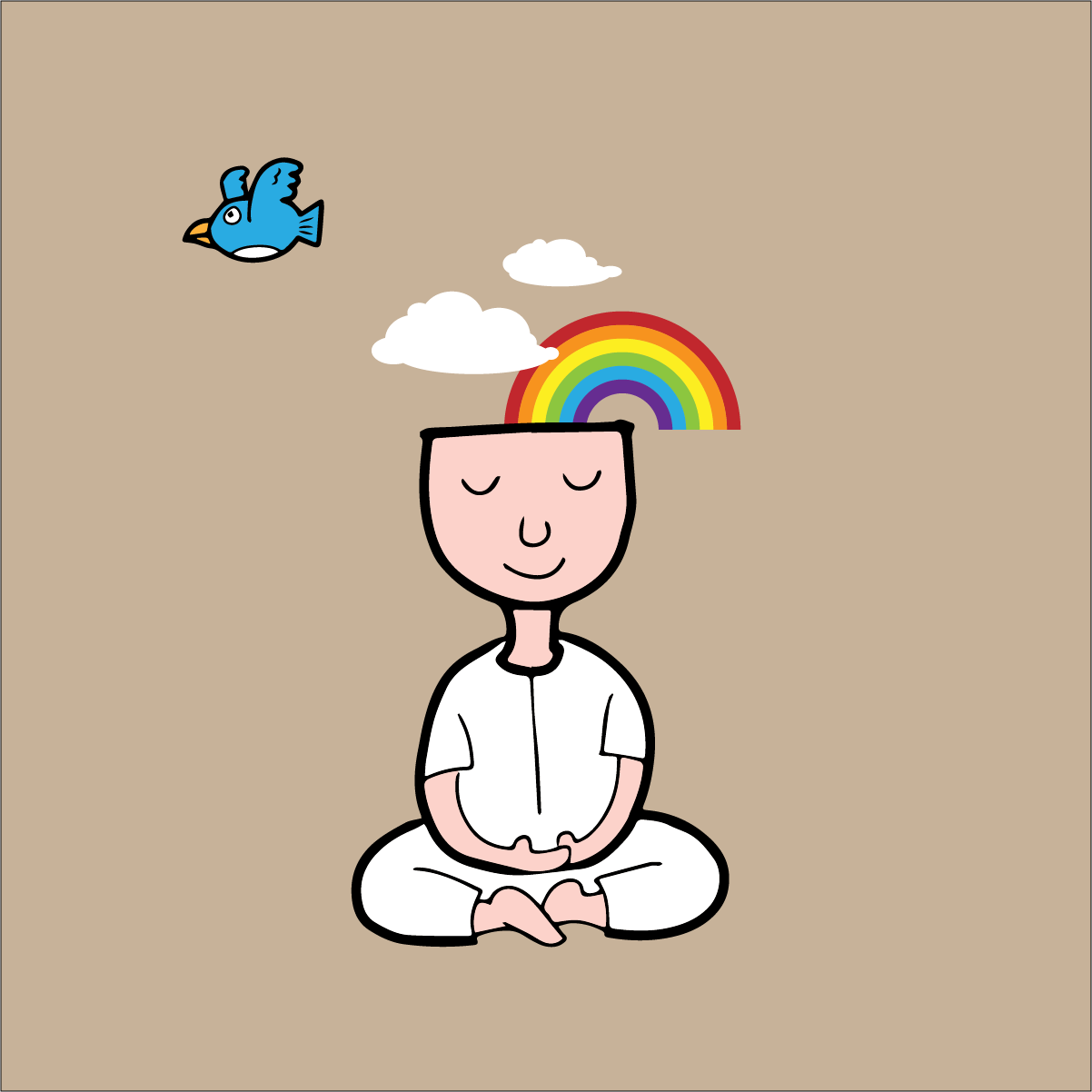


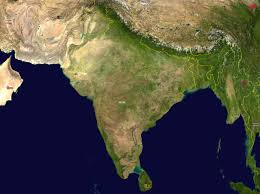





































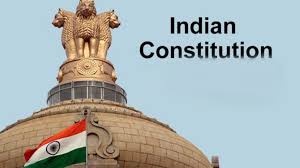


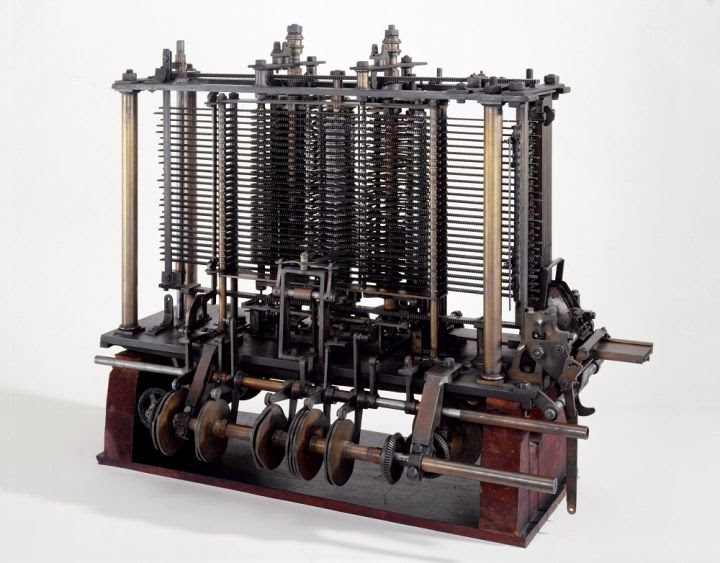





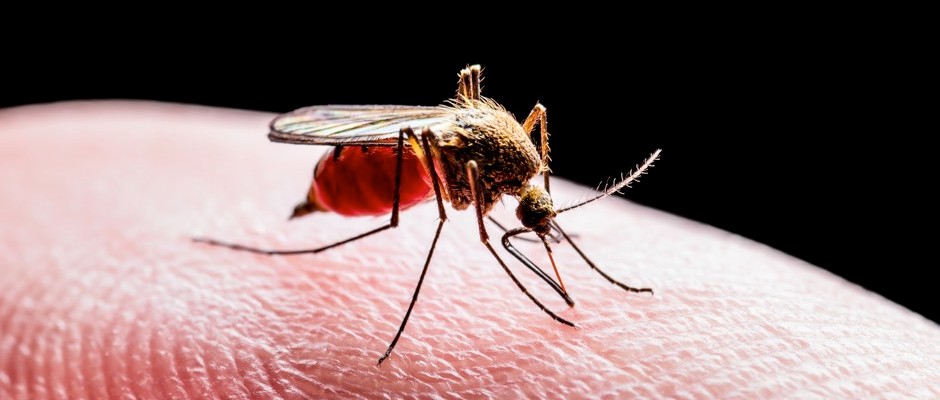
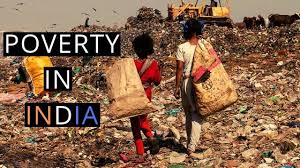
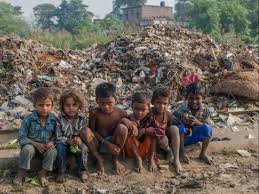
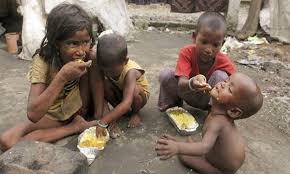
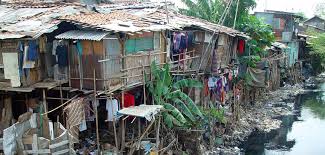
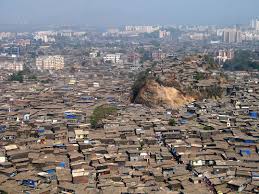
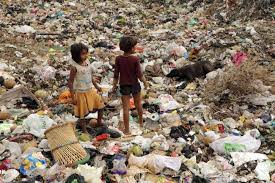
:max_bytes(150000):strip_icc():format(webp)/__opt__aboutcom__coeus__resources__content_migration__mnn__images__2016__07__yellow-ladybug-ac971a41bd31415c9a89c32c378af34c.jpg)
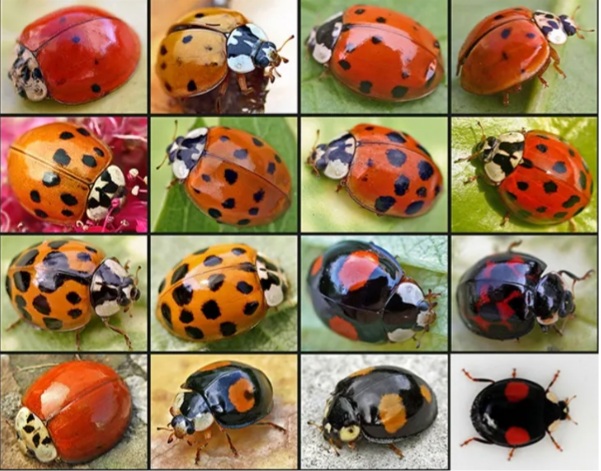
:max_bytes(150000):strip_icc():format(webp)/__opt__aboutcom__coeus__resources__content_migration__mnn__images__2016__07__ladybug-eating-8a2afbb8b60a47e0a8a80a325e497999.jpg)
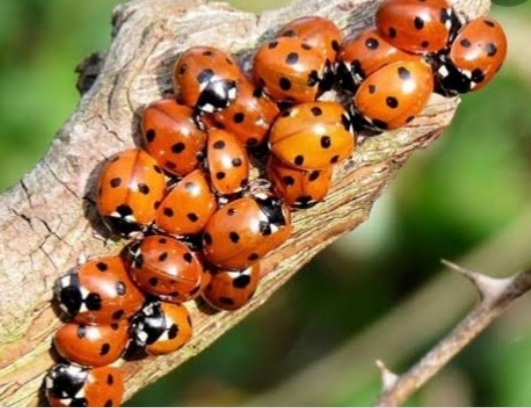
:max_bytes(150000):strip_icc():format(webp)/__opt__aboutcom__coeus__resources__content_migration__mnn__images__2016__07__pretty-ladybug-2489b0ded51a498d96b68f5081a6abc8.jpg)
:max_bytes(150000):strip_icc():format(webp)/GettyImages-1204011429-e0f64779df844f9fbc89b17f0ac37f18.jpg)
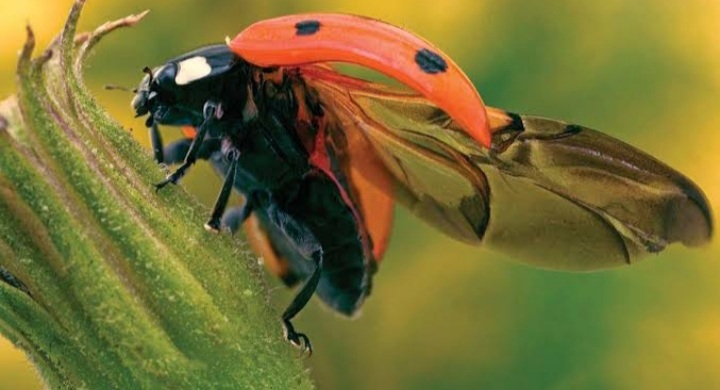



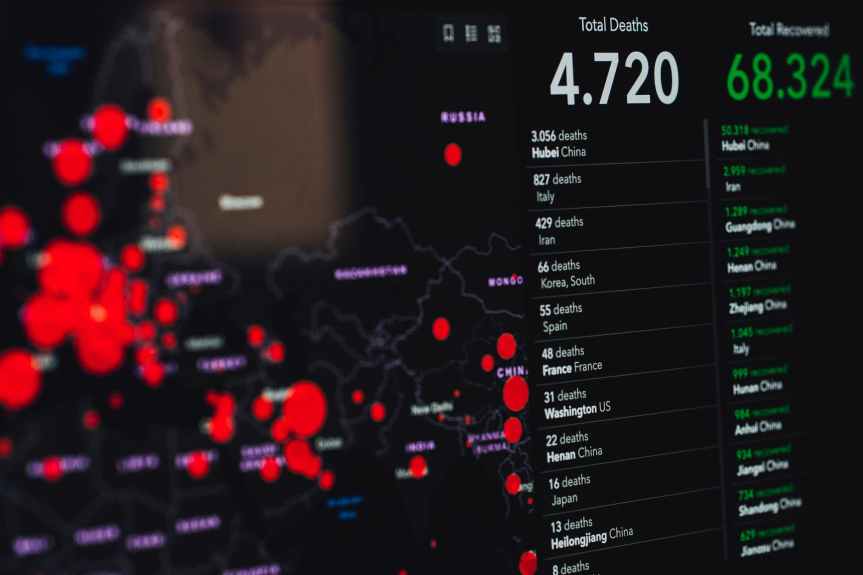





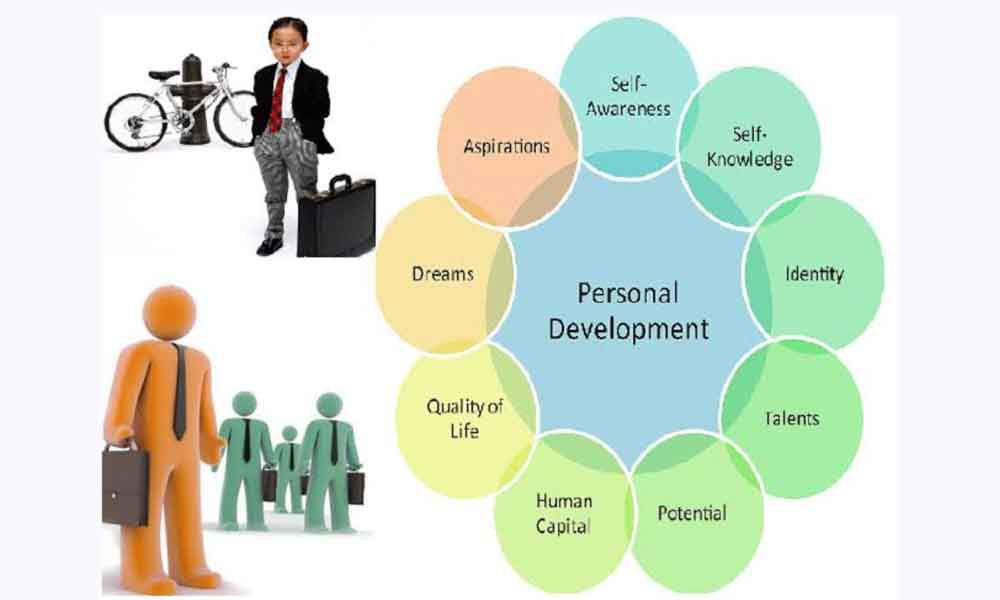







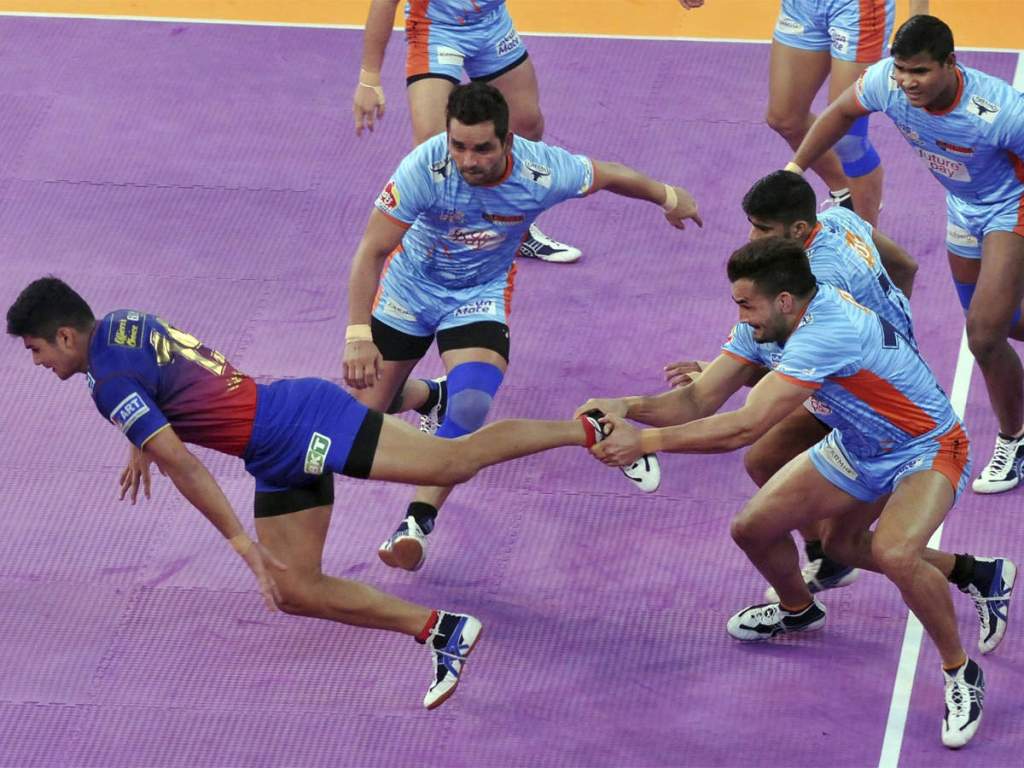








 Track2Training
You must be logged in to post a comment.