In this fast pacing world with ever increasing competition , the struggle to be at the top , and everybody’s desire to become ‘successful’ , we are slowly becoming so very self critical and judgemental towards ourselves . We are so desperate to be the very best that we are blindly running in this rat race and not realising that we all have our own paths that we need to follow . We are slowing loathing ourselves for everything that we are not , instead of loving ourselves for all that we are . This constant comparison that we do with others is just not the healthy way of becoming a better version of ourselves . Here are a few points to remember before you start comparing and critiquing yourself:-
EACH ONE OF US IS UNIQUE- We all have different sets of talents and things that we are good at , be it dancing , singing , writing , photography , or being academically gifted. We just need to find out what we are good at and what we like instead of comparing ourselves . You might have the qualities of becoming a great teacher and you might be unaware of it , or have an inclination towards cars or computers . Your likes and dislikes makes you more unique and more YOU , so embrace it and find your uniqueness. This will help you find your own path in life and automatically halt the comparisons .
DIVINE TIMING – We often want instant results and are impatient . Seeing our friends getting their dream jobs or succeeding makes us feel bad about ourself because we seem to be exactly where we were, despite the hardwork and dedication . This can be frustrating , but you will succeed when its your time to.This statement seems pretty phoney, but its not ,there is room for everyone to succeed , we just need. to be patient and continue to persevere. Our time will come .
WE ALL ARE ON DIFFERENT BOATS- Its true , we are all on different boats , with different sets of obstacles and challenges , so its not practical to compare each other . Every human is dealing with problems that differ from ours. We must understand this and realise that just like there is no comparing between the sun and moon , we humans can’t be compared either.
ITS IMPORTANT TO FAIL SOMETIMES – After failing a test or a job interview we tend to feel a deep sense of disappointment and tend to levitate towards self doubt and fall in the labyrinth of comparing ourselves . But it’s imperative to know that its okay to fail sometimes and its actually good . Failure is a good teacher and helps us understand the areas we need to work on . So next time you fail at something , try to learn from it instead of hating yourself.
Isis is an Egyptian goddess who lacked her own dedicated temples but grew as one of the most important deities of ancient Egypt. Her cult subsequently spread throughout the Roman Empire, and Isis was worshipped from England to Afghanistan. She is still revered by pagans today. she was most often represented as a beautiful woman wearing a sheath dress and either the hieroglyphic sign of the throne or a solar disk and cow’s horns on her head. she was a principal deity in rites connected with the dead; as magical healer, she cured the sick and brought the deceased to life; and as mother, she was a role model for all women. Occasionally she was represented as a scorpion, a bird, a sow, or a cow. she is mentioned many times in the Pyramid Text, in which she offers assistance to the dead king. The priests of Heliopolis, followers of the son god re, developed the myth of Isis. This told that Isis was the daughter of the earth god Geb and the sky goddess Nut and the sister of the deities Osiris, Seth, and Nephthys. Married to Osiris, king of Egypt, Isis was a good queen who supported her husband and taught the women of Egypt how to weave, bake, and brew beer. But Seth was jealous, and he hatched a plot to kill his brother. Seth trapped Osiris in a decorated wooden chest, which he coated in lead and threw into the Nile. With his brother vanished, Seth became king of Egypt. But Isis could not forget her husband, and she searched everywhere for him until she eventually discovered Osiris, still trapped in his chest. She brought his body back to Egypt, where Seth discovered the chest and hacked his brother into pieces, which he scattered far and wide. Transforming into a bird, and helped by her sister, Nephthys, Isis was able to discover and reunite the parts of her dead husband’s body-only his penis was missing. Using her magical powers, she was able to make Osiris whole; bandaged, neither living nor dead, Osiris had become a mummy. Nine months later Isis bore him a son, Horus. Osiris was then forced to retreat to the underworld, where he became king of the dead. Using her magical powers, she was able to make Osiris whole; bandaged, neither living nor dead, Osiris had become a mummy. Using her magical powers, she was able to make Osiris whole; bandaged, neither living nor dead, Osiris had become a mummy. Nine months later Isis bore him a son,Horus, Osiris was then forced to retreat to the underworld, where he became king of the dead. Isis hid with Horus in the marshes of the Nile delta until her son was fully grown and could avenge his father and claim his throne. She defended the child against attacks from snakes and scorpions. But because Isis was also Seth’s sister, she wavered during the eventual battle between Horus and Seth. In one episode Isis took pity on Seth and was in consequence beheaded by Horus. Eventually she and Horus were reconciled, and Horus was able to take the throne of Egypt. Isis was the perfect traditional Egyptian wife and mother-content to stay in the background while things went well, but able to use her wits to guard her husband and son should the need arise. The shelter she afforded her child gave her the character of a goddess of protection. Several narratives tell of her magical process, far stronger than the powers of Osiris and Re. Isis became associated with various other goddesses, including Bastet, Nut, and Hathor, and thus her nature and her powers became increasingly diverse. Isis became known, like other fierce goddesses in the Egyptian pantheon, as the “Eye of Re” and was equated with the Dog Star, Sothis. The first major temple dedicated to Isis was built by the Late Period king Nectanebo II at Behbeit el-Hagar, in the central Nile delta. Other important temples, including the island temple of Philae, were built during Greco-Roman times when Isis was dominant among Egyptian goddesses. Several temples were dedicated to her in Alexandria, where she became the patroness of seafarers. From Alexandria her cult spread to Greece and Rome. Images of Isis nursing the baby Horus may have influenced the early Christian artists who depicted the Virgin Mary with the baby Jesus. In many spells in the Pyramid Texts, Isis and Nephthys help the deceased king reach the afterlife. In the Coffin Texts from the Middle Kingdom, Isis appears still more frequently, though in these texts Osiris is credited with reviving the dead more often than she is. New Kingdom sources such as the Book of the Dead describe Isis as protecting deceased souls as they face the dangers in the Duat. They also describe Isis as a member of the divine councils that judge souls’ moral righteousness before admitting them into the afterlife, and she appears in vignettes standing beside Osiris as he presides over this tribunal. Late funerary texts prominently featured her mourning for Osiris, and one such text, one of the Books of Breathing, was said to have been written by her for Osiris’s benefit. [117] In Nubian funerary religion, Isis was regarded as more significant than her husband, because she was the active partner while he only passivelyreceived the offerings she made to sustain him in the afterlife. Isis continues to appear in modern esoteric and pagan belief systems. The concept of a single goddess incarnating all feminine divine powers, partly inspired by Apuleius, became a widespread theme in literature of the nineteenth and early twentieth centuries. Influential groups and figures in esotericism, such as the Hermetic Order of the Golden Dawn in the late nineteenth century and Dion Fortune in the 1930s, adopted this all-encompassing goddess into their belief systems and called her Isis. This conception of Isis influenced the Great Goddess found in many forms of contemporary witchcraft. Today, reconstructions of ancient Egyptian religion, such as Kemetic Orthodoxy or the Church of the Eternal Source, include Isis among the deities they revere.
The Egyptian goddessIsis is an Egyptian goddess who lacked her own dedicated temples but grew as one of the most important deities of ancient Egypt. Her cult subsequently spread throughout the Roman Empire, and Isis was worshipped from England to Afghanistan. She is still revered by pagans today. she was most often represented as a beautiful woman wearing a sheath dress and either the hieroglyphic sign of the throne or a solar disk and cow’s horns on her head. she was a principal deity in rites connected with the dead; as magical healer, she cured the sick and brought the deceased to life; and as mother, she was a role model for all women. Occasionally she was represented as a scorpion, a bird, a sow, or a cow. she is mentioned many times in the Pyramid Text, in which she offers assistance to the dead king. The priests of Heliopolis, followers of the son god re, developed the myth of Isis. This told that Isis was the daughter of the earth god Geb and the sky goddess Nut and the sister of the deities Osiris, Seth, and Nephthys. Married to Osiris, king of Egypt, Isis was a good queen who supported her husband and taught the women of Egypt how to weave, bake, and brew beer. But Seth was jealous, and he hatched a plot to kill his brother. Seth trapped Osiris in a decorated wooden chest, which he coated in lead and threw into the Nile. With his brother vanished, Seth became king of Egypt. But Isis could not forget her husband, and she searched everywhere for him until she eventually discovered Osiris, still trapped in his chest. She brought his body back to Egypt, where Seth discovered the chest and hacked his brother into pieces, which he scattered far and wide. Transforming into a bird, and helped by her sister, Nephthys, Isis was able to discover and reunite the parts of her dead husband’s body-only his penis was missing. Using her magical powers, she was able to make Osiris whole; bandaged, neither living nor dead, Osiris had become a mummy. Nine months later Isis bore him a son, Horus. Osiris was then forced to retreat to the underworld, where he became king of the dead. Using her magical powers, she was able to make Osiris whole; bandaged, neither living nor dead, Osiris had become a mummy. Using her magical powers, she was able to make Osiris whole; bandaged, neither living nor dead, Osiris had become a mummy. Nine months later Isis bore him a son,Horus, Osiris was then forced to retreat to the underworld, where he became king of the dead. Isis hid with Horus in the marshes of the Nile delta until her son was fully grown and could avenge his father and claim his throne. She defended the child against attacks from snakes and scorpions. But because Isis was also Seth’s sister, she wavered during the eventual battle between Horus and Seth. In one episode Isis took pity on Seth and was in consequence beheaded by Horus. Eventually she and Horus were reconciled, and Horus was able to take the throne of Egypt. Isis was the perfect traditional Egyptian wife and mother-content to stay in the background while things went well, but able to use her wits to guard her husband and son should the need arise. The shelter she afforded her child gave her the character of a goddess of protection. Several narratives tell of her magical process, far stronger than the powers of Osiris and Re. Isis became associated with various other goddesses, including Bastet, Nut, and Hathor, and thus her nature and her powers became increasingly diverse. Isis became known, like other fierce goddesses in the Egyptian pantheon, as the “Eye of Re” and was equated with the Dog Star, Sothis. The first major temple dedicated to Isis was built by the Late Period king Nectanebo II at Behbeit el-Hagar, in the central Nile delta. Other important temples, including the island temple of Philae, were built during Greco-Roman times when Isis was dominant among Egyptian goddesses. Several temples were dedicated to her in Alexandria, where she became the patroness of seafarers. From Alexandria her cult spread to Greece and Rome. Images of Isis nursing the baby Horus may have influenced the early Christian artists who depicted the Virgin Mary with the baby Jesus. In many spells in the Pyramid Texts, Isis and Nephthys help the deceased king reach the afterlife. In the Coffin Texts from the Middle Kingdom, Isis appears still more frequently, though in these texts Osiris is credited with reviving the dead more often than she is. New Kingdom sources such as the Book of the Dead describe Isis as protecting deceased souls as they face the dangers in the Duat. They also describe Isis as a member of the divine councils that judge souls’ moral righteousness before admitting them into the afterlife, and she appears in vignettes standing beside Osiris as he presides over this tribunal. Late funerary texts prominently featured her mourning for Osiris, and one such text, one of the Books of Breathing, was said to have been written by her for Osiris’s benefit. In Nubian funerary religion, Isis was regarded as more significant than her husband, because she was the active partner while he only passivelyHorus, Osiris was then forced to retreat to the underworld, where he became king of the dead. Isis hid with Horus in the marshes of the Nile delta until her son was fully grown and could avenge his father and claim his throne. She defended the child against attacks from snakes and scorpions. But because Isis was also Seth’s sister, she wavered during the eventual battle between Horus and Seth. In one episode Isis took pity on Seth and was in consequence beheaded by Horus. Eventually she and Horus were reconciled, and Horus was able to take the throne of Egypt. Isis was the perfect traditional Egyptian wife and mother-content to stay in the background while things went well, but able to use her wits to guard her husband and son should the need arise. The shelter she afforded her child gave her the character of a goddess of protection. Several narratives tell of her magical process, far stronger than the powers of Osiris and Re. Isis became associated with various other goddesses, including Bastet, Nut, and Hathor, and thus her nature and her powers became increasingly diverse. Isis became known, like other fierce goddesses in the Egyptian pantheon, as the “Eye of Re” and was equated with the Dog Star, Sothis. The first major temple dedicated to Isis was built by the Late Period king Nectanebo II at Behbeit el-Hagar, in the central Nile delta. Other important temples, including the island temple of Philae, were built during Greco-Roman times when Isis was dominant among Egyptian goddesses. Several temples were dedicated to her in Alexandria, where she became the patroness of seafarers. From Alexandria her cult spread to Greece and Rome. Images of Isis nursing the baby Horus may have influenced the early Christian artists who depicted the Virgin Mary with the baby Jesus. In many spells in the Pyramid Texts, Isis and Nephthys help the deceased king reach the afterlife. In the Coffin Texts from the Middle Kingdom, Isis appears still more frequently, though in these texts Osiris is credited with reviving the dead more often than she is. New Kingdom sources such as the Book of the Dead describe Isis as protecting deceased souls as they face the dangers in the Duat. They also describe Isis as a member of the divine councils that judge souls’ moral righteousness before admitting them into the afterlife, and she appears in vignettes standing beside Osiris as he presides over this tribunal. Late funerary texts prominently featured her mourning for Osiris, and one such text, one of the Books of Breathing, was said to have been written by her for Osiris’s benefit. In Nubian funerary religion, Isis was regarded as more significant than her husband, because she was the active partner while he only passivelyreceived the offerings she made to sustain him in the afterlife. Isis continues to appear in modern esoteric and pagan belief systems. The concept of a single goddess incarnating all feminine divine powers, partly inspired by Apuleius, became a widespread theme in literature of the nineteenth and early twentieth centuries. Influential groups and figures in esotericism, such as the Hermetic Order of the Golden Dawn in the late nineteenth century and Dion Fortune in the 1930s, adopted this all-encompassing goddess into their belief systems and called her Isis. This conception of Isis influenced the Great Goddess found in many forms of contemporary witchcraft. Today, reconstructions of ancient Egyptian religion, such as Kemetic Orthodoxy or the Church of the Eternal Source, include Isis among the deities they revere.
Computer literacy is the knowledge and ability to use computers and technology efficiently. Computer literacy can also refer to the comfort level someone has with using computer programs and other applications that are associated with computers. The precise definition of “computer literacy” can vary from group to group. However, “computer literate” often connotes little more that the ability to use several specific applications (such as Microsoft Word and Microsoft Internet Explorer) for certain very well-defined simple tasks.
The great thing about computer knowledge, though, is that learning begets learning. Once you figure out how one part works, it gets easier to dive into other parts and figure out how things work. And the benefits of having some basic computer knowledge under your belt extend way beyond just the tech industry, especially in the 21st century. And here’s why:
They Make You a Better Problem-Solver
Problem-solving skills are universal and can be applied to virtually every part of your life, and work, regardless of industry. From identifying an issue and breaking it down into parts to problems.
They Future-Proof Your Career
Virtually every career and industry is becoming more tech-reliant. From agriculture to education, all are integrating tech into their day-to-day operations. It’s clear – those who have tech skills and are comfortable working with technology will have a much easier time adapting to changing expectations.
They Make You a Better Collaborator
Connecting with others from diverse backgrounds increases the ability to understand multiple perspectives. Learning from and with others all over the world is possible with digital tools like Twitter and Skype, to name a few. Students can work beyond their classroom walls to find answers to real problems. By engaging in this type of collaboration, individuals are even more prepared to participate successfully in our global economy.
They Make You a Well-Rounded Individual
Having a well-rounded set of skills and knowledge will serve you well, both professionally and personally. Being able to list basic tech skills on your resume will make you more attractive to virtually every employer out there, regardless of industry. And as more and more people become involved in the tech industry, having at least a passing knowledge of what it’s all about can come in handy when networking personally or professionally.
They Make You a Better Leader
Companies are now reliant on technology and as a manager or CEO, it’s important to be able to work effectively with either a department that handles web development or with an outside agency that handles the same. And if you don’t know the first thing about the jobs those departments or agencies do, it makes it a lot harder to work with them in a way that’s both efficient and productive.
The greatest enemy of knowledge is not ignorance, it is the illusion of knowledge.
Mathematics, the science of structure, order, and relation that has evolved from elemental practices of counting, measuring and describing the shapes of objects. It deals with logical reasoning and quantitative calculations, and its development has involved an increasing degree of idealization and abstraction of its subject matter. Since the 17th century, mathematics ha been an indispensable adjunct to the physical sciences and technology, and in more recent times it has assumed a similar role in the quantitative aspects of the life sciences.
In many cultures under the stimulus of the needs of practical pursuits, such as commerce and agriculture mathematics has developed far beyond basic counting. This growth has been greatest in societies complex enough to sustain these activities and to provide leisure for compensation and the opportunity to build on the achievements of earlier mathematics.
All mathematics systems (for example, Euclidean geometry) are combinations of sets of axioms and of theorems that can be logically deduced from the axioms. Inquiries into the logical and philosophical basis of mathematics reduce to questions of whether the axioms of a given system ensure its completeness and its consistency.
As a consequence of the exponential growth of science, most mathematics has developed since the 15th century, and it is a historical fact that, from the 15th century to the late 20th century, new developments in mathematics were largely concentrated in Europe and North America. For these reasons, the bulk of this article is devoted to European development since 1500. This does not mean, however, that development, that development elsewhere have been un-important. Indeed, to understand the history of mathematics in Europe, it is necessary to know its history at least in ancient Mesopotamia and Egypt, in ancient Greece, and in Islamic civilization from the 9th to the 15th century. The way in which these civilizations influenced one another and the important direct contributions Greece and Islam made to later developments.
India’s contributions to the development of contemporary mathematics were made through the considerable influence of Indian achievements on Islamic mathematics during its formative years. A separate article, South Asian Mathematics, focuses on the early history of mathematics in the Indian subcontinent and the development there of the modern decimal place-value numeral system. The article East Asian mathematics covers the mostly independent development of mathematics in China, Japan, Korea ad Vietnam. The substantive branches of mathematics are treated in several articles.
Mathematics. Open book with maths doodles with lettering. Education vector illustration.
Ancient mathematical sources
It is important to be aware of the character of the sources for the study of the history of mathematics. The history of Mesopotamian and Egyptian mathematics is based on the extant original documents written by scribes. Although in the case of Egypt these documents are few, they are all of a type and leave little doubt that Egyptian mathematics was, on the whole, elementary and profoundly practical in its orientation. For Mesopotamian mathematics, on the other hand, there are a large number of clay tablets, which reveal mathematical achievements of a much higher order than those of the Egyptians. The tablets indicate that the Mesopotamian had a great deal of remarkable mathematical knowledge , although they offer no evidence that this knowledge was organized into a deductive system. Future research may reveal more about the early development of mathematics in Mesopotamian or about its influence on Greek mathematics.
In modern times the invention of printing has largely solved the problem of obtaining secure texts and has allowed historians of mathematics to concentrate their editorial efforts on the correspondence or the un-published works of mathematicians. However, the exponential growth of mathematics means that, for the period from 19th century on, historians are able to treat only the major figures in any detail. Mathematics like any other human activity has its own fashions, will look like a wave of the future.For this reason, the present article males no attempt to assess the most recent developments in the subjects.
Along with worldwide appreciation feminists have also faced criticism not only from men but also women. There are some who believe themselves to be Feminism but are still not au Courant with the actual meaning of Feminism and practice pseudofeminism
Let’s begin by understanding what actually Feminism is, according to wikipedia “Feminism is a range of social movements, political movements, and ideologies that aim to define and establish the political, economic, personal, and social equality of the sexes.“
It has been well quoted that Feminism is not about making women strong, women are already strong it’s about changing the way the world perceives that strength.
Feminism is about tackling the misogynistic mindset, the advocacy of women’s rights on the basis of the equality of the sexes . To make the world realise that no gender is superior and we should get over the deep rooted patriarchy. It’s about shutting down sexism. It is not about hating men but about keeping women equal to men. To accept the fact that a female is as capable as a male. And it is also about ditching tha fact that certain tasks are for a specific gender and the opposite gender is not worth performing them. Feminism is about accepting that women are free to make their own choices.
But why do Feminism face worldwide criticism?
• we have seen many Feminism moments worldwide aimed at equal opportunities for women. Feminism has associated with empowered, forceful and angry women, and the society finds it hard to accept words of forceful women.
• some fear that with Upliftment of women there will be imposed a great danger upon their culture and traditions. But it is wrong to change traditions which satisfy only a part and leaves the other in grief ?
• others who hate Feminism are those who presume feminism about considering women superior to men. A good lot of people who firmly believe in equal rights for both male and female but still don’t align with the word Feminism solely because they don’t accurately understand what feminism is.
It was stated by emma watson that “The more I have realized that fighting for women’s rights has too often become synonymous with man-hating. If there is one thing I know for certain, it is that this has to stop. For the record, feminism, by definition, is the belief that men and women should have equal rights and opportunities. It is the theory of the political, economic, and social equality of the sexes.”
So why exactly do we need feminism?
First of all we need feminism because a lot of men hate the idea of women getting equal opportunities as them in all fields. It is considered necessary for a man to be earning and be financially independent but the same is not necessary for women. The household chores are considered sole responsibility of the female of the house even though men also live in the same house. A male doing household chores is considered helping the female whereas for females it considered their duty.
Secondly ,We are all well aware that 1 in 3 women are sexually assaulted in India. Gang-rape, sexual assault, sexual harassment, child sexual abuse – these terms can be found daily in headlines. And even in these circumstances the patriarchal mindset becomes the bread winner by putting blame of the female for the assult faced by her. We are more concerned about our daughters getting sexuality harasses that thinking about can our son harass someone.
Next is because sexist jokes are the ones we find most funny without realising how deep patriarchal meaning they carry. A successful indipendent female is considered to be great deal, but why not same for men? Women are told what to wear what not to but why not men? Who gave men the authority to impose upon women what to wear what not to? Why do women that accept the oppressive misogyny appreciated and those who stand against it shamed?
Once there is full equality in political, economic and social life, there will be no need for the word ‘feminism’. It will simply become obsolete. As we are nowhere near this Utopia, this is why we sill need feminism.
The feeling of having a best friend who totally gets you is irreplaceable. Everyone needs a partner in crime to talk and actually do stupid things with, one who cheers you up when you’re feeling low or one who you just have a total blast with when you hang out. We all have those special friends whom we are ready to do literally anything for.There are many ways in which friendship is portrayed in Bollywood. When it comes to movies, everyone is pretty familiar with the main genres. You’ve got your comedies, your dramas, your action films, horror movies, etc. These can then be broken down even further based on their themes. There are period dramas and romantic comedies, sci-fi action films… but one genre that is never mentioned is movies about friendship. While they are not as talked about as other genres but there are plenty of movies which have celebrated this special bond. So what does it take to classify a movie as being about friendship? Basically just a non-romantic relationship needs to be at the center of the film. Bollywood has shown friendship in many different ways till date. Few movies show the great sacrifices a person makes for his friendship while few depict the everyday scenarios that we find ourselves in with our friends.
Best movies that have changed the definition of friendship in Bollywood:
1. 3 Idiots
3 Idiots is a comedy – drama unlike any which you have seen so far. Whatever the problem in life is… just say to yourself ‘Aal Izz Well’.. This won’t solve your problems but it will give the courage to face it..” “Chase Excellence and success will follow”.. ” Life is not about getting marks, grades but chasing your dreams”.. These are the golden rules which 3 IDIOTS teaches you in a very light and entertaining way. This film showed us what a crucial influence does friendship have on a person’s life. In the movie Farhan Qureshi (R Madhavan) and Raju Rastogi (Sharman Joshi) play engineering students forced in the rat race of reaching to the top while dealing with their own personal problems. And one man named Ranchoddas “Rancho” Chanchad (Aamir Khan) completely changed their view on life. He helped Farhan gather courage to confront his father and explain the desire to pursue his career as a wildlife photographer instead of an engineer. A career he actually was interested in. He also helped Raju Rastogi defy his fears and gave him enough confident to face them head on.
2. Sholay
“Yeh dosti hum nahin todenge…. todenge dam magar tera saath na chhodenge…..”. These lines itself prove that this movie is all about friendship. Sholay is regarded as an all time classic and one of the most watched movies over the past century. The characters Jai (Amitabh Bachchan) and Veeru (Dharmendra Deol) are still given as examples of great friendship. The movie was a story about these two friends who are appointed by Thakur Baldev Singh (Sanjeev Kumar) the duty to protect a village which is frequently attacked by dacoits. The dacoits are however able to capture Veeru and Basanti (Hema Malini), his love interest. Jai being a true friend that he is scarifies himself just to rescue them. Nothing is bigger than sacrificing your own life for your friendship but that is exactly the kind of friend Jai was.
3. Kuch Kuch Hota Hai
The movie which made friendships day and the friendship band popular again… Kuch Kuch Hota Hai will always have a place in our hearts. On paper it was just a coming of the age romantic drama but for everyone who has seen it, the movie means so much more than that. Kuch Kuch Hota Hai was also the directorial debut for the maestro Karan Johar. The movie spoke about friendship in a very beautiful manner. “Pyar dosti hai … agar woh meri sab se achchi dost nahin ban sakti, to main usse kabhi pyar kar hi nahi sakta … kyun ki dosti bina toh pyar hota hi nahin … simple, pyar dosti hai.” This line from Kuch Kuch Hota Hai gets it absolutely spot on. Friendship is indeed the root cause for any romantic relation. In this movie, we got to witness the amazing and fun filled friendship between Rahul Khanna (Shah Rukh Khan) and Anjali Sharma (Kajol) which eventually blossoms into true love.
4. Munnabhai M.B.B.S
Munnabhai M.B.B.S is one of the most unorthodox version of a friendship that we have witnessed in Bollywood movies until now. Never the friendship between a goon and his loyal mate was shown in such a light. Given that his father had wished him to be a medical doctor, he creates the faux Sri Hari Prasad Sharma Charitable Hospital (named after his father) and pretends to live in accordance with this wish whenever his father (Sunil Dutt) and mother (Rohini Hattangadi) visit him in Mumbai. Directed by Rajkumar Hirani, Munna (Sanjay Dutt) is a goon who is determined to get a doctor’s agree after his dad finds out that he isn’t a doctor, a lie that he was living since years. Well for a goon this obviously is not something easy but to help him get through it all was his best buddy Circuit (Arshad Warsi), a guy who is always ready to fulfil any desire that Munna may have. Be it getting an admission in college or even show up with an actual body just because his friend said he wanted one. The term “Jadoo Ki Jhappi” also became very popular after the movie as according to the film a simple hug has magical powers to solve any problem that a person might be facing. This movie was a great example of how friends stick with each other no matter what.
5. Rock On!!
Released a decade ago, Rock on was the first Rock Musical film that was made in India. This also marked the acting and singing debut of Farhan Akhtar. Rock On!! begins in Mumbai, with the rock band Magik, in 1998. Joseph (Joe) Mascarhenas (Arjun Rampal) is the lead guitarist who feels the necessity to prove his worth as a musician. Aditya Shroff (Farhan Akhtar) is the lead singer who rebelled against his well-to-do family to play music. Rob Nancy (Luke Kenny) who plays keyboards and Kedar Zaveri a.k.a. KD/”Killer Drummer” (Purab Kohli) comprise the remainder of the band. They manage to win a competition in which the winner gets to release their very own music album and the opportunity create a music video. However in the process of singing the contract, ego amongst those friends takes over and they have a fall out. 10 years later they decide to reunite the band for another show. Joe’s wife however holds a grudge against the band and forces him to take up a guitar playing job on cruise ship. In the end, when Joe discovers that Rob has a brain tumour and his last wish is to perform with magic once again, without any hesitation Joe comes through for his friend to fulfil his one last wish.
6. Rang De Basanti
Rang De Basanti is a drama film which was written and directed by Rakeysh Omprakash Mehra. The literal tittle of the film translates to “Paint me with the colours of spring.” It features an ensemble cast comprising Aamir Khan, Siddharth Narayan, Soha Ali Khan, Kunal Kapoor, R. Madhavan, Sharman Joshi, Atul Kulkarni and British actress Alice Patten in the lead roles. Although the film’s primary theme was based on patriotism, it gave an excellent example as to how deep of a bond do friends have and the extent they are willing to go to for their friends. The story is about a British documentary filmmaker who is determined to make a film on Indian freedom fighters based on diary entries by her grandfather, a former officer of the Indian Imperial Police. Upon arriving in India, she asks a group of five young men to act in her film although they weren’t interested in the idea for acting on a documentary on the country. They gradually begin to realize that their own lives are quite similar to the characters they portray in the documentary and that the state of affairs that once plagued the revolutionaries continues to torment their generation. So just like the documentary, these group of friends unite in a revolt against the leaders with the aim to get the truth out in the open which saw their friends sacrifice his life for the country due to the inefficiency of the government.
7. Yeh Jawaani Hai Deewani
Yeh Jawaani Hai Deewani is probably remembered for the sizzling chemistry between Ranbir Kapoor and Deepika Padukone but the film also showed how important friendships are in one’s life. Along with Ranbir Kapoor and Deepika Padukone which were seen for the second time together after Bachna Ae Haseeno, this film also starred Aditya Roy Kapur and Kalki Koechlin who were seen as Ranbir Kapoor’s close buddies. The three friends were shown as extremely close and were together since the days of their college. Even after when Kabir Thappar (Ranbir Kapoor) meets them again after a long gap at Aditi Mehra’s (Kalki Koelchin) wedding they are still close as ever. The movie gave a very beautiful message of valuing your friends. It went on to prove that despite having everything you need in life, if you don’t have friends your happiness is incomplete. We must learn to value our friends before it gets to late.
8. Dil Chahta Hai
Look around and we bet your group definitely has one Akash, Sameer or Sidharth. Because these were not just characters but real people like us. Dil Chahta Hai is a movie that went on to change Bollywood friendships forever. Who would have thought that the story of three close friends and their messed up lives would connect so well with the generation and remain in everbody’s heart even 16 years later. Dil Chahta Hai can truly be regarded as the game changer for mainstream Hindi cinema. It proved that you don’t need a typical Hero and Heroine pairing for making a commercially successful Bollywood movie. The reason why Dil Chahta Hai has such a special place in all our hearts is because it is so relatable in every aspect. The chemistry between Aamir Khan, Saif Ali Khan and Akshaye Khanna in the movie gave us an accurate reflection of how we talk and behave when with friends. The amazing direction of the movie made it hard to believe that it was Farhan Akhtar’s first film. The trademark scene in which Aamir, Saif and Akshaye gaze at the sun as they are contemplating life and then moments later look at each other and burst out laughing pretty much sums up the film.
9. Zindagi Na Milegi Dobara
Zoya Akhtar’s Zindagi Na Milegi Dobara is a perfect salute to friendship. It is a journey of three friends who go on a road trip and face the highs and lows of life together. Zindagi Na Milegi Dobara saw Hrithik Roshan (a successful investment banker), Abhay Deol (a wealthy businessman) and Farhan Akhtar (a writer from a modest background) as friends who are not bothered about each other’s family backgrounds. In fact, not only do they have different backgrounds but also contrasting personalities. While Farhan is an extrovert and fun loving, Hrithik is serious and introvert. Despite these differences, they are best of friends who want to be with each other through their ups and downs. They fought with each other, played pranks on others, had their emotional moments, confided in each other, had immense faith in each other and the sport they chose, went on a road trip, stayed awake all night and had hell lot of fun. Hrithik, Farhan and Kabir were perfect as the characters. In the movie, the three friends during their road trip were shown underwater diving, sky diving and running from bulls at the the San Fermin festival which not only showed the love these three friends had for adventure, but also justified how they conquered their fear and learnt to live in the present.
10.Kal Ho Naa Ho
Kal Ho Naa Ho was a movie that taught us to live life to the fullest. The story was about Naina Catherine Kapur (Preity Zinta), a pessimistic and uptight MBA student who lives in New York City with her widowed mother. With the burden of so many responsibilities and the duty to fulfil them, Naina somewhere forgets to enjoy her own life. And during this phase in her life she comes across a special friend in the form of Aman Mehra (Shah Rukh Khan), a person who wins her heart as with the help of his attitude he begins to solve the problems in Naina’s life and also teaches her to enjoy life again. As Aman learns about his cancer and the limited time that he has left, he tries to make two close friends Rohit Patel (Saif Ali Khan) and Naina fall in love as he does not want Naina to face the burden of his death. He sacrificed his love for her because he valued her too much.
Whether we are at home or outside , working or studying we always want someone besides us who is waiting for us . We crave for the presence of someone around us , we want a person in our life to whom we can share anything .Yes we have parents , siblings , friends and many more . But we want someone that we can claim , yes he/she is mine .
We all want love in our life to whom we can share our day to day life , our sadness, happiness and everything .Parents are always there for us , they support us . But sometimes we can’t share something very private to them because they are not of our age. They will not understand us . But they try there best . Same goes with our friends . They are always with us for supporting us and help us in difficult situations .
But again what we crave for is presence of someone that we can rely on completely . Everyone needs love in there life . A partner for life . Many people find there love earlier than others and some people never find them . Some people stay heart broken forever
Don’t always go for handsome ,good figure , rich person to be your love . Find the one who understands you better than anyone . Because that’s the reason you wanted someone in your life . Sometimes we loose ourselves in finding and adjusting for our perfect one . But than they are not meant for us . If we have to change ourselves for someone to accept is than they are not the right one.
Choose the one who chooses you above all . Love yourself and let love give you power to uplift your life . Don’t waste your life on an immature person , to destroy your life completely.
On the 24th of July, 2021, history was made at the Tokyo International Forum. Saikhom Mirabai Chanu just won India her first medal in the ongoing 2020 Tokyo Olympics in the category of Weightlifting in Women’s 49 kg by claiming the silver medal and earning India it’s highest and second medal in weightlifting after Karnam Malleswari’s bronze medal in the 2000 Sydney Olympics.
Saikhom Mirabai Chanu was born on the 8th of August, 1994 at Nongpok Kakching. It is a village around 30 kms to the east of Imphal, the capital city of Manipur. She belongs to the Meitei, an ethnic group of people who are native of Manipur. Her family consists of her parents and five other siblings; three sisters and two brothers. Her father is a government employee contracted with the publics work department, while her mother sells samosas. Out of all their children, Mirabai was the only child who decided to pursue sports as a profession. Her athletic prowess came to light in her early childhood. According to her mother, a young Mirabai, then in class 6 had told her that she would one day play in the Khuman Lampak Stadium While Mirabai initially wanted to pursue archery, she was unable to do so due to her lack of height (Mirabai Chanu is 4”11). Her weightlifting prowess was known since her early childhood, as a twelve-year-old Mirabai had no difficulty in lifting and carrying weights which even her elder brother had difficulty in trying to pick up. This weightlifting prowess of her inspired her to take up the sport of weightlifting.
Mirabai Chanu with her family
Mirabai’s first major win in her career as a weightlifter came in the 2014 Glasgow Commonwealth Games. She competed in the Women’s 48 kg category and won the silver medal. While Mirabai qualified for and competed in the 2016 Rio Olympics, she was unsuccessful in her endeavor. However, she made a stunning comeback from that defeat the next year in the 2017 World Weightlifting Championships in the Women’s 48 kg category. She won two medals: Gold and Silver. Mirabai won Gold by lifting 109 kg in Clean and Jerk and Silver by lifting 85 kg in Snatch. Her total lifting of lifting 194 kg in total created a record.
Mirabai winning Gold at the 2017 World Weightlifting Championships
In the 2018 Gold Coast Commonwealth Games, Mirabai won the first medal with a Gold medal by lifting a total of 196 kg; 110 kg in Clean and Jerk and 85 kg in Snatch. This set a new record for the Commonwealth Games in her weight category. In the 2019 World Weightlifting Championship, Mirabai set a new national record in Women’s 49 kg by lifting a total of 201 kg (87 kg Snatch and 114 kg Clean and Jerk). On the 17th of April 2021, at the 2020 Asian Weightlifting Championship, she set a new world record for Clean and Jerk by lifting 119 kg. She won a bronze medal here. By June 2021, she was second in the rankings for Women’s 49 kg and was the only Indian weightlifter who qualified for the 2020 Tokyo Olympics.
Mirabai’s Gold medal at the 2018 Gold Coast Commonwealth Games
On the 24th of July 2021, Mirabai won the Silver medal in the Women’s 49 kg category by lifting 202 kg and created history. She succeeded Karnam Malleswari as the second Indian woman weightlifter to win an Olympic medal. Mirabai holds the honor of winning the highest medal in the weightlifting category in the Olympics that India has ever won. She also set a new Olympic record in the Clean and Jerk category by lifting 115 kg.
Mirabai’s historical Silver medal at the 2020 Tokyo Olympics
Mirabai has stated that her triumph at the 2020 Tokyo Olympics is a ‘dream come true’ for her.
‘The Yellow Wallpaper,’ by Charlotte Perkins Gilman, begins with the narrator describing the yellow wallpaper as the worst paper she had ever seen. The narrator of “The Yellow Wallpaper” begins to write when she looks to be suffering from postpartum depression. The narrator appears to have discovered some advantages to writing about her despair. She frequently refers to writing as a form of expression “a sigh of release’ for her She’s referring to some sort of mental relaxation. She is attempting to dispute her husband’s insistence on a “rest cure:” “This necessitates her staying at home and resting all day. She fights her own feelings to some extent, but she recognizes their existence, at least at the start of the novel. She acknowledges the need of valuing her own views and feelings, as well as the need to express herself, up to a degree. In the beginning of the story, she maintains her imagination and, at least in her writing, provides some resistance to her husband’s beliefs. She begins to suppress her imaginative thoughts and beliefs in order to outwardly accept her husband’s scientific ideals. Her husband/doctor, on the other hand, bans her from expressing herself, indicating a lack of communication between them.
The mental health of the narrator is deteriorating. Her husband and doctor discourage her from writing because they believe it will exacerbate her mental instability, but she continues to secretly record her thoughts. Meanwhile, her thoughts and ideas continue to flood in unchecked, but she no longer has a healthy means of dealing with them. The narrator has reached a point where only a complete change in treatment will save her from mental collapse. Even in John’s absence, the narrator becomes progressively dejected and thus less willing to write as a result of John’s continual discouragement of writing and other forms of self-expression. Nonetheless, she feels driven to continue authoring this account when she can, and finds it liberating to express herself. Unfortunately, journaling serves as her only source of solace, as she is unable to express her thoughts—even about her own treatment—otherwise, and this case demonstrates that it is insufficient to maintain mental health.
P. P. Raveendran’s article “Nationalism, Colonialism and Indian English Literature” attempts to study how a nation is constructed by the writer through their works. The essayist describes nationalism as an ‘awakening of a nation to self-consciousness’. It differs from the colonial forms of domination and he states that English literature appeared as a subject in the curriculum of the colonies before it was institutionalized in its home country. The emergence of Indian English Literature was an Indian response to both nationalism and national movement. Some writers used English for writing because of the universal acceptance of this language; so that their works would reach more hands. Others wanted to prove their proficiency in English through their works. They indirectly state that they can stand before everyone even though once they are considered uncivilized.
P. P. Raveendran talks about the evolution of Indian English Literature by tracing its history. The first book written by an Indian in English was “Travels of Dean Mahomet”, a travel narrative by Sake Dean Mahomet published in English in 1793. He tries to compare the writings of early Indian writers with modern writings. Bankim Chandra Chattopadhyay wrote “Rajmohan’s Wife” and published it within the year 1864. It is the primary Indian novel written in English. Rajaram, an Indian philosopher, and writer authored “Kanthapura” and “The Serpent and The Rope”, which are Indian in terms of their storytelling qualities. Kisari Mohan Ganguli translated “The Mahabharata” into English. Rabindranath Tagore wrote in Bengali and English and translated his own works into English. He gives the examples and writing styles of some of the Indian English writers like R.K. Narayan, Mulk Raj Anand, Raja Rao, Kiran Desai, V.S. Naipaul, etc. He also compares Sarojini Naidu’s poem with Kamala Das’s poem and says that Naidu’s is highly ‘orientalized’.
On this date in1999 India took a command on high outpost on 26th of July. The Kargil war was fought against the Pakistani army who took advantage of melting ice and weather and took command of high outposts of India. Pakistani army denied that they are not involve in the war, claiming that it was caused by independent Kashmiri rebel forces and by getting document on the post that showed the involvement of Pakistan army. Pakistani army capture the Indian posts and then the kargil war resulted in loss of life and war was ended when the Indian regained control over the post and ejected Pakistani army out of territory.
In the era of the 21st century, digital advancement brought smartphones, laptops, Internet, into regular usage which is now become persistently an integral part of society and lives. People now have virtual friends, it is okay for them to not meet in the public world has become a puppet on social media. Earlier when this internet thing was still new to people, social Media networking apps came into notice, which has overturned the things which were previously functioned. Facebook, Twitter, Instagram, WhatsApp are the example of social networking sites. These are started on the internet as an online community to connect people from various states and countries of diversified cultures having the same interests and to share ideas. This will lead to nation-building, which is a basic principle of political concept. More people will make connections and talk more will superiority to the strengthening of a relationship. When the internet was created, feasibly no one used to be convinced by the fact that the internet has some level of potential. But by time gone, it is proved that the internet has changed life in every sense. A social media network can be a boon for a particular community and can be a bane.
Let’s see how social media has made a major difference in our lives in today’s generation. BOON. 1. Social media sites help us keep in touch with the outside world, family, and friends in today’s world. In a pandemic, everyone has celebrated their birthday and many events via an online platform, which turned out to be the strongest humanity of all. 2. The initial purpose of social media is to connect with friends and family which is most likely the actual purpose but another good opportunity is to improve the skills, career, motivational videos/ideas by sharing them with everyone on social media. This is the best platform to evolve, as we get many negative comments and positive too, that’s the reason we understand our flaws and work upon ourselves, and we tend to learn more things about our talent. And this kind of thing is certainly not possible physically. 3. Due to pandemics people are on the job hunt, so this has become seamless via LinkedIn, Internshala to find an internship or a job with all the network and opportunities, and it also allows work from home. This internet has been a good help in the covid lockdown when the whole world was falling. 4. It has been a revolutionary change in the process of learning in the history of teaching. School faculties have made social network virtual classes for discussion and learning. It has now been over a year, and some sites help students to solve their doubts in a fraction of seconds. Overall social media network is a boon in many such essential reasons and has a positive atmosphere.
BANE. 1. The life of social media is quite different in reality. It makes us believe that we want to be better than usual, it has made people compare their lives with those projects/shows their life as perfect. This creates so much chaos in our lives, and sometimes it makes us doubt our self-esteem. 2. As of now, all sorts of students, many businessmen, employees have been working from home due to covid which has lead to backaches, headaches, stress, eye site-related issues. 3. As a matter of fact, privacy on social media networks are not thorough, there have been many cases related to hacking, information leaking through an online transaction on purpose. Instagram has been on leed nowadays, many accounts have been hacked, and are some serious issues with it. 4. Socialising is all about communicating online rather than face to face, which has affected communication skills and making a serious move on mental health. Social media has created life so addictive. Sometimes it is known as FOMO ( fear of missing out). There has been an incident recently on Instagram. There was a group on Instagram called ‘bois locker room’ in that they used to send and comment on all the posts of girls and used to leak their personal information. It was later got investigated and that revealed, girl was the sender and boy was the receiver. Girls used to sent messages through a fake account.
Social media is an important tool that is put into the hands of ordinary people. Social media network is a boon or bane is the decision of a user, depends on it is used by one. It is a double-sided sword. However, the use of social media by children and teenagers should be guided before use so that they do not face any allegations and can not manipulate and has a high tendency to be a part of traps, which lead to cybercrime.
Dr. A.P.J. Abdul Kalam was an Indian scientist and politician who played a leading role in the development of India’s missile and nuclear weapons programs. Come, through this article, Dr. A.P.J. Let us study about Abdul Kalam’s early life, career, education, awards, etc.
Dr. A.P.J. Abdul Kalam’s involvement in nuclear energy in India earned him the title “Missile Man of India”. Due to his contribution, the Government of India honored him with the highest civilian award.
Let us tell you that the Union Information and Broadcasting Minister Prakash Javadekar on 9 February 2020 in New Delhi, Dr. APJ. The first look of Abdul Kalam’s biopic was released. The title of the movie is A.P.J. Abdul Kalam: The Missile Man (APJ Abdul Kalam: The Missile Man).
Dr. A.P.J. Abdul Kalam was born on 15 October 1931. His birth anniversary is celebrated as World Students Day. He was the President of India from 2002 to 2007. He was honored with several prestigious awards including the “Bharat Ratna”, India’s highest civilian honor in 1997. He was born in Dhanushkodi, Rameswaram, Tamil Nadu and studied physics and aerospace engineering.
Name: Avul Pakir Jainulabdeen Abdul Kalam (Dr. APJ Abdul Kalam) Nationality: Indian Occupation: Engineer, Scientist, Writer, Professor, Politician Born: 15-Oct-1931 Place of Birth: Dhanushkodi, Rameswaram, Tamil Nadu, India Died: 27 July 2015, Shillong, Meghalaya, India Famous As: Dr. A.P.J. Abdul Kalam was the President from 2002 to 2007
Dr. A.P.J. Abdul Kalam was elected President in the year 2002 against Lakshmi Sehgal. Before becoming the President of India, he worked as an aerospace engineer with the Indian Space Research Organization (ISRO) and the Defense Research and Development Organization (DRDO).
He was nicknamed the ‘Missile Man of India’ for his important role in the country’s space programme, launch vehicle and ballistic missile technology development. In addition, in 1998, he also contributed significantly to India’s Pokhran-II nuclear tests.
Do you know that Dr. A.P.J. Abdul Kalam started his career as a scientist in which Aeronautical Development Establishment of Defense Research and Development Organization (DRDO)? He also served as a project director of India’s first indigenous Satellite Launch Vehicle (SLV-III) at ISRO.
In the 1990s, he served as the Chief Scientific Adviser to the Prime Minister before becoming the President of India in 2002. Come now, through this article, Dr. A.P.J. Let us study in detail about Abdul Kalam.
Family history and early life:
Dr. A.P.J. Abdul Kalam was born on 15 October 1931 in Rameswaram in a Tamil Muslim family. His father’s name was Jainulabdeen, who was a sailor. His mother’s name was Aseemma and she was a housewife. These were a total of five siblings, three elder brothers and one elder sister.
His eldest sister named Asim Zohra and three elder brothers, namely Qasim Mohammad, Mustafa Kamal, Mohd Muthu Meera Lebai Marikayar. He was close to his family and always helped them, although he remained a bachelor all his life.
Abdul Kalam’s ancestors were wealthy merchants and landowners with many properties and large tracts of land. They traded groceries between the mainland and the island and to and from Sri Lanka, and ferrying pilgrims from the mainland to Pamban Island. So, his family came to be known as “Mara Kalam Iyakkivar” (wooden boatman) and later as “Marakier”.
But by the 1920s, his family’s businesses failed and by the time Abdul Kalam was born, he was struggling with poverty. To help the family, Kalam started selling newspapers at an early age.
During his school days, he was normal in studies, but was always ready and ready to learn new things. He wanted to learn things and used to concentrate on his studies for hours. His main interest was in mathematics.
He completed his matriculation from Schwartz Higher Secondary School, Ramanathapuram, Tamil Nadu and later joined St. Joseph’s College and graduated in Physics in 1954. In 1955 he moved to Madras from where he studied Aerospace at the Institute of Technology. His dream of taking engineering education was to become a fighter pilot, but he secured ninth position in the examination, while the IAF had declared only eight results. So he could not succeed in that.
Education and career:
After completing his graduation in the year 1960, Dr. A.P.J. Abdul Kalam joined the Aeronautical Development Establishment of the Defense Research and Development Organization as a scientist.
He also worked with renowned scientist Vikram Sarabhai as part of the committee of INCOSPAR (National Committee of India). He started his career by designing a small hovercraft in DRDO. Early in his career, he designed a small helicopter for the Indian Army. From 1963 to 1964, Dr. A.P.J. Abdul Kalam visited Defense Goddard Space Flight Center in Greenbelt, Maryland, Wallops Flight Efficiency on the East Coast of Virginia and NASA’s Langley Research Center in Hampton, Virginia.
He started working independently on an expandable rocket project at DRDO in 1965. He was not very satisfied with his work in DRDO and was happy when he got transfer orders to ISRO in 1969. There he served as the Project Director of SLV-III. In July 1980, his team was successful in placing the Rohini satellite near Earth’s orbit. It is India’s first indigenously designed and built satellite launch vehicle.
Abdul Kalam received the approval of the government in 1969 and expanded the program to include more engineers. In the 1970s, he made an effort to develop the Polar Satellite Launch Vehicle (PSLV) so that India could launch its Indian Remote Sensing (IRS) satellite into Sun-Synchronous orbit, the PSLV project was successful and on 20 September On 1993, it was launched for the first time.
Dr Kalam’s efforts in the development of projects of SLV-3 and Polar SLV from the year 1970 to 1990 proved to be quite successful. Dr Kalam directed Project Valiant and Project Devil which aimed to develop ballistic missiles using the technology of the SLV programme, which was also successful.
An Indian Defense Ministry managed by DRDO along with other government organizations launched the Integrated Guided Missile Development Program (IGMDP) in the early 1980s. Abdul Kalam was asked to lead the project and hence he returned to DRDO as the Chief Executive Officer of IGMDP. Due to his instructions, it was successful to make other missiles like Agni missile, Prithvi.
Under the leadership of Abdul Kalam, the project of IGMDP proved successful by producing missiles like the first Prithvi missile in 1988 and then Agni missile in 1989. Due to his contribution, he is known as the “Missile Man of India”. He served as Secretary, Defense Research and Development Organization from July 1992 to December 1999, and was also the Chief Scientific Advisor to the Prime Minister.
Dr. Kalam played an important technical and political role in the Pokhran II nuclear test during this period and the then Prime Minister Atal Bihari Vajpayee declared India a full-fledged nuclear state.
Did you know that in 1998, Abdul Kalam ji along with cardiologist Dr. Soma Raju developed a low cost coronary stent? Which was later named as “Kalam-Raju Stent”. Apart from this, both these people also designed tablet PC for health care in rural areas which was named “Kalam-Raju Tablet”.
Term as President of India (2002 to 2007):
On 10 June 2002, the National Democratic Alliance (NDA) government elected Dr. A.P.J. Abdul Kalam’s name was proposed to the Leader of the Opposition, Congress President Sonia Gandhi.
Dr. A.P.J. Abdul Kalam served as the President of India from 25 July 2002 to 25 July 2007. He was the first single and scientist to live in Rashtrapati Bhavan.
Do you know that he got around 922,884 votes in the presidential election and won the election by defeating Laxmi Sehgal of the opposition?
KR Narayanan was followed by Dr. A.P.J. Abdul Kalam became the 11th President of India.
He was the third President of India to receive the Bharat Ratna, the highest civilian award. Prior to this, Dr. Sarvepalli Radhakrishnan was conferred this honor in the year 1954 and Dr. Zakir Hussain in the year 1963.
Dr. A.P.J. Abdul Kalam was also known as People’s President.
According to him, the most difficult decision taken by him as President was to sign the bill of Office of Profit.
During his five-year tenure, he remained committed to his vision of transforming India into a developed nation.
However, he was also criticized as a President for his inaction to decide the fate of the mercy petitions of 20 out of 21 people, including Afzal Guru, a Kashmiri terrorist who was convicted for the December 2001 Parliament attacks had gone.
He decided not to contest the presidential election again in 2007 and stepped down as President on 25 July 2007.
The demise of great personality:
On 27 July 2015, Dr. A.P.J. Abdul Kalam was delivering a lecture at IIM Shillong, where he suffered a heart attack and his condition became critical, therefore, he was shifted to Bethany Hospital, where he later died of a cardiac arrest. His last words to Shrijan Pal Singh were “Funny guy! Are you doing well?”
On 30 July 2015, Dr. A.P.J. Abdul Kalam’s last rites took place near his ancestral village Rameshwaram. Did you know that around 350,000 people attended Kalam’s funeral rites, including the Prime Minister of India, the Governor of Tamil Nadu and the Chief Ministers of Karnataka, Kerala and Andhra Pradesh?
Awards and Achievements:
In 1981, Dr. A.P.J. Abdul Kalam was awarded the Padma Bhushan by the Government of India. In 1990, was awarded the Padma Vibhushan.
In 1997, was awarded the highest civilian award like Bharat Ratna.
In 1998, was awarded the Veer Savarkar Award. In 2000, Alvaras Research Centre, Chennai presented him with Ramanujan Award.
In 2007, Britain was awarded the King Charles II Medal by the Royal Society.
In 2008, he was awarded the Doctor of Engineering (Honoris Causa) degree from Nanyang Technical University, Singapore.
In 2009, awarded the Hoover Medal by the ASME Foundation of America
In 2010, the University of Waterloo honored Dr. Kalam with a Doctor of Engineering.
In 2011, he became an honorary member of the IEEE.
In 2013, he was awarded the Von Braun Prize by the National Space Society.
In 2014, he was awarded the Doctor of Science degree by the University of Edinburgh, UK.
Dr. Kalam was the recipient of honorary doctorates from about 40 universities.
In 2015, the United Nations recognized Dr. Kalam’s birthday as “World Students’ Day”.
The pandemic situation is very real whether we accept it or not. And it’s not just about the virus, it’s about us as well. When the pandemic began we were all hopeful that it would end and we’d leave everything behind in 2020. Or at least, I thought so. Let me know by commenting if you had some different assumptions.
“LIFE IS 10% WHAT HAPPENS TO YOU AND 90% HOW YOU REACT TO IT.”
It is quite evident, that our reaction and counter-action are no where near enough satisfactory to what it should have been. We can’t deny the effect of situation. It has been quite detrimental for all of us. Some more and some less, but without exception.
The pandemic situation resulted in – “LOCKDOWN”. And one of the by products of lockdown is – ANGER. Anger in turn gives birth to frustration and depression. Often, leading to serious mental issue. This is neither unexpected nor unrealistic.
We had situations where we felt like we have no control over life and death. Not that we ever had but our illusion was broken in a forceful manner, but it’s beyond our imagination where we didn’t even have the chance to say goodbye to out loved ones.
But life is not black and white. You see what you wish to see. So, let’s list some common reasons.
AVOID OVERTHINKING AND TAKING TOO MUCH STRESS
First and foremost, increased frustration and irritability can be a common reaction to stress. With the current pandemic, many aspects of our daily lives are more stressful than usual. For example, grocery lines may be slower, work tasks may require quick adaptation and time may be increasingly devoted to new roles or obligations brought about by social distancing measures, such as child care or homeschooling.
At the same time, many of us likely have decreased access to activities that help us cope with stress in healthy and familiar ways.
For example, if activities such as going to the gym, going out to dinner with friends or shopping with family aren’t accessible in their traditional ways, you may feel less able to rely on your typical outlets for stress. This may lead to coping with stress in other ways, such as lashing out at others.
There may be good intentions behind some of our frustration toward our loved ones. Often when we care for others and their well-being, we find ourselves frustrated if they engage in activities we perceive as unsafe. For example, if a loved one is taking social distancing measures less seriously than we’d like, we may feel angry and upset toward them because we care about their well-being.
TAKE CONTROL AND STOP COMPARING WITH OTHERES
“We like it when things are in our control,” according to the human behavioral studies. Take a moment to pause, notice how you’re thinking and feeling, and acknowledge that feelings of frustration are a normal reaction to increased stress.
A lot of the sadness comes from what we’re missing. Zoom happy hours don’t compare to last year’s ladies’ weekend. A staycation with your family members is a lot less exciting than the beach vacation you took last summer. But thinking about what you’re missing prevents you from seeing what’s good in your life. So try to you just look at what happened today, it might help us in coping with the situation.
The coronavirus has upended a lot of our routines. We’ve had to get used to sanitizing and mask-wearing, working remotely and finding new ways to stay in touch with loved ones. Figuring out all those new habits is exhausting. But try your best and instill them as habits so you won’t feel it mentally taxing.
Try to find positive in the negative. Yes, you might have to look really hard, but focusing on the positive can help you move forward each day. Maybe working from home means you don’t have to deal with traffic. Or you’re spending more time with family. Or you’re simply grateful for your good health.
Pandemic life is hard, and you’ll have good days and bad days. But if you’re feeling really down, it might be a good idea to seek timely help. Lots of people are feeling the same stress, sadness and frustration right now. It can help to reach out to friends to talk about it.
Our feelings during this period are so up and down. Writing about them can help us detach to see the big picture. If hitting the gym or grabbing coffee with a friend were your go-to coping mechanisms, try thinking outside the box to find new ways to cope with stress. The key is to focus on trying new things, instead of dwelling on old coping strategies that are no longer working.
“INSTEAD OF THINKING OF IT AS A LOSS, THNK OF IT AS A CHANCE TO EVOLVE.”
The world has witnessed a series of history’s greatest deceptions in the fields of art , science , fake identities , law , and fake money that has led the world into thinking , is anything REAL? Here are a few of these deceptions that has me in complete shock and disbelief.
ANOTHER SHAKESPEARE? – William Henry Ireland was born in 1775 . His father Samuel , was a dealer in rare books and also a great lover of William Shakespeare. William Henry went to Shakespeare’s birthplace in 1794 and met with a local poet there , who allegedly had a fund of doubtable anecdotes concerning Shakespeare . Back in London , Henry went to work for a solicitor who had parchments and used them to forge a mortgage agreement between William Shakespeare and John Heminge – an actor. He copied Shakespeare’s signatures and fooled the college of heralds into thinking this was authentic. This document was hence authenticated. He also faked wealth documents , and love poems written to Anne Hathaway . Henry’s father mounted an exhibitions of these ” finds” and London society came to see them . But scholars had their fair share of doubt about these, and by December his game was up . Quite a story , huh?
MICHELANGELO AND THE FAKE ANTIQUE- The famous Italian painter, sculptor , architect and poet once carved a life sized sleeping cupid . One of his friend notoriously suggested that if he buried this statue and then send it to Rome as an antique , he could make a lot more money than selling it in Florence. Michelangelo allegedly did exactly what he was told to do , some sources claimed to say that he buried the statue in Rome itself. Nonetheless , the statue was bought by the cardinal of San Giorgio, and he soon discovered that it was not an antique.
BENITO MUSSOLINI’S DIARIES – After Mussolini’s death , an Italian woman named Amalia Panvini and her mother , in 1957 produced around 30 volumes of what the duo claimed to be Benito Mussolini’s diaries . This even fooled Mussolini’s own son as he thought them to be his father’s diaries, along with an expert.
Ratan Tata, full name Ratan Naval Tata,(born December 28, 1937, Bombay[now Mumbai], India) ,Indian businessman who served as chairman of the Tata Group, a Mumbai based conglomerate ( 1991-2012 and 201617).
He was educated at Cornell University, Ithaca, New York, where he earned a B.S. (1962) in architecture before returning to work in India. He was born into a prominent family of Indian industrialists and philanthropists (Tata family).
He gained experience in a number of Tata Group. companies before being named director in charge of one of them, the National Radio and Electronics Co., in 1971
.A decade later, he became chairman of Tata Industries, and in 1991, he succeeded his uncle, J.R.D.Tata, as chairman of the Tata Group. Tata aggressively sought to expand the conglomerate after taking over a CEO, and he increasingly focused on globalising its businesses. In 2000, the group paid $431.3 million for London based Tetley Tea, and in2004, it paid $102 million for Daewoo Motors’ truck manufacturing operations.
Tata Steel completed the largest corporate takeover by an Indian company in 2007 when it paid $11.3billion for the giant Anglo Dutch steel manufacturer Corus Group. Tata oversaw Tata Motors’ purchase of the prestigious British car brands Jaguar and Land Rover from Ford Motor Company in 2008. The $2.3 billion transaction was the largest ever acquisition by an Indian automaker.
The Tata Nano, a tiny rear engine ,pod shaped vehicle with a starting price of around 100,000 Indian rupees, or about $2,000, was introduced the following year. Despite being only slightly more than 10 feet (3 metres) long and about5 feet(1.5 metres) wide, the much touted “People’s Car” could seat up to five adults and, in Tata’s words, would provide a “safe, affordable, all weather form of transport” to millions of middle- and lower-income consumers both in India and abroad.
Tata stepped down as chairman of the Tata Group in December 2012. Following the ouster of his successor, Cyrus Mistry he briefly served as interim chairman beginning in October 2016.Natarajan Chandrasekhar was appointed as the chairman of the Tata Company in January 2017, and Tata returned to retirement.
Among many other honours bestowed upon him during his career, Tata received the Padma Bhushan, one of India’s most distinguished civilian awards, in 2000.
“I came close to getting married four times and each time I backed off in fear or for one reason or another,” Ratan Tata said in 2011.Ratan Tata recently revealed that he had a crush on a girl while working in Los Angeles. Because one of his family members was ill, he had to return to India, but the girl’s parents refused to allow her to accompany Tata.
Before you go do you know
Ratan Tata has a pilot’s licence and is a trained pilot. He is the first civilian to fly an F-16 fighter
Child marriage is a major sociological problem that has persisted for centuries in India. The early marriage of children, particularly of the girl child, is not an uncommon practice in over many countries. In India the latest assessment is that 44% are married before the age of 18 years because of religious traditions, social practices, economic factors and blind beliefs. It is considered as a violation of child and human rights and it affects the child physically, psychologically and emotionally. Marriage is considered ‘safe’ to protect the girl from unwanted sexual advances. Child marriages also limited girls’ access to education and increased their health risks. Early pregnancy and childbirth would impact on the overall health and development of girls.
A case study was carried out in 10 villages of Rajasthan about the practice of child marriage. Villages near urban centers showed more progress in terms of economic status of the villagers, literacy levels and in particular the level of awareness regarding illegality of child marriage. Child marriage was also lower in these villages. But the rural villagers are different. Joint family system is a common feature of rural society. The traditional value system upholds traditional norms.
Twelve couples were identified and interviewed for the study. The study found low literacy levels among the respondents. One- third of the respondents at the state level were illiterate and only 8% were graduates, while one-fourth had educational skills up to the primary level. The low level of literacy and high prevalence of child marriage could be seen as a vicious circle. An early marriage limits the opportunities for education and self-development, whereas lack of education results in a stubborn mindset and ignorance of the ill effects of child marriage.
A typical feature of the child marriage practice in Rajasthan is that after the marriage ceremony the bride is not usually sent to her in-law’s house immediately. She will be sent usually when the girl is considered mature enough to handle the household chores, which is generally considered to be after she attains puberty. Also over 50% of the respondents admitted that the practice of child marriage was followed in their families. Moreover, the parent-child relationship is such that a child rarely questions the authority of the parents in taking decisions about his or her life. More than 50% of the respondents in Rajasthan who have undergone child marriage stated that they were forced to marry. A large proportion of respondents who had themselves undergone marriage as children were against the idea of child marriage. But there are some among them who supported the idea.
In Rajasthan, most of the male respondents agreed with the legal age as the right age for a male to marry, but some felt that early marriage was advisable. About one-fourth of the male population who themselves were married early held this view. Interestingly, all female respondents believed that males should marry only after they were 21 years. About three-fourths of the male respondents believed that girls should marry after reaching the legal age. The study also shows that poverty and safety of the girl child are also the causes for the continuation of the practice of child marriage.
The practice of child marriage in the study areas is characterized by the fact that both the bride and the groom are underage, sometimes as young as five or six years old. This aspect of early marriages is unlike that in some other parts of India and the world where a huge age difference exists between the two, with the girl usually being the child. Existing laws and awareness campaigns taken up periodically against the practice of child marriage have failed to diminish the fervor of the communities even in the 21st century.
Gilgamesh was a major hero in ancient Mesopotamian mythology and the protagonist of the Epic of Gilgamesh, an epic poem written in Akkadian during the late 2nd millennium BC. He was likely a historical king of the Sumerian city-state of Uruk, who was posthumously deified. His rule probably would have taken place sometime in the beginning of the Early Dynastic Period. Though he became a major figure in Sumerian legend during the Third Dynasty of Ur. Tales of Gilgamesh’s legendary exploits are narrated in five surviving Sumerian poems. The earliest of these is likely “Gilgamesh, Enkidu, and the Netherworld”, in which Gilgamesh comes to the aid of the goddess Inanna and drives away the creatures infesting her huluppu tree. She gives him two unknown objects, a mikku and a pikku, which he loses. After Enkidu’s death, his shade tells Gilgamesh about the bleak conditions in the Underworld. The poem “Gilgamesh and Agga” describes Gilgamesh’s revolt against his overlord King Agga. Other Sumerian poems relate Gilgamesh’s defeat of the giant Huwawa and the Bull of Heaven, while a fifth, poorly preserved poem relates the account of his death and funeral. In later Babylonian times, these stories were woven into a connected narrative. The standard Akkadian Epic of Gilgamesh was composed by a scribe named Sin-lēqi-unninni, probably during the Middle Babylonian Period based on much older source material. In the epic, Gilgamesh is a demigod of superhuman strength who befriends the wild man Enkidu. Together, they embark on many journeys, most famously defeating Humbaba and the Bull of Heaven, who is sent to attack them by Ishtar after Gilgamesh rejects her offer for him to become her consort. After Enkidu dies of a disease sent as punishment from the gods, Gilgamesh becomes afraid of his own death, and visits the sage Utnapishtim, the survivor of the Great Flood, hoping to find immortality. Gilgamesh repeatedly fails the trials set before him and returns home to Uruk, realizing that immortality is beyond his reach. Most classical historians agree the Epic ofGilgamesh exerted substantial influence on both the Iliad and the Odyssey. two epic poems written in ancient Greek during the 8th century BC. The story of Gilgamesh’s birth is described in an anecdote from On the Nature of Animals by the Greek writer Aelian. Aelian relates that Gilgamesh’s grandfather kept his mother under guard to prevent her from becoming pregnant, because an oracle had told him that his grandson would overthrow him. She became pregnant and the guards threw the child off a tower, but an eagle rescued him mid-fall and delivered him safely to an orchard, where the gardener raised him. The Epic of Gilgamesh was rediscovered in the Library of Ashurbanipal in 1849. After being translated in the early 1870s, it caused widespread controversy due to similarities between portions of it and the Hebrew Bible. Gilgamesh remained mostly obscure until the mid-20th century, but, since the late 20th century, he has become an increasingly prominent figure in modern culture. Stephanie. Dalley, a scholar of the ancient Near East, states that “precise dates cannot be given for the lifetime of Gilgamesh, but they are generally agreed to lie between 2800 and 2500 BC” By the Old Babylonian Period stories of Gilgamesh’s legendary exploits had been woven into one or several long epics. The Epic of Gilgamesh, the most complete account of Gilgamesh’s adventures, was composed in Akkadian during the Middle Babylonian Period by a scribe named Sin-leqi-unninni The most complete surviving version of the Epic of Gilgamesh is recorded on a set of twelve clay tablets dating to the seventh century BC, found in the Library of Ashurbanipal in the Assyrian capital of Nineveh. The epic survives only in a fragmentary form, with many pieces of it missing or damaged. Some scholars and translators choose to supplement the missing parts of the epic with material from the earlier Sumerian poems or from other versions of the Epic of Gilgamesh found at other sites throughout the Near East An inscription possibly belonging to a contemporary official under Gilgamesh was discovered in the archaic texts at Ur; his name reads: “Gilgameš is the one whom Utu has selected”. Aside from this the Tummal Inscription, a thirty four-line historiographic text written during the reign of Ishbi-Erra also mentions him. The inscription credits Gilgamesh with building the walls of Uruk. Gilgamesh is also connected to King Enmebaragesi of Kish, a known historical figure who may have lived near Gilgamesh’s lifetime. Furthermore,he is listed as one of the kings of Uruk by the Sumerian King List Fragments of an epic text found in Mê-Turan relate that at the end of his life Gilgamesh was buried under the river bed. The people of Uruk diverted the flow of the Euphrates passing Uruk for the purpose of burying the dead king within the river bed. In the epic, Gilgamesh is introduced as “two thirds divine and one third mortal.” At the beginning of the poem, Gilgamesh is described as a brutal, oppressive ruler. This is usually interpreted to mean either that he compels all his subjects to engage in forced laboror that he sexually oppresses all his subjects. As punishment for Gilgamesh’s cruelty, the god Anu creates the wild man Enkidu. After being tamed by a prostitute named Shamhat, Enkidu travels to Uruk to confront Gilgamesh. In the second tablet, the two men wrestle and, although Gilgamesh wins the match in the end, he is so impressed by his opponent’s strength and tenacity that they become close friends. In the earlier Sumerian tAlthough stories about Gilgamesh were wildly popular throughout ancient Mesopotamia,. authentic representations of him in ancient art are uncommon Popular works often identify depictions of a hero with long hair, containing four or six curls, as representations of Gilgamesh, but this identification is known to be incorrect. A few genuine ancient Mesopotamian representations of Gilgamesh do exist, however. These representations are mostly found on clay plaques and cylinder seals. Generally, it is only possible to identify a figure shown in art as Gilgamesh if the artistic work in question clearly depicts a scene from the Epic of Gilgamesh itself One set of representations of Gilgamesh is found in scenes of two heroes fighting a demonic giant, certainly Humbaba. Another set is found in scenes showing a similar pair of heroes confronting a giant, winged bull, certainly the Bull of Heaven.exts, Enkidu is Gilgamesh’s servant, but, in the Epic of Gilgamesh, they are companions of equal standing. Starting in the late twentieth century, the Epic of Gilgamesh began to be read again in Iraq. Saddam Hussein, the former president of Iraq had a lifelong fascination with Gilgamesh Hussein’s first. novel Zabibah and the King (2000) is an allegory for the Gulf War set in ancient Assyria that blends elements of the Epic of Gilgamesh and the One Thousand and One Nights Like Gilgamesh, the king at the beginning of the novel is a brutal tyrant who misuses his power and oppresses his people,but, through the aid of a commoner woman named Zabibah, he grows into a more just ruler When the United States pressured Hussein to step down in February 2003, Hussein gave a speech to a group of his generals posing the idea in a positive light by comparing himself to the epic hero. In 2000, a modern statue of Gilgamesh by the Assyrian sculptor Lewis Batros was unveiled at the University of Sydney in Australia.
English education in India has largely depended on the teaching of literature. In recent years, there has been a shift of emphasis from teaching literature to language. The relationship between literature and English language teaching has been rather a difficult marriage throughout all these years. While English language teaching adopted a structural approach in many situations, literature was taught as a separate subject. Nevertheless, current approaches have endeavored to re-examine the value of literature and have begun to uphold its worth again. These approaches assert the value of literature teaching from several aspects, primarily, literature as an agent for language development and improvement. Literature is a verbal art that leads readers to appreciate the beauty of language.
Literature is used in English Language teaching to broaden students’ horizons by giving them a knowledge of the classics of literature, to improve student’s general cultural awareness, to stimulate students’ creative and literary imagination, and to develop their appreciation of literature. Literary texts offer a rich source of linguistic input and can help learners practice the four language skills – listening, speaking, reading, and writing – and exemplifying grammatical structures and presenting new vocabulary. The Literary texts provide opportunities for multi-social classroom experiences and can appeal to learners with different learning styles. Literature is beginning to be viewed as an appropriate vehicle for language learning and development since the focus is now on authentic language and authentic situations.
Gilgamesh was a major hero in ancient Mesopotamian mythology and the protagonist of the Epic of Gilgamesh, an epic poem written in Akkadian during the late 2nd millennium BC. He was likely a historical king of the Sumerian city-state of Uruk, who was posthumously deified. His rule probably would have taken place sometime in the beginning of the Early Dynastic Period. Though he became a major figure in Sumerian legend during the Third Dynasty of Ur. Tales of Gilgamesh’s legendary exploits are narrated in five surviving Sumerian poems. The earliest of these is likely “Gilgamesh, Enkidu, and the Netherworld”, in which Gilgamesh comes to the aid of the goddess Inanna and drives away the creatures infesting her huluppu tree. She gives him two unknown objects, a mikku and a pikku, which he loses. After Enkidu’s death, his shade tells Gilgamesh about the bleak conditions in the Underworld. The poem “Gilgamesh and Agga” describes Gilgamesh’s revolt against his overlord King Agga. Other Sumerian poems relate Gilgamesh’s defeat of the giant Huwawa and the Bull of Heaven, while a fifth, poorly preserved poem relates the account of his death and funeral. In later Babylonian times, these stories were woven into a connected narrative. The standard Akkadian Epic of Gilgamesh was composed by a scribe named Sin-lēqi-unninni, probably during the Middle Babylonian Period based on much older source material. In the epic, Gilgamesh is a demigod of superhuman strength who befriends the wild man Enkidu. Together, they embark on many journeys, most famously defeating Humbaba and the Bull of Heaven, who is sent to attack them by Ishtar after Gilgamesh rejects her offer for him to become her consort. After Enkidu dies of a disease sent as punishment from the gods, Gilgamesh becomes afraid of his own death, and visits the sage Utnapishtim, the survivor of the Great Flood, hoping to find immortality. Gilgamesh repeatedly fails the trials set before him and returns home to Uruk, realizing that immortality is beyond his reach. Most classical historians agree the Epic of
In the current pandemic, “How to strengthen the immune system?” “What are immunity-boosting foods?” “How to improve immunity?” “Foods that help you boost your immune system?” are some of the most searched queries. There are many ways to boost your immunity naturally or by supplements. Here are some immunity boosters you should include in your daily diet.
Eating a healthy and well-balanced diet is one of the most important things to boost your immunity. Try to include whole foods, fruits in your diet, and avoid taking a large amount of salt, sugar, or processed foods.
Nutrients are an essential part of building a healthy immune system. A good healthy diet with plenty of fruits, vegetables and lean protein is a good source of most of these nutrients. Supplements can be included as per the advice of your doctor to fill any nutritional gap.
Vitamin A: It is a powerful antioxidant and acts as a natural defence against illness and infection.
Source: Sweet potatoes, pumpkin, carrots, and squash.
Vitamin C: It is an antioxidant that fights against free radicals in the body.
Source: Citrus fruits (like orange, lemon), leafy green vegetables, strawberries, carrots, bell peppers and many more fruits and vegetables.
Vitamin D: Vitamin D protects you from a number of health problems and it keeps your teeth, bones, and muscles healthy. The body creates vitamin D from sunlight on the skin when outdoors, but you may need a supplement to fulfil the requirement.
Source: Sun
Vitamin E: Antioxidant that fights infections in the body.
Source: Spinach, almonds, peanuts, broccoli, and hazelnuts.
Folate (folic acid): It helps the body form healthy red blood cells. Folic acid deficiency can lead to a weakened immune system. Folate reduces the risk of unusual birth defects such as spina bifida in unborn babies.
Source: Beans, peas, leafy green vegetables, broccoli, and brussels sprouts.
Iron: Iron forms an important part of haemoglobin that absorbs oxygen and carries it in the blood to take it to the rest of the body.
Zinc: It helps to control inflammation in the body.
Source: Beans.
2. Exercise
Engaging your body with regular exercise daily or 3-4 days a week can strengthen your immune system. Other than this, it also helps you sleep better and reduces your stress levels.
When you sleep, your body produces proteins called cytokines, which fight against infection and inflammation. So, not getting enough sleep will impact the immune system. If throughout the day your body is feeling fatigued then probably you aren’t getting enough sleep.
4. Manage stress
There is a wide body of research that links stress levels with immune function.
When we’re stressed, the immune system doesn’t function as well. That’s because stress causes the body to release hormones, such as adrenaline, dopamine, norepinephrine, and cortisol, which can decrease the body’s ability to make lymphocytes — the white blood cells that help fight off harmful viruses or bacteria.
Some activities that help alleviate stress include meditation, yoga, and grounding techniques like mindful breathing.
5. Drink plenty of water
To function properly, your immune system relies heavily on the nutrients in your bloodstream, which mostly consists of water. Without water, the cells and tissues of your immune system don’t receive the nutrients they need. Your immune system also relies on water to flush out germs and waste materials.
Conclusion:
You can make several lifestyle and dietary changes today to strengthen your immune system. These include reducing your sugar intake, staying hydrated, working out regularly, getting adequate sleep, and managing your stress levels.
Have you ever had the honor and privilege to work with truly inspirational leaders?
A good leader
If you have, you know they all have similar characteristics that always seek to inspire and motivate people to become the best version of themselves. For many people, it’s easy to bark out orders, boss people around, and create an environment of fear to get things done, but these leaders are different; they have a great energy about them that inspires the best in you. They lead by example, show appreciation for their teams, and don’t allow their position of authority to make them feel that they are better than anyone else.
Leadership
You can become one too
Becoming a great leader requires work; it’s not an overnight thing. You will have some very challenging days, and sometimes, you may even have doubts about your ability to lead. Don’t be too hard on yourself; it’s a natural part of the process. Never lose hope, hold onto your faith and continue your leadership development because every incremental improvement brings you one step closer to becoming truly an inspirational leader.
An Example real-life leader
Do you know APJ Abdul Kalam never used to watch TV, but when India was playing an important cricket match & India was about to lose, he said “Is the captain still playing? Then don’t worry he can make the match ours to win.” And guess what? MS Dhoni made India win that match.
Boss vs Leader
Eleven characteristics of truly inspiring leaders:
Child marriage is a marriage or comparative association, formal or casual, between a kid and a grown-up or another kid under a particular age, normally age eighteen.[1] by far most of kid relationships are between a young lady and a man, and are established in sex imbalance.
Child marriage disregards the privileges of kids and has broad and long haul ramifications for kid ladies and kid grooms. For young ladies, notwithstanding psychological wellness issues and an absence of admittance to schooling and profession opportunities, this incorporates unfavorable well being impacts because of early pregnancy (counting teen pregnancy) and childbirth. There is little examination on young men in kid relationships, however consequences for young men incorporate being poorly ready for specific duties, for example, accommodating the family, early parenthood, and an absence of admittance to training and vocation opportunities. Child marriage is identified with kid pledge, and it incorporates common living together and court-supported early relationships after teen pregnancy.Causes of kid relationships incorporate neediness, lady of the hour value, settlement, social practices, strict and prevalent difficulties, local traditions, dread of the kid staying unmarried into adulthood, ignorance, and saw failure of ladies to work for money. Research demonstrates that far reaching sex instruction can assist with forestalling kid marriage.
Child marriage has enduring outcomes on young ladies, from their well being (mental and physical), training and social advancement perspectives. These results last past adolescence. One of the most well-known reasons for death for young ladies matured 15 to 19 in non-industrial nations was pregnancy and childbirth. In Niger, which is assessed as having the most noteworthy pace of youngster marriage on the planet, around 3 of every 4 young ladies wed before their eighteenth birthday celebration.
There is a big difference in children helping their parents with chores around the house and children working day to night on roads, train stations just to earn food for their family. The latter destroys the child’s childhood, deprives them of their dignity, potential and harms them mentally and physically.
Child labour has always been a major concern for multiple underdeveloped nations and recently because of the pandemic and economic crisis, the number seems to be increasing. According to one of the UNICEF records, rougly 160 million children were subjected to child labour at the beginning of 2020 with 9 million additional children at risk due to impact of COVID-19.
Negative effects of child labour
Children are driven into work due to various reasons and poverty outstands them all. The consequences are hazardous since it risks the child’s health both mentally and physically and extreme harm can even lead to death. And most importantly it cuts ties with educational facilities, health care and fundamental rights, thus harming their future.
The worst kind of child labour encompasses forced labour, trafficking, debt bondage, forced prostitution, pornography, compulsory recruitment in armed conflicts and other illicit activities. Hazardous activities like working in mines or construction sites can increase risks of lung cancer, tuberculosis, chronic obstructive pulmonary disease, silicosis and several autoimmune diseases.
The difficulty of tasks and bad working conditions lead to premature aging, depression, malnutrition, drug addiction etc. These children from poor and disadvantageous backgrounds and many who are abducted from their families or trafficked because of war have no one to protect them.
Overview of child labour around the world
In South East Asia and Pacific, girls are sold to provide prostitution or work as domestic labourers and many are sold to work in textile factories to cover up their family debt.
In Africa, parents sell their children mostly for livestock. These children are either left to work in mines and construction sites or sold to become domestic workers.
In North America and Latin America, the majority of children are forced in prostitution or are exploited by drug traffickers.
Avul Pakir Jainulabdeen Abdul Kalam (A.P.J. Abdul Kalam), an Indian aerospace scientist who also served as the 11th President of India, came to be known as the Missile Man of India for his work on the development of ballistic missile and launch vehicle technology. He was a great source of learning and the most humble person of that stature.
His life teaches many lessons as to what an individual should possess and practice in order to lead a successful and happy life. Following are the life lessons we can learn from him:
Being Optimistic
Dr A.P.J. Abdul Kalam, in his journey from being son of a boat owner to becoming the President of India faced lots of challenges posed by life, yet by staying positive and working hard with dedication and sincerity, he achieved great heights. He believes that an individual should have a positive outlook towards life. No doubt that life brings challenges, troubles and hardships, but by being positive during difficulties one can overcome it and enjoy the fruits of their labour.
Never Give Up
“We should not give up and we should not allow the problem to defeat us” – A.P.J. Abdul Kalam
When one encounters failures in life, Kalam advises not to give up, but to work even harder to transform this failure into a success. He believes that failure and success go hand in hand. And without facing failures, one cannot gain success. He was of the view that if we learn to treat our failures in the same way we treat success then we will never lose hope after a defeat, but moving forward to overcome the defeat.
Being Visionary
“You have to dream before your dreams can come true”- A.P.J. Abdul Kalam
Kalam strongly believed that one should have a clear vision or idea in order to prosper and flourish in life. One with clear vision in mind will eventually adopt the right strategy to accomplish it. But for a person without a vision any strategy will fail to work. Kalam inspired millions of young hearts to dream and to believe in their dreams. He wanted people to dream and to convert their dreams into thoughts that can result into actions. He said, after defining a dream it should be nurtured, worked upon and then patiently wait to reap its fruits.
Being Courageous
“…have courage to think differently, to invent, and to travel the unexplored path, to discover the impossible and to conquer the problems and succeed”. – A.P.J. Abdul Kalam
Kalam encouraged individuals to think creatively and identify techniques that may be different from the rest. He motivated all to be daring enough to choose a path which is unknown to many and to solve problems with innovative ideas. He believed that one should be courageous enough to take risks and achieve the impossible. Thus, anyone with courage and confidence can attain great height and complete any difficult task.
Being Devoted towards Goals
“To succeed in your mission, you must have single-minded devotion to your goal”. – A.P.J. Abdul Kalam
Kalam advocated the mantra of single-minded devotion towards the goal in order to be successful in every mission. He believed that complete dedication towards the targets helps to complete the task effectively as it gathers all the energy onto one single point. Hence, devotion is necessary in every field of work in order to make it a success.
Being Hardworking
“If you want to shine like a sun, first burn like a sun”. – A.P.J. Abdul Kalam
Kalam advocated the idea that, ‘God helps those who help themselves’, laying emphasis on hard work and dedication in every tasks. He advised to overcome laziness and work towards achieving goals. He proposed that if one wants to be prosperous in life, they must give their hundred percent by working with complete dedication and sacrificing their other worldly desires in order to achieve the desired goal and gain success.
Being Humble
Abdul Kalam was noted for his integrity and simple lifestyle. Even after gaining power and position he never glorified his superiority, rather, he stayed humble at every point of time. He always made sure that the people he met do not feel inferior, but equally important. Kalam always emphasized that we should never lose our humble self even if we are at the peak of success. It is essential to remain grounded and maintain humility at all times.
Sharing with Transparency
Kalam was an intellectual leader who did not keep the knowledge to himself alone, but shared it with transparency and sincerity to each and every one through his writings, speeches, and lectures and through dialogues with all those he encountered throughout his life. Similarly, we should also practice this idea of sharing with transparency by being self-less, hence contributing towards the development of other individuals, and at a long run, towards the development of the nation.
Conclusion
Dr. Kalam did not only preach these principles, but also practiced them in his day to day life. He always made statements based on his life experiences because a person with experience can teach many significant things about life and one can really rely on his teachings. Anyone who understand these lessons and put it into practice, will see and discover good and great things throughout the journey of life. Also, as Dr. Kalam, they will be able to share their knowledge and experiences to others, leading towards building a powerful nation.
I would like to end this article by quoting Dr. Kalam, “learning gives creativity, creativity leads to thinking. Thinking provides knowledge and knowledge makes you great”.
Procrastination is the act of delaying or putting off tasks until the last minute, or past their deadline. Some researches define procrastination as a “form of self-regulation failure characterized by the irrational delay of tasks despite potentially negative consequences. No matter how well-organized and committed your are, chances are that you have found yourself frittering away hours on trivial pursuits (watching television, updating your Facebook status, shopping online) when you should have been spending that time on work or school-related projects. Whether you’re putting off finishing a project for work, avoiding homework assignments, or ignoring household chores, procrastination can have a major impact on your job, your grades and your life.
In most cases, procrastination is not a sign of a serious problem. It’s a common tendency that most people give in to at some point or another.
Causes
Remember that time that you thought you had a week left to finish a project that was really due the next day? How about the time you decided not to clean up your apartment because you “didn’t feel like doing it right now?’
We often assume that projects won’t take as long to finish as they really will, which can lead to a false sense of security when we believe that we have plenty of time to complete these tasks. One of the biggest factors contributing to procrastinating is the notion that we have to feel inspired or motivated to work on a tasks at a particular moment. The reality is that if you wait until you’re in the right frame of mind to do certain tasks (especially undesirable ones), you will probably find that the right time simply never comes along and the tasks never gets completed.
The following are the few factors that cause procrastination
Academics
Researchers suggest that procrastination can be particularly pronounced among students. A 2001 meta analysis published in the Psychological Bulletin found that a whopping 80% to 95% of college students procrastinated on the regular basis, particular when it came to completing assignments and course-work.
Overestimate how much time they have left to perform tasks
Overestimate how motivated they will be in the future
Underestimate how long certain activities will take to complete
Mistakenly assume that they need to be in the right frame of mind to work on a project
Depression
Procrastination can also be result of depression. Feelings of hopelessness, helplessness, ad a lack of energy can make it difficult to start the simple tasks. Depression can also lead to self-doubt. When you can’t figure out how to tackle a project or feel insecure about your abilities, you might find it easier to put it off and working on other tasks.
Obsessive-Compulsive Disorder (OCD)
Procrastination is also pretty common in people with obsessive-compulsive disorder. One reason is that OCD is often linked with mal-adaptive, unhealthy perfectionism, which causes fears about making new mistakes, doubts about whether you are doing something correctly, and worry over other’s expectation ofyou.
People with OCD also often have a propensity toward in-decision, causing them to procrastinate rather than make a decision.
ADHD
Many adults with attention-deficit/hyperactivity disorder (ADHD) struggle with procrastination. When you’re so distracted by outside stimuli, as well as internal thoughts, it can be hard to get started on a task, especially if that task is difficult or not interesting in you.
Negative impact on procrastination
It is only in cases where procrastination becomes chronic and begins to have a serious impact on a person’s daily life that it becomes a more serious issue. In such instances, it’s not just a matter of having poor time management skills, it’s a major part of their lifestyle. Perhaps they pay their bills late, don’t start work on big projects until the night before the deadline, delay gift shopping until the day before a birthday, and even file their income tax returns late. Unfortunately, this procrastination can have a serious impact on a number of life areas, including a person’s mental health and social, professional and financial well-being.
Higher level of stress and illness
Increased burden placed on social relationships
Resentment from friends, family, co-workers and fellow student
Consequences of delinquent bills and income tax returns
Tips for procrastination
Fortunately, there are a number of different things you can do the fight procrastination and start getting things done on time.
Make a to-do list: To help to keep you on track, ,consider placing a due date next to each item.
Take baby steps: Break down the items on your list into small, manageable steps so that your tasks don’t seem so overwhelming.
Recognize the warming signs: Pay attention to any thoughts of procrastination and do your best to resist the urge. If you begin to think about procrastinating, force yourself to spend a few minutes working on your tasks.
Eliminate distraction: Ask yourself what pulls your attention away the most-whether Instagram, Facebook updates, or the local news-and turn off those sources of distraction.
Pat yourself on the back: When you finish an item on your to-do list on time, congratulate yourself and reward yourself by indulging in something you find fun.
The feeling that we are not being tuned in to is quite possibly the most baffling emotions possible. A great many people don’t tune in to understand but just to answer, but they fail to realise that they can reply well only if they clearly understand what is being discussed. A good listener never fails to enthrall others. Active listening involves giving full attention to the person you are communicating to.
And it is well said by Bernard Baruch that “Most of the successful people I’ve known are the ones who do more listening than talking.”
We can describe active listening as undivided attention alludes to the speaker that keeps you drew in with your discussion accomplice in a positive way. It is the way toward listening mindfully while another person talks, summarizing and reflecting back the thing is said, and retaining judgment and exhortation. Being an active listener helps in perceiving other’s viewpoints and sentiments and causes us appreciate them. This not only aides in preventing clashes as well as encourages a culture of regard.
So, how does being an active listener affect your carrier? Active listening has a great role to play in your success. With regards to your accomplishment in schooling and the work environment, it will require undivided attention. This is on the grounds that it takes regard for both the large view and little subtleties to learn. At the point when you effectively tune in, your manager can see the distinction in your reactions and work that follows. Maybe the primary spot in your vocation where undivided attention assumes a huge part is in the meeting cycle. By giving close consideration and visually connecting with the questioner, you can exhibit that you are keen on the position, can help issue settle, and can function admirably in a group.
Let`s take an example at the point when you acquaint yourself with a renewed individual, you presumably have encountered asking them their name. At that point, while they are disclosing to you their name, you’re contemplating saying your name straightaway. You haven’t actually tuned in to their name, and now, you’re humiliated to ask once more. This is the issue such countless individuals face in correspondence. Our brains can undoubtedly meander into our own heads and envision what’s returning straightaway or fall into the past. That is the reason undivided attention is so significant. It’s the best way to remain genuinely present in correspondence. To remain genuinely present in our present circumstance, a great many people need to rehearse this as both an update and an expertise. The vast majority get trapped in aloof tuning in rather than undivided attention. This implies they aren’t actually tuning in. While they may not interfere with, they are not giving criticism or posing inquiries to truly comprehend the speaker. With regards to building a fruitful vocation, it doesn’t occur in segregation. This implies that you’ll need to dominate the specialty of active listening.
Apart from active listening there are others soft skills you need to incorporate in yourself in order to be successful. Success is just a mindset and can have different meanings for everyone. But here are some tips that can help.
1)Set an aim for yourself – to achieve anything in life first you need to be clear about what exactly you want. Set aims for yourself and then focus on accomplishing them. It includes the advancement of an activity plan intended to rouse and direct an individual or gathering toward an objective. First of all focus on your short term goals which eventually lead you to your long term goal. Once you are done with one aim start working on others. Just remember only sky is the limit nothing else.
2)Think positively – Positive thinking, or a hopeful mentality, is the act of zeroing in on the positive qualities in some random circumstance. It can immensely affect your physical and psychological well-being. It just methods you approach the great and the terrible in existence with the assumption that things will work out positively. when you think of achieving something you instruct your mind to work on it. If you think about it in a negative way , you are making way for your own failure.
3)Work hard but don’t forget to work smart – Achievement involves trying sincerely as well as working keenly to accomplish your ideal objectives quicker. You should be able to spot the difference between when you should be working hard and when you need to put in some smart work. Working smart incorporates outfitting yourself with information and data in regards to your ideal region of progress. It incorporates finding out about how others have succeeded instead of attempting to rehash an already solved problem. Discover which alternate ways, tips and deceives exist in finishing an errand acceptably.
4) Start observing – Being observant involves being cautious, mindful, sharp looked at and alarm to watch and screen patterns, being cutting-edge on issues and recognizing openings. Start paying attention to minute details. Focus on what is happening in your regions of interest. Observing assists with improving your relationship building abilities and communicate well with others. Being attentive likewise incorporates peering inside yourself or deep down to know and comprehend minutes when you get glimmers of motivation.
5) Don’t procrastinate – procrastination is a really common practice. It basically refers to a situation when you start wasting your time in some futile task rather than the one you are supposed to be doing. It eventually leads to a lot of stress because then you have to complete a bulk of tasks at the last moment. In such a situation you are not able to function to your full abilities. So don’t leave work pending for the last moment and try to finish it as soon as possible.
6)Seek feedback – often you fail to realize your own mistakes and where do you lack. Feedbacks from others can be of great aid in such situations. It helps you realize where do you need to focus more and what new strategies you need to form to achieve your goals. learn about your mistakes and work on them . Take frequent feedbacks from people who you think can help you improve.
7) Patience– patience is something you must have in order to aim for something. Immediate success is rare . Numerous individuals are dependent on needing accomplishment at this very moment, not even tomorrow. When we plant a seed it first need to develop strong roots underground in order to support a large tree. Similar is the case when we work on achieving our aims . be patient and let your base be strong. There are no alternate ways to progress, it requires some investment, energy, penance, energetic longing to succeed and a solid will to win.
8) Don’t give up and believe in yourself – most provocative people in the world are the ones who won’t settle for average and have triumphed through adversity. We are most inspired by people who have experienced difficulty and never, ever give up. Following your fantasies can be both unnerving and energizing. Always have faith in yourself ,if you can think of it you can surely achieve it .
It is a programming paradigm based on a concept of objects and classes. It allows the programmer to work with real life entities like inheritance, polymorphism, hiding, etc. Some popular object-oriented programming languages are Java, C++, Python, PHP, etc.
Before diving into the concept of OOPS, you should be familiar with object and classes.
Object – These are the real world entities having a specific identity, specific characteristics and behavior you find in your everyday life.
Classes – It is the blueprint that represents a set of objects that share common characteristics and behavior.
‘Object’ is an instance of ‘class’. For example, ‘bird’ is a class but ‘eagle’ is an object.
The four pillars of object-oriented programming are –
Abstraction
Encapsulation
Inheritance
Polymorphism
Let’s take a look at these concepts –
Abstraction
It is the method of hiding the implementation details and showing only the functionality to the user.
For example, when we are driving a car to the grocery store ignoring the details of how the engine, braking systems works. We think car as an object with its own unique behavior. We are only interested in how to propel the car forward and reach the destination. The user need not be concerned about how a particular feature is implemented. From the outside, the car is a single entity. But from inside, you see that the car consists of several systems – brakes, sound system, steering wheel, and so on.
Encapsulation
It is an object-oriented programming concept that binds together the data and functions that manipulate the data and keeps both safe from outside interference. In other words, encapsulation is a programming technique that binds the class members (variables and methods) together and prevents them from being accessed by other classes. Therefore, it is also called data mining.
For example, a capsule encapsulates several ingredients of the medicine. The mixture of medicines are variables and methods then the capsule will act as a class and the whole process is called encapsulation as shown in the figure given below.
Inheritance
Inheritance is the process by which one object acquires the properties of another object. It is important because it supports the concept of hierarchical classification.
For example, the Cat extends the Mammal class, which extends the Animal class. So cat would directly inherit all the functions from Animal and Mammal class.
It represents an IS-A type of relationship. From the above example, we can say that cat is a mammal, which is a mammal. So anything that applied to animals also applies to a cat. This will make more sense when you will be writing complicated code and using inheritance for the reusability of code.
Polymorphism
Polymorphism (from Greek, meaning “many forms”) is a feature that allows one interface to be used for a general class of action. A specific action is determined by the exact nature of the situation. In simple words, it means one function behaves in different forms.
For example, a dog’s sense of smell is polymorphic. If a dog smells cat, it will bark and run after it, if the dog smells its food, it salivates and run to its bowl.
Comedy in Bollywood movies in the ‘80s, ‘90s, and the mid-2000s was gold. And so were the comedians who delivered some great light-hearted comedy. In the digital era, where stand-up comedians are ruling the roost, we take a look back at the long-forgotten comedy actors in Bollywood. From Johnny Walker to Rajpal Yadav, here’s a list of comedians we miss watching.
1. Johnny Lever
Johnny was not only our favourite but Bollywood’s most popular comedian for decades. In his 40-year-long career, he’s featured in more than 200 films. Little did we know that Johnny was the OG stand-up comedian who started his journey by performing comedy acts in musical shows. He was later discovered by Sunil Dutt, who got him his first movie Dard Ka Rishta in 1982. The actor was last seen in Cooli No.1 starring Varun Dhawan.
2. Laxmikant Berde
Salman Khan and Laxmikant Berde’s Jodi was an absolute hit in the ‘90s. But did you know that the comedian who was a constant in every Sooraj Barjatya film, was actually a superstar in Marathi cinema? He was popularly known as the ‘Comedy King’ of Marathi cinema. He made his Bollywood debut with Maine Pyar Kiya in 1989 and featured in a couple of other popular Hindi films including Hum Aapke Hain Koun..!, Mere Sapno Ki Rani, Aarzoo, Saajan, Beta, 100 Days and Anari. His sudden demise in 2004 came as a shock to everyone.
3. Raju Srivastav
Our very dear Gajodhar bhaiya needs no introduction. Much like Laxmikant, Raju also started his Bollywood journey with Maine Pyar Kiya. However, he never got much recognition in Bollywood and rose to fame with The Great Indian Laughter Challenge, an Indian reality stand-up comedy series. Raju is popular for doing some great mimicry.
4. Rajpal Yadav
The last we saw Rajpal in Coolie No.1 starring Varun Dhawan. There was a time when he delivered some of the most iconic comical roles in the mid-2000s like Lal Hanuman in Bhool Bhulaiyaa, Bandya in Chup Chup Ke, and Chota Don in Bhagam Bhag. His other notable films include Hungama, Mujhse Shaadi Karogi, Partner, and Dhol. How we wish we get to see him more.
5. Johnny Walker
Anand, Hrishikesh Mukherjee
Remember Isa bhai from Anand? Johnny is another iconic comedian from the bygone era who never failed to crack us up with his distinct voice. Oh, did we mention his signature pencil-thin moustache? Johnny was last seen playing the character of Joseph in Chachi 420. He passed away in 2003, we hope someone with a similar style emerged on the scene.
6. Keshto Mukherjee
Remember the drunk comedian in almost every ‘70s and ‘80s film? The man with a bottle of alcohol who made funny faces just to make us laugh? Keshto made his look legendary and one-of-a-kind, and was perhaps one of the best comedians Indian cinema has ever seen.
7. Mehmood
And we saved the best for the last. Mehmood aka Master Pillai from Padosan is Indian cinema’s best comedian ever. He’s not only featured in more than 300 films but also won several Filmfare Awards for Best Comedian.
Officially known as the Republic of Albania, Albania is a Balkan country located in southeastern Europe. Albania has a very diverse landscape. On one side, the country has the snowy peaks of the Albanian Alps while on the other, the country has the numerous tropical and sunny beaches of the Mediterranean Sea. This variance in the topography has not only lead to a variance in climate, but given rise to a lot of tourists spots.
Compared to its neighbors, Albania is relatively cheaper to visit, while offering similar views and experiences. Albania’s currency is the Albanian Lek and the conversion rate between them is 1 Indian Rupee equaling to 1.39 Albanian Lek. The months from March to June are the best time to visit Albania. Albania has a very rich history owing to it being inhabited by various civilizations over the centuries. This, along with its diverse landscape makes Albania a good tourist location. Whether for its history, natural beauty, or leisure, Albania offers them all.
Here are five places you must check out in Albania!
BUNK’ART
BUNK’ART is a series of museums of renovated former bunkers located in and about Tirana, the capital city of Albania. They were built by the former dictator of Albania, Enver Hoxha. It currently serves as a five floor art and history museum and displays the lifestyle in Albania during the 45 years it was under communism.
Mount Dajti
Located on the edge of Tirana, Mount Dajti, a designated national park is a paradise for nature lovers. It is filled with forests of different trees like pine and oak. Apart from that, other geographical features seen here are waterfalls, caves, lakes, canyons and an ancient castle too! It is a dream for hikers. For the less adventurous, there is a beautiful cable car line with scenic view of the slopes of Mount Dajti and Tirana city.
Berat
Berat is a designated UNESCO World Heritage Site. The architecture of the buildings is rich due to various civilizations making the city their home and leaving their mark on it through the architecture. This has given the city the nickname of the ‘City With a Thousand Windows’. The Berat castle is the city’s main attraction.
Gjirokaster
Gjirokaster is another UNESCO World Heritage Site. The older part of the town has homes with roofs of flat stones. This has given it the nickname of the ‘City of Stone’. The town is overlooked by the Gjirokaster Fortress. The Gjirokaster National Folklore Festival is held here every five years. The latest edition of the festival (the eleventh season), originally scheduled for 2020 was rescheduled to 1st May-8th May, 2021 due to the ongoing COVID-19 Pandemic.
Schkoder
From Rozafa Castle
Schkoder is considered to be the cultural capital of Albania. It has various structures of historical importance like Rozafa Castle, the Shirgj Church, the Mesi Bridge, the Lead Mosque and the nearby ruins of Shurdhah island. The Lake of Schkoder, which happens to be the largest lake in South Europe, is also a tourist attraction for both visitors as well as locals; especially during the summer.
Dogs are the best companion when you are feeling low or when you are feeling tired . They make you happy with there silly habits and beautiful face . Dogs are loved by most . Every person in there life ones have thought of petting a dog . They are fluffy , chubby, hairy and small . But they also come in different size and shapes .
They don’t see your money they just wanted love they just give love . Even if you just show love to a street dog it will follow you even if you don’t give him food . They are not selfish , they are selfless . They don’t care about your looks . They just want love and care .
STREET DOG
You might have seen many dogs roaming in your area or around your area . They eat whatever you give them. But sometimes some people have evil thinking’s towards them . They beat them or throw stones on them . Some people even give them poison .
There are several cases of rape towards dogs also . Human is the only creature in the planet earth who can communicate and talk . But what is the benefit of such gift when you are ruining a life of a small creature , by your power. We should care and love animals not destroy there life with our malfunctioning brain .
• Communicative language teaching (CLT), or the communicative approach, is an approach to language teaching that emphasizes interaction as both the means and the ultimate goal of study. • It emphasizes the ability to communicate the meaning of the message, instead of concentrating on grammatical perfection. • Language learners learn practice the target language through the interaction with one another and the instructor, the study of “authentic texts” and through the use of the language both in class and outside of class. • Learners converse about personal experiences with partners, and instructors teach topics outside of the realm of traditional grammar, in order to promote language skills in all types of situations. This method also claims to encourage learners to incorporate their personal experiences into their language learning environment, and to focus on the learning experience in addition to the learning of the target language. • The goal of language education is the ability to communicate in the target language. This is in contrast to previous views in which grammatical competence was commonly given top priority • It also focuses on the teacher being a facilitator, rather than an instructor. • The approach is a non-methodical system that does not use a textbook series to teach the target language, but rather works on developing sound oral/verbal skills prior to reading and writing. • The class activities under this method includes grammar drills, reading and writing activities, role-play, opinion sharing, group work and information gap. • Errors are tolerated and treated as a natural outcome of the development of communication skills. • Proper situations should be created by the teacher so as to promote communication in the classroom. • The social contexts of the communicative situations are essential for giving meaning to the utterances. • The target language is a vehicle for classroom communication, not just the object of study. Hence, attention is given to teaching language for communication. • Accuracy and Fluency activities play very important role in Communicative Competence. • In CLT, languages are learned not only as skills but also as social behavior, by using tasks that learners would also do in the real world. • Learning a language is interactive, co-operative, learner-centered and content-based, but the approach does not mean that learning a second language involves just ‘conversation‘. • The ‘3 Ps’ teaching model are Presentation, Practice and Production.
History shows that many writings of women were centered around man. She wrote what society expected from her, not her experiences or true emotions. Writers like Jane Austen and Emily Bronte gave prior importance to the standards of society and reflected their own style of elitist patriarchal feminism in their works. Especially Austen reflected the idea that women is complete only when she is married. Many so called feminist writers exposed women’s lacks and they secured a place in women’s writing.
L’Ecriture Féminine is a French feminist theorist movement that literally translated means Feminist or feminine writing. This term was originally coined by Hélène Cixous, who wished to create a sort of language or new type of writing that allowed women to express themselves. Cixous and other practitioners of écriture féminine states that the very structures of Western language exclude women and can function only through the silencing of women and the repression of feminine sexual drives. Feminist writing is women writing about women by creating a female based language versus a male based language, which is what most people write in. Writing has been such a patriarchal field for so long and because of this, it is hard to write as a woman about woman issues in a world of men. Cixous predominantly links female oppression, specifically the denial of female sexual pleasure, with the lack of female writing. Her wish is to freely express female sexuality and to “overturn masculine discourse”, which are the features of Ecriture Féminine theory.
There are three main writers in the Ecriture Feminine world and they are Hélène Cixous, Monique Wittig and Luce Irigaray. They all have differing opinions about what Ecriture Feminine should be defined as, but they all mostly agree that, feminist or feminine writing is a writing done from a female point of view. Cixous and Irigaray both argue that if women can express their sexuality for themselves then they can create a new viewpoint. This new type of writing would focus entirely on women and have a completely new viewpoint of a woman or a woman only.
The history clearly shows that men are capable of writing the feminine and they can create woman’s writing by erasing or rejecting the boundaries of phallocentric ideas and the practiced confining which is assigned for women within the patriarchal structures. Many works produced by men are disjointed and disturbing in terms of narration and figurative language and has mirrored one man’s ideologies and experiences. They are all connected to the coded restrictions and limitations prescribed by centuries of patriarchy. By linking writing with having a penis, these authors insist that writing, or creativity in general, is a biological act, one that is rooted in the body, and specifically in the male body. Cixous stated that women should surrender to their own bodies and to write with their bodies in order to produce real, strange, cyclical, non-linear texts of fiction and literature by introducing a concept called ecriture feminine. Ecriture feminine can never be codified. Critics opined that it is in a constant state of flux, ever-changing, ever-moving, bringing forth delights, disorganization and strangeness in ever changing ways. Cixous writes that “Nearly the entire history of writing is confounded with the history of reason […] it has been one with the phallocentric tradition” Woman has been ashamed due to repression by patriarchal ideology. Woman must “Write! Writing is for you, you are for you; your body is yours, take it” Cixous believes women can most accurately tell their story by writing through their bodies. All through history women have been defined by and contained within their own bodies as a result of repressive male activity. Cixous suggests that women who have been defined by the male gaze has two options. The first option is that they can remain trapped inside themselves thereby perpetuating the passive role determined for them by the male. The second alternative women have, and the option Cixous supports, is that they can use their bodies as a tool. By using their bodies as a medium of communication, women are able to speak with the very thing that they have been confined within. Cixous speaks positively and optimistically about women’s ability to reclaim their right to speak and write in a feminine style. She explains that the style must take on an unconventional form. In her writing Cixous deviates from the accepted masculine style but she deliberately calls attention to the fact that she can not express her true thoughts as she feel them, by exposing the inadequacy of the current language. Since the immediate creation of a new language is not a feasible option, women are left with the option of only revealing the flaws that exist. Exposing these flaws is the only way women will be able to overcome the obstacles that are constructed by a patriarchal society. Sahe says “Language is the repressor of woman as it is governed by the governing masculine order”. In The Laugh of the Medusa Cixous cries for a dismantlement of this structured alien discourse by saying woman must be together as woman and not allow the phallogocentric, male dominated world to prevent us, as woman, from being heard and recognized. Therefore she inscribes a form of writing for woman, with her own language, syntax and structure.
M.G. Vassanji is a diasporic Canadian writer who depicts the double migration of his South Asian Characters. Vassanji comes in the second category of diaspora who inhabit a liminal position that defines their experience of migrancy. The larger themes he deals with are community values, individual identity, history, effect of colonialism and multiculturalism. Vassanji’s novels are the most authentic and detailed elaboration on African life which was not dealt with in earlier novels. His novels are a vehicle of self-discovery which define African identity and make the Indians re-discover their cultural roots. Vassanji seems to suggest that when one exists in between several cultures, it is necessary for him to have a distinguishing identity, in this case an in-between sense of being.Vassanji highlights in his novels a new type of culture which forms when different communities interact. Vassanji’s works represent the convergence of cultures that characterizes both East Africa and Asia. The particular history of immigrant communities once or twice removed from Asia inspires his portrayal of conflicting relationships between individuals and the communities to which they belong. Vassanji’s works represent the convergence of cultures that characterizes both East Africa and Asia. The particular history of immigrant communities once or twice removed from Asia inspires his portrayal of conflicting relationships between individuals and the communities to which they belong.
Let’s begin by asking ourselves “what is success? Money? Power? Position? Maybe not necessarily. But, technically “Success is the state or condition of meeting a defined range of expectations.” It may be viewed as the opposite of failure. This is quite abstract to put into simplified emotions.
The criteria for success depend on context, and may be relative to a particular observer or belief system. What is considered as success from one person’s perspective can be considered as failure from a different point of view. In the end, it’s all about the parameters and the priorities which can be as distinct as it is possible.
No matter what the goal is big or small, classic or adventurous there is one thing in common “PAIN”.
“KEEP YOUR DREAMS IN PROPORTION TO THE PAIN YOU CAN TOLERATE.
There is an irrefutable relationship between pain and success . Often, when we talk about motivation we leave out the concept of pain , why? because we feel the pain without any effort. Or, why would we need motivation for?
Still there are certain things we can remember or keep reminding ourselves of-
YOU WILL FEEL PAIN
No matter where you choose to go, alone or with company , “pain will never fail to accompany you”. It will guide you, motivate you, break you, and more often than not crush you . Well, it’s not all that bad if you can handle it , you’ll come out as a polished rock!! Sounds nice right.
Nothing about success comes easy, but every painful story has the potential to have a successful ending. You may as well accept suffering as a traveling companion, rather than resist it and create more struggle. Uncertainty and stress are inevitable. Both prompt you to make adjustments to mitigate their effects, mentoring you toward further success. A little stress can push you in a positive direction. You never know until you try.
As you wonder through your more directionless times, you will experience intense moments of feeling lost and hopeless. It is during these times you must hold tight to your vision and take back control of your thoughts. The quickest way to derail your dreams is to quit when things look bleak. Quitting, when you are on the front lines of these critical moments, keeps you living amongst the average. The successful persevere and rise.
Discipline the most crucial tool you can use to naviage through any difficulty that arises in your journey. It helps you to do things when you refuse to.
PEOPLE WILL DISCOURAGE YOU
There is a popular thought that you should keep your dreams close to your chest because if you share them you may pillage them to dream-stealers and naysayers. The human mind is programmed to believe the negative. Negative thoughts are extremely contagious and when you set out on the “Road Less Traveled”,you will have an audience full of small-minded people trying to scare you and discourage you from chasing your dreams. These are the people who want to instill so much fear in you that you shrink. You have to make yourself immune to these influences when you set out on your quest for success.
“Work quietly and let your success do the talking.”
Reality is, people don’t tend to like other successful people. There is a jealousy that comes along with being different, standing out and humbly chasing your dreams. Small people hate those who have or do everything they lack. Dealing with jealousy can be difficult, especially if you want to maintain your relationships. Learn to let your haters make you greater.
YOU WILL HAVE SELF-DOUBT
Nine times out of ten, when you start a new venture you will go in and out of feeling utterly paralyzed. It’s because you doubt yourself. Sometimes you may doubt your knowledge, decisions you have already made and you may doubt your instincts. All of this doubt creates an internal conflict over what you need to do to move forward.
You doubt because you don’t want to make the wrong decisions and end up in an unrecoverable mistake. Keep in mind there are no unrecoverable mistakes, there are only new directions. You must push through your self-doubt and not allow it to partner up with delay. Doubt and delay, when paired, derail success.
On your journey, trust there is no such thing as wrong. The only wrong choice is not making one. You will likely always feel some level of self-doubt, but you can choose not to doubt your choice to stretch yourself and grow. Doubts are an inevitable part of succeeding. The important thing is that you act in spite of them.
With the right idea, attitude, and thoughts a struggle really is nothing but another essential component of your success. It all starts with you.
The vision is the prize, not the money or the end results. That is what you are really here for, isn’t it? To have an impact, to make a difference? You can only know your significance through the impact you have upon others. When you see that your success improves and positively influences the lives of others, it will all be worth it.
V. T. Bhattathiripad was an Indian social reformer, dramatist and an Indian independence activist. He was best known for his contributions in the reformation of the casteism and conservatism that existed in the Namboothiri community. He wrote a number of books which include a play, Adukkalayail Ninnu Arangathekku. Indian independence movement was gaining popularity and Bhattathiripad participated in the Allahabad session of the Indian National Congress due to which he was expelled from his community. This prompted him to fight against casteism and he started campaigning for Brahmin widow remarriage, which was a taboo during those times.Bhattathiripad utilised his writing skills as a tool for social reforms and his writings contrasted the social changes that followed the Indian independence movement against the dormant state of Namboothiri community. The staging of his play, Adukkalayilninnu Arangathekku (From the Kitchen to the Stage), in 1929 was an important event in the social reform calendar of Kerala; the play highlighted the discriminatory rituals and practices prevalent in the Namboothiri community, especially the plight of Namboothiti women. The drama also marked a deviation in Malayalam theatre from historical plays to social dramas.We do not find any literary work having introduced such a basic change in the minds of people capable of bringing about a revolutionary impact.
Despite marriage reform being the central theme of the work, with swajathivivaham ( marriage within cast) and love marriage as the focal points, the drama subjected other important concerns of the time such as the re-alignment of inter-caste relationships, the approach towards the nationalist movement, the need of English education, the emancipation of Antarjanams etc. It clearly aimed at a refashioning of the community along with modern ideals and a realignment of community relationships in the light of changing social equilibrium and ongoing criticism against the Nambiitiris on account of their orthodoxy. It is no wonder that VT, who considered social reform as his mission, upheld these issues in a situation when the Namboothiris, who ought to have led the society and the country, suppressed other communities by arresting their progress. The drama says that young men of namboodiri community, who dared to question the futility of Vedic education is presenting a live picture of the beast-like life to the women in their house. The drama in fact tore the hearts of the orthodox.
Contemporary reviews applauded the drama for the revolutionary changes. It brought about within the community and compared it with a bombshell. The reviews treat it as an ‘absolute farce’ dealing with worldly matters alone. The drama got appreciated for its character formation, stage arrangement, sarcasm and the skill in portraying the harem of an illam. This farce is capable of transforming the very foundations of the Nambootiri community.
It is generally treated as the first ‘social farce’ and as the pioneering venture in the progressive theatre movement in Kerala. It also came to be accepted as the first propagandist drama. In relation to both the theme and presentation, it utilized the methods of realism and was in fact an attempt at an in-depth analysis of the community through self-criticism. VT himself wrote that it aimed at burning down what was created by, and what had been imposed on, the Nambootiris in the process of the formation of a communitarian divide in the society.
It also suffered many drawbacks if looked at from a literary point of view. It failed to stand the test of time because it was highly propaganda-oriented and hence came to have a low level of artistic value. As it focused on the contemporary and strictly communitarian issues, it could not last as a literary piece in the post-reform age. But all these defects do not detract the value of this play. The strength of the play lies in its revolutionary side and the changes that it was able to introduce in the community. Today, however, it has only historical value than as a piece of literature.
VT dedicated the work to the Antarjanams with a note “In the tender hands of the virgins”. It has been observed that the drama was created with the purpose of conversing with women. The main narrative revolves around the love affair of Madhavan and Thethi. Madhavan departs to Madras for studies and in the meanwhile Thethi’s marriage is fixed with an aged Nambootiri. Though Thethi’s father had great regard for Madhavan, the fear of committing the sin of Parivedanam discouraged him from giving his daughter in marriage to him. Madhavan completed his course of study and with the help of his friends decided to foil the marriage through a court injunction. Finally Thethi was married to Madhavan and in a meeting of the Nambzitiri Yuvajana Sangham, which is arranged to congratulate the couples, Madhavan tore out her ghosa to liberate her from seclusion.
Alice Walker’s ‘The Color Purple’ is a feminist as well as a post colonial text. The oppression faced by the women characters- based on their gender and race clearly states the toxicity and victimization of that period. Walker highlights the theme of inequality between the sexes by detailing about the physical abuse, psychological trauma and the colonial objectification of the oppressed. Novelist gives voice to many voiceless by picturing Celie’s life. She is forced to an unhappy marriage life by her father, who treated her as a sex toy. She faces more trouble from her husband and his ‘the other’ approach towards her indicates, the white norm under the system of patriarchy. The position of coloured women in this novel also has significance. They are dominant by race and inferior by gender, but tortures darker skins. ‘The Color Purple’ also portrays how the idea of societal gender construction affects the women characters and how the traps set by colonial and traditional ideologies provokes her to fit into the layer of double oppression. A post colonial feminist reading of the text questions the aspects of gender relation, gender oppression, identity crisis and colonial subordination from the perspective of a woman or the ‘doubly’ colonized. The letters can be considered as a form of response from the side of a marginalized group. Walker tries to transform a submissive homemaker- who lacks identity, to a person who can speak for herself. She creates a character named Shug Avery for helping Celie to find and to love her own self. This creates a feminine voice in her to see what is right and what is wrong. Colonialism treated women as half human beings and as a result, the ages of suppression has been increased. This text is also a study of the representation of the victimized using post colonial feministic ideas.
The relation between India and Afghanistan dates back to the post independence period. Both Government of India and Royal government of Afghanistan have happily signed the Treaty of Friendship in 1950.
India-Taliban relation:
In 1996, the capture of Kabul by Taliban have posed serious threat to the Indian interests and influence in Afghanistan. Hijacking of IC flight 814 and followed landings in Kandahar, Afghanistan added fuel to the existing disturbances between India and Taliban regime in Afghanistan. The U.S have shown it’s heroic characteristics in it’s invasion of Afghanistan in 2001 when it ousted Taliban from Afghanistan. The situation is saved for India. This gave vaccum for the India to regain its influence in Afghanistan and made investments worth over $3 billon. From then onwards economic and defense ties have cemented between India and Afghanistan.
Current situation in Afghanistan:
The withdrawal of U.S troops from Afghanistan base gave an opportunity for Taliban to bag more territories under its control. Over third of Afghanistan which tantamount to more than 400 districts have came under Taliban control.
Is this gonna be headache to India?
Yes of course it is. As India made huge investments in Afghanistan, there is a need for India to be concerned about the political situation in Afghanistan.
About the talk-to-the-Taliban option:
Considering the investments made in Afghan, it is necessary for India to count all it’s stakeholders. As Taliban powers have accentuated with the withdrawal of U.S troops, India should think about the talks with Taliban in order to safeguard it’s interests.
India should develop stronger ties with Taliban as anything less than that would give more space to occupy for Pakistan which pose threat to India’s internal security.
Taliban was also in desperate need ofrecognition in international community. So the chances for Taliban welcoming India’s partnership are more likely.
As Russia, China, Iran and Pakistan are competing to portray themselves as shapers of Afghanistan’s political andgeopolitical destiny, India cannot be the odd one out in this regard.
The proactive approach would aid India open up the congested north-western frontier,proceed for back channel talks with Pakistan, to give way for India’scontinental strategy.
Recommendations:
India talks with Taliban shouldn’t dilute the existing cordial relationship between India and Afghanistan.
India should shed it’s inhibitions and replace the hesitant and indulge in opentalks with Taliban instead of doing backchannel talks.
Taliban even in a desperate needforrecognition in international community so it is obvious that Taliban would be intrigued to have more global partners.
India should adopt a layered approach in dealing with the issues in Afghanistan. Safeguarding India’s interests should be short term goal while finding a solution for political situation in Afghanistan being the long term goal.
India should be the part of unfolding great game in and around Afghanistan.
Conclusion:
Non-engagement with Taliban would do more harm than good. The talk-to-the-Taliban is indeed the best of the many less than perfect options available to India. Any step taken in the direction of developing talks with Taliban is welcoming in both strategic and economic sense.
Societies have a long history of male domination, which can be witnessed from ancient rituals and customs.
Men are traditionally bread earners whereas their counterparts females are homemakers.With time few things have changed but the major picture remains quite constant.
Dowry is an unethical practice in our society, hidden behind the name of gifts or blessings by elders.
Many strategies and steps are taken by the government, but still, it’s prevalent. A new development took place in the string of events as now Kerala government directs employees to give affidavits that no dowry is taken by them.
This circular was issued by the Department of Women & Child Development.Under its new rules, all-male married employees are directed to submit a declaration stating that no dowry is taken from the bride’s family.
It comes after several cases of deaths due to dowry-related crimes reported in the state.
The declaration is to be submitted to the concerned department within 30 days of marriage, signed by the employee’s wife and inlaws. In case of a fake affidavit, legal action will be taken against the official.
Moreover giving or taking of the dowry will be punished by the imprisonment of a term not less than 5 years and a fine of Rs 15,000.
Self-improvement is a process of development of oneself, which is mainly focused on the inner process or the attitude towards the world and getting rid of all the harmful habits and behavior which also creates happiness, gives us the satisfaction of one true self, changing oneself into a better person, It improves us to cope the various situations and flaws which we encounter in life, and it mainly focused on the improvement of positive mindset rather having the negative one. Self-improvement is a very time consuming process because improvement doesn’t come to you overnight, it can take a year or more. It is important to prioritize your life for self-improvement, it needs the dedication to work upon yourself. There are some ways for improving like reading books, meditating, try something new each day whether it is painting, cooking or something different. These are the easiest effective way of improving.
There are 5 areas of personal development. 1. Mental personal development is all about growing your mind, how does your mind works, and how to remove all the negativity. Because everything depends on what is actually in your mind. Some examples, from which it can help in development are reading books, news, watching different YouTube videos, watching motivational videos, and maybe can do some interesting course as an extracurricular like for a month or 2, by setting time for this each week, month and year will help you improve your mental skills which will lead to the first step of self-improvement. 2. Social personal development is all about how you communicate with others. Sometimes, some people are likely introverts, they hesitate about how to start and to end, which also leads them to think they are of no use, why is this difficult for me? But all these thing’s need improvement, skills can be pursued if you try things out. Being social is an important activity to go with. Learning new languages, practicing public speaking skills, and last not least active listening is a must. 3. Spiritual personal development is about being religious or spending time with yourself, which is different for each person, some are atheists and some do believe in it. But it is not only about praying, it is about learning about the particular religion more by reading like Bible, sometimes this helps us meet our inner true self. 4. Emotional personal development can be healthy and unhealthy, it depends on how your emotions are. One can take out their inner thoughts by sharing them with their friends, or by journaling. Because keeping and holding up to your emotion will just make it worse when it comes out. 5. Physical personal development is all about taking care of physical health. It includes eating habits, sleeping habits, working out, regular check-ups, etc. By keeping healthier habits, will keep your physical development intact.
It is important to know that you can’t do everything at once, the whole process needs its own time so that you can improve stepwise and in an appropriate manner. Remember that as we grow and develop our self in life we tend to learn more flaws and list of weakness and strength which will change in every mode of life. It will become better by time but then you will realise other faults, which will seem to be important to improve. So, keep focusing on yourself and keep noticing your flaws so that you can handle it with care and time.
When you’re keen on doing part time jobs, there comes an idea “What amount will I procure from the low maintenance occupations? All things considered, indeed, you can acquire well from low maintenance occupations as well. For jobseekers meaning to find low maintenance administration, the positions extended beneath compensate fairly and give employment opportunity dauntlessness and development down the way.
5 Part-time Jobs you can look for:
1. Copy Writer:
These days, there are numerous organizations who are looking forward to recruit independent marketing specialists to standpoint their work undertakings. Regardless of whether you want to produce site point of arrival content, compose sites for organizations, or something tantamount, you could make great compensation while doing it as low maintenance work.
Pay Scale: Part-time publicist begins with 5-10k month to month. With experience and better customers, can make up to 50-70k/month.
2. Graphic Designer:
Assume you’re keen on planning and delineations. All things considered, this low maintenance occupation will be ideal for you as Graphic creators are the ones who work in programs like Adobe Illustrator or Adobe Photoshop to produce designs for a variety of purposes.
Pay Scale: It is one of those jobs where your creativity decides your income. For part-time graphic designers, the income ranges between 10k to 1 lacs.
3. Data Entry
In the event that you like composing and your composing speed is acceptable, this work choice is ideal. This sort of occupation should be possible either on location or on the web. For certain positions, you’ll require explicit abilities like information on clinical phrasing or lawful.
Pay Scale: The salary ranges between 5k-20k month.
4. Translator Job:
These days, you can see different sorts of dialects accessible, and individuals are anticipating learning. In case you’re the person who realizes a subsequent language like (German, French, Chinese, Sanskrit, English), then, at that point it’s a lucrative work. You’d go through your days making an interpretation of one language into another, either verbally or recorded as a hard copy.
Pay Scale: The language is the key for the amount of money one can make. While local Indian language translators can make up to 10-20k per month, for foreign language translators it can go upwards of 50k.
5. Application developer:
In the event that you understand the advances and skill to foster an application. Then, at that point this work can be a solid match as low maintenance work. Numerous organizations are anticipating employing low maintenance application designers to make, keep up with, and update applications.
A part-time app developer can initially make 10-20k/month, but with experience, it can up to 3-5 lacs (yes, it’s true)
After the end of World War II, the city of Berlin had become a peculiar situation. It was transformed into an island-like city, which was occupied by four countries. Each country divided Berlin into its own sectors. These four countries were the Soviet Union, America, Britain and France. In 1948, efforts began to bring into existence a separate country, West Germany, and Stalin had objections to it. Stalin cut off the parts of West Berlin adjoining his sector from West Germany in revenge.
The Berlin Wall began with barbed fences and was replaced by concrete structures.
Things became such that West Berlin became a permanent neck bone for the surrounding areas of East Germany, and things changed dramatically in the blink of an eye on August 13, 1961.
The Wall of Berlin:
It was one o’clock in the morning, when the border police and armed forces of East Germany were deployed along the borders of the Soviet sector. On the other side in front of them were the police of America, Britain, France and West Berlin. Large-scale barbed wire installation began on the East German side, concrete poles erected in a hurry. Even the pre-existing lampposts were also being used for siege.
Four days later, regardless of West Germany, construction of a more permanent concrete structure was started in East Germany. This was the Berlin Wall. One issue was also the exodus from East Germany to the West. Every sixth person from East Germany went to West Germany and this exodus took place via Berlin.
This wall suddenly separated the people who were neighbours till yesterday
Escape from East Germany:
After 1958, the years of the communist administration began to rise in view of the way doctors, professors and engineers were leaving East Germany and going west. A policy of strictness and leniency at the same time had failed to deter people from leaving East Germany. It was also agreed between the four countries running Berlin that the borders of the areas under their control in the city would be kept open.
But this condition was only facilitating the exodus from East Germany. In May 1960, East Germany’s notorious intelligence police was formed, but this too was able to catch only one in five people who fled.
In July 1961, Nikita Khrushchev accepted the request of East German leaders Walter Ulbricht to allow the construction of the wall dividing Berlin
Siege of Berlin:
The result of the meeting was that in late July, the Soviet Union approved plans to build the Berlin Wall. The plan to build the wall was kept secret so as not to cause a stampede among those who wanted to leave East Germany. The Soviet Union made the decision just a day after President Kennedy’s speech on July 26, 1961. Khrushchev, through the Soviet Union’s ambassador to East Germany, sent Walter Ulbricht a message of siege through the barbed fence of Berlin.
The message was clear, this work must in any case be completed before the end of the peace agreement. In reality, the leaders of the Soviet Union were rekindling the same diplomatic crisis that they had laid in November 1958.
US President Kennedy made it clear in his speech that he was ready to go to war for the protection of West Berlin.
What happened in 1958:
The Soviet Union at that time told the Western powers to agree to a peace deal or to evacuate West Berlin. Then the Western powers were forced to recognize East Germany as an independent country under this peace agreement and the German Democratic Republic came into existence. It had all three roads, railways and air traffic.
Kennedy made it clear in his speech that he was ready to go to the extent of war to save West Berlin, but he remained silent on the issue of East Berlin. And that’s what happened as expected. The communists got complete freedom in their area. However, the world saw East Germany as a puppet country of the Soviet Union. Upon gaining sovereignty, East Germany gained control of the routes connecting West Berlin to West Germany.
It had all three roads, railways and air traffic. Kennedy made it clear in his speech that he was ready to go to the extent of war to save West Berlin, but he remained silent on the issue of East Berlin. And that’s what happened as expected. The communists got complete freedom in their area.
Implementing the plan:
After this ‘Operation Pink’ started. Work began on the plan for the siege of West Berlin in a very secret way. Many top government officials were kept unaware of this plan. It is said that only 60 people in East Germany knew that something like this was going to happen. Erik Honecker, who held the number two position in the East Germany Communist Party, was also one of them. A decade later, he became the leader of East Germany.
This work was to start on Saturday night and be completed by Sunday morning. The Communist Party had bitter memories of the June 17, 1953 attack. On 24 July, the party’s security department calculated that 27,000 people would need to be employed and 500 tons of barbed wire would be required.
The Soviet Union and East Germany deployed tanks to support the siege of Berlin.
An uncertain choice:
Iron barbed wire was gradually transported from the border areas to the capital. Tanks were deployed in the name of security arrangements to carry out the siege work with barbed fences. The secrecy was maintained in such a way that the western powers did not even notice it. Although the CIA and the British intelligence agency had expressed its possibility in the past.
The West German intelligence organization had informed Chancellor Konrad Adenauer about this plan. So much was certain that the Western countries knew that the siege of West Berlin was an option and East Germany was working on this plan. But they were not sure about its date.
West German Chancellor Konrad Adenauer also warned about the importance of West Berlin to the Communist regime of East Germany.
‘Operation Pink’ :
According to a document from the East German intelligence agency Stasi, “The most important lesson of the successful operation of August 13 is to keep an operation undercover. It is as effective as a successful attack on the enemy at the right place at the right time.” .
On August 1, Khrushchev and Walter had a lengthy phone conversation that Moscow had released a few years earlier. After some light talk in the beginning, the two talked about the security issue of West Berlin and the plan for the wall.
On August 12, Walter ordered the implementation of this plan. Work on ‘Operation Pink’ had started. John F. Kennedy later said, “A wall is not a great thing, but a better alternative than a battle.”
If you feel depressed, it’s best to do something about it — depression doesn’t just go away on its own. In addition to getting help from a doctor or therapist, here are 5 things you can do to feel better.
Depression makes you cynical and is deeply self-damaging. Depressed people only hurt themselves more.
Ways to overcome Depression:
1. Exercise regularly
Exercising regularly is one of the best things you can do for your mental health. According to me exercise can help in the treatment and prevention of depression in several key ways:
It increases your body temperature, which can have a calming effect on the central nervous system.
It releases chemicals like endorphins, which can boost mood.
It reduces immune system chemicals that may worsen depression.
2. Get plenty of sleep
Getting plenty of high-quality sleep is necessary for both mental and physical health. According to the National Sleep Foundation, people with insomnia have a tenfold risk of developing depression compared to those who sleep well.
To get better sleep, you can:
not look at any screens for two hours before bed (including your phone!)
meditate before bed
have a comfortable mattress
3. Stay away from toxic people
We’ve all met that person who just makes us feel bad about ourselves. Sometimes they’re an outright bully, and other times they subtly put us down to make themselves feel better. They may even be someone who takes advantage of us. Regardless of the specific situation, toxic people should be avoided at all costs. They can lower our self-esteem.
To avoid toxic people, you should:
Stay away from anyone who makes you feel worse about yourself.
Cut people out of your life who take advantage of you.
Know the signs. If someone spreads rumors or talks badly about someone as soon as they leave the room, they’re likely to do the same for you.
4. Nurture yourself with good nutrition
Depression can affect appetite. One person may not feel like eating at all, but another might overeat. If depression has affected your eating, you’ll need to be extra mindful of getting the right nourishment. Proper nutrition can influence a person’s mood and energy. So eat plenty of fruits and vegetables and get regular meals.
To prevent depression with your diet, you should:
Eat balanced meals with lean protein, and lots of fruits and vegetables.
Reduce high-sugar and high-fat foods.
5. Try to notice good things
Depression affects a person’s thoughts, making everything seem dismal, negative, and hopeless. If depression has you noticing only the negative, make an effort to notice the good things in life. Try to notice one thing, then try to think of one more. Consider your strengths, gifts, or blessings. Most of all, don’t forget to be patient with yourself. Depression takes time to heal.
Conclusion:
Depression can make you feel like you’re living in a black hole that you’ll never escape. Fortunately, that’s not true, and you can learn how to stop being sad. One day, you’ll make it out and find that your life has a lot of greatness to offer you.
Keep in mind that although the above suggestions can be effective, depression that perseveres should be investigated further, and seeing a doctor to talk about any symptoms and get medical advice is a step in the right direction.
Being a student is not a cake walk. There is immense pressure that we students are under 24X7. Amidst getting a good cgpa , maintaining a social life ,participating in college fests , exams,building a resume and planning our future we are consumed with anxiety. But here are a few tips to keep the anxiety level under control and in check.
MAKE A TO DO LIST – Its easy to be overwhelmed when things are not organised and planned which can be the root cause of anxiety. So make a to do list of the things you want to accomplish on a particular day the night before , and watch your anxiety mitigate.
STAY HEALTHY AND HYDRATED – Our physical health can have an impact on our mental health as well . Going out to get some fresh air everyday , or engaging in any physical activity like swimming , cycling etc and drinking tons of water can boost the levels of serotonin in your body an help you stay fit and relaxed .
GET ENOUGH SLEEP – Not getting enough sleep has negative health benefits and can aggravate anxiety . So make sure to get a minimum of 7-8 hours of sleep .
STUDY REGULARLY – Studying the night before the exam can cause a lot of stress and anxiety . So it’s best to go through your study notes regularly and not leave it for the end moment.
JUST BREATHE – College can be difficult at times , but remember you are not alone , this too shall pass. Don’t forget to enjoy your college life .
Ever thought about your self-esteem level. Follow these journal prompts & write up to find yours! This is going to help you improve your self-esteem and discover yourself.
Self-Esteem
Answer these questions honestly <3…..
1.Best compliment you’ve been given.
2.What is a unique talent you have?
3.Write about a time you were recognized for your accomplishments.
4. Five things you did right today.
5.Three reasons you deserved to be loved
6.A time you regretted your decision.
7.Describe a mistake you made in the past week.
8.Write about the word confidence.
9.List of goals to accomplish in the next year.
10.Devise a plan for your three priority goals.
11.Talk about your favorite role model.
12.Your best personality trait.
13.Five things you are grateful for in your life.
14.What is the most negative thought in your mind right now?
15.What does the word ‘courage’ mean to you?
16.A past fear you were able to overcome.
17.Thank you letter to your body or mind.
18.Something you want to change or improve to feel better about yourself.
19.Ten things you are thankful for right now.
20.Favorite self-esteem or confidence quotes.
21.Something you need to tell someone negatively affecting your life.
22.Discuss your support system.
23.Playlist of mind-boosting songs.
24.How could you make your life positive?
25.Do you compare yourself with others?
26.What unique traits do your friend envy?
27.One thing you can do right now, your future self love you for.
28.What does the word ‘brave’ mean to you?
29.Five things you have done for others that made you feel good.
30.What does it mean to have High self-esteem?
Celebrate life!
I hope this helped you guys to figure out something about you, you’ve never seen for yourself. All I need to tell you is, you are not low or high, you are just yourself what you think about more.
Education is important and should be obtained by everyone in order to gain information and abilities. It is the only way to raise a generation of responsible human beings capable of absorbing good teachings and passing them on to others. It teaches us many topics and opens up a wide range of professional alternatives for us that we would not be able to pursue if we were ignorant. Education can be delivered in two ways: theoretically or practically. However, which of these two is more beneficial to the learner, and which should we value more?
It does not necessitate the use of a cup.Some people have the uncanny ability to recall everything they read, even if they have only read it once. Others, on the other hand, must cram it in order to remember it. And theoretical knowledge can necessitate a lot of memorization. If you don’t want your child to become a bookworm who is always immersed in a stack of books, you must balance practical education with theoretical instruction. We don’t need to cram information from a book when we’re looking at things and experiencing them in the real world.
When we cram a lesson for a test, our brain tends to retain it for a short period of time, which may be smaller than the duration of the test, and so does not serve that goal because our brain forgets it quickly. You make an effort to memorize a theorem or explanation word for word, yet you constantly forget something. While putting it into practice, whether through experiments, real-life projects, or educational excursions, the knowledge and the whole learning experience stay with us for a long time.
Could you have ever grasped the concept of light reflection if you hadn’t seen a mirror? Even if you read about a phenomenon or a lesson in the greatest possible way, it will not be able to penetrate your mind. You had to watch it happen in front of your eyes rather than hear it through someone else’s words. Because everything is available, practical knowledge can be quite beneficial. Whether it’s comprehending scientific phenomena or immersing oneself in literature.
Reading a lesson over and again isn’t always helpful. However, carrying out exercises or investigations based on it necessitates practice, and as the saying goes, “practice makes perfect.” You will make no progress if you continue to read a guide book for a new language without speaking it. But if you start utilizing that language and conversing with other people, you’ll notice a difference. You’ll notice a difference. So, until the theoretical training is turned into practical activity, simply sitting in a corner with a book or listening to a lecture does not constitute practice.
Learning facts and ideas is useless unless you are aware of how they are used in real-life situations. I spent the most of my middle school years wondering why knowing Sine theta square plus cosine theta square equals one is useful. However, after learning about its applications, I realized how important trigonometry is in architecture and related professions. So, until you apply your theoretical knowledge to real-life situations through practical experiments, theory won’t help you much, and you’ll keep asking why you’re studying that particular topic in the first place.
Don’t you prefer field excursions, projects, and experiments than books, assignments, and lectures? I’m sure they do because they’re far more intriguing and engrossing than reading your typical book.
While most activities involve team projects or programs where students are required to work in a group or as a team while imparting practical knowledge to students, the majority of activities involve team projects or programs where students are required to work in a group or as a team while imparting practical knowledge to students. For one thing, it increases a student’s capacity to engage with his or her peers and encourages everyone to work together. Furthermore, learning in a group makes the process more enjoyable because pupils are able to grasp more information. They enjoy each other’s company, and the entire teaching process becomes less tedious and more enjoyable. You also learn more while having a good time.
Theoretical education is far less engaging than practical education. It entails more than just lecturing and educating, regardless of whether the student understands the principles or not. Teachers who teach in a straightforward manner or publications that may or may not include interactive tasks are commonly used in theoretical education. In contrast, student contributions are not only welcomed but often required in practical projects. Interactive sessions, experiments, and interactive exercises are all vital aspects of practical education that assure student engagement and help them learn and understand more. And since learning is the primary goal of school, it is necessary to raise one’s degree of learning.
It is a study and practice of environmentally sustainable computing. In other words, minimizing the environmental impact of computer system and its resources effectively and eco-friendly. We on a daily basis uses computers and other components which has a huge impact on environment while manufacturing and disposal so to minimize the impact we practice green computing techniques.
Many materials that are used for building PC’s are hazardous and difficult to recycle. The goal is to manage improper use of power consumption and reduce the use of hazardous material and maximize the lifespan of the product. Now-a-days many IT manufacturers are investing in designing and implementing green efficient computer devices, reducing the use of hazardous materials and efficient disposal of electronic waste.
GO GREEN
HISTORY OF GREEN COMPUTING
In 1992, the US Enviromental Protection Agency launched Energy star. It was a voluntary labelling program which was designed to promote and recognize energy-efficient in monitors, climate control equipment, and other technologies. “Green Computing” was coined shortly after the “Energy Star” program began. This result in the widespread adoption of sleep mode in computers and electronics popular among consumer electronics.
WHY IS GREEN COMPUTING REQUIRED ?
Now a day’s computer is very basic need of all individuals. It makes our life easier and saves our time and efforts but it also has a downside. As computer devices are used in a larger scale (in large sector) which increases the power consumption and also generate a large amount of heat which increases the emission of greenhouse gases like carbon dioxide (CO2) which has adverse impact on our environment. To decrease their impact the green computing comes into existence.
Reasons of using Green Computing –
We are producing PCs on a larger scale and manufacturing of electronic devices uses hazardous substances such as lead.
Old computers and electronic devices produces a lot of heat which causes the emission of greenhouse gas (CO2) which is one of the gases that are responsible global warming.
Improper disposal of electronic devices can produce hazardous waste.
We consume most of the natural resources to get the electricity that have adverse impact on the environment.
Green Computing
Advantages of Green Computing –
It saves power consumption and reduces the amount of heat produced from the electronic devices.
Encourages the use of renewable resources.
Reduces the energy cost. Cloud computing can be used to reduce the energy cost and reduces the amount of greenhouse gases emitted from the data centers.
Encourages recycling and proper disposal of unwanted electronic devices.
Minimizing waste during manufacturing of computers and its resources.
Green Disposal – Reuse, Refurbish, Recycle
Disadvantages of Green Computing –
Green computing is quite costly.
Some computers that are green are considered underpowered and inefficient.
Maintenance and adaptation of a green computing system is considered to be highly difficult.
Rapid technology change.
Conclusion
People don’t care about ecological impact when buying computers. Currently, they are not much efficient but it is the near future. Green computing can lead to energy consumption, reducing enviromental impact of technology and promote sustainability.
There are more than 6,500 languages around the world spoken by billions of people. Why close yourself off from the rest of the world by only sticking with your native language? If you don’t know which language to start with, you can’t go wrong with English. Spoken in many countries across the globe, English allows you to communicate with a large number of people.
One of the most useful languages to learn is English. 1.5 billion people are speaking English today. Across the world, English is the default choice of countries and major industries. You might even be surprised some of the countries that become more accessible to you just for learning the language. The benefits of learning English are immense and vast.
Today, we’ll explore some of the fantastic benefits you could acquire from learning English. Some might even surprise you!
English makes travel easier
English is the most generally communicated in language from one side of the planet to the other. That’s a big advantage unless your goal in life is to remain within 40 kilometers of where you were born throughout your life.
English skills get more respect
It is weird but true. We in India give more respect to those who speak in English. I don’t know the reason and I don’t like this but that’s not important. Judge people on their inner worth, not the language they speak. But, till the time everyone begins doing it, learn English so that you are not judged unfairly.
Biggest movies and books are in English
Hollywood is the biggest movie industry. Almost all prominent books in the world are either written or translated into English. English language music is huge.
Why would you want to miss out on such a huge body of fun and mind expanding stuff?
English helps the world know our culture
This is important. The world today is not about forcing people, it’s about convincing them. It’s called soft power. With our 5,000 year old culture, why should we be defensive and behave like frogs in a well? Why not study the culture and present it in front of the world in the best possible way? Didn’t Vivekanand do that? Didn’t he do it in English? Isn’t he one of the brightest torch bearers of our glorious culture?
English skills are our national advantage
Yes, and that’s no exaggeration. One of the very few areas where India beats China is the number of English speaking people. Major advantage and we don’t want to surrender it to our friends from Shaolin.
English communication gives power & influence
Knowledge is in English, knowledge is power and you need power to fight for yourself. Most of the modern day knowledge and communication tools work in English:
Courts, law books, websites – most of them work in English.
Social media works in English.
Mainstream media has a majorly influential English segment.
If you don’t know the language, you are denying yourself more than half the weapons.
I was trying to learn English and I was very worried about my accent. I’m sure I’ll always have it but I remember Tom Hanks said to me, “Don’t lose the accent. If you do, you’re lost.”
Antonio Banderas
Being able to speak English as a second language is a very positive addition to a person’s skill set as many careers are opened up to people who know another language, in particular, English.
Trees are the backbone of all ecosystems on which mankind and other living and non-living being rely. Tress help in maintaining the ecological balance of the earth by emission of oxygen, absorption of carbon dioxide. Most important benefits of trees are, it helps the environment to provide an enormous amount of energy and reduce the toxic carbon dioxide, nitrogen dioxide, sulphur dioxide and pollutants by absorbing. Helps in improving water quality, prevent soil erosion, helps in saving energy. According to U.S Department of Agriculture, 1 acre of forest absorbs six tons of carbon dioxide which is enough to meet the annual needs of 18 people. Consumption and the demand of paper is the most important factor in the depletion of forest trees as to produce 3000 sheets of paper 1 tree ha to be cut.
Beneficial reasons to plant a tress in your yard
Trees are a vital part of our world, and our crucial to our survival. They provide us with the oxygen we need to breathe, shelter for wildlife, and food to eat. But, there’s so much more. Here are the reasons why trees should be a staple in your landscaping.
Trees increase property values-Everyone wants their home to have the highest possible property value. Landscaping with trees and plants can increase your property value by as much as 20 percent, according to some estimates. That is a great return on investment in terms of the small amount of upkeep they require.
Trees clean the air-A tree can absorb as much as 48 pounds of carbon dioxide each year and can sequester 1 tone of carbon dioxide by the time it reaches 40 years old. In addition, trees absorb odors and pollutant gases such as nitrogen oxides, ammonia, sulphur dioxide and ozone, and filter particulars out of the air by trapping them on their leaves and bark.
Trees slow water runoff-Flash flooding can be significantly reduced by plating tress. According to Colorado Blue Spruce, either planted or growing wild, can intercept more than 1000 gallons of water annually when fully grown, which helps recharge underground aquifers.
Trees prevent soil erosion-A trees root system binds the soil and its leaves provide a barrier to wind and rain thus preventing soil erosion.
Tress help buffer noise pollution-Trees that are planted at strategic points in a neighborhood or around your house can abate major noises. This is especially nice if you live near a freeway or airport.
Trees cool our homes, streets, and cities-Trees can cool a city by up to 10 Fahrenheit by shading homes and streets, breaking up urban “heat islands” and releasing water vapor into the sir through their leaves.
Trees can save you money on energy costs-Building off the previous point, strategically placed trees can save homeowners up to 25 percent on energy bills by provided shade in the summer and windbreaks in the winter.
Trees are beautiful-This is non-brainer. Trees are stunning parts of our natural landscape. From the first buds of spring to the colorful leaves in the fall, trees are gorgeous. They make a great decoration indoors or outdoors.
Trees are sacred-Trees were sacred to many ancient worlds, and still hold special meaning in many cultures today. The Druids believed a number of trees to be sacred, including the Ash tree from which healing wands were made. Today,many people in Madagascar worship them because they believe their ancestor’s spirits live in the forests.
Medicines are derived from trees-While many drugs that come from plants and tress have been replaced by synthetics, there is no denying how important they are when it comes to modern medicine and research.
Advantages of planting trees in reducing global warming. planting trees can cut air-conditioning or electricity costs up to 50 percent. Planting trees for the environment is good as they are renewable, bio-gradable and recyclable, if we plant 20 million trees, the earth will get with 260 million more tons of oxygen.
Climate change has caused an increase in wildfires all around the world. Planting trees incorrectly or even ignoring them during their first few years of growth, can aid in the spread of forests. This will burn down more tress and further contribute to the amount of carbon dioxide in the atmosphere.
Nature has given us a bounty of resources for survival and we have time and again moulded the rules of nature according to our needs and wants . As a result , humanity today is facing serious problems such as global warming , forest fires , soil erosion , pollution etc. Some recent events such as forest fires in California , Nevada , Amazon forests and Spain , floods in China , Japan and India , Earthquakes in Northwest Asia have had very disastrous consequences .
The Corona virus pandemic very clearly states that when nature takes control , even human beings , the superior species cannot stand in front of it too long . Nature has a self sufficient and self fulfilling system where things take place in a meticulous manner . When someone tries to disrupt the process , disasters are bound to happen .
Melting galciers , Rising temperatures , droughts , floods , rising sea levels and ozone layer depletion are all life threatning consequences of reckless use if resources. The posterity is going to condemn us for our actions . The need of the hour is to immediately amend our actions and mold our goals according to the rules of nature , ensuring sustainability of the surroundings.
Delhi pharmaceutical science and research university is a prestigious institution and is the first pharmaceutical university in India established in 2005. It is an indispensable name when we talk about the field of pharmacy in India. This university aims to foster center skill in drug area and contribute in building pioneers, chairmen and faculty who can take up obligations as experts in pharmaceutical and allied health sciences suitable for local area, foundations and ventures.
Dpsru
The university campus is destined at Mehrauli – Badarpur Rd, Sector 3, Pushp Vihar, New Delhi, Delhi. It is a beautiful campus with the main attraction being at the entrance the rainbow fountain. Then there is a lovely auditorium which has witnessed many Significant events of the campus ,with a seating capacity of 450. It is a centrally air-conditioned auditorium. One can also find the sports Complex and the swimming pool inside the campus. The library of the University is well equipped with all modern facilities. It is fully air-conditioned. The library has almost 17000 books. And talking about the food court a very hygienic and clean food court is available for all staff, faculty, and students inside the university campus. It provides a very good quality of food.
Sports Complex
Now discussing about the college’s
The university is a state University and comprises of two colleges both located in the same campus
Delhi Institute of pharmaceutical science and research (DIPSAR) ans school of pharmaceutical science (SPS)
Dpsru building
What’s the difference between both college’s?
These isn’t much difference between the two as both not only have the same campus but sometimes the same faculty teaches both students of both. The only difference is that DIPSAR Was shaped before SPS. DIPSAR was earlier a part of the Delhi University (DU) and was later shifted under DPSRU when the university was formed. Since SPS was constructed later it has Comparatively better infrastructure . SPS has 7 floors where’s DIPSAR has 3 floor’s. So, the number of Lab’s are more at SPS. Classrooms of both are air Conditioned and projectors are present in classrooms.
Auditorium
Now talking about the number of seats available for admission
Both DIPSAR and SPS have 60 seats each available as per the guidelines of PCI and 80% seats in both are reserved for the students of Delhi.
Admission to the university for under graduate courses are strictly based on class 12th board’s score.
The university offers many courses like Undergraduate, Postgraduate, Ph.D., Diploma courses, Certificate courses. It offers D. Pharm, B.Pharm (Regular+Lateral), BPT, M.Pharm, MHA, MHM, and MBA (Pharma). Other than these courses, the university also offers sports pharmacy and Management skill courses for the students. DPSRU also comprises of an innovation and incubation department for betterment of the students.
Diif
Discussing about placements
The university offers many marvelous placement and job opportunities to its students. Many leading corporate houses like R and D giant, Dabur, Novartis or Eli-Lilly, Zyl a, Abbott, Cipla, Fortis, IQVIA or WNS, etc. The salary package offered by these companies is INR 5.5 LPA to INR 7.7 LPA for M. Pharm and INR 3.5 LPA to INR 5.2 LPA for B. Pharm courses.
US president Joe biden has chosen 11 September , 2021 as the date when all the US troops would be completely out of Afghanistan ie he chose the anniversary of 9 /11 attacks as the troopers’ last day . The withdrawal is going to cause a vacuum in Afghanistan as Afghan military is not going to be sufficient to fight against Taliban alone. Taliban already claims to have 85 percent of the country under its control. Also their recent demand for women starting from age 15 for marraige to the commanders has been opposed and criticised a lot by afghans as well as other non Afghan entities . Thousands of people have lost their homes and have been relocated in refugee camps.
Where there is more instability , military presence can be seen easily whether we take example of Afghanistan or Myanmar . The vaccum created by the withdrawal of US troops would need to be filled or else Taliban is going to sweep accross whole of the country.
Taliban has stated that it will be their decision about what to do to any force or troops that remain in Afghanistan after 11 September. If Taliban do not take all Afghan interests in account , then there will be no peace and stability in the country. But observing the current situation one can say that there is a possibility of civil war as Taliban is not going to give way to any other entity.
After the events , Taliban has gained legitimacy which means India will have to engage directly with Taliban now. Recently we had to withdraw our diplomats and other offce bearers out of Kandhar and other provinces as there was a possibility of war seen at that time. India needs to be active and patient in order to see results in Afghanistan .
It is an often overlooked and uncommonly known fact that infrastructure like buildings also contribute to the environment strain. Both the construction of buildings as well as their maintenance require the consumption of a lot of electricity, water, energy, as well as raw materials and the like. They also contribute to emissions released into the environment. According to data from the year 2018, buildings and their related activities had a contribution of around 28 % of the world’s total CO2 emissions. Apart from the environmental aspect, there is the human aspect as well. Often construction workers develop respiratory diseases due to the inhalation of toxic fumes as well as particles let out by the materials used in construction. This situation can be improved by designing sustainable, green buildings.
The Concept of Green Buildings
Green buildings are sustainable infrastructure. They are planned in such a way that right from their design, to other steps such as construction and operation in order to minimize consumption of various resources like energy, water, materials, etc. and make them more efficient. It maintains and improves the quality of the environment in the surrounding area. The important factors to be considered during the planning of a green building are:
To maintain a natural habitat in the surrounding areas. Often green buildings have greenery grown in them too
To not build in any area which might be even slightly environmentally sensitive
To reduce the consumption of natural resources
To reduce the amount of water used during building construction
To try and reduce the water footprint of the building
To reduce energy consumption
To use renewable energy
To increase the energy efficiency of the building
To use sustainable and non-toxic materials in the construction phase
To implement and promote recycling technologies in the buildings
To design the building in such a way, that it remains durable for as long as possible
To create buildings which are adaptable and resilient to various climatic changes and conditions
Evaluation of Green Buildings
With an increase in interest and infrastructure in green buildings, there arose a need to have some sort of regulatory body to oversee the making of standards for the evaluation of green buildings. Both worldwide as well as domestically, regulatory bodies were created to evaluate activities related to green buildings and confer certificates. The granting of these certificates depends on the specific criteria declared by each respective authority.
In India, the Green Rating for Integrated Habitat Assessment (GRIHA) is the regulatory authority overseeing green buildings. It is a joint set-up by The Energy and Resources Institute (TERI) and the Government of India’s Ministry of New and Renewable Energy (MNRE). GRIHA has multiple types of rating standards for different conditions and building types and infrastructure. They can be viewed here: https://www.grihaindia.org/
Examples of Green Infrastructure
In India:
Suzlon One Earth, Pune
Rajiv Gandhi International Airport, Hyderabad
CII- Sohrabji Godrej Green Business Centre, Hyderabad
Internationally:
Olympic House (IOC Headquarters), Lausanne, Switzerland
One Central Park, Sydney, Australia
Amherst College Science Centre, Amherst, Massachusetts
Ramprasad Ki Tehrvi is a great attempt at bringing the issues of a dysfunctional family out in the open.
Seema Pahwa’s Ramprasad Ki Tehrvi unfolds during the 13-day mourning period post the death of the family’s patriarch, the eponymous, Ramprasad.
The film has striking similarities with Pagglait, which was also released on the same platform a few weeks ago. However, the treatments of the films are markedly different from each other. While Pagglait deals with the issue of empowering the wife after her husband’s death, Ramprasad Ki Tehrvi deals more into the psyche of a mom and how she feels left alone after the death of her husband, the father of the family. Will the herd of kids and grandkids stand up to the occasion? Or will these 13 days become just another occasion for a fun family get-together? While both stories deal with relatives coming in for the 13 days of mourning and forgetting the actual cause of being there and talking about varied other family issues, somehow Ramprasad Ki Tehrvi ends up being a notch higher than Pagglait.
The story by Seema Pahwa is slightly predictable as it’s something that every one of us has seen in our personal lives. But stories like these tend to get into the zone of high-pitched Baghbanesque melodrama, but Pahwa keeps a stern grip on the narrative, safely steering clear of that and brings the film home.
The best part about Ramprasad Ki Tehrvi is the flawless acting by the cast that includes stellar performers like Naseeruddin Shah, Supriya Pathak, Manoj Pahwa, Vinay Pathak, Ninad Kamat, Parambrata Chattopadhyay, Vikrant Massey, Konkona Sensharma, Divya Jagdale among others. These ace actors make the whole experience seem as if you’re sitting right in the middle of it all. However, the treatment of the film is more like a theatre play (it is adapted from Pahwa’s own play, Pind Daan); in fact, the problem is that it neither looks entirely like a film and nor does it look entirely like a play. So, that dichotomy is something that pulls the project down. Also, one tends to be left a tad disappointed as actors like Vikrant Massey, Vinay Pathak, Konkona Sensharma and others are hardly allocated adequate screen time and one is left wanting more. However, even in that limited duration and often with sparse dialogues, they manage to make their presence felt with their nuanced performances.
Sagar Desai’s music is poignant and makes you feel for the family on display. Songs like Ek Adhoora Kaam and Bulawa Aaya Hai remain with you after you’re done with the movie. Sudip Sengupta’s cinematography is raw and shows things exactly how they should be. The constant repeating shots of an electrician trying to fix the intertwined wires on an electric pole are symbolic of the complicated relationship that the members of the family have. Lastly, the editing by Dipika Kalra is crisp and the movie doesn’t seem to drag at any instant.
Ramprasad Ki Tehrvi is a great attempt at bringing the issues of a dysfunctional family out in the open. Whatever it is worth, it is indeed a great ONE-TIME WATCH. Although I watched it two times for the subtle Lucknow jokes that people from there would love it.
Time is a precious resource that we should not waste . But we should also enjoy ourselves . Only working or studying , will not make our life any meaningful . When we have extra we can do something to enjoy it or to learn something different .
5 THINGS YOU CAN DO IN YOUR SPARE TIME
1. PLAY GAMES – Playing games makes our mind to work creatively and helps to reduce stress. It is one of the best way of enjoying your time alone or with your friends .Many people find it exciting playing different games on mobile or in there computers . It not only makes you relax it also makes your mind relax . You don’t have to think much.
2. WATCH SERIES – Nowadays there are lots of new platform to watch series of different countries in different languages . It is fun to watch shows of different countries as it teaches you the culture of that country .
3.LISTEN MUSIC – Listening music is one of the best way that you can do to spend your free time . There are lots of genres of music present nowadays .Also in many platforms or application you can listen music. Music reduces stress makes your body and mind free of unwanted things .
4. READING – Some people find book reading the most fascinating activity . Book reading increases your creativity , your knowledge and your thinking process . When we read a book , we imagine things and thus it makes your brain work out of the context .
5. SLEEPING – Sleeping is loved by most , it’s not a joke . Sleeping reduces most of the problems that we don’t know . If you get less than 7hr sleep in a day , your mind will start shrinking and that’s a fact . Taking proper sleep and naps may increase your life span.
Olympics is a leading international sports event held every four years. With more than 200 participant nations.
Each year hundreds of athletes from all over the world gather at the host country and rival each other for first place in different events. This year Bermuda, a British island territory in North Atlantic which first participated in the games in the year 1936. Witnessed a major development as Flora Duffy wins first-ever gold for the country in triathlon.
Who is Flora Duffy?Duffy, a 33-year-old female athlete who was diagnosed with anemia in 2013. But still, she managed to bounce back. She is also a two-time former world triathlon series champion.
What is Triathlon?Triathlon is a grueling race made up of a one-mile open water swim, 25 miles of biking, and a run of 4.6 miles.
The 33-year-old finished with a time of 1hour55:36 minutes. Her opponent, Georgia Taylor-Brown ended in second place took a minute more than her. Third place was secured by the Katie Zaferes of the United States.
Mumbai: a place of dreams they say but a place to please your tongue they never say. Mumbai is one of the rear cities in India where one can enjoy all types of cuisines be it south India, north Indian, Chinese or Italian. Khaogali is the hotspot for the Mumbaikars to fill their cravings at pocket-friendly prices. With a diverse culture, people enjoy all sorts of cuisine at any hour. There are hundreds of places hundreds of restaurants to look in and hog but I’ve managed to shortlist 6 places out of it.
1. Khaogali (Kalbadevi) Situated in the proper Bombay city midst the busiest market in the entire country Zaverii Bazar (the gold market) khaogali gives a lot of options to never get bored. Masala khichdi is recommended which is a type of marwadi snack for just under 50 bucks, it is a must-try.
2. Guru Kripa restaurant (Sion) : Very near to the sion station guru, Kripa provides a great option for fast food chats. Don’t even call yourself a Mumbaikar if you haven’t had guru Krupa’s chole samosa’s, Gadbad is a unique dish that has diff variety of flavors. In front of Guru Krupa, there’s this place called A-1 samosa, they provide 25 varieties of samosa including pasta samosa, Chinese samosa, and much more.
3. Mamledar misal ( Thane ): Amid thane market calendar serves finger-licking misals like kolhapuri misal, puneri misal is quite famous and along with talk ( buttermilk in Marathi ) which is the meal for thousands. Misal is a Maharashtrian dish with pav and sabzi with namkeen over it.
4. The breeze ( Powai ) Powai being the center of nightlife in Mumbai, there are a lot of clubs and pubs to spend a quality night. Breeze being one of them situated at the rooftop of 22 floors tower gives an astonishing view of the city where there are separate sections for dining, enjoying the view, and partying and dancing.
5. Sukh Sagar ( Mumbai ): Situated near the queen’s necklace Sukh Sagar owns 4-5 restaurants in the same lane for different cuisines and served you at any hour The ice paan there is a specialty. Pizza and pav bhaji is famous too.
6. Khaogali (Ghatkopar) The khaogali in Ghatkopar is completely different from that of Mumbai and has modernized creative options to try It has WTC for pasta, Achija is famous for pav bhaji blossom famous for Chinese but the one that stands out for me is malai gola and rolling ice cream. The concept of rolling ice cream is so creative and mind-blowing. There is a machine which is covered by ice and as the name suggests it keeps rolling where the fruit is smashed and some sweetener ingredients are added and we are ready to go, ice cream made by fresh fruits.
Most importantly, Mumbai doesn’t disappoint anyone whether it’s the foodie or the one who sells for Thousands of people in Mumbai make living by the food industry. It may be by selling mum fail ( peanuts ) on a train, or having a panipuri, or owning the Sukh Sagar restaurants. It is a city where dreams come true.
In psychology, the term self-esteem is used to describe a person’s overall subjective sense of personal worth or value. In other words, self-esteem may be defined as how much you appreciate and like yourself regardless of the circumstances.
Having healthy self-esteem can influence your motivation, your mental well-being, and your overall quality of life. However, having self-esteem that is either too high or too low can be problematic. Better understanding what your unique level of self-esteem is can help you strike a balance that is just right for you.
Self-esteem is a very abstract form of human belief is oneself, but it is pretty crucial in everyone’s life compared to how rarely we focus on this side of ourselves.
WHY IT’S SO IMPORTANT
Self-esteem impacts your decision-making process, your relationships, your emotional health, and your overall well-being. It also influences motivation, as people with a healthy, positive view of themselves understand their potential and may feel inspired to take on new challenges. People with healthy self-esteem:
Have a firm understanding of their skills
Are able to maintain healthy relationships with others because they have a healthy relationship with themselves
Have realistic and appropriate expectations of themselves and their abilities
Understand their needs and are able to express them
THEY ARE BROADLY CLASSIFIED IN THREE WAYS
CONFIDENT
Beliving in oneself and constantly not questioning one’s ability to do the things. Taking challenges head on, and not letting other’s opinion cloud our own, is the very key factor which proves our confidence/high self-esteem.
Having healthy self-esteem can help motivate you to reach your goals, because you are able to navigate life knowing that you are capable of accomplishing what you set your mind to. Additionally, when you have healthy self-esteem, you are able to set appropriate boundaries in relationships and maintain a healthy relationship with yourself and others.
Low self-esteem may identified in many ways such as,
You may believe that others are better than you.
You may focus on your weaknesses.
You may have a negative outlook on life and feel a lack of control.
You may have an intense fear of failure.
You may have trouble accepting positive feedback.
You may put other people’s needs before your own.
You may struggle with confidence.
Low self-esteem has the potential to lead to a variety of mental health disorders, including anxiety disorders and depressive disorders. You may also find it difficult to pursue your goals and maintain healthy relationships. Having low self-esteem can seriously impact your quality of life and increases your risk for experiencing suicidal thoughts.
The worst part is you losing all your freedom and succumb to the fear and living inside a cage that you built for yourself. In simple terms making yourself a slave to your demons.
“EVERYTHING IS GOOD BUT IN LIMITS, UNLIMITED OF ANYTHING NEVER BENEFITS ANYONE.”
Overly high self-esteem is often mislabeled as narcissism, however there are some distinct traits that differentiate these terms. Individuals with narcissistic traits may appear to have high self-esteem, but their self-esteem may be high or low and is unstable, constantly shifting depending on the given situation.
When self-esteem is too high, it can result in relationship problems, difficulty with social situations, and an inability to accept criticism.
Though some of the causes of low self-esteem can’t be changed, such as genetic factors, early childhood experiences, and personality traits, there are steps you can take to feel more secure and valued. Remember that no one person is less worthy than the next. Keeping this in mind may help you maintain a healthy sense of self-esteem.







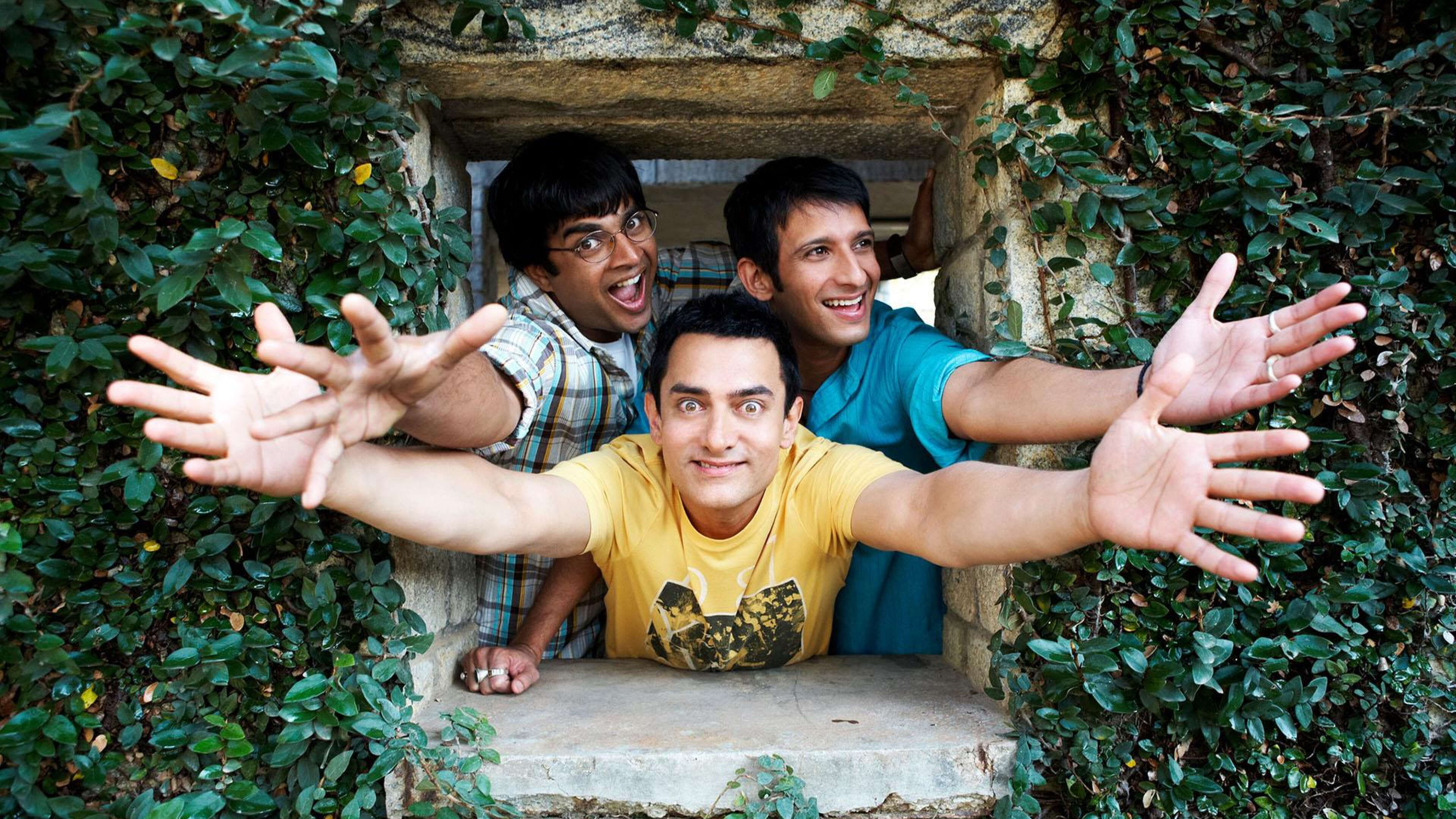
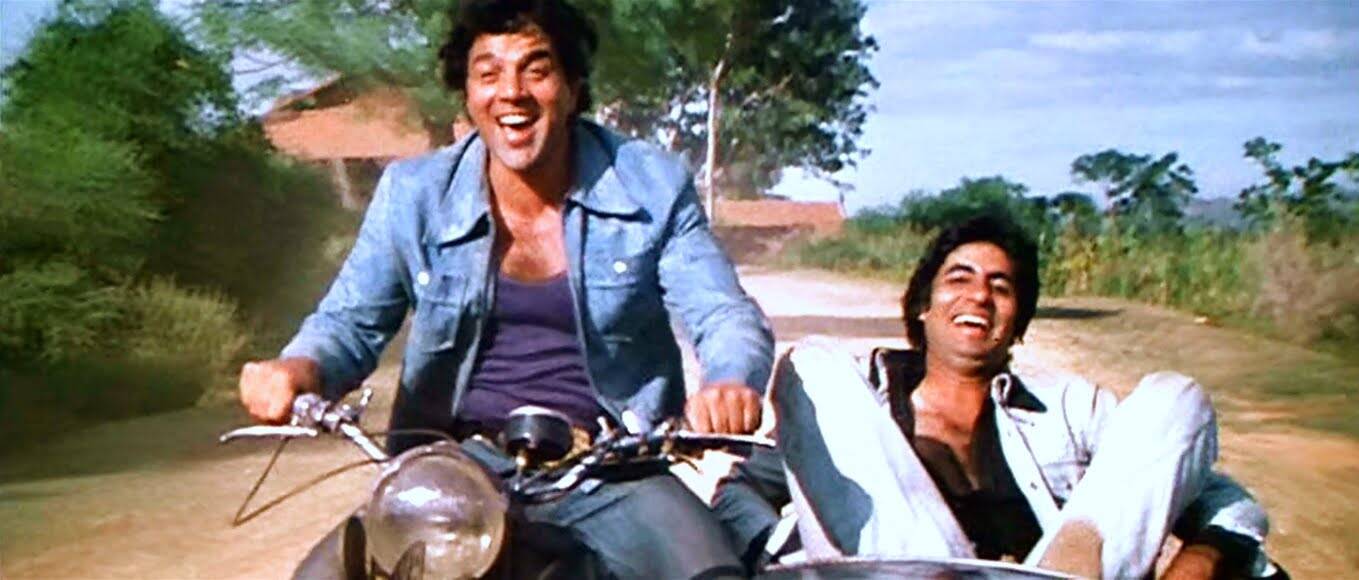

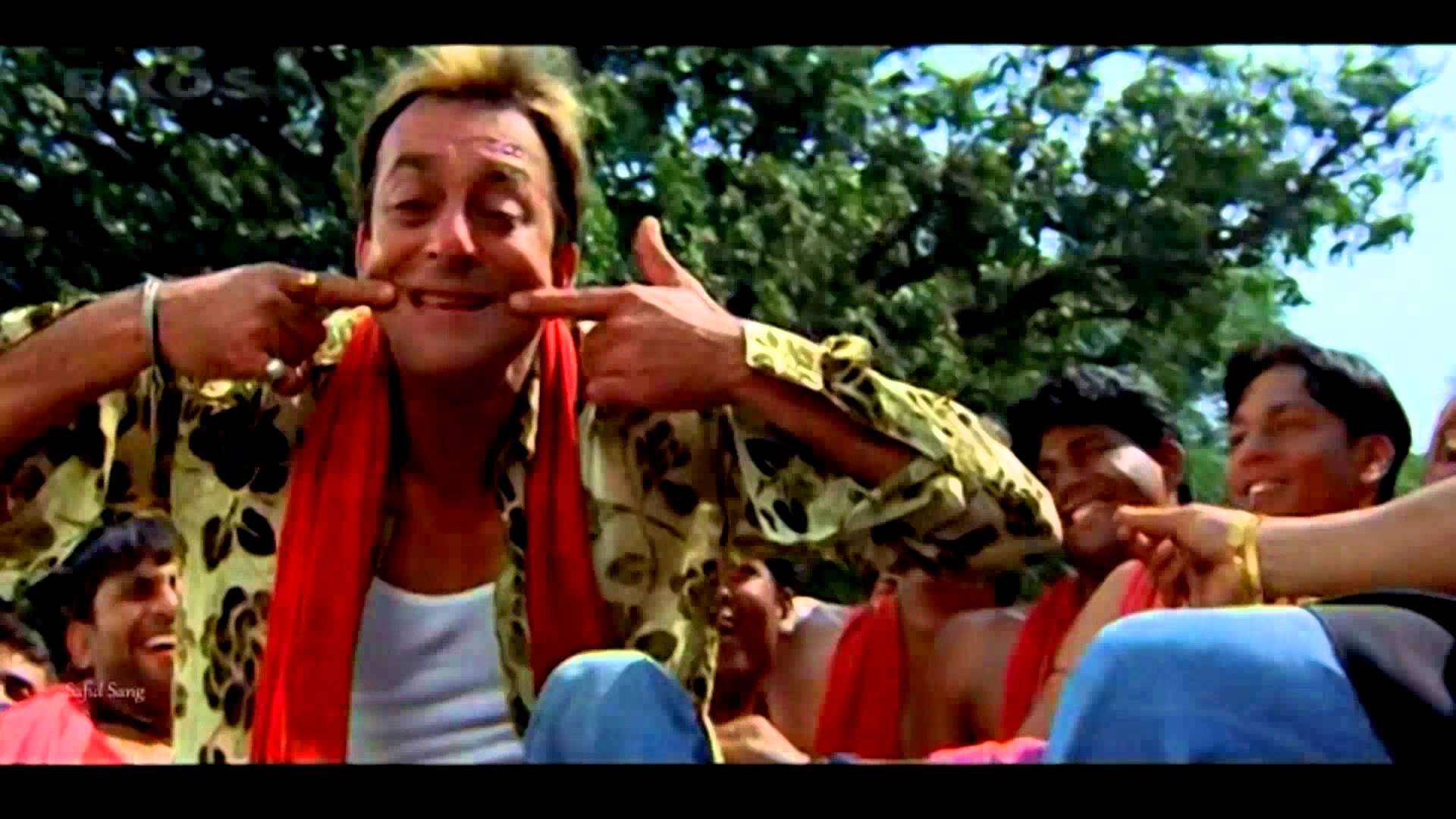

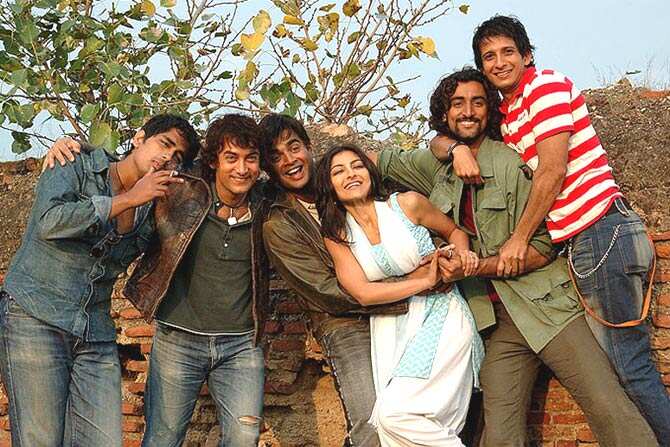

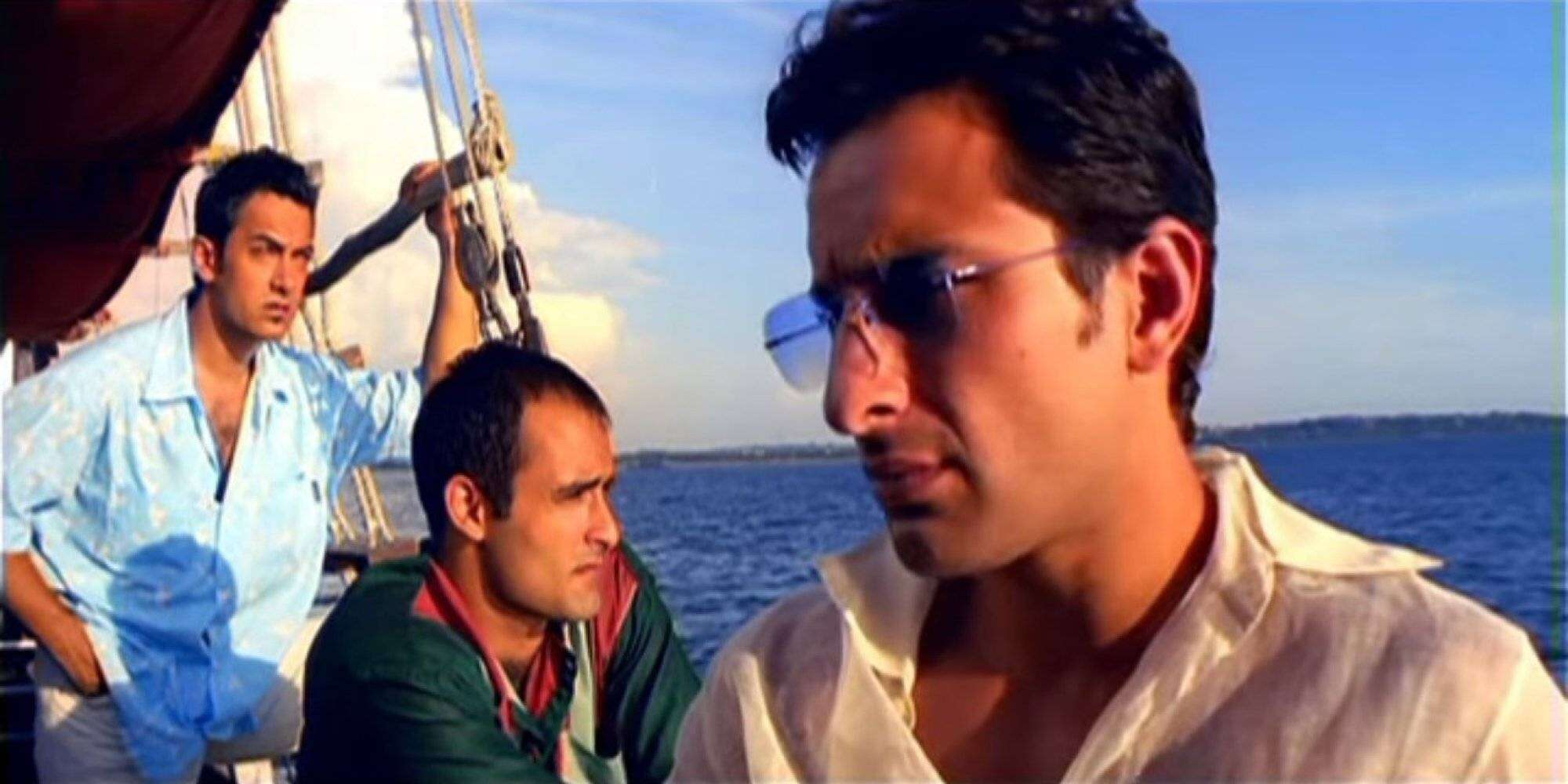
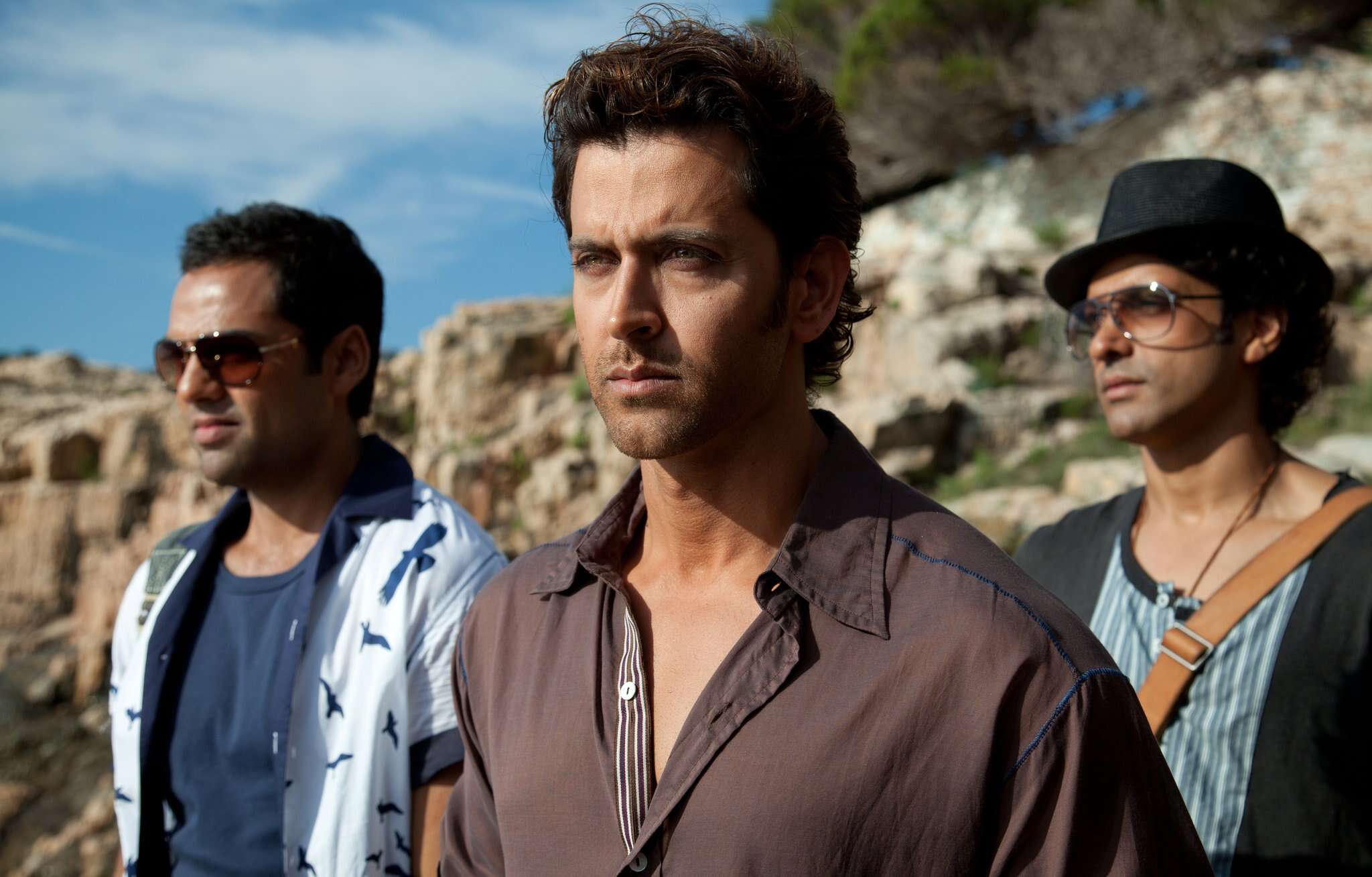
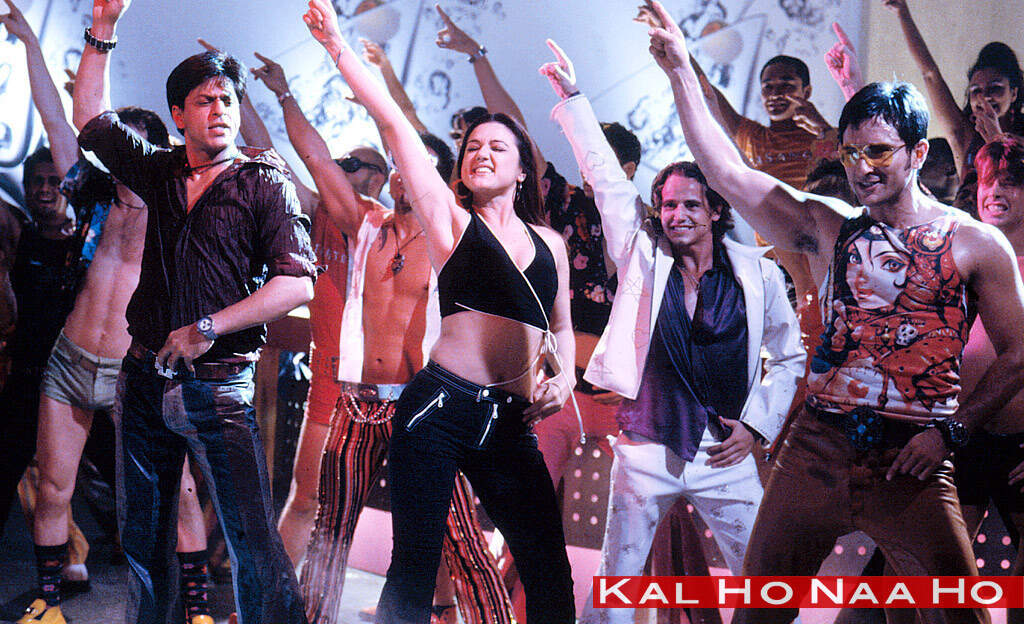





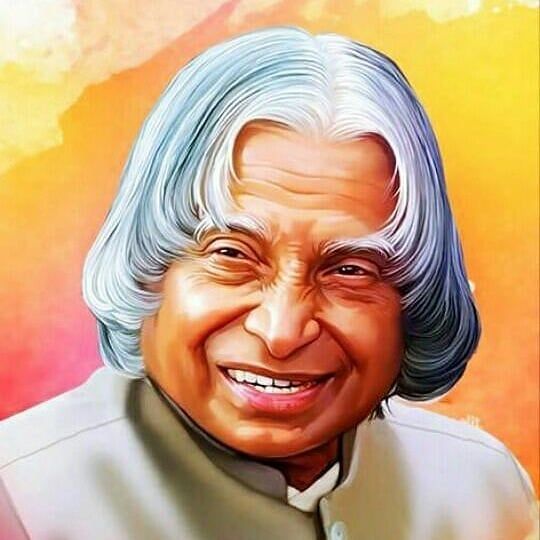




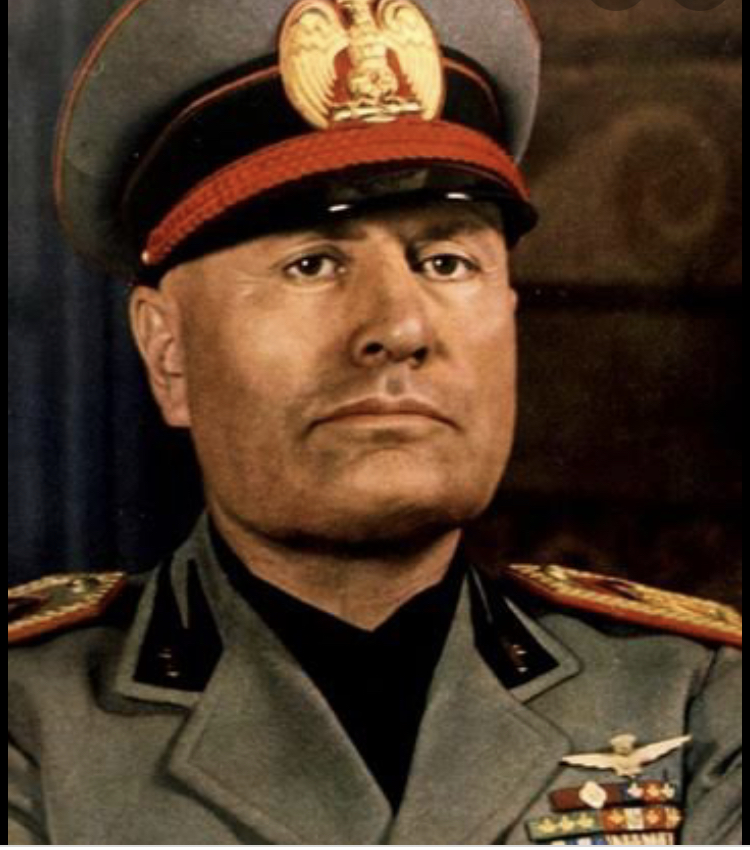







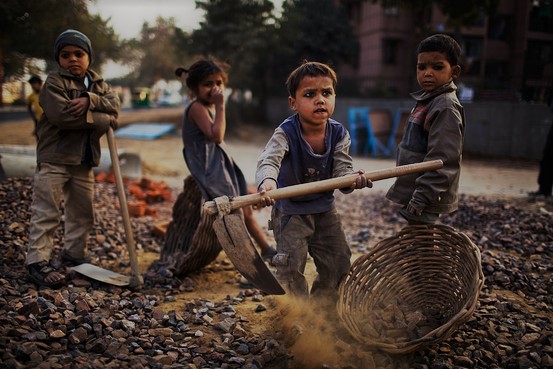

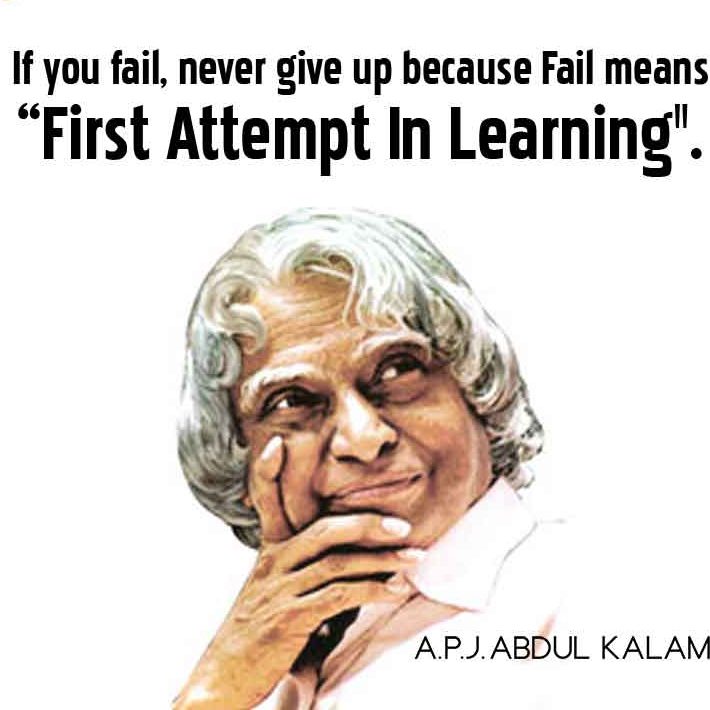


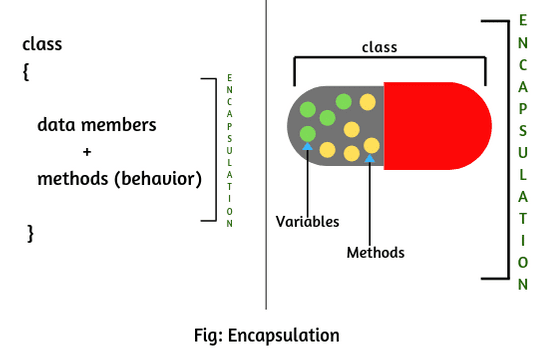





















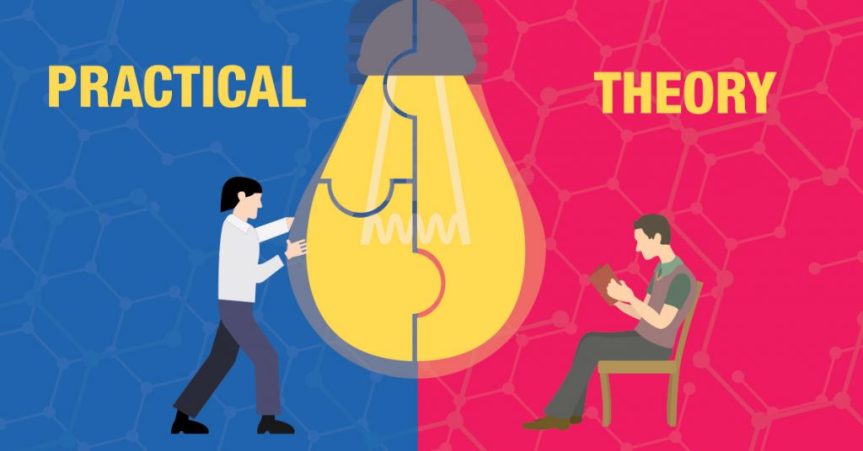









:max_bytes(150000):strip_icc():format(webp)/what-is-self-esteem-2795868_FINAL-1d12e4b54f20465ab8dfd7350b614fee.png)

 Track2Training
You must be logged in to post a comment.