Janmashtami

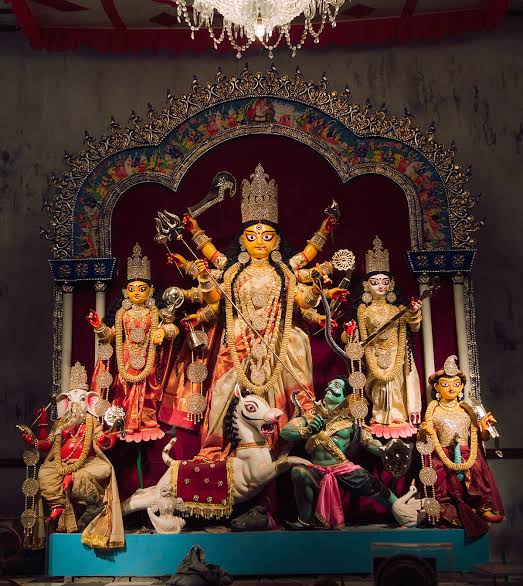
Hindus celebrate Janmashtami with the birth of Sri Krishna. The festival usually takes place in August. In addition, Hindus celebrate the festival at the Ashtami of Krishna Paksha. In addition, Lord Krishna is the most powerful person of Lord Vishnu. It is a happy Hindu festival. In addition, Hindus practice various rituals to please King Krishna. This is one of the most exciting festivals for Hindus.

Lord Krishna
Lord Krishna was born on the 8th day of the Dark Ages in the month of Badon. Badon is a moon in the Hindu calendar. In addition, he was born about 5,200 years ago. He was an incarnation of Lord Vishnu, who was born with a purpose to defeat the evil.

As a result, he played an important role in the Mahabharata text. Also, Lord Krishna preached with good karma and the teachings of Bhakti.

Lord Krishna was born in prison. He was on the ropes when Kansa. But his father Vasudev gave it to his friend Nand to save him. Because he knew that Cancer had a bad heart. Moreover after the rescue the upbringing of Sri Krishna belonged to the Gokul family. Sri Krishna later became powerful. As a result, he managed to kill Kansa.

As a child I used to watch many shows of Sri Krishna. As a result, I know a lot about him. He was very fond of eating Makhan. As a result, he often stole from his mother’s kitchen. So his name was ‘Natkahat Nand Lal’. Sri Krishna was black. So she was always worried about her color. In addition, Sri Krishna had a friend named Radha. Radha was very important to Krishna. So he spent time with her. Radha was very good and unjust so King Krishna always felt difficult with color.

How is Janmashtami celebrated?
People celebrated Janmashtami at midnight. Because Lord Krishna was born in darkness. As Sri Krishna loved to eat the people of Makhan played this game.

According to the game, they tied a clay pot (matki). The match judge tied the mattress very high from the ground. In addition, one fills Makhan into cans. Also, what people do is build a human pyramid to break the matki. Since the matki is very high they have to build a tall pyramid. As a result, more people should participate in sports. In addition, there are other groups and they prevent them from breaking the matki. Equal opportunities exist for both parties. Each team gets a chance for some time. If a team can’t do it while the other team is trying. This is an exciting game that many people gather to watch this game.

In addition, the celebration is done in homes. People decorate their houses outside with lamps. Moreover, the temples are full of people. They perform various rituals inside the temple. As a result, we hear the sound of bells and mantras throughout the day.

In addition, people dance in a variety of religious songs. In the end, it is one of the most exciting festivals in the Hindu religion.

References:

https://en.m.wikipedia.org/wiki/Krishna_Janmashtami

https://www.britannica.com/topic/Janmashtami

Christmas

Christmas is a Christian holiday known in December, celebrated all over the world and known for its decorations and Santa Clause. Christmas means “the feast day of Christ”. An annual celebration that marks the birth of Jesus Christ; it is considered December 25 as a cultural and religious festival among many people around the world. Christmas is celebrated in all Christian lands, but there are differences in the way each nation celebrates it.

History After Christmas
The history of Christmas is one that goes back a long way; The first Christmas was celebrated in 336 A.D. in Rome. It played a very important role during the famous Arian controversies that took place in the 300s. During the early years of the Middle Ages, epiphany covered us.

Christmas was restored to light in about 800 AD when Emperor Charlemagne received a crown on Christmas day. During the 17th century, Puritans were not allowed to celebrate Christmas because it was associated with drunkenness and other immorality.

A suitable holiday was held around the year 1660 but was unpopular. About the early 1900’s, the Anglican Church of Oxford organized the Anglican Church, and this led to the revival of Christmas.

Christmas preparations
Christmas is a celebration of many traditions. It is a public holiday so people get a Christmas break to celebrate.

Christmas preparations begin early for many people so that the festivities begin on Christmas Eve. Christmas preparations involve many activities. People often buy ornaments, food, and gifts, especially from children of family and friends. Some families purchase matching Christmas costumes for everyone.

Typical arrangements include decorating the area with Christmas trees, lighting. Before the decorations begin, the house should be thoroughly cleaned. The Christmas tree brings the Christmas spirit home.

Gifts are placed under the Christmas tree in wrapped gift boxes and should not be opened until Christmas Day. The church is also decorated with this special event. A thorough cleaning of the churches was also done to bring in Christmas. Songs and drawings to be made on Christmas day.

People often spend a lot of money on Christmas so saving money for these programs should be the first preparation for all these things. Families also plan to travel to stay together during the festive season. Traditionally turkey is the most common meal in the world on this day. Cards are also written to friends and family to wish them a happy holiday and to show their love.

Celebrating Christmas Day
Christmas carols are played on radio and television to celebrate the day. Most families start by going to a church where songs and hymns are performed. Then, later, they join their families in exchanging gifts and celebrating with food and music. Merry Christmas is a wonderful time.

Traditional homemade cakes, cakes, and muffins are the special Christmas items. Children are given lots of presents and new clothes. They also meet ‘Santa Claus’, who is dressed in a bright red and white costume, who greets them with kisses and presents.

Conclusion:
At Christmastime, we know that the birth of Jesus is the beginning of great things on earth. It is often an opportunity to reflect on nature and the reason for our existence. Christmas is such a celebration that people of all religions and denominations celebrate the world despite the Christian celebration. The theme of this very unifying ceremony.

References:

https://www.britannica.com/topic/Christmas

https://www.google.com/amp/s/www.history.com/.amp/topics/christmas/history-of-christmas

ONLINE SCHOOLING: THE FUTURE OF EDUCATION?

The pandemic has brought an evolution in every field. With the development of information and communication technology the world has witnessed increasing acceptance of online education over a period of time. Even before the covid-19 pandemic, individuals were involved in several e learning platforms to enhance their skills and employability. However, this schooling was limited to the classroom. But due to the sudden outbreak of covid-19, they had to adapt to the online mode of teaching in very short period of time. Online schooling has now became a new normal situation for the students as well as the teachers. It is seen as a more convenient but less interactive medium of teaching.

The current situations make it clear that the online mode of schooling is going to be the future of education. Along with the health sector education sector is the most affected area, about 1.2 billion of students around the world have been out of their classrooms and adapting to the new online mode of education. Continuous attempt has been made in research and development design new tools and software to simplify the process of online teaching. Even the government have been running several streaming platforms to provide students with lectures and digital content so they can learn conveniently.
Under the online mode of teaching, the classes are conducted in two methods where they can be delivered through online video streaming for live lectures. At times, the students are also provided by pre recorded lectures or or the recordings of the lectures conducted are also provided for future revision.

SCOPE OF ONLINE SCHOOLING IN INDIA

Based upon the analysis, India has nearly 1.5 million schools teaching around 260 million students daily. The school system of India is second largest in the world. It is expected that the online schooling in India will grow magnificently within the next three years. As per the experts the education involving primary secondary as well as higher education will be increasing to nearly 735 million users by the year 2021. This will create a conducive conditions for online schooling and also provide a boost to the other factors such as:

  • Rising digitalization in India, with increasing internet availability and usage online mode of education is certainly going to get a boost. With the improvement in technology internet speeds are also going to be upgraded with coming of optical fiber internet service in urban areas and the governments target of connecting the entire rural areas still the panchayat level through its Bharat net program. This will increase the accessibility to internet service for each individual which will allow them to easily assess the online schooling.
  • Various government policies and schemes, government is aiming to improve the role of online education in India. Along with the announcement of new education policy 2020 the government aims to create a separate unit in the ministry of human resources and development that will take care and focus upon and answering the capacity building to look after education of both school and the higher education. Beside this various other programs such as National digital library, SWAYAM, E-yantra, etc. the purpose of these programs is to provide good quality content to the students in the digital mode to keep them engaging and increase their interest in education.
  • Learning beyond the school, this new age of education the is not limited to the four walls of classroom. Children are not only dependent on the schools for learning they can enhance their knowledge with the use of new tools and techniques that are easily available online.
  • Minimization in the cost of education, online schooling also have some economical or financial advantages. The cost of education has been increasing sharply over the past few years. Schooling can be a great alternative to the traditional mode and also proved to be cost-effective. A particular setup with some specific device can enable the people to avail the facility of education and it also helps the students who were earlier not able to go to school due to the the distance differences and financial incapability. It can be observed that online classes require one time investment in digital devices such as laptop, smartphones, computers, etc.
  • Personalized and flexible, online schooling is more flexible as compared to the classroom classes which has a fixed time of teaching. It provides the liberty to the students to plan their day accordingly and as per themselves. There is enough scope to digest engage practice and learn at their own pace. Students have not to face any peer pressure and are able to study in a comfortable environment. Therefore, online schooling is more personalized that fields for build for the individual themselves.

LIMITATIONS OF ONLINE SCHOOLING

Struggling Student with ADHD: Online Learning Help

Along with the the potential advantages, schooling is also characterized by certain limitations. Below are some limitations that prevents the successful implementation of online schooling:

  • Lack of internet connectivity, internet is now declared as a fundamental right for the individual. But yet coronavirus of children in India are unable to avail the internet facilities. The backward areas are yet deprived of a fast internet on mobile service. Slow internet or absence of such services becomes an hindrance in application of the online schooling.
  • Lack of digital devices, online schooling requires some devices such as laptops computers tablets or mobile Phones. India is marked by poverty and illiteracy, many people in country are unable to afford these devices or do not have the knowledge to operate them. This is a setback for the nation.
  • Lack of personal interaction, online education reduces face to face as well as social interaction between the students and teachers. It also hinders the development of interpersonal communication and social skills among the students. It establishes a sort of informal environment which we motivate or discourage the students to to study. This results and many types of disorders that can be physical as well as mental in young children.
  • No practical knowledge, online schooling deprive students from enjoying the physical infrastructural facilities. The students are unable to attend the lab dot carryout practical as they are unable to do that at their homes. Practical is also found an essential part of the curriculum of schooling that teaches the application of knowledge.

WAY FORWARD
It is clear that the pandemic period has disrupted the education system that was prevailing in the form of traditional methods. However under the current circumstances it has also acted as a bridge to encourage the digitalization of education full stop institutions need to be better equipped digitally as well as students need to learn digital skills for the betterment and improving quality of the learning. It can be concluded that the application of online education need to be accompanied with the changes in curriculum test books teacher training examinations etc. The scope and reach of energy education is greater than imagined. There is a need to evaluate both the pros and cons of online schooling and prepare for the challenges as per.

Importance Of Morality in Education

In this modern era of cut- throat competition, everyone wants to acquire skills which would help them to earn more in life. For this, people can even indulge themselves in any kind of illegal and immoral activities.

It is therefore crucial to inculcate moral values in life so that they become the guiding and sustaining force in life. Moral values are an important set of standards of human behaviour.

Morality becomes the guiding force which in turn helps to give positive solutions to any kind of problem.

It is a key feature in personality development and shapes the direction of the way of life. It will infuse harmony and ultimate peace.

Khushi Agarwal

The Role Of Arts and Culture in Today’s World

In the modern age of globalization and advancement in technology, the establishment of art and culture also has undergone transformation. Every civilization is marked by unique contributions of art and culture, brilliant ideas, magnificent monuments and other distinguished advancement and noteworthy milestones which become the ultimate hallmark of that specific period. Art and Culture is considered as a reflection of the emotions, artistic endeavours, personal struggle, architectural brilliance and the ground breaking events of a modern society.

The modern civilization is experiencing a fusion of varied forms of art and culture. Civilization and culture are deeply connected with each other.

The paintings of ancient time become an evidence of our culture. Civilization evolve with time and this reflects in its modern art and culture. At the same time, art helps to bring about revolution in social ideas and cultural norms of society.

Art and Culture are the true reflections of civilization and at the same time they make us what we are now.

Khushi Agarwal

Greed Cause Of Unhappiness in Life

Excessive desire to have everything can lead to greed and result in suffering. Every person has some desires to have a better life like good education, money, comfort, respect in society and happy family life. One can avail anything he desires by working in an ethical way, but when anything becomes everything, it becomes greed and causes trouble.

Greed is the uncompromised desire to possess enormous wealth, power, ambition, etc, which brings tension and obvious unhappiness. Our desire is not generally bad but when it is based on selfish motives it becomes greed.

Greedy people are not satisfied with what they have got but instead they want to grab more. They go to any extent to achieve the infinite desire resulting later on to severe frustrations and trauma.

So, we can say that greed leads to dishonesty and dishonesty leads to disaster.

Khushi Agarwal

Anorexia nervosa

Anorexia nervosa is a dietary problem set apart by weight reduction (or an absence of legitimate weight acquire in developing youngsters), trouble keeping a solid body weight for one’s tallness, age, and height, and, as a rule, a mutilated self-perception. Anorexics ordinarily limit their calorie consumption and such food varieties they devour. A few patients with the ailment likewise pig out, practice fanatically, and cleanse through regurgitating and diuretics.

Anorexia nervosa definition

Anorexia nervosa (an-o-REK-see-uh) nervosa is a eating disorder portrayed by a strangely low body weight, a solid dread of putting on weight, and a slanted feeling of weight. Anorexics place a high need on keeping up their weight and shape, and they will try really hard to accomplish it, regardless of whether it implies disturbing their lives.

Anorexia nervosa most usually shows in an individual’s teen or early grown-up years, however it can likewise show in the juvenile years or sometime down the road.

Anorexia nervosa symptoms

Anorexia nervosa patients lose weight and maintain their extremely low weight in a variety of methods. While some people restrict their calorie intake severely, others engage in excessive activity.

Physical symptoms

  1. Excessive weight loss or failure to meet developmental weight goals
  2. Abnormal blood counts and a thin look
  3. Fatigue\sInsomnia
  4. a feeling of dizziness or fainting
  5. Fingers have a bluish discoloration.
  6. Hair that is thinned, broken, or falling out
  7. The body is covered in soft, downy hair.
  8. Menstruation is not occurring.
  9. Constipation and stomach ache
  10. Skin that is dry or yellowish
  11. Cold intolerance is a condition in which a person is unable to tolerate cold

Emotional and behavioral symptoms

  1. Food obsession, which might include preparing extravagant meals for others but not consuming them.
  2. Skipping meals or refusing to eat on a regular basis
  3. Making reasons for not eating or denying hunger
  4. Eating only a few “safe” foods, which are usually low in fat and calories
  5. Strict meal or eating routines, such as throwing out food after chewing
  6. Not wanting to eat in front of others
  7. Lying about the amount of food consumed
  8. Fear of gaining weight, which may include weighing or measuring the body repeatedly.
  9. Checking in the mirror for perceived imperfections on a regular basis
  10. Complaining about being overweight or having fat regions of the body
  11. Putting on layers of clothing to keep warm
  12. Mood is dull (lack of emotion)

Anorexia nervosa treatment

Perceiving that you need assistance is perhaps the most troublesome parts of anorexia nervosa treatment. Numerous individuals who experience the ill effects of anorexia nervosa are ignorant that they have an issue. This makes treatment seriously testing.

Among the procedures are:

  1. CBT (psychological conduct treatment), which can help an individual discover better approaches for speculation, acting, and overseeing pressure;
  2. family and individual guiding, depending on the situation;
  3. nourishing treatment, which shows individuals how to utilize food to assemble and look after wellbeing;
  4. prescription to treat discouragement and nervousness;
  5. dietary supplementation to address wholesome lacks

Complications

Every bodily system can be affected by complications, and they can be severe.They include issues such as:

  1. the circulatory system
  2. a low white or red blood cell count in the blood
  3. the gastrointestinal tract
  4. Bone strength is affected by hormonal abnormalities in the kidneys.

Summary

Anorexia nervosa is a significant emotional well-being ailment just as a dietary issue. It involves restricting one’s food utilization, which may bring about genuine nourishing shortages. Anorexia nervosa has dangerous results, in spite of the fact that it tends to be treated with advising, medication, and treatment for basic emotional wellness concerns.

Depression and it’s symptoms

Depression is a mood disorder that involves a persistent feeling of sadness and loss of interest. It is different from the mood fluctuations that people regularly experience as a part of life.

Major life events, such as bereavement or the loss of a job, can lead toTrusted Source depression. However, doctors only consider feelings of grief to be part of depression if they persist.

Depression is an ongoing problem, not a passing one. It consists of episodes during which the symptoms last for at least 2 weeks. Depression can last for several weeks, months, or years.

Signs and symptoms
The symptoms of depression can include:

– a depressed mood
– reduced interest or pleasure in – – -activities once enjoyeda

-a loss of sexual desire
-changes in appetite
-unintentional weight loss or gain
-sleeping too much or too little
-agitation, restlessness, and pacing up and down
-slowed movement and speech
-fatigue or loss of energy
-feelings of worthlessness or guilt
-difficulty thinking, concentrating, or making decisions
-recurrent thoughts of death or suicide, or an attempt at suicide.

Great Barrier Reef listed ‘in danger’-UNESCO

The Great Barrier Reef (GBR) of Australia is wonder filled with diverse marine life from corals to whales. It is 2300 Km long and extends across 346000 sq.km area. It was included in the world heritage site in 1981. The great barrier reef can be seen from outer space and is the single structure made by living organisms.

The reef system faces several environmental challenges and the key threat is climate change which has led to big events of coral bleaching in 2016, 2017 and 2020. A finding reaffirmed by a 2020 study states that half of the coral reef cover to have been lost between 1995 and 2017 along with widespread effect of 2020 bleaching. UNESCO’s move to list GBR as ‘in danger’ because drastic coral decline has brought pressure on Australian government to review its record on climate change.

Bleaching takes place when change in temperature of the ocean stress healthy corals, causing them to expel algae living in their tissues – draining them of their vibrant color.

In December International Union for Conservation of Nature said Climate change has become the biggest threat to UN listed natural world heritage sites and pushed the reef into critical condition.


Reference: The Hindu, NDTV

All You Need to Know About Hibiscus

       Hibiscus plants are known for their large, colorful flowers. These blossoms can make a decorative addition to a home or garden, but they also have medicinal uses. The flowers and leaves can be made into teas and liquid extracts that can help treat a variety of conditions.

Read on to find out how hibiscus can help with weight loss and cancer, and how it can also help relieve conditions that include:

*upset stomach

*high blood pressure

*bacterial infections

*fever

Hibiscus flowers come in many colors. They can be red, yellow, white, or peach-colored, and can be as big as 6 inches wide. The most popular variety is Hibiscus sabdariffa. The red flowers of this variety are most commonly cultivated for medical purposes, and are available as dietary supplements.

Hibiscus tea, also called sour tea because of its tart taste, is made from a mixture of dried hibiscus flowers, leaves, and dark red calyces (the cup-shaped centers of the flowers). After the flower finishes blooming, the petals fall off and the calyces turn into pods. These hold the plant’s seeds. Calyces are often the main ingredients in herbal drinks containing hibiscus.

Hibiscus has been used by different cultures as a remedy for several conditions. Egyptians used hibiscus tea to lower body temperature, treat heart and nerve diseases, and as a diuretic to increase urine production.

In Africa, tea was used to treat constipation, cancer, liver disease, and cold symptoms. Pulp made from the leaves was applied to the skin to heal wounds.

In Iran, drinking sour tea is still a common treatment for high blood pressure.

Today, hibiscus is popular for its potential to reduce high blood pressure. Modern studies show promise for both the tea and hibiscus plant extract to lower blood pressure and cholesterol levels. Although more research is still needed, this could be good news for the future of heart disease treatment.

Hibiscus shows potential for cancer treatment and as a weight loss aid, along with other uses. There aren’t many studies in these areas, but some researchTrusted Source suggests that anthocyanins may hold the key to hibiscus’ anticancer properties.

Another recent studyTrusted Source found that hibiscus extract might have an effect on metabolism, preventing obesity and fat buildup in the liver. The tropical plant has even been used successfullyTrusted Source as part of an herbal extract mixture to treat head lice.

Hibiscus tea and extract can be purchased at health food stores as dietary supplements. There is no recommended dose because this depends on the product you purchase and why you’re using it. The typical amount of calyx in one serving of tea is 1.5 grams, but studies have used as much as 10 grams of dried calyx, and extracts containing as much as 250 milligrams of anthocyanins.

When used as a tea, hibiscus is generally considered safe. But more research is needed to determine a safe dosage for pregnant or breastfeeding women, children, and people with liver or kidney disease.

Hibiscus tea is very tart and might be more so to sensitive tissues. Listen to your body and if it makes you feel ill, discontinue use. Some research also suggests that hibiscus may affect the way the body processes acetaminophen (Tylenol), but this effect is likely very minimal.


The Circumzenithal Arc

The circumzenithal arc is upside down rainbow which is also called circumsenith arc. This upside down rainbow and the Bravias arc is an optical phenomenon which is similar to the appearance of the rainbow but this circumzenith arc belongs to the family Halos which arise from the refraction of the sunlight through ice crystals, generally in citrus or cirrostratus clouds.

The circumzenithal arc is located above the noticed sun and forms a quarter of a circle which is an arc in the centered position on the zenith. The circumzenith is one of the brightest and colourful members of the family of the halos.  It is much purer than the rainbow as it has much less overlap in their formation proccess and it’s colours starts from violet at the top and red at the bottom. When the sun observed the CZA is the brightest as ever.

The circumzenithal arc’s intensity distribution requires several affects such as

  • Frensel’s reflection and transmission amplitude.
  • Atmospheric attention
  • Azimuthal angular dispersion
  • Geometrical constraints
  • Chromatic dispersion

Contrarily to the public awareness this Circumzenithal arc is not a rare phenomenon and it appears so far overhead so, the people are not aware of this phenomenon.

The light which forms the circumzenithal arc enters the ice crystal through its flat top face and it comes out from a side face of the prism.

The circle colour separation and the purity of colour is due to the refraction of the parallel sun through a 90° prism. The circumzenithal arc is brightest when the sun is at 22° above the horizon which causes the sunlight to enter in and out of the crystal at the minimum deviation angle this has 22° in radius and 3° in width.

The radius of the circumzenithal arc varies between 32.2° and 0° depending on the solar attitude. When the sun is observed above 32.2° the light comes through bottom face of the crystals which leads to almost colourless parhelic circle. The ice crystals also requires that it have a common orientation it occurs only when there is no significant up-or downraft and also in the absence of turbulence.

Like all the halos the circumzenithal arc occurs in both sun and moon and the one which occurs with the moon is called lunar circumzenithal arc. This lunar circumzenithal arc is a rarest circumzenithal which occurs only when the moon is brightest which refers to only the case around full moon.

We can make an artificial circumzenithal arc by a water glass experiment. Under the shallow angle illuminating the top air-water interface of a completely water-filled cylindrical glass which refracts the light into the water and the second refraction in the cylinders side face is called Skew- ray refraction.

Then the overall refraction turns out to be a equivalent to the refraction through an upright hexagonal plate crystal when the rotational averaging is taken into account. Then the colourful artificial circumzenithal arc will appear on the floor.

Is exercise necessary for weight loss?

See the source image

Exercising is a great way to be healthy and maintain your weight. It makes our body flexible, improves our metabolism and also helps with stress and depression. Many people suggests exercising for weight loss, but the question is if it is really an essential to loose weight?

We have been conditioned to believe that exercise is an essential ingredient to loose weight but according to science, it might not be that important of a factor to loose some pounds. A very uncommon fact about exercising is that it amounts to a very small calorie expenditure of your daily life. Obesity researcher Alexxai Kravitz suggests that there are three main components of calorie expenditure : 1) basal metabolic rate, or the energy used for basic functioning when the body is at rest; 2) the energy used to break down food; and 3) the energy used in physical activity.

According to Kravitz, basal metabolic rate amounts to about 70% of energy expenditure and we have no control over the same. Energy spent in digesting food amounts to about 10%. All of this included, it leaves only about 20% room for physical exercise along with daily activities like walking, carrying weight,etc. What I am trying to imply is that food we consume actually amounts to 100% of calories/energy that goes inside our body while exercising only amount to about 10-30% of expenditure. This basically shows that erasing all the fat on your tummy is not as dependable on exercise as your gym membership shows.

It is difficult to create a calorie-deficit only through exercising. To explain it in easier words, “If a hypothetical 90-kg man added 60 minutes of medium-intensity running four days per week while keeping his calorie intake the same, and he did this for 30 days, he’d lose 3 kgs.” And to compensate the exercise, if the man adds food and rest in his daily routine his weight loss will be even less significant. So for an overweight person to loose weight solely by exercise, it will take him a lot of time to reach his goal.

Studies say that generally people who exercise may consume more than on a daily basis believing they lost a lot of calories or simply because they were hungrier. “You work hard on that machine for an hour, and that work can be erased with five minutes of eating afterward,” Hall explained. It is suggested that reducing calorie intake and replacing high calorie food with low calorie ones are more helpful on your way to effective weight loss. Exercising boosts weight loss in other subtle ways but depending wholly on it may not be the best idea. We need to change the way we look at exercising, it is immensely helpful for preventing diseases and living a healthier life but it may not be the best way to lose weight. Also, it has been said many times that exercise helps in building muscles, more than losing weight. In order to lose weight there should be a balance of physical activity and calorie intake.

Animal Awareness

Animal rights are the concept in which some, or all animals are permitted to have control of their own being and that their most essential interests. Like, those people want to keep away from suffering should afforded the equal consideration as akin activities of human beings.

It was a lengthy journey to make the world like we know now. The established movement for animal protection started in the late 18th and early 19th centuries. Bills against animal cruelty were approved in England and several American states. In the mid-1800s the Society for the Prevention of Cruelty to Animals formed, and anti-vivisection (animal research) movements appeared.

In the UK, the first legal code ‘Martin’s Act’ for the protection of animals which was mainly for cattle and horses was passed in 1822. Two years later, in 1824, the Society for the Prevention of Cruelty to Animals was started. The society focused mainly on implementation of the law, with trials where appropriate. In 1835, the Act was altered to protect domestic animals, such as dogs and cats, against cruelty.

Now most popular organization for animal rights and wellbeing is PETA. People for the Ethical Treatment of Animals is an American animal rights organization based in Norfolk, Virginia, and led by Ingrid Newkirk, PETA shut down Taiwan’s drowning tanks, which were used to kill stray and unwanted dogs. The country also amended its first-ever law against cruelty to animals. All car-crash tests on animals stopped globally following PETA’s campaign. They are now trying to draft a bill for animals who are used for scientific exploration, and hopefully, they do those campaigns globally.

India is home to various holy traditions encouraging non-violence and kindness towards animals and has amended several animal welfare reforms since 1960. In India, animals are used for food, dairy products, clothes, etc.  So, government amended the 1960 Prevention of Cruelty to Animals Act which is the legal basis of animal protection in India. After that, you can’t harm or treat any animal without any sensible reason. Afterwards, Ingrid Newkirk started PETA India. PETA India functions under the simple principle that animals are not ours to eat, wear, experiment on or use for entertainment.

Traditionally, charities have worked on reducing the suffering of different animals that happens when they are thinking of as lesser beings who can and should be controlled. Recently, Gauri Maulekhi is a popular animal rights activist in India. She is a co-opted member of the Animal Welfare Board of India (AWBI) and a trustee in Maneka Gandhi’s People for Animals.

There will be continuously suffering as long as any group is defined as reachable to be overlooked and controlled. The nonhuman rights advocate does not disregard people’s concerns about suffering. Those worries are valid. But the concept of animal rights involved working at the main motive of the problem. Lastly, we need to aware; we need to know these rights. We need to be concerned about animals well being.

CHILDHOOD MEMORIES

Sweet memories:

Childhood memory refers to memories formed during childhood. Among its other roles, memory functions direct current performance and predict future results. Childhood memory varies in size and quantity from memories formed and recovered from youth to adulthood. A study of children’s memory has recently taken place in relation to the study of other types of cognitive processes that support performance. Understanding the ways in which coded memories can be coded has important consequences in many areas. Research on childhood memory includes topics such as childhood memory formation and retrieval strategies for those of adults, issues surrounding infantile amnesia and the fact that adults have worse childhood memories, ways in which school and family environment influence memory, and ways memory can be improved in childhood. school performance, and well-being, childhood and adulthood.

Best memories:

Childhood is the happiest and most memorable time in anyone’s life. It is the first phase of life that we enjoy in any way we like. Besides, this is the time that builds the future. Parents love and care for their children and children alike

QUOTE:

It is never too late to have a happy childhood.


For children, it is not important but if you ask an adult it is very important. Moreover, it is a time of moral and ethical development for children. At this stage in life, we can easily adjust someone’s thinking.

https://www.track2training.net/?p=3200&preview=true


Newspaper

.  Newspaper

The Newspaper has created a positive impact on society .it helps people become aware of current affairs and stay curious about them . newspaper provide people with every detail no Matter how small.


Important of news in our daily life

Mainly to inform the public about events that are around them and may affect them . often newsies for entertainment purposes too,to provide a distraction of information about other place people are unable to get to or have title influence over .News can make people feel connected too.

Important to students

Reading newspaper in daily basis is really important for students .this provides them high general knowledge . critical understand of students also get enhanced by the habit of newspaper reading .it increases the stock of words in them

Newspaper are rich source of information .lot of people rely on newspaper for learning current affairs and world happening  newspaper reading habit is good for everyone.

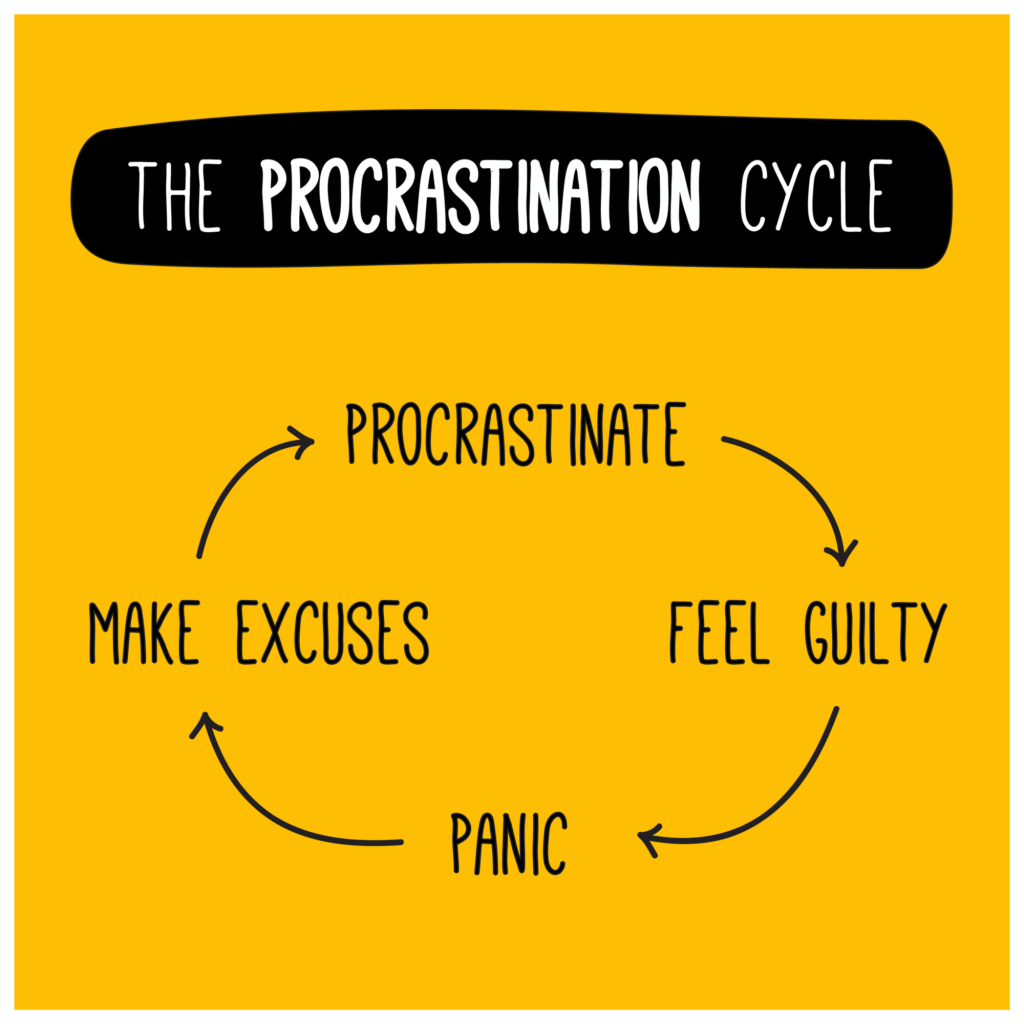
PROCRASTINATION: THE MONSTER

Procrastination is really a monster. The idea of having leisure in the current moment overrides the thought of completing the actual task. There are many reasons for procrastination. Maybe we have a more important task to do, or we are just tired. But let us accept it, we are most of the time lazy to do the work.

The funny part is when someone chastises us, we get angry when it is our job to do the said work. Students especially procrastinate so much, with homework, studying, completing the project. That is the root of the habit. Trust me, it feels so good to just watch another episode in Netflix, or just go outside and play instead of sitting inside and studying.

There are many of us who watches on how to avoid procrastinating while actually procrastinating. Being an adult doesn’t make procrastinating a small thing. It can lead to some grave results. So they don’t tend to procrastinate much. It is always the students who face the results of their errors in the hard way.

There are many ways in which procrastination can be avoided. I know the tips on the internet about the to-do list, the Pomodoro method of studying works but do we actually follow it sincerely? At the end of the day, it is our will power that helps us go through the tasks for the day. Sometimes we think of doing something, but since the situation is not helpful, we tell ourselves we would do it later, but we forget it.

The solution for this can be having a handy notebook in our person. Whatever task it is can be noted down in the notebook, so when we are free and have time, we can remember it and do it. I know it is not possible to carry a notebook always, so use the notes app in your phone. Create a list that you can cut off after you complete the work. The satisfaction of crossing off the list will motivate enough for us to do more work.

But that us until we find loopholes like writing down tasks like getting up, brushing teeth, and eating in the list just for the sake of crossing it out. Be true to yourself. If you are not really the type of person who writes things down constantly, write a list for yourself in the morning, just one time in the day and stick it the place where you would look constantly. Maybe it is your homework you have to submit by the end of the week, and it is only Monday. Seeing the task constantly will push you to do it and be free for the rest of the week.

During exams there would be many distractions to keep us from studying, but it is really who give in to those temptations. We need to prioritize what is for our good, instead of what makes and feels us good. Remember, the roots of education may be bitter, but the fruits are sweet. So stop procrastinating and start working!

Farmers stage

farmers organisations and trade unions staged demonstrations in Tiruchi and neighbouring districts on Saturday demanding the repeal of the three new farm laws and expressing solidarity with the farmers protesting in New Delhi.

A group of farmers owing allegiance to the Desiya Thennidiya Nadigal Inaippu Vivasayigal Sangam led by P. Ayyakannu staged a demonstration in front of the Collector’s office to press the demand by lying down on the road. They condemned the Centre for failing to respect the sentiments of farmers protesting in Delhi for over seven months. They also sought permission to stage a protest in Delhi against Karnataka’s move construct a dam across the Cauvery river at Mekedatu. District Collector S. Sivarasu heard their grievances and received a representation from Mr. Ayyakannu At a protest organised on behalf of All India Kisan Sangharsh Coordination Committee, a group of farmers and trade union members staged a dharna in front of the Bharat Sanchar Nigam Limited’s office near the Cantonment in the city. They demanded the repeal of the new farm laws and the labour codes of the Union government.A group of CITU members also staged a demonstration at Chathram Bus Stand demanding the repeal of new farm laws, four labour codes and sanction of ₹7,500 for all unorganised sector labourers.

The All India Kisan Sangarsh Coordination Committee Thanjavur district unit, organised demonstrations at three places in the district on Saturday. The demonstrators shouted slogans urging the Central government to withdraw the laws. Led by the Thanjavur district coordinator, N.V. Kannan, the demonstrators in Thanjavur also demanded that the Electricity Amendment Bill be withdrawn in the interest of farmers. Similar demonstrations were held at Kumbakonam and Pattukottai. And than the Coimbatore: Farmers here on Saturday expressed solidarity with their counterparts protesting against three farm Acts passed by Parliament.Members of All India Farmers Union staged a protest in front of the collector’s office in the city on Saturday.The Union government has passed Farmers’ Produce Trade and Commerce (Promotion and Facilitation) Act, 2020, Farmers (Empowerment and Protection) Agreement on Price Assurance and Farm Services Act, 2020 and Essential Commodities  Act 2020, which the protesters consider as anti-farmer. “We want the government to immediately withdraw these Acts,” said Su Palanisamy, district coordinator of the union. “We urge the government not to cancel free electricity provided  To farmers and withdraw all cases filed against the protesting farmers.”another protest was held in front of Tirupur corporation office. Members of Left parties and trade unions also participated in it along with farmers and than the farmers stage .

CRITICISM

Meaning:

Criticism is the practice of judging the good and the bad of something.

The judge is called a critic.
Participating in the spelling of criticism (in English – see American and British spelling differences.)
One specific form of criticism is called criticism or criticism.
Criticism is a test or corrective action that can take place in any area of ​​a person’s life. Criticism can therefore take many different forms (see below). How people go about being critical, can be very different. In some areas of human endeavor, the type of criticism can be very special and professional; often requires technical knowledge to inform criticism. For details on the topic, see Types of Criticism Page.

Criticism does not mean “finding fault”, but the word is often taken to mean a simple expression of something that opposes discrimination, whether good or bad. Criticism often involves practical disagreements, but it can also mean “taking sides”. Constructive criticism will include an examination of the various aspects of the issue.

Criticism is often presented as unpleasant, but there are friendly criticisms, which are discussed peacefully, and some people find great pleasure in criticism (“keeping people sharp”, “providing a sensitive edge”). The Pulitzer Prize for Criticism Award has been presented since 1970 to a journalist who has shown ‘outstanding criticism’.

study:

When criticism involves dialogue of some kind, direct or indirect, it is the responsibility of the inner community.

Criticism is also the study, exploration, and interpretation of literature, art work, film, and social media (see links to the article below) The goal is to understand the possible meanings of cultural contexts, and the context in which they occur. In doing so, it is often considered how cultural products are related to other cultural products, and where their place is in a particular type, or culture.


https://www.track2training.net/?

p=3191&preview=true


UFO: Flying saucers seen in America? The Pentagon has not solved the mystery

#UFO

The Pentagon has set up a task force to unravel the mystery of these events in the sky.PHOTO SOURCE,GETTY IMAGESThe U.S. government says more than a dozen flying saucers seen by U.S. military pilots over time have yet to unravel the mystery of the UFO.There have been a total of 144 records of pilots seeing such vessels from time to time since 2004. The Pentagon released a report on Friday (June 25). A Pentagon report states that all but one of the cases remain a mystery.The report does not rule out the possibility that the object may be extraterrestrial or extraterrestrial.The U.S. military has said it has seen a number of unidentified objects flying in the sky.

The US Congress has since demanded a report on the matter.Proceed from the YouTube post, 1Video caption,Caution: External text may contain some adsYouTube post ends, 1In August 2020, the Pentagon set up an “Unidentified Aerial Phenomena Task Force” to investigate the record of all these incidents.The group worked to investigate and classify these incidents. The Pentagon also said it was trying to find out more about UFOs – Unidentified Flying Objects and their origins.Did anything new come out of this report?An interim report was released on Friday. Most of the 144 incidents of strangers appearing in the sky are recorded in the last 2 years.

These entries are made after the U.S. Navy devised a specific method for recording such incidents or scenes.In 143 of the 144 incidents, “we do not have enough information to link or elaborate on what these incidents are,” the report said.However, the report does not rule out the possibility that the report may have any connection to the planet.”There may be no uniform explanation for these phenomena. It could be technology from other countries, such as Russia or China, or natural phenomena like ice crystals appearing on radar systems. It could also be experiments or secret schemes run by US organizations or individuals,” the report said.The subject of UFOs has always been a subject of curiosity for Americans.

The subject of UFOs has always been a subject of curiosity for Americans.”We can say for sure about one of these incidents,” the report said. It was a large, airtight balloon, the report said.The report added that the incident was “a threat to air travel and a threat to US national security.”The task force said it was now looking into ways to gather more information about such incidents. It is also said that if more funds are available for this, more in-depth study can be done.What is the evidence?In April 2020, the U.S. Department of Defense released some videos of these events in the sky. He asserted that his confession had been obtained through torture.Two former Navy pilots participated in a 60-minute program on the US CBS News Channel. He said that while flying over the Pacific Ocean, he saw an object moving in the same direction as his movements.One of the pilots said that this small object looked like a tick-tack bullet.Video caption,The Pentagon says the video was released to dispel public confusion.”The object was exactly the same, only it was moving very fast, crazy, and we couldn’t predict exactly which way it would turn. We didn’t even know exactly how the object was being controlled, how it was moving forward,” the U.S. Navy said. Alex Dietrich, a former pilot and witness to the incident, told the BBC.”There was no smoke coming from behind the object or a propeller that would push the object forward – that is, no fan. There were no controls or direction-shifting mechanisms on its surface.”

OLYMPICS 2021

OLYMPICS 2021:

The Tokyo Olympics will kick off on Friday, July 23, with the opening ceremony at the Tokyo Olympic Stadium.

The opening event will be at 8 p.m. local time in Japan, which will be 7 a.m. ET in the United States. NBC will broadcast the entire live opening event, which will be broadcast from 6:55 a.m. ET.

Will there be public at the Olympics:

At this point, it seems impossible.

Olympic organizers announced this spring that international fans would not be allowed to attend the Tokyo Games this summer, while leaving open the possibility that more Japanese spectators could still come. But given the situation with COVID-19 in Japan, organizers may decide to hold the Olympics in secret.

An official decision by local fans is expected in June.

“There are a lot of people who say that at the Olympic Games we have to run away from the audience, even though some games are open to spectators,” said Seiko Hashimoto, president of the Tokyo 2020 organizing committee.

“So we need to keep this in mind. We need to avoid having local medical services affected. We need to look at those things before agreeing on the number of spectators.”

SCHEDULED:

Most summer Olympics will cover 17 days, from the opening ceremony on July 23 to the closing ceremony on Sunday, August 8. (A number of baseball, softball and soccer games are expected to be held on July 21 and July 22.)

In total, the Tokyo Games will have 339 events in all 33 matches.

Some of the most popular events will open the competition just after the opening event. Swimming races will run from July 24 to August 1. The finals of the Gymnastics team will be on July 26 (men) and July 27 (women), with the surrounding competitions and each subsequent events. And the track and field competition will begin on July 30.

https://www.track2training.net/?p=3193&preview=true


Welfare work

Of late we hear many folks saying that they’re doing welfare or social work. What exactly does this mean? What reasonably welfare work is needed and desirable? Is it not the duty of the government to require care of the wants of those citizens? If so, is there needing for a few individuals and organizations to enter this field? In every democracy, and particularly in an exceedingly socialistic democracy, there’s a good responsibility on the government to supply social facilities and make sure of the final welfare of its citizens. In our country, our government is additionally taking care of a variety of welfare activities. It provides education and treatment. The welfare of the downtrodden and also the handicapped is additionally taken care of. These activities can’t be termed welfare work because the government is doing these as a component of its welfare program. Therefore welfare work shall mean something else, which is undertaken either by a person or by a company. Service may be that which is rendered for a few payments. But welfare work is that which is completed voluntarily, without expecting any reward or payment or recognition. Any help rendered on these lines by a person or organization to the needy might be termed welfare work. for instance, Teresa had started her mission of service to require the care of orphan children. The Andhra Mahila sabha is rendering invaluable services to women. These can be termed as samples of social work. We have negative side effects also. Some interested and self-seeking gentleman and ladies, who are rich and who could afford to spend, start institutions of varied kinds within the name of work. That’s a move to induce social recognition and respect from the general public. In many such cases, they’re individual-based, they begin work for a purpose, and after their purpose is served they either close it up or start exploitation. There are reputed organizations, who do valuable service to society within the name of work. Service to mankind is equal to service god. Hence selfless service to humanity at large could also be termed as actual welfare work. A program called N.S.S. (National Social Service) is there in colleges and universities involving all young boys and girls. These people attend the village to assist the agricultural folk within the fields of education, construction of roads and tanks, and to show them hygienic methods. There are still many areas where individuals can do lots of welfare work by simply appealing to the minds of individuals. they’re (1) Prohibition (2) anti-dowry system (3) eradication of illiteracy, (4) Village sanitation, (5) rural upliftment (6) medical aid, etc. in villages. We find many foreigners undertaking social work programs within the fields of treatment, education, and welfare of the handicapped. We now need to decide on how long we’ve to rely on foreigners for solving our problems. It’s time that we learn to serve our brethren without reckoning on foreign funds or foreign personnel. We should always inspire our youth to dedicate themselves to the service of the state. Deliberately spread more love and humanity rather than negative talks. Be the person for someone who is smiling today because the world needed it the most and help the people with the things you can afford.
We, humans, are divided in race, religions, castes so and so, and yet we all take hands to unite together to the welfare of society in this great battle of covid-19 by showing humanity from the soft corner of billions of people’s heart.

Photosynthesis Process

Photosynthesis is a biochemical phenomenon that occurs in plants, algae, and some bacteria. Through photosynthesis, these organisms use the energy of light to convert carbon dioxide gas into an organic substance such as carbon dioxide, which they need.

The pigment green in plants often helps. Through photosynthesis, plants, algae, and cyanobacteria convert carbon dioxide gas, water, and light energy into carbohydrates, releasing oxygen (or oxygen) as waste. This photosynthesis is one of the most basic events for the survival of the world as oxygen is released as a result of photosynthesis.

The energy captured by photosynthesis is estimated to be very large: approximately 100 tera watts per year. This is approximately seven times the amount of total energy used by people worldwide each year.

Photosynthesis in plants takes place in the thylacoid meniscus at the base of the hymen. There are two modules in Immensev. Each has its own attack center. At the center of the attack is chlorophyll a, the primary photosynthetic pigment of plants. Two photosynthesis participates in the photosynthesis of plants.

Although these are named light volumes I and II in the order in which they were discovered, photovoltaics two are the first to act on the photovoltaic process.  It is called P680 because it absorbs light at a wavelength of 680 nm. It is called the P700 because it absorbs light at a wavelength I 700 nm.

Photovoltaic II effects:

The onset of electron beam in light is in photovoltaic II. The chlorophyll b (chlorophyll b) and carotene imitations in light group II absorb light at different wavelengths and transmit it to the affected chlorophyll a molecule. Absorption of this photon causes the electron in the chlorophyll molecule at the center of the attack to be emitted and expelled. This substance is transported to a molecule called a phytophyte.

The electron is then transported to the plastoquinone molecule. Plasto quinine uses the energy of this plant to pump H + ions into the granule inside the pancreas. Thus increasing the H + ion concentration within the granule. Electron emission causes a shortage of electrons in chlorophyll (chlorophyll a). Electrons of hydrogen atoms in the water molecule are used to overcome this constraint. When water is thus oxidized, oxygen and H + ions appear as side effects. Thus there is the problem of creating oxygen (an enzyme) in conjunction with photosynthesis II to oxidize water.

Thus the concentration of H + ions is higher on one side of the thylakoid membrane. The enzyme ATP synthase in the thylacoid membrane synthesizes ATP energy molecules using the photosynthesis of water and the H + ion concentration readings produced by the bumblebee of plastokuinine.

Photovoltaic I Impacts:

In photovoltaic I, light is emitted from the green at the center of impact. The resulting charge is compensated by the electron emitted from Volume II. The electron emitted from photosynthesis I reaches NADP + lowering enzyme via protoxin. Where H +, electron, and NADP + combine to form NADPH. The NADPH will then work through the hydrogen and down to the dark.

Three main factors influence the rate of photosynthesis:

  •  Light intensity and wavelength of light
  •  Concentration of carbon dioxide
  •  Temperature
  •  Edit luminance and temperature

The intensity and temperature of one are the photosynthetic factors that control the effect of the other. This phenomenon was observed by Frederick Blackman. This appearance confirmed that there are two levels in the photocell. Temperature affects the education circle of the photovoltaic and the luminosity of the photovoltaic.

Concentration of carbon dioxide:

A certain concentration of carbon dioxide is required within the leaf for photosynthesis to take place efficiently. When the concentration of carbon dioxide drops excessively (this takes place at higher temperatures.

At higher temperatures the follicles close to reduce evaporation so that carbon dioxide cannot enter the leaf) and a process called photosynthesis, which adversely affects photosynthesis, takes place. RuBisCO enzyme used in the education circle is susceptible to both CO2 and O2.

Carbon dioxide converts carbon dioxide into carbon dioxide, which is formed by exposure to oxygen in less time. Therefore high oxygen concentration and low carbon dioxide concentration adversely affect photosynthesis. Therefore, some tropical plants, such as corn, use C4 photosynthesis as a means of reducing respiration.

Water cycle

The water cycle is the process by which water moves continuously above and below the earth’s surface. Hydraulic cycle The water cycle is also known as the hydraulic cycle. The amount of water on Earth remains constant over time. But sharing it in major reservoirs such as ice, freshwater, salt water and stratospheric water depends on a wide range of climatic variations.

As water evaporates from the earth’s surface, air carries seawater from the ground to the sky, increasing the amount of fresh water on land. The vapour is converted into clouds and brings fresh water to the land in the form of rain, snow and hail.The water that falls precipitously on the ground changes its nature according to the geographical environment of the place where it fell. Energy transfer occurs during the water cycle. Thus causing temperature changes. When water evaporates it takes heat energy from its surroundings and cools the environment.

During the evaporation phase of the cycle the water is purified and brought back to land freshwater and replenished. Minerals are transported around the world as liquid water and ice run through the soil. It is also involved in changing the geographical features of the earth. The circulation of water is essential for the life and environmental maintenance of most of the life on earth.

Cyclical events:

The vapour in the sky cools and most of it reaches the Earth’s surface as rain. Water also reaches Earth in the form of ice, hail, hail, fog, and drip. The amount of rainwater that falls on land is 107,000 km³(26,000 cubic miles) per year. The amount of snowfall is only 1,000 km³.About 78% of the world’s rainfall falls over the oceans.

Poetry Interruption:

Rainfall, which is interrupted by overgrown plant leaves instead of falling to the ground, eventually evaporates back into the atmosphere without falling to the ground.

Ice melting:

Ice melting also causes flooding and water runoff.

Route Edit:

Water seeps underground even though water flows through the surface and through canals in a variety of ways. Evaporates in air. Stored in lakes and reservoirs. Extracted for agriculture and human consumption.

Navigation Edit

Water that seeps into the ground from the ground becomes soil moisture or groundwater. However, recent global studies using water-based isotopes have shown that not all soil moisture is equally available for groundwater recharge or vegetation depletion.

Surface flooding:

Floodwaters that flow underground through unsaturated zones and aquifers return to the earth’s surface through a fountain or pipe and then into the ocean. Water penetrated by gravity or gravity is pushed back to the surface through a lower elevation.

Evaporation:

Evaporation is the conversion of water from aqueous to gaseous. Water in surface aquifers. Groundwater. Water in the atmosphere evaporates. About 86% of the world’s volatile water occurs in the oceans.

Sublimation:

Sublimation is the direct transfer of water from the aqueous state to the vapour state.

Compression:

When vapour in the atmosphere condenses, it evaporates into water droplets and transforms into fog and clouds.

Overflow:

Gravity causes groundwater to escape vertically from soil and rocks.

Groundwater has accumulated under the soil for 10,000 years before leaving the earth. Such old groundwater is called fossil water. The water stored in the soil will remain there for a short time as it spreads as a thin layer on the earth. It settles through rapid evaporation, evaporation, stream flow, and groundwater soaking.

In hydraulics, the storage time is estimated in two ways. The most common method is multiplication of the relevance immortality protocol. In this method, the storage time is calculated by dividing the volume of the reservoir by the rate at which water enters the reservoir or exits the reservoir.

Theoretically, the stagnation is equal to the time it takes to fill completely from the void when the water does not come out, or the time when the stagnant water fills up completely when the water does not enter.

Solar energy is used for the hydraulic cycle. 86% of global evaporation occurs in the oceans. The use of aquifers also increases the water content of the aquifer, which is discharged to extract fossil fuels. This raises seawater levels.

COUNTRIES WITH THE MOST SUCCESSFUL STARTUPS.

United States

The US boasts the world’s largest GDP (around $20 trillion), low unemployment rates, and top-ranked entrepreneurial infrastructures. With that in mind, the US market is extremely diverse, offering adequate buying power, and government support for local venture funding has been at an all-time high. The American culture has globally influenced many nations and has become the top spot for new startups in 2020.

United Kingdom

Brexit might have scared off some investors, but the UK holds a reliable and extremely well-governed economy. Local authorities have improved taxation policies, seeing a rise in investor profiles, business incorporations, and currently stands at a 0.7% inflation rate as of 2019. Entrepreneurial infrastructure falls close behind the US, and being the country with the lowest corporation tax from all G20 countries, the UK is a great choice to consider.

Germany

As Europe’s biggest economic powerhouse, Germany holds a great and extremely well-educated workforce. The nation has been one of the most attractive startup destinations for years, offering business owners and entrepreneurs an opportunity to use the well-funded European markets. As a key member of the EU, Germany sits on a $3.6 trillion GDP as of 2017.

Singapore

The Eastern Hemisphere has become a popular choice for prominent business investors and, recently, startups. A wealthy nation with high levels of education and political stability, Singapore offers easier market access and free trade agreements. It’s a melting pot of cultures, and their local economy has seen a 2% growth each year.

New Zealand

A different choice from Europe or North America, the island nation has seen a booming economic influx, with more skilled workers, affordable wages, and simple startup procedures. The country has a 0.6% inflation rate, a 3.6% GDP growth, low-interest rates, and local government has become more business-friendly, with easier access to local statistics.

COUNTRIES WITH THE BEST HEALTHCARE FACILITIES

10- New Zealand

The healthcare system in New Zealand is state-sponsored and very good quality. It is funded through taxes, and provides free or subsidised medical treatment for residents.

9- Austria

Austria has a high standard of healthcare. Paying into the government health insurance scheme is compulsory for both Austrians and expats, with excellent medical facilities and services funded by the taxpayer.


8- France

France has both state run and private hospitals and both maintain a similar degree of excellence. While having private health insurance isn’t essential, it is prudent to have cover when you’re living in France.


7- Australia

Australia’s healthcare system has two main parts: the public health system, and the private health system. Since 1984, Medicare has been the Commonwealth Government’s universal health insurance scheme. This provides Australian residents with free treatment in public hospitals.

6- Netherlands

Healthcare in the Netherlands is covered by two statutory forms of insurance: Zorgverzekeringswet (Zvw), often called ‘basic insurance’, covers common medical care; and Algemene Wet Bijzondere Ziektekosten (AWBZ) covers long-term nursing and care.


5- Germany

The healthcare system in Germany is very good, but expensive. Health insurance is mandatory, and most expatriates will have it added to their employee contract.


4- United Kingdom

Healthcare in the UK has proved to be reliable and convenient for citizens and expatriate workers. The National Health Service, Scottish and Northern Ireland state programs provide many options for emergency medical treatment.

3- Canada

Canada’s publicly funded health care system is a group of socialized health insurance plans providing coverage to all Canadian citizens and permanent residents. Canada holds a remarkably high life expectancy rate, which many attribute to the efficiency of its health care system.


2- Sweden

The Swedish health care system is characterized by high standards of quality care and above-average healthcare spending. Only about 600,000 Swedes have a private health plan, which is usually covered by their employers and can be helpful to skip queues for treatment.


1- Denmark

The Danish universal health care system provides Danes with mostly free medical care and is predominantly financed through income tax. All permanent residents are entitled to a national health insurance card, and most examinations and treatments are free of charge.

Choosing a career

Choice of career is now every day, a quite mind-boggling process within which young men and girls can set the ball rolling but, how far success touches them isn’t difficult to determine. In times, there have been very limited choices for the young to pursue as avenues and openings were very limited. There were, basically just three avenues of education, and that they were followed by just the identical three avenues of service. The three options are engineering, medicine, and arts. Thus, after completion of education, the youth were just caught up to those job avenues available within the ambit of their studies. At that time in time, it had been felt that the degrees had been earned after much labor, but the careers offered weren’t to their satisfaction. At times, it had been even felt that the individual’s potential wasn’t being fully tapped by the roles offered. This led to a good amount of dissatisfaction among the promising young. However, this might not be helped because there have been no others offers to come their way. With such planning for a career where one just had to accept any offer as there was nothing else to return, often clothed to be disastrous. Irrespective of what happened, there was, at that point, no way of fixing the career, for one there was the limited scope and secondly, the degree had tied the individual to an awfully specific job. This was fairly often very frustrating. This example has now changed quite a bit as there are numerous avenues for careers. regardless of the individual’s taste, there are avenues of service for each taste and each capacity. As an example, if a person has no liking for studies, and instead likes to dance or sing, there are an enormous number of options he/she has, to carve a career for himself/herself. Today, irrespective of what a person likes to try to do, he/she has an avenue open for a sound career. There are choices for the youngsters to channelize their attention wholesale to the topic of their choice for a career. With this, the attitudes of individuals have also changed, to create it easier for the young to regulate the career of their choice. This is often because every career has now attained dignity and financial growth for equal capacity. This was also a hurdle in earlier times. In days lapsed example, dancing, singing, and acting were all taboo for kids of fine respectable families. Now, with this attitudinal change in society, children even from the foremost respectable families can enter these avenues. This has also contributed to the expansion of the career horizontal. In point of fact, even during this situation of multitudes of avenues to settle on from, the kids are still finding it a difficult moment to decide on a career. Even as previously children had very limited choice, today they need an excessive amount of a spread that, they drift within the labyrinth of choices, and sometimes wind up within the wrong place. this can be because, at the time and age at which children pass out of XIIth, they don’t know what they need to become. only a few children at this age are correctly focussed that, they know just exactly what they need for his or her career. These children know what they need to become and where they’ll excel, given their aptitude and their liking, and their circumstances. Thus within the matter of a choice of a career, I’d say the position has little question changed but, it can not be called completely foolproof. Expect for the only a few children who are very clear and focussed, the bulk who are common, keep hobnobbing with different choices, because the attraction in each case seems to be great enough to draw in attention, and it’s here that they fail to measure their real slot where they may fit and achieve success. Besides this, the common class of youngsters now and then even the very clear-headed and focussed children get to face their limitations because of external circumstances. Then the competition is most that, fairly often even the superb students fail to induce the career of their choice, and thus forced to suit themselves in a very career of their second or maybe third choice. Thus, within the choice of a career, several phenomena play a component, and whether or not the kids know exactly what they require they fail to induce it as a career. Thus, although several avenues of service have opened, attitudes have changed there are umpteen children who don’t want what they get and don’t get what they need, they simply need to follow a career to earn a living. this is often a matter of the common child even today with most development within the employment segment. This can be because, for one, the typical child isn’t sufficiently focused to form the proper choice, and while options have increased competition has also skyrocketed.

Sexual Abuse is a crime ?

Nobody knew that being a girl can be so tough and challenging. The hurdles and obstacles faced by girls are very hard. At first stage, you were not allowed to take birth if your gender is identified as female. Such practices are now banned by government and are considered to be illegal. If by chance, you are born as a female gender then society will consider you the weakest gender and will always discriminate. Our society doesn’t accept the factor of being gender neutral.

The confidence of girls starts breaking from their own house. Girls are not safe anywhere be it their homes, offices, schools, public transport, etc. If they get proper respect and motivation then nothing can stop them from being a path breaker. Girls can build their own path without being dependent on anyone else. Their career should depend on what they want to do, not what the society labels them to do.

Sexual abuse is one of the most common problems faced by women of our society. Women are tagged as an object and All men think their right to treat them disrespectfully. Everyday news of rape cases, domestic violence, dowry, sexual abuse is shown in the media. The problem faced by every women of different countries. It is an altogether a task for women to survive in the male dominated society.

Several methods that can help them fighting such serious issues are learning self-defense techniques, get proper education and they shouldn’t trust anyone easily. Girls should always carry black pepper spray or any tool that can help them. One factor is to teach our male gender of the society about respecting every women and treat them love, care and affection. Sexual abuse is something we should never ignore and always file a complaint about the culprit in the police authority. Every single person is responsible for the safety of every women in our society. We should create a safe environment where girls are free to choose what they want to do.


“ Sexual abuse is a criminal offense. “

“A SIMPLE SELF IMPROVEMENT TECHNIQUE”

“A SIMPLE SELF IMPROVEMENT TECHNIQUE”


Nowadays, there is a growing interest in self growth and self improvement techniques. There is a growing number of books, articles and websites dealing with these topics.

It seems that people are turning within them, to find the solution to their problems. They seek knowledge, techniques, workshops, lectures, and teachers, who can show them the way.

People are beginning to understand that self improvement and self growth can improve the quality of their lives.It is not enough to read articles and books. You also have to practice what you read. Inner change requires motivation, desire, ambition, perseverance and dedication.

When you starting with a self improvement program, it is common to encounter inner resistance that comes from your old habits and from your subconscious mind, and also resistance and opposition from the people around you.

The desire to change, build new habits, and to improve yourself must be strong enough to resist laziness, the tendency to give up, and the fear and ridicule of opposition from family, friends or colleagues.Let me tell you something about myself. I have been attracted to self improvement from an early age, and have regarded it as a source of inner strength and happiness, and as a way to a improve my life.

One of the most useful techniques I discovered and used, was a simple, but very effective technique. It consisted of watching how people behave and act in various situations, and then looking inside myself, to find out whether I behaved in the same way under the same conditions.

When I saw people with certain traits of character, or a certain kind of behavior that I did not like, I examined myself to find out whether I possessed those traits of character too.
If I did, I visualized in my mind a different sort of behavior. In my mind’s eye, I saw myself with the opposite traits of character. I visualized myself in various situations, in which I manifested the new behavior.
When I encountered traits of character or behavior, which I liked, I used to think about their advantages and benefits, and about their importance in my life. Here too, I used visualization and affirmations, and strived to enact them in my daily life.
In this way, I learned and benefited a lot from the behavior and actions of the people around me, at work, at home, on the street, and everywhere else.This exercise was never for the purpose of judging other people or taking advantage of them, but for learning how to act, react and behave in a better way.

This process had another benefit. It increased my knowledge and understanding about how the mind and the emotions affect the behavior and the actions of people. It gave me more understanding of people and their behavior and how to get along better with them.

If you start using this self improvement techniques you will soon see positive changes in your life.

Tips for a Simple Self Improvement Technique:

1) Look around you:

Look around you and watch how people behave in various circumstances. Watch the people you meet at home, work, at the supermarket, on the bus, train and on the street. You can also watch people being interviewed on TV and learn a great deal about them and about you.

2)Watch the behavior of people:

Watch how people talk, how they raise their voice or speak calmly. Watch the reactions of people. Look at how people walk, sit and carry their body. you can learn a great deal from watching their behavior.

3) Watch how people treat other people:

A certain kind of behavior creates certain reactions. Often, how we act and behave, determine how people treat us. Try to be aware of how people act, and how other people treat them. This can help you to determine what changed you need to make in your behavior.

4)The effect of the voice:

Pay attention to the way people use their voice and how they react to other people’s voices.

Watch how you feel and how you react when people shout, or speak softly.

Watch what happens when people get angry, restless and upset, and what happens to you and to others, when they are calm and relaxed.

5)Pay attention to what you do not like:

If you do not like what you see, analyze why you do not like it. Then, analyze your own behavior to find out, whether you behave in the same way. Be honest and impartial in your analysis.

6)Avoid negative behavior:

If you discover that you possess some of these undesirable traits of character and behavior that you do not like, affirm to yourself often that every time you catch yourself behaving in this way, you are going to be aware of them, and do your best to avoid them.

7)Use your imagination to build new habits:

Play in your mind a mental scene of how you would like to act and behave. Repeat this mental scene several times a day, every day.

What you imagine in your mind sinks into your subconscious mind and gradually, becomes a habit.

8)Use your imagination to build good habits:

When you detect in someone character traits or habits you like and desire to possess, try to act in a similar way. Here too, imagine several times each day a scene, where you act and behave in that different, better way.

9)Use visualization often:

Think and visualize over and again in your mind how you would like to act and behave.

10)Remind yourself of the changes you want to make:

Constantly, remind yourself of the changes you desire to make, and strive to act according to them. Every time that you find yourself acting according to your old habits, remember your decision to change and improve, and act accordingly.

Do not be disappointed or frustrated if you do not attain fast results. It does not matter how many times you fail or forget to behave as you desired. Persevere with your efforts and never give up, and you will begin to see how you and your life start changing for the better.

“You are essentially who you create yourself to be and all that occurs in your life is the result of your own making.”

“Change is your friend not your foe; change is a brilliant opportunity to grow.”

“Beginning today, set an intention and a relentless focus on living your life as the greatest person you can be, in all situations.”

– JERISHA. S

Hazards of modern living

Modern living may be a living both very comfortable and extremely tiring, both at the identical time. This may be very easily analyzed after we study the life of middle-class modern families. With ever many modern mechanical gadgets the housewife of today finds her household work much easier and faster than her counterpart of yesteryears. Within a really short period, she is in a position to try to do the whole household chores, and then, she is in a very position to devote her time to other activities of her interest. Such good but, within the bargain, she loses out on the hassle and exercise she could have gotten if she did all this work manually. This problem gets still further compounded if the housewife is additionally a working woman. Yes, then the advantage of mechanical gadgets is useful but take a look at her plight early within the morning when she has also to travel to the office in time. With such a lot workload she has also to travel to the office in time. With such a lot of workload, she becomes a machine and despite all the gadgets at her disposal, she gets no respite from rushing all the time. She becomes more sort of a robot doing all the work home and at the office or workplace sort of a machine. She here also loses out on the finer aspects of family-like love, care, and therefore the like as she has no time for these frivolities. Thus the girl who was once an image of care features a lot that sheen of the finer qualities of womanhood. She is now a machine with no feelings, no time, no special interests, she is all the time as if shunting between the house and also the office. So much for the change within the lifetime of the girl, the person also who always had to figure outside the house may now be earning a handsome pay but, by allowing the wife to figure outside the house is no longer at the receiving end anymore. He gets minimum that she wont to once shower on him when she had the time to try and do so. Now, because the woman is getting into the man’s shoes, she is and just must become hardened like him as she has no time to pamper him. Thus within the so-called modern kind of living the person is additionally a loser, he’s losing out on the emotional touch he got before the bug of modernity stung the family. As for the youngsters within the modern scheme of things I feel are the best losers within the family. They are doing head to the most effective of faculties because the family can well afford it, they play the simplest of games, have the foremost modern friends, but they grow in an environment which is deprived of love affection and every one the fragile emotions as there’s no time in anybody schedules to have interaction within the show of affection and interest. They are doing not get the texture of their mother’s loving cares nor their fathers joining the sport being played. Since these children are completely going out of the finer feelings of life and humans, they’re also, in turn, developing into more robots that employ simply mechanically. This leads to the youngsters having no attachments, no emotions which the humans are gifted with, and which feelings develop only with the specified circumstances. These children developing in modern nuclear families also are deprived of the pampering of the grandparents. The loving and interesting stories of the grandmother and jumping and frisking with the grandfather are missing entities during this contemporary world. Thus, fashionable living though very rewarding and satisfying has resulted in a very complete loss of human values, human emotions, and human attitudes. it’s these qualities that separate the individual from other living beings, and, if we’ve lost these qualities, I dare say we don’t seem to be faring any better than the lower species of life. The hazards of recent living are so great that they need resulting in destroying the very basic fabric of family life and loosened the bonds of the family of which we were proud within the past. In today’s world, the findings of technology, smartphone users have increased higher than usual.  As screen time increases and also risk for more diseases are also getting a chance of increasing. There’s undoubtedly an amazing growth within the financial status of families but it’s simultaneously resulted in an absolute loss of humanness of the members of the family. It’s now for us to make your mind up if this contemporary living is healthier and easier than the lifestyle elapsed.

“8 BENEFITS OF JOURNALING FOR YOUR SUCCESS”

SELF HELP DAILY


“8 BENEFITS OF JOURNALING FOR YOUR SUCCESS”


Keeping a journal was something that I had neglected for many years. However, when I started blogging, I asked myself why not journal again? This is indeed a great decision that I’ve taken! Read my blog post to see how journaling equips you in planning for success.


1. Achieve goals:


I make use of daily journaling to achieve my set goals! It helps me to monitor my progress and see when I need to go back on track (so that I don’t derail from my milestones). Journaling will keep you focused on what you want to achieve with long-term benefits.


“Writing in a journal reminds you of your goals and of your learning in life. It offers a place where you can hold a deliberate, thoughtful conversation with yourself.”


2. Aspects of life:


Journaling will bring you many benefits. You can use it as you want to, to see progress in any aspects of your life that you’re determined to improve and work on. Set and track your personal, professional or any other types of goals. You may even instead choose to record daily life events, thoughts of gratitude, ponder on ideas in your mind and more.


3. Life purpose:


key to achieving what you really want to. The life goals that you set for yourself, need to be reflected on. This way you put in hard work and precious time, only on the things that you truly want to accomplish!


4. Intentional living:


When you journal about the right goals for yourself, you ensure that you’re moving in the right direction. Intentional living involves knowing/thinking about what you truly want to achieve.


“My job in space will be to observe and write a journal. I am also going to be teaching a class for students on earth about life in space and on the space shuttle and conducting experiments.”


5. Emotional Quotient (EQ):


When you spend time expressing yourself on paper, you’re aware of your thoughts, feelings, and emotions. You understand and accept them, thus, can take calculated actions! With better EQ, you can work on harnessing relationships that matter to you, both in your personal and professional life.


6. Be accountable:


With the habit of daily journaling, you hold yourself accountable for how you’re progressing towards your set goals. Think of it as business reporting! You need to answer about your results and improve upon what’s not quite up to the level.


7. Analyze situations:


You’ll be better equipped to analyze matters in a rational way. This, in turn, will help you to act in a wise and informed manner. You can then better avoid misunderstandings and future regrets. You’ll make the most of handling situations and avoid blunders!


8. Mindfulness:


Reflecting upon your thoughts, feelings, and emotions before acting has mental health benefits. Meditation and journaling go hand in hand. Include both in your daily routine and live mindfully!


“Whether you’re keeping a journal or writing as a meditation, it’s the same thing. What’s important is you’re having a relationship with your mind.”


There are various ways that you can choose to journal. You may prefer a traditional pen and paper notebook, use online apps, or illustrate… feel free to be creative. Choose the most convenient and interesting way that suits your personality!


9)Journaling boosts your creativity:


Let’s face it, most people live their lives to please others. Most of their time is spent on helping other people achieve their objectives by submitting to their solicitations. These people have not yet organized their minds consciously for them to command their waking and sleeping time. They keep reacting to their environment with no inner guidance.


For instance, the majority of people wake up and look at their messages or emails immediately. Reacting to other people’s agenda is their number one priority. On the other hand, successful people wake up and immediately journal for a couple of minutes. Creative people focus more on output than input. Detaching yourself from technological addiction and servitude and focusing on understanding yourself will improve your life.


10)Journaling helps you achieve your goals:


Morning hours are usually the most creative hours because the mind is active. Journaling and reviewing your goals every morning will help you achieve them faster. Knowing what you want is the first step to getting it.


As the popular saying goes, you can’t hit a target you can’t see. Reading and rewriting your goals makes it easier for them to be transferred to the subconscious mind which is the key to manifesting your goals.


11)Journaling helps you recover:


According to academic reviews, people who struggle to succeed in their environment can benefit a lot by journaling. Most people spend so much time living in the past and future. Only a few realize the importance of the present moment.


Journaling prevents the mind from wandering by forcing it to focus on the present moment. Most people suffering from depression and trauma are usually encouraged to journal so that they can focus on the present moment. Once you understand yourself completely, the doors will open.


12)Journaling enhances clarity:


Clarity is the key to success in everything you do. A disorganized mind is the greatest liability one can ever have. Additionally, a disorganized mind is not a clear mind.


By journaling every morning, you’ll start seeing how your life is clear. You’ll know what needs to be eliminated and adjusted for you to move forward. Once you are clear with yourself, you will gradually start feeling happy about yourself. You’ll discover that you have the potential to become whatever you want.


13)Journaling improves learning:


As we said earlier, teachers and professors encourage students to take notes because it helps them retain information in the long run. Writing things down boosts your memory and increases the development of your brain. If you’ve been wondering why mentors encourage their mentees to write down their goals, now you know why. Additionally, journaling helps you solve complex problems which further improve your learning experience.


14)Journaling increases gratitude:


Gratitude is the key that connects us to the supreme. After getting what they want, most people break this connection by forgetting to be grateful for what they have regularly. If you want more things in life, you have to be grateful for the things you have now otherwise, your life will be a total waste.


The best way to be grateful for what you have is to write about them. When doing this exercise, you’ll find yourself putting the pen down and thinking deeply. When you focus on what you have, you will naturally attract more because you are operating from a place of abundance.


On the other hand, people who are not grateful operate from a place of scarcity most of the time. And this drives people and things away from them. Gratitude has proven to make people happy, likable, and understand their emotions along with becoming healthier and optimistic.


15)Journaling boosts self-confidence:


Journaling is all about helping you accept yourself the way you are. Today, the majority of people don’t like themselves the way they are. In fact, these people cannot look at themselves in a mirror.


Lack of self-confidence is one of the top reasons why people never achieve their most important goals. If you do not feel confident about yourself, how do you expect others to trust and feel happy around you?


Journaling helps you understand your thoughts and emotions clearly. Someone who understands himself or herself will accept himself or herself the way he or she is. Once you accept yourself the way you are, the world around you will accept you the way you are. Remember, the world around you reflects who you are on the inside.


16)Journaling strengthens self-discipline:


Setting aside some time to journal every day is an act of discipline in itself. Think of discipline as a muscle, the more you use it, the stronger it gets. An act repeated overtime creates a habit.


In general, people who are disciplined in one area of life tend to be disciplined in other areas of life such as keeping their desks and houses tidy and working hard to accomplish the days’ objectives. In order to experience success, you’ve got to stay disciplined and consistent.


As you’ve seen, journaling has several proven benefits that you can’t ignore. You need to start journaling if you haven’t started. You have to be patient and consistent with journaling for you to start seeing the results. Remember, once you understand yourself, nothing will stop you from achieving your dreams. As the Greek philosopher said, know thyself.

-MEREZJA F

The diligent working woman’s priority

The home has always been a woman’s priority, it still is and shall always remain. It’s the lady who makes a home into a home, with all the outpouring of her love, care, devotion, and exertions. This fact has always been recognized by all and hard truth of a man’s life but, today this fact is being intentionally move size. The rationale is simply the woman’s, working outside the house. The education of ladies has, on the one hand, making them capable of shouldering burdens of life more exquisitely and, on the opposite side, this has led to a form of catastrophe for the house. This can be because once the lady is educated and becomes capable of earning, she prefers to carve out a career for herself. This can be significantly fine and as everyone would love. However, this working women as a category, become more inclined to avoid, dislike and even think about housework as being a task below her dignity. For it’s here that this class of working women has been born to an enormous number of problems within the family and society. This has created problems that were unparalleled ever before in India. This has created problems that were unparalleled ever before in India. Once the girl is functioning outside the house, the house automatically gets neglected. The explanations for this neglect aren’t far to hunt. For one, when the lady has figured out for the full day, she is left with no energy to figure reception after the day’s work, a genuine cause. Besides being tired, she is now also seen losing interest in engaging at home. She just does the minimum to stay the family going, with no interest in making any improvements within the home. Now, once she has started working and earning, she also very naturally develops the need to behave just like the man who was till now, the privileged one. This attitude as hers, brings in its trail her continuous loss of interest within the family and her top priority, being enhancing her career prospects. All this development within the status of ladies has been born into a cross-section of multifarious problems. The first to suffer at hands of those working women are the poor innocent children, who don’t seem to be ready to get any quality time to spend with their mothers. The result’s disobedient rude children, who are often out of control as they become old. They become, carless children as, they see none of the fragile emotions being showered upon them, so, how and from where will they learn these finer emotions of life. The elders nowadays absolutely no place in such a home. They’re often neglected and even ousted from the house on the identical pretext or the opposite. This successively has given rise to a replacement problem of senior citizens, which never existed in India. As for the approaching and welcoming of guests in homes of working women could be a thing unwarranted. When the lady is out of the house for the full day, who will take care of guests. So, with women working outside the house the concept of entertaining guests is out of all programs. Thus, care of kids, care of elders, care of the other members of the family, and care of guests are all lost within the maze of the schedule of the working woman. This situation has led to the mushroom growth of creches, where the youngsters spend their quality time, maturity homes for the uncared old parents, and therefore the community of guests is lost completely. Of these problems, I understand that is given impetus by the one act of ladies figuring out of their homes. Besides, when the little child gets his training in an exceedingly creche, as he grew up, as he grows up, he finally ends up with a brand new problem of dependency. Of these problems in our society is traced down to the working of girls. On the one hand, it’s true that the working woman adds to the family income, improves the quality of the family as far because the income of the family is worried. She adds to her personal; image but, all this can be achieved at the value of insoluble problems created within the family and therefore the society. Now, once she becomes an equal partner in real terms, she is guaranteed to become a cause for worry for the person of the family, as his ego and manly pride take a flight to the winds. Thus, this ends within the man’s revolting reception, in society, and within the office. The man’s argument now could be that when a lady is equal, why should she get any privileges as a girl. This response of the person to the working woman is, I feel quite justified, and right to a good extent. The person who was without delay time, an uncrowned king of the house, family, and society is now being so challenged. All these problems have arisen thanks to the straightforward fact of the woman’s understanding of the house, shoulder to shoulder with the person.

FREE DUMP OF SPEECH AND EXPRESSION

Diverse Country worth a Population of 1.3 Billion. The Diversity lies in the fact that, According to Census of India of 2001, India has 122 major languages and 1599 other languages. However, figures from other sources vary, primarily due to differences in definition of the terms “language” and “dialect”. The 2001 Census recorded 30 languages which were spoken by more than a million native speakers and 122 which were spoken by more than 10,000 people. Secular nature of the country also shows us the diversity of the country. A Country which incorporates in itself around 6 religions which altogether has different practises. And A Country of this huge stretch from north to south and from east to west needs a tolerant and incorporating governance.
Today, we are living in a world where we are forced to stand for the national anthem at a movie theatre, we are told what we can and cannot eat, what we can and cannot see, and what we can and cannot speak about. Dissent, especially in the university space, is being curbed, and sloganeering and flag raising have become tests for nationalism. We have a 21-year old University student who is subject to severe online hate, abuse, and threats, only because she dared express her views. In any society, at any given point of time, there will always be people holding divergent views. Such views are integral and inevitable in a healthy, functioning democracy. Nowhere has this been better expressed than by the judgment of the Bombay High Court in F.A. Picture International v CBFC, where the Court said:
“History tells us that dissent in all walks of life contributes to the evolution of society. Those who question unquestioned assumptions contribute to the alteration of social norms. Democracy is founded upon respect for their courage. Any attempt by the State to clamp down on the free expression of opinion must hence be frowned upon”
Unfortunately, however, our institutions of learning are under attack today and there is a concerted attempt to destroy any independent thought. Today, sadly, in this country I love, if anyone holds a view that is different from the government’s “acceptable” view, they are immediately dubbed as “anti-national” or “desh-drohi”. This marker of “anti-national” is used to intimidate and browbeat voices of dissent and criticism, and more worryingly, can be used to slap criminal charges of sedition against them.
Present Society has turned into a platform which calls for Freedom of Expression to be provided to them with Immediate effect as It has been around 68 Years of our Constitution to be Implemented and Fundamental rights been inalienable then too Citizens are been booked by law but Violating the Fundamental right of Citizens of freedom of speech and Expression that’s why the Topic has been Given an expression of “Free-Dump” In place of Freedom as this Freedom is being dumped by the Public servants such as Police as well as the Government by arresting students of college for expressing their views for the government policies as well as also lathi charging on girl student for protesting providing for right causes.
Constitution provides for the Citizens this right to express their views without being booked by law but otherwise provides for the same giving people the incentive to express whatever they feel Infront of Government as no Government is perfect and cannot takeaway the fundamental rights of people with the help of other laws.

Durga Pooja

Durga Pooja is a Hindu festival celebrating the mother goddess and the victory of the heroic goddess Durga over the demon Mahisasura. The festival represents the power of women as ‘Shakti’ in Space. It’s a Good over Evil Festival. Durga Pooja is one of India’s biggest festivals. In addition to being a Hindu festival, it is also a time of family and friends reunion, as well as a cultural festival.

The Importance of Durga Pooja
While the festivals bring a celebration of fasting and devotion for ten days, the last four days of the festival namely Saptami, Ashtami, Navami, and Vijaya-Dashami are celebrated with brilliance and splendor in India, especially in Bengal and overseas.

Durga Pooja festivals vary in location, culture, and beliefs. Things vary so much that in some places the festival lasts for five days, in some places for seven days and in some places for ten full days. The reunion begins with ‘Shashti’ – the sixth day and ends with ‘VijayaDashmi’ – the tenth day.

The goddess Durga was the daughter of Himalayas and Menka. She later became Sati to marry King Shiva. It is believed that the Durga pooja festival dates back to when King Rama worshiped the goddess to gain power over her to kill Ravana.

In some communities, especially in Bangal, the festival is celebrated by decorating the ‘pandand’ in the surrounding regions. On the last day, they go again to immerse the goddess in the sacred river Ganges.

Some believe that another story after the festival was that on this day the goddess Durga defeated the demon Mahisasura. He was called by the Lord of the trinity – Shiva, Brahma, and Vishnu to destroy the demon and save the world at his feet. The battle continued for ten days and finally, on the tenth day, Goddess Durga cast out the demon. We celebrate the tenth day like Dussehra or Vijayadashami.

Traditions Performed During the Durga Pooja Time
The festivities date back to the time of the Mahalaya, when devotees asked Goddess Durga to come to earth. On this day, they made eye contact with the statue of the goddess during a beautiful ceremony called Chokkhu Daan. After erecting a statue of the goddess Durga in their place, they performed rituals to enhance her blessed presence in the images at Saptami.

These traditions are called ‘Pran Pratisthan’. It consists of a small banana plant known as Kola Bou (banana bride), which is taken to bathe in a nearby river or lake, wrapped in a sari, and used as a means of carrying the divine power of God.

During the festival, devotees offer prayers to God and worship him in a variety of ways. After the evening ritual of aarti is performed on the eighth day it is a ritual of traditional religious dance performed before the Goddess to please her. The dance is performed to the accompaniment of musical drums while holding a clay pot filled with a cover of a burning coconut and camphor.

On the ninth day, the worship is completed with Maha Aarti. It is a symbol of the end of great rituals and prayers. On the last day of the festival, the goddess Durga returns to her husband’s residence and the orders of the goddess Durga are taken for immersion in the river. Married women donated vermillion red powder to Goddess and tagged themselves with the powder.

The Conclusion
Everyone celebrates and enjoys the festival regardless of their age and financial status. Durga Pooja is a major public and theater festival. Dancing and performing rituals are an important part of it. Delicious traditional food is also a big part of the festival. Kolkata Street flourishes with stalls and shops, where locals and foreigners enjoy a mouth-watering meal, including sweets. To celebrate Durga Pooja, all workplaces, educational institutions, and business premises remain closed in West Bengal. Many non-Bengali cultural centers organize Durga Pooja in many parts of the UK, USA, Australia, France and other countries. Therefore, the festival teaches us that good always overcomes evil and therefore we should always follow the right path.

Holi – Festival of colours

Holi is known as the festival of colors. Holi is celebrated annually with enthusiasm and enthusiasm in March by followers of the Hindu religion. Those who celebrate the festival, look forward to it every year with the desire to play with colors and have beautiful dishes.

The people forget their problems and indulged in this celebration of brotherhood with joy and happiness. In other words, we forget our animosity and get into a festive mood. Holi is called a festival of colors because people play with colors and apply it to each other’s faces to color in the essence of the festival.

Holi’s history
Hinduism believes that there was a satanic king named Hiranyakashyap long ago. He had a son named Prahlad who was a great disciple of Lord Vishnu. He also had a sister named Holika who had the blessings that fire could cause no harm to her. It is believed that the satanic king had the blessings of King Brahma. This blessing meant that no one, animal or weapon could kill him. This blessing became a curse to him as he became very proud. He commanded his kingdom to serve him instead of God, not to leave his own son.

After this, all the people began to worship him except his son, Prahlad. Prahlad refused to worship his father instead of God as he truly believed in King Vishnu. Seeing his disobedience, the king of Satan plotted to assassinate Prahlad. She sat him on the fire with her son in her lap, where Holika was burned and Prahlad came out safe. This showed that he was protected by his Master because of his devotion. Therefore, the people began to celebrate Holi as a victory for good over evil.

Holi Celebration
People celebrate Holi with great enthusiasm and enthusiasm, especially in North India. The day before the Holi, people performed a ritual called ‘Holika Dahan’. In this tradition, people pile piles of wood in public places to burn them. It shows the burning of evil forces in the review of the story of Holika and King Hiranyakashyap. In addition, they gathered around the Catholic Church to seek blessings and to dedicate themselves to God.

On the next day people celebrate their joy with colours. The people get up early and offer pooja to God. After that, they put on white clothes and played with colors. They pour water on each other. Children run around the water colors using water guns. Likewise, adults also become children on this day. They dye each other’s faces and dip them in water.

In the evening, they bathe and dress appropriately for visiting friends and family. They danced all day and drank a special drink called ‘bhaang’. People of all ages enjoy the special taste of holi ‘gujiya’ vigorously.

In short, Holi spreads love and brotherhood. It brings harmony and happiness to the world. Holi symbolizes the victory of good over evil. This colorful festival unites people and removes all forms of neglect in life.

Undeveloped embryos seem to switch their natural clock right off being developed

As individuals age, so do the entirety of our cells, which gather harm after some time. In any case, why our posterity doesn’t acquire those changes — viably maturing a youngster even before birth — has been a secret. At the point when you are conceived, you don’t acquire your folks’ age, says a formative researcher at MIT who contemplates the eternality of germline cells like eggs or sperm.For some explanation, you are at zero.Experts once imagined that germline cells may be ever-enduring — some way or another shielded from the progression of time. However, examines have given indications of maturing in eggs and sperm, scattering that thought. So specialists have theorized that germline cells may rather reset their age after origination, switching any harm.

Researchers portray proof that upholds that revival speculation. Both mouse and human germline cells seem to reset their organic age in the beginning phases of an undeveloped organism’s turn of events. A restoration period that happens after an undeveloped organism has appended to the uterus sets the developing undeveloped organism at its most youthful natural age, named “ground zero,” scientists report June 25 in Science Advances. Seeing how germline cells invert maturing could assist analysts with creating medicines for age-related illnesses, like joint pain or Parkinson’s, says Vittorio Sebastiano, a formative scientist at Stanford University School of Medicine who was not engaged with the work. In such illnesses, certain cells may get broken because of harm. Resetting the age of those cells could keep them from causing issues.

It’s conceivable that this revival period “can be utilized and seized by one way or another to essentially attempt to advance comparable cycles of restoration in ordinary cells,” Sebastiano says. Vadim Gladyshev, a natural chemist and geneticist who studies maturing at Harvard Medical School and Brigham and Women’s Hospital in Boston, and partners utilized atomic clocks to anticipate the surmised periods of mouse incipient organisms in the beginning phases of improvement. The timekeepers measure epigenetic changes, substance labels on DNA that can accumulate as cells age or are presented to things like contamination. Such labels can change a quality’s movement yet not the data that the quality contains.

By following epigenetic changes, the group tracked down that the age of the mouse incipient organisms remained steady during the principal phases of cell division quickly following preparation. In any case, by around 6.5 to 7.5 days into improvement, after an incipient organism connected to the uterus, the normal natural period of undeveloped organisms had plunged — a sign that cells were going through some kind of revival occasion. A mouse undeveloped organism’s ground zero might be somewhere close to 4.5 to 10.5 days after preparation, the analysts say. Eventually during improvement, however the specific point is as yet muddled, mouse incipient organisms’ natural age then, at that point started to climb. Contemplating human incipient organisms at the soonest phases of advancement is restricted, so comparative information for people was inaccessible, Gladyshev says. Yet, some human undeveloped organisms that were marginally farther along being developed than the mouse incipient organisms didn’t promptly age, a clue that a comparative interaction occurs in individuals. The examination is an initial step and suggests more conversation starters than answers.

ETHICS AND MORALS

Ethics :

Ethics is the science of conduct. It considers the actions of human beings regarding their rightness or wrongness. The word “ethics” is derived from the Greek word ethos, which means “character.” Professional ethics is about your obligation to the public. As a professional, whether a doctor, lawyer, engineer, or accountant, you will have been tested and accepted by your profession. Therefore, you are required to accept and support your profession’s public interest obligations.

Types Of Professional Ethics :

• Meta ethics
• Descriptive ethics
• Normative ethics
• Applied ethics
• Bio ethics
• Medical ethics
• Computer ethics
• Engineering ethics
• Business ethics
• Legal ethics
Morals :

Morals are the welfare principles enunciated by wise people based on their experience and wisdom. They were edited, changed or modified, or evolved to suit the region’s geography, rulers (dynasty), and following the development of knowledge in science and technology and with time.

Types of morals :

  • Respect.
  • Family.
  • Adjusting and Compromising.
  • Helping Mentality.
  • Respecting Religion.
  • Justice.
  • Honesty. etc

    ETHICS VALUES AND MORALS are important not only in business but in all aspects of life because it is an essential part of the foundation on which civilized society is built. A business or society that lacks ethical principles is bound to fail sooner.

    Maroju Sanjana

TIME MANAGEMENT

Everybody must have heard of this quote

“TIME AND TIDE WAITS FOR NO MAN”

The proverb tells everything. Nothing can stop time from flying away. It can never be bought with money. These evidently tell us the value of time. Time is the most valuable thing in a person’s life. The time which was wasted cannot be reversed or changed. Time cannot be also borrowed or saved. Time is so precious because we don’t know how much do we have still. You must have heard people investing their time for some purposes. Do not think it’s nothing much! If people are willing to invest some quality time with you, it means they are valuing you so much that they decide to share their valuable time to spend with you.

Time management is about making the most of your time. If it is effectively used, you can reap better things in your life. Time management can be really useful to a person to sort their activities in a particular way in order to avert the possibility of confusion.

TIPS TO HAVE A PROPER TIME MANAGEMENT:

  1. PLAN A SCHEDULE- The first and foremost basic step is planning your schedule. It involves the time duration of the schedule, its deadline, listing activities and sorting them to necessary and unnecessary activities, number of breaks etc. There needs to be clear goals specified that needs to be accomplished within the time frame.
  2. AVOID DISTRACTIONS- Everybody might be good at planning a schedule but is often hard to follow for many. A person is behind a schedule only because of distractions. There can be no excuse about the comfortability of the schedule because each schedule is framed based on the basis of the capacity of individuals and were framed by themselves too!
  3. KEEP TRACK OF THE TIME LOGS- It is important to know how much time is needed to actually complete a scheduled work. Thus the time must be set after several trials to choose the optimum time it takes to complete a particular task.
  4. ENSURE YOU HAVE SUFFICIENT BREAKS- To follow your schedule continuously, you need sufficient breaks to rejuvenate your mind and body. Long and continuous working can make you lose track and you might end up running behind your schedule. Breaks are meant for relaxation so that you do not feel tired or lazy to continue your work. Humans, after all, are not machines.
  5. FIND YOUR BEST PRODUCTIVITY TIME- Some people might be feeling comfortable to work at nights while some feel good to work at mornings. Each person knows his/her strengths and weaknesses. Thus, it is the individual’s decision to find out the best suitable time for working.
  6. REWARD YOURSELF- Self-motivation is always the best. Rewarding yourself can really bring a state of happiness to you and encourage you to stay on track with the schedule. After all, what better reward can you receive than successfully achieving your goals?

WHY IS TIME MANAGEMENT IMPORTANT?

Time management makes your activities happen in an organised manner. There involves no tensions. It is all about sticking to your schedule. Time management teaches an individual punctuality and discipline. Effective time management boosts your confidence and finally, helps you to achieve your goals in the shortest span with focussed efforts.

RELEVANT LINKS: https://www.mindtools.com/pages/article/newHTE_00.htm https://www.slideshare.net/ubatool3/time-management-ppt-15402539

Be kind to everyone

It is humbling to think that I have so much to give, when the truth is I have so much more to learn.

One of the most important things I’ve learned is that each and every one of us can change the world!

It’s not results that soothe our souls; it’s actions. In a difficult world, kindness has amazing power.

Every day people endure stressful jobs, demanding relationships, and backbreaking responsibility. Every day people battle life threatening disease, face uncertain futures, and struggle to survive.

Each moment of our lives, someone, somewhere, is in need of kindness.

What you do for others energizes the universe. What you do for the universe energizes you.

Go slowly. Breathe, smile, and be present. Seek opportunities to make a difference, embrace the moments, and be grateful for every choice you make.

Breathe.

Opportunities for relaxing meditation exist in every episode of your life.

One that I particularly enjoy is strolling through a bustling airport. Always surrounded by a whirlwind of activity I become entranced in a guessing game of intentions. Where have travelers been? Where are they going? Are they smiling or crying, bundled up or in flip flops? Conquering the world, or leaving the world behind?

One can choose to be engulfed by the mayhem, or detached, able to savor each moment.

Smile when you check in, even if the person behind the counter has obviously had a bad day. Help someone stow their carry-on luggage, even if it takes the space you had spotted for your own.

Accept a delay as a chance to slow down, even if it means missing a connection. I doubt that pilots and flight attendants enjoy delays any more than passengers, and life will continue on its merry way with or without us.

My favorite moment is when the aircraft door closes. The past disappears and the future becomes real. I sit back, relax, and as the jet engines spool up, close my eyes and welcome the vibrations of another new journey.

Smile at everyone you meet.

A smile is a miracle worker.

It makes us more attractive and can change our mood. No one can deny that smiling is contagious. Many have written that smiling relieves stress, boosts your immune system, and releases endorphins and serotonin. A smile can light up your face and make you look younger. A smile is a gift that we receive only by giving to others!

The greatest gift of a smile is that it keeps nothing for itself. Its purpose is to give, to console, to inspire, to cherish, to love, to multiply. Give yours freely to others. Spread happiness and feel it grow inside you. Be contagious.

Your smile brings light to the world. Would you deny the world moments of brightness?

Share your thoughts.

My thoughts are my own, and unsolicited.

Contribute to Tiny Buddha and other sites that inspire your spirit.

Submit your best effort at expressing your thoughts. Post a comment on the efforts of others. Why wait until there’s a free book giveaway to share a few words? The world wants to hear what you have to say.

As I’m sure you’ve read here many times, blog posts can arrive at just the right moment in a person’s life. Send your thoughts on their way. Someone may welcome them with open arms.

It takes courage to put your thoughts out there. Be courageous. It only takes a few moments.

Practice compassion.

Many years ago my niece died of cancer at the age of twenty-one. She was an adventurous spirit, confident and vocal. I spent many afternoons and evenings with her hand in mine as she rested uncomfortably. Her facial expressions unmasked the pain that spread within her dying body.

On better days she would tell me how she loved her visits with other patients, most of them much younger than her. These same young children I passed in the hallways, brave young children wheeling their life support beside them, and almost always smiling. I have no doubt that my niece helped create a few of those smiles.

As we all know, cancer spreads far beyond the children’s hospital that lovingly cared for my niece. We can make a difference in the lives of others by sharing our time and compassion.

Jacque’s favorite expression was “cool beans!” I don’t hear it often, but when I do, it’s like turning my gaze toward the sunshine.

Feed the hungry.

like to eat, and I would wager that you do too!

I was raised on meat and potatoes with sit-down family dinners, and never wanted for food on the table. I miss my mother’s cooking and the early evening conversations.

What I’ve never had to do is stand on a street corner and beg for food, dig through restaurant trash bins, or go to bed hungry.

Unfortunately, in today’s world, hunger touches every community.

Every community also has a food bank. It’s very easy to volunteer, and many who are hungry will benefit from your actions.

Live a giving life.

Life becomes complicated when its difficulties overpower our capacity to love others, to share our compassion, and to simply find time in our busy schedules to live a giving life.

Make a difference! Give to receive! Reap what you sow!

No matter what situation you find yourself in, come from a place of kindness and you will always treat others in the way they’re meant to be treated.

Let go of complicated. Choose simple. Make

Feeling alone

LONELINESS is packed with feelings and emotions. It can consume you at any time – day or night – and create havoc with your emotions. Feeling lonely can cause you to lose perspective and, sometimes, to lose all hope. Even before COVID, we lived in an isolated culture where people were starved for connection. And now with the fear of COVID, loneliness is even more intensified.

There are days when my life is filled with the sound of voices on the phone, or pictures of friends on Zoom and Facetime, and yet, I feel alone. There have been times in my life when I would walk in a church filled with people, or show up at a party where I knew everyone, and yet, I felt alone. At some point, we’ve all experienced feelings of being alone and the shadow of loneliness that follows close behind.

Being alone isn’t a bad thing. It’s a good, necessary, healthy thing. It’s a time to reflect, to appreciate, to think, to create, to process your life. Reflection and synthesis of ideas is crucial to learning and growing, and for many people this can only be done when they are alone. Kierkegaard nails this with one of my favorite quotes: “Life can only be understood backwards, but it must be lived forwards.” Damn, Kierkegaard, I bet you spent a ton of time alone.

So why are we so damned afraid of being alone?

Because we’re afraid others will think we’re lonely. There’s something wrong with lonely people, or else why wouldn’t they have people around them? There must be something broken about them! If you learn someone is lonely, you best stay away from them. Leave them to their cats. Loneliness results in more loneliness; it’s a beast that feeds itself. (Please know that I don’t believe any of this — or at least I don’t want to, but these are thoughts that I hear in my head, because Society)

I’m not lonely! I have 2200 facebook friends. Look at all the things I share. Look at all those likes! I have all the likes! And retweets. Don’t even get me started on retweets. I have to call them RTs because I get so many I don’t even have time for all those other letters. Look at me on Instagram! Follow me! #TeamFollowBack Connect with me! Please, please, connect with me. How am I so damned lonely?! Nobody else feels this lonely. Look at all the friends they have on Facebook. Look at all those likes they’re getting…

We are living in a time when it’s easy to feel uncomfortable being alone, because there are so many ways you can “be” with other people. So we’re never truly alone. And that makes it ever more uncomfortable when we feel lonely.

I saw someone post a photo on Facebook last Friday night of themselves with a glass of wine and the caption “Relaxing into a much-needed quiet Friday night date with myself. #DontHate”

The irony hurt. If you really want to be alone, WHY ARE YOU TELLING THE WHOLE WORLD, my brain yelled.

Then I realized I knew the answer: this person is uncomfortable being alone on a Friday night, and this is how they are trying to mitigate that discomfort.

They are seeing all of their friends posting photos of their fun nights out with dozens of people and having so much fun and internalizing all of this as something being wrong with them. Maybe they chose to be alone tonight, or maybe they got ditched by a friend, or maybe they wanted to go out and don’t really have any friends who wanted to go out with them, but, whatever the case, they were probably terrified they would slip from enjoying a night alone into being lonely on a Friday night. The first is good. The second is bad. And maybe a “like” or a reassuring comment would stave that off.

spend a lot of time on the road traveling alone. And during the day, when I’m performing, or visiting a campus, or flying, eating, writing — keeping my mind busy — I’m on the road traveling alone; I’m not lonely on the road. And I enjoy it. I enjoy the aloneness. I thrive in it. But at night, when I get back to my hotel room and plop down on the bed, I regularly toe the line between being alone and being lonely.

I am usually good at landing on the enjoying a night alone side of the line, but sometimes, usually after a particularly long stretch on the road, of if a show doesn’t go as well as I want it to, I’ll find myself stumbling onto the lonely side. It probably doesn’t help that I have this disgusting and self-body-destroying habit of having a huge pizza delivered to my hotel room and eating it by myself in my underwear. And, as I am typing that, I am reminded of this

Book Review: Rich Dad Poor Dad

Name: Rich Dad Poor Dad

Author: Robert T. Kiyosaki

“Rich Dad, Poor Dad” is the tale of two fathers in which one has a set of degrees and diplomas and the other is a high school drop-out. When the overqualified father dies, he will leave next to nothing behind, and even a few unpaid invoices here and there. The school drop-out father will become one of the richest men in Hawaii and will pass on his domain to his son. During his life, the qualified dad would say things like “I don’t have money to treat myself to this or that”, while the uneducated would say: “How can I treat myself?”

The rich father in this book educates two small boys some priceless lessons about money through their own knowledge. The most important one is certainly to comprehend on how to best use your mind and your time to make your own prosperity through business and investments.

Get out of the rat race. Learn how to grab opportunities, find answers, take care of your commerce and investments and significantly, learn how to make money work for you and not be its slave!

The words “poor” and “rich” are used by the author in respect to clarify what type of conduct is better in order to have economical liberty. It is not about giving judgement yourself on the present state of your finances and your richness.

Some pearls of wisdom by the author:

  • You are the copy of your thoughts,
  • Being a worker is a short-term solution to a long-term problem,
  • A slave, even if he is paid a fortune, remains a slave,
  • What is the point of need to grow through the positions of a company when you can own a company?

Some of the important lessons from Rich Dad Poor Dad

1)    The Rich Don’t Work for Money

2) Why Teach Financial Literacy?

3) Mind Your Own Business!

Keep your current job but begin to think about your own business.

4)    The History of Taxes and the Power of Corporations

5)    The Rich Invent Money

6)    Work to Learn and don’t Work for Money

3 essential skills for management

  1. The cash flow management
  2. Management of systems (including time spent with family and friends!)
  3. People management

The initial step towards getting out of the rat race is to: understand the difference between an asset and a liability.

Types of Assets:

Here is why your main residence is NOT an asset:

  1. You will work your whole life to pay back the mortgage you took out.
  2. Your maintenance costs represent a significant amount.
  3. You must pay property tax.
  4. Your principal residence may depreciate if the real estate market drops or if you buy at the top of the cycle.
  5. Rather than investing in an asset that earns you money regularly, you repay your monthly credit to the bank. In other words, the real owner of your home is the bank!

If you really want to  your obtain residence, you must first make the income to finance your monthly settlements.

Health is Wealth.

Photo by Julia Volk on Pexels.com

Life is a most beautiful journey to live. Many exploration of various things is done throughout the whole life.

Most of us don’t take a good care of our health, we ignore the issues and continue to follow the lifestyles if it put a bad impact on the health.

We should listen to our body, what they are trying to teach. Make conscious decision to improve the health. Good lifestyle should be follow to maintain the health updated.

Eating healthy and exercising regularly makes the individual healthy and fit. Every one has unique shape and body immunity, so everyone should follow a unique and proper diet to maintain good health.

Exercising mobilize the immunity and refresh the mind and soul to keep work on. Every exercise has its own pros and con’s. So it is necessary to follow proper exercise under supervision in order to stay away from injury.

Healthy and nutritious diet is important instead of diet food to eat. Every minerals, vitamins, proteins, is needed for the body to function well.

Many individual misinterpret the actual meaning of diet food. It not only food free from carbohydrates and fats, but it means to have a food which is rich in fiber, nutrients, and essential vitamins and minerals which I needed to our body to work properly and gain immunity to help to fight against diseases.

Healthy Food, Healthy Lifestyle.

7th Pay Commission

Asked about the agenda of this meeting Shiva Gopal Mishra of National Council of JCM said, “The meeting will revolve around the 7th CPC DA and 7th CPC DR benefits of the central government employees and central government pensioners. In this meeting we’ll discuss about the DA arrears and DR arrears payment due for 1.1.2020, 1.7.2020 and 1.1.2021 to the central government servants and central government pensioners respectively.”

The Centre has said in Parliament that the stalled dearness allowance and dearness relief (DR) of central government employees and pensioners are going to be resumed from Dominion Day , 2021. The three instalments of DA for central government employees and DR for pensioners, due on January 1, 2020, July 1, 2020, and January 1, 2021, were frozen in sight of the Covid-19 pandemic.

Any increase in DA from Dominion Day , however, will only be effective from that day and employees wouldn’t get any arrears on non-revision of DA for the previous period.

Millions of central government employees and pensioners are expecting the Finance Ministry’s decision regarding the dearness allowance (DA) arrears. A meeting between Central government servants’ (CGS’) representative body National Council of JCM, officials from the Department of Personnel & Training (DoPT) and Ministry of Finance is set to take place on Saturday (June 26). Previously, the Central government has already announced that each one its employees and pensioners will get the pending hike within the DA will from Dominion Day under the 7th Pay Commission.

The DA are going to be increased from the present 17% to twenty-eight of the essential salary from Dominion Day , 2021. However, even before the meeting, the govt has introduced a slew of other benefits for central government employees under the 7th Pay Commission.

7th Pay Commission: Travel allowance claims deadline extended

The deadline for submitting the claims for allowance or TA has been increased by the govt from 60 days to 180. The decision stands effective from June 15, which is that the same day the order was gone by the govt , which is even before the meeting on DA arrears.

7th Pay Commission: Benefit under House Building Advance (HBA) scheme

Central government employees are offered the House Building Advance (HBA) scheme to assist them avail loans at cheaper interest rates for the development of their homes. Recently, the Union Ministry for Housing and concrete Affairs had announced that the last date to require a loan under the HBA scheme has been postponed to March 31, 2022, from October 1, 2020. At present, employees can get an HBA loan at 7.90% basic interest.

7th Pay Commission: National Pension System (NPS) benefits

Central government employees who are offered benefits under the National Pension System (NPS) can now use the pension corpus available with the Old Pension Scheme (OPS).

7th Pay Commission: Monthly Pension Slips

In a big relief to 60 lakh Central government pensioners, pension disbursing banks are directed to issue pension slips with an entire breakup via SMS, WhatsApp and e-mail.

U.P. ranked best under Smart Cities Mission

News : 25 JUN 2021 – Ministry of Housing and
Urban Affairs 6th year – three transformative Urban Missions
 Smart Cities Mission (SCM)
 Atal Mission for Urban Rejuvenation and Urban Transformation (AMRUT)
 Pradhan Mantri Awas Yojana-Urban (PMAY-
U).

• 45 years – National Institute of Urban Affairs
 Autonomous body Ministry of Housing and Urban affairs.
 Body – bridge the gap between research and
practice on issues related to urbanization.

Smart cities Mission

• Cities – engines of growth for the economy of every nation, including India.

• Urban areas – 40% of India’s population and contribute 75% of India’s GDP by 2030

• Need – physical, institutional, social and
economic infrastructure.

• Major role – improving the quality of life as well as in attracting people and
investments to the city.

• Smart City – wish list of infrastructure and
services.

• Urban eco-system – four pillars of comprehensive development – institutional,
physical, social and economic infrastructure .

• Objective:
 Core infrastructure and give a decent quality of life to its citizens
 A clean and sustainable environment
 Application of ‘Smart’ Solutions.

• Purpose – drive economic growth and improve the quality of life of people .

• Operated as a Centrally Sponsored Scheme
• Core infrastructure elements – Smart City :
 Adequate water supply
 Assured electricity supply
 Sanitation, including solid waste management
 Efficient urban mobility and public transport
 Affordable housing, especially for the poor
 Robust IT connectivity and digitalization
 Good governance, especially e-Governance and
citizen participation
 Sustainable environment
 Safety and security
 Health and education.

• Scheme – Centrally Sponsored Scheme

Atal Mission for Urban Rejuvenation and Urban
Transformation (AMRUT).

• To provide basic services to households and build
amenities in cities .

• Purpose
 Ensure that every household has access to a
tap with the assured supply of water and a sewerage connection.
 To Increase the amenity value of cities by developing greenery and well maintained open spaces like parks.
 To reduce pollution by switching to public
transport or constructing facilities for non- motorized transport.

Components:


 Capacity building
 Reform implementation
 Water supply
 Sewerage and septage management
 Storm water drainage
 Urban transport
 Development of green spaces and parks.

• Urban Local Bodies (ULBs) will strive to include some smart features in the physical infrastructure components.
Pradhan Mantri Awas Yojana-Urban (PMAY-U).

• Flagship Mission of Government of India.

• Implemented – Ministry of Housing and Urban Affairs. Addresses – urban housing
shortage among the Economically Weaker
Sections / Low Income Group and Medium Income Groups • Demand driven approach

• Mission – Ownership of houses in name of female member or in joint name.

• Preference differently abled persons, senior citizens, SCs, STs, OBCs, Minority, single women, transgender and other weaker & vulnerable sections of the society.

• Adopts – cafeteria approach to suit the needs of individuals

India’s Smart Cities Awards 2020 :
 Uttar Pradesh to be ranked one followed by Madhya Pradesh in the second place
and Tamil Nadu in the third place.
 Indore and Surat were – Housing and Urban Affairs Ministry for their work
under the Smart Cities Mission.

• 22% in terms of the total value of the projects proposed and 52% in terms of the total number of projects proposed by the
100 Smart Cities had been completed so far.

Joe Biden and NATO

President Joe Biden’s first overseas trip put his political and negotiating philosophy ahead of everyone, as he gathered traditional US democratic allies to tackle new and old challenges and proposed an often-rosy take on the options of cooperation with Russian President Vladimir Putin after a one-on-one summit.

Here are some key takeaways:

Biden and Putin didn’t use the word “reset” to label the condition of affairs between the 2 nations after their summit in Switzerland. But that’s what the meeting amounted to, with both men risking out clear areas of divergence, even as they pointed to smaller-scale areas where they could unite.

They expressed both a joint respect and a mutual scepticism. It was an sudden return to more conservative US-Russia inclosing after the presidency of Donald Trump, who often seemed to raise Putin and create at least the ambition that the countries could be more like partners.

This time, each leader left with the estimation that some of the old rules still apply. Russia returns to its place as a “worthy adversary,” as Biden put it, rather than some quite associate. And the longer-standing tensions, over cyberwarfare and human rights, remain.

After their three-hour meeting, Biden’s sunny character stood in sharp difference to the more sober, taciturn tone of Putin, who at times became self – justifying when asked questions by reporters about human rights violations in Russia and therefore the country’s attacks of Ukraine.

Even so, Biden recognized his optimism was more wishful thinking than reality.

“I’m getting to drive you all crazy because i do know you want me to always put a negative thrust on things, particularly publicly ,” he said shortly before boarding Air Force One, adding, that way, “you guarantee nothing happens.”

It emphasized the president’s talking style, whether it’s with Putin or with Senate Republicans reception on infrastructure — during which he publicly expresses his confidence that a deal can be struck despite often overwhelming odds.

“I know we make policy bent be this great, great skill that somehow quite “> is sort of kind of a cipher ,” Biden said. “All policy could also be a logical extension of personal relationships. It’s the way human nature functions.”

He later added, “There’s a worth to being realistic and to put on an optimistic front, an optimistic face.”

Biden’s eight-day, three-country foreign trip established his emphasis on private relationships above all.

“There’s no substitute, as those of you who have covered me for a quick time know, for face-to-face dialogue between leaders. None,” Biden said, stating his summit with Putin successful simply for the actual fact that they spoke face to face .

Throughout his trip, most of Biden’s meetings were conducted privately , without cameras, or with only a couple of moments hospitable media.

It highlighted Biden’s faith in immaterial personal ties that can drive policy outcomes, both foreign and domestic.

And it marked a clear leaving in style from Trump, whose carefree public meetings with global leaders became something of legend on the international stage. Relationships inclined to flow one way — with sycophantic public displays by heads of state and government trying to get on Trump’s good side.

Biden is banking that those leaders will welcome a return to the “old school” approach.

Inflation: Common man’s witch hunt

Photo by cottonbro on Pexels.com

Now may be the best time to sing the folk song ‘Mehangai daiyin khaye jaat h’ (Inflation named witch is a killer) but sadly singing a song is a challenge because coronavirus has killed the mood. Prices of food products and petrol have skyrocketed. The common man like always is helpless. With no job, the future seems shrouded in clouds of uncertainty. The government is doing its bit by provisioning the poor through ration distribution. This however cannot suffice for the uncertainties that are waiting ahead. To understand what is happening in India currently, we have to know about the concept of inflation.

Inflation simply means a rise in the price of goods that we, the consumers, use daily. In India, the ministry of statistics and program implementation has the responsibility of measuring inflation. It can occur due to a variety of reasons like excess money circulating in the economy that reduces the purchasing power of the money, high demand and low supply or the supply-side constraints that cannot cater to the present level of demand. There are many types of inflations depending on the reason and the effect. The one that we experienced most recently is called stagflation. It is a condition with no economic growth, relatively high unemployment along with high inflation.

Inflation decreases the purchasing power of the currency. This translates to a higher cost of living further pulling down the economic growth of the country. Like everything else inflation also affects people differently. It is profitable for borrowers because they own an asset that was bought from the borrowed money. On the other hand, inflation is bad for those who kept cash or liquidity since the money that they own now has less value than before.

Interestingly, a little inflation is good for the economy because it improves expenditure. In simple words, a small amount of inflation will prevent people from saving money. Instead of increasing the bank balance, the focus will shift on investment and this will bring economic growth to the country.

We are living in unprecedented times. India’s story of inflation is the same as other economies. The pandemic has disrupted supply and demand. Many external factors have influenced the economy. Crude oil price, for example, is determined by complex metrics of international economics which include import and export of the commodity amongst other things. Despite bumper production in the primary sector or agricultural sector, there were logistical issues that ensued during the pandemic. Customers were risk-averse and tried to save money by cutting down the investment. The demand for goods became low. There were incentives by the government and the Reserve Bank of India, the central bank, to improve the demand. These included decreasing the repo rate to make interest rates more lucrative to the people. Till now nothing seems to work since inflationary pressures persist.

To keep a check over inflation, the government tried to set a target in the Fiscal Responsibility and Budget Management Act, 2003. Albeit, the experts suggest that right now inflation should not be a matter of concern for the government. The focus should be on public investment so that the economic engine that went cold can run again. This means that price might remain high for some time. The government will try to compensate for the inflationary pressure through schemes and subsidies to give to impetus demand and this is the only silver lining that we can rely on during these tumultuous times while waiting for normalcy to get restored.

Causes of gender inequality

Over the years, the world has gotten closer to achieving gender equality. There is better representation of women in politics, more economic opportunities, and better healthcare in many places of the world. However, the World Economic Forum estimates it will take another century before true gender equality becomes a reality. What drives the gap between genders? Here are 10 causes of gender inequality:

#1. Uneven access to education
Around the world, women still have less access to education than men. ¼ of young women between 15-24 will not finish primary school. That group makes up 58% of the people not completing that basic education. Of all the illiterate people in the world, ⅔ are women. When girls are not educated on the same level as boys, it has a huge effect on their future and the kinds of opportunities they’ll get.

#2. Lack of employment equality
Only 6 countries in the world give women the same legal work rights as men. In fact, most economies give women only ¾ the rights of men. Studies show that if employment became a more even playing field, it has a positive domino effect on other areas prone to gender inequality.


#3. Job segregation
One of the causes for gender inequality within employment is the division of jobs. In most societies, there’s an inherent belief that men are simply better equipped to handle certain jobs. Most of the time, those are the jobs that pay the best. This discrimination results in lower income for women. Women also take on the primary responsibility for unpaid labor, so even as they participate in the paid workforce, they have extra work that never gets recognized financially.

#4. Lack of legal protections
According to research from the World Bank, over one billion women don’t have legal protection against domestic sexual violence or domestic economic violence. Both have a significant impact on women’s ability to thrive and live in freedom. In many countries, there’s also a lack of legal protections against harassment in the workplace, at school, and in public. These places become unsafe and without protection, women frequently have to make decisions that compromise and limit their goals.

#5. Lack of bodily autonomy
Many women around the world do not have authority over their own bodies or when they become parents. Accessing birth control is frequently very difficult. According to the World Health Organization, over 200 million women who don’t want to get pregnant are not using contraception. There are various reasons for this such as a lack of options, limited access, and cultural/religious opposition. On a global scale, about 40% of pregnancies are not planned and while 50% of them do end in abortion, 38% result in births. These mothers often become financially dependent on another person or the state, losing their freedom.

GLOBALIZATION AND IT’S IMPACT ON THE INDIAN SOCIETY

Globalization is the vast concept, in general sense it means integration of economies and societies through cross country flow of information, ideas, technologies, goods, services, capital, finance and people. The basic game of globalization is to generate some sort of connectivity among the human life residing in different parts of the world. It is not solely inclined by the economic forces but the development of information and communication technologies also intensified the scope and speed of interaction between the people all over the world. Therefore, it can be said that globalization is multi-dimensional concept.

GLOBALIZATION IN INDIA

India got independence in year 1947, during those times India was considered as one of the poorest countries in the world. The British colonial role has destroyed diverse and self-sufficient agrarian economy of India. The leaders and planners at that time, headed by prime minister Jawaharlal Nehru preferred a mixed economy system to develop the Indian economy. But the idea was not a favorable one in an economy that was as poor as India. Corresponding working of the public and private sector was not much profitable for the nation as a number of private sectors were growing and the public sector became sick. Most of the population in India was poor and the people who but not able to afford the private expenses and the public facilities were not much developed have to face a dilemma.

The poverty rate started growing at an alarming rate there was an acute balance of payment prices and load domestic savings. There was no enough capital left for investment also the shortage of resources leads to difficulty in provision of educational and health facilities to the largely growing population. Moreover, the Indian economy was characterized by a higher rate of inflation and the balance of payment efficient that was around $10 billion.

Imaduddin Educare | New Economics Policy 1991: Business Economics

Observing the situation getting worst, PV Narsimha Rao government choose to introduce the policy of Liberation & Privatization and Dr. Manmohan Singh, the then finance minister played an instrumental role in the adaptation of this new economic policy of 1991. Along with above two stated policies, the policy of globalization was also adopted by India. However, the basic goal of the policy enactment was to allow India take foreign exchange loans from World Bank as the foreign exchange reserves were left for mere three weeks of outflow. The basic aim of the New Economic Policy was to rectify the financial health of the nation. However, there was some unpredictable impacts of globalization upon the country; it helped the nation to fulfil its need of foreign exchange but also cause some permanent damages to the Indian economy and system.

IMPACT OF GLOBALISATION ON INDIAN ECONOMY

Indian economy was tremendously benefited from the its policy of globalization. Since many years, the countries were trading and communicating with one another but the process has experienced a boost in the last two decades. Opening of Special Economic Zones in India and availability of new opportunities the foreign companies quite effective to develop the technological and economic sector of the nation. The foreign companies bought in highly advanced technologies with them and this assisted the Indian industries to become more technological advance. It also created consumer wellbeing; as now the consumer had a variety of products and brands to choose from.

Globalization has intensified the interdependence and competition between economies in the world market and at the same time export and import of various types of good has increased the flow of investment in one economy that help in the reconstruction of another. Therefore, globalization has established a sort of interrelatedness among the economies. As a result of this, there has been a change in the determination of the domestic economy. Now, Domestic economic development are not determined entirely by economic policies and economic conditions; rather they are influenced by both the domestic and international policies and economic conditions.

Every coin has two faces so does every policy. Apart from these positive aspects there was a negative development also attributed to globalization. Due to the interdependence among the economy is has become difficult for Indian government to insulate its economy from the world economy. The Indian people started preferring the global brands over the domestic products. The domestic trade and industries have been adversely affected because the global brands were considered cheap, more fashionable and easily available. To ensure its survival the Indian industry has to transform itself into capital intensive market from labor intensive which means adopting technological methods of production and resulted in higher rate of unemployment in India.

Along with its impact over the economy of the country the globalization has also certainly impacted the culture and tradition of the nation. It brought some improvements to the economic conditions of the people, increased the recognition of human rights, and also helped in improving the interaction among the people from different countries. People from different countries started sharing and adopting each other’s culture. Indian society was highly influenced by Western culture which can be highlighted through the division of joint family into nuclear or small families; the old and handicapped persons in the families are being forced to support themselves without any support from their children. The change can be noticed even in the daily habits of eating, dressing, talking etc.

Globalization has helped the women to established an identity of their own by not limiting their role to a homemaker and allowing them to work for their dreams. Women are now working in all sectors of Indian economy and enjoying the fruits of empowerment process brought by the globalization. But, at the same time their security has become a major issue in the changing scenario. They have been facing the double burden of family as well as job because the role of men has not changed much and has remained limited to their jobs.

Thus, it cannot be said that the impact of globalization was totally positive or negative it was a mixture of both. However, the point of concern is when an overwhelming impact of globalization can be observed on the Indian culture every educated Indian seems to believe that nothing in India is to be approved unless recognized and recommended by an appropriate authority. These activities and ideologies should be checked in order to preserve the rich cultural diversity of India and to ensure the fulfilment of the principle of self-sufficiency and self-identity of India.

Bitcoin in India

Bitcoin which has risen in value to about 1000 times in the last ten years is about to be banned in India . While some countries are making it the national currency of the country India has filed for its ban . One Bitcoin cost around 53 lakhs right now which is a huge sum . It means hat the currency of that particular will change every second . While investors of other countries are making huge sums our country will ban such currency . It is sad for investors .

Kyle Jamieson ” The Game Changer “

The fast bowling all rounder delivered once again and this time at crucial time and at the greatest stage of all The World Test Championship . He took 5 wickets in the first session scored about 20 runs and also took wickets in the second half  enabling New Zealand to defeat India . He played a crucial role by taking key wickets of some prominent names like Virat Kohli , Rishab Pant etc . It will not be wrong to say that without him it would have been difficult to defeat the mighty India .

Kiwis The New Champions

When somebody asks what comeback means show them the New Zealand team . From crying faces in the World ODI Championship 2019 to winning the World Test Championship in 2021 . We saw crying faces of Martin Guptill and the Caption Kane Williamson . The Kiwis have made a massive population of billions of Indians sad still they have no hatreds at all . The nicest guys of cricket have won the tournament . If anytime India fails to win any Tournament the second country which I wish win the tournament is New Zealand .

The Power of Social Media

Social Media plays an important role in the lives of each and everyone  of us . The role and power which the social media possess is immense and cannot be undermined . Just one tweet can change the world . Example : It took Cristiano Ronaldo just thirty seconds to cause a massive damage of crores of amount to the Coca Cola company . Another Example : When one of the greats Naomi Osaka said that she did not wanted to face the press after the game it brought into picture the concern of mental health that the athletes face regularly .

DELTA VARIANT

The Delta variant, or B.1.617.2, which was first identified in India in October 2020, has now become the leading covid strain in the UK, presently reporting for more than 90% of cases there.

In the US, too, the number of Delta variant cases are speedily growing, up from 10% of the total Covid-19 cases last week to 20% this week. According to a Financial Times analysis, the delta variant reports for more than a third of new cases each day in the US.

What is Delta Plus?

The variant, called “Delta Plus” in India, was first reported in a Public Health England bulletin on June 11.

It is a sub-lineage of the Delta variant first detected in India and has obtained the spike protein mutation called K417N which is also found in the Beta variant first identified in South Africa.

Some scientists concern that the mutation, joined with current features of the Delta variant, could make it more infectious.

“The mutation K417N has been of interest as it is present in the Beta variant (B.1.351 lineage), which was reported to have immune evasion property,” India’s health ministry said in a declaration.

Shahid Jameel, a top Indian virologist, said the K417N was known to decrease the efficiency of a mixture of therapeutic monoclonal antibodies.

Where all has it been found?

As of June 16, at least 197 cases had been detected in 11 countries — Britain (36), Canada (1), India (8), Japan (15), Nepal (3), Poland (9), Portugal (22), Russia (1), Switzerland (18), Turkey (1), the United States (83).

India said, on Wednesday, around 40 cases of the variant have been detected in the states of Maharashtra, Kerala and Madhya Pradesh, with “no significant increase in prevalence”. The initial case in India is from a sample taken on April 5.

Britain said its first 5 cases were sequenced on April 26 and they were contacts of individuals who had travelled from, or transited through, Nepal and Turkey.

No deaths were accounted among the UK and Indian cases.

What are the worries?

Research is ongoing in India and world-wide to test the efficiency of vaccines against this alteration.

“WHO is tracking this variant as part of the Delta variant, as we are doing for other Variants of Concern with additional mutations,” the World Health Organization (WHO) said in a declaration sent to Reuters.

“For the moment, this variant does not seem to be common, currently accounting for only a small fraction of the Delta sequences…Delta and other circulating Variants of Concern remain a higher public health risk as they have demonstrated increases in transmission,” it said.

But India’s health ministry cautioned that regions where it has been found “may need to enhance their public health response by focusing on surveillance, enhanced testing, quick contact-tracing and priority vaccination.”

There are doubts that Delta Plus would impose another wave of diseases on India after it emerged from the world’s worst surge in cases only recently.

The mutation itself may not lead to a third wave in India — that also depends on Covid-appropriate behaviour, but it could be one of the reasons,” said Tarun Bhatnagar, a scientist with the state-run Indian Council for Medical Research.

Illitracy in India

Illiteracy in India is a massive problem in India especially when it comes to facing crisis like the Covid 19 . This crisis has nearly disturbed the lives of a majority of the world population . A group of seen applying cow dung on their body and when they were asked they told the news reporter that cow dung will help them face the crisis . And what happened the next day  is not very happening as one of them died due to Covid 19 . So education plays an important role in facing such crisis . But the problem is levels of education can not be increased over night . Science play an important role in this case .

Big Bang Theory

The Big-Bang Theory is a theory that seeks to explain how the universe appeared. This is the most widely accepted theory of the origin of the universe ever put forward. According to the Big Bang theory the universe began as a spark of very high density. It has expanded over time and reached its present state.

Basics:

The Big Bang theory is based on two major discoveries made in the early 20th century. One is Einstein’s General Theory of Relativity. The other is the cosmological principle.

The general theory of relativity states that the gravitational pull between objects in space is a state of space and time distorted by the mass of the object. Cosmic theory is based on the fact that objects in the universe are uniformly distributed outside.

History and how it was discovered:

There are many theories that precede this Big Bang theory. In 1912, Vesuvius Melvin Sullivan discovered by Doppler effect that all single moons move away from Earth. But he only found this condition in the nipples inside our Milky Way.

Ten years later, In 1922, Alexander Friedman, a Russian astronomer and accountant, developed the Friedmann equation from Albert Einstein’s theory of general relativity. He pointed out that the universe as a whole would not have expanded with that and a fixed cosmic principle.

After that, In 1924 Edward Hubble said that all galaxies were moving away from each other. In 1927, Giorgio Lemtre, a Belgian physicist and Roman Catholic priest, equated Freud’s equation  to find infrared deflections between galaxies and asteroids.

When examining the movements between galaxies he thought that the deviation marks would vary for each galaxy. That is, he predicted that some galaxies would approach the Milky Way and some galaxies would leave the Milky Way when predicted from the Milky Way.

When predicting the movement of galaxies, the object will be violet as it approaches the Milky Way galaxy and red as it moves away. But contrary to what he expected, when predicting all the galaxies, all the galaxies turned red on the instrument. In 1931, Georges Limetre put forward the salt theory that the universe is salting.

Thus if every superpower in the universe deviated from the other superpower there would have been a time when everything was together. All of those objects would have reached the shape of a tiny egg. He concluded that it was the Adi cosmic egg and that it was the cause of the sudden explosion.

Big Bang:

According to the Big Bang theory, all objects in space were 12 to 14 billion years ago a very dense, small, flame. It is estimated that all the objects in the universe as we know them today are contained within a few millimeters.This flame is starting to spread very fast for some reason unknown today. This is called the Big-Bang.

Scientists say that this expansion is happening many times over every second. They say that the warming gases may have formed intermittent galaxies as they expanded.

Edit after start:

The following sequence indicates when atoms and other cosmic objects originated from the beginning of the Big Bang.

  • The moment it exploded, time and space appeared.
  • Gravity appeared in the second second.
  • Later atoms of quarks appeared.
  • Protons and neutrons appeared as atoms collided with each other.
  • Three minutes later the protons and neutrons dissipated their heat, forming only two atoms of hydrogen, helium and lithium.
  • Five million years later, electrons were trapped by atoms. Thus hydrogen, helium and lithium atoms were formed, respectively.
  • Thirty billion years later, galaxies and galaxies formed.
  • The solar system and the planets in it appeared only after all these events had taken place. The present is approximately five billion years from the time of their origin.

Early conditions for the Big Bang:

The physicist Dean Irkils says that numbers and mathematics are related to them. Cavernous oscillations or other physical laws that occurred at the beginning of the Big Bang may have created the conditions for the appearance of mass.

Edit the final story of the sari:

Before the discovery of black energy, astronomers had two perspectives on the future of the planet. If the density of the sari is greater than the physical density of the sari, then the sari will begin to disintegrate once it reaches its maximum shape. This event is called a major contraction.

Religious and philosophical explanations:

The Big Bang theory, which explains the origin of the saga, plays a significant role in religion and philosophy. Thus, it is an active part of the discussion of the relationship between religion and science. They therefore refer to the Big Bang in their scriptures.


THE FLYING SIKH

Milkha Singh also known as The Flying Sikh was born on October 17, 1935, Lyallpur [now Faisalabad], Pakistan. He died on June 18, 2021, Chandigarh, India. He was Indian track-and-field athlete who became the first Indian male to achieve the final of an Olympic athletics event when he positioned fourth in the 400-metre race at the 1960 Olympic Games in Rome.

Independent India’s first individual sports star, Milkha Singh conquered Indian track and field for over a decade with his haste and spirit, creating various records and winning multiple medals in his career.

Representing India at the 1956 Olympics in Melbourne, the 1960 Olympics in Rome and the 1964 Olympics in Tokyo, Milkha Singh continued to be the greatest Olympian from India for decades with his remarkable displays.

Orphaned during the partition of India, Singh shifted to India from Pakistan in 1947. He earned living by working in a roadside restaurant before joining the Indian army. It was in the army that Singh recognized his capabilities as a sprinter. After winning the national trials in the 200-metre and 400-metre sprints, he was rejected during the preliminary heats for those events at the 1956 Olympic Games in Melbourne.

At the 1958 Asian Games, Singh won the 200-metre and 400-metre races. Afterwards, that year he won the 400-metre gold at the Commonwealth Games, which was India’s first athletics gold in the history of the Games. He closely lost the bronze medal in the 400 metres at the 1960 Olympic Games in Rome, missing out on third place in a photo finish. Singh preserved his 400-metre gold at the 1962 Asian Games and also took another gold as part of India’s 4 × 400-metre relay team. He made a final Olympic appearance at the 1964 Tokyo Games as part of the national 4 × 400 team that botched to advance past preliminary heats.

Singh was awarded the Padma Shri (one of India’s highest civilian honours) in 1959. After his retirement he performed the role of director of sports in Punjab. Singh’s autobiography, The Race of My Life (cowritten with his daughter Sonia Sanwalka), was published in 2013.

Milkha Singh, a track star who enthused generations of Indians with his accomplishments on an international stage and a convincing life story in which he once raced trains for entertainment and literally had to run for his life as his father, beaten by crowd, lay dying, died on June 18 in Chandigarh. His age was uncertain, but he was either in his late 80s or his early 90s. Singh overcame great hardship to become a sports hero

The Flying Sikh died on June 18, 2021 in Chandigarh, India. His family said the reason was problems of Covid-19. He had tested positive for the coronavirus on May 20 and had been in and out of the hospital for a month. His death came just five days after that of Nirmal Kaur, his wife of 58 years and a sportswoman in her own right. He was cremated with state honors, and the state of Punjab observed a day of grief.

Archaeology

Archeology is the field of science that excavates material culture and analyses the workings of archaic mantras. Such semantic cultural archeological documents include architecture, archeology, archaeological remains, human remains, and ecological remains. Archeology can therefore be considered a field of sociology and a field of humanities. Seen in Europe as a private field and a branch field of other fields; In North America, archeology is considered a branch of anthropology.

Archaeologists are studying the prehistoric history of Ulomkivi in ​​East Africa from the discovery of stone tools as early as 3.3 million years BC to the most recent decades.

The goals of archeology vary, and so do the arguments regarding its purposes and responsibilities. Some goals are to document and explain the origin and development of prehistoric and prehistoric human civilization; Understanding cultural history; Chronology of cultural algorithm development; Includes research on human behavior.

Archaeologists are also focusing on the methods used in their field. They are also interested in research on the theoretical and philosophical foundations of their questions about the past.

The discovery, excavation, classification, analysis and preservation of new archaeological sites are various important stages of archaeological methods. These aside, there is a great deal of multidisciplinary research in archeology. To this end, it relies on the fields of history, art history, classical literature, geography, geology, physics, information science, chemistry, statistics, archeology, archeology, and archeology.

History of archeology:

The Italian historian Flavio Fiondo developed a systematic chronology using the archeology of ancient Rome. That is why he is hailed as the inventor of archeology. Syriaco Piccoli, an Italian merchant, wrote six series of books, Commandaria, in the fourteenth century on archeology in the eastern Middle Sea. That is why he is revered as the father of archeology.

The industry then flourished in European countries in the late nineteenth century. Attempts by Europeans to discover the land of Troy, which is considered extinct, and Charles Darwin’s theory of evolution are considered to be key factors in the industry’s growth.

Academic subdivisions:

Below are some of the selected subdivisions that vary by time or region.

  • African Archeology
  •  Archeology of Native Americans
  •  Australian Archeology
  •  European Archeology
  •  Industrial archeology focuses on the preservation of objects that are symbols of the Industrial Revolution.
  •  Topography – The field of studying the topography of the area under excavation in geological systems, both then and now.
  •  Maritime Archeology Focus on the discovery of ancient archaeological remains submerged in the sea, such as the maritime trade of the civilization, the construction of the harbor, and the life of the marine people. (E.g. although there are many state or national archeological museums in India, only the Archaeological Museum, Poompuhar can be said to document marine archeological objects.
  •  Middle Eastern Archeology
  •  Medieval archeology is the study of European archeology after the Romans, up to the sixteenth century.
  • Modern archeology

Chronological methods:

Archeology is a field in post-medieval Europe dating back to the sixteenth century. Archaeological excavations are chronologically based on the nature of the objects found in various ways. They are classified into three categories: independent chronology, relative chronology, and equivalent chronology, which include various methods.

  •  Independent chronological methods
  •  Radioactive chronology
  •  Periodic metrology
  •  Thermocouple chronology
  •  Optical chronology
  •  Numismatics
  •  Potassium-argon chronology
  •  Lead Erosion Chronology
  •  Amino acid chronology
  •  A method of pouring water over an archaeological glacial lump
  •  Pro-chronological methods

The most well-known of the dependent chronological methods is sandstone. According to this method the period of the excavated archeology is predicted depending on how deep the material found in the excavation is.

Equivalent chronological methods:

Archeology – Earth’s poles change over a period of time. Archaeological excavations have uncovered the axis of the rock at that time in relation to the location of the axis of the rock, which is now used to estimate the period of the archeology with the angular differences.

Volcanic ash chronology – a method of predicting the age of an archaeologist by finding the fragments of a volcanic lava found on the bridge of an archaeological site and identifying the volcanic eruption of the volcano.

Biomass Oral Elevation Soil Survey – Chronology of Archaeological Archaeological Sites. (E.g. the material in the Milky Way galaxy is estimated to be 1,15,000 years old.

International Day Against Drug Abuse and Illicit Trafficking

By resolution 42/112 of 7 December 1987, the General Assembly decided to observe 26 June as the International Day against Drug Abuse and Illicit Trafficking as an expression of its determination to strengthen action and cooperation to achieve the goal of an international society free of drug abuse.

Supported each year by individuals, communities, and various organizations all over the world, this global observance aims to raise awareness of the major problem that illicit drugs represent to society.


Share Facts On Drugs, Save Lives

Share Facts On Drugs, Save Lives The theme of the 2021 International Day Against Drug Abuse and Illicit Trafficking aims at combating misinformation and promotes sharing the facts on drugs — from health risks and solutions to tackle the world drug problem, to evidence-based prevention, treatment, and care.

The campaign highlights key statistics and data drawn from UNODC’s yearly World Drug Report. Thus, providing facts and practical solutions to the current world drug problem, to attain a vision of health for all based on science.

COVID-19 has brought unprecedented public awareness on health, protective measures for staying healthy, and most importantly, and on protecting each other. A growing sense of global community and solidarity continues to emerge, as does the need to ensure health care for all.

World Drug Day is a day to share research findings, evidence-based data and life-saving facts, to continue tapping into a shared spirit of solidarity. The campaign invites everyone to do their part, by taking a firm stance against misinformation and unreliable sources; while committing to sharing only the real science-backed data on drugs and save lives.

World Drug Report — 2021

Consisting of five separate booklets, the World Drug Report 2021 provides an in-depth analysis of the global drug markets and paints a comprehensive picture of the measurable effects and potential impact of the COVID-19 crisis on the world drug problem. The report is aimed not only at fostering greater international cooperation to counter the impact of the world drug problem on health, governance and security, but also, with its special focus on the impact of the COVID-19 pandemic, at assisting Member States in anticipating and addressing challenges that may arise in the near future.

The World Drug Report provides a global overview of the supply and demand of opiates, cocaine, cannabis, amphetamine-type stimulants and new psychoactive substances (NPS), as well as their impact on health. It highlights, through improved research and more precise data, that the adverse health consequences of drug use are more widespread than previously thought.


A crowd of women sitting and laughing

International days and weeks are occasions to educate the public on issues of concern, to mobilize political will and resources to address global problems, and to celebrate and reinforce achievements of humanity. The existence of international days predates the establishment of the United Nations, but the UN has embraced them as a powerful advocacy tool. We also mark other UN observances.

Dyslexia

Dyslexia is a language-related disability. The word dyslexia comes from the Greek language. This means vague talk. Dyslexia is an illiterate condition that involves writing, errors, and illiteracy. It is found to be distinct and unique from other non-neurological disorders such as blindness, deafness or inability to read adequately.

Although many definitions have been given for the level of inability to understand and read, there is no consensus. Numerous reading disabilities that arise for a variety of reasons appear to be a manifestation of suffering and the inability to understand comprehension is not the only disability but encompasses many disabilities.

Most of the existing comprehension and illiteracy studies focus on the alphabetical writing system, especially in European languages. However, these studies are now more common among Hebrew and Chinese speakers.

It is unacceptable that the inability to read comprehension is a cognitive deficit, even if it is considered to be the result of a neurological disorder. Some of the symptoms of illiteracy include:

  • Confusion about front / back, right / left, etc.
  • Perceived difficulties in learning the alphabet.
  • Difficulties in memorizing words and recognizing objects.
  • Difficulties in identifying, arranging and counting syllables in phonetic words.
  • Difficulties in hearing and interpreting different phonetics of words.
  • Difficulties in recognizing different phonetic variants of words.
  • Difficulties in learning the sounds of letters.
  • Difficulties in associating words with their proper meaning.
  • Difficulties in adhering to time and conforming to the canon of time.
  • Confusion in the compilation of word.
  • Some children are seen as introverted, shy, and quarrelsome with others for not being able to perceive the social elements around them for fear of losing their speech.
  • Practical disciplinary deficiencies.

These factors have been identified by examining experimental samples from children with disabilities.These problems can be seen as a co-occurrence in people suffering from illiteracy and difficulty in writing.

Formal diagnosis of incompetence can be made by a neurologist, neuropsychologist, pediatrician or educational psychologist.The assessment also includes a general knowledge test to determine self-description of learning strengths and learning weaknesses.

Other disorders related to classification and illiteracy:

Dyslexia is believed to include a number of neurological disorders that affect written language reading.The following are some of the conditions that can cause or depend on dyslexia, which is not difficult to read:

  • Auditory processing disorder is a disorder of the auditory cortex. Auditory processing disorder is a form of attention deficit disorder. This can cause problems with auditory memory and alignment. Many sufferers of deafness develop their own cognitive code to address this deficiency, including hearing loss disorders involving hearing loss.
  • Scotopic Sensitivity Syndrome or Iron Syndrome, also known as Dark Sensitivity Syndrome, refers to different light sensitivities that affect vision.
  • Developmental motor dysfunction or developmental dyspraxia is a disorder characterized by normal functioning of the body, such as dysfunction of the pituitary glands, muscular dystrophy, speech impairment, short-term memory impairment, and disorder.
  • Attention Deficit Hyperactivity Disorder.
  • Psychological talk.
  • Dysgraphia is more pronounced when writing or typing, and sometimes affects eye-hand coordination in actions related to orientation or sequencing, such as tying a knot or repeating an action.
  • Dyscalculia refers to difficulties in learning basic mathematics or learning multiple numerical skills.
  • Specific Language Impairment is a developmental language disorder that affects the ability to speak and hear. SLI, also known as Specific Language Impairment, has nothing to do with other developmental disorders, deafness or brain damage
  • Confused speech is a speech disorder that affects the speed and rhythm of speech and can lead to impaired speech.
  • People with learning disabilities can learn to read and write with the help of proper teaching, even if there is no treatment that can cure the condition.

For alphabetical writing systems, the basic goal is to increase awareness of the interplay of chord and sound and to relate them to reading and spelling. It has been found that training in visual language and phonological phenomena yields long-term benefits, rather than mere verbal training. The most appropriate approach is to determine the neurological factor that causes the symptom of the inability to understand and read.

Education law:

There are various bills and various special education support structures in different countries regarding the mechanism of special education that deals with the administration of comprehension disability.

Third wave starts?delta plus virus

India is beginning to reopen after a second wave of Covid-19 infections devastated the country in April and May. But now experts warn that a third wave could strike in the next few months.

Courts have questioned state governments over their preparedness, some experts have warned that a third wave could hit within 12-16 weeks, and others are worried that new variants, including the much-talked about Delta plus, could weaken existing vaccines.

Delta plus is related to the Delta, an existing variant of concern first identified in India last year that was responsible for the deadly second wave.

But how realistic are these fears? Subsequent waves are expected, but their severity and spread depend on a number of factors

Covid safety protocols

The number of average daily cases in India has fallen to just over 50,000 in recent days, down from the peaks of 400,000 in May. The drop in numbers has largely been attributed to strict lockdowns by states.

Crowding in markets, election rallies and religious festivals was blamed for the second wave. Bad policy decisions, poor surveillance and ignoring early warnings were some of the other reasons. If the same mistakes are repeated, experts say, that could hasten the third wave.

Dr Chandrakant Lahariya, a public policy and health systems expert, says India is once again at a delicate phase and how people behave will largely determine the fate of the next wave.

Is India’s Delta plus a worrying Covid-19 variant?

What do we know about India’s new vaccines?

He says it’s important that states reopen the economy gradually. “If we rush into reopening and people don’t follow Covid safety protocols, we only help the virus spread faster.”

He advises that safety protocols need to be implemented at “a localised level” – if specific markets and businesses don’t follow rules, they should be penalised.

Can new variants pose a threat?

The Delta variant largely drove the second wave. Experts believe that more such variants could appear in future if the virus is allowed to run through the still susceptible population.

The Indian government has announced that a new variant, named Delta plus, is a “variant of concern”. But there is not enough data at the moment to say that it could cause a third wave. However experts say the scenario “could change within weeks”

Epidemiologist Dr Lalit Kant says the threat of new variants derailing progress will exist as long as the virus keeps spreading. “We need to further scale up our sequencing efforts to identify dangerous variants early and apply containment measures,” he adds.

India had sequenced 30,000 samples until June, but experts believe more needs to be done. Dr A Fathahudeen, who has treated thousands of Covid patients, says current vaccines appear to work on known variants – but there is no guarantee that they will work on new variants. There have also been instances of people becoming ill despite having been vaccinated – especially after getting the first dose.

India is a Covid disaster – it didn’t have to be

The successes and failures of India’s vaccine drive

He believes that another wave is inevitable but “we can delay and contain it with appropriate measures like sequencing – to keep an eye on mutations – and strictly enforcing safety protocols”.

“If we don’t do all this, then the third wave could sneak up on us faster than we can imagine.”

Are vaccine coverage and past infections enough?

The outcome of the third wave also depends on what level of immunity India’s population has – both from prior infections and from vaccines. The country averaged 3.25 million doses every day between 9 and 22 June. But it needs to reach 8.5-9 million doses daily to meet its target of vaccinating the eligible population by the end of 2021.

Just over 4% of Indians are fully vaccinated and about 18% have received one dose so far.

Dr Lahariya says if the speed doesn’t pick up, millions will still be vulnerable, although immunity from past Covid infections can protect people.

But it’s hard to establish the number of Indians who were infected and may have developed natural antibodies to fight the virus. Many in cities, towns and villages struggled to get tested and have no way of knowing if they had the infection. Even the number of Covid deaths has been under-reported. Dr Lahariya says that the number of people who have immunity from a prior infection could be between 55-60%.

Gautam Menon, a mathematical modeller and professor of physics and biology at Ashoka University, puts the number even higher at about 60-70%. He is confident that India will not have to endure the intensity of the second wave again.

But he cautions against complacency.

“Even if a substantial fraction of our population has already been infected, there is still about 20%-30% who have not, including those who are elderly or immunocompromised. So we should focus on surveillance to ensure that any rise in cases is detected fast,” he says.

But experts unanimously agree that people cannot take Covid lightly as India still has a sizeable susceptible population and the threat of potentially deadlier variants still looms. “So a third wave is inevitable, it’s up to us to delay it and limit its impact,” Dr Fathahudeen says.

“Just spare a thought for healthcare workers who have been in this battle for more than a year. We are tired, please don’t let your guard down. I am not sure if we can endure a third wave,” he adds.

UFO Report: No Sign Of Aliens, But 143 Mystery Objects Defy Explanation

 U.S. government report on UFOs said Friday it found no evidence of aliens, but acknowledged 143 reports of “unidentified aerial phenomena” since 2004 that could not be explained.

The report was released by the Office of the Director of National Intelligence with substantial input from the military. The study is part of the most significant public effort so far to deal with decades of speculation, rumor and unhinged conspiracy theories about UFOs.

Some of the most intriguing cases come from Navy pilots who reported seeing UFOs — and filming some of them — off the East Coast of the U.S. over a period of months in 2014 and 2015.

The pilots, including some who have spoken publicly, say the mystery objects moved with exceptional speed, agility and acceleration that they had never seen before. And in some incidents, the pilots claimed the objects went underwater.

The report was mandated by Congress and points to an increased willingness of government officials to discuss UFOs without fear of open ridicule.

Sen. Marco Rubio, the Florida Republican, pushed for the study and said in a statement, “This report is an important first step in cataloging these incidents, but it is just a first step. The Defense Department and intelligence community have a lot of work to do before we can actually understand whether these aerial threats present a serious national security concern.”

A recent rise in sightings

Many of the unexplained sights come from the past couple years as the Air Force and the Navy have put in place formal procedures for reporting such incidents.

For starters, the government is using the term “unusual aerial phenomena” to avoid referring to UFOs and the stigma that has often gone with talking about them.

Still, the report noted that, “The limited amount of high-quality reporting on unidentified aerial phenomena (UAP) hampers our ability to draw firm conclusions.”

While the report could not provide many answers, it did offer a range of possibilities.

It said the UFOs, or UAPs, could be part of a secret U.S. government or military project, but did not cite any such cases.

In addition, they could be part of a clandestine program in another country with advanced aerial capabilities, like Russia or China, though the report offered no such proof this was the case.

In some incidents the UFOs showed “unusual flight characteristics. These observations could be the result of sensor errors, spoofing, or observer misperception and require additional rigorous analysis,” the report added.

The main contents of the report were widely leaked to the media earlier this month, and few minds are likely to be changed.

For UFO skeptics, the report will probably reinforce their doubts that aliens are periodically whizzing past but not bothering to send a clear message.

For UFO enthusiasts, the report’s acknowledgement of so many unexplained objects is likely to generate calls for more resources to study the issue.

U.S. intelligence agencies and military were required to produce this report after funding was included in a huge spending bill approved by Congress late last year that focused mostly on COVID relief.

Former President Donald Trump signed the bill on Dec. 27, which then gave the Office of the Director of National Intelligence 180 days to produce the report and send it to Congress.

How it began

As NPR’s Bill Chappell noted earlier this month, the real starting point for UFO speculation, and possible government involvement, dates to Roswell, New Mexico, in July 1947. According to UFO true believers, that’s when the U.S. Air Force allegedly found seized an alien spacecraft and its occupants.

In reality, an Air Force balloon intended for spying on the Soviet Union’s nuclear program crashed near Roswell during a test flight. The Air Force quickly cleaned up its the crash site and was unwilling to talk about the clandestine program, known as Project Mogul.

But that launched UFO conspiracies still going strong to this day.

The Air Force did start its own program to investigate UFO sightings in 1947, called Project BLUE BOOK. Over the next two decades, 12,618 sightings were reported. When the project ended in 1969, around 700 sightings were still categorized as “unidentified,” according to the National Archives.

Meanwhile, to this day the faithful, and the merely curious, make the trek to Roswell.

In recent years, current and former government officials have been more willing to broach the topic.

Former President Barack Obama was asked about UFOs in May on “The Late Late Show with James Corden” on CBS.

“What is true, and I’m actually being serious here, is that there is footage and records of objects in the skies that we don’t know exactly what they are,” Obama said