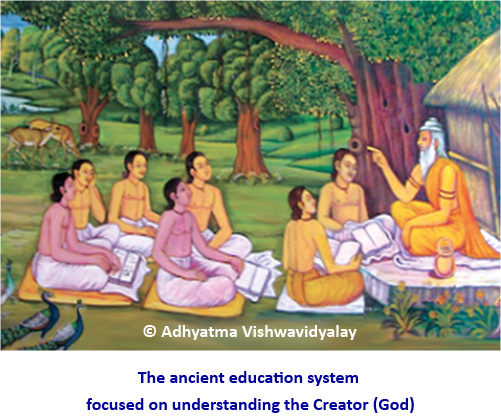
How did the Students Learn in Ancient India?

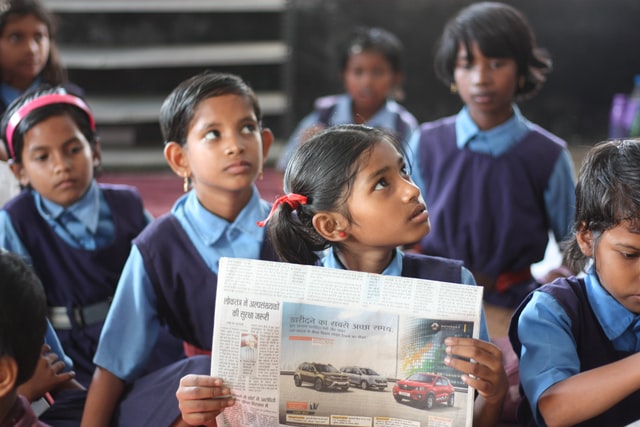
The pupils in ancient India were also taught by teachers, but quite differently. This ancient indian education system is very impressive and we should learn about it.

https://www.spiritual.university/wp-content/uploads/sites/21/2014/12/Ancient-education-system1.jpg

Majorly there were two education systems in ancient India – Vedic and Buddhist. The Vedic system revolved around the Vedas, Vedangas and Upanishads and they were taught in sanskrit, while the Buddhist system preached the thoughts of the major Buddhist schools and they were taught in Pali. 

Education in ancient India was very different from the rest of the world back then. A child would leave his home to get an education, a child had to leave home and live with a teacher in a gurukul for the entire duration of his studies. No fee was charged for education; in fact, the teacher took care of everything, including food, clothing and housing. According to this system,  even if a child was interested in acquiring philosophical knowledge, he would still have to do some manual work every day along with debates and discussions.

Education for women was quite important in ancient India. Women were trained in housekeeping, as well as in dancing and music. Girls also had to conduct the Upanayana ceremony. Vedas and Vedangas were taught to women, too, but were limited to religious songs and poems necessary for rituals. Some notable Vedic and Upanishad women scholars were Apala, Lopamudra, Gargi and Maitreyi.

The teacher used to ask some students to sit in groups and then they would recite the Vedas  for hours. Same verses were also taught in different tones so that it would be easier for the students to learn it. Teachers or gurus also taught separately based on the ability and the capability of the student. 

According to ancient education, there were 3 processes of learning – Sravana (listening to the truths that the guru speaks), Manana (Interpreting the meaning of the words spoken by the guru in your own words so that you can remember it for a long time.) and Nididhyasana (The complete comprehension of the truth so that he may live to it and not just remember it as a theory) To them knowledge was the realization of truth and this truth must be passed on to the next generations.

There were very popular educational institutions in India during the ancient times as well. Four of these institutions were quite prominent and known for different specializations. The University of Nalanda was famous for its Catholic and cosmopolitan character and its department of logic. It was located in the east of India. Takshashila University, in an area what is now modern-day Pakistan, was well-known across the world for its medical school and was the chief learning center in 6th century BC. Vallabhi was a very well known university in west India. It was also a famous study center that had specialized in subjects like law, medicine and economics, and had students attending from all parts of the country. Vikramshila was yet another esteemed institution, best known for Tantric Buddhism.

The ancient Indian system of education focused on the training of the mind and process of thinking. But the British rule erased this system and erected an education system that had written examinations and had scheduled classes. India has now introduced a new education policy for the betterment of students.

Mala’s new achievement: MALALA YOUSAFZAI SCHOLARSHIP ACT FOR PAKISTAN

Malala Yousafzai is a living example of bravery and resilience. The 23-year-old is well known around the world for her work as an activist to empower women. She has not only worked for the women of Pakistan but everywhere around the world. She is a female educationist and is the youngest Nobel Peace Prize, winner. 

Being the daughter of an educationalist activist, Mala was always inspired by her father’s work. In 2009, she wrote her first blog about her life during Pakistani Taliban occupation in Swat for BBC Urdu. She gained fame through interviews in print and television and was nominated for the International Children’s Peace Prize at the age of 11-12 years. 

Malala was shot in the head by an assassin in the year 2009. She was immediately taken to the Rawalpindi Institute of Cardiology in a critical condition. After the incident, Malala received an international outpour of support. The act was ordered by the Pakistani Taliban and they openly threatened her with a second attempt at her assassination. After this incident, the Pakistani Taliban was internationally denounced by governments, human rights organisations and feminist groups. 

After recovering, she became a prominent activist for the right to education. She founded the Malala Fund in 2012 and co-authored I AM MALALA with Shiza Shahid. It became an international bestseller. At the age of 17, she became the youngest-ever Nobel Prize laureate.
Ever since then, she has continuously worked for the right to education for girls.

Adding to her latest achievements, the US Congress passed the Malala Yousafzai Scholarship Act on January 1, 2021. With the passing of this act, the number of scholarships available to Pakistani women will expand. It will enable them to receive higher education under merit and needs-based programs. 

The bill has been passed by the US  Senate and will now head to the White House for the US President, Donald Trump’s sign to turn into a law. The bill requires the US Agency for International Development to award at least 50% of scholarships a Pakistan based higher education scholarship program to Pakistani women, between 2020-2022. A range of academic disciplines and the current eligibility criteria have to be taken into consideration. 

Since 2010, the USAID has awarded more than 6000 scholarships to young women to receive higher education in Pakistan. The bill further expands this program. 

A petition was signed by more than 1,000,000 people calling on the government to enrol every boy and girl in primary education. The petition was under the name “United Nations Special Envoy for Global Education”.

She was featured as one of the most influential people globally for three years, 2013, 2014 and 2015. On her 16th birthday, the UN named the day as “Malala Day”. The same day she spoke at the UN to call for worldwide access to education. It was her first public appearance since the attack.  She has received immense respect and support from everyone.

She continues to be an inspiration for thousands of girls around the world. Malala is yet to achieve a lot and improve uncountable lives. The world has a lot to learn from her. Her selfless contributions are heart-touching and never-ending.

How Did Education Help Women in India?

In India, women were not always allowed to read and write. But this changed when the Sarva Shiksha Abhiyan was launched. Now, women are learning, working and collaborating in all fields and making our nation proud.

What is Sarva Shiksha Abhiyan?

The Sarva Shiksha Abhiyan (SSA) was launched by the former prime minister of India, Shree Atal Bihari Vajpayee which aimed at compulsory education of every child  between the ages of 6 – 14 years.This programme is also an attempt to provide an opportunity for improving human capabilities to all children through provision of community owned quality education in a mission mode. It started in 2002 and SSA has been operational since 2000-2001. However, its roots go back to 1993-1994, when the District Primary Education Programme (DPEP) was launched, with an aim of achieving the objective of universal primary education. In 2018, Sarva Shiksha Abhiyan along with Rashtriya Madhyamik Shiksha Abhiyan was launched to form Samagra Shiksha Abhiyan. This Abhiyan has also assisted all children, especially a girl child to realise her true potential.

Education’s role in a women’s life

The development rate of any country depends highly on the education of all its citizens. The education of both men and women is equally important as they are the two sides of a coin. We can never develop, if we think that women do not deserve a right to education. Due to education, reforms started in many girls and women’s lives. These reforms are described below.

Women started getting equal respect by everyone. Traditionally, the women’s work in a household was only limited to washing, cooking and taking care of the family. After education, women could participate in the financial discussion of the family, they could now give advice to all the family members. Because of this men of the family have started to consider them as their equals.

The stereotypes and prejudices related to women are slowly disappearing from our society. The tradition of sati has stopped completely because now women know that their life still has a meaning without their husbands. Dowry has also stopped in India. Women are no longer considered a weight on fathers shoulders. 

Women also became aware of the laws, rights and their duty towards the nation. They also raise their voice against many issues and fight for their rights. They learn about various schemes introduced by the government. They also participate in elections and generally win by a large percentage of votes. 

They no longer stay at home. Due to a good education, many companies and offices are willingly giving them jobs. They are becoming financially independent. Women do not depend on husbands to provide them. This also has helped to increase the overall income of a poor family. The country’s defence forces have also opened up for women and they have become the pride of the family by joining the defence forces. 

The woman who started it all – Savitribai Phule

Savitribai Phule was an Indian social reformer, educationalist, and poet from Maharashtra. She established the first women school in India and became the first woman teacher of our country. She is regarded as the mother of Indian feminism.

By India Post, Government of India – [1], GODL-India, https://commons.wikimedia.org/w/index.php?curid=74738306

She worked to abolish the discrimination and unfair treatment of people based on caste and gender. She is regarded as an important figure of the social reform movement in Maharashtra.  Savitribai’s birthdate, 3 January, is celebrated as Balika Din in the whole of Maharashtra, especially in Girl’s Schools. She is an inspiration for all the women of India.

How can Education Change the World?

Former president of South Africa, Nelson Mandela had quoted- Education is the most powerful weapon which you can use to change the world. Most of the people cannot fully understand the role that education plays in our society.

Role of education in our life

Here are some reasons explaining the role of education.

Education helps us to express our views and opinions. It helps us to understand and elaborate our opinions on various complex topics. It assists us to explain our point of view in the topics which have no clear answer. We can share information and have conversations efficiently and aptly.

The knowledge acquired by education influences us to broaden the boundary of our thoughts. This makes us creative and productive. It aids us in thinking out of the box. Literate people are more likely to think before they act and hence avert bad decisions. Good and creative thoughts built a confident and lively individual.

Education is not just about books and writing, it develops our character. We learn to respect, help and be kind to everyone. We become aware of gender inequality, racism and other discriminations and help the nation to overcome all these issues. A good character is what makes a person dignified amongst all.

Education system brings out the hidden talent of the student and helps in nurturing it and giving it the right direction. The teachers focus on personality development of students through conducting activities like extempore, debate, speech, singing, dancing, drawing etc. Education brings out tomorrow’s leaders and leaders shape the future of society, nation and the world.

It also helps us to face difficult situations in life. An educated individual is always prepared to cope with unpredictable situations like a loss, a shock, a conflict and an emergency. We learn that this is a part of life and we should move on. The ups and downs make our life’s journey incredible and unforgettable.

We learn about the various phenomena happening in the world and space. We learn about machines, plants, our own bodies, forests, animals, various scientists and their experiments, authors, poets, famous places and so much more. This makes us aware of the beauty of nature and the universe.

We get many more job opportunities when we are educated and get a good income and become more successful due to immense knowledge. There may be a range of perspectives on the best way to move our economy forward, but one element essential to any answer is education for everyone.

More the education in a country, higher the literacy rate. It is observed that countries which have high literacy rates have lower percentages of poor people. Education assists to alleviate poverty to a huge extent. This is the reason why governments of various countries stress upon educating everyone.

A tool to change the world

Education is a way to change life. It builds a character of a person and brings out and nurtures the hidden talent and skills of the individual. It is observed that educated people are less likely to resolve a conflict through the means of violence. With such great impacts of education in our society, everyone has the right to get access to education. Thus, education creates a tranquil atmosphere in the world and indeed, education is the weapon that can change the world.

NEW EDUCATION POLICY 2020, THE FUTURE OF EDUCATION SYSTEM

“The object of education is to prepare the young to educate themselves throughout their lives.”

Following a long 34-year era, On July 28, 2020, the Union Cabinet of India approved the National Education Policy (NEP), implementing drastic reforms in schooling and higher education. Through more than 50 months of consultations and seminars, the Indian government consolidated input from 2.5 lakh village-level stakeholders to two national parliamentary level committees. Let’s have a glance at how these alterations will impact the learners and learning institutions:

Sketch of What the NEP Covers

The four-part National Education Policy covers school education in addition to higher education. Other primary areas of focus’ are adult education, the promotion of Indian languages and online education; and ‘Making it happen‘, which addresses the implementation of the policy. The policy focuses on the revision of the curriculum in school education, a decrease in the syllabus to maintain “core fundamentals” and a focus on “experiential learning and critical reasoning. For example, for different kinds of enrichment events involving arts, sports, and vocational crafts, bag less days will be promoted during the year.

Digital and Comprehensive, Futuristic and Indigenous

Under NEP 2020, there will be no rigid separations between arts and sciences, between curricular and extra-curricular activities, between vocational and academic streams. Students can select subjects of their liking across the streams. Vocational education will start in schools from the 6th grade and will include internships. NRF will be set up soon and will look after the support, mentoring and building of ‘research quality’ in India.

The NRF seeks to support researchers in India who work across streams. NRF will finance research projects across four major disciplines: science; technology; social sciences; and arts and humanities, in order to incorporate non-scientific research disciplines into its area.

How Different it is from The Past?

Some of the NEP 2020’s main highlights are a single authority for institutions of higher education, various entrances and exits choices for degree courses, cessation of M.Phil courses, low-stakes board exams, general university entrance exams. The New Education Policy would bring a range of significant changes, including the establishment of campuses in India by top international universities, a higher percentage of students receiving vocational education and a step towards institutions such as IITs turning multi-disciplinary This policy represents a breakthrough for India’s education system, which will undoubtedly make India an enticing higher education destination worldwide.

Subtle Misfires

A long-term idea of far-reaching effect is spelt out by the Current Education Policy (NEP) and will turn potential problems into opportunities by developing a quality education system. Of-courses, with changes, there come a few hits and misses. For instance, the formation of Academic Bank of Credit to store academic credits received from various HEIs digitally so that they can be counted for the final degree earned is welcomed but how will it bridge the current glaring digital divide prior? Furthermore, funding linked to states’ performance will result in low-income and low-performing states being strapped for potential central funding, resulting in more stratification.

Call for Efficient Execution

In view of the current educational regime, the NEP is a significant and progressive shift in the growth of India’s educational landscape. The NEP is more student-centred, allowing students the freedom to follow their passion and developing their skills so that they can become more employable. All in all, for its efficient and time-bound implementation, a holistic approach is needed from all stakeholders.

Are online classes being able to replace traditional classrooms?

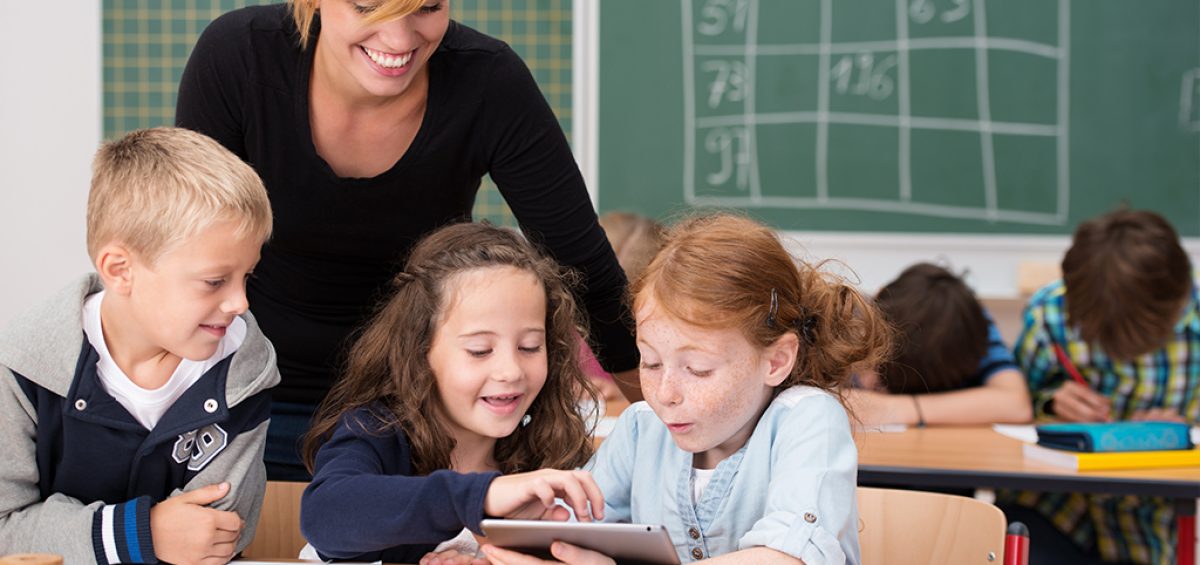
With the rise of the pandemic and the extended lockdown, educational institutions have been prompted to shift towards online teaching. While initially digital classrooms seem to be a great alternative, whether it can successfully replace traditional classroom teaching is a question yet to be answered. Online teaching has also posed a threat to students belonging to the economically backward sections of the society. In a country like India, a great percentage of students do not have the access to such means or find it difficult to avail those options.

Photo by August de Richelieu on Pexels.com

According to survey findings there is a noticeable change in behavior and habits following the forced lockdown among the school goers. The sleep cycle and sleeping pattern of nearly 50 per cent children have been disturbed. It also indicates that 13 per cent of children have no regular pattern of sleeping. As a result, 67 per cent of parents think that their child’s screen time has gone up by at least 50 per cent during the lockdown. Increased screen time is known to severely affect concentration levels and leading to insomnia and other sleep disorders. The fear of pandemic has affected children in the worst way, nearly 40 per cent of the children who were surveyed, have been known to have mental health and unaddressed anxiety issues.

Schools and Colleges have set timetable in such a way so that there are breaks in between classes but because of network connectivity issues, students have started logging in earlier, which have lessened the break times. A teacher said in an interview, “In the first month, things were fine but with time students are losing interest and a kind of boredom is setting in even for the bright kids. For students in senior classes or those who will appear for board exams there is pressure from teachers and parents which is taxing.” After attending classes online, many students are also sitting for online tuition or extracurricular activity classes.

Photo by Andrea Piacquadio on Pexels.com

Teachers of many schools have reported that students have become “more subdued” in class and their energy levels have decreased than before. According to psychiatrists and teachers, months of being inside and attending classes from within the screen has made students “fatigued” and “demotivated.” Even students who are academically strong have not been responding in class like before, teachers said. They have observed that the “naughty and mischievous” ones who would always be up to some mischief in classrooms have become “quiet and subdued” during online classes.

Psychiatrist Jai Ranjan Ram said to a newspaper, “Teachers are trying but online classes are not the same as what school was for children. No wonder they are feeling demotivated and fatigued. They have to attend continuous classes on the screen, at times not on laptops but on phones. All this while there is monotony of the same environment. It’s difficult to maintain a sense of well-being. In an online class the nuances of non-verbal communication are completely lost.”

Photo by energepic.com on Pexels.com

Sneha Priya S, Co-Founder & CEO of SP Robotic Works, has said, “Covid has proven to be the turnstile for education in India. The current situation has unearthed the immense potential of platforms with experiential and interactive learning which engage children in practical tasks and logical reasoning.”

In a physical classroom, students and teachers would even discuss things not related to academics and eagerly share their experiences. While there are downsides, there are also some positive aspects to it. Educational institutions have been closed for months at a stretch. With online classes there is the possibility to catch up with studies. Many students feel that at least in an online mode there is some form of interaction which helps them in these trying times. Online classes have made possible for students and teachers to get back to their routines within safe conditions. They also provide students with something to look forward to everyday. But amidst the current social conditions, students long to go back to their campuses. As we adjust to the ‘new normal’ many young people who are at the beginning of their career are also uncertain of what challenges they might face in the future.

IIT students watch their 3D avatars get degrees as convocations go digital amid lockdown

a group of people standing in front of a crowd

New Delhi: The students’ names were called out and they walked on to the stage, where the director stood waiting to hand them their degrees. The director delivered his traditional address too. The ceremony had all the trappings of a regular convocation, but it was actually just the closest-possible alternative IITs could organise for students inspite of pandemic.

Final-year IIT students in Bombay and Gandhinagar — robbed of their precious last few months in college, like thousands of others, but covid 19 lockdown — found some measure of solace Sunday as they were “handed out” their degrees in a live animation ceremony.

The participants were 3D avatars of the actual students and the ceremony was beamed live to their computers. And it created quite a buzz among students, who took to social media to post glimpses from the ceremony. 

“Even in online mode, the institute made sure to retain the feeling of the graduation ceremony for its students, right from the academic procession by the faculty members to invocation, Convocation addresses by the director and the chief guest, award of degrees and medals to their digital self, and convocation pledge followed by individual congratulatory messages from the IIT faculty and staff in various Indian languages,” a statement from IIT-Gandhinagar said. “The entire event was streamed online on IIT’s YouTube channel and Facebook page.” 

4 Tips for Effective IELTS Preparation

To migrate or study in English speaking nations, one needs to give an IELTS test. The International English Language Testing System (IELTS) assesses the person’s ability to speak, write, listen, and read in English. The test is designed to understand how you will use English in your daily life such as in university, workplace, or other social situations.

Before providing the tips on how to do the preparation, here is the breakdown of the types of IELTS test. There are two types: Academic and General. The IELTS Academic test is for those willing to pursue undergraduate or post-graduation or join a professional organization in an English-speaking nation. Second, the IELTS General Training test is for those who want to train or study at below degree level, to work, or to emigrate.

The formats of these two tests are a bit different, but the test assessment will still be on four skills: Reading, Listening, Writing, and Speaking.

Reading Test: This will include a wide range of reading skills such as attention to detail, a general sense of the passage, meaning derived from it, understanding of writer’s opinions, attitudes, and how will you understand the development of the argument.

Listening Test: It assesses how well you recognize opinions, attitudes, the purpose of the speaker, and also factual information and general ideas.

Writing Test: The Writing test is designed to measure the wide range of writing skills including grammar, vocabulary, how you can write responses, organize ideas, and recognize mistakes.

Speaking Test: The IELTS Speaking Test assesses how fluently and accurately you communicate in English. You can be asked to speak on various topics and express your opinions.

Getting back on how to crack the IELTS exam, just like any other test IELTS to needs some preparation. These four tips can help you ace the IELTS exam.

  • First and foremost, Read! Read! Read! Whether it’s a book, newspaper, magazine, or any written material. While reading, always have a credible English-English dictionary with you. This way you will work out the meanings of the new words making sure you don’t translate back to your language. You can also read an English newspaper every morning and listen to English news channels. It will enhance your reading and listening skills as well as keep you updated about the happenings in the world. Sounds good?
  • Improve your vocabulary! The more words you are exposed to, better will be your vocabulary. Jot down the words you have heard recently or you don’t know and highlight them with a marker. Check out its meaning in the dictionary and then start putting these words into daily speech. Using new words frequently will help in making your English fluent. As a fact, it takes from 10 to 20 repetitions to make a word part of your daily speech. Do see its pronunciation online if not sure. Speak those words while talking to your parents, friends, or somebody on call. This will increase your confidence and you will be well versed on the day of your exam.
  • Listen to English radio, shows, or news channels. After that try to write them down and analyze. Also with that, separately write words or sentences that were appealing to you. Use them while you write essays or speak. Don’t watch videos online since you can pause or rewind them. This won’t help as it will break your flow of listening. Hear it once only. After you are done repeat whatever you recall from the show, use stress and intonation appropriately. Make sure you record it so that you can find out your mistakes and improve accordingly.
  • So far whatever words you have learned, phrase them into sentences and then into paragraphs. While writing always set a timer. This will keep you at pace and improve your speed during the exam. Check for comma mistakes, full stop, and grammar. See-through the sample papers and find out what is the word limit given in the writing paper. Accordingly, write if say the set limit is 200 words don’t write just 150 words. This will lead to losing marks. Generally, a person is ok reading, speaking, and listening but they have a hard time writing, in that case, while practicing start with your favorite topic. Start with as basic as possible. Suppose you like chocolate ice cream, write on that. Sooner or later, you will get used to and can start with difficult topics. When you plan your essay, always have some spare time in the end to check your work.

Taking the IELTS test can be stressful so don’t forget to put these helpful tips. It will equip you to be ready for the exam. Commit and practice thoroughly. With this, you’ll feel more confident and be able to tackle the test and get the desired score.


College and University Admissions 2020

Students are very worried about their careers as all admission procedures have been delayed due to the Coronavirus pandemic. Many have expressed concerns over the delay and cancellation of exams for they might lose an academic year. Final year students are suffering the worst. Many students of intermediate years in have started their classes in online mode for now.  

Delhi University has scheduled its entrance tests for admission to 10 undergraduate and 86 masters and MPhil/PhD programmes from the 6th of September. The exams will be computer based and will be conducted by the National Testing Agency. They will take place from September 6 to 11 in three slots from 8 am. There will be 24 centers across the country. 1.47 lakh students have applied to the masters courses, and 21,699 students have applied for MPhil and PhD programmes. The undergraduate course entrance tests will be held for 3 management courses, journalism, education and a few specialised disciplines. 

Students are also worried about sitting for exams in this condition. There is the issue of social distancing and also wearing a mask, gloves and shield for 2 hours while appearing for an exam is quite taxing. The centres are located in specific cities so there is also an issue about travel restrictions and hotel accomodation. Some exam dates have also coincided with others as DU’s joint admission test for management courses and Common Law Admission Test (CLAT) is supposed to take place on the same day that is September 7. There is another problem about the masters aspirants as most of them have still not finished with their final year exams and yet to receive the degree. Students are waiting for the University to make an announcement and provide some clarification regarding the issue. JNUSU president Aishee Ghosh has expressed concern over the issue of students who are badly affected by floods and the pandemic. Many of them might not be in a position to appear for these exams in a specific centre.  

Jamia Milia Islamia has extended the dates of application for admission. The last date to fill the online application form has been extended to September 14. Students seeking admissions in any undergraduate course at the university can apply at the official website, jmi.ac.in or jmicoe.in.  

The applications for admissions under the sports category will end on September 16. This is applicable for students who play aports at the national, state, regional or university levels. Under the sports quota, students will be enrolled in both undergraduate and postgraduate courses. Sports including boxing, badminton, athletics, cricket, hockey, shooting, football, tennis, table tennis, volleyball, and wrestling will be accepted for the courses. 

The Jamia Milia Islamia University has been ranked amonf the top universities across india. Over 21,000 students are enrolled across 270 programmes in Jamia. This year, it has introduced 19 new courses including two MTech programmes, two MSc, and one MLib course. Among the undergraduate courses BSc aeronautics, four BVov courses, diploma in hospitality management, and three postgraduate diploma courses including entrepreneurship, innovation and design thinking.  

New sessions across colleges and universities have all been postponed due to the pandemic. The application deadline has been extended for almost all courses including free UPSC tutoring classes that are made to support candidates belonging to minorities, SC, ST community, and women as well as NRI admissions.  

NEP 2020

An analysis of the National Educational Policy formulated by the Union Cabinet.

The pace at which the world is advancing is simply magnificent, promising a totally different way of human lifestyle within the next 30 odd years. Showing even promises of human life on a second planet, to cater to the present needs. 

This paves the need to adapt to such changes. To be a catalyst, rather than a fly on the windshield in the process.

The rapid advancements in most sectors aided by technology has only the human element slogging it in most developing and underdeveloped nations. But most developed nations showing promises of being able to provide to such changes, make them stand out as model nations.

It’s quite ironic, Us, humans, slowing down the process of advancements; the very reason behind such advancements and the very factor slowing it down.

Modern problems do require modern solutions. 

A brief analysis of the incompetency of ours, shows traces of troubleshooting in the education system. 

To quote the father of the nation would be the ideal solution to the current crisis. The Mahatma had signified the importance of education in the pre-independence era and post too; the relevance of it, in the present century shows evidence of where we’ve fell short in our rat race. His overviews require praise for looking out like a true father.

The importance of education in the thoughts of people and society is quite significant and needs no more emphasis. But still the turn over is indeed minimal.

It’s more of a necessity than a luxury, in the pursuit of overall development as an individual and the development of the nation. “A journey of a thousand miles begins with a single step.”

The Union Cabinet by the end of the last month announced a New policy governing the education system in India. Promising overhaul changes both in the school and higher education system, to cater to the needs  of the twenty first century. 

A change much needed to be precise.

It’s still a policy and not a law, as the Union has the mammoth task of passing it, as after all India is a federal state and education being a subject on the concurrent list, requires forward of all the states and Union Territories.

Rather than beating around the bush more, I’ll get to the point of emphasises on the highly ambitious New Education Policy, which was formulated only after a whopping gap of 34 years.

The National policy on education was last formulated in 1986 and modified in 1992. It took the nation more than a few decades to propose a change in one of the most important sectors.

The National Education Policy proposes radical changes to the educational system of India. The norms of the policy even makes it sound ‘too good to be true’, with the promise of implementing all the proposed, heavily criticised policy by 2040.

However, most proposed comprehensive changes like completely redefining the age-old school curriculum structure of 10+2 into a structure of 5+3+3+4 has been received well.

The new school structure puts emphasis on formative education via early childhood education with an overview to implement absolute literacy and numeracy education(ability to understand basic terms and do basic calculations) by the end of the second grade.

The reports of low literacy and numeracy rates among students of elementary schools had pushed the policy formulators towards universal implementation by 2025.

The need of ensuring proper nutrition and health of students have also been targeted, with the implementation of mandatory breakfasts and midday meals in schools.

With a strive to impart quality education, the pupil-teacher ratio has been set at 30:1 and a lesser ratio for socially backward areas with a view to eradicate the socio-economic differences.

As a step in the right direction, provisions for vocational education and internships from grade 6th with a restructuring of the curriculum to inculcate critical thinking and inquiry based, discovery based learning has also been put forward.

The need for education via mother tongue till grade five has received much friction from all sides. The often negligence of regional languages and mother tongue had made the Union consider it. 

Experts from the educational field has however resented such a decision hinting that in a Country like ours with high mobility, there’s a greater need for universal mediums in the education provided in schools. Making the students who’d have to travel for reasons outside their control adversely affected by the same.

The economically constrained sections of the society has also made their voice heard, stating the inadequacy of funds from their sides, would put their children at a disadvantage compared to the children of well off families, who could afford multiple tuitions to learn English.  (Sighting the universal application)

A crown jewel in the policy, is the widened scope of universal education from transforming the 6-14 years to 3-18 years of students, while incorporating further lifelong learning habits.

The policy of a multi-disciplinary approach in higher education is also mentioned, but a foolproof framework is what it lacks, as of now.

The policy also incorporates aspirational moves towards doing away with the need for coaching class trends for higher education and to reduce the hysteria towards private english medium schools by bridging the adversities faced by the public schools.

With regards to higher education, the union focuses on allowing prestigious foreign universities to set up shop in the country and to also to aid the setting up of glamorous Indian higher education institutions in other countries. But the policy fails to make promises to further expand the number of premium institutions like IIT’s on Indian soils.

Even though the experts have welcomed most policy reforms with both hands, they’ve also presented their fair share of doubts regarding the implementation of the nuances of the policy, sighting the lack of political will towards public education and fiscal burden upon the government.

The suggestion of educational expenditure to be bumped upto 6% of GDP has been doing the rounds and has been neglected by consecutive governments. The economic slowdown caused by the pandemic also raises further doubts of the finances, also considering the surge in health and defence sector expenditures in the following years.

The policy on paper encourages the need for critical thinking, holistic learning and increase of campus activities. However, the attacks on free and critical thinkers on campuses in the recent past, raises obvious red flags.

Sighting the surge in the number of educated unemployeds and the mishap regarding the imparting of appropriate skillsets to match the employment opportunities, overhaul have been suggested regarding the formulation of 4 year undergrads shows great promise and putting an end to MPhil programs. The union also aims to restrict the functions of the UGC.

Even though the overall policy has the potential to transform the nation into a status of a powerhouse of knowledge, subsequent formulation of clear and foolproof plans which wouldn’t aggrieve any promises of tomorrow would be the ideal path to tread upon.

ONLINE LEARNING-PROS V/S CONS

The Majestic year 2020 is marked by two major events.One is the Onset of the worst pandemic that the entire world is reeling under and the other as the title suggests is Online learning!

The Use of Online Learning or E Learning has skyrocketed in the recent times as the only mode of education in a social distancing setup.Indeed it is a necessity as education cannot be put to rest halting the progress of millions of students.As a coin has two sides,similarly online form of education has it’s own perks and drawbacks.So lets find out more!

Online schooling is a popular alternative to attending a brick-and-mortar college or university. Though online students don’t get the face-to-face experiences of a typical on-campus student, there are many benefits and advantages to online learning, also known as distance learning or e-learning.

While not every program or school imaginable has an online option, a large number of them do, and many programs are nationally or regionally accredited. Students can learn through online lectures, projects and discussions. Online degree programs are available at every level, from certificates to doctorates.

Owing to the Covid situation,organisations that used to vouch for traditional methods of education are now radically shifting towards online education because there is no other alternative.Earlier online education used to be an alternative, now it is the only choice for those who want to desperately continue their education.

When Online Education is the new reality,it is very essential to keep in mind it’s advantages and disadvantages to take maximum benefits out of it and also minimize stress levels.

Advantages

-Convenient Learning:It can be undertaken anywhere ranging from a tiny corner in the living room to a study table in the bedroom and without a particular dress code(still modest dressing is expected).

-No Infrastructure:No physical infrastructure such as building,classrooms and benches are required for online education.
-Less Travelling: In Online classes there is no need to undertake strenuous travelling routines as students can attend the classes from the comfort of their homes.
-Recordings:Unlike the Traditional Systems,Online Education system provides an option of class recording and hence students can re watch the class recordings to make concepts clear.

-Virtual Reality(VR):Teachers in the online mode can make use of Virtual Reality Techniques to make students understand complex topics in an interesting way.

disadvantages

-Motivation:The laid back nature of the online classes do not provide much motivation to the students.Students do not take online classes to be as serious as classroom and thus do not pay attention.

-Lack of Concrete Assessments:Online mode of education has so far not been promising for people with theoretical subjects as it is difficult to conduct heavy exams here.

-No practicals:People Who study medicine,chemistry and physics an understand how bad this can be!There are certain subjects which cannot be simply taught,practicals and experiments have to be performed to further the understanding.Online education does not support this.

-Stress on health:The negative impacts of online mode of education on the health of the students is indisputable!Several students have complained of migraines,back aches,eye pain and so forth.Students psychologically too have not been able to cope up with the sudden shift and are suffering.

Thus,Online mode of education is a tricky one and should be suitable for certain conditions,Since it is the only alternative now, educationists and policy makers should study the pros and cons to make amends in the present online education structure to suit the demands of students.We have to always remember that Education is fruitful only when it reaches learners effectively!

If you liked the article,do give it a like.

Thankyou!

Stay Knowledgeable!

New Education Policy

During this period significant changes have taken place in our country, society economy, and the world at large. It is in this context that the education sector needs to gear itself towards the demands of the 21st Century and the needs of the people and the country. Quality, innovation and research will be the pillars on which India will become a knowledge super power. Clearly, a new Education Policy is needed.

The Government had initiated the process of formulating a New Education Policy through the consultation process for an inclusive, participatory and holistic approach, which takes into consideration expert opinions, field experiences, empirical research, stakeholder feedback, as well as lessons learned from best practices. In a significant shift from the 1986 policy, which pushed for a 10+2 structure of school education, the newNEP pitches for a “5+3+3+4” design corresponding to the age groups 3-8 years (foundational stage), 8-11 (preparatory), 11-14 (middle), and 14-18 (secondary).

The New Education Policy 2020 has been approved by the Union Cabinet and has renamed the HRD Ministry as Education Ministry. Also, there will be a single regulator for all the higher education and MPhil to be discontinued. During the announcement of the New Education Policy, Prakash Javadekar informed that the main agenda behind introducing the same is the need of the hour and it will prepare the students to face the challenges of the new world. The NEP will promote skill-based education and enhance the practical skills of the students.

  • By 2030, one large multidisciplinary college in every district– By 2030, all higher education institutions will become multidisciplinary institutions and each of them will at least have an enrollment of 3,00 students. By 2030, be at least one large multidisciplinary HEI in or near every district. The aim is to increase the Gross Enrolment Ratio in higher education including vocational education from 26.3% (2018) to 50% by 2035.
  • Music, arts and literature to be taught in all colleges: Departments in Languages, Literature, Music, Philosophy, Indology, Art, Dance, Theatre, Education, Mathematics, Statistics, Pure and Applied Sciences, Sociology, Economics, Sports, Translation, and Interpretation, etc. will be introduced in all higher education institutions.
  • M.Phil to be discontinued: According to the NEP 2020, M.Phil will be discontinued. The details regarding the same will be released soon.
  • Sanksrit will be mainstreamed- It is time that Sanskrit will be mainstreamed with a strong offering in schools and three language formula will be adopted in higher education.
  • Vocational Skills to be Taught: Every student will be taught a vocational skill of his/ her choice by the time they complete their schooling. Students will also be taught coding from Class VI. 
  • No Rigid Separation Between Arts and Science Curriculum: There will not be a huge difference between the curriculum of these two streams and all subjects like Music will be taught. 
  • Internships Will be Included from Class VI: From 6th grade, candidates will have to do internships of 10 days with local trades or crafts. 
  • IITs to follow Holistic approach: IITs will have to follow a more holistic approach and multidisciplinary education with more arts and humanities as per the New Education Policy
  • Academic Bank of Credit to be established: An Academic Bank of Credit (ABC) will be set up which will digitally store the academic credits earned. The 4-year course may also lead to a degree ‘with Research’ if the student completes a rigorous research project within the respective time frame.
  • Importance to Practical Assignments, Skill Development:  The New Education Policy lays emphasis on practical knowledge and skill development which will begin from class 6th.
  • Single Common Entrance Exam for all Colleges: According to the NEP 2020, there will be a single common entrance exam for admission to all higher education institutes which will be held by NTA. The entrance exam will be optional and not mandatory.
  • New System of Education: The 10+2 system will be divided into 5+3+3+4 format. The New Education Policy has changed the school education system to 5+3+3+4 format. This means the first five years of the school will comprise of the foundation stage including three years of pre-primary school and classes 1 and class 2. The next three years will be divided into a preparatory stage (classes 3 to 5), three years of middle stage (classes 6 to 8), and four years of secondary stage (classes 9 to 12). Schools will not have any rigid formation of streams of arts, commerce, science, students can take up whichever courses they want.
  • Ramp Up Digital Learning: To ramp up Digital Learning a National Education Technology Forum NETF will be created and e-courses in 8 regional languages will be uploaded on the same.
  • Multiple Entry and Exit System: With the help of the academic bank of credits, multiple entries and exit system will be introduced in the higher education sector. This will allow students to take a sabbatical and then join back their studies after a period of time, without losing any credits. Students will also be free to choose major and minor subjects for their degree. 
  • India to be Promoted as Foreign Study Destination: Every institution will have an International Students Office to host foreign students. Colleges will be promoted to provide premium education at affordable costs.
  • Foreign Colleges Can Set Up Colleges in India:Top 100 Foreign Colleges will be allowed to set up their campuses in India as per NEP. They will be given special dispensation and regulations to set up the campuses.
  • Expenditure on Education: The expenditure on education will be changed to 6 per cent of the total GDP, as opposed to earlier, which was 4 per cent of the GDP. Both State, as well as Central Government, will be working together on the expenditure. 
  • The New Education Policy will give importance to students’ practical knowledge instead of just pushing them towards rote learning.
  • It will help students to develop scientific temper from a young age.
  • The NEP aims to make it easier to set up new quality of higher educational institutes which will be at par with the global standards.
  • Since NEP will make it easier for foreign colleges to set up their campuses here many students who are unable to go abroad due to multiple reasons will be able to experience it and get global exposure.
  • This will promote value-based education

Bulimia-An Eating Disorder

In today’s instagram world,People especially adolescents are getting image and body conscious.They look at the perfect bodies of celebrities and aspire to be like them.In this aspiration,they are psychologically and physically wounded.Most of such people experience eating disorders where in they undergo extreme changes in their eating and exercise habits.Ultimately they damage themselves.

So,in today’s blog lets look at one of the eating disorders called Bulimia Nervosa,it’s causes and it’s impacts.Let’s get started.

Bulimia nervosa is an eating disorder characterized by episodes of binge eating—consuming a lot of food quickly—followed by compensatory behavior, most commonly vomiting or “purging.” People who are bulimic often feel a lack of control over their eating. A bulimic can consume as many as 3,400 calories in little more than an hour and as many as 20,000 calories in eight hours.

People with bulimia often know they have a problem and are afraid of their inability to stop eating. Bingeing is then followed by purging — namely, self-induced vomiting or the abuse of diuretics or laxatives. Bingeing and purging are often performed in secret, with feelings of shame alternating with relief.

The bingeing and purging cycle is usually repeated several times a week. As with anorexia, people with bulimia often have coexisting psychological illnesses, such as depression, anxiety, and substance abuse problems. Many physical dysfunctions result from the purging, including electrolyte imbalances, gastrointestinal troubles, and dental problems.

An estimated one to four percent of females have bulimia nervosa during their lifetime. The prevalence in males is unknown, but bulimia nervosa is far less common in males than females. Most cases begin in the late teens and early 20s, but can go undetected until the 30s or 40s.

SYMPTOMS

Bulimia signs and symptoms may include:

  • Being preoccupied with your body shape and weight
  • Living in fear of gaining weight
  • Repeated episodes of eating abnormally large amounts of food in one sitting
  • Feeling a loss of control during bingeing — like you can’t stop eating or can’t control what you eat
  • Forcing yourself to vomit or exercising too much to keep from gaining weight after bingeing
  • Using laxatives, diuretics or enemas after eating when they’re not needed
  • Fasting, restricting calories or avoiding certain foods between binges
  • Using dietary supplements or herbal products excessively for weight loss

CAUSES

Exact causes are not completely known and are believed to complex.Hence there is no single known cause of bulimia, but there are some factors that may play a part,such as:

  • Culture:As in strict body expectations:Slim and trim girls wanted for marriage in India.
  • Families:Constant pressure and criticism from parents on looks of children
  • Life changes or stressful events: can trigger bulimia.
  • Personality traits: Those with bulimia may have low self-esteem and feel hopeless.
  • Biology.:Genes, hormones, and other biological factors may contribute to development of bulimia.

Impact

Bulimia has a great impact on the individual and can lead to following complications:

  • Negative self-esteem and problems with relationships and social functioning
  • Dehydration leading to kidney failure
  • Heart problems
  • Severe tooth decay and gum disease
  • Absent or irregular periods in females
  • Digestive problems
  • Anxiety, depression, personality disorders or bipolar disorder
  • Misuse of alcohol or drugs
  • Self-injury and suicidal thoughts.

Management

If left untreated,bulimia can create major complications in life as mentioned above.Hence if you see your loved ones experiencing symptoms of bulimia,support them and console them.If the symptoms are unbearable,immediately consult a doctor and psychologist who will be able to help the patient successfully.

Please spread empathy and kindness.Acceptance and kindness can prevent bulimia in such insecure people.Every difficulty can be defeated with empathy,patience and willingness to improve and come out.

If you all found the article useful,do give it a like.

Thankyou!

Stay Kind!

New Education Policy 2020

Constitutional Provisions:
Part IV of Indian Constitution, Article 45 and Article 39 (f) of Directive Principles of State Policy (DPSP), has a provision for state-funded as well as equitable and accessible education.

The 42nd Amendment to the Constitution in 1976 moved education from the State to the Concurrent List.

The education policies by the Central government provides a broad direction and state governments are expected to follow it. But it is not mandatory, for instance Tamil Nadu does not follow the three-language formula prescribed by the first education policy in 1968.

The 86th Amendment in 2002 made education an enforceable right under Article 21-A.

Related Laws:
Right To Education (RTE) Act, 2009 aims to provide primary education to all children aged 6 to 14 years and enforces education as a Fundamental Right.

It also mandates 25% reservation for disadvantaged sections of the society where disadvantaged groups

Government Initiatives:
Sarva Shiksha Abhiyan, Mid Day Meal,  Navodaya Vidyalayas (NVS schools), Kendriya Vidyalayas (KV schools) and use of IT in education are a result of the NEP of 1986.

Recently, the Union Cabinet has approved the new National Education Policy (NEP), 2020 with an aim to introduce several changes in the Indian education system – from the school to college level.

The NEP 2020 aims at making “India a global knowledge superpower”.

The Cabinet has also approved the renaming of the Ministry of Human Resource Development to the Ministry of Education.

The NEP cleared by the Cabinet is only the third major revamp of the framework of education in India since independence.
The two earlier education policies were brought in 1968 and 1986.

School Education:

  • Universalization of education from preschool to secondary level with 100% Gross Enrolment Ratio (GER) in school education by 2030.
  • To bring 2 crore out of school children back into the mainstream through an open schooling system.
  • The current 10+2 system to be replaced by a new 5+3+3+4 curricular structure corresponding to ages 3-8, 8-11, 11-14, and 14-18 years respectively.
  • It will bring the uncovered age group of 3-6 years under school curriculum, which has been recognized globally as the crucial stage for development of mental faculties of a child.
  • It will also have 12 years of schooling with three years of Anganwadi/ pre schooling.
  • Class 10 and 12 board examinations to be made easier, to test core competencies rather than memorised facts, with all students allowed to take the exam twice.
  • School governance is set to change, with a new accreditation framework and an independent authority to regulate both public and private schools.
  • Emphasis on Foundational Literacy and Numeracy, no rigid separation between academic streams, extracurricular, vocational streams in schools.
  • Vocational Education to start from Class 6 with Internships.
  • Teaching up to at least Grade 5 to be in mother tongue/regional language. No language will be imposed on any student.
  • Assessment reforms with 360 degree Holistic Progress Card, tracking Student Progress for achieving Learning Outcomes
  • A new and comprehensive National Curriculum Framework for Teacher Education (NCFTE) 2021, will be formulated by the National Council for Teacher Education (NCTE) in consultation with National Council of Educational Research and Training (NCERT)
    By 2030, the minimum degree qualification for teaching will be a 4-year integrated B.Ed. degree.

Higher Education:

  • Gross Enrollment Ratio in higher education to be raised to 50% by 2035. Also, 3.5 crore seats to be added in higher education.
  • The current Gross Enrollment Ratio (GER) in higher education is 26.3%.
  • Holistic Undergraduate education with a flexible curriculum can be of 3 or 4 years with multiple exit options and appropriate certification within this period.
  • M.Phil courses will be discontinued and all the courses at undergraduate, postgraduate and PhD level will now be interdisciplinary.
  • Academic Bank of Credits to be established to facilitate Transfer of Credits.
  • Multidisciplinary Education and Research Universities (MERUs), at par with IITs, IIMs, to be set up as models of best multidisciplinary education of global standards in the country.
  • The National Research Foundation will be created as an apex body for fostering a strong research culture and building research capacity across higher education.
  • Higher Education Commission of India (HECI) will be set up as a single umbrella body for the entire higher education, excluding medical and legal education. Public and private higher education institutions will be governed by the same set of norms for regulation, accreditation and academic standards. Also, HECI will be having four independent verticals namely,
    National Higher Education Regulatory Council (NHERC) for regulation, General Education Council (GEC) for standard setting, Higher Education Grants Council (HEGC) for funding, National Accreditation Council (NAC) for accreditation.
  • Affiliation of colleges is to be phased out in 15 years and a stage-wise mechanism to be established for granting graded autonomy to colleges.
  • Over a period of time, every college is expected to develop into either an autonomous degree-granting College, or a constituent college of a university.

Other Changes:

  • An autonomous body, the National Educational Technology Forum (NETF), will be created to provide a platform for the free exchange of ideas on the use of technology to enhance learning, assessment, planning, administration.
  • National Assessment Centre- ‘PARAKH’ has been created to assess the students.
  • It also paves the way for foreign universities to set up campuses in India.
  • It emphasizes setting up of Gender Inclusion Fund, Special Education Zones for disadvantaged regions and groups.
  • National Institute for Pali, Persian and Prakrit, Indian Institute of Translation and Interpretation to be set up.
  • It also aims to increase the public investment in the Education sector to reach 6% of GDP at the earliest. Currently, India spends around 4.6 % of its total GDP on education.

Motivation:The background force

Why have i written this blog?why are you reading this blog?Why do you eat?Why do you love?

The answer to all of these actions is MOTIVATION!Motivation is the process that initiates, guides, and maintains goal-oriented behaviors. It is what causes you to act, whether it is reading this article, getting a glass of water to reduce thirst or reading a book to gain knowledge.So this blog will critically analyse the concept of motivation and help all of you to understand the reasons behind your actions.So lets get started!

Motivation describes the wants or needs that direct behavior toward a goal. It is an urge to behave or act in a way that will satisfy certain conditions, such as wishes, desires, or goals. Older theories of motivation stated that rational thought and reason were the guiding factors in human motivation; however, psychologists now believe that motivation may be rooted in basic impulses to optimize well-being, minimize physical pain, and maximize pleasure.

Motivation involves the biological, emotional, social, and cognitive forces that activate behavior. In everyday usage, the term “motivation” is frequently used to describe why a person does something. It is the driving force behind human actions.

So lets analyse the mechanism of motivation

Drives and motives

Motivations are commonly separated into drives and motives.

Drives are primarily biological, like thirst, hunger, sleepiness, and the need to reproduce—all of which lead us to seek out and take part in certain activities. Drives are believed to originate within a person and may not require external stimuli to encourage behavior.

Motives, on the other hand, are primarily driven by social and psychological mechanisms, such as work, family, and relationships. They include factors like praise and approval.

INtrinsic and extrinsic motivation

Motivation can be intrinsic (arising from internal factors) or extrinsic (arising from external factors).

Intrinsic:arise from within the individual, such as doing a complicated crossword puzzle purely for the personal gratification of solving a problem.

Extrinsic:arise from outside of the individual and often involve rewards such as trophies, money, social recognition, or praise.

In reality, our motivations are often a mix of both intrinsic and extrinsic factors, and the nature of the mix can change over time.Sometimes, intrinsic motivation can diminish when extrinsic motivation is given—a process known as the overjustification effect. This can lead to extinguishing the intrinsic motivation and creating a dependence on extrinsic rewards for continued performance.

Motivation v/s emotion

While motivation and emotion can be intricately linked, they are two fundamentally different things. Motivation describes the wants or needs that direct behavior toward a goal; in contrast, an emotion is a subjective state of being that we often describe as a feeling. Emotion and motivation are linked in several ways: both influence behavior and can lead us to take action, and emotion itself can act as a motivator.

The need to understand motivation

So at the end of this article,lets see what is the use of understanding the concept of motivation.Understanding motivation can:

  • Help improve the efficiency of people as they work toward goals
  • Help people take action
  • Encourage people to engage in health-oriented behaviors
  • Help people avoid unhealthy or maladaptive behaviors such as risk-taking and addiction
  • Help people feel more in control of their lives
  • Improve overall well-being and happiness

If you all liked this article,please do like it!

Thankyou!

Music Therapy

Did you ever feel that therapy involves talk by a psychologist and nothing else could come under the domain of therapy?If your answer is yes,Then you are wrong!!Well times have changed my reader~

Therapies have come a long way to incorporate other clinically approved methods such as animal assisted therapy,food therapy,aroma therapy etc.Music Therapy is one clinically developed program by psychologists to assist speedy healing of their clients.In this blog,the readers would be introduced to the world of Music therapy.So lets get started!

WHAT IS MUSIC THERAPY?

Music Therapy is the clinical and evidence-based use of music interventions to accomplish individualized goals within a therapeutic relationship by a credentialed professional who has completed an approved music therapy program.It is is an established health profession in which music is used within a therapeutic relationship to address physical, emotional, cognitive, and social needs of individuals. After assessing the strengths and needs of each client, the qualified music therapist provides the indicated treatment including creating, singing, moving to, and/or listening to music.

Through musical involvement in the therapeutic context, clients’ abilities are strengthened and transferred to other areas of their lives.This therapy also provides avenues for communication that can be helpful to those who find it difficult to express themselves in words. Research in music therapy supports its effectiveness in many areas especially emotional rehabilitation.

history

You all will be shocked to know that both world wars were the trigger that initiated the development of this therapy.During and after both World Wars, doctors and clinicians began to realize the powerful effects that music has on the healing process and requested that professional musicians be hired by the hospitals.This therapy first got officially recognized in the Michigan state university of the United States of America.Ultimately,The American Music Therapy Association (AMTA) was formed which focuses on creating more awareness about this wonderful therapy.

BENEFITS

Music therapy can benefit many individuals. The diverse nature of music means it can be applied in the treatment of concerns both physical and psychological.Since music can evoke positive emotions and improve brain health,Music therapy is said to manage and alleviate symptoms of mental health concern such as Depression, Mood issues,Anxiety,Schizophrenia,Substance abuse,Autism,Personality issues,Insomnia,Dementia etc.

In addition,Music therapy can improve the social,cognitive,emotional and motor functioning.This therapy was also effective in controlling patient’s situation in Alzheimer’s,Cancer and Hypertension.

Music therapy is frequently administered to reduce stress levels and pain perception of females in labor.This novel therapy has also been linked with improvements in self-esteem, self-concept, verbal communication, prosocial behavior, socialization skills, group cohesion, and coping skills.

Limitations

Even the most beautiful things have flaws,and so has music therapy.One of the major drawback is that this therapy cannot be used as a stand-alone therapy.The music therapy is also known as music assisted therapy implying it’s sole purpose is to assist the main therapy applied by the clinician on the client to produce fast results and relief.

Also,the music therapy like all other therapies is individualized.This is not a major drawback but should be kept in mind before going in for this option.All individuals are unique and so is their taste in music.Thus the therapist has to do additional tests to see which type of music and musical instrument works better for the client.

ALWAYS REMEMBER,WHERE WORDS FAIL,MUSIC SPEAKS…..

Thus in short we need to know that music therapy is a wonderful form of therapy which strengthens an individual and increases his/her quality of life.Choose Music for a better Life!

Do give a like,if you all found this article to be Interesting!

Thankyou!

Stay Knowledgeable!

Research As A Career Option

All of us have been taught since childhood about the importance of a 9am to 5pm corporate job.No one really speaks about research as a lucrative career.Research as a career is really very important.At one place we are delving deep into the realms of unknown findings and that too of our passion.On the other hand we could go on to add something new for our society.One also comes to know a whole lot of new things of their domain too.In addition,There are immense jobs for research fellows out there!

This Blog would unable the readers to understand what is research along with it’s Pros and Cons as a career choice.Lets get started!

Research is a process of self learning and exploring. It depends on to what extent one is involved or interested in any sort of research. Research can be done at various levels and can even be pursued as a career option. It has a very tremendous scope provided the research is an unique one and can definitely benefit the society.
Research is a science in itself. It is a process which makes you learn a new thing at every stage. As your research progresses, it shapes you and your mentality in a very positive way. There are many difficulties that one faces. But ultimately with constant efforts and the optimistic approach it definitely ends with good results.
As Every coin has two sides,a career option also has its pros and cons.Now lets critically analyse the field-

PROS

1.You have Freedom/Independence:One of the most cited reasons for choosing a research career is freedom and independence.Usually,Researchers at universities and institutes have more opportunities to design their own research, to choose their own hours, and to focus their work.This a convenient way of working.

2. You can focus on your interests:Because these research positions offer more freedom and independence, chances are your research concentrate on your areas of interest.Particularly if you are able to secure third-party funding (that is, funding awarded directly to the researcher as opposed to a university or department), you can organize your own working schedule and priorities, and choose the topics of research which are of most pressing interest to you.

3.Tenure offers stability And good compensation:Although it starts slow,Research Career is quite lucrative and stable.Senior academicians can make wages comparable to their counterparts in industry, and there are plenty of opportunities for advancement into administration and other areas.

4.You get to build a network of international relations:Researchers might work as a team within their department, or across several disciplines. Academic positions also offer a lot of opportunities for international cooperation – whether it’s through conferences, researcher-in-residence programs, or guest positions, you’ll find many reasons to travel and meet with others in your field as well as other fields

5.Contribution to the society:The contribution of researchers is the base of every industry and thus research as a field contributes immensely to the society.

CONS

1.Comparatively less pay in the beginning:As a senior tenured professor at a well-respected institution ,the research scholar will have both good job security and monetary compensation, but reaching that level can take a long time.Initially the pay might be definitely less than corporate people.

2.Pressure and competition:There’s a saying in the Research world: “publish or perish.” Although research fellows have a lot of freedom within their research fields, there is a lot of pressure both to produce publishable results and to bring in the grant money. Research might seem like a haven for intellectuals, but the reality is that researchers spend a lot of time working towards and publishing their results. This can also lead to a lot of competition between research fellows which isn’t always healthy or welcoming.Such a tedious life would require a lot of patience and balance.

3.Plagiarism:If the research articles is found to be plagiarized,it can completely destroy the academician’s reputations.In Addition,there can be legal and monetary repercussions too.

The above mentioned points under pros and cons are added to provide clear picture of the research field so that they equip themselves prior to entering this magical field.Every career has it’s own flaws and perks.Research is no different from that.Research as a career should be encouraged since childhood.Research is the base for each and every branch of study that exists and it’s career prospects should be promoted.

Do give a like,if y’all found it to be informative.

Thankyou!

Stay Knowledgeable!

Non Conventional Careers-Science Stream

Medical and Engineering are most sought after courses after 12th Science in India.Parents and the society are the major contributors to this mentality in our country. Thousands of students flock examination centers to write prestigious NEET/JEE irrespective of whether they are interested or not.

Does this mean these are the only options available to students choosing the Science Stream?The Answer is NO.In Today’s advanced world there are plethora of career and course options for students to pursue and achieve success.In this blog we look at some of the prominent and promising non conventional career options in science stream.Lets get started!

1)PSYCHOLOGY

Psychologists study the complex ways that people think, behave, feel, communicate, and perceive the world around them. Some psychologists focus on clinical work with patients, while others devote themselves to researching the nuances of psychological behavior; in any case, psychology is a vast discipline, with numerous career options to choose from. Students who complete graduate-level psychology degrees have great job opportunities. An MSc degree may lead to jobs as research and clinical assistants, while a doctorate is a necessity for those who wants to work with patients in a clinical setting and also to move into a research or an academic position. Many degree programs allow students to focus on a specialty area, including child development, abnormal psychology, counseling, social psychology, and cognition.The opportunities in research under this field are limitless.Psychology is a hot subject in developed nations like The United States and The United Kingdom where this course is sought after and valued.

2)FORENSIC SCIENCE

Forensic science is the application of scientific knowledge and methodology to criminal investigations and legal problems. Forensic Science is a multidisciplinary subject, it encompasses various fields of science such as chemistry, biology, physics, geology, psychology, social science, engineering, etc.Forensic science is used every around the world to protect public and society, to enforce criminal laws and regulations and to resolve civil problems.Various universities in India offer certificate, bachelor and master courses in Forensic Science. After the master degree is successfully completed , then the student can even go for a Doctoral Degree course in Forensic Sciences.Jobs are offered in government as well as private sectors.

3)Agricultural SCIENCES

Agriculture as a field is not just about the traditional aspects related to farming and irrigation. The focus is now shifted to various other dimensions like Horticulture, Poultry Farming, Pisciculture, Dairy Farming, Agricultural Biotechnology,Agronomy etc. Agriculture is also being commercialized as proper attention is being paid to the marketing, distribution, and packaging of its output. It’s possible to pursue a postgraduate degree programme in agriculture related subject which will broaden the scope such as specializing in agronomy, soil sciences, horticulture, plant breeding and genetics, entomology, plant pathology, animal sciences, plant biochemistry, agriculture economics, biotechnology etc. Masters in various above listed Agriculture programs is a 2-year course.This course can be taken up by a candidate who holds a BSc degree in agriculture/ horticulture/ forestry from a recognized university with some qualifying marks.Job opportunities are available both in Government as well as Private Sectors.

4)Aviation industry

The aviation sector is one of the most attractive and best-paid sectors in the economy. In India, The civil aviation industry is a larges domestic market in the economy.The commercial pilot is one the most glamorous and most rewarding job in the Aviation industry. Apart from the theoretical knowledge, a candidate must have practical knowledge to become a commercial pilot. A Commercial pilot must train to get a Commercial Pilot license in order to secure a job in the aviation sector. A commercial pilot or Ferry Pilot will have many chances of getting placed in both Governments and Private Airlines & chattered flights.The interested candidate must be fluent in English,medically fit and must have learnt Maths and Physics in High School.

5)Visual communication

Visual Communication is a combination of illustration and graphic design from a marketing perspective with great emphasis on screen-based workmanship.It involves digital marketing and business identity design , logos, animation, photography, web design, illustration, packaging design, art direction, and most degrees will also have a theory dissertation. It contains all the information to help one become a Graphic Designer, with a scope that allows to to specialize with more flexibility than a degree in design.In short, visual communication is an amazing field with unlimited growth potential. They get hefty pay.Further, with experience, your earnings are bound to increase.

These are just a few options listed from a sea of options.The aim of this blog is to make readers aware that the bucks do not stop at Engineering or Medicine.There are umpty number of career options to choose from and succeed.Everyone can not find happiness within the conventional options imposed by the society.Times are changing and so should our mentality.Students should be encouraged to follow their passion and pursue courses they want.Sky is the limit!

Do like the blog,if you all found it to be useful!

Thankyou!

Stay Happy~

Personality Theories

According to the American Psychological Association,Personality refers to an individual differences in characteristic patterns of thinking, feeling and behaving. The study of personality focuses on two broad areas: One is understanding individual differences in particular personality characteristics, such as sociability or irritability. The other is understanding how the various parts of a person come together as a whole.

So this blog will introduce the readers to some important theories used to describe personality.Let’s get started!

1) FREUD PSYCHOANALYTICAL PERSPECTIVE:

 According to Sigmund Freud Father of Psychoanalysis, an adult personality generally has three determinants: Id, Ego and Super Ego.The outcome of the combination of all the three determinants shapes an adult personality. Freud believed than an individual’s personality has three parts and thus is often called as tripartite personality.

  • Id:Irrational demands and urge.
  • Ego:Helps in fulfillment of Id after taking into consideration the reality.
  • Superego:Moral constraints of the individual.

Defense mechanisms play an important role in pushing unrealistic thoughts out of awareness. Stressful thoughts which are threatening to an individual’s survival should be pushed into unconscious mind to reduce anxiety through them.

2)ERIK ERIKSON:PSYCHOSOCIAL DEVELOPMENT THEORY:-

Erikson believes there are 8 stages in a person’s life and to enter into the next stage,a virtue has to be learnt from the previous stage and this leads to personality development.He focuses on different identity crisis in a person’s lifespan.As in

STAGE 1:Trust v/s Mistrust;Virtue:Hope

STAGE 2:Autonomy v/s Doubt;Virtue:Will

STAGE 3:Initiative v/s Guilt;Virtue:Sense of Purpose.

STAGE 4:Industriousness v/s Inferiorty;Virtue:Competence

STAGE 5:Identity cohesion v/s Role confusion;Virtue:Fidelity

STAGE 6:Intimacy v/s Isolation;Virtue:Love

STAGE 7:Generativity v/s Stagnation;Virtue:Care

STAGE 8:Ego Integrity v/s Despair;Virtue:Wisdom

3)CARL JUNG:INTOVERSION V/S EXTRAVERSION

Carl Jung established a theory, which saw universal types in human personality. The types categorized by Carl Jung are present in all of us. But, certain types are predominant over the normal mode of organizing our experience.Carl Jung also developed a theory of personality. His theory is one of the type theories of personality, as it involved typology of introversion and extraversion.There are 4 functions :Sensing,intuiting,thinking and feeling.

4)JULIAN ROTTER-LOCUS OF CONTROL

“Locus of Control.” For many people, their only exposure to the ideas of Julian B. Rotter is his concept of generalized expectancies for control of reinforcement, more commonly known as locus of control. Locus of control refers to people’s very general, cross-situational beliefs about what determines whether or not they get reinforced in life. People can be classified along a continuum from very internal to very external.
People with a strong internal locus of control believe that the responsibility for whether or not they get reinforced ultimately lies with themselves. Internals believe that success or failure is due to their own efforts. In contrast, externals believe that the reinforcers in life are controlled by luck, chance, or powerful others. Therefore, they see little impact of their own efforts on the amount of reinforcement they receive.

Thus we come to the end of the blog.This blog is aimed at introducing the readers to the world of personality analysis.However one must remember that human beings are complex and not one theory explains all the human behavior.The readers are requested to read more articles about the same and fill themselves with knowledge.

Give a like,if you all felt this article was informative and interesting.

Thankyou!

THE RAFALE JET AND ITS CONTROVERSY

We all have heard about the Rafale jet controversy, but not so much about the jet itself.We all have heard about the controversy regarding Rafale jets. But what are these jets? The fighter jets are developed by the French aviation company Dassault aviation. They are twin-engine, canard delta wing and multi-role fighter jets. To a simple man, these jets have two engines which are useful when one engine fails and they have much better fuel efficiency compared to single-engine jets. The jet allows faster speed and better pick up than single-engine jets. They also have canard delta wing, canard means the arrangement of the wings which mean that the brewing to the jet is placed forward to the main wing of a fixed-wing aircraft, this arrangement reduces the weight of the main wing loading, this allows much better control of the airflow to the main wing thus is easier to manoeuvre the jet at high angles; delta wing is the shape of the wing which is in the shape of a triangle. It is fighter jet is an aircraft designed specifically for air-air combat. Rafale has three variations the Rafale C single-seat land-based variation, Rafale B twin seat-based variation and the Rafale M single-seat carrier-based variation. The aircraft has the capacity of fire short-range and long-range missiles with high accuracy. The jet can carry 9 – 14 hardpoint which is its external weight. The Indian military has ordered 36 Rafale jets that were delivered today for 58,000 crores.

The jets are the newest edition to India’s air force. The Indian government made a contract in 2015 for 36 Rafale aircraft. The deal is worth 8 billion and was signed for purchase in September 2016. The aircraft was selected in the Indian MRCA competition for a contract to supply 126 multi-role fighter aircraft to the Indian Air Force in 2011. The final contenders were the euro fighter typhoon and the Dassault Rafale. Dassault Rafale won and a contract was made to supply 126 combat aircraft. But due to delay in negotiations overproduction of Rafale jets in HAL India. Dassault would then review the two productions by the two companies. Dassault refused to take responsibility for the 108 jets manufactured by HAL. Later, after several reviews and contentions on July 2015, India withdrew the tender on the M-MRCA agreement. Then by a joint statement by French President Francois Hollande and Narendra Modi, it was announced that India will purchase 36 Rafale jets which would be delivered in flying conditions and the contract would add up to 8 billion dollars and 30 per cent of the deal’s value France would reinvest it in India’s defence sector.

The Rafale jets controversy was centred that the procurement process for the combat jets where there was price escalation and promoting private sectors over public sectors. The Indian government was also accused of price escalation. The manufacturing companies in the first contract was Hindustan Aeronautics Limited but in the final contract was obtained by Reliance Naval and Engineering Limited.
The INC spoke that the company chosen had no experience over HAL. A Public Interest Litigation was filed in the Supreme Court was filed to probe the procurement deal of the Rafale deal. Later in September 2018, the PIL was accepted by the Supreme Court and in December 2018, the Supreme Court verdict was given that the government had done nothing wrong regarding the Rafale deal. It reviewed the procurement process and found that there were no flaws in the decisions making process, the pricing of the jets was fair and that there was no foul play in the selection of Indian partner. Thus the case was closed and 5 five French-built and combat-ready aircraft landed in Ambala on July 27, 2020.

Educate The Underprivileged Children

“The main hope of a nation lies in the proper education of it’s youth.”

– Erasmus

Education is a necessary tool as it plays a vital role in one’s life. It provides us with the skillset to survive and thrive in this world. It shapes our ideas and brains so we can have critical thinking skills; and enables us to differentiate ourselves mindless sheep. Education is essential as it constitutes a means to eradicate the various social evils that prevail and plague our society like poverty, racism, gender discrimination, differentiation based on colour, caste, creed, religion. It’s quintessential in leading a good and healthy life, enabling us to learn and practice rules & regulations while making us responsible citizens of the nation. It is rightly said that education is the foundation upon which we build our future.

Children are inherently valuable as the pillars of the nation, and, therefore its extremely important that they’re encouraged and provided with resources to study & attain good education.

However, as unfortunate as it is, our global culture has stolen the rightful priority of children and placed it squarely on the wants of the adults. Our laws, our media, our investments; all favour the desires of adults first, second, third, and fourth, before ever considering youth. Our adult-centric society takes bets and loans against children, leveraging their future without consent. Thus, it’s essential that we realize that every child should be educated because each child is precious. Even though people have started realizing this gradually, the path of educating the underprivileged and enabling them a means to build a secure future still remains rocky nevertheless.

Awareness still remains an issue as the underprivileged communities are not well aware about education or importance of it, thus, they don’t understand or realize the need to send their children to schools. There’s a severe lack of role models modelling good learning practices and sharing the understanding that schools are indispensable in providing a space where skills are obtained and that the more skills obtained the greater chance at future successes. The next major hindrance is the accessibility to the education institutions. For some, obtaining the inexpensive education resources such as books, copies, pens, etc. too might appear a distant dream. The next impediment lies in the feedback received from those who are educated, yet unemployed or under-employed. This is partly because many educated are, in fact unemployable and others struggle to get a job even when they are employable. In the eyes of parents, therefore, education is either luxury or a palliative. The poor parents cannot afford luxury. The expected value of education, at least from their perspective, remains low.

And thus, due to the aforementioned reasons, the underprivileged communities remain perpetuated in the vicious cycles of poverty and misery for generations altogether. The only way for them to escape from repeating the cycle is acquiring an education and building a safe, secure and stable future on the basis of it.

Screenshot_20200730-144031_Chrome

“If we nurture the dreams of children, the world will be blessed. If we destroy them, the world is doomed!”

National Education Policy after 2020

The Union Cabinet on Wednesday approved the new National Education Policy (NEP) with an aim to introduce several changes in the Indian education system – from the school to college level. A single regulator for higher education institutions, multiple entries and exit options in degree courses, discontinuation of MPhil programs, low stakes board exams, common entrance exams for universities are among the highlights of the policy.  Speaking to reporters, Union minister Prakash Javadekar said the changes are important as the policy, which was framed in 1986 and revised in 1992, had not been revised since then.

thequint_2020-07_31e799a0-8295-47a7-a8eb-2f70f2753373_nep

The NEP 2020 aims at making “India a global knowledge superpower”.The new academic session will begin in September-October – the delay is due to the unprecedented coronavirus disease (Covid-19) outbreak – and the government aims to introduce the policy before the new session kicks in. The committee — which suggested changes in the education system under the NEP — was headed by former ISRO chief K Kasturirangan. The NEP was drafted in 1986 and updated in 1992. The NEP was part of the election manifesto of the ruling Bhartiya Janta Party (BJP) ahead of the 2014 elections.

Either one of the mother tongue or the local/regional language will be the medium of instruction up to Class 5 in all schools, the government said Wednesday while launching the National Education Policy 2020. Among other changes in the revision of the NEP, last done over three decades ago, is the extension of the right to education to cover all children between three and 18 years of age. The policy also proposes vocational education, with internships, for students from Class 6, a change to the 10+2 schooling structure, and a four-year bachelor’s program. NEP 2020 will bring two crores, out-of-school children, back into the mainstream, the government has claimed. Prime Minister Narendra Modi tweeted saying he “wholeheartedly welcomed” the policy, which he called a “long due and much-awaited reform in the education sector”.

In a bid to ramp up digital learning, a National Educational Technology Forum (NETF) would be created. “E-courses will be developed in eight regional languages initially and virtual labs will be developed,” Amit Khare, Higher Education Secretary, said. Top 100 foreign colleges will be allowed to set-up campuses in India. According to the HRD Ministry document, listing salient features of policy, “such (foreign) universities will be given special dispensation regarding regulatory, governance, and content norms on par with other autonomous institutions of India.” Standalone Higher Education Institutes and professional education institutes will be evolved into multi-disciplinary education. “There are over 45,000 affiliated colleges in our country. Under Graded Autonomy, Academic, Administrative and Financial Autonomy will be given to colleges, on the basis of the status of their accreditation,” he further said.

download (1)

Here are the important points in the National Education Policy 2020:

  1. The mother tongue or local or regional language is to be the medium of instruction in all schools up to Class 5 (preferably till Class 8 and beyond), according to the policy. Under the NEP 2020, Sanskrit will be offered at all levels and foreign languages from the secondary school level.
  2. The 10+2 structure has been replaced with 5+3+3+4, consisting of 12 years of school and three of Anganwadi or pre-school. This will be split as follows: a foundational stage (ages three and eight), three years of pre-primary (ages eight to 11), a preparatory stage (ages 11 to 14), and a secondary stage (ages 14 to 18). According to the government, the revised structure will “bring hitherto uncovered age group of three to six years, recognized globally as a crucial stage for the development of mental faculties, under school curriculum”.
  3. Instead of exams being held every year, school students will sit only for three – at Classes 3, 5, and 8. Assessment in other years will shift to a “regular and formative” style that is more “competency-based, promotes learning and development, and tests higher-order skills, such as analysis, critical thinking and conceptual clarity”.
  4. Board exams will continue to be held for Classes 10 and 12 but even these will be re-designed with “holistic development” as the aim. Standards for this will be established by a new national assessment center – PARAKH (Performance Assessment, Review, and Analysis of Knowledge for Holistic Development).
  5. The policy, the government has said, aims at reducing the curriculum load of students and allowing them to become more “multi-disciplinary” and “multi-lingual”. There will be no rigid separation between arts and sciences, between curricular and extra-curricular activities and between vocational and academic stream, the government said.
  6. To that end, the policy also proposes that higher education institutions like the IITs (Indian Institute of Technology) move towards “holistic education” by 2040 with greater inclusion of arts and humanities subjects for students studying science subjects, and vice versa.
  7. The NEP 2020 proposes a four-year undergraduate program with multiple exit options to give students flexibility. A multi-disciplinary bachelor’s degree will be awarded after completing four years of study. Students exiting after two years will get a diploma and those leaving after 12 months will have studied a vocational/professional course. MPhil (Master of Philosophy) courses are to be discontinued.
  8. A Higher Education Council of India (HECI) will be set up to regulate higher education; the focus will be on institutions that have 3,000 or more students. Among the council’s goals is to increase the gross enrolment ratio from 26.3 percent (2018) to 50 percent by 2035. The HECI will not, however, have jurisdiction over legal and medical colleges.

The Cabinet also approved changing the name of the HRD ministry to the education ministry.

INTERNATIONAL HUMAN RIGHTS

Human nature has proven to be chaotic and even in most civilized times, there have been conflicts and where there is conflict there is a violation of human rights. Human rights are a collection of basic rights that everyone is entitled to. International human rights are a branch of international law that strives to safeguard and to advance human rights at all times. International rights are made up of treaties signed by sovereign states, customary international law. States that ratify it are compelled to agree, protect and empower human rights in their state. Other sources include declarations, conventions which are made by an international organization. The universal declaration of human rights is an authoritative instrument used as a base framework for international human rights. it was proclaimed and adopted by the United Nations general assembly. It is not a legally binding document. Global treaties like the International Covenant of Economic, Social and Cultural Rights and the International Covenant on Civil and Political Rights. All the documents are aimed to prevent violation of human rights. The treaties also prevent torture, degradation of humans, discrimination based on gender, colour or race. it prohibits violation against women and children.
States have to respect the basic rules of both International Humanitarian Law and International Human rights. International Humanitarian Law is applied in times of conflict whereas international human rights are applied at all times regardless of the situation. The states that have ratified the treaties are bound to follow the international human rights as they assume obligations to respect, safeguard human rights The states have to make domestic laws or measures to help combat human rights violation with legislations. Include the right to life, right to religion, right to freedom of speech, right to freedom from degrading treatment, freedom of thought, and right to freedom to opinion and expression, right to freedom of discrimination on basis of race, colour or gender. Right to education is also included in human rights. No human is born racist or unequal but is made. This makes education an important tool to help people understand the importance of human rights.
The threat of terrorism has made a more dangerous society where there is a rampant violation of human rights. Recent wars and violence in the world have made it pretty susceptible to the human rights violation. Human rights are based on basic principles that make society a more civilized place. It revolves around rights and equality between men and women and everything that humanity stands for. Human Rights Council keeps a look for human rights violations. The laws are designed to safeguard human rights and to enforce and empower it. Human rights are spoken in all religions. Governments must take domestic laws to protect their citizens and others. The importance of human rights is incomparable in this world. Human rights are fundamental to human growth and are essential. to make a better society, we need education of human rights. An important part of a civilized society thus making the concept of human rights has to be of universally applicable.

The Impact of COVID-19 on Education


All of us should be on survival mode for the near future because we have to make sure we get over this crisis.

– Mohandas Pai

The petrifying and severe impact of COVID-19 has shaken the world to its core. The Covid-19 pandemic has had a major impact on education – both negative and positive. What exactly are the risks and opportunities brought about by Coronavirus?

Unfortunately, most of the countries around the globe have temporarily closed nearly all the educational institutions in an attempt to arrest the spread of the COVID-19 pandemic amongst the people of that particular country. In India too, the government as a part of the nationwide lockdown has closed all educational institutions, as a consequence of which students and learners ranging from school going children to doctoral students, are adversely affected.

These nationwide closures are impacting over 91% of the worlds’ student population as per the data stated by the UNESCO. Several other countries have implemented localized closures adversely affecting a huge no of additional learners. India has nearly 300 million kids enrolled in about 1.4 million schools. In India, almost 70% of the schools are run and managed by government bodies. This data alertly indicates that India and its old age education system are in verge of a major crisis. Scholars, leaders, intellectuals, social workers and policy makers should have to take this matter seriously like any other priorities they are tackling with on a war footing basis. In fact, this is the worst nightmare of the 21st century wherein if taken lightly would tremendously affect the progress of a nation for 3 generations. Education is the backbone of a great nation, and if education is affected the quality of human resource automatically gets affected.

We will also have to look at the impact from two lenses – an urban lens and a rural one. In urban centres, I do not foresee a lot of negative impact. Majority of schools have moved to online classes and are continuing as per their academic calendar. Students at home have access to the internet and in some cases their own individual device as well. The only thing expected from them and their parents is self discipline. Which I understand is a lot to ask for. It may therefore lead to some gaps in learning and may have an impact on the academic scores of students this year. But in the longer run, this is not very serious as I am sure these students will more than make up for it.

Once you look at it from the rural lens, the situation is not so good. While urban students have access to online learning from school and so many apps to keep them entertained, the government school kids have no such sources of learning or engagement. When the lockdown was announced, we spoke to a lot of our government school teachers, who sounded really worried. They feared that if students do not come to school, they may get absorbed in unsocial activities which may harm their lives. The girl students would be heavily involved in household chores leaving them with no time to study. And many students they feared may never return to school.

Nevertheless, Covid-19 has prompted experts to rethink the conventional mode of education. Digital education appears to be a viable solution to fill in the void for classroom education for a period of three to four months while minimizing the chances of any infection to students until classes resume, but isn’t a long-term solution. Universities require high-speed internet and education delivery platforms or learning management systems, besides stable IT infrastructure and faculty members who are comfortable teaching online. Students also need high-speed internet and computers/mobiles to attend these sessions or watch pre-recorded classes. l

On the greener side, the situation has also stimulated immediate activation of certain long-pending changes in imparting education in India. Virtual labs/ tutorial videos have entered the curriculum of higher-degree courses and school education and students can better relate with the possibilities of conceptual learning. There has also been a shift in paradigm to focus more on concepts rather than rote-learning and students have also got time to work on their problem-solving skills by practice. Need is the mother of invention and traditional educators who were wary of advanced online teaching courses are now realizing the potential of online resources. Their scepticism about online resources and tools are also wading off and they are embracing the change in teaching methods without losing essence of classical teaching methods. Students are being encouraged to learn with project-based learning methods and instead of getting embroiled in the rat-race of numbers, students are exploring the benefits of the extension of concept-learning through these projects.

Although the sudden emergence of pandemic and emergency measures to restrict assemblies has thwarted the school-educational system, it can also be a potential catalyst for realizing the need to slowly and steadily revamp our educational structure and curriculum for the benefit of students. The present situation might be a good opportunity to concise the school educational curriculum, focus only on the essential concepts, incorporate self-tutoring learning resources and restructure a evaluative curriculum for students so that even students from rural areas bereft of access to online-resources are not adversely affected. These necessary changes will subside anxiety and usher in optimism (even at psychological level) for students struggling to recuperate with the prevalent conditions forced by the pandemic. A more palatable curriculum is the need of the hour.

To conclude, we all know that the pandemic is here to stay for some time. The situation may force educational institutions to come up with innovative ways in which the current challenges of imparting online education can be addressed. Alternatively, India could finally witness a much needed change in its educational system where practical application of concepts is given a higher priority than theoretical “rote learning”.

THE LEGAL HISTORY OF MADRAS

The judicial system in madras occurs in three stages where the British tried their best to administer justice in the town. The company first formed a judicial structure in the towns to help the Englishmen living in the town and to secure justice for them. But slowly the company acquired a large area where they could not neglect the indigenous population anymore thus this lead to the development of a through judicial systems. Madras was previously known as a Madraspatnam which was a small village. Francis Day was sent south by the East India Company to acquire land due to the shortage of cotton in the north and to ease the trade. Francis Day procured a land grant for the area of Madraspatnam after negotiations with the Raja of Chandragiri to build a factory in 1639. The land was used to build the Fort of St George. The Raja had also granted to the Company full power. the charter of 1660, This allows the company to form laws in accordance to the English laws for its government. The charter gave the Company power to make laws for its government and for that of the factors, masters and mariners employed in voyages, provided such laws were not repugnant to the laws of England. The town of Madraspatnam was divided into white town and black town.

The Town of Madras was subordinate to the town of Surat. The administrative head on the town was called as an “Agent “. The agent was a subordinate to the president of the factory in Surat. He was supposed to administer justice in the town. The serious offenders and the cases should be consulted by the company authorities in England. But there were defects the judicial power of the agent and the council was vague and indefinite and many delays also, they did not have any. The black town had a different system of administration of justice. The old tradition of the judicial system was allowed to continue where the village headman was to judge all cases of the village. The village headman was called as “Adigar”; the court was called as the Choultry court. Then the Choultry court became a court where petty cases would be decided. The most cases were decided by the agent and his council or the raja. There is no conclusive report where these cases were held due to lack of reports. But the existing reports show that there wasn’t a clear system that was followed. The officers in the Choultry court were not similar to the laws of the natives. This shows that the judicial system was rudimentary.

Chapter 1660, This empowered the governor and his council to authorize or give death penalties and death sentences for capital offences. The charter vested more powers in the Governor-General and his council which gave them extensive judicial powers. The agent and the council uncertain about their jurisdiction and their judicial duties deferred the case to the company authorities in England. The company made the town of Madras a presidency town. This gave extensive judicial power to the agent and his council who were elevated to the position of the governor-general and his council. The court of judicature, Steynsham Master who was the Governor of Madras reorganize the Choultry Court and established a court of judicature in 1678 for the trial of civil and criminal cases by jury deriving authority from the charter of 1661 which vested all judicial powers to the governor-general and his council. The court would take in appeals by the Choultry courts. The cases in the court were decided as per the English laws with the help of jury of 12 men. The Governor and Council were to have original jurisdiction and appellate jurisdiction in cases decided by, the Choultry Court. Thus a well-administered judicial system was implemented. This established two courts and well-understood jurisdiction of cases. There were pitfalls in this system too. The officers who sat at the court were not lawyers or familiar with the laws of the native land. The officers would not dispense justice at a higher level as they were not lawyers. The judgment of the cases was subpar but this was a step ahead from the previous court system. This much-needed improvement from the elementary implementation of justice that was previously administered in the town. The lack of lawyers was apparent.

Admiralty court– Under the provisions of the Charter of 1683 a new court was established in Madras on 10 July 1686. It was called the admiralty court. The court was to decide cases according to the rules of equity and a good conscience and the laws and customs of merchants. It has to have the power to hear and determine all cases, mercantile and maritime in nature, concerning persons within the charter limits of the Company; all cases of trespasses, injuries and wrongs, done or committed on the high seas, or within the charter limits; cases of forfeitures and seizures of ships or goods. The court practised English civil law instead of the common law in England as the jurisdiction of the court was extended to ships from different countries. The civil law that’s was used was an amalgamation of the maritime customary laws. The court in 1687 secured services of an English professional lawyer, Sir John Briggs who would preside over the court as written in the charter. The presence of a lawyer decreased the need for the governor-general and his council to sit at the court. Thus the role of the governor-general and his council in the court declined. The court of admiralty exercised wide jurisdiction as opposed to what was stated in the charter. The establishment of the Admiralty court was a landmark in the judicial history of Madras as for the first time a professional lawyer was to administer justice and the executive gave up judicial functions in the admiralty court.

Mayor’s court– It was common and custom in England that the judicial powers would be deferred to Municipal Corporation of the city, this was seen in London. The British thought to apply the same administration in Madras. The corporation of Madras consisted of a mayor, 12 Alderman and 60 Burgesses. Every year the mayor was selected by the Alderman. The tenure was for life or the period of stay in Madras. The first mayor and the 12 Alderman were already selected by the charter itself. The Burgesses were to be selected by the Mayor and the alderman. The court was held every fortnight and the quorum was the Mayor and two aldermen. There was an existence of a jury who convened to judge criminal cases. The Mayor’s Court dispensed justice not according to any fixed law, but as its Charter laid down.

The judicial administration in madras during 1639-1726 was elementary. Justice was administered by non-lawyers. Their judgment was subpar and at their discretion. They had no judicial training and very much vested in the executive decisions of the company. When the company first procured Madras their focal point was still trading. Thus the earlier stages of the judicial system in Madras were rudimentary and no proper demarcation of jurisdiction. The officers were not familiar with the Hindu laws which were applied to the Hindu native and the Muslim laws that were applied to the Muslim natives, this lead to major inconsistent judgment. The situation changed after 1687 when there was an introduction of some sort of structure to the judicial system. The charter of 1688 showed signs of freedom of the judiciary from the executive powers but installation of the Mayor’s court changed that. Yet, the judicial system introduced a democratic structure to India where the autocratic rule was used.

Indian Education System

Photo by Pragyan Bezbaruah on Pexels.com

India produces more engineers than the total population of Switzerland, even after that Switzerland is number one when it comes to research and innovation. Since our independence, India has not produced a Nobel laureate in science, whereas the USA has produced a hundred plus. According to the National Employability Report of 2019, 80% of the engineers in India are unemployable. And if we want to look for the root cause of this problem then we have to go back to the time Britishers were ruling us and The East India Company was facing 2 major challenges- 1. Communication with Indians. 2. They needed more workers; then Thomas Babington Macaulay gave us the “English Education Act of 1835”. It fulfilled both their purposes- of finding people who would sit behind desks and work for them without asking questions, and the other was communication in English. English is not a widely spoken language, even then it has become an attribute that defines your education. Russia, China, France, and many other countries are not as obsessed with English as we are. In India, a person is said to have “Poor Communication Skills” if his/her English is not good.
Even a 2-3 years old iOS is considered outdated but a system which is as important as our education system is almost 185 years old, with just minor changes here and there. Our education system is a rat race, churning out robots who are proficient only in mugging up. A simple example of the incompetence of the system is that even after scoring 95 out of 100 in a Sanskrit exam a person is unable to speak the language. Instead of having a precise basic history syllabus, the students are made to learn a wide syllabus which is mostly just mugging up date(that could easily be looked up on the Internet now). Every class has English as a compulsory subject, but even after being taught English for 12 years most of the people are not able to speak the language properly, even a 5-year-old kid learns his/her mother tongue without cramming books. The techniques used in kindergarten to teach kids is better than the “fill out the sheets” technique to score marks taught in colleges. Everyone is taught the same subjects, the same syllabus regardless of the person’s capabilities, caliber, or creativity. Even Dronacharya taught his pupils according to their capabilities and specialties he did not force everyone to learn the same thing.
We do not have many options, to begin with. We have Science stream on top, then comes Commerce and then comes the least dignified stream Humanities or Arts. Every parent wants their child to be either a doctor or an engineer. Your training begins early, you are taught from an early age that marks matter the most if you don’t get good marks you won’t get a good job and you’ll end up being a failure. Just think about the person whom you admire and who’s success story inspires you, be it anyone I am sure that they succeeded because they didn’t get trapped into this education system. If you ask the CEO of any company to appear for an interview in all the departments of his firm, there is no chance that he would succeed in all of them and there is a high chance that he won’t be qualified educationally enough to even appear for half of the posts.
We spend 25% of our lives getting educated to work for someone who is most probably less educationally qualified than them. If the education system of India is so good then why do the kids of elites, politicians, actors, etc. go abroad to complete their education? Graduates and post-graduates are preparing for 5-6 years just to get a government job, just because a government job provides security. We look for a job with security because we don’t have confidence in our skills that we are capable of landing a job where we will stay purely based on our skills and creativity.

With the rapid growth in technology, I believe that we will reach a point, within not more than 5 years, where technology will make what we teach in schools irrelevant. Jobs in Digital Marketing, SEO, Cloud Computing, etc. didn’t even exist a few years back. We need to be open towards change, towards learning new things, towards being creative.

THE THEORY OF SEPARATION OF POWER AND ITS REAL LIFE APPLICATION

The theory of separation of powers is a doctrine of administration of a state. This theory states that the different functions of the state that is, the legislature, the executive and the judiciary must be separate and independent from each other. This distinction is made with understanding that the branches of the government should not conflict with each other. In this doctrine, it is believed that no single organ of the government should hold all the powers of the government thus there should be a dilution of the powers in different organs which would lead to the smooth running of the government. This theory was given by Montesquieu who was a French judge and a political philosopher. According to him, the powers of the government should be divided into between the legislatures, executive and judiciary. The legislature deals with the law-making process of the government, the executive would deal with the enforcement of law and the judiciary was responsible for protecting and resolves the disputes of the law. During the 17th century, most of the states were ruled by the monarchs. The monarchs were the amalgamation of all the three divisions of the state in one man. All the powers were concentrated in one man and he was the state, consequently, doctrine or theory which states the separation of power was a revolutionary idea. Here Montesquieu has divided the powers between three organs of the government. The independence of the organs means that people’s liberty would be protected. This system of distribution of power makes sure that the other organs would limit the powers of each other and prevent each other from being supreme. It forms an effective arrangement of checks and balances… It means that all the organs of the government have the same level of power so they can balance each other. The structure allows the smooth functioning of the government while protecting people’s liberty.

The UNITED STATES OF AMERICA –

The first big support to this theory came from the founding fathers of the Constitution of the USA. The first 3 articles of the constitution of the United States of America establishes the 3 organs of the government, the legislative branch, the executive branch and the judiciary.

Article 1 of the constitution establishes the legislative branch. The legislative branch consists of the Congress which is responsible for the making laws in the country. Article 2 of the constitution establishes the executive branch which comprises of the President of the country. The President is responsible for the implementation of the laws made by congress. Article 3 of the constitution establishes the judicial branch which is the United States Supreme Court which preserves and interprets the laws made by the legislative branch. 

The main reason the theory was adopted into the country was because of its checks and balance system for example when the Congress makes the laws, the President has the right to veto them and the Supreme Court has the power to declare them unconstitutional. Therefore the separation of power between the three organs ensures the systematic and smooth functioning of the government and secures the people’s liberty in the state.

INDIA –

India is a constitutional democracy but it does not offer a solid differentiation of powers. Although India doesn’t follow the principle rigidly the functions of each organ is clear. Article 296 in the Indian constitution states that the executive powers rest on the President of the country and in the states, it rests on the Governors of the state. The president is assisted by the Prime Minister and his cabinet of ministers in the executive matters. The president is called as the chief executive and has blended functions. The President is authorized by the constitution to give ordinances in emergencies as his main legislative function. He can also grant, suspend and dismiss punishments or any sentence, he is performing the judicial function in appointing of the judges in the Supreme Court. This shows that there is no absolute implementation of the principle of separation of power. 

The Parliament of India is the supreme legislative body in India. The Parliament formulates the law in India. It has two houses – the council of states or The Rajya Sabha and the house of the commons or The Lok Sabha. The houses are headed by the President of India. The Supreme Court of India is the judicial branch of the three organs of the government.

 The Judiciary is vested with the power to safeguard the rights of the people as per the Constitution of India. The existence of all the checks and balances would make sure that the organs would not exceed the constitution limits The laws framed by the legislature can be repealed by the Supreme Court of India if it is found inconsistent with the Constitution on India. Parliament can impeach judges of Supreme Court and High Courts of states for their incompetence and mala fides or bad faith. The President can set aside the laws made by the legislative body if it is not under the values set by the constitution of India. These Checks and balances become preventive measures against abuse of power and corruption.

In conclusion, the theory of separation of power is a radical concept at that time is not attainable. The complete separation of powers is not desirable nor is it realistic. The government functions due to the mutual relation between the three organs of the government so complete separation would not benefit the government. The complete separation also leads to conflict and confusion. The theory’s main central idea was to protect the liberty of the people but the liberty of the people is done by protecting the fundamental rights of the people, the protection of the human rights to the citizens, independence of the judiciary and keeping the spirit of democracy.

Why Caste Reservations?

The caste-system is something that has been ubiquitously identified with Indian society. It has its roots in ancient traditions and has seen changes over time under various dynasties and regimes. However, the essential notions of assigning position in society by virtue of birth have more or less remained the same. This has led to lower-caste communities becoming victims of the whims of those above them, living lives in deplorable conditions, forced to work in menial jobs, and even considered untouchables who will pollute the higher castes and thus have to live on the fringes of society. Over time, many have fought against the caste system and worked for the upliftment of downtrodden communities who have been exploited and oppressed by those in power.

In the 21st century, many popular media narratives and discourses among privileged sections of society would make it appear that the caste system does not still have a hold in India’s societal structure. Many believe that with the Constitution giving equal rights to all citizens and abolishing untouchability, all caste-based discriminations have ceased to exist. Merit should be the basis for all opportunity, not caste or background, is a common objection. Others opine that it is greatly misused and many who are economically well-off use their caste in-order to get advantages. Still others say that it gives students of lower castes an unfair advantage in academic spaces and other situations. All of these anti-reservation voices work on the fundamental assumption that caste is not an issue in modern-day India. But if one is willing to look into how caste differences are manifested, it will become all too apparent within a very short period of time that this notion of caste-based discrimination still runs deep in our systems and our attitudes. It is a stark reality for millions in this country and is an evil that dehumanizes the individual.

Caste-based reservations exist in order to combat the effects of systemic discrimination and disadvantage that the lower castes have been and continue to be subjected to. Lower caste individuals are even today subjected to discrimination in all spheres from education to employment. Many of them struggle to afford basic education and are often the sole providers for their families by the time they reach college. However, they are faced with difficulties there as well, be it a background of education that has not been as good as that of their peers or even elitist hiring practices in universities that silently discriminate. They continue to face difficulties from various sides even after they enter campuses. Lower caste individuals have barely any representation in public offices and services. Upward mobility for the majority of them is still a dream too far away to reach, and they are continuously caught in structures that are designed to not accommodate them.

It is to improve economic status and living conditions, but also to correct the many wrongs they have been meted out with, and the denial of fundamental rights and opportunities, that reservations seek to address. When one argues that economic status should be the criteria rather than caste, one forgets that in a system fraught with biased attitudes, this will only lead to more higher-caste but perhaps economically backward individuals getting the reservation seats and lesser being available to those of the lower caste. While economic ability is an issue, it is not the same problem as caste issues and has to be dealt with separately even if the two might overlap. Condescending attitudes of apparent saviors who belong to higher castes but who speak ‘for’ the lower castes instead of creating an opportunity for them to speak for themselves is also a bane that has to be resisted.

The continuing existence of the caste system in India is a reality that many would rather not address or even acknowledge since it makes them uncomfortable. It is also this attitude that makes reservations and affirmative actions all the more important. They work towards ensuring a more egalitarian society and should not be done away with until we achieve the end goal of no discrimination. This will require empathy, understanding, and even giving up of privileges taken for granted by many middle- and upper-class folk unless you are able to make it accessible to all sections of society. Social reform, reservation, educating the masses, dismantling of structures designed for the elites, and public awareness of how rampant this issue is would propel this fight for change. We cannot heal wounds that have been inflicted over centuries overnight but we can work towards creating spaces for healing and also ensure that these scars are never inflicted again.

Teaching in times of Corona

We are living through times of unprecedented change and confusion. The COVID-19 pandemic has posed challenges to mankind in every realm imaginable, urging as to rethink the way we have approached social activities as well as everyday tasks that we so far did without second thoughts. Work from home has become the norm for most IT companies and trade has moved largely online. Perhaps the most visible of all shifts is in the education sector with all educational institutions having been shut down for months with no definite time for reopening. Since learning cannot be paused, teaching has moved online as well. This has brought with it multiple challenges – from questions of accessibility to apprehension over a widening digital divide to difficulty in ensuring the students understand and the limited interaction possible. While online education is a viable alternative in most western countries, it is far from ideal and is only a poor substitute for classrooms in a developing country like India.

While we can agree that students all over the country, particularly from rural backgrounds, are facing a severe challenge with this new mode of learning, we also understand that teachers have been finding the shift extremely difficult as well. If many tech-savvy students who are used to spending much time online or facing a screen is finding the shift strenuous, it is natural that teachers who have spent years teaching on a blackboard would find it more so. Along with the challenges of learning how to use technology in a way that allows students to learn better and maximizes opportunities for optimum holistic engagement, teachers also face other concomitant issues.

photo of kid playing with kinetic sand while watching through imac
Photo by Julia M Cameron on Pexels.com

While at home, many of them, like their students, are unable to access proper internet or gadgets which will make their work easier. They also have longer days where much time is spent worrying over internet connections and whether they are able to teach the students well. Particularly for teachers of younger classes, making videos that will capture the attention of seven-year-olds, and being able to anticipate their reactions are a huge task. Many teachers also need to be involved with whatever is happening at home or in the places that they are staying. The privilege of being uninterrupted while teaching is not one that is available to all.

Teachers also say that they are unable to connect with their students and help them with their questions or doubts. And if a new academic year which is completely online is to commence soon, a batch of students the teacher has never met will be learning from her. It is impossible with our current limitations and methods to forge meaningful relationships that used to exist in the class. Another major issue that has come up is that of the student response. Teachers have come out with stories of rude and condescending behavior from students. Many students who dare not say anything otherwise have turned to mocking teachers and interrupting classes, flaunting their strength from behind a screen. This has led to public outrage but also largescale demoralizing of teachers. Burnouts have become common and many worry that they are unable to deliver according to the expectations and needs of those they are teaching.

It is time to come together and support each other more than ever now. The challenges faced by those on the teaching side should be taken as seriously as that of the students. Only if those are addressed adequately can we ensure that a semblance of normal learning can be maintained within our digital classrooms. Their voices have to be heard and amplified. They should also be provided with solutions to their issues so that the entire education sector does not suffer.

Wasting Minds: Is The Education System Failing Us?

If the purpose for learning is to score well on a test, we’ve lost sight of the real reason for learning.

– Jeannie Fulbright

Education is the form of learning that directs each individual to pursue his interests, to sharpen his skills, to become comfortably employable. The ultimate effects of education may vary from teaching others to take the nation forward to creating world class technologies depending on the individuals. It is different from being literate which is simply defined as being able to ‘read, write and speak. Education system on India in the olden days of Takshila and Nalanda Universities relied on creativity and was famous in the whole world for it. It was the scope for creativity that education provided that fulfilled it’s purpose of developing the society in totality. There is no point of educating an individual without having an effect, directly or indirectly, on the society.

Presently, the Indian Education System is in fiasco, mostly owing to shoddy politics. It now focuses on rewarding rote learning sans understanding, penalising those who question, suppressing free thought and pigeon-holing clueless kids into “streams” and yet manages to combine the corruption and ineptitude of the public services with the greed of the private. Did I forget to mention the abysmally low salaries for teachers and the utter incapability of society to deal with failure?

The entire ranking list of toppers is an unapologetic hierarchy of rote learning, where we’re never ashamed of showcasing the performance of disability. The day since rote learning has replaced knowledge as a standardized way of judgement, it has become more of fierce, dark competition, where children chase absolutely nothing. Celebrating success of this kind was meant to be an all-round personal achievement and not a standard system a failed competition in education. Succeeding in a hollow system like the one that prevails now, is even more worse than not gathering enough knowledge and failing a number of times.

The system is so sick that it has become an antithesis of the pleasure in knowledge acquirement and freedom. With such imprudent exaltation of so called toppers furthermore makes the entire failed system even more worse and disheartening to the not so called toppers, rather the victims of a still failed system. The entire definition of “excellence” is being misjudged. Perfection is unattainable, and in this case, is a complete trick of misjudgement.

Education system was meant to come out with a strategy that would scrap discrimination and not jeopardize the learning process. Authorities shouldn’t teach us displeasing habits of grading every human being out there by a completely wrong system, rather they should join hands to cultivate a sense of morality, joy of learning in every individual and aim towards an all-round development of a human being than pushing towards the death end of a cliff with all sort of cursed strategies.

The ongoing pandemic only magnified the shortcomings of the education system.
The structure of schooling and learning, including teaching and assessment methodologies, was the first to be affected by these closures. Only a handful of private schools could adopt online teaching methods. Their low-income private and government school counterparts, on the other hand, have completely shut down for not having access to e-learning solutions. The students, in addition to the missed opportunities for learning, no longer have access to healthy meals during this time and are subject to economic and social stress.

The pandemic has significantly disrupted the higher education sector as well, which is a critical determinant of a country’s economic future. A large number of Indian students—second only to China—enrol in universities abroad, especially in countries worst affected by the pandemic, the US, UK, Australia and China. Many such students have now been barred from leaving these countries. If the situation persists, in the long run, a decline in the demand for international higher education is expected.

Parents, students, and employers must demand that our institutions deliver real capability and not empty certificates. Let us stamp our vote to those leaders who can make this happen. Let us not keep quiet till we get what we deserve. But with the right to raise our voices comes the responsibility to stay invested. Media must capture this moment and ensure that those in power heed this call. It must hold them accountable for action.
It is our children’s future, not our ancestor’s pride, that deserves our outrage first.

Only then can we begin to unleash the potential of our 100 million young minds.

Students’ Engagement with Politics

The average Indian student’s encounters with the word ‘politics’ is often colored with negative experiences and connotations. When one talks of politics at the workplace or at the church, it is always used in a manner that signifies that something is wrong there – there is a moral implication in these ideas. Many use the word itself as referring to something which is the domain of a certain few who are power-hungry and seek to control. This is because their definition of what is political is extremely limited and their experience of the world has been limited to certain spaces that they inhabit. Many do not see their duty as a citizen of a democratic country to include anything but going to the voting booth whenever elections come along. Many also do not know whom to vote for or what they stand for, so they are easily persuaded by campaigners, many are promised material benefits, many others go with what their family or friends say, and still others for whoever appears to match their personal tastes. With India being the largest democracy in the world and yet finding itself the hub of many communal riots and systemic shutting down of voices, it is time we start asking what our role is in a political system.

The student is considered the future of the country. She is the one who is going to inhabit the world that is currently being built and who will go on to shape and change the world as she moves into the public arena. In this context, it is absolutely vital that she be able to understand what the system that governs her stands for and how it functions. A general understanding of political systems of governance, ‘political literacy’ itself is one of the most essential qualities that an individual should possess. This also makes the person aware of the challenges that are facing their society, the issues that other sections of the society are fighting against, and also nurtures a sense of responsibility. It will aid in creating a bent towards social action and for standing for what is right.

It is in recognition of the potential that resides in young minds and their part in creating the future that many fundamental aspects of the government are included in school curriculums for all students and not just those going onto study political science or sociology. This is also why the government’s move to remove many-core passages from CBSE textbooks which talk of these very things is looked upon with apprehension. This is also why political parties are allowed to exist on many college campuses, although this is becoming rarer now. It is in these formative years that a student’s capacity to think is shaped by what he reads and sees, and his perception of the world expanded. While many college politics stories turn violent, the solution is not to curb all activism but to instill principles that will guide students as they make decisions and decide what is worth standing for. The idea that machoism and calling for blood is the epitome of political interaction has to be dismantled and replaced by consistent engagement and listening. There should be dignity and freedom of making choices that are based on strong moral principles, and spaces of dialogue created. The youth will not disappoint if they are given the tools they need to navigate these discussions, and they are standing up for causes as is evident from the number of student-led protests that happened in our country in the past one year. Students are to be exposed to arenas of political interaction and allowed to participate so that they can develop their own ways of seeing and thinking, as well as ensure that the country is in safe hands.

Social Media and Its Impacts       


It is not too much of an exaggeration to say that the internet has become an intrinsic part of our daily existence. We turn to the world wide web for answers to all our questions and to access the materials we need. A huge amount of the time we spent in the virtual world is spent on social media platforms. Social media has become a phenomenon of its own, becoming the axis around which many debates, discussions, and even trade occur. New trends are set, news is shared, opinions are written, art is created, and community is built. The number of people using social media has risen steadily over the years and almost half of the entire globe is now virtually present on some platform or the other.

Social media has many benefits and has made our lives richer in many ways. Here are some of them:

  • We have increased awareness of social issues and access to much material to educate ourselves.
  • It has enabled us to connect across distances and remain in touch.
  • It has made global communities of like-minded people possible, and much creative and collaborative work done.
  • It has widened our perspectives and increased our reach.
  • The entertainment industry greatly relies on social media for promotion as well as for profit.
  • It allows for the propagation of ideas, ideologies, and support for those who might be struggling.

facebook application icon
Photo by Pixabay on Pexels.com

While these are all great things in themselves, it is no secret that social media has also become a cesspool of anger and narcissism. It has made people more disconnected from their immediate spaces and the challenges they face there. Despite the increased connectivity that we have with the world, social media has not helped with loneliness. Rather, it seems to have made the problem worse with the internet being considered one of the loneliest places in the world. Here are some other problems that social media has brought around:

  • Creates a sense of invincibility giving rise to the keyboard warrior culture, where one is extremely bold and loud but only under anonymity and on a screen.
  • Increased sense of isolation; does not aid in mental health issues and depression.
  • Many create false identities by their interactions and project these onto the people around them, even deluding themselves. This causes them to be unable to love who they are once they have to deal with their weaknesses and flaws in real life leading to numerous self-hate and self-perception issues.
  • Social media has not made us more empathetic as some would like to believe but rather has fostered reactionary comments, one-liner retorts designed to hurt, and increased intolerance. Conversational skills and capacity to understand another that comes with extended engagement deteriorates.
  • It has severe effects on our mental faculties, clarity of thought, time-span of attention, time spent with oneself and one’s thoughts, and ability to engage on the ground with those who may oppose us.
  • Encourages a culture of instant gratification where one’s image and identity are built around likes and shares, and where one seeks immediate results. Continued work and perseverance for a cause become boring and illogical when momentary satisfaction is available through virtual means.

It is time for us to truly consider what social media has done for us and how much of it is good. It is becoming increasingly clear that when given a free rein, it can cause an amount of harm that outweighs any good it might do in any way. It is the knowledge of the effects that addiction to a virtual world causes that lead to many wealthy and brilliant men like Steve Jobs putting strict limits on the time his children spend online. With so much of our everyday lives moving online with the pandemic, it is impossible to completely keep away from all online platforms. Yet it is the need of the hour that we find alternate unplugged means of balancing our mental and physical health. Moving away and “detoxing” from social media has become necessary if we are not to lose our grip in life and our ability to have meaningful conversations and relationships in reality.


The Evil of Human Trafficking

One of the greatest evils that we face in the 21st century is the phenomenon of Human Trafficking. It is considered to be modern-day slavery with around 24.9 million victims trapped in it. According to a 2017 report by the International Labor Organization (ILO) and Walk Free Foundation, of the 24.9 million victims caught in trafficking rackets, around 64% were exploited for labour (16 million people), 19% exploited sexually (4.8 million), and 17% exploited in state-imposed labor (4.1 million). According to the United Nations Office on Drugs and Crime, ‘Human Trafficking’ is defined as, “The Act of recruitment, transportation, transfer, harbouring or receipt of persons, by means of the threat or use of force or other forms of coercion, of abduction, of fraud, of deception, of the abuse of power or of a position of vulnerability or of the giving or receiving of payments or benefits to achieve the consent of a person having control over another person, for the purpose of exploitation.” More than half of the victims are women, another 20% are men, and the rest are children. Victims are either abducted, threatened or forced, or they or someone in charge of them is promised money and other material benefits. Many people get trapped in trafficking units since they are promised a job offer and an escape from their poverty, inability to provide for themselves, and their vulnerability. But they find that they have been tricked once they follow through the offer and then are unable to get out, usually isolated from their culture and unable to contact anyone they know.

close up photo of padlock hanging on chain link fence
Photo by William Eickler on Pexels.com

Human trafficking can be transnational, which means that the victims are sent abroad to the place where they are exploited, or it could even be domestic, where the victims are not forced to travel as much but still exploited within their own country or community. Those who organize and execute such trafficking chains make huge amounts of money from these exploits of dehumanization which is one reason why it continues to grow. And most often, these people are never caught and get away with the illegal exploitation of thousands of people. The seemingly lax methods by which prosecution of traffickers are done and the fact that most of them never face any punishment or consequences are appalling and point to a need for more stringency in our systems of law. The fact that this is an exponentially growing industry in an age when we claim ourselves to be more civilized than ever before points to an ethical hollowness underneath our many jargons of progress.

Trafficking being such a pervasive global phenomenon means that you will probably come across a trafficker or a victim in your life. It is the need of the hour that we know how to respond to situations of crisis as well as be knowledgeable about these issues. Here are some practical things that can be done to fight human trafficking:

  • Advocate for better laws and swifter actions on traffickers. Try to highlight the gravity of the issue in any way you can. Work with organizations that support this cause (like International Justice Mission, Apne Aap, Hope for Justice, Oasis India, Stop the traffik)
  • Spread awareness about trafficking. Be informed and encourage others to do the same. Discourage people from accepting job offers whose sources seem obscure and unverifiable.
  • Support organizations working towards finding and freeing those caught in trafficking. Ensure that these victims are protected and able to provide for themselves once they are back. Give them jobs and means to build a life, actively work against any stigma that may be surrounding them. Be considerate of their mental health since many of them will be severely traumatized by their experiences.
  • Learn to identify signs that an individual might be in distress, particularly while traveling or in public spaces. A few of the things we can do is to look for signs of abuse or injury, if they are avoiding eye contact with most people, if they seem anxious about security checks or of anyone who approaches them, if they seem malnourished and uncomfortable but remains silent.

Human trafficking can be fought on multiple levels but it will only end when the masses are freed and the traffickers are vanquished. For that, we have to do much more than wheat we are doing now. We need to realize the importance of the issue and take it up on a global level, and we need to stop being silent on these issues by assuming that it will never happen to us. The day we stop being complicit to these acts by our silence will be the day change will begin.


Open University : A new way of empowering higher education in India?

Education should be limitless, it should not be limited by various restrictions. It should be available to people coming from all walks of life. The government tried out various different methods, to educate the underprivileged and deserving candidates in our country. Open University is a university which opts for an open door academic policy. This policy has no or very minimal requirements for their entry. The university offers a distance mode of studying , so students will not have to travel to a particular location of the university. The important aspect of this mode of studying , is that  it offers everyone an equal opportunity to study,  and improve their abilities to the maximum. 

History and development of open universities in India 

Earlier the education system in India was very formal and rigid. The only way of teaching and learning was the “Gurukul” system , in this system the students stayed in the teachers home and studied, the drawback of this system was that  it only permitted  the Brahmins and Kshatriyas to study. Later open learning was introduced and Eklavya was its first learner. The advent of Buddhism and Jainism brought about a new wave in our education system. J.C Stobart , a historian and Educationist advocated the “Wireless University” and the first ever open University was opened in the year 1969 in UK, and India was one of the first countries to follow UK and on 26th August 1982,  the government of Andhra Pradesh opened India’s very first open University called the Andhra Pradesh Open University . This University was later renamed as Dr. B. R Ambedkar Open University. There are at present 13 open universities in our country. This University provides equal opportunity to all the students who were not able to pursue regular courses provided. The government of India had started a national open University in the year 1985 and was called as ‘ Indira Gandhi National Open University’. 

Advantages of distance learning:

  • The admission requirements are zero to minimum, previous academic marks are not required. This is because they follow open door academic policy.
  • They do not follow classroom mode of teaching so it’s a lot more affordable and easy. 
  • Their fee is very affordable, so people who are rich, poor , working or non-working will be able to avail this opportunity.
  • There is no age limit in these universities, so people from all walks of life can pursue their education.
  • Open Universities come under UGC, so all their certificates and degrees are approved by UGC.
  • The study centres act as storehouses of knowledge, and are located at a location convenient to the student.
  • The students can also use radios, TVs and computers in addition to books.

Conclusion:

Open University is like a blessing,  to students who haven’t been able to attend regular classes due to various reasons, to students who have scored less marks in their previous academic year, to students who find travelling difficult, due to the location of the university, and to students who would like to pick up from where they left. These universities are very flexible when it comes to their academic matters. Students who have been to Open universities in our country, have fared very well and have raised their intellectual tone in today’s society. Open Universities have become an important instrument, in fulfilling the desires and wishes of the less fortunate.

References:

Vipra Shrivastava, What is an Open University? 

https://www.shiksha.com/humanities-social-sciences/articles/what-is-an-open-university-blogId-14031

What is Sustainable Development?

Our planet is currently facing grave dangers in the form of climate change and global warming. Resources are depleting at a rapid rate and mass extinctions of species are on the rise. This is one among the, if not the foremost global issue of our times. We cannot underestimate its importance since what we do now about this crisis will decide the fate of our future generations and the existence of life itself on our planet.

It is in this context that sustainable development is propounded as a measure that can greatly better the quality of all human life as well as ensures better protection for the planet. Sustainable development refers to principles for development that we can follow to ensure that our current needs are met without us compromising the ability of future generations to meet their needs. It places great importance on healthy sustenance of the natural systems and ecological conditions that we have which ensures the prosperity of humankind as well. Without them, our societies would not be able to survive as they currently are.

low angle photo of airplane
Photo by Sam Willis on Pexels.com

This is absolutely essential because we have come dangerously close to irreversibly depleting the resources that we take from nature. With the industrial revolution and Capitalism taking a stronghold of our cultures in the last century, our focus was generally bent on mass production and profit. Materialism and consumer culture greatly encouraged and solidified this move. The need for progress, the development of cities that were built without proper planning, the rise of the use-and-throw culture, the large scale production of materials that do not naturally decompose, and poor waste management plans all led to a situation where nature was suffering from being indiscriminately exploited. Large scale mining, unprecedented deforestation that clears up entire woodlands, using up of non-renewable resources that cannot be replaced in the same quantity simultaneously at the rate of consumption are all situations where human intervention is disrupting the natural equilibrium. These states of harmony and equilibrium are vital for sustenance of all kinds of life and man cannot hope to progress as a species at the cost of using up every resource available. This will only lead to his extinction as well.

The United Nations Development Programme announced 17 Sustainable Development Goals (SDGs) in 2015. This includes goals such as eradication of poverty and hunger, gender equality, good health, and gender equality, while also aiming at better protection of natural resources on land and in water, climate action, clean water, responsible consumption and production, sustainable communities, etc. This was done to create a better environment and living conditions for all of humanity by 2030, fast-tracking progress for the communities who were behind. SDGs are for all the countries in the world.

A developmental method by which man and nature can co-exist well is the need of the hour, and sustainable development moves ahead with these goals. It seeks to redeem much of what has been lost and protect what we have now so that our existence will not be threatened, but also for the sake of the flora, fauna and the resources and ecosystems surrounding us. If we are to have a future where we do not need to pay for water and buy air, where lives can be led in ways not threatening to nature, we are to work towards more sustainable modes of progress and development.

USA plans to withdraw visas for foreign students

Indian IT companies to be hit as US bans work visas till end of year |  coronavirus outbreak News,The Indian Express

What is Visa

What is a American VisaA citizen of a foreign country who seeks to enter the United States generally must first obtain a U.S. visa, which is placed in the traveler’s passport, a travel document issued by the traveler’s country of citizenship.

USA the 3rd most populated country with the largest economy has always been the educational hub for the students all over the world. The USA has the 2nd largest higher education in the world and hence has world’s largest international student population. Students prefer to study in USA because the country has some of the top universities in the world which provides ample of career opportunities. But unfortunately this year the international students in the USA might face problems and might be forced to leave the country.

Corona virus pandemic has already affected many countries by killing more than 5 lac people and USA being the country with highest number of deaths. Apart from this it has also affected the economy of the country. For the first time the economy of the United States has gone into recession since global financial crises of 2008-09. Due to the slowdown in economy the country has lost 20.6 million jobs since mid march. So during this pandemic USA has temporarily banned several visa holders to preserve the interest of Americans.

One such visa is F-1 VISA, it is a type of visa that allows a person to enter the United States as a full time student to attend an academic program or English language program at a US college or University. F-1 visas are not designed as work visas so it does not permit students to work in the United States. But students are allowed to work on campus up to 20 hours per week during regular semesters.

Since USA is planning to withdraw F-1 visas students holding this visa or who were planning to apply for this visa will be affected by this move. This withdrawal can only take place when all the classes goes online. This move will force international or F-1 visa holders to leave the country. But that doesn’t mean they have to leave their courses, they can continue their course through online classes from their home countries . But in case if the university starts offering hybrid method of teaching which is a combination of both offline and online classes , then students can stay back in the country and continue their studies. Students who are not interested to leave the country can also transfer their course to another university that offers both online and offline classes.

This move will also impact around 2 lac Indian students who are are currently pursuing higher education in the USA. India and USA has different time zones which will create problem for Indian students to cope up with the USA time for online classes, also access to consistent internet connectivity is another problem for students . Students are now in a state of confusion as the rules are not well defined as nobody knows for how long F-1 visas are banned and for how long they will have to stay away from the USA.

Also if student fails to return back to their home countries then they might face future bans, on entry into the USA. Though India has raised this issue to US , The country decided to consider the issue by maintaining the best interest of the students.

Apart from F-1 visa many other visas are banned by the Trump administration. Such as H-1B visas for workers in specialty occupations , H-4 visas for spouses , l-1 visas for intra company transfers and H-2B visas for temporary non agricultural workers.

Benefits of Learning Multiple Languages

Language being the primary means of human communication has become increasingly important with the advent of globalization. With more mobility between continents and cultures, effective communication is crucial for better understanding and for working together. Being able to speak the same language or being able to understand another’s language is a great asset here. Indians by virtue of living in a land of multiple languages and dialects will have some experience of hearing and maybe even learning another language. Our educational system usually insists on learning a minimum of two, and most often three languages. However, learning languages of other countries are also on the rise as well.

boy in yellow crew neck t shirt and gray pants sitting on carpet
Photo by Julia M Cameron on Pexels.com

There are various benefits to learning other languages. Some of them are given below:

  • Learning another language betters our faculties of cognition. When we acquaint ourselves with a new system of signs and meanings, our brain gets better at processing information and solving problems. It is proven to enhance our memory power as well. Other benefits include becoming better listeners, ability to grasp ideas well, and ability to multi-task to mention a few. It sharpens our minds and even increases our capacity for concentration.
  • All the above-mentioned benefits contribute to making the person better at academics and other cognition-oriented activities. The ability to be more focused and more attentive to nuances and meanings will enhance our comprehension. Their performance will be influenced by this skill which can lead them to score better in exams and competitive tests.
  • It allows us to engage better with other cultures and their histories. Language is reflective of a culture’s ideals and tenets. It is the means through which we express our sense of identity and belonging. Many cultures have words in their languages that cannot be translated into other languages simply because the word does not exist in another language. It also makes us better understand and appreciate their arts as well as their ways of living.
  • It is a good career option and enhances our networks which thereby increases our opportunities. Being multilingual is a good skill to have on a resume or CV since it implies an individual who is good at learning and used to switching between tasks. But it can even be a career option and a rewarding one at that. Many choose to learn foreign languages now and go on to work in multi-national corporations that have global presences. They work as translators and interpreters in multiple instances, becoming an irreplaceable part of the global market and trade. It is also a sought-after skill for positions in the government and for global platforms like the United Nations.

Proficiency in other languages allows us to engage with other contexts and spaces in ways that are productive and more meaningful. Now that we have technology and access to almost anything over the internet, it is not too difficult to learn new languages. Websites like Babbel and Duolingo, as well as lessons on YouTube, are very popular among learners. It is one of the most important skills that we can have in this age when the whole world is more interdependent than ever before. So go on, have some fun, and find yourself a language to learn!

Why is Moral Relativism Being Challenged?

Morality is universally considered as one of the foundational aspects of our human existence. We make countless moral judgments every day and all our cries for justice are found in the knowledge that something is wrong and that it needs to be addressed. With the rise of Modernism and Post-Modernism in the mid-twentieth century, man who had disposed of hitherto frames of reference and found himself lost, placed greater emphasis on morality as being constructed and something he could change if he had the need to. However, the roots of this theory can be traced back to ancient Greece. It challenges the claims of moral objectivism which posits an objective moral standard from which we derive our notions of right and wrong. Relativists oppose this considering that nothing can exist so objectively, and the possibility of an overarching deity is not considered. Therefore, it is inconceivable to relativists that objectivism is tenable. However, one can only reject or approve the validity of an idea by looking at the other options available, and if they explain reality better.

While moral relativism was considered as a given in the absence of a God, it is being challenged by many philosophers in current scholarship. This includes many eminent scholars and even pop atheistic philosophers like Sam Harris who tries to posit an objective standard even though he fails to justify why it should exist. There are different kinds of moral relativisms such as subjectivism or perhaps the most popular of all, cultural relativism. The reason for the challenge is simple. The notion runs into multiple fundamental philosophical problems. We will discuss a few of those here.

Firstly, morals being relative to culture does not let us arbitrate between cultural conflicts without someone pointing out how it is immoral to impose one culture’s morality on another. This also assumes that cultures have morals that are vastly different but when one looks into this assumption, we do see a pattern of universality in many fundamental moral principles we hold to. The differences are mostly superficial and not fundamental. Rape is never considered as ever being objectively okay, neither is genocide or murder or any kind of harm. So, one is forced to say that this can only mean that there is an objective standard that everyone knows and is universal which is why it shows up in all cultures, but that our ways of knowing it and how we interpret it is different. This will explain why there have been cannibalistic cultures and regimes that have killed many of its own people. It was not because they thought murder was okay since they wouldn’t allow any of their kin to be murdered, but that they considered the murder of another who is not part of their community as necessary for the survival of the community, which leads us to power struggle and hierarchy rather than relativistic morals. We condemn slave owners and the Nazis even though we say that at that time, what they indulged in was not considered wrong by the morality of that time. We don’t however use that to justify their actions since we say they should have known better.

photo of a woman sitting beside statue
Photo by cottonbro on Pexels.com

This leads us to another problem with relativism: it cannot make any sense of moral progress. If everything was relative, why do we consider some practices better than others and try to change what is right? Should not we just accept it as our culture? And attributing such standards to culture is also problematic since culture doesn’t exist apart from humans. If the answer is that we oppose certain practices because all people should be treated equally, we would have to answer why we are equal at all. Our definition of ‘equal’, as well as our idea of all people being equal, will also be only mere opinions if everything is relativistic. Particularly today, we hear about “progress” being made and us being “better” than our ancestors morally. But we can only use the term “better” when we know we are moving towards the best. Without a standard, how do we even know where on the scale of progress we are?

Philosophers opine that objective morality can be known just as physical reality is known, that is through experience. The feeling that we are wronged when someone hurts us or oppresses us testifies to our inner reality of being moral creatures. In fact, we are unable as humans to think outside this framework. The most common objection is that moral relativism can be used to legitimize almost anything. This article barely scratches the surface of the complexity of the issue. While philosophers are trying to salvage the idea of relativism by offering arguments and with constant engagement, there is still a need for proper justification of this notion.  One has to wait and see how this debate turns out, but in the meantime try to learn for oneself, understand both sides of the argument and come to decide what is more rational and can be believed with reasonable surety.


PUBLIC HEALTHCARE IN INDIA

Health care must be recognized as a right not as a privilege. Every man ,women and child in our country should be able to access  the health care they need regardless of their income. – Bernie sanders

The novel corona-virus outbreak in India has shepherded all attention to the neglected Public healthcare system of our country. The public healthcare in India is a joint effort by both public and private individuals to prolong life and provide safe healthcare to the public at a subsidized rate. Whilst the country has ratified many international agreements on global healthcare, India has no reference to healthcare as a fundamental right in its constitution. However, Article 21 of the Indian constitution recognizes the right to life and personal liberty. The expression ‘life in this article means a life with human dignity & not mere survival or animal existence. Existing public health initiatives in India include the National Health Mission, Ayushman Bharat, and National Mental Health Mission introduced by the government. The public healthcare in the country is ranked at 150th in position according to the World Economic Forum, which indicates snags in the system. India has a maternal mortality rate of 145 deaths for every 100,000 births and only 72,012 of the births were assisted by a skilled health professional in the year 2017.

 Paschim Bangal Khet Mazdoor Samity & Others V State of West Bengal & Others held that in a welfare state, the primary duty of the government is to secure the welfare of the people, and the government must provide adequate medical facilities for its people. The public healthcare in India according to the National Healthcare Plan of 2017 covers all services of primary care, diagnostic services, outpatient and inpatient services at free of cost however to access these services is limited as the family must have a health card that links to the primary care facility to be qualified for the mentioned package of services anywhere in the country.

Stages of public healthcare  facilities–  

The public hospitals would have to provide universal access to a comprehensive range of free drugs and diagnostics to the patients. The reproductive, maternal, child, and adolescent health and prevalent communicable and non-communicable diseases are included in free primary healthcare at a primary health center. Secondary care is usually provided at the district medical college hospital. Basic secondary services such as caesarian and neonatal care are free or available at subsidized rates. Secondary health care also promises easy and safe access to blood banks. The tertiary care is usually done at a referral hospital or the apex hospital. .

Primary healthcare is given at a sub-center which is established in an area of a population of 5000. It is the first earliest contact between the patient and the public health care system; primary healthcare is also given at the primary health care center which is established at a place with a population of 30,000. The PHC is also equipped to handle local epidemic which may occur in villages. They also dispense birth control measures and sterilization surgeries at a subsidized rate. The primary health care center has basic pregnancy and neonatal care available at all times. The next center for the public health system is the Community Health Center which is maintained by the state government established in an area of 120,000 – 80,000. These health facilities are established and constructed under the National Rural Health Mission. The healthcare centers offer a Universal immunization program that was implemented in the National Vaccine Policy of 2014.

They are equipped with one surgeon, one physician, one pediatrician, and one gynecologist assisted by various paramedical staff. It also acts as a referral center for patients from the primary health care center. The next center in the public healthcare system is the first referral center. It is usually a district hospital or a sub-divisional hospital that has all the time facilities of obstetric surgery, availability of blood transfusion 24/7, operation theater, specialist pediatric care, and all the required equipment.

Healthcare programs offered by the government of India

The National Rural Health Mission which was integrated into the National Health Mission is aimed towards maternal health, reproductive health, children welfare, and adolescent health. The programs offered the free vaccine to newborns, proper medical help to new mothers, and especially the introduction of the sexual health of adolescents which leads to them making informed choices further in their life. This program’s main objective was to reduce the maternal mortality rate, infant mortality rates, and make healthcare accessible to the rural public at a subsidized rate.

The Janani Shishu Suraksha karyakaram states that all pregnant women who are giving birth in a public health care facility are entitled to free delivery including caesarian. The India Newborn Action Plan is aimed at reducing neonatal mortality rates. The village health and nutrition days are programs that impart knowledge to mothers about proper nutrition and infant care practices. The Rashtriya Kishor Swasthya Karyakram is India’s first comprehensive health program that is aimed at adolescents to inform them about sexual health. Rashtriya Bal Swasthya Karyakram is a program that included all comprehensive and basic healthcare to all children in the age group of 0-18-year-olds in the community.

 Conclusion –

Healthcare in India is slowly inching towards a more accessible and free health facility to the public. Nevertheless, India has come far with its accomplishments with public healthcare programs and it has now become an essential part of the country’s infrastructure. But it still has a long way to go considering that many obstacles prevent people from accessing public healthcare in society. One such barrier is healthcare facilities cost more money than that public can afford. Another such obstacle can be that the process of accessing such facilities might be complex and frustrating to the public that they choose not to approach public healthcare centers.

Literacy Vs. Education

What is literacy? One is literate when they can read and write. One does not need to write long essays to be literate. Reading and writing short sentences is enough. Being literate means one can solve simple mathematical problems. 

Whereas education is a wider term. Educated people are not only literate but they but they know a lot about the world. In a nutshell educated are always literate but not everyone who is literate, educated. Education, in layman’s language means someone who has knowledge. Someone who not only knows information but also applies them in real life is educated. Being a literate doesn’t necessarily make you an educated person.

Sometimes people holding top degrees don’t know basic things about life. And sometimes, the person might not even be able to read properly but knows his ways around. S/He knows basic skills and is willing to learn more information regardless of their age or ‘status’. You might even notice them being more humble than anyone else.

Although one can always be educated without being literate. What is must though is for that person to be aware. You may have noticed that sometimes people, even though don’t hold a very respectable degree have tremendous knowledge. So much so, that even the people who are top positions career wise go to them for advice. Educated people are always ready to learn. They never back down from a challenge or leave something in between.

Education is also something that we learn from experience. That is mainly why our teachers teach us to respect all senior citizens and everyone who is older than us. They have seen and been through a lot more than we have. Which is why they have more knowledge.

India, now coming under the bracket of developed country, has a high literacy rate in the present scenario. But, is there also the growth in education??Unfortunately, ”NO”. The education rate is simultaneously dwindling. India, giving birth to N number of  skillful people, graduates, managers who lack in ethics, broadened vision and “skills” in real sense.

We  can see many people who are at the top of the hierarchy getting involved in unethical practices, their leadership skills takes the shape of arrogance, they hardly use there “ literacy”  in a right way and hence, according to me, are called ”UNEDUCATED LITERATES”.

Now it’s our choice. Do we only want to be literate and follow the herd, or do we want to be knowledgeable and never lose the thirst of learning.

Education and Values

Indian culture has always placed great emphasis on values and morals in education. From a young age, we are taught how to give respect and to speak honestly. Most of our schools have moral education sessions or classes where values are taught through stories or folk tales, especially to younger children. We have fables that always end with morals and tales passed on from one generation to the next which talk about such values that one must never forget. These have gone a long way in shaping the ethos and spirit of our culture and character. Alongside formal education in school, imbibing values have also been considered important in the past.

However, with the advancements of science and technology and greater emphasis being put on what is written down in the textbooks and equations, we see a natural decline in the importance given to value education. Parents are around their children less since they have to work long days at the office and kids often grow up in front of the TV without much human interaction. They usually are given what they ask for and situations of conflict are not common. At school, they are asked to excel in the subjects and make scoring high their ultimate goal. Such an enormous weightage is given to marks that students will go to any lengths to gain approval by scoring well, even if it means breaking the rules. With the rise of the notions of western secularism and morality itself coming to be considered a construct, moral science as it was once called is often deemed unnecessary. This, however, is terribly unhelpful and detrimental to our progress as a human race precisely because man has become more intelligent but also willing to use his intelligence to hurt others. We need to ask whether it isn’t a direct result of devaluing morals that we have an alarming increase in the number of social atrocities, murders, rapes, even discriminations we thought we would not need to fight anymore. Why is it that even with greater progress than any other time in history being made in all fields that we still find ourselves fighting for equality and we keep designing weapons potent enough to destroy the planet?

Knowledge is useful and essential. But imparting only technical and scientific knowledge leads to that very knowledge being used to destroy others. In an age when we have become increasingly intolerant of others who might disagree with us even if it is a trivial matter, a culture that prioritizes one’s own self over all others, knowledge is often weaponized. It itself becomes political and is used as a method of exclusion. As C.S. Lewis succinctly put it, “Education without values, as useful as it is, seems rather to make man a more clever devil.” Has value education always been able to solve all our cultural problems? Of course not. But it did inculcate certain morals and work ethics at a young age that consciously or otherwise underlined our motivations and actions. Teaching it in school as a subject has never been the only solution. But ensuring that the student is always guided to think better, to be empathetic, and to exercise compassion goes a long way, even if it is conveyed as a prep talk at the end of a mathematics class and if they see it in action. Only education that takes values with it alongside can make our society better in all aspects and lead to students wanting to effect a change for the better in the lives of their communities.


ABORTION LAWS IN INDIA

Abortion is defined as the deliberate termination of a human pregnancy, most often performed during the first 28 weeks of pregnancy in the English dictionary. India has gone on a long journey to stay true to this definition. India on its policy and laws on abortion have always been towards to shield and preserve women’s rights. Its laws have reflected the international principles of the women committees that the country is a part of. The abortion laws have invariably been revised now and again understanding the transitional and fluid ways of the changing times. The MTP Act has been in place in India for almost four decades. From the MTP Act of 1971, MTP Amendments of 2002, MTP Rules 2003, MTP Amendments of 2014, and MTP Amendments of 2020 show a clear step towards making women’s rights to safe abortion care and services. In the recent amendment of the Medical Termination of Pregnancy Act, the cabinet ministers of the union government have decided to amend the abortion laws to suit the changing times and have modified the 1971 Medical Termination of Pregnancy Act to increase the time for the termination of pregnancy from 12 to 24 weeks. This amendment also has altered the usage of the term “only married women and her husband “to “any women and their partners“.

MTP Act in India was passed in 1971  that was amended in 2020 allows women to seek an abortion under certain conditions. The conditions being (a) if there is an injury to the mother’s physical health or mental health should she continuing the pregnancy, (b) or if there is a risk of mental or physical abnormalities to the fetus which would leave the fetus with abnormalities  (c) if the pregnancy is the result of rape in which termination of pregnancy is allowed as the mental trauma to the women is considered as a grave injury to her mental health(d) if the resultant pregnancy is due to the failure of a contraceptive used by the couple to limit the number of children they have.  The MTP Act also mentions the place where an abortion should be done. Abortion must be done in a hospital sanctioned by the government or a place, for the time being, is approved by the government to do the act. The MTP must also be done by a registered medical professional. When the length of pregnancy exceeds more than 12 weeks, the abortion must be done with the consultation and approval of two registered medical professionals. The act also provides legal security to the medical professional performing the procedure. Anyone who violates the of the article is punishable by law. A person who is not a medical professional is found to be performing or has performed termination of pregnancy is punishable with rigorous imprisonment of a term of 2 years which may be extended to 7 years as it violates Act 19 of the Pre- Conception, and Pre – Diagnostic Techniques Act,1994. If the procedure of termination of pregnancy is done at a place that is not legally approved by the government then the person owing the place is punishable by rigorous imprisonment for 2 years as it is a clear infringement of the provisions of act 19 of the  Pre- Conception, and Pre – Diagnostic Techniques Act,1994.  The place which is legally sanctioned should display its certificate in a manner that is easily seen by the persons visiting the place. If the place has failed to do this action, It is fined with an amount of one thousand rupees as it is in breach of rule 5(7) of the Pre- Conception, and Pre – Diagnostic Techniques Act,1994.

The women undergoing an abortion should fill a Consent form. The Consent form is a requirement to show that abortion was voluntary and informed abortion 18 hours before the process of abortion to the patient. The place where the procedure is done has to fill out the RMP Opinion form, Monthly  Reporting Form, and the Admission Register of case records. The RMP Opinion Form is for the registered medical practitioner to state their credentials, certification, and their good faith towards the procedure done to the patient. The Monthly Reporting Form and the Admission Register of case records are for the hospital/place to track the number of abortion cases in the hospital/place over a month. Thus it is seen that there are many rules and regulations to follow when a woman wants to undergo an abortion. The new abortion laws in India are more progressive and pioneering a new path for the public healthcare system in India. All these laws regarding abortion in India are based to protect women who have been raped or sexually violated and as a measure of population control.

MULTIDISCIPLINARY APPROACH TO EDUCATION IN UNDER GRADUATE STUDIES

Multidisciplinary approach to education is studying a topic/concept from the viewpoint of more than one discipline and solving issues using various disciplinary approaches. Real world situations are much more complex and require knowledge of several different subjects to clearly understand them. Multidisciplinary approach to education will also encourage the students to apply their existing and newly acquired knowledge in a more practical and hands-on way. It also encourages the students to inculcate in them the habit of researching, which gives way to a much more creative mind.  Many colleges and universities offer multidisciplinary studies programme for students who want to design a major that suits their particular educational and career needs. There are many multidisciplinary studies degree programs and several job options suited to graduates. 

John Dewey popularized the concept /philosophy of pragmatism, this has lead teachers being worried about teaching the “whole child”. From time-to-time even the best of best teachers might feel a student is responding minimally to their teaching efforts or the pupil has a problem. When a child has learning problems counsellors are not often consulted, in turn the teachers starts to feel the pupil is retarded or her/his competence as a teacher has been challenged. The only answer to this problem is multidisciplinary education whose foundation is based on the core proposition that students can create their own understanding and knowledge of the world by integrating new experiences with alternate ideas through theoretical exploration and practical exposure. It enables students to break away from their usual learning path and to break out of the silos of knowledge, absorption and creation. To encourage a new and a better way of learning, educational institutions must provide the necessary facilities and platforms for students to learn subjects beyond their normal study classes. Class projects/assignments could involve students and teachers from different disciplines. Teachers and experts from various walks of life should regularly involve in interacting sessions with the students to inculcate the freedom of enquiry and broaden their mind-sets. College campuses need to transformed into tinkering labs of ideas from various domains. Such an environment will encourage the students to work in teams and respect each other’s point of views or opinion. Promoting multidisciplinary approach to education will also help educators and faculty a wide canvas to design innovative and stimulating assignments and projects. For instance a class project could involve students building a mobile-app to monitor and remote control soil-moisture levels. Such multidisciplinary projects would help students from different faculties to work in mutually supportive teams. Students are likely to engage themselves more in the work if they are free to combine subjects of their choice. Learning can acquire greater meaning and the experience is likely to remain embedded with the students for a lifetime. Students learn to consolidate knowledge after synthesising ideas from different perspectives. This develops their critical thinking, problem solving and research capabilities and pushes them to think beyond boundaries. For example if a particular industry experiences downturn or disruption, engineer with a degree in multidisciplinary study will be better equipped to switch to sunrise industries. This approach to education will also nudge students towards undertaking entrepreneurial ventures. This multidisciplinary knowledge will strength the cognitive capabilities of students. It helps them cross mental boarders, respect other people’s point of view and communicate their ideas to people of their domain. Multidisciplinary education is very important as it develops critical thinking skills that students use to look across disciplinary boundaries to consider other viewpoints and also begin to compare and contrast concepts across subject areas. Choosing which subject to study and why to study that will be very challenging and requires students to think carefully about how to identify their choice of subject and prioritise it. Adaptability is one of the most important features of multidisciplinary education because different subjects may need to be viewed through different lenses which mean an individual needs to be able to switch to the appropriate lens at the appropriate time for whichever subjects they are looking at.

Colleges and universities must help students build their own multidisciplinary approach to learning and developing these important skills will enable students to study in a way that suits their own style of learning, motivations for study and personal interests. Having a portfolio of different subjects within the students degree profile can therefore be marketed to employers in a very positive light and help the students stand out against other applicants. The overarching goals of undergraduate education are to engender in students the capacity to think deeply, analyse the situation and problem solving, with multidisciplinary education students will find it easy in putting their creative ideas forward.

IS PROCRASTINATION POISONOUS TO HUMANS?

Did you ever involve yourself in something very trivial , when you had an important assignment submission or work? Did you ever regret not doing the job right?. If yes , then that’s what we call procrastination. Procrastination is the act of delaying or postponing something that needs to be accomplished within a given period […]

IS PROCRASTINATION POISONOUS TO HUMANS?

Child Labour

An innocent child, whose age is to enjoy the best days of his childhood, He/she should see big dreams about his/her future, should be learning new things and grow freely and play carefreely, should be going to school everyday. Is going to work everyday whose shoulders should be carrying a School bag but instead of carrying school bag carrying heavy burden of responsibility. That burden is spoiling his mental and physical health and opportunity to build a better future.

Child labours are exploited, exposed to hazardous work conditions and paid a pittance for their long hours of work. Child labour is very common in many developing countries due to severe poverty and poor schooling. High rate of child labour is still more than 50 percent in which children of 5 to 14 years are working in developing countries. Child lobour are cheap and easily available in developing countries, that’s why they are preferable which is an offence, under Child labour (prohibition and regulation) Act 1986.

The Constitution says that :- a) No child below the age of 14 shall be employed to work in any hazardous employment (Article 24) b) Childhood and youth are to be protected against exploitation and against moral and material abandonment (Article 39 (f)) c) The State shall endeavour to provide within a period of 10 year from the commencement of Constitution free and compulsory education for all children until they have completed the age of 14 years (Article 45)

Child labour is becoming a big social issue in India which should be resolved on regular basis. This is not only the responsibility of the government, but it also be reconciled by all the social organizations, bosses and guardians. This issue is for everyone which needs to be sorted out personally because it can be with any child of anybody.

Education and Success

Education and success are two parameters of life that typically distinguish an individual. Being successful and being educated are two determinants that might be identified with each other.

There is a good percentage of the population that believes that success only comes to the ones who are well educated, who have attained their degrees from prestigious institutes, while the uneducated or he less educated ones can not succeed in their lives. These people fail to understand one fact about life that success has no boundaries and it comes without the obligation of getting a degree from IITs, IIMs, Ivy leagues or Harvard, success requires hard work and passion about your field of work.

One can become successful if they are well informed and passionate about the field of their choice. Being educated one becomes more intellectual and hence accepted by various firms and organizations regarding jobs of their choices. But education is a label to a person’s intellect.

We have examples like Steve Jobs, who just attended one semester of college and with Steve Wozniak founded Apple Inc.; Bill Gates, who dropped out after two years of attending the prestigious Harvard University to work on his passion which turns out to be the giant company Microsoft; Mark Zuckerburg, who after his second year at Harvard dropped out and worked hard for the giant company we have today: Facebook; Michael Dell, who dropped out of the University of Texas in his very first year there to work for his passion and formed the company, Dell. There are many more examples of such extra-ordinary people who did not complete a college degree but followed their passion and worked hard on it to succeed in what they felt was good for them.

Success is all about attaining your aim and achieving your goals. Education is no doubt important but education is not the only factor that leads to success, you can succeed if you set achievable goals for yourself and are focused enough to get what you want.

The Rwandan genocide

The year 1994 marks the occurrence of one of the most horrifying incidents to ever happen to humanity.  The Rwandan genocide was a systematic killing of the people of Tutsi ethnic minority by the members of the Hutu ethnic majority in Rwanda.  The main agenda of the mass killings that were instigated by the Hutu government was to kill all of the members of the Tutsi community in the country… About 800,000 to 1 million Tutsi were massacred by the Hutu government, their militia and ordinary citizens who were trained by the government. The genocide was halted when the RPF (Rwandan Patriotic Front) took control of the country through military tactics.

 Racial tensions in the country between the Tutsis and the Hutus served as fuel to the genocide. During the colonization of Rwanda by the Belgians and the Germans, the Tutsis ethnic minority was favored and the Hutus ethnic majority was discriminated against. The Belgians and the Germans supported the Tutsi monarchy and decreed that all local chiefs must be Tutsis. A Hutu revolution in 1959 forced more the 300,000 Tutsis to leave the country in fear of their lives and 1662 the Hutus captured and exiled the Tutsi monarch and declared that Rwanda is a republic country. Belgium granted Rwanda independence in July 1962. Post-independence with the majority of the population being Hutu, a resolutely Hutu government came to power. The leader of the new Hutu government was Habyarimana who founded a new party and the only party in the country called the national revolutionary movement for development. Now with the Hutu government violence against the Tutsis became the new normal.

In 1990- 1993, the Hutu government fought wars with the RPF (Rwandan Patriotic Front).  The RPF was mainly Rwandan refugees from Uganda. These actions of the government and the RPF started the civil war in Rwanda. Seeing, how both parties were running a loss, the Arusha accords were signed. The Arusha accords were the peace agreement between the government of the Republic of Rwanda and the Rwandan patriotic front to end the three-year-long civil war that battered the country in 1993. But the Rwandan genocide was not an ordinary war crime, it was predetermined and a carefully planned massacre of the Tutsi people. The Hutu ruling government had members of the party who were against Habyarimana and believed that a final killing of all the Tutsi people will solve the problem of the country. The Hutu power wing trained and armed youth militia groups such as the Interahamwe and the impuzamugambi. The youth militia youth had already been actively killing Tutsi people across the country. In 1990, the government armed civilians and trained them with the pretense of self-defense against the RPF. But the peace agreement fell through when presidents Habyarimana plane was shot down. Who was responsible for the shooting down the plane is still unclear but this incident catalyzed the genocide. On April 7th, the genocide started with the murder of moderate Hutu the Prime Minister Agathe Uwilingiyimana. This created a power vacuum in the country where the country had no clear leader. An intermediate government was formed with Hutu power leaders was formed.

The genocide started on 7th April of 1994, mass killings in Kigali started with the killing of moderate leaders and liberal journalists in the capital. The extremely efficient militia and the trained ordinary citizens proceeded to slaughter all Tutsi insight. In the capital city of Kigali, the military set up roadblocks where they would check a person’s identity card, if the card classified them as Tutsi then they were murdered. Ordinary citizens were prompted to kill the neighboring Tutsi. In the rural areas where everyone knew each other, it was relatively easier to identify and kill Tutsi people.  Within months 800’00 to 1 million people had been killed. The Hutu military also used other disgraceful methods in the genocide.  The military supported group Interahamwe used rape as an instrument to hurt the moderate Hutu and Tutsi women. Not only did the Interahamwe but the soldiers of the army of the liberation of Rwanda, the presidential guard, and Hutu civilians also engaged in sexual violence against Tutsi women. The Interahamwe used men who were HIV positive and formed them into rape squads. Every day around 800 Tutsis were killed.  Only in July of 1994 did the genocide end. The genocide ended when the RPF took control of the country and the capital. The remaining Hutu population fled to the country of Zaire (now the democratic republic of Congo) in fear that the army would retaliate for the genocide.

The genocide had many repercussions, due to sexual violation; many female survivors had a long list of sexually transmitted diseases, unwanted pregnancies, and self-isolation. The genocide had left many buildings inhabitable and the economy of the country was in a deplorable state. The country since then has bounced back. The country has adopted a new constitution, the ethnic classification on the Rwandan identity cards were removed. The economy of the country has grown at a rate of 8 percent making Rwanda one of the most invest able countries in Africa.

Role of Teachers

Teachers play important roles in the students ‘ lives in their classrooms. Teachers are best known for their role in educating the students who are brought into their care. Beyond that, teachers serve a lot of other classroom roles. Teachers set the tone of their classes, creating a comfortable atmosphere, mentoring and encouraging students, becoming role models and listening and watching for signs of trouble. Teachers play an important role in the life of everyone. They not only teach us in classrooms, but we also learn other useful things such as moral principles, social etiquette, how to treat others and be polite to our classmates. Granted that technology has opened the doors to new learning & to have also changed the direction of education. But a decent leader has the ability to change our lives, to set us on fire in the perfect way.

Importance of Teachers in Our Society | Why are teachers so important?

Providing Knowledge

Throughout the classroom, the most important role a teacher performs is to teach the children awareness. Teachers are given a curriculum that meets state guidelines that they must follow. Teachers teach in a range of forms including seminars, small group exercises and hand-on learning.

Creating classroom environment

As for the community, teachers often play an important role in the classroom. Students often mimic actions taken by a teacher. Students are more likely to be successful if the instructor provides a dry, happy atmosphere. Teacher creating an environment may either be positive or negative. If students feel the teacher is angry, students may react negatively to this and learning can be impaired as a result. The teachers in their classrooms are responsible for the social conduct. This conduct is largely a result of the actions of the instructor and of her setting environment.

Ideal Role Models:

Usually, teachers should not think of themselves as role models but they are unwittingly. Students spend a lot of time with their instructor, making the instructor a role model for them. Depending on the teacher, this can be a positive or negative influence.   There are educators not only to teach the kids but also to love and care about them. Teachers are usually highly valued in the community by individuals, and thereby are a role model for students and parents.

Tutoring

Teachers take on a natural role of mentoring, whether it is intentional or not. This can have positive or negative effects on kids, again. Mentoring is a way students are motivated to aspire to be the best they can. This involves inspiring learners to enjoy learning too. Part of the mentoring includes listening to the students. Teachers give students a sense of control in the classroom by taking the time to listen to what the students say. This helps build their trust and helps them to wish success.

Signs of Trouble

Another role which teachers play is a role of guardian. Teachers are taught to look to the students for sign of problems. When the characteristics of the students change or physical signs of abuse are noticed, teachers need to look into the problem. Teachers must follow the procedures of the faculty when all signs of trouble are to be followed.

Taking Advantage of The Internet

Growing up we have always been told that you must pay a price for anything you use, that nothing is free of cost. But then came the Internet in our lives, where several services were available for free. Surely, you would think that you pay the price of your privacy or data for getting things for free on Internet but let’s just get above our marketing and social media websites and talk about services which the Internet provides us free of cost and we should surely be taking advantage of that. So, let us talk about a few such websites-

  • The Gutenberg Project– If you are looking for free eBooks, Gutenberg is the place to be. While Google Books is a project that digitizes all of the books, you will never really be able to read these books for free. Whereas, Project Gutenberg encourages free reproduction and distribution of eBooks. there are also a few copyrighted texts that it distributes with permission.
This image has an empty alt attribute; its file name is 6.png
  • Photopea- Isn’t it annoying that whenever you visit a site to get the simplest work done and they ask for you to sign-up? Well, Photopea is one such site where you can get your job done without the hassle of signing up. Photopea is a replica of Photoshop, which gives you access to all the basic features for free.
This image has an empty alt attribute; its file name is 5.png
  • 10-Minute Mail-If you are signing up for a site that requires you to enter an e-mail id for verification, 10minutes mail got you covered. It gives you a fully functional e-mail id, with access to an inbox for 10 whole minutes.
This image has an empty alt attribute; its file name is 1-1.png
  • Documentary Heaven- For all those who love watching documentaries, Documentary Heaven gets you hundreds and thousands of documentaries available for streaming free of cost. Just go to the website and search for the documentary according to your favorite topic and you’ll get access to many documentaries available.
This image has an empty alt attribute; its file name is 3.png
  • Internet Archive -Internet Archive is a non-profit library where you can get millions of books, movies, music, websites, software, and more for free of course. Its archive contains around 330 billion web pages, 20 million books, and texts, 4.5 million audio recordings, 4 million videos, 3 million images, and over 200,000 software programs.
This image has an empty alt attribute; its file name is 4-1.png
  • Desmos-If you love maths or even hate it, desmos is the place to be. Desmos provides access to their free suite of math software tools, including Graphic Calculator and Scientific calculator which is used worldwide by students and teachers. From evaluating complex equations to plotting graphs, graph functions, and much more is made simple through desmos. It certainly provides a structure where you will instantly fall in love with maths.
This image has an empty alt attribute; its file name is 2.png

Online Education: The new face of education

With the growing global pandemic, the trend of online learning has surged significantly, as people are looking for ways to be productive while staying at home. There was already strong global growth in top-ranking professional skills such as languages, designing, IT and software, marketing, and much more, but with the COVID pandemic, online learning becomes an important part of our day to day life. Classroom learning got restricted to e-learning.

This image has an empty alt attribute; its file name is notes-macbook-study-conference-7102.jpg

Now, many see online classes as an alternative to classroom learning and there of course are many pros that come with it whereas some see online classes as a hassle and nothing less.

Online classes give the student the flexibility to be present in a class from the comfort of their homes, the students have the freedom to be anywhere and just log in for their classes as per their convenience. There is no hassle of getting ready to go to school or college, which takes up a considerable amount of time.

Not only does online classes minimize being exposed to people and the flexibility of learning, online classes gives students access to recorded database of the material which they can go back to anytime for revision.

But with all the advantages come the disadvantages, the biggest one being the lack of one-to-one interaction. Traditional, classroom learning gives students access to their tutor in a physical form, and asking questions, clearing out the queries becomes much easier.

Online learning does provide comfort learning but takes a lot of self-discipline too, but slowly and steadily e-learning could become the new face of learning and education.

The Problem with Online Education in India

With Covid-19 disrupting all the hitherto establish modes of living, studying, and working in our society, more activities are being moved online. This is aimed at continuing our stream of activities but in a different mode so as to ensure that no business or endeavour is fatally suffering from this pandemic. While this might not be fully possible for every aspect of existence, it is a method to try and maintain a semblance of normalcy in our everyday activities. Most IT companies have moved completely online and allow all their workers to work from home. Restaurants and hotels rely highly on apps that deliver food to continue their business, and even education is now gearing to completely move online. This seems well and good at first glance but the question of whether this can ever be successful in a country like India is a serious one.

woman working at home using her laptop
Photo by Vlada Karpovich on Pexels.com

Our country is a developing one, where the majority of the population still lives in rural areas and the internet is not a luxury that everyone can afford nor have access to. While the need to continue education is important, one might ask at what cost this is being done. Even when we talk about work from home, we are all aware that a very narrow part of the population has this privilege. Daily wage workers do not get to work from home and they have no option but to risk their lives in the midst of the pandemic if the government itself fails to take care of them. Small scale industries and shops all close down. We have a massive economic crisis on our hands but alongside this, we need to understand that there will be a widening of the educational gap, a crisis whose effects we will start to fully comprehend in a couple of months.

Most middle-class and upper-class households are able to comply with the needs of online learning since they own laptops and smartphones. They also have enough money for data and internet connections. However, it is still a stark reality that education in rural India and amongst lower-class households is extremely limited owing to factors of economy and access, as well as gender and caste. India supposedly houses 430 million persons below the age of 18 many of whom come from rural settings. Only 47% of households in India have electricity for more than 12 hours a day according to a survey that the Ministry of Rural Development conducted in 2017-18. It is an eye-opener to the urban citizen that only 24% of Indians own a smartphone. And one must remember that in a household with more than one child, there has to be multiple gadgets for all of them to receive their education.

66% of India’s population lives in villages and an extremely minuscule portion of them will even be able to attend classes of any sort. The development of our country and much of its economy is reliant on these villages but if we forget them in this hour of need, the consequences will be hazardous for the whole country. If we do not take aggressive measures to tackle these problems and provide materials resources to those in need so that their children can access classes, the current online education system will create a massive digital divide that will cause a majority of the Indian population to suffer. It will impair their access to a better life and opportunity, any attempt to get on par with their privileged peers would largely result in failure and this will drive many to lives of low economic value, toil, suffering, and access. This will be carried forward into their coming generations. Unless addressed, it will lead to a systemic denial of the fundamental right to education and opportunity, and hence, while attending our own online lectures, we should take this very seriously and implement measures to better this situation in every possible way. This is not the only problem that online education creates but it is by far the most important.

PARENTAL PRESSURE

undefined

One of the currently discussed topic in society is about parent children relationship. Family is the basis of all economic activities. Bonds can be a blessing and also a curse.

Parents always prefer their children to perform well. They often dream of their children attending the best of universities and then securing a most respectful job in society. They work hard to earn money to take care of their children. Now, students are experiencing tremendous pressure to keep their grades to a near-perfect level. The sources of pressure are both internal and external. This pressure sometimes lead them to commit suicides as a solution for every problems. Many awareness classes are organized in schools and colleges. But every year thousands are committing suicides. Literacy or illiteracy is not a matter of choice.

Parents tend to apply pressure because they are worried about whether or not their child will be successful and also if they are a good enough parent. Marks are always considered as a parameter for judging their children. So, they pressure children to get full marks. High parental aspiration led to increased academic achievement, but only when it did not overly exceed realistic expectation. When aspiration exceeded expectation the children ‘s achievement decreased proportionately.

Too much pressure damages a child’s self esteem and can lead to severe consequences,including depression. It can lead to stress causing headaches, stomachaches, neck aches, lack of sleep and even anxiety attacks.

Parental pressure creates a sense of worthlessness which was discovered to be one of the chief reasons why teenage suicide rates increased from the 1950’s, according to a study done at the University of St Thomas.

What parents can do?

undefined

  1. Managing children’s frequent tantrums – Not to react immediately to the situation, Calm oneself before reacting.
  2. Tackling disobedient children-Disobedient children do not want to stamp their autonomy on the household.Try to hear their side of the story and once they are done put across your opinions.
  3. Mediating in sibling rivalry – Understand the psychology of the children and discipline them separately without judging who is right and who is wrong.
  4. Stopping children from telling white lies – They often lie to their parents to turn adverse situation in their favour.
  5. Removing study related fears.
  6. Don’t criticize in each and every act.
  7. Avoid spending too much time talking about hardwork.
  8. Don’t focus on how they need to win or be the best.

Encouragement coming from parents can be a child’s stepping stone to success. They are key player in children ‘s life to learn confidence, hardwork and excellence. It is the responsibility of each parent to teach their child to accept failure withoutllosing heart. Failure is a cue to seek opportunity and not an occasion for mourning. Make sure that child is happy with what they are pursuing and don’t let them miss out on opportunities to learn from their own life experiences. Every person in the world are unique. Home is supposed to be a sanctuary for the whole family not a place where kids come to get probed, lectured and controlled. Create a restful home full of divergent opinions, healthy debates and spontaneous self expression.

Harmful effects of air conditioners.

It’s the dog days of July and not only is the temperature high, but the humidity may also make it difficult to breath outdoors. One of the saving graces that people have to combat the hot weather is air conditioning. Whether you are at work, in your home, in at shopping center or in your car, a cold air conditioner can be a very welcome relief for all in July and throughout the year. However, despite the fact that air conditioners can offer temporary relief from the hot and humid weather, it also can potentially be a source health concerns to people of all ages.

Dry Eyes

Dry eyes are irritating and can cause blurred vision, itchy eyes and a burning sensation. If you stay for long in an AC room, it can trigger dry eyes. If you tend to suffer from dry eyes, you should avoid staying long in AC-ventilated rooms as that would make the problem worse.

Dehydration


While cooling the room, ACs often suck out more moisture than necessary. If you set it to a low temperature, then the chances of the room going dry are quite high. Along with the room, ACs suck out humidity from the body as well. If you don’t hydrate yourself enough, the chances of getting dehydrated are high.

Headache

The heat inside and outside the room is poles apart and on entering an AC room, you don’t get enough time to acclimatise. The result – headache. It can also happen due to dehydration. Continuous exposure to AC can also trigger a headache in people who suffer from migraine.

Infections

This is another air conditioning health problem. Drying out of the nasal passage and the mucous membrane can trigger viral infections. That’s because mucous casts a protective layer to keep the body away from infections. If it gets disturbed by the AC, infections would affect the body in no time.

Respiratory Problems


Constant exposure to AC can disturb the normal functioning of the nose and throat. It can lead to respiratory blockage and inflammation in the mucous membrane. ACs can also affect the lungs.

Dry Skin

AC’s effect on the skin is startling. ACs may lead to dry and itchy skin and hair. By weakening the scalp, an AC can propel the hair damage rate.

Lethargy

People who stay for long in an AC room tend to become sluggish and lazy. Imagine how much this can affect workplace productivity! So, it’s always better to have natural ventilation rather than an AC.

Asthma and Allergies

ACs can trigger an asthma attack if not cleaned properly. Timely removal of pollutants can help to prevent allergies.

Other Health Hazards

If there is leakage from the AC, the system can bring you in direct contact with harmful chemicals. This can cause health problems.

Benefits of Learning Music

Music is one of the greatest gifts ever given to mankind. It has played an important role in the development of civilization and is an intrinsic part of all cultures. With a greater emphasis on overall personality development, we see many people opting to learn skills that are not academic in order to develop their talents. Co-curricular activities are necessary for the wholesome growth of a child as well as for the well-being of the individual at all stages of life. Learning music is one such activity that is fun and invigorating for people of all ages. This could mean being trained to sing, to play instruments or even to learn music theory like a subject in school. The number of music schools are on the rise in most of our urban cities. Many of them teach Western Music like an academic discipline with syllabus textbooks and exams. Indian classical and Carnatic music centres as well as other forms of traditional music are also taught, and one just needs to decide what to learn based on interest and talent.

piano

Learning music has multiple benefits, particularly for students. Let us look at some.

  1. It helps with cognition and brain development

Learning music involves utilizing multiple senses and processing information in particular ways that enhance brain functions and improves cognition. Faculties of perception and understanding are bettered through regular music lessons and practice. Researchers also say that the left side of the brain which accommodates the facilities of reasoning and understanding language also develops better if one is trained in music. They will also be better at coordination and listening.

  1. It helps with academics

Owing to the heightened cognitive abilities that learning music provides, students of music will also be able to perform better in academics. This is because their senses are trained and their ability to understand concepts, retain them in memory and even to use language well can be positively influenced by this. This is not to say that music training makes you a genius in every way but that it improves your individual capacities and helps you become more aware of who you are and how you perform.

  1. It nurtures discipline

Excelling at any skill requires a lot of attention, practice and discipline. This is especially true of music. It is in regular and thoughtful sessions of focused practice that one develops the skill over time. This also influences the other aspects of our life and will help with managing time and being disciplined with various other activities.

  1. It increases self-esteem and health

Musical training lets the individual explore his own individuality and interests. In a highly competitive world, it also increases his self confidence since he knows he is capable of using his talents and skills. It creates a healthy mindset where he recognizes that he is trained well and able to use what he has learnt in real life. It is also proved to be beneficial to physical health as a healthy frame of mind will also positively affect the body.

  1. It opens up new possibilities

Music lets us explore our own talents but also opens up new worlds which we can explore. We can become acquainted with multiple cultures and their practices, which will instill respect and appreciation in us. We will learn to appreciate diversity and the rich heritages of our own and others’ histories. One can become invested in learning instruments or musical styles of a different culture and grow in our understanding of humanity. Music itself can becomee a career for those especially talented in that arena and challenges the idea that only those who are academically strong can be successful in life.

Re-imagine, Re-invent, Re-boot – B-Schools in the post Corona world

Management education is one of the most sought after disciplines and the students making the cut are exposed to a range of diverse opportunities within and outside the country across sectors. However, in the post-corona era, we will all need to reinvent ourselves and the way we work. 

The B-Schools are no exception. Even they would need to re-align themselves to the ‘New Normal” since they cannot be teaching old rules of the old game. The game has changed and so have the rules. 

I keep telling trainees who we hired in the last couple of years from various B-Schools that now is the golden era to experience the unprecedented in their professional lives. Those who will weather this will have mastered skills that no book could ever teach, and such an experience would definitely enrich one’s CV.  Having said that, students who are currently undergoing their Bachelors or Masters in Management will need to be equipped with skills to deal with the ‘new normal ’to be successful.  

Here are some aspects that can further boost both confidence and performance of every B-School grad. This is not to say that B-Schools aren’t already doing all of this and more. However, these are skills that most companies would look for in graduates from B-Schools, to face the new future.

Study the Case Study

Ensuring that students get exposure to relevant real life case studies so that they can understand the real life challenges and issues that could crop up on projects and watch out for potential pitfalls. Take for example the impact of the current pandemic. Scoping out the right case studies is literally learning from others’ mistakes. Practical learning like this where industry leaders engage with students and walk them through their own professional journey and their learnings from each crisis/challenge they faced is invaluable. Applied research, classroom discussions, case studies, role-plays, special sessions, management games, trainings, industrial visits, etc. all contribute immensely to the learning and development of a student. With the blend of technology, real time data and complex problems solving can become part of course design.

It is also suggested that B-Schools create a programme that enables their faculty members to shadow practitioners in their field of research and teaching. This will increase collaborations and enable faculty members to curate unique experiences and applied learning. Having industry leaders frequently participate and augment classroom learning is something that cannot be ever found in books.

Development of soft skills

Often times B-schools students are great at their jobs, they are sharp and smart, but their EQ, or Emotional Quotient, is not honed. EQ can be that differentiator between a good leader and a brilliant leader, and B-Schools would be adding a huge skill by building the emotional quotient of students, teaching them resilience, and inculcating in them the challenger mindset that gives them the confidence to move beyond their comfort zone and think out of the box to tackle real business challenges. There is also an increasing demand for young leaders to be involved in sustainability, environmental, CSR, and ethical initiatives in an organization as they are expected to walk the talk and do their bit to change the world for the better. Therefore, business programs must take part onus of creating leaders who are ethical along with being environment and community conscious.  Today’s new normal requires leaders to keep teams motivated even while working remotely and being forced to stay within the confines of their homes.  

Incorporate blended learning 

Today is the day of the digital natives, and the students of today have grown up with technology that is readily available and affordable. All management programs need to offer a well curated mix of in-class and virtual classroom education that aids optimum learning as well as convenience and flexibility. This not only enables students to learn better, it also empowers them with the savviness needed to use innovative technology to their advantage in the real world.  Therefore B-Schools must adopt a new approach towards design of their classroom, teaching materials, technology platforms, and of course the course itself! 

Connecting the Dots

Fresh recruits at any organization, especially from B-Schools, are expected to have the ability to get the big picture vision and ensure that all they do dovetails into driving results therein. Practical project work, inter disciplinary exposure and design thinking in B-Schools enable students to find solutions that work, if the regular is not working, they need to be able to think from a different perspective to arrive at the results desired. They need to relate and connect the external with the internal, the industry and competition vis-à-vis their own organization and make their plans while keeping each aspect in mind for the best results. The need to be able to think lateral, circular, external, and internal to really keep focused on the bigger vision.

To put it succinctly the idea is to develop the ability of “Conceptualization to Execution” – or the capability to think end-to-end. 

Project Management Skills

In their hurry to impress and off-load all they have learnt, at times freshers forget that if they want to be true leaders, project management is the first test they need to clear. To be a great project manager skills that play a critical role include time and team management, attention to detail, creation and adherence to timelines, the ability to stay calm and implement strategic change, and cost management, among others, and these are skills that can make or break B-Schools’ reputations as each of their students is an ambassador for them.  

Increased emphasis on Experiential Learning

The experiential learnings inside the classroom will become more of threshold requirement going forward. The differential learning will come through a faculty guided projects with organizations for students to learn in the real time environment. This will provide then with the foundation of new skills required for a successful leader of future.

Looking Ahead

Whoever said that you can’t really move forward if you are always looking in the rear view mirror was absolutely right. One hears about really bright students suddenly falling prey to low esteem and losing confidence. Most times it is because they are wallowing in past failures and not been able to bounce back. It’s critical that students learn the art and science of letting go of what has not worked and focus on what has worked and embrace failures as stepping stones to learning and moving forward. This will help them embrace ambiguity, build agility, resilience and a willingness to make change as the situation demands.

B-Schools today need to realize the responsibility they shoulder – that of shaping future leaders. It is imperative that these leaders are equipped with global technical, digital, and emotional skills for them to lead and grow the economy. Ethics play a huge role in how businesses are done today and I can’t emphasize enough when I say that ethical behavior needs to be a huge focus of education.  The sooner all of this gets implemented the sooner we will have new batches of Leaders who can walk the talk.

Charter Schools

Typically called a “School of Choice,” such schools can be set up by anyone; a neighbourhood group, a parents’ association, or a teachers’ group. They must however pursue the terms of a charter constrained by local, regional, national or oversight groups.

Charter Schools - Still Controversial (and Misunderstood) After ...

Since charter schools continue operating outside of the regulations that must be followed by in-district schools, they have the capability to customize classrooms that meet the needs of their students. Each of the dozens and dozens of charter schools has infinite possibilities and is unique in its design and operation. Some have longer school days, some teach the entire curriculum in various languages and some allow students to wear a uniform. Many people think that charter schools offer opportunities for improving our educational system. Others disagree strongly. For a better picture, let’s take a quick peek at the benefits and disadvantages of Public schools.

Charter Schooling Pros:

Supporters think that charter schools expand learning opportunities and have better access to higher education. Let’s take a look at why.

1. Unique Educational approach:

Charter schools allow diverse educational approaches and styles. Most traditional public schools follow approximately the same teaching methods for the students. On the other hand, charter schools focus more on certain topics such as maths and science. They can use Montessori techniques or other forms of learning alternatives.

2. More Excitement:

Charter schools can help kids learn without harsh discipline. In Charter Schools, experience – based and imaginative learning is often seen because there is a sort of independence.

3. Competitive Environment:

Failure to perform could build laziness in the teaching and other policies.Even if they score badly, because they know they will still be operating, they don’t pay much attention to it. But public schools promote competitions creating accountability.

4. Private school atmosphere:

Though charter schools are funded by the public, they are more independent than public schools in the neighbourhood. This makes it more like private schools, with fees reduced. They will recruit qualified teachers and conduct state-commanded training. For under-performance they can be closed even.

5. Closely tied Communities

Most public schools prefer to be private campuses with lower class sizes, and have families similar to one another. Smaller group sizes have other benefits. They facilitate teachers to know the students at an interpersonal basis and have a greater understanding of their intellectual achievements and challenges which enables them to personalize their education more closely to what the student needs.

Disadvantages of Charter Schools:

Although going to study in a charter school has numerous benefits, there are also some negative aspects to it.

  1. Less outdoor activities:  Smaller charter schools often have fewer sporting and other co – curricular activities options. Extracurricular activities and sports are a tremendous part of the educational experience of children, and the comparatively limited possibilities that a charter school provides can be a major drawback.
  • More Secure: Charter schools aren’t as stable as traditional schools. They continue operating on contract and they can shut down at any time of the year even in the middle of the school year. That can have severe consequences.
  • Bribery: Up to $ 1 billion has been wasted on charter schools that never managed to open or managed to open and then closed because of corruption and incompetence and other reasons.

Conclusion:

Ultimately, how good or poor charter schools are, depends significantly on the school in question. The idea that charter schools are tax funded but administered independently has led to a degree of public debate. As the number of charter schools continues to climb, the debate surrounding these schools is likewise an alternative choice to public education.

Importance of Soft Skills

Unlike practical skills such as maths, reading, science and social studies, soft skills take priority around communication, relationships with others, and self-discipline. These essential skills are generally learned from their families and peers outside the school environment. Often these skill sets are not taught at all. Ever ask a teenager a question, shooting their hands in their pockets, averting their eyes and mumbling some incoherent answer. It makes you irritated, perhaps even sceptical, but that teen may not have learned the soft skills necessary for child development before you rush to judgement.

Typically these collections of behavioural skills are not learned in classrooms, but studying them in childhood will avoid potential problems.

Soft skills: The importance of and the existing situation in VET ...

Have you ever noticed the self-confident class president learnt from his history teacher how to smooth out his path to victory? He learned more than likely from imitating a member of the family or through a mentor. Yet just what exactly are these soft skills?

Inter-Personal Skills

Interpersonal skills may include greeting older people and colleagues and interacting with individuals outside their immediate family, peers and adults.

Good Manners:

Okay, thank you, you’re welcome, yes ma’am, no sir. All interpersonal skills which are usually not addressed in the school curriculum are polite manners. Ever hold someone’s door open? Who showed you how to do it?

Communication:

How to hold a conversation with someone. Clear and precise, with no stammering, no hands over the mouth, or averted eyes and reclined posture to get your point across.

Listening:

Listening is just as critical as talking and for many this soft ability has fallen behind because of our dependence on electronics.

Rapport Building:

Producing mates and mergers. Also, due to our technologies, we rely more on messaging than face to face contact, which is important to establish good relations with others.

Being Empathetic:

To look at things from the shoes of another person. If you are facing a question from another person’s perspective, you are less likely to saunter over this situation without worrying about how the outcome might affect others.

How you can teach soft skills to your children

You showed your kids their ABC’s, how to recognize their address and telephone number, and how to ride a bike and now you have to show them social skills?! Kids learn a lot of interpersonal skills by example before you tear their hair out. Incorporating them into your daily life is easy – in fact you might already do most of them.

Learning Fine Manners:

You don’t need to send your children to the school to learn good manners. Inculcate the learning of fine manners in your kid’s life through the way you go about your life. Always say thank you and please. Hold the door open to people, and use phrases such as ‘excuse me’ and ‘welcome.’ And expect your kids to follow suit.

Communication and building good relations:

Have your children look directly at the person they’re communicating with. Ear buds coming out of ears. Cell phone was tucked away in the pocket. They should concentrate on the individual and listen properly and react properly.

This will help them build good relationships also with people. If they sit in sufficient conversations with adults – with their electronics confiscated – they become aware of the gift and engage in good conversations.

A lesson in the shoes of somebody Else:

Both children will be experiencing a touch of empathy. All too often teens scream ‘get a job’ at a homeless person on the street corner and request other children’s names, without really thinking that there might be a story behind their situation. The girl at the school who stinks can be homeless and without running water. The beggar may be a proud veteran on his luck at the door.

The City of Nawabs

The culture of Lucknow is still very much alive and retains its old world charm even today. Popularly known as the City of Nawabs, Lucknow is famous for its traditional cuisine, fine arts and the most courteous people you will ever find in India. The cultural heritage of Lucknow was pretty much influenced by the Mughal era and you find that Mughal touch in almost everything that relates to the culture of Lucknow. Be it the lip-smacking cuisine, the delightful music and dance forms or the conversation language, everything has a touch of the royal splendor that Lucknow once flourished in. Read on our related sections on Lucknow culture that shall tell you about the royal colors of Lucknow.

Lucknow People
The people of Lucknow are among the warmest and the most courteous people in India. They are known to be very soft spoken and treat guests like Gods. The place has a rich cultural heritage and is known to be the city of Nawabs.

Lucknow Cuisine
The cuisine of Lucknow has its own distinct individuality and identity. The traditional food of Lucknow was highly patronized by the Mughals thus giving it a very royal touch. The royal chefs and cooks were trained to give that distinct royal touch and regal look to anything they cooked.

Lucknow Music and Dance
Music and dance in Lucknow has been much influenced by the Mughal rule India. The kings were known to lead a life of pleasure and their main source of entertainment was to indulge in music and dance.

Lucknow Languages
In Lucknow, languages differ from region to region. Among the most common languages of Lucknow is Hindi, which is spoken all over India. However, the most prominent language spoken in Lucknow is the Urdu language. Though it is an ancient language, it is very much prevalent in Lucknow. In fact, the language is synonymous with Lucknow and is often referred to as Lucknowi Urdu. It is this form of Urdu that is used by most literary figures like poets and novel writers.

Urdu is also the official language of Lucknow. Apart from Urdu and Hindi, many other languages are spoken in different parts of Lucknow. These include the two thousand year old language called Braj, Awadhi, Koshali, Bhojpuri and Koeli. Bhojpuri is a widely spoken language in not just Lucknow but also most of Uttar Pradesh and the neighboring state of Bihar. The younger generation of Lucknow is well versed in English as most schools and educational institutions impart education in English medium.

Covid and the economy

According to the International Monetary Fund, India will be the large economy worst hit by the Covid pandemic. The Fund now says that Indian GDP in the ongoing financial year, which began in March 2020, will contract by 4.5%. Just a few weeks ago, it had been predicting 2% growth for the year.

The IMF’s projection is by and large in line with estimates from investment banks and other international organizations. Indian officials have been reticent about their own estimates. This is not surprising: India’s economy has not contracted since 1979. For the government, this is uncharted territory.

A slowdown of this magnitude will have enormous human consequences. By some estimates, the loss of three months’ income would leave nearly half of the country’s population mired in poverty, reversing all the gains made since the economy was liberalized in the early 1990s.

Worse, the government’s finances are strained. Tax revenues are set to crash and India’s hitherto relatively stable debt-to-GDP ratio may spike up toward 90%. Controlling the spread of the pandemic will bleed state resources, leaving little for the welfare measures that will be essential in coming months.

Such economic pressures help explain why the government lifted India’s stringent lockdown even though the spread of Covid-19 clearly hadn’t been controlled. India now has the world’s fourth-largest number of Covid-19 cases. While the country may be partly protected from a tide of deaths by its favorable age distribution, there is every reason to suppose that more lockdowns to protect its inadequate health infrastructure will be required. If nothing else, this complicates predictions for the medium term and makes the task of reviving the economy that much harder.

But don’t let anyone tell you the pandemic is the main reason India’s growth has gone off a cliff. The economy had already been weakened by years of mismanagement before this crisis struck.

Figures released by national statisticians at the end of May explain what went wrong. Even before the pandemic properly hit India, in the financial year ending in March, GDP only grew at 4.2%. The sequence of quarterly GDP growth numbers leading up to that point tells a clear story: 7% growth shrunk to 6.2%, then to 5.6%, 5.7%, 4.4% and finally 3.1% in the quarter that ended with the lockdown.

What was behind this slowdown? The answer is a lack of investment. Investment shrank by almost 3% over the year. Until then, India hadn’t seen investment shrink for almost two decades, according to World Bank data. (It grew about 10% in 2018-19.) And this shrinkage began well before the pandemic — in April 2019. In India, the virus struck an economy with pre-existing conditions.

The investment crisis and India’s large debt pile have the same cause: a government that thinks its own spending is what will fuel economic growth. According to official statistics, government spending increased by 12% last year, more than twice the growth rate of private consumption. Government spending was similarly higher than the other components of GDP in the previous year as well.

As a consequence, the government last year — again, before the pandemic properly hit — had a fiscal deficit 4.6% higher than the one it inherited six years ago. This is pretty embarrassing, given the government has long claimed that its stewardship had provided macroeconomic stability following the turbulent last years of its predecessor.

This should all be enough to sober any government. Yet, policymakers in New Delhi seem to be oddly sanguine. On Tuesday, they posted a cheerful update praising their “prompt policy measures” and touting an “increase in economic activity.” It’s true that May looked like a better month than April, when the lockdown was at its height. But pretty much every indicator for May 2020 is in the red when compared to May 2019. And most analysts believe any recovery will now take two years or so, rather than a couple of months.

The government’s confidence is inexplicable. It has not done enough to reinvigorate the economy. Its big weapon — spending — has failed and there is little left in its armory. Recovery needs reform. India has postponed competitiveness-enhancing measures long enough. In a crisis of this magnitude, there are no excuses left.

Online Education Vs Traditional Education: Which is Better?

The convenience factor is one of the main attractions of online vs. on-campus education. Simply put, online learning can be done at anytime from anywhere, and is an incredibly efficient option that can easily fit into the busy schedules of the students. Students may “go to class” during their commute, during their break at work, during the weekend, or after their kids go to bed-it is up to them to monitor their class time in a manner that makes sense for them.

Is Online Education Better than Traditional Education? - Kitaboo

In contrast, on-campus education is a less sustainable choice. While many programs, particularly those aimed at adult learners and working professionals, will have class times during the night to facilitate other obligations of the students, students will still have to take the class at designated times, which may interfere with business hours, parenting commitments, and other routines. Additionally, students should take into account in travel time to and from campus-this may present a severe barrier to those who lack reliable transportation, or to those who lives in rural areas without a college campus near the area.

Another advantage of choosing an online college is that when it comes to degree programs, you can have almost infinite choices. When you participate online classes, you can enrol in any school that offers the program you are interested in, regardless of whether that institution is headquartered across the country in a neighbouring state or in any part of the world. That means you can choose an university course that really fits your objectives, preferences and career trajectory. While migrating is an option, for adult learners, who have developed lives, careers, and relationships, this is often not realistic. For older students who wish to attend on-campus classes, because of geography they only have the choice of a few educational institutions and those schools may or may not offer the program they are interested in.

On-campus education is generally structured in a manner that is very recognizable to the students: classes take place in physical classrooms, teachers give lectures and lead discussions, and students have in-person conversations about course material. This is very analogous to the classroom experiences students could have had in high school, so it’s something that unconsciously attracts adult learners to. On-campus class experiences are built around face-to-face interaction and this is something that many learners thrive on – being in a classroom surrounded by your peers, being able to start conversations, form friendships, asking questions, and set up meetings in person with the teaching staff and support staff as required.

For certain students the perception of online learning may at first feel very unfamiliar and even a little awkward, especially if they are not used to conversing through written work. However, by the end of their first term, most students have absolutely adjusted to this new way of learning, and find that their conversations with professors and classmates come to feel entirely natural, and the same conversations, friendships, questions, and meetings still occur. In addition, some students find the online discussion format more stringent than a conventional teaching experience; Since they need to think more carefully about what they’re saying, and they can’t just put their hands up to answer a question.

To determine the feasibility of their various choices, students can contact the school financial assistance offices they are considering to learn more about the average help packages, their eligibility for student loans and tuition rates, and evaluate the final dollar amounts they will owe each term. They should also carry out a complete analysis of the overall attendance costs for the institutions that they consider. It is necessary to decide whether participants are likely to be paid extra, undisclosed fees for items such as access to distance learning, equipment, online libraries or resources (for an online program) or fees for student participation (for on-campus programmes). They all have to be factored into when measuring the tuition expenses, which can easily add up.

Ultimately, although both in-person and online degrees have their positive and negative aspects, both are decent alternatives, and it is up to each individual student to determine which suits their lifestyle, habits and schedule best.