OLYMPICS

OLYMPICS:

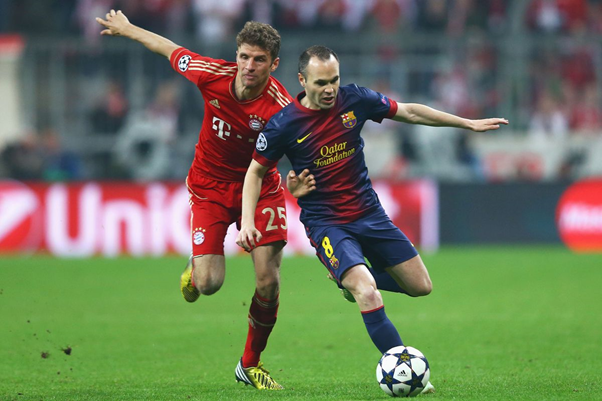
Olympic a set of international sports competitions that happen once every four years. The Olympic games are held in different countries on each occasion. The Olympics were an internationally significant event that unites people from all over the world. The Olympic Games are considered the world’s foremost sports competition with more than 200 nations participating. The Olympic Games are normally held everyย four years, alternating between theย Summerย andย Winter Olympicsย every two years in the four-year period. The Olympic Games include all the sports registered by the International Olympic Committee as Olympic sports. Olympic Games are the largest sporting event, in terms of the number of sports on the program, the number of athletes present and the number of people from different nations gathered together at the same time in the same place.

HISTORY OF OLYMPICS:

The Olympic games started thousands of years ago and lasted over a millennium. The Greeks loved sport and the Olympic Games were the biggest sporting event in the ancient calendar. The Olympic Games began over 2,700 years ago in Olympia, in southwest Greece. The most important and prestigious were the games held at Olympia to honor Zeus, the king of the gods. The modern Olympic games began in 1896. Pierre de Coubertin was a French educator and historian, founder of the , and its second president. He is known a International Olympic Committee s the father of the modern Olympic Games.

OLYMPIC SPORTS:

Currently, the Olympic program consists of 35 different sports, 53 disciplines, and more than 400 events. The Summer Olympics includes 28 sports with 38 disciplines and the Winter Olympics includes 7 sports with 15 disciplines. The list of Olympic games are,

  • 3*3 basketball
  • Acrobatic gymnastics
  • Alpine skiing
  • Archery
  • Artistic gymnastics
  • Artistic swimming
  • Athletics
  • Badminton
  • Baseball
  • Basketball
  • Beach Handball
  • Beach Volleyball
  • Biathlon
  • BMX
  • Bobsleigh
  • Boxing
  • Breaking
  • Canoe
  • Cross Country skiing
  • Curling
  • Diving
  • Equestrian Dressage
  • Equestrian Eventing
  • Equestrian jumping
  • Fencing
  • Figure Skating
  • Football
  • Freestyle skiing
  • Futsal
  • Golf
  • Handball
  • Hockey
  • Ice hockey
  • Judo
  • Karate
  • Luge
  • Modern pentathlon
  • Mountain bike
  • Nordic combined
  • Paralympic
  • Rhythmic gymnastics
  • Road cycling
  • Roller speed skating
  • Rowing
  • Rugby
  • Sailing
  • Shooting
  • Short track speed skating
  • Skateboard
  • Skeleton
  • Ski jumping
  • Ski mountaineering
  • Snowboarding
  • Softball
  • Speed skating
  • Sport climbing
  • Surfing
  • Swimming
  • Table tennis
  • Taek wondo
  • Tennis
  • Track cycling
  • Trampoline
  • Triathlon
  • Volleyball
  • Water Polo
  • Weight lifting
  • Wrestling

IMPORTANCE OF OLYMPIC GAMES:

The Olympics is important because at no other time does practically the entire planet come together, regularly and in a positive way, to experience the same thing. The goal of the Olympic Movement is to contribute to building a peaceful and better world by educating youth through sport practiced without discrimination of any kind and in the Olympic spirit, which requires mutual understanding with a spirit of friendship, solidarity, and fair play.

INTERESTING FACTS ABOUT OLYMPICS:

  • Women have been allowed to compete in the Olympics since 1900. The Olympic Games have been hosted by 23 different countries.
  • Olympic games were not held in the following years due to the two world wars 1916, 1940, and 1944.
  • Olympic Games are so-called because they were held in the city of Olympia.

Are we humans are destroying the animal habitat?

Home is feeling of comfort that is filled with love and safe. It is a feeling for both human and animals. We human being are becoming selfish by destroying their houses. Try to put yourself in their place, can you imagine your home is suddenly vanished and there is no place for you to live? It is like being lonely and sad.

Millions of species that ever lived in this earth has gone extinct now. Some endangered species are likely to get extinct. Eg:Tiger, polar bear, Mountain gorilla etc. And the reason behind this extinction is human beings. We are killing animals for food. We are destroying their habitat for our development. Deforestation is done by humans for wood, vegetation and construction of buildings. Due to this animals are dying out.

Another reason is human activities causes pollution in water, air and in land. This pollutes the entire natural habitat and had an adverse effect on animals as well as environment. Oil leakage in marine can lead to deaths of aquatic animals. Another most important reason is the killing or hunting of animals for human resources like fur or elephant tooth. In some places hunting is considered as sport.

Animals are important for the food chain. When animal are extinct they are gone forever and we can find them only in museums.

We should try to convert every human being into a conservationist. Zoos are working to preserve endangered species. We should care and save animals and their habitat because we both equally share the planet. Prevention of cruelty to animals act,The wildlife protection act are there to conserve the species.

CARTOON

CARTOON DEFINITION:

The word “cartoon” is derived from either the Italian word cartone or the Dutch word Karton, which are both words describing a strong, thick, or heavy paper, or pasteboard. A cartoon is usually a short, animated movie or television program. The term “cartoon” refers to an illustration or a series/sequence of drawings that depict satire, caricature, or humor. A cartoon is a form of two-dimensional illustrated visual art. One who makes cartoons is known as Cartoonist. A cartoon is mainly created to produce laughter, fun, joy, love, and unity.

WHEN DID CARTOON BEGIN? :

In the 19th century, beginning in Punch magazine in 1843, cartoon came to refer โ€“ ironically at first โ€“ to humorous illustrations in magazines and newspapers. The first animated television series was Crusader Rabbit. The cartoons became popular in the 1960s and 1970s.

TYPES OF CARTOONS:

There are different types of cartoons. Some of them are,

ยท Political Cartoons:-

A political cartoon is made to convey editorial commentary on politics, politicians, and current events. There are five elements of political Cartoons. They are symbols, exaggeration, irony, labeling, and analogy.

ยท Gag cartoons:-

Gag cartoons are cartoons, combination of punch lines and scenarios intended to make readers laugh. Modern “gag cartoons” are found in magazines, newspapers, and greeting cards. The gag cartoons generally consist of a single drawing with a caption beneath.

ยท Animated Cartoons:-

Cartoons can either refer to a drawing or a television program or film made using animation techniques. It is like a motion picture. It is a series of changing drawings that were being photographed and when projected quickly it gives the illusion of movement.

CARTOONIST:

One who makes cartoons is known as Cartoonist. The other names for cartoonists are animator, artist, humorist, illustrator, satirist, caricaturist, gagster, comic artist, comic book artist, etcโ€ฆ.Some cartoonists work with artists who create the idea or story and write captions, and sometimes the cartoonist will write captions themselves. Charles Schulz was a cartoonist who drew the “Peanuts” comic strip for fifty years. Some cartoonists have their cartoons appear weekly or daily in newspapers, while others publish books or draw cartoons for web sites.

SOME OF THE POPULAR CARTOON SHOWS ARE:

There are many cartoons show. Some of the most popular cartoon shows are,

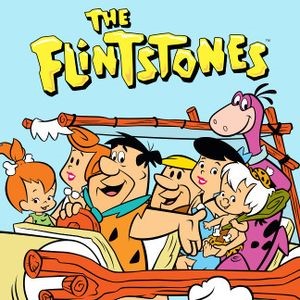
  • Flintstones
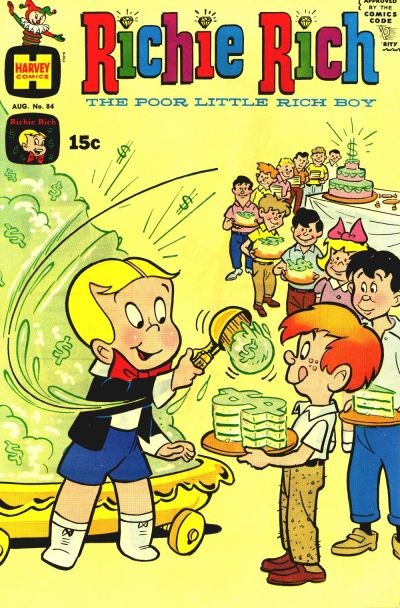
  • Richie Rich
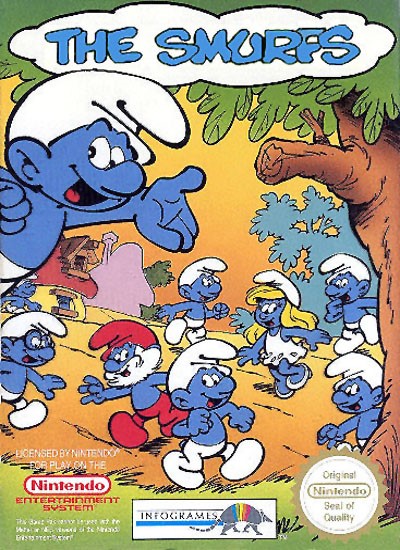
  • The Smurfs
  • Tom and Jerry
  • Alvin and the chipmunks
  • Thomas and Friends
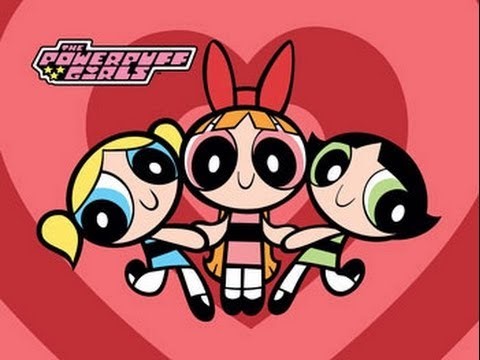
  • Power Puff Girls
  • Sponge Bob and Square Pants
  • Looney tunes
  • The Simpsons

INTERESTING FACTS ABOUT CARTOONS:

  • There is an asteroid named after Donald Duck
  • The crew of “The Simpsons” once sent flowers to the crew of “South Park.”
  • Winnie-the-Pooh was named after a teddy bear owned by the son of A.A. Milne, the creator of Winnie.
  • Tom and Jerry cartoons won seven Oscars and being nominated for a total of 13.
  • In the original He-Man cartoon of the 1980s, He-Man could not use his sword as an offensive weapon or punch or kick anyone due to the broadcast standards of the period. In fact, he was mostly non-violent and usually just outsmarted his enemies .

HEALTH

HEALTH:

Health is a state of complete physical, mental, and social well-being and not merely the absence of disease or infirmity. In simple words, Health is the state of being well and free from illness. Health can be improved also through individual behavior and lifestyle choices such as eating more nutritious foods and getting more exercise. Combining good nutrition with physical activity can lead to a healthier lifestyle.

IMPORTANCE OF HEALTH:

Living a healthy lifestyle can help prevent chronic diseases and long-term illnesses. The importance of good health in a person’s life is undoubtedly great. Your health is at the center of your life. Every part of your life relies on you having good health. Living a healthy lifestyle can prevent long-term illnesses like such as Asthma, Diabetes, heart diseases, and many more. It provides us freedom from almost all diseases. It is necessary for all of us must maintain a healthy lifestyle to be fit and fearless of diseases. Good health is a secret of every happy man. Thus maintaining health is an important one.

TYPES OF HEALTH:

There are five main aspects of personal health: physical, emotional, social, spiritual, and intellectual.

  • PHYSICAL HEALTH:

Physical health represents one dimension of total well-being. The term refers to the state of your physical body and how well it’s operating.

  • EMOTIONAL HEALTH:

Emotional health is a person’s ability to accept and manage feelings through challenge and change.

  • SOCIAL HEALTH:

Social health can be defined as our ability to interact and form meaningful relationships with others. It also relates to how comfortably we can adapt to social situations.

  • SPIRITUAL HEALTH:

Spiritual health is achieved when you feel at peace with life. Spiritual health is that aspect of our well-being that organizes the values, the relationships, and the meaning and purpose of our lives.

  • INTELLECTUAL HEALTH:

The intellectual dimension of wellness encourages creative, stimulating mental activities. Intellectual wellness encourages learning.

HOW TO MAINTAIN GOOD HEALTH:

It is very important to maintain good health because with good health one will enjoy life without any disease or disorder. Good health is a matter of great concern, to maintain it, healthy living and a disciplined life is a must. The most important tip for a healthy body is to have healthy food and eat them at a proper time. eating a balanced diet, exercising, and getting plenty of rest are key to maintaining good health. Some of the tips for maintaining good health are to Eat a variety of nutrient rich foods, Eat moderate portions, Do not skip meals ,Walk more, Get enough sleep, Activities such as playing an instrument, games, or reading give the brain necessary exercise to improve health.

FACTS ABOUT HEALTH:

  • Your feet have 500,000 sweat glands.
  • Your nose can recognize 50,000 different odors.
  • Laughing can increase blood flow by 20%
  • Skin is the largest organ in the body and it defends against diseases and infections.
  • Being an optimist may help you live longer.
  • Learning a new language or playing a musical instrument gives your brain a boost.
  • Drinking coffee can reduce the risk of depression.
  • Writing things by hand will help you remember them.

How can Education Change the World?

Former president of South Africa, Nelson Mandela had quoted- Education is the most powerful weapon which you can use to change the world. Most of the people cannot fully understand the role that education plays in our society.

Role of education in our life

Here are some reasons explaining the role of education.

Education helps us to express our views and opinions. It helps us to understand and elaborate our opinions on various complex topics. It assists us to explain our point of view in the topics which have no clear answer. We can share information and have conversations efficiently and aptly.

The knowledge acquired by education influences us to broaden the boundary of our thoughts. This makes us creative and productive. It aids us in thinking out of the box. Literate people are more likely to think before they act and hence avert bad decisions. Good and creative thoughts built a confident and lively individual.

Education is not just about books and writing, it develops our character. We learn to respect, help and be kind to everyone. We become aware of gender inequality, racism and other discriminations and help the nation to overcome all these issues. A good character is what makes a person dignified amongst all.

Education system brings out the hidden talent of the student and helps in nurturing it and giving it the right direction. The teachers focus on personality development of students through conducting activities like extempore, debate, speech, singing, dancing, drawing etc. Education brings out tomorrowโ€™s leaders and leaders shape the future of society, nation and the world.

It also helps us to face difficult situations in life. An educated individual is always prepared to cope with unpredictable situations like a loss, a shock, a conflict and an emergency. We learn that this is a part of life and we should move on. The ups and downs make our lifeโ€™s journey incredible and unforgettable.

We learn about the various phenomena happening in the world and space. We learn about machines, plants, our own bodies, forests, animals, various scientists and their experiments, authors, poets, famous places and so much more. This makes us aware of the beauty of nature and the universe.

We get many more job opportunities when we are educated and get a good income and become more successful due to immense knowledge. There may be a range of perspectives on the best way to move our economy forward, but one element essential to any answer is education for everyone.

More the education in a country, higher the literacy rate. It is observed that countries which have high literacy rates have lower percentages of poor people. Education assists to alleviate poverty to a huge extent. This is the reason why governments of various countries stress upon educating everyone.

A tool to change the world

Education is a way to change life. It builds a character of a person and brings out and nurtures the hidden talent and skills of the individual. It is observed that educated people are less likely to resolve a conflict through the means of violence. With such great impacts of education in our society, everyone has the right to get access to education. Thus, education creates a tranquil atmosphere in the world and indeed, education is the weapon that can change the world.

Eating less is better than Eating more

Do you overeat? Well if you do, then you are inviting the houses of diseases into your body. You overeat when you are tempted to eat delicious food surrounding around you. Some people overeat due to stress. Food is a necessity in our life. We should eat only when it is enough for our body.

Overeating cause laziness and obesity. Today many students overeat without doing exercise which cause health problems at a young age. They just eat and get busy with their laptop and phones without doing any exercise. People eating in depression results to weight gaining. Binge-eating disorder people consume large amount of foods. Disease like heart disease, strokes and diabetes can occur in our body. Younger people like to eat sweets and chocolates more. This can increase their calories.

Eating less with healthy food can maintain your health and boost your energy. A proper diet plan is good for human being and can make your brain active. You feel better and can avoid laziness. You are free to eat snacks or junk food , but in small portions. This will give you satisfaction as well no extra fat that wil harm your body. Eating too less can also be bad for our body which results in malnutrition. That’s why you should take proper meal. This can increase your goal to live longer. You will feel less aged. Eat the right amount of calories for you. Drink water and sugar free drinks to quench your thirst. Eat your meal satisfied rather than eating full.

Eat less, Eat healthy. Stay fit

VERONIKA DECIDES TO DIE: BOOK REVIEW

โ€œVeronika Decides to Dieโ€ gives you an impression the book is depressing, right? I can assure you it isnโ€™t.

Paulo Coelho, the best selling Brazillian author brings another beautifully woven story. It is bound to make you sad and leave you happy by the end. The story does begin with a depressing tone but takes a twist no one expects.


The story revolves around a 24- year-old girl, Veronika. Veronika lives in Ljubljana, Slovenia and has everything one asks for in life. She is beautiful, has loving parents, a lover and a job. But a feeling of fear that everything will go downhill for her after 24 takes over her mind. So, one evening she sits near her window with a bottle of painkillers. As she starts talking one pill at a time, she takes a look at all the things outside which she sees every day. Slowly, she started getting sleepy but death had not yet come.


The plan to kill herself fails and she woke up to find herself in a mental hospital, Villette. The doctor tells her that her attempt at suicide had failed and her heart had taken the toll of it. She finds out that she has a week only to live. Her world had taken an unexpected turn.


Coelho then goes on to explain how he came to know about Veronikaโ€™s story. He relates to her story because his parents also admitted him into a mental institution for his โ€œunusual behaviourโ€. But Coelho appears in the story for a brief moment only.


Coming back to Veronika, shocked and resistant to live in Villette she tries to find a way out of there. But she fails at this too. Reluctantly she becomes friend with Mari, who suffers from panic attacks. Later she claims that she might have fallen in love with Eduard, a schizophrenic. Somehow she slowly gave in and accepted her reality. She decided to live the last few days of her life to the fullest.


Dr Igor, one of the main characters of the stories gives Veronika series of shocks to test his medical theory. He wants to prove through his experiment that he can shock someone into wanting to live again by convincing them that their death is around the corner. That is exactly what he did with Veronika.


Veronika finds herself on a journey to discover herself before she dies. She rediscovers her passion for piano. She played the piano every evening that lifted the spirits of many at Villette. She suffered a heart-attacks throughout the week, she found her desire to live again.


Coelho, makes you rethink your decisions and your routines. Just like all his other books, this book also successfully connects with its readers. Like Veronika, all of us have had moments in our life where we thought the only way out is to die. Paulo gives his readers a new hope to live. You will reevaluate your reasons to continue living. He leaves a hidden message that there a number of reasons in this world to live and suicide is not an option. A moment can change your life.


I recommend this book to everyone especially the people who have been suicidal some time in life. Veronika decides to Die is not a long read. The stories winds up in around 200 pages. By the end of the book, it will leave its readers happy to be alive. Paulo focuses on the fact that even the slightest of change in perspective can make a broken person stronger.

UNDERWATER WORLD

ABOUT UNDERWATER WORLD:

There is a world inside water which is the underwater world. The underwater world is an amazing place full of mysterious and wonderful creatures. The underwater world is filled with beauty, color, and life. There are over millions of known species of plants and animals in our oceans and many millions maybe still be discovered.The animals in the underwater world are aquatic. They are purely a pleasure to see.

WHY IS AQUATIC LIFE IMPORTANT? :

Aquatic life is one part of many life cycles that exist to maintain the equilibrium of the entire life cycle. The food chain is dependent on aquatic animals. Human beings also depend on many aquatic animals and plants to survive. The aquatic wildlife gives the sources of food, energy, jobs, atmospheric oxygen, and global climate change. Other than fish Snails, worms, turtles, frogs, marsh birds, alligators, beavers, otters, snakes, and many types of insects live in the aquatic ecosystem.

AQUATIC ANIMALS:

In Underwater World, aquatic animals consist of mammals like whales, mollusks such as sea snails, cnidarians, also known as jellyfish, and crustaceans like crabs. Aquatic animals which live in river, lakes, and pond are freshwater animals. Aquatic animals that live in oceans are Marine or saltwater animals. Some animals live on both land and water such as snails, crabs, and turtles, etcโ€ฆ.

INTERESTING SEA CREATURES OF UNDERWATER WORLD:

There are also interesting and mysterious sea creatures in the underwater world. Some of them are,

  • PURPLE EYED GOBY:-

It is also known as Gudgeon, Hovering Goby, Pinkeye Goby, Purple-eye Goby, Purple-eyed Dwarf Goby, Purple-eyed Goby, Redeye Goby, Red-eyed Goby, Reef Goby. It is mainly found in small schools hovering in the branches of Acropora Corals over shallow lagoon reefs.

  • PINE CONE FISH:-

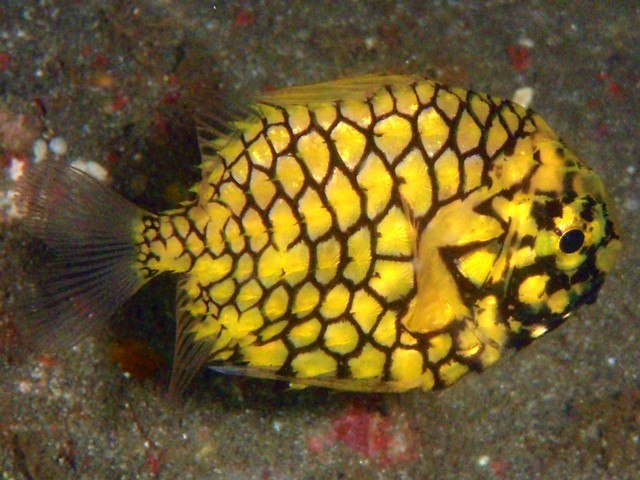
The Pinecone Fish, also called the Pineapple Fish and Knight-fish is covered with spines and has a brilliant yellow body. The body is covered by heavy, platelike scales that overlap, giving the fish the appearance of a pinecone-hence its name.

  • FLYING FISH:-

These fish got their name due to their ability to fly above water to avoid predators. This fish can fly above the water for up to 45 seconds at a time. This fish has large pectoral fins that enable it to leap out of the water and fly above the surface for a few seconds.

  • GREEN NUDIBRANCH:-

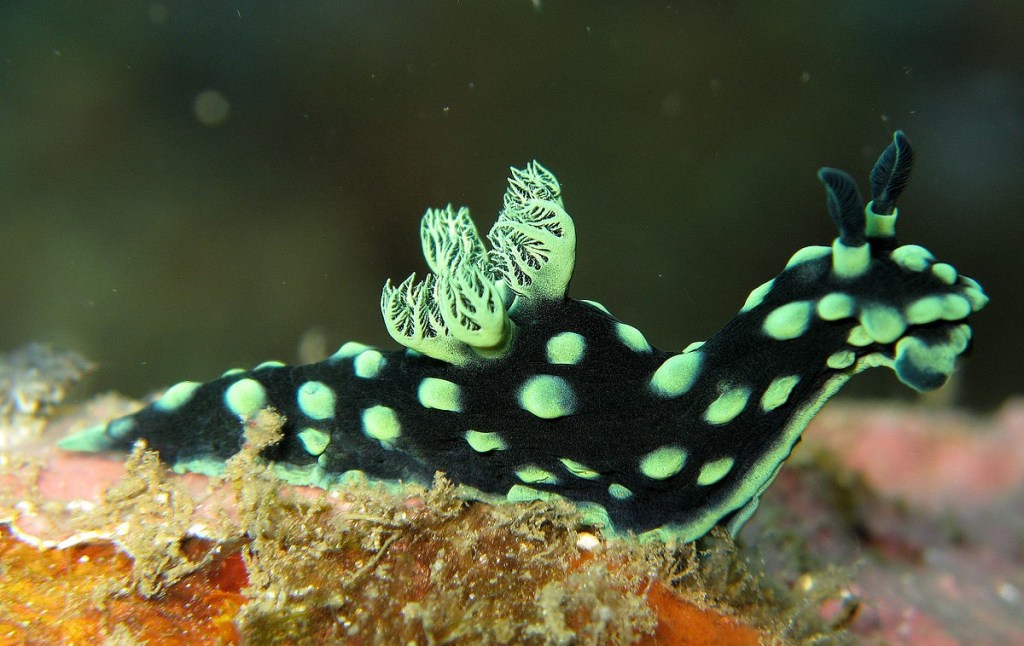
It grows to at least 50 mm in length. Its body is covered with raised green nodules. The bright colors of this nudibranch species are an aposematic warning to predators. They are hermaphrodites.

  • PHYCODOROUS EQUES:-

It is also known as a leafy sea dragon. It is found along the southern and western coasts of Australia. The name is derived from the appearance, with long leaf-like protrusions coming from all over the body.

  • SUNFISH:-

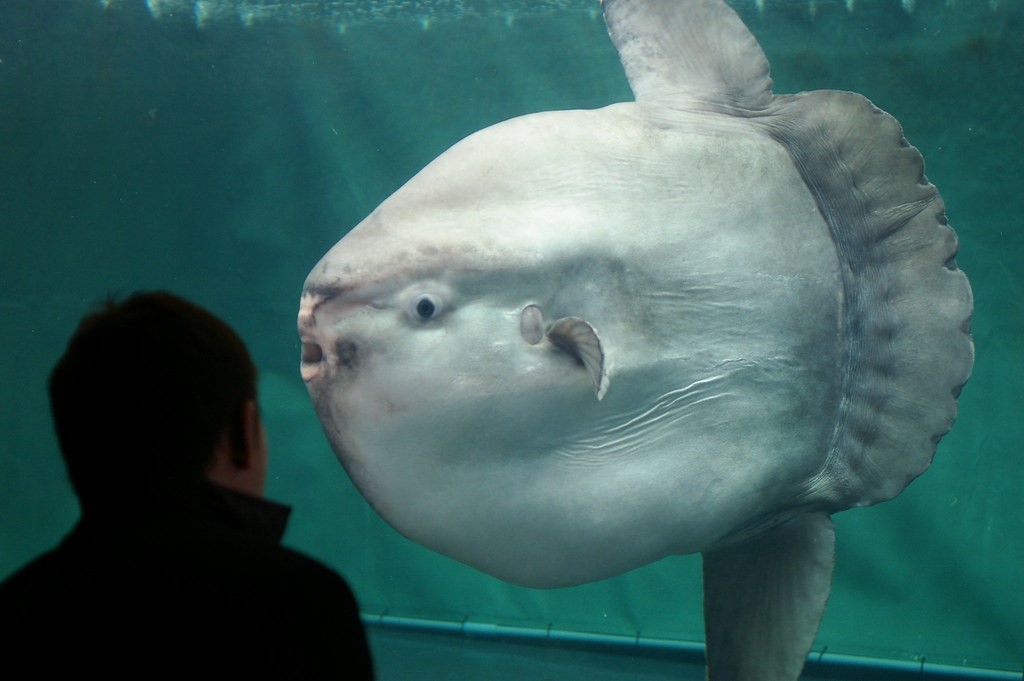
Sunfish is the world’s heaviest bony fish. The average adult may weigh 1000 kg and the highest recorded weight is 2300 kg. The main prey of ocean sunfish is jellyfish.

  • DUMBO OCTOPUS:-

Dumbo octopuses move by slowly flapping their ear-like fins, and they use their arms to steer. Dumbo octopuses’ primary predators are diving fishes and marine mammals, including tunas, sharks, and dolphins. The Dumbo octopus is the deepest-living genus of all known octopuses. It lives at least 13,100 feet (4,000 m) below the surface.

  • RIBBON EEL:-

Ribbon eels are colorful animals that are a species of a moray eel. The Ribbon Eel is a very distinctive looking eel with their sharp head and enlarged fan like nasal openings. They will slowly extend themselves out the hole almost imperceptibly and swing closer and closer to the target fish.

SOME FUN FACTS OF UNDERWATER WORLD:

  • Walruses can stay underwater for up to 30 minutes on a single breath.
  • Sea turtles can’t hide in their shells.
  • 95% of the underwater world is yet to be explored.
  • Dolphins sleep with only half of their brain and one eye open so they can watch for predators and other treats.
  • Great White Sharks can go as long as 3-6 months without eating.

Abandoning and ill-treatment of old parents

How much do you love your parents? From the small baby to the present you, they loved you unconditionally. Completing your every demand that you wished from your childhood. Can you repay the love by loving them till their end?

In today’s scenario, many old parents are abandoned by their own children. They left them at their poorly state. They feel burden to keep their old parents at home. Many parents are mistreated by snatching all the money by their children and thrown out of their own houses. They become helpless and cannot do anything. How can someone bare to see their parents crying?

What is the importance of celebrating Father’s day and mother’s day? They just show the love in the social media posts but they don’t show the actual love that they need the most in real life. They don’t spend much time together with them. In the old stage, they don’t want live lonely. They need the love and care that they had given the same to their own child.

For such cases, various laws has passed for the security of old parents. They can sue or file a complaint against them for such actions. The person can have 6 month jail for such shameful actions. For their safety various old age homes are provided for them with shelter and food.

This should be stopped and we need to learn and value our parents. Respect and love them . Help and be the support system of them.

INDIA

ABOUT INDIA:

India is the largest country in the south Asia Region, located primarily in the center of the subcontinent. It is an extremely diverse country, with vast differences in geography, climate, culture, languages. India remains to be one of the world’s fastest-growing economies and one of the fastest developing countries. Diversity of India in terms of geography, religion, races, food, and living habits of her people.

POPULATION OF INDIA:

India population in 2020 is estimated to be 1.38 Billion (138 crores). India is the second most populous country, afterย Chinaย andย USย is the third populous country in theย world. ย India’s population is young and more than half of the population is under the age of 35.

WHAT IS INDIA KNOWN FOR:

India is known for so many and is famous for its hundreds of things. Firstly, TAJ MAHAL is one of the seven wonders in the world. Taj Mahal was build in the 17th century by Mughal Emperor Shah Jahan for his wife Mumtaz in Agra. It is also known for its diversity, its spirituality, its population, its sporting culture, and also Indian foods.

INDIAN CULTURE:

India has a diverse and distinct culture that has been developing for thousands of years and varies from region to region. Indian culture is one o f the milestones in the history of Indian literature. Culture is like a living organism, which can sustain and progress only when it shows adaptability in full abundance. Indian culture is as many-sided as life. It includes the intellectual and social aspects of any human being. It also takes account of the aesthetic instinct as well as the spiritual impulses of human beings.

STATES OF INDIA:

There are a total of 28 states and 8 union territories in India. Every state is ruled by a Chief Minister. The 28 states of India are,

  • Andhra Pradesh
  • Arunachal Pradesh
  • Assam
  • Bihar
  • Chhattisgarh
  • Goa
  • Gujarat
  • Haryana
  • Himachal Pradesh
  • Jharkhand
  • Karnataka
  • Kerala
  • Madhya Pradesh
  • Maharashtra
  • Manipur
  • Meghalaya
  • Mizoram
  • Nagaland
  • Odisha
  • Punjab
  • Rajasthan
  • Sikkim
  • Tamil Nadu
  • Telangana
  • Tripura
  • Uttar Pradesh
  • Uttarakhand
  • West Bengal

SPORTS IN INDIA:

Sports are good for any nation. Various games are played in India. Sports in India are badminton, football, shooting, wrestling, boxing, tennis, squash, weightlifting, gymnastics, athletics, table tennis, basketball, volleyball, and cycling. Popular indigenous sports include chess, kho-kho, kite-fighting, leg cricket, polo, snooker, and Gilli danda. India’s sporting icons such as chess wizard VISWANATH ANAND, cricket legend SACHIN TENDULKAR, billiards maestro GEETSETHI, tennis duo LEANDER PAES and MASHESH BOOPATHY are currently rated among the world’s best.

INTERESTING INDIAN FACTS:

  • There is an underwater waterfall in the Indian ocean
  • India is the second-largest producer of wheat, rice, sugar, groundnut, and inland fish.
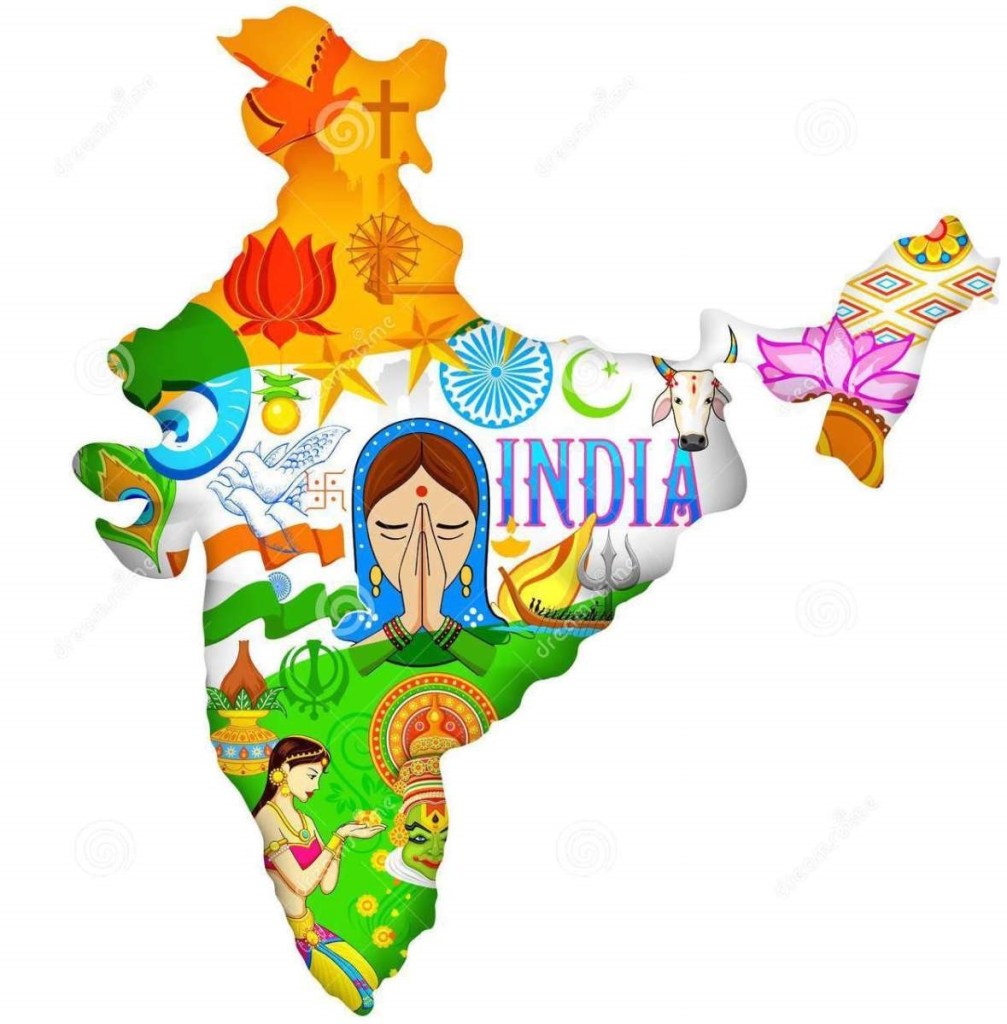
  • There is a place in Bongaigaon Assam where River Champawati meets Brahmaputra and the scene represents our India map
  • Maysynram in India is noted as being the wettest place on earth is with over 11 meters of rain falling every year.
  • The steel wires used to make Bandra Worli sea link is equal to the earth’s circumference.

ENVIRONMENT

WHAT IS ENVIRONMENT? :

Everything around us is known as the environment. The environment is the total of land, water, air, and other living organisms. The environment is the area where we live. The environment also has an interrelationship with human beings. The environment is important to all. Changes in the environment affect living things. Today many people are working to protect the environment.

TYPES:

According to Kurt Lewin, the environment is simply classified as THREE types that influence the personality of an individual. They are,

  • PHYSICAL ENVIRONMENT:-

                                             The physical environment refers to geographical climates and weather or physical conditions. The human working efficiency can also depend on the climatic conditions.

  • SOCIAL AND CULTURAL ENVIRONMENT:-

                                                                     The social and cultural environment includes an individual’s social and political conditions.

  • PSYCHOLOGICAL ENVIRONMENT:-

                                                             The physiological environment enables us to understand the personality of an individual. Both the person and his goal form a psychological environment. By adopting this mechanism, the individual is helped in his adjustment to the environment.

STRUCTURE OF ENVIRONMENT:

                                                      The environment is both physical and biological. It includes both living and non-living components. They are,

  • Physical environment

The physical environment is classified into three broad categories. They are,

  • Solid
  • Liquid
  • gas  

WHY IS ENVIRONMENT IMPORTANT? :

 The environment is the key to the existence of life on earth. It matters because it provides air, food, and other essential needs. Environments also play an important role in regulating air and climate. . Without it, there can be no life on earth.There are other planets in the solar system without life because of a lack of environment. Hence the environment is important for all living beings to survive.

FUN FACTS ABOUT ENVIRONMENT!  :

  • AROUND 20 MILLION TREES ARE CUT DOWN EACH YEAR TO MAKE WOODEN CHOPSTICKS
  • TREES CAN HELP TO REDUCE NOISE POLLUTION
  • RECYCLING OF ONE TON PAPER CAN SAVE 17 TREES
  • HUMMINGBIRDโ€™S EGGS ARE SMALLER THAN JELLY BEANS
  • DOLPHINS ARE MARINE MAMMALS AND NOT FISH
  • 75% OF EVERY VEHICLE IS RECYCLABLE
  • OVER 90% OF ALL VOLCANIC ACTIVITY HAPPENS IN THE OCEAN
  • WE EACH USE ABOUT 12,000 GALLONS OF WATER EACH YEAR

CONSEQUENCES OF ENVIRONMENT DEGRADATION:

Environmental Degradation occurs when the earth’s natural resources are depleted. It leads to weather extremes, species loss, rare specious disappearance, disasters, and over population. Land degradation and dam burst can lead to massive siltation and floods situation.

CAUSES OF ENVIRONMENTAL POLLUTIONS:

                                        โ€œENVIRONMENTAL POLLUTION IS AN INCURABLE                                  DISEASE. IT CAN ONLY BE PREVENTEDโ€.

                                                               -Barry Commoner

      Mainly the environment is polluted by air pollution, water pollution, and land pollution. Oil spillage causes environmental pollution when oil is spilled in water. Smoke and fumes from industries also lead to environmental pollution since it produces smoke that may limit oxygen supply. Land pollution is caused by accidental spills, landfill and litter dumping, use of chemical fertilizers.

HOW TO CONTROL ENVIRONMENTAL POLLUTION:

  1. Avoid excessive use of pesticides and chemical fertilizers
  2. Discharge of wastewater can be minimized
  3. Disposal of radioactive materials must be safe and secure            
  4. Use eco-friendly products
  5. Conduct pollution prevention programs
  6. Plant more trees
  7. Reduce waste production
  8. Avoid burning trashes and other materials.

Decision making in Business

Every organization faces some problems. Due to this, a decision has to be made by the top management. Decision making is an essential part in business organization. It is a decision made by the managers by choosing and selecting the best alternative from different alternatives in an organization. Decision making is a part of planning. Good decision has to be made quickly and at the right time .

Steps of decision making :

  1. Identify the problem:
    The first step is to understand what the issue is arising. We have to state the problem and then we can take what type of decision we need to make.
  2. Analysis of the problem: The second step is to understand why this problem has arised and what are the reasons behind this particular problem. A detail analysis will be done on a particular problem. They will work on how the problem can be resolved.
  3. Generating alternative solution:
    To list all possible solution can be taken to solve the problem. Different people give different opinions. We have to give the best solution so that the target will be finished at the right timing.
  4. Evaluate alternatives:
    Whatever options that had come out, we have to evaluate it. It is to state out the advantages and disadvantages of the alternatives. We have to evaluate the alternative at a company’s risk,time and budget. Cut out all the options which can hinder the organization. We have see which will be the most highest demand alternative that can be brought into the market.
  5. Select alternative:
    We have to choose the best alternative out of different alternatives, we have to select the best choices for the profit of the organization.
  6. Implement the alternatives:
    To take positive action and implement the alternative that have been chosen. We have to practically implement the decision taken.
  7. Monitoring the decision:
    To take review and feedback of the alternative decision taken for the organization. It is to see whether everything is going according to the planning.

These are the important steps that every organization should follow. This can strengthen the leadership qualities and help creating innovative ideas and can survive very well in the business world.

Power of Happiness

Happiness is a feeling of love that you feel and express through different medium. In our current situation many have lost their smile on their face that lead to depression. Is that you really want in your life? Nobody wants to be unhappy in their life. There are solutions where you can find happiness.

The most important thing is to love yourself first. The feeling or sense of happiness towards yourself can bring positive changes into your life. If you are happy then you have the power of making another being happy.

Different people express happiness in different ways. Someone happiness is to travel and explore the world while some other people love to cook, dancing, singing and many other things. You must do what makes you happy. Spend times with your loved ones whom you care about. Life can be in difficult situation sometime, but never lose hope. It’s ok to cry or feel sad for sometime. But not too long, try to kick away those bad moments and try to create happy and cheerful surroundings. If you are being happy, you have the power to attract nice people into your life.

Happiness is a miracle that it reduces stress and problems that are attached to your life. Researchers have found that a happy person is the most successful people in life. Successful doesn’t only mean money, it also means to living a happy and meaningful life with your closest ones. It is also very important to cut out those people who try to bring you down and makes your problem bigger.

Those who have an upset mood of sitting bored at home,not going anywhere. Try to make them happy and spend your leisure time with them. A person trying to make others happy can reflect him back with a smile which will also make his day better. Helping a needy person can also create happiness to you as well as for them. Create wonderful moments and never stop being in life. It is you who decide what to you make to lead a happy life. Light up your world and it will give you the power of Happiness.

Take It Day By Day – Learn from Great Personality

By Shashikant Nishant Sharma

We Generate Fears While We Sit. We Overcome Them By Action.

Dr. Henry Link

We are asked all our lives, by our peers, our teachers, loved ones and visitors, ‘How old are you?’ in schools, functions, gatherings and on the streets. We mumble our answer in a monotonous tone until we pass school or college. After this, we feel as if we are on our own. We start to dread this question. Why?

Because the question takes quite a different turn as we grow up. Often joining hands with another following question ‘Well, what have you done in your life until now?’ 

Leaves us speechless sometimes, doesn’t it? 

How We Compare And Why We Compare

We see our peers doing extraordinary things in their lives. Going around the world, taking various responsibilities, beginning their careers, and making the most out of their time. We judge our accomplishments with their’s and underestimate ourselves. 

The Only Limit To Our Realization Of Tomorrow Will Be Our Doubts Of Today.

Franklin D. Roosevelt

The dream of early success is so over-glorified, in the media, in society and well, on our dreams itself. The vision of getting a well-paid job in our 20s and settling down in a middle-class luxury life is a common desire. But is this what life is all about?

What about the skills we have acquired throughout our lives? Our experiences? Our creations? Most of all, What good have we done for society? 

What is Life All About?

Life is not just about mere existence. The capitalist world makes us aspire for a luxurious life but speaks nothing on the moral deeds we should do and how learning is a constant process in life, not merely something we finish in schools and institutions.

Learning has no age limit. We are never too old to learn something new and do our part. Several icons of the modern world whom we admire have paid their share of creations well after their thirties and more. 

What You Lack In Talent Can Be Made Up With Desire, Hustle And Giving 110% All The Time.

Don Zimmer

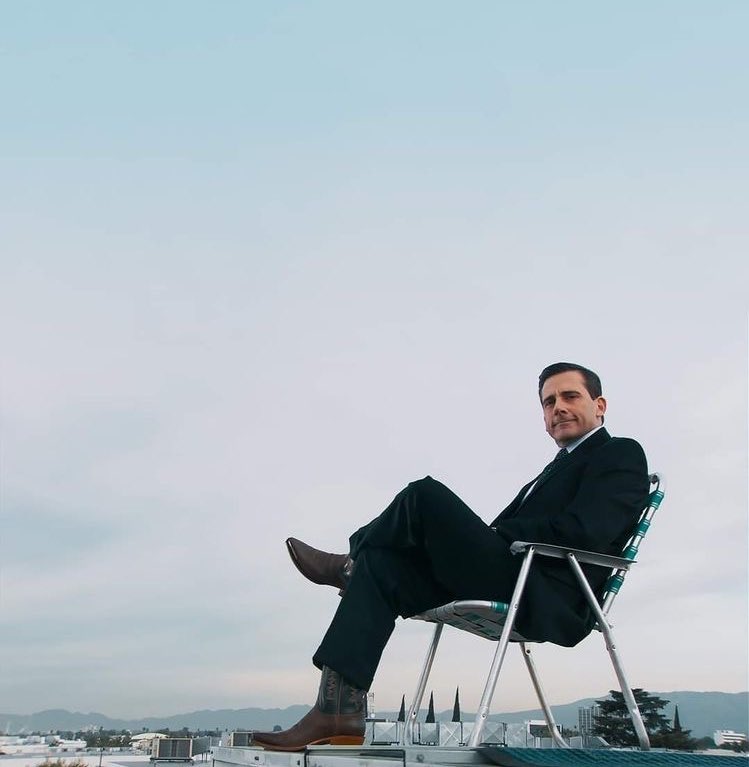
For instance, comedian Steve Carell; who is known blockbuster hit such as “The Big Short” staring as Micheal Scott in The Office, didn’t land his hit role as Michael Scott until 42 years of age. 

Other famous cases of late successes are Ricky Gervais(creator of The Office); Arianna Huffington (Founder of HuffPost) and even J.K. Rowling, author of the beloved Harry Potter books, started writing the first book of the world-famous franchise well into her thirties. All of their life events towards success continue to inspire us in addition to their inventions staying immortal.  

This doesn’t mean we should hold our lives in pause mode and hope for the best, that life will figure itself out as we age. A person must have a moral aim in their life. We must aspire to create, innovate and inspire ourselves at every point since the start. It depends on the quality, not quantity. 

Swami Vivekananda did great things in his short lifetime. One doesn’t have to be him to attain noble things; One should take the great monk’s values and aspire to do charitable deeds in their lives for the society and themselves. 

Swami Vivekananda

Swami Vivekananda’s popular quote often serves as a great inspiration when we feel at our lowest:- 

Arise, awake and do not stop until the goal is reached.

Swami Vivekananda

A person doesn’t simply become great in a day at something. It takes a deal of consistent effort to be exemplary at something. After all, practice makes perfect. We must fail at times to learn from mistakes and rise strong. Failures are the pillars of success. Famous talk show host Oprah was fired from her job as an anchor, but she took failure as an experience. Now she is one of the most popular figures in today’s world and the cherry on top, a billionaire. 

Everybody has a calling. And your real job in life is to figure out as soon as possible what that is, who you were meant to be, and to begin to honor that in the best way possible for yourself.

Oprah Winfrey

Our aspirations in life might not come easy, be done in a short while, and might often make us discouraged and have us abhor life itself. Don’t care about what others are doing in their lives, go at your pace. During these moments in time, we must remember, ‘where there is a will, there is a way’. If there’s a true passion for the right cause, a rational purpose, then no one can stop you from achieving your ambition. Remember as you age, you are not getting ‘old’, you are getting better. 

Ranjitsinh Disale – The Global Teacher 2020

A teacher holds the power to change a student’s life. And that’s what a teacher from the state of Maharashtra did. He took a stand for promoting girls education and changed the lives of many girls.

On 3rd December 2020, Ranjitsinh Disale a teacher from Solapur district, Maharashtra won the Global Teacher Prize 2020 with a cash prize of $1-million.

He said, The Covid-19 pandemic has exposed education and the communities it serves in a multitude of ways. But in this hard time, teachers are giving their best to make sure every student has access to their birthright of a good education.

He also said, Teachers are the real change-makers who are changing the lives of their students with a mixture of chalk and challenges. They always believe in giving and sharing. And, therefore, I am very pleased to announce that I will share 50% of the prize money equally among my fellow, top 10 finalists to support their incredible work. Because I believe, together we can make a difference and we can make this world a better place.

He believes he is not the winner he is equal among all the rest 9 top 10 finalists. His attitude towards growing and sharing has put a mark that we should learn to share because if we will share then only we can grow together.

When Ranjitsinh Disale arrived at the Zilla Parishad Primary School at Paritewadi in Solapur in 2009, it was a dilapidated building, sandwiched between a cattleshed and a storeroom. Most of the girls in the school were from tribal communities. Atendance was very low. Sometimes it could be as low as 2% and teenage marriage was very common. Some students were unable to understand the textbooks because it was not in their primary language(Kannada). But Ranjitsinh did not give hope he learned Kannada and taught them by translating the textbooks to their local language.

He also started QR coded textbooks by the help of which students could learn through video lectures, audio poems and stories. And later his school became the first in the Maharashtra to use QR coded textbooks. In 2017 state ministry decided to introduce QR coded textbooks for classes 1-12. Following which in 2018 NCERT also introduced QR coded textbooks.

His school is in a drought-prone district of Maharashtra but he has tackled with this issue also by increasing green land from 25% to 33% in the last ten years. In all, 250 hectares of land surrounding his village was saved from desertification, earning his school the โ€˜Wipro Nature for Societyโ€™ award in 2018.

CEO of Microsoft (Satya Nadela) has recognized Ranjitsinhโ€™s work as one of three stories from India in his book Hit Refresh. He has won the Innovative Researcher of the Year 2016 award and he has also won the National Innovation Foundationโ€™s Innovator of the Year award in 2018. He has communicated his methods by writing more than 500 newspaper articles and blogs, as well as participating in television discussions on educational topics.

He is a teacher with utmost respect who has dedicated his life for girls education and now all his work has made tremendous impact. Teenage marriages has stopped in that place and the school is having 100% attendance of girls.

I’m different

I have heard people talking about me being different from other children, since my childhood. My neighbor Aunties, my class teacher discussing with other teachers she is too shy, cannot mix-up well with her classmates, always lost in her own world. That time I was in 3rd standard. And I used to wonder why? What makes me different from other children, why my elders find me different or something abnormal in me… but my classmates never made me feel any different, I had 4-5 good friends and 1 best friend with them I was fully comfortable. From class 1st to 8th, I was in same school and well settled, there was no issue because my classmates have seen me from 7 years and they accepted me as I am, at that time nobody could point out me to be different. Everything was going well and I forgot what people said about me earlier, that time I didn’t feel I’m different from others and I was always excited to go to school.

Then I got promoted to 9th class and my father Got transfer to another City. It took me 2-3 months to adjust there it was hard for me as that was a big change after so many years but I still managed because there also I got a good batch they were very friendly helpful. But after a year, I was in 10th my Father again got transfer and this time it really made a dent in my self confidence. Ya, I am an introvert and I take time to get comfortable with others and I need time to make friends, but others should also try to make me feel comfortable, friendship does not go one way. as I was new in the class that too 10th class lot of pressure of studies, the teachers were also so rude and they didn’t help me to cop up with studies as I have came in the middle of the session nobody helped me. rather my maths teacher started saying I’m abnormal, then I failed in maths half-yearly exam for the first time I had failed in any subject, I got depressed and teachers said I won’t pass 10th, they suggested my parents for drop out that year. I suffered a lot of health problems due to maladjustment, but somehow I managed to score 76% in 10th board exams. Class 10th was the worst year of my school life. I did my 12th also from that school and those 3 years were like prison for me, I had no friends there some students used to bully me because I don’t talk much, but that’s their point of view, I’m talkative around right people:-)

Now I’m in 2nd year in college, I have many friends but not any best friend but that’s okay…I have learned to walk alone. I need to overcome my shyness but being an introvert is my nature..I can’t change it and there is no harm in being a bit different:-)

Voting underway for by-polls to 54 assembly seats in 10 states

Voting for by elections in 54 assembly seats in Gujarat, Madhya Pradesh, Uttar Pradesh, Jharkhand, Karnataka, Odisha, Haryana, Chhattisgarh, Telangana and Nagaland is also taking place today.

In Karnataka, the polling for State Assembly By-Election to Sira and R. R. Nagar is under progress peacefully. Sira reported 23.63 per cent voter turnout while the turnout remained at 14.44 per cent in R R Nagar within Bengaluru city till 11 a.m. There are 15 candidates in fray in Sira and 16 in R. R. Nagar constituency. BJP, Congress and JD(S) have fielded their candidates in both the constituencies. There are 330 Polling Booths in Sira and 678 in R R Nagar.

In this election, M-3 EVMs are being used as they have long lasting batteries and can connect with up to 24 Ballot units as against 4 Ballot units in M-2 model. It can also accommodate 384 candidates as against 64 candidates in the M-2 model.

In Telangana, 34.33 per cent polling was reported till 11 A.M. in Dubbaka By-Poll today. Polling will continue till 6 P.M. Over one lakh 98 thousand electors are eligible to exercise their franchise at over 300 Polling Stations in the constituency while total 23 candidates, including of the ruling TRS, Opposition Congress and BJP candidates are in the fray.

The election was necessitated following the death of sitting MLA S. Ramalinga Reddy earlier during the year. The TRS and Opposition Congress and BJP have taken the by-poll as prestigious and making all out efforts to win the seat. The counting of votes will take place on 10th of this month.

Meanwhile, the Election Commission has given its approval for Corona Positive patients to exercise their franchise during the last hour of polling in PPE kits. It may be known that Siddipet district, in which Dubbaka constituency falls, is one of the intense COVID districts of the state, reported 30 fresh COVID cases during the past 24 hours.

In Gujarat, more than 23 per cent average turnout was recorded in By-Elections of eight Assembly seats till 11 A.M. Quoting official sources, our correspondent reports that maximum 39 per cent polling was recorded in Dang constituency during the first four hours. Limbadi seat of Surendranagar district recorded 26 per cent turnout till 11 a.m. While Morbi seat recorded 24 per cent turnout during the same period. Lowest 16 per cent turnout was recorded in Dhari seat of Amreli district.

Polling started at 7 a.m. for By-Elections of eight Assembly seats which include Abadasa, Limbdi, Morbi, Dhari, Karjan, Gadhada SC and Dang and Kaprada ST seats. More than 18 lakh 17 thousand voters including more than nine lakh women voters are eligible to cast their votes. Elaborate arrangements have been made for free and fair polling including tight security arrangements.
 
In Madhya Pradesh, polling is underway for byelections to 28 assembly constituencies. Voting, which began at 7 am, will conclude 6 pm. 355 candidates including 22 women are in the fray. Maximum 38 candidates are in Mehgaon seat of Morena district while the minimum 3 candidates are in Badnawar seat of Dhar district. All arrangements have been made to ensure free and fair polling. Eighty four companies of the Central Police Force have been deployed at the polling centers. AIR correspondent reports that, the Election Commission has already made all preparations for peaceful and fair voting. 13 thousand 115 ballot units and control units and 14 thousand 50 VVPET have been made available for voting. 355 candidates including 14 ministers are in the fray. A total of 3 thousand 38 critical polling booths have been identified in the by-elections. Arrangement of 250 flying squads and 293 police posts have been made for peaceful, fair, transparent and safe polling.
 
Additional Chief Electoral Officer Arun Kumar Tomar informed that over 63 lakh 88 thousand voters are exercising their franchise in these 28 seats. There are 33 lakh 72 thousand male and 29 lakh 77 thousand female voters among them. 198 voters of third gender are also part of the election process. Meanwhile, of these 28 seats, 27 were held by Congress and the only Agar seat was occupied by BJP.
 
In Uttar Pradesh, voting for by-elections to 7 Assembly seats will be held from 7 am to 6 pm today, adhering to all COVID-19 guidelines. Out of these seven seats, six were held by the BJP and one by Samajwadi Party. AIR correspondent reports, in the wake of the Covid pandemic all necessary arrangements have been made for the free fair and corona free polling at all the polling stations. These by elections are crucial for the ruling BJP who campaigned extensively under leadership of Chief Minister Yogi Adityanath. He has completed more than 3.5 years in the office and the results can give a sense of mood of the public before assembly elections in 2022.
 
The seven seats on which pilling is going on are  Naugawan Sadat in Amroha Bulandshahar, Tundla seat in firozabad  Bangarmau in Unnao, Ghatampur in Kanpur dehat ,Deoria sadr and Malahani in Jaunpur district. Altogether there are 88 candidates in the fray for these 7 seats with Bulandshahr seat having the highest number of 18 candidates while the Ghatampur seat has the lowest of 6.
 
In Odisha, voting is underway for byelection to the Baleswar sadar and Tirtol assembly constituencies. Adequate arrangements have been made for security as well as for making the entire process covid safe. More than 800 polling stations have been set up in the two constituencies. AIR correspondent reports, while 90 platoons of police force and 6 companies of Central armed police forces has been deployed to ensure security of the polling process in both the constituencies, more than three thousand polling personnel are engaged to conduct voting.
 
Along with this, about eight hundred Anganwadi and ASHA workers and an equal number of volunteers have also been deployed to assist in making the process covid safe.
 
As per the arrangement, while all the polling booths will continue to be intermittently sanitized as the polling progresses through the day, voters are being made to pass through thermal screening before they can cast their votes. Those with high body temperature are being issued tokens to cast their votes at last.
 
A maximum of one thousand voters will be allowed at each polling station to cast their votes for which the number polling stations have almost been doubled to ensure social distancing and other covid-19 preventive protocols.
 
By-election is also being held for Marwahi assembly seat in Chhattisgarh. This seat is reserved for Scheduled Tribes candidate. AIR correspondent reports, in Marwahi assembly constituency of Chhattisgarh, more than one lath 91 thousand voters, including 97 thousand females, are eligible to exercise their franchise to decide the fate of eight candidates in this by-election. Total 286 polling stations have been set up.
 
In view of Covid-19 pandemic, special precautions are being taken in polling stations. Availability of thermal scanner, hand sanitiser, soap and water were ensured at polling stations. According to the guidelines of the Election Commission of India, voters will not be able to vote in the polling stations without wearing mask and sanitizing their hands. Special arrangements have been made for Corona affected voters, they can exercise their franchise in the last one hour of polling.

ย ย ย 

Farm Bill 2020

The three bills that were passed by the Lok Sabha are the Farmers’ Produce Trade and Commerce (Promotion and Facilitation) Bill, Farmers (Empowerment and Protection) Agreement on Price Assurance and Farm Services Bill and Essential Commodities (Amendment) Bill

According to the government, the bills would transform the agriculture sector which will raise the farmers’ income. It also promises doubling farmers’ income by 2022 and the Centre said that the Bills will make the farmer independent of government controlled markets and fetch them a better price for their produce.

Moreover, the government said that these Bills aims to create a system in which the farmers and traders can sell their purchase outside the Mandis. It also encourages intra-state trade and this proposes to reduce the cost of transportation.

The farm bill 2020 aims to enable farmers to engage with agri-business companies, retailers, exporters for service and sale of produce while giving the farmer access to modern technology.

It also aims to benefits the small and marginal farmers with less than five hectares of land. The Bill also will remove items such as cereals and pulses form the list of essential commodities and attract FDI.

Are online classes being able to replace traditional classrooms?

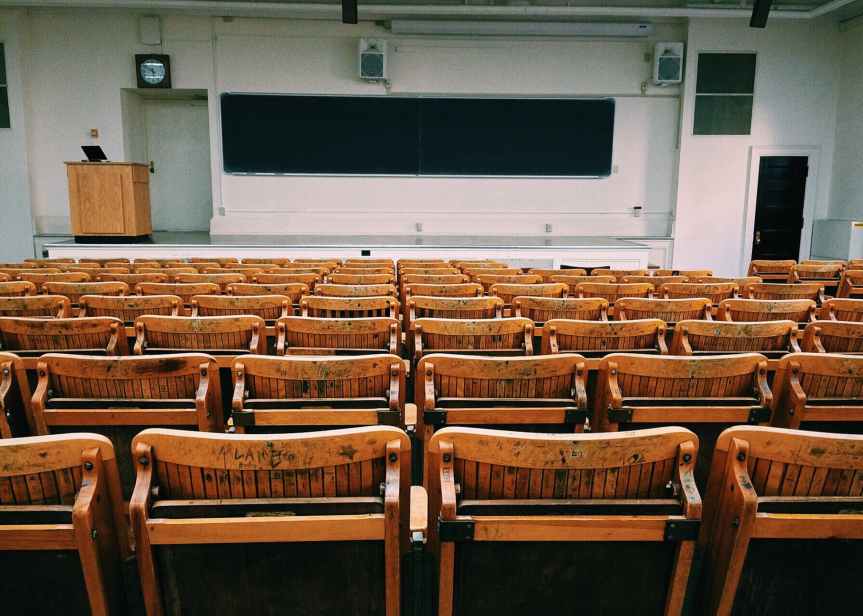
With the rise of the pandemic and the extended lockdown, educational institutions have been prompted to shift towards online teaching. While initially digital classrooms seem to be a great alternative, whether it can successfully replace traditional classroom teaching is a question yet to be answered. Online teaching has also posed a threat to students belonging to the economically backward sections of the society. In a country like India, a great percentage of students do not have the access to such means or find it difficult to avail those options.

Photo by August de Richelieu on Pexels.com

According to survey findings there is a noticeable change in behavior and habits following the forced lockdown among the school goers. The sleep cycle and sleeping pattern of nearly 50 per cent children have been disturbed. It also indicates that 13 per cent of children have no regular pattern of sleeping. As a result, 67 per cent of parents think that their childโ€™s screen time has gone up by at least 50 per cent during the lockdown. Increased screen time is known to severely affect concentration levels and leading to insomnia and other sleep disorders. The fear of pandemic has affected children in the worst way, nearly 40 per cent of the children who were surveyed, have been known to have mental health and unaddressed anxiety issues.

Schools and Colleges have set timetable in such a way so that there are breaks in between classes but because of network connectivity issues, students have started logging in earlier, which have lessened the break times. A teacher said in an interview, โ€œIn the first month, things were fine but with time students are losing interest and a kind of boredom is setting in even for the bright kids. For students in senior classes or those who will appear for board exams there is pressure from teachers and parents which is taxing.โ€ After attending classes online, many students are also sitting for online tuition or extracurricular activity classes.

Photo by Andrea Piacquadio on Pexels.com

Teachers of many schools have reported that students have become โ€œmore subduedโ€ in class and their energy levels have decreased than before. According to psychiatrists and teachers, months of being inside and attending classes from within the screen has made students โ€œfatiguedโ€ and โ€œdemotivated.โ€ Even students who are academically strong have not been responding in class like before, teachers said. They have observed that the โ€œnaughty and mischievousโ€ ones who would always be up to some mischief in classrooms have become โ€œquiet and subduedโ€ during online classes.

Psychiatrist Jai Ranjan Ram said to a newspaper, โ€œTeachers are trying but online classes are not the same as what school was for children. No wonder they are feeling demotivated and fatigued. They have to attend continuous classes on the screen, at times not on laptops but on phones. All this while there is monotony of the same environment. Itโ€™s difficult to maintain a sense of well-being. In an online class the nuances of non-verbal communication are completely lost.โ€

Photo by energepic.com on Pexels.com

Sneha Priya S, Co-Founder & CEO of SP Robotic Works, has said, “Covid has proven to be the turnstile for education in India. The current situation has unearthed the immense potential of platforms with experiential and interactive learning which engage children in practical tasks and logical reasoning.โ€

In a physical classroom, students and teachers would even discuss things not related to academics and eagerly share their experiences. While there are downsides, there are also some positive aspects to it. Educational institutions have been closed for months at a stretch. With online classes there is the possibility to catch up with studies. Many students feel that at least in an online mode there is some form of interaction which helps them in these trying times. Online classes have made possible for students and teachers to get back to their routines within safe conditions. They also provide students with something to look forward to everyday. But amidst the current social conditions, students long to go back to their campuses. As we adjust to the โ€˜new normalโ€™ many young people who are at the beginning of their career are also uncertain of what challenges they might face in the future.

Exoplanets

Exoplanets are planets that orbit a star other than our sun. The prefix “Exo” comes from the Greek and means outside; these worlds are far, far outside our own solar system. For long they have existed only in fiction and theory. It was thought it is impossible to detect planets light-years away since the relatively tiny worlds would appear billions of times fainter than their parent stars. But with the advent of newer technology and some scientist who were ready to take risks the searches for exoplanets began in the 90s and thereafter the pace of discoveries has been excessively fast. In 1992 astronomers reported the first planet-size masses around a dead star, the pulsar PSR1257+12, which sits 2,000 light-years away. Three years later came news of the first known exoplanet, a Jupiter-like gas giant orbiting its star closer than Mercury circles our sun. That world was detected around the sunlike star 51 Pegasi, a mere 50 light-years from Earth. As of 2020, more than 4000 exoplanets have been discovered and the number of known exoplanets has doubled every 27months. Looking for exoplanets directly into a planet seems implausible because of the luminosity of the parent star. The star is so bright makes it impossible to look for the planet directly. It is like observing an ant on a glowing bulb. A Jupiter-like planet would make a dip of 1%, i.e. blocks 1% of the light coming from its parent star. Also, the distance between the planet and the star also affects the fraction of light getting obstructed by the planet. In the visible range, it is impossible to observe any planet. Also, the planet must be located near the Earth and should be far away from its star in order to distinguish light from the planet and glare of its star. Thus it has many limitations, capable of holding back many discoveries. Almost 10-30 planets have been discovered using Direct imaging out of 4000 discovered.
There are two ways to observe exoplanets, direct, and indirect further there are two ways to indirectly observe exoplanets namely, Doppler and Transit. The Doppler method is a good method for discovering exoplanets. It uses the Doppler effect to analyze the motion and properties of the star and planet. Both the planet and the star are orbiting a common center of mass. This means that the star and the planet gravitationally attract one another, causing them to orbit around a point of mass central to both bodies. It is so because planets don’t revolve around its star rather the center of mass of the binary (planet-star). The transit method, another popular technique, looks for periodic dips in a star’s brightness as an orbiting planet passes in front ofโ€”or transitsโ€”its star, as seen from Earth. By measuring the amount and frequency of a starโ€™s dimming, astronomers can estimate the orbits and masses of its planets. Additionally, researchers can calculate a planetโ€™s surface temperature from the worldโ€™s orbital period and its starโ€™s temperature. Another efficient method is that of Gravitational microlensing, it occurs when one star passes directly in front of a background star, as seen from Earth. The gravitational field of the foreground star acts like a lens, magnifying the light of the background star. If the โ€œlensโ€ star has an orbiting planet, the extra mass amplifies the magnification in a telltale way. AI has become a wonderful partner in finding exoplanets, miraculously confirming 50 exoplanets by sifting through the old data sets that too in the first attempt. With the advent of technology, things have certainly become easier and efficient. The search for exoplanets also helps satisfy the quest for Earth-like planet that could sustain life thus relieving earth from the burden and improving living standards.

Telescopes

Telescopes are to astronomers what weapons to defense personnel and the lens size are comparable to ammo size. Larger the telescope better is the capability to capture light and make images. Galileo used the telescope which was small but still was able to spot the phases of the moon, moons of Jupiter, as those were the days, without digital imaging; therefore he drew whatever he saw. But today telescopes store whatever they capture and as the sizes of lenses grow, amount of data also increases posing a threat to the storage of data as no data can be marked bogus since the universe is not known to us, thus we canโ€™t discard or forget whatever we see cause they are pieces of a bigger puzzle. Galileo made the first telescope just 400 years earlier. Galileoโ€™s telescope had a major drawback that it was small thus images were not clear due to low angular resolution (low clarity). Increasing the size of the lens increased the size of the telescope and thus the possibility of bending due to self-load. The greatest Galilean telescope is Palomar 200inch, in fact, it was the biggest for 6 or so decades. But with the advancement in technology and the constraint that manufacturing, transporting, installation, maintenance of too big lenses would be cumbersome or near impossible and also would be uneconomical, innovative ideas were thought about like making clusters of lenses that would act as one. It is still expensive but easy to manage. Ground-based telescopes have seen drastic advancements in the last 2-3 decades but Larger telescopes have good resolution capacity as well as range. Owing to the large lens they are able to capture more light and produce more clear images. But ground-based telescopes aren’t feasible to install due to their large size and heavy maintenance. A slight error could lead millions of taxpayer’s money to go down the drain. Space-based telescopes have seen further fewer advancements since putting a telescope in space is a too risky and expensive task, thus one needs a good reason to do so despite all these astronomers to want to put telescopes in space despite their budgets being humongous because ground-based telescopes have some major drawbacks that no amount of money or technology can overcome. One is the blurring or twinkling of starlight due to turbulent motions in the atmosphere high above. The turbulence in the atmosphere leads to a distorted view of the objects, this turbulence is the reason for the twinkling of lights. Although this twinkling can be reduced by installing a secondary mirror that can fluctuate dozens time per second but still this doesnโ€™t lead to that much clarification that can be observed through space telescopes. The primary mirror canโ€™t be fluctuated due to its enormous size and money invested. And another is the opaqueness of the earthโ€™s atmosphere to many of the wavelengths. Only some wavelengths like visible spectrum and a large part of radio waves and some of the infrared radiation are able to penetrate the earthโ€™s environment. And since the light coming from distant heavenly bodies does not necessarily fall in one of the spectrums due to dopplerโ€™s effect that can penetrate the earthโ€™s atmosphere, therefore, it is possible that much of the data we are just losing due the opaque atmosphere present. Also installing a large telescope on the ground requires structure to contain it, and those structures also have initial cost and maintenance cost thus resulting in the cost curve. The universe at every moment leaks loads of data in the form of X-rays, Gamma rays, and Infrared rays just we have to study it that is only possible through space-based telescopes. Thus the curiosityย to understand how the universe works, the curiosityย to know our origin leads to astronomers putting heavy telescopes in space.ย ย 

Final Year Exams: Supreme Court to Announce Its Verdict Tomorrow

University Grants Commission’s (UGC) had passed on a circular on July 6, regarding the conduction of the final term university examinations during the novel covid 19 pandemic. The Supreme Court will pronounce its verdict on the pleas challenging the UGC circular.

UGC had earlier approached universities to view and get the status about the exams. It received responses from about 818 universities (121 deemed universities, 291 private universities, 51 central universities, and 355 state universities). Out of the 818 universities, 603 have either conducted the examination or are planning to conduct it in some time. While 209 others have already conducted examination on either on-line or off-line mode and 394 are planning to conduct examination in on-line or off-line or in a blended hybrid mode towards August or September.

Photo by Burst on Pexels.com

A bench headed by Justice Ashok Bhushan, R Subshash Reddy and MR Shah, had reserved its judgment for the matter on August 18. They will be pronouncing their judgement after a detailed hearing continuing for 2 days.

Last week, four states and Union territories โ€“ Maharashtra, Delhi, West Bengal and Odisha โ€“ had urged the apex court to give directions to the UGC to not impose examinations on lakhs of final year university students during the present condition. The court had concluded the hearing but deferred a judgement on the issue. Some states said they were not consulted before taking the decision regarding examinations and selecting the UGC guidelines. They have also said that the state governments have the power to take health related decisions in the interest of the people. The UGC Guidelines did not make sure of this and the opinion of the states were not taken into consideration while the guidelines were constructed.

A group of as many as 31 students from different universities across the country had approached the Supreme court and opposed the UGC circular dated 6 July. In that plea, the students have opposed the direction given to all universities in the country to finish taking the final year examinations before 30 September. The students have made a petition and requested for the examinations to be cancelled. They have suggested that the results of students could be calculated on the basis of their internal assessment or mid-term exams and past performance in previous years/semesters. In the petition it was requested that mark sheets of students should be issued before July 31. The petition was filed by students from across 13 states and one union territory. One of the students, among the 31 petitioners, who had tested positive for coronavirus have asked for directions from the UGC about the examinations. He has asked the UGC to adopt the CBSE model and conduct an examination at a later date. This is specially for the students who are not satisfied with their marks and the assessment of the papers. The plea suggested that previously planned examinations should be cancelled, keeping in mind the interests and health of the students in such a situation of the country, when the number of cases were rising every day. All educational educations across India were closed for the past few months due to the pandemic situation and the lockdowns. Most institutions have however started taking classes for intermediate students in the form of online classes/ lectures.

The Supreme Court will give its judgement and provide a verdict for the students, in a batch of petitions submitted for challenging the revised guidelines of the University Grants Commission (UGC) to conduct final year exams by September 30 of this year.

Books on Indian History which You Must Read

Indian History has been the theme for many books. Whether its fiction or non-fiction, there are plenty of books which deserve to be on the list of must-read books written on the topic of history. These books give one a detailed understanding of Indiaโ€™s history.

Be it comprehensive historical books or fictional accounts of a historical incident, there are many options for you to choose from. If you are a person who loves both reading and history then the following 5 books are just the right choice for you.

The Argumentative Indian by Amartya Sen

Amartya Sen is an Indian Economist and writer who had won the Nobel Prize in 1998. This book is a collection of essays and it will help one understand the Indian polity. It focusses on the importance of public debate, argument and intellectual diversity in the Indian civilization of the past. Sen writes about his view on how and what will lead to the success of democracy in India.

India After Gandhi by Ramachandra Guha

Ramachandra Guha is an Indian writer and researcher whose areas of interest include society, politics and history. India After Gandhi is a book describing the journey of modern India, from post-independence from the British in 1947 until the 1990s. The book will provide one with a thorough understanding of India’s social and economic spheres. It covers the countryโ€™s political history over the later part of the 20th century.

The Last Mughal by William Dalrymple

William Dalrymple is a Scottish historian, writer, critic, art historian and curator. He has won several awards and prizes for his writings. The book is a comprehensive description of the time period when the Mughal empire started declining in India. It will be a treat for people who love reading history. It is about the last Mughal ruler, Bahadur Shah Zafar II, and it provides an account of 19th century India with the tale of the emergence of the British Raj.

Another famous book by him is White Mughals which is his fifth major book, it tells the story of the love affair between James Achilles Kirkpatrick and Khair-un-Nissa Begum at the backdrop of nineteenth century Hyderabad.

The Discovery of India by Jawaharlal Nehru

Jawaharlal Nehru was Indiaโ€™s first prime minister and he wrote this from 1942 – 1946. This book was written by Nehru when he was imprisoned by the British. It is a tribute to the rich cultural heritage and legacy of the country. It provides an account of all major developments in the subcontinent from the period of Indus Valley Civilization to the last years of the British rule.

The Palace of Illusions by Chitra Banerjee Divakaruni

Chitra Banerjee Divakaruni is an award-winning writer, novelist and poet. The book is about the tale of the epic Mahabharata, written from the perspective of Draupadi (Panchaali). It tells the story of the woman who fights, endures a lot living in a patriarchal world. It is a historical fiction which traces the historical tale and the life of Panchaali.

IIT students watch their 3D avatars get degrees as convocations go digital amid lockdown

a group of people standing in front of a crowd

New Delhi:ย The studentsโ€™ names were called out and they walked on to the stage, where the director stood waiting to hand them their degrees. The director delivered his traditional address too. The ceremony had all the trappings of a regular convocation, but it was actually just the closest-possible alternative IITs could organise for students inspite of pandemic.

Final-year IIT students in Bombay and Gandhinagar โ€” robbed of their precious last few months in college, like thousands of others, but covid 19 lockdownย โ€” found some measure of solace Sunday as they were โ€œhanded outโ€ their degrees in a live animation ceremony.

The participants were 3D avatars of the actual students and the ceremony was beamed live to their computers. And it created quite a buzz among students, who took to social media to post glimpses from the ceremony. 

โ€œEven in online mode, the institute made sure to retain the feeling of the graduation ceremony for its students, right from the academic procession by the faculty members to invocation, Convocation addresses by the director and the chief guest, award of degrees and medals to their digital self, and convocation pledge followed by individual congratulatory messages from the IIT faculty and staff in various Indian languages,โ€ a statement from IIT-Gandhinagar said. โ€œThe entire event was streamed online on IITโ€™s YouTube channel and Facebook page.โ€ 

Diabetes

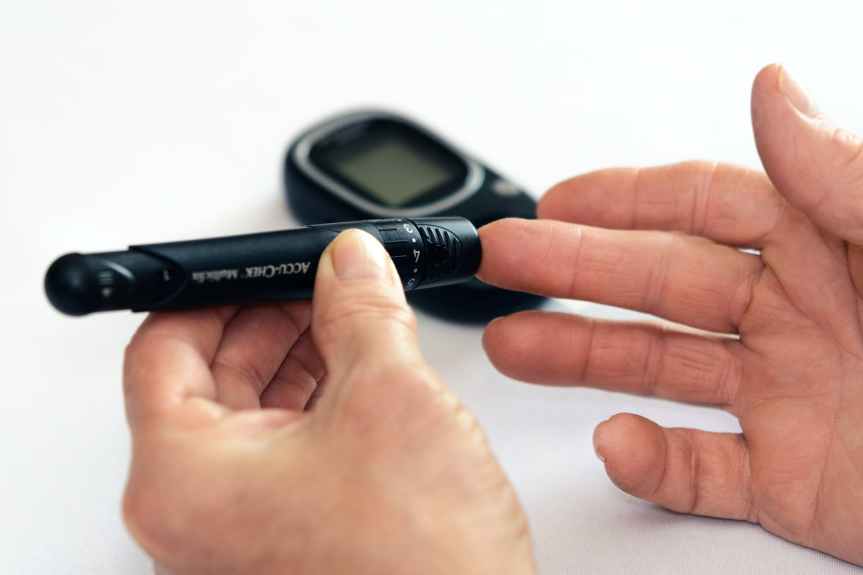
Diabetes is the most common word spoken across the globe. Fatal and contagious than any of the disease ever to be seen by humanity. It doesn’t affect directly but surely undermines the body such that various other diseases get a free pass. It is a major public health problem that is approaching epidemic proportions globally. Worldwide, the prevalence of chronic, non-communicable diseases is increasing at an alarming rate. About 18 million people die every year from cardiovascular disease, for which diabetes and hypertension are major predisposing factors. Diabetes is a number of diseases that involve problems with the hormone insulin, which occurs when your blood glucose, also called blood sugar, is too high. Blood glucose is your main source of energy and comes from the food you eat. Normally, the pancreas (an organ behind the stomach) releases insulin to help your body store and use the sugar and fat from the food you eat. Diabetes can occur when the pancreas produces very little or no insulin, or when the body does not respond appropriately to insulin. Glucose then stays in your blood and doesnโ€™t reach your cells. Therefore weakness, dizziness are prevalent among the diabetic. As of yet, there is no cure. People with diabetes need to manage their disease to stay healthy. Different kinds of diabetes can occur, and managing the condition depends on the type. Not all forms of diabetes stem from a person being overweight or leading an inactive lifestyle. In fact, some are present from childhood.
Three major diabetes types can develop, Type 1, type 2, and gestational diabetes.

  • Type I diabetes: Also known as juvenile diabetes, this type occurs when the body fails to produce insulin. People with type I diabetes are insulin-dependent, which means they must take artificial insulin daily to stay alive.
  • Type 2 diabetes: Type 2 diabetes affects the way the body uses insulin. While the body still makes insulin, unlike in type I, the cells in the body do not respond to it as effectively as they once did. This is the most common type of diabetes, according to the National Institute of Diabetes and Digestive and Kidney Diseases, and it has strong links with obesity.
  • Gestational diabetes: This type occurs in women during pregnancy when the body can become less sensitive to insulin. Gestational diabetes does not occur in all women and usually resolves after giving birth.

Less common types of diabetes include monogenic diabetes and cystic fibrosis-related diabetes.
Since there is no cure, it doesn’t mean that you can’t live your life up to the fullest. Just a tight schedule can prove propitious. Some snacks to include in your diet to keep a close watch on the glucometer are-

  • Fresh fruit and cheese- Thereโ€™s a reason why the French are known for their fantastic fruit and cheese boards! Cheese is an excellent source of protein and pairs well with carbohydrate-rich fruit to provide energy without spiking blood sugars. Good pairings include apples with cheddar, Gouda and pears, or fresh mozzarella with peaches.
  • Crunchy chickpeas- Gone are the days when chickpeas were only useful for making hummus! Chickpeas (also known as garbanzo beans) are an excellent source of fiber and protein and make for a nutrient-rich, mid-day snack. When roasted long enough, chickpeas become light and crunchy and make for a great replacement for potato chips.
  • Hardboiled eggs- Eggs are a low-calorie snack packed with valuable nutrients, such as B vitamins, zinc, calcium, and protein. Hardboiled eggs make for a healthy, portable snack that will keep you full between meals. Pair with a small piece of fresh fruit if blood sugars are dipping low.
  • Popcorn- Most popular for movie nights, popcorn is full of fiber and an excellent snack that wonโ€™t send blood sugars surge. However, not all popcorn is made with the same ingredients. Traditionally, microwaved popcorn can contain a ton of added sugars or partially-hydrogenated oils that take a toll on heart health. Look for brands that air pop their popcorn or use avocado oil, which is a source of heart-healthy unsaturated fat. Save the buttery topping or kettle corn varieties for special occasions.

There are several tips to fight diabetes. You can’t overcome this disease but surely could make peace with it. Diabetes is like an arduous trainer. He makes you do things that you should do to stay healthy and have a prolonged life.

  • Get moving – Exercise helps build muscle and lower blood sugars. If going to a gym seems infeasible then you can consider purchasing a few weights since the best way to control your sugars and your scale is to do both aerobic and anaerobic exercise. Besides, adding a 15- to 20-minute post-meal stroll can help fight sugar spikes.  
  • Embrace your blood sugars, good and bad – No one likes to have high blood sugar. But even if youโ€™ve had a few highs, donโ€™t act crestfallen and abandon tracking your glucose readings. Along with helping your doctor determine if your diet plan and medications are working, a record of blood sugar readings will help you to assess how food, activities, and stress impact your body. Do you need to add five minutes to your walk after eating pepperoni pizza? Are your bedtime snacks keeping you from morning lows? Only your blood glucose knows.
  • Take a break – Consider yoga or meditation. Stress heavily affects blood sugars. Take time to read a book, take a nap, or talk to friends.  
  • Maintain cholesterol-  You have two kinds of cholesterol in your blood: LDL and HDL. LDL or โ€œbadโ€ cholesterol can build up and clog your blood vessels. Too much bad cholesterol can cause a heart attack or stroke. HDL or โ€œgoodโ€ cholesterol helps remove the โ€œbadโ€ cholesterol from your blood vessels.
  • Refrain from smoking-  No smoking is especially important for people with diabetes because of both smoking and diabetes narrow blood vessels. Blood vessel narrowing makes your heart work harder. E-cigarettes arenโ€™t a safe option either.

Unemployment in India

The unemployment rate in India jumped to 29% since the country went into lockdown from March 2020, says the report of CMIE โ€“ Centre For Monitoring Indian Economy. The lockdown to contain the coronavirus outbreak has forced many industries to shut down thus increasing unemployment across the country.

The unemployment rate in India rose to 7.2 percent in February 2019, the highest since September 2016, and also up from 5.9 percent in February 2018, according to the latest data compiled by the Centre for Monitoring Indian Economy (CMIE).

What is Unemployment?

Unemployment occurs when a person who is actively searching for employment is unable to find work. Unemployment is often used as a measure of the health of the economy. The most frequent measure of unemployment is the unemployment rate, which is the number of unemployed people divided by the number of people in the labor force.

National Sample Survey Organization (NSSO) defines employment and unemployment on the following activity statuses of an individual:

  • Working (engaged in an economic activity) i.e. ‘Employed’.
  • Seeking or available for work i.e. ‘Unemployed’.
  • Neither seeking nor available for work.

The first two constitutes labour force and unemployment rate is the percent of the labour force that is without work.

Unemployment rate = (Unemployed Workers / Total labour force) ร— 100

Types of Unemployment in India

  • Disguised Unemployment:
    • It is a phenomenon wherein more people are employed than actually needed.
    • It is primarily traced in the agricultural and the unorganised sectors of India.
  • Seasonal Unemployment:
    • It is an unemployment that occurs during certain seasons of the year.
    • Agricultural labourers in India rarely have work throughout the year.
  • Structural Unemployment:
    • It is a category of unemployment arising from the mismatch between the jobs available in the market and the skills of the available workers in the market.
    • Many people in India do not get job due to lack of requisite skills and due to poor education level, it becomes difficult to train them.
  • Cyclical Unemployment:
    • It is result of the business cycle, where unemployment rises during recessions and declines with economic growth.
    • Cyclical unemployment figures in India are negligible. It is a phenomenon that is mostly found in capitalist economies.
  • Technological Unemployment:
    • It is loss of jobs due to changes in technology.
    • In 2016, World Bank data predicted that the proportion of jobs threatened by automation in India is 69% year-on-year.
  • Frictional Unemployment:
    • The Frictional Unemployment also called as Search Unemployment, refers to the time lag between the jobs when an individual is searching for a new job or is switching between the jobs.
    • In other words, an employee requires time for searching a new job or shifting from the existing to a new job, this inevitable time delay causes the frictional unemployment. It is often considered as a voluntary unemployment because it is not caused due to the shortage of job, but in fact, the workers themselves quit their jobs in search of better opportunities.
  • Vulnerable Employment:
    • This means, people working informally, without proper job contracts and thus sans any legal protection. These persons are deemed โ€˜unemployedโ€™ since records of their work are never maintained.
    • It is one of the main types of unemployment in India.

Related Terms

  • Unemployment trap is a situation when unemployment benefits discourage the unemployed to go to work. People find the opportunity cost of going to work too high when one can simply enjoy the benefits by doing nothing.
    • Description: While the purpose of social security and welfare systems is to provide relief to the unemployed, they end up providing them with an incentive not to return to work. An unemployment trap arises when opportunity cost of going to work is higher than the income received, discouraging people from returning to work and being productive.
  • Harmonised unemployment rates define the unemployed as people of working age who are without work, are available for work, and have taken specific steps to find work. The uniform application of this definition results in estimates of unemployment rates that are more internationally comparable than estimates based on national definitions of unemployment.
    • This indicator is measured in numbers of unemployed people as a percentage of the labour force and it is seasonally adjusted. The labour force is defined as the total number of unemployed people plus those in civilian employment.

Measurement of Unemployment in India

National Sample Survey Office (NSSO), an organization under Ministry of Statistics and Programme Implementation (MoSPI) measures unemployment in India on following approaches:

  • Usual Status Approach: This approach estimates only those persons as unemployed who had no gainful work for a major time during the 365 days preceding the date of survey.
  • Weekly Status Approach: This approach records only those persons as unemployed who did not have gainful work even for an hour on any day of the week preceding the date of survey.
  • Daily Status Approach: Under this approach, unemployment status of a person is measured for each day in a reference week. A person having no gainful work even for 1 hour in a day is described as unemployed for that day.

Unemployment stats (based on findings from CMIEโ€™s latest data):

  • The unemployment rate in India rose to 7.2 percent in February 2019, the highest since September 2016, and up from 5.9 percent in February 2018.
  • The total number of employed persons in February 2019 is estimated at 400 million against 406 million in the year-ago period and 407.5 million employed in February 2017.
  • The labour participation rate fell from 43.2% in January 2019 to 42.7% in February 2019.
    • Labour Participation Rate defines that section of working population in the economy which is currently employed or seeking employment.

Causes of Unemployment

  • Large population.
  • Low or no educational levels and vocational skills of working population.
  • Inadequate state support, legal complexities and low infrastructural, financial and market linkages to small/ cottage industries or small businesses, making such enterprises unviable with cost and compliance overruns.
  • Huge workforce associated with informal sector due to lack of required education/ skills, which is not captured in any employment data. For ex: domestic helpers, construction workers etc.
  • The syllabus taught in schools and colleges, being not as per the current requirements of the industries. This is the main cause of structural unemployment.
  • Inadequate growth of infrastructure and low investments in manufacturing sector, hence restricting employment potential of secondary sector.
  • Low productivity in agriculture sector combined with lack of alternative opportunities for agricultural worker which makes transition from primary to secondary and tertiary sectors difficult.
  • Regressive social norms that deter women from taking/continuing employment.

Impact

  • The problem of unemployment gives rise to the problem of poverty.
  • Young people after a long time of unemployment indulge in illegal and wrong activities for earning money. This also leads to increase in crime in the country.
  • Unemployed persons can easily be enticed by antisocial elements. This makes them lose faith in democratic values of the country.
  • It is often seen that unemployed people end up getting addicted to drugs and alcohol or attempts suicide, leading losses to the human resources of the country.
  • It also affects economy of the country as the workforce that could have been gainfully employed to generate resources actually gets dependent on the remaining working population, thus escalating socioeconomic costs for the State. For instance, 1 percent increase in unemployment reduces the GDP by 2 percent

Steps Taken by Government

  • Integrated Rural Development Programme (IRDP) was launched in 1980 to create full employment opportunities in rural areas.
  • Training of Rural Youth for Self-Employment (TRYSEM): This scheme was started in 1979 with objective to help unemployed rural youth between the age of 18 and 35 years to acquire skills for self-employment. Priority was given to SC/ST Youth and Women.
  • RSETI/RUDSETI: With the aim of mitigating the unemployment problem among the youth, a new initiative was tried jointly by Sri Dharmasthala Manjunatheshwara Educational Trust, Syndicate Bank and Canara Bank in 1982 which was the setting up of the โ€œRURAL DEVELOPMENT AND SELF EMPLOYMENT TRAINING INSTITUTEโ€ with its acronym RUDSETI near Dharmasthala in Karnataka. Rural Self Employment Training Institutes/ RSETIs are now managed by Banks with active co-operation from the Government of India and State Government.
  • By merging the two erstwhile wage employment programme โ€“ National Rural Employment programme (NREP) and Rural Landless Employment Guarantee Programme (RLEGP) the Jawahar Rozgar Yojana (JRY) was started with effect from April, 1, 1989 on 80:20 cost sharing basis between the centre and the States.
  • Mahatma Gandhi National Rural Employment Guarantee Act (MNREGA):
    • It is an employment scheme that was launched in 2005 to provide social security by guaranteeing a minimum of 100 days paid work per year to all the families whose adult members opt for unskilled labour-intensive work.
    • This act provides Right to Work to people.
  • Pradhan Mantri Kaushal Vikas Yojana (PMKVY), launched in 2015 has an objective of enabling a large number of Indian youth to take up industry-relevant skill training that will help them in securing a better livelihood.
  • Start Up India Scheme, launched in 2016 aims at developing an ecosystem that promotes and nurtures entrepreneurship across the country.
  • Stand Up India Scheme, launched in 2016 aims to facilitate bank loans between Rs 10 lakh and Rs. 1 crore to at least one SC or ST borrower and at least one women borrower per bank branch for setting up a greenfield enterprise.

Way Forward

  • There are number of labour intensive manufacturing sectors in India such as food processing, leather and footwear, wood manufacturers and furniture, textiles and apparel and garments. Special packages, individually designed for each industry are needed to create jobs.
  • Public investment in sectors like health, education, police and judiciary can create many government jobs.
  • Decentralisation of Industrial activities is necessary so that people of every region get employment.
  • Development of the rural areas will help mitigate the migration of the rural people to the urban areas thus decreasing the pressure on the urban area jobs.
  • Entrepreneurs generate employments to many in a country; therefore government needs to encourage entrepreneurship among the youth.
  • Concrete measures aimed at removing the social barriers for womenโ€™s entry and their continuous participation in the job market is needed.
  • Government needs to keep a strict watch on the education system and should try to implement new ways to generate skilled labour force.
  • Effective implementation of present programs like Make in India, Skill India, Start up and Stand-Up India.
  • There is a need for National Employment Policy (NEP) that would encompass a set of multidimensional interventions covering a whole range of social and economic issues affecting many policy spheres and not just the areas of labour and employment. The policy would be a critical tool to contribute significantly to achieve the goals of the 2030 Agenda for Sustainable Development.
  • The underlying principles for the National Employment Policy may include
    • enhancing human capital through skill development;
    • creating sufficient number of decent quality jobs for all citizens in the formal and informal sectors to absorb those who are available and willing to work;
    • strengthening social cohesion and equity in the labour market;
    • coherence and convergence in various initiatives taken by the government;
    • supporting the private sector to become the major investor in productive enterprises;
    • supporting self-employed persons by strengthening their capabilities to improve their earnings;
    • ensuring employeesโ€™ basic rights and developing an education training and skill development system aligned with the changing requirements of the labour market.

The future of Machine Learning

Machine learning is a trendy topic in this age of Artificial Intelligence. The fields of computer vision and Natural Language Processing (NLP) are making breakthroughs that no one couldโ€™ve predicted. We see both of them in our lives more and more, facial recognition in your smartphones, language translation software, self-driving cars and so on. What might seem sci-fi is becoming a reality, and it is only a matter of time before we attain Artificial General Intelligence.

In this article, I will be covering Jeff Deanโ€™sย keynoteย on the advancements of computer vision and language models and how ML will progress towards the future from the perspective of model building.

The field of Machine learning is experiencing exponential growth today, especially in the subject of computer vision. Today, the error rate in humans is only 3% in computer vision. This means computers are already better at recognizing and analyzing images than humans. What an amazing feat! Decades ago, computers were hunks of machinery the size of a room; today, they can perceive the world around us in ways that we never thought possible.

The progress weโ€™ve made from 26% error in 2011 to 3% error in 2016 is hugely impactful. The way I like to think is, computers have now evolved eyes that work. โ€” Jeff Dean

Now this achievement โ€” made possible with advancements in machine learning โ€” isnโ€™t just a celebration for computer geeks and AI experts, it has real-world applications that save lives and make the world a better place. Before I blab about a life-saving application of computer vision, let me illustrate to you the power of computer vision.

Letโ€™s say I give you 10,000 pictures of dogs and I ask you to classify them into their respective species, are you able to do that? Well, you can, but you have to be a dog expert and itโ€™ll take days by the time youโ€™re done. But for a computer (with a GPU), this takes mere minutes. This incredible capability of computer vision opens up a profusion of applications.

Application of computer vision

One quintessential application for computer vision given by Jeff Dean is in diabetic retinopathy โ€” which is a diabetes complication that affects the eye. Now to diagnose it, an extensive eye exam is required. In third-world countries and rural villages where there is a paucity of doctors, a machine learning model that uses computer vision to make a diagnosis will be extremely beneficial. As with all medical imaging fields, this computer vision can also be a second opinion for the domain experts, ensuring the credibility of their diagnosis. Generally, the purpose of computer vision in the medical field is to replicate the expertise of specialists and deploy it in places where people need it the most.


NLP and Transformers

Image for post

ย Language models are algorithms that help machines understand the text and perform all kinds of operations such as translating text. According to Jeff Dean, a lot of progress has been made in language models.

Today, computers can understand paragraphs of text at a much deeper level than they could before. Even though they arenโ€™t at the level of reading an entire book and understanding it the way we humans do, the ability to understand a few paragraphs of text is fundamental to things such as improving the Google search system.

The BERT model, the latest Natural Language Processing (NLP) model that Google announced has been put to use in their search ranking algorithms, This helped enhance the search results for myriads of different kinds of queries that were previously very difficult. In other words, the search system can now better understand different kinds of searches done by users and help provide better and more accurate answers.

โ€œDeep learning and machine learning architectures are going to change a lot in the next few years. You can see a lot of this already, where now with NLP, the only game in town basically is Transformer networks,โ€ โ€” Yann LeCun

These Transformer-based models for translation are showing spectacular gains in the BLEU score, which is a measurement of translation quality. So, Machine Learning architectures that utilize transformers such as BERT are increasing in popularity and functionality.


The problem with ML today

In the keynote, the Google Senior Fellow mentioned atomic models that Machine Learning developers use today to perform all kinds of unit tasks. He believes these models are inefficient and computationally expensive, and more effort is required to achieve good results in those tasks.

To elaborate, in the ML world today, experts find a problem that they want to solve and they focus on finding the right dataset to train the model and perform that particular task. Dean argues that by doing so, they basically start from zero โ€” they initialize the parameter of the model with random floating points and then try to learn about everything that tasks from the dataset.

To elaborate on this matter, he gives an excellent comparison that goes like this:

โ€œItโ€™s akin to when you want to learn something new, you forget all your education and you go back to being an infant, and now you try to learn everything about this taskโ€

He compares this methodology with humans becoming infants every time we want to learn something new and taking a brain out and putting in a different one in. Not only is this method computationally expensive, but more effort is also required to achieve good outcomes in those tasks. And Jeff Dean proposes a solution.

Epitome

Computer vision and NLP will continue to play a significant role in our lives. But there are adverse implications to this advancement as well, such as China using facial recognition to implement a rating system on the people (straight out of an episode from the TV show black mirror) and the proliferation of fake news. We must progress in Machine Learning while taking into account of algorithmic biases and ethics that remind us of our place, a creation of God and not creators.

As for the uber model, there is much evidence proving we are inching closer and closer towards it. For example, transfer learning โ€” a way of reusing the model for a different purpose achieves good results with fewer data and multi-task learning โ€” a model that operates at small scales of five or six related things all tend to make things work well.

Thus, itโ€™s logical to say that the realization of an uber model is plausible by extending those ideas โ€” transfer learning and multi-task learning โ€” out and developing on them, itโ€™s only a matter of when and not how.

Thanks for reading my excerpt on the future of ML and my synopsis of Jeff Deanโ€™s keynote. I hope you got a glimpse of what is to come in Machine Learning and AI.

4 Tips for Effective IELTS Preparation

To migrate or study in English speaking nations, one needs to give an IELTS test. The International English Language Testing System (IELTS) assesses the personโ€™s ability to speak, write, listen, and read in English. The test is designed to understand how you will use English in your daily life such as in university, workplace, or other social situations.

Before providing the tips on how to do the preparation, here is the breakdown of the types of IELTS test. There are two types: Academic and General. The IELTS Academic test is for those willing to pursue undergraduate or post-graduation or join a professional organization in an English-speaking nation. Second, the IELTS General Training test is for those who want to train or study at below degree level, to work, or to emigrate.

The formats of these two tests are a bit different, but the test assessment will still be on four skills: Reading, Listening, Writing, and Speaking.

Reading Test: This will include a wide range of reading skills such as attention to detail, a general sense of the passage, meaning derived from it, understanding of writerโ€™s opinions, attitudes, and how will you understand the development of the argument.

Listening Test: It assesses how well you recognize opinions, attitudes, the purpose of the speaker, and also factual information and general ideas.

Writing Test: The Writing test is designed to measure the wide range of writing skills including grammar, vocabulary, how you can write responses, organize ideas, and recognize mistakes.

Speaking Test: The IELTS Speaking Test assesses how fluently and accurately you communicate in English. You can be asked to speak on various topics and express your opinions.

Getting back on how to crack the IELTS exam, just like any other test IELTS to needs some preparation. These four tips can help you ace the IELTS exam.

  • First and foremost, Read! Read! Read! Whether itโ€™s a book, newspaper, magazine, or any written material. While reading, always have a credible English-English dictionary with you. This way you will work out the meanings of the new words making sure you donโ€™t translate back to your language. You can also read an English newspaper every morning and listen to English news channels. It will enhance your reading and listening skills as well as keep you updated about the happenings in the world. Sounds good?
  • Improve your vocabulary! The more words you are exposed to, better will be your vocabulary. Jot down the words you have heard recently or you donโ€™t know and highlight them with a marker. Check out its meaning in the dictionary and then start putting these words into daily speech. Using new words frequently will help in making your English fluent. As a fact, it takes from 10 to 20 repetitions to make a word part of your daily speech. Do see its pronunciation online if not sure. Speak those words while talking to your parents, friends, or somebody on call. This will increase your confidence and you will be well versed on the day of your exam.
  • Listen to English radio, shows, or news channels. After that try to write them down and analyze. Also with that, separately write words or sentences that were appealing to you. Use them while you write essays or speak. Donโ€™t watch videos online since you can pause or rewind them. This wonโ€™t help as it will break your flow of listening. Hear it once only. After you are done repeat whatever you recall from the show, use stress and intonation appropriately. Make sure you record it so that you can find out your mistakes and improve accordingly.
  • So far whatever words you have learned, phrase them into sentences and then into paragraphs.ย While writing always set a timer. This will keep you at pace and improve your speed during the exam. Check for comma mistakes, full stop, and grammar. See-through the sample papers and find out what is the word limit given in the writing paper. Accordingly, write if say the set limit is 200 words donโ€™t write just 150 words. This will lead to losing marks. Generally, a person is ok reading, speaking, and listening but they have a hard time writing, in that case, while practicing start with your favorite topic. Start with as basic as possible. Suppose you like chocolate ice cream, write on that. Sooner or later, you will get used to and can start with difficult topics. When you plan your essay, always have some spare time in the end to check your work.

Taking the IELTS test can be stressful so donโ€™t forget to put these helpful tips. It will equip you to be ready for the exam. Commit and practice thoroughly. With this, youโ€™ll feel more confident and be able to tackle the test and get the desired score.


College and University Admissions 2020

Students are very worried about their careers as all admission procedures have been delayed due to the Coronavirus pandemic. Many have expressed concerns over the delay and cancellation of exams for they might lose an academic year. Final year students are suffering the worst. Many students of intermediate years in have started their classes in online mode for now.  

Delhi University has scheduled its entrance tests for admission to 10 undergraduate and 86 masters and MPhil/PhD programmes from the 6th of September. The exams will be computer based and will be conducted by the National Testing Agency. They will take place from September 6 to 11 in three slots from 8 am. There will be 24 centers across the country. 1.47 lakh students have applied to the masters courses, and 21,699 students have applied for MPhil and PhD programmes. The undergraduate course entrance tests will be held for 3 management courses, journalism, education and a few specialised disciplines. 

Students are also worried about sitting for exams in this condition. There is the issue of social distancing and also wearing a mask, gloves and shield for 2 hours while appearing for an exam is quite taxing. The centres are located in specific cities so there is also an issue about travel restrictions and hotel accomodation. Some exam dates have also coincided with others as DUโ€™s joint admission test for management courses and Common Law Admission Test (CLAT) is supposed to take place on the same day that is September 7. There is another problem about the masters aspirants as most of them have still not finished with their final year exams and yet to receive the degree. Students are waiting for the University to make an announcement and provide some clarification regarding the issue. JNUSU president Aishee Ghosh has expressed concern over the issue of students who are badly affected by floods and the pandemic. Many of them might not be in a position to appear for these exams in a specific centre.  

Jamia Milia Islamia has extended the dates of application for admission. The last date to fill the online application form has been extended to September 14. Students seeking admissions in any undergraduate course at the university can apply at the official website, jmi.ac.in or jmicoe.in.  

The applications for admissions under the sports category will end on September 16. This is applicable for students who play aports at the national, state, regional or university levels. Under the sports quota, students will be enrolled in both undergraduate and postgraduate courses. Sports including boxing, badminton, athletics, cricket, hockey, shooting, football, tennis, table tennis, volleyball, and wrestling will be accepted for the courses. 

The Jamia Milia Islamia University has been ranked amonf the top universities across india. Over 21,000 students are enrolled across 270 programmes in Jamia. This year, it has introduced 19 new courses including two MTech programmes, two MSc, and one MLib course. Among the undergraduate courses BSc aeronautics, four BVov courses, diploma in hospitality management, and three postgraduate diploma courses including entrepreneurship, innovation and design thinking.  

New sessions across colleges and universities have all been postponed due to the pandemic. The application deadline has been extended for almost all courses including free UPSC tutoring classes that are made to support candidates belonging to minorities, SC, ST community, and women as well as NRI admissions.  

The Joys of Volunteering

Volunteering is a voluntary act of an individual of doing some work for the society as community service. It may include different forms of work. Some volunteers are specially trained in a particular field while some offer to help and join hands for a good cause freely. Volunteering has different sectors like medical, disaster management, education and upliftment of community. There are several NGOs and organisations which offer volunteering opportunities.

Photo by Matthias Zomer on Pexels.com

It can help you to make new friends, advance your career, and feel better. Taking some time out of our busy schedules and finding time for volunteering can be difficult for some of us. But you can start small for the sake of trying it out. Volunteering lets you help and reach out to people from different backgrounds and create social change in your own little way. It provides vital help to individuals and gives you a chance to make lives better. Surely it makes peopleโ€™s lives better but it gives you greater benefits. Give a little time to volunteering and you will get a lot in return!

It helps you feel happier and healthier. Once you start volunteering, you will meet a lot of new people from different communities. Working with underprivileged communities makes us more aware of our surroundings and feel grateful about our own lives. Also, when you start doing something new it gives you a fresh start and brightens your mood. Most of us love doing new things. Volunteering will also help you spend some quality time outside of work. It will bring both fun and fulfillment to your life. It will help you combat better with issues of mental health like depression and anxiety. It will also improve your mood and give you immense joy. Seeing the smile on the face of a child will surely brighten your day.

You will meet a lot of new people. Your fellow volunteers will either be from similar fields as yours, which will definitely be a positive side or they will be from completely different walks of life giving you a chance to know about a lot of new things. If you are a person who struggles with making new friends, it is a great opportunity for you to start new friendships. Once you start working as a team with others, you will share your ideas and share responsibilities for carrying out a task. While working and planning together it is most likely that you will become great friends. This will also make you a more social person and increase your communication skills. Volunteering helps you to network with a lot of people. Especially if your career path values societal issues, it will be really helpful for you to meet important people and make connections.

Lastly it will help you enhance your career prospects. Almost all companies or educational institutions value a volunteering experience. They will be glad to know that you have been a part of something so meaningful. Volunteering increases your chances of getting selected and helps you improve your resume. It will also give you experience of working with a team and make you a more empathetic and responsible person.

How to Collaborate with High Profile Scholars

by: Shashikant Nishant Sharma

Photo by Matheus Bertelli on Pexels.com

Collaborating with a high-profile researcher for a grant application is a fantastic opportunity to strengthen your proposal. Here are some recommendations for handling this situation:

  1. Highlight Collaborator’s Expertise:
    • In your grant application, emphasize the specific expertise and achievements of your foreign collaborator that directly align with the goals and objectives of the grant. Highlight any relevant publications, projects, or contributions to the field.
  2. Clearly Define Roles and Contributions:
    • Clearly outline the roles and contributions of both you and your collaborator in the project. Make it explicit how the collaboration will enhance the overall quality and impact of the proposed work.
  3. Condense the CV:
    • While the CV is extensive, you don’t need to include the entire 100 pages. Select the most relevant sections that directly support your grant application. This might include key publications, research projects, and any collaborative work that aligns with your proposed project.
  4. Create an Appendix:
    • Consider creating an appendix for the full CV and provide it as supplementary material. Mention in your application that the full CV is available upon request. This allows the grant reviewers to access additional information if they wish without overwhelming them initially.
  5. Reference Specific Achievements:
    • Reference specific achievements or experiences from the collaborator’s CV in the narrative of your proposal. For example, if they have conducted groundbreaking research in a related area, mention this as evidence of their expertise.
  6. Letter of Support:
    • Obtain a letter of support from your collaborator. This letter can express their enthusiasm for the project, their commitment to collaboration, and how their involvement will contribute to the success of the proposed research.
  7. Contact the Granting Organization:
    • If you have any concerns or questions about the format or presentation of the collaborator’s CV, consider reaching out to the granting organization for guidance. They may have specific instructions or preferences.
  8. Coordinate with Collaborator:
    • Ensure that your collaborator is aware of the grant requirements and is willing to support your application. Coordination is key, and you want to present a united front in terms of the project’s goals and expected outcomes.

Remember, the goal is to present a compelling case for why this collaboration is crucial to the success of your project. Make it easy for the reviewers to see the value that your collaborator brings to the table.

References

Barbara, Sister, and M. C. D. P. Celebrate. “Collaboration.” (1989).

Bronstein, Laura R. “A model for interdisciplinary collaboration.”ย Social workย 48.3 (2003): 297-306.

Gardner, D. “Ten lessons in collaboration.”ย Online journal of issues in nursingย 10.1 (2005).

Thomson, Ann Marie, James L. Perry, and Theodore K. Miller. “Conceptualizing and measuring collaboration.”ย Journal of public administration research and theoryย 19.1 (2009): 23-56.

Beauty

One of the mostย unsparingย habits of the human being is judging a person on the virtue of their looks that includes: complexion shade, height, figure, hair, etc. This ritual has been in the culture of all the individuals around the globe and has been followed through ages. Kings prefer attractive women; his ministry will be filled with people shorter than him. In present, it is anย outrageousย idea of degrading individuals on their looks. A person facing it may not be able to walk out from self-guilt. The idea of beauty is sprayed on the public byย fraudulentย cosmetics companies. We can take an example of Kylie Jenner who is a media personality and owns Kylie Cosmetics. She has prompted the idea to her customers that they can get looks like her if they use products from her brand. A tall man will always be held to be a leader, or an attractive woman will always be soft-spoken. We need to change this thinking pattern otherwise a lot of high potential souls will go wasted. In this 21century, spoke persons do outline the issue in aย vilifiedย manner. In the end, I would like to quote โ€œNo beauty shines brighter than a good heartโ€, by anonymous.One of the mostย unsparingย habits of the human being is judging a person on the virtue of their looks that includes: complexion shade, height, figure, hair, etc. This ritual has been in the culture of all the individuals around the globe and has been followed through ages. Kings prefer attractive women; his ministry will be filled with people shorter than him. In present, it is anย outrageousย idea of degrading individuals on their looks. A person facing it may not be able to walk out from self-guilt. The idea of beauty is sprayed on the public byย fraudulentย cosmetics companies. We can take an example of Kylie Jenner who is a media personality and owns Kylie Cosmetics. She has prompted the idea to her customers that they can get looks like her if they use products from her brand. A tall man will always be held to be a leader, or an attractive woman will always be soft-spoken. We need to change this thinking pattern otherwise a lot of high potential souls will go wasted. In this 21century, spoke persons do outline the issue in aย vilifiedย manner. In the end, I would like to quote โ€œNo beauty shines brighter than a good heartโ€, by anonymous.

AI

Artificial Intelligence(AI) refers to the simulation of human intelligence in machines that are programmedย to mimic human actions and thinking. It is an umbrella term that includes any machine that can be programmed to exhibit human traits like learning and problem-solving. The ideal characteristics of AI are its ability to rationalize and take actions to achieve a specified goal. When hearing AI, people often visualize robots, all thanks to big-budget Hollywood movies and novels like “The Terminator” etc. People often think that AI is a distant future, but they don’t acknowledge how AI has already crept in our daily life. AI can do a variety of subtle tasks like creating a playlist based on your taste in a music app, defeating humans in complex games like Deep Blue, The DeepMind system, self-driving cars, etc.. AI is based on the principleย that human intelligence can be programmed such that it is comprehensible to machines. The goals of Artificial intelligence include learning, reasoning, and perception to accomplish tasks that require human intelligence.ย AI is categorized into three categories, ANI, AGI, AGI. ANI, Artificial Narrow Intelligence embodies a system designed to carry a narrow range of abilities like facial recognition, play chess, provide assistance like SIRI, Google Assitant. AGI, Artificial general intelligence is at par with human intelligence., it can think, understand, and act in a way that is indistinguishable from that of humans. Today’s AI is speculated to be decades away from the AGI. ASI, Artificial superintelligence is hypothetical which would surpass human intelligence and capabilities, and would be self-aware.ย People often see AI as next big thing in technology but they don’t realize how AI has gotten knitted into our lives. We now rely on AI more than ever. Whether it be asking Siri to ask for directions, ask Alexa to switch on a light, or just listening on Spotify which creates a playlist based on our taste. Many more applications are being devised like transportation, manufacturing units, healthcare, and education. Tesla is making breakthrough discoveries in the field of AI, like self-driving cars, automated manufacturing. AI is being used in journalism too, Bloomberg used cyborg tech to make quick sense of convoluted financial reports. AI is also helping in medical services too, helping to diagnose diseases more accurately than ever, speeding up drug discovery.ย With so many benefits of AI, many advocate about it and even say that only luddites are worried about safety of AI but it is not so. As said a coin has two sides, thus every pro comes with a con. AI is not benign because it would follow our order and would accomplish the task at any cost without being able to think about the consequences of actions. Humans are affected not only by results but also by the method taken to achieve the result. For e.g. you might ask an AI to eradicate evil, but ultimately it would kill you because humans make errors which may unintentionally cause evil, like in the movie “The Terminator” or you could ask a self-driving car to reach a destination, it would not matter to it if it accomplishes the task by hook or by crook. You could end up and the airport covered in vomit. Although it had accomplished what you asked for, but not what you intended.Thus AI is a risky job, we’ve gotta be more careful with what the experts sitting over there are developing. If the tech could harm even one person, then it won’t be beneficial to humanity no matter how many benefits it might have.

Bullying

Bullying is repeated aggressive behavior that can be physical, verbal, or relational, in-person or online. Bullies are often relentless, bullying over and over again for long periods of time. You may live in constant fear of where and when the bully will strike next, what theyโ€™ll do, and how far theyโ€™ll go.

Physical bullying โ€“ includes hitting, kicking, or pushing you (or even just threatening to do so), as well as stealing, hiding, or ruining your things, and hazing, harassment, or humiliation.

Verbal bullying โ€“ includes name-calling, teasing, taunting, insulting, or otherwise verbally abusing you.

Relationship bullying โ€“ includes refusing to talk to you, excluding you from groups or activities, spreading lies or rumors about you, making you do things you donโ€™t want to do.

Boys frequently bully using physical threats and actions, while girls are more likely to engage in verbal or relationship bullying. But no type of bullying should ever be tolerated.

Cyber bullying:– Technology means that bullying is no longer limited to schoolyards or street corners. Cyberbullying can occur anywhere, even at home, via smartphones, emails, texts, and social media, 24 hours a day, with potentially hundreds of people involved. Cyberbullies use digital technology to harass, threaten, or humiliate you. Unlike traditional bullying, cyberbullying doesnโ€™t require face-to-face contact and isnโ€™t limited to just a handful of witnesses at a time. It also doesnโ€™t require physical power or strength in numbers.

Cyberbullies come in all shapes and sizesโ€”almost anyone with an Internet connection or mobile phone can cyberbully someone else, often without having to reveal their true identity.

Cyberbullies can torment you 24 hours a day, seven days a week, and the bullying can follow you anywhere so that no place, not even home, ever feels safe. And with a few clicks the humiliation can be witnessed by hundreds or even thousands of people online.

The methods kids and teens use to cyberbully can be as varied and imaginative as the technology they have access to. they might range from sending threatening or taunting messages via email, text, social media, or IM, to breaking into your email account or stealing your online identity to hurt and humiliate you. Some cyberbullies may even create a website or social media page to target you

Being bullied can leave you feeling helpless, humiliated, depressed, or even suicidal. But there are ways to protect yourself — at school and onlineโ€”and deal with a bully.

While there are many reasons why bullies may be targeting you, bullies tend to pick on people who are โ€œdifferentโ€ or donโ€™t fit in with the mainstream. While your individualism is something that you will celebrate later in life, it can seem like a curse when youโ€™re young and trying to fit in. Perhaps you dress or act differently, or maybe your race, religion, or sexual orientation sets you apart. It may simply be that youโ€™re new to the school or neighborhood and havenโ€™t made friends yet.

Other reasons why kids bully:

  • To make themselves popular or to gain attention.
  • Because theyโ€™re jealous of you.
  • To look tough or feel powerful.
  • Because theyโ€™re being bullied themselves.
  • To escape their own problems.

Whatever the reasons for you being targeted, itโ€™s important to remember that youโ€™re not alone. Many of us have been bullied at some point in our lives

There is no simple solution to bullying or cyberbullying, or a foolproof way to handle a bully. But since bullying or cyberbullying is rarely limited to one or two incidentsโ€”itโ€™s far more likely to be a sustained attack over a period of timeโ€”like the bully, you may have to be relentless in reporting each and every bullying incident until it stops. Remember: there is no reason for you to ever put up with any kind of bullying.

Donโ€™t blame yourself. It is not your fault. No matter what a bully says or does, you should not be ashamed of who you are or what you feel. The bully is the person with the problem, not you.

Try to view bullying from a different perspective. The bully is an unhappy, frustrated person who wants to have control over your feelings so that you feel as badly as they do. Donโ€™t give them the satisfaction.

Donโ€™t beat yourself up. Donโ€™t make a bullying incident worse by dwelling on it or reading cyberbullying messages over and over. Instead, delete any messages and focus on the positive experiences in your life. There are many wonderful things about you so be proud of who you are.

Spend time doing things you enjoy.ย The more time you spend with activities that bring you pleasureโ€”sports, hobbies, hanging out with friends who donโ€™t participate in bullying, for exampleโ€”the less significance bullying or cyberbullying will have on your life.

Learn to manage stress.ย Finding healthy ways toย relive the stress generated by bullying can make you more resilient so you wonโ€™t feel overwhelmed by negative experiences. Exercise, meditation, positive self-talk, muscle relaxation, and breathing exercises are all good ways to cope with the stress of bullying.

When youโ€™re being bullied, having trusted people you can turn to for encouragement and support will ease your stress and boost your self-esteem andย resilience. Talk to a parent, teacher, counselor, or other trusted adultโ€”it doesnโ€™t mean that youโ€™re weak or thereโ€™s something wrong with you. And reach out to connect with real friends (those who donโ€™t participate in any kind of bullying). If youโ€™re new to a school or neighborhood, or donโ€™t feel that you have anyone to turn to, there are lots of ways toย make new friends.ย It may not always seem like it, but there are plenty of people who will love and appreciate you for who you are.

Unplug from technology.ย taking a break from your smartphone, computer, tablet, and video games can open you up to meeting new people.

Find others who share your same values and interests.ย You may be able to make friends at a youth group, book club, or religious organization. Learn a new sport, join a team, or take up a new hobby such as chess, art, or music. Orย volunteer your time –helping others is a great way to feel better about yourself and expand your social network.

Share your feelings about bullying.Talk to a parent, counselor, coach, religious leader, or trusted friend. Expressing what youโ€™re going through can make a huge difference in the way you feel, even if it doesnโ€™t change the situation.

Boost your confidence.ย Exerciseย is a great way to boost your self-esteem and reduce stress. Go for a run or take a kick boxing class to work off your anger in a healthy way

Tips for dealing with cyberbullying—-

Dealing with cyberbullying is rarely easy, but there are steps you can take to cope with the problem. To start, it may be a good time to reassess your technology use. Spendingย less time on social media, or checking texts and emails, for example, and more time interacting with real people, can help you distance yourself from online bullies. It can also help to reduce anxiety, depression, and feelings of loneliness.

As well as seeking support, managing stress, and spending time with people and activities that bring you pleasure, the following tips can help:

Donโ€™t respond to any messages or posts written about you, no matter how hurtful or untrue. Responding will only make the situation worse and provoking a reaction from you is exactly what the cyberbullies want, so donโ€™t give them the satisfaction.

Donโ€™t seek revenge on a cyberbully by becoming a cyberbully yourself. Again, it will only make the problem worse and could result in serious legal consequences for you. If you wouldnโ€™t say it in person, donโ€™t say it online.

Save the evidence of the cyberbullying,keep abusive text messages or a screenshot of a webpage, for example, and then report them to a trusted adult. If you donโ€™t report incidents, the cyberbully will often become more aggressive.

Report threats of harm and inappropriate sexual messages to the police. In many cases, the cyberbullyโ€™s actions can be prosecuted by law.

Prevent communication from the cyberbully, by blocking their email address, cell phone number, and deleting them from social media contacts. Report their activities to their Internet service provider (ISP) or to any social media or other websites they use to target you. The cyberbullyโ€™s actions may constitute a violation of the websiteโ€™s terms of service or, depending on the laws in your area, may even warrant criminal charges

EXPECTATIONS FROM AN ONLINE PLATFORM TO STUDY

STUDY

IDEAL ONLINE PLATFORM-

Though it depends on who you prefer to learn from and what you want to learn from your online course. Some of the must have features your online platform should have been-

  1. Easy to use software
  2. More emphasis on live sessions rather than recorded classes to clear your doubts then and there.
  3. Instant messages and doubt clearing capability.

  4. Online quizzes.
  5. Professional instructors.
  6. Grading/generates reports and analytics


  7. Assignment submission.

ADDITIONAL FEATURES WHICH YOU CAN SEEK FOR-

  1. Discussion pages-you should be provided with all the discussion papers created by the tutor while explaining things, so that you can pick up the topic again in case you forgot.
  2. Chat rooms with students- student-student interaction including the presence of the teacher, can discuss doubts for more clarification to the topic.
  3. Self-paced courses- should not limit the duration of the course to a very limited time, should be given abundant time to the student to complete the course. Advantageous for both intelligent student and average or weak students.
  4. Enables mobile learning-so that can continue with the learning process anytime and anywhere.
  5. Live feedback-studentโ€™s satisfaction as well as motivation to the teachers. Also teachers can improve every day.
  6. Provides demo classes-easy for course selection and judgement by the students.

Emotional quotient

When we are young we live our lives to the fullest, every emotion we have, every feeling we feel, is in its utmost intensity. we are still trying to figure out the nature of our emotions . in this process we often seem to give more focus on happiness. when every other emotion is being envied upon and tried to be avoided, sadness in particular. We develop our personality over experiences and these experiences should be most be taken care by parents. As we grow up we realize that every emotion is very well important for the overall survival of being. we should let every emotion take over when time comes but we must also be careful that we do not give the complete authority of control of our actions to any emotion in particular. Complete domination of joy can make us escape reality, complete takeover of sadness may make us loose meaning in lives, complete charge of anger can make us take wrong decisions, complete charge of disgust may make us loose our self love, complete takeover of fear may make us loose confidence and so on. While making any action we must expand our controller setup and make every emotion to contribute to make a well balanced output.

ย People say you shouldnโ€™t be emotion driven and take actions based on your emotions, after this movie I can say that you can take actions driven by emotions only if you can control your emotion and let each emotion give their valuable suggestion to you so you can take calculated actions calculated risks minimize risk.

Emotions are veryย  difficult to understand but what is clearly understood is thatย  emotions are very complex, and its so much complex that it actually knows what needs to be done. Unconscious emotions can sometimes be better than hours of scrutinized thought. because biology had it all figured out even before we knew there was something like this existed.

              End conclusion derived can be that to lead  a happy life emotions must be understood when they arise, then they need to be anylised and then Actions can be taken on a mixture of all the emotions.

OTHER IMPORTANT POINTS- every memory has the power of manifesting various emotions an memory can be happy at some point and same can get sad at some point based on the perception we have these make various emotions take over, also each individual has the power to take an memory/thought/experience and make themselves set any mood as they want and take advantage of that mood to take further steps.

  • We must keep the curious imagineative part of ourselves alive because these areas of personality which has the power to bring joy to our lives. in various circumstances we see that part of our personality dying and choose to not to do anything about it. This happens when sadness takes over. We must recognise it and get a well mix of emotions to plan out and trake actions to fix it.

INSIDE OUT IS A FABULOUS MOVIE AND IT SHOULD BE SHOWN TO EVERY PARENT AS WELL AS EVERY KID.ย ย ย ย ย ย ย  IT UNLEASHES SOME OF THE DEEPEST SECRETS OF HUMAN BEHAVIOR AND GROWTH

Science

Science is the systematic study of observations in order to acquire knowledge and forming empirical methods about the physical and biological world. Earlier in pre-scientific times, people were more likely to believe in magical and supernatural explanations for natural phenomena like eclipses, earthquakes, thunderstorms, etc. By contrast, scientifically minded people looked out for reasons to figure out the natural world through testing and observation. But Skeptics often question, why science can’t explain all the natural phenomena happening around the world? But, we need to keep it in mind that science is not magic, it couldn’t solve humanity’s problems but sure is the most powerful method for acquiring knowledge about the observable universe. Some of the essential elements of science are-

  • Systematic observation- Scientists observe, record, and measure the data systematically. Recording the data is necessary so that our memory biases are not able to creep in.
  • Observations lead to hypothesis- Hypothesis and theories are such to be stated that they could be tested. Extraordinary claims require extraordinary pieces of evidence.
  • Democratic- Nowadays science has gone democratic, earlier people were willing to accept the views of their kings, pharaohs, or priests. But itis not so, nowadays it doesn’t matter how reputable one is if their theories do not conform to the data, it is invalid. Earlier scientists like Copernicus, Galileo faced discrimination, because of the autocracy of the priests of the church.
  • Cumulative- Science is cumulative. Today a physics student or chemistry would know more than Newton, Rutherford could ever know, despite being eminent scientists of their time. This is so because we learn from earlier advances, so as to build on them and move farther along the path of knowledge.
  • Relevant- It is related to reality rather than floating in space. 
  • Consistent- Science is consistent. It has consequences, answers relevant questions, and pursues promising leads.

There are many people who have made substantial positive contributions to humanity in modern times. Exempli Gratia, Dr. Edward Jenner, often considered the father of immunology since he was first to conceive of and test vaccines. His pioneering work led directly to the eradication of smallpox. Fritz Haber and Norman Borlaug created The Green revolution by producing hybrid agricultural crops and synthetic fertilizers due to which we are able to meet the needs of seven billion people on people. The starvation caused is due to the political and economic factors rather our collective ability to produce food. Earlier there were fewer cars, telephones, refrigeration or electricity but now tables have just turned. 80% of the population has televisions, 84% have access to electricity all thanks to the scientific community and their inventions. Average life expectancy has substantially increased from 47 years in the 90s to 75+ years in the contemporary world. Even average IQ has also been increased due to better schooling and nutrition. All these advances are going to continue, there would be no saturation in the foreseeable future. In a civilized society democracy is prevalent in every field, be it science or any other. Therefore people should be able to take criticism and not be ignorant and contribute most to the society rather than blindly following rituals that have been there for ages.

It won’t be tangible to talk about all the feats of science in such a short space and time. Science is vast than we could imagine, therefore we should introspect into our lives and look for ways in which we can contribute to it.

WHAT IS OUR PLACE IN UNIVERSE?

Humanity has always been fascinated by looking at the stars and thinking about their place in the universe throught history there have been many philosphers who gave their opinion to this answer. Initially humanity considered itself at the center of universe and thought everything revolved around them. Then some astronomers found out that isnโ€™t the case and earth revolved around sun not other way around. Then People thought โ€˜ if we arenโ€™t most superior there must be someone who is superior than usโ€™ this gave birth to the concept of God and shaped most of the religions. Now when we have tools capable of retracing history we  see that there wasnโ€™t a superior being as God who created us but actually we are products of evolution. When humanity got this answer instead of getting satisfied it became even more confused and asked more questions like โ€œ so what is purpose of life?โ€ โ€œ why are we here in the first placeโ€, โ€œ is It that life inherently has no meaning and we are result of just a big coincidence?โ€

These questions are yet to be answered by science, hence here is where philosophy comes in. The fact that humanity donโ€™t have any purpose gave rise to many ideologies, everybody triend to justify the statement in their on way.

Nihilism followers believe that with life there is only suffering and the best use of life will be to end it this philosophy has caused many suicides and has been cause of depression for many people. This philosophical thought is soo strong that popular apps like Instagram/ facebook actually give warning and counselling notifications to people reading these kind of ideologies.

Then there come existentialists who also believe that life inherently has no meaning but the people need to find their own purpose. They donโ€™t believe in conventional thought of Good/bad, right/wrong, and think that one should chase happiness and die.

Both of these philosophies are beautiful and scary at the same time. For me I prefer mix and match of all of the thoughts. I donโ€™t fear god at the same time I refuse to deny its existence. I love life but I am not afraid to die. I will conclude this essay by imbibing one thought in the mind of readers. โ€œ I love life but I am not afraid to die because I have been dead for millions of years before I was born and all of my inconveniences arised after inception of โ€˜meโ€™

Emergency Provisions

The provisions related to emergency are given in Part XVIII of the Indian Constitution. Article 352 to Article 360 deals with the emergency provisions. An emergency is imposed in the country or a state when law and order go out of control. To prevent the countryโ€™s unity, sovereignty, and brotherhood, an emergency may be imposed in difficult times.

There are three kinds of emergency:-

1. National emergency

2. State emergency

3. Financial emergency

HEADINGS:

1. What is National Emergency

2. What is State Emergency

3. What is Financial Emergency

What is National Emergency

National emergency is given under Article 352 of the Constitution of India. The President can declare a national emergency in a situation of war or if the countryโ€™s security is at stake and under threat, or armed rebellion. Indian President must be satisfied with the happening of these grounds to impose a national emergency. The President may impose national emergency in the whole of the territory of India or even in any particular territory or state as well. This power was given to the President by the 42nd amendment in 1976.

In India national emergency has been imposed three times:-

1. 1962 Indo-China war

2. 1971 Indo-Pak war

3. 1975 Internal disturbance

By the 44th amendment in 1978, the word โ€˜internal disturbanceโ€™ has been replaced by โ€˜armed rebellion.โ€™

National Emergency Approval

Before imposing national emergency in the country, it must be approved by both the houses of parliament. After the 44th amendment 1978, The cabinet gives a proposal of emergency in writing to the President. The time duration given for approval is one month. If both the houses of parliament approve the proposal of an emergency, then it is imposed for a period of six months. And this time period can be extended observing the situation in the country. It can be extended after every six months. There is no maximum period or limitation prescribed for the continuation of national emergency. It can be continued for any period of time.

Effects of National Emergency

The emergency in a country affects people on a large scale. The sufferance can not be described in words. It affects the system as a whole.

Some effects of National Emergency are:-

  • The federal structure of the country shifts to the unitary structure. All the powers get vested in the union government.
  • States come under the direct control of centre.
  • The President can also make alterations in financial distribution and allocation.
  • Fundamental rights are suspended in the period of emergency. Article 19 automatically revokes. But Article 20 and 21 are never revoked.
  • During the period of emergency, no elections take place.

What is State Emergency

State emergency is also known as constitutional emergency or Presidentโ€™s rule. When the emergency is imposed in a particular state, it is said as a state emergency under Article 356 of the Constitution of India. When the constitutional machinery of a state fails, and it is seen that the government is unable to run a state constitutionally or the state is not obeying the directions given by the union government for law and order, then the President has to impose Presidentโ€™s rule.

State Emergency Approval

When the President proclaims national emergency in a state, both the houses of parliament have to give approval for it within two months from the date of the issue of the proclamation. The period of emergency continues for six months after the proclamation, and it may be extended up to three years and not beyond that. But the same 44th amendment 1978 laid down two conditions that need to be satisfied if the state emergency had to be continued or operated beyond one year:-

  • The national emergency must be in operation in India. It may be imposed in the whole of the territory of India or any part of the state.
  • If the report of election commission suggests that elections in that state assembly are not possible.

Sarkaria Commission Report on State Emergency

The report contained some suggestions in regard to the imposition of Presidentโ€™s rule in a state:-

  • The report opined that Article 356, which deals with state emergency, must be used as a weapon of last resort.
  • The President imposes the state emergency on the report of the governor.
  • In the breakdown of government, it is the role of the governor to make a healthy government. Every possibility must be looked out for majority support of the government in assembly elections.
  • Before imposing an emergency, an alert or warning must be given to the government to settle the matter amicably.
  • It was said that Article 356 must be used in rare situations and circumstances. It cannot be a handy tool to maintain peace and order.

Case Law

S. R. Bommai vs. Union of India, 1994

“In this case, the Supreme Court said that Presidentโ€™s rule under Article 356 is subject to judicial review. It is open to the court for enquiring about the grounds for imposing Presidentโ€™s rule. By putting state emergency under the eye of #judicial review, the court has tried to prevent arbitrariness and monotonous rule.”

Effects of Presidentโ€™s Rule

When the Presidentโ€™s rule is in operation in a state, it temporarily changes the structure of a state. The effects that take place are:-

1. All the powers of the state get vested in the President. He becomes a deciding authority in that state.

2. The parliament takes all the decisions instead of the state assembly and state council.

3. It does not affect the fundamental rights of a person.

4. The President of India makes all the laws for that state until the continuation of the emergency.

What is Financial Emergency

Financial emergency is given under Article 360 of the Indian Constitution. When the President feels that there is a threat or danger to the countryโ€™s financial stability, he can impose a financial emergency.

Approval of Financial Emergency

After the proclamation of the President, within the period of two months, both the houses of parliament must approve the emergency. There is no maximum limit for the operation of financial emergency in the country. It can be continued until the President desires it to be in operation, looking at the financial situation of the country.

Effects of Financial Emergency

The consequences of financial emergency are:-

  • All the finance matters come under the direct control of the central government.
  • The President of India may issue directions in the reduction of salaries of government employees.
  • All the bills related to finance shall be reserved for future consideration, like money bills, financial bills, etc.

In India, a financial emergency has never been imposed so far. Though there have been many phases when the economic situation of the country was not so good. But a financial emergency has never been imposed.ย 

Standardised Testing and the Coaching Class Culture

A better love story than Twilight.

Standardised testing. A serial dream killer. Hope undermining, man-made catastrophe.

The need for an absolute overhaul is inevitable for the sake of sanities of many. A change in the thought processes of the society would be the apt stepping stone for such a revolution.

As we approach the third decade of the twenty-first century, I guess itโ€™s time to do away the standardised testing as a measure to test the overall capacity of an individual. Following such ancient methods of evaluating young minds in such a fast paced world is absolutely bonkers, we, should know better.

Experts across the fields have endorsed the need for knowledge based learning over memory based learning. But still many are capitalising on the status quo. With millions at the receiving end having it for the worse.

We all have at least appeared for one or the other such tests in our lives. Thereโ€™s no denying that, the education system is wired in such a manner that thereโ€™s no other way around it. Best to succumb to it and make it out in one piece.

Itโ€™s saddening to the very least to admit to the fact that many of our dreams were often short-lived by courtesy of such devious measures. Figuring out oneโ€™s capacity to follow up his dreams and aspirations over memory based evaluations. Preposterous.

We all have friends and acquaintances who were not able to tread upon a path close to their hearts due to their inability to mug up and show up for standardised tests.

We might even know significant numbers of people, who couldโ€™ve been significant figures in their respective favourite fields if they havenโ€™t had fallen prey to the societal norms and ambit of such tests to pursue mainstream degrees and careers.

If youโ€™re somebody who has not been shot down by such a measure, count your blessings. Youโ€™re indeed one of the rarest of the rare.

With every passing year, millions of students are pushed into the rat race of such tests by the pressure implied by their guardians, mostly. The crazy obsession over a few courses and institutions in lieu of a trend that has long passed, but is still not accepted by the masses. People are suckers for a safe and secure career that is entirely overrated. 

With the passing of each year, new and newer coaching centres for prepping the kids for such exams are coming up in every nook and corner of our societies. Coaching centres are definitely and will be the black for a while. 

Another number synonymous with the pass numbers of such institutions are the suicide rates among the ones that go there. With the crammed up schedules to only learn and nothing else, millions of kids are traumatised by the agony inflicted upon them.

The only good, such institutions do are their unbridled role over building smaller economies. Pressured with the need to cater to the high numbers of students joining such institutions, theyโ€™re forced to establish bigger institutions to accommodate the same. 

Hence, they resort to remoter areas where land is cheap and set up shop there. With more and more families trying to put their kids through such a process, they move closer to such institutions and play their part in fuelling the growth of such rural economies.
A blessing in disguise for many.

We live in a country where the education policies are over three decades old. Since then weโ€™ve liberalised the markets, had massive growth of population and numerous other socioeconomic changes, but this sector falls short to such changes.

With every passing year, education becomes more political than the year before. Higher passing percentages are a matter of concern for political parties to market false bravado. Unaware of the millions who fall prey to such a process.

Rewarding students based on their abilities to rot learn and awarding them with grace marks for selfish reasons might seem reasonable in the short term. But in the long run, bringing out generations of students proficient, theoretically, would just drag this great nation to the dirt. 

โ€œA stitch in time saves 9โ€, better act up before itโ€™s too late.

Do express your views in the comments below.

Learn to Say No

We all have that kind of behaviour where we put others first than ourselves. Our priority changes with people who are more important to us. But donโ€™t you think keeping oneself to backseat every time will not help in a long run process. We have to prioritise thing for our own self too. Sometimes the most empowering decision is also the most painful decision.

Pleasing people attitude is be rooted in us since childhood. We might have been raised to be a good girl or boy, praised for being โ€œmummyโ€™s little helperโ€, or we might not have been given enough attention, and so sought it by pleasing others, even at the expense of ourselves.

Sometimes we just get so used to it that we are not answerable to our own-self what we want? Let us thing why we canโ€™t say a simple word โ€˜noโ€™ is it so hard to express it is a word with only two alphabets easy and too simple to understand but then to we just canโ€™t speak it as we have a fear of rejection, we have a feeling that they will be disappointed by us, angry, hurt their feeling, unkind to them or rude.

We have been to many coffee dates with a person which we are not that interested in but, we just said yes as we canโ€™t say no keeping our time, money, feelings on stake.

Learning how to cure the โ€˜people pleasingโ€™ urge is a day to day process. But it is important to do it, to put boundaries and set limits, so you donโ€™t end up living in otherโ€™s terms, but in yours.

How to set boundaries step by step

  • Realize the importance of boundaries

The first step of this journey is to realize how having no-boundaries affects our daily life and personality. Pleasing people all the time, putting them before our health and our life is the main reason of our exhaustion, stress and lack of self-esteem.

  • Be prepared

You will meet people who will try to break your boundaries but you have to mentally, physically prepared for such situation. You will have to be strong and confident on your values.

  • No guilt or fear

We mostly forget that the first personโ€™s feeling we have to take care for is our own self and that the fear of losing others will make us lose ourselves.

  • No justification

Justifying their negative attitude towards you, will keep you โ€˜under their spillโ€™. Try to be rational about this. If a friend keeps putting you down, keep blaming you for their own failures, is he/she really a friend? We should draw the line between being a good friend, and letting toxic people run your life.

  • Change your behaviour

You cannot change others, but you can change your behaviour towards them to step on all your values, they continue to do so. But when you take charge and stop them from doing it, thereโ€™s not much choices for them.

  • Make your statement and a request

After you have come to the conclusion, make sure to calmly talk to the person that made you feel uncomfortable. Take this step when you are calm enough to be rational, not when you are filled with anger and pain.

  • State the consequences

If the other person is unable to meet your request the next step is to take care of your-self. You now let the other person know how you are going to deal with the situation. Itโ€™s important to plan how you are going to behave before you make your boundary request. Thatโ€™s means that if they donโ€™t accept your terms, you have thought of some consequences on their relationship with you.

  • Mean it

If there is no persistence then the boundary doesnโ€™t even exist. Remind yourself of the importance of your physical, mental and emotional health and how putting these boundaries is helping you protect them.

Conclusion

Choosing yourself doesnโ€™t always feel good yet you must learn to find the wisdom that lies within the ache. The ache is where you meet your power.

History of Psychology

Psychology is an exciting field becauseย we have explored deep beneath the oceans, above the skies but we haven’t explored ourselves. Since every person is unique thereforeย this branch of science is challenging than any other. And knowing the history of the field helps to make sense from where it has grown and developed. History is very crucial for understanding something. Whether you are meeting someone for the first time seeing a physician, talking to a counselor, or applying for a job, everything starts with history. the history of psychology has no definite answer, some say it started with ancient Greece, some trace it back to the 19th century when psychology was formally proposed and instituted. Precursors to psychology could be found in philosophy and physiology. In the early 1800s, these principles were taught as courses on mental and moral philosophy that taught mind based on the faculties of intellect, wills, and senses.ย Philosophical questions about the nature of mind and knowledge were matched in the 19th century by physiological investigations of the sensory systems of the human observer. German physiologist Hermann von Helmholtz (1821โ€“1894) measured the speed of the neural impulseย and explored the physiology of hearing and vision which indicated that our senses can deceive us and are not a mirror of the external world. This showed that even though the human senses are fallible, the mind could be measured using the methods of science. An important implication of his work was that physical reality and psychological reality are distinctive. The question of the relationship between mental and material was investigated by several German Researchers called psychophysics, which would serve as the basis for the new science of psychology. But the formal development of modern psychology was credited to a German physician, psychologist, and philosopher Wilhem Wuhnt. The researches conducted by Wilhelm attracted students from across the globe to study experimental psychology. On such student, Edward Bradford Titchener brought this idea to America and named it “structuralism”. Structuralists were interested in the contents of the mind. While structuralists were expanding in America, others like William James inspired by Darwin’s evolutionary theory formed “functionalists” who were interested in activities of the mind. Opposed to the idea of Titchener, James believed consciousness is continuous and cannot be reduced to elements. Consciousness helps us to adapt to the environment, make decisions, and have personal responsibility for the choices.ย  Throughout the first half of the 20th century, psychology continued to grow and flourish, one good example was Gestalt psychologyย whose perspective is โ€œthe whole is greater than the sum of its partsโ€. Most of the practitioners of Gestalt psychology were Jewish and were forced to flee Germany during the Nazi Regime. They came to America where they demonstrated their new audience how Gestalt could be used to perception and learning and thus could be said as the precursor to the rise of cognitive psychology. Behaviorismย emerged early in the 20th century Championed by psychologists such as John B. Watson and B. F. Skinner, it rejected any reference to mind and viewed overt and observable behavior as the proper subject matter of psychology. For decades behaviorism dominated American psychology.ย Modern intelligence tests were developed by the French psychologist Alfred Binet whose goal was to develop a test that would identify schoolchildren in need of educational support. His test, included tasks of reasoning and problem solving, was introduced in the United States by Henry Goddard and later standardized by Lewis Terman at Stanford University.ย  Clinical psychology was also an early application of experimental psychology in America. Lightner Whitmer, a Ph.D. in experimental psychologyย believed that because psychology dealt with the study of sensation and perception, it should be of value in treating children with learning and behavioral problems. He is credited as the founder of both clinical and school psychology.ย  Given that psychology deals with the human condition, it wouldn’t be surprising that psychologists would involve themselves in social issuesย  Helen Thompson Woolley and Leta S. Hollingworth were pioneers in research on the psychology of sex differences who proved that emotions didn’t influence women’s more than men nor menstruation.ย Among the first generation of African American psychologists, Mamie Phipps Clark and her husband Kenneth Clark studied the psychology of race and demonstrated how school segregation negatively impacted the self-esteem of African American children.ย 

It wouldn’t be possible to mention the rich history of psychology in such a short space, thus omissions and errors are plausible. This brief history provides some glimpse of the history of psychology, hoping for you to see connections and have an appreciation for both unity and diversity of the field of psychology.

Image byย rawpixel.com

Glory or Suffering?

WAR is the fight or conflict between two countries ,religion ,caste ,greed ,power the list goes on
and on .The word WAR itself says the fight to get something or which can not be obtained by
normal means . In the 21st century the war is for water ,food and jammu kashmir.
I will elaborate the war which is normalised in society with the help of the past example of
American civil war. Everyone is little bit familiar with what is american civil war .The civil war is
the central event recorded in the american history .The revolution of 1776-1783 created the
United States civil war of 1861-1865 which will determine what kind of nation it would be. The
civil war was fought between northern united states and southern united states .The primary
reason for the war was long standing controversy over the enslavement of black people .The
main reason was the colour (black and white)which lead to the biggest in the american history.
War broke out in april 1861 when the american forces attacked fort sumter in south carolina
shortly after Abraham lincoin had inaugurated as the new president of the United states.
There was a great loss of about 620,000to 750,000 lives which is more than a u.s.military
deaths in all other wars .So the war leads the great loss to the environment ,family,extreme
destruction to the material and lives of the people.This is not only one war there had been lot of
wars for other reason also as which had took place in past as INDO PAKISTHAN WAR, SINO
INDIAN WAR,KARGIL WAR ,BATTLE OF PLASSEY,THIRD BATTLE OF PANIPAT etc.
If we go for the overview of all the war fought it shows that either the war was for land
,empire,money,strength,or revenge.War is not only between the two parties it is between the
societies ,it’s between the mentality. War is evil but not all the time as for example in speaking
about the war as the conflict of interest in certain situation war is necessary which turns out into
a thing to be proud of as the attack of indian force over the pakistan in november 2018 where
74 terrorist were killed by the Indian para commando ,yes it was a revenge of india but its good
in the sense that they entered in their land and destroyed the whole terrorist cell of about the
whole village it was all under the presidentโ€™s order and all came back safely and had dinner
with the president that shows the strength and power id Indian army and forces to their enemies
.If i go with the socio economical sense point of view which states that war is motive power of
progress and effective method of keeping the situation stable.
Entering into the question of why it is normalised nowadays as ,recalling the past history we
come to this conclusion that when any country or the normal person has raised their voice
leading to war they have got it . So war is the best medium to get thing done or to take
something forcefully by the mean of shedding blood , money and great loss to the environment .

Trends in fashion among youth

Every individual on the planet is engulfed with fashion fad . In today’s world clothes the outer
look, defines the man status in the society . Fashion world has undergone many notable
changes with change of time . It is really hard to coping up with such furiously changing trends
and styles . Every fashion houses bring up their lines in each season with wide variety of styles ,
trends , colors , themes and patterns . although it is tough to copy up with changes but some
time it allows one to add all fresh and new fun to the wardrobe .
Fashion is a tyrant; no tyrant is greater than that of fashion. Everyone tries to imitate the latest
fashion trends . The youth specially are mad after this . Youth does not mind any expenditure to
be made in fashion . They must have their clothes cut according to the latest vogue;their hair
made up according to the latest style, even if these places a heavy burden on their parents .
Today youth knows that this particular fashion will soon pass ;than also they spend lots of
money over it . Costly articles of dress are often discarded,only because the fashion has passed
away. Educated girls are more mad behind the fashion ,dresses, cosmetics,hair
styles,makeup,footwear,jewelry,ornaments etc.
When it comes on the different cultures ,how youth is mad on the fashion trends now days.
Many different cultures have lot of different fashion styles, ways and senses. Every fashion
trends experiences different variations and changes.( English culture) Every body is aware of the
elegant style of English men and women. Heavy dress and complex suits are out of fashion now
days. But it does not stop English fashion incorporating some of the traditional pieces into
their every day wardrobe. Man still wears suits or add some classic touch such as vintage
cuff links or blower hats. Accessories are very important to women ,too much that it is not
surprising to see any women wearing stable jewelry, reminiscent of old times. This is all about
the common man and women but when it comes on the youth ,we can see sporty roll looks
females with high heck look top ,ripped jeans and stylish heels.
Whereas,the Indian culture,the inspiration of fashion world is Indian culture . It is the role
model of fashion world . Beautiful colors, fabric ,and their flowery texture became extremely
popular and Indian designers has outdone themselves in this matter.The colorful Indian sarees
started to represent some of the Indian re flexion as an art . The quality and fabric used in the
clothes is very fine and elegant . Indian culture is known for its jewelries and their perfection in
their work of art which gives the clear view of India . Youth of India is in trap of different cultures
as it wears western dresses and make Indian dresses more of it stylish and attractive . The glow
of Indian culture is increasing with more additional ways and looks , design etc.
The fashion trends in youth is getting more and more as they them selves make their own
design as cutting their jeans into shorts and normal jeans into ripped jeans .

WAR

“Separation from the wife, disgrace from one’s own people, an enemy saved in battle,
service to a wicked king, poverty, and a mismanaged assembly these six kinds of evils, if
afflicting a person, burn him even without fire.”โ€”Chanakya.
Since the Dawn of humanity war has been an integral part in the lives of people. War simply
shows the greedy nature of human beings. The hunger for power, for richness overrules
morality. People are ready to kill each other for some metaphorical gain. Earlier the
common people used to fight wars for their survival and protection against unknown
communities. As time passed there arisen a separate segment of people designated just for
war. The soldiers. These people have been named different things such as Kshatriya or
Vikings or Roman fighters. They were glorified because they could kill and die.
But why did war originate in first place? In earlier times getting resources were not that
easy so people had to move around in search of resources.
Professor Hanson says, โ€œUltimately, war is a question of economics, in which the options of
all states are confined by their ability to produce goods and services; thus, every armed
force calibrates the greatest military power for the least cost. Armies in the Dark Ages and
medieval era, like their classical predecessors, were not immune from such constraints, and
so learned quickly that man for man, infantry could be provided for at a tenth of the
expense of mounted troops.โ€ Victor Davis Hanson, Carnage and Culture at p.213 (Anchor
(New York, 2001).
That caused wars but nowadays when we are capable of supplying resources to every part
of the world and still survive, we still fight wars. From necessity War has become an egoistic
game for the ruling people. the kings used to fight wars to consider themselves more
powerful and now governments fight wars for display of power. And somehow, we as a
society have accepted these things. Majority of the people today support war and feel that
their country should fight was against the countries to show that they are powerful. very
often we can see people in India speaking that we should wage a war against Pakistan.
This is because most of the people don’t have active participation in war since they don’t
have to be on ground zero, they don’t get the situations that are there on battlefield. A
soldier dies protecting people He doesn’t even know for a idea called country. Dying in war
is glorified, people dying in words are called Martyrs. But what will be there as long as there
is difference between humans as long as there are different communities as long as there
are different types of people because difference always creates conflict. With the
advancement in technology people are coming together more than ever. And the gap
between communities are slowly getting narrow down I believe they will soon come a time
when what is no longer necessary and humanity will come as a whole to solve the new
enemies of humanity that day is a day which we should look forward to.

KAKOOS

The documentry is all about manual scavenging, which refers to the practice of manually
cleaning, carrying, disposing or handling in any manner, human excreta from dry latrines
and sewers. The people mostly involve here are from similar caste or basically lower caste
who donโ€™t have any income source are engaged in such activity so that they can earn their
living the serve the family. Constitution of India has banned cleaning manual scavenging
,but it has several loopholes government has mostly outsourced the work to contractors
who give minimum wages and there is lesser job security and hygiene related to work
which is most important factor. Although the government has invested crores of ruppes
for toilets and sewer cleaning but the work given to contractors are not performed well ,
workers are given gloves and masks, but the quality of those products is so bad that they
get rashes, itches and affect their skin and health . there has been many of the cases where
the people involved in such work ( sewer cleaning) are affected by severe diseases which
causes death at last and government takes not responsibility for this . These deaths if
shown on TV are termed as Accident, Slipped and Fell and some were as ridiculous as a
personโ€™s phone fell so he jumped in. No accountability of government or contractors. It is
shown that Government has promised to provide 10 Lakhs to the family of the deceased
worker. Even this amount is not a substitute for human life. There are Dalit Communities
that take a fee or commission out of it as a form of funding the Dalit Revolution.
Government will rather spend 10 Lakhs to give the dead instead of paying for equipment
or tools to make the work less hazardarous. Documentary has 27 cases of men who died
in cleaning privates and public enterprises the report says more then 1,370 people have
died in sewer holes in last four year .
MEASURES TO BE TAKEN
As Individuals, we should realise we are equally guilty and responsible:
๏‚ท Never throw tampons, condoms and plastic in the drainage. They frequently stall
the drainage.
๏‚ท Throw garbage only inside dustbin. Never in the street, septic tank or outside the
dustbin.
๏‚ท Ensure your garbage to be thrown in dustbin is in a proper bag, doesnโ€™t contain
glass, and human excreta.
๏‚ท Do Not use the Train toilets while the train is halted in a station.
๏‚ท If you come across any manual scavenger, at the very least check if he is wearing
protective gloves and other equipments.
๏‚ท If the person isnโ€™t wearing anything for safety, consider intervening and asking the
contractor. If he doesnโ€™t comply, you may take a video and report to police.
Government:
๏‚ท First and Foremost: The Government has to invest in buying machinery which can
clean ditches, septic tanks. Incase such a device is Not fully available, import them
or invest in engineers and startup to build.
๏‚ท Ensure usable and quality protective gears are provided to sanitation workers.
๏‚ท Provide Immunization for workers.
๏‚ท Increase minimum wage of sanitation workers.
๏‚ท Implementing rehabilitation schemes (law is already there) for transitioning manual
scavengers to other work.
๏‚ท Implementing schemes (law is already there) for education to children of manual
scavengers to finish schools. Enable more people to get benefit of reservation and
come up

All divided

The policy of reservation has become very much biased now, but at the time is was
implemented it was good for SC/ST generation, for promotion and upliftment of their
generation, but afterward it was like it affected the general caste category so badly that people
till now create difference among themselves. We would have left the mindset of caste system
so long bhut because of these reservations that people have, if we talk little amount of
reservation that everyone think that there is some biased-nessโ€™ prevails. When reservation
policy was implemented it was for upliftment for 10-15-year policy but now it is used as a
vote bank policy and being used to play politics so get the advantages of SC/ST and OBC
advantage. It differently was a fraudulent act by the politician and created Outrageous for
creamy layer the general category people in term of job and education sector because not all
general caste people are rich they also need to have equal opportunities in order to compete
with other people.

NEP 2020

An analysis of the National Educational Policy formulated by the Union Cabinet.

The pace at which the world is advancing is simply magnificent, promising a totally different way of human lifestyle within the next 30 odd years. Showing even promises of human life on a second planet, to cater to the present needs. 

This paves the need to adapt to such changes. To be a catalyst, rather than a fly on the windshield in the process.

The rapid advancements in most sectors aided by technology has only the human element slogging it in most developing and underdeveloped nations. But most developed nations showing promises of being able to provide to such changes, make them stand out as model nations.

Itโ€™s quite ironic, Us, humans, slowing down the process of advancements; the very reason behind such advancements and the very factor slowing it down.

Modern problems do require modern solutions. 

A brief analysis of the incompetency of ours, shows traces of troubleshooting in the education system. 

To quote the father of the nation would be the ideal solution to the current crisis. The Mahatma had signified the importance of education in the pre-independence era and post too; the relevance of it, in the present century shows evidence of where weโ€™ve fell short in our rat race. His overviews require praise for looking out like a true father.

The importance of education in the thoughts of people and society is quite significant and needs no more emphasis. But still the turn over is indeed minimal.

Itโ€™s more of a necessity than a luxury, in the pursuit of overall development as an individual and the development of the nation. โ€œA journey of a thousand miles begins with a single step.โ€

The Union Cabinet by the end of the last month announced a New policy governing the education system in India. Promising overhaul changes both in the school and higher education system, to cater to the needs  of the twenty first century. 

A change much needed to be precise.

Itโ€™s still a policy and not a law, as the Union has the mammoth task of passing it, as after all India is a federal state and education being a subject on the concurrent list, requires forward of all the states and Union Territories.

Rather than beating around the bush more, Iโ€™ll get to the point of emphasises on the highly ambitious New Education Policy, which was formulated only after a whopping gap of 34 years.

The National policy on education was last formulated in 1986 and modified in 1992. It took the nation more than a few decades to propose a change in one of the most important sectors.

The National Education Policy proposes radical changes to the educational system of India. The norms of the policy even makes it sound โ€˜too good to be trueโ€™, with the promise of implementing all the proposed, heavily criticised policy by 2040.

However, most proposed comprehensive changes like completely redefining the age-old school curriculum structure of 10+2 into a structure of 5+3+3+4 has been received well.

The new school structure puts emphasis on formative education via early childhood education with an overview to implement absolute literacy and numeracy education(ability to understand basic terms and do basic calculations) by the end of the second grade.

The reports of low literacy and numeracy rates among students of elementary schools had pushed the policy formulators towards universal implementation by 2025.

The need of ensuring proper nutrition and health of students have also been targeted, with the implementation of mandatory breakfasts and midday meals in schools.

With a strive to impart quality education, the pupil-teacher ratio has been set at 30:1 and a lesser ratio for socially backward areas with a view to eradicate the socio-economic differences.

As a step in the right direction, provisions for vocational education and internships from grade 6th with a restructuring of the curriculum to inculcate critical thinking and inquiry based, discovery based learning has also been put forward.

The need for education via mother tongue till grade five has received much friction from all sides. The often negligence of regional languages and mother tongue had made the Union consider it. 

Experts from the educational field has however resented such a decision hinting that in a Country like ours with high mobility, thereโ€™s a greater need for universal mediums in the education provided in schools. Making the students whoโ€™d have to travel for reasons outside their control adversely affected by the same.

The economically constrained sections of the society has also made their voice heard, stating the inadequacy of funds from their sides, would put their children at a disadvantage compared to the children of well off families, who could afford multiple tuitions to learn English.  (Sighting the universal application)

A crown jewel in the policy, is the widened scope of universal education from transforming the 6-14 years to 3-18 years of students, while incorporating further lifelong learning habits.

The policy of a multi-disciplinary approach in higher education is also mentioned, but a foolproof framework is what it lacks, as of now.

The policy also incorporates aspirational moves towards doing away with the need for coaching class trends for higher education and to reduce the hysteria towards private english medium schools by bridging the adversities faced by the public schools.

With regards to higher education, the union focuses on allowing prestigious foreign universities to set up shop in the country and to also to aid the setting up of glamorous Indian higher education institutions in other countries. But the policy fails to make promises to further expand the number of premium institutions like IITโ€™s on Indian soils.

Even though the experts have welcomed most policy reforms with both hands, theyโ€™ve also presented their fair share of doubts regarding the implementation of the nuances of the policy, sighting the lack of political will towards public education and fiscal burden upon the government.

The suggestion of educational expenditure to be bumped upto 6% of GDP has been doing the rounds and has been neglected by consecutive governments. The economic slowdown caused by the pandemic also raises further doubts of the finances, also considering the surge in health and defence sector expenditures in the following years.

The policy on paper encourages the need for critical thinking, holistic learning and increase of campus activities. However, the attacks on free and critical thinkers on campuses in the recent past, raises obvious red flags.

Sighting the surge in the number of educated unemployeds and the mishap regarding the imparting of appropriate skillsets to match the employment opportunities, overhaul have been suggested regarding the formulation of 4 year undergrads shows great promise and putting an end to MPhil programs. The union also aims to restrict the functions of the UGC.

Even though the overall policy has the potential to transform the nation into a status of a powerhouse of knowledge, subsequent formulation of clear and foolproof plans which wouldnโ€™t aggrieve any promises of tomorrow would be the ideal path to tread upon.

World Photography Day

The term “Photography” goes hand-in-hand with ‘camera’ and ‘pictures’. Photography is actually an artistic form of work which demonstrates clicking pictures of any objects, place or thing with details. Capturing a picture is not as easy as it seems, being a good photographer is really a task as one has to keep in mind the angles, focus, light etc. Several cameras and phones support a good quality of photography i.e., a person who clicks pictures, August 19, every year is celebrated as the World Photography Day to cherish the custom of Photography as to cherish the craft and uniqueness around each and every photographs. Earlier, taking aa photograph was considered as a bigger issue as it was expensive. Photography was not a matter of Entertainment those days, it was made to hold the moment forever at look at it again and again in the long run. Not many people had so much access to it as the availability of cameras or smart phones were of a luxury those times. Most of the common people were not in a position to afford them. The concept of Photography was of Black and White format, and no shades of colors were being used. The first picture was taken by French inventor Joseph Nicephore Nicepe in 1826, 1827, taking a click of the view outside Window in Burgundy. Later on, The Concept of Photography evolved and after generations we are clicking pictures on ever possible minutes, frequently too. After colored photos came into being, we saw the ‘portraits’ and ‘landscapes’ formats of Photography. “Portrait” is taking human photograph, and “Landscape denotes scenery. It is a must for all of us to capture the beautiful mountain or sea when we go out for a journey, just to reminiscence regarding it, later on. Photographs are till only still memories of a person. We often scroll down the gallery of our smartphones to look at the picture to recollect the moments we have shared with our family, friends o the close ones. Pictures are reflections of us other than the mirrors. The images remind us of all the good nostalgia and gives us positive vibes. People take up Photography as a hobby as well, like they want to go on with this activity during free times which gives them the feelings of immense pride and satisfaction. We have renowned photographers across the world who are expert in clicking pictures of models and eminent celebrities. Also, some take up photography professionally, as a source of income. We actually love to click selfies, as a part of the latest trends for the popularity of social media, as we just want to upload them on these platforms, just to show a glimpse of our lifestyle and share them with our friends. Many bloggers who take pictures of their crafts to showcase their talent on social media platforms, making their job a lot more easier. “Practice makes a man perfect”, the more a person clicks nice pictures, the more he develops himself. We can tell a lot more about any person, by looking at the body language he represents in the pictures. There are several courses out there for a person too know this skill or learn more about Photography, if he wants to take that up later on as his profession. Newspapers have Photography as a very important part of their work, to let the readers know about an incident, showing the pictures helps anyone to understand the level of occurrence, of an incident. Pictures reveals a lot more than what we say or do. Pictures are a proof of everything real, as the Detectives or Police officers tend to keep pictures or use pictures for interrogation. Photography needs editing as well, which is also a different skill, and serves as a profession or hobby as well for many. Editing is basically much related o photography, as editing is done to make the photo look prominent removing any errors. Nowadays, many pictures can even be edited and made use of wrongfully, making it a criminal offence.

Cybersecurity

Cybersecurity is the practice of protecting yourself cyber-attacks, that are targeted to access, change, steal away your inestimable information. The information could be used to extort money, interrupt normal business, or intrude elections. It is challenging because now technology can reach out to the common people far easier than ever before, the amount of data transferring over the internet is unprecedented. Even governments, military, corporates organizations are collecting your precious data for your good as they say. A significant amount of this data is sensitive and if bad guys have access to it, this could be used in many malevolent ways. People are relying more and more upon the internet, for a business, a better lifestyle, but nothing is free. The lucidity comes with a cost. With the data getting bulkier getting every moment, leaks are always possible and you could not protect yourself against attacks due to leaks. The data transferred over the internet is encrypted with keys about which only the sender and receiver know about it. The fight is to secure the key either by increasing the length of key or introducing as much randomization as possible. Both these ways have their limitations. Longer key makes the transfer speed slow and also the CPU has to do more work making the system slow. While randomization because the ways to randomize are limited. Some ciphers used to encrypt are-

  • Substitution Cipher
  • Caesar cipher
  • Monoalphabetic cipher
  • Polyalphabetic cipher
  • Vigener cipher

But the limitations of many ciphers is that key size is small which makes them susceptible to brute force attack. Brute force attacks are attempts to create every possible key by trying each and every permutation. This is a last resort for the hackers since it is tedious and time taking.Some cybersecurity threats are- 

  • Phishing- The practice of sending fraudulent emails that seem authentic but are designed to steal away the login data or credit card information. The data entered is transferred to the fraud address rather than the authentic address.
  • Side-channel attacks- Side-channel attacks are determined to extract information that devices are leaking out. Everything around us is now digital, which relies on electricity, and we all know that magnetism is complementary to electricity. We send data packets over the internet that interferes with the magnetic fields of those appliances which in turn affects the electrical appliance, we are not sensitive to the changes that are caused due to this but other electronic appliances are. Types of equipment are engineered to read the variation caused which could be used to read inside the data packet or use it to read the keys. Also, the vibrations in the mechanical parts of the devices cause an acoustic noise called ‘coiled whine’ which is in sync with the computation going on. Since cryptoanalysts design secure pathways by making some assumptions, but hackers violate those assumptions to ease off their tasks of ramming into the gates of cryptography.
  • Malware- Softwares like viruses, trojans, or spyware designed to gain unauthorized access and cause damage to the system. 
  • Ransomware- Most notorious as it blocks access to the file or the system until the Ransom is paid. The main problem is, paying the ransom doesn’t guarantee access to the files or the system.
  • Social engineering- This attack relies on human interaction. The users are tricked to leak their personal and sensitive data themselves most common being romance scams. Where attackers disguised as users of chat rooms, dating sites trick the victim to leak their data.

The systems used are not secure since they are antiquated. With the advancements in technology, the attackers have enhanced themselves but not the systems used by institutions due to financial obstructions. In 2014, a blast furnace of the German steel plant was shut down remotely by hackers that led to massive damage. Authorities suggested hackers used phishing as well as social engineering to infiltrate the plant. Wannacry the most notorious of the ransom wares recently hit the world hard leaving many banks, health infrastructures aghast. A report published by Group-IB in February 2020 suggested that credit card details of 460,000 users were put on sale on the dark web. many of those details have been collected through bank portals. You can’t defend yourself from being attacked, all you can do is be vigil. Don’t open up spam emails, use credit cards and debit cards judiciously, and never try to leak your data. These steps won’t ensure you being protected from cyberthreats but sure could make you a less appetizing prey. 

The Voting…

Vote is the formal expression of the choice or opinion of a person. The voting is process to choose the a person in an election. Voting system
is set of rules or law that governs the conduct of the election. As human
need oxygen to survive likewise voting is necessary to existence of the
Democracy. Democracy has given people a powerful right- that is to VOTE. Voting is the fundamental basis of democracyโ€™s โ€˜Of the people, for the people, and by the peopleโ€™ Therefore, rather than enjoying it as a holiday, one must vote if he truly wants to contribute to the nation-building process and bring about a change. A Citizen should actually not need to find any reason to Vote. It must be done as a compulsive duty although there is no legal obligation to vote. In India the Voting is a Constitutional right if one is a citizen over 18 years of age.  In India National Voters Day is celebrated on 25th day of January every year to spread awareness and to  To ensure that new voter or the 18+ who gets registered, finds a way to understand that โ€˜voting is an important responsibility, and at certain point of time, they have to go to vote.

  • It induces the Sense of Empowerment: Through voting, people have a sense of โ€˜ownership of governmentโ€™.
  • To make government more responsible and accountable: Indian voters have brought revolutionary changes, in that regard, through voting e.g. in 1967, when Congress Government was not working as per the aspirations of the people, people brought the Congress Government to very thin majority at the center and almost half of the State Governments were given to non-congress parties.
  • By voting, people can decide the direction of change and development.

The Voting system widely classified into two categories ie. Plurality System and the Proportional Representative system. Plurality or Majoritarian System in which party win directly by getting only higher proportion of the seats than the proportion of vote they got in election. This increases the chances of a single party to gain parliamentary
majority. In Proportional System which guarantees an equal relationship between seat won by party and the votes gained in election. So there is low probability to making government of a single party, generally it has multi-party or the coalition government.

Even now, we have to more contribute towards the improvements in the Voting pattern because the Voting Percentage is not up to mark. These can be overcome by following ideas

  • Some challenges like financing of elections, unfair use of social media in elections and proxy voting for NRIs are yet to be addressed.
  • Something should be done to facilitate inter-migrants to vote in the place, where they are living.
  • Political class and ECI need to come together to find the ways and means to decriminalize the elections. Entry of the criminals into politics should be taken in more serious manner.
  • Examining the relevance of alternative kind of methods like Proportional Representation System in Indian Elections.
  • Electoral Reforms should be introduced to handle coalitions.

At last I request you to please vote for nation buildings and for strength of democratic values.

Thanks….

ONLINE LEARNING-PROS V/S CONS

The Majestic year 2020 is marked by two major events.One is the Onset of the worst pandemic that the entire world is reeling under and the other as the title suggests is Online learning!

The Use of Online Learning or E Learning has skyrocketed in the recent times as the only mode of education in a social distancing setup.Indeed it is a necessity as education cannot be put to rest halting the progress of millions of students.As a coin has two sides,similarly online form of education has it’s own perks and drawbacks.So lets find out more!

Online schooling is a popular alternative to attending a brick-and-mortar college or university. Though online students don’t get the face-to-face experiences of a typical on-campus student, there are many benefits and advantages to online learning, also known as distance learning or e-learning.

While not every program or school imaginable has an online option, a large number of them do, and many programs are nationally or regionally accredited. Students can learn through online lectures, projects and discussions. Online degree programs are available at every level, from certificates to doctorates.

Owing to the Covid situation,organisations that used to vouch for traditional methods of education are now radically shifting towards online education because there is no other alternative.Earlier online education used to be an alternative, now it is the only choice for those who want to desperately continue their education.

When Online Education is the new reality,it is very essential to keep in mind it’s advantages and disadvantages to take maximum benefits out of it and also minimize stress levels.

Advantages

-Convenient Learning:It can be undertaken anywhere ranging from a tiny corner in the living room to a study table in the bedroom and without a particular dress code(still modest dressing is expected).

-No Infrastructure:No physical infrastructure such as building,classrooms and benches are required for online education.

-Less Travelling: In Online classes there is no need to undertake strenuous travelling routines as students can attend the classes from the comfort of their homes.

-Recordings:Unlike the Traditional Systems,Online Education system provides an option of class recording and hence students can re watch the class recordings to make concepts clear.

-Virtual Reality(VR):Teachers in the online mode can make use of Virtual Reality Techniques to make students understand complex topics in an interesting way.

disadvantages

-Motivation:The laid back nature of the online classes do not provide much motivation to the students.Students do not take online classes to be as serious as classroom and thus do not pay attention.

-Lack of Concrete Assessments:Online mode of education has so far not been promising for people with theoretical subjects as it is difficult to conduct heavy exams here.

-No practicals:People Who study medicine,chemistry and physics an understand how bad this can be!There are certain subjects which cannot be simply taught,practicals and experiments have to be performed to further the understanding.Online education does not support this.

-Stress on health:The negative impacts of online mode of education on the health of the students is indisputable!Several students have complained of migraines,back aches,eye pain and so forth.Students psychologically too have not been able to cope up with the sudden shift and are suffering.

Thus,Online mode of education is a tricky one and should be suitable for certain conditions,Since it is the only alternative now, educationists and policy makers should study the pros and cons to make amends in the present online education structure to suit the demands of students.We have to always remember that Education is fruitful only when it reaches learners effectively!

If you liked the article,do give it a like.

Thankyou!

Stay Knowledgeable!

Sleep deprivation

Sleep, the most magical and vital activity of living creatures. It is like putting your body in energy-saving mode just as you do with your cell phone after hours of usage. The brain is convoluted, despite technological advancements no one has been able to unfurl the working of it. The rudimentary knowledge of the brain indicates that it needs a certain amount of sleep. This time is utilized by the body to build up the immune system, process information, resetting the body before a new day begins. Analogous to clearing the cache, you don’t forget/erase the memory but performance enhances due to the deletion of certain irrelevant data. Since all humans are unique therefore the demand for sleep is also variable. It is suggested to get 8 hours of sleep at night, but some get satisfied with 4-6 hours only. With the rush introduced in our lifestyle, many are forced to give up their sleep, consciously, or unconsciously. As said, nothing is free, Sleep deprivation also comes with its own costs. Sleep deprivation can lead to-

  • Skin issues- Visible wrinkles, fine lines, uneven skin tone, imbalanced moisture level, decreased pH levels, under-eye bags, dark circles. These are some of the most prevalent problems which could be resolved easily without buying those expensive creams.
  • Forgetfulness- Sleep resets the body, preserving the relevant information and dumping the irrelevant ones. Without sleep, the rearrangement is not possible, making a hodgepodge, reducing efficiency.
  • Respiratory issues- Sleep deprivation makes the body susceptible to flu and the common cold. These days this could lead you to in great problem.
  • Weight gain- The reduced level of leptin and an increase in ghrelin leads to a craving for pre-bedtime snacks.
  • Lower sex drive- Testosterone level in healthy young males can plunge by 10-15%. Women who are victims of sleep deprivation feel less aroused as compared to those who aren’t. 
  • Heart problems- Increased stress levels, decreased motivation to be physically active, the release of chemicals is alleged reasons behind inducing heart diseases in sleep-deprived. As the studies are still in the embryonic stage therefore nothing could be said for sure. 
  • Compromised Immune system- During sleep immune system releases cytokines that promote sleep as well as are required to fight off infection. But due to sleep deprivation, stress creeps along with adrenaline. This decreases the efficiency of the T-cells to fight off infection.
  • Diabetes- Insulin production dives down causing sugar levels to spike. Thereby increasing the chances of Type-2 Diabetes.
  • Mood swings- The restlessness, stress causes mood swings, irritability, paranoia, and in worst cases schizophrenia.

Some of the culprits include Insomnia, narcolepsy, restless leg syndrome, sleep apnea, circadian sleep rhythm disorder. The visible symptoms include fatigue, irritability, frequent yawning, excessive sleepiness. If left untreated psychological symptoms come into play like anxiety, impulsive behavior, depression, paranoia, in worst cases suicidal thoughts.The 8hour night sleep is termed as beauty sleep because of many reasons. Sleep keeps you sane, try to achieve it while possible. Keep away your smartphone, stop doomscrolling, limit your alcohol, tobacco intake.

National Handloom Day

Handloom is a type of Loom which is made manually, without the use of electricity. The products woven out of Handloom are especially known as Khadi. Handlooms are our country’s own property. It is a man-made process done using a spin wheel which was originally started by Mohandas Karam Chand Gandhi i.e., our beloved Bapuji. At the time of Civil Disobedience Movement, before India gained Independence, Bapuji wanted to flourish something very Indian, hence he gave this idea of spinning handlooms and so Indians strongly opposed to foreign goods. Hence, centuries later on Handloom industries came into being, providing several options like Textiles, Clothing, Handloom Decorative e t c. August 7th is the official National Handloom Day, the Concept was launched by the Prime Minister of India on 2015, and celebrated to inspire the wavers and workers to support their hard-work and creativity. This was done also to let everyone know about the exceptional talents we have around the Nation. Handloom is widely accepted and loved all over the world, leading to a lot of Exports. Thus, it is beneficiary for India. Handloom Industries are basically run by the Weavers and Workers who crafts the Handloom materials into proper outcome. The Legacy of Handlooms is to be continued for generations. Bapuji forecasted that we shall not take inspirations from foreign every time, but instead do something of our home. Handloom as an industry is tremendously popular inn village areas, as of the most families contribute to country by spinning Handlooms and selling them into markets. Though expensive, Handloom products ensures excellent qualities. A huge sections of village workers earns their livelihood through these Handloom industries. Not just the men, but the women also get to work for these Industries, so Handloom Industries serves as an employment for both men and women. Handloom industries are preferred by all those who wants something extraordinary yet unique and original. Over 4.3 million people are some way or the other engaged into Handloom Productions. Handloom industries are popular especially in the rural areas as not many people get access to proper education due to low rate of literacy, hence most of them prefers to work from an early age, to sustain their regular needs. The raw materials are initially process and made use of properly, before taking the work of production any further, then the Infrastructure comes which is basically the use of products or machinery or the hand-work. The better the infrastructure and working conditions, better will be the productions. Then the theory of wages comes which means the amount of salary provided to those who contribute to the successful making of Handloom items. It must be ensured that these people gets maximum benefits from productions. The next concept is of the budget which is the exact sum of expenditure which consists of all the money need for procurement at least the minimal budget should be stated. The next step is the Patent, which signifies who shall own and have authority over the outputs been made. This is the second largest employment provided for the rural populations. Exclusively, these markets tend to infuse modern design, creating a trend. This process is much loved by the youth, because of its texture or class. Handloom industries promotes diversity and prosperity of Indians. This industry is particularly known for its distinctiveness. According to the Integrated handloom Development Scheme, The Government of India has introduced a new scheme IHDS. here, following Four components are included with assistance will be provided to Handloom Coop. Society, APEX body and Corporations.

1) Clusters, having Handlooms in the range of 300-500 per cluster.

2) Group approach for development of Handlooms.

3) Assistance to Handloom organizations

a) Marketing incentive b) Strengthening of Handloom Organizations.

4) Others like innovative ideas and publicity, Monitoring, Supervision, Training and Evolution of the Scheme.

Bayern Munich v Barcelona: A Thriller on the Cards

The race for the Champions league title is heating up and upcoming week will see two of the giants of European football clash with each other. Yes, the quarter finals of this seasonโ€™s champions league would see Barcelona face off against German champions Bayern Munich. Bayern Munich thrashed another London club, this time Chelsea in the Round of 16. Barcelona easily came past a determined Napoli side and booked their place in the quarter finals of the tournament. Now, it would be safe to say that this quarterfinal should be the game of the season considering the lineups of the two top class clubs. With both Robert Lewandoski and Lionel Messi in top form and both scoring in the round of 16 games. This game will be a treat to watch for all football fans.

Now, with these two teams in top form, the thing is who will qualify for the semis of the elite tournament. With this seasonโ€™s Champions League slightly changed due to the Covid19 pandemic, the tournament is open for all with many upsets already happening in the tournament. With this yearโ€™s Spanish champions Real Madrid already out of the tournament and with Cristianoโ€™s Juventus also bowing out in the Round of 16, the tournament is bound to give many more surprises. With all the matches post round of 16 matches to be played without any 2nd legs, upsets will be on the cards for all to see. With Barcelona relying too much on their talisman Lionel Messi, Barcelona could end up losing to a determined Bayern Munich who could clinch the treble this season. And when talking about Bayern, how canโ€™t we not talk about the scoring machine Robert Lewandoski. The striker has scored an unbelievable 50+ goals this season and if Ballondor had been given this year also, no doubt that Lewandoski would have won it hands down.

I feel that Bayern Munich have a great chance to overcome Barcelona and go into the semifinals. But with no 2nd leg, Barcelona have an equal chance of winning the game against Bayern Munich. But for that, Barcelona need all their players to perform well on that particular day, knowing that they would not get any second chance this time because of the altered Champions League tournament due to the pandemic. Players need to make sure that they support their talismanic captain fully so that he doesnโ€™t alone has to do all the things on the football pitch and in that pressure his game could also suffer. Players like Suarez, Pique need to step up big time when they face Bayern Munich in the quarterfinals.

In the end, I would like to say that the tournament is fully open and many surprises are still left to be seen. So, nobody to rule out, this match is going to be a thriller of a contest. ย 

Make in India Movement

Make in India is a major national programme of the Government of India designed to facilitate investment, foster innovation, enhance skill development, protect intellectual property and build best in class manufacturing infrastructure in the country. The primary objective of this initiative is to attract investments from across the globe and strengthen Indiaโ€™s manufacturing sector. It is being led by the Department for Promotion of Industry and Internal Trade (DPIIT), Ministry of Commerce and Industry, Government of India. The Make in India programme is very important for the economic growth of India as it aims at utilising the existing Indian talent base, creating additional employment opportunities and empowering secondary and tertiary sector. The programme also aims at improving Indiaโ€™s rank on the Ease of Doing Business index by eliminating the unnecessary laws and regulations, making bureaucratic processes easier, making the government more transparent, responsive and accountable.

It targets 25 sectors of the economy which range from automobile to Information Technology (IT) & Business Process Management (BPM)

It also seeks to facilitate job creation, foster innovation, enhance skill development and protect intellectual property. The logo of โ€˜Make in Indiaโ€™ โ€“ a lion made of gear wheels โ€“ itself reflects the integral role of manufacturing in governmentโ€™s vision and national development. The initiative is built on four pillars which are as follows:

  1. New Processes: The government is introducing several reforms to create possibilities for getting Foreign Direct Investment (FDI) and foster business partnerships. Some initiatives have already been undertaken to alleviate the business environment from outdated policies and regulations. This reform is also aligned with parameters of World Bank’s ‘Ease of Doing Business’ index to improve India’s ranking on it.
  2. New Infrastructure: Infrastructure is integral to the growth of any industry. The government intends to develop industrial corridors and build smart cities with state-of-the-art technology and high-speed communication. Innovation and research activities are supported by a fast-paced registration system and improved infrastructure for Intellectual Property Rights (IPR) registrations. Along with the development of infrastructure, the training for the skilled workforce for the sectors is also being addressed.
  3. New Sectors: โ€˜Make in Indiaโ€™ has identified 25 sectors to promote with the detailed information being shared through an interactive web-portal. ย The Government has allowed 100% FDI in Railway and removed restrictions in Construction.ย It has also recently increased the cap of FDI to 100% in Defense and Pharmaceutical.
  4. New Mindset: Government in India has always been seen as a regulator and not a facilitator. This initiative intends to change this by bringing a paradigm shift in the way Government interacts with various industries. It will focus on acting as a partner in the economic development of the country alongside the corporate sector.

Since the launch of Make in India in September 2014, FDI inflows of USD 77 billion including a equity inflows of USD 56 billion has been received for the period October 2014 to March 2016. This represents about a 44% increase in FDI Equity inflows over the same corresponding period.

โ€˜Zero defect zero effectโ€™ is a key phrase which has come to be associated with the Make in India campaign. In the words of Prime Minister Narendra Modi, โ€œLetโ€™s think about making our product which has ‘zero defect’โ€ฆ and ‘zero effect’ so that the manufacturing does not have an adverse effect on our environment”.ย Thus, sustainable development in the country is being made possible by imposing high-quality manufacturing standards while minimising environmental and ecological impact.

โ€œCome make in India. Sell anywhere, [but] make in India.โ€ Prime Minister Narendra Modi said while introducing his vision to the public. And it seems that the world is more than ready to embrace this vision, which is already set on a path to become a reality.

W.C.C vs T.C.

The expression “office wrongdoing”, carefully, has no legitimate noteworthiness. Notwithstanding, it was authored and advocated by Edwin H. Sutherland, an American humanist, in his exemplary paper “White Collar Criminality” somewhere in the range of sixty five years back. In the paper he characterized this wrongdoing as “one submitted by an individual of decency and high economic wellbeing throughout his occupation”. By such definition Sutherland would have liked to bring up shortcomings in the regular wrongdoing hypothesis by bringing into sharp center the sociological contrasts that existed between customary violations, for example, murder, assault and burglary where the violations were characterized without reference to the economic wellbeing or control of the wrongdoer, and different violations, for example, misappropriation, misrepresentation, antitrust infringement, value fixing via cartels, abuse of open and corporate assets, personal tax avoidance, maltreatment of political and legitimate procedures and far reaching infringement of managerial guidelines, which were all almost continually, as per his investigations, submitted by those with power, high societal position and occupation, for example the decent resident. Sutherland noticed that the individuals who controlled equity saved the wealthy and persuasive by hypothesizing that huge numbers of such offenses were harmless or the casualties didn’t consider themselves to be survivors of wrongdoing; that guilty parties were not so much hoodlums or that the offenses were of a peaceful sort or that a unimportant ramifications of an individual of high status in an illicit demonstration was adequate discipline as such individual would lose his status or his expert permit or benefit. Burden of a prison sentence was uncommon. He additionally observed by and large average camouflage of offenses inside the hierarchical routine prompting challenges in distinguishing the offenses by the people in question and the police. A portion of the fault, he surrendered, most likely, lay in the condition of the law which had until the twentieth century delivered partnerships resistant from criminal obligation.

Sutherland, along these lines, in testing the worldview of customary

guiltiness which accused wrongdoing for the oppressed and the lower class

who were viewed as risky components of society, required that the

general hypothesis of wrongdoing clarify cushy wrongdoing with the goal that the establishment for

decency and equivalent equity for all could result.

Sutherland’s definition, however, had a shortcoming as it was predicated

on the status of the guilty party and not the qualities of the offense. A

rival school of sociologists clamored for another definition that could

underline this last part of the offense. This was important so that

professional wrongdoing would be better comprehended in the entirety of its implications and

endeavors made to control it. In 1970 Edelhertz , a humanist, offered a

redefinition of professional wrongdoing by not recognizing it with any social class.

His definition picked up favor with the US Justice Department and reshaped

thinking regarding the matter. Edelhertz’s definition stressed on “unlawful acts

submitted by non-physical methods and by disguise so as to acquire

cash or property or to acquire business or individual favorable position.”

Significance and helpfulness of this idea is significant as a device to show the persistent move of wrongdoing to the salaried sort among the informed and advantaged social classes on a much bigger scope than previously, particularly in the light of innovatively adroit culprits among these classes. It causes to notice the unmitigated results of such wrongdoing on general society.

Today, office wrongdoing is viewed significantly more as a wide umbrella that means ‘business wrongdoing’, ‘business wrongdoing’ or ‘monetary wrongdoing’, all terms that have increased incredible cash and use at both the national and global level. All things considered, whatever the clear terms that are utilized, the abrogating ideas basic to these offenses are extortion, cheating, deceptive nature and debasement submitted by specialists, conmen, political or open authorities by both complex and rough techniques.

For accommodation of conversation, professional wrongdoing portrayed by its different names has been extensively partitioned into two classes by the sociologists Appelbaurn and Chambliss , to be specific:

(a) word related wrongdoing

(b) corporate or hierarchical wrongdoing.

(an) Occupational wrongdoing is a greater amount of a ‘specially appointed’ nature and is submitted by a wrongdoer in his occupation or exploiting his occupation to advance his private, narrow minded interests. In such a wrongdoing, the guilty party rarely needs to confront his casualty and the normal offense would cover demonstrations of insider exchanging, debasement, changing of records by bookkeepers, cheating by proficient men, undermining charges, submitting Visa fakes and maltreatment of trust by the individuals who have authority over others’ properties.

(b) Corporate or authoritative wrongdoing is submitted by corporate work force to profit their organization as opposed to themselves and spreads a plenty of unlawful acts and bad behaviors, for example, value fixing, disregarding antitrust laws, creating poor or sub-par products, imperiling the earth through contamination and non-recognition of administrative industry guidelines, taking part in bogus and deceiving portrayals and the expressing of bogus loads. This class of wrongdoing has been depicted by Edelhertz as the “most irksome” everything being equal. These kinds of wrongdoing are about consistently challenged. Once more, the buyer showcase during the 1990s in the our nation has added new classes of wrongdoing to the above with the right now progressing divulgences of enormous scope trickery rehearses by business stock investigators and venture investors.

At last, there might be included a class of clerical wrongdoing that stands without anyone else, that is directed as a business by a full-time conman or a gathering of conmen covering a wide range of tricks and cheats.

The Scope of White Collar Crime

As it is critical to recognize two particular types of cushy offense. The primary kind of offense is, traditionally, misrepresentation by some other name. Business fakes absolutely vary in the subtleties of how they are executed, in the complexity of the individuals who execute them and, authentically, in the trouble that examiners have in unwinding them. In any case, at their center, business cheats are the same in kind as any misrepresentation happening in the city. They are called clerical offenses essentially as a result of the financial status of the entertainers and the methods they have decided for perpetrating their criminal offenses – not as a result of anything one of a kind or innately unique in the idea of their lead. Such a professional wrongdoing has been around for quite a while. Fake cubicle wrongdoing is no less genuine today. This sort of barefaced false cubicle wrongdoing is a channel on the economy and a noteworthy concern. At the point when it goes unpunished, regard for the standard of law is decreased.

The second kind of cushy offense is, nonetheless, very extraordinary. It includes arraignments for infringement of decides and guidelines that are a piece of a bigger legal structure. They include infringement of the guidelines of the Companies Act, MRTP Act and different sculptures. Three doctrinal improvements characterize this second sort of cushy offense and separate it from the great cheats First, this kind of cubicle offenses includes the criminalization of direct that, in many examples, isn’t characteristically unfair similarly that misrepresentation and pay off are. Or maybe there is a development in the class of “open government assistance offenses” – a classification originally made with unassuming punishments and now progressively felonized. Second, and of unique hugeness in gauging moral culpability, the rules include offenses where the psychological component (or mens rea prerequisite) is generously decreased, if not wiped out. For instance, we currently rebuff as exacting risk offenses like shame of debatable instruments-regardless of whether done totally coincidentally. Third, this kind of desk offense progressively includes criminal arraignments of administrative officials for, basically, vicarious risk. Subsequently, for this classification of office offenses, the criminal law is progressively being utilized conversely with common cures.

On the off chance that all fixings are same in conventional and clerical violations, at that point for what reason are two considered as various. Is there a dissimilarity in authorization and condemning for cubicle wrongdoings (of the two sorts) and “road” or manual violations in the lawful arrangement of the nation? As such, do judges disregard the rules and decrease the sentences in cushy offenses or are the rules sentences for clerical violations normally forced? The appropriate response is that the courts don’t seem to withdraw from the rules with any more prominent recurrence in office cases than in road wrongdoing cases.

On the off chance that we see the development of both customary and cubicle wrongdoings, at that point we locate that both owe their rise to custom-based law standards and are variation of standards of robbery, misrepresentation and so forth to current financial foundations.

In any case, in the event that we center around the distinctions in the two, at that point they are in particular :-

  1. In hands on wrongdoings casualty is promptly found and is himself mindful that a wrong has been perpetrated against him which isn’t so if there should be an occurrence of cushy violations. Casualties regularly don’t realize that what brought about unexpected accident of market or why that bank or organization shut down out of nowhere. Here the effect might be circuitous to the point that the casualty doesn’t understands the ramifications of a news and is uninformed until certain reveals to him that the connection in news and his misfortune.
  2. Second distinction is because of deciding of Mens rea in the two cases. If there should arise an occurrence of industrial wrongdoing It is seen that mens rea must be there basically though in the event of cubicle wrongdoing it has been that contentions of numerous sociologists that regardless of whether it is demonstrated that there was no mens rea in the event of any clerical violations it must be rebuffed harshly in order to give a sign to such lawbreakers that society has gotten mindful of such violations and harsh move would be made to hold back .

ANXIETY

Tension is an inclination of anxiety, disquiet, or stress that commonly happens without an up and coming danger. It varies from dread, which is the body’s regular reaction to impending peril. Anxiety is a piece of the body’s characteristic response to push, so it tends to be useful now and again, making you more ready and good to go. Uneasiness issues and ordinary sentiments of nervousness are two unique things. A considerable lot of us get restless when confronted with specific circumstances we find upsetting, yet in the event that those emotions don’t die down, the tension could be more interminable. At the point when sentiments of dread or apprehension become over the top, hard to control, or meddle with every day life, a tension issue might be available. Tension issues are among the most widely recognized mental issues in the United States. It’s not unexpected to consider tension in a manner that may obstruct our capacity to conquer it. “The greatest confusion about tension is that it’s to be dreaded and maintained a strategic distance from no matter what,” says Noah Clyman, an authorized clinical social specialist and the overseer of NYC Cognitive Therapy, a private psychotherapy practice in New York City.

Your heart thumps quick, and your breathing rates up. Your chest may feel tight, and you may begin to perspire. In the event that you’ve at any point felt it, you realize that uneasiness is the same amount of a physical state as a psychological state. That is on the grounds that there’s a solid organic chain response that happens when we experience an upsetting occasion or start to stress over likely stressors or threats later on. Other physical side effects incorporate cerebral pains and sleep deprivation. Mental side effects may incorporate inclination fretful or tense, having a sentiment of fear, or encountering ruminative or fanatical contemplations. Probably the most widely recognized indications of tension issues include: Sentiments of anxiety Envisioning the most noticeably terrible Crabbiness Quakes or jerks Visit pee or the runs Queasiness or steamed stomach.

At the point when the side effects of uneasiness and the related practices are detrimentally affecting your life and everyday working, it’s critical to find support. Suma Chand, PhD, the overseer of the psychological conduct treatment program in the branch of psychiatry and social neuroscience at St. Louis University School of Medicine in Missouri, says an individual who has alarm issue is “very avoidant of numerous circumstances that could trigger [their] alarm indications” and the frenzy issue is affecting their capacity to go to work routinely, go out to shop, go to chapel, and so forth. The capacity to work while in these circumstances is adversely affected also. In case you’re keeping away from circumstances that trigger your uneasiness or you experience huge distress and can’t work viably when you’re in those circumstances, it’s important to look for treatment.

Types of Cyber-bullying

Going ahead of my earlier post in this I will tell about the various types of Cyber-bullying. First I tell about different types of bullying:-

Physical bullying:-  includes hitting, kicking, or pushing you (or even just threatening to do so), as well as stealing, hiding, or ruining your things, and hazing, harassment, or humiliation.

Verbal bullying:- It includes name-calling, teasing, taunting, insulting, or otherwise verbally abusing you.

Relationship bullying:- It generally includes refusing to talk to you, excluding you from groups or activities, spreading lies or rumors about you, making you do things you donโ€™t want to do. Boys frequently bully using physical threats and actions, while girls are more likely to engage in verbal or relationship bullying. But no type of bullying should ever be tolerated.

Now the Cyber Bullying is classified as

Harassment

It is most common to the way of online Bullying. It includes text wars, posting rumours or embarrassing message which cause emotional distress and public shaming.

Doxing

publishings revealing personal information about an individual online, for purposes of humiliating, defaming, or harassing the victim

Impersonation

It about creating fake accounts or gaining access to a personโ€™s real social media accounts and posting things to damage the victimโ€™s reputation.

Cyber stalking

Tracking and monitoring a personโ€™s online activity, and using the internet to stalk or harass an individual.

These are common types of the Cyber Bullying. All students and teenager must be taught about the Cyber Bullying in its school education. Person must be aware about the Cyber Bullying.

Thanks