Role of women’s and women organization

Traditionally, an Indian woman had four fold status-role sequences. These were her role as a daughter, wife, housewife (homemaker), and mother.Today Indian women work in demanding settings with long work hours, tight deadlines and professional pressures in competitive environments.

The natural tendency for anyone dealing with a busy day would be to turn home to relax. But for women, parenting duties and household work make it difficult to find this space at home.

The woman in modern times is entering into certain new fields that were unknown to the woman’s sphere of role-sets. They are activating participating in social, economic, and political activities.

Besides the lack of time faced by women after care giving activities to pursue income generating skills and active careers, they also find themselves often subjected to a family imposed ideal of priority skill sets to work on which in turn shapes them to cater to the requirements of a chauvinistic marriage market rather than a job market.

Role of Women in the Freedom Movement :

For the period of freedom struggle in the motherland, women were not staying at the back. The role of women in the freedom struggle is extremely significant and they also participated in the Indian struggle for Independence. There is a large list of great women whose names have gone down in history for their dedication and undying devotion to the service of India’s freedom struggle.

Bhima Bai Holkar fought against the British Colonel Malcolm, and defeated him in guerrilla warfare.

The Rani of Jhansi, Rani Lakshmi Bai whose heroism was an outstanding example for all. Begum Hazrat Mahal was a great Indian freedom fighter who played a major role during India’s First War of Independence. Arun Asaf Ali played an outstanding role in the Quit India Movement.

Annie Besant was the first Women President of the Congress and gave a powerful lead to women’s movements in India. Sarojani Naidu was elected as a president of Indian National Congress.

She campaigned for the Montague Chelmsford Reforms, the Khilafat issue, the draconian Rowlett Act and the Satyagraha. Kasturba Gandhi was a leader of women’s Satyagrah. Madam Cama unfolded the first National flag at International Socialist Conference in Stuttgart(Germany) in 1907. She declared “the Flag is of India”.

Factors affecting women’s work participation:

1)Education is one of the most important factors influencing female labour force participation. Human capital theories underline the importance of education in employment outcomes.

2)In the static labour supply model, the effect of education on female labour force participation is dependent on the relative strength of the substitution effect and the income effect. First, education increases the potential earnings and, therefore, the opportunity cost of not working also rises. Second, as a result of higher income, an individual prefers leisure to work and reduces his/her working hours. The net effect depends on which force prevails.

3) A number of studies have shown higher returns to education for women than for men. It is well established in literature that higher levels of human capital lead to higher wages, thereby increasing women’s participation in market work. However, the relationship between educational attainment and female labour force participation is by no means straightforward.

Women’s labour force participation in rural India is negatively influenced by the number of young children (below 5 years) in households. Recent analysis also reported the negative impact of the number of young children on women’s participation in both rural and urban India. In general, and especially in South Asia, it is believed that cultural and societal norms have a significant influence on women’s decision to participate in the labour market and choice of work and on their mobility.These norms operate at multiple levels of society, for example, religion, caste and region. It has been widely recognized that these norms discourage women to take up paid employment and that they confine women to the role of caregivers.Cultural factors limit women’s rights in the workplace and their engagement in work. Religion still has a key role to play in determining gender norms in many countries.

Women’s Organizations :

Self-Employed Women’s Association (SEWA)Self-Employed Women’s Association (SEWA), meaning “service” in several Indian languages, is a trade union based in Ahmedabad, India that promotes the rights of low-income, independently-employed female workers. With over 2 million participating women, SEWA is the largest organization of informal workers in the world and largest non-profit in India . Self-employed women are defined as those who do not receive a salary like that of formally-employed workers and therefore have a more precarious income and life.

SEWA is framed around the goal of full employment in which a women secures for her family: income, food, health care, child care, and shelter. The principles behind accomplishing these goals are struggle and development, meaning negotiating with stakeholders and providing services, respectively.

Liberalizing the economy to foreign trade in 1991 caused a huge migration of rural inhabitants to Indian cities that then forced urban dwellers into informal occupations. Since the financial crisis of 2008, over 90% of India’s working population is in the informal sector(Shakuntala 2015); yet 94% of working women in 2009 worked in the informal sector. India’s history and modern culture of female subjugation also contributes to this disparity because traditional gender roles exclude women from regular, secure work.

Working women Hostel :

The objective of the scheme is to promote availability of safe and conveniently located accommodation for working women, with day care facility for their children, wherever possible, in urban, semi urban, or even rural areas where employment opportunity for women exist.

To achieve this objective, the scheme will assist projects for construction of new hostel buildings, expansion of existing hostel buildings and hostel buildings in rented premises.

The working women’s hostel projects being assisted under this scheme shall be made available to all working women without any distinction with respect to caste, religion, marital status etc., subject to norms prescribed under the scheme.

While the projects assisted under this scheme are meant for working women, women under training for job may also be accommodated in such hostels subject to the condition that taken together, such trainees should not occupy more than 30% of the total capacity the hostel and they may be accommodated in the hostels only when adequate numbers of working women are not available. Children of working women, up to the age of 18 years for girls and up to the age of 5 years for boys may be accommodated in such hostel with their mothers.


Conservation, environmental pollution and degradation

There are various core environmental issues which are taking a heavy toll on human lives. Ranging from overpopulation, hydrological issues, ozone depletion, global warming to deforestation, desertification and pollution, all these issues pose a severe threat to the existence of humankind. The environmental conservation is a practice that paves the way for protecting the environment and natural resources on the individual, organisational as well as governmental levels. Unless environmental conservation is becoming an effective mass movement, it is futile to expect positive growth especially in the age of digital media which holds the potential to bring a revolution to save our planet from destruction.

Importance of Environmental Conservation :

It has become inherently important to work towards environmental conservation in contemporary times. The following pointers elucidate this crucial need to save the environment from further degradation:

–To reduce air, water and land pollution

–To facilitate the conservation of natural resources for our future generations

–To ensure the protection of biodiversity

–To implement sustainable development

–To restore the ecological balance

–To save our planet from harmful repercussions

What are the Methods of Environmental Conservation?

Now that you are familiar with the meaning and importance of Environmental Conservation, let’s understand the core methods through which it can be effectively facilitated:

Forest conversation :

We know that plants and trees are the essential sources of air, food as well as other day-to-day products we use. Forests are the dwelling place of different living creatures and a single disturbance in the ecosystem can cause disruption in the water cycle as well as the food chain. Thus, afforestation is amongst the core Environmental conservation and aims to plant more trees as well as save the existing ones from cutting down as trees play a crucial role in maintaining the ecological balance.

Soil conservation :

As one of the prominent methods for environmental conservation, the need for soil conservation has arisen to tackle the harmful effects of soil pollution. On earth, the soil is the main element that plays a pivotal role in soil erosion, land degradation and floods. Soil is filled with rich nutrients for plant production. Soil conservation can be carried out by ensuring minimal use of fertilizers and venomous chemicals as well as abolishing the disposal of harmful industrial waste in the soil.

Waste management :

Especially in developing countries and congested places, on a daily basis, a large amount of waste is thrown away recklessly on the streets and roads. The improper disposal of waste segregation can lead to various dreadful diseases as well as soil pollution.Waste Segregation Waste Segregation

To ensure minimal wastage as well as facilitate waste disposal, we can opt for various techniques like the 3R’s, i.e. Reduce, Reuse and Recycle, dry and wet waste segregation, amongst others.

Public awareness :

With the boom of information technology and the advent of digital media, public awareness pertaining to environmental conservation can potentially yield promising results. There is a dire need to aware the masses about the consequences of environmental pollution and degradation. Further, every individual should be made conscious of how they are polluting the environment and what steps can be taken to implement environment conservation, be it through using greener energy sources to following the 3Rs of Reduce, Recycle and Reuse.

Pollution control :

As the increase in temperature is concerning, there is a need to keep a watch on the toxic compounds we ingest that pollute the atmosphere. We need to adopt environmentally sustainable methods to minimise multiple forms of emissions, such as eliminating waste, saving electricity, limiting the unnecessary usage of fertilisers, insecticides and pesticides, and using energy-efficient appliances, among others.

Measures to Conserve Environment :

Here are some measures to save the environment:

Deforestation must be stopped

Natural non-renewable resources must be utilized properly

Every year, we lose a huge number of forest life due to forest fire. We must find a solution to this

.Afforestation is the best way to conserve the environment

Create public awareness

Control pollution and population

Recycle goods

Adopt an environment-friendly lifestyle

Adopt waste management techniques

Species on the verge of extension should be save

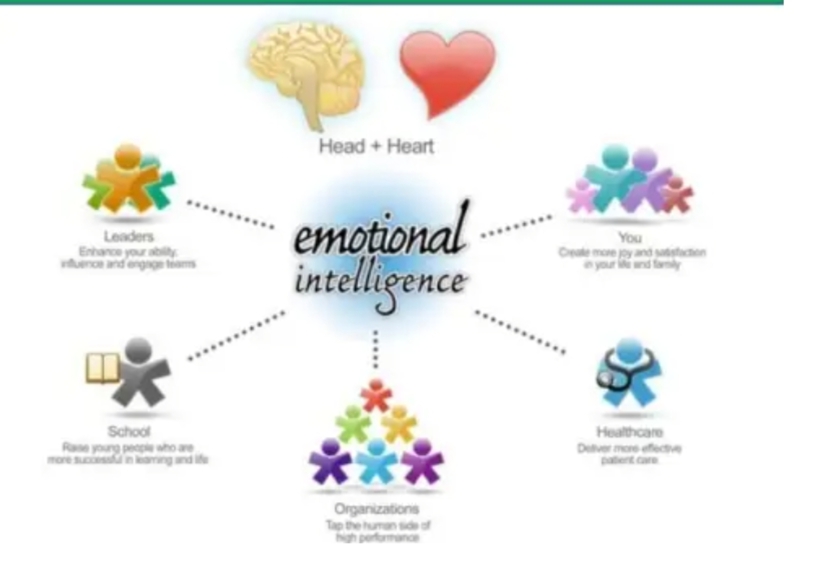
Emotional intelligence-concepts, and their utilities

Emotional intelligence is defined as “one’s ability to know, feel and judge emotions in cooperation with a person’s thinking process for behaving in a proper way, with ultimate realisation of happiness in him and in others”.

Like general intelligence, emotional intelligence is also developed in a person by birth. Normal development of emotion leads to healthy life, but too much variation in emotional level damages the individual’s life.

The level of emotion in a person is called Emotional Quotient (EQ). This can be obtained by using emotional intelligence tests, same way as we assess the IQ of a person.The success of a person in his job or profession depends not only on his IQ, but also on his EQ. The nurse with high emotional quotient can identify and perceive her emotions and of others like patients easily through face reading, bodily language, voice tone, etc.

She can have a proper understanding of the nature, intensity and outcomes of her emotions. High EQ also helps the nurse to exercise proper control and regulation over the expression and use of emotions in dealing with her and others, so as to promote harmony and peace.

Hence, it is very important for nurses to develop a high level of emotional intelligence because; they come across many emotional situations in their duties. They see the suffering of patients from many serious diseases, death of patients, and the sorrowfulness of the relatives with patients.

Many times she will come across the situations which lead to a lot of anxiety, tension, anger, etc. To deal with such emotional situations effectively and to have proper control over her emotions, the nurse should have a high level of emotional intelligence.

If not, she can learn to manage her emotions by modifying, changing her existing level of emotions and to use them in an intelligent way.

Concept of Emotional intelligence:

Emotional intelligence has prominence in organizational effectiveness. It is defined by psychological theorists as the ability to learn or understand or to deal with new or trying situations. The cognitive abilities of an individual to learn from experience, to reason well, and to cope effectively with the demands of daily living. Other theorists stated that Emotional intelligence involves the “capabilities to perceive, appraise, and express emotion; to access and/or generate feelings when they facilitate thought; to understand emotion and emotional knowledge; and to regulate emotions to promote emotional and intellectual growth” (Mayer & Salovey, 1997).

Elements of EI:

Self-Awareness: It is the skill of being aware of and understanding one’s emotions as they occur and as they evolve.

Self-Regulation: It is about controlling one’s emotions i.e. instead of reacting quickly; one can reign in one’s emotions and thus will think before responding.

Internal Motivation: It includes one’s personal drive to improve and achieve commitment to one’s goals, initiative, or readiness to act on opportunities, and optimism and resilience.

Empathy: It is an awareness of the needs and feelings of others both individually and in groups, and being able to see things from the point of view of others.

Social Skills: It is applying empathy and balancing the wants and requirements of others with one’s. It includes building good rapport with others.
Improving Emotional Intelligence :

–By self-evaluating oneself, one can know one’s emotions and reactions to different situations.

–By observing others, one can comprehend feelings of others.

–By improving one’s expression, one can communicate better.

–By analyzing the impact of one’s action over others, one can fine tune the actions.

Now-a-days, organizations take initiative to improve Emotional Intelligence among its employees through different group activities, exercises, seminars and tests. However, EI also improves with age (maturity) due to one’s experiences in life.
Importance of government, transparency , accountability

We don’t have any commonly agreed definition of “governance”. Taking governance in its usual or most basic sense, we can define it as the action or manner of conducting the policy, actions, and affairs of a state, organization, or people with authority, where its course is reflected of control, influence, and regulation. Decision-making and the systems with their processes by which decisions are implemented are the crust, the mantle, the outer core, and the inner core of governance. These layers are separated by, crossed intricately together with, caused to blend dynamically into something else through the two most basic tenets of classical humanism called “transparency” and “accountability”. That authoritative conduct should be subject and open to public scrutiny where whoever is placed under this critical observation or examination shouldn’t be worried that something undesirable will happen, since whatever he or she did or has done can be only judged as the fact or condition of being accountable to be transparent.

The governance by means of accountability puts an end to the time, resources, and efforts spent on distracting activities and usual unproductive behavior, consequently, clears the way for transparency to take its natural course since when it makes people accountable for their actions, they have to value their work and get serious about its outcome.

Though governance, transparency, and accountability could have separate important aspects individually or respectively; they are indispensable aspects to each other. Their interdependence is an indissoluble and absolute relation that makes us experience governance as the superstructure built on transparency and accountability.

Accountability and transparency are treated as major building pillars for governing democratic nations in recent years. Before discussing about how they benefit, its needs, and its importance we shall see what exactly accountability and transparency is.

Accountability signifies the concern and duty of government institutional workers to perform their activities in the best interests of the public and that institutional officials should take responsibility for their activities performed. The mechanisms by which government officials can be held responsible for activities against formed principles and rules is called legal accountability. For understanding it well we shall have an example here, Government has accountability for laws and decisions affecting public; a citizen has accountability for his behavior and actions.

Need of Accountability and Transparency:

–Building of trust and impact of schemes can be enhanced with participative governance.

–Major changes can take place in work culture by adopting transparency and accountability in governance which leads to greater concern towards society.

–By adopting Accountability and transparency, it brings out a new way of providing real-time information in online dashboard.

–This not only solves the people’s problems but also service quality can be improved.

–The relationship between government and people can be enhanced and make citizens feel more connected.

–A two-way information channel will be created which helps to understand exactly what people want. By the concepts of “listen, ask, act, interact and inform”.

Some important steps to achieve transparency and accountability:

–Job functions and responsibilities shouldn’t be kept secret with people.

–Government, schemes and institutional outcomes should be shared with people, even if the results are not satisfactory.

–Transparency is about making sure everyone has the right to information to do their jobs effectively.

–People with appropriate principles and vision towards their organization must be hired or selected to maintain the culture of accountability and transparency in government and other institutions.

–Sharing of information, announcements and messages with people should be made easier with the help of open system of communication.

Democratic organizations and financial institutions must try to move away from the business of politics and concentrate more on moving towards accountability and transparency. This will help in building trust in the society. In social, industrial and government sectors its known that Indian democratic organizations are working, but to be better they should start building a good relationship with the public. Citizens who are paying their taxes would like to know exactly where their money is spent and all the developments that has happened in the country. “All government institutions and financial institutions should be re-positioned and redefined to focus on accountability and transparency, if you are a member of government or want to become a member of government, to be prepared to live in a glass house”. Higher the transparency and accountability better the stability of the country’s economy.

DRAGON FRUIT

Dragon fruit, also known as pitahaya or strawberry pear, is a tropical fruit known for its vibrant red skin and sweet, seed-speckled pulp.

Its unique look and acclaimed superfood powers have made it popular among foodies and the health-conscious.

Luckily, you don’t have to live in the tropics to enjoy the many benefits of dragon fruit. In fact, you can find it fresh or frozen in supermarkets worldwide.

1. High in Nutrients

Dragon fruit is low in calories but packed with essential vitamins and minerals. It also contains a substantial amount of dietary fiber.

Here’s a rundown of the main nutrients in a one-cup serving (227 grams)

* Calories: 136
* Protein: 3 grams
* Fat: 0 grams
* Carbohydrates: 29 grams
* Fiber: 7 grams
* Iron: 8% of the RDI
* Magnesium: 18% of the RDI
* Vitamin C: 9% of the RDI
* Vitamin E: 4% of the RDI

Beyond essential nutrients, dragon fruit supplies beneficial plant compounds like polyphenols, carotenoids and betacyanins

Summary

* Dragon fruit is low in calories but rich in vitamins, minerals and beneficial plant compounds such as polyphenols, carotenoids and betacyanins.

2. May Help Fight Chronic Disease

Free radicals are unstable molecules that cause cell damage, which may lead to inflammation and disease.

One way to combat this is by eating antioxidant-rich foods like dragon fruit.

Antioxidants work by neutralizing free radicals, thus preventing cell damage and inflammation.

Studies suggest that diets high in antioxidants may help prevent chronic diseases such as heart disease, cancer, diabetes and arthritis.

Dragon fruit contains several types of potent antioxidants, including

* Vitamin C: Observational studies have found correlations between vitamin C intake and cancer risk. For example, a study in 120,852 people associated higher intakes of vitamin C with lower rates of head and neck cancer

* Betalains: Test-tube studies indicate betalains can combat oxidative stress and may have the ability to suppress cancer cells

* Carotenoids: Beta-carotene and lycopene are the plant pigments that give dragon fruit its vibrant color. Diets rich in carotenoids have been linked to a reduced risk of cancer and heart disease

Importantly, antioxidants work best when eaten naturally in food, rather than in pill form or as a supplement. In fact, antioxidant supplements may have harmful effects, and taking them without medical supervision is not recommended

On the other hand, dragon fruit is highly recommended.

Summary

* Dragon fruit contains the antioxidants vitamin C, beta-carotene, lycopene and betalain. Studies have linked diets high in antioxidants to a reduced risk of chronic disease.

3. Loaded With Fiber

Dietary fibers are nondigestible carbohydrates that boast an extensive list of potential health benefits.

Health authorities recommend 25 grams of fiber per day for women and 38 grams for men. Like antioxidants, fiber supplements do not have the same health benefits as fiber from foods

With 7 grams per one-cup serving, dragon fruit is an excellent whole-food source.

Although fiber is probably most well known for its role in digestion, research has suggested it may also play a role in protecting against heart disease, managing type 2 diabetes and maintaining a healthy body weight.

Although more research is needed, some observational studies suggest that diets high in fiber may protect against colon cancer.

While no studies have linked dragon fruit to any of these conditions, its high-fiber content can help you meet your recommended daily values.

However, it’s important to note that high-fiber diets can have drawbacks, especially if you’re accustomed to a low-fiber diet. To avoid stomach discomfort, increase your intake of dietary fiber gradually and drink plenty of fluids.

Summary

* Dragon fruit offers 7 grams of fiber per serving, making it an excellent choice for meeting your daily fiber needs.

4. Promotes a Healthy Gut

Your gut is home to some 100 trillion diverse microorganisms, including more than 400 species of bacteria.

Many researchers believe this community of microorganisms may impact your health. Both human and animal studies have associated imbalances in your gut to conditions like asthma and heart disease.

Given that dragon fruit contains prebiotics, it can potentially improve the balance of good bacteria in your gut.

Prebiotics are a specific type of fiber that promotes the growth of healthy bacteria in your gut.

Like all fibers, your gut cannot break them down. However, the bacteria in your gut can digest them. They use the fiber as fuel for growth, and you reap the benefits.

In particular, dragon fruit mainly promotes the growth of two families of healthy bacteria: lactic acid bacteria and bifidobacteria.

Regularly consuming prebiotics may reduce the risk of infection in your digestive tract and diarrhea. This is because prebiotics promote the growth of good bacteria, which researchers believe may outcompete the bad.

For example, a study in travelers showed that those who consumed prebiotics before and during travel experienced fewer and less severe episodes of traveler’s diarrhea.

Some studies also suggest prebiotics may ease symptoms of inflammatory bowel disease and colon cancer. Unfortunately, these findings are inconsistent.

While much of the research on prebiotics is favorable, the research on the prebiotic activity of dragon fruit is limited to test-tube studies. More studies are needed to determine its true effect on the human gut.

Summary

* Dragon fruit may promote the growth of healthy bacteria in the gut, which is associated with a healthy gastrointestinal tract.

5. Strengthens Your Immune System

Your body’s ability to fight infection is determined by several different factors, including the quality of your diet.

The vitamin C and carotenoids in dragon fruit may boost your immune system and prevent infection by protecting your white blood cells from damage.

The white blood cells in your immune system attack and destroy harmful substances. However, they are extremely sensitive to damage by free radicals.

As potent antioxidants, vitamin C and carotenoids can neutralize free radicals and defend your white blood cells against harm.

Summary

* Dragon fruit’s high supply of vitamin C and carotenoids may offer immune-boosting properties.

6. May Boost Low Iron Levels

Dragon fruit is one of the few fresh fruits that contain iron.

Iron plays a crucial role in transporting oxygen throughout your body. It also plays an important role in breaking down food into energy.

Unfortunately, many people do not get enough iron. In fact, it has been estimated that 30% of the world’s population is deficient in iron, making it the most common nutrient deficiency worldwide.

To combat low iron levels, it’s important to consume a variety of iron-rich foods. Rich sources of iron include meats, fish, legumes, nuts and cereals.

Dragon fruit may be another great option, as one serving contains 8% of your recommended daily intake (RDI). It also contains vitamin C, which helps your body absorb iron

Summary

* Dragon fruit supplies iron along with vitamin C, a combination that may improve your body’s absorption of this important mineral.

7. Good Source of Magnesium

Dragon fruit offers more magnesium than most fruits, with 18% of your RDI in just one cup.

On average, your body contains 24g of magnesium, or roughly one ounce.

Despite this seemingly small amount, the mineral is present in every one of your cells and takes part in over 600 important chemical reactions within your body.

For example, it takes part in reactions needed for the breakdown of food into energy, muscle contraction, bone formation and even the creation of DNA.

More studies are needed, but some indicate that higher intakes of magnesium may reduce the risk of heart disease and stroke.

Studies also show that diets adequate in magnesium support bone health

Summary

* Dragon fruit is a great source of magnesium, a nutrient needed for over 600 biochemical reactions in your body.

Comparison of the Indian constitutional scheme with that of other countries

Introduction

The sources of Indian Constitution include the imaginative aspirations of the nationalist leaders, the actual working of the Government of India Act, 1935, and the experience gained from the actual working of some of the Constitutions of important countries of the world. Its sources thus include not only the sources upon which the founding fathers of our Constitution drew but also the developmental ones such as the judicial decisions, constitutional amendments, constitutional practices and so on. The following overview of the major constitutions of the world has been laid down below.

A constitution is a set of rules through which a country or state operates.Some countries have unwritten constitutions which means there is no formal constitution written in one particular document. Their constitutional rules are originated from a number of sources. Britain sources its constitution from a number of important statutes, or laws, as well as principles decided in legal cases and conventions. New Zealand and Israel are two other countries that do not have formal written constitutions.Other nations have formal written constitutions in which the structure of government is defined and the respective powers of the nation and the states are written in one single document. These systems may also include unwritten conventions and constitutional law which can inform how the constitution is interpreted. Australia, India and the United States are examples of countries with a written constitution.

Importance of constitution:

The role of a constitution is to make certain that the government operates efficiently and in a fair and responsible manner. It does this in three ways:-

–It holds the government to the law.

–It provides distinction of power so that no one part of the government is any more powerful than another.

— It provides a series of checks and balances so that when laws are made or amended, the government follows the correct procedure to pass a Bill.

Ingredients of the Preamble:

The Preamble reveals four ingredients or components:

Source of authority of the Constitution:

The Preamble states that the Constitution derives its authority from the people of India.

Nature of Indian State: It declares India to be of a sovereign, socialist, secular democratic and republican polity.

Objectives of the Constitution: It postulates justice, liberty, equality and fraternity as the objectives.

Date of adoption of the Constitution: It stipulates November 26, 1949 as the date.

Striking Features of the Constitution:

The Constitution of India establishes a federal system of government. It contains all the usual features of a federation, viz., two government, division of powers, written Constitution, supremacy of Constitution, rigidity of Constitution, independent judiciary, and bicameralism.

Though, the Indian Constitution also covershuge number of unitary or non-federal features, viz., a strong Centre, single Constitution, single citizenship, flexibility of Constitution, integrated judiciary, appointment of state governor by the Centre, all-India services, and emergency provisions.

Furthermore, the term ‘Federation’ has nowhere been used in the Constitution. Article 1, on the other hand, defines India as a ‘Union of States’ which implies two things: one, Indian Federation is not the result of an agreement by the states; and two, no state has the right to secede from the federation.

Parliamentary Form of Government:

The Constitution of India has chosen the British parliamentary System of Government instead of American Presidential System of Government. The parliamentary system is based on the principle of collaboration and coordination between the legislative and executive organs while the presidential system is based on the principle of separation of powers between the two organs.

The parliamentary system is also called the ‘Westminster’ model of government, responsible government and cabinet government. The Constitution establishes the parliamentary system not only at the Centre but also in the states. The basic attributes of parliamentary government in India are:

a)Presence of nominal and real executives

b)Majority party rule

c)Collective responsibility of the executive to the legislature

d) Membership of the ministers in the legislature

e) Leadership of the prime minister or the chief minister

f) Dissolution of the lower House (Lok Sabha or Assembly)

Though the Indian Parliamentary System is mainly based on the British system, there are some important differences between the two. For example, the Indian Parliament is not anindependent body like the British Parliament. Additionally, the Indian State has an elected head (republic) while the British State has hereditary head (monarchy).

Impact and comparison of various constitutions:

In order to compare Indian constitutional scheme with other countries, it is crucial to assess the impact of various constitution on India and the subsequent features borrowed.

The founding members of the Indian Constitution were intelligent to borrow from the experience gained in working of various other Constitutions. It is well recognized that the Constitution of India is borrowed from the various working Constitutions.

Comparison of Indian constitution vs British Constitution : The British Constitution had immense impact in many respects such as (i) Constitutional head of State (ii) Lower House of Parliament (Lok Sabha) is more powerful than the Upper House; (iii) Responsibility of Council of Ministers towards Parliament; (iv) Parliamentary system of Government , and (v) Prevalence of Rule of Law. UK, US and India countries are labelled as democratic countries of the world. United States is the oldest democratic country of the world and its constitution was made in 1789. WhereasIndia was the Colonial state of the United Kingdom till 1947 and the Indian Constitution came into force in 1950. But constitution of United Kingdom is dissimilar.

Although, UK is the self-governing country but the head of the state is monarch. Besides this one of the uniqueness of theUK‘s constitution is that it‘s not codified one like the US and India having. The UK Parliament can make any law or amendment by simply passing it by majority and then send to the monarch for his assent, which just the formality part. Other dissimilarities among these three countries is that United State is a true federal country, where each state has its own constitution; India is quasi federal there only one constitution for whole country but area of operation is divided between the Union and the State governments. Whereas UK is not having the federal structure, it has the unitary setup of government. In Federal system of governance, state legislatures have asay in amending the constitution but in unitary setup it‘s only the Parliament which hassupremacy for amending the constitution.

US and Indian constitution : The Constitution of the United States had its impact in many ways such as

(i) Preamble of the Constitution
(ii) Provision of Fundamental Rights
(iii) Functions of the Vice-President
(iv) Amendment of the Constitution
(v) Nature andfunctions of the Supreme court

There are many differences between the Constitution of India, and United States of America. Major difference between the two constitutions is that India has a prime minister which is like the president but is actually the head of the legislative branch, whereas the U.S. Constitution has a president, who is the head of the government, and only works in the executive branch. Under the Indian Constitution, the head of state is the president while the actual head of the government is the prime minister. The prime minister and his cabinet has political power, while the president has more power in the name. Other major difference involves the number of terms a president can run. In America, a president can serve a maximum of two -four year terms, while in India a president and prime minister can serve an unlimited number of terms that each last five years.

Comparison of Indian and Australian Constitution: The Indian Constitution, like that of Australia, espoused the federal arrangement and the creation of a judicial branch wholly independent of the other branches of government. Judicial review, to keep all recipients of pubic power within the Constitution and other applicable laws was faithfully imitated. But the Indian Constitution went further. Australian Constitution gave long list of concurrent powers and the procedure for solving deadlock over concurrent subjects between the Centre and the States.Under the Australian Constitution, the subjects in the concurrent list are 39. In India, the Concurrent list had 37 subjects to begin with. They were increased to 52 subsequently. The technique of resolution of disputes between the centre and the states has also been taken from Australia (Article 251) by the Indian Constitution.

Comparison of Indian and Canadian Constitution : India borrowed the provisions of a strong nation, the name ofUnion of Indian and vesting residuary poers with the Union from Canada. India has opted for Federal structure of Government on Canadian pattern. Like Canada, India has made centre more powerful. Indian Federal structure is termed ‘Quasifederal’ i.e., Federal with unitary bias’. Canadian Centre is very influential, so is the case with Indian Union government. Special powers have been accorded to the Union government for meeting all possible eventualities.The division of subjects between the centre and the units and provision of lists is to a great extent on Canadian lines. The Canadian constitution provides for lists of legislative powers, central and provincial. The residuary powers have been given to the centre.

Nord 2 Hit or Hot?

Lawyers for the OnePlus Nord pair in the capital caught fire and exploded, injuring around his abdomen. This is not the first time a pair of nord blasts have been found inside a bag in Bangalore last month. At trial, OnePlus said it was caused by an external injury and was not a manufacturing defect. However, this second incident raises some questions about what was behind the Nord 2 blast.
The OnePlus Nord duo re-launched as the first OnePlus Nord successor in the mid-range premium phase of the Gregorian calendar month. The Nord has a pair, the first OnePlus phone to run on a MediaTek Dimension 1200 processor and a 50MP triple camera option with a four, 500mAh battery that supports 65W quick charging. Prices start at Rs 27,999 in Asia.

According to a report on MySmartPrice, lawyer Gaurav Gulati’s OnePlus Nord pair caught fire and exploded in their cool court chamber. According to Gaurav, the phone was inactive and not charged and he had some stomach injuries. Images shared by Gaurav on Twitter show a very broken cord with a burnt inner couple. Speaking to MySmart Price, he said he felt extra heat when he was in his lawyer coat and saw smoke coming out of his pocket from his phone. “I immediately threw the robe and once my co-workers and I went to the edge of the phone, it exploded.

After he tweeted about the accident, OnePlus contacted Honor and a team met with him and asked him to submit the phone remains for any investigation. However, he told MySmartPrice and Gadgets360 that the company’s approach to the incident was not sensitive.

Many lawyers in New Delhi are currently likely to file an FIR against OnePlus and Amazon on Saturday, with OnePlus being over-subscribed to a terrorist attack that banned the sale of a pair of nodes in the Asian country and recall all manufactured units.

Literature of Manipuri

Manipuri literature is the literature written in the Manipuri language (i.e. Meeteilon). It is also known as Meetei Literature. The history of Manipuri literature can be traced back thousands of years with the flourishing of its civilisation.

But the Puya Meithaba (burning of ancient Manipuri scriptures) in 1729, during the reign of Meidingu Pamheiba (1709-1748), devastated the ancient Manipuri scriptures and cultural history. It began a new era of Manipuri literature.

The Meeteis had a long tradition of writing. It is not completely clear when the archaic Meetei Puyas (old scriptures) and Meetei Mayek (Manipuri scripts) first came into existence.However, the written constitution Loiyamba Shinyen (1110), during the regime of Meidingu Loiyamba (1074-1122), vividly connotes the practice of writing in this era. The Royal Chronicle, Chitharon Kumpaba, was kept meticulously and continued from the fifteenth century until the end of kingship (Meidingu Bodhchandra, 1941-1955).

The skill of writing was at first the prerogative of the professional scribes and scholars of the traditional Meetei culture, the Maichous. But later, as proliferation of religious, proto-scientific and astrological text suggests, writing was expanded beyond these professional scribal classes. However, most of the ancient Meetei puyas (scriptures) were anonymous and undated.

Early Manipuri literature consists of ritual hymn, cosmogony, history, or folktales in prose and poetry. A few of the notable works of ancient Meeteilon (i.e. Manipuri language) are: Numit Kappa, Ougri, Khencho, Sana Lamoak (6th or 7th century), Ahonglon (11th century), Khoiju Lamoak (12th century), Hijin Hirao, and Ningthauron (17th century).

One of the oldest literary works, Numit Kappa was written in archaic Meeteilon with Meetei Mayek (i.e. Manipuri script) in poetry verse. T.C. Hodson was the first to translate this archaic Meeteilon literary work into English in his book The Meitheis. Ougri (also Leiroi Ngongloi Eshei), is an anonymous and undated poetry written in archaic Meeteilon. But it is believed to have been written in the pre-Christian era.

A few notable works of ancient Manipuri literature in prose include Panthoibi Khongul, Nongshaba Laihui, Sakok Lairamlen, Poireiton Khunthokpa (3rd century), Kangla Haoba (5th century), Loyamba Shinyen (11th century), Naothingkhong Phambal Kaba (16th century), Khagemba Yumlep (16th century) and Cheitharon Kumbaba.

Modern poetry

Modern Manipuri poetry distinctly falls into two groups—the poetry of Lamabam Kamal and his contemporaries representing the early phase and poetry of more modern and younger poets representing the Zeitgeist of the contemporary world picture.

The approach of Minaketan is fresh and individualistic. Nilabir Sharma, Gourkishar, R.K. Elbangbam are famous lyrical poets. Surchand Sharma mainly deals with some aspects of the great Moirang Thoibi legend while R.K. Shitaljit is a poet of nature and humanity. R.K. Surendrajit blends the symbolic and the allegoric with lyricism, while in the poetry of Nadia, the narrative is blended with sonorous rhythm.

The poetry of younger poets—Samarendra, Nilakanta, Padmakumar, Shri Biren, Ibomcha, Ibohal, Ibopishak, Madhubir, Jyotirindra and Ibempishak—gives expression to the deep sense of the immense panorama of futility, anger, questioning of traditional values and absence of faith and integrity in the society.

In the field of translation, Nabadwipchandra is famous for his translation of Michael Madhusudhan’s Meghanad Badha Kavya into Manipuri. Tagore’s Gitanjali has been translated by A. Minaketan and Krishnamohan.

Drama:

The early dramatics and patriotic exploits of the heroes of Manipur, and the heroic and pathetic lives of legendary and mythological characters are the themes in drama. The early drama includes Sati Khongnag and Areppa Marup of Lalit, Nara Singh of Lairenmayum Ibungahal, Moirang Thoibi of Dorendrajit, Bir Tikendrajit of Bira Singh, Chingu Khongnag Thaba of Birmangol, Mainu Pemcha of Shymsundar, and Kege Lanja of Bormani.

The contemporary dramatists have come forward with plays new in theme and technique. They easily come across politics and socio-economic problems in their search. The foremost among these are G.C. Tongbra, Netrajit, M.K. Binodini Devi, Ramcharan, Kanhailal, A. Sumorendro, Tomchou and Sanajaoba. Ratan Thiyam founded ‘Chorus Repertory Theatre’ in Imphal, in 1976.

Novel:

Early in the 20th century, as stated, Lambam Kamal, Khwairakpam Chaoba and Hijam Anganghal attempted the first original novels in Manipur. Names of R.K. Shitaljit, H. Guno, Thoibi Devi, R.K. Elangbam, Ram Singh, Ibohal, Bhagya, Nodiachand, Ibomcha, Chitreshwar, M.K. Binodini and Pacha Meetei deserve mention besides those of many other contemporary novelists. Surchand Sarma, Shymsundar, Raghumani Sarma and Nishan Singh may be mentioned among the prominent translators.

Short stories :

The short stories also made their advent along with the novel. R.K. Shitaljit’s stories, racy and plain, are narrated in simple, direct and unadorned Manipuri. R.K. Elangbam portrays ordinary people moved by the ordinary concerns and passion of life. Nilbir Sharma expresses the concerns of the poor and the neglected in society. H. Gonu probes into the ailing Manipuri society.

Stories of Nongthombam Kunjamohan are famous for their sentimentalism which is one of the predominant strains of Manipuri literature. Shri Biren, M.K. Binodini, E. Dinamani and Biramani are popular writers.

Critical literature :

Critical literature in Manipuri is gaining popularity. Arabia Manipuri Sahityagi Itihas by Pandit Khelchandra and Manipuri Shatyagi Ashamba Itihas of Kalachand Shastri survey the early and medieval periods of Manipuri literature. Meitei Upanyasa (vol. 1) of Minaketan and Manipuri Sahitya Amasung Sahityakar of Dinamani are critical surveys of prominent Manipuri novels.

Sahityagi Neinaba Wareng of Chandramani, Sheireng Leiteng of Kalachand Shastri, Sahitya Mingshel of Gokul Shastri, Alangkar Kaumudi of Pandit Brajabihari Sharma and Alangkar Jyoti of Laurembam Iboyaima are also well-known critical writings.

Manipuri Kavitagi Chhanda of Nilakanta, Chhanda Veena of R.K. Surendrajit and Manipuri Kavya Kanglon by O. Ibo Chaoba makes a survey of the prosody of Manipuri poetry adopting a scientific approach.

Psychology

Psychology has become a very important and popular subject today. It deals with many problems of everyday life. Psychology helps us to understand the behaviour of people around us, to find out why they behave differently and what forces are responsible to make them so different from others.

It tries to explain wide array of factors involved in what we human beings do. The principles explained by psychology give us a rational basis of understanding of what we and others do. Psychology has been defined in many ways. In ancient days people were analysing the behavioural aspects on the basis of philosophy. They believed that there is a soul in every individual and this is responsible for all our activities.

This view led to the opinion that the subject matter of psychology must be the study of soul. But this definition could not answer the questions regarding the existence of soul and its accessibility for study. This condition led to a new definition by Greek philosophers who defined psychology as a ‘science of mind’. But this definition was also rejected on the same grounds as soul was rejected.Later, Wilhelm Wundt a psychologist who established the first psychological laboratory at the University of Leipzig in Germany defined psychology as the study of consciousness. EB Titchener the disciple of Wundt, proposed the method of Introspection to study consciousness. But because of its subjectivity and unscientific method of study, this definition was also rejected.

Gradually, as a result of the development of scientific outlook people started thinking on scientific basis and began to define psychology as a science of behaviour. Finally, it is JB Watson (1913) defined psychology as a science of behaviour of human as well as animal beings.

Scope of Psychology:

Psychology deals with the origins, development and change of behaviour. It deals with similarities and differences among people, with the occurrence of expected behaviour as well as unexpected behaviour. Equally so it is concerned with the non-occurrence of expected behaviour. It is concerned with behaviour which is observable and unobservable, conscious and unconscious, with the behaviour of individuals as well as groups and with the influence of individuals on the behaviour of one another.

It may also be said that psychologists are concerned not only with the actual day-to-day behaviour but also with the unique products of human activity like dreams, art, literature, mythology, folklore and all other products of human behaviour.

By analysing and studying these products, psychologists have tried to understand the motivational processes and other factors which might have influenced the production and creation of these activities. In recent years, psychologists have also extended their interest to studying political philosophies, ideologies and forms of government.

All this has naturally resulted in the expansion of the scope of psychology. Psychology is applied everywhere in the home, at the school, at the hospitals, in factories and offices, in the armed forces and in all imaginable situations involving the behaviour of human individuals alone or in a group.The subject of psychology which was mainly developed by philosophers from their armchairs, progressed to laboratories and is today studied and applied in all walks of life.

Methods of psychology :

The aim of science is to use scientific method to collect information in the form of verifiable data. Different sciences use different methods that are suitable for the investigation of their subject-matter. However, all of them have one thing in common, in the sense that, they aim at a very high objectivity in the collection of facts and precise description of the phenomena under investigation.

When discussing the methods used by psychology, we must be sure that they fulfill scientific requirements. The complexity of the subject-matter with which psychology deals is quite obvious. The behaviour of the individual is something that varies not only from person to person but also from time to time.

Such variations in behaviour, obviously, are less subject to accurate and objective observation and description than the subject-matter of many sciences like physics, chemistry, biology etc. In spite of these difficulties, psychologists, have tried to confine themselves to the requirements of objectivity, which characterize the methods of science. Like other sciences, psychology also uses several methods to study its problems.

Bell Bottom Review

In Bell Bottom in the mystery story, Akshay Kumar plays the role of investigator and the Analytical Division (RAW) ambassador named the United Nations agency ‘Bell Bottom’. After a plane was hijacked and landed in Amritsar, the seventh hijacking incident in 5 years, Kumar was brought in for several days to be rescued. The film revolves around their plans for a courageous military operation to rescue 210 hostages and neutralize the four kidnappers. Even more impressive is the fact that his operation is associated with personal tragedy.
Like many other Kumar films inspired by real events, this Ranjit Tiwari-directed film is based on two events in which Indira Gandhi was the Prime Minister of Asia in the late 70s and early 80s. Happened. It is commendable that the film was shot in various parts of Asia and Scotland during the epidemic.


Kumar’s shiny entry as Bell Bottom really brings some whistleblowers and fills the concert with excitement, not to mention the fact that he looks smart in Tirpan. He was thin, mature and agile, and possessed a sharp army-man skill. Vani Kapoor, who appeared in the role of the husband of the Bell Bottom United Nations agency, may be a national participant. He has a sharp memory and is fluent in Hindi, English, French and German. Vani Kapoor as Kumar’s wife is charming on screen and even with limited screen time, she is well supported for her role. The film stars Adil Hussain, Huma Qureshi and Lara Dutta in polar roles. Looking at the buzz going on around Dutta makeup, we can really say that her makeover as a former Prime Minister politician is very nice. He does not recognize! Huma Qureshi assists the Indian team in rescuing Indian voters trapped in a hijacked plane.

Akshay Kumar is completely kind and strong. He makes full use of his stellar energy. Filming on the Statesman screen is not a trivial matter and Dutta looks half confident and confident. Kumar’s mother is competing with Daly Ahluwalia and they share some sharp and funny scenes.


Written by Asim Arora and Pervez Shaikh, the film featured and captured your attention for 123 minutes. However, every minute of the action you must pause because the inside of the plot is very forward and backward. The speed of the film is constant and the narration and characters also do not lose speed.
As you travel along with the story, the events that unfold are less likely to absorb the emotion it shows you. With a film like this, you expect a lot of goose bump moments, but it doesn’t. At the same time, the film leaves you with questions unrelated to many people, such as the hostage-taking and the terrorist kidnapping plan. The small uncertain size of the film may be , it is overwhelming and dies.

Fast & Furious 9 Review

To make this passage relevant to its time, here is an article. As a result of the Central Board of Film Certification, our Lord Vin Diesel decided that by the year 2009, I was not allowed to see the fourth film in Quick Adventure Story (which was a bit of an adventure story at the time), the moving film should give some friendly bald man ‘A’ status. The humble girl at Satyam Jawaharlal Nehru Place made up my mind in ‘No’ like the adult male in PVR Saket (we took Win recommendation and did not provide). Now, the ninth film in the same franchise is being streamed home (not ours; the Republic of India theatrical release). Therefore, enjoying a quick adventure story depends on whether you are recent and whether you have been able to tap into your past successes.

Not as ridiculous as the F9 franchise’s previous entries, but not due to a lack of effort. Now the difference is that the efforts made to cross the boundaries of the Quality Area Unit are transparently Mizonistic. De Janeiro | Rio | City | Metropolis | After finishing director Justin Statuemaker Accelerated 5 with a high-speed chase at the Urban Center} de Janeiro, it was almost a shameless mistake – the first of its kind in the series. Surprisingly people first became the scarf optical disc player, you have no choice but to admire and sit back for a ride.
It’s like Tom Cruise once set out to personally measure Burj Khalifa on a mission: not possible – Ghost protocol. Currently, every cruise and diesel field unit needs to propel itself to run alone. It is no coincidence that everyone is launching a similar flaky plan to intensify this madness: the house, the last frontier.

As we speak, Cruise is building a mission to be the primary person to film the narrative feature for an international artificial satellite. Meanwhile, Diesel decides to put his original underline Tyrese Gibson and Ludacris in sheltered costumes and asks the statue maker Justin to film him a flounder at zero gravity on an inexperienced screen. None of them are complete, it is almost impossible to tolerate the level of self-parody. The most important surprise is that it is not currently the tenth and eleventh movies in a row on Mars or the invention of the time travel machine to run the time travel machine, Diesel drives a Ford Auto from Canon. Franchise to build low and comeback images.

Public administration

Public administration, the implementation of government policies. Today public administration is often regarded as including also some responsibility for determining the policies and programs of governments. Specifically, it is the planning, organizing, directing, coordinating, and controlling of government operations.

Public administration is a feature of all nations, whatever their system of government. Within nations public administration is practiced at the central, intermediate, and local levels. Indeed, the relationships between different levels of government within a single nation constitute a growing problem of public administration.

In most of the world the establishment of highly trained administrative, executive, or directive classes has made public administration a distinct profession. The body of public administrators is usually called the civil service. In the United States, the elitist class connotations historically attached to the civil service were consciously abandoned or from the early 20th century, with the result that civil servants were recognized as professionals and valued for their expertise.

In most countries the civil service does not include local government or public corporations. In some countries, however—particularly those unitary states in which provincial administration is part of the central government—some provincial staffs are civil servants. In the United States, all levels of government have their own civil services—federal, state, and local—and a civil service is specifically that part of governmental service entered by examination and offering permanent tenure.

Let’s talk about some characteristics of public administration :

Commitment to the Mission:- Excitement trickles down from leadership to the employees on the ground. When the administrator is enthused about the organization or agency’s mission, the employees will mirror those feelings. In times of crisis, great administrators remind their staff of the purpose of their mission and the role their organization plays in the larger society.

Strategic Vision :- A public administrator must always remain focused on the strategic vision and the long-term mission of the agency or organization. Staff members can become narrowly obsessed with the day-to-day operations of the agency but count on their leaders to understand the five, 10 and 20-year plans. It is important to remember that the agency or organization was often around long before the public administrator arrived, and will remain in operation long after the administrator leave .

Delegation :- There is a fine line between delegating tasks to staff and shirking from responsibilities, knowing subordinates will take up the slack. Great public administrators navigate this distinction by assigning not just tasks, but clearly defined spheres of influence where staff members have the authority to make decisions. Delegating tasks and responsibilities in this manner empowers staff members to grow in their positions, preparing them for future leadership positions.

Grow Talent :- Internal promotions save companies and organizations thousands of dollars over adding outside hires. A public administrator must be able to take existing talent within the organization, nurture it, and place staff members in positions where they can be successful. Public administrators must be careful not to stifle staff growth by becoming overbearing or forcing staff members into positions for which they are ill-suited.

Creativity :- In most circumstances, public administrators work on shoestring budgets with short deadlines and difficult, seemingly impossible, objectives. Those drawn to public administration thrive on those unique challenges and use the restrictions as a way to showcase their creativity. Public administrators are able to come up with creative solutions to complex problems, usually by seeing an issue from a new perspective or by innovating a new approach to the solution.

Digital Communication Experience :- Social media and digital communication platforms, such as email and video, are cornerstones of modern communications. While leaders in for-profit organizations are responsible to shareholders, they have much more freedom to determine when and where they will communicate. Public administrators are beholden to the people and may be held accountable for their actions at any time. Successful administrators exhibit excellent digital communication skills, especially communication via social media.Public administrators choose their profession because of their love of service and their desire to make their communities a better place. These 10 traits can transform inexperienced administrators into tremendously successful ones.

Political science and International Relations

Political Science and International Relations are complementary and inter-related disciplines that explore power and politics in many different contexts. They provide concepts with which to explain, justify and critique the modern world. They examine ideologies such as colonisation and socialism. They explore systems of ideas like the new right, religious fundamentalism, and postmodernism. They analyse social movements that call for justice, development, gender equality or environmental protection. They help us to understand processes of electoral competition, government, and policy- making in New Zealand and a range of other countries across the world. They uncover the structures and motivations behind cooperation, conflict and war in the international system. They dig into issues of power, conflict, diplomacy, arms control, democracy, revolution, terrorism, developmental politics, civil society, human rights, foreign policy, humanitarian aid, and the international political economy.

Globalisation links people, cultures and countries much more closely than they have ever been. International Relations studies the relationships among countries and the roles of governmental and non-governmental organisations and multi-nationals. In an increasingly inter-connected world, people who understand and can work with these complex relationships have a significant advantage.

WHY STUDY POLITICAL SCIENCE AND INTERNATIONAL RELATIONS?

Studying these disciplines brings many benefits. There is the personal satisfaction and social confidence that comes from training your brain and raising your understanding of not only world events but also the events of daily life. Being able to step back and see a larger (political) process at work is very empowering at an individual level. It can take the sting out of tense or emotional situations and provide you with strategies that enable you to behave constructively and proactively. Being able to rise above difficulties and move on is enormously valuable in any work environment, particularly when professional issues or competing interests are involved. P

olitical Science and International Relations are embedded not only in social processes and group dynamics, but also different cultural realities. This raises your sensitivity to the taken-for-granted aspects of cultural experience, making you more open to different points of view and value systems. The ability to move comfortably within and between different cultures and political systems is fundamental to international business and trade activities, development support, humanitarian aid and peacekeeping missions. People with this kind of understanding are more likely to be successful in multi-national corporations and professional practices, non-government organisations (NGOs) such as aid agencies, and government agencies including diplomatic services and defence forces. They are also valuable ‘at home’ working in organisations where cultural or ethnic identity has a relationship with other social or political processes.

WHAT SKILLS DO POLITICAL SCIENCE AND INTERNATIONAL RELATIONS GRADUATES HAVE?

Political Science and International Relations graduates have a great toolkit of skills to take to work . These include :

Conceptual analysis : Graduates have learned to get their heads around the big issues, including models of government, cultural imperatives, false equivalents, the effects of war, historical intentions and complex current realities. Working productively with this range of information develops skills of abstract thinking and in-depth analysis, which transfer well to many jobs, especially those that deal in conceptual models and/or strategic planning. These include policy analysis, management roles, professional roles in law and economics, technical writing and promotion of the arts.

Consequential thinking: To a large extent Political Science and International Relations is about intentions, decisions and their various consequences. Graduates are adept at identifying the consequential effects of decisions and actions taken historically and in the present. They learn to make connections and formulate arguments. They learn to look for the hidden detail that changes everything. They become quite astute at predicting outcomes. Jobs that draw on these skills include all levels of management, particularly human resources, financial service roles, customer service positions, and any job that involves decision-making and problem solving.

Influencing and persuading skills: When it comes to getting what you want, graduates have an excellent understanding of what works and what doesn’t, having studied political agendas throughout the world and throughout history. It comes back to the element of power that underpins political business everywhere. Many job roles contain an expectation that you will be able to implement decisions, mobilise resources, or motivate others. These outcomes require influencing and persuading skills and are particularly relevant in supervisory roles, but also come into play in roles that involve interviewing for information, such as immigration officer or human resources consultant. Influencing skills make all the difference to sales, marketing and journalism roles, and work well for court lawyers and politicians.

Language skills: These skills encompass the biggies – written and verbal communication. Employers are always delighted to find people who write effectively and express their thoughts clearly. Graduates have these skills – partly from having to think big political ideas through to a logical conclusion, and partly because they are encouraged to write clear, lively well-argued assignments, and also argue their understanding of issues in tutorials with peers. Most work roles are enhanced by good language skills, and all positions of authority and leadership require them

Research skills: Graduates have studied their subject through its protocols of research design and methodology. This includes defining key research questions, tracking down and interpreting official documents, practising stringent internet research techniques, and for some, learning to write research proposals and make submissions to select committees. Many job roles, including policy analysts and advisors, journalists, managers, community liaison officers and social researchers, are highly dependent on superior research skills.

CAMEL

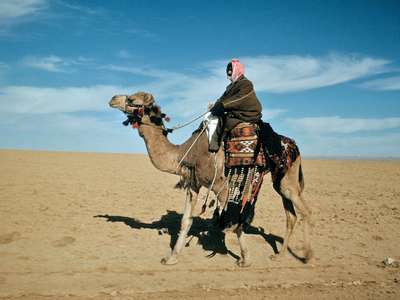
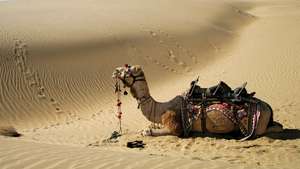
Camel, (genus Camelus), any of three species of large ruminating hoofed mammals of arid Africa and Asia known for their ability to go for long periods without drinking. The Arabian camel, or dromedary (Camelus dromedarius), has one back hump, while the domesticated Bactrian camel (C. bactrianus) and the wild Bactrian camel (C. ferus) have two.

These “ships of the desert” have long been valued as pack or saddle animals, and they are also exploited for milk, meat, wool, and hides. The dromedary was domesticated about 3000–2000 BCE in Arabia, the Bactrian camel by 4000 BCE in the steppes of Central Asia. Most of today’s 13 million domesticated dromedaries and roughly 97 domesticated breeds are in India and in the Horn of Africa. Wild dromedaries are extinct, although there is a large feral population in interior Australia descended from pack animals imported in the 19th century. About one million domesticated Bactrian camels range from the Middle East to China and Mongolia. The International Union for Conservation of Nature (IUCN) has classified the wild Bactrian camel as a critically endangered species since 2002. The largest population—numbering approximately 650 adult animals—lives in the Gobi Desert.

Natural history

Camels have an unmistakable silhouette, with their humped back, short tail, long slim legs, and long neck that dips downward and rises to a small narrow head. The upper lip is split into two sections that move independently. All three species are about 3 metres (10 feet) long and 2 metres (6.6 feet) high at the hump (itself 20 cm [8 inches]). Males weigh 400 to 650 kg (900 to 1,400 pounds), and females are about 10 percent smaller. Colour is usually light brown but can be grayish. Domesticated Bactrian camels are darker, stockier, and woollier than the wild form. Heavy eyelashes protect the eyes from blowing sand, and the nostrils can be squeezed shut. The dromedary has horny pads on the chest and knees that protect it from searing desert sand when it lies down, but the Bactrian camel lacks these callosities. Camels are generally docile, but they will bite or kick when annoyed. When excited, camels huff so sharply that spit is incidentally expelled.

Camels do not walk on their hooves. On each leg, weight is borne on two large toes that spread apart to keep the animal from sinking into the sand. Dromedaries have a soft wide-spreading pad for walking on sand; Bactrian camels have a firmer foot. Like the giraffe’s, the camel’s gait is a pace, with both legs on a side moving together. Short bursts of 65 km (40 miles) per hour are possible, but camels are excellent plodders. Bactrian camels can carry more than 200 kg (about 440 pounds) for 50 km (31 miles) in a day, while the more lightly built dromedaries can carry up to 100 kg (about 220 pounds) for 60 km (about 37 miles) if they are worked in the coolness of night.

During catastrophic droughts, herdsmen may lose all of their cattle, sheep, and goats while 80 percent of the camels will survive, owing to the camel’s ability to conserve water and tolerate dehydration. In severe heat a camel survives four to seven days without drinking, but it can go 10 months without drinking at all if it is not working and the forage contains enough moisture. Even salty water can be tolerated, and between drinks it forages far from oases to find food unavailable to other livestock. The body rehydrates within minutes of a long drink, absorbing over 100 litres (25 gallons) in 5–10 minutes. Cattle could not tolerate such a sudden dilution of the blood, because their red blood cells would burst under the osmotic stress; camel erythrocyte membranes are viscous (that is, sticky and flow-resistant), which permits swelling. A thirsty camel can reduce its urine output to one-fifth of its normal volume and produce feces dry enough for herders to use as fuel for fires.

Another adaptation is minimization of sweating. The fine woolly coat insulates the body, reducing heat gain. The camel also can allow its body temperature to rise to 41 °C (106 °F) before sweating at all. This reduces the temperature difference between the camel and its environment and thereby reduces heat gain and water loss by as much as two-thirds. Only in the hottest weather must the camel sweat. It tolerates extreme dehydration and can lose up to 25–30 percent of its body weight—twice what would be fatal for most mammals.

Camels have also adapted to desert conditions by being able to endure protein deficiency and eat items other livestock avoid, such as thorns, dry leaves, and saltbush. When food is plentiful, camels “overeat,” storing fat in one area on the back and forming a hump. When the fat is depleted, the hump sags to the side or disappears. Storing fat in one place also increases the body’s ability to dissipate heat everywhere else.

When not corralled, camels form stable groups of females accompanied by one mature male. Females breed by three to four years of age. Males begin to manufacture sperm at age three but do not compete for females until they are six to eight years old. Males compete for dominance by circling each other with the head held low and biting the feet or head of the opponent and attempting to topple it. After one camel withdraws from the bout, the winner may roll and rub secretions onto the ground from a gland on the back of its head. The dominant male breeds with all the females in each stable group. After a gestation of 13 or 14 months, one calf weighing up to 37 kg (81 pounds) is born, usually during the rainy season. Milk yields of 35 kg (about 77 pounds) per day are achieved in some breeds (e.g., the “milch dromedary” of Pakistan), though normal yield is about 4 kg (9 pounds) per day. Herders typically divert most milk to their own use during the calf’s first 9 to 11 months, then force weaning and take the rest. The calf is otherwise suckled 12 to 18 months. Females and males reproduce until about 20 years old. Longevity is 40 years.

Camels are classified in the family Camelidae, which first appeared in North America 40 million years ago. North American camelid stock became extinct 10,000 years ago. Living South American camelids are represented by the llama (Lama glama), guanaco (L. guanicoe), vicuña (Vicugna vicugna), and alpaca (V. pacos). The lineage that produced modern dromedary and Bactrian camels diverged from the South American camelid lineage between 11 million and 25 million years ago. Dromedary and Bactrian camel lineages split from one another between 4 million and 5 million years ago, with wild and domestic Bactrian camels separating from one another between 1.5 million and 700,000 years ago. Bactrian camel domestication by human beings came much later, however, occurring between 6,000 and 4,000 years ago. By 2 million years ago (the early Pleistocene Epoch) Camelus representatives had crossed back to Asia and were present in Africa (Tanzania). During the Pleistocene Epoch (2.5 million to 11,700 years ago) camelids reached South America. The family Camelidae belongs to the order Artiodactyla, a large group of hoofed mammals.

Cultural significance

Camels are among those few creatures with which humans have forged a special bond of dependence and affinity. Traditional lifestyles in many regions of the Middle East, North Africa, and Central Asia would never have developed without the camel, around which entire cultures have come into being. This camel-based culture is best exemplified by the Bedouin of the Arabian Peninsula—the native habitat of the dromedary—whose entire traditional economy depended on the produce of the camel. Camel’s milk and flesh were staples of the Bedouin diet, and its hair yielded cloth for shelter and clothing; its endurance as a beast of burden and as a mount enabled the Bedouin to range far into the desert. The mobility and freedom that the camel afforded to desert Arabs helped forge their independent culture and their strong sense of self-reliance, and they celebrated the camel in their native poetic verse, the qaṣīdah, in which the nāqah (female camel) was a faithful, unwavering mount. Among these nomadic people, a man’s wealth was measured not only by the number of camels he possessed but also by their speed, stamina, and endurance.

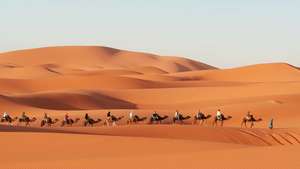
Until modern times, the camel was the backbone of the caravan trade, a central pillar of the economy in large parts of Asia and Africa. In settled regions, the caravansary, located on the outskirts of most urban centres, served as a hub for business and as a source of information about the outside world for the city’s residents. In the central Islamic lands, it likewise set the scene for many tales in the rich Arab-Persian oral tradition of storytelling, such as those found in The Thousand and One Nights. In Central Asia, vast and numerous camel caravans ensured the wealth and growth of the great trading cities of the Silk Road, upon which goods moved between Asia and Europe.

Today the camel remains an important part of some local economies, although it has been surpassed by automated forms of transportation for most tasks. Camels are still bred for their meat, milk, and hair, and, beginning in the late 20th century, the age-old sport of camel racing was revived, particularly in the countries of the Arabian Peninsula but also as far afield as Australia and the United States.

Role of civil services in a democracy

The greatness associated with “performing a public service utilizing public fund” reflects power, aspirations of achieving this power, and a consistent hope or ambition of achieving through this power!

The civil servants by virtue of their knowledge, experience, and understanding of public affairs assist the ministers in formulating policy and are responsible for implementing these policies wherein ministers are accountable to parliament and civil servants are accountable to ministers. Though we are a democracy and power is vested in the people, neither politicians nor civil servants are directly and meaningfully accountable to the public.

This lack of accountability has mirrored political and administrative passivity, non-intervention, and negligence. We call this image ‘the system’. This system prevents the poor from accessing basic necessities and resources, and a place giving permanent protection. This system characterizes many discreditable practices, habitual decisions for which accountability is not necessary, work culture where people sometimes habitually look uninterested and unorganized, overlapping of tasks and half-baked results, since the concept of ‘optimization’ has not found its place in this work culture yet.

Any system is a set of things working together as parts of a mechanism or an interconnecting network. In a democracy, the core things of a system are connected through legislation. A civil servant can change the official or accepted way of doing something, but he can’t change legislation-related input present in it. There are multiple parts in the system even if you better or replace one part, it distorts the working of other parts. In a country as diverse as India, these parts at different levels are uncountable, unless a major reformative decision at a parliamentary level is made, the current system will continue to work in a presentable manner. In this situation, a civil servant can control the work flow, but he can’t set that work to its optimization if it is a part of the interconnecting network.

We have seen various poverty alleviation programs, but some underperformed and their successes looked irregular and unpredictable. Some of them lacked economic rationale or another practical purpose. Had these programs been successful, we would have freed ourselves from poverty long back. Our bureaucratic mechanisms need to comprise holistic approaches and solutions. They monitored and moved to achieve short-term arbitrary outcomes whose consequences could be terrible and had long-term counter-productive effects.

One such consequence was that poverty in India was normalized through its credentials in various statistical projects. Normalizing here means we start taking something a standard condition or state. As we normalized poverty, it became a characteristic of the population, consequently, serious hardships from poverty were no longer seen as violations of law, justice, ethics, or the constitution, so it doesn’t matter if it continues to exist.

Now the legislators whom we call politicians to see their success in terms of improved public relations. A public relations exercise eats up a lot of time. Policymaking is the ultimate responsibility of a minister, but they hardly get time to study something in-depth. They don’t have real field work experience in device policies. In this case, a civil servant renders policy advice to the minister. Usually, politicians work on those combinations which are more beneficial to them than the public. But these policies do carry the inputs of civil servants despite this, these policies have failed to eradicate poverty.

A person becomes a civil servant after passing one of the toughest exams in the world. It is said so. But there is hardly any examination that can check a person’s commitment to work and his work potential. A person becomes a decision-maker after becoming a civil servant. This level of poverty can’t be eradicated through decision-making processes rather ‘individual’s originality related to work’ is a prerequisite that no exam can ensure. Is it possible or has it ever been thought of – that a bureaucrat himself/herself has earned at the grassroots level through inventing his/her original model, and under this model, he/she has devised schemes and implemented them, so that grassroots level people can practice them to earn their livelihoods and also get the scope to upgrade their skill levels? If schemes get formulated in this manner, they will definitely be successful and sustainable. We are heaven away from this kind of system. There is nothing great about “performing a public service utilizing public funds”, since earning according to what is morally right or fair is many times more difficult than spending.

The real work which can generate revenues, consequently employment and vice versa, has yet to see its dawn, the real commitment is unobserved, the real change looks near but it is more like a horizon. What should we do to experience real work, commitment, and change? One possible course of action can be the appointment of ‘village administrators’ through an entrance examination. There are more or less 638,000 villages in India. Every year the government could recruit 25,000 village administrators. A village administrator, after understanding the requirements of the village, will conceive a consolidated plan to address the problems related to livelihoods, education, society, infrastructure, drainage system, and so on.

The present system showcases conspicuous limitations. The limitations limit the scope of real development. In fact, a person who is working to bring real change at the grassroots level without being part of the government service is serving people in a better and sustainable manner. There is no need to become a civil servant to serve people. They can be served better by those who are not part of this system. People are not served through power, they are served through prowess, not that of decision making, but of the original exertions which have undeclared true potential for ‘the mass eradication and mass extinction of poverty’.

The world has failed to realize that poverty has become a species that adjusted long ago to survive on prosperity and by itself.

Wonders of Sciences

This is the age of science. There are many wonders in square metrology. It made our life easier and more enjoyable. Science plays an important role in our daily lives. It made man dreams and imaginations come true. There are imaginative good things for humans from the observation of ordinary events. Science is nothing but a scientific tool for information and living. There are many things and machines imagined for humans and the idea of ​​a railway engine came from observing very simple events from boiling water during a kettle in the US, an apple falling from a tree that helped create Newton’s law of gravity. Electricity is man’s greatest invention, “it serves the U.S. in thousands and thousands of ways to run our trains, mills and factories. Electricity keeps our homes cool and hot. Modern life is simply not possible.” When there is no electricity there is no electricity. Many scientific discoveries have made our lives so much fun. Electricity is a great invention of science. It serves the US in many ways. Modern life is not possible without these scientific discoveries.

Once a person sees a life as cruel as the junction rectifier age, we can notice how far back we have come. Similarly, human evolution is truly admirable. One of the main driving forces behind this is often science. It makes you believe in the miracle of science and the way it proves to be a blessing in our lives. Most importantly, science has contributed to the development of a good civilization. Throughout all the progress that man has made, he has succeeded in constructing a class measure only with the help of science. However, it is not wrong to say that science is a two-sided weapon. It comes with its own advantages and disadvantages. It is ironic to say that science has so many benefits. The benefits of science are not limited to just one area, but it is useful in different parts of the planet. Once we refer to innovations in science and engineering, the first thing that comes to mind is electricity. It helped the power of the planet through its evolution.

There are no boundaries as science is a universal subject. After years of active and lengthy efforts, the science school has been recognized and recognized as an area of ​​the program. Science has proven to be indispensable to human existence and has made revolutionary changes in human life.

Science proficiency is currently established in every field and therefore students need to be trained on science – what science is and where science is. Our pace of life has also accelerated. The individual was given a very new social and political perspective.

Therefore, the study of science became a necessity during this period and modern science did not learn, man was a lame man with an understanding of the fashion era. That’s why it’s so important to learn the wonders of science in the classroom. Provides specialized instruction on science observation and reasoning. It provides an objective call to students. Learning science to look after ourselves in life is incomparable. We are in a world of scientific discoveries. Therefore, science education cannot be neglected.

Optimism and Positivity

A positive attitude will never have a smile on your face, anytime it is over. Although things are completely confusing, the optimistic {mentality | Psychology | Attitude | Mind-set | Attitude |

About managing mental attitude and attitude. As mentioned above, proper or unhealthy diet for your body, positive and negative thoughts will do the same as your mind!

Fill your mind with positive thoughts and you will see amazing changes around you. An honest attitude or a positive attitude means that the external interpretation of the mind is based entirely on positive things. It is a mentality that favors activity over dissatisfaction, happiness over despair, and vain hope. A positive attitude is a state of mind that can only be maintained through conscious effort. Positive people understand that once a subject has shifted a person’s mental focus in a negative direction, changes must be made to bring prosperity. Positive Thinking, Thoughts, Optimism, Hope, and Belief A positive mind expects happiness, health, joy and a specific outcome of every illustration and action and works miracles like magic.

Water Scarcity

The importance of water has changed dramatically over the years. Industries turned farmers upside down. Urban claims much more water than rural areas. The rich take from the poor. Lifestyle dominates livelihoods. Water scarcity reinforces these trends.
The country, which emits more groundwater than any other, has reached water and food security figures that threaten political and economic stability and long-term public health. In this special report, the Circle of Blue reveals that a country of .3 billion people, based on many years of on-the-ground coverage, has failed to conserve its water and is facing a social upheaval. The appeal also included illness and financial difficulties. Going along with groundwater depletion and pollution, it could be a “toxic time bomb” food proposition that could have implications for the world. Once the irrigation wells have dried up, farmers are concerned about the production of untreated waste containing pollutants from industrial chemicals and human biodegradation.
Article on water scarcity: Water scarcity is a major problem facing almost half of the world’s population. Like warming and global climate change, water scarcity affects human life in many ways.
In some places, it can interfere with a greasy life. This makes it harder for human life to exist in alternative parts of the world. At this point, there is no arguing that water is one of the necessities needed for a group to survive on Earth. But, as it has recently appeared, the group itself is responsible for its destruction. Water scarcity around the world cannot be attributed to population growth. Do Nothing Water consumption is one of the many reasons behind water scarcity.
Water scarcity occurs when people do not save water or nature does not conserve it. In some countries of the world the water is thick. People in such countries do not use water. For example, water used to wash cars is also used for agriculture. And the water used to wash the floors is a place to be used for alternative household chores. Even in countries where water is scarce, people use water for every activity. This leads to indiscriminate use of water. In countries where water is scarce, people have set it aside in large quantities. Some governments use monetary incentives to save a lot of water. Water scarcity affects a lot of people. Some have to buy water, while others have to bear the hassle of transporting them from ponds and lakes. Most often, there are cases of water poisoning. This mainly happens when people do not collect water and use it when filtering.
Many water systems that feed ecosystems and feed a growing human population are under pressure. Rivers, lakes and reservoirs dry up or become unclean for use. Most [* fr1] wetlands in the world have disappeared. Agriculture consumes a lot more water than other supplies and much of it is wasted due to inefficiency. Global Climate Change is a global climate and water sterilization model that leads to depletion and drought in some areas and floods in others. At this consumption rate, this example is declining. By 2025, a portion of the world’s population will face water scarcity. And ecosystems around the world may suffer further.

About Afforestation & it’s pros

Forests provide fresh air, water and food grains, which force the creatures to survive in the world. There is no life when there are no forests. During this article we will look at the benefits of those forests and their current status.
The supply of life is wild
It is an observation that only living things on earth sleep in a stellar family, that only air and water exist on earth. The fact is that every living thing on Earth can survive, although researchers are researching whether the square measurements contain enough air and water for the planets to sustain life. This air contains gases such as N, oxygen and greenhouse gases. All living things absorb atomic number 8 and do not use greenhouse gases. At constant times, plants absorb greenhouse gas, do not use atomic number 8, and supply fresh air to measure organisms.
Water supply forest
Water is essential for humans and living things. This water has been on the U.S. market since the fall. Wherever it rains it is usually inside forests. It rains because of the forests. There are no trees in the desert. So no rain. Many of the trees are square inside the hills. Thus it rains abundantly. These forests provide freshwater to the world and American groundwater.
Shade trees and forests
Creatures rest in the shade of a tree as they travel from one place to another. That is why all the kings planted trees on both sides of the roads.
Forests that prevent wear
When it rains and the water flows, the soil washes away. Hence residential square measurements are wasted. However the roots of the trees are so close to the soil that the wear must be prevented.
Jungle to help home
In addition to the above, trees are also used to build doors, tables, beds and shelves for humans to measure.
Food and give medicine trees
The fruits of the square measure trees are used as food for humans and animals. The leaves, bark, roots, fruits and nuts of many trees are also used medicinally. Water falling on some plants and falling on America is also used as medicine.

Fastest Internet speed record

We all love super-fast, slick web services, and in the first place, if you live in a metropolitan city, you’re ready to get the fastest fiber broadband service that can deliver you three hundred Mbps of information. Provides measurement. On average it can stream virtually all of your streaming needs as well as 4K content on multiple devices. However, researchers have never been happy with the way things are, so labs at universities around the world are looking to get web speeds faster than ever before. It is currently set by the National Institute of Data and Engineering (NICT) in Japan, which holds the world’s fastest web speed record at 319 terabits per second.
First, the school – to surpass this record, NICT researchers initially chose to start with fiber optic cables‌. Ordinary fiber broadband cables have a core (which holds information at unsafe speeds for you), wrapped around an insulation pile to protect that core and prevent the information transmission from breaking. During this transmission, Japanese researchers collaboratively used an experimental cable that used four cores instead of the standard one, along with insulation throughout. Researchers believe that this is a very important discovery, and that it will facilitate greater cognitive diagnosis as a result of faster web speeds in the future.

To be clear, never expect a 319 Tbps network in your home. To achieve this speed, the team used a 552-channel comb optical major and transmitted it at multiple wavelengths to enable communication. It additionally uses lanthanum mineral amplifiers to retain information at this speed for older, simulated distances – apparently 3,001 km / h. While this is also a much more beloved and widespread method than practical commercial technology, it is worth noting that the 319 Tbps knowledge transmission is clearly achievable and robust.
Although this technique is low-cost, it should probably not be – it should be noted at least once. Researchers hope to use this type of technology in areas such as the transmission of industrial knowledge over the long term, such as geospatial exploration technology exchange, which can serve as a major tool for enhancing mission power. Super immediate knowledge exchange may be required. While this is not the right technology to facilitate US stream cat video on YouTube, current fiber broadband services already provide enough speed to allow you to watch content at high frame rates and maximum resolutions. Yes, without buffering. In alternative terms, buyer web services are already fast enough to fit the current crop of displays.

SAILENT FEATURES OF CONSTITUTION: WELFARE STATE AND SECULAR STATE

WELFARE STATE


The Indian Constitution has been conceived and drafted in the mid-twentieth
century when the concept of social welfare state is the rule of the day. The
Constitution is thus pervaded with the modern outlook regarding the objectives
and functions of the state. It embodies a distinct philosophy of government, and
explicitly declares that India will be organised as a social welfare state, i.e., a
state which renders social services to the people and promotes their general
welfare. In the formulations and declarations of the social objectives contained
in the Preamble, one can clearly discern the impact of the modern political
philosophy which regards the state as an organ to secure the good and welfare
of the people.
This concept of a welfare state is further strengthened by the Directive Principles
of State Policy which set out the economic, social and political goals of the
Indian Constitutional system. These directives confer certain non-justiciable
rights on the people, and place the government under an obligation to achieve
and maximise social welfare and basic social values like education, employment,
health, etc.
In consonance with the modern beliefs of man, the Indian Constitution sets up
a machinery to achieve the goal of economic democracy along with political democracy,
for the latter would be meaningless without the former in a poor country
like India.

SECULAR STATE


India is a country of religions. There exist multifarious religious groups in
the country but, in spite of this, the Constitution stands for a secular state of
India.
The word ‘secular’ was not present originally in the Preamble. It was added
thereto by the 42nd Constitutional Amendment in 1976. What was implicit in
the Constitution until then became explicit. Even before 1976, the concept of
secularism was very much embedded in the Indian constitutional jurisprudence as
many court cases of this era would testify.


The concept of “secularism” is difficult to define and has not thus been defined
in the Constitution. Secularism has been inserted in the Preamble by reason
of the Constitution (Forty-second Amendment) Act, 1976. The object of insertion
was to spell out expressly the high ideas of secularism and the compulsive need
to maintain the integrity of the nation which are subjected to considerable
stresses and strains, and vested interests have been trying to promote their selfish
ends to the great detriment of the public good. The concept is based on certain
postulates. Thus, there is no official religion in India. There is no state recognized
church or religion. Several fundamental rights guarantee freedom of
worship and religion as well as outlaw discrimination on the ground of religion

and, thus, by implication prohibit the establishment of a theocratic state. The
state does not identify itself with, or favour, any particular religion. The state is
enjoined to treat all religions and religious sects equally. No one is disabled to
hold any office on the ground of religion. There is only one electoral roll on
which are borne the names of all qualified voters.


The essential basis of the Indian Constitution is that all citizens are equal,
and that the religion of a citizen is irrelevant in the matter of his enjoyment of
Fundamental Rights. The Constitution ensures equal freedom for all religions
and provides that the religion of the citizen has nothing to do in socio-economic
matters. “Though the Indian Constitution is secular and does not interfere with

religious freedom, it does not allow religion to impinge adversely on the secular
rights of citizens or the power of the state to regulate socio-economic relations.”
The Supreme Court has declared secularism as the basic feature of the Indian
Constitution. The Court has further declared that secularism is a part of
fundamental law and an unalienable segment of the basic structure of the
country’s political system. It has explained that secularism is not to be confused
with communal or religious concepts of an individual or a group of persons.

It means that the State should have no religion of its own and no one
could proclaim to make the State have one such or endeavour to create a
theocratic State. Persons belonging to different religions live throughout the

length and breadth of the country. Each person, whatever be his religion, must
get an assurance from the State that he has the protection of law freely to profess,
practise and propagate his religion and freedom of conscience. Otherwise,
the rule of law will become replaced by individual perceptions of one’s
own presumptions of good social order. Religion cannot be mixed with secular
activities of the State and fundamentalism of any kind cannot be permitted
to masquerade as political philosophies to the detriment of the larger interest
of society and basic requirement of a Welfare State. The Court noted disturbing
trends. It noted that lately, vested interests fanning religious fundamentalism
of all kinds, and vying with each other, are attempting to subject
the Constitutional machineries of the State

SALIENT FEATURES OF THE INDIAN CONSTITUTION: SOCIALIST STATE


The word “socialist” was not there originally in the Preamble. It was added to
the Preamble by the 42nd Amendment of the Constitution in 1976. Thus, the
concept of “socialism” has been made explicit and India’s commitment to this
ideal has been underlined and strengthened.


The term “socialist” has not been defined in the Constitution. It does not however envisage doctrinaire socialism in the sense of insistence on state ownership as a matter of policy. It does not mean total exclusion of private enterprise and complete state ownership of material resources of the Nation. In India, there has always been emphasis on mixed economy, i.e., along with a public sector, the private sector also has a role to play. The government accepts
the policy of mixed economy where both public and private sectors co-exist side by side. However, the private enterprises has so far been rigorously controlled by the government, but signs are appearing on the horizon that in future the private enterprise is going to play a much more important economic role than it has
played so far.


The Supreme Court has in a number of decisions referred to the concept of socialism
and has used this concept along with the Directive Principles of State
Policy to assess and evaluate economic legislation. The Court has derived the
concept of social justice and of an economically egalitarian society from the concept
of socialism. According to the Supreme Court, “the principal aim of socialism
is to eliminate inequality of income and status and standards of life, and to
provide a decent standard of life to the working people.”
Democratic socialism aims to end poverty, ignorance, disease and inequality
of opportunity. Socialistic concept of society should be implemented in the true
spirit of the Constitution.

In Samatha v. State of Andhra Pradesh, the Supreme
Court has stated while defining socialism : “Establishment of the egalitarian
social order through rule of law is the basic structure of the Constitution.”

The Court has laid emphasis on social justice so as to attain substantial degree
of social, economic and political equality. Social justice and equality are complimentary
to each other.
Another idea propounded by the Court is that socialism means distributive
justice so as to bring about the distribution of material resources of the community
so as to subserve the common good.
By reading the word ‘socialist’ in the Preamble with the Fundamental Rights
contained in Arts. 14 and 16, the Supreme Court has deduced the Fundamental
Right to equal pay for equal work and compassionate appointment.

SALIENT FEATURES OF THE INDIAN CONSTITUTION: PREAMBLE

Unlike the Constitutions of Australia, Canada or the U.S.A., the Constitution
of India has an elaborate Preamble. The purpose of the Preamble is to clarify who
has made the Constitution, what is its source, what is the ultimate sanction behind
it; what is the nature of the polity which is sought to be established by the
Constitution and what are its goals and objectives?


The Preamble does not grant any power but it gives a direction and purpose to
the Constitution. It outlines the objectives of the whole Constitution. The Preamble
contains the fundamentals of the Constitution. It serves several important
purposes, as for example:


(1) It contains the enacting clause which brings the Constitution into
force.
(2) It declares the great rights and freedoms which the people of India
intended to secure to all its citizens.
(3) It declares the basic type of government and polity which is sought to
be established in the country.
(4) It throws light on the source of the Constitution, viz. the People of India.


The words in the Preamble, “We the people of India…in our Constituent Assembly…
do hereby adopt, enact and give to ourselves this Constitution”, propound
the theory that the ‘sovereignty’ lies in the people, that the Constitution,
emanates from them; that the ultimate source for the validity of, and the sanction
behind the Constitution is the will of the people; that the Constitution has not
been imposed on them by any external authority, but is the handiwork of the Indians
themselves.


Thus, the source of the Constitution are the people themselves from whom the
Constitution derives its ultimate sanction. This assertion affirms the republican
and democratic character of the Indian polity and the sovereignty of the people.
The People of India thus constitute the sovereign political body who hold the ultimate
power and who conduct the government of the country through their
elected representatives.
The claim that the People of India have given to themselves the Constitution
is in line with similar claims made in several other democratic Constitutions,
such as those of the U.S.A., Ireland, etc.

As regards the nature of the Indian Polity, the Preamble to the Constitution declares
India to be a ‘Sovereign Socialist Secular Democratic Republic’. The term
‘Sovereign’ denotes that India is subject to no external authority and that the state
has power to legislate on any subject in conformity with constitutional limitations.
The term ‘democratic’ signifies that India has a responsible and parliamentary form
of government which is accountable to an elected legislature. The Supreme Court has
declared ‘democracy’ as the basic feature of the Constitution. The term ‘Republic’
denotes that the head of the state is not a hereditary monarch, but an elected functionary.
As to the grand objectives and socio-economic goals to achieve which the Indian
Polity has been established, these are stated in the Preamble. These are: to
secure to all its citizens social, economic and political justice; liberty of thought,
expression, belief, faith and worship; equality of status and opportunity, and to
promote among them fraternity so as to secure the dignity of the individual and
the unity and integrity of the Nation.
Emphasizing upon the significance of the three concepts of liberty, equality
and fraternity used in the Preamble, Dr. Ambedkar observed in his closing speech
in the Constituent Assembly on November 25, 1949 : “The principles of liberty,
equality and fraternity are not to be treated as separate items in a trinity. They
form a union of trinity in the sense that to divorce one from the other is to defeat
the very purpose of democracy. Liberty cannot be divorced from equality, equality
cannot be divorced from liberty. Nor can liberty and equality be divorced
from fraternity. Without equality liberty would produce the supremacy of the few
over the many. Equality without liberty, would kill individual initiative”.
The Supreme Court has emphasized that the words “fraternity assuring the
dignity of the individual” have “a special relevance in the Indian context” because
of the social backwardness of certain sections of the community who had
in the past been looked down upon.
To give a concrete shape to these aspirations, the Constitution has a Chapter
on Fundamental Rights which guarantee certain rights to the people, such as,
freedom of the person, freedom of speech, freedom of religion, etc.
According to the Supreme Court, “The Constitution envisions to establish an
egalitarian social order rendering to every citizen, social, economic and political
justice in a social and economic democracy of the Bharat Republic.” The Constitution
thus ensures economic democracy along with political democracy.
The goals and objectives of the Indian Polity as stated in the Preamble are
sought to be further clarified, strengthened and concretized through the Directive
Principles of State Policy.

The Preamble lays emphasis on the principle of equality which is basic to the
Indian Constitution. The principle of equality is a basic feature or structure of the
Constitution which means that even a constitutional amendment offending the
basic structure of the Constitution is ultra vires. A legislature cannot transgress
this basic feature of the Constitution while making a law.

SALIENT FEATURES OF THE INDIAN CONSTITUTION: WRITTEN CONSTITUTION

India’s Constitution is a lengthy, elaborate and detailed document. Originally
it consisted of 395 Articles arranged under 22 Parts and eight Schedules. Today,
after many amendments, it has 441 Articles and 12 Schedules. It is probably the
longest of the organic laws now extant in the world.

Several reasons contributed to its prolixity.

First, the Constitution deals with
the organization and structure not only of the Central Government but also of the
States.

Secondly, in a federal Constitution, Centre-State relationship is a matter
of crucial importance. While other federal Constitutions have only skeletal provisions
on this matter, the Indian Constitution has detailed norms.

Thirdly, the
Constitution has reduced to writing many unwritten conventions of the British
Constitution, as for example, the principle of collective responsibility of the
Ministers, parliamentary procedure, etc.

Fourthly, there exist various communities and groups in India. To remove
mutual distrust among them, it was felt necessary to include in the Constitution
detailed provisions on Fundamental Rights, safeguards to minorities, Scheduled
Tribes, Scheduled Castes and Backward Classes.

Fifthly, to ensure that the future India be based on the concept of social welfare,
the Constitution includes Directive Principles of State Policy.

Lastly, the Constitution contains not only the fundamental principles of governance
but also many administrative details such as the provisions regarding citizenship,
official language, government services, electoral machinery, etc.

In other Constitutions,
these matters are usually left to be regulated by the ordinary law of the
land. The framers of the Indian Constitution, however, felt that unless these provisions
were contained in the Constitution, the smooth and efficient working of the
Constitution and the democratic process in the country might be jeopardized.
The form of administration has a close relation with the form of the Constitution,
and the former must be appropriate to, and in the same sense as, the latter. It
is quite possible to pervert the Constitutional mechanism without changing its
form by merely changing the form of the administration and making it inconsistent
with, and opposed to, the spirit of the Constitution. Since India was emerging
as an independent country after a long spell of foreign rule, the country lacked
democratic values. The Constitution-makers, therefore, thought it prudent not to
take unnecessary risks, and incorporate in the Constitution itself the form of administration
as well, instead of leaving it to the legislature, so that the whole
mechanism may become viable.
It would, however, be wrong to suppose that the Indian Constitution with all
its prolixity finally settles all problems of government. It leaves a number of
matters to be taken care of by ordinary legislation. It also provides scope, though
not so much as in Britain, for the growth and development of conventions.


Thus, the relationship between the President or the State Governor and his Council
of Ministers, the concept of ministerial responsibility for acts of the officials,
the relationship between the Prime Minister or the Chief Minister in a State and
his Council of Ministers, the appointment of a State Governor, dissolution of the
Lok Sabha or of a State Legislative Assembly by the President or the Governor
respectively, the relations between the President and the Governor, are some of the
matters which are left to be evolved by conventions.


It is not correct to assume that the conventions of the British Constitution would operate suo motu in India wherever relevant and applicable. In course of time, some of these conventions have been questioned, and new conventions are in the process of emergence. This is mainly because most of the conventions of the British Constitution have been evolved in the context of a two-party system, while in India, a multiparty system is evolving. More will be said on this subject in later pages.

SALIENT FEATURES OF THE INDIAN CONSTITUTION: MODERN CONSTITUTION


The fact that the Indian Constitution was drafted in the mid-twentieth century gave an advantage to its makers in so far as they could take cognizance of the various constitutional processes operating in different countries of the world and thus draw upon a rich fund of human experience, wisdom, heritage and traditions in the area of governmental process in order to fashion a system suited to the political, social and economic conditions in India. In the end result, the Indian Constitution has turned out to be a very interesting and unique document. One could discern in it the impact of several Constitutions. As for instance, the Indian Federalism is influenced by the American, Canadian and Australian Federalism. Fundamental Rights in India owe a great deal to the American Bill of Rights; the process of Constitutional amendment adopted in India is a modified version of the American system.


The influence of the British Constitutional Law, theories and practices on the
Indian Constitution is quite pervasive. As for example, the parliamentary form of
government in India closely follows the British model in substance; the system of
prerogative writs which plays a crucial role in protecting peoples’ legal rights and
ensuring judicial control over administrative action is Britain’s contribution to
India. Australia’s experiences have been especially useful for ordering the Centre-
State financial relationship, and for promoting the concept of freedom of trade
and commerce in the country. Inspiration has come from the Irish Constitution in
the shaping of the Directive Principles of State Policy.
The Government of India Act, 1935, which preceded the Indian Constitution,
has furnished not only administrative details, but also the verbatim language of
many provisions of the Constitution.
It will, however, be wrong to suppose that the Indian Constitution is just a carbon
copy of other Constitutions and contains nothing new and original. While
adopting some of the principles and institutions developed in other democratic
and federal countries, it yet strikes new paths, new approaches and patterns, in
several directions. It makes bold departures in many respects from the established
Constitutional norms and introduces many innovations. For example, in the area
of Centre-State relationship, with a view to achieve the twin objectives of promoting
the unity of India and reducing rigidity inherent in a federal system, the
Indian Constitution makes several provisions which are original in conception as
nothing parallel to these is to be found in any other federal Constitution and, to
this extent, it makes a distinct contribution to the development of theories and
practices of federalism in general.

About Computers

Today’s twenty-first century is that ‘scientific age’. The first of all technologies here is our PC. It is important to explore the functionality and cons of such a PC throughout this article.

Computer History
The Chinese ‘Abacus’ device is considered to be the first step of the PC. The computing machine was invented in 1824 by Dr. Alan Mathison Turing. PC is a trend for the field unit as we know it these days. PC was created in 1944 by Dr. Howard Aiken, a faculty member at Harvard University. This was followed by the manufacture of mainframes in 1976. It is noteworthy that today’s microcomputers have undergone many changes in almost four decades.

PC type
A computer area unit used in many areas to look after the functions of a PC. They are computers such as analog, digital computers and hybrid computers. Computers that came when the basic generation did the mixing of the basic generation functions. Not only this but also use PC in general business record for area unit calculation for computer.
Blessings of PC
In the days to come, the North American nation will be hard to try to do anything but PC. It plays a very important role in the medical field from microbial detection to surgery. In the nuclear industry it became necessary to understand all the technologies from earth to field. In agriculture it is sensitive to soil level to seed level. PC Reception Rule. We need PCs and adhere to areas like police and pseudoscience fringes.

Disadvantages of computer

Lifestyle is a mixture of good and bad. There is wisdom and sickness in the use of all things, not just life. Similarly, there is a risk of ‘virus’ in the PC. And makes man lazy. Theme minded people are using PC these days for various evils.
We can only take advantage of the PC by demanding similar functions that can be used in a very good way for this PC at home and in the country! Let’s get better!

JUPITER

Jupiter was appropriately named after the king of the gods. It’s massive, has a powerful magnetic field, and more moons that any planet in the Solar System. Though it has been known to astronomers since ancient times, the invention of the telescope and the advent of modern astronomy has taught us so much about this gas giant.

In short, there are countless interesting facts about this gas giant that many people just don’t know about. And we here at Universe Today have taken the liberty of compiling a list of ten particularly interesting ones that we think will fascinate and surprise you. Think you know everything about Jupiter? Think again!

Facts about jupiter

1. Jupiter Is Massive:

It’s no secret that Jupiter is the largest planet in the Solar System. But this description really doesn’t do it justice. For one, the mass of Jupiter is 318 times as massive as the Earth. In fact, Jupiter is 2.5 times more massive than all of the other planets in the Solar System combined. But here’s the really interesting thing.

2. Jupiter Cannot Become A Star:

Astronomers call Jupiter a failed star, but that’s not really an appropriate description. While it is true that, like a star, Jupiter is rich in hydrogen and helium, Jupiter does not have nearly enough mass to trigger a fusion reaction in its core. This is how stars generate energy, by fusing hydrogen atoms together under extreme heat and pressure to create helium, releasing light and heat in the process.

This is made possible by their enormous gravity. For Jupiter to ignite a nuclear fusion process and become a star, it would need more than 70 times its current mass. If you could crash dozens of Jupiters together, you might have a chance to make a new star. But in the meantime, Jupiter shall remain a large gas giant with no hopes of becoming a star. Sorry, Jupiter!

3. Jupiter Is The Fastest Spinning Planet In The Solar System:

For all its size and mass, Jupiter sure moves quickly. In fact, with an rotational velocity of 12.6 km/s (~7.45 m/s) or 45,300 km/h (28,148 mph), the planet only takes about 10 hours to complete a full rotation on its axis. And because it’s spinning so rapidly, the planet has flattened out at the poles a little and is bulging at its equator.

In fact, points on Jupiter’s equator are more than 4,600 km further from the center than the poles. Or to put it another way, the planet’s polar radius measures to 66,854 ± 10 km (or 10.517 that of Earth’s), while its diameter at the equator is 71,492 ± 4 km (or 11.209 that of Earth’s). This rapid rotation also helps generate Jupiter’s powerful magnetic fields, and contribute to the dangerous radiation surrounding it.

4. The Clouds On Jupiter Are Only 50 km Thick:

That’s right, all those beautiful whirling clouds and storms you see on Jupiter are only about 50 km thick. They’re made of ammonia crystals broken up into two different cloud decks. The darker material is thought to be compounds brought up from deeper inside Jupiter, and then change color when they reacted with sunlight. But below those clouds, it’s just hydrogen and helium, all the way down.

5. The Great Red Spot Has Been Around For A Long Time:

The Great Red Spot on Jupiter is one of its most familiar features. This persistent anticyclonic storm, which is located south of its equator, measures between 24,000 km in diameter and 12–14,000 km in height. As such, it is large enough to contain two or three planets the size of Earth’s diameter. And the spot has been around for at least 350 years, since it was spotted as far back as the 17th century.

The Great Red Spot was first identified in 1665 by Italian astronomer Giovanni Cassini. By the 20th century, astronomers began to theorize that it was a storm, one which was created by Jupiter’s turbulent and fast-moving atmosphere. These theories were confirmed by the Voyager 1 mission, which observed the Giant Red Spot up close in March of 1979 during its flyby of the planet.

However, it appears to have been shrinking since that time. Based on Cassini’s observations, the size was estimated to be 40,000 km in the 17th century, which was almost twice as large as it is now. Astronomers do not know if or when it will ever disappear entirely, but they are relatively sure that another one will emerge somewhere else on the planet.

6. Jupiter Has Rings:

When people think of ring systems, Saturn naturally comes to mind. But in truth, both Uranus and Jupiter have ring systems of their own. Jupiter’s were the third set to be discovered (after the other two), due to the fact that they are particularly faint. Jupiter’s rings consist of three main segments – an inner torus of particles known as the halo, a relatively bright main ring, and an outer gossamer ring.

These rings are widely believed to have come from material ejected by its moons when they’re struck by meteorite impacts. In particular, the main ring is thought to be composed of material from the moons of Adrastea and Metis, while the moons of Thebe and Amalthea are believed to produce the two distinct components of the dusty gossamer ring.

This material fell into orbit around Jupiter (instead of falling back to their respective moons) because if Jupiter’s strong gravitational influence. The ring is also depleted and replenished regularly as some material veers towards Jupiter while new material is added by additional impacts.

7. Jupiter’s Magnetic Field Is 14 Times Stronger Than Earth’s:

Compasses would really work on Jupiter. That’s because it has the strongest magnetic field in the Solar System. Astronomers think the magnetic field is generated by the eddy currents – i.e. swirling movements of conducting materials – within the liquid metallic hydrogen core. This magnetic field traps particles of sulfur dioxide from Io’s volcanic eruptions, which producing sulfur and oxygen ions. Together with hydrogen ions originating from the atmosphere of Jupiter, these form a plasma sheet in Jupiter’s equatorial plane.

Farther out, the interaction of the magnetosphere with the solar wind generates a bow shock, a dangerous belt of radiation that can cause damage tos spacecraft. Jupiter’s four largest moons all orbit within the magnetosphere, which protects them from the solar wind, but also make the likelihood of establishing outposts on their surface problematic. The magnetosphere of Jupiter is also responsible for intense episodes of radio emission from the planet’s polar regions.

8. Jupiter Has 67 Moons:

As of the penning of this article, Jupiter has a 67 confirmed and named satellites. However, it is estimated that the planet has over 200 natural satellites orbiting it. Almost all of them are less than 10 kilometers in diameter, and were only discovered after 1975, when the first spacecraft (Pioneer 10) arrived at Jupiter.

However, it also has four major moons, which are collectively known as the Galilean Moons (after their discovered Galileo Galilei). These are, in order of distance from Jupiter, Io, Europa, Ganymede, and Callisto. These moons are some of the largest in the Solar System, with Ganymede being the largest, measuring 5262 km in diameter.

9. Jupiter Has Been Visited 7 Times By Spacecraft:

Jupiter was first visited by NASA’s Pioneer 10 spacecraft in December 1973, and then Pioneer 11 in December 1974. Then came the Voyager 1 and 2 flybys, both of which happened in 1979. This was followed by a long break until Ulysses arrived in February 1992, followed by the Galileo space probe in 1995. Then Cassini made a flyby in 2000, on its way to Saturn. And finally, NASA’s New Horizons spacecraft made its flyby in 2007. This was the last mission to fly past Jupiter, but it surely won’t be the last.

10. You Can See Jupiter With Your Own Eyes:

Jupiter is the third brightest object in the Solar System, after Venus and the Moon. Chances are, you saw Jupiter in the sky, and had no idea that’s what you were seeing. And here at Universe Today, we are in the habit of letting readers know when the best opportunities for spotting Jupiter in the night sky are.

Chances are, if you see a really bright star high in the sky, then you’re looking at Jupiter. Get your hands on a pair of binoculars, and if you know someone with a telescope, that’s even better. Using even modest magnification, you might even spot small specks of light orbiting it, which are its Galilean Moons. Just think, you’ll be seeing precisely what Galileo did when he gazed at the planet in 1610.

Success story of KFC

“It’s too late to start one new thing, to do any or all of those things you’ve always wanted to do.” Dallas Clayton. This statement is true of the KFC owner entrusted with military officer Harland Sanders. He started selling cooked chicken at the age of sixty-nine. He dismissed the idea of ​​capitalism as such that he would start at a young age to become a successful businessman.

History of KFC

KFC (Kentucky Cooked Chicken) was founded by military official Harland Sanders in 1952 in Mormon State. He has worked for many years in many successful mixed fields before starting KFC food. KFC is targeted at cooked chicken when there is a hamburger rule. Sanders learned to prepare at an early age at the age of seven. He developed what he called his “original recipe” containing eleven herbs and spices from the Gregorian calendar in 1940. The same formula is used for KFC restaurants. KFC headquarters was established in Louisville, USA, in 1959.

The first years of KFC

In 1952, Sanders introduced his secret formula “Kentucky Cooked Chicken” for the first time to Pete Harman of South Salt Lake, Utah, the operator of one of the city’s largest restaurants. The idea of ​​a franchise flourished. once in Pete Harman’s success, many other homeowners refused to think and paid Sanders $ 0.04 per chicken. Sanders has visited suitable restaurants in the U.S.A. wanting to provide for a franchise, once he has sold his south building in a salt lake due to new traffic rules that have been reduced. while closing the North Corbin website, Sanders and his wife Claudia opened a new building and company headquarters in Shelbyville in 1959. He slept in the back of his car several times, while visiting restaurants to provide a right if staff liked his chicken. once the jiffy franchise first approached military commander Sanders instead. She has worked for the company and her husband Claudia mixed it up and sent spices to restaurants.

The franchise method was a city necessity; KFC was one of the first expanded food chains in the world, with grocery stores in the North American nation and later within the united states, Mexico and Jamaica in the mid-1960s. powerless to expand the company, authorized military officer Sanders sold the company to John Y. Brown Jr. and Jack C. Massey in 1964. however Sanders continued his association with the company as a fully paid ambassador. a military officer sent by Sanders died at the age of 90 on December 16, 1980. Throughout the trip, he received rejection at 1009 restaurants. However, he does not give up as he is assured about his unique formula and style. and finally, at the same time a few restaurants came to an agreement to sell Sander chicken formula. In 1963, about 600 restaurants agreed to sell the American formula and chicken to make it perfect.

Today KFC has established us as a result of the largest environmental event taking place worldwide in 136 countries. A lesson we can learn from Sander’s life is that Success can happen at any age. the only real story required is your confidence in achieving your dream at any stage of your life. you always believe with all your heart, the burning need to succeed can open your way to your dream despite everything and your age! so don’t give up!

Top Innovations in 2021

Technology is persistently refreshing at such a fast speed that it shouldseem to be faster than lightweight. A technology or a programing languagecreating the rounds in the weekperhaps obsolete within the next few days. As Associate in Nursing ever increasing variety of assets arplace resources into innovative work, laptop scientists and specialistsarcontinuously tweaking and dealing on existing advances to require advantage of them. Here armost likelythe foremost recent moving advances that ensure to overwhelm the IT business within the forthcoming years.

1. Data Computing

Artificial intelligence or AI could be a technology accustomed match laptop systems with human decision-making capabilities. Being one amongst the trending technologies, once Al programs ar fed to systems, the aim is to mimic human intelligence for actingadvanced tasks, like pattern recognition, speech recognition, prognosis, and diagnosing. So, learning Al canassist you secure job roles. like machine learning engineer, informationman of sciencelaptop vision engineer, business intelligence developer, information analyst.

2. Information Science

Data science is that the technology that helps to create sense of advancedinformation. Everyday a lot ofinformationarmade by firms across the world. This includes Business information, Sales data, client Profile info, Server informationmonetary Figures. the long run scope of information science appearance promising, successivelymaking opportunities for the subsequent career roles, informationman of scienceinformationdesigner, business intelligence manager, information engineer, information analyst, business analyst.

3. Internet of Things (IOT)

IoT, could be a network of devices that ar connected to everyalternative. The devices willmove and share information. These gadgets may be associated by suggests that of Wi-Fi, and that they share inforegarding their surroundingsand the waythey’re being used. The devices have a laptop chip that facilitates this exchange. it’sforeseen that quiteforty one billion devices hopped-up by IoT are going to beemployed by 2025. IoT chips embedded on machines facilitate businesses assess those machines performance and assist in their maintenance. Learning this most up-to-date technology can assist you with securing positions, as an example, IoT computer code developer, system style engineer, IoT product manager, IoT analysis developer, IoT resolutiondesigner.

4. Blockchain

Blockchain is that the foundational technology that powers electronic currencies like cryptocurrencies. In easy terms, a blockchain is Associate in Nursing electronic ledger that may be shared among totally different users. This helps in making a record of transactions that can’t be altered, creating the technology verifiable and secure. there’san increasein an exceedingly career in blockchain. Here ar some opportunities that ar on the increase. Blockchain developers, blockchain quality engineer, blockchain legal adviser or professional person, blockchain engineer.

5. Robotic method Automation (RPA)

Robotic method automation, RPA could be a technology accustomedautomatize daily tasks. Like computingcomputer codeis employed here to automatize a series of tasks like handling and responding to emails, process transactions and manipulating business informationfirms like Accenture, Deloitte and Capgemini use RPA tools to automatize their daily operations. Therefore, the bestwant for masterly professionals in RPA is to follow the varied RPA operating rules. RPA Developer, RPA Business Analyst, RPA adviser, RPA resolutiondesigner, RPA Project Manager.

Ways to reduce Global Warming

  1. Fluorescent Bulb Usage: Use compact fluorescent light weight (CFL) bulbs to measure bulb square measurement every second
    Extra energy saving and consumption but seventeen compared to regular bulbs. In
    Bulbs have a longer lifespan than ordinary bulbs.

2. Receive carpooling. If you choose less driving, the warming can also be reduced. One chooses carpooling or athletics. Each strategy can suit you. In addition to saving your fuel, it reduces the most important contributors such as fumes from oil and hydrocarbons and is a major step in reducing energy wastage.

  1. Reduce, reuse, recycle: Use eco-friendly materials and look to reduce the touch of waste without buying new items. Use plastic containers, recent newspapers, bottles, cardboard boxes, food cups, bread tiles and more. By doing this you do not have to buy new items because the recent one works equally well and your costs are also reduced. One can also use non-reusable items to maintain the setting.
  2. Plant trees: The green offering for planting trees would not only feed you the environment, however, will play a key role in reducing global warming.
  3. Regular Car Maintenance: When a person focuses on making their vehicles work better by focusing on regular maintenance and maintenance, the car will emit less carbon dioxide. This will help to reduce global warming.

What is Optical Fiber Network

  1. Bandwidth
    Investing in fiber optic net will considerably increase your information measure potential. Copper wire infrastructure and TDM technology ar restricted in nature. as a result of it had been originally designed for transmission voice calls solely, the demand for information measure wasn’t high. as an example, T-1 will solely carry one.5 Mbps of outturnand since of however electrical signal works, many sorts of connections over cable ar restricted by distance.
    Ethernet over Copper service (EoC) is usually not obtainable if the circuit is longer than fifteen,000 feet. For organizations considering shifting their voice communications to Voice-over-IP (VoIP), having your information measure delivered over fiber is an imperative plus.
  2. ) Upload and transfer speed

Is the speed increase of fiber optic net noticeable compared to cable? completely.
Many Atlantech on-line customers mistreatment fiber to attach to our network will transmit information at one gigabit per second. that is repeatedly quicker than the federal government’s definition of broadband service, that is twenty five Mbps uploads and three Mbps for downloads as of Gregorian calendar month 2019.
Tech journal NorthWest writes that downloads that take twenty two minutes over most copper wire net connections will take as very little as eight seconds over fiber.
With this technological advancement, the thought of “waiting for issues to load” is close to be a thing of the past.

3) Reliablity

There ar several factors which will cause outages once a company is dependent on copper cable-based net. Temperature fluctuations, severe climatic conditions, and wetness will all cause a loss of propertyrecent or worn copper cable will even gift a hearth hazard, thanks to the very fact it carries an electrical current.
Additional dependableness considerations related to cable embody risks of interference from electronic or radio signals. in addition, copper wires ar accessed within the building by utility personnel and typically they’ll build mistakes and manipulate the incorrect wires.

CPU Overclocking

Overclocking is that the action of accelerating a component’s clock rate, running it at a better speed than it absolutely was designed to run. this can be typically applies to the hardware or GPU, however different parts may be overclocked.
Increasing a component’s clock rate causes it to perform additional operations per second, however it additionally produces further heat. Overclocking will facilitate squeeze additional performance out of your parts, however they’ll usually would like further cooling and care.


What Is Overclocking?


Your computer’s hardware comes from the mill set to run at a definite most speed. If you run your hardware at that speed with correct cooling, it ought to perform fine while not providing you with any issues.
However, you’re usually not restricted to it hardware speed. you’ll increase the CPU’s speed by setting a better clock rate or multiplier factor within the computer’s BIOS, forcing it to perform additional operations per second.
This can speed up your hardware and thus speed up your pc if your pc is proscribed by its hardware, however the hardware can turn out further heat. it should become physically broken if you don’t offer further cooling, or it should be unstable and cause your pc to blue-screen or restart.


Can You Overclock?
You may not even be able to overclock your hardware. several motherboards and Intel CPUs ship with barred multipliers, preventing you from tinkering with their values and overclocking your hardware. Intel sells additional CPUs with unsecured multipliers, targeted at enthusiasts that wish to overclock and squeeze equally of performance out of the hardware. (Look for CPUs with “K” in their model variety.

HUMAN BODY

Human body, the physical substance of the human organism, composed of living cells and extracellular materials and organized into tissues, organs, and systems.

Human anatomy and physiology are treated in many different articles. For detailed discussions of specific tissues, organs, and systems, see human blood; cardiovascular system; digestive system, human; endocrine system, human; renal system; skin; human muscle system; nervous system; reproductive system, human; respiration, human; sensory reception, human; skeletal system, human. For a description of how the body develops, from conception through old age, see aging; growth; prenatal development; human development.

For detailed coverage of the body’s biochemical constituents, see protein; carbohydrate; lipid; nucleic acid; vitamin; and hormone. For information on the structure and function of the cells that constitute the body, see cell.

Many entries describe the body’s major structures. For example, see abdominal cavity; adrenal gland; aorta; bone; brain; ear; eye; heart; kidney; large intestine; lung; nose; ovary; pancreas; pituitary gland; small intestine; spinal cord; spleen; stomach; testis; thymus; thyroid gland; tooth; uterus; vertebral column.

Humans are, of course, animals—more particularly, members of the order Primates in the subphylum Vertebrata of the phylum Chordata. Like all chordates, the human animal has a bilaterally symmetrical body that is characterized at some point during its development by a dorsal supporting rod (the notochord), gill slits in the region of the pharynx, and a hollow dorsal nerve cord. Of these features, the first two are present only during the embryonic stage in the human; the notochord is replaced by the vertebral column, and the pharyngeal gill slits are lost completely. The dorsal nerve cord is the spinal cord in humans; it remains throughout life.

Characteristic of the vertebrate form, the human body has an internal skeleton that includes a backbone of vertebrae. Typical of mammalian structure, the human body shows such characteristics as hair, mammary glands, and highly developed sense organs.

Beyond these similarities, however, lie some profound differences. Among the mammals, only humans have a predominantly two-legged (bipedal) posture, a fact that has greatly modified the general mammalian body plan. (Even the kangaroo, which hops on two legs when moving rapidly, walks on four legs and uses its tail as a “third leg” when standing.) Moreover, the human brain, particularly the neocortex, is far and away the most highly developed in the animal kingdom. As intelligent as are many other mammals—such as chimpanzees and dolphins—none have achieved the intellectual status of the human species.

Chemical composition of the body

Chemically, the human body consists mainly of water and of organic compounds—i.e., lipids, proteins, carbohydrates, and nucleic acids. Water is found in the extracellular fluids of the body (the blood plasma, the lymph, and the interstitial fluid) and within the cells themselves. It serves as a solvent without which the chemistry of life could not take place. The human body is about 60 percent water by weight.

Lipids—chiefly fats, phospholipids, and steroids—are major structural components of the human body. Fats provide an energy reserve for the body, and fat pads also serve as insulation and shock absorbers. Phospholipids and the steroid compound cholesterol are major components of the membrane that surrounds each cell.

Proteins also serve as a major structural component of the body. Like lipids, proteins are an important constituent of the cell membrane. In addition, such extracellular materials as hair and nails are composed of protein. So also is collagen, the fibrous, elastic material that makes up much of the body’s skin, bones, tendons, and ligaments. Proteins also perform numerous functional roles in the body. Particularly important are cellular proteins called enzymes, which catalyze the chemical reactions necessary for life.

Carbohydrates are present in the human body largely as fuels, either as simple sugars circulating through the bloodstream or as glycogen, a storage compound found in the liver and the muscles. Small amounts of carbohydrates also occur in cell membranes, but, in contrast to plants and many invertebrate animals, humans have little structural carbohydrate in their bodies.

Nucleic acids make up the genetic materials of the body. Deoxyribonucleic acid (DNA) carries the body’s hereditary master code, the instructions according to which each cell operates. It is DNA, passed from parents to offspring, that dictates the inherited characteristics of each individual human. Ribonucleic acid (RNA), of which there are several types, helps carry out the instructions encoded in the DNA.

Along with water and organic compounds, the body’s constituents include various inorganic minerals. Chief among these are calcium, phosphorus, sodium, magnesium, and iron. Calcium and phosphorus, combined as calcium-phosphate crystals, form a large part of the body’s bones. Calcium is also present as ions in the blood and interstitial fluid, as is sodium. Ions of phosphorus, potassium, and magnesium, on the other hand, are abundant within the intercellular fluid. All of these ions play vital roles in the body’s metabolic processes. Iron is present mainly as part of hemoglobin, the oxygen-carrying pigment of the red blood cells. Other mineral constituents of the body, found in minute but necessary concentrations, include cobalt, copper, iodine, manganese, and zinc.

Organization of the body

The cell is the basic living unit of the human body—indeed, of all organisms. The human body consists of trillions of cells, each capable of growth, metabolism, response to stimuli, and, with some exceptions, reproduction. Although there are some 200 different types of cells in the body, these can be grouped into four basic classes. These four basic cell types, together with their extracellular materials, form the fundamental tissues of the human body: (1) epithelial tissues, which cover the body’s surface and line the internal organs, body cavities, and passageways; (2) muscle tissues, which are capable of contraction and form the body’s musculature; (3) nerve tissues, which conduct electrical impulses and make up the nervous system; and (4) connective tissues, which are composed of widely spaced cells and large amounts of intercellular matrix and which bind together various body structures. (Bone and blood are considered specialized connective tissues, in which the intercellular matrix is, respectively, hard and liquid.)

The next level of organization in the body is that of the organ. An organ is a group of tissues that constitutes a distinct structural and functional unit. Thus, the heart is an organ composed of all four tissues, whose function is to pump blood throughout the body. Of course, the heart does not function in isolation; it is part of a system composed of blood and blood vessels as well. The highest level of body organization, then, is that of the organ system.

The body includes nine major organ systems, each composed of various organs and tissues that work together as a functional unit. The chief constituents and prime functions of each system are summarized below. (1) The integumentary system, composed of the skin and associated structures, protects the body from invasion by harmful microorganisms and chemicals; it also prevents water loss from the body. (2) The musculoskeletal system (also referred to separately as the muscle system and the skeletal system), composed of the skeletal muscles and bones (with about 206 of the latter in adults), moves the body and protectively houses its internal organs. (3) The respiratory system, composed of the breathing passages, lungs, and muscles of respiration, obtains from the air the oxygen necessary for cellular metabolism; it also returns to the air the carbon dioxide that forms as a waste product of such metabolism. (4) The circulatory system, composed of the heart, blood, and blood vessels, circulates a transport fluid throughout the body, providing the cells with a steady supply of oxygen and nutrients and carrying away waste products such as carbon dioxide and toxic nitrogen compounds. (5) The digestive system, composed of the mouth, esophagus, stomach, and intestines, breaks down food into usable substances (nutrients), which are then absorbed from the blood or lymph; this system also eliminates the unusable or excess portion of the food as fecal matter. (6) The excretory system, composed of the kidneys, ureters, urinary bladder, and urethra, removes toxic nitrogen compounds and other wastes from the blood. (7) The nervous system, composed of the sensory organs, brain, spinal cord, and nerves, transmits, integrates, and analyzes sensory information and carries impulses to effect the appropriate muscular or glandular responses. (8) The endocrine system, composed of the hormone-secreting glands and tissues, provides a chemical communications network for coordinating various body processes. (9) The reproductive system, composed of the male or female sex organs, enables reproduction and thereby ensures the continuation of the species.

Basic form and development

In general structure, the human body follows a plan that can be described as a cylinder enclosing two tubes and a rod. This body plan is most clearly evident in the embryo; by birth, the plan is apparent only in the trunk region—i.e., in the thorax and abdomen.

The body wall forms the cylinder. The two tubes are the ventrally located alimentary canal (i.e., the digestive tract) and the dorsally located neural tube (i.e., the spinal cord). Between the tubes lies the rod—the notochord in the embryo, which becomes the vertebral column prior to birth. (The terms dorsal and ventral refer respectively to the back and the front, or belly, of an animal.)

Within the embryo, the essential body parts are:

(1) the outer enclosing epidermal membrane (in the embryo called ectoderm).

(2) the dorsal neural tube.

(3) the supporting notochord.

(4) the ventral alimentary tube, which becomes the lining of the stomach and intestine (in the embryo called endoderm).

(5) the intermediate mass (in the embryo called mesoderm).

(6) a rather fluid tissue that fills the interspaces, derived from the mesoderm and in the embryo called mesenchyme. Everything in the body derives from one of these six embryonic parts.

The mesoderm constitutes a considerable pad of tissue on each side of the embryo, extending all the way from the back to the front sides of the body wall. It is hollow, for a cleftlike space appears in it on each side. These are the right and left body cavities. In the dorsal part of the body they are temporary; in the ventral part they become permanent, forming the two pleural cavities, which house the lungs; the peritoneal cavity, which contains the abdominal organs; and the pericardial cavity, which encloses the heart. The dorsal part of the mesoderm becomes separated from the ventral mesoderm and divides itself into serial parts like a row of blocks, 31 on each side. These mesodermal segments grow in all directions toward the epidermal membrane. They form bones, muscles, and the deeper, leathery part of the skin. Dorsally they form bony arches protecting the spinal cord, and ventrally the ribs protecting the alimentary canal and heart. Thus they form the body wall and the limbs—much the weightier part of the body. They give the segmental character to the body wall in neck and trunk, and, following their lead, the spinal cord becomes correspondingly segmented. The ventral mesoderm is not so extensive; it remains near the alimentary tube and becomes the continuous muscle layer of the stomach and intestine. It also forms the lining of the body cavities, the smooth, shining, slippery pleura and peritoneum. The mesenchyme forms blood and lymph vessels, the heart, and the loose cells of connective tissues.

The neural tube itself is formed from the ectoderm at a very early stage. Anteriorly (i.e., toward the head) it extends above the open end of the cylinder and is enlarged to form the brain. It is not in immediate contact with the epidermis, for the dorsal mesoderm grows up around it and around the roots of the cranial nerves as a covering, separating the brain from the epidermis. Posteriorly the neural tube terminates in the adult opposite the first lumbar vertebra.

If the cylindrical body wall is followed headward, it is found to terminate ventrally as the tongue, dorsally in the skull around the brain, ears, and eyes. There is a considerable interval between eyes and tongue. This is occupied partly by a deep depression of the epidermis between them, which dips in to join the alimentary tube (lining of the mouth). Posteriorly the ventral body wall joins the dorsal at the tailbone (coccyx), thus terminating the body cavities.

Headward, the alimentary tube extends up in front of the notochord and projects above the upper part of the body wall (tongue) and in front of and below the brain to join the epidermal depression. From the epidermal depression are formed the teeth and most of the mouth lining; from the upper end of the alimentary canal are formed the pharynx, larynx, trachea, and lungs. The alimentary canal at its tail end splits longitudinally into two tubes—an anterior and a posterior. The anterior tube becomes the bladder, urethra, and, in the female, the lining of the vagina, where it joins a depression of the ectoderm. The posterior (dorsal) tube becomes the rectum and ends just in front of the coccyx by joining another ectodermal depression (the anus).

Man Vs Machine

Machines are man-made so humans and machines work differently. Machines were created to make human life easier. A single gadget engine consists of different components. Some people believe that AI works better than the human brain when it has AI vs human brain. As time goes on people keep running the machines. People had to work together because communication through electronics was not possible. We are happy to accurately evaluate and solve our problems with people.

Man vs machine
Machines are the creation of mankind
Humans were created from flesh and blood, and they have life. Individuals have feelings and emotions, expressing different emotions at different times. Machines operate from their own man-made mechanical brain. People understand things and respond appropriately and therefore have no understanding of machines.

People are older and self-centered people. They create and invent new things but machines cannot do this kind of work because they use AI. Machines work and are man-made. People are blessed with ingenuity and emotion, but machines have AI. Humans have different abilities such as language, pattern recognition and artistic thinking.

Impact of technology on human health
Machinery and technology replace many workloads and this is often the biggest reason for lack of jobs and hence the backlog of kits. As people are replaced by machines, some jobs are also done. Industrial change also led to unemployment and, as a result, the loss of middle-class talent in various fields.

Other effects of the machine on humans are efficiency, war and destruction.

Environmental pollution has increased due to increasing vehicle consumption. The impact of technology on our environment is complex and we are dealing with severe global climate change such as warming that can lead to many diseases in humans. Machines are facing the extinction of many bird, plant and animal species due to global climate change.

Blood type

Do you know your blood type? If you haven’t been in any medical situations where blood type is important, you might not.

We know that there are 8 main blood groups that make up most of the world’s population.

But it turns out that scientists still don’t know why we evolved different blood types. And that may remain a mystery for a long time. But from now, science can at least tell you about your own blood.

Knowing your Blood type

In develops parts of the world, it’s not crucial to know your blood type off the top of your head. Doctors will typically run tests before any major procedure and if there’s any doubt in a medical emergency, you’ll most likely receive O negative blood, because that’s the universal donor blood that’s save to give to any A, B, AB or O recipient.

Blood type experiments

For thousands of years nobody really understood blood. A Greek doctor Claudius Galenus from 200 CE believed that it was created food and liver, and this school of thought lived on for nearly 1500 years.

It wasn’t until in the 17th century A british doctor named William Harvey, discovered that blood actually circulated through the body. This spawned A new age of experimentation with blood.

In 1665, an English physician successfully kept one dog alive by transfusing it with a blood of another dog. Just two years later, doctors began experimenting with Xenotransfusions. That is transfusing humans with animal blood, such a sheep. And those human patients died.

It wasn’t until 1900 that we finally realised people and animals actually have different types of blood that determine whose blood can mix with whose. That’s where different letters came into play.

If you’re type A, your immune system will perceive type B blood as an intruder and trigger auto immune response that can cause

  • kidney failure,
  • extensive blood clotting, and
  • even shock.

The reverse is true of type B blood. The immune system will attack type A.

AB blood however, accept both A and B blood without triggering the auto immune response. These things get little bit complicated when introduced there negative and positive part of your blood type. Positive can’t accept negative, but the opposite is extremely dangerous.

Other than 8 Blood types

To further complicate things scientists have discovered dozens of more blood type, such as the Duffy blood group, which can determine your susceptibility to malaria. Or the Hh blood type, which 1 in 10,000 people in India have. But the vast majority of the humans fall into this A, B, O system.

As per why humans evolved this complicated system of blood types and compatibility, we really don’t know. The original mutations are thought to date back nearly 20 million years. But whatever the biology is behind blood typing, it’s a real practical thing that matters.

It’s just not a bad idea to know your blood type. If you’re traveling somewhere that’s rural, or doesn’t have access to advance medicine, it’s good for you and your travelling companion to know your types, just in case of an accident along the way. In big emergency closer to home, blood banks often put in calls for donors of a specific type. And remember if you’re type O Negative, you’re an extremely useful universal donor. So, knowing your type can give you a peace of mind.

Your body when you Swim

Harvard medical school published a study which looked at over 40,000 men, aged 20-90 who were either runners, walkers, swimmers, and physically in active people. With an average length of 13 years of observation and in that time

  • 2% of swimmers passed away
  • 8% of runners passed away
  • 9% of walkers passed away
  • 11% of physically inactive people passed away

This study showed that swimmers are much healthier later on in life than the rest of the population and for women swimming just 30 mins a day can decrease coronary heart disease by 30 to 40 percent.

It also helps to increase HDL aka good Colestrol. Some studies have also shown that aerobic excercise can keep the cells in the lining of your arteries more flexible and healthier. Hence there is no question that swimming is an awesome form of fitness.

Body during swimming

What do you actually feel when you go into the water? Here are some main elements of the human body that gets impacted during swimming.

1. Blood

According to the America Heart Association, swimming is considered as Aerobic activity. Aerobic excercise enlarges the heart and it increases the blood flow through the entire boby. Because swimming is an excercise, the blood has to pump all the molecules into the body.

2. Heart

Since so much of blood has to be pumped into the body, that ties into how it impacts your heart because we know that after 2 mins your body goes into aerobic respiratory because your heart has to pump all the oxygenated blood through the body. So as you swim, your heart is circulating the blood which help your body to perform and achieve the required goals.

3. Skin

You must have seen that the skin color changes of swimmers. For example, some swimmers face turns red when the swim, that happens because your blood vessels are dilating and the brings the heat to the surface into the skin then some people turn red, as a result your skin is showing the effort that you’re putting in the water.

4.Muscles

There’s a reason why swimmers are considered to have best body and physiques in the world compared to any athlete, because swimming engages every single muscles in the water when it comes to your core stability, your upper body, your biceps, your hamstrings, your calves, everything is engaged when you swim.

When you’re swimming, you are micro tearing your muscles while swinging it. And the muscles requires 24-48 hrs to recover those muscles. That’s when sometimes you might feel sore.

5. Lungs

Swimming can actually help increase your lungs volume because in swimming different than other sports, you can’t actually breath whenever you want. It’s not like running when you have full access to oxygen.

In swimming you’re engaging your muscles and you’re not allowed to breathe necessarily at the time when your body might want it. So because you have to get used to this, you actually increase your Vo to max (maximum amount of oxygen body is able to use). So basically you are making your lungs more efficient at functioning.

6. Brain

The Brain loves swimming, because of all the extra blood flow moving through these endorphins that makes you more awake, alert and focus.

But this could happen in any type of sport but swimming is something really special because you’re sort of in your own world where the medium is 800 times more dense than air, which makes you feel free and relaxed.

Hence, from physical health to mental health, swimming is an incredible benefit human body and after reading this you must be thinking of trying swimming.

CARL ROGERS THEORY OF SELF

CARL ROGERS

He was an American psychologist born in 1902 , who took the humanistic approach to psychotherapy. According to Rogers every individual has tendency to actualize himself. According to him mentally healthy individuals have congruence between self and their experience.

According to him every person has the tendency to actualize themselves and a mentally healthy individual have congruence between their experience and their self concept. Neurotic individual deny their sensory and emotional experience. There are two concepts related to this;

REAL SELF

Real self is what we truly are. It is important for good psychological health. Self image directly affects how a person feels, thinks and acts in this world. Real self is our inner personality who is aware about their strength and weakness. It may not be perfect but it is our real part.

IDEAL SELF

It is what desire to be. It represents our ambitious and goals. By ideal self , Rogers meant some goals which are beyond our capabilities. This causes gap between real and ideal self.

If ideal self and real self are alike our self concept is accurate. High congruence between real self and ideal self leads to greater sense of self worth and a healthy productive life and if there is incongruence between them it leads to maladjustment.

Career opportunities for BA Programme students

If you are a BA student and confused about what to do after graduation, don’t worry we have sorted out some career paths that you can choose after getting a bachelor’s degree in BA programme.

As we all know BA is one of the most popular undergraduate course among students specially humanities students. This three year course allows you to study a combination of subjects ranging from English, Hindi, Economics to History, political science and philosophy. Due to variety of subjects it opens up many job opportunities. Following are the most popular career paths after doing BA:

  1. Post Graduation in courses like B.Ed. or M.A. (in a specific subject).

After M.A in Education, candidates are eligible for PGT jobs, elementary and secondary teaching jobs in private and government schools. After qualifying NET/SET in education, candidates are also eligible for university level teaching jobs in private and government institutions while obtaining a degree of B.Ed. only provides an opportunity to be a teacher in a government or private school.

2. MBA (Masters in Business Administration) is another sought after course after a degree in BA programme where upon completion, candidates are offered jobs in private/ government financial institutes.  In an MBA program, you’ll learn about solving business problems, which would allow you to become a competent manager. You need to give the Common Admission Test (CAT) to apply for MBA degrees in numerous colleges and universities. Your CAT Score determines which colleges you can enter.  Students of every stream are eligible for this course. This job pays handsome amount of money. Average salary of a MBA graduate is 5-10 LPA.

3. Civil Services Examination, Bank PO Exams, NDA Exams – After completing graduation, students are eligible to apply for civil service examinations and Bank PO exams. They can apply in Union public service communication for posts like IPS, IAS, IFS, Indian defense service. Jobs in public sector banking system is another good option. As these jobs provide job security.

4. Computer Courses– A B.A. graduate can pursue many certifications like web designing, animations, coral draw etc. to get a job/profession in the media industry in fields like web and graphics designing. This field is becoming broader with the rise of social media platform and inclusion of AI. It is almost certain that this field will provide a large number of jobs in near future.

5. Law – Students who have studied English, Hindi, Political Science as subjects can pursue law as a career. The program imparts extensive knowledge on topics like Jurisprudence, Environment Laws, Arbitration, Law of Insurance, Consumer Protection Act. Upon completing the course, one can either pursue LLB, start practice after registering oneself with the respective councils or can work in government or private sectors.

6. Master of Fine Arts is another sought after course for ones who are inclined towards artistic endeavors. Some of the prominent specialization offered under master’s level design programmes are: Industrial design, design computing, architectural design, fashion and textile design, shoe designing, leather designing, graphic designing, house design etc. After completion of the course, one can practice as a designer in the field of specialization in the private/government sector.

FACTS ABOUT STARFISH

Starfish (or sea stars) are beautiful marine animals found in a variety of colors, shapes, and sizes. All starfish resemble stars, and though the most common have only five arms, some of these animals can grow up to 40 arms. The amazing sea creatures—part of a group of animals known as echinoderms—travel using their tube feet. They can regenerate lost limbs and swallow large prey using their unusual stomachs.

Sea Stars Are Not Fish

Although sea stars live underwater and are commonly called “starfish,” they are not true fish. They do not have gills, scales, or fins like fish do.

Sea stars also move quite differently from fish. While fish propel themselves with their tails, sea stars have tiny tube feet to help them move along.

Because they are not classified as fish, scientists prefer to call starfish “sea stars.”

Sea Stars Are Echinoderms

Sea stars belong to the phylum Echinodermata. That means they are related to sand dollars, sea urchins, sea cucumbers, and sea lilies. Overall, this phylum contains approximately 7,000 species.

Many echinoderms exhibit radial symmetry, meaning their body parts are arranged around a central axis. Many sea stars have five-point radial symmetry because their body has five sections. This means that they do not have an obvious left and right half, only a top side and a bottom side. Echinoderms also usually have spines, which are less pronounced in sea stars than they are in other organisms such as sea urchins.

There Are Thousands of Sea Star Species

There are about 2,000 species of sea stars.2 Some live in the intertidal zone, while others live in the deep water of the ocean. While many species live in tropical areas, sea stars can also be found in cold areas—even the polar regions.

Not All Sea Stars Have Five Arms

While many people are most familiar with the five-armed species of sea stars, not all sea stars have just five arms. Some species have many more, such as the sun star, which can have up to 40 arms.

Sea Stars Can Regenerate Arms

Amazingly, sea stars can regenerate lost arms, which is useful if a sea star is injured by a predator. It can lose an arm, escape, and grow a new arm later.

Sea stars house most of their vital organs in their arms. This means that some species can even regenerate an entirely new sea star from just one arm and a portion of the star’s central disc. This won’t happen too quickly, though; it takes about a year for an arm to grow back.

Sea Stars Are Protected by Armor

Depending on the species, a sea star’s skin may feel leathery or slightly prickly. Sea stars have a tough covering on their upper side, which is made up of plates of calcium carbonate with tiny spines on their surface.

A sea star’s spines are used for protection from predators, which include birds, fish, and sea otters. One very spiny sea star is the aptly named crown-of-thorns starfish.

Sea Stars Do Not Have Blood

Instead of blood, sea stars have a circulatory system made up primarily of seawater.

Seawater is pumped into the animal’s water vascular system through its sieve plate. This is a sort of trap door called a madreporite, often visible as a light-colored spot on the top of the starfish.

From the madreporite, seawater moves into the sea star’s tube feet, causing the arm to extend. Muscles within the tube feet are used to retract the limb.

Sea Stars Eat With Their Stomachs Inside-Out

Sea stars prey on bivalves like mussels and clams as well as small fish, snails, and barnacles. If you’ve ever tried to pry the shell of a clam or mussel open, you know how difficult it is. However, sea stars have a unique way of eating these creatures.

A sea star’s mouth is on its underside. When it catches its food, the sea star will wrap its arms around the animal’s shell and pull it open just slightly. Then it does something amazing: the sea star pushes its stomach through its mouth and into the bivalve’s shell. It then digests the animal and slides its stomach back into its own body.

This unique feeding mechanism allows the sea star to eat larger prey than it would otherwise be able to fit into its tiny mouth.

Sea Stars Have Eyes

Many people are surprised to learn that starfish have eyes. It’s true. The eyes are there—just not in the place you would expect.

Sea stars have an eye spot at the end of each arm. This means that a five-armed sea star has five eyes, while the 40-armed sun star has 40 eyes.

Each sea star eye is very simple and looks like a red spot. It doesn’t see much detail but it can sense light and dark, which is just enough for the environments the animals live in.

All True Starfish Are in the Class Asteroidea

Starfish belong to the animal class Asteroidea. These echinoderms all have several arms arranged around a central disk.

Asteroidea is the classification for “true stars.” These animals are in a separate class from brittle stars and basket stars, which have a more defined separation between their arms and their central disk.

7 spices of India

Photo by Taryn Elliott on Pexels.com

India is the biggest producer, consumer and exporter of spices in the world. India exports about 180 different spices to 150 countries of the world. A wide variety of spices are grown in different parts of the country many of which are native to these places. Others are imported and cultivated locally. Spices have been used in Indian kitchens for centuries, they are one of the most important thing in our daily diet. Spices are added to food to give it flavor, aroma, and to preserve it, also spices are said to be really good for health. Several spices are blended together to give food the known Indian taste. Not only in kitchens but spices play a vital role in pharmaceutical products, medicines, cosmetics, etc. Spices are known to help in curing many deseases like arthritis cancer, diabetes.

Spices add a twist to our foods. Without spices food looks, smells and tastes dull and lifeless, a pinch of common spices is what we all need. Be it cardamom in our tea, turmeric in lentils or curry leaves in curry, all the spices offer something different and are an essential part of our lives. They are known to be effective in gastric problems, blood disorders, infectious diseases. There are 7 spices which are a must to have in indian households. These spices are used for their aroma and spices and for their potential health benefits.

TURMERIC

Photo by Skitterphoto on Pexels.com

Turmeric has been used since ancient times as a healer, coloring agent and most importantly to give a yellow shade to our food and all the health benefits it provides us with consuming just a small amount daily. It is like a sack of nutrients. It has many benefits including, it’s antioxidant and antispetic properties. It has been a prominent ingredient in cosmetic industry as well. Face creams, face washes, etc with the goodness of turmeric are found in abudance. It is grown as a rhizom and can be used as fresh or dried. Cucurmin is the main component of turmeric. It is also helpful in stopping blood for minor cuts. Also known as golden spice or indian saffron. It helps relieve pain, aids digestion and supports immune system. A glass of milk with turmeric can be very effective at night for better sleep and digestion. It is known to provide warmth to the body, clean blood and cure skin realted problems.

CUIMIN

Photo by Jubair Bin Iqbal on Pexels.com

Cumin consists of oil that provide a particular aroma to the seeds. It is the basic and one of the first ingredient used while cooking. Smal boat shaped seeds is an ancient spice used as whole or powder and is infused with the hot oil or lightly roasted to bring out the flavor. It has an earthy aroma, and is beneficial for heart related diseases due to its antioxidant properties and has various vitamins and minerals in it. Cumin seeds improve taste and craving. Cumin oil posesses antifungal and antimicrobial properties. It is helpful in toothache and jaundice as well and is widely used in pharmaceutical industries.

FENUGREEK

Photo by Eva Elijas on Pexels.com

India accounts for the major production of fenugreek and is derived from various states out of which Rajasthan alone gives 80% of the indian output. The majority is cultivated and consumed in India itself. It is used as a herb dried or fresh in cooking, it possesses bitter taste which is reduced by roasting the seeds. Fenugreek plant is about 2-3 feet tall, it’s green leaves and pods that contain small, golden-brown seeds. For many years it has been used in Chinese medicines to treak skin problems many other diseases. And for similar reasons it has long utilized in households and can be found in shampoos and soaps as well. For it’s nutritious value and sweet nutty taste it has been a must to have spice in Indian kitchens. Fenugreek may be helpful in aiding diabetes and is also taken as supplement.

CORIANDER

Photo by Eva Elijas on Pexels.com

Coriander is one of the most used herb to flavor dishes, the seeds known as Coriander and the leaves as cilantro. Commonly known as dhaniya in india, It is also known as chinese parsley. Used in soups, currie masalas in India, middle, eastern and asian meals. While leaves and dried or ground seeds are used, coriander is useful in lowerin blood sugar, boosting immune system, lower heart related deseases. Both seeds and leaves of coriander are very different in taste. Whole seeds are added to vegetables, pickes, lentils and baked goods. Their aroma is released by warming. While leaves are used to garnish dishes. Coriander seeds are toasted and ground before eating as their texture can be hard to chew. A bright shining green plant. Surprisingly it has several skin benefits. It slowly absorbs the sugar in stomach and stimulates insulin and is found effective in lowering blood sugar levels in diabetic patients.

CLOVE

Photo by Eva Elijas on Pexels.com

Clove is grown in Asia and America, its oil, stem, dried flower buds and leaves are used in making medicines. Clove is very effective in dental problems and can cure toothache when applied directly to it. Also used as a flavoring in foods and beverages, toothpaste, perfume, soaps and cigarettes. It resembles a nail in shape. It’s use in culinary is mainly for flavoring as it blends both with sweet and savory dishes. Clove oil has antispetic and antibiotic properties and is used especially in dentistry. Clove is often found in indian cuisine for it aroma and flavor and is a part of garam masala, which is a mixture od different spices.

CINNAMON

Photo by Nicole Michalou on Pexels.com

Cinnamon is a spice extracted from bark, leaves, flowers, fruits, and roots of the cinnamon tree and has been a part of traditional medicine for thousands for years. It has many health benefits and is also used for flavoring and fragrance. It is effective in blood sugar levels, lower cholesterol, stomach issues and obesity. It has antioxidant, antibiotic and anti inflammatory properties and has traces of nutrients in it. In india it is used in making chutneys, meat or rice dishes. Sometimes while cinnamon sticks are also used.

CARDAMOM

Photo by Nidhin K S on Pexels.com

After Saffron and vanilla, cardamom is the most expensive spice in the world. This versatile pod is used in teas, spices and many sweets are garnished using cardamom. In indian cuisine whole pods of cardamom are used in making curry, milk deserts and many other dishes. It is widely used in making chai as it for its aroma and flavor. It benefits in gastric problems, cardiovascular issues, controlling cancer and cholesterol and is rich in nutrients. It is also included in garam masala as an essential ingredient. These small green and black pods have a wide range of uses added to their list.

Being Bilingual

People have very different opinions on what bilingualism really is. For some it means speaking two languages fluently and with little to no effort rather strongly consider a person bilingual, if it has perfect pronounciation in both languages and makes very few grammatical errors while talking.

The truth is that, even with a bad accent and making some mistake, being able to speak in two or more languages rather than one has practical benefits in an increasingly globalised world.

Multilingualism

Multilingualism has been shown to have many psychological and social advantages that can go something simply as

  • watching movies with no subtitles
  • to having less problems in traveling and
  • even getting a job or business opportunities specially in tourist areas.

Types of Bilingualism

It is considered to be two types of Bilingualism

1. Compound Bilingualism

Compound Bilingualism, also called addictive Bilingualism happens for example when a child is raised by bilingual parents and both languages are used in home, the child grows when both languages are used simultaneously in the same environment.

With this type of Bilingualism, the person does not see the two languages as separate it is common to hear such people speaking different languages in the same sentence or using a word of a different language from the one they’re talking to better express themselves.

2. Coordinate Bilingualism

This is the second type of Bilingualism also know as Subtractive Bilingualism. In this type, the person perceive two languages as separate because he learns them separately and in different environments in context.

I am an example of coordinate Bilingualism, most of the time i talk Hindi when I’m in my college environment or to people who talks only that language, I use the language specifically for those context but to my family members i usually talk in Bengali which is my native language, the language related to my home environment. I see these two language as separate since I learned and used them in completely different environments.

Officially Monolingual Countries

Only a few countries in the world including the U.S, England, and Australia are officially Monolingual but even in these countries only a considerable percent of people who speaking and understand more than one language.

Advantage

Researchers suggest that bilingualism can slow the advance of age-related mental issues such as Dementia and Alzheimer’s by up to 4 years.

Also in bilingual adult, brain tissue called grey matter is denser compared with Monolingual adults.

Although speaking more than one language does not necessarily make you more intelligent person, it helps stimulates and increase brain connections. Learning a new language is like an excercise to the brain that will improve your Cognitive skills and even if you grew up in a Monolingual environment, it is never too late to start learning a different language.

POVERTY

POVERTY IS THE WORST FORM OF VIOLENCE – MAHATAMA GANDHI.

Poverty can be defined as the condition where an individuals basic necessities are not fulfilled like; shelter, clothing, education. Today world is heading towards globalization, but still poverty remains a prime issue in many countries. Poverty has become a complex problem. It leads to other problems. A poor person is not able to get education which causes increase in illiteracy. An illiterate person is not qualified for jobs roles which leads to unemployment and in many cases humans exploitation and child labour. An unemployed person is not able get proper nutrition diet leading to power health and no energy for work. Most of the underprivileged class lives in slum areas. They lack in proper sanitation and drinking water, eventually leading to an early death. We can say that poverty is the root cause of other problems in society. There are various causes of poverty and one of the chief cause is population explosion. Rising population is putting load over the resources and budgeting of the country. In some countries past civil war had made poverty widespread. Natural disaster has also contributed to countries poverty. Today the rich are getting richer and poor are getting more poor. Government has come up with many plans to eradicate poverty but we can get better by joint efforts of government and people.

Luxurious Home In Travelling Bus

The vehicle among the vehicle! This vehicle is so big that another vehicle will keep inside that comfortably. The interior of this vehicle is nothing like the 5-star hotels. What are not there? While entering this vehicle your eyes will sign. This is known as the world’s first Land Superyort.

This vehicle is made by one of German Motor Company. It looks like a bus but its interior is luxurious. The company focused on the customer’s luxury and comfort while designing this magnanimous bus. The manufacturing company will keep a vast comfortable bed inside this bus. Trendy and modern kitchen equipment, microwave, machine for washing kitchen dishes, and a 60-gallon refrigerator are the things that will available inside this splendor bus.

Generally, what important items we use in our home, all are accessible in this bus. Only safety of customers is not the main objective in this bus, it is also designed based on environmental safety by the manufacturing company. So this design is purely based on solar energy and avoids toxic environmental products.

You will see the solar panels and attached a 1000 liter water tank at the roof of this bus. On the inside, you will find all  Bose company music systems. Wooden floor blueprints are fixed on the bus floor that a customer can never be bored. Due to those features, the interior of this bus is very attractive. You can not imagine that a Ferrari car will comfortably enter and moved inside this bus due to its large space. This bus has also a mini garage. Inside the drawing-room, you can watch a 55 inches TV, sitting on tables and sofas. This Superyort has painted beautiful walls. You can see outside from this bus but can not see the inside.

This Superyort price is about $20 lac which is 14 Core 86 lac in Indian rupee.

Courses and jobs to do after B.com hons.

Lack of clarity in choosing future may haunt you at night. If not addressed properly it may cost you your career. Just having B.com degree is not enough in extremely competitive corporate. You must add more skills.

Some of you may choose to work right after graduation while some may decide to purse masters. So I have sorted some most popular courses and jobs that you can do after B.com hons. Hopefully this article will help you in clarification.

Courses

  1. Masters of commerce (M.com):It is the most popular course after doing b.com hons.  This course is most suitable for students who want to pursue career in academics or as a market researcher, economist, lecturer etc. Duration of this course is 2 years.
  2. Masters of business administration (MBA): Another very popular course. You get to learn about various aspects of business based on specialization you choose. In addition to your graduation you are required to have valid score in relevant exams like CAT, CMAT to pursue this course. Duration of this course is also 2 years.
  3. Chartered financial analyst (CFA): It is offered by CFA institute of America and is considered of highest standard. You can take up jobs like a financial analyst, statistician, market research etc. Duration of this course is 2.5 years.
  4. Business accounting and taxation (BAT): This course is well planned to give you practical understanding of accounting, taxation, reporting and other relevant skills. These skills are mandate for accounting firms, KPO, and other hardcore finance and accounting jobs. Duration of this course is only 8-12 weeks.
  5. Certified management accountant (CMA): It demonstrates your professional expertise in the field of financial planning, analysis, decision report etc. You need to clear two exams in order to become eligible for this course. You are also required to have 2 year work experience. Duration of this course is 6 months.

Jobs

  1. Financial risk manager: FRM is a globally recognized certification for finance and banking professionals. It provides many lucrative jobs in the field of risk management, wealth management etc. Average salary of this job is Rs. 10-18 LPA.
  2. Business analyst:  One more career option is to apply for job as a business analyst in MNCs and corporates.  These companies always look for graduates. You will also gain experience and skills. Average salary is Rs. 3.5 to 5.5 LPA.
  3.  Digital marketer: Due to rise in digital marketing platform, MNCs are looking for candidates with commerce background and certification in digital marketing. Average salary is Rs. 4.5 to 10 LPA.
  4. Public sector banking: You can apply in banks like IBPS, SBI RBI etc and earn handsome of money with additional perks. Average salary of this job profile is Rs. 5 -12 LPA.
  5. Accountant:  An accountant handles tax related tasks and examines financial statements. You need subject specific degree to become eligible for this job. Average salary is INR 3.5- 18 LPA.

DIFFERENT TYPE OF FABRICS MATERIAL LAS FOR DRESS

Types of Materials For Dresses– There is an assortment of textiles fabrics which are available in the market nowadays. If you are having an issue with the laundries, or get caught in other dilemmas. Then might be you apparently don’t know the characteristics of different types of fabrics and it’s properties.

The content of fiber and how the material is produced makes a tremendous variation in spot removal and it also defines how a garment should be washed. For genuine fine results, it is suitable to have a twitching knowledge of different types of fabric materials of dresses. The Dictionary of textile will help you interpret apparel caring labels. Each one of us carries clothes made up of different fabrics.

Different Types of Fabrics – Types of Materials For Dresses

If you are having an issue with the laundries, or get caught in other dilemmas. Then might be you apparently don’t know the characteristics of different types of fabrics and it’s properties. The content of fiber and how the material is produced makes a tremendous variation in spot removal and it also defines how a garment should be washed.

For genuine fine results, it is suitable to have a twitching knowledge of different types of dress materials. The Dictionary of textile will help you interpret apparel caring labels. Each one of us carries clothes made up of different fabrics material types.

Here are the most popular fabrics used for clothing attire are:

1. Cotton Fabric

Cotton is a natural fabric, most soothing and skin friendly, light thin and soft. Hence, cotton is available in all colors. It really breathes well but does not dry quickly. It is one of the most popular and used fabrics in the world. It is most used type of fabric for kurtis. Mostly used in kurti, saree, suit set, jump suits, pants.

2. Silk Fabric

Silk is well known for its luxurious, smooth, soft touch and glistening looks. It is the most durable and strongest natural fabric. Mostly used in Sarees, wedding gowns, evening gowns, and scarves.

3. Linen Fabric

Linen is very strong and durable material. It is smooth and very cool to touch. It needs regular ironing as it absorbs water very fast. Linen fabric has been practiced for table coverings, bed coverings, and apparel for eras.

4. Wool Fabric

Wool is soft to touch, durable and long-lasting which keeps the body warm in winters. It is wrinkle free and resistant to dust, fade and tear. Mostly used in sweaters woolen socks, woolen gloves, and other warm clothes.

5. Leather Material

The leather is also used to keep a body warm in winter. It is both strong and stylish It gives a very classy look. Frequently used in jackets, shoes, belts and other fashion accessories.

6. Georgette Fabric

Georgette is a lightweight, dull appearance and creped surface fabric. It is opaque and slightly heavier than chiffon. It is available in grams in weight like 20 grams, 40 grams, 60 grams depends upon the purpose of use. Georgette is much in demand in the fashion industry. Most of the designer clothes are made from Georgette.

7. Chiffon Fabric

Chiffon is very insubstantial fabric originally manufactured from silk. Though it is smoother than Georgette. It can be easily dyed to any color and used for evening wear, gowns, sarees.

8. Nylon Fabric

Nylon is a synthetic fabric made up of polymers. It is a strong fabric with stretchable and high elasticity properties. It is very long lasting and unaffected by wear and tear. This fabric is extremely immune to attack from such typical repellent as rusts, fungi, and insects.

9. Polyester Fabric

Polyester is also a synthetic fabric made up of the polymer. It is strong, soft and wrinkles free textile and hence used in clothing. This textile is an artificially made fiber. It’s much rebounding and can resist a good chance of wear and tear outfit.

10. Velvet Fabric

Velvet is very soft and smooth material, very luxurious and shiny, it comes in different qualities and textures, ranging from low to very high prices. Coarse to the very thin fiber material. Chiefly used in blouses, shawls, lenghas and Indian wedding dress in winters.

11. Denim Fabric

Denim is sturdy rugged cotton twill, colored with indigo dye to create blue jeans mostly. It has a vivid texture, cozy to feel, and very long durability. Denim is the most widely available fabric for jeans.

12. Rayon Fabric

Rayon is created from cellulose fiber. It’s is famous for its smooth texture and look which closely resembles the feel and appearance of silk and wool. It is highly absorbent and does not insulate the body heat due to this property it is very useful for summer and humid conditions.

13. Viscose Fabric

Viscose is also manufactured from cellulose. It feels soft and smooth as similar to Rayon on the skin. This fabric is mostly used in gowns lining, shirts and jackets.

14. Satin Fabric

Satin FabricSatin is originally made from silk. Satin is famous for its evening gowns, skirts, corsets, inner lining, wedding dresses, loungewear, hats, and ties. In particular, this is the softer and brighter the further clean and easier to keep clean.

15. Crepe Fabric

Crepe is twisted weave fabric does not wrinkle or crease easily. It is rich in texture and style and is fairly easy to work with. It varies in weight and capacity. It is a feather soft material which has excellent draping qualities. Crepe is soft, very comfy to wear and easy to care.

HOW TO PLAN TBR?

TBR is basically to be read. So many books, so little time!

  • Don’t feel pressurized.
  • Try to mix-up genres.
  • Read what you want.
  • Don’t over plan.
  • Re-reading is fine too.

Goodreads has a challenge where you can set a reading goal for the year. It’s meant to be fun and not daunting. You can even change you goal if you want! Sometimes this goal can help you plan your reads. 

When planning a monthly TBR, I decide that there will be at least one book in my selection that I am guaranteed to like. Whether its by a favourite author, or it’s a recommendation from a friend, pick something you know you’ll like. 

Sticking to the tbr list is a task. Moodreaders like me can pick books as per their mood. There is no need for tbr lists. However, while planning tbr list for the month. Try to include varieties of genres. Sticking to a genre might be tiring.

Re-reading! Yes, there are lots of books in the world and yes, you want to try and read as many as you can. I feel the same! I made it a rule to re-read books I like once in a while. After all it’s not a race to keep running on new books. We can get some times to re-read.

Time management I know it sounds professional now. When I say time management I mean look at the month’s schedule and plan accordingly. If you have a hectic month, minimize your book in numbers and pick the themes carefully.

READING SLUMP

Major enemy for tbrs are book slumps. When I complete a heavy or slow read I fall into a slump. That affects my tbr for the month. It is okay to take time to to out of the slump and it is again okay if you couldn’t catch up with the tbr planned.

BUDDY READING

Read-a-longs are great fun that can be done anywhere; a local book group, a buddy read with a friend, or on social media. If there is a read-a-long happening, usually there is also a discussion which can also be fun to do.

I get this question a lot, does audiobooks count as reading? Yes! Audiobooks can be in your tbr and that definitely adds up as reading.

MY TBR FOR SEPTEMBER

I had “I came upon a Lighthouse by Shantanu Naidu” the next couple of books are;

  1. Death served cold by Sourabh Mukherjee.
  2. The Liberation of Sita by Volga.
  3. Ghoster by Jason Arnopp.
  4. The Fire Keeper’s daughter by Angeline Boulley.
  5. The Grace Year by Kim Liggett.

Well. I’m a moodreader, I’m not sure whether I would follow this list. If I read atleast 1 from this list, I’m a winner. Do follow me on Instagram @aadhireads

Remember reading is not meant to stress you out. So keep in mind that whether or not you reach that goal you set for yourself, there’s no award to win, no prize. You can crush your Goodreads goals and surpass them by 100%, there’s no innate value to reading.

Thank you!

IDIOMS TO KNOW

A group of words established by usage as having a meaning not deducible from those of the individual words.

1. It is raining Cats and Dogs meaning it is raining heavily.

Example: I can’t make it on time for the meeting as it’s raining cats and dogs.

Do Pigs Fly? No. It’s important right? So is the meaning.

2. When Pigs Fly – That is impossible or never happens.

The phrase is often used for humorous effect, to scoff at over-ambition. There are numerous variations on the theme; when an individual with a reputation for failure finally succeeds, onlookers may sarcastically claim to see a flying pig.

3. Once in a blue moon – very rarely.

A blue moon is the term commonly used for a second full moon that occasionally appears in a single month of our solar-based calendars. In such a case, one of the four full moons in that season was labeled “blue.”

4. Break a leg – Good Luck!

This is an expression used mostly in the world of theatre to mean ‘Good Luck’ Actors and musicians are never wished ‘good luck’; before they walk on to the stage, they are usually told ‘break a leg’. This form of wishing people is beginning to be used in other contexts as well.

Example: I know you can do it. Break a leg!

5. Hit the books – to study with serious efforts.

Informal way if saying – to begin to study in a serious and determined way: I have to hit the books this weekend — I have two exams next week.

6. Digging your own grave – Doing something that will cause problems.

If you say that someone is digging their own grave, you are warning them that they are doing something foolish or dangerous that will cause their own failure. When someone takes unnecessary risks, like digging his own grave knowing he will get caught will be called as Daredevil.

Example: He dug his own grave knowing the consequences. You know, he is like that – a daredevil always.

7. Pull someone’s leg – kidding or joking.

If you accuse someone of pulling your leg, you mean that you believe they are teasing you. Usually you can tell if someone’s pulling your leg. Often the thing they are saying is difficult to believe or unrealistic. They might also be smiling when they say it. If you think someone is pulling your leg, say “haha pull the other one!”

8. Breaking new ground – Trying something new.

To do something innovative that is regarded as an advance or of positive benefit.Trying something new helps us break the routine. If we maintain a habit of trying new things, we progress and learn to be more open—open to change, new experiences, and to new possibilities.

9. Digging around – you try to find information about someone or something. 

Example: They said, after digging around, that the document was fake.

10. Take it with a pinch of salt – Don’t take it seriously.

So the truth is almost certainly that “with a grain (or pinch) of salt” originated sometime in the Middle Ages and always simply referred to making dull food more exciting (or a tall tale easier to swallow) by sprinkling a bit of salt on it. Later on, used to take things lightly.

Hope this helps. Thank you!

Importance of reading

In a world where entertainment is right in our hands,you may ask yourself, what is the point of reading? In today’s fast pace world, reading is becoming a dying habit because there are fast alternatives to consume on social media. Let’s look at some top 10 reasons on why reading is important and why you should read.

1. Reading is food for the brain.

Just like how our body needs food to sustain itself and function optimally, our brain needs to continue learn new things to function at peak performance. The best part is you can read friction and non-friction to get this benefit.

Studies have shown that that reading has the power to change your brain structure which makes you more empathetic and improves cognitive processes. By reading more, you become smarter since you’re consuming a lot of information and you keep your brain in top shape.

There’s a quote from Game of Thrones that sums up this point nicely.

My brother has his sword, King Robert has his Warhammer, I have my mind… and a mind needs books as a sword needs a whetstone if it is to keep it’s edge

Tyrion Lannister

2. You become better at conversations.

Books help expand your vocabulary which you can then use to express yourself better. You speech will then be more refined and intelligent. Also since reading widen your knowledge, you are empowered to participant in an interesting conversation.

With the knowledge you gained from reading you can add a unique perspective or sustain your argument. In this case, reading non-friction can be better because you can learn about topics that show up more often in a regular conversation like technology.

But there are also instances where reading friction can be better like when there’s a new popular movie out based on a book and you read the original source material.

3. You can get mentored by a successful people for a very cheap price.

Think about how much successful person’s knowledge is worth. People are willing to pay millions to have lunch with Warren Buffett. If you’re a normal person, you don’t have that kind of money. But with books you get mentored by a successful person for less than ₹3,000.

A book is literally the exact words, ideas, advice, mindsets and even the experience of the author that puts into a collection of papers. It’s almost like if the person in right there next to you speaking to you.

75% of self made millionaires reported that they read at least 2 books a month. The knowledge you can get from reading is irreplaceable.

4. Reading improves focus and concentration.

In our fast pace world today, our attention span are really short. Reading a book can help fix this because when you read your attention is only focused on the story and you can be fully immersed. You might even achieve a flow state where you are 100% focused and forget about the world around you.

Try reading for 10-20 mins before work on your morning commute and you might find yourself more focused and productive at the office.

5. Reading opens your mind.

As a reader, you will interact with different stories from different people with different ideas and beliefs. This helps open your mind and be more accepting of others as well as improve your ability to judge other people’s character.

6. Reading helps relax you.

When you’re reading something good, your mind is more relaxed and the subject you are reading about might even bring inner peace.

If you’re reading friction, while you may not be fed the image and sound like when you are watching a movie, you can experience the images and sound with your own imagination.

The feeling you get from finishing a book can be better than the feeling of finishing a Netflix episode.

7. Reading helps improve your memory.

Whether you are following your favorite character through their journey or remembering tips on how to make more money, you will be using the memory area of your brain and keep it active. When you really need to remember something important, it will be easier.

Every new memory you make creates synapses or brain pathways and strengthens existing ones so memorizing will get easier.

8. Reading helps you make decisions better.

When you are armed with all sorts of knowledge, make decision can be easier because you see all possible options. You can make educated guesses on how each choice will play out and pick the one you like best.

9. Reading can help you sleep better.

It can be hard to sleep when there’s a lot of things going on in your mind. Reading for a short period of time can help push away what is bothering you internally.

Also, we often use electronics late at night which don’t exactly helps us sleep better because bright light signal our brain it’s time to wake up. Reading a book can help instead but make sure you put it down once it’s time to sleep.

10. You become who you are ment to be.

By reading, you can change your personality or beliefs. Books open up completely new worlds for us to grow and develop as a person.

History of Halloween

From communion with the dead to pumpkins and pranks, Halloween is a patchwork holiday, stitched together with cultural religions and occult tradition that spans centuries.

Before Halloween

It all began with the Celts; a people whose culture had spread across Europe more than 2,000 years ago. October 31st was the day they celebrated the end of the harvest season in a festival called Soin, that night also marked as Celtic New Year and was considered a time between years; a magical time when the ghost of the dead walked the earth as called as time when the veil between death and life was supposed to be at its thinnest.

At that time the villagers would gathered and lit huge bonfires to drive the dead back to the spirit world and keep them away from the living. But as the Catholic Church’s influence grew in Europe, it frowned on the pagan rituals like sawing.

The name Halloween

In the 7th century the Vatican began to merge it with a Church sanctioned holiday. So November 1st was designed All Saints day to honor martyrs and the deceased faithful. Both of these holidays had to do with the afterlife and about survival after death, it was a calculated move, on the part of the church, to bring more people into the fold.

All Saints day was known as then Hallowmas; hallow meaning holy or saintly, so the translation is roughly mass of the saints. The night before October 31st was All Hallows eve while gradually morphed into “Halloween“.

How the holiday spread

The holiday came to America with the wave of Irish immigrants during the Potato Famine of the 1840s. The brought several of their holiday customs with them including

  • Bobbing for apples and,
  • Playing tricks on neighbors like, removing gates from the front of the houses
Irish immigrants

Trick-o-treat

The young pranksters wore masks so they wouldn’t be recognised but over the years the traditional of harmless tricks grew into outright vandalism such as in 1930s, pranks during Halloween became really holiday, as there was such a hooliganism and vandalism.

Trick-o-treat was originally a extortion deal, give candies or get your house trashed. Storekeeper and neighbors began giving treats or bribes to stop the tricks and children were encouraged to travel door-to-door for treat as an alternative to trouble making. By the late 30s trick-o-treat became a holiday greeting.

World’s Most Expensive Salt

Without salt, food is tasteless. In everyday diet, it is necessary to intake a balanced quantity of salt for good health. Let’s know about one of the world’s costly salt.

This salt is like general salt that we will use in our daily life. But its price will increase after 30 days. Why does this happen? This type of question strikes your brain. Though it is like common salt it is made with bamboo sticks.

Its price is $100 per 8.5-ounce jar. For 100 long years, Koreans are using this bamboo salt. They are prepared this salt with their traditional style.

It is prepared by heated this salt in bamboo pipes. During this process, the elementary particles mixed up with this salt and dangerous particles are destroyed. Making this salt is very difficult because after keeping this salt in bamboo pipes, they will heat it 9 times. Later, it will turn to purple color. After completion of this process, the salt acquires some medicated nature that makes this salt costly.

This purple salt is 10times costly than the Himalayan pink salt. All those making processes are handmade, and it is true. No technology will be used to make this salt. This bamboo salt takes 45 days to 50days to prepare. The bamboo pipes are made from 3 years old bamboo roots where Koreans kept the salts.

This process will take 12 to 14 hours. These bamboo pipes heated up to 800-degree Celcius in this making process, after the bamboo pipes are brunt and the rest is pure salt. After this challenging process, the world’s costly salt will produce.

Save water save earth

“Water is life” Not only the human being but also for the entire ecosystem water is precious. We all depend on water for many purposes. Water is transparent but it takes the shape of anything when we put it, it’s a pure thing.71 percent of the land is covered by the water on the earth. In which 97 percent of the water is covered by the ocean and only 3 percent of water is in use for drinking and many purposes. It is important to save the water for us and for our future because we totally depend on the water for various purposes. Here we are providing the essay on the save water for informing the importance of water to the students and children for saving the water.

Introduction

The source of the water is in the form of lakes, rivers, ponds, wells, etc. On the earth’s surface, there is 71 percent of the land is covered by the water and the other 29 percent by the land. In that 71 percent of water, only 3 percent of water is usable which is used by us for many purposes. So it’s not enough water for such large populated countries. As the population is increasing day by day the consumption of the water is also increased. Nowadays public using the water not in a careful manner. They are careless about it.

For example, a kid washing the hands but opened the tap but forgets to close it. So here water is wasting. In some areas like Rajasthan where the temperature of the weather is too hot, the sources of the drinking water are very less. They have to search for the water for miles and miles. So each and every drop of the water is the savior for someone.

Even Farmers want water for cultivating the land. If the lord of the rain is not happy and some places like Rajasthan, Vidarbha in Maharashtra which having the less source of water than it would be difficult for the farmers to cultivate the land. So their life will be ruined because of their income totally depends on the farming which can lead to the farmer to select the option of the suicide.

Different uses of the Water.

1.Water in Agriculture

It is the important role of the water in agriculture. The crop season requires irrigation which is used for agriculture to the proper growth of plants. If there are proper sources of water for farming then farmers are also happy which makes the crops or farms wealthy.

2.Water used for balancing the ecosystem

Not only for human beings is but also important for the entire ecosystem in different ways. Because of the presence of the water in the atmosphere which can absorb the Sun’s rays or heat. The rivers and valleys and other water sources are filled with rainwater.

3.Water for industries

In many industries like the steel industry, chemicals, fertilizers, electricity, textiles, petrochemicals and paper, food, Mining, etc. water is used in huge quantities for cooling purposes, generation of power, cleaning purposes, fire protection and last but not in list air cooling.

4.Water for power

The large volume of water for the purpose of cooling and disposal of fly ash is required for the Thermal power. In the generation of thermal power, water is used.

5.Water for fish, wildlife and recreation

Water is life for fish, wildlife and other recreation facilities. The activities like swimming, boating, fishing are important outdoor recreational activities that are impossible without water.

6.Water for household uses

Water is used for many household purposes like washing, cooking, cleaning, bathing, drinking, toilet, showering, laundry, etc. Most of the water is used for the household use

How to save water

1.It is an individual responsibility to save the water and reduce the consumption of the water except the drinking and cooking purposes. We can reduce the consumption of water by proper using of water for the toilet, showering, etc.

2.We can save water per day by slightly saving water from the watering garden, flushing toilet, cleaning purposes, etc.

3.For purposes like toilet flushing, laundry, watering garden, showering, etc. we should use rainwater.

4.Avoid taking a shower for bathing, use the water in the bucket by us in this way we can save 150 to 200 liters of water every day.

5.Rainwater harvesting is one of the best options to save water.

6.We can save 4500 liters of the water per month if we use the washing machine to wash clothes when clothes have to machines capacity.

7.Turn off all the taps after the using water, close it tightly it saves more than 200 liters of water.

8.In the festival of Holi use the dry colors instead of using water and promote playing Holi by using less water.

9.Be aware of the news of people who struggle a lot for searching daily for a drop of water to save us from water wastage.

10.Promote Water conservation programs to spread awareness among the people.

11.Use water in cooler only when required, do not waste it.

12.Do not waste water by sprinkling on house or streets, its just wastage of water.

13.The rainy season promotes tree plantation so because of that plants get water easily through rainwater.

14.Avoid watering plants in the afternoon time especially 11 am to 4 am as the sun rays evaporated so instead of watering plants in the noon water plants early in the mornings or evenings.

Conclusion

Water is life for human beings as well as for our ecosystem also. Saving water is important for us and for our future generation also. We are dependent on water for many purposes. Water is the boon for us which granted by God so we should use the water properly. In some areas where the shortage of water is, they know the value of it. Water is precious for us, ”SAVE WATER SAVE LIFE”.

Advertisements

Importance of sports

All work and no play make Jack a dull boy. Ames should form an integral part of our life for its proper development. Sound mind resides in sound body. Physical fitness is a must. For health and physical fitness games and sports are essential. All young men and women in schools, colleges, universities and training institutions should play games.

Even business executives and others engaged in serious and very responsible activities should play some game in their spare time. It is necessary for their good health, physical fitness and mental alertness.

A proper balance should be maintained between work and games. Work would become burden it there are no games and sports. A fair amount of physical exercises, games and sports should form an essential part of our daily life and routine. Study is food for mind, and gaffes are food for body; neither should we be starved or overfed. We can maintain good health by playing games regularly. They keep us active, alert, disciplined, vibrant and bold. Ames develops team spirit, sportsmanship and equanimity. A player takes success and failure in its stride. They teach us the spirit of adventure, patience, tolerance and cooperation.

It is rightly said that the battle of Waterloo was won on the playing fields of Eton. The hero of the battle was a student of this famous school where he learnt and imbibed all the qualities required to win a battle as a player and sportsman.

India, with half the population of the world, has not been doing well on this front on the national and international levels. It is very sad that no proper attention is being given to games and sports in schools and colleges. There are no proper facilities for these activities. Year after year, Indian teams have shown dismal performance in the international sports events. Unfortunately, in India games are held as a source of mere entertainment. They are not taken seriously, nothing has been done to promote them to the desired standards, it’s really humiliating that our teams should return empty- handed without even a few gold or silver medals. Games and sports can play a crucial role in building our image in the world.

Of late, some worthwhile measures have been taken tar promote games and sports on regional and national levels. The sports Authority of India have begun the Motional Sports Talent Contest for spotting and nurturing sports talent in the country. It is a right step in the right direction. The gifted boys and girls should be caught young for this purpose. Creation of sports awareness among young boys and girls on school level, in their formative years, will go a long way to realize the objective of a “Sound mind in a sound body “

Riot only government agencies but also corporate bodies and business houses should come forward to promote games and sports in a big, and on permanent basis. They should adopt schools and promising boys and girls. There should be more such schools and institutions where sports are given due importance along with liberal education. There should be sufficient budget and fund allocations for the purpose. The promising students should be provided with adequate training and playing facilities. They should be given chances of international exposure and competition at the very school stage.

There are scores of games and sports to choose from according to one’s taste, aptitude and physical fitness. Football, volleyball, basketball, badminton, lawn tennis, table tennis, athletics, weight- lifting, cricket, rowing, yachting, mountaineering are some of the well-known physical disciplines. More and more people, parents, private and public agencies should be involved in the promotion of games and sports. The promising and talented students should be provided with all the modern facilities to develop their skills in various games. They – should be given scholarships, and kept in residential schools with adequate coaching and field-facilities. There are hundreds of students who can really excel in various games and sports by dedicating themselves to the cause, if there is a secure future for them in years to come. The question of security in future is a great source of worry to the players. What about security and income in old age? Such problems should be addressed and solved immediately.

Ames and sports should be above party-politics and undesirable interference. It is high time that we as a nation and democratic country re-orient our attitude and reframe our priorities about games. Proper planning and its effective execution is the need of the hour. Proper development of games and sports can solve so many of our problems related to student unrest and indiscipline. The good habits formed in the playground stand in good stead throughout the life. Ames and sports teach the players obedience, fair-play, team-spirit, co-operation, courage, and tolerance, balance of mind and judgment quickness in decision-taking, punctuality and sense of oneness as Indians.

Our teams go abroad to participate in international sports events. They are our ambassadors and help in promoting the national interests. They can enhance the national image and respect by winning laurels and medals. They can also promote better understanding, cooperation and cultural ties between India and other countries. Exchange of players, sports-persons, coaches and teams can be a good source of international peace, mutual help and development.

Let us rise to the occasion as a nation and take more serious view of games and sports so as to inspire our young men and women with confidence, team-spirit, national pride and strict sense of discipline. Health is wealth and games are a must for our national health and well being. Only healthy, happy and courageous people can provide the desired leadership to the nation. The student of today is the citizens and leaders of tomorrow. Let them be molded into a tough, hard-working, disciplined and dedicated force through proper training and practice of games and sports. Let them have sound minds in their sound bodies. Only then we can hope to rise and become a powerful nation.

Advertisements

Podcast

We are watching different kinds of videos on Youtube, Facebook, and Instagram. Someone can also share their videos on this platform. While we are using social media, we love to share our videos and photos, also share our articles. Though the podcast is one of the parts of social media where we can share our thoughts and information about any topic with people, it is in the form of audio. It has also subscribers and followers. If your podcast is good enough then the followers will increase accordingly.

What is Podcast?

It is a type of radio show, but it is running on the internet. It is also called an Internet Radio Show or Netcast. Instantly, you can listen to any podcast as your wish. In the podcast, we will found an audio series based on any topic.

Most of the podcasts will be telecast once a week. Nowadays many apps and websites are available for listening to podcasts like google podcasts, apple podcasts, Spotify, audible, stitcher are popular platforms. Even though podcasts are different types, any single person or a couple of people can run podcasts. You can comments on any topic, answering people’s questions, news podcast and many different types of the podcast on this platforms.

After recording the audio, you can upload it. You can entertain yourself by listening to podcasts while working or enhance your knowledge. The podcast is a free service. Any person can easily share their podcast on the internet. In today’s market, many people create different podcasts like technology, education, business, economy, news, sports, and many more.

Types Of Podcast

  • Podcast Novels

  • Scripted Podcasts

  • Enhanced Podcasts

  • Video Podcasts

  • Live Podcasts

Some Of famous Apple Podcast

  • 1619 (history)
  • Bear Brook (True Crime)
  • Belevied (News & Politics)
  • The BigOne (Science)
  • The Dream (Society)
  • Everything Is Alive (Comedy)

AIR POLLUTION FACTS

1.Air pollution is one of the UK’s (and the world’s) biggest killers

Breathing in air pollution can increase the risk of heart disease and stroke. It worsens asthma symptoms and can even cause lung cancer.

To address this, as a first step we are calling on the government to phase-out of diesel vehicles by 2025.

Worldwide, the human costs of indoor and outdoor air pollution are terrible – millions of premature deaths each year  are linked to air pollution.

2.Children are most vulnerable to air pollution – but we are all affected

The impacts of toxic air are worse for the most vulnerable people. Air pollution damages children’s lung development. It also makes existing respiratory and cardiovascular conditions worse, particularly in older people. The poorest people in our society tend to suffer more as they tend to live near main roads where air pollution is worst.

All road users are affected by air pollution. However, pedestrians and cyclists are often exposed to less air pollution than people in vehicles, especially if using backstreets.

3.A child born today might not breathe clean air until they are 8

Long-term childhood exposure to air pollution can lead to permanently reduced lung function. Dirty air has been shown to affect the development of foetuses as well.  

Most areas of the UK are breaking EU limits on air pollution. Yet the government’s current plans won’t reduce pollution to legal levels until at least 2020 – and in London, 2025.

4.Air pollution causes up to 36,000 early deaths a year in the UK

Outdoor air pollution is responsible for the equivalent of up to 36,000 premature deaths a year in the UK, says the government’s Committee on the Medical Effects of Air Pollutants (COMEAP ).

Fine particle air pollution is responsible for 29,000 early deaths a year. The effect of the toxic gas nitrogen dioxide (NO2) brings the figure up to 36,000 a year.

5. Air pollution was bad then…

In the 1970s the UK was known as the Dirty Man of Europe.

Pollution from the UK’s coal-fired power stations caused acid rain. Forests across Europe withered. EU action thankfully put an end to this.

As a result, sulphur dioxide emissions dropped by 94% by 2011 . This prevented an estimated 46,000 premature deaths between 1990 and 2001.

6. And air quality is still bad now

Invisible pollution claims more than 9,000 early deaths each year in London.

London’s air is some of the dirtiest in Europe. In 2016 the government was ordered by the High Court to come up with a plan to clean up air across the UK in the shortest possible time.

7. Five days into 2017 annual air pollution limits in London were breached

Just 5 days into the new year Brixton Road in London breached air pollution limits for the whole of 2017.

EU air pollution rules say monitoring stations must not record particularly high levels of nitrogen dioxide more than 18 times a year at any given location. But Brixton Road, in London, exceeded this limit for the 19th time on 5 January 2017.

A number of other London locations, including Putney High Street and Brompton Road in Knightsbridge, followed shortly.

8. Sitting inside a car can be more dangerous for your health

Being shut inside a car may not protect you from pollution. In fact, you can be exposed to almost 8 times as much as a cyclist .

When driving in heavy traffic, use the recycled-air setting on your fan so your car doesn’t suck in harmful fumes.

9. Two thirds of all UK car journeys are under 5 miles

By leaving your car at home, you are helping reduce air pollution for everyone. You can make it safer for yourself by avoiding busy main roads when walking.

But if you can’t avoid a main road, walk as far away from the kerb as you can – even a few metres can make a difference to your level of pollution exposure.

10. About 11 million cars were designed to cheat air pollution tests

It has long been known that diesel cars pollute far more in the real world than in laboratory tests. A 2016 study by the Department for Transport confirmed this, finding that all diesel cars tested produced more pollution on the road than in the laboratory  – some emitted up to 12 times the EU maximum.

Worse still, in 2015 car manufacturer Volkswagen was caught using software programmes to cheat emissions tests.

Volkswagen eventually admitted to fitting this software to millions of its diesel vehicles. Basically they were programmed to spew out less filth in the lab than on the road.

The ramifications of this shocking deception continue to rumble on, with record fines imposed on Volkswagen in the US and legal action mooted in Europe.

11. There’s been a 26-fold increase in electric cars in the UK in the past 4 years

Tax incentives for low- and zero-emission cars are an essential part of the solution to air pollution. But so is massive investment in clean public transport and better integrated walking and cycling routes, to help people get out of their cars altogether.

Fact: In the past 4 years, the number of registered electric cars in the UK has increased by around 2,600%.

New registrations of electric cars rose from 3,500 in 2013 to almost 95,000  by the end of March 2017. Data from the Society of Motor Manufacturers and Traders show that around 500 electric cars were registered per month during the first half of 2014. By the end of 2016, more than 35,000 plug-in cars had been registered over the course of the year – the highest number ever – and an average of over 3,000 per month.

There are plans in the Netherlands and Norway to halt the sale of diesel and petrol cars entirely from 2025. Friends of the Earth is calling for similarly radical action in the UK.

12. There are around 12 million diesel cars on UK roads

Diesel vehicles now represent more than 40% of new car sales in the UK , up from around 13% little more than a decade ago. There are approximately 12 million diesel cars on the road in the UK at the moment.

This is largely the result of government incentives based on the carbon savings and greater fuel efficiency of diesel compared to petrol. Diesel cars produce high levels of deadly NOx, more than their petrol equivalents.

13. Air pollution costs the UK £20 billion a year

The health problems resulting fromexposure to air pollution have a high cost to people  who suffer from illness, to our health services and to businesses. In the UK these costs add up to more than £20 billion every year.

Not only does air pollution cost our health service and result in worse productivity due to ill-health, but measures to cut air pollution are beneficial to business. Strong action on air pollution can drive green innovation, and if traffic levels are cut so should congestion. Less congestion and air pollution would make our cities and towns more attractive places to live and work and visit.

14. The global cost of air pollution is staggering

The global cost of air pollution is US$225 billion annually, according to the World Bank.

A study by the World Bank and the Institute for Health Metrics and Evaluation (IHME) highlights the eye-watering economic and social impacts of dirty air. It makes clear what’s fairly obvious: polluted places are less productive, see fewer tourists, and put off potential workers.

In asurvey of the world’s liveable cities  – London came 38th due to traffic and air pollution.

15. Air pollution makes climate change worse

As well as fine particle air pollution directly affecting the climate , many of the causes of air pollution – such as traffic emissions – are also contributors to climate change.

There are strong benefits  from tackling these issues together.

16. The smallest particles are the most dangerous

The most dangerous tiny particles of air pollution are smaller than the width of a human hair. This means they are largely invisible. And they can penetrate deep into our lungs.

Particle air pollution  worsens heart and lung disease.

17. That orange haze is nitrogen dioxide… and it’s toxic

Nitrogen dioxide – also known as NO2 – gets worse the closer you go to road traffic.

It is a toxic gas which is often colourless. This means you often won’t be able to see it, although sometimes an orange haze can be seen hanging over a city from a distance.

NO2 inflames the lining of the lung  and reduces immunity to lung infections such as bronchitis.

18. Diesel exhaust causes cancer

The World Health Organisation (WHO) has declared outdoor air pollution, including particulate matter (PM) and also diesel exhaust, carcinogenic to humans, in the strongest class (Group 1). That’s the same class as tobacco.

19. Time of day matters

The best time to run or jog is generally first thing in the morning, before the day’s traffic affects air quality.

If you can, try to exercise in green leafy spaces like parks. It will make a big difference – joggers inhale more pollution than those walking the same distance.

20. Plants can filter pollution

Our homes are vulnerable to noxious gases which can build up over time.

Readily-available houseplants can help filter some harmful compounds out. Helpful plants include: peace lilies, English ivy, cornstalk dracaena and broadleaf lady palm.

PROCRASTINATION

Procrastination is the action of unnecessarily and voluntarily delaying or postponing something despite knowing that there will be negative consequences for doing so. The word has origin from the Latin procrastinatus, which itself evolved from the prefix pro-, meaning “forward,” and crastinus, meaning “of tomorrow.” 

In simple words, procrastination is the delaying or postponing something. For example, if someone has a week to finish an assignment, but they keep postponing it until right before the deadline, despite the fact that they intended to work on it earlier, that person is procrastinating.

WHAT CAUSES PROCRASTINATION ?

People usually procrastinate as they are afraid of failing at the task they need to complete. This fear of failure can promote procrastination. They pursue perfectionism the fear of doing less than perfect. Also there is another reason, they might feel disorganized.

In a study of procrastination, Joseph R. Ferrari, PhD, the leading researcher, reveals how the behavior is more like a form of self-sabotage. Demotivating psychological factors, such as fear of failure or anxiety, outweigh self-control to get something done.


Sometimes we procrastinate as we get pressurized. Fear of criticism, low self-esteem, task aversion, trouble focusing, discussion fatigue, lack of energy and resisting challenges. Procrastination prevents you from reaching your full potential.

SOLUTION

Perfectionists tend to develop an “all or nothing” approach. It’s either great or terrible, I’m either smart or stupid approach should be avoided. Making mistakes is far better than not doing something altogether. You might not get a 10/10, but by making an attempt, you still move past the point of doing nothing at all. Go for “enough” or what is “necessary” instead of the big, embellished vision.

Get organized by making a to-do list, establish a routine. Thing might might huge, in that case break and conquer. Break the tasks into small tasks and then conquer it. Reward yourself after completing a task with simple things. Take control of the environment and situation.

Distraction also promotes procrastination, minimize the distractions. Schedule, set aside time for tasks. Switch off the mobile phones, or stay away from distracting media apps. Multitasking after procrastination often tires us. Avoid multitasking. Breaks are important to avoid burn outs, take quick breaks in between tasks. Usage of visual reminders can help us keep our vision clear.

When you consistently decide to push your important work until later, and instead focus on low-value, “fast and easy” tasks like email, you end up with days adding up to weeks and months that are busy but not productive.

APPS TO FIGHT PROCRASTINATION

Toggl track is an app that allows us to track how much time we spend working on each task. When we press start the timer runs. After you’re done with the task, or you need a break, press stop and the work period is recorded. If you’ve labeled and color-coded your projects, you can see exactly where your time went this week. 

Brainfm plays music to help you focus when you are working or studying. Using  the app is as simple as opening it up and tapping on the “listening mode” that you want, and the music starts playing. You have options for Focus, Sleep, Recharge, and Meditation.

Offtime great way to deal with those is too set up a system that blocks all interruptions on your phone — Offtime does this brilliantly. You can enable/disable texts and calls.

Thank you.

WHY WE NEED FEMINISM?

The advocacy of women’s rights on the ground of the equality of the sexes, is the definition for Feminism. A feminist is someone who believes that no matter what gender or sex a human is they deserve to be treated equally. It is the social, economic, political equality of sexes.

GOAL OF FEMINISM

Few people misunderstand, that feminists hate men. No! We hate the inequality. The goal of feminism is to challenge the systemic inequalities women face on a daily basis. The goal is not spread hatred towards any gender rather to get equality for all genders.

Feminism changed women’s lives and created new worlds of possibilities for education, empowerment, working women, feminist art, and feminist theory. The goal is simple, let women have the freedom and equality and control over their lives.

How many of us have seen a man taking decisions for a women? In how many countries, women are judged based on their clothing? How many countries believe rape is a women’s fault? The list goes on and on. We need feminism to bring awareness. Women have the capacity to take decision for themselves. They have the right to education.

The other day I read a news, that said, a girl’s education has been put to an end as she was constantly followed by a guy who says he loves her. Now, how can this happen? The concept of catcalling, rape, harassment has become common in our society rather than things that should be normalized.

WHY WE NEED FEMINISM?

Feminists are not angry lesbians who hate men. Feminists do not believe women are better than men, or that women deserve special privileges. They do not believe women are victims.

There are some people who believe that feminism is a thing of the past — that we don’t need it anymore because the patriarchal system no longer exists. We still need feminism because when people get married it is assumed the woman will take the man’s last name. Because when women are assaulted, they are often the ones who feel ashamed.

We still need feminism because we teach women how to prevent rape, instead of teaching people to not view women as objects. Because women are told that walking alone at night makes them “an easy target.”

Feminists are fighting to end the sexual harassment in workplace, sexualexploitation, and everything that makes women unsafe. As well as the adequate punishment of those who perpetrate the abuse. No one should feel unsafe at their place of employment.

‘NOT ALL MEN’ ‘BOYS WILL BE BOYS’ ‘MEN SUFFER TOO’

Not all men? Yes but women feel unsafe. We are raised with advises saying BOYS will be BOYS. “We spend too much time teaching girls to worry about what boys think of them. But the reverse is not the case.” We shrink them. Every human being is never and ever superior or has authority over the other.

Men have problems too. Yes! They were raised with ample of advices and tips on how to be manly? A guy can’t cry, wear whatever he wants, expected to be the sole bread earner of the family, there are so many things we as a society expect from men. I believe it’s time to stop and look out for them. Now that doesn’t mean they can’t can’t for themselves. Few are lucky enough to talk, whereas others cannot.

“Masculinity is a hard, small cage, and we put boys inside this cage.”

– Chimamanda Ngozi Adichie

To know more about what feminism is? Why is it named feminism? Read this wonderful book which is around 45 pages.

WE SHOULD ALL BE FEMINIST

BUY NOW!

Thank you for reading. Kindly share your thoughts. I’m someone who is trying to unlearn toxic lessons I learnt. If you are unlearning too, do check out the book.

HUMAN MICROFLORA

BY DAKSHITA NAITHANI

INTRODUCTION

Microorganisms that survive on another living thing (human or animal) or inanimate item without producing disease are referred to as normal flora. The human body, like most other ecosystems on the planet, provides a vital habitat for millions of microorganisms such as bacteria, fungus, protozoa, and viruses. 

From shortly after birth until death, every human being’s skin and mucous membranes are home to a varied microbial flora. The human body, which has around 1013 cells, is home to about 1014 microorganisms on a regular basis. The typical microbial flora is made up of this bacterial population. The typical microbial flora is very stable, with certain genera occupying different bodily areas at different times in a person’s life. Microorganisms from the typical flora may help, damage, or exist as commensals with the host. Despite the fact that most members of the natural microbial flora found on human skin, nails, eyes, oropharynx, genitalia, and gastrointestinal system are innocuous in healthy people, these organisms commonly cause disease in sick people. Most researchers do not consider viruses and parasites to be part of the normal microbial flora since they are not commensals and do not help the host.

The Human Microbiome Project takes on the task of sequencing the human microbiota’s genome, with an emphasis on the microbes that live in the skin, mouth, nose, digestive system, and vaginal area. When it released its early results in 2012, it marked a watershed moment in the project’s history.

SIGNIFICANCE

The host’s anatomy, physiology, susceptibility to infections, and morbidity are all influenced by the normal flora.

Until germ-free animals became accessible, it was not generally known that the normal flora has a significant impact on the host’s well-being. The investigator got germ-free animals by caesarean delivery and kept them in special isolators, allowing him to raise them in an environment devoid of detectable viruses, bacteria, and other organisms. Two intriguing discoveries regarding animals grown in germ-free environments were made. First, the animals which were free of germs survived nearly twice as long as their traditionally kept counterparts, and second, the principal reasons of mortality in the two groups were different. Infection commonly killed traditional animals, whereas intestinal atonia killed germ-free animals regularly.

Despite the fact that the bacterial flora may be unfavourable, research on antibiotic-treated animals show that the flora protects people against infections. Streptomycin was used to decrease the normal flora, and subsequently animals were infected with streptomycin-resistant Salmonella. Normally, around 106 organisms are required to develop a gastrointestinal infection, however infectious illness was caused by less than 10 organisms in streptomycin-treated mice with altered flora. After birth, humans’ typical flora normally develops in an orderly sequence, or succession, leading to stable populations of bacteria that make up the normal adult flora. The nature of the local environment, which is influenced by pH, temperature, redox potential, and oxygen, water, and nutrient levels, is the most important element influencing the makeup of the typical flora in a body area. The local setting is similar to a concerto in which one main instrument generally takes centre stage.

So, what does the regular flora have to do with anything? The flora appears to impact human anatomy, physiology, longevity, and, ultimately, cause of death, according to animal and human research. Although the causal link between flora and mortality and illness in humans is well established, the human microflora’s participation in these processes requires additional investigation.

FLORA PRESENT ON SKIN

The nature of the microenvironment influences the makeup of the dermal microflora, which differs from site to site. Each of the three areas of skin has its own bacterial flora: (1) axilla, perineum, and toe webs; (2) hand, face, and trunk; and (3) upper arms and legs. Partially occluded skin sites (axilla, perineum, and toe webs) contain more germs than non-occluded skin sites (legs, arms, and trunk). Gram-negative bacteria populate the axilla, perineum, and toe webs more commonly than dry skin regions.

The quantity of germs on a person’s skin remains essentially constant; bacterial survival and colonisation depend on a combination of factors, including skin exposure to a specific environment and innate and species-specific bactericidal action. Bacterial adhesion to epithelial surfaces also requires a high degree of specificity. Staphylococci, which make up the majority of the nasal flora, have a clear advantage over Viridans streptococci when it comes to colonising the nasal mucosa. Viridans streptococci, on the other hand, are rarely found in significant quantities on the skin or in the nose, but they dominate the oral flora.

The density of bacteria on the skin is inconsistent in the microbiology literature; one explanation for this is the diversity of techniques used to collect skin germs. For a particular skin area, the scrub technique produces the highest and most accurate counts. The majority of microorganisms dwell in the Stratum corneum surface layers and the higher portions of hair follicles. Some microbes, on the other hand, live in the deeper parts of the hair follicles and are immune to standard disinfection methods.

FLORA PRESENT IN NAIL

A typical nail’s microbiology is quite similar to that of the skin. Depending on what the nail comes into touch with, dust particles and other foreign things may become trapped behind it. These dust particles may contain fungus and bacilli in addition to existing skin flora. The most common fungus found beneath the nails are Aspergillus, Penicillium, Cladosporium, and Mucor.

FLORA IN ORAL AND UPPER RESPIRATORY TRACT

Dental caries and periodontal disease, which afflict roughly 80% of the people in the Western world, are caused by the oral flora. Many brain, face, and respiratory problems are caused by anaerobes in the oral flora, which are commonly characterised by abscess development.

Anaerobes, Staphylococci, Neisseriae, Diphtheroids, and other bacteria are found in the pharynx and trachea, as well as those found in the normal oral cavity. The pharynx may also include pathogenic organisms such as Haemophilus, mycoplasmas, and pneumococci. Anaerobic microbes are also commonly reported. Pathogens (Neisseria meningitides, C. diphtheriae, Bordetella pertussis, and others) frequently colonise the upper respiratory tract, and it may be regarded the primary point of assault for such organisms.

FLORA OF THE GASTROINTESTINAL TRACT

Bacteria find the stomach to be a hostile habitat. It comprises of germs that have been ingested with food as well as those that have been expelled from the mouth. Helicobacter species that may colonise the stomach are linked to gastritis type B and peptic ulcer disease. In most people, aspirates of duodenal or jejunal fluid contain around 103 organisms per millilitre. The majority of the bacteria cultivated (streptococci, lactobacilli, Bacteroides) are considered transients. The lack of organisms in the upper GI system may be explained in part by rapid peristalsis and the existence of bile. Bacterial populations begin to rise farther up the jejunum and into the ileum, reaching 106 to 108 organisms/ml at the ileocecal junction, with Streptococci, Lactobacilli, Bacteroides, and bifidobacteria predominating.

Although infections are inhibited by the natural flora, several of its members can cause disease in humans. Intra-abdominal abscesses and peritonitis are caused by anaerobes in the digestive system. Appendicitis, cancer, infarction, surgery, or gunshot wounds all cause bowel perforation, which nearly invariably seed the peritoneal space and surrounding organs with the normal flora. Anaerobes can also wreak havoc on the gastrointestinal tract.

The animal microbiota has more information than the human microbiome. According to animal studies, unique filamentous bacteria adhere to ileal epithelial cells and alter host membranes with few or no negative consequences. Microbes have been found on gastrointestinal surfaces and in the Lieberkuhn crypts in dense layers. Other research suggests that the gut flora might influence immune response.

FLORA IN THE UROGENITAL AREA 

Flora which is prevalent in the vaginal area is determined by the host’s age, pH, and hormone levels. During the first month of life, Lactobacillus spp. is predominant in female newborns (vaginal pH, about 5). Glycogen release appears to stop around the age of one month and continues till puberty. Diphtheroids, S. epidermidis, Streptococci, and E. coli prevail at a higher pH during this time (approximately pH 7). Glycogen secretion restarts at puberty, the pH decreases, and women develop an adult flora dominated by Lactobacillus acidophilus, Corynebacteria, Peptostreptococci, Staphylococci, Streptococci, and Bacteroides. The pH increases again after menopause and the flora recovers to that of prepubescent females due to less secretion of glycogen. Yeasts (Torulopsis and Candida) are present in the vaginal area on a regular basis (10 to 30% of women); they can grow and can induce vaginitis.

FLORA IN CONJUNCTIVAL AREA

Flora of the Conjunctiva is limited. Around 17 to 49% of culture specimens are found to be negligible. Lysozyme, which is produced in tears, may have a role in bacterial control by disrupting with the development of their cell walls. Corynebacteria, Neisseriae, and Moraxellae are cultivated when positive samples indicate bacteria. Staphylococci and streptococci are also prevalent, and Haemophilus parainfluenzae has been found in 25 percent of the total of Conjunctival samples, according to latest findings.

INFECTIONS IN THE HOST CAUSED BY NORMAL FLORA

The normal human flora has been briefly described; however, the infectious processes of a species and the clinical syndromes in which they have been implicated have not yet been explored. A breach in mucosal surface frequently leads to the host becoming infected by various members of the natural flora. Infections with species of the regular human flora include caries, periodontal disease, abscesses, foul-smelling discharges, and endocarditis. Furthermore, host impairment or host defences might cause the normal flora to fail to inhibit transitory infections or for members of the normal flora to infiltrate the host. Both the cases may result into the death of the host.

BOOK REVIEW-THE KITE RUNNER BY KHALED HOSSEINI

BY DAKSHITA NAITHANI

The Kite Runner is a remarkable and compelling novel that has become a cherished, yet another classic. It is a sweeping narrative of family, love, and friendship set against the terrible background of Afghanistan’s history during the previous three decades.

The Kite Runner is a riveting and dramatic narrative of treachery and redemption that left the readers both excited and touched. It depicts the narrative of Amir and Hassan, two best friends who are also specialists in the art of kite flying and are as close as brothers. The two young boys reside in Kabul, the capital of Afghanistan and this year they’ll try harder than ever before to win the local kite-fighting championship, a traditional Afghan pastime—which is Amir’s last hope of regaining his father’s affection. But, like the kites fighting in the skies, conflict descends on Afghanistan, turning the nation into a deadly region.

In this work, the kite was utilised as a metaphor. Amir wants to please his father by winning the game, while Hassan demonstrates his naive allegiance by being a kite runner, in the early stages of the storey. Khaled Hosseini’s words are quite solemn, like as Hassan’s dialogue “For you, a thousand times over” when Amir replied “Hassan, come back with the kite.” It expresses Hassan’s earnest commitment to their friendship. Baba is a hero to his son, treating his servant’s son as if he were his own. Amir attempts to amaze him for the most part and becomes exhausted, but Hassan makes it look easy As a result, he despises Hassan for that reason alone. “There is just one sin, only one,” Baba said of lying. That is thievery. Theft is the root of all other sins. When you kill a guy, you take away a life… you take away his wife’s right to a husband, and you take away his children’s right to a father. When you tell a falsehood, you are robbing someone of their right to know the truth. Cheating robs you of your right to justice… there is no more heinous conduct than stealing.” In the second part of the storey, he develops into an irony.

People are frequently compelled to make enormous sacrifices in battle, and the young Amir himself commits a treachery, directed at his best mate Hassan, that will plague him for the rest of his life. When Amir and his father are forced to escape Afghanistan for America, The Kite Runner has become the narrative of Amir’s search for atonement, as he seeks to atone for the wrongs he did as a child in Kabul.

The tale is fast-paced and never dull, and it brings us to a weird, intriguing, yet oddly familiar world, the world of Afghan life. Not only is the storey itself brilliantly constructed, but the book also explores the very art of storytelling. Hosseini’s writing strikes a great balance between being clear and yet powerful, and not only is the story itself brilliantly constructed, but the book also explores the very art of storytelling. Amir becomes a writer himself, and he reflects on his experiences in the tale as if his lifetime were a work of fiction.

The kite runner’s finest feature is its feeling of fate and justice, of virtue triumphing over bad in the end, despite all obstacles. Without giving anything away about the plot, Amir returns to Afghanistan and undertakes a new series of sacrifices in order to put things right. The message underlying the finale might be taken differently by various readers, but it gives a glimmer of hope for the characters’ futures, as well as possibly for war-torn Afghanistan.

Khaled Hosseini writes with a heart that recalls, and remembers well, his motherland. Though most of us think of Afghanistan as war-torn and exhausted, obsessive and confining, even terrifying, Hosseini recalls what it was like before all of that. He provides the Afghan community a face, which has the potential to be quite strong.

He doesn’t offer us a narrator that is pleasant, admirable, or even excusable, but he does give us a narrator who is real, fragile, and suffers as a result of his flaws. There is no atonement for certain sins, just pardon.

HOLOCAUST – THROWBACK TO HISTORY (Part-2)

To put it in plain words, Nazi Germany killed millions of Jews.

WHAT HAPPENS IN CAMPS?

Jews were put to work, they were treated worse than slaves. In the novel Night, we get to know that the jews were evacuated from their houses. The families were separated, their house were snatched from them. Imagine waking up and having to leave our house not knowing where we are headed to.

Nazi Camps. Between 1933 and 1945, Nazi Germany and its allies established more than 44,000 camps. The workers were given huge load of work. The food provided were not enough, they had to fight like mad to get a piece of bread. There was no feeling, no father-son relationship as they have to survive. The families were no more families by heart, to survive they were even willing to beat each other up.

Interned persons may be held in prisons or in facilities known as internment camps, also known as concentration camps.

AUSHWITZ

The most deadliest camp among the concentration camps. Auschwitz concentration camp was a complex of over 40 concentration and extermination camps operated by Nazi Germany in occupied Poland during World War II and the Holocaust. 

The prisoners were departed to the camp were gassed. They worked to death and died in medical experiments. People from all over Europe were crammed into cattle wagons without windows, toilets, seats or food, and transported to Auschwitz. There they were sorted into those who could work and those who were to be immediately killed.

The vast majority were murdered in the complex of gas chambers at Auschwitz II-Birkenau camp.

Zyklon-B gas was used to murder people. Guards pushed the people inside the chamber. There won’t be enough space for the people, they were squeezed inside and they were suffocated to death by the gas. They were also burnt as a whole. The description was so raw, even when the people bang the door, the guards won’t let them out and when they do there would be bodies falling out.

WHAT HAPPENS TO PEOPLE WHO ARE INJURED?

The people who are injured or ill were alloted Barracks. Birkenau concentration camps have Barracks,  were primitive wooden structures with large wooden shelves for bunkbeds. There were 36 bunks per barrack; 5 to 6 prisoners were packed on a shelf to fit over 500 prisoners per barracks. Inmates wore the same ragged clothes for work and sleep. 

The barracks had no insulation from the cold or heat, the wooden roofs often leaked, and the straw sometimes supplied as bedding was soon filthy and wet. The only toilet facility was a single bucket, and diarrhea, lice, and disease were common. Even when it’s cold, the prisoners have to bath in cold water. They have to walk all the way in cold to the bathhouse and get back to the Barracks. If the illness have no progression, they would be sent to death camps.

Life in the camp was hard, the survivors’ interview are available on YouTube. There was two such videos that runs in my mind. Here’s the link to German Nazi meets Holocaust survivor.

Holocaust twin experiment survivor’s interview.

Thank you for reading! Kindly check out the novel Night by Elie Wiesel and the interviews. There is a lack of awareness about Holocaust.

HOLOCAUST – A THROWBACK TO HISTORY (Part 1)

The Holocaust, also known as the Shoah, was the genocide of European Jews during World War II. Between 1941 and 1945, Nazi Germany and its collaborators systematically murdered some six million Jews across German-occupied Europe, around two-thirds of Europe’s Jewish population. 

Holocaust is a word of Greek origin meaning “sacrifice by fire.” By the late 19th century, holocaust most commonly came to mean “a complete or wholesale destruction.”

WHEN DID HOLOCAUST BEGIN?

Prior to the beginning of second world war, the  persecution of Jews started. It got intensifed as the Nazi invaded Poland. It was a traumatic event for Jewish people. The idea of holocaust was caused by many factors, including millions of individuals.

WHAT IS ANTISEMITISM?

Antisemitism, the fear or hatred of Jews had existed in Europe for centuries. It did not matter whether a person practiced the Jewish faith because the Nazis believed Jews belonged to a separate race and had distinct “Jewish blood.” This belief was false: there is no biological difference between Jews and non-Jews.

WHY GERMANS TOLERATED HOLOCAUST?

Many Germans were tolerating the treatment as they believed the Nazi party was restoring Germany’s status as an international power after its humiliating defeat in World War 1. The Nazis also promised to restore Germany economically after years of inflation.

The holocaust couldn’t have happened without the support of millions of people.

WHY JEWS WERE ATTACKED?

The specific hatred of Jews, had existed in Europe for centuries. The early Christian church had portrayed Jews as unwilling to accept the word of God. After World War I, the new Nazi Party and it’s leader, Adolf Hitler, blamed Jews for Germany’s defeat.

WHAT HAPPENS TO THE JEWS?

Germany first used concentration camps as places of terror and unlawful incarceration of political opponents. There were concentration camps and the Jews were segregated to work there, other weakling were pushed to death.

Transportation to and between camps was often carried out in closed freight cars with little air or water, long delays and prisoners packed tightly. The Jews were separated from their family. The camp was not kind to them. They were slowly dying there.

Death camp became the center of Nazi Holocaust. Aushwitz was originally a Polish army barracks in southern Poland. Nazi Germany invaded and occupied Poland. Later, it was used to gas Jews to death. This became the site of the huge gas chambers where hundreds of thousands were murdered.

BOOK BASED ON HOLOCAUST

NIGHT BY ELIE WIESEL

The cruelty Jews faced were portrayed clearly as the author is one of the survivor. If one wants to know about Holocaust, this book is a must read for them.

BUY NOW

Let me discuss the details of what Jews faced there in part two. Hope you get the gist of the concept of Holocaust. Survivor’s words, “I survived two concentration camps”

In just over four-and-a-half years, Nazi Germany systematically murdered at least 1.1 million people at Auschwitz. Almost one million were Jews. Let’s know more about what exactly happens in the concentration and death camps.

Thank you.