Test your ‘MYTHS VS FACTS’ knowledge

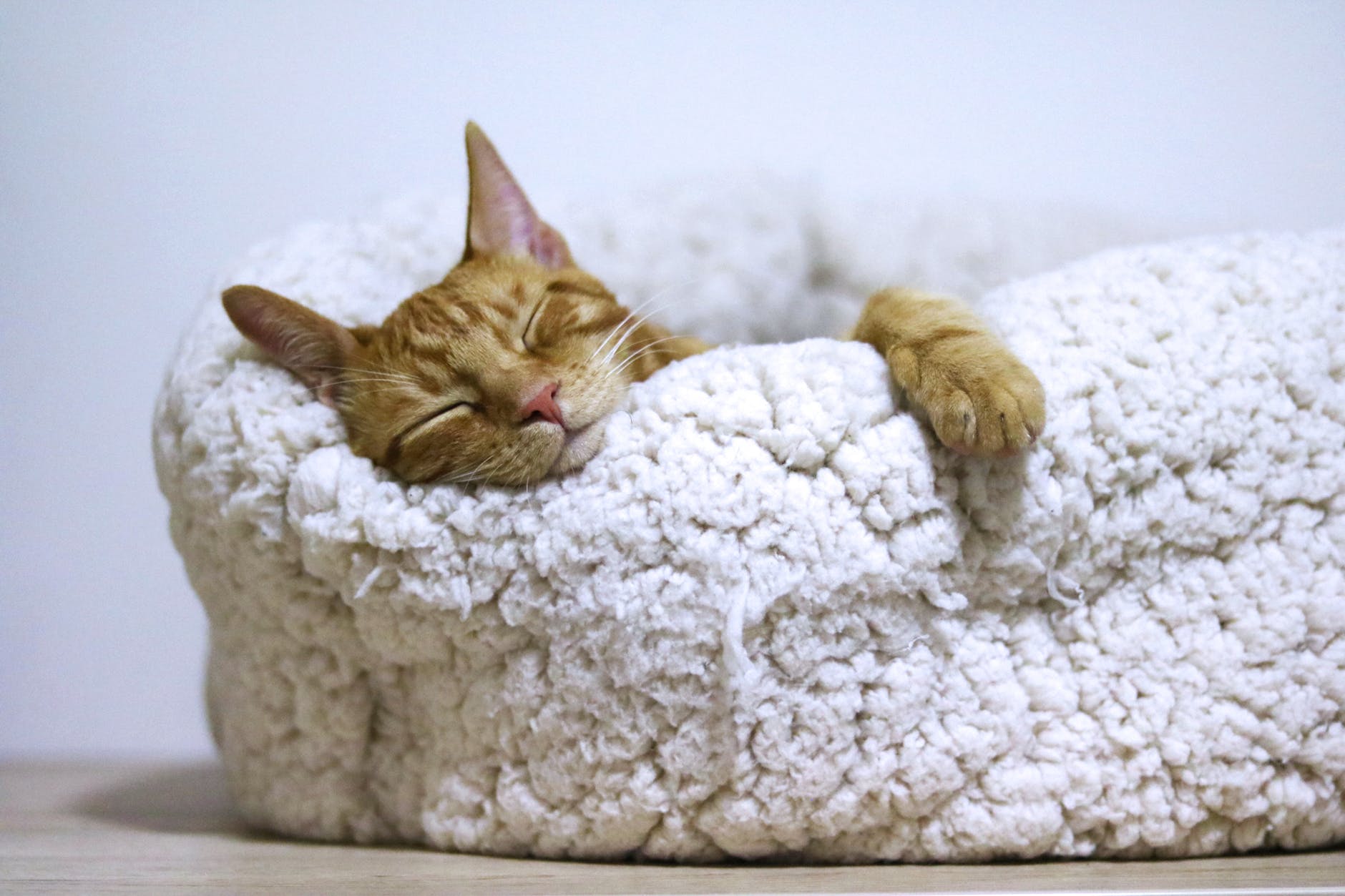
Isn’t it amazing when your friends are talking about something that is a myth but you know the real fact about it and you can actually brag about it. Everyone thinks you are a genius but you know that it is something you read somewhere. It’s hard sometimes to think about thousands of myth and facts which we just don’t know and continue to believe what we know about it. When I was small my mother once told me that if you see your face in the mirror at night your face will get wrinkles. Yeah… like that doesn’t even make sense but she told me anyway because she was getting ready and I was In the way. And I know you too have come across some bizarre myths that I believe are made up. But there are myths that people actually believe and are common to everyone like black cats are unlucky. They are not!! I have a black cat and I love her the most.

Photo by Helena Lopes on Pexels.com

It’s modern time and people want facts if you want them to believe something. Science has progressed and has answer to almost everything but there are things which even science is unable to answer for e.g., why are women always right? And how moms are able to find anything when we ask them and we can’t. How?? Okay, I will pull my hair out and still won’t get any answer so let’s move on to our myths vs facts quiz. I will give you some common beliefs and you will have to identify it as a myth or a fact and at the end I will answer them.

READY, SET, GO…

  1. You have to drink at least 8 glasses of water a day.
  2. Bulls get angry when they see red color
  3. Only animals that blush are humans
  4. Dogs only see black and white. Poor doggos. (Simple huh?? Real questions start now.)
  5. If you swallow gum it will sit for 7 years in your stomach.
  6. Pineapple is a natural meat tenderizer.
  7. To boil water faster add salt to it.

Answers

(Myth) No you don’t have to. There are many factors involved as of how much water you should consume. Drink when you feel like drinking. Not too less not too much. 3 to 4 litres work perfectly fine. According to The U.S. National Academies of Sciences, Engineering, and Medicine, the adequate intake of fluids for men is 3.7 L and for women it is 2.7L. about 50 to 70 % of our body is made up of water and it is important for:

  • Keeping temperature normal.
  • Getting rid of body waste

(Myth) I’ve spent my life getting scared and hiding my red clothes whenever I saw bulls. Whoever made this myth hated red color. Everyone believed this because of that red cloth used by matadors in bull fights but American science guide says that bulls are red green colorblind. The actual reason for bulls’ anger was the movement of the cape. Feeling stupid? Yeah me too. We are in this together.

(Fact) Isn’t it amazing how our cheeks turn red when someone compliments us or when we are embarrassed of saying something stupid. humans are the only animals who are capable of blushing, and as Darwin states “the most peculiar and the most human of all expressions.” It’s still unknown how it happens voluntarily but in terms of science it is caused by the dilation of blood vessels in the facial skin.

(Myth) Here is a good fact dogs don’t see in black and white. Our friend is actually capable of seeing colors not many but can distinguish between them. The can see blue, yellow and some shades of grey. They may not see the true color of an object but they definitely see the color of love. Dogs are pure souls.

Photo by Andrea Piacquadio on Pexels.com

(Myth) “Oh my god! I just swallowed a gum, it will get stuck to my intestines now. (screaming in fear).” You can understand this, right? From fruit seeds to chewing gums we have avoided gulping them. But you will laugh after knowing that neither plants were going to grow from your stomach nor the gum will hijack your guts because your gut can’t digest it. If you anyhow swallow it, it will pass through you in a couple of days. Although a large amount of gum can result in intestinal blockage.

(Fact) Bromelain enzyme in pineapple is digests protein and softens the tissues in meat, hence, goes well with beef, pork and some types of fish. This is the reason why it stings our tongue, it breaks down the surface tissues thankfully our body regenerates cells and repairs the tongue. If you want to soften it you can bake it or soak it in salty water.

(Myth) Adding salt to water will increase the temperature of water fast but it’s boiling point will remain same. Even if you add a spoonful of salt the boiling point will change from 100° to hardly 100.4°.

I hope you enjoyed the quiz, if you know some more myths and facts do tell in the comments below also tell me how much you scored today.
Say ‘YES’ to these habits

Internet has made our lives easy, everything is available there from assignments to math problems but can internet do Everything for us? No, ultimately it’s us, students, who have to study, write for exams and get through this phase of our life. It’s very easy for all of us to get distracted with just one notification on our phone, or thought of our crush😉.
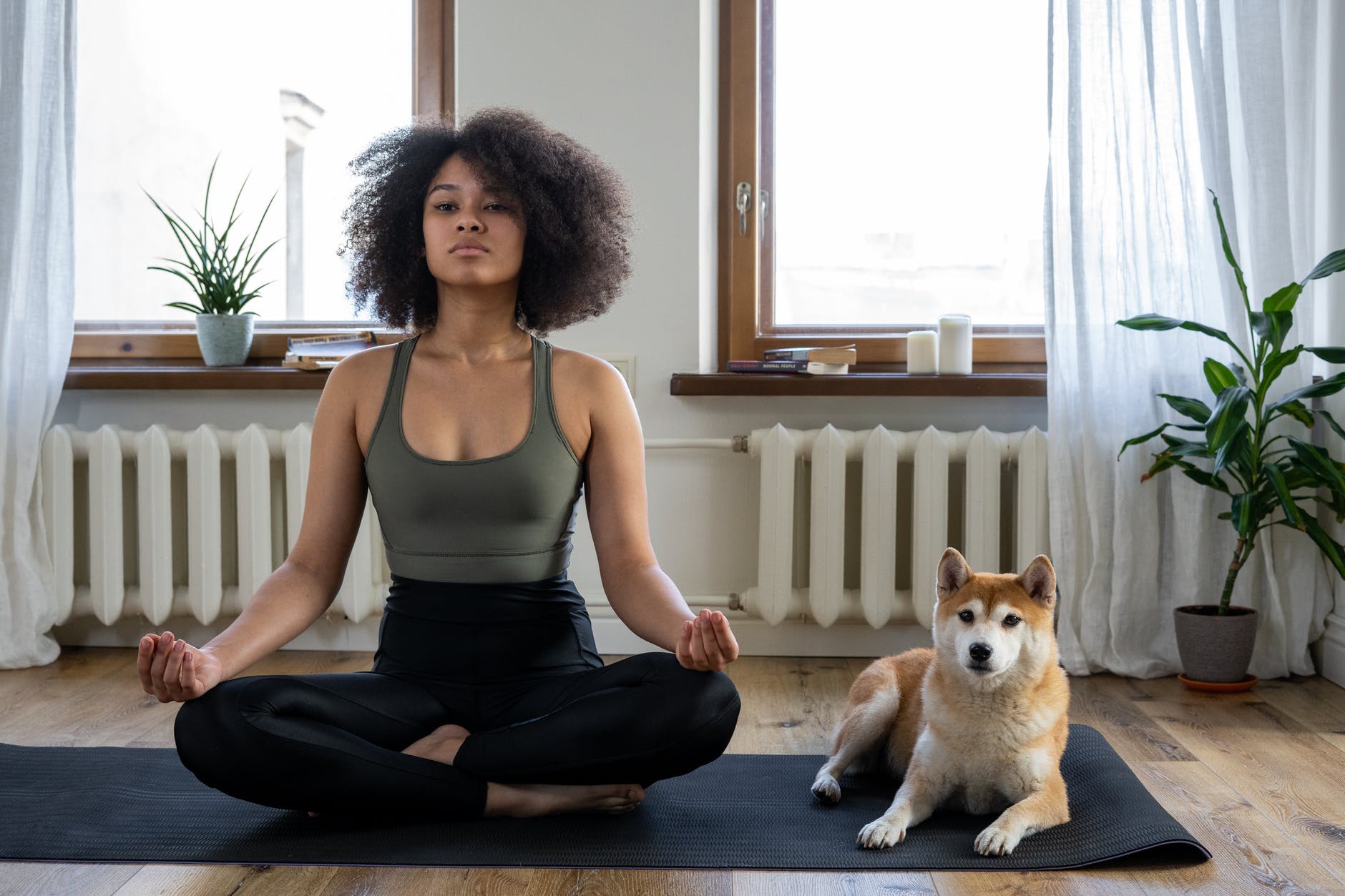
Not everyone can study with all that is going around and concentrate, so many students opt for night time as their study time. But you won’t disagree with fhe fact that it affects our daily routine, makes us feel exhausted for the rest of the day. Night time is for dreaming!! It’s important to rest for our body and our mind. If you are not satisfied with your daily routine, change it. Start with small changes like waking up early, eating healthy and being productive etc,. You don’t have to have a very strict routine, chill you are just a student few ‘habits’ are enough for you.
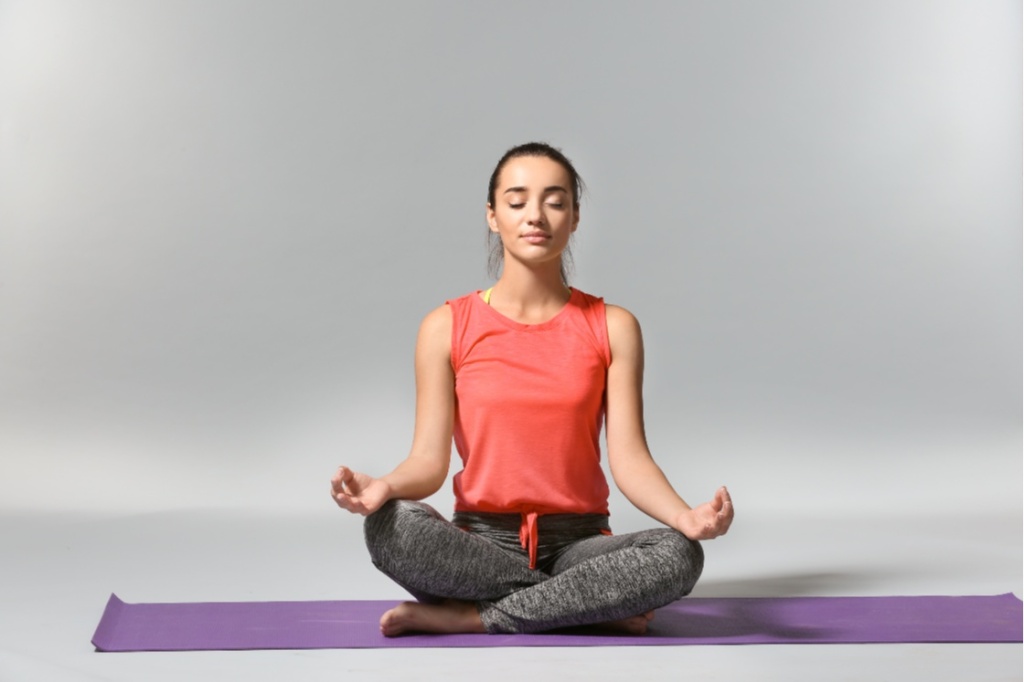
Photo by cottonbro on Pexels.com

START FRESH🐓

You must have heard your parents saying that you never forget whatever you learn in the morning, can’t bet on it’s authenticity but it’s true that mornings are good to start learning. From my experience it is because there is no or very less disturbance with your family sleeping peacefully it’s easy to concentrate. And you know when you start early most of your work is done by the time others wake up. Your reasons for not exercising are eliminated. It also helps in protecting you against:

  • Stress
  • Respiratory issues
  • Obesity
  • Bad mood

DISTRACT THE DISTRACTION 🥷

Do you find it hard to concentrate while studying? Everytime you open your book your phone calls you and asks to scroll for 5 more mintues? Or your mind starts wandering to some wonderland? Well, it’s normal but it makes the study time difficult. Thankfully you can actually eliminate these small distractions. Let’s start with phone. Keep you phone one silent or block the apps for the time being, download website and app blockers from playstore. Keep your away from the place you’re studying so that you don’t pick up your phone everytime you have the urge to check msgs.
Start with the topic that you find most interesting and make a time period for every subject. Don’t include the boring ones together and study when you feel it.

Make good habits and they will make you

Parks Cousins

TAKE A BREAK

It’s so important to just forget about everything and enjoy for a moment. You can plan a family trip to some nearby hill station or a dinner or you can ask your friends for a weekend reunion. It will help you in keeping your study tension side for a day or two. You will stay up to date with your loved ones and you will have people to share your story. You can explore new things like, a dish, a new restro or a new friend you met online. Just get out of the house feel free, dump everything from your head make it ready for the next week. You don’t wanna start your week burdened with stress of the last one.

SLEEP ON TIME😴

As students we often ignore the importance of sleep and how much it affects us. Lack of sleep can cause many serious issues affecting our brain function and body. It will cause you to feel exhausted all day long and lower your productivity. It can lead to stress and a greater risk of heart attack. A good 7 hour sleep is a must as our brain and body rest at that time. In simple words you have all the reasons in the world to get a good sleep. To keep you healthy, working, efficient, happy. What else reason do you need?? It is the ultimate solution to all your problems. Start sleeping on time and you will discover the ultimate change in your lifestyle. You will have all the time to do you daily chores and still have time in your sleeves to relax.

Reference : https://www.helathline.com

Why chocolates Are Good for Health

Chocolates contain anandamide, which as one might guess, comes from the Sanskrit word “ananda”, meaning happiness, joy and delight. Chocolates also contain the chemical compound phenylethylamine, which is said to enhance our feelings of love.

             Chocolate is made from tropical Theobroma cacao tree seeds. Its earliest use dates back to the Olmec civilization in Mesoamerica. After the European discovery of the Americas, chocolate became very popular in the wider world, and its demand exploded.

           Chocolate has since become a popular food product that millions enjoy every day, thanks to its unique, rich, and sweet taste.

 Facts on chocolate:

  • Chocolate consumption has long been associated with conditions such as diabetes, coronary heart disease and hypertension. 
  • Chocolate is believed to contain high levels of  antioxidants.
  • Some studies have suggested chocolate could lower  cholesterol levels and prevent memory decline.
  • Chocolate contains a large number of calories.
  • People who are seeking to lose or maintain weight should eat chocolate only in moderation.

Eating chocolate may have the following benefits:

  • Reduces stress:

Studies have found evidence that Polyphenols contained in cocoa used to prepare chocolates can reduce stress. Both dark chocolate and milk chocolate contain such polyphenols. Stress is said to signal an increase in oxidative damage to our systems. The antioxidants in chocolate neutralise this oxidative damage caused by free radicals and reduces stress.

  • Beneficial for the brain and improve its function:

Chocolate contains flavanols, which are antioxidant molecules that help in the optimisation of our brain’s functions and potential. Flavonols protect the neurons in the brain and increase our cognitive abilities concerning memory and learning. A study of healthy volunteers showed that eating high-flavanol cocoa for five days improved blood flow to the brain.

  • Reduces risk of heart diseases:

As per research, consumption of dark chocolate, in particular, has been linked to a reduced risk of cardiovascular diseases such as coronary heart disease and stroke. Dark chocolate keeps our blood vessels dilated and aids in normal blood flow.Yet another study showed that eating dark chocolate more than 5 times per week lowered the risk of heart disease by 57% .

  • Protects the kidneys:

Dark chocolate was found to have protective effects on our kidneys. The flavanols in dark chocolate help maintain proper renal tissue oxygenation which is essential for the functioning of the kidneys.

·         Powerful Source of Antioxidants:

Dark chocolate is loaded with organic compounds that are biologically active and function as antioxidants. These include polyphenols, flavanols and catechins, among others. One study showed that dark chocolate had more antioxidant activity, polyphenols and flavonoids.

  • Protect the Skin from the Sun:

The bioactive compounds in dark chocolate may also be great for the skin. The flavanol’s can protect against sun damage, improve blood flow to the skin and increase skin density and hydration. Studies show that the flavanols from cocoa can improve blood flow to the skin and protect it from sun damage.

The darker the chocolate, the higher the concentration of cocoa, and so, in theory, the higher the level of antioxidants there will be in the bar.

However, nutrients vary widely in commercially available chocolate bars, depending on the brand and type you choose. It is best to check the label if you want to be sure of the nutrients.

Effect of globalisation on indian socirty

Aashitomar9's avatarTrack2Training

The term ‘globalisation’ means integration of economies and societies through cross country flow of information, ideas, technologies, goods, services, capital, finance and the people. The essence of globalisation in a broad sense is connectivity in all aspects of human life. Although economic forces are an integral part of globalisation, it would be wrong to suggest that they alone produced it. It has been driven forward above all by the development of information and communication technologies that have intensified the scope and speed of interaction between the people all over the world.

India became independent as one of the poorest countries of the world. The British colonial rule had destroyed the self-sufficient agrarian economy. The then Prime Minister of India Jawaharlal Nehru preferred mixed economy for planned economic development of the country. As a result of this, public sectors were set up along with a number of private enterprises, but like…

View original post 1,351 more words

Bharti Airtel’s outlook has been upgraded from negative to stable by S&P.

Bharti Airtel’s credit rating of “BBB-” was maintained by S&P on Thursday, with the outlook raised to stable from negative, suggesting the company’s improved financial position and ability to repay debt. Bharti Airtel’s Indian mobile business is expected to grow at a solid rate, according to S&P, although there will be no across-the-board tariff changes and growth would be slower than in fiscal 2021. “Bharti Airtel’s outlook was changed from negative to stable by S&P Global Ratings. At the same time, we reaffirmed Bharti Airtel’s ‘BBB-‘ long-term issuer credit rating and ‘BBB-‘ issuer credit rating on its senior unsecured notes. The ‘BB’ issue rating on the subordinated perpetual securities (PERPS) it guarantees was also confirmed “According to S&P’s credit rating report.

August saw a significant increase in fuel demand as economic activity increased.

In August, the country’s fuel demand increased by 10.9 percent over the same month the previous year. According to data from the energy ministry’s Petroleum Planning and Analysis Cell, fuel consumption, which is a proxy for oil demand, totaled 16 million tonnes (PPAC). Petrol sales in August were 13 percent higher than a year before, at 2.69 million tonnes. The demand for gasoline is expected to rise at a rapid pace. As more people bought personal vehicles to avoid taking public transportation during the Covid-19 outbreak, demand for gasoline has also surged. Meanwhile, sales of cooking gas or liquefied petroleum gas (LPG) grew by 2.3% to 2.33 million tonnes, while sales of naphtha declined by 5.1% to 1.02 million tonnes.

Blood type

Do you know your blood type? If you haven’t been in any medical situations where blood type is important, you might not.

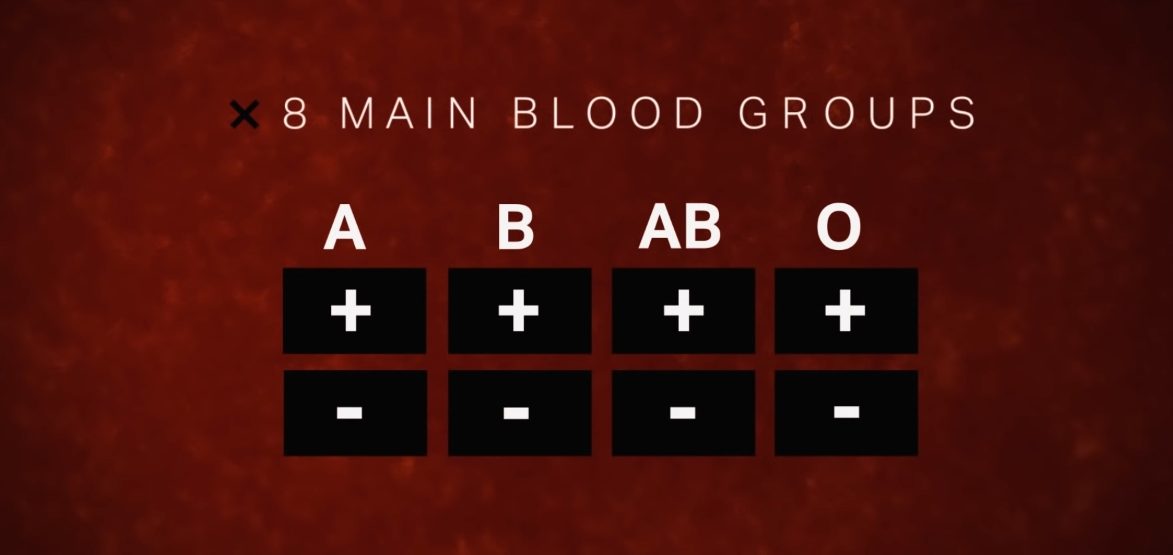
We know that there are 8 main blood groups that make up most of the world’s population.

But it turns out that scientists still don’t know why we evolved different blood types. And that may remain a mystery for a long time. But from now, science can at least tell you about your own blood.

Knowing your Blood type

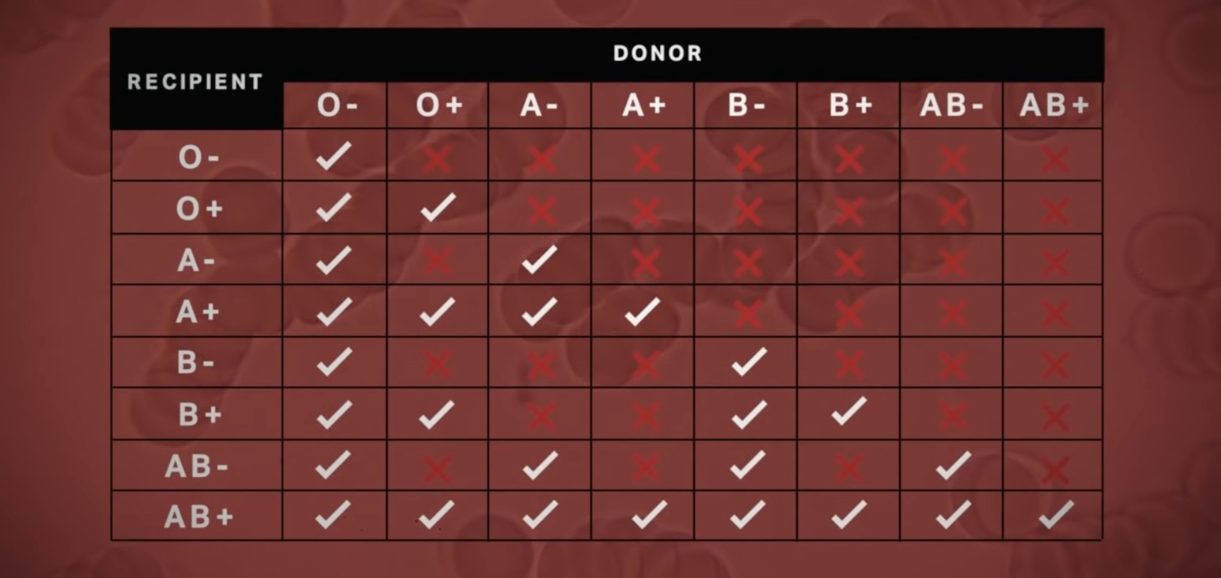
In develops parts of the world, it’s not crucial to know your blood type off the top of your head. Doctors will typically run tests before any major procedure and if there’s any doubt in a medical emergency, you’ll most likely receive O negative blood, because that’s the universal donor blood that’s save to give to any A, B, AB or O recipient.

Blood type experiments

For thousands of years nobody really understood blood. A Greek doctor Claudius Galenus from 200 CE believed that it was created food and liver, and this school of thought lived on for nearly 1500 years.

It wasn’t until in the 17th century A british doctor named William Harvey, discovered that blood actually circulated through the body. This spawned A new age of experimentation with blood.

In 1665, an English physician successfully kept one dog alive by transfusing it with a blood of another dog. Just two years later, doctors began experimenting with Xenotransfusions. That is transfusing humans with animal blood, such a sheep. And those human patients died.

It wasn’t until 1900 that we finally realised people and animals actually have different types of blood that determine whose blood can mix with whose. That’s where different letters came into play.
If you’re type A, your immune system will perceive type B blood as an intruder and trigger auto immune response that can cause

  • kidney failure,
  • extensive blood clotting, and
  • even shock.

The reverse is true of type B blood. The immune system will attack type A.

AB blood however, accept both A and B blood without triggering the auto immune response. These things get little bit complicated when introduced there negative and positive part of your blood type. Positive can’t accept negative, but the opposite is extremely dangerous.

Other than 8 Blood types

To further complicate things scientists have discovered dozens of more blood type, such as the Duffy blood group, which can determine your susceptibility to malaria. Or the Hh blood type, which 1 in 10,000 people in India have. But the vast majority of the humans fall into this A, B, O system.

As per why humans evolved this complicated system of blood types and compatibility, we really don’t know. The original mutations are thought to date back nearly 20 million years. But whatever the biology is behind blood typing, it’s a real practical thing that matters.

It’s just not a bad idea to know your blood type. If you’re traveling somewhere that’s rural, or doesn’t have access to advance medicine, it’s good for you and your travelling companion to know your types, just in case of an accident along the way. In big emergency closer to home, blood banks often put in calls for donors of a specific type. And remember if you’re type O Negative, you’re an extremely useful universal donor. So, knowing your type can give you a peace of mind.
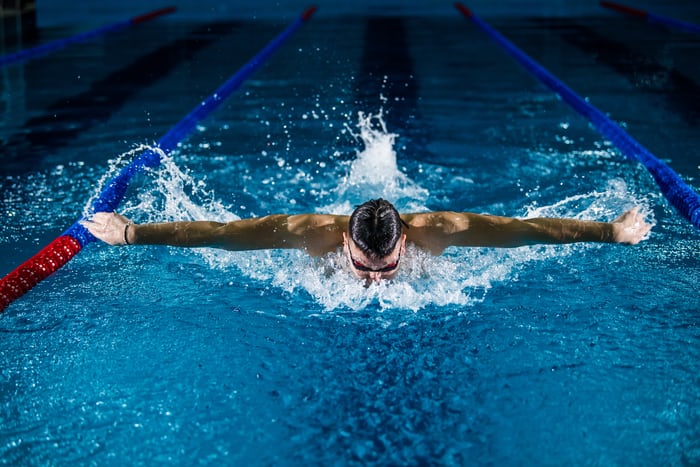
Your body when you Swim

Harvard medical school published a study which looked at over 40,000 men, aged 20-90 who were either runners, walkers, swimmers, and physically in active people. With an average length of 13 years of observation and in that time

  • 2% of swimmers passed away
  • 8% of runners passed away
  • 9% of walkers passed away
  • 11% of physically inactive people passed away

This study showed that swimmers are much healthier later on in life than the rest of the population and for women swimming just 30 mins a day can decrease coronary heart disease by 30 to 40 percent.

It also helps to increase HDL aka good Colestrol. Some studies have also shown that aerobic excercise can keep the cells in the lining of your arteries more flexible and healthier. Hence there is no question that swimming is an awesome form of fitness.

Body during swimming

What do you actually feel when you go into the water? Here are some main elements of the human body that gets impacted during swimming.

1. Blood

According to the America Heart Association, swimming is considered as Aerobic activity. Aerobic excercise enlarges the heart and it increases the blood flow through the entire boby. Because swimming is an excercise, the blood has to pump all the molecules into the body.

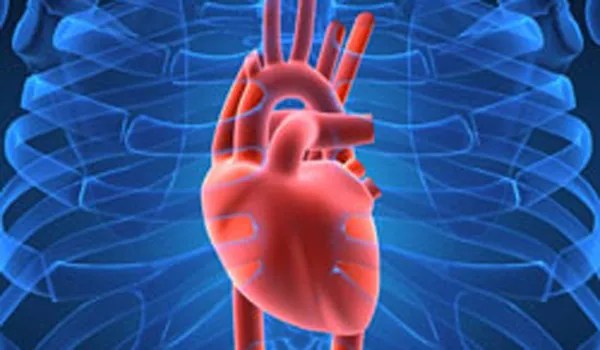
2. Heart

Since so much of blood has to be pumped into the body, that ties into how it impacts your heart because we know that after 2 mins your body goes into aerobic respiratory because your heart has to pump all the oxygenated blood through the body. So as you swim, your heart is circulating the blood which help your body to perform and achieve the required goals.

3. Skin

You must have seen that the skin color changes of swimmers. For example, some swimmers face turns red when the swim, that happens because your blood vessels are dilating and the brings the heat to the surface into the skin then some people turn red, as a result your skin is showing the effort that you’re putting in the water.

4.Muscles

There’s a reason why swimmers are considered to have best body and physiques in the world compared to any athlete, because swimming engages every single muscles in the water when it comes to your core stability, your upper body, your biceps, your hamstrings, your calves, everything is engaged when you swim.

When you’re swimming, you are micro tearing your muscles while swinging it. And the muscles requires 24-48 hrs to recover those muscles. That’s when sometimes you might feel sore.

5. Lungs

Swimming can actually help increase your lungs volume because in swimming different than other sports, you can’t actually breath whenever you want. It’s not like running when you have full access to oxygen.

In swimming you’re engaging your muscles and you’re not allowed to breathe necessarily at the time when your body might want it. So because you have to get used to this, you actually increase your Vo to max (maximum amount of oxygen body is able to use). So basically you are making your lungs more efficient at functioning.

6. Brain

The Brain loves swimming, because of all the extra blood flow moving through these endorphins that makes you more awake, alert and focus.

But this could happen in any type of sport but swimming is something really special because you’re sort of in your own world where the medium is 800 times more dense than air, which makes you feel free and relaxed.

Hence, from physical health to mental health, swimming is an incredible benefit human body and after reading this you must be thinking of trying swimming.

World’s Physiotherapy Day

Photo by Anna Shvets on Pexels.com

Every year on the day of 8th September it is celebrated as the world’s physiotherapy day started on the day of 1951. It marks the day of the unity and collaboration of the world’s PT society.

Every year according to the situations and conditions the theme of the day is to decide and physiotherapists try their best to keep their patients fit and in sound health throughout the year.

The contribution of the physiotherapists is such an important deed that even if one thinks that it is easy to motivate and aware people about the good things of a healthy and sound mind but it is not an easy task to achieve with a different mindset of peoples with a different set of problems.

It is not easy to think of the profession where we have to motivate people for the things that can easily be interpreted as the way they want.

This year the theme of the day is to talk about the effect of the Covid-19 and how one can cope with it.

Importance 

The importance of this day might not be yet clear to everyone out there but let me pinpoint some points which can even let you ponder on the thoughts that why this is so important for us.

The day was first discovered to recognize the efforts of the physiotherapist and what they do for us. This is day is celebrated to emphasize and promote the profession and expertise of Physiotherapists.

The importance of this can also be seen from the point of recovery from any physical injury that can restrict the movement of the body and all muscles. It is the way or therapy through which we can decrease the effect of the injury by increasing the maximum movement of the body and as well as physical function.

Not just this but with physical therapy one can also recover from fatal injuries and chronic conditions as well.

It can cure the pain and provide instant relief and can take care of the injury which can occur again in the course of some time.

Few Benefits 

The benefit of this day can be seen from the few points given below:

Easy and reliable pain management relief.

Recovery from any kind of trauma and ling lasting method to improve it.

Recovery from any physical injury and as well as paralysis.

Better body balance and posture as many of us can have problems related to the back of the neck area because most of us just sit many hours before the desktop or laptop.

As we all are gaining experience with our increasing age, we are also getting ourselves in the life long diseases which is very frequent nowadays so we can get some help from here too.

Conclusion

Even though medicines can provide us instant relief and no it’s not bad either when we don’t have any choice but one should consider physical therapy in the case of injury that is on the physical level and we rely on it for the longest time.

Being Bilingual

People have very different opinions on what bilingualism really is. For some it means speaking two languages fluently and with little to no effort rather strongly consider a person bilingual, if it has perfect pronounciation in both languages and makes very few grammatical errors while talking.

The truth is that, even with a bad accent and making some mistake, being able to speak in two or more languages rather than one has practical benefits in an increasingly globalised world.

Multilingualism

Multilingualism has been shown to have many psychological and social advantages that can go something simply as

  • watching movies with no subtitles
  • to having less problems in traveling and
  • even getting a job or business opportunities specially in tourist areas.

Types of Bilingualism

It is considered to be two types of Bilingualism

1. Compound Bilingualism

Compound Bilingualism, also called addictive Bilingualism happens for example when a child is raised by bilingual parents and both languages are used in home, the child grows when both languages are used simultaneously in the same environment.

With this type of Bilingualism, the person does not see the two languages as separate it is common to hear such people speaking different languages in the same sentence or using a word of a different language from the one they’re talking to better express themselves.

2. Coordinate Bilingualism

This is the second type of Bilingualism also know as Subtractive Bilingualism. In this type, the person perceive two languages as separate because he learns them separately and in different environments in context.

I am an example of coordinate Bilingualism, most of the time i talk Hindi when I’m in my college environment or to people who talks only that language, I use the language specifically for those context but to my family members i usually talk in Bengali which is my native language, the language related to my home environment. I see these two language as separate since I learned and used them in completely different environments.

Officially Monolingual Countries

Only a few countries in the world including the U.S, England, and Australia are officially Monolingual but even in these countries only a considerable percent of people who speaking and understand more than one language.

Advantage

Researchers suggest that bilingualism can slow the advance of age-related mental issues such as Dementia and Alzheimer’s by up to 4 years.

Also in bilingual adult, brain tissue called grey matter is denser compared with Monolingual adults.

Although speaking more than one language does not necessarily make you more intelligent person, it helps stimulates and increase brain connections. Learning a new language is like an excercise to the brain that will improve your Cognitive skills and even if you grew up in a Monolingual environment, it is never too late to start learning a different language.

International Literacy Day

Photo by JAI on Pexels.com

Literacy the way one defines it tells many things about the perception of that person on the topic, but what can’t change with the variety of thoughts and points of view is the motive, the base, and everything which can tell the sheer drive of why and what behind the subject.

“The man who won’t read has no advantage on the man who can’t read”, as the saying goes we can easily see the importance of one’s literacy. The power one can harness from the depth of reading and knowledge is far much greater than anything.

The boundness of our imagination and information about things restricts us from achieving many things at the higher fronts, so reading and knowing contributes to your personal growth as well as on the backends of things too.

International Literacy Day is celebrated on the 8th of September every year all over the United States started in the year 1966.

But before knowing some of the amazing facts and information about literacy shouldn’t we know the real meaning of what literacy is and what one can interpret from it.

Literacy means the ability of a person through which one can understand, read, write and interpret things that they never can think of without the means of literacy.

“ The more you read, the more you learn and more places you go” by Dr. Seuss

Says everything about the benefit of the reading and how it can affect one’s all over the status of mind and as well as living methods.

So, let’s dive into the amazing facts and important notes related to the world’s literacy day.

First, let’s talk about the facts which concern the literacy rate of the world’s populations.

According to the stats of the United Nation, there are around 75 million children which are either dropouts or they don’t go to school.

As of this year, there are around 250 children which still can’t read or write, but the amazing fact is that around 84% of the world’s population is literate.

Almost the major portion of illiterate adults are from the top 10 countries like Nigeria, China, Pakistan, and India. One in five adults is illiterate according to the stats.

International Literacy day is not a day to celebrate it as a Holiday but it is the day to observe and know the importance of reading.

The literacy of India is somehow not so good or bad but it is something for which we all are working together and we will achieve it in the upcoming years ahead.

But again there is something lethargic about the rate of our literacy as if though we want to achieve it but we are unable to do so or it’s we just don’t want to achieve it right away.

Even in times of the global crisis, we have come up with alternatives to let the flow of literacy continue and people get their basic right of reading and literacy.

Even though around everything we should celebrate the people who can read and spread awareness who can’t.

History of Halloween

From communion with the dead to pumpkins and pranks, Halloween is a patchwork holiday, stitched together with cultural religions and occult tradition that spans centuries.

Before Halloween

It all began with the Celts; a people whose culture had spread across Europe more than 2,000 years ago. October 31st was the day they celebrated the end of the harvest season in a festival called Soin, that night also marked as Celtic New Year and was considered a time between years; a magical time when the ghost of the dead walked the earth as called as time when the veil between death and life was supposed to be at its thinnest.

At that time the villagers would gathered and lit huge bonfires to drive the dead back to the spirit world and keep them away from the living. But as the Catholic Church’s influence grew in Europe, it frowned on the pagan rituals like sawing.

The name Halloween

In the 7th century the Vatican began to merge it with a Church sanctioned holiday. So November 1st was designed All Saints day to honor martyrs and the deceased faithful. Both of these holidays had to do with the afterlife and about survival after death, it was a calculated move, on the part of the church, to bring more people into the fold.

All Saints day was known as then Hallowmas; hallow meaning holy or saintly, so the translation is roughly mass of the saints. The night before October 31st was All Hallows eve while gradually morphed into “Halloween“.

How the holiday spread

The holiday came to America with the wave of Irish immigrants during the Potato Famine of the 1840s. The brought several of their holiday customs with them including

  • Bobbing for apples and,
  • Playing tricks on neighbors like, removing gates from the front of the houses
Irish immigrants

Trick-o-treat

The young pranksters wore masks so they wouldn’t be recognised but over the years the traditional of harmless tricks grew into outright vandalism such as in 1930s, pranks during Halloween became really holiday, as there was such a hooliganism and vandalism.

Trick-o-treat was originally a extortion deal, give candies or get your house trashed. Storekeeper and neighbors began giving treats or bribes to stop the tricks and children were encouraged to travel door-to-door for treat as an alternative to trouble making. By the late 30s trick-o-treat became a holiday greeting.

An introduction

By reading the title you must be thinking that what is the introduction about. A very important part of our lives which has lessons, memories, friends, guidance and path for a better future. Yes I think you must have guessed it…. It’s our schools, colleges and universities in which a major part of our lives is invested. We learn, innovate and implement the things with confidence in our lives and everyone has gone through this phase!…

Schools – What should write about it. For me it’s a place where a child is able to see a new world rather than family members. He is surrounded by unfamiliar and unknown faces. He has to prove himself there with his own sense and knowledge. School is always said to be a temple of learning and it is very true. We make mistakes and our teachers are present right at the moment to guide us and nurture us by what they have learnt with all their efforts for everyone at the same time.

Colleges and universities- The place where the competition begins and a teenager chooses his particular stream to build a better future. They provide the confidence to present things in the most effective way so that our knowledge and experiences are utilised. A vast area for ourselves to involve in more and more activities and create the ability to think. It provides a discussion about the topic and understanding it by the depth. The courses are available for everyone in any field they want to pursue.

This was a short detail about school, colleges and universities in our lives. Teenagers can easily develop and learn things. They can innovate things in a better version that may lead to a successful life. I hope you will relate this to your school and college days and smile a little more thinking about the memories.

Thank you !!!!!!

Women at a Higher Risk of Stroke Says a Study And Prevention Of Stroke In Women

  • Strokes are known as “brain attacks.” When blood flow stops to an area of the brain, the cells receive less oxygen, similar to what occurs during a heart attack. When brain cells can’t get enough oxygen, they die. Strokes generally fall in one of two categories,” Dr. Achieng says. “Ischemic strokes occur when a blood clot in a vessel stops blood flow to the brain. Hemorrhagic stroke occurs when a blood vessel bursts and bleeds into the surrounding brain tissue. Certain factors in women can lead to both types of stroke.
  • According to a study presented by European Stroke Organization (ESO) Conference, there is a rising heart attack and stroke among women than men. This is due to work stress, sleep disorders, fatigue, which are usually termed as non-traditional risk factors for heart attack and stroke.
  • While diabetes, arterial hypertension, raised cholesterol, smoking, obesity, and physical inactivity are recognized modifiable risk factors for cardiovascular disease, recently, it has been noted that non-traditional risk factors such as work pressures and sleep problems can significantly add to cardiovascular risk. Stroke is the No. 4 cause of death in women and kills more women than men. In fact, one in five women has a stroke.
  • Traditionally men have been perceived to be more affected by heart attacks and strokes than women.
  • But, the “study found men were more likely to smoke and be obese than women, but females reported a bigger increase in the non-traditional risk factors for heart attacks and strokes, such as work stress, sleep disorders, and feeling tired and fatigued”, said Dr Martin Hansel, Neurologist at the University Hospital Zurich, and her team.
  • “This increase coincides with the number of women working full time. Juggling work and domestic responsibilities or other socio-cultural aspects may be a factor, as well as specific health demands of women that may not be accounted for in our daily ‘busy’ lives,” Hansel added.
  • High blood pressure is the leading cause of stroke and is the main cause for increased risk of stroke among people with diabetes.
  • Researchers compared data from 22,000 men and women in the Swiss Health Survey from 2007, 2012, and 2017, and found an “alarming” rise in the number of women reporting the non-traditional risk factors for cardiovascular disease. The trend coincided with an increase in the number of women working full-time from 38 per cent in 2007 to 44 per cent in 2017.
  • Overall, in both sexes, the number reporting stress at work rose from 59 per cent in 2012 to 66 per cent in 2017, and those reporting feeling tired and fatigued increased from 23 per cent to 29 per cent (to 33 per cent in women and 26 per cent in men).
  • Over the same period, the number reporting sleep disorders went up from 24 per cent to 29 per cent, with severe sleep disorders also rising more sharply in women (8 per cent) than in men (5 per cent).
  • However, the research also found the traditional risk factors for developing cardiovascular disease had remained stable in the same time period, with 27 per cent suffering from hypertension, 18 per cent with raised cholesterol and 5 per cent with diabetes. Obesity increased to 11 per cent and smoking decreased from approximately 10.5 to 9.5 cigarettes per day, but both were more prevalent in men.

Stroke prevention in women:

With so many factors that can raise the risk of stroke in women, are there ways to prevent them?

The same steps you take to improve your heart health will also reduce your stroke risk, Dr. Achieng says. Your doctor may recommend taking a daily dose of aspirin because it thins the blood and reduces clotting, but that will depend on the individual.

Stroke prevention tips:

  • Eat healthier
  • Exercise regularly
  • Aim to lower blood pressure and cholesterol
  • Quit smoking
  • Reach a healthy weight
  • Take rest

Snack Time: Healthy Snacks Options For Those Mid-Day Cravings

Hunger pangs are difficult to manage and snacking is hard to resist. As such, we often end up indulging in chips, soft drinks, pizzas, burgers and fried food items whenever cravings strike. However, these unhealthy  snacks can lead to weight gain and also certain digestive issues.

                 However, you can always replace them with some healthier alternatives. Ayurveda expert has recommended some healthy snacking options that are not just nutritious but also tasty. When it comes to snacks, kids and even millennials tend to choose chips, cookies, pastries, soft drinks, pizza, burgers etc. which are sometimes okay, but really affect your health if had often. Unhealthy snacking is one of the reasons behind obesity, acne, hormonal issues, hair fall, diabetes, thyroid, PCOS & other lifestyle issues.

                When snack time is near, opt for something healthy & light, that will satisfy your cravings & boost your health.

Here are delicious snack time options we know you will surely enjoy are as follows:

Here are delicious snack time options we know you will surely enjoy are as follows:

  • Gur chana (jaggery and chickpeas):

It is easily available, easy to digest, boosts immunity and sharpens memory.

  • Roasted makhana:

It is rich in nutrients, stabilizes your blood sugar and doesn’t make you gain weight.

  •  Poha:

 It makes you feel fuller and energetic. It is a good source of carbohydrates and fat.

  • Puffed rice:

 It is crispy, savory and super easy to prepare and digest.

  • Coconut jaggery ladoo:

 It is best for people who crave sweets.

  • Dry fruit laddoo:

 It is nutritious and filling.

Sattu drink:

It is an amazing source of protein and energy. It can be consumed pre or post-workout or during the afternoon.

  • Sesame laddoo:

It is best for hair, teeth and bones.

  • Nuts and dry fruits:

They have good antioxidants, fiber, nutrition and fills your stomach in an instant.

  • Fruits:

 nourishing and full of nutrients.

  • Cottage cheese & khakhra:

Homemade cottage cheese is loaded with protein. A mini-meal of fresh cottage cheese combined with whole wheat khakhras is sure to satisfy both your hunger pangs, as well as your taste buds!

  • Oats, milk & nuts:

Oats are complex carbohydrates, rich in soluble fiber & low on fat. Prepare a bowl of oats & top it up with low-skim milk & crunchy nuts to enjoy a yummy evening snack.

  • Egg whites & green veggies:

 Egg whites are low on calories & high on protein. Combine them with fresh green vegetables such as, spinach, lettuce, broccoli etc. to keep yourself fueled throughout the day!

  • Fruit Salad:

 Fruits such as apples, pears & cucumbers are loaded with vitamins, fiber & minerals. Top your fruit salad with crunchy flaxseeds or sunflower seeds for better taste & added health benefits.

  • Peanut Butter:

 Peanut butter is a good source of protein & healthy fats. Prepare a peanut butter sandwich using whole wheat bread or dip some fresh fruit pieces into this yummy mixture & munch away!

  • Boiled Sprouts:

 Sprouts are a powerhouse of protein, fiber & vitamins. A mid-day meal of boiled sprouts with tossed veggies & chat masala will surely make for a healthy & delicious evening snack.

  • Smoothies:

 Healthy, wholesome & delicious! You can prepare a smoothie using skim milk & fresh fruits or vegetables. A healthy smoothie will boost metabolism & keep you feeling full until you reach back home.

Where did Necktie came from?

The neckties, also known as decorative noose are a narrow piece of fabric designed to be worn around the neck and tied at the throat. They can be made from many materials but commonly constructed from silk or cotton.

Varieties

Today there are many different kinds of neckties:-

  • Ascot tie
  • The zipper tie
  • Clip on tie
  • The tie dye tie

So when did wrapping a piece of fabric around your neck become a formal style necessity. The length of World War to blame can partially be placed on the French Military. While humans have been tying fabric around their neck since they could sew.

History

The neckties is been known as it didn’t start crowding collars until the 17th century. King Louis XIII of France had hired Croatian mercenaries to fight for him during the 30-year war and the king was impressed by the length of cloth the Croatian used to keep their jackets together.

Croatian

Louis liked it so much that he required his entire royal court to wear them a tradition that his son will continue in his court. The trend soon spread across the French aristocracy and it wasn’t long before all of the Europe had converted to the curve at.

Tying a Necktie

There are four main ways to tie a neckties;

  1. The Four-in-hand knot
  2. The Pratt knot aka The Shelby knot
  3. Half-windsor knot
  4. The Windsor knot

According to researchers from Cambridge Cavendish Laboratory, there are 85 ways to tie a tie. Thomas Fink and Yong Mao actually use Mathematical modeling to figure this out and publish a book on their finding.

Towards the end of tie fashion

The necktie is losing its grip around the throat of male fashion. Tech companies such as Google, Amazon, and eBay actually encourage their employees to dress casually with some going as far as banning traditional office wear entirely and other companies are following suits.

Its fast become a power move to dress drown to the office in the 21st century as a statement of fellow workers, you can wear what ever you want.

Californian companies have led the charge in disrupting many common business practices, by rejecting aspects of corporate life that once seemed to given such as

  • Traditional working hours
  • Corporate hierarchies
  • Paying employees a living wage

Now politicians and even royalty are leaving tie in their dresses so it many not be long before neckties joins the history books of pointless male neck fashion.

WHAT HAPPENED TO MARJAN LION?

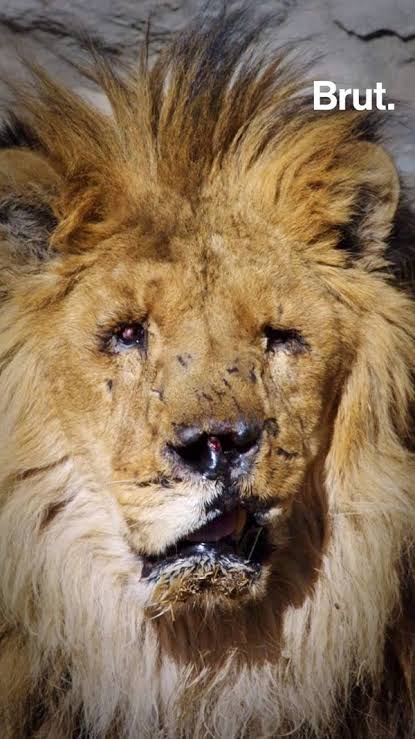
Marjan was the most famous resident of Kabul Zoo. Marjan, which in Persian means coral, was born in West Germany in 1976 and was given as a gift to Kabul Zoo in 1978 by the Cologne Zoo. He arrived in the Afghan capital and, soon afterwards, a lioness by the name of Chucha joined him. 

WHAT’S SPECIAL ABOUT MARJAN?

The lion witnessed Afghanistan’s history, from the communist coup, the Soviet occupation, the state of warlordism, and the hardline Taliban regime. The zoo was said to be shelled on various occasions. When the zoo personnel couldn’t help Marjan as the medical supply was destroyed. Marjan survived. He is the symbol of survival and a desire for peace.

Usual lion’s lifespan would be 10-15 years in wild, more than 15 in captivity. Marjan lived a hard life and passed away at the age of 23. In captivity, Male lions seems to live around 20 years. They do not face the problems of hunger or conflicts in captivity and the only reason for their death is the old age. The recorded maximum age of male lions in captivity is 25 to 26 years.

STORY OF MARJAN

In 1955, a solider sneaked into Marjan’s den to show his bravery to his fellow soldiers. He disturbed, stroked Chucha, the lioness. Even though Chucha didn’t react much Marjan killed the soldier. To seek revenge the deceased soldier’s brother threw a grenade into the den.

Not even a grenade could take away Marjan. It caused severe injury to Marjan. His eyes were removed. MSF doctors and an Italian photojournalist, thus rendering him blind, deaf, and permanently disabled. Despite several operations, neither Marjan’s eyesight nor his mouth could be saved.

Marjan couldn’t eat boned meat as he lost all of his teeth as a result of the incident. A ramp was built as he was weak yet he is strong as he survived. The incident sparked outrage as animal rights activists and locals started to seek justice. The man who threw grenade was attacked the following week, and passed away. His age was around 23 when death took him.

MARJAN’S DEATH

When American took over Kabul in 2001. The media covered the story of Marjan. He was the last lion in Afghanistan. Marjan died of old age in 2002. Private and public funeral ceremonies were held for the famous lion that was buried in the zoo. A statue was cemented in memory of Marjan, the lion. On his grave were these words in Pashto.

Here lies Marjan, who was about 23. He was the most famous lion in the world.

In March 2002, China donated a pair of lions to the Kabul Zoo to replace Marjan.

Marjan’s story is inspiring. The animals don’t have our facial muscles and language. They can’t communicate with us in exactly the way that we would understand, but if you watch carefully you can see how they are trying to communicate. They are conveying fear, sadness, distress and even happiness. Hence, one should avoid the animal abuse. They have equal rights to live like us.

Thank you.

ROLE OF QUAD IN SOUTH CHINA SEA

BY DAKSHITA NAITHANI

The Quadrilateral Dialogue was established in 2007 when four countries—the United States, India, Japan, and Australia—joined forces. However, it did not take off at first due to a variety of factors, and it was resurrected in 2017 after almost a decade due to factors such as growing country convergence, the expanding importance of the Indo-Pacific area, and rising threat sentiments toward China, amongst many others.

The origins of QUAD may be traced back to the Malabar Exercise. Malabar began as a modest Passage Exercise named PASSEX between the Indian and US Navies in 1992, but was halted after India’s nuclear testing in Pokhran in 1998. It was later restarted in 2002. Since its inception in 2002, QUAD has become an annual event. With the addition of Japan in 2015, it has become a trilateral practice.

The Quad’s goal remains intact: to promote the economic and security objectives of those nations with genuine and essential interests, to devise a new approach for keeping the Indo-key Pacific’s maritime lanes free of foreign influence. It has become necessary in view of the increased need for information exchange in the maritime sector. With the growing presence of the Chinese Navy in the Indian Ocean, awareness is a key subject for the Navy. After 2008, China increased its presence in the Region under the pretext of anti-piracy operations, even deploying submarines for the objective. In 2017, China formally established its first overseas facility near Djibouti, in the Horn of Africa.

What are the underlying challenges?

The environment in which QUAD has been resurrected, as well as subsequent engagements like as Malabar Exercise 2020, are regarded as governed by a counter-China narrative. There are several features that may not constitute sites of convergence, despite how they appear.

China’s influence: China has significant economic links with Quad partners, particularly Australia, which is what it may use to compel or sway nations to its side. This might prove to be an issue for India.

Maritime orientation: Quad is a marine rather than a land-based organisation because of its strong concentration on the Indo-Pacific. This raises some important concerns about the basis of collaboration with Asia-Pacific and Eurasian countries.

Differing perspectives. There are conflicting viewpoints on certain situations, such as the Myanmar crisis as seen through the eyes of the United States and India. India has remained silent in the face of Japan’s expressed worry that China is attempting to alter the status quo in the East and South China Seas.

Advantages in Space- When QUAD representatives join forces in space, they have significant benefits and are able to fight China. This includes (a) lowering the extremely high expenses of building a dock in order to promote the development of interplanetary vehicles (IPVs). (b) One member state has benefits that will compliment each other and will lead to a successful Mars exploration and the construction of support facilities that will be necessary for effective asteroid belt mining. (c) All member countries bring a high degree of convergence in space applications, for example, the United States has the advanced technological base required for advanced avionics, which will form the backbone for both the construction of a space dock and the construction of IPVs; India has a highly educated and inexpensive working population, which will lower the cost of space; and Australia has the natural resources required for exploration.

The Quad met in Tokyo on October 6, 2020, for the second time since the organisation revived in November 2017. It was the second such gathering, following the inaugural virtual meeting in June, and the first high-level Quad meeting since the 2019 foreign ministers’ meeting in New York on the margins of the UN General Assembly meeting. Furthermore, given mounting worries about Beijing’s hostile conduct and growing suspicions about China’s management of the COVID-19 outbreak in Wuhan, the meeting’s timing and circumstances added to its relevance.

China’s ‘incremental encroachment strategy’ in the South China Sea (SCS) is a source of worry not only for the countries currently affected by the loss of influence over the Exclusive Economic Zone (EEZ), but also for the rest of the world, as China may be able to exercise a monopoly over SCS Sea Lines of Communication (SLOC). Affected nations lack the necessary power to stand up to China, and so will be forced to accept a one-sided agreement such as the China-driven “Code of Conduct” (COC).

As a result, Chinese adventurism must be restrained by other major maritime countries in the global interest. The fact that China could establish a military facility in the SCS despite the existence of the US Navy shows that worldwide criticism and more effort are required to prevent the SCS from becoming “China’s lake.”

Quad may not have the fangs it needs right now, but there is no other option than to establish a prospective structure like this involving likeminded maritime countries with shared strategic objectives in the Indo-Pacific. Various perspectives on the Quad’s role, viability, and prospects have been expressed on several occasions. Because Quad is a security conversation platform rather than a military alliance, aspirations from it must be suitably limited for the time being. 

In the Indo-Pacific, each Quad member sees a distinct threat. While three of the Quad’s warships (Australia, the United States, and Japan) operate under the NATO military alliance structure, India is not a member of any military alliance, while being a reliable ally of two of them. Without India, the trilateral conversation between the three NATO partners has been since 2002. Because India is the only Quad member with an unresolved land boundary with China, it will take a different strategy to dealing with China.

The Quad has emphasised the importance of ASEAN in the Indo-Pacific; nevertheless, their membership in it is a contentious topic owing to Chinese influence. In reaction to China’s claim to the nine-dash line in the SCS, there are divisions within the ASEAN grouping. Some of the ASEAN nations that have been harmed had previously raised a faint voice opposing Chinese aggressiveness, expecting international powers to rein in China’s antics.

Quad’s shared goal of putting its vision of a free and open Indo-Pacific on a “rules-based” legal framework to ensure freedom of passage in the global SLOC requires some reflection and strengthening. The United Nations Convention on the Law of the Sea (UNCLOS III) has been ratified by Australia, India, and Japan, but the United States has yet to do so. This ratification will be required in order to maintain a high moral ground when implementing the agreement.

China is relatively certain that the US and any other country would not employ military action against it, given the current world geopolitical situation. Beijing is also beefing up its naval capabilities. Quad aims to upgrade beyond its Malabar workouts in this situation.

In the Indo-Pacific, Quad members must maintain freedom of navigation exercises and military posture as China continues to do so. Chinese expansion must continue to be condemned by the international community. Quad may not be powerful enough to stop Chinese adventurism in its current form, but it has the potential to become one of the most effective instruments if the afflicted nations and the international community band together to address their mutual concerns.

The navies of Australia, India, Japan, and the United States conducted their largest naval drills this month, sending warships, submarines, and aircraft to the Indian Ocean, signalling the four countries’ seriousness in countering China’s military and political influence in the Indo-Pacific region, according to analysts. Officials in Beijing were silent, but Chinese state media denounced the Malabar naval manoeuvres, calling them a threat to regional stability, according to the Global Times newspaper.

Conclusion

The Quad is developing as one of the major multilateral which is committed to increased security collaboration in the post–COVID-19 international order, given the rising pace and scope of the group’s work. Furthermore, having an active Quad dispels the long-held belief that the Indo-Pacific is mainly inert. With the stakes higher than ever, each of the Quad’s four members must play a larger role in balancing the Indo-threats Pacific’s and power moves. Every step made by the Quad will make it more difficult for Beijing to realise its great-power goals. As a result, China will be unnerved by the Quad’s emergence as a united front championing a free and open Indo-Pacific. Furthermore, if China continues to push the security boundaries and put the Quad members to the test, the organisation will morph into the anti-China squad Beijing fears.

Academic news

My another article is about education and academic news. Education is one of the most important pillar in the life of an individual. An educated person is respected everywhere. Every organization appoints such a person who can be an asset for the organization in the long time. Education is important for everyone and it’s the fundamental right of every child to access it.

Education – A major transformation has been taken place in the field of academics. The National Education Policy 2020 (NEP 2020) , which was approved by the Union Cabinet Of India in 29 July 2020, outlines the vision of India’s new education system. The new policy replaces the previous National Policy on Education, 1986. The policy is a comprehensive framework for elementary education to higher education as well as vocational training in both rural and urban India. The policy aims to transform India’s education system by 2040.

Vision – National Education Policy 2020 envisions an India – centric education system that contributes directly to transforming our nation sustainably into an equitable and knowledge society by providing high quality education to all. The National Education Policy 2020 has “emphasised” on the use of mother language or local language as the medium of instruction till Class 5 while, recommending it’s continuance till Class 8 beyond. Sanskrit and foreign languages will also be given emphasis. The policy recommends that all students will learn three languages in their school under the ‘formula ‘. At least two of the three languages should be native to India. It also states that now language will be imposed on the students.

Conclusion – The Policy focussed on all the levels of education and recommended prior changes that will be helpful to students in future. The basic idea is to generate competition and feeling of decision making since childhood. Every form of education (since childhood to Masters) is categorized and formed. Hope you will read more about it and clear your doubts.

Thank you for today!!!!!

MENTAL HEALTH/WELLNESS

Psychological well-being is a significant concern worldwide and India isn’t a long way behind in sharing this. In the event that we assess improvements in the field of emotional wellness, the speed seems, by all accounts, to be slow. Dr. Brock Chisholm, the principal Director-General of the World Health Organization (WHO), in 1954, had perceptively proclaimed that “without psychological well-being there can be no obvious actual wellbeing.” More than 60 years after the fact, the situation has not changed generously. About 14% of the worldwide weight of infection is credited to neuropsychiatric problems. The weight of mental issues is probably going to have been thought little of in view of insufficient enthusiasm for the between play between psychological maladjustment and other wellbeing problems. There stay significant issues of need setting dependent on the weight of medical issues and of addressing disparities according to determinants and answers for medical issues.

Progress in emotional wellness administration conveyance has been delayed in generally low-and centre pay nations. Boundaries incorporate the current general wellbeing needs and its impact on subsidizing; difficulties to conveyance of emotional wellness care in essential consideration settings; the low quantities of those prepared in psychological well-being care; and the absence of psychological well-being viewpoint in general wellbeing initiative. There have been various calls for conjuring political will, for upgrading support and for arousing local area cooperation; all with meagre improvement in results.

Along these lines, it turns out to be currently fortunate to investigate the worldview of psychological well-being mindfulness as a method for fighting shame, upgrading counteraction, guaranteeing early acknowledgment, and furthermore animating straightforward and down to earth mediations inside the local area. Today there are open doors as far as developing affirmation of mental problems as key focuses of worldwide wellbeing activity, just as of utilizing new innovations especially web, enormous information and phones in intensifying straightforward field intercessions discovered effective in essential consideration and different echelons.

MENTAL/PSYCHOLOGICAL HEALTH AWARENESS

Psychological wellness mindfulness crusades have yielded positive results. A portion of the procedures embraced to target mindfulness and address shame around psychological instability incorporate interest by relatives, sharpening to treatment and social consideration. Absence of information about the psychological sicknesses represents a test to the emotional well-being care conveyance framework. Examination plays featured the part of local area based frameworks in low-pay nations and has additionally yielded positive outcomes in making mindfulness, in this manner affecting support.

Mindfulness and wellbeing education are two of a kind. Shame and separation are unfortunate results of obliviousness and deception. There are a couple of studies which have estimated emotional well-being education in the Indian setting. One investigation observed emotional wellness proficiency among youths to be extremely low, for example sadness was distinguished by 29.04%

and schizophrenia/psychosis was perceived simply by 1.31%. Shame was noted to be available in help-chasing.

These discoveries support the need to expand attention to psychological well-being. Psychological wellness education is a connected idea which is progressively seen as a significant proportion of the mindfulness and information on emotional well-being messes. Wellbeing proficiency has been portrayed as “capacity to get to, comprehend, and utilize the data to advance and keep up with great wellbeing.” Mental wellbeing education includes acknowledgment, causes, self improvement, assistance of expert intercession, and exploring the data parkway. Mentalities which thwart acknowledgment and proper assistance looking for can be checked by data which is as of now promptly accessible in the public space. There are a lot of instances of mindfulness decidedly affecting emotional wellness results like the Norwegian lobby to lessen the span of untreated psychosis.

THE INDIAN SCENARIO

The WHO has characterized maintainable advancement objectives and explained the effect of psychological instabilities and self-destruction on them. The self destruction rate in India in 2015 at 15.7/100,000 is higher than the local normal of 12.9 and the worldwide normal of 10.6. Self-destruction is the main source of death among those matured 15–29 in India. There stays a huge unaddressed need inside the populace.

The treatment hole, as estimated by the total contrast between the commonness of psychological instabilities and the treated extent, has been observed to be 76%–85% in less-created nations. One of the significant reasons credited to a wide treatment hole is the issue of insufficient assets. In India, deficiency exists in framework just as in HR. Regardless of enhancements in different wellbeing markers, India contributes lopsidedly to the worldwide weight of infection. Our wellbeing pointers contrast negatively and other center pay nations and India’s local neighbors. A huge extent of the populace winds up ruined on account of high cash based medical care consumptions and endures the unfavorable side-effects of the low quality of care. Undertaking moving to no expert local area wellbeing laborers has been suggested as a powerful methodology for conveyance of solid medicines in low-asset settings. Given the critical lack in quantities of specialists, clinicians, mental medical attendants, and social laborers; piggy-sponsorship on essential consideration frameworks and utilizing inventive competitive edges are future approaches.

BODY DYSMORPHIC DISORDER(BDD)

Body Dysmorphic disorder is a mental disorder marked by an obsessive of perceived defects or flaws in once appearance. A flaw that to others is considered minor or not observable.

People suffering from BDD

  1. Can feel emotion such as shame and disgust concerning a part or parts of their body part and fixate on this.
  2. The obsession is so intense that the person repeatedly checks and compares the perceived flaw seeks reassurance sometimes for several hours each day.
  3. The person can also adopt unusual routines to avoid social contact that exposes the perceived flaw.
  4. This pervasive thoughts about their appearance and body image interfere with their daily life via
    • Educational
    • Occupational dysfunction and
    • Isolation

No matter how many times people assure them that there is no flaw, they cannot accept that the issue doesn’t exist.

The most common features about which people obsess includes:-

  • Nose
  • Wrinkles
  • Acne
  • Complexion
  • Blemishes
  • Hair
  • Skin
  • Vein appearance
  • Muscles size
  • Tone
  • Breast size
  • Buttocks
  • Genitalia

BDD is estimated to affect up to 2.4% of the population. The condition usually starts during adolescence affecting both men and women. BDD does not go away on its own if Untreated it may get worse with time leading to

  • severe depression
  • Anxiety
  • Substance abuse
  • Suicidal thoughts and behavior

Causes

The exact cause is unknown, but like every other disorder BDD may result from a combination of causes such as:-

  1. Brain differences
  2. Environmental factors; special if they involve negative social evaluations about the body or Self-image
  3. Childhood trauma
  4. Genetics; studies suggest that BDD is likely to run in family.

Certain factors that may increase the risk of developing the condition may include:-

  1. A family history
  2. Negative body image
  3. Perfectionism
  4. Negative life experiences such as bullying or teasing
  5. Introversion
  6. Media influence.

Symptoms

Extreme preoccupation with a perceived flaw in your physical appearance that appear minor to others for at least one hour a day. Attempting to hide perceived flaw with –

  • styling, makeup or clothes – to seeking plastic or cosmetic surgery,
  • avoiding social situations,
  • constantly comparing appearance with others,
  • always seeking assurance about appearance from others,
  • low self-esteem, compulsive behaviour such as skin picking and frequent clothes changing.

Extreme preoccupation with an appearance that interferes with social life work, school, or other functionality.

Diagnosis

A medical evaluation will be carried out other medical conditions after which further evaluation is carried out by a mental health professional.

Diagnosis is based on:-

  1. A psychological evaluation; which aims at assessing risk factors and thoughts feeling as well as behavior can be associated with a negative self-image.
  2. Personal, medical, family and social health history.

Treatment

Treatment option may include therapy and medication includes:-

  1. Cognitive behavioral therapy; that helps you learn how to cope and behave to improve your mental health
  2. Medications; such as SSRIs may help is control obsession and control repetitive behaviours

Psychiatric hospital may be suggested if the symptom is severe such as when you’re in immediate danger of harming yourself.

Famous personality with BDD

Here is a list of people with BDD;

  • Michael Jackson(singer, dancer)
  • Billie Elish (singer)
  • Robert Pattinson (from twilight)
  • Ileana D’Cruz (from Rustom)
  • Miguel Herrán (from money heist)

Culture and history : Hampi !!!

So today we will talk and know about UNESCO World Heritage Site. Hampi is famous for its ruins belonging to erstwhile medieval Hindu kingdom of Vijayanagar. The temples of Hampi, it’s monolithic sculptures and monuments, attract the traveler because of their excellent workmanship. The Hindu style of architecture found at Hampi reflects the splendor of the Vijayanagar Empire. The rugged landscape adds to the historic ambiance of this site.

Location – Hampi is situated on the banks of the Tungabhadra River in the eastern part of central Karnataka near the state border with Andhra Pradesh. It is 376 kilometers from Bengaluru, and 165 kilometers from Hubli, and 13 km from Hospet (Railway Station). It is located on top of the rugged terrain and is 467 m above sea level.

History – The first settlement in Hampi dates back to 1st Century AD and several Buddhist sites belonging to that time have been found nearby. Hampi was the capital of the mighty Vijayanagar Empire. Vijayanagar was one of the largest Hindu empires in India. Two brothers, Harihar and Bukka , founded it in 1336. Krishnadevaraya (1509-1529) was the greatest ruler and controlled almost all of peninsular India south of Tungabhadra River.

Town – The town of Hampi in the 14th century had a population of half a million people. Seven concentric lines of fortifications protected the city. It maintained a huge army to protect it from other kingdoms. Vijayanagar Empire flourished, as it controlled both cotton and spice trade routes of southern India. Medieval historians refer to Hampi as an important center of trade. However the glory was short – lived and the empire was destroyed in 1565.

Main attractions – Hampi is famous for Purandara Festival . This annual festival is held in January – February in the Vittal temple to celebrate the birth anniversary of the medieval poet – composer, Purandar. The best time to visit Hampi is from October to March. I hope by reading about Hampi you will like to visit this place once…!!!

Thank you… Keep reading…..

5 Easy Yoga Exercises To Beat Stress

Meditation, good sleeping routine and stretching  helps one to focus and relax but when anxiety starts to creep in or during times of stress, many people turn to Yoga . It might seem contradictory but by exercising and putting physical stress on one’s body, mental tensions can be relieved.

                    Yoga is a form of exercise that combines stretching, breathing, relaxation and meditation and has various asana or body postures that include sitting meditation pose, reclining, standing, inverted, twisting and balancing poses to overcome all kinds of sufferings and lead to ‘the state of liberation’ (Moksha) or ‘freedom’ (Kaivalya) and self-realisation. Studies have often suggested that Yoga can enhance mood and according to some researches, it may even be as effective as antidepressant drugs at treating depression and anxiety.

                  Yoga practice helps lower stress and anxiety by releasing endorphins, improving sleep pattern and self-image. Hence, people who do Yoga regularly are less likely to experience anxiety as compared to those who don’t since benefits of the asana are strongest when one performs them regularly.

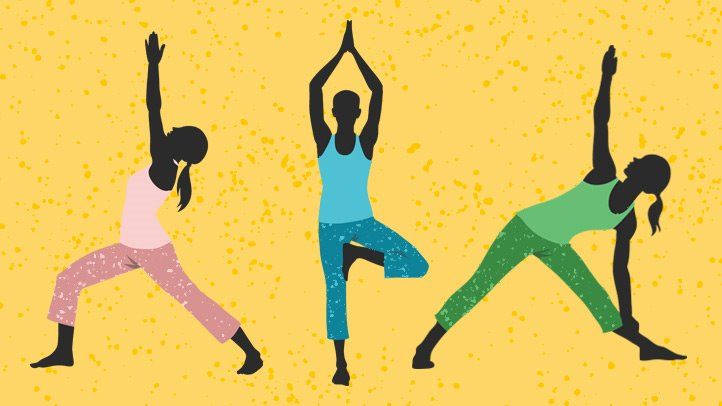
Looking for some calming poses to deal with anxiety or stress disorder, check below for the steps and benefits of 5 easy-to-do Yoga asana at home to get promising results.

1.Sukhasana or easy pose:

Method: Sit on a Yoga mat or on the floor with your legs stretched out. Bend one of your legs and place it under the opposite thigh and repeat the same with the other leg.

Sit erect, keep your head, neck and trunk aligned in a straight line, put your hands on your knees or thighs in Chin Mudra or Jnana Mudra. Turn your palms up to be receptive or down to feel grounded and inhaling slowly, feel your spine grow long while on exhaling, root down through your seat.

Benefits: Apart from finding stillness and tranquility, this asana relieves muscle and joint pains as it helps the practitioner in maintaining a good posture, gives flexibility, keeps the back straight and provides strength to the legs. This in turn lengthens the back muscles and spine, broadens the collarbones and chest, stretches the external aspect of the knees and unlocks the hips.

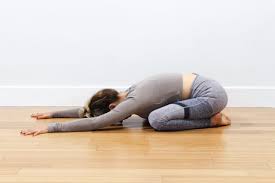
2. Balasana or Child’s Pose or Child’s Resting Pose:

Method: Sit on your heels on the floor or a yoga mat and keep your knees either together or wide apart. Slowly, exhale and bend forward to touch the floor with your forehead or rest it on a block or two stacked fists while keeping your arms alongside your body and palms facing up. Alternatively, you can keep your palms facing down on the mat by reaching out your arms towards the front of the yoga mat. Now, if your knees are together, gently press your chest on the thighs or press your chest between the thighs if the knees are apart.

  Relax the shoulders, jaw and eyes and find a comfortable place for the forehead as there is an energy point at its center, in between the eyebrows, that supports a “rest and digest” response by stimulating the vagus nerve. Hold onto the pose for as long as you like and pull your navel towards your spine while inhaling and softening your body and the arms while exhaling. Return to the sitting position on the heels slowly while inhaling and as if uncurling the spine.

Benefits: This beginner’s Yoga pose not only helps to reduce stress and anxiety by helps releasing the tension in the chest, back and shoulders but also helps if you have a bout of dizziness or fatigue during the day or during your workout. It can help relieve back pain as it is a gentle stretch for the back, hips, thighs and ankles.

Precautions: This exercise is not recommended for pregnant women or those suffering from diarrhea or knee injury.

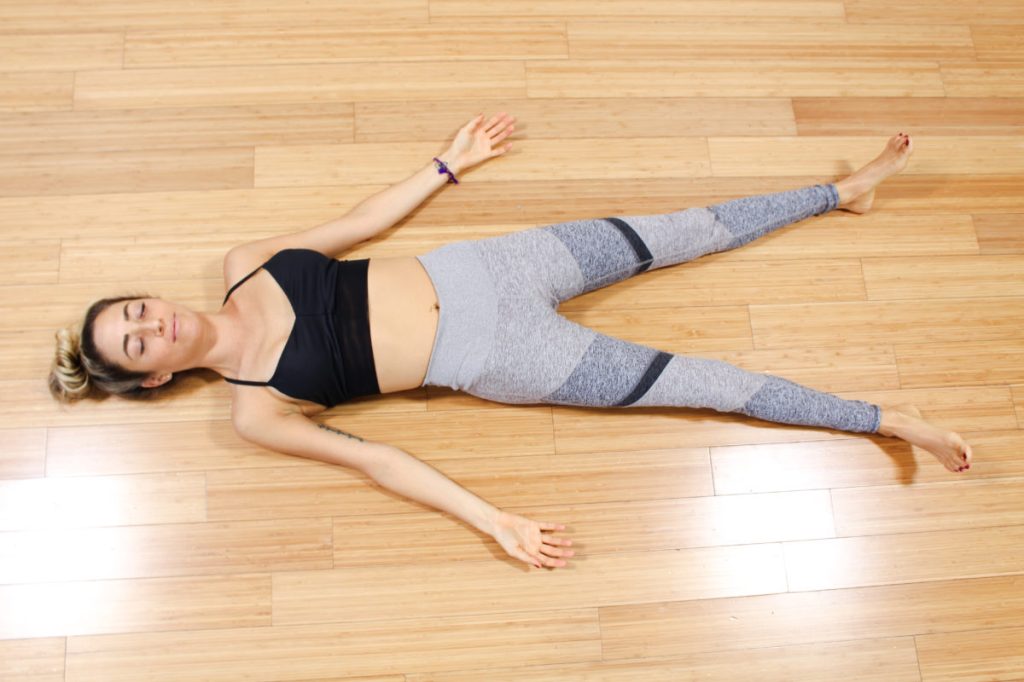
3.  Savasana/Shavasana or corpse pose:

Method: Lie on your back with your legs straight and arms relaxed at your sides. Gently close your eyes while keeping your feet a comfortable distance apart in a natural position and keep your arms straight along the body but away from the torso while resting your palms facing up.

Breathe naturally, allow your body to feel heavy on the ground and focus all your attention on your toes. Then shift your attention and begin to release each part of your body, organ and cell, consciously working from the toes up to the top of your head. Bring your mind gently back to your body if it wanders.

Be sure that you do not fall asleep and relax your face, feeling your eyes drop into your sockets and the softening of your jaw. Draw your attention to the sounds around you and try to find the most distant one until you find the sound closest to you.

When you feel relaxed, exit the pose by gently bringing your awareness back to your body and wriggle your fingers and toes while still keeping your eyes closed. Draw your knees in and slowly roll over to one side in sukhasana pose. Rest there for a moment in a comfortable seated position and open your eyes gently while slowly turning your attention outwards.

Benefits: Shavasana along with deep breathing relaxes the nervous system more than any other Yoga asana and this instantly brings down the body temperature. It relieves stress, repairs cells, relaxes the body and helps self-healing without pills for pregnant women.

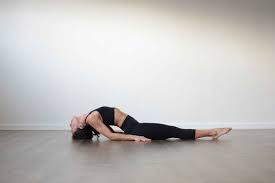
4. Matsyasana or the Fish Pose:

Method: Lie down on your back with legs straight on the floor and hands beside the thighs. Keep your palms near the shoulders and your fingers pointing towards them. Inhale, press your palms on the floor, lift your shoulders and head up and drop the top of the head on the floor.

Arch your back while keeping your hands up in namaskar mudra. Lift both of your legs at 45 degrees’ angle. Hold the posture for 10 seconds and release.

Benefits: This exercise has multiple benefits. From stretching the chest, abs, hip flexors and neck to stimulating two important areas of the body. First is the throat chakra which relates to communication and self-expression and second is the crown chakra, on the top of your head, which is tied to wisdom and knowledge.

Precautions: Avoid this pose if you have a neck or back injury or even if you have a headache.

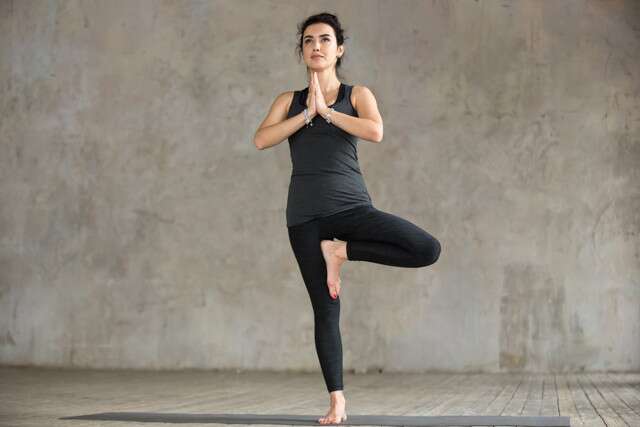
5. Vrikshasana or tree pose:

Method: Balance yourself on one leg, with the other one folded and supported on your inner thigh. Stretch out your hands above your head and point them directly upwards.

Clasp them together in anjali mudra. Gaze in the distance, shift the weight to your left leg while keeping the right knee bent in half lotus position and hold onto this posture for a few seconds before releasing and repeating the same with the alternate leg.

Benefits: This asana helps to bring balance to your mind and body. It makes your legs stronger and is a great hip opener as assists it the body in establishing pelvic stability and strengthens the bones of the hips and legs.

The shift of the entire body’s weight to each leg strengthens the ligaments and tendon of the feet. It also helps strengthen the thighs, calves and ankles and and helps improve focus.

Precautions: This asana should be avoided by those who suffer from vertigo or migraine or insomnia issues.

CRYPTOCURRENCIES VS FIXED DEPOSITS

The Indian government and Indians have consistently been into reserve funds. In contrast to the westerners, India has high family esteems. The blood relations and relatives are consistently there to help each other additionally monetarily.

The bread worker of the family puts something aside for the eventual fate of the child(ren). In India, it is never similar to labouring for 40 hours per week, being paid according to the hours and chilling toward the end of the week and being down and out by Monday morning. India’s practice of venture is a drawn-out game that considers ages ahead.

The Indian government understood this before long freedom and subsequently made a great deal of plans that come as retirement plans. The banks that go under the Reserve bank of India likewise concoct approaches and plans to work with their clients into long haul arranging that implies least danger and a good speculation.

Indians have been assorted as far as their way of life. However, the one thing that ties each Indian is the affection for gold and silver. Furthermore, once more, customarily talking, gold is the image of Laxmi, the goddess of abundance. Gold is skilled to the lady and lucky man during the marriage. Gold is likewise worn as a piece of DRE gems. Monetarily talking, holding a resource can be utilized in good and bad for ages ahead.

Another exceptionally famous monetary instrument that Indians put resources into is the FD or the proper store. Be that as it may, with the new headway of computerized money, will a normal Indian embrace crypto? Allow us to see the distinctions and similitudes.

FIXED DEPOSITS VERSUS CRYPTOCURRENCY

Duty exception: When you put resources into FD, there are various areas under which you can put your cash in. For this venture that you pronounce, the public authority is informed of your system and you may get some thought under tax cut. Then again, the Indian government isn’t a too crypto master, and thus, there is no assessment exclusion on the benefits you make from putting resources into crypto.

Government-upheld: For making a FD account with your bank, the means are very simple. A stacked financial balance is a great idea to go to make a FD account. While then again, crypto speculation expects you to make a record with an exchanging stage, that, in a typical case, isn’t empowered by any administration.

Fixed return: according to the approach picked by you, your bank and your residency of FD, you will undoubtedly get a decent return. This generally doesn’t change. Regardless of whether it does, it doesn’t change too regularly. Likewise, the adjustment of the level of return isn’t an excessive amount to give a shock to the financial backer. Then again, crypto rides an exciting ride. One second the profits are multiplied and the following second you lose half of the cash you contributed. The recurrence of progress and the extent of progress is humongous.

Value-based expense: FDs are long haul plans and the passage and leave focuses are by and large ceaseless till development. Individuals for the most part don’t leave their FD plan before it develops. No exchange occurs and subsequently there is no exchange cost. Unexpectedly, since the crypto market is unstable, individuals settle on fast choices. They enter, stay for quite a while, exit and afterward return when the costs hit profound low. The quantity of passage and leave focuses is an excessive number of and this brings about a ton of conditional expenses.

No requirement for any exchanging or trade stage: For beginning a FD account, you simply need a ledger. What’s more, having a financial balance has been supported by the PM Jan Dhan Yojna. For putting resources into crypto, the client needs to have a confirmed record with an exchanging stage, connect the ledger and afterward begin to contribute.

Unpredictability: FDs are a speculation that individuals don’t contact. Individuals either start a FD for their retirement or they let it mature. The venture of crypto isn’t immaculate. The sum determined for the interest in the crypto is each effectively moved and flowed for putting resources into other cryptos or to encash into the neighbourhood cash.

Long haul Plan: FDs are long haul plans. So is the crypto venture. However, just favourable to crypto financial backers get this and are enduring. Henceforth, despite the fact that both FD and cryptos are long haul venture vehicles, many utilize the last for momentary addition.

Uncommon: FDs are not uncommon. Would you like to open a record? Fantastic! Go on. Would you like to mine bitcoin after 2140? Apologies, you can’t. Crypto accompanies a limited inventory and thus are uncommon. FDs are run on conventional cash and we would i be able to have quite a few customary cash notes as we need.

No mining: These backings the above point. There is no mining or additional work to change your conventional cash over to be put resources into FD. For cryptos, you need to mine new tokens to keep up with their dissemination or somebody mines and sells them so others can put resources into them.

Least danger: FDs are the most secure, least danger implying monetary arranging technique. When you store cash, you can fail to remember it till it develops. Cryptos involve the financial backers’ time and consideration. You lose your center, you may lose a ton!

Expansion rate and pace of revenue: As the swelling rate is higher, customary instruments like FDs and RDS don’t give incredible help. Despite the fact that crypto gets your heart beat quicker, an individual with great exploration on crypto can enter the market, stay for the time, bring in astounding cash and exit astutely. He/she doesn’t hang tight for the 5-year residency to get over.

Indians love to put cash in any case, love to contribute as long as possible and need their cash to develop. While certain individuals are daring people, some are more conventional. Venture techniques resemble food decisions. It depends from one person to another. One that works for you probably won’t work for your companion. Subsequently, it is consistently fitting to comprehend one’s necessities and needs and choose what best accommodates their objective.

India’s brilliant performance at Paralympics 2020

It will be fair to say that Paralympics 2020 is India’s most extraordinary Paralympics ever. From 1968 to 2016, India won 12 medals at Paralympics, at Tokyo India have already secured 15 members and counting. 30th august will go down as golden day in history of Indian para sports as India claimed 5 medals in a single day. Let’s have a look at India’s journey at Paralympics till now,

Bhavina Patel created history as she won silver medal in women’s single table tennis C4. She won medal in her maiden Paralympics on august 29. Chinese paddler Ying Zhou ended her impressive run at the games in class 4 final with 0-3 win.

India’s next medal came from men’s high jump T47. India’s Nishad kumar clinched a silver medal in the event with an Asian record effort. The 21 year old cleared 2.06 m to win the silver and set an Asian record. He lost his right hand due to an accident at the age of 8.

Shooter Avani Lekhra made history as she became the first Indian woman to win a gold medal at the Paralympics as she won gold in women’s 10m air rifle shooting standing SH1. The 19 year old finished with a world record equaling total of 249.6, which is also a new Paralympic record. Also it was her maiden Paralympics.

India’s medal favorite, two time gold winning javelin throw veteran Devendra jhajharia didn’t disappointed and clinched a silver in men’s javelin throw F46. 40 year old Devendra already India’s greatest Paralympian pulled off a new personal best throw of 64.35 m for silver. Sundar Singh Gurjar, another Indian secured third place with a best effort of 64.01 m in the same event.

24 year old Yogesh Kathuniya started India’s golden day in para sports history with a silver in Men’s discus throw F56. He sent the discus to the best distance of 44.38 m and clinch the silver.

30th august didn’t stopped producing amazing moments for Indians as Sumit Antil upgraded his own world record in the Men’s javelin throw F64 category with a throw of 68.55m to hand India second gold medal of Paralympics 2020. Singhraj added to India’s medal tally by winning bronze medal in the men’s 10 m air pistol shooting SH1. He started shooting only 4 years ago and it was his debut Paralympics.

Mariyappan Thangavelu and Sharad kumar secured silver and bronze for India in men’s high jump T42 on 31th august. Mariyappan cleared 1.86m while Sharad succeeded in clinching bronze with 1.83m jump. 18 year old Parveen kumar also won silver in T64 classification of men’s high jump with the best jump of 2.07m. It was his personal best performance and his first major medal.

Avani Lekhra added 12th medal to India’s medal tally as she won bronze in women’s 50m rifle three positions SH1. She also became India’s most successful women para-athlete as it was her second medal after winning gold in women’s 10m air rifle.

We can hope for more as many more events are yet to come. India’s para-athletes are on a dream run and we hope it doesn’t stop.

BLESSING IN DISGUISE

BY DAKSHITA NAITHANI

The year 2020, as we all know, will be a major change in our life. It has also demonstrated the opposite side of existence. We continued to count things for the future, and when the pandemic struck, it reminded us of how unexpected life can be; different aspects of life were affected, and working conditions were significantly altered. There was a lot of misunderstanding in the education industry about how to teach pupils, how to start lessons, and so on. However, technology was the solution to all problems.

People have used mobile phones for social interactions and pleasure in the past, but they have now evolved into a source of information, and we can say that school has come within our grasp. This situation is very similar to one of the chapters in NCERT’s English course book for class 9 called “The fun they had,” in which two children from the future (2050) got their hands on a real hardcover book from their grandfather and were amused by the idea of a real school and school building where all the children of the same age group used to study together under one roof and thought that happiness was being together with their friends. Did the pupils in this circumstance realise that this narrative would become so relevant and genuine to them? Many parents used to refuse to let their children to use cell phones, but it has now become a necessity.

Although there are always two sides to a coin, sales of smart phones soared as a result of the epidemic, since every home needed one additional one for their children to attend courses. Technology has also played a significant role in education, and how we use it can have positive or negative consequences. Phones have evolved into more than simply a means of communication; they have also become a lifeline and an indispensible component of our lives in some manner. It was a struggle for teachers to not only teach their material but also to engage with their pupils throughout these testing periods. They’ve also learned to utilise technology in a variety of ways, including not just communicating but also using various digital classrooms, boards, and audio and visual teaching and learning methods. They were not only effective in speaking with pupils, but also with their guardians, and despite the challenges, they were able to establish an emotional bond with them.

Many parents lost their jobs as a result of industry losses and were obliged to shift their children from private to government schools, but many were pleased to do so because the curriculum is on par with top institutions. The government and teachers have made it a point to link each and every kid with them. Many teachers aided their students financially as well as academically. Many teachers have also attempted to offer phones or internet connections to their kids, demonstrating that humanity bears primary responsibility in any scenario.

The desire for change in school education emerges as a result of continual changes in society on psychological, social, and economic levels. As a result, we must constantly introduce and upgrade a framework. As you can see with the current pandemic, a lot of adjustments are required both during and after the crisis. With this in mind, the Delhi government began giving curriculum-based work sheets to children of all grades, as well as training their teachers.

Teachers’ ability and efficiency have been improved via the use of webinars and online seminars on a regular basis. Regular trainings were provided to demonstrate how to use Google products to make the teaching and learning process more engaging and beneficial. The government has also launched a number of applications, such as Chalklit and Diksha, to provide a platform for various trainings and to keep instructors informed about innovative ways of teaching and learning. It was remarkable that students continued to attend courses on a regular basis, whether they were in the same city or in their village; their desire to study grew day by day, and they began to respond positively.

Personality development!!

So today’s post is about you, about us. I mean about our personality , about our identity, our views , our behavior, etc. Personality development encompasses the dynamic construction and deconstruction of integrative characteristics that distinguish an individual in terms of interpersonal behavioral traits.

Indeed , personality development is ever -changing and subject to contextual factors and life altering experiences. Personality development is also dimensional in description and subjective in nature. The dominant viewpoint in personality psychology indicates that personality emerges early and continues to develop across one’s lifespan.

We all possess certain personality traits that set us apart from the rest. A mix of good and bad, these traits define how we respond to situations and people. Now I tell 13 personality development ‘tips’. I hope you will enjoy reading it and become the most terrific version of you.

13 ways of personality development :

  • Know you are incomparable – Know that you and the other person are unique and are just incomparable
  • Be kind to yourself – Self compassion brings positive traits in life.
  • Give space to imperfections – Find your peace amidst the world’s flaws even as you strive to make a change.
  • Be spontaneous – Spontaneity makes one to be fun around and be per cent aware in the present moment.
  • Be light in mind and heart – Be happy and don’t overthink and overanalyze yourself.
  • Stay enthusiastic – Enthusiasm is infectious and appealing so one must never give up enthusiasm.
  • Be a better communicator – A skillful communicator can win over people and adverse situations through his words.
  • Be warm and approachable – We all like people whom we can easily mingle and talk to. Be friendly and be ready to share and help.
  • Do things with style – Doing things with style adds zing to your personality. At the same time, stay relaxed.
  • Learn to let go – After you’re done with your task, let go of your attachment with the result.
  • Be a lion in the face of danger – Don’t give into pressure and face every challenge confidently.
  • Stay calm with the power of breath – Being calm strengthens one’s personality and your stress will diminish.
  • Remember you’re a proton! – A proton never lose its positivity, nor can you. Your inner core continues to radiate positivity.

That’s all for today hope you will like it!! Thank you…

A Popular Spanish Series Money Heist Season 5 Streaming On Netflix from today

Netflix’s popular thriller series Money Heist is coming back! It is entering its fifth and final season. The Spanish TV series will be split into two volumes of five episodes each. Created by Alex Pina and produced by Vancouver Media, the show, titled “La Casa De Papel” in Spanish, wrapped production on its last chapter on May 14. In the final season, the gang has been shut in the Bank of Spain for over 100 hours. They have managed to rescue Lisbon, played by Itziar Ituno, but their darkest moment is upon them after losing one of their own. “The Professor (Alvaro Morte) has been captured by Sierra (Najwa Nimri) and, for the first time, doesn’t have an escape plan. Just when it seems like nothing else could go wrong, an enemy comes on the scene that is much more powerful than any they’ve faced: the army. The end of the greatest heist in history is approaching, and what began as a robbery will turn into a war,” reads the official logline of the last chapter. The global hit took fans back inside the Bank of Spain where the gang is facing its biggest enemy to date – the army.

            The most-awaited season of the engaging and thrilling series Money Heist is here to blow your mind. The series is filled with action, is completely unpredictable, that will keep you glued to the seat. The finale season of Netflix is going to be highly heavy-duty and exploding.

          The fifth season of the popular series  Money Heist is all set to release. While fans are super excited for the same, one question that is on everyone’s mind is if the new season will have the tragic death of their beloved character – the Professor.

            While several fan theories have predicted that the Professor could meet his end in the very first episode of the new season, one must also notice the hints regarding the fate of the professor in the trailer. In the season 5 trailer, Professor says, “It’s possible this is the last time I speak to you.” The trailer also presents how Alicia Sierra has tied him up in chains. In another scene, she throws him from an elevated height.

              Money Heist will drop heavy grenade this season as the makers promise a loaded show with more twists, a gripping storyline and a tale of complex human emotions offering an engaging ride. The new faces will surely add more weight to show giving it more dimension. It is by far safe to say that the season will explode your mind with its adventurous content. The series is split into two halves by Netflix. It has a total of ten episodes in Season 5. 

                     Money Heist season 5 “Volume 1” will be available at 12:30pm IST on September 3. Volume 2 will release at 1:30pm IST on December 3. There are 10 episodes in total in Money Heist season 5. The five-episode Volume 1 will be available September 3. Money Heist season 5 volume 2 release date is December 3.

OZONE LAYER

Ozone layer depletion

Ozone is a form of oxygen (O3). In the stratosphere (Ozonosphere),ozone blocks out the sun’s ultraviolet rays and is a life saver.

Ozone as a natural sun block

The electromagnetic radiation emitted from the sun includes ultraviolet radiation, which is potentially harmful to most living things since it can damage DNA. The ozone layer screen out the sun’s harmful ultraviolet radiation. Even 1% reduction in the amount of ozone in the upper stratosphere causes a measurable increase in the ultraviolet radiation that reaches the earth surface. If there was a no ozone at all ,the amount of ultraviolet radiation reaches us would be catastrophically high. All living things would suffer radiation burns,unless they were underground, or in the sea.

In the stratosphere, small amount of ozone are constantly being made by the action of sunlight on oxygen. At the same time, ozone is being broken down by natural processes. The total amount of ozone usually stays constant because its formation and destruction occur at about the same rate. But unfortunately human activity has recently changed that natural balance. Some manufactured substances such as chloroflurocarbons and hydrochloroflurocarbons can destroy stratosphere ozone much faster than it is formed.

Ozone hole

Ozone loss was first detected in the stratosphere over the Antarctic. The part of the atmosphere where Ozone is most depleted is referred as ” Ozone hole” but it is not a real hole just a vast region of the upper atmosphere where there is less Ozone than elsewhere.

Ozone-poor air can spread out from the polar regions and move above others areas. In addition, direct Ozone less elsewhere is slowly increasing.

Ozone-poor air can spread out from the polar regions and move above other areas. In addition, direct Ozone depleted area is also slowly increasing.

Reason for Antarctic Ozone hole

Scientific observation prove that the ozone hole formed over Antarctic is due to compounds of chlorine and bromine formed in the atmosphere. Nearly all of the chlorine and half of the bromine in the stratosphere comes from the human activities. The chlorofluorocarbons released due to human activities get transported up into the upper stratosphere.

The most common ozone depleting substances (ODS) are chlorofluorocarbons (CFC) or freon gases,certain bromine compounds, nitrogen oxides and methyl bromide. These compounds are liberally released from air-conditioners,freezers,foam insulation, aerosol products, industrial solvents, fire extinguishers and pesticides.

Effects of ozone depletions

If the ozone is depleted more ultraviolet radiation (especially ultraviolet B (UVB) will reach the earth’s surface.

Effect on plants – will affect crop yield and forest productivity.

Effect on animals – will cause damage to fish larvae and other Small animals.

Effect on human health – results in non – melanoma skin cancer and melanoma ,acute erythemia(sun burn), ocular abnormalities, cataract,poor immune responses.

Preventing ozone depletion

1. CFC’s ( Chloro Fluoro Carbons) should be replaced by HCFC’s (Hydro Chloro Fluro Carbons). If over used could damage ozone, HFC’s ( Hydro Flouro Carbons), Hydrocarbons such as butane and propane ( but flammable and poisonous), Ammonia ( must be handled carefully), water and steam.

2. Production, use and emission of ozone-depleting chemicals should be controlled.

3. Recycling of these chemicals should be increased.

4. Servicing of refrigerators and air-conditioners should be regulated.

5. Refrigerants should be recaptured and used .

6. Adopt protection measures from sun’s radiation.

History of Indian Stamps

India got independence on 15th August of 1947 assured in a new era in the history of the country but philatelist had to wait another 98 days for the release of India’s most commemorate stamp on 21st of November 1947.

First stamp

The Postal Telegraph Department however came out with a large Kashi postmarked with the slogan “Jai hind” for the occasion and letters mailed that the major post offices of the country were cancelled with this post mark.

The India’s first commemorative stamp features the Lion capital of Ashoka which had one set on the top of a column of Sarnath near Varanasi. The lion capital has since been around at the state emblem of India the denomination of the stamp was one and a half annas and an inspiration of “Jai hind” in Hindi was also depicted in the stamps.

Other stamps

Actually three stamps were planned to release at the time of Independence. The rest two stamps were released in the 15th of December 1947 with the three and a half annas stamp with portray of the national flag in tricolor Saffron on the top, white in the middle and green in the bottom.

The twelve annas stamp depicts an aircraft a symbol of the modern age. These stamps also have inscription “Jai hind” in hindi, they are also known are Jai Hind stamps.

The stamps were printed offset lithography. As the three and a half annas stamp was printed in three colors in three steps because difference in inking at different stages, because specimens having the top of the flag in deep orange or pale orange and the lower part in pale green and deep green were coming across.

Petroleum Jelly is harmful to skin

You probably have a jar of Vaseline somewhere in your house. Millions of people swear by it as a remedy for clapped lips, congestions, diaper rash and dry skin. Unfortunately the popular product is more harmful than many realise.

What is Petroleum Jelly?

Petroleum jelly, commonly known by the brand name Vaseline, is a byproduct of the oil refining process. It was originally found coating the bottom of oil rigs in the mid 1800s. As a byproduct of the oil industry, it’s an unsustainable resource and far from eco-friendly.

How does it work?

Used in everything from lotions to baby products, petroleum jelly works by creating a protective barrier on the skin to hold in moisture. The waterproof barrier it created on the skin blocks pores and can lock in residue and bacteria.

When used on a burn or a sunburn area, it locks in heat and can block the body’s ability to heal. You need to stop using Vaseline for these four reasons:

  1. It contains harmful Hydrocarbon. The skin is unable to metabolize petroleum jelly, so it sits as a barrier on the skin untill it wears off. This blocks the body from gaining any benefit from the substance. A 2011 study found strong evidence that the mineral oil hydrocarbon Vaseline contains are “the greatest contaminant of the human body”
  2. It Promotes Collagen Breakdown. Due to the barrier that petroleum jelly creates on skin, it blocks the skin ability to breathe and absorb nutrients. This can cause the skin to pull the moisture and nutrients it needs from within, leading to collagen breakdown.
  3. It can leads to Estrogen dominance. Estrogen dominance occurs when the body has high levels of estrogen and low levels of progesterone. It has linked to infertility, menstrual problems, allergies and autoimmune problems. Petroleum jelly contains chemicals called xenoestrogens which are believed to increase estrogen problems.
  4. It can cause pneumonia. Although rare, a condition known as lipid pneumonia can occur when small amounts of petroleum jelly is inhaled and build up in the lungs. Because the body can’t metabolize or breakdown the substance, a severe inflammation in the lungs can occur.

Natural Alternatives

There are several natural alternatives to petroleum jelly that you can use without worrying about health risks. If you’re looking for a simple alternative, try one of these options:-

  • Shea butter – High is vitamin A, E and F, shea butter works to nourish the skin through the beneficial fatty acids it contains. It can also help reduce inflammation and increase collagen productions.
  • Beeswax – a great alternative to petroleum jelly is Beeswax. It can be blended into homemade beauty products to protect the skin. Add it to a homemade lip balm and body cream.
  • Coconut oil – this oil loaded with health benefits. It works to nourish the skin through the fatty acids, lauric acids and anti-inflammatory compounds.
  • Coco butter – it contains antioxidants and benefits fatty acids. It may even reduce the signs of ageing.

PLIGHT OF WOMEN IN AFGHANISTAN

BY DAKSHITA NAITHANI

The Afghan women, maybe more than anybody else, have dreaded the Taliban’s return. There have been many advances in women’s rights over the last 20 years, which appear to be set to erase nearly overnight.

A quick lesson from history…

The Taliban, a political and military force, is said to have started in Islamic schools in Northern Pakistan in the early 1990s. Its aim was to restore order in Afghanistan following the withdrawal of Soviet troops in 1989, as well as to impose a harsh form of Sharia law. By 1998, the organisation had seized 90% of Afghanistan’s territory.

Once in control, the organisation garnered worldwide condemnation for a slew of human-rights violations. The ban on female education above the age of ten as well as harsh limitations on day-to-day liberties, were among the stringent mores imposed on women and its influence has frequently threatened to expand beyond, to places like Pakistan, where the organisation memorably shot teenager Malala Yousafzai in 2012. Women were treated worse than at any previous period or by any other culture throughout its rule (1996–2001). They were prohibited from working, leaving the house without a male escort, seeking medical assistance from a male doctor, and being compelled to cover themselves from head to toe, including their eyes. Women who had previously worked as physicians and teachers were compelled to become beggars or even prostitutes in order to feed their families during the Taliban’s rule.

Following the 9/11 attacks, it was thought that the Taliban were harbouring Al-Qaeda soldiers, thus an US-led international operation was started against Afghanistan. As a consequence, the Taliban were deposed from power, an Afghan government was established, and soldiers occupied the country for 20 years. It destabilised several regions of the nation due to battles with US and UK forces on a regular basis, and Afghan people were continued to be assaulted. Many would agree that the political and cultural status of Afghan women had improved significantly since the Taliban’s collapse in late 2001.

The Bush administration’s acceptance of women’s rights and empowerment as rationale for its assault on the Taliban is long gone. So it was under the Barack Obama administration, when then-Secretary of State Hillary Clinton stated that the Taliban’s repudiation of al-Qaida and promise to support the Afghan constitution and safeguard women’s rights were preconditions for US discussions with them. The rejection of al-Qaida has yet to be declared openly and publicly less than 10 years later; the constitutional order and women’s rights are still subject to intra-Afghan talks and will be influenced by the changing balance of military power.

In February 2020, US-Taliban peace talks were concluded, with the US pledging a quiet departure in exchange for an end to hostilities. Afghan leaders and top military generals have warned that the government will collapse without foreign assistance. It looks like the worst has transpired only weeks before Biden’s deadline of September 11th.

The Taliban rule wreaked havoc on the institutions and the economy, which had already been ravaged by decades of conflict and the Soviet scorched-earth counterinsurgency policy.

The post-Taliban constitution of 2004 granted Afghan women a wide range of rights, and the political epoch brought social and economic progress, which greatly improved the socioeconomic situation. From a crumbling health-care system with almost no healthcare available to women during the Taliban years, the post regime built 3,135 functional facilities by 2018, giving more than 80 percent of Afghans access to a medical facility within two hours’ drive.

 Less than 10% of females were enrolled in elementary schools in 2003; by 2017, that figure had risen to 33%, while female secondary school attendance increased from 6% to 39%. As a result, 3.5 million Afghan females were enrolled in education, with 100,000 of them enrolled in academic institutions. Women’s life expectancy increased from 56 to 66 years in 2017 and maternal mortality fell from 1,100 per 100,000 live births in 2000 to 396 per 100,000 in 2015. By 2020, women made up 21% of Afghan public workers, including 16% of top management positions, and 27% of Afghan parliamentarians.

 These benefits for women have been dispersed inequitably, with women in metropolitan areas benefiting considerably more than women in rural regions. Despite formal legal empowerment, life for many rural women has not improved much since the Taliban era, notably in Pashtun regions but also among other rural minority groups. Many Afghan males are staunch conservatives. Families often let their daughters to complete a primary or secondary education before proceeding with planned marriages. The burqa is worn by the majority of Afghan women in rural regions without any pushing from the Taliban.

What is the situation for women in Afghanistan now?

Women’s rights in Afghan had arguably maintained pace with many other Western countries prior to the 1970s. Women were granted the right to vote in 1919, one year after women in the United Kingdom. In the 1950s, gender segregation was eliminated, and in the 1960s, a constitution was enacted that included women in political life. As the region became more unstable in the 1970s, these rights were steadily eroded.

Only 38% of the international humanitarian response plan for Afghanistan is financed as of August 2021. This gap might result in the loss of specialised protection services for 1.2 million children, putting them at risk of abuse, recruitment, child labour, early and forced marriages, and sex abuse. About 1.4 million females, many of whom are survivors of domestic abuse, would be left without access to safe spaces where they may receive full care.

Females, who have experienced life with rights and freedoms, are among the most exposed as a result of the Taliban’s fast progress in Afghanistan. As the Taliban capture control of Kabul, they risk losing their hard-won achievements.

Those cries for aid may be too late as the capital city falls into the clutches of Islamist rebels. There have been several stories of the Taliban going door-to-door and compiling a list of women and girls aged 12 to 45 who are then compelled to marry Taliban warriors. Women are told that they cannot leave the house without a male escort, that they cannot work or study, and that they cannot wear anything they want. Schools are also being shuttered.

There is a lot to lose for a whole generation of Afghan women who entered public life – legislators, journalists, local governors, physicians, nurses, teachers, and public administrators. While they worked alongside male colleagues and in communities that were unfamiliar with people in positions of power to help establish a truly democratic civil society, they also wanted to pave the way for future generations to follow in their footsteps.

The Taliban offers itself a broad range of possibilities by claiming that they will “protect” women’s rights under sharia but refusing to explain how women’s rights and life in Afghanistan will alter if they achieve their goals. Even if the government did not openly adopt as cruel a system for women as in the 1990s, the Taliban’s dispositions are quite likely to undermine women’s rights, impose cultural prohibitions on women, and reduce socio-economic possibilities for them.

In summary, even with this change in behaviour, the Taliban in power would almost certainly strive to curtail Afghan women’s legal rights, exacerbating their social, economic, and political circumstances. How much and in what manner, is the question.

ROLE OF INDIA IN QUAD

BY DAKSHITA NAITHANI

The Quadrilateral Dialogue was established in 2007 when four countries—the United States, India, Japan, and Australia—joined forces. However, it did not take off at first due to a variety of factors, and it was resurrected in 2017 after almost a decade due to factors such as growing country convergence, the expanding importance of the Indo-Pacific area, and rising threat sentiments toward China, among others.

Since then it has evolved into a platform for diplomatic discussion and coordination among participating countries, who meet on a regular basis at the working- and ministerial levels to discuss shared interests like ensuring a rules-based international order.

SIGNIFICANCE FOR INDIA

The Quad, ASEAN, and the Western Indian Ocean are the three groupings in which India participates as a partner in the Indo-Pacific area.

India as a Net Security provider

In the region of Indian Ocean India must be a Net Security Provider. Its supremacy in the IOR must be maintained and sustained if it is to claim this position as a Region. QUAD offers India with a platform to strengthen regional security through collaboration while also emphasising that the Indo-Pacific concept stands for a free, open, and inclusive area.( Inclusive here refers to a geographical notion that encompasses all countries inside it as well as those having a stake outside of it)

Countering China

The Quad offers India with a forum to seek collaboration with like-minded countries on a variety of problems, including maintaining territorial integrity and sovereignty, as well as peaceful dispute settlement. It also shows a united front against China’s unceremonious and aggressive actions towards the nation which is especially important now, since ties between India and China have deteriorated as a result of border intrusions along the Tibet-India boundary in many locations. The Chinese policy of encircling India with the String of Pearls poses a direct threat to India’s maritime sovereignty, which must be addressed.

Framing post-COVID-19 international order

QUAD can assist India in not just recovering from the pandemic’s impacts through a series of integrated measures, but also in securing a part in the modern international order. Enhancing such cooperation was one of the first actions made in 2021. The vaccination initiative will serve as a good litmus test for the QUAD administrations’ ability to work together.

Convergence on other issues

On a range of topics, India shares common interests with other Quad members, including connectivity and infrastructure development, security, especially counter-terrorism; cyber and maritime security; multilateral institutions reform, and so on. Assistance from members on these problems might help India achieve its strategic and economic objectives.

Supplementing India’s defence capabilities

Assistance in the sphere of defence among Quad countries, such as joint patrols, strategic information exchange, and so on, can help India overcome its disadvantages in terms of naval capabilities, military reconnaissance, technology, and surveillance systems.

Ensuring a free Indo Pacific

The Indo-Pacific region must be accessible and vibrant, regulated by international norms and bedrock values such as freedom of navigation and peaceful resolution of conflicts, and the nations involved must have the right to make decisions, free of coercion.

Counter-terrorism Table top Exercise for QUAD nations to improve collaboration and common capabilities in dealing with potential terrorist threats, as well as examine CT response systems.

INDIA’S ROLE IN THE INDO-PACIFIC

In the Indo-Pacific, India’s geographic and geopolitical importance provides a counterbalance to China’s rising influence in the Indian Ocean. India’s security concerns, centred primarily on China’s encirclement policy through port facilities in India’s neighbourhood mainly Gwadar and Hambantota and the desire to maintain and protect open and free sea lanes of information exchange against concerns about China’s chokepoint in the South China Sea and increasing maritime presence in the ocean

India’s critical significance in the Indo-Pacific may be seen as a multiple framework. First, unlike the Asia-Pacific architecture, the Indo-Pacific architecture allows New Delhi to move above its long-held standing as a middle-power. This is bolstered by India’s admission to the League of big powers especially the United States and Japan and the development of tight strategic ties with Washington and its regional allies. This promotes India’s great-power ambitions and force projection capability inside the Indo-Pacific and beyond.

Second, India’s Act East Policy and Extended Neighbourhood Policy benefit from New Delhi’s strong participation in the Indo-Pacific. New Delhi’s stronger relations with ASEAN members have also bolstered this boost.

Third, the development of India-US strategic relations, particularly in military, works as a significant counterweight to India’s adversaries. Increased engagements between New Delhi and Washington are exemplified by the four foundational contracts signed between the two countries, which include the General Security of Military Information Agreement, Logistics Exchange Memorandum of Agreement, Communications Compatibility and Security Agreement, and Basic Exchange and Cooperation Agreement—all of which promote in-depth partnership Most significantly, the improved partnership boosts India’s military capacity, particularly when it comes to striking targets with precise accuracy.

Fourth, under India-Australia ties, which were elevated to a Comprehensive Strategic Partnership in 2020, India’s strategic position is bolstered yet further. In fact, Canberra and New Delhi inked nine agreements, the most important of which are the Australia-India Mutual Logistics Support Arrangement and the Defence Science and Technology Implementing Arrangement, both of which provide a framework for the two nations’ security cooperation.

Fifth, and most significantly, during COVID-19, India demonstrated its ability to be a first responder to a regional disaster by giving medical assistance to its near neighbours, including the Maldives, Sri Lanka, and Seychelles. In addition, India sent medical quick response teams to Comoros and Kuwait to help them prepare for the epidemic. In addition, nine Maldivians were evacuated from Wuhan, China, the site of the pandemic.

In addition, India pushed for virtual summits like the South Asian Association for Regional Cooperation web conference on March 2020 and the “Extraordinary Digital G20 Leaders’ Summit” to help develop a worldwide reaction to the epidemic on 26 March 2020. In addition, New Delhi established a SAARC Emergency Response Fund for Coronavirus, with India contributing an initial 10 million USD.

In addition, as countries attempt to move manufacturing away from China, India is viewed as one of the world’s new “favoured” investment destinations. The enormous scale of India’s marketplace as well as the low labour costs, make it a desirable destination. Apple, for example, created a production facility in India in partnership with Foxconn, while Samsung, of South Korea, ceased operations in China and moved manufacturing units to India.

There is little dispute about India’s rising position in the Indo-Pacific, not just as a significant participant but also as a responsible actor.  As a result, India’s manoeuvring room in the post-COVID international order is anticipated to expand, as India is seen as one of the major movers in guiding policy and protecting allied interests in the Indo-Pacific. COVID-19 has, in fact, expanded the Quad framework, allowing important parties to play a more active role in addressing critical conventional and unconventional regional issues.

Google Doodle honors Rudolf Weigl On his Birth Anniversary –You must know about Polish Biologist

  • Google on Thursday celebrated the 138th birth anniversary of Polish inventor, doctor, and immunologist Rudolf Weigl with a doodle. Weigl had produced the first effective vaccine against epidemic typhus—one of humanity’s oldest and most infectious diseases.
  • Thursday’s doodle shows Weigl holding a test tube in his gloved hands. There are drawings of lice on the wall on the right side and a human body and some more lice on the left. The illustrator has spelled out Google with all that is used in a lab for testing purpose.
  • Rudolf Stefan Jan Weigl was born in the modern-day Czech Republic in the year 1883. He completed his graduation in biological sciences from the Lwow University in Poland in 1907. Not only that, he earned doctorate degrees in subjects such as zoology, comparative anatomy, and histology. 
  • During World War I, typhus was wreaking havoc in Europe and had killed millions in no time. Weigl decided to take matters into his own hands and do research on the disease. He found that the root cause of it was lice that carried the infection. He grew it in his laboratory and squashed their stomachs to create the vaccine. 
  • By 1933, large-scale testing of the vaccine took place after several years of modification. 
  • While this work is exemplary, his role in saving around 5000 jews in the Nazi ghettos makes him a prominent figure in history. When Nazi Germany heard about him, they asked Weigl to create a Typhus vaccine manufacturing plant. For that, he hired many of his Jewish colleagues and friends so that they do not get deported to the concentration camps. 
  • Weigl went on to study biological sciences at Poland’s Lwów University and was appointed as a parasitologist in the Polish Army in 1914. As millions across Eastern Europe were plagued by typhus, Weigl became determined to stop its spread.
  • Body lice were known to carry the typhus-infecting bacteria Rickettsia prowazekii, so Weigl adapted the tiny insect into a laboratory specimen. His innovative research revealed how to use lice to propagate the deadly bacteria which he studied for decades with the hope of developing a vaccine. In 1936, Weigl’s vaccine successfully inoculated its first beneficiary. When Germany occupied Poland during the outbreak of the Second World War, Weigl was forced to open a vaccine production plant. He used the facility to hire friends and colleagues at risk of persecution under the new regime.
  • An estimated 5,000 people were saved due to Weigl’s work during this period–both due to his direct efforts to protect his neighbors and to the thousands of vaccine doses distributed nationwide. Today, Weigl is widely lauded as a remarkable scientist and hero. His work has been honored by not one but two Nobel Prize nominations.
  • For creating the vaccine and humanitarian work, Weigl was nominated for the Nobel Prize twice. However, due to interference both times, he did not become the recipient. He breathed his last in 1957. However, in 2003, Israel honored him with the title called ‘Righteous Among the Nations’ for his contribution. 

India has approved Zydus Cadila’s First Covid-19 vaccine for children

  • Zydus Cadila’s ZyCoV-D Covid-19 vaccine is the world’s first plasmid DNA vaccine against the coronavirus.
  • Indian drug regulator DCGI approved Zydus Cadila’s three-dose COVID-19 DNA vaccine for emergency use in adults and children aged 12 years and above, bringing in the sixth vaccine authorized for use in the country.
  • India has now approved its first vaccine for children, a timely move amid warnings of an upcoming third wave in the country, which some experts have warned could be deadlier towards children. While the Union Health Ministry has refuted that the next wave of the pandemic would prove more serious to the ‘vulnerable and unvaccinated’ population comprising children, it has, at the same time, augmented pediatric services across the nation as a preventive measure.
  • The company said it plans to manufacture 100 million to 120 million doses of ZyCoV-D annually and has started to stockpile the vaccine.
  • The generic drug maker, listed as Cadila Healthcare Ltd, applied for the authorization of ZyCoV-D on July 1, based on an efficacy rate of 66.6% in a late-stage trial of over 28,000 volunteers nationwide.
  • “Interim results from Phase-III Clinical Trials, in over 28,000 volunteers, showed primary efficacy of 66.6 per cent for symptomatic RT-PCR positive cases,” said a government release, adding that this has been the largest vaccine trial so far in India for COVID-19.
  • “This vaccine had already exhibited robust immunogenicity and tolerability and safety profile in the adaptive Phase I/II clinical trials carried out earlier. Both the Phase I/II and Phase III clinical trials have been monitored by an independent Data Safety Monitoring Board (DSMB),” it said.
  • ZyCoV-D is the world’s first plasmid DNA vaccine against the coronavirus. It uses a section of genetic material from the virus that gives instructions as either DNA or RNA to make the specific protein that the immune system recognizes and responds to.
  • Zydus Cadila’s vaccine, developed in partnership with the Department of Biotechnology, is the second home-grown shot to get emergency authorization in India after Bharat Biotech’s Covaxin.
  • The drug maker said in July its COVID-19 vaccine was effective against the new coronavirus mutants, especially the Delta variant, and that the shot is administered using a needle-free applicator as opposed to traditional syringes.
  • Earlier today, the Indian drug regulator’s subject expert committee had recommended emergency use approval for the vaccine. The committee had added that Zydus needs to submit additional data for the 2-dose regimen of its vaccine.
  • Covishield, Covaxin and Sputnik V vaccines are being given to only those above 18 years and unlike ZyCoV-D, which is three-dose, these are administered in two doses.
  • The Department of Biotechnology (DBT) has said that ZyCoV-D is the world’s first DNA-based vaccine against the coronavirus and when injected produces the spike protein of the SARS-CoV-2 virus and elicits an immune response, which plays a vital role in protection from the disease as well as viral clearance.
  • The vaccine had already exhibited robust immunogenicity and tolerability and safety profile in the adaptive phase one and two clinical trials. Both Phase one/two and Phase three clinical trials have been monitored by an independent data safety monitoring board, it added.
  • The Union government is expecting Zydus Cadila’s needle-free COVID-19 vaccine ZyCoV-D to be available from the first week of October in India. 

ATMOSPHERE

What is the Atmosphere?

Layers of Earth's Atmosphere as seen from space

The atmosphere is a mixture of gases that surrounds the planet. On Earth, the atmosphere helps make life possible. Besides providing us with something to breathe, it shields us from most of the harmful ultraviolet (UV) radiation coming from the Sun, warms the surface of our planet by about 33° C (59° F) via the greenhouse effect, and largely prevents extreme differences between daytime and nighttime temperatures. The other planets in our solar system also have an atmosphere, but none of them have the same ratio of gases and layered structure as Earth’s atmosphere. 

Gases in Earth’s Atmosphere

Nitrogen and oxygen are by far the most common; dry air is composed of about 78% nitrogen  (N2) and about 21% oxygen  (O2). Argon, carbon dioxide (CO2), and many other gases are also present in much lower amounts; each makes up less than 1% of the atmosphere’s mixture of gases. The atmosphere also includes water vapor. The amount of water vapor present varies a lot, but on average is around 1%. There are also many small particles – solids and liquids – “floating” in the atmosphere. These particles, which scientists call “aerosols”, include dust, spores and pollen, salt from sea spray, volcanic ash, smoke, and more.

Layers of Earth’s Atmosphere

The atmosphere grows thinner (less dense and lower in pressure) as one moves upward from Earth’s surface. It gradually gives way to the vacuum of outer space. There is no precise “top” of the atmosphere. Air becomes so thin at altitudes between 100 and 120 km (62-75 miles) up that for many purposes that range of heights can be considered the boundary between the atmosphere and space. However, there are very thin but measurable traces of atmospheric gases hundreds of kilometers/miles above Earth’s surface.

There are several different regions or layers in Earth’s atmosphere. Each has characteristic temperatures, pressures, and phenomena. We live in the troposphere, the lowest layer, where most clouds  are found and almost all weather occurs. Some jet aircraft fly in the next higher layer, the stratosphere, which contains the jet streams and the ozone layer. Temperatures reacj their lowest in the mesosphere, because the there are almost no air molecules there to absorb heat energy. The sky also changes from blue to black in the mesosphere, because there are so few molecules for light to refract off of there. And fartherst from the surface we have the thermosphere, which is the widest layer of the atmosphere and absorbs much of the harmful radiation that reaches Earth from th Sun. The exosphere represents the transition from Earth’s atmosphere to space. 

Layers of Earth's Atmosphere

Troposphere

The troposphere  is the lowest layer of our atmosphere. Starting at ground level, it extends upward to about 10 km (6.2 miles or about 33,000 feet) above sea level. We humans live in the troposphere, and nearly all weather occurs in this lowest layer. Most clouds appear here, mainly because 99% of the water vapor in the atmosphere is found in the troposphere. Air pressure drops, and temperatures get colder, as you climb higher in the troposphere.

Stratosphere

The next layer up is called the stratosphere. The stratosphere extends from the top of the troposphere to about 50 km (31 miles) above the ground. The infamous ozone layer is found within the stratosphere. Ozone molecules in this layer absorb high-energy ultraviolet (UV) light from the Sun, converting the UV energy into heat. Unlike the troposphere, the stratosphere actually gets warmer the higher you go! That trend of rising temperatures with altitude means that air in the stratosphere lacks the turbulence and updrafts of the troposphere beneath. Commercial passenger jets fly in the lower stratosphere, partly because this less-turbulent layer provides a smoother ride. The jet stream flows near the border between the troposphere and the stratosphere.

Mesosphere

Above the stratosphere is the mesosphere. It extends upward to a height of about 85 km (53 miles) above our planet. Most meteors burn up in the mesosphere. Unlike the stratosphere, temperatures once again grow colder as you rise up through the mesosphere. The coldest temperatures in Earth’s atmosphere, about -90° C (-130° F), are found near the top of this layer. The air in the mesosphere is far too thin to breathe; air pressure at the bottom of the layer is well below 1% of the pressure at sea level, and continues dropping as you go higher.

Thermosphere

The layer of very rare air above the mesosphere is called the thermosphere. High-energy X-rays and UV radiation from the Sun are absorbed in the thermosphere, raising its temperature to hundreds or at times thousands of degrees. However, the air in this layer is so thin that it would feel freezing cold to us! In many ways, the thermosphere is more like outer space than a part of the atmosphere. Many satellites actually orbit Earth within the thermosphere! Variations in the amount of energy coming from the Sun exert a powerful influence on both the height of the top of this layer and the temperature within it. Because of this, the top of the thermosphere can be found anywhere between 500 and 1,000 km (311 to 621 miles) above the ground. Temperatures in the upper thermosphere can range from about 500° C (932° F) to 2,000° C (3,632° F) or higher. The aurora, the Northern Lights and Southern Lights, occur in the thermosphere.

Exosphere

Although some experts consider the thermosphere to be the uppermost layer of our atmosphere, others consider the exosphere  to be the actual “final frontier” of Earth’s gaseous envelope. As you might imagine, the “air” in the exosphere is very, very, very thin, making this layer even more space-like than the thermosphere. In fact, the air in the exosphere is constantly – though very gradually – “leaking” out of Earth’s atmosphere into outer space. There is no clear-cut upper boundary where the exosphere finally fades away into space. Different definitions place the top of the exosphere somewhere between 100,000 km (62,000 miles) and 190,000 km (120,000 miles) above the surface of Earth. The latter value is about halfway to the Moon!

Ionosphere

The ionosphere  is not a distinct layer like the others mentioned above. Instead, the ionosphere is a series of regions in parts of the mesosphere and thermosphere where high-energy radiation from the Sun has knocked electrons loose from their parent atoms and molecules. The electrically charged atoms and molecules that are formed in this way are called ions, giving the ionosphere its name and endowing this region with some special properties.

Planetary Atmospheres

Earth is not the only world with an atmosphere. All of the planets – and even a few moons – in our solar system have atmospheres. Some have clouds, wind, rain and powerful storms. Recently scientists have also begun to get glimpses of atmospheres of planets in other solar systems.

Each of the planets in our solar system has an uniquely structured atmosphere. The atmosphere of Mercury is extremely thin and is not very different from the vacuum of space. All four giant planets in our solar system – Jupiter, Saturn, Uranus and Neptune – have very thick, deep atmospheres. The smaller, rocky planets – Earth, Venus and Mars – have much thinner atmospheres hovering above their solid surfaces. The atmospheres on moons in our solar sytem are typically quite thin. Saturn’s moon Titan is an exception – air pressure at the surface of Titan is higher than on Earth! Of the five officially recognized dwarf planets, Pluto has a thin, seasonal atmosphere containing nitrogen, methane  and carbon monoxide, and Ceres may have an extremely thin atmosphere of water vapor. But only Earth’s atmosphere has the layered structure that allows enough light energy to enter and be trapped for warmth, but also shields us from too much harmful radiation. This important balance is necessary to maintain life on Earth. 

Why does a student need to be industry ready & how they can be?

What do you mean by industry ready?

An industry expects their employees to have Non-technical skills and personal attributes such as team work, communication skills, integrity, reliability and self-motivation are considered more important than purely technical skills to get industry ready.

Importance

A study shows that 50% of the curriculum that are been taught in college/universities, by the time students will graduate, it will get auxiliated with new technologies in the market.

Let’s say for example, a product manager of a company who advertises the product, collects data and analysis the data to improve the marketing strategies of company. He can do it manually, but with time if an app is developed for this work, the company won’t be requiring any product manager.

Although degrees are important for future but it is also important to have a knowledge about what all techniques and skills that will be there in future and also to start developing those skills.

How can students be industry ready?

Here are some ways of getting industry ready:-

  1. Practical Knowledge of Doing Things:- If you can demonstrate how to implement the theoretical knowledge you have then your chances of getting hired will improve significantly.
  2. Sharpen Your Communication Skills:- If you are not able to communicate properly, your knowledge will be of little use to you.
  3. Inculcate the Habit of Innovation:- Form a habit to think out of the box, if you can provide a company with a method to save on expenditure or increase their profit, you have better chances of getting hired.
  4. Read Books and Newspapers Regularly:- Form a habit to read a newspaper or book at least half an hour daily, as this will improve your thinking process as well.
  5. Build Your Profile to Show Your Accomplishments:- One needs to be presentable and be able to exhibit his or her qualifications and capabilities convincingly.
  6. Pursue Online Courses to Hone Your Skills:- To make yourself industry ready, it is better to learn some new skills online.
  7. Work on Your Weak Areas:- The trick here is to present your weaknesses in a way that it looks profitable to the company for whom you want to work for.
  8. Learn to Organize and Manage Your Time:- It is about getting the maximum output in a given amount of time. Productivity matters a lot when you are working for a company.

So start investing more on prolonged and sustainable skills because knowledge and degrees are not going to be most required in future. This is the time to decide what is to be done and how should the steps be taken forward.

Creation of Imagination

Photo by Teddy Tavan on Pexels.com

Imagination is our creation, we have always followed this streak of points of view that being creative is drawing characters and theories in the world of imagination where they live as long as we keep believing in them right?

In every field either its arts and relation or its commerce and markets strategy, everywhere we go we are asked to imagine the next step or the reaction or the situation or the condition which could happen and we can be prepared for everything that is going to happen and hence adding in the constant growth.

But most of the time they ask us to think out of the box and come up with different things, reactions, and situations but does it ever occurred to anyone that what kind of box we are required to think beyond and what if there is any box to even start with I mean if we are telling ourselves we have to think out of the box that does mean that we are saying there was a range and limit beyond which we couldn’t think but there isn’t any limit to even start with.

Keep thinking and you might come up with something that actually is out of every range and limits we drew even in our imagination, though imagination is our own free will and just our own.

But there are many interesting facts about the power of imagination and why creating one takes a lot more than just thinking out of the box. Horsing the mind in the limitless area of our brain and aimless thoughts and even the traumatic events though it all might seem bad and it is but it does have some of the positive impacts on the creative side of our brain.

Solitary Activity

Morning hot showers or walking alone where there is no one to disturb and just in all the standing beneath the hot shower head relaxing your mind does the number on our creative mind as well which can be confirmed by 72% of our population.

A survey showed that taking a bath in the morning confirms that people do get some insightful thoughts and ideas while they are really relaxed and calm there, bathing away the dirt as well as any blockage which could stop the horse of their thoughts.

Hunching Thrives

Hunch, whenever our intuitions tell us something most of us feels the need to ignore it or just consider it as the feeling that arrives when we are in a certain situation and that is just our reaction though most of the time it could be right but doing with the hunch has been proved the right thing to let your imagination thrive So hunch the way out of the box.

Trying New Things

Thinking out the box is common but knowing first where your box lies and what kind of restraint you have imposed could help you get a better outcome and to do so always be ready to try out the new things as whenever we learn something our brain gets one more topic or thing to continuously wander about without any restraint.

Will you take Chinese vaccine?

Made in China, accept it or not but for many of us this label has become synonymous with low cost and low quality. So how true is the stereotype and what has Chinese done to deserve such a bad reputation? Well the list goes long, the latest item is vaccine.

China has sold vaccines to the World which may not be working. It is currently exporting vaccine to 43 countries with:-

  • a total of 742 million doses that have been sold,
  • 22 million doses have been donated,
  • 262 million doses have been delivered.

China is exporting 3 major vaccines:-

  1. Sinovac
  2. CanSino BIO
  3. Sinopharm

But do these vaccines even work? Let’s look at some of the countries those have received Chinese vaccines.

Mongolia

In Mongolia, more than half of the population is fully vaccinated but daily infection has risen by more than 70% in the last 2 weeks, and they’re using the Chinese vaccine Sinopharm. No doubt Mongolians are questioning the effectiveness of the Chinese vaccine.

Bahrain

Bahrain an Asian country is witnessing a surge. There’s a sharp rise in the number of infections and this dispite of high levels of inoculation. How will China explain this? China’s Sinopharm vaccine, accounts for 60% of the inoculation. Bahrain is now administering a Pfizer booster shot for those who have received both doses of vaccine.

Seychelles

Seychelles of East Africa, 61% of the population have been vaccinated with just 100,000 of people. This island nation has the highest vaccination cover globally. It’s daily average cases rose up to 400 with 37% of the fresh infections reported in fully vaccinated people. This is the result of the Chinese vaccine they’re using which is Sinopharm.

UAE

The United Arab Emirates has vaccinated more than 38% of the population with more than 51% have received first dose and yet daily new cases exceeded to 1700. And they are also using the vaccine Sinopharm that was received from China and UAE is also questioning the efficacy of the Chinese vaccine and also giving a Pfizer booster shot to Sinopharm recipient.

Countries who have refused

Philippines

In the month of May, the Philippines President apologized and asked China to take away Sinopharm vaccine back. He sent back the doses because Chinese cure is unproven.

Saudi Arabia

Saudi Arabia has also refused to recognise certificates of Sinovac and Sinopharm. It is recommending Pfizer and AstraZeneca instead.

Do Chinese vaccines works in China

There’s a fresh out break of new infections that are been reported in the Guangdong province of China. Guangdong with its capital Guangzhou, accounting of 90% of the confirmed cases. Health authorities of the capital blames the delete variant which was first identified in India. A strict lockdown has been composed there overseas arrivals are being quarantined, million have forced to indoors.

Hence its proven that the rumours of China had conquered the pandemic was false. The virus is unpredictable, it keeps spreading. Vaccines are not full proof in preventing infections but if one vaccine has repeatedly proven ineffective then it’s time for some reflection.

National Nutrition Week

To remain fit and healthy, one has to ensure to eat protein enriched diet. They have to make to eat the right thing to avoid health issues and deficiencies. National Nutrition Week is celebrated every year to remind the masses about the importance of healthy and nutritious food. During this week, various activities are conducted to remind people of the importance of nutrition in the body.

          You should choose a diet made of nutrient-rich foods. Nutrient-rich (or nutrient-dense) foods are low in sugar, sodium, starches, and bad fats. They contain a lot of vitamins and minerals and few calories. Your body needs vitamins and minerals, known as micronutrients. They nourish your body and help keep you healthy. They can reduce your risk for chronic diseases. Getting them through food ensures your body can absorb them properly.

            Try to eat a variety of foods to get different vitamins and minerals. Foods that naturally are nutrient-rich include fruits and vegetables. Lean meats, fish, whole grains, dairy, legumes, nuts, and seeds also are high in nutrients.

National Nutrition Week 2021 Date:

This year, National Nutrition Week is celebrated from 1st September to 7th September.

History:

This was started in March 1973 by a member of the American Dietetic Association. Their goal was to enlighten the profession of dietetics by delivering a nutritional education message. This initiative garnered a lot of support in the 1980s and later, it got expanded as a month-long observation.

In the year 1982, the Government of India started National Nutrition Week in India. This was done to educate the masses about the importance of being healthy and fit and at the same time the importance of nutrition and a healthy lifestyle.

National Nutrition Theme:

Every year, national nutrition week is based on a theme. This year, it is based on “feeding smart right from the start.” This will focus on consuming the right kind of food to stay healthy and fit.

Significance:

This week is observed to educate people about the science of consuming the right food and food choices through nutrition. A body requires energy, protein, essential fats, vitamins and minerals to live, grow and function properly. A balanced diet that includes all the essential parts of a healthy being is important. An unhealthy diet opens the gate to diseases.

The Food and Nutrition Board of the Government of India’s Ministry of Women and Child Development celebrates every year to educate the people about the importance of consuming the right and healthy food.

Organizational Behavior

Another article is management related. One of the basic and core part is organizational behavior in an organization. Organizational behavior (known as OB) is the” study of human behavior ” in organizational settings, the interface between human behavior and the organization itself.

  • OB research can be categorized in at least three ways. The following three ways are mentioned as under :-
  • Individual in organization (MICRO LEVEL)
  • Work groups (MESO LEVEL)
  • How organizations behave (MACRO LEVEL)

Organizational Behavior is the academic study of how people act within groups. It’s principles are applied primarily in attempts to make businesses operate more effectively. The study of organizational behavior includes areas of research dedicated to improving job performance, increasing job satisfaction, promoting innovation and encouraging leadership.

The new frontiers of organization behaviour are the cultural components of organization, such as how race, class and gender roles affect group building and productivity. Organizational Behavior is the study of how people behave within groups. Early studies determined the importance of group dynamics in business productivity.

The study of organizational behavior gives insight on how employees behave and perform in the workplace. It helps us develop an understanding of the aspects that can motivate employees, increase their performance and help organization’s establish a strong and trusting relationship with their employees.

Thank you for today!!!

SCRAP POLICY 2021

The topic for today’s article is scrap policy in India. Now the question is what is meant by scrap? The answer to this is – to remove an unwanted covering or a top layer from something. Scrap consists of recyclable materials left over from product manufacturing and consumption, such as parts of vehicles, building supplies, and surplus materials.

Unlike waste, scrap has monetary value, especially recovered metals and non-metallic ,especially are also recovered for recycling. And the much -awaited draft policy on vehicle scrapping is finally out.

The policy outlines the criteria for defining end -of-life vehicles and scrapping them. It also makes provision for scrapping facilities for safe disposal of waste and material recovery. This policy has only “advised” the state governments and the automobile industry to provide voluntary incentives to the owners of the vehicles.

This proposed policy seeks to phase out unit vehicles to reduce vehicular pollution, meet the climate commitments, improve road safety and fuel efficiency, formalise informal vehicle scrapping industry and recover low cost material for automotive, steel and electronics industry. The vehicle scrapping scheme is likely to usher in significant change and is expected to generate demands for new vehicles.

The policy says, commercial vehicles of more than 15 years and passenger vehicles of more than 20 years will have to be mandatorily scrapped if they don’t pass the fitness and emission tests. Vehicle owners who would voluntarily scrap their vehicles will get a rebate on road tax in the range of 15% to 25% and complete waiver of registration fees on the next vehicle purchase.

The government has envisaged investments worth Rs 10000 core for establishing vehicle fitness centers. Most likely scrapyards are to be established in the four zones and they will also supply scrap steel to automobile manufactures and other industries. The milestones set in the draft policy require the rules for fitness tests and scrapping to be in place by October 1, 2021. All government and PSU -owned vehicles older than 15 years will be scrapped by October 1, 2022. The same will be done for other vehicles by 2023 and 2024.

Hope you will like this information. Thank you!!

STAR FISH

Starfish (or sea stars) are beautiful marine animals  found in a variety of colors, shapes, and sizes. All starfish resemble stars, and though the most common have only five arms, some of these animals can grow up to 40 arms. The amazing sea creatures—part of a group of animals known as echinoderms—travel using their tube feet. They can regenerate lost limbs and swallow large prey using their unusual stomachs.

Sea Stars Are Not Fish

Close-up of orange starfish on sand

Although sea stars live underwater and are commonly called “starfish,” they are not true fish. They do not have gills, scales, or fins like fish do.

Sea stars also move quite differently from fish. While fish propel themselves with their tails, sea stars have tiny tube feet to help them move along.

Because they are not classified as fish, scientists prefer to call starfish “sea stars.”

Sea Stars Are Echinoderms

Echinoderms: Starfish and purple sea urchin

Sea stars belong to the phylum Echinodermata. That means they are related to sand dollars, sea urchins, sea cucumbers, and sea lilies. Overall, this phylum contains approximately 7,000 species.

Many echinoderms exhibit radial symmetry, meaning their body parts are arranged around a central axis. Many sea stars have five-point radial symmetry because their body has five sections. This means that they do not have an obvious left and right half, only a top side and a bottom side. Echinoderms also usually have spines, which are less pronounced in sea stars than they are in other organisms such as sea urchins.

There Are Thousands of Sea Star Species

Galapagos, closeup of seastar on colorful sand.

There are about 2,000 species of sea stars. Some live in the intertidal zone, while others live in the deep water of the ocean. While many species live in tropical areas, sea stars can also be found in cold areas—even the polar regions.

Not All Sea Stars Have Five Arms

Diver and Sun Star, Crossaster sp., Monterey Bay, California, USA

While many people are most familiar with the five-armed species of sea stars, not all sea stars have just five arms. Some species have many more, such as the sun star, which can have up to 40 arms. 

Sea Stars Can Regenerate Arms

Comet Starfish regenerating

Amazingly, sea stars can regenerate lost arms, which is useful if a sea star is injured by a predator. It can lose an arm, escape, and grow a new arm later.

Sea stars house most of their vital organs in their arms. This means that some species can even regenerate an entirely new sea star from just one arm and a portion of the star’s central disc. This won’t happen too quickly, though; it takes about a year for an arm to grow back.

Sea Stars Are Protected by Armor

Crown-of-Thorns Starfish / Borut Furlan / WaterFrame / Getty Images

Depending on the species, a sea star’s skin may feel leathery or slightly prickly. Sea stars have a tough covering on their upper side, which is made up of plates of calcium carbonate with tiny spines on their surface.

A sea star’s spines are used for protection from predators, which include birds, fish, and sea otters. One very spiny sea star is the aptly named crown-of-thorns starfish.

Sea Stars Do Not Have Blood

sea star

Instead of blood, sea stars have a circulatory system made up primarily of seawater.

Seawater is pumped into the animal’s water vascular system through its sieve plate. This is a sort of trap door called a madreporite, often visible as a light-colored spot on the top of the starfish.

From the madreporite, seawater moves into the sea star’s tube feet, causing the arm to extend. Muscles within the tube feet are used to retract the limb.

Sea Stars Move Using Their Tube Feet

Tube Feet of Spiny Starfish / Borut Furlan / Getty Images

Sea stars move using hundreds of tube feet located on their underside. The tube feet are filled with seawater, which the sea star brings in through the madreporite on its top side.

Sea stars can move quicker than you might expect. If you get a chance, visit a tide pool  or aquarium and take a moment to watch a sea star moving around. It is one of the most amazing sights in the ocean.

Tube feet also help the sea star hold its prey, including clams and mussels.

Sea Stars Eat With Their Stomachs Inside-Out

Sea Star Eating a Bivalve

Sea stars prey on bivalves like mussels and clams as well as small fish, snails, and barnacles. If you’ve ever tried to pry the shell of a clam or mussel open, you know how difficult it is. However, sea stars have a unique way of eating these creatures.

A sea star’s mouth is on its underside. When it catches its food, the sea star will wrap its arms around the animal’s shell and pull it open just slightly. Then it does something amazing: the sea star pushes its stomach through its mouth and into the bivalve’s shell. It then digests the animal and slides its stomach back into its own body.

This unique feeding mechanism allows the sea star to eat larger prey than it would otherwise be able to fit into its tiny mouth.

Sea Stars Have Eyes

Common Sea Star, Showing Eye Spots / Paul Kay, Getty Images

Many people are surprised to learn that starfish have eyes. It’s true. The eyes are there—just not in the place you would expect.

Sea stars have an eye spot at the end of each arm. This means that a five-armed sea star has five eyes, while the 40-armed sun star has 40 eyes.

Each sea star eye is very simple and looks like a red spot. It doesn’t see much detail but it can sense light and dark, which is just enough for the environments the animals live in.

All True Starfish Are in the Class Asteroidea

A Child's Hand Touching A Starfish

Starfish belong to the animal class Asteroidea. These echinoderms all have several arms arranged around a central disk.

Asteroidea is the classification for “true stars.” These animals are in a separate class from brittle stars and basket stars, which have a more defined separation between their arms and their central disk.

Sea Stars Have Two Ways to Reproduce

Mating starfish amongst mussels.

Male and female sea stars are hard to tell apart because they look identical. While many animal species reproduce using only one method, sea stars are a little different.

Sea stars can reproduce sexually. They do this by releasing sperm and eggs (called gametes) into the water. The sperm fertilizes the gametes and produces swimming larvae, which eventually settle on the ocean floor, growing into adult sea stars.

Sea stars can also reproduce asexually through regeneration, which is what happens when the animals lose an arm.

Sheer Force of Will

Photo by Pixabay on Pexels.com

The drive of willpower can let us achieve many heights which we just think is impossible from afar and to prove that everything is just the sheer force of our will we can’t take more suitable study than National Sports Day to celebrate the power of one’s will regardless of any hurdle and stepping stones.

Many legends have been born in India and have overcome many of the basic issues that every one of us has to go through if we are not born with silver spoons.

The power that drives their will to fight the same fight every day despite the situation and condition that is never constant tells us that it indeed is one of the fields, where there is will there, is the way.

So, to know more about the importance of will and significance of the Sports day altogether let’s get with our history journey.

The Hetrick of Gold Medals

The importance and significance of the National Sports Day can be measured when it is celebrated exactly on the birth anniversary of the hockey legend Late Major Dhyan Chand on the 29th of August every year.

Major Dhyan Chand was one of the finest examples of the saying that if you want to do something then it’s never about the shortage of time to do your duty as well as achieve your dreams as well.

Major Dhyan Chand used to practice Hockey at night after doing and serving his whole day duty and that is how he got his name as Chand.

Not just Major Dhyan Chand but this day is also celebrated to recognize all the efforts and sacrifice of every sportsman out there when they win over the forces that keep us locked in the dilemma that we can’t do things.

Sir Dhyan Chand’s contribution to winning a steak of gold medals, was one of the main reasons we tribute this day to him, even being under the rule of Britishers he achieved some moments of pride for us for his own family.

Many awards are being given this day like the Rajiv Gandhi Khel Ratna, Arjuna Award, Dhyan Chand Award, and the Dronacharya Award are conferred to sporting heroes to honor their contribution to sports.

As a tribute to him, the National Stadium of Delhi has been renamed Major Dhyan Chand Stadium, Delhi.

Some Famous Quotations

  • Mary Kom- “People used to say that boxing is for men and not for women and I thought I will show them someday. I promised myself and I proved myself.”
  • Harmeet Desai-  “Sports teaches you to overcome failure, make you humble, keeps you fit and so many more things in life. It is very important for every human being to make sports an integral part of his/her life.”
  • Sania Mirza- “I don’t play to prove a point to anyone. I play for my country and myself. If I feel I have the ability to achieve something, I’ll keep trying to succeed.”

9 Supreme Court passes judgment on make vow on a day of many records

This Tuesday (31 st September 2021) was a noteworthy day for the Supreme Court as a record nine new Supreme Court judges made vow, the nation moved towards getting its first lady Chief justice of India, and among those sworn in were three future chief justice of India and three ladies’ judges.

In an eye-ball snatching occasion held in the 900-seater hall with severe consistence of Covid convention, the emphasis was on 58-year-old Justice Bangalore Venkataramiah Nagarathna. On making vow, she not just continued in her dad E S Vankataramiah’s strides to the Supreme court , however like him will proceed to turn into the Chief justice of India in September 2027. She would be India’s first lady Chief Justice since the SC appeared 77 years prior. It is one sort of a glad second for us as this drive will energize ladies strengthening, set a model for different ladies to try sincerely and accomplish achievements which none idea you might at any point accomplish. Aside from this it involves motivation for ladies in the country.

Credit for making such countless records on a solitary day goes to CJI N V Ramana and other collegium individuals Justices U Lalit, A M Khanwilkar, D Y Chandrachud and L N Rao. They chose the nine consistently on August 17 and the Union government endorsed the suggestions inside a record 10 days.

Justice Nagarathna talked a couple of impactful words to TOI. “I, as an appointed authority, should practice limitation and assimilate integrity”. She comprehends that she will be under the consistent examining look of residents up and down her six-year long excursion coming full circle with the top post in legal executive.

First among the ladies judges to make vow was Justice Hima Kohli, who started her vocation as a promoter rehearsing in the Delhi HC and in 2006 turned into an appointed authority there. This year, she was designated boss equity of Telangana High court.

The third lady judge to make vow was Justice Bela Madhyurya Trivedi. She was designated Gujarat HC judge in 2011 and was moved that very year to Rajasthan High court. She was moved back to Gujarat HC in 2016 and had as of late berated the Gujarat government for laxity in controlling the pandemic.

With these three, the SC would have a record four ladies decided simultaneously, including Justice Indira Banerjee, who was selected as Supreme court judge in 2018. The primary lady judge in Supreme court was Justice Fathima Beevi. She too had navigated the long twisting way of beginning her profession as a preliminary adjudicator and getting designated as SC judge in 1989. The nation so far has delegated just 11 ladies’ judges, including the three who made vow on Tuesday.

From among the nine new Supreme court judges, three — Justices Vikram Nath, Nagarathna and Pamidighantam Sri Narasimha — would proceed to become Chief justice of India in a specific order. Other new adjudicators are Justices Jitendra Kumar Maheshwari, Chudalayil Thevan Ravikumar and M Sundresh.

THE ROLE OF COMMUNAL HARMONY FOR SUSTAINABLE DEVELOPMENT OF THE INDIAN SOCIETY

BY DAKSHITA NAITHANI

India is a huge country with the second largest population on earth. It is a hub of various religious and the very nature of culture is diversified and composite. We gained independence in 1947 and keeping the diverse nature of our country, our fore fathers prepared our constitution and dreamed of a secular country where every religion will be respected and given equal weightage. They realised very early that unless we had ’unity in diversity’ there will be no development for the Indian society. India is a emerging economy where the small businesses and agriculture are the two main providers to the job industry. Unfortunately during communal violence the shopkeepers and various other small scale industry entrepreneurs and daily wagers are the ones who are the most hit and are prone to loss and damages. Violence usually resulting in loss of income and property are not recovered in any sorts of insurances and people are left to face the economic burdens afterwards.

In most of the typical Indian homes where the male is the sole earner for the family and females are designated to the household chores are amongst the worst sufferers which leads to disintegration of homes as well as community as a whole. Many children as a result of these broken homes usually end up missing a good education and a hope of good growth in life which in turn nullifies their future contribution to the society and economic growth of the country.

Communal violence leads to generations of suffering and spoiling the economic prospect of a country

The very famous Godhra riots which is also known as 2002 Gujarat riots was a three-day period of inter-communal violence in the western Indian state of Gujarat. Following the initial incident, there were further outbreaks of violence in Ahmedabad for three months; statewide, there were further outbreaks of violence against the minority Muslim population for the next year. The burning of a train in Godhra on 27 February 2002, which caused the deaths of 58 Hindu pilgrims karsevaks returning from Ayodhya, is cited as having instigated the violence.

According to official figures, the riots ended with 1,044 dead, 223 missing, and 2,500 injured. Of the dead, 790 were Muslim and 254 Hindu. The Concerned Citizens Tribunal Report, estimated that as many as 1,926 may have been killed. Other sources estimated death tolls in excess of 2,000. Many brutal killings and rapes were reported on as well as widespread looting and destruction of property. There was widespread destruction of property. 273 dargahs, 241 mosques, 19 temples, and 3 churches were either destroyed or damaged. It is estimated that Muslim property losses were “100,000 houses, 1,100 hotels, 15,000 businesses, 3,000 handcarts and 5,000 vehicles.” Overall, 27,780 people were arrested. Of them, 11,167 were arrested for criminal behavior (3,269 Muslim, 7,896 Hindu) and 16,615 were arrested as a preventive measure (2,811 Muslim, 13,804 Hindu). Thus destroying many lives and causing fear amongst people from one another On 23 May 2008, the Union Government announced a 3.2 billion rupee (US$80 million) relief package for the victims of the riots. In contrast, Amnesty International’s annual report on India in 2003 claimed the “Gujarat government did not actively fulfill its duty to provide appropriate relief and rehabilitation to the survivors”. The Gujarat government initially offered compensation payments of 200,000 rupees to the families of those who died in the Godhra train fire and 100,000 rupees to the families of those who died in the subsequent riots, which local Muslims took to be discriminatory.  Thus creating more hate between the two community

The recent riots in Delhi’s Chand Bagh Bhajanpiura and surrounding areas were one such example the violence led to huge losses both emotional as well economic . Around 42 people lost their lives. About 92 houses, 57 shops, 500 vehicles, 6 godowns , 2 schools,4factories and 4 religious places were burnt and taken down . The riots led to property and business losses of over 1000 cr. However long term economic loss, production loss, employment losses as well emotional losses cannot be quantified. These riots led to large scale migration of people to other states thus uprooting people who have been flourishing there for decades successful businesses were destroyed and demolished overnight dreams were shattered and the already stressed farm and agriculture was further stressed to support and feed the additional mouths.

The Delhi government was forced to announce compensation and financial support to the people who were affected running into crores of rupees. The precious funds which could have been used for development of schools, hospitals, betterment of the NCT and upliftment of the poor and needy were exhausted to support the riot victims. The immeasurable loss to the image of country and subsequent losses in share markets due to foreign funds pulling out their funds were a huge blow to India’s economic progress leaving it behind others. India is now being looked upon as an unsafe destination for Investments and travel. The travel tourism industry of India which provides employment to over 42 million people in India suffered huge losses in cancelled bookings. The Industry which was projected to grow at the rate of 4 per cent in 2020 is now looking at a bleak future.

India is a developing country and the vision of our leaders to make India a developed nation and an economic powerhouse cannot materialize unless the internal security of the nation, particularly communal harmony is intact. Maintenance of communal peace and tranquillity occupies a lot of government energy and valuable resources which could be used in nation building.

In case peace prevails, an ambience of trust will develop between various communities, leading the nation on the path of development and economic advancements.

System to think? Dowry system

So my another article is about a well known evil practice of society, dowry system. It the most common problem in every family whether it’s the poor, middle or rich class of the society. The marriage is considered as business and terms and conditions are mentioned. It sounds like a contract, the better the boy and family is, the higher is the price.

The history of dowry system is old. At the time of marriage of a daughter, the presents are given as dowry to her husband and family so that she can live happily there with all the luxuries and comforts. But unfortunately it has turned into an ugly and unfair practice.

One of the worst part of this practice is that if a girl brings less dowry she is harassed by her husband and in laws of the family. No one supports her at that time and the girl takes major steps which can risk her life. Most of the girls try to hide this from their parents so that they don’t get tense about the situation and handle everything alone. Parents are even pressurised to fulfill the demands from time to time.

The custom of dowry has crossed every barrier and has got it’s roots in the society. Although there are strict laws which have been made and imposed on the culprits too but people are not taking it as a lesson in their lives. Many ngo and women organization are also working for the enforcement of these laws strictly and encouraging the women to speak up.

We as the citizens, marching towards the new millennium, should also strive for the discontinuation of this evil practice. The boys should try to change the mindset of the families that marriage can’t be done as business and girls should try to make understand their parents that dowry is an unfair practice, not a tradition.

Hope this was helpful. Thank you all my readers!!

Green Revolution

This article is about green revolution and the use of HYV seeds. The green revolution in India began in the mid 1960’s marking a transition from traditional agriculture in India and the introduction of high yielding varieties of seeds and the associated agricultural techniques . The need for introducing the Green Revolution in India arose due to a shortage of food-grains in India in part due to the legacy of colonial regime.

Need of green revolution – The government of India post – Independence wanted to make India self dependent on terms of food grain production and these efforts coincided with the development of high yielding varieties of seeds of wheat developed by Norman Borlaug and his associates in Mexico.

Food shortage – The situation in terms of fulfilling nutritional needs of Indians was worse before the green revolution in India. In the British colonial period the grain supply was dependent on British trade and high trade price led to affordability issues for Indian people in accessing food.

Impact of green revolution – The green revolution did effectively solve India’s problem of food grain shortage after it was introduced, it was a boon to India’s agricultural production. The green revolution in India started with great promise and made immense contributions in boosting agricultural productivity with HYV seeds, and the introduction of new methods of agriculture.

Endnote – There can be no guaranteed assurance that using high yielding seeds will increase yields exponentially, which also can be dependent on agricultural practices and environmental elements. A balance must also be found between traditional techniques and modern farming science as also with natural growth. Hope you will like it.

Thank you!!!!

13 REASONS WHY?

As a student it is important to have a balanced lifestyle, for the better physical and mental well being. It’s important to find things that your enjoy and it’s possible only when we keep our body, mind and ot⁸her factors in control. We go through several changes at this age, socially and personally so, to be able to sustain a good life we need to check our overall lifestyle. We don’t have to go overboard for it simple habits can make a huge difference.


I have listed a few reasons as to why we should…

1 Wake up early

Photo by Acharaporn Kamornboonyarush on Pexels.com

Every parent has told their child to wake up early in the morning and we all have ignored it like we ignore assignments on holidays. There are ‘n’ no. of reasons to turn into an early bird. It gives us a lot of time for our work, helps in getting a good sleep, decreases stress and respiratory issues. It motivates us to get fresh air and meditate. Gives us enough time to eat our breakfast, most important meal of the day. Girls got a bonus reason for it as it gives a healthy, good skin to flaunt.

2 Drink water

Photo by Pixabay on Pexels.com

Although water is tasteless but only real drinkers know the taste of water. Water carries oxygen and nutrients to the cells of our body. Drink at least 3 L water daily to get the toxins out of our body, to get a healthy skin and a glow on the face. Helps in flushing bacteria from our bladder and helps indigestion. Water level affects energy and brain function of our body so, drinking a good amount of water is beneficial and it’s the best thing to prevent kidney stones. There are so many health benefits of water that the list can go on and on.

3 Read books

Photo by Mau00ebl BALLAND on Pexels.com

One of the most important habit in a person’s life is reading, from a very young age we are taught it’s importance as it helps in developing the mind. It reduces stres and helps us in escaping the stressful world for a moment. It gives power to our imagination, improves vocabulary and helps us learn new things. We should read everyday even if it’s for few mintues. Every night before sleeping ditch your phone and television with books. It will help you to develop reading habit.

4 Take a walk

Photo by Sebastian Voortman on Pexels.com

After a busy day of studying and scrolling memes on your phone it’s important to give your mind and body a break and what’s better than going out for a walk. A brisk walk for half an hour can be effective in burning a hell lot of calories. It will boost your mood and for your next session of studying you will be as fresh as a new rose bud. You can discover new things as you walk in your neighborhood. It also helps in lowering blood sugar level and will keep the weight in check.

5 Eat healthy

Photo by Jill Wellington on Pexels.com

Eating healthy food is important for students to keep their health as well as mind in proper state. Our mind will work properly only if our body is working properly and to get all the valuable nutrients one should eat vegetables, fruits and lentils in good quantity. Follow a balanced diet and eliminate the unhealthy food. Eating junk once in a while is okay but it should be avoided on a regular basis.

6 Write a journal

Photo by Bich Tran on Pexels.com

With the onset of digital world we have almost forgotten how to write. The only time we take up a pen is while writing our exams otherwise everything including notes are available on mobile phone. Writing has been included as one of the must to have skills. It helps you improve vocabulary and clarifies your thinking. Writing is a powerful skills that can help you get a wider perspective on thing and to influence other people. It gives you the power to frame your creativity and imagination on a piece of paper.

7 Do internships

Photo by Magnetme on Pexels.com

Internships play an important role whenever you apply for a job after all you need to have some experience and also it helps you learn new things related to the respective field. Big companies prefer students with a good number of internships over students with less or no experience in internships. So, take a Internship whenever you can.

8 Take a online course

Photo by Katerina Holmes on Pexels.com

Apart from school and college, there are so many online course available online, you can find and enroll yourself in any of them as per your interests. They will not only enhance your skills but they will provide you with a certificate as well that you can add in your resume. You can easily complete these courses while sitting in your home, you can turn your free time into a productive one.

9 Be socially active

Photo by Lisa on Pexels.com

Maintaining social relationships is equally vital as scoring good marks. You can’t excel in your life without relations. You need people to grow at times and being active socially helps you in a lot of ways like enhancing your communication skills, being up to date. If you are isolated from the outer world there are chances of you to feel depressed. So, for your mental, physical and social well being going out of the house once in a while is crucial.

10 Take up a hobby

Photo by Porapak Apichodilok on Pexels.com

Hobbies are always our best friends. They bring out the best in us, they give us way to express our creativity. They de-stress us and boost our mental health. Hobbies encourage us to have some ‘me-time’ and are like a mental escape from our daily routine. We don’t have to be perfect in something, we can always enjoy our hobbies as we like.

11 Watch series

Photo by John-Mark Smith on Pexels.com

Series or movies are not just for entertainment, many series are educational, motivational and good for mental health. They are a great stress relievers, and you can choose any genre from the heap of series like FRIENDS when you want to feel good, THE OFFICE when you want to laugh.They are also helpful in refining language skills. You can also connect with the characters and also you can write a review of the series it will upgrade your writing skills.

12 Listen music

Photo by Pixabay on Pexels.com

Music has proven to be mood uplifter. When we listen to our favorite music, our brain releases dopamine which promotes positive effects on mood. It reduces stress, anxiety and produces a positive effect on mind. You can even do you homework while listening to music on a low volume. Music is one the best way to kill boredom.

13 Take proper sleep

Photo by u0410u043bu0435u043au0441u0430u043du0434u0430u0440 u0426u0432u0435u0442u0430u043du043eu0432u0438u045b on Pexels.com

A full 8 hour sleep is as important as eating healthy and doing exercise. If the body doesn’t get proper rest all the above mentioned things will be in vain because improper sleeping schedule will affect your body and ultimately your studies. It will affect the brain function as well which will lower your concentration level. So, Keep all your electronics away at night and also eat light food to get a peaceful sleep.

Narcissistic Personality Disorder

Narcissistic personality disorder or NDP is a personality disorder characterized by grandiosity. You may see it in people who have an inflated ego, with little regards to others. It is important to note that NDP is a psychiatric condition, and it is more complex than simply being arrogant. It’s distressing for those who have it and for those who’re around them. Hoping to shed some light on the condition, and sign that a person should seek help. While much of T.V and movies portray narcissism as people who feel like they’re better than everyone else, it’s usually not just the case.

What is narcissism?

Narcissism is a set of traits classified and studied by psychologists. The psychological definition of narcissism is an inflated, grandiose self-image. To varying degrees, narcissists think they’re better looking, smart and more important than other people and that they deserve special treatment.

Psychologists recognize two form of narcissism as personality traits:

  • Grandiose
  • Vulnerable

What is NDP?

  • NPD is a personality disorder in which the person feels self-important and craves constant validation.
  • Their feelings of superiority often hint at a deeper problem.
  • As their need of validation often comes from a place of insecurity and instability rather than genuine self love which they may not be aware of.

What causes NPD?

  1. While the cause of NPD is unknown, researchers believe that it has to do with a combination of genetic and environmental factors.
  2. It’s believed that 6% of people have this disorder. Men have a higher chance of this disorder than women.
  3. Some believe that NPD is developed to cope with trauma and feelings of inadequacy. Others believe it may be learned in early childhood from dealing with anything, from abuse to excessive pampering.
  4. There is even a debate as to how much of the disorder is passed down from parents to children acquiring the disorder.

What are the signs and Symptoms?

The feeling of grandiosity where they feel that they’re superior to others and low empathy are often seen in those with NPD; they don’t care much for others expecting to receive constant validation.

  • People with NPD feel as though they’re entitled to whatever they want which can be dangerous as it can manifest into toxic relationships.
  • They may manipulate others to get what they want.
  • They brag and exaggerate their achievements or feel envious of anyone that outperforms them, but deep down the person with NPD may be really dealing with their own feeling of inadequacy.

How to get help?

  • People with NPD may not seek help for the disorder itself as they may not know that there’s an issue.
  • Usually, people are diagnosed because they seek treatment for other issues such as depression or addiction.

However people who feel that they may have the condition and urged to reach out for help. NPD and the underlying feelings of inadequacy can be treated. It not only benefits the individual, but also to people around them.

What treatment options are available?

People diagnosed with narcissistic personality disorder will most likely work with a therapist using psychotherapy methods.

Other self-improving activities such as:-

  • Doing exercises and,
  • Hobbies may be used in conjunction with therapy.

Coming to a conclusion, we do live in a very materialistic and Consumersious society and as long as that’s the case, narcissism is going to win because it’s about putting yourself first and not caring as much about others. Not to mention people with NPD can be very generous when it’s going to get them what they need. They may buy everyone big dinners and take everyone on a big vacation so it creates this illusion that there’s lots of people all around them, because it’s all the stuff that they’re making possible for them. It’s important to know that treatment is available and that life can be made more manageable.

INTERESTING FACTS ABOUT BEES 🐝

  • Honey bees have five eyes
  • Bees have been producing honey for at least 150 million years
  • A cave painting depicting an androgynous figure robbing honey out of the hive was found in the Cave of the Spider in Valencia, Spain. It is estimated to be 15,000 years old.
  • Honey stored in air tight containers never spoils. Sealed honey vats found in King Tut’s tomb still contained edible honey, despite over 2,000 years beneath the sands.
  • 80% of the pollination of the fruits, vegetables and seed crops in the U.S. is accomplished by honeybees.
  • A queen is the largest bee in the hive. She can lay up to 2,000 eggs per day, twice her own body weight per day.
  • Bees have to fly over 55,000 miles to make 1 lb. of honey.
  • Worker honey bees are all females. Males do not know how to even feed themselves and their only reason for being in the hive is for reproducing with the queen. The males do not have a stinger and they are kicked out of the hive in the autumn, because there are no uses for them.
  • Honey bees are very clean .They want their hive (which they made themselves, hexagon by hexagon) to be immaculately clean. If something dirties their hive, they will immediately get the offense out. The only honey bee in the hive that uses the bathroom inside the hive is the queen. She never leaves the hive, so her faithful workers get her mess right out. Bees will also make sure that when their time comes, they will die outside of the hive.
  • There is only one queen per hive. The queen lives 2-3 years. The queen is made, rather than born. Worker bees will feed larvae royal jelly for a certain period of time. The royal jelly is secreted through the heads of the worker bees and is fed through their antennas to the larvae. The royal jelly has so many vitamins and nutrients it will allow for the larvae to become queens. Since there can only be one queen per hive, the potential queen bees will fight to the death until there is one queen remaining.
  • Honey bees, like their name  implies, are the only insects to make honey. Bumblebees make a honey like substance, but it tastes nothing like the sweet honey we know and love. They also make this in very small quantities. Honey bees though make honey in surplus so bee keepers are able to take a certain amount without hurting the bees or depriving them of food.
  • Honey bees never sleep! No wonder worker bees have such a short lifespan!
  • Honey bees are the only insects that produce something that humans eat. It is also the only food that never goes bad! Its sugar content is too high and because it is naturally anti microbial, (Anti fungal, anti bacterial, anti everything nasty) which is why it’s also such an incredible healer.
  • The honey bee colonies each have a distinct odor which allows for them to identify the members. Often times bee keepers will need to assimilate colonies. A way to do that would be to place bees from each colony into a paper bag together. The paper bag should have a divider so each colony stays in its own side. Being in the container together the smells will mix and they will not be able to recognize the other bees as enemies due to their familiar odor.
  • The Queen bee lays up to 2,000 eggs per day! She can also select the gender of the larvae. Most larvae that will be produced will be female..
  • To make one pound of honey it would take 556 workers and 2 million flowers. 50-100 flowers are pollinated during one collection trip. About one ounce of honey is all it takes to give the honey bee enough energy to fly around the world (although the farthest they usually fly away from their hive is six miles).
  • Honey never spoils. No need to refrigerate it. It can be stored unopened, indefinitely, at room temperature in a dry cupboard.
  • Due to the high level of fructose, honey is 25% sweeter than table sugar . . 
  • Honey is created when bees mix plant nectar, a sweet substance secreted by flowers, with their own bee enzymes.
  • To make honey, bees drop the collected nectar into the honeycomb and then evaporate it by fanning their wings.
  • Honey has different flavors and colors, depending on the location and kinds of flowers the bees visit. Climatic conditions of the area also influence its flavor and color. NZ’s Rata honey is nearly white, Manuka honey is rich ginger-brown and Black Beech honeydew honey is dark brown.
  • To keep their hives strong, beekeepers must place them in locations that will provide abundant nectar sources as well as water.
  • In the days before biology and botany were understood, people thought it was a special kind of magic that turned flower nectar into honey.
  • Honeybees are one of science’s great mysteries because they have remained unchanged for 20 million years, even though the world changed around them.
  • The true honey bee was not known in New Zealand until 1839, when an English woman  Miss Bunby, introduced the European honey bee species we have today, Apis mellifera. The Americas didn’t have honey bees until they were introduced by Spanish, Dutch, and English settlers near the end of the 17th century.
  • Did you know that bees have 4 wings?
  • The honeybee’s wings stroke 11,400 times per minute, thus making their distinctive buzz.
  • The queen bee is the busiest in the summer months, when the hive needs to be at its maximum strength. She will lay about 1,000 to 1,500 eggs per day, without sleeping.
  • In the cold winter months, bees will leave the hive only to take a short cleansing flight. They are fastidious about the cleanliness of their hive.
  • Honeybees do not die out over the winter, but reduce numbers by throwing out the old, the weak and drones. They feed on the honey they collected during the warmer months and patiently wait for spring by forming a tight cluster in their hive to keep the queen and themselves warm. They may forage on sunny days and collect nectar and some queens will lay, but less.
  • It takes 35 pounds of honey to provide enough energy for a small colony of bees to survive the winter.
  • Nurse bees work inside the hive. Their job is to make royal jelly, feed and clean the larvae, queen and drones.
  • House bees clean away the dead, make wax and comb, heat/cool the hive, receive nectar and make honey, put it into the comb, sealing it with wax.
  • A honeybee visits between 50 and 100 flowers during one collection flight from the hive.
  • In order to produce 1 kg of honey, about 4 million flowers must be visited.
  • A honey bee flies at about 24 km/h (15 mph).
  • One bee colony can produce up to 150kg of honey per year.
  • An average worker bee makes only about ½ to 1 teaspoon of honey in its lifetime.
  • At the peak of the honey-gathering season, a strong, healthy hive will have a population of approximately 50,000 bees.
  • It would take approximately 1 ounce of honey to fuel a bee’s flight around the world.
  • Honey is the primary food source for the bee. The reason honeybees are so busy collecting nectar from flowers and blossoms is to make sufficient food stores for their colony over the winter months. The nectar is converted to honey by the honeybee and stored in the wax honeycomb.
  • In New Zealand, we have almost 5000 beekeepers, most are hobbyists with less than 5 hives.
  • Honey contains vitamins and antioxidants, but is fat free, cholesterol free and sodium free!
  • Not a spinach lover? Eat honey – it has similar levels of heart-healthy antioxidants!
  • One powerful antioxidant called “pinocembrin” is only found in honey and propolis.
  • For years, opera singers have used honey to boost their energy and soothe their throats before performances.
  • Honey has the ability to attract and absorb moisture, which makes it remarkably soothing for minor burns and helps to prevent scarring.
  • Honey speeds the healing of open wounds and also combats infection.
  • As recently as the First World War, honey was being mixed with cod liver oil to dress wounds on the battlefield.
  • Modern science now acknowledges honey as an anti-microbial agent, which means it deters the growth of certain types of bacteria, yeast and moulds.
  • Honey and beeswax form the basics of many skin creams, lipsticks, and hand lotions.
  • Queen Anne of England, in the early 1700’s, invented a honey and olive oil preparation to keep her hair healthy and lustrous.
  • According to Dr. Paul Gold, a Professor of Psychology at the University of Virginia, “people remember things much better after they’ve consumed glucose, a form of sugar found in honey.”
  • Beeswax is made from tiny glands on the worker bee’s abdomen and melts at 62 -65 degrees C.
  • Honey is nature’s energy booster! It provides a concentrated energy source that helps prevent fatigue and can boost athletic performance.
  • Recent studies have proven that athletes who took some honey before and after competing recovered more quickly than those who did not.
  • Honey supplies 2 stages of energy. The glucose in honey is absorbed by the body quickly and gives an immediate energy boost. The fructose is absorbed more slowly providing sustained energy.
  • Honey is the only food that includes all the substances necessary to sustain life, including enzymes, vitamins, minerals, and water; and it’s the only food that contains “pinocembrin”, an antioxidant  associated with improved brain functioning.

Story of Cellular Jail of India

You might have heard about the deadliest punishment that one could never wonder in their dreams. It is also known by the name Kala paani ki saza or by the name The black water punishment. So why is this jail different from other jails?

Emergence

During the colonial rule, Britishers got short of places where they could keep and punish the freedom fighters and political activists who were emerging against them. So they made single cellular jail punishment there they can punish the freedom fighters. In the year 1896, Britishers decided to build this jail on Andaman & Nicobar islands and in the year 1906 it was completed.

It was named as “cellular jail” because every jailer was kept in a single cell, so that the one jailer could not talk to others. As the jailers were freedom fighters so if they communicate somehow they will be able to find a way out. The cellular jail is also on an island which is surrounded by water so that the jailer won’t ran way.

The Punishment

The cellular jail wasn’t any normal jail it was like an experimental jail for the Britishers which involved torture, medical tests, forced labor and also some of these punishment which are unimaginable. The Britishers used to send freedom fighters to 1300 km across the water to the Andaman & Nicobar islands. It was so far away from India that people would die even on the boat voyage. So if the prisoners made it that far, they were kept in the cells which were designed for solitary confinement.

The cells of the jail is made up of brick and concrete where there is no toilet, the jailers were allowed to go to the toilet in the morning and at night and the rest of the time they were just locked in the cell. They prisoners were also forced to do labor like to extract 30 pounds of coconut oil and 10 pounds of mustard oil in a day. And if they don’t, then they have to face the consequences by beating up with iron rods while they are chained in iron chains.

Britishers in their own jail

In the year 1944, Japanese came to India and invaded the Islands and took over. The Japanese prisoned the Britishers in their own prison. As per Mahatma gandhi and Rabindranath Tagore’s demand the Indian prisoners were set free.

After the Japanese lost in World War II, they had to retreat, and the Andaman & Nicobar Islands became India’s part when it got independent in the year 1947.

After independence the cellular jail was declared as a National Memorial which is now a tourist place for all. There is also a Museum where you can get to know about all the freedom fighters along with their stories.

BRAIN DRAIN ?

Brain Drain in a nation happens when the country’s intense residents who have imagination and virtuoso withdraw for other better nations abroad to improve working freedoms. This relocation and take off of talented people are known as Brain Drain. Cerebrum Drain can be a crucial misfortune to a country since it loses a lot of proficient individuals, who might have in any case contributed altogether to the country’s monetary and logical accomplishments.

Brain Drain can reach out over different degrees dependent on their inclination. The normal sorts of cerebrum channel incorporate – Organizational Brain Drain, geological mind channel, and mechanical mind channel. Topographical cerebrum channel alludes to the definition given above; it is the displacement of splendid and gifted individuals starting with one geological zone then onto the next.

Authoritative cerebrum channel is the development of splendid brained and capable individuals starting with one association then onto the next. Because of such a mind channel, the mother association is set for a misfortune. The authoritative cerebrum channel happens because of better compensations and working conditions in different associations. Modern Brain Drain, then again, alludes to the moving of skilled and blessed individuals starting with one industry then onto the next; this happens because of possibilities of better work and better compensation in different areas. Whatever be the sort of cerebrum channel, it unavoidably brings about a financial and social misfortune.

the measure of cerebrum channel in India is gigantic. There can be a few factors that add to such a situation. First and foremost, India needs giving open positions. The pace of joblessness in the nation is extremely high. Accordingly, splendid understudies, in the wake of having finished their higher investigations, plan to move to another country to benefit better positions and profession openings.

Moreover, innovative progression in India is hopeless; the nation needs current logical gear. A particularly hopeless condition doesn’t give an ideal workplace. Individuals will in general move to other progressed nations.

Moving abroad to first world nations not just permits one to have better profession possibilities, yet they can likewise benefit of a superior way of life, a superior way of life, and better living offices. They feel that their ability is being perceived and recognized deservedly abroad. India can’t offer such steadiness to its residents. Thus, they move out.

In the event that the cerebrum channel is passed on open to occur with no limitations, India would be wrecked. In the event that every one of the brains in the nation go for different nations to benefit of better working conditions, there would be no ability left. Without mastery, talented individuals, and clever people, the areas like law, designing, clinical, the organization would set until the end of time. They would not progress.

The best way to confine mind channel is to better compared to expectations for everyday comforts in the actual nation. The work rate ought to be mitigated – a more noteworthy number of occupations ought to be given. More number of positions should open available. Every one of the areas in the nation ought to be modernized; logical and mechanical headway ought to be in help. Thusly, the possible gifted individuals in the nation will feel approved and needed.

Facts About Ladybugs🐞

“I would like to turn into a ladybug so that I can add to the beauty of nature.”

~Prachi Pandey

Ladybugs, or lady beetles, are insects in the beetle family. There are about 5,000 species of these tiny insects, and most of them are quite helpful. Although best known as a red insect with black spots, ladybugs come in a variety of colors, and some have stripes or no markings at all.

These little hard-shelled creatures are harmless to humans and helpful to gardeners. From their hidden wings to their talent for warding off predators, discover fascinating facts about the lovable ladybug.

1. Technically, They’re Lady Beetles, Not Ladybugs

These small insects are more accurately called lady beetles or ladybird beetles. Ladybug is the American name given to the Coccinellidae family of beetles. Bugs have needle-like mouthparts and a mostly liquid diet, while beetles have the ability to chew and enjoy munching on plants and insects.

Beetles also have hard wings, while bugs have softer wings or no wings at all. Beetles go through a complete metamorphosis, while bugs look about the same throughout their entire life cycle.

2. They Aren’t All Red With Black Spots

Yellow ladybug with stripes instead of spots

Though most people think of ladybugs as red with black spots, not all species of ladybugs look like that. There are about 5,000 species of ladybugs in the world, including 450 in North America. In addition to red, they can also be yellow, orange, brown, pink, or even all black. Their spots, which some ladybugs don’t have at all, can look more like stripes.

3. They Consume a Lot of Pests

Ladybugs earn their place as a desirable insect based on their preferred diet of plant-damaging insects, including aphids. Ladybugs lay hundreds of eggs in aphid colonies, and as soon as they hatch, the larvae immediately start feeding. An adult ladybug may eat as many as 5,000 aphids in its lifetime.

These beneficial insects also eat fruit flies, thrips, and mites. Different species of ladybugs have different food preferences. While many prey on garden pests, some, like the Mexican bean beetle and the squash beetle, feed on plants and are unwelcome pests themselves.

Red and black ladybug on a small branch eating aphids

4. They Hibernate in Winter

Instead of heading south for the winter, ladybugs living in colder climates enter diapause, a type of insect hibernation. When the aphids begin to disappear, ladybugs realize that winter is coming and flock together to reproduce right before entering hibernation. During this period, which can last as long as nine months, they live on their fat reserves, which hold them until spring when insects become plentiful again.

5. Their Spots Serve as a Warning

The spots and bright colors on ladybugs are not for looks alone. They are meant to warn would-be attackers that this beetle tastes terrible. Beyond their warning colors, ladybugs have another line of defense: They emit foul-smelling blood from their leg joints when they’re startled. This yellow liquid is toxic to many ladybug predators such as birds and small mammals.

When all else fails, ladybugs are known to play dead, giving them a third defense mechanism in a world of eat or be eaten. They aren’t often preyed upon thanks to all of this protection, but some insect species — assassin bugs, stink bugs, and spiders — eat ladybugs.

Red and black spotted ladybug on flower

6. Their Name Is Legendary

Legend has it that the “lady” in lady beetle dates back to the Middle Ages. The story is that farmers’ crops were being damaged by swarms of aphids. But after the farmers prayed to the Virgin Mary for help, the ladybugs arrived, ate all the aphids, and saved the day. The farmers were so grateful that from then on they referred to the insects as “Our Lady’s beetles.”

7. They May Eat Their Own Eggs

Female ladybugs lay as many as 1,000 tiny gold-colored eggs during a single season, but not all of the eggs make it to adulthood. While they prefer to lay their eggs on leaves covered with aphids, when prey is in short supply, the ladybugs may eat the eggs and larvae.

In fact, ladybugs plan ahead for supply shortages; when food is scarce, ladybugs lay infertile eggs to provide for their offspring.

ladybug on underside of leaf tending to its eggs

8. They Have Hidden Wings

Much like butterflies, ladybugs go through four stages before they complete their metamorphosis. They begin as tiny eggs that hatch into larvae that resemble tiny spiny alligators. Then they begin the pupal stage, which lasts around two weeks. In their final phase, they become adult ladybugs and their hidden wings appear.

Adult ladybugs have a recognizable smooth dome shape, and their forewings are protected by an outer shell, or elytra. Underneath the outer shell is a pair of thin hind wings that unfold at a speed of 0.1 seconds and are significantly larger than the ladybug’s body.Once unfolded, ladybug wings move at a rate of 85 beats per second.

9. Ladybugs’ Numbers Are Declining

Researchers studying a decline in native ladybugs in the United States and Canada theorize that the population reduction may be due to the introduction of non-native species, climate change, land-use changes, disease, or shifts in the availability of prey. In an effort to track ladybug populations, entomologists at Cornell University created the lost Ladybug Project, a citizen-based effort to spot, photograph, and report on ladybugs across North America.

“I think people should maybe just go out into the garden and watch a ladybug crawl across a flower and relax their mind.”

~ Harland Williams

IMPACTS OF COVID-19 PANDEMIC

HOW PANDEMIC AFFECTED THE LIVELIHOOD OF PEOPLE?

  The deadly coronavirus, which was first detected in Wuhan in China has almost affected every country in the world, infecting and killing millions of people everywhere around the world. The COVID-19 pandemic has caused bought dramatic loss of lives worldwide. It created challenges to public health, food systems, and the economy of the country. The impact of this pandemic is very big: tens and millions of people are falling at the risk of falling into poverty.

IN ENTERPRISES:

  Millions of enterprises face drastic damage and nearly half of the world’s 3.3 billion people are at the risk of losing their livelihoods. Due to the lockdown around the world, many companies have experienced a severe loss in the business. Without the means of income, many are unable to feed their families or themselves. In further, no income means no food or less nutritious food. Due to the lockdown, the transport system has stopped which caused a major impact on businesses.

IN AGRICULTURE:

The pandemic has caused several problems to agriculture. Border closures, trade restrictions, and other measures have been a barrier for farmers for buying their inputs as well as selling their inputs. It also delayed the process of harvesting crops due to insufficient labor and thus affecting the food supply chain across the world. The food security and nutrition of women and men are at risk especially in the low-income countries which include small-scale farmers with a big population. The migrant agricultural workers are the ones who got affected mostly. They weren’t able to get proper shelter to live in. They are struggling to access support measures announced by governments.

EDUCATION:

Colleges, Schools, and Universities are closed with no certainty as to when they will be open. The sources that are strictly prohibited in schools are now the only medium through which teachers can interact with the students. The classroom education system is replaced with an online mode of teaching. Applications such as zoom meet, Google meet, Webex, Microsoft teams are used to attend the online classes. Students are facing a lot of problems with this online mode of teaching. Eye problems will occur frequently in students. They are not able to understand the concepts clearly as compared to classroom education. Not all students have proper resources to attend online education.

ECONOMY:

  An individual’s savings account gets affected when there are big shifts in stock markets. The FTSE dropped 14.3% in 2020 which is the worst performance since 2008. The unemployment rate has increased across major economies. If the economy is good, that means that more wealth and more job opportunities. It is calculated by looking at the Gross Domestic Product (GDP). The International Monetary Fund (IMF) estimated that the global economy is shrunk by 4.4 % in 2020. The organization has announced the decline as the worst since the Great Depression of the 1930s.

HEALTH CARE SYSTEM:

COVID-19 pandemic has affected almost every country in the world. Thousands of people are dying each day. Social distancing and lockdowns have reduced the impact slightly. People with other diseases are not able to treat properly due to the immediate threat of COVID-19 consuming health systems. Scientific researches around the world also now focusing only on the COVID 19 which delays the research on other diseases. Due to the pandemic, the number of people seeking health care has increased. Health care systems have to become more accessible and prepared for future pandemic-like situations.

  In conclusion, the impact of the pandemic is more than we imagined. Many people across the world have lost their relatives, friends, and families. We are not able to do anything when our dearest one dies. The impact is high. To overcome this pandemic, we have to work together and follow the guidelines issued by the respective governments and be aware of the pandemic’s effects.

Peacocks Feather

Photo by Anjana C on Pexels.com

The beauty of the feathers has always amazed us humans but peacocks have it on another level, with all of its iridescent colors the bird has enchanted not only us but the most powerful incarnation and deity as well.

There are many interesting facts about the peacocks and most probably the same reason they have been capturing our attention for a long time now.

The visual effect from their feature is not from birth as till 3 years old it’s even difficult to make out the difference in male and female, then how come while growing they can fill their feature with the colors so bright yet so magnificent.

The reason for their beautiful visual is the structure they carry which is made up of different little crystals that reflect different wavelengths of light depending on how they are spaced.

Despite having the beauty of nature blending with the structure of its feather, he is enchanting to us for more reasons than just that, peacock feather is considered religiously important as well.

We all know that Krishna Ji wears the feather of a peacock but why he chose to wear the ornament of a peacock feather when he could have used anything.

Following are the reasons why he is considered significant to us and also why we worship the feather of a peacock:

  • Purity: In our Hindu mythology, the symbol of purity is considered as a Peacock and that was the reason why Krishna Ji used to wear its feather. Krishna Ji was married to many queens and princesses but he never had any relation with them as he was Askalitha Brahmacharya, the one who is eternally a Brahmcharya, and whoever he married he did all of it for setting all the wheels of Dharma.
  • The Love of Dance: There is one similarity between our Kanha Ji and Peacock and that is they both love to dance while forgetting everything in their dance and merging every bit of energy in eternal bliss. There goes one story that can also help us clarify the love of dance of Krishna Ji and peacock together. According to some folks once when Krishna Ji was awake after the noon nap and wanted to return home with all the cows grazing at the distance then he started to play the flute to call every of hic cow back to him but when every animal and bird heard the melodious tune of the flute they couldn’t control themselves and they started dancing in the happiness the melody created for them. A far there was a group of peacocks who all were also dancing and was so happy that they started crying the tears of joy while feeling the eternal bliss when Krishan Ji stopped playing the flute everyone was so content and happy that the group of peacock decide to offer them something which could show how grateful were they to feel the eternal bliss and that is why peacock offered their feather to Krishna Ji.

A Flute For Separation

Photo by Yan Krukov on Pexels.com

Today this article is a short story though it might not be true, the facts I have researched from different books and sources tell me that it does hold some truth in the depth of its origin.

The flute is a source of melodies, some soothing and pleasant sound which can even stir the threads of your very soul but it is so much more than just the source of the sound, it is the resemblance of divine love, a love which is still remembered even after thousands of years.

The importance of flute and today’s event that is Janamasthmi have brought a very interesting stream of topics to share my thought and article with you all on this platform.

The love for the flute

In the whole life of Krishna Ji, Krishna Ji has always been the one to sacrifice either let it be the love of his birth parents to the Nand Ji and Yasoda Maa as well, So when a person like this holds something just fro him then that thing must have great importance of or a lesson as well.

The flute is considered very precious to Nand Laal and has a significant role in religious views as well.

As the story goes the flute was a gift to Krishna Ji from Shiv Ji on the birthday of Kanha Ji, so this explains why it always stayed with him in his entire childhood.

Then why did he Sacrificed it?

During an early age in the Vrindavan, when Krishna Ji and Radha Ji were so in love and was setting an example of Spiritual love, a love so pure but with the rules and regulation of the society, it can never be accepted as it was and even Krishna Ji, had to move on the next part of his life.

So, when Radha Ji and Krishna Ji used to do Raas, Krishna Ji used to play the flute for all Gopiyas and Radha Ji, and like that he used to tell them the depth of love he has for them all.

But when the time came and he had to leave everything behind to never return to Vrindavan and even though he knew everything and the dharma he has to follow once he leaves for Mathura, the marriage with Rukmani Ji, he knew he will always remember them and connect Radha Ji with the melody of their spiritual love from the melody of the flute and when all dharma will be restored they will be united at the end time till then he didn’t want anything to hinder the sacrifice he was making and that is why he broke the flute according to the folk stories.

The epitome of Spiritual love

Even though Krishna Ji followed the wife dharma and Rukmani Ji is remembered as the chief wife of Krishan Ji yet Radha Ji stayed in his heart and it is said that in the last moments of life, Krishna Ji bid farewell to Radha Ji by playing the flute for the last time to bid her a peaceful sleep till they meet.

And that is why the flute is considered important as the symbol of Radha Krishna’s spiritual love and even the symbol to show their sacrifice.