Bayern Munich v Barcelona: A Thriller on the Cards

The race for the Champions league title is heating up and upcoming week will see two of the giants of European football clash with each other. Yes, the quarter finals of this season’s champions league would see Barcelona face off against German champions Bayern Munich. Bayern Munich thrashed another London club, this time Chelsea in the Round of 16. Barcelona easily came past a determined Napoli side and booked their place in the quarter finals of the tournament. Now, it would be safe to say that this quarterfinal should be the game of the season considering the lineups of the two top class clubs. With both Robert Lewandoski and Lionel Messi in top form and both scoring in the round of 16 games. This game will be a treat to watch for all football fans.

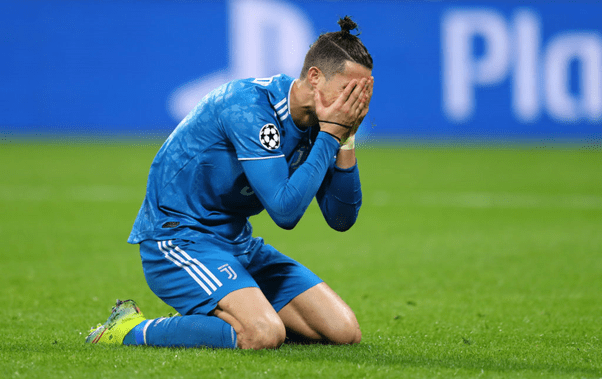
Now, with these two teams in top form, the thing is who will qualify for the semis of the elite tournament. With this season’s Champions League slightly changed due to the Covid19 pandemic, the tournament is open for all with many upsets already happening in the tournament. With this year’s Spanish champions Real Madrid already out of the tournament and with Cristiano’s Juventus also bowing out in the Round of 16, the tournament is bound to give many more surprises. With all the matches post round of 16 matches to be played without any 2nd legs, upsets will be on the cards for all to see. With Barcelona relying too much on their talisman Lionel Messi, Barcelona could end up losing to a determined Bayern Munich who could clinch the treble this season. And when talking about Bayern, how can’t we not talk about the scoring machine Robert Lewandoski. The striker has scored an unbelievable 50+ goals this season and if Ballondor had been given this year also, no doubt that Lewandoski would have won it hands down.

I feel that Bayern Munich have a great chance to overcome Barcelona and go into the semifinals. But with no 2nd leg, Barcelona have an equal chance of winning the game against Bayern Munich. But for that, Barcelona need all their players to perform well on that particular day, knowing that they would not get any second chance this time because of the altered Champions League tournament due to the pandemic. Players need to make sure that they support their talismanic captain fully so that he doesn’t alone has to do all the things on the football pitch and in that pressure his game could also suffer. Players like Suarez, Pique need to step up big time when they face Bayern Munich in the quarterfinals.

In the end, I would like to say that the tournament is fully open and many surprises are still left to be seen. So, nobody to rule out, this match is going to be a thriller of a contest.  

Make in India Movement

Make in India is a major national programme of the Government of India designed to facilitate investment, foster innovation, enhance skill development, protect intellectual property and build best in class manufacturing infrastructure in the country. The primary objective of this initiative is to attract investments from across the globe and strengthen India’s manufacturing sector. It is being led by the Department for Promotion of Industry and Internal Trade (DPIIT), Ministry of Commerce and Industry, Government of India. The Make in India programme is very important for the economic growth of India as it aims at utilising the existing Indian talent base, creating additional employment opportunities and empowering secondary and tertiary sector. The programme also aims at improving India’s rank on the Ease of Doing Business index by eliminating the unnecessary laws and regulations, making bureaucratic processes easier, making the government more transparent, responsive and accountable.

It targets 25 sectors of the economy which range from automobile to Information Technology (IT) & Business Process Management (BPM)

It also seeks to facilitate job creation, foster innovation, enhance skill development and protect intellectual property. The logo of ‘Make in India’ – a lion made of gear wheels – itself reflects the integral role of manufacturing in government’s vision and national development. The initiative is built on four pillars which are as follows:

  1. New Processes: The government is introducing several reforms to create possibilities for getting Foreign Direct Investment (FDI) and foster business partnerships. Some initiatives have already been undertaken to alleviate the business environment from outdated policies and regulations. This reform is also aligned with parameters of World Bank’s ‘Ease of Doing Business’ index to improve India’s ranking on it.
  2. New Infrastructure: Infrastructure is integral to the growth of any industry. The government intends to develop industrial corridors and build smart cities with state-of-the-art technology and high-speed communication. Innovation and research activities are supported by a fast-paced registration system and improved infrastructure for Intellectual Property Rights (IPR) registrations. Along with the development of infrastructure, the training for the skilled workforce for the sectors is also being addressed.
  3. New Sectors: ‘Make in India’ has identified 25 sectors to promote with the detailed information being shared through an interactive web-portal.  The Government has allowed 100% FDI in Railway and removed restrictions in Construction. It has also recently increased the cap of FDI to 100% in Defense and Pharmaceutical.
  4. New Mindset: Government in India has always been seen as a regulator and not a facilitator. This initiative intends to change this by bringing a paradigm shift in the way Government interacts with various industries. It will focus on acting as a partner in the economic development of the country alongside the corporate sector.

Since the launch of Make in India in September 2014, FDI inflows of USD 77 billion including a equity inflows of USD 56 billion has been received for the period October 2014 to March 2016. This represents about a 44% increase in FDI Equity inflows over the same corresponding period.

‘Zero defect zero effect’ is a key phrase which has come to be associated with the Make in India campaign. In the words of Prime Minister Narendra Modi, “Let’s think about making our product which has ‘zero defect’… and ‘zero effect’ so that the manufacturing does not have an adverse effect on our environment”. Thus, sustainable development in the country is being made possible by imposing high-quality manufacturing standards while minimising environmental and ecological impact.

“Come make in India. Sell anywhere, [but] make in India.” Prime Minister Narendra Modi said while introducing his vision to the public. And it seems that the world is more than ready to embrace this vision, which is already set on a path to become a reality.

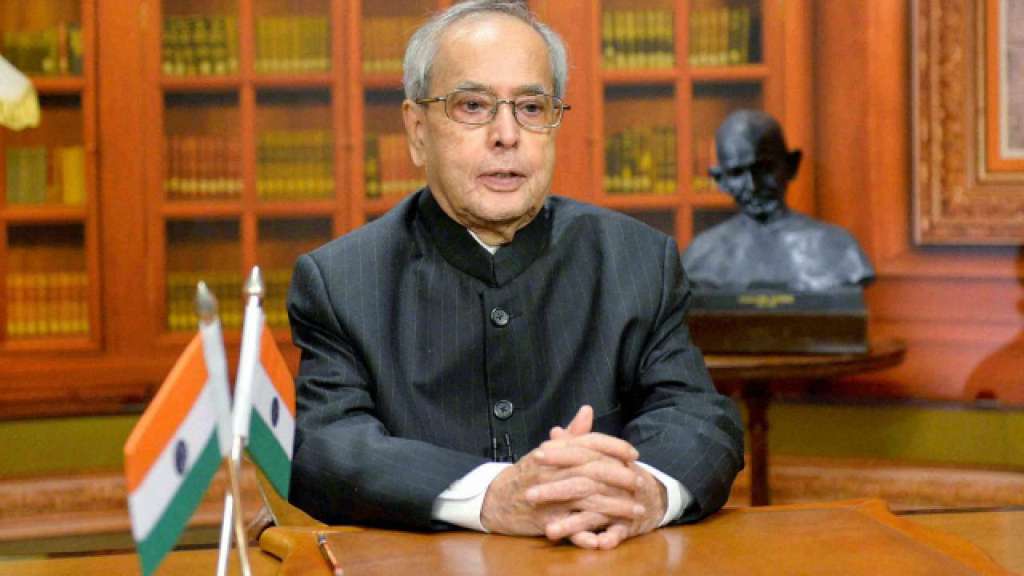
Former President Pranab Mukherjee Tests Positive For COVID-19

Coronavirus India Updates: In a tweet, Pranab Mukherjee, who was India’s president between 2012 and 2017, urged all those, who have come in contact with him in the last week, to isolate themselves as a precaution and get tested for COVID-19.

New Delhi: 

Former President Pranab Mukherjee this afternoon said that he has tested positive for coronavirus. In a tweet, Mr Mukherjee, who was India’s president between 2012 and 2017, urged all those, who have come in contact with him in the last week, to isolate themselves as a precaution and get tested for COVID-19. The outbreak has affected over 22 lakh people in the country.

“On a visit to the hospital for a separate procedure, I have tested positive for COVID19 today. I request the people who came in contact with me in the last week, to please self isolate and get tested for COVID-19. #CitizenMukherjee,” the 84-year-old Congress leader tweeted today.

India’s coronavirus tally crossed 22 lakh cases this morning with over 62,000 new patients recorded in the last 24 hours, the government said today, adding that more than 44 thousand deaths linked to the highly contagious illness have been recorded since the beginning of the pandemic.

Over 15.3 lakh Covid patients in the country have recovered so far, the Union Health Ministry said today. The recovery rate stood at 69.33 per cent this morning. 

This is the fourth consecutive day that India has recorded more than 60,000 fresh infections in a day. More than 2 lakh cases have been recorded since Thursday (August 6) when the country’s coronavirus cases passed 20 lakh, just three weeks after crossing the 10 lakh mark. 

W.C.C vs T.C.

The expression “office wrongdoing”, carefully, has no legitimate noteworthiness. Notwithstanding, it was authored and advocated by Edwin H. Sutherland, an American humanist, in his exemplary paper “White Collar Criminality” somewhere in the range of sixty five years back. In the paper he characterized this wrongdoing as “one submitted by an individual of decency and high economic wellbeing throughout his occupation”. By such definition Sutherland would have liked to bring up shortcomings in the regular wrongdoing hypothesis by bringing into sharp center the sociological contrasts that existed between customary violations, for example, murder, assault and burglary where the violations were characterized without reference to the economic wellbeing or control of the wrongdoer, and different violations, for example, misappropriation, misrepresentation, antitrust infringement, value fixing via cartels, abuse of open and corporate assets, personal tax avoidance, maltreatment of political and legitimate procedures and far reaching infringement of managerial guidelines, which were all almost continually, as per his investigations, submitted by those with power, high societal position and occupation, for example the decent resident. Sutherland noticed that the individuals who controlled equity saved the wealthy and persuasive by hypothesizing that huge numbers of such offenses were harmless or the casualties didn’t consider themselves to be survivors of wrongdoing; that guilty parties were not so much hoodlums or that the offenses were of a peaceful sort or that a unimportant ramifications of an individual of high status in an illicit demonstration was adequate discipline as such individual would lose his status or his expert permit or benefit. Burden of a prison sentence was uncommon. He additionally observed by and large average camouflage of offenses inside the hierarchical routine prompting challenges in distinguishing the offenses by the people in question and the police. A portion of the fault, he surrendered, most likely, lay in the condition of the law which had until the twentieth century delivered partnerships resistant from criminal obligation.

Sutherland, along these lines, in testing the worldview of customary

guiltiness which accused wrongdoing for the oppressed and the lower class

who were viewed as risky components of society, required that the

general hypothesis of wrongdoing clarify cushy wrongdoing with the goal that the establishment for

decency and equivalent equity for all could result.

Sutherland’s definition, however, had a shortcoming as it was predicated

on the status of the guilty party and not the qualities of the offense. A

rival school of sociologists clamored for another definition that could

underline this last part of the offense. This was important so that

professional wrongdoing would be better comprehended in the entirety of its implications and

endeavors made to control it. In 1970 Edelhertz , a humanist, offered a

redefinition of professional wrongdoing by not recognizing it with any social class.

His definition picked up favor with the US Justice Department and reshaped

thinking regarding the matter. Edelhertz’s definition stressed on “unlawful acts

submitted by non-physical methods and by disguise so as to acquire

cash or property or to acquire business or individual favorable position.”

Significance and helpfulness of this idea is significant as a device to show the persistent move of wrongdoing to the salaried sort among the informed and advantaged social classes on a much bigger scope than previously, particularly in the light of innovatively adroit culprits among these classes. It causes to notice the unmitigated results of such wrongdoing on general society.

Today, office wrongdoing is viewed significantly more as a wide umbrella that means ‘business wrongdoing’, ‘business wrongdoing’ or ‘monetary wrongdoing’, all terms that have increased incredible cash and use at both the national and global level. All things considered, whatever the clear terms that are utilized, the abrogating ideas basic to these offenses are extortion, cheating, deceptive nature and debasement submitted by specialists, conmen, political or open authorities by both complex and rough techniques.

For accommodation of conversation, professional wrongdoing portrayed by its different names has been extensively partitioned into two classes by the sociologists Appelbaurn and Chambliss , to be specific:

(a) word related wrongdoing

(b) corporate or hierarchical wrongdoing.

(an) Occupational wrongdoing is a greater amount of a ‘specially appointed’ nature and is submitted by a wrongdoer in his occupation or exploiting his occupation to advance his private, narrow minded interests. In such a wrongdoing, the guilty party rarely needs to confront his casualty and the normal offense would cover demonstrations of insider exchanging, debasement, changing of records by bookkeepers, cheating by proficient men, undermining charges, submitting Visa fakes and maltreatment of trust by the individuals who have authority over others’ properties.

(b) Corporate or authoritative wrongdoing is submitted by corporate work force to profit their organization as opposed to themselves and spreads a plenty of unlawful acts and bad behaviors, for example, value fixing, disregarding antitrust laws, creating poor or sub-par products, imperiling the earth through contamination and non-recognition of administrative industry guidelines, taking part in bogus and deceiving portrayals and the expressing of bogus loads. This class of wrongdoing has been depicted by Edelhertz as the “most irksome” everything being equal. These kinds of wrongdoing are about consistently challenged. Once more, the buyer showcase during the 1990s in the our nation has added new classes of wrongdoing to the above with the right now progressing divulgences of enormous scope trickery rehearses by business stock investigators and venture investors.

At last, there might be included a class of clerical wrongdoing that stands without anyone else, that is directed as a business by a full-time conman or a gathering of conmen covering a wide range of tricks and cheats.

The Scope of White Collar Crime

As it is critical to recognize two particular types of cushy offense. The primary kind of offense is, traditionally, misrepresentation by some other name. Business fakes absolutely vary in the subtleties of how they are executed, in the complexity of the individuals who execute them and, authentically, in the trouble that examiners have in unwinding them. In any case, at their center, business cheats are the same in kind as any misrepresentation happening in the city. They are called clerical offenses essentially as a result of the financial status of the entertainers and the methods they have decided for perpetrating their criminal offenses – not as a result of anything one of a kind or innately unique in the idea of their lead. Such a professional wrongdoing has been around for quite a while. Fake cubicle wrongdoing is no less genuine today. This sort of barefaced false cubicle wrongdoing is a channel on the economy and a noteworthy concern. At the point when it goes unpunished, regard for the standard of law is decreased.

The second kind of cushy offense is, nonetheless, very extraordinary. It includes arraignments for infringement of decides and guidelines that are a piece of a bigger legal structure. They include infringement of the guidelines of the Companies Act, MRTP Act and different sculptures. Three doctrinal improvements characterize this second sort of cushy offense and separate it from the great cheats First, this kind of cubicle offenses includes the criminalization of direct that, in many examples, isn’t characteristically unfair similarly that misrepresentation and pay off are. Or maybe there is a development in the class of “open government assistance offenses” – a classification originally made with unassuming punishments and now progressively felonized. Second, and of unique hugeness in gauging moral culpability, the rules include offenses where the psychological component (or mens rea prerequisite) is generously decreased, if not wiped out. For instance, we currently rebuff as exacting risk offenses like shame of debatable instruments-regardless of whether done totally coincidentally. Third, this kind of desk offense progressively includes criminal arraignments of administrative officials for, basically, vicarious risk. Subsequently, for this classification of office offenses, the criminal law is progressively being utilized conversely with common cures.

On the off chance that all fixings are same in conventional and clerical violations, at that point for what reason are two considered as various. Is there a dissimilarity in authorization and condemning for cubicle wrongdoings (of the two sorts) and “road” or manual violations in the lawful arrangement of the nation? As such, do judges disregard the rules and decrease the sentences in cushy offenses or are the rules sentences for clerical violations normally forced? The appropriate response is that the courts don’t seem to withdraw from the rules with any more prominent recurrence in office cases than in road wrongdoing cases.

On the off chance that we see the development of both customary and cubicle wrongdoings, at that point we locate that both owe their rise to custom-based law standards and are variation of standards of robbery, misrepresentation and so forth to current financial foundations.

In any case, in the event that we center around the distinctions in the two, at that point they are in particular :-

  1. In hands on wrongdoings casualty is promptly found and is himself mindful that a wrong has been perpetrated against him which isn’t so if there should be an occurrence of cushy violations. Casualties regularly don’t realize that what brought about unexpected accident of market or why that bank or organization shut down out of nowhere. Here the effect might be circuitous to the point that the casualty doesn’t understands the ramifications of a news and is uninformed until certain reveals to him that the connection in news and his misfortune.
  2. Second distinction is because of deciding of Mens rea in the two cases. If there should arise an occurrence of industrial wrongdoing It is seen that mens rea must be there basically though in the event of cubicle wrongdoing it has been that contentions of numerous sociologists that regardless of whether it is demonstrated that there was no mens rea in the event of any clerical violations it must be rebuffed harshly in order to give a sign to such lawbreakers that society has gotten mindful of such violations and harsh move would be made to hold back .

ANXIETY

Tension is an inclination of anxiety, disquiet, or stress that commonly happens without an up and coming danger. It varies from dread, which is the body’s regular reaction to impending peril. Anxiety is a piece of the body’s characteristic response to push, so it tends to be useful now and again, making you more ready and good to go. Uneasiness issues and ordinary sentiments of nervousness are two unique things. A considerable lot of us get restless when confronted with specific circumstances we find upsetting, yet in the event that those emotions don’t die down, the tension could be more interminable. At the point when sentiments of dread or apprehension become over the top, hard to control, or meddle with every day life, a tension issue might be available. Tension issues are among the most widely recognized mental issues in the United States. It’s not unexpected to consider tension in a manner that may obstruct our capacity to conquer it. “The greatest confusion about tension is that it’s to be dreaded and maintained a strategic distance from no matter what,” says Noah Clyman, an authorized clinical social specialist and the overseer of NYC Cognitive Therapy, a private psychotherapy practice in New York City.

Your heart thumps quick, and your breathing rates up. Your chest may feel tight, and you may begin to perspire. In the event that you’ve at any point felt it, you realize that uneasiness is the same amount of a physical state as a psychological state. That is on the grounds that there’s a solid organic chain response that happens when we experience an upsetting occasion or start to stress over likely stressors or threats later on. Other physical side effects incorporate cerebral pains and sleep deprivation. Mental side effects may incorporate inclination fretful or tense, having a sentiment of fear, or encountering ruminative or fanatical contemplations. Probably the most widely recognized indications of tension issues include: Sentiments of anxiety Envisioning the most noticeably terrible Crabbiness Quakes or jerks Visit pee or the runs Queasiness or steamed stomach.

At the point when the side effects of uneasiness and the related practices are detrimentally affecting your life and everyday working, it’s critical to find support. Suma Chand, PhD, the overseer of the psychological conduct treatment program in the branch of psychiatry and social neuroscience at St. Louis University School of Medicine in Missouri, says an individual who has alarm issue is “very avoidant of numerous circumstances that could trigger [their] alarm indications” and the frenzy issue is affecting their capacity to go to work routinely, go out to shop, go to chapel, and so forth. The capacity to work while in these circumstances is adversely affected also. In case you’re keeping away from circumstances that trigger your uneasiness or you experience huge distress and can’t work viably when you’re in those circumstances, it’s important to look for treatment.

Clothing Musings

A brief analysis of clothing and its relevance in society.

With the break of the corona virus across the world, people had to be confined to the safety of their homes. A month was fine, two was okay. But with the passing of each day, week and month, things have been going downhill. 

From schooling toddlers to people of old age are trying to stay sane and get their works finished whilst boredom strikes on and on.

Many a people have being resorting to different strategies but everything boils down to the thought of when will they be able to hit the streets again. Totally aware that there’s nothing like the old normal, but only a new normal.

However the gist of the moment would be figuring out the best way to pass time or to make the best of it.

Just like me, I guess most people would have taken to cleaning the house and carefully folding up the cupboards, multiple or numerous times by now.

During all this, it’s obvious that the human mind would hit people up with a series of rather intriguing questions, ones that never hit up prior to the covid chapter; one simple query could be,  ‘when will I ever be able to stop wearing my at home clothes and be able to slip into my outside clothes.’

I guess it’s quite obvious and safe to say that everyone has broadly two types of clothes: outside clothes and inside clothes. The latter being the yesteryear extremely used version of the former.

Breaking open the almirahs really does do a number; making people question the very idea of the need of such atrocious, rogue shopping perhaps, something that we were well off without. 

Could’ve made my very idle and almost empty wallet a lot heavier, if I didn’t go bonkers buying all these clothes, that I’ve seldom used.

‘Why do a person need so many clothes?’

 Most of my clothes have been collecting dust and just sitting there for the past 5 months or so. Apart from a couple of casual clothes I put on for the quintessential grocery run.

After a few minutes of grave mental musings it finally hit me, ‘wait it’s not the ideal time to freak out, Afterall we’re living through a pandemic.’

 Who would’ve thought the whole world was going to be at a standstill due to this pandemic a few months ago.

Sighting “events are the teachers of fools.” I took to google, like a rational being, to sort out and get a clear idea of what all do a guy like me would need in my early twenties.

The answer was clear, what I had already was more than the need. The supply or stock was well over the demand or need(in basic economic terms).

We as a species are quite complex. We sometimes go overboard and under-board. But seldom the actual level of strategy.

Scientists have concluded that humans started wearing clothes over a million years ago. Prior to that, human life was in the nude.

When the first men started to forage out for food into the unknown, there was still no need for clothing. Thanks to evolution, and hairlessness contributed by the outpour of sweat by intense physical activities, the need for it arose. 

From using leaves, grass, animal skins and other things to cover, drape or wrap themselves, the primitive men have come a long way now.

Necessity being the mother of all inventions.” Mankind slowly ventured on to the invention of sewing needles to expand the scope of their clothing line. There has been no turning back ever since.

The evolution of clothes seems more fascinating than that of mankind. There’s no denying that there’s more to it now, than just covering the modesty of man to fit into society.

The clothing industry is more than a trillion dollar business now. With brands starting from the alphabets A to Z. Prices ranging from a couple of hundreds to millions for a piece. A question, are we overdoing it, is something that can’t be easily settled upon.

The very objective to wear clothes have been changing from era to era, from person to person. What started off as a means of protection, went on to become a form of identification and now seen as a sense of adornment to expression. 

With the passing of each season, the trends keep on changing. With no promise of the trend of the previous season sticking around for any further time.

An object which has such a huge utility value means different for different people. The difference of dressing habits among people living just a couple of hundred kilometres apart itself is nothing short of thought provoking. 

After all the creator didn’t intend to create us all as unique beings, without a uniform image of how one should be. 

In this day and age when people dress to their own tastes, it’d be fairly arbitrary for an external force, be it a person or a body entity,  to restrict another being from choosing to wear the clothing of his likes. A violation of a person’s freedom to be precise.

Comment down below if there’s anything more to add or contradict.

Types of Cyber-bullying

Going ahead of my earlier post in this I will tell about the various types of Cyber-bullying. First I tell about different types of bullying:-

Physical bullying:-  includes hitting, kicking, or pushing you (or even just threatening to do so), as well as stealing, hiding, or ruining your things, and hazing, harassment, or humiliation.

Verbal bullying:- It includes name-calling, teasing, taunting, insulting, or otherwise verbally abusing you.

Relationship bullying:- It generally includes refusing to talk to you, excluding you from groups or activities, spreading lies or rumors about you, making you do things you don’t want to do. Boys frequently bully using physical threats and actions, while girls are more likely to engage in verbal or relationship bullying. But no type of bullying should ever be tolerated.

Now the Cyber Bullying is classified as

Harassment

It is most common to the way of online Bullying. It includes text wars, posting rumours or embarrassing message which cause emotional distress and public shaming.

Doxing

publishings revealing personal information about an individual online, for purposes of humiliating, defaming, or harassing the victim

Impersonation

It about creating fake accounts or gaining access to a person’s real social media accounts and posting things to damage the victim’s reputation.

Cyber stalking

Tracking and monitoring a person’s online activity, and using the internet to stalk or harass an individual.

These are common types of the Cyber Bullying. All students and teenager must be taught about the Cyber Bullying in its school education. Person must be aware about the Cyber Bullying.

Thanks

Different Kinds of Face Masks to Protect Yourself from Covid-19

Since the beginning of this year, “masks” have been one of the top searches across Google. One common query which everybody has is that whether masks are effective and  which is the most effective kind of mask.

Face masks are generally of 3 types: Cloth masks, Surgical masks & N95 Respirators

Photo by Polina Tankilevitch on Pexels.com

Cloth masks

When people are in public places, along with distancing and hygiene, it is advised that they wear a mask since it is not possible to maintain a 6 feet distance always. Cloth masks prevent the spread of the virus to a considerable extent. These masks are recommended for the public rather than N95 respirators which are needed for frontline health workers. Cloth masks can be easily made at home at a low cost. Take two rectangular pieces of cloth and place them together. Insert elastic or rubber bands in both the sides and stich the cloth on the sides. Remember to change a cloth mask once it gets wet. While wearing and removing them, make sure to not touch the area which covers the mouth and nose. Wash your hands before and after wearing them. Although they provide less protection than surgical or n95 masks, it is known that they reduce the risk of transmission by some degree. Cloth masks can also be used in combination with a face shield for better protection. The Centres for Disease Control & Prevention (CDC) has suggested any covering and advised everyone to wear cloth masks for protection from asymptomatic patients. So these are probably the most advisable for the public till now.

Surgical masks

Photo by Karolina Grabowska

Surgical masks are disposable ones which protect us from sprays, large particle droplets and prevent the transmission of potentially infectious respiratory secretions. Surgical masks vary in design but usually they are rectangular in shape and blue in colour. The masks have a metal strip to adjust over the nose and are tied to the face with elastics at both sides. Although they are useful in protecting from the virus, there is an environmental hazard attached to it because these are disposable single use masks. So they contribute to landfill medical waste.

N95 Respirators

N95 Respirators are found to be the most effective in protecting against the virus since it can prevent the transmission of small particles by 95 percent. This includes virus and bacteria. The masks are usually circular or oval in shape and fit to the face very tightly. They must have the right fit because if they do not fit properly they can’t give full protection. These do not fit properly on people with facial hair and children. In a recent study it has been found that the masks can be re used after heating them in a covered pot or rice cooker for 30 minutes at 65 degree Celsius. The use of N95 is usually not very advisable to the public because of some reasons. First of all its not very comfortable to wear for a longer period of time. Secondly it is required for medical and frontline workers. So its very important that they remain in stock. A recent factor which emerged is that the valves on these respirators can be a risk factor and may not prevent the transmission of droplets entirely.

Apart from masks one needs to follow basic hygiene rules. Washing hands with a soap for atleast 20 seconds in a correct manner is extremely important as suggested by the World Health Organization (WHO). The use of hand rubs and sanitizers with alcohol content is also advisable. Physical distancing of 6 foot is to be maintained. The most effective way to prevent oneself is to avoid any kind of gathering or crowds.

Toxic Relationships

Human beings like to be emotionally and physically close to each other. As said, “Sharing is caring” life seems better shared. Relationships like most of the things require continuous efforts, even the best of them. After all, nobody is perfect, not your close friends, not your significant other and not even your parents and they also do not see you as perfect. We have to learn to accommodate to the circumstances and adapt to their faults, moods as they do for us. Since we aren’t clones rather individuals, therefore, difficulties are faced in maintaining relationships due to disagreements. Some individuals have to face more difficulties while others do not. But since we value relationships we are determined to uphold it whatever it takes. But some relationships turn toxic, which is characterized by toxic partners who emotionally and not infrequently physically be damaging to their partner. A toxic relationship has the potential, if not corrected to be extremely harmful to the well-being of the individuals. As a healthy relationship contributes to self-esteem and emotional energy a toxic one damages self-esteem and drains the energy. But this doesn’t mean that every toxic relationship is hopeless, they just require substantial and convoluted work in order to be converted into something healthy. A healthy relationship involves mutual caring, respect, compassion, a shared desire for each other’s happiness. In a healthy relationship, one doesn’t fear to be who he/she is, a place to be comfortable and secure, a sanctity. On the other hand, a toxic relationship is demanding, craves insecurity, dominance. One risks losing the very essence of oneself by being in such a relationship. It takes two people for a relationship, so both of them should be examined. Initially, the behavior of toxic one is being noticed but the recipient of the behavior should also be studied. It should be questioned why an adult needs to stay in a relationship that could potentially harm them physically and emotionally? Even a good relationship could have times that could be marked as toxic after all no one is perfect. The toxic partner engages in inappropriate controlling and manipulation on an almost daily basis but paradoxically for the world, they would be exemplar. This behavior is observed in the toxic individual because they want supremacy, crave control, power in his/her relationship. Some types of toxic relationships are-

  • The belitter- Such type of toxic partner would always belittle you, even in front of your friends, family, and even after you confronting him/her that such behavior induces pain in you. They would mock all of your decisions, undermining your self-esteem making you weak emotionally. They would also tell you that you’re lucky to have them in your life, you are unworthy of anything good and should adore whatever you’ve got.
  • The splenetic- Such partners are eager to lose temper in order to feel the power. The recipient ultimately gives up arguing and bowing down to the needs of the partner. You would feel like walking on an eggshell if you have one of such partners. Your partner would blame such behavior on you. The constant vigilance and inability to find out the trigger drains the energy in you, wearing you mentally and emotionally.
  • The degrader- Such partners would induce guilt in you. They can make you feel guilty whenever they feel like or whenever you don’t live up to their expectations. But whenever you do something they like they temporarily remove the guilt which is addictive as a guilt-ridden person only wants the guilt to be removed. Unfortunately, such behavior is used by grownups to control their adult children.
  • The overreactor- It is said that pain reduces when shared but it is not so in case of having a partner who is overreactor. Whenever you try to reach your partner to tell them about your insecurities, problems, they would bring their own problem, and you end up consoling them instead of being consoled. Such behavior adversely impacts your mental well-being because you never get consoled.
  • The maverick- “Noone’s gonna control me” is their sole moto. They are spontaneous and never keep their promise. You can’t even be sure whether they are evasive or committed. This makes the recipient anxious which deteriorates their mental and emotional health.

Since no one is perfect therefore now could see such behavior at some point in the relationship, but this doesn’t mean that the toxicity has crept in. Some things need to work put to keep such behaviors at bay.

Kedarnath Floods: A dreadful night which no one can forget

Nature is furious and so is when we don’t respect nature. When nature’s fury arrives, nobody can fight that fury. That’s why it’s said that if we don’t respect and protect our environment or nature, nature will surely destroy us. That’s what nature did when the floods struck the hills of Uttarakhand, India in the year 2013. The devastating few days were one of the worst days in Indian history. The pilgrims who went on a pilgrimage in the hills of Uttarakhand in Kedarnath never thought they would face such a situation. Around 4000 people still after 7 years of that disaster are missing, all presumed dead by the authorities.

With nature’s fury hitting the holy place of Kedarnath, many people didn’t know what they were about to face. Some people who had gone for vacations with their families because of the summer breaks of their children never thought that he might have to face such a tragedy. The scenes their as described by the survivors weren’t at all great. The survivors claimed that the scenes at Kedarnath were really bad and horrific. Bodies were lying everywhere. Water had swept everyone away. The areas below the Kedarnath valley, where tourists usually would take rest with small hotels and lodges was fully washed away. If people before hadn’t seen that place, they wouldn’t have even known that the area contained shops and hotels. Everything was swept away, everything means everything.

The survivors claimed that water was so fierce and powerful that it even came up to the hills which they were climbing up for survival. Landslides were happening so frequently those 3 days that few people even lost their lives trying to climb up the hills and survive. The rescue operations started but with the area being at a very high altitude, helicopters as well as the whole operation was halted many times. Many rescue officers lost their lives while rescuing people. This level of devastation and destruction was never ever seen or the people who went to worship would have thought that they will face such a situation.

Eye witnesses claim how few priests as well as people went indoor in the Kedarnath temple when it started raining heavily and within a few minutes water thrashed into the temple sweeping away the door and many people inside the temple were swept away by the force of water. The destruction was for everyone to see. The damage in those 3 days was for everyone to see. But why did that destruction happen? Because of the fact how people have destroyed nature. We always destroy and play with nature as if it is for granted. But when nature takes matters in its own hands, then common people suffer.

In the end I would only suggest the people of not only this country, but the whole world that these disasters will keep on coming and destroying people and property unless we take a major step of protecting the nature. A major step to make sure that environment isn’t destroyed and is taken as a part of our human family. Don’t destroy mother nature, because when mother nature would strike, nobody would be able to survive, nobody means nobody.

Human rights begin with children rights

Human rights begin with children rights. There is no trust more sacred than the one the world holds with children. There is no duty more important than ensuring that their rights are respected, that their welfare is protected, that their lives are free from fear and want and that they grow up in peace. It is a call to all people to respect human rights of children and to reaffirm their commitment to children.

The United Nations Convention on the Rights of the Child, 1989 (CRC), represents a turning point in the international movement on behalf of child rights. This comprehensive document contains a set of universal legal standards or norms for the protection and well-being of children. Children have a right to be provided with certain services ranging from a name and nationality to health care and education. They have a right to be protected from certain acts, such as torture, exploitation, abuse, arbitrary detention and unwarranted removal from parental care, and children have the right to participate in the decisions affecting their lives.

India has the largest child population in the world. Children under the age of 18 years constitute 41 % of the total population of the country. India’s approach to protection and promotion of human rights of children derives from the Constitution of India, which provides for affirmative action in favour of children. It directs the state to ensure that children are not abused and are given opportunities and facilities to develop in a healthy manner in conditions of freedom and dignity. India ratified the CRC in 1992 and enacted various laws in conformity of the CRC for the protection of children. In this paper a sincere attempt is made to examine and assess the implementation of the CRC in Indian legal system.

Human rights

Human rights begin with children rights. There is no trust more sacred than the one the world holds with children. There is no duty more important than ensuring that their rights are respected, that their welfare is protected, that their lives are free from fear and want and that they grow up in peace. It is a call to all people to respect human rights of children and to reaffirm their commitment to children.

The United Nations Convention on the Rights of the Child, 1989 (CRC), represents a turning point in the international movement on behalf of child rights. This comprehensive document contains a set of universal legal standards or norms for the protection and well-being of children. Children have a right to be provided with certain services ranging from a name and nationality to health care and education. They have a right to be protected from certain acts, such as torture, exploitation, abuse, arbitrary detention and unwarranted removal from parental care, and children have the right to participate in the decisions affecting their lives. India has the largest child population in the world. Children under the age of 18 years constitute 41 % of the total population of the country. India’s approach to protection and promotion of human rights of children derives from the Constitution of India, which provides for affirmative action in favour of children. It directs the state to ensure that children are not abused and are given opportunities and facilities to develop in a healthy manner in conditions of freedom and dignity. India ratified the CRC in 1992 and enacted various laws in conformity of the CRC for the protection of children. In this paper a sincere attempt is made to examine and assess the implementation of the CRC in Indian legal system.

GST – Section 7 Definition of Supply

The economic sector includes many taxed supplies just as GST. There are numerous vulnerabilities and ambiguities emerging out of the definition of a “supply” in the A New Tax System (Goods and Services Tax) Regulations 1999. The definition of supply is given in GST, Section 7 Which states that the expression of supply includes all forms of supply of goods abd services, it also includes sale, transfer, barter, exchange, license, giving goods on rent, lease or demolition of anything or agreed to be mad for consideration by any individual who is in the process of business, section 7 (b) also includes that supply of import service in return of consideration whether or not in the course of the business is a legit supply.
Definition of GST- Section 7 in Brief Section 7: Defines the term Supply in GST act.  Section 7 (1) (a): The following clause and sub-clause Defines if anything such ad goods or services are transfer for consideration in the due process of the business.  Section 7 (1) (b): The following sub-clause means that any services which includes importing anything ay it be goods or services for consideration it will be defined as supply whether or not it is in the due process of the business.  Section 7 (1) (c): The following sub-clause means the pursuit stated in schedule 1 are defined as supplies if done or made without consideration.  Schedule 1: The Following pursuit are to be treated under Schedule 1 as supplies without consideration. 1. Permanent transfer or scrapping of business assets where input tax credit has been benefited on such assets, such assets with or without consideration are to listed as supplies under Schedule 1. 2. Supply of either goods or services or both between business men or any related individuals as defined in section 25, the whole due process of the same should in the process of business. 3. The gifts which do not exceed fifty thousand rupees in a single financial year by an employer to employee shall not be considered as supply. 4. The supply also includes principal agent relationship in two ways if agent on behalf of the principal receives some goods or the agent on behalf of principal send some goods.

  1. Import of administrations by an available individual from a related individual or from any of his different foundations outside India, in the course or on the other hand promotion of business.  Section 7 (2) (a): The clause 2 of the section 7 nevertheless is related to clause 1 of the section 7. The sub-clause a of the section 7 (2) states that pursuit mentioned in schedule 3 are neither supply of goods nor supply of services.  Schedule 3: the following schedule consist of services such as funeral assistance, employee working for employer and sale of land etc. Schedule 3 contains most of the activities which help our society to develop such as work done in parliament or courts.  Section 7 (2) (b): Pursuit listed in schedule 3 if done by central government or any statuary authority on the recommendation of the government council than the pursuit will be treated as neither supply of goods nor supply of services.  Section 7 (3): The allocation in sub section (1) and (2), the Government may, on the suggestions of the Council, determine, by notification, the exchanges that are to be dealt with shall be treated as:
    a- a supply of goods and not as a supply of services or vice-versa. References:
    http://gstcouncil.gov.in/sites/default/files/CGST.pdf
    http://northexcastudycircle.com/Image/dyks_ppt.pdf
    GST Bare Act

Chief Executive Officer, Zilla Parishad vs. State of Maharashtra and Ors. (22.04.2010 – SC) : MANU/SC/0294/2010

Case Note:

Service – Termination – Validity of – Present appeal filed against order whereby setting aside order of termination of respondent’s services – Held, record shows that pursuant to judgment of High Court, respondent no 2 has already been reinstated in service – Record would also show that respondent no 2 was in service when his services were terminated as his caste certificate was invalidated by Committee – Again he is in service after impugned judgment was rendered and therefore it would be harsh to direct termination of services of respondent no 2 – No post belonging to special backward class category is available with appellant – Therefore interest of justice would be served if Government is directed to create supernumerary post in appellant no 1 institution to accommodate respondent no 2 with liberty to get said caste certificate verified through Caste Scrutiny Committee – Hence, appeal partly allowed and appeal disposed of.

For the foregoing reasons the appeal partly succeeds. The respondent No. 1, i.e., State of Maharashtra, is directed to create a supernumerary post in the appellant No. 1 institution to accommodate the respondent No. 2 as early as possible and preferably within two months from the date of receipt of the writ from this Court. It would be open to the State of Maharashtra and the appellant to get the Caste Certificate dated June 12, 2002, submitted by the respondent No. 2, indicating that he belongs to Special Backward Class, verified from the Caste Scrutiny Committee. If the Caste Scrutiny Committee comes to the conclusion that the Caste Certificate submitted by the respondent No. 2 is valid, he would be continued in service and granted all benefits except back wages from February 6, 2002 to the date of his reinstatement in service pursuant to the impugned judgment. If the claim made by the respondent No. 2 that he belongs to Special Backward Class is not upheld by the Caste Scrutiny Committee, the appellant would be entitled to take appropriate action against him in accordance with law.

History of the Epidemic Diseases Act, 1897


The Epidemic Diseases Act, 1897 carries a colonial baggage. It was introduced during a time when Colonial India witnessed over 10 million deaths due to the disease that had its birth in Hong Kong.3 Western medicine proved to be largely inefficient against the Bubonic Plague of 1896. The neglect of the Colonial Government cost them hundreds of lives each day. The Plague’s mortality rate of 60 percent made it obligatory for the Government to not only find a cure, but also control the spread of the disease. Looking at the magnitude of damage, a Plague Committee was constituted under the chairmanship of Prof. T.R. Frasor, Professor of Materia Medica at the University of Edinburgh.4 They made a report that documented the effect of the disease and the means to curtail transmission. The report concluded that the disease was highly contagious and recognized human transmission as a means of spread. The commission recommended necessary preventive measures to disinfect and evacuate infected places, to put a control over mass transit, and to improve sanitary conditions. The commission also suggested strengthening of public health services and development of laboratories.5 It was John Woodburn who first introduced the Epidemic Diseases Bill to the Governor General and the Council. 6 The Governor and the Council hastily passed the bill in February 1897 to have better control over the situation. The executive of the presidency towns had discretion to adopt any measures that could aid in limiting the transmission. The extraordinary nature of the act was considered well suited to the extraordinary situation at hand. Various researches were conducted, Plague Research Committees were formed. Their findings showed that the chief cause of the spread was lack of hygiene and poor sanitation across the country. Plague Research Laboratory was also set up in Bombay, to find a vaccine for the plague.

What is a disaster according to the Disaster Management Act?


Section 2(d) of the Act defines “disaster” – means a catastrophe, mishap, calamity or grave occurrence in any area, arising from natural or man-made causes, or by accident or negligence which results in substantial loss of life or human suffering or damage to, and destruction of, property, or damage to, or degradation of, environment, and is of such a nature or magnitude as to be beyond the coping capacity of the community of the affected area;
3 S K Swami, presentation as ‘Organisation of Disaster Response in India at Central and State Government Levels’, Annual Conference of Relief Commissioners, 2001.
In the popular belief, a disaster is usually associated with a natural calamity such as a cyclone or an earthquake, the disaster management act, 2005 also defines it similarly. But unfortunately, it does not specifically describe an infectious disease like the plague of 1720, cholera outbreak of 1820, the Spanish flu of 1920 or the recent most, Corona virus pandemic of 2020. It’s an ambiguous situation for the officers and the executives as how to pursue it, and thus, to address the current epidemic outbreak, the Central government has stated the corona virus outbreak as “Notified Disaster” as a “critical medical condition or pandemic situation”.

An overview of the Disaster Management Act


This act constitutes, The National Disaster Management Authority, State Disaster Management Authority, and District Disaster Management Authority3. These authorities make policies, plans and guidelines for disaster management for ensuring timely and effective response to disaster. Examples of powers and function of NDMA are:

  1. Lay down guidelines to be followed by the different Ministries or Departments of the Government of India for the purpose of integrating the measures for prevention of disaster or the mitigation of its effects in their development plans and projects;
  2. Take such other measures for the prevention of disaster, or the mitigation, or preparedness and capacity building for dealing with the threatening disaster situation or disaster as it may consider necessary;
  3. Provide such support to other countries affected by major disasters as may be determined by the Central Government;
  4. Lay down policies on disaster management; and others
    According to the act, a National Disaster Management Authority will function under the immediate authority of the prime minister. The national authority would be the nodal body and lay down all the plans and policies assisted by the secretaries of various ministries and department heads. It speaks of a holistic approach through various departments of the government to ensure a prompt response to disasters. A chain of responsibilities and duties down to the local authorities has also been established. The act also specifies that experts in the field of disaster management shall be brought on board in an advisory capacity.

What can be done in a Pandemic?


A new word that can be heard from everyone is ‘social-distancing’. Everyone is talking about it, even the NDMA has suggested social distancing in its guidelines. The NDMA is working day and night and it is safe to say that social distancing is the need of the hour right now but is staying at home the only thing that will stop the spread of this virus. Other than this, the need of the hour is being aware of a threat of this kind and being prepared on it. If we look at the Budget 2020-21, approximately Rs. 30 lakh crores are being invested for the military development and in comparison, healthcare & research is just a mere Rs. 69 thousand crores8. Healthcare is being treated rather negligently. Covid-19 pandemic will be gone at its own time because history shows that every virus has a lifeline which we can see in the case of Swine-flu, Nipa virus, Ebola, etc. These viruses came and wreaked havoc and then left, it won’t be wrong to say that we are very lucky that the covid-19 virus is curable because of the patient’s strong immunity. Disaster Management does not mean that in the event of a disaster some steps should be taken after it has struck, it should also include preparation. We are well aware that all countries are prepared to fight back if there is a full-blown nuclear war then why is no one prepared for a flu-virus that can kill more people than a war? One may think that it will be impossible to prepare as one cannot foresee the kind of virus and its characteristics beforehand. This shouldn’t prevent us from working for the future because one thing is for sure that time is not in our favor. Some proposed improvements can be:

  1. Strong Health System – A strong health system is very favorable when it comes to tackling a health emergency, with some extra funding the health system can drastically improve and aid patients. This can be seen in the case of Turkey, whose strong health system has shown a positive clinical result in fighting the virus and the curve is flattening.
  1. Medical Research Corp. – Just like the army in the event of an outbreak experts can be deployed in the epicenter or the ground zero to start dealing with the situation and control it.
  2. Running Simulations – Another improvement that can be made to give a better insight in Disaster Management is running a simulation when there is an event of a disaster to get understanding of the intensity and to be prepared for it. It is also popularly known as “Germ-Games”. If a simulation such as this was made then the management technique could have been improved. All factors such as people’s reaction, behavior and attitude towards the virus could have been taken into consideration through this simulation method to improve management. At the moment the biggest threat that can increase the curve is people’s patience. A simulation using small pox was tested in USA in the year 2001 where the results showed that US was unable to tackle it and it led to a lot of deaths.
  3. Stronger Research & Development – A strong R&D can be favorable for disaster management which are fully equipped with necessary instruments that will contribute in researching for a cure and understanding the behavior of the virus.
    These are some of the suggestions that are being proposed worldwide and what should be done in India as well. We need to have a defense system when it comes to health emergencies for proper management. An outbreak is going to create much more risk to life than any war. The death toll of the Second World War was 75 million people9, on the other hand the 1918 pandemic, popularly known as the Spanish Flu, claimed 50 million lives10 worldwide where 12 million to 13 million deaths11 occurred in India. It is important to remember that a war can always be negotiated and settled whereas negotiating with an invisible virus is impossible.

Disaster Management Act, 2005: Are we prepared?

If someone is not worried about the Covid-19 Pandemic then they’re either living on an island or in space. The Covid-19 (or simply Novel Coronavirus) is a new virus that is bugging humanity since the past four months which started in a small (not so small anymore) market in the Chinese city of Wuhan. Who would have thought a Bat-soup would cause so much trouble that it will shut down entire cities, affect the world economy, reduce crude oil prices and also reduce pollution, well at least some good came out of it? After the virus hit other countries different models and strategies to tackle the virus started coming up which all seem to partially work out in the long run. India was among the countries who announced a lockdown in the early stages. The National Disaster Management Authority or NMDA issued some guidelines regarding the virus for the general mass. The NDMA is an authority which is established under Section 3 of the Disaster Management Act, 2005. The world is constantly changing an evolving for good but at the same time nature reacts to it differently and before we know it, we are tackling a new problem one after the other. This isn’t the first time that we’re dealing with a virus of such kind, the world is familiar with many such as The Black Death, The London Plague, The Spanish Flu, Ebola Virus, Swine Flu, etc. and now the Coronavirus. They have been responsible for so many uncountable deaths in the past, which begs the question that, are we prepared? Are we prepared to deal with it or are we just at the mercy of nature?
What is Disaster Management Act, 2005 about?
The Disaster Management Act or the DMA is an act that was established in 2005 for tackling disasters that are either natural or man-made. Until now, the DMA has worked in tackling problems such as floods, earthquakes, etc. this is the first time the Act has been entrusted to tackle a matter of public health which has such a high severity. According to Section 2(e), “disaster management” means a continuous and integrated process of planning, organising, coordinating and implementing measures which are necessary or expedient for— (i) prevention of danger or threat of any disaster; (ii) mitigation or reduction of risk of any disaster or its severity or consequences; (iii) capacity-building; (iv) preparedness to deal with any disaster; (v) prompt response to any threatening disaster situation or disaster; (vi) assessing the severity or magnitude of effects of any disaster; (vii) evacuation, rescue and relief; (viii) rehabilitation and reconstruction2. The objective of the act can be inferred from the sub-points given in the above section.

Are we prepared?
There used to be a time when the disasters we were most worried about was a Nuclear War or a catastrophic event that we all assumed would happen in 2012. If anything, that is going to kill over 10 million people in the next few decades it is going to be a highly infectious virus and not a war3. We are so engrossed in improving our instruments of warfare that we do not consider a flu-virus as a threat at all. A health emergency also deserves the same seriousness as other disasters. On a careful observation it can be found that the DMA is not completely ideal when it comes to tackling a health emergency such as this. The DMA has helped in controlling movement and issuing guidelines which are being followed religiously. To keep people in check the DMA also has punishments for rule-breakers (Section 514), people who spread false rumors (Section 545) and those who are taking an unfair advantage of the money or materials provided in relief (Section 536) with imprisonment or fine or both. The DMA is doing everything within its limits and powers to tackle the situation and as of now it is also working, but it still does not answer the question, Are we prepared? If we concentrate on the exact meaning of the word “prepared” it means “ready to deal with a situation”7. In this situation, we can deduce that it means having all the necessary protocols and infrastructure that is necessary to tackle this efficiently. Unfortunately, India as well as other countries in the world lack such preparedness when it comes to health emergencies specifically. In India we have the Epidemics Disease Act, 1897 but it is vague, ancient and does not talk about specific methods to tackle any such emergency, the size of this act itself shows the competency of the act towards health emergencies in India. The Covid-19 pandemic is not the only health emergency that has haunted India and also the world in recent times. All of them have been learning experiences to all of us, similarly the Covid-19 pandemic will also be a learning experience. Covid-19 has shown the true colors of human evolution when it comes to technology. No matter how much we develop there is always a chance that all of it will be pointless and nature will always find a way to emerge stronger. All of this may seem dystopian if we ponder on it but all is not lost, there is always room for change.

Documents in Arbitration

Notice of Arbitration

A notice of arbitration is where the whole process of arbitration starts, it sets out the claims of the party and also identifies the intention to initiate the arbitration. Unless any of the party does not show the interest to initiate arbitration the notices cannot be issued. The notice is the document where the parties show the interest to initiate Arbitration.

The opposition can reply the notice by denying the claims or make a counter claim or simply ignore the notice of arbitration.

If there is counter claim the other party can reply the defendant with the document called “The statement of defence” 

After the arbitrator is fixed the first step arbitrator takes is called “First procedural conference

The conference is about what should be the process of arbitration they can also fix how many pleadings they are going to have in the arbitration, Pleadings are simple documents which support the claim of the party.    

The parties or, if the parties fail to agree, the arbitral tribunal must determine the rules governing communications during the course of the proceedings between the parties, the arbitral tribunal and, where appropriate, the arbitral institution.

This entails specifying the addresses of the parties and their representatives, as well as those of the arbitrators, to whom documents can validly be sent. The permitted methods of communication (ordinary mail, courier delivery, telex or facsimile, for example) should also be specified, as should items such as when time limits for exchanges of evidence or memorials will be considered to have been met (on dispatch or receipt of the documents in question), the starting point for deadlines for the recipient’s response and any extension of deadlines falling on public holidays or weekends.

Discrimination

Discrimination is the unfair or prejudicial treatment of people and groups based on characteristics such as race, gender, age or sexual orientation. That’s the simple answer. But explaining why it happens is more complicated.

The human brain naturally puts things in categories to make sense of the world. Very young children quickly learn the difference between boys and girls, for instance. But the values we place on different categories are learned – from our parents, our peers and the observations we make about how the world works. Often, discrimination stems from fear and misunderstanding.

Laws are in place to protect people from discrimination in housing and employment.

  • The Fair Housing Act prohibits discrimination in the sale, rental and financing of dwellings on the basis of race, color, national origin, religion, sex, familial status and disability.
  • The Civil Rights Act, the Age Discrimination in Employment Act, and the Americans with Disabilities Act prohibit discrimination in employment on the basis of race, color, sex, ethnic origin, age and disabilities. But Unfortunately, discrimination still occurs. 

Dealing with discrimination Finding healthy ways to deal with discrimination is important, for your physical health and your mental well-being.

Focus on your strengths. Focusing on your core values, beliefs and perceived strengths can motivate people to succeed, and may even buffer the negative effects of bias. Overcoming hardship can also make people more resilient and better able to face future challenges.

Seek support systems. One problem with discrimination is that people can internalize others’ negative beliefs, even when they’re false. You may start to believe you’re not good enough. But family and friends can remind you of your worth and help you reframe those faulty beliefs.

Family and friends can also help counteract the toll that microagressions and other examples of daily discrimination can take. In a world that regularly invalidates your experiences and feelings, members of your support network can reassure you that you’re not imagining those experiences of discrimination. Still, it’s sometimes painful to talk about discrimination. It can be helpful to ask friends and family how they handle such events.

Get involved. Support doesn’t have to come from people in your family or circle of friends. You can get involved with like-minded groups and organizations, whether locally or online. It can help to know there are other people who have had similar experiences to yours. And connecting with those people might help you figure out how to address situations and respond to experiences of discrimination in ways you haven’t thought of.

Help yourself think clearly. Being the target of discrimination can stir up a lot of strong emotions including anger, sadness and embarrassment. Such experiences often trigger a physiological response, too; they can increase your blood pressure, heart rate and body temperature.

Try to check in with your body before reacting. Slow your breathing or use other relaxation exercises to calm your body’s stress response. Then you’ll be able to think more clearly about how you want to respond.

Don’t dwell. When you’ve experienced discrimination, it can be really hard to just shake it off. People often get stuck on episodes of discrimination, in part because they’re not sure how to handle those experiences. You might want to speak out or complain, but you’re not sure how to go about it, or are afraid of the backlash. So instead, you end up ruminating, or thinking over and over about what you should have done.

But rumination can make things worse. Researchers have found that while traumatic experiences are a significant cause of anxiety and depression, people who ruminate, or dwell on, those negative thoughts and experiences report more stress and anxiety.

In a calmer moment, it might be helpful to talk over the ways you can cope with similar experiences in the future. Try to come up with a plan for how you might respond or what you could do differently next time. Once you’ve determined how to respond, try to leave the incident behind you as you go on with your day.

Seek professional help.  Discrimination is difficult to deal with, and is often associated with symptoms of depression. Psychologists are experts in helping people manage symptoms of stress and depression, and can help you find healthy ways to cope.

Indian Army

Indian army is one of the outstanding armies in the world. Ensuring national security and national unity is the main focus of the Indian army. Our army is fighting against external aggression and internal threats, and maintain peace and security within Indian borders.

Except for war and battle against terror, it also conducts humanitarian rescue operations during natural calamities and other disturbances, like Operation Surya Hope. It is a major part of national power alongside the Indian Navy and the Indian Air Force. Indian army has also fought four big wars with neighboring Pakistan and one with China. Other important operations undertaken by the army include Operation Vijay, Operation Meghdoot and Operation Cactus.

The Indian army came into existence with independence. India army has also fought in both world war 1 and world war 2. The Indian Army is operationally and geographically divided into seven commands.comprises more than 80% of the country’s active defense personnel. Presently our army is 2nd largest standing army in the world, with active troops and 960,000 reserve troops.

At present, Manoj Mukund Naravane is an Indian Army Chief since 31 December 2019. Indian army is considered as the deadliest army on the plater earth.  Indian Army was established in 1895 but it got its current structure after independence

Love for our mother India creates the firm base of the Indian army. He sacrifices his life for the protection of the nation’s pride. Every soldier is a true patriot and is always ready to lay down his life in the service of motherland. Our nation’s protection and safety are totally dependent on our soldiers.

Indian Army not only fights in the war but also take care of the rescue operations when natural calamities occur like cyclones, earth-quakes. We must feel the pain of the great sacrifice which our Indian Army is doing every day to keeping our country, our people together and safe. Thus, we all salute our Indian heroes and pay homage to the supreme sacrifice which our army brothers are doing every day. At last i want to say this ” three Cheers for Indian Army Jang k maidan mein kabhi na haarte” I’m proud of my Indian Army who are always ready to protect our India and sacrifice their lives so that we can live peacefully and happily, there sacrifices can never be forgotten. Big Salute to Indian Army.

The Environmental Impact of Paint

Paint is one of the most broadly utilized materials on the planet. Simply consider all the vehicles, dividers and structures which are covered each day all up the world. Paint, in some structure, has been utilized for a huge number of years and has experienced noteworthy changes over that time. From the soonest utilizes where the ‘paint’ was only a shading produced using characteristic materials, right the route through to the 1940s where engineered colors and an assortment of synthetic compounds were utilized make a practically interminable range of hues, paint has been significant.

In 2019 alone it is evaluated that the paint and coatings industry in the UK delivered 703 million liters of paint. As paint has created and the utilization of synthetic concoctions has gotten more pervasive and essential to paint, the ecological effect has become unquestionably more huge. So is paint harming to nature and assuming this is the case, how?

There are a few hurtful substances found in paint which are harming to both nature and human wellbeing. The most notable of these are VOCs, or Volatile Organic Compounds, which are generally found in dissolvable based paints. VOCs are known to add to air contamination, both during the paint’s creation and afterward when it is being applied to a surface.

For human wellbeing VOCs can likewise be hurtful, this is the reason you should be amazingly cautious when painting inside with dissolvable based paint. VOC presentation can cause eye, nose and throat contaminations alongside cerebral pains. It can likewise prompt more major issues, for example, liver and kidney harm, and some VOCs can cause malignancy.

Transgender

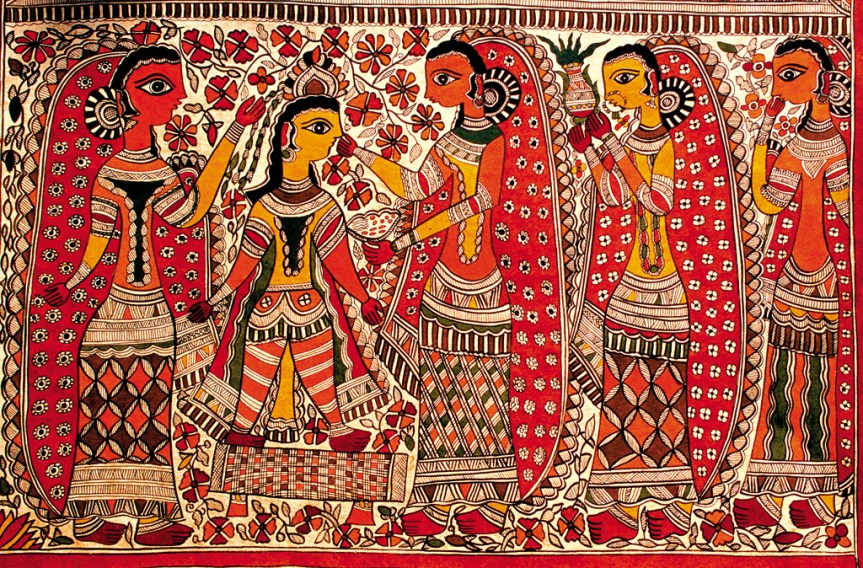
Transgender is the Third Gender basically, who is not a male type or a female type. Transgender is defined as denoting or relating to a person whose sense of personal. Identity and gender do not correspond with their birth sex. A Transgender is a person who is unable to fit himself in any of the two categories specified beforehand, a Transgender right also comes under the concept of Gender Equality. They very much belong to our society, to our lifestyle, but the fact here is they are not widely accepted yet. People literally hate them or harass them for choosing their own likings over the “society norms” created. They also are human beings, just like us, nothing inferior. It is just that they practically loves themselves just the way they are, they shall be strong enough to be proud of their own skin. It is our duty to stand by their virtue, no matter what. It has been seen that they face a lot of social difficulties everyday. They do not get to live by common people, they are isolated from their residence and they had to form a separate community of their own for survival, especially known as LGBT Community. Right from birth, they are not treated as “Normal” and are repetitively pressurized to choose one amongst the two genders. People yet, in this generation aren’t ready to believe that there can be a third gender as well. But fitting into somewhat stereotyped categories is a must for the people, especially in India. They were not allowed to have proper sanitization, worst thing is that they do not have a separate washroom. They aren’t being taught in schools on colleges, hence education for them is a luxury. They do not even get proper food to sustain themselves. We can see the “transgender” begging for food, it is so heartbreaking to see that how much sorrows they face, yet holds smile on their face. No person has control over their choices, earlier as well several paintings has depicted the onset of “transgender” people. Sadly, they haven’t got their recognition yet and fighting day and night for their freedom. They just seek a life where they won’t be judged, or questioned or made fun of being a transgender. But we, the educated class of people disagree and contest against their liberty. Their privilege are snatched away by the ‘commoners’ around them. They do not get enough opportunities to pursue their talents. The most traumatic experience they face is regarding work places. It is rare that a transgender is working as an official even if that person is competent enough. Transgender community should not be deprived of their own equity or justice. It is so difficult for third-gender child to confess his inner feelings to his family of that sort because the family isn’t in a position to realize his situation, moreover try to brainwash the child for worse. The parents do not remain as a support system to them anymore, they just feel upset and betrayed of the “choice” the child has made. Secondly, choosing aa partner for one self is really difficult, because taking about this on the society is treated almost as a ‘crime’. That person is basically termed as “spoiled” and suffers a lot from loneliness and depressions. It is no way his “Fault”.

Sec 377 in IPC states that, whoever voluntarily has carnel intercourse against the order of nature with any man, woman or animal shall be punished with imprisonment for life, or with imprisonment of either description for a term which may extend to ten years or with a death penalty, and shall also be liable to fine.According to The Times of India, The Supreme Court of India on September 6, 2018 decriminalized Section 377 making Gay Sex legal. The SC in its verdict mentioned that consensual sex between adults in private places which is not harmful to women or children, cannot be denied as it is a matter of individual choice. The apex court partially strikes down Section 377. “Section 377 results in discrimination and is violative of constitutional principles. Consensual Sex between Adult homosexuals in private is not an offence”, said by Supreme Court in its verdict.

Reading Habit

One of the many goals which we want to achieve in life, developing a reading habit should be one. It may seem tough at first but with time and practice, everyone can achieve it. While some have mastered it, others might be struggling to be consistent with it. Many of us have tried reading at some point of time and failed to keep at it consistently. This may happen because of a number of reasons but none of them mean that we can’t start with it again and give it a try. One of the most common ways in which people start reading is starting with a list of “Good books to start reading with”. The internet is flooded with such lists and many people have shared their suggestions. A book which has some literary value, is easy and engaging is a great choice to start with. According to many bloggers and writers the following list of books can help someone who has been trying to start reading for a long time.  

  • The Kite Runner by Khaled Hosseini
  • The Alchemist by Paulo Coelho
  • The Diary of a Young Girl by Anne Frank
  • The Harry Potter Series by J.K Rowling
  • Becoming by Michelle Obama
  • Train to Pakistan by Khushwant Singh
Photo by cottonbro on Pexels.com

While it may work for some, others may not find it helpful. One of the common things which we fail to notice is the fact that most of us can’t bring ourselves to sit down with a book. This may be due to lack of time. In the middle of a busy day we fail to make time for reading. External factors like a proper surrounding can also be the reason for us getting distracted and impatient. So for people who can relate with these, a few suggestions can work. First of all, set a separate time for reading. Look at your schedule and take out a time which may be ideal for starting a new activity. Setting aside a specific time of the day for reading will help you focus more and be attentive.

Second, create a good reading atmosphere. Clean your surroundings and de-clutter everything around you. Attention depends a lot on external factors and an unkept background can often make you inattentive and disturbed.

Third, make a reading list. Write down all the books which you want to read next and keep ticking them off once you’re done. This will be like a to-do list and will motivate you to read. You can also take up reading challenges like ‘Ten books in a year’ or ‘One book a month’. Remember to start small and go one step at a time.

Fourth, start reading with a friend. Select a book and make a plan to discuss with your friend once you complete it. You can also start talking about it among yourselves and discuss about what may happen next. This will make you definitely finish the book and also speed up your pace.

Fifth, be consistent. Make it a point to read everyday. Even a small 15 minute would do. Once you skip a day it will become a habit and you’ll start repeating it. The same goes for the opposite. Once reading everyday becomes a habit you have developed the habit of reading quite well. So happy reading!

The Warrior who played Cricket

In a massively cricket frenzy country like ours;  we’ve never been accustomed to any stint of shortages of talented young cricketers.

In such an ardent cricket admiring nation, making a name for himself is no easy business – moreover leaving a mark is a stunt pulled off by mavericks.

Throughout the years, we’ve had many a players, but the ones who left a mark in our hearts were indeed just a handful.

Yuvraj Singh is a name people of all walks of life will always cherish. The man who rose to occasion when the nation needed him the most, he is nothing short of a cricketing genius; single handedly exploiting the opposition every time, after coming out to the crease down the order with his bat and while fielding at gully.

His hard work, determination and resilience is what made him standout in the struggles, both between the 22 yards and beyond it. He’s the sheer example of the strength of the human character, which has left people across the globe baffled and in awe time and again.    

Being an Indian, cricket has always held a grave importance in my household like in most families. The earliest memories of watching cricket with the family was of the ‘07 T20 world cup.

I guess I can indubitably vouch what would have pounced to your mind. The 6 sixes! Like the millions of people across the world, I was mind blown.

For a kid like me who couldn’t even clear a six at the time in our gullies, this was baffling. I became a fan the very moment and I’m still proud to say that I’m a Yuvi fan for life!

Even though his career was disrupted by the gravest ailment known to mankind, our warrior triumphed gloriously and ever stronger, as quoted by someone: ‘a setback is the setup of a greater comeback.’

The post cancer chapter was largely set aside by him for helping people who treaded down similar paths as his, the grave cancerous path. He launched the ‘youwecan’ foundation to bring about a change and to aid the needy and the ones desperate for help.

For he knew what it was to lose everything at the peak of one’s ife and that the road which lead to gaining it all back is the greatest walk of all; irrespective of the fact whether the ones who once clapped and boasted his bravado weren’t there anymore to lend out a hand or two.

His autobiography ‘The test of my Life’ is bound to leave one gripping on to the book till the end. The book circles around the time when he went from being a world cup winning player to battling cancer and back.


His name is one which pounces one’s mind to the saying “When the going gets tough, only the tough gets going.”

Being one of the very few players in the world to bag all the prestigious trophies he has played; the performance of the champ which helped our nation hitch the world cup will never be forgotten. He’s nothing short of a warrior! A lion! Words fall short to express the man.

His life sends a strong message, that we owe it to ourselves to go get what our soul most yearns for. So it does only due justice to say that ‘when life throws you bouncers, get on the back foot and face it like Yuvi’.

This brave heart might not be the best player in the world but he’ll always be my favourite by leaps and bounds. His life is a lesson to one and many.

He’s a match winner by profession and now a heart winner by his actions.

Depression

Depression (major depressive disorder) is a common and serious medical illness that negatively affects how you feel, the way you think and how you act. Fortunately, it is also treatable. Depression causes feelings of sadness and/or a loss of interest in activities once enjoyed. It can lead to a variety of emotional and physical problems and can decrease a person’s ability to function at work and at home.

The death of a loved one, loss of a job or the ending of a relationship are difficult experiences for a person to endure. It is normal for feelings of sadness or grief to develop in response to such situations. Those experiencing loss often might describe themselves as being “depressed.”

But being sad is not the same as having depression. The grieving process is natural and unique to each individual and shares some of the same features of depression. Both grief and depression may involve intense sadness and withdrawal from usual activities.

Risk Factors for Depression

Depression can affect anyone—even a person who appears to live in relatively ideal circumstances.

Several factors can play a role in depression:

  • Biochemistry: Differences in certain chemicals in the brain may contribute to symptoms of depression.
  • Genetics: Depression can run in families. For example, if one identical twin has depression, the other has a 70 percent chance of having the illness sometime in life.
  • Personality: People with low self-esteem, who are easily overwhelmed by stress, or who are generally pessimistic appear to be more likely to experience depression.
  • Environmental factors: Continuous exposure to violence, neglect, abuse or poverty may make some people more vulnerable to depression.

Self Help And Coping up

There are a number of things people can do to help reduce the symptoms of depression. For many people, regular exercise helps create positive feeling and improve mood. Getting enough quality sleep on a regular basis, eating a healthy diet and avoiding alcohol (a depressant) can also help reduce symptoms of depression.

Depression is a real illness and help is available. With proper diagnosis and treatment, the vast majority of people with depression will overcome it. If you are experiencing symptoms of depression, a first step is to see your family physician or psychiatrist. Talk about your concerns and request a thorough evaluation. This is a start to addressing mental health needs.

New Education Policy

During this period significant changes have taken place in our country, society economy, and the world at large. It is in this context that the education sector needs to gear itself towards the demands of the 21st Century and the needs of the people and the country. Quality, innovation and research will be the pillars on which India will become a knowledge super power. Clearly, a new Education Policy is needed.

The Government had initiated the process of formulating a New Education Policy through the consultation process for an inclusive, participatory and holistic approach, which takes into consideration expert opinions, field experiences, empirical research, stakeholder feedback, as well as lessons learned from best practices. In a significant shift from the 1986 policy, which pushed for a 10+2 structure of school education, the newNEP pitches for a “5+3+3+4” design corresponding to the age groups 3-8 years (foundational stage), 8-11 (preparatory), 11-14 (middle), and 14-18 (secondary).

The New Education Policy 2020 has been approved by the Union Cabinet and has renamed the HRD Ministry as Education Ministry. Also, there will be a single regulator for all the higher education and MPhil to be discontinued. During the announcement of the New Education Policy, Prakash Javadekar informed that the main agenda behind introducing the same is the need of the hour and it will prepare the students to face the challenges of the new world. The NEP will promote skill-based education and enhance the practical skills of the students.

  • By 2030, one large multidisciplinary college in every district– By 2030, all higher education institutions will become multidisciplinary institutions and each of them will at least have an enrollment of 3,00 students. By 2030, be at least one large multidisciplinary HEI in or near every district. The aim is to increase the Gross Enrolment Ratio in higher education including vocational education from 26.3% (2018) to 50% by 2035.
  • Music, arts and literature to be taught in all colleges: Departments in Languages, Literature, Music, Philosophy, Indology, Art, Dance, Theatre, Education, Mathematics, Statistics, Pure and Applied Sciences, Sociology, Economics, Sports, Translation, and Interpretation, etc. will be introduced in all higher education institutions.
  • M.Phil to be discontinued: According to the NEP 2020, M.Phil will be discontinued. The details regarding the same will be released soon.
  • Sanksrit will be mainstreamed- It is time that Sanskrit will be mainstreamed with a strong offering in schools and three language formula will be adopted in higher education.
  • Vocational Skills to be Taught: Every student will be taught a vocational skill of his/ her choice by the time they complete their schooling. Students will also be taught coding from Class VI. 
  • No Rigid Separation Between Arts and Science Curriculum: There will not be a huge difference between the curriculum of these two streams and all subjects like Music will be taught. 
  • Internships Will be Included from Class VI: From 6th grade, candidates will have to do internships of 10 days with local trades or crafts. 
  • IITs to follow Holistic approach: IITs will have to follow a more holistic approach and multidisciplinary education with more arts and humanities as per the New Education Policy
  • Academic Bank of Credit to be established: An Academic Bank of Credit (ABC) will be set up which will digitally store the academic credits earned. The 4-year course may also lead to a degree ‘with Research’ if the student completes a rigorous research project within the respective time frame.
  • Importance to Practical Assignments, Skill Development:  The New Education Policy lays emphasis on practical knowledge and skill development which will begin from class 6th.
  • Single Common Entrance Exam for all Colleges: According to the NEP 2020, there will be a single common entrance exam for admission to all higher education institutes which will be held by NTA. The entrance exam will be optional and not mandatory.
  • New System of Education: The 10+2 system will be divided into 5+3+3+4 format. The New Education Policy has changed the school education system to 5+3+3+4 format. This means the first five years of the school will comprise of the foundation stage including three years of pre-primary school and classes 1 and class 2. The next three years will be divided into a preparatory stage (classes 3 to 5), three years of middle stage (classes 6 to 8), and four years of secondary stage (classes 9 to 12). Schools will not have any rigid formation of streams of arts, commerce, science, students can take up whichever courses they want.
  • Ramp Up Digital Learning: To ramp up Digital Learning a National Education Technology Forum NETF will be created and e-courses in 8 regional languages will be uploaded on the same.
  • Multiple Entry and Exit System: With the help of the academic bank of credits, multiple entries and exit system will be introduced in the higher education sector. This will allow students to take a sabbatical and then join back their studies after a period of time, without losing any credits. Students will also be free to choose major and minor subjects for their degree. 
  • India to be Promoted as Foreign Study Destination: Every institution will have an International Students Office to host foreign students. Colleges will be promoted to provide premium education at affordable costs.
  • Foreign Colleges Can Set Up Colleges in India:Top 100 Foreign Colleges will be allowed to set up their campuses in India as per NEP. They will be given special dispensation and regulations to set up the campuses.
  • Expenditure on Education: The expenditure on education will be changed to 6 per cent of the total GDP, as opposed to earlier, which was 4 per cent of the GDP. Both State, as well as Central Government, will be working together on the expenditure. 
  • The New Education Policy will give importance to students’ practical knowledge instead of just pushing them towards rote learning.
  • It will help students to develop scientific temper from a young age.
  • The NEP aims to make it easier to set up new quality of higher educational institutes which will be at par with the global standards.
  • Since NEP will make it easier for foreign colleges to set up their campuses here many students who are unable to go abroad due to multiple reasons will be able to experience it and get global exposure.
  • This will promote value-based education

Interpretation of Statutes: Need and Importance

The term ‘Interpretation’ is derived from Latin term ‘interpretari’ which means to explain or to understand or translate. Interpretation is a process through which one ascertains the true and correct intention of the law making bodies as is laid in the form of statutes.

As the administration of justice is conducted by the judges in accordance with the provisions of law, therefore it requires that there are certain rules of interpretation to ensure that just and uniform decisions are delivered by them. The most important objective that is achieved by the interpretation of statutes is that it ensures that the court act according to the intent of the legislature.

Interpretation of Statues simply means to interpret the laws. Every case is different from other case maybe with a different facts, issues etc. The judges in the court have the power to interpret the laws as per the circumstances of the case. The interpretation of laws must be ambiguous.  

Need and Importance of Interpretation of law

If there is a building we call the building as court. Does it in real become court? No, as we need judges to call a building a court. As in earlier days, there was open courts where judges go to villages and sit under a tree and solve the disputes of the villagers. We can call it as a court. Court language is open to many meanings.

Let’s assume a boy met with an accident you were the person passing by from the same road saw this boy and you took him to the hospital. On the way towards the Hospital you drive your car over the limit then you got caught by traffic police for breaking the traffic rules. But, the reason why you were driving it over the limit is to save someone’s life. The judiciary have to look at the larger picture the judges in the court cannot interpret the law just according to the words which is written in the books of law in the interest of justice. The categories of conduct of law will have to be wide enough to interpret the laws. Enough discretion should be given to wide up the law.

Article 21 of the Constitution speaks about Protection of Life and Personal Liberty. This article is the most interpreted article in the Constitution. As time changes new needs of people in the society arises so it demands changes in the Constitution for the people of India.

In the case of Kharak Singh v. State of Uttar Pradesh, the Supreme Court quoted and held that:

By the term “life” as here used something more is meant than mere animal existence. The inhibition against its deprivation extends to all those limbs and faculties by which life is enjoyed. The provision equally prohibits the mutilation of the body by amputation of an armoured leg or the pulling out of an eye, or the destruction of any other organ of the body through which the soul communicates with the outer world.

In the case of State of Maharashtra v. Chandrabhan, the Court struck down a provision of Bombay Civil Service Rules, 1959, which provided for payment of only a nominal subsistence allowance of Re. 1 per month to a suspended Government Servant upon his conviction during the pendency of his appeal as unconstitutional on the ground that it was violative of Article 21 of the Constitution.

In the case of Bodhisattwa Gautam v. Subhra Chakraborty, the Supreme Court held that:

“Rape is thus not only a crime against the person of a woman (victim), it is a crime against the entire society. It destroys the entire psychology of a woman and pushed her into deep emotional crises. It is only by her sheer will power that she rehabilitates herself in the society, which, on coming to know of the rape, looks down upon her in derision and contempt. Rape is, therefore, the most hated crime. It is a crime against basic human rights and is also violative of the victim’s most cherished of the fundamental rights, namely, the right to life with human dignity contained in Art 21”.

The Separation of Powers Theory is the theory where the powers is divided among Legislative, Judiciary and Executive. The job of Judiciary is not make laws from the thrash the job of judiciary is to just interpret the law according to the disputes. Judiciary work is to resolve the disputes and to legislate the law. Judges are need to be given certain discretion so that they can interpret the law taking care of Constitutional articles and rights.

Statutory interpretation plays an essential role in the process of access to justice and cannot be overlooked. It is easy to see that when judges use statutory interpretation it may be considered a skill of language rather than a law. The uses of traditional rules of interpretation are applied basis on the ambiguity of the legislation and tend to somewhat cancel of each other.

Using rules of languages and, internal and external material helps interpret the law and also how the system such work. Statutory interpretation is important to the access to justice because it helps the judiciary system implement the law in an efficiency and effective way and helps the Parliament to make the law

Earthquakes

An earthquake is caused by a sudden slip on a fault. Stresses in the earth’s outer layer push the sides of the fault together. Stress builds up and the rocks slips suddenly, releasing energy in waves that travel through the earth’s crust and cause the shaking. An Earthquake occurs when plates grind and scrape against each other. India lies at the northwestern end of the IndoAustralian Plate, which encompasses India, Australia, a major portion of the Indian Ocean and other small countries. This plate is colliding against the huge Eurasian Plate and going under the Eurasian Plate,this process of one tectonic plate getting under another is responsible for making India a earthquake prone country. A number of significant earthquakes occured in and around India over the past century. Some of these occured in populated and urbanized areas and hence caused great damage. Many went unnoticed, as they occurred deep under the Earth’s surface or in relatively un-inhabited places. The varying geology at different locations in the country implies that the likelihood of damaging earthquakes taking place at different locations is different. Thus, a seismic zone map is required to identify these regions.

Bureau of Indian Standards, based on the past seismic history, grouped the country into four seismic zones, Zone – 2,-3,-4and 5. Of these, zone 5 is the most seismically active region, while zone 2 is the least. The Modified Mercalli(MM) intensity, which measures the impact of the earthquakes on the surface of the earth, broadly associated with various zones, is as follows.

China-US ties plunge further over Hong Kong sanctions

China on Saturday slammed the United States for imposing “barbarous” sanctions in response to Beijing’s crackdown in Hong Kong, capping a dramatic week of deteriorating relations between the world’s two biggest economies.

In the toughest US action on Hong Kong since China imposed a sweeping new security law on the territory, Washington on Friday imposed sanctions on a group of Chinese and Hong Kong officials — including the city’s leader Carrie Lam.

The move came after President Donald Trump’s administration forced Chinese internet giants TikTok and WeChat to end all operations in the US, in a twin diplomatic-commercial offensive set to grow ahead of the US presidential election in November.

China on Saturday criticised the sanctions as “barbarous and rude”.

“The ill intentions of US politicians to support people who are anti-China and messing up Hong Kong have been clearly revealed,” Beijing’s Liaison Office in Hong Kong said in a statement.

The Treasury Department announced it was freezing the US assets of Chief Executive Carrie Lam and 10 other senior officials, including Luo Huining — the head of the Liaison Office.

It accused the sanctioned individuals of being “directly responsible for implementing Beijing’s policies of suppression of freedom and democratic processes”.

The move criminalises any US financial transactions with the sanctioned officials.

In a short statement, Luo said he welcomed the blacklisting.

“I have done what I should do for the country and for Hong Kong,” he said. “I don’t have a dime’s worth in foreign assets.”

The Hong Kong government described the sanctions as “shameless and despicable”.

“We will fully support the Central Government to adopt countermeasures,” it said in a statement.

The city’s commerce secretary Edward Yau warned that the “savage and unreasonable” sanctions could have blowback for American businesses in Hong Kong.

China’s Hong Kong and Macau Affairs Office said the sanctions list “rudely tramples on international law” and “will be nailed to the historic pillar of shame forever.”

Facebook barred Lam and the 10 other sanctioned officials from advertising on the platform, with a spokesperson saying Saturday it had “a legal obligation to take action.”

Tensions spike ahead of election

Beijing’s security law was imposed in late June, following last year’s huge pro-democracy protests in Hong Kong, sending a political chill through the semi-autonomous city.

Since then, Hong Kong authorities have postponed elections, citing the coronavirus pandemic, issued arrest warrants for six exiled pro-democracy activists and launched a crackdown on other activists.

US Secretary of State Mike Pompeo said the security law violated promises made by China ahead of Hong Kong’s 1997 handover that the city could keep key freedoms and autonomy for 50 years.

“Today’s actions send a clear message that the Hong Kong authorities’ actions are unacceptable,” Pompeo said in a statement.

The US measures come three months ahead of the November election in which Trump, who is behind his rival Joe Biden, is campaigning hard on an increasingly strident anti-Beijing message.

As public disapproval has grown for his handling of the pandemic, Trump has pivoted from his previous focus on striking a trade deal with China to blaming the country for the coronavirus crisis.

Doomscrolling

Doomscrolling is the act of endless scrolling of one’s news apps or social media apps and reading bad news. Although a problem existing since pre-COVID times, but the pandemic has exacerbated the problem. According to a new research conducted by the Pew Research Centre survey, 53% of adults say that the Internet has become “essential” during the pandemic. Twitter’s daily use numbers are up by 24% and Facebook’s numbers by 27% as shown by data analysis. With an emphasis on work from home, government updates, and making sure our loved ones are alive, mandates the use of the internet more than ever. With the advent of cheap internet and in an effort to make information accessible to all, many news sources are providing information on COVID for free. This ensures fewer barriers to being informed but simultaneously bolsters the abundance of doomsday headlines. Doomsday headlines inflict panic, anxiety in the reader, which in turn forces more screen time in the hope of finding some good news and finding solace. Thus the internet dictates what’s important rather the other way round. Checking the news feed for extra hours won’t hold the apocalypse but surely would make you psychologically weaker to face it. Already social media was being questioned about its net benefits in pre-COVID times as it was shown that social media bolsters the advent of anxiety and depression in its users,  global-pandemic and civil unrest have just exacerbated the situations. Feeling informed in such a volatile environment may be good, but being overwhelmed by tragedy serves no purpose. Many people think that staying updated on the situation would keep them safer but they don’t realize the fact that the consumption of bad news only leads to greater fear, anxiety, and stress. Instead one could try some habits in order to get rid of this malicious and vicious ‘unsatisfying addiction’.

  • Finding your voice in niche communities could help you a lot in overcoming the stress and reinforcing your emotional well-being. And these communities do not include social media communities. But remember if in the group if your voice feels another comment in-crowd, that might be not your place.
  • Sticking to sites that help you feel creative and empowered are good places to be. The Internet proves to be a space for expressing versions of ourselves. So why not do it while also enjoying instead of following the crowd.
  • Need social media? Use desktop versions of them, bookmarking the pages, groups or accounts so as to avoid falling in the trap of scrolling.
  • Dedicate some time for the do-good feel-good. Reviewing the businesses out there providing essential services could be a great way to make the most of your time. Restaurant owners, authors, small-business owners love your reviews, especially good ones.
  • Acquire a new skill, be it learning another language, drawing, coding, cooking, or whatever you feel like. This not only boosts our mental health but also distracts you from the bad news thereby providing serenity.
  • Cut back and create boundaries for social media use. Get to know the limit of your body and brain. If you are feeling agitated, anxious or stressed, put away your phone as your body is signaling you to stop.

Gutted and Lost: The Tail of Champions League 2019/20

Gutted is a very small word to express the sadness that crept through every Real Madrid and Cristiano Ronaldo’s fan yesterday night. Two seasons running Cristiano Ronaldo’s Juventus team couldn’t make it to the later stages of the elite Champions League tournament. The reason isn’t Ronaldo, but the mindset of the whole Juventus team. Whenever Juventus play, it seems like its 11v1 match going on. It seems as if Ronaldo is the only man motivated to do something for the team, and rest of the players are just playing for the sake of playing. Look at the match played yesterday between Lyon and Juventus. It was the Round of 16 tie of the Champions League. Lyon were leading Juventus 1-0 by the end of the 1st leg. The match started with Lyon getting awarded a controversial penalty, which in my honest opinion wasn’t a penalty at all, giving Lyon a crucial goal, that too an away goal. That meant that now Juventus had to score 3 goals in the stipulated 90 minutes to go into the quarter finals of the elite tournament. And then came the Cristiano Ronaldo show.

The Portuguese talisman scored a brace, including a belter of a left footer shot to level the score on aggregate but still Juventus needed 1 more goal to win the game as Lyon had an away goal. Cristiano tried very hard but couldn’t find the back of the net for the 3rd time. He also missed various opportunities, two massive headers but after all he is also human. The problem is why only he was trying, why not the other nine outfield players? The other players never created any chances, be it the likes of Higuaín, Pjanic, Bentancur or Ramsey. That’s the passion Juventus lacked and that’s why for the 1st time in nearly a decade, Cristiano Ronaldo couldn’t make it to the Quarter Finals of the Champions League. I’m not saying this about the Juventus team based on one match, its been the same old story for this whole season. I even wonder if they wouldn’t have had the services of Cristiano Ronaldo, they might have lost the Italian domestic title to any other team. They played really badly, after football returned after lockdown. They won the Seriea title by just 1 point. They lost 4 out of their last 6 games in the Seriea tournament, and just won the title by a whisker because of the amazing performances of the 35 year old talisman Cristiano Ronaldo.

Now what lies ahead is the real fact that Cristiano doesn’t have many years left in his professional footballing career and at the end of his career, he should not let his career be going in a downward direction by playing in a team which doesn’t show that kind of enthusiasm needed to win a tournament like the Champions League.

Yesterday, another slump was on the cards for the 2019/20 La Liga champions Real Madrid who were beaten comprehensively by former English champions Manchester City, 4-2 on aggregate to go or should we say storm into the Quarter finals of the Champions League 2019/20 season. With their talismanic captain Sergio Ramos suspended for the 2nd leg, the match was already titled in the favour of Manchester City. And then the slump happened, with their main defender Varane gifting City two goals with his mistakes in such a high profile match. Benzema scored a goal for Real Madrid but that wasn’t enough to keep the 13 time European champions in the Champions League this season.

In the end, I would like to say that there was a time 2 years back when Real Madrid won their 3rd Champions League title in a row, but times have changed. With Cristiano leaving Real Madrid after that, it was for certain that the slump has to come. This shows that Nor Real Madrid helped Cristiano Ronaldo win the Champions League or vice versa. They both did it together.

How does Stock Market work?

In the 1600s, the Dutch East India Company employed hundreds of ships to trade goods around the globe. In order to fund their voyages, the company turned to private citizens to invest money to support trips in exchange for a share of the profits. In doing so, they unknowingly invented the world’s first stock market.

 So how do companies and investors use the market today? 

Since than the companies have been collecting funds from willing investors to support all kinds of business, and today the stock market is so huge that it has school careers and separate TV channels, stock market is a whole different economic sector where people earn and lose money. It provides bread and butter to number of people.

The modern stock market is significantly more complicated than its original incarnation. If a new company wants to come into the market than the company will advertise its product or services to the new investors, if any of the investors think it is a good idea than they get the first crack at investing. Then the investors sponsor the company’s Initial Public Offering (IPO). This launches the company into the official public market where any company or individual can invest (buying stocks) in the company. Buying stocks in the company makes the stock holder becomes partial owner in the business. If the companies is profitable there will be more and more investment in the company as there is more investment the price of stock also shoots up (demand increases, price increases), it is also called increasing the cost for perspective buyers and raising the value of the stock people already own, this increase in investment helps the company to boosts its overall market value. By showing how many people are willing to invest in their idea. If a company seems less profitable the reverse can also happen. If investors think that their stock value is declining they sell their shares with hopes of making their profits before the value falls down more (demand for the stock declines the price of the stock declines) with the falling price the market value of the company all comes down, this can leave investors with big losses unless the company looks profitable again.

This see-saw of supply and demand is influenced by many factors’ companies are under the unavoidable influence of market forces such as fluctuating price of raw-materials, changes in production technology and the labour cost. Investors are worried about bad leadership, bad publicity or large factors as new laws and trade policies, all these variables which are day to day hurdles for the company which can make the company appear more or less successful, which may get the company more or less investment.

Human confidence in the market has the power to trigger everything from economic boom to financial crises.

PROS OF INTERMEDIARY LIABILITY IN INDIA: THE TIKTOK BAN

TikTok, a Chinese application found in 2012 with the purpose of video-sharing social 

networking service where short dance, comedy videos, lip sync videos, and talent videos are 

posted by the users. Being a populous country, our youth is attracted to this application. More 

than 119 Million people used TikTok in India, the application was downloaded 277.6 million 

times in India in the year of 2019.2 However, the application was banned in India in late June 

2020, when the government banned 59 other Chinese applications including TikTok, which 

have bought several inconsistencies and issues regarding the intermediary liability regime. 

There are many types of internet intermediaries which are divided into two categories- 

“Conduits” and “hosts”. Conduits do not interfere in the content which the app provides, they 

work for the automatic, transient or intermediate and storage for transmission. While hosts 

provide the content services. 

As defined under section 2(1)(w) and Section 79 of the IT Act, 2000 TikTok is an intermediary. 

The content is not generated by the app but it is posted by its users. Intermediaries are defined 

according to the functions it does for the electronic records. As per section 2(w) intermediaries 

are defined as- “intermediary”, with respect to any particular electronic records, means any 

person who on behalf of another person receives, stores or transmits that record or provides 

any service with respect to that record and includes telecom service providers, network service 

providers, internet service providers, web-hosting service providers, search engines, online 

payment sites, online-auction sites, online-market places, and cyber cafes.3 While section 79 

of the IT act provides immunity to intermediaries for any illegal content posted by third parties. 

Under this section and the Information Technology 2011, if an intermediary receives ‘actual 

knowledge’ of any illegal content posted on it, it is obligated to remove such content within 36 

hours. On failing to do so, the intermediary will lose its immunity from being sued. Illegal 

content under 79 of the IT Act is stricter than 69A. It can include, for example, content that is 

Are your email marketing tactics legal? Find out


We all are aware of email marketing which fills up our email inbox every day with a bunch of
emails about the marketing of different apps which shows you updates on sales, up-gradation
of stocks, new arrivals, job opportunities, food delivery apps, travel apps, etc and whatnot.
This is a type of marketing through which companies reach out to their customers through
which the customers get to know about the schemes, discounts, opportunities, etc. These are
sometimes very helpful and sometimes annoying at the same time. The interesting fact is that
many people do not know that this is also an official medium for marketing and that it can
also be illegal. Here we will talk in-depth about email marketing, how it works, hoe can it get
illegal, and many other things you need to know while you are doing this.
 Many of us have experienced that whatever we see online, doesn’t seem as it looks when it
arrives. Often customers get attracted by different types deals and discounts offered by these
websites but sometimes we do not get what we expect and to exchange that particular product
you again have to go through a long process that sometimes gets tiring. You might have also
observed that once you visit a website, even to take a glance you start getting lots of emails,
you request the particular site to stop emailing but it doesn’t and then you finally need to
report. This often makes the important emails you have unseen and creates such a mess in the
inbox. Hence there are certain marketing laws established by the US government to restrict
and to control illegal email marketing.
Laws regarding email marketing:
The CAN-SPAM ACT (The Controlling the Assault of Non-Solicited Pornography And
Marketing Act), 2003 is a law that sets rules for commercial emails, establishes requirements
for commercial messages, gives recipients the right to have you stop emailing them and also
spelling out tough penalties for violation. Further, the law makes no exception for business to
business emails. For example, emails like- emailing the former customer about the launch of
a new product, should also comply with the law.
Each separate email that violates CAN-SPAM laws can be subjected to pay fines up to
$48,280. Hence, instead of not complying, it’s better to simply pay heed to the laws and carry
on your marketing on that basis. Following the law isn’t that difficult here, as you know not
complying is much costlier than not abiding by the law.

Corporate laws in the United States

With the GDP of approximately $20.513 trillion, the United States is the world’s 

highest economy today.1 The reason for which is high average incomes, capital 

investments, highly technical industries, less unemployment, etc. Which definitely 

makes it a better place for a business start-up. 

In the United States, corporate laws are differentiated in different levels as 

federal, state and local levels. Every state has their own local laws. The standards 

of which are described in securities act of 1933 and securities and exchange act 

1934.2 Henceforth, federal laws possess the minimum standard in company 

shares, trade, etc. 

Corporation are allowed to incorporate in whichever state it like and is suitable 

for them, it’s also open for different branches no matter where the headquarter 

are located. Further talking about entities the United States has many different 

forms of business entities but there are mainly four types. 

1. Sole Proprietorship 

2. Partnership 

3. Limited Liability Company 

4. Business Corporation 

As the word itself suggests that Sole Proprietorship runs by a single individual, 

he is the only one who is managing the business assets, liabilities and profits. 

Nearly 72% of all the US business is running through this. 3Among 4 main entities, 

it is the cheapest forms of start up for business there is limited personal liabilities 

for loss Incurred by business or of any legal actions. Profit earned are taxed as 

personal income. 

2. Partnership 

1 GDP of USAhttps://www.investopedia.com/insights/worlds-top-economies/ 2 Acts https://www.ilpabogados.com/en/the-essential-corporate-law-in-the-united-states-usa/ 3 Sole proprietorshiphttps://www.thebalancesmb.com/sole-proprietorship-398896 

A partnership is comprised of two or more person to run a business. The word 

“persons” include individuals or a group of individuals, comprises or corporations. 

The partners share their profits and controls business operations. Here the 

partners are jointly or separately liable for debts incurred. As the federal system 

states govern the different laws but most of the states of US have adopted Uniform 

partnership Act for the partnership to exist following factors are determined. 

– Intensions of parties 

– Joint administration 

– Joint control over the business 

– Capital investment of the partner 

– Common ownership of the property 

Partnership is not a taxable entity. The income is taxable to partners according to 

the number of shares they hold from the company. 

(Source – U.S code 26.USc international revenue code) 

ANIMAL PROTECTION LAWS: A BRIEF

There are extensive laws in India that supported the basic entitlements’ in India yet the execution for the equivalent is less or isn’t perceived or not recognized by its residents. The cold-bloodedness of animals is expanding step by step and furthermore certain activities are additionally taken by certain associations for the security of animals since they are similarly cognizant living creatures as we may be. The University of Cambridge likewise proclaims animals as cognizant living creatures as we may be. The legitimate security of animals has likewise observed a few achievements over the previous decade, which I talk about underneath in more prominent detail. From contemplating these turns of events, unmistakably while the basic entitlements development has far to go, one can see it is out of its earliest stages and well into puberty. Nonetheless, for the development to accomplish its objectives, fundamental establishment building and the enactment of more grounded assurance laws, is the route forward. 

Lawful Scenario in India- 

India has the biggest constitution. Here a few laws are referenced against animal brutality and animal protection. Article 51A(g) of the constitution of India puts an obligation on each resident to ” protect and improve the natural environment including forests, lakes, rivers, and wildlife and to also have compassion for other living creatures too.” The primary demonstration to secure these valuable lives against brutality was passed in 1990. The Prevention of Cruelty of Animals Act was passed in 1990. Enormous bunched of rules under the PCA have been passed over the most recent twenty years. The main clump was passed in 2001 and the subsequent bunch was spent in the year 2017-2018. Creatures are dealt with cold-bloodedly in the circus while preparing and some of them are not taken care of appropriately and some are beaten to act in the bazaar and to engage individuals. The bunch of 2001, administered about playing out the animals in the circus, movies, slaughterhouse, animal birth control, and the setting up of the Society for Prevention of Cruelty of Animals (SPCA) were passed. In the subsequent group, rules with respect to the guideline of shops that sell animals as pets, dog breeders, and domesticated animal markets were passed. The demonstration is totally broad yet its execution isn’t abundantly perceived; the explanation behind which is open numbness and aloofness this additionally incorporates absence of literacy and education and commercial interests in the business. According to the standard went in 2001 about each state having SPCA, there are not really any states which execute it. Just Maharashtra is perceived for executing of sending notice with respect to a similar that too implementing after seven years. Likewise, the standards of 2018 have not been executed by any of the states completely.

The fundamental consistence is additionally an issue here. There are numerous organizations, ranch crops and even urbanization in certain regions violates these laws this is going on the nation over and they don’t conform to these laws and in the long run are a risk to natural life. Taking the case of the poultry ranches, the greater part of the hens spends their whole lives remaining on the wire pounds, where space is lesser than an A4 size paper. The whole arrangement of concentrated animal cultivating is drilled in complete dismissal for the way that animals are living. Additionally, the greater part of the practices is in direct infringement of the specified laws. The pay laws in regards to these very unnoticed in PCA, 1960. The compensation for the first offence is greatest to INR 50 and compensation for the subsequent offense is INR 100. 

The 2014 Jalikattu Judgment, which is also called the Magna Carta for basic entitlements in India, was passed by the Supreme Court of India and precluded the unmistakable cruel bull subduing sport. It is a milestone judgment not least since it expanded the ambit of Article 21, which gives the key right to life and freedom, to incorporate creatures also. Courts from over the world have referred to the judgment as a way changing decision that has modified the way the world sees its non-human residents. Indeed, even still, in 2017 the administration of Tamil Nadu acquired a correction to the PCA Act, to allow Jallikattu. Activists have since tested this, and it is presently pending a meeting in the Supreme Court. A valid example is that of Jalikattu, where the administration of Tamil Nadu corrected a demonstration regardless of a court request. 

8 Good habits to develop

Habits are a necessary part of our life. Most of us develop many habits throughout our lives. Although it may seem small or trivial habits can influence a person’s life in many ways. Some can lead to drastic changes in life over a period of many years while some can lead to changes in a month. Good habits can make one transform their lives with time and help to achieve new heights. While bad habits may slowly lead to reduction in the quality of one’s life. The following list features some of the habits you can develop in order to become a better person and achieve success in life.

Photo by Rahul Shah on Pexels.com
  • Maintaining a journal – Writing a diary or a journal is a very helpful practice for self-growth. It also helps you to improve your writing skills. Jotting down your thoughts or even writing about your daily life can be a simple yet helpful practice. It helps you to form the habit of gathering your thoughts and expressing yourself. Years after when you go through that journal it makes you realise how far you’ve come and also revisiting the past and engaging with memories is something which we all like to do once in a while.
  • Setting up a routine – Humans like to go about their day in an orderly manner. No matter what profession you take maintaining routine and order is something which is necessary for all. Setting a routine beforehand also helps you to have a look at your tasks and helps you complete them. You can also try and make a to-do list which is extremely effective for completing tasks.
  • Reduce procrastinating – Procrastination is a habit most of us have. Leaving our work for the last minute is a very common practice. Reducing procrastination can lead you to slowly move away from it and make you more punctual.
  • Reading habit – Reading a book everyday for even as little as half an hour can work wonders for your life. Books help you build vocabulary and helps you gain knowledge. It also makes you a better writer and story teller. People who have a habit of reading books from a very early age are found to have better memorization capacity.
Photo by Dorothy Castillo on Pexels.com
  • Exercise – Exercising often is a very healthy habit and helps to maintain a healthy mind and body. Doing simple exercises or yoga will also secrete hormones or endorphins which will boost your mental outlook and help you have a good mood. Exercises will result in a better posture too.
  • Meditate – – Meditating for a while helps us to calm our minds. There is no fixed rule as to how one should meditate. One can just sit and close their eyes for some time or follow a meditation guideline. According to some studies, painting or colouring simple shapes can also act as a form of meditation.
Photo by Min An on Pexels.com
  • Gardening – You need not know a lot about gardening. A small cactus near your desk or a simple flower plant can do magic. Watering them and taking care of them will help you make some time for yourself in a hectic or busy schedule. Plants can help you exercise the idea of effort. It helps you build patience and improves your life.
  • Smile – Having a positive outlook towards everything is a secret to having a happy and better life. A smile can help you brighten your day and maintain a positive relationship with people around you.

Mediation

  1. What is Mediation?

Ans. Mediation is used as a form of dispute resolution, known as Alternative Dispute Resolution. In mediation legal disputes are resolved between two or more parties where a neutral third person negotiates and settles the case outside the court of law. Mediation is thus, referred to as a party-centred process that emphasizes on the needs, rights, and interests of the parties involved.

2. Who is Mediator?

Ans. A mediator is a neutral third person who encourages those in the dispute to talk to each other about the issues. The mediator is not an advice-giver or decision-maker. The parties examine the real problems, large or small. They then create and agree upon an outcome that meets their needs and addresses their concerns.

Mediators use various techniques to open, or improve, dialogue and empathy between disputants, aiming to help the parties reach an agreement. It depends on the mediator’s skill and training.

3. Which types of disputes is suitable for mediation?

Ans. Mediation is suitable for resolving a wide range of disputes including:Business and commercial

Partnership

Family matters

Labour disputes

Personal Injure

Industrial and Construction

4. What is the difference between Arbitration and Mediation?

Ans. In an arbitration, the arbitrator looks into the legal rights and wrongs of a dispute and makes a decision. Once the arbitrator has arrived at a decision, it is binding on parties whether they agree with it or not. It is very much like the way a court case is decided by a judge, except that the process does not take place in a court room, and it is not open to the public. As in a court case, there is usually a winning and a losing party in an arbitration.

In a mediation, the mediator, essentially, helps parties to settle their disputes by a process of discussion and narrowing differences. The mediator helps the parties to arrive at an agreed solution. He does not decide the dispute. A successful mediation results in an agreement signed by the parties, whereas a contested arbitration results in a decision by the arbitrator himself without the agreement of the parties. In a mediation, there is no such thing as a winning or losing party, because there is no binding decision without both parties agreeing to one.

5. Why should we choose Mediation over Arbitration?

ans. Nature – Arbitration is formal and it follows almost same procedures as in litigation but out of court. Whereas, Mediation is informal.

Elements- Arbitration needs facts and evidence. Mediation does not require any such evidence.

Expenses- Arbitration is Expensive. Mediation is less expensive.

Modus operandi- Arbitration is exercised very similar like litigation, besides, its proceeding has to be performed officially by following proper steps of arbitration including filing application, facts, evidence, witness, or any such relevant documents. Whereas, Mediation is entirely friendly and there is as such no defined process, it can be done in any friendly manner as per the convenience of the parties.

Time- Arbitration is time taking. Mediation is less time taking.

Regulating power- Arbitrators are the authority, very similar to judge and he she give decision based on the given facts, evidence and circumstances. Mediators assist parties to make their own decision, which should be beneficial to both the parties.

Result- In arbitration, result is win or loss one party wins and other loss. In mediation it is win-win situation so, result is mutually beneficial.

6. Ways in which mediation is classified?

ans. Statutory/Mandatory: According to law, there are certain disputes that require to be resolved through the process of mediation. For example, settling labour law and family law disputes require mediation. Section 5(f)(iii) of the Civil Procedure- Mediation Rules, 2003acknowledges for mandatory mediation.

Court Ordered: When cases are filed in India, both parties are given the option to select from a list of ADRs and pursue them until and unless it is very essential to move to court. Most of the jurisdictions in India recommend some sort of alternative dispute resolution (ADR) before they come to the court of law for trial. This particular type can further be classified as:

Court-Annexed: Here, the services of mediation are provided by the court itself. It is the court that appoints the mediator, sets the lapsing date etc.

Court-Referred: Under this system of mediation, the courts job is very direct. It simply refers to the mediator available at that time.

Private: In this type of mediation, the mediators function independently, i.e. not appointed by the court. This implies that such services are given away on private, by means of money. Such services are provided by the Court qualified mediators or some general public etc.

Contractual: It is often found in civil contracts that in case there is any dispute among either party, then it shall be resolved through mediation instead of fighting legal suits. This is known as the mediation clause.

7. What is the procedure of Mediation?

Ans. Mediation is a voluntary process in which the mediator facilities the disputing parties. Mediation can be accommodated. Mediation gives the parties the opportunity to discuss the issues. The mediator helps the parties to agree on a mutually acceptable resolution. Mediation must is strictly confidential

8. What is the current scenario of Mediation in India?

Ans. The 129th Law Commission of India report suggests courts to refer disputes for mediation mandatorily.  The Supreme Court observed that all cases, which are related to commerce, trade, contracts, consumer disputes and even tortious accountability, could normally be mediated. The amendment to the Commercial Courts Act 2015 (Section 12A) in 2018, made it compulsory for parties to go through the restoration of pre-institution mediation under the act before instituting a suit. High Courts have their own individual set of regulations governing Mediation and Conciliation by the websites of several High Courts. There are amendments made in other acts to make mediation part in the procedure like Consumer protection Act, 2019, Real Estate (Regulation and Development) Act, 2016. Etc.

9. What is the scenario of Mediation in foreign countries?

Ans. Europe

The EU has adopted a Code of Conduct for Mediators and this is a very effective way forward.  A draft Directive on mediation was published in 2004, national attitudes, formulated by usage of the Civil Codes or Common Law, will determine the attitude of the respective judiciaries towards mediation usage in each of the member states of the EU.

Africa

In Lagos, Nigeria, CEDR has worked with the courts and a team of local people who wish to improve on current dispute resolution methods by speeding up and reducing the cost of the delivery of justice. In 2004 and 2005, a team of trainers has visited Lagos and Abuja to train mediators, train trainers locally and help to establish the Lagos-based mediation service. So effective has been the work done there that the Chief Justice of Nigeria has appointed a designated mediation High Court Judge (himself, now an accredited mediator) as well as agreeing to open up in each of the 33 national Court Centres the same Multi Door Courthouse system which is now operating in Lagos.

Asia

Singapore has become a serious player on the mediation scene, and other countries are developing a mediation capability. China is now a force to be reckoned with, not just for its economic growth and success, but because that very growth and success has generated the need to look outwards and to work in the style of their trading partners when trading relationships mean more than just a one-off deal.

10. Steps needed to promote mediation in India?

Ans. The public should be made aware of the benefits of mediation over traditional litigation. Mediation should be made easily accessible to the public at large. There is a need for Mediation Centres to have a good quality of infrastructure and a standard figure or pattern to make the parties feel comfortable. Inducements and remembrance to lawyers to enlighten the parties about the internal proceedings in the mediation process to make such notified choices. Exorbitant ethical standards (ethical code and code of conduct) to be obeyed.

Introduction to Cyber Bullying

Before going ahead firstly, what is bullying? Bullying is an act or the behaviour of a person who hurts or frightens someone who is smaller or less powerful, often force the people to do something that they do not want to do. Now Cyber bullying is online bullying. Bullying with the use of digital platforms or technologies. It can take place on social media, messaging platforms like as Facebook, Twitter etc., gaming platforms, chatrooms, emails and other mobile forums. It includes various things some of these are:

spreading lies about or posting embarrassing photos of someone on social media

sending hurtful messages or threats via messaging platforms

impersonating someone and sending mean messages to others on their behalf. 

Its Impact

It also leaves bad Impact on mind of the victims i.e Emotional problems, including depression, anxiety, low self-esteem, and stress for victims of cyberbullying. Even sometimes the victims commit suicide. If Cyber bullying is an intense form of psychological abuse, whose victims are more than twice as likely to suffer from mental disorders.

How to prevent Cyber Bullying?

Guardians should Be aware of their child’s online activities.

Adults should also teach children to recognize and be aware of the signs of cyberbullying themselves.

Never share passwords for their online accounts.

Never put something online that they wouldn’t want everyone to see.

Block communication with cyberbullies and do not read messages.

Children should have their screen time limited, and be encouraged to engage more in offline activities.

Thanks…

Indian Folk Art

India has always been portrayed as a land of cultural and traditional diversity. Every corner of the country has a distinctive cultural identity which is represented through different art forms. These art forms can be collectively put under the topic of Indian Folk Art. Each region has a different style and pattern of art which is practised by the rural folks. These art forms are colourful, simple and reflect the rich heritage. The country is home to around 2500 tribes and ethnic groups. So every state has a unique and interesting form of folk art.

Previously these were done using natural dyes and mostly used for decorating walls and houses. These forms which still exist today, have undergone many changes through all these years including change of medium, colours and pattern. Here are such art forms which give us a peek into the cultural heritage of different regions of the country.

MADHUBANI

Madhubani, also known as Mithila art, was developed by women of Mithila in Northern Bihar. It is characterised by line drawings, colourful patterns and motives. These were practised for hundreds of years but were discovered in 1934 by a British collonial officer during an inspection after an earthquake on house walls.

PATACHITRA

The word ‘patachitra’ derives from the Sanskrit words patta, meaning canvas and chitra, meaning picture. It is one of the oldest art forms of Odisha. It is done on canvas and portrays simple mythological themes through rich colours and motives. Some of the themes include Thia Badhia – depicting the temple of Jagannath, and Panchamukhi – depicting Lord Ganesh as a five-headed deity.

WARLI

Warli is the name of cultivator tribes belonging to Northern Maharashtra and Gujarat. Though discovered in early seventies, the roots of the art form can be traced back to as early as 10th century A.D. Mostly featuring geometrical shapes, they potray daily life, hunting, fishing and festival scenes. They show a common human figure through a circle and two triangles, which move in circles resembling the circle of life.

RAJASTHANI MINIATURE PAINTING

The art form is introduced by Mughals who brought in persian artists for creating the art. The Mughal emperor Akbar built an atelier for them to promote the artwork. They trained Indian artists who produced it in a new style inspired by the royal lives of Mughals. Eventually the paintings made by these Indian artists came to be known as Rajput or Rajasthani miniature. They are characterized by strong lines and bold colours made from minerals, precious stones, even pure gold and silver.

TANJORE ART

Orijinating in Tanjavore, about 300kms from Chennai, this art form evolved under the rulers of the Chola empire. Characterized by brilliant colour schemes, decorative jewellery with stones and remarkable gold leaf work, these paintings mostly consist themes of gods and goddesses.

KALAMEZUTHU

Simmilar to Rangoli and Kolam, this art form originated in Kerala. It mostly consists of the representation of deities like Kali and Lord Ayyappa on temple floors. Natural pigments and powders of mostly 5 colours are used by the makers and the art is done by bare fingers without the use of any tools. The 5 colour shades are made from natural pigments like – rice powder for white, burnt husk for black, turmeric for yellow, a mixture of lime and turmeric for red and the leaves of certain trees for green. Lighted oil lamps brighten the colours in the figures which usually feature anger or other emotions.

Multilingualism

Multilingualism a skill set exhibited by two-third of the population still is seriously misunderstood. It is a common belief that learning another language is just a waste of time, children should focus more on cramming books rather than exploring. It is also said that learning another language is of no use if the child/person speaks the language of the majority as this skill would not help to reap financial rewards. Many people also believe that being multilingual could confuse the child and lower their cognitive abilities. Such claims are false as learning another not only helps to flex our mind muscles but also increases our cognitive capabilities, better problem-solving skills, and also improves learning capabilities. Just like exercise is important for toning the body and enhancing its capabilities, similarly learning a language is the exercise which the brain requires in order to tone itself. Empirical studies have shown that multilingualism has great positive impacts on the gray matter of the brain. Language carries cultures, traditions, and thus able to speak more than one language enables one to take multiple sensibilities, tastes, and possibly even identities. Studies were carried out on bilingual women who could speak Japanese and English by psycholinguist Ervin-Tripp who found out that when given the same opening statements in different languages had different endings. This concluded that thought occurs in language, therefore knowledge of more languages refines the thought process too. Bilinguals tend to make more rational decisions because language contains nuance and subtle implications that influence your judgment subconsciously. Multilingualism is not a new skill rather it has been there for ages, aboriginal hunter-gatherers survived because they could understand and convey through their as well as other’s community, to know about the possible dangers lurking around. The rule used to be that one mustn’t marry anyone in the same tribe or clan to have a child. Marrying within one’s clan used to be taboo. The part of the brain that manages the cognitive skills is the ACC ( anterior cingulate cortex)  or the executive system. ACC is located on the frontal lobe that enables us to concentrate on one task while blocking out competing information. Learning languages developed this part, therefore, enhancing cognitive skills. Multilingualism also delays mental decline in old age, slows down the onset of dementia and Alzheimer’s. Bilinguals who tend to develop Alzheimer’s tend to display less decay in cognitive abilities than monolinguals patients. It is also assumed that multilingual speak each of their languages equally. This is amusing as well as tragic because no matter how long you have been studying a language if you don’t use it around you might forget it. Learning language is as fun as it is useful therefore everyone should give it a shot. Find ways to learn languages, there is an ample amount of sources to learn languages online, and with the world connected better than ever, it has gone too lucid. 

до свидания 

Image by rawpixel.com

Bulimia-An Eating Disorder

In today’s instagram world,People especially adolescents are getting image and body conscious.They look at the perfect bodies of celebrities and aspire to be like them.In this aspiration,they are psychologically and physically wounded.Most of such people experience eating disorders where in they undergo extreme changes in their eating and exercise habits.Ultimately they damage themselves.

So,in today’s blog lets look at one of the eating disorders called Bulimia Nervosa,it’s causes and it’s impacts.Let’s get started.

Bulimia nervosa is an eating disorder characterized by episodes of binge eating—consuming a lot of food quickly—followed by compensatory behavior, most commonly vomiting or “purging.” People who are bulimic often feel a lack of control over their eating. A bulimic can consume as many as 3,400 calories in little more than an hour and as many as 20,000 calories in eight hours.

People with bulimia often know they have a problem and are afraid of their inability to stop eating. Bingeing is then followed by purging — namely, self-induced vomiting or the abuse of diuretics or laxatives. Bingeing and purging are often performed in secret, with feelings of shame alternating with relief.

The bingeing and purging cycle is usually repeated several times a week. As with anorexia, people with bulimia often have coexisting psychological illnesses, such as depression, anxiety, and substance abuse problems. Many physical dysfunctions result from the purging, including electrolyte imbalances, gastrointestinal troubles, and dental problems.

An estimated one to four percent of females have bulimia nervosa during their lifetime. The prevalence in males is unknown, but bulimia nervosa is far less common in males than females. Most cases begin in the late teens and early 20s, but can go undetected until the 30s or 40s.

SYMPTOMS

Bulimia signs and symptoms may include:

  • Being preoccupied with your body shape and weight
  • Living in fear of gaining weight
  • Repeated episodes of eating abnormally large amounts of food in one sitting
  • Feeling a loss of control during bingeing — like you can’t stop eating or can’t control what you eat
  • Forcing yourself to vomit or exercising too much to keep from gaining weight after bingeing
  • Using laxatives, diuretics or enemas after eating when they’re not needed
  • Fasting, restricting calories or avoiding certain foods between binges
  • Using dietary supplements or herbal products excessively for weight loss

CAUSES

Exact causes are not completely known and are believed to complex.Hence there is no single known cause of bulimia, but there are some factors that may play a part,such as:

  • Culture:As in strict body expectations:Slim and trim girls wanted for marriage in India.
  • Families:Constant pressure and criticism from parents on looks of children
  • Life changes or stressful events: can trigger bulimia.
  • Personality traits: Those with bulimia may have low self-esteem and feel hopeless.
  • Biology.:Genes, hormones, and other biological factors may contribute to development of bulimia.

Impact

Bulimia has a great impact on the individual and can lead to following complications:

  • Negative self-esteem and problems with relationships and social functioning
  • Dehydration leading to kidney failure
  • Heart problems
  • Severe tooth decay and gum disease
  • Absent or irregular periods in females
  • Digestive problems
  • Anxiety, depression, personality disorders or bipolar disorder
  • Misuse of alcohol or drugs
  • Self-injury and suicidal thoughts.

Management

If left untreated,bulimia can create major complications in life as mentioned above.Hence if you see your loved ones experiencing symptoms of bulimia,support them and console them.If the symptoms are unbearable,immediately consult a doctor and psychologist who will be able to help the patient successfully.

Please spread empathy and kindness.Acceptance and kindness can prevent bulimia in such insecure people.Every difficulty can be defeated with empathy,patience and willingness to improve and come out.

If you all found the article useful,do give it a like.

Thankyou!

Stay Kind!

Why it is easier to quit!

Hanging the boots and calling it a day is the easiest thing to do, whatever the duty maybe, there’s no denying that.

Kicking the adversities in the face and eagerly setting forth for excellence is what takes courage and dedication. 

Quitting is never the right way out of anything, no matter what ever it may be, quitting will never be the answer.

Lets face it, whatever the task at hand maybe, it’s always easier to quit than to strive for it. Making the clear distinction of the ones that do and that don’t, being the former ones the who worked towards it. 

Look for inspiration 

Falling short for inspiration to do something is common, it’s only human. Whenever you fall short of inspiration to strive more, take a break and bask in the motivation that’s around you. The world is an inspiring place if you look at it the right way. Be it fellow beings or even other species, nothing good ever happens easy.

Don’t take failure as an excuse to quit. The potential of a person is wasted when one succumbs to failures.

Be persistent be consistent. The world rewards the ones who work towards their dreams. ‘Rome wasn’t build in a day.’

Just because your efforts doesn’t show much results doesn’t mean you’re wasting your time, growth takes time. Keep at it, you might not know when you’ll make it.

Believing in your own self is everything, if you don’t believe in yourself, then who will?

Losing sight of the fact that the only thing that’s stopping you from achieving what you want is only you at times.

It’s important to pick up from where you fell and not compromising on your values, reminding your own self that and walking the walk rather than talking the talk is what is necessary.

There’ll always be resistance, but pushing against such resistance is what is human nature is designed for. If a person constantly pushes himself against resistance and after a point, easily attains the tasks, it naturally means you’ve got better at it. Focused efforts towards the goals one wants to achieve should be the motto in life.

A lesson that you also learn from struggling is that not all struggles are meant to be won. Sometimes you win and sometimes you lose. Making fighting for a better dawn even more meticulous.

Perceiving the ones who often worked hard for their work as the luckier individuals is obviously bonkers. Not paying respect and attention towards their perseverance and their dedication! Luck happens when efforts meet the opportunities.

People are indeed wired wrong, they shy away from being open and embracing their weaknesses and shortcomings and working towards eradication of the same, for a better tomorrow. 

The success being evolving into a much better version of themselves. New and improved to be precise.

Successes and abilities paints a fancy picture of you are. But as humans we all know that ‘all that glitters is not gold’, we weren’t conceived to just be something that we are not. Growth comes from struggles, in our process to get better and more better at the things that we indulge in truly.

If we called it quits after the first fall, we as a species would’ve never achieved half the things we accomplished as of today. For a better day is just around the corner.

National Youth Day

United Nations celebrates International Youth Day as on 12th August every year. Youth – this term signifies the blooming faces, ongoing adolescence who are capable for bringing a change for any particular country. A country is actually based on the power of the Youth. It has been said that, if you can educate the youth and the women, you are educating the country. A man goes through the younger stage of his life, this is the time when he holds supreme power to revolutionize. If the younger generations of a country aren’t sorted enough, the country cannot develop. The “youth” sectioned are actually the ages between 15-24. According to the definitions of United Nations – “Youth is best understood as a period of transition from the dependence of childhood to adulthood’s independence. That is why, as a category youth is more fluid than other fixed age groups. Yet, age is the easiest way to define this group, particularly in relations to education and employment, because “youth” is often referred to a person, between the age of leaving compulsory education, and finding their first job.” “The Secretory General first referred to the current definition of youth in 1981 in his report to General Assembly on International Youth Year (A/36/215,para.8 of the annex) and endorsing it in ensuring reports it in ensuing reports (A/40/256,para.19 of the annex). However, in both the reports, the Secretory- General also recognized that apart from statistical definition, the meaning of the term “youth” varies in different societies around the world. When The General Assembly, by its resolution 50/81 in 1995, adopted World Programme Of Action for the Youth to the year 2000 and beyond, it reiterated that the U.N defined youth as the age cohort of 15-24. The General Assembly resolution A/RES/56/117 in 2001, The Commission for Social Development resolution E/2007/26 and E/CN.5/2007/8 n 2007 and the General Assembly resolution A/RES/62/126 in 2008 also reinforce the same age-group for Youth.” The Youth is stepping stone for a Country. They has the authority to form latest policies, they are the voices of tomorrow. The difference of youth from childhood is that, they are not qualified enough to take their own decisions for themselves, rather they had to depend on someone whereas the old-aged, though a lot more experienced, lacks physical and mental power. If the Youth section do not approve or appreciate any particular rule, they would protest leading to the downfall of the entire country. It depends on this section to educate themselves and lift up the conditions of the country. As in youth age, a person can always choose his carrier and work on it, as fresh talents are always welcomed by any aspects of the Country. They would contribute more for the benefits of a country, and has immense understanding of pointing out the flaws and drawbacks. Particularly, the young age is lucid and devoid of being influenced easily. They cannot be manipulated as they behold intelligence. The youth section has the privilege to mend himself up, till he reaches the middle age. This age group is not at all rigid to the dynamic changes happening around anyway. They can quickly adopt themselves according to the needs and requirements of the country. The Youth serves the country, the burden lies on their shoulders to level up the conditions of the society. Various activities are to be taken up by them, supporting the cause. The more a youth age involves themselves to hard work, the more a country upgrades. The perfect ‘youth’ not only draws himself close to perfection, but also embraces the inconsistency of working of the country and corrects them. This is obvious and needless to say, that youth is the Generation next and would find regular faults in the surroundings, and would also criticize. “Youth” can bring out a huge amendment or the modifications, for advancement of the Country.

Justice delayed is Justice denied

Justice delayed is justice denied” is a legal maxim. It means that if legal redress or equitable relief to an injured party is available, but is not forthcoming in a timely fashion, it is effectively the same as having no remedy at all.Today, it can take nearly 20 years if a case goes all the way from the subordinate court to the high court and then the Supreme Court. Twenty years means multiple generations of litigants, enormous cost and frustration — a case taking this long to be resolved is symptomatic of an inefficient and ineffective judicial system; any ‘justice’ delivered after a span of 20 years would be bereft of its true meaning. There are many problems that this process creates. First, judges, particularly those in the superior courts are dealing with cases from the previous decade and not today’s pressing issues. Second, the judiciary and the legal system at large, is inherently favouring the illegal actions of one party at the cost of violating the rights of the other. Further, a prolonged legal battle will have the effect of encouraging such illegal actions not only by the parties involved but across society, which in the long term lead to an erosion in the faith of people to get timely justice.

Justice is one of civilisation’s foundational goals. It is therefore imperative for the judiciary to perform its duty properly for any society to continue its pursuit of peace, harmony and progress. Unfortunately, the Indian judiciary, despite its many successes, suffers from severe structural problems that prevent it from functioning properly. The judiciary’s travails, specifically those relating to delays and backlog are well documented and don’t need repetition. However, it is only in the last few years that these structural problems have been better understood empirically thanks to the availability of better data.

It is now possible to assess, in a fairly detailed manner, the judiciary on parameters such as budgets, human resources, workload, diversity, infrastructure, and trends over the years. We can also accurately diagnose the pendency and backlog problem not only at district and taluka level but also at court complex levels.

We know, for example, that while pendency is a nationwide problem, it varies vastly from state to state, with the average pendency being anywhere in the range of two years to nine years in the district judiciary, as the India Justice Report 2019 reveals. We need to work on the problems that lead to delay on a daily basis, by increasing certainty of outcome in each hearing and avoiding burdening a judge in a manner that encourages adjournments. On an average, a district judge has about 50-60 cases listed before him each day. It is impossible to meaningfully hear such a high number of matters, and therefore at least 40 of these cases will be adjourned by the judge without any significant movement. This happens every day in each court across the country throughout the year. Naturally, there will be delay and backlogs at the end of the year. It is these daily problems that magnify over time and transform into structural problems crippling the functioning of the institution.

From a larger perspective, judicial delays also lead to uncertainty regarding laws and their application — the ongoing case in the Supreme Court regarding the application of the Right to Fair Compensation and Transparency in Land Acquisition, Rehabilitation, and Resettlement Act, 2013 and the determination of compensation thereunder has practically halted land acquisition litigation in the country. Cases related to land acquisition in the subordinate courts remain pending for six years on average and are a category of cases that take the most time to be resolved in court.

How then must the judiciary proceed to ameliorate the effects of delay? Foremost would be to efficiently manage judicial time. Listing an optimal number of cases to be heard on a daily basis is vital to ensuring that judicial time is not spent on unnecessary adjournments and that lawyers are prepared for their cases knowing that they will be heard with certainty. Courts must work towards better case management frameworks to ensure that cases are scientifically listed taking into consideration the stage of the cases and the amount of time they would require to be heard. The Delhi high court recently took the lead on this through a pilot project in the district judiciary; the results of the project show that it is possible to decide cases in a short time frame with better case and judicial time management.

A critical reform required is the need to appoint a full-time judicial administration cadre. Internationally, judicial administration is seen as being ancillary to the work of judges and is carried out by dedicated and specialised personnel to help judges efficiently perform their judicial duties. The establishment of a dedicated and trained cadre to provide support to the judiciary through case management, assistance with budgeting, handling administrative tasks, and ensuring maintenance of court infrastructure will go a long way in enabling the judiciary to focus on the administration of justice. Currently, judicial administration is essentially managed by judges themselves. This is not only unsustainable, but also unfair to judges whose primary skill and responsibility is to decide cases.

The most critical mantra is to embrace technology with vigour. Many of our court rules and processes were conceived of in the 19th century and need a thorough overhaul as they have become a hindrance to the delivery of justice. We should change these processes to meet today’s societal realities, particularly to harness technology in the better delivery of justice.

Pollution

Air pollution has been linked to many health problems. Among them are lung and heart diseases. Most earlier studies had looked at how tiny air pollutants affected rates of illness or death. But when you talk about such rates, “you see people’s eyes glaze over,” says Joshua Apte. He’s an environmental scientist at the University of Texas at Austin. By instead looking at life expectancy, his team had hoped to make the threat easier to understand.“People,” he explains, “care not just about whether you die — we all die — but also how much younger are you going to be when that happens.” Pollution makes a difference even in countries with relatively clean air, such as the United States and Australia. Even the low levels of PM2.5 in them costs their average residents a few months of their lives.

The World Health Organization (WHO) recommends limiting PM2.5 to 10 micrograms per cubic meter of air. Apte’s group calculated how holding pollution to this low level would help people. Some high-income countries, including Canada, already keep their air this clean. But others, typically in fairly poor countries, have far higher pollution levels.

But meeting the WHO standard won’t eliminate health costs from dirty air. That’s because even below 10 micrograms per cubic meter, pollution still causes significant risks.

Reducing air pollution could increase life expectancy. what would happen if every country limited fine particles in the air to 10 micrograms per cubic meter. That’s the limit the World Health Organization recommends. In countries with very dirty air, that change would lengthen people’s lives. In countries whose air already meets this standard, That’s because even very low levels of pollution can still harm health.

Environmental pollution is increasing with each passing year and inflicting grave and irreparable injury to the world. Environmental pollution is of different types namely air, water, soil, noise and light-weight. These cause damage to the living system. How pollution interacts with public health, environmental medicine and the environment has undergone dramatic change. Since the 1950s, environmental medicine has been discussed more frequently through a greater awareness in public health and preventive medicine; although today, there is now a focus on occupational medicine. Environmental and occupational medicine are however more commonly viewed as an integrated subject, with emphasis given to industrial issues. Certainly, pollution problems have been recognized in the distant past but were more easily mitigated by nature due to the limited complexity of the pollutant, its degradability (e.g. biodegradable organics) and lower industrialization. Health-related effects from environmental pollution have been well known, but were not fully realized until highly notable events like the Donora (Pennsylvania) smog occurrence in 1948 resulting in later public health programs including in their training a discussion of environmental medicine. There has been an increased awareness of how pollution is observed regarding its health impact and attitudes toward public health and environmental medicine. Damage from oil spills will not only influence public health but overall disease rates for years to come. As environmental pollution increases so will the importance of environmental medicine in managing its consequences.

MS DHONI: The Trend Setter who kept Indian Cricket 1st than anything Else

2011 started really brightly for India, winning the ICC Cricket World Cup after 28 years was a dream come true for not only the Indian team, but for the whole nation. But that was when the transformation was needed. The next two away series in 2011 saw India been thumped down by England and Australia both in test and ODI series. That was the time when MS Dhoni brought the point of axing the seniors and bringing in the youth, knowing that in two years time they had to travel to England again for the Champions Trophy before the 2015 World Cup in Australia began. So, now we will see what prompted MS Dhoni to take these decisions and were these decisions correct or not?

According to me, the decision to axe the seniors was a good one and for the benefit and long term future of the Indian cricket team. During the away tours in England and Australia, the Indian team were hammered both in tests and in ODIs. The test series defeats were acceptable because of the fact that the Indian batting lacked technique to play in tough English conditions and couldn’t handle the swinging ball from James Anderson and Stuart Broad. But the main problem were the ODI defeats. With the seniors not too good in fielding and with the bowlers not having enough pace on offer, the system had to change. With the likes of Rohit Sharma and Virat Kohli given more opportunities and them performing well and with their amazing fielding skills were big assets for the team as a whole. Not to forget the role played by Suresh Raina, with both his batting and bowling and also with his amazing fielding skills. The time had arrived for a change.

Not to forget that the bowlers also had to be changed. For a long period of time India had seen only medium pace bowlers emerging and spinners were to be depended upon even when travelling abroad. That had to change and that’s what MS Dhoni did with the emergence of new fast bowlers in the domestic circuit and also in the Indian team. That’s why we now see a pace battery consisting of Ishant Sharma, Shami, Bhuvi, Umesh Yadav and Bumrah reeling down batsman all around the world. So, the change was for the betterment of the Indian cricket.

With the changes made, the result was their to see for everyone. India won the 2013 Champions Trophy is emphatic style with the youngsters coming to the helm. The change to make Rohit Sharma open the innings was a master stroke by Dhoni not only for Indian cricket but also for Rohit Sharma himself, making or should I say turning him into a world class opener. The emergence of all the fast bowlers mentioned above is because they were given due chances and now they are performing their best for the country, under Virat Kohli also. So, in the end I would like to say that what MS Dhoni has done for Indian cricket is tremendous, be it with his bat or captaincy or thinking of the future, taking such difficult decisions and making sure that Indian cricket is at the top.

After Beirut, alert out for ammonium nitrate, TN stockpile on radar

A 740-tonne consignment of ammonium nitrate lying at a Chennai port Customs warehouse since September 2015 has set alarm bells ringing after Tuesday’s catastrophic Beirut blast. An estimated 2,750-tonne stockpile of ammonium nitrate, stored reportedly for six years in a port warehouse, blew up killing over 100, injured over 5,000 and ravaged the Lebanese capital city.

Referring to this blast in a note, the Central Board of Indirect Taxes and Customs (CBIC) has “urgently directed” Customs and its field formations to “immediately verify and confirm within 48 hours that any hazardous and explosive material lying in warehouses and ports across the country meets all safety and fire standards and presents no danger to life and property.” After the Beirut blast, the Chennai stockpile, sources said, was the red flag for the alert. A senior Customs official said that “ways to shift out the ammonium nitrate at the earliest” are being explored.

“There’s some difficulty in taking action keeping safety regulations in mind. We are going through details. The e-auction will be conducted as per law…like for any other confiscated or seized goods or goods which are lying for a long time,” the official told The Indian Express.

The stockpile at Chennai port relates to a case involving the seizure of an import consignment of Karur-based Sri Amman Chemicals five years ago. The company had, in September 2015, filed for Customs clearance for the chemical packed in 37 containers, with the declared assessable value of Rs 1.80 crore claiming for use as fertiliser inputs.

The company claimed it had the required licence for the import while Customs authorities alleged misclassification and resultant evasion of duty after which the Madras High Court, in November 2019, ruled in favour of Customs authorities.

Result: the ammonium nitrate consignment continues to be stocked with Customs.

In a tweet Thursday PMK leader S .Ramadoss flagged this: “There is a risk of a similar explosion due to ammonium nitrate in the Chennai warehouse. To prevent this, the ammonium nitrate explosive substance in the warehouse should be safely disposed of and used for other purposes such as composting.”

In a statement Thursday evening, Chennai Customs said that the seized cargo is at a container freight station at Manali, 20 km from the city with no residential locality within 2 km. “The seized cargo is securely stored and safety of the cargo and the public is ensured considering the hazardous nature of the cargo…the disposal of the said cargo will be done within a short period, following all safety measures,” it said.

The Central government had, in July 2011, declared ammonium nitrate as an explosive under the Explosive Act, 1884, after which the CBIC issued Ammonium Nitrate Rules, 2012, for its import/export.

AMMONIUM NITRATE:

Import of ammonium nitrate — or any combination containing more than 45 per cent of ammonium nitrate by weight — including emulsions, suspensions, melts or gels (with or without inorganic nitrates), and classified under Explosives Act, 1884, is subject to license from Chief Controller of Explosives.

In the Chennai case, Customs said the company had just a P-3 licence for possession and sale of 1000 tonnes of the chemical but not the P-5 licence it needed for its import. Customs authorities also alleged that some actual users/firms to whom Sri Amman Chemicals sold ammonium nitrate were explosive dealers.

Queries e-mailed to Sri Amman Chemicals did not elicit a response.

In its petition in the Madras High Court, the company said that it had applied to the Chief Controller of Explosives, Petroleum & Explosives Safety Organisation (PESO) for a P3 licence which it got in December 2014.

It applied to PESO for a P5 licence in August 5, 2015. The company claimed that PESO, without putting it on notice or hearing its view, passed an order on August 19, 2015 rejecting its application but by then, the 740 metric tonnes of ammonium nitrate had already arrived at Chennai.

In its order, the court referred to explosions in various parts of the country in which ammonium nitrate was a common ingredient. It noted that as per the police, over four years since 2013, nearly 16,000 tonnes of ammonium nitrate went missing. The Court ruled that accumulating smaller quantities of ammonium nitrate would result in gathering larger quantities in the hands of “unknown and unidentifiable” persons and such trade would not be in interest of national security, adding that the authorities rightly rejected the claim of the company for a P5 licence.

Ammonium Nitrate is not an explosive by itself but is one of the ingredients used for manufacture of explosives. It is classified as an oxidizer as per UN classification for Dangerous Goods. Other ingredients like fuel, etc., have to be added to make it an explosive and for such explosive mixtures to explode, initiators like detonators are required.

How to Handle URL parameters for SEO?

URL parameters can be problematic for SEO as combinations of parameters can create
thousands of URL variations out of one piece of content. However, URL parameters play a crucial role in the website’s user experience. Therefore, it is important to know how to use them in an SEO-friendly manner. First, let’s know what parameters are.
Parameters follow the question mark in the part of a URL. It also has other names: query strings, URL parameters, and URL variables. It includes a key and a value pair, separated by an equal sign. Multiple URL parameters can be added to a single webpage using the ampersand.

SEO problems caused by URL parameters
URL parameters cause several issues, including:
 Waste crawl budget
 Create duplicate content
 Make URLs less clickable
 Split page ranking signals

Assess the level of the URL Parameter Problem
It’s necessary to find out which parameters are used on your website. Few steps will help in understanding which parameters need handling, what is the scope of the problem, how search engines crawl, and to know the value it brings to users.
 Run a crawler to find any instance of a question mark in the URL.
 Take the help of Google Search Console URL Parameters Tool to find if Google has auto-added any query strings.
 Review the logged files and see if Google bot is crawling parameter-based URLs.
 Search using the site: URL: advanced operations to find how Google is indexing the parameters.
 Check Google Analytics All Pages report to search for question marks and how they are used by users. Also, ensure that URL query parameters are not excluded in the view setting.

All this information can help one decide how to handle the website’s parameters in a better way and address any SEO related problems.

Solutions
Few solutions to handle URL parameters for SEO:

 Rel=” canonical” link attribute can be used to find out if a page has the same content on another page, encourage search engines to merge ranking signals to the URL specified as authorized. Although this technique is not the best option when the parameter page content is not similar, it does have some benefits. That includes the ability to safeguard against the duplicate content and the consolidation of ranking signals to the canonical URL.

 Meta robots Noindex tag
This allows us to set a no index directive for any parameter page that adds little or no SEO value. Meta robots Noindex tag lets you stop search engines from indexing the page. It also has other advantages like the ability to safeguard against duplicate content, easy technical implementation, and removal of existing parameter-based URLs from the index.

 Robots.txt disallow
Robots.txt file is a great solution to block crawler access to all parameter-based URLs. It has a very easy technical implementation. This avoids duplicate content issues, allows crawl budget to be used more efficiently, and is suitable for all parameter types.

So now that you have gone through the possible solutions use the one that works best for you. Unfortunately, you can’t use all of them at one time as these SEO solutions can conflict with each other and cause unnecessary complexity.

Quashing of F.I.R

The expression, first information report is not defined in the code of criminal procedure 1973, but these words are always understood to mean, information recorded under Section 154(1) of the Code of Criminal Procedure, 1973. It is the information given to the essential officer-in-charge of the police station in the form of compliant or accusation regarding the commission or suspected commission of a cognizable offence. It is given with the object setting the criminal law in motion and police starting the investigation. This report (F.I.R) forms the foundation of the case.

Section 154(1) of the Code of Criminal Procedure, 1973 deals with the information in cognizable offence. According to this section every information relating to the commission of a cognizable offence if  given orally to an officer in charge of a police station, shall be reduced to writing by him or under his direction and be read over the informant and every such information, either given in writing or reduced to writing as aforesaid shall be signed by the person given it and the substantive there of shall be entered in a book to be kept by such officer in such form as the state Government may prescribe in this behalf.

The Inherent power under Section 482 in The Code Of Criminal Procedure, 1973 (37th Chapter of the code) is wide with no statutory limitation . It preserves the inherent powers of the High Court to prevent an abuse of the process of any court or to secure the ends of justice and therefore the High Court must have due regard to the nature and gravity of the offences.

 When a FIR is registered the allegation made in the FIR is correct and proved by the investigation done by the Police officials but the crime is not defined as per the law or else the crime does not fit any ingredients of law definition. Now, the FIR can quashed by the High Court. Mostly it depends from cases to cases and facts to facts High court can interpret the law depend upon the facts of the cases.

Cases

  1. Parbatbhai Aahir & Ors. Vs. State of Gujarat & Anr. (Criminal Appeal No. 1723 of 2017)

A full bench comprising of Hon’ble Mr. Chief Justice Dipak Misra, Hon’ble Mr. Justice AM Khanwilkar and Hon’ble Mr. Justice DY Chandrachud has laid down broad principles from various precedents in relation to Section 482 of the Code of Criminal Procedure (CrPC) for quashing of First Information Reports (FIRs) in the judgment passed in an appeal against a decision of the Gujarat High Court.

The Gujarat High Court vide its judgment dated November 25, 2016, had dismissed an application under Section 482 of CrPC filed by the Appellants seeking quashing of FIR registered against them on June 18, 2016 with the City ‘C’ Division Police Station, District Jamnagar, Gujarat for offences punishable under Sections 384, 467, 468, 471, 120-B and 506(2) of the Indian Penal Code.

Before, the High Court, the plea for quashing the FIR was advanced on the ground that the Appellants had amicably settled the dispute with the Complainant, who had also filed an Affidavit to that effect. On behalf of the prosecution, application for quashing was opposed on two grounds:

The Appellants were absconding and warrants had been issued against them under Section 70 of the Code of Criminal Procedure, 1973.

The Appellants had criminal antecedants.

The High Court observed that it had been given “a fair idea” about the modus operandi adopted by the Appellants for grabbing the land, in the course of which they had opened bogus bank accounts. The High Court held that the case involves extortion, forgery and conspiracy and all the Appellants have acted as a team. Hence, in the view of the High Court, it was not in the interest of society at large to accept the settlement and quash the FIR. The High Court held that the charges are of a serious nature and the activities of the appellants render them a potential threat to society. On this ground, the prayer to quash the First Information Report was rejected by the High Court.

The Hon’ble Supreme Court after discussing various precedents on the subject summarized the following broad principles in relation to Section 482 for quashing FIRs.

Section 482 preserves the inherent powers of the High Court to prevent an abuse of the process of any court or to secure the ends of justice. The provision does not confer new powers. It only recognises and preserves powers which inhere in the High Court;

The invocation of the jurisdiction of the High Court to quash a First Information Report or a criminal proceeding on the ground that a settlement has been arrived at between the offender and the victim is not the same as the invocation of jurisdiction for the purpose of compounding an offence. While compounding an offence, the power of the court is governed by the provisions of Section 320 of the Code of Criminal Procedure, 1973. The power to quash under Section 482 is attracted even if the offence is non-compoundable.

In forming an opinion whether a criminal proceeding or complaint should be quashed in exercise of its jurisdiction under Section 482, the High Court must evaluate whether the ends of justice would justify the exercise of the inherent power;

While the inherent power of the High Court has a wide ambit and plenitude it has to be exercised;
to secure the ends of justice or to prevent an abuse of the process of any court;

The decision as to whether a complaint or First Information Report should be quashed on the ground that the offender and victim have settled the dispute, revolves ultimately on the facts and circumstances of each case and no exhaustive elaboration of principles can be formulated;

In the exercise of the power under Section 482 and while dealing with a plea that the dispute has been settled, the High Court must have due regard to the nature and gravity of the offence. Heinous and serious offences involving mental depravity or offences such as murder, rape and dacoity cannot appropriately be quashed though the victim or the family of the victim have settled the dispute. Such offences are, truly speaking, not private in nature but have a serious impact upon society. The decision to continue with the trial in such cases is founded on the overriding element of public interest in punishing persons for serious offences;

As distinguished from serious offences, there may be criminal cases which have an overwhelming or predominant element of a civil dispute. They stand on a distinct footing in so far as the exercise of the inherent power to quash is concerned;

Criminal cases involving offences which arise from commercial, financial, mercantile, partnership or similar transactions with an essentially civil flavour may in appropriate situations fall for quashing where parties have settled the dispute;

In such a case, the High Court may quash the criminal proceeding if in view of the compromise between the disputants, the possibility of a conviction is remote and the continuation of a criminal proceeding would cause oppression and prejudice; and

There is yet an exception to the principle set out in propositions (viii) and (ix) above. Economic offences involving the financial and economic well-being of the state have implications which lie beyond the domain of a mere dispute between private disputants. The High Court would be justified in declining to quash where the offender is involved in an activity akin to a financial or economic fraud or misdemeanour. The consequences of the act complained of upon the financial or economic system will weigh in the balance.

The Apex Court dismissed the appeal holding that the High Court was justified in declining to entertain the Application for quashing FIR in the exercise of its inherent jurisdiction.

2. Sunder Kumar v. State, WP (Crl) No. 787 of 2020, decided on 06-05-2020

Delhi High Court: C. Hari Shankar, J., addressed a petition with regard to quashing of FIR wherein petitioner was in custody for loitering around without wearing mask and assaulting a police constable, and held that,

charges against the petitioners are unquestionably serious.

Petitioner sought quashing of FIR for offences committed under Sections 188/269/186/353/332/506 read with Section 34 of penal Code, 1860.

Rahul (Petitioner 2) was seen loitering without wearing a mask in violation of Compliance Advisory issued by Centre in the wake of COVID-19 pandemic.

On the complainant intercepting Rahul and querying him in that regard, Rahul retorted that the complainant had no right to stop him from walking in the area without a mask.

Further when the complainant with the help of a constable tried to control Rahul, he caught hold of the collar of the shirt being worn by the complainant and tore the shirt. Rahul also assaulted the constable by kicking him.

Rahul’s brother Petitioner 1 also joined him and started assaulting the complainant. Later both of them were take into custody and FIR was lodged.

Quashing of criminal proceedings by eviscerating them from their very inception, is an extreme step, to be taken with due circumspection.

Progress of the criminal law, once legitimately set in motion, should not be halted by judicial diktat, save in exceptional circumstances and with due cause.

Bench stated that, charges against the petitioners are unquestionably serious.

Breach of the lockdown restrictions, imposed by the Government, which, if permitted unchecked, may result in loss of lives of millions, and cannot be tolerated.

Court also added that the acts of petitioners are inherently inimical to public interest and may have catastrophic consequences and in these cases Courts cannot permit themselves to be carried away by the physical nature of the act as committed, unmindful of the results that would ensue, were such acts to be tolerated.

Conclusion

There are many cases related to Dowry where the women misuses her laws and register false FIR making allegations regarding her in-laws for dowry.  So her in-laws filed a case for quashing of FIR High court can quashed the FIR hearing both the parties. There are also cases where a FIR is registered for committing heinous crimes and then later on both the parties mutually decide to end up the dispute in this the court in his judgement explained that heinous crimes can’t be settled by the parties itself as the court said this kind of offences effect the society as a whole. Hence, the FIR cannot be quashed.


New Education Policy 2020

Constitutional Provisions:
Part IV of Indian Constitution, Article 45 and Article 39 (f) of Directive Principles of State Policy (DPSP), has a provision for state-funded as well as equitable and accessible education.

The 42nd Amendment to the Constitution in 1976 moved education from the State to the Concurrent List.

The education policies by the Central government provides a broad direction and state governments are expected to follow it. But it is not mandatory, for instance Tamil Nadu does not follow the three-language formula prescribed by the first education policy in 1968.

The 86th Amendment in 2002 made education an enforceable right under Article 21-A.

Related Laws:
Right To Education (RTE) Act, 2009 aims to provide primary education to all children aged 6 to 14 years and enforces education as a Fundamental Right.

It also mandates 25% reservation for disadvantaged sections of the society where disadvantaged groups

Government Initiatives:
Sarva Shiksha Abhiyan, Mid Day Meal,  Navodaya Vidyalayas (NVS schools), Kendriya Vidyalayas (KV schools) and use of IT in education are a result of the NEP of 1986.

Recently, the Union Cabinet has approved the new National Education Policy (NEP), 2020 with an aim to introduce several changes in the Indian education system – from the school to college level.

The NEP 2020 aims at making “India a global knowledge superpower”.

The Cabinet has also approved the renaming of the Ministry of Human Resource Development to the Ministry of Education.

The NEP cleared by the Cabinet is only the third major revamp of the framework of education in India since independence.
The two earlier education policies were brought in 1968 and 1986.

School Education:

  • Universalization of education from preschool to secondary level with 100% Gross Enrolment Ratio (GER) in school education by 2030.
  • To bring 2 crore out of school children back into the mainstream through an open schooling system.
  • The current 10+2 system to be replaced by a new 5+3+3+4 curricular structure corresponding to ages 3-8, 8-11, 11-14, and 14-18 years respectively.
  • It will bring the uncovered age group of 3-6 years under school curriculum, which has been recognized globally as the crucial stage for development of mental faculties of a child.
  • It will also have 12 years of schooling with three years of Anganwadi/ pre schooling.
  • Class 10 and 12 board examinations to be made easier, to test core competencies rather than memorised facts, with all students allowed to take the exam twice.
  • School governance is set to change, with a new accreditation framework and an independent authority to regulate both public and private schools.
  • Emphasis on Foundational Literacy and Numeracy, no rigid separation between academic streams, extracurricular, vocational streams in schools.
  • Vocational Education to start from Class 6 with Internships.
  • Teaching up to at least Grade 5 to be in mother tongue/regional language. No language will be imposed on any student.
  • Assessment reforms with 360 degree Holistic Progress Card, tracking Student Progress for achieving Learning Outcomes
  • A new and comprehensive National Curriculum Framework for Teacher Education (NCFTE) 2021, will be formulated by the National Council for Teacher Education (NCTE) in consultation with National Council of Educational Research and Training (NCERT)
    By 2030, the minimum degree qualification for teaching will be a 4-year integrated B.Ed. degree.

Higher Education:

  • Gross Enrollment Ratio in higher education to be raised to 50% by 2035. Also, 3.5 crore seats to be added in higher education.
  • The current Gross Enrollment Ratio (GER) in higher education is 26.3%.
  • Holistic Undergraduate education with a flexible curriculum can be of 3 or 4 years with multiple exit options and appropriate certification within this period.
  • M.Phil courses will be discontinued and all the courses at undergraduate, postgraduate and PhD level will now be interdisciplinary.
  • Academic Bank of Credits to be established to facilitate Transfer of Credits.
  • Multidisciplinary Education and Research Universities (MERUs), at par with IITs, IIMs, to be set up as models of best multidisciplinary education of global standards in the country.
  • The National Research Foundation will be created as an apex body for fostering a strong research culture and building research capacity across higher education.
  • Higher Education Commission of India (HECI) will be set up as a single umbrella body for the entire higher education, excluding medical and legal education. Public and private higher education institutions will be governed by the same set of norms for regulation, accreditation and academic standards. Also, HECI will be having four independent verticals namely,
    National Higher Education Regulatory Council (NHERC) for regulation, General Education Council (GEC) for standard setting, Higher Education Grants Council (HEGC) for funding, National Accreditation Council (NAC) for accreditation.
  • Affiliation of colleges is to be phased out in 15 years and a stage-wise mechanism to be established for granting graded autonomy to colleges.
  • Over a period of time, every college is expected to develop into either an autonomous degree-granting College, or a constituent college of a university.

Other Changes:

  • An autonomous body, the National Educational Technology Forum (NETF), will be created to provide a platform for the free exchange of ideas on the use of technology to enhance learning, assessment, planning, administration.
  • National Assessment Centre- ‘PARAKH’ has been created to assess the students.
  • It also paves the way for foreign universities to set up campuses in India.
  • It emphasizes setting up of Gender Inclusion Fund, Special Education Zones for disadvantaged regions and groups.
  • National Institute for Pali, Persian and Prakrit, Indian Institute of Translation and Interpretation to be set up.
  • It also aims to increase the public investment in the Education sector to reach 6% of GDP at the earliest. Currently, India spends around 4.6 % of its total GDP on education.

Motivation:The background force

Why have i written this blog?why are you reading this blog?Why do you eat?Why do you love?

The answer to all of these actions is MOTIVATION!Motivation is the process that initiates, guides, and maintains goal-oriented behaviors. It is what causes you to act, whether it is reading this article, getting a glass of water to reduce thirst or reading a book to gain knowledge.So this blog will critically analyse the concept of motivation and help all of you to understand the reasons behind your actions.So lets get started!

Motivation describes the wants or needs that direct behavior toward a goal. It is an urge to behave or act in a way that will satisfy certain conditions, such as wishes, desires, or goals. Older theories of motivation stated that rational thought and reason were the guiding factors in human motivation; however, psychologists now believe that motivation may be rooted in basic impulses to optimize well-being, minimize physical pain, and maximize pleasure.

Motivation involves the biological, emotional, social, and cognitive forces that activate behavior. In everyday usage, the term “motivation” is frequently used to describe why a person does something. It is the driving force behind human actions.

So lets analyse the mechanism of motivation

Drives and motives

Motivations are commonly separated into drives and motives.

Drives are primarily biological, like thirst, hunger, sleepiness, and the need to reproduce—all of which lead us to seek out and take part in certain activities. Drives are believed to originate within a person and may not require external stimuli to encourage behavior.

Motives, on the other hand, are primarily driven by social and psychological mechanisms, such as work, family, and relationships. They include factors like praise and approval.

INtrinsic and extrinsic motivation

Motivation can be intrinsic (arising from internal factors) or extrinsic (arising from external factors).

Intrinsic:arise from within the individual, such as doing a complicated crossword puzzle purely for the personal gratification of solving a problem.

Extrinsic:arise from outside of the individual and often involve rewards such as trophies, money, social recognition, or praise.

In reality, our motivations are often a mix of both intrinsic and extrinsic factors, and the nature of the mix can change over time.Sometimes, intrinsic motivation can diminish when extrinsic motivation is given—a process known as the overjustification effect. This can lead to extinguishing the intrinsic motivation and creating a dependence on extrinsic rewards for continued performance.

Motivation v/s emotion

While motivation and emotion can be intricately linked, they are two fundamentally different things. Motivation describes the wants or needs that direct behavior toward a goal; in contrast, an emotion is a subjective state of being that we often describe as a feeling. Emotion and motivation are linked in several ways: both influence behavior and can lead us to take action, and emotion itself can act as a motivator.

The need to understand motivation

So at the end of this article,lets see what is the use of understanding the concept of motivation.Understanding motivation can:

  • Help improve the efficiency of people as they work toward goals
  • Help people take action
  • Encourage people to engage in health-oriented behaviors
  • Help people avoid unhealthy or maladaptive behaviors such as risk-taking and addiction
  • Help people feel more in control of their lives
  • Improve overall well-being and happiness

If you all liked this article,please do like it!

Thankyou!

National Handloom Day to be celebrated on August 7th

National Handloom Day is celebrated on the 7th of August annually in India. It is observed to create awareness about the importance of the textile industry in the economy. It began as an initiative to honour and provide work to handloom weavers and artisans. 7th August was declared as National Handloom Day by the Union Government in 2015 to generate awareness about the industry and its social importance. The day is celebrated through different functions and events across the country. Workshops are conducted to spread information about work opportunities among weavers and their families. Handloom fairs, exhibitions, parades, panels take place during various events.Through the celebrations of this day, handloom products get a wide recognition.

Handlooms have gradually emerged as the largest cottage industry. Almost 95% of the world’s handicrafts are from India. Weavers create from different natural fibres like cotton, silk and wool.While we celebrate the diversity of India’s art and crafts, its also important to address the problems and needs of the artisans. They should be provided with the knowledge of techniques, prices, and modern technology.

Photo by Skitterphoto on Pexels.com

Different schemes like Reservation of Articles for Production Act of 1985 and Handloom Census have been introduced so that artisans can benefit from them. Social media campaigns like #iwearhandloom have popularized the craft in recent times to an extent. These crafts should be included in contemporary industries so that younger generations can know about them and start supporting the cottage industries.

Historical Significance

Photo by Wallace Chuck on Pexels.com

August 7 was declared as the Handloom day in 2015 to revive the roots of handloom and to commemorate the Swadeshi Movement which began on the same day 115 years back. The first National Handloom Day was inaugurated on 7 August 2015 at the Centenary Hall of Madras University in Chennai. The movement was launched in Calcutta Town Hall on August 7, 1905 as a protest against the Bengal Partition by the British Government. The movement was started to facilitate the use of domestic products and production of goods within the country for boycotting British goods. There were also instances of burning British goods. When Lord Curzon announced the partition of Bengal in July 1905, the Indian National Congress started the movement. It led to the spread of revolutionary anti colonial and anti British movements across the country. Further movements like the Non Cooperation movement and the Satyagraha movement developed from the Swadeshi movement.

In recent times, the day is celebrated to spread awareness and develop consciousness of the public regarding textiles and the handloom industry which is extremely important for the socio economic development of the country. Handlooms and crafts empower artisans and represent the diverse cultural identities present in the country. They are eco-friendly and sustainable crafts which also function as the livelihood of so many people.

Celebrations this year

This year is the 6th National Handloom Day and the day will be celebrated through a virtual programme which will be conducted by the Union Ministry of Textiles. The textile minister Smriti Irani will be the chief guest for the event. The event will be observed with all the handloom clusters across India, 16 NIFT (National Institute of Fashion Technology) campuses, 24 Weaver Service Centres of different states and National Handloom Development Corporation.

HEALTHY MIND IN A HEALTHY BODY

Look to our past to find clues for healthy living today, and tomorrow. Civilisations understood there is a definitive link between our physical health and psychological well-being. In order to survive the 21st century we should look to seven simple daily habits in lifestyle choices. Here is a timeline of major inventions that have changed our lives since the 1800s:The steam engine and locomotive were invented in 1804,the telephone in 1876,the first electrical power plant in 1882,the production line automobile in 1902,the television in 1927,the jet airplane 1943,the ATM in 1967,the cell phone in 1973,the internet in 1983.Isn’t it amazing to realize how these changes have occurred considering the first primate fossils date back some 20 million years?

Personal computers and smart phones together with high – speed internet and social media have changed the way we live, work and communicate in ways that would have seemed unimaginable a decade ago. We are all scrambling to keep our bearings in this digital whirlwind.

We have to be proactive inorder combat the potential of digital technology to zap our minds and bodies of their vitality. Obviously digital advances have improved our lives in so many ways but there are so many uncertains. For example If a learning tool help raise a generation that is being spoonfed too much over processed everything or do they enhance learning and creativity. I think it is a dual edged sword.

Technology has the ability to grately enhance our lives. But it also has the ability to greatly enhance our lives but it also has the power to cause our bodies and brains to atrophy.What are the consequences to our biology of living in a virtual reality, where we don’t have to work physically to stay alive? Will the children be able to adapt to these changes better than we did or will it only get worse? The advice here in is a prophylaxis to help insulate your biology. So, you can continue to climb ever higher and maximize the potential of your body and mind. Humans are built to run. Utility, creativity and adventure are in our DNA. Now industrialization plus energy gluttony is causing global warming.

Habits for a healthy mind and body.

  1. Daily physicality:Exercise for at least 20 mins most days of the week. Brisk walking is the best medicine.
  2. Intellectual curiosity. Spend some time in focused thought exploring new ideas everyday.
  3. Foster creativity. Challenge your mind to connect unrelated ideas in new and useful ways.
  4. Human unity. Create and maintain close knit human bonds and a social support network.
  5. Energy balance. Balance calories in and calories out and reduce your carbon.
  6. Spiritual connectedness : Identify a source of inspiration that is bigger than you. God loves and cares about every area of our life. So we need to find the gifts god gave us body, mind and spirit. It is undoubting faith in God that instills inner peace and joy.

Domestic role of the Husbands

Gender Equality – A much relatable term these days. Gender Equality signifies that all men and women are equal, having the same duties towards the society, in no way one is superior than the other and is equal in all other aspects. This is the literal definition for Gender Equality. Earlier, girls had absolutely no scope to pursue higher educations, were forced to marry at a very young age and they were basically the home markers and treated as care- takes of the Family, and that was a normalized situation that time. Is this the Reality even now? Or do we see emerging mindsets supporting Gender Equality around us? Or is it just preserved in bookish terms. Till this era, our core believes hasn’t changed much. We show ourselves as cool or modern every time, but what about the man-made rules or superstitions of local people? The Hypocrisy tells us that women should cook food for the family, look after the child and is bound to perform much more household chores, even if she is a Chartered Accountant or the IPS Officer. Now why this biasness? The Patriarchal society makes the norms that husbands shall perform the duty of “an earning member” or as “head of the family”. Why is that the female has to be a ‘home maker’, In spite of having a degree or proper education? Just for the sake of the family? or the child? or the society? These customs portrayed long back, cannot be revolutionized in just one day. These are the loopholes of our systems, and we need to identify these as soon as possible for the betterment. Days are changing, the women are going to work outside their homes, they are becoming corporate officials manager, along with being a wife. They are fighting for their freedoms throughout. They are earning for family as well, balancing both the duties. If a woman can do so much why is that a male member just has to earn to contribute to the family. “Gender- assigned” roles should not be followed anymore, The responsibilities shall be shouldered equally. It is not just the headache of the woman to be in charge of the Family. The husband can take his time out to help, to cook for the family, not just for a couple of days, but as a routine. Work should be divided and shared, the husband shall also perform his tasks to support the wife. This will increase the love and affection for the family, ensure that peace and harmony prevails. These are smaller steps taken against the never-changing prejudices of the society. It shows the maturity of the male members to serve their counterparts, the husband shall find happiness from these household chores, and this is the perfect “gentleman” trait. Nothing is impossible on this earth. This small step taken is capable of making a drastic change of things a lot in the long run and is inspiring for the upcoming generations. If the husband starts assisting his wife, all the workings becomes 10times easier, as the burden is not just on one in this case. Suppose, both the parents are working, the wife has to reach her office within a fixed time, she cannot head out before once she is done with family duties, or may even her child could be late for school. In this situation, the concept of being “late” is considered as unprofessional. Maybe she won’t be in a position to pack her own tiffin, which is so much wrongful. If she has her husband as an helping hand, she never has to sacrifice her time or food. Also, the child will also reach his school within a fixed time, really the best solution for any Family. The Child especially looks up to the Father as the Role Model. Not just for the wife, the male member can also do domestic tasks to help their parents, or sister or they can sit down to teach the child. There is no harm in doing something for the family, this will definitely strengthen the bond between all the members of a family.

Cyber Crime

Now in modern era science and technology has reaching it’s new peak day by day. It is also advancing man is becoming dependent on internet for all his needs as it gives easy access to gaming, online studying, social networking, online jobs, shopping etc. everything at one place. Apart from other countries, India is also not far where the rate of incidence of cyber crime is increasing day by day. It makes our life easier than before. As people also face the incidences of the Cyber crime. Cyber crime is an illegal activity which involves a series of issues ranging from theft to using your system or IP address as a tool for committing a crime. It can be refers to the use of an electronic device (computer, laptop, etc.) for stealing someone’s data or trying to harm them mentally or physically like Fraud due to credit card, debit card, bank robbery, illegal downloading, child pornography, distribution of viruses using a computer.

There are many types of cyber crime mainly we can say that Cyber Crime are categorized into four different types. These are

The financial crime where they steal the money of user or account holders. Likewise, they also stole data of companies which can lead to financial crimes. Also, transactions are heavily risked because of them. Every year hackers stole lakhs and crores of rupees of businessmen and government. It also includes e-commerce fraud.

The Privacy Crime includes stealing your private data which you do not want to share with the world. It is common nowadays. Moreover, due to it, the people suffer a lot and some even commit suicide because of their data’s misuse.

In hacking they intentional deface a website to cause damage or loss to the public or owner. Apart from that, they destroy or make changes in the existing websites to diminish its value. This is different from ethical hacking, which many organizations use to check their Internet security protection. In hacking, the criminal uses a variety of software to enter a person’s computer and the person may not be aware that his computer is being accessed from a remote location.

Modern-day terrorism has grown way beyond what it was 10-20 years ago. But cyber terrorism is not just related to terrorists or terrorist organizations. But to threat some person or property to the level of creating fear is also Cyber Terrorism.

It can be saved by keeping our system update regularly, use strong and unique password. It cannot be written down on notebook or be disclosed to anyone. Data must be backed and don’t click suspicious links. We should follow the security protocols and other proper method to save us from Cyber crime.

Thanks….

NEW AGE OF ONLINE LEARNING

Getting educated has never been this easy. Putting the relevance of colleges under the spotlight.

A few decades back, not everyone had the liberty and the opportunity to go to college. The huge numbers of people joining colleges rather than the workforce was not the thing back then. 

The expensive college system paved the way for such a trend, which was also aided by the lack of infrastructure and other opportunities in most sectors which are quite relevant now.

The brick and motor system of people finishing school and then going to college to get a job has been changing slowly but significantly for the past few years. Lesser and lesser people have been seen shutting the eye towards getting a college degree to have a guaranteed successful career across the industries.

The current pandemic status quo is sure to have put a dent to this trend on a larger scale. With the ever fluctuations in the job market and the downward scaling of businesses, employees in most industries are scrambling to make sure that they will have a living by the end of the pandemic. 

Making the fear of the pandemic second to the fear of having a job to hold on to sustain a living. The hardships of having a job did not seen this hard in a while.

The upscaling of technology has certainly impacted the education system the most. With the widespread of internet and other gadgets, it has allowed people to even resort to remote learning; from upskilling to even pursuing degrees these days.

Aiding schools and universities to function on with their course structures to an extend.

It has also paved the path for people building up and pursuing shorter courses, which helps in building up certain skills and foundations in almost all the sectors of business. Contributing to a more conscious and productive workforce yet to have hit the floors.

People now have the liberty to sit from the comfort of their homes and with a few clicks be able to start doing a course to up skill their own person. Making the opportunities to learn a plenty and the easiest it has ever been.

The pandemic and shifts in the education system has promised that the system is never going to be the same again.

With people resorting to digital measures to eliminate their shortcomings of knowledge regarding different spectrums, it has started giving major companies sound grounds to even consider candidates without a proper degree for various job opportunities.

With the ability to receive information and answers regarding almost everything with just a click of a few buttons, has shown that the people are going the extra mile to incorporate additional skills that might help them become more educated to handle the tasks at work and also developing as professionals. Paying homage to the age old saying, “with great powers, comes great responsibilities.”

These all have made the jobs of the recruiters much easier, by letting them have the freedom to have a chance to hire people with the right skillsets, which would let them employ the workers without further training or other actions. Making the pace of the workplace faster than ever.

Bagheera’s Shadow

The pictures of Saya (Shadow) going viral means nothing,” says Shaaz Jung, a professional wildlife photographer, cinematographer and big cat specialist, who, after tracking and documenting leopards for 10 years in Nagarahole National Park, became an overnight sensation with his pictures of Saya, a melanistic tiger.

He explains why he sounds dismissive of the pictures being shared by the who’s who of the celeb world. “These pictures should mean nothing because we live in a digital age where the power of social media is huge. I clicked these two and a half years back and today, there is a story which is packaged well. The internet needs something every day and found this. The photographer’s job is to be at the right place at the right time and click the picture.” He gives credit to the forest department for working to ensure that enthusiasts can get a glimpse of these animals and the locals for safeguarding the forests against the fire.

He has grown up amidst the jungle as his parents ran a wildlife lodge close to Bengaluru. Jung, who is related to three royal families, — the Pataudis, the Nawab of Hyderabad and Bhopal — first heard about Saya in 2015. “Melanism in leopards takes place because they lack the gene which regulates colour. He is double recessive which means he has an abundance of melanin and that is why he is black. It is not a different species, as many believe,” he says of the leopard which many have compared to Bagheera from The Jungle Book. What made the find unusual was that melanistic leopards are usually found in extremely thick and dense jungles, like Malaysia, where they’ve been documented with trap cameras. “What made Saya very unique was that he was thriving in a forest where he didn’t belong against the odds of natural selection,” says Jung. There are several reasons which makes the survival of a melanistic leopard in South India difficult. “For six months, the forest is dry, making it next to impossible for him to camouflage and hunt. Moreover, a black coat ensured that he absorbed heat so, in summers you would see him becoming thin and extremely sleek where his ribs would show,” he explains. However, Saya was aware that he was different. “These animals perceive colour differently. It comes from the heightened sense of awareness that its survival depends on it. This made him twice as aggressive. He often courted several females at the same time — something which was never seen before,” says Jung. Since his black coat made him much easier to be spotted by prey, Saya used the shadows to his advantage, sometimes lying completely flat and almost lifeless in shade — which has been captured by Jung for a National Geographic documentary, The Real Black Panther.

Tracking the melanistic leopard taught Jung the art of being patient. “We spent hours in the park in search of him and we felt lucky if we saw Saya once a week. This sighting could last 15 seconds or couple of minutes or if he was on a tree, a couple of hours. There was always an element of luck and that is the beauty of wildlife. It is unpredictable and that is what draws me to it. Wildlife writes its own script,” says Jung thoughtfully.

Jung, an Economics graduate, gave up a corporate career in favour of staying in the jungle, as he believes he was not cut out for it. “I was creative. I loved being in nature. I was a people’s person. I wanted to use my language skills to raise awareness,” he recalls. He headed to his family lodge, saw a leopard which reignited his love affair with the forest which had been brewing since childhood. “While tracking leopards I discovered new corners of the jungle and different species. I started learning more from animals than humans. I could have never understood the lessons I learnt by being in nature’s lap. I changed and was aware of my surroundings. I became a better person. That’s what made me stay on,” he says. He started guiding people on safaris. “It was a beautiful experience when people who’d never seen an elephant or a leopard or never switched off the car to listen to the birds did so for the first time. They came upset due to their environment and I just loved watching the way they transformed during their stay.”

Jung keeps on going back to the forest as it makes him feel insignificant. “It is important to feel small because that keeps us grounded. I come to the city and I see materialism and economic growth being prioritised at the cost of environmental damage,” he says and points out that Nature is way more powerful than we credit it to be. “I see the human race down on its knees due to a tiny organism. That’s the power of nature. This organism has destroyed economies and completely changed who we are,” says Jung who elaborated on the concept at a webinar organised by WeWork recently.

But there are lessons to be learnt. “We should emerge as a wiser and a stronger race from this pandemic. But most important, as a more educated race, that values nature.”