The “Fosbury Flop”

Fosbury’s new style was criticized at first. One local newspaper said that he looked like “a fish flopping in a boat” while another called him the “World’s Laziest High Jumper” and ran a photo of him sliding over the bar backwards.

By 1968, however, Dick Fosbury was the only one laughing as he used the unconventional technique to win the NCAA championship and qualify for the Olympic Games in Mexico City. By the time the games were finished, Fosbury not only set a new Olympic record by jumping 2.24 meters (7.35 feet), but also changed the entire philosophy of the sport. Within 10 years his technique became the de facto standard for high jumpers everywhere. Nearly every gold medal winner and major record holder in the last 35 years has used the “Fosbury Flop

Until Something Comes Easily…”

Like most entrepreneurs, I struggled through my first year of building a business.

I launched my first product without having any idea who I would sell it to. (Big surprise, nobody bought it.) I reached out to important people, mismanaged expectations, made stupid mistakes, and essentially ruined the chance to build good relationships with people I respected. I attempted to teach myself how to code, made one change to my website, and deleted everything I had done during the previous three months.

To put it simply, I didn’t know what I was doing.

During my Year of Many Errors I received a good piece of advice: “Try things until something comes easily.” I took the advice to heart and tried four or five different business ideas over the next 18 months. I’d give each one a shot for two or three months, mix in a little bit of freelance work so I could continue scraping by and paying the bills, and repeat the process.

Eventually, I found “something that came easily” and I was able to focus on building one business rather than trying to find an idea. In other words, I was able to simplify.

This was the first thing I discovered about figuring out what to focus on. If you want to master and deeply understand the core fundamentals of a task you may, paradoxically, need to start by casting a very wide net. By trying many different things, you can get a sense of what comes more easily to you and set yourself up for success. It is much easier to focus on something that’s working than struggle along with a bad idea.

Growth of women

Women are said to be frail naturally. She is shorter and delicate compared to the strongly built man. But man forgets that a woman was created to play a selected role in nature which no one cannot that’s, the role of mother. In intelligence both are equal. a person is aggressive and emotional. A woman is patient, calm, and receptive. She will bear more pain and has more tolerance than a person in both physical and psychological states. She is strong in conviction and perseverance. Yet women everywhere the globe are playing a huge role in life.

The position in India is so different. Women were glorified in epics and Puranas, for his or her service to their men. Serving a father first, secondly a husband, and later serving her children and grandchildren had been her lot. Puranas mention the names of Sita, Savitri which glorify them for their devoted service to their husbands. After independence, the constitution of India gave all equal rights to men and ladies in every aspect of our life. Comparatively, today plenty of things have changed over after decades in this modern technological science world and there are people in some rural areas, cannot say that everyone woman in India enjoys equal rights with men altogether matters, There prevails many reasons for this, the customs and traditions prevalent for hundreds of years, the high percentage of illiteracy among women, Ignorance of their rights, Patriarchal society, national economy, acceptance of the speculation of karma or fatalism, unchecked male domination all told walks of life.

Despite these problems mentioned above, one could see that the condition of Indian women over after decades has improved a lot. Now all the ladies and ladies are given sufficient education and knowledge within the society. Even working, there are still special reservations indeed talent with hardworking people are is hired. We can see women flying in colors all together in their specific fields and clerical jobs, like I.A.S., I.P.S., and Indian Air force. There are reservations in legislatures also. There are women within the sports of the chief minister, prime minister. It is an exception because the womenfolk, particularly within the rural areas, are yet to return from their bondage. Every year, March 8th is well known for the international day for women, in making them encouraged and praised for them there on that fine day. The ladies were conscious of their status and place in society. There are many movements in our country, likewise as in other countries the advancement for women. As far as India is anxious, it’s already agreed to treat women as equal with men altogether respects. the proper way, in today’s world both men and ladies are equally treated and similarly as more awareness and education about women are profound everywhere the people., regardless of the difference now exists, hoped to sure vanish within the coming decades where women also get an education and liberate themselves from superstitions and irrational traditions.

A man and woman are like two wheels of a cart. The cart can move fast and safely, as both the men and women were supposed to pull all their equal shares of burdens and elating moments within the same direction and with equal strength and support. Hence, no developing country or society can afford to ignore the role of women if they’re to progress.

How physical activity can transform your life

Physical activity can do wonders for your body as well as your mental health. When you don’t perform any kind of physical activity your body becomes lethargic, cholesterol levels start to increases and your body loses all the stamina your physical health becomes bad. It also leads to many chronic diseases like diabetes and heart-related problems.

Benefits of physical activity.

There are so many health benefits If you perform any kind of physical activity and it applies to everyone people who have different body types and different body as well. It not only helps you in keeping your body fit as well as your mental health like it helps you sleep better, and boosts your overall mood also has a positive impact on depression and anxiety, it not just helps your body to be in a good shape but also allows you to perform basic Lifestyle actions.

Types of physical activity.

There are too many physical activities like running, cycling, skipping, playing sports, strength training, etc. But mainly there are four types of physical activity like aerobic, muscle-strengthening, bone-strengthening, and stretching

Aerobic Activity

Activities in which your bigger muscles are involved or many muscles performing a single activity at a time are called aerobic activity. Running, swimming, walking, bicycling and dancing all comes under the category of aerobic or endurance activities

Muscle-strengthening and bone-strengthening Activity.

Muscle-strengthening activities improve the strength, power, and endurance of your muscles. Doing pushups and situps, lifting weights, climbing stairs, and digging in the garden are examples of muscle-strengthening activities.

With bone-strengthening activities, your feet, legs, or arms support your body’s weight, and your muscles push against your bones. This helps make your bones strong. Running, walking, jumping rope, and lifting weights are examples of bone-strengthening activities.

Muscle-strengthening and bone-strengthening activities also can be aerobic, depending on whether they make your heart and lungs work harder than usual. For example, running is both an aerobic activity and a bone-strengthening activity.

Stretching

Stretching helps improve your flexibility and your ability to fully move your joints, stretching is really important to do before doing any kind of physical activity and after also for saving yourself from injuries. Various stretches can be done for opening up your joints and muscles and it’s also very time efficient a full-body stretch doesn’t takes longer than 10 minutes.

Mistakes done while doing these activities

There are some mistakes done by beginners and sometimes by intermediates which leads them to not getting the ideal results, getting too much injured while performing these activities and feeling too tired in between the activity. Have seen many people ignore warm-up or just don’t do it correctly. They might don’t know how crucial it is to do a good warm-up, it not only saves you from injury but also increases the blood flow in the muscles which leads to increased body temperature and improves muscle elasticity and increases range of motion which allows you to perform the exercise more freely and correctly that results in improved strength and endurance.

According to my the biggest mistake people do is not having a plan like what they have to do today, we should plan our exercises or activities a day before the actual day. When they don’t have things planned then they can’t focus on the activity fully cause they have their mind indulged in thinking about the next step and because of that they can’t focus on the present step which leads to waste their time and not doing the activity with a dedication that’s why most people cant attain results

A Place for Viruses on the Tree of Life

Viruses are ubiquitous. They infect almost every species and are probably the most abundant biological entities on the planet, yet they are excluded from the Tree of Life (ToL). However, there can be no doubt that viruses play a significant role in evolution, the force that facilitates all life on Earth. Conceptually, viruses are regarded by many as non-living entities that hijack living cells in order to propagate. A strict separation between living and non-living entities places viruses far from the ToL, but this may be theoretically unsound. Advances in sequencing technology and comparative genomics have expanded our understanding of the evolutionary relationships between viruses and cellular organisms. Genomic and metagenomic data have revealed that co-evolution between viral and cellular genomes involves frequent horizontal gene transfer and the occasional co-option of novel functions over evolutionary time. From the giant, ameba-infecting marine viruses to the tiny Porcine circovirus harboring only two genes, viruses and their cellular hosts are ecologically and evolutionarily intertwined. When deciding how, if, and where viruses should be placed on the ToL, we should remember that the Tree functions best as a model of biological evolution on Earth, and it is important that models themselves evolve with our increasing understanding of biological systems.

Viruses infect all cellular life. Their evolution is inextricably bound to their target cells. Whether lyzing cells as part of a lytic cycle or inserting their DNA into the host genome in the lysogenic cycle, viruses place selective pressure on cells to evolve counter measures to evade infection. This, in turn, forces the virus to evolve further to avoid the defensive strategies of the host. A dynamic and long-standing co-evolution stems from the ecological interactions of viruses with host cells. These interactions have traditionally been viewed as predatory and simply favor viral replication, but research into the effect of bacteriophages on microbial populations indicates that viruses may well be essential for ecosystem diversity .

Viruses lack a ribosome, preventing them from making their own proteins. Instead, they use the host cellular machinery to translate their messenger RNA (mRNA) into proteins, allowing them to assemble and multiply .Virus genomes are composed of either DNA or RNA and can be single-stranded (ss) or double-stranded (ds). They are divided into seven Baltimore classes, which also include positive-strand (+ss) and negative-strand (-ss) RNA viruses as well as two classes of retrovirus.Recently, a proposed megataxonomy of the virus world has placed viruses in a hierarchical taxonomic structure similar to that of cellular life.Almost all viruses encode capsid proteins that enclose and protect their genetic material; an exception to this is satellite viruses that rely on other viruses for their encapsidation .

The standard ToL can be viewed as a two-dimensional, bifurcating species tree with a root representing the last universal common ancestor (LUCA). Diversity is usually plotted on the x-axis and time (or evolutionary rate) on the y-axis. The prevalence of horizontal gene transfer (HGT) in prokaryotes has already cast doubt on this simplistic model .It is important to remember that macroscopic lifeforms are the exception rather than the rule when we consider the number of species on this planet. The Open ToL is an online initiative to maintain a comprehensive, dynamic, and digital species ToL that, at its outset, included 2.3 million species .We can only imagine how sophisticated and multi-dimensional such a digital model could be in principle, albeit not yet in practice.


I WANDER ON WHEELS!

Redeeming my dreams,

Waking up in this eternal land,

Watching the sky blush,

Starting the day to end the rush,

I wander on wheels,

Getting into the feels.

Moving away from the country side,

Heading ahead, oh this stark ride!

Feeling those soft falling showers,

Freezing seathe keeps me in wonders.

I wander on wheels,

Getting into the feels.

-ADITI

Astronauts in china’s new space station

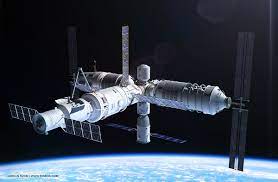
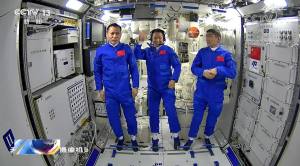
China’s space station Tiangong is under construction and china has a major plan to make its functioning complete by 2022. The first crew of 3 astronauts in Shenzhou-12 spaceship were sent to their new space station. It is the first time Chinese have entered their own space station. The spaceship was launched from the Jiuquan launch center in the Gobi desert.

The astronauts successfully docked in the Tianhe module. The Crew will be in the orbit for 3 months. It is the first of the 2 manned mission scheduled for the current year by china. It will be the china’s longest crewed mission till date and the first in 5 years.

Tiangong space station after completion will be one-fifth of the mass of the ISS(International Space Station). It will be smaller than the ISS and its life span is expected to be 10 years. The Station is placed in earth’s low orbit between 340km-450km above the surface. The country has planned about 5 mission for the present year(2021).


China’s progression in space domain:

  • Launch of Zhurong Mars rover successfully on the planet Mars – 6 wheeled Robot was landed and it took picture there.
  • Launch of 1st module of new space station
  • Chang’e 5 mission returned moon samples- rock and soil samples were collected from moon.

How Much Oxygen Does One Tree Produce?

You’ve probably heard that trees produce oxygen, but have you ever wondered just how much oxygen one tree makes? The amount of oxygen produced by a tree depends on several factors, including its species, age, health, and surroundings. A tree produces a different amount of oxygen in summer compared to winter. So, there is no definitive value.

Trees release oxygen when they use energy from sunlight to make glucose from carbon dioxide and water. Like all plants, trees also use oxygen when they split glucose back down to release energy to power their metabolisms. Averaged over a 24-hour period, they produce more oxygen than they use up; otherwise there would be no net gain in growth.

It takes six molecules of CO2 to produce one molecule of glucose by photosynthesis, and six molecules of oxygen are released as a by-product. A glucose molecule contains six carbon atoms, so that’s a net gain of one molecule of oxygen for every atom of carbon added to the tree. A mature sycamore tree might be around 12m tall and weigh two tonnes, including the roots and leaves. If it grows by five per cent each year, it will produce around 100kg of wood, of which 38kg will be carbon. Allowing for the relative molecular weights of oxygen and carbon, this equates to 100kg of oxygen per tree per year.

A human breathes about 9.5 tonnes of air in a year, but oxygen only makes up about 23 per cent of that air, by mass, and we only extract a little over a third of the oxygen from each breath. That works out to a total of about 740kg of oxygen per year. Which is, very roughly, seven or eight trees’ worth.

Here are some typical calculations:

“A mature leafy tree produces as much oxygen in a season as 10 people inhale in a year.”

“A single mature tree can absorb carbon dioxide at a rate of 48 pounds per year and release enough oxygen back into the atmosphere to support two human beings.”​

“One acre of trees annually consumes the amount of carbon dioxide equivalent to that produced by driving an average car for 26,000 miles. That same acre of trees also produces enough oxygen for 18 people to breathe for a year.”​

“A 100-foot tree, 18 inches diameter at its base, produces 6,000 pounds of oxygen.”

“On average, one tree produces nearly 260 pounds of oxygen each year. Two mature trees can provide enough oxygen for a family of four.”

“Mean net annual oxygen production (after accounting for decomposition) per hectare of trees (100% tree canopy) offsets oxygen consumption of 19 people per year (8 people per acre of tree cover), but ranges from nine people per hectare of canopy cover (4 people/ac cover) in Minneapolis, Minnesota, to 28 people/ha cover (12 people/ac cover) in Calgary, Alberta.”

The bigger the tree the more total oxygen it produces and more is its own requirement for oxygen for survival. Net offset Oxygen, as opposed to total Oxygen produced, is the oxygen returned back to the atmosphere: this depends more on the rate of growth of a tree. If a tree weighs 1000kg, and if it adds 10% (100kg) to its weight then it would have released (offset) roughly 100kg of Oxygen. The tree produces more than that, but much of the oxygen it produces will be offset by its own requirement for oxygen. Yes a tree breathes in Oxygen too. But the overall offset can be calculated by the amount of change in mass of a plant or tree. To compare: an average human needs about 750kg of Oxygen per year. All of humanity consume about 7 billion tonnes then! Luckily Oxygen is among the most abundant of elements on earth.


Should community service be made mandatory for children?

“The best way to find yourself is to lose yoourself in the service of others.”

-Mahatma Gandhi

Community service is voluntary and unpaid work, which is done for a social cause and to help the under privileged people/animals. It includes working in NGO’s and activism regarding a social cause.

Community service is an essential part of our society as it inculcates better learning and cooperation skills in young children. It also provides them with a sense of responsibility and self- sufficiency.

The habits learned at a young age gets embedded in one’s personality and we all know that. But we seem to be raising children who are not taught how life skills play a very massive role in their personality development and ,empathy and selflessness is the emblem of being a proficiently raised human being.


In schools, from the very beginning, children are taught to sprint towards scoring the best marks but we need to apprise them with the fact that education can make them literate but community service can transform them into a good citizen because this is the need of the hour.

Even in this time where COVID cases keep on increasing day-by-day and there is a pandemic on the shoulders of this world, students can sit at home and help in raising funds and helping the needy through the screens of their laptops and gadgets. Can anything be more powerful than this? But the field where we, as the society, are lacking is-awareness. And there will be proper awareness about this only when this particular area will mandatorily be a part of our curriculum.

Community service also provides students with better job and college opportunities and increases their chances of getting a scholarship in the future. So, what I believe is that the young minds have a lot of potential and chance of changing their world for the better but they can only grab this chance when they provided with the right appraisal from the very beginning of their lives.

There are various NGOs and websites which are willing to hire more and more people who have a passion about bring a change in this world. The following are some roles you can take up to work on in the latter-

  1. Content writer- Words have the power to transform this world and if you think that your words have that power, you can write for various NGOs and help in raising awareness about their upcoming programmes .
  2. Social media marketing- If you have good advertisment and marketing skills and have a good amount of knowledge about varios social media platforms, you should opt for this role, as it would require you to spread and market NGO campaigns through social media.
  3. Research work- This is in high demand when it comes to websites and NGO’s. If you are good at reaching conclusions and going in the depth of concepts, you can go for this.
  4. Fundraiser- If you work within a large community or have a big audience on social media or in general, you should work in this feild. With the introduction of covid-19, this field has came out to be the greatest need of the hour.

Community service should not only be a part of our college or job resume, but also a part of our personality, character and humanity.

Intellectually challenged students

Special needs is an umbrella term for a wide array of diagnoses, from those that resolve quickly to those that will be a challenge for life and those that are relatively mild to those that are profound. Children with special needs may have developmental delays, medical conditions, psychiatric conditions, and congenital conditions. These special needs require accommodations so children can reach their potential. No matter the reason, the special needs designation is useful. It can help you obtain needed services, set appropriate goals, and gain an understanding of child and the stresses your family may face. Some of the biggest challenges of working with special needs students are as follows:

  • LACK OF PARENTAL SUPPORT-You can pour your heart and soul into your efforts as a special education teacher but if the child’s parents are not on board, all of that work could be for nothing. Having a positive relationship with the parents of your students is essential.
  • LACK OF APPRECIATION-Teachers do not teach because it is prestigious or high paying career they do it for love of the students. Still, a little appreciation goes a long way, especially in a challenging and stressful field like special education.
  • TOO MUCH PAPERWORK-Every special needs child needs an Individual Education Plan and each one can easily reach 10 to 20 pages long. Not only do these plans take time to develop, but there is a lot of documentation that needs to take place. This is all on top of your regular teaching duties which include curriculum planning, progress reports, lesson planning and more.
  • SCHEDULING CHALLENGES-Many special needs students have special schedules for their school day depending on which classes they are able to take and taking into account their needs for additional services like occupational or speech therapy.
  • WORKING WITH OTHER TEACHERS-As a special education teacher, you have to develop your own curriculum for your students, but you also need to know the general education curriculum so you can work with your students to help them with their regular classes. Collaborating with other teachers can be very difficult, especially if they do not understand the challenges of special education.
  • TOO MUCH DOCUMENTATION-In addition to develop each student’s IEP, you also need to collect data and provide evidence of student growth. If you claim that your student is struggling in a particular area, you need hard data to back up that claim and then you need to develop a plan for improvement.

Things you should keep in mind while dealing with special needs children:

  1. IDENTIFY-When you’re introduced to a child with a disability for the first time it’s very important you find out what it is that may impair them. It can be difficult to identify the impairment , particularly in young children. All of this information will help you first interact with the child and understand why they may react in specific ways.
  2. CONSISTENTLY INTERACT-Don’t be intimated or hesitant to interact! Sometimes it takes a few tries and methods to find the right one that appropriately engages that child but it’s imperative that you presist! Remember to introduce yourself, try and make eye contact as much as possible and explain the activity clearly.
  3. OBSERVE-It’s important to take notice of what works and what may not when it comes to each children with special needs. You need to observe everything about the child.
  4. BE PATIENT-Sometimes it’s frustrating, and often it can feel as if any progression you do make is very quickly lost. Don’t be disheartened by this! Developmental delays are common, and it’s important to continue with the methods you’ve found to work, communicate with the parents if possible and most importantly allow the child to build their trust in you.
  5. COMMUNICATION-Whether it’s talking to the child themselves, their parents or other figures of authority in the child’s life and open communication is essential. Particularly if the child is mute or has a behavioural or learning disability, it can be challenging to receive any feedback from them. Try speaking to the individual child’s parents or teachers to gauge some form of feedback as well as to share any headway you may have made.

DISCIPLINE-INTRODUCTION OF BEING US

In contrast to chaos, discipline is a constant spectator of our ideal life journey. It gives people a constructed routine of day to day life. It gives us punctuality, time balance and fine equations between works. Discipline is the motto of a perfectly balanced life.

Discipline gives concentration in education; it helps to increase zero image of fear. It provides guardianship in the normal repercussions that occur every day. Discipline is the interned guardian of a healthy life.

There is a discipline in the circle of space too; each thing revolves around a certain rule. Discipline actually gives us the lessons of self-control, sacrifice and obedience. It is the source of overall consciousness.

Supreme Court declines to put off PG final year medical exams

The Supreme Court on Friday declined to pass a sweeping order to postpone the final exams of the postgraduate medical courses in universities across the country.A Bench of Justices Indira Banerjee and M.R. Shah was hearing pleas by PG medical students, who said preparing for the exams amid COVID-19 duty was difficult. They sought more time to study for the exams.The court said it could not possibly be asked to pass a general order to postpone exams for which dates had not been announced yet.The Bench said the National Medical Commission would keep in mind the COVID-19 situation and doctors working round the clock during the pandemic. The court also noted that the universities had not been made parties to the case.How do we pass a general order when hundreds of universities are involved?” the court asked.Senior advocate Sanjay Hegde, appearing for the students, said his clients would be made to choose between their COVID duty and taking time off to study for their exams.He submitted this was something doctors should not be compelled to do during these dire times for public health. He said the court should intervene on behalf of the doctors to ensure that they are given “reasonable time” to prepare for the exams.On June 11, the court refused a plea by these students to waive the exams.TheBench said the court had, however, intervened on behalf of the students wherever possible. On June 11, the court, in a separate case, ordered the postponement of the AIIMS’ Post Graduate Entrance Test-INICET exams, scheduled for June 16, by a month after taking into consideration fatigue within the medical community after battling a particularly devastating second wave of the pandemic.In that case, a group of doctors had similarly moved the Supreme Court challenging an AIIMS notification that announced the exam in June in “utter disregard” of an assurance from the Prime Minister’s Office to postpone PG exams by four months.Final Year PG Exam 2021 for medical students is yet to be scheduled by various universities across the country. However, as students are busy in COVID duty, they have urged the Supreme Court to postpone their final year exams. The Supreme Court today, on June 18, refused to pass orders in favour of the PIL filed by a group of 29 MD students.The petitioners who filed the PIL claimed that preparing for the exams and attending COVID duties simultaneously is unfair on their part. To address this issue, the National Medical Commission has advised the universities to fix dates for Final Year PG Exam 2021, considering the COVID situation.The petitioners have also sought directions to promote them as senior residents as soon as the scheduled tenure gets completed. However, the vacation bench had issued notice to the Union Government and National Medical Commission on these prayers. MD students are advised to keep a check on the schedule of the Final Year PG Exam 2021 and prepare accordingly.medical exam .

By : G Gnana Priya dharshini

ONLINE LEARNING


The COVID-19 pandemic has triggered new ways of learning. All around the world, educational institutions are looking toward online learning platforms to continue with the process of educating students. The new normal now is a transformed concept of education with online learning at the core of this transformation. Today, digital learning has emerged as a necessary resource for students and schools all over the world. For many educational institutes, this is an entirely new way of education that they have had to adopt. Online learning is now applicable not just to learn academics but it also extends to learning extracurricular activities for students as well. In recent months, the demand for online learning has risen significantly, and it will continue doing so in the future.
As with most teaching methods, online learning also has its own set of positives and negatives. Decoding and understanding these positives and negatives will help institutes in creating strategies for more efficiently delivering the lessons, ensuring an uninterrupted learning journey for students.
Advantages of Online Learning:

  • Efficiency-Online learning offers teachers an efficient way to deliver lessons to students. Online learning has a number of tools such as videos, PDFs, podcasts, and teachers can use all these tools as part of their lesson plans. By extending the lesson plan beyond traditional textbooks to include online resources, teachers are able to become more efficient educators.
  • Accessibility Of Time And Place-Another advantage of online education is that it allows students to attend classes from any location of their choice. It also allows schools to reach out to a more extensive network of students, instead of being restricted by geographical boundaries. Additionally, online lectures can be recorded, archived, and shared for future reference. This allows students to access the learning material at a time of their comfort.Thus, online learning offers students the accessibility of time and place in education.
  • Affordability -Another advantage of online learning is reduced financial costs. Online education is far more affordable as compared to physical learning. This is because online learning eliminates the cost points of student transportation, student meals, and most importantly, real estate. Additionally, all the course or study materials are available online, thus creating a paperless learning environment which is more affordable, while also being beneficial to the environment.
  • Improved Student Attendance -Since online classes can be taken from home or location of choice, there are fewer chances of students missing out on lessons.
  • Suits A Variety Of Learning Styles -Every student has a different learning journey and a different learning style. Some students are visual learners, while some students prefer to learn through audio. Similarly, some students thrive in the classroom, and other students are solo learners who get distracted by large groups. Disadvantages of Online Learning
  • Inability To Focus On Screens-For many students, one of the biggest challenges of online learning is the struggle with focusing on the screen for long periods of time. With online learning, there is also a greater chance for students to be easily distracted by social media or other sites. Therefore, it is imperative for the teachers to keep their online classes crisp, engaging, and interactive to help students stay focused on the lesson.
  • Technology Issues -Another key challenge of online classes is internet connectivity. While internet penetration has grown in leaps and bounds over the past few years, in smaller cities and towns, a consistent connection with decent speed is a problem. Without a consistent internet connection for students or teachers, there can be a lack of continuity in learning for the child. This is detrimental to the education process.
  • Sense Of Isolation -Students can learn a lot from being in the company of their peers. However, in an online class, there are minimal physical interactions between students and teachers. This often results in a sense of isolation for the students. In this situation, it is imperative that the school allow for other forms of communication between the students, peers, and teachers. This can include online messages, emails and video conferencing that will allow for face-to-face interaction and reduce the sense of isolation.
  • Teacher Training -Online learning requires teachers to have a basic understanding of using digital forms of learning. However, this is not the case always. Very often, teachers have a very basic understanding of technology. Sometimes, they don’t even have the necessary resources and tools to conducts online classes.To combat this, it is important for schools to invest in training teachers with the latest technology updates so that they can conduct their online classes seamlessly.
  • Manage Screen Time-Many parents are concerned about the health hazards of having their children spend so many hours staring at a screen. This increase in screen time is one of the biggest concerns and disadvantages of online learning. Sometimes students also develop bad posture and other physical problems due to staying hunched in front of a screen.A good solution to this would be to give the students plenty of breaks from the screen to refresh their mind and their body.

10 tips to write the perfect job description

Employees are the lifeblood of any organization. They invest their skills, capability, and human sources to make sure that the organization they work for can supply every bit of their guarantees to clients. Recruiting the appropriate candidate for a function in any organization is becoming harder due to certain elements, such as the lack of recruiting method and the inability to define the task in a job description. right job descriptions are had to filter irrelevant candidates and help employers attention on getting the proper candidate who will deliver the core values their employer goals. Your job description is a concern when it comes to recruiting a suitable candidate so observe the tips below when writing your activity description.

What is a job description?

A job description is a record that certainly states the requirements, responsibilities, duties, and abilities required to perform a selected position. activity descriptions are utilized by groups and recruiters to draw capability applicants to the role.

Here are our suggestions on the way to write an appropriate job description:

be creative with the title in your job description

The first step to writing a job description that works is identity. you need to get the name proper inside the activity description due to the fact that is the primary component everybody sees. The title of your job description ought to describe in particular the form of activity and obligations to be finished. You should also be creative approximately it. You want in a task description something as a way to attract attention the instant someone sets their eyes on it. a terrific job description title ought to be smooth to understand and very self-explanatory, in order that job seekers don’t have to read the rest of the activity description earlier than they recognize what you are seeking out.

Because you’re posting the process description online, you also want to make sure the task description carries famous keywords human beings use to look for such jobs. make sure you select a name this is free of gender or age implication, and widespread sufficient to be as compared to different similar jobs inside the enterprise. keep away from sounding too technical or superlative for your task description due to the fact that might reason more damage than the top. hold your job description easy to read and recognize.

think about your ideal candidate when writing your job description

Visualize the candidate you would preferably like to recruit and what your widespread success would be for their overall performance while writing your job description. broaden a profile of your perfect recruit which you may match towards candidates. That isn’t always to say you need to be rigid when picturing your best candidate but having a concept of the sort of character who might healthy properly within the department and who fits the process profile flawlessly is a good beginning in terms of interviews.

be concise with the job duties in your job description

Most people looking for a job assume to see boring and lengthy task responsibilities in the process description. while every enterprise’s HR department may be doing it, you might need to take a step away from the group a little bit. uninteresting, trustworthy, and juice-missing job descriptions will handiest get read halfway, and your exceptional applicants are leaving your page already. What can you do? Make your task description exciting and amusing to read. placed one or two points for your activity description that make it look like you’re trying to tell a tale about what your business enterprise values.

Make your process description brief. The shorter, the better. the ideal length for the activity obligations segment in your job description needs to be about 4 to 5 sentences. attempt as a whole lot as viable to explain the process seeker’s duties in fewer words within the task description and notice what number of people want to work with such efficient and imaginative organization. don’t forget you’ve got a totally short time to seize the eye of the proper candidate together with your activity description, so make every second rely.

Don’t forget to apply keywords for your task description; they help extra applicants locate you and improve your chances of hiring the proper humans. Rank your recruiting priorities to your job description, like duties, heritage, and skills from the best to the lowest, and be flexible, displaying that the job has the capacity for increase and development inside the future. Don’t forget to start with a catchy identify and introduction in your job description, simplify the process duties, and make the whole lot easy and smooth to recognize. task descriptions must be readable and engaging and job descriptions.

only the most critical skills whould be enlisted in your job description

One common mistake made via many HR departments is mixing competencies and competence in a process described as though they’re the equal issue. In fact, the abilities themselves need to be separated inside the task description. applicants searching out work take this part of the activity description very critically because they don’t want to be in a task position they couldn’t manage or is not their core competence.

A good job description needs to have competencies and competence sections separated because they are two various things. abilities are what to procure with the aid of getting to know or exercise, e.g., the ability to design tremendous graphical content. Competence is an inert ability that allows you to supply higher potential, e.g., verbal exchange. You ought to additionally separate the capabilities for your activity description together with “must-have” and “desired.” This makes your process description greater practical seeing that it could be tough to locate applicants with all the talents which you need. Be clean together with your choice for the type of candidate you want and ensure that every phrase you put on that web page of the activity description has a reason to be there.

explain the working relationships in your job descriptions

It’s miles critical to provide an explanation for the running relationships and running lines in job descriptions to clarify the responsibilities of the candidate by using describing who the candidate reviews and who, if everybody, reports to them. that is essential because it shall we the candidate realize their region within the hierarchy of the organization and the way the agency and branch are structured. also, appropriate working relationships are essential for employee integration and nicely-being so it might be comforting for a capacity new worker to recognize wherein they will healthy in if a success.

Consider giving an illustration of the scale of the department as well for your job description. a few human beings might be get rid of by means of a branch of 30 employees whereas others might respect having a massive crew. you could even pass one step in addition and include a branch organizational chart to your job description, although this is in no manner obligatory.

let your job description reflect the voice of your company

Every business enterprise has its very own cost gadget, morals, and other elements that determine how they operate. to draw more applicants to process listings, job descriptions ought to stand out by means of imparting a visual and wonderful agency voice. This needs to be seen in every phase and component of your activity description so that after someone starts of evolved reading the task description they have got an idea of what you represent. Describe your business enterprise’s HR solution tradition in tiny details for your task description so that you can attract the kind of candidate on the way to match in.

You need to also be conscious of range close to the form of character you want to get into the location for your office. discover approximately other values you may add to your task description so it may be extra appealing to a large choice of candidates. You need people with new ideas, distinct methods of doing things, candidates who will assign the reputation quo and strive to make a difference. In short, appeal to unique styles of human beings along with your task description.

hint on growth and development in your job description

Everybody wants to work in a company in which they can make a contribution, grow, and improve their careers. one of the satisfactory approaches pinnacle businesses recruits exquisite abilities is assuring them of the possibility for increase and development. while writing your job description, hint on how the job will make contributions to enterprise objectives, the potential for groups and operational development, and approaches the candidate’s function will help upload to that. The process description has to lure formidable people who are attracted by using the possible possibilities cited within the activity description.

Talk about your corporation on your activity description: what your agency is doing within the larger industry to put in force new technology so that it will spur boom, and how the candidate’s talents will help the employer obtain their cause. Your task description ought to also attempt to attract applicants who are movement-driven and want to be part of a company this is revolutionary. statistics ought to be included on organizations’ projected boom boom in job descriptions and candidates ought to be invited to be part of a group to obtain new milestones within the corporation.

do not add a salary amount to a job description

It isn’t an amazing concept to add a income to task descriptions. as a substitute, a company ought to include a aggressive income range to the process description that works with their business enterprise’s HR answer desires.

list the benefits in your job description

Applicants need a compelling reason to depart their current company, where they are possibly very comfortable and have positive blessings granted for years of provider. provide them a purpose to pick out your enterprise over their present day one. Use the job description to give the perks that come with the process (bonuses, repayment for achieving objectives, healthcare, savings plans, crew-building occasions or journeys, gifts given to employees at Christmas, as an instance). The blessings are regularly the real pull to a corporation if they are thrilling, particularly bonuses, as they can frequently top up a profits notably and are very appealing to capacity recruits.

end your job description with a proposition

Job descriptions are like an income pitch and you could use a call to motion at the cease of your task description to reel your potential applicants in and impel them to take the next step and observe for the task. Make the steps of the utility manner simple so one can act fast.

Career In Sports

Sports is a thrilling and wholesome activity game to many, however, if the game is surely one’s passion it could be a totally profitable and satisfying career too. It turned into traditionally considered as an interest particularly in India however now it is taken as a severe professional alternative.

The achievement of sports activities people in a recent international carrying occasion has brought the point of interest to sports careers. sports activities help you to make your frame bodily match and preserve your mind good. if you choose sports activities as a career, it also offers plenty of reputation and cash.

you can make a profession in any sports activities area relying on what sports activities you take up as your knowledge. various sports fields are Cricket, Badminton, Volleyball, football, Basketball, Boxing, Gymnastics, Hockey, Table Tennis, Wrestling, cycling, etc.

1982 changed into a watershed yr for the increase and development of sports in India. The first time, the Asian video games were hosted in Delhi in India.

courses and duration

As a sports person, you may get training from various establishments of sports activities Authority of India. In India, there are various institutes and academies under the sports activities Authority of India (SAI) that impart schooling to younger abilities to transform them into proficient sports activities for men and women. aside from SAI, there are many state ranges and private corporations that help sports activities enthusiasts.

Diploma Course:

  • Diploma in Sports Medicine
  • Diploma in Sports Coaching
  • Diploma in Sports Management
  • Diploma in Sports Science & Nutrition

Undergraduate Courses:

  • B.Sc in Physical Education, Health Education and Sports Sciences
  • Bachelor of Physical education
  • Bachelor of Arts (BA) in Sports Management
  • B.Sc (Hons) in Sports Science
  • B.Sc in Sports and Recreation Management
  • Bachelor of Sports Management (BSM)
  • Bachelor of Business Administration (BBA) in Sports Management

Postgraduate Course:

  • Master of Physical education
  • M.Sc in Sports Coaching
  • Post Graduate Diploma in Sports Medicine
  • Post Graduate Diploma in Sports Management
  • Post Graduate Diploma in Sports Business
  • MBA in Sports Management
  • Master of Sports Management (MSM)
  • M.Sc in Sports Science

Doctoral Degree Courses:

  • Ph.D in Physical Education
  • M.Phill in Physical Education
  • Ph.D in Sports Management

Top Colleges in India offer study in Sports:

  • National Institute of Sports, Patiala
  • Indira Gandhi Institute of Physical Education and Sports Sciences, New Delhi
  • Lakshmibai National Institute of Physical Education, Gwalior
  • Lakshmibai National College for Physical Education, Thiruvananthapuram
  • Tata Football Academy, Jamshedpur
  • National Cricket Academy, Bangalore
  • Delhi University

Skills required to become a sports person:

  • Physical Energy and Stamina
  • Energetic
  • Enthusiastic
  • Physically fit
  • Patience
  • Sporting Spirit
Eligibility & Admission
  • You have to go after 12th examination and done a graduation degree in Physical Education with a physically fit body and energetic.
  • You will get admission in UG course after completing 10+2 examination.
  • If you are interested to do PG courses, then you have to pass your graduation degree.
  • After MBBS Degree, you can appear for the Diploma course in Sports Medicine.
  • Generally, admissions will be based on the merit list. The merit list shall be drawn on the basis of marks obtained in the qualifying examination.

Association and Organization of sports:

  • National Basketball Association
  • National Hockey League
  • National Football League
  • All India Tennis Association
  • National Institute of Sports
  • Indian Olympic Association
career and jobs

Sports activities opened up many professional opportunities for younger competencies in India. To emerge as a sports activities character, having a talent in the selected recreation is very crucial. along with talent, robust willpower, and perseverance in wishes.
For each sports activities character, it’s miles a dream to represent their country at the international degree. you may start your profession at college and university level and start play at the country degree, regional level after which explores opportunities at countrywide and global ranges.

other than clearly being an energetic sportsman, then different career possibilities are game advertising, training, athletic administration, sports activities remedy, game advertising, recreation psychology, and so on.

sports character may be employed in the private and public sectors. The Indian government and armed forces additionally have special recruitment drives for wonderful wearing talent. you could additionally set up your personal commercial enterprise in manufacturing of sports activities equipment after gaining enjoy in this field.

Job Profiles:

  • Teacher
  • Biomechanics
  • Sport psychologist
  • Sport journalist
  • Sports Player
  • Sports Coach & Instructor
  • Commentator
  • Sports Photographer
  • Personal Trainer
  • Professional Athlete
  • Physical Education Teacher
  • Health Advice Officer
  • Health & Public Services Leader

Some regions wherein you could locate jobs of sports field are stated here:

  • Media, Sports & Advertising Companies
  • Sports Management Industry
  • Educational Institutions & Colleges
  • Merchandising (Retail) Companies
salary

The income of the sports persons totally depends on the game recreation that he has selected. inside the sports activities discipline, the variety of years of revel in isn’t always simply rely on, however also the sports person capability to deliver extraordinary performance continuously. beginning salary of the sports activities character is approx Rs. 3 Lac to Rs 5 Lac per 12 months. when you become a celeb sportsman, you may earn in crores in line with annum. The revenue also relies upon your process profile.

Walk longer live longer

Your heart could be a muscle that beats 24 hours on a daily basis for a lifetime but like all muscles, it must be exercised in order that it can pump more blood each beat and save all of your energy. An unfit heart has more work to try and do. Then even simple tasks like walking to the shops or carrying the shopping bags can become quite tiring but if you exercise aerobically, then your muscles can use oxygen more efficiently, your heart pumps more blood with each and every beat and it doesn’t beat as fast. aerobics is important for your heart.

Walking is that the safest and best cardiopulmonary exercise for your heart because it’s easy to start a walking program and simple to stay up. Walking is an exercise that you just can safely do for the remainder of your life.

Your heart will benefit most from the sort of activity that builds up stamina. The vigorous effort of activity builds up stamina. The vigorous effort of moving your muscles rhythmically creates a greater demand for oxygen within the blood, and more work for the guts and lungs.

research by country exercise physiologist Dr. Adrinne hardman and her colleagues at Loughborough University found that fat level within the blood after a fatty meal was lower in folks that had taken a brisk walk the day before. Volunteers who took a two-hour brisk walk the day before a meal had 30 percent less dietary fats in their blood than after they eat similar food on a daily basis without exercise. And early suggests similar benefits from brisk walking after a meal. It seems that brisk walking helps clear, dangerous fats from the blood and cuts the risks of clogged arteries. So walking is that the best medicine is you have got.

They say that adulthood puts wrinkles on our minds than our faces. you’re as old as you’re feeling. within the fight against aging, mental fitness is as important as good condition. Mental fitness gets you up and going for a walk, mental fitness gives you a brand new attitude, a replacement outlook on life, mental fitness gives you the drive and energy to create plans for a healthy future.

Many people drift into maturity as if it’s inevitable. they create financial plans for his or her time of life and retirement but they do not give identical consideration to a physical plan so as to enjoy these years to the complete. They drift into their middle and later years sitting around and awaiting a heart failure when what they ought to be doing is following an exercise and diet plan they must be doing is following an exercise and diet decide to help them enjoy life to the complete. A sedentary lifestyle is taken into account so bad, that the American association on a par with high force per unit area, high blood cholesterol. They found that the smallest amount of active people are almost twice as likely to own cardiovascular disease because the most active.

Just walk and have an honest breathe and remind yourself that this very moment is that the only one you recognize you have got needless to say.

Fruit

Fruit and vegetable contain important vitamins ,minerals and plant chemicals

They also contain fibre .There are many varieteies  of fruits and vegetable available and many way to prepare ,cook and serve them .A diet high in fruit and vegetables can available and many ways to prepare ,cook and serve them.A diet high in fruit and vegetable can help protect you against cancer ,diabetics and heart disease


eating fruit provides health benefit people who eat more fruits and vegetable as part of an overall healthy diet are likely to have a reduced risk of some chronic disease.Fruits provide nutriets vital for health and maintsince of your  body.most fruit are naturally low in fat.

International panic day

Begun as sort of a ‘mock’ holiday, this idea was put together with the intention of offering a day to shake off the natural state of panic in the lives of many people today. It is a day to sit back, relax and try to let some of that stress and panic melt away.

Although it might be a ‘fun’ little way to address it, panic is a serious topic. In fact, panic disorder is a mental health issue that may affect up to 2% of the population in certain countries. Women are more likely to succumb to panic than men, and the condition is very treatable, particularly when the person affected is armed with self-care tactics while sticking to a healthful diet.

International Panic Day has been taken on by many countries throughout the world to raise awareness of struggles with mental illness. It is meant to encourage people to slow down, relax and get the help they might need if they are, indeed, struggling with panic. The best measures, however, are preventative!

Celebrate International Panic Day by taking time to intentionally focus on reducing stress and taking some time off!

LIFELINE OF LIFE: WATER

Water has always been the essential requirement for all lives. Be it humans, animals or plants, water is one of the quintessential commodity for everyone. It is even believed that water is the reason some of the creature were created million years ago. As we all know, human beings are made up of 75% of water.

Now, as the population has grown and civilization has improved multifold, water has also become a business venture where it is sold at the price quoted by the monopoly and poor people are forced to buy because they have no other go. All the water resources have been exploited by the so called MNCs and are used to their advantage to expand their empire. Long queues can be seen and the common water-tap fights are increasing day by day for the procurement of water.

Photo by Anna Tarazevich on Pexels.com

Recently, a swarm of dead bodies of Covid-19 patients was found in the banks of Ganga river. It was so heartbreaking in two ways. First, it was devastating for the families of the dead to claim and cremate their bodies. Then, the water body has gotten so contaminated that, we don’t know when it can be put to use again. This is very bad because most of North India depend on Ganga and its distributaries for water supply.

Since human found that water may not be the thing that will last forever, he either stock piled it or created a business of it. Even the conflict between Tamil Nadu and Karnataka was because of water, because it originated from Karnataka and Tamil Nadu depends on it.

It is true that world is covered with 71% of water but only 3% of that is fresh water. Even then, 1.2% is readily available, rest is frozen in the form of glaciers, and ice. 3% may seem a lot less, but that is enough for the life to thrive on earth.

So, what can be done to correct? First step would be to remove the discrepancies between the concentration of water from one area to another. There are places where water is available in plenty and there are also places where people have to walk kilometers to get water to even drink. Second, exploitation of water resources should be stopped. The process of procurement of water should be monopolized by the water which can be then later distributed to public equally.

The other important point would be planning of catching the rainwater and reduce wastage as much as possible. To increase rain, trees should be planted more and more. Ultimately, it all does a full circle and comes to the point where every element in environment are depended on each other. Humans should be careful about how the demolish the balance of nature, lest they will be stranded in the end.

Reliance Jio and Bharti Airtel kick off 5G network trials in India

#Reliance jio #bhartiairtel

Reliance Jio has commenced 5G trials in Mumbai as it races with rival Bharti Airtel to introduce the mobile technology in India. While Jio’s trials in Mumbai are being carried out using indigenously developed technology, the company has tied up with multinational vendors, including Ericsson, Nokia, and Samsung for trials in Delhi, Pune, and Gujarat.

The Department of Telecommunications had in May allocated 5G trial spectrum in 700-megahertz (MHz), 3.2-3.6-gigahertz (GHz), and 24.25-28.5-GHz bands to Airtel, Jio, and Vodafone Idea to develop India-specific use-cases. Jio is using standalone 5G architecture for its trials and this will include testing of core and radio network for peak speed, latency, and data loads, said a source.

Tests in other cities will commence soon and will need to be completed in six months, according to the spectrum licence conditions. Last year, the Mukesh Ambani-led company had tied up with Qualcomm to develop open and interoperable interface-compliant. 5G solutions and had achieved 1 gigabits per second (Gbps) download speed during the tests. According to industry sources, Airtel too has started testing 5G trials in Gurugram in partnership with communication service provider Ericsson. The tests demonstrated a throughput of over 1 Gbps during the live trial, said sources. New postpaid fibre plans Reliance Jio on Tuesday launched its postpaid fibre plans for broadband internet with zero upfront entry cost. The plans are priced upwards of Rs 399 and are available with 6-12 month options. Customers will get a set-top box and up to 15 paid over-the-top applications on plans priced Rs 999 and above

latest technology: Artificial Intelligence

Artificial intelligence (AI) is a wide-ranging branch of computer science concerned with building smart machines capable of performing tasks that typically require human intelligence. AI is an interdisciplinary science with multiple approaches, but advancements in machine learning and deep learning are creating a paradigm shift in virtually every sector of the tech industry. 

Less than a decade after breaking the Nazi encryption machine Enigma and helping the Allied Forces win World War II, mathematician Alan Turing changed history a second time with a simple question: “Can machines think?” 

Turing’s paper “Computing Machinery and Intelligence” (1950), and its subsequent Turing Test, established the fundamental goal and vision of artificial intelligence.   

At its core, AI is the branch of computer science that aims to answer Turing’s question in the affirmative. It is the endeavor to replicate or simulate human intelligence in machines.

The expansive goal of artificial intelligence has given rise to many questions and debates. So much so, that no singular definition of the field is universally accepted.  

The major limitation in defining AI as simply “building machines that are intelligent” is that it doesn’t actually explain what artificial intelligence is? What makes a machine intelligent?

In their groundbreaking textbook Artificial Intelligence: A Modern Approach, authors Stuart Russell and Peter Norvig approach the question by unifying their work around the theme of intelligent agents in machines. With this in mind, AI is “the study of agents that receive percepts from the environment and perform actions.”

Norvig and Russell go on to explore four different approaches that have historically defined the field of AI: 

  1. Thinking humanly
  2. Thinking rationally
  3. Acting humanly 
  4. Acting rationally

The first two ideas concern thought processes and reasoning, while the others deal with behavior. Norvig and Russell focus particularly on rational agents that act to achieve the best outcome, noting “all the skills needed for the Turing Test also allow an agent to act rationally.”

Patrick Winston, the Ford professor of artificial intelligence and computer science at MIT, defines AI as  “algorithms enabled by constraints, exposed by representations that support models targeted at loops that tie thinking, perception and action together.”

“AI is a computer system able to perform tasks that ordinarily require human intelligence… Many of these artificial intelligence systems are powered by machine learning, some of them are powered by deep learning and some of them are powered by very boring things like rules.”

Ancient History

India’s history and culture is dynamic, spanning back to the beginning of human civilization. It begins with a mysterious culture along the Indus River and in farming communities in the southern lands of India. The history of India is punctuated by constant integration of migrating people with the diverse cultures that surround India. Available evidence suggests that the use of iron, copper and other metals was widely prevalent in the Indian sub-continent at a fairly early period, which is indicative of the progress that this part of the world had made. By the end of the fourth millennium BC, India had emerged as a region of highly developed civilization.

The Indus Valley Civilization

The History of India begins with the birth of the Indus Valley Civilization, more precisely known as Harappan Civilization. It flourished around 2,500 BC, in the western part of South Asia, what today is Pakistan and Western India. The Indus Valley was home to the largest of the four ancient urban civilizations of Egypt, Mesopotamia, India and China. Nothing was known about this civilization till 1920s when the Archaeological Department of India carried out excavations in the Indus valley wherein the ruins of the two old cities, viz. Mohenjodaro and Harappa were unearthed. The ruins of buildings and other things like household articles, weapons of war, gold and silver ornaments, seals, toys, pottery wares, etc., show that some four to five thousand years ago a highly developed Civilization flourished in this region.

The Indus valley civilization was basically an urban civilization and the people lived in well-planned and well-built towns, which were also the centers for trade. The ruins of Mohenjodaro and Harappa show that these were magnificent merchant cities-well planned, scientifically laid, and well looked after. They had wide roads and a well-developed drainage system. The houses were made of baked bricks and had two or more storeys.

The highly civilized Harappans knew the art of growing cereals, and wheat and barley constituted their staple food. They consumed vegetables and fruits and ate mutton, pork and eggs as well. Evidences also show that they wore cotton as well as woolen garments. By 1500 BC, the Harappan culture came to an end. Among various causes ascribed to the decay of Indus Valley Civilization are the recurrent floods and other natural causes like earthquake, etc.

Vedic Civilization

The Vedic civilization is the earliest civilization in the history of ancient India. It is named after the Vedas, the early literature of the Hindu people. The Vedic Civilization flourished along the river Saraswati, in a region that now consists of the modern Indian states of Haryana and Punjab. Vedic is synonymous with Hinduism, which is another name for religious and spiritual thought that has evolved from the Vedas.

The Ramayana and Mahabharata were the two great epics of this period.

The Buddhist Era

During the life time of Lord Gautam Buddha, sixteen great powers (Mahajanpadas) existed in the 7th and early 6th centuries BC. Among the more important republics were the Sakyas of Kapilavastu and the Licchavis of Vaishali.

Alexander’s Invasion

In 326 BC, Alexander invaded India, after crossing the river Indus he advanced towards Taxila. He then challenged king Porus , ruler of the kingdom between the rivers Jhelum and Chenab. The Indians were defeated in the fierce battle, even though they fought with elephants, which the Macedonians had never before seen. Alexander captured Porus and, like the other local rulers he had defeated, allowed him to continue to govern his territory.

Gupta Dynasty

After the Kushanas, the Guptas were the most important dynasty. The Gupta period has been described as the Golden Age of Indian history. The first famous king of the Gupta dynasty was Ghatotkacha’s son Chandragupta I. He married Kumaradevi, the daughter of the chief of the Licchavis. This marriage was a turning point in the life of Chandragupta I. He got Pataliputra in dowry from the Lichhavis. From Pataliputra, he laid the foundation of his empire and started conquering many neighbouring states with the help of the Licchavis. He ruled over Magadha (Bihar), Prayaga and Saketa (east Uttar Pradesh). His kingdom extended from the river Ganges to Allahabad. Chandragupta I also got the title of Maharajadhiraja (King of Kings) and ruled for about fifteen years.

Harshavardhana

With the commencement of the 7th century, Harshavardhana (606-647 A.D.) ascended the throne of Thaneshwar and Kannauj on the death of his brother, Rajyavardhana. By 612 Harshavardhana consolidated his kingdom in northern India.

In 620 A.D. Harshavardhana invaded the Chalukya kingdom in the Deccan, which was then ruled by Pulakesin II. But the Chalukya resistance proved tough for Harshavardhana and he was defeated. Harshavardhana is well known for his religious toleration, able administration and diplomatic relations. He maintained diplomatic relations with China and sent envoys, who exchanged ideas of the Chinese rulers and developed their knowledge about each other.

Job : computer science graduate?

Computer technologies are integral to modern life, so you’re likely to find your computer science skills in high demand across many different industries. These include financial organizations, management consultancy firms, software houses, communications companies, data warehouses, multinational companies, governmental agencies, universities and hospitals. 

As always, it’s extremely beneficial to have completed relevant work experience. You should also consider compiling a portfolio of your own independent projects outside of your degree, which could be in the form of programming, moderating online or even building an app.

IT consultant 

Working in partnership with clients, an IT consultant advises clients on the planning, design, installation and usage of information technology systems to meet their business objectives, overcome problems or improve the structure and efficiency of their IT systems.

As you represent a broad role in IT, your job will be similar to that of systems analysts, systems designers and applications programmers, whose roles are more specialized but nonetheless work on a consultancy basis.

You may also become involved in sales and business development, identifying potential clients and maintaining good business contacts. There is fierce competition in this role, so gaining work experience in a commercial environment would help increase your prospects.

Cybersecurity consultant 

Depending on what computer science specializations you studied during your degree, you may wish to specialize as a cybersecurity consultant or an information security specialist. Maintaining cyber security has become increasingly important, so in this role you will focus on understanding the risks to the security of information or data.

You’ll analyze where security breaches may occur or have occurred, and restore or reinforce systems against such breaches, to ensure that confidential data is protected. This role could include ‘ethical hacking’, meaning deliberately attempting to hack into your employer’s network to expose any weaknesses. Alternatively, you could work as a computer forensics analyst or investigator to combat the increasing phenomenon of cyber-crime.

Information systems manager 

A similar role to an IT consultant, an information systems manager is usually a full-time member of staff, responsible for the secure and effective operation of computer systems within their company. You’ll be responsible (perhaps with the help of a team of IT staff) for the entire upkeep of the ICT infrastructure within your organization, with typical tasks involving the overseeing of system installation; ensuring systems are backed-up and that the back-up systems are operating effectively; purchasing hardware and software; setting up secure access for all users; ensuring security of data from internal and external attack; and providing IT support and advice for users. 

You’ll need to make sure the ICT facilities meet the needs of your company and are current, while remaining within a set budget, and within all relevant software licensing laws. You may also need an understanding of business and management principles in order to contribute to organizational policy regarding quality standards and strategic planning in relation to IT.

Database administrator 

database administrator (DBA) is responsible for accurately and securely using, developing and maintaining the performance, integrity and security of a computerized database. The specific role is always determined by the organization in question but is likely to mean being involved purely in database maintenance or specialized in database development. 

The role is also dependent on the type of database and processes and capabilities of the database management systems (DBMS) in use in your particular organization.

Typically, this role includes ensuring data remains consistent, is clearly defined, easily accessible, is secure and can be recovered in an emergency. You’ll also be required to troubleshoot should any problems arise; liaise with programmers, operational staff, IT project managers and technical staff; provide user training, support and feedback; and write reports, documentation and operating manuals.

Multimedia programmer 

multimedia programmer is responsible for designing and creating multimedia computer products, making sure they’re functional and maintaining fidelity to a designer’s specification. You’ll use creative as well as technical skills to develop multimedia features including text, sound, graphics, digital photography, 2D/3D modelling, animation and video. 

You’ll need to work with the designer to understand the design concept, discuss how it can be technically implemented, identify the operational rules necessary, write efficient computer code or script to make the features work, run tests of the product to test for bugs and rewrite or add new code if necessary.

You’ll also be available for technical support after the product is completed and need to keep abreast of industry news and developments in order to suggest and implement improvements.

Personality development tips

1.Know you are incomparable

You bring your self-esteem down by comparing yourself with others. That shrivels your personality and does not let your strengths blossom . Know that you and the other person are unique and are just incomparable.

2.Be kind to yourself

We are taught to be kind to others. Yet, many of us fail to be kind to ourselves. Studies show that self-compassion brings positive traits like optimism, extroversion, wisdom, happiness, positivity and resilience. According to Emma Seppala, research psychologist at Stanford University, self-compassion involves three steps:

  • Recognize that you deserve care and concern like anyone else and that is why you must be kind and understanding with oneself.
  • Recognize that making mistakes and failing is part of life. So, do not be hard on yourself when you commit a mistake or fail and indulge in self-critical thoughts.
  • Be aware of one’s emotions and feelings.

Contrary to popular belief, self-compassion does not mean letting yourself off the hook. Rather, it means taking corrective action, albeit without being too self-critical.

3.Give space to imperfection

People and situations always do not fit in your frame of perfection. Often, that makes one agitated and angry, eventually diminishing the strength of their personality. So, find your peace amidst the world’s flaws even as you strive to make a change.

4.Be spontaneous

Spontaneity makes one to be fun around. However, do not confuse being spontaneous with being impulsive. Gurudev Sri Sri Ravi Shankar says, that while the former is the key to success, the latter can causes disasters. So, how do you be truly spontaneous? By being cent percent aware in the present moment.

5.Be light in mind and heart

Don’t overthink and overanalyze. Neither let any negativity like shame, anger, jealousy or greed stay in your consciousness for too long. Instead, learn to take it easy; forgive easily and drop grudges against people as soon as they pop up.

6.Stay enthusiastic

Enthusiasm is infectious and appealing. That is why everyone loves kids. Gurudev Sri Sri Ravi Shankar says, that despite adverse situations in life, one must never give up their enthusiasm.

7.Be a better communicator

A couplet in Kannada says that words can create laughter and can also create enmity. A skillful communicator can win over people and adverse situations. So, bring clarity in your communication. Learn how you can be an excellent communicator with these tips from Gurudev Sri Sri Ravi Shankar.

8.Be warm and approachable

We all like people with whom we can easily mingle and talk to. No one likes a person who responds with a straight face. So, learn to be warm. Flash that smile more often. Be friendly and be ready to share and help.

9.Do things with style

Doing things with style adds zing to your personality. The secret to doing things with style lies in working with passion and a relaxed mind. So, while you work at something, don’t let anything distract you from putting all your energy into it. At the same time, stay relaxed.

10.Learn to let go

After you’re done with a task, let go of your attachment with the result. When you let go, you become free, calm and relaxed – attributes of a strong personality.

news:

Covid third wave will not pose greater threat to children, reveals WHO-AIIMS survey

Children attend class organised during relaxation hours of Covid-19 lockdown in Jammu.

The WHO-AIIMS seroprevalence study revealed SARS-CoV-2 sero-positivity rate to be high among children and comparable to the adult population. A probable third wave of a prevalent Covid-19 virus variant will not disproportionately affect children than adults, showed a joint study by the World Health Organization (WHO) and the All India Institute of Medical Sciences (AIIMS).

The seroprevalence study revealed SARS-CoV-2 sero-positivity rate to be high among children and comparable to the adult population. The survey covered a total sample size of 10,000 across five selected states. Data of 4,500 participants from four states in India were taken for the results of the time of midterm analysis. More results are expected to come in the next two to three months.

The study found highest reported seroprevalence in any sero-assessment ever in South Delhi’s urban areas at 74.7 per cent, informed Dr Puneet Misra, Professor of Community Medicine at AIIMS, New Delhi, who led the survey.

Even before the second wave, children below the age of 18 in South Delhi had shown seroprevalence as high as 73.9 per cent. “These areas in Delhi and NCR (Faridabad) may have higher seroprevalence after the intense second wave. Probably, these levels of seroprevalence may be protective against any ‘third wave’,” Dr Misra said.

“In congested urban areas of Delhi, since children already have high seroprevalence, opening schools, may after all not be a very risky proposition. During the second wave, the NCR region of Faridabad (rural area) has a seroprevalence of 59.3 per cent (almost equal in both age groups), could be considered high compared to previous national surveys,” the survey said. Gorakhpur Rural showed a very high seroprevalence of 87.9 per cent in the age group 2-18 years) with 80.6 per cent and above 18 years with 90.3 per cent. These levels are likely to ward off the “third wave”. The survey established that rural areas have been mostly affected in, which means more chances of herd immunity.

The accelerated peaks and precipitous decline in Covid-19 cases in both Delhi and Uttar Pradesh could be explained partially by these findings. Overall, more than half (62.3 per cent) of the rural population surveyed showed evidence of past infection. The Agartala Rural site showed the least seroprevalence at 51.9 per cent. This was probably because it also included some tribal population which generally have lower mobility, translating into lower vulnerability to Covid-19 infection.

THE COVID-19 DELTA VARIANT

The central government on Tuesday confirmed that it has detected a mutation in the delta variant of SARS CoV2 virus which has emerged into an additional strain named as Delta Plus.

Confirming that the Delta variant played a crucial role in the second wave of the covid-19 pandemic, the government said that it has submitted the information to the global data system.

It has been seen in Europe since March and was brought into the public domain two days ago on June 13. Delta variant played a major role in the pandemic. Delta Plus is a variant of interest, but not a variant of concern,” said Dr Vinod Paul Member (Health) in NITI Aayog and Chair of the National Expert Group on Vaccine Administration for covid-19 (NEGVAC) at a press briefing.

The government said that INSACOG (Indian SARS-CoV-2 Genomic Consortia) will keep a strict vigil on the new variant. Meanwhile the number of covid-19 cases are steadily in the country with the trajectory of the pandemic declining. India reported over 60,471 daily new cases in last 24 hours, lowest after 75 days with 2733 deaths due to coronavirus.

The Evolution of the Human Brain

The human brain did not evolve for life in a delayed-return environment.

The earliest remains of modern humans, known as Homo sapiens sapiens, are approximately two hundred thousand years old. These were the first humans to have a brain relatively similar to ours. In particular, the neocortex—the newest part of the brain and the region responsible for higher functions like language—was roughly the same size two hundred thousand years ago as today. You are walking around with the same hardware as your Paleolithic ancestors.

Compared to the age of the brain, modern society is incredibly new. It is only recently—during the last 500 years or so—that our society has shifted to a predominantly Delayed Return Environment. The pace of change has increased exponentially compared to prehistoric times. In the last 100 years we have seen the rise of the car, the airplane, the television, the personal computer, the Internet, and Beyonce. Nearly everything that makes up your daily life has been created in a very small window of time.

A lot can happen in 100 years. From the perspective of evolution, however, 100 years is nothing. The modern human brain spent hundreds of thousands of years evolving for one type of environment (immediate returns) and in the blink of an eye the entire environment changed (delayed returns). Your brain was designed to value immediate returns.

How to Design a Better Environment

There are many ways to design an environment that promotes success.

Here are three strategies:

First, automate good decisions. Whenever possible, design an environment that makes good decisions for you. For example, buying smaller plates can help you lose weight by deciding portion size for you. A study from Brian Wansink at Cornell University found that people eat 22 percent less food by switching from 12-inch dinner plates to 10-inch plates. Similarly, using software to block social media sites can help overcome procrastination by putting your willpower on autopilot.

Second, get in the flow. A few years ago, PetSmart changed their checkout process. After swiping their credit card, customers were shown a screen that asked if they wanted to donate to “help save homeless animals.” Through this single strategy, PetSmart Charities raised $40 million in a year.

You can apply a similar strategy by designing an environment where good habits “get in the flow” of your normal behaviors. For example, if you want to practice a musical instrument, you could place it in the middle of your living room. Similarly, you are more likely to go to the gym if it is literally on the way home from work than if the gym is only five minutes away, but in the opposite direction of your commute. Whenever possible, design your habits so they fit in the flow of your current patterns.

Third, subtract the negative influences. Ancient farmers didn’t have the opportunity to remove the barriers that held them back, but you do. For example, Japanese television manufacturers rearranged their workspaces to save time by eliminating unnecessary turning, bending, and swiveling. You can also reduce the negative influences in your environment. For example, you can make it easier to avoid unhealthy foods by storing them in less visible places. (Foods that are placed at eye level tend to be purchased and eaten more frequently

The Remarkable Power of Environment

When agriculture began to spread around the globe, farmers had an easier time expanding along east-west routes than along north-south ones. This is because locations along the same latitude generally share similar climates, amounts of sunlight and rainfall, and changes in season. These factors allowed farmers in Europe and Asia to domesticate a few crops and grow them along the entire stretch of land from France to China.

By comparison, the climate varies greatly when traveling from north to south. Just imagine how different the weather is in Florida compared to Canada. You can be the most talented farmer in the world, but it won’t help you grow Florida oranges in the Canadian winter. Snow is a poor substitute for soil. In order to spread crops along north-south routes, farmers would need to find and domesticate new plants whenever the climate changed.

As a result, agriculture spread two to three times faster across Asia and Europe than it did up and down the Americas. Over the span of centuries, this small difference had a very big impact. Increased food production allowed for more rapid population growth. With more people, these cultures were able to build stronger armies and were better equipped to develop new technologies. The changes started out small—a crop that spread slightly farther, a population that grew slightly faster—but compounded into substantial differences over time.

Blackmarketing of Medicines

Medicines are one of the most basic requirement for any patient who is suffering from any disease. In the current situation, When the world is suffering from a global pandemic our health sector has been under constant pressure. The pressure of saving multiple lives fighting everyday to continue breathing overcoming all the odds faced by them and their families.

Doctors, Nurses, pharmacist and other hospital staff are the ones who are working extra hours to control the spread of virus. In market, When the world is fighting and standing together against the virus, Some people wants to take advantage from the situation. In the second wave of COVID-19 in India, There were visuals where one injection was sold for 1,00,000 INR despite being the MRP of the injection was very low. Drastic situation faced by the people in India, when nobody was getting a bed in the hospital for their family members on time. Oxygen cylinder were sold for almost five times the original price in some of the areas in India. People used to stand in a queue to fill their cylinders so that their loved ones will not die because of the scarcity of Oxygen.

Despite the warning by government, People had crossed all the limits of humanity. Gaining profit in such difficult situation was the main agenda by black marketers. Stocks of medicines were not available at the pharmacy or local medical stores. It was stocked by people who were doing business and gaining profit by risking the lives of people from their own country. The biggest sin is to take advantage from other’s bad times. It is the time to stand in unity, support other’s with whatever we can and spread the awareness to always wear a mask.

These situations can be faced by any of us. As a country, Our main responsibility is to stop such criminal practices happening in India. Those who are doing it should be punished for risking so much lives at stake for their personal benefit. Government should take some strict actions against them so that it stops immediately. Being a responsible citizen, It is our duty to not let anyone do such offensive and criminal act in front of us.Life is very precious, It becomes very hard for ones who lose their loved ones. We all should pledge support our frontline workers in this challenge.

“Please wear mask if not for you then for your family .”

“GENETIC DISORDERS ATTRIBUTED TO COUSIN MARRIAGES”

“GENETIC DISORDERS ATTRIBUTED TO COUSIN MARRIAGES”


The major cause of rare genetic disorders is attributed to intra-family marriages. First-cousin marriages have a higher risk of genetic diseases and intra-family marriages are too common .


There are more than 100 groups of disorders that pass through genes when close intra-family marriages happen. Culturally and historically, marriages between cousins are too common and these disorders keep on passing through genes to the next generation. Around 70% of marriages are cousin marriages or consanguineous marriages and every year hundreds are cases of genetic disorders emerge.


Islam, the major religion of the state does not prohibit people to marry outside of family or cast but due to illiteracy and caste issues many families prefer to marry in families and not outside. Due to these illiterate minds, harmful diseases are allowed to pass onto newborns which must be declared criminal negligence.


According to doctors, every couple should have a genetic test before marriage, because of deficiencies store in special compartments of body cells. The material building in each lysosome swells and occupies much space in the cell that leads to many other problems in cellular function and that is how diseases pass on.


Experts say that if these diseases are passed to a child, they will get some kind of abnormality. That can be mental abnormality or enlargement of somebody’s organs which may lead the child to die with a critical health condition.


More than 70 percent of the total marriages are in the same families. This tradition is observed like a religious obligation but in reality, it is not. A major consequence of this tradition is the prevalence of Thalassemia in the country which is a blood disorder. It can be treated by blood transfusions and iron chelation.


In a recent interview with a doctor, the doctor said that if one parent carries some disease in genes, the disease does not pass. But if both parents carry the same disease; which is generally common in intra-family marriages; there is a high chance that the defected genes will be passed on to the child.


In recent years, more than 50 children died due to the genetic disorders that emerged in first-cousin marriages. Last year, three brothers were brought to a hospital for treatment of some disability. It was found out that their family members were highly superstitious and did not approve of marriages out of the family. The three boys were born normal but later they developed the disability.


The government should allocate funds to research genetic disorders due to intra-family marriages. According to doctors, awareness should be spread about the dangers of marriages within families. First-cousin marriages should be banned as it is causing many diseases that are harmful to the future of the young generation. The government is requested to take initiative over this drastic issue and all people should be given the choice to choose their life partners outside of the family as well.


“Cousins are usually the first friends we have as children . No one will ever understand your crazy family like your cousin’s do even if u have not talked to much lately”

– MEREZJA F

90s and early 2000s tv shows That We Still Remember

Do you recollect those magnificent shows that were a piece of your childhood? Generally, circulated on the couple of stations that existed then, at that point: Star Plus, Disney, Nickelodeon, and Pogo! Wouldn’t you say they were stunning? Something new, exciting, and interesting, just as how our body tickers were customized dependent on their broadcast appointment! Do you took that evening snooze and completing our homework as fast as we can just to watch shakalaka boom boom at 7 pm?

To pay tribute to those brilliant occasions, let us go on an outing down the world of fond memories, will we?

Shakalaka Boom boom

Goodness let’s go, you need to recollect this! “Hi main sanju, mera secret hai Magic Pencil” sounds familiar yet? Star Plus was the best TV channel during the early long periods of this century. There is this Magic Pencil, Sanju utilizes on whatever surface, drawing totally frightful dolls, and lo! That item would show up all new and gleaming before him. Like a wand, an imaginative wand, which Sanju and his pack use in their ordinary adventures.

Concur or not this TV show more likely than not caused you to trust in the presence of a magic pencil that could transform simple representations into unique items.

Son pari

‘Dekho aai aai aai, Sona son pari aai, Ittu Bittu Jhim Patuta’

The show continued for quite a long time, and was cherished all through, be it the puerile homegrown scenes or when Fruity goes through stories like ‘Snow White and Seven Dwarfs’ and ‘Red riding Hood’. Very adolescent, yet astonishing, no?

Shararat

Recall the sorcery spell – ‘shring bhring sarvaling, bhoot bhavishya vartmaan badling… ‘ from Shararat: Thoda Jaadu, Thodi Nazakat, the Indian side project of Bewitched.(again a Star Plus show!) Nani, Radha (the mother), Jiah(the excellent girl) were all pixies. Nani had this specific side interest of bothering her child in-law Suraj and the coy neighbor Shanti.

You still remember satire where Radha and Nani attempt to acclimate Jiah with her recently procured powers, however her spells consistently fizzled. Farida Jalal in Nani’s character has been so astonishing, the show is as yet a top choice.

Shaktimaan

Indians tracked down their own hero in Shaktimaan. The show, which was circulated indeed during the lockdown, won everybody’s hearts with the entertaining storyline. Entertainer Mukesh Khanna, who played Shaktimaan and his change sense of self Gangadhar, made a spot for himself even in the children’s hearts.

Dekh bhai dekh

A family with a wide range of characteristics! Wow what a cast astonishing comic timing. Every 90s kids have reseminance of “is rang badalti duniya mein kya tera hai kya mera hai , dekh bhai dekh” so true situation of today’s time. Conflicts between three ages living in one major home and their basic every day life inconveniences made for wonderful entertaining survey.

Khichdi

When Jackie and chakki’s exclaimed “Bade log base log”. Spinning around a Gujarati family for certain interesting characters handling their little and huge regular issues in an untypical way. It was so adored by the crowd that it had numerous seasons and later on motion pictures too dependent on a similar plot.

Hum paanch

This show had an ideal formula for parody. Hum Paanch included a pestering spouse, five broken girls with their own one of a kind methods of seeing life, a talking picture of the dead first wife, and in the midst of every one of them the husband discovering it truly difficult to get by in the female-overwhelmed house!

Tu Tu Main Main

As a predominant relative and, to coordinate with her, a similarly disorderly girl in-law, Reema Lagoo and Supriya Pilgaonkar won the hearts of watchers with this satire show. Portraying the characters’ day by day life issues between with a hint of feeling and love, it was so not normal for the most recent saas-bahu adventures we see today.

Karishma ka Karishma

This great show arrangement dependent on a similar robot who is more similar to a young lady, Karishma (played by Jhanak Shukla) made every one of the children ask their folks for a robot at home like her. This show was somewhat founded on American TV arrangement Small ponders.

Office Office

With Pankaj Kapur, Manoj Pahwa, Deven Bhojani, Sanjay Mishra. The Show Follows the satire of a man attempting to get his work.

Just Kids

Don’t you remember waiting to watch Simba – The Lion King, Jungle Book, The Story Of Cinderella, Denver – The Last Dinosaur, The Great Book Of Nature, Zorro, Christopher Columbus, Pocahontas, etc,.yes, just Kids. The sequential began on Sahara TV in Year 2000 and was making some running memories of 1 hour each Monday to Friday.

And the list of notorious Tv shows every 90s kid really enjoyed during their childhood are not going to end.

The 90s were a brilliant decade for the universe of Indian TV and made ready for the formation of the absolute most notorious TV shows. Back in bygone times, our greatest to-do was to surge back home from school, throw our sacks on the floor and get the far off before any other individual could. Looking back, this conduct bodes well thinking about how engaging our TV show alternatives were! And furthermore, the way that recording was not a chance.

Indeed, luckily, innovative headways have made the undertaking of keeping oneself engaged substantially more advantageous in 2021. Utilizing present day innovation to return to a portion of our #1 youth TV shows and go on an outing through a world of fond memories.

Problems with Old Education System

Problems of Education:

Despite our best efforts, our educational development remains at a low level.

The following are the main problems faced in the progress of education:

Lack of funds:

The lack of sufficient funds is the main problem in the development of education. The outlay for education in Five Year Plans has been decreasing. Due to insufficient funds, most educational institutions lack infrastructure, science equipment, and libraries, etc. Due to this reason, desired results cannot be achieved.

Expensive higher education:

University, professional and technical education has become costly in India. Technical and professional institutes like IIM’s fee structure is relatively high IIM’s charge Rs. 2 lakh per semester for MBA classes. It is beyond the reach of the commoner. The privatization of higher education has led to the growth of profit-hungry entrepreneurs. Now a day’s higher education is a much costly affair.

Neglect of Indian languages:

The medium of instruction, particularly in science subjects, is English. So rural students who are not well versed in English cannot study science properly in English. They suffer a lot; Indian languages are still underdeveloped. Standard publications are not available in the Indian language.

The problem of Brain drain:

When intelligent, talented, and deserving candidates do not get suitable jobs in the country, they prefer to seek employment. So our country is deprived of good talent. This phenomenon is called ‘Brain drain.’

Mass illiteracy:

Despite constitutional directives and economic planning, we are not able to achieve cent percent literacy. -Even now, 35 percent of people remain illiterate. In India, the number of illiterates is almost one-third of the total illiterates in the world. Advanced countries are 100% literate; the position in India is quite dismal.

Wastage of resources:

Our education system is based on General Education. The dropout rate is very high at the primary and secondary levels. Most of the students in the 6-14 age groups leave the school before completing their education. It leads to wastage of 5nancial and human resources.

General education-oriented:

Our educational system is of General Education in nature. The development of technical and vocational education is quite unsatisfactory. So our teaching is unproductive. Hence the number of educated unemployed persons is increasing day by day. This has become a significant concern for Govt.

Problems of primary education:

Our primary education is ridden with too many problems. A large number of primary schools have no buildings to talk of basic facilities like drinking water, urinals, and electricity, furniture and study materials, etc. Large numbers of primary schools are single-teacher schools, and many schools are even without teachers. So the drop rate is very high and a cause of concern. Concluding, we can say that there is a quantitative expansion of education, but we are still lagging in qualitative development.

(Copywriting)…..

Major changes in New Education Policy (india)

New Education Policy 2020 Major Changes.

This image has an empty alt attribute; its file name is you-need-to-know-about-new-education-system-in-india.jpg

Some of the major changes introduced in the New Education Policy are as follows:

By 2030, one large multidisciplinary college in every district– By 2030, all higher education institutions will become multidisciplinary institutions, and each of them will at least have an enrollment of 3,00 students. By 2030, be at least one large multidisciplinary HEI in or near every district. The aim is to increase the Gross Enrolment Ratio in higher education, including vocational education, from 26.3% (2018) to 50% by 2035.


Music, arts and literature to be taught in all colleges: Departments in Languages, Literature, Music, Philosophy, Indology, Art, Dance, Theatre, Education, Mathematics, Statistics, Pure and Applied Sciences, Sociology, Economics, Sports, Translation, and Interpretation, etc. will be introduced in all higher education institutions.

M.Phil to be discontinued: According to the NEP 2020, M.Phil will be discontinued. The details regarding the same will be released soon.

Sanksrit will be mainstreamed- It is time that Sanskrit will be mainstreamed with a strong offering in schools, and three language formula will be adopted in higher education.

Vocational Skills to be Taught: Every student will be taught a vocational skill of his/ her choice by the time they complete their schooling. Students will also be taught coding from Class VI. 

No Rigid Separation Between Arts and Science Curriculum: There will not be a huge difference between the curriculum of these two streams, and all subjects like Music will be taught. 

Internships Will be Included from Class VI: From 6th grade, candidates will have to do internships of 10 days with local trades or crafts. 

IITs to follow Holistic approach: IITs will have to follow a more holistic approach and multidisciplinary education with more arts and humanities as per the New Education Policy

Academic Bank of Credit to be established: An Academic Bank of Credit (ABC) will be set up to digitally store the academic credits earned. The 4-year course may also lead to a degree ‘with Research’ if the student completes a rigorous research project within the respective time frame.about:blankImageUpload an image file, pick one from your media library, or add one with a URL.UploadSelect ImageInsert from URL

Importance to Practical Assignments, Skill Development: The New Education Policy emphasizes practical knowledge and skill development which will begin from class 6th.

Single Common Entrance Exam for all Colleges: According to the NEP 2020, there will be a single common entrance exam for admission to all higher education institutes, which NTA will hold. The entrance exam will be optional and not mandatory.

New System of Education: The 10+2 system will be divided into 5+3+3+4 format. The New Education Policy has changed the school education system to 5+3+3+4 format. This means the first five years of the school will comprise the foundation stage, including three years of pre-primary school and classes one and class 2. The next three years will be divided into a preparatory stage (classes 3 to 5), three years of middle stage (classes 6 to 8), and four years of secondary stage (classes 9 to 12). Schools will not have any rigid formation of arts, commerce, or science; students can take up whichever courses they want.

Ramp Up Digital Learning: To ramp up Digital Learning, a National Education Technology Forum NETF will be created, and e-courses in 8 regional languages will be uploaded.

Multiple Entry and Exit System: With the help of the academic bank of credits, multiple entries and exit system will be introduced in the higher education sector. This will allow students to take a sabbatical and then join back their studies after some time without losing any credits. Students will also be free to choose major and minor subjects for their degree. 

India to be Promoted as Foreign Study Destination: Every institution will have an International Students Office to host foreign students. Colleges will be promoted to provide premium education at affordable costs.

Foreign Colleges Can Set Up Colleges in India: Top 100 Foreign Colleges will set up their campuses in India as per NEP. They will be given special dispensation and regulations to set up the campuses.

Expenditure on Education: The expenditure on education will be changed to 6 percent of the total GDP, as opposed to earlier, which was 4 percent of the GDP. Both State, as well as Central Government, will be working together on the expenditure. 

This image has an empty alt attribute; its file name is how-will-new-education-policy-affect-the-future-of-india.jpg

Benefits of New Education Policy 2020

Some of the essential benefits of the New Education Policy 2020 are as follows:

  • The New Education Policy will give students practical knowledge instead of just pushing them towards rote learning.
  • It will help students to develop scientific temper from a young age.
  • The NEP aims to make it easier to set up new quality of higher educational institutes which will be at par with the global standards.
  • Since NEP will make it easier for foreign colleges to set up their campuses here, many students who cannot go abroad due to multiple reasons will experience it and get global exposure.
  • This will promote value-based education

New Education Policy 2020

India’s New Education Policy

The New Education Policy 2020 has been approved by the Union Cabinet and renamed the HRD Ministry as Education Ministry. Also, there will be a single regulator for all the higher education and MPhil to be discontinued. During the New Education Policy announcement, Prakash Javadekar informed that the main agenda behind introducing the same is the need of the hour, and it will prepare the students to face the challenges of the new world. Moreover, the NEP will promote skill-based education and enhance the practical skills of the students.

Addressing the nation on 74th Independence Day, PM Modi stated that the New Education Policy would play an essential role in making India self-reliant. According to him, the NEP has been introduced with the aim objective to strengthen research and innovation in the country.

NEP focuses on the National Research Foundation because innovation is essential for a country to progress. Only when research and innovation are strong enough will we be able to go into this competitive world.a

The New Education Policy 2020 has been approved by the Union Cabinet and renamed the HRD Ministry as Education Ministry. Also, there will be a single regulator for all the higher education and MPhil to be discontinued. During the New Education Policy announcement, Prakash Javadekar informed that the main agenda behind introducing the same is the need of the hour, and it will prepare the students to face the challenges of the new world. Moreover, the NEP will promote skill-based education and enhance the practical skills of the students.

Addressing the nation on 74th Independence Day, PM Modi stated that the New Education Policy would play an essential role in making India self-reliant. According to him, the NEP has been introduced with the aim objective to strengthen research and innovation in the country.

NEP focuses on the National Research Foundation because innovation is essential for a country to progress. Only when research and innovation are strong enough will we be able to go into this competitive world.

Google is utilizing AI to plan processors that run AI all the more effectively

Architects at Google have requested that a man-made brain power plan quicker and more proficient processors – and afterward utilized its chip plans to foster the up and coming age of particular PCs that run exactly the same sort of AI algorithms.Google works at such a huge scope that it plans its own microchips as opposed to purchasing business items. This permits it to improve the chips to run its own product, however the cycle is tedious and costly. A custom chip for the most part takes a few years to develop.One phase of chip configuration is an interaction called floor-planning, which includes taking the settled circuit chart of another chip and organizing the large numbers of segments into a proficient format for assembling. Albeit the practical plan of the chip is finished now, the design can hugely affect speed and force utilization. For cell phones, the need might be to slice power utilization to extend battery life, yet for a server farm, it very well might be more critical to amplify speed. 

Floor-planning has recently been an exceptionally manual and tedious assignment, says Anna Goldie at Google. Groups would divide bigger chips into squares and work on parts in equal, messing around to discover little refinements, she says.But Goldie and her associates have now made programming that transforms the floor-planning issue into an assignment for a neural organization. It’s anything but a clear chip and its huge number of segments as a mind boggling jigsaw with a tremendous measure of potential arrangements. The point is to improve whatever boundaries the designers choose are generally significant, while additionally setting every one of the parts and associations between them precisely. The product started by creating arrangements at arbitrary times that were tried for execution and effectiveness by a different calculation and afterward took care of back to the first. Thus, it slowly realized what methodologies were compelling and based upon past victories. It got going sort of arbitrary and gets truly downright terrible, however after large amount of emphasis it turns out to be very acceptable and quick.

The group’s product created designs for a chip in under 6 hours that were equivalent or better than those delivered by people more than a while as far as force utilization, execution and chip thickness. A current programming device considered RePlAce that finishes plans at a comparative speed missed the mark regarding the two people and the AI generally speaking in tests. The chip configuration utilized in the trials was the most recent form of Google’s Tensor Processing Unit (TPU), which is intended to run the very same kind of neural organization calculations for use in the organization’s internet searcher and programmed interpretation instrument. It is possible that this new AI-planned chip will be utilized later on to plan its replacement, and that replacement would thus be utilized to plan its own substitution. 

The group accepts that a similar neural organization approach can be applied to the different other tedious phases of chip configuration, slicing the general plan time from years to days. The organization expects to repeat rapidly in light of the fact that even little upgrades in speed or force utilization can have a tremendous effect at the immense scope it works at. There’s a high chance of expense in not delivering the future. Suppose that the enhanced one is substantially more force productive. The level of the effect that can have on the carbon impression of AI, given it’s conveyed in a wide range of various server farms, is truly significant. Indeed, even one day sooner, it’s anything but a major contrast.

Terror of Trans-fat

In the world of health-conscious superjocks trans fat has emerged as the new villain. The terror is real! Food with zero trans fats is the new trend. The need to avoid it in the diet is pertinent since it has many baleful effects on health. This spotlight on trans fat has raised awareness about healthy eating habits. Even the government has taken the matter of healthy diet seriously and launched several schemes to nutrify the people of India.

Trans Fatty acids (TFA) or Trans Fat
They are unsaturated fatty acids that are harmful to the body (They have one or more double bond hydrocarbon chain that is, they can take up additional hydrogen). They occur naturally but artificially produced fats are also consumed. Vanaspati or Margarine or partially hydrogenated vegetable oils are artificially produced by the addition of hydrogen to liquid vegetable oils to make them more solid while dairy products and meats have natural trans fatty acids. They are used as food preservatives and as a replacement for pure ghee. Since they are cheap they are used to increase profitability. They are responsible for high cholesterol levels and reduction off good cholesterol (HDLhigh density lipoprotein).

Effects on health
They increase the risk of heart diseases, obesity, type 2 diabetes, metabolic syndrome, insulin resistance and infertility. They are also known to cause certain types of cancers and compromised foetal development. Trans fat increases the amount of bad cholesterol (Low Density Lipoprotein) while reducing the amount of good cholesterol (High Density lipoprotein).

Government actions to tackle uptake of trans fatty acids
The World Health Organization made a clarion call to eliminate industrially produced trans fat by 2023. Denmark became the first country to ban trans fats In 2003. India too joined this initiative but did not ban the product entirely. The food safety and standards authority of India (FSSAI) put a cap of 3% for 2021 and 2% by 2022. Earlier permissible levels were 5%. The update took place in 2021 and is applicable to all the food producing enterprises using oils, Vanaspati, margarine, bakery shortenings, and other mediums of cooking such as vegetable fat spreads and mixed fat spreads.
Trans fat free logo was launched by the food regulator Food safety and standards authority of India (FSSAI) is an initiative to promote TFA-free food product. It is a voluntary action by the manufacturer. It can be used if the product does not have industrial trans-fat more than 0.2 g/100g of the food.
FSSAI also started a mass media campaign ‘Heart attack rewind’ to eliminate TFA’s in the food by 2022. It is descendant of the eat right campaign of 2018. It was launched when World Health Organization initiated the replace campaign in 2018 aimed at elimination of TFA’s by 2023 globally.
The government and the global community will do their bit but the actual onus lies on individuals themselves. They have to adopt healthy dietary habits like replacing trans fatty acids with other types of healthy fats like MUFA (Mono unsaturated fatty acid) and PUFA (Poly unsaturated Fatty acids). These are found in nuts, eggs, fish etc. In a nutshell, a balanced diet devoid of junk can promise a healthy life.

Importance of Education

Education is a powerful weapon that will help the person to survive the difficulties of life, and to overcome the social stigma such as poverty, fear, and status, in order to be successful. Education is the hope for the development of the Third World, and the world of dominion lands. Compulsory education creates the right conditions for the proper growth and development.

The role of the education system in India

The education sector has the potential to be a revolution for the people, of course, with a skilled and well-educated young people. The nation provides a higher rate of achievement of the objectives of economic growth, and the competition is known as a developed nation. The well-trained people reject all the obstacles that are holding back the growth, and strive hard in order to achieve sustainable development.

The education system in India refers to the process of education, training of human resources in colleges and universities. The government of india reflects some of its economic policies, with an emphasis on the importance of education in India.


The factors that contribute to the significance of education in India:

It is designed to eliminate the volatility of the unemployment rate

An important consequence of the presence is the “unemployment rate”. The unemployment rate is impeding the progress of the nation, which in turn leads to a decrease in the standard of living, and an increase in the crime rate.

In India, it is to be stuck in a critical situation, with almost 58 percent of the jobless graduates, and 77 per cent of the households are deprived of a permanent income tax. About 67% to receive an annual income of about 1.2 lakhs per anum.

In these circumstances people will not be able to afford a good quality of life aand it will take them to a life of poverty and unemployment.

Eliminates Poverty

India is one of the world’s fastest-growing economies in the year 2020, the poverty rate in the country is high and it is one of the greatest evils of illiteracy.

In India, nearly 70.6 million people still live in extreme poverty, and a way to break out of the vicious cycle of poverty is through Education. Education provides high level of skills, resulting in greater access to the labour market, which, in turn, allows for better living.

To eliminate the cabinets

The caste-system is the longest in the social hierarchy in the world and has remained in India. Caste discrimination has been tearing up the path, the path of sustainable development in India. As a company that discriminates on the basis of caste, religion, race, religion, color, continue to be entangled in the bonds of hatred, poverty, and lack of resources.

Education changes a person’s view of caste discrimination. This is what makes it a distinct caste-neutral, with a progressive mindset, which aims to make a constructive contribution to the nation.

Economic stability and growth

Education is an important tool that helps in the achievement of economic growth and stability. Providing education to young people and adults to reveal the hidden potential that could put India on the path of development.

Improvisation is in the health & hygiene

In countries with a high level of illiteracy is associated with poor health and hygiene conditions. India has gone through decades, millions of lives have been lost as a result of diseases caused by a lack of medical supplies and poor sanitation.

In order to improvise, the country’s health-and the health of the sector programmes, such as the “Mission Swah Bharat”, “Rashtriya Bal Swasthya Instagram, etc. are the attraction to the people to be secure under the state university. With the right person, you will get the knowledge about health and hygiene products.


Conclusion
Education is very important for every person in the country as it helps them to increase their knowledge and skill and develops their ability to compete with other people. Thus, it helps to provide them with good quality of life and higher standard of living and at a wider scale contributes in the growth and development of the country.

Ten countries to immigrate easily

Relocating and settling down in a new country is an exciting thought for many among us but immigration rules vary from country to country. Every country in the world has certain methods for accepting immigrants to live in their country. The process can range from paying certain fees, taking relevant test, interviews, learning the native language of the country etc. So here are the 10 best countries to immigrate to easily.

1. Canada 🇨🇦

Canada is the first country that comes to mind before deciding to move abroad because Canada is among the friendliest countries in the world and one of the easiest countries to immigrate to, as well as one of the safest to live in. The scenery is stunning throughout, with great outdoor living opportunities. Canada also offers superb Healthcare and education making it ideal for families on the move. The best way to get started with your application begins by using an immigration agent, skilled workers get priority in the country. The authorities look at four categories these include qualification, knowledge of English, a job offer in Canada and ability to adapt to the ways of the country.

2. Germany 🇩🇪

Germany is a strong economy and boasts the lowest levels of unemployment in the EU. The first world country offers an excellent level of education and its universities are among the best in the world. With a choice of great cities like Berlin, Munich and Hamburg, as well as beautiful scenery and fairy tales Castles, Germany has a strong draw for immigrants. Commonly approved visa go to family reunification, business investment, employment offers and study. In all cases financial stability proof is required, once again skilled workers are preferred.

3. New Zealand 🇳🇿

With its forward-thinking government, New Zealand is a great country to move to. there are two islands to choose from North and South Island both of which have great cities, quaint towns and stunning surroundings scenery. The country also has an excellent public health care system offering free or heavily subsidised medical care, making it popular for families and placing it among the easy countries to immigrate to. For citizenship, you must have been a resident for at least four years and only travelled out of New Zealand for a short amount of time each year.

4. Paraguay 🇵🇾

Paraguay attracts retirees to South America. Low cost of living and low taxes and the landlocked countries stable economy stretches their pensions and lets them live in relative comfort. Paraguay is also a subtropical country with beautiful scenery and landscapes. What makes getting permanent residence easy is that you only need to have 4000 dollars in the bank to move there. The cash deposit in the Paraguay Central Bank. The best way to get into the country is to set up a company or purchase agricultural land for business. If your application gets granted, you may not remain outside the country for more than 3 years.

5. Singapore 🇸🇬

Singapore is also great for entrepreneurs and is the second easiest country in the world to do business. However, you need to find a job first to apply for permanent residence Singapore is among the most developed countries in Asia and offers reasonably liberal immigration and citizenship rules. Qualified people who expect to earn more than 2000 a month are more likely to qualify. Also, the country is not keen on employing unskilled workers. So you must have a certain set of skills to qualify for citizenship.

6. Brazil 🇧🇷

This is one of the largest countries in South America. It is a rich country with sweet cultural diversisty. There are super amazing and breathtaking sites in Brazil like the amazing rainforest and golden branches. The country is notable for its kind and hospitable treatment of foreigners. One of the quickest and easiest ways of obtaining residency in Brazil is proofs of your fixed monetary income. Ordinarily, to obtain Brazilian citizenship, you must have stayed and worked in the country for four years and have a sufficient understanding of the Portuguese language.

7. Panama 🇵🇦

When you are considering a country with easy immigration policies Panama is a great choice. Panama uses the US dollar for transactions within the country. You can get their long term retiree visa as long as your monthly income is within the range of one thousand dollars. For those within their younger age range, all you need to do is deposit five thousand dollars in a Panamanian bank account. This qualifies you for an initial process for applying for a friendly nation visa. The process of applying for Panamanian citizenship is also quite easy. You need to have lived for four years as a resident in the country.

8. Mexico 🇲🇽

Mexico offers a great standard of living and an excellent health care system. Along with wonderful coastal resorts. The country offers a variety of visas and permits spending on where you are moving from. However, if you hail from the USA, western Europe or other areas of Latin America you can stay visa-free for up to 180 days. Citizenship in Mexico requires a minimum of three consecutive years of residency in the country.

9. Norway 🇳🇴

Norway offers a good standard of living along with excellent free education. On top of this, the country has been rated as one of the happiest places to live in the world and is known for people’s good health and healthy longevity. Norway’s immigration rules tend to not be very strict making the process relatively easy. However, note that four categories exist for immigrants. These include work offers, education permits and family reunification. The top priority goes to families reunification. Norway is considered to be safe and is ideal for bringing up a family.

10. Argentina 🇦🇷

Argentina is a great place to live with vast and beautiful landscapes, Modern cities and some of the best beaches in the world. Argentina offers a low cost of living and excellent opportunities for employment and education. Making it ideal for singles, couples and families. It is also relatively easy to become a resident or citizen here. As long as meet the minimum monthly income set for immigrants. You can apply to become an Argentina citizen if you are over 18 yrs old and have been living in Argentina for 2 years.

GREEN REVOLUTION AND ITS IMPACT ON INDIA’S RURAL SOCIETY, ECONOMY AND ECOLOGY.

The episode of ‘Green Revolution’ has often been identified with the ‘New Agricultural Strategy’, extended under the premiership of the then Prime Minister Lal Bahadur Shastri, Mrs. Indira Gandhi, and Food Minister C. Subramanyam, particularly from the mid 1960s, which highly elevated
the ‘begging bowl’ image of India and transformed the import-dependent country to one which is self-reliant and self-sufficient with surplus food. The Green Revolution has been regarded as a political and technological achievement; unprecedented in the human history, since the output generated by these strategically programmed reforms was remarkable leading to the overall economic and agricultural
growth. The salient features of these newborn systematic efforts and developments included the introduction of High Yielding Variety seeds (HYVs), use of chemical fertilizers and pesticides, use of agricultural machineries such as tractors, pump-sets, etc, introduction of soil testing facilities, provisions
of institutional credit to be advanced to the small-farmers for assistance and initiation of Agricultural Education Programs to make the farmers aware of the modern techniques and its efficient utilization. All these reconstructive measures, arising out of the wedlock of scientific and technological advancement
with that of the contemporary political and economic necessities, culminated into extraordinary results and an extensive economic growth.


Although, these new strategic remodeling measures contributed to the economic advancement of India – at a critical juncture when prolonged economic stagnation had compelled the nation to become dependent on imports of food grains – their impact and long-term consequences on the nature of agricultural growth, rural society, marginal and small-farmers, and the environment and ecology have generated heated debates and controversies. This article attempts to present an in-depth and comprehensive evaluation of these revolutionary measures along with its impressions and repercussions on Indian economy, rural-social scenario, and ecology. In order to investigate the advantages and judge the hidden and hitherto unknown socio-economic and ecological costs of the ‘Green Revolution’, it is necessary to attain an insight of the contemporary Indian politico-economic scenario.


India was in the ‘throes of a crisis’ during the mid-1960s, facing acute food shortages along with stagnant agricultural growth. On one hand, the population growth rates increased from about 1% to about 2.2% after independence, on the other hand, growing approach towards planned industrialization had put enormous pressures on Indian agriculture. The stagnant growth in per capita income and agricultural production consequently resulted in the price rise of food grains. India was forced to import increasing amounts of food in order to meet the crisis. Nearly 4.5 million tons of food grains were imported under
the PL-480 scheme from The United States in 1963. In addition to these came the two wars with China (1962) and Pakistan (1965) and the two successive drought years in 1965-66 leading to a fall in agricultural output by 17%. Food prices shot up, rising at the rate of nearly 20% per annum between 1965 and 1968. India had to import more than 10 million tons of food grains in 1966. With famine conditions emerging in various parts of the country, the US threatened to repudiate commitments of food exports to India. Therefore, it was in this background that economic self-reliance and food self- sufficiency were of the utmost priority in the Indian Economic Policies, which brought about the extensive implementation of the new strategy throughout the country.


Initially these were introduced in particularly selected areas where supplies of assured water created “fair prospects of achieving rapid increases in production”. A total of about 32 million acres of land, nearly 10% of the total cultivable area, was chosen for the distribution of this package. By 1965, the
Food Ministry was ready with a full-fledged version of the ‘New Strategy’, which called for the implementation of a High Yielding Varieties Program in districts that had already been selected for intensive development under the Intensive Agricultural Areas Program (I.A.A.P) and Intensive Agricultural Development Program (I.A.D.P). The New Strategy attained spectacular economic gains and assumed crucial importance in the Planning Commission’s agricultural development strategy. With the introduction of the strategy, production reached a record high of 16.6 million tons in 1967-68, Government investment in agriculture rose significantly and Institutional finance to agriculture doubled between 1968 and 1973. Prospects for such a breakthrough seemed even brighter in 1969-70, when estimates of total food grains output indicated an achievement of nearly 100 million tons. The Agricultural Prices Commission was set up in 1965 and efforts were made to ensure that farmers were assured a profitable market. Even the new technology was attempted to be made available at low prices which raised the profitability of private investment by farmers and as a result of all these factors, the Total Gross Capital Formation in Agriculture increased profoundly.


Thus in the realm of economy, the “major impact of the Green Revolution strategy was that through increases in agricultural yields India was able to maintain, once again, the high rate of agricultural growth achieved since independence.” Food availability kept increasing sharply to 110.25 million tons in 1978 and 128.8 million tons in 1984, putting an end to India’s ‘begging bowl’ image, making the country self-sufficient in food with buffer stocks of over 30 million tons and even capable of exporting food to pay back its earlier loans and advance food loans to other food-deficit countries.5 Apart from increasing agricultural output, the Green Revolution generated a rapid increase in the marketable surplus of food grains. “It was the marketed surpluses as a result of the Green Revolution…which
enabled internal procurement of food by the government and the building up of large food stocks.” Thus, the food requirements could now be met internally and India was finally liberated from its dependence on PL-480 or other imports inaugurating a self-reliant development.


Even though the new strategy proved to be profitable at the economic front, many arguments regarding its impact on society and ecology are extensively debated. In the words of Vandana Shiva, “Instead of stabilizing and pacifying the countryside, it [Green Revolution] fueled a new pattern of conflict and violence.” It is generally held that the strategy was “accentuating regional inequality”, where the gains of these new techniques have been very unevenly distributed. In Ludhiana, the majorities of cultivators have economic holdings of 15 or 20 acres or more, and could accumulate surpluses, the benefits of the new technology have been most widely unevenly shared, while presumably only the farmers, with holdings of 10 acres or less, have experienced a serious deterioration in their economic position. In the case of Bihar and Uttar Pradesh, where over 80 percent of cultivating households operate farms of less than 8 acres or are pure tenants, have actually led to an absolute deterioration in the economic condition. As an opponent of this view, G.S Bhalla has shown that instead of promoting regional inequalities, the Green Revolution has over time actually spread to large parts of the country bringing prosperity to these regions. In the first stage (1962-65 to 1970-73) of the Green Revolution, the North-Western region of Punjab, Haryana and western Uttar Pradesh achieved the increase in yields. In the second phase (1970-73 to 1980-83), the Green Revolution spread to the other parts of the country such as eastern Uttar Pradesh, Andhra Pradesh, Tamil Nadu, etc. The third phase of Green Revolution showed very significant results and spread to the eastern regions of West Bengal, Bihar, Assam, etc. “This period saw not only a marked overall (all-India) acceleration of the growth of agricultural output…but also witnessed a much more diversified growth pattern, considerably reducing regional inequality by increasing the spread of rural prosperity.”

Another view is that the Green Revolution was leading to “class polarization” in the countryside. It is said that the Green Revolution encouraged and strengthened the large farmers who could afford the capital intensive techniques and the small farmers and the tenants were left alienated as they were unable to access modern inputs and were consequently unable to retain their lands. “The Green Revolution thus started the process of depeasantization of peasantry, through increasing cost of cultivation”. Further, the mechanization of agriculture was displacing labour leading to increasing unemployment and a fall in wages of agricultural labour, which ultimately gave way to rural-social conflicts throughout the country. The destabilizing impact of rapid modernization within an agro-economic context that favors the large farmers was highlighted by the Home Ministry’s 1969 report on “The Causes and Nature of the Current Agrarian Tension.” Justifying an increase from 19 to 43 reported cases of agrarian conflict in one year; it found that over 80 % of the agitations were led by the landless against landowners. The “predisposing” factors responsible for these agrarian tensions were the failure of land reforms to provide tenants with security of tenure or fair rents, or to correct inequalities in landownership through redistribution of surplus land. However, the “proximate” causes which converted discontent into open conflict were rooted in the new agricultural strategy and Green Revolution.

However, the classic work, ‘India since Independence’, has put forward that from the very beginning of the New Agricultural Strategy, there was an awareness in regards to ensure that the poor farmers could access the new technology and the agricultural labourers’ interests were protected. Efforts were made in the late sixties and seventies as a part of ‘garibi hatao’ campaign launched by Mrs. Indira Gandhi. A series of programs such as Rural Works Programme (RWP), SFDA, Crash Scheme for Rural Employment (CSRE), etc. were launched to assist small-farmers. Regarding the fall of the small farmers to the ranks of the landless, it depicts that with the adoption of the new technology, improved seeds and other agricultural inputs, the small farmers became more feasible and were not compelled to sell their land. This view is confirmed by the studies of G.S Bhalla and G.K Chadha. The rise in rural
unemployment because of labour-displacing mechanization has been rather said as, “The net impact of tractorization, taking into account increase in cropping intensity etc., was an increased demand for labour.” However, all the employment generated were not sufficient to meet the employment
requirements of the growing population and that the programs initiated for the assistance of the small farmers were very slow in their progress for which, Vandana Shiva commented, the “…experiment of Green Revolution…have pushed society to the verge of social breakdown.”


At the ecological level, the question of environmental degradation and its sustainability has become a hard pressed issue. The advancement of the technology and the Revolution had a negative impact on the already depleting natural resources and the environment. The excessive use of fertilizers and pesticides, the large scale deforestation in order to increase land under cultivation and the withdrawal of ground-water without adequate recharge of the same have contributed to the loss of fertility of the land, breed new pests and diseases and hampered the ecological balance at a great height. The transformation from multiple cropping patterns to monoculture has significantly deprived the soil from its fertility. The ‘miracle’ seeds, as the high yielding seeds were labeled, have put new demands on scarce resources, generated severe ecological destruction and created new kinds of scarcity and vulnerability. Vandana Shiva has thus pointed out that, “Instead of transcending the limits put by natural endowments of land and water, the Green Revolution introduced new constraints on agriculture by wasting and destroying land, water resources, and crop diversity.”

Thus in order to conclude, it can be said that the Green Revolution had a great impact on rural India with the gains of food availability, decline in relative prices of food, generating of agricultural and non-agricultural employment, rise in wage, most importantly the economic and agrarian growth at a critical period. The ‘miracle’ seeds have handsomely contributed to the rural and agricultural development of India making it self-reliant and self-sufficient in regards to food. In spite of the direct criticism of Vandana Shiva that “the experiment [Green Revolution] has failed”, the contribution of the Revolution to make India independent from the shackles of dependency on other countries for food, should not be neglected. Therefore, even though the Green Revolution generated conflicts and instability at the political level; rural disparities and inequalities at the social level; and scarcity and vulnerability of resources at the ecological level, the economic gains of this new strategy of Green Revolution should not be overlooked.

How to tackle procrastination

We all have days when we do not feel like doing anything. We just want to lay on the bed, and surf through our phones, blocking out the noise of our parents and relatives. Most of us enjoy this period while it lasts, but at the end of the day, feel extremely guilty about not accomplishing anything.

It is very difficult to break out of this cycle of procrastination. Sometimes, even when half our days goes waste, we give up and continue the same routine throughout. Self-motivation should definitely be something everyone should follow, but here are a few tips on how to be more efficient and prevent procrastination.

The first way is to have an early start to the day. Waking up early in the morning can make your body feel energized and refreshed. Hence, you can tackle most of your work during this timeframe, since your mind possesses the maximum level of concentration in the mornings. Hence, you will have a positive mindset throughout your routine.

Another way is to eat light. Many people end up having a heavy lunch, which makes them feel drowsy and sluggish. It is very important to have food in limit and stop eating when you are 80% full. This is called the 80% rule. Along with eating light, one should also eat healthy. Good protein and carbohydrate intake helps you in the long run and shows long-term effects.

One of the key factors which also impacted me is to plan your day. In the morning, you should plan your day according to the work or study load. This keeps everything organized and systematic, and prevents you from forgetting any important deadlines or assignments. This also helps you to understand your method of working and the amount of work you can do in a day.

Many people depend on external factors, but the truth is you have the power to transform yourself. Always think positive. Even if you couldn’t get the work done till 2p.m, don’t feel disappointed. Sacrifice your leisure hours for a day to get the work done, and if it is not very urgent, shift it to the next day but make sure this does not become a cycle. Your self-control plays a very crucial role here. If you are engrossed in a very interesting movie or TV show, one should practice restraint, and stop watching after a certain period of time.

Yes, you can binge-watch during your free times or holidays, but don’t let it come in the way of your work. Keep your boundaries clear-cut, and prioritize all your tasks of the day. Apart from the previous things, try to avoid overthinking. Sometimes, a certain memory or thought can really trigger you, and you end up thinking a lot about it. Hence, ask yourself this question whenever you start overthinking or worrying about  something that is not under your control. “Is this thought worth my time?” If the answer is no, try to block out that thought. This sounds very simple, but yes it is very hard to implement.

In the end, think about the bigger picture. Think about what you want to achieve in life, your goals for the next month or next year or even after a few years. This will definitely motivate you to keep going.

Why Dowry is popular in India

Why Dowry is popular in India

Around eight thousand dowry related deaths are reported in India every year and the real number could be even higher as many cases are not reported at all.

Practice of dowry may bring severe consequences including violence, sex-selective abortion and female infanticide. Research shows that in 1980s when international gold prices inflated mortality of females also increased in India. Often the financial decisions of households depend upon dowry as research has shown that the estimated value of dowry is equal to the annual income of the family. This leads to families with daughters saving up their resources for dowry which otherwise could have been invested elsewhere.

But the idea and practice of dowry is not limited only in India. This practice was common in Europe in the medieval period. The current financial capital of India, then known as Bombay was gifted to the British Crown by the Portuguese as a part of dowry of Queen Catherine of Braganza in 1661.

The practice of dowry decreased in Europe along with the economic development but on the contrary it hiked up in India. Data shows that almost 40 per cent of marriages were reported with dowry in 1940 which increased to 90 per cent by the year 2000.

There are several theories about the origin of dowry. One of such theory says daughters were given away to the in-laws along with money as women didn’t had any legal rights on their family’s property. Hence dowry served as a compensation given to the woman. But with time the concept evolved and the current practice of dowry can be equated to the practice of groom price where the value of dowry is determined by the market value of the groom. This so-called value of groom is determined by factors like education, job type, salary, caste etc. This concept of groom price is contrary to the bride price practice which was common in parts of south India and is still existent in northeast India where the groom’s family pays a certain amount to the bride’s family as a compensation for her work. Research shows that the practice of bride price hasn’t changed much over the years but dowry has seen a significant increase inspite of many activists like Satya Rani Chadha protesting against this malpractice since years.

There are several theories explaining the increase in the dowry practice. The most significant of them are the theory of Sanskritisation proposed by famous sociologist M. N. Srinivas which says that dowry was prevalent only in upper castes but as several lower castes started to adopt practices of upper castes in order to increase their status, dowry became a common practice. Another such theory by Siwan Anderson indicates economic development leading to cross-caste competetion as the main reason of increase in dowry. Theory by Gaurav Chiplunkar says relative groom quality has increased over the years as mostly men got educated and pursued better jobs hence families are forced to give dowry. And the cycle can break when potential brides are educated and financially independent.

Considering the developments in India over the recent years women are still a small proportion of workforce despite women outperforming men in many cases during education. NSS report of 2014 shows that about 60 per cent of women said they had to do all the domestic work(unpaid) due to the reason ‘no other member to carry out the domestic duties’.

Such problems often require creative solutions. There have been laws against dowry since decades and little did they affect the practice in reality. Women need to be educated and provided with economic opportunities to counter the relative hike in groom quality. Surveys have shown that promoting rural manufacturing and improving transport infrastructure tend to increase women’s participation in the workforce in rural parts of the country. Punishments to all families practicing dowry isn’t the perfect solution, change in the mindset of the society is the real way to do away with this age old malpractice.

Tourists place india

1) In Srinagar, Kashmir, India

Have a beautiful paradise on earth, Srinagar is the jewel of Kashmir, which has long been a favourite destination for most of us in India. A rich natural environment, the hospitality and the experiences that go well with the nice weather and the best places to go on Instagram, the vibrant capital city of Kashmir, india is the best place for a family trip to India.

Main attractions: Dal Lake, Shalimar Bagh, Tulip Garden, Pari Mahal, and Chashme Shahi.
The best things to do, Take a Shikar ride on the Dal Lake, visit the Instagram Sanctuary on the island of Hari Parbat.
The best Time To Visit: April to October
How to get there: Major airlines such as VIstara, AirAsia, Air India, SpiceJet’s flights on the Delhi-Srinagar route. Alternatively, you can take the train from New Delhi to Jammu and out on the Instagram.
Location: Asian Park Hotel, guests can make the most of Valley View, a Houseboat on the Dal Lake
Well-Known Dishes Are: Doom Metal, Aluminium, Kashmiri Pulawas, Rogan Josh Lamb
Places to eat: Ahdoos, Shamyana Restaurant, Nathu’s Sweets, Mughal Darbar
Tips to bear in mind: to Keep you informed of local issues

(2) The Taj Mahal, Agra
Maybe it’s India’s most recognized monument, the Taj Mahal is also the world’s most famous testament to the power of love. Named after Mumtaz Mahal, the beloved wife of the Emperor Shah Jahan, this is the most beautiful of the mausoleums started after her death in 1631, employing 20,000 workers in 1648.

Including a lot of the elements of the Islamic project, including the arches and pillars with an umbrella, and a black calligraphy inlaid around the entrance to the Taj Mahal, it is mainly built out of white marble, adorned with a delicate inlaid floral patterns, and precious and semi-precious stones such as jade, lapis lazuli, diamonds, and pearls.

(3) The Holy City Of Varanasi
The most important centre of pilgrimage for the Hindus, the holy city of Varanasi has long been associated with the mighty Ganges River, it is one of the most important religious symbols of faith. Dating back to the 8th century BC, Varanasi is one of the oldest continuously inhabited cities in the world.

It has plenty of reasons to visit, it is not the least of which is the opportunity to pay a visit to the Old Town, next to the Ganges river, where you will find all of the Kashi Temple built in the 1780s (the New church)with the seven separate temples, it is also of interest).

In all, Varanasi is more than 100 ghats, the largest of which is Dasashwamedh Ghat and Assi Ghat (the latter, at the confluence of the Ganga and Asi Rivers, which is considered to be very sacred). Also of interest are engineering from banaras Hindu University, which was founded in 1917 and is known for its extensive library of more than a million books, and its beautiful, Bharat Kala Bhavan Museum, with its impressive collections of small statues, sculptures, palm-leaf manuscripts, and local historical artifacts.

4) the Harmandir sahib: The Golden Temple of Instagram
Founded in 1577 by Ram Das, Amritsar is one of the most important centres of Sikh history and culture. The main attraction here is the Harmandir Sahib, which was opened in 1604 and still commonly referred to as the Golden Temple for its beautiful gold jewelry. It is the most sacred set of Sikh temples in India, it also attracts many Hindus, and people of other faiths), the temple was built by a mixture of Hindu and Islamic styles, with the bottom tile, area, which is decorated with ornaments, such as the lavishly encrusted flower and animal fats, and the great golden dome of a lotus flower is a symbol of purity, for the Sikhs.

5) Mecca Masjid, Hyderabad
The construction of the Hyderabad-Mecca Masjid, is one of the largest mosques in the world, and is one of the oldest in the whole of India, was founded in 1614, during the reign of Muhammad Quli Qutb Shah, and it was close to 80 years of age. Large enough to hold 10,000 worshippers, this beautiful mosque was 15, large archways and columns, each of which is forged from a solid slabs of black granite and dragged it to the site, cattle, consisting of over 1,400 of the bulls.

Third wave could hit as early as in 2-4 weeks, says Maharashtra Covid-19.

Third wave could hit as early as in 2-4 weeks, says Maharashtra Covid-19 task

The task force members also said that vaccination should be conducted aggressively
Get Notifications on latest Mumbai News
MUMBAI: In a grim augury for citizens, the state task force on Covid-19 has warned that the third wave could hit Maharashtra—or Mumbai— within the next two to four weeks if crowding in the last three days is an indication.
However, it said children would not be affected as much as those in lower middle-class clusters that haven’t been exposed to the virus so far.
What is the new Delta+ variant?
These predictions were part of the meeting chaired by CM Uddhav Thackeray on Wednesday to review preparedness for the projected third wave. It included task force members, the state health minister and senior bureaucrats.

“EFFECTS AND PREVENTION OF FALSIFIED MEDICINES ON HEALTH”

“EFFECTS AND PREVENTION OF FALSIFIED MEDICINES ON HEALTH”


The supply of safe medicines ensures public health. The government has to take measures to for the prevention of falsified medicines. The consequences of falsified and substandard medicines are very dangerous as it leads to adverse effects. Falsified medicines are authorized medicines but unable to meet the standards of quality. All countries, especially low and middle-income countries are affecting by falsified medicines.


A strong relationship exists between drug failure and health as these are inverse proportional to each other. Falsified medicine will cause illness, mortality, early death, poisoning, untreatable disease, and treatment failure.


Various type of shady ingredients exists in substandard and falsified medicines that cause poisoning in the human body. Common types of shady ingredients are mercury, lead, cadmium, arsenic, chrome, uranium, strontium, selenium, aluminum, and boric acid. These ingredients in medicines are a threat to health due to the occurrence of the poisoning.


According to a report from the World Health Organization (WHO), falsified medicines increase the antimicrobial resistance among the people, who can pass on the mutant infection while individuals traveling abroad. Later on, such virus resistant and bacteria become impossible to treat. Not only this, but falsified medicines also cause untreated diseases, early death and treatment failure.


Moreover, the International Council of Nurses has to address the problem of falsified products for the sake of public health. Falsified products are not only a threat to health but also decrease the trust of public confidence in health systems and healthcare professionals.


Nurses working in the area of healthcare departments have the experience to identify the falsified medicines to generate a report for the improvement of the national healthcare systems. Hence, falsified medicines can be removed from the healthcare institutes based on the generated report of falsified and substandard medicines.


The usage of falsified medicines should be prevented by providing public awareness and education. The threat to health can be prevented through effective campaigns to explore awareness among the general public.


Falsified medicines contain dangerous ingredients in the toxic form so strong national regulatory frameworks are necessary for safe medicines. Also, these regulatory frameworks will fight against falsified products. As per the current research, only 20% of WHO member states have a well-developed and effective drug regulatory plan. Proper drug regulatory plan ensures safe medicine and prevents falsified medicines.


Production of substandard and falsified medicines is a global and complex issue. Worldwide, it has a great impact on the health of adults and children in developed as well as underdeveloped countries. Prevention of falsified medicines is necessary and precautionary measures should be taken at the national and international levels to curb this practice. Also, the supply chain management of drugs should be handled with care. Additionally, the supply of falsified medicines through e-commerce should be controlled and regularized for public health and safety.


“BE SAFE ”

“STAY HEALTHY FOREVER ”

“FAKE DRUGS ARE MORE DEADLY THAN TERRORISM IT HAS KILLED 65000 PEOPLE’S GLOBALLY COMPARED WITH 200,000 IN ONE YEAR ALONE IN CHINA FROM COUNTERFEID MEDICINES”

– MEREZJA F

WOMEN EMPOWERMENT

There was no freedom for women during are ancestors time there
were certain rules that every woman should follow they must not go
out of the house, they must not come out of the kitchen when any
guest visit their house ,they must not switch on their without the
permission of man, during mensuration they must not sleep with the
family they should sleep faraway from their family and they should
not go to kitchen and they should not go to temple, church or
mosque ,they should not study they should only know work of a
household woman that’s all ,if they were at adolescence age then
parents will make them marry at the age itself for girls etc.. these are
the some problems faced by the woman during our ancestors time.
In our generation there is freedom but no safety for any girl. Now
every girl is frightened to go out even if they go they should each one as a
criminal till their daughter’s reaches all the parents will be in fear
and after the age of twenty four they will marry but from eighteen
the parents will start telling sit properly, eat this food only, then how
to cook, how to be calm before others, now itself you should learn
after that you cannot learn or job if your husband is not allowing
even husband allow after a child automatically there will be a
pressure to stop the job and look after the kids etc.. these are the
problems faced by every girl or woman in today’s society even all
technologizes this problem is not solved. Always girls or woman are
under the men it may be a support for certain times but it is all fake.
These are things which are ancestors  let’s change the world let the next
generation be happy without any problems. dom for women during are ancestors time there were certain rules that every woman should follow they must not go out of the house, they must not come out of the kitchen when any guest visit their house ,they must not switch on their without the permission of man, during mensuration they must not sleep with the family they should sleep faraway from their family and they should not go to kitchen and they should not go to temple, church or

mosque ,they should not study they should only know work of a
household woman that’s all ,if they were at adolescence age then
parents will make them marry at the age itself for girls etc.. these are
the some problems faced by the woman during our ancestors time.
In our generation there is freedom but no safety for any girl. Now
every girl is frightened to go out even if they go they should each one as a
criminal till their daughter’s reaches all the parents will be in fear
and after the age of twenty four they will marry but from eighteen
the parents will start telling sit properly, eat this food only, then how
to cook, how to be calm before others, now itself you should learn
after that you cannot learn or job if your husband is not allowing
even husband allow after a child automatically there will be a
pressure to stop the job and look after the kids etc.. these are the
problems faced by every girl or woman in today’s society even all
technologizes this problem is not solved. Always girls or woman are
under the men it may be a support for certain times but it is all fake.
These are things which are ancestors  let’s change the world let the next
generation be happy without any problems

dom for women during are ancestors time there
were certain rules that every woman should follow they must not go
out of the house, they must not come out of the kitchen when any
guest visit their house ,they must not switch on their without the
permission of man, during mensuration they must not sleep with the
family they should sleep faraway from their family and they should
not go to kitchen and they should not go to temple, church or
mosque ,they should not study they should only know work of a
household woman that’s all ,if they were at adolescence age then
parents will make them marry at the age itself for girls etc.. these are
the some problems faced by the woman during our ancestors time.
In our generation there is freedom but no safety for any girl. Now
every girl is frightened to go out even if they go they should each one as a
criminal till their daughter’s reaches all the parents will be in fear
and after the age of twenty four they will marry but from eighteen
the parents will start telling sit properly, eat this food only, then how
to cook, how to be calm before others, now itself you should learn
after that you cannot learn or job if your husband is not allowing
even husband allow after a child automatically there will be a
pressure to stop the job and look after the kids etc.. these are the
problems faced by every girl or woman in today’s society even all
technologies this problem is not solved. Always girls or woman are
under the men it may be a support for certain times but it is all fake.
These are things which are ancestors  let’s change the world let the next

generation be happy without any problem

IMAGINATION-ELEVATOR OF RESTRAIN IMPULSE

Imagination is self-aggrandizing. It is the means of self-abnegation. We can form our own range by imagination. It is the environment of whatever we have.

Imagination is innate talent. Sometimes, it remains strong in people. Those who have more imaginative mentality, they incorporate this into poetic rhythm and serve it in literature.

Einstein once said-“Logic will get you from A to B. Imagination will take you everywhere”. Imagination is the necessity. It helps us to understand ourselves, helps us to be ourselves. It is the basement of our spiritual world too. By the power of imagination, we can sow the pillar of discoveries. Imagination is actually needed for a healthy life. Last but not the least, we should continue to imagine; we should continue to dream; we should continue to make them fulfilled.

Neem Tree

Neem leaf is used formerly ,eye disorders , bloody nose , intesential worms , stomach j upset ,loss of appetite ,skin Ulster

neem.seed extract contains an active compound that affect hair and skin such as live .

chewing Neem bark to promote oral hygiene is a common practice in India

Neem antiseptic anti inflammatory antioxidant and immune boosting properties may promote oral health . Although more research is needed studies indicate Neem may relieve pain and help treat and tooth decay.

LOCKDOWN PROBLEMS FACED BY DELIVERY PERSONS

As corona pandemic is going on there is no rest for the sales person now woman are also doing deliver the things. They are facing many problems they can divide their life to as before corona and after corona. The people before used to allow them in if they ask for water they will give but now as we are all afraid of corona we are not giving water to them. In this current situation we all are afraid of corona so we are not seeing their difficulties. They will not get rest time at every moment they should be moving one place to place as soon as possible because if they delay at a moment we are complaining that they are delaying. We should see others then our problem because of our complaint they will be getting less amount while travelling he/she may face many problems like traffic and other things. The order persons are not telling that they have corona in this pandemic time. They are also having family and kids. They didn’t see us as other family they are thinking us as their own family member and serving us food and things daily. There was a talk before this corona pandemic and all that the other jobs have leave but not for police, doctors and guards of the country but now in these list the delivery person and cleaners in the society. The persons are very dedicated to their job and they are putting effort in their work. There are many problems faced in this corona pandemic because each one is running to one door to another even in hospitals they are serving food. They are not feeling that it is a hard job but it is because many of our houses are in the top 9 or in top floor the person must climb the stairs sometimes it is very hard. In this corona pandemic many places have been blocked if they only that route they must find another route and give the delivery. If the order is not reached on time many of the persons are shouting at them. In some hotels they are not giving them water to they are treating them as a beggar. They are not uneducated people they don’t have job or not enough facility to precede their studies. There are many problems that they are facing each day they are a normal person. Each person we should respect him and not ill treat them. They are supplying food each and everybody without any hesitation that they are serving food. Many people are doing many works but this job is more risk like doctors and cleaners. They will not take any safety they will a wear mask that’s it because he/ she has only for their food and to buy small things for them and families. They are not showing their pain out but apart from this there are some people who really care for them as their own family member. Some people will say that come slowly and safely and if they see they need water they will give or ask them without any hesitation if they come late to deliver some people will say next time please come fast they will not complain and les their salary. If the food is not hot or if it is not cool or if it melts they had said the delivery person like this it had happened so see to it in a warm way some will give extra money for their efforts in their job.

MISUSE OF COLLATERAL SECURITY UNDER SECTION 138

In a Fast Paced World, Buying desired products at a deferred payment method (Loan) is the only option left with majority of people who do not have that much purchasing power as that of commodity. In these instances, many times people intentionally provide misstatement or misrepresent in front of financier to get loan and misuse them or in another situation they may lure financer into giving loan and end up in using it for Illegal Means.
Collateral security can be understood as a form of secondary protection sometimes required by a bank and intended to guarantee a borrower’s performance on a debt obligation.
For an Example: A bought a Lorry out of loan given by B with an assurance to pay monthly installments until the full loan gets recovered to the creditor, A issues some postdated cheques for the installments, after some days, A with slight diligence A makes effort and hides the lorry and pretends in front of Creditor that lorry has been stolen and Your (creditor) legal fight would be with the insurance company and not me.
Here, A is Debtor and B being Creditor with the Lorry being the Collateral i.e. If A defaults on the payment, B has the right to sell the lorry and adjust the loan.
Debtors can very well take advantage of Section 138 of Negotiable Instruments act and can misuse collateral given to the creditor for the loan. After the dishonoring of cheques, debtors can take refuge under the term “Security cheque”.
This Point of researcher is very well balanced by a series of judgments given by several high courts and The hon’ble Supreme Court. In the case of Sampelly Satyanarayana Rao vs. Indian Renewable Energy Development Agency Limited, The question whether a post-dated cheque is for “discharge of debt or liability” depends on the nature of the transaction. If on the date of the cheque liability or debt exists or the amount has become legally recoverable, the Section is attracted and not otherwise. Though the word security was written in the Agreement, the said expression refers to the cheques being towards repayment of installments. The repayment becomes due under the agreement, the moment the loan is advanced and the installment falls due. Once the loan was disbursed and installments had fallen due on the date of the cheque as per the agreement, dishonour of such cheques would fall under Section 138 of the Act. Here the complainant was Held Liable and he could not take protection for “Security cheque”.
In an Another Case, Shanku Concretes Pvt. Ltd. & Ors. Vs. State of Gujarat, Complainant giving 15 lacs to accused and accused issued 7 postdated cheques in discharge of debt, cheques were dishonoured, Court Held that No Offence of under Section 138 was is made out as cheques were issued as collateral security byaccused and not to discharge any existing debt.In Another case of Goa Handicrafts, rural & small scale Industries Development Corporation Ltd. Vs. M/s/ Samudra Ropes Ltd., When the cheque is not to be deposited and it is deposited, it does not entail a penal liability.Another Case of M.S Narayana Menon also affirms the point of researcher that cheque if issued or for any other purpose the same does not come within the purview of sec. 138 of Negotiable instruments act.In Cheque Bounce cases, the creditor’s position is strong as he has a cheque. The creditor has to issue a demand notice letter keeping in view the provisions of Section 138, the complaint application should contain the provisions of Section 138 only then the creditor is entitled to the benefit of Sections 139 and 118. Otherwise, the defendants can avail the benefit of lack of pleading. If the provisions of Section 138 (a) (b) (c) are not present in the complaint application, the position is not valid and can be dismissed.

Therefore, with the gap in law, collaterals continue to suffer.

Reasons why you can’t put on weight

Diet can play a crucial role in transforming your body whether it is weight gain or weight loss. Diet can help you achieve your goals faster than anything else, many people don’t know the importance of diet and how much important is to pay attention to your diet. There are many types of diet which can be helpful for you to achieve your goals, everyone has different body and their body requirements are also different you just can’t go ahead and follow the diet seen on the internet by so called fitness trainers. I will suggest you to gain some knowledge by yourself because you just can’t relay on someone and eat what they are eating or suggesting, you can’t make the best gains by copying or following someone else’s diet routine, everyone has different number of maintenance calories, different lifestyle, different metabolism and different appetite. If your appetite is not as much as the guy who is suggesting you the diet or you are following the diet of someone else you simply just can’t eat that much of food and if you eat forcefully it can result in bloating and you feel lazy for the whole day. There are different kind of diets which you can follow, all you have to do is just gain some knowledge about these things.

What is maintenance calories?

Maintenance calories is the number of calories required to your body for performing simple and complex actions like muscle movement, energy conversion and cell growth. Maintenance calories is the minimum number of calories you need to maintain your body weight that means you can’t gain weight or lose weight just by eating that much of calories. For gaining weight the basic principles is you need to eat at least 300-500 calories more than your maintenance calories and for losing weight you need to cut-off 500 calories from your maintenance calories. Now many of you might be thinking about how to calculate maintenance calories, it’s really simple click on the link below. It will lead you to a calorie calculater in that you have to enter your present body weight, height and type of physical activity only, then it will show you your maintenance calories.https://www.omnicalculator.com/health/maintenance-calorie

Mistakes done by people when they are gaining weight.

People think they have to eat more for gaining weight and its true but the problems starts when they start eating anything and just start filling their self up, without caring about nutrition and just eating to hit their daily calorie-intake goal. You need to have a balanced diet with a certain amount of carbohydrates, proteins, healthy fats and other micro nutrients. Nobody wants to be fat and get unfit, think how demoralising it would be when you are putting efforts to be healthy but end up getting fat and unhealthy, our goal is to make some serious muscle gains and Improve our strength. We need to have a good amount of protein and carbohydrates in our daily diet because when we do physical activity and our muscles break then it needs proteins and carbohydrates to built it strong and bigger.

HONESTY

Honesty implies being truthful. Honesty means to develop a practice of speaking truth throughout life. A person who practices Honesty in his/her life, possess strong moral character. An Honest person shows good behavior, always follows rules and regulations, maintain discipline, speak the truth, and is punctual. An honest person is trustworthy as he always tends to speak the truth.

Every one of us must have heard the phrase “Honesty is the Best Policy”. It is indeed a wise phrase. Probably, every child learns this teaching from their parents.A major component for developing moral character is Honesty. Honesty helps in developing good attributes like kindness, discipline, truthfulness, moral integrity and more. Lying, cheating, lack of trust, steal, greed and other immoral attributes have no part in Honesty. Honest people are sincere, trustworthy and loyal, throughout their life. Honesty is valuable and it is the habit of utmost importance. Honesty certainly helps people in knowing who you really are.
Honesty removes fear from the heart. It makes a person courageous and confident. It certainly takes a huge amount of courage to speak the truth. Speaking truth is a sign of bravery. The one who lies is a coward. Speaking falsehood is a sign of low self-confidence.Honesty certainly reflects the maturity of a person. An individual is probably mature if he regularly speaks the truth. Honesty strengthens and improves relationships between people. It certainly helps in bringing people together. Honesty is the peace of mind. Honesty certainly makes an individual feel free.Have faith in people. Almost everyone lies because of a lack of faith in others. Honesty plays an important role in everyone’s life and it is a character which is visible with open eyes like an open book. Having considered as an Honest person, by society is one of the best compliment one can dream of in his/her entire life. It is the real character a person earns in life by being sincere and dedicated towards it. Lack of honesty in society is doom. It is due to the lack of proper interpersonal relationship between parents-children and students-teachers. Honesty is a practice which is built slowly and patiently, firstly at home and then school. Hence home and school are the best places for a child to develop Honesty since his/her growing times.
Honesty is always admirable in the family, civil society, friends and across the globe. A person with honesty is respected by all.Honesty can also be developed practically which requires proper guidance, encouragement, patience, and dedication.Dishonest people may easily get trust and respect from other people. However, they lose that forever whenever they get caught.An honest person moves freely in society and spread his/her fragrance in all directions. Being honest is never mean to bear the bad habits of others or bear ill-treated activities. Everyone has rights to reveal and take action against what is going wrong with him.Honesty is an essential requirement in modern time. It is one of the best habits which encourages an individual and make capable enough to solve and handle any difficult situation in his/her life.

Sovereignty is important function of government

sovereignty is the full rights and power of a governing body over itself without any interference from outside source or bodies in political theories sovereignty is a substance term destination Supreme authority over some policy in international dawn the important concept of sovereignty refers to the exercise of power by a state sovereignty in ability of fact do so which becomes of special concept upon the failure of the usual exceptions and that exist at the place and time of concept rest in same organization the concept of sovereignty has been discussed throughout history and are still actively debate its definition, concept and application has changed throughout especially during the age of enlightening the current notion of state sovereignty contains four aspects consisting of territory, population according to Stephen d.krasner the term could also be understood in four ways sovereignty is more than anything else a matter of legitimacy that that requires reciprocal recognition sovereignty is a hypothetical trade in which two potentially conflict sides,respecting de factor realities of power exchange such recognition ad their bast costly strategy a decision by the emperor has the force of law quod principles placed habit sovereignty that originated in the people although he did not use the term expressly the word sovereignty derived from Latin word types of Jana is people gana group mana mind adinayak leader jaya he victory bharatha india bhagya destiny vidhata disposer Punjabi Punjab Sandhu indus Gujarat marata Marathi dravida South utkala orissa banga bengal

Unemployment

Unemployment is a serious problem faced today by India. Nearly 50% of educated youth are yet to find suitable jobs. Even those who are employed in agriculture in rural areas are only partly employed as they are unemployed for many months in a year. This is due to an economic problem.

With our society getting more and more money-oriented, it is obvious that everyone runs after money, as this will bring power to the trail. In the past, acquiring wealth was just to maintain a good and respectable standard of life, but today money and only money is sought for, it is the only thing that is respected, the only thing that is loved and the only thing that can buy anything at all-a strong power in itself money has become. To fulfill all the necessities employment first needs. Many reasons could be given for this unemployment and under-employment. The first reason is an explosion of population. The natural resources, the land, and means are the same. The population has almost increased. The second is modern industrial policies have turned all the people to migrate into countries and cities and towns to work. And also the manpower resources are not planned according to the needs of the next decade. The third is the unsuitable educational system. those who come out of schools and colleges should be known the value of white-collared jobs as well as blue-collared jobs. Blue collared jobs are also known for their self-confidence and also one should know the dignity of laborers. This lacks the mental ability and the manual skill to take up a productive job. Education must be job-oriented. The disparity in pay and salary exists, where a man who does manual work and another who does mental work are equal in the matter of needs. Unless the income disparity is reduced, people look up manual jobs.
This lockdown, Covid-19 has created lots of losses and disasters for all the self-employment peoples, and the private and the government agents are also under pressure. Numerous people have also lost their jobs. In today’s technology developmental world, we are open up to various fields to showcase our talents and experiences and explore some sort of new things to the whole world by all the social media platforms to make it wisely and earn it happily, this lockdown has taught this to every nook and corner persons all over the world, right from young people to all the old age people.

Apart from this, people also create themselves, like weaving, embroidery, food preservation, homemade packing, and marketing, etc., could also be taught that this also better employment. Self-confidence should be restored in youth and those capable should be allowed to help themselves in the field and also give hands to uplift every possible soul. Unemployment creates a lot of depression, stress, and pressure for everyone and it leads to mental illness. Although the government is doing its best to solve the problem of everything.Hope to be strong through tough times, and be there for each other in these hardest battles.

The Best Things in Life are Free

The best things in life are free. This is undoubtedly true, for there is one vital aspect of life, that is nature and this is available in abundance, for each one of us for free. However, we are so much involved with ourselves and in our worldly pursuits that we fail to appreciate it.

Besides nature, there are other aspects of our lives, that are very much invaluable like the love, affection of our parents and near and dear one’s. These are essential for us and we know that they just can’t be bought.

We all know that “life is brief- a little hope, a little dream and then good night “. In this short period we must learn to enjoy every single moment, for there are numerous good facets of life which are only for us free of cost.

Khushi Agarwal

FLOODS IN INDIA: CAUSES AND CONTROL

Floods are natural disasters affecting the crops, livestock, infrastructure and floods a human beings Floods occur when water bodies like rivers carry more amount of water than their capacities and when this additional water cannot be drained in a proper manner. Floods are not a recent phenomenon; it has been occurring since ages. However, today the destruction caused by floods is immense because of creased population density and spread of people in every part of the country.

Types of Floods in India

Floods in India are not restricted to any one place. There are several different kinds of flood, and each one bears a different impact in terms of how it occurs, the damage it causes, and how it is forecasted. In this section we will discuss about the different types of floods.

  • Coastal (Surge Flood) It occurs in areas that lie on the coast of a sea, ocean, or other large body of open water. It is typically the result of extreme tidal conditions caused by severe weather Eastern coast of India is vulnerable to this type of floods due to frequent cyclonic activities. Further, rising sea level due to climate change can put many coastal cities of the world at risk of being overrun by sea water.
  • Fluvial (River Flood) It occurs when excessive rainfall over an extended period of time causes a river to exceed its capacity It can also be caused by heavy snow melt and glacial level outburst. The damage from a river flood can be widespread as the overflow affects smaller rivers downstream, often causing dams and dikes to break. This type of flood usually occurs in Himalayan rivers and cause massive destruction including landslides.
  • Pluvial (Surface Flood) It is caused when heavy rainfall creates a flood event independent of an overflowing water body. It can happen in any urban area Apart from these, floods may also be caused due to upsurge in groundwater and even higher elevation areas that lies above coastal and river floodplains. burst of drain and sewer.

Major Flood Prone Areas of India

The major flood prone regions in India according to National Commission on Floods comprises of Ganga River basin which includes state of Uttar Pradesh, North Bihar and West Bengal. The heavy rainfall and huge siltation make flood yearly affair in Brahmaputra River system also. The inadequate surface drainage which causes inundation and water-logging over vast areas is the main cause of floods in North-Western part of India.

Cloudburst and torrential rainfall have caused flood in Uttarakhand and Kashmir. The small rivers of Kerala, originating in Western ghats and flowing to the Arabian sea, cause considerable damage when in spate. The deltaic region of the Mahanadi, the Godavari, the Krishna and the Kaveri suffer from occasional food owing to the large-scale silting and consequent change in the river course.

Cause of Flood

Floods are caused by natural, ecological or anthropogenic factors either individually or as a combined result Earthquake, landslide and cloudburst are among other natural causes of flood Man made causes include collapse of dams, embankments and efficient sewerage system in cities. The various causes of floods in India are Causes of Flood as follows:

  • Rainfall of about 15cm or more in single day, sometimes are beyond the carrying capacity of the river causes the spilling of river over natural banks West coast f Western Ghats, Assam and Sub-Himalayan West Bengal and Indo-Gangetic plains faces flood due to heavy precipitation almost every year.
  • The Himalayan rivers carry a lot of silt with them due to erosive action of the rivers. Because of the amount of silt carried by the rivers, the level of river bed rises and the water carrying capacity of the rivers gets reduced. This causes floods in the nearby areas of hill slopes. The water level in river rises because of greater run off Floods in Western ghats, Shiwaliks and Chotanagar plateau region occurs due to this reason.
  • Excessive sand mining comes at a huge cost to the river and those living around it. Excessive sand mining can alter the river bed, force the river to change its course, erode banks and lead to flooding. It also destroys the habitat of aquatic animals and micro-organisms besides affecting groundwater recharge.
  • In the flat terrain especially in plain areas, rivers have tendency to meander or change the course within a specific boundary. Because of this, frequent flood occurs in lower reaches of Ganga and Brahmaputra rivers.
  • Tropical cyclone accompanied by strong winds, huge torrential rain and high tidal bores causes inundation of Eastern coastal regions of India. Floods due cyclone are common in the East coasts of Tamil Nadu, Andhra Pradesh, Odisha and West Bengal.
  • In coastal areas sea rides deposit silt in the river mouths and discharge channels leading to steady deterioration of their discharge capacity, it causes floods in deltaic areas of India.
  • Due to inadequate drainage, floods have occurred in Punjab, Haryana and Western UP After introduction of irrigation in these areas, the sub-soil water table rises fast leading to widespread flooding.
Top Ten Disastrous Floods and Major Flood Prone Areas In India

Control Measures

Being a natural phenomenon, the total elimination or control of floods is neither practically possible nor economically viable. Hence, flood control measures aim at providing a reasonable degree of protection against flood damage at economic costs in the section we will discuss various control measures of flood adopted by government and citizens.

  • For controlling the flood, the government has constructed many dams and authorities which includes Damodar Valley Corporation for Damodar river, Narmada Control Authority for Narmada River, Hirakund dam on Mahanadi, Ukai dam on the Taps and the Bhakra dam across Sutlej. The Central Water Commission and National Flood Control Board in partnership with the National Disaster Management Authority (NDMA) has taken many steps for flood control.
  • Among other structural measures, flood embankments, flood banks and levees have been constructed all along the major rivers, so that excess water in their channel does not cause havoc a nearby areas.
  • Surface water drainage congestion due to inadequacy of natural or manmade drainage channels results in flooding in many areas in this regard government has started many drainage improvements programs.
  • Diverting all or a part of the discharge into a natural or artificially constructed channel, lying within or in some cases outside the flood plains is a useful means of lowering water levels in the river to control the flood The flood spill channel skirting Srinagar city and the Supplementary Drain in Delhi are examples of diverting excess water to prevent flooding of the urbanized areas.
  • Among the non-structural measures which strive to keep people away from flood waters, the flood-plain zoning and flood proofing have been adopted by the government. These are non-structural changes, adjustments or additions to reduce and prevent flood. Similarly, India Meteorological Department (IMD) issues flood forecasting and warning which are of immense help in relocation of the vulnerable section of population.
  • Watershed management measures such as developing the vegetative cover i.e., afforestation and conservation of soil cover in conjunction with structural works like check dams, detention basins etc. serve as an effective measure in reducing flood peaks and controlling the suddenness of the runoff Government under National green mission aims at massive afforestation all along the channels of major rivers. Further many watershed developments projects have been taken up under MGNREGA, which will eventually help in controlling the flood.

CBSE to declare Class 12 results by 31 July .

Supreme Court approves CBSE marking formula but asks boards to include dispute resolution system and provision of written exams for students wanting to improve their score.
The Central Board of Secondary Education has decided to go for a ’30:30:40 formula’ 30 per cent from Class 10 board, 30 per cent from Class 11 exam, and 40 per cent from Class 12 assessment to tabulate Class 12 results this year, the board informed the Supreme Court Thursday.

The Council for Indian School Certificate Examinations has also decided to go for a similar formula as CBSE, except they have decided to take the average of the last six years instead of three years. While this was orally communicated to the court, CISCE will now submit the written affidavit notifying their marking scheme.The apex court approved the marking scheme, and said there was no question of rolling back the decision of not holding exams.the heresults will be declared by 31 July, the CBSE told the court as it submitted a detailed evaluation criteria, which was decided after the board had to cancel exams last month because of the second Covid-19 wave.

According to the affidavit CBSE submitted in the court, the 40 per cent of marks from Class 12 will be based on unit test mid board exams, 30 per cent from Class 11 based on theory component of the final exam, and the remaining 30 per cent from Class 10 marks based on average theory component of best three performing subjects out of the main five.The new formula is to calculate theory marks for students, while practical and internal assessment components will be calculated according to the existing policies. The board had last week asked all schools to complete their practical assessment and submit the data to the board by 28 June.the marking policy will affect more than 14 lakh candidates who had registered for Class 12 exams in 2020-21 session.The board has asked schools to form a five member panel for computation of results.

Theory and practical marks
According to the board’s scheme, theory marks for Class 12 for computation of results will be based on performance in one or more unit test mid pre board theory examination, but the school committee may decide internally what should be given more weightage.To facilitate ease in entering the theory marks of class 10, the board will provide the marks for the students who have appeared in CBSE class 10 examinations. For students of other Boards, the schools will have to enter the information based on the class 10 marksheets of the students available with schools,” the affidavit added.The board also said since the Class 11 and Class 12 marks will be awarded at school level, “they will strictly not be comparable across schools due to the variations in the quality of question paper students who are not satisfied with the result calculated based on the policy will be given an opportunity to appear in examinations to be conducted by the board when conditions are conducive for it.

Insulated Electrical Cables- Construction and their Types

Introduction:

Electrical Cables are the cables which are used in Electrical power systems for transmission and distribution of electric power and for many other purposes. Insulated Cables are the type of cables which are insulated with help of different type of materials, but what is a cable? A cable can be a single thick conductor wire which is called as Single Strand Cable or a thick wire made up by using multiple strands of seperate thin wire which is called as Multiple Strand Wire or Cable, where the material of these wires are metals like Copper, aluminium or steel or of mixed materials like ACSR (Aluminium Conductor Steel Reinforced Cable). Similarly, insulation on cable can also be made up of various types of materials like rubber, PVC (poly vinyl chloride), etc.

These insulated cables are used for transferring from electrical power from one electrical/electronic device to another electrical/electronic device or we can say that these insulated cables connect various circuits with each other in the power system. These cables connect source of generation of electricity with the various loads present.

The transmission or distribution of electrical power is done by help of either overhead cables or underground cables. Usually, most of the transmission and distribution is done by overhead cables but places which are highly populated, the electrical distribution in such places is done by using underground cables.

General Construction of cables:

  • Conductor: The conductor present may be single conductor or more than one conductors. The conductors are stranded in order to provide flexibility to the cable. Some examples of the material of the conductor are ACSR (Aluminium Conductor Steel Reinforced), Cadmium Copper Conductor, Steel Cored Copper Conductor, etc.
  • Insulation: Each conductor is covered with proper insulation of right thickness. The insulating materials commonly used are impregnated paper, vulcanized bitumen, varnished cambric, etc.
  • Inner Sheath: It is also called as lead sheath or metallic sheath. As the sheath used is usually used is made up of aluminium or lead. This provide mechanical strength and restricts the interaction of insulation with moisture or any other reactive gas.
  • Bedding: It consist of paper tape compounded with fibrous material like jute strands. its purpose is to restrict moisture and protect metallic sheath from corrosion. It also protect sheath from mechanical injury.
  • Armouring: This is made up of layers of galvanized steel which provides mechanical strength and prevents mechanical damage.
  • Outer Sheath or Serving: This the last layer of the cable. It is layer made up of fibrous material like jute clothing, its main purpose is to protect the wire from the atmospheric conditions.

Different Types of Cables:

There are many different types of Electrical cables which each serve a different purpose, Some of these cables are:

Low Tension Cable: These cables are used for voltage levels upto 6.6kV. Paper is used as insulatuion in these type of cables. Over this paper insulation another insulation of impregnated paper is provided after that lead sheath, bedding, aromouring and serving are provided.

Single Core LT Cable

Medium and High Tension Cable: These are Three core cables i.e. multi core cables and are used for voltage leel upto 66kV. It is of two types, belted cables and screened type cables. The screened type cables are further divided into H-type Cables and S-L (Seperate Lead) type Cables.

Belted cables: These cables are used for voltage level up to 11kV. The cores are not circular in shape and insulation present is of impregnated paper and these cores are belted together with help of paper belt. Gaps are filled with fibrous material like jute and then it is covered with sheath and other things.

Screened type cables: These cables are used for voltage levels upto 22kV – 33kV In H-type cable there is no paper belt used and each conductor is insulated with paper covered with metallic screen of aluminium foil. In Sl- type, each core is first insulated with impregnated paper and then with separate lead sheath.

Super Tension Cable: These are used for voltage levels upto 132kV to 275kV. It is also of two types:

Oil filled Cable: In this the channes or ducts are provided within or adjacent to the cores through which oil under pressure is circulated. It has concentric stranded conductor, built around a hollow cylicndrical steel spiral core. This hollow core acts as channel for oil.

OIl filled Cables

Gas Pressure Cable: In this a inert gas like nitrogen at high pressure (12-15atm) is introduced. There is no bedding and serving in this cable. The working power factor of these type of cables are high.

Gas Pressure Cable